Something shifted in how Americans think about working from home. It’s no longer just a desk wedged into a bedroom corner—it’s a space that deserves real thought, real investment, and real personality. Home office design in 2026 has become one of the most-searched topics on Pinterest for good reason: as remote and hybrid work become permanent fixtures of American life, people want offices that feel as good as they function. Whether you’re starting from scratch or refreshing a tired setup, this guide walks you through ideas that span every style, budget, and square footage—so you can finally build the workspace you actually want to spend your day in.
1. The Japandi Home Office
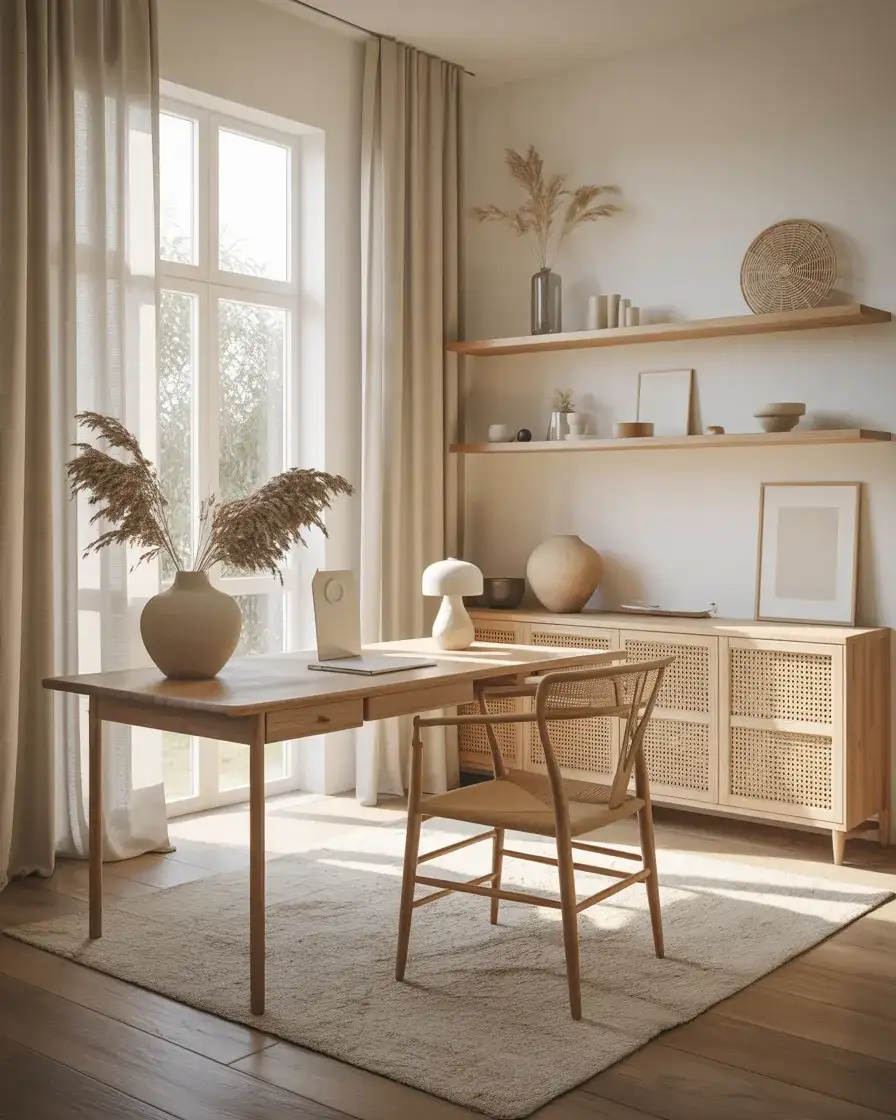
There’s something quietly magnetic about the Japandi aesthetic, and it’s no surprise it’s made its way into home offices across the country. This style blends Japanese minimalism with Scandinavian warmth—think low-profile furniture in natural wood, a muted palette of warm whites and earthy tones, and a philosophy of keeping only what serves a purpose. In a modern minimalist home office, Japandi creates an atmosphere of focused calm rather than sterile emptiness. The result is a space that feels intentional without feeling cold.
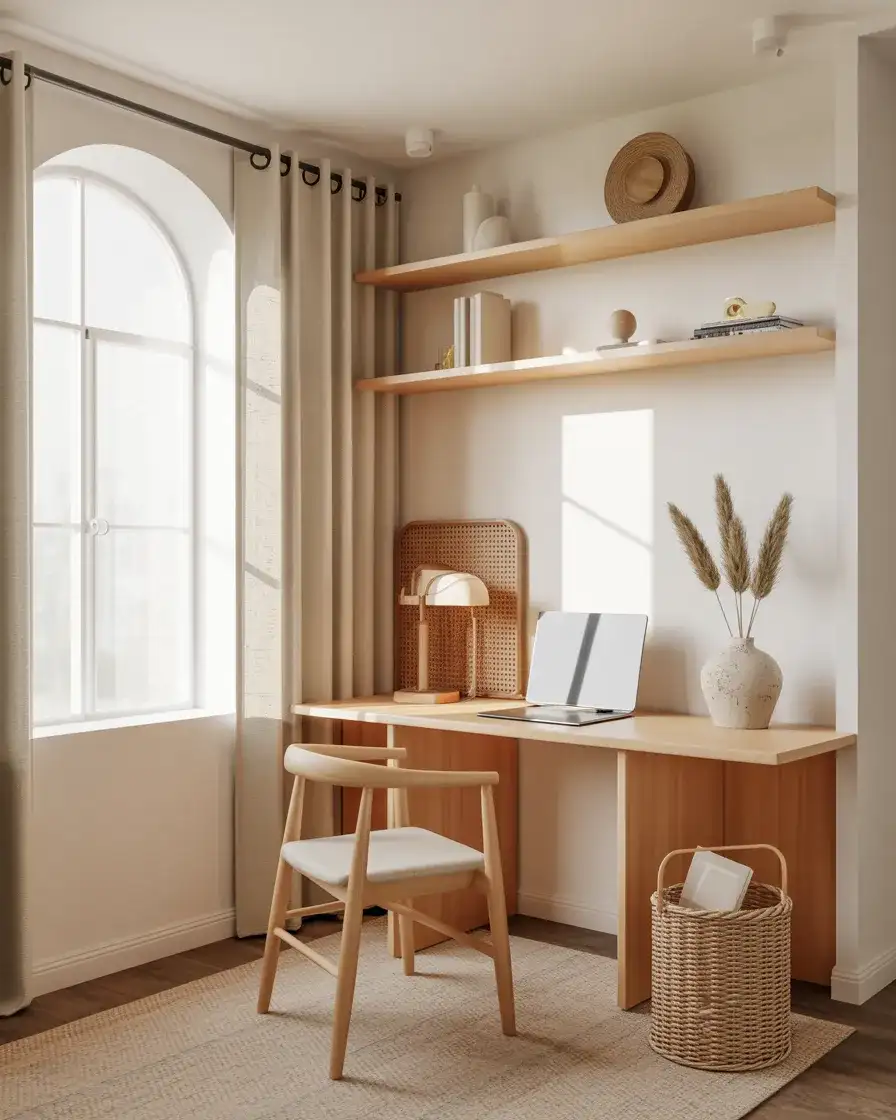
If you’re someone who finds clutter genuinely disruptive to concentration—and research suggests most of us do—this style is worth a serious look. A Japandi office works especially well in rooms with natural light, since the pale wood and muted tones glow in daylight in a way that feels almost meditative. Keep your tech minimal and tuck cords out of sight. The investment in quality over quantity pays off here: one beautiful, handmade ceramic pen holder does more for the atmosphere than a drawer full of plastic organizers ever will.
2. Built-In Bookcase Office Wall
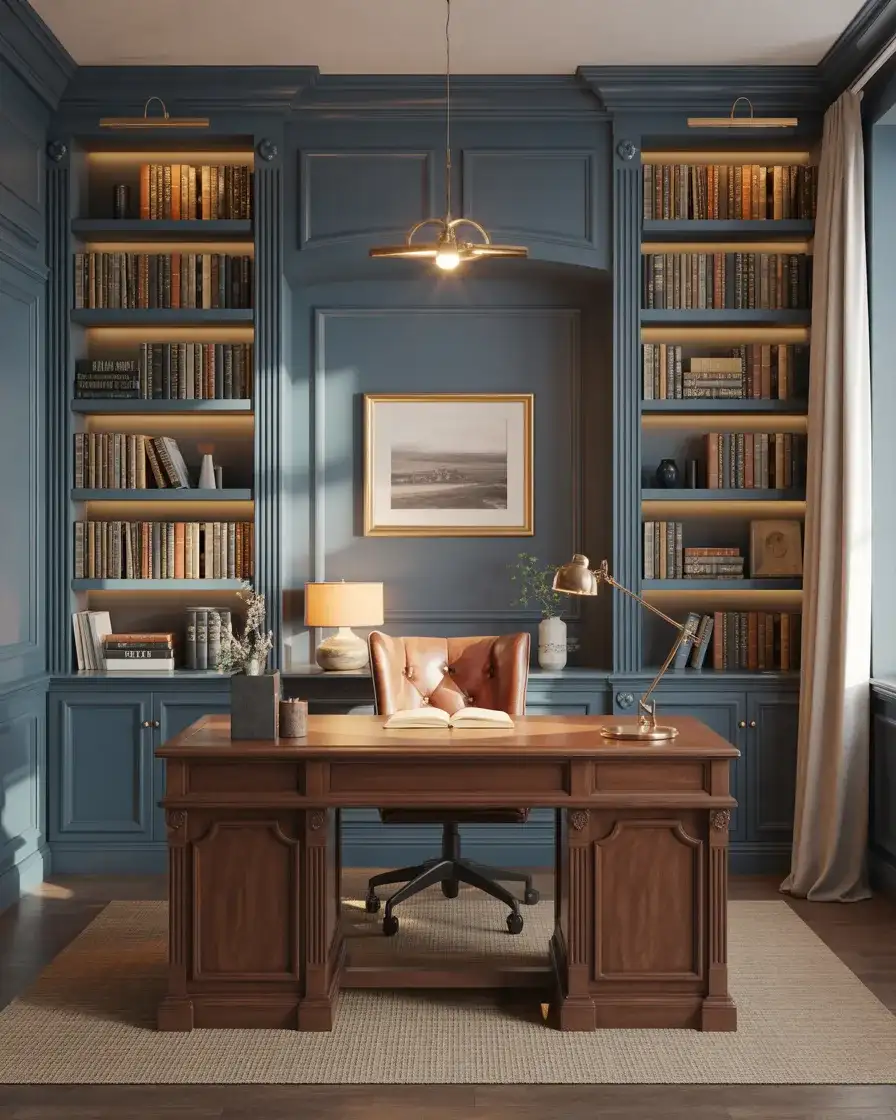
A built-in bookcase wall is one of those design moves that makes a home office look like it was always supposed to be there. In classic interiors especially, floor-to-ceiling shelving around a centered desk creates a sense of authority and permanence—the kind of look you’d find in a distinguished lawyer’s study or a novelist’s creative retreat. But this approach works equally well in contemporary spaces when you strip away the ornate molding and go clean-lined and painted a deep, moody tone. It’s architectural without being expensive, especially if you go the IKEA hack route with Billy bookcases.
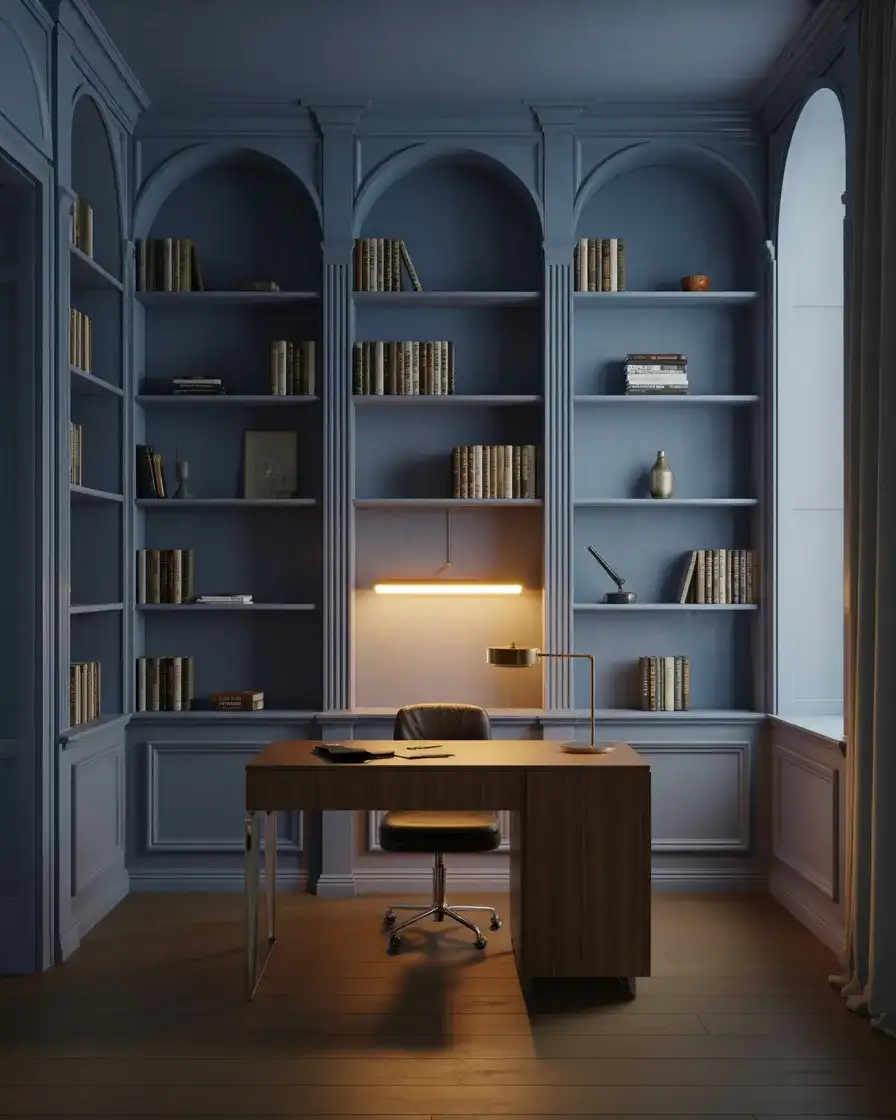
This is one of the best long-term investments you can make in a home office if you own your home, because it adds resale value and turns a blank wall into a statement. A common mistake is overstuffing the shelves—treat one out of every four shelf spaces as open breathing room, and alternate between vertical book stacks and horizontal ones. Use a consistent color scheme for your book spines, or face them backward for a tonal, curated look that never goes out of style.
3. Industrial Pipe and Raw Wood Desk
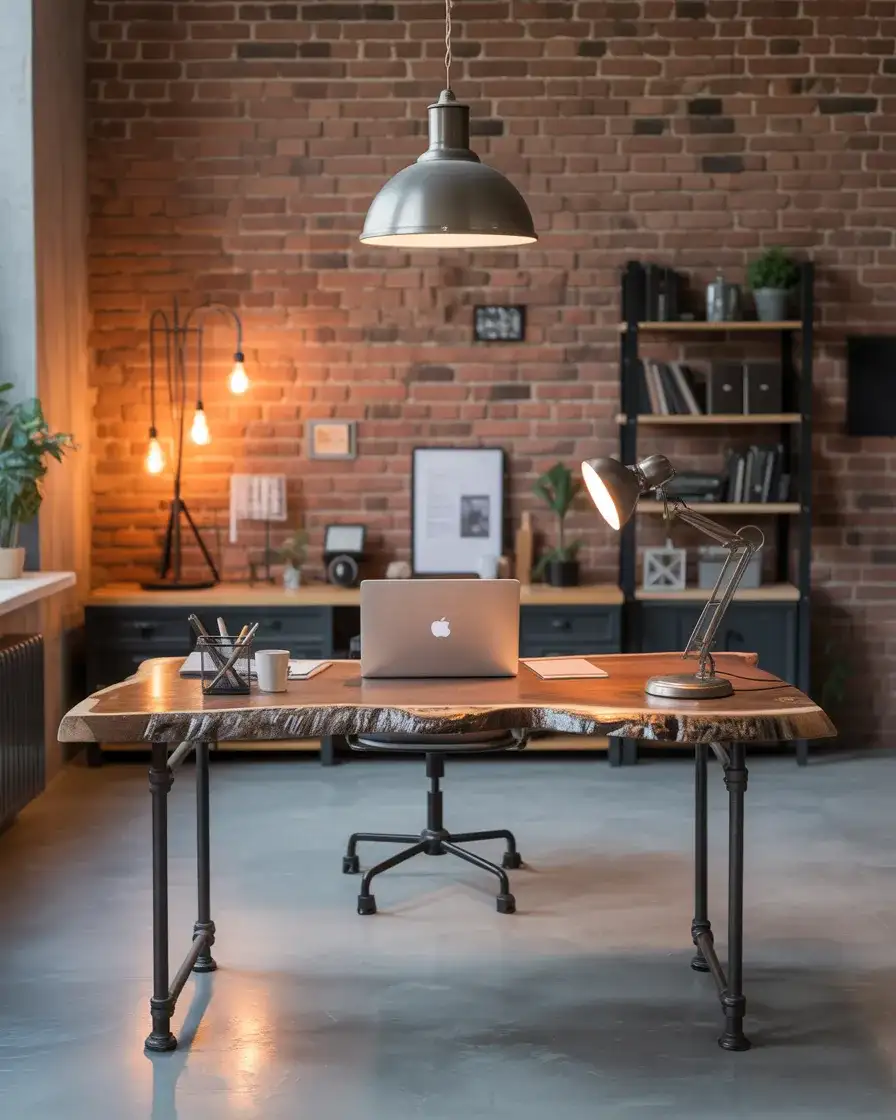
The industrial home office has had incredible staying power, and in 2026 it’s still one of the most-pinned styles on the platform. The appeal is easy to understand: black steel pipe legs paired with a thick live-edge or reclaimed wood desktop create something that feels both rugged and deeply personal. It’s a style that suits creative professionals—designers, photographers, and writers—who want their space to feel more like a workshop than a corporate cubicle. Add exposed brick or a concrete accent wall, and you’ve got a backdrop that practically art-directs itself.
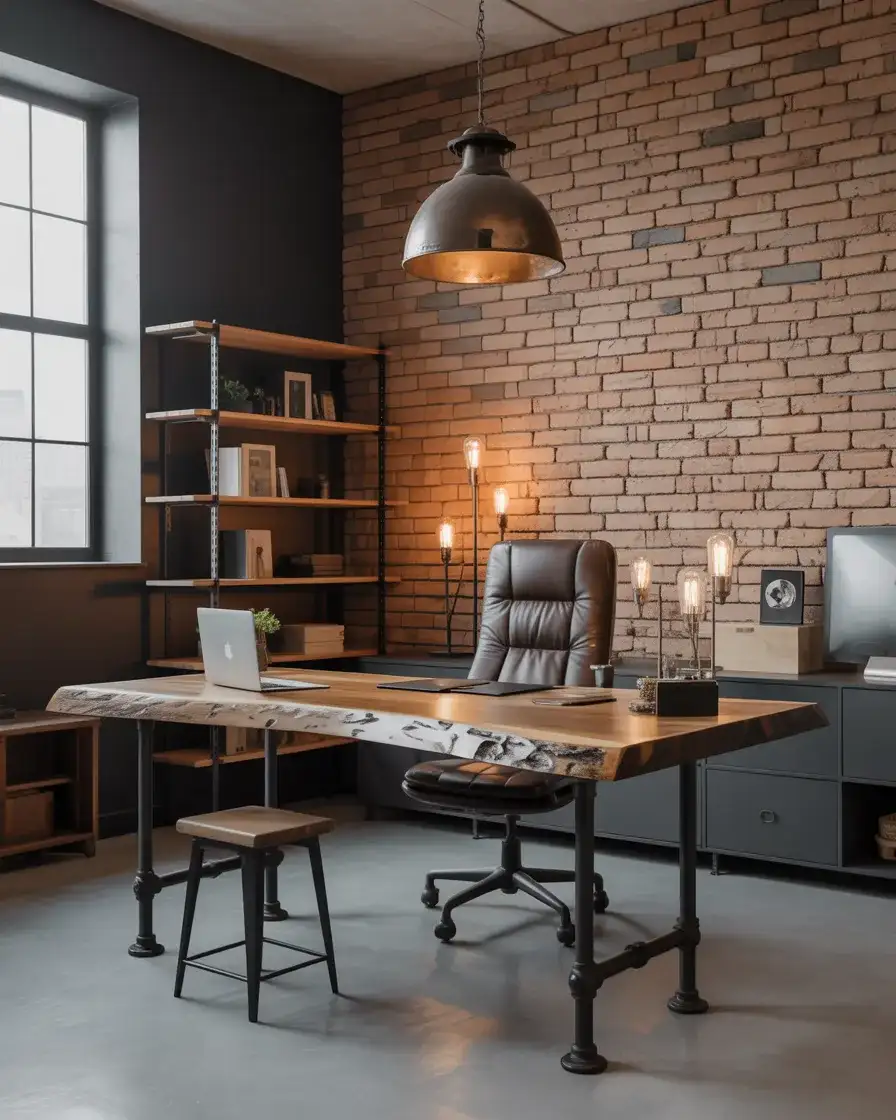
One reason this style resonates so strongly in American homes—particularly in cities like Portland, Austin, and Denver—is that it pairs well with older housing stock. A century-old craftsman or loft apartment already has the bones; the industrial office just leans into them. DIY-ers love it, too, because pipe-leg desk kits are widely available for under $150, and a solid walnut slab from a local lumberyard makes the whole setup feel one-of-a-kind without the one-of-a-kind price tag.
4. Standing Desk Setup with Ergonomic Flow
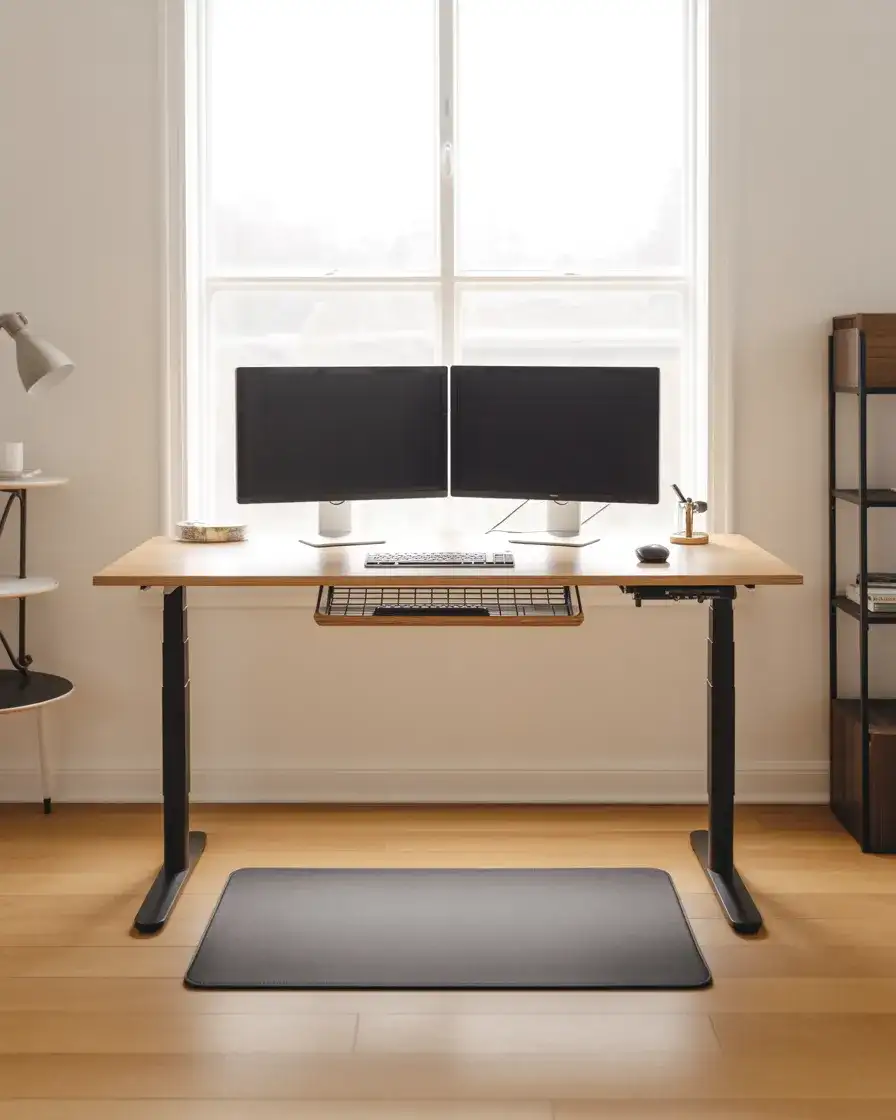
The standing desk has graduated from corporate perk to home office staple—and in 2026, the best setups are as stylish as they are functional. An adjustable desk with a motorized lift mechanism lets you switch from seated to standing in seconds, which most productivity researchers agree helps fight the fatigue and posture problems that build up over a long workday. The trick is integrating it into your space so it doesn’t look like office furniture that wandered in from a supply closet. Pair it with a genuine wood or bamboo top, and the whole setup reads as intentional rather than clinical.
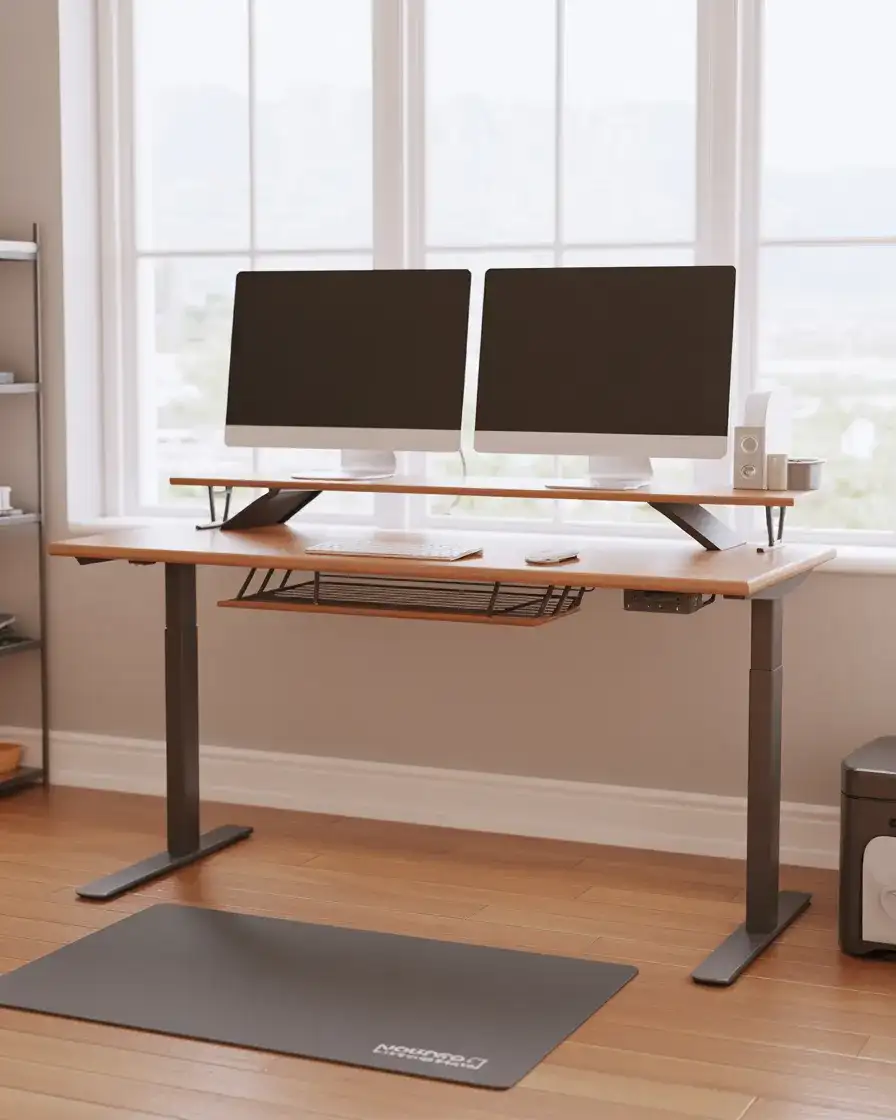
A well-designed ergonomic setup doesn’t require a huge budget—though the range is wide. Entry-level motorized desks start around $300, while premium options from brands like Uplift or Flexispot run $700–$1,200. The real investment is learning how to use it: most people buy a standing desk and keep it at the same height all day, defeating the purpose. Set reminders to alternate every 45–60 minutes. An anti-fatigue mat is not optional—your feet will tell you within the first week.
5. Cozy Reading Nook Office Corner
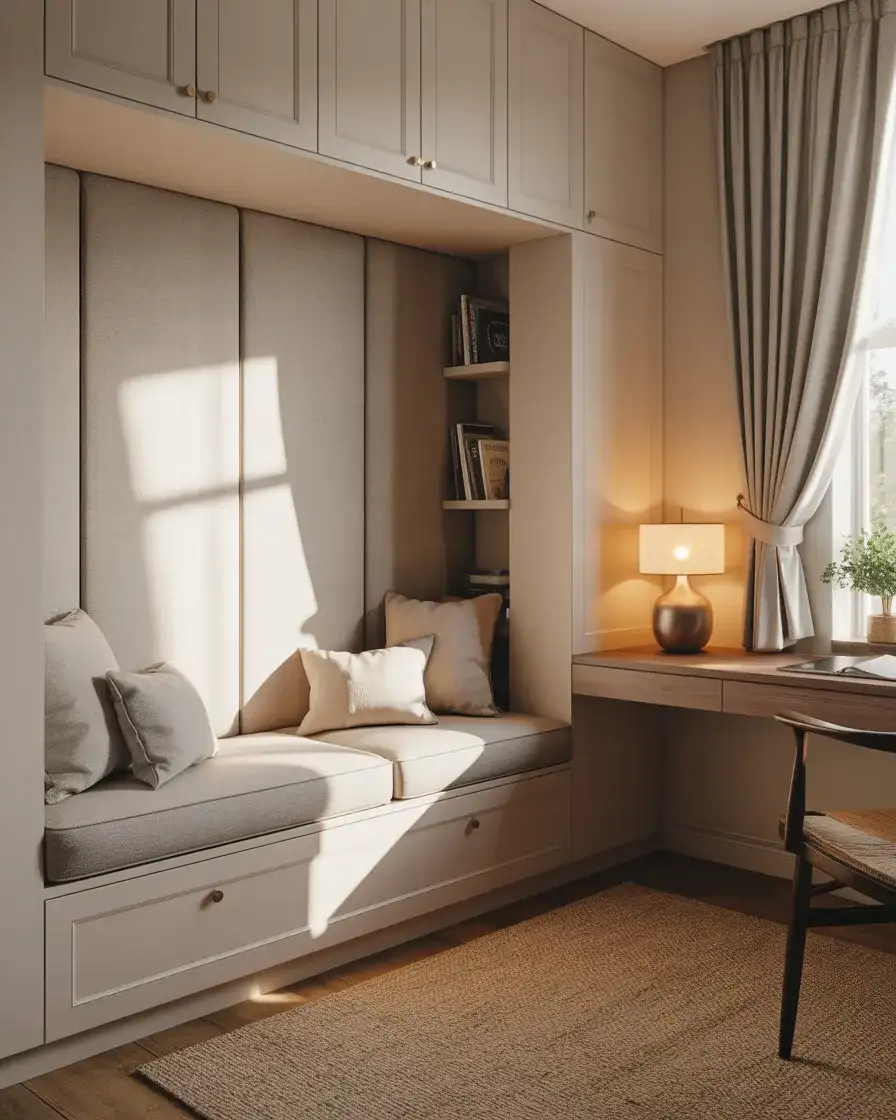
Not every home office needs to occupy its own room—and honestly, some of the most charming workspaces are carved out of unexpected corners. A cozy nook office works by making a virtue of its intimacy: a snug built-in bench with a cushion, a low shelf for books and supplies, and a small desk or wall-mounted surface that folds away when the workday ends. It’s the small space solution that Pinterest users keep repinning because it looks achievable, livable, and genuinely inviting—like a place you’d actually want to spend a few hours.
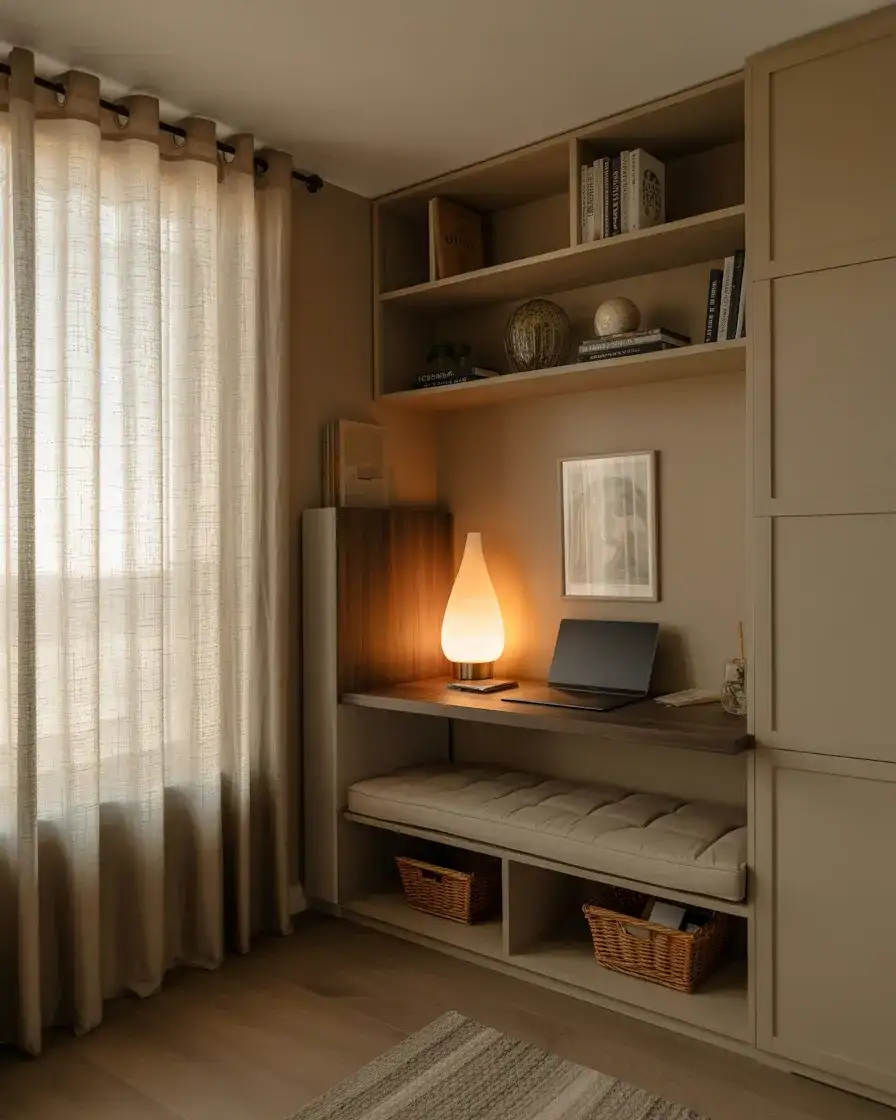
This setup works best in homes where dedicated office space simply doesn’t exist—think apartments, older homes with small bedrooms, or suburban houses where one bedroom doubles as a guest room. The key is to define the zone visually without building walls: a distinctive wallpaper on the back wall, a pendant light that hangs just over the desk, and a small rug underfoot all signal “this is the office” without making the space feel sectioned off.
6. Modern Luxury Home Office
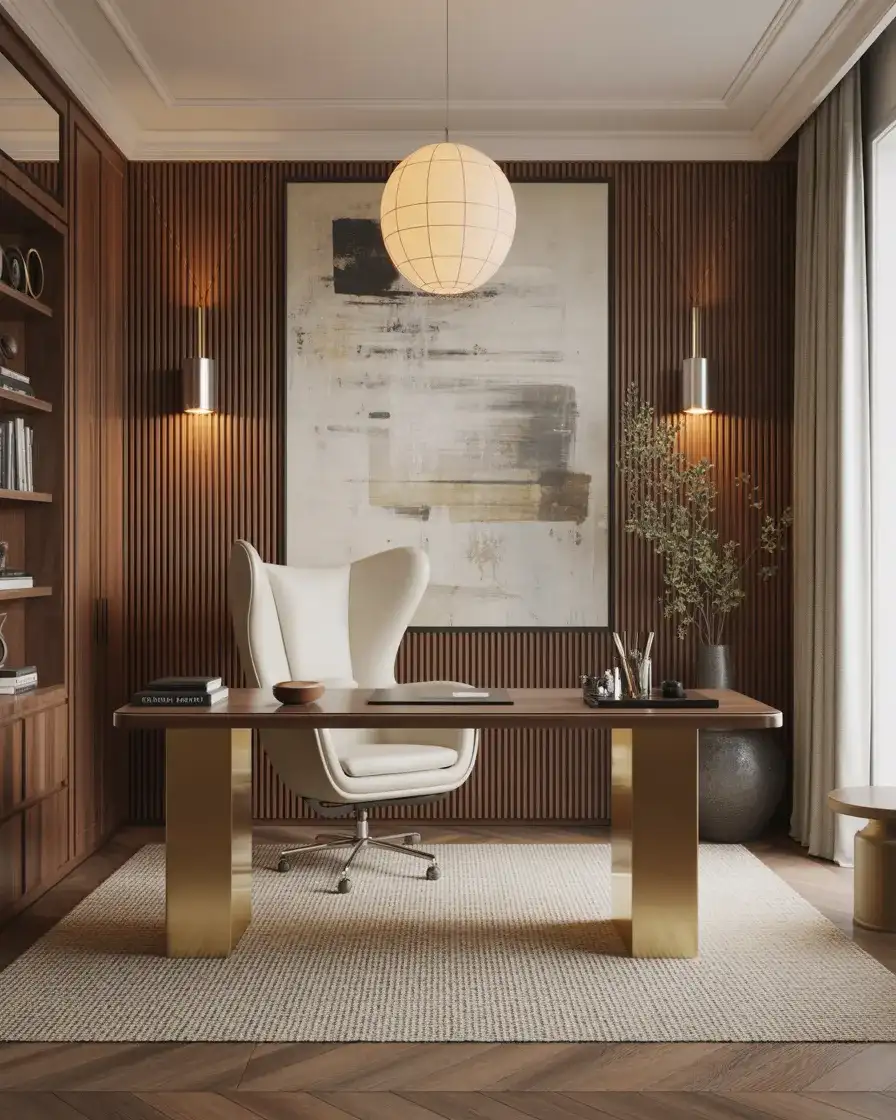
A modern luxury home office is less about showing off and more about making every surface, every material, and every detail feel considered. In 2026, this looks like fluted oak paneling on the walls, a sculptural leather chair that costs more than your first car, and a desk that floats on hairpin brass legs above a hand-knotted wool rug. Executive home offices of this caliber tend to anchor the design around one hero piece—a dramatic chandelier, an oversized piece of original art, or a statement desk in a rare wood—and let everything else serve it.
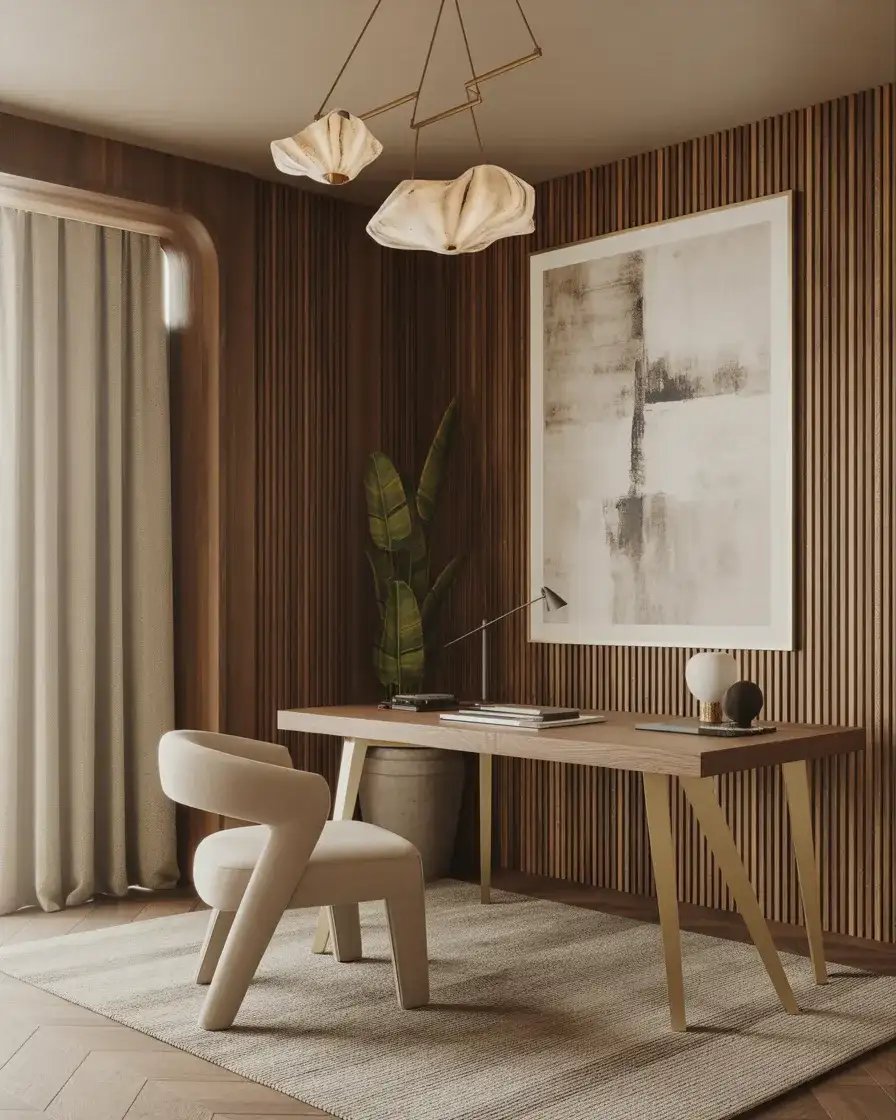
One decorator trick that separates a truly luxurious office from an expensive-looking one: mix materials rather than matching them. Pair cool marble with warm wood. Combine matte and glossy finishes. Offset a dark, serious wall color with soft, cream upholstery. The tension between contrasting textures is what gives high-end interiors their sense of depth and richness—and it’s something even a trained eye takes a moment to identify as the source of the room’s appeal.
7. Scandinavian White and Wood Office
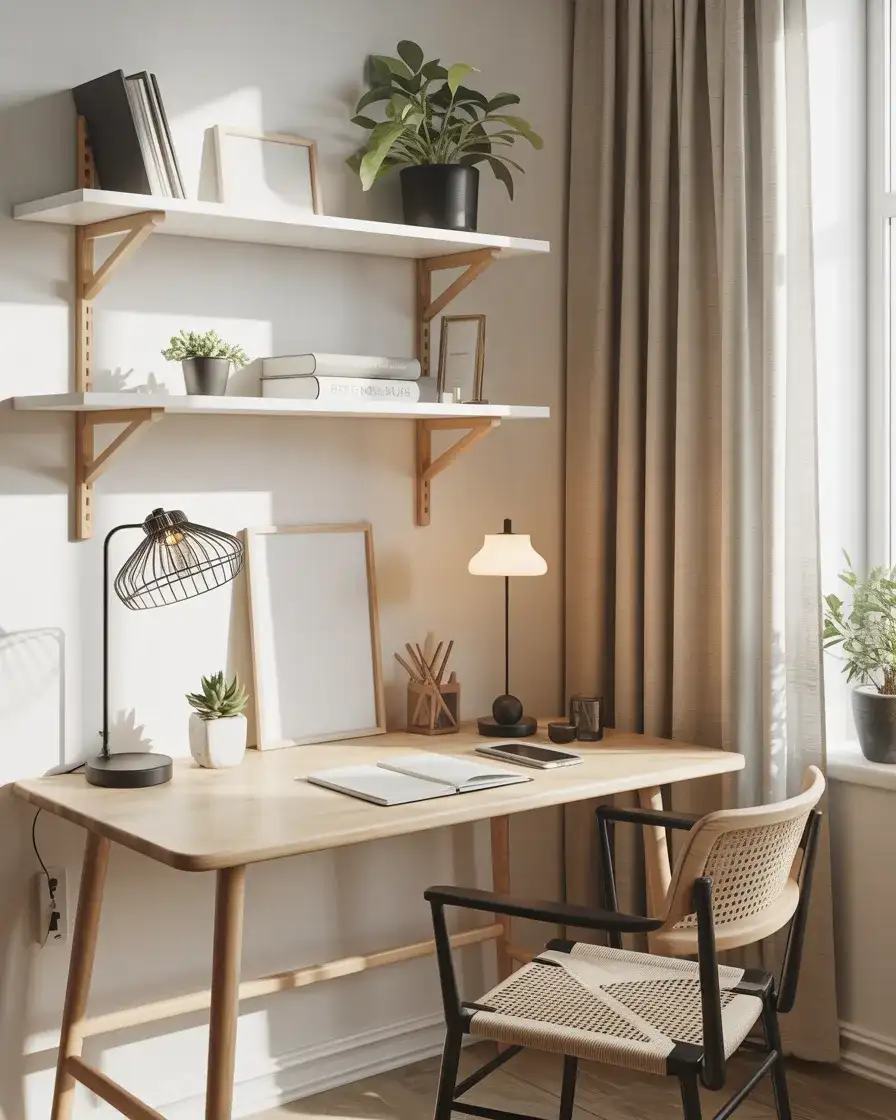
The Scandinavian home office endures because it solves a genuine problem: how do you design a workspace that feels bright and energizing without becoming stark or unwelcoming? The answer is the Nordic formula—white walls, light birch or pine furniture, functional accessories in black or muted tones, and a few carefully chosen plants to bring life into the room. It’s simple by design but never boring, and it photographs beautifully in natural light, which partly explains its perennial dominance on Pinterest’s interiors feed.
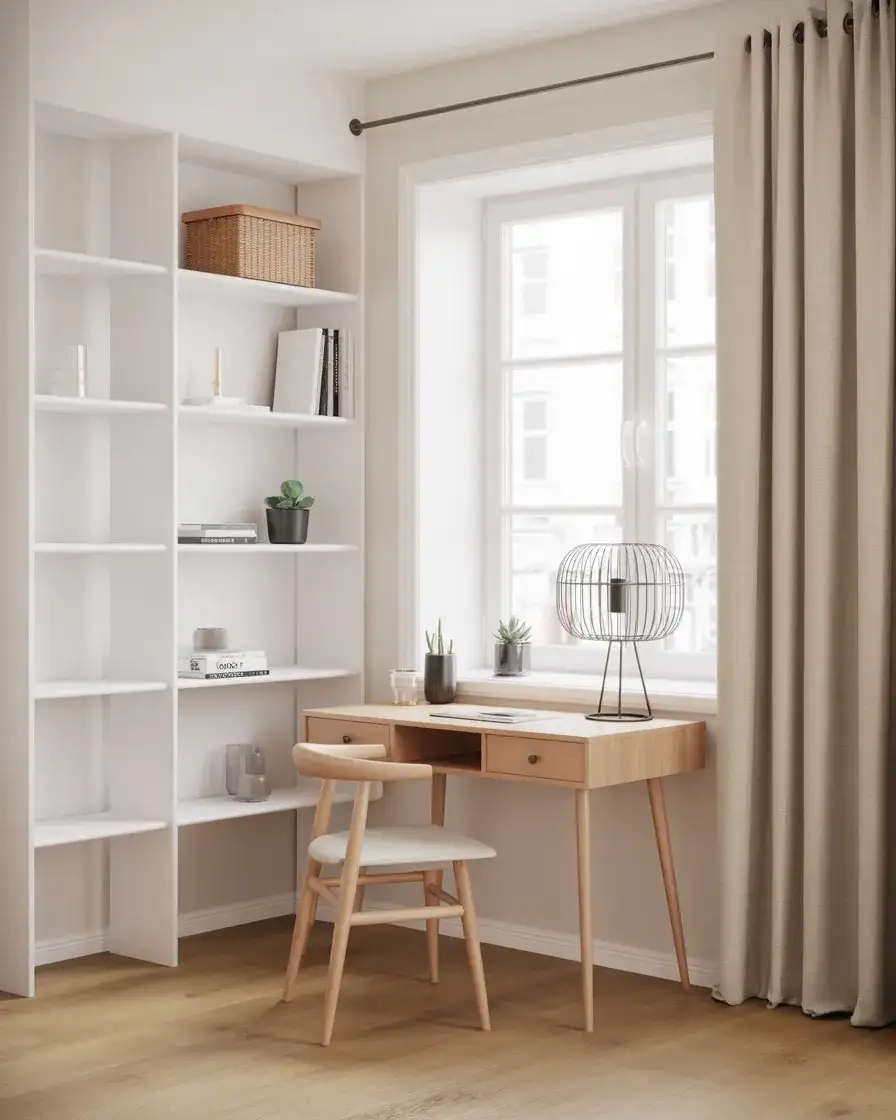
A real homeowner in Minneapolis once described her Scandinavian office renovation as “the first space in my house where I don’t feel behind.” The clarity of the design—nothing excess, nothing competing for your attention—genuinely seems to reduce mental friction. For American homes with lower ceilings or smaller north-facing rooms, white walls and pale wood can add perceived height and light where natural sources fall short. It’s one of the most practical style moves in the designer’s toolkit.
8. Green Plant-Forward Office Oasis
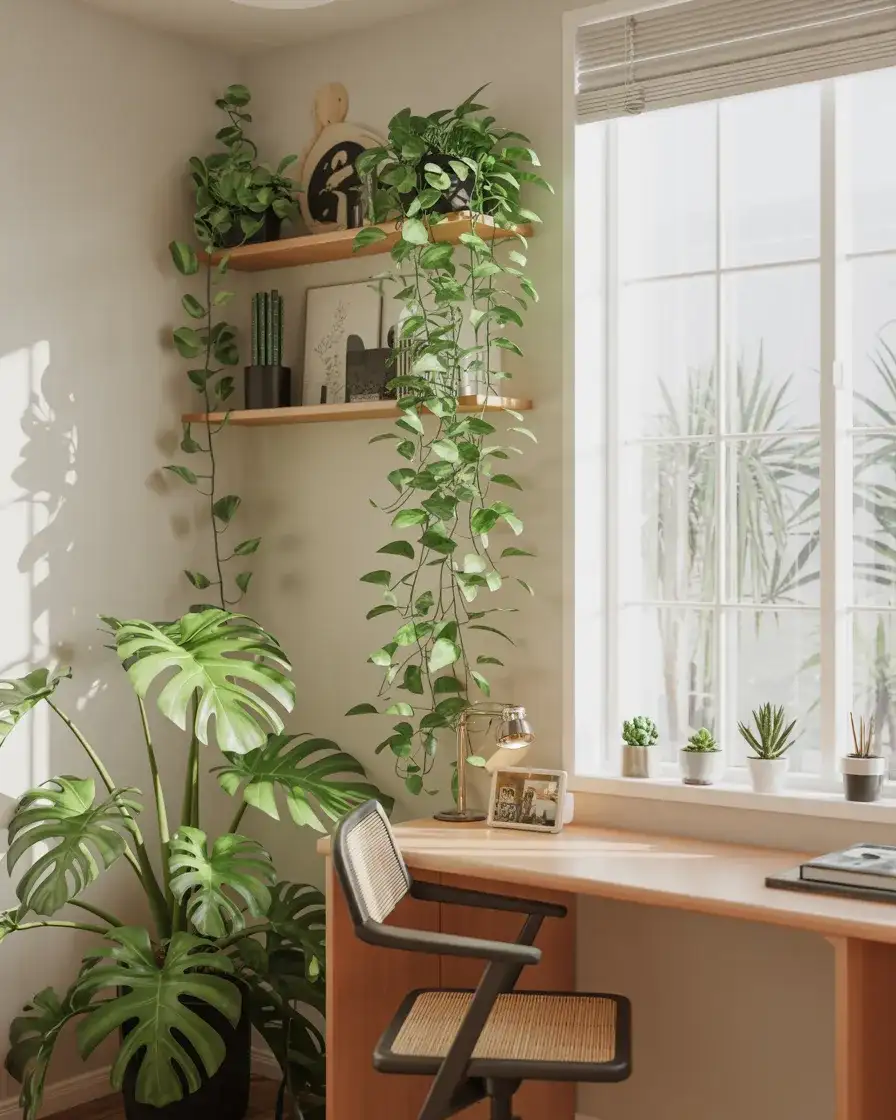
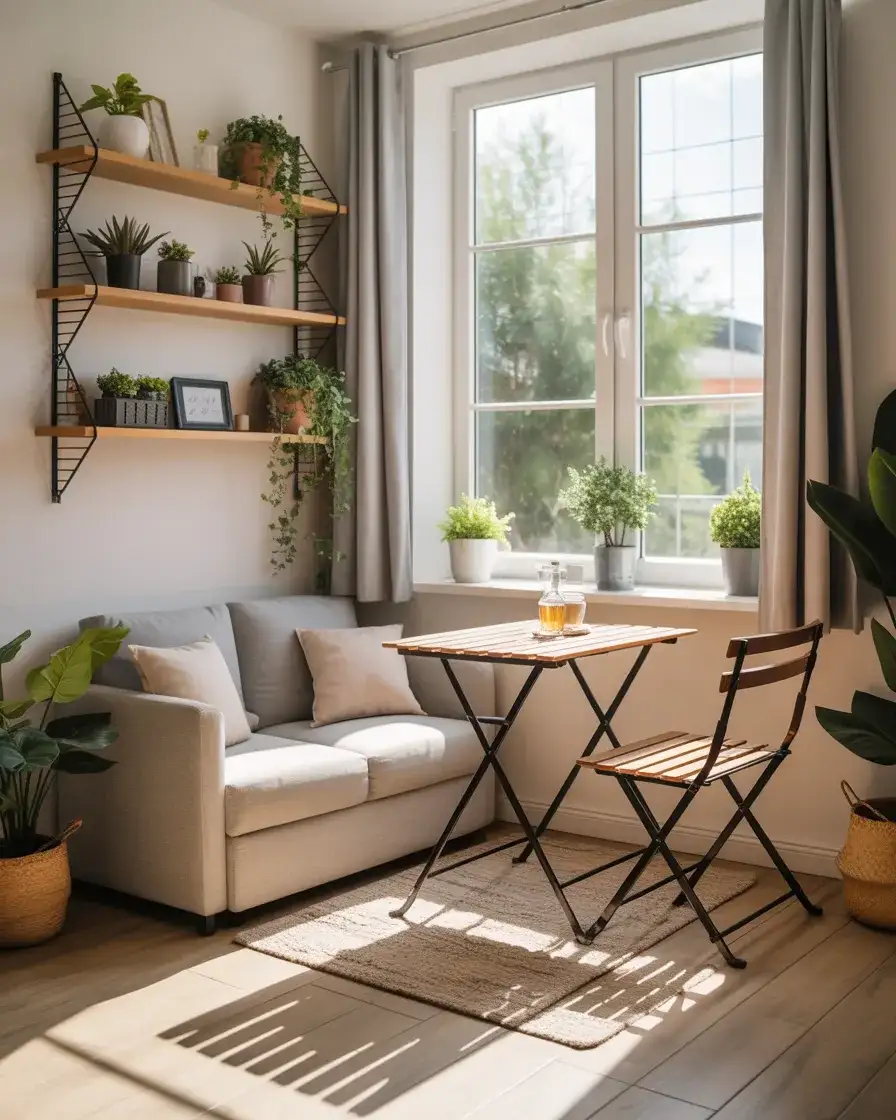
The biophilic design movement has reached full maturity in home office circles, and the green plant-forward office is its most joyful expression. Trailing pothos from floating shelves, a monstera in the corner casting dappled shadows across your desk, small succulents lining the windowsill—this is not just decoration; it’s a studied approach to productivity. Inspiration-driven workers particularly gravitate toward this style because the presence of living things creates a sensory backdrop that static furniture simply can’t replicate. It changes throughout the day and throughout the seasons and keeps giving.
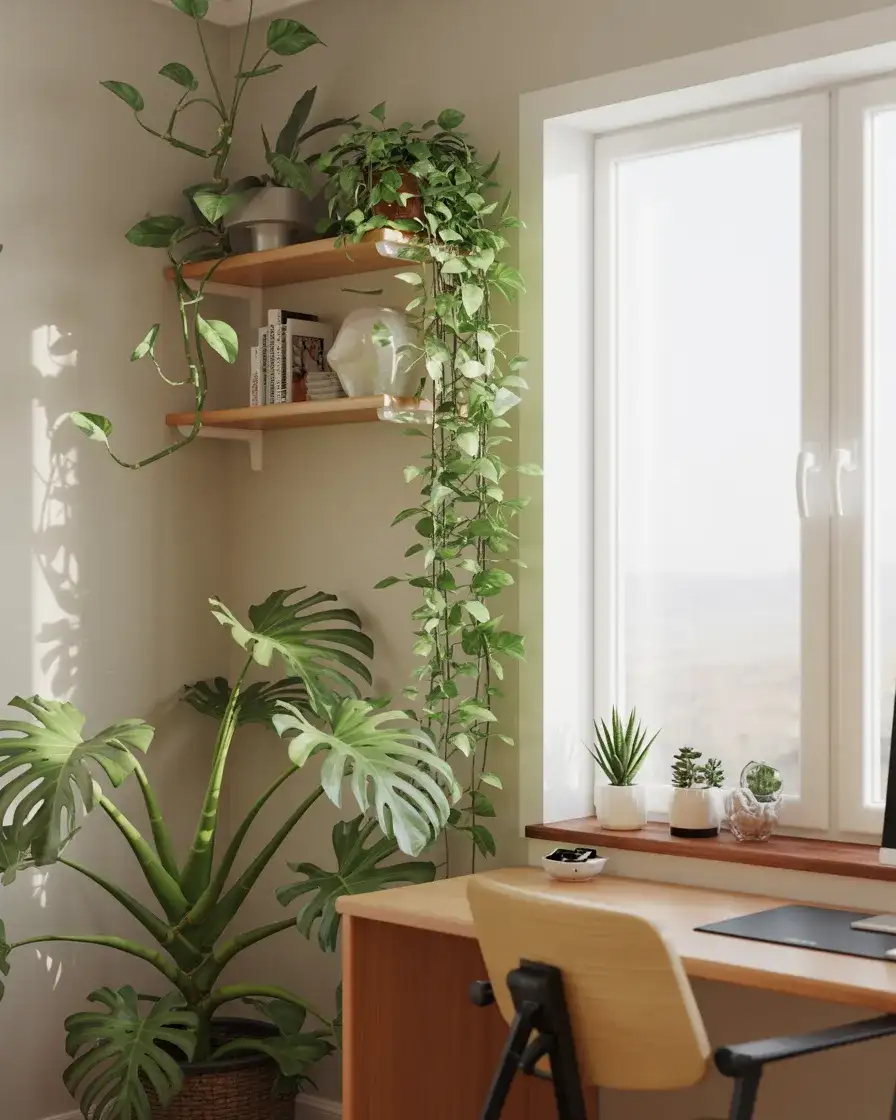
Multiple studies, including research from the University of Exeter, suggest that workspaces with plants see productivity gains of up to 15 percent compared to lean, plant-free environments. The psychological effect of tending something living—watering it, noticing new growth—also offers micro-breaks that reset focus without pulling you into a screen. For offices without much natural light, ZZ plants, snake plants, and pothos are nearly indestructible and genuinely thrive in lower-light conditions.
9. Dark Moody Accent Wall Office
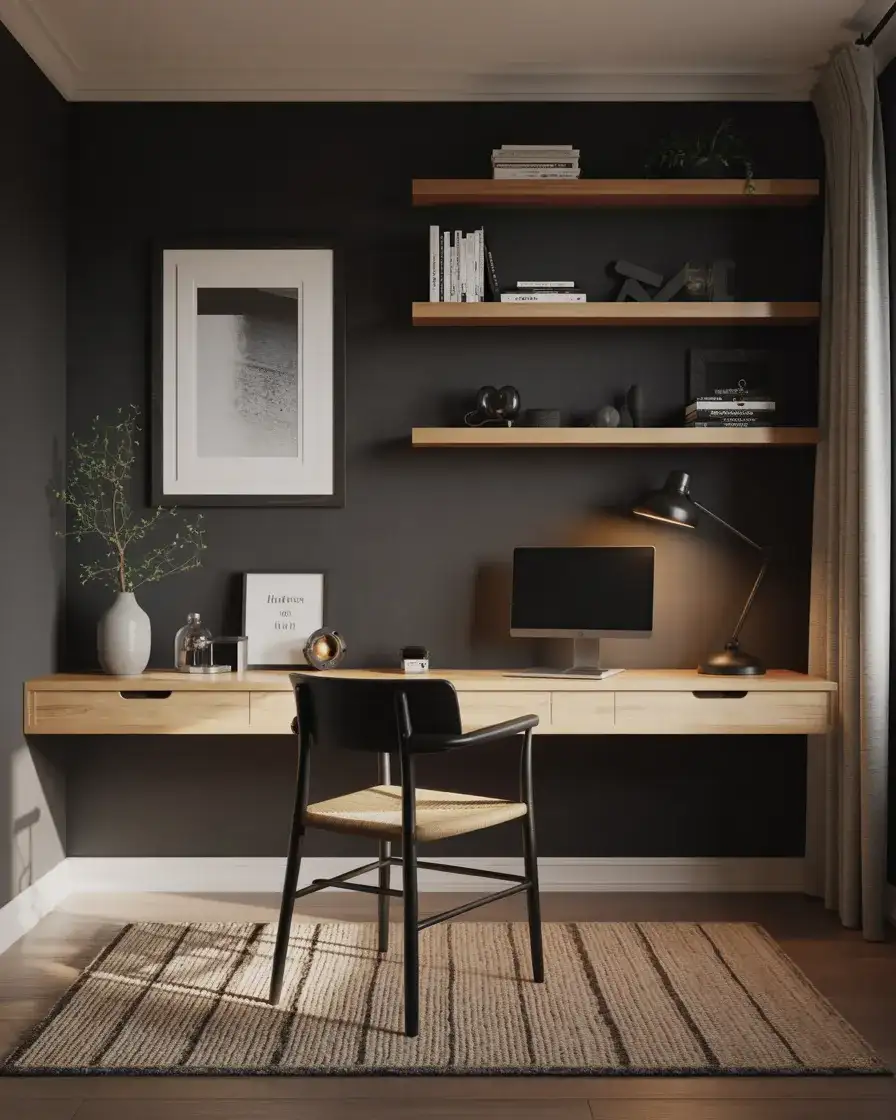
Not everyone wants a bright, airy office—and in 2026, the dark, moody home office is having a well-deserved moment. Painting the wall behind your desk in a deep charcoal, hunter green, or midnight navy creates a dramatic focal point and, surprisingly, a sense of focus. The modern interpretation of this trend keeps everything else fairly restrained: white or natural wood elsewhere, a single dramatic desk lamp, and art that pops against the
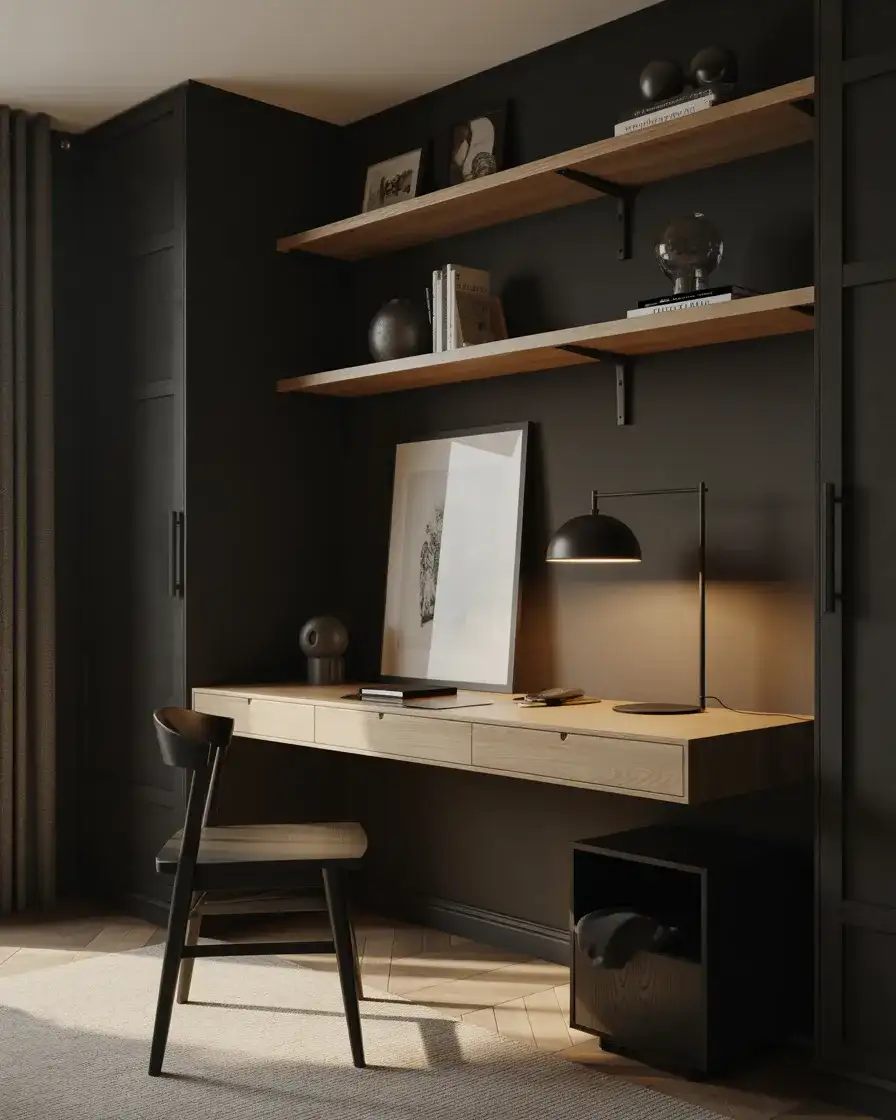
The most common mistake with dark walls is stopping at the paint and calling it done. The color needs companions: warm-toned lighting is non-negotiable (cool-white LEDs will make a dark green wall look grim), and you need enough contrast in furniture or art to give the eye a resting point. A single oversized framed print—a botanical illustration, a city map, or an abstract wash—can anchor the wall and give the room a sense of story rather than just atmosphere.
10. Minimal Floating Desk Setup
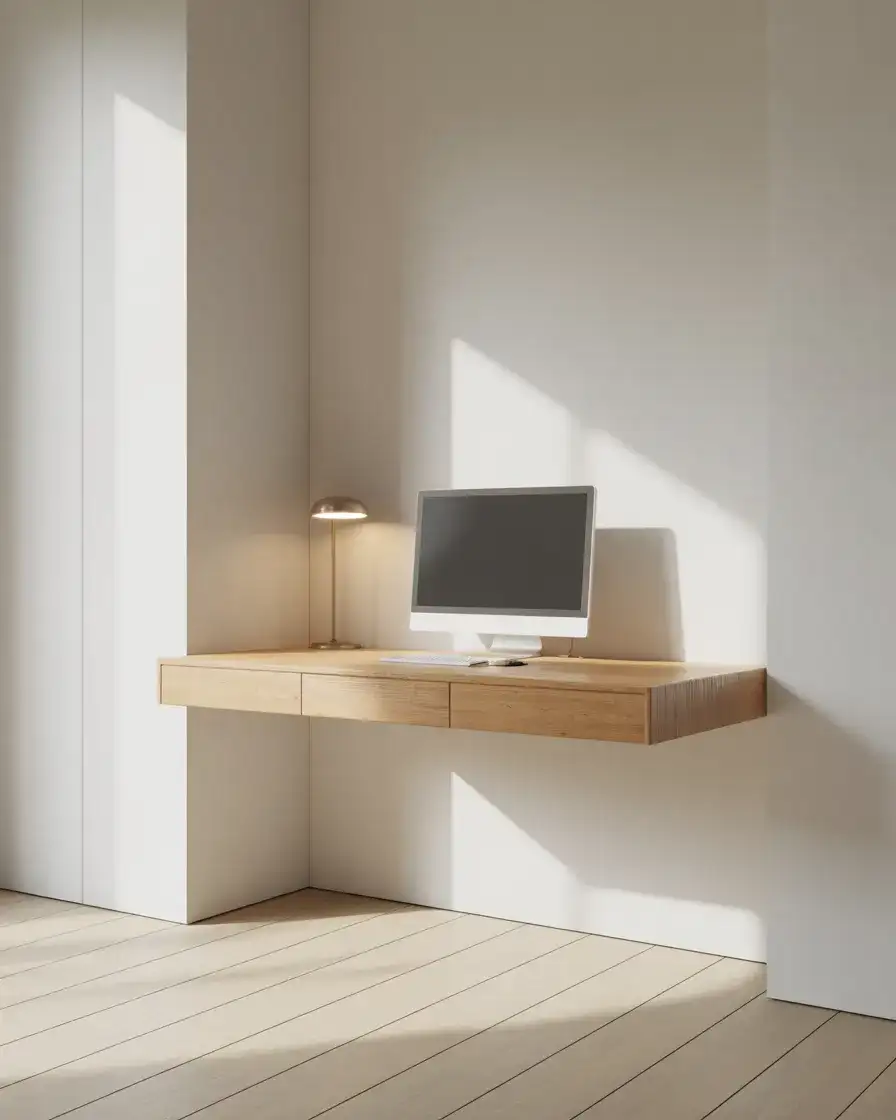
A wall-mounted floating desk is the cleanest, most space-efficient move you can make in a cramped home office—and it’s perfectly aligned with the minimal design sensibility that defines some of the best 2026 workspaces. With no legs touching the floor, the room reads as larger and more open. Paired with a streamlined cable management system and a single monitor arm, a floating desk can accommodate a full professional setup in as little as 24 inches of wall space. The modern minimalist appeal is obvious: nothing unnecessary, everything exactly where it belongs.
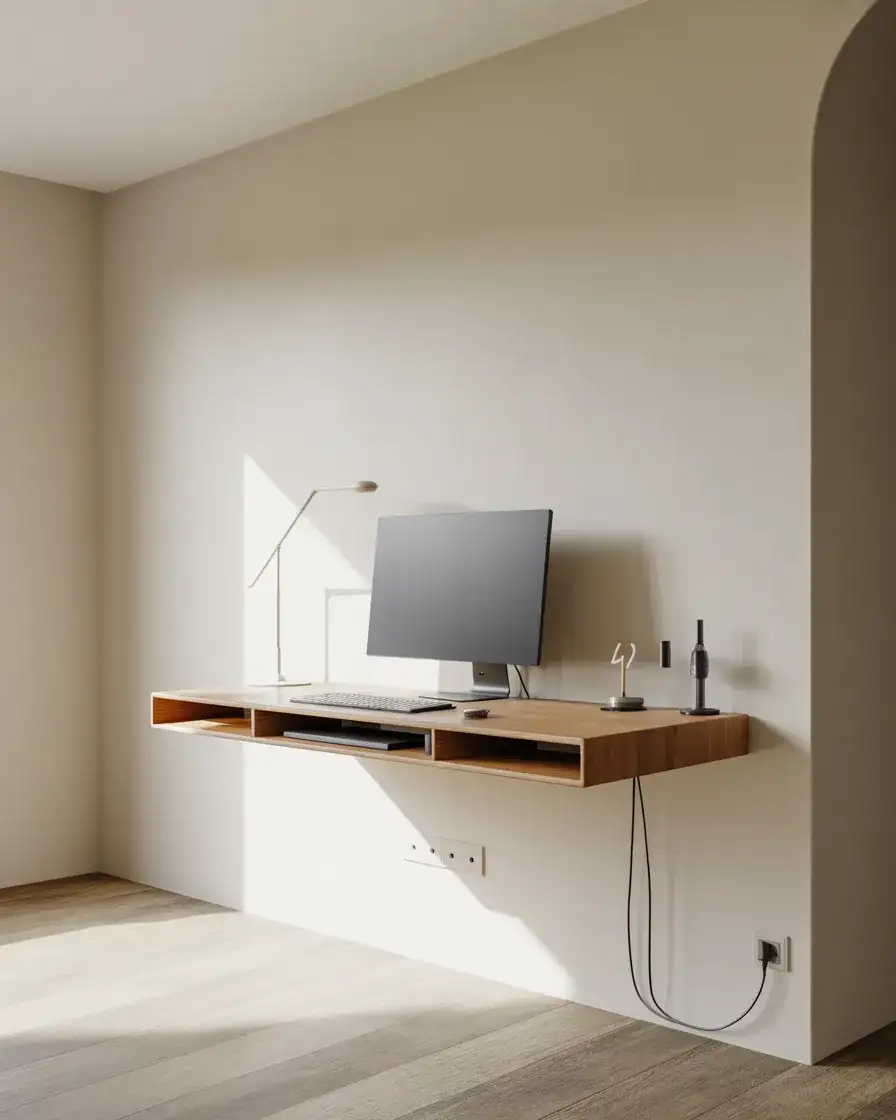
Installation is simpler than most people assume, provided you hit studs—this is not a job for drywall anchors if you’re planning to rest a laptop, monitor, and coffee on it. A 2×10 or 2×12 board finished with oil or wax, mounted on a pair of floating shelf brackets rated for 50+ pounds per bracket, gives you a beautiful, functional desk for under $80 in materials. It’s one of the highest-return DIY projects in the home office space.
11. Open Loft Office with High Ceilings
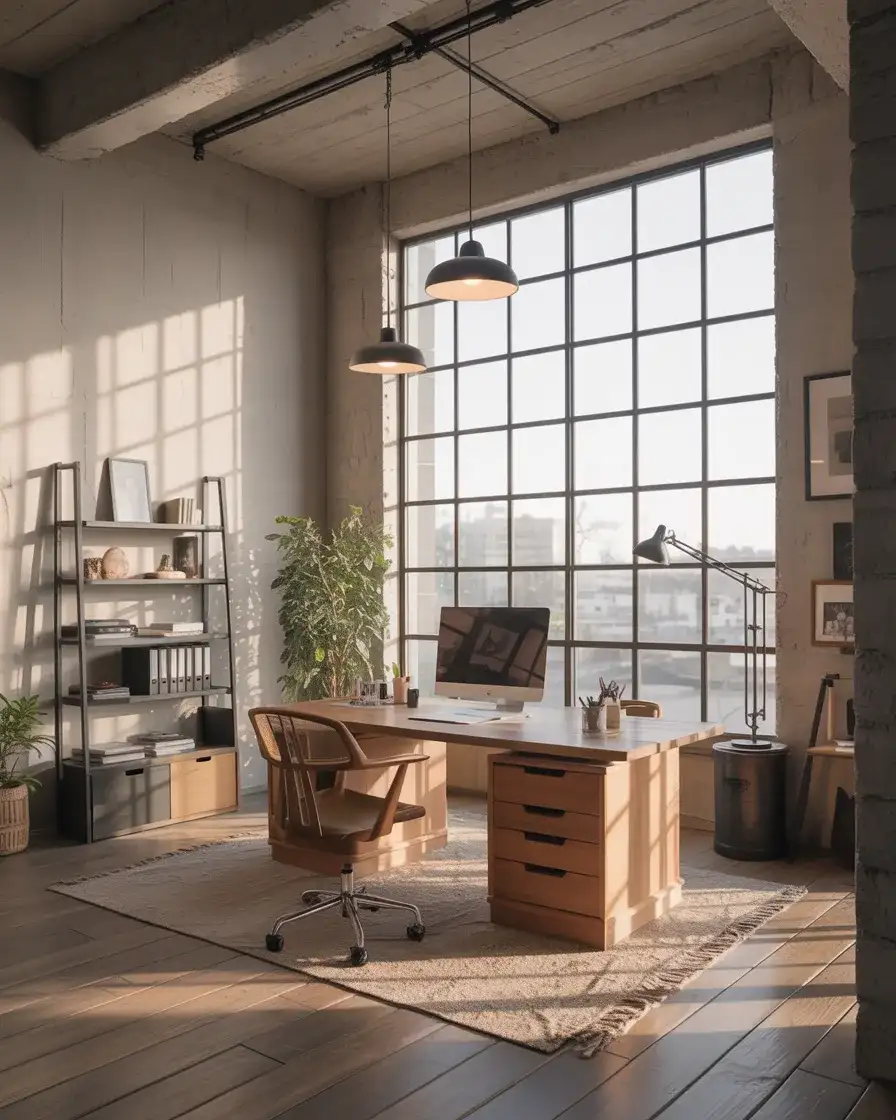
When a home has the bones—soaring ceilings, an open floor plan, generous natural light—there’s a compelling argument for embracing an open-plan home office rather than trying to close it off. The contemporary loft-style workspace makes a feature of the architecture: an oversized desk positioned to take advantage of a tall window, pendant lighting that drops dramatically from the ceiling, and furniture chosen for its visual lightness so the room doesn’t feel heavy. It’s a design approach that treats the office as part of the living environment rather than a place you escape to.
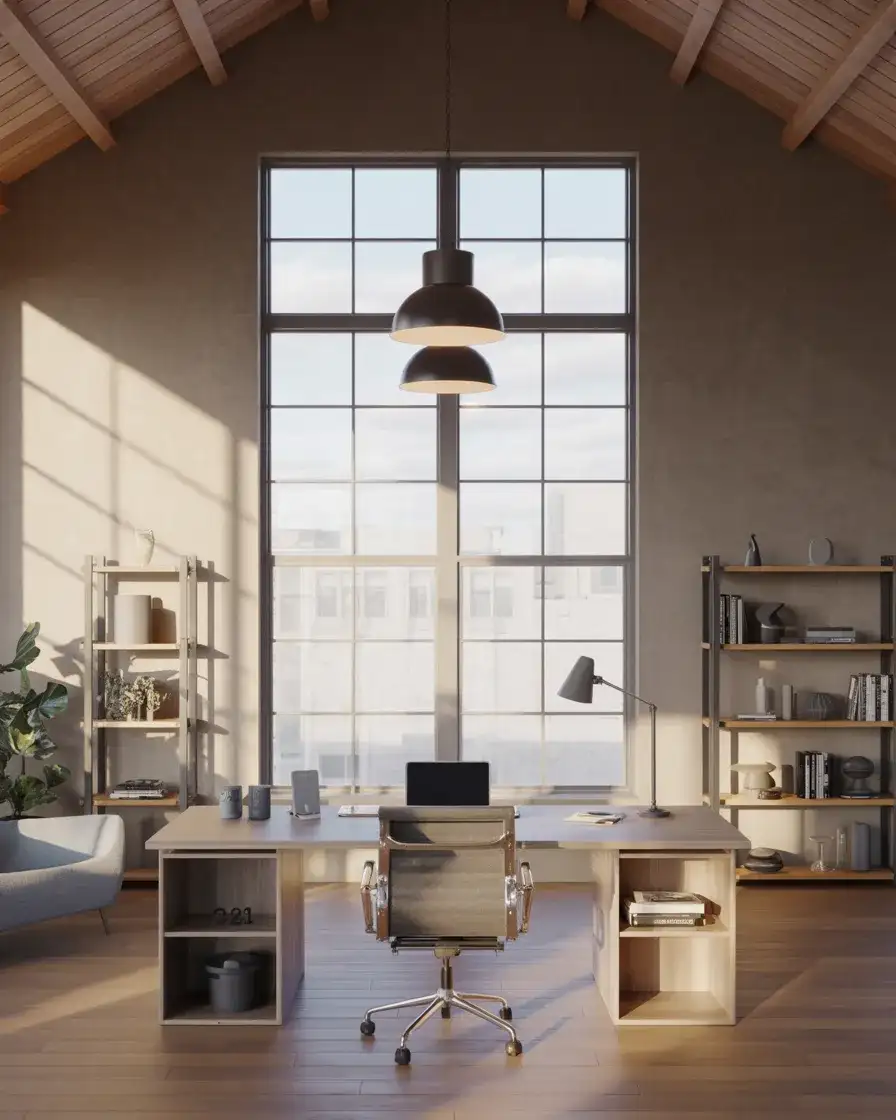
The practical challenge of an open home office is acoustic: when there are no walls to absorb sound, every conversation, notification, and keyboard click travels. A well-placed area rug, upholstered seating, and acoustic panels disguised as art (a growing product category in 2026) can dramatically reduce echo without compromising the airy visual effect. Think of sound management the way you’d think about lighting—it’s invisible when done right, glaring when ignored.
12. Cool Dark Academia Office Aesthetic
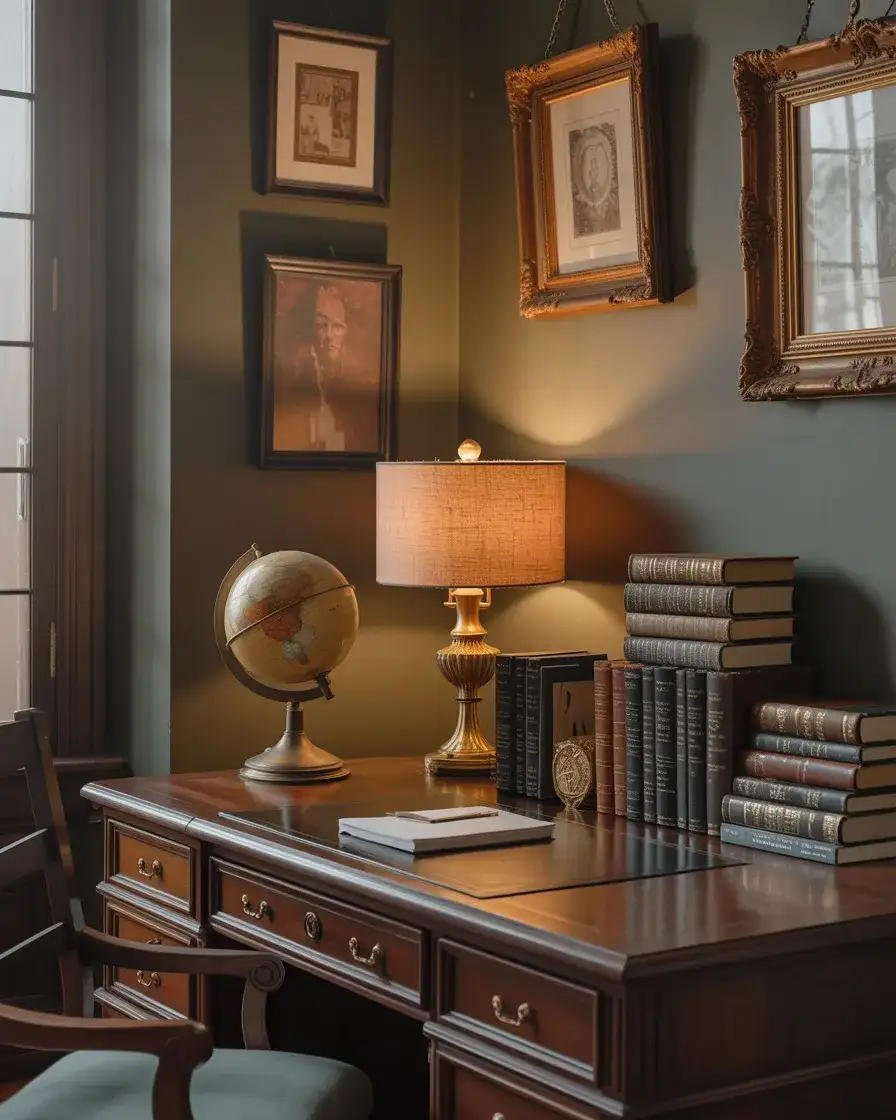
The dark academia aesthetic has evolved from a TikTok micro-trend into a full-fledged interior design category, and the cool home office version of it is genuinely compelling. Think aged wood, leather-bound books stacked on deep mahogany shelves, a vintage brass desk lamp casting a warm pool of light, and walls painted in a color that could be described as “old library.” It’s richly interior-focused and deliberately analog-feeling—though a cleverly hidden monitor or laptop keeps it functional in the modern world. For writers, academics, and thinkers, it’s practically a creative philosophy.
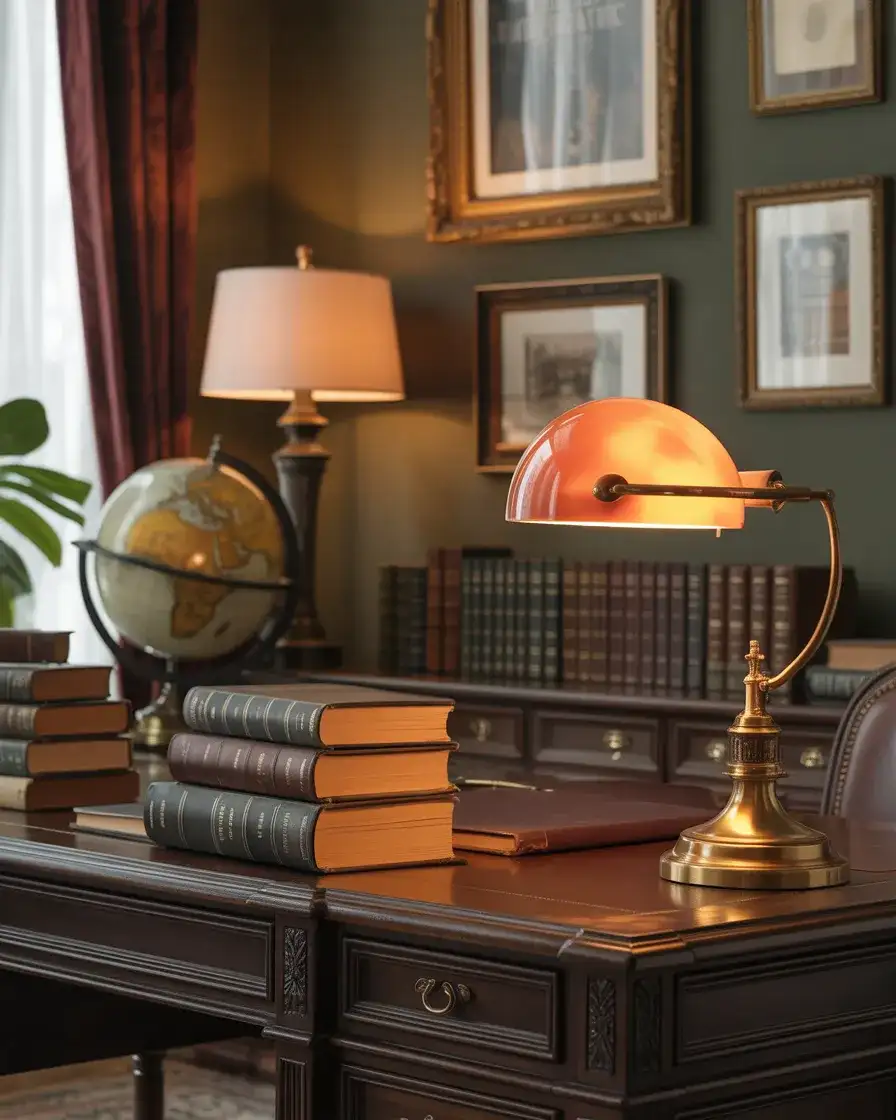
You don’t need to spend a fortune building this look—in fact, the slightly worn, curated-over-time quality is part of the aesthetic’s appeal. Estate sales, thrift stores, and Facebook Marketplace are ideal hunting grounds for the kind of dark wood furniture, vintage desk accessories, and framed botanical prints that bring dark academia to life. The key is curation: everything should feel like it belongs in the same era, even if its actual provenance is wildly different.
13. Smart Tech-Integrated Modern Office
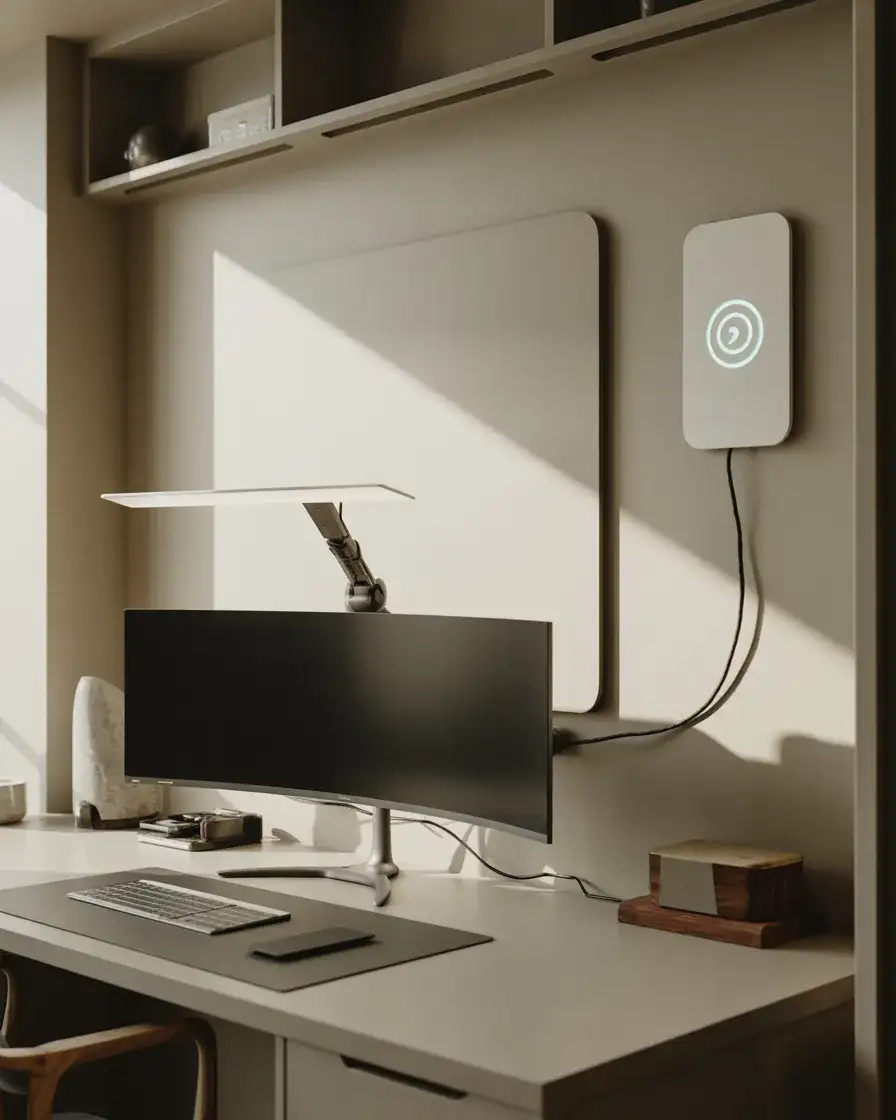
In 2026, the truly modern home office is one where technology is seamlessly integrated rather than bolted on as an afterthought. Smart lighting that adjusts color temperature throughout the day based on circadian rhythms. A motorized monitor that descends from a ceiling mount at the touch of a button. Wireless charging pads embedded in the desk surface. Voice-activated blinds. The ideas have matured enough that implementation is no longer the domain of tech enthusiasts alone—off-the-shelf smart home ecosystems from Google, Apple, and Amazon make this accessible to anyone willing to invest a Saturday afternoon in setup.
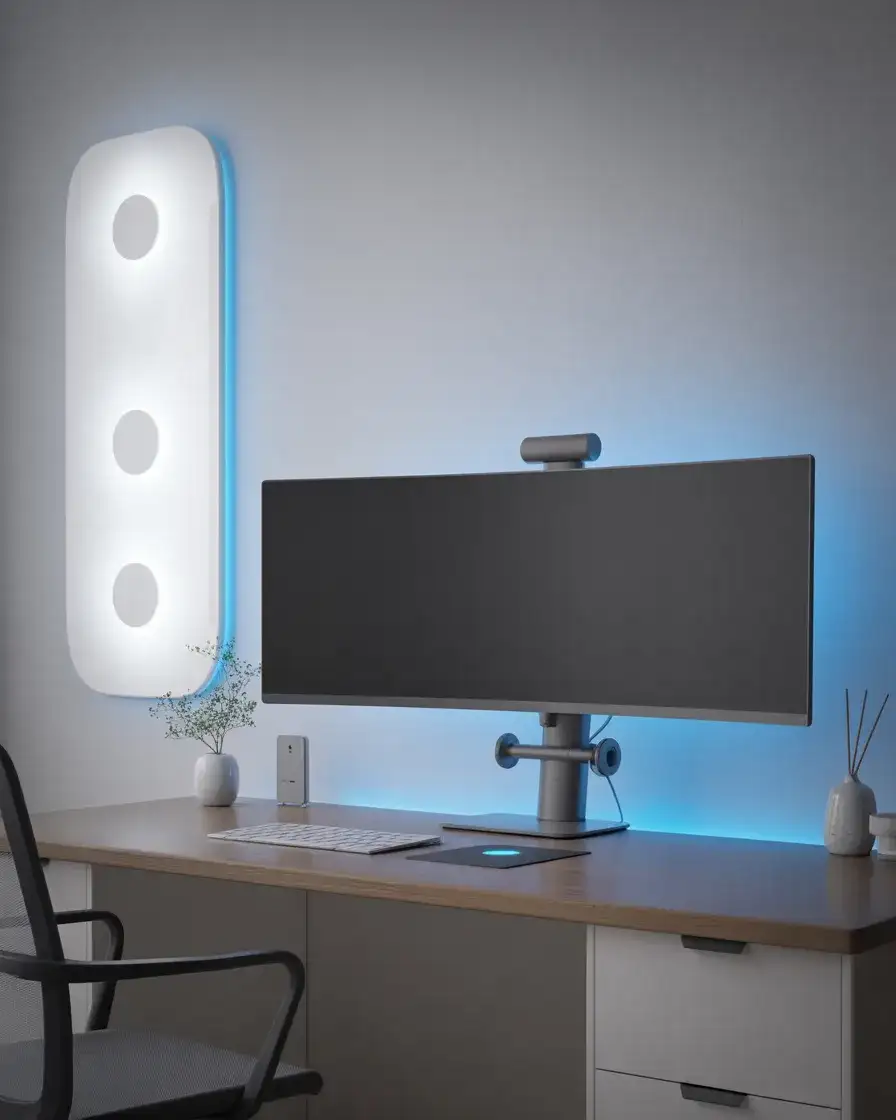
Start with lighting—it’s the highest-impact smart home upgrade you can make in a workspace and the easiest to reverse if you change your mind. Tunable white bulbs (like those from LIFX or Philips Hue) that shift from cool 6500K in the morning to warm 2700K in the afternoon measurably reduce eye strain over a long workday. Pair them with an automated schedule, and you’ve got one less decision to make before your first meeting.
14. Home Office with a Window View Desk
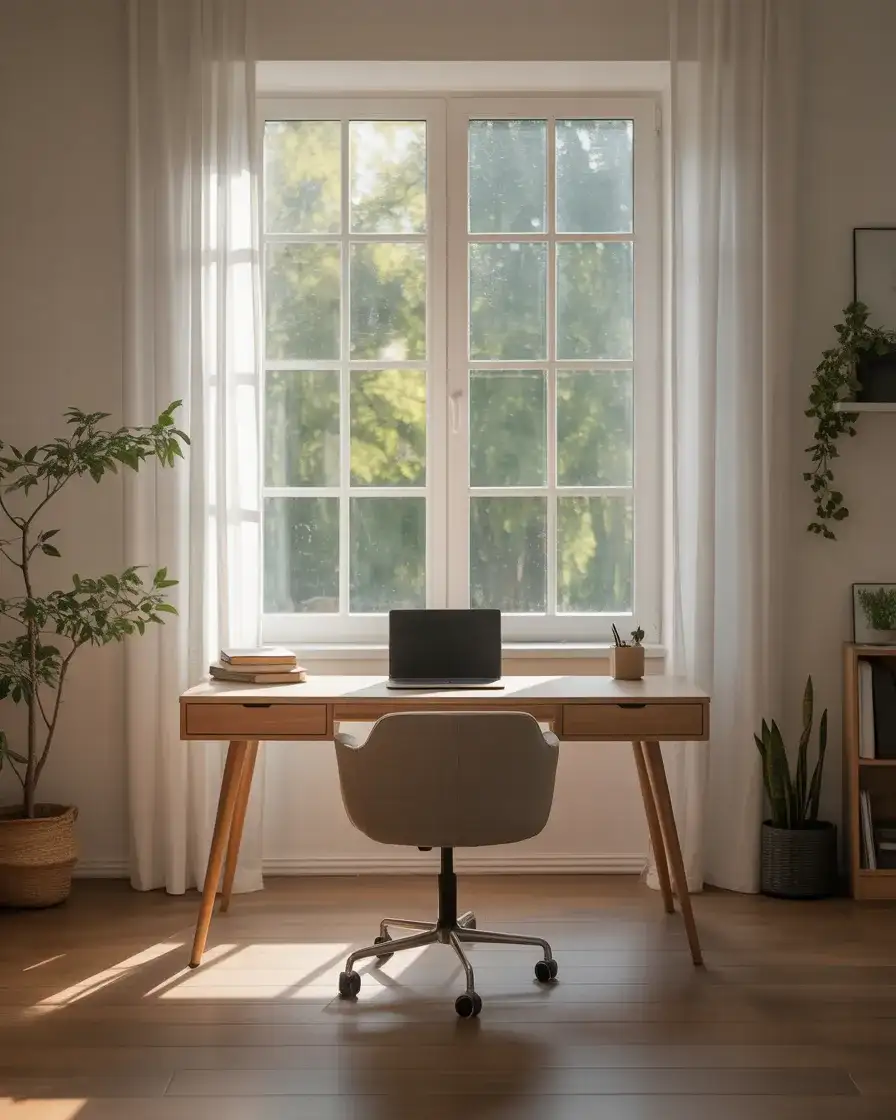
Positioning your desk to face a window rather than a wall might be the single most impactful design decision you make in your home office. Natural light from the front reduces screen glare, supports alertness, and gives your eyes a genuine focal distance to rest on during mental breaks—something looking at a wall six inches away cannot do. This approach fits naturally with both modern minimalist and Scandinavian aesthetics, where the window itself becomes a design element, perhaps framed with simple curtains or left entirely bare to let the outdoors in as a living backdrop.
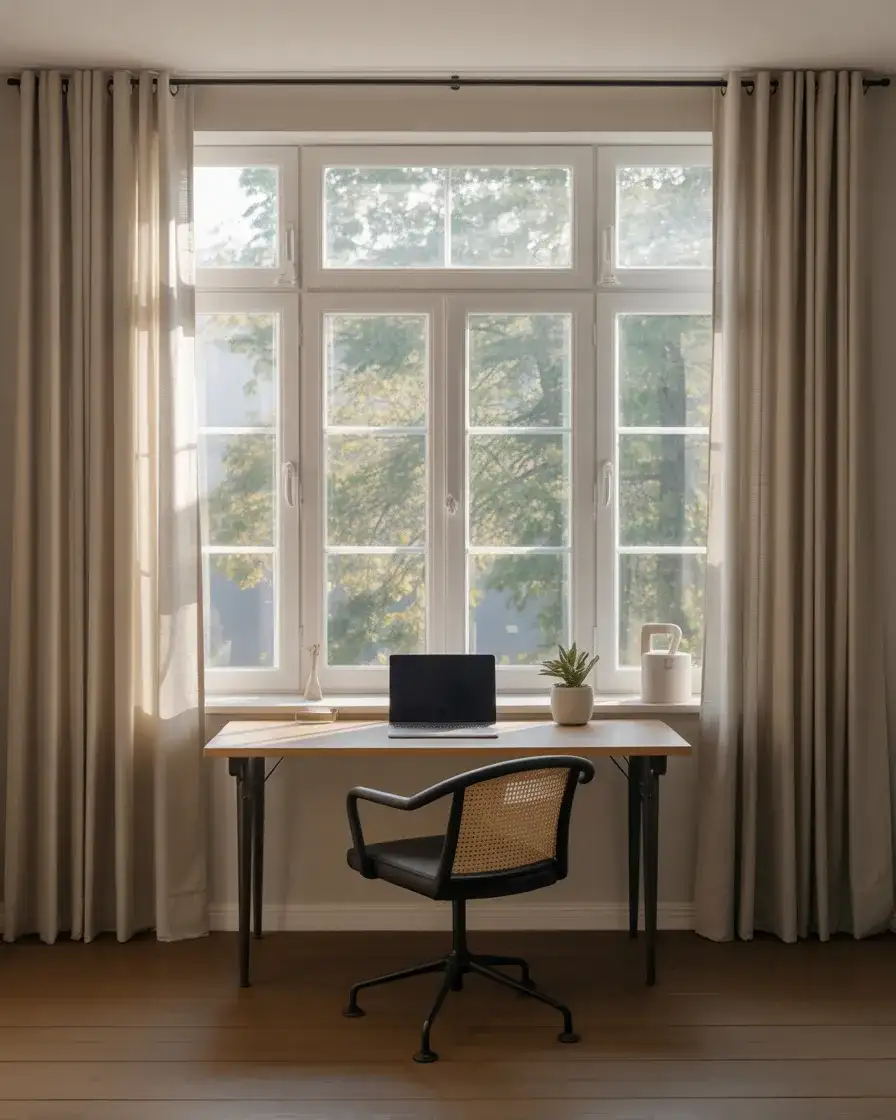
The one practical consideration is screen glare: if your window faces east or west, you may find direct morning or afternoon sun washing out your monitor. A simple solution is a light-filtering cellular shade that lets in brightness while cutting direct glare. Anti-glare monitor filters are another option and cost under $30 for most standard screen sizes. Neither solution ruins the view, and both protect your eyes during the hours when the sun angle is most punishing.
15. Two-Person Shared Home Office
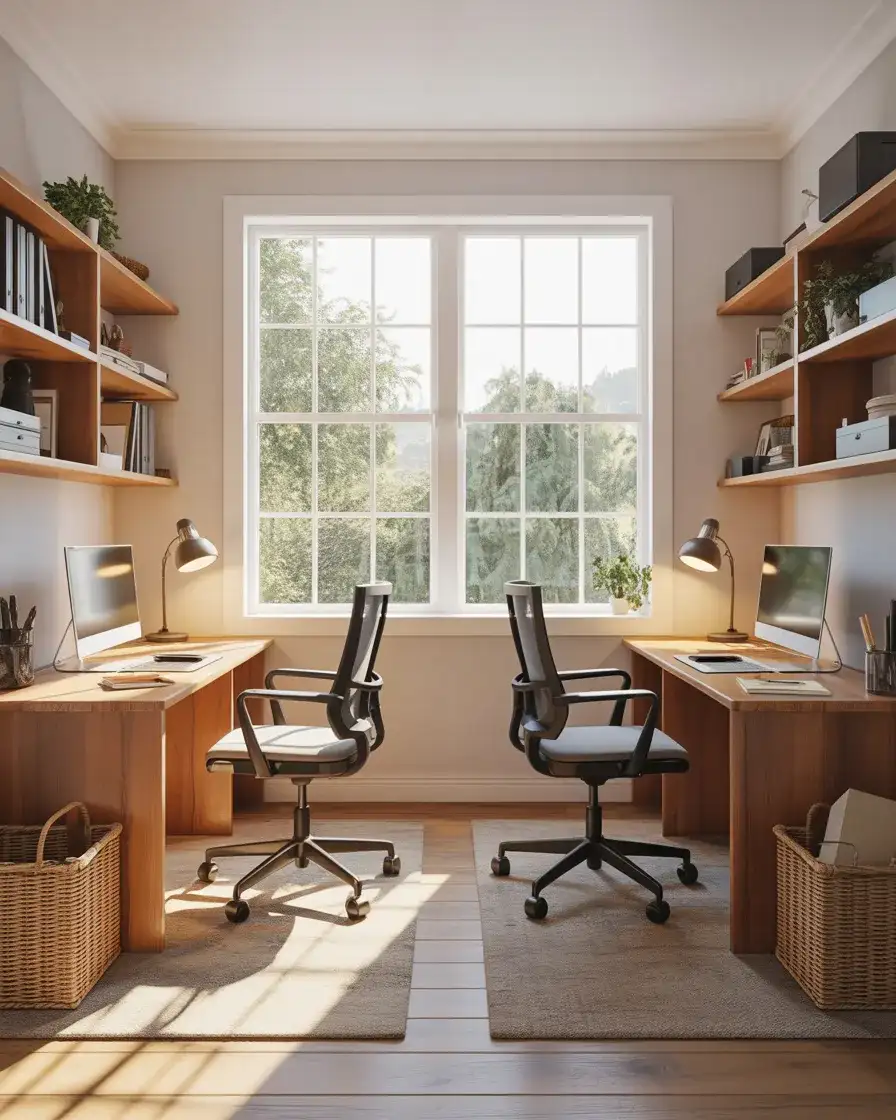
Designing a home office for two people is one of the more nuanced spatial challenges in residential design—especially post-pandemic, when millions of American households suddenly needed two functional workstations in homes that weren’t built for it. The modern solution tends to be a back-to-back or L-shaped desk configuration that gives each person their own zone without requiring a dividing wall. Acoustic considerations become critical here: two people on calls at the same time can be genuinely disruptive without the right planning and layout.
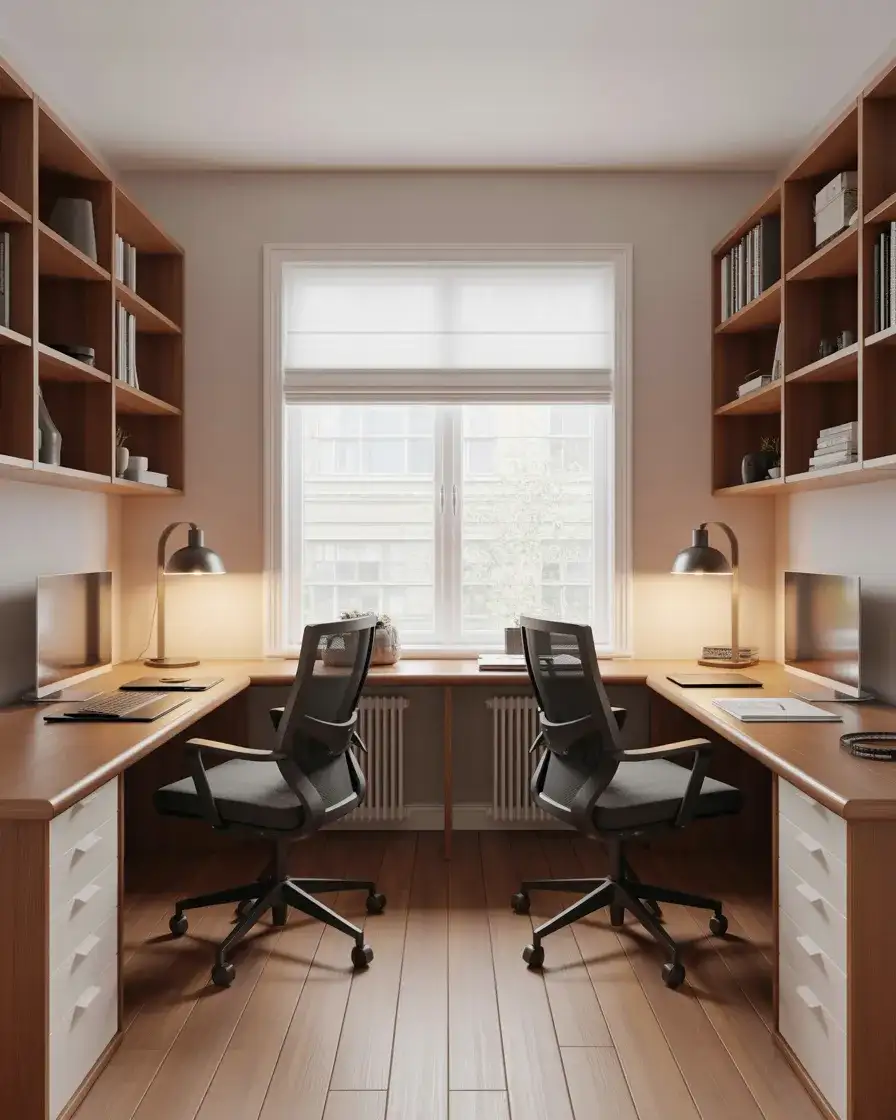
Beyond layout, the key to a shared home office that actually works is respecting individual zones. Even when two desks share the same room, each person should have their own dedicated storage, their own task light, and ideally their own wall section to personalize. The areas where things go wrong are usually shared surfaces—a single filing cabinet with no system, a shared cable tangle, or a single overhead light that doesn’t serve either person’s monitor position particularly well.
16. Maximalist Gallery Wall Office
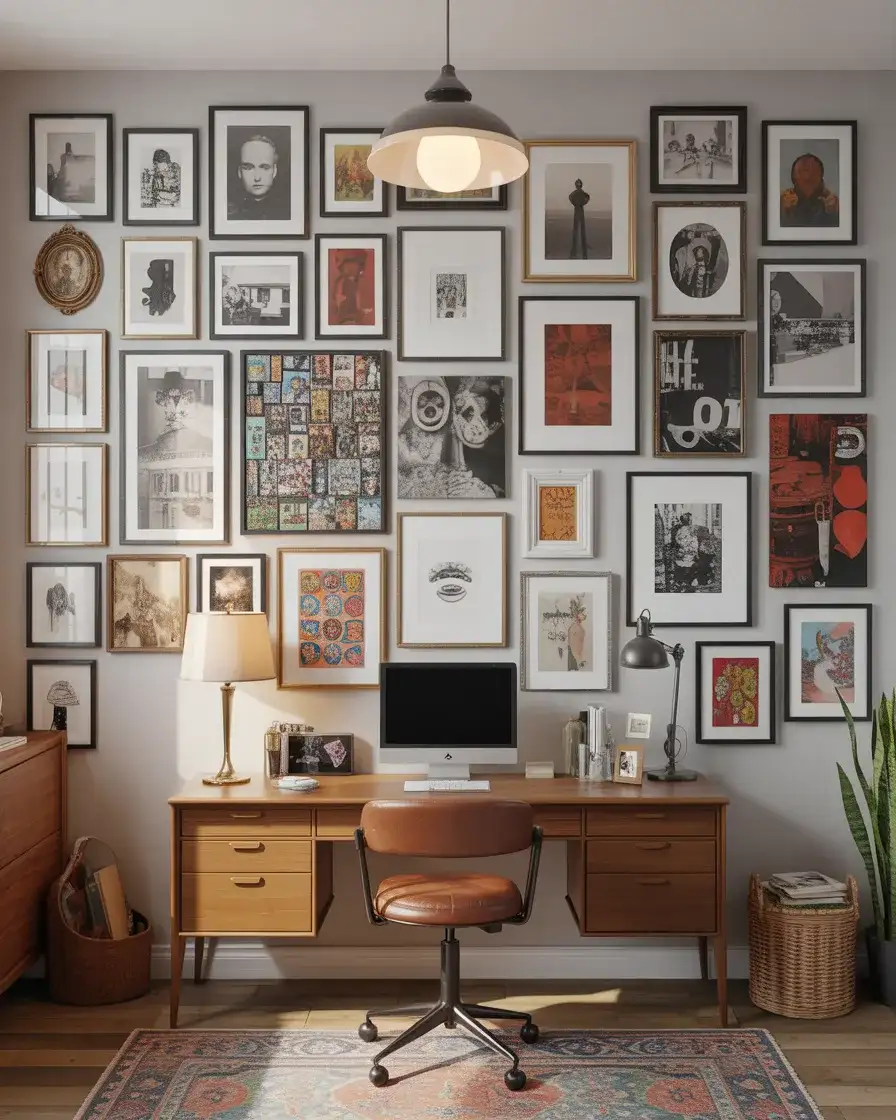
For those who find minimalism more numbing than clarifying, the maximalist gallery wall home office is a genuine alternative—and a beautiful one when executed well. The idea is to treat the wall behind or beside your desk as a curated personal exhibition: a mix of framed photography, original art, printed quotes, travel maps, and objects of meaning arranged in a dense, layered composition. It’s rich in inspiration and deeply personal, which is precisely why it works for creative professionals who need their environment to fuel rather than settle them.
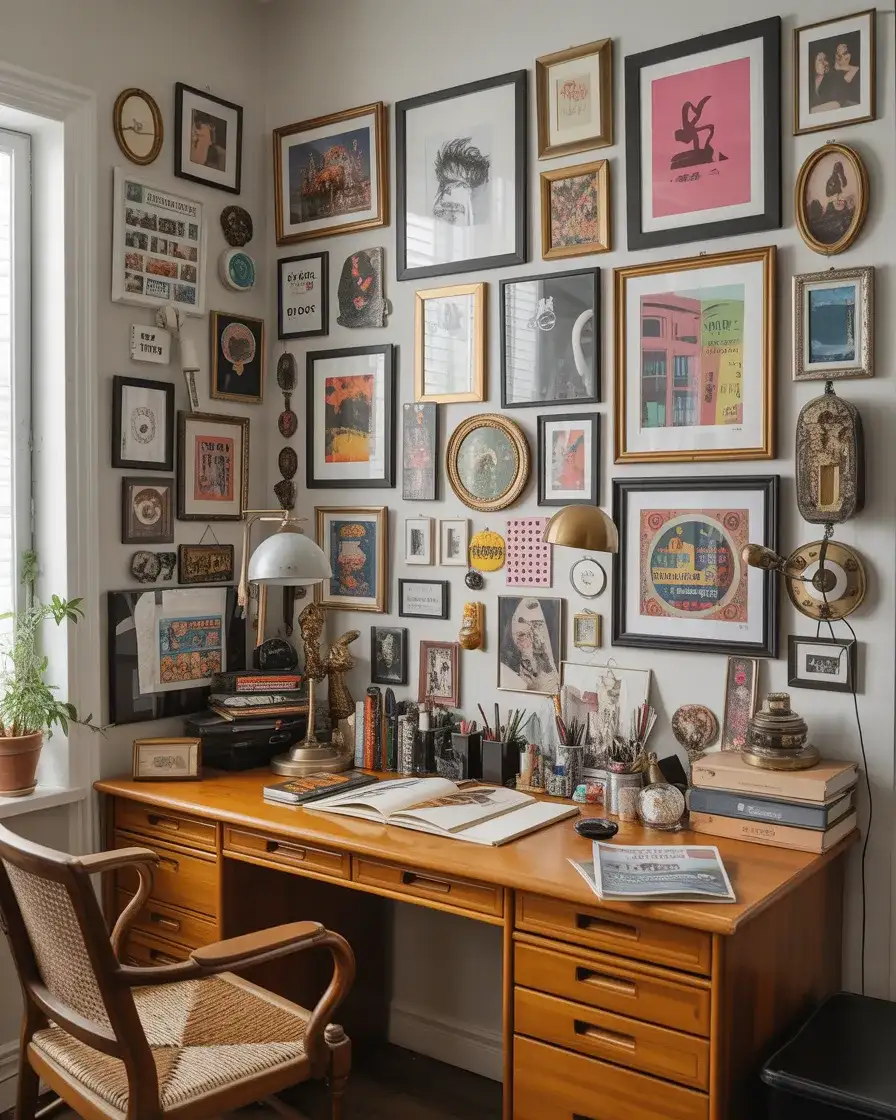
The trick to a gallery wall that looks curated rather than chaotic is an underlying organizing principle, even if it isn’t immediately obvious to visitors. Some designers work within a unified frame style (all black, all raw wood, or all ornate gold) while letting the content vary wildly. Others work with a color palette—everything in warm tones, or everything black and white—and allow frame styles to vary. Lay the arrangement out on the floor before you drive a single nail. It saves walls and sanity.
17. Corner Office with Built-In Storage
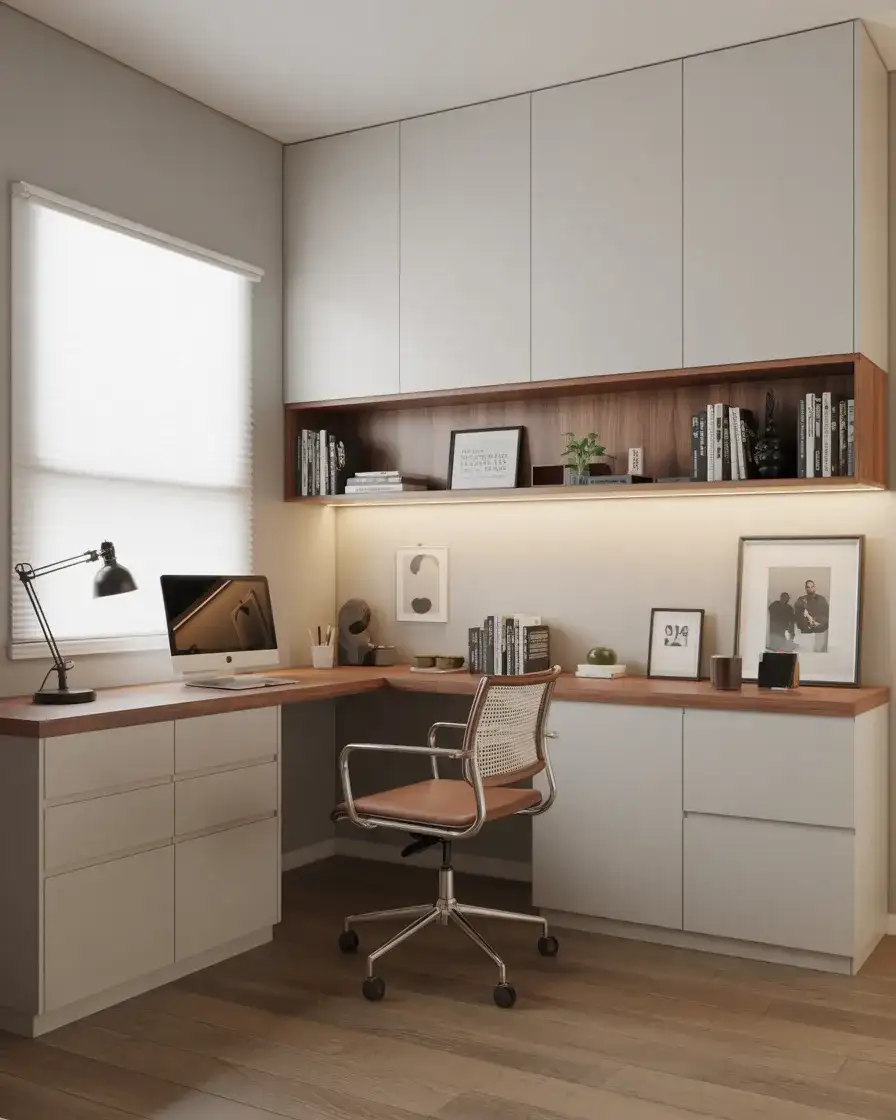
The corner home office solves two problems at once: it uses an often-neglected part of the room, and it creates a natural sense of enclosure that most people find conducive to focus. Pair it with professional built-in storage—deep drawers, overhead cabinets, and a printer nook—and you’ve got a fully functional office footprint in a surprisingly compact area. The contemporary version of this setup tends to wrap the corner in matching millwork so the whole unit reads as one cohesive piece of furniture rather than a desk pushed into a corner with a filing cabinet dragged alongside it.
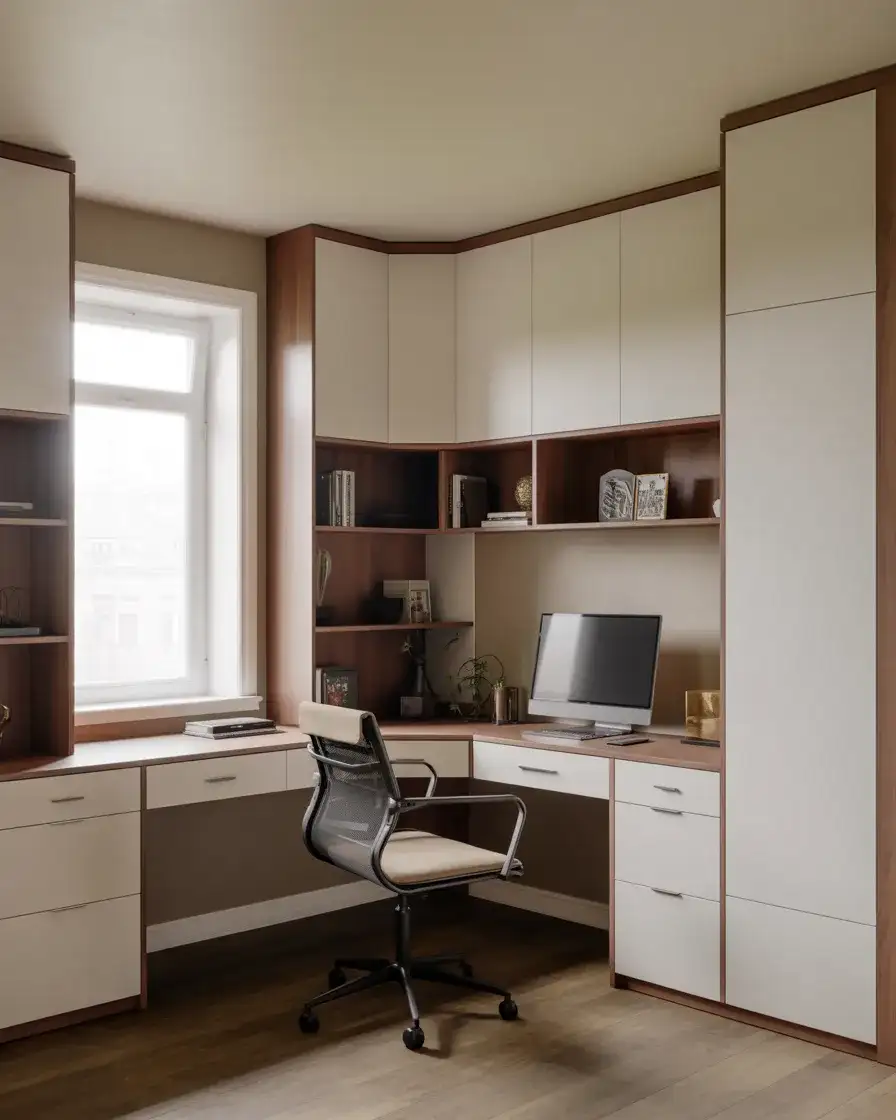
If a full custom build is outside your budget, the IKEA Sektion or Kallax systems offer an affordable alternative that many homeowners have successfully transformed into convincing built-ins with the addition of crown molding, paint to match the wall, and hardware upgrades. The key step people skip is scribing the top of the cabinet to the ceiling—that gap is what distinguishes a DIY job from something that looks like it came with the house.
18. Vintage Eclectic Home Office
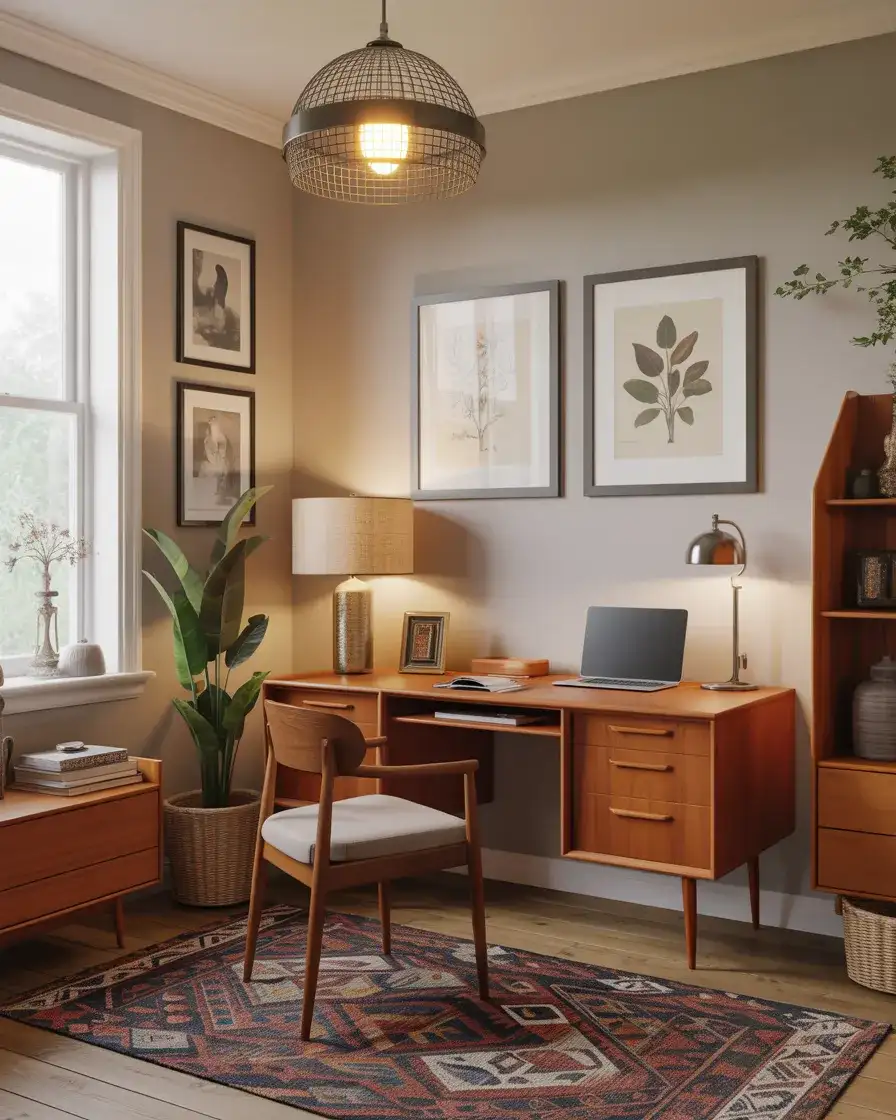
The vintage eclectic home office is a love letter to accumulated personality—and it’s one of the styles that photographs most beautifully because no two are alike. It might start with a mid-century teak desk found at a Goodwill in Columbus, Ohio, paired with a Victorian-era globe lamp, a kilim rug, and a collection of ceramic vessels in different shapes and earths. Ideas from different eras and geographies coexist because the owner’s eye provides the connective tissue. It’s a style that rewards patience and thrift over budget, which makes it particularly appealing to younger homeowners building from scratch.
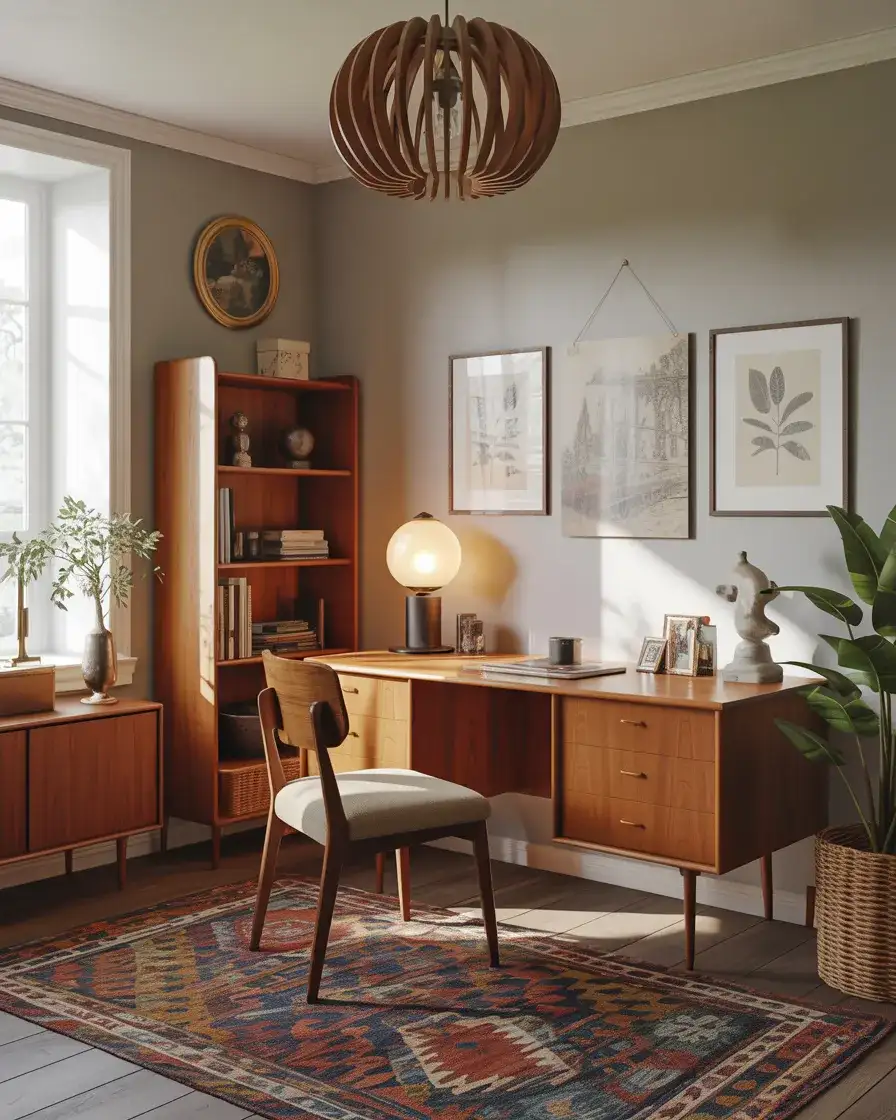
The practical advice for building a vintage eclectic office: buy the desk first, then let everything else respond to it. A great foundational piece—a beautiful old desk with dovetail drawer joints and original hardware—gives every subsequent addition a reference point. Pieces that share the desk’s era, wood tone, or scale will feel cohesive even if they’re stylistically different. Avoid buying matched sets; the whole point is that things have come from different places and different lives.
19. Minimalist Black and White Office
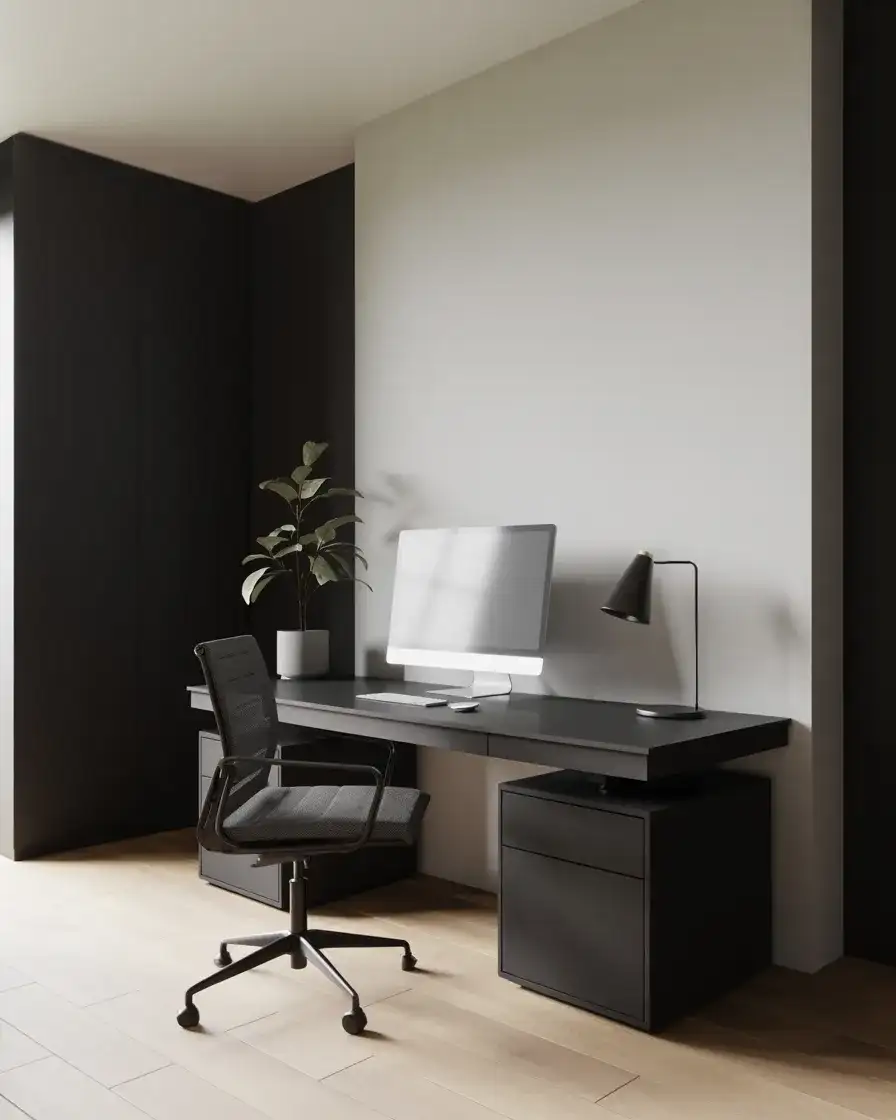
Strip the home office down to its most graphic essentials, and you arrive at the black and white minimalist workspace—a look that’s been consistently popular in design circles because it’s both timeless and endlessly adaptable. White walls, a black desk, a matte black task lamp, a white monitor, and absolutely nothing on the desktop that doesn’t earn its place. The graphic contrast is visually arresting in a way that more tonal, monochromatic rooms often are not, and it pairs beautifully with a single bold element—a potted plant or a textured rug in charcoal—that keeps it from feeling clinical.
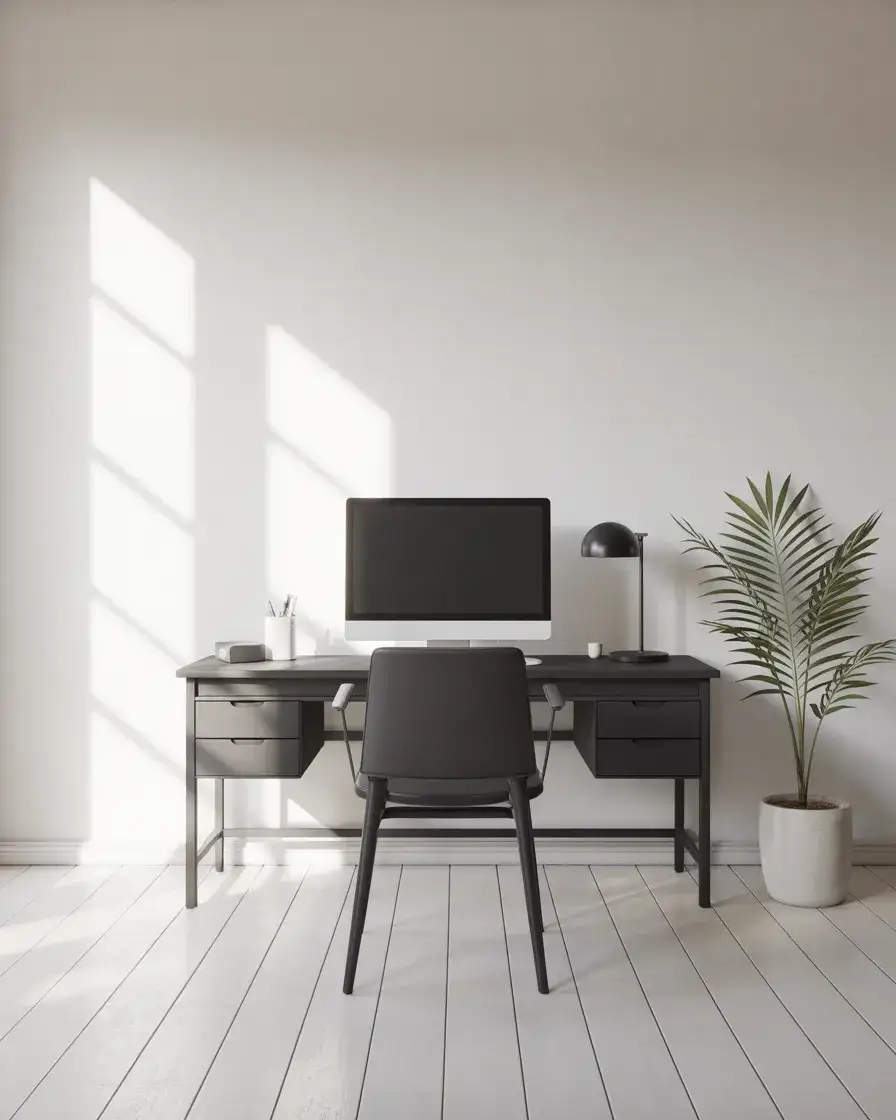
This is a style that requires discipline to maintain—which is actually part of its function. When there’s nowhere to hide clutter (no matching bins, no “visual noise” to absorb it), the incentive to put things back in their place after every use is much higher. Many people who adopt this aesthetic report that it subtly changed their relationship with stuff: they stopped bringing new things into the space unless they were genuinely certain it had a permanent home and a purpose. It becomes a design system that creates better habits.
20. Farmhouse Rustic Home Office
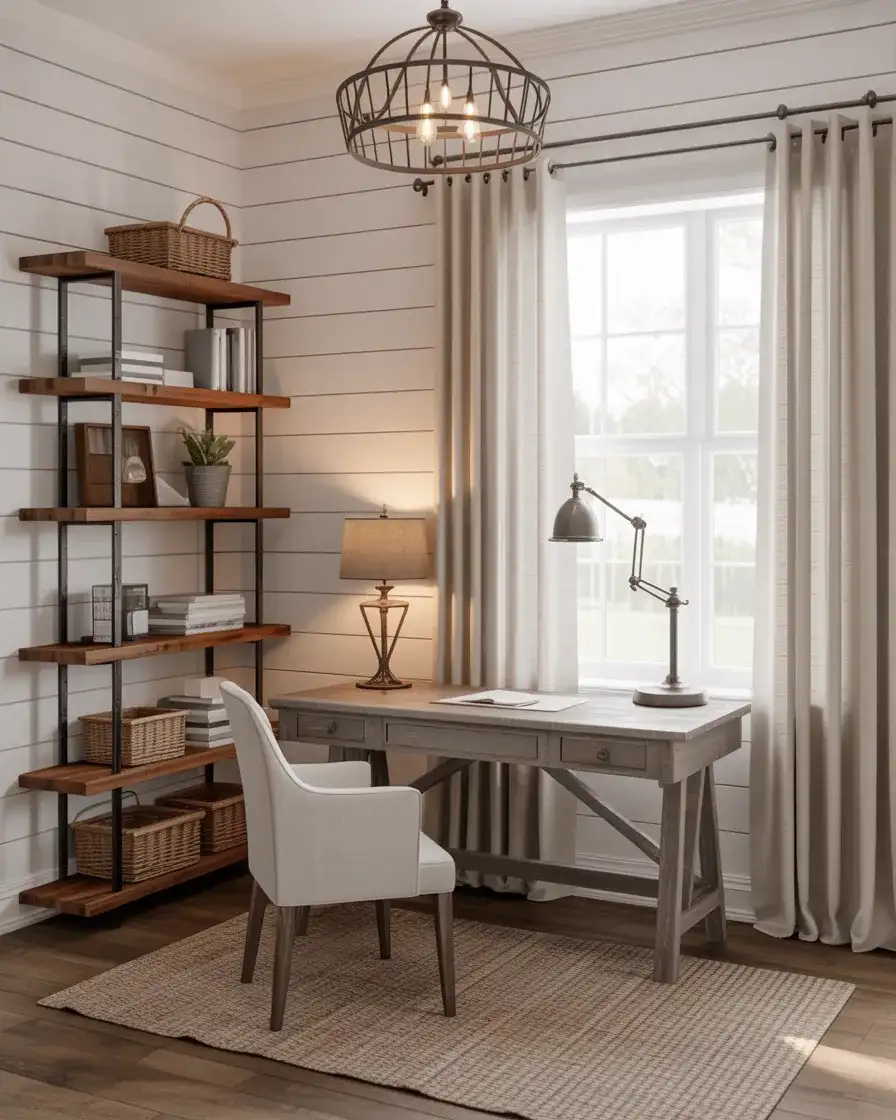
The farmhouse aesthetic has dominated American home design for over a decade, and its home office expression is warm, grounded, and surprisingly functional. Shiplap walls, open wood shelving, a reclaimed barn wood desk, and woven baskets for storage: this is a cozy style that leans into texture and handmade imperfection as design virtues. It’s particularly popular in middle America—in the suburban homes of Ohio, Tennessee, and Kansas—where it fits naturally with existing architecture and reflects an aesthetic sensibility rooted in comfort and function rather than fashion.
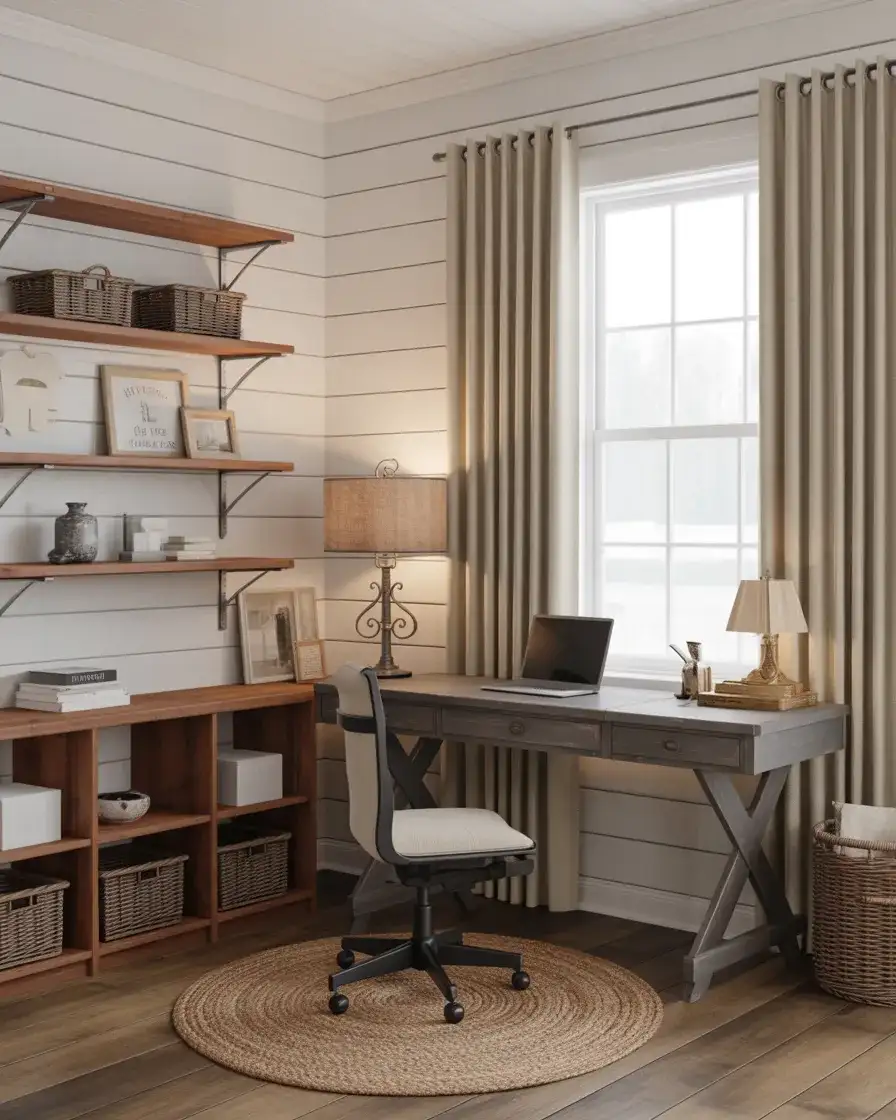
Where many farmhouse offices go wrong is in execution that tips from “rustic warmth” into “Pinterest cliché”: too many mason jars, too many “gather here” signs, and too much galvanized metal that starts to look like a hardware store. The best farmhouse offices are restrained—one strong material (shiplap or beadboard, not both), one consistent metal finish, and storage solutions that are as functional as they are aesthetic. Woven baskets on open shelves, for instance, actually hide the chaos of office supplies while contributing to the texture-layered look.
21. Bright Coastal Home Office
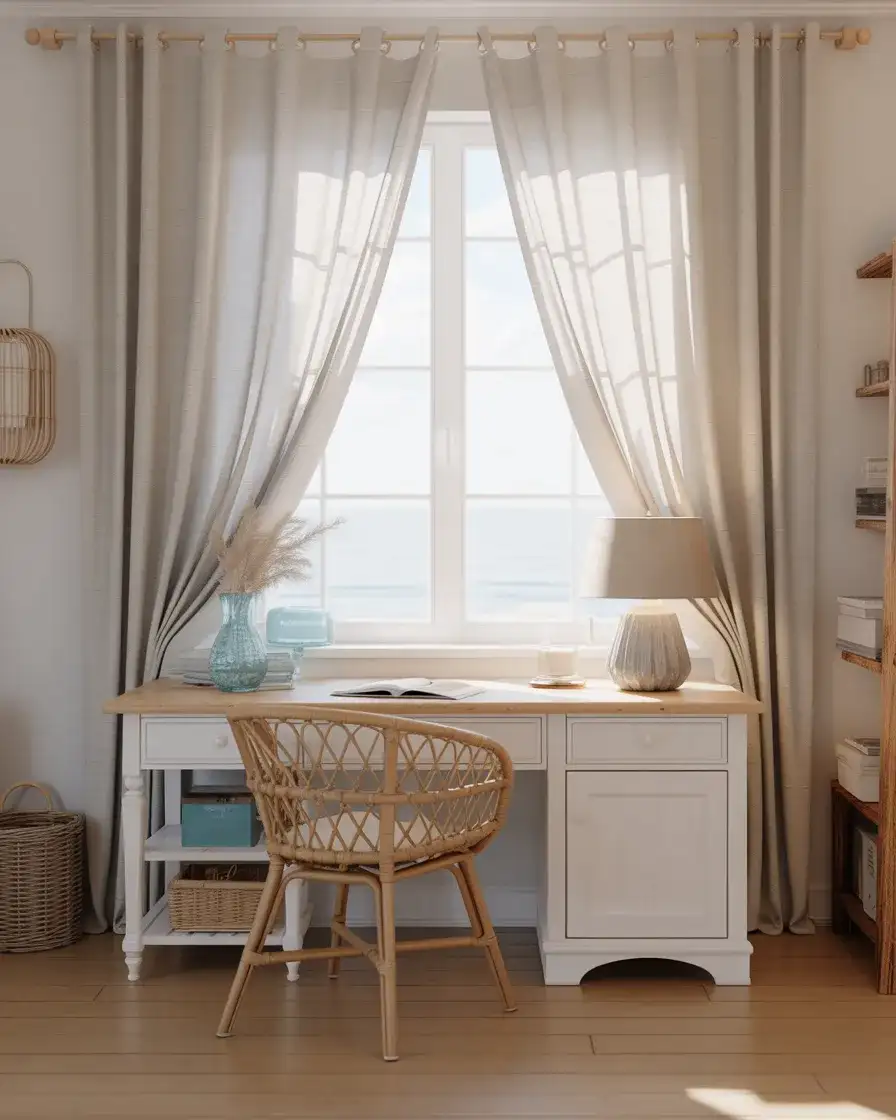
There’s something irresistible about a home office that feels like it belongs at the edge of the ocean—light-filled, breezy, and decorated in the watery palette of seafoam, sand, and driftwood. The coastal home office draws on modern principles of airiness and natural materials but adds a layer of ease that more serious office aesthetics sometimes miss. White-painted furniture, sea-glass accents, linen everything, and the occasional piece of rattan give the space a relaxed intelligence. It’s the style that says you’re working hard but you know how to live, too—which is very much the vibe of American coastal towns from Malibu to Charleston.
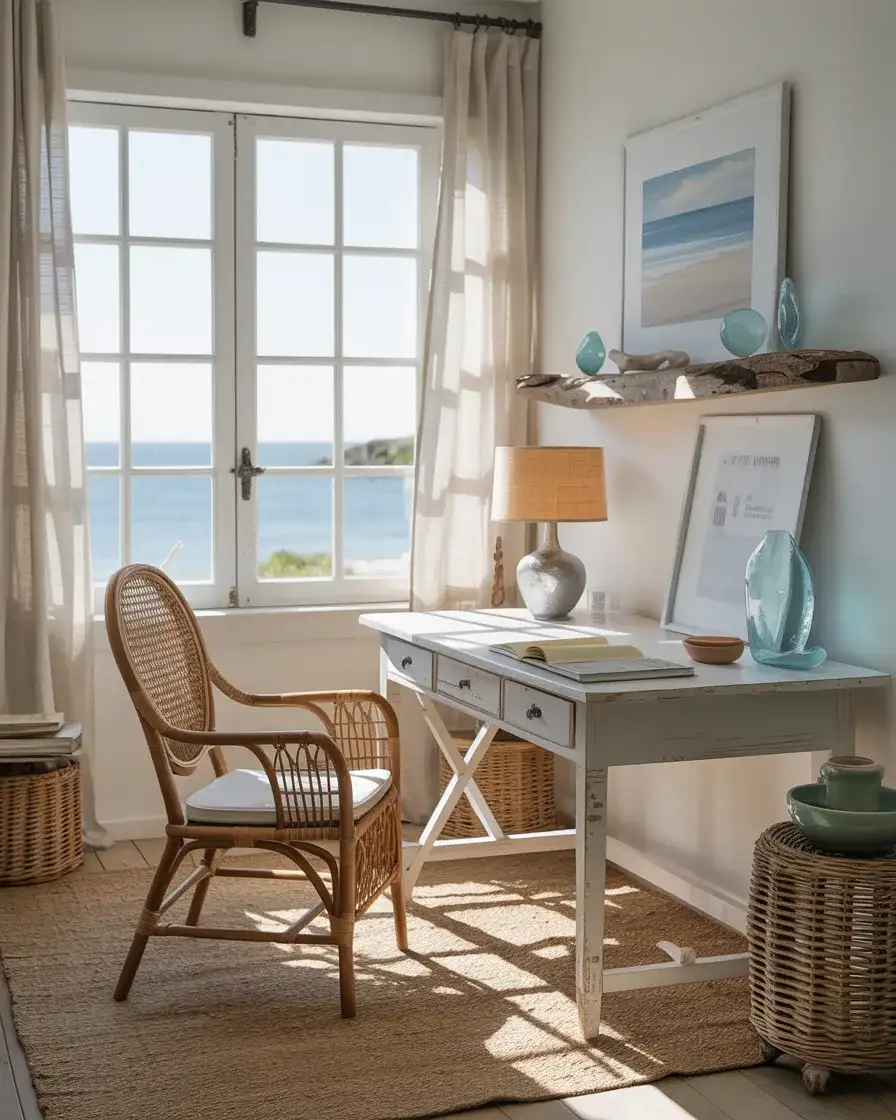
You don’t have to live near an actual coast to pull this off—and honestly, some of the best coastal offices are in landlocked cities where the style functions as aspirational escapism. The palette does the heavy lifting: start with walls in a soft white or barely-there blue-gray, and every piece of furniture and accessory you add will fall naturally into the coastal vocabulary. Avoid overloading the space with obvious beach motifs; a single piece of sea-inspired art or a vessel of shells is plenty. The restraint is what makes it feel curated rather than themed.
22. Modern Home Office with Hidden Storage
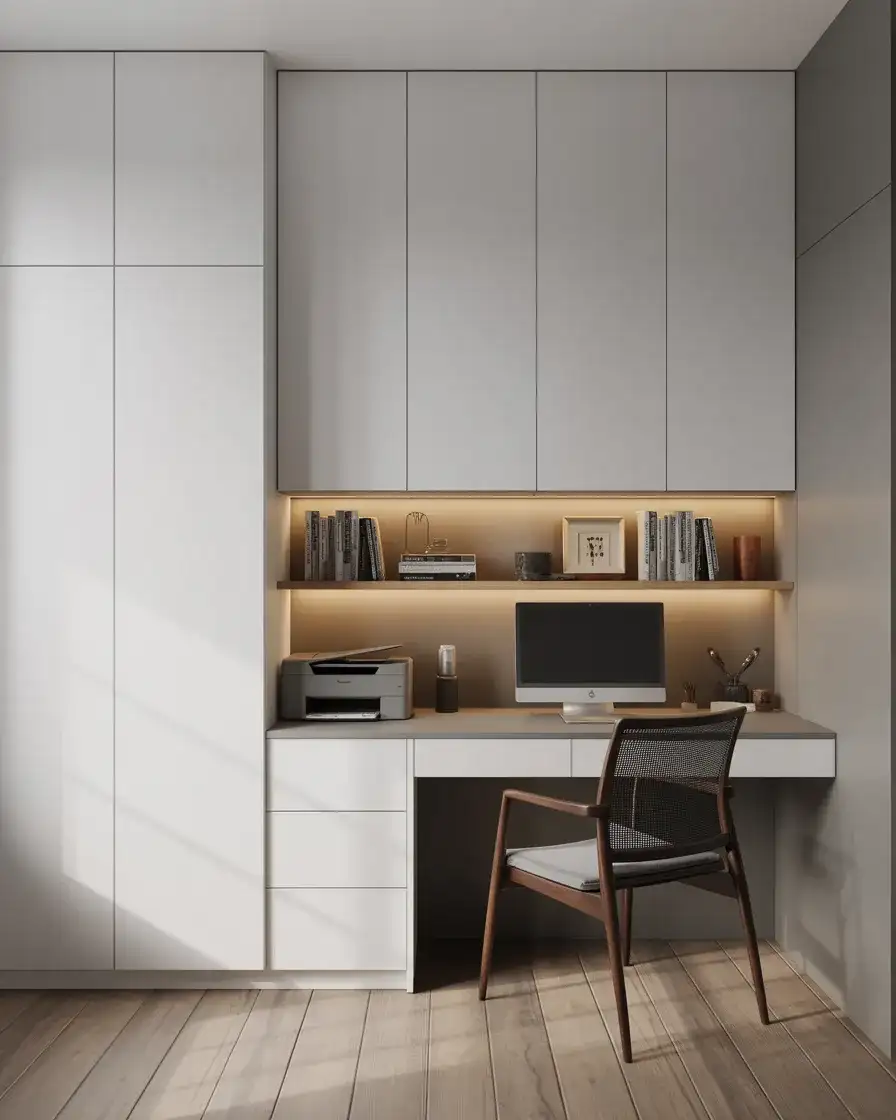
One of the most searched home office ideas of 2026 is the deceptively simple-looking workspace—an office where everything is beautifully contained and nothing interrupts the clean visual surface. Hidden storage is the engine behind this effect: push-to-open cabinetry with no handles, a desk with a hutch that closes flush, drawer dividers for cables and chargers, and a printer tucked into a dedicated nook behind a door. The result is an office that could read as a living room sideboard until you open it. Modern luxury in a home office often comes down to this: the quality of what’s hidden is as important as what’s shown.
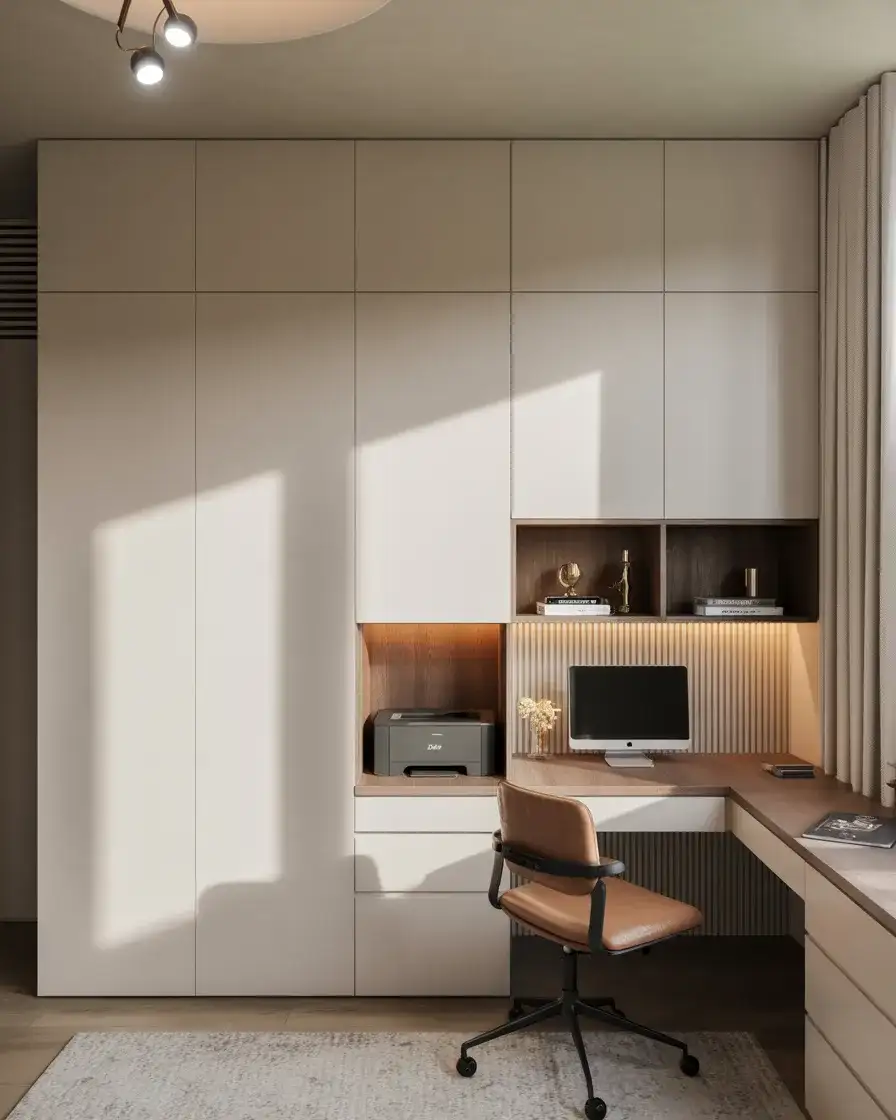
The principle at work here is borrowed from hospitality design, where hotel rooms function as offices, bedrooms, and living rooms simultaneously by hiding everything when not in use. In a home context, this pays dividends beyond aesthetics: when your end-of-day ritual involves closing a door on the workday—literally, physically, the sound of a latch—there’s a psychological effect of closure that helps you actually decompress. It’s a small design move with a surprisingly large impact on work-life balance.
Conclusion
Home office design in 2026 is as personal as the work that happens inside it—and there truly is no single right answer. Whether you’re drawn to the serene discipline of Japandi, the dramatic personality of dark academia, or the clean logic of a floating minimal desk, the goal is the same: a space that makes you feel capable, comfortable, and genuinely glad to sit down and start the day. If any of these ideas sparked something for you—a combination you hadn’t thought of, a budget approach that now seems doable, or a style that finally put a name to what you’ve been reaching for—we’d love to hear about it. Drop your home office plans, questions, or photos in the comments below.