There’s something about a fire pit that turns a plain backyard into a place people actually want to stay. In 2026, that pull is stronger than ever—Americans are investing in their outdoor spaces like never before, and fire pits have become the centerpiece of countless Pinterest boards and weekend renovation projects. Whether you’re starting from scratch or refreshing a tired patio, the right fire pit setup can completely change how you use your yard. This guide covers 22 fresh, inspiring ideas to help you find the look, scale, and vibe that fits your space perfectly.
1. Stacked Stone Circle with Built-In Bench Seating
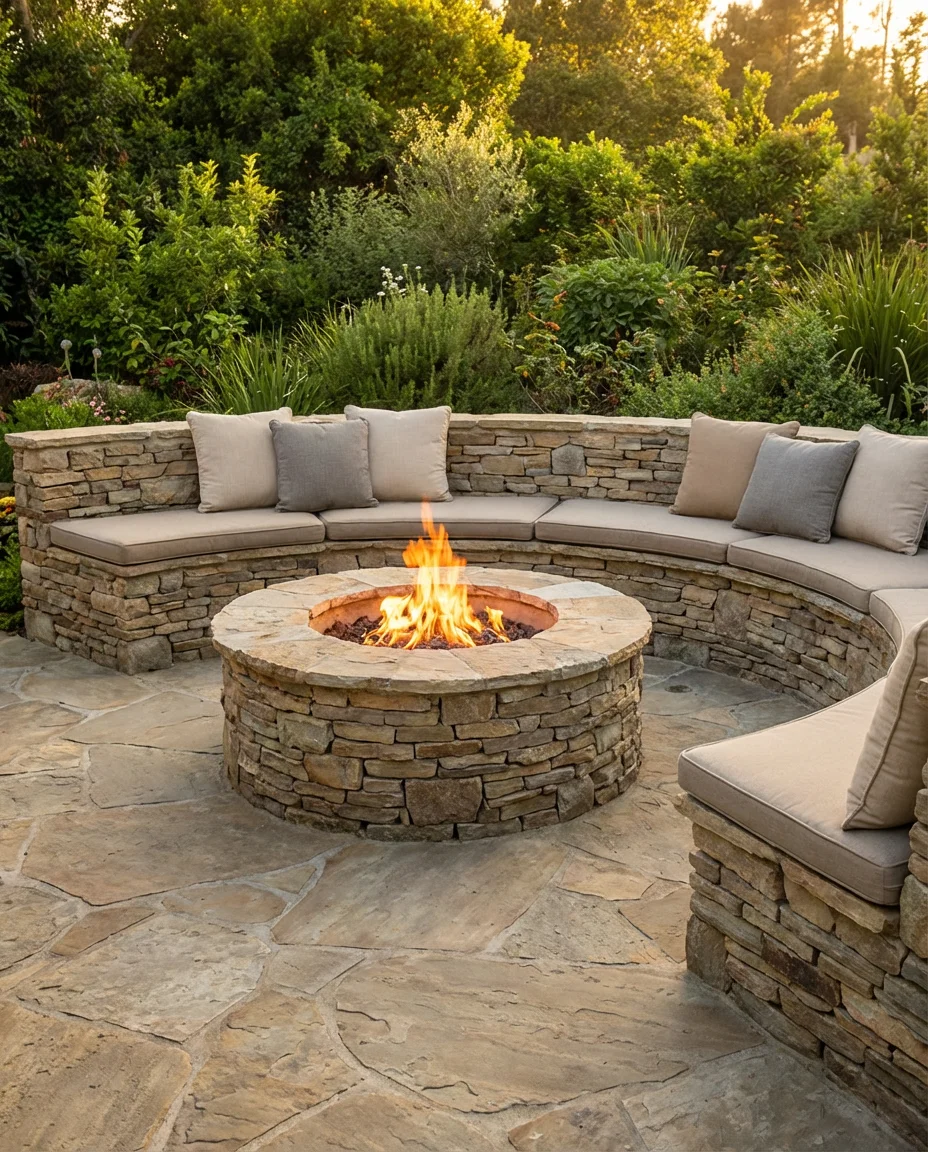
A stacked stone fire pit paired with curved built-in bench seating is one of the most timeless looks you can create in a backyard. The natural texture of the stone gives the space an earthy, grounded feel—like it’s always been there. This setup works beautifully in medium to large yards where you want a defined gathering zone that feels both intentional and organic. Choose a neutral stone palette so it blends with existing landscaping rather than competing with it.
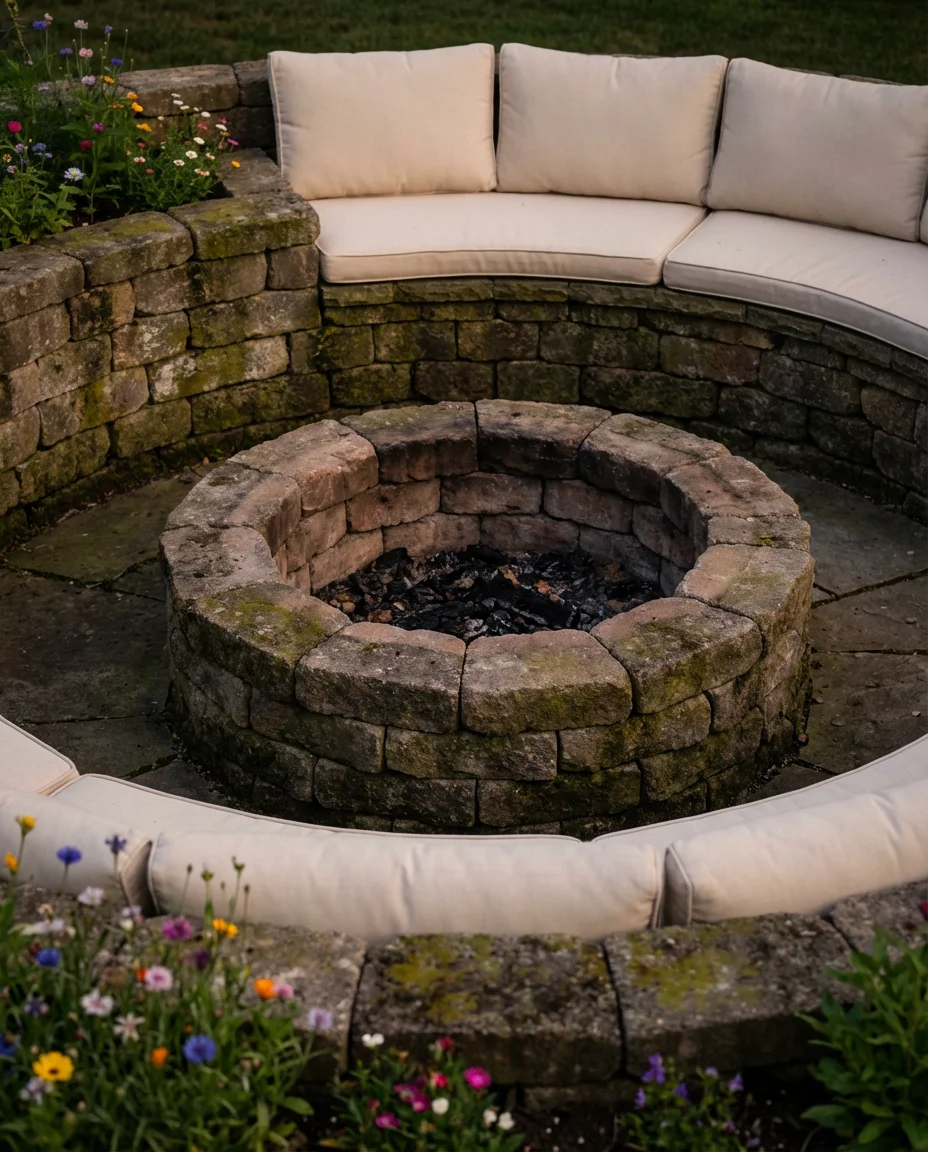
Built-in seating eliminates the need to drag chairs out every time you want to enjoy the fire. Concrete or stone benches can be topped with weather-resistant cushions in neutral linen or deep charcoal—both hold up well through changing seasons. A common mistake is building the bench too close to the pit; aim for at least 36 inches of clearance for comfort and safety. Once you get that spacing right, this becomes one of the most used corners of your entire property.
2. Simple DIY Cinder Block Fire Pit on a Budget
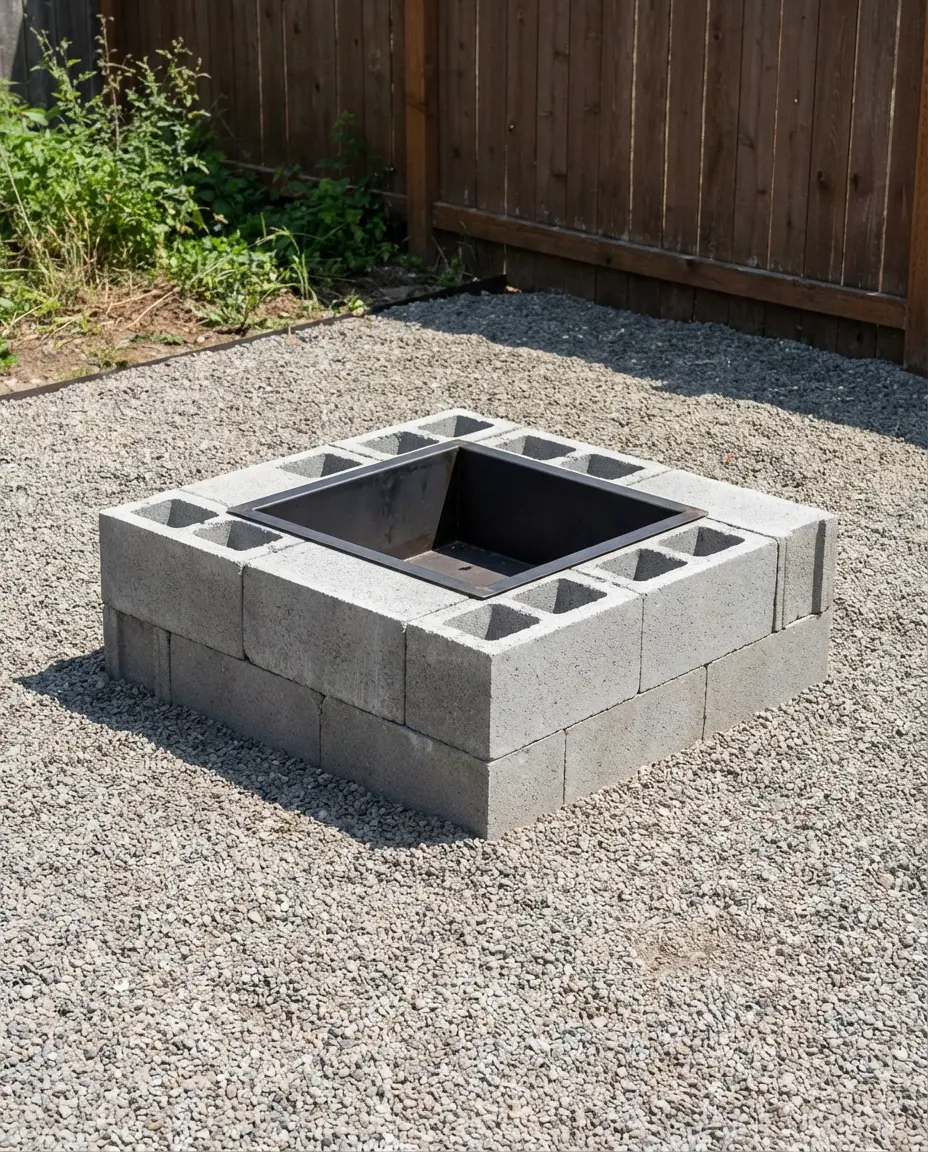
If you want a cheap, simple fire pit that actually looks good, cinder blocks are your best friend. Stack them in a square or rectangular shape, use no mortar if you want flexibility, and you’re done in an afternoon. This is the ultimate backyard DIY project—one that costs under $50 in most cases and delivers a surprisingly polished result when you choose uniform gray blocks and set them on a level gravel base. It’s approachable for any skill level.
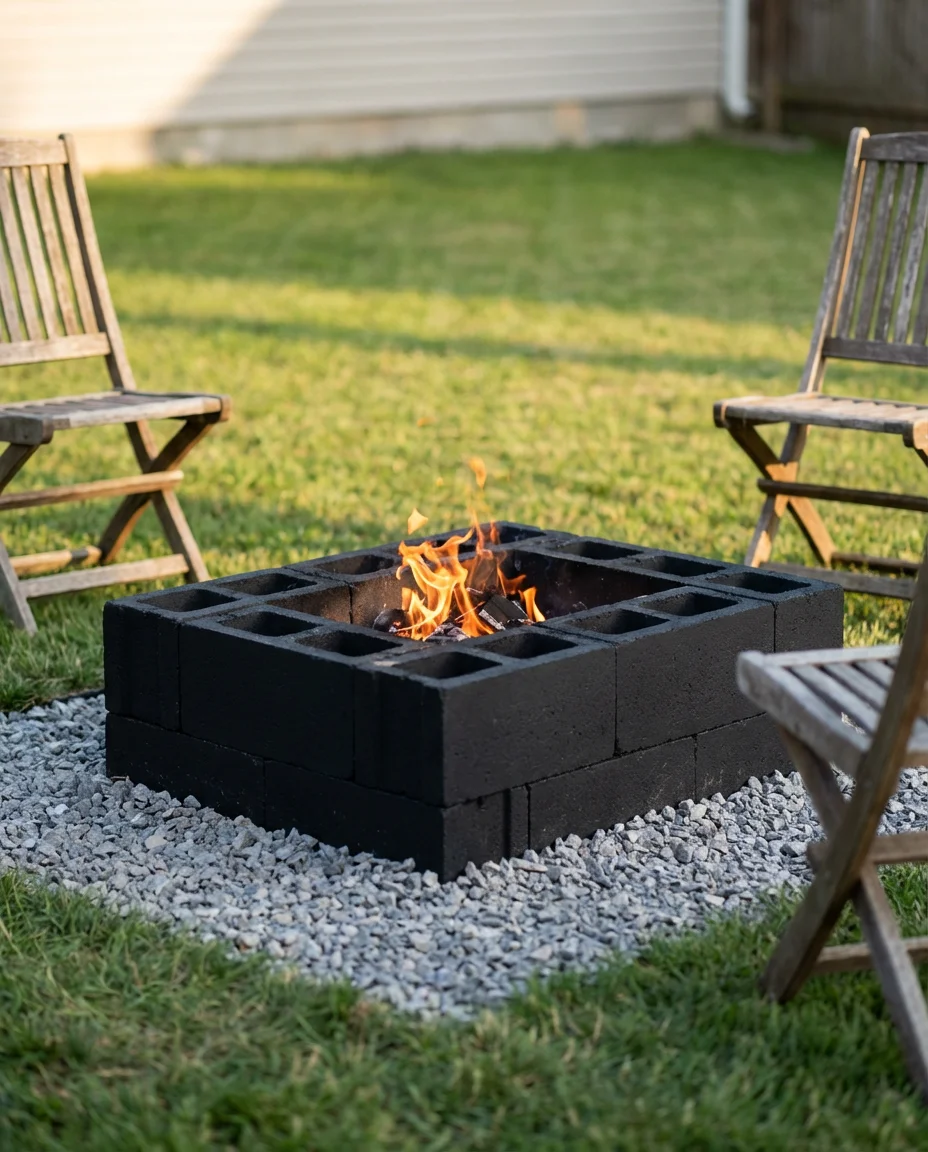
Budget angle: a full cinder block fire pit build typically runs between $40 and $80 in materials, depending on your region. Add a simple steel insert for under $30, and you’ve got a fire pit that rivals setups costing ten times more. Spray-paint the exterior blocks with high-heat masonry paint in matte black or warm terracotta to elevate the look even further. For renters or those who move frequently, the no-mortar version can be taken apart and rebuilt at your next place.
3. Cozy Corner Fire Pit with Wraparound Seating
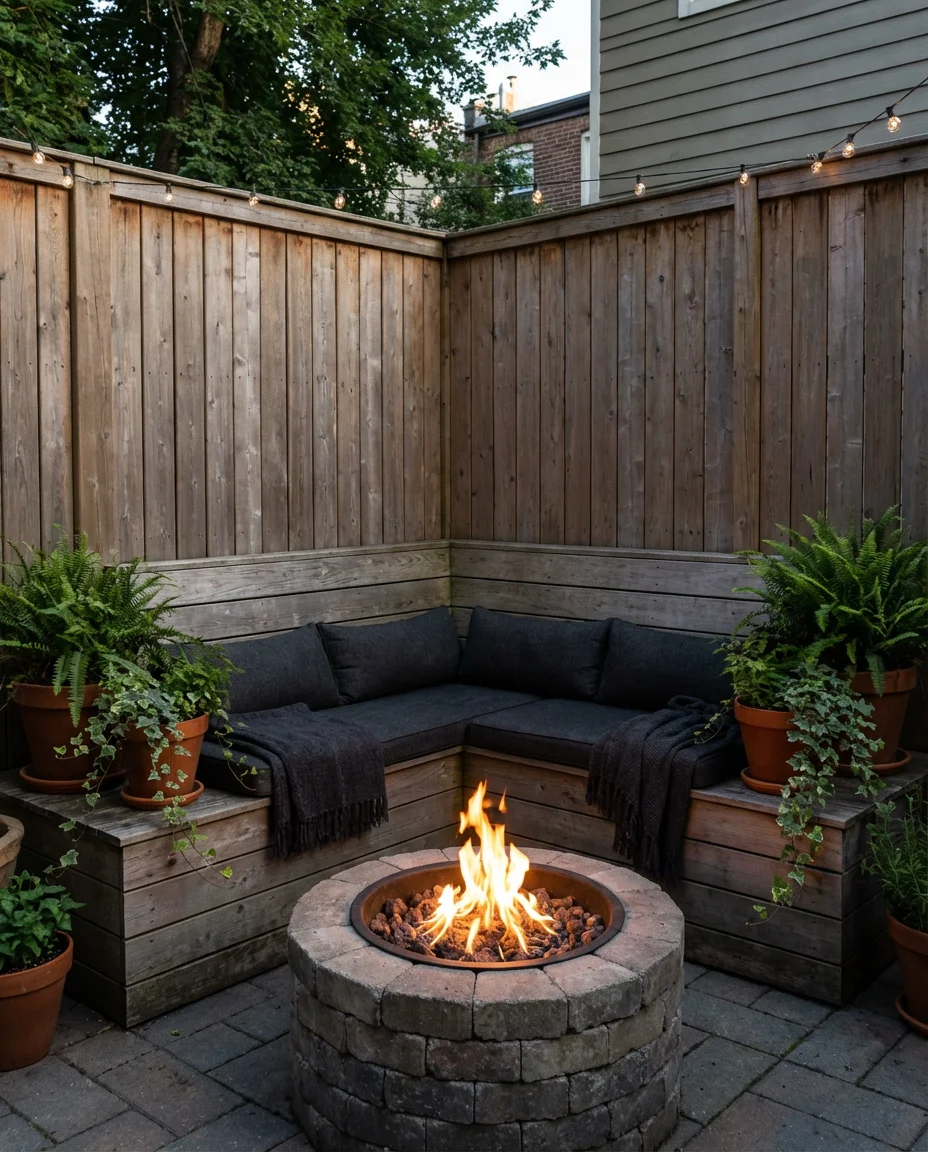
Tucking a fire pit into the corner of your yard is a clever way to claim dead space and transform it into the coziest spot on the property. An L-shaped bench wraps two sides of the fire pit, making the corner feel like an intentional outdoor room rather than leftover space. This works especially well in small backyard layouts where every square foot has to pull its weight. Add potted plants or a low privacy screen on the open sides to close in the space even more.
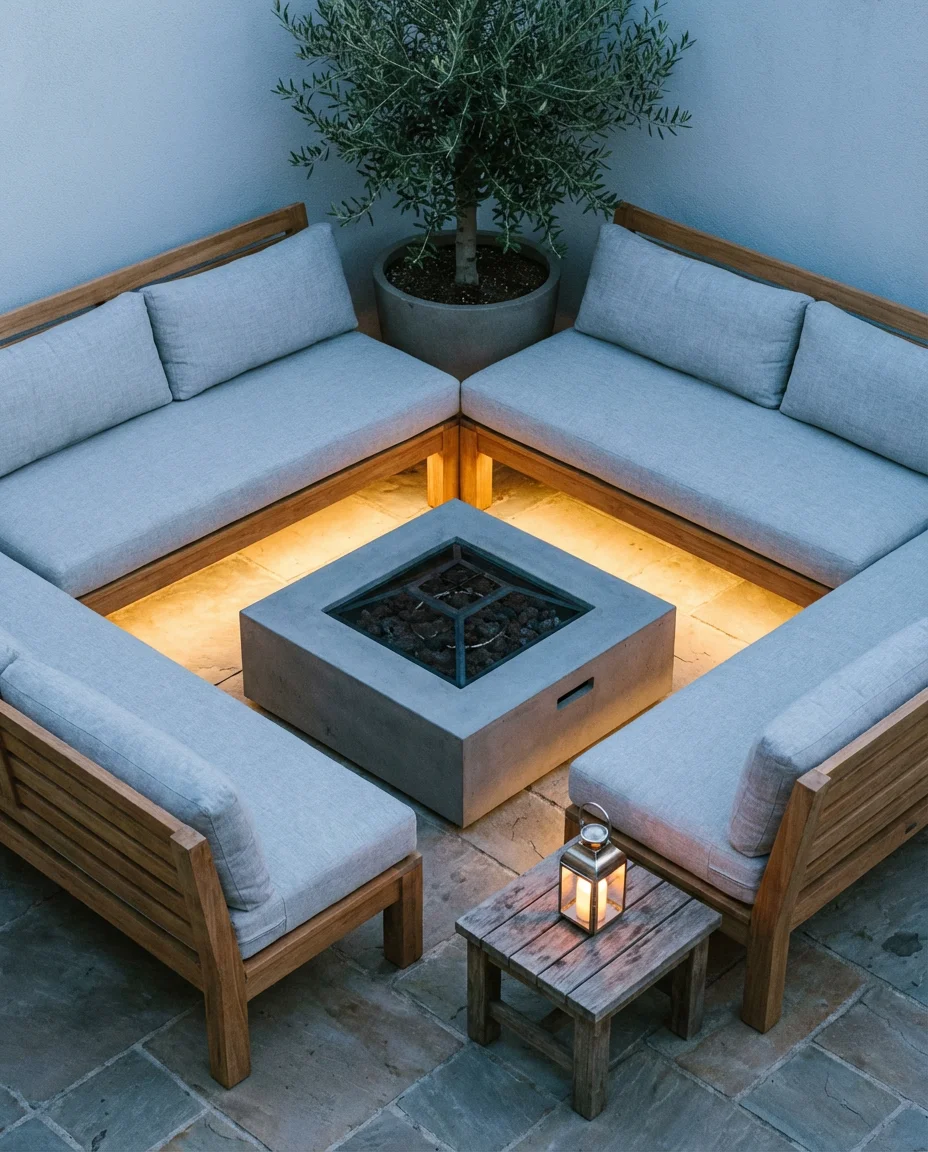
This layout works best in backyards with an existing fence or hedge on at least one side—that natural boundary anchors the corner and gives it instant privacy. A square or rectangular fire pit fits this configuration better than a round one, since the geometry aligns with the right-angle framing of the corner. Pair cedar or teak bench frames with fade-resistant cushions for a setup that stays beautiful from May through October. It’s a practical solution that genuinely feels like a destination.
4. Rustic Log Surround Fire Pit in a Wooded Backyard
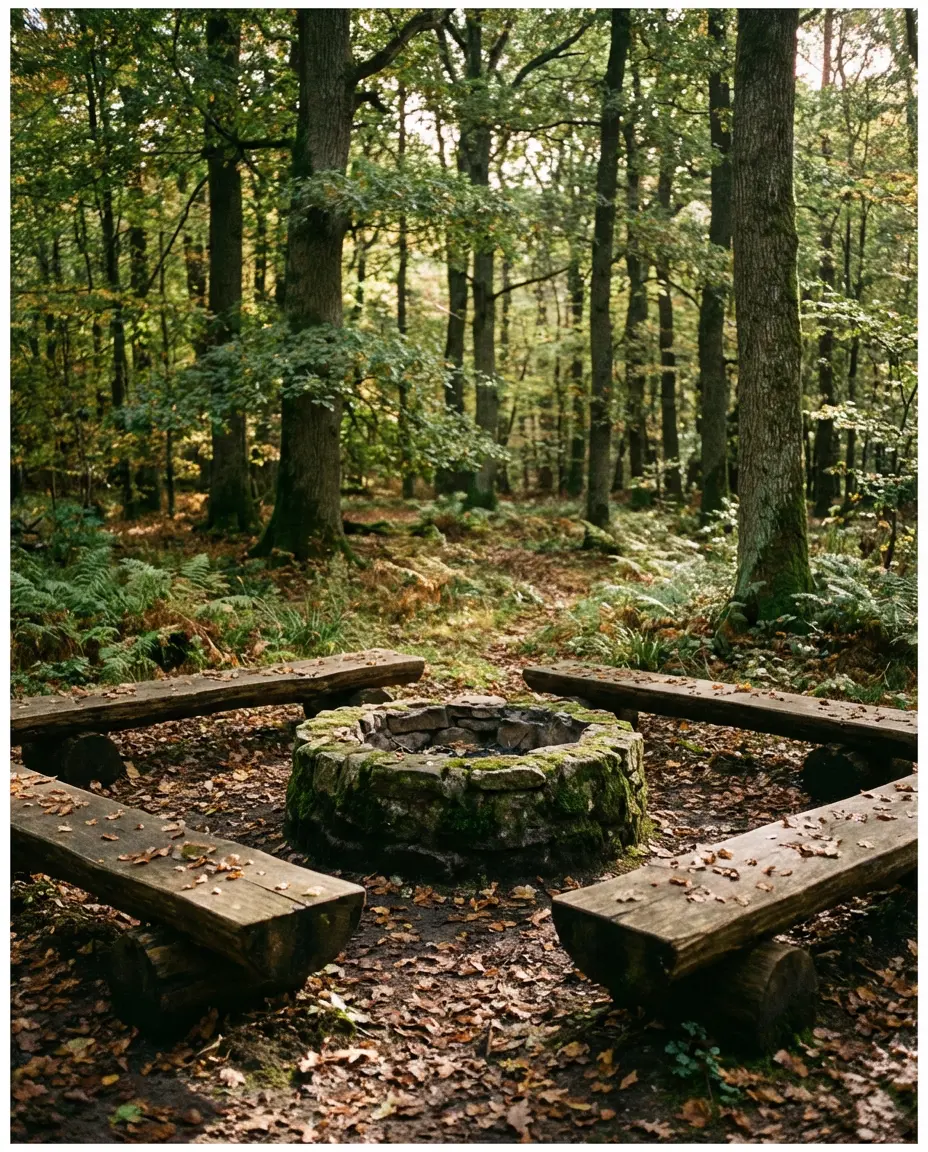
For homes that back up to trees or sit on wooded lots, a rustic fire pit with a natural log surround is pure magic. Half-log slices used as seating, a simple stone ring for the fire itself, and the surrounding canopy overhead—this setup practically designs itself. The materials are either free (fallen logs from your own property) or inexpensive from a landscape supply yard. It feels genuinely connected to the land rather than installed on top of it.
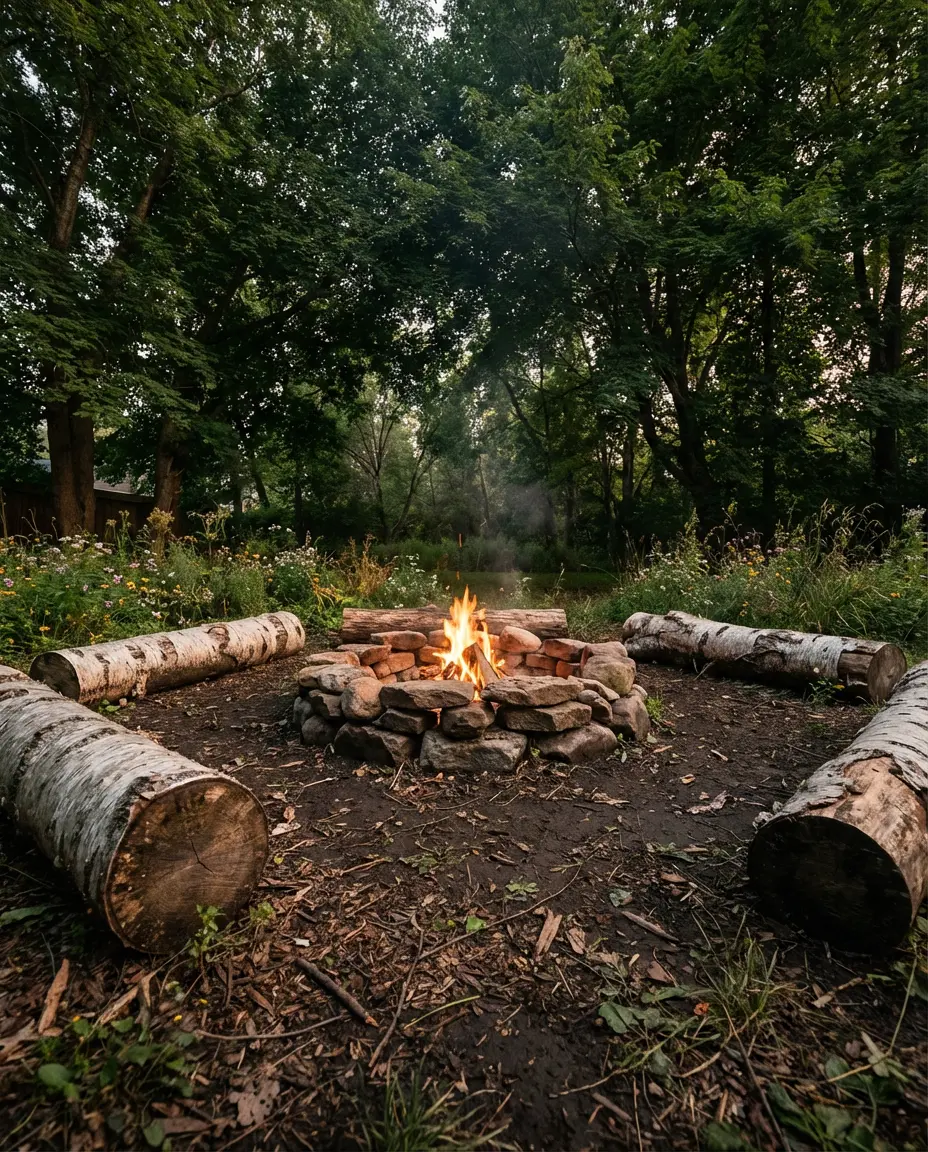
A landscape designer once noted that the most successful rustic fire pit areas are ones that look like the yard grew around them, not the other way around. That means using materials already present in the environment—local stone, naturally fallen timber, and native groundcover. Avoid adding plastic or synthetic elements that break the visual language of the space. Leave some wildness in the surrounding planting, and the whole scene reads as organic and timeless, the kind of backyard that makes guests immediately reach for a flannel.
5. String Light Canopy Over a Paver Fire Pit Patio
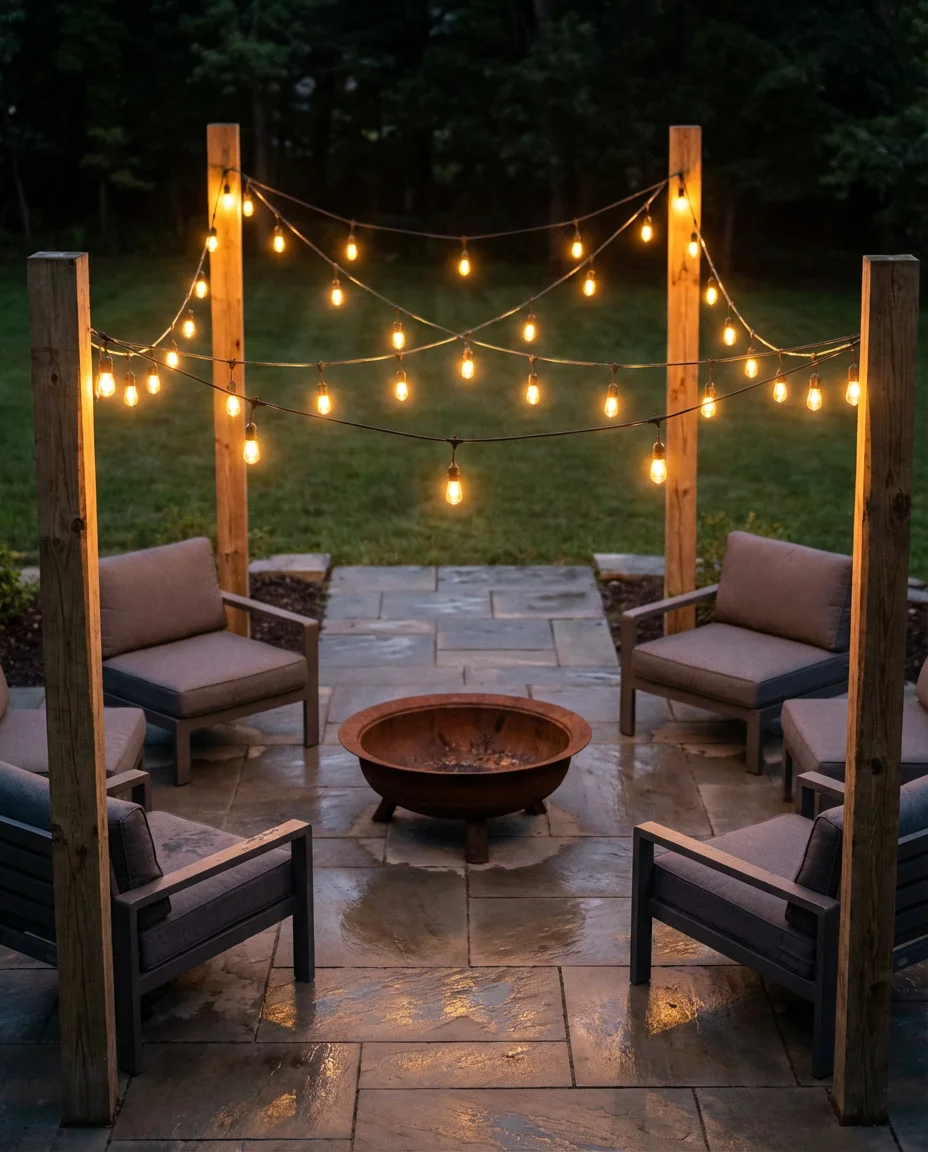
Draping string lights overhead transforms a standard paver patio into something that genuinely feels like a restaurant or boutique hotel courtyard. Run Edison bulb strands from four corner posts or attach them to the eaves of your house and a fence line—the result is instant ambiance that works as well for a Tuesday night dinner as it does for a big summer gathering. A fire pit at the center of this setup becomes the warm focal point underneath a ceiling of soft, golden light.
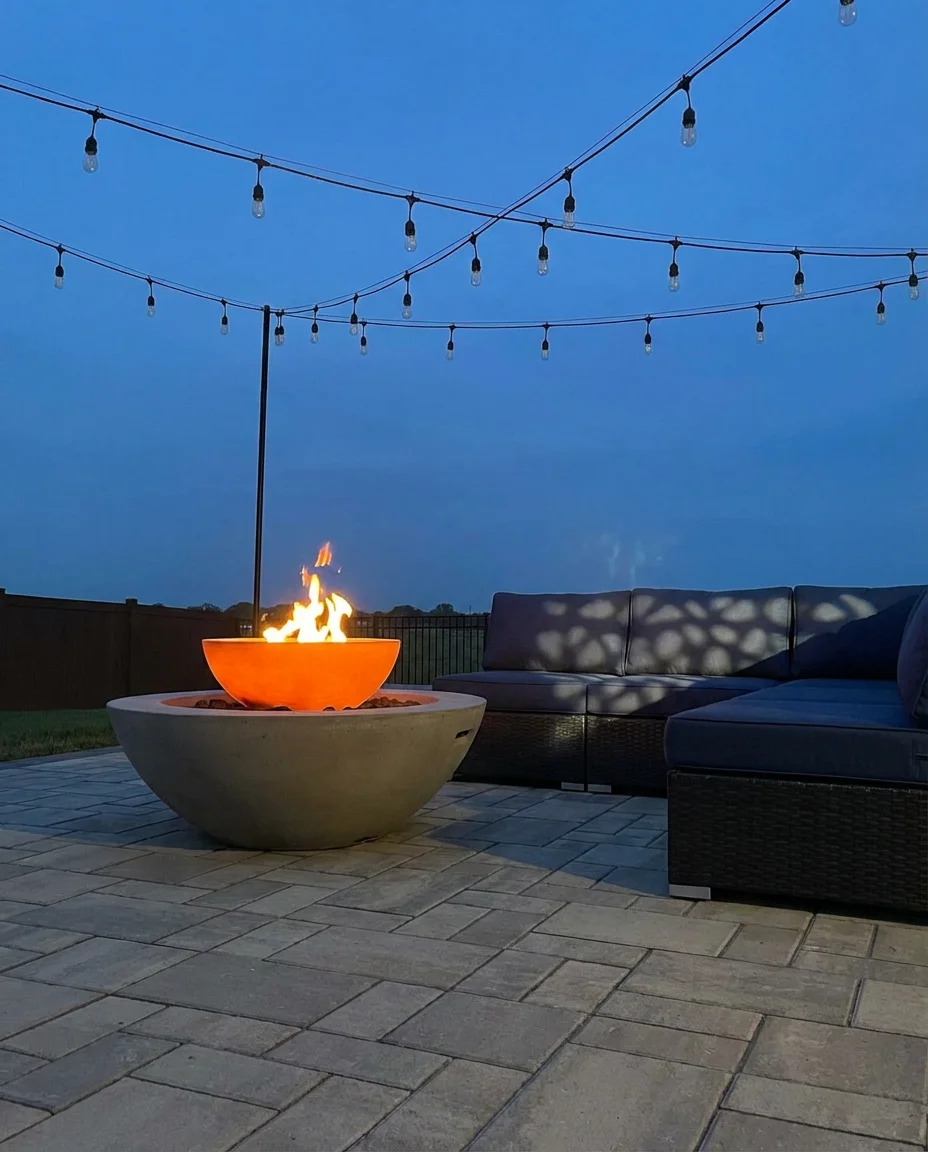
Real homeowner behavior shows that the string light addition is one of the first outdoor upgrades people make after setting up a fire pit—and for good reason. A good set of commercial-grade outdoor Edison strands costs between $30 and $80 and immediately doubles the perceived value of the space. Go for warm white (2700K) rather than cool white to keep the glow cozy and flattering. Mount the lights high enough—at least 8 feet—so they don’t interfere with the fire’s smoke column on still nights.
6. Square Fire Pit with Modern Concrete Surround
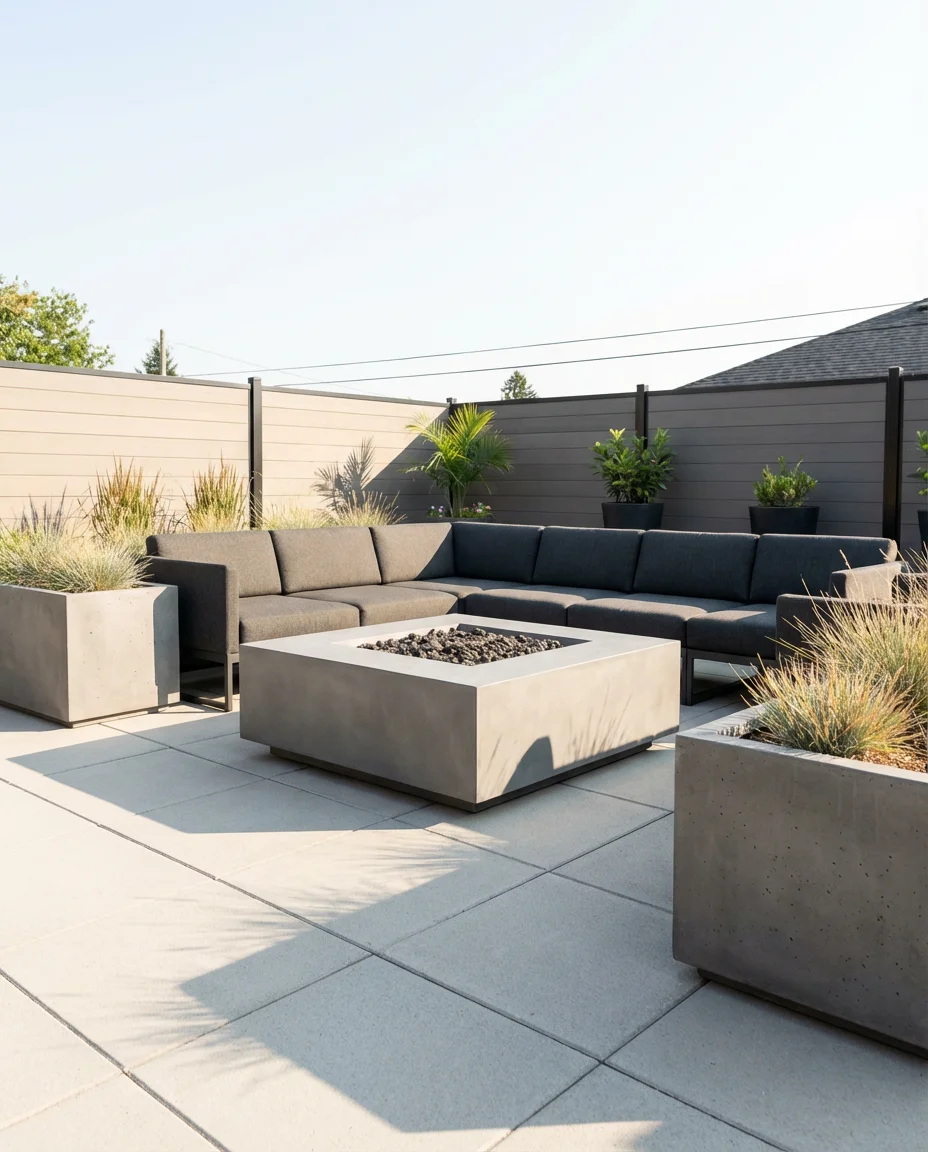
The square fire pit is having a major moment right now, and the modern concrete version is leading the charge. Clean 90-degree angles, a smooth or lightly textured concrete finish, and a low-profile design give this setup a distinctly architectural quality. It pairs naturally with seating areas that use modular outdoor furniture—think charcoal sectionals, teak side tables, and geometric planters. The look is minimal without being cold and confident without being showy.
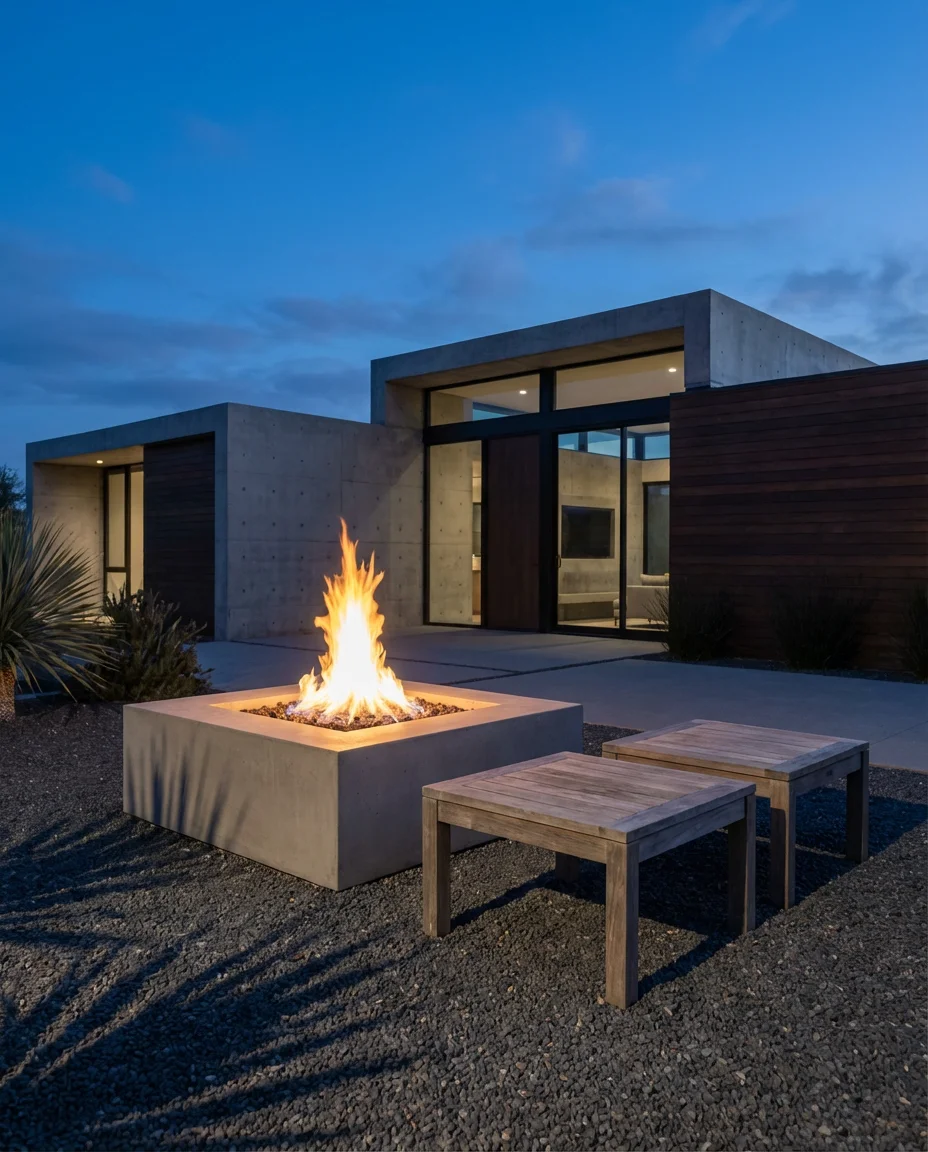
Where it works best: flat urban backyards, rooftop terraces, or any outdoor space with clean architectural lines already present in the home. If your house is mid-century modern, contemporary craftsman, or new construction, this fire pit will look like it was designed specifically for that space. Use a gas insert rather than wood-burning for cleaner lines and easier maintenance—no ash cleanup, no storing firewood, just turn a dial and you have fire. It’s the version that impresses guests and stays practical year-round.
7. Fire Pit with Swing Seating for a Playful Backyard
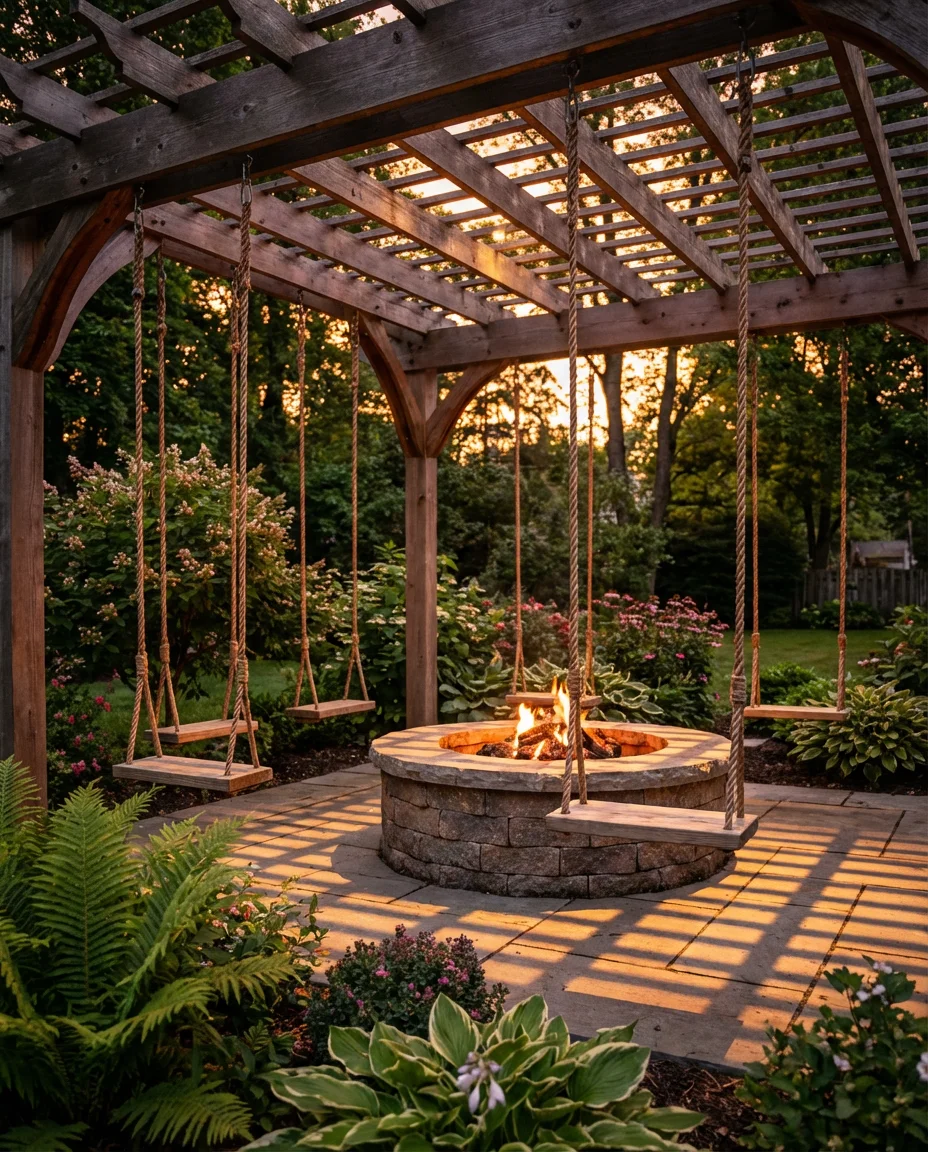
Replacing standard chairs with hanging swings around a fire pit is one of those ideas that looks wild on paper but absolutely delivers in real life. Low-hung wooden or rope swings mounted to an overhead pergola frame allow you to sit close to the fire while gently swinging—it’s equal parts cozy and playful. This setup is perfect for families with older kids or homeowners who want their outdoor space to feel distinctly different from every other backyard on the street. The swings become the conversation piece.
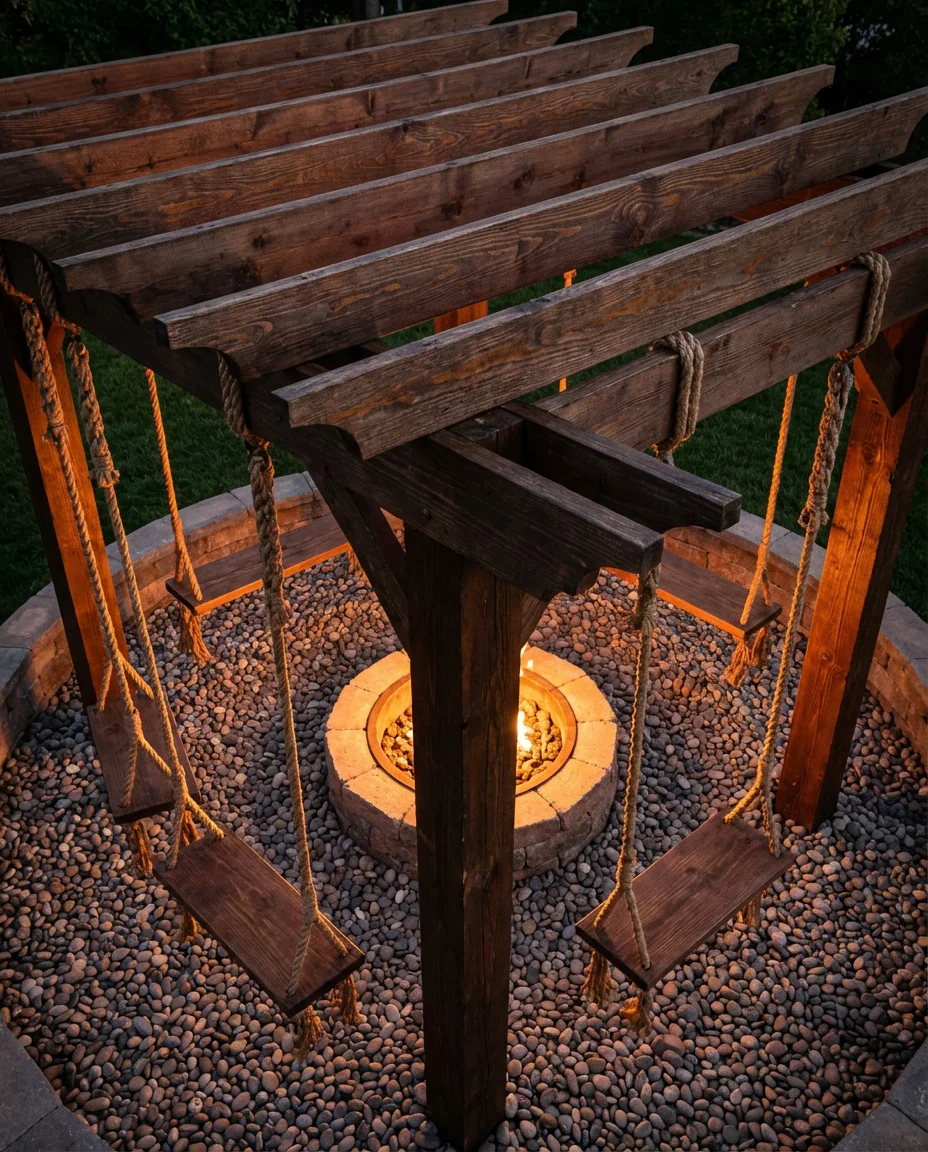
One homeowner in Tennessee described replacing her patio chairs with four hanging swings as the single best outdoor decision she ever made—neighbors ask about it constantly. The key is building or purchasing a sturdy overhead pergola rated for the combined weight of multiple adult occupants. Use flat wooden seat boards (not rope mesh) for comfort during longer fire sessions. Keep swings positioned at least 4 feet from the fire pit edge to maintain safe clearance. This is the backyard DIY project that people remember.
8. Landscaped Fire Pit Area with Stone Pathway
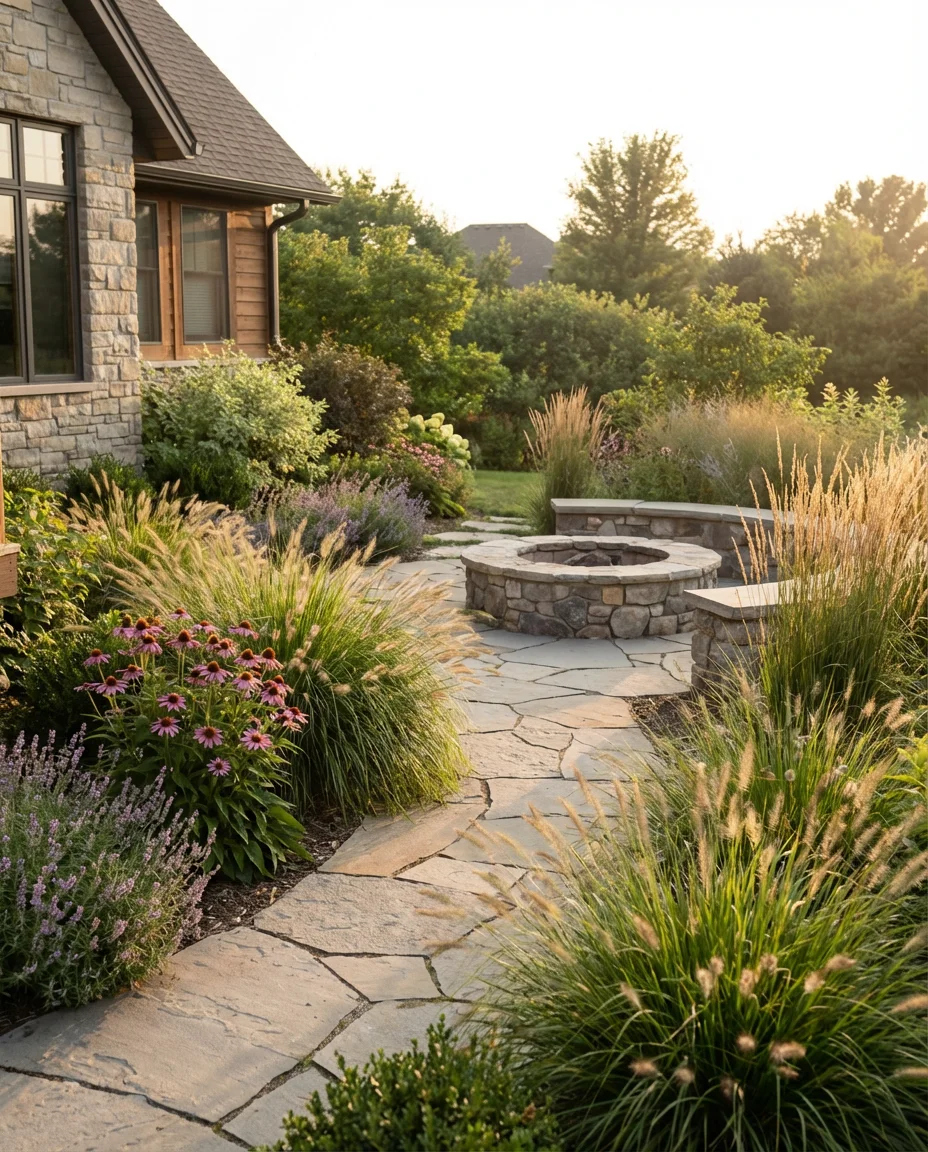
A fire pit surrounded by intentional backyard landscape design—low-growing ornamental grasses, creeping thyme between stepping stones, and flowering perennials at the edges—feels like something out of a garden magazine. A stone pathway leading from the house to the fire pit creates a sense of arrival, turning the walk across the yard into a small ritual. This approach works beautifully for suburban homes where the backyard has decent square footage and the owners want something that photographs well year-round.
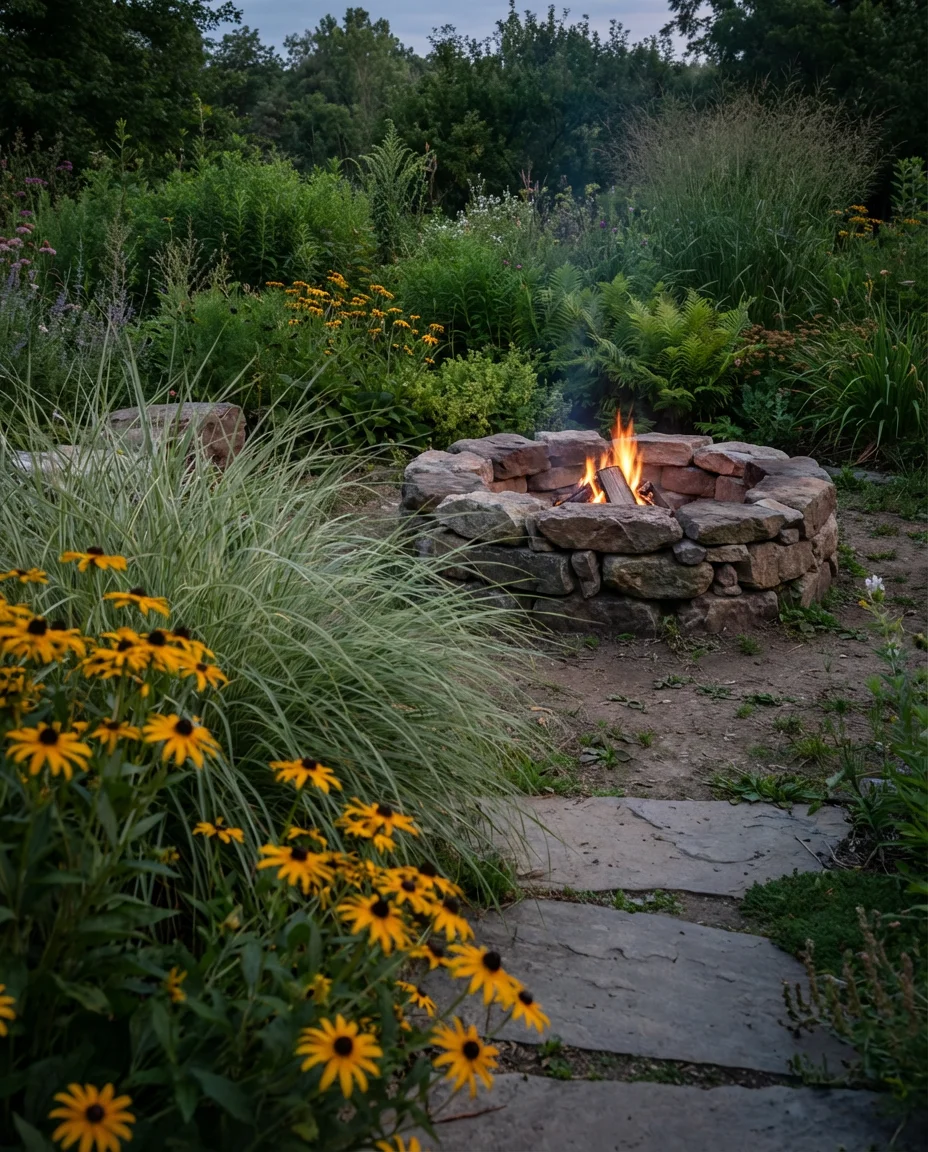
In the Midwest and Pacific Northwest, fire pit landscaping often leans into native plantings—switchgrass, black-eyed Susans, and coneflowers surrounding a fieldstone ring feel authentically regional and require almost no maintenance once established. In the South and Southwest, succulents and ornamental rocks carry the same grounded energy with even less water demand. Match your plant palette to your climate zone for a look that stays lush without constant upkeep. The pathway itself can be as simple as flat stepping stones set directly into the ground.
9. Easy DIY Backyard Fire Pit with Gravel Base
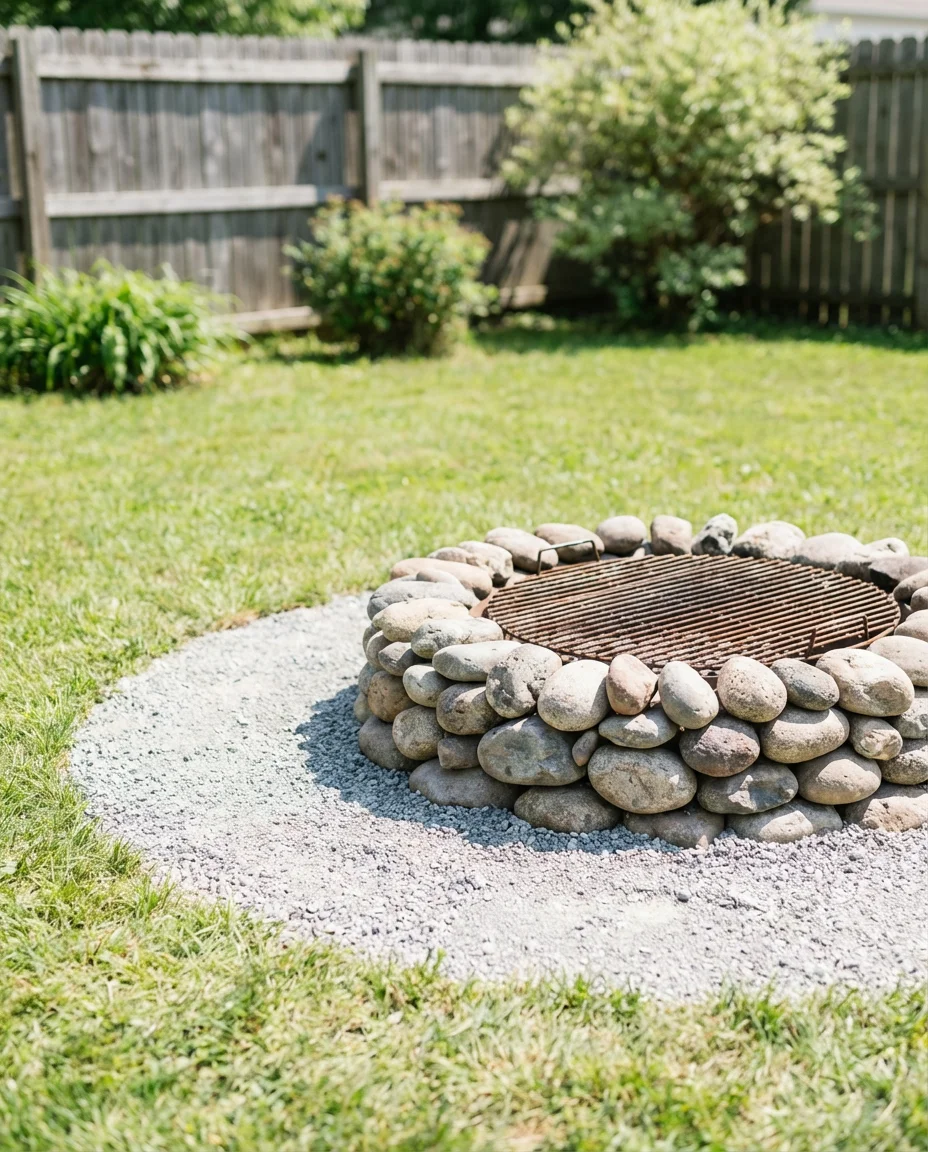
An easy fire pit build that beginners consistently get right: a simple round stone or brick ring set on a 12-inch-deep gravel base. The gravel serves as drainage, keeps the ground beneath the fire from cracking, and defines the footprint of the space visually. This is the most DIY-friendly version of a permanent fire pit—no concrete mixing, no mortar, no heavy equipment. A weekend afternoon and under $100 in materials is genuinely all it takes to pull this off cleanly.
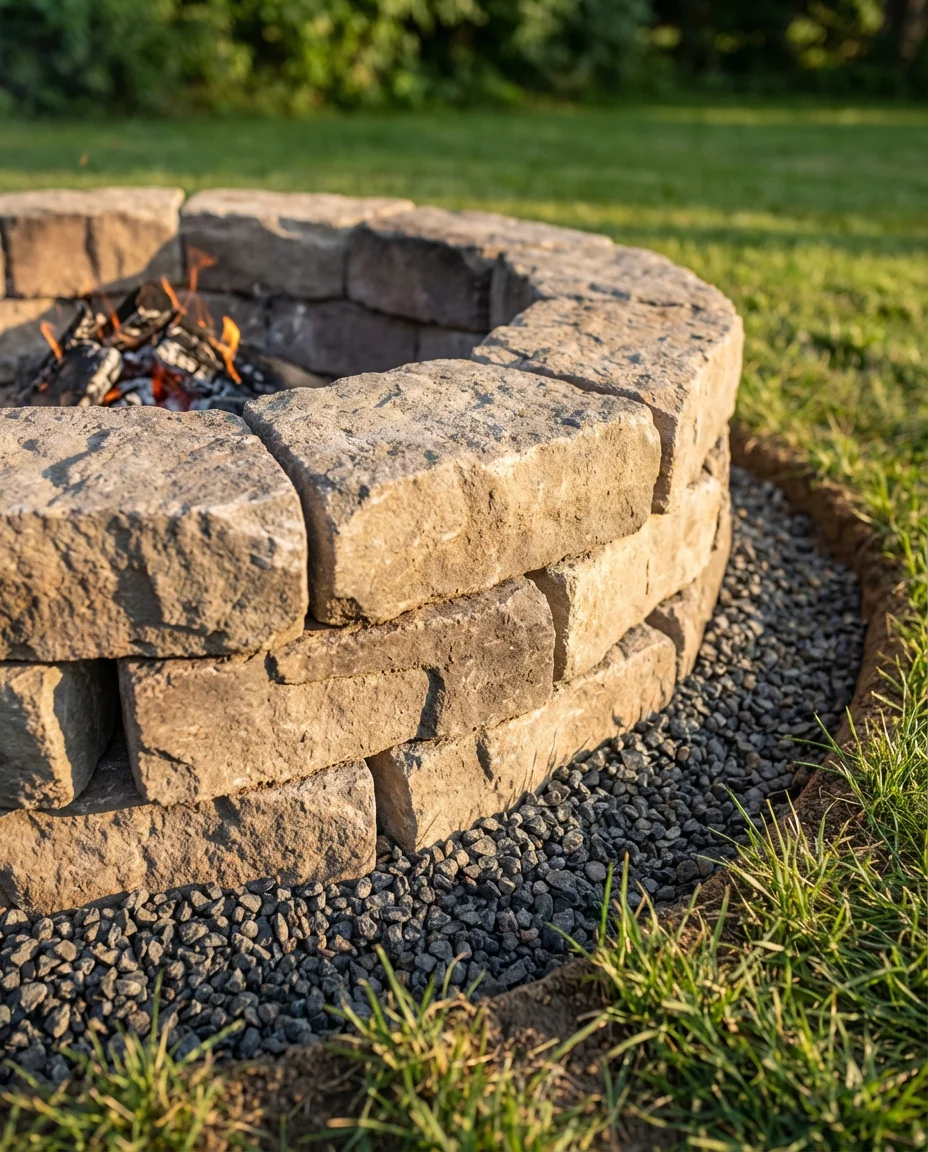
The most common mistake first-time builders make is skipping the gravel base and setting the stone ring directly on soil—this leads to uneven settling, moisture damage, and a fire pit that looks sloppy within a season. Dig down at least 6 inches, fill with compactable gravel, and tamp it level before laying your first stone. Pea gravel or crushed limestone both work well and are available at most big box hardware stores. The result is a clean, professional-looking base that keeps the whole installation stable for years.
10. Fire Pit Seating Area with DIY Pallet Furniture
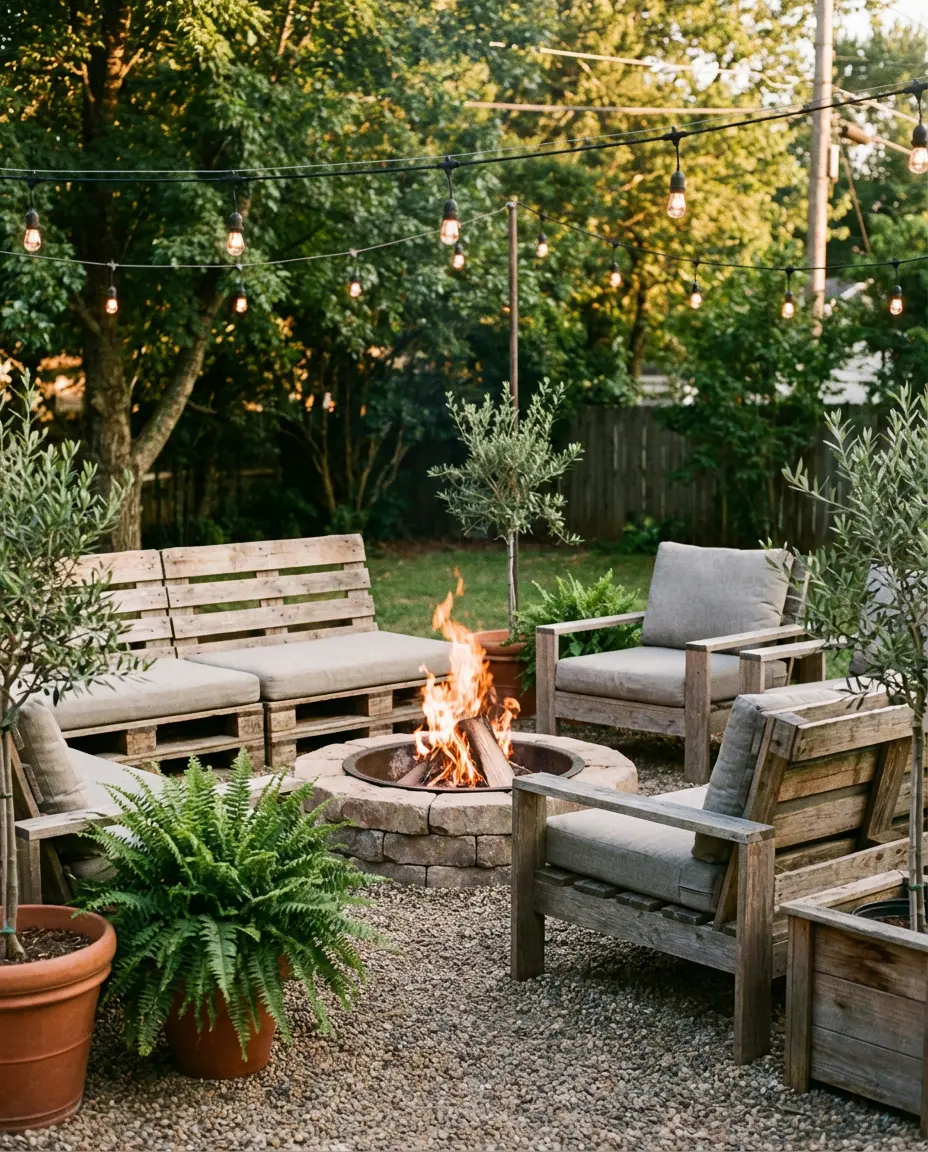
Wooden pallets have earned their reputation as one of the most versatile cheap materials in the outdoor DIY world. Stack two pallets, add caster wheels and a cushion, and you have a movable outdoor sofa. Arrange four around a central fire pit, add a string of lights overhead, and the whole scene feels curated and intentional. This seating area DIY approach is especially popular with renters and younger homeowners who want a stylish outdoor setup without a major financial commitment.
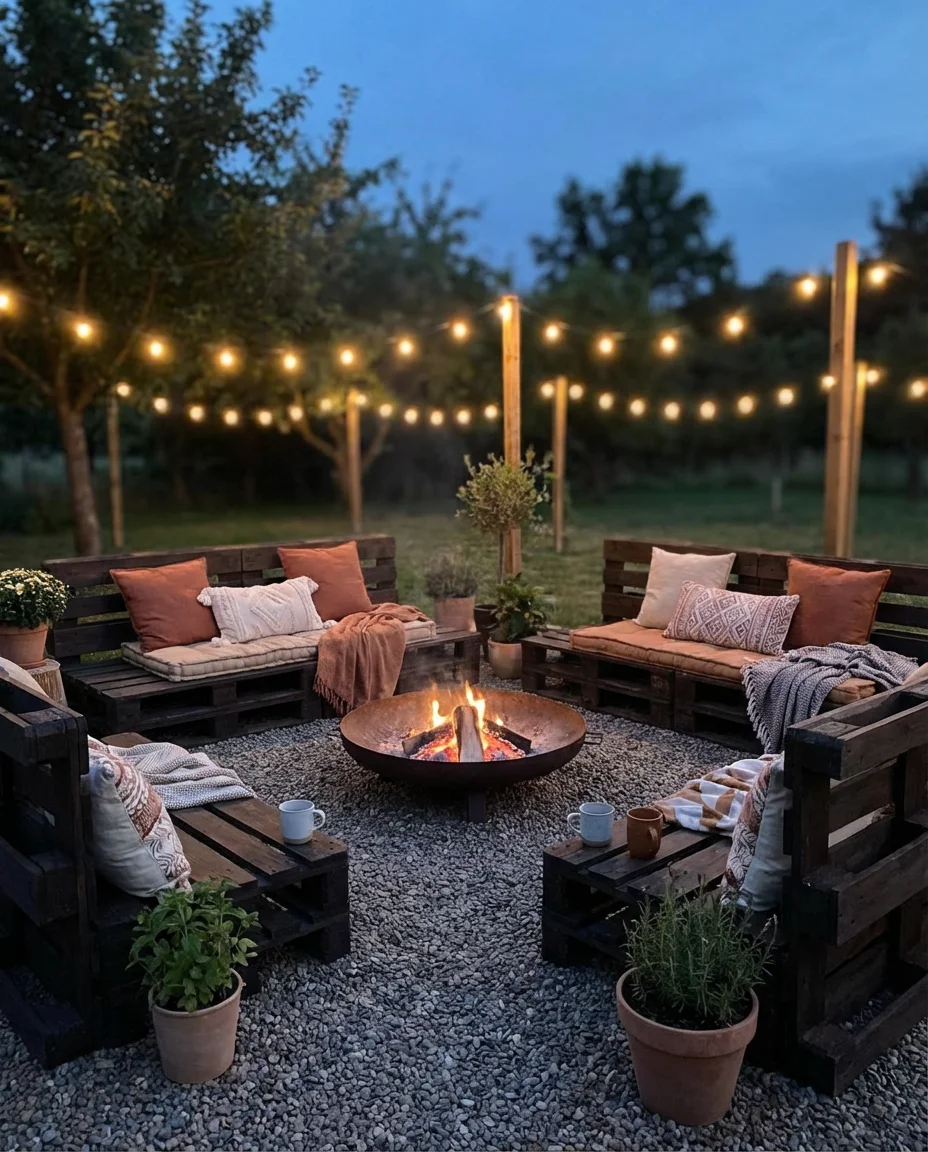
Sand and seal your pallets before use—raw, untreated wood splinters quickly and can harbor moisture. Use outdoor-grade polyurethane or a penetrating wood oil for protection that doesn’t look plastic. Choose cushion fabrics rated for outdoor use (Sunbrella is the gold standard, but budget-friendly alternatives exist at IKEA and Target). A full pallet seating set around a fire pit can come together for under $150 total if you source pallets for free from local businesses, which is common in most American cities and towns.
11. Raised Stone Fire Pit on a Multilevel Deck
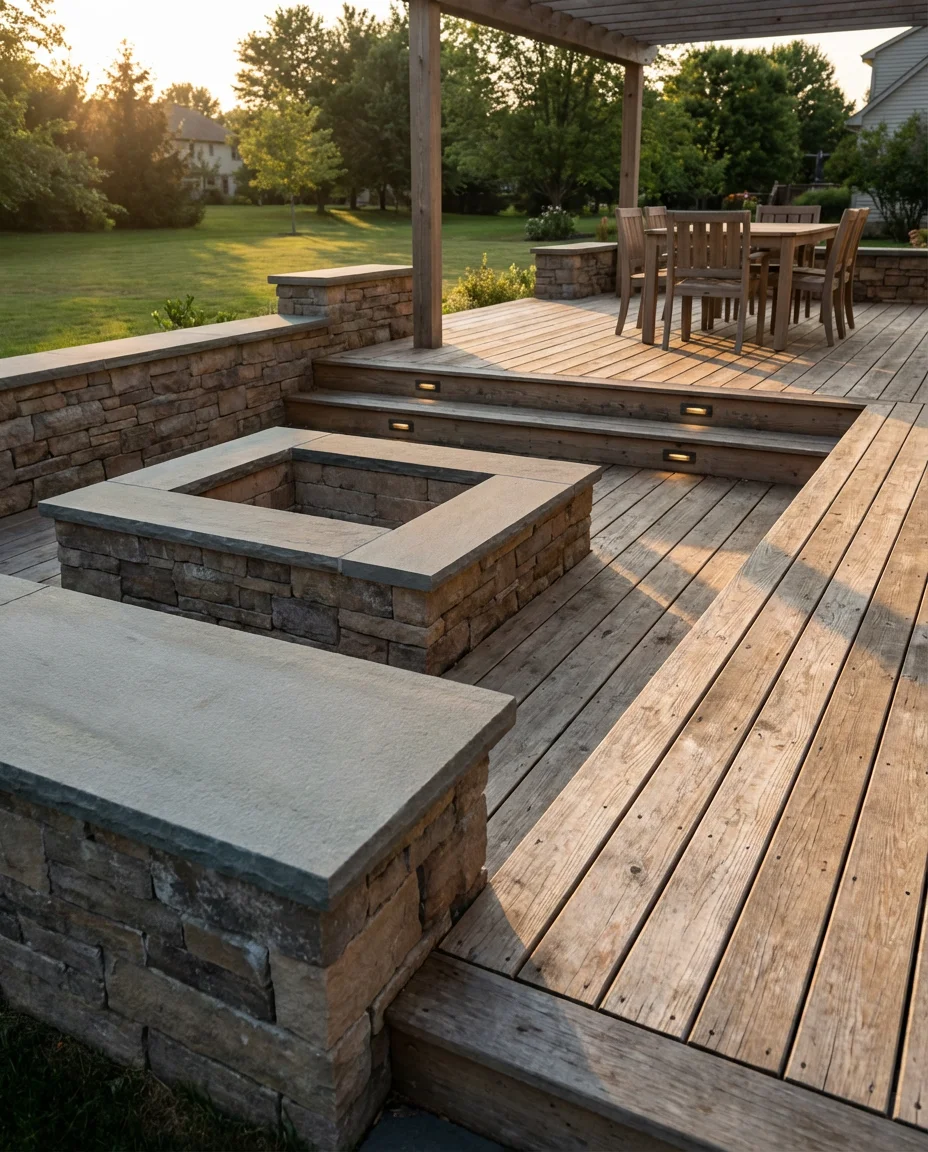
A raised backyard stone fire pit installed on the lower level of a multilevel deck is a design move that separates serious outdoor living spaces from the ordinary. The elevation change gives the fire pit zone its own visual identity—guests naturally gravitate down to the fire level while the upper deck handles the dining and cooking zone. This layout works best on sloped lots where the grade change is already present, making the multilevel structure both functional and visually dynamic. Large properties benefit most from this approach.
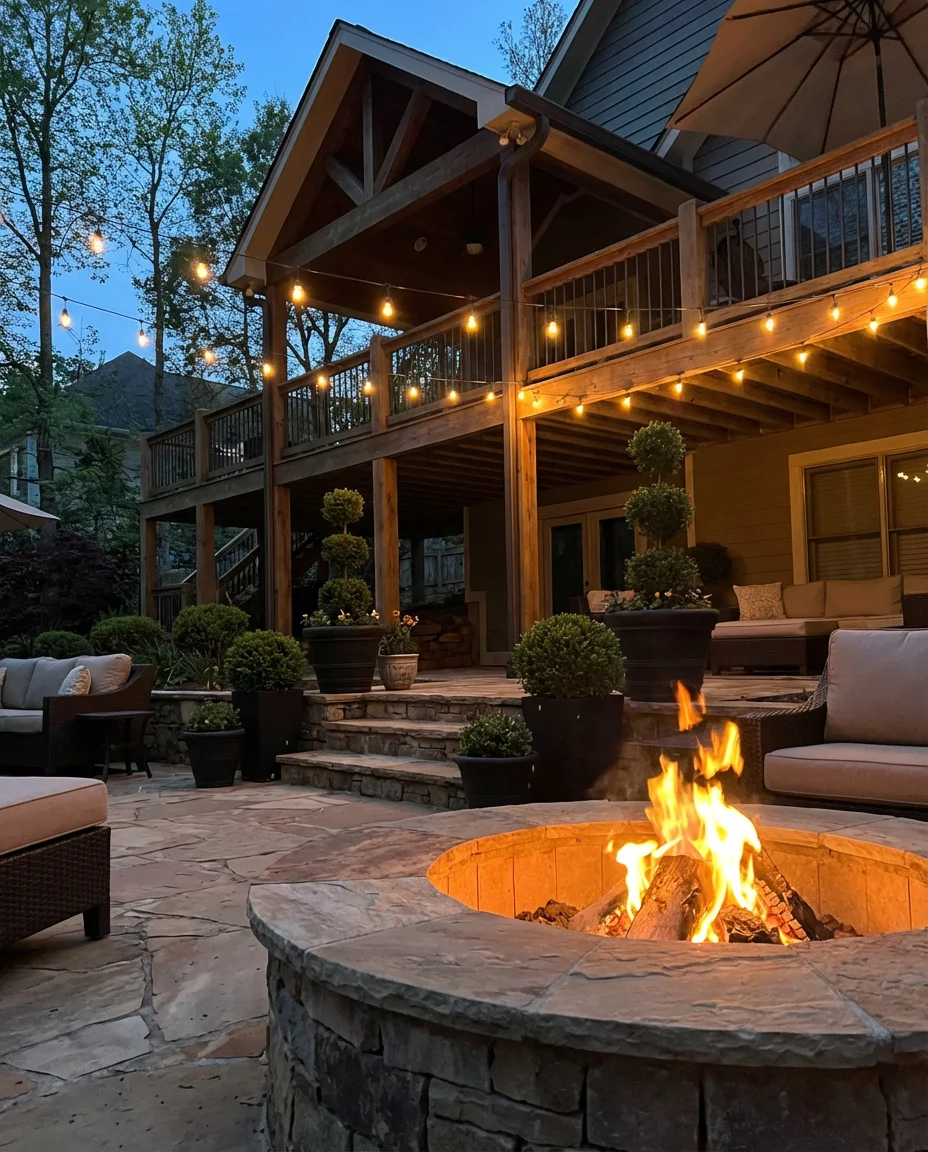
From a practical standpoint, keeping the fire pit on the lower level means smoke rises away from the dining area above, which is a detail that sounds small but makes an enormous difference during extended outdoor gatherings. Use flagstone or bluestone coping around the top edge of the raised pit for a finished look that ties the stonework into the surrounding deck materials. Add low-voltage step lighting between levels for safety and nighttime ambiance. This is the kind of setup that adds real resale value to a home.
12. Minimalist Backyard Fire Pit with Black Steel Bowl

The black powder-coated steel bowl fire pit is the most versatile piece in the outdoor design world right now. It moves with you, requires zero installation, looks expensive at a fraction of the price, and works equally well on a wood deck, a concrete patio, or a gravel pad. For renters or anyone who values flexibility, this is the answer. Pair it with a simple arrangement of four low-slung chairs or floor-level cushions, and you have a fire pit setup that could appear in any shelter magazine.
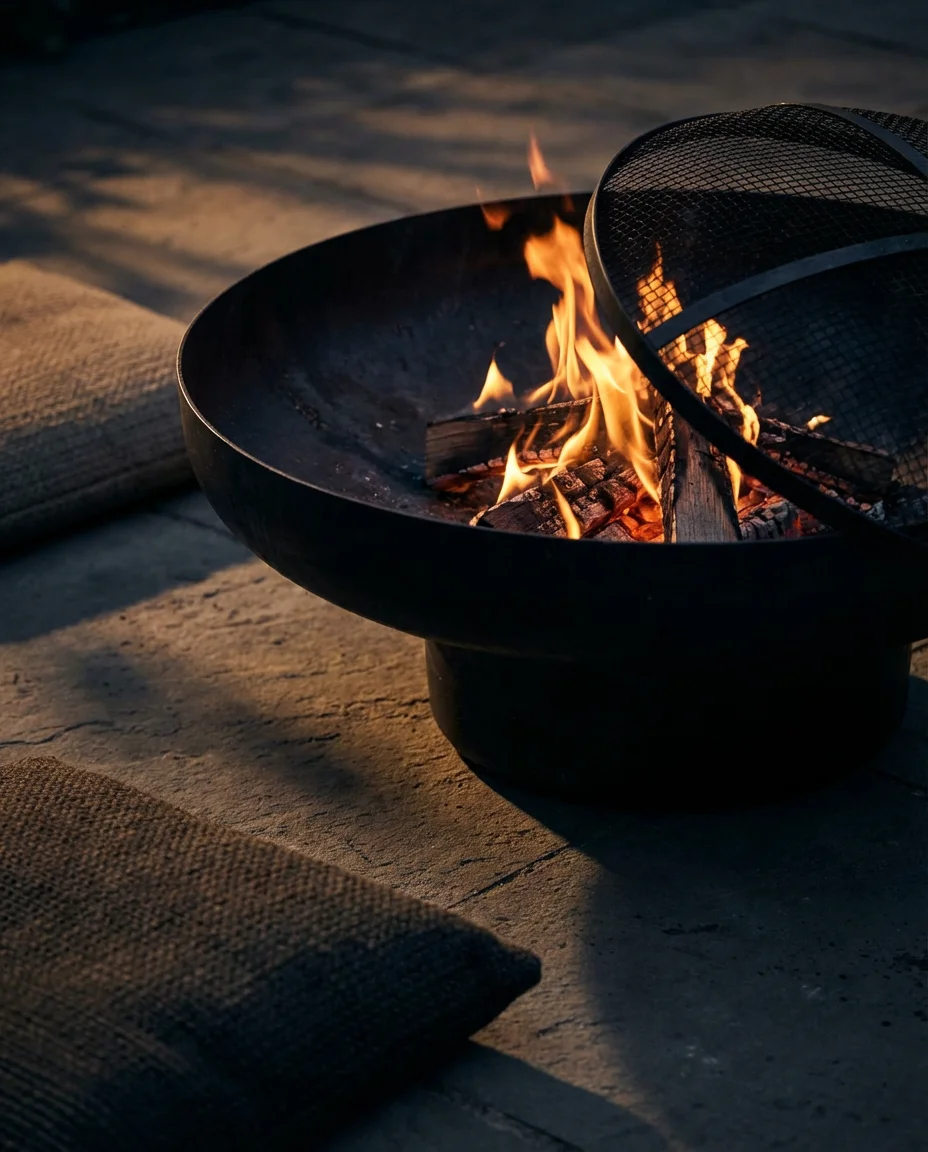
Expert commentary from outdoor living designers consistently points to portability as an underrated feature in fire pit selection. The ability to reposition the pit based on wind direction, seasonal sun angles, or changing furniture arrangements gives you year-round control over your outdoor comfort. Steel bowl pits range from $80 to $400 depending on size and finish quality—the sweet spot for most homeowners is the $150 to $200 range, where you get a substantial 30-inch diameter bowl with a spark screen and grate included. A genuinely smart investment for any outdoor space.
13. Fire Pit Surrounded by Native Garden Planting s
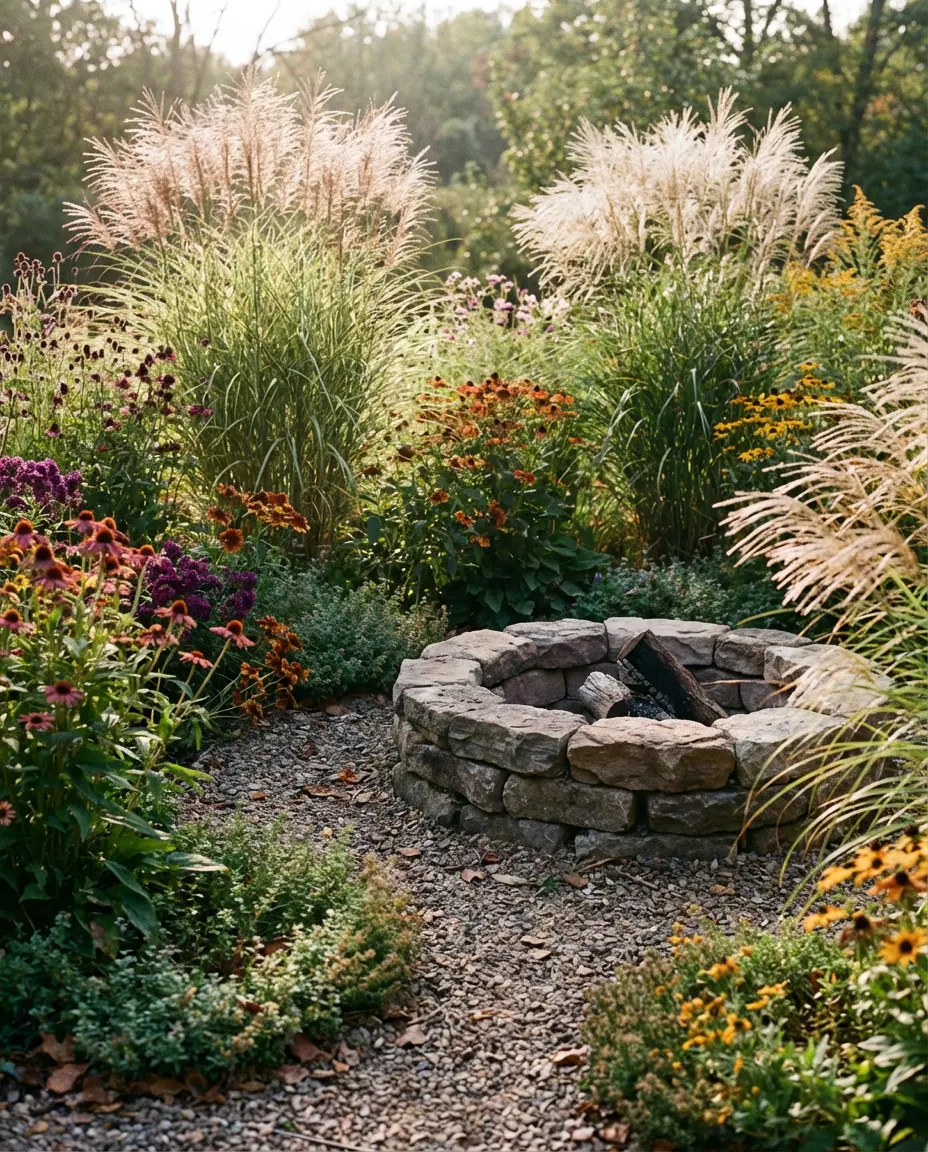
Planting a fire pit zone with native wildflowers and grasses gives the space a layered, ecological character that feels intentional and alive. Tall ornamental grasses at the back, mid-height perennials in the middle, and low creeping groundcovers at the edges create depth without requiring a landscaping budget. This approach reads beautifully on Pinterest because the fire and the greenery create a visual contrast that’s hard to pull off with conventional landscaping. The backyard landscape trend in 2026 is leaning heavily in this naturalistic direction.
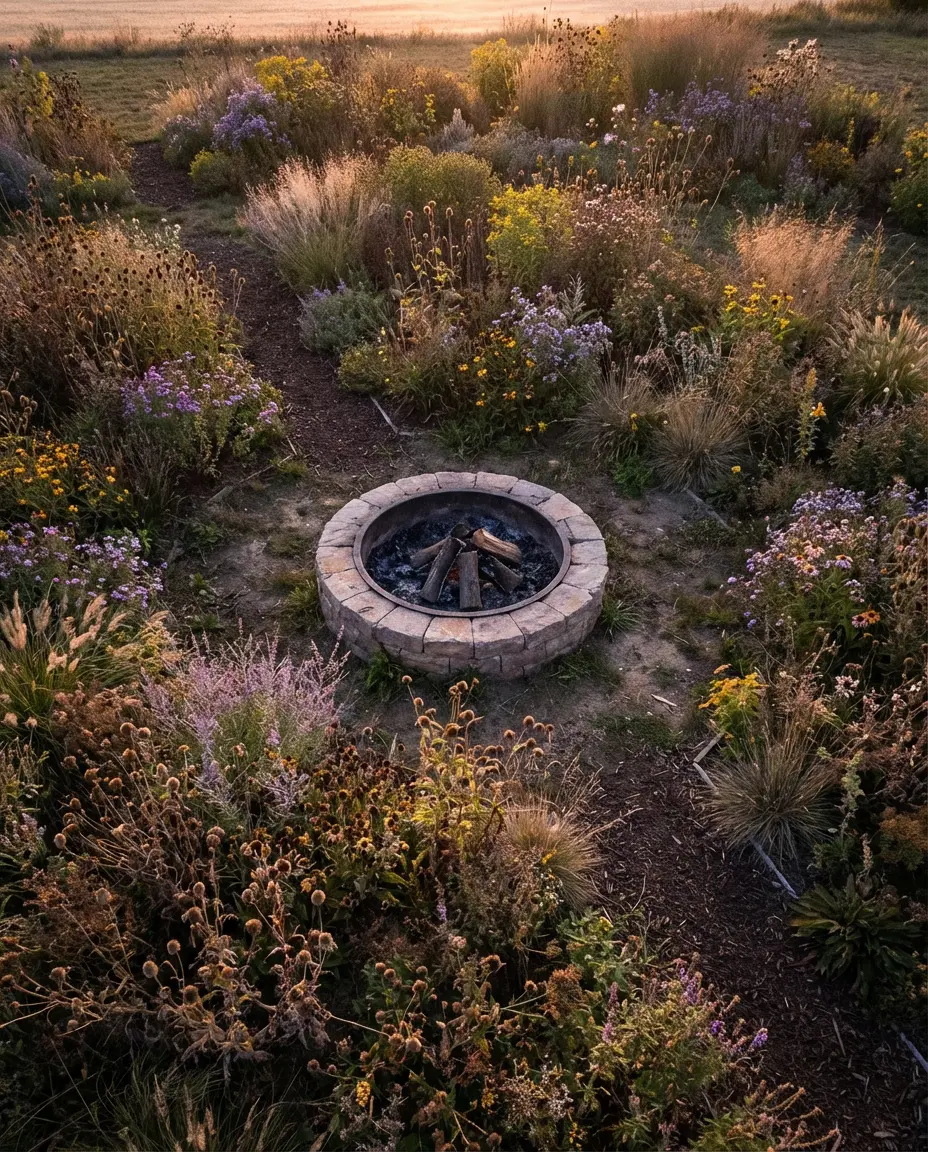
Where it works best: homes with existing mature trees or naturalistic yard aesthetics where a highly manicured look would feel out of place. Choose plants that can handle occasional smoke and dry spells—prairie dropseed, Karl Foerster grass, and black-eyed Susans are reliably tough performers across most of the country. Keep planting beds at least 4 feet from the outer edge of the fire pit to minimize any fire risk during dry conditions. A layer of mulch between the plants ties the beds together and suppresses weeds between seasons.
14. Small Backyard Fire Pit with Herringbone Brick Patio
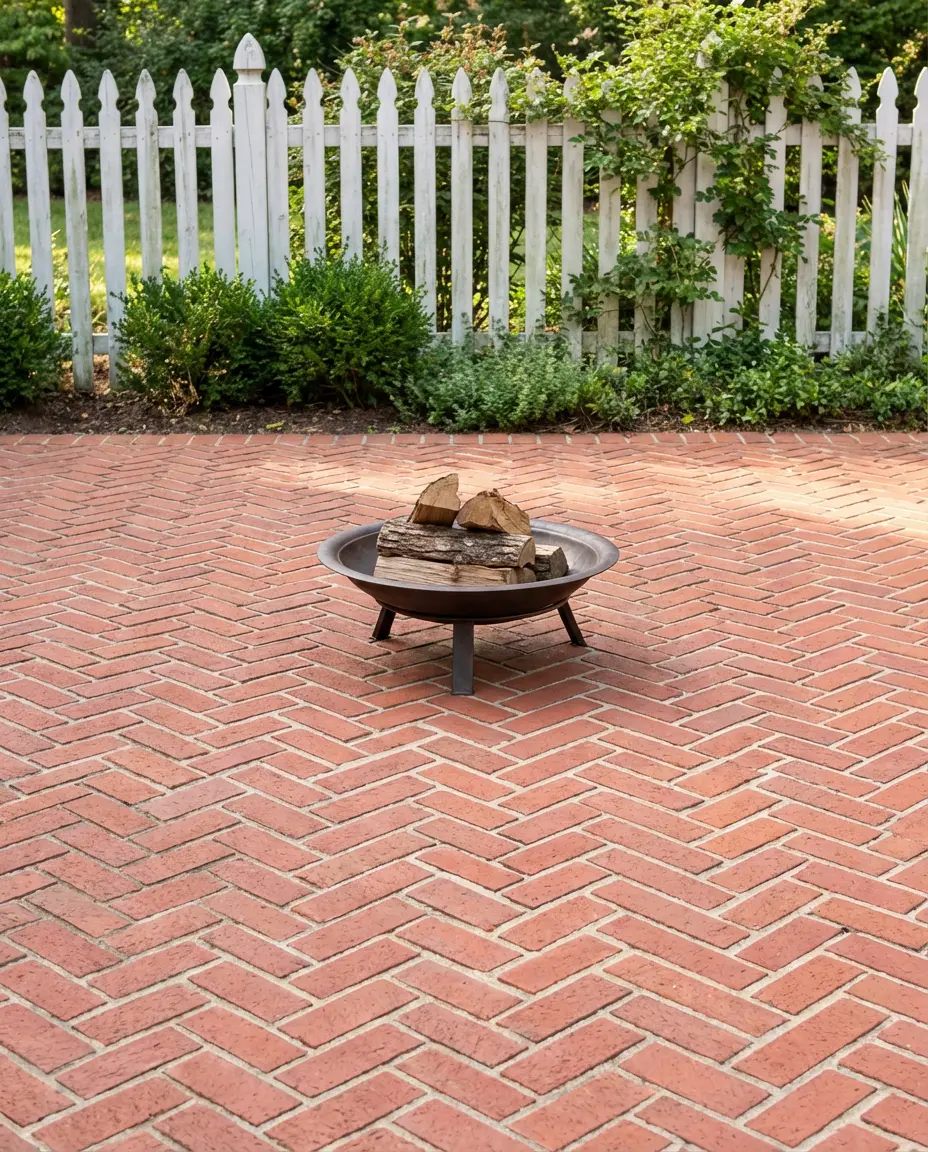
A herringbone brick pattern underfoot instantly elevates a small backyard fire pit setup from nice to genuinely stunning. The classic zig-zag brickwork adds visual texture and movement to a compact space, making the patio feel larger and more considered than a plain poured concrete slab. Choose a warm red or buff-colored brick for a traditional feel, or go with charcoal gray for something more contemporary. Either way, the pattern does heavy lifting in terms of design impact without requiring a complex build.
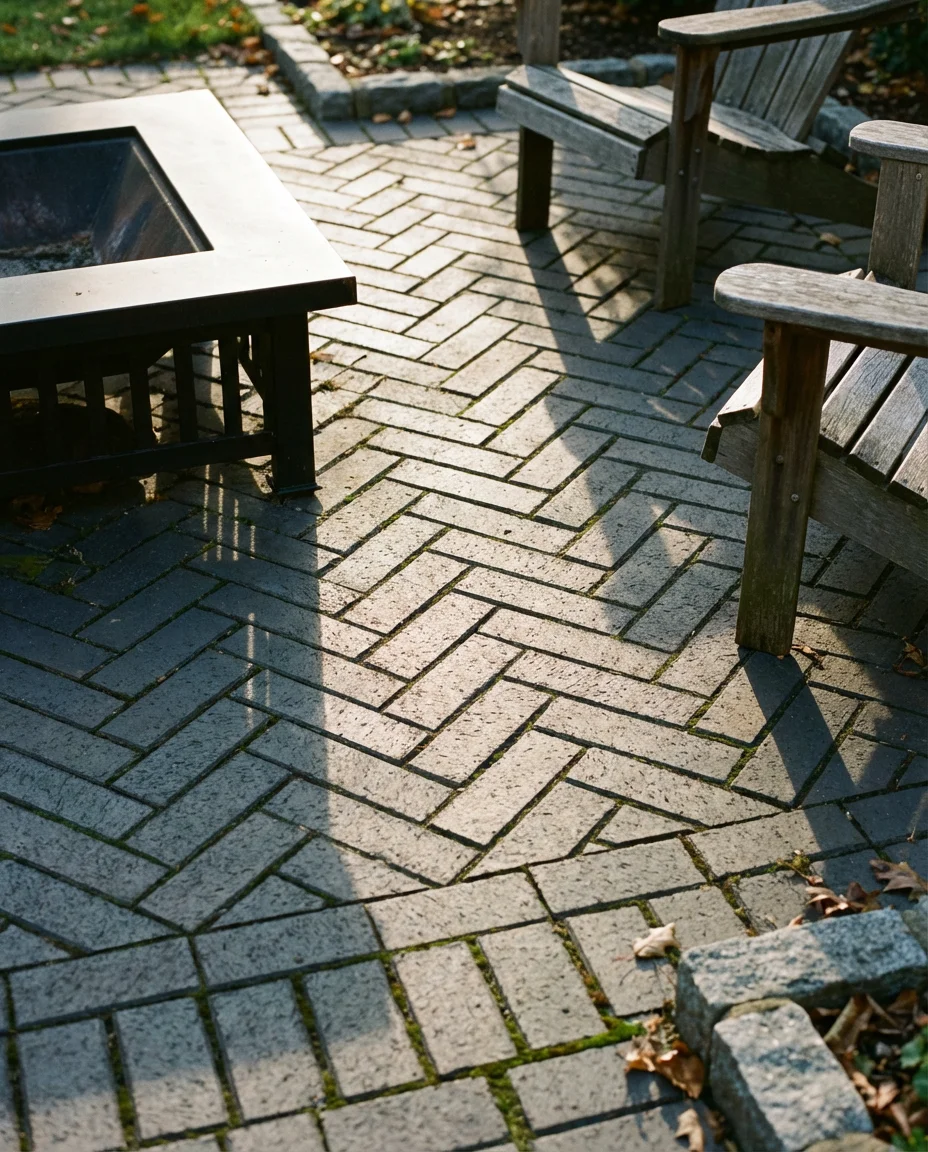
In cities like Philadelphia, Boston, and Chicago, where row houses and brownstones are common, the brick fire pit patio is something of a neighborhood tradition—homeowners in these areas often describe it as the one outdoor project that finally made their tiny urban yard feel complete. A 12×12-foot herringbone brick patio is well within the ability of an intermediate DIYer and typically costs $400 to $700 in materials when using standard clay pavers. The investment pays back immediately in usability and aesthetic satisfaction. Small space, big presence.
15. Backyard Fire Pit with Pergola and Climbing Vines
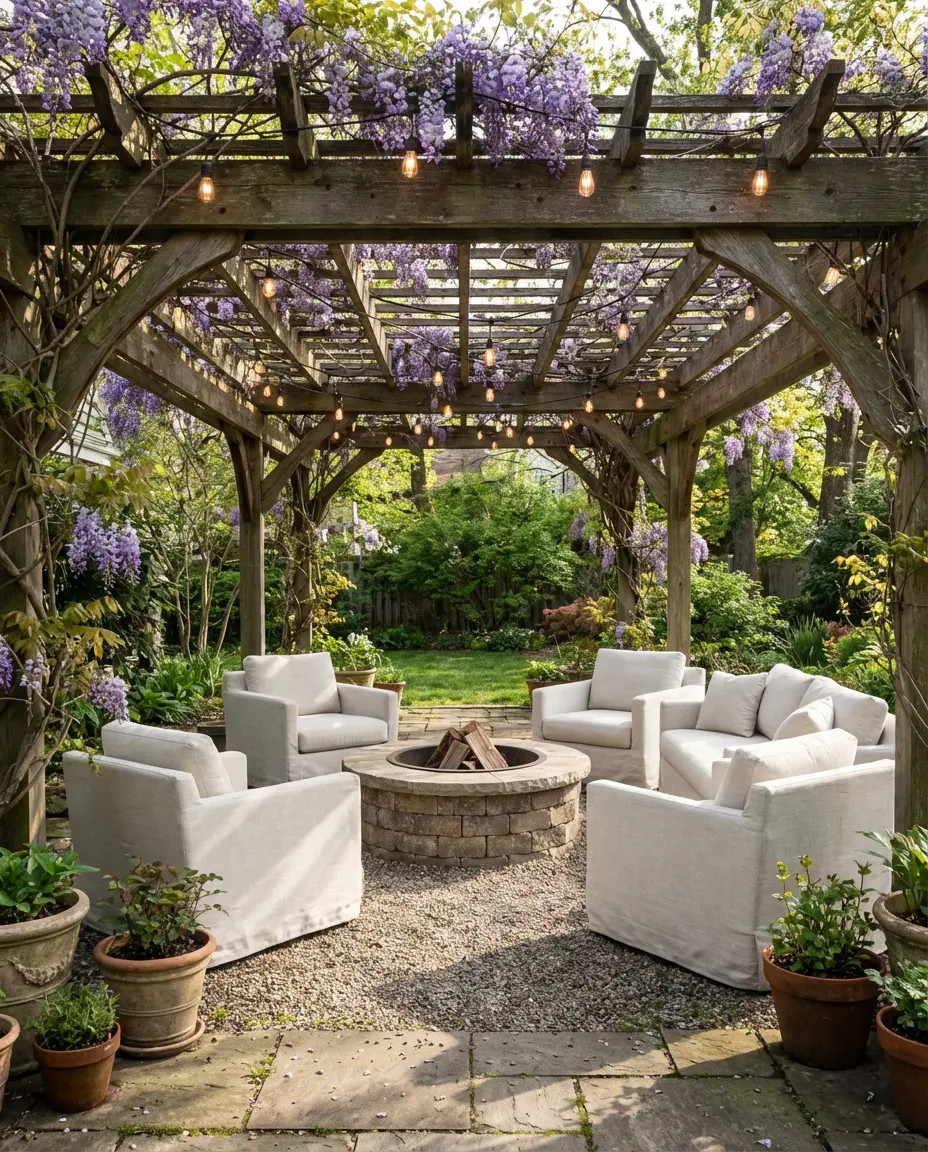
A pergola built over a fire pit seating area—with climbing wisteria, jasmine, or Virginia creeper trained along its posts and beams—is one of the most romantic outdoor setups in residential design. The overhead structure provides a sense of enclosure without blocking the sky, and as the vines mature, they create a living canopy that changes with the seasons. String lights woven through the lattice overhead complete the look after dark. This is a longer-term investment that gets better every year.
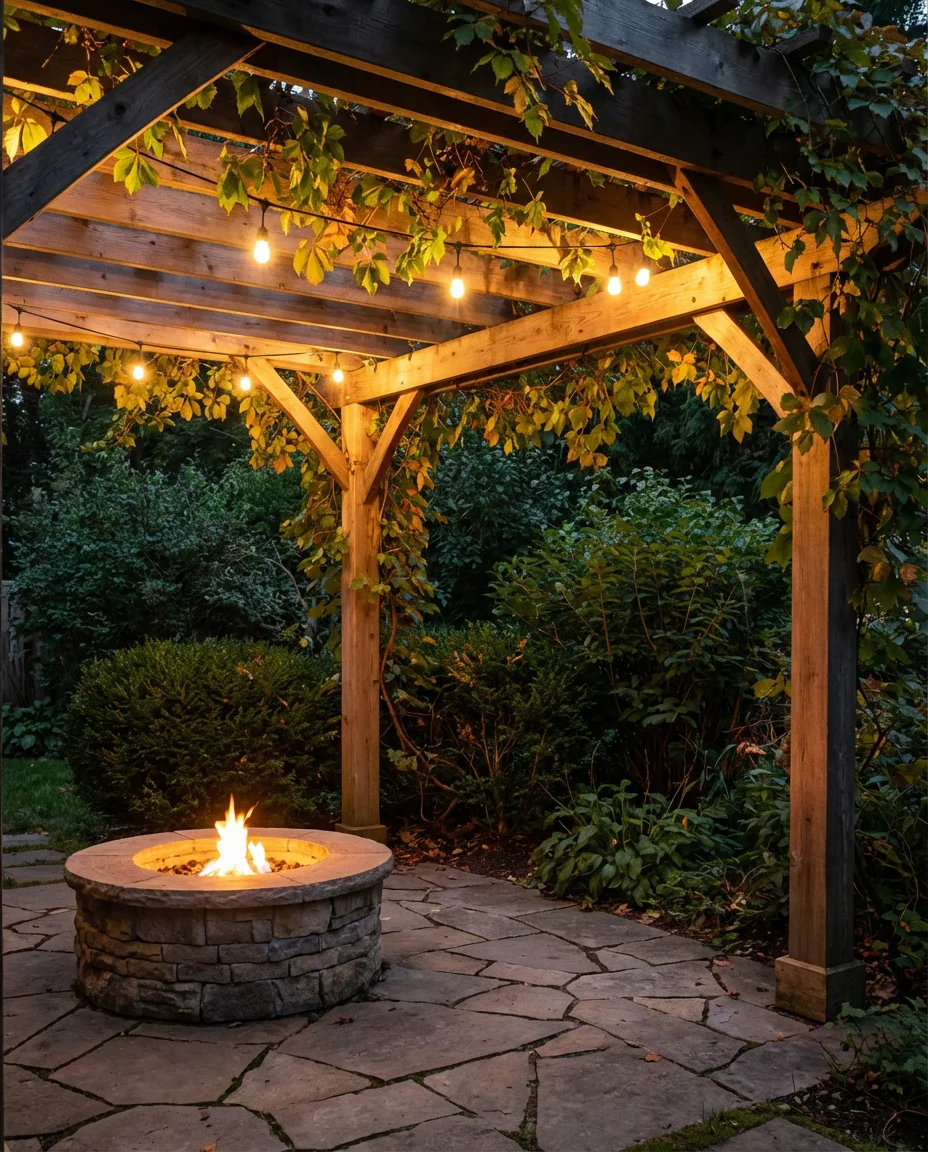
American lifestyle context: the fire pit pergola combo is particularly beloved in the Carolinas, Virginia, and the mid-Atlantic states, where mild spring and fall weather makes outdoor living nearly year-round. Homeowners in these regions often describe the pergola as the addition that finally justified their fire pit investment—the structure extends comfortable outdoor use from a few hot weekends to four full seasons. Choose cedar or pressure-treated pine for longevity, and select a fast-growing vine appropriate for your USDA hardiness zone. Wisteria is beautiful but aggressive; Clematis is a more manageable option in smaller spaces.
16. Square Seating Area Around a Central Fire Pit
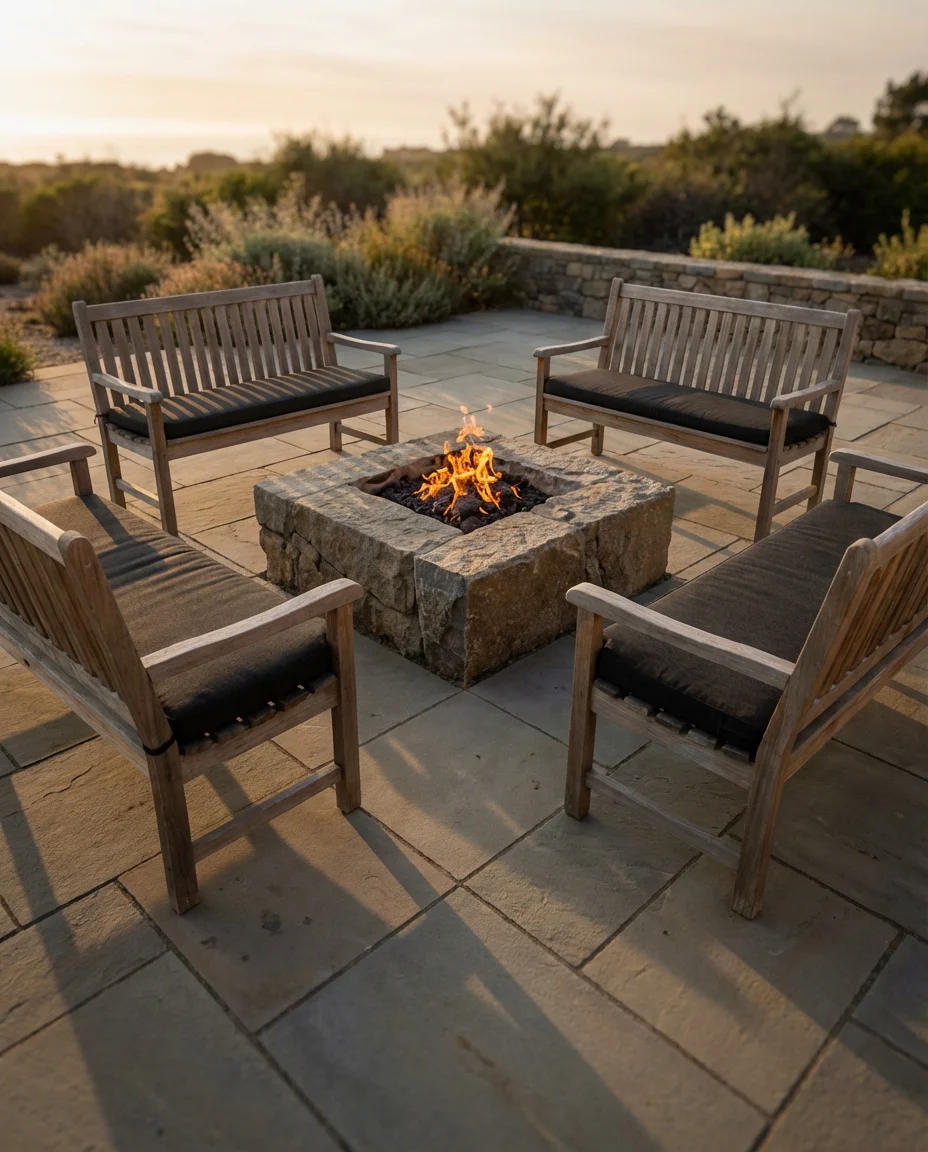
Four benches or chairs arranged in a perfect square around a central fire pit create a symmetrical, social layout that every guest instinctively understands. Nobody is sitting at an angle or craning their neck—everyone faces the fire equally, and the geometry of the arrangement encourages group conversation. This is the seating area’s square configuration that performs best in open, flat backyards with plenty of room to breathe. A clean, square stone fire pit at the center keeps the whole composition visually balanced.
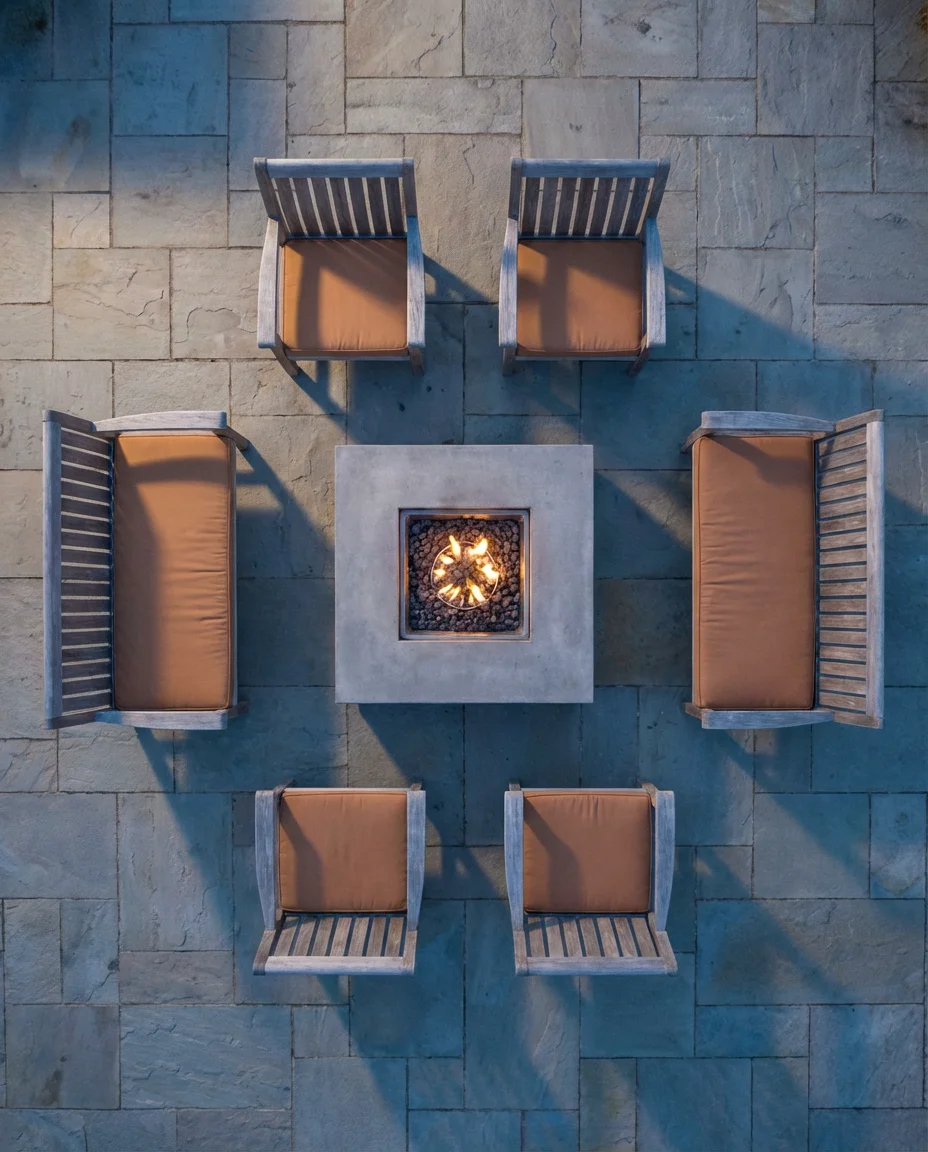
One practical insight that gets overlooked: leave a gap between at least two of the four sides of the square seating arrangement. This creates natural entry points so guests don’t have to step over furniture to reach their seat, which sounds minor until you’re juggling a drink and a plate of food at a party. Aim for 18- to 24-inch gaps between seating sections. Use the same material for all four sides—matching cedar benches or matching Adirondack chairs—so the symmetry holds visually even when the fire isn’t lit. Cohesion is everything with this layout.
17. Fire Pit Nook with Wood Privacy Screen
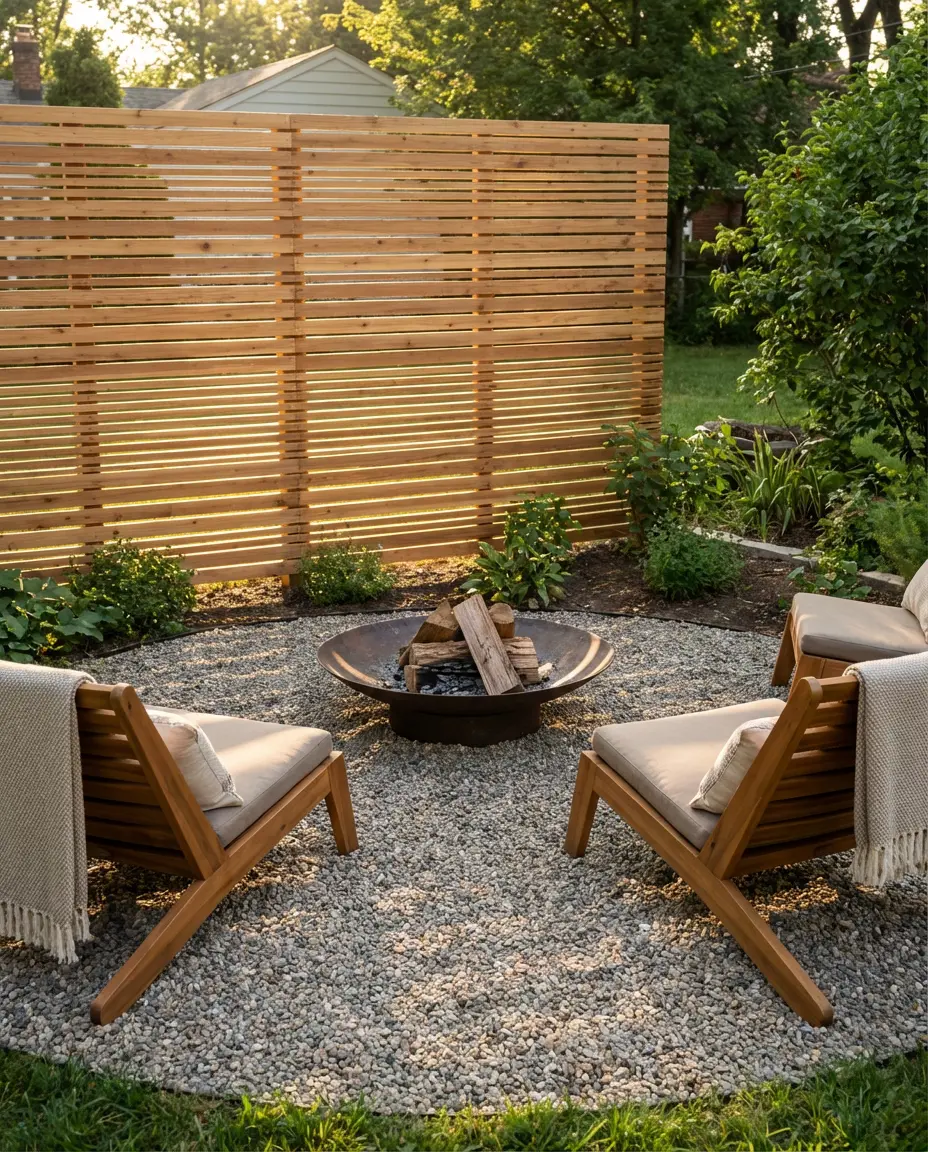
Privacy screens made from cedar planks or horizontal redwood slats are transforming open backyards into intimate seating areas. Position a slatted screen on one or two sides of your fire pit zone, and the space immediately feels like a private outdoor room, even in a densely packed suburban neighborhood. The wood texture adds warmth and visual interest, and the slats allow partial airflow without full exposure. This is a particularly effective solution in new developments where lots sit close together and fencing alone doesn’t provide enough separation.
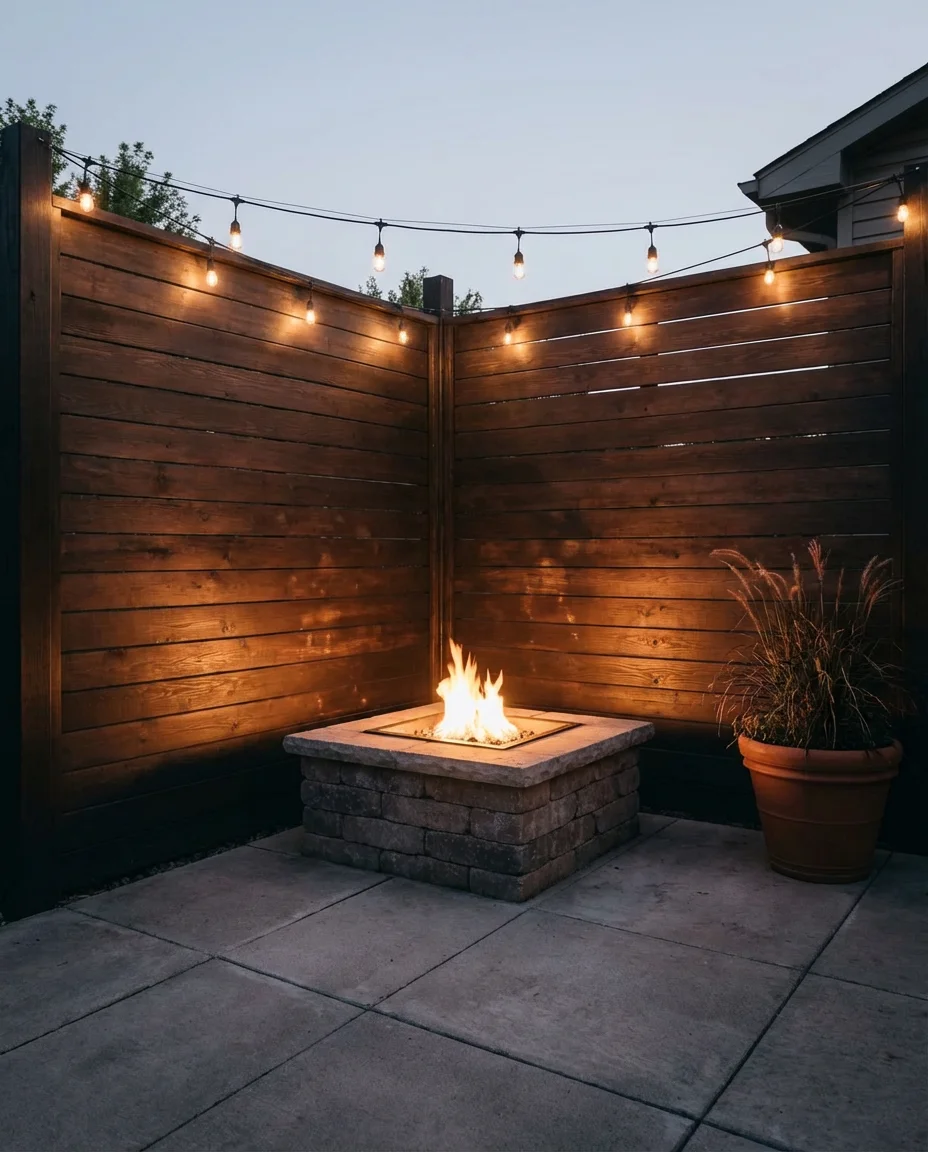
A privacy screen paired with a fire pit is a DIY project many homeowners complete themselves over a single weekend. Build a simple post-and-rail frame from 4×4 cedar posts set in concrete footings, then attach horizontal 1×4 planks with consistent spacing—about a half-inch gap between each plank is the sweet spot between privacy and airflow. Stain the wood in a dark espresso or warm teak tone to coordinate with outdoor furniture. The result looks architectural and intentional, not like a temporary fix. This is a genuinely underrated upgrade for any suburban backyard.
18. Large Backyard Fire Pit with Circular Stone Patio
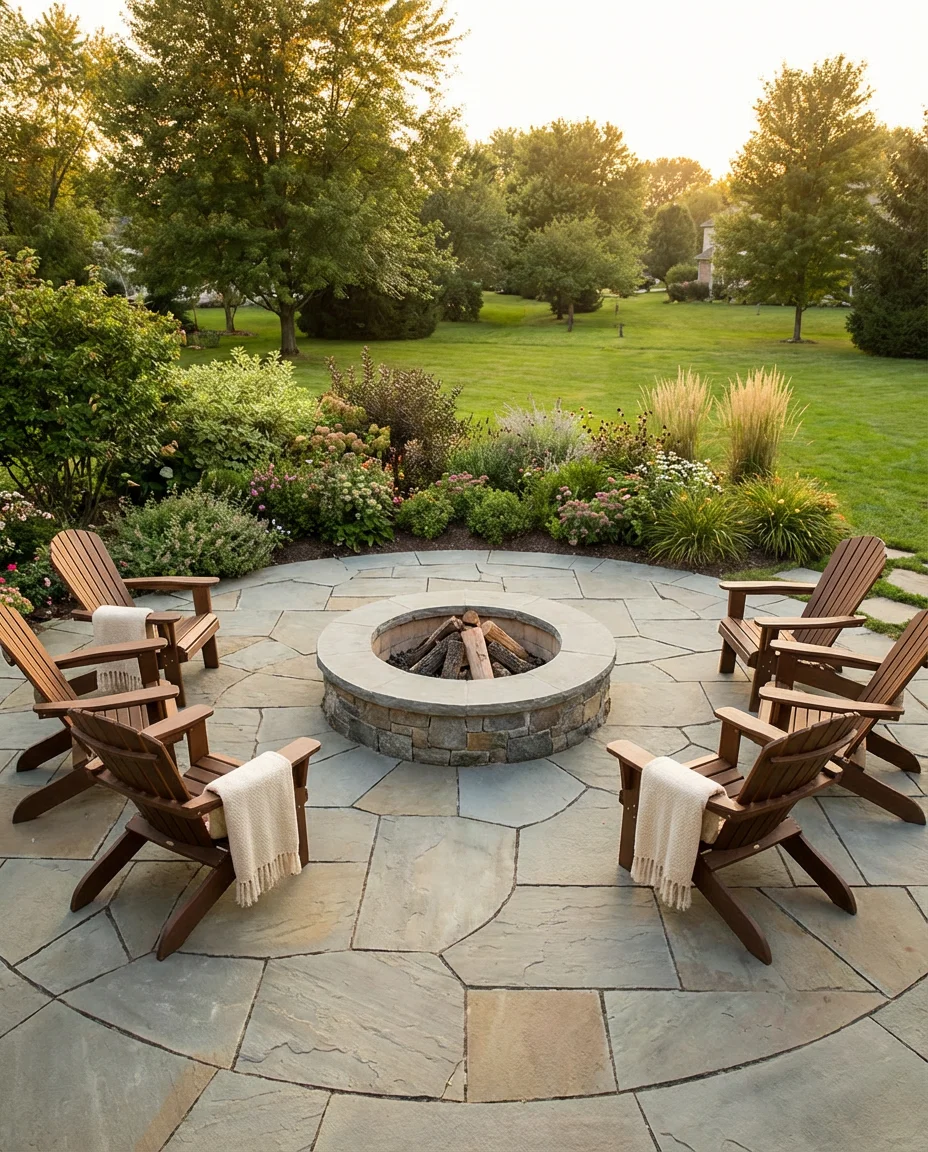
For large backyards with generous square footage to work with, a circular stone patio surrounding a wide fire pit is one of the most dramatic and satisfying outdoor installations you can commission or build. The circular geometry softens the hard edges of a rectangular yard and draws the eye toward the fire at the center. Use a mix of natural flagstone—bluestone, slate, or fieldstone—set in a random pattern for a look that feels organic rather than engineered. This is destination-level outdoor design for residential properties.
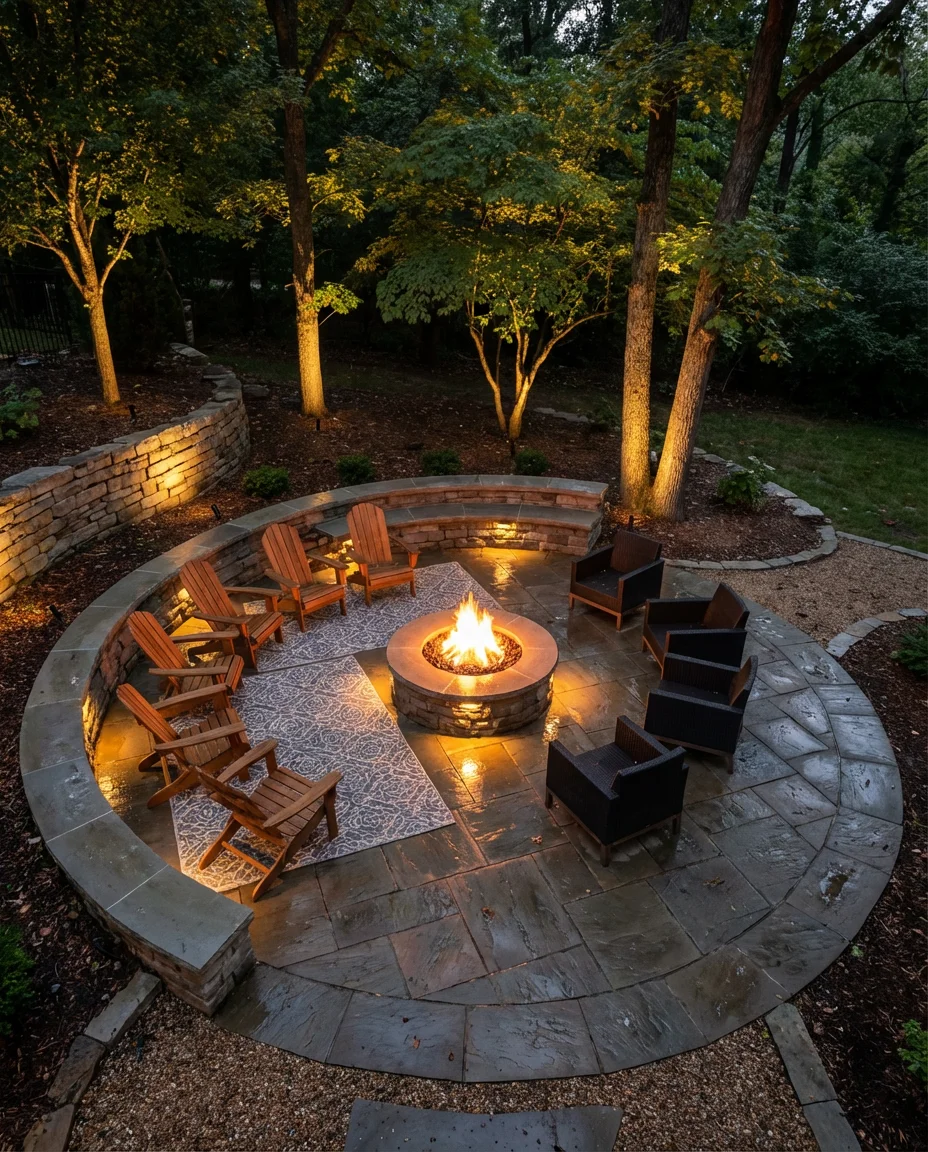
Real homeowner behavior around large fire pit installations shows that people tend to underestimate how much seating they need until the first party. Plan for at least 8 to 10 seats for a fire pit patio in the 20-foot diameter range—mix built-in benches with movable chairs so you can expand capacity for larger gatherings. Outdoor rugs in natural jute or weather-resistant polypropylene define the seating zone within the larger patio and add color and texture underfoot. Uplighting the surrounding trees completes the scene and makes the whole setup feel finished after dark.
19. Portable Tabletop Fire Pit for Small Spaces
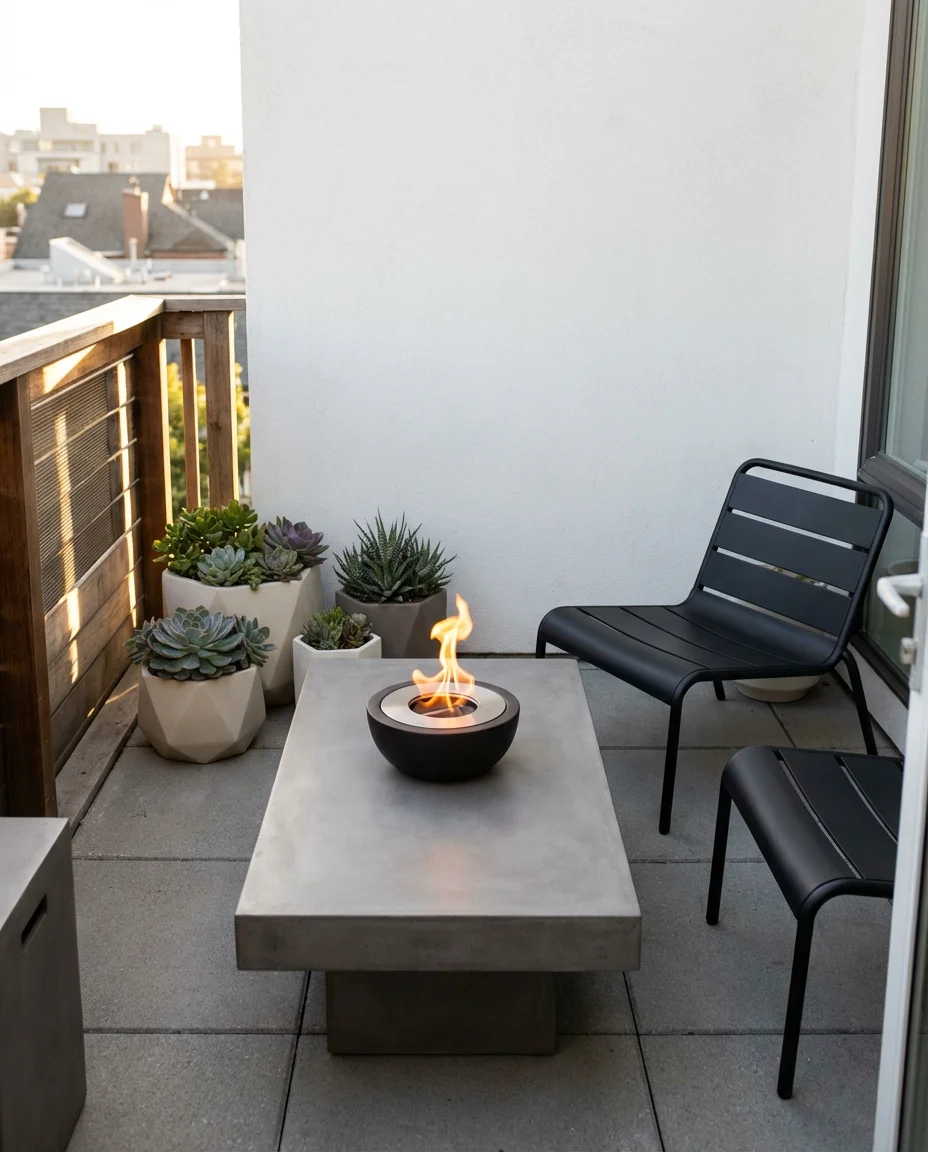
Not every fire pit has to be a ground-level installation. Tabletop fire pit bowls—small bioethanol or gel fuel burners set on an outdoor dining or coffee table—bring the same warmth and ambiance at a fraction of the footprint. This is the ideal solution for apartment balconies, condo terraces, and genuinely small backyard spaces where a traditional pit simply isn’t feasible. The clean, minimal aesthetic of a tabletop fire fits naturally into modern and Scandinavian-influenced outdoor styling.
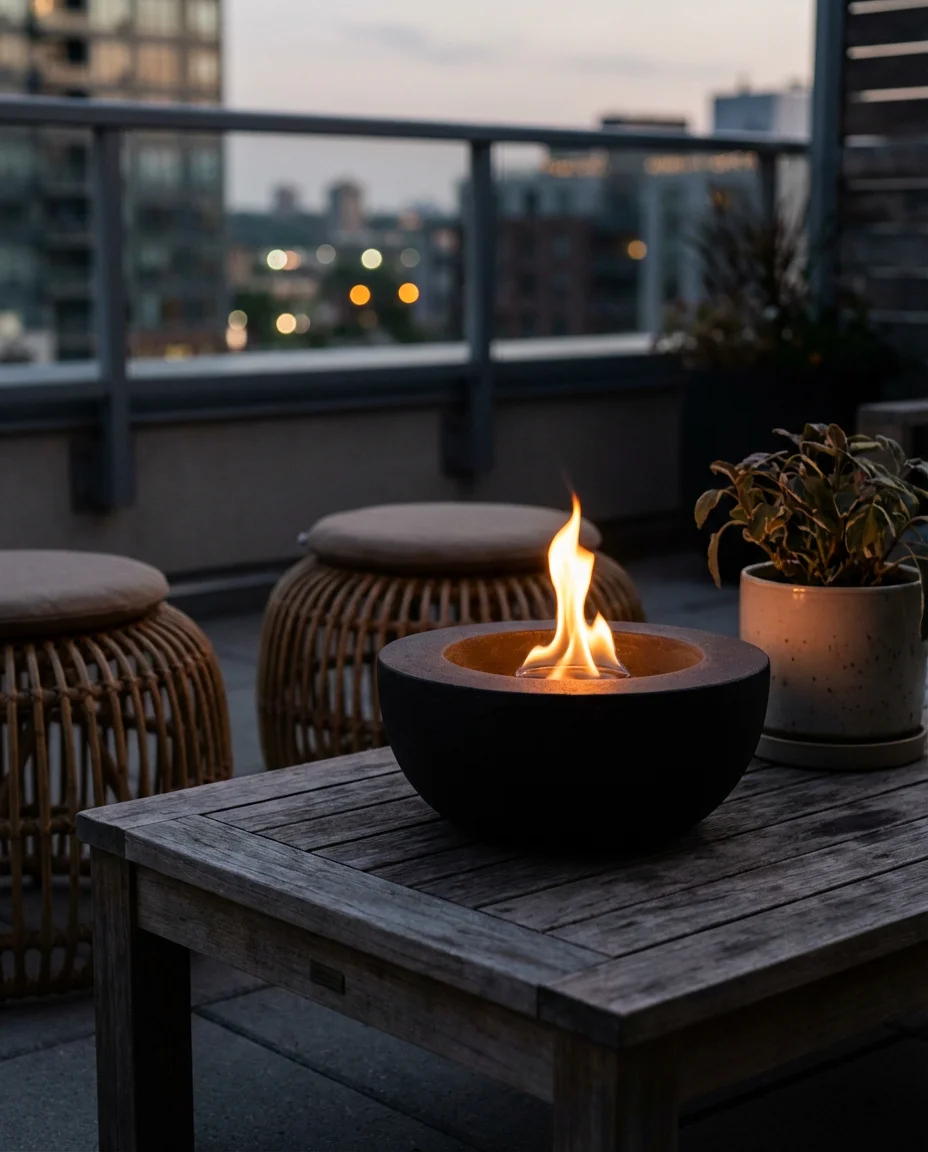
Bioethanol table fires burn cleanly with no ash, no smoke, and no sparks—which means they’re appropriate even on wood or composite deck surfaces where an open wood fire would be a hazard. Decent tabletop units run from $60 to $200, and the fuel is available at most hardware and home goods stores. Surround the table with low-backed chairs or stools so the flame stays at eye level when seated—that’s the key to making the tabletop fire feel immersive rather than decorative. A genuinely elegant, simple solution for fire-lovers in compact spaces.
20. Backyard Fire Pit with Outdoor Kitchen Integration
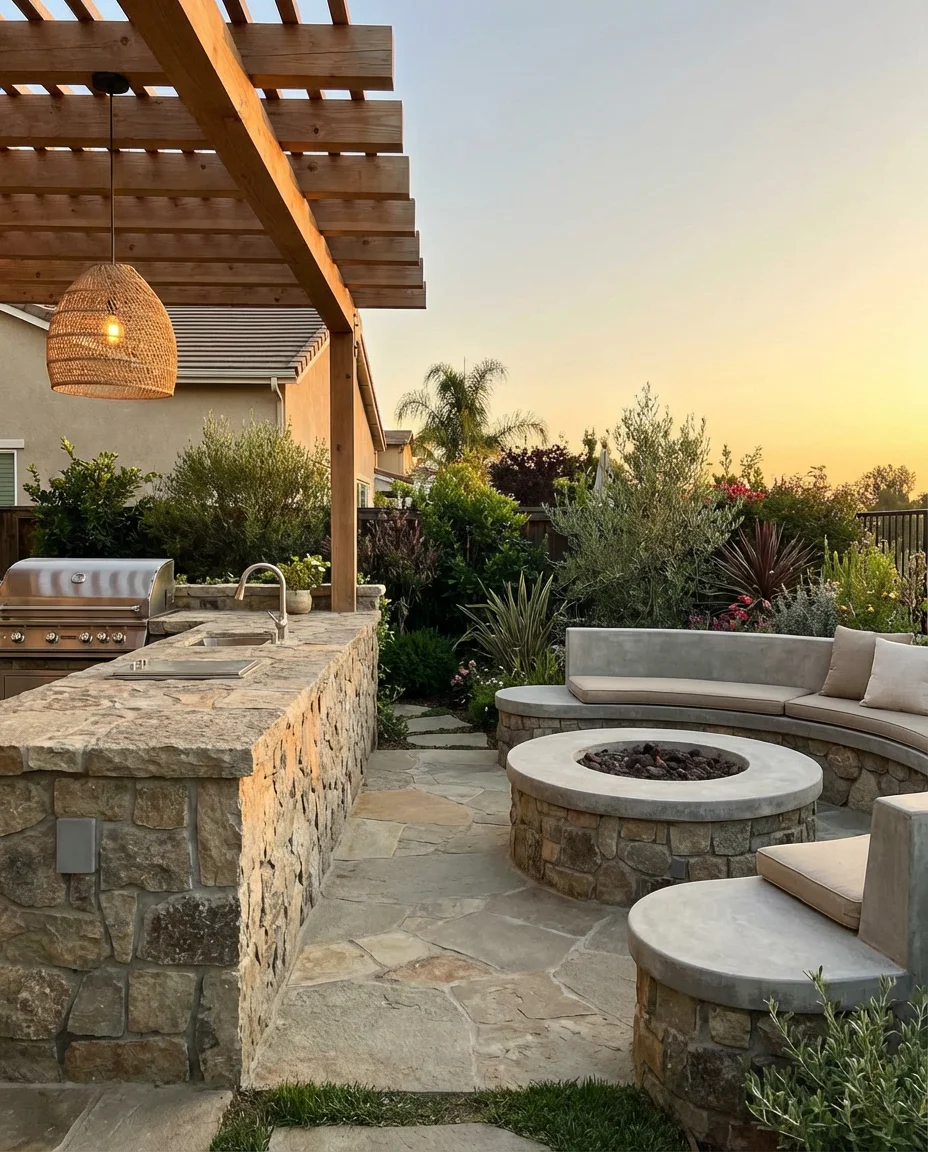
Combining a fire pit with an adjacent outdoor kitchen is the pinnacle of backyard outdoor living design for 2026. Picture a built-in stone or concrete counter with a grill station positioned 8 to 10 feet from the fire pit—close enough to feel connected, far enough to keep the cook out of the smoke. Guests congregate at the fire pit while the host works the grill, and the whole setup feels like one cohesive outdoor living room rather than separate elements scattered around a yard. This is the large backyard’s ultimate achievement.
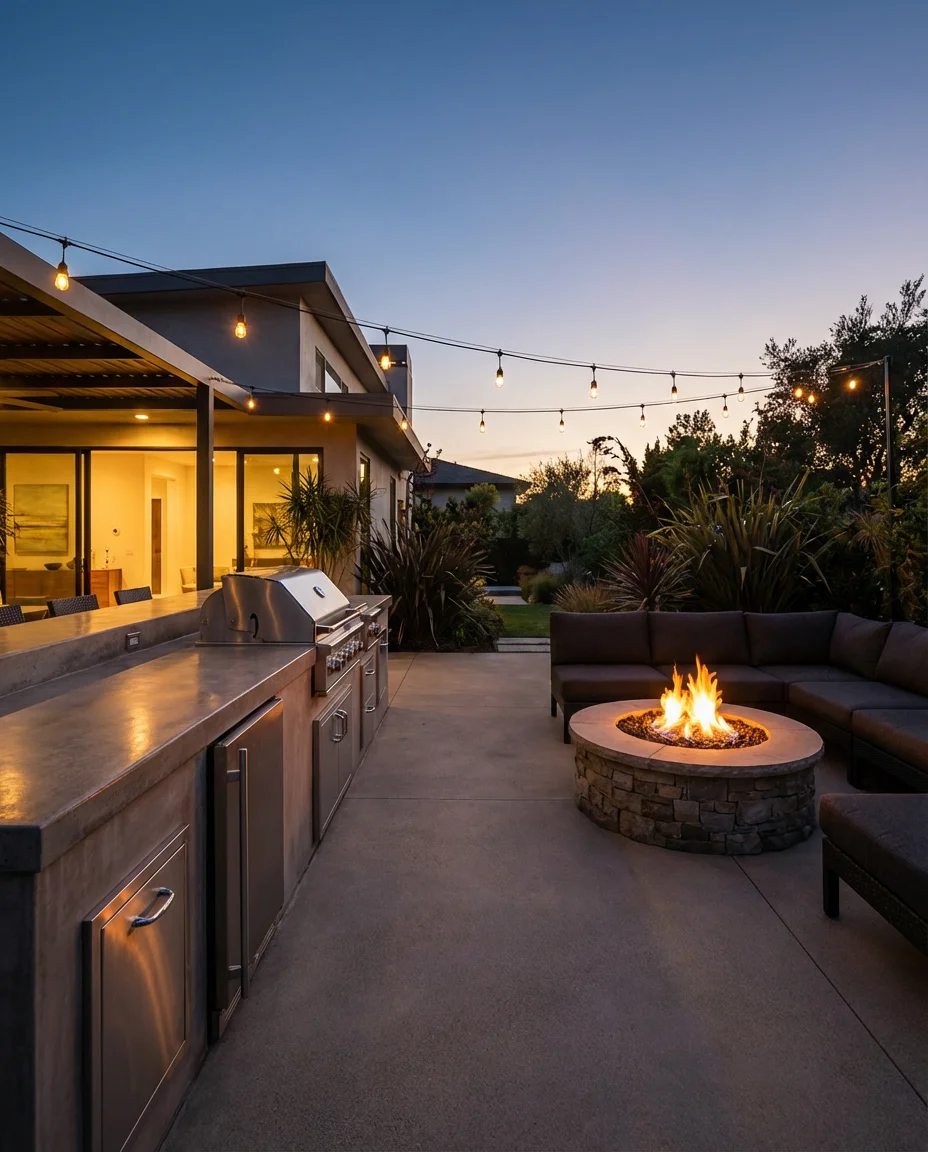
The outdoor kitchen plus fire pit combination has become the number one requested upgrade among outdoor living contractors in warm-weather states like Florida, California, Texas, and Arizona. Homeowners describe it as the addition that finally made them stop going out to restaurants on weekends—everything they want in a social environment exists right in their own backyard. A modest version of this setup—concrete block kitchen counter, drop-in grill, and a quality stone fire pit—can be built by a skilled DIYer for under $3,000 in materials. The lifestyle return is enormous.
21. Fire Pit Area with Hammock and Lounge Chairs
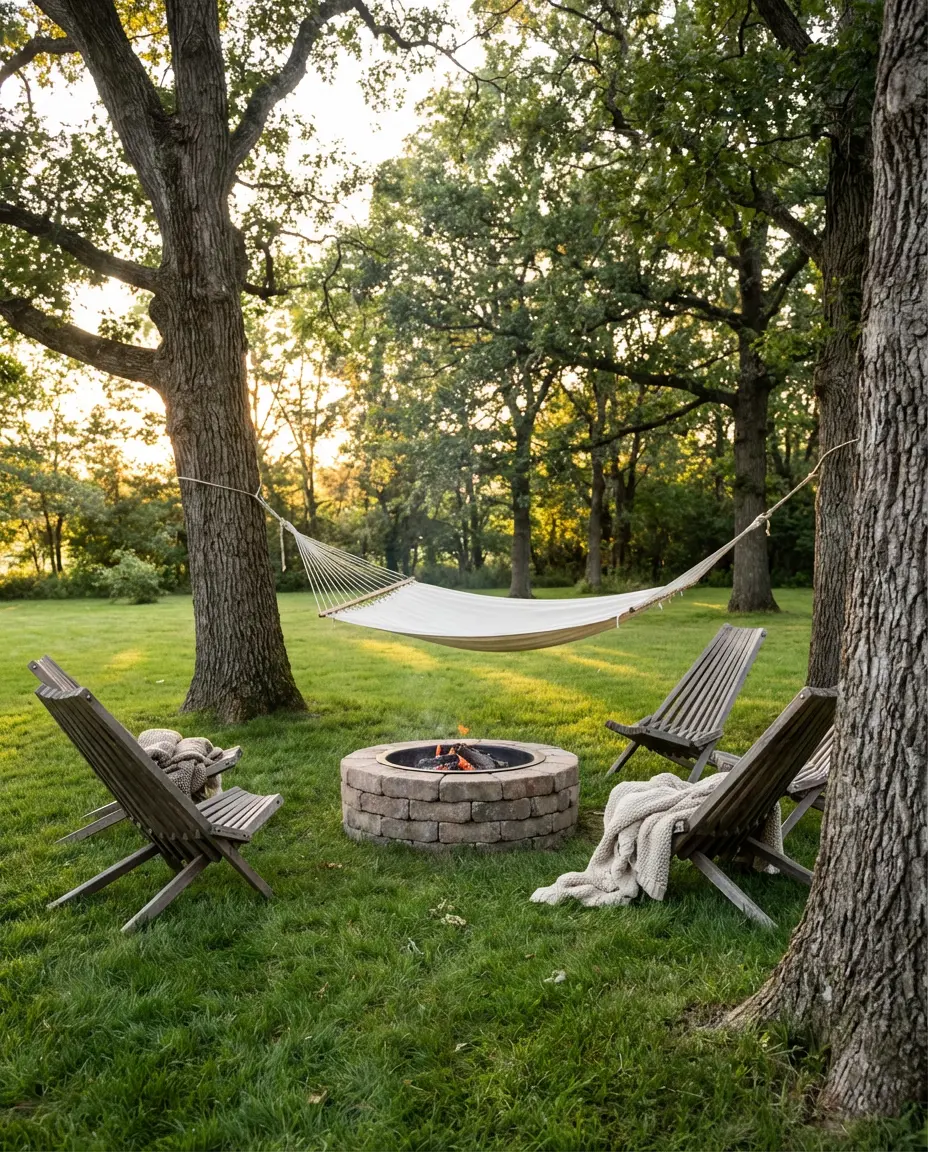
Mix seating types around a fire pit, and the space immediately feels more layered and personal. A Brazilian cotton hammock strung between two trees at the edge of the fire pit zone, combined with two or three low lounge chairs closer in, gives guests options—some people want to sit upright and chat, others want to recline and stare at the flames. The combination of seating types signals that this is a place to genuinely relax, not just a polished outdoor set piece. With swings or hammocks, a fire pit becomes a full experience.
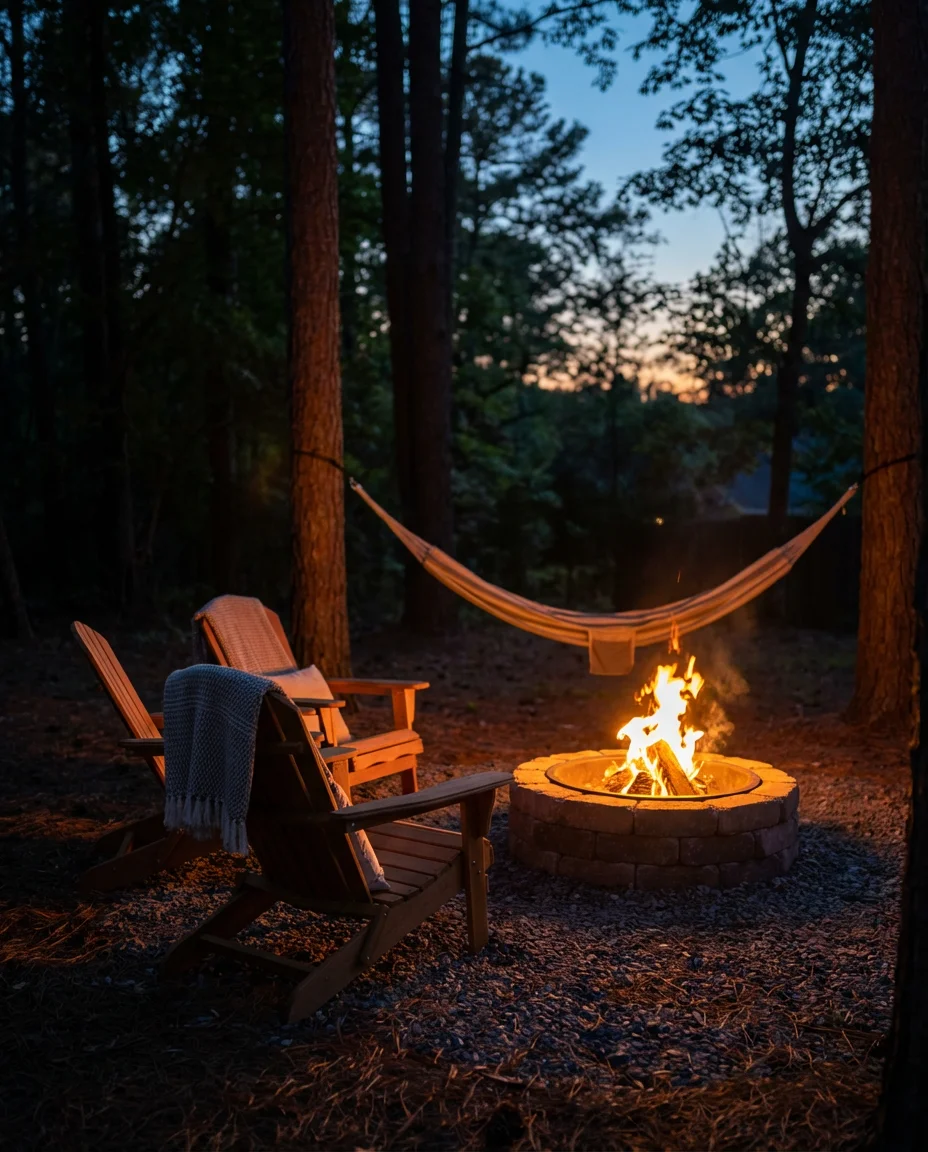
The micro anecdote that resonates with this setup: a family in suburban Portland installed a hammock post system near their fire pit and found that their teenage kids—who had previously been glued to screens indoors—started spending evening hours outside consistently. The fire plus the hammock created an outdoor space that genuinely competed with the couch. That’s the practical magic of mixing lounge seating types: you design for different moods and ages simultaneously, and the yard becomes somewhere people genuinely want to be, not just a space they occasionally visit.
22. Fire Pit with String Lights and Outdoor Rug for a Complete Room Feel
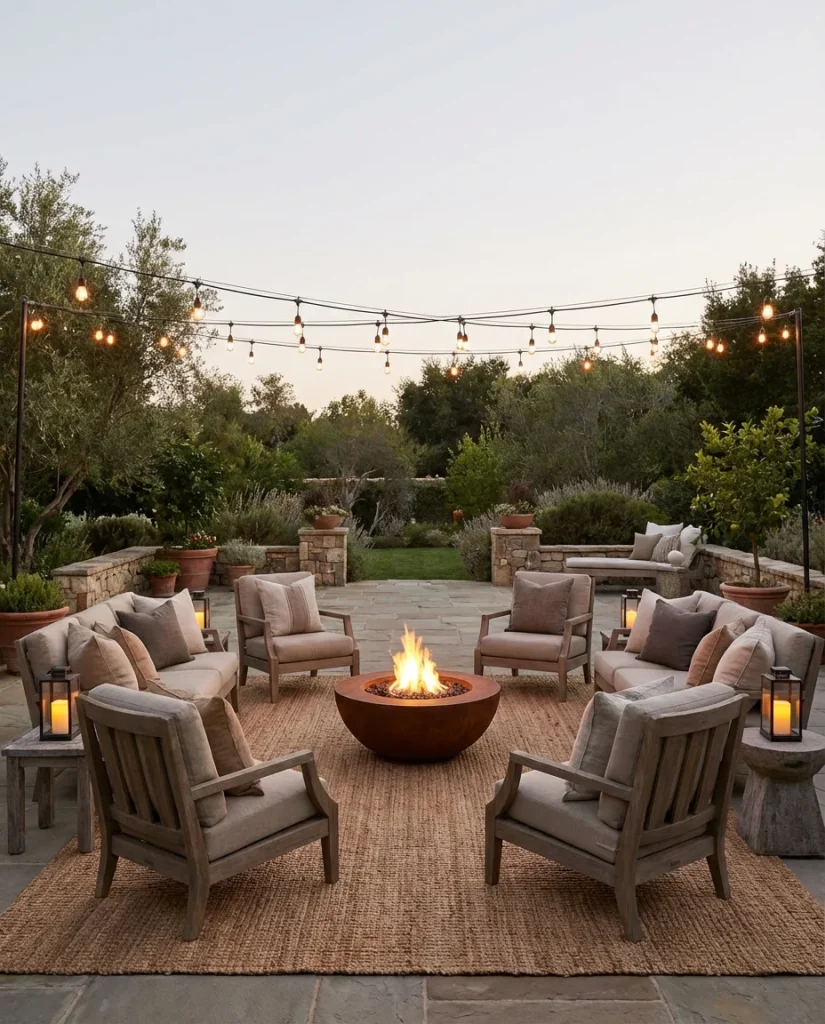
The finishing touches that turn a fire pit area into a true outdoor room: an oversized weather-resistant rug under the seating, with lights strung overhead, and a mix of throw pillows and lanterns placed throughout. These are the layers that make a backyard feel styled rather than assembled. The rug defines the space like a living room rug does indoors—it draws a boundary, adds color, and makes everything within it feel intentional. Pair it with string lights above, and the transformation from yard to room is complete.
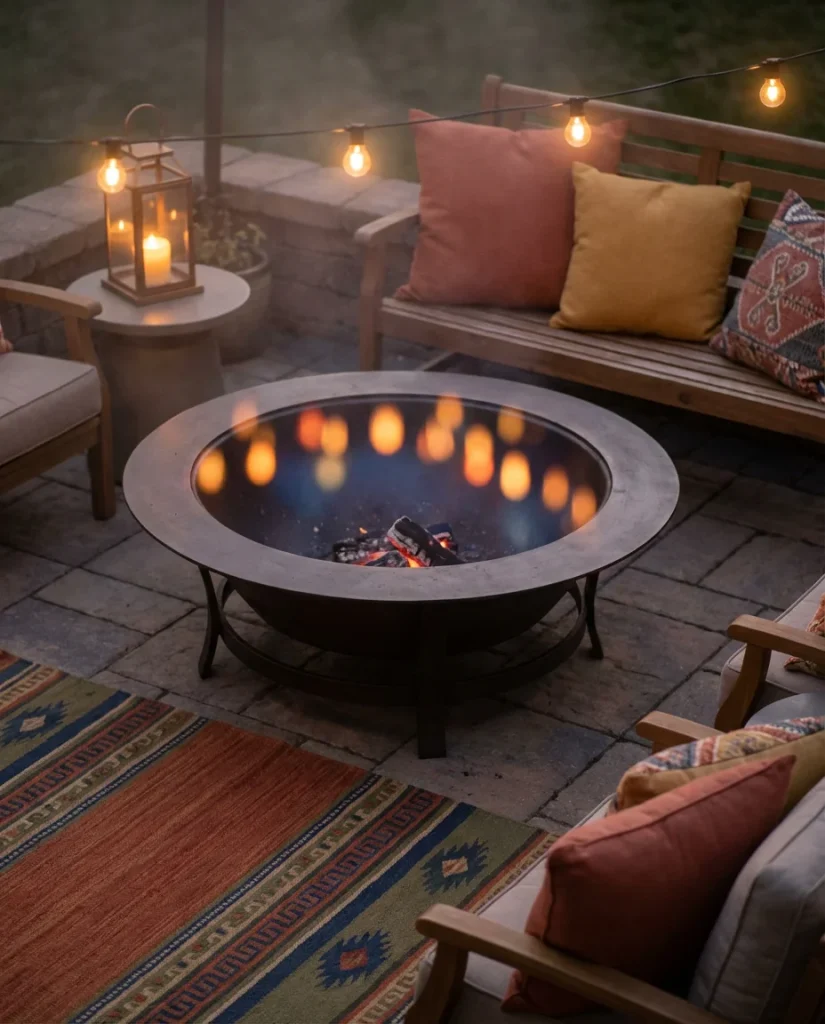
This is the idea most often pinned on Pinterest for a reason—it’s visually complete and immediately achievable without construction or significant budget. A quality outdoor rug in a bold geometric or natural stripe pattern runs $80 to $180 at most home goods retailers. Add throw pillows in complementary colors, a few lanterns with battery-operated candles, and a strand of warm Edison lights above, and the whole space can be transformed in a single afternoon for under $300. It’s the easiest and highest-impact way to finish a fire pit area, and it works equally well whether your pit cost $50 or $5,000.
Conclusion
Every fire pit in this list is achievable—some over a weekend, some over a season, but all of them within reach for a motivated homeowner. The right setup for you depends on your yard size, your budget, and honestly, how you like to spend your evenings outside. Drop a comment below telling us which of these ideas resonates most with your space, or share a photo of your own fire pit setup—we’d love to see what you’re creating out there.