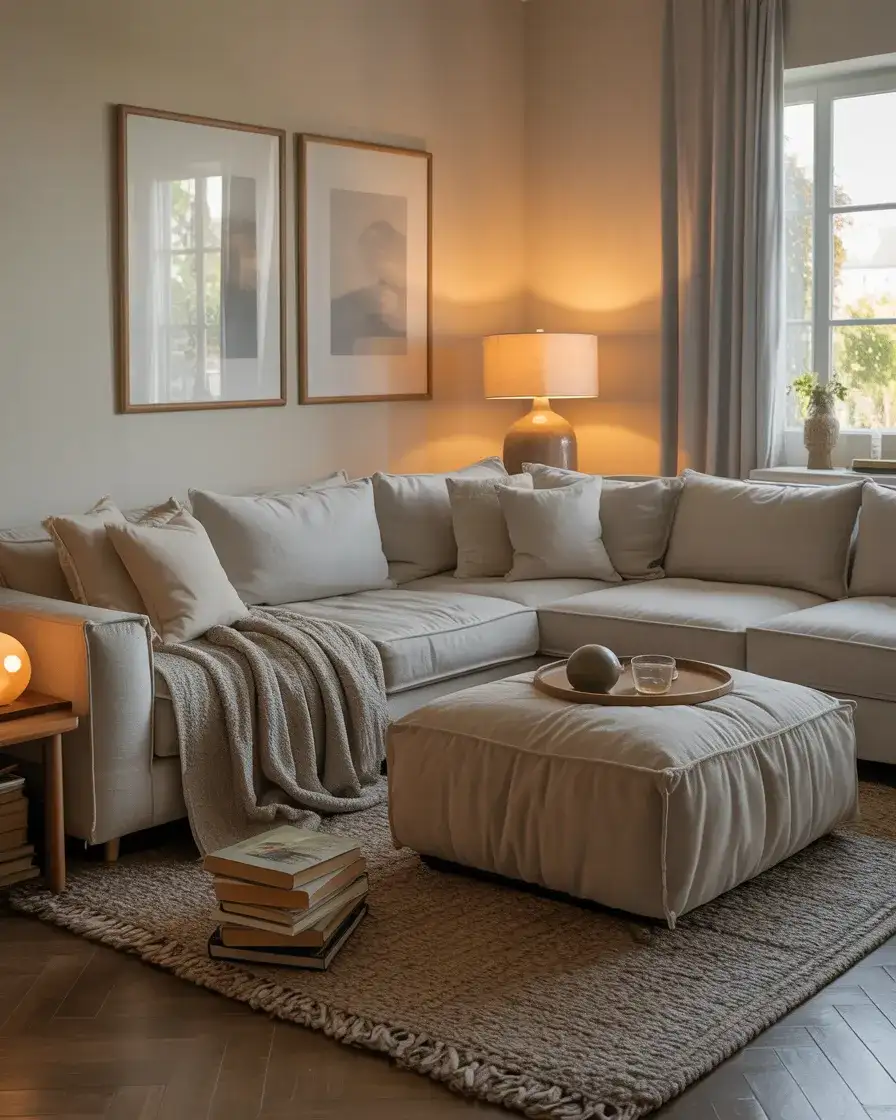
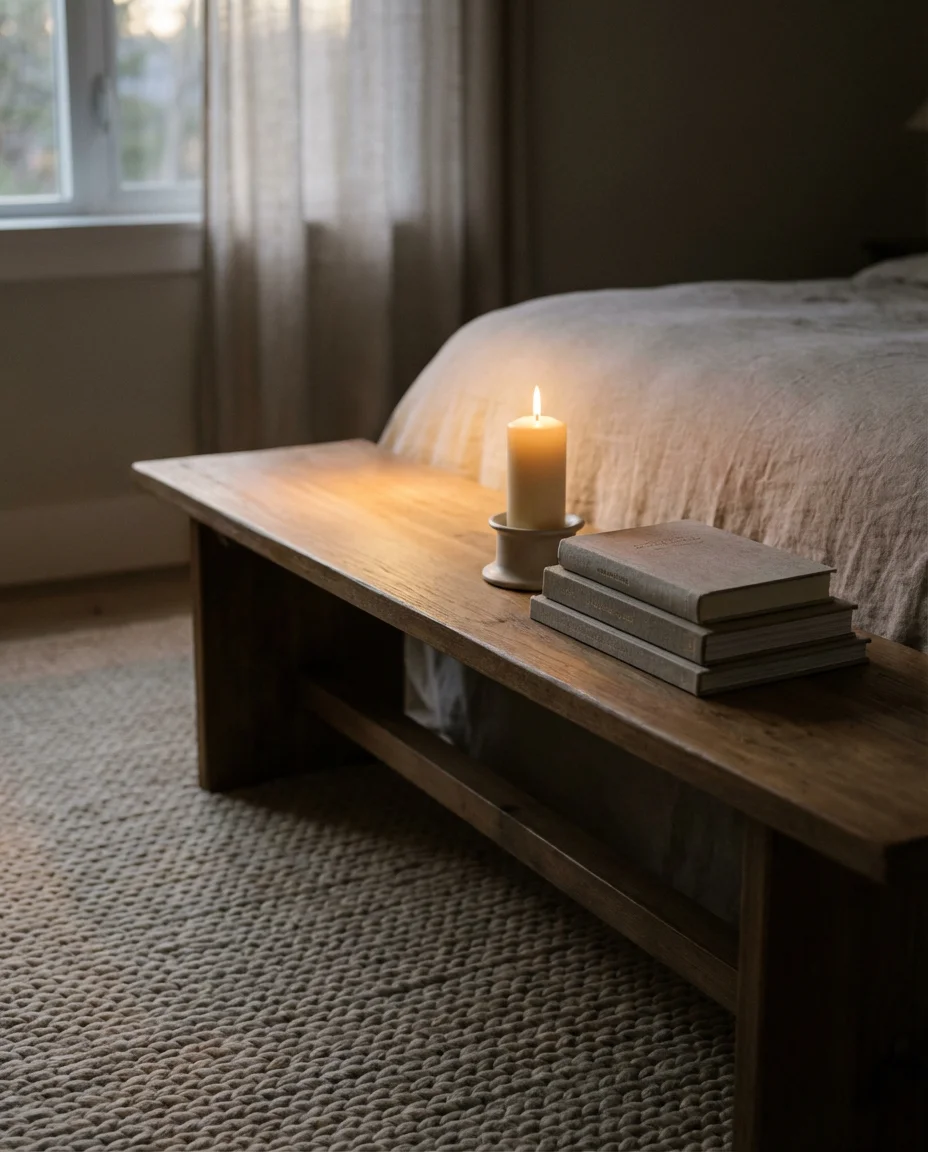
Your TV console is one of those spots in the home that’s impossible to ignore—and in 2026, people are finally treating it that way. Whether you’re refreshing a living room after the holidays or rethinking your entire entertainment setup, the console beneath your screen has become prime real estate for personal style. Pinterest searches for TV console decorating have surged, and it’s easy to see why: a well-styled console can anchor a room, tell your story, and make the whole space feel pulled together. In this article, we’re breaking down fresh, doable ideas that span every aesthetic, season, and budget—so you’ll leave with at least three things you want to try today.
1. Lean Into the Organic Modern Moment
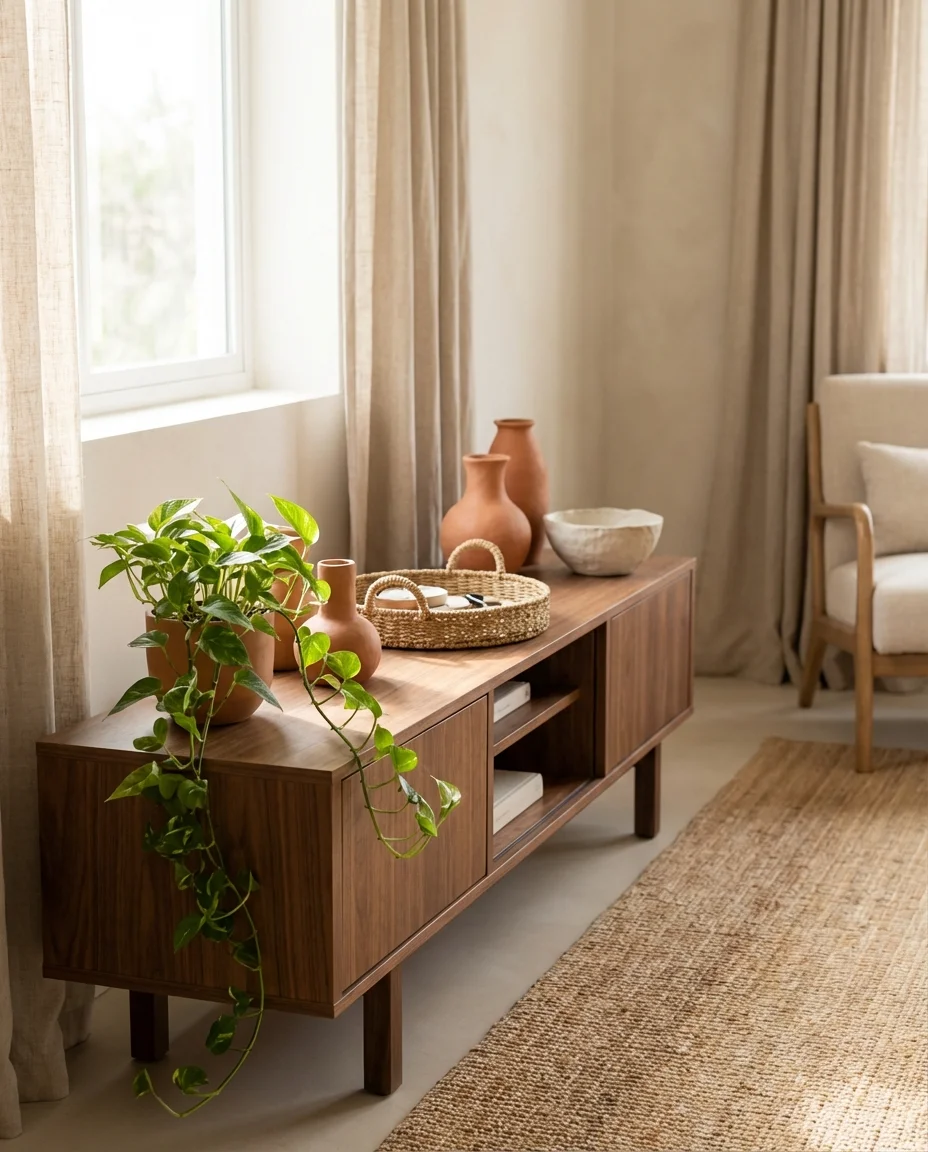
The organic modern trend isn’t slowing down, and the TV console is one of the best places to embrace it. Think sculptural terracotta vessels, a woven rattan tray, a single trailing pothos, and a raw-edge wood bowl that looks like it washed up on a riverbank. The key is restraint—three to five objects that feel intentional and earthy without looking like a bohemian yard sale. This aesthetic works especially well in open-concept living rooms where the console anchors a long wall.
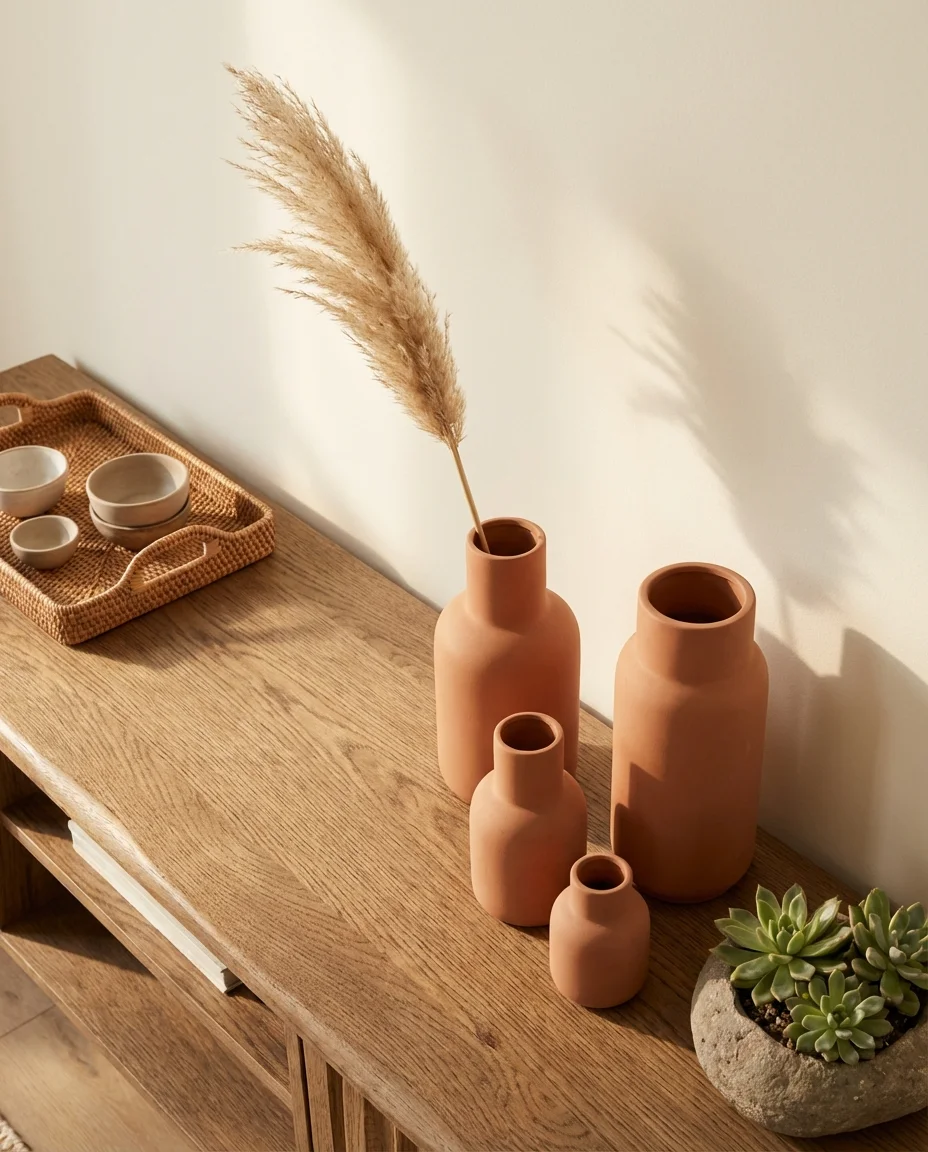
Organic modern styling is particularly forgiving for people who hate over-decorating. Interior designers often say the rule of odd numbers—grouping objects in threes—is your best friend here. Start with one tall element, one low organic shape, and one textural piece like a bundle of dried wheat or a lava stone. You don’t need to spend much: TJ Maxx and HomeGoods consistently carry the look for under $60 total, making this one of the most accessible console transformations out there.
2. The Floating Console That Changes Everything
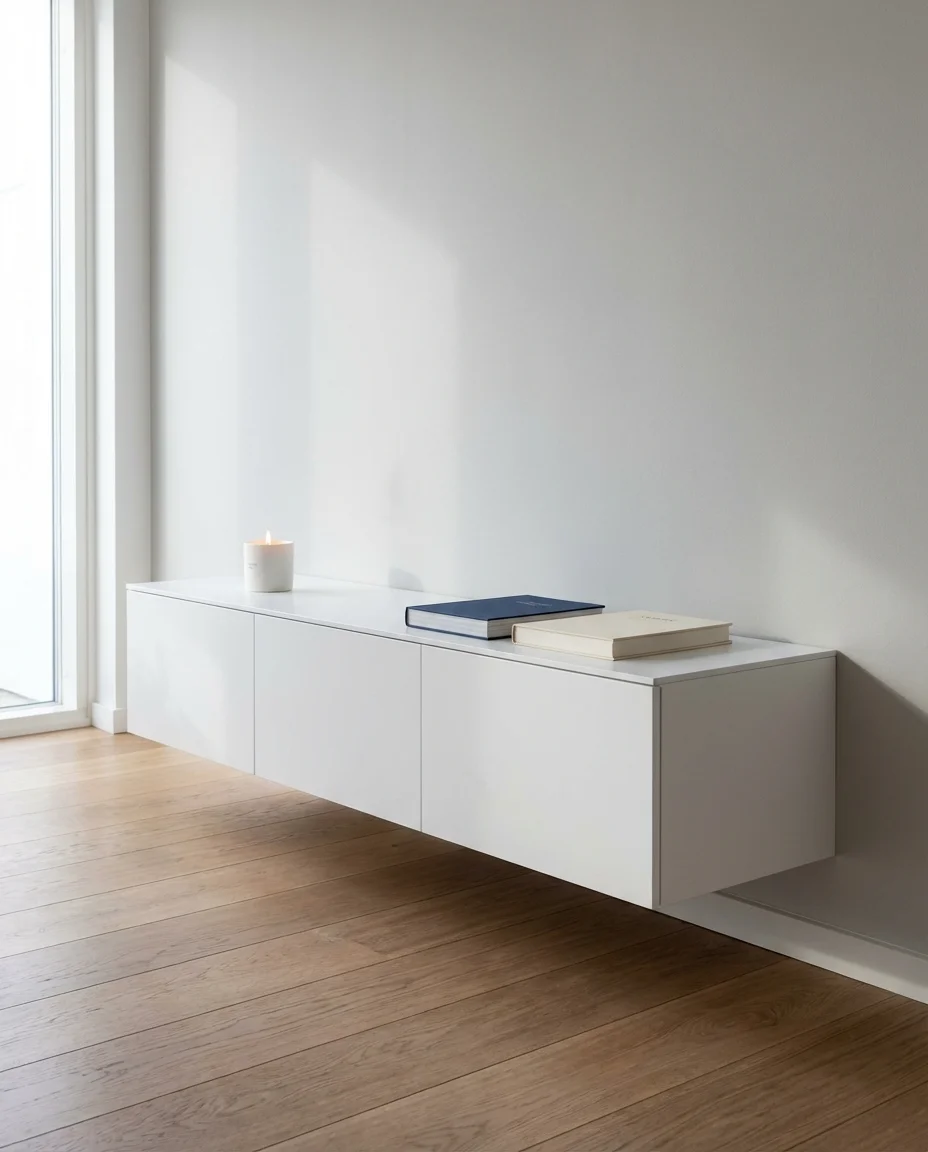
A floating console mounted to the wall instead of sitting on legs is one of those design moves that makes a room look instantly more expensive. It creates visual breathing room beneath the TV, makes cleaning the floor effortless, and gives you total control over height. In smaller apartments and studio layouts especially, a floating console in white or pale oak can make the space feel twice as open. The wall-mounted look pairs beautifully with a minimalist approach—a single candle, a stack of books, and nothing more.
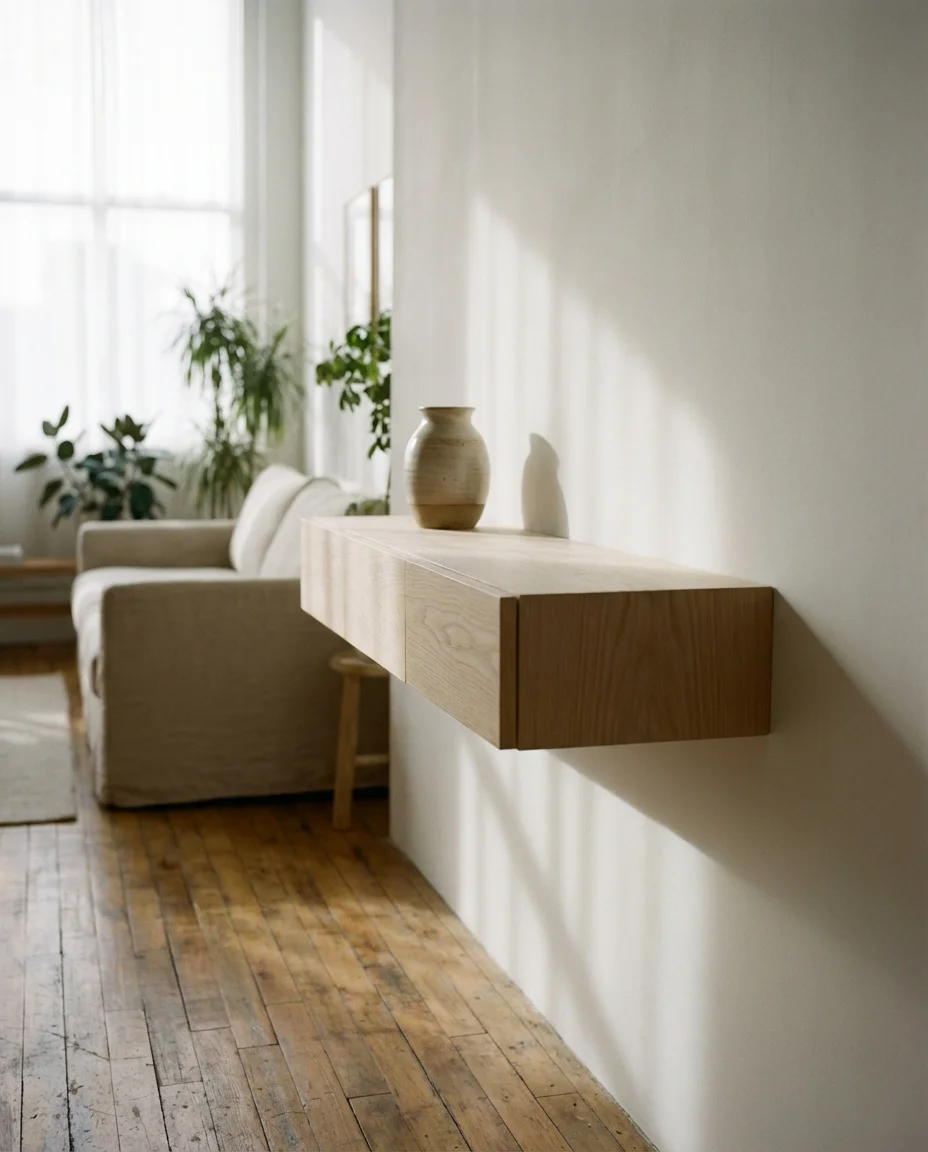
One thing many homeowners overlook when going floating: cord management becomes even more visible, so plan your wiring before you mount anything. Recessed outlets or an in-wall cable kit (typically $25–$40 at hardware stores) make a dramatic difference. This is a weekend DIY project that genuinely pays off—especially if you’re staging a home to sell. A floating console is the kind of thing that photographs exceptionally well and catches buyers’ attention immediately in listing photos.
3. Style It for the Holidays: Christmas Console Magic

The TV console during the Christmas season deserves as much attention as the mantel—maybe more, since it’s at eye level when you’re settled on the couch. Layering evergreen garland across the surface, tucking in battery-operated fairy lights, and scattering a few matte ornaments between existing decor creates a look that’s festive without being chaotic. If your console is beneath a fireplace TV wall, the garland can cascade beautifully from console to hearth in one unified sweep.

The mistake most people make with Christmas console styling is going too heavy on color. When you stick to a two-tone palette—say, deep green and warm gold, or red and natural wood—the result looks curated rather than cluttered. A neighbor shared that she started keeping her console decor in one dedicated bin each year, which means setup takes twenty minutes instead of an hour. Small rituals like that turn decorating into something to look forward to rather than dread.
4. Open Shelves Below: Style and Storage Combined

Consoles with open shelves below the surface are having a genuine moment in 2026. The open design lets you display books, baskets, and decorative objects while keeping things like remotes and gaming controllers within easy reach. It’s a practical choice for families who need function alongside aesthetics—and when styled with intention, those open cubbies look just as polished as closed cabinetry. The trick is treating each shelf like its own small vignette rather than a dumping ground.

Open shelves work best in living rooms where the rest of the space is relatively tidy—they amplify what’s already there, good or bad. If you’re someone who struggles with clutter, lean toward a hybrid console with one or two closed doors alongside the open sections. For styling, the classic rule applies: one-third books, one-third baskets or boxes, and one-third decorative objects. That ratio keeps open shelving looking intentional without requiring you to become a minimalist overnight.
5. A Black Console as an Anchor Piece
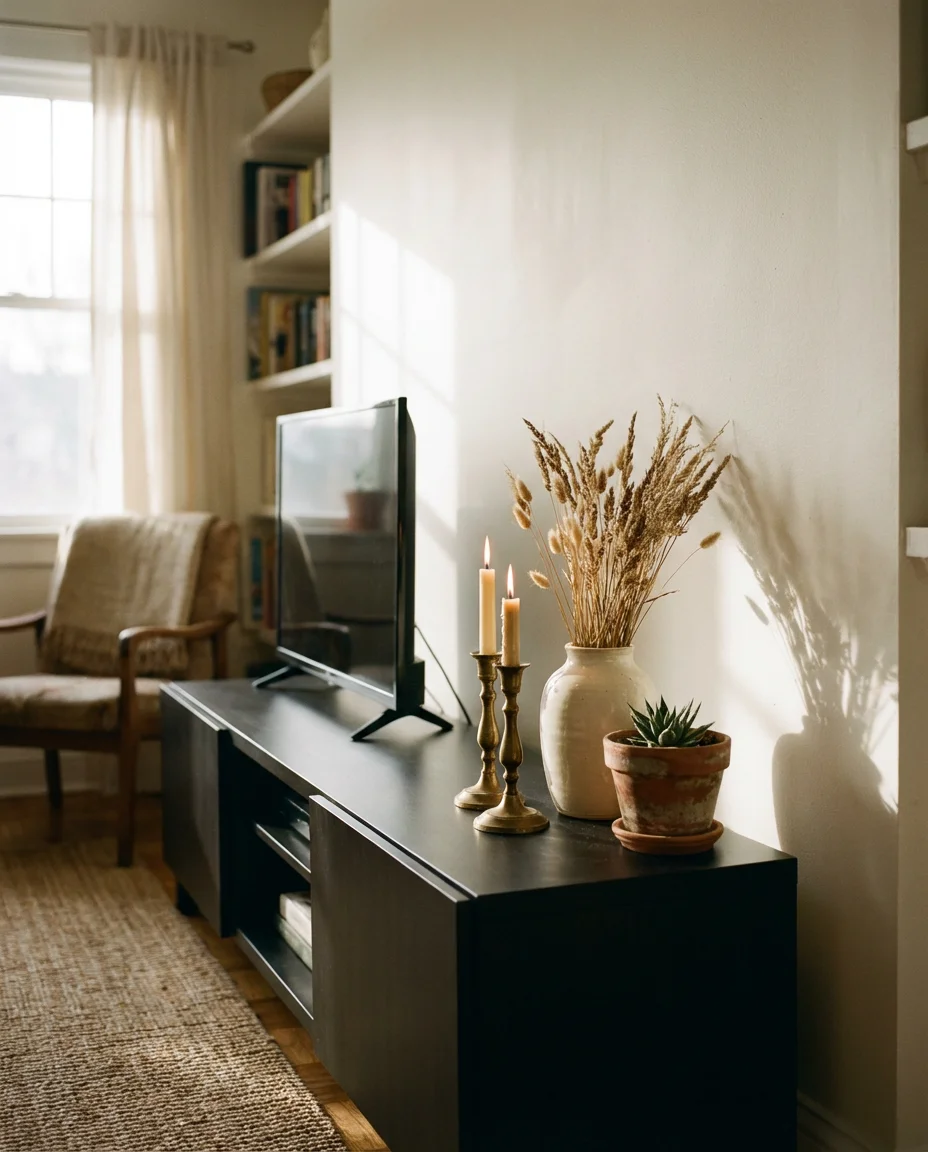
A black TV console is one of those bold choices that pays off enormously in the right space. It grounds the room visually, makes the television above it look intentional rather than just mounted, and creates a strong design anchor that the rest of the decor can orbit around. Pair a matte black console with warm neutrals—think cream linen, aged brass accents, and soft terracotta—and the result is sophisticated without feeling cold or sterile. It reads especially well in aesthetic-forward interiors where contrast is the whole point.
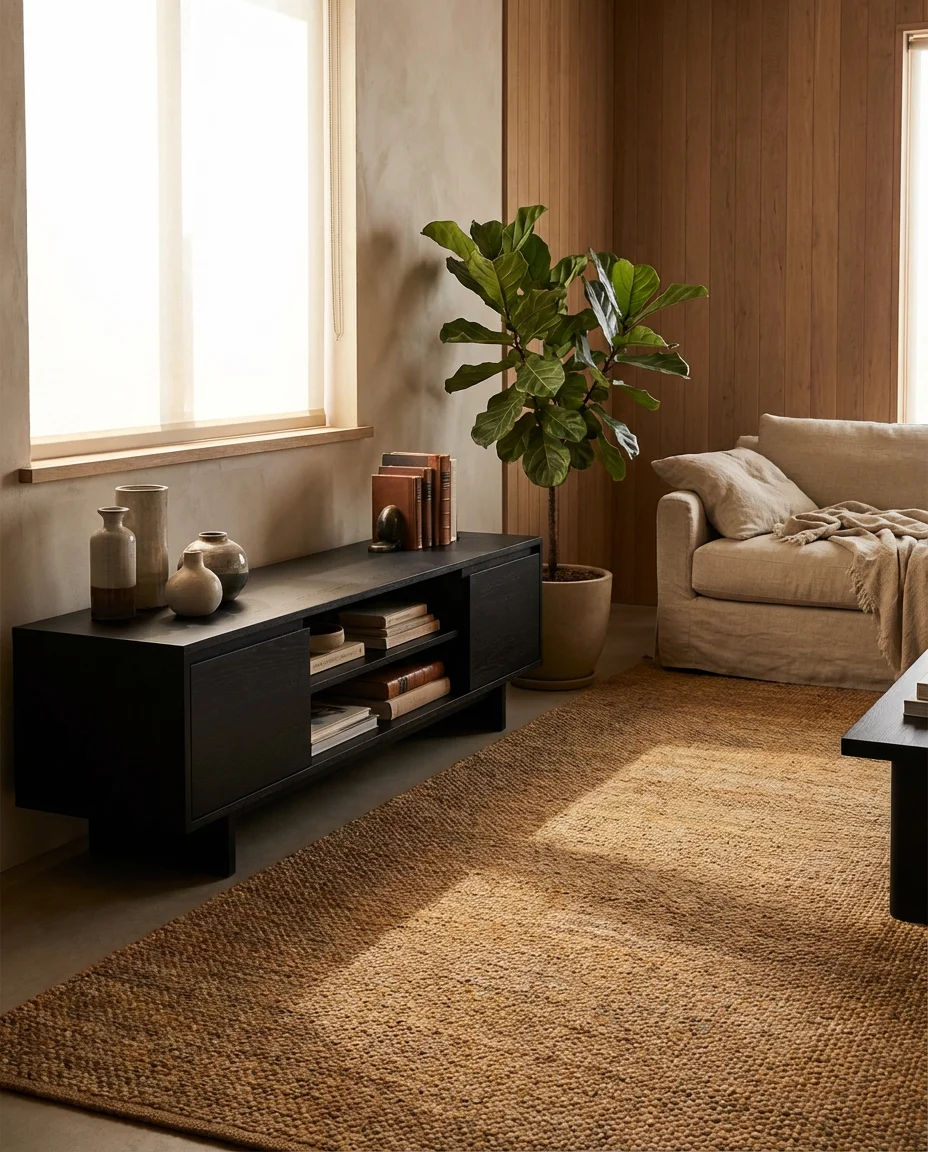
One common mistake with black furniture is surrounding it with too many dark accents, which makes the space feel heavy rather than dramatic. The key is contrast—light walls, pale rugs, and warm metal finishes do the heavy lifting. In cities like Austin and Nashville, black consoles are showing up constantly in design-forward rental apartments as a way to add personality without permanent changes. A black console with brass legs, in particular, has become something of a signature piece for that Texan maximalist-meets-modern sensibility.
6. Long and Low: The Statement Console Layout

There’s something undeniably satisfying about a long, low TV console that stretches almost the full width of a wall. This format is both functional and visually dramatic—it gives you generous surface space for styling while keeping the horizontal line of the room clean and grounded. In large living rooms with tall ceilings, a low-profile console prevents the TV from feeling like it’s floating in mid-air, and the extended surface lets you create elaborate styled vignettes across the whole length.

Styling a long console well means thinking in zones rather than scattering items randomly. Interior stylists often divide a long surface into three sections—left, center, and right—and give each zone a clear role: one might hold a plant and a candle, the center stays open or holds the TV remote tray, and the right clusters a book stack with a small lamp. This zone approach prevents the “random stuff on a shelf” effect that plagues so many consoles, even beautiful ones.
7. Mid-Century Modern Console Styling Done Right
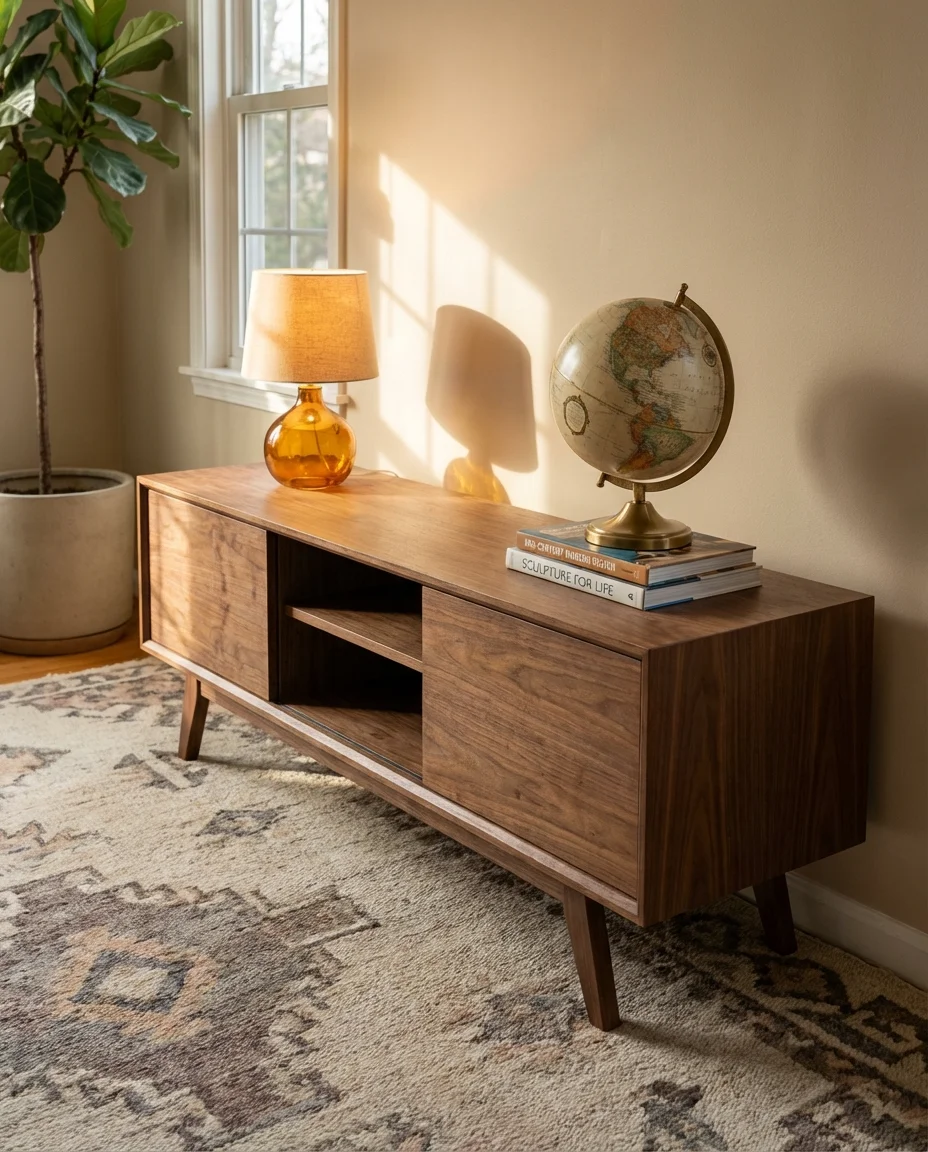
The mid-century modern console—typically low, walnut-toned, with tapered legs and clean geometric lines—is arguably the most enduring TV console style in American homes. It flatters almost any living room and looks just as good in a 1960s ranch house as it does in a new construction condo. Pair it with a simple lamp in a warm amber shade, a globe or architectural object, and one or two pieces of vintage art, and you’ve nailed the look without trying too hard.
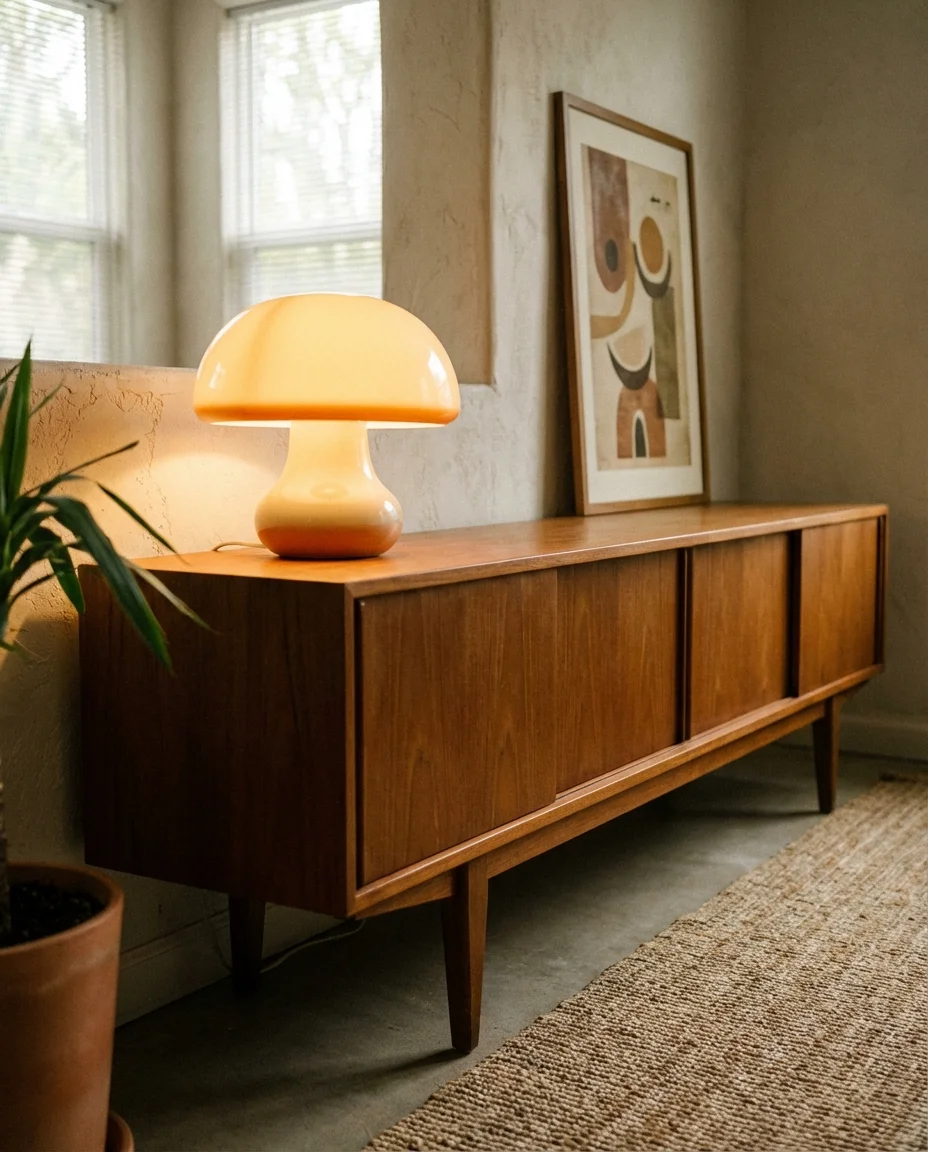
The biggest mid-century styling mistake is over-accessorizing. The whole ethos of this movement is “form follows function,” which means every object on that console should feel purposeful. Budget-wise, authentic vintage pieces can run expensive, but excellent reproductions from brands like Article, Castlery, and even Target’s Threshold line give you the look at a fraction of the price. A $299 console and a $35 amber lamp can genuinely fool the eye in a well-lit photo—and in person, too.
8. Picture Frames as Styling Anchors
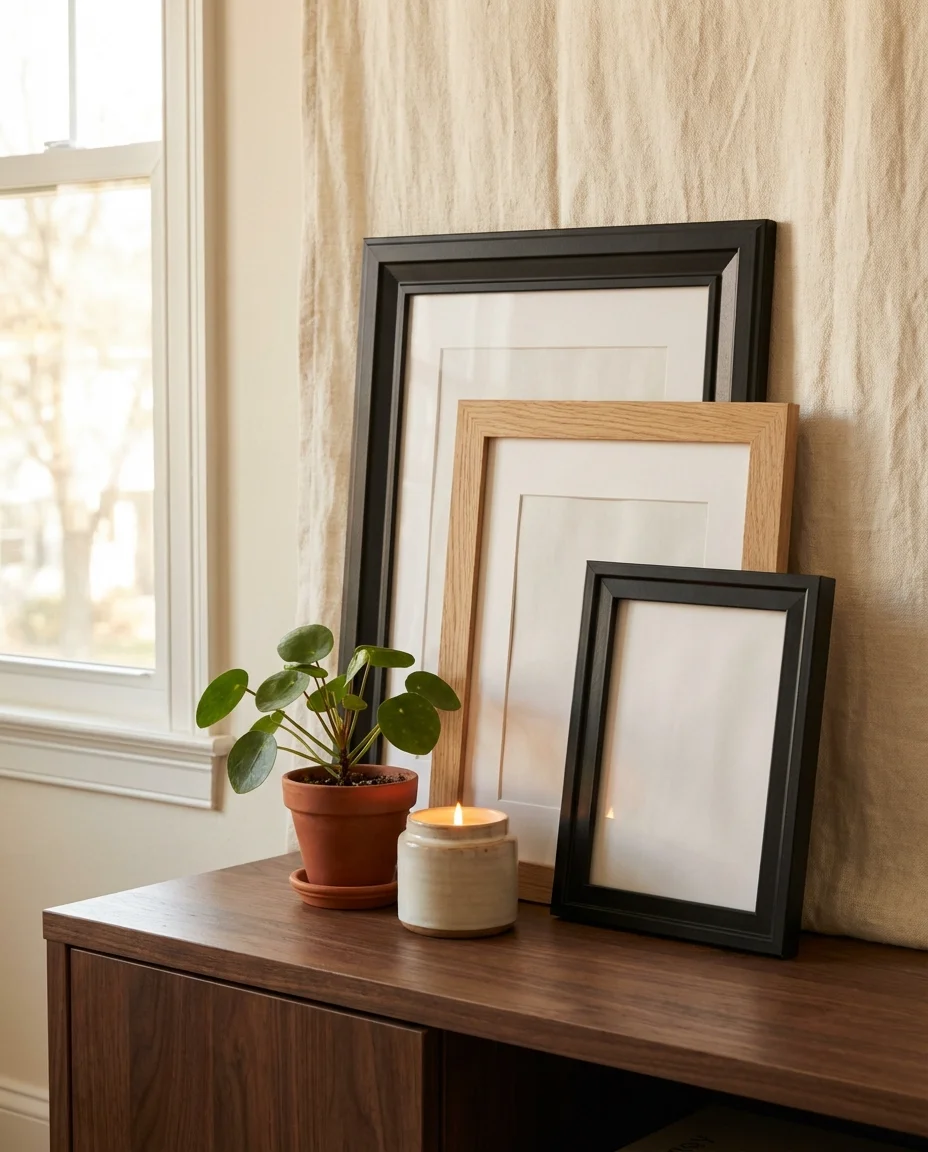
Leaning picture frames on and around a TV console is one of the easiest, most high-impact moves in console decorating. Rather than hanging art above the TV (which can look forced), leaning framed prints at different sizes creates a layered, editorial look that also lets you swap things out seasonally without putting new holes in the wall. In a bedroom where a console doubles as a media unit, this approach adds warmth and personality that mounted art alone can’t quite achieve.
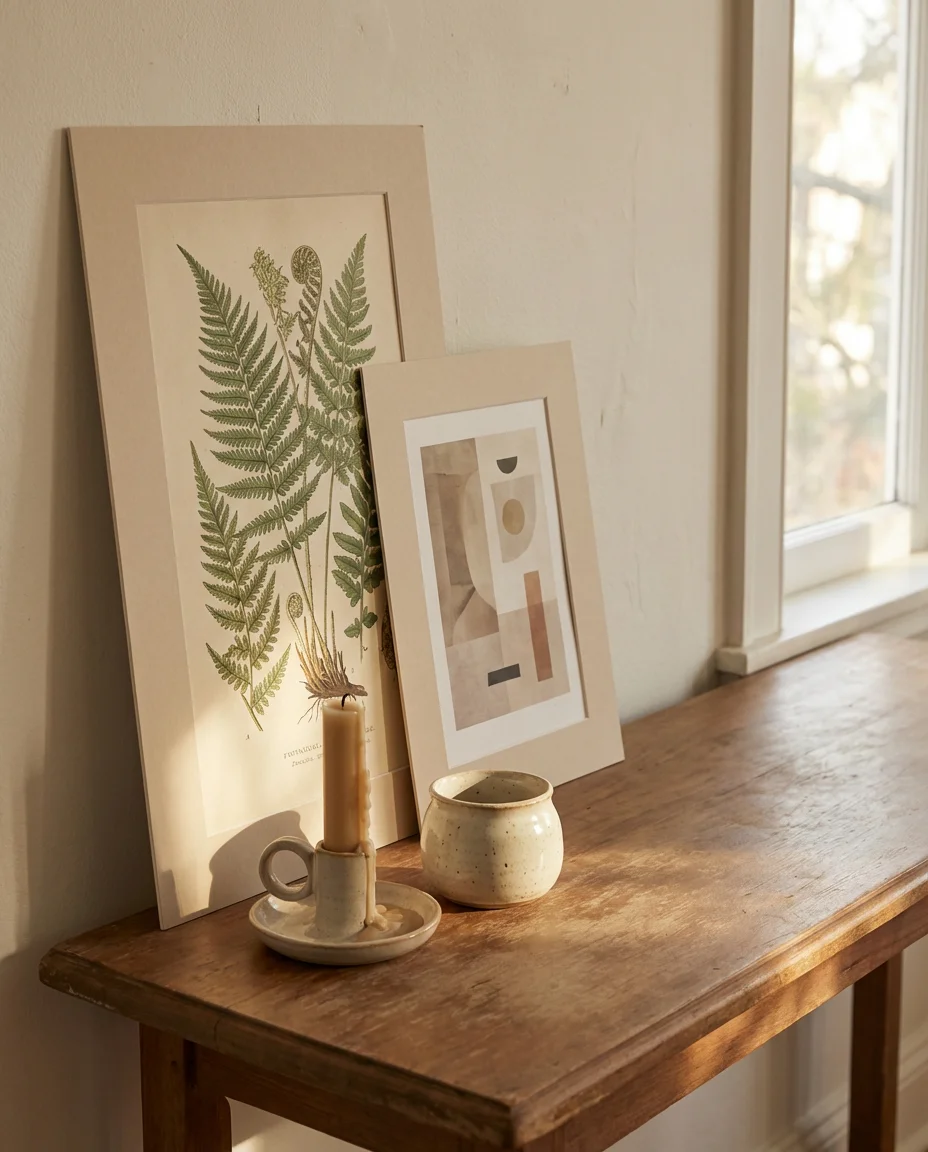
A real homeowner trick: buy a set of frames in two or three coordinating finishes—black, brass, and natural wood are the golden trio—then print your own art from sites like Etsy or Printler for a few dollars each. The result looks like a curated gallery without the gallery price tag. Just make sure the largest frame in your grouping doesn’t exceed about two-thirds the height of the console itself, or the proportions start to feel off.
9. Coastal Console Vibes for Beachy Living Rooms
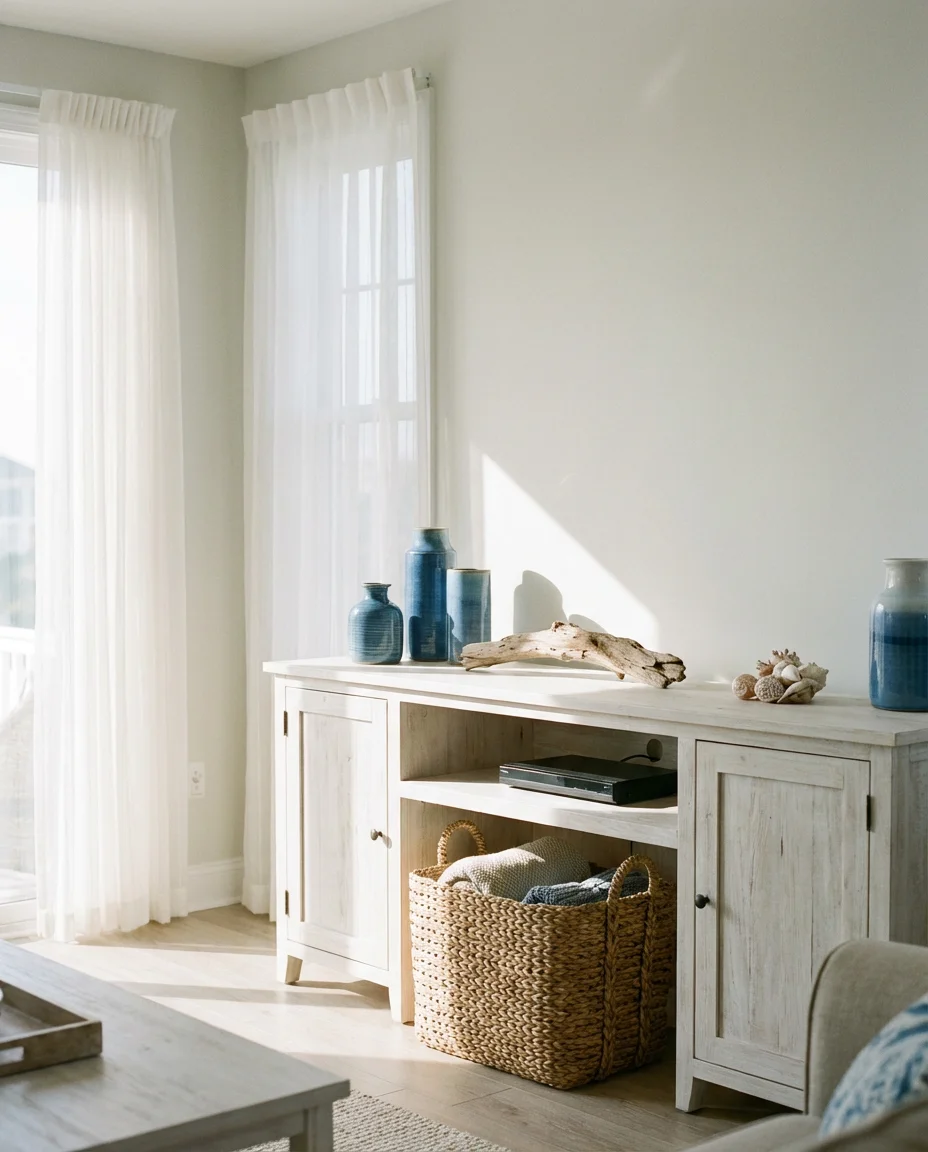
A coastal TV console aesthetic doesn’t require you to live near the ocean—it just asks you to embrace light, texture, and that breezy, sun-bleached palette that makes any room feel like a vacation. Whitewashed or pale wood consoles work perfectly here, styled with woven seagrass baskets, driftwood-look objects, blue-and-white ceramics, and a single statement shell or coral piece. The large plant in the corner—a bird of paradise or fiddle leaf fig—completes the look without any extra effort.
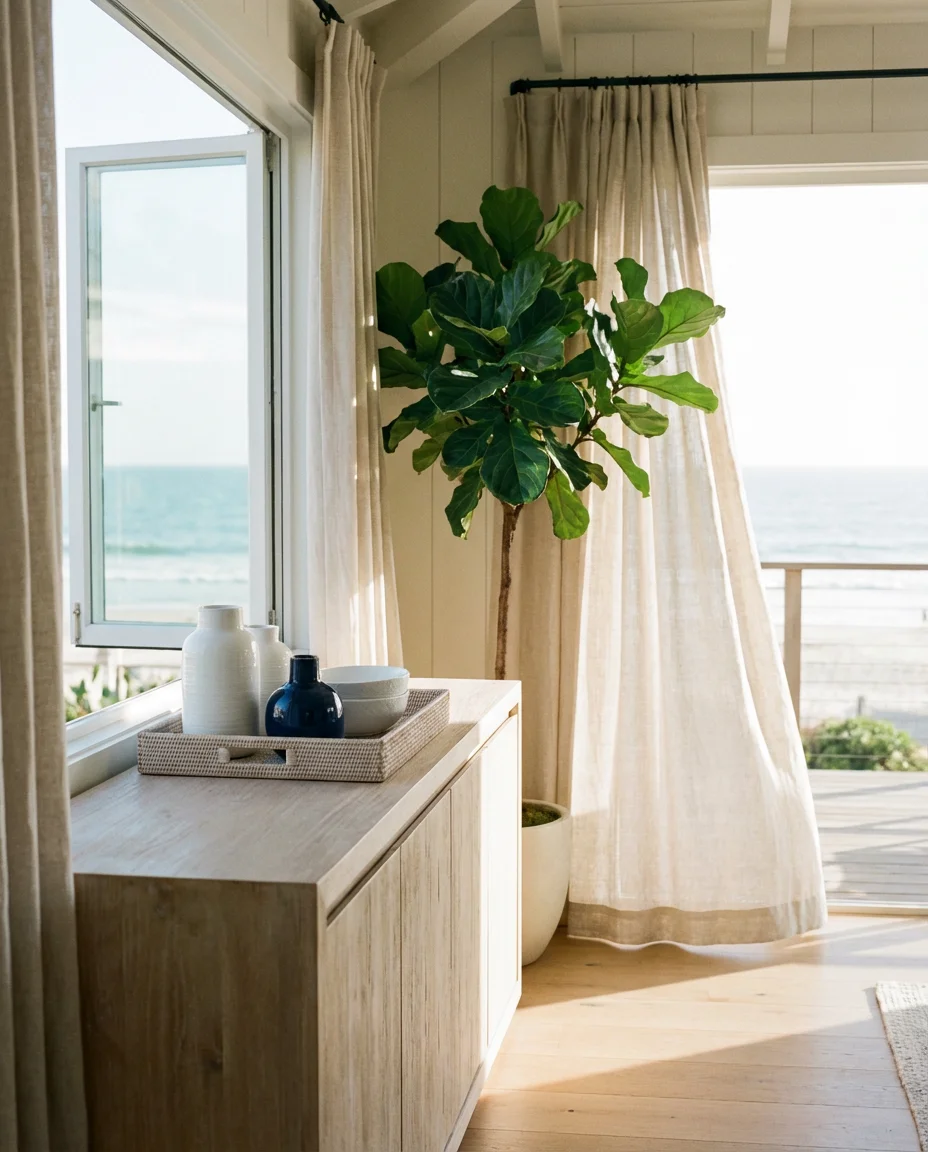
This look thrives in homes along the Gulf Coast, the Carolinas, and coastal New England, but it translates just as well to landlocked cities when paired with the right textiles. A jute or sisal rug and linen curtains in the same room reinforce the coastal theme without the console having to do all the work. Keep one anchor color—usually navy or a soft ocean blue—appearing in at least two places on the console to give the styling a sense of intention.
10. Valentine’s Day Console Styling That Isn’t Cheesy
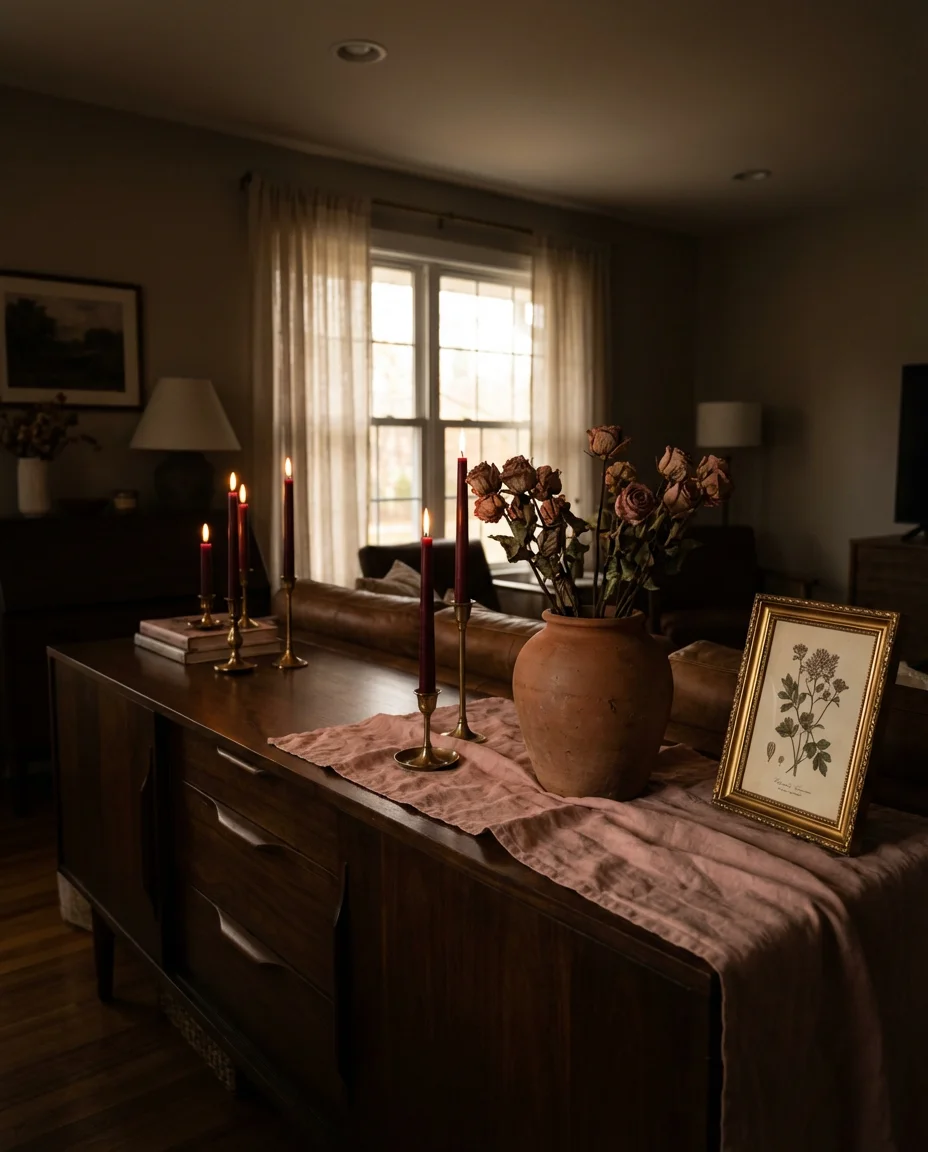
Most Valentine’s console decor tips lean too hard into heart-shaped everything and Pepto-Bismol pink, but it doesn’t have to go that direction. The most elegant holiday console styling for February uses deep burgundy, blush, and terracotta in place of red and hot pink—think a cluster of dried roses, a few slim taper candles in wine tones, and a single framed botanical print swapped in for the season. The result is romantic without feeling like a drugstore card aisle exploded in your living room.
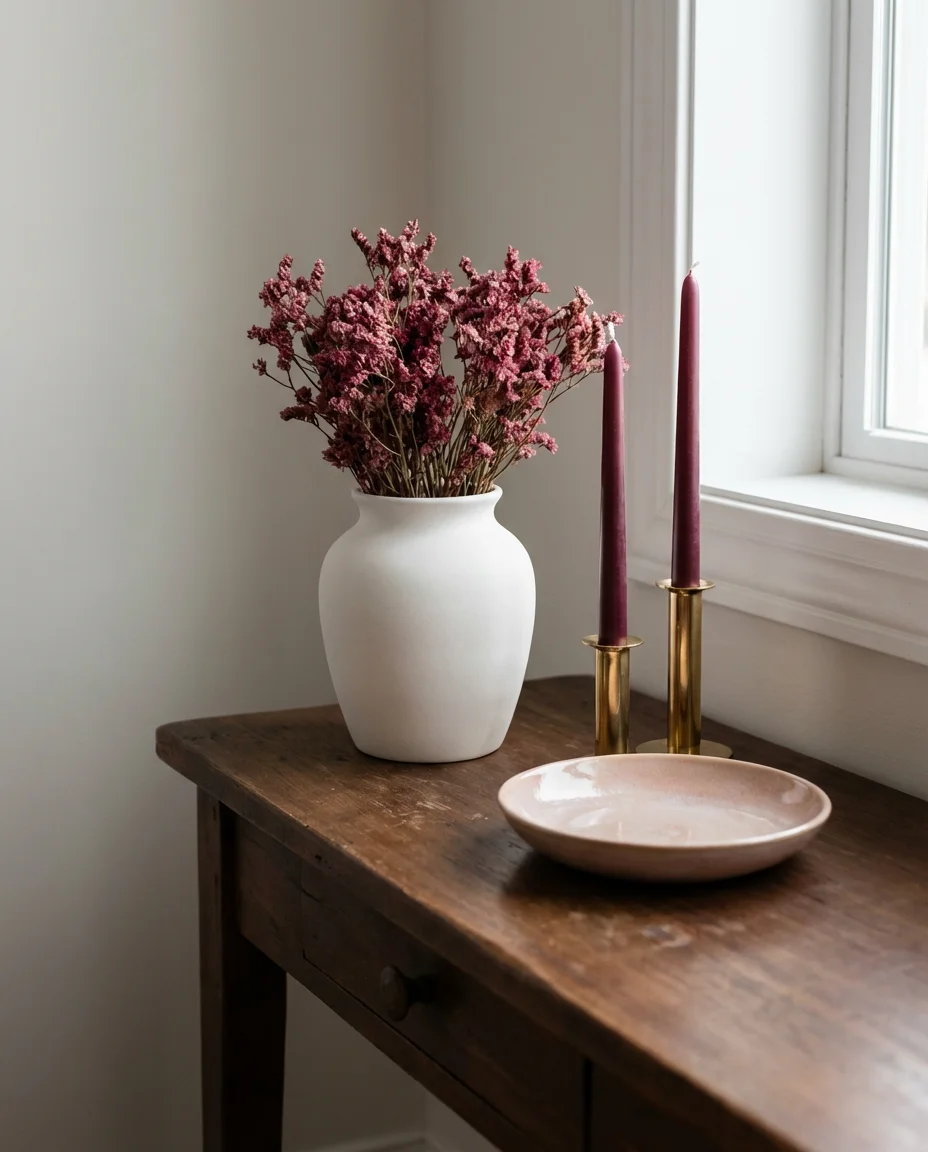
The best Valentine’s console setups are the ones that you can leave up through early March without them looking out of place. That’s the practical test: if the decor reads as “romantic” rather than “specifically Valentine’s Day,” you’ve nailed it. Swap in a blush ribbon or dried bloom arrangement for your existing console decor rather than starting from scratch, and you’ll spend less than $20 while getting a result that photographs beautifully for your Pinterest board.
11. Console Styling Under the TV in a Bedroom
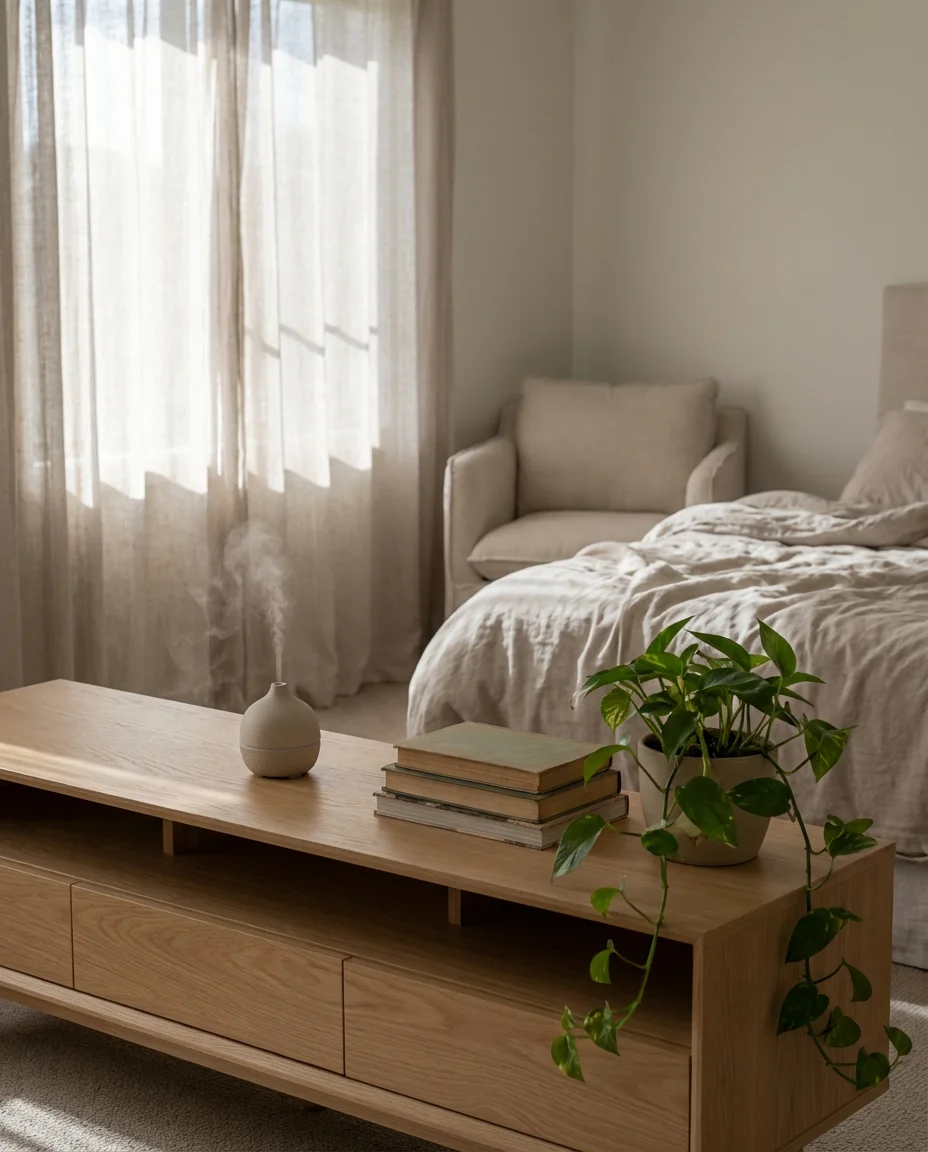
Styling the console under the TV in a bedroom requires a slightly softer touch than a living room setup—this space is for winding down, not impressing guests. Low warm lighting, soft textures, and a calmer palette make the bedroom console feel like a natural extension of the sleep environment rather than a display shelf. A simple approach: a small diffuser, a stack of nighttime reading, and one low trailing plant. Minimal, quiet, intentional.
Where this works best: primary bedrooms where the TV is used regularly and the console needs to serve as both a media unit and a subtle styling moment. Guest bedrooms can get away with even less—a single framed print and a candle are enough. The mistake to avoid here is bringing in too many daytime-decorating instincts. The bedroom console should whisper, not shout. Keep the surface 60% clear, and the room will feel instantly more relaxing.
12. Spring Console Styling: Fresh and Seasonal
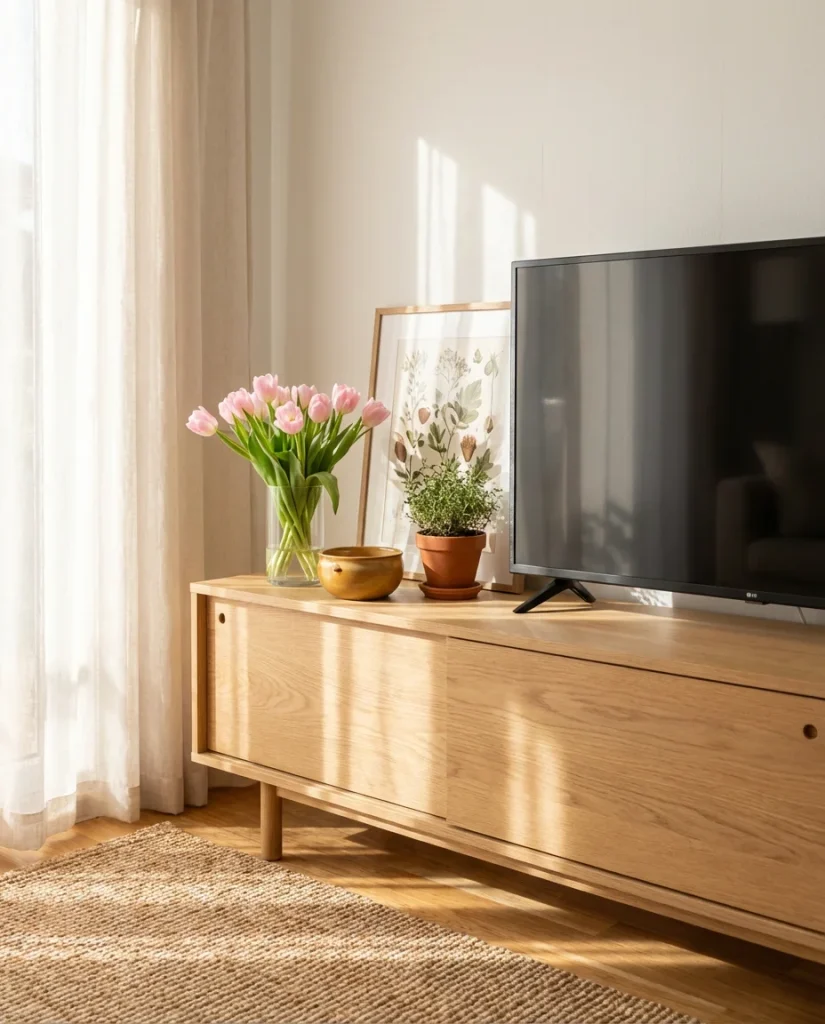
Spring is when the TV console gets to exhale. After months of heavier holiday decor, a spring refresh means lighter textures, fresh blooms, and a palette that feels newly washed and bright. Soft greens, buttery yellows, and white work beautifully together on a console updated for March through May. Swap in a small vase of tulips or ranunculus, bring in a new candle in a citrus or garden scent, and lean a nature-themed print against the wall. The whole refresh can take fifteen minutes.
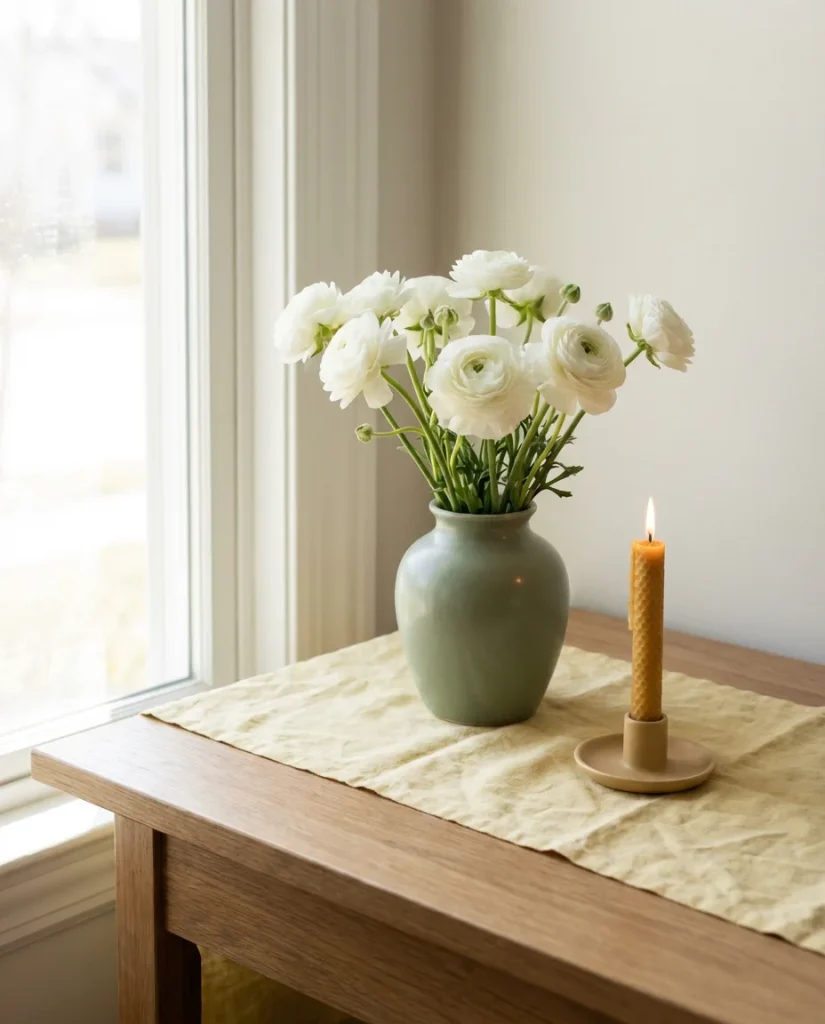
American families who rotate their condos. You don’t need to buy new pieces every season: a rotating cast of about twenty small objects, stored in a single labeled bin, is enough to give your console a fresh look four times a year without spending anything additional after the initial investment.
13. Easter Console Decorating: Understated and Elegant
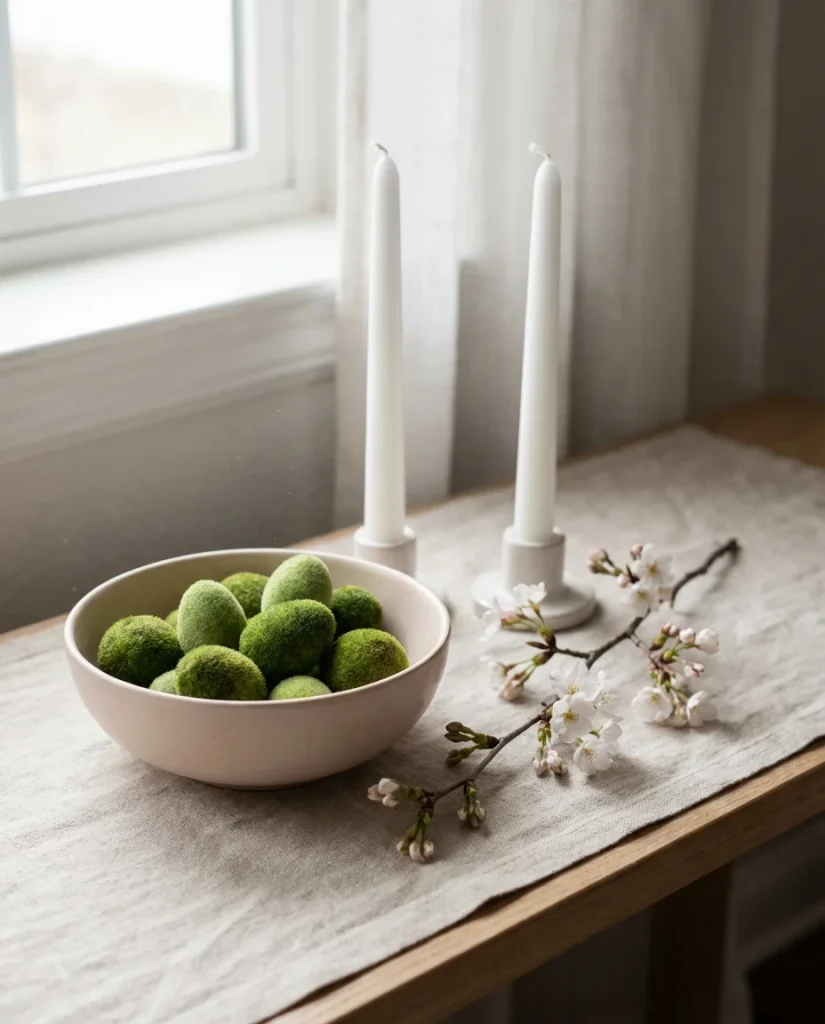
Easter console styling gets surprisingly sophisticated when you ditch the plastic eggs and lean into natural materials instead. Think of a wooden bowl filled with dyed-in-tea speckled eggs, a bundle of pussy willow branches in a tall vase, and a small potted hyacinth releasing its scent into the room. The color palette—soft lavender, sage, pale blush, and cream—is inherently aesthetic without needing to try. It’s the kind of styling that works in a traditionally decorated home and a modern one equally well.
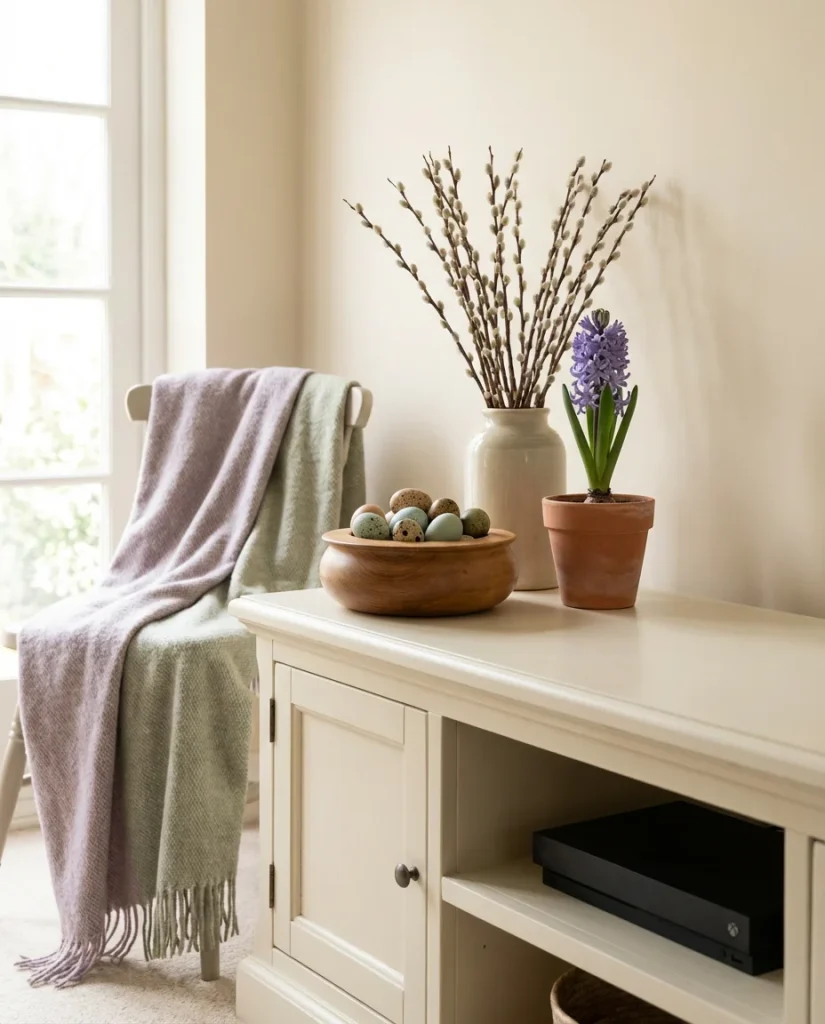
Expert stylists note that Easter decor benefits enormously from natural, perishable elements—the potted hyacinth that lasts two weeks and the fresh pussy willow that slowly opens. These items are budget-friendly at most grocery stores and garden centers (typically $6–$15), and they bring a life and authenticity to holiday console styling that no faux decoration can replicate. Plan to refresh the floral element once mid-season, and your console will stay looking sharp right through the holiday.
14. Halloween Console: Moody, Not Kitschy
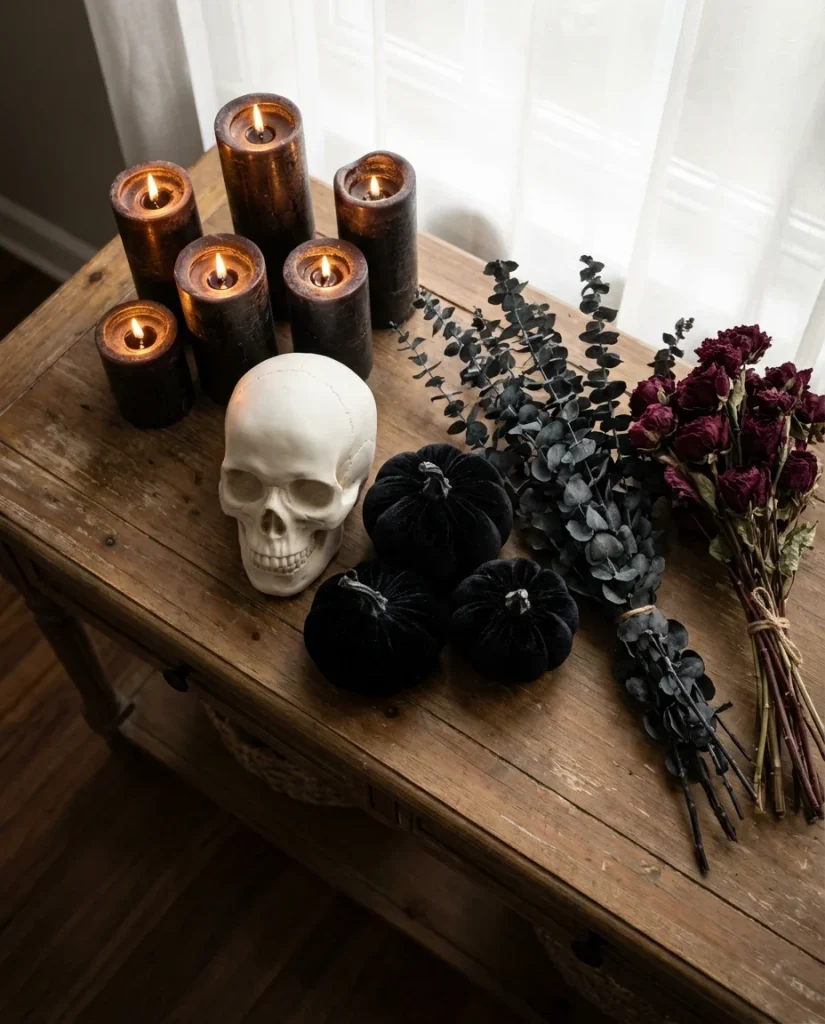
Halloween console styling has evolved significantly—the design-savvy approach in 2026 leans into atmosphere over novelty. Think black taper candles in varying heights, a cluster of dark orange and black pumpkins (real or velvet-covered), dried black branches in a tall ceramic, and a vintage-look apothecary bottle or two. The aesthetic is moody and theatrical rather than cartoon-spooky, and it works just as beautifully in a living room with a dark accent wall as it does against a neutral backdrop.
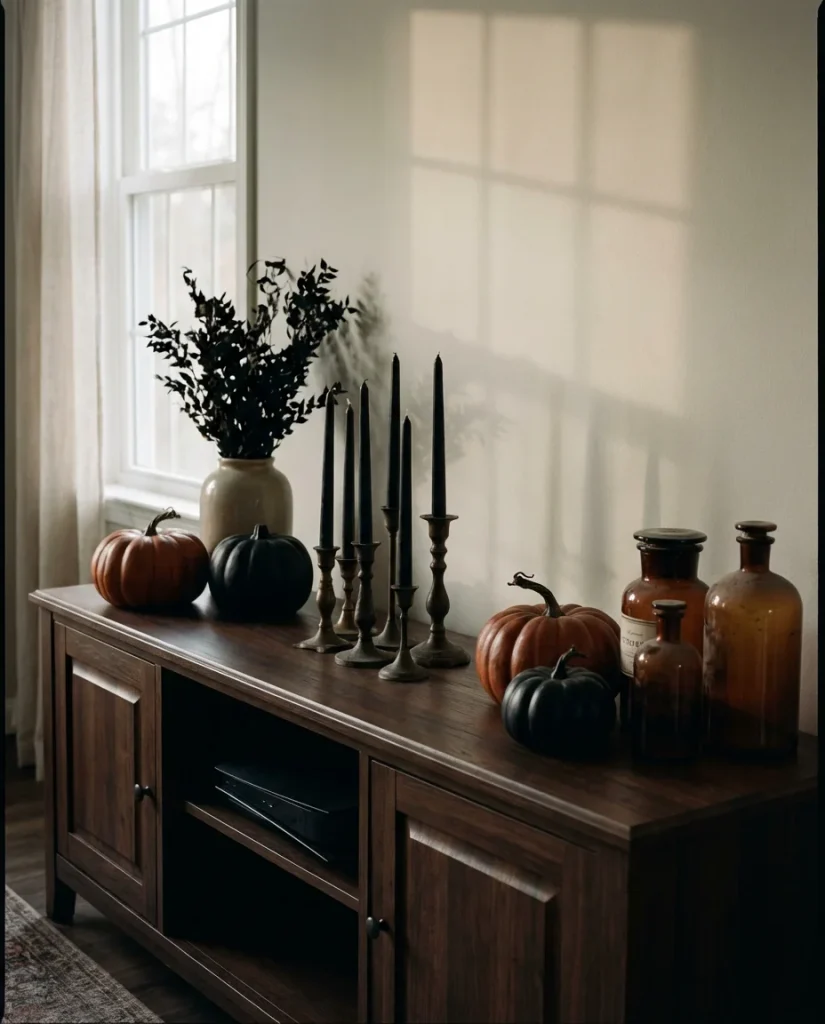
This is an area where real homeowners often report the biggest seasonal styling growth. Many who used to put out cheap plastic decorations have gradually shifted toward a “dark autumn harvest” approach that feels genuinely beautiful rather than just festive. One tip from interior designers: start your Halloween console decor in early October with purely autumnal elements—gourds, dark florals, amber candles—then add the spookier pieces (black tapers, skull accents) in the final week before Halloween. This extends the decor season without looking out of place.
15. A Lamp on the Console: The Finishing Touch
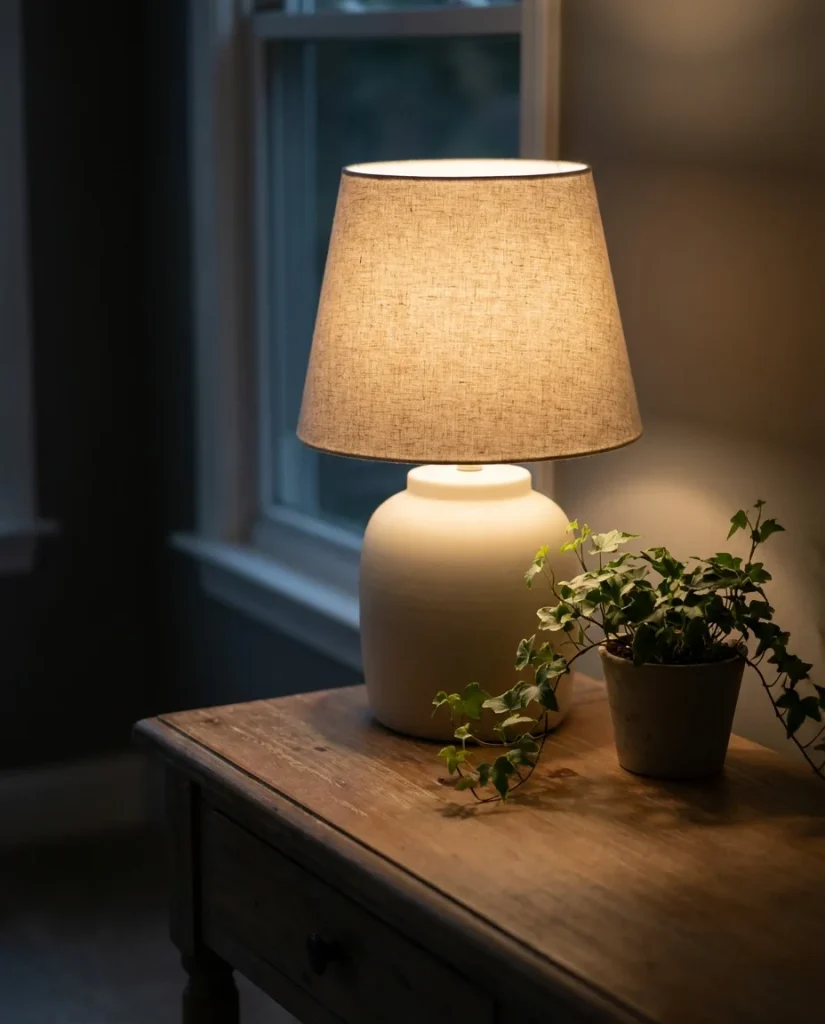
Adding a lamp to the TV console is one of the most transformative and underused moves in living room design. A small table lamp at one end of the console creates ambient light that competes with the TV glow, making movie nights easier on the eyes and giving the whole room a warmer, more intentional quality after dark. In a white or very neutral living room, a lamp with a sculptural base—rattan, ceramic, or brushed brass—adds instant character without requiring any other changes.
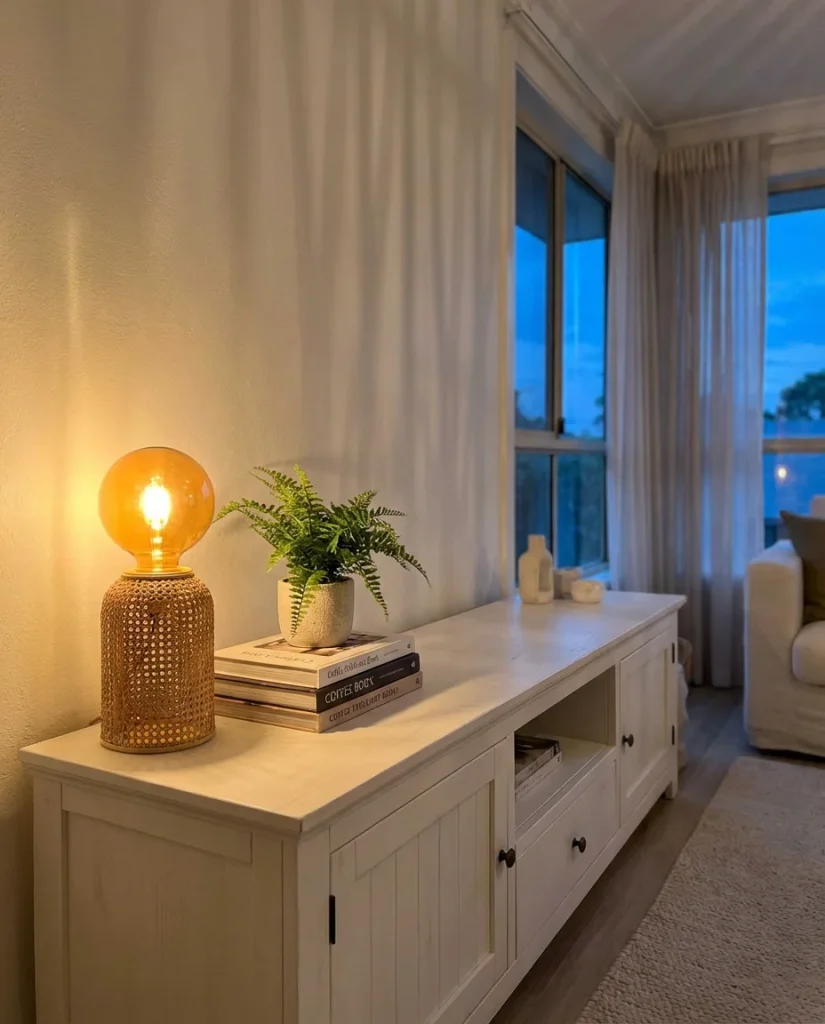
Practically speaking, a lamp on a TV console needs to be on a smart plug or have a switch within easy reach—nobody wants to walk across the room to turn off a lamp before bed. Smart plugs run $10–$15 and are one of the best quality-of-life investments in a living room. Another practical note: scale matters. A lamp that’s too tall looks awkward against a mounted TV; aim for a shade top that sits well below the bottom of the screen—about 18–24 inches of clearance is ideal.
16. Wood Console Styling: Warm and Grounded
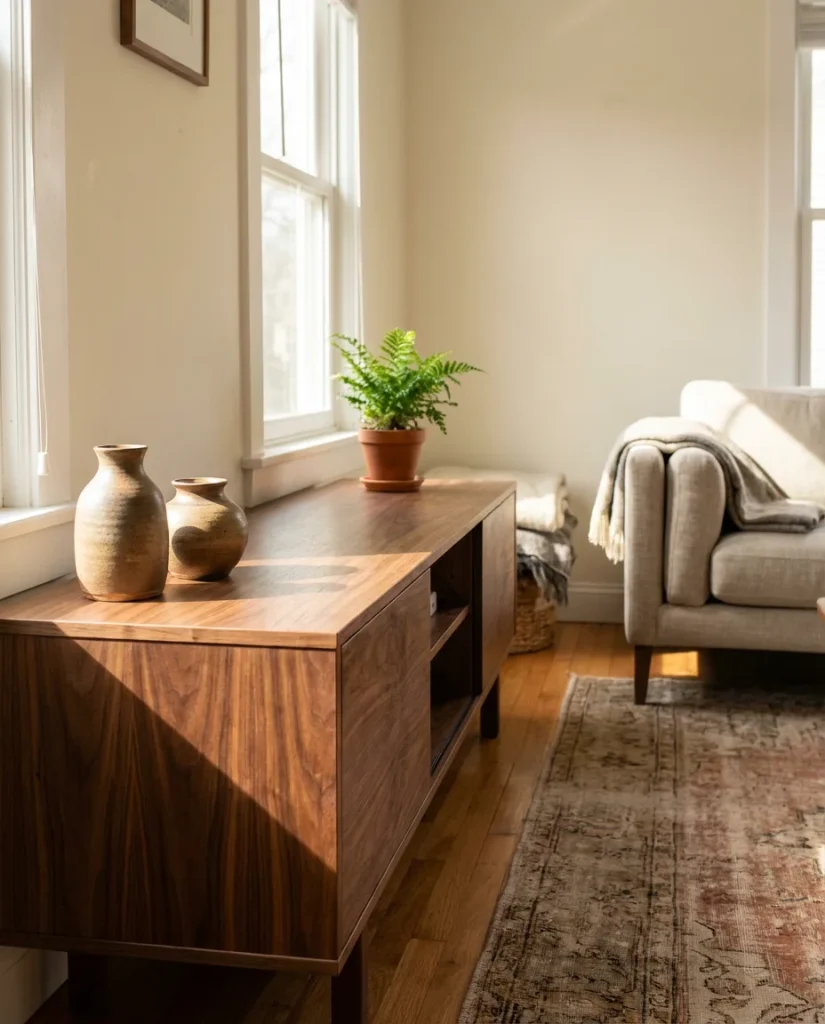
A natural wood console—walnut, oak, teak, or acacia—brings an irreplaceable warmth to a living room that painted or lacquered furniture simply can’t replicate. The grain pattern and color variation make the piece inherently interesting even before a single object is placed on top. In 2026, the styling trend is to let the wood do most of the talking: fewer objects, more breathing room, and a quiet confidence that the material itself is the statement. This approach suits both organic modern and more traditional interior styles.
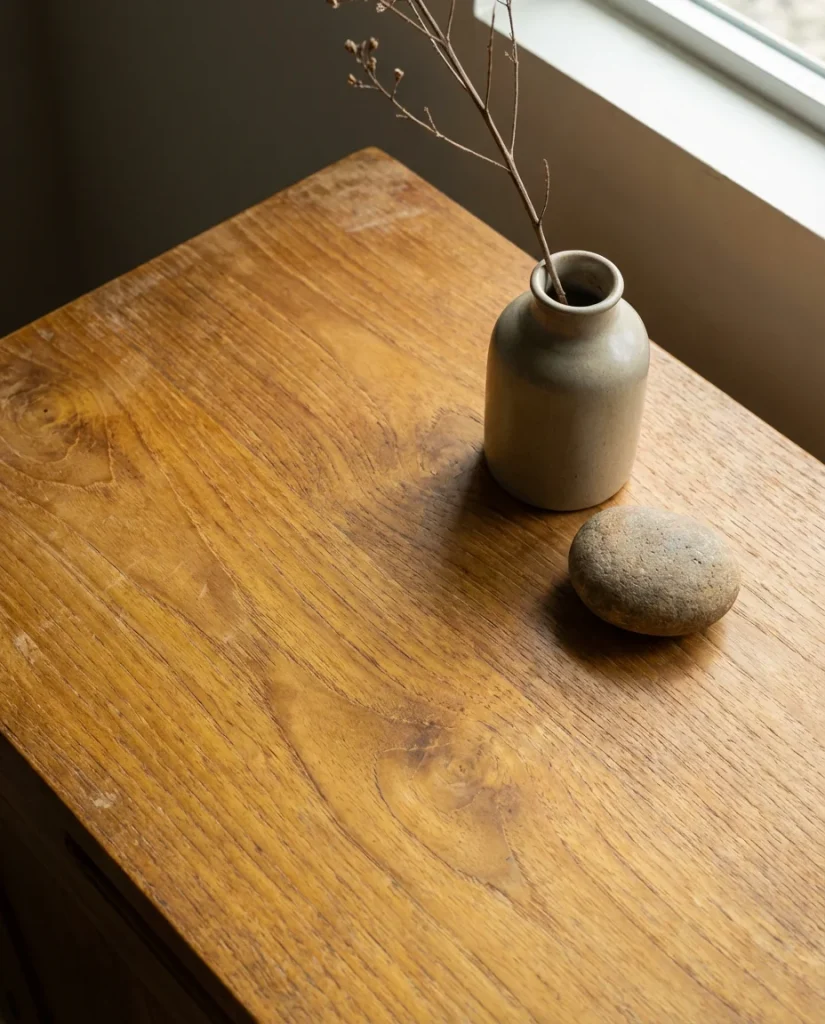
When selecting a wood console, it helps to know which wood undertone your room reads as. Walnut is cool-leaning and modern; oak is warm and cottage-friendly; teak and acacia lean toward global or bohemian aesthetics. Matching your console wood undertone to your flooring undertone (not necessarily the same wood) prevents that jarring “mismatched furniture” effect that can make a beautifully styled console feel slightly off. This is a detail most people don’t consciously notice, but everyone instinctively feels.
17. Fireplace TV Wall Console: Styling the Whole Unit
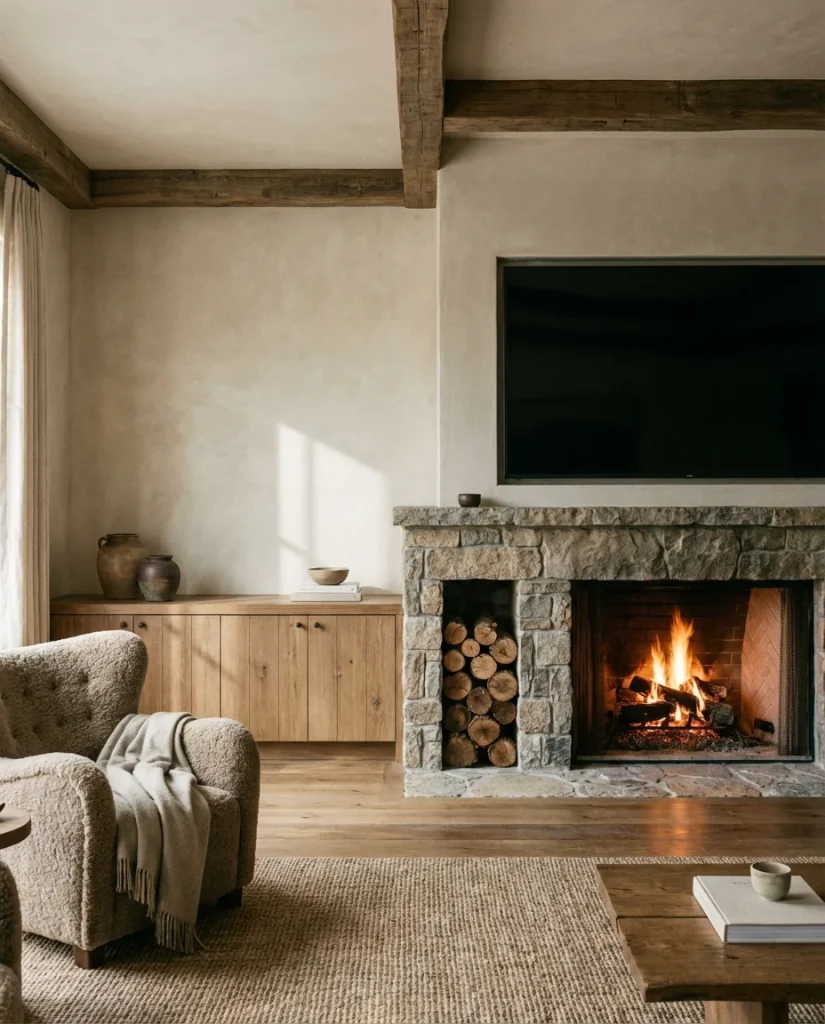
When the TV is mounted above a fireplace, the console below it becomes part of a larger visual composition that includes the mantel, the firebox, and the wall itself. Styling this setup requires thinking about the whole unit rather than just the console surface. In this context, the console works best as a grounding element—kept relatively simple so it doesn’t compete with the drama of the fireplace surround. One or two grouped objects on each end, with nothing in the center, lets the fireplace remain the focal point.
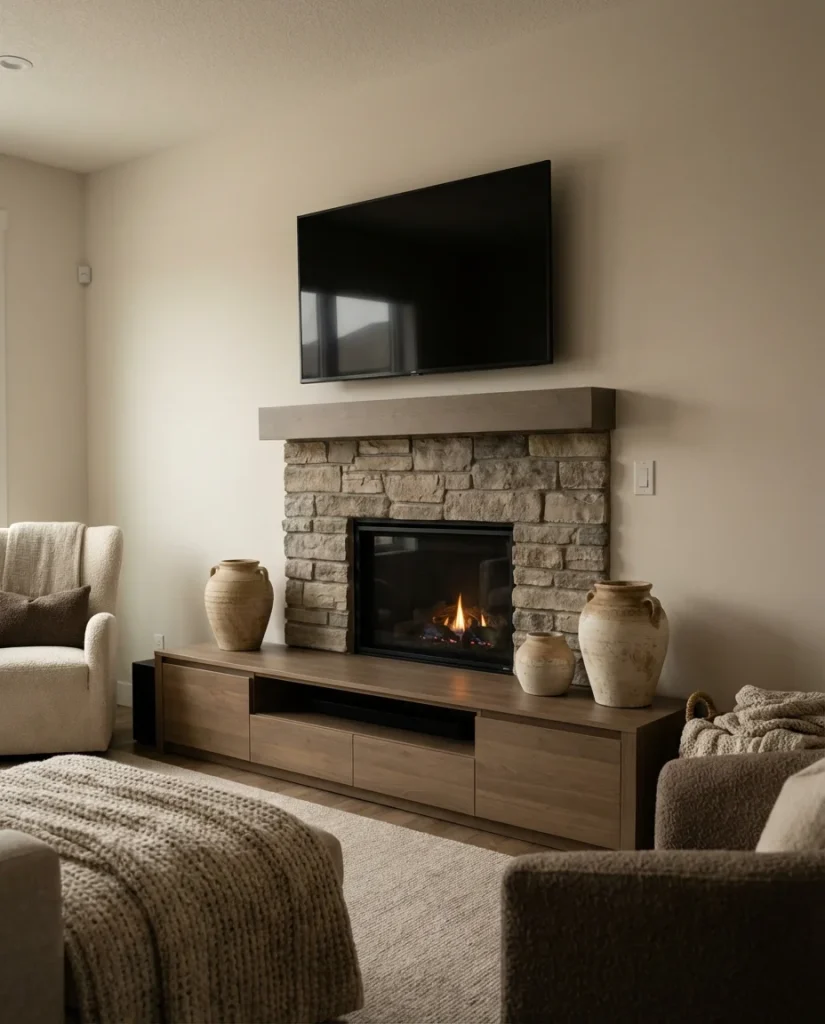
This setup is particularly popular in American living rooms built between 2000 and 2020, where the fireplace-TV wall was practically a standard floor plan feature. The common mistake is turning the console into a second mantel and doubling up on all the same objects. Instead, let the mantel hold the sentimental and seasonal items—family photos, holiday decor—and reserve the console for the cleaner, more curated pieces. The division of purpose makes both surfaces look more intentional.
18. Large-Scale Console Styling: Going Bold
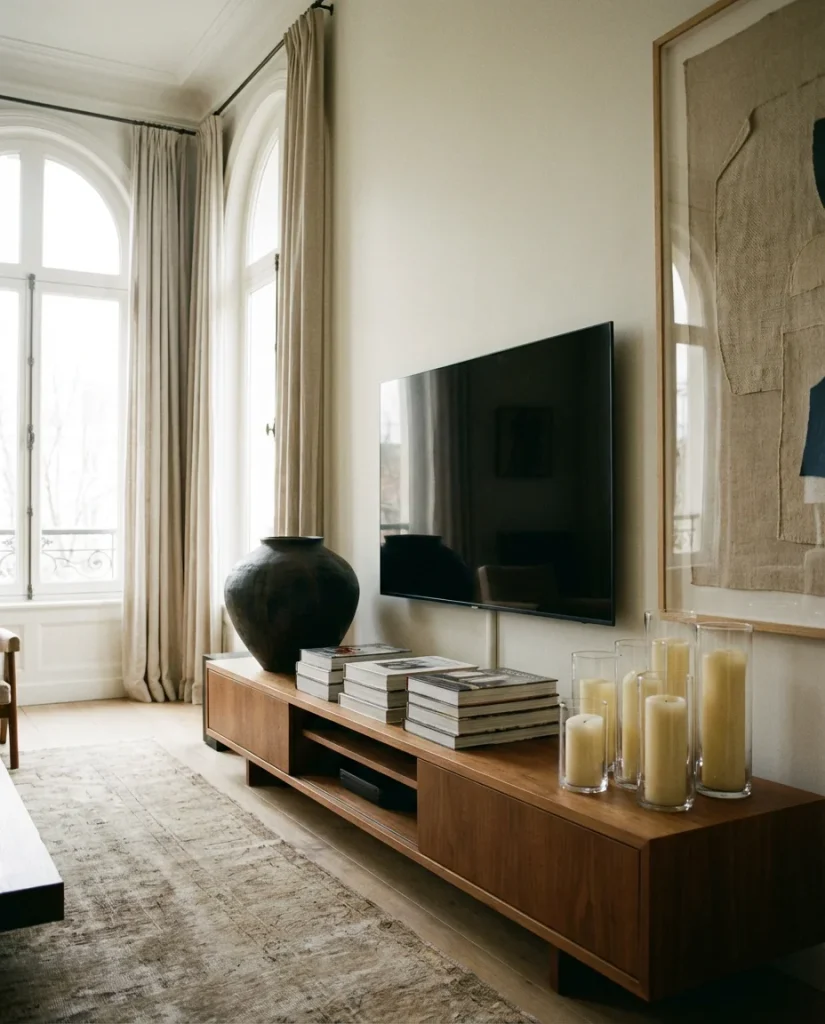
In rooms with high ceilings and generously sized walls, a large console becomes an opportunity to go genuinely bold. Oversized decorative objects—a tall architectural plant, a large sculptural vase, and a substantial piece of leaned art—can hold their own in proportion to the scale of the furniture. Trying to style a large console with small accessories is one of the most common and frustrating mistakes: the objects disappear, and the console looks unfinished. Go bigger than your instinct tells you to—it almost always works in a large room.
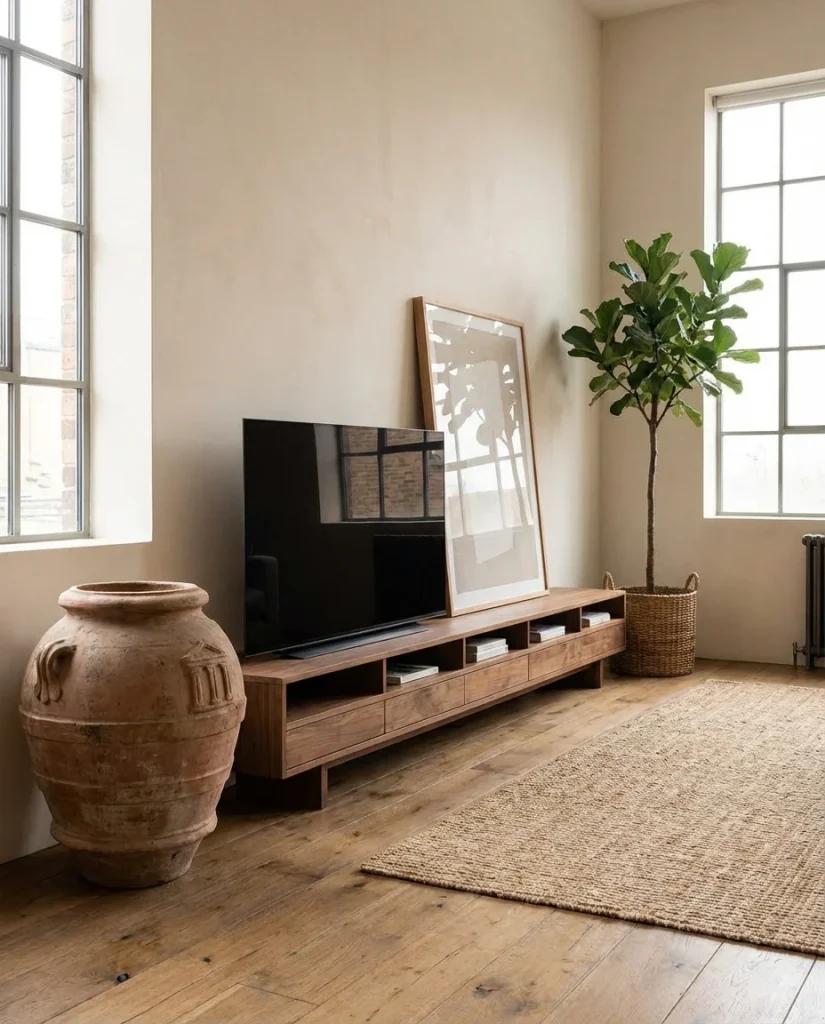
A helpful scale rule for large consoles: your tallest decorative object should be at least 18–24 inches tall, and at least one piece should have meaningful visual weight—not just height, but mass. Think: a large ceramic urn versus a bud vase. In rooms with open floor plans where the console wall is visible from the kitchen or dining area, this scale principle is even more important because the wall reads from a distance and small objects simply vanish.
19. Ideas for Living Rooms: The Layered Vignette
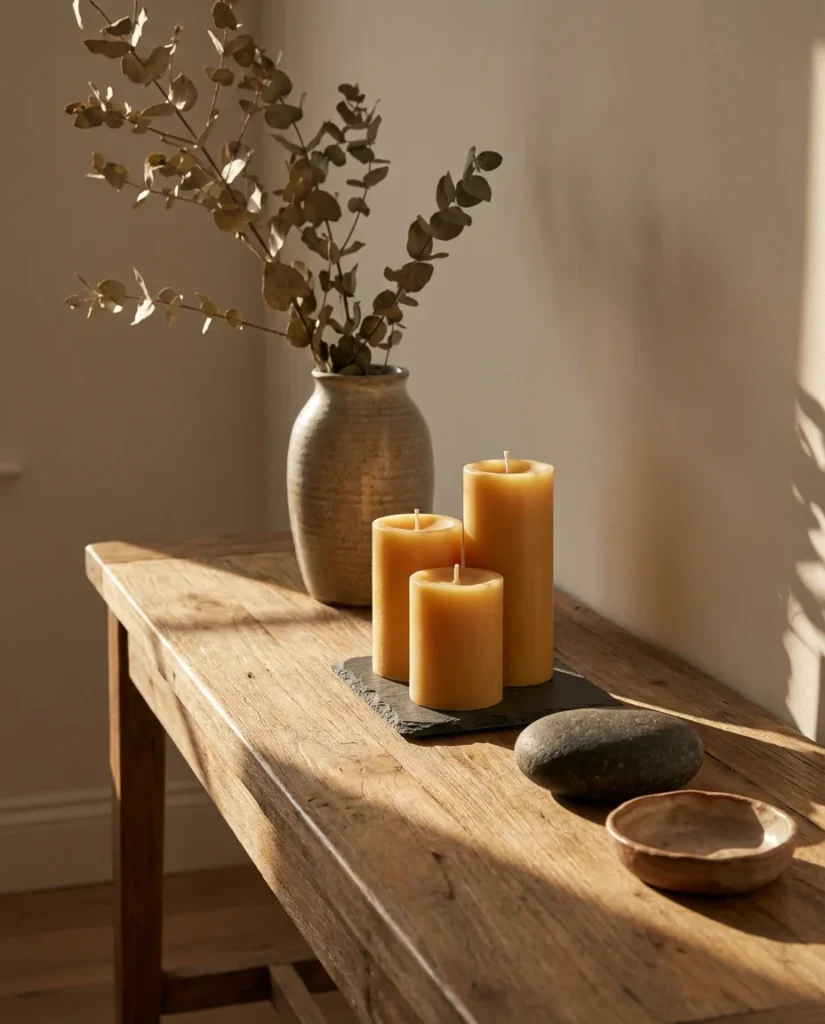
One of the best ideas living room decorating enthusiasts keep coming back to is the layered vignette—building depth on the console by placing objects at different distances from the front edge, not just lined up in a row. A backdrop piece (leaning art or a tall plant), a mid-ground element (a candle or ceramic), and a foreground detail (a small tray or stone) create the kind of depth that makes a console feel photographed and intentional. This technique works regardless of console size or style, making it truly universal.
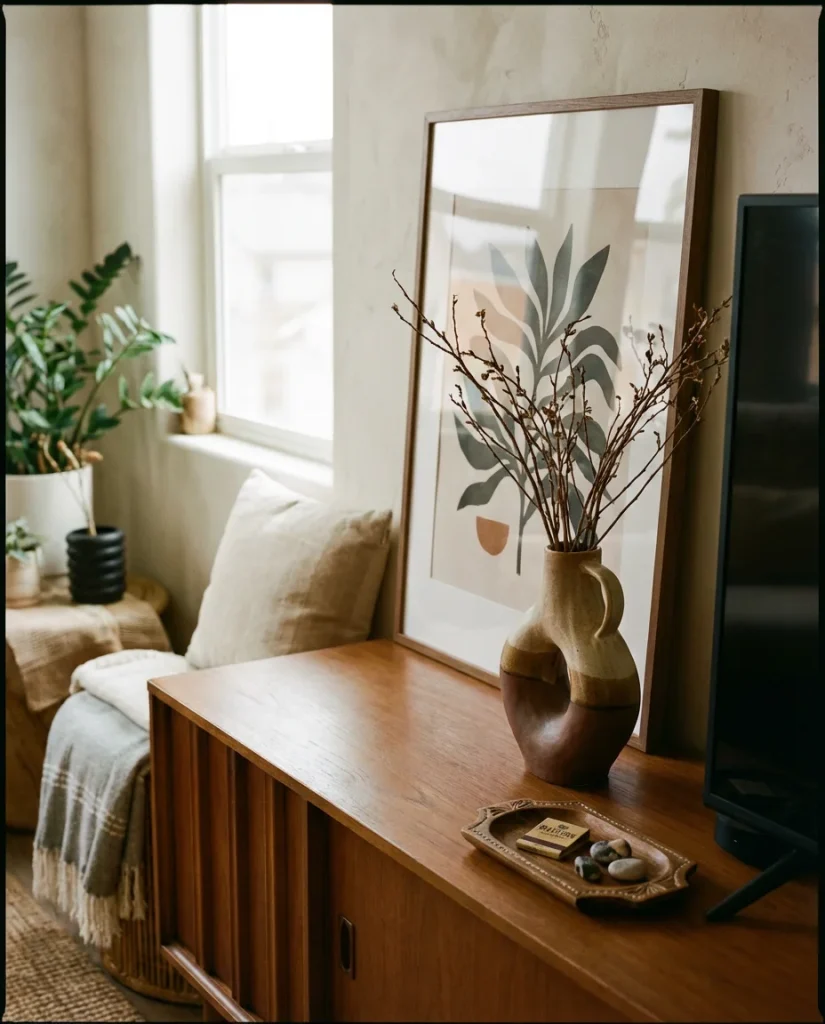
Interior designers call this technique “the foreground/middle ground/background rule,” and it’s the same principle photographers use to create depth in a frame. When you align it with the rule of odds—three objects in each zone—the result consistently photographs well on a smartphone, which matters if you’re sharing to Pinterest or Instagram. Take the photo from a slight angle rather than straight-on, and you’ll capture the depth even more effectively. It takes one minute and makes all the difference.
20. All-White Console Styling: Clean and Airy
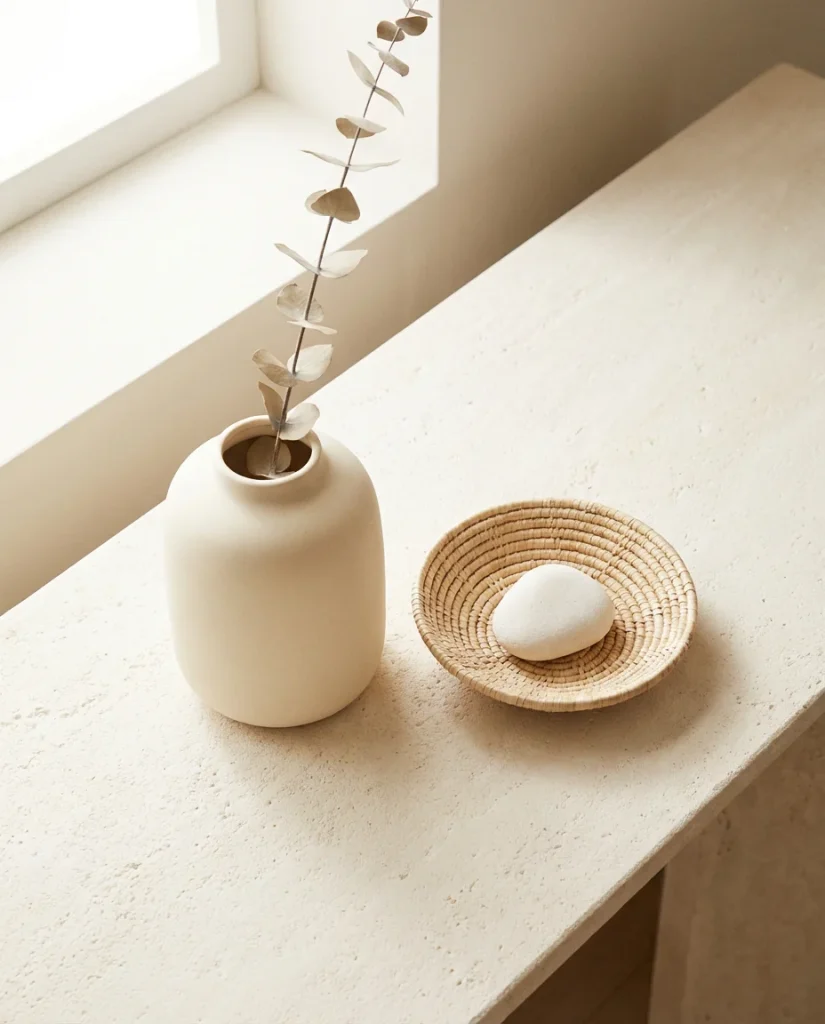
A white console is the ultimate blank canvas—it works in every room style, bounces light beautifully, and makes the objects placed on it pop with minimal effort. In 2026, the trend is not stark cold white but warm white and off-white tones that feel livable rather than clinical. Style a warm white console with cream and natural linen textures, soft sage plants, and aged brass or matte gold accents, and the whole setup feels fresh, light, and genuinely aesthetic without being sterile.
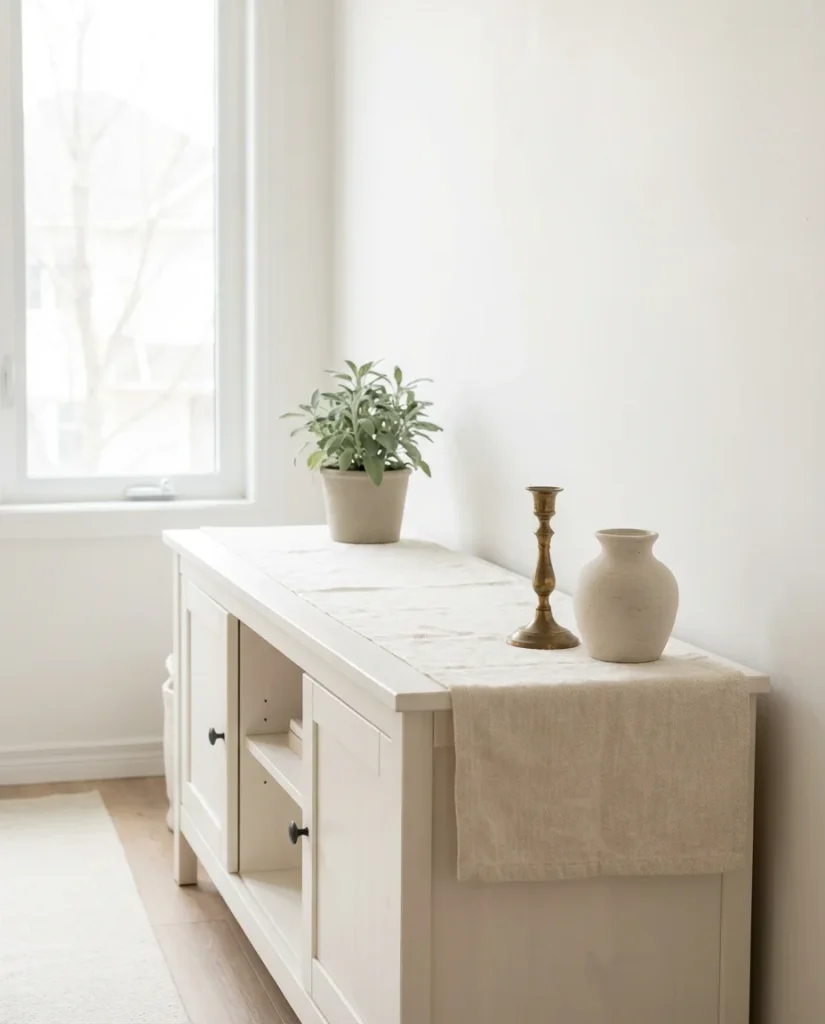
White consoles do require slightly more maintenance than darker pieces—fingerprints and dust are more visible—but the tradeoff in versatility is worth it for most people. A microfiber cloth kept in one of the console’s drawers or baskets makes a quick wipe-down effortless. For those who love to redecorate often, a white console means you never have to worry about clashing with new decor purchases: everything coordinates, which actually saves money over time because you’re not constantly re-buying furniture to match new accessories.
21. Minimalist Console: When Less Is Genuinely More
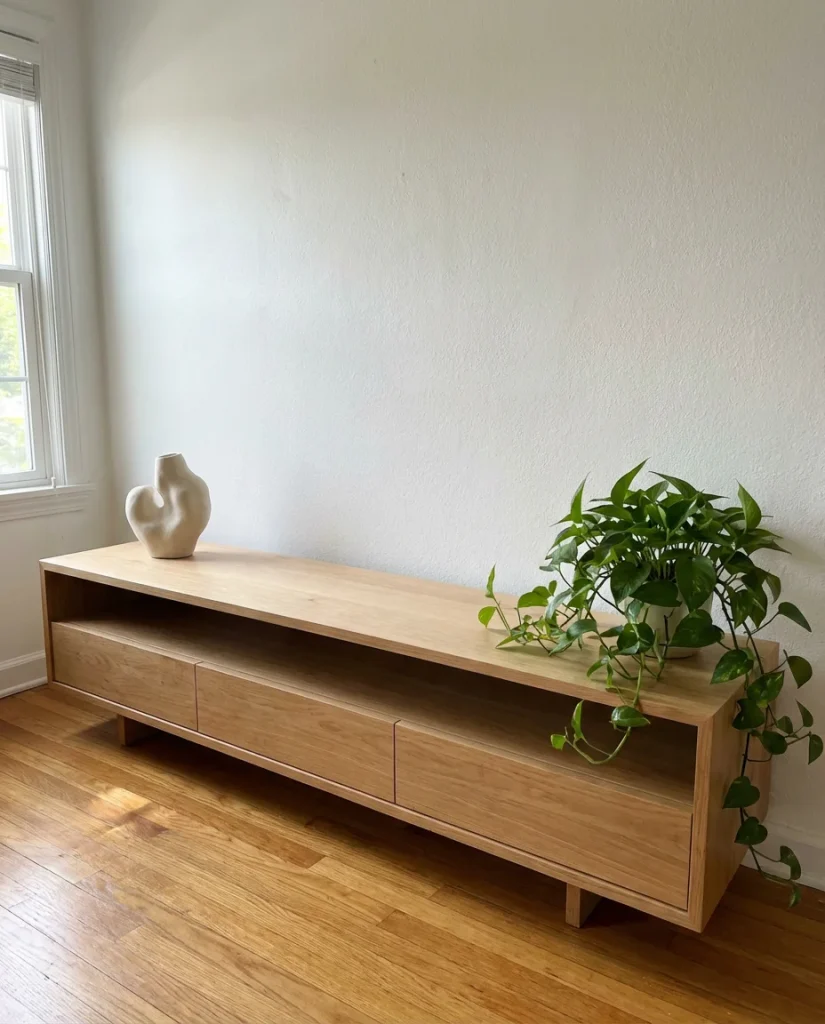
The minimalist console approach is one of the most misunderstood in home decor—people assume it means “nothing on it,” when it actually means “the right things, deliberately chosen.” A single sculptural object, one living plant, and empty negative space can make a console feel more powerful and considered than one buried in beautiful-but-competing accessories. This approach works beautifully in open floor plan homes where the console wall is constantly in the sightline from multiple rooms, and too much visual noise becomes overwhelming.
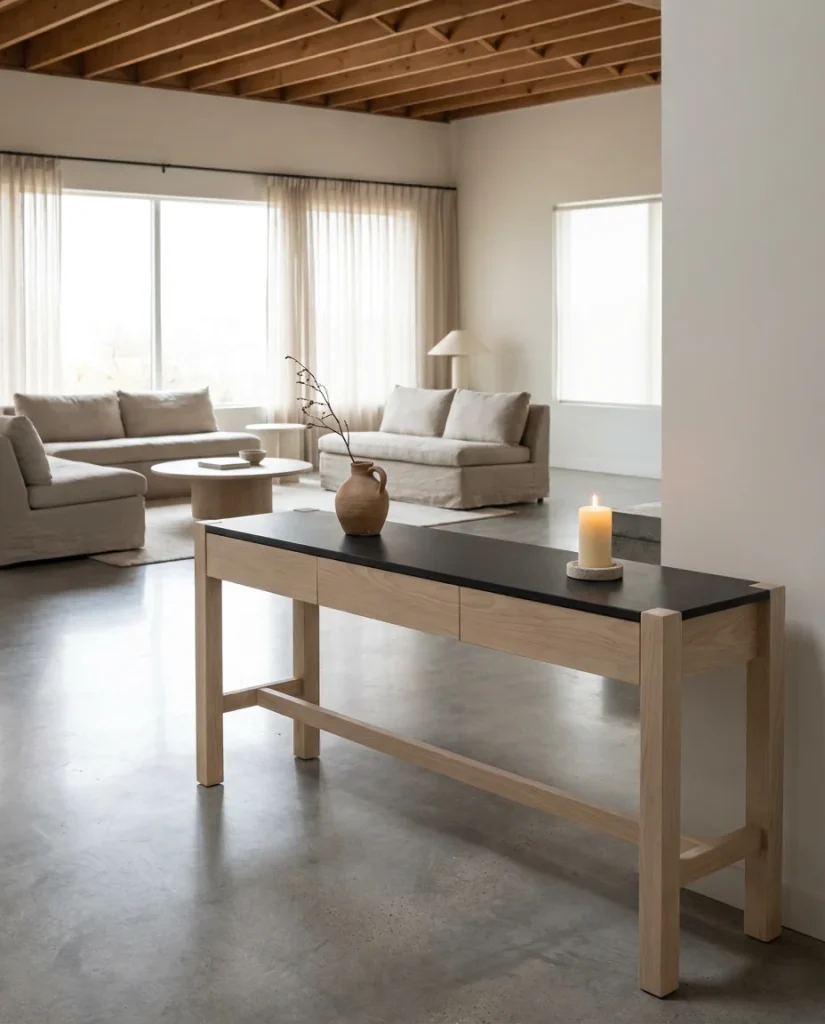
People who commit to minimalist console styling often report that it makes cleaning easier, reduces the visual fatigue of an overstuffed room, and helps the objects they do choose feel genuinely special rather than lost in a crowd. The key mindset shift: instead of asking, “what can I add here?” ask, “what would I notice if it were gone?” If the answer is nothing, remove it. This editing question is surprisingly effective and takes about five minutes to apply to your entire console.
22. Rotating Seasonal Console: One Setup, Twelve Months
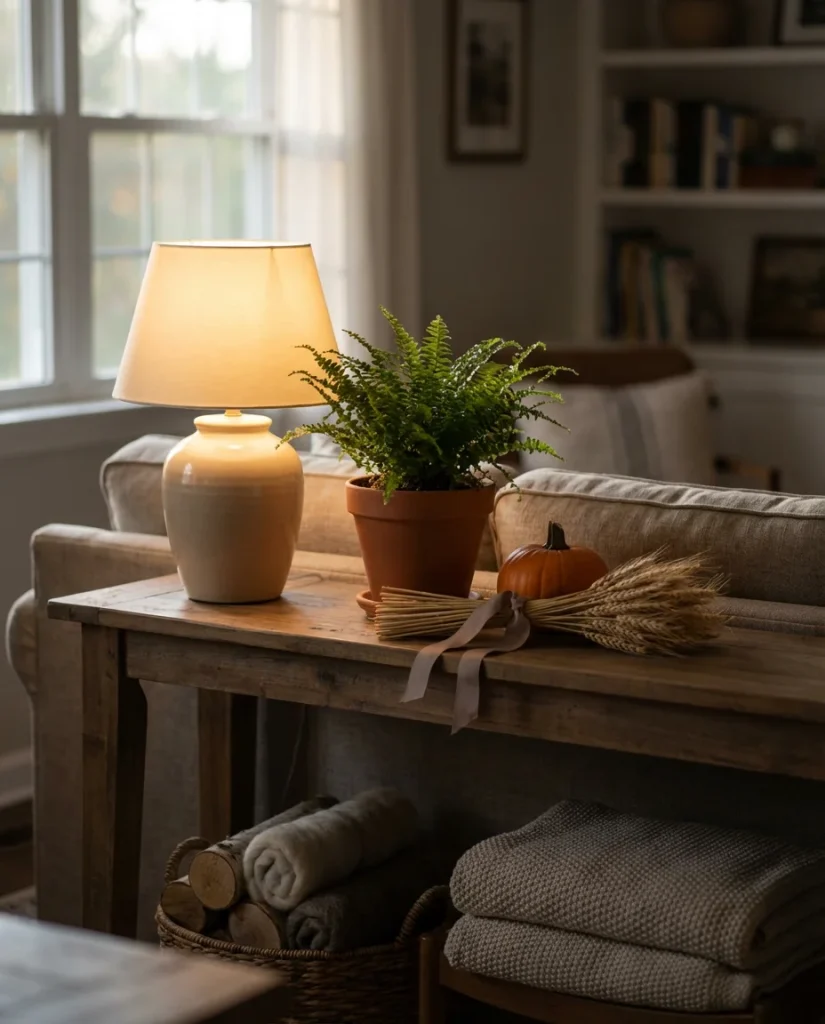
The smartest long-term approach to TV console decorating is building a base setup that works year-round, then rotating in seasonal layers for spring, summer, fall, and winter—including Christmas, Easter, and other holidays. Start with a permanent base: your console lamp, one or two pieces of art, and a trailing plant that lives there regardless of the season. Then swap just two or three objects—a vase, a colored candle, a small seasonal element—to shift the whole mood without disrupting the foundation.
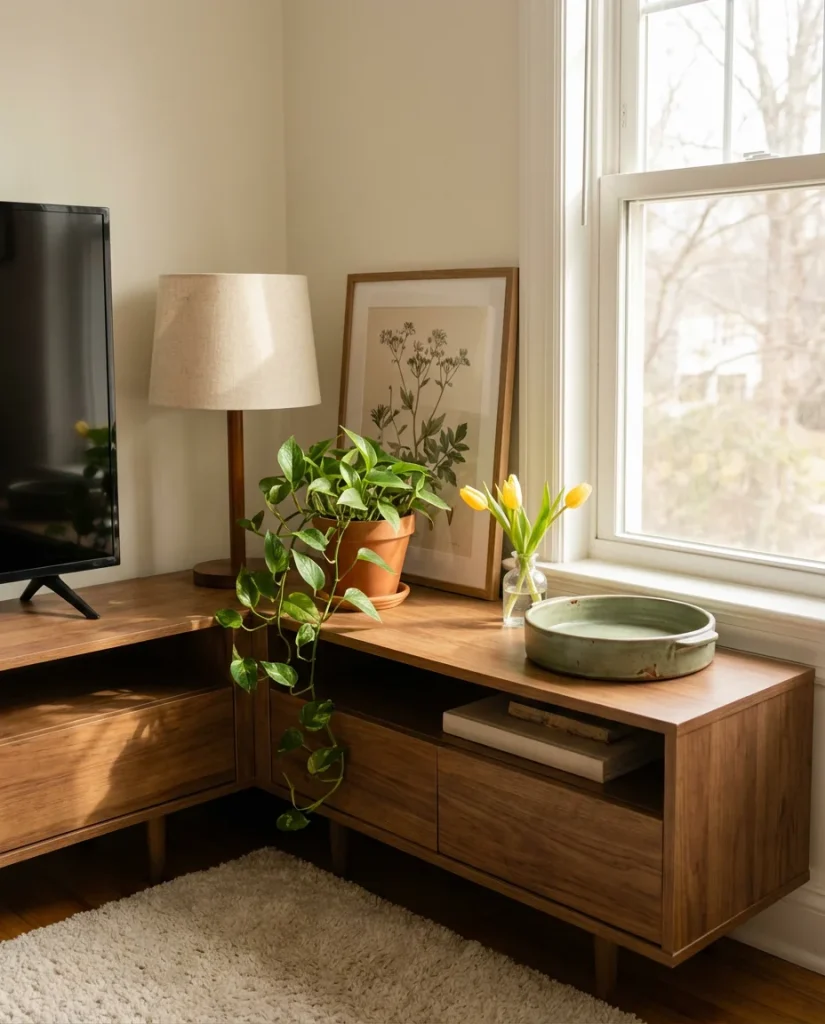
This is genuinely how professional interior stylists approach their own homes: a backbone of quality permanent pieces and a rotating cast of inexpensive seasonal accents stored in clearly labeled bins. The total investment for a full year’s worth of console decor—if built thoughtfully—rarely exceeds $150–$200, and most of those pieces last for years. It’s a system that makes decorating feel joyful rather than expensive or time-consuming, and once you build it, the maintenance becomes almost effortless.
Conclusion
There’s no single right way to decorate a TV console—and that’s exactly what makes it such a satisfying design challenge. Whether you’re drawn to the clean simplicity of a minimalist setup, the drama of a bold black console, or the joy of rotating through seasonal moments all year long, the key is always the same: choose with intention and give your favorite objects room to breathe. We’d love to know which of these ideas sparked something for you—drop your favorites in the comments below, and tell us what’s currently sitting on your console right now. We might just feature your space next.