There’s something quietly transformative about a walk-in shower—and if your Pinterest feed is any indication, Americans are obsessed with getting theirs just right. Whether you’re planning a full bathroom remodel or just dreaming about finally ditching that cramped tub surround, 2026 is shaping up to be a genuinely exciting year for shower design. From sleek glass enclosures to moody, spa-like retreats, we’ve rounded up 22 of the best walk-in shower ideas to inspire your next project—no matter your budget, bathroom size, or style preferences.
1. Rustic Stone Shower with Wooden Bench
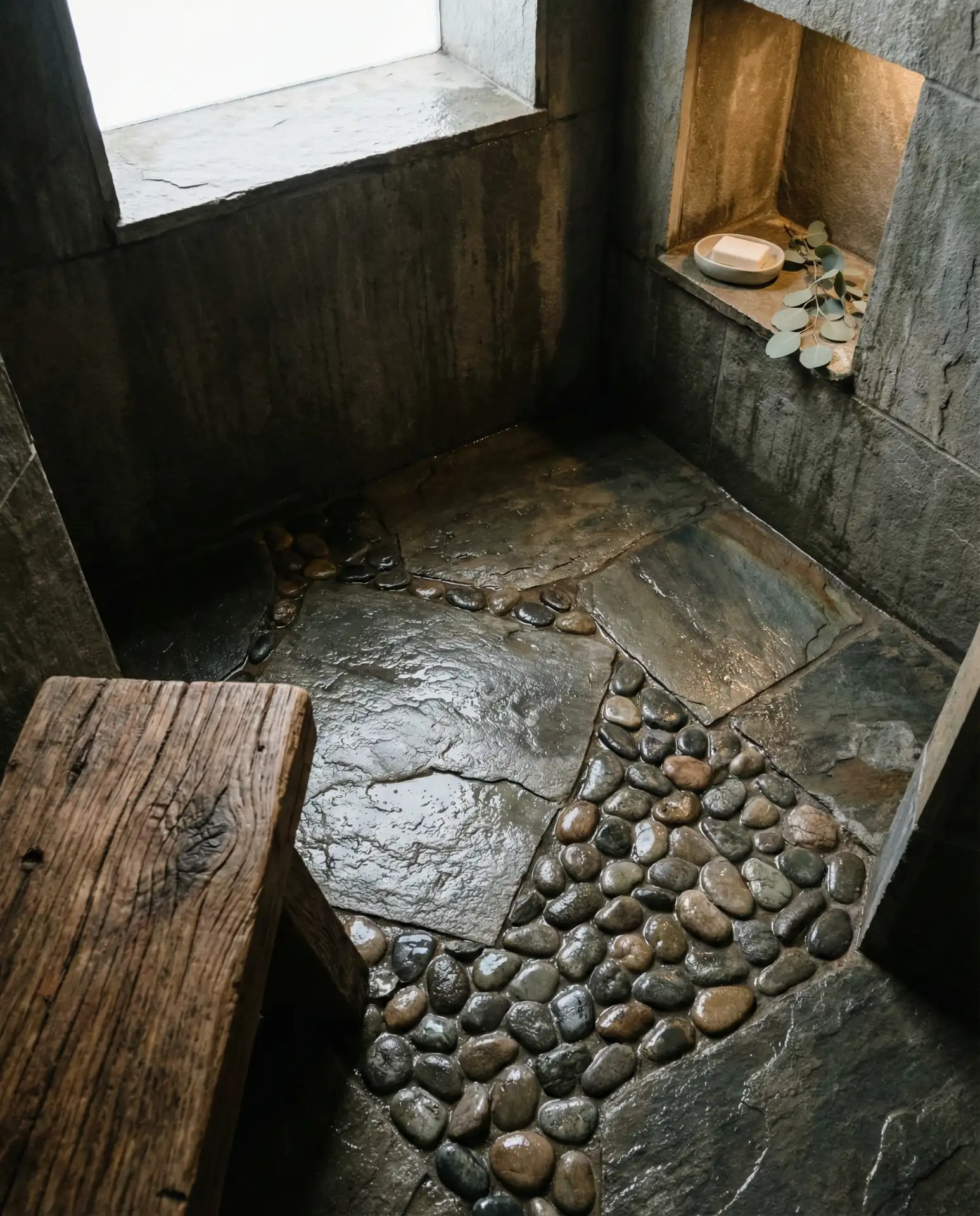
If you’ve ever scrolled through Pinterest and felt your heart skip at a picture of a rustic shower tucked into a cozy small bathroom, you already know the appeal. This idea pairs natural stone tile—think travertine or slate—with a simple wooden bench built into one wall, creating an earthy, grounding retreat that feels miles away from the stress of daily life. It’s the kind of shower that makes getting ready in the morning feel less like a chore and more like a ritual.
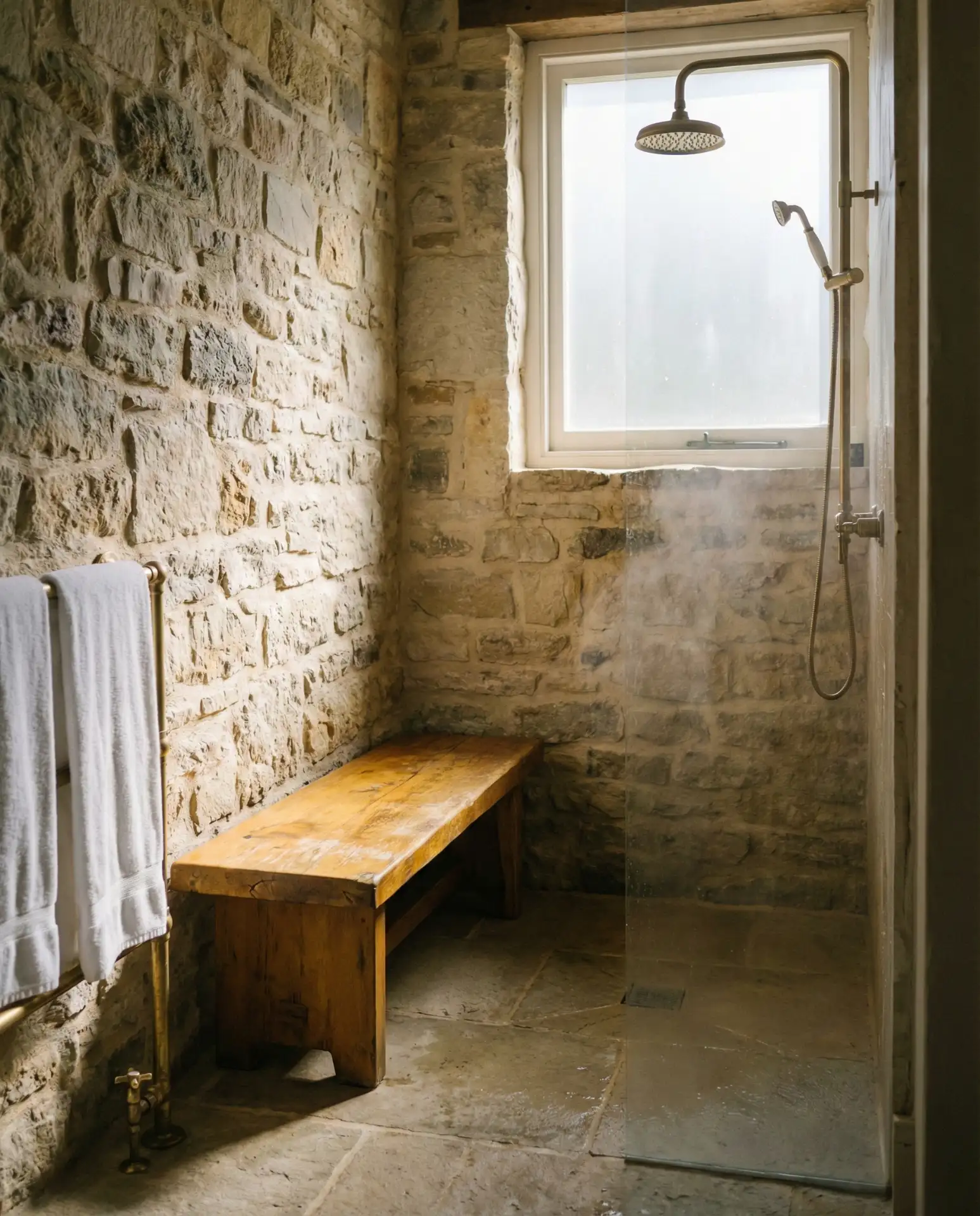
The practical magic here is in the bench placement. Mounting it along the shorter wall keeps the shower floor open for easy cleaning and lets you actually use the space—whether that’s for shaving, washing your hair in peace, or simply sitting and letting the steam do its thing. For a small bathroom, choosing a fold-down bench instead of a permanent one can save precious square footage while still delivering that spa-like luxury you see all over Pinterest.
2. Glass-Enclosed Corner Shower with Frameless Panels
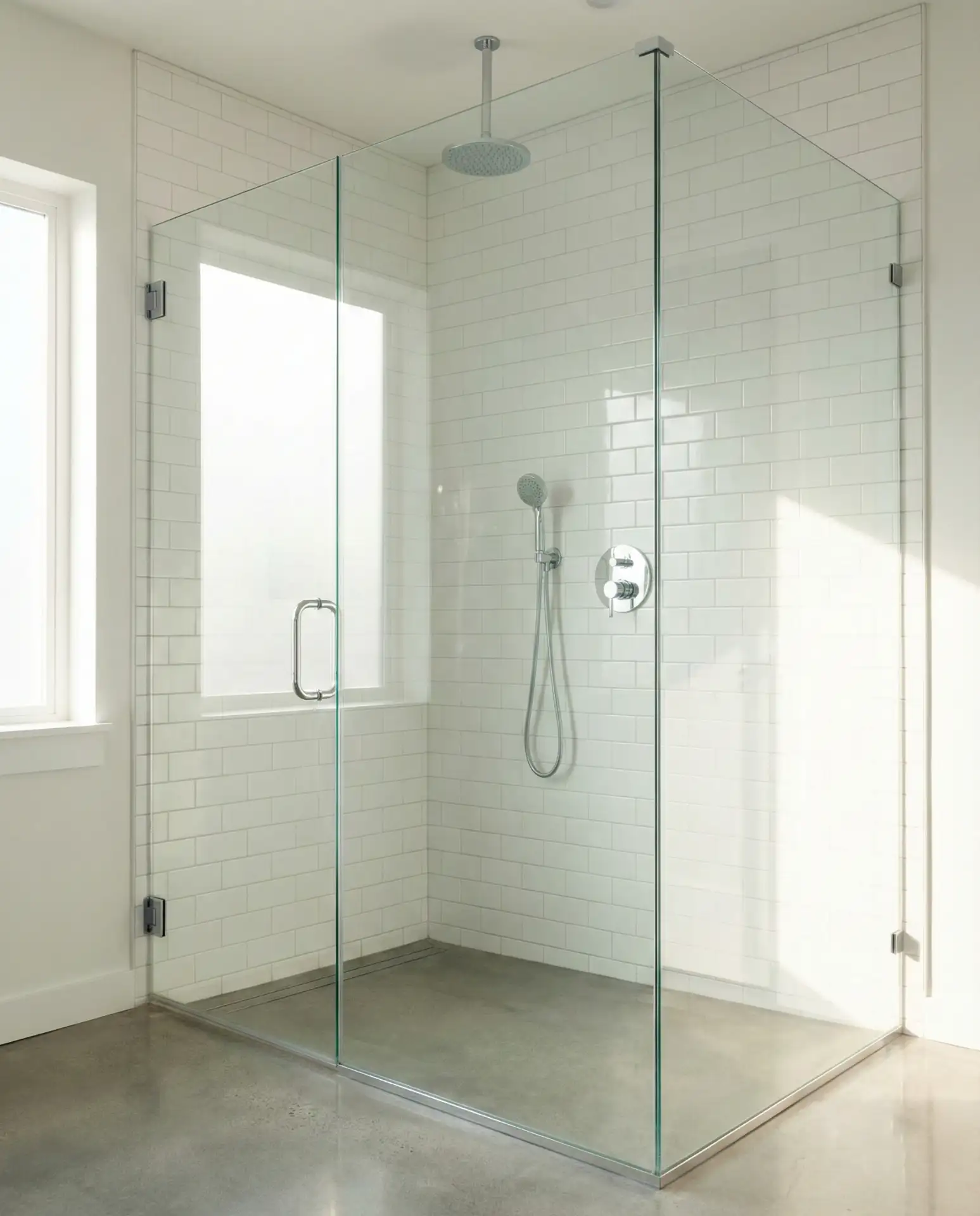
A glass-enclosed corner shower is one of those smart design moves that feels almost like cheating—it instantly makes a bathroom look bigger without you actually adding a single square foot. If you’re deep into a bathroom remodel and staring at an awkward corner, frameless panels are the way to go. They let light travel freely across the room, keep the sightlines clean, and give your space that airy, open quality that dominates every design mood board right now.
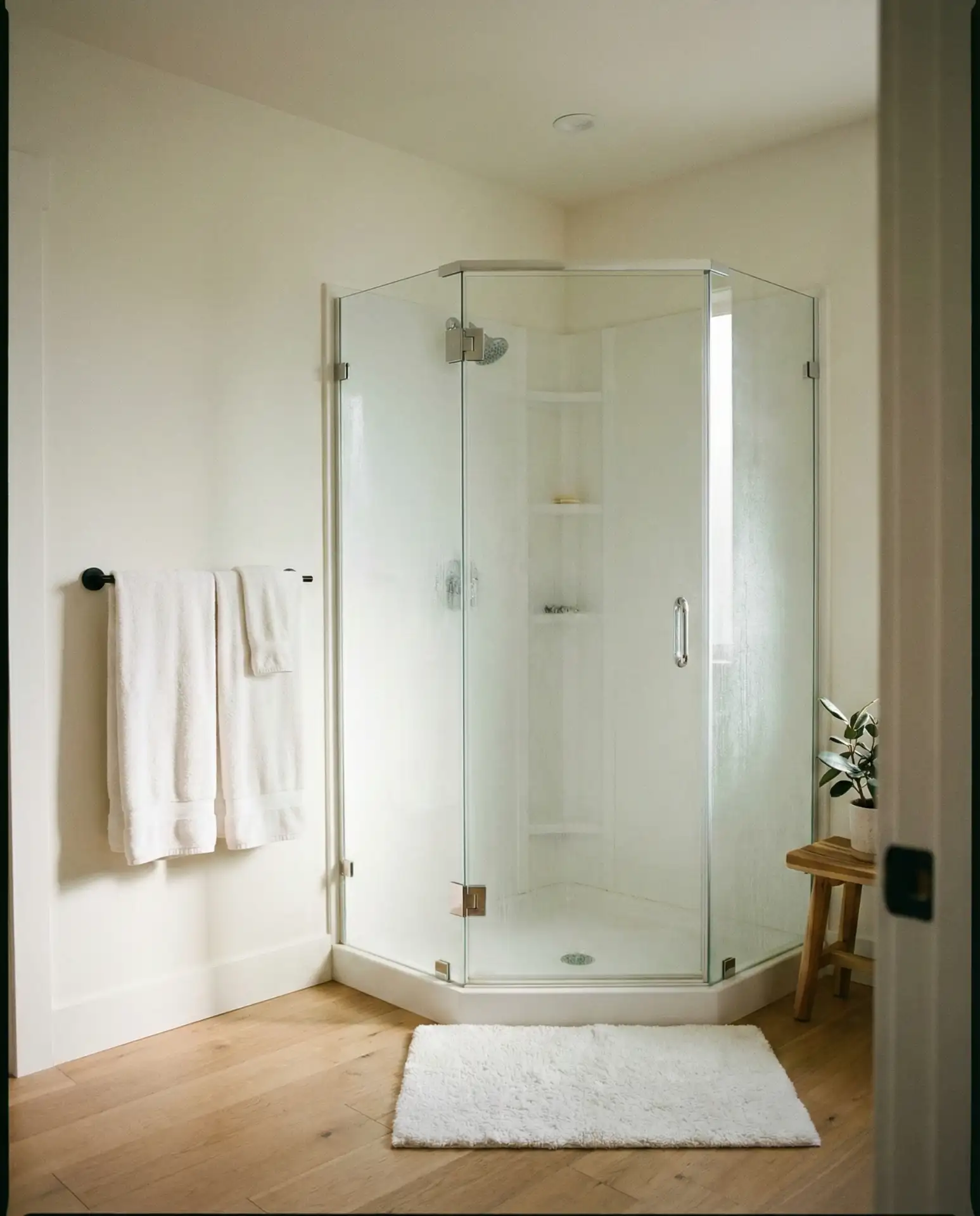
This design works best in bathrooms where the shower is your primary focal point—a master bath or a dedicated guest suite where you want visitors to immediately notice the clean, polished layout. The key detail most designers get right? Keep the glass panels thicker than you think you need. Thinner glass wobbles and flexes, which not only looks cheap but can be a safety concern down the road. Go with at least three-eighths-inch tempered glass for stability and peace of mind.
3. Black Tile Half-Wall Master Bath Shower
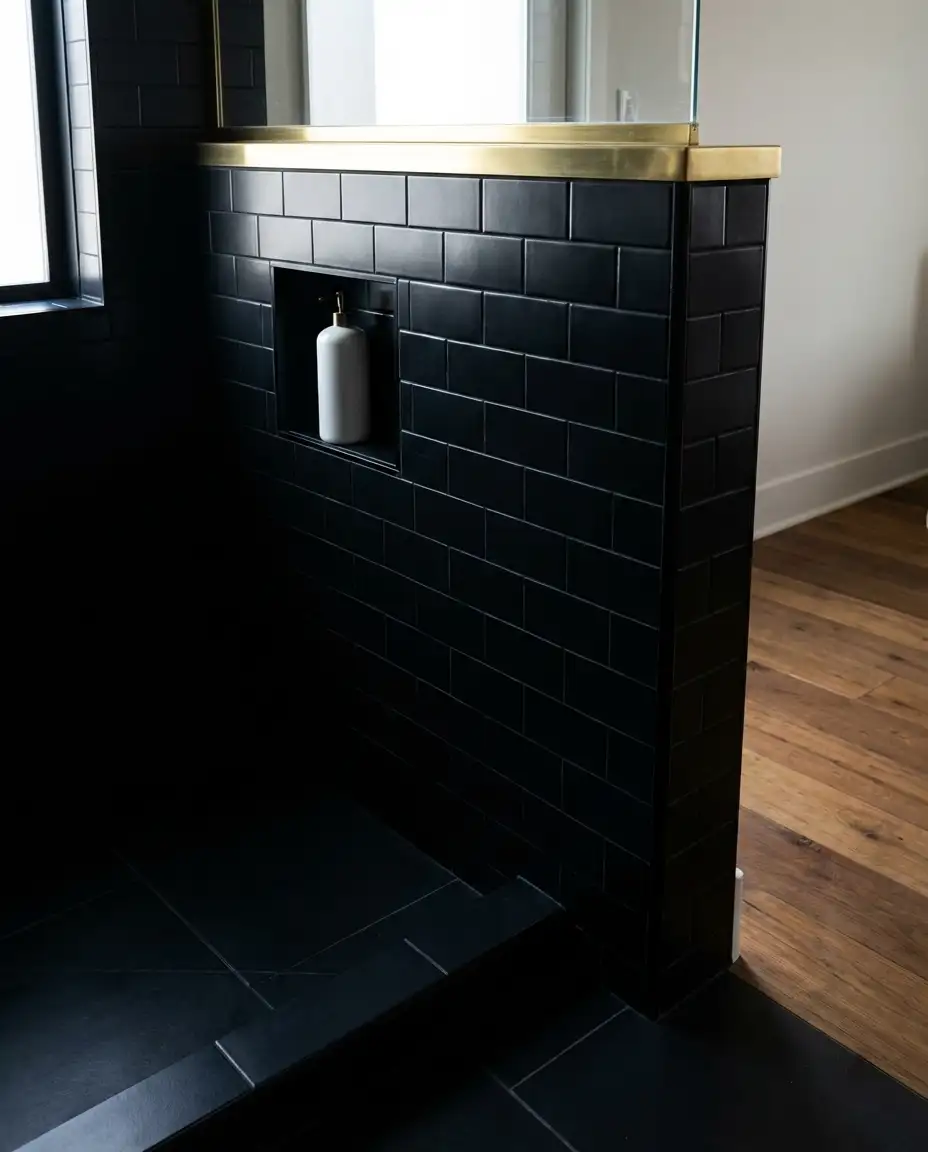
There’s a reason black tile showers keep showing up on every design Instagram and Pinterest board—they feel bold without being loud. A half-wall enclosure in your master bath adds that architectural detail that elevates a shower from functional to genuinely dramatic while still keeping the room feeling open. Think floor-to-ceiling matte black tile on the shower walls, a low glass or solid partition at waist height, and fixtures in brushed gold or satin brass to warm up the contrast.
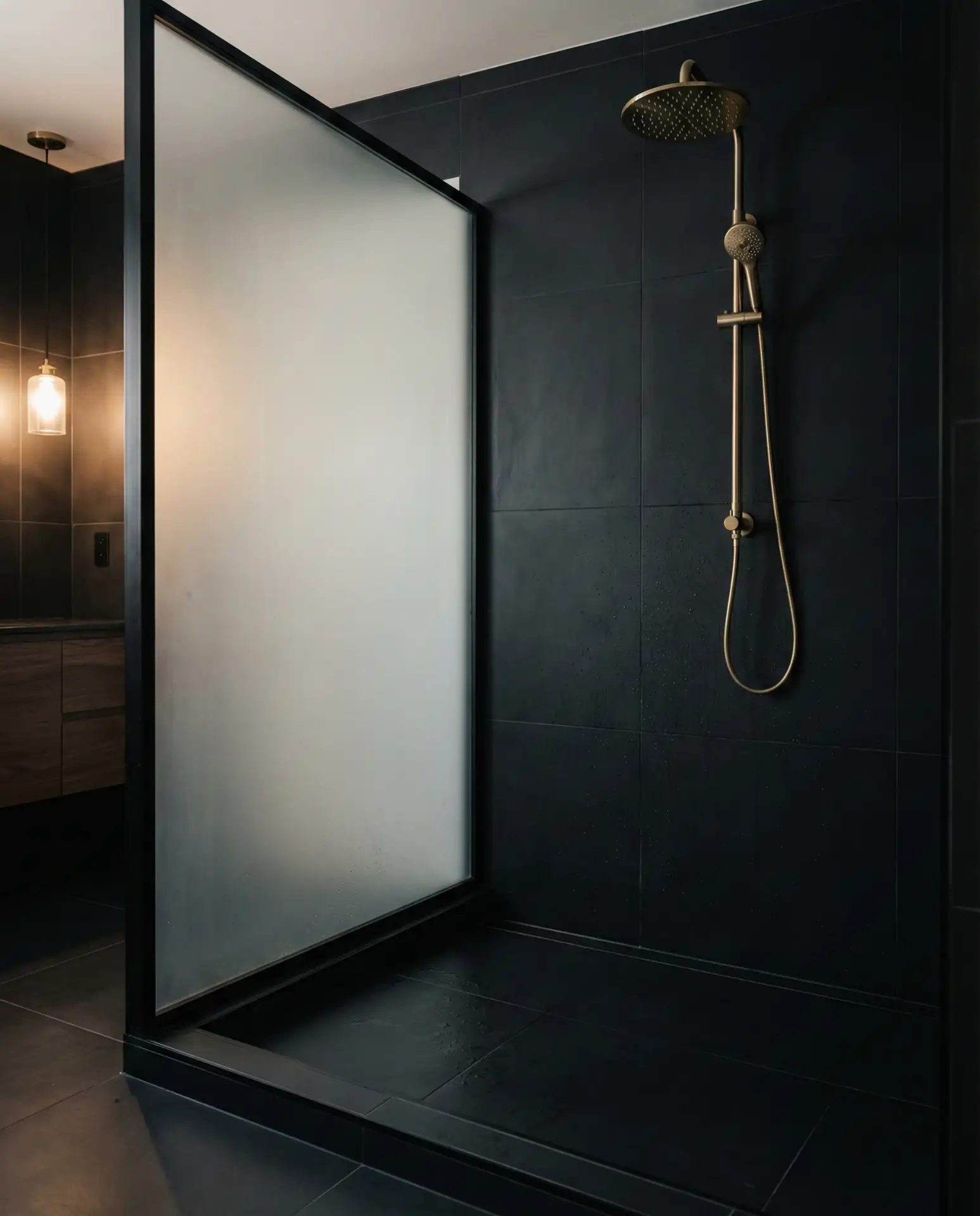
One mistake homeowners make with all-black tile bathrooms is underestimating how quickly water spots and soap scum show up on dark surfaces. The fix is surprisingly simple: choose matte or textured finishes over glossy ones, and seal your grout religiously twice a year. That small bit of maintenance keeps your moody masterpiece looking intentional and pristine rather than grimy. It’s the kind of detail that separates a Pinterest-worthy bathroom from one that just looks dark.
4. Doorless Large-Format White Shower
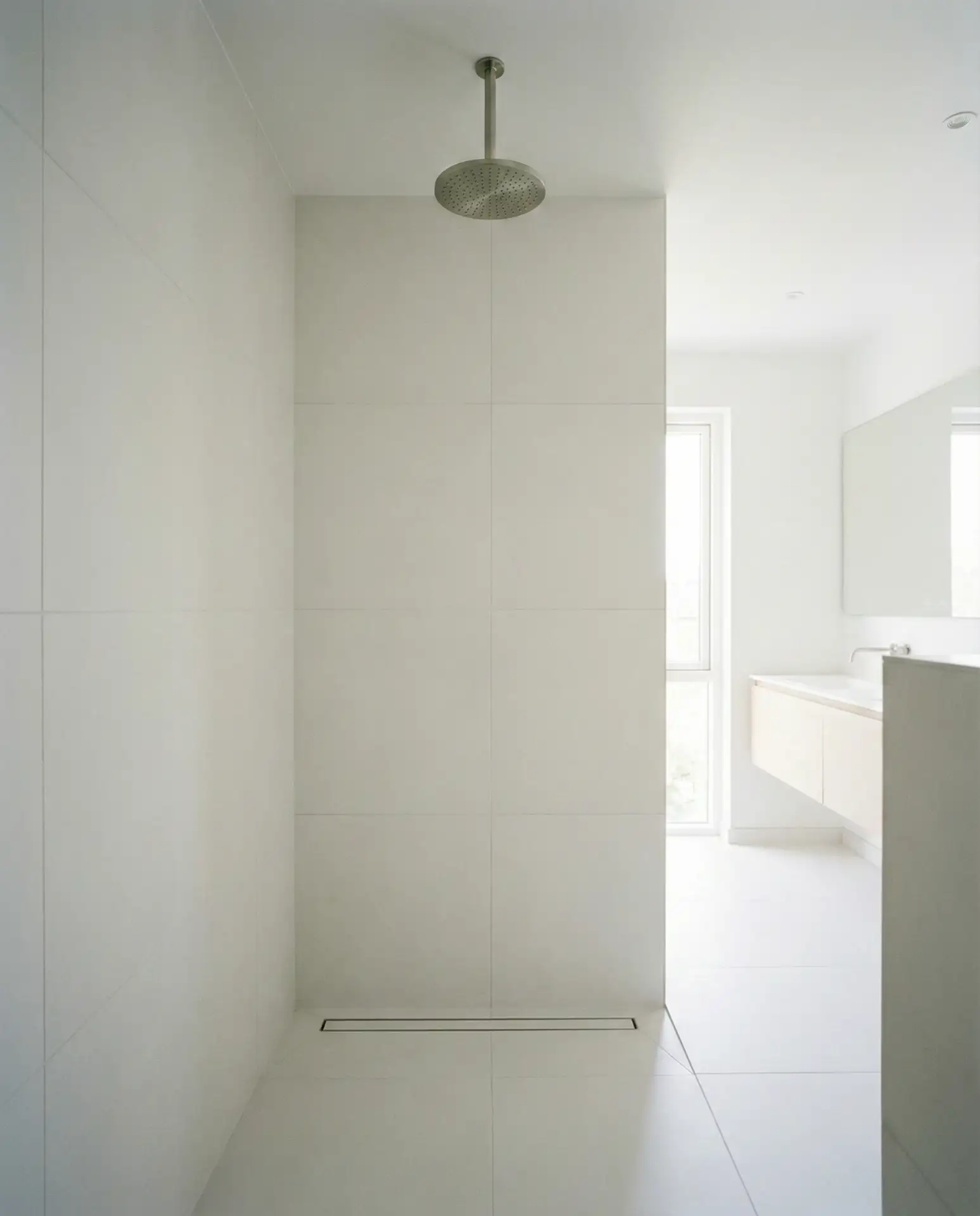
If minimalism is your language, a doorless shower in a large bathroom is the sentence you want to write. Swap out the hinged door or sliding panel for a simple open entry—maybe with a subtle curb or a small lip to contain water—and let the white tile do all the talking. Large-format tiles (think 24×24 or bigger) mean fewer grout lines, a cleaner visual plane, and a shower that genuinely looks like it belongs in a five-star hotel rather than your suburban ranch house.
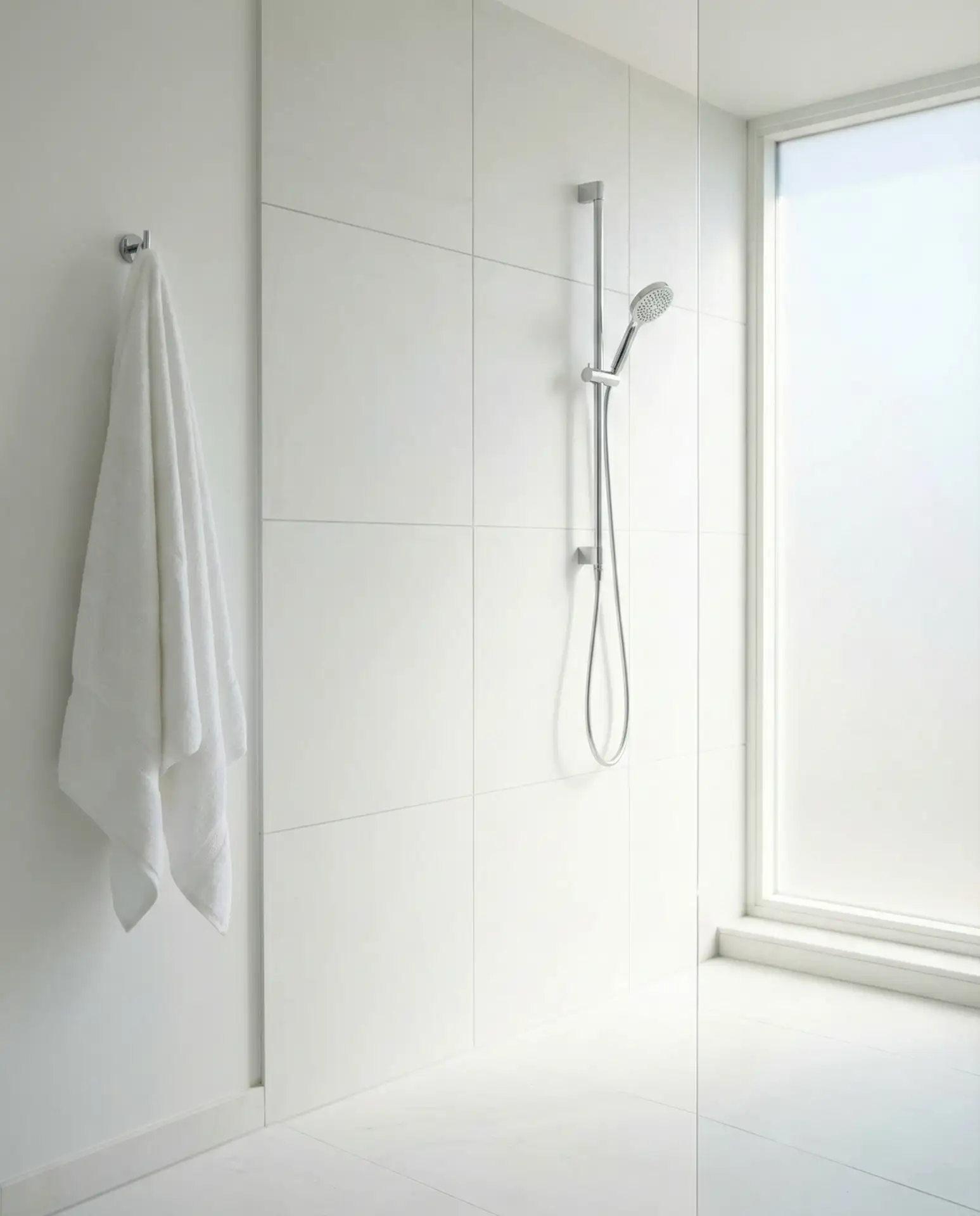
Doorless showers have become a design staple in high-end bathroom renovations across the country, and it’s easy to see why—they make accessibility effortless while looking incredibly intentional. The linear drain built into the floor is the hero of this design; it handles water flow quietly and efficiently without any visible grate or gutter to disrupt the clean tile plane. For larger bathrooms, this layout also helps the shower feel like a true destination rather than a utilitarian afterthought tucked into a corner.
5. Bench-Lined Small Full Bathroom Shower in Blue
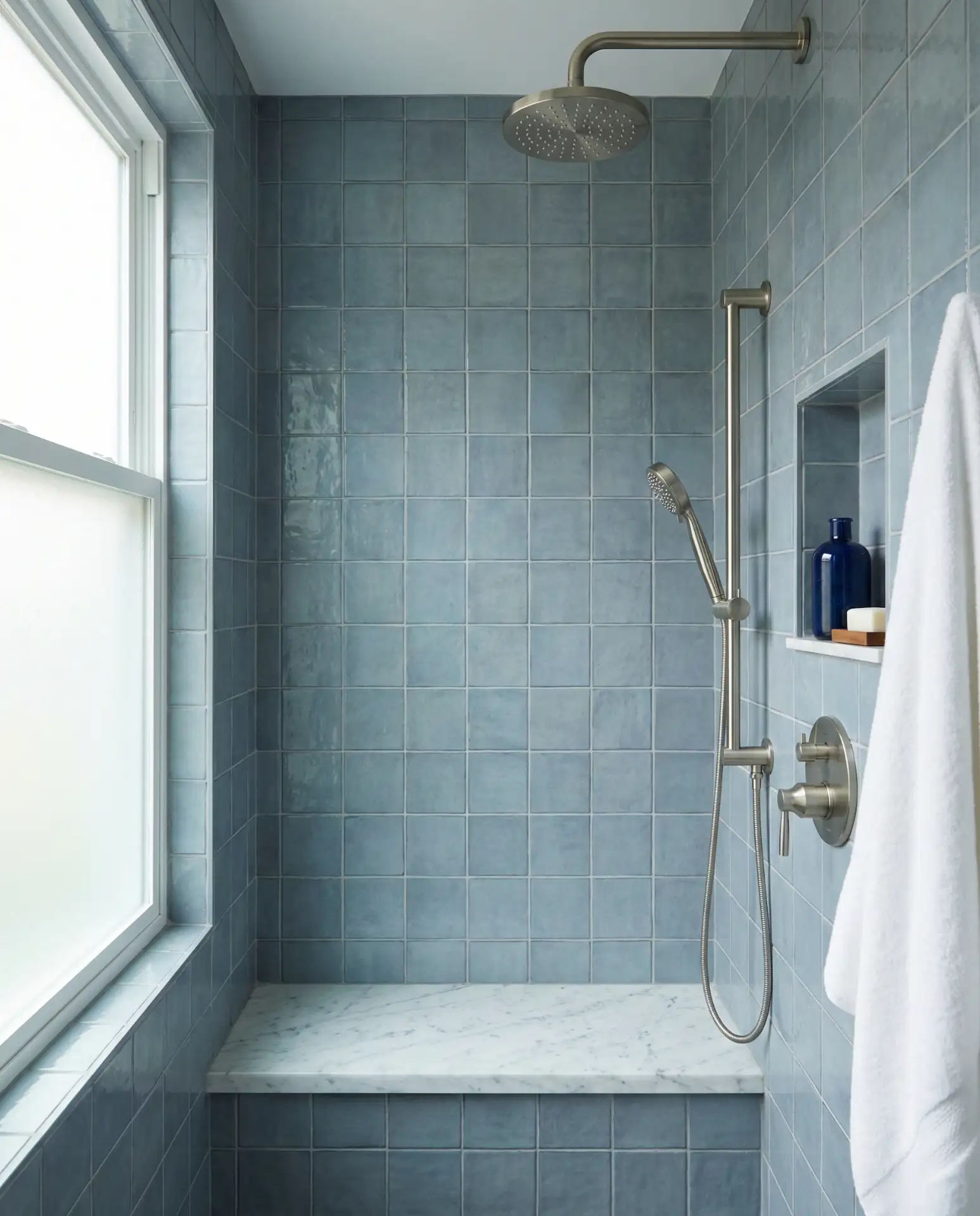
A bench inside a small full bathroom might sound like a contradiction—but done right, it’s one of the smartest moves you can make. Pair a built-in stone or tile bench with a soft blue color palette, and you’ve just created a tiny retreat that punches way above its weight. Blue-grey tiles, navy accent walls, or even a single cobalt blue niche can bring that calm, coastal energy indoors without the bathroom ever feeling heavy or closed off.
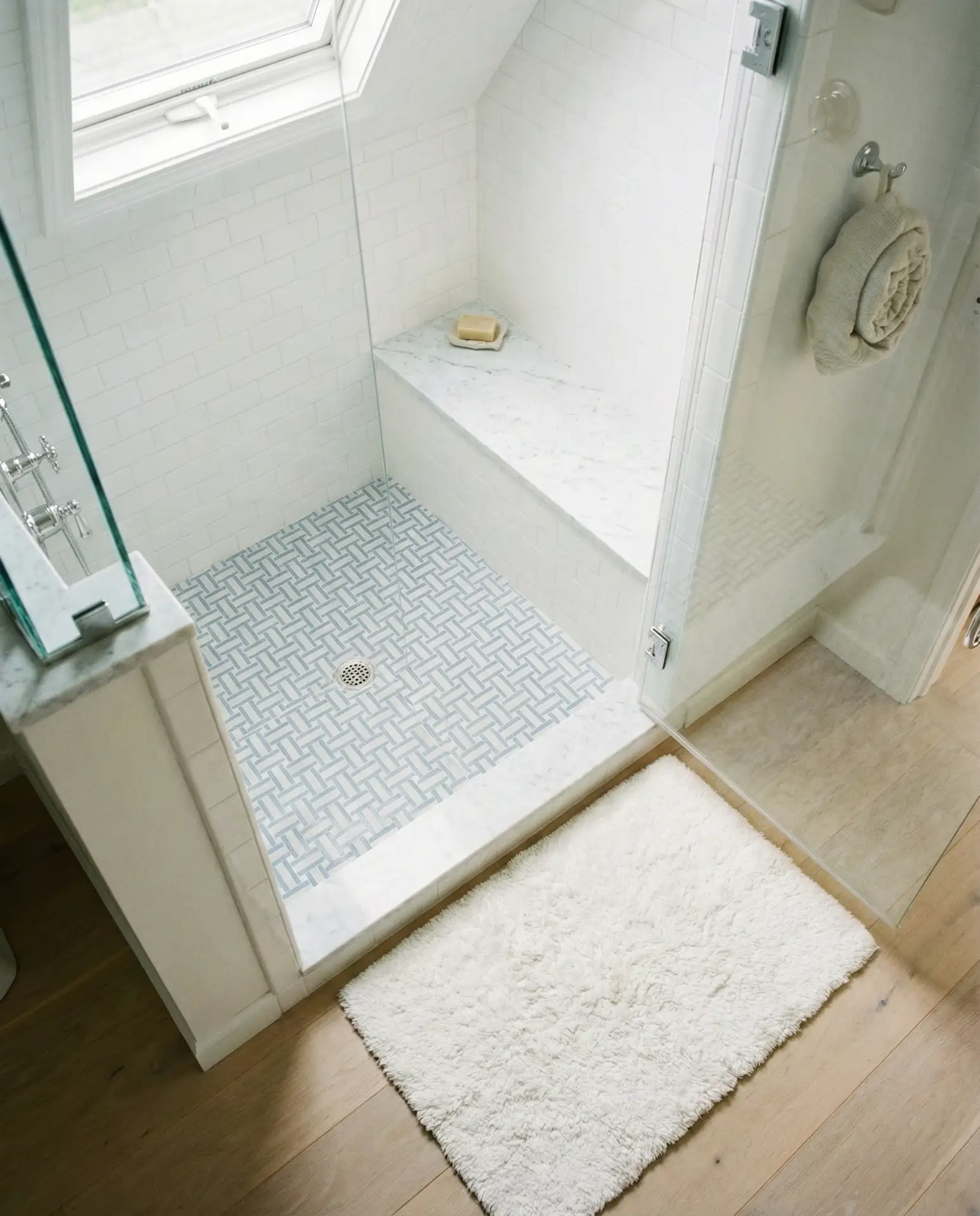
In coastal communities from the Carolinas to Southern California, blue-accented bathrooms have long been a design staple—it’s one of those regional palettes that just works, no matter the size of the room. The bench here isn’t just decorative; in a tight space, it doubles as a place to set toiletries, hang a towel, or simply sit while you wait for the water to warm up. Just make sure your ventilation is solid. Small bathrooms with benches trap moisture, and without good airflow, you’re inviting mildew into your beautiful blue retreat.
6. Replace Tub with a 4×6 Curtain Shower
If your goal is to replace the tub with something better but the budget isn’t quite where it needs to be for a full glass enclosure, a 4×6 shower with a quality curtain is a genuinely smart alternative. This layout gives you a generous amount of space—plenty of room to move around comfortably—without the cost of frameless glass or custom doors. A well-chosen curtain liner and rod can look surprisingly polished, especially when the rest of the tile work and fixtures are done well.
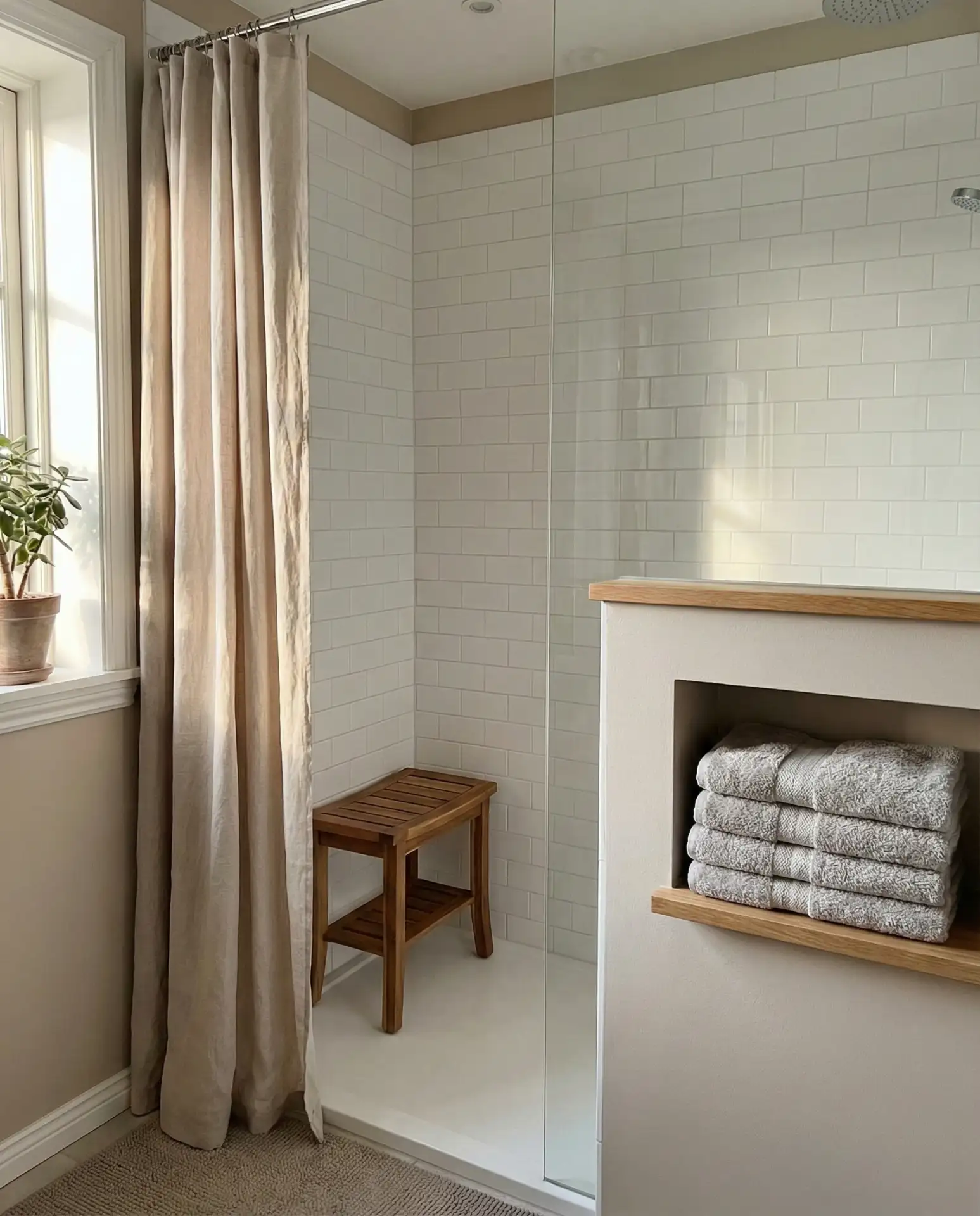
This is where real homeowner decision-making gets interesting. Most people assume a curtain shower is a “starter” move—something you do before you upgrade to glass. But plenty of homeowners who’ve made the switch say they actually prefer it. Curtains are easier to clean and cheaper to replace when your style evolves, and they never stick or fog up the way glass doors can. The real investment here is in the rod and the liner quality—skip the cheap tension rod and go with a ceiling-mounted or wall-bracket system for a cleaner, more permanent look.
7. Double Shower Head Master Retreat in Dark Tile
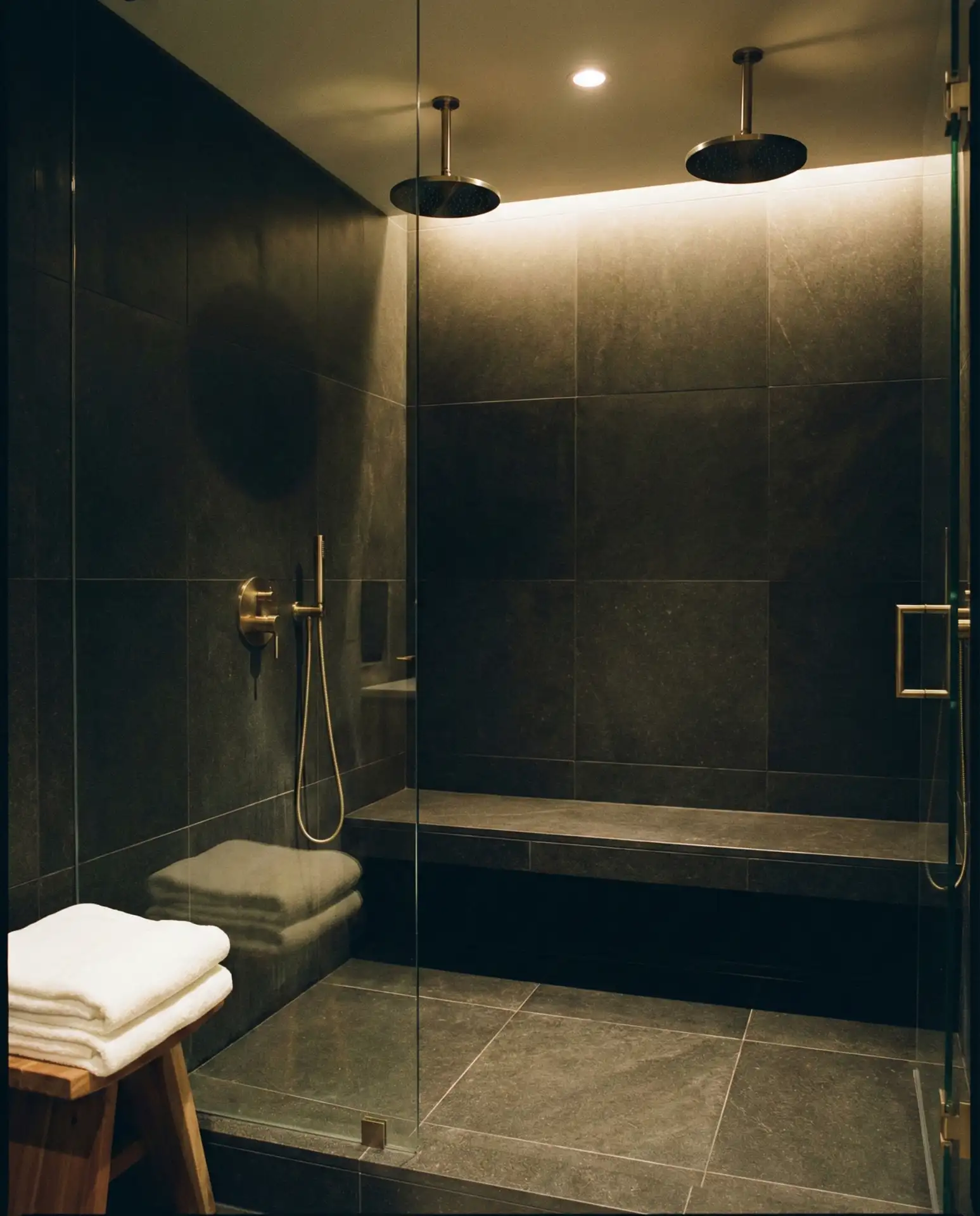
A double shower head setup in a master bathroom is the kind of upgrade that sounds extravagant on paper but feels absolutely essential once you have it. Wrap the whole thing in dark tile—deep charcoal, espresso brown, or even black slate—and you’ve got a shower that feels less like a bathroom fixture and more like a private spa carved into the corner of your home. Two rain heads on the ceiling and a handheld on the side, and you’re set for mornings where you actually want to linger.
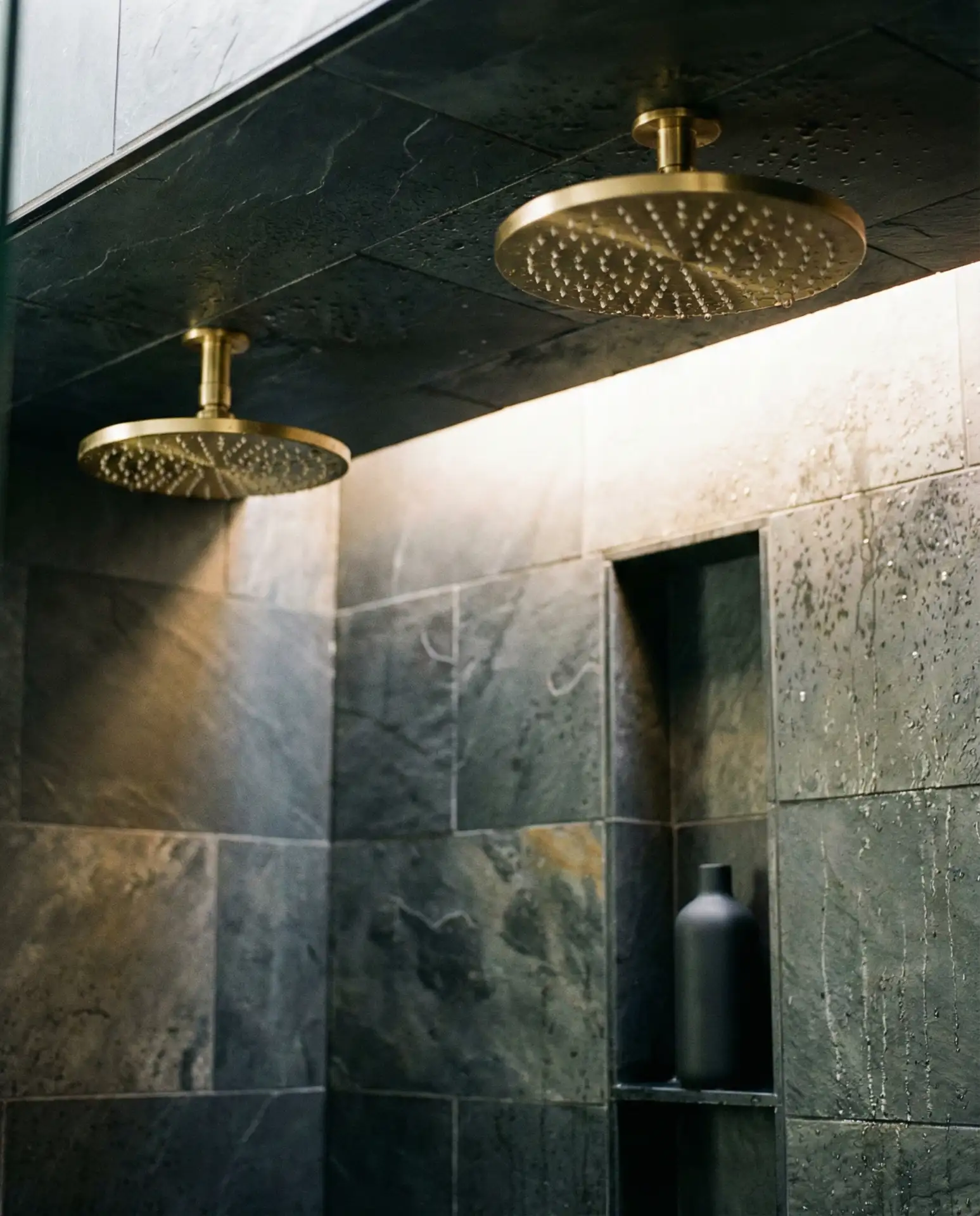
Interior designers have long noted that dark bathrooms require more intentional lighting than most homeowners expect. A common mistake is relying solely on the overhead fixture—in a dark-tiled shower, that creates harsh shadows and makes the space feel smaller. The solution is layered lighting: a warm recessed light in the ceiling, a subtle LED strip along the bench or niche edges, and natural light from a frosted skylight if your layout allows it. Done well, dark showers become the most dramatic room in the house.
8. Doorway-Style Walk-In Shower for a Small Bathroom
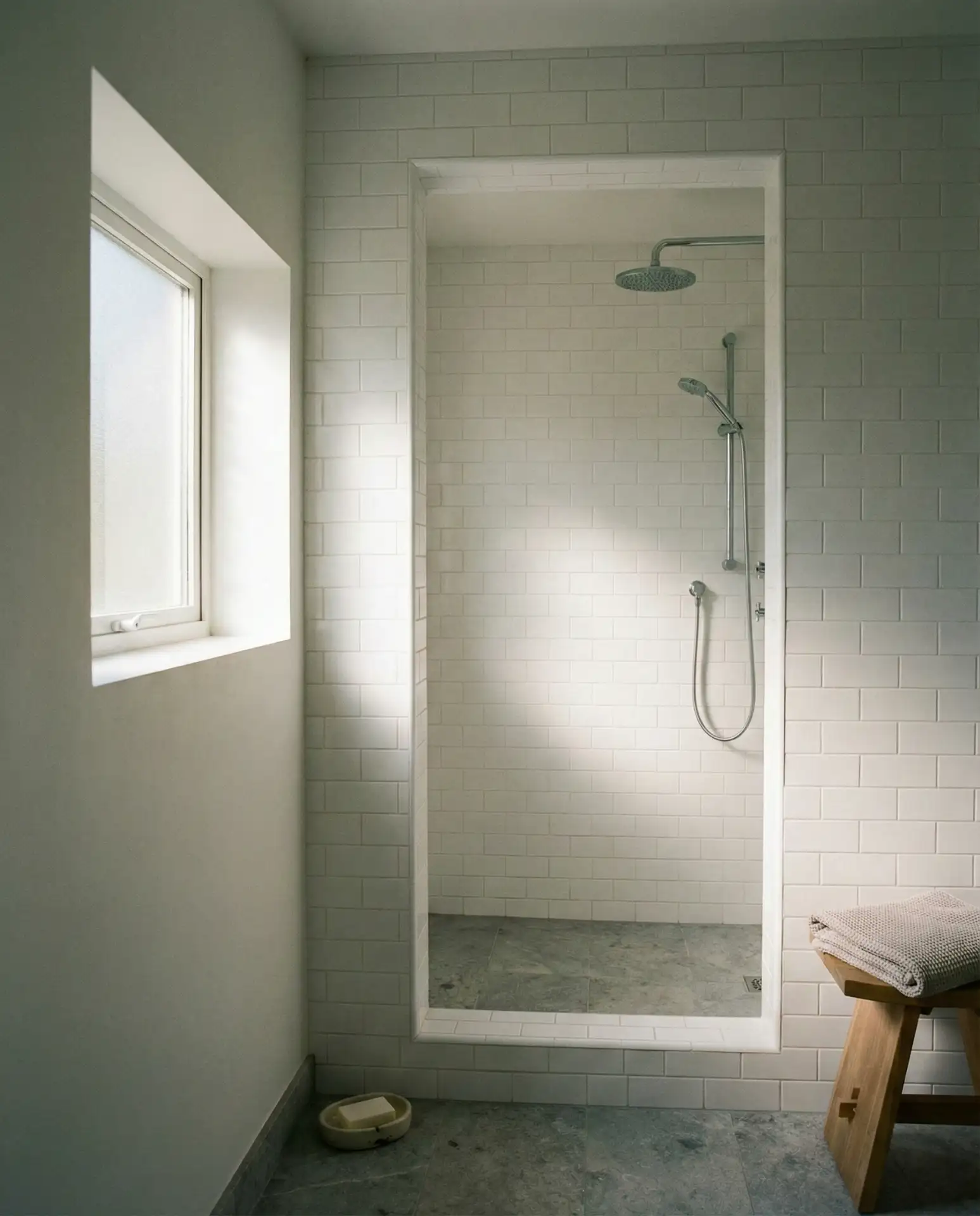
Not every walk-in shower needs a door—sometimes a simple doorway-style opening with a low curb or a subtle water barrier is all you need. This approach is especially popular for small bathroom walk-in shower ideas because it eliminates the swing radius of a hinged door entirely, freeing up precious floor space. It’s a bathroom design that prioritizes flow and accessibility without sacrificing style, and it works beautifully with clean tile and minimal fixtures.
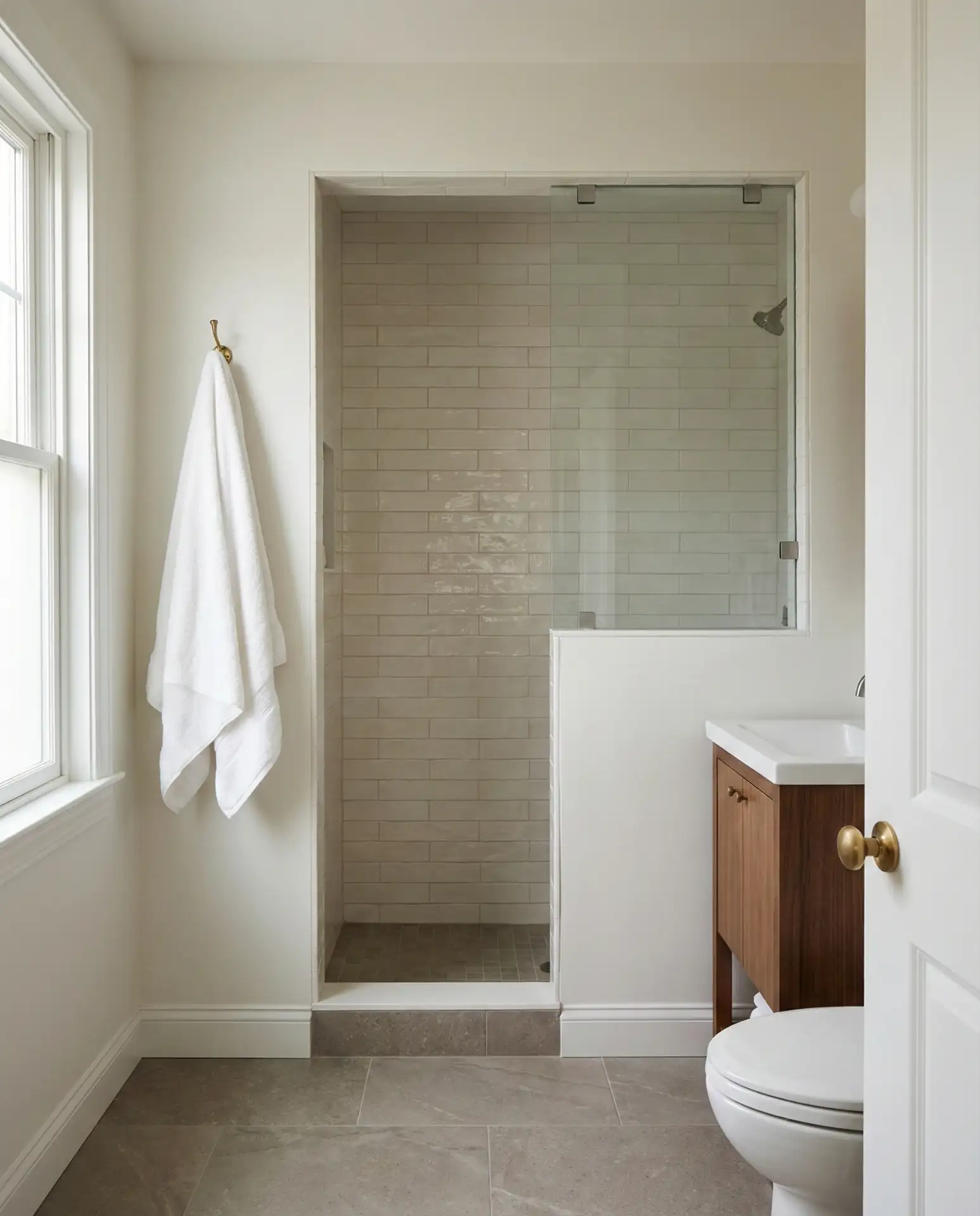
A homeowner in Portland recently shared that switching from a shower door to an open doorway entry shaved nearly two full square feet off the footprint—and in a bathroom under 40 square feet, that’s not nothing. The trick to making this work without water splashing everywhere is the floor slope. A proper linear drain with at least a quarter-inch-per-foot pitch toward the drain keeps water contained without needing a curb tall enough to trip over. It’s a small detail that makes the whole design feel thoughtful and well-engineered.
9. Corner Shower with a Half-Wall and White Subway Tile
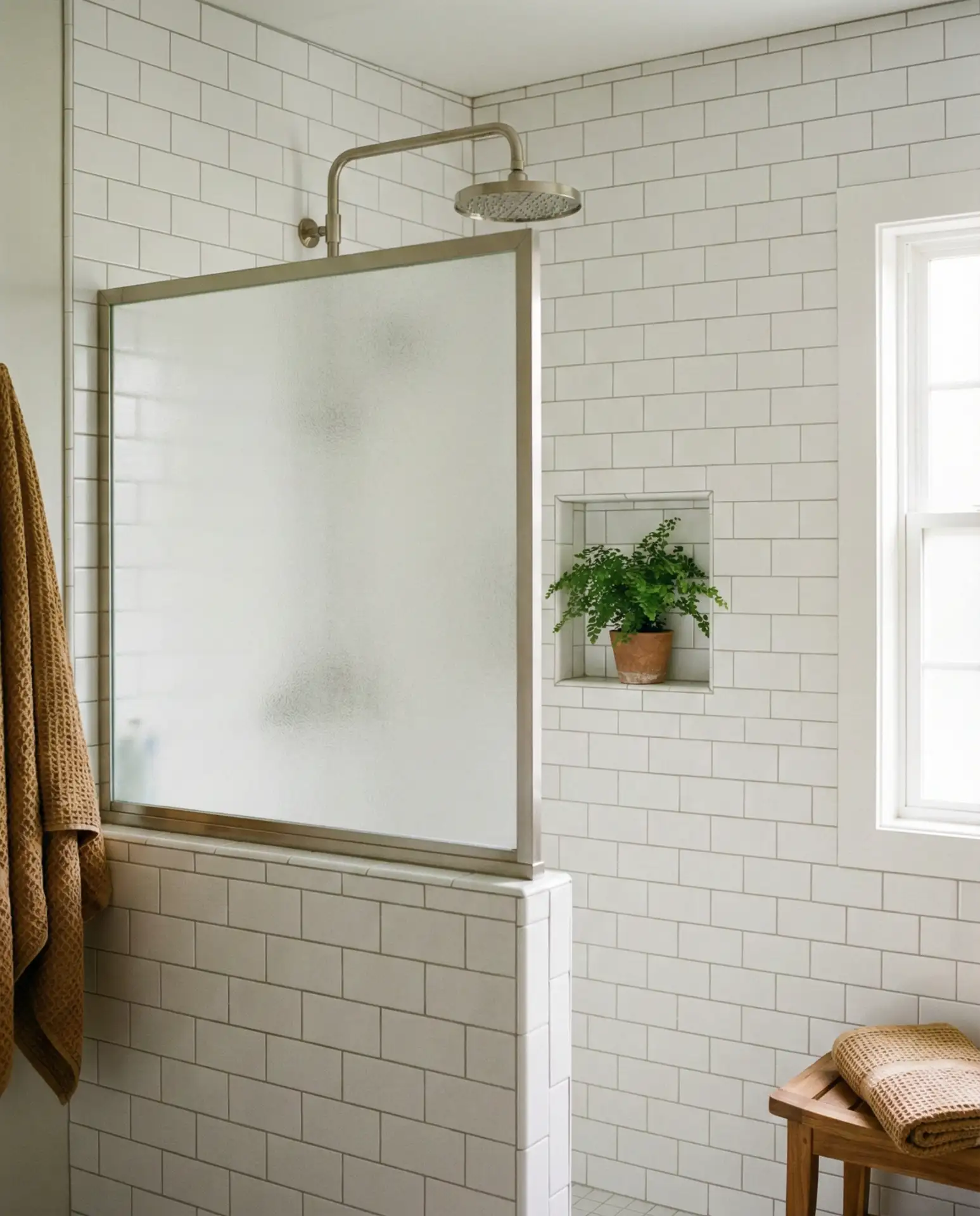
A corner shower paired with a half wall and classic white subway tile is one of those combinations that never goes out of style—it’s timeless in the best possible way. The half wall adds just enough architectural interest to break up the space without blocking light or making the shower feel like a closed-off box. Subway tile, meanwhile, brings that warm, slightly textured quality that feels both traditional and fresh, depending on how you set and grout it.
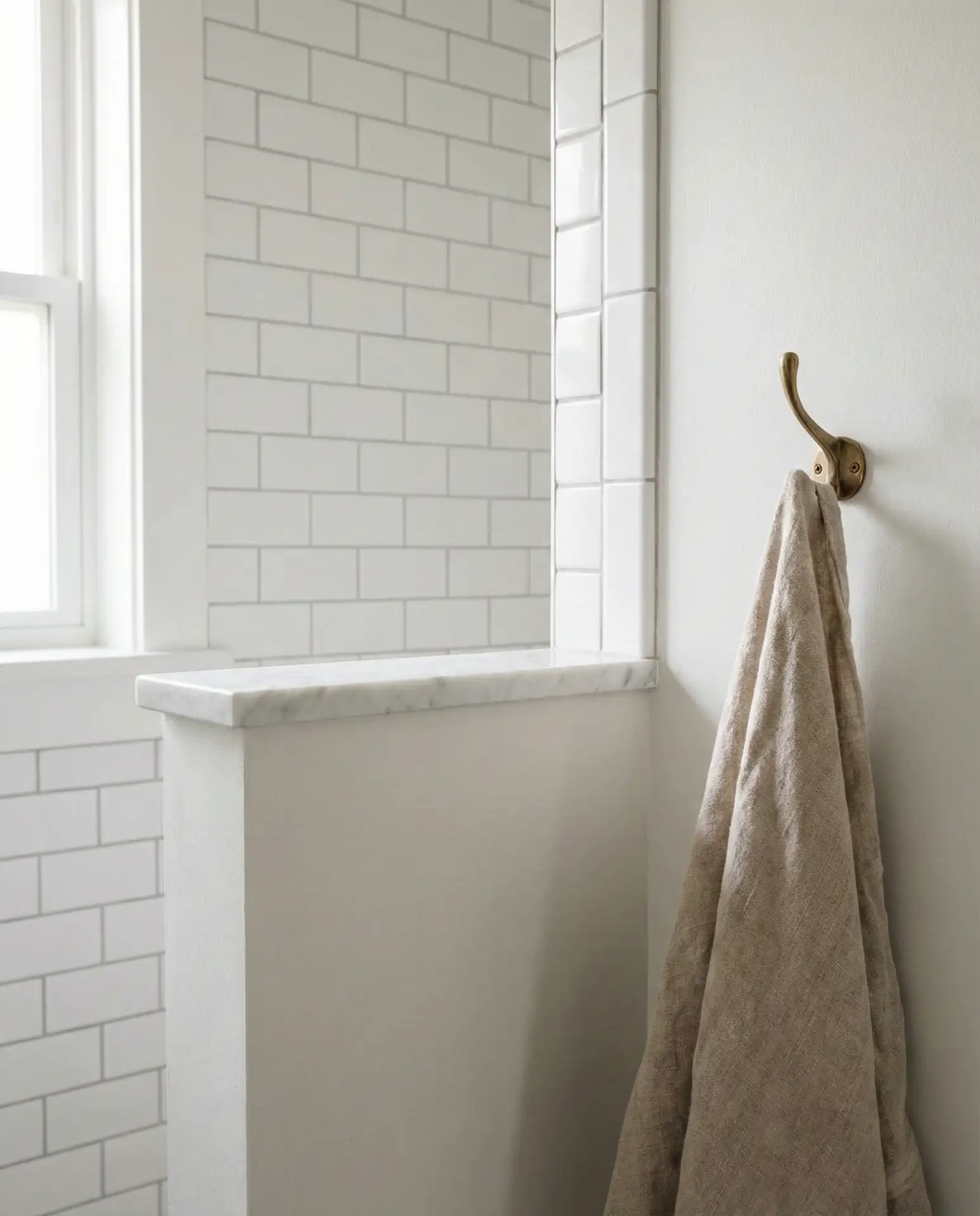
This combination works best in bathrooms where you want to balance style with resale value—it’s one of the few shower designs that appraisers and buyers consistently respond to positively. The half wall is the detail worth spending extra on; a thick, well-finished cap on top (white marble or quartz works beautifully) transforms it from a simple partition into a genuine design feature. Skip the temptation to go with a cheap vinyl or laminate panel here—the difference in quality is immediately visible and absolutely worth the investment.
10. Black Stone Shower in a Large Master Bath
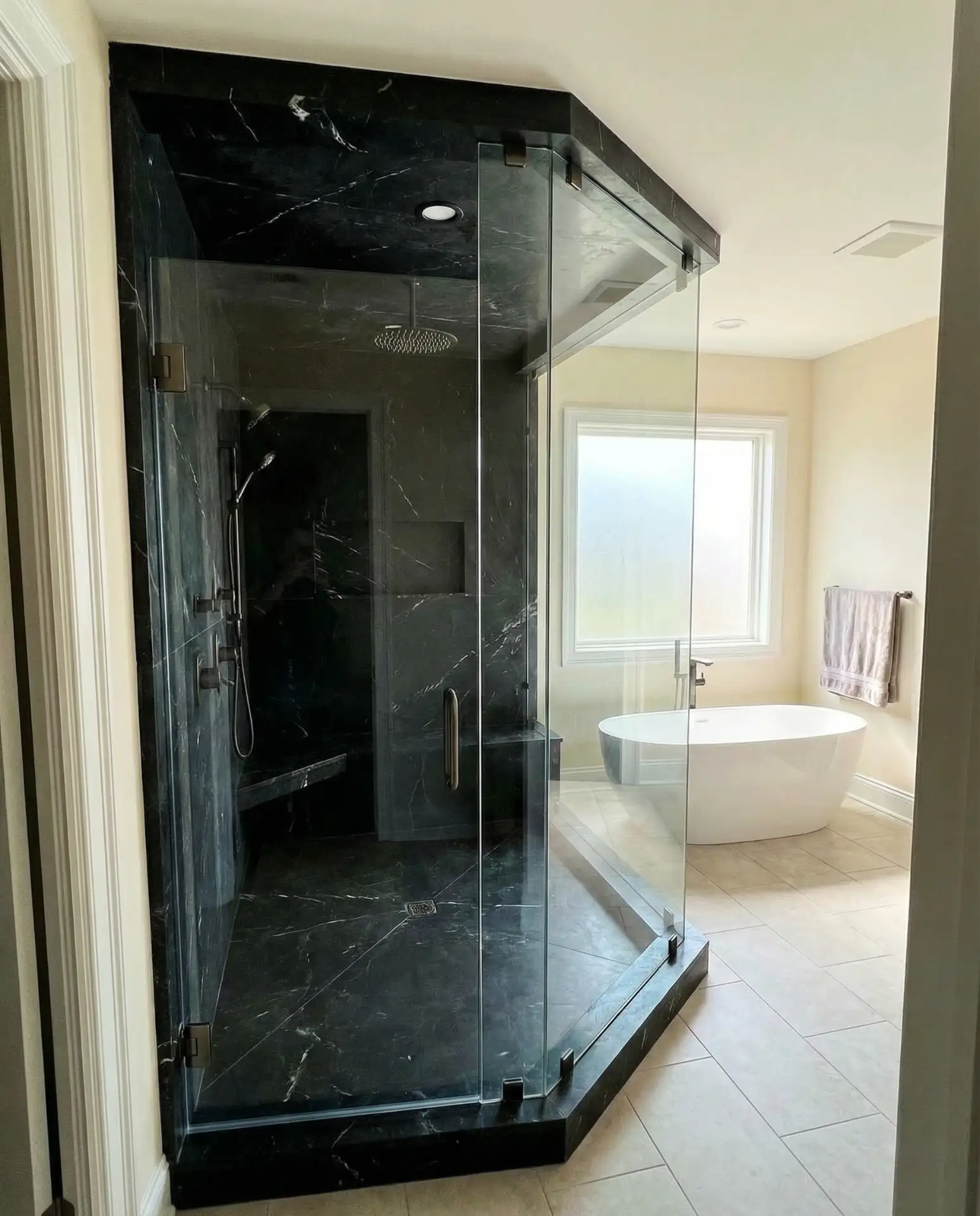
When you have the square footage to work with, a black stone shower in a large master bath becomes less of a design choice and more of a statement. We’re talking floor-to-ceiling black marble or slate, a built-in bench, multiple showerheads, and the kind of moody, dramatic lighting that makes the whole room feel like a boutique hotel. It’s the shower you design when you’re done compromising and ready to build something truly impressive.
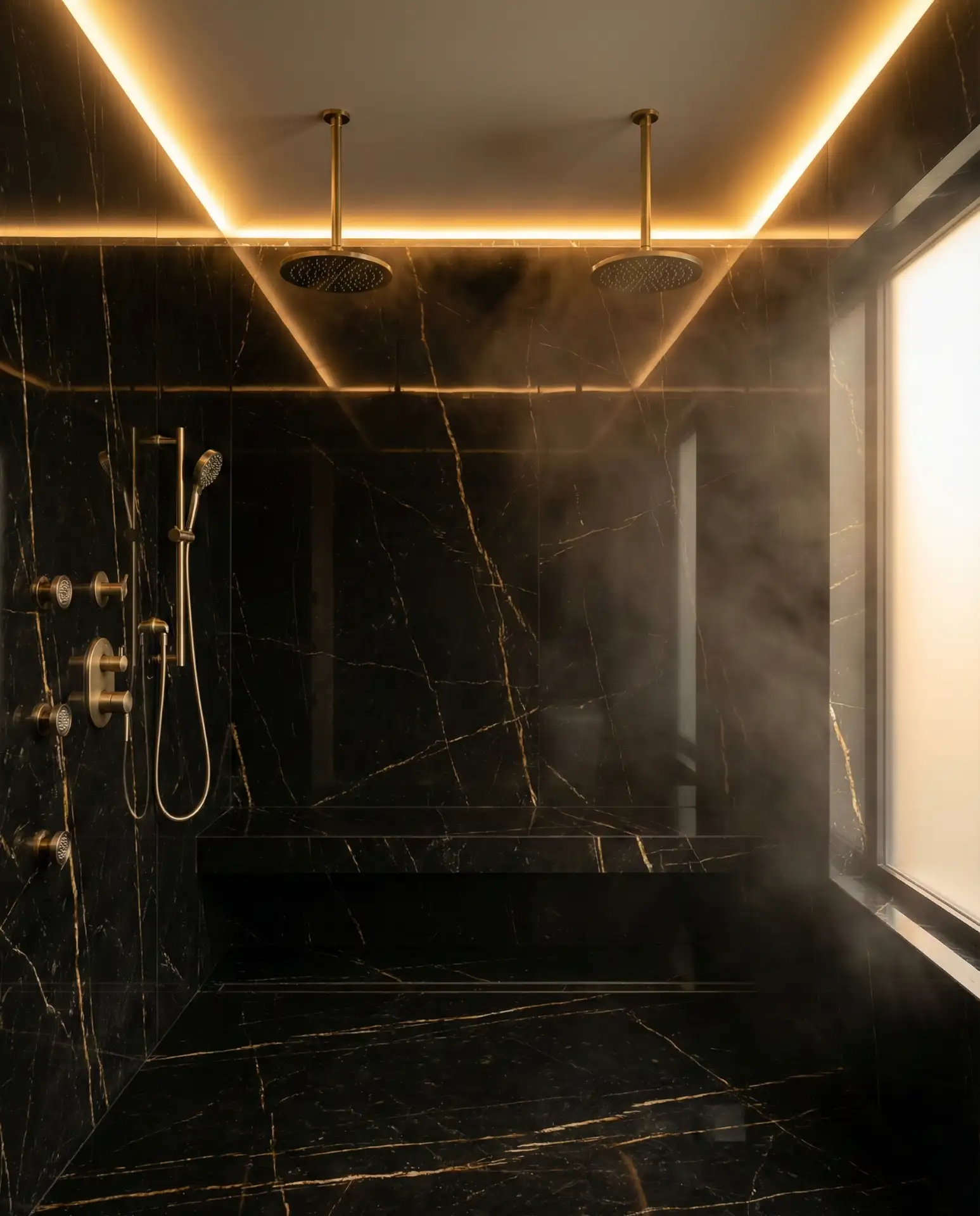
At this price point—black marble showers in large master baths typically run between $15,000 and $40,000 installed—the budget conversation is real. But here’s the thing most designers will tell you off the record: marble alternatives like porcelain tile printed to look like black stone can be genuinely indistinguishable at a distance, and they’re dramatically easier to maintain. For a large shower especially, that maintenance difference compounds over time. Choose your battles wisely.
11. Rustic Bench Shower in a Master Bath with Warm Wood
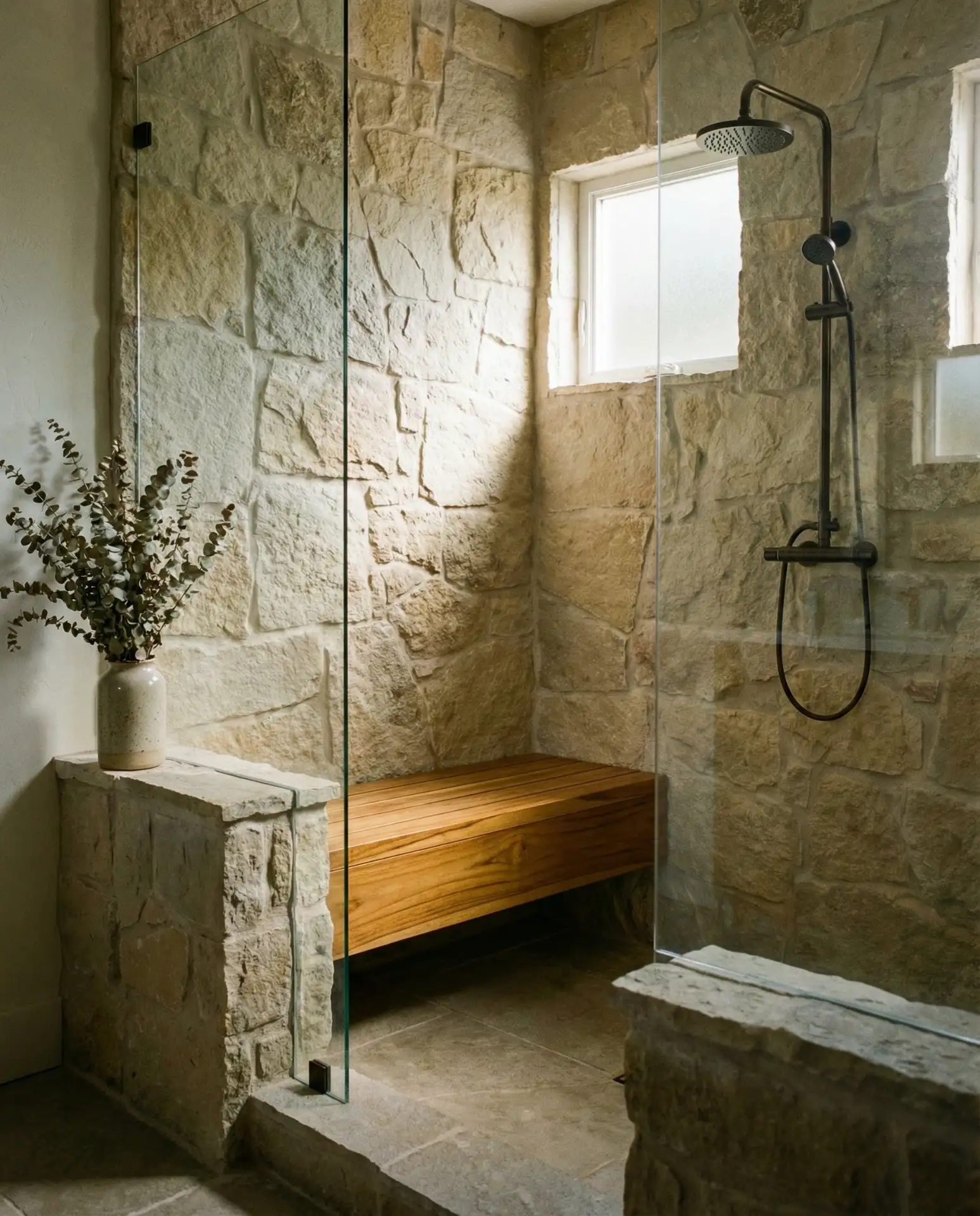
A rustic bench shower in a master bath is where natural textures and warm wood tones collide in the best possible way. Picture weathered teak or reclaimed oak built into the shower wall, paired with rough stone tile and a simple copper or oil-rubbed bronze fixture set. It’s the aesthetic that says, “I care deeply about design” without ever looking like you’re trying too hard—effortless, grounded, and genuinely inviting.
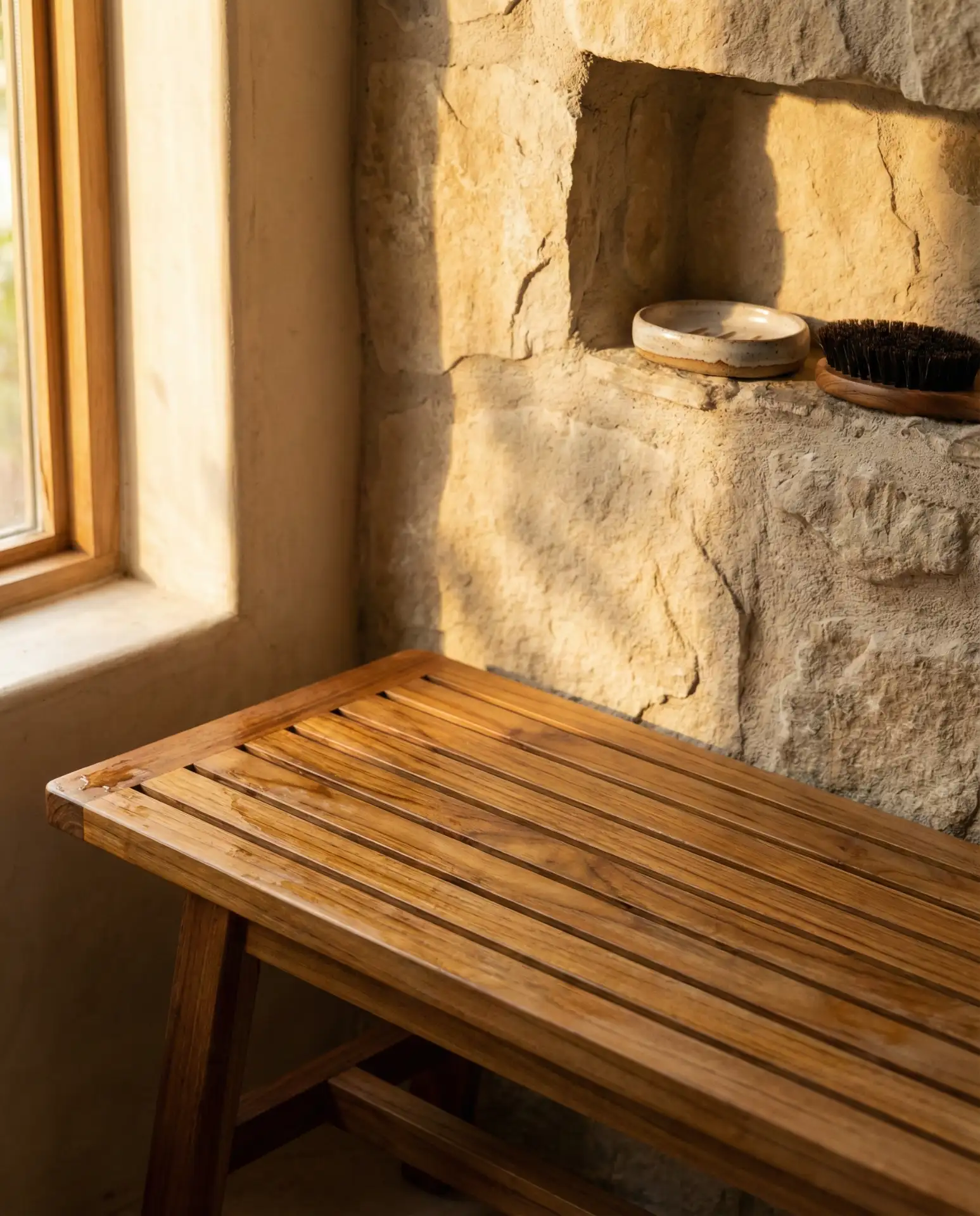
This style works best in master bathrooms that already have warm wood tones elsewhere in the room—think a walnut vanity or reclaimed wood accents—so the shower doesn’t feel like it belongs in a different house. The bench itself is the element that anchors the whole rustic feel; without it, the shower reads as simply “stone tile.” With it, the space becomes a cohesive, intentional design that draws you in every time you walk past.
12. Glass Doorless Shower After a Bathroom Remodel
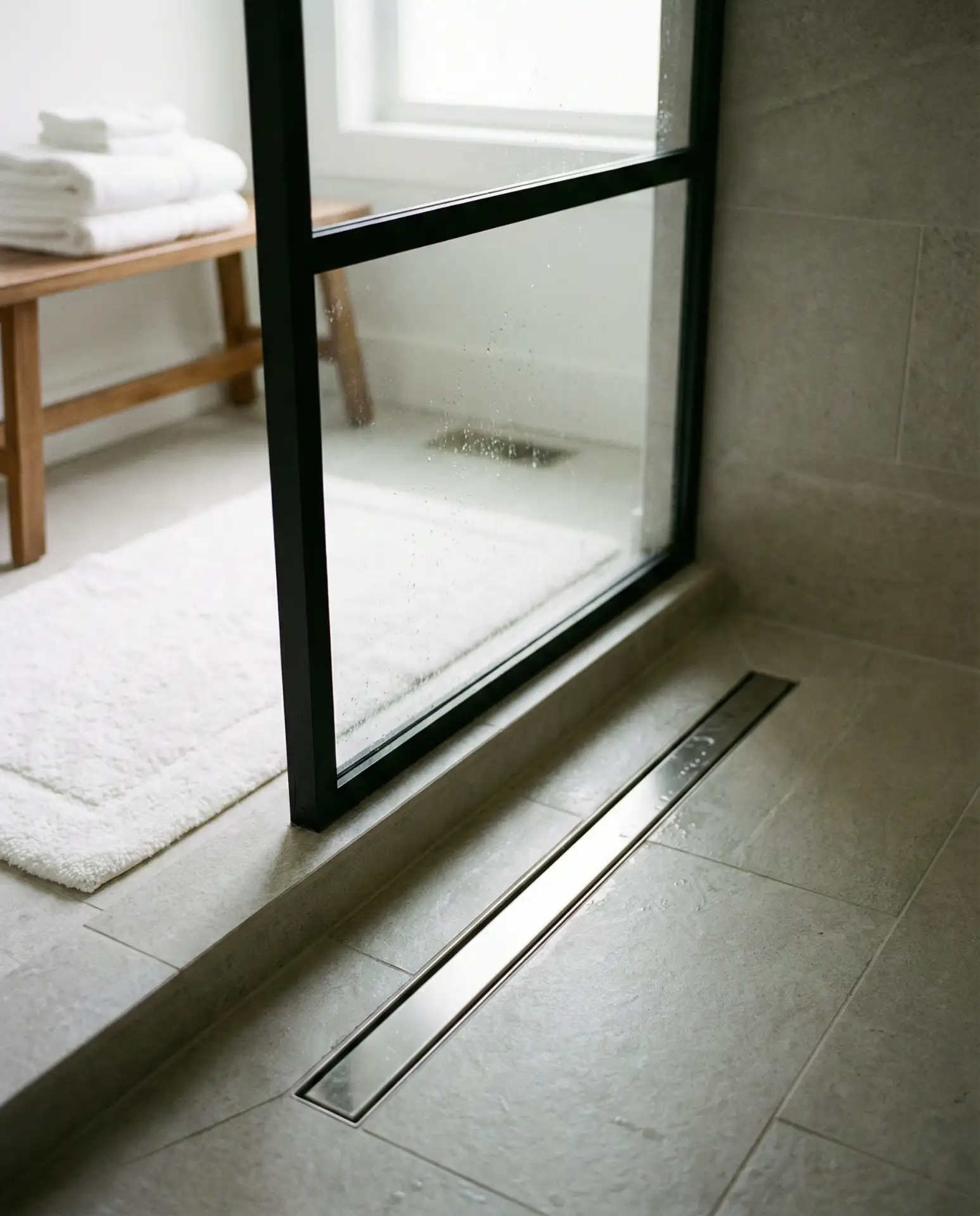
After a bathroom remodel, one of the most satisfying transformations is swapping an old tub-shower combo for a glass-accented doorless shower. A low glass partition on one or two sides contains splashing without boxing you in, while the open entry keeps the flow completely unobstructed. It’s a design that feels intentional and modern—the kind of shower that makes you stop and look every time you walk into the bathroom.
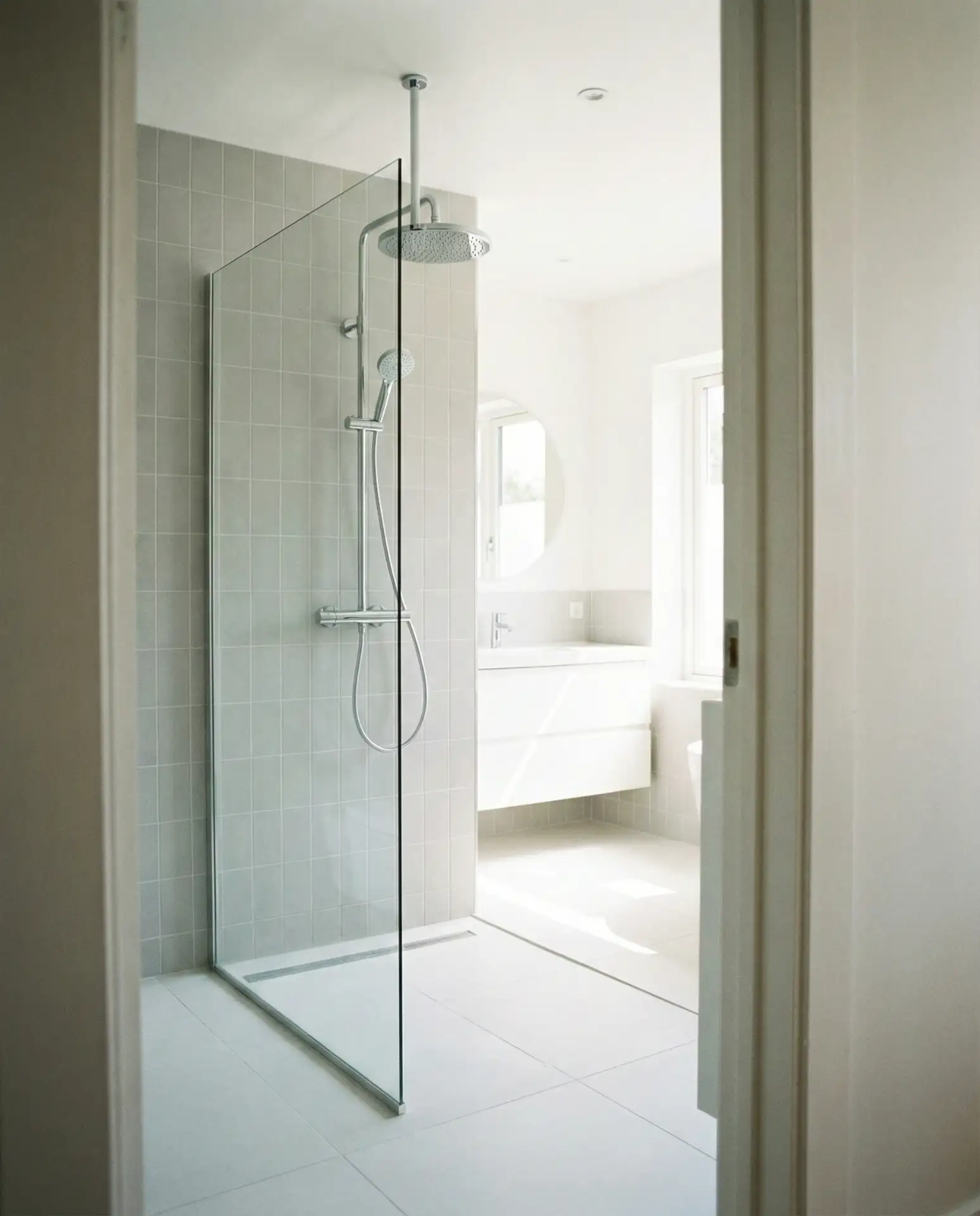
A common mistake during bathroom remodels is treating the shower as an afterthought—spending most of the budget on the vanity and flooring and leaving too little for the shower enclosure. The glass partition is where that budget shortfall shows up most visibly. Cheap glass warps, fogs permanently, and looks out of place next to quality tile. If you’re redoing the bathroom anyway, allocate at least 25 to 30 percent of your shower budget to the glass work. It’s the element everyone sees first.
13. Small Bathroom Walk-In Shower in Blue and Dark Tones
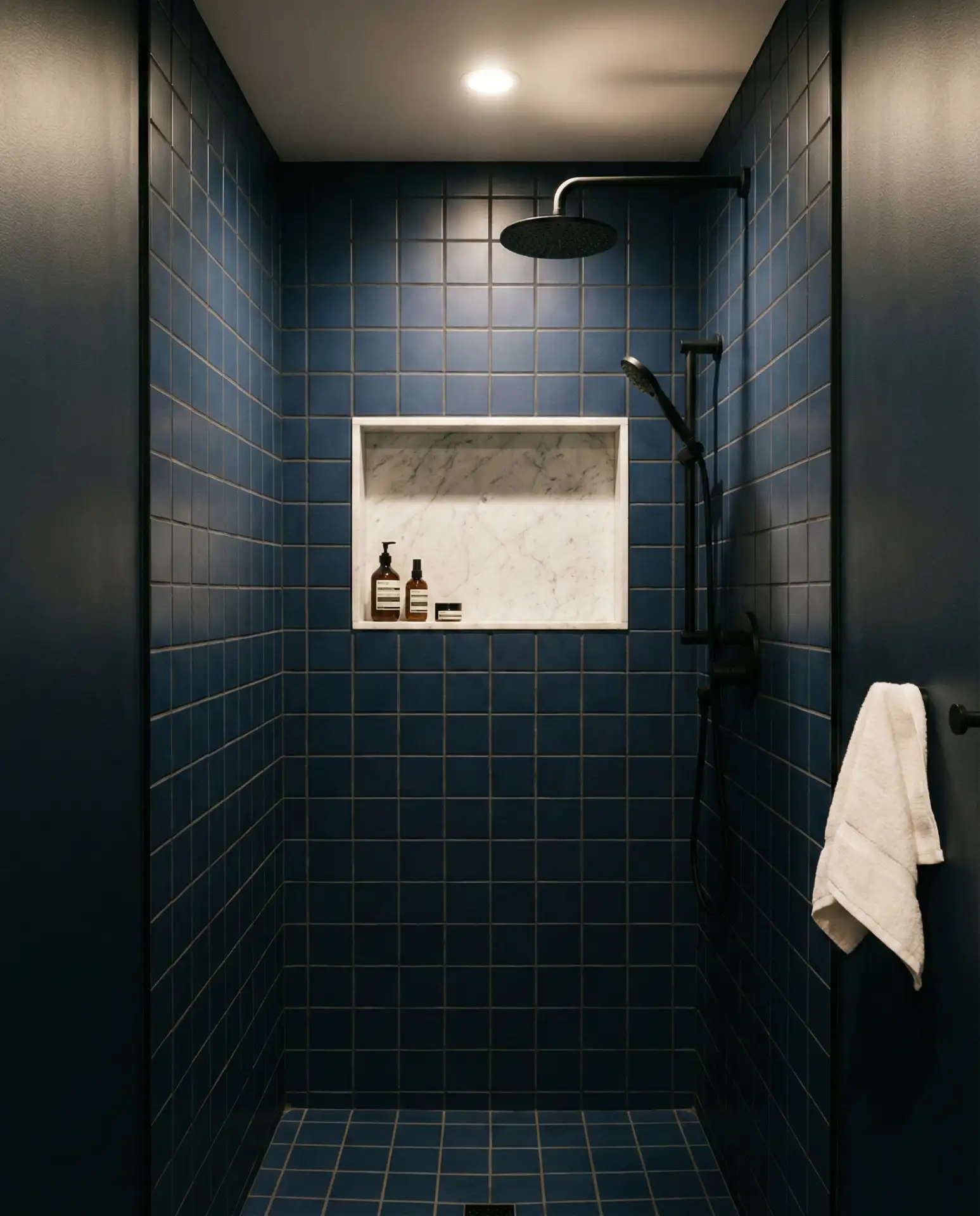
A small bathroom doesn’t have to mean a boring bathroom. Layering blue and dark tones in a walk-in shower creates a surprising amount of depth and visual interest, even in the tightest of spaces. Navy tiles paired with charcoal grout, a deep teal accent niche, or even a single dark blue feature wall behind the showerhead can transform a cramped space into something that feels deliberate, moody, and genuinely cool.
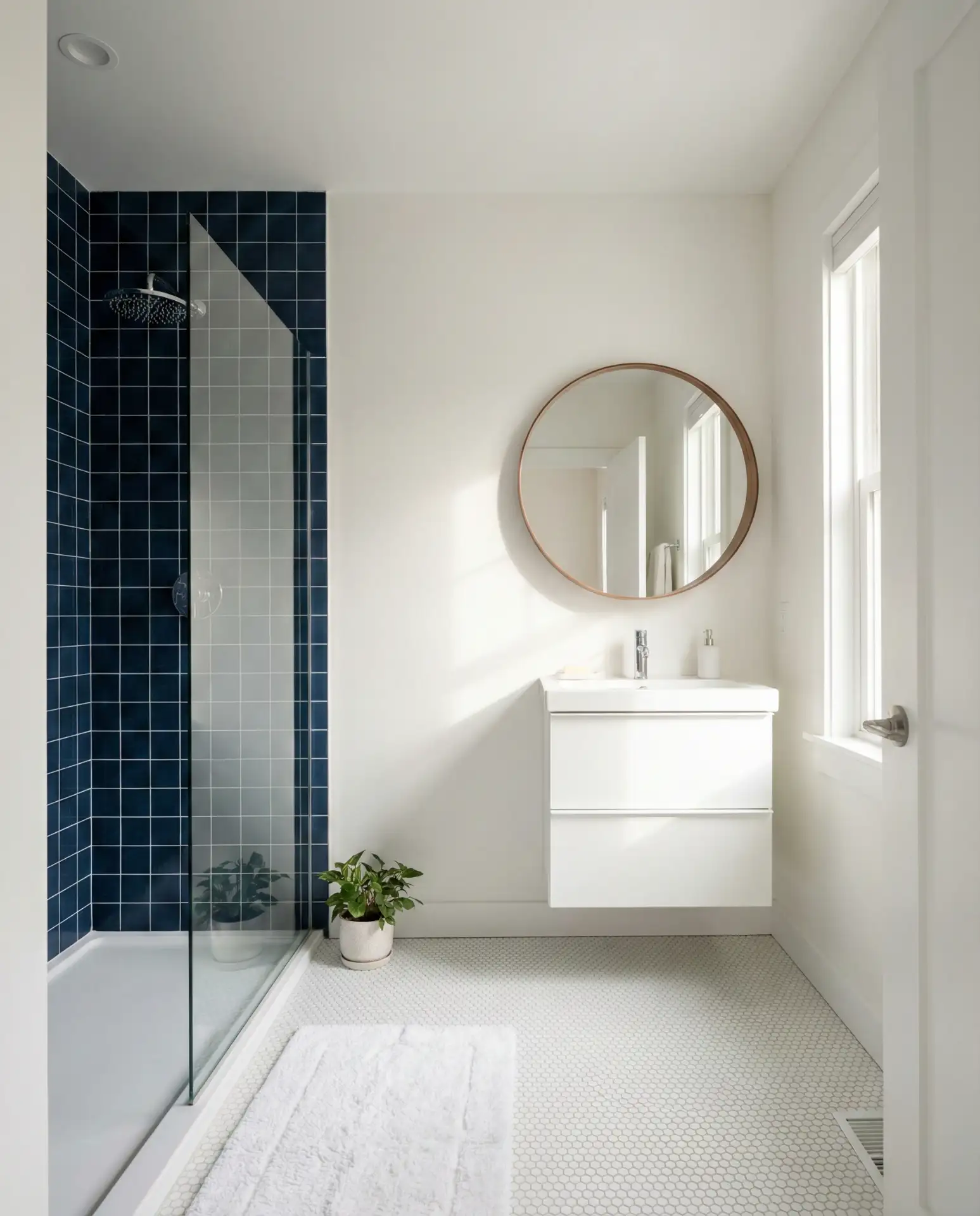
Dark color palettes in small bathrooms have surged in popularity on Pinterest over the past two years, and it’s easy to understand why—they photograph beautifully, they photograph well in dim light, and they create a sense of intimacy that lighter palettes simply can’t match. The trick for Americans working with older, smaller homes is to balance the dark shower with lighter elements everywhere else in the room. White vanity, white floor tile, and plenty of natural or warm artificial light keep the space from feeling claustrophobic.
14. Tub-to-Shower Conversion in a 4×6 Space with a Curtain
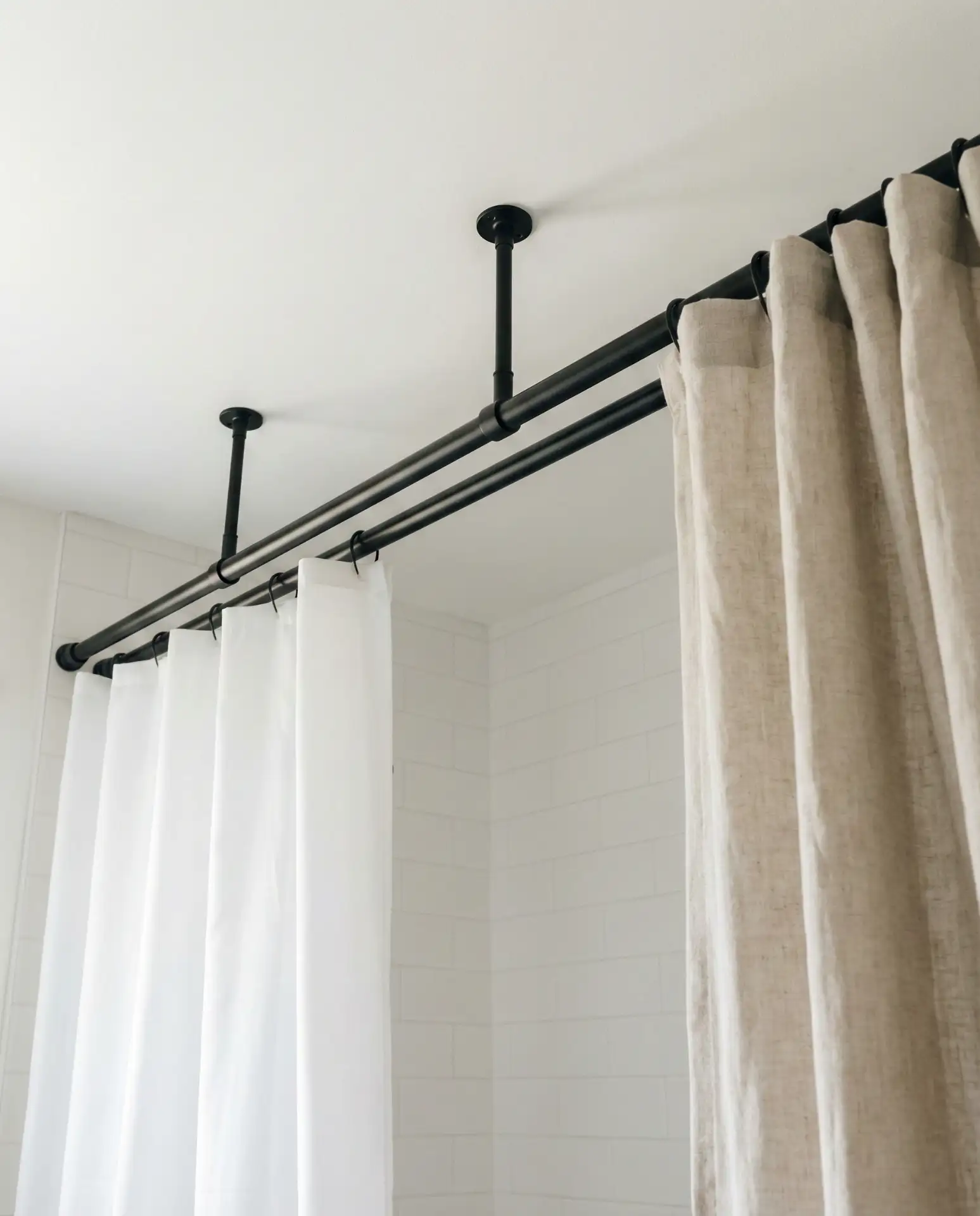
Deciding to replace a tub in a 4×6 bathroom and opting for a double-rod curtain system is one of the most practical moves a homeowner can make—especially when the goal is a clean, open shower without breaking the bank. A double-rod setup holds your curtain and liner separately, which means better water containment and a cleaner look than a single rod with both layers bunched together. It’s a detail that makes the whole conversion feel more intentional.
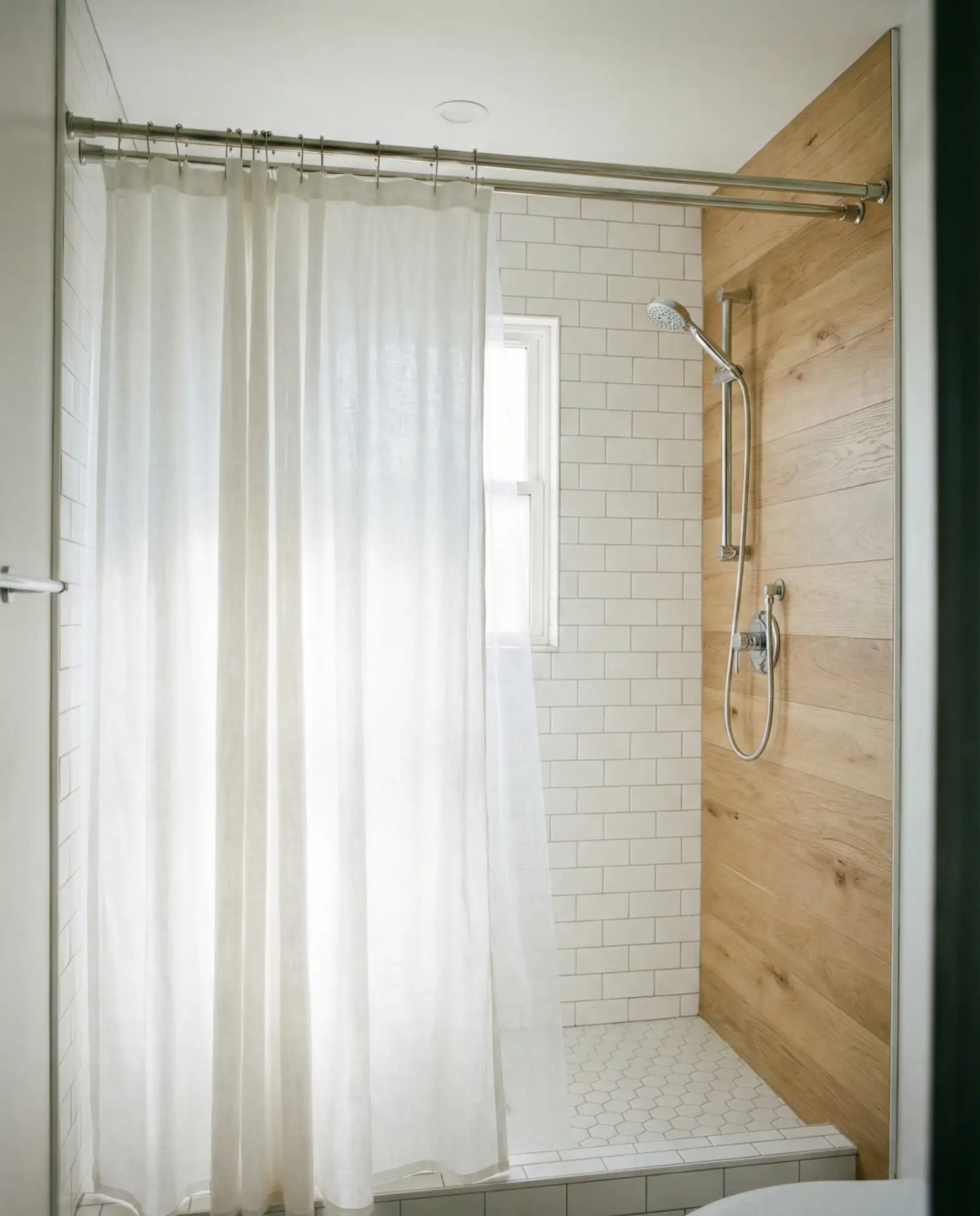
A neighbor in her mid-thirties recently told me she’d been dreading her tub-to-shower conversion for months, convinced it would look cheap no matter what. After the job was done—white subway tile, a quality double rod, and a simple linen curtain—she couldn’t believe how finished it looked. The lesson? It’s not the curtain that sells the space; it’s everything around it. Invest in the tile, the fixtures, and the rod hardware, and the curtain becomes just another smart design choice.
15. Master Shower with Curtain and a Half-Wall Partition
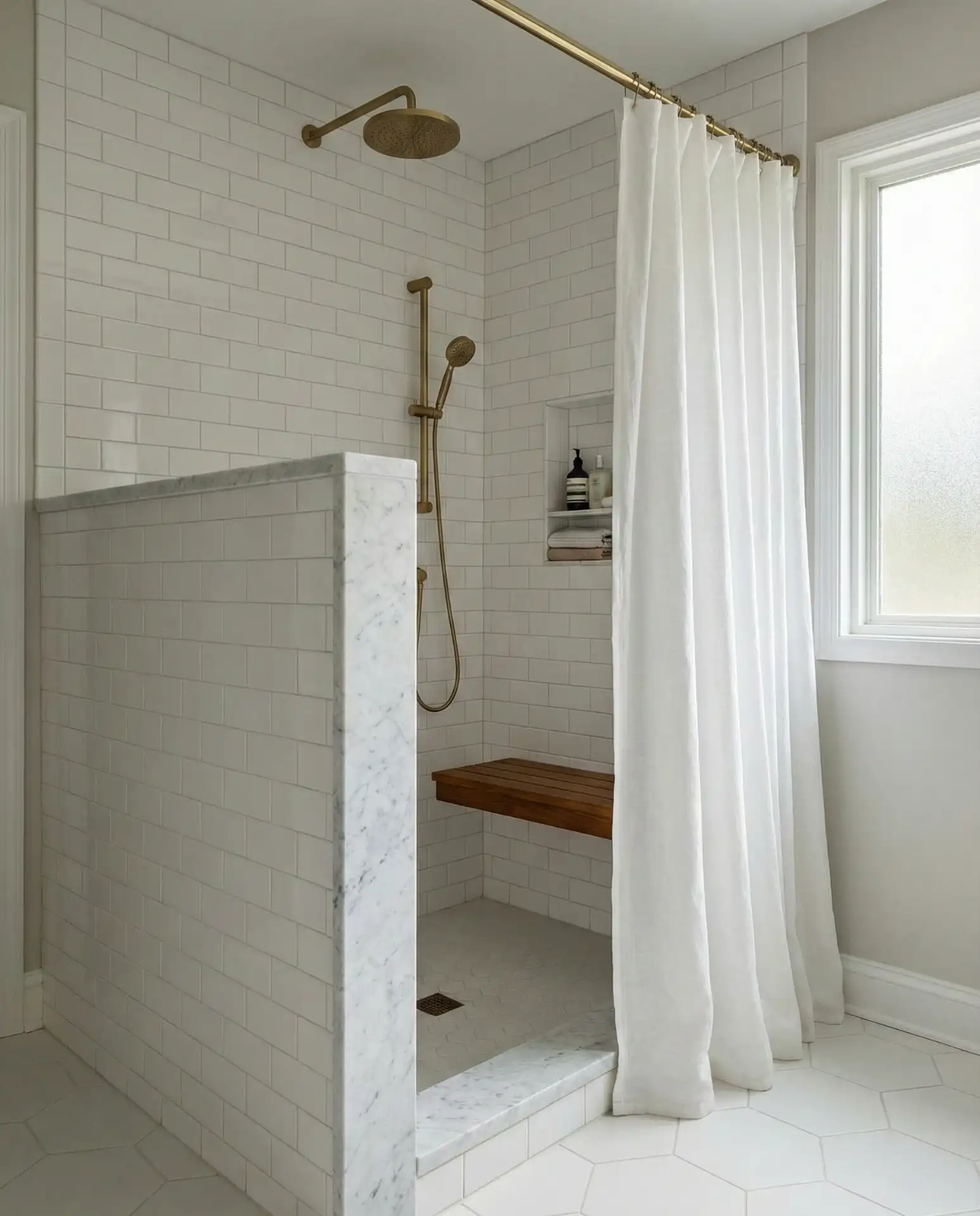
Combining a master shower with a curtain and a half wall might sound like an unusual pairing, but it’s actually one of the most versatile layouts in modern bathroom design. The half wall provides structure and privacy on one side, while the curtain handles the wet side—keeping water contained without the cost or maintenance of a full glass enclosure. It’s flexible, adaptable, and surprisingly elegant when the finishes are chosen with care.
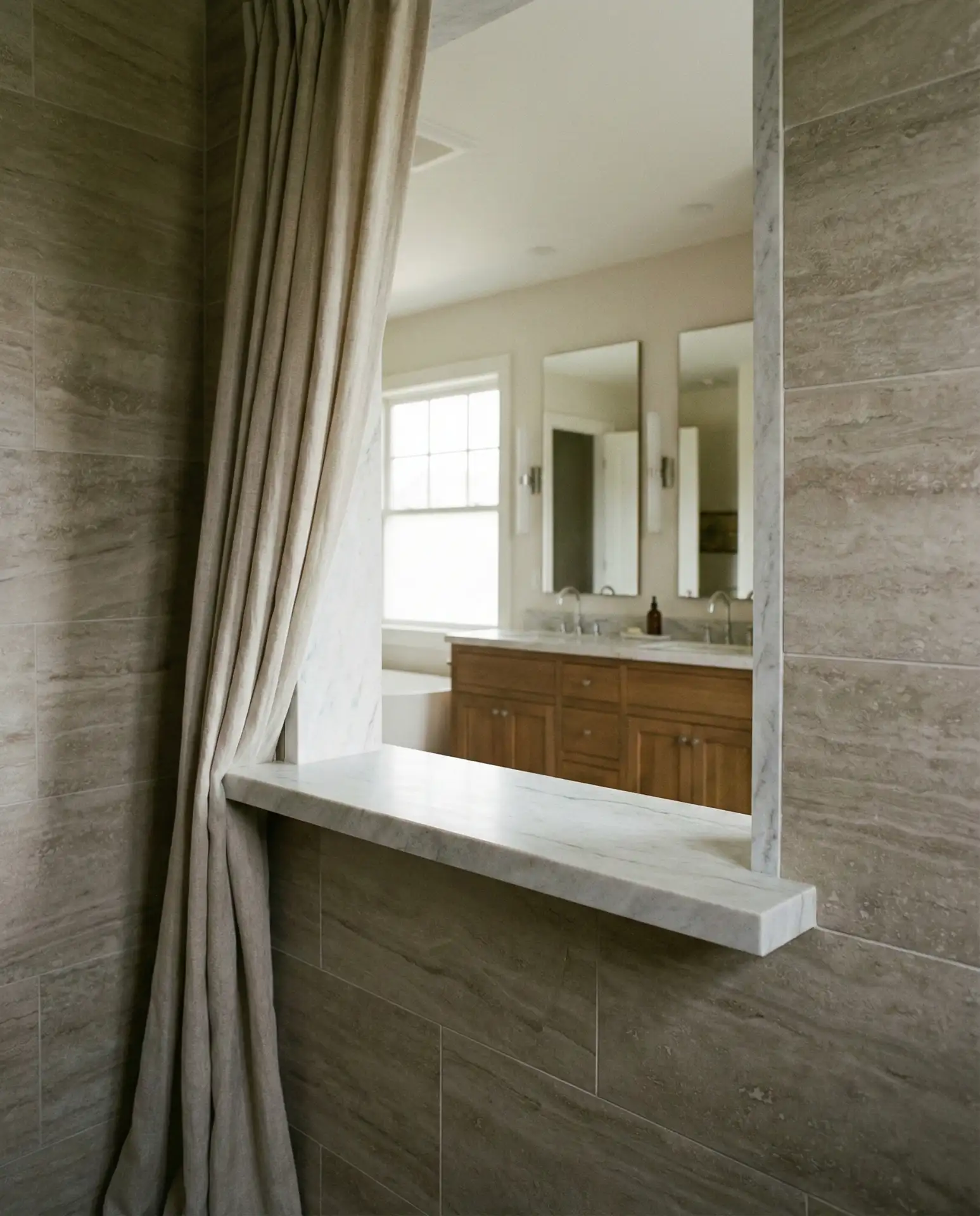
From a design perspective, the half-wall-plus-curtain combination offers something few other shower layouts can: the ability to change your mind. If you decide in three years that you want to upgrade to glass, the half wall stays—you just swap the curtain rod for a glass panel mount. It’s a modular approach to bathroom design that respects both your current budget and your future taste. Designers in the Pacific Northwest have been championing this layout for years, and it’s quietly becoming one of the most copied ideas on Pinterest.
16. White Stone Corner Shower with Polished Details
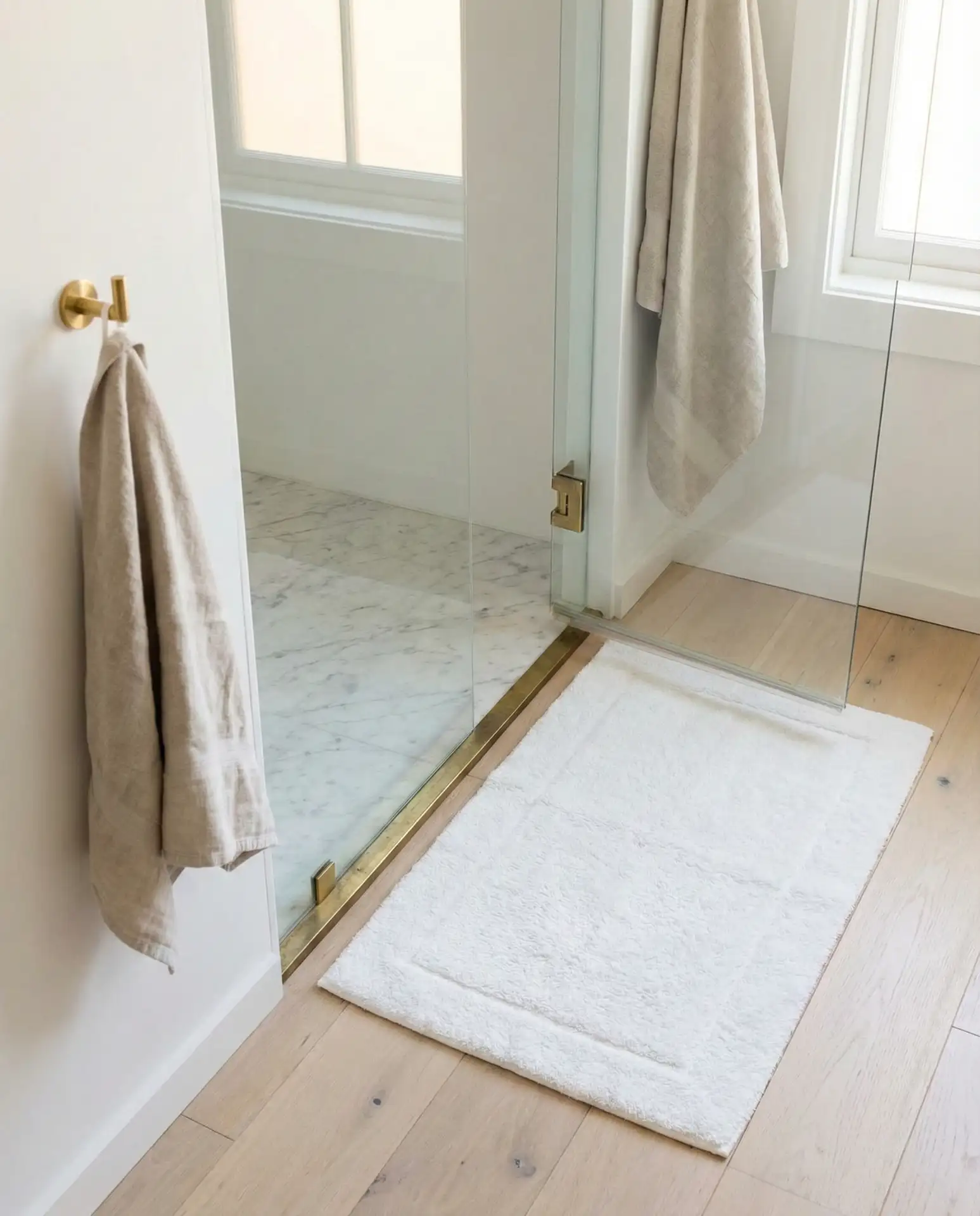
A white stone corner shower is the design equivalent of a little black dress—endlessly versatile, never out of place, and always looking sharper than you’d expect for the effort involved. Marble, limestone, or even white travertine brings just enough warmth and texture to avoid the sterile feeling that plain white tile can sometimes create. Polished fixtures, a clean glass door, and a few thoughtfully placed accessories round it all out beautifully.
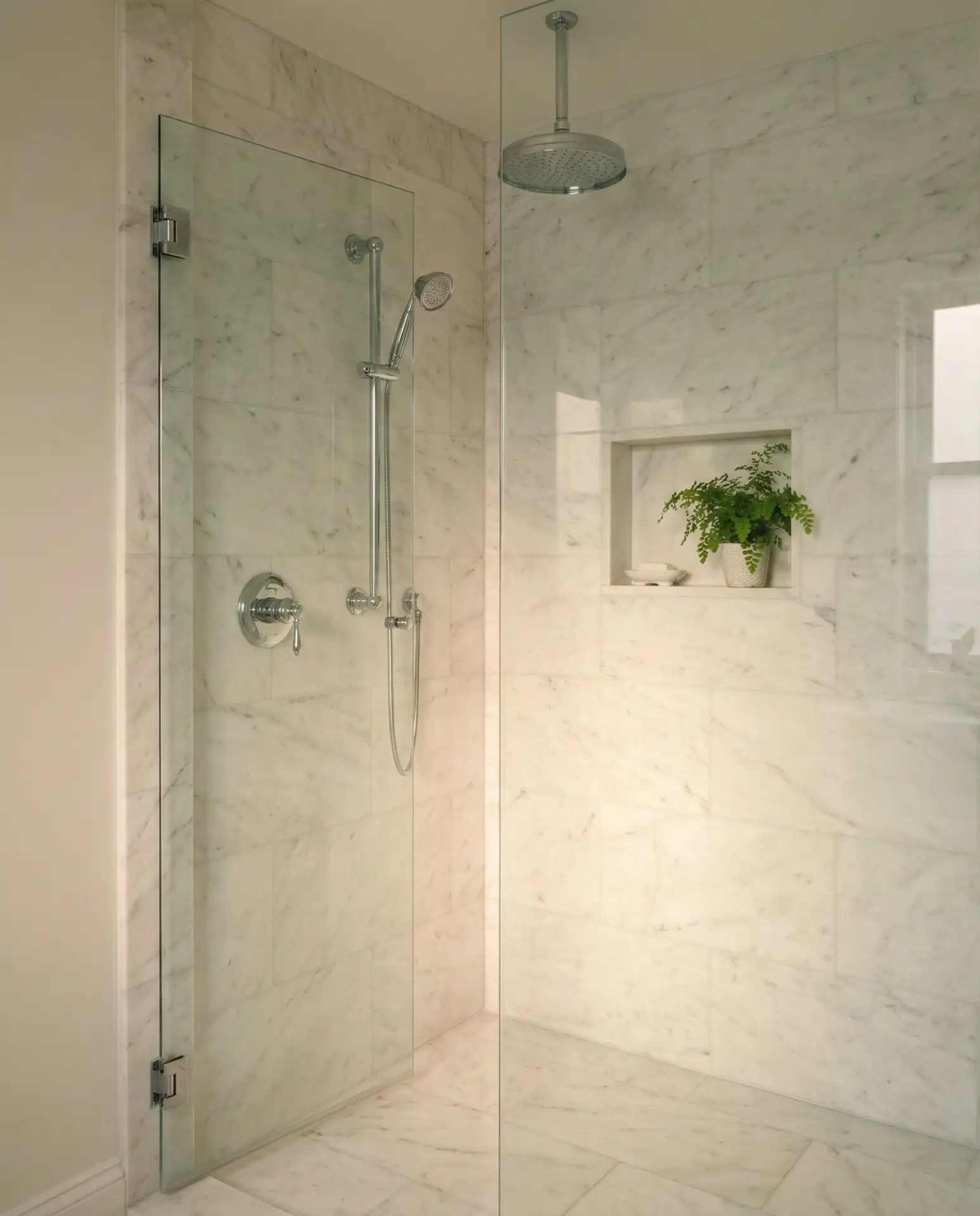
One thing homeowners often discover after installing white marble showers is just how much maintenance real stone requires. Sealing, resealing, and carefully choosing pH-neutral cleaners—it adds up quickly. A smart workaround that’s become increasingly popular: use real marble on the accent wall or bench, and switch to porcelain that mimics marble everywhere else. You get the visual impact of stone without the upkeep headache, and most guests will never notice the difference.
17. Black Door Walk-In Shower for a Small Full Bathroom
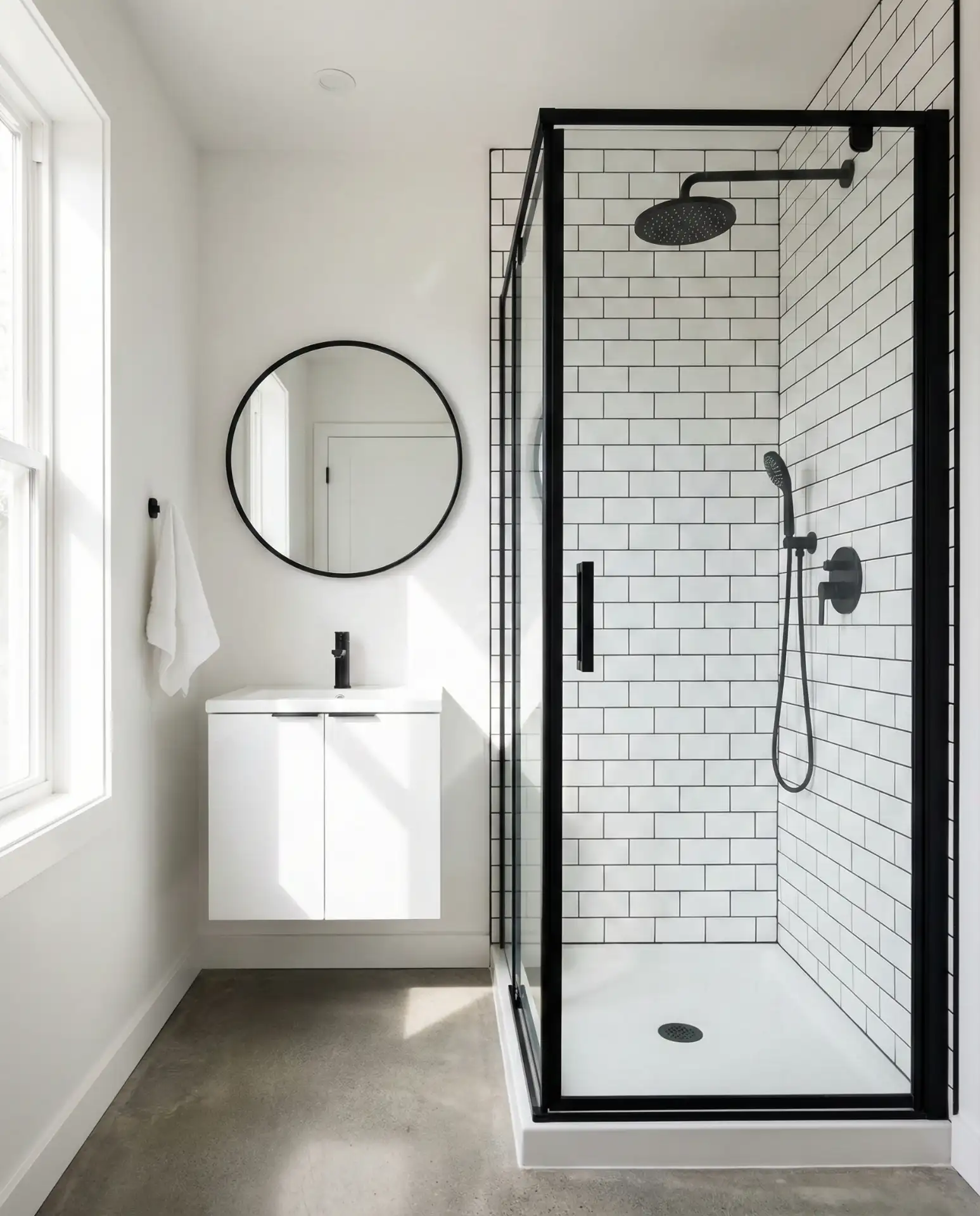
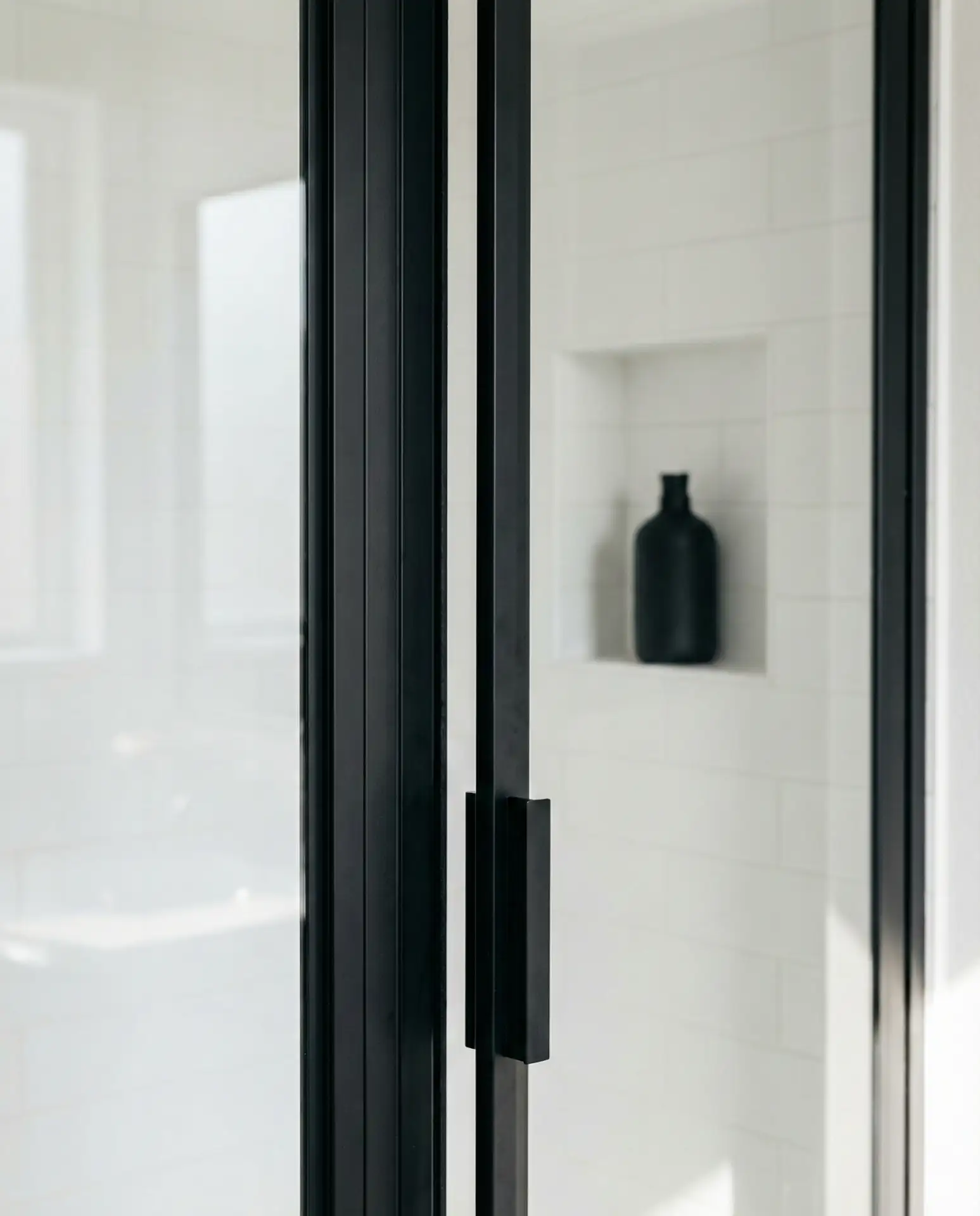
A black-framed shower door is one of the easiest ways to add a punch of contrast to a small full bathroom without a full renovation. The matte black frame catches the eye immediately—it’s a bold design accent that works against white tile, grey tile, or even warm wood tones. It’s a detail that says “this bathroom was designed on purpose” rather than simply assembled from a home improvement store catalog.
The practical insight here is all about the hardware. A matte black frame paired with matte black fixtures looks cohesive and intentional—but if you mix matte black with chrome or brushed nickel anywhere in the same bathroom, it immediately looks like a mistake. Commit fully to one finish across the door, shower head, towel bars, and hooks. In a small full bathroom especially, consistency is what makes a tight space feel curated rather than cluttered. It’s one of the simplest rules in bathroom design and one of the most frequently broken.
18. Large Bench Shower with Glass Enclosure
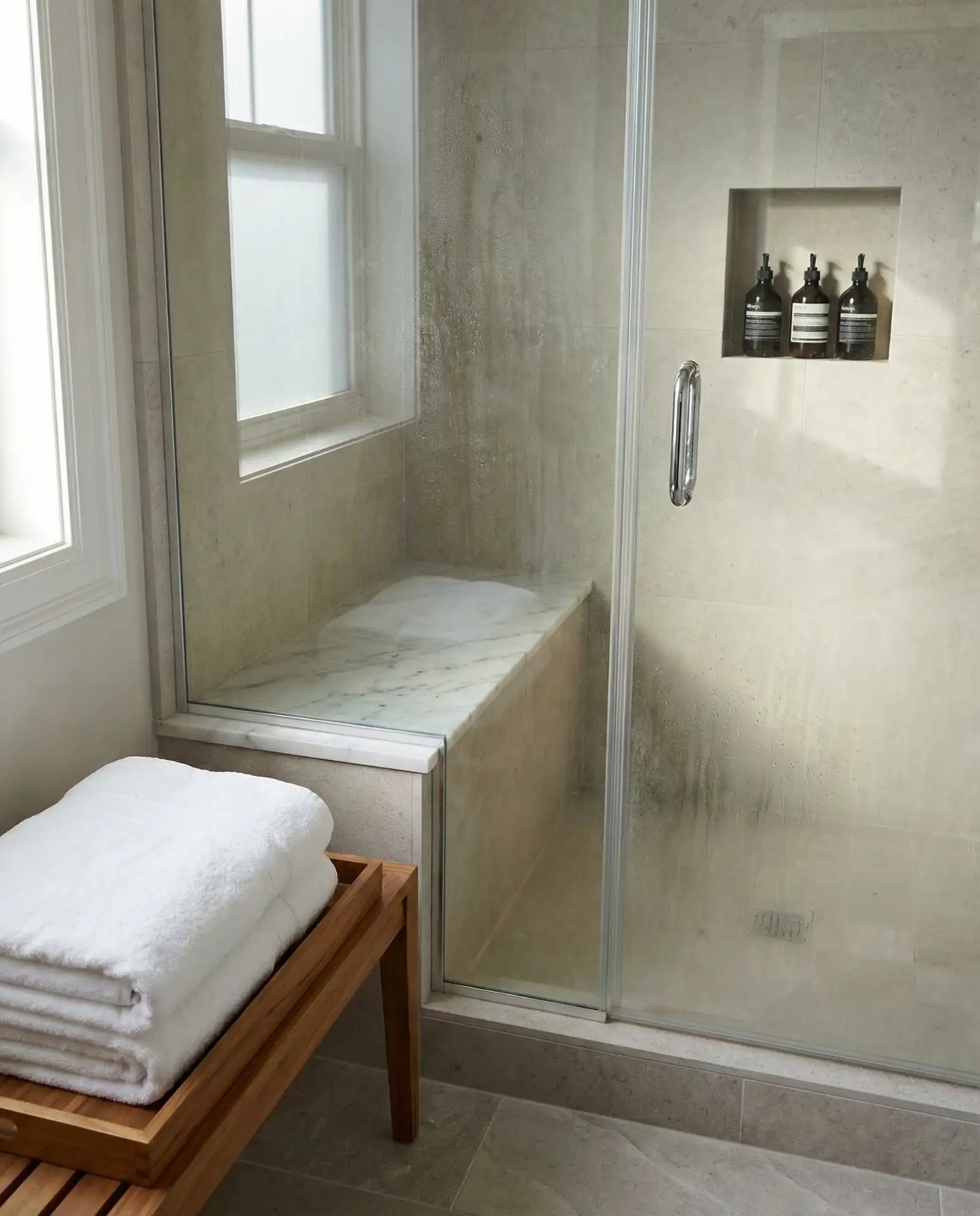
A bench inside a large shower with a full glass enclosure is the kind of combination that turns a daily routine into something you actually look forward to. The bench adds function—a place to sit, set things down, or simply decompress—while the glass keeps everything feeling open and airy, no matter how big the shower footprint actually is. It’s a layout that works especially well in master baths where the shower is meant to be the centerpiece.
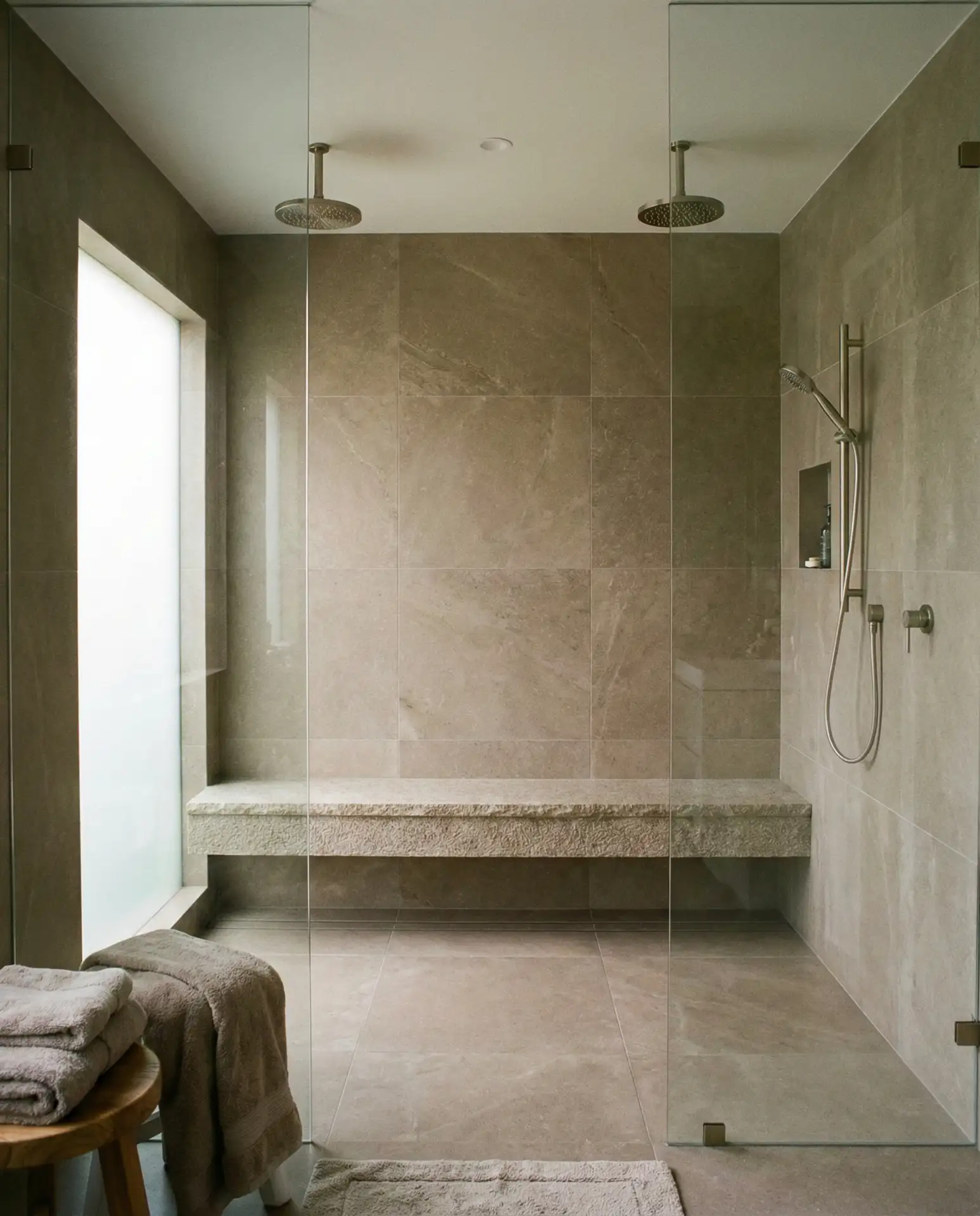
If you’re budgeting for a large bench shower with glass, expect to spend somewhere in the range of $8,000 to $20,000 depending on materials and your market. The bench is where you can save without sacrificing quality—a tile-wrapped concrete core bench looks and feels nearly identical to solid stone at a fraction of the cost. The glass, on the other hand, is where you want to splurge. Frameless panels with a low-profile track system look dramatically better than framed alternatives, and the difference in resale value is noticeable.
19. Doorless Small Master Bath Shower in Blue
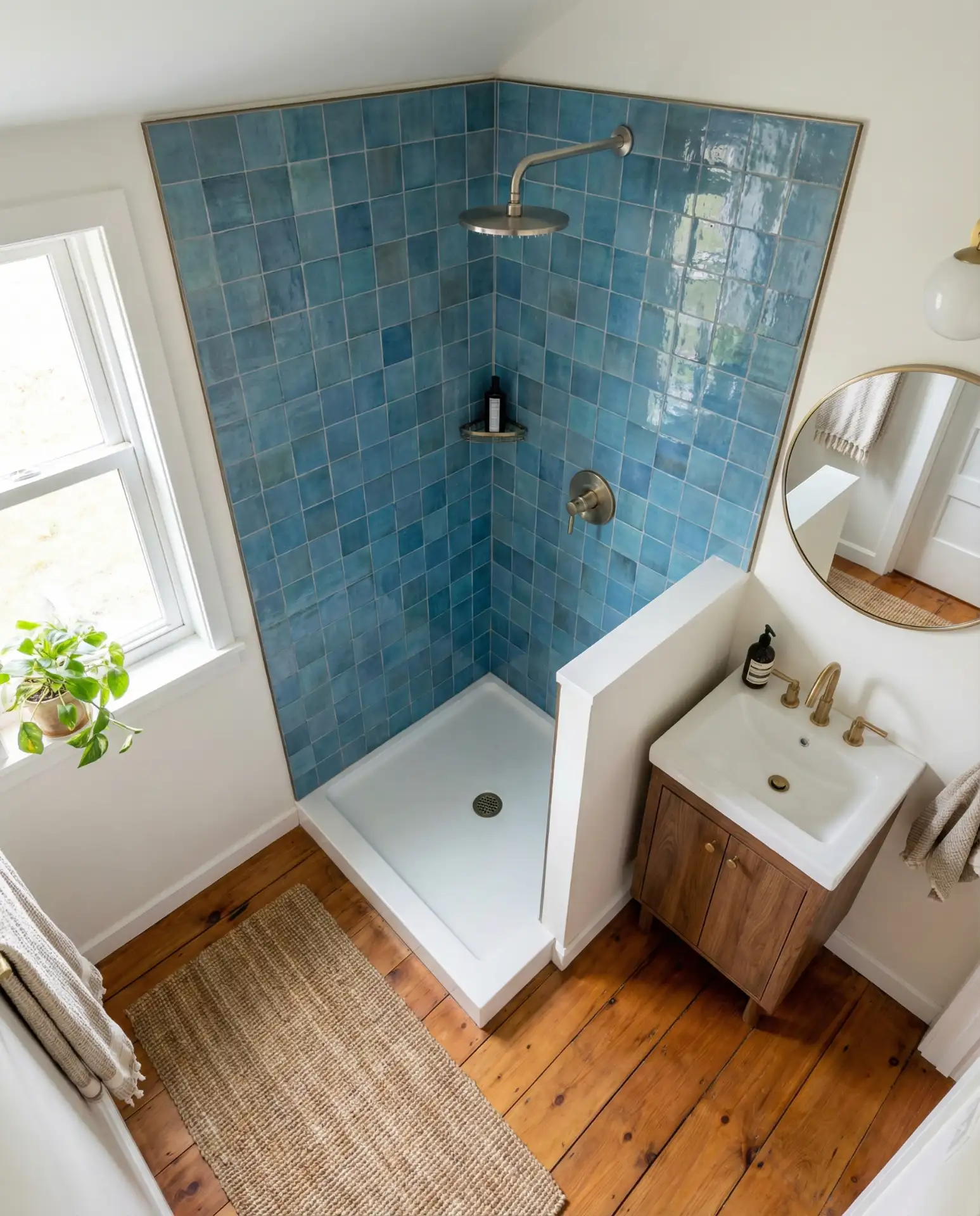
A doorless shower in a small master bath with a soft blue palette is one of those ideas that looks effortless but requires real thought to pull off. The open entry demands precise waterproofing and drainage, while the blue tones need to be chosen carefully to avoid feeling cold or clinical. Get both right, and you’ve got a master bath that feels far more spacious than its square footage suggests—a genuinely impressive trick in a tight space.
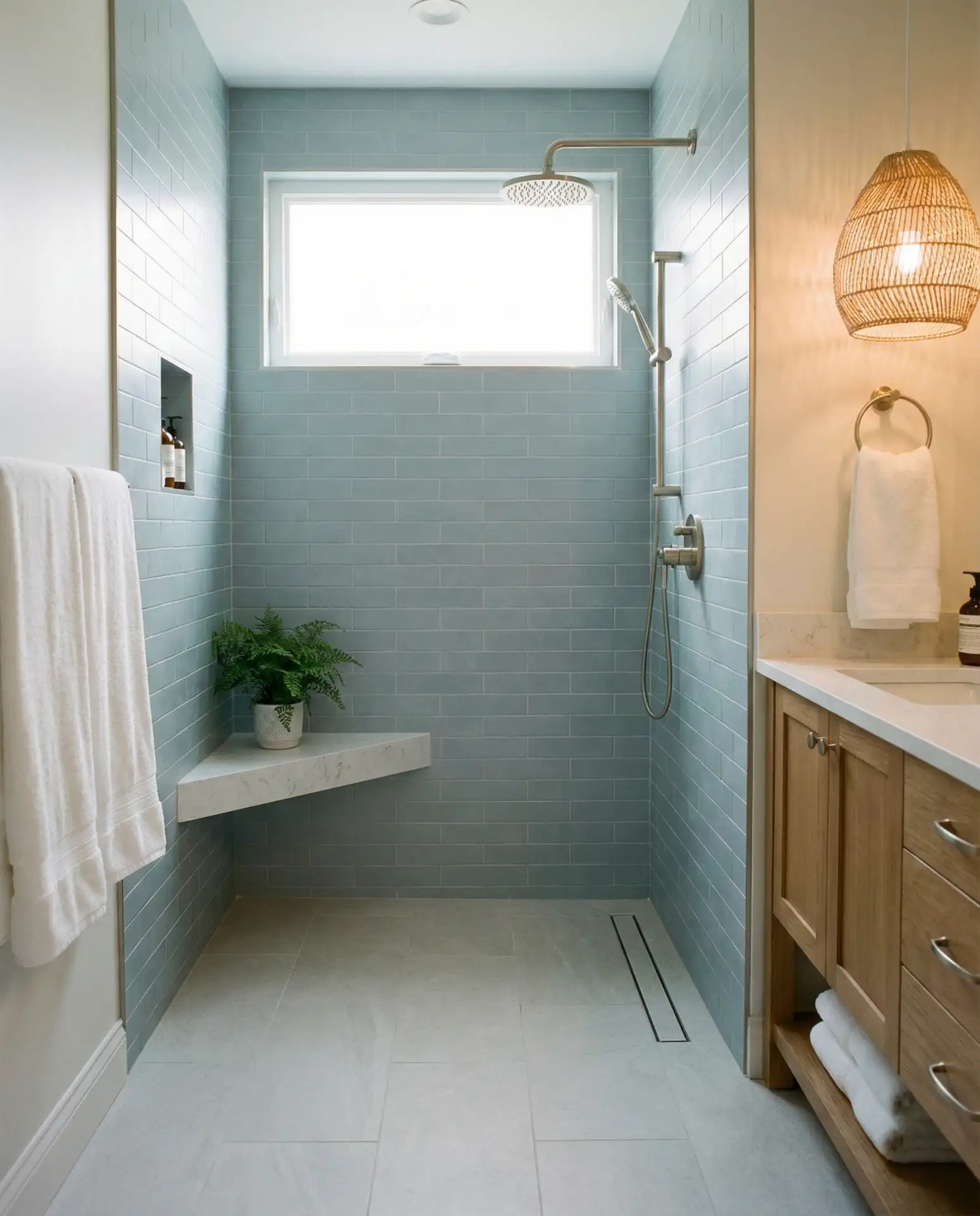
This layout works best in master baths where the shower and vanity share a wall—the open entry keeps the sightline clear and makes the room feel connected rather than compartmentalized. It’s also one of the most accessible shower designs available, which matters more than people realize. As more Americans age in place and prioritize universal design, doorless showers are quietly becoming one of the most forward-thinking choices you can make in a bathroom renovation.
20. Rustic Bathroom Remodel with a Curtain Shower
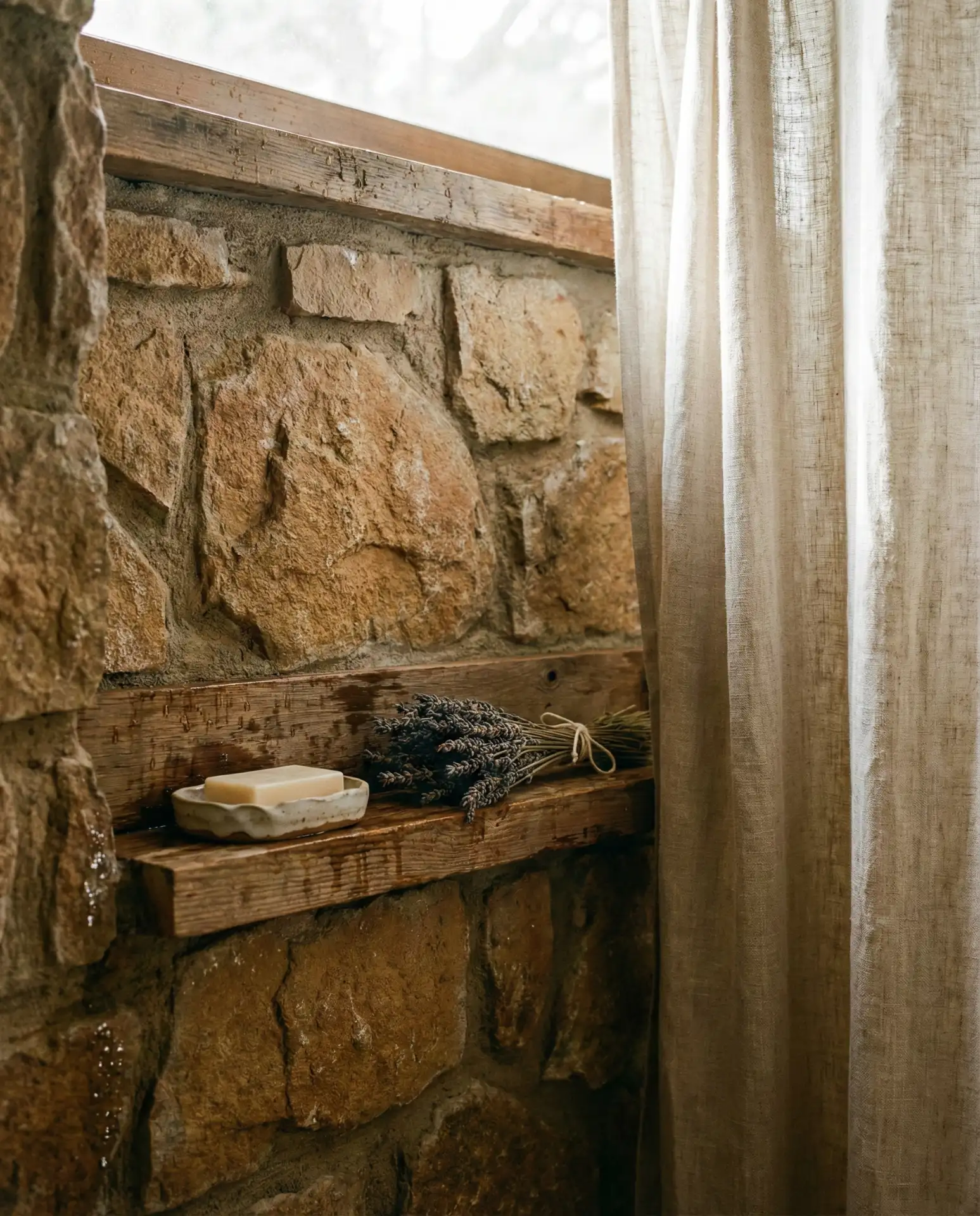
A rustic bathroom remodel that swaps a dated tub for a walk-in shower with a curtain is one of the most satisfying transformations you can do on a moderate budget. Think shiplap walls, warm wood accents, natural stone tile, and a simple linen curtain on a black iron rod—it’s the aesthetic that Pinterest users can’t stop saving, and for good reason. It feels warm, lived-in, and authentically designed without the price tag of a luxury renovation.
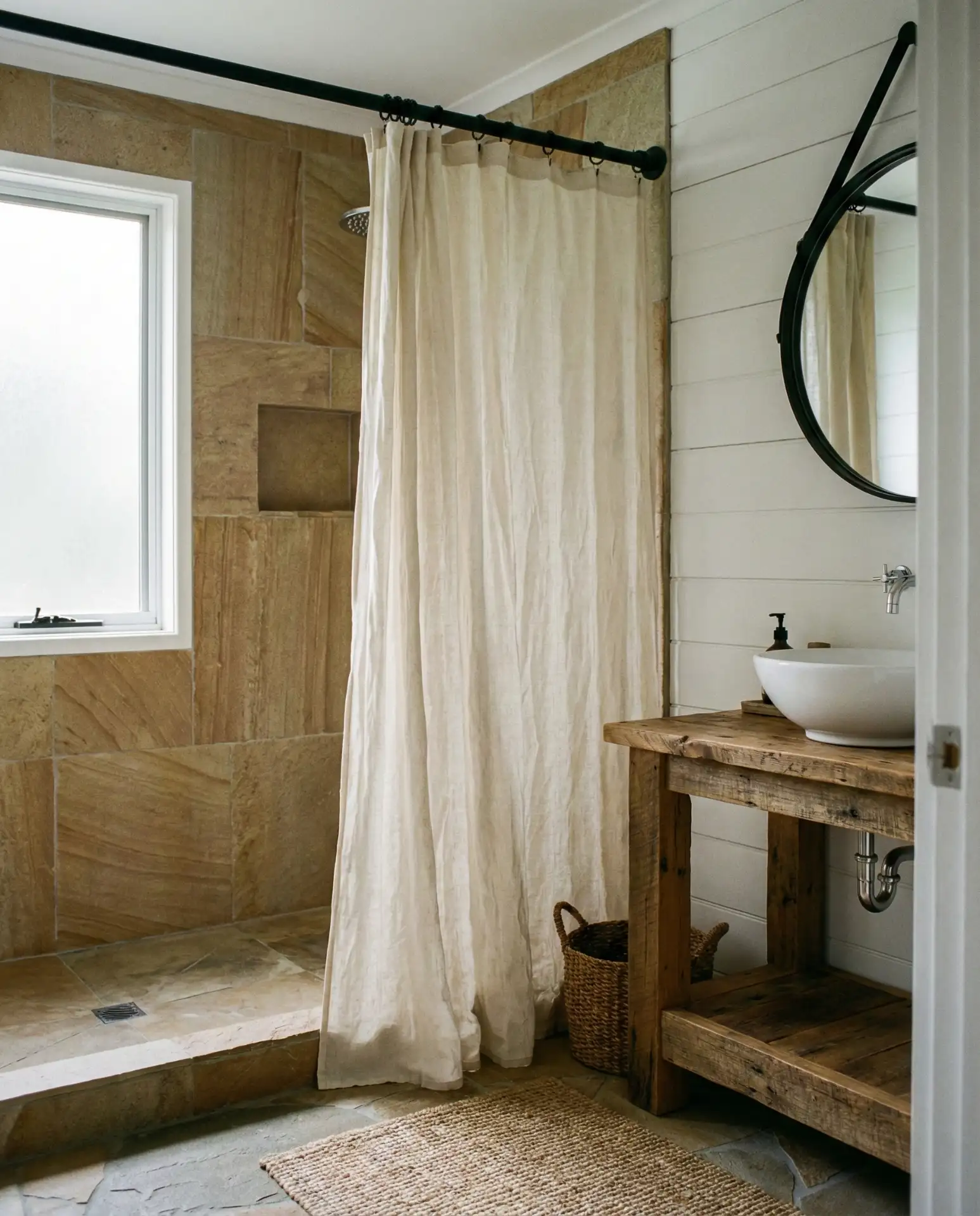
One mistake homeowners make during rustic bathroom remodels is mixing too many textures at once—shiplap plus stone plus wood plus iron can quickly tip from cozy to cluttered. The rule of thumb: pick two dominant textures and let them lead, then use the others as accents. In this case, let the stone and the wood carry the room, and keep the iron rod and any other metal elements minimal. It’s the difference between a bathroom that feels curated and one that feels like a Pinterest board exploded in your hallway.
21. Small Bathroom Walk-In Shower with Dark Accents and Double Fixtures
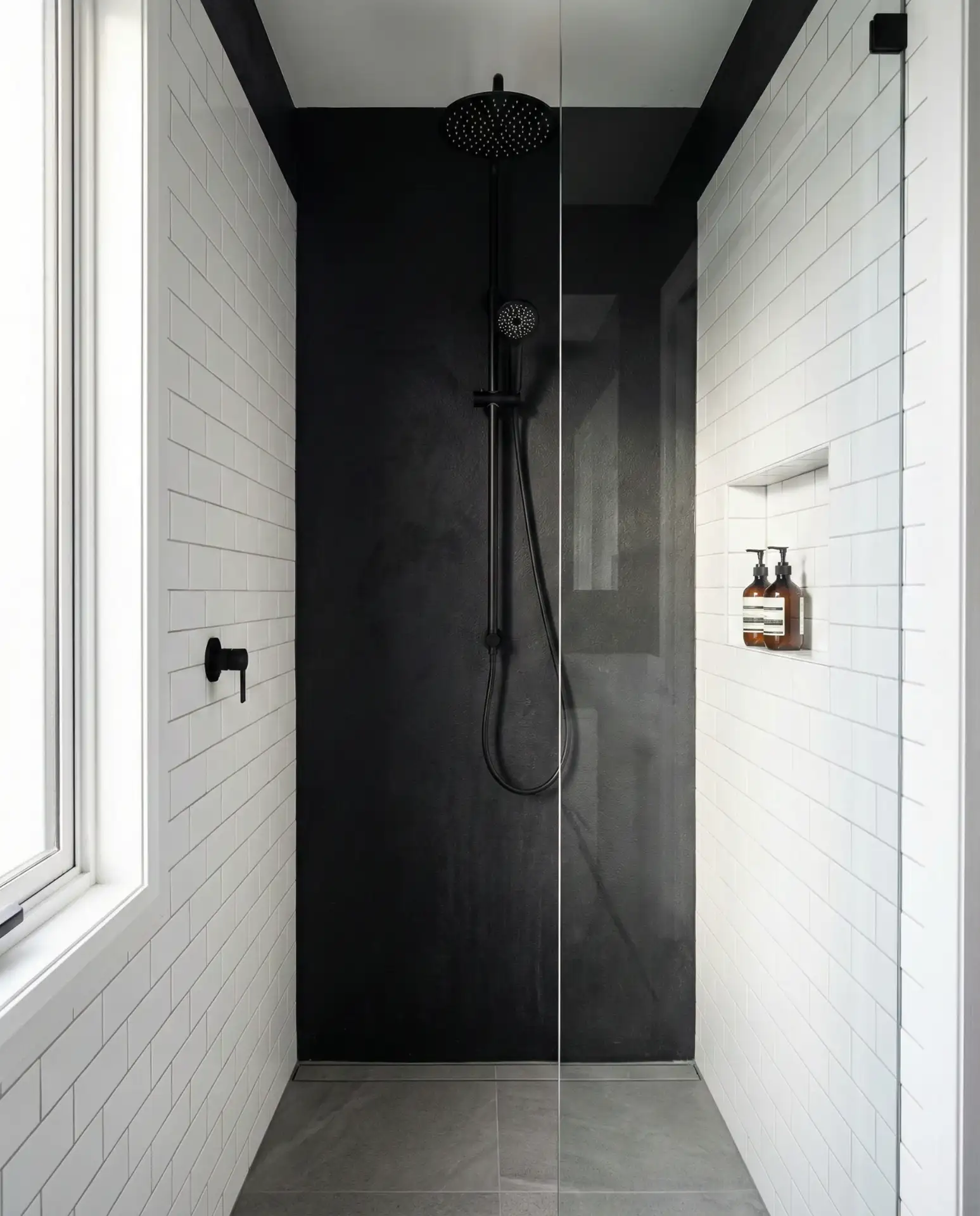
When you’re working with small bathroom walk-in shower ideas and want to add real visual punch, dark accent tiles paired with double shower fixtures can do the heavy lifting. A dark feature wall behind the showerhead, matte black fixtures on both the rain head and handheld, and clean white tile everywhere else—it’s a combination that feels intentional and bold without overwhelming a compact space. The contrast does all the work.
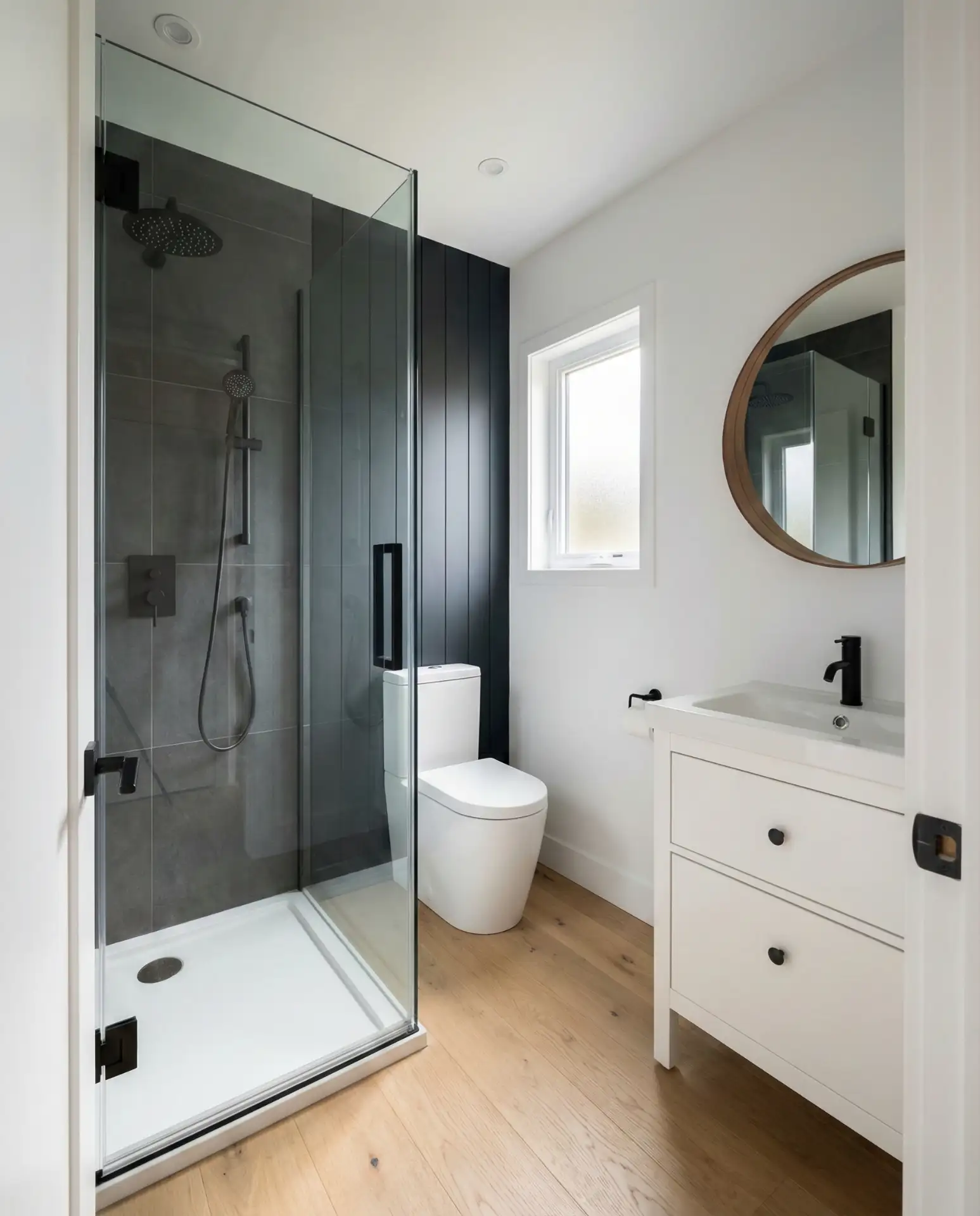
The double fixture trend in small bathrooms has been one of the quiet design shifts of the past few years across American homes. It started in master baths, but homeowners quickly realized that even a small shower benefits from having both a rain head and a handheld—the rain head for daily use and the handheld for rinsing, cleaning the shower, or washing kids and pets. In a tight space, the key is keeping both fixtures on the same wall so they don’t crowd the layout or create awkward plumbing runs.
22. Tub Replacement in a Master Bath with a 4×6 Stone Shower
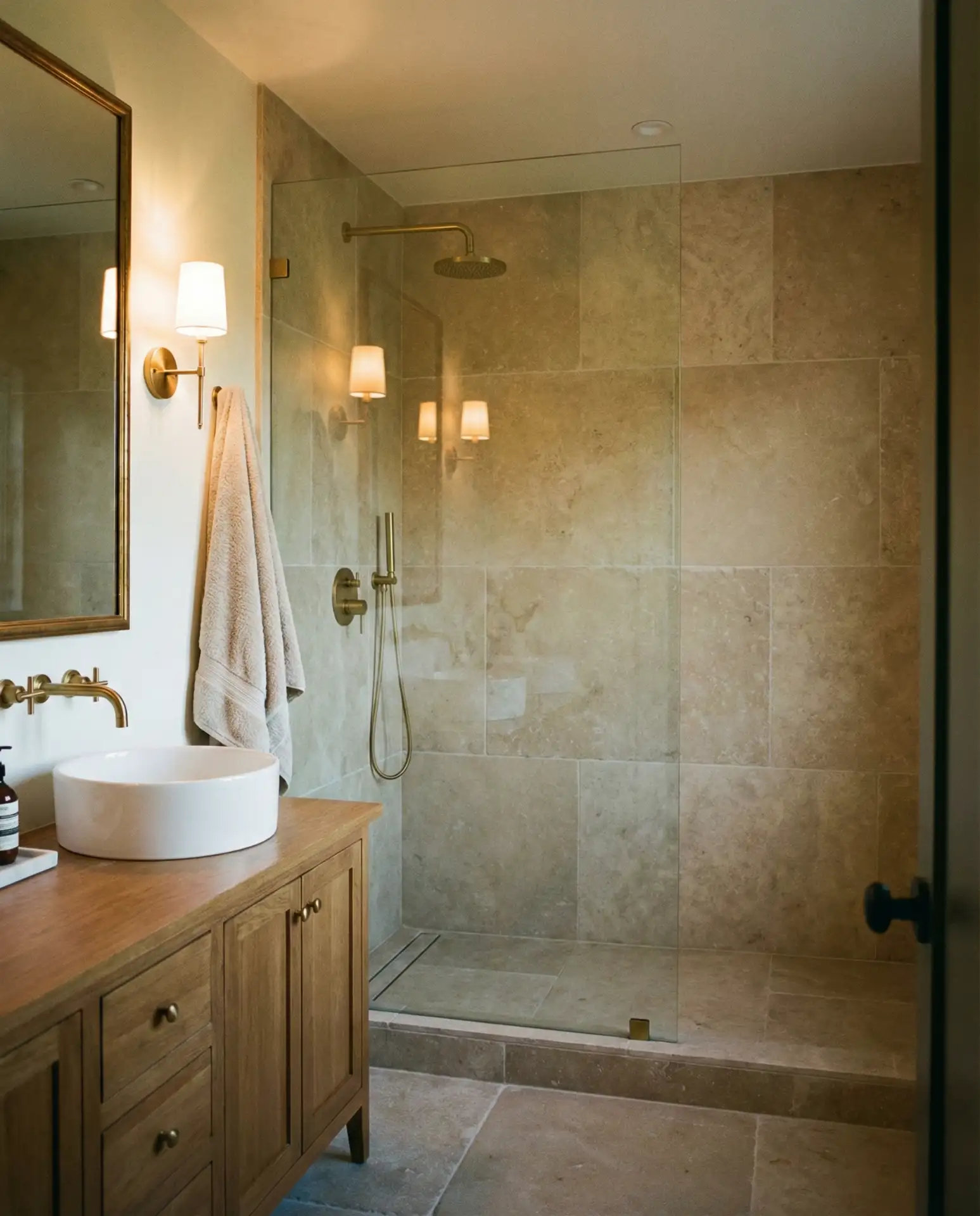
Choosing to replace a tub in a master bath with a 4×6 stone shower is one of the most popular renovation decisions happening right now—and it’s easy to see why. That footprint gives you a genuinely generous shower space, enough room for a bench or two showerheads without feeling crowded, while the natural stone tile adds warmth and texture that plain ceramic simply can’t match. It’s a conversion that changes how you experience your own bathroom every single day.
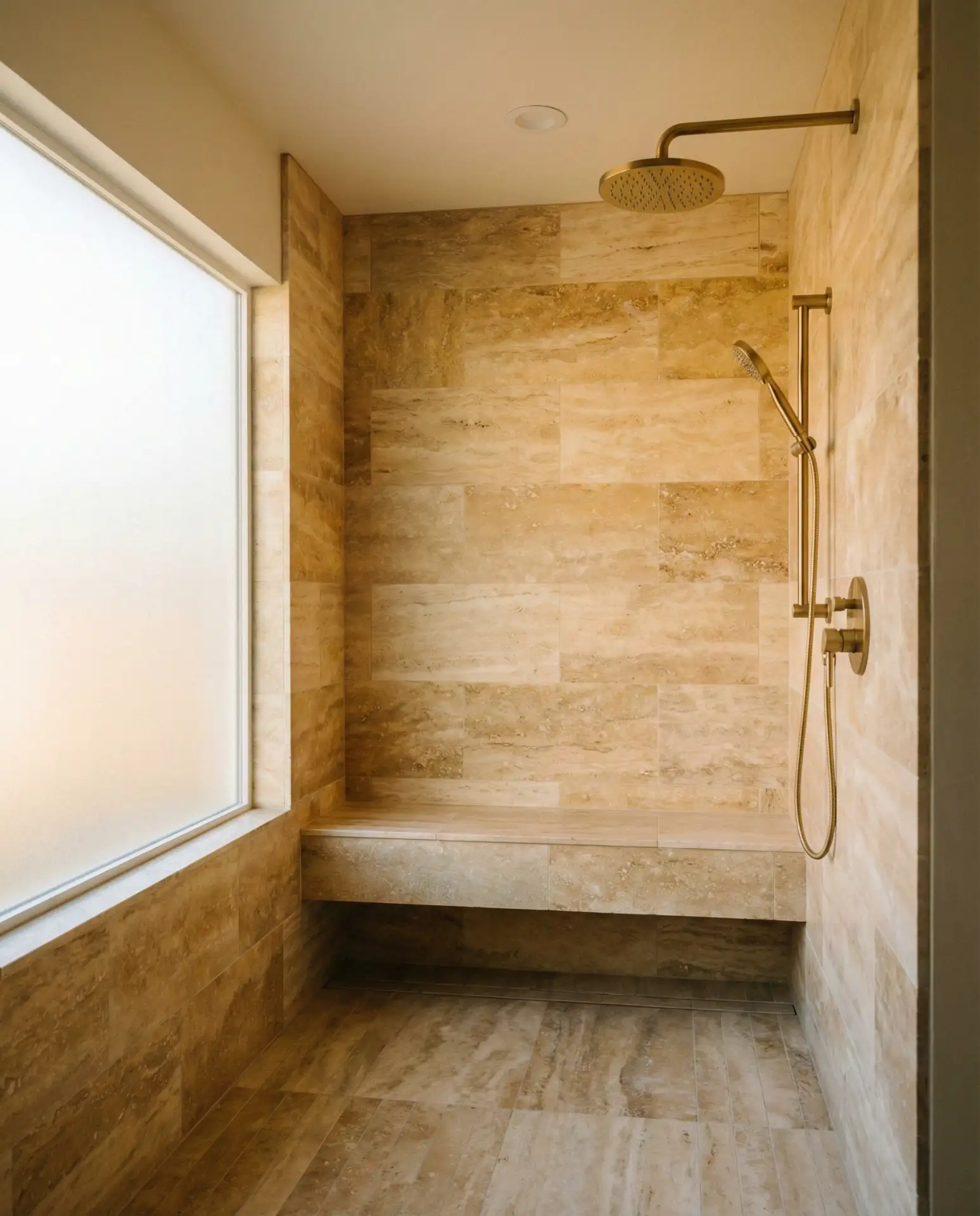
A homeowner in Austin recently documented her tub-to-shower conversion on social media, and the detail that surprised her most was how much the stone selection mattered. She’d originally planned to go with a standard ceramic tile but switched to travertine at the last minute—and she said it completely changed the feeling of the room. The lesson? In a 4×6 master bath shower, the tile is the star. Spend the time (and the budget) choosing a stone that genuinely moves you, and everything else—the fixtures, the bench, the layout—will fall into place around it.
Conclusion
Walk-in showers are one of those bathroom upgrades that, once you have one, you simply can’t imagine living without. Whether you’re working with a tiny hall bath or a sprawling master suite, there’s a design on this list that’ll fit your space, your style, and your budget. We’d love to hear which ideas caught your eye—drop your favorites in the comments below, and let us know if you’re planning a shower renovation of your own this year.