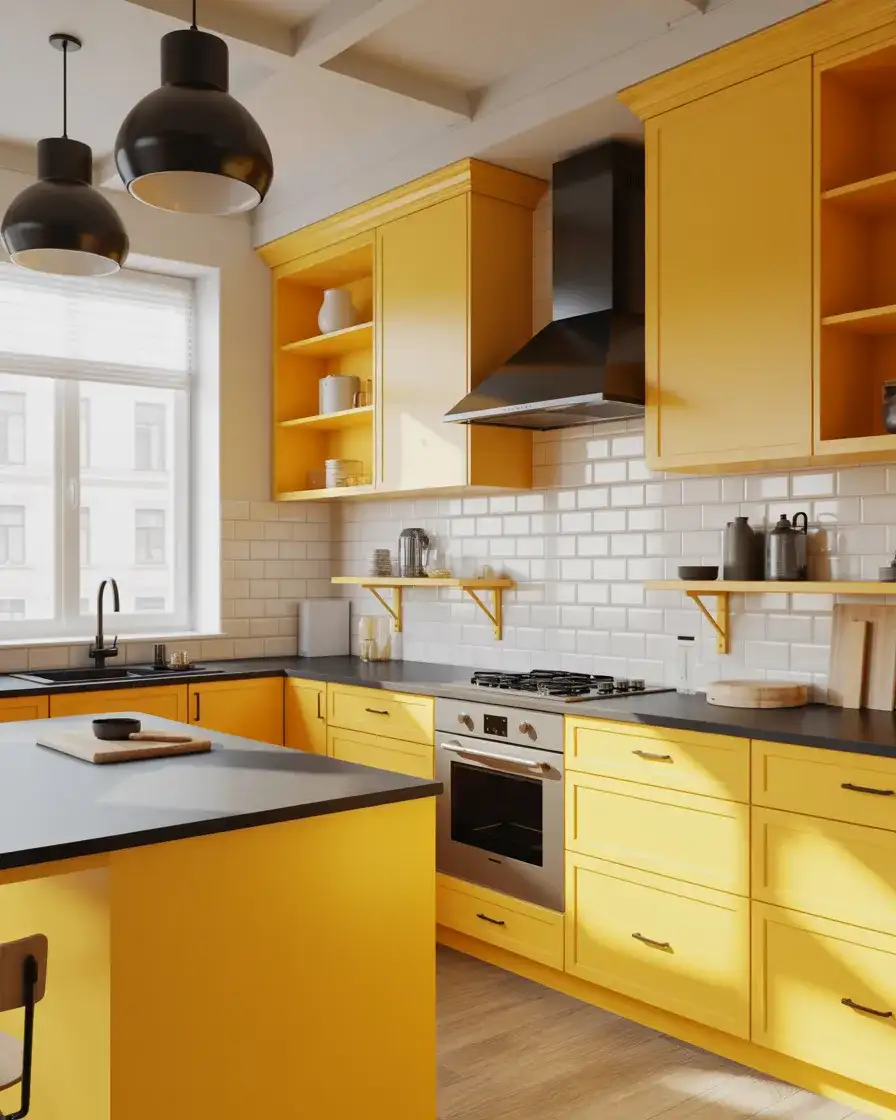
Yellow kitchens are having a serious moment—and honestly, it’s long overdue. After years of grey dominating every home makeover feed, a warmer, sunnier palette has quietly taken over Pinterest boards from coast to coast. Whether you’re drawn to a soft buttery tone or a bold, unapologetic mustard, there’s something undeniably inviting about building your kitchen around a shade of yellow. This roundup pulls together fresh ideas for 2026 that range from minimalist and modern to vintage and cozy, so you can steal the ones that speak to you and make them your own.
1. Butter-Toned Cabinets With Open Shelving
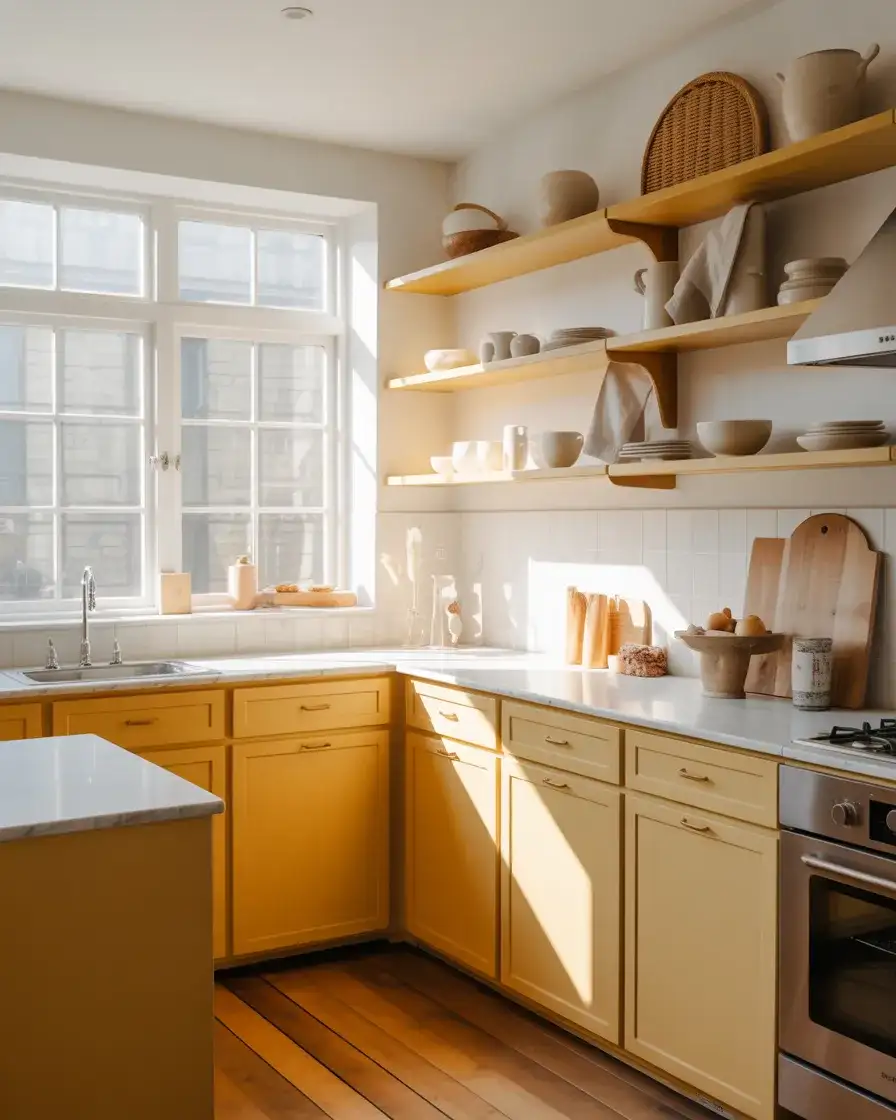
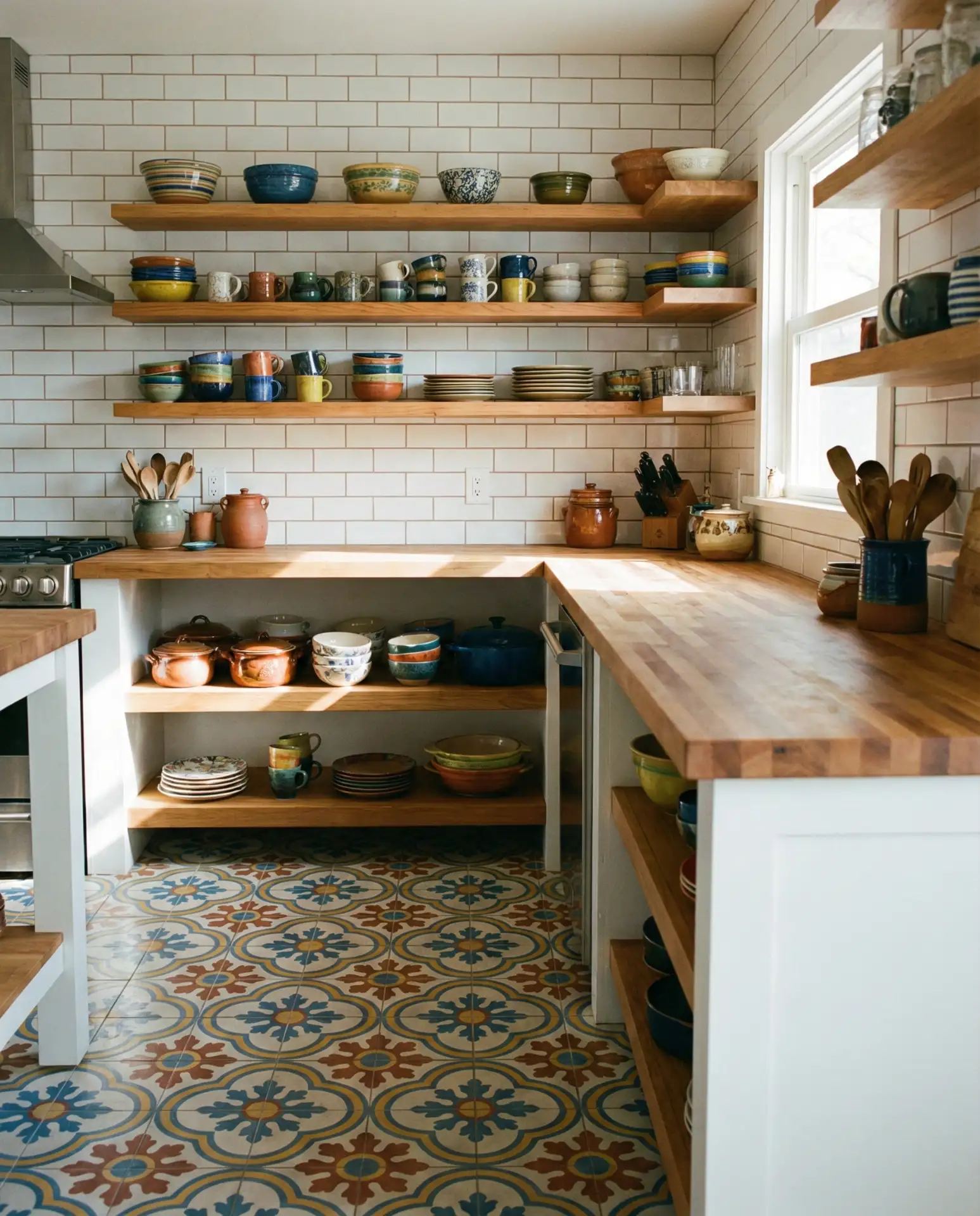
There’s something deeply calming about a kitchen built around butter-toned cabinets. This warm, creamy shade sits right in the sweet spot between yellow and white—never screaming for attention but always quietly anchoring the room. When you pair those soft cabinets with open shelving in natural wood or light oak, the whole space opens up and starts to breathe. It feels airy without feeling cold, and it works beautifully in both small galley kitchens and larger, more open-plan layouts across the country.
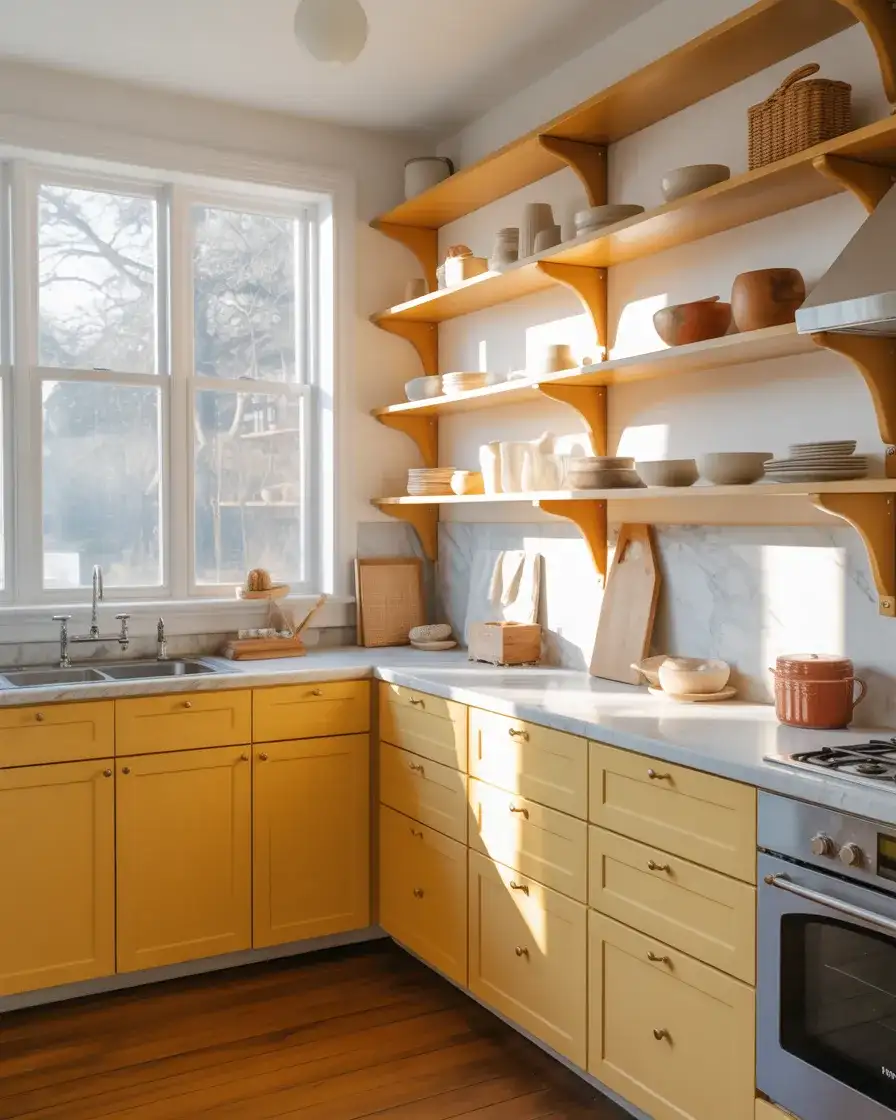
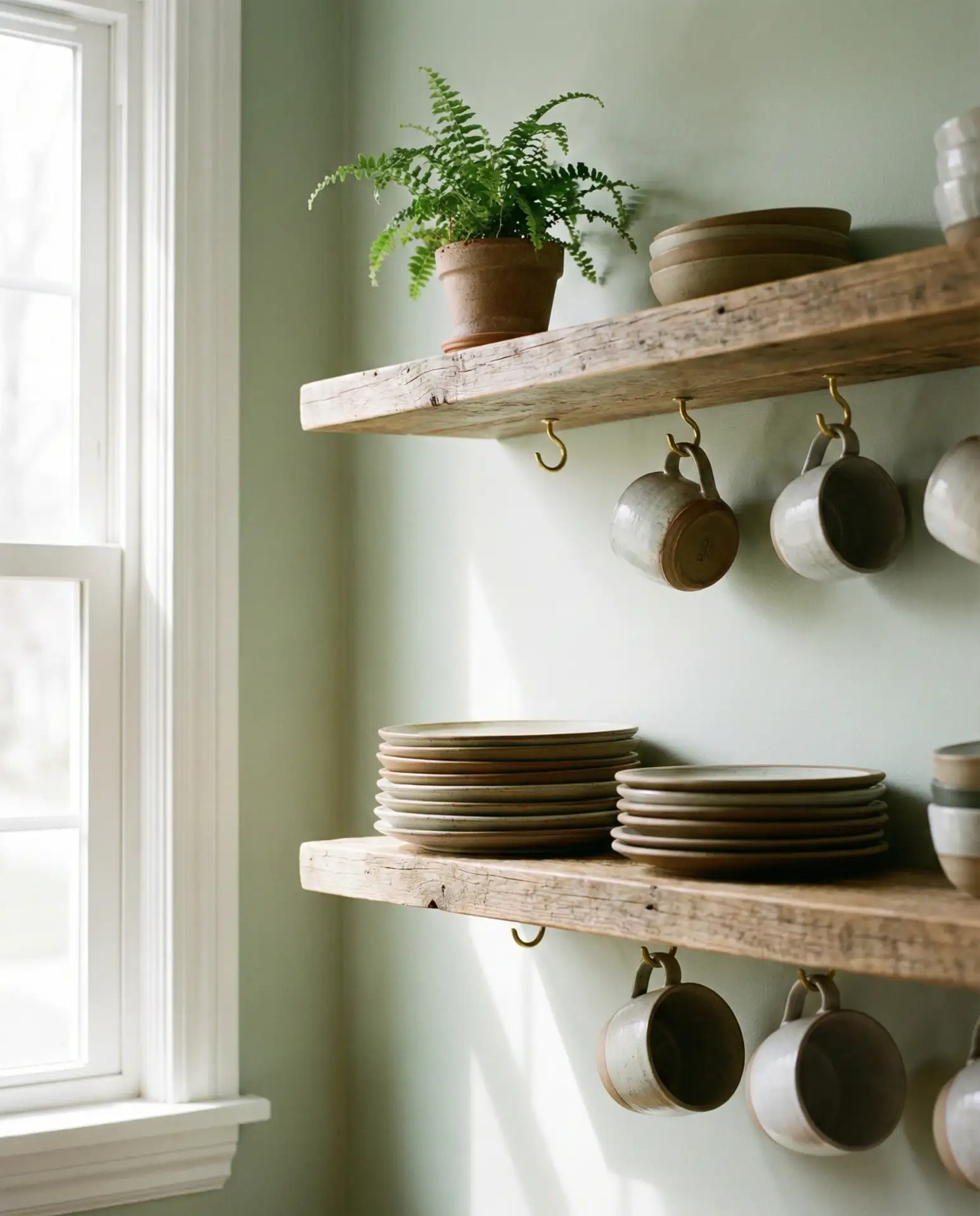
Open shelving might feel like a trend that’s come and gone, but when it’s anchored by cabinets this warm, it transcends the fad entirely. A designer friend once told me that the secret to making open shelves look intentional is to limit yourself to three to five objects per shelf—and she was right. This kitchen practically styles itself. If budget is a concern, look into painting your existing upper cabinets and swapping them for simple floating ledge shelves, which can run as low as forty dollars per linear foot.
2. Mustard Walls With White Cabinets
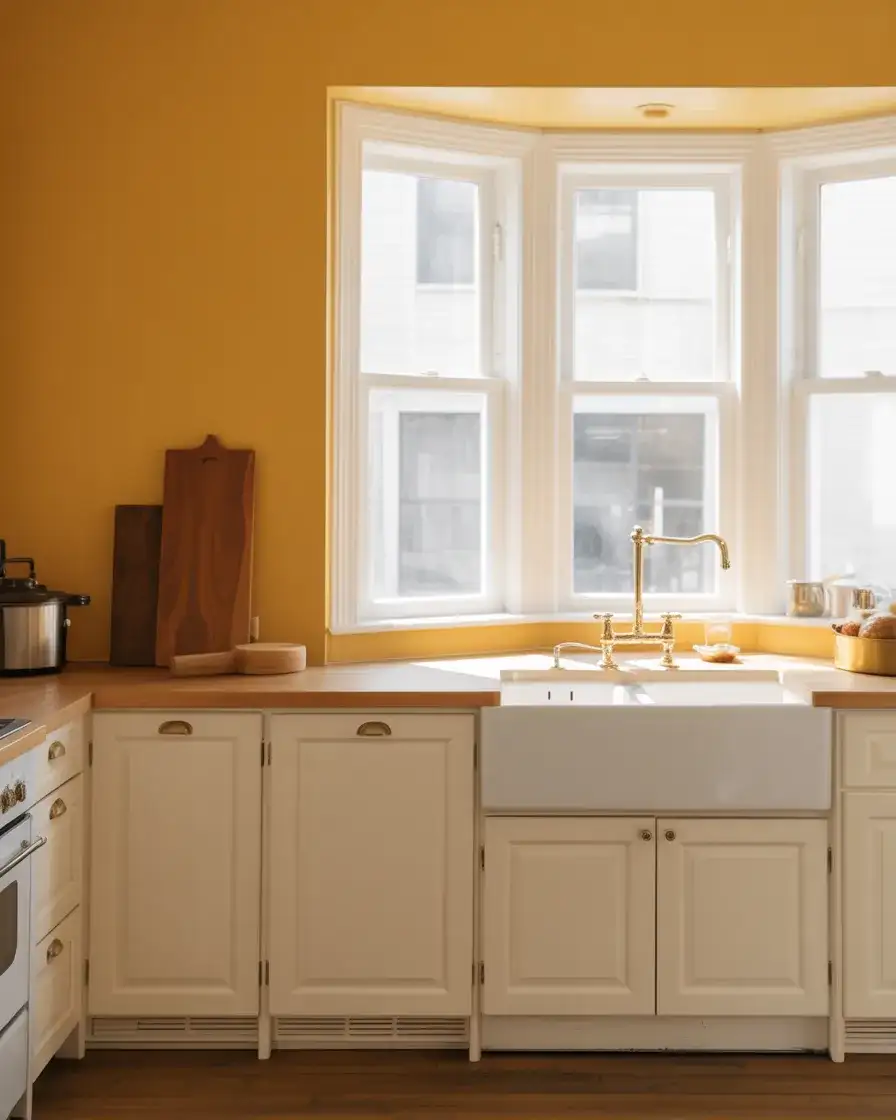
If you want to bring yellow into your kitchen without committing to it on every surface, mustard walls paired with white cabinets is one of the smartest moves you can make. Mustard is deep enough to feel intentional—it’s not a color you’d accidentally end up with—but it still lets your cabinets do the heavy lifting in terms of brightness and visual structure. This combination works especially well in kitchens that get decent natural light, where the mustard will shift beautifully throughout the day.
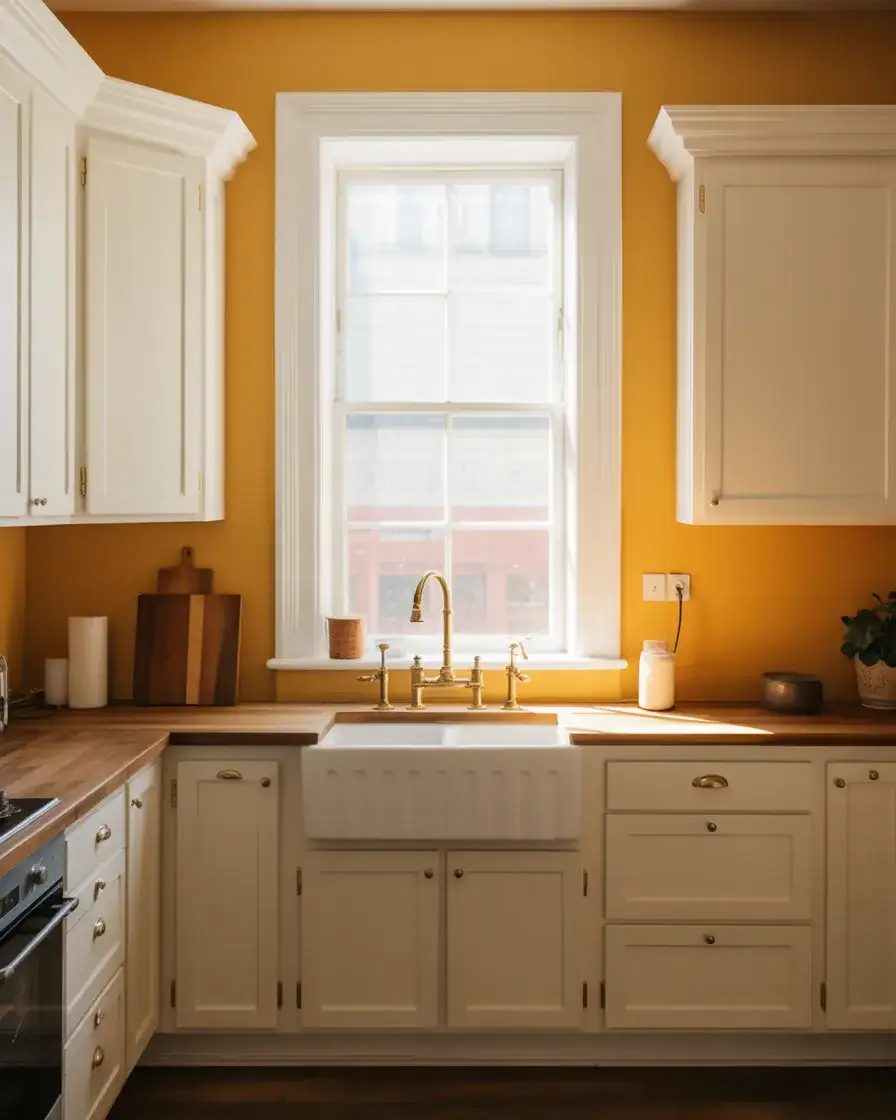
One common mistake people make with bold wall colors is choosing a finish that fights the light. For mustard specifically, go with an eggshell or satin—never flat. A flat finish on a saturated color like this will look muddy by evening, especially under artificial light. Eggshell gives you just enough sheen to catch the light and keep that golden warmth alive even after the sun goes down. It’s a small detail, but it’s the difference between a kitchen that feels intentional and one that feels slightly off.
3. Pale Yellow Island in a Neutral Kitchen
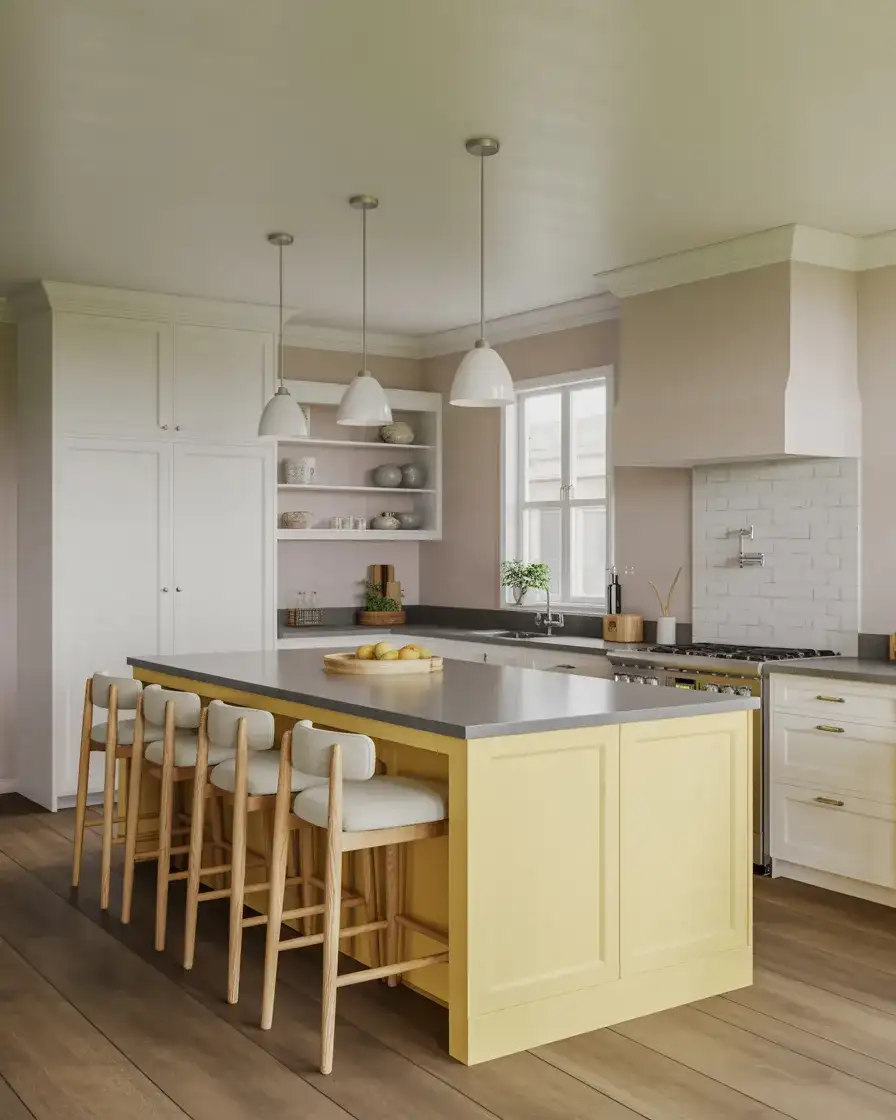
An island is one of the best places to introduce color without overpowering a room, and a pale yellow is the perfect shade for the job. Think of it as a sunny focal point—something your eye drifts to the moment you walk in, but gently. This approach works beautifully in kitchens where everything else stays in the neutral family: white walls, grey or white upper cabinets, and natural stone countertops. The island becomes the quiet star of the show without any drama.
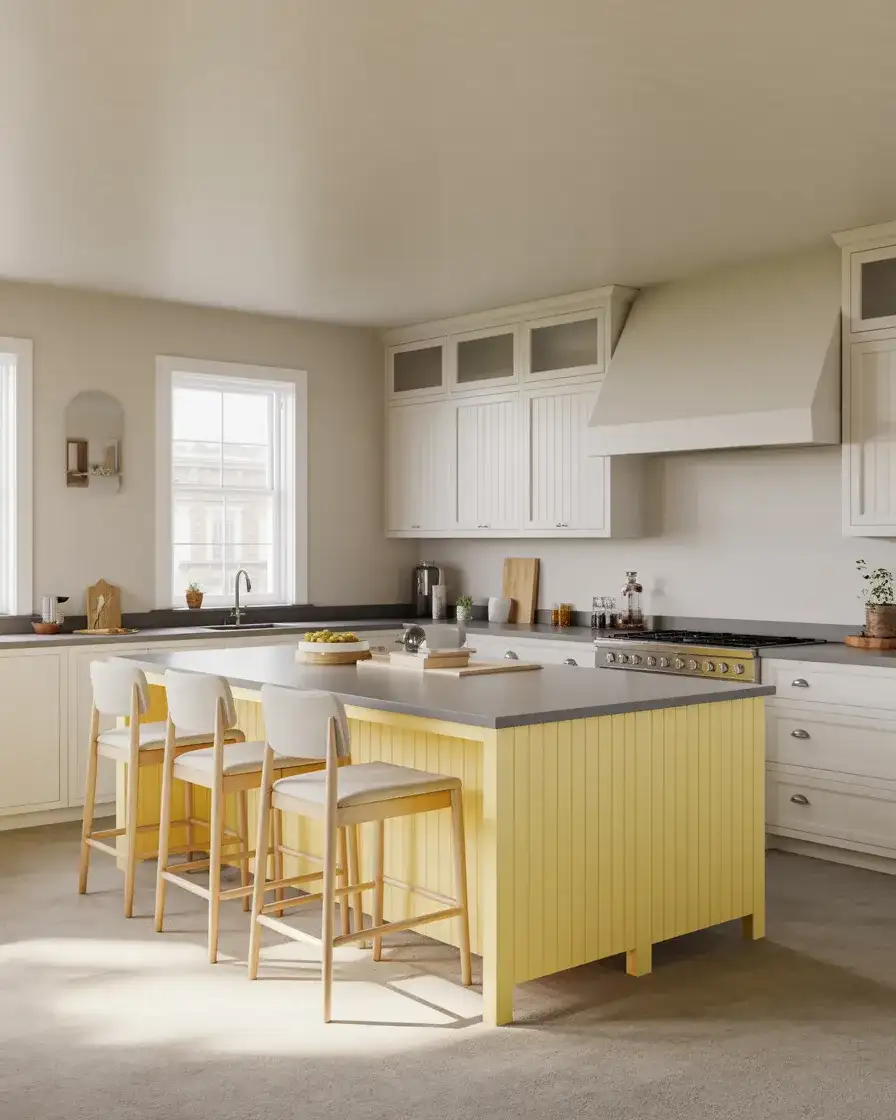
This setup is practically tailor-made for the open-plan kitchens that dominate newer builds across the Sun Belt. When your kitchen flows directly into a living room, you want color that invites people in rather than boxing them out—and pale yellow does exactly that. If you’re renting and can’t paint, consider a removable peel-and-stick paint solution on the island’s front panels, or even a bold runner rug underneath that pulls in a similar hue without touching a single cabinet.
4. Vintage Yellow Kitchen With Ceramic Tiles
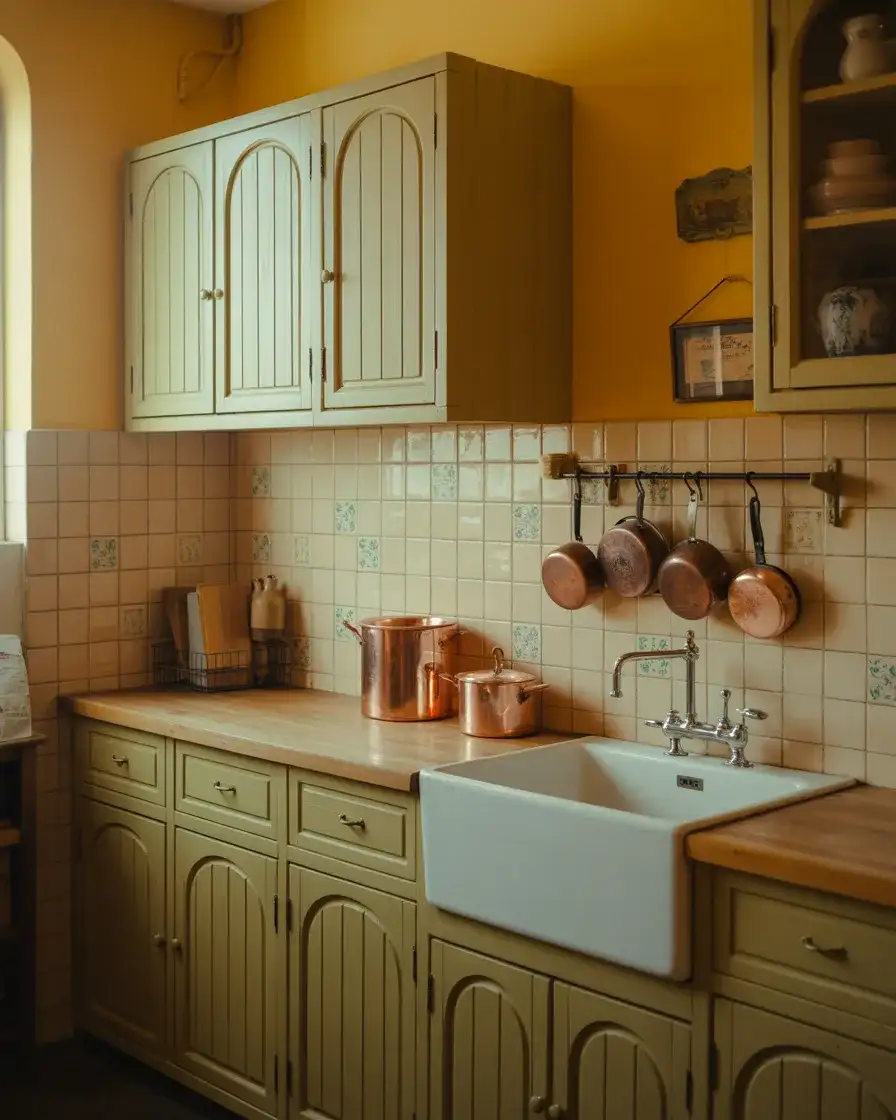
There’s a reason vintage kitchens keep showing up on Pinterest year after year—they feel lived-in, warm, and full of personality in a way that ultra-modern spaces sometimes can’t match. Pair that vintage sensibility with a soft yellow palette and handmade ceramic tiles, and you’ve got something genuinely special. The slight imperfections in handmade tile—the gentle variation in glaze, the organic edges—give the whole room a character that no two kitchens will share.
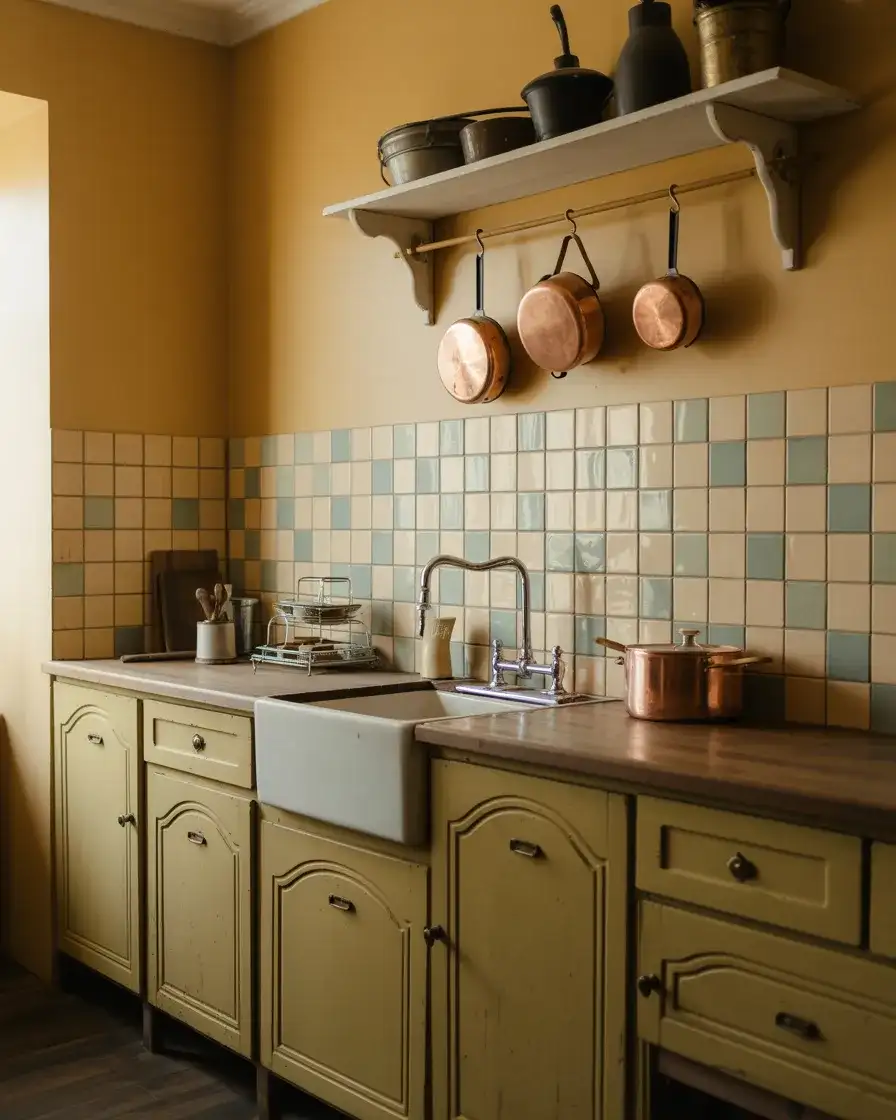
If you’re drawn to this look but handmade ceramics feel out of reach price-wise, there are some genuinely good options now from brands like Zellige-style reproductions that come in at a fraction of the cost. The key is choosing a tile with visible texture and variation—smooth, machine-perfect tiles will kill the vintage mood entirely. Aim to spend your budget on the backsplash and keep the rest of the room simple. Let the tile do the storytelling.
5. Soft Yellow and Navy Blue Kitchen Combo
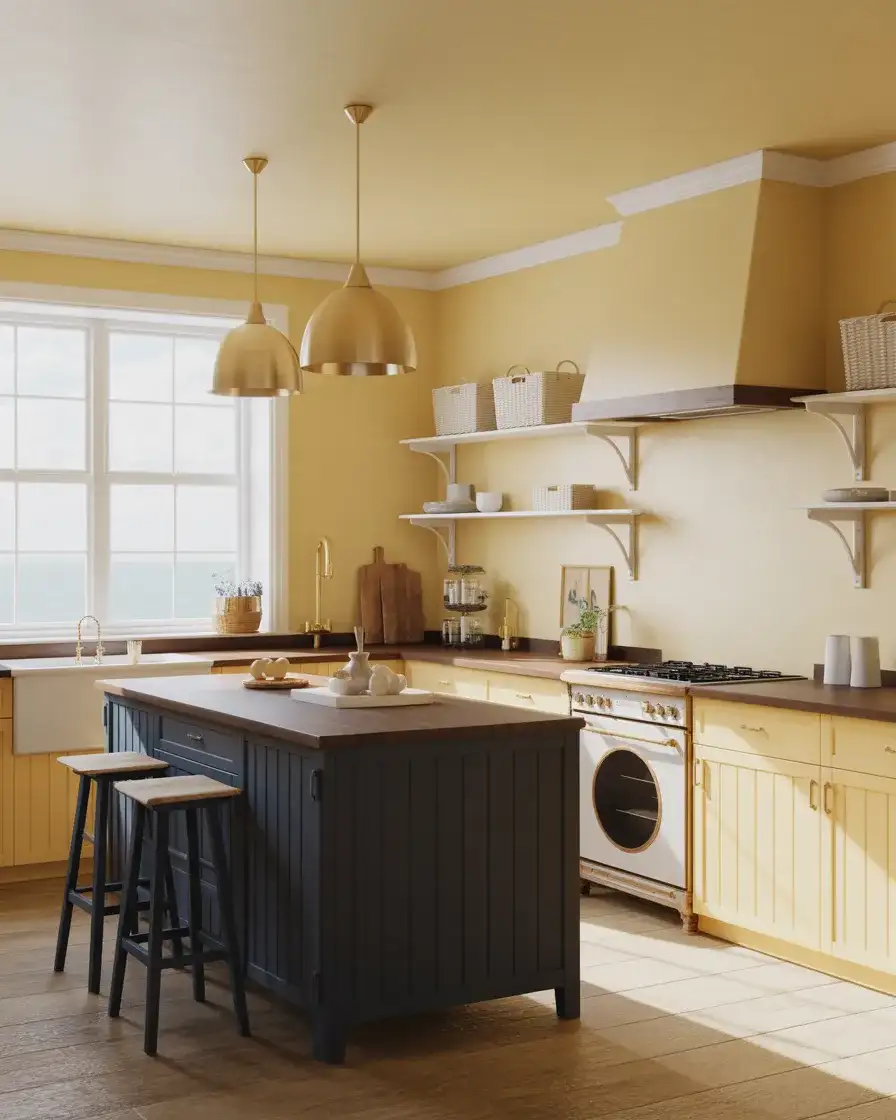
Navy and yellow is one of those color pairings that just works—it’s classic without feeling stuffy, bold without being loud. In a kitchen, you might bring the navy in through lower cabinets or a deep accent wall, then let the soft yellow live on the upper cabinets, the walls, or even the backsplash. The contrast between these two shades creates a sense of depth and warmth that feels surprisingly sophisticated, especially when you add brass or gold hardware to tie everything together.
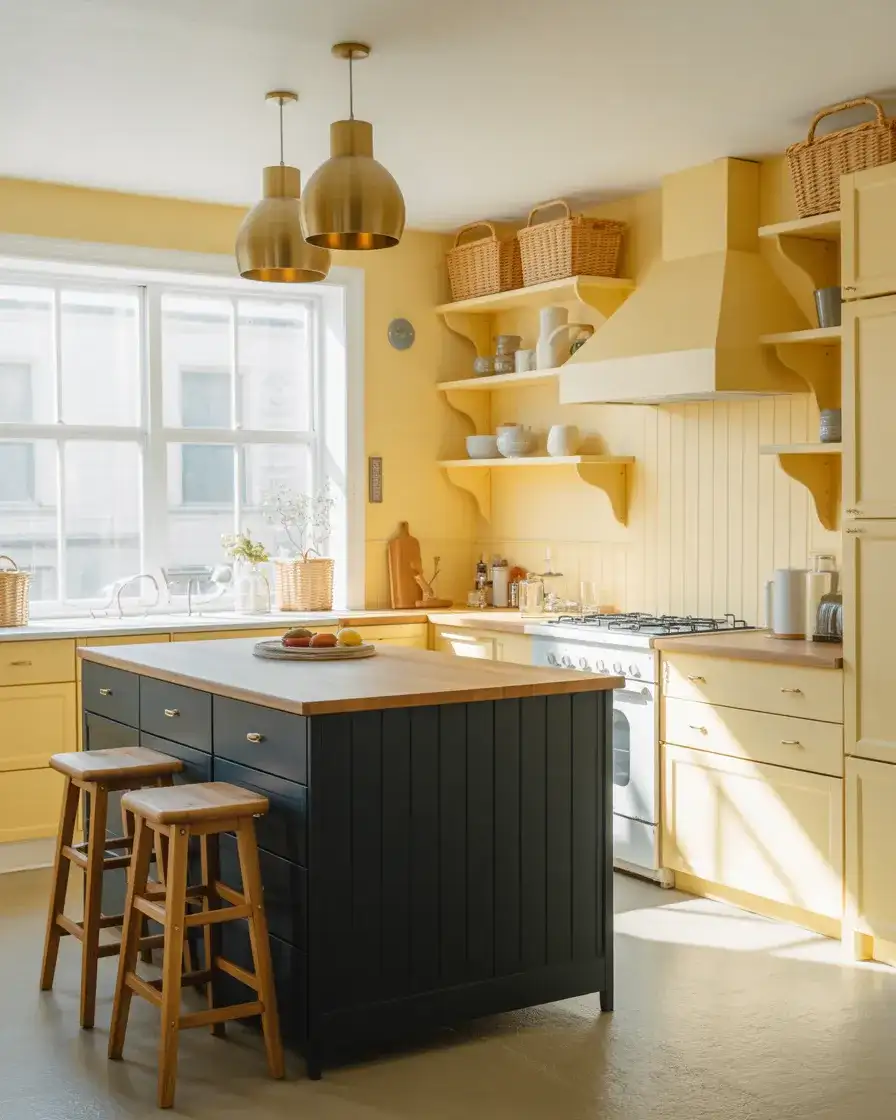
This pairing works best in kitchens that get strong natural light—navy has a tendency to absorb light in dimmer rooms, which can make a space feel heavier than you’d like. If your kitchen leans toward the darker side, try flipping the ratio: make the yellow the dominant color and use navy as a single accent wall or just on the island. Coastal New England cottages have been doing this dance for decades, and there’s a reason it never goes out of style.
6. Bright Yellow Kitchen With Black Accents
Want your kitchen to feel bold and completely current? Try bright yellow walls or cabinets paired with black accents—matte black fixtures, black-framed windows, or even a sleek black countertop. This combination has a graphic, almost editorial quality to it that feels very much of this moment. It’s the kind of kitchen that stops you mid-scroll on Pinterest, and it translates beautifully into real life when you balance the boldness with enough white or light wood to keep things from feeling too intense.
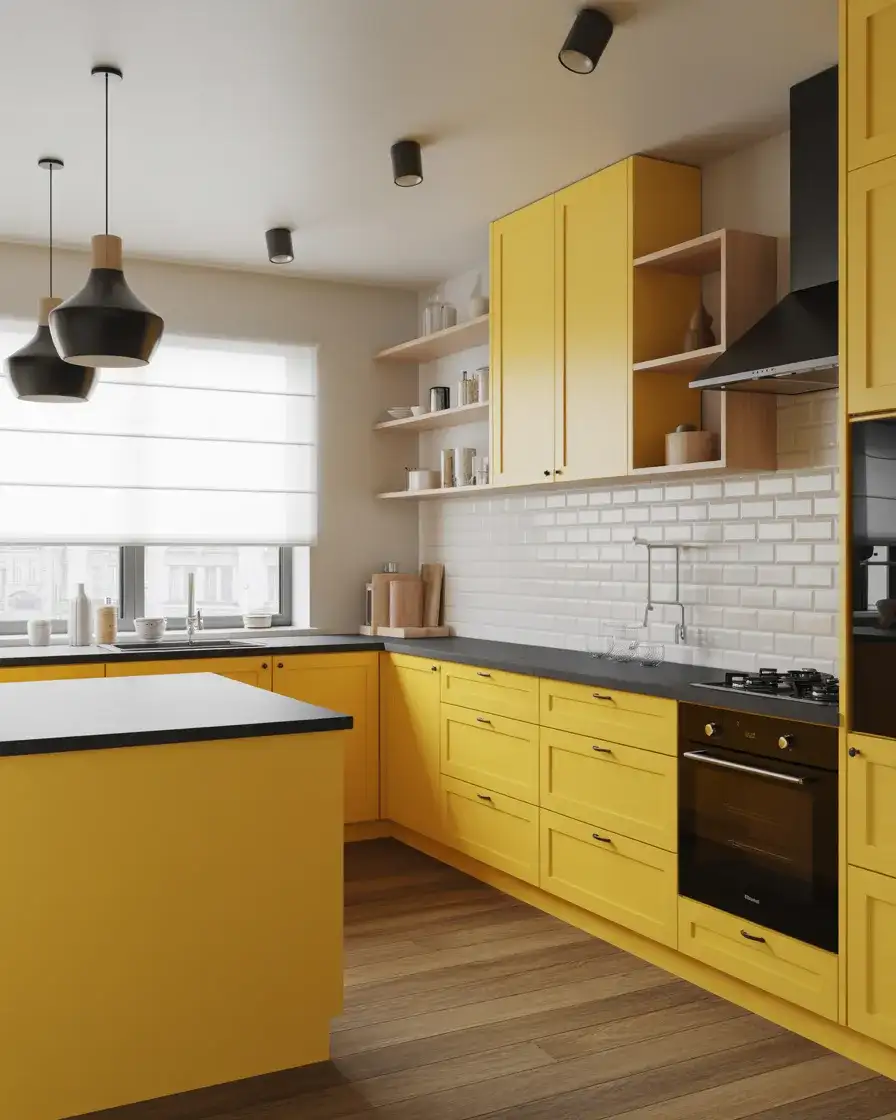
The trick here is restraint in the accessories. When you’ve already got two strong colors competing for attention, every object on the counter becomes part of the composition. Stick to neutral or monochrome pieces—white ceramics, natural wood cutting boards, maybe one or two black candle holders. A cluttered countertop in a kitchen this bold will feel chaotic rather than curated. Think of it less like decorating and more like styling a magazine shoot.
7. Pastel Yellow and Green Kitchen Garden Style
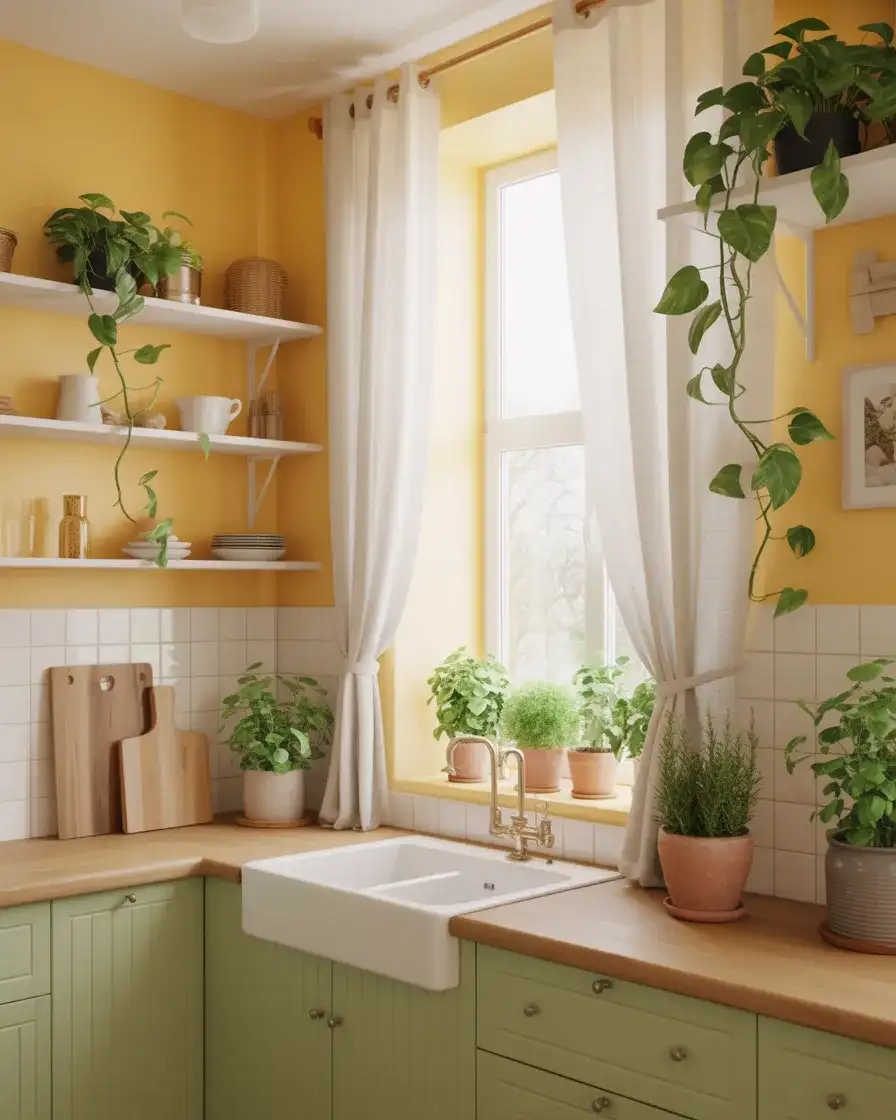
There’s a quiet trend toward kitchens that feel more like gardens than rooms, and pastel yellow paired with green is at the heart of it. Imagine soft sage cabinets below, a creamy yellow backsplash, and a handful of trailing plants on the windowsill—it’s the kind of space that makes you actually want to cook. This garden-style approach works especially well in kitchens with good natural light and at least one window you can prop open on a warm spring morning.
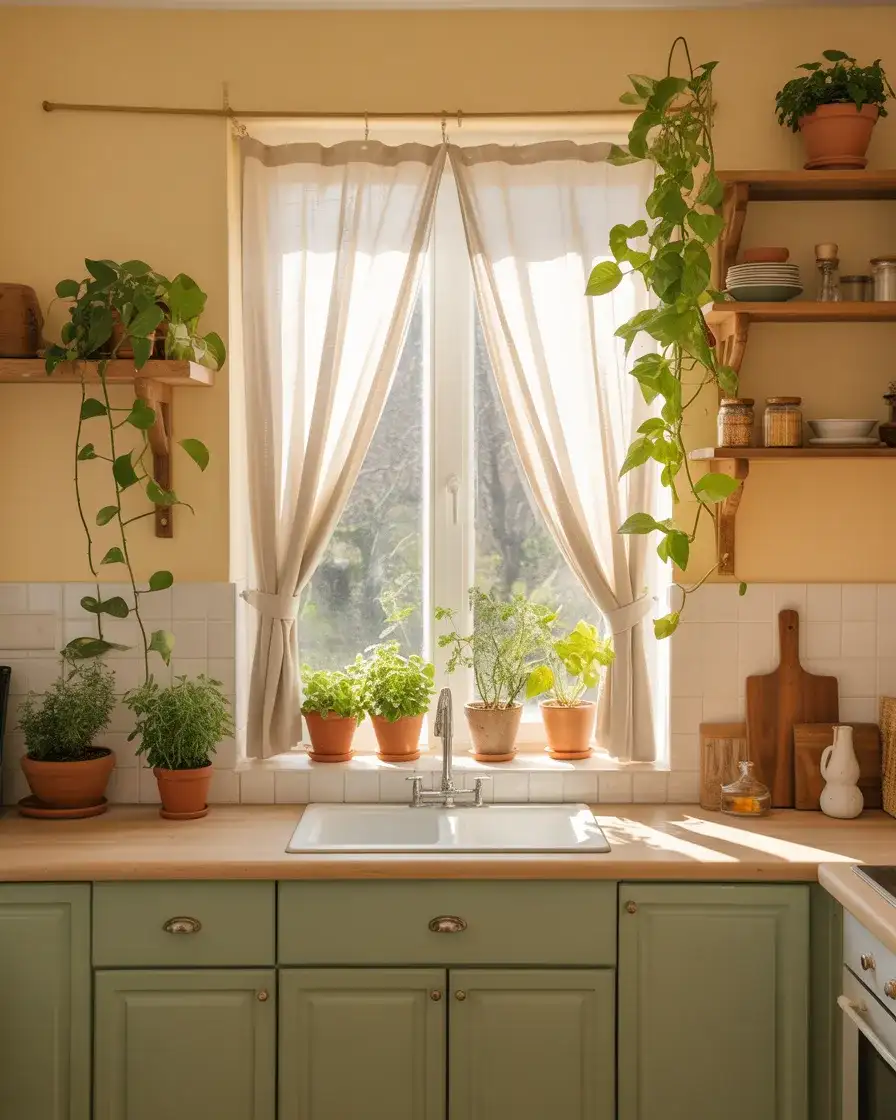
If you’ve ever wondered where to put your herbs, this is your answer. A kitchen designed around this palette basically invites greenery as a design element rather than an afterthought. Keep your herb pots in mismatched terracotta or ceramic—it adds to the organic, slightly imperfect feel. And here’s a practical note: position them near your most-used cooking station so you actually grab them while you’re making dinner, not just as decoration collecting dust on a far counter.
8. Yellow and White Kitchen With Modern Minimalism
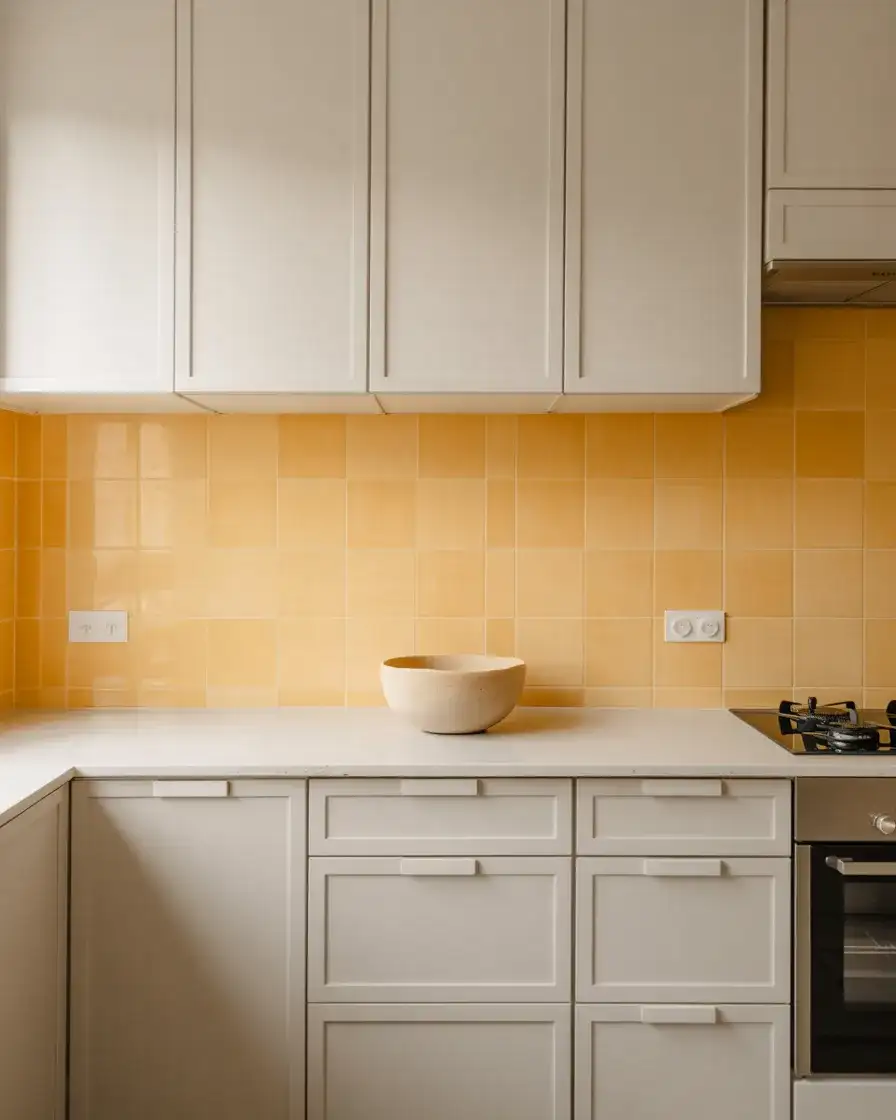
Modern kitchens don’t have to be cold. Pair white cabinets and clean lines with a warm yellow accent—a backsplash, a single bold wall, or even a yellow-toned quartz countertop—and you get minimalism that actually feels like home. This is the aesthetic that works incredibly well in newer construction and condo kitchens, where the bones are already clean and geometric. The yellow element softens all those sharp edges without adding visual clutter.
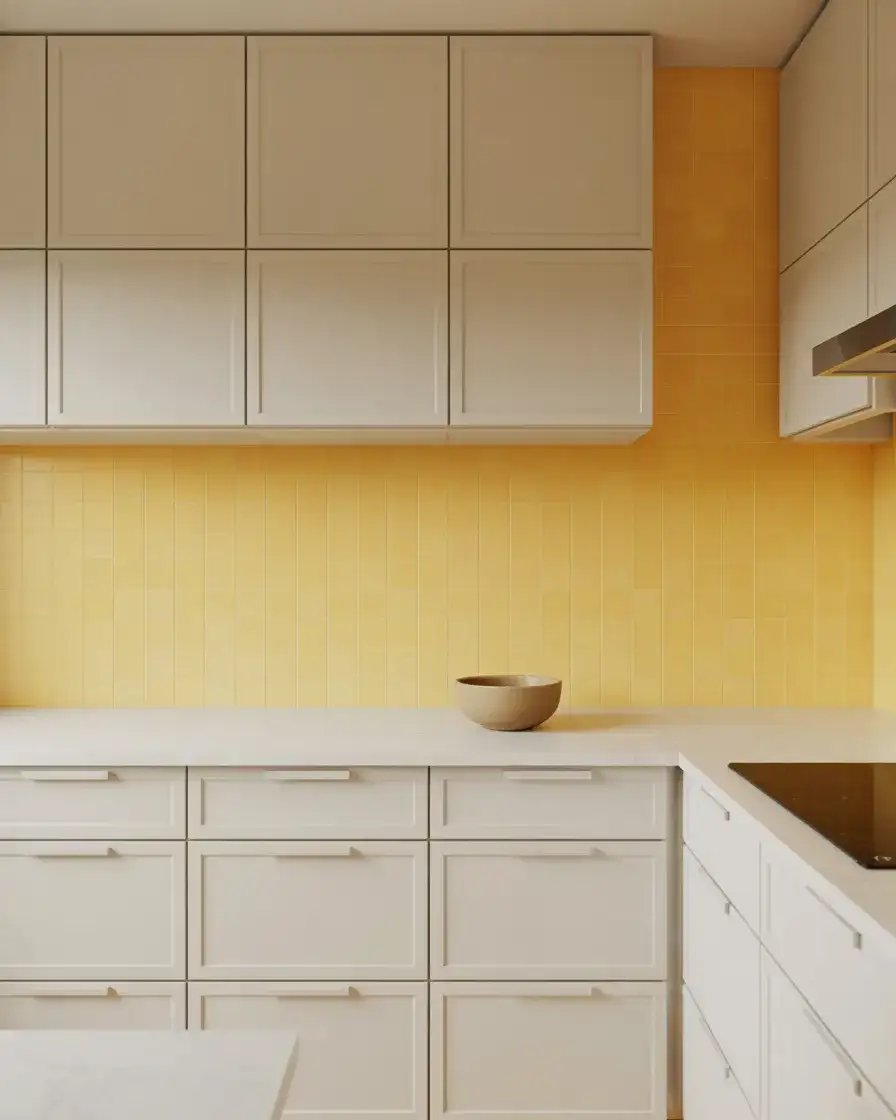
In a minimalist kitchen, your hardware choices matter more than almost anything else. Matte black pulls will give you a cooler, edgier feel, while brushed brass keeps things warm and inviting. Given that yellow is already bringing the heat, either works—but brass will create a more cohesive, tonal look, while black will add that graphic punch. It’s a small decision, but in a kitchen this stripped-back, every single detail is amplified and noticed by anyone who walks in.
9. Mustard and Pink Kitchen With Retro Vibes
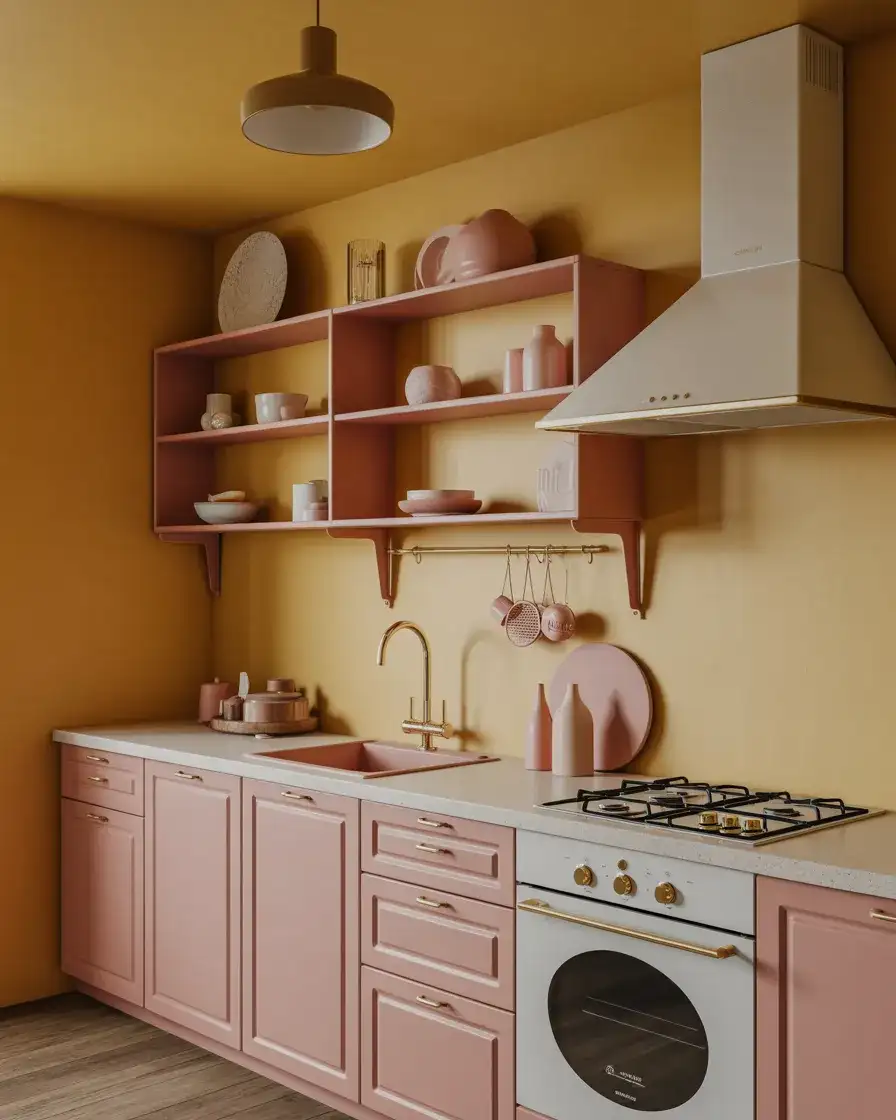
If your design taste leans toward the playful and a little unexpected, mustard and pink might be the most fun color combination you haven’t tried yet. Think dusty rose cabinets with mustard walls, or a mustard island with pink ceramic accessories scattered throughout. This pairing has a distinctly retro quality—think mid-century diners and vintage Polaroids—but when you keep the shades soft and muted, it lands somewhere firmly in the modern and aesthetic.
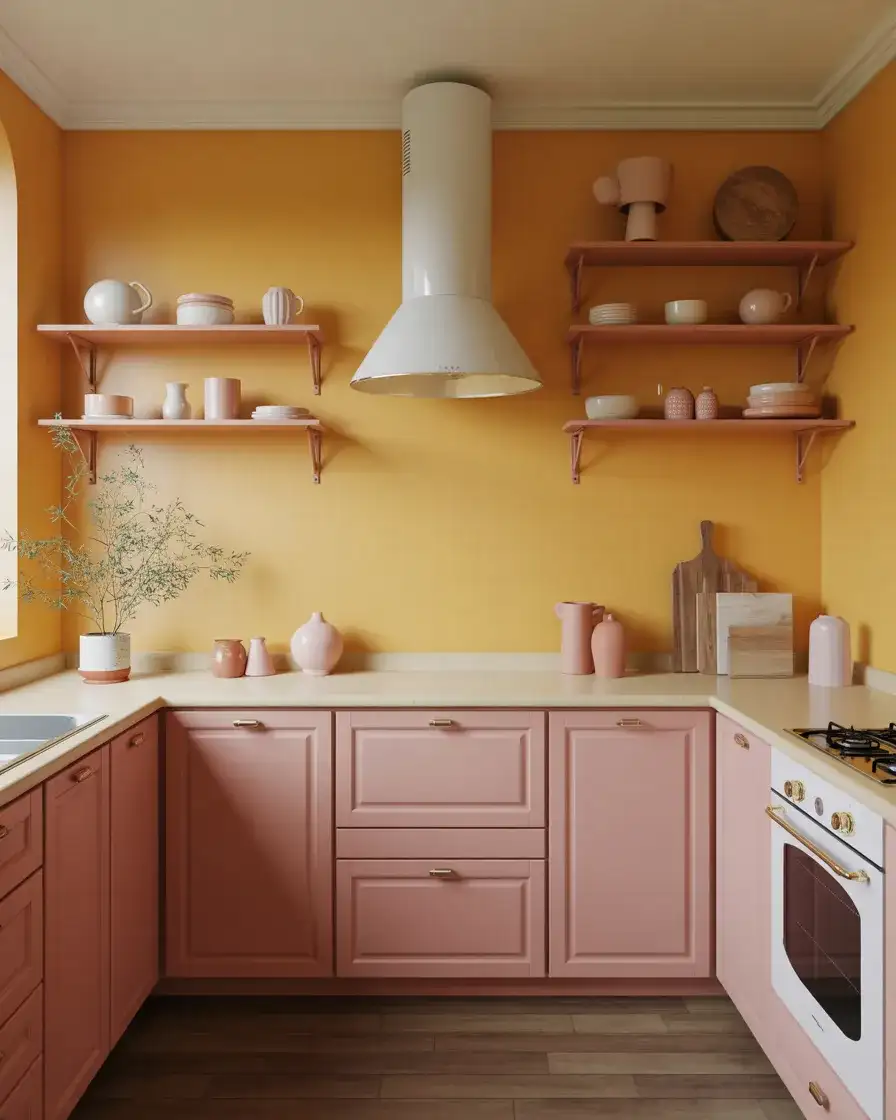
Pulling off this color combo without it feeling like a costume party comes down to saturation. Keep both colors in the dusty, muted family—never go full hot pink or electric mustard. Linen textures, matte ceramics, and natural wood accents will ground the palette and keep it feeling grown-up. This is actually a great kitchen palette for renters, too, since you can build the whole look through accessories and textiles without painting a single wall.
10. Yellow Backsplash With Grey and White Kitchen
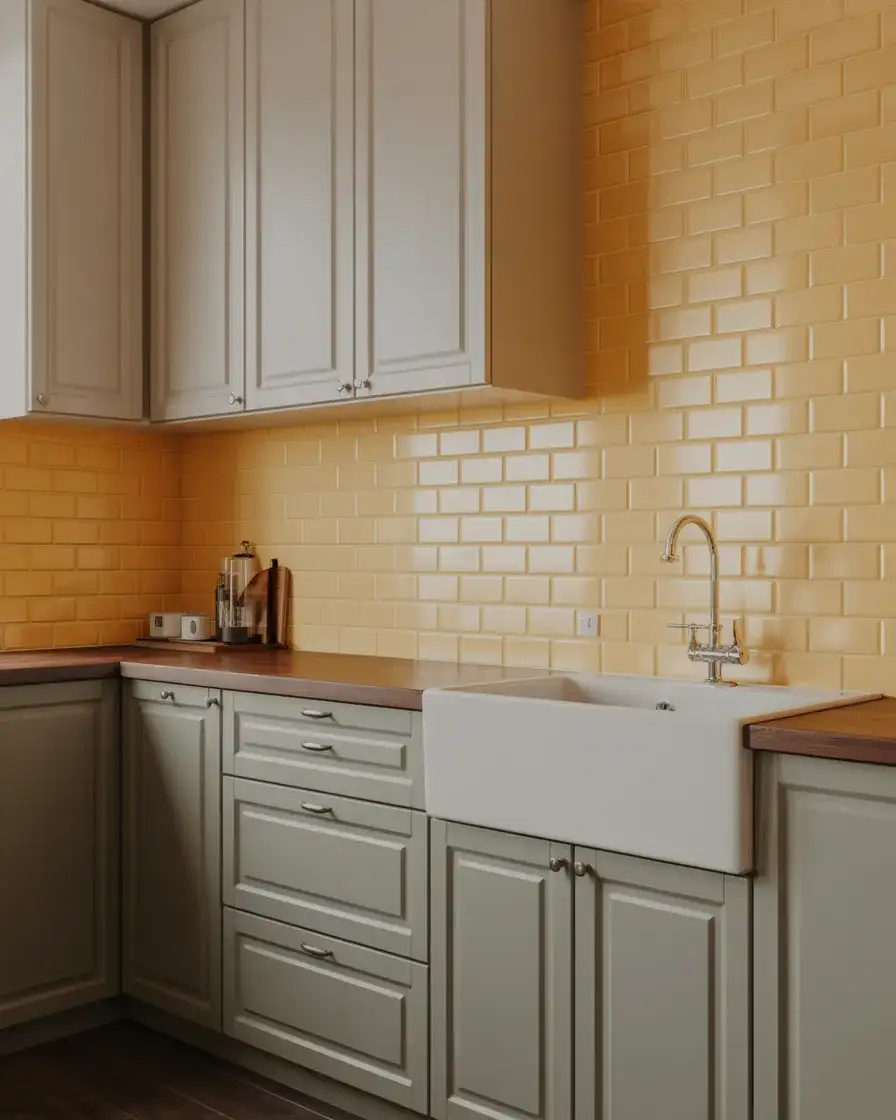
Not ready to commit yellow to your cabinets or walls? A yellow backsplash is the most contained—and arguably the most striking—way to bring the color into your kitchen. Surround it with grey lower cabinets and walls with white cabinets above, and you’ve got a kitchen that feels both grounded and alive. The backsplash becomes a single, intentional moment of color, almost like a piece of art mounted behind your stove or sink, drawing the eye in effortlessly.
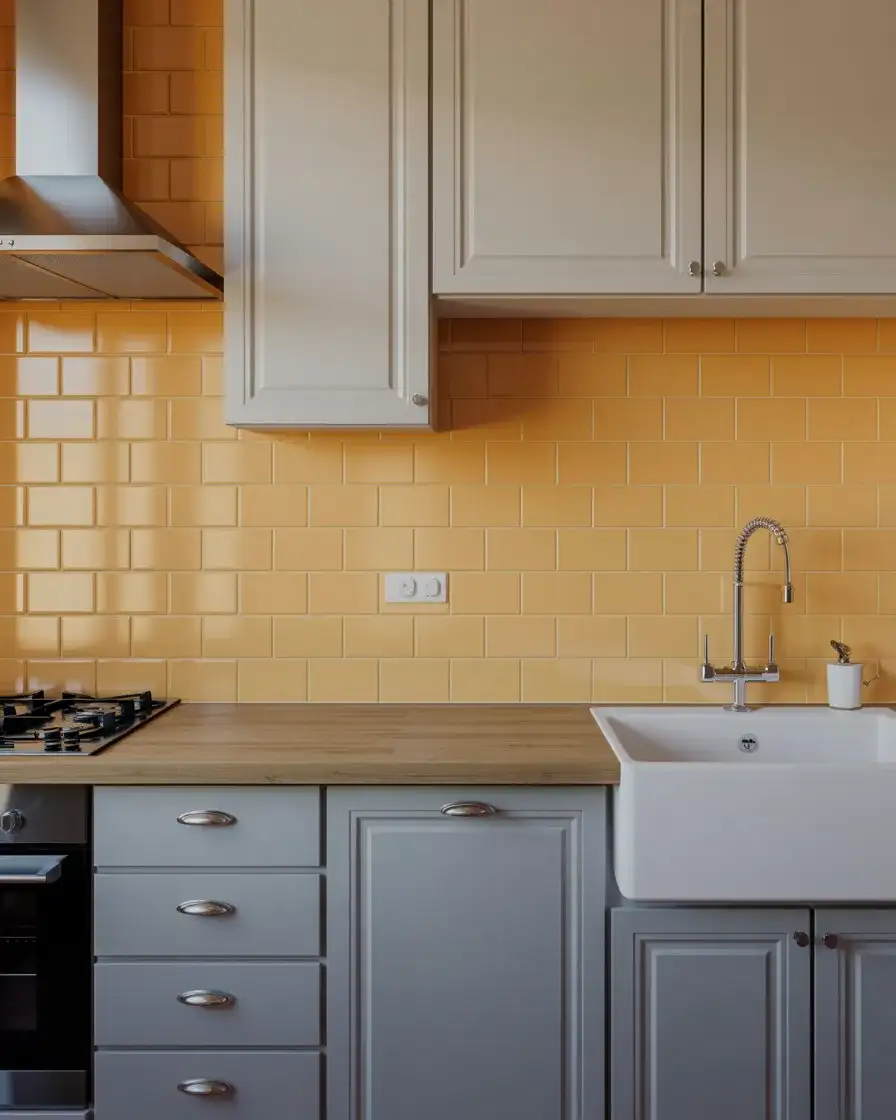
Yellow tile is one of those materials that looks dramatically different depending on the finish. A glossy glaze will amplify the color and reflect light like a mirror, while a matte or satin finish will keep things quieter and more textural. For a grey-and-white kitchen, matte tends to feel more intentional and cohesive. Also worth noting: grout color matters enormously here. A white grout will let the yellow tiles pop individually, while a grey grout will make the backsplash read as one continuous surface.
11. Bright Yellow Kitchen Island With Teal Accents
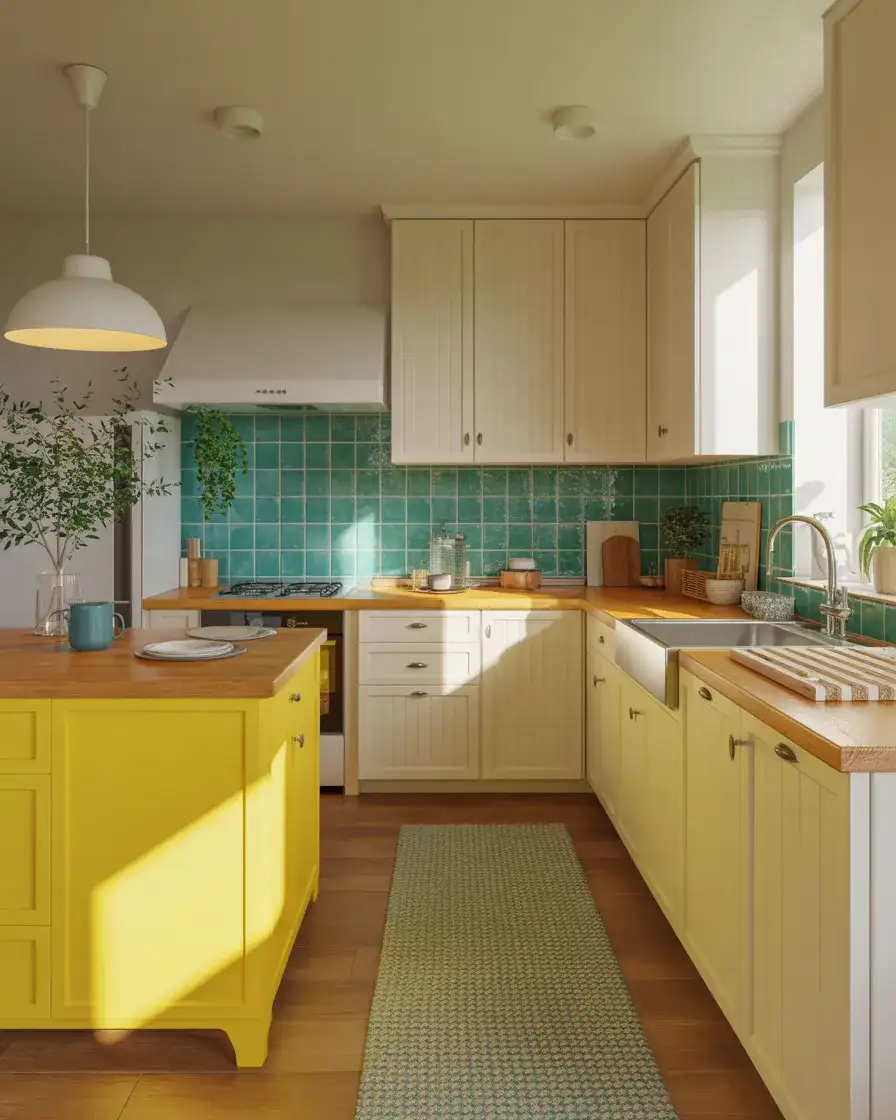
Bold color lovers, this one’s for you. A bright yellow island paired with teal accents creates a kitchen that feels energetic, playful, and completely unapologetic. Think of a sunny yellow island as the centerpiece, with teal woven into a runner rug, the backsplash, or even a single accent cabinet. It’s a combination that feels almost tropical without ever tipping into cliché, especially when the rest of the room stays relatively calm.
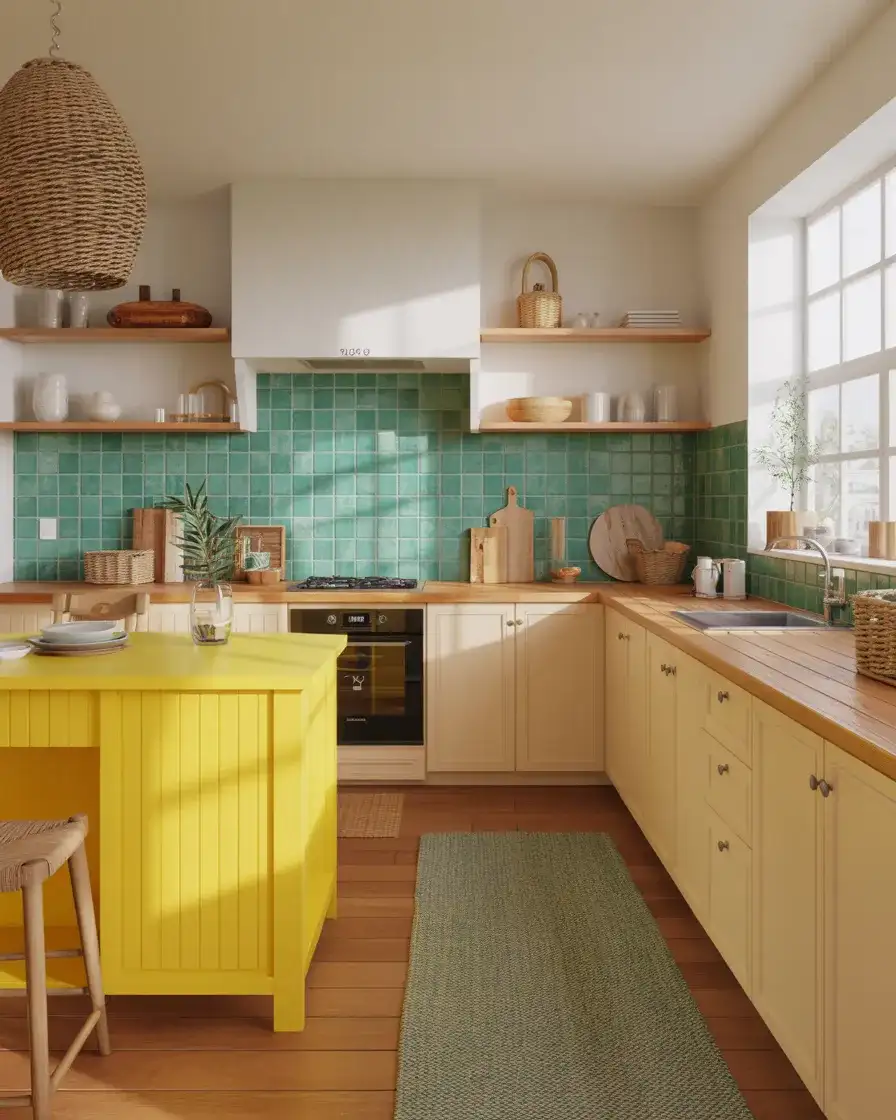
This is the kind of kitchen that works beautifully in vacation homes, beach cottages, or any space where you want the room to feel like a departure from everyday life. For year-round homes, you can tone it down slightly by keeping the teal in smaller doses—a few accent pillows on a nearby bench, a single ceramic vase, or a runner rug that you can swap out with the seasons. It gives you the full color story without the permanent commitment of painting.
12. Soft Yellow Walls With White Cabinets and Wood Floors
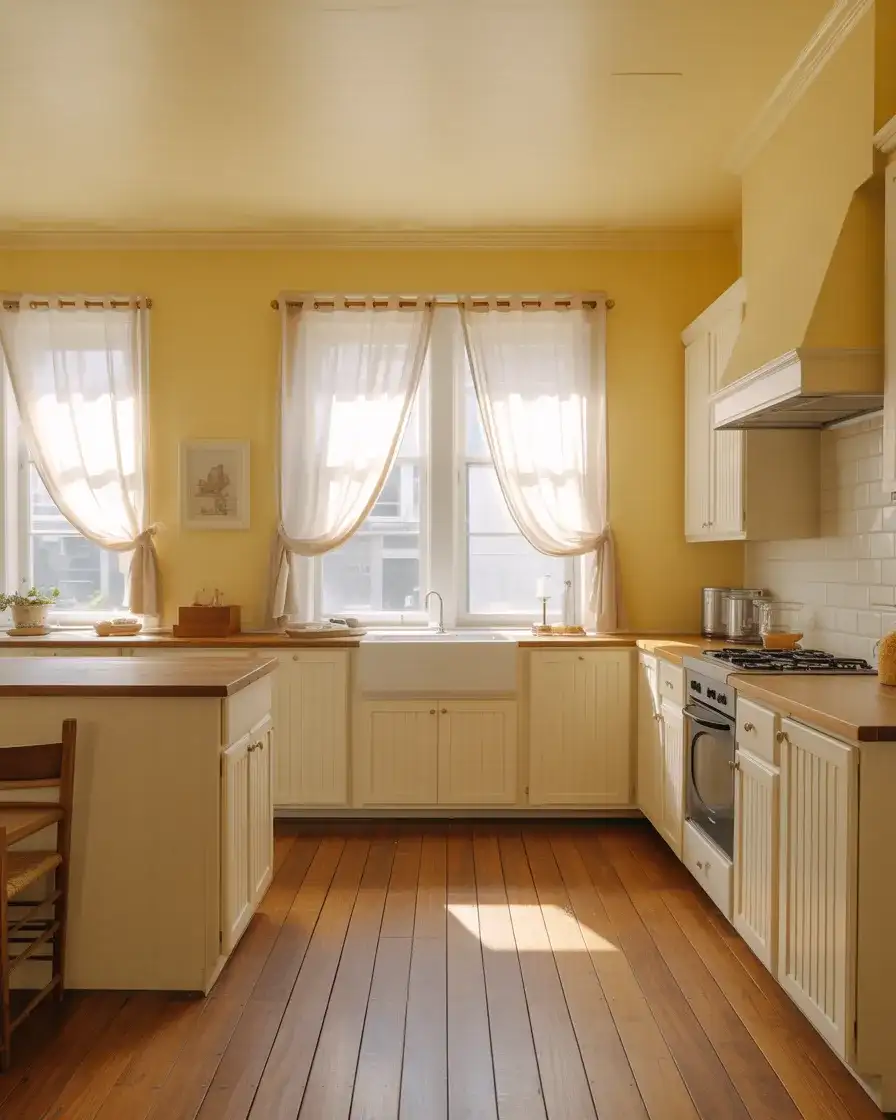
Sometimes the most beautiful kitchens are the ones that don’t try too hard. Soft yellow walls, crisp white cabinets, and warm wood floors are a combination so naturally harmonious it almost feels effortless—but there’s real intention behind it. The yellow adds just enough warmth to keep the white from feeling sterile, and the wood floors tie the whole palette together with an organic, earthy grounding that makes the space feel genuinely lived-in and welcoming.
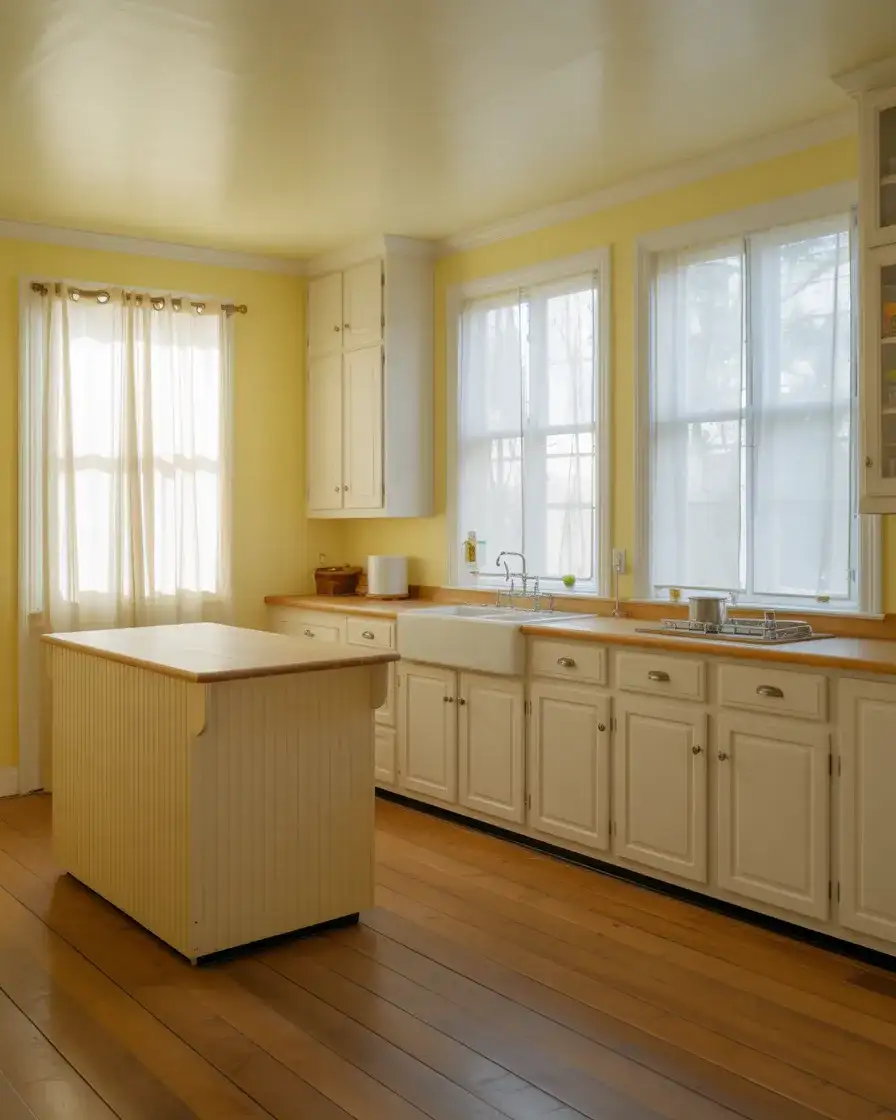
This is the kind of kitchen that works in almost any region of the country—from a craftsman bungalow in Portland to a ranch house in Texas. The wood floor tone does matter, though. A medium or warm oak will deepen the yellow and make the whole room feel golden-hour all day, while a cooler grey-toned wood will keep things lighter and more neutral. Match your wood tone to the mood you want, and this combination will carry the room with almost no other decorating needed.
13. Yellow and Blue Kitchen With Coastal Charm
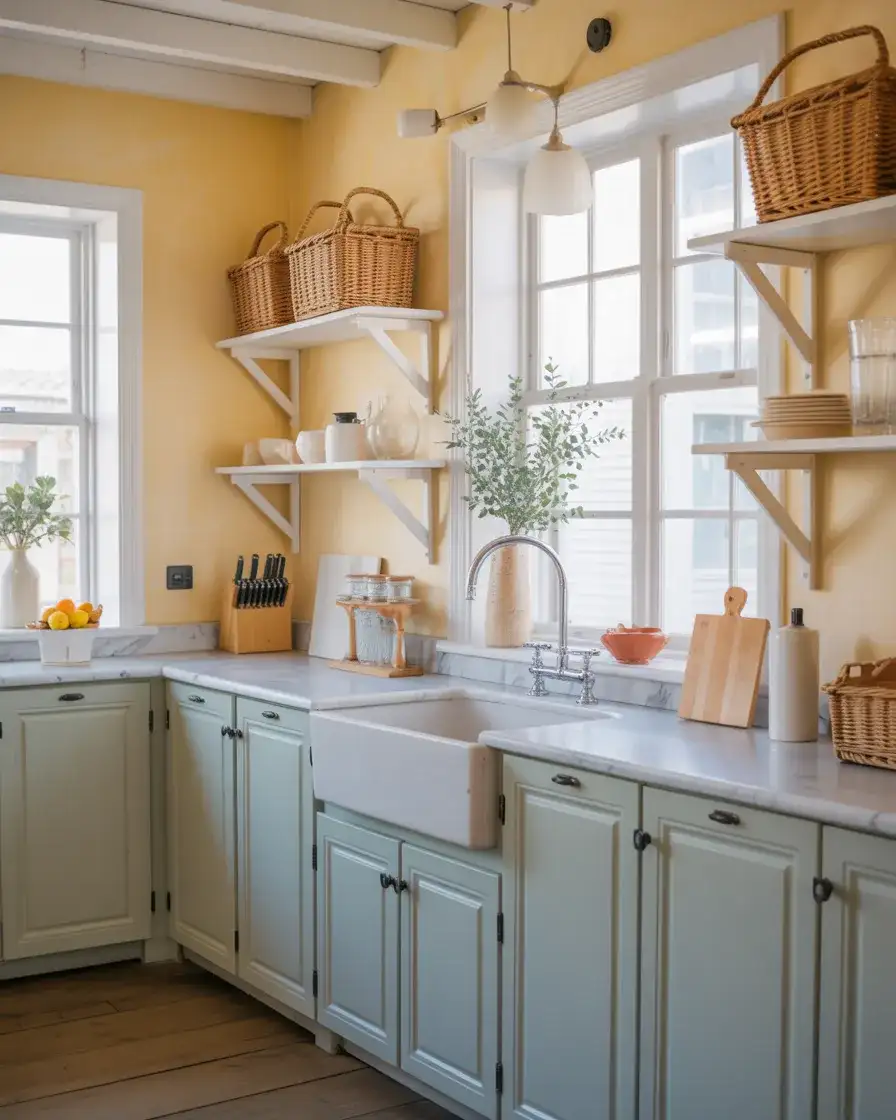
Yellow and blue is the color story of every coastal kitchen you’ve ever fallen in love with on Pinterest—and for good reason. It captures that feeling of salt air and sunshine without ever resorting to a single seashell border. A blue and yellow kitchen might feature pale blue cabinets with yellow accents, or vice versa, and when you layer in white linen and natural textures, the whole room starts to feel like a seaside retreat even if you’re landlocked.
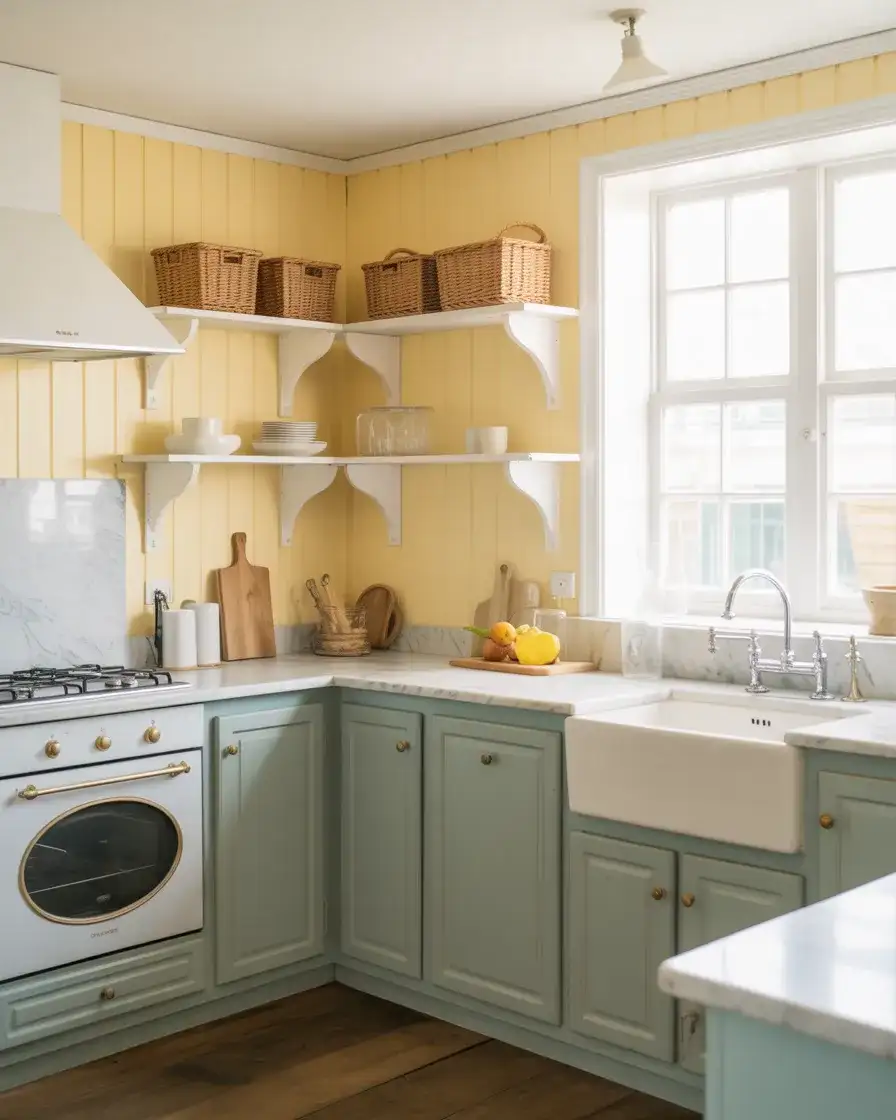
You don’t need to live on the coast to pull this off convincingly. The real secret is texture—rough-hewn wood, woven baskets, linen, and ceramic all contribute to that coastal softness more than the colors alone do. This pairing is a great source of inspiration for anyone wanting warmth without heaviness. Keep your blue on the cooler side (think ocean glass rather than royal blue) and your yellow warm but not overwhelming, and you’ve got a kitchen that feels like a weekend getaway every single morning.
14. Deep Mustard Kitchen With Brass and Wood
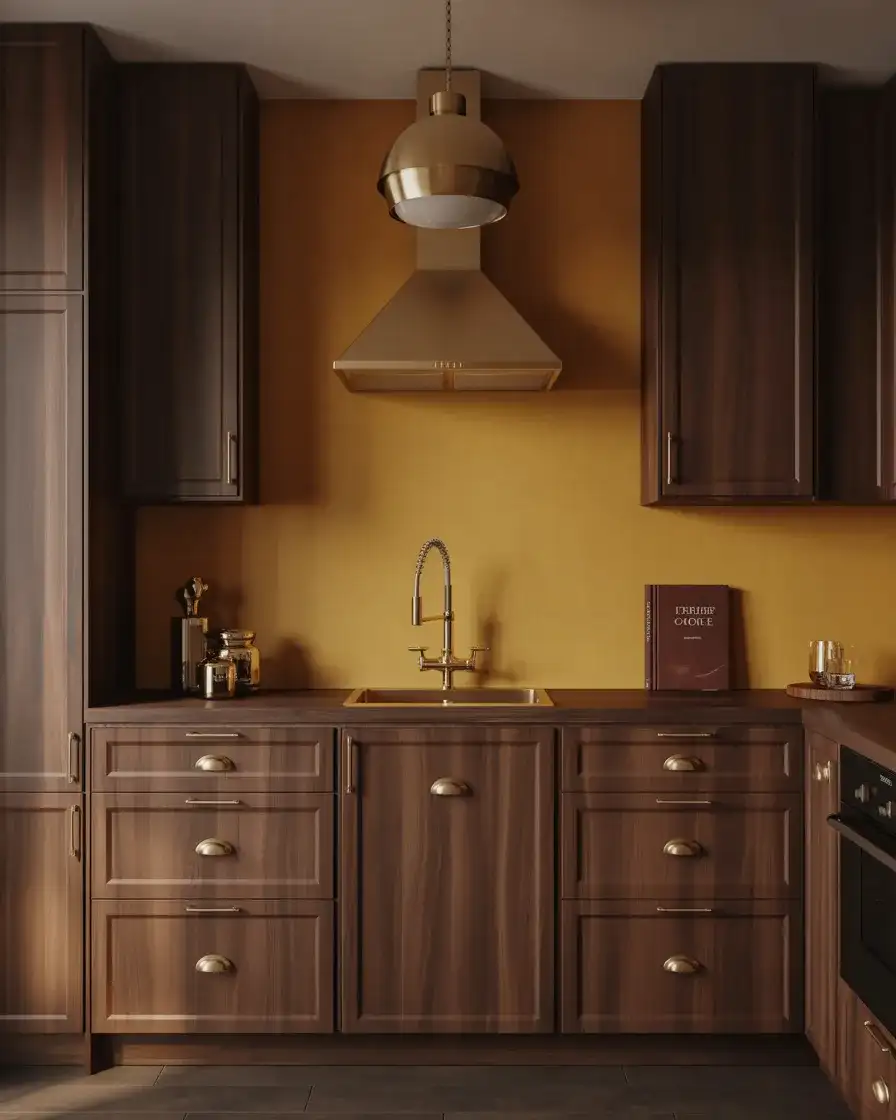
For kitchens that want to feel rich and grounded rather than light and airy, a deep mustard palette paired with brass fixtures and natural wood elements is an incredibly sophisticated move. This combination leans into warmth fully—dark wood cabinets or shelving, polished brass hardware, and a mustard accent wall or island create a kitchen that feels almost like a study in the best possible way. It’s moody without being gloomy.
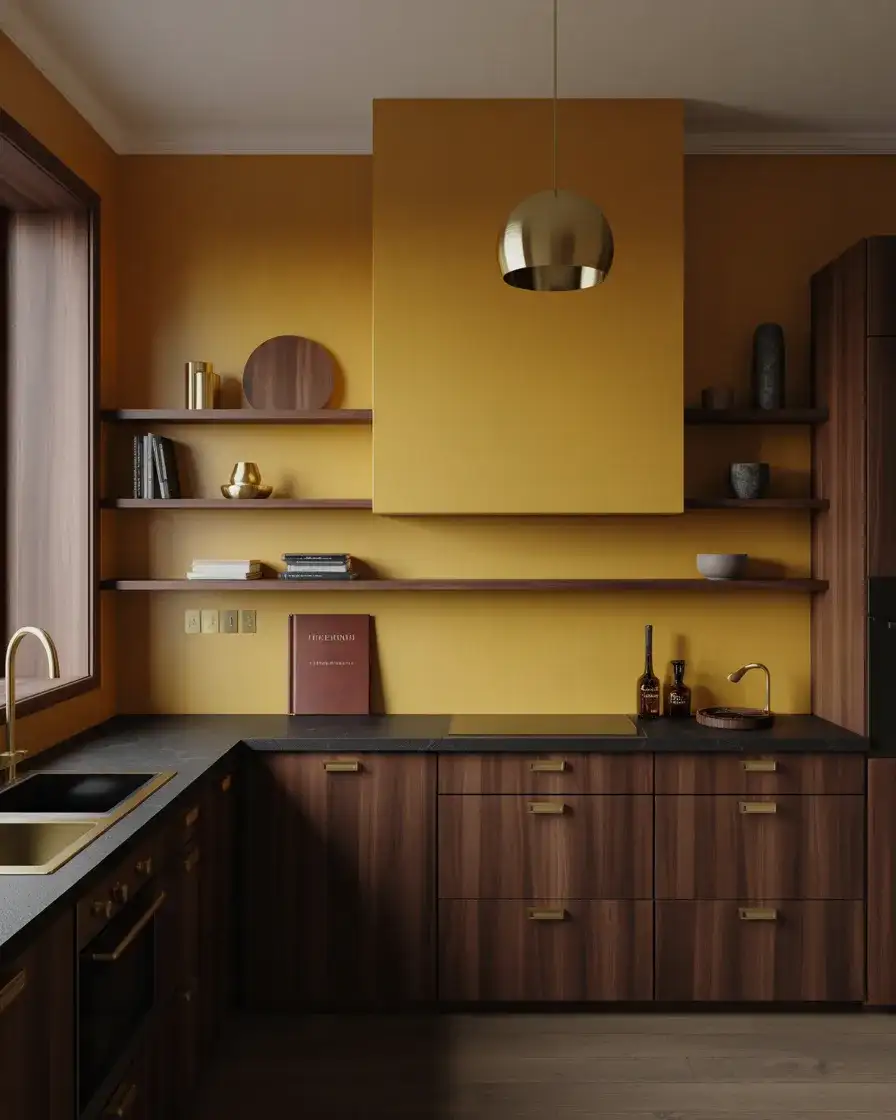
This is a kitchen style that tends to photograph beautifully, which matters more than you’d think in the age of social media. The deep tones create contrast and drama that flat, light-colored kitchens sometimes lack in photos. If you’re worried about it feeling too dark in person, the trick is to keep your countertops light—white or cream marble will bounce enough light back into the room to keep things feeling open, even with all that rich color surrounding it.
15. Yellow Kitchen With Red and White Accents
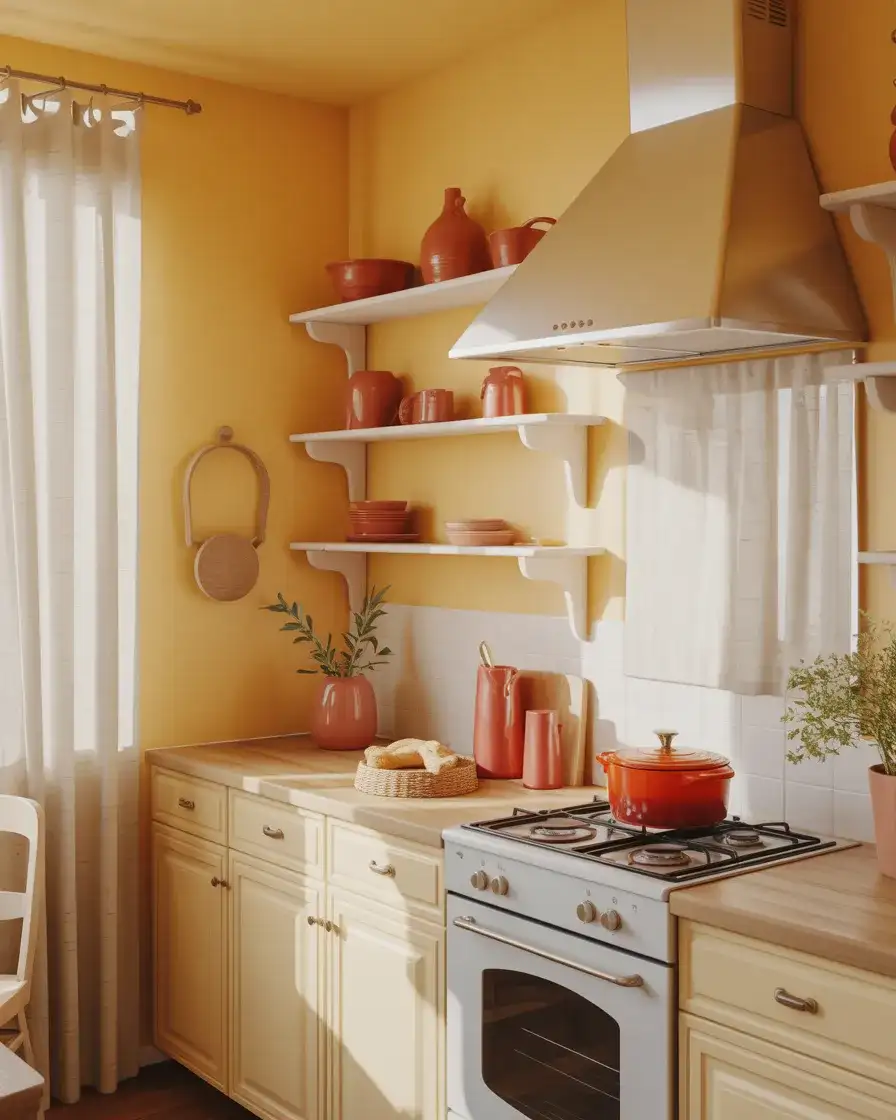
Yellow and red together might sound like a fast-food restaurant, but hear us out—when you keep the tones soft and muted and bring in plenty of white to breathe, this combination becomes something entirely different. Think terracotta red accessories against butter-yellow walls, or a single red ceramic vase on a white countertop in an otherwise pale kitchen. It’s a warm, inviting palette that feels European and effortless when executed with the right restraint.
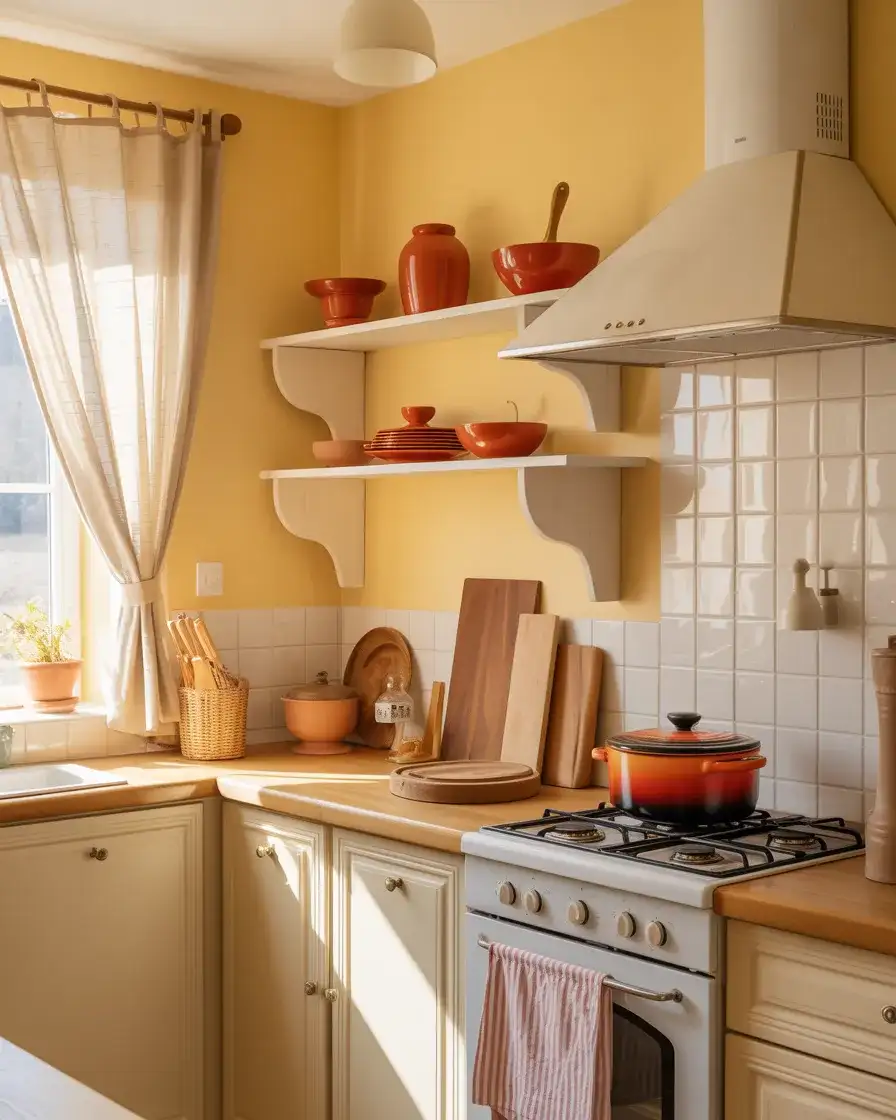
The key to making this work is keeping the red as an accessory color, never a dominant one. A single red ceramic bowl, a terracotta pot, or a woven red-and-cream dish towel is plenty. You want the yellow to remain the star and the red to play a supporting role—like a great accent piece in an otherwise calm room. This is also one of the easiest palettes to update seasonally, swapping a few ceramics or textiles to shift the mood without repainting anything.
16. Pale Yellow and Purple Kitchen With an Eclectic Touch
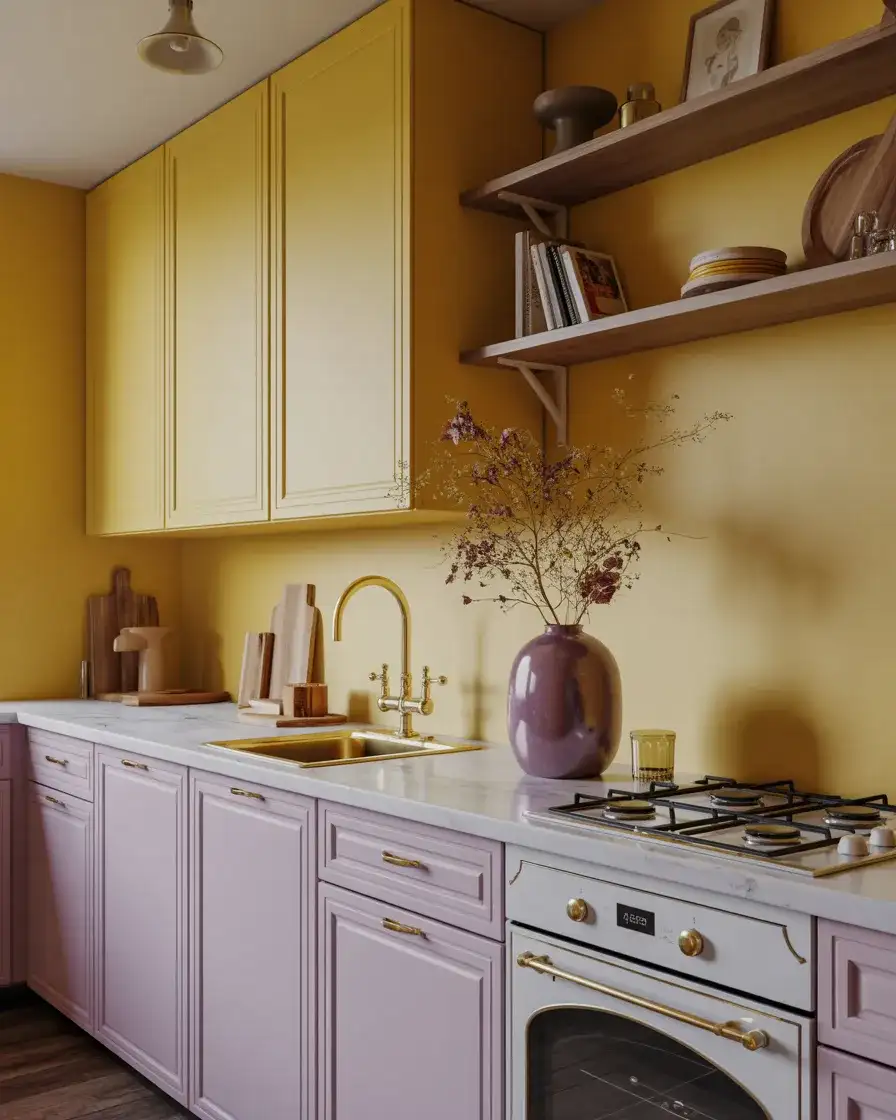
For the design daredevils among us, pale yellow and purple is a color story that sounds risky but lands beautifully when you nail the execution. Imagine soft lavender cabinets paired with pale yellow walls, or a single plum-colored backsplash tile behind a butter-yellow island. It’s unexpected, it’s memorable, and when you keep both shades in the muted, dusty family, the whole thing reads as surprisingly sophisticated rather than chaotic or over-the-top.
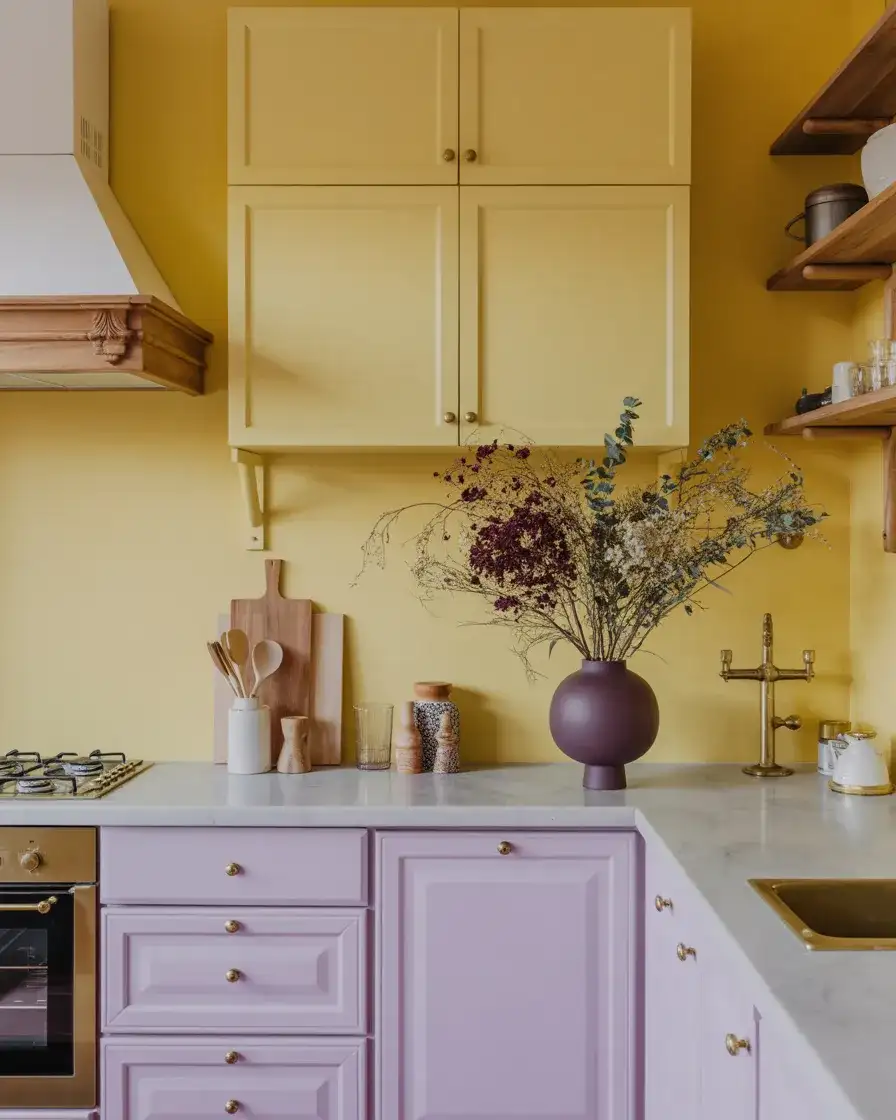
This combination is a goldmine for renters. You don’t need to paint anything—just build the palette through accessories. A few lavender ceramic pots, a purple woven placemat, and pale yellow kitchen linens can create this whole mood on a countertop alone. It’s also a great way to express personality in a kitchen that might otherwise feel generic, especially in apartment buildings where everyone’s got the same builder-grade cabinets and finishes.
17. Yellow and White Kitchen With Farmhouse Charm
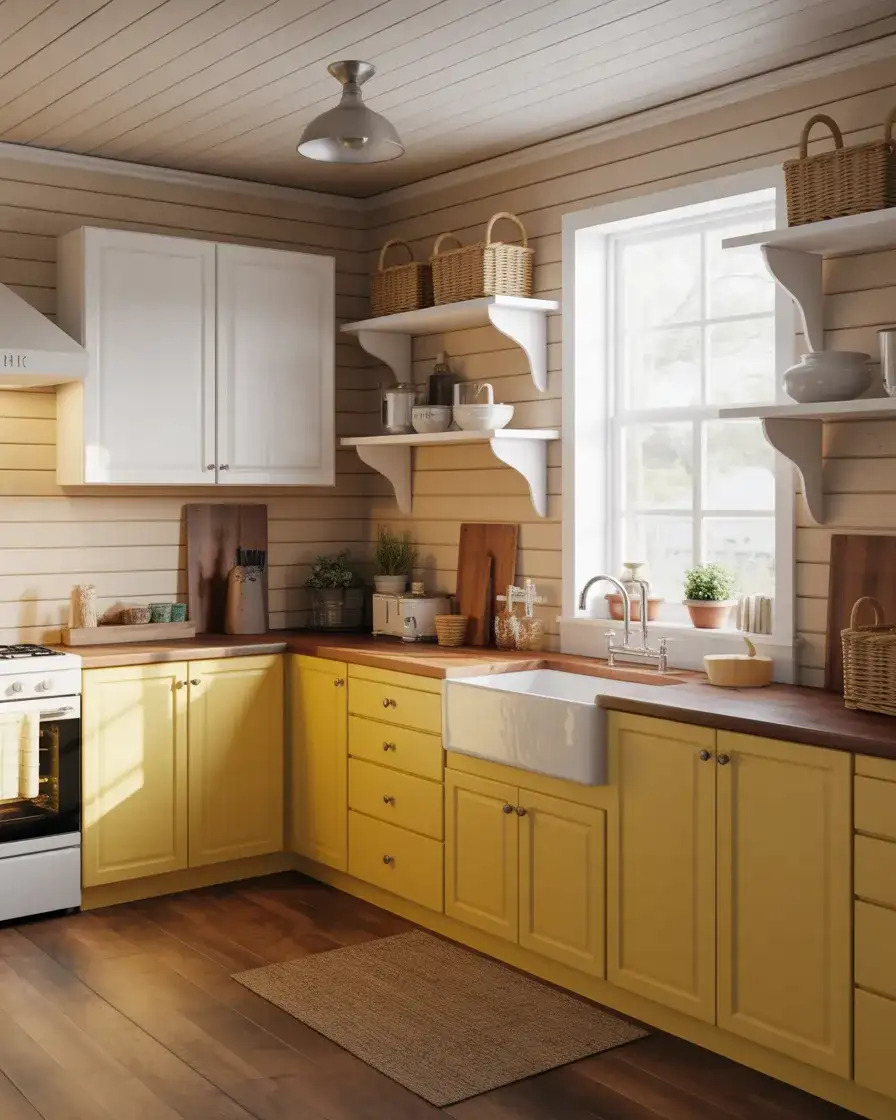
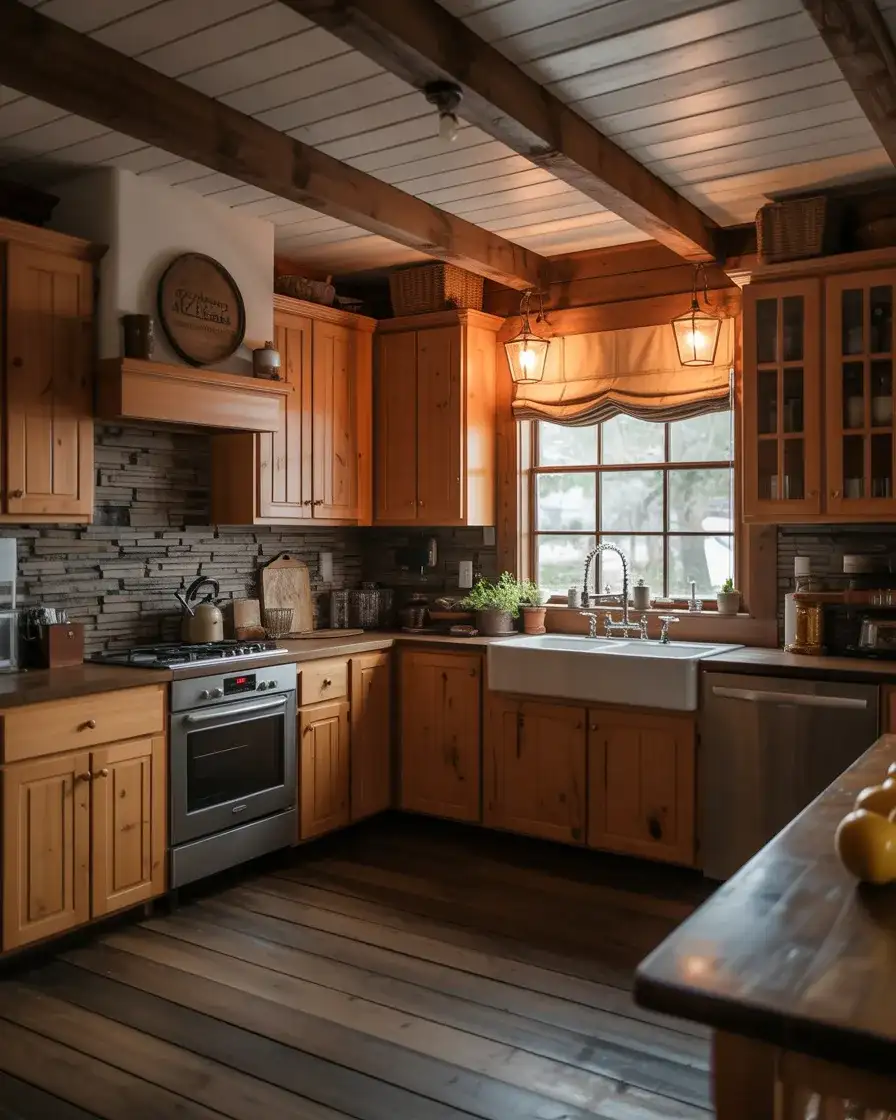
The farmhouse kitchen never really goes out of style—it just evolves. And right now, the most current version swaps the all-white palette for something warmer. Yellow and white cabinets with shiplap walls, butcher block counters, and a big farmhouse sink create a kitchen that feels rooted and real. It’s the kind of space that says you actually cook in here, actually gather here, and actually love the room you’re standing in.
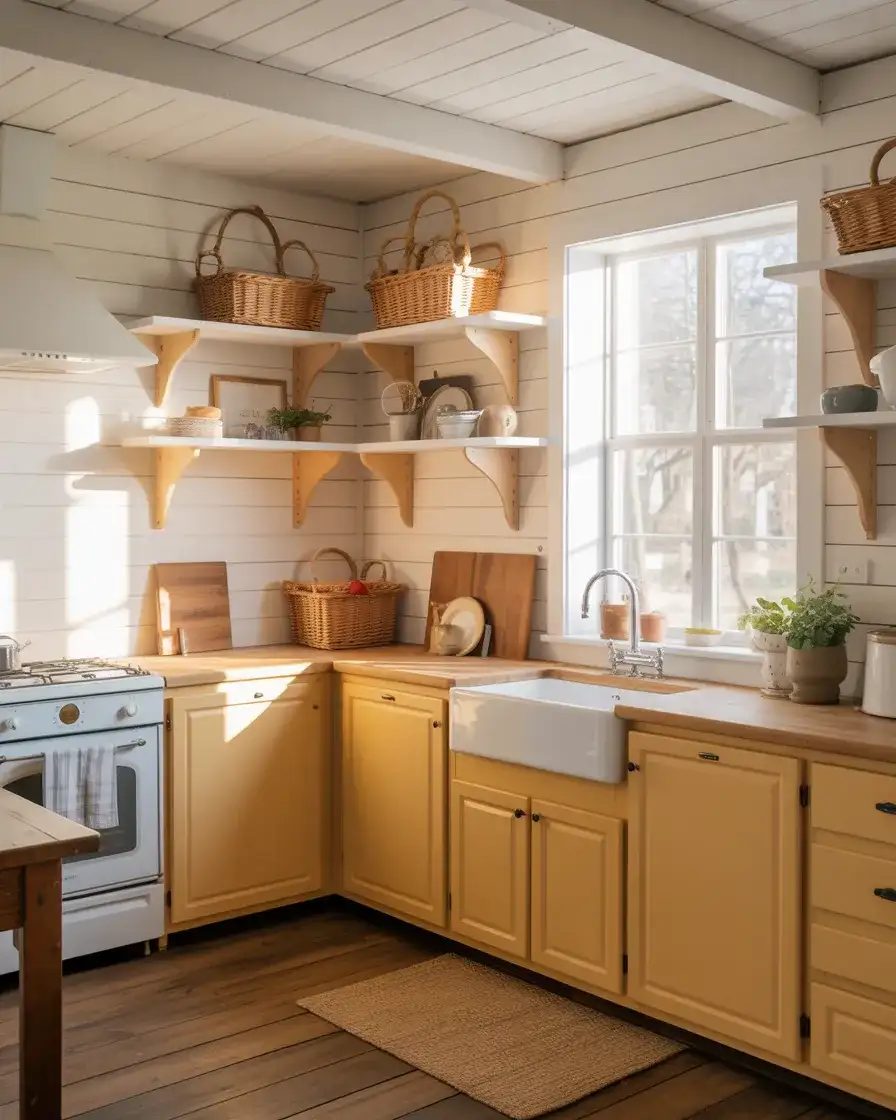
One thing worth mentioning: butcher block countertops, while gorgeous, do require more upkeep than most people expect. You’ll want to oil them every few months and be mindful of leaving water sitting on the surface for too long. But if you’re someone who actually enjoys maintaining your home and wants your kitchen to develop character over time, there’s no surface that rewards that care quite like wood. It ages beautifully—and in a yellow kitchen, it only gets better.
18. Yellow Kitchen With Black and White Checkered Floor
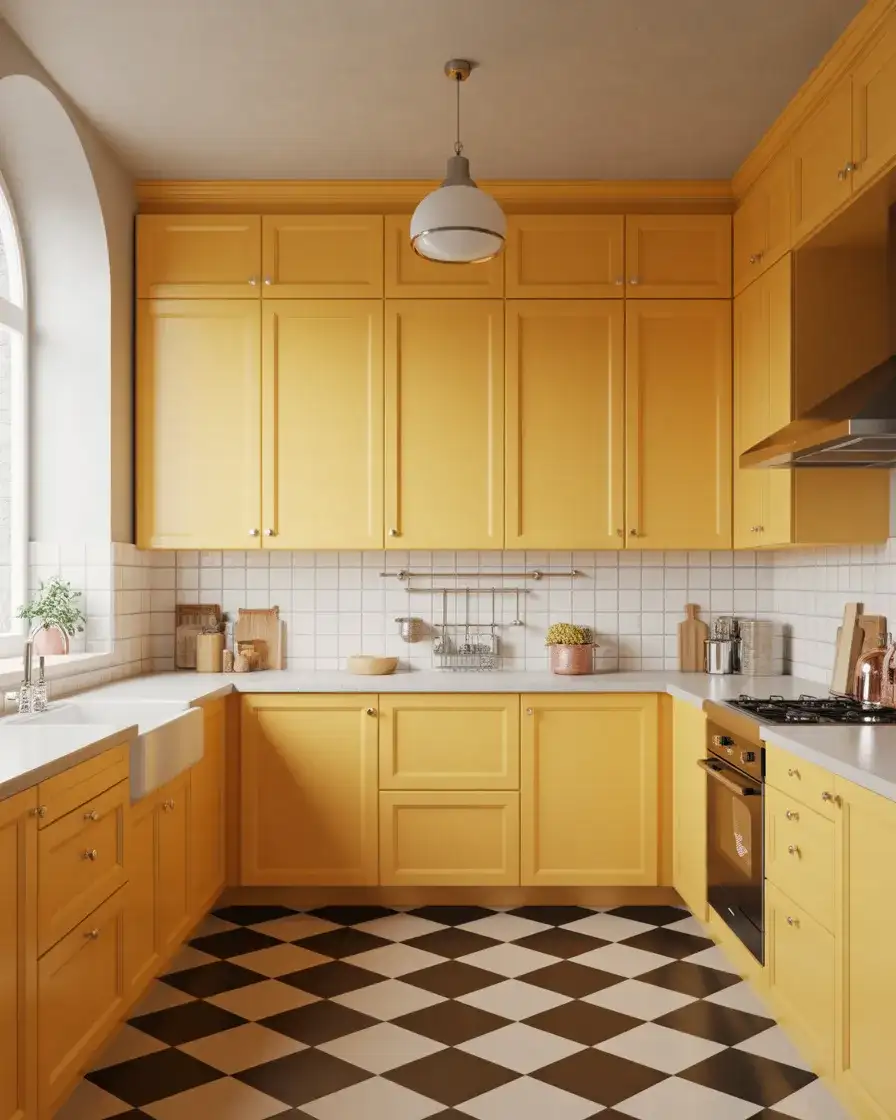
A black and white checkered floor is one of those classic kitchen elements that never stops being interesting—and it pairs surprisingly well with yellow. The graphic contrast of the floor anchors the room and gives the yellow something to play against. Whether your yellow lives on the cabinets, the walls, or even just a bold island, the checkered floor adds a retro, confident personality that makes the whole space feel like it has a point of view.
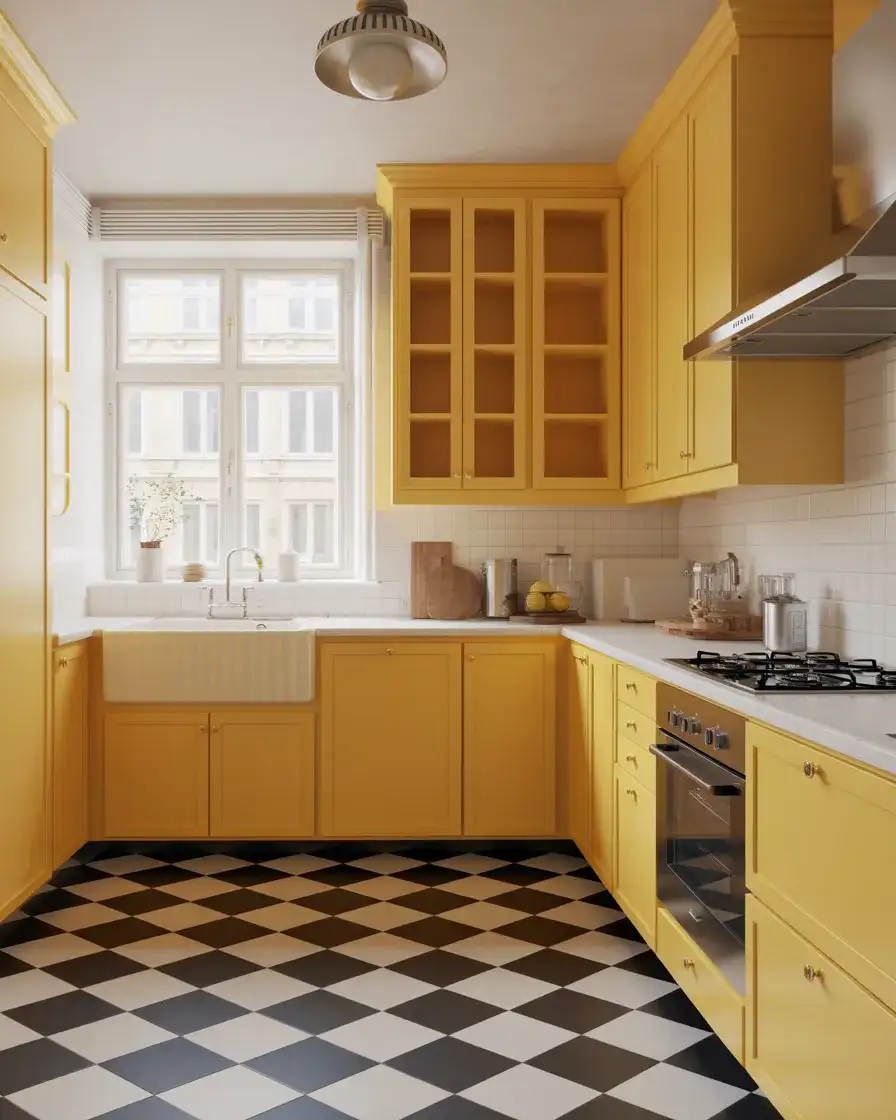
If a full checkered floor feels like too much commitment, consider a checkered runner rug instead—it gives you the same visual punch with zero installation drama. This is especially smart if you’re renting or if your kitchen already has a floor you love that you don’t want to cover up. A good vinyl checkered runner is surprisingly durable, easy to clean, and costs a fraction of tile. It’s one of those swaps that completely transforms the energy of a room for under a hundred dollars.
19. Soft Yellow Kitchen With Brass Accessories
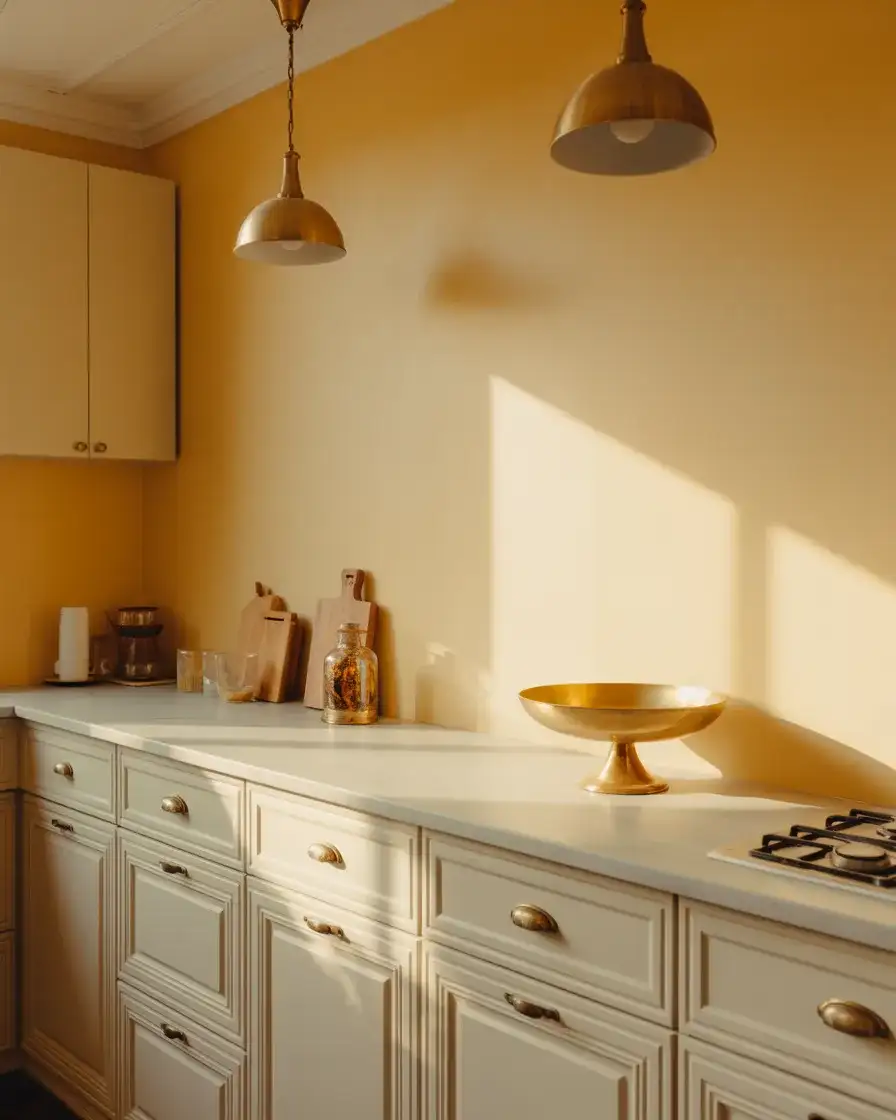
Brass and yellow are one of the most naturally harmonious pairings in interior design—they share the same warm undertone, which means they never clash. A soft yellow kitchen decked out with brass accessories—drawer pulls, pendant lights, a fruit bowl, a few candle holders—feels cohesive and collected without ever looking like you tried too hard. It’s the kind of palette that feels expensive even when it isn’t.
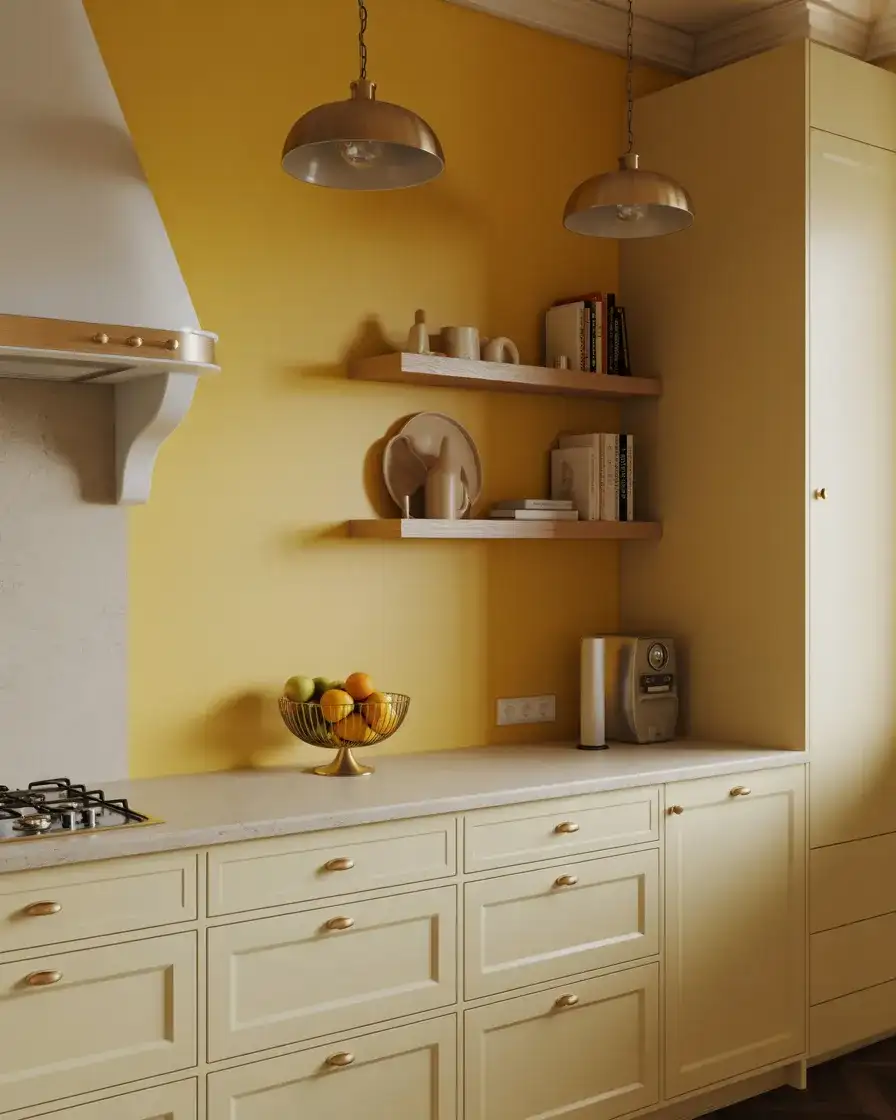
A word on brass: there’s a world of difference between polished brass and brushed or satin brass. Polished brass can tip into flashy territory, especially if you overdo it. Brushed brass, on the other hand, has a quieter, more matte quality that blends into a room rather than demanding attention. For a soft yellow kitchen, brushed is almost always the better call—it keeps the warmth without the showiness. And if budget is a concern, satin brass-finish hardware from major hardware stores is genuinely hard to tell apart from the real thing.
20. Yellow and Grey Kitchen With Industrial Edge
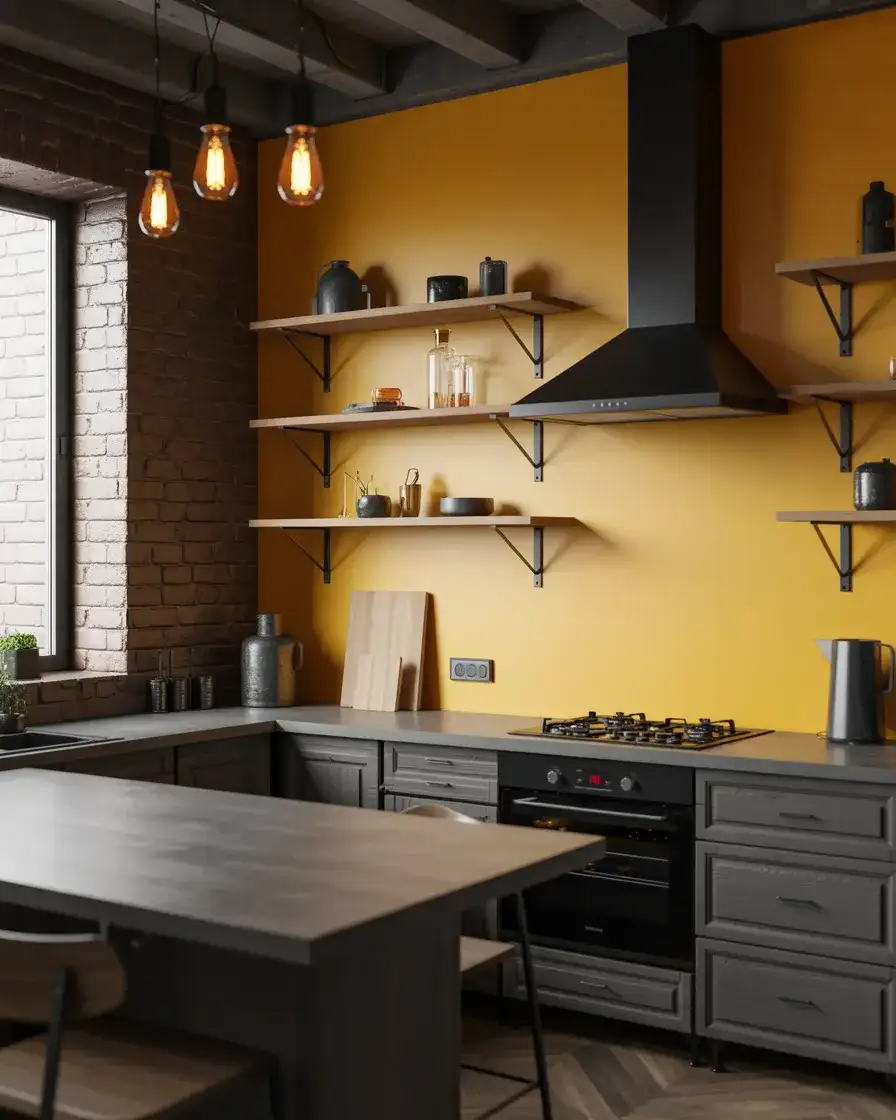
Industrial kitchens don’t have to live in a loft in Brooklyn. Bring the look into any space by combining grey concrete or stone countertops with a bold yellow accent wall or island, and finish with exposed metal shelving and Edison bulb pendants. The industrial elements—raw metal, concrete, and exposed brick—ground the yellow and keep it from feeling too sweet or precious. The result is a kitchen that feels edgy and interesting without sacrificing warmth.
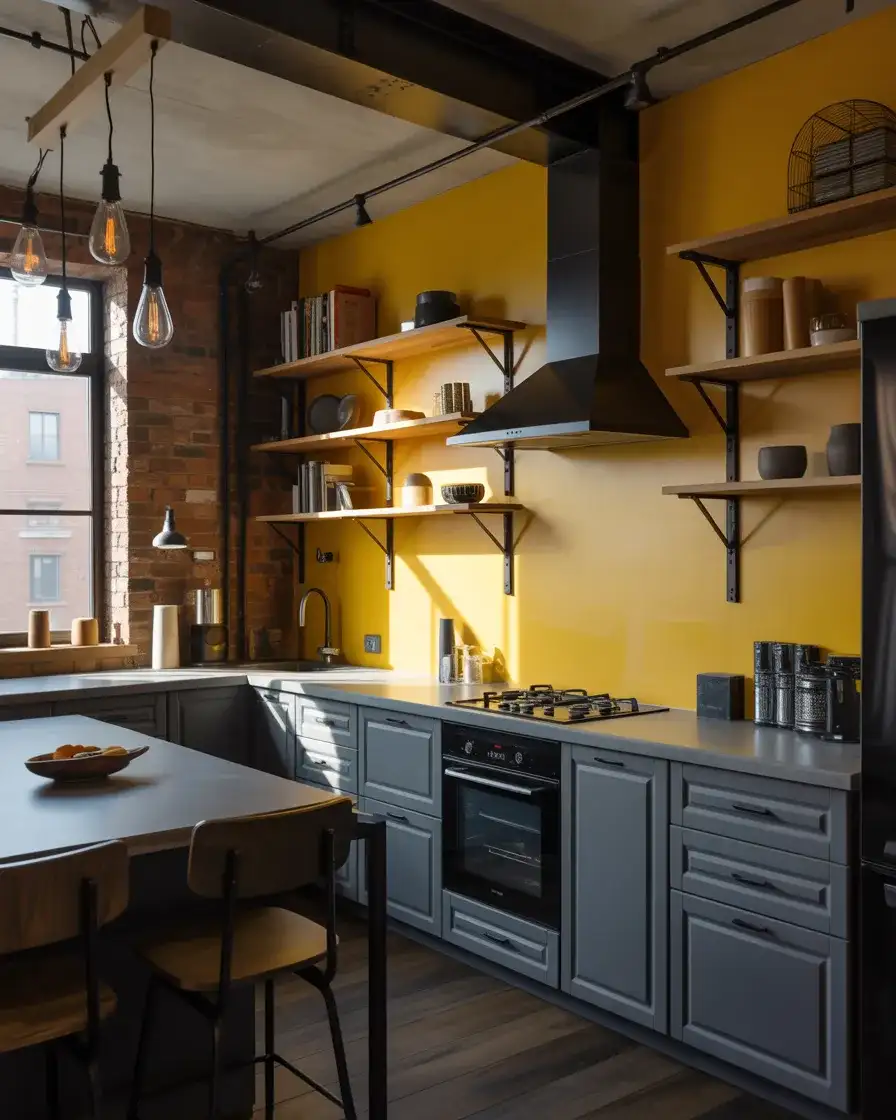
Open metal shelving looks incredible but can be a nightmare to keep clean—grease and dust collect on it faster than almost any other surface in a kitchen. If you love the look but dread the maintenance, consider a hybrid approach: metal shelving in one small section near a non-cooking area, with closed cabinets everywhere else. You get the industrial visual without turning shelf-cleaning into a weekly chore. It’s a practical compromise that still reads as fully committed to the aesthetic.
21. Pale Yellow Kitchen With Floral and Botanical Prints
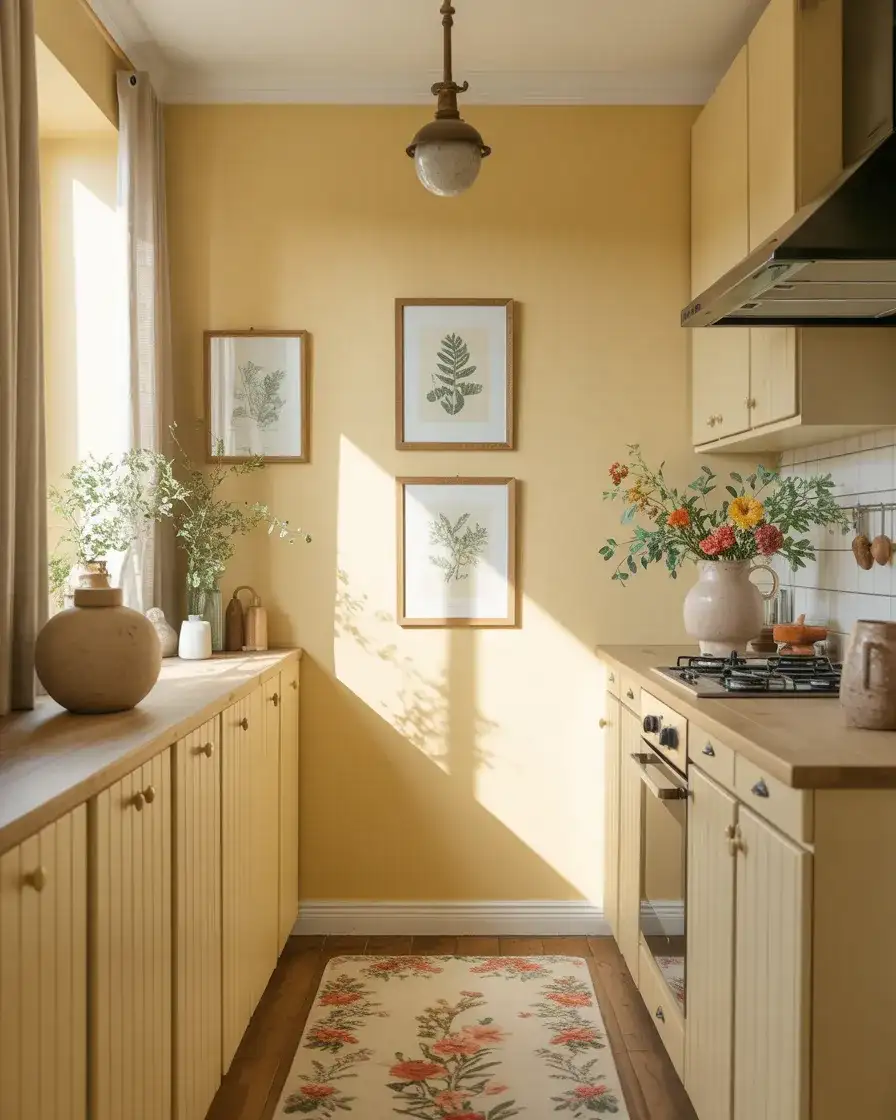
A pale yellow kitchen is the perfect canvas for botanical and floral prints—the warm, sunny base makes every leaf and bloom pop without competing for attention. This is a style that works beautifully in kitchens with vintage bones: think crown molding, farmhouse sinks, and plenty of natural light. Add a few framed botanical prints, a floral runner, or even floral-printed curtains, and the whole room starts to feel like something out of a dream.
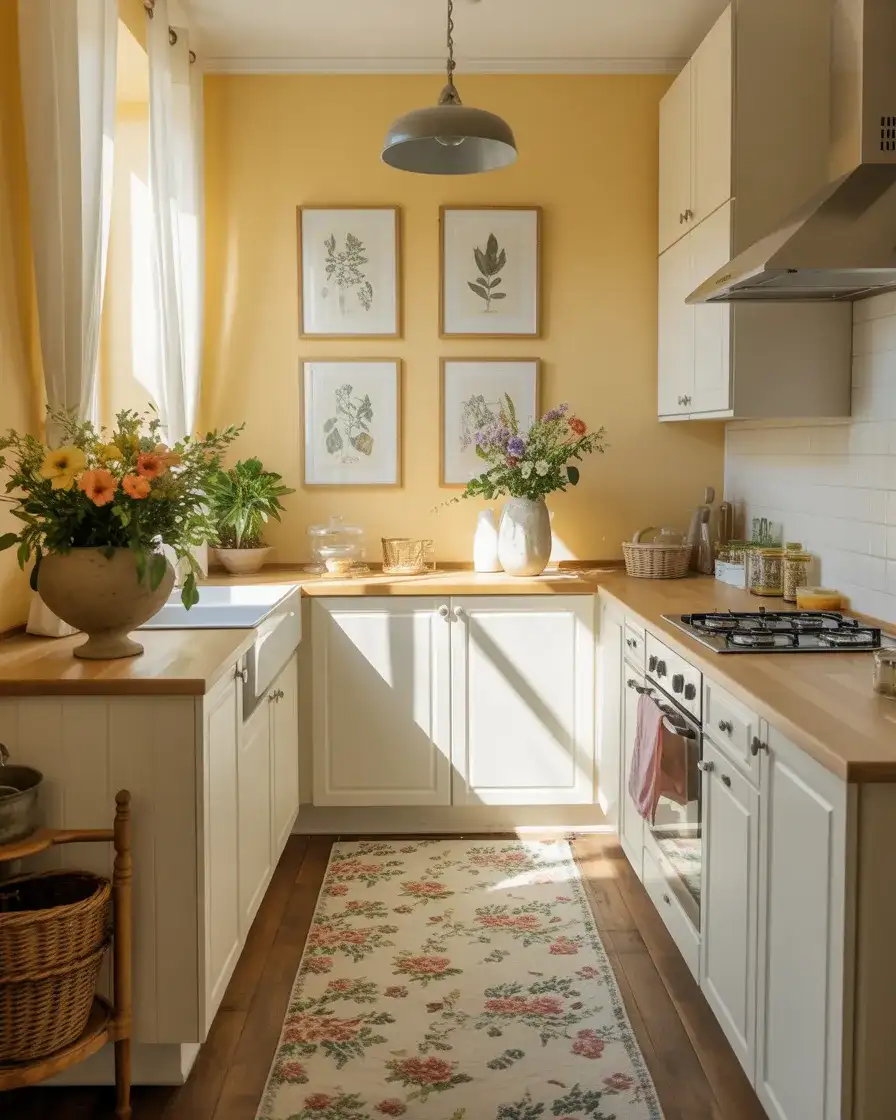
When layering prints into a room, the general rule is to vary the scale—one large print, one medium, and one small—so they don’t compete with each other. In a kitchen, keep your prints away from the cooking zone where they might get splattered, and frame them in simple white or natural wood to let the artwork breathe. This is also a fantastic way to bring seasonal color into a kitchen: swap out one or two prints throughout the year, and the whole room feels refreshed.
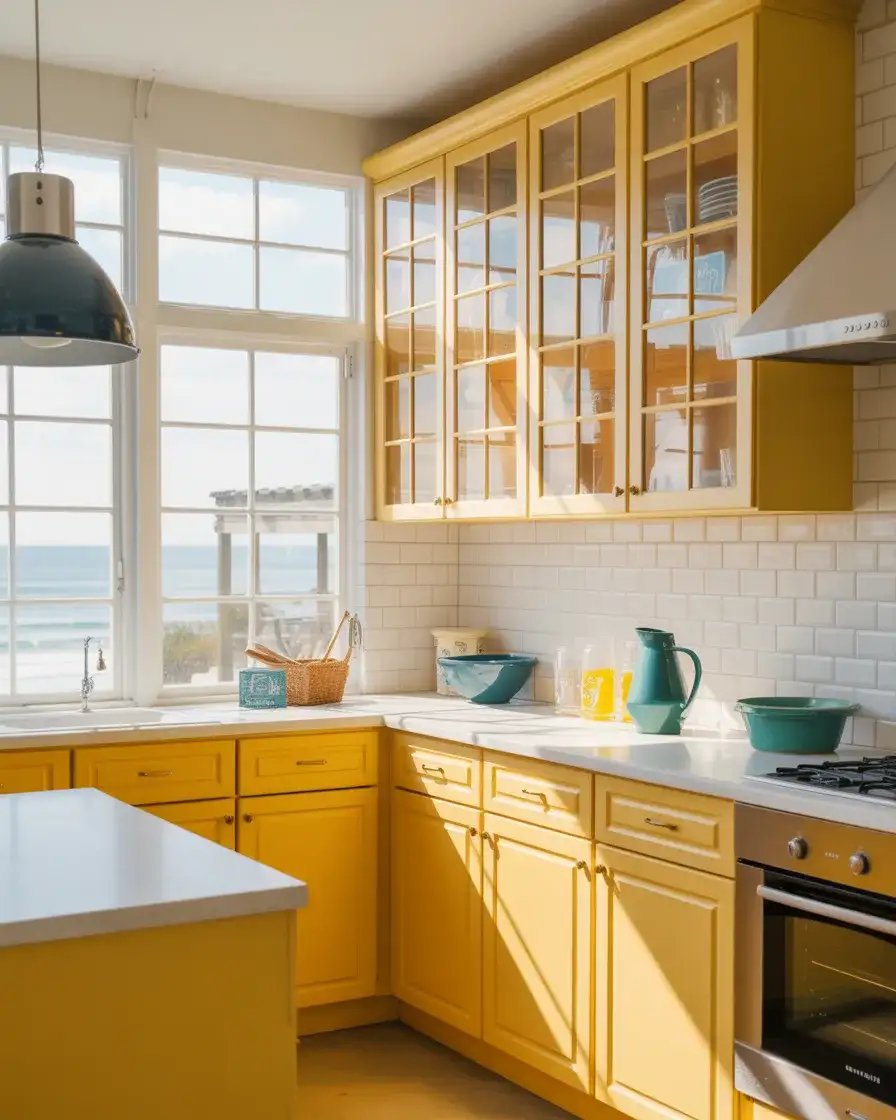
22. Bright Yellow Kitchen With White and Teal Coastal Accents
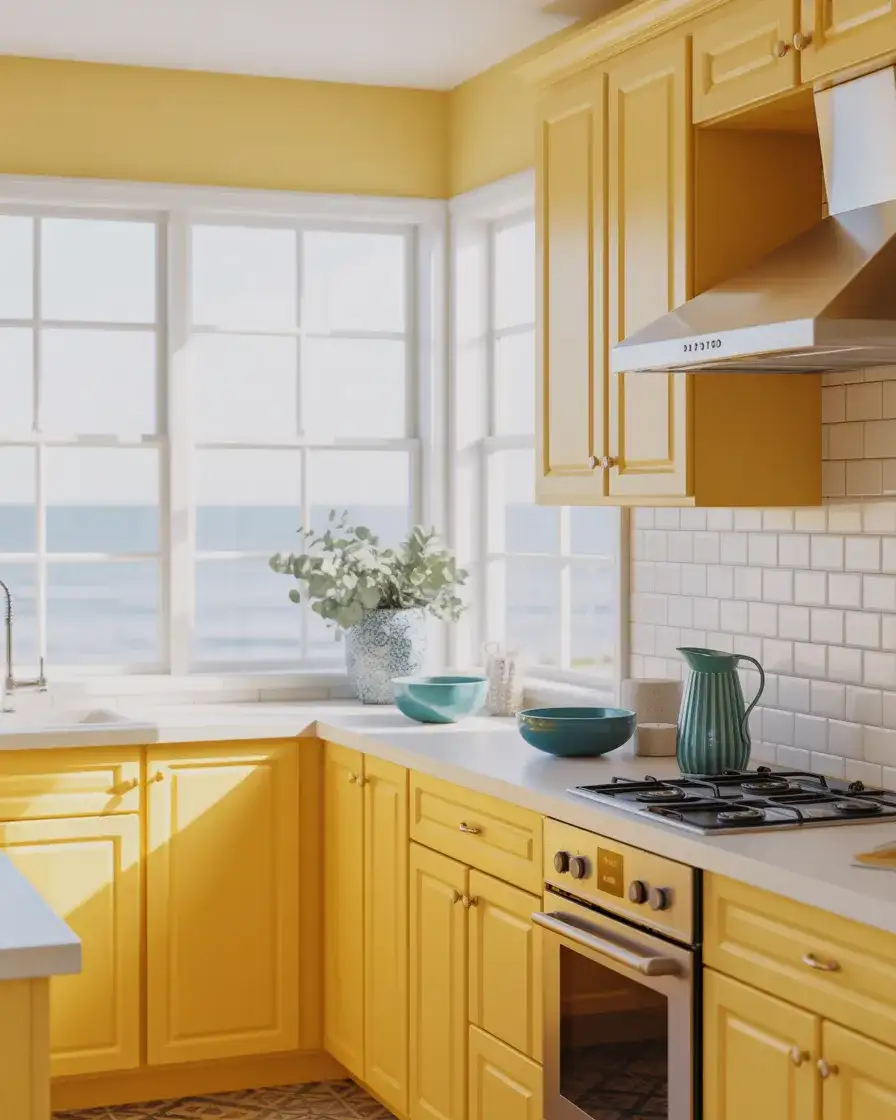
This last idea ties together several of the best instincts we’ve seen in yellow kitchens right now: go bright, stay white, and bring in teal as a secondary accent to keep things from tipping into pure sunshine territory. It’s a three-color kitchen that feels cohesive and cheerful—the kind of space that makes mornings feel like an event. Think bright yellow cabinets, white countertops and backsplash, and teal ceramic accessories scattered throughout for just enough contrast and depth.
If there’s one takeaway from everything we’ve covered today, it’s this: yellow is one of the most forgiving colors in a kitchen. It pairs well with almost everything, it adapts to every style from industrial to farmhouse, and it makes a room feel warmer and more welcoming without you having to do much else. The trick is choosing the right shade for your space and committing to it—and then letting the rest of the room follow. Trust the color. It knows what it’s doing.
Conclusion
Which of these yellow kitchen ideas caught your eye? We’d love to hear what you’re thinking about tackling—drop your favorites (and your questions) in the comments below. Whether you’re planning a full kitchen overhaul or just dreaming up your next Pinterest board, we’re here for it.