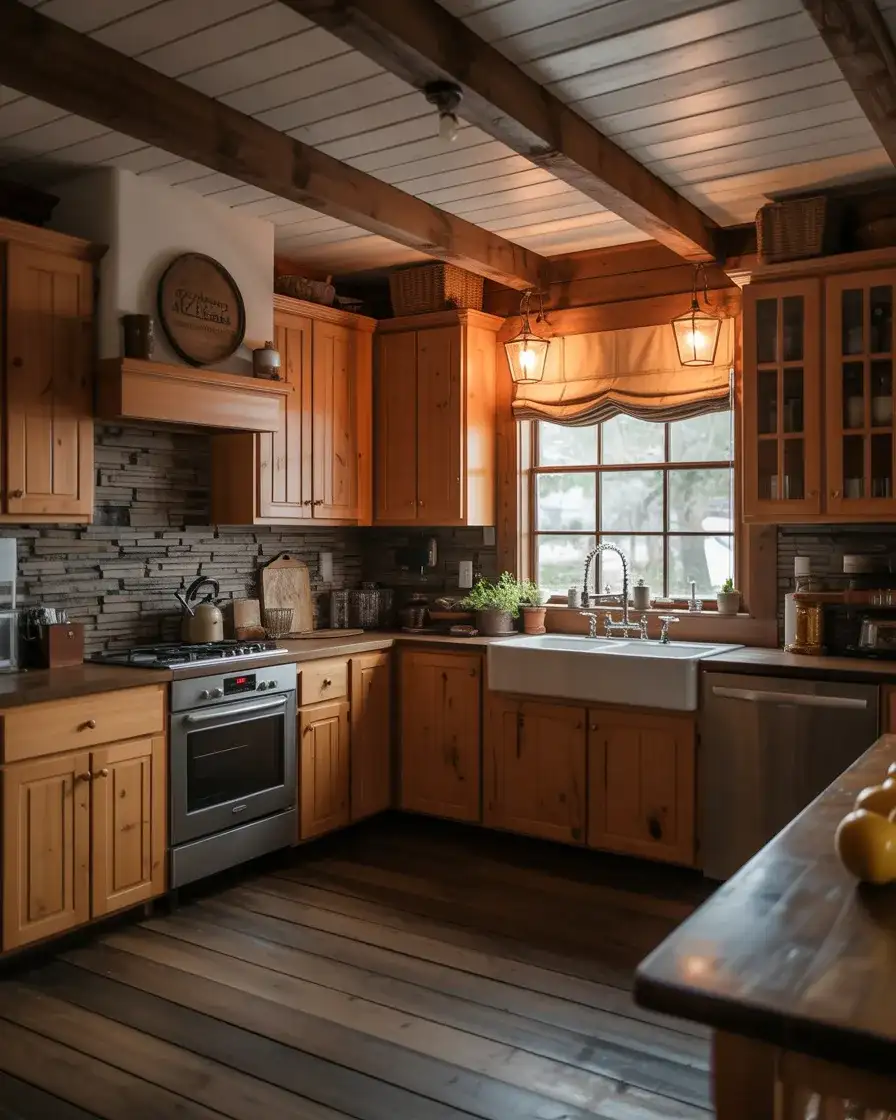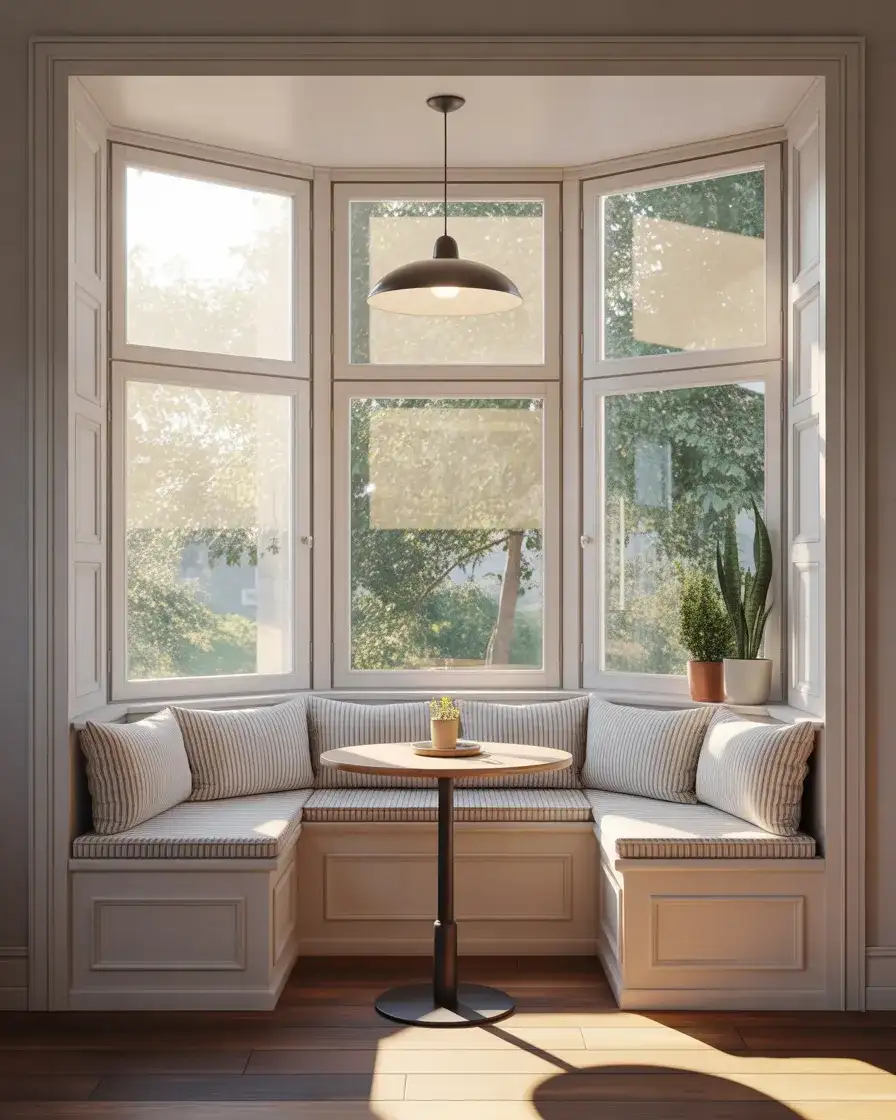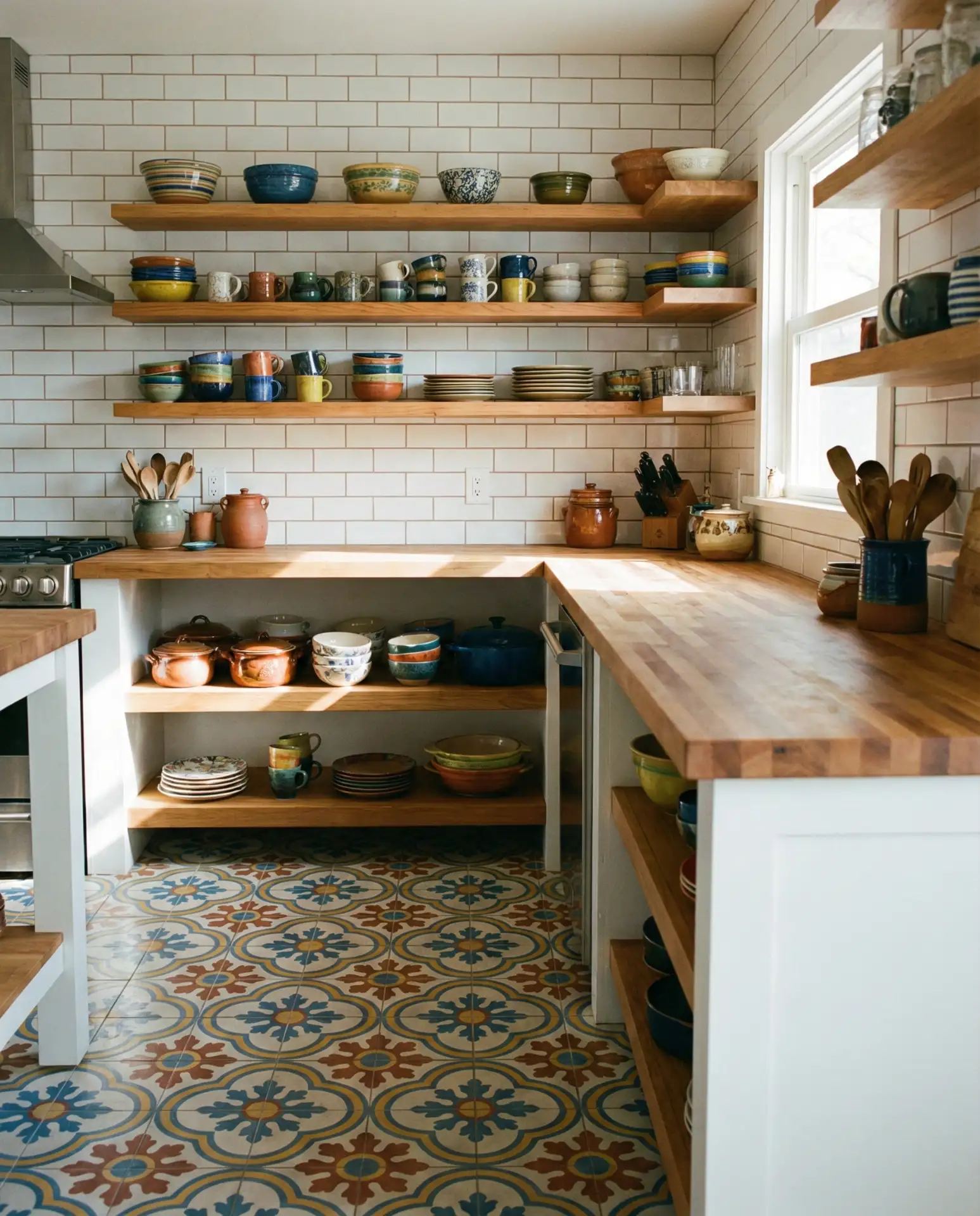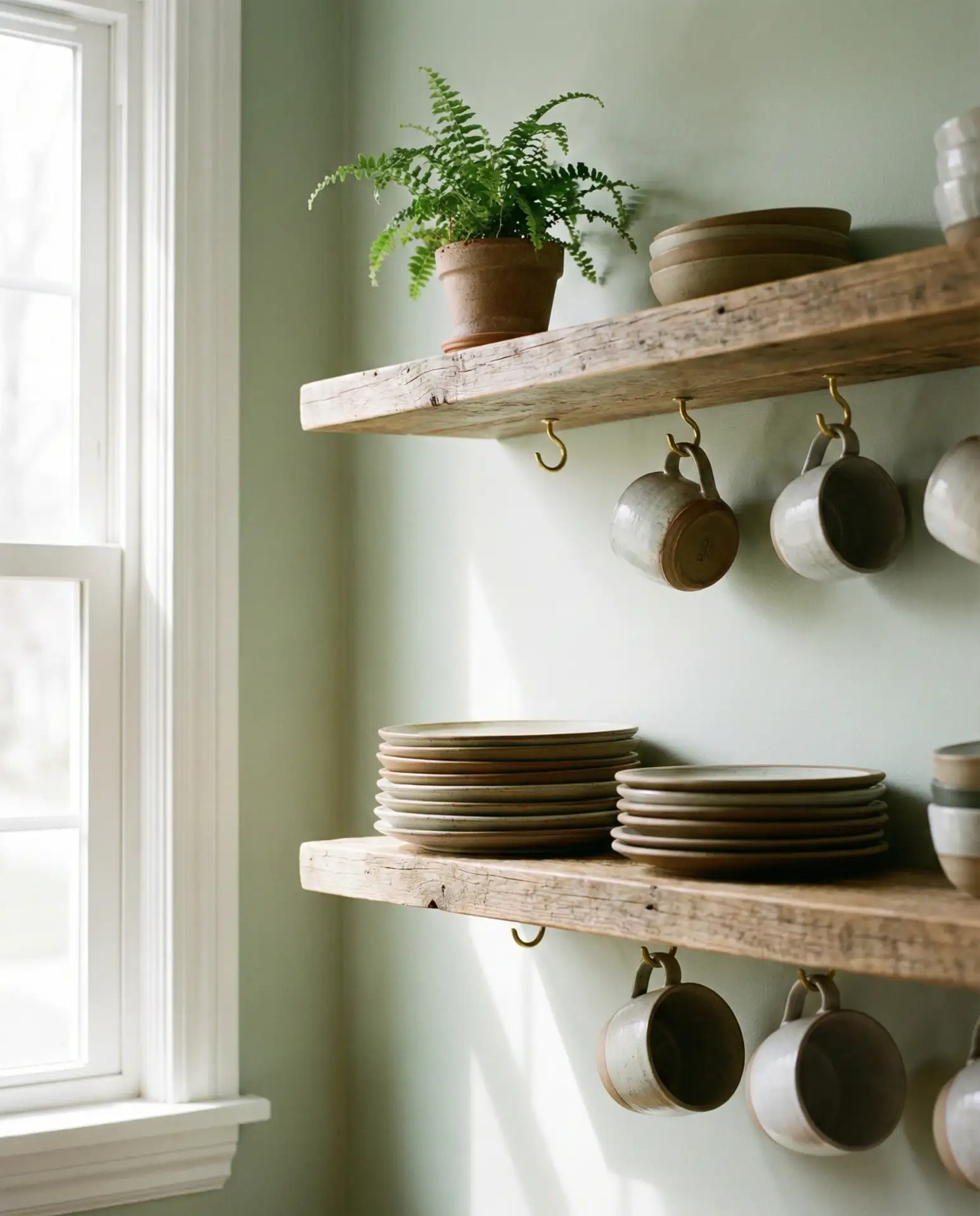
Sage green kitchens aren’t just a Pinterest trend anymore—they’ve become the color story that keeps showing up in mood boards, renovation reveals, and new-build showcases across the country. There’s something quietly magnetic about this muted, earthy green: it pairs with almost anything, photographs beautifully, and brings a calm, grounded energy to the space where most of us spend a surprising amount of our day. If you’ve been scrolling through kitchen inspiration lately, you already know sage is everywhere right now. This guide breaks down 22 distinct ways to bring that color into your own kitchen in 2026, from bold farmhouse reinterpretations to sleek modern takes—so you can find the version that actually fits your life.
1. Sage Green Farmhouse Cabinets with Brushed Gold Hardware
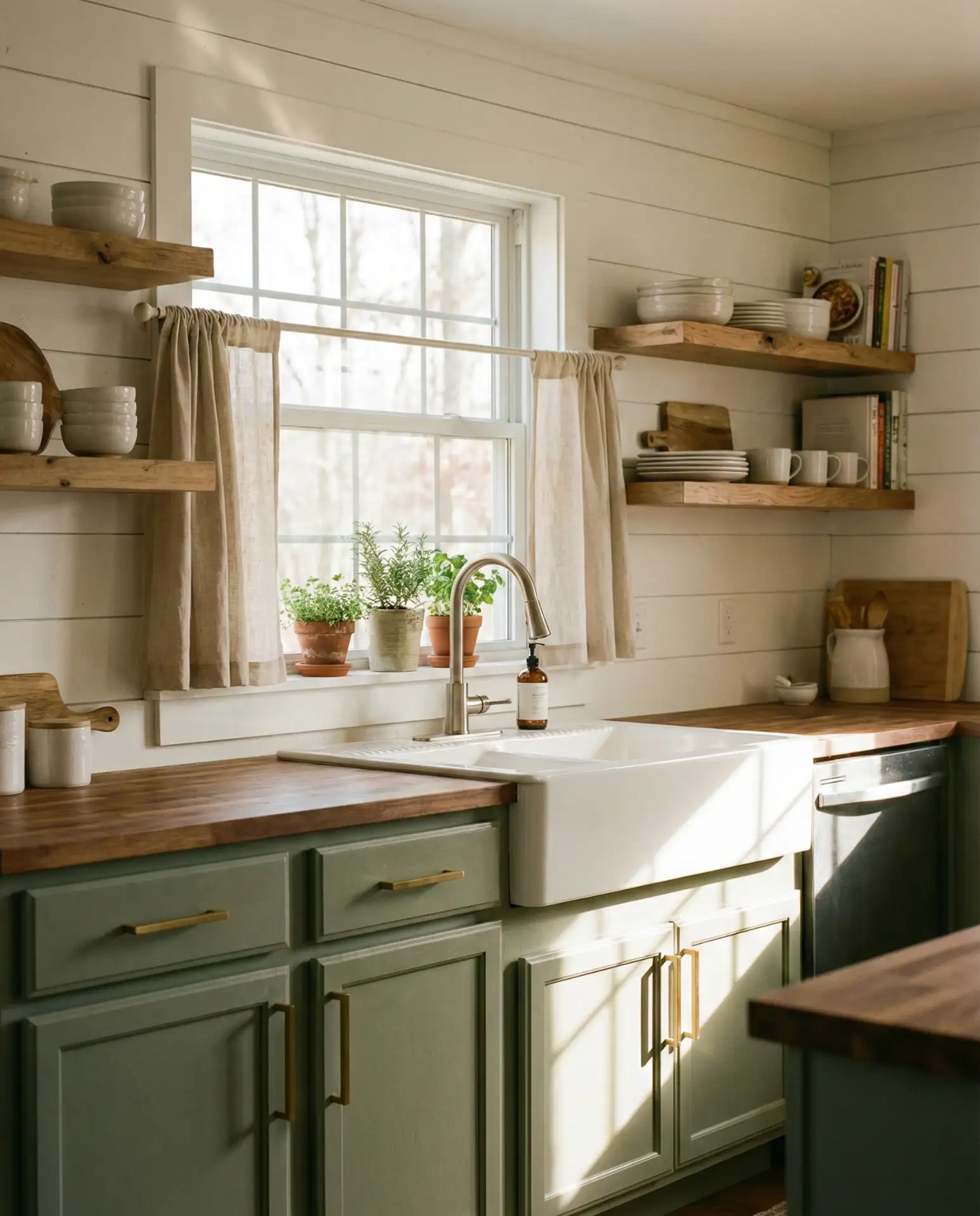
There is something undeniably inviting about farmhouse-style cabinets painted in a deep sage green, especially when the hardware leans toward brushed gold. This combination quietly anchors a kitchen without making it feel heavy or overdone. The color scheme here works because sage and gold share the same warm undertone—they don’t fight each other the way cooler metals sometimes can. When you add soft light through a window above the sink, the whole room seems to glow from within, turning a simple kitchen into something that genuinely feels like home.
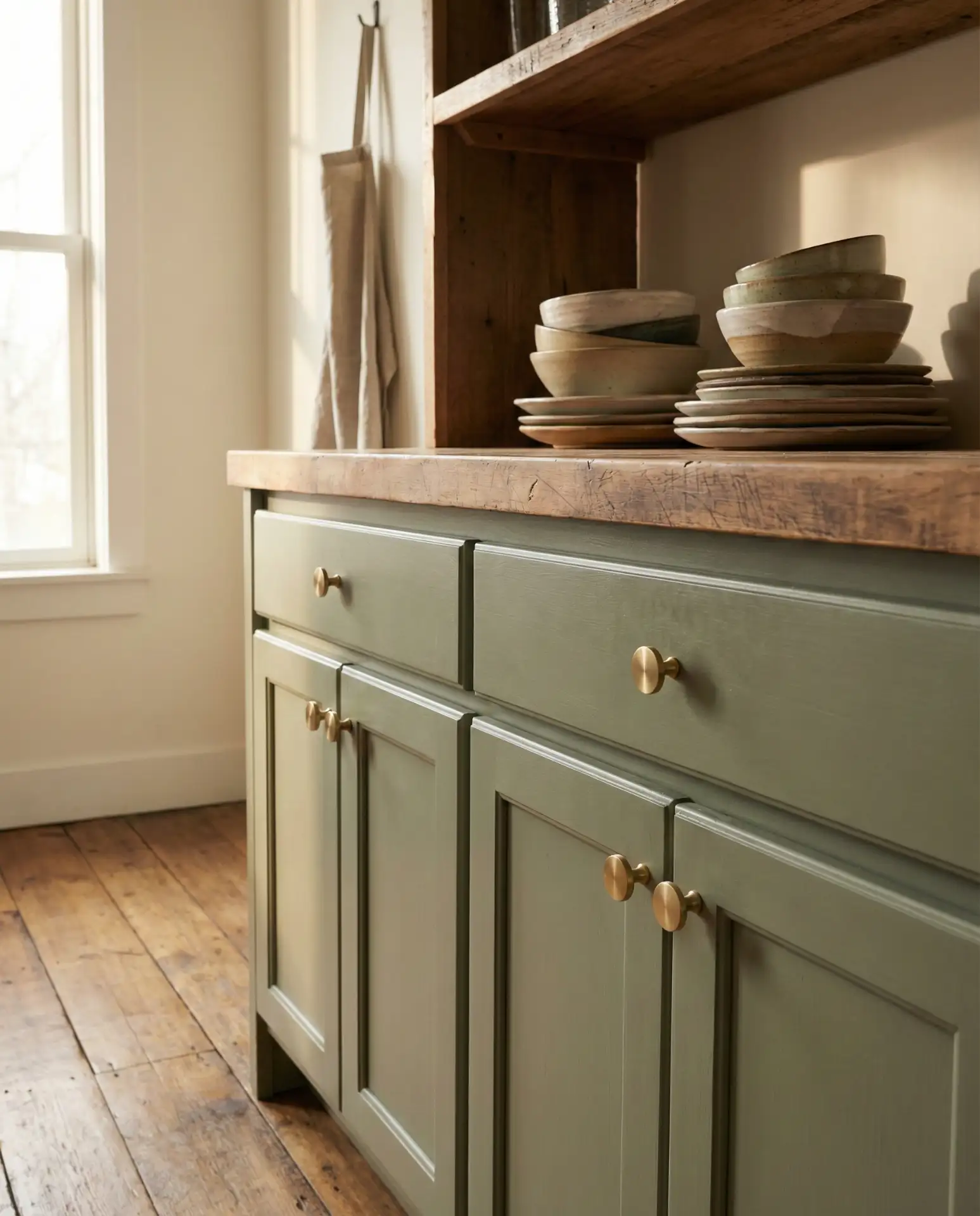
The practical insight here is that brushed gold hardware ages beautifully—it develops a soft patina over time rather than looking worn out, which means this kitchen style gets better as it lives in. If you’re on a budget, you don’t need to replace your current hardware; a can of gold spray paint designed for metals can give you the same visual effect for under twenty dollars. The sage green paint itself should be a matte or eggshell finish, which hides fingerprints far better than satin does in a kitchen with daily use.
2. All-White Cabinets with Sage Green Island
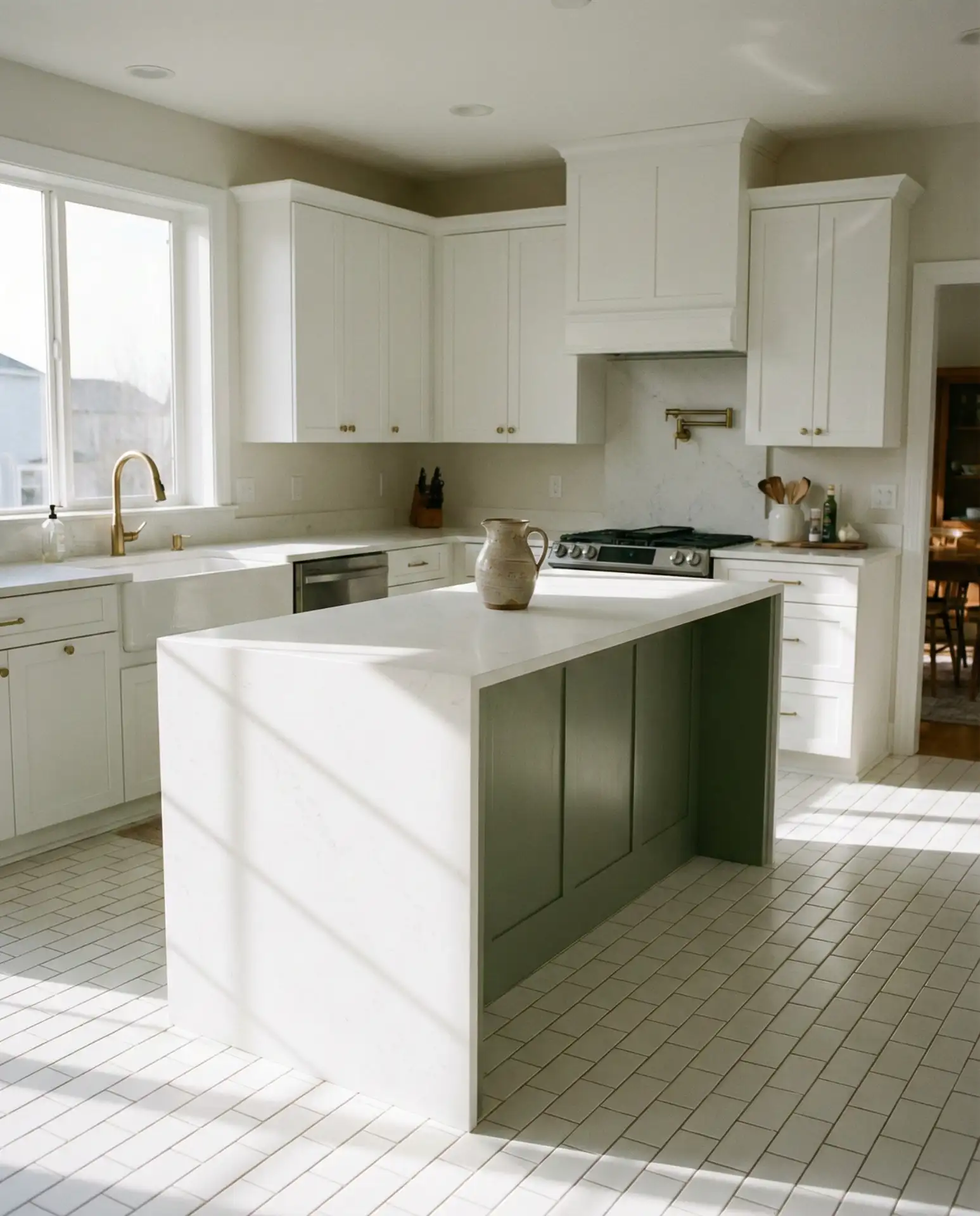
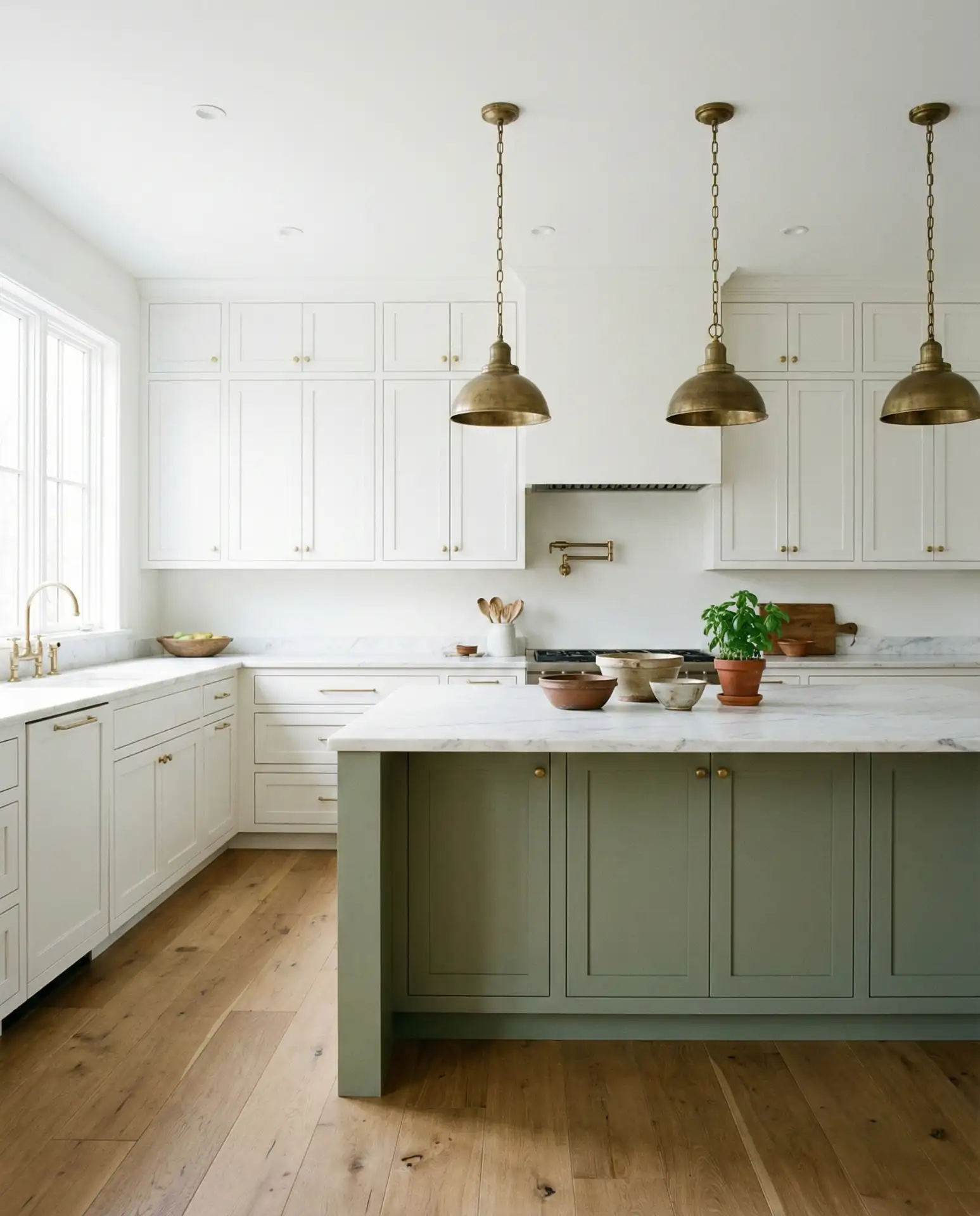
If painting your entire kitchen sage feels like too big a commitment, this is the move: keep your white cabinets exactly where they are and paint only the island. It creates an instant focal point, and the contrast between crisp white and soft sage reads as both modern and warm at the same time. The decor here tends to stay minimal—a few brass fruit bowls, a ceramic vase with eucalyptus—because the island is already doing the heavy lifting. This works especially well in open-concept kitchens.
This layout mirrors what you see in a lot of American farmhouses across the Midwest and South, where kitchens are designed to be gathering spaces as much as cooking spaces. Families in these regions tend to gravitate toward designs that feel open and breathable rather than closed off—and a white-and-sage island kitchen delivers exactly that. It also photographs incredibly well, which matters if you’re the kind of person who snaps a picture of your kitchen every time the light hits just right.
3. Sage Green Lower Cabinets with Black Granite Countertops
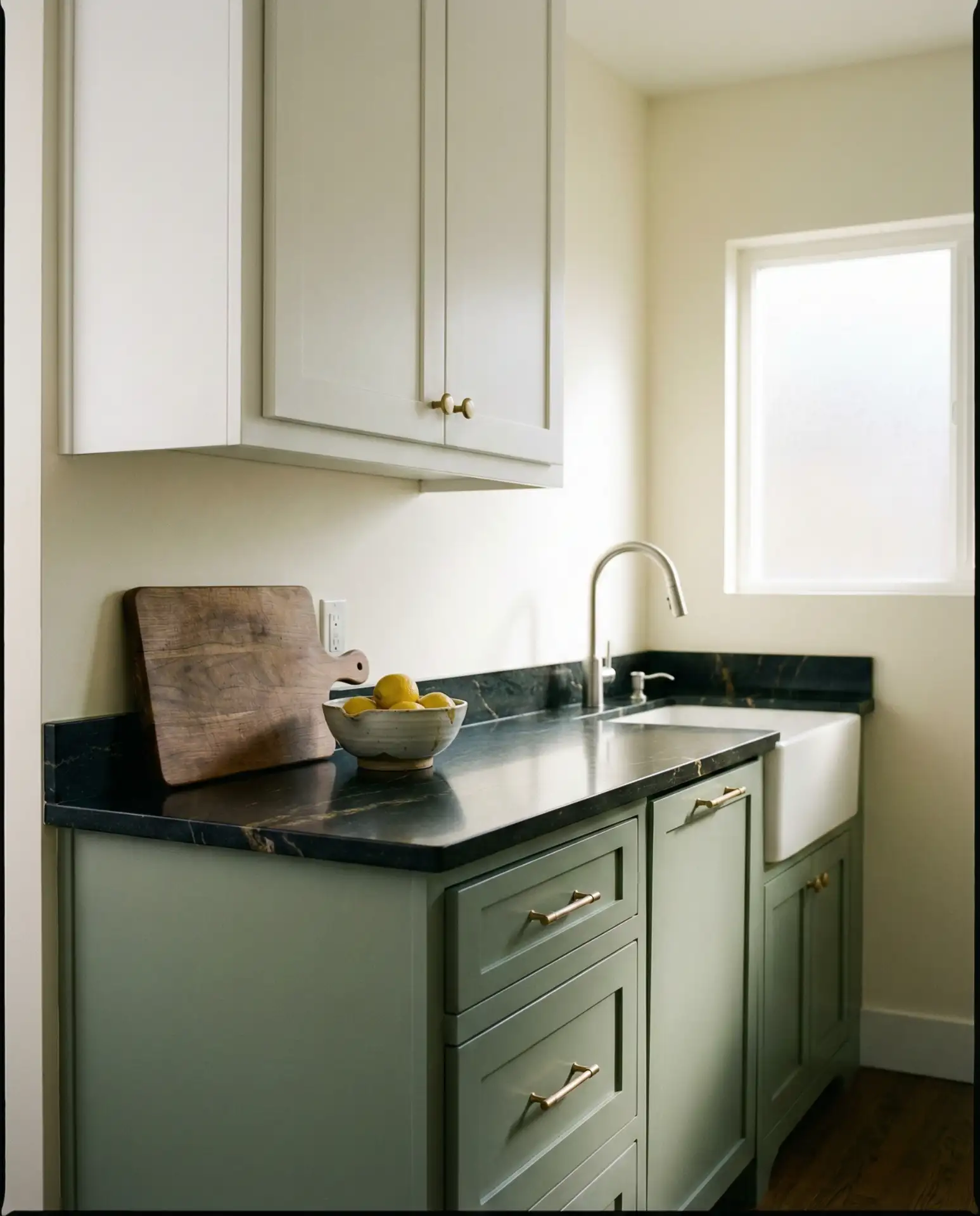
This pairing is for the kitchen that wants to feel grounded and a little moody without crossing into full dark-mode territory. Cabinets with black granite countertops create a striking contrast against sage green—think of it like a forest floor at dusk, rich but never overwhelming. Bring in wood and natural tones elsewhere: open shelving, a cutting board, or a wooden stool at the counter. The overall aesthetic lands somewhere between rustic sophistication and modern restraint—exactly the sweet spot most people are chasing.
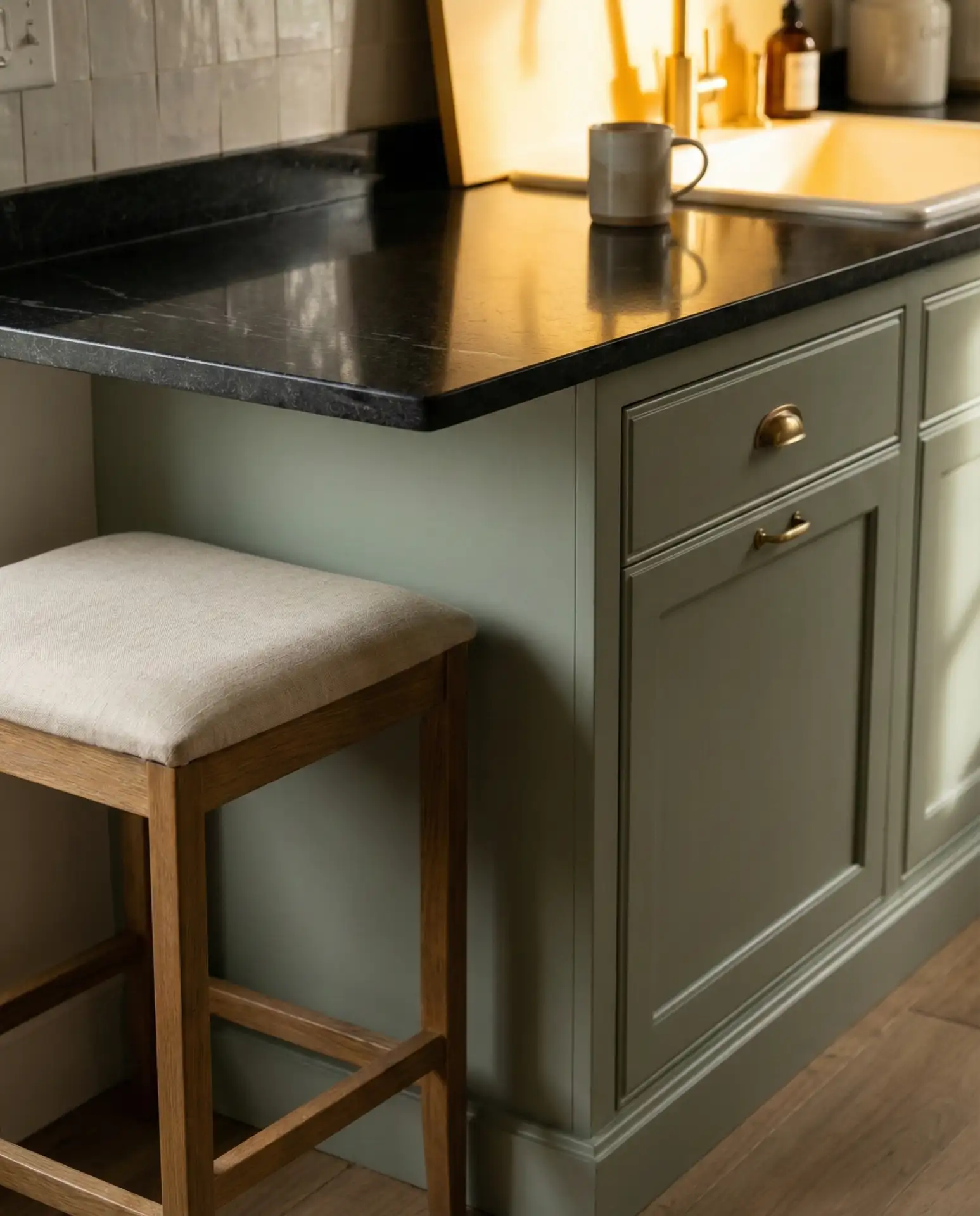
A neighbor of mine did exactly this renovation last spring and swore she almost didn’t go with the black granite—she was afraid it would look too dark. But once it was installed, the sage underneath made the whole surface feel lighter than expected. That’s the real magic of this combination: the green acts as a visual buffer, preventing the granite from swallowing the room. If you’re considering this, just make sure your upper cabinets or walls stay light to keep the balance in check.
4. Sage Green Backsplash Tiles with White Cabinets
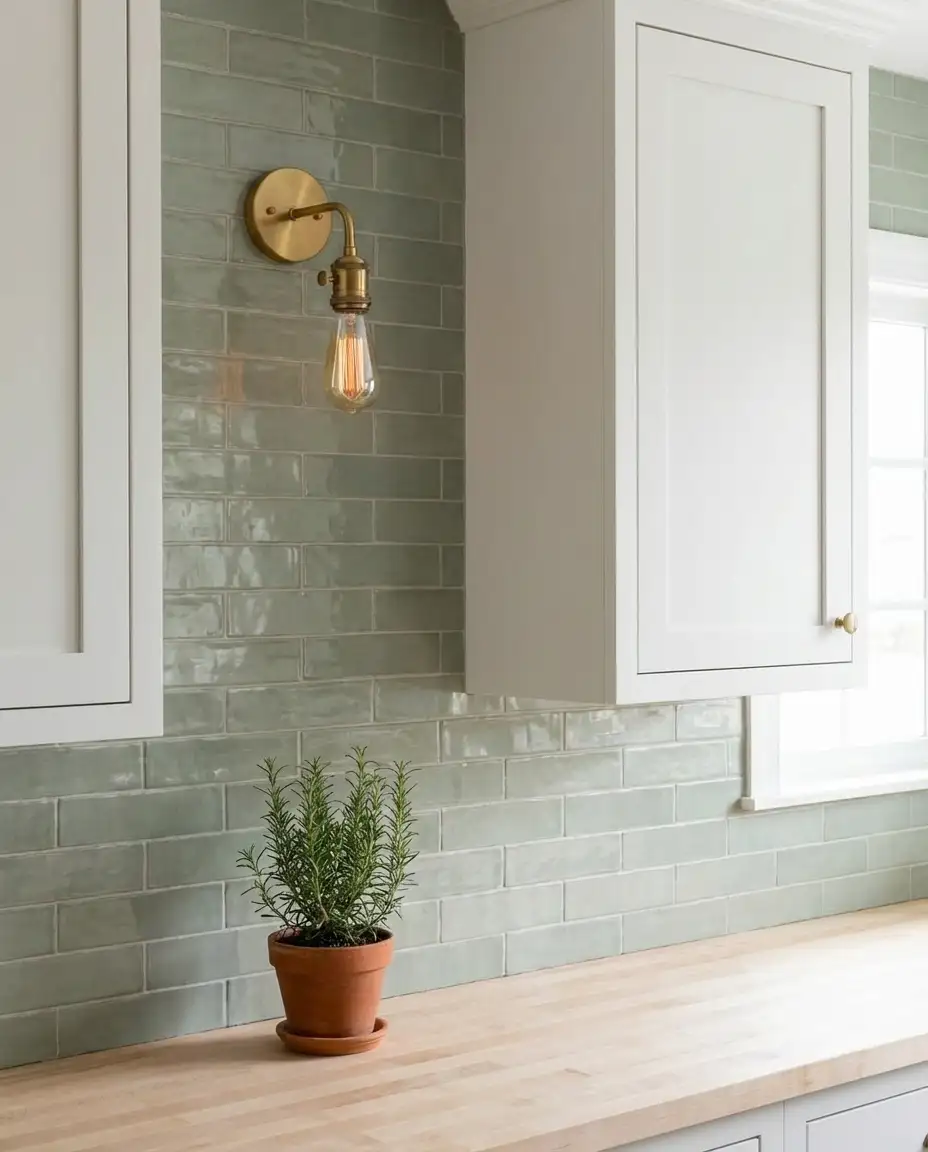
If you want sage green in the kitchen but don’t want to commit to painting your cabinets, the backsplash is an incredible alternative—and it’s removable if you ever change your mind. Tiles to match a sage palette come in so many beautiful forms right now: zellige, subway, and even large-format matte tiles all work beautifully. Pair them with farmhouse-style white cabinets and add a few accessories like ceramic canisters or woven baskets on the shelves, and you have a kitchen that feels intentionally designed without a single dramatic renovation.
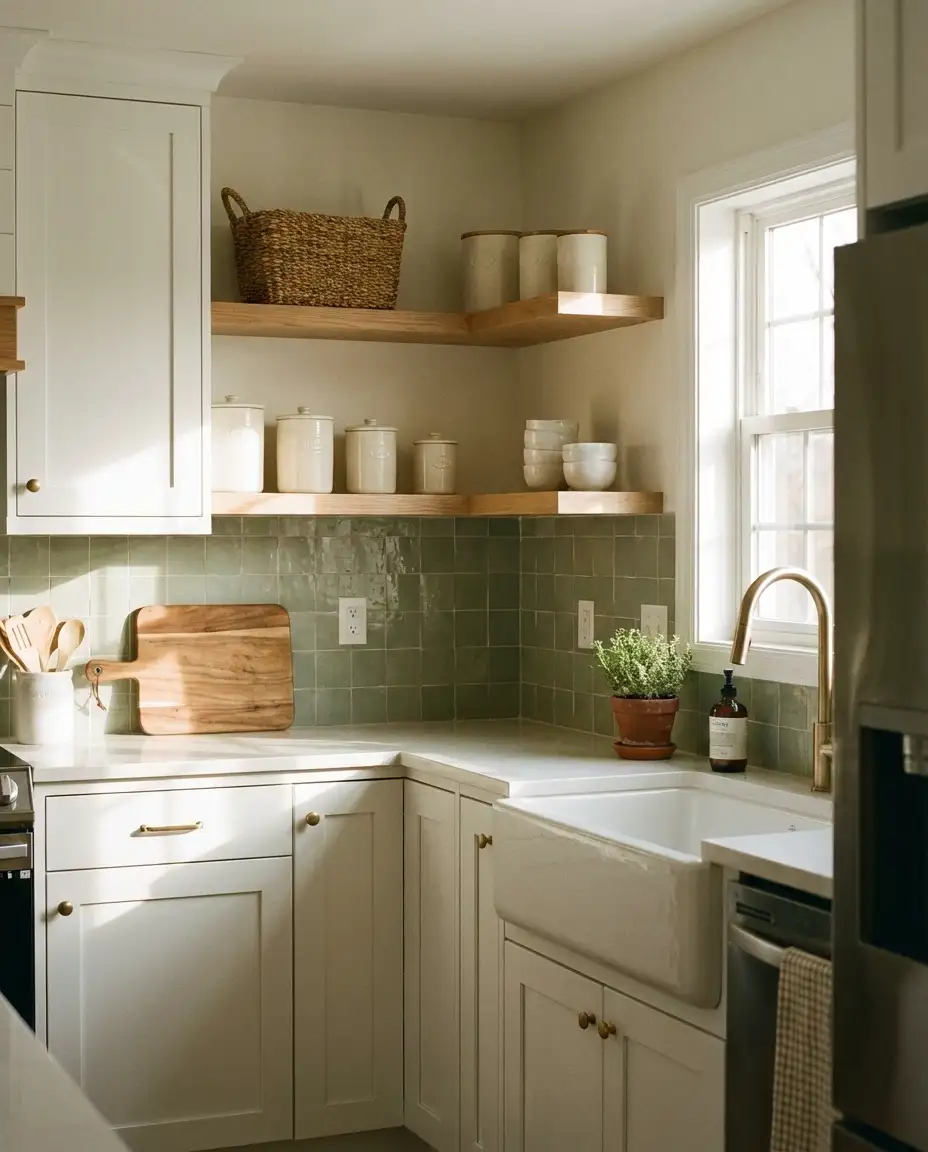
This design works best in galley kitchens or along a single wall—anywhere the backsplash becomes a continuous surface that draws the eye. In a U-shaped kitchen, you might use it only behind the range to create a statement moment rather than tiling the whole perimeter, which can sometimes feel visually busy. Zellige tiles in particular catch light differently at every angle, which means your kitchen will look slightly different in the morning than it does at night—a small detail that makes a big difference in how alive a room feels.
5. Sage Green Butcher Block Island Top
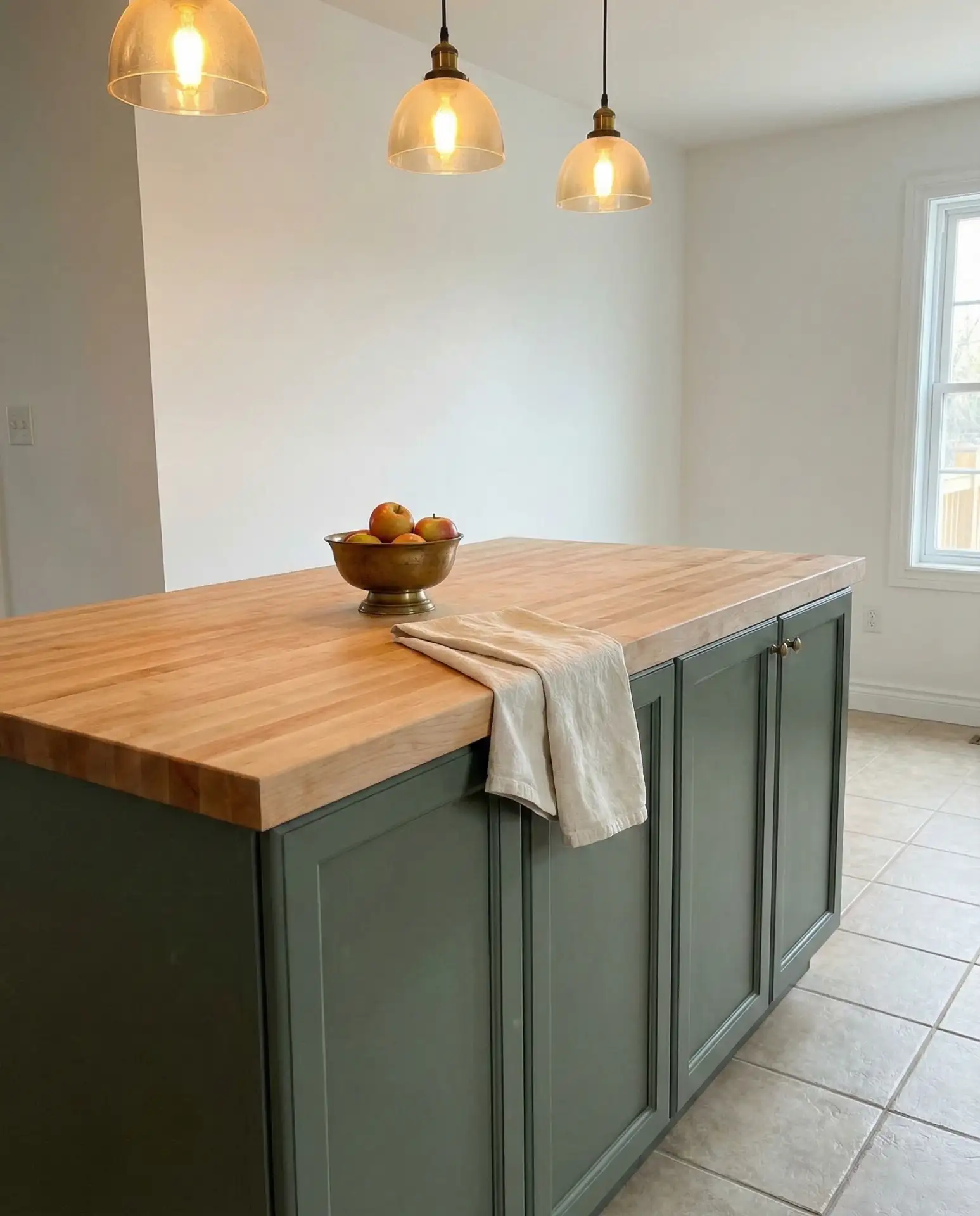
A cabinet butcher block combination with sage green is one of those pairings that feels almost too easy—and yet it works every single time. The warmth of the wood and the coolness of the sage balance each other out in a way that feels genuinely organic rather than styled. This works best when the island cabinets are painted dark sage rather than light, which gives the butcher block more room to breathe on top. The designs in this category tend to stay understated—let the materials do the talking rather than adding competing visual elements.
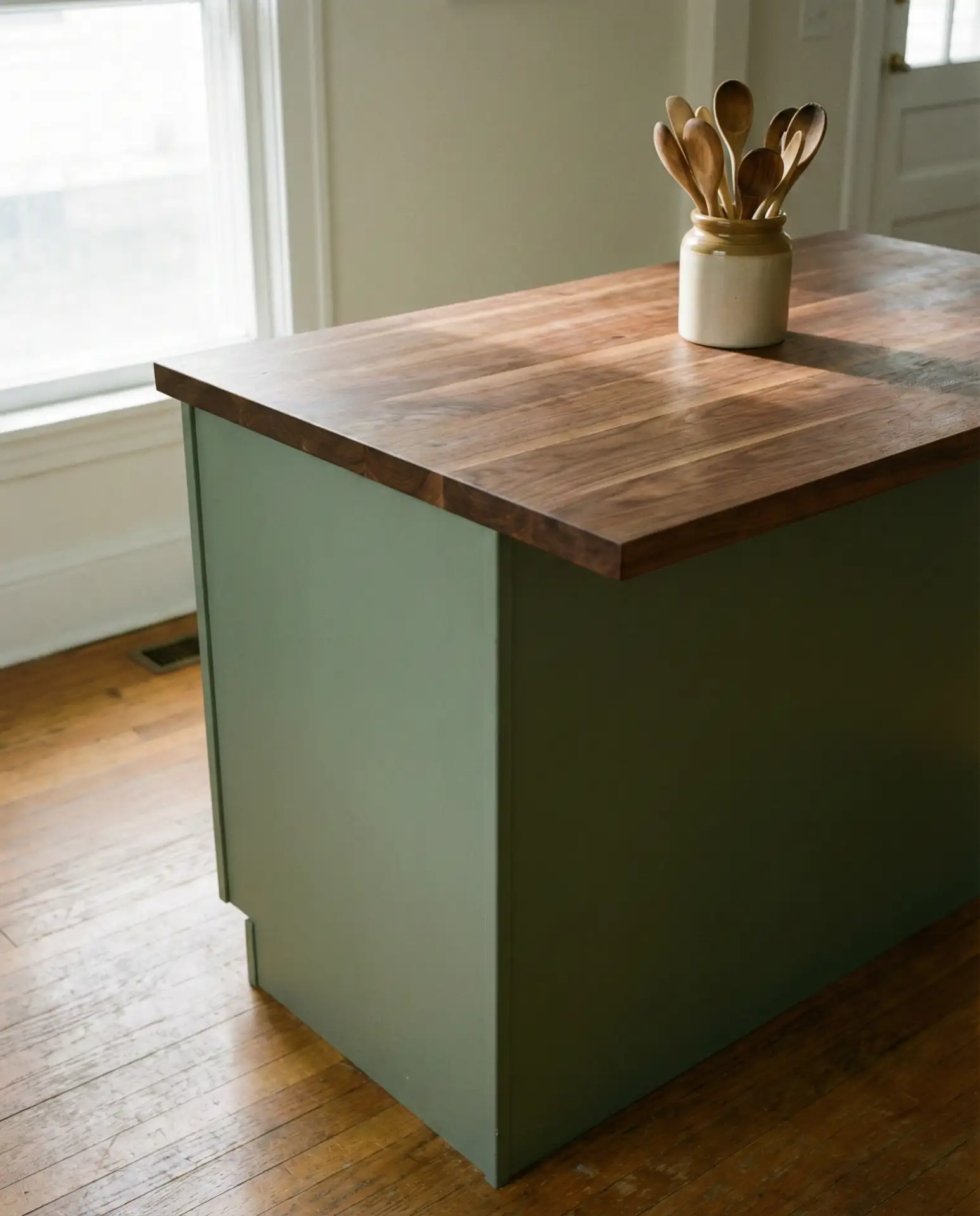
Here’s what a lot of designers won’t tell you upfront: butcher block countertops need to be sealed and maintained, especially in a kitchen that sees daily use. Oil it once a month with food-grade mineral oil, and you’ll keep it looking gorgeous for years. If you’re watching your budget, butcher block is also significantly cheaper than granite or quartz—often by thousands of dollars for a full island top—which makes this sage green pairing one of the most cost-effective ways to get a high-end kitchen look without the high-end price tag.
6. Sage and Pink Kitchen with Brass Accents
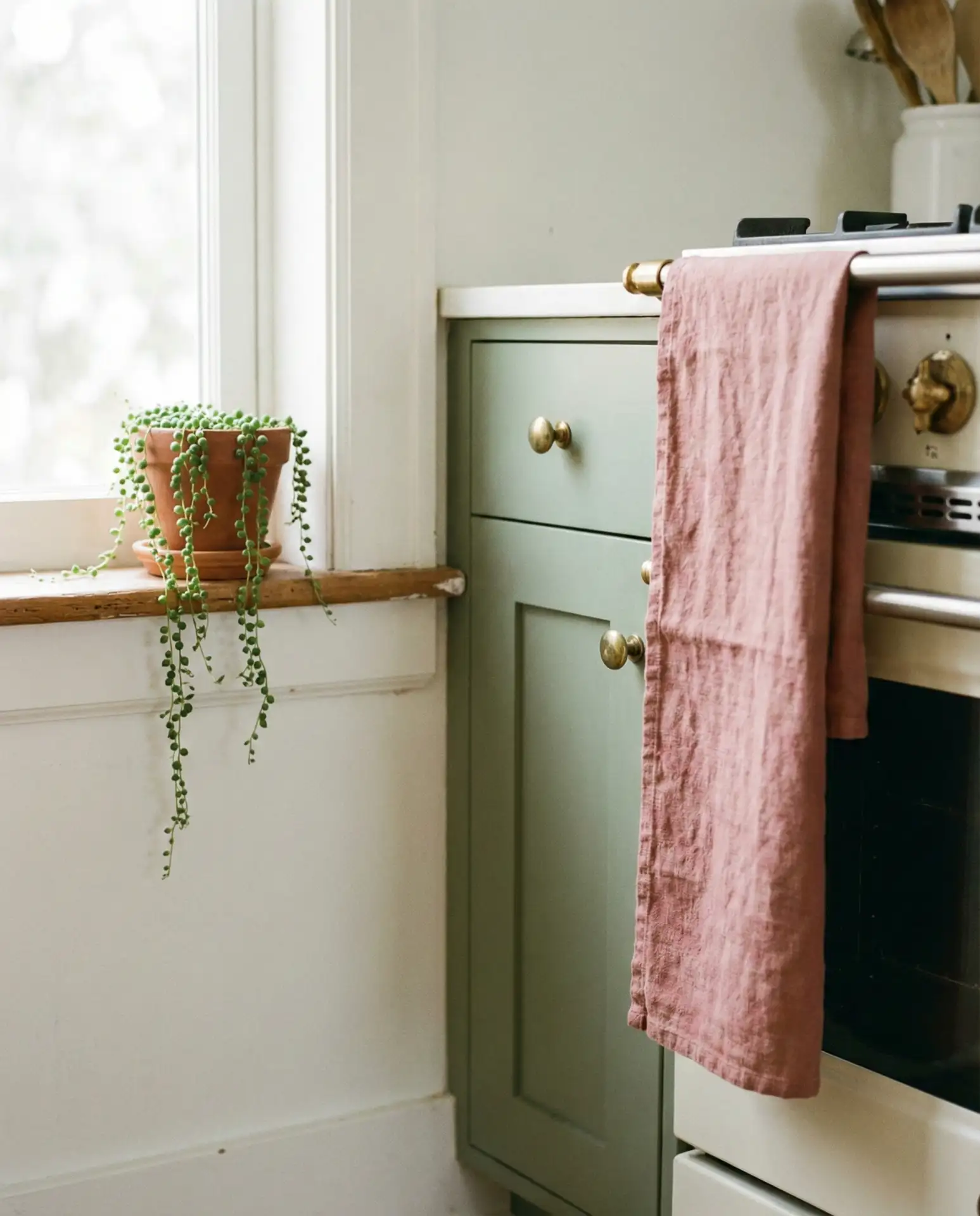
This one might surprise you, but pink and sage green is genuinely one of the most Pinterest-worthy combinations happening in kitchens right now. It’s not the hot pink of the nineties—we’re talking blush, dusty rose, or even a muted terracotta-pink that reads warm and soft. Set that against white walls and cabinets and sprinkle in brass hardware or brass decor ideas like candle holders and small shelves, and you end up with a kitchen that feels both feminine and grounded. It’s the kind of color story that stops people mid-scroll every time.
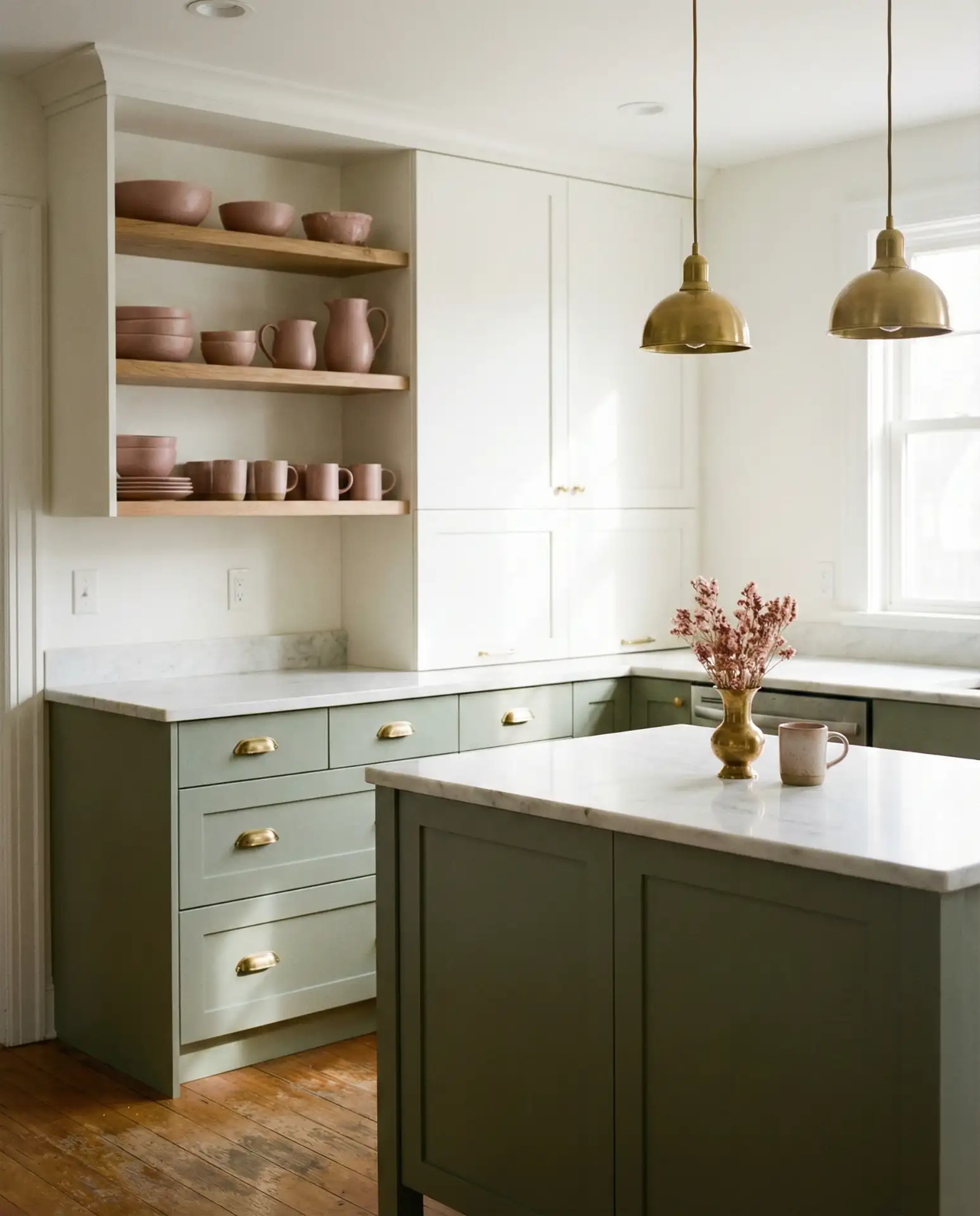
If this palette appeals to you but you’re worried about the cost of pulling it off, here’s the good news: you don’t need to repaint anything. Start by swapping in blush-colored dish towels, a pink ceramic fruit bowl, and a couple of dusty rose candles—that alone can shift the vibe of a kitchen dramatically. Brass hardware is typically one of the more affordable metal finishes, and a single brass fruit bowl or soap dish can anchor the whole color story without breaking the bank.
7. Sage Green Wooden Worktop Kitchen with Matte Black Fixtures
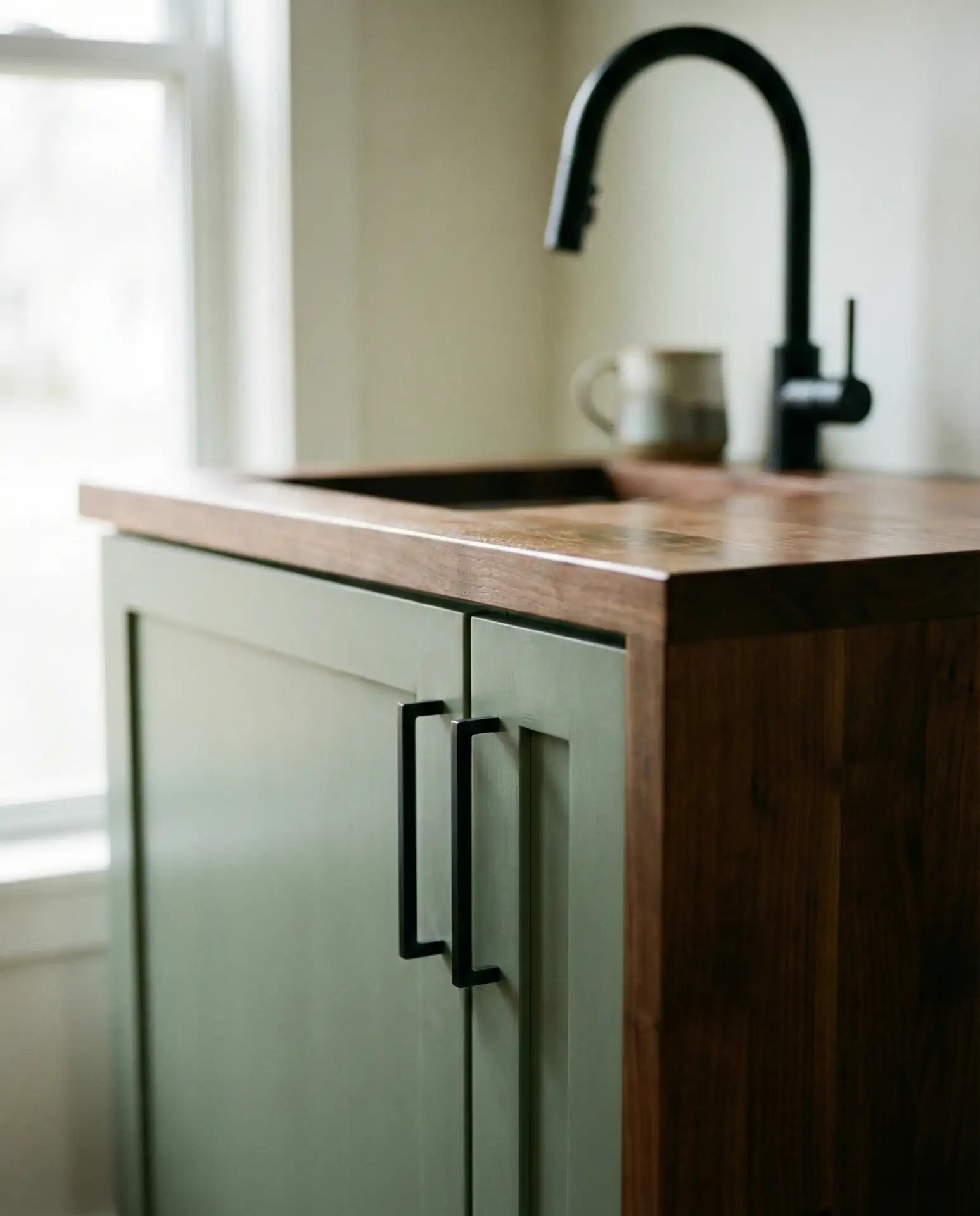
Matte black fixtures have been a staple in kitchen design for a few years now, and pairing them with sage green cabinets and a wooden worktop is a combination that feels both current and timeless. The cabinet’s color scheme here relies on contrast—the cool black of the faucet and handles against the earthy sage and the honey tones of the wood create a layered look that draws the eye without any one element shouting over the others. Add a few modern touches like a sleek pendant light or a minimalist fruit bowl, and the kitchen feels curated rather than cluttered.
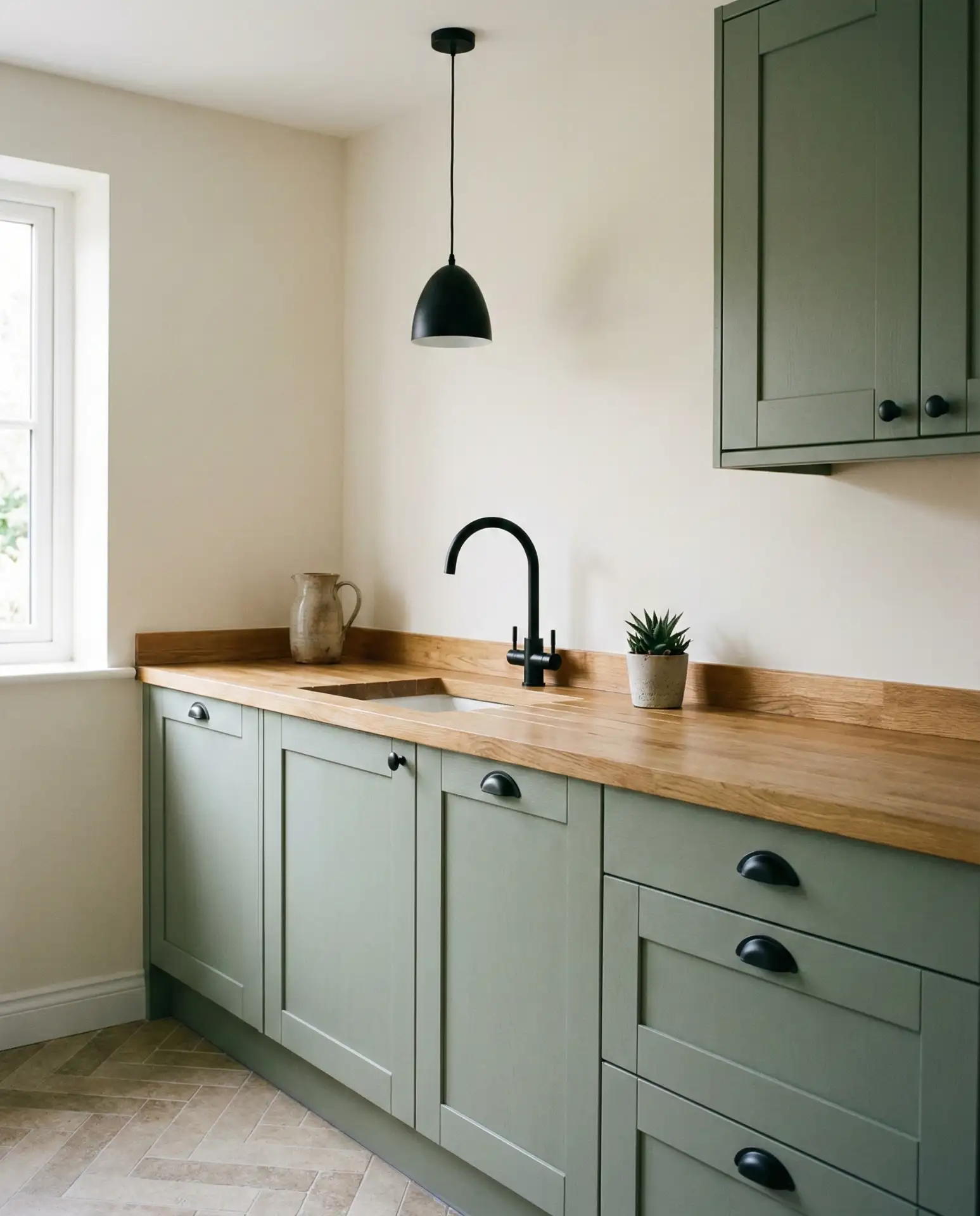
One thing homeowners often overlook when choosing matte black fixtures is how easily they show water spots and fingerprints—especially in a kitchen that sees a lot of daily use. Wiping them down with a dry cloth after each use keeps them looking sharp. On the flip side, matte black hardware is remarkably easy to find in almost every price range right now, from big-box stores to high-end European brands, so you can scale this look to fit whatever budget you’re working with.
8. Sage Green Cupboards with White Marble Counters
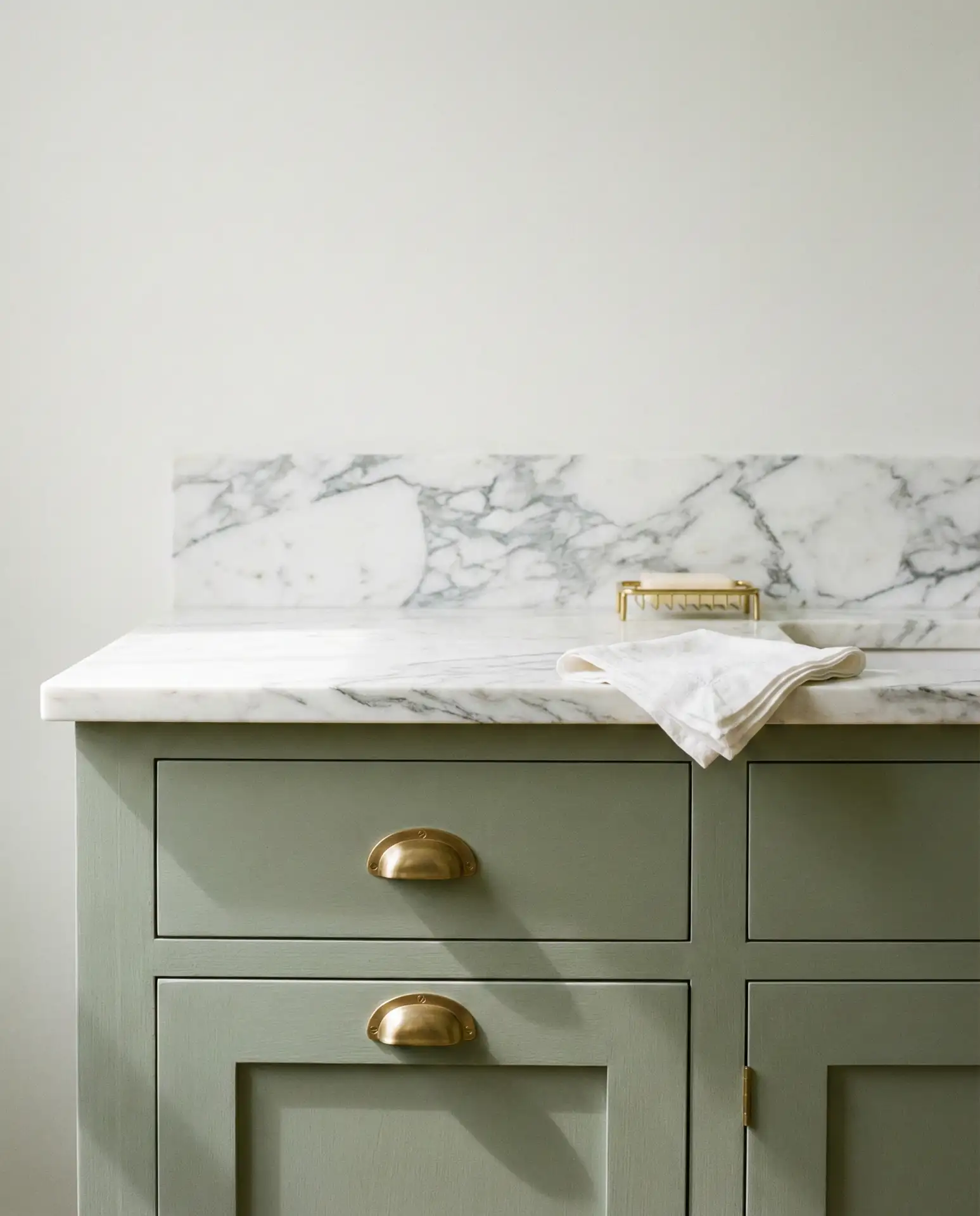
Sage green cupboards paired with white marble is the kind of kitchen design that looks like it belongs in a lifestyle magazine—and the best part is it’s more achievable than it seems. The marble doesn’t need to be real; engineered quartz that mimics marble veining gives you the same visual impact with far less maintenance. Pair that with a cabinet color scheme in a mid-tone sage and add a few white and gold accents—a white ceramic vase, a gold-toned soap dispenser—and the whole kitchen feels elevated without feeling fussy.
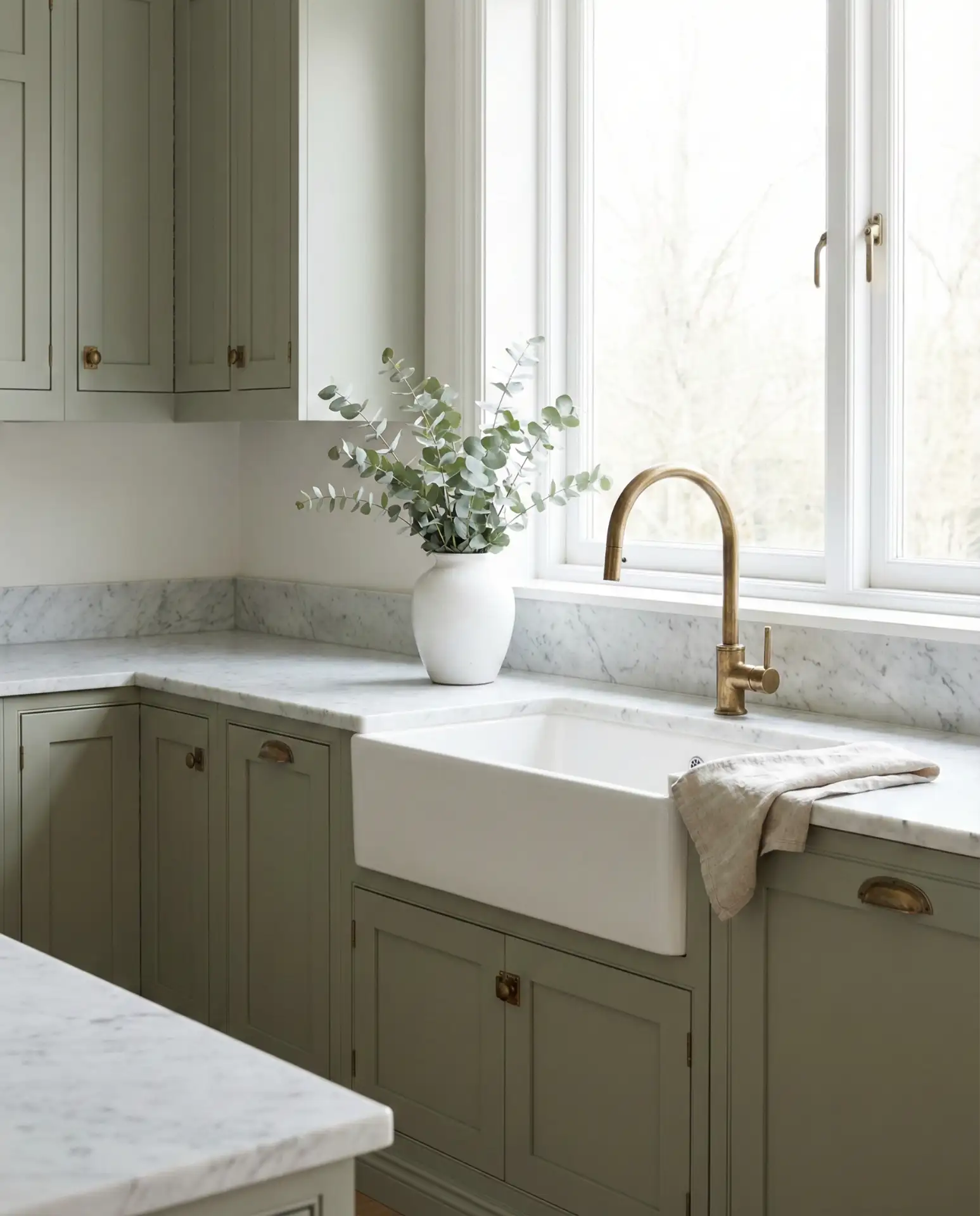
The most common mistake people make with this combination is going too light on the sage—choosing a green so pale it reads almost white, which flattens the whole contrast story. The marble already brings brightness; the cabinets need to do their job and add depth. A sage that has a touch of warmth or even a hint of grey undertone will hold up beautifully next to white marble and keep the kitchen feeling rich rather than washed out.
9. Sage Green Kitchen with Stainless Steel Appliances
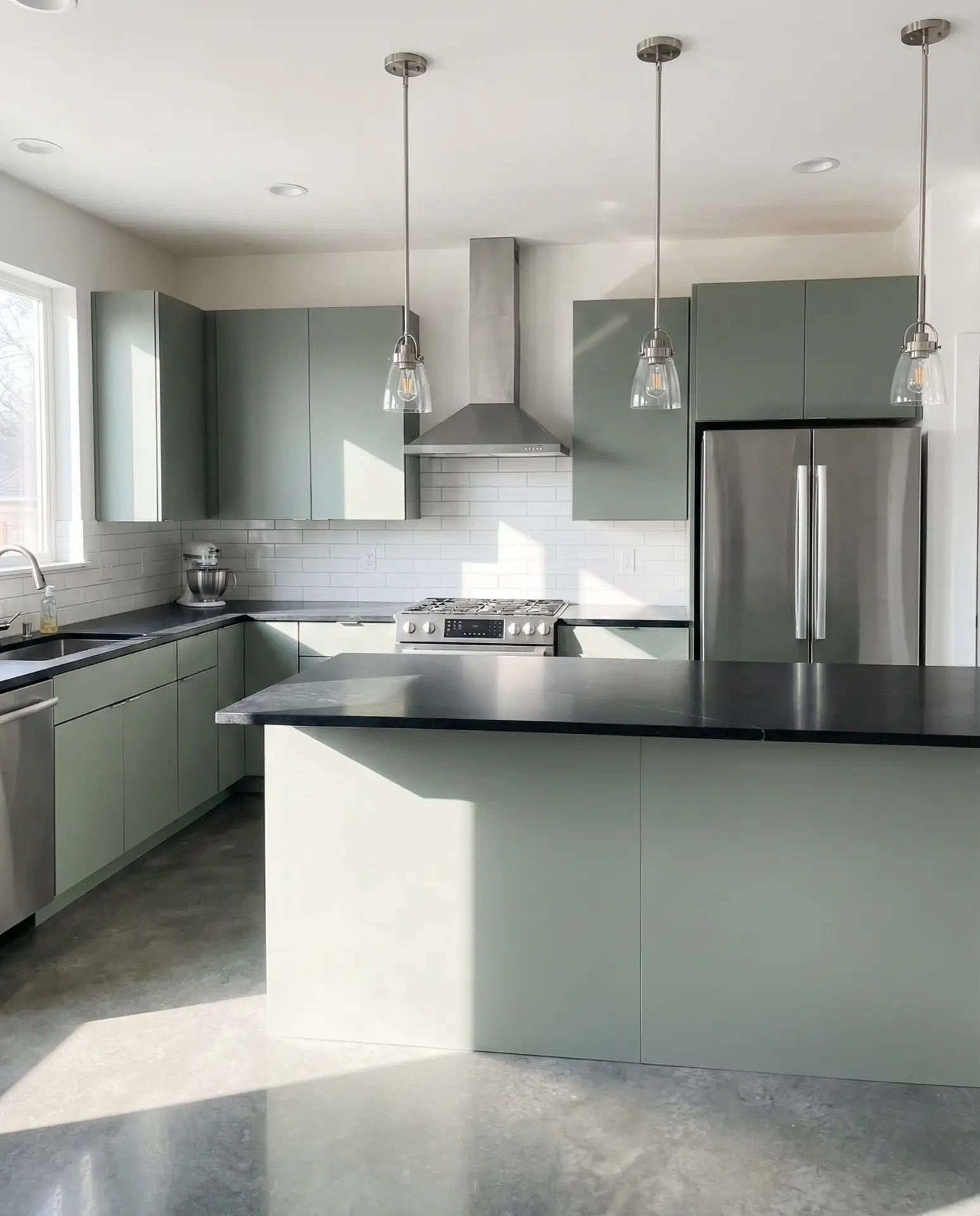
There’s a reason so many kitchen renovations in 2026 are gravitating toward sage green with stainless steel appliances: it’s a combination that feels both clean and warm at the same time. The steel doesn’t fight the green the way it sometimes can with bolder colors. Cabinets with black countertops in this setup add a layer of sophistication, and keeping the light fixtures simple—brushed nickel or even matching stainless—ties everything together without overdoing it. This is a kitchen that says “I have taste” without saying “I tried really hard.”
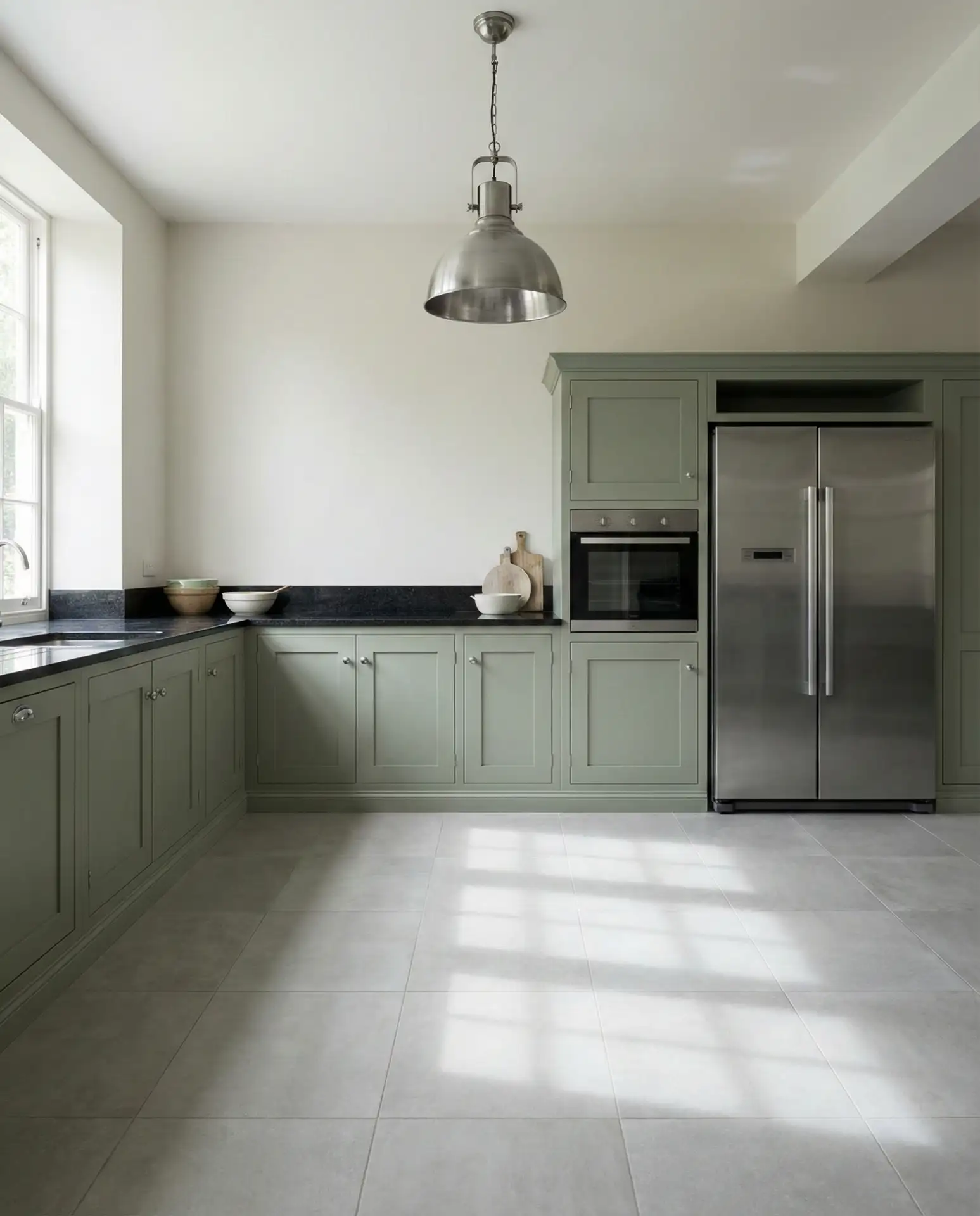
When choosing stainless steel appliances to pair with sage green, pay attention to the finish: brushed stainless tends to blend in more quietly, while high-polish stainless can feel a bit colder and more industrial. If your sage has warm undertones, brushed is almost always the better match. It’s also worth noting that fingerprint-resistant stainless steel coatings have gotten dramatically better in the last couple of years, so daily cleanup is far less of a hassle than it used to be.
10. Sage Green and Wood Kitchen with Open Shelving
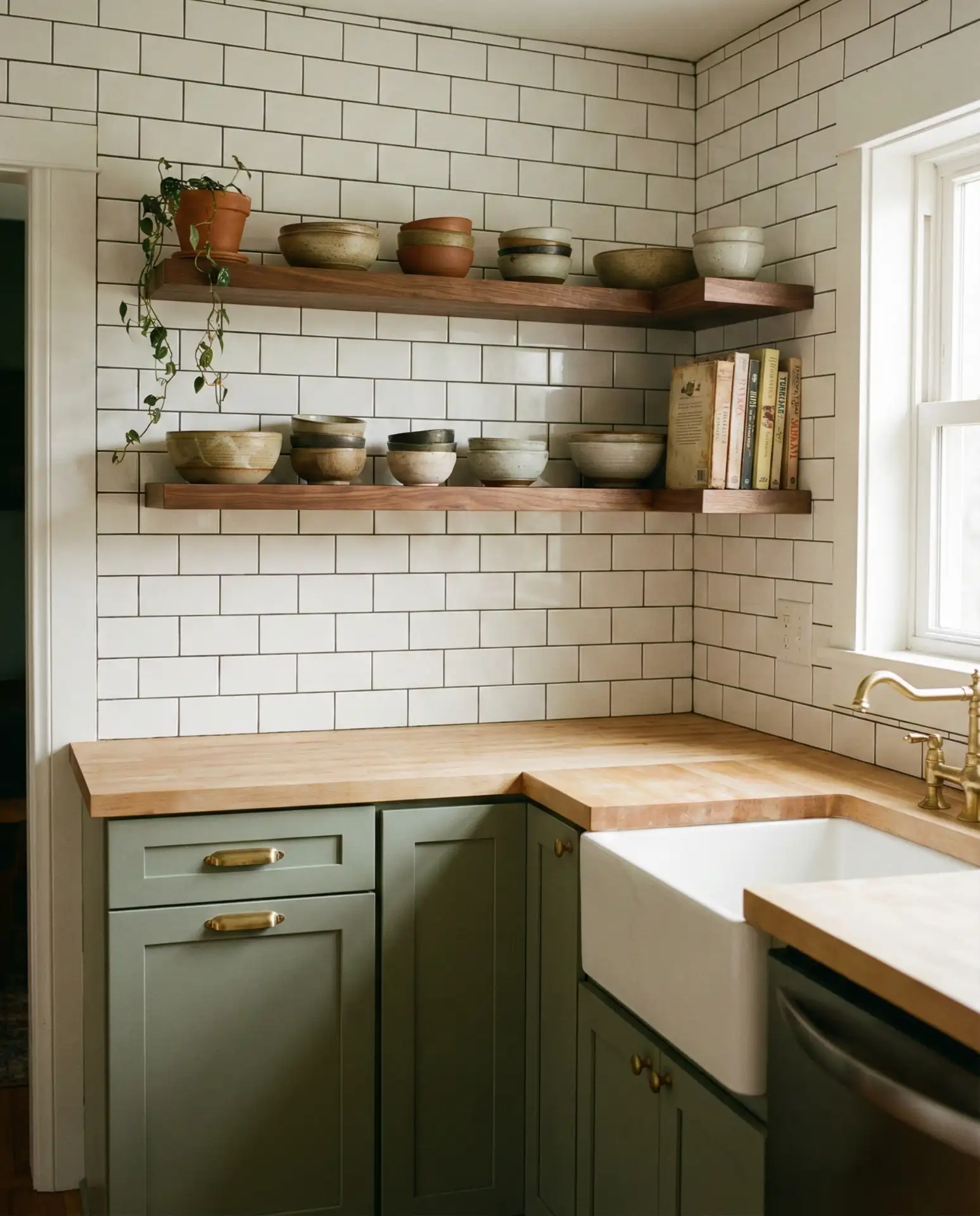
Open shelving has been polarizing in kitchen design for years, but when it’s done right—with farmhouse-style sage green cabinets below and wood and toned shelves above—it transforms a kitchen from a simple cooking space into something that feels lived-in and layered. The trick is in the aesthetic balance: don’t overcrowd the shelves. A few ceramic bowls, a plant, and a handful of cookbooks are plenty. The negative space between objects is what makes the whole thing feel intentional rather than cluttered.
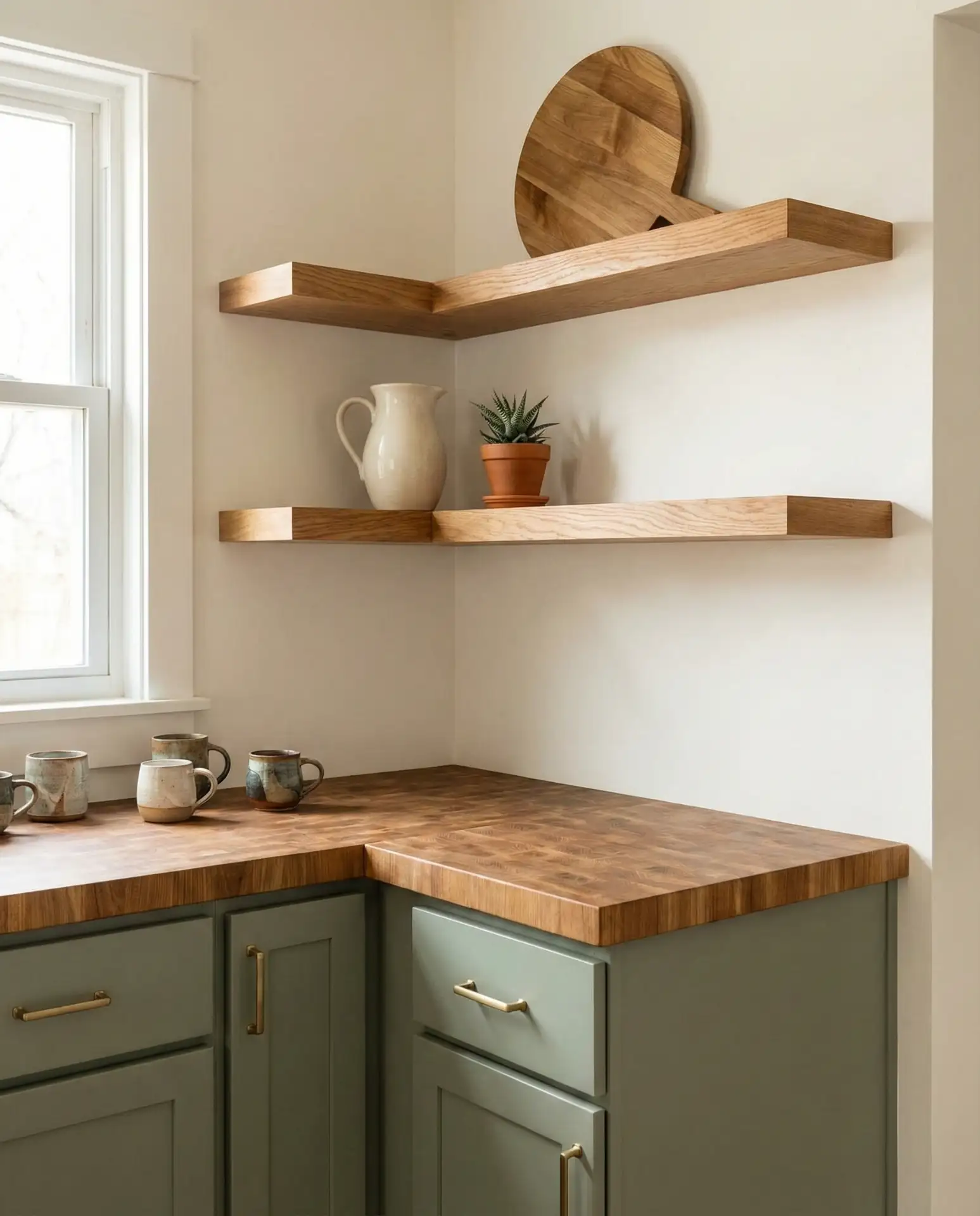
If you live in a humid climate—think coastal California, the Gulf Coast, or anywhere in Florida—open shelving requires a bit more thought. Moisture can cause wood shelves to warp over time if they’re not properly sealed, and dishes left out in the open can accumulate dust faster than you’d like. But in drier climates like the Pacific Northwest interior or the mountain West, open shelving stays looking crisp with almost no upkeep, and the visual payoff is absolutely worth it.
11. Sage Green Tiles and Brass Kitchen Design
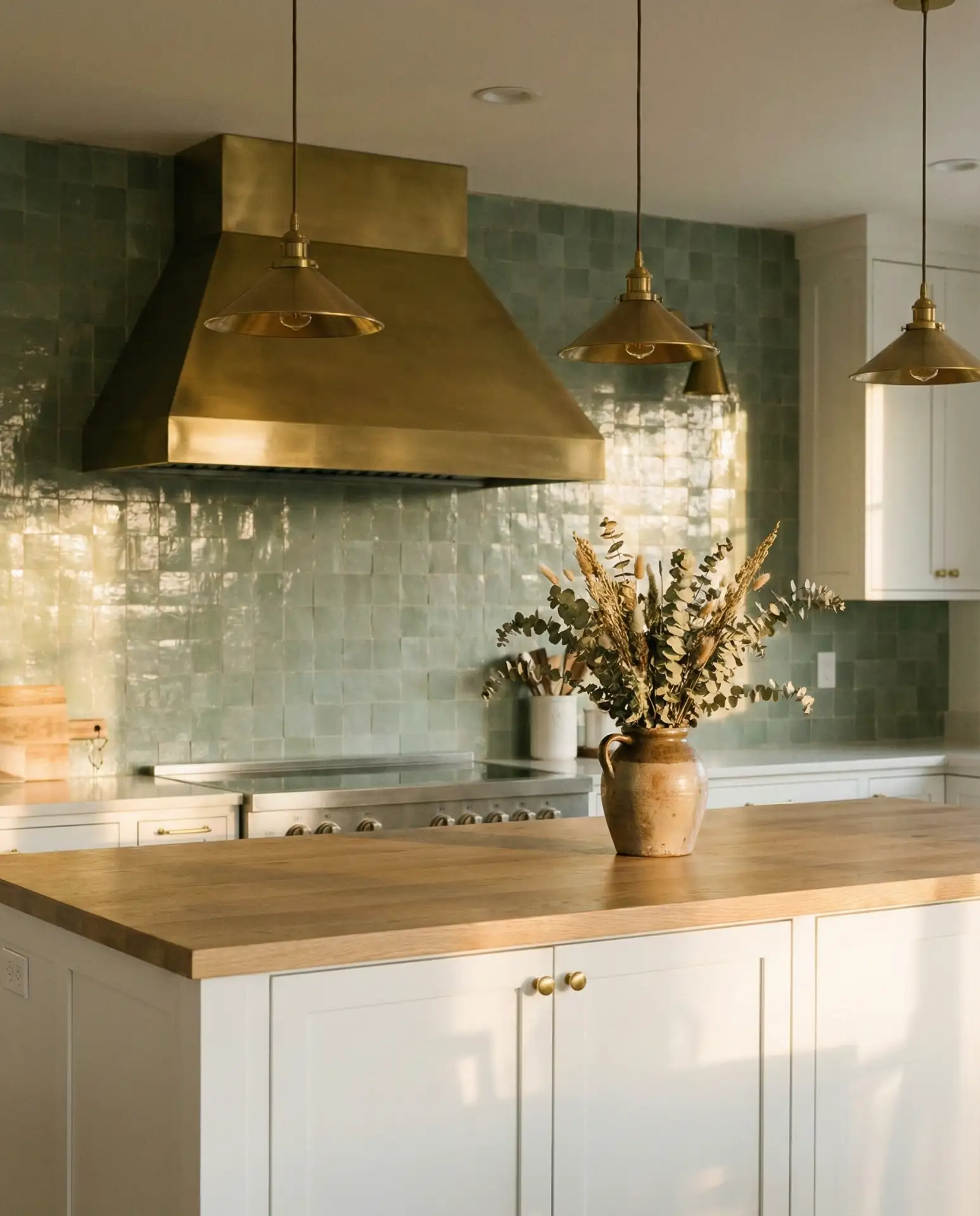
Brass and sage green is a pairing that has been quietly dominating Pinterest boards for over a year now, and it’s easy to see why. The warm metallic tone of brass brings out the subtle gold undertones in sage, creating a color scheme that feels both earthy and refined. Tiles to match this palette come in gorgeous handmade varieties—think glossy zellige or textured ceramic—that catch brass fixtures like pendant lights and cabinet pulls beautifully. When layered with a little decor like woven placemats or a ceramic vase, the whole kitchen feels curated and intentional.
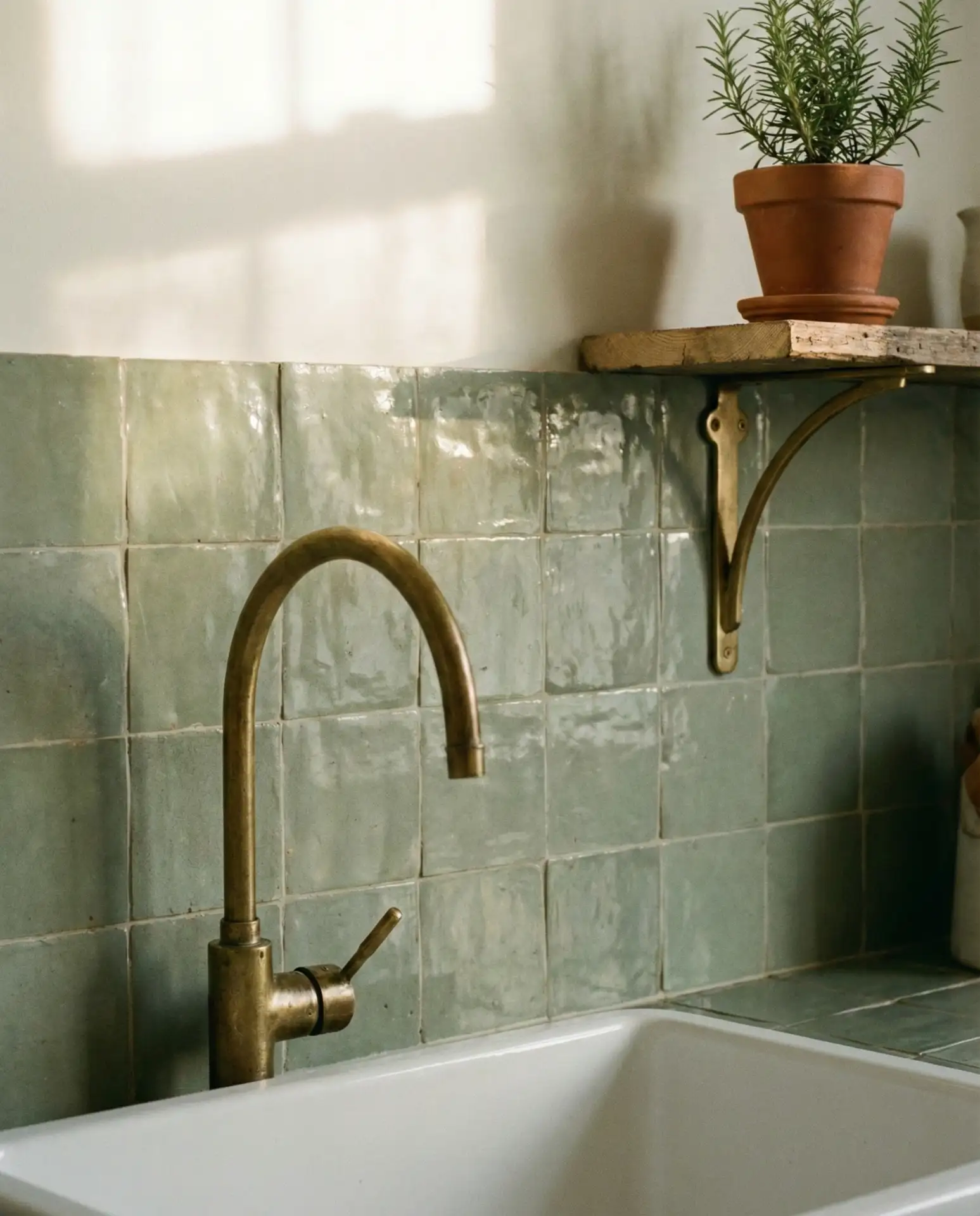
I moved into a rental last year with plain white subway tile and spent one weekend swapping in sage green peel-and-stick tile panels behind the stove. It cost me about sixty dollars and completely changed how the kitchen felt—from sterile and forgettable to warm and personal. If you’re not ready to commit to a full retile, it’s a surprisingly convincing shortcut that works beautifully with brass fixtures already in place.
12. Classic Sage Green Farmhouse Kitchen with Ceramic Accents
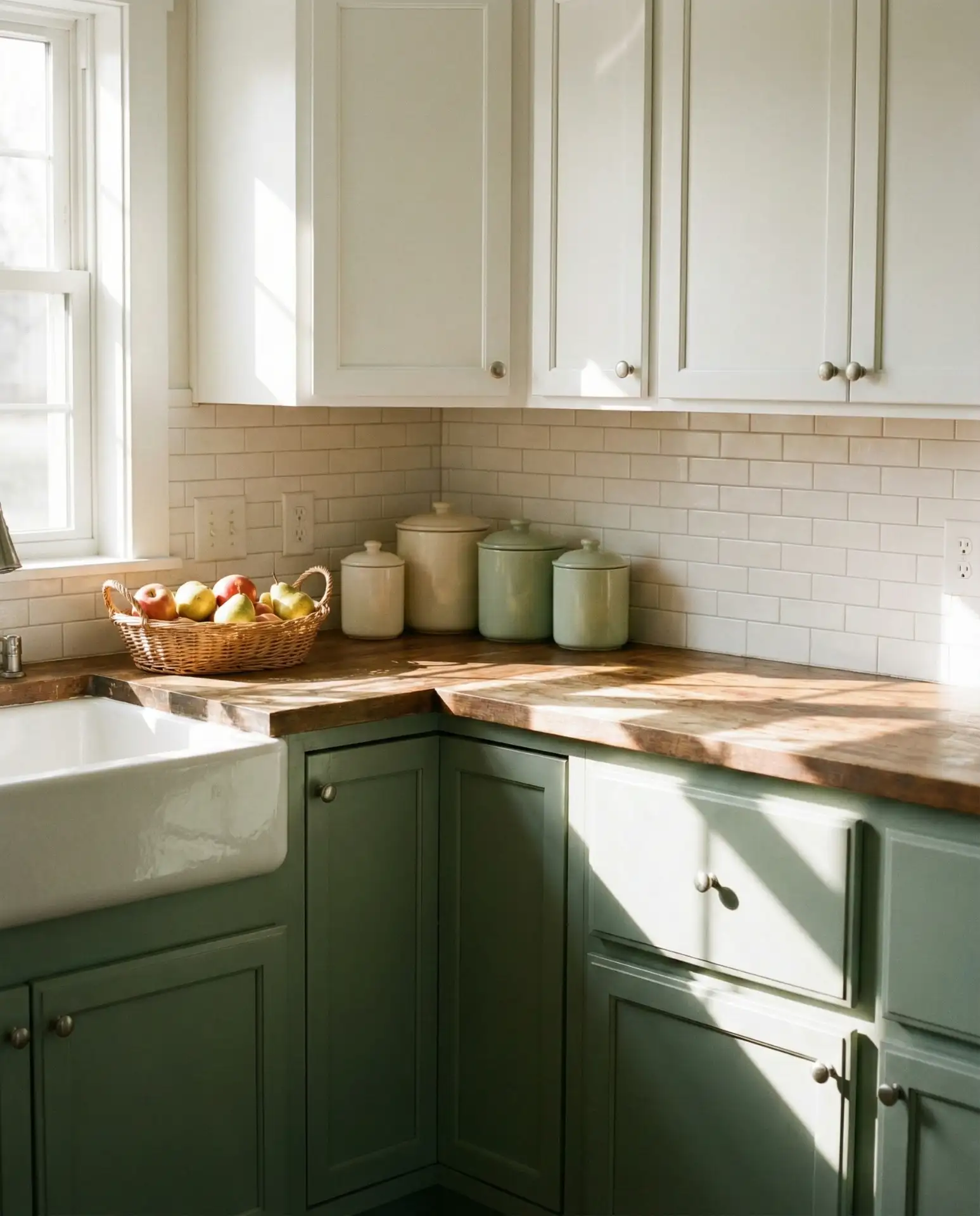
A classic farmhouse kitchen painted in sage green with white upper cabinets is the design that keeps showing up on every mood board for a reason—it simply works. The farmhouse-style cabinet, with its shaker doors and simple lines, pairs perfectly with sage without ever feeling overdone. Scatter in a few accessories like ceramic canisters, a hand-thrown bowl, or a woven basket on the counter, and the whole kitchen feels like it belongs in a countryside home that just happens to be beautifully styled.
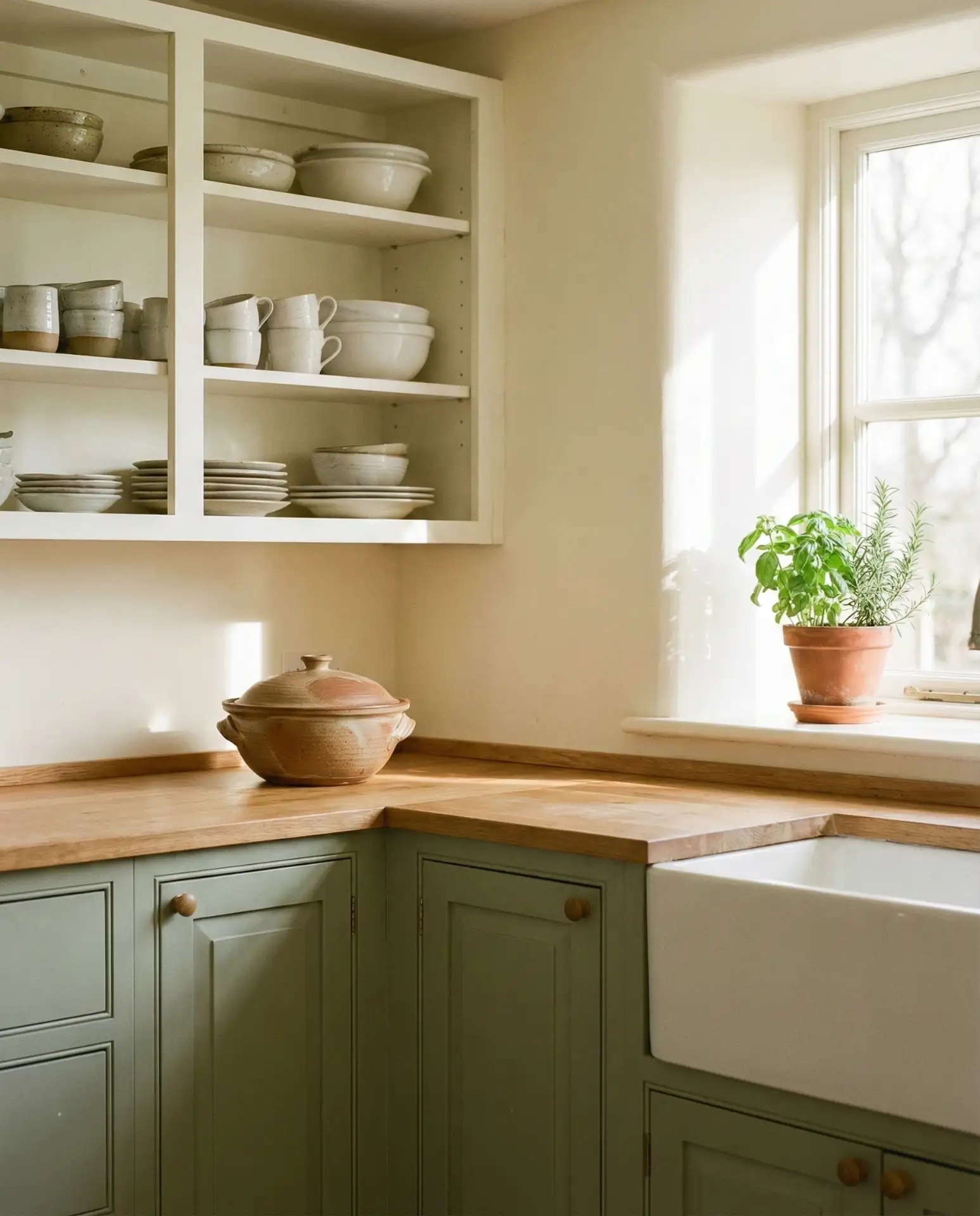
This design works best in kitchens that already have some architectural character—a farmhouse sink, a window with a deep sill, or exposed wood beams overhead. In a more modern, box-like kitchen, the farmhouse aesthetic can feel a little forced. If that’s your situation, consider adding character through texture instead: a chunky linen runner on the floor, a rough-plastered accent wall, or even just switching to a more organic cabinet hardware shape like a ceramic knob.
13. Dark Sage Green Kitchen with Walnut Accents
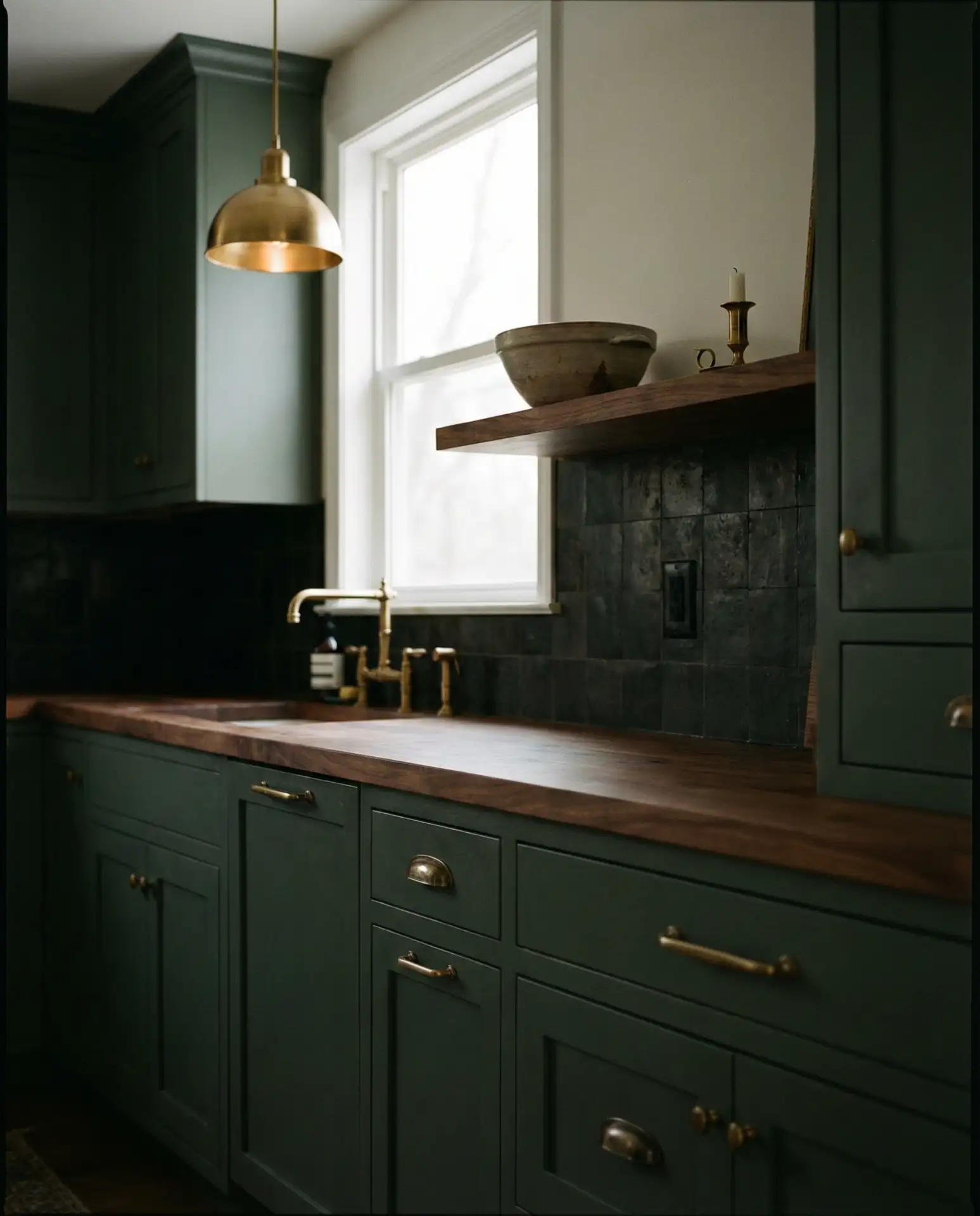
If you want a kitchen that feels dramatic without veering into full black-and-white territory, dark sage green is your answer. It’s deep enough to add real visual weight to a room but still carries that earthy warmth that makes sage so appealing. Pair it with walnut—in a wooden worktop, open shelves, or even just a few cutting boards—and the designs start to feel genuinely luxurious. This is the kind of kitchen that feels expensive even if it isn’t, because the color and wood combination does most of the heavy lifting for you.
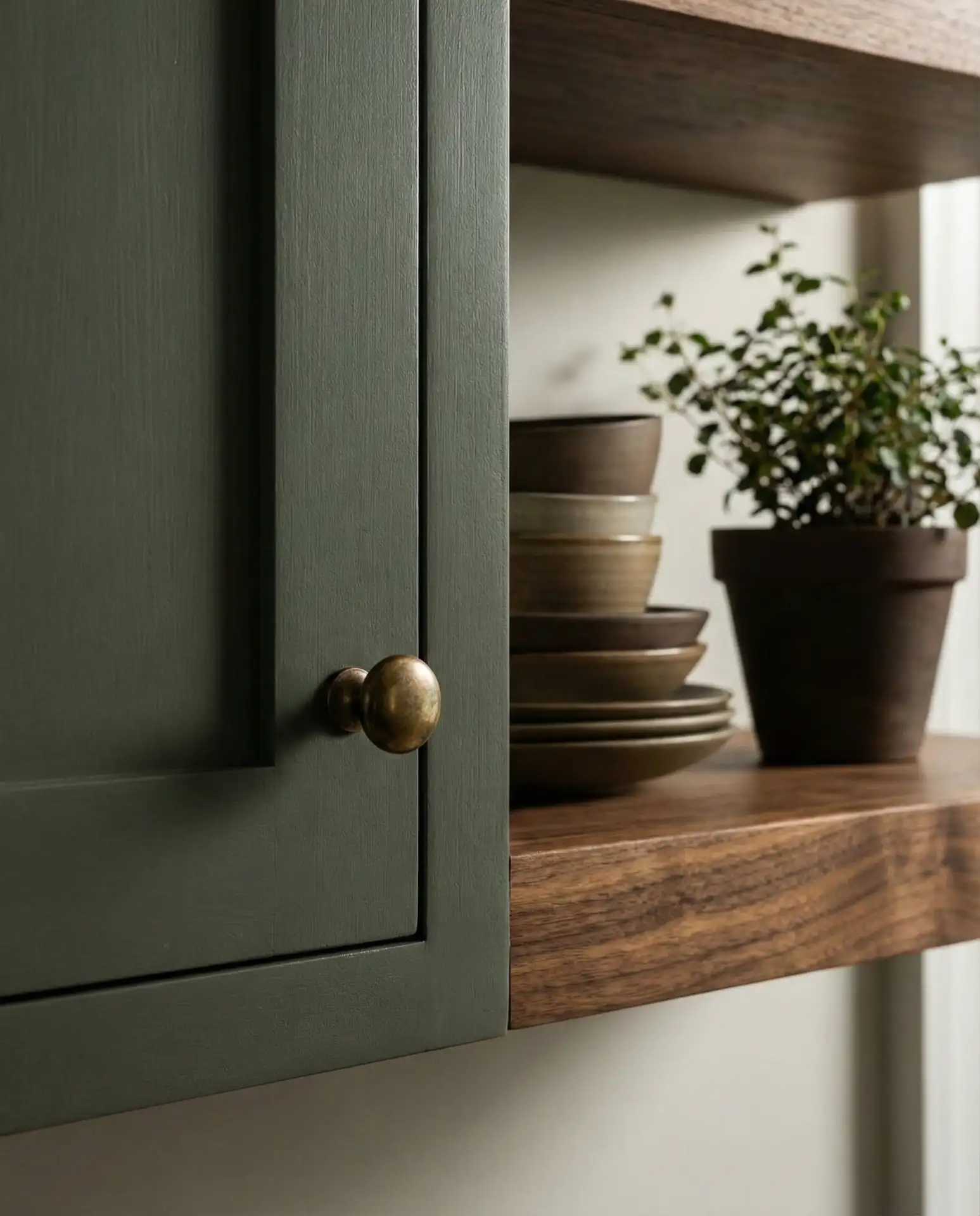
An interior designer I spoke with recently pointed out that dark kitchens are becoming significantly more popular among homeowners who entertain frequently. The reasoning is simple: a dark kitchen hides mess better during the chaos of cooking and hosting, and it photographs beautifully in candlelight or warm pendant lighting. If your kitchen doesn’t get a lot of natural light, dark sage actually works in your favor—it creates a cozy, intentional atmosphere rather than feeling like a space that’s missing something.
14. Sage Green Kitchen with Butcher Block and Blush Pink Details
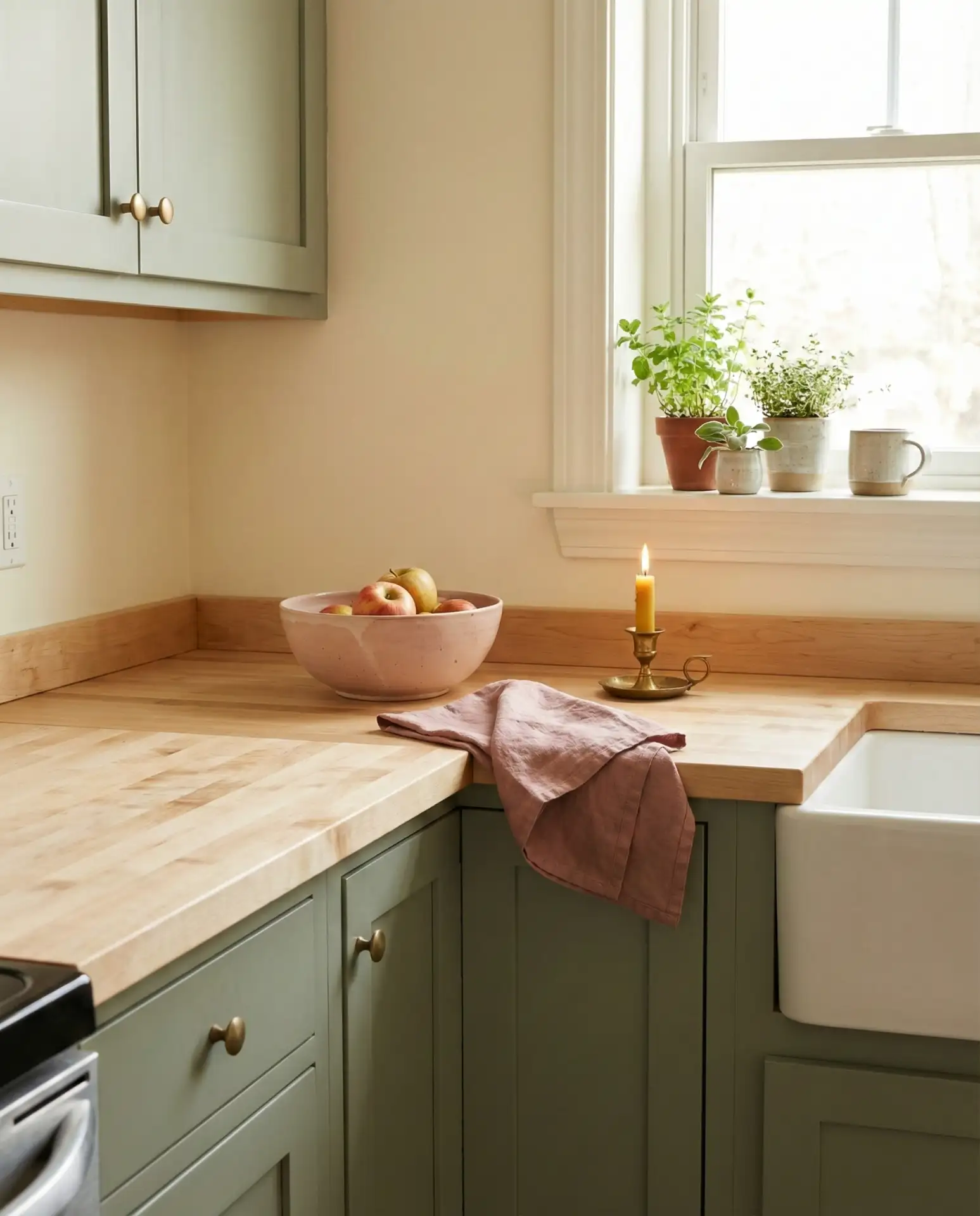
This is the softer, dreamier cousin of the sage-and-butcher-block kitchen, and it earns its place by adding one unexpected layer: blush pink. Cabinets with butcher block tops in maple or walnut ground the space in warmth, while pink and ceramic accessories—a blush fruit bowl, a dusty rose dish towel—add a gentle lift to the whole palette. The result is a kitchen that feels cozy and slightly whimsical, the kind of space that makes people stop and smile. Thoughtful decor ideas like these can completely elevate a simple color story.
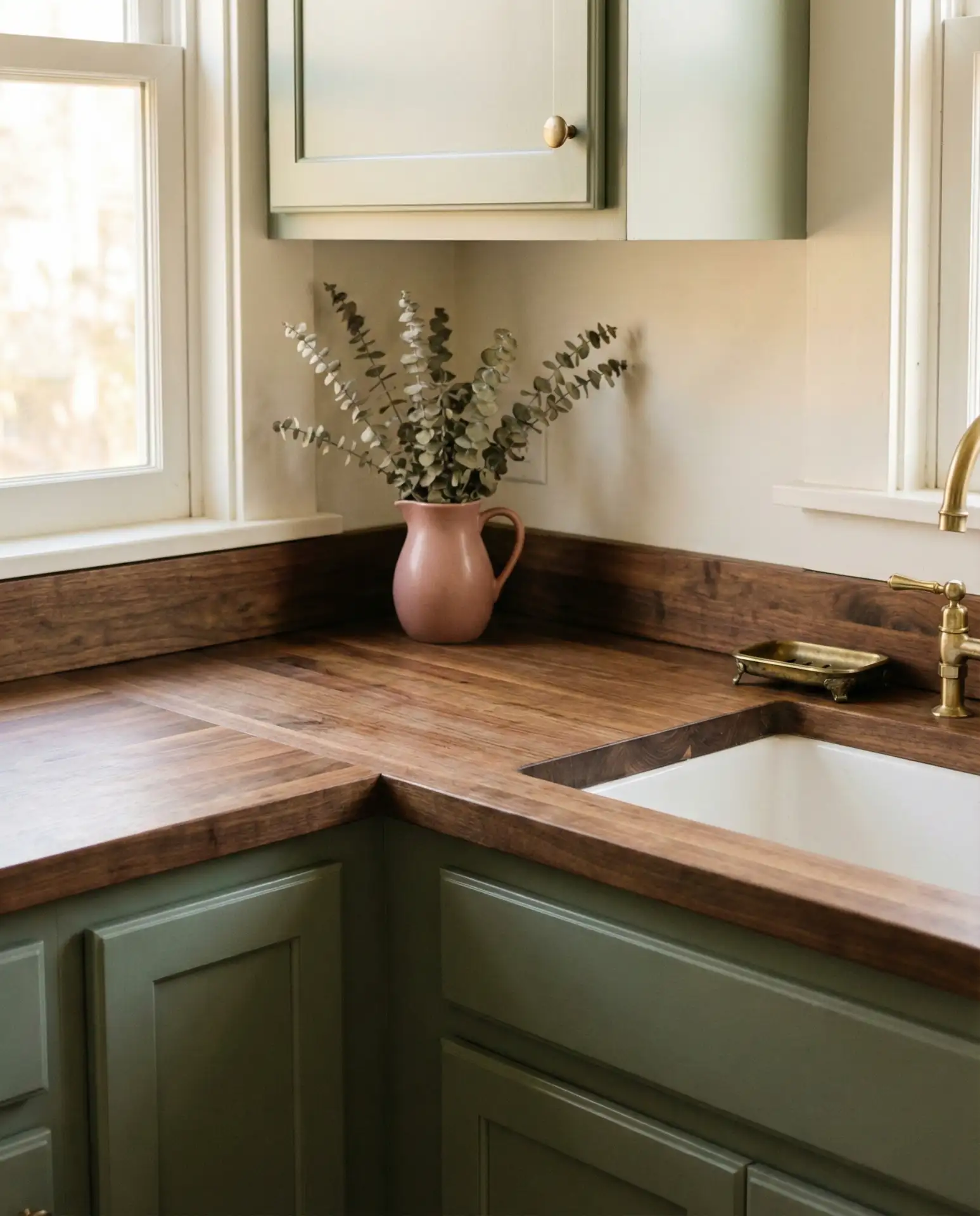
The beauty of this combination is how little it costs to pull off. You don’t need to repaint a single cabinet—just start by layering in blush-toned accessories. A pink ceramic canister, a dusty rose runner, and a small bouquet of dried pampas grass in a sage ceramic vase: each piece costs under thirty dollars, and together they shift the entire energy of the kitchen. It’s proof that color stories are more about curation than renovation.
15. Sage Green Cabinets with Black Countertops and White Walls
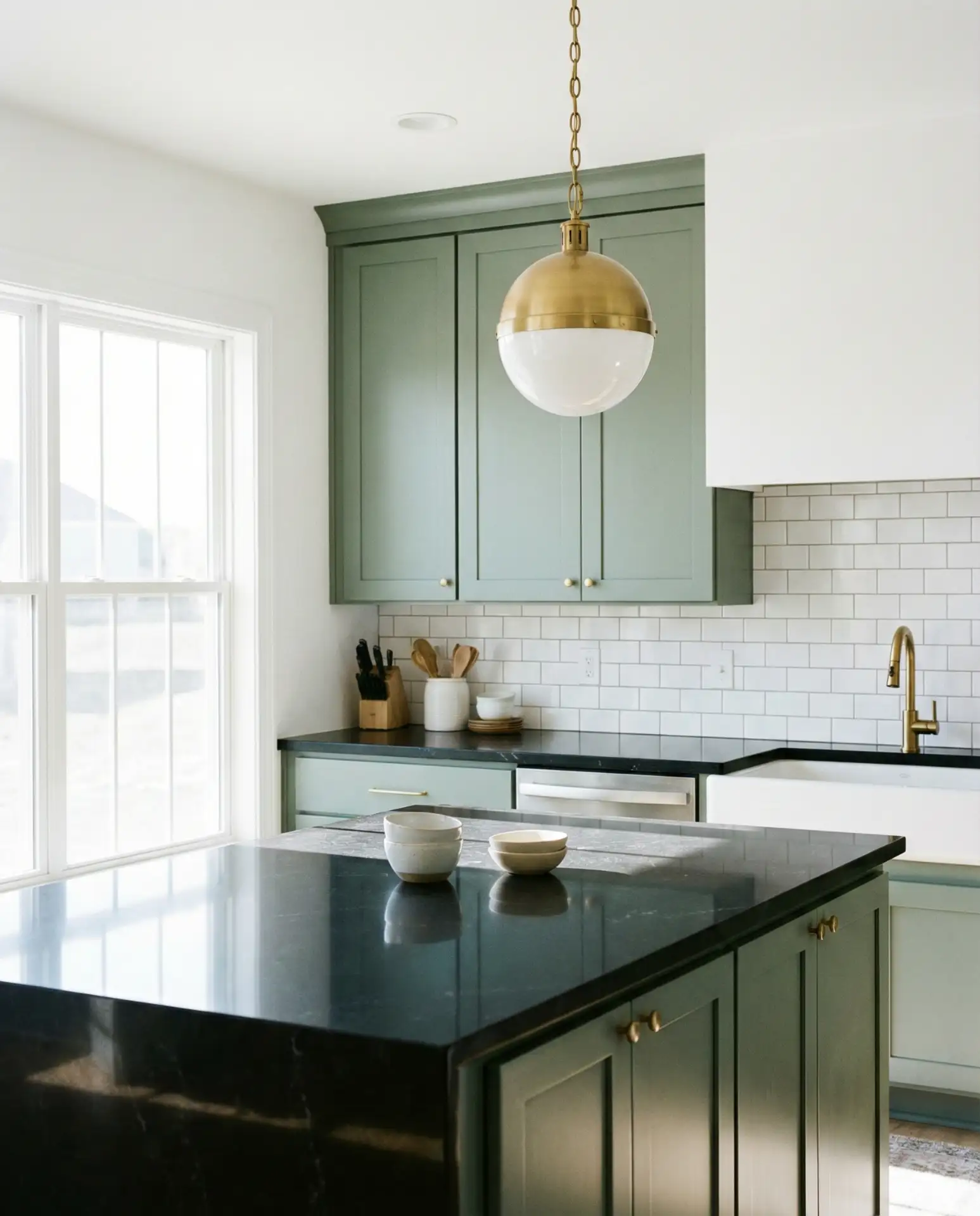
The contrast between sage green cabinets, black countertop surfaces, and bright white walls is one of the most visually striking kitchen combinations you can achieve without a single bold color. The white walls prevent the dark countertops from making the room feel cave-like, while the sage adds enough warmth to keep it from feeling sterile. This is a modern kitchen design that still manages to feel approachable and livable—the kind of space that works equally well in a sleek urban condo or a suburban home with a little more breathing room.
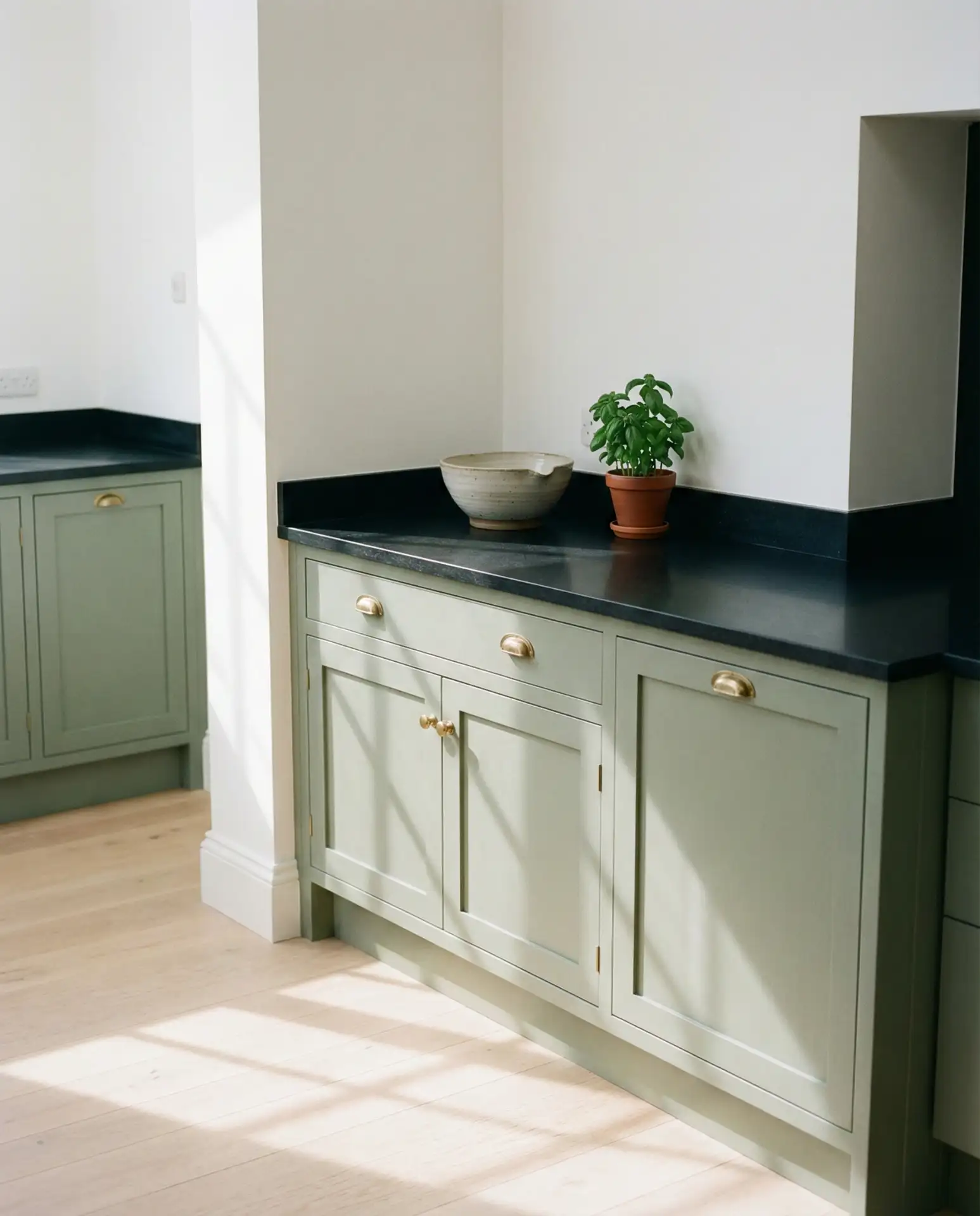
I watched a couple go back and forth on this exact combination for months before finally pulling the trigger on a kitchen reno. The husband wanted all white, the wife wanted dark cabinets—sage green with a black countertop split the difference perfectly. Two years later, they still love it, and it photographs beautifully no matter the season or the time of day. If you’re stuck between light and dark, this three-tone approach is often the smartest compromise.
16. Sage Green Cupboards with Geometric Tile Floors
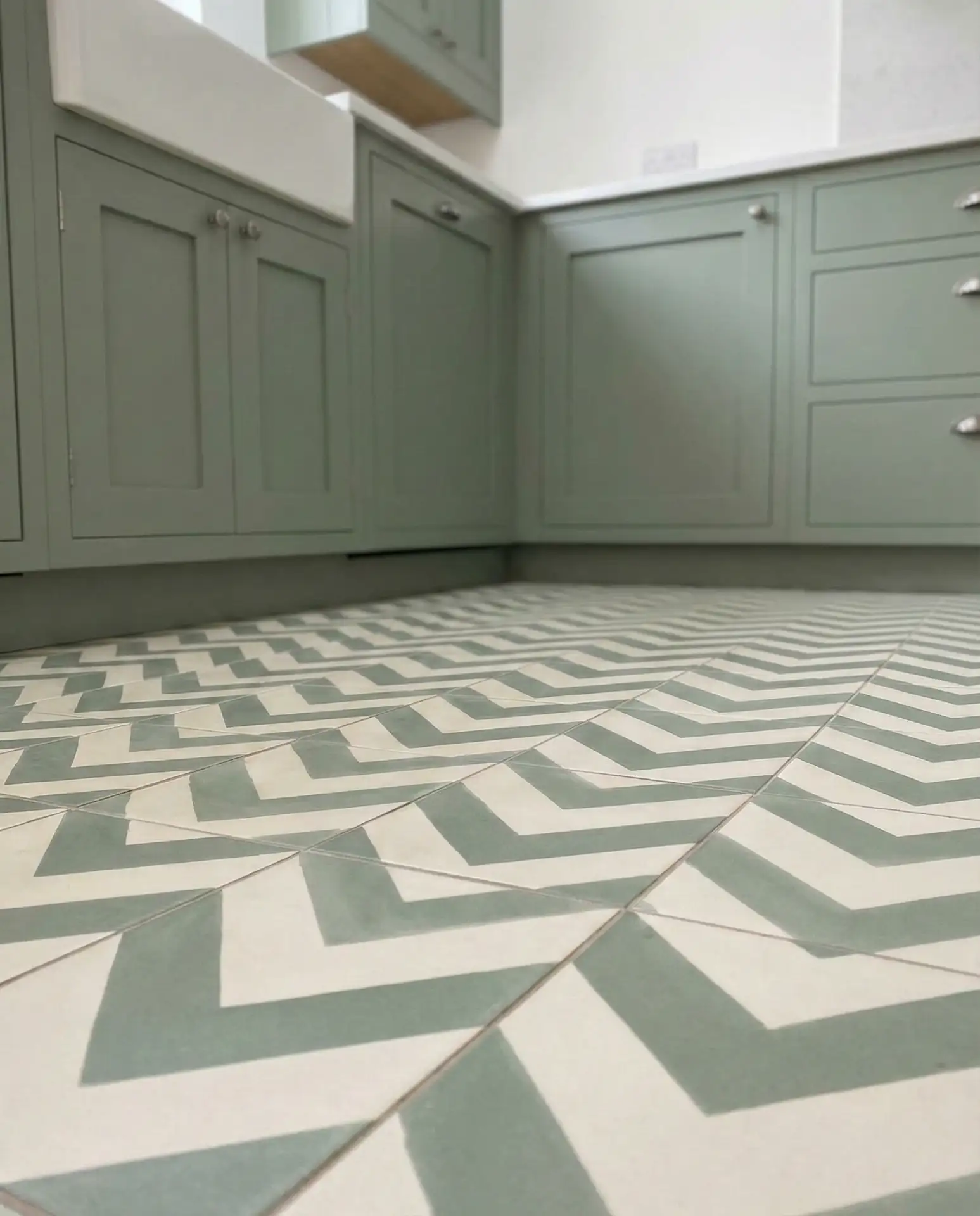
Geometric tile floors have been a quiet staple in kitchen design for years, and pairing them with sage green cupboards is one of the most visually interesting ways to bring pattern into the room without it feeling chaotic. The cabinet’s color scheme in this setup stays muted—a mid-tone sage works best—so it doesn’t compete with the floor. Choose tiles to match that pull in cream, white, or even a faint sage tone, and the pattern becomes a subtle companion to the cabinets rather than a competing focal point.
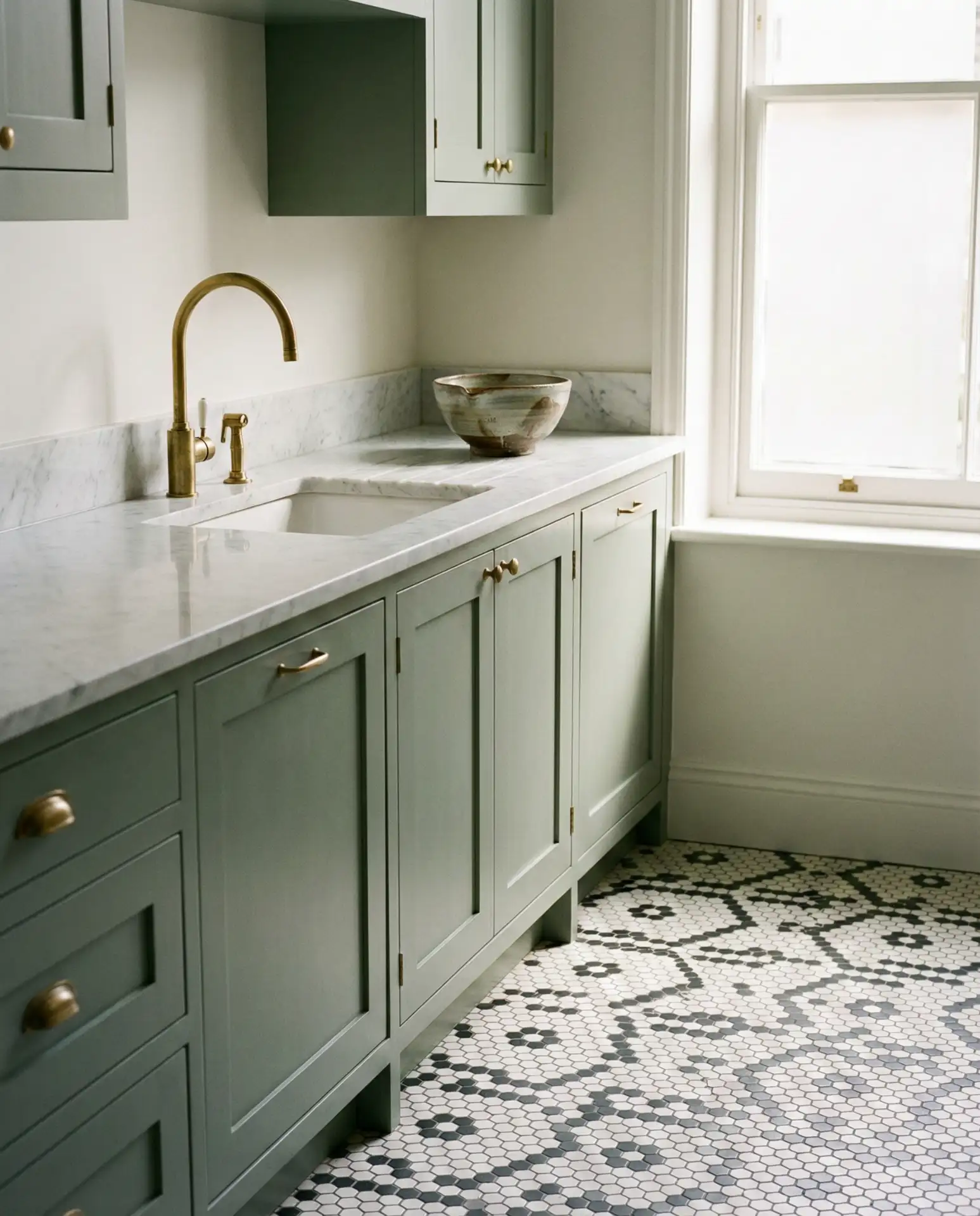
The most common mistake with geometric floors is choosing a pattern that’s too bold for the room size. In a small kitchen, a large-scale geometric pattern can feel overwhelming and actually make the space feel smaller. Stick with smaller-scale patterns—penny tile, small hexagons, or a subtle herringbone—and let the sage green cupboards provide the visual interest instead. The floor should support the design, not fight it.
17. Sage Green Kitchen with Industrial Appliances
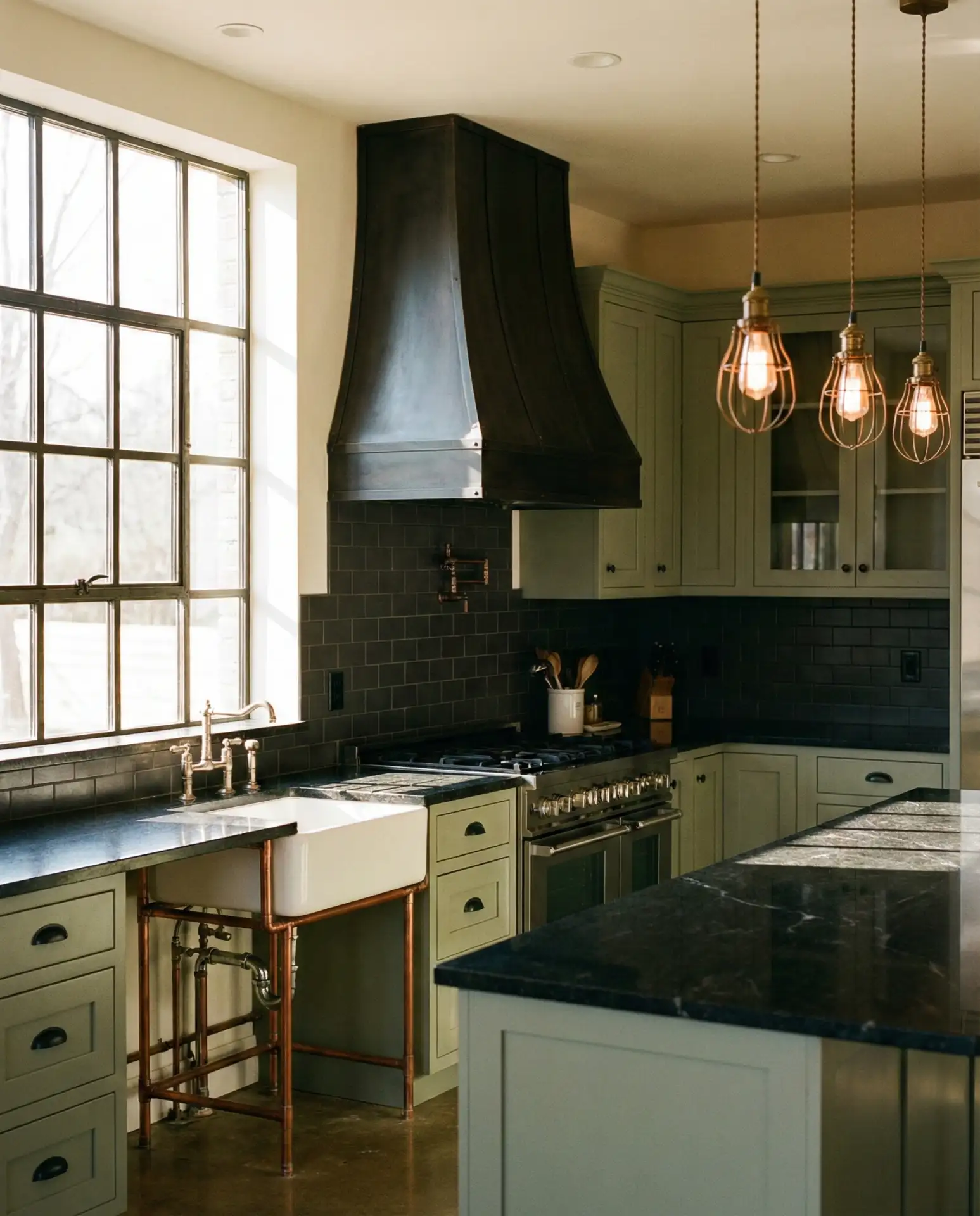
Industrial kitchens have been trending for years, but pairing them with sage green is what makes this version feel fresh rather than overdone. Statement appliances—a bold range hood or a pro-grade oven—take on a completely different character next to sage green cabinets. Cabinets with black granite countertops reinforce that industrial edge, while the sage prevents the space from feeling cold. Keep the light warm and directional—Edison bulbs or oil-rubbed bronze fixtures—and the kitchen starts to feel like a converted loft someone actually lives in.
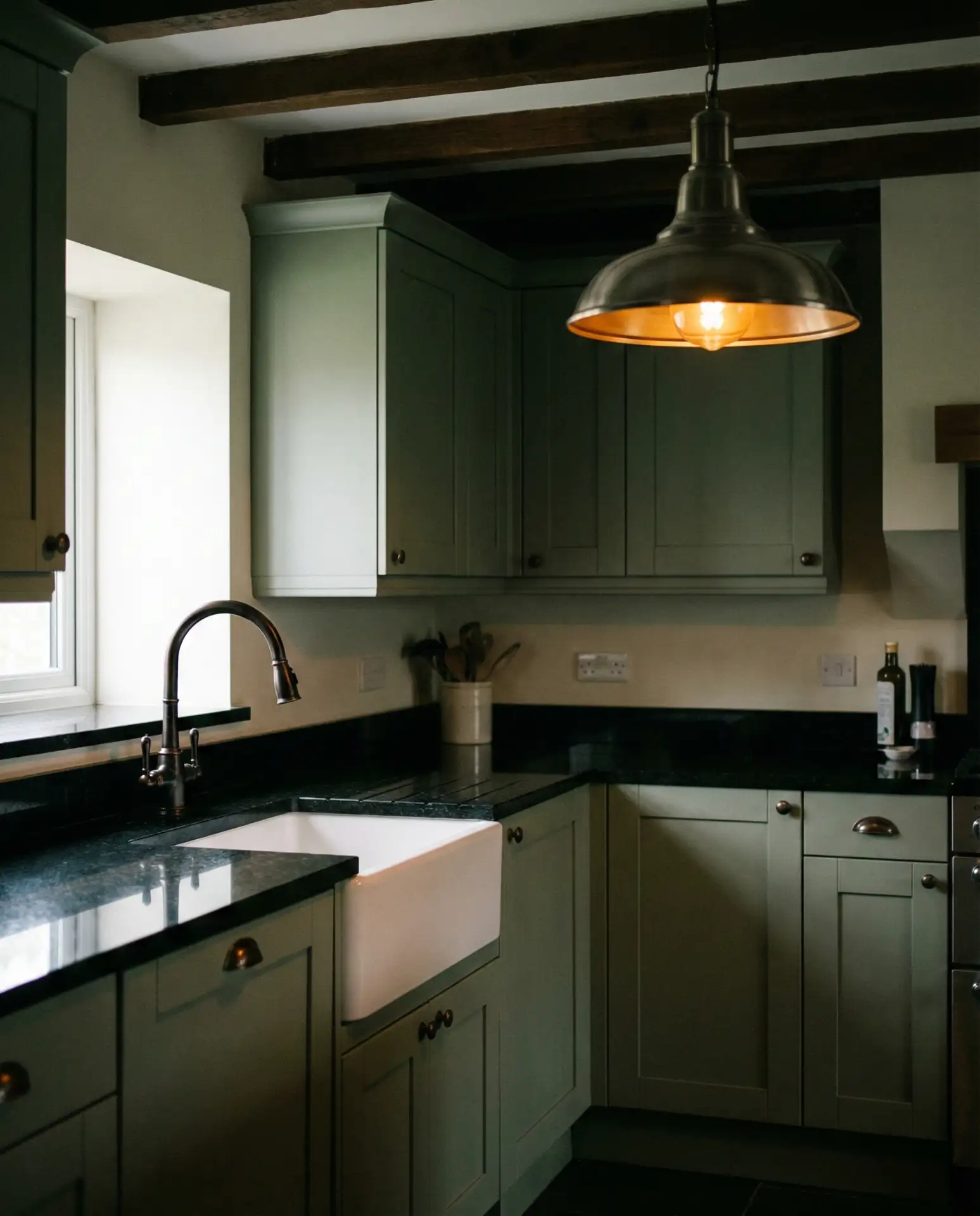
Industrial appliances and fixtures tend to run on the pricier side, but you don’t need to buy everything at once. Start with the range hood—it’s the single most visible piece in most kitchens—and build from there over time. A statement range hood in black iron or brushed steel can anchor the industrial feel on its own, and you can add exposed pipes, Edison lights, and dark countertops as your budget allows, season by season.
18. Sage Green Kitchen with Shiplap Accent Wall
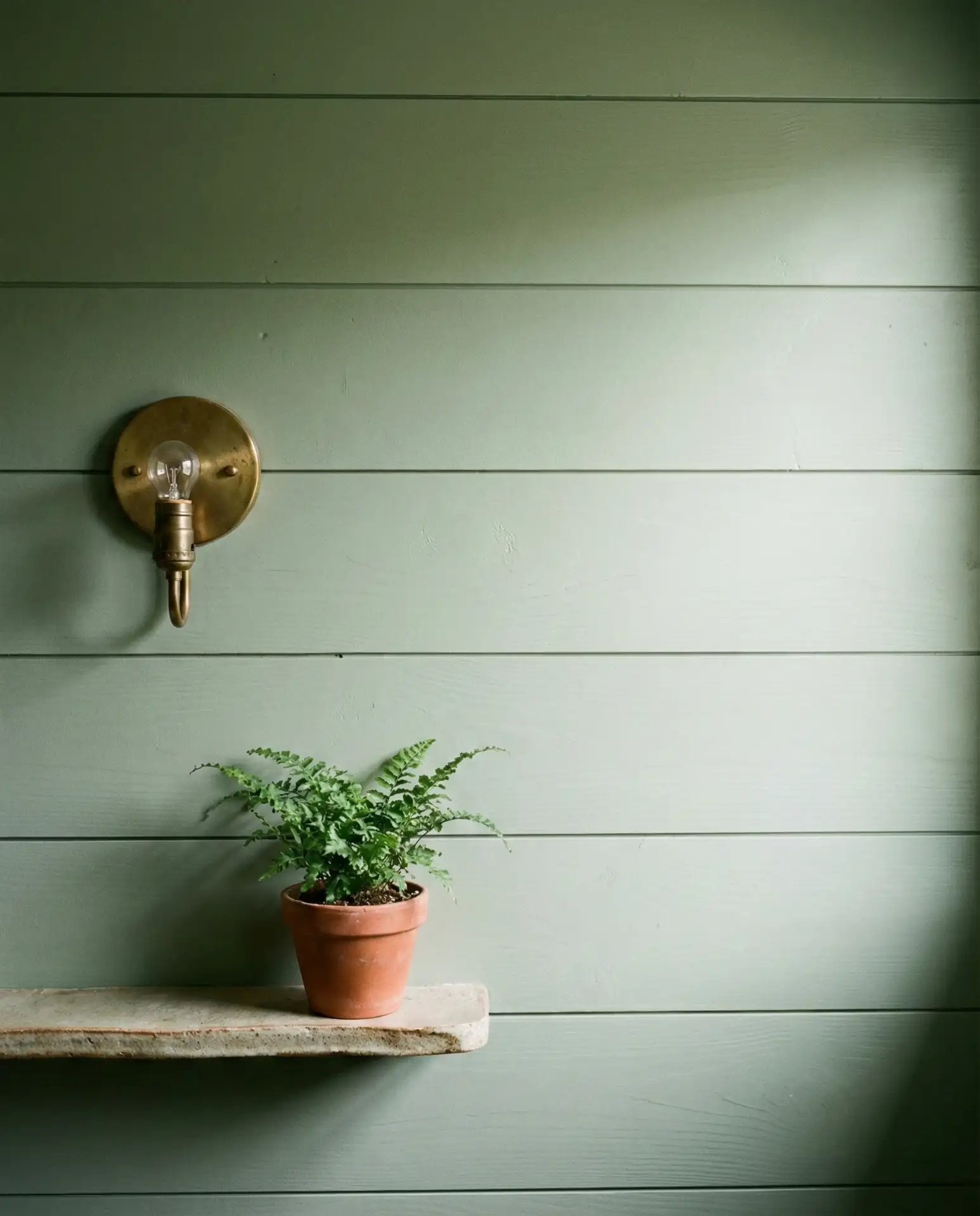
Shiplap has become almost synonymous with farmhouse design, but when you paint it sage green and pair it with white and crisp cabinets, it transcends the trend and becomes something genuinely beautiful. This is a farmhouse kitchen that doesn’t feel like it’s trying too hard—the shiplap adds texture and dimension without overwhelming the space. The key to pulling off this aesthetic is keeping everything else in the room quiet: white cabinets, simple hardware, and a neutral countertop let the sage shiplap wall do all the talking.
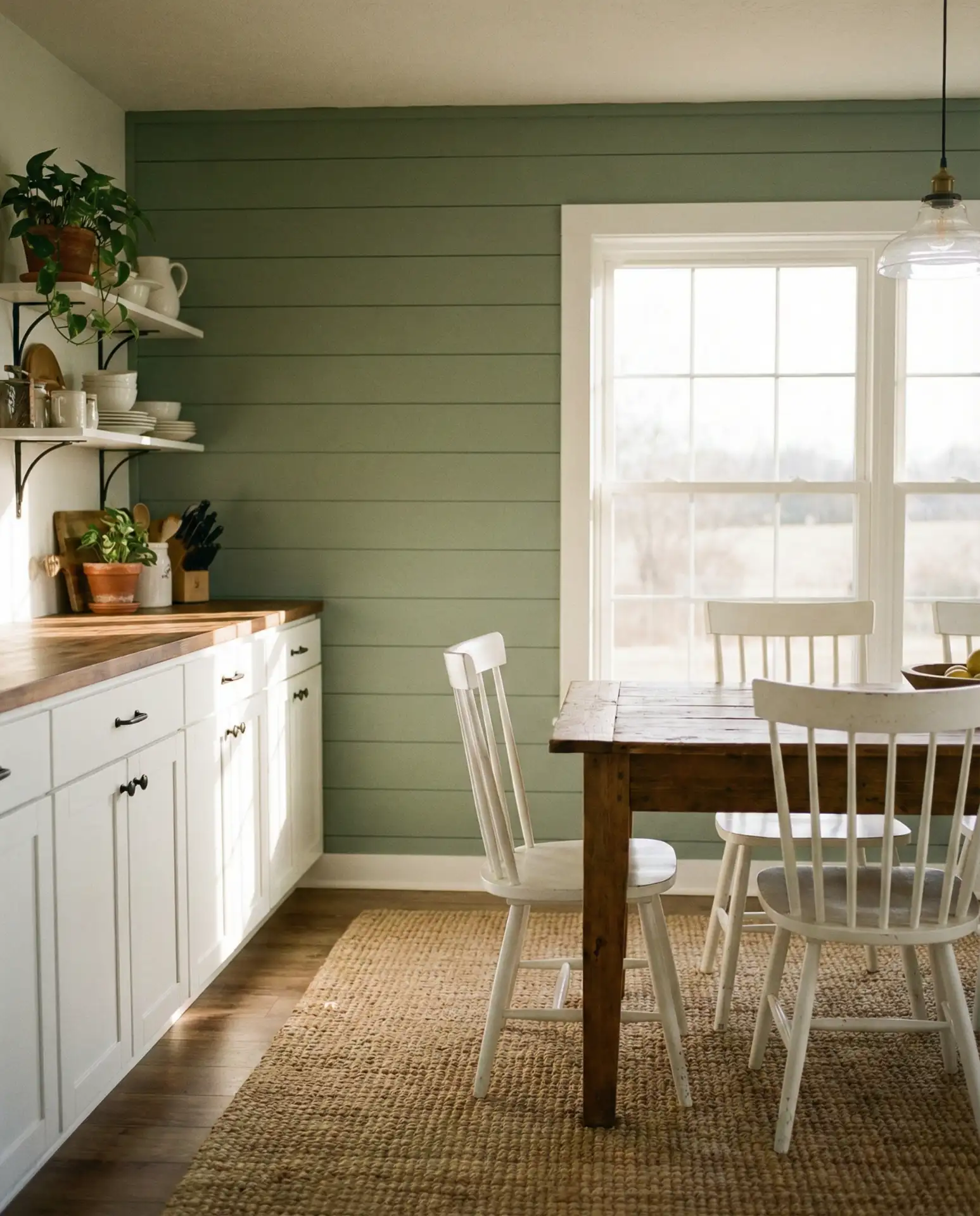
Shiplap accent walls have become incredibly popular across the American South and Midwest, where the farmhouse aesthetic resonates deeply with how people actually want to live—warm, casual, and unpretentious. If you’re in a rental, you can get a surprisingly convincing shiplap effect using peel-and-stick wood panels painted sage green, which costs a fraction of real shiplap installation and can be removed when you move out. It’s one of the most effective low-commitment ways to add personality to a kitchen.
19. Sage Green Kitchen with Black Countertops and Wood Elements
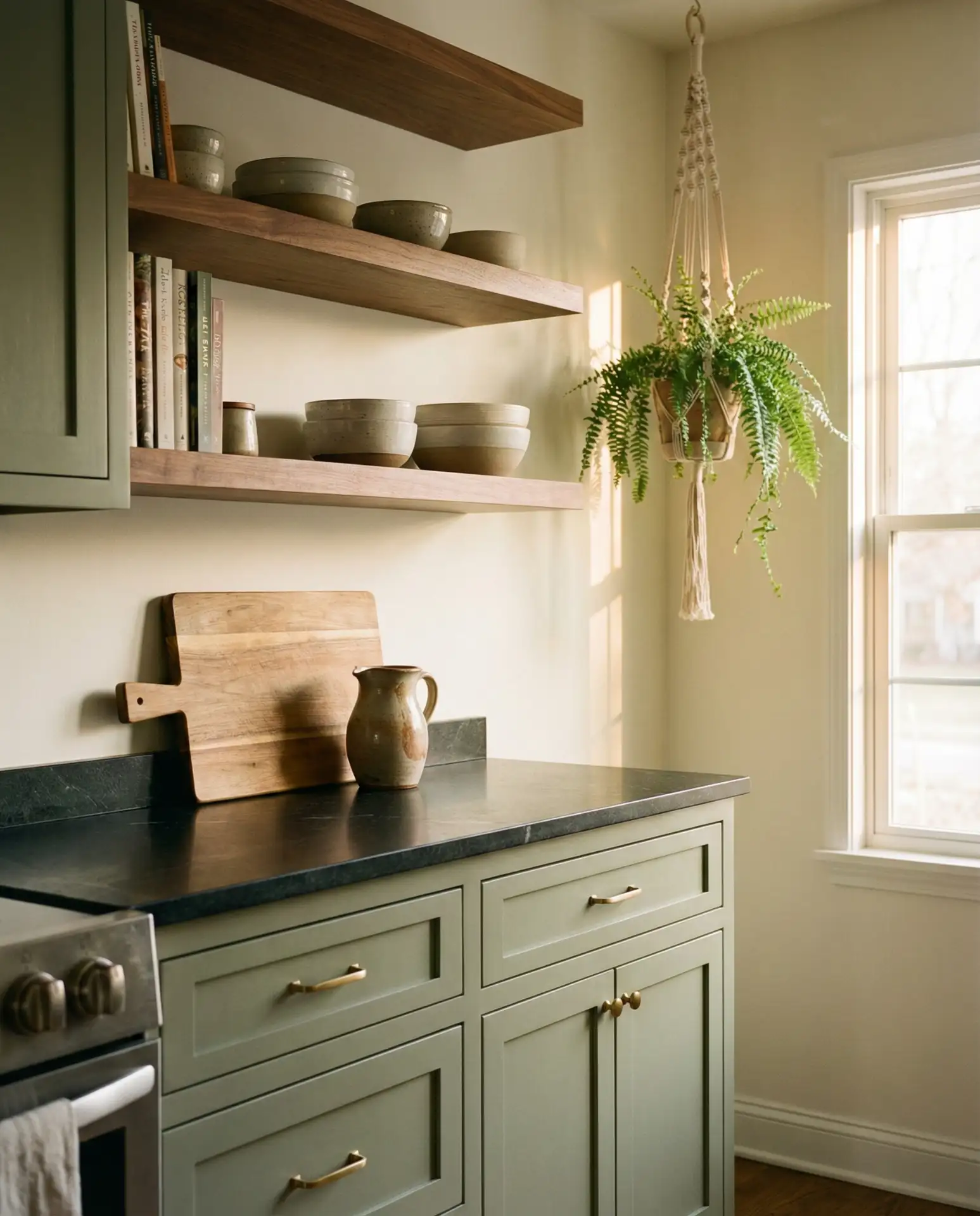
This kitchen pulls together three of the most grounding materials in design—sage green paint, wood and tones, and cabinets with black countertops—into a single cohesive space. It feels like it grew organically rather than being assembled from a Pinterest board. Add a few decor elements like a wooden cutting board or a hanging plant, and every surface tells a quiet story. The overall effect is warm, layered, and utterly livable—exactly what most people want when they imagine their dream kitchen.
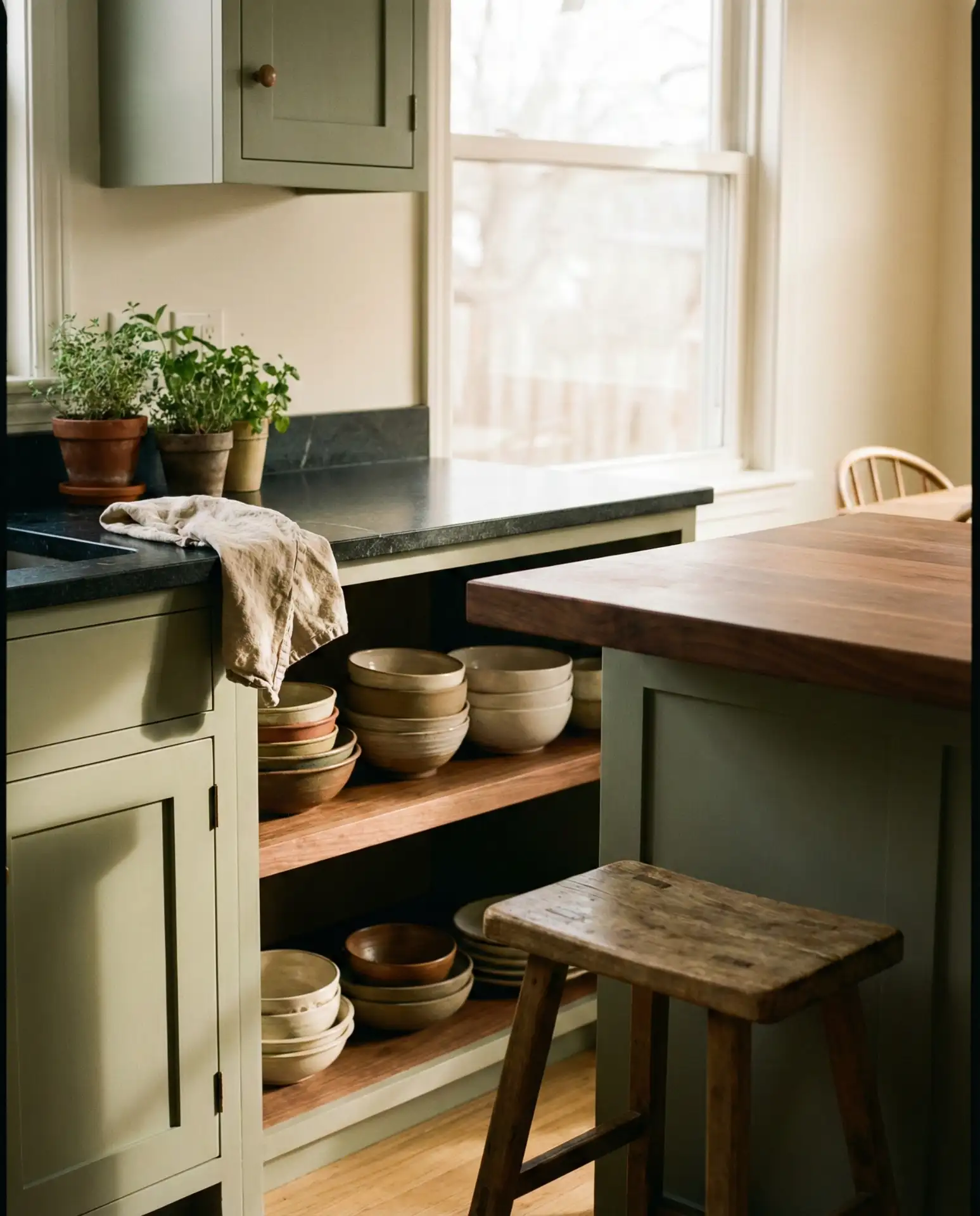
I remember the exact moment I fell in love with this color combination. I was visiting a friend’s new apartment in Portland, and her kitchen was exactly this: sage green cabinets, a black countertop, and a single walnut shelf holding a few ceramic bowls. Nothing fancy, nothing overdone—just three materials working together in the most effortless way. It stuck with me for months, and it’s the reason I started paying attention to sage green kitchens in the first place.
20. Sage Green Kitchen with Wooden Worktop and Brass Details
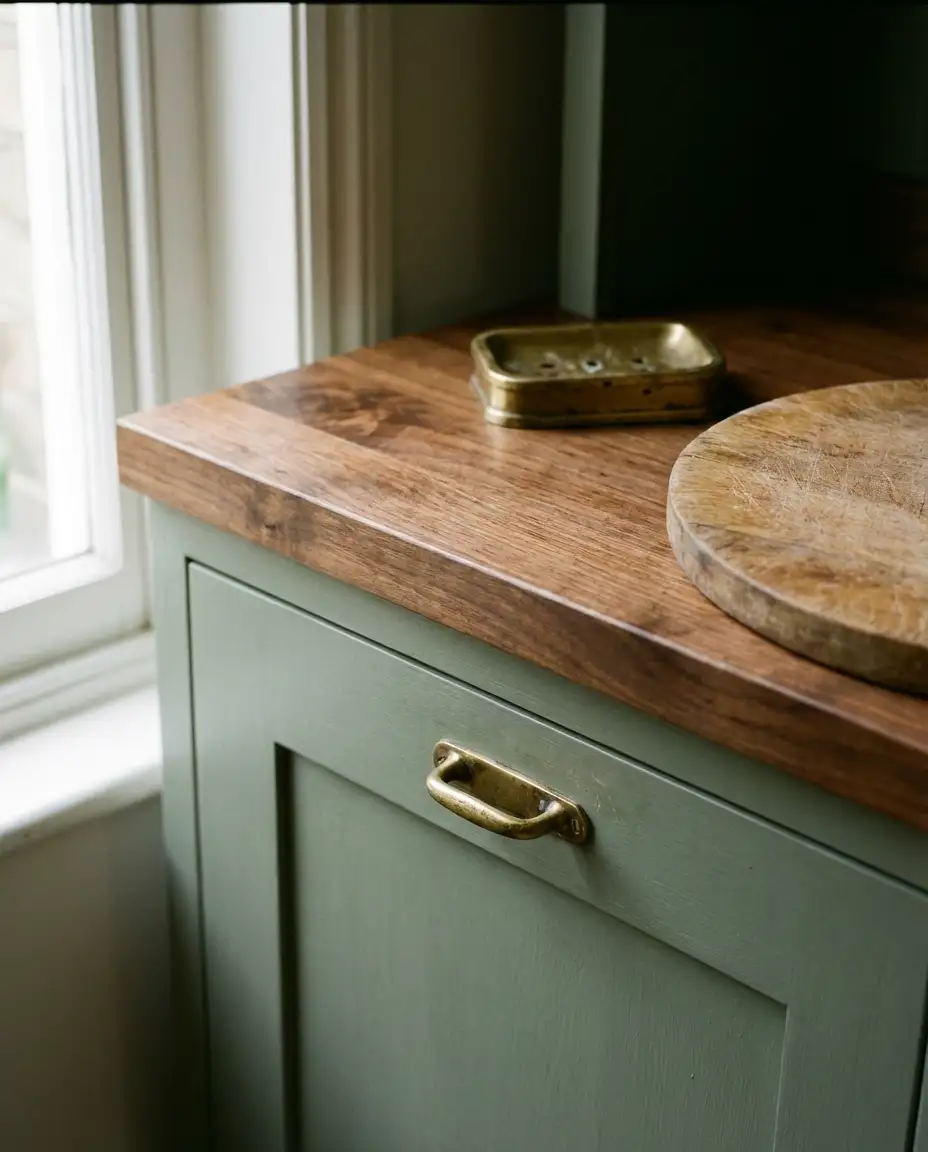
A sage green kitchen anchored by a wooden worktop and finished with brass hardware is one of those designs that feels both timeless and deeply current. The color scheme here is all about warmth—sage, honey-toned wood, and the soft glow of brass share an underlying golden undertone that makes everything feel cohesive. Layer in a few accessories like brass fruit bowls or a ceramic vase with eucalyptus, and the kitchen starts to feel genuinely curated. It’s the kind of space that looks like it took years to get right.
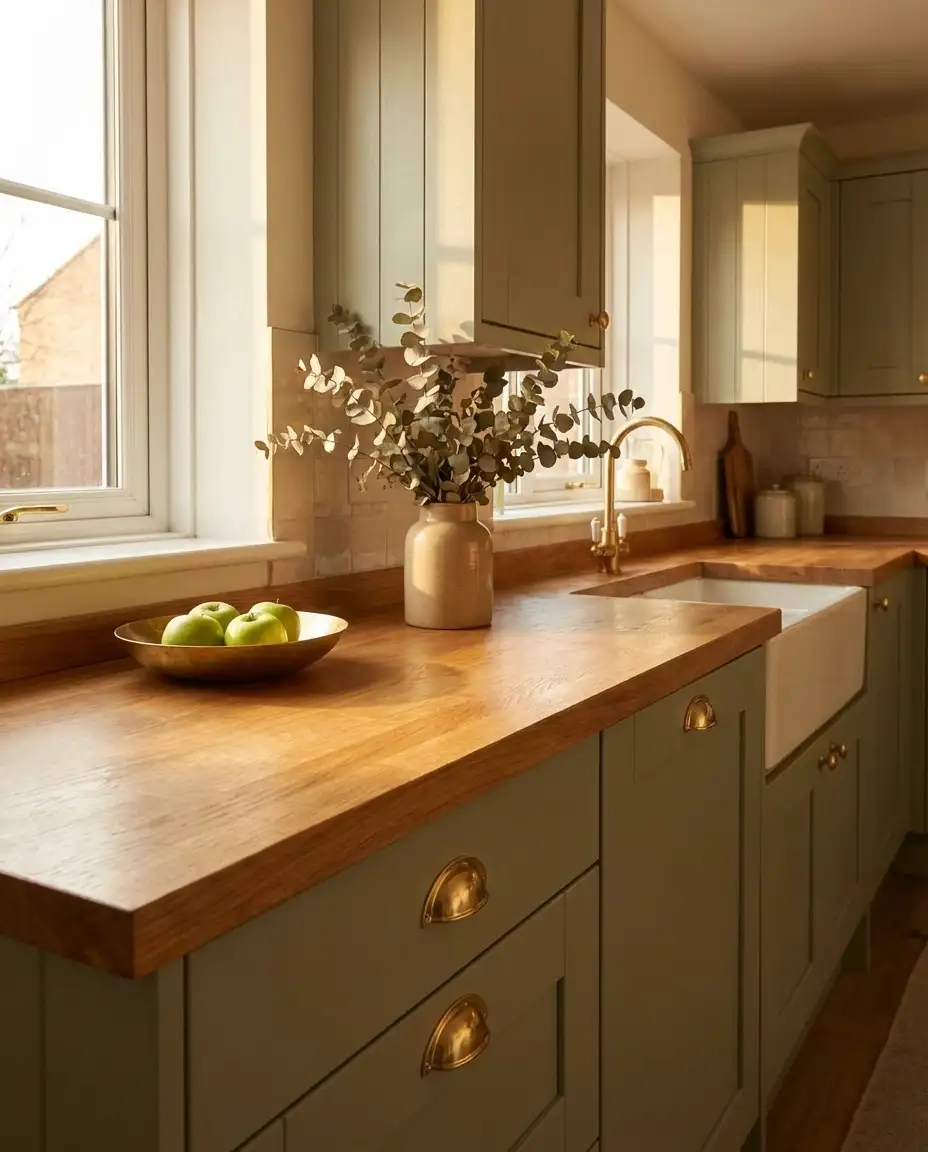
This combination works best in kitchens that get a fair amount of natural light—the wood and brass both need light to show their warmth and depth. In a north-facing kitchen with limited sun, you can compensate by choosing a lighter wood tone (maple over walnut) and making sure your overhead lighting is warm rather than cool white. The sage green will still do its job of grounding the space, but the lighter wood will keep things from feeling dim or heavy.
21. Dark Sage Kitchen with Minimalist Design
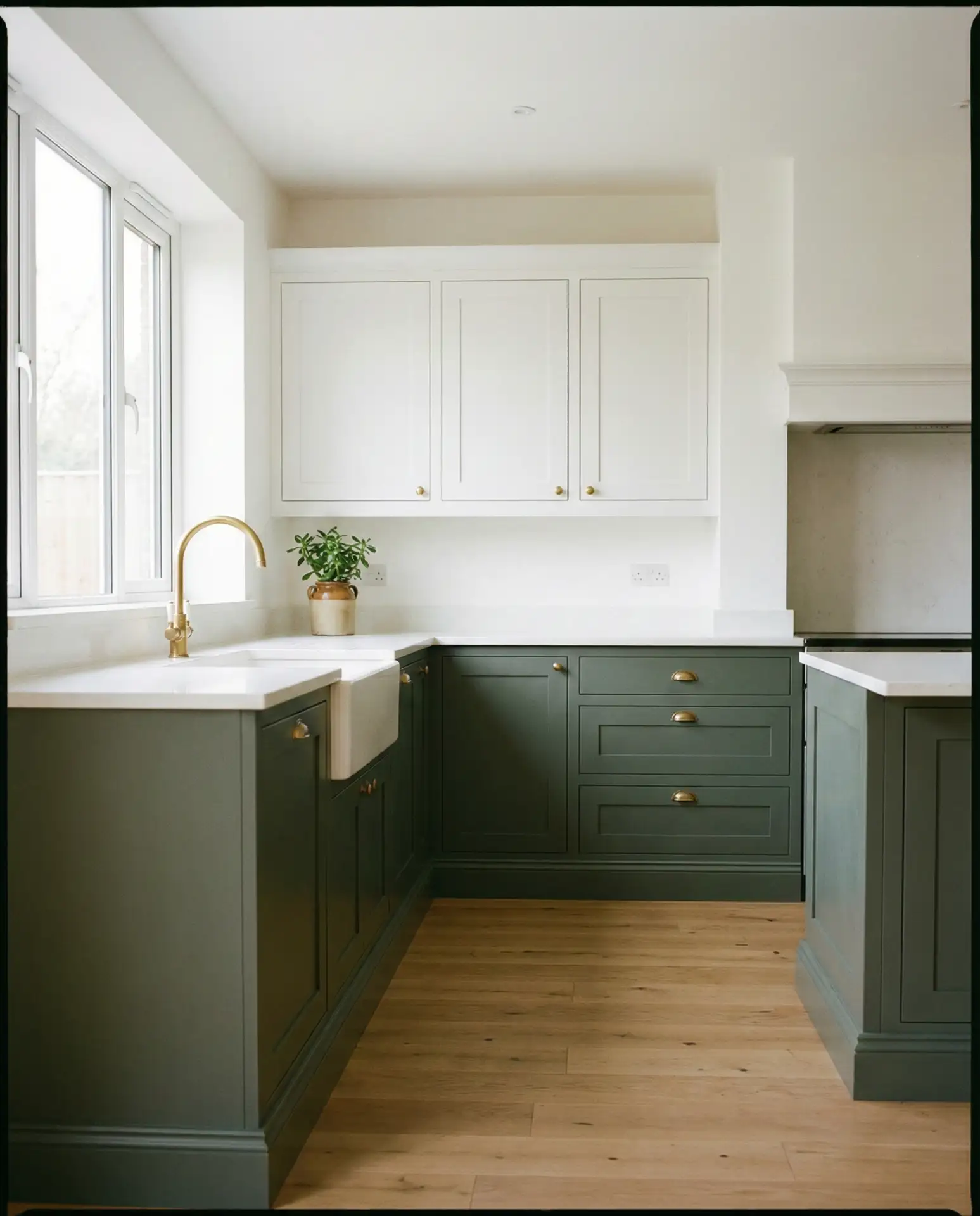
If you love dark colors but want a kitchen that still feels sophisticated and breathable, dark sage with a minimalist approach is one of the smartest paths forward. The key is restraint—fewer cabinets on the walls, more open counter space, and only the most essential designs on display. This kitchen trusts the color to do the work, and it absolutely does. Pair dark sage with clean white countertops and simple cabinets with farmhouse-style brass pulls, and you get a space that feels architectural without feeling cold.
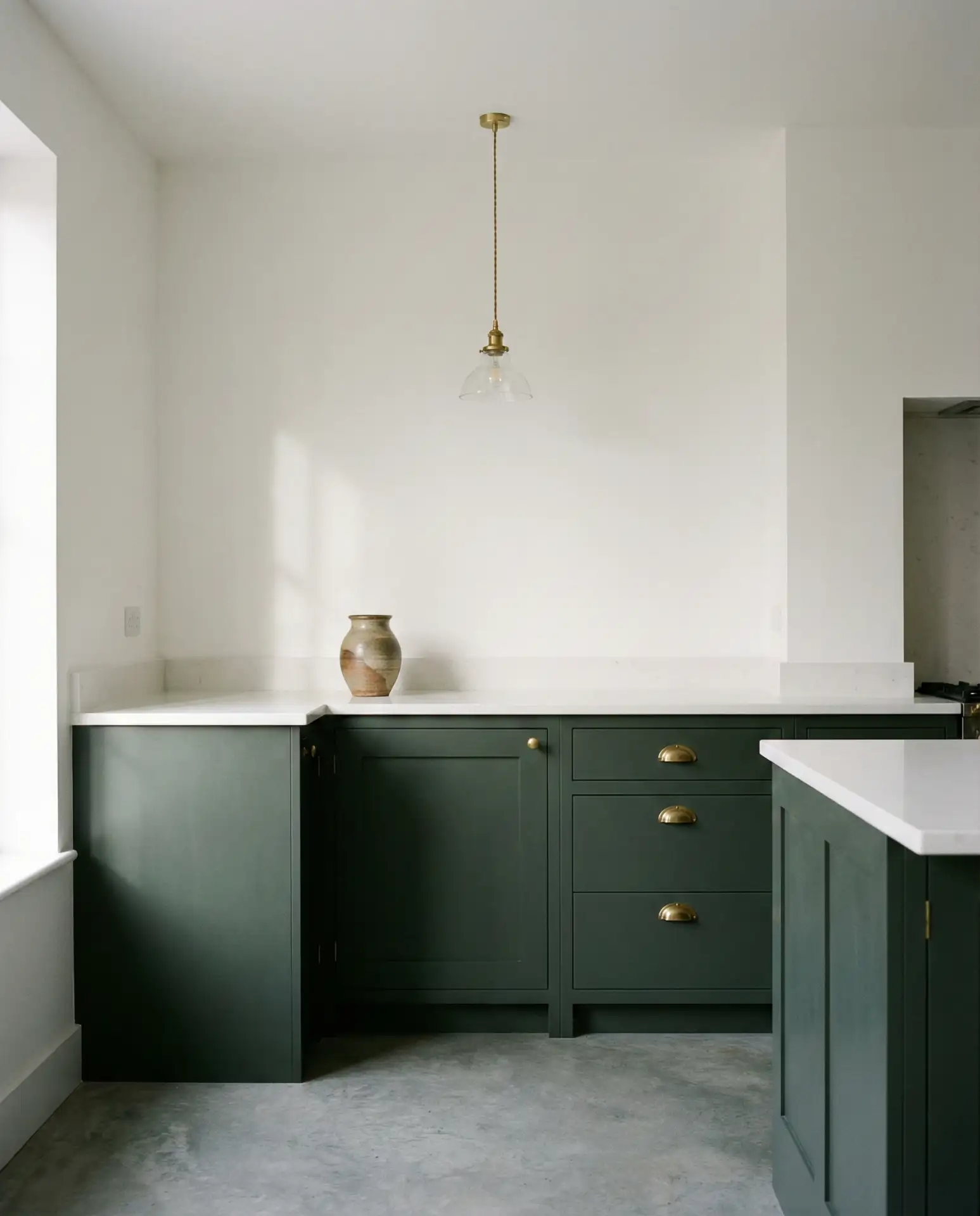
Minimalist kitchens demand more from your storage solutions than most people expect. If you’re pulling cabinets off the walls to open things up visually, everything that used to live in those cabinets has to go somewhere—and that usually means investing in better pantry organization, drawer inserts, or even a walk-in pantry if your layout allows it. The visual payoff of a clean, dark sage kitchen is absolutely worth it, but make sure your storage plan is solid before you commit to the design.
22. Sage Green Kitchen with White Tiles and Wood Accents
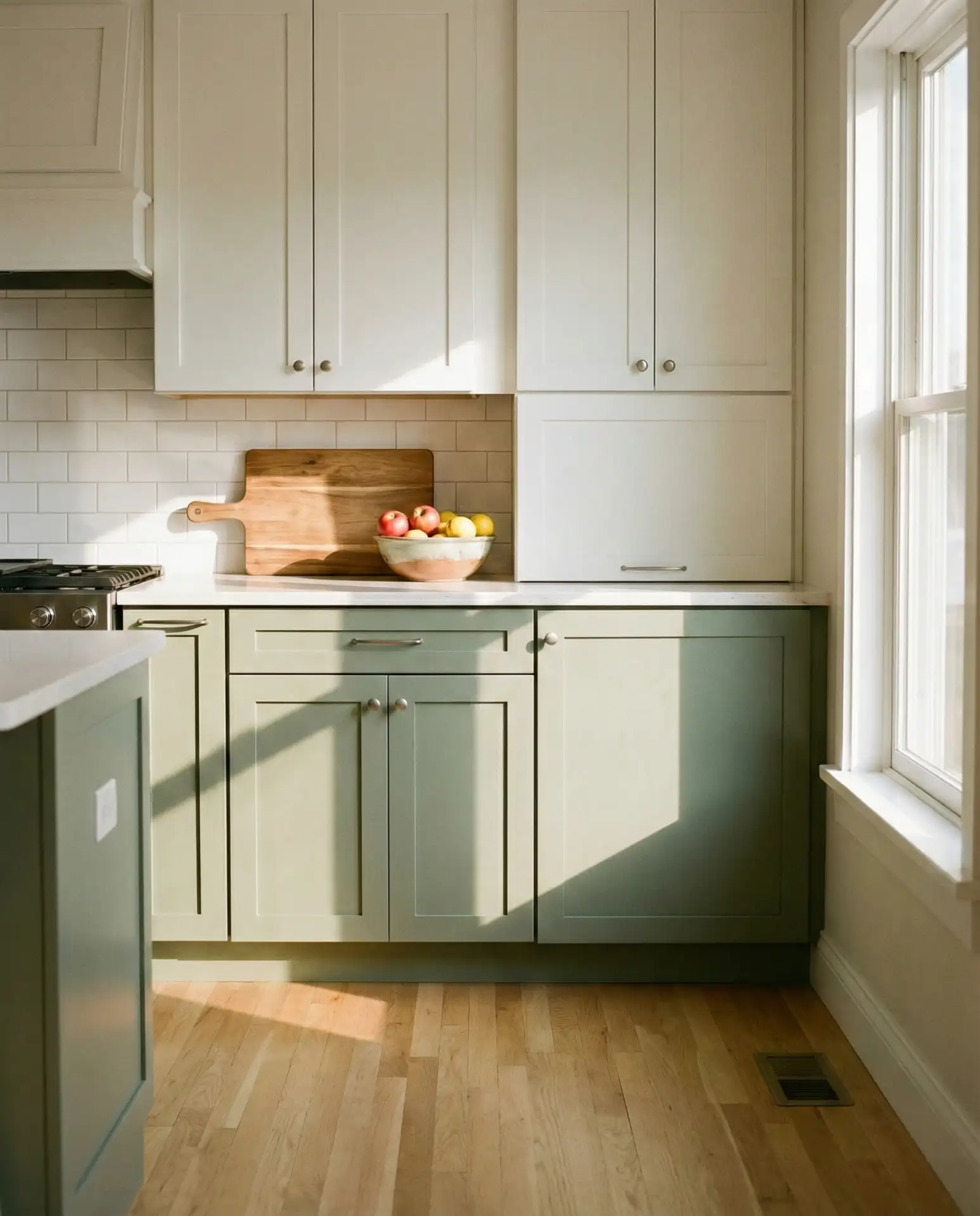
This is the kitchen design that somehow manages to feel both classic and completely fresh—white cabinets paired with sage green lower cabinets, a crisp white tile backsplash, and warm wood accents woven throughout. The tiles to match this palette are simple and understated—white subway or a soft white zellige—letting the sage and wood tones carry the warmth. It’s a combination packed with decor ideas potential: wooden shelves, a butcher block cutting board, a ceramic fruit bowl on a wooden pedestal. Every element reinforces the same quiet story of warmth and calm.
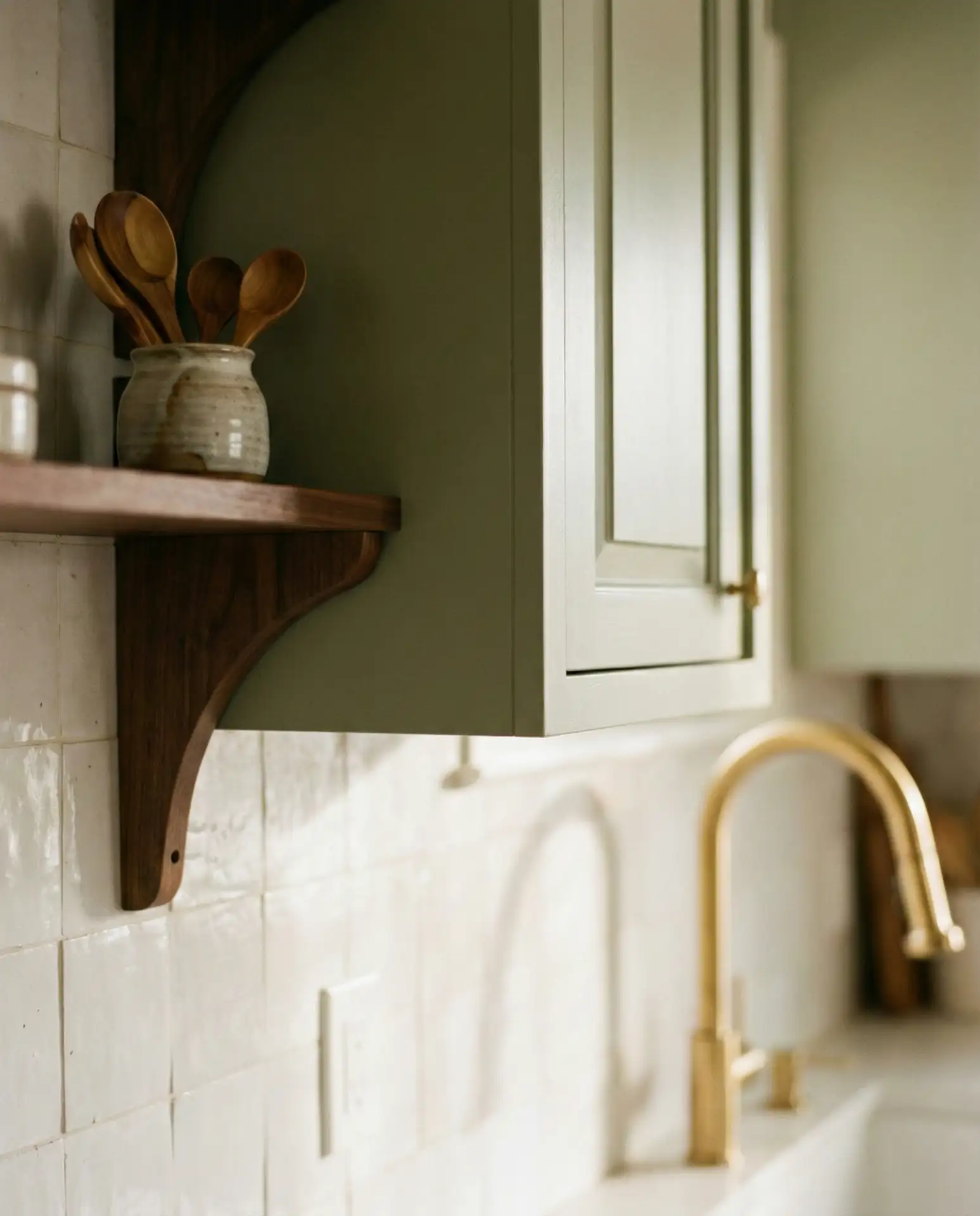
This is one of the most budget-friendly sage green kitchen combinations out there because white tile and basic wood accents are among the most affordable materials available at every home improvement store in the country. A full backsplash retile typically runs between five hundred and fifteen hundred dollars depending on your area, and wooden shelves or cutting boards can be found for under fifty dollars each. If you’re looking to transform your kitchen’s feel without a massive renovation budget, this sage-white-wood trio is probably the smartest starting point.
Conclusion
Sage green kitchens are having a moment for all the right reasons—they’re versatile, calming, and endlessly adaptable to whatever style or budget you’re working with. Whether you go all in with dark sage cabinets or just dip a toe in with a single accent wall, there’s a version of this trend that will feel like home. We’d love to know which of these ideas spoke to you most—drop your favorite in the comments below, or share a picture of your own sage green kitchen if you’ve already made the leap.