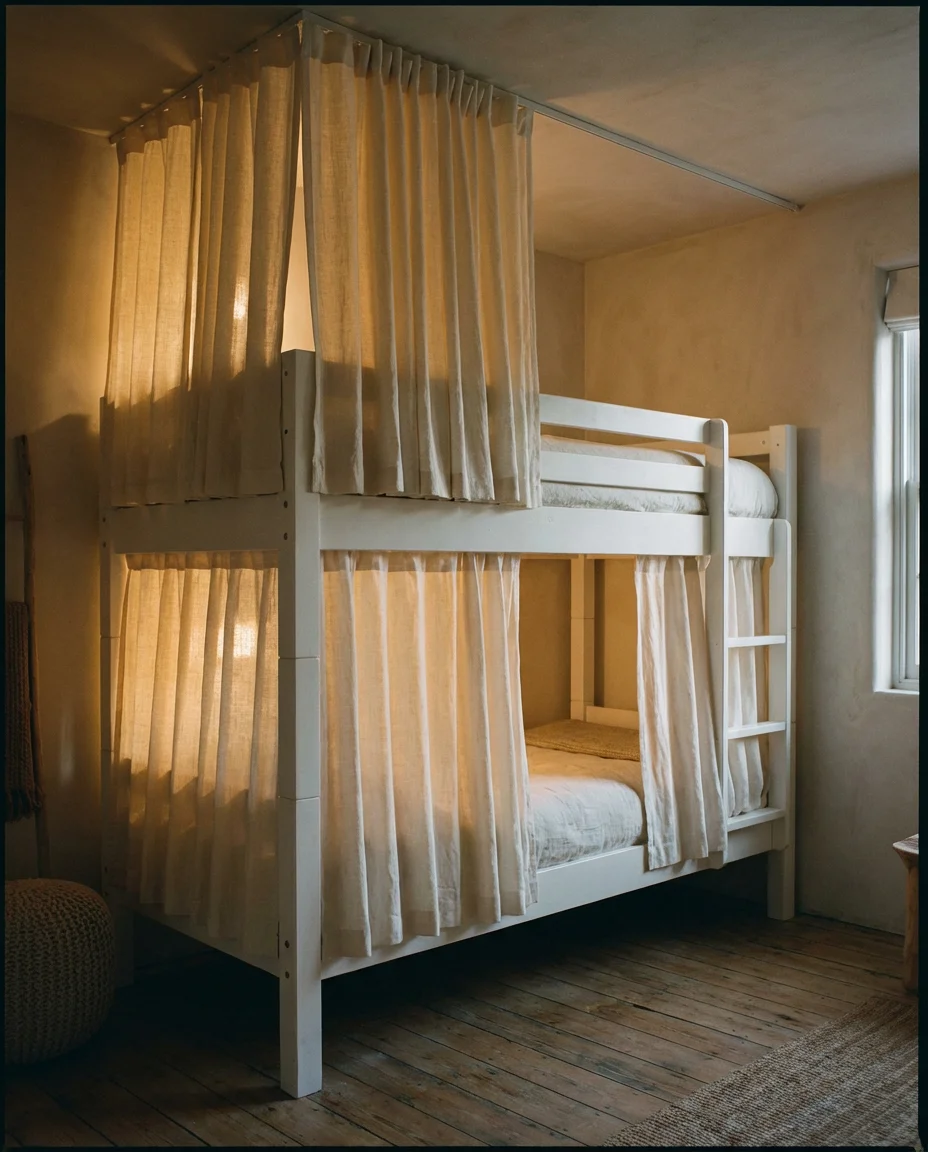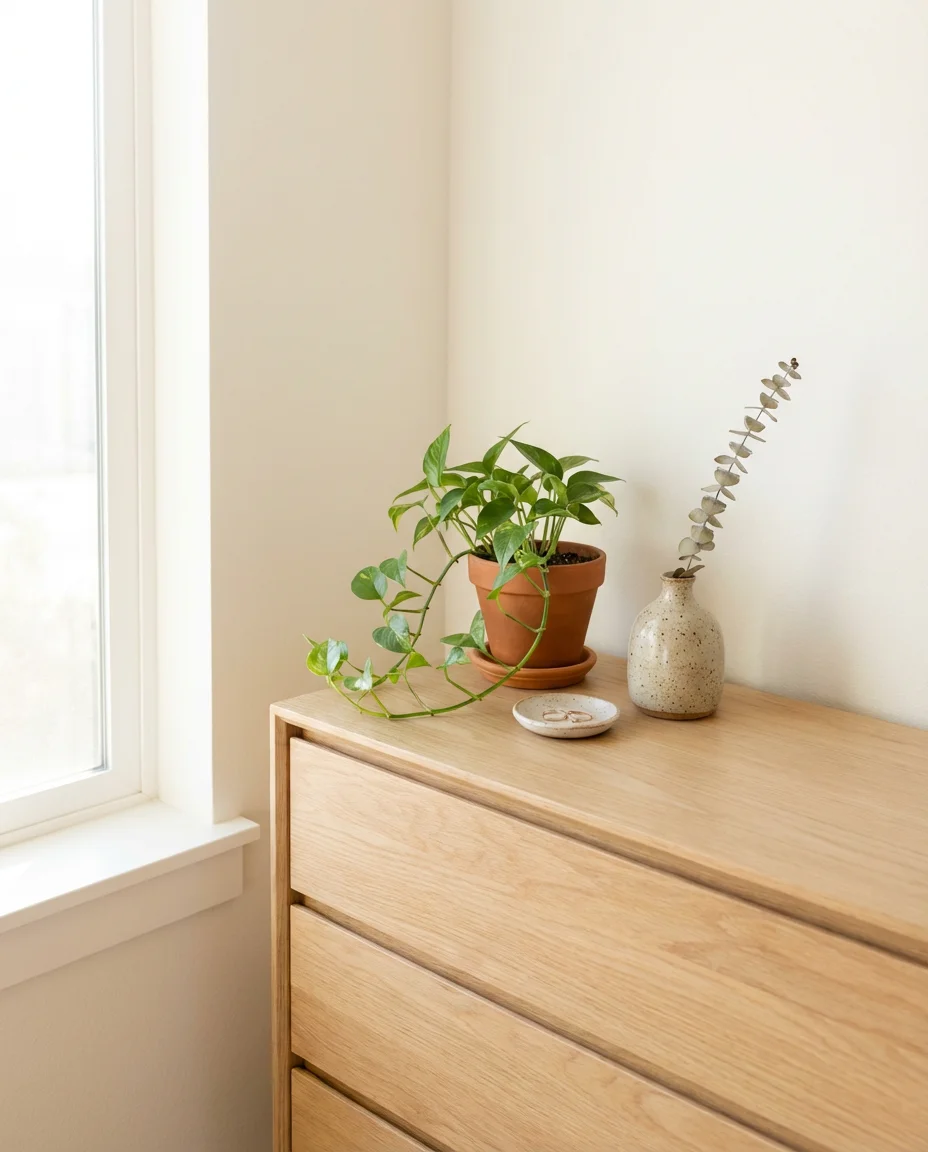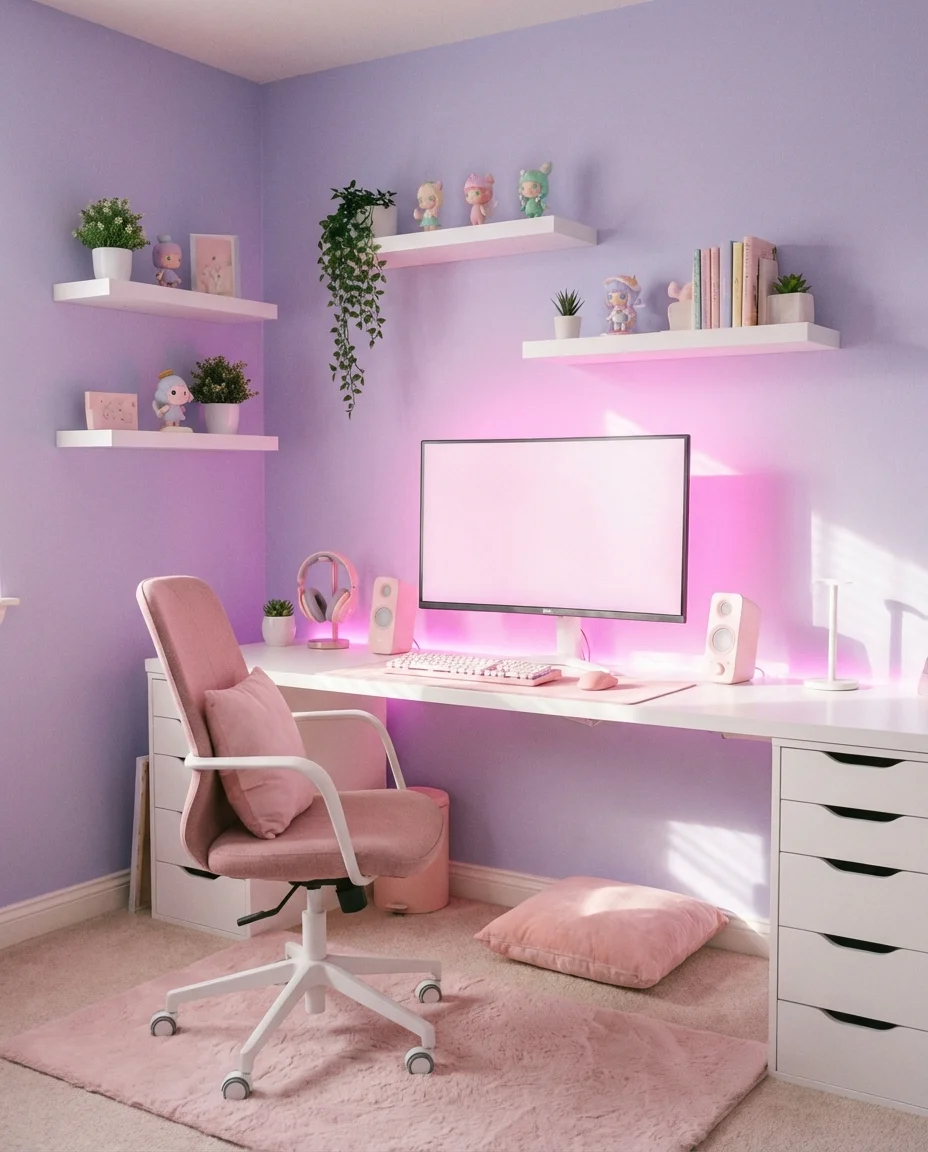
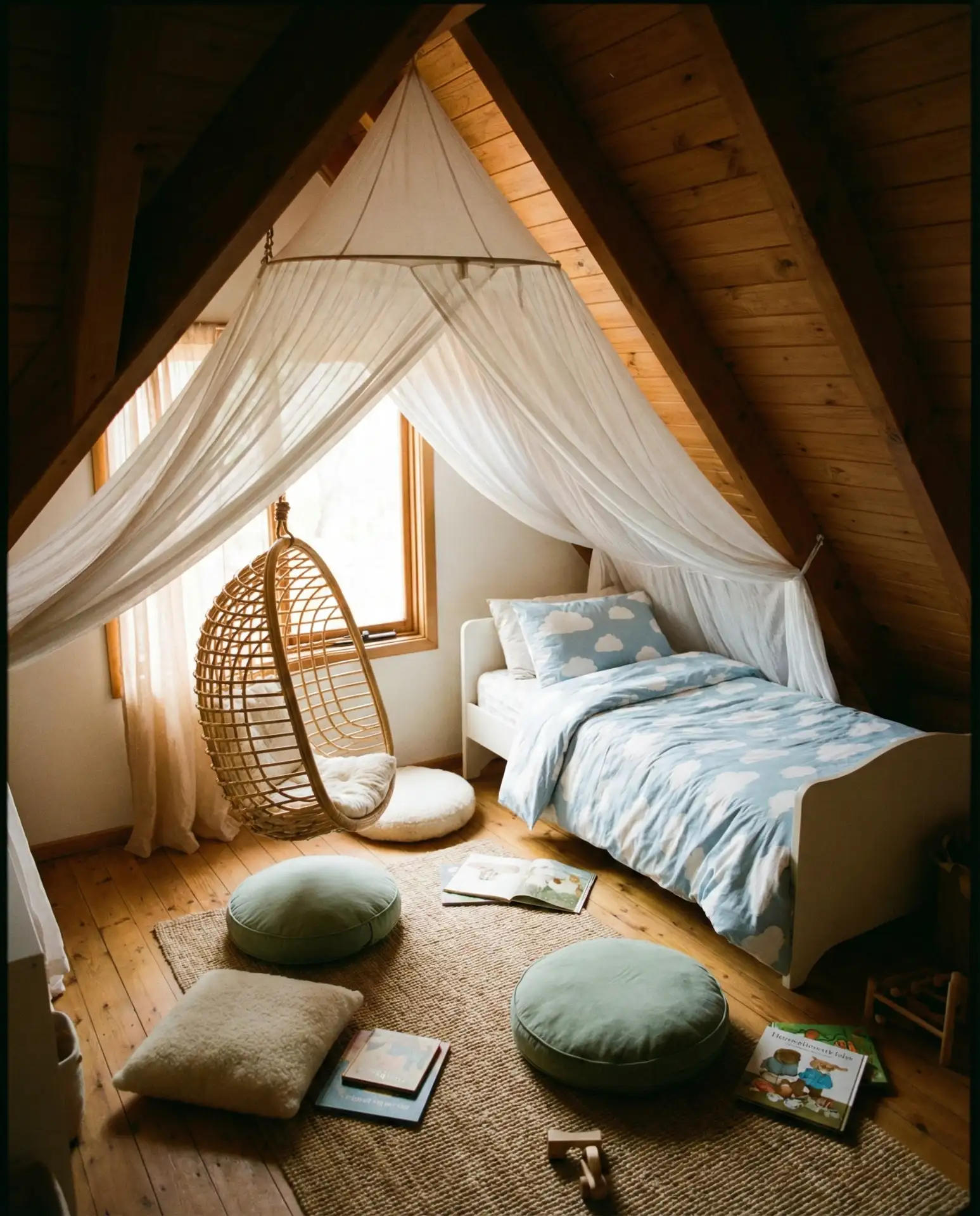
There’s something quietly magical about turning an attic into a bedroom—it’s one of those renovations that feels both deeply personal and surprisingly attainable. Pinterest has been buzzing with attic bedroom transformations for years now, and 2026 is the year those saved pins are finally becoming reality in homes across the country. Whether you’re working with a sprawling space or a tight, angular nook, attic bedrooms offer a unique canvas that no other room in the house can match. In this roundup, we’ve gathered ideas that range from cozy retreats to bold statement rooms, so you can find the one that speaks to your style and your space.
1. Warm Wood and White Linen Under the Eaves
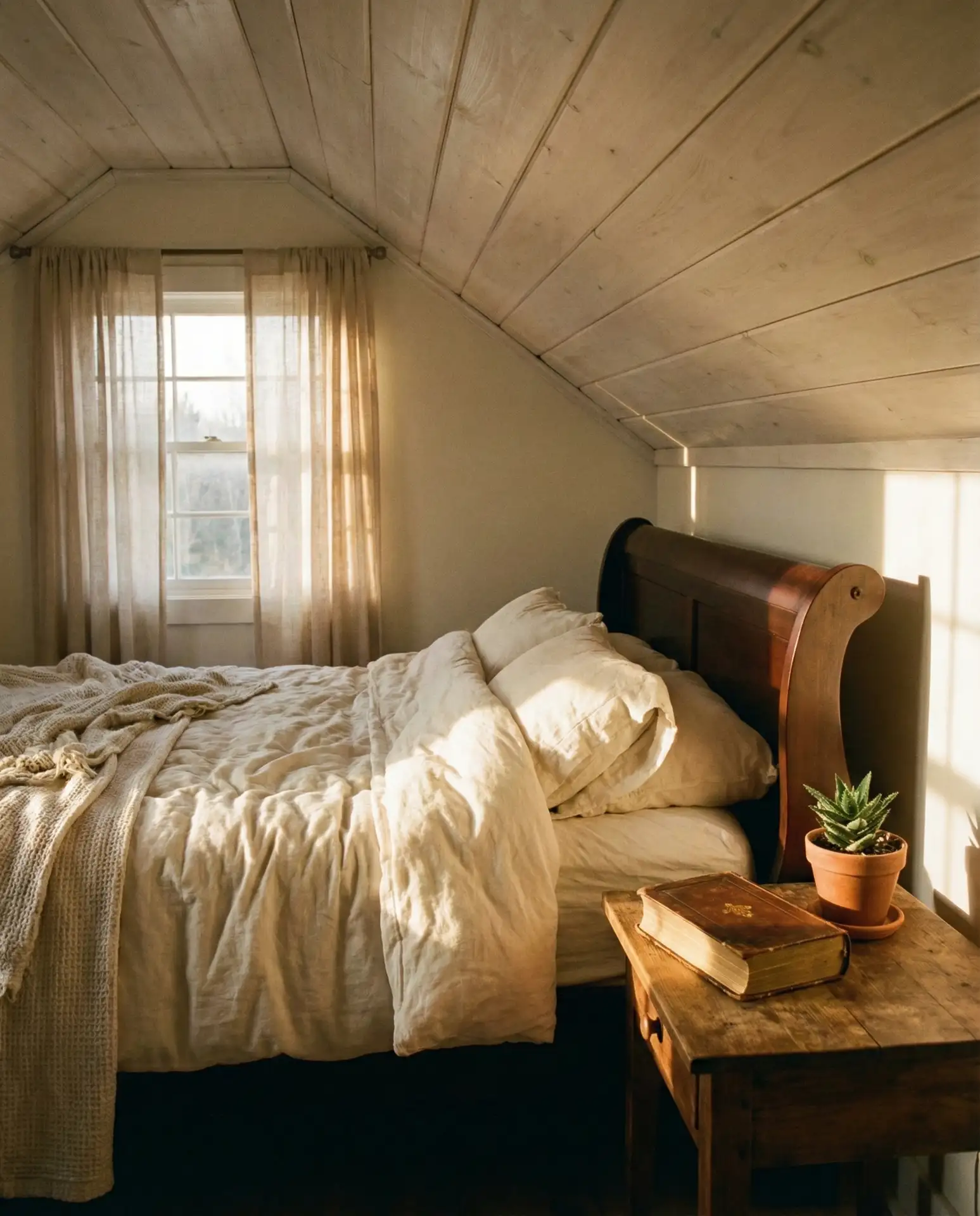
If you’ve ever scrolled past a photo of a slanted ceiling interior design and felt an immediate pull toward it, this idea is exactly why. There’s an effortless warmth that comes from pairing raw wood tones with crisp white bedding in a space where the ceiling dips and rises like a gentle wave. This setup works beautifully in a cozy attic bedroom where the architecture itself becomes part of the charm, especially when the low ceiling creates that tucked-in, hug-like feeling so many people crave at the end of the day.
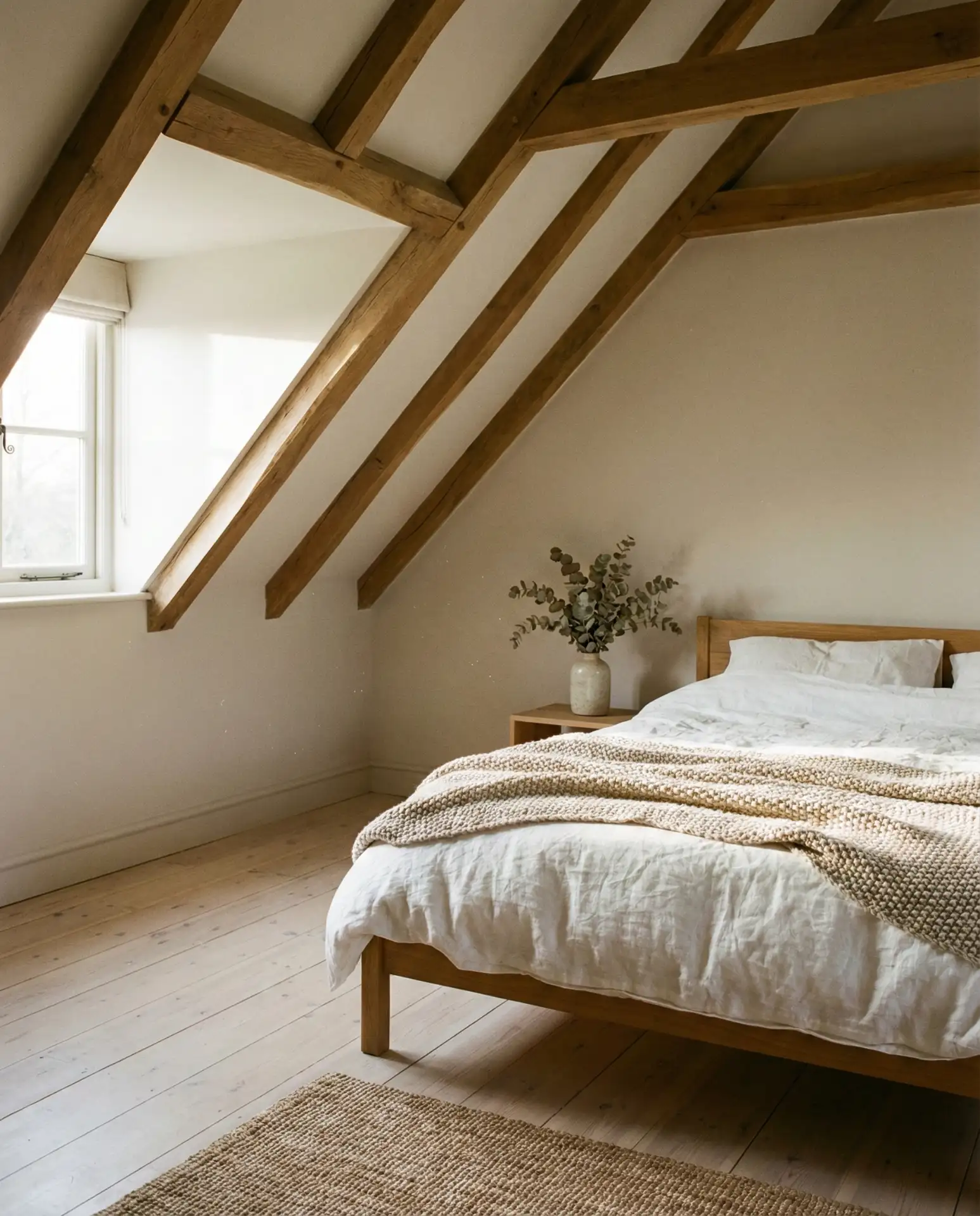
The practical insight here is simpler than you’d think: keeping your palette tight in an attic bedroom—warm woods, whites, and one or two soft neutrals—prevents the space from feeling cramped. When ceilings are lower than average, every visual element competes for attention. Stripping things back lets the architecture breathe. A bed with a low-profile frame (think platform beds or simple wood slats) makes a world of difference in these spaces, and layering textures through blankets and pillows adds richness without adding visual clutter.
2. Sleek Modern Master Suite with Floor-to-Ceiling Glass
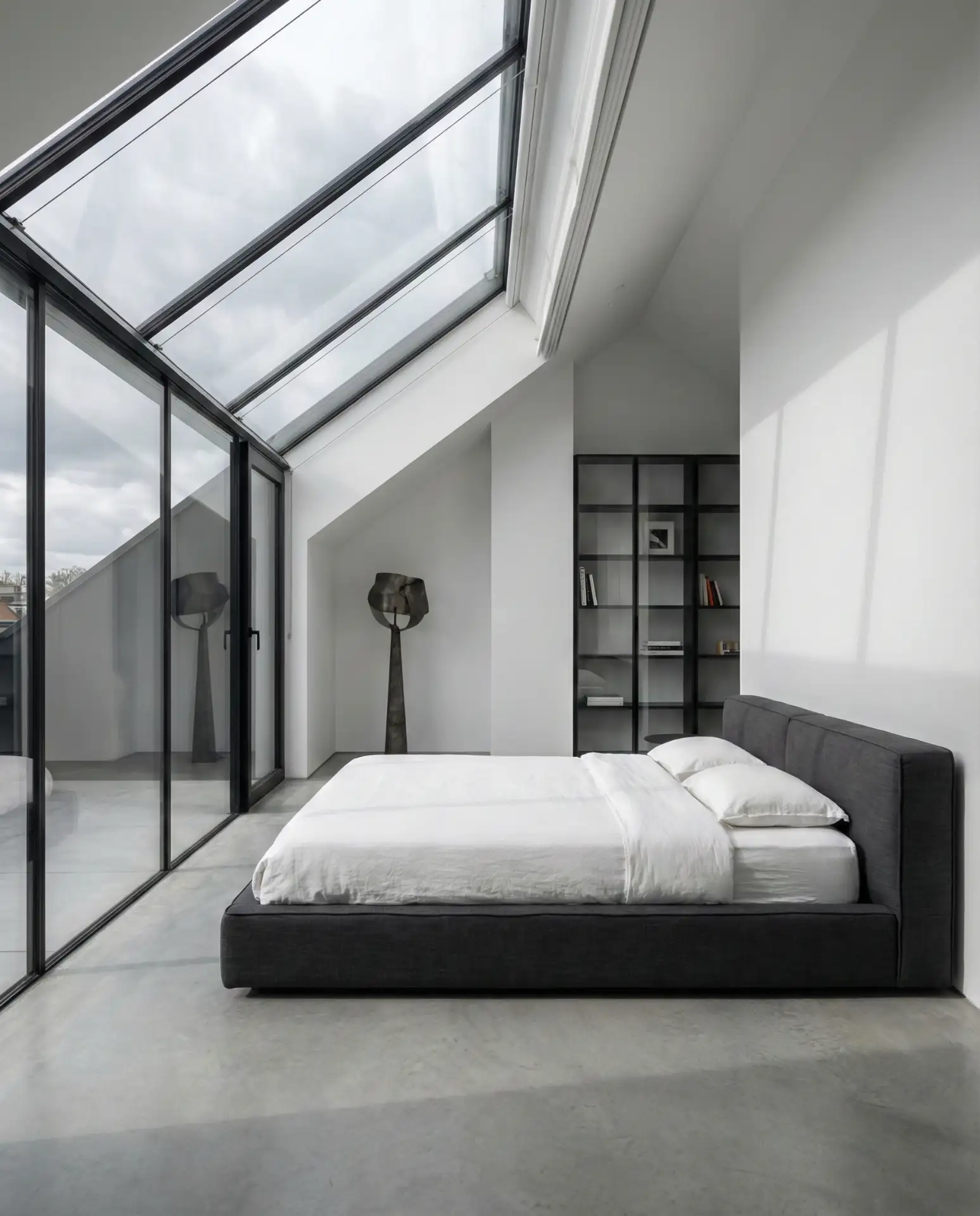
Not every attic bedroom has to feel like a secret hideaway—sometimes you want your space to feel open, airy, and unmistakably grown-up. A sleek modern master bedroom tucked under angled ceilings can absolutely pull this off when you bring in floor-to-ceiling glass panels that blur the line between interior and sky. This is peak aesthetic for anyone drawn to minimalism with a dramatic edge, and it transforms the usual attic constraints into a genuine architectural feature worth showing off.
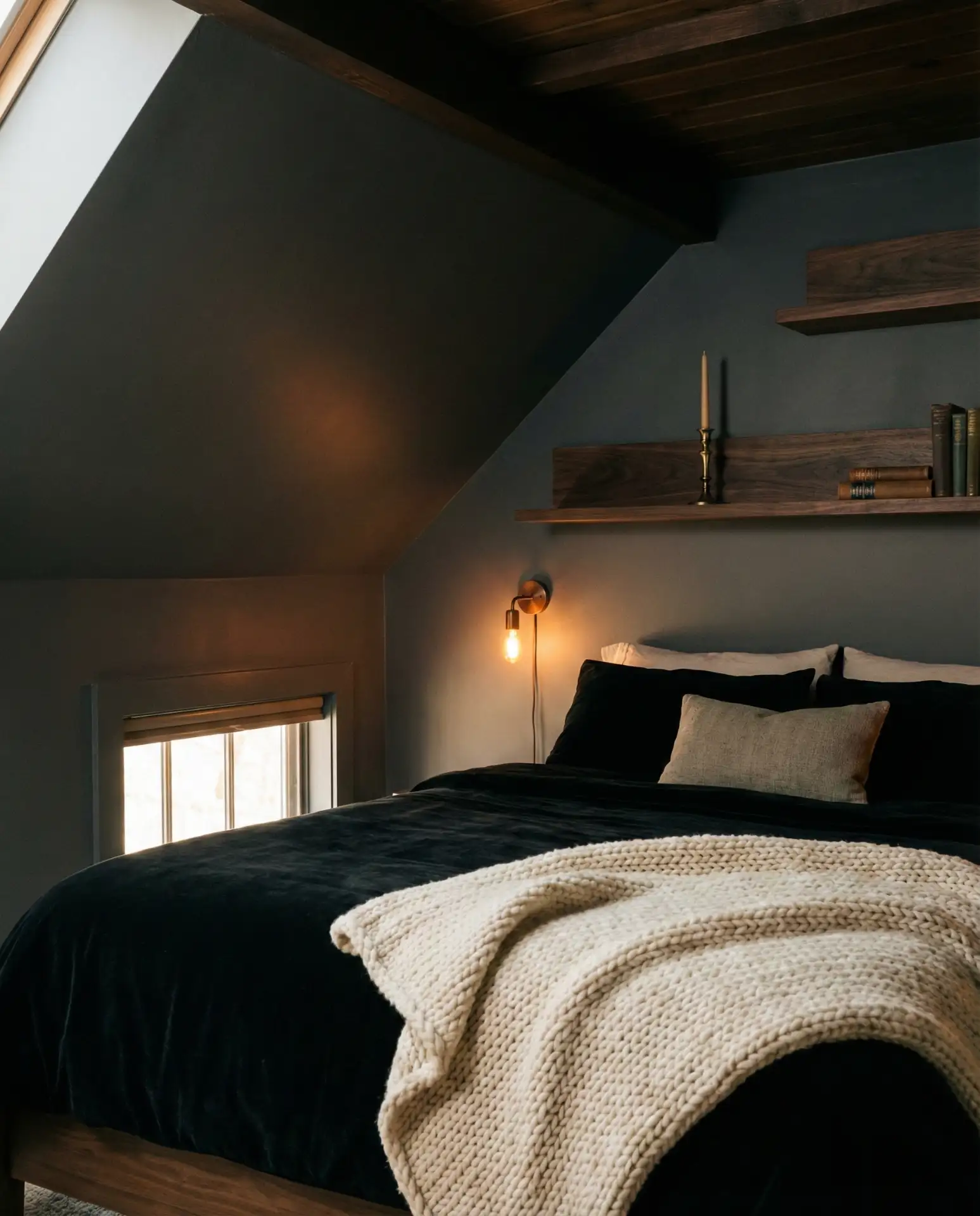
This design works best in attics with good structural integrity and at least one wall that’s tall enough to stand comfortably. Urban lofts and converted warehouse spaces in cities like Chicago or Seattle are prime territory for this kind of setup. If full floor-to-ceiling glass isn’t in your budget, even a single large skylight or a pair of tall, narrow windows along the roofline can capture that same sense of expansiveness. The key is resisting the urge to fill the space—let the glass and the sky do the talking.
3. Moody Dark Wood and Black Velvet Retreat
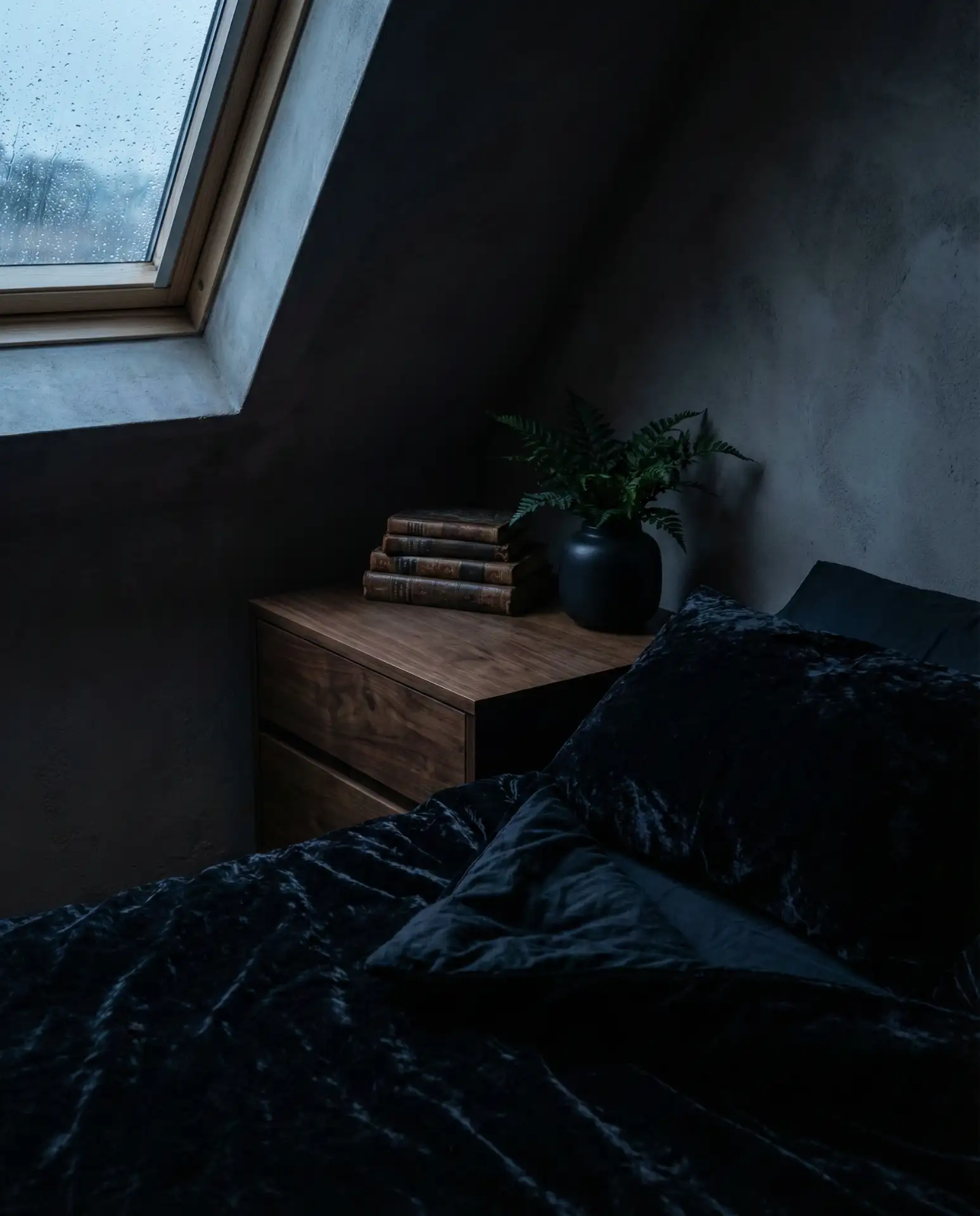
There’s a reason aesthetic grunge keeps coming back on Pinterest—it taps into something deeply satisfying about making a space feel intentionally brooding. A dark attic bedroom leaning into rich charcoal walls, deep walnut wood accents, and a bed dressed in black velvet isn’t trying to be cheerful, and that’s exactly the point. This look nails the grunge aesthetic without ever tipping into the territory that feels dated or theatrical, especially when you balance it with softer elements like a cream throw or a single warm-toned candle.
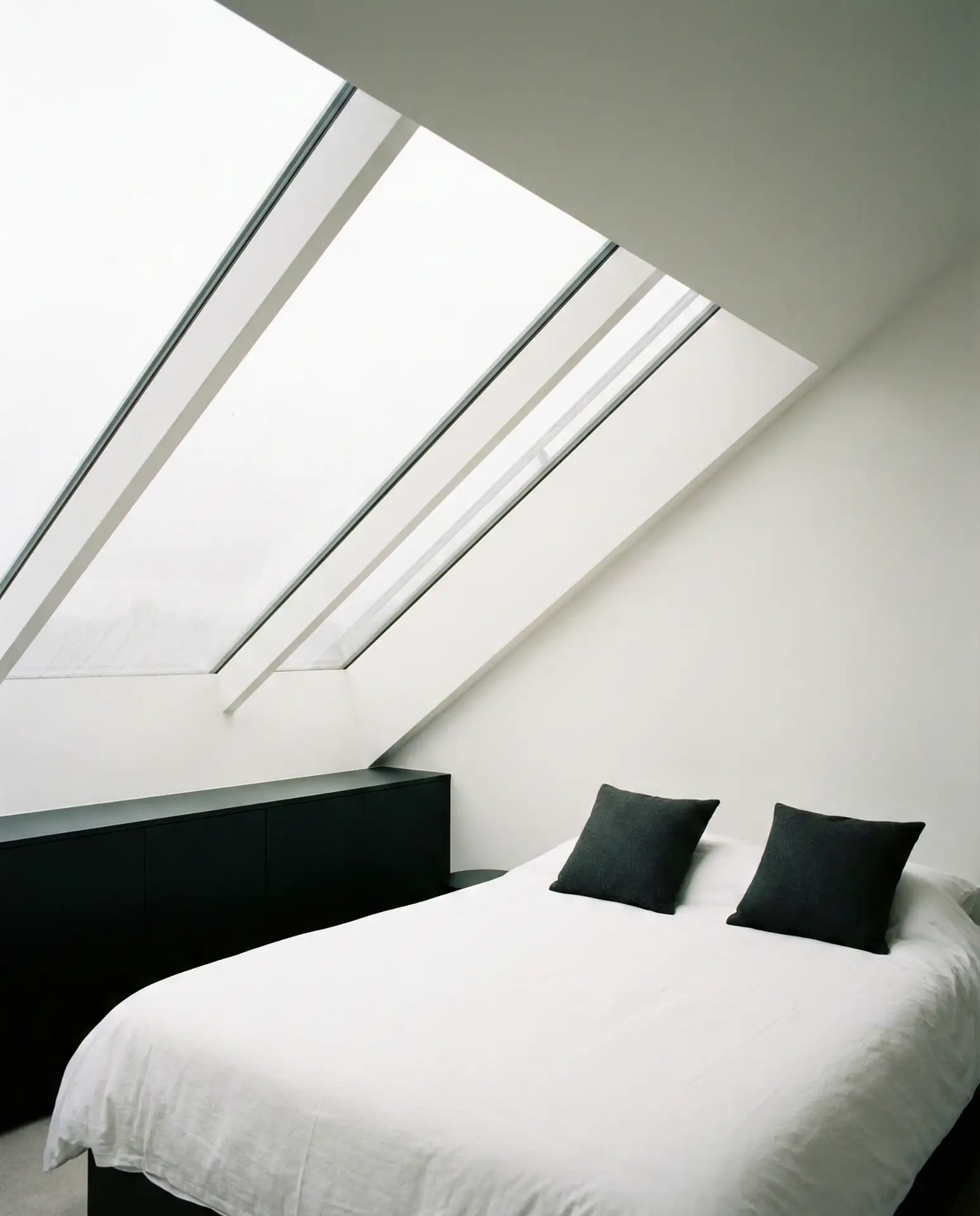
Picture this: you come home after a brutal Tuesday, climb those narrow attic stairs, and step into a room that feels like the quietest place on earth. That’s what a well-done dark attic bedroom delivers. The trick is making sure the space doesn’t feel like a cave—a single window with no treatment, a few reflective surfaces like a brass mirror or a polished wood vanity, and one or two pops of a warmer tone will keep it feeling intentional rather than accidental.
4. Blush Pink Bohemian Dreamscape
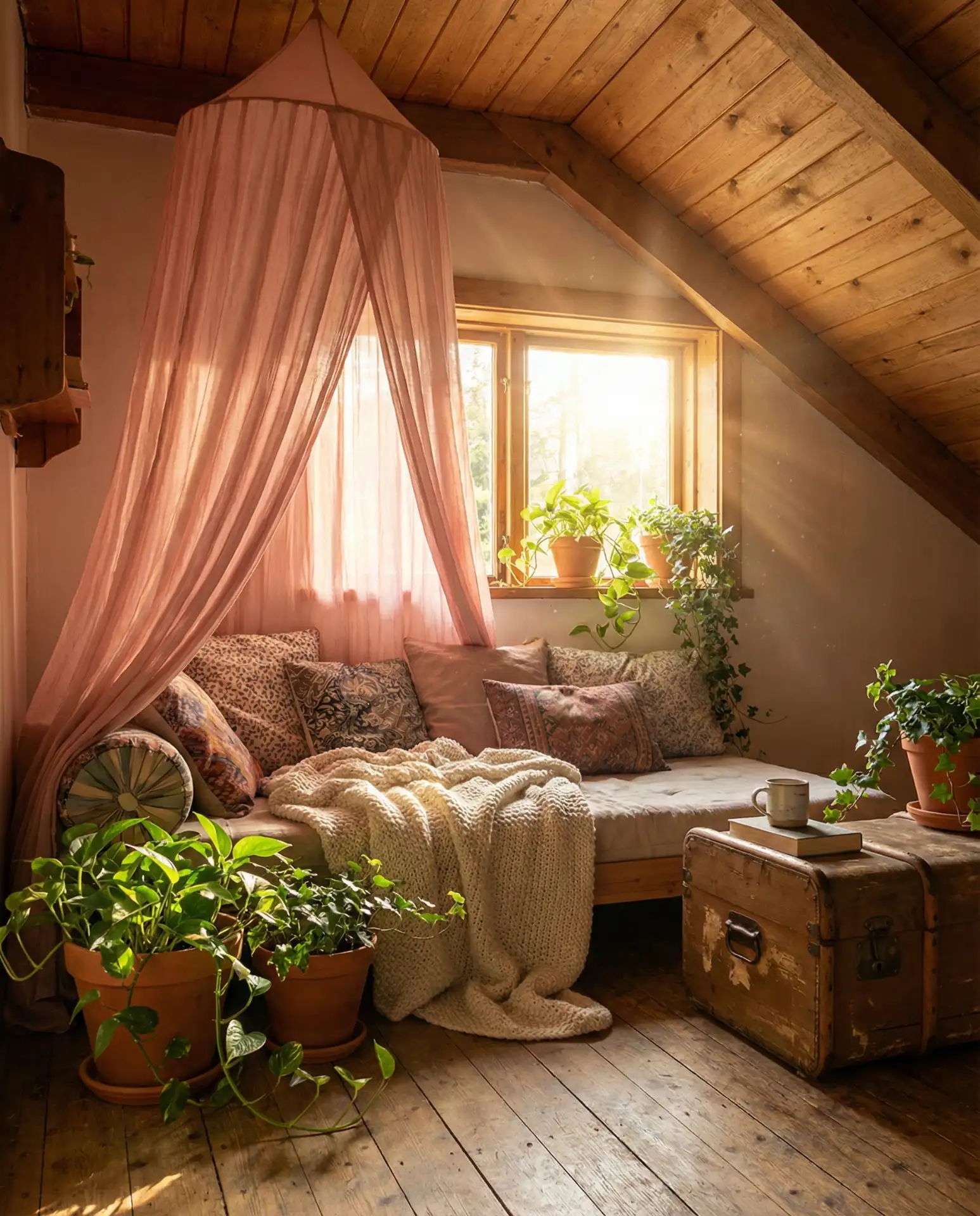
There’s a version of pink that doesn’t feel like it belongs in a nursery, and it lives in the attic. Blush tones paired with woven textures, rattan, and layered fabrics create something that’s undeniably cute without being precious. This bohemian take on attic bedroom design is perfect for spaces where the low ceiling adds an intimate, nest-like quality—the kind of room where you’d actually want to spend an entire rainy afternoon reading or journaling without feeling restless.
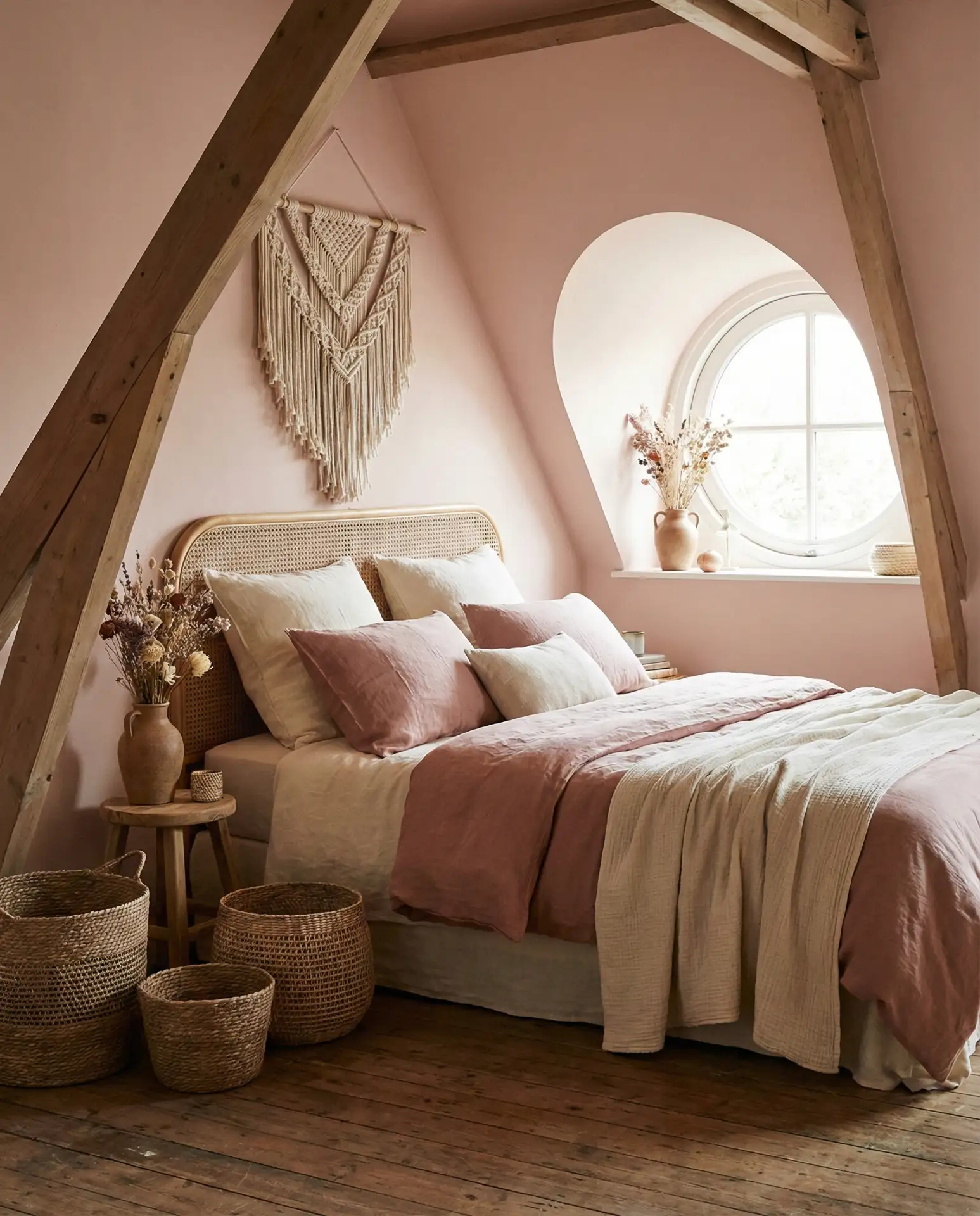
This look works best in attics that get generous natural light—the way sunlight hits blush pink and rattan together is almost unreasonably pretty. A bedroom like this is ideal for a guest room or a secondary master in a home where you want one space to feel distinctly softer and more romantic than the rest. If you’re hesitant about committing to pink walls, start with the bedding and textiles and paint a single accent wall—you might surprise yourself with how quickly the whole mood shifts.
5. A Magical Little Nook for Kids
When you have a tiny attic space and kids who need a room that feels like an adventure, the solution isn’t to fight the architecture—it’s to lean into it completely. An aesthetic cozy kids’ bedroom tucked under a low sloped ceiling becomes a world unto itself when you add a loft bed, a reading nook built into the eave, and enough soft lighting to make the whole thing glow. Children instinctively love spaces that feel secret and contained, and attics hand that feeling to you for free.
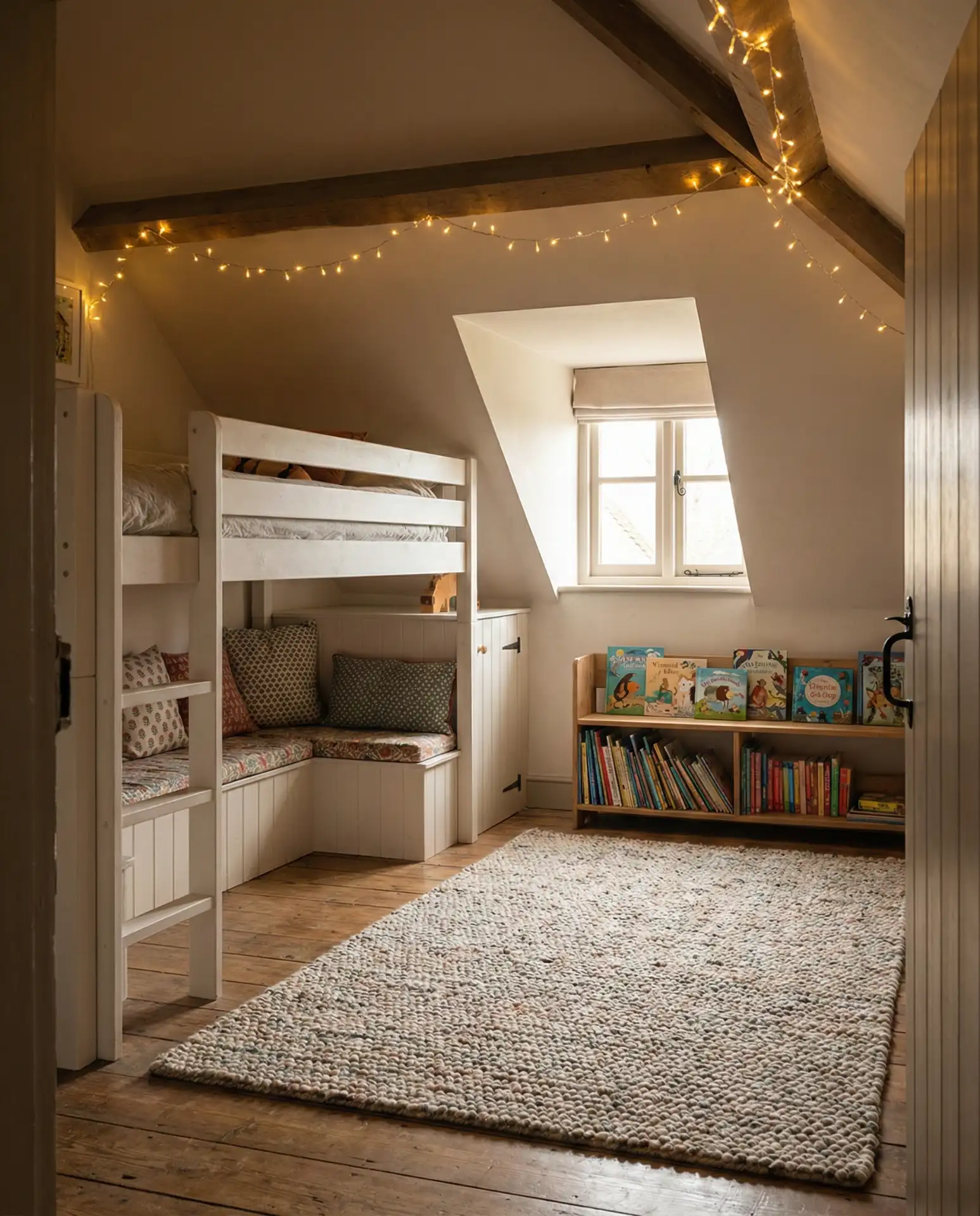
Interior designers who specialize in children’s spaces will tell you that kids actually thrive in smaller, more defined rooms—it reduces overstimulation and gives them a sense of ownership over their environment. In an attic, that translates to smart built-ins: a bed that’s part of the wall, storage that disappears into the eaves, and shelving that follows the slope. You don’t need square footage to make a child feel like they have the best room in the house.
6. Teen Dream: Minimalist with an Edge
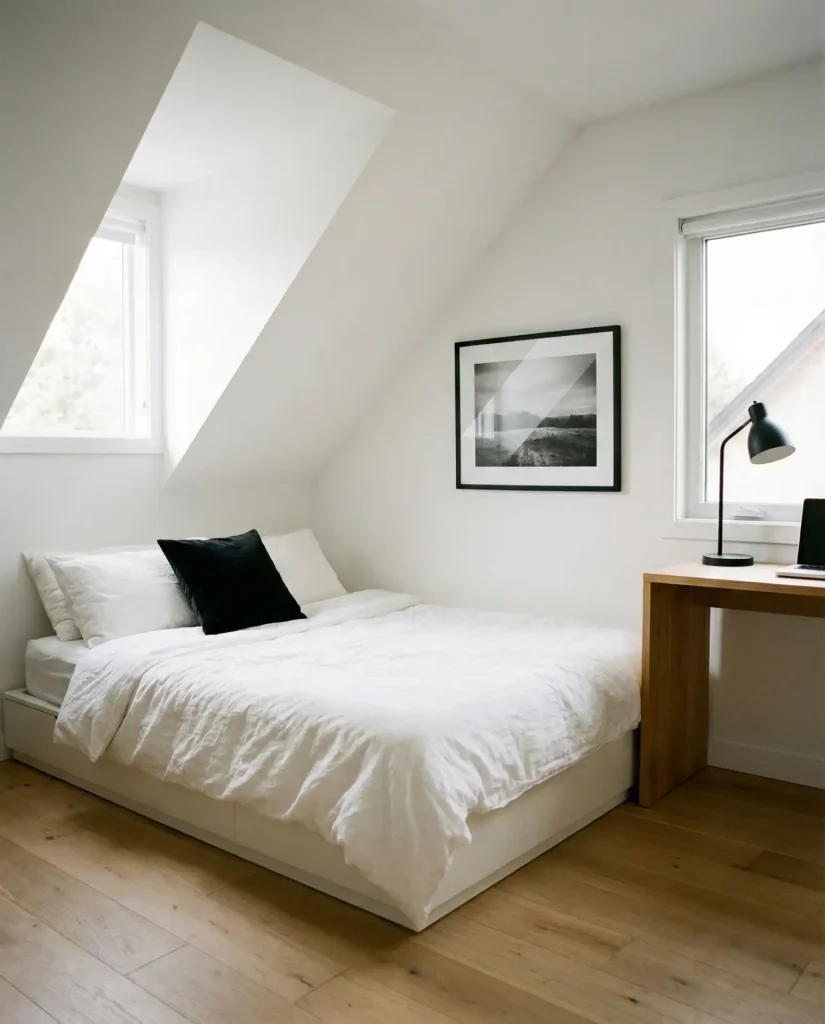
Teenagers want their bedrooms to feel like they designed them—and an attic is the perfect canvas for that. A slanted ceiling paired with a clean, neutral palette and just enough aesthetic detail (think a single bold poster, a vintage desk lamp, and a structured throw blanket) creates a room that feels grown-up and intentional without being fussy. This is the kind of teen’s bedroom that actually gets shared on social media because it looks effortlessly cool rather than decorated-by-a-parent.
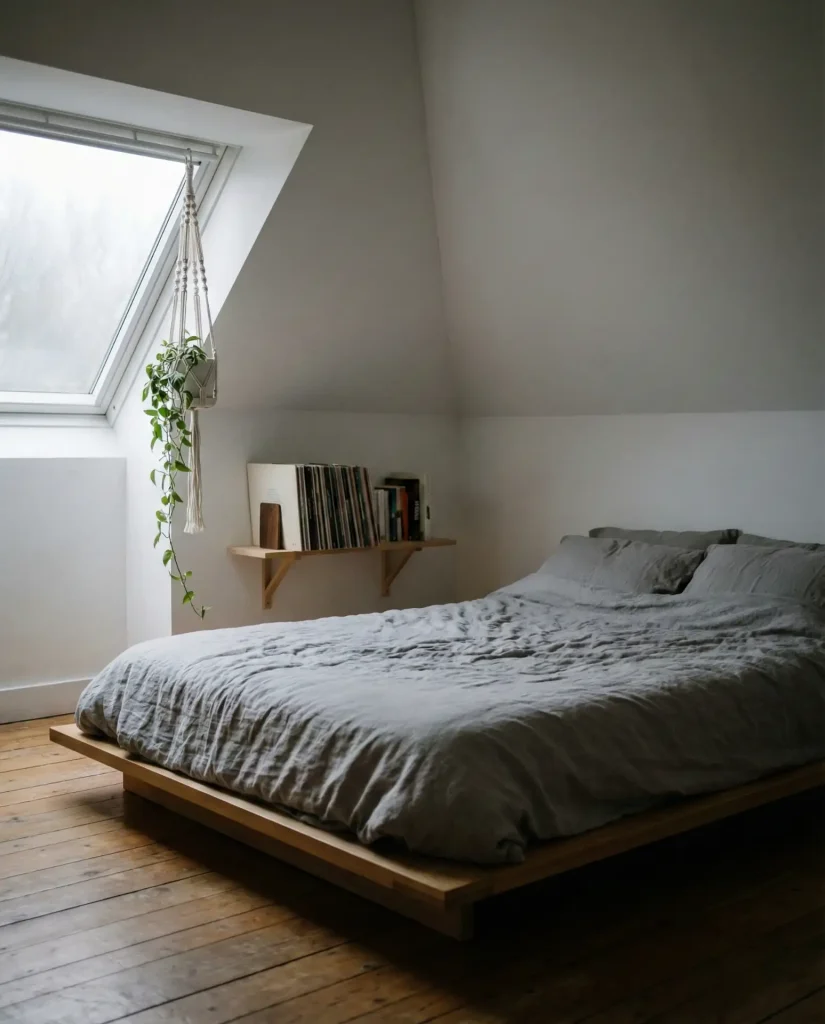
If your teenager’s current bedroom looks like a tornado hit it, here’s the budget-friendly reset: start with a white bedding set (Target and Amazon both have surprisingly good options under $80), clear the walls completely, and let them choose one or two pieces of art or a single accent color. Attic bedrooms actually make minimalism easier because there’s less wall space to fill—the architecture forces a kind of editing that most rooms don’t.
7. Expansive Loft Master with a Reading Alcove
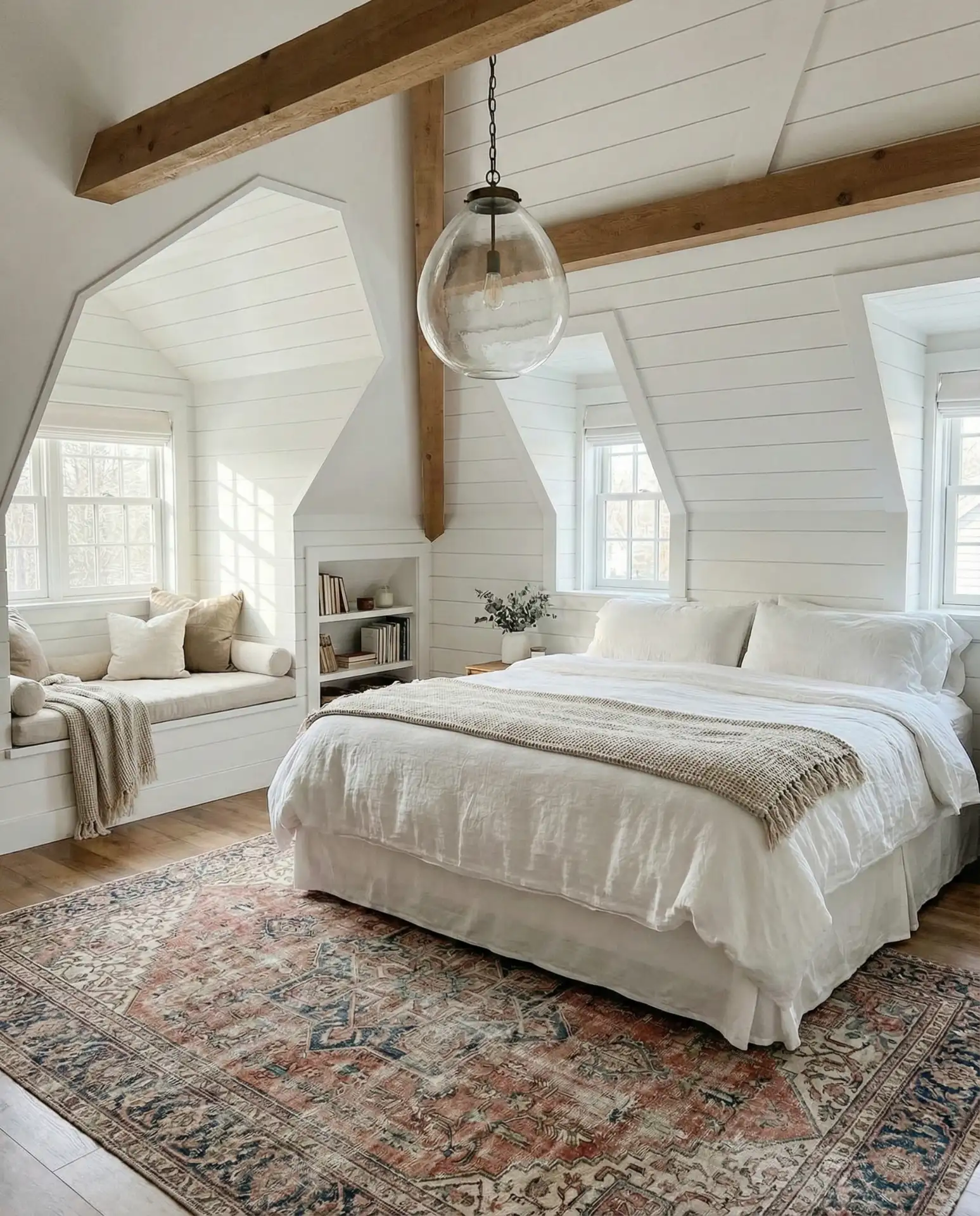
When your attic is large enough to stretch out in, the challenge shifts from making things fit to making things feel intentional. A cozy master bedroom that takes up a full attic floor can feel wonderfully spacious—or it can feel like a warehouse—and the difference almost always comes down to how you divide the space. A built-in reading alcove carved into the eave is one of the best ways to create that sense of zones without putting up a single wall.
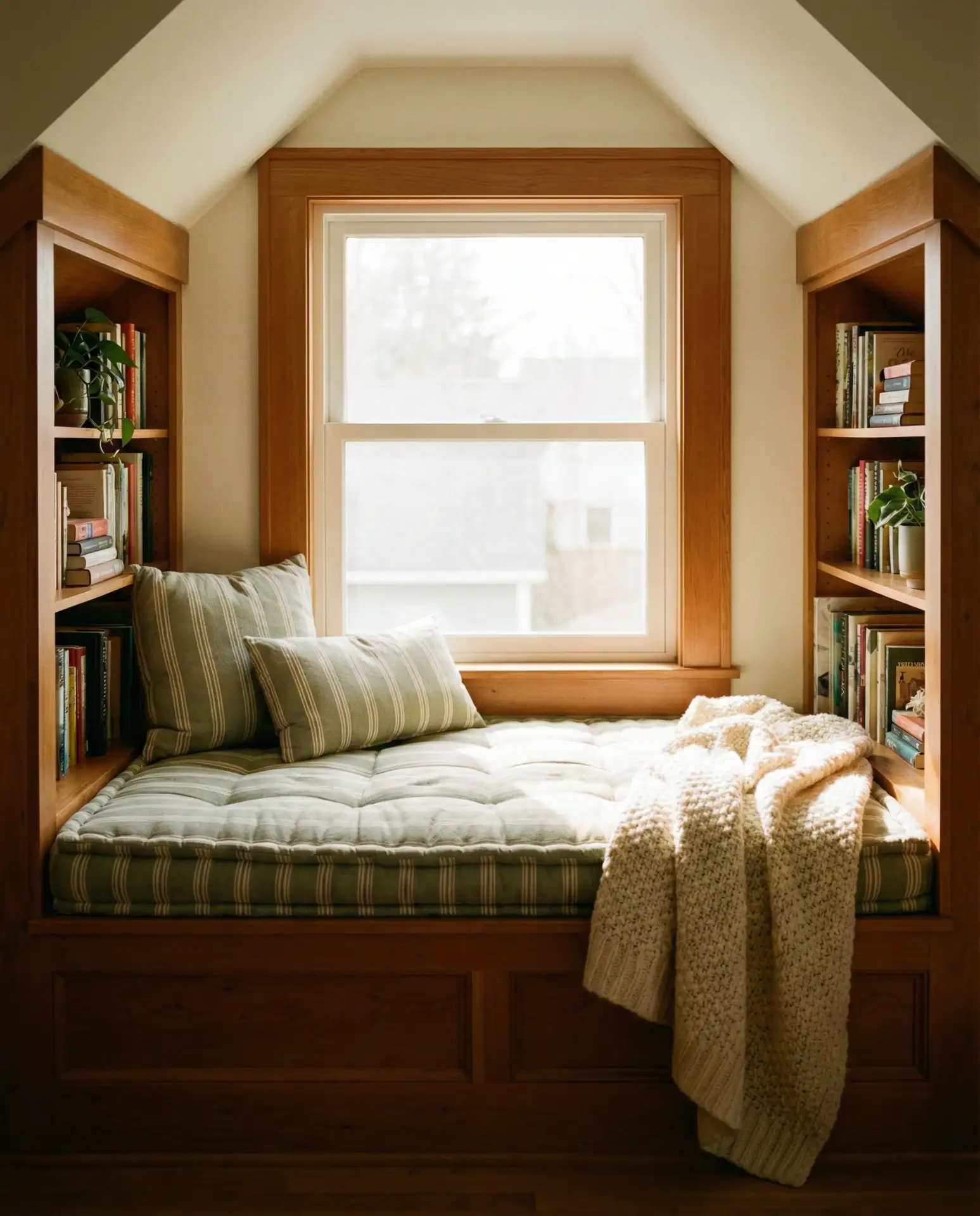
What you’ll actually notice once you install a built-in reading alcove is how dramatically it changes your evening routine. Instead of scrolling on your phone in bed, you migrate to the nook with a book and a cup of tea—it’s one of those small architectural choices that quietly reshapes how you spend time in your own home. For a large attic master, this kind of feature also adds resale value, since built-ins are one of the first things buyers notice and remember.
8. Bold Geometric Paint Under a Triangle Peak
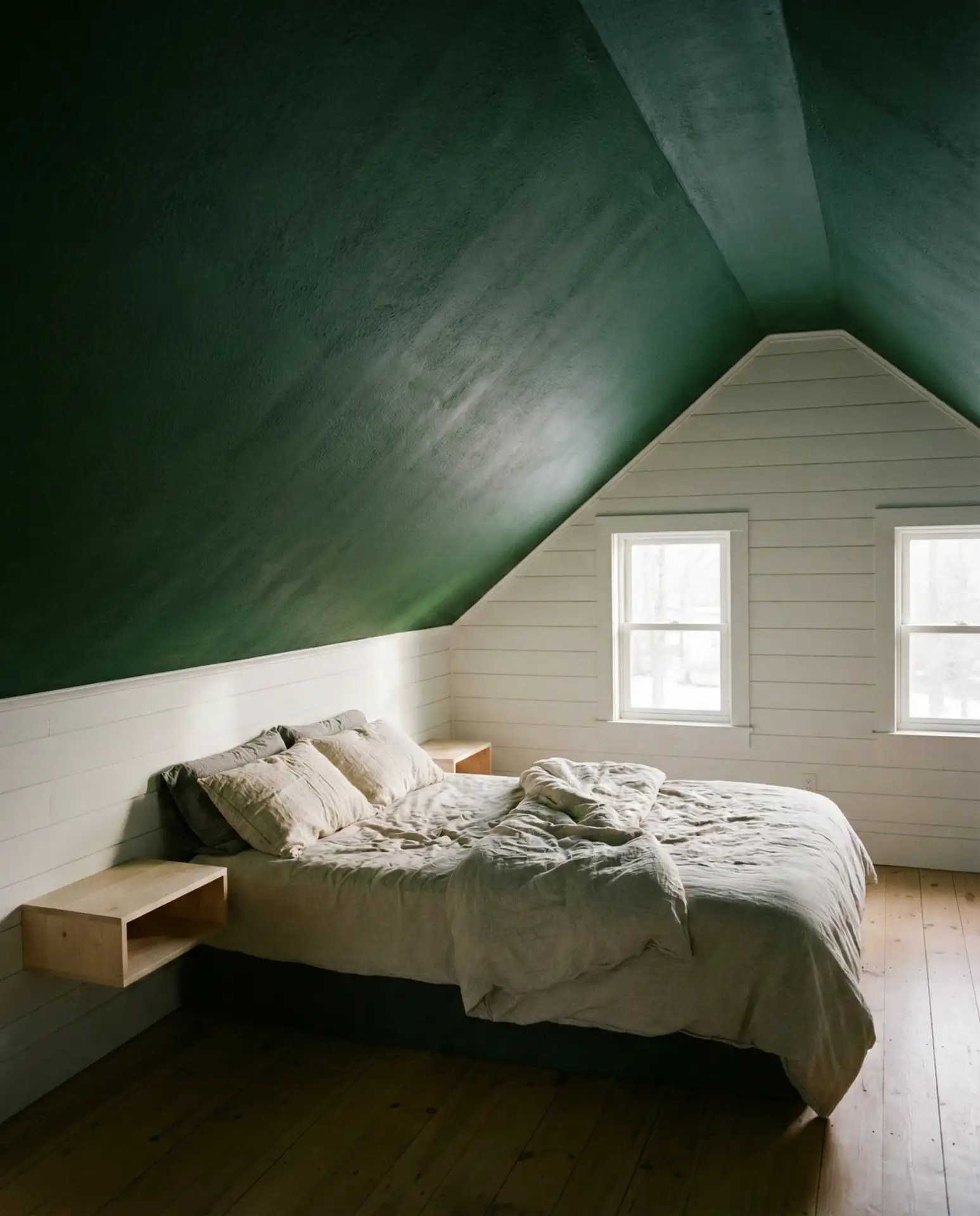
The triangle shape that a peaked attic ceiling creates is one of the most underused design opportunities in residential interiors. When you lean into it with bold angled ceilings and paint colors—think a deep navy or forest green that follows the roofline and contrasts sharply with crisp white walls—you turn architecture into art. This is a dark, dramatic move that works surprisingly well in bedrooms, especially when the rest of the room stays grounded and simple.
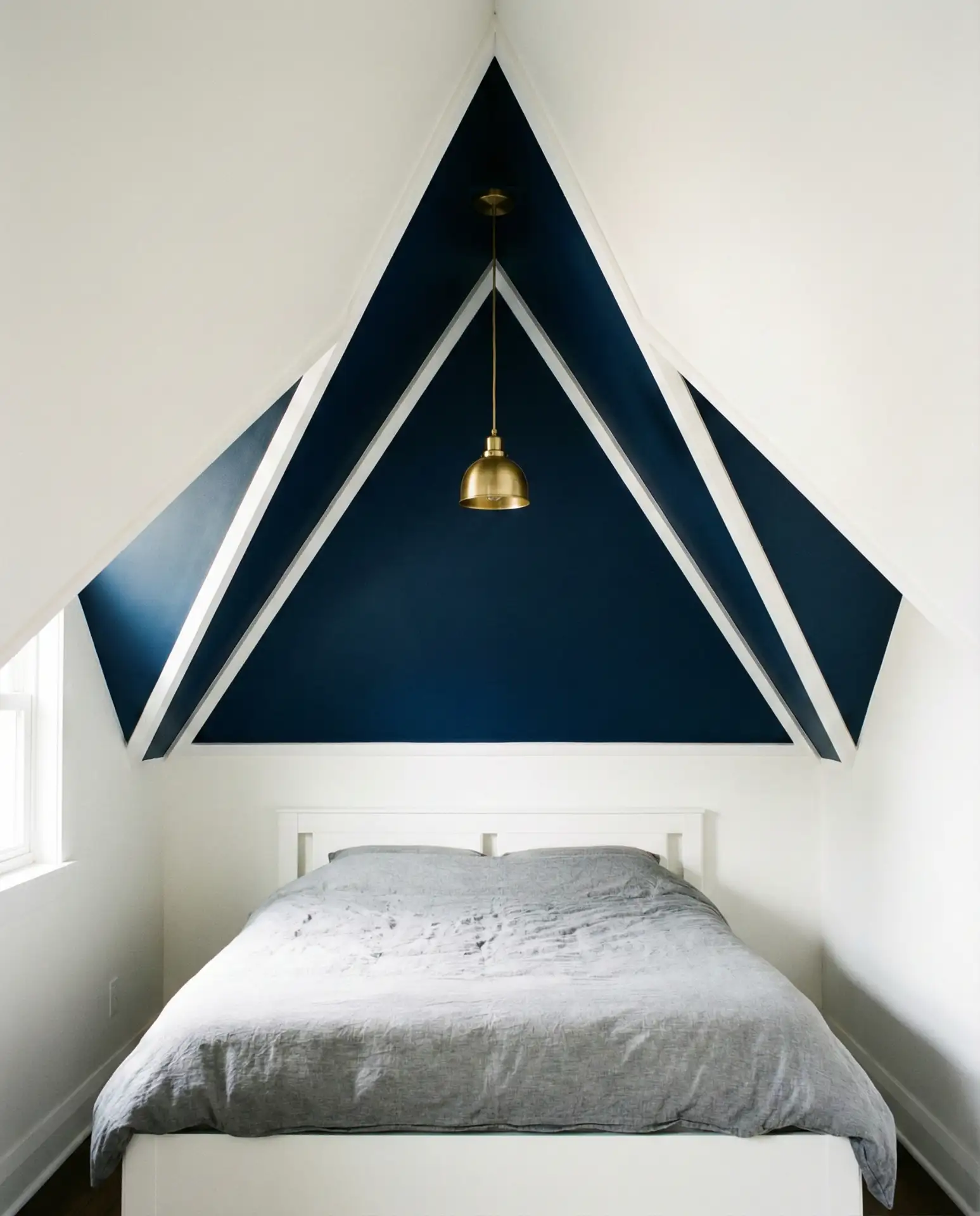
The most common mistake people make with bold ceiling colors is stopping too soon—painting just the flat portion and leaving the angled parts white, which fragments the whole effect. To get the full impact, the color needs to follow the slope all the way down to where it meets the wall. Use good painter’s tape and take your time at those transitions. The payoff is worth it: a room that feels dramatically different the moment you walk in, without a single piece of furniture changing.
9. The Half-Wall Divider Bedroom
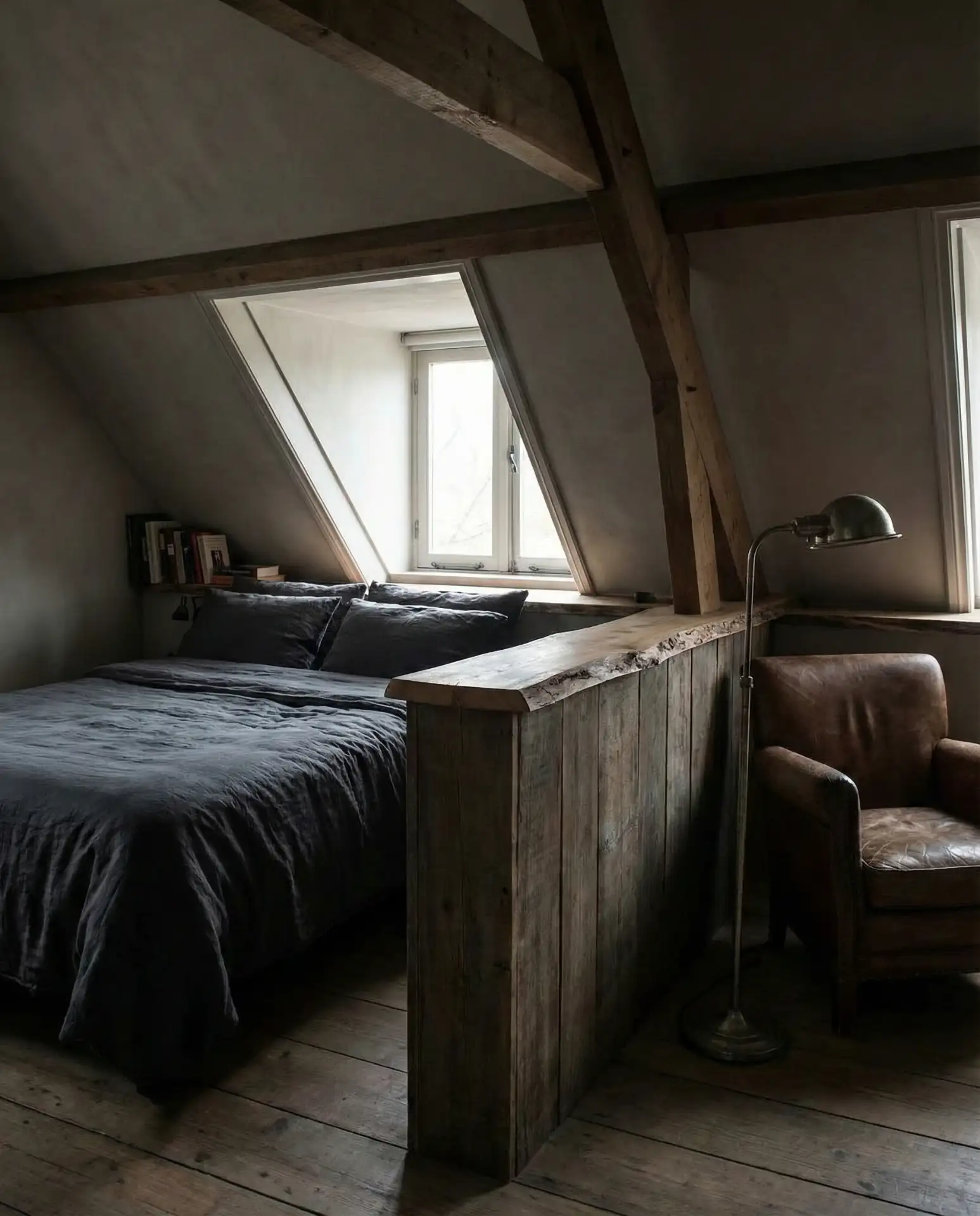
When your attic has a half wall or a partial partition already built in—or when you want to create one—it becomes one of the most versatile design moves available to you. This is especially useful in a space with a low ceiling and a slightly moody, grunge-inspired palette, where the half wall can double as a display surface or a subtle boundary between a sleeping area and a small vanity or workspace without the room ever feeling divided.
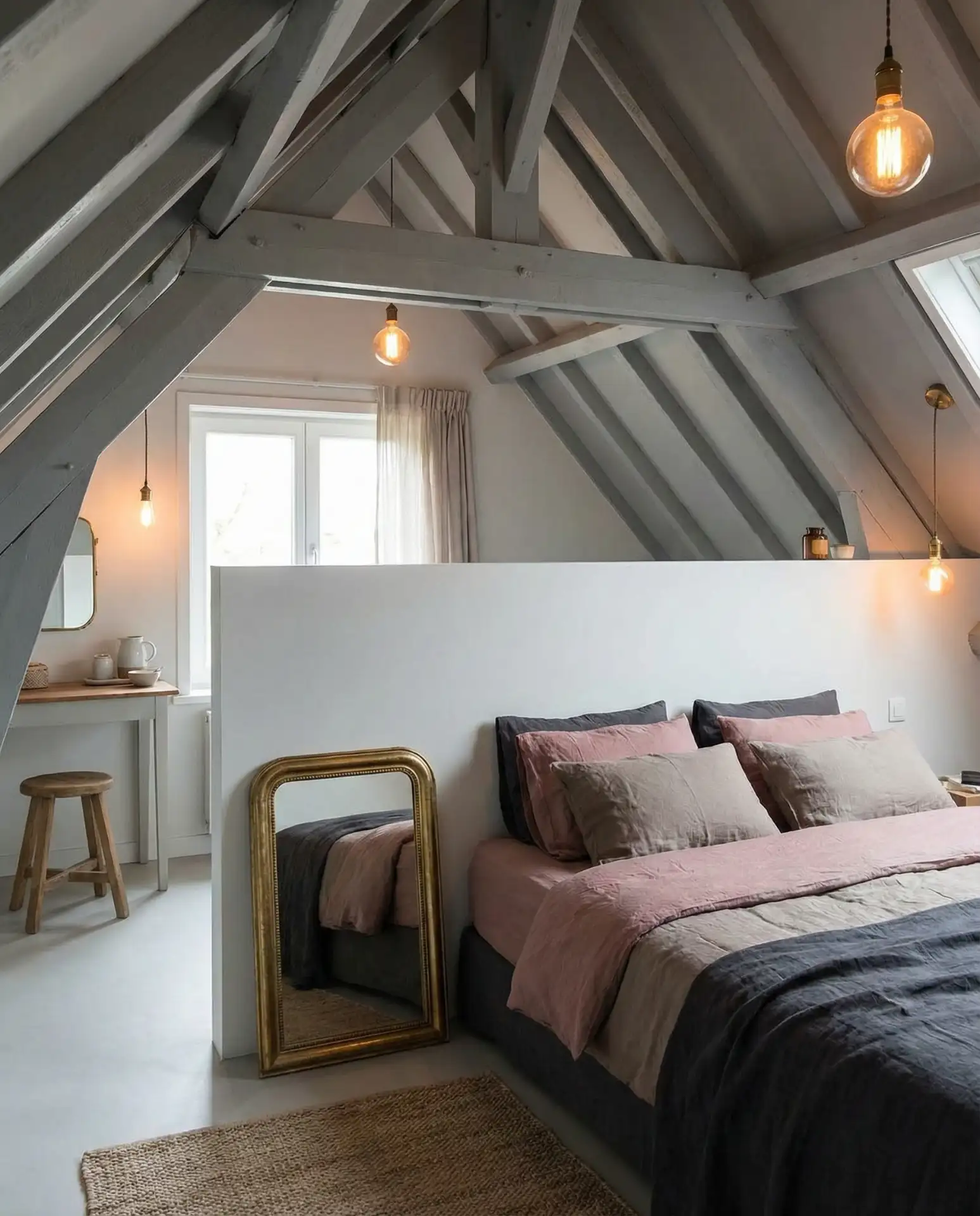
Once you build a half wall in your attic bedroom, you’ll quickly start noticing how much it changes daily life in the space. The top surface becomes a place for a lamp, a stack of books, or a small plant—and suddenly the room has layers. It’s one of those renovations that feels minor on paper but ends up being the detail everyone comments on when they visit. A simple MDF half wall with a clean-painted finish can cost as little as $200 in materials if you’re handy.
10. Rustic Retreat: Shiplap Walls and Warm Lighting
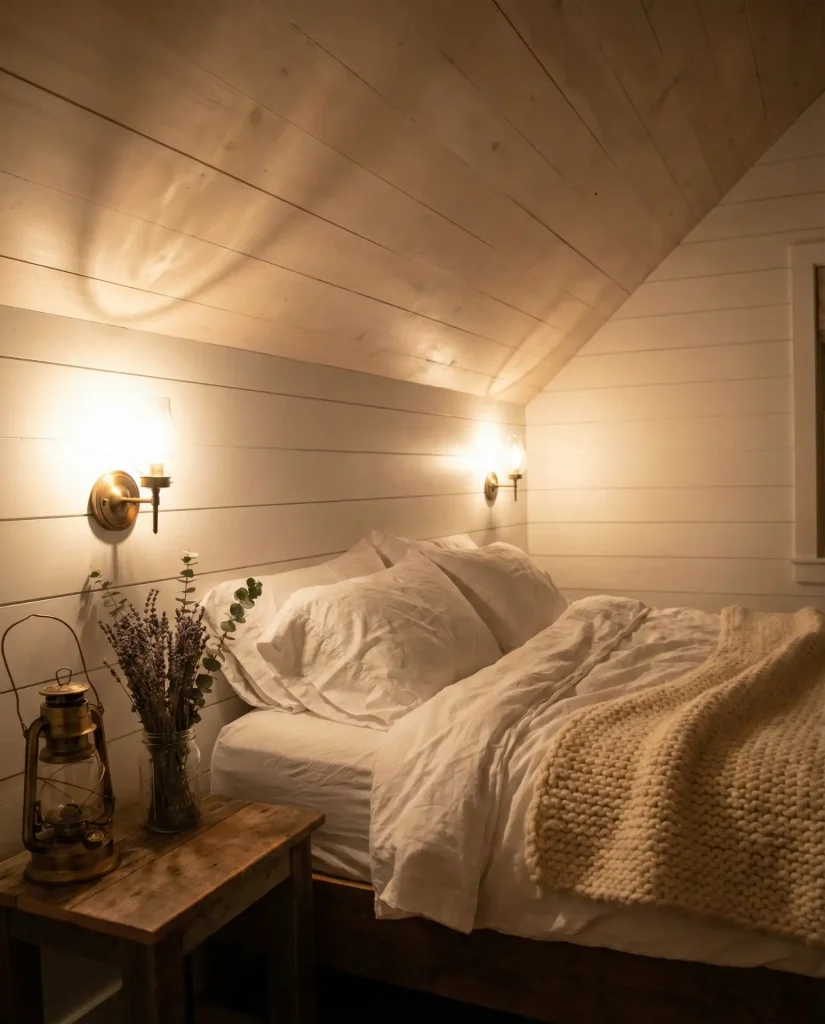
If there’s one style that defines the modern attic bedroom ideas master search on Pinterest right now, it’s rustic warmth done right. Shiplap walls that follow the slope of the ceiling, paired with amber-toned lighting and layers of soft textiles, create a bedroom that feels simultaneously aesthetic and deeply cozy—the kind of space that makes you want to cancel your weekend plans and stay in. There’s an approachability to this look that more polished, minimalist designs simply can’t replicate.
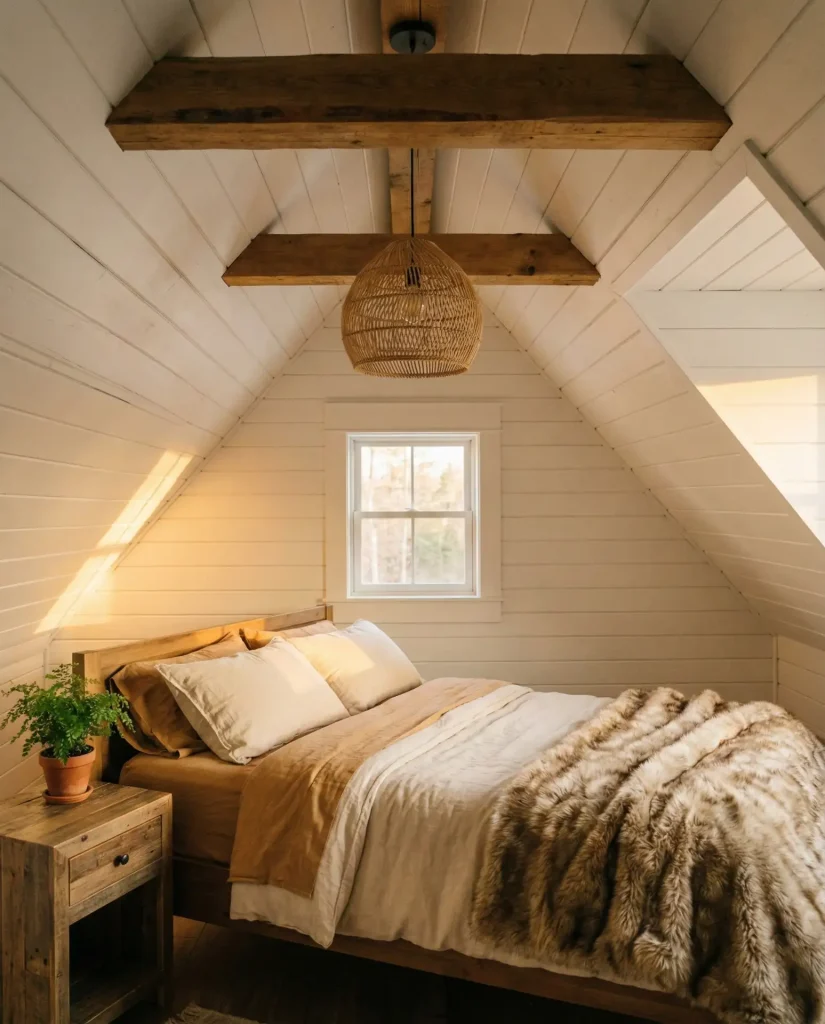
Shiplap has become almost synonymous with American farmhouse style, and for good reason—it’s one of the few materials that makes a space feel both finished and lived-in at the same time. In attic bedrooms specifically, it works particularly well because it draws the eye upward along the ceiling line, which visually expands the room. If real wood shiplap is outside your budget, peel-and-stick panels have come a long way and can be nearly indistinguishable at a glance.
11. The Long Narrow Attic Bedroom Solved
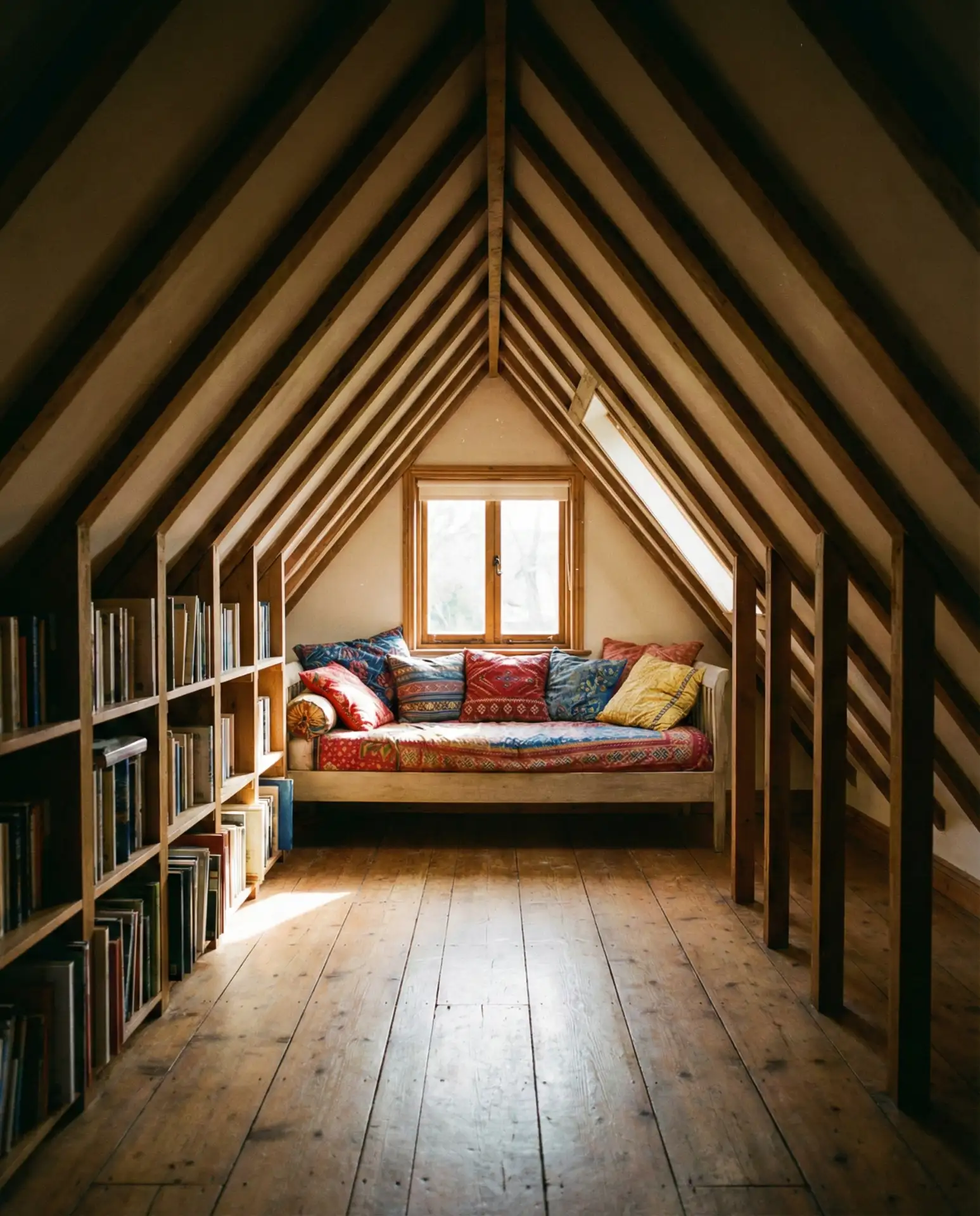
A long attic with a slanted ceiling on both sides is one of the trickiest layouts to design for—and one of the most rewarding once you crack it. This kind of space works beautifully as a kids’ bedroom or a shared room, especially when you run the bed lengthwise along the center and use the narrower eave areas on either end for built-in storage or cozy reading spots. The trick is treating the length as a feature rather than a limitation.
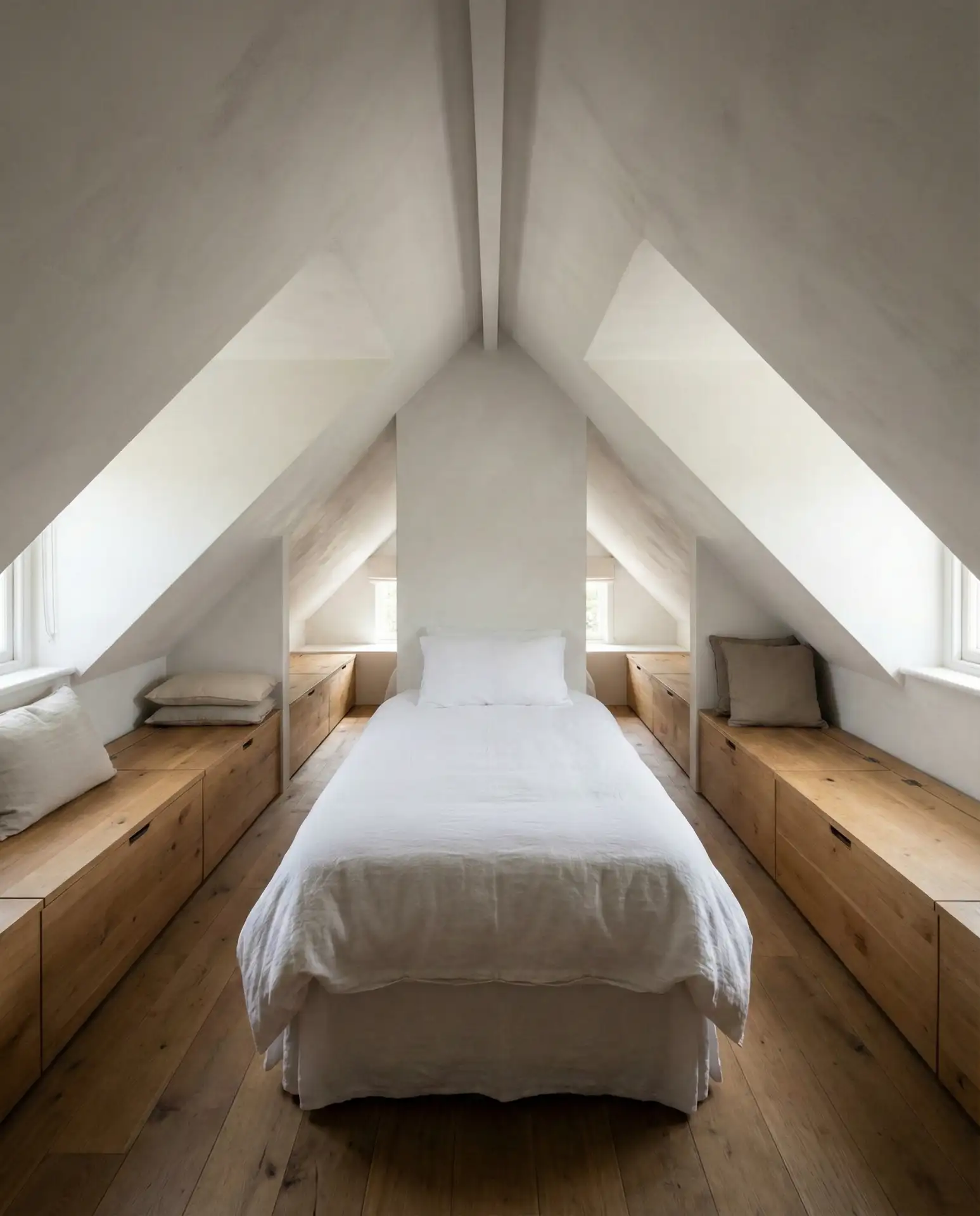
The designer behind a popular Brooklyn renovation studio once pointed out that long, narrow rooms are actually easier to furnish than square ones—you just need to commit to a clear visual axis. In an attic, that means keeping the center line open and uncluttered, using the walls and eaves for storage, and drawing the eye from one end of the room to the other with a focal point like a window or a piece of art. The length stops feeling like a problem and starts feeling like a runway.
12. Soft Blush and Sage: A Romantic Guest Room
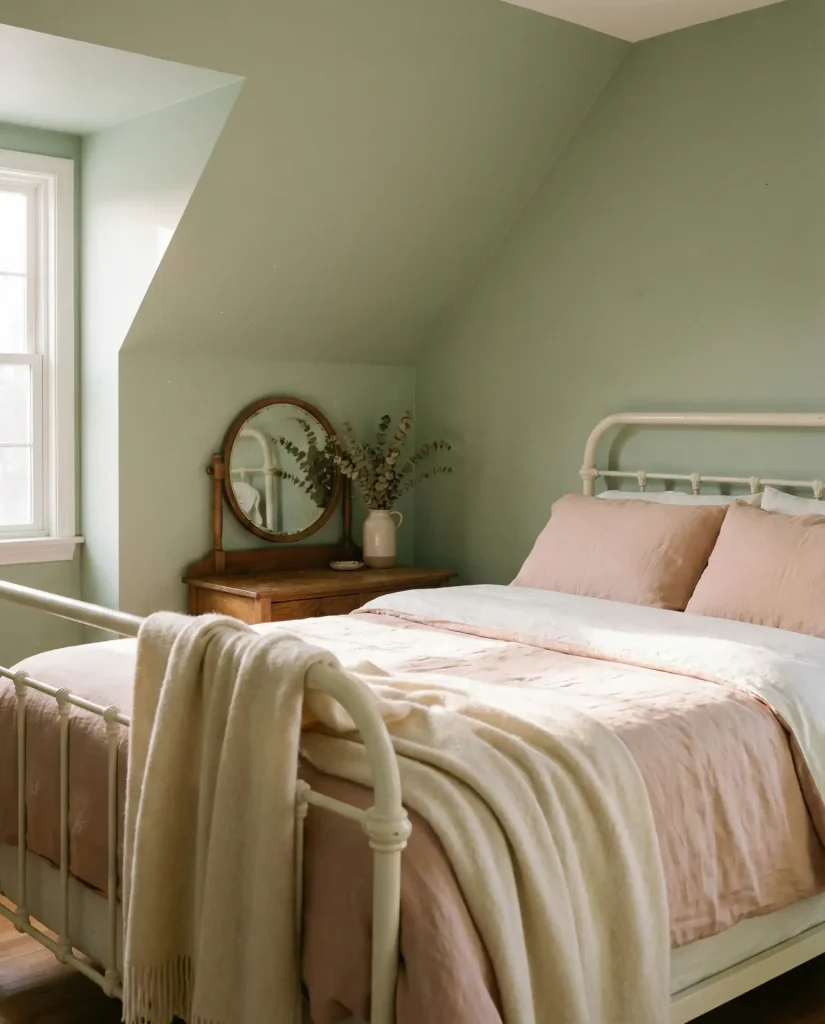
Guest rooms in attics have a secret advantage: they’re naturally separated from the rest of the house, which means your guests feel like they have their own private world. A pink and sage palette in this space creates something genuinely aesthetic and cozy—warm enough to feel welcoming, fresh enough to feel intentional. When the ceiling is low and the room is intimate, these muted tones wrap around you in a way that feels almost spa-like.
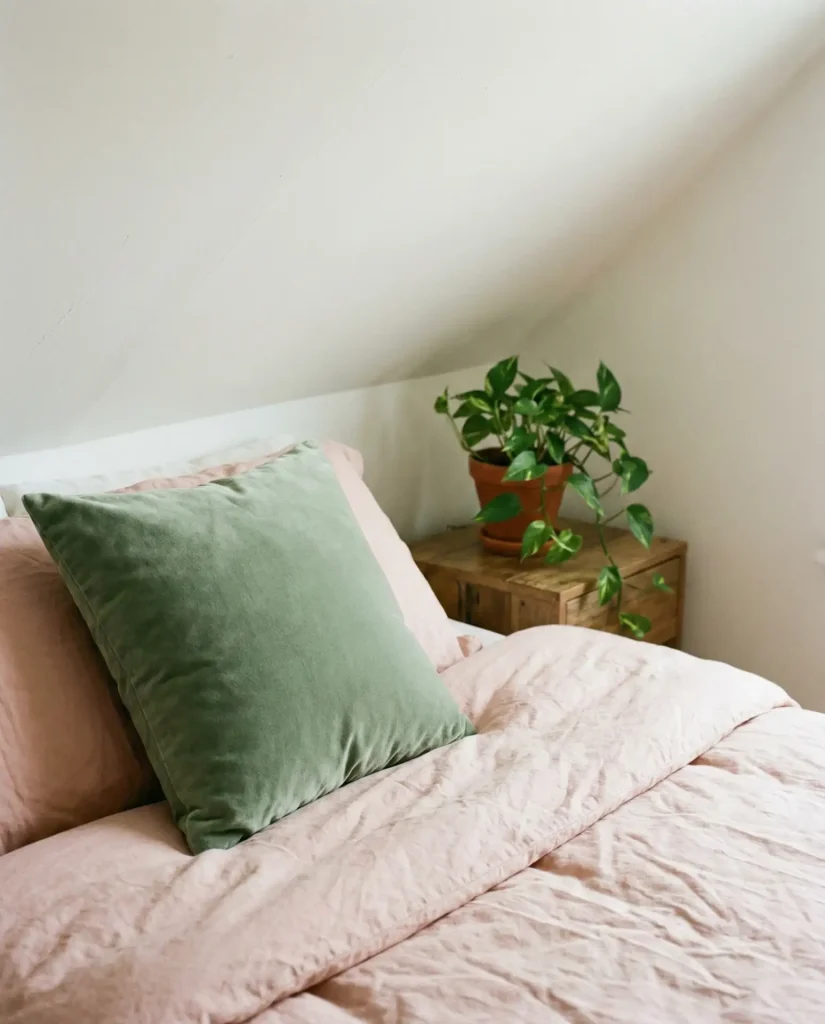
My neighbor converted her attic into a guest bedroom two summers ago using almost nothing but a new mattress, a thrift-store dresser, and a color palette she’d been saving on Pinterest for months. Now every time someone visits, the first thing they say is how much they love sleeping up there. It’s a reminder that guest rooms don’t need to be expensive to be memorable—they just need to feel like someone thought about the experience of staying in them.
13. Minecraft-Inspired Kids’ Adventure Room
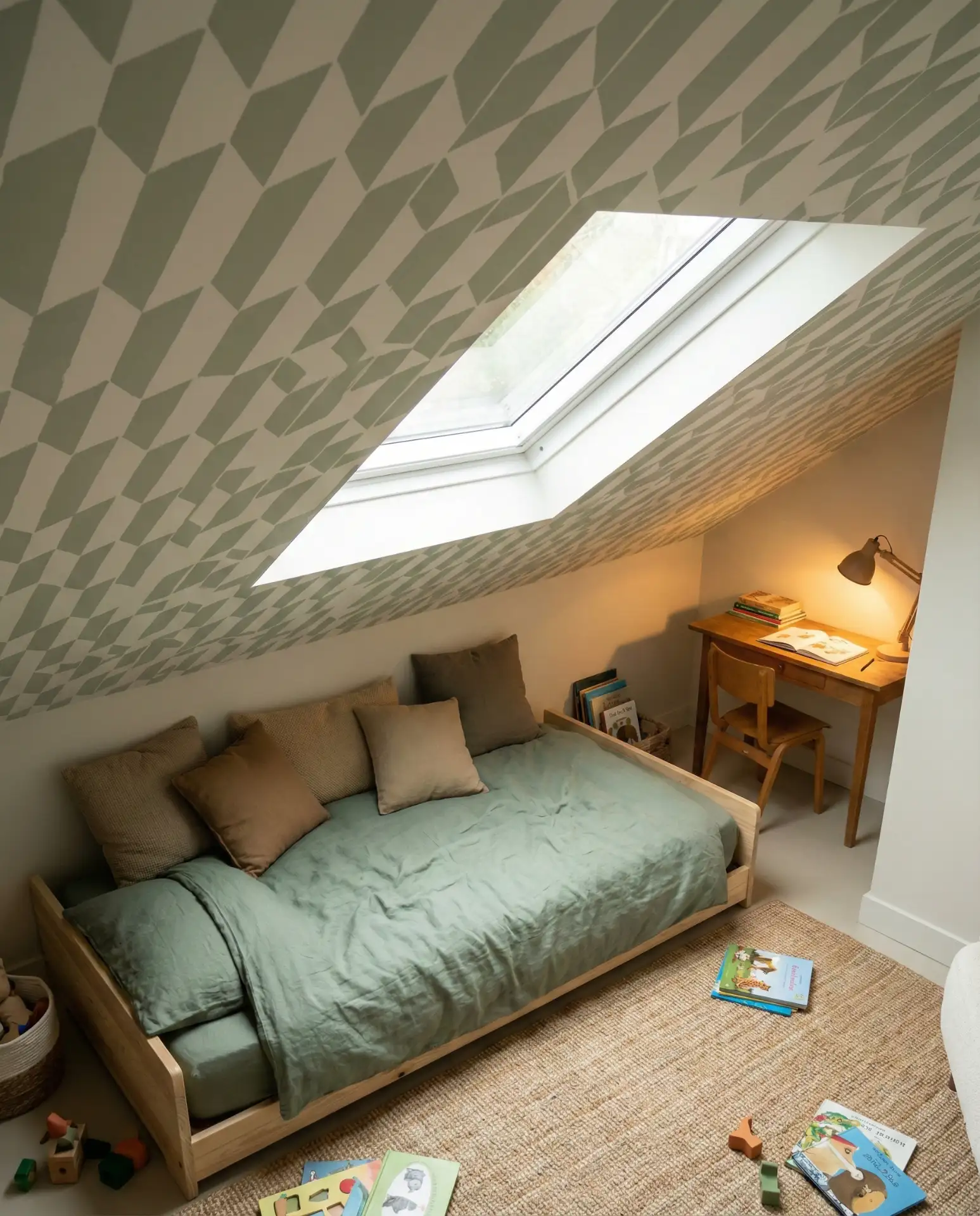
If your kid is obsessed with Minecraft and you’re looking for a way to channel that energy into something that actually looks good as a bedroom, the attic is your best bet. The blocky, pixelated aesthetic translates surprisingly well into real-world design—think accent walls with geometric tile or paint patterns, square-shaped storage bins, and a cute color palette of greens and browns. This is a bedroom that teens can grow into too, if you keep the base design neutral enough.
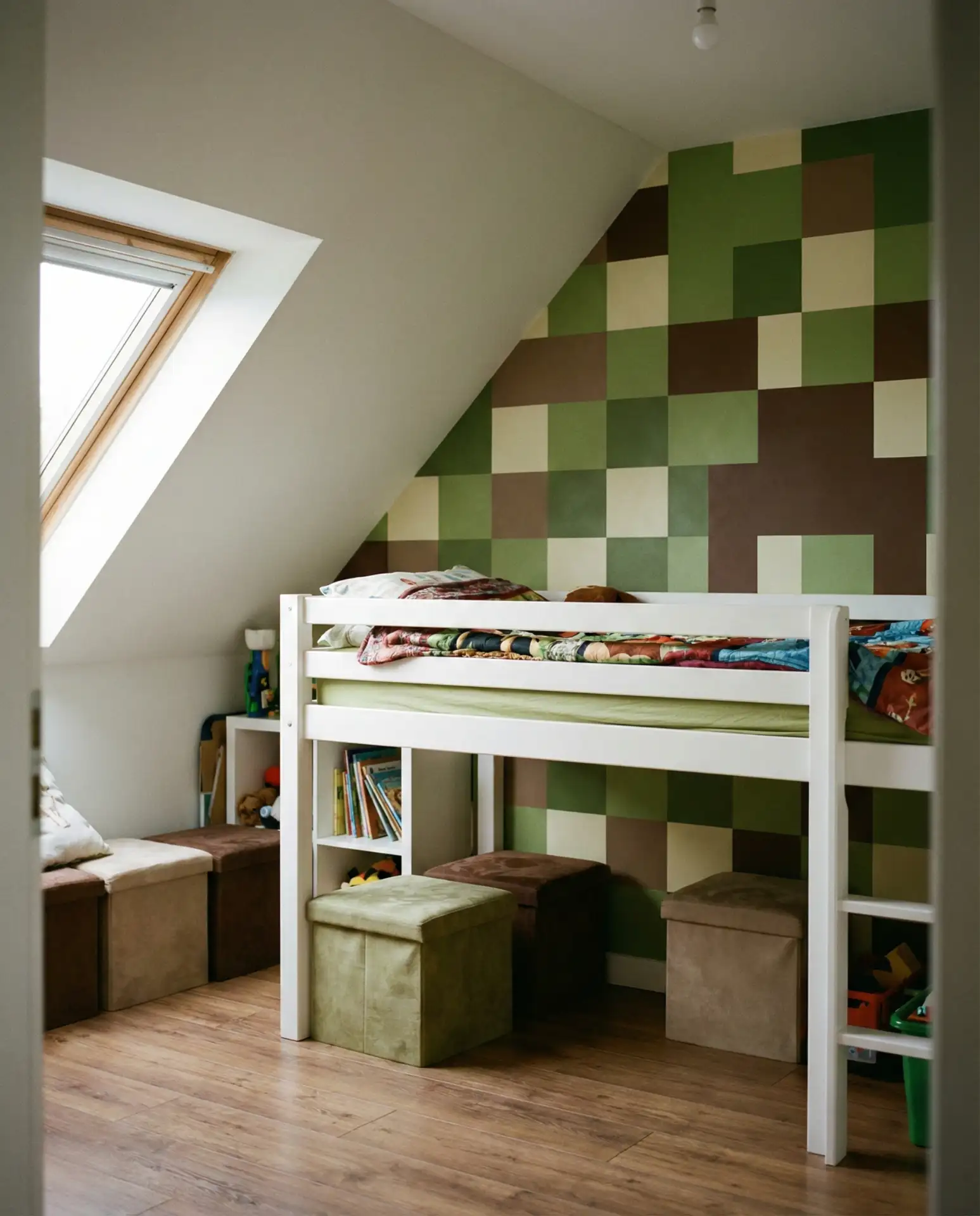
Here’s the thing about themed kids’ rooms—most of them age out in two years. The Minecraft-inspired approach sidesteps this problem because it’s based on shapes and colors rather than branded characters. A geometric accent wall in earth tones will still look great when your kid is fifteen and doesn’t want anything to do with video games anymore. Budget-wise, you can pull this off for under $300 using paint, painter’s tape, and a set of cube storage bins from any big-box home store.
14. Industrial Dark Wood Attic Bedroom
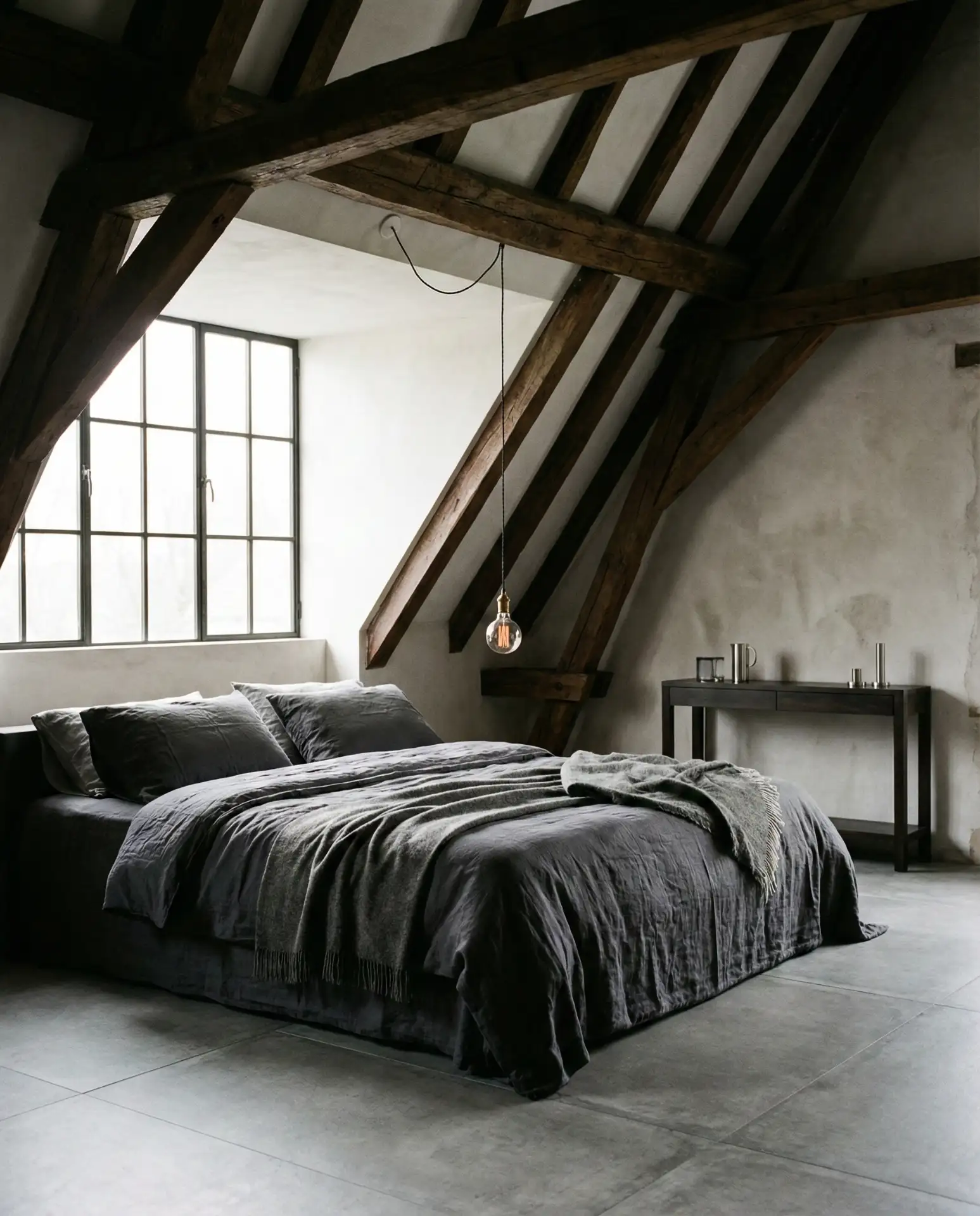
There’s an entire mood that lives at the intersection of dark wood, exposed beams, and high ceilings—and attics with angled ceilings are the natural home for it. An industrial-inspired attic bedroom that leans into large structural elements, raw materials, and minimal decoration creates a space that feels both sophisticated and surprisingly relaxed. The key is letting the architecture and the materials do the heavy lifting rather than filling the room with furniture.
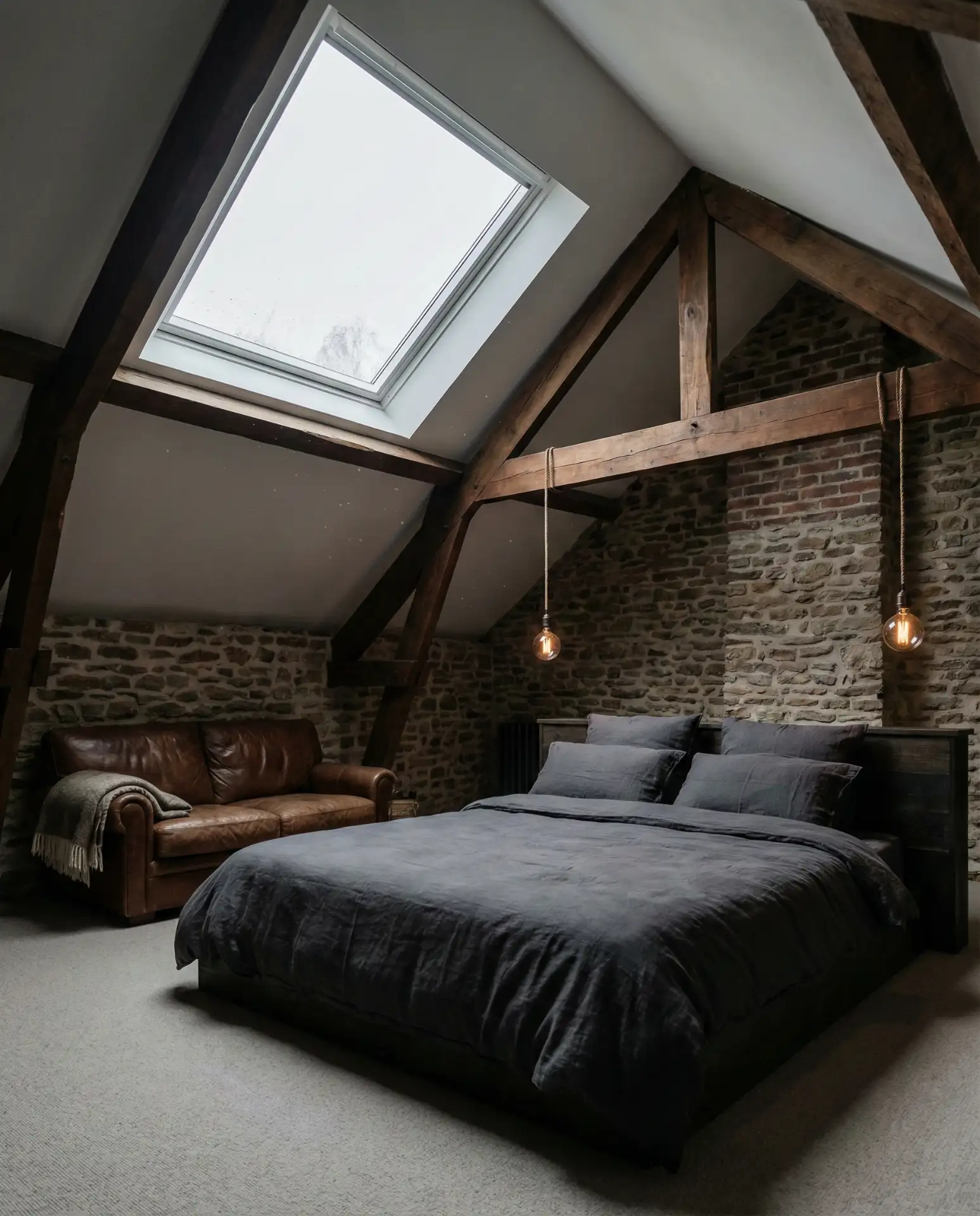
This design works best in older homes where the attic structure has character—think original timber beams, slightly uneven walls, or exposed brick that you’d be crazy to cover up. If your attic is more modern and smooth, you can still achieve this look by adding reclaimed wood accent panels and industrial-style lighting fixtures, but the magic really lives in the original bones. A large attic like this is also an ideal candidate for a bedroom-plus-sitting-area layout, since the space can handle the visual weight of multiple zones.
15. Aesthetic Grunge Meets Vintage: The Moody Teen Retreat
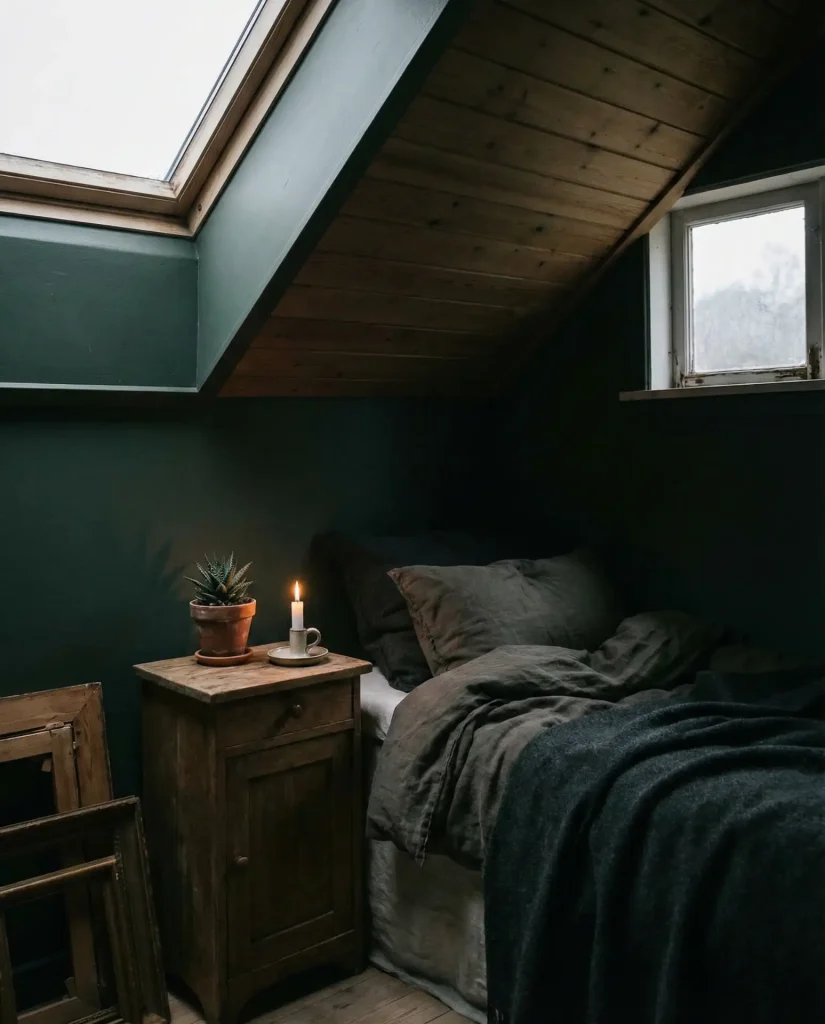
The aesthetic grunge trend on Pinterest isn’t going anywhere, and it translates beautifully into a tiny attic bedroom. Dark muted tones, vintage posters, and a half wall draped with a sheer curtain create a room that feels like the inside of a mood board—moody, layered, and deeply personal. This is the kind of bedroom that teenagers actually want to spend time in, precisely because it feels like no one else’s, and the attic’s natural separation from the rest of the house only adds to that sense of privacy.
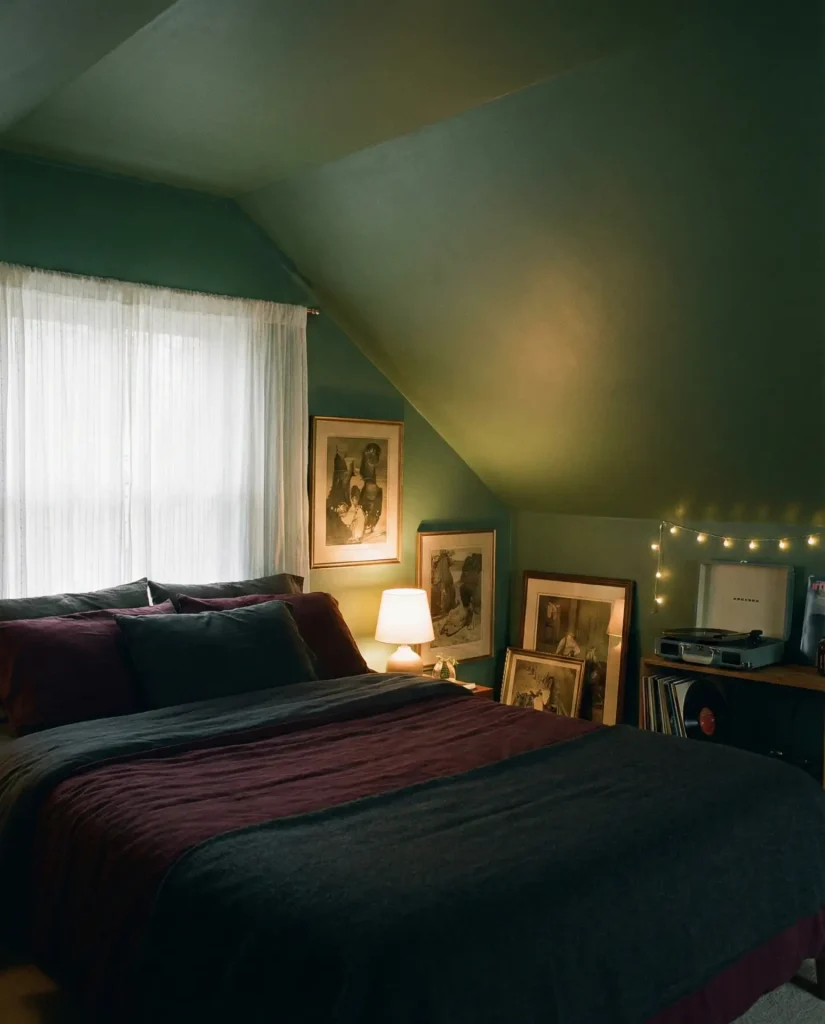
What homeowners who pull this off tend to realize is that grunge-inspired design is actually one of the most forgiving aesthetics to maintain. Rumpled bedding looks intentional. A stack of books on the floor looks curated. A slightly dusty plant looks atmospheric. It’s a style that rewards imperfection, which makes it one of the easiest looks to live in — especially for teenagers who aren’t exactly known for keeping their rooms pristine.
16. Attic Bathroom Adjacent: The Bedroom-Bathroom Suite
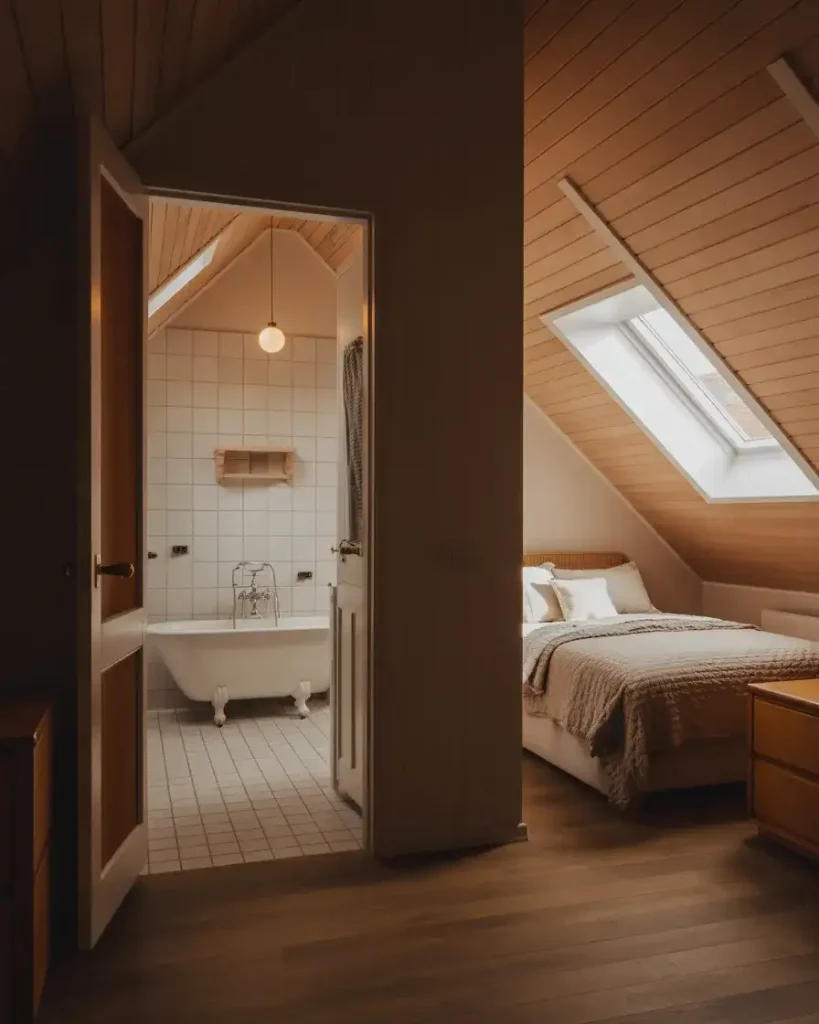
Having a bathroom directly connected to your attic bedroom changes everything about how the space feels. A cozy bedroom that opens into a small en-suite under slanted ceiling interior design constraints suddenly feels like a proper suite rather than just a converted attic room. This is especially true when the bathroom uses the same materials and tones as the bedroom—it creates a seamless flow that makes both spaces feel larger and more intentional than they actually are.
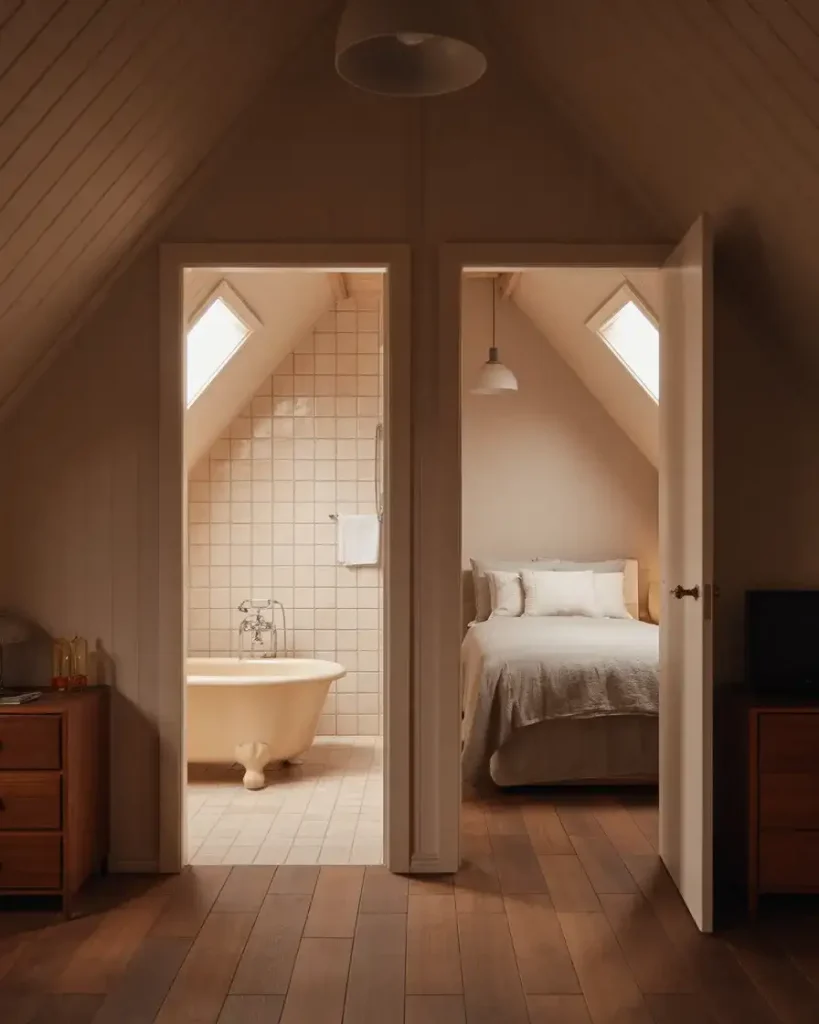
One mistake that derails a lot of attic bathroom projects is treating the bathroom as an afterthought—cramming in fixtures without considering the ceiling height at every single point. In an attic, you need to map out exactly where a person will be standing or sitting before you finalize your layout. A shower that’s three feet tall at its highest point isn’t a shower—it’s a storage closet with water. Get your measurements right before anything else, and the rest of the design will fall into place.
17. The Low-Ceiling Master with a Platform Bed
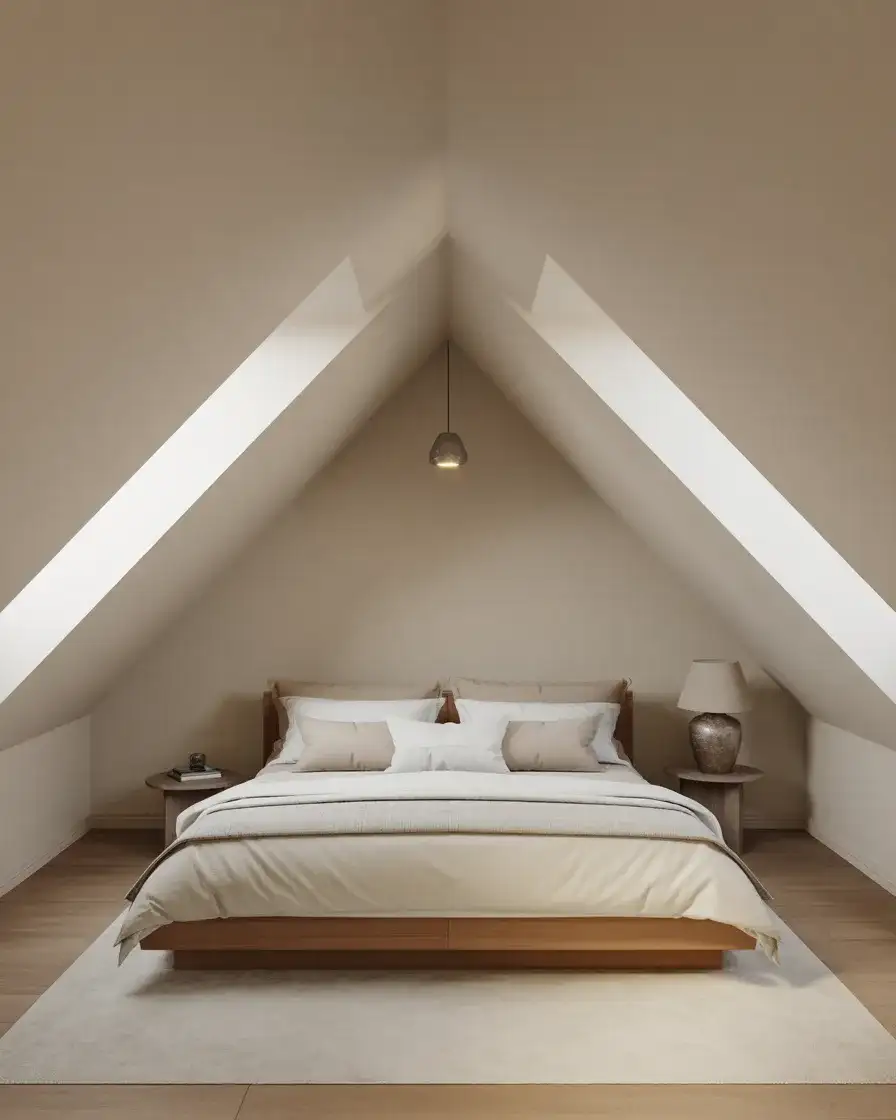
A low ceiling doesn’t have to mean a cramped bedroom—it just means you need to be smarter about what you put in it. A platform bed with no footboard, placed directly beneath the triangle peak of an attic roof, actually makes the most of vertical space by keeping everything as close to the ground as possible. For a master bedroom, this creates a surprisingly luxurious feel—low, grounded, intentional—like something out of a Japanese-inspired design studio.
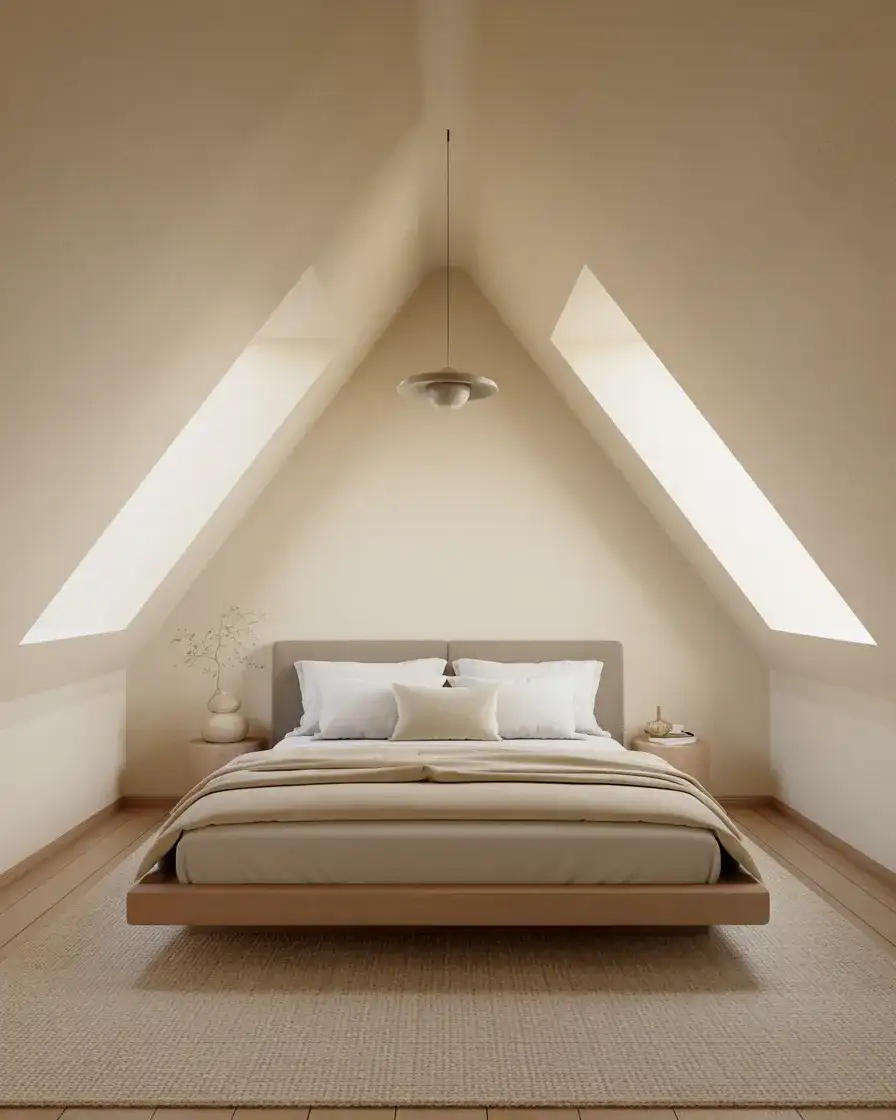 —especially
Interior designers who work with tight ceiling clearances will tell you that the single most important rule is this: never put anything tall in the room. No tall dressers, no towering lamps, no canopy beds. Every piece of furniture should sit low and feel grounded. A platform bed is the perfect anchor for this philosophy—it telegraphs calm and intention without adding an inch of unnecessary height to the equation. The visual payoff is a room that feels twice as open as it actually is.
18. Cheerful Kids’ Room with a Rainbow Accent Wall
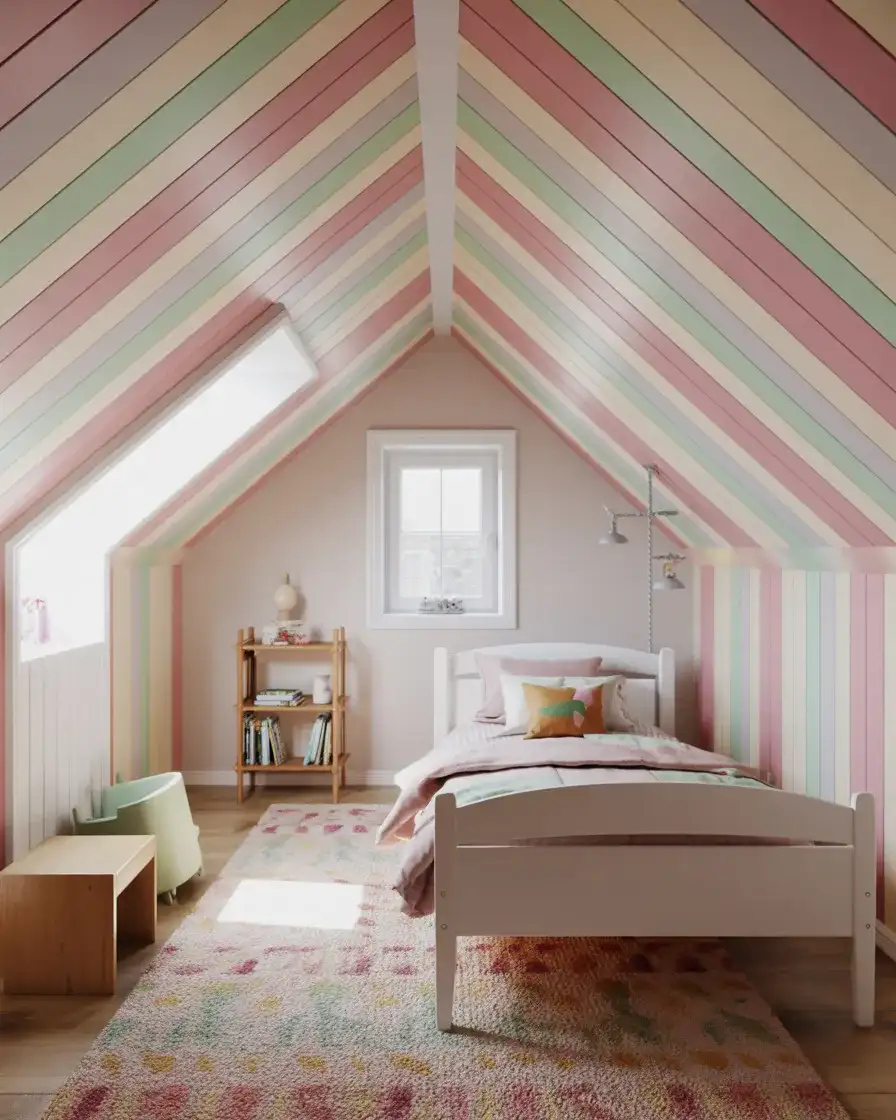
Not every kid’s bedroom needs to be muted and neutral—sometimes the best thing you can do is let color do the work. A pink-led rainbow accent wall painted along the sloped ceiling of an attic creates an instantly cheerful room that kids’ eyes light up at the moment they walk in. This is an aesthetic approach to color that feels curated rather than chaotic, especially when the rest of the room stays grounded in whites and soft woods that let the ceiling become the true focal point.
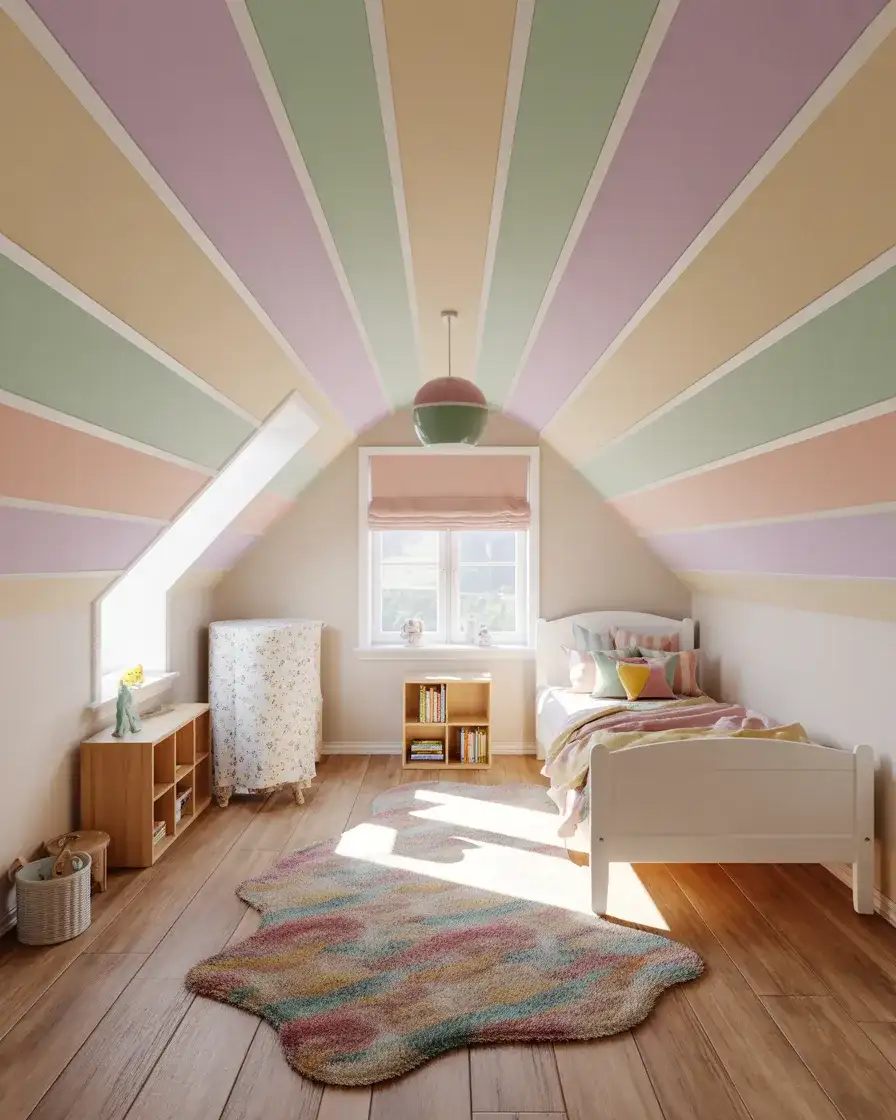
This kind of color-forward kids’ room works best in attics that get plenty of natural light—the way sunlight interacts with soft pastel paint on a sloped ceiling is genuinely stunning and impossible to replicate with artificial lighting alone. It’s also a surprisingly versatile starting point: as your child grows, you can simply repaint the ceiling in a single tone, and the room transforms completely without touching anything else. The bones stay; only the mood changes.
19. Raw and Unfinished: The Grunge Attic Bedroom
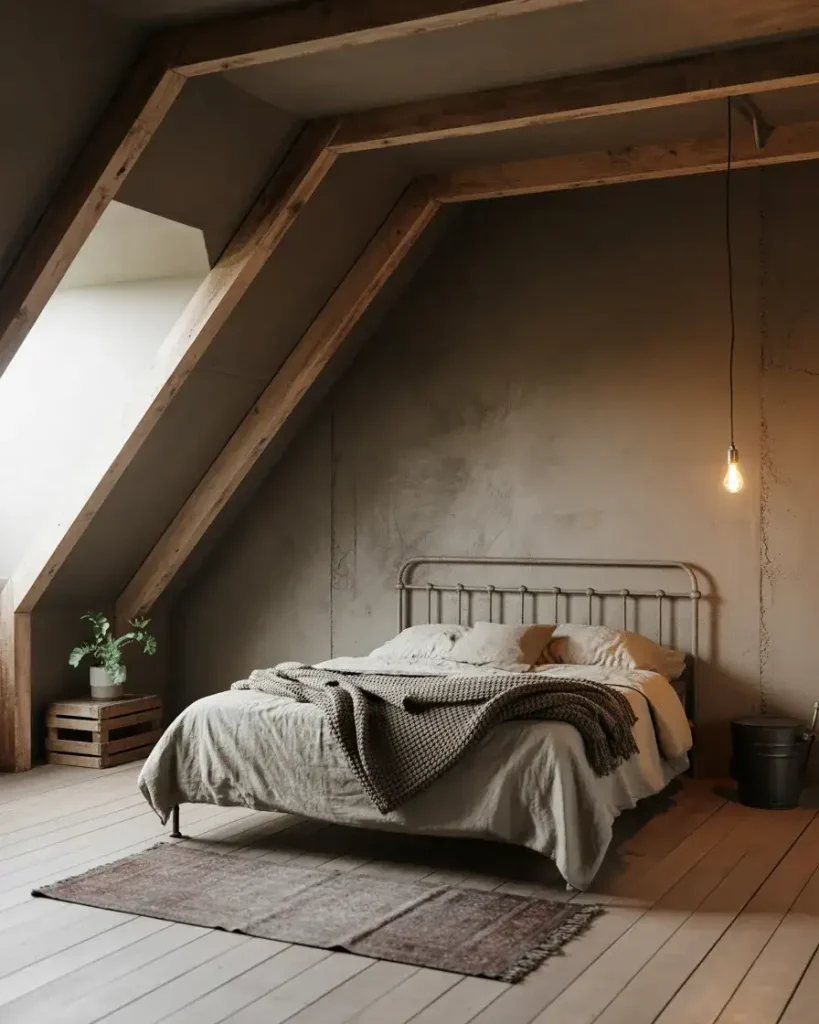
There’s a version of attic design that skips the polish entirely and leans into raw, unfinished textures—exposed brick, rough plaster, and unvarnished wood. This grunge aesthetic paired with low ceilings and thoughtful angled ceiling paint colors (think warm greys, deep browns, or muted olive) creates a bedroom that feels almost European in its effortless charm. It’s a look that says, “I didn’t try too hard” while secretly being very carefully considered.
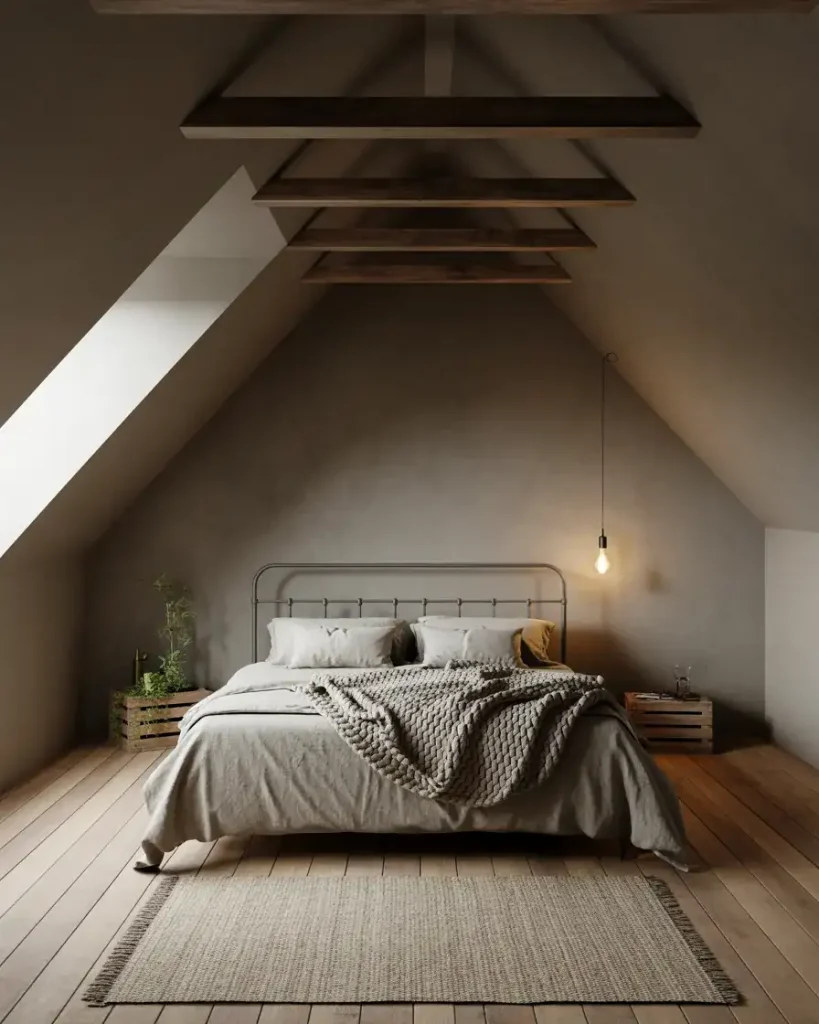
I once watched a friend spend an entire afternoon carefully distressing a perfectly smooth wall to make it look rough and aged—and then realized she could have just left the original plaster unfinished in the first place. The grunge attic bedroom is a powerful reminder that sometimes the best design move is doing less. If your attic already has interesting raw materials hiding under layers of drywall or paint, stripping them back might be the most impactful (and least expensive) renovation you’ll ever do.
20. Cute and Dark: The Midnight Garden Bedroom
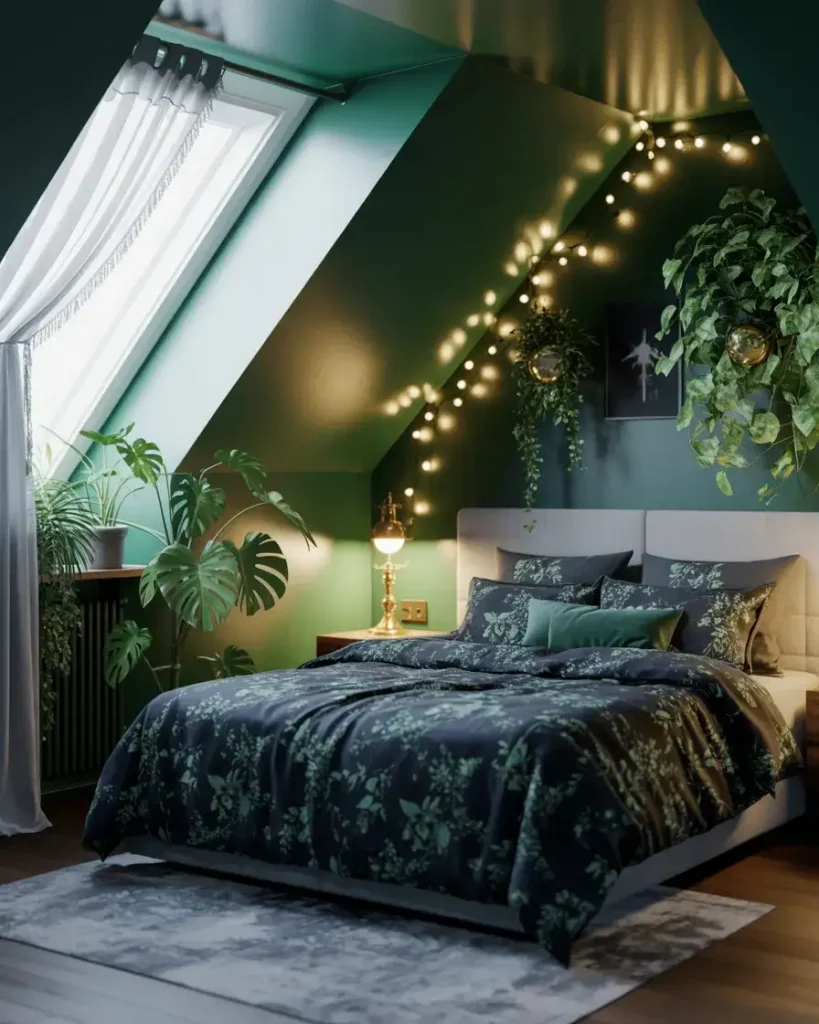
This is one of those attic bedroom master design ideas that stops people mid-scroll on Pinterest—a bedroom that’s simultaneously cute and dark, like a garden at midnight. Deep forest green or midnight blue walls, trailing plants, fairy lights strung along the eaves, and a bed dressed in soft dark florals create a space that feels enchanted without ever tipping into Halloween territory. It’s whimsical in the best possible way, and it photographs beautifully.
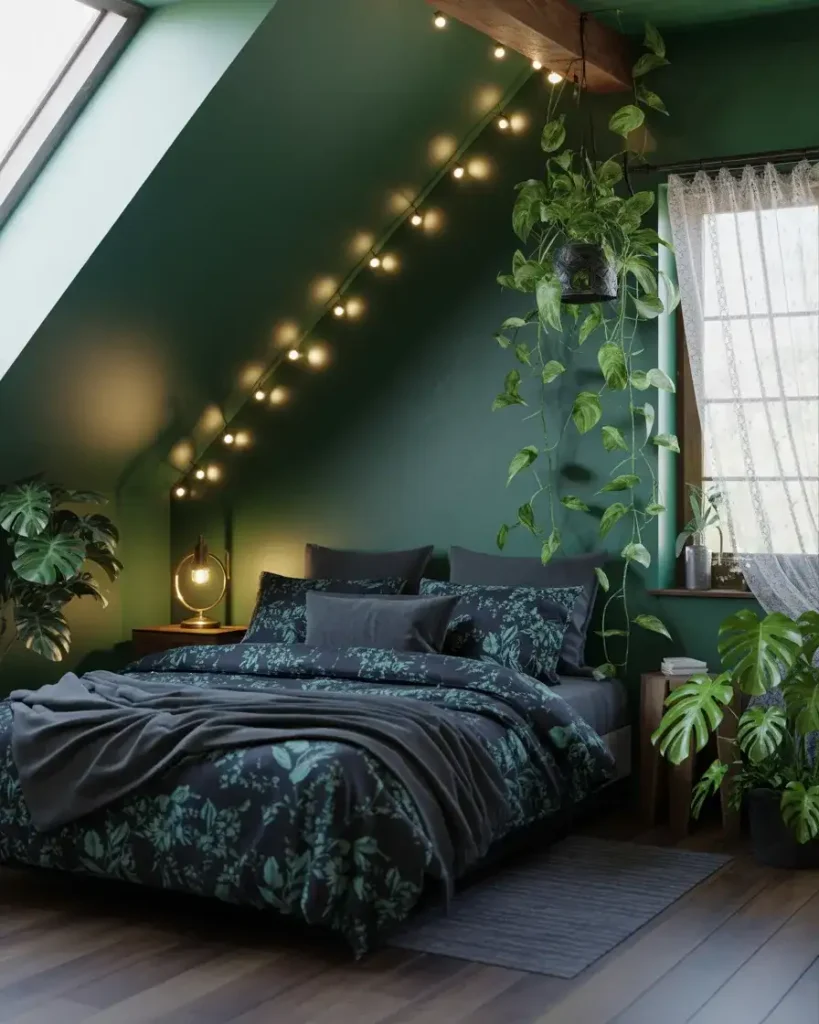
This bedroom concept works best in attics that have at least one good window for plant light—trailing greenery is the centerpiece of the whole look, and it needs sun to stay alive and lush. If you don’t have a green thumb, high-quality artificial plants have gotten genuinely impressive in recent years, and for a dimly lit bedroom, most guests won’t be able to tell the difference. The fairy lights alone can run you under $15 at any craft store, making this one of the most affordable dramatic makeovers available.
21. Teen-Ready Slanted Ceiling Studio Bedroom
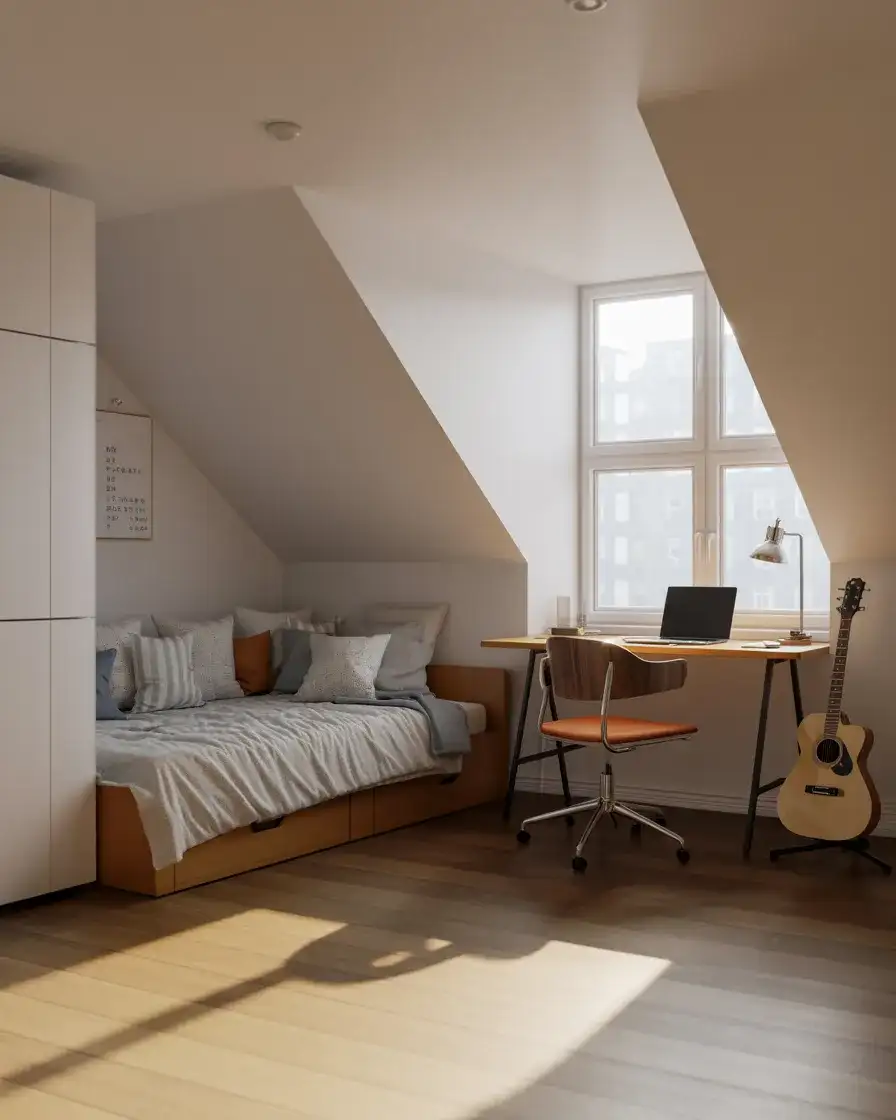
As teens get older, they want a bedroom that doubles as a creative space—somewhere to study, make music, draw, or just exist on their own terms. A slanted-ceiling attic can become exactly that kind of studio-bedroom when you add a desk area along the tallest wall and a long daybed that doubles as both a sofa and a bed. It’s a layout that makes the most of every square foot without ever feeling like a compromise, and the natural light that attics tend to offer is a genuine bonus for anyone who works or creates during the day.
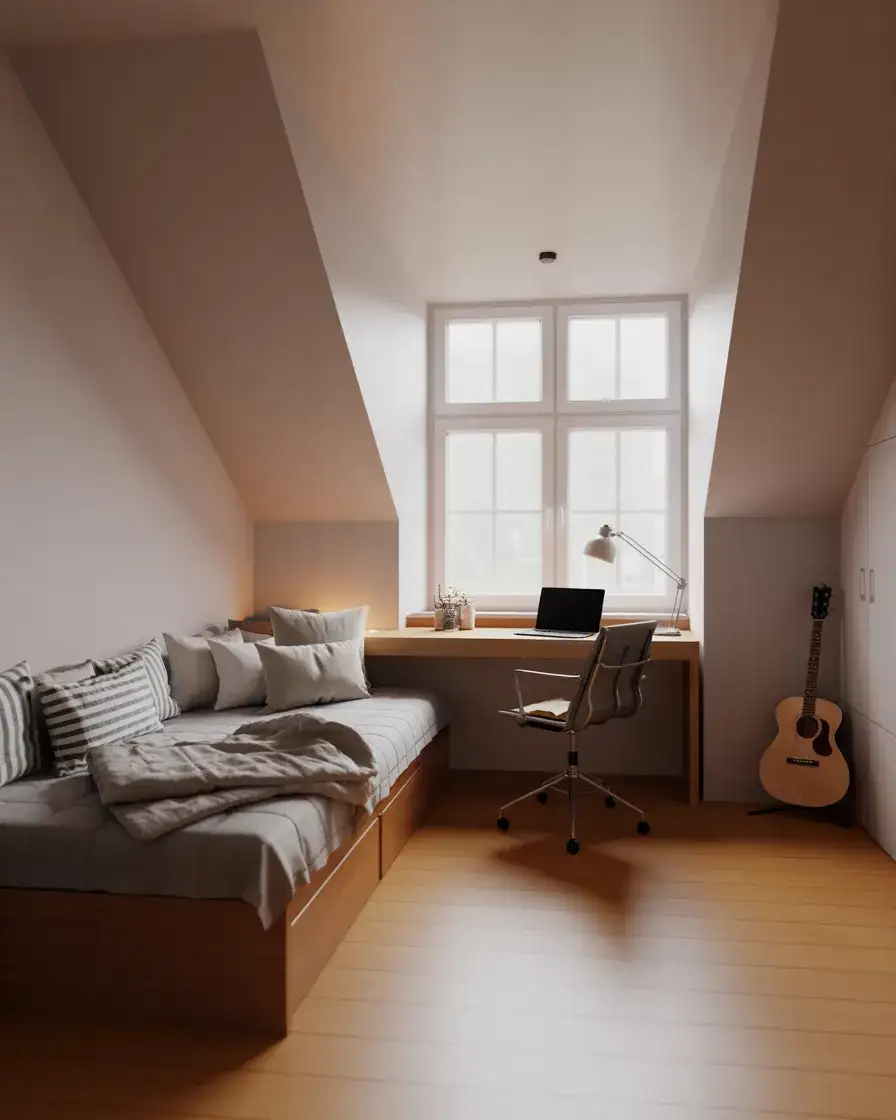
Interior designers who work with teenage clients consistently note that teens want agency over their space more than they want it to look a certain way. Giving a teenager a blank canvas—white walls, a good desk, flexible storage—and letting them personalize it themselves almost always produces a happier result than designing something for them. The attic’s natural quirks (the slope, the light, the separation from the rest of the house) do half the work of making it feel special already.
22. The Grand Half-Level Attic Bedroom
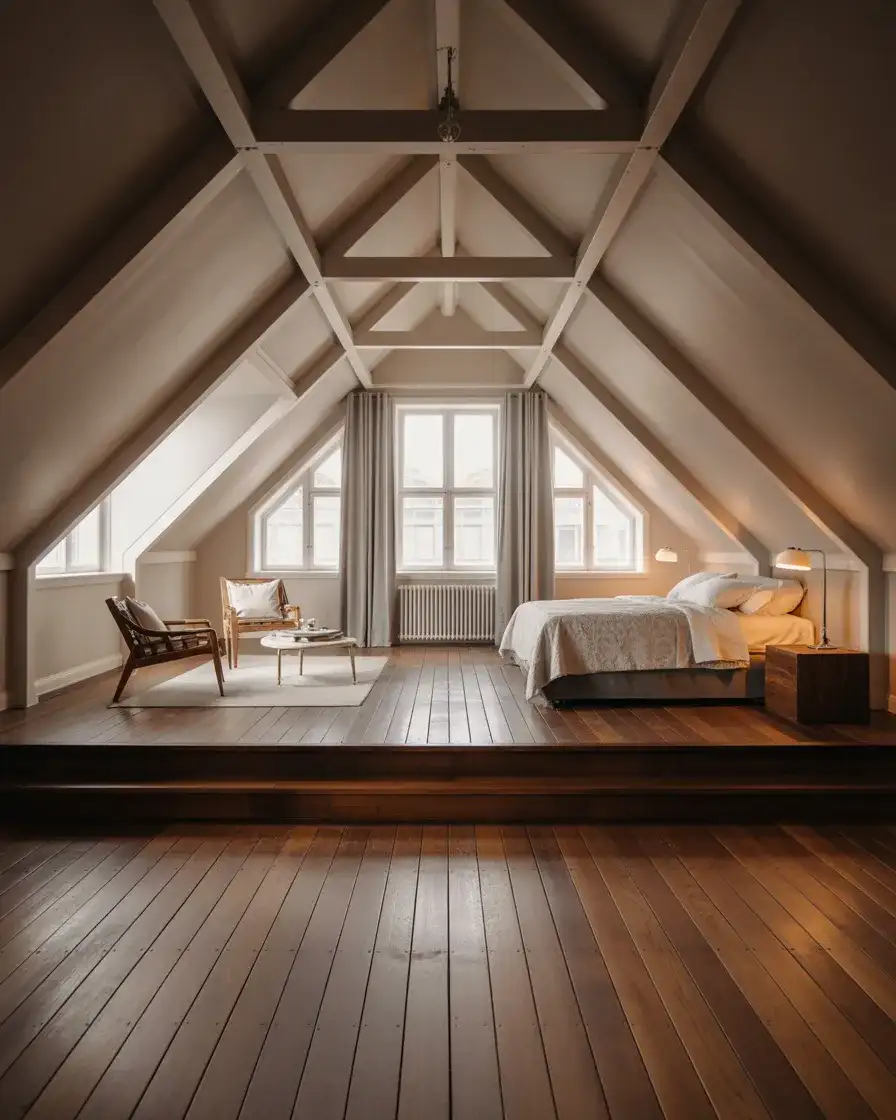
Some attics have a step up—a half level where the floor rises and the ceiling opens up—and when you design around that feature instead of ignoring it, the result is genuinely impressive. A large bedroom that uses the raised platform as a sleeping area creates a natural separation between the bed and the rest of the room, and the aesthetic cozy result feels almost like a boutique hotel suite. It’s the kind of layout that makes guests ask how you did it.
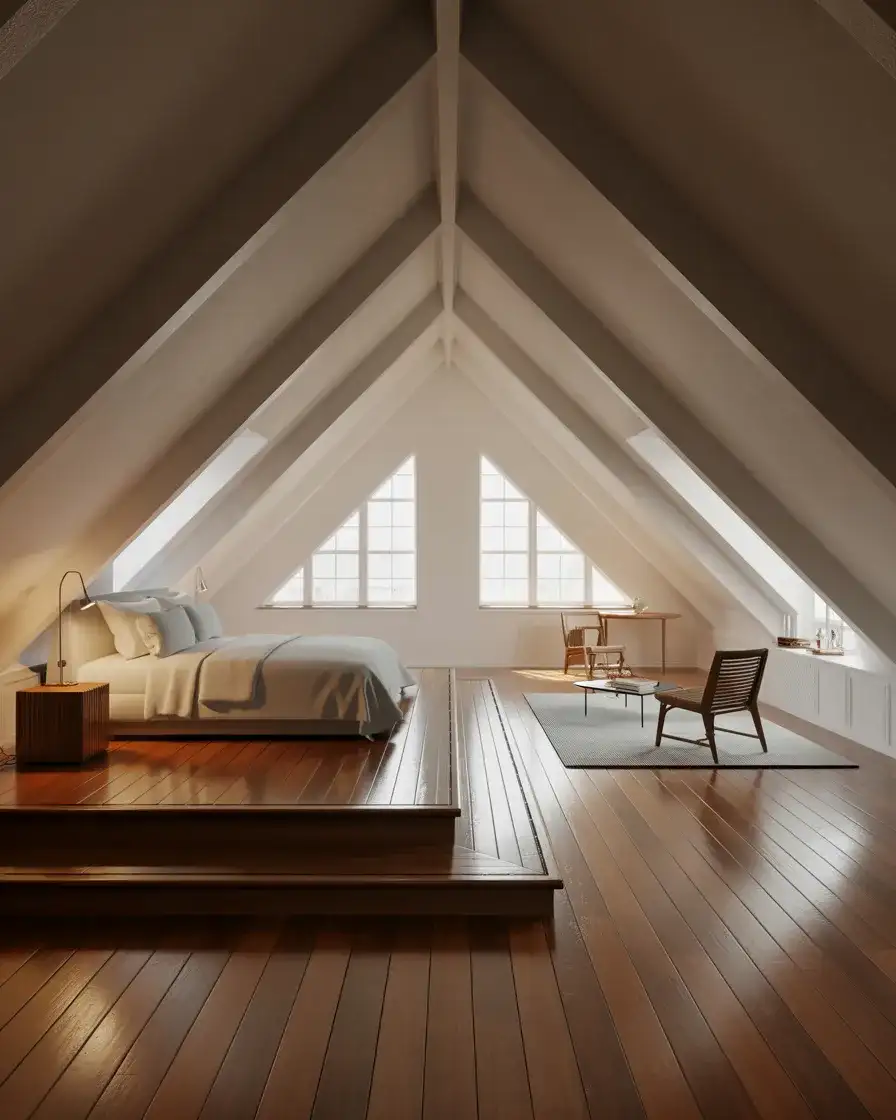
If you’re considering a bedroom like this, budget for the platform itself before you budget for anything else—it’s the structural element that makes the whole concept work, and cutting corners there will show. A solid wood or concrete platform with a clean edge and proper lighting underneath (LED strip lights along the base are both affordable and incredibly effective) will make the step feel intentional and architectural rather than like an afterthought. Everything else—the furniture, the textiles, the lighting—is secondary.
23. Dreamy Triangle Ceiling with Hanging Fairy Lights
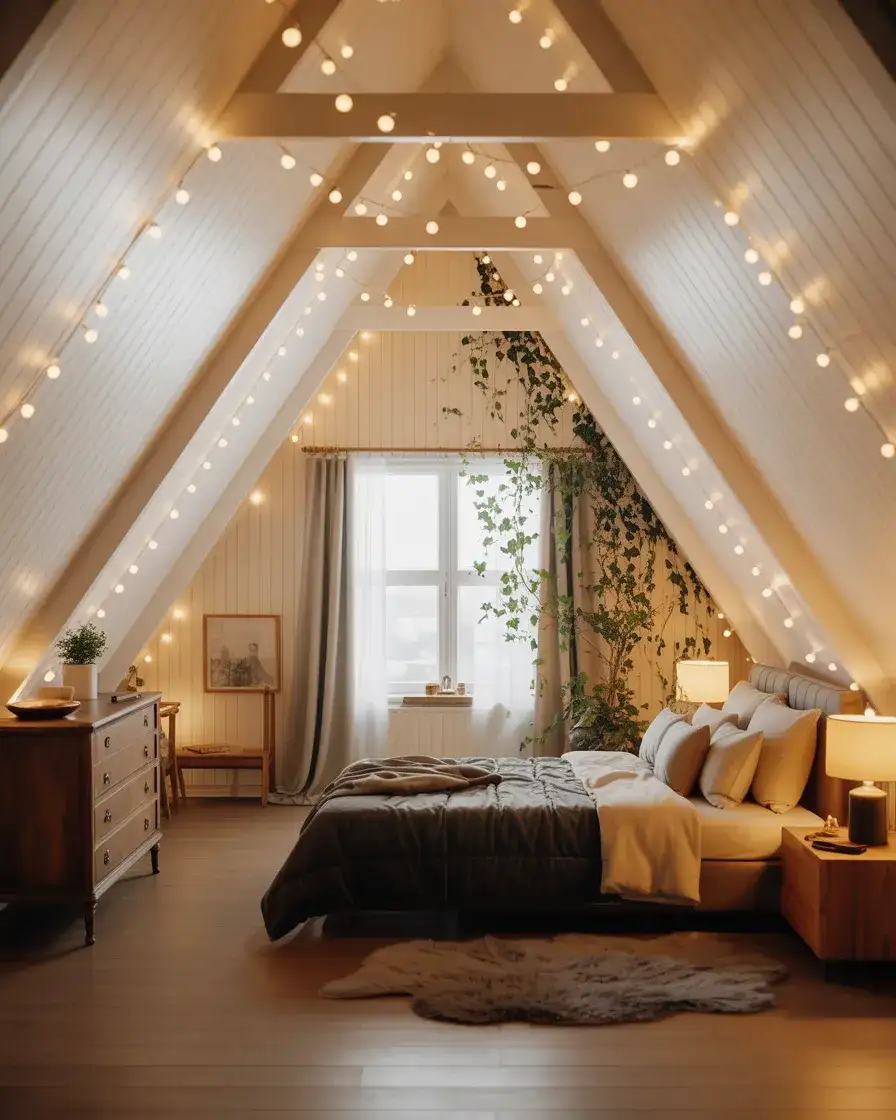
The triangle shape of a peaked attic ceiling becomes something truly magical when you drape it with warm fairy lights and fill the room with soft, layered textures. A cozy bedroom with this kind of treatment has an aesthetic grunge-adjacent warmth—it’s not trying to be trendy or sharp-edged; it’s trying to make you feel something the moment you walk in. Think deep plush bedding, trailing greenery, and the kind of golden light that makes everything look like a film still.
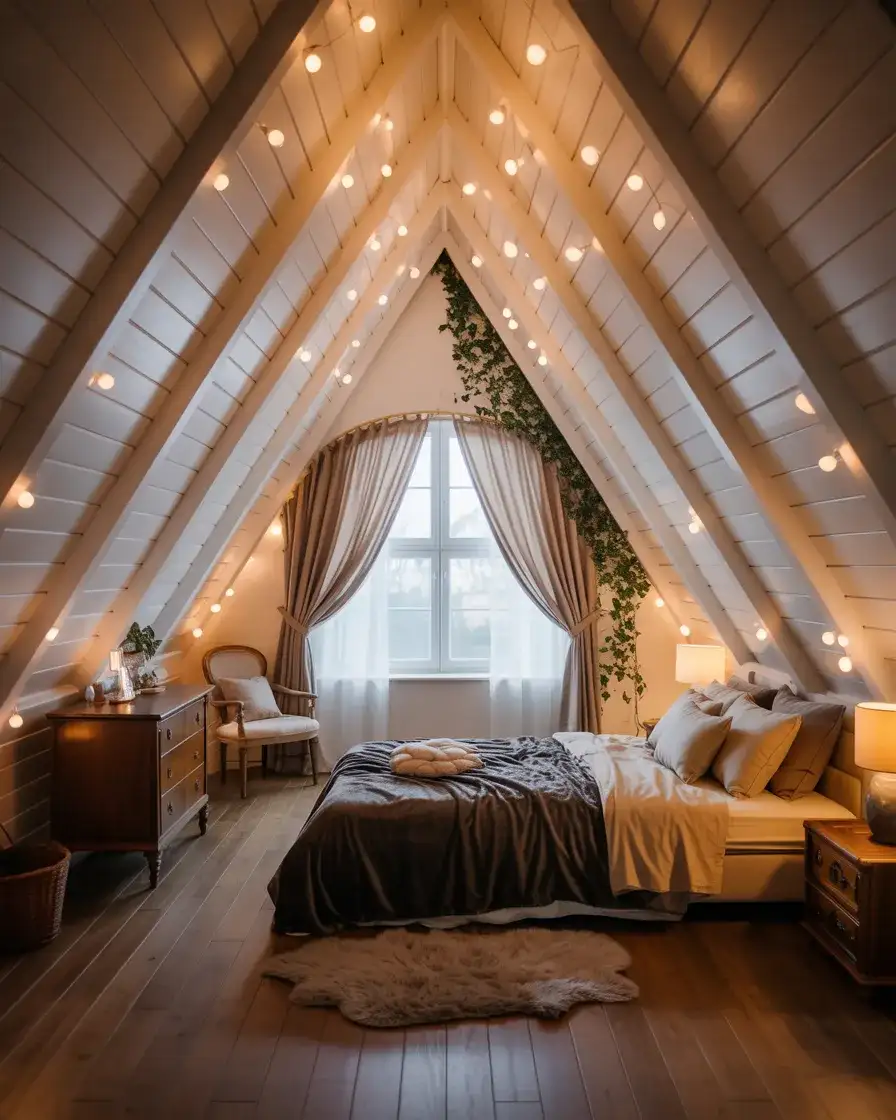
Anyone who’s ever stayed in an attic bedroom lit entirely by fairy lights will tell you—there’s no lighting design that creates quite the same feeling. It’s one of the rare cases where a $15 investment completely transforms a room’s mood. The design principle is simple: in a space with dramatic architecture, let the light follow the shape of the room. Fairy lights do this naturally, and when they’re warm-toned (look for “warm white” or “2700K” on the packaging), they turn an ordinary attic into somewhere that feels genuinely worth coming home to.
Conclusion
Attic bedrooms are one of those spaces where small decisions create outsized impact—a paint color, a piece of lighting, or a bed frame that sits low to the ground. The ideas above are meant to spark something, not prescribe a formula. Take what resonates, mix what surprises you, and make it yours. If you tried any of these ideas or have your own attic transformation story, we’d love to hear about it in the comments below.