Storage has become one of the most-searched topics on Pinterest for good reason—our bedrooms are doing more work than ever, and the old “buy a bigger dresser” solution just doesn’t cut it anymore. Whether you’re squeezing into a 400-square-foot studio in Austin or trying to make sense of an overstuffed guest room in the suburbs, the smartest homes of 2026 are rethinking every inch. This article rounds up 23 fresh, beautiful, and genuinely practical bedroom storage ideas—from built-in shelves that look like they came with the house to clever IKEA hacks that cost under $200. Whether you’re here for the aesthetic, the function, or both, there’s something in this list for every space and every budget.
1. Under-Bed Drawers with a Custom Built-In Frame
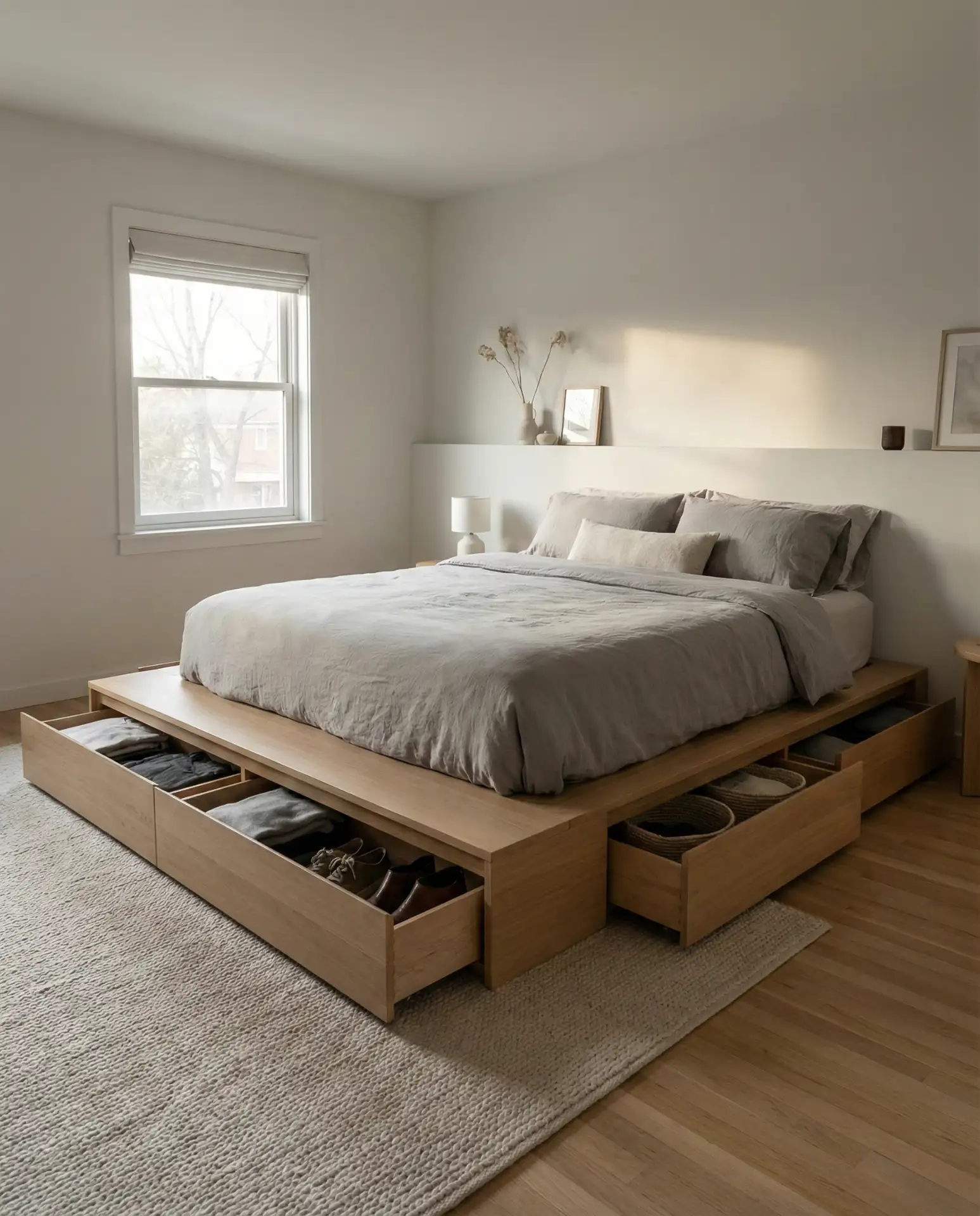
If you haven’t tapped the space under your bed yet, you’re leaving one of the most powerful solutions for small rooms completely untouched. A custom-framed platform bed with deep pull-out drawers can hold everything from out-of-season sweaters to extra bedding—all completely hidden. This is especially useful in small spaces where a traditional dresser would eat up floor area that could otherwise breathe. Carpentry-grade poplar or plywood frames can be built for a few hundred dollars, or you can source drawer units separately and build the surround yourself.
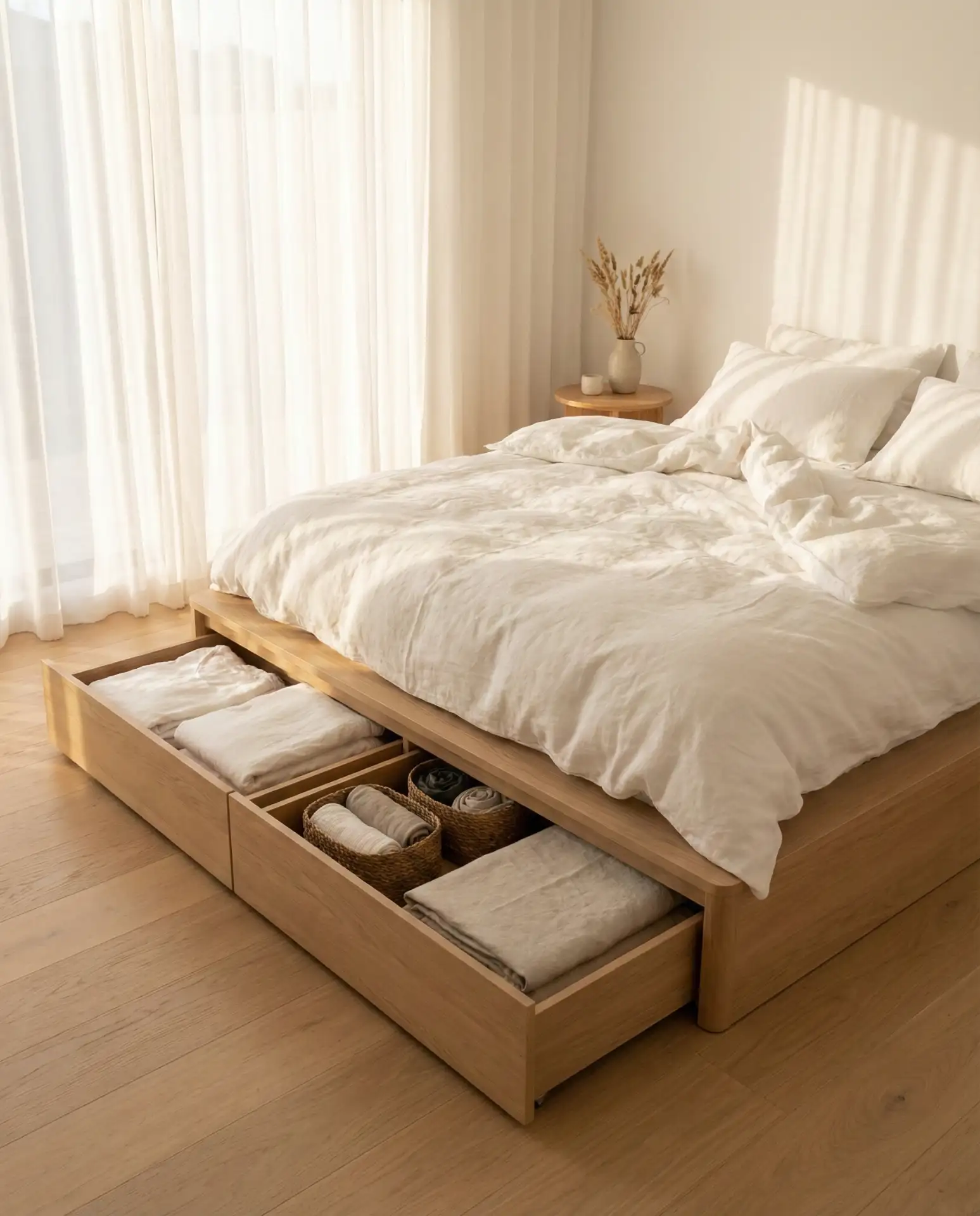
The real value here is decluttering your visual space—when storage disappears under the bed, the room automatically feels larger and calmer. For families, this is a game-changer: kids can store toys and sports gear without losing bedroom floor space. A common mistake is choosing shallow drawer runners that bind and stick after a few months—always invest in full-extension, soft-close hardware. It’s a small upcharge that makes a big difference in how the whole system feels to use every single day.
2. Floating Shelves Above the Headboard
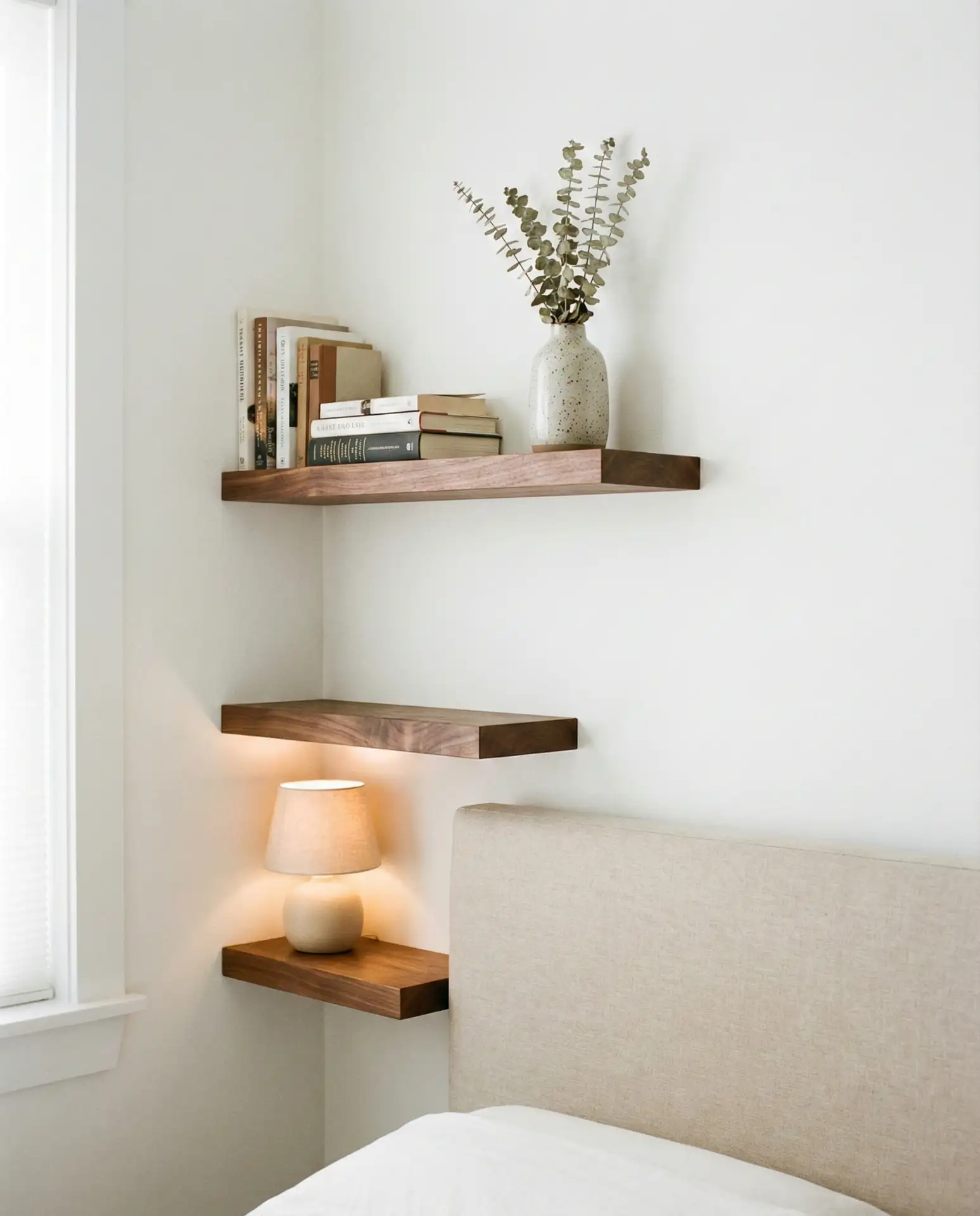
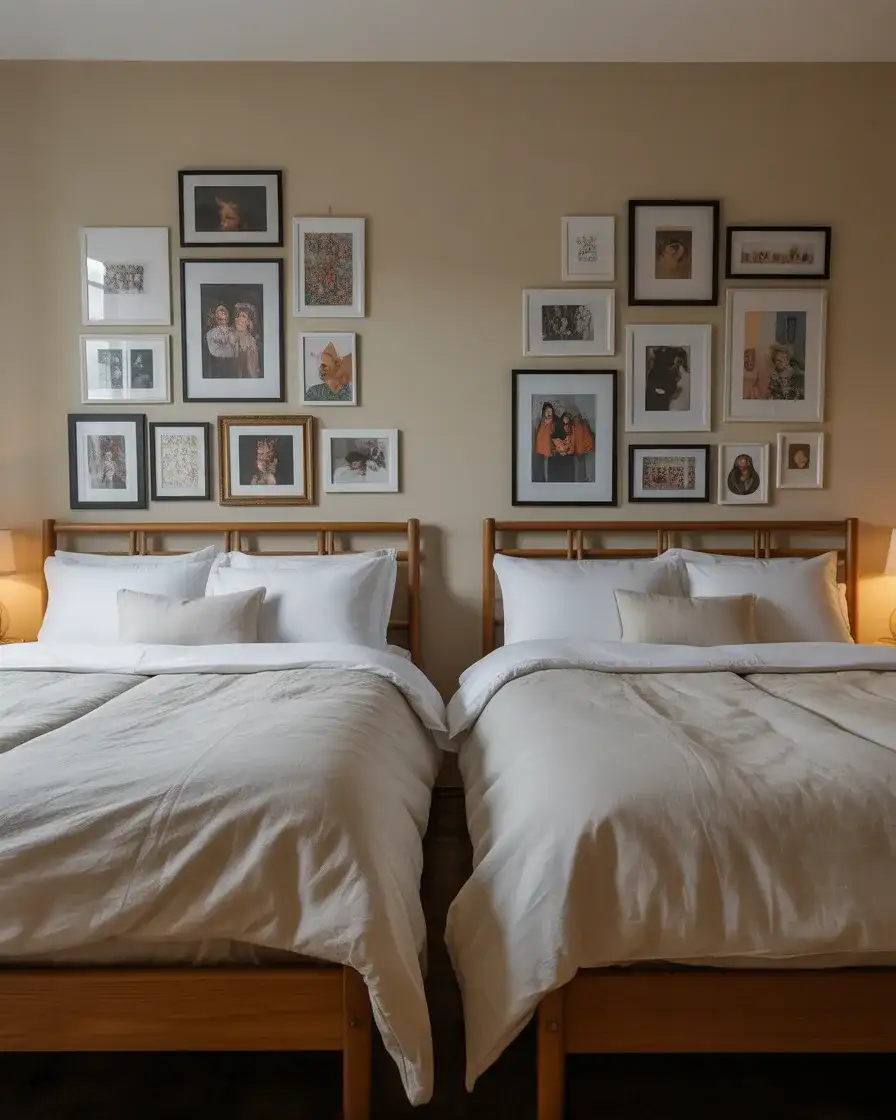
The wall above your headboard is prime real estate that most people completely ignore. Installing a row—or a layered arrangement—of floating shelves there creates a built-in-style display without any actual carpentry commitment. It’s one of the easiest creative storage moves you can make, and the visual effect reads more like intentional interior design than DIY necessity. Stack books, bedside essentials, a small lamp, and a plant or two, and suddenly the bed becomes the anchor of a thoughtfully designed wall.
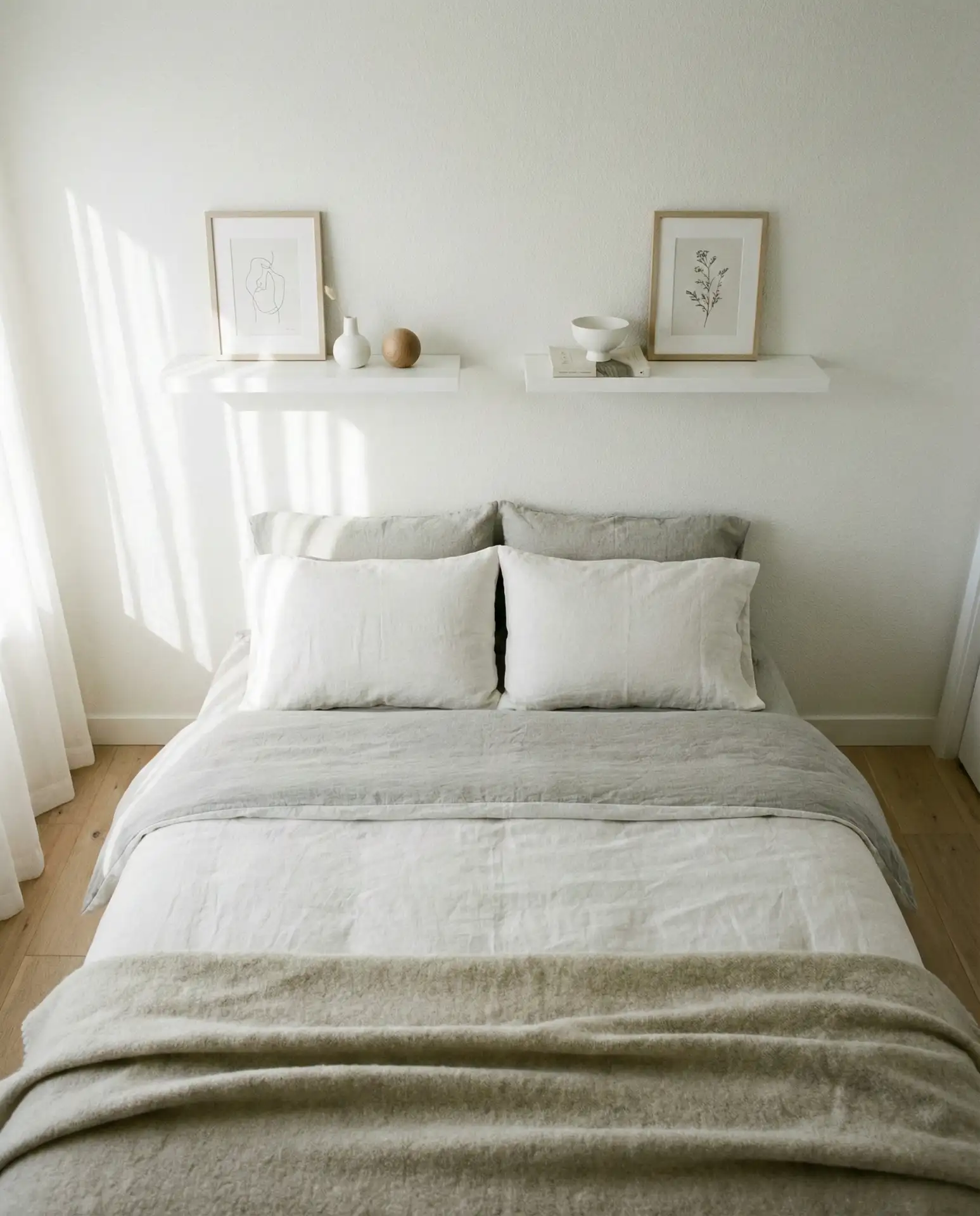
Where this works best is in apartments where wall space is generous but floor space is tight—which describes most urban rentals on the East and West Coasts. Renters can use heavy-duty Command strips rated for at least 10 pounds per strip or request permission to use toggle bolts for a sturdier hold. The one mistake to avoid: overloading these shelves with heavy objects. Keep it light and curated—a few meaningful items always look better than a cluttered ledge of random things.
3. Sloped Ceiling Attic Storage Nook
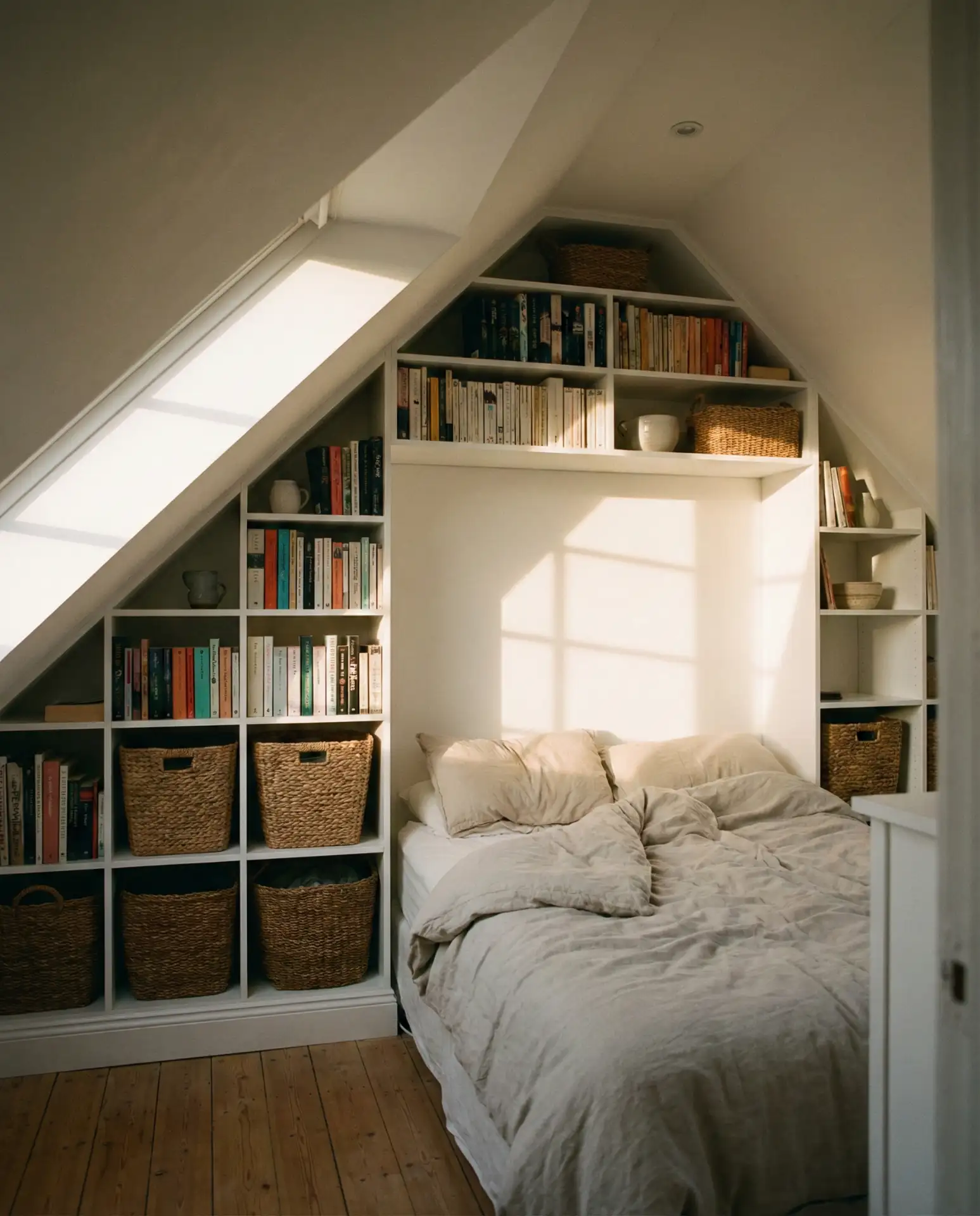
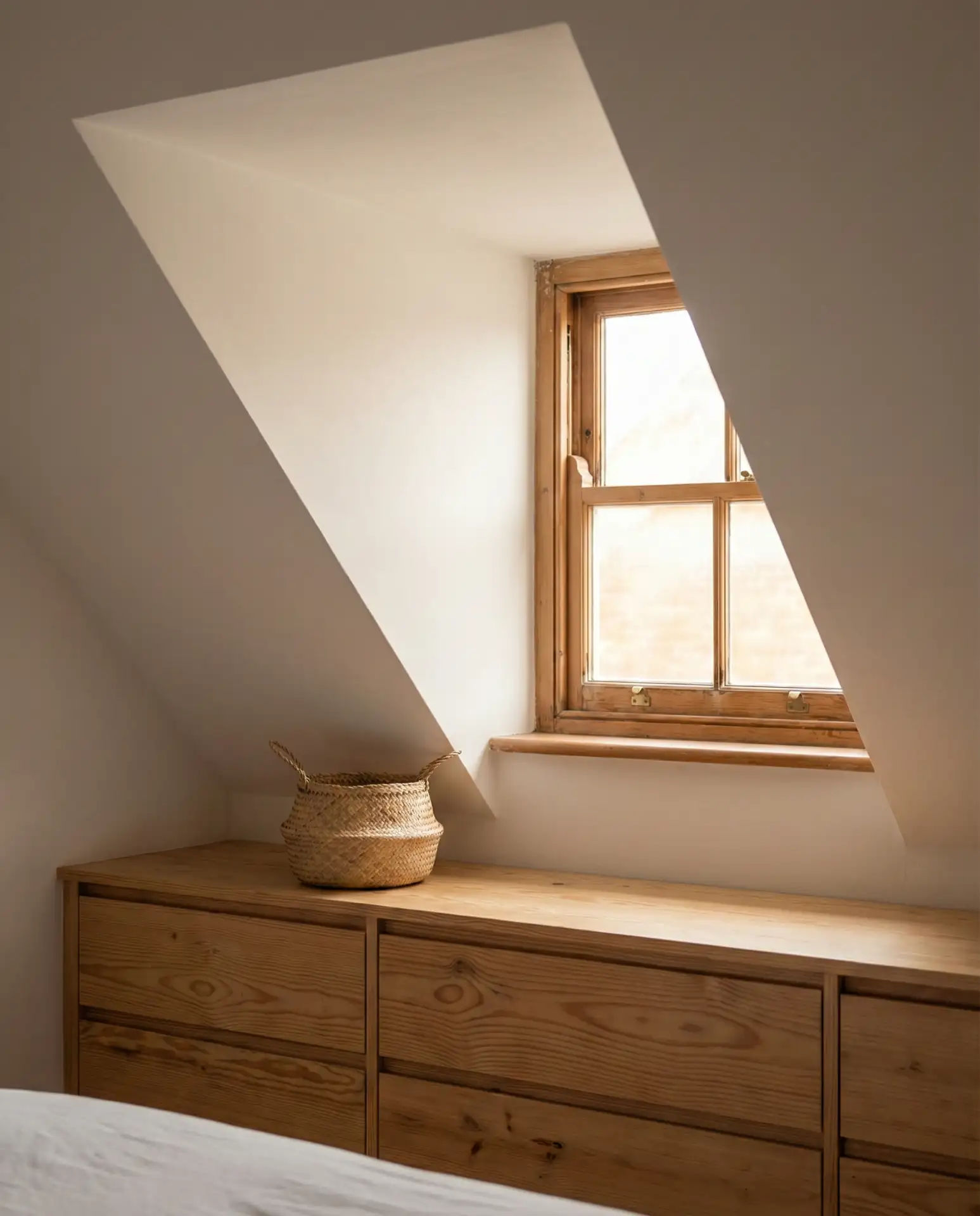
If your bedroom sits beneath a sloped ceiling, you’re actually sitting on one of the most architecturally charming attic storage opportunities in residential design. The angled corners that feel awkward with standard furniture become perfect cavities for custom low-profile shelving, pull-out drawers, or even built-in wardrobes that follow the roofline. This approach works beautifully in Cape Cod-style homes and older American craftsman houses where upstairs bedrooms tuck under the eaves.
Think of it the way a smart architect would: the slope isn’t a flaw; it’s a free wall cavity waiting to become a custom cabinet. Homeowners who’ve tackled this with a local carpenter report the project costs between $800 and $2,500 depending on size and finish—significantly less than adding a closet addition. The built-in result looks custom and intentional, and it reclaims square footage that was effectively dead space for years.
4. IKEA PAX System Hack for a Built-In Look
The IKEA PAX wardrobe is probably the most hacked piece of flat-pack furniture in America right now—and for very good reason. With the right IKEA hacks, a row of PAX frames trimmed out with crown molding, baseboard, and a matching paint job can pass for a completely custom built-in wardrobe that costs a fraction of the real thing. The trick is filling the gap between the cabinet tops and the ceiling with a simple MDF soffit, then painting everything—frames, walls, and trim—in one cohesive color.
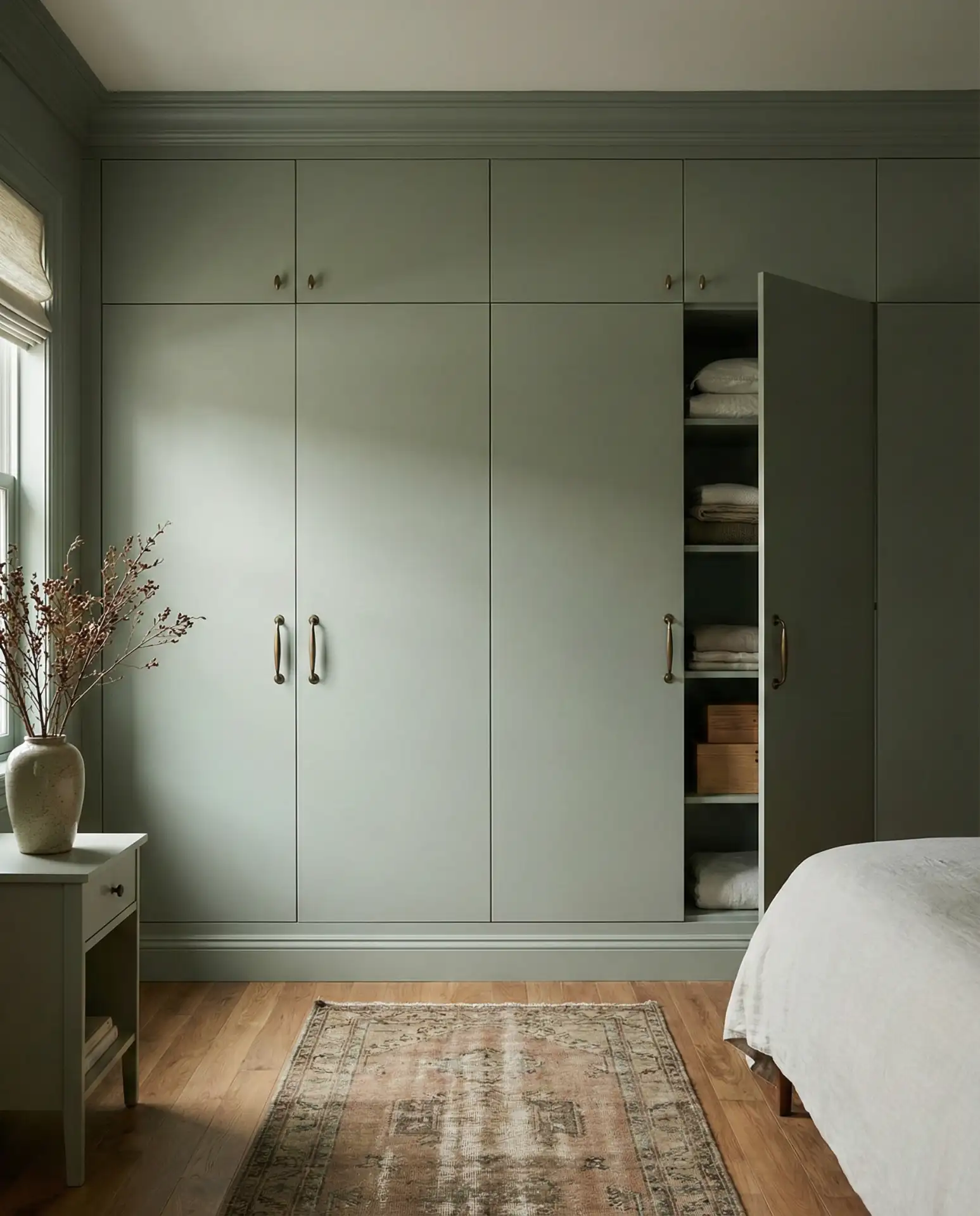
One homeowner in suburban Chicago documented her PAX hack on her blog—four frames, MDF trim, a can of Benjamin Moore paint, and about $1,100 total later, her bedroom looks like a $6,000 custom built-in from a design showroom. The budget angle here is genuinely compelling: custom wardrobes typically run $300–$600 per linear foot installed. The PAX method brings that down to roughly $80–$120 per linear foot, including the trim work.
5. Storage Bench at the Foot of the Bed
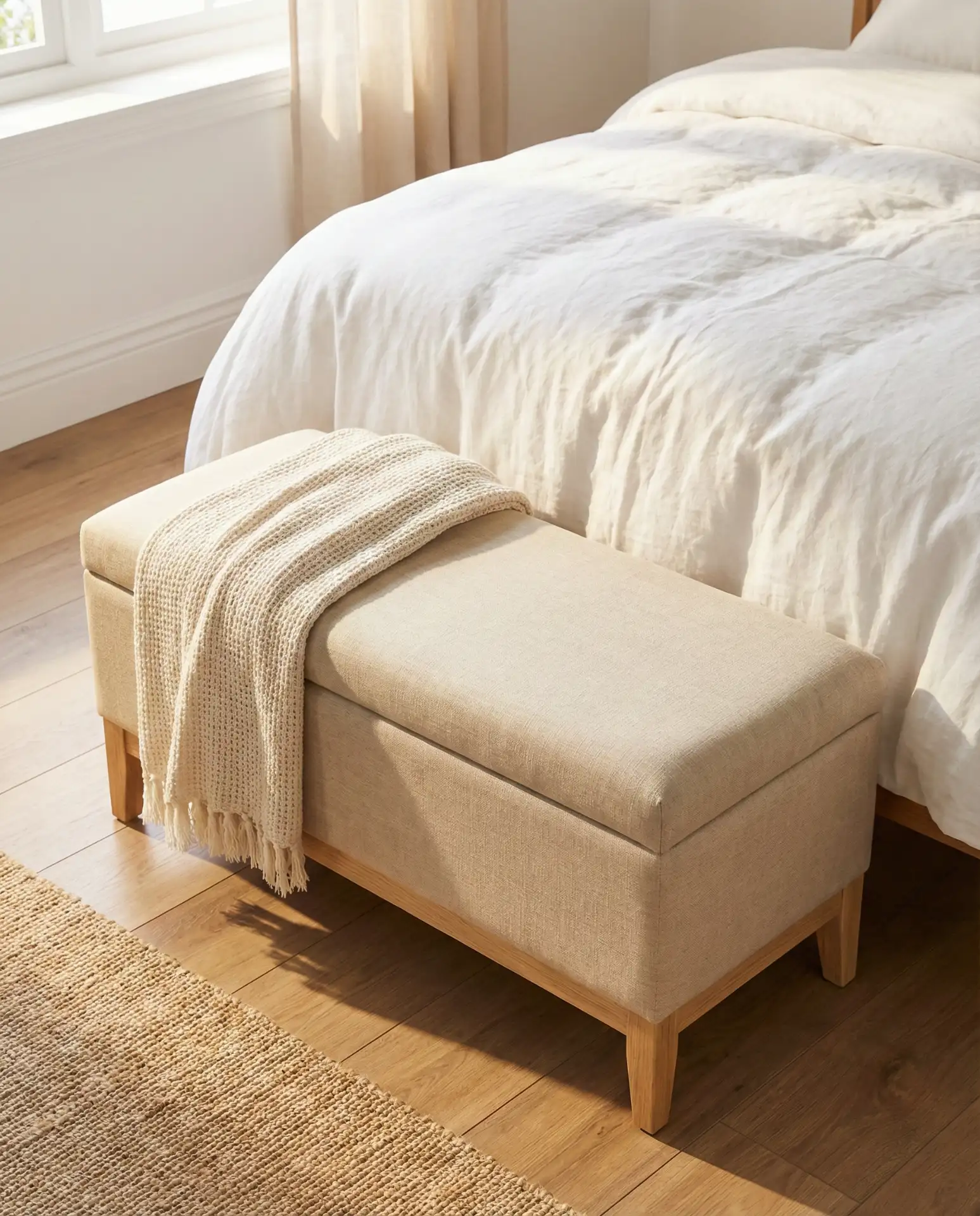
A bench at the foot of the bed is one of those classic interior design moves that earns its keep twice over—first as a visual anchor that gives the bed a finished, hotel-like quality, and second as surprisingly useful hidden storage. Lift the seat and you’ve got room for extra throw blankets, pillows, workout gear, or those seasonal items that always end up in a pile somewhere. For guest bedrooms especially, this is a thoughtful touch that keeps things tidy without adding a single extra piece of furniture.
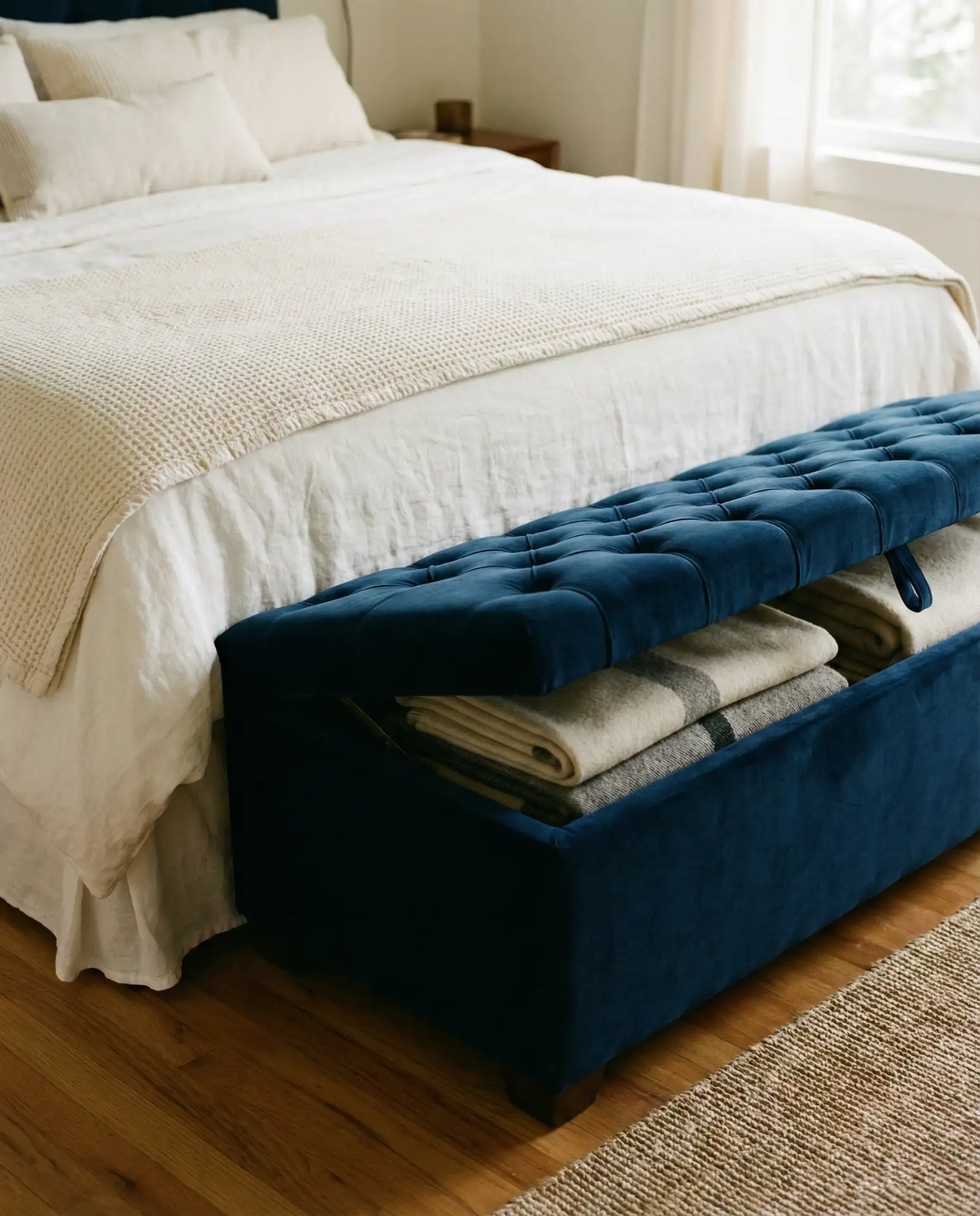
In the American South, where homes tend to have slightly larger bedrooms, the bench-at-the-foot-of-the-bed is almost a regional staple—a nod to the classic, gracious bedroom aesthetic that never really goes out of style. Upholstered options start around $150 at most home goods retailers, while custom or vintage-sourced pieces can run $400 and up. Either way, it’s one of the highest-impact, lowest-effort storage additions you can make to a primary bedroom.
6. DIY Pegboard Closet Organizer
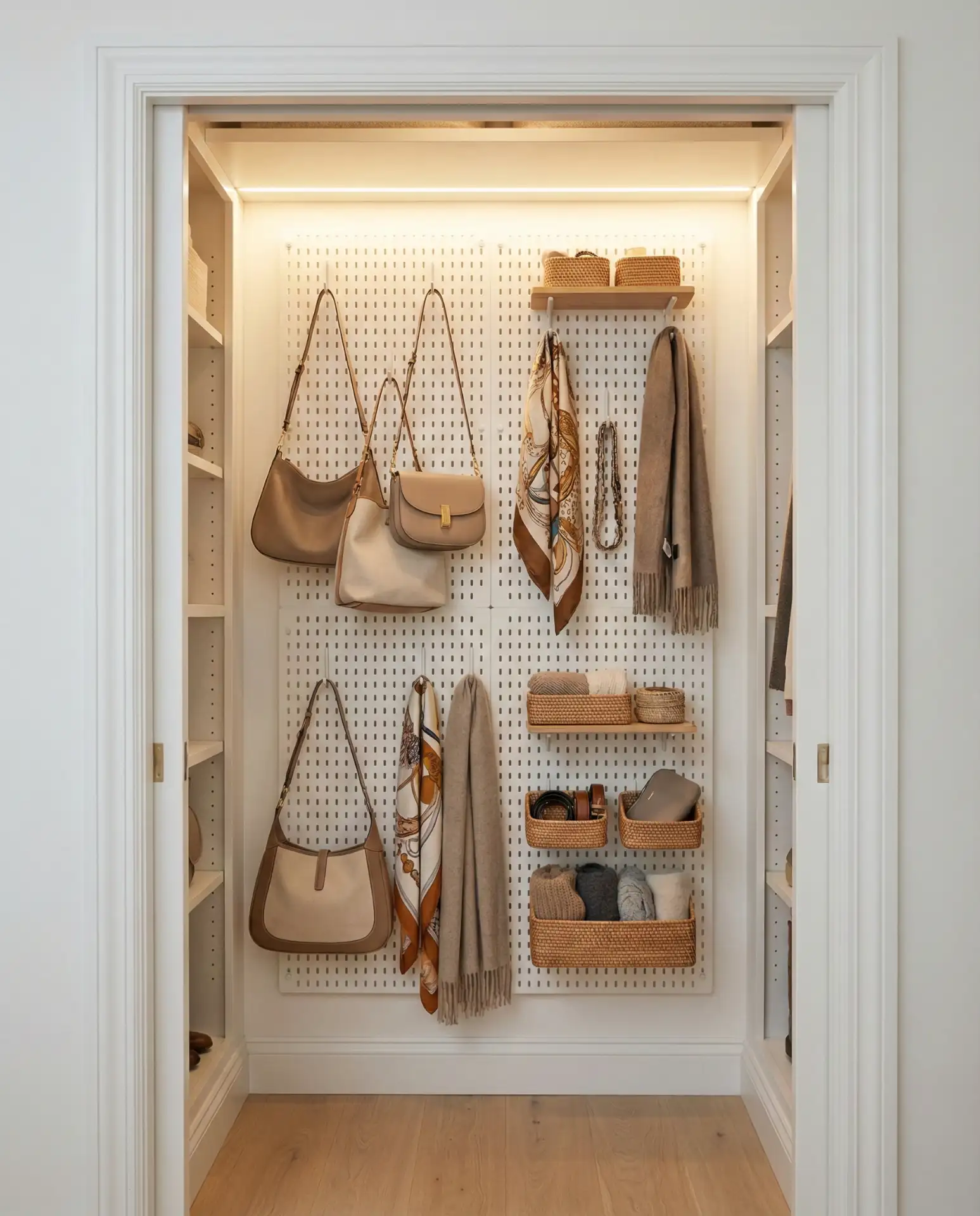
Pegboard isn’t just for garages anymore—mounted inside a reach-in closet, it becomes one of the most flexible DIY storage systems you can build for under $60. Use hooks, small baskets, and narrow shelves to organize jewelry, scarves, bags, and accessories that normally pile up on the closet floor or get lost in drawers. The modular nature of pegboard means you can reconfigure everything as your wardrobe evolves—no tools required after the initial install.
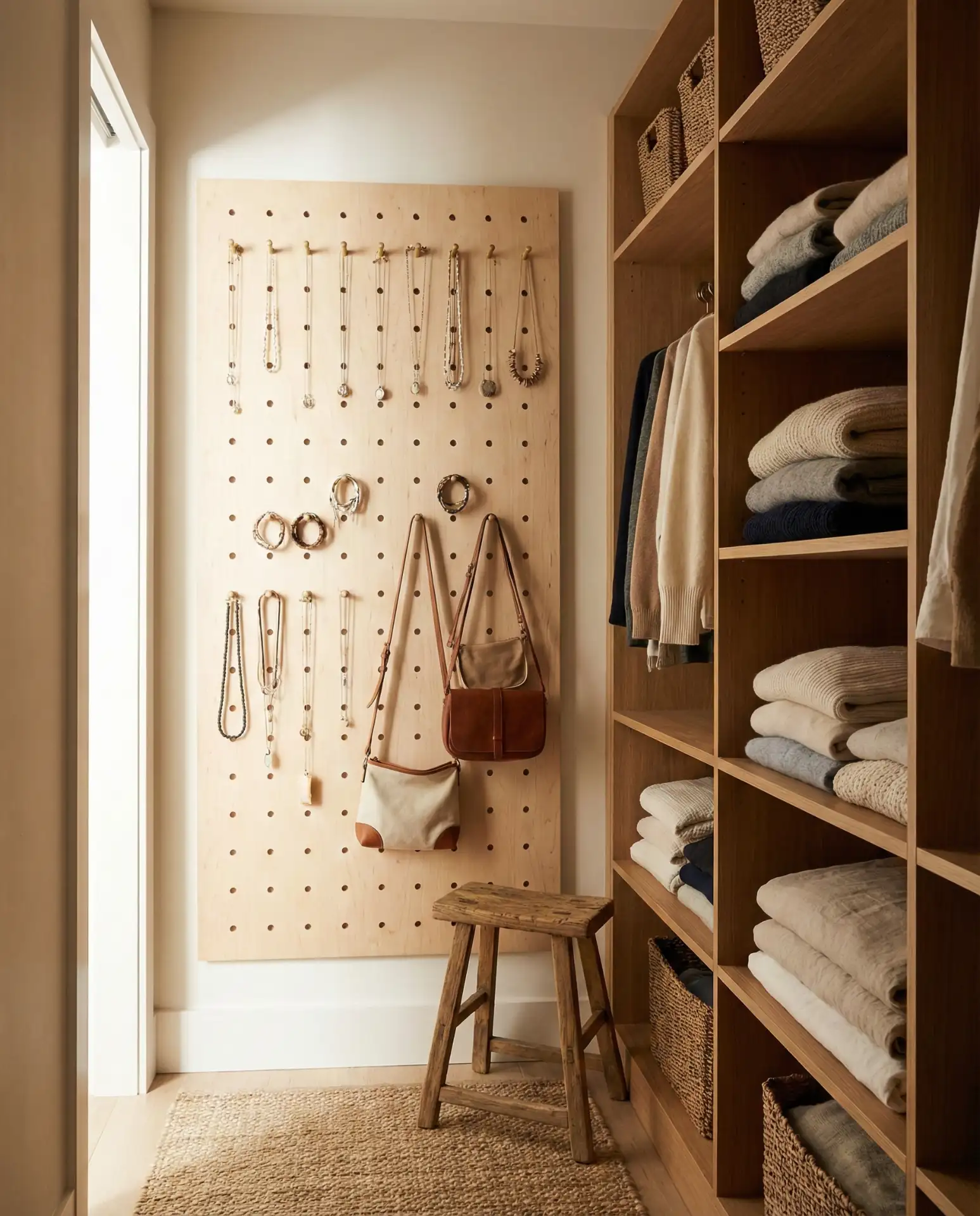
This idea shines brightest in older homes where closets were built narrow and shallow—a very common situation in pre-war East Coast apartments and Midwest ranch houses from the 1950s and 60s. When there isn’t enough depth for a full wardrobe rod, a well-organized pegboard wall turns the back panel of a closet into a functional display. Buy a standard 4×4 sheet from any hardware store, prime and paint it your favorite color, and mount it with furring strips to create space behind for hooks to insert.
7. Overhead Bedroom Shelving for Books and Decor
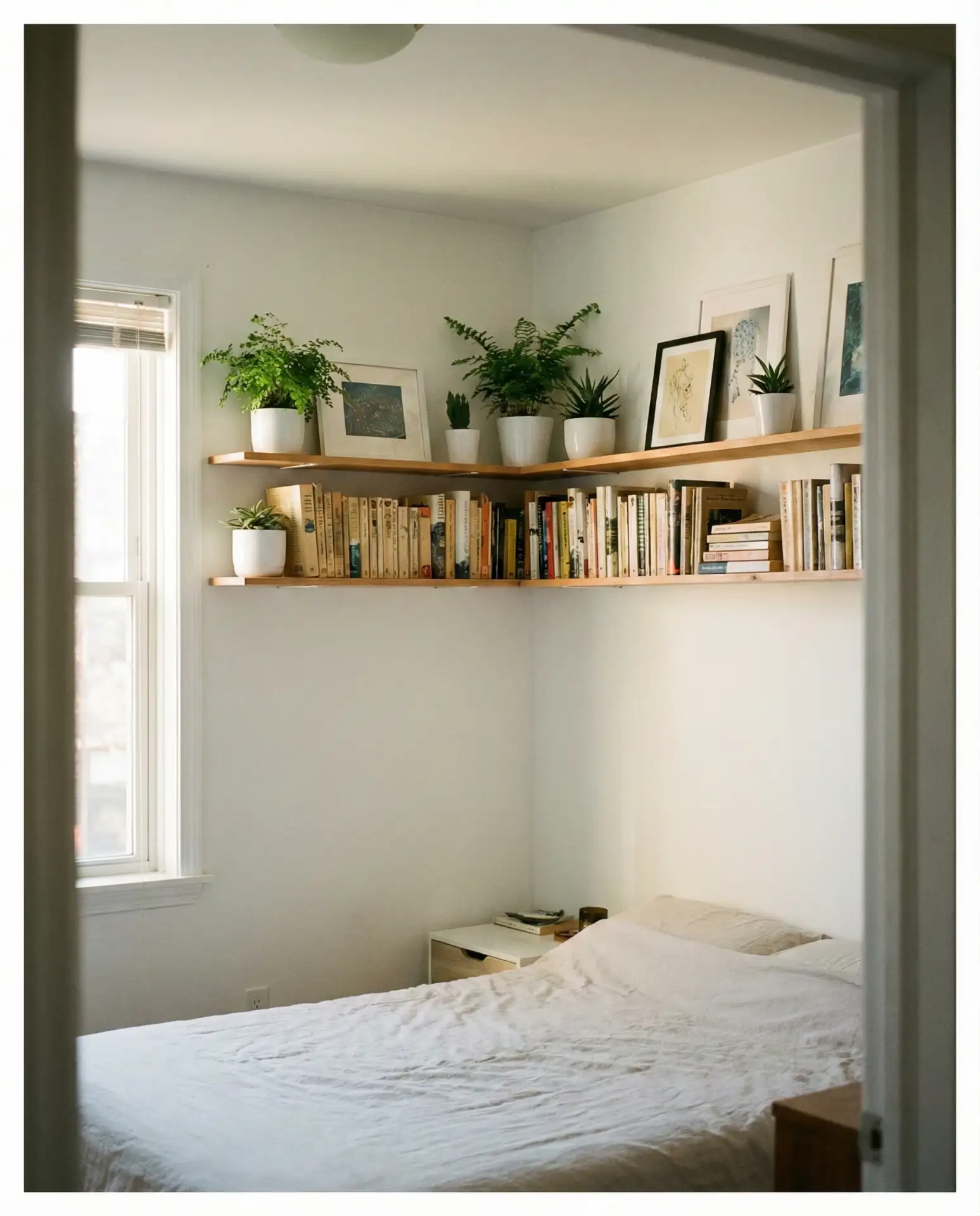
When floor space is truly non-negotiable, the only direction left is up. Overhead shelving—running along the upper perimeter of a bedroom wall, above door height—keeps everyday items accessible while leaving the lower walls and floor completely clear. This approach suits tiny apartments and micro-studios particularly well, where every square foot of open floor space changes how the room feels to live in.
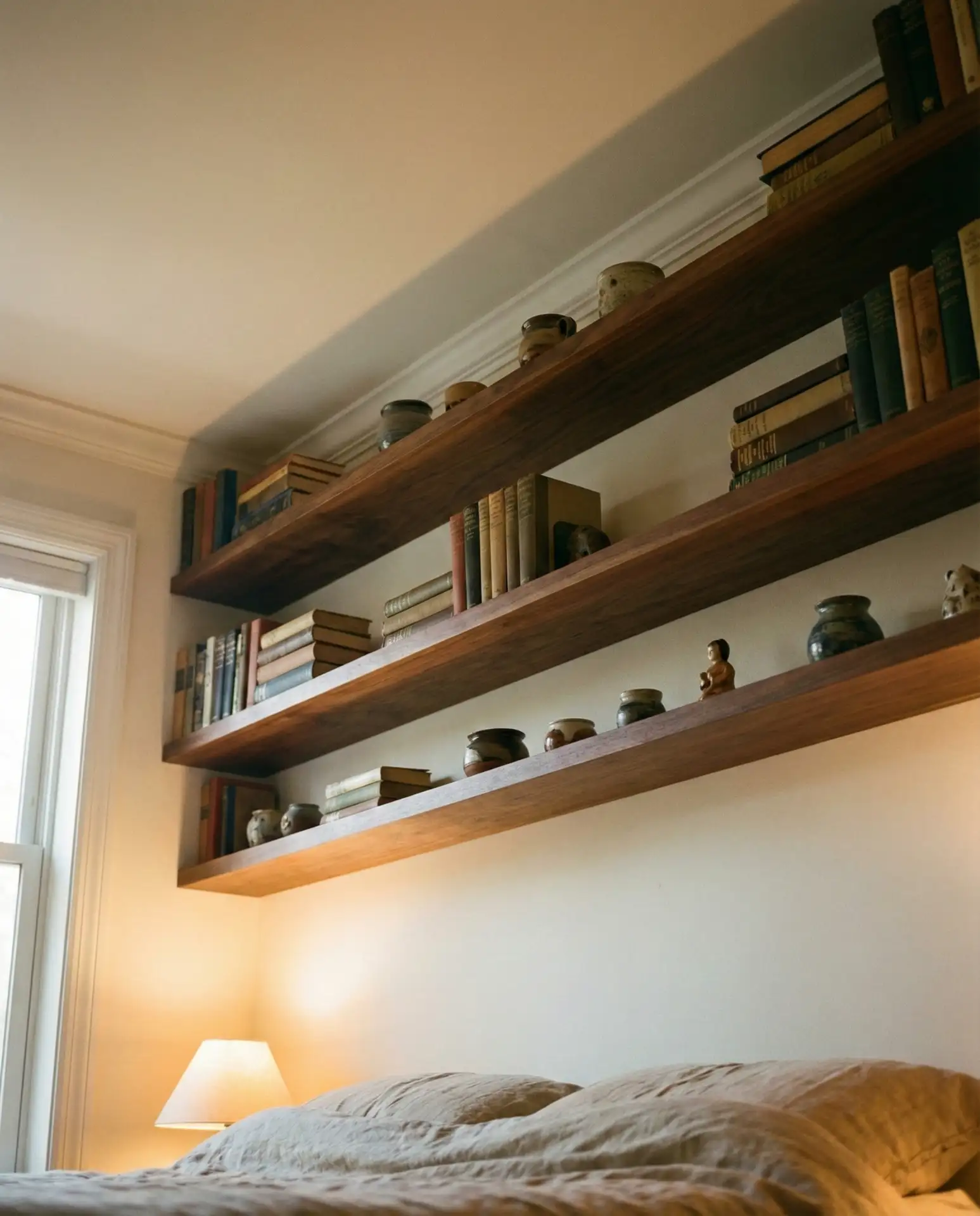
An interior designer based in Seattle once told Apartment Therapy that overhead shelving is “the most underused trick in small bedroom design”—and she’s not wrong. Most people stop thinking about storage at eye level, but the 18–24 inches between the top of a standard door and the ceiling is perfectly proportioned for a single deep shelf that runs the entire room perimeter. Mount it with sturdy steel brackets into studs, and it can safely hold 50+ pounds of books without any visual weight at eye level.
8. Hidden Storage Headboard with Shelves and Cubbies
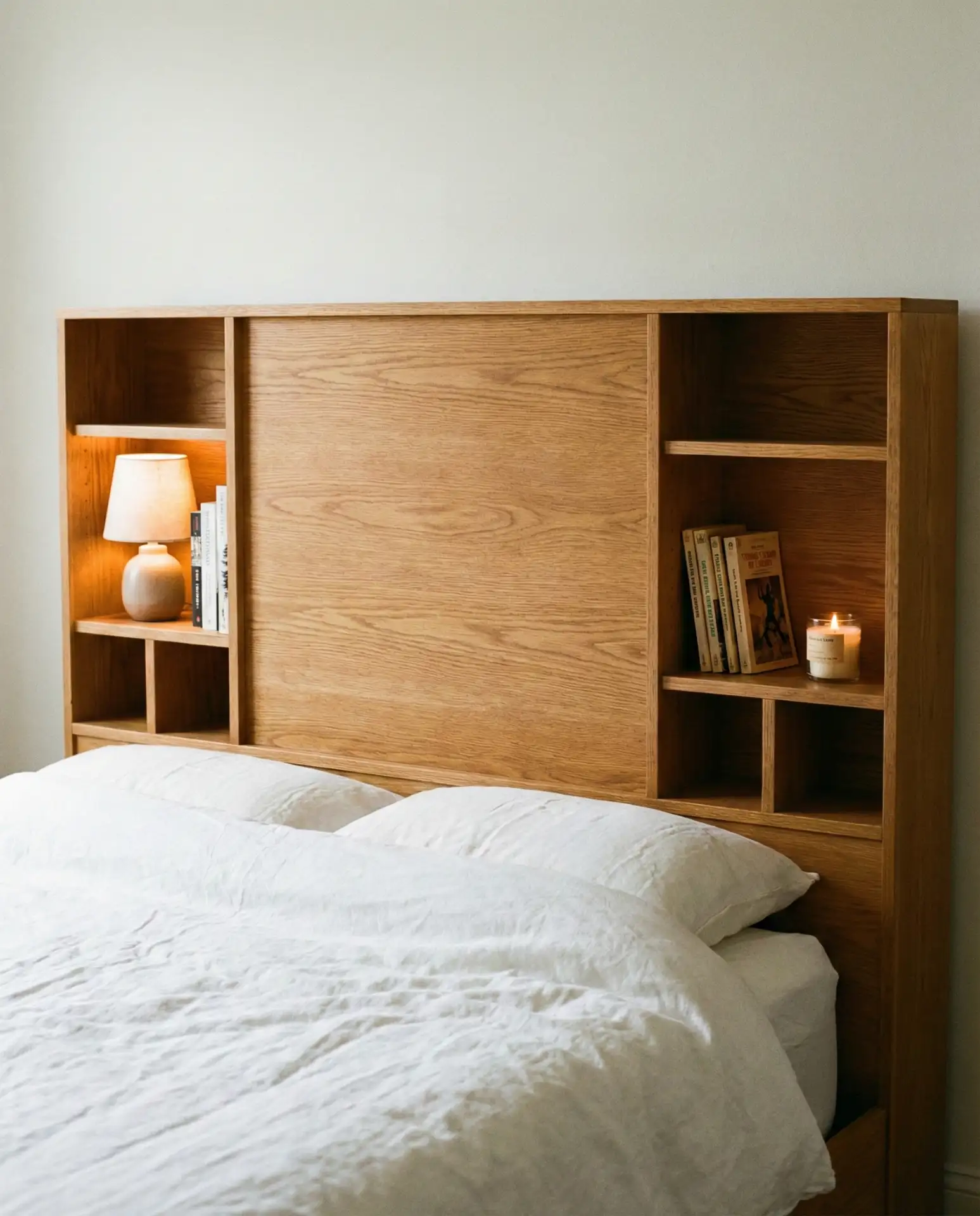
A storage headboard is the ultimate multitasker in a smart bedroom—it replaces both your nightstand and your bedside shelving in a single built-in unit that feels purpose-designed. Look for styles with integrated shelves, cubbies, USB charging ports, and even concealed compartments behind swing-open panels. In a small kids’ room, a storage headboard keeps books, stuffed animals, and a glass of water all within arm’s reach without cluttering the floor around the bed.
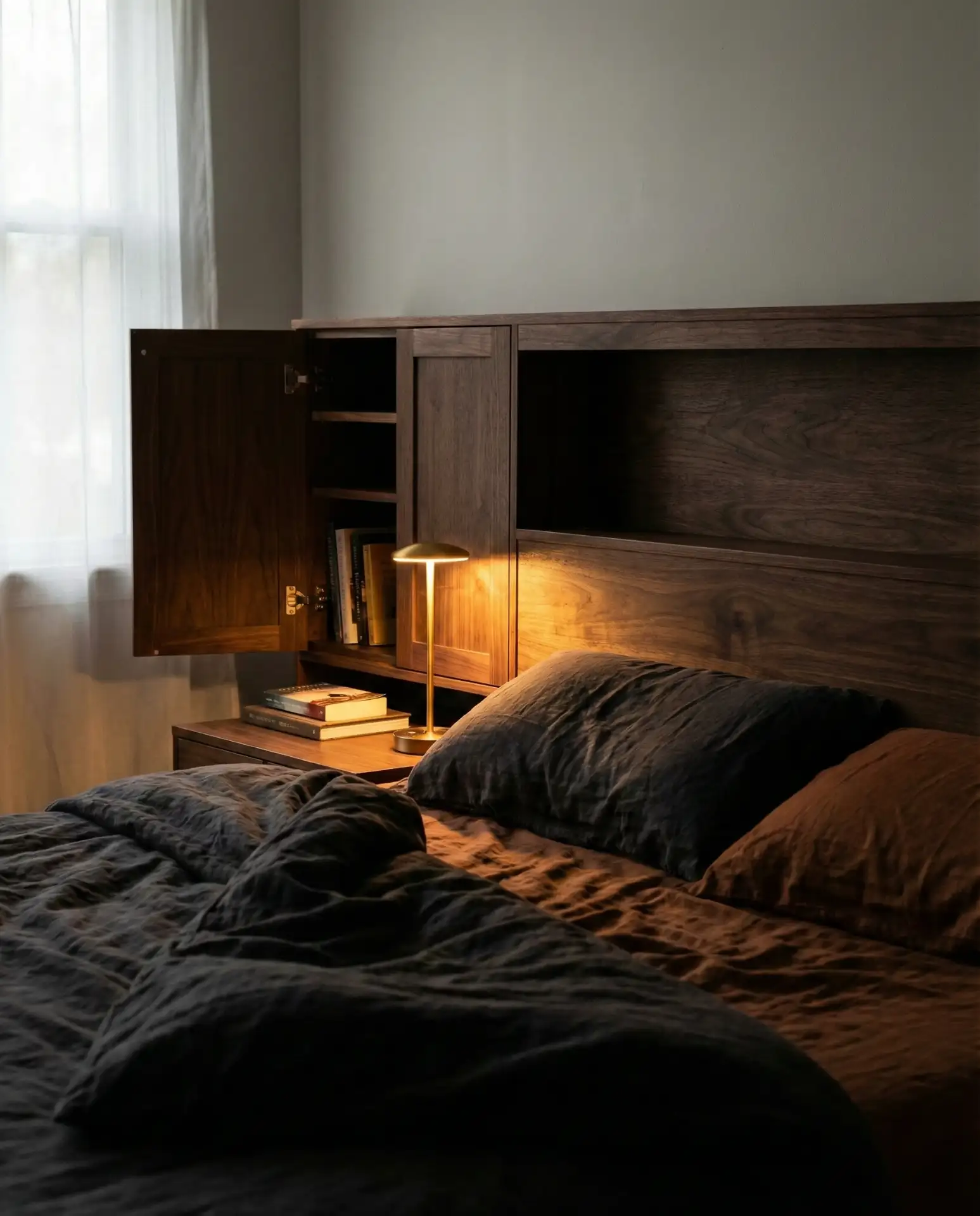
Real homeowners who’ve made the switch from a standard headboard to a storage version consistently report the same thing: their nightstand clutter dropped by about 70% immediately. Books, glasses, chargers, sleep masks—it all has a dedicated place that’s still within reach. The best models on the market right now run between $400 and $900, with solid hardwood versions at the higher end. It’s an investment, but one that genuinely changes how the room functions every single morning and night.
9. Wardrobe Ideas for Small Spaces with Curtain Fronts
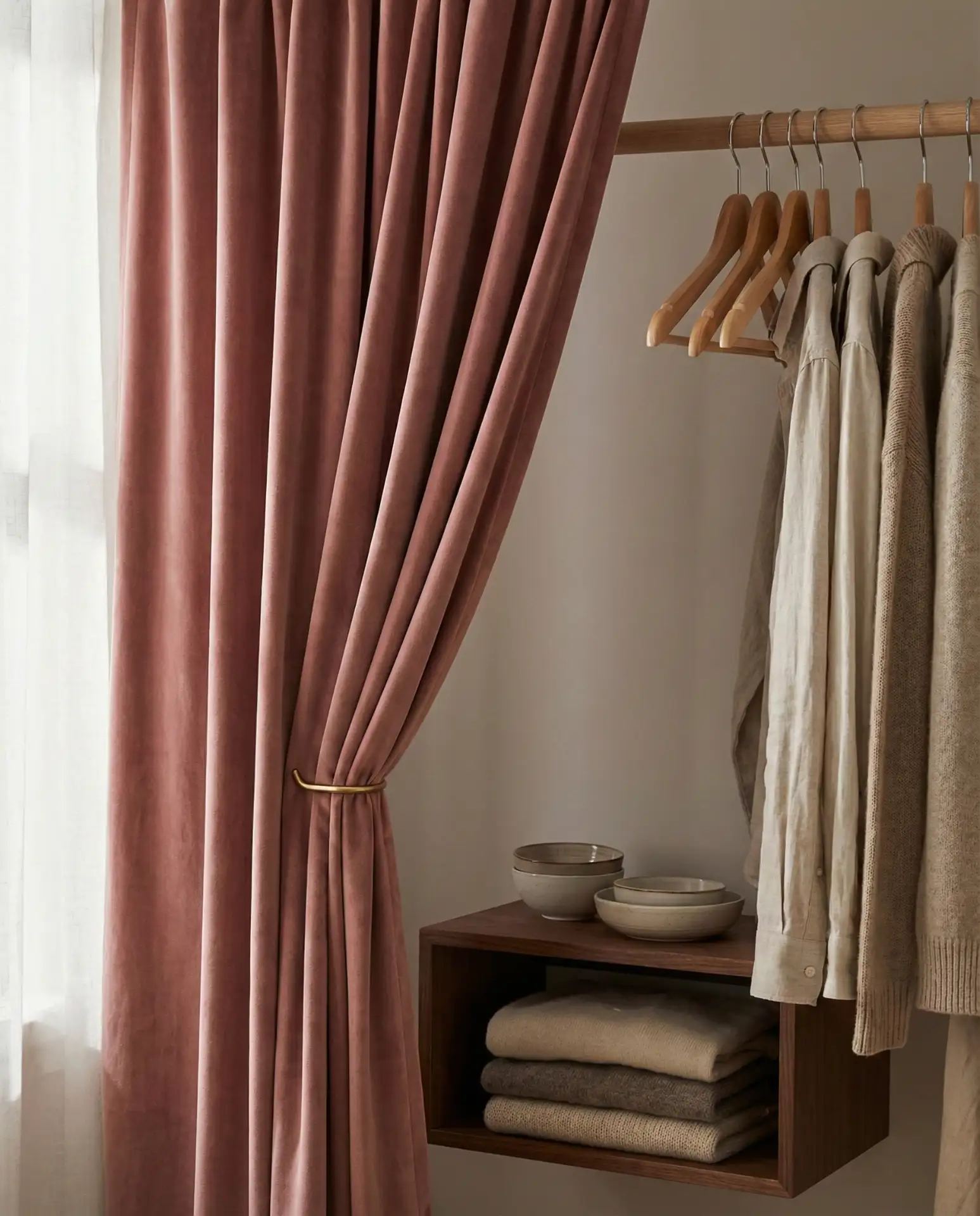
Not every idea for clothes wardrobes in small spaces solution needs a door—in fact, swapping cabinet doors for a gathered or pleated curtain can save six to eight inches of swing clearance that matters enormously in a tight room. This is a popular move in studio apartments and converted rooms where a traditional armoire just won’t fit. Hang a curtain rod directly from the ceiling or mount it above a DIY pipe-and-wood clothing rack for a look that’s part bohemian, part intentional design inspo.
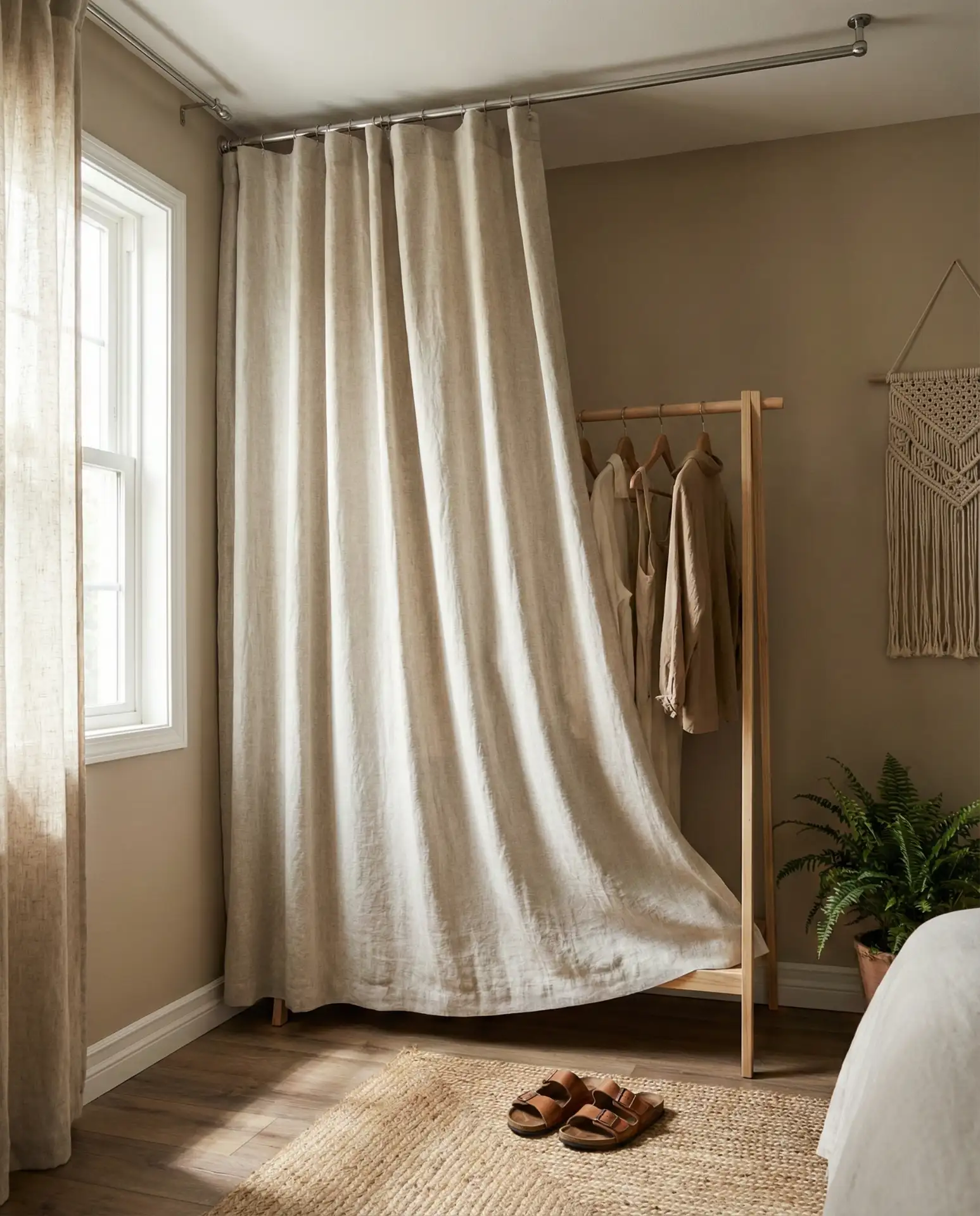
The curtain-front approach also solves a common problem in American apartments: landlords often prohibit closet modifications, but hanging a curtain rod requires only two ceiling anchors that can be patched on move-out day. Choose a heavyweight linen or cotton canvas for a more polished look—budget $40–$80 for a quality curtain panel. The overall effect reads as curated and intentional rather than improvised, especially when the curtain fabric echoes other soft goods in the room.
10. Aesthetic Ladder Shelf for Bedroom Storage
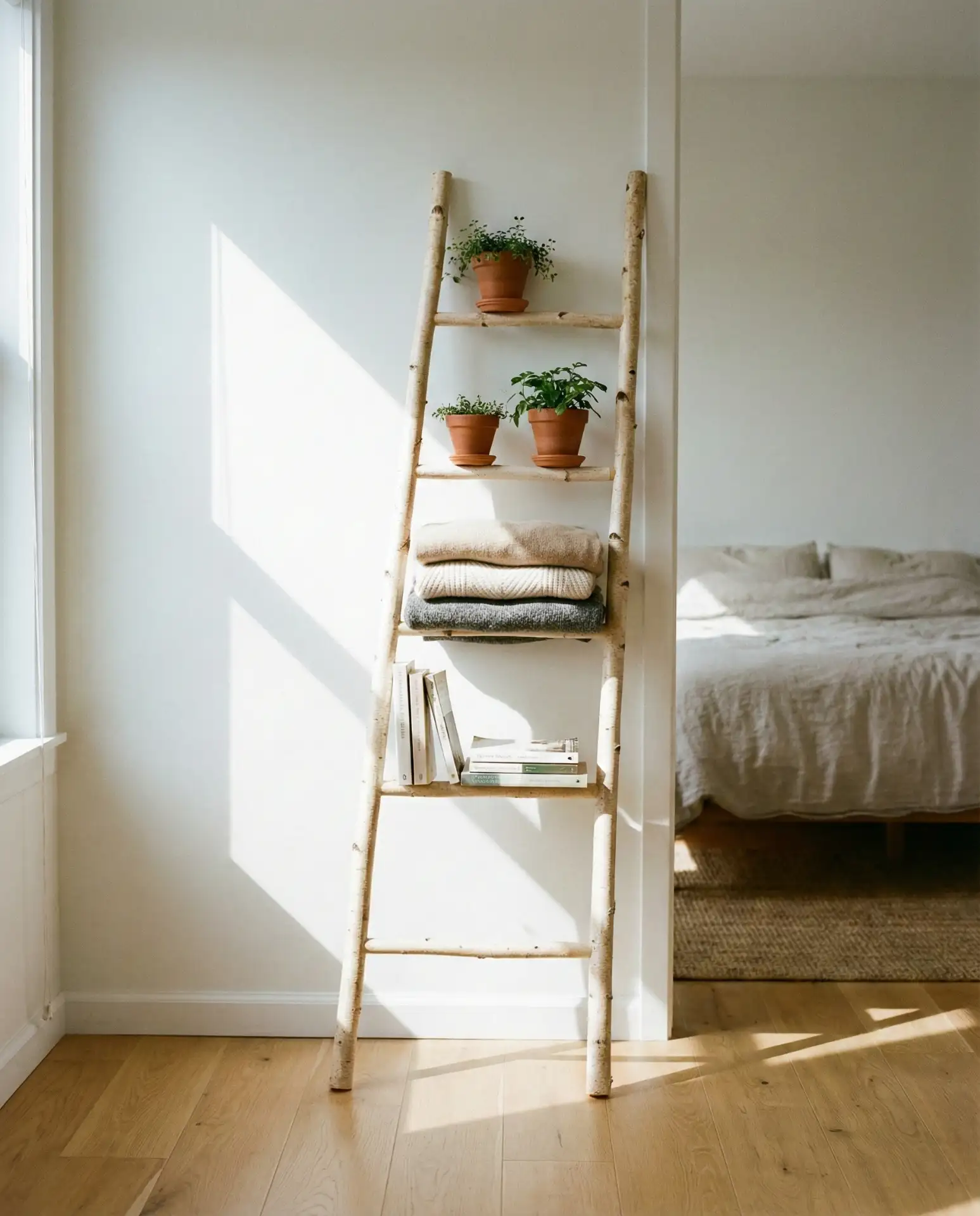
A leaning ladder shelf is one of those pieces that somehow manages to be both genuinely useful and very aesthetic at the same time—no small feat for a storage item. It leans against the wall without any wall mounting (ideal for renters), holds five or six shelves of books, plants, and folded items, and takes up almost no floor space. It’s one of the most creative bedroom storage picks for anyone who wants their room to look styled rather than “organized.”
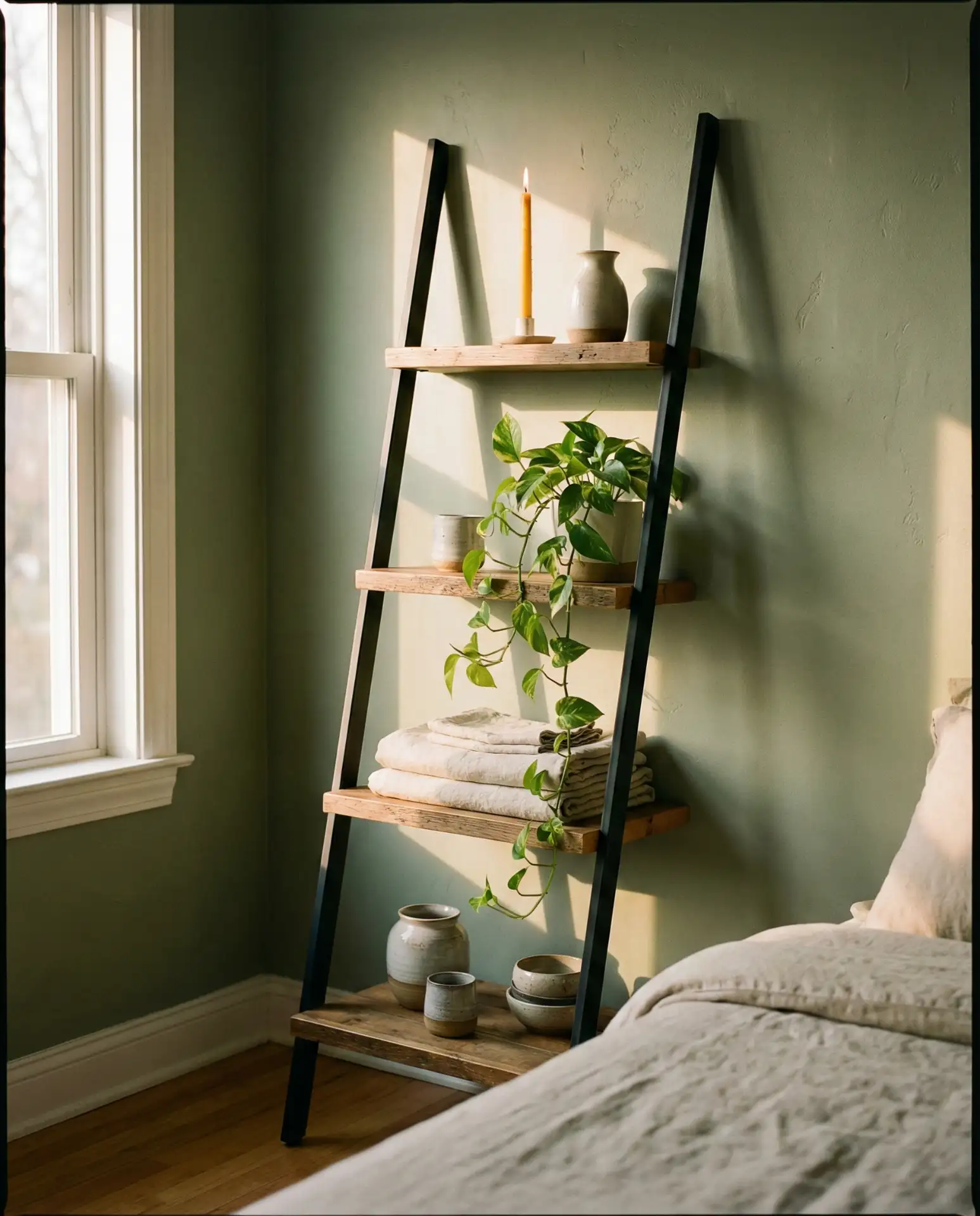
Interior stylists often use the ladder shelf as a “mood anchor” in a room—the items displayed on it set the entire visual tone of the space. Keep the top rungs for decorative objects (a trailing plant, a candle, a small print), the middle rungs for practical but attractive storage (folded cashmere, a woven basket), and the bottom rungs for heavier or less precious items. A well-styled ladder shelf is something you can assemble on a Saturday afternoon for $60–$150 and have looking pin-ready by dinner.
11. Built-In Window Seat with Hidden Storage
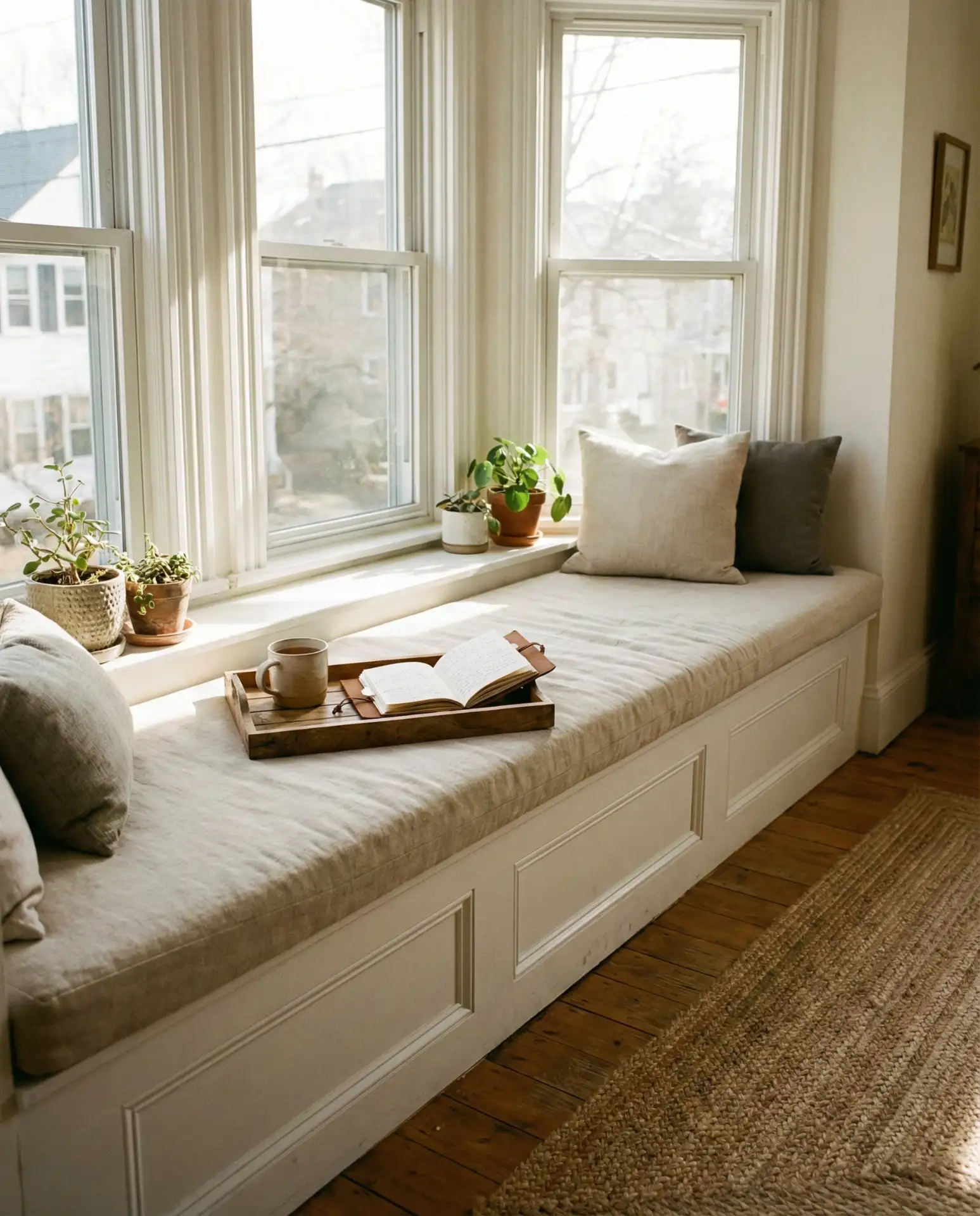
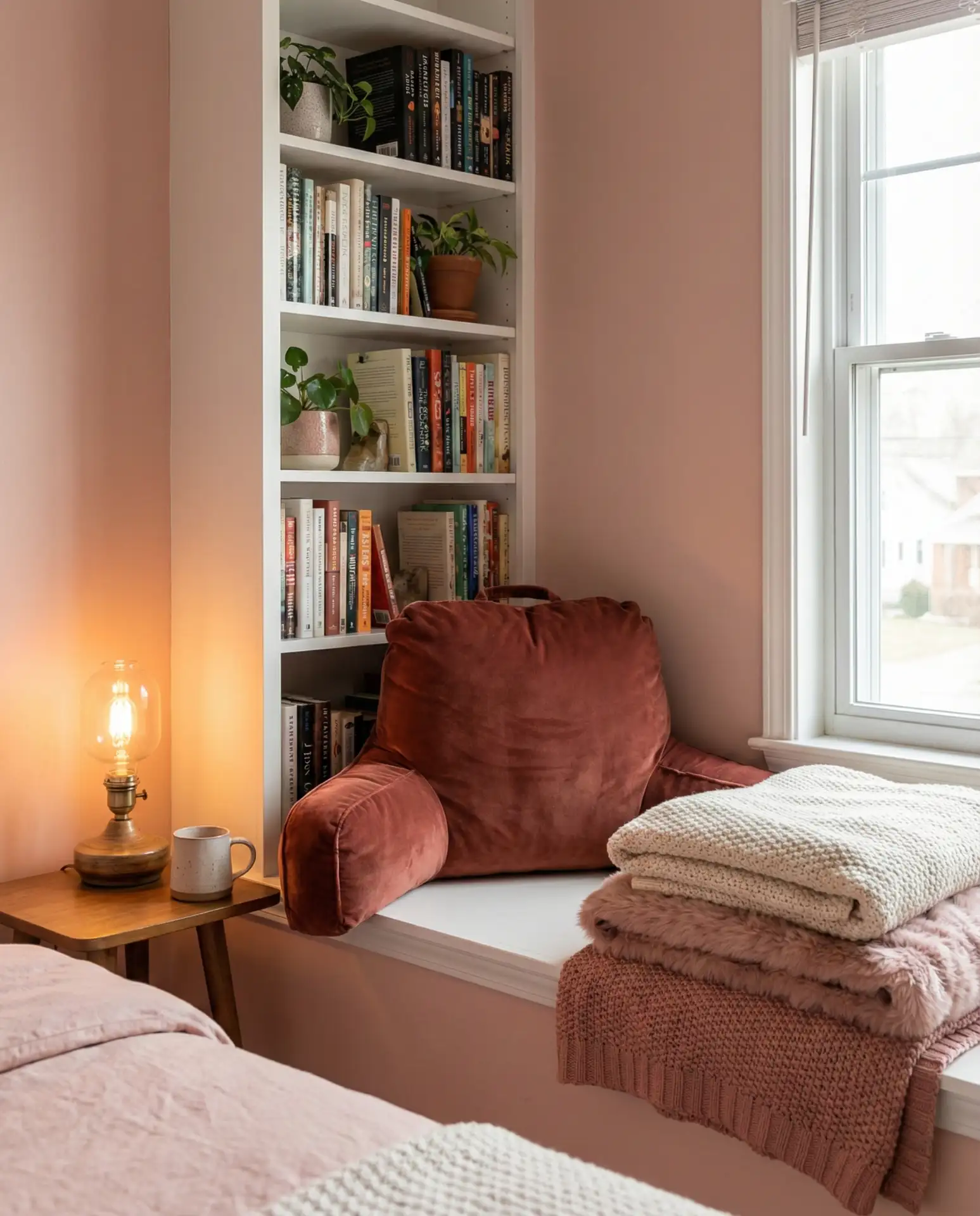
A built-in window seat transforms an otherwise awkward wall bump or bay window into one of the most coveted features in an American home—and when it’s designed with lift-top storage underneath, it becomes one of the most practical, too. This idea is especially popular in the Pacific Northwest and New England, where cozy reading nooks feel practically mandatory. Fill the cavity beneath the cushion with extra bedding, board games, or off-season clothing—everything concealed and out of sight.
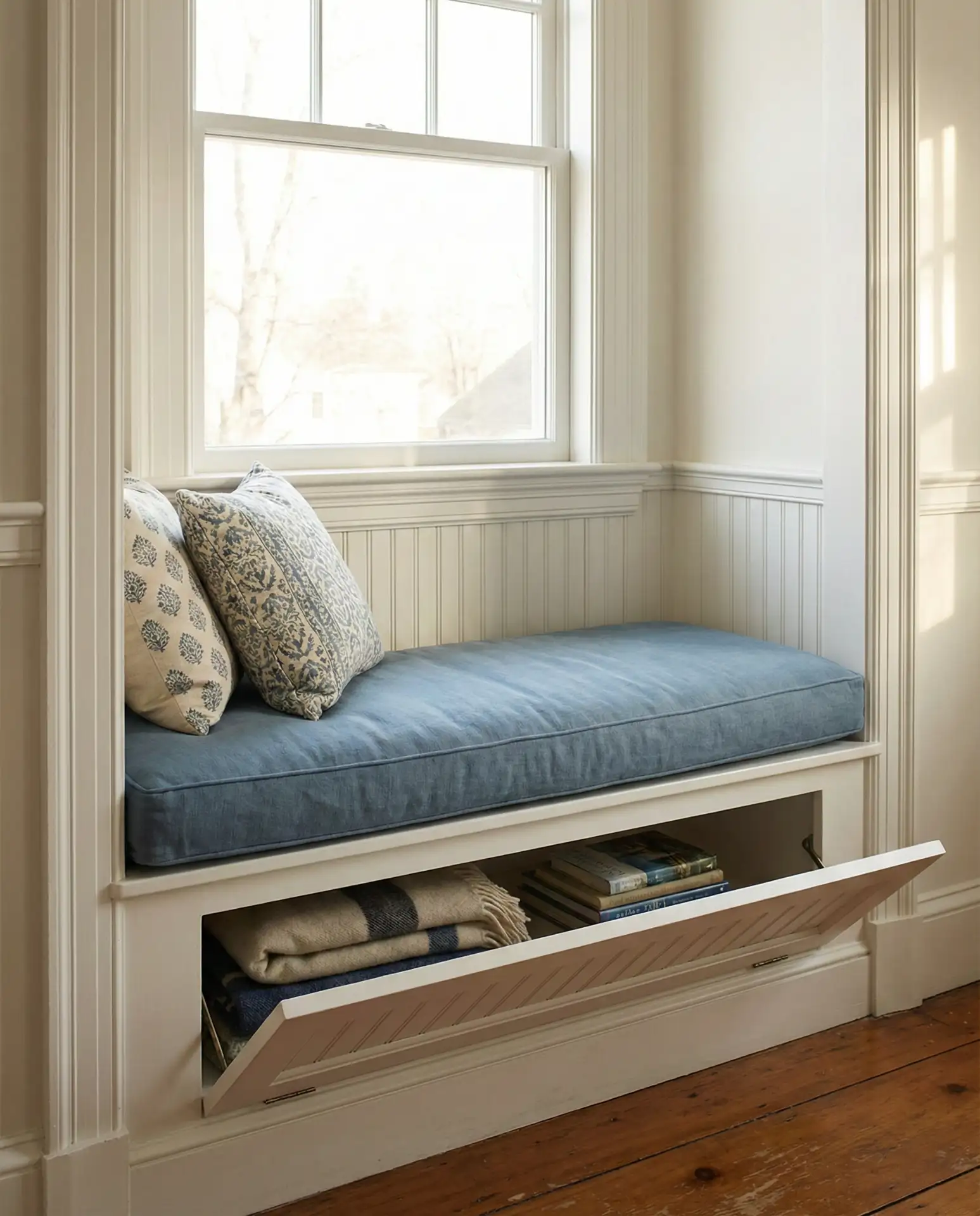
From a carpentry standpoint, a window seat is essentially a hollow box with a hinged top—straightforward for anyone comfortable with basic cabinet-making. Hiring a local carpenter typically runs $1,200–$2,800 depending on width and whether shelving flanks the sides. The hidden storage inside can realistically hold four to six large storage bins, which is meaningful square footage reclaimed in a room where every inch matters.
12. Small Kids’ Room Loft Bed with Wardrobe Below
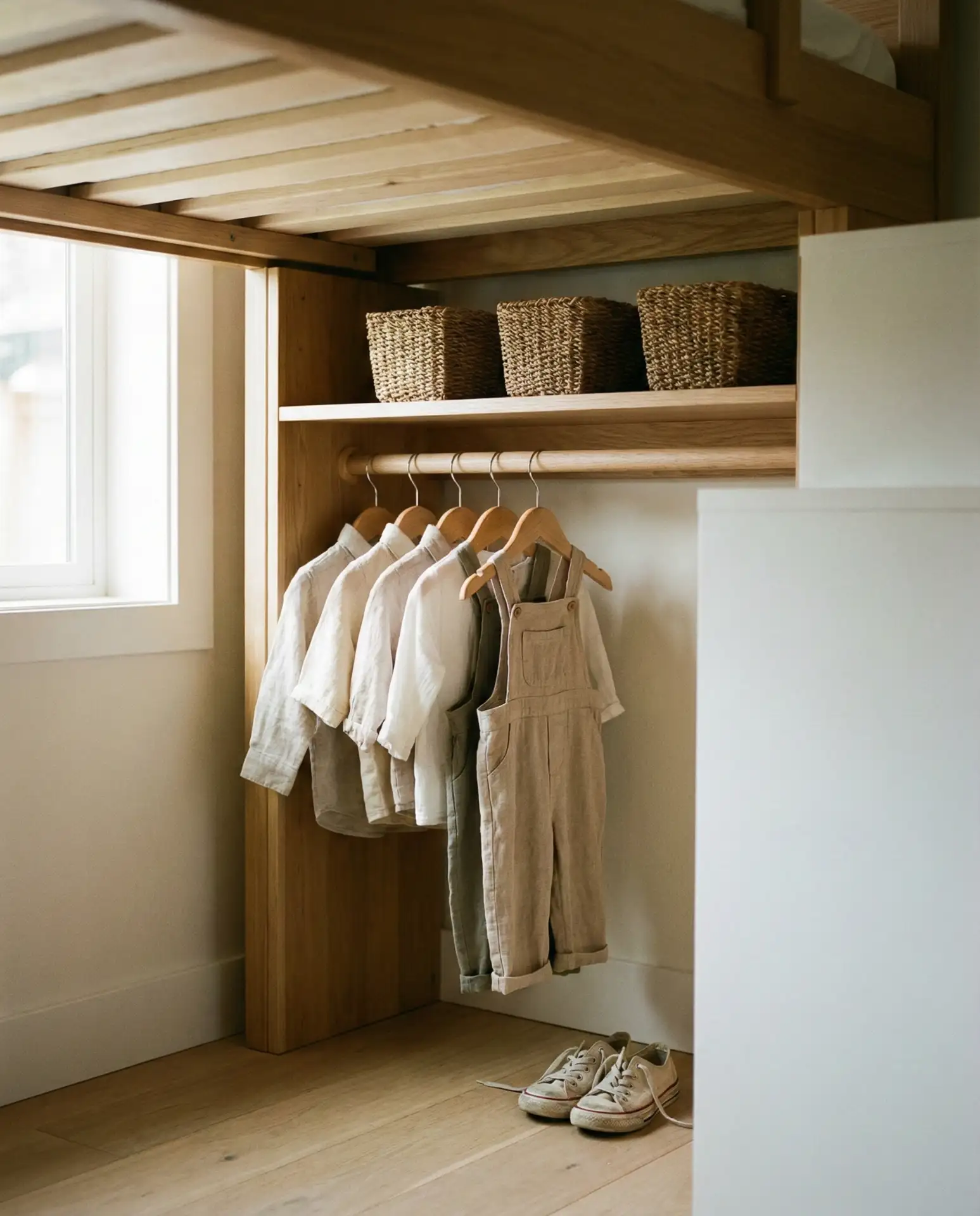
In a small kids’ room, the loft bed is essentially a vertical miracle—it lifts the sleeping area off the floor entirely, and the space underneath becomes whatever the room needs most: a wardrobe, a desk, a reading nook, or a combination of all three. Paired with a compact clothing rail or a small wardrobe unit, this setup frees up nearly the entire floor footprint of the bed itself. For tiny rooms under 100 square feet, this is often the only way to create a room that functions well for a growing child.
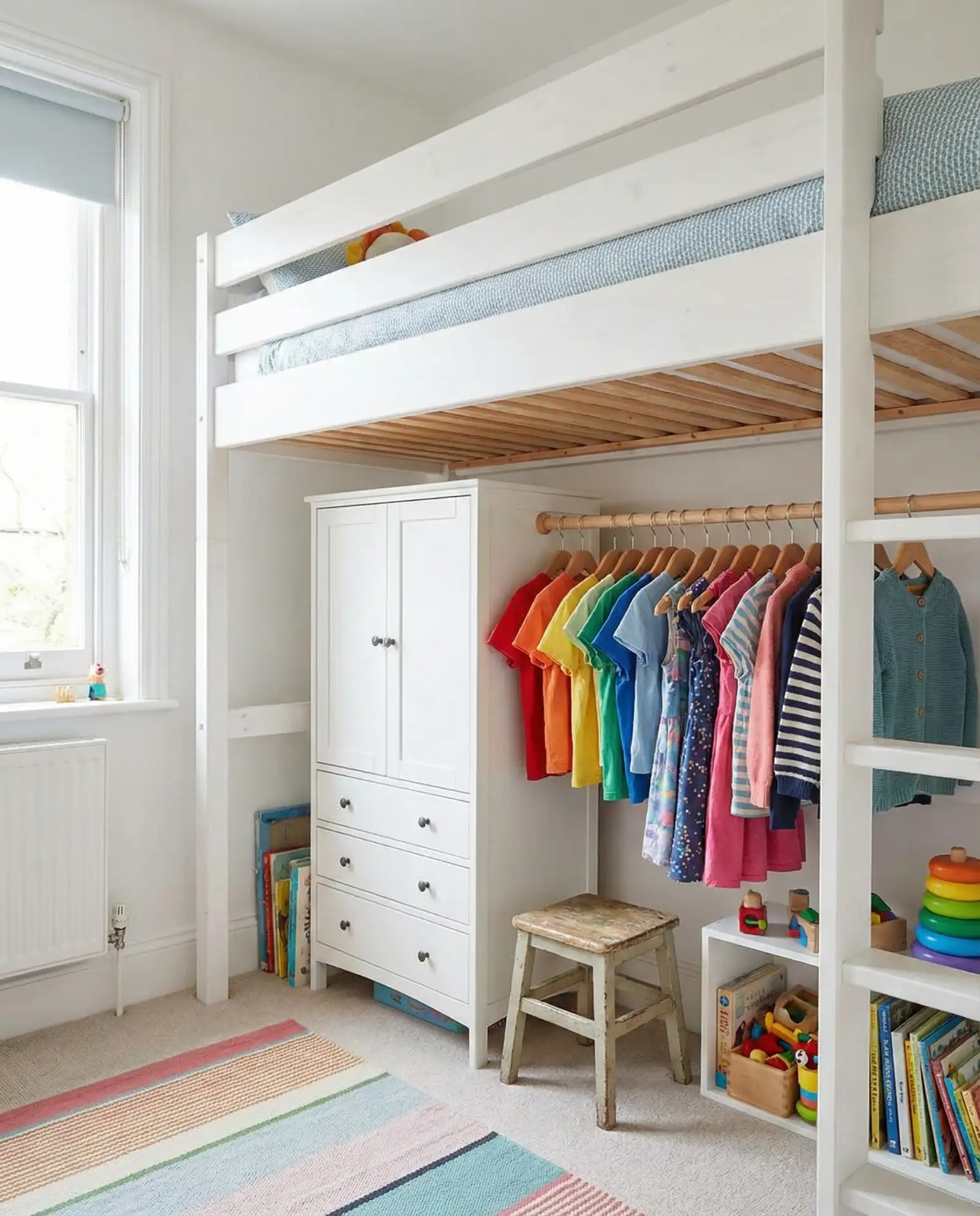
Parents across the country have discovered that kids actually prefer the loft setup—there’s something about having a “high-up” sleeping space that kids find genuinely exciting, and they tend to be more careful about keeping their under-bed area tidy when it’s a defined, visible space. One parent in Austin described their daughter’s loft conversion as “the only time she’s ever voluntarily kept her clothes organized.” The structure itself becomes a behavioral tool as much as a storage one.
13. Clothes Storage Hacks with Clear Stackable Bins
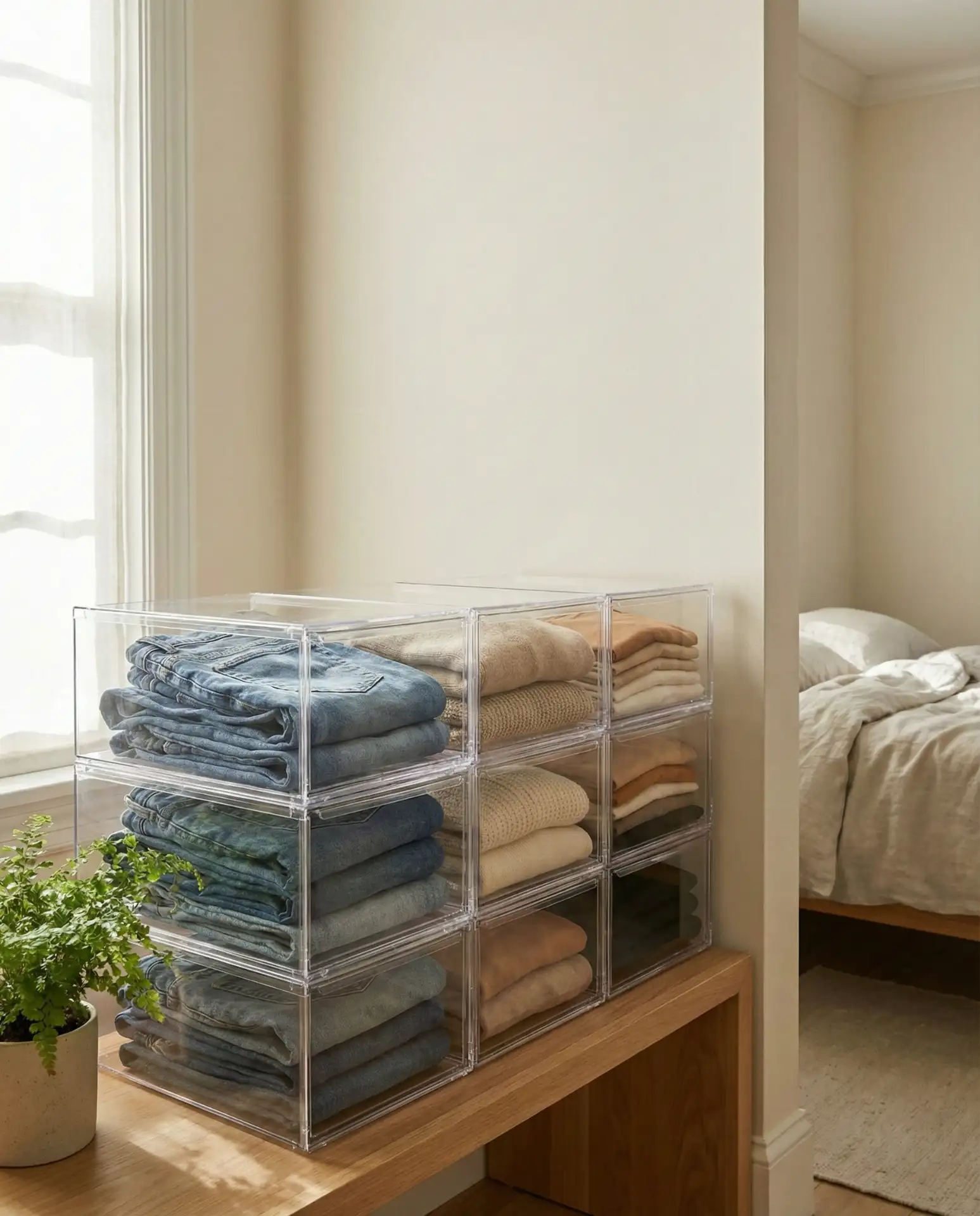
Some of the best hacks for ideas for clothes organization don’t require building anything—just a set of clear stackable bins and a commitment to the fold. Popularized by tidying experts and storage influencers alike, clear bins allow you to see every item without digging, and the uniform stacking creates a visual order that feels calming rather than cluttered. This works especially well inside existing closets, under open shelving, or even in the bedroom itself when bins are neatly labeled.
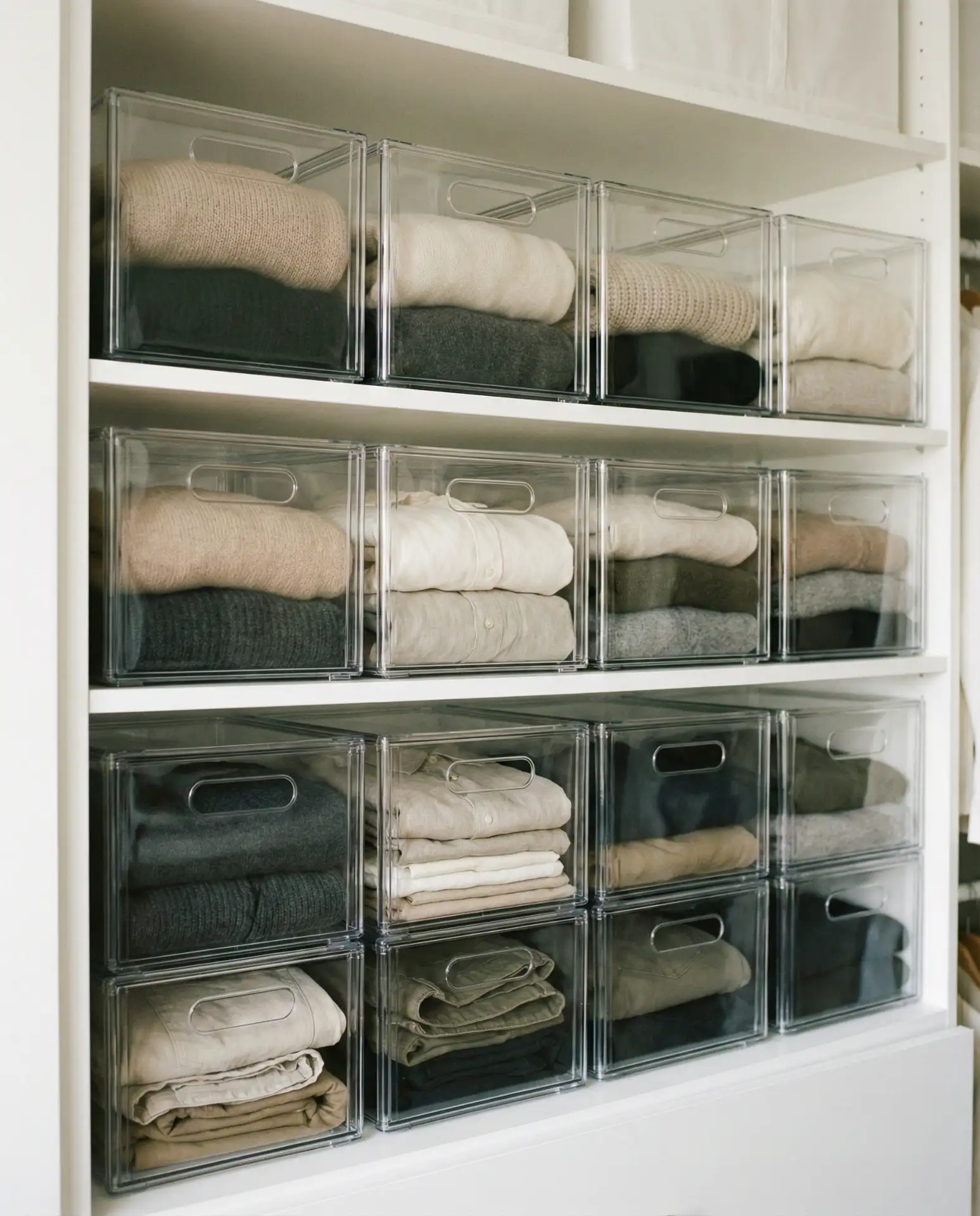
The most common mistake with this system is buying bins that are too deep—items get buried, and the whole point of clear visibility is defeated. Look for bins that are 6–8 inches deep maximum, so you can see the full contents at a glance. Brands like The Container Store, MUJI, and Amazon Basics offer versions in the $8–$25 range per bin. A complete set for a standard closet typically runs $80–$150, making this one of the most affordable total-closet transformations available.
14. Smart Bedroom Corner Shelving Unit
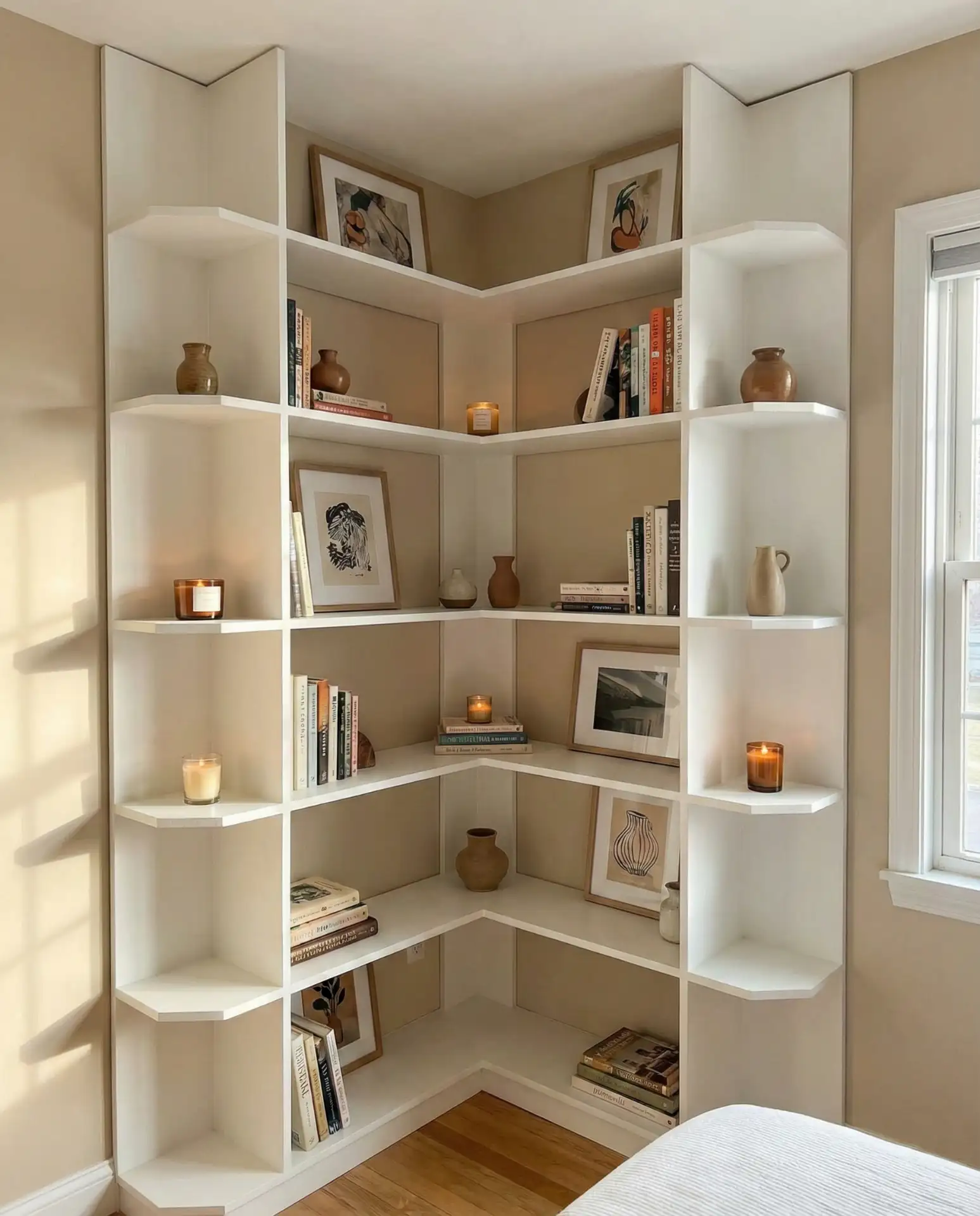
Corners are chronically wasted in bedroom design—they’re where things pile up and where clutter goes to become invisible. A dedicated corner shelving unit, whether a freestanding etagere or a set of custom shelves built directly into the junction of two walls, reclaims that space cleanly. For a smart storage solution that also contributes to the room’s aesthetic, choose a unit with varied shelf heights that can hold both books and decorative objects simultaneously.
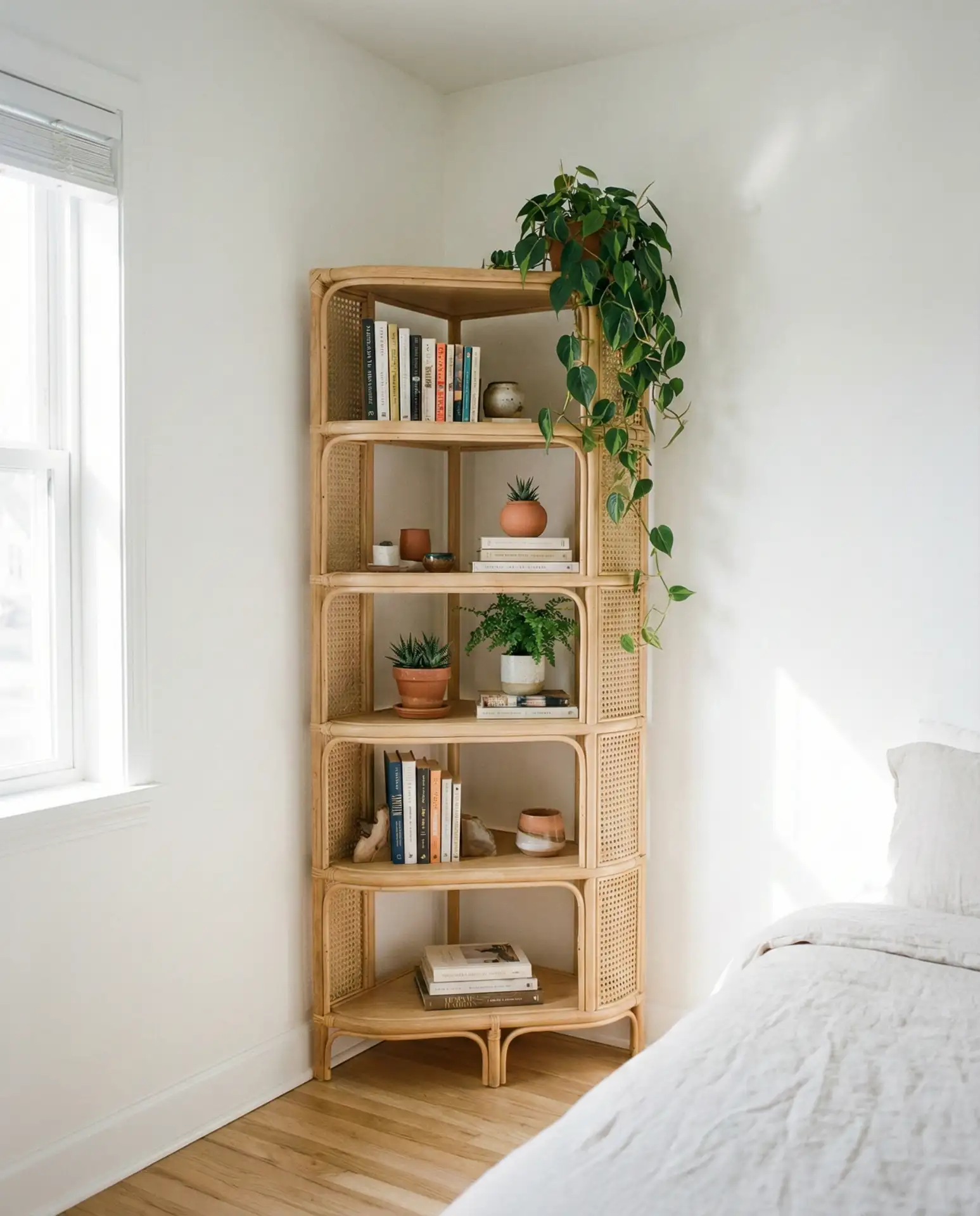
Interior designers often refer to the bedroom corner as “the forgotten luxury zone”—it’s where a well-designed house signals quality without shouting. A floor-to-ceiling built-in corner unit creates an architectural moment that makes the room feel intentionally designed rather than furnished by default. For renters, a freestanding version achieves nearly the same effect. Prices range from $80 for a basic IKEA corner shelf to $1,500+ for a custom carpentry solution, giving you room to match your budget without sacrificing the look.
15. Guest Room Murphy Bed with Integrated Storage
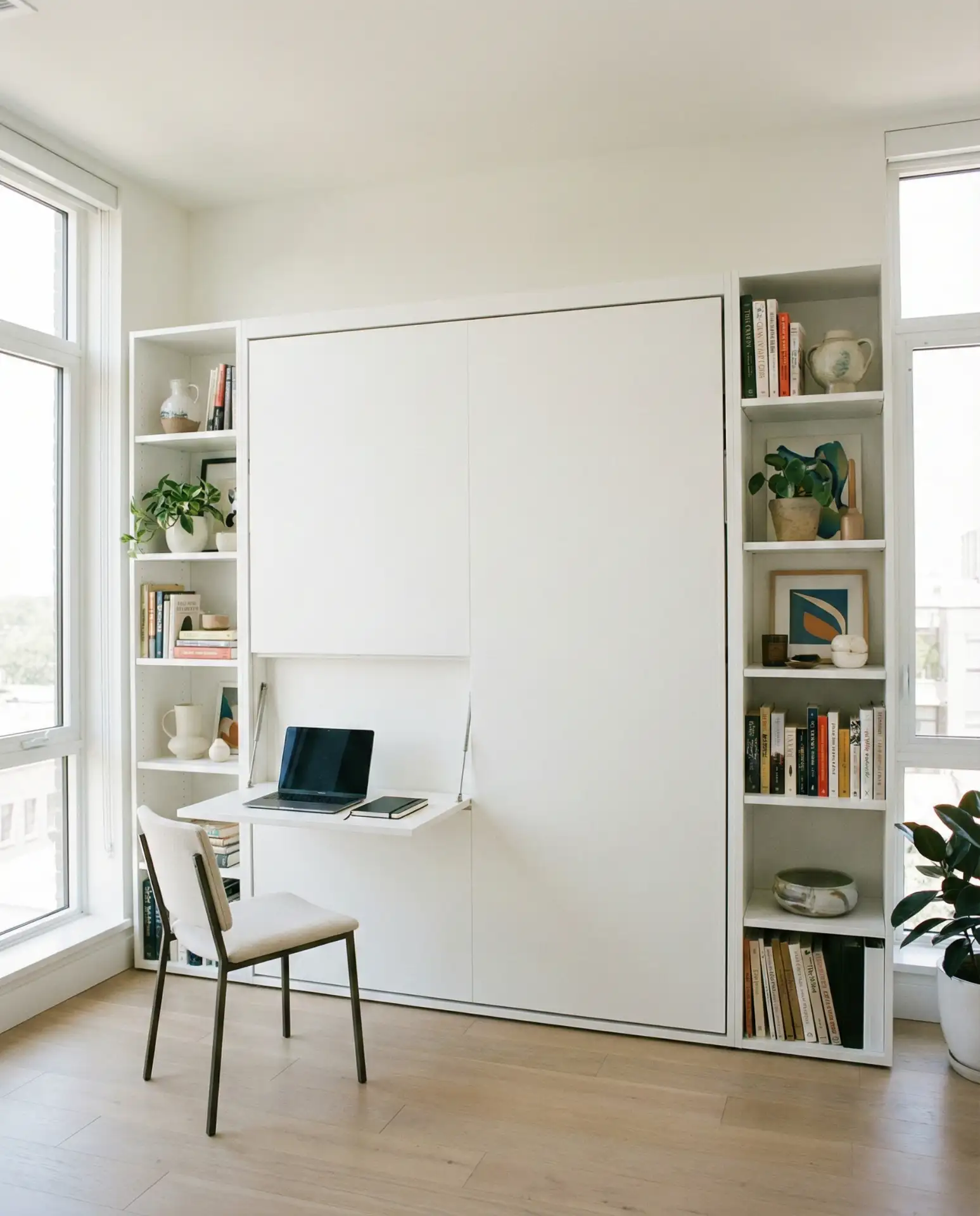
The modern Murphy bed has come a very long way from its fold-up-into-a-closet origins. Today’s wall bed systems integrate bookshelves, a fold-down desk, side cabinets, and even a sofa—turning what would be a dedicated guest bedroom into a fully functional home office or craft room when company isn’t visiting. For anyone living in a two-bedroom home where the second room needs to earn its keep every single day, this is one of the most transformative solutions available in residential furniture right now.
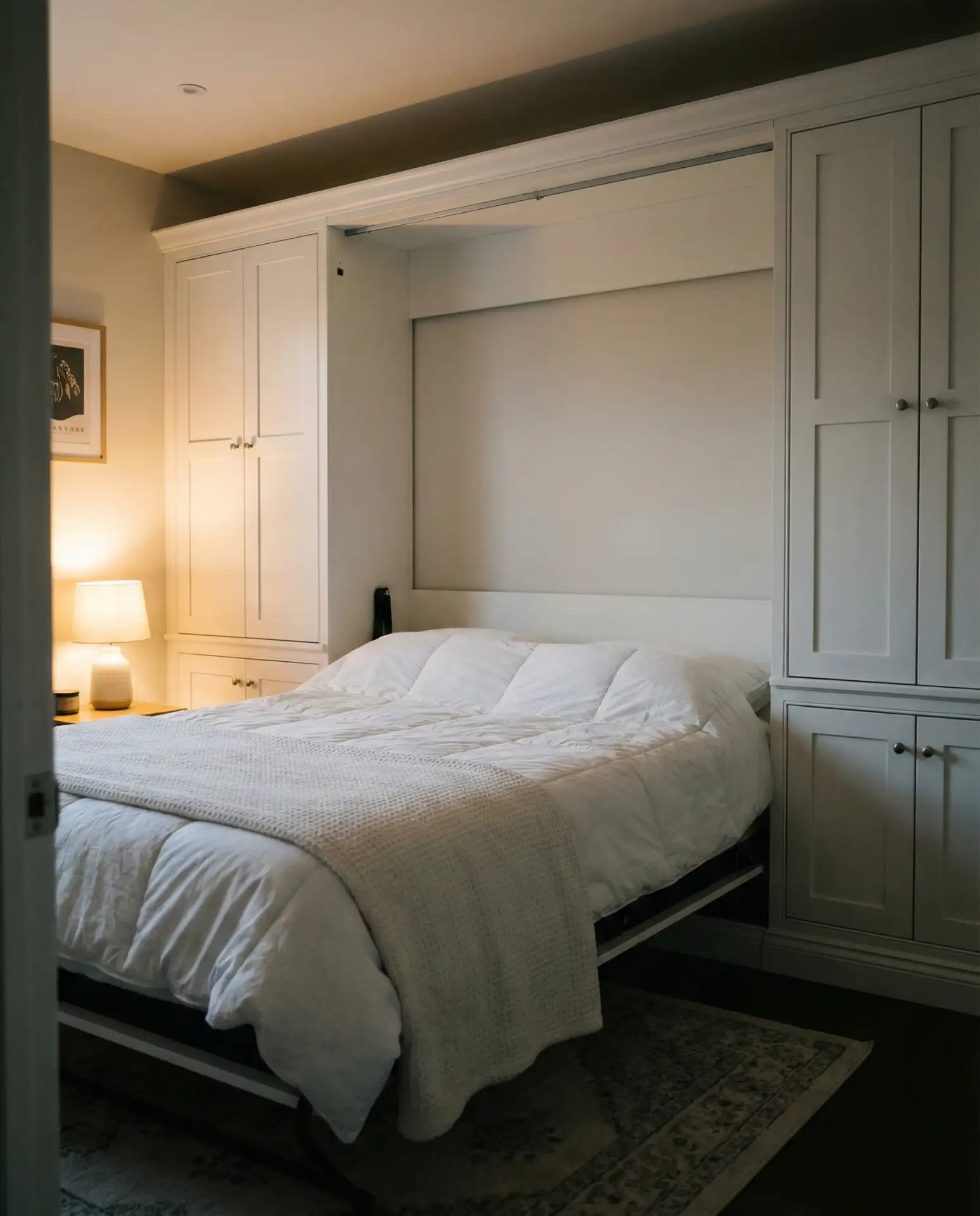
Murphy bed systems have become significantly more affordable and design-forward in the past five years. Entry-level DIY kits start around $1,200, while fully installed systems with integrated shelving and desks run $3,000–$8,000 depending on size and brand. Companies like Resource Furniture, Cabinet Bed, and Ori Systems have all launched stylish American market options in recent years. For urban homeowners and renters in cities like New York, San Francisco, and Boston, the investment practically pays for itself in avoided square footage costs.
16. Aesthetic Bedroom Storage with Rattan Baskets
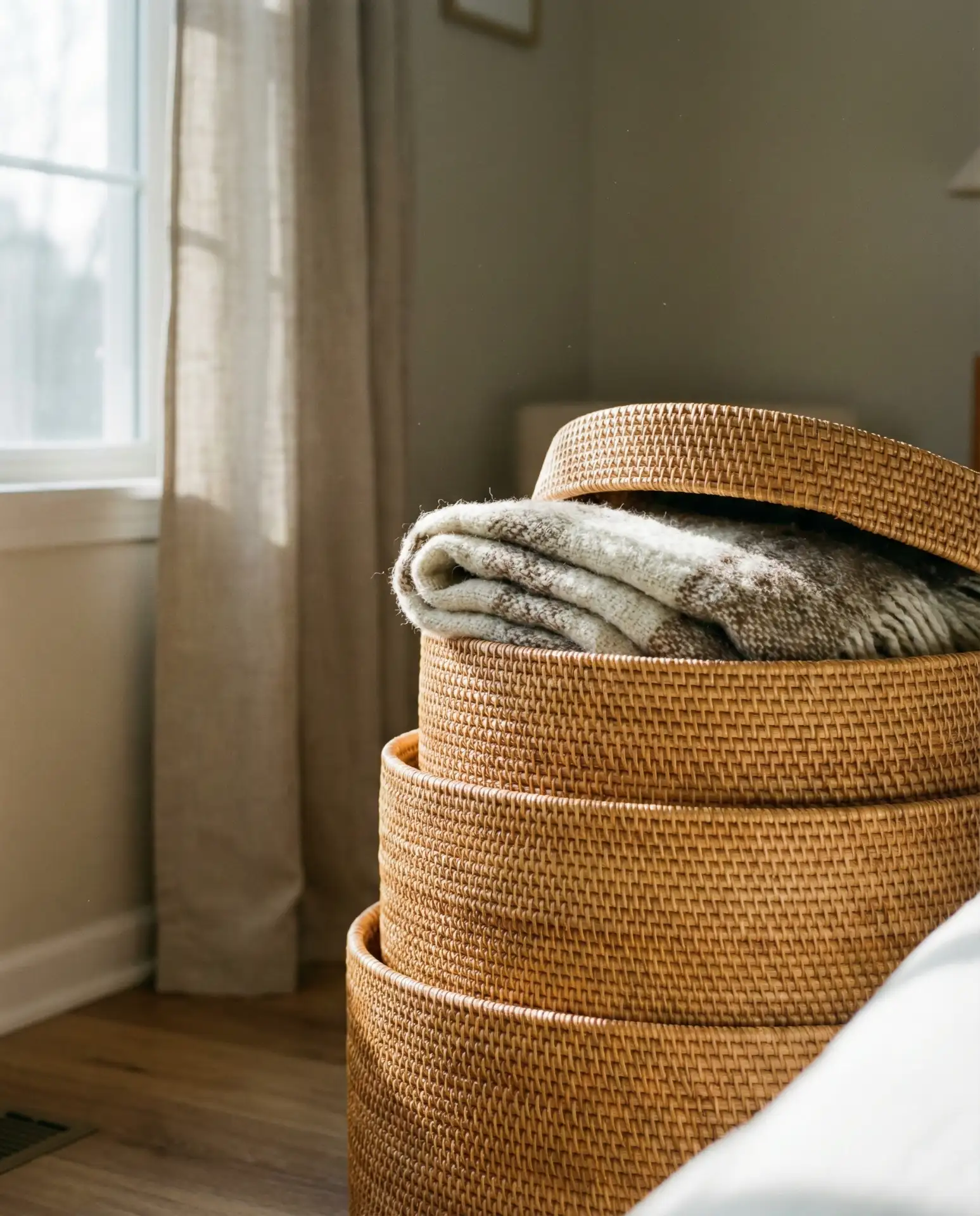
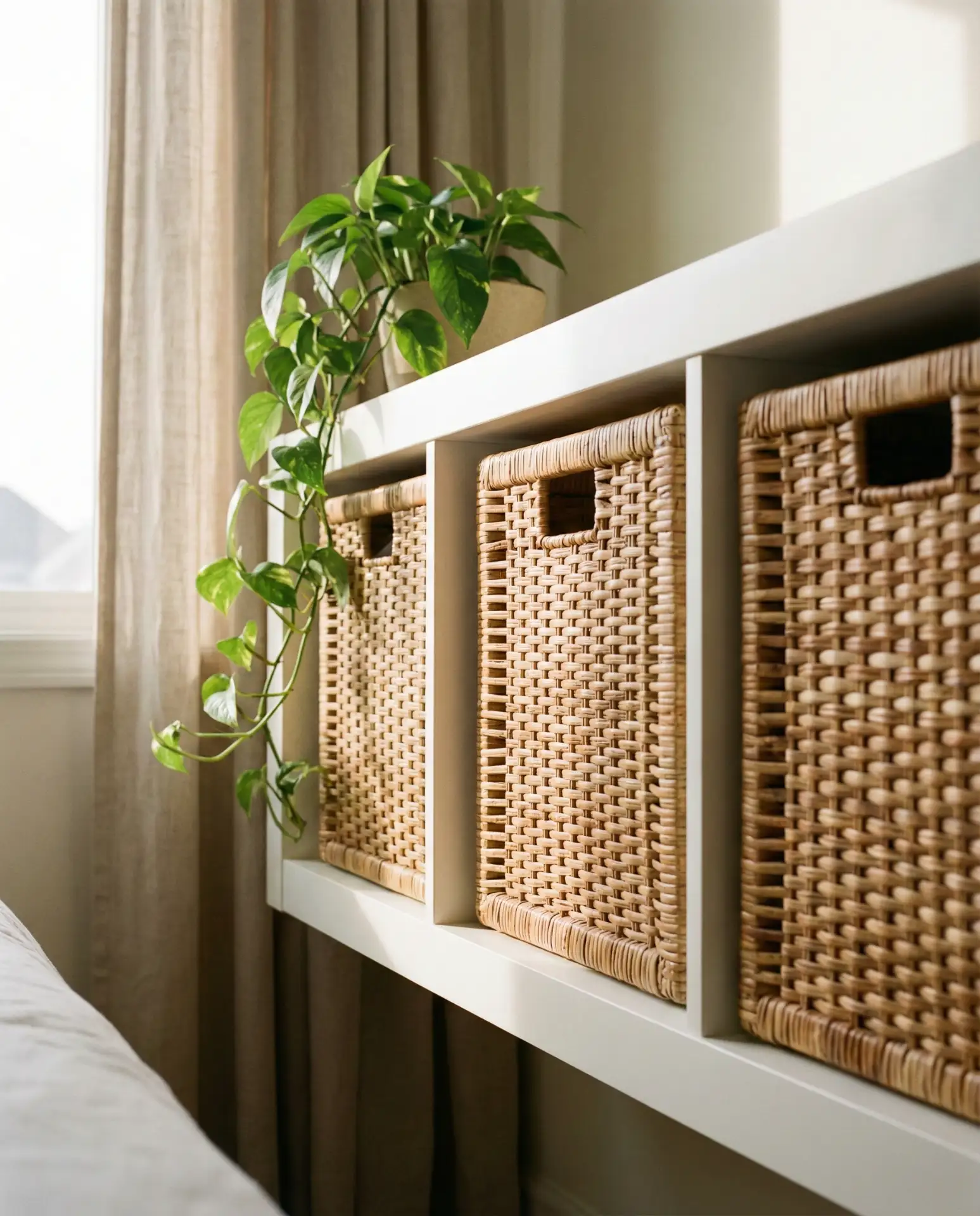
Rattan and woven baskets are having an extended moment in American home design, and they’ve earned it—they soften storage visually in a way no plastic bin ever could. Line open shelving with baskets in graduated sizes for an aesthetic that reads as curated and earthy rather than utilitarian. Use them on floating shelves, in wardrobe cubbies, under benches, or simply stacked in a corner for extra throw blankets and seasonal textiles.
What makes the rattan basket system work so well aesthetically is that it forgives imperfection—you don’t need to fold everything neatly because the basket hides whatever’s inside. Interior stylists recommend buying baskets with lids for higher-traffic items and open-top versions for things you access daily. Sets from brands like Serena & Lily, World Market, or Terrain run anywhere from $25 to $120 per basket depending on size and quality, making it easy to build a cohesive collection over time.
17. Behind-the-Door Organizer for Small Rooms
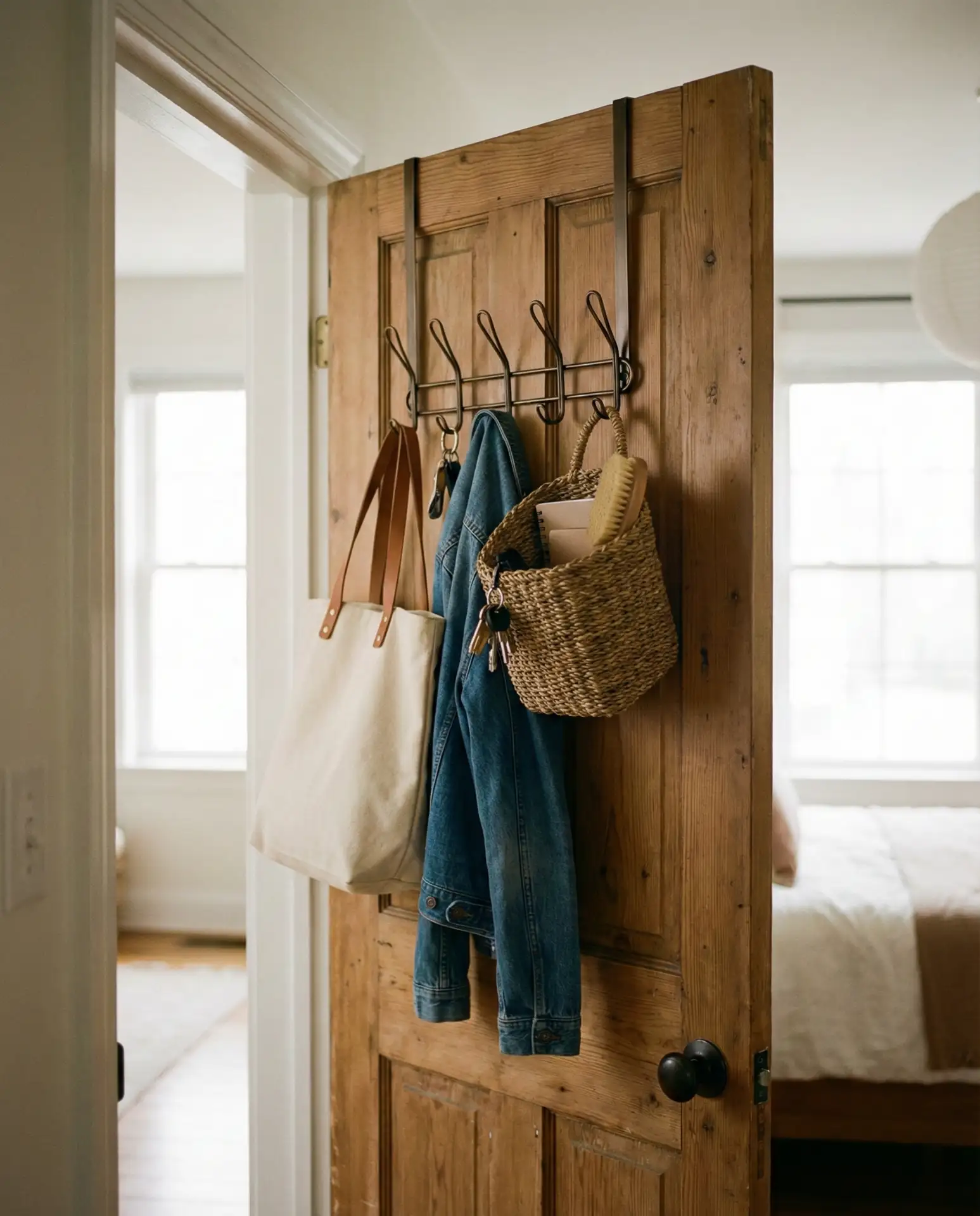
The back of a bedroom door is one of the most consistently overlooked storage surfaces in any home—and in small rooms, it’s genuinely prime territory. An over-the-door organizer with pockets, hooks, or a combination of both can hold shoes, accessories, cleaning supplies, or even a full collection of hair tools and products, all without occupying a single inch of floor or wall space. This is arguably the most no-commitment hack on this entire list—it mounts in minutes and moves out just as easily.
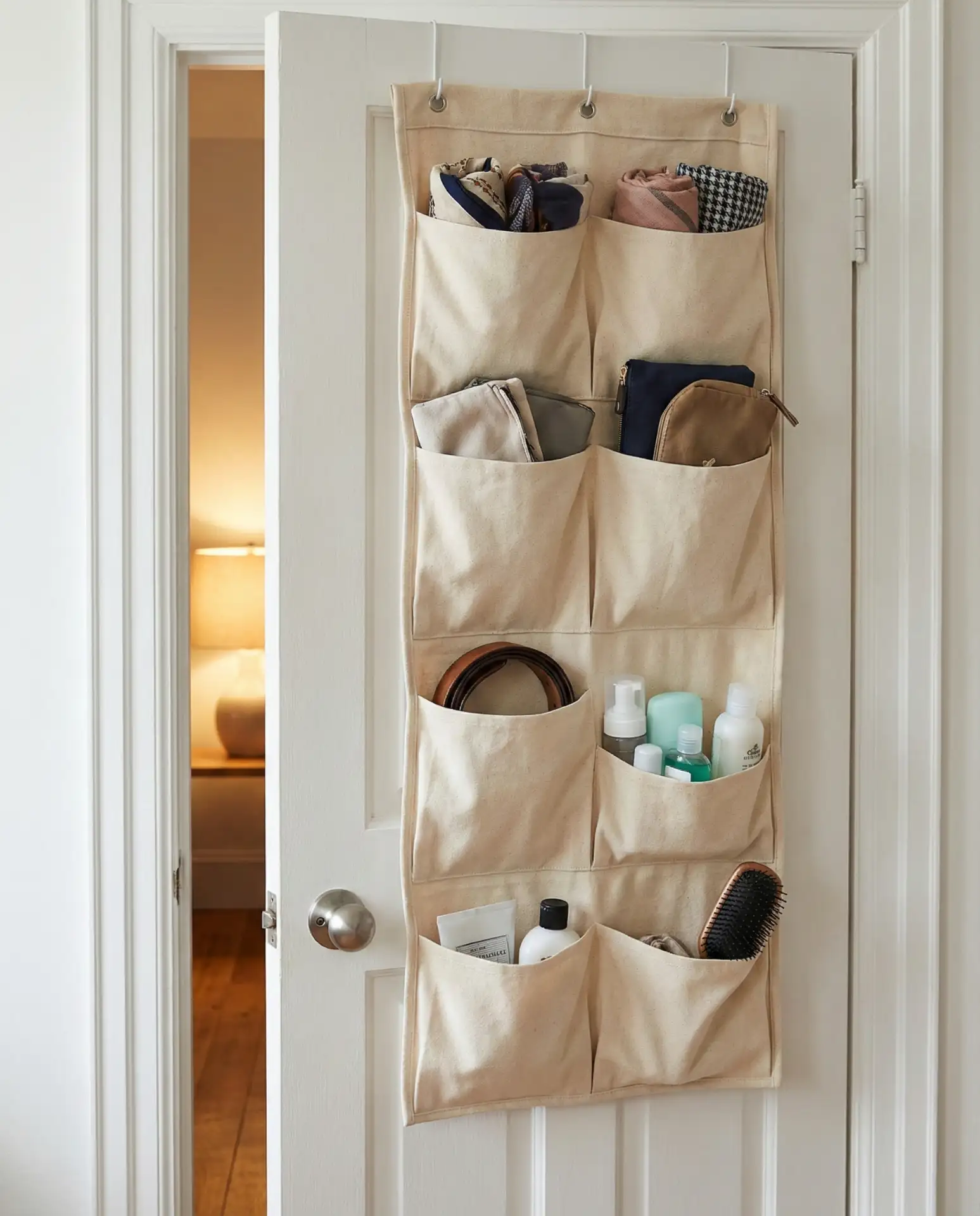
A quick note on common mistakes: not all over-the-door organizers are created equal—cheaper canvas versions tend to sag and tip forward over time, which is both frustrating and potentially damaging to the door edge. Look for metal or reinforced polypropylene options with a sturdy hook bar at the top. The best ones, from brands like The Container Store’s elfa or SimpleHouseware, run $25–$60 and hold their shape and weight limit reliably for years.
18. DIY Floating Nightstand with Drawer
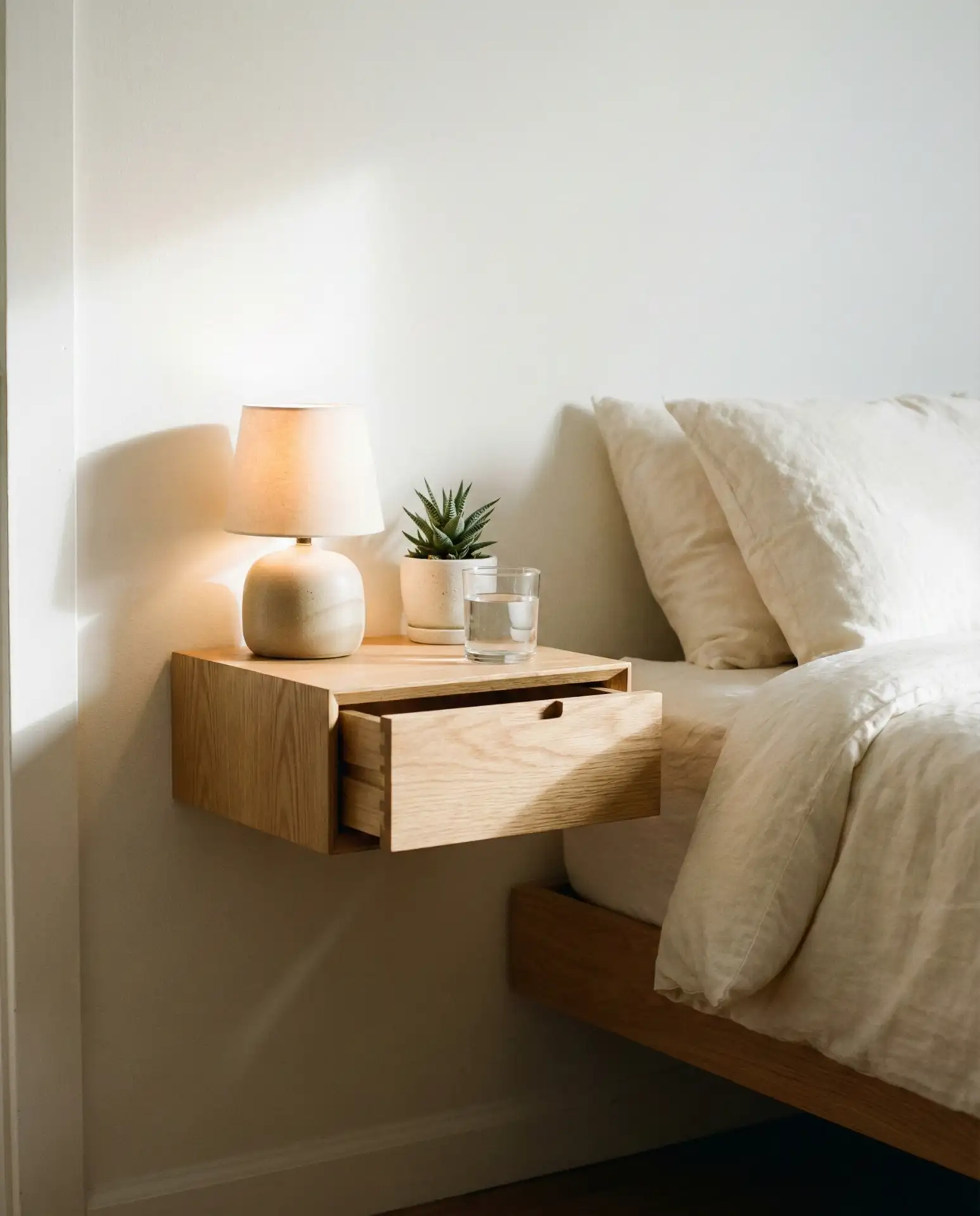
A wall-mounted floating nightstand with a built-in drawer is one of the most elegant DIY projects you can tackle in a weekend—and the payoff is enormous both functionally and visually. It keeps the floor clear, makes the room easier to clean, and looks genuinely expensive for a project that typically costs $50–$120 in materials. For ideas for small spaces, replacing a bulky bedside table with a wall-mounted version reclaims six to eight square feet of floor space—sometimes more.
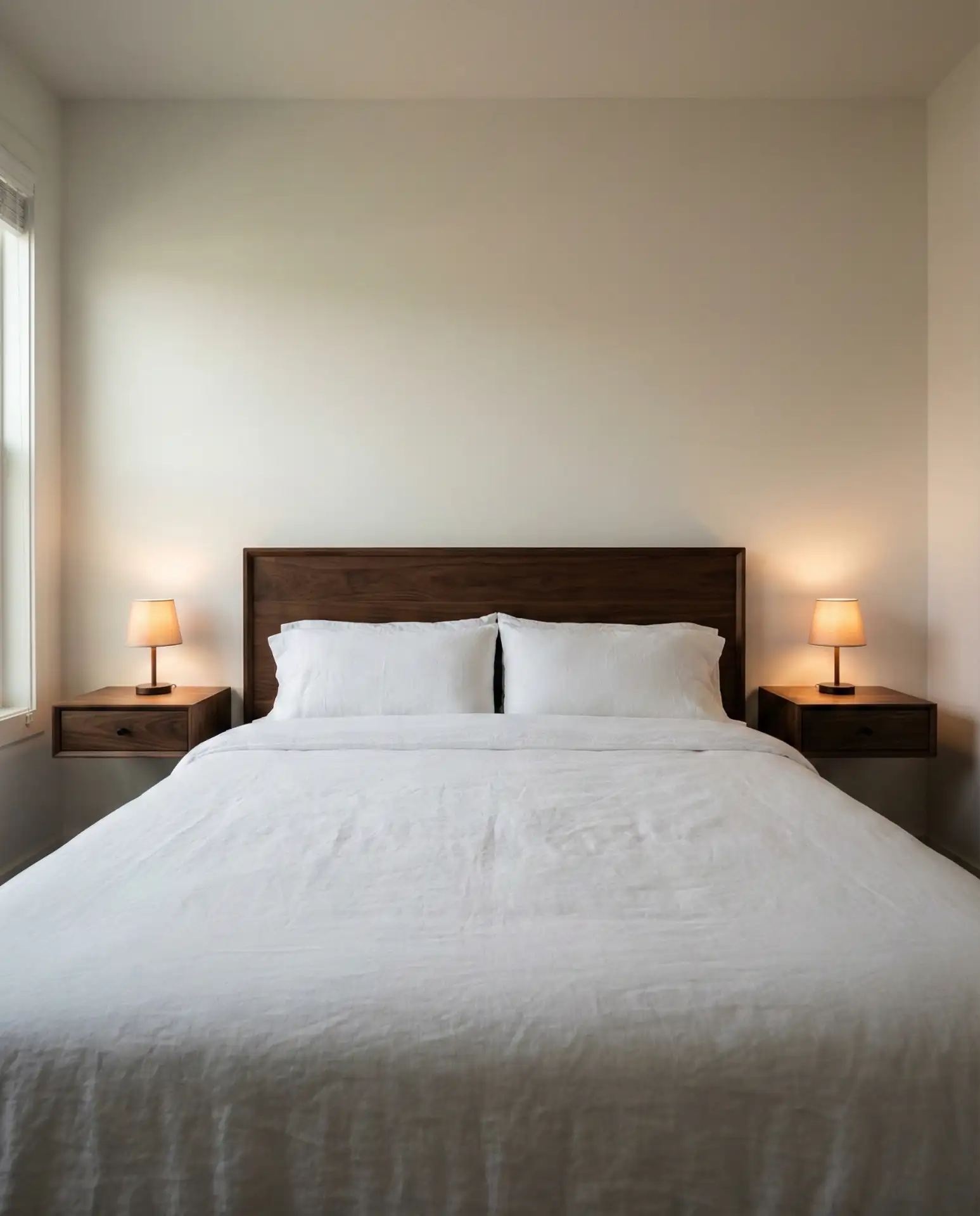
From a construction standpoint, the basic version is a simple box with a drawer—made from 3/4-inch plywood, a short piece of drawer runner, and a keyhole bracket or French cleat for wall mounting. YouTube tutorials for this specific build consistently rank among the most-watched woodworking content on the platform, with builds documented in under four hours from cut list to installation. Sand smooth, stain or paint, and the result genuinely looks custom-crafted.
19. Bedroom Storage Inspo: The All-White Closet Refresh

One of the most enduring pieces of inspo on Pinterest and Instagram is the all-white closet refresh—and it earns its place on every design board because the results are genuinely transformative with minimal effort. Paint the interior of any existing closet bright white (including the rod, shelf, and walls), swap in matching white velvet hangers, and add a few white storage boxes, and the whole space reads like a boutique dressing room. This works in virtually every closet type and every home style, from modern to traditional.

The cost of a full all-white closet refresh—paint, new hangers, a few storage boxes—typically lands between $40 and $120, making it one of the most affordable high-impact storage projects on this entire list. The key insight is that the transformation isn’t primarily about adding storage capacity; it’s about creating the visual conditions that make existing storage feel better. When the closet looks calm and organized, people are more likely to maintain that organization day to day.
20. Entryway-Style Bedroom Drop Zone
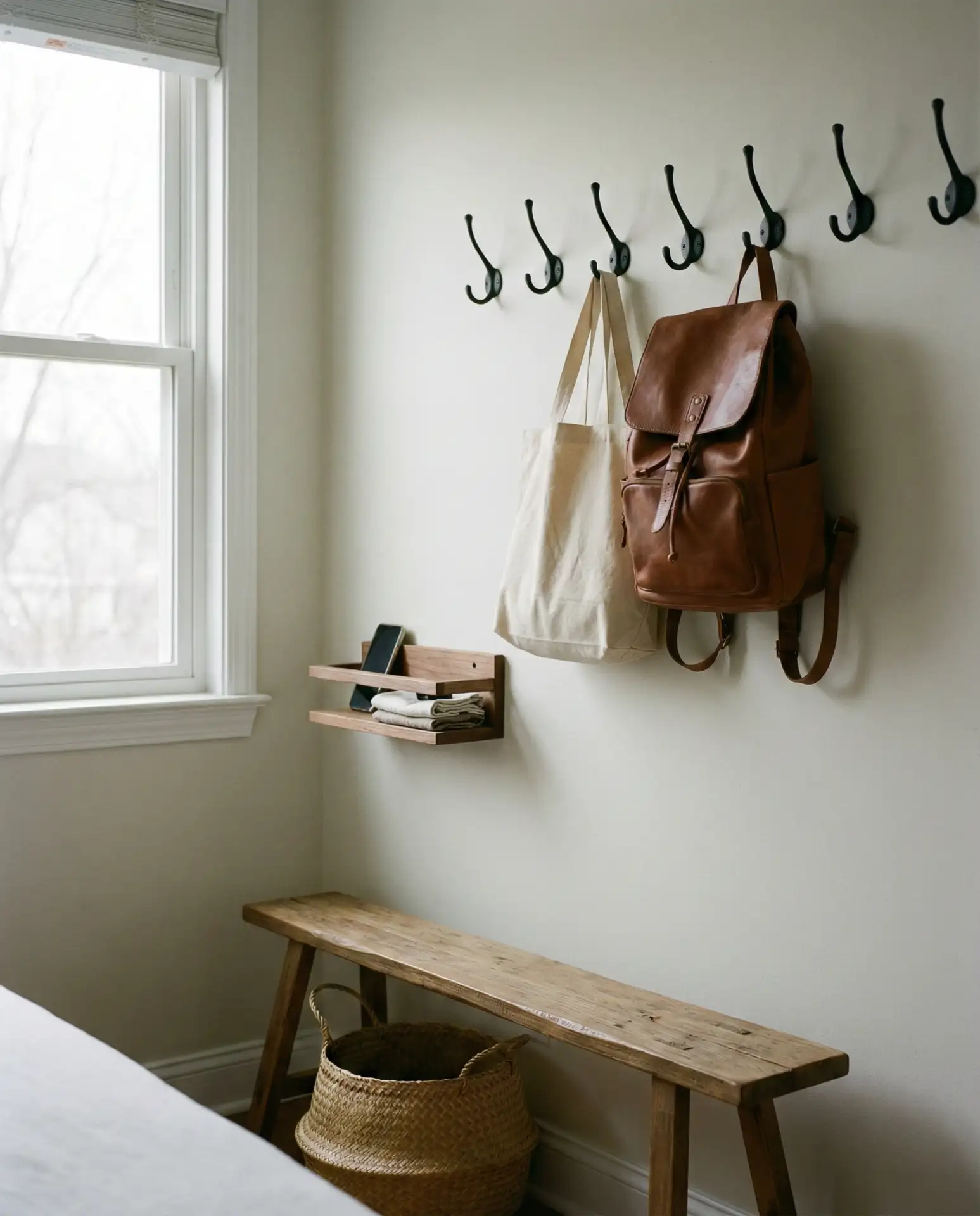
One of the smartest design moves happening in American bedrooms right now is borrowing the entryway concept and bringing it inside the room—a dedicated “drop zone” corner with hooks for bags and jackets, a small shelf for daily carry items, and a tray for keys and chargers. This addresses real homeowner behavior: most people come home and immediately bring things into the bedroom, and without a defined landing spot, those things pile up on the floor and bed every single day.
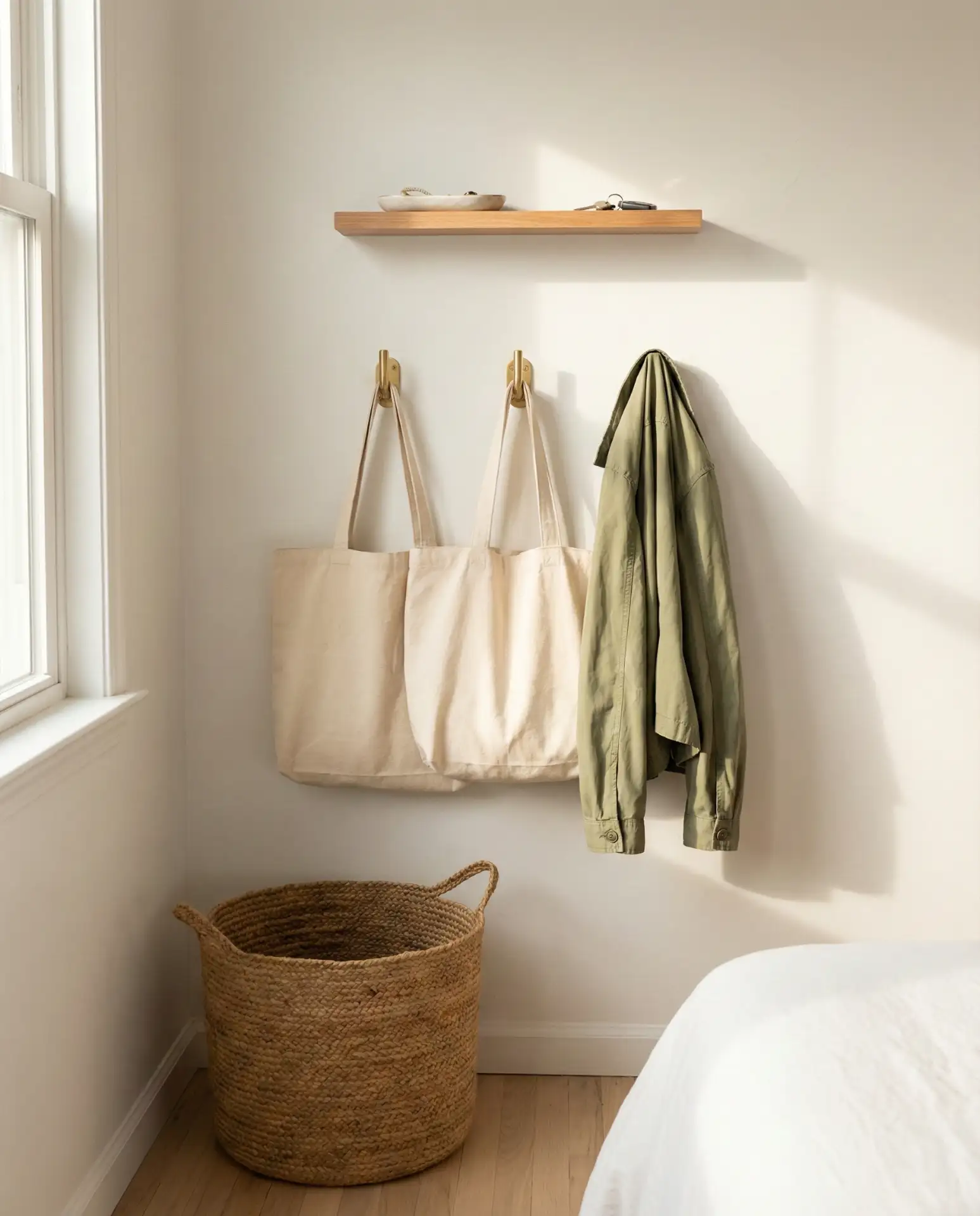
Behavioral design research consistently shows that people need friction-free systems—the fewer decisions required to put something away, the more likely they are to actually do it. The bedroom drop zone works because it meets people where their habits already are. Instead of asking someone to change their behavior (“stop dropping things on the floor”), it creates an alternative that’s just as easy. Materials to build a basic version run $50–$150: a few wall hooks, a narrow floating shelf, and a basket.
21. Creative Bedside Crate or Cube Nightstand Stack
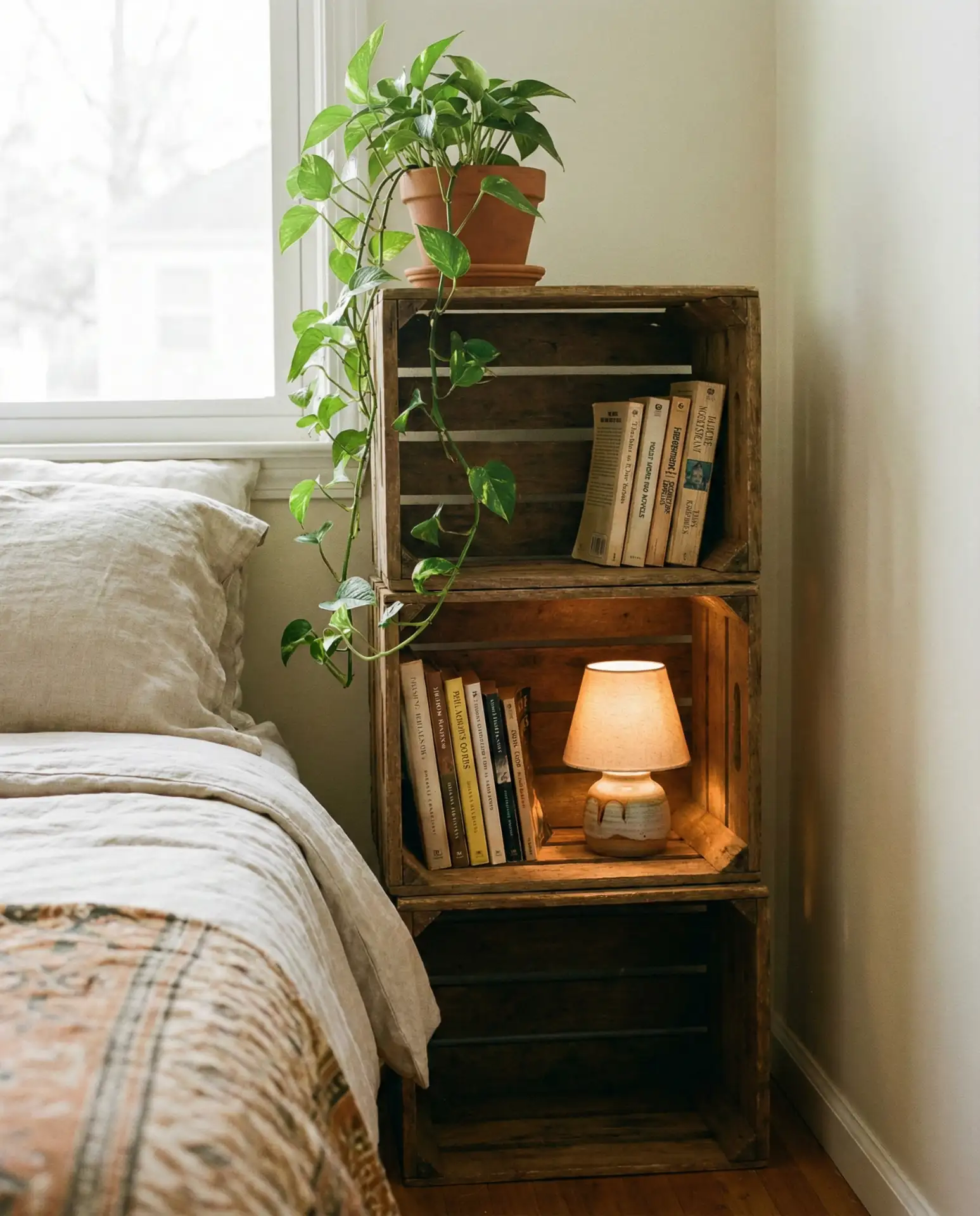
For renters, students, and anyone who moves frequently, a stacked cube or crate nightstand is one of the most practical and visually creative bedroom storage arrangements you can put together without tools, a truck, or a large budget. Stack two or three milk crates, wooden cubes, or IKEA KALLAX units on their sides, and you instantly have an open-face shelving unit that doubles as a nightstand—with cubbies for books, a lamp, a glass of water, and whatever else your bedside routine requires.
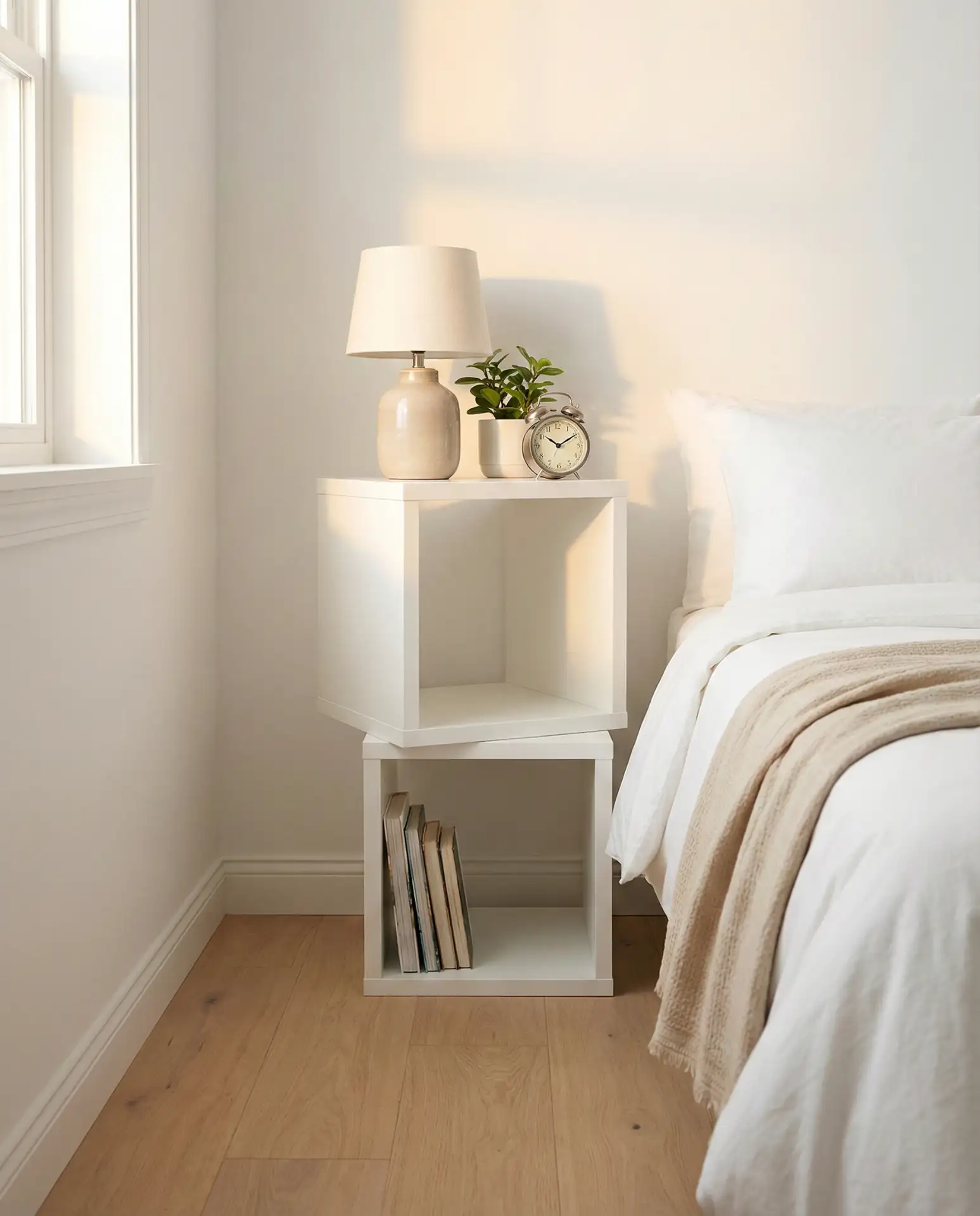
This approach is especially popular in college towns and urban areas where people tend to move every one to two years and have limited investment appetite for bedroom furniture. The IKEA KALLAX unit—the most popular version of this concept—costs about $55 for the two-cube version and can be reconfigured endlessly. It’s one of those IKEA classics that’s been “hacked” ten thousand ways on Pinterest and still manages to look fresh in the right context.
22. Mirrored Wardrobe Doors for Small Room Illusion
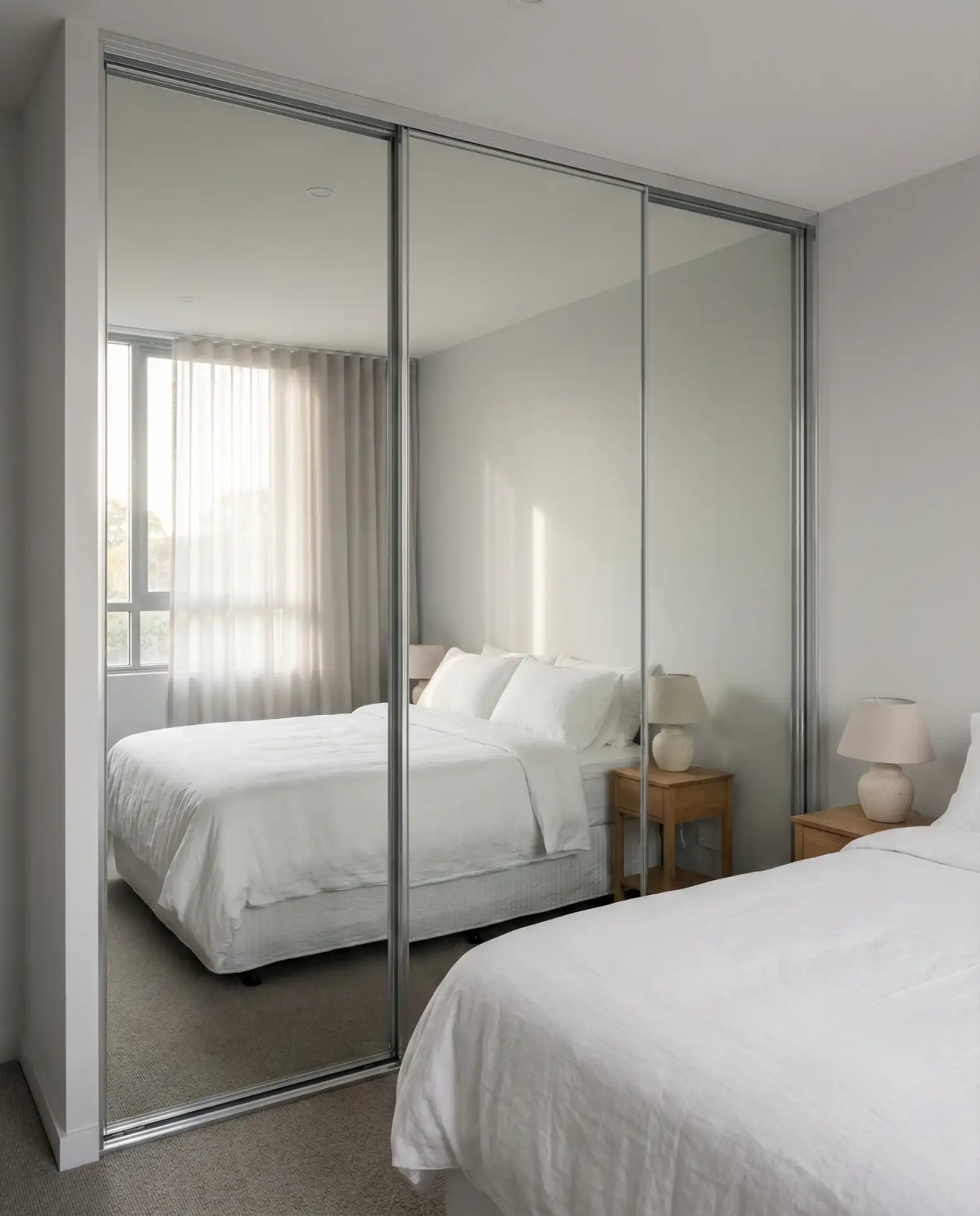
Mirrored sliding wardrobe doors serve double duty in ways that few other storage elements can match: they maximize closet space with smooth-glide access (no swing clearance required), and they visually double the perceived size of any room by reflecting light and depth. This is one of the most tried-and-true ideas for small spaces in the interior design world, and it works just as well in a 10×10 guest room as it does in a primary suite. The mirror eliminates the need for a separate full-length mirror, which saves even more floor space.
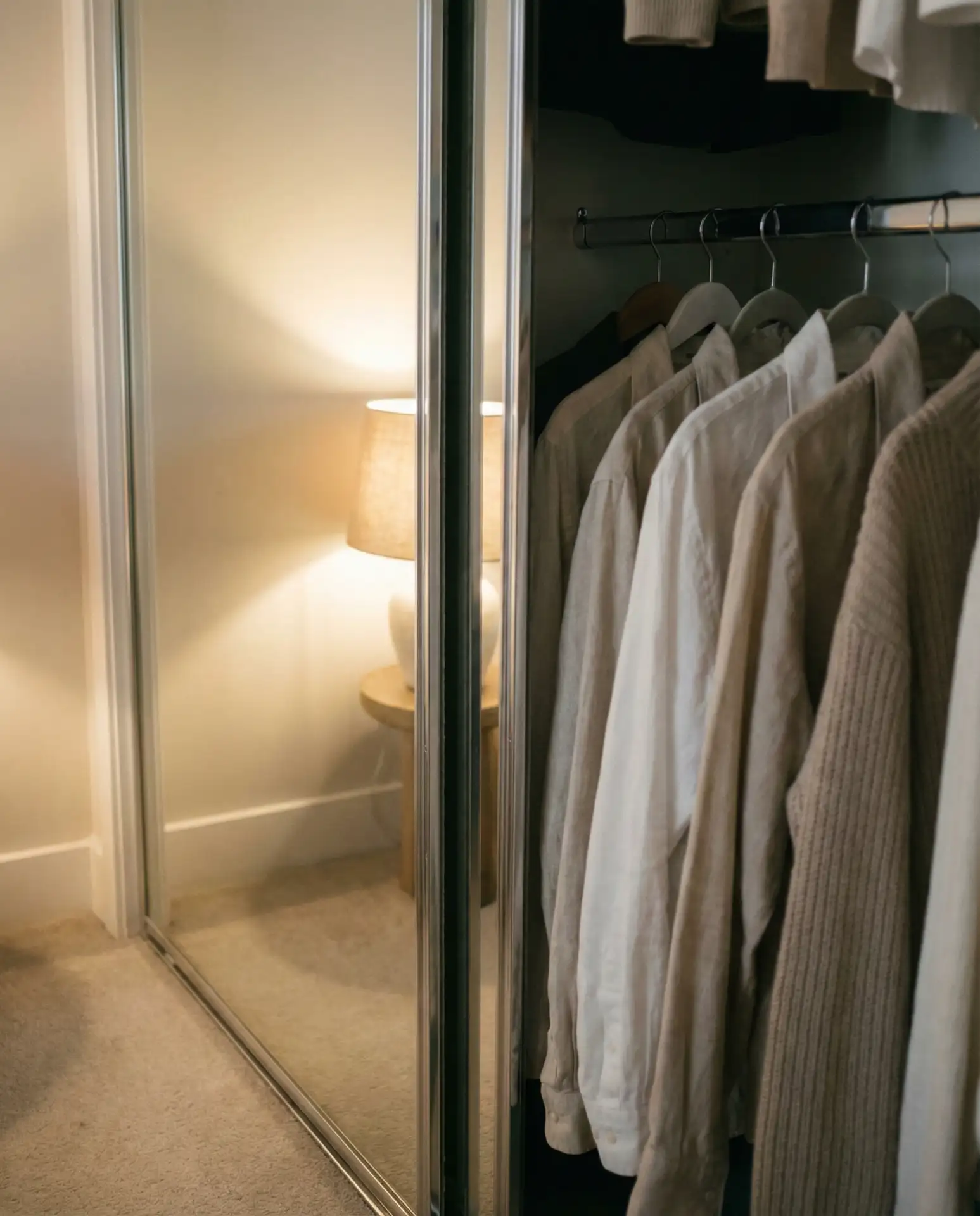
From a budget standpoint, mirrored sliding door kits for standard closet openings run $200–$600 at retailers like The Home Depot and IKEA — a significant saving over custom-built built-in mirror doors, which can cost $1,500–$4,000 installed. The standard systems fit most American closet openings without modification. One expert tip: warm-toned mirror glass (slightly bronze or antiqued) looks significantly more luxurious than standard cold silver glass, and the cost difference is minimal.
23. Scandi-Style Minimalist Wardrobe with Open Rail and Shelving
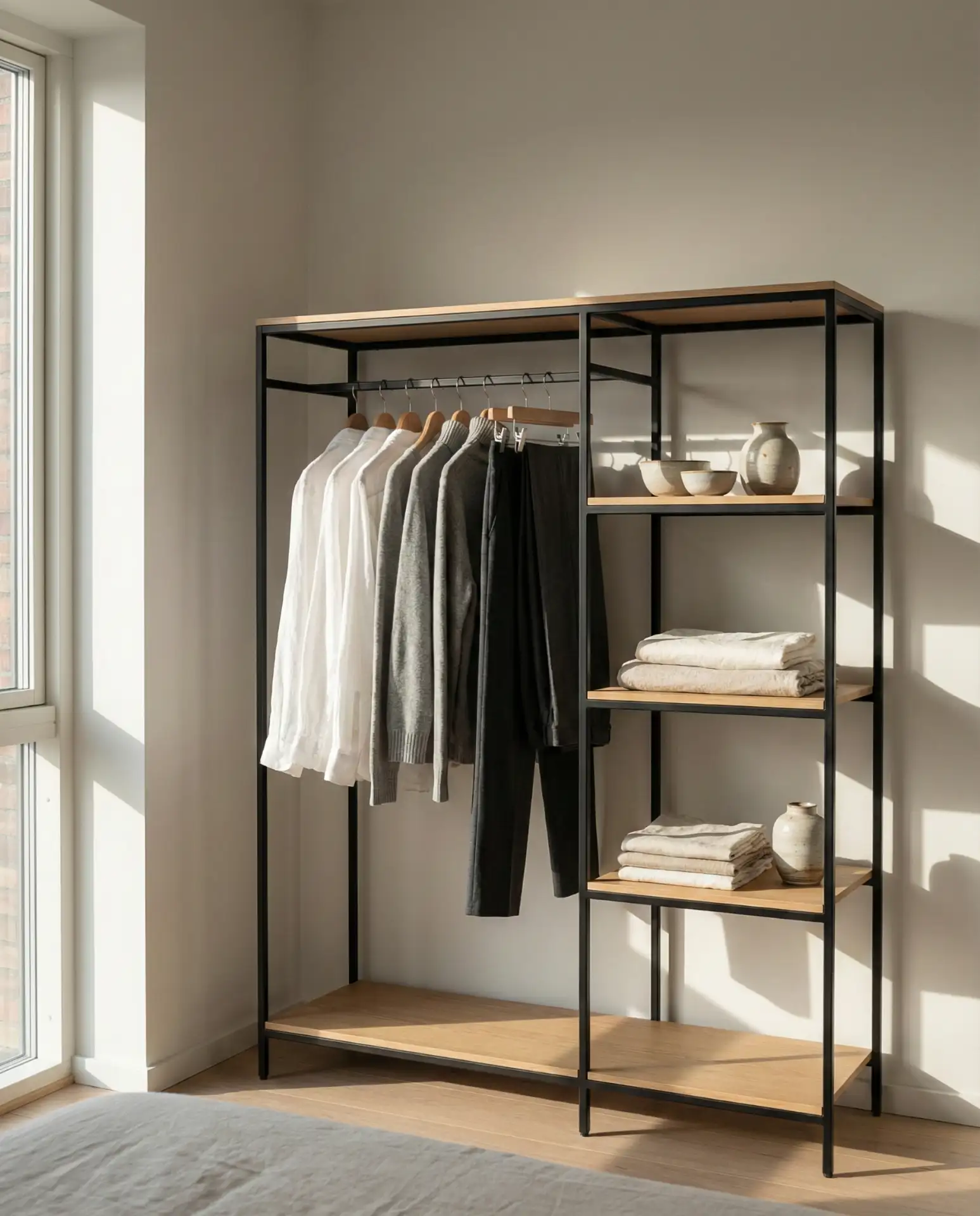
The Scandinavian approach to bedroom wardrobe design—open clothing rail at one height, floating shelves beside and above, everything visible and curated rather than hidden—has become one of the most pinned aesthetic bedroom styles in the country. It’s minimal by philosophy: you keep only what you love, display it beautifully, and the storage itself becomes a design feature of the room rather than an afterthought. Open rail systems work particularly well in airy, light-filled rooms where the clothing palette is edited and consistent.
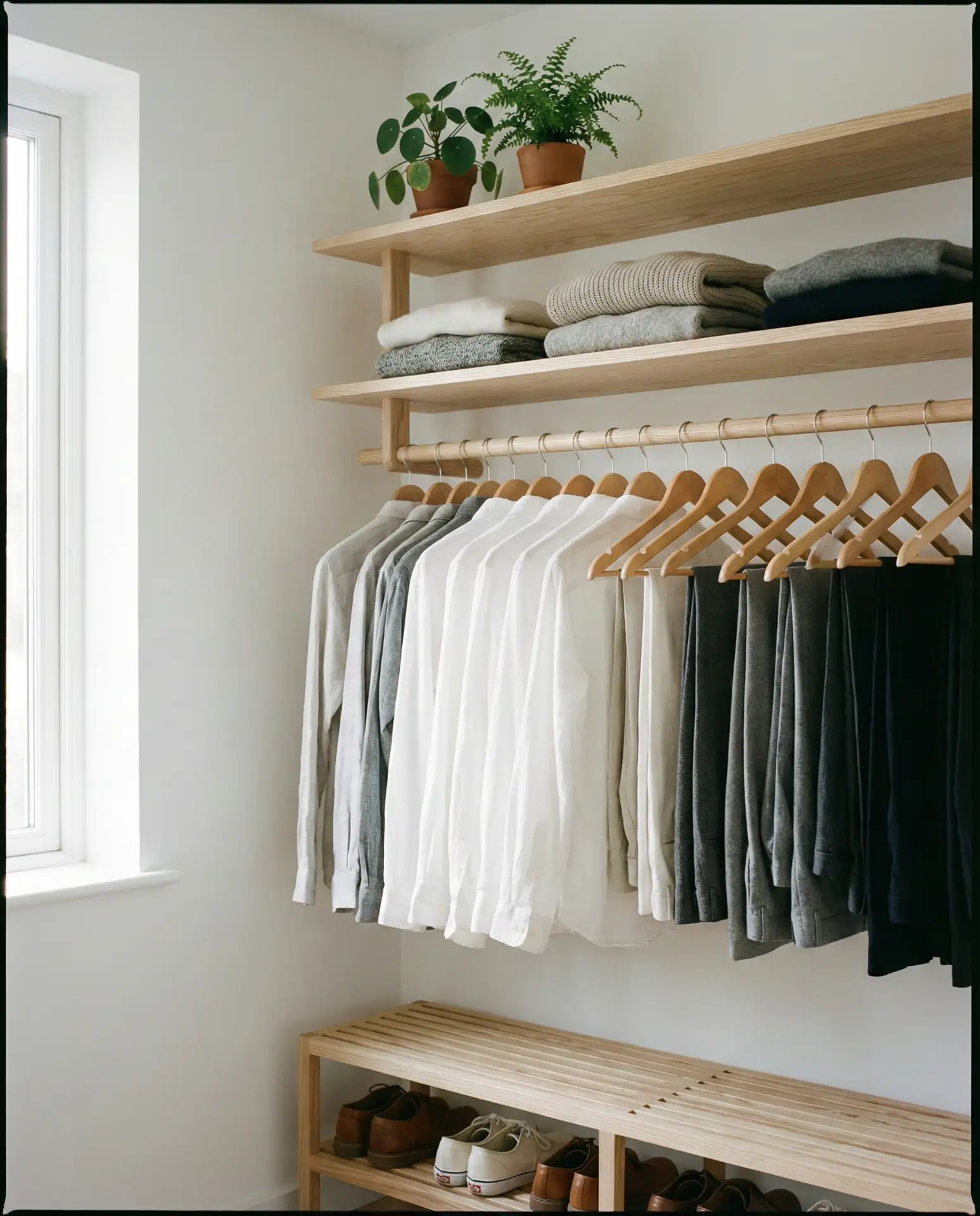
The open rail system is also one of the easiest storage setups to achieve without professional help—a simple pipe or wooden dowel mounted on two wall-anchored supports is all you technically need. IKEA’s BOAXEL or MULIG systems bring it down to the $50–$150 range, while bespoke powder-coated metal versions from Etsy or small design studios run $300–$600. The key to making it work aesthetically is ruthless editing: only keep what you genuinely wear and love, folded and hung with care. When it works, there’s nothing more beautiful or functional in a bedroom.
Conclusion
Which of these bedroom storage ideas are you planning to try first? Whether you’re tackling a full weekend IKEA hack, ordering a new storage bench, or simply clearing out the closet for an all-white refresh, we’d love to hear about it in the comments below. Share your before-and-after stories, your budget wins, and any creative twists you’ve put on these ideas—this community is one of the best sources of real-world inspiration out there.