As we settle into 2026, the home office has become more than just a workspace—it’s a creative hub, a productivity sanctuary, and often the most personal corner of the home. Americans are searching for desk organization ideas that blend function with beauty, especially on platforms like Pinterest, where visual inspiration drives decision-making. Whether you’re a college student juggling assignments, a remote worker managing endless video calls, or a creative type who needs space for both craft projects and digital work, the right setup can transform your daily routine. In this guide, we’re exploring thoughtful ways to organize your desk in 2026, from minimalist aesthetics to maximalist charm, with ideas that work in dorms, home offices, classrooms, and everything in between.
1. Minimalist Floating Desk with Hidden Storage
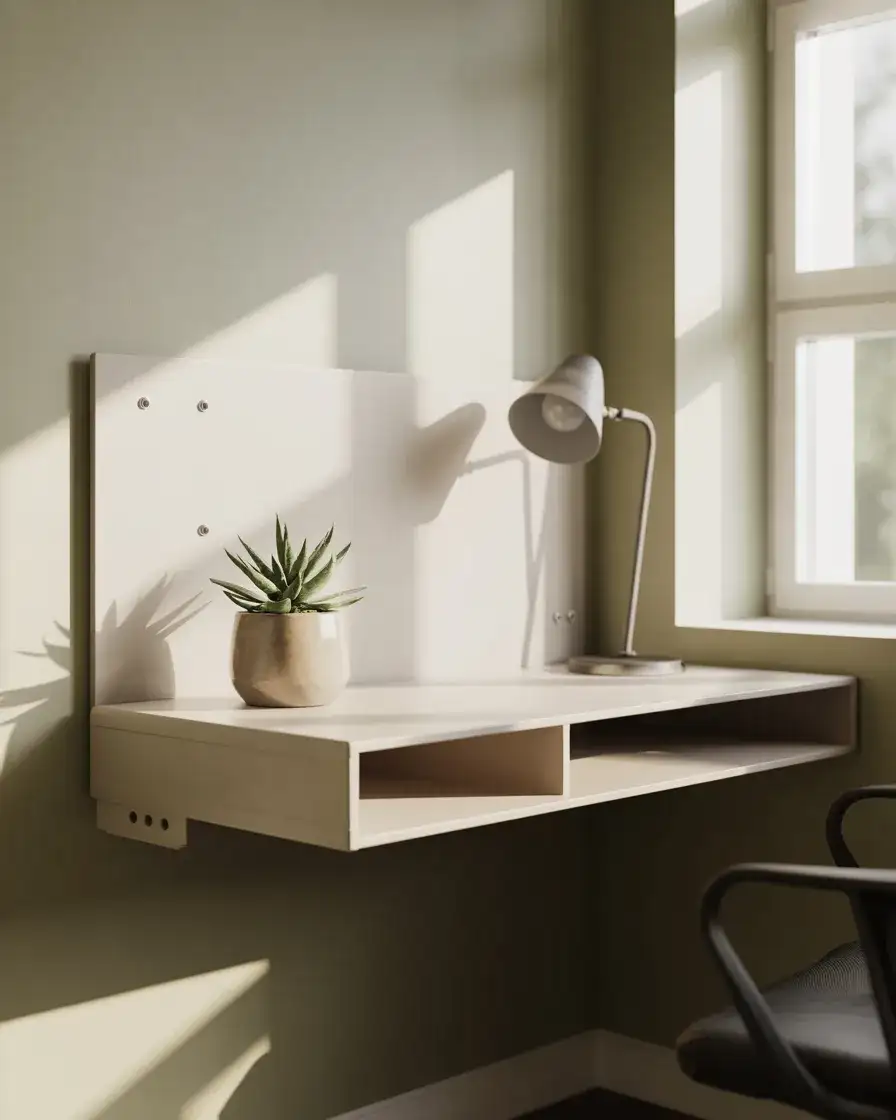
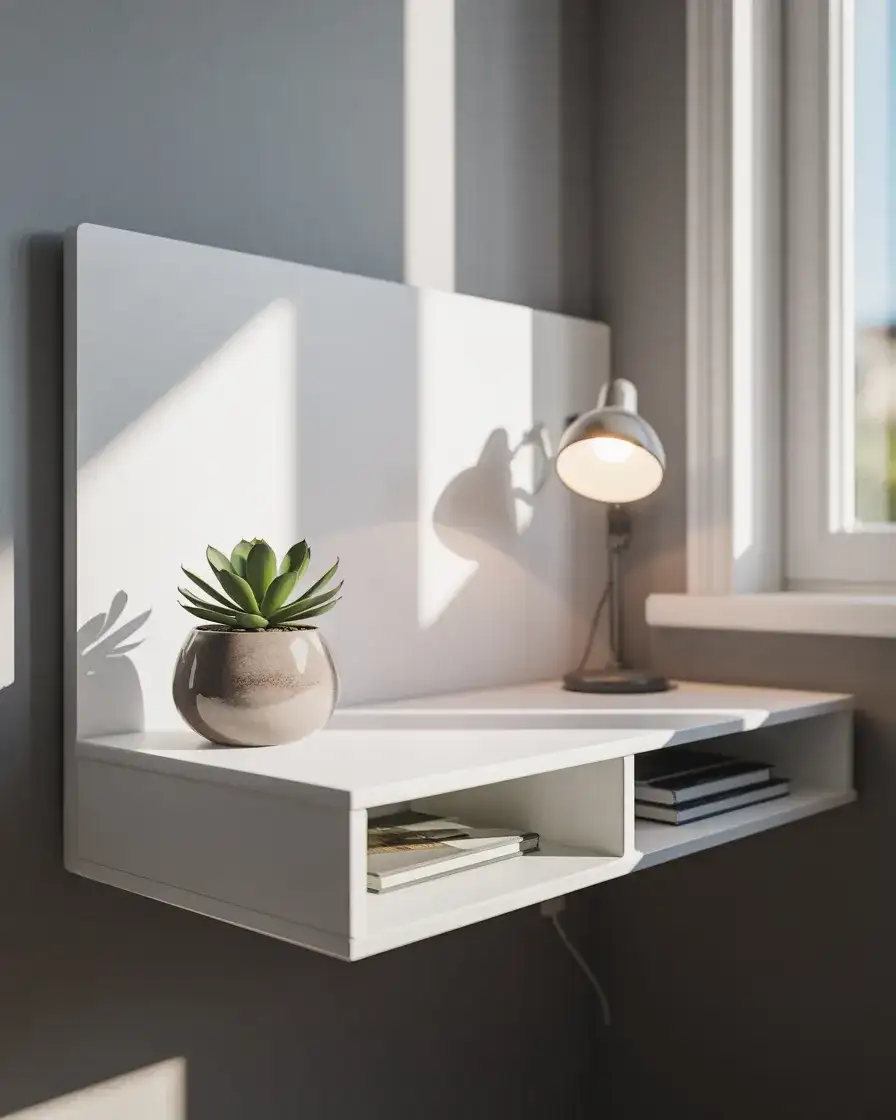
A floating desk mounted directly to the wall creates an airy, uncluttered look that’s perfect for small spaces and modern aesthetic sensibilities. The beauty lies in what you don’t see—hidden compartments built into the wall behind the desk surface hold notebooks, chargers, and office supplies. This setup works especially well in dorm rooms or studio apartments where floor space is precious. Pair it with a sleek task lamp and a single potted plant for a clean, focused vibe that doesn’t overwhelm the senses.
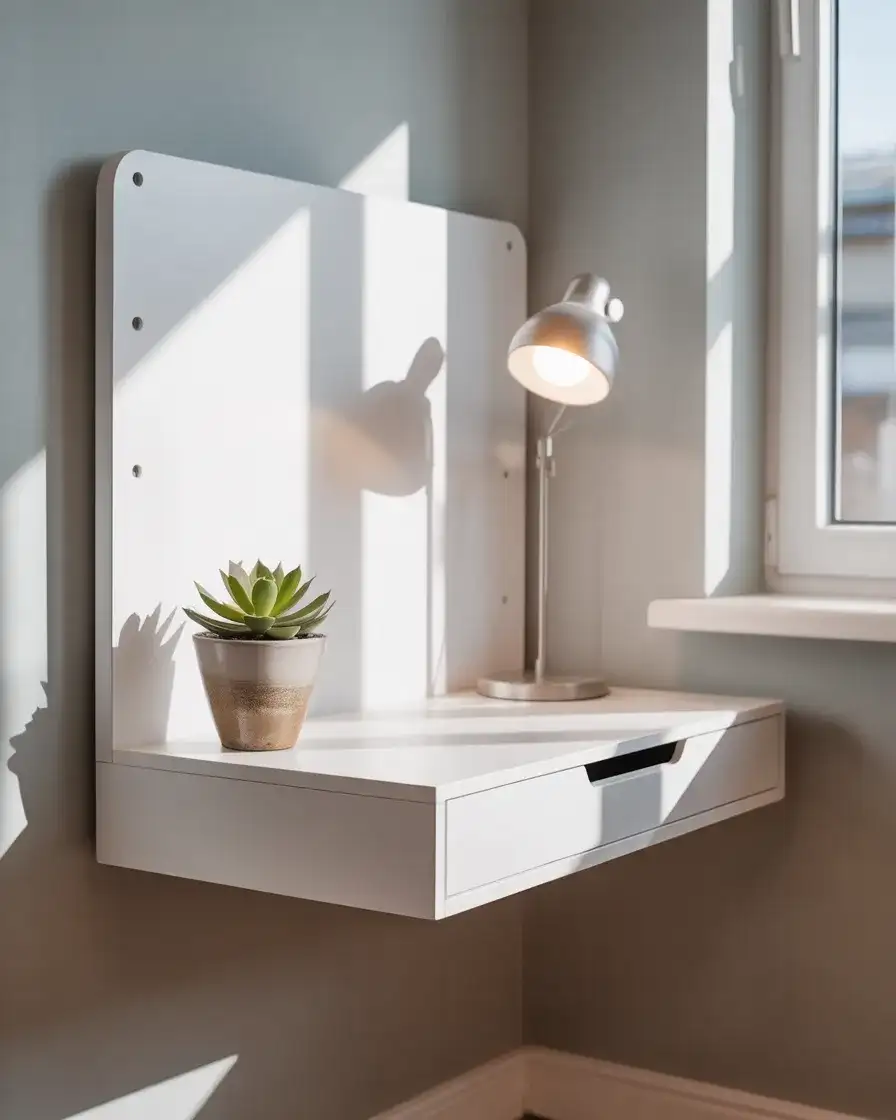
Where this works best is in bedrooms that double as workspaces, since the lack of visible legs keeps the room feeling restful rather than office-like. The key is installing it at the right height—typically 29 inches from the floor—and ensuring the wall anchors can support both the desk and everything you’ll place on it. Consider adding a narrow floating shelf above for books or decorative objects, creating vertical interest without sacrificing the streamlined look.
2. Pegboard Command Center for Crafters
For anyone involved in craft projects or art creation, a pegboard wall transforms vertical space into an organizing powerhouse. Mount a large pegboard panel above your desk and outfit it with hooks, small shelves, and wire baskets to hold scissors, tape, paint tubes, and ribbon spools. The visual accessibility means you can see everything at once, which actually speeds up creative workflows. This approach has become wildly popular in 2026 among makers who share their setups on Pinterest, creating that coveted “organized chaos” aesthetic.
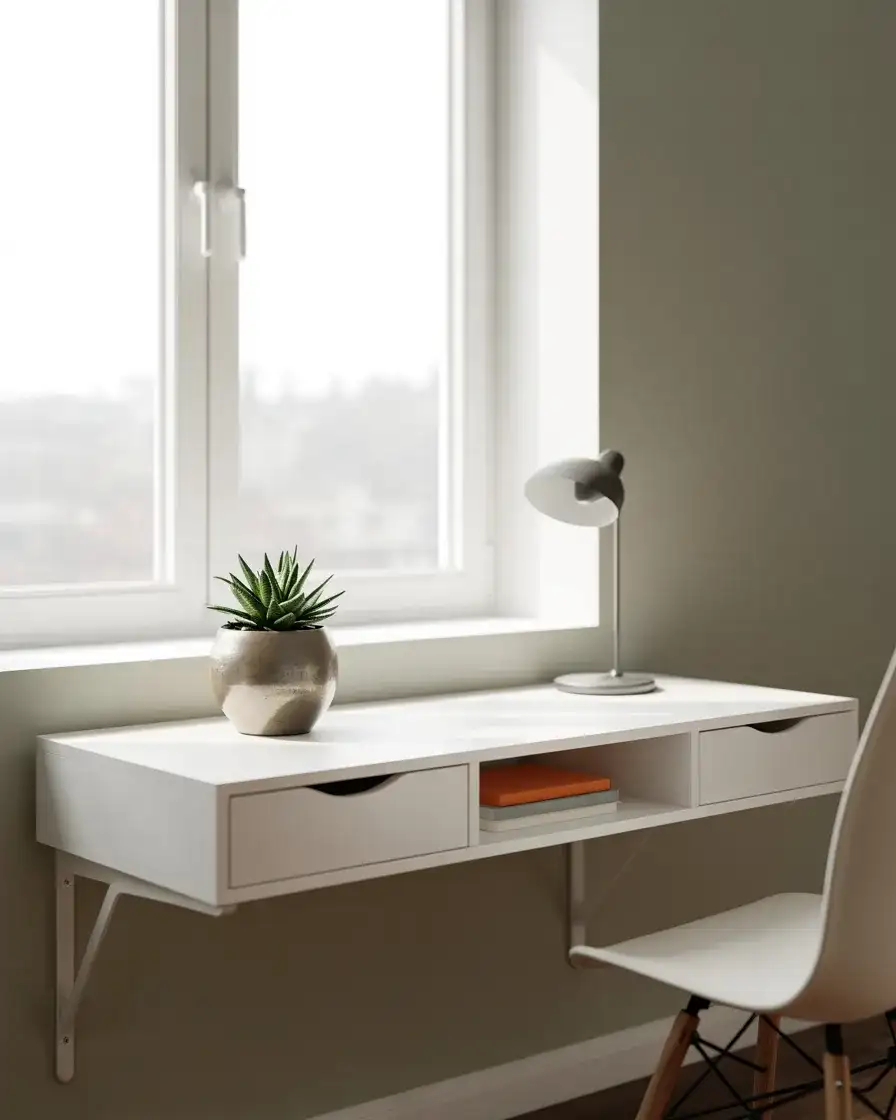
A common mistake here is overloading the pegboard until it looks cluttered rather than curated. The fix is simple: stick to a limited color palette for your containers and tools, or arrange items by color gradient for visual harmony. Also, leave some breathing room—empty pegboard space is just as important as filled space. This keeps the wall from feeling overwhelming and maintains that inspirational quality that drew you to the idea in the first place.
3. IKEA Modular Desk System
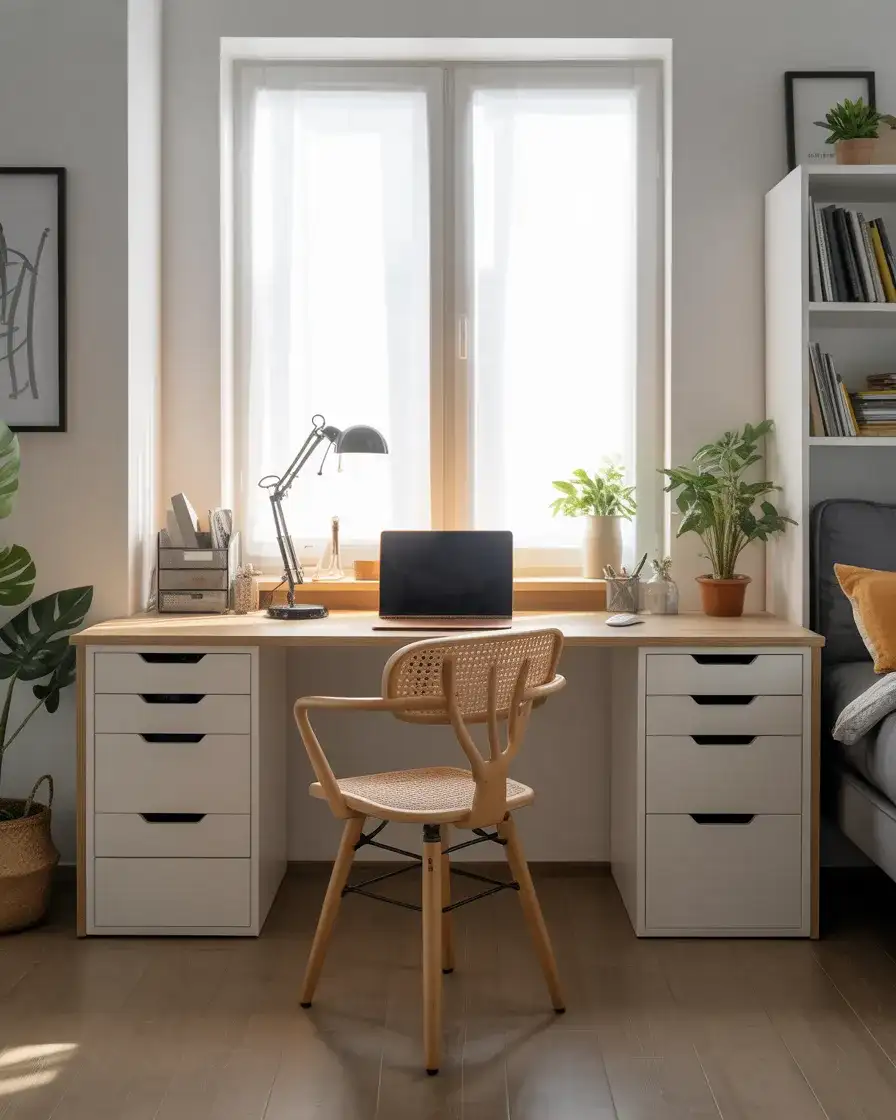
The beauty of IKEA desk components is their adaptability—you can create a custom configuration that grows with your needs. Start with a solid tabletop like the Karlby or Gerton, then add Alex drawer units on either side for storage. This setup is beloved by students and remote workers alike because it offers generous surface area for spreading out textbooks, dual monitors, or project materials. The drawer units keep supplies hidden but accessible, and the whole thing can be assembled for under $400.
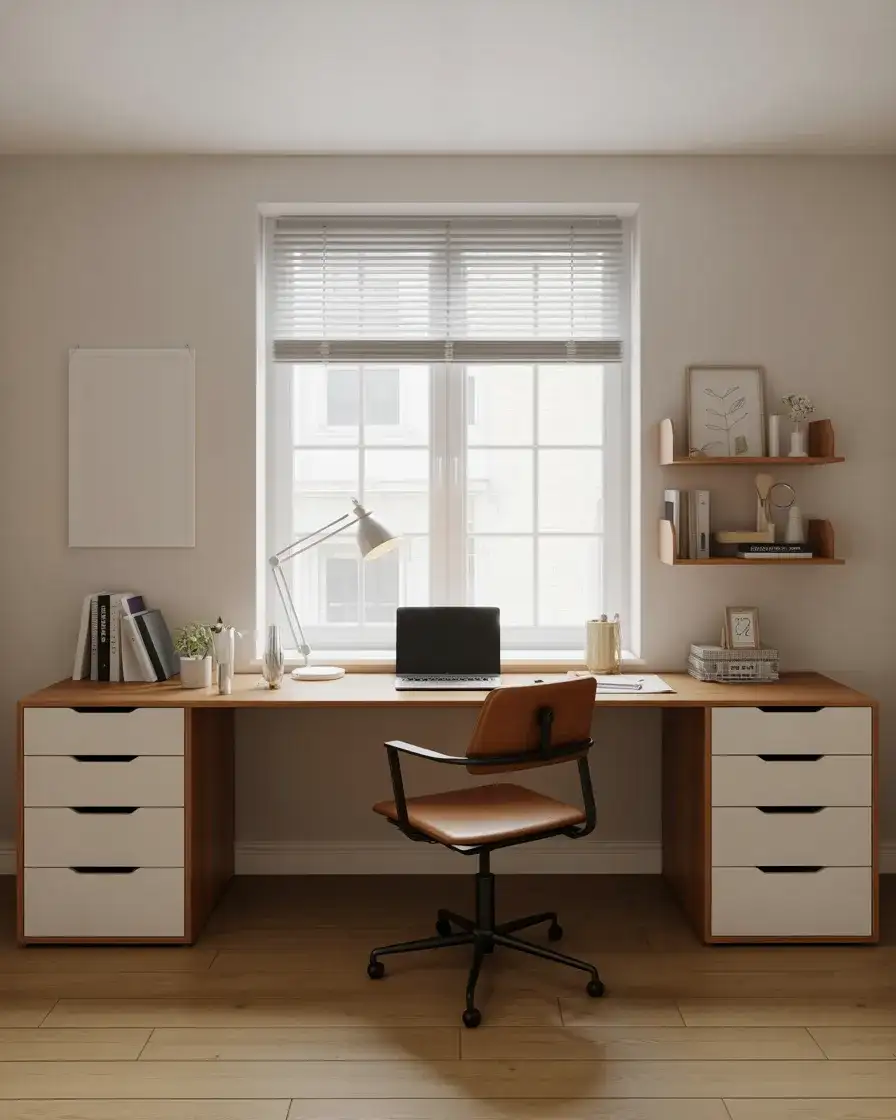
Real homeowner behavior shows that people often start with just the desk and add storage later as they figure out what they actually need. That’s the smart approach—buying everything at once can lead to wasted drawer space or configurations that don’t match your workflow. Pay attention to drawer dividers from the start, though. Without them, those deep IKEA drawers become black holes where pens and charging cables disappear forever.
4. Standing Desk with Cable Management
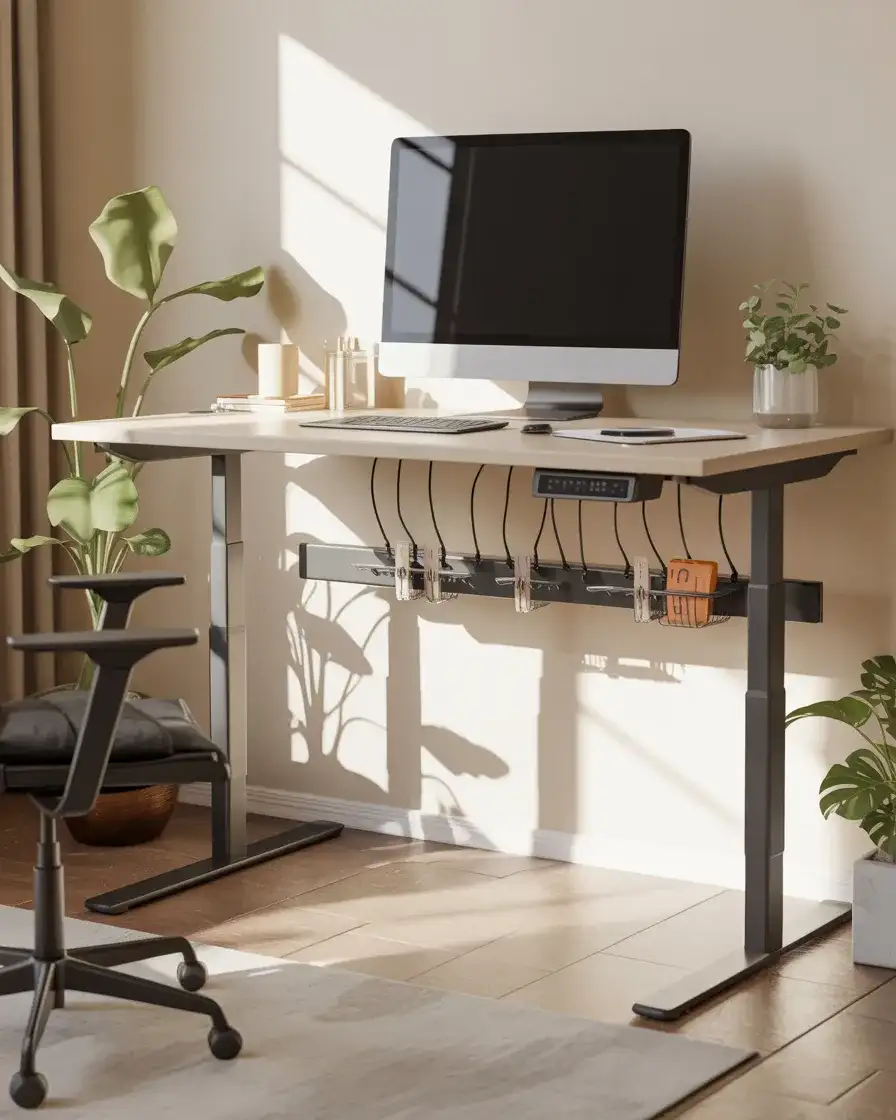
A standing desk addresses both ergonomic health and the cable chaos that plagues modern workspaces. The adjustable height mechanism lets you alternate between sitting and standing throughout the day, which many Americans have embraced for back pain relief and energy management. But the real organizational win comes from intentional cable management—use adhesive cable clips along the desk’s underside, a cable sleeve to bundle cords together, and a power strip mounted beneath the surface. This keeps your workspace visually clean and prevents that rat’s nest of wires from taking over.
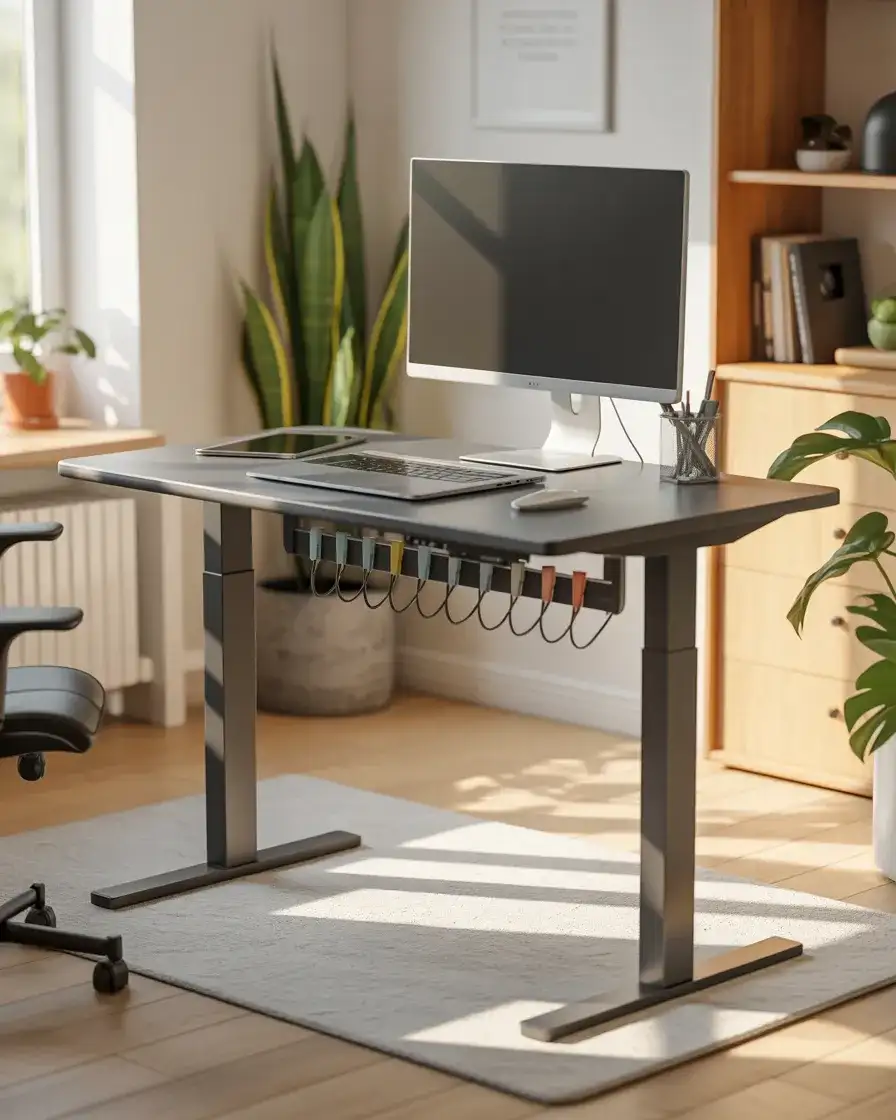
From a practical standpoint, measure your monitor height at both sitting and standing positions before committing to a setup. Some people discover they need an additional monitor arm to maintain proper eye level when standing. Budget-wise, you’re looking at $300-$600 for a solid electric standing desk, with manual crank versions available for around $200. The cable management supplies add maybe $30, but they’re worth every penny for the sanity they provide.
5. Teacher’s Rolling Cart Organization
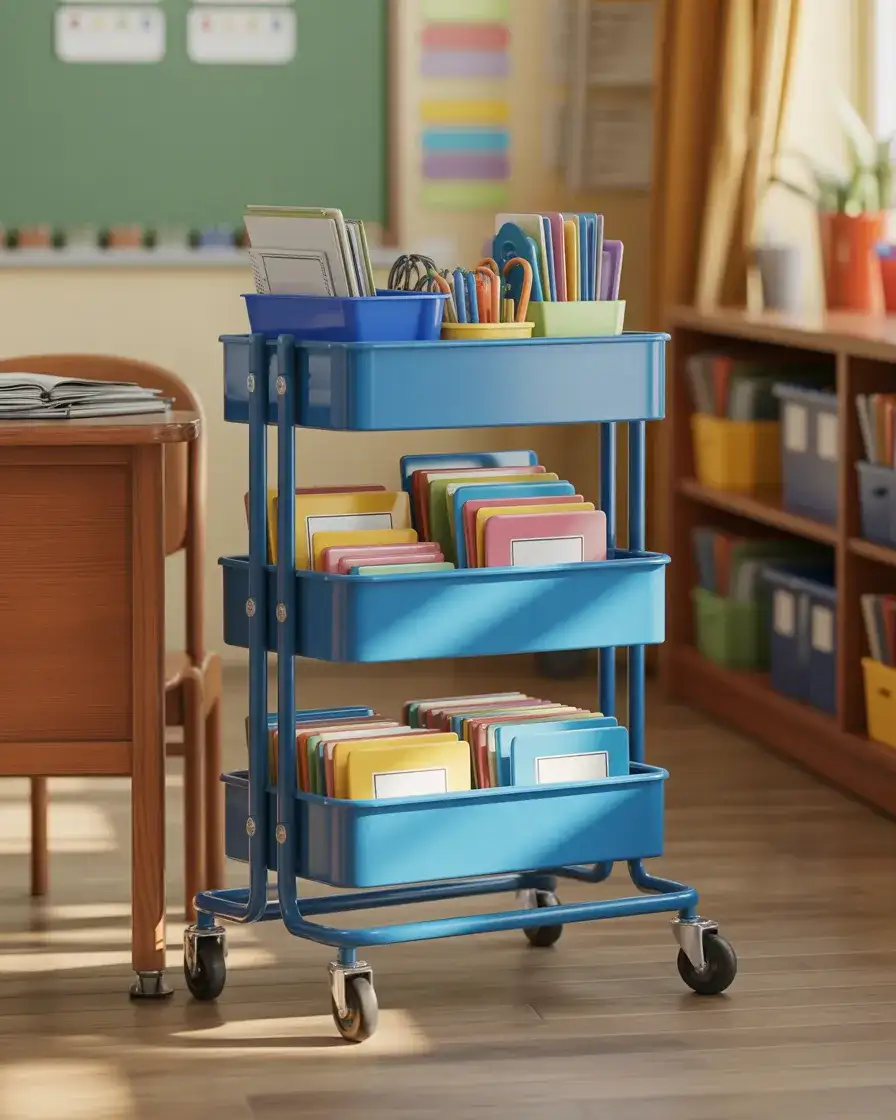
Teacher desk organization has evolved beyond the traditional desktop caddy, and rolling carts have become essential for classroom flexibility. A three-tier metal cart (think IKEA Råskog or similar) holds frequently used supplies—markers, sticky notes, and grade books—and can be wheeled from desk to reading corner to supply cabinet as needed. This mobility is especially valuable for educators who share classrooms or move between rooms. The open design means everything stays visible, reducing the time spent searching for that one red pen when you need it most.
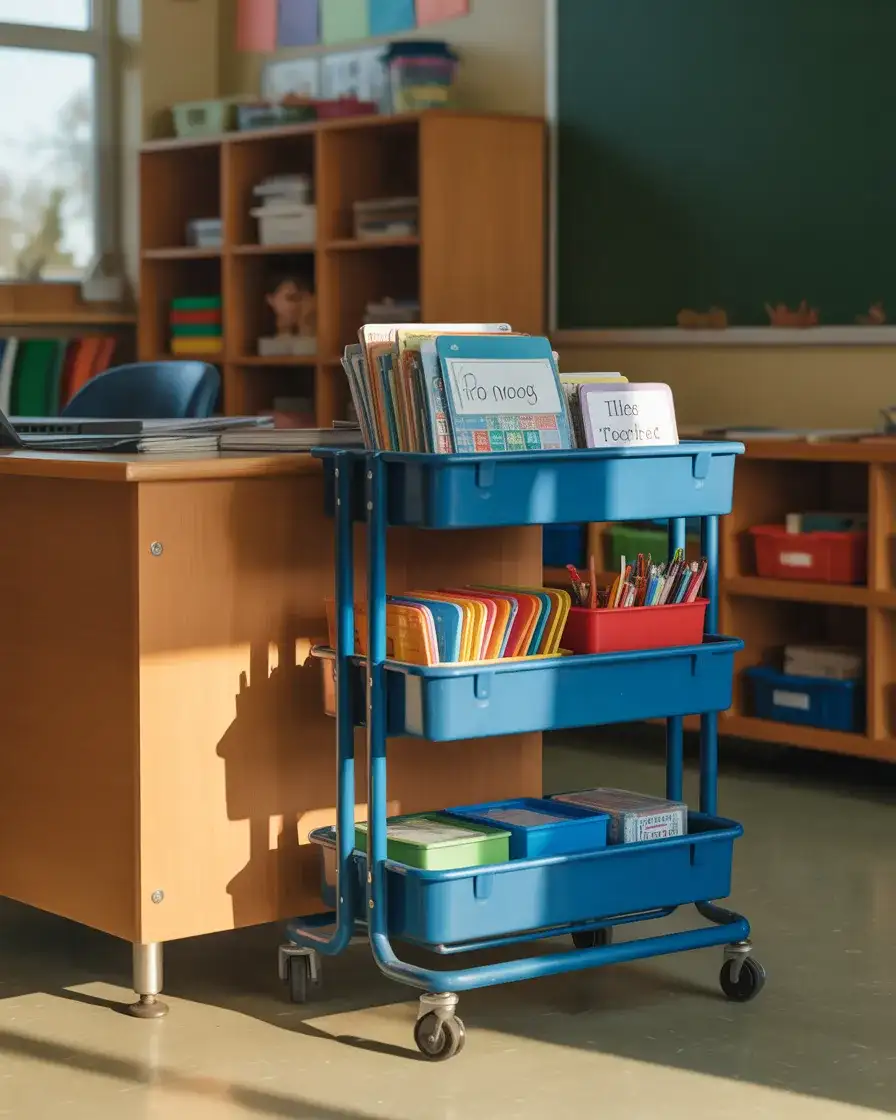
This setup works best when you color-code the cart by subject or function—top tier for grading materials, middle for current lesson supplies, and bottom for storage or backup items. A teacher in Austin told me she keeps one cart for each prep period, which sounds extreme until you realize it eliminates the constant reshuffling that eats into planning time. The investment is minimal, usually under $40, and the time savings compound over a full school year.
6. Vanity-Desk Hybrid for Makeup Storage
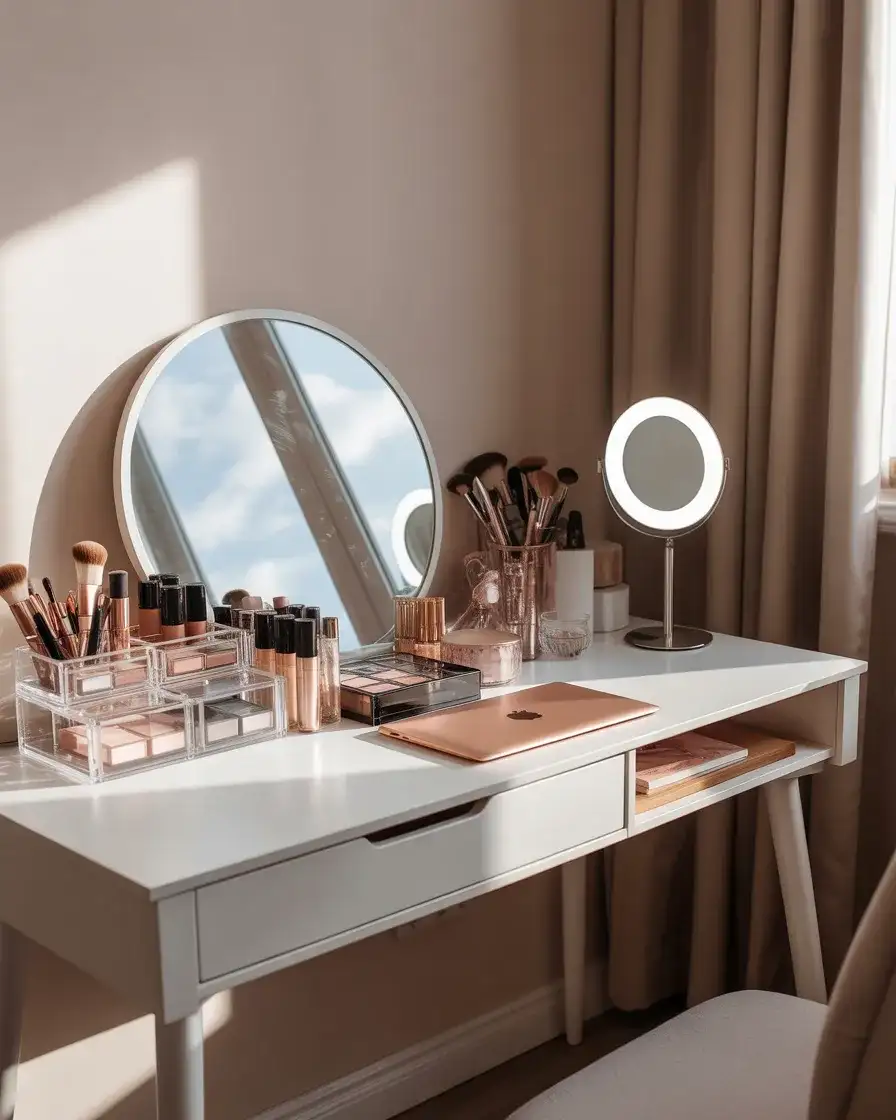
The vanity table ideas makeup category has exploded on Pinterest as people look for dual-purpose furniture that handles both beauty routines and work tasks. A desk with a large mirror and dedicated makeup organizers creates a functional hybrid space. Use acrylic drawer dividers for cosmetics, a tiered tray for daily essentials, and small LED lights around the mirror for proper illumination. This approach is particularly popular among content creators and remote workers who need to look camera-ready throughout the day without maintaining two separate stations.
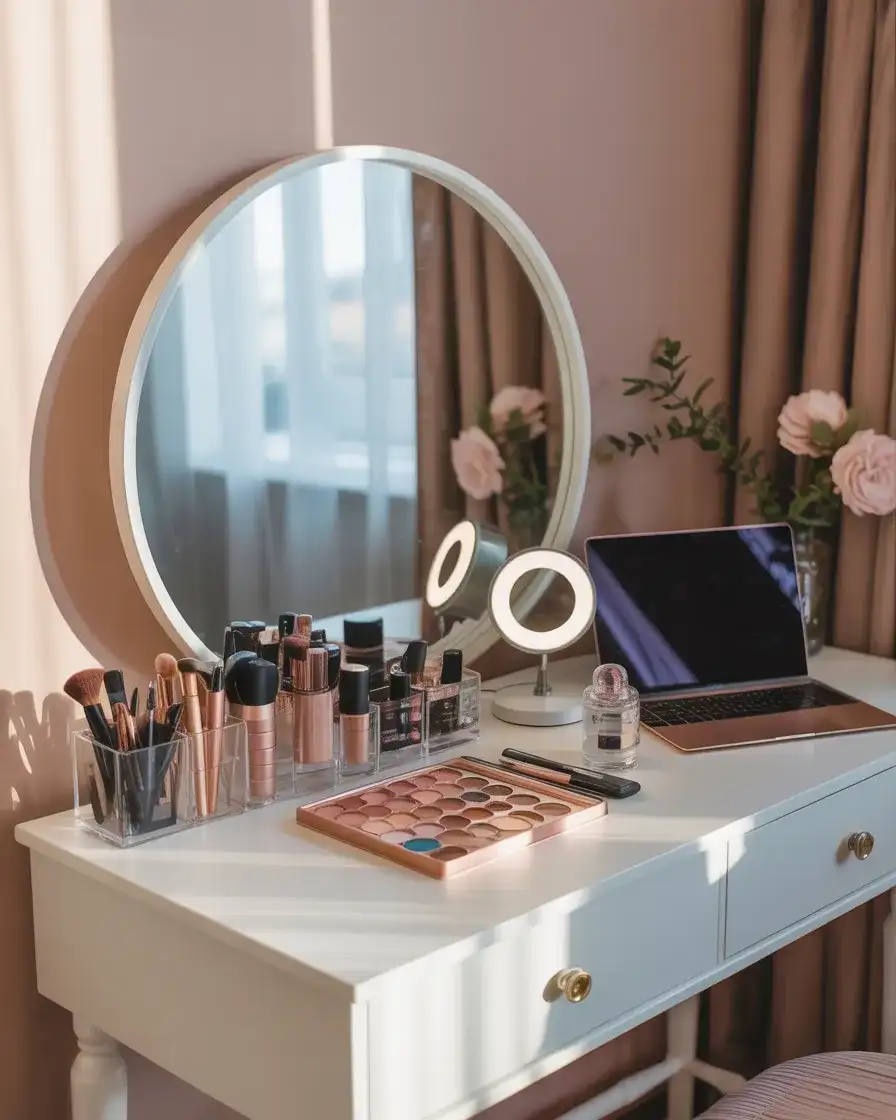
Where this works best is in bedrooms or dressing areas with good natural light, since artificial lighting alone can distort makeup colors. The common challenge is keeping the workspace functional when it’s covered in beauty products. The solution is a tray system—keep your work essentials (laptop, notebook, pens) on a single tray that can be moved aside when you need the full surface for getting ready. This takes five seconds and maintains both functions without constant reorganization.
7. Wall-Mounted Fold-Down Desk
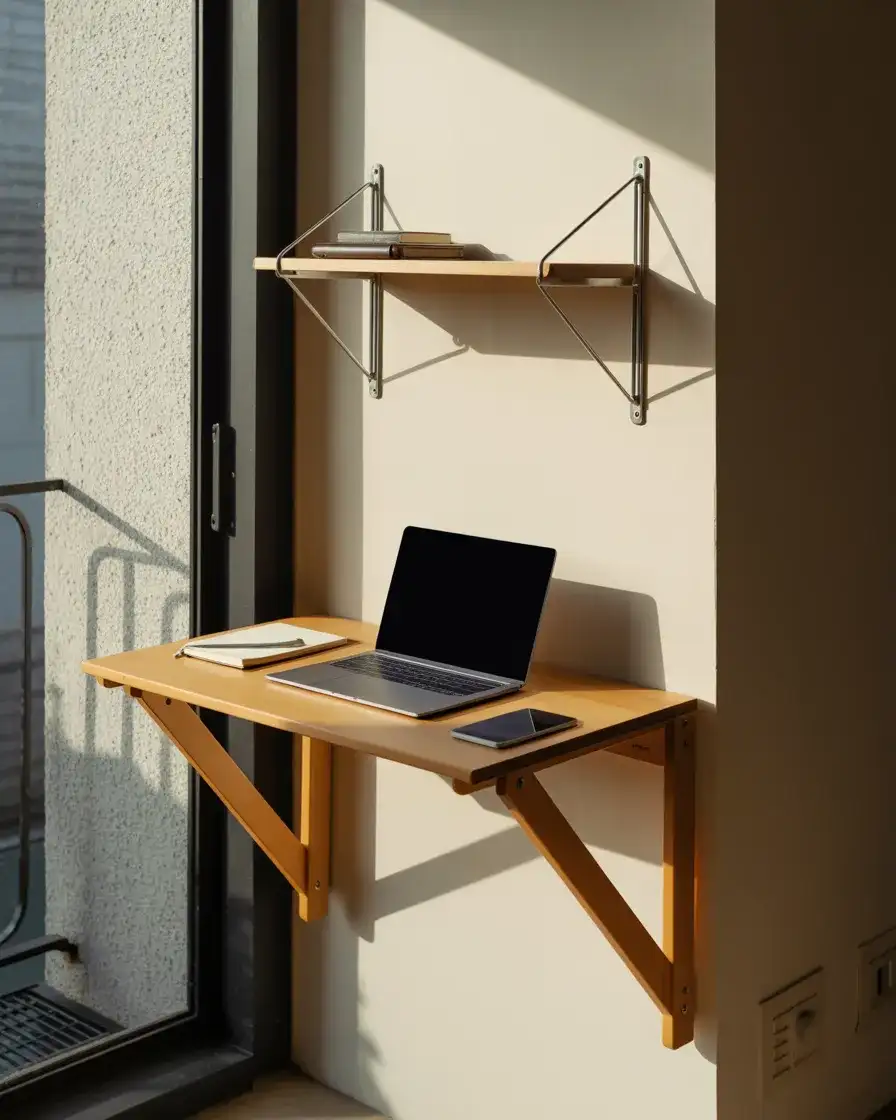
For truly tight quarters—think studio apartments or converted closets—a fold-down desk provides a complete workspace that disappears when not in use. These desks mount to the wall with heavy-duty hinges and fold flat, often doubling as a piece of wall art or a chalkboard surface when closed. This is genius for small spaces where a permanent desk would overwhelm the room, and it’s become a go-to solution for city dwellers across the Northeast and West Coast, where square footage comes at a premium.
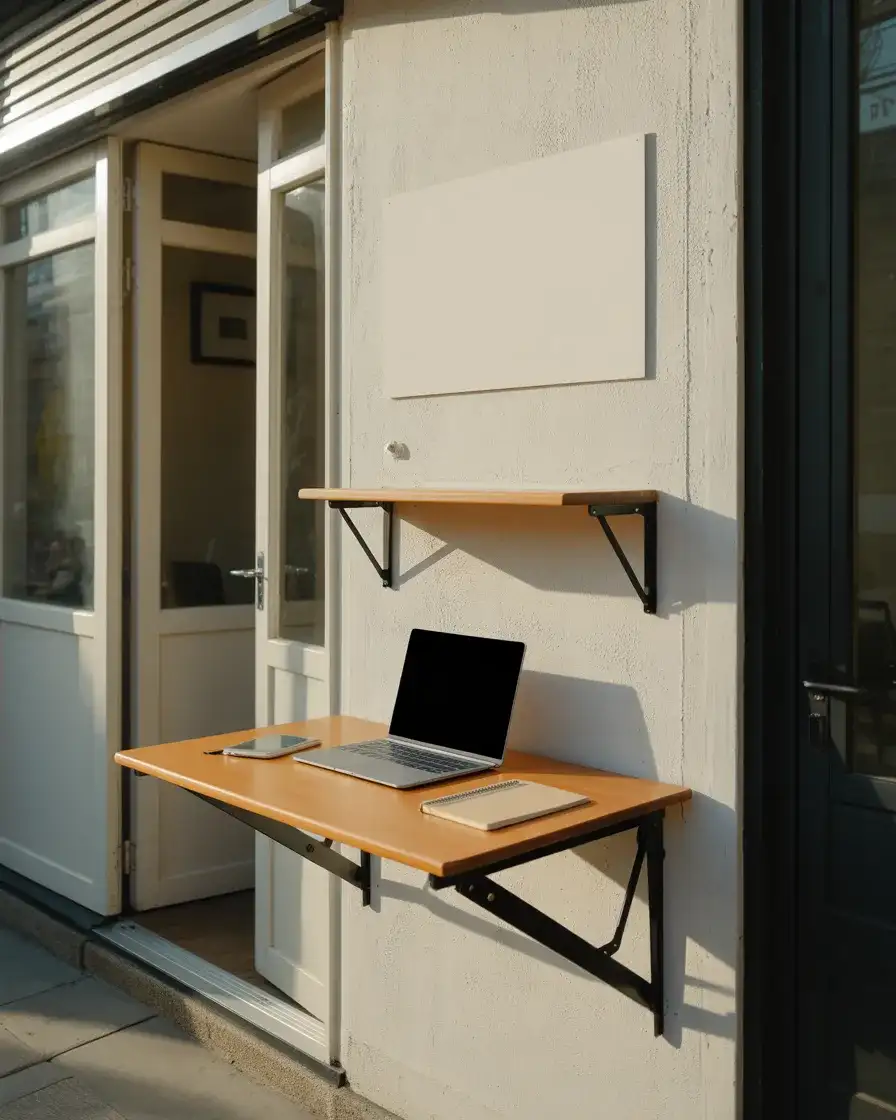
Expert-style commentary here centers on weight distribution—make sure the desk is rated for the load you’ll place on it, and always mount into wall studs, not just drywall. Most fold-down desks can handle 30-50 pounds, which covers a laptop, books, and supplies, but adding a heavy monitor requires extra reinforcement. Also consider what happens to items on the desk when you fold it up. Some people install a small shelf or basket below to catch their daily essentials, creating a complete work zone that truly vanishes at the end of the day.
8. Multi-Monitor Command Station
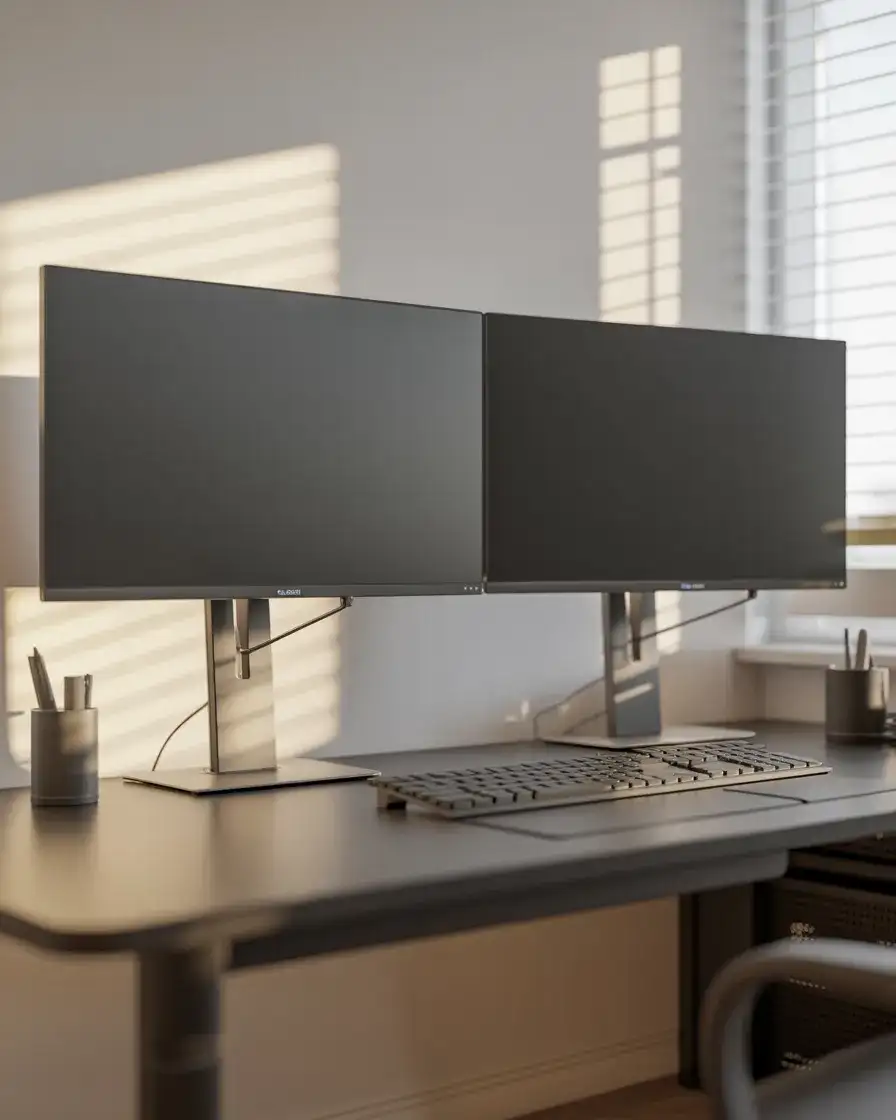
For programmers, designers, and financial professionals, a computer desk setup with multiple monitors is non-negotiable for productivity. The organizational challenge is managing the visual and physical bulk of two or three screens. Monitor arms are the answer—they free up desk surface, allow precise positioning, and create that sleek, floating appearance. Pair this with a keyboard tray to maximize usable space and a vertical laptop stand to integrate your portable machine into the setup. Cable channels running along the back edge keep everything tidy.
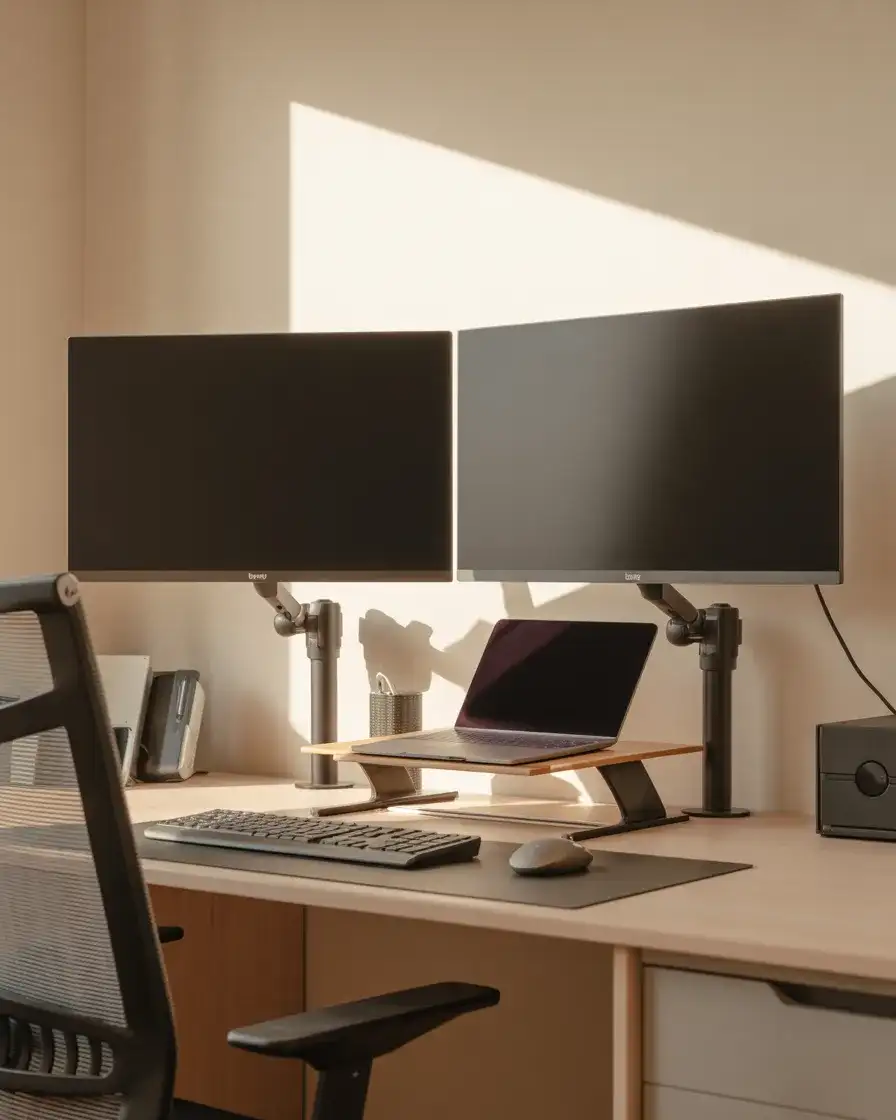
Americans working in tech hubs like Seattle, Austin, and San Francisco have normalized the multi-monitor setup, but it’s spreading to remote workers everywhere as video conferencing and multitasking demands increase. The price range varies wildly—you can build a basic dual-monitor setup for around $300 total or spend $2,000+ on high-resolution displays and premium arms. Start with one quality monitor arm and add as needed rather than buying everything at once and discovering your desk can’t handle the weight or depth requirements.
9. Scandinavian Minimalism with Natural Wood
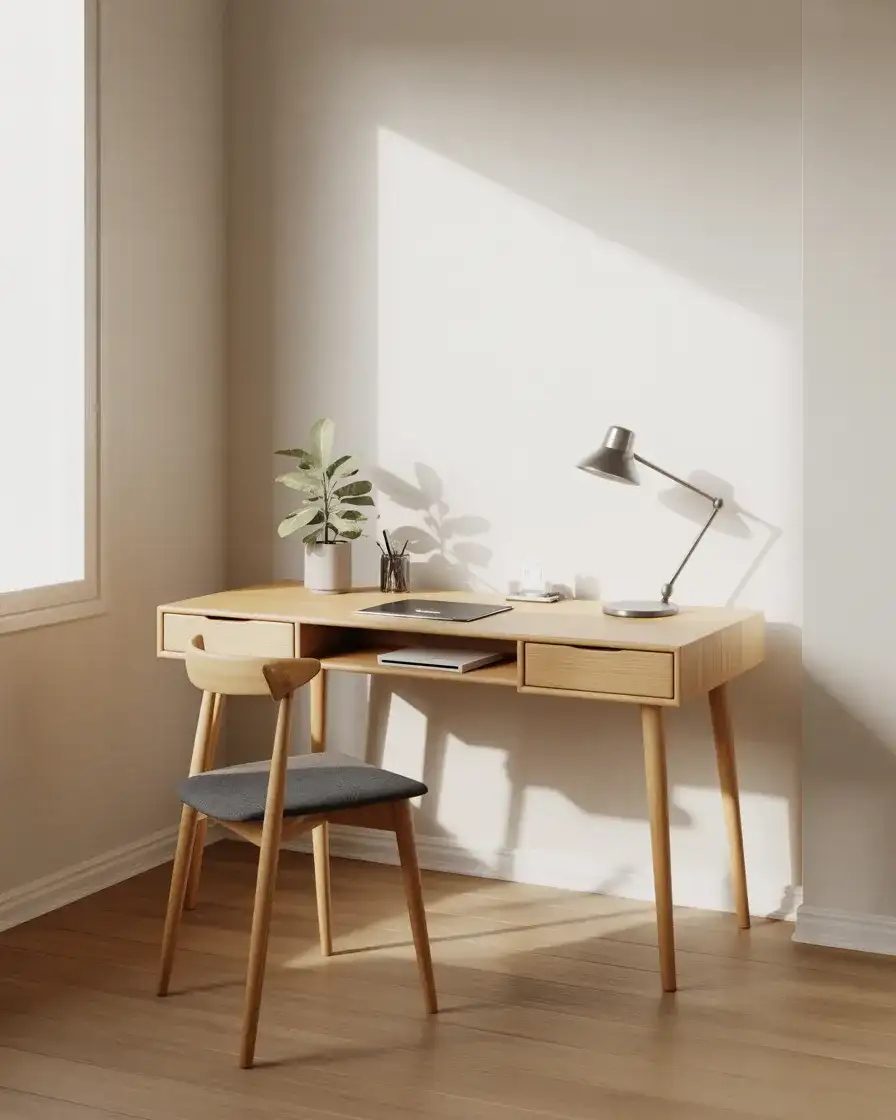
The Scandinavian design philosophy of “less but better” translates beautifully to aesthetic study spaces and work environments. A simple desk in light oak or birch, paired with a single drawer unit and minimal desktop accessories, creates a calming workspace that doesn’t compete for attention. The key is quality over quantity—one excellent desk lamp, one beautiful pen holder, and one plant in a ceramic pot. This restraint actually enhances focus and has become increasingly popular as Americans push back against the constant visual noise of modern life.
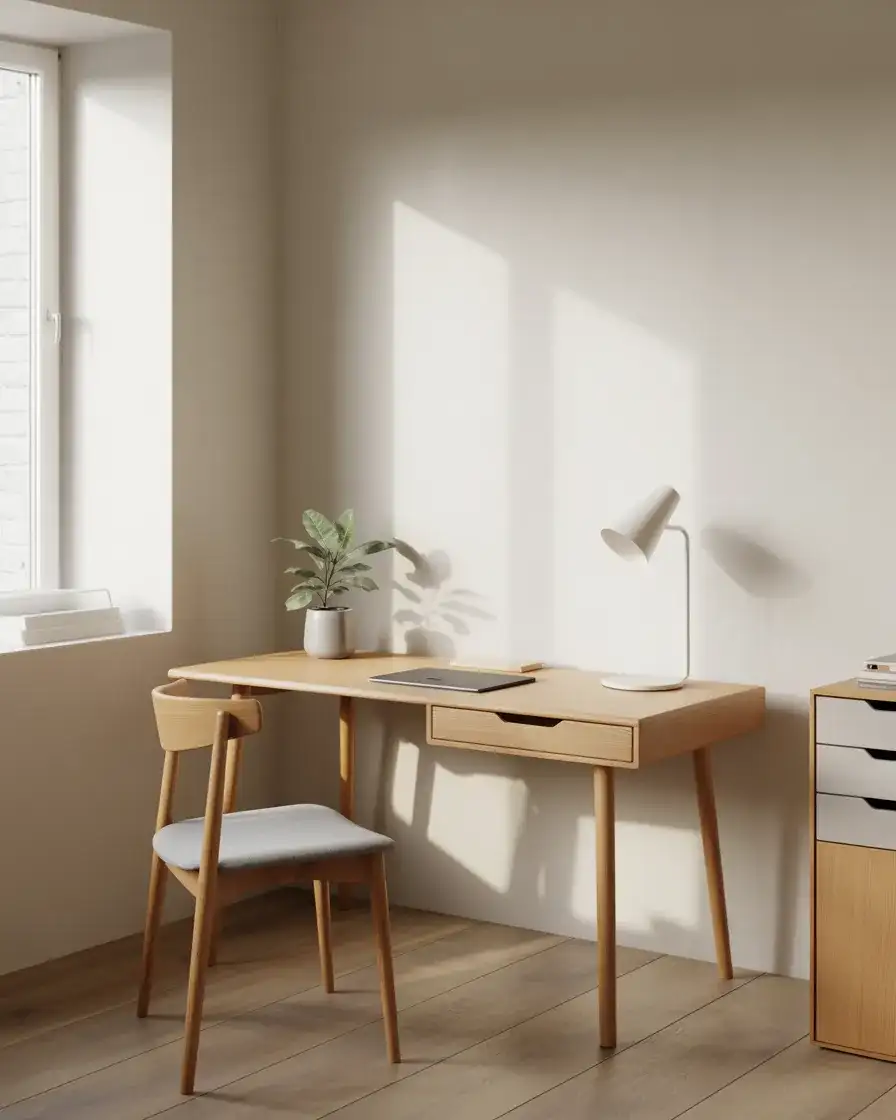
Real homeowner behavior reveals that people who commit to this aesthetic often report improved concentration and reduced stress. The challenge is maintaining the minimalism when work demands accumulate—papers, charging cables, coffee cups. The fix is a designated “reset ritual” at the end of each workday where you clear everything but the essentials. It takes three minutes but preserves the intentional calm that makes this style so appealing. Think of it as visual meditation built into your space.
10. Color-Coded File System
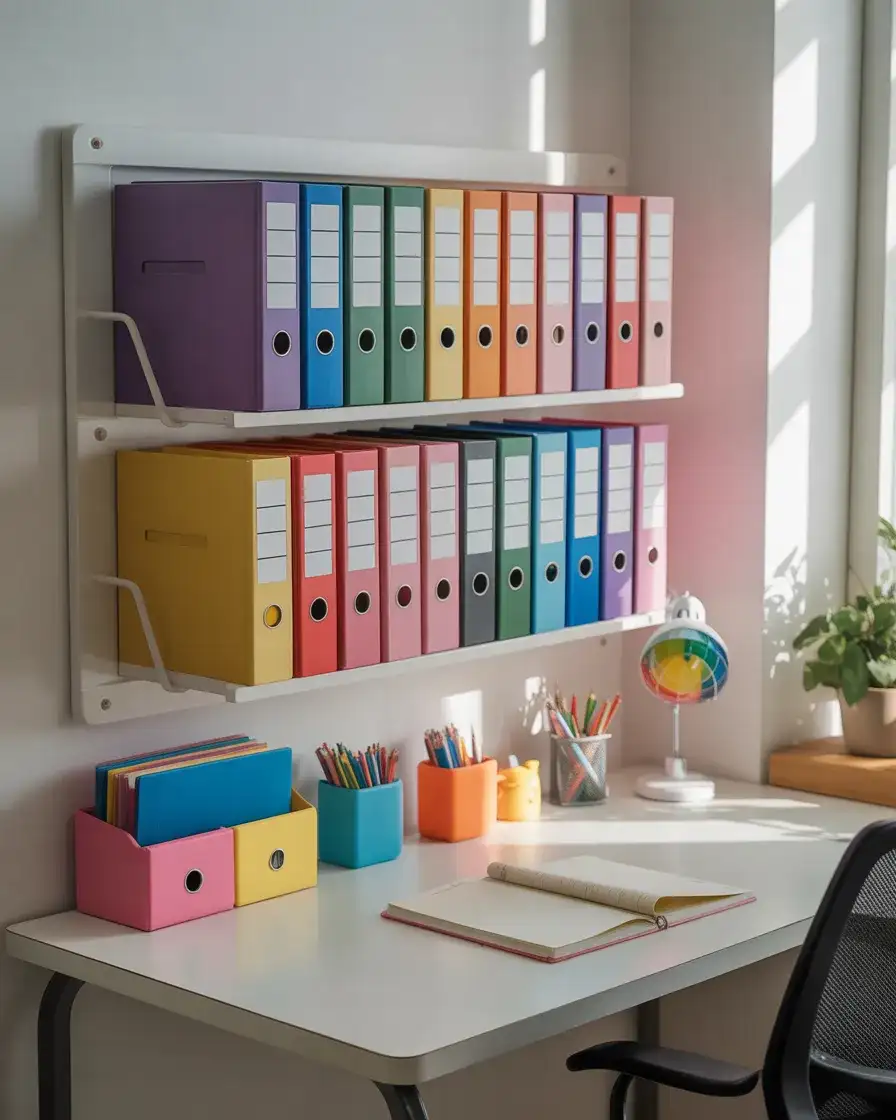
Visual organization through color has become a hallmark of functional office spaces in 2026, especially for student desks where multiple subjects need quick differentiation. Assign each class, project, or category a distinct color, then use matching folders, binders, and storage boxes. A wall-mounted magazine rack or vertical file sorter keeps everything visible and accessible. This system works particularly well for visual learners who struggle with traditional label-only organization, and it creates that satisfying, Instagram-worthy organization aesthetic that Pinterest users crave.
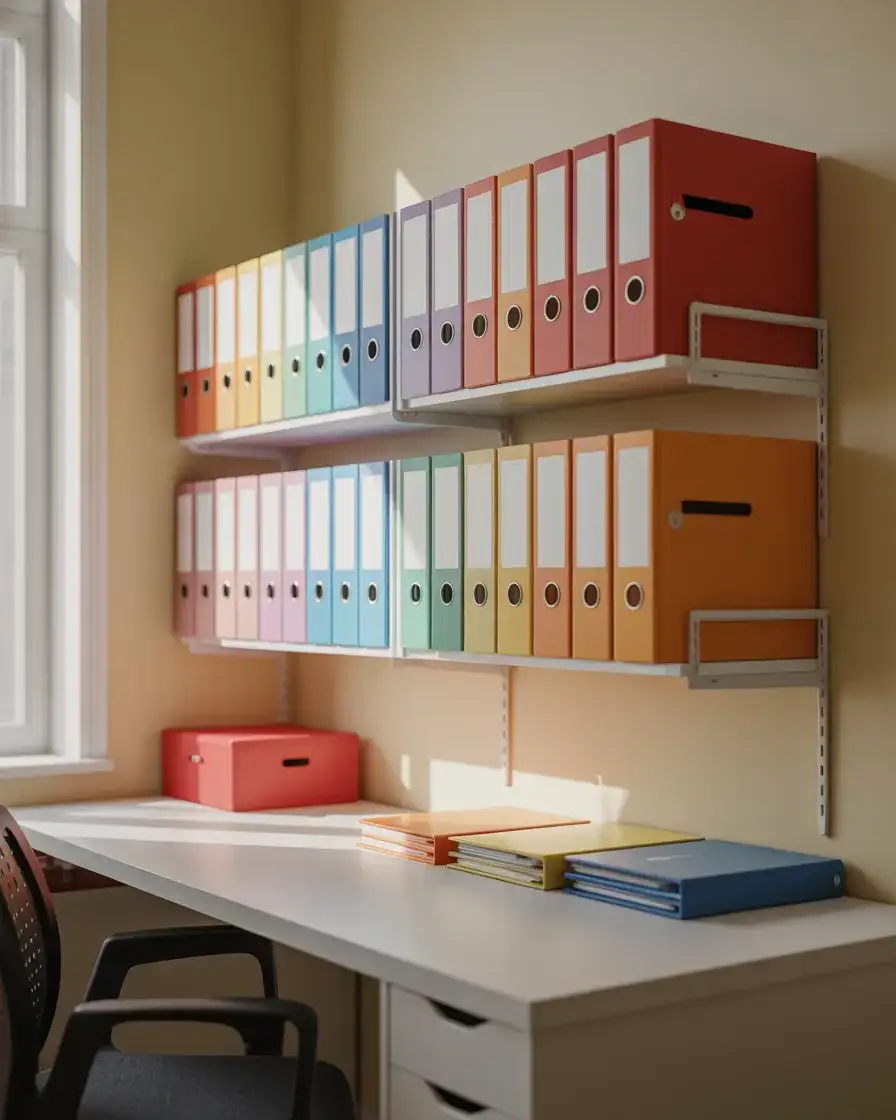
One person shared that switching to a color-coded system cut her homework retrieval time in half—instead of reading labels, she just reached for the blue folder for biology or the green one for environmental science. The muscle memory developed quickly, making the whole process nearly automatic. The investment is minimal since colored folders and accessories cost the same as plain ones, but the cognitive load reduction is substantial, especially during high-stress periods like finals or project deadlines.
11. Converted Closet Office
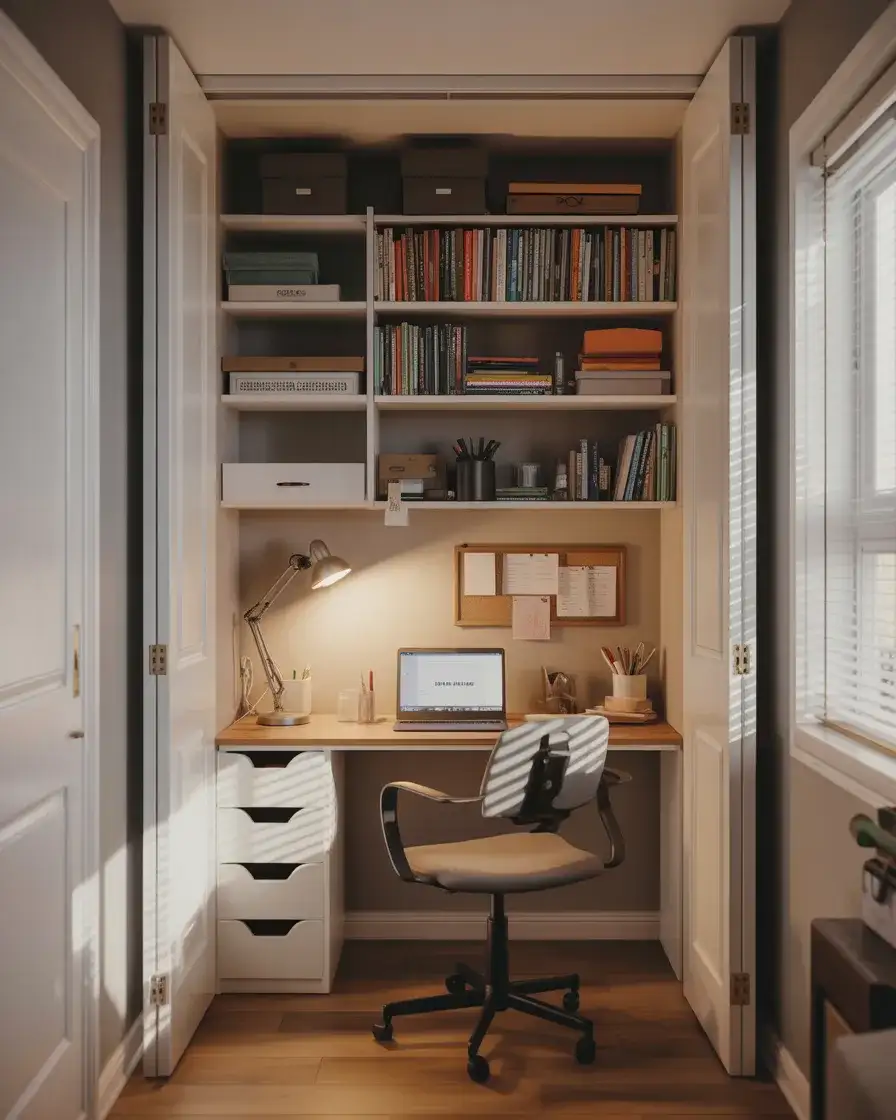
The closet office trend—sometimes called a “cloffice”—has taken off in homes where dedicated office space doesn’t exist. Remove the closet doors, install a desk that fits the width of the opening, and use the existing closet shelving for vertical storage. This creates a complete, contained workspace that can be closed off with a curtain when you’re done for the day. It’s particularly clever in dorm rooms or apartments where every square foot counts, and the built-in walls provide natural boundaries that help separate work from relaxation.
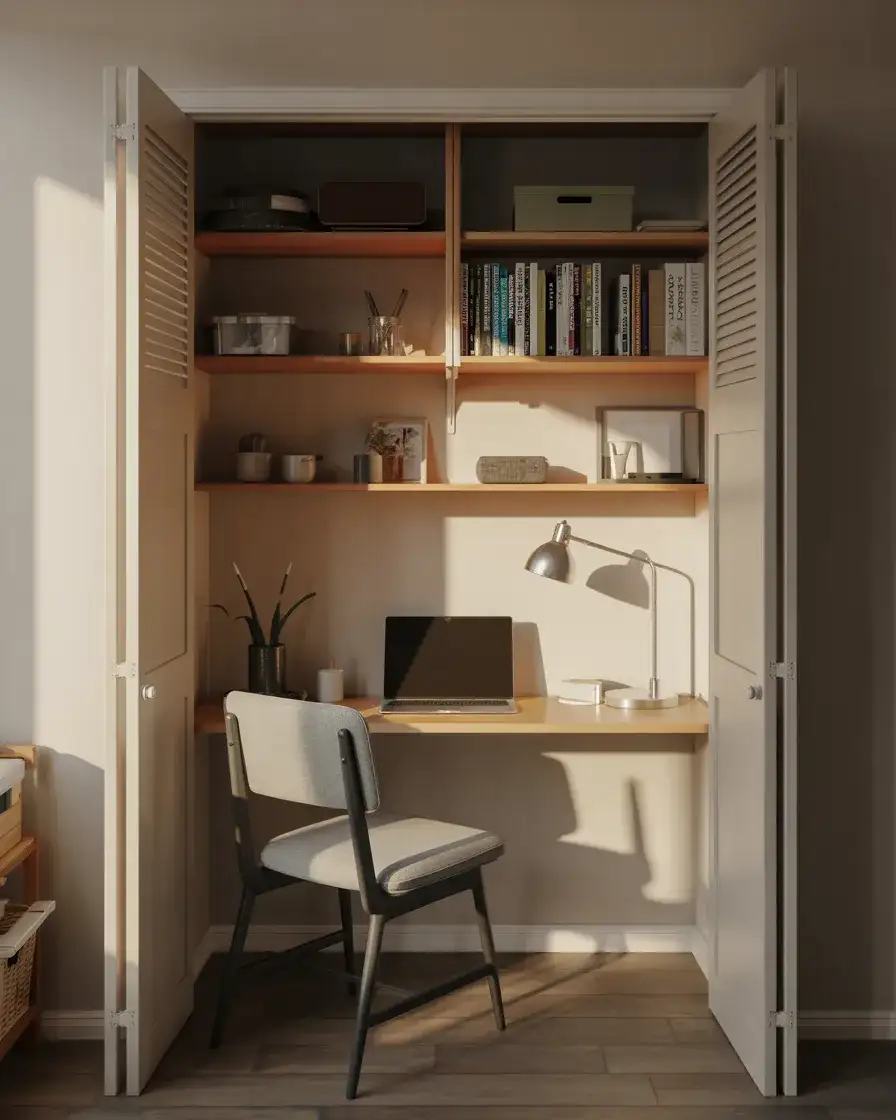
The budget angle here is surprisingly favorable—if you already have a closet you’re not fully using, the conversion might cost as little as $150 for a cut-to-size desk surface and some additional lighting. The key consideration is ventilation and temperature since closets weren’t designed for prolonged occupancy. A small desk fan or leaving the door/curtain partially open during work hours prevents that stuffy feeling. Many people also add battery-powered LED strips to compensate for the lack of natural light, creating a surprisingly pleasant work cocoon.
12. Sewing Station with Thread Organization
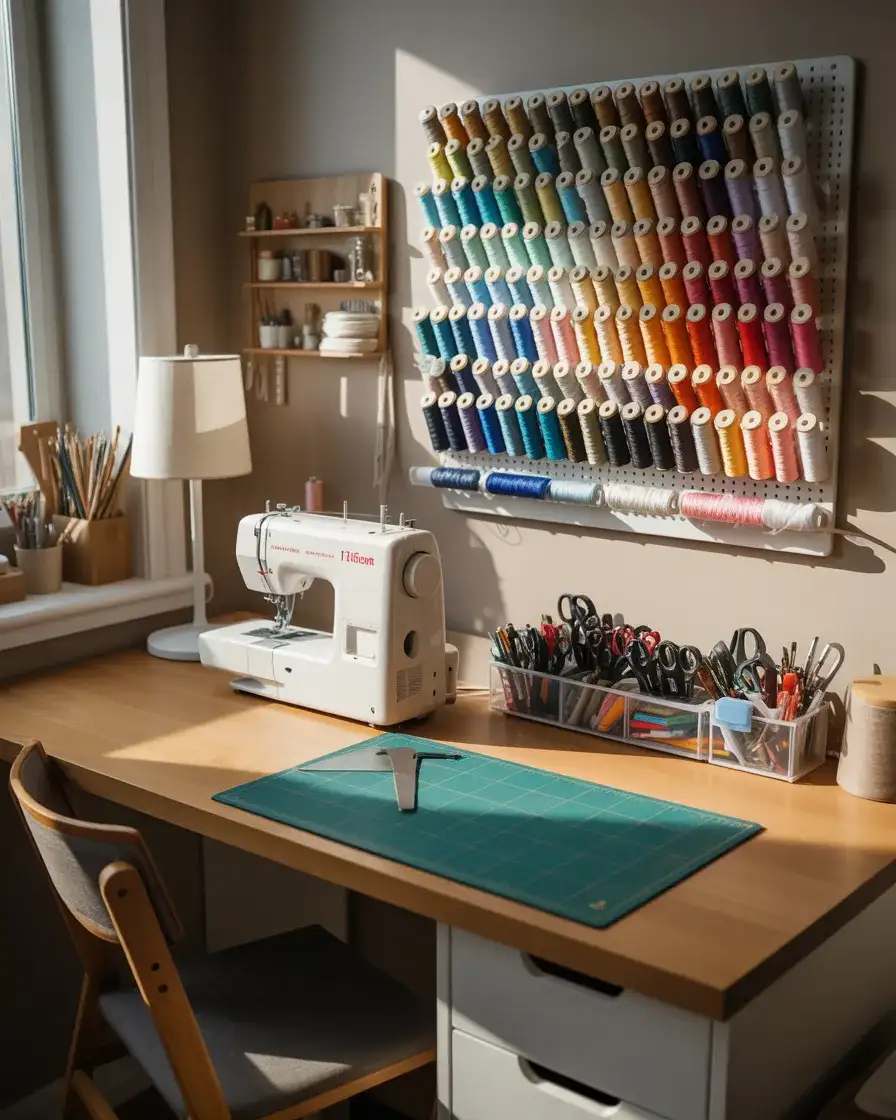
A dedicated sewing desk requires specialized organization—thread spools, pattern pieces, fabric scissors, and the machine itself all compete for space. Wall-mounted thread racks display your color collection while keeping it accessible, and a large cutting mat can live permanently on one side of the desk surface. Drawer organizers for needles, bobbins, and presser feet prevent the small items from creating chaos. This setup has become essential for the resurgence of home sewing among Americans who’ve rediscovered the craft during the past few years.
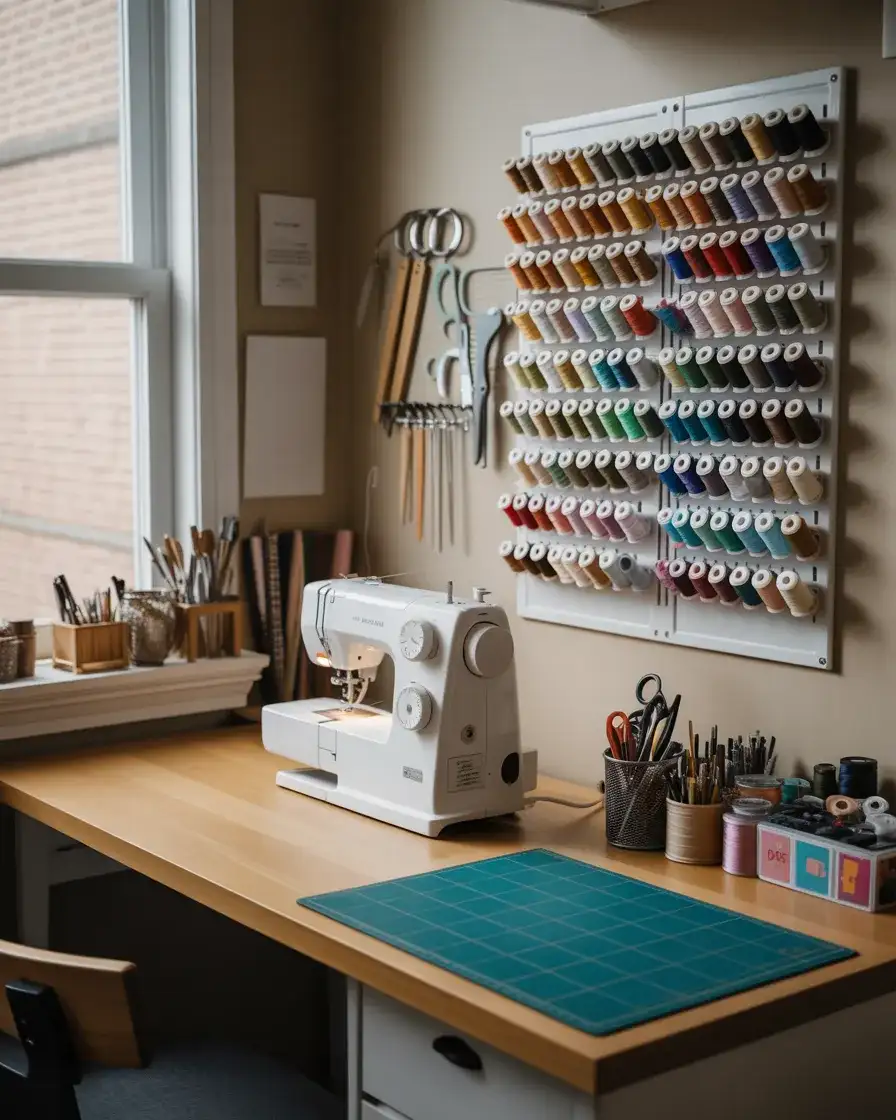
Where this works best is in a dedicated craft room or basement space where the machine can stay set up permanently. Packing away and setting up a sewing station repeatedly kills momentum on projects. A common mistake is underestimating how much horizontal space you need for fabric—a 48-inch desk feels generous until you’re trying to cut out pattern pieces for a dress. If space allows, go for 60 inches or add a folding extension table that gives you extra room only when projects demand it.
13. Modular Cube Storage System
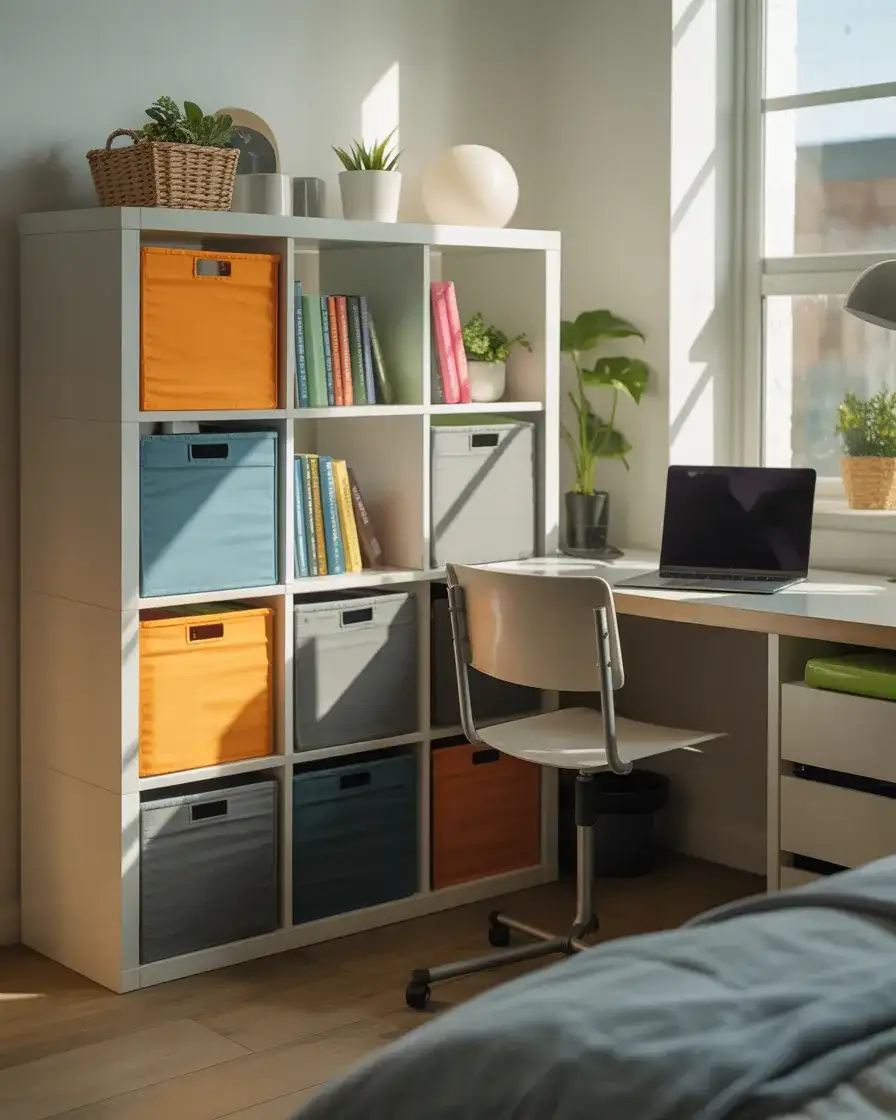
Cube storage systems (like the classic IKEA Kallax) provide flexibility that adapts to changing needs over time. Position the unit horizontally as a desk base or vertically beside your work surface for books and supplies. Fabric bins fit perfectly in the cubes, hiding clutter while maintaining easy access. This configuration is hugely popular in college settings where students move frequently and need furniture that breaks down and reassembles easily. The modular nature means you can start with a 2×2 unit and expand to 4×4 as your storage demands grow.
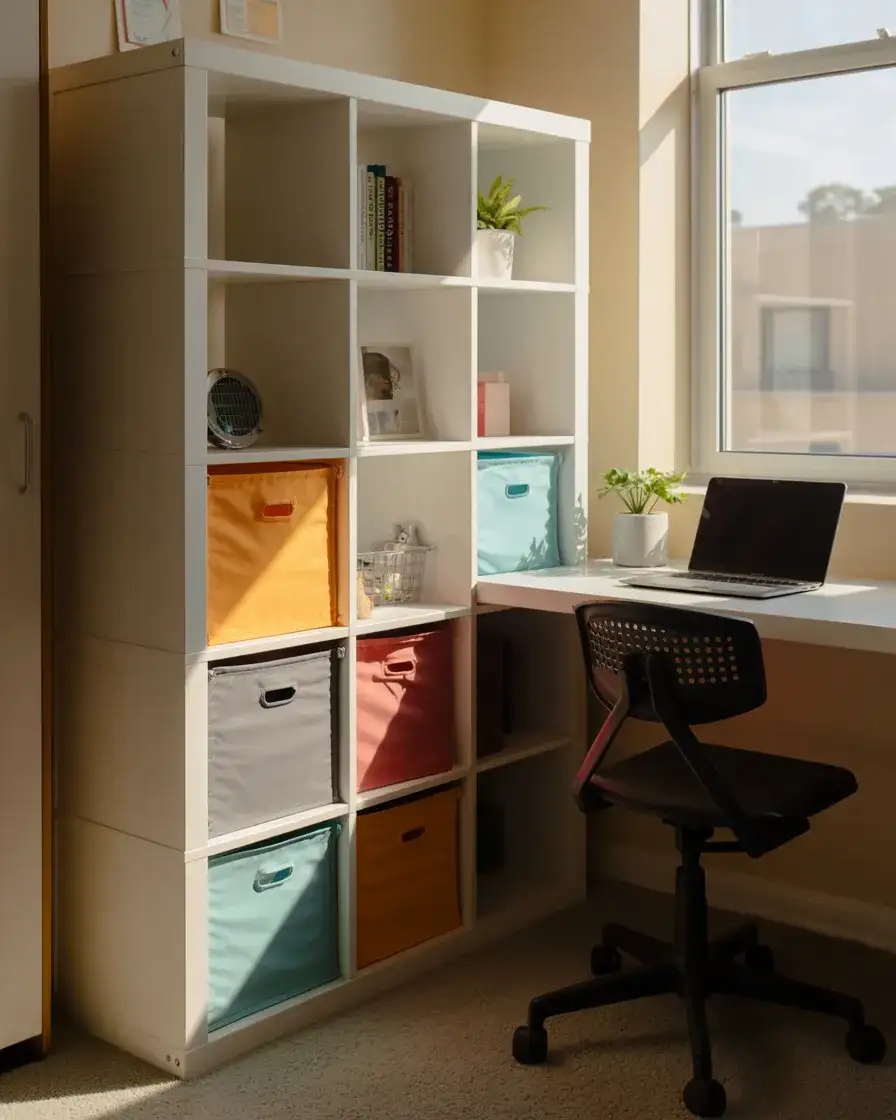
Practical insight suggests treating each cube as a category—one for tech accessories, one for notebooks, one for craft supplies, and so on. This prevents the “junk drawer effect,” where everything gets tossed into the nearest available bin. The bins themselves should be labeled on the outside unless they’re transparent, which adds an extra organizational layer that pays dividends when you’re searching for something specific. Price-wise, you’re looking at $80-$200 depending on size, making it an accessible option for most budgets.
14. Nail Tech Mobile Station
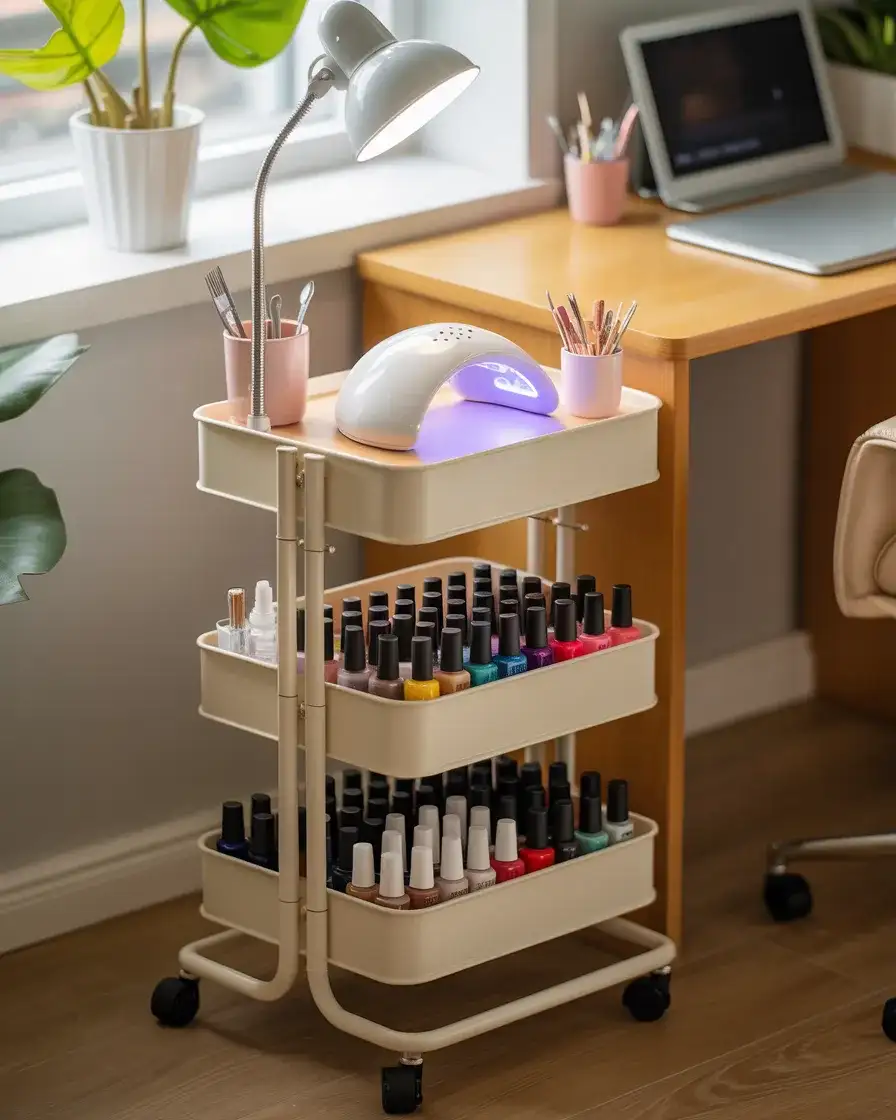
For nail technicians working from home or those who maintain extensive personal collections, a specialized organization system keeps polishes, tools, and UV lamps accessible without creating permanent clutter. A rolling cart with multiple tiers works beautifully, allowing you to wheel the entire setup to wherever you’re working. Acrylic nail polish racks display colors for easy selection, while shallow drawers hold files, buffers, and cuticle tools. This mobile approach means your desk can return to normal work function when you’re not doing nails, a crucial flexibility for multi-use spaces.
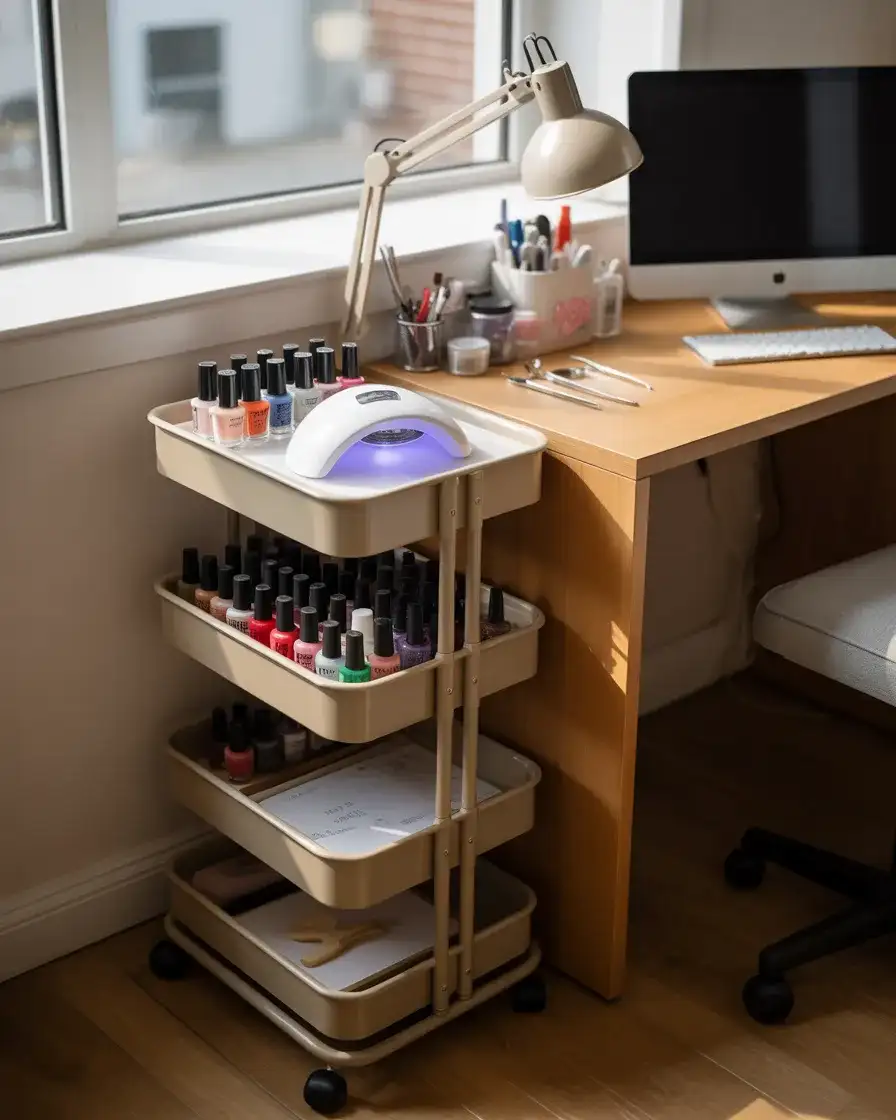
This setup works especially well in states like California, Florida, and Texas, where independent nail techs often start home-based businesses before moving into salons. The ability to keep everything organized and portable means you can work on clients’ nails in different locations without scrambling to find supplies. One tech mentioned that color-grouping her polish collection not only looks better but actually helps clients choose faster since they can see all the reds or neutrals together at a glance.
15. L-Shaped Corner Maximization
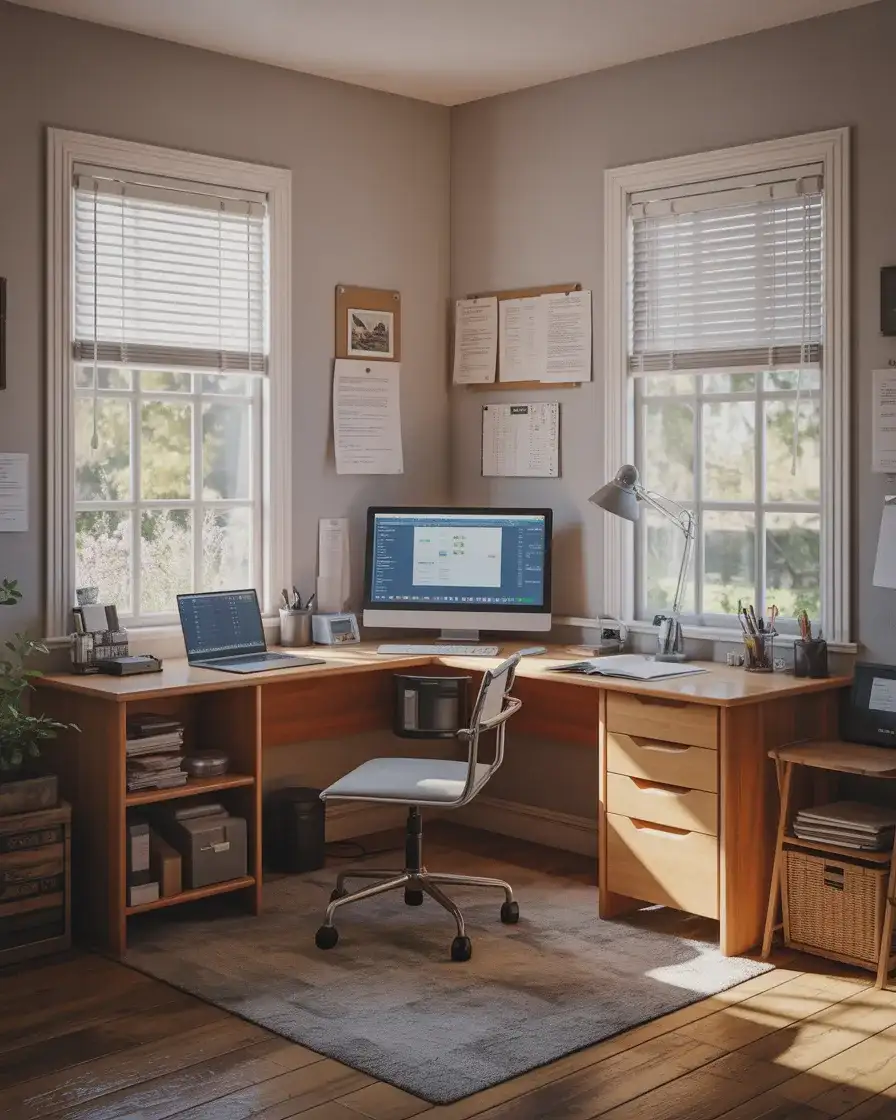
Corner spaces often go underutilized, but an L-shaped desk configuration turns that awkward angle into premium workspace. Position your computer monitors on one arm of the L and use the other for spreading out papers, projects, or a secondary task like meal planning or craft work. This creates distinct zones within a single desk footprint, which helps your brain switch between different types of work. It’s become particularly valuable for hybrid workers who need space for both digital and analog tasks.
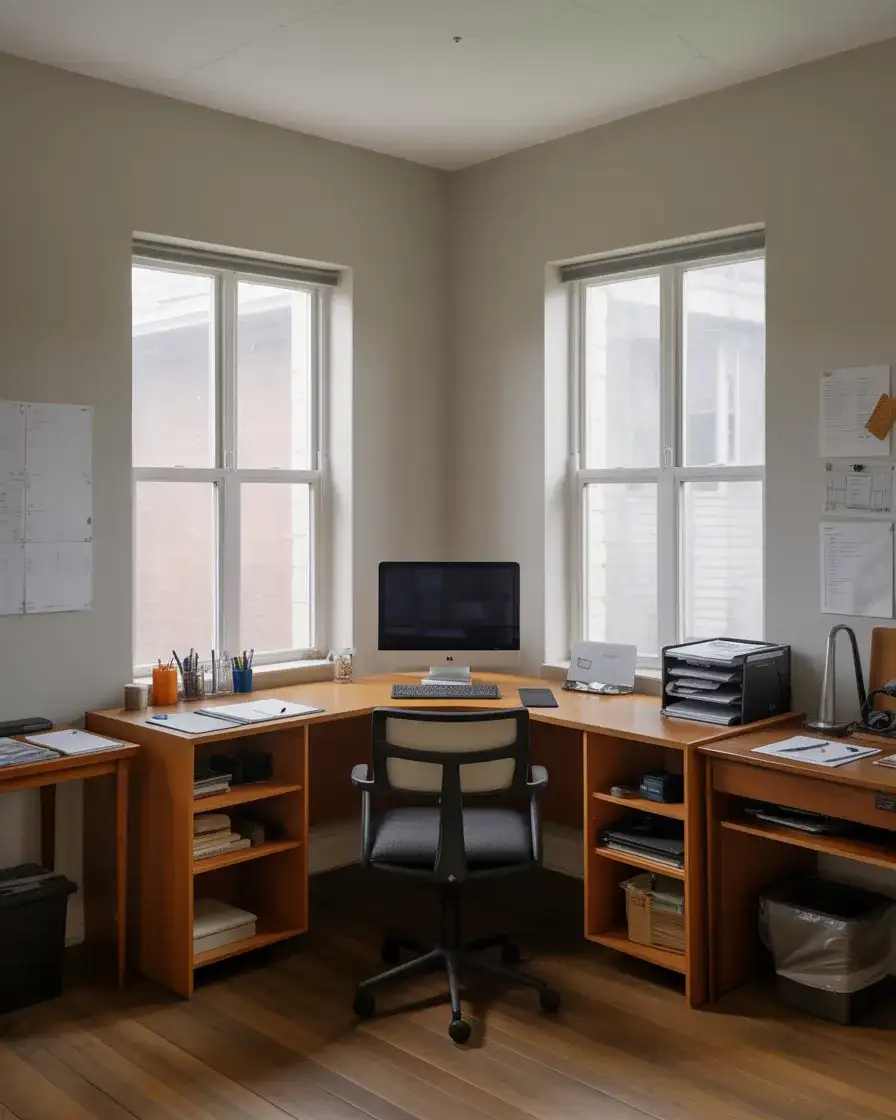
Regional context matters here—in older homes common in the Northeast and Midwest with smaller bedrooms, corner desks make the most of limited square footage. In newer construction with larger rooms, an L-desk can simply provide the luxury of spreading out. The key is positioning your chair at the corner point so you can swivel between both work surfaces without standing up. Under-desk filing cabinets on wheels complete the setup, rolling where needed and tucking away when you want clear leg space.
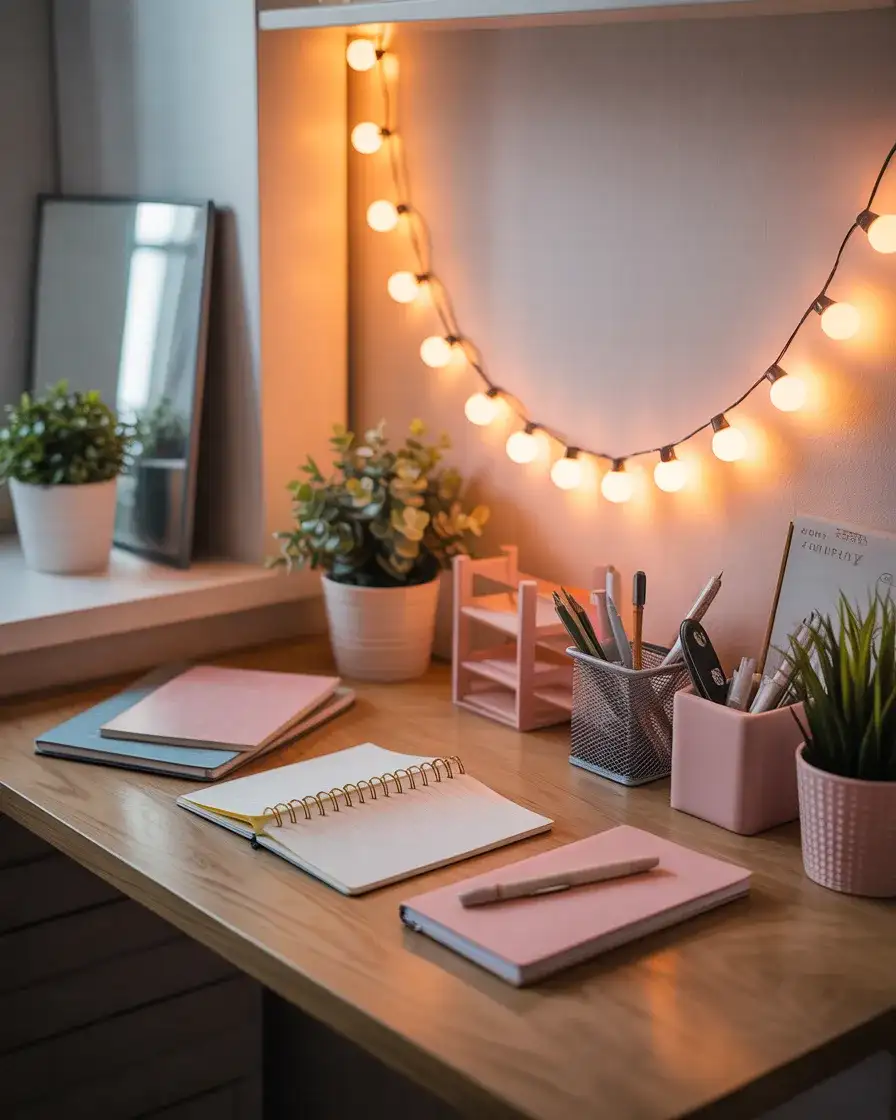
16. Aesthetic Study Nook with Fairy Lights
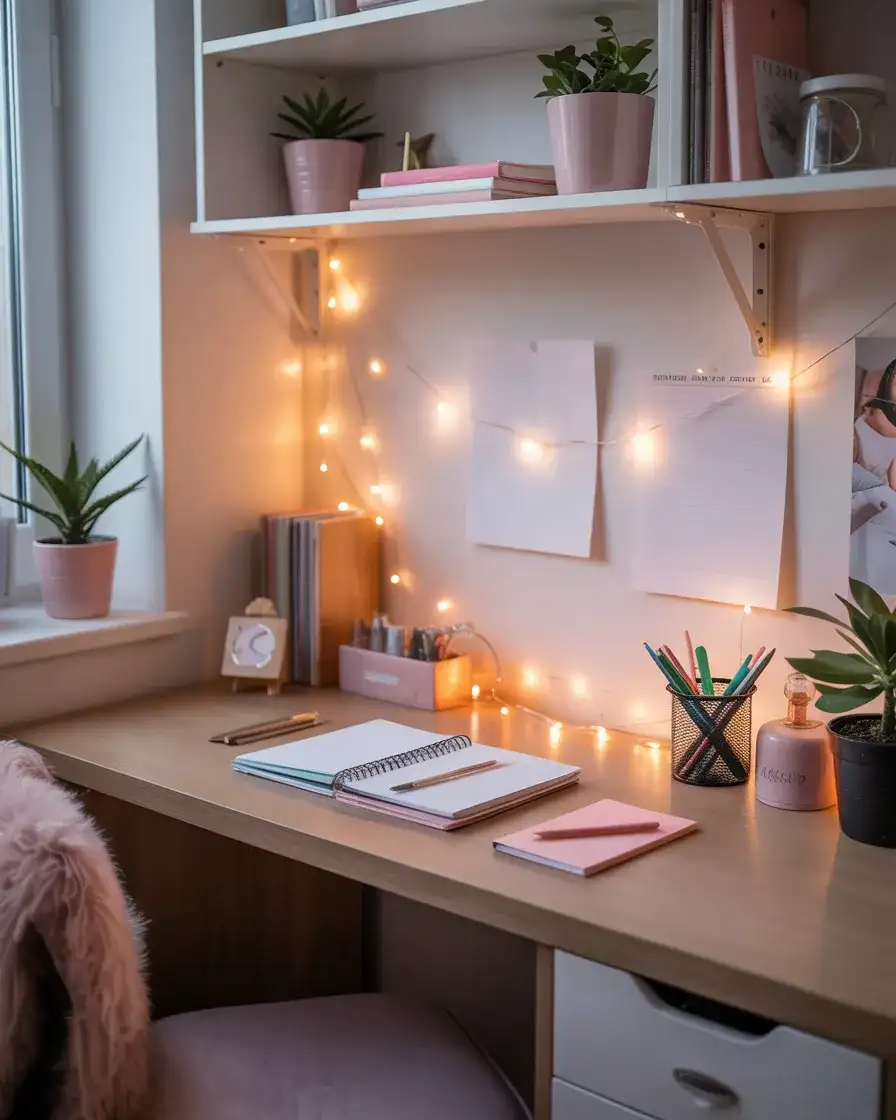
The cute desk aesthetic that dominates Pinterest combines functionality with cozy ambiance, often featuring string lights, soft textures, and personal touches. This isn’t just about looking good in photos—the gentle lighting from fairy lights reduces eye strain compared to harsh overhead fixtures, and the personalized environment makes spending long study sessions at the desk more appealing. Think small plants, a comfortable cushion on your chair, maybe a motivational print on the wall, and yes, those warm LED string lights draped above your workspace.
Where this works best is in bedrooms or dorm rooms where the desk serves double duty as a study spot and a personal retreat. The ambient lighting shifts the mood from “institutional workspace” to “my creative sanctuary,” which genuinely affects motivation for many students. The common mistake is sacrificing function for aesthetics—making sure you still have good task lighting for reading and writing. Layer the fairy lights with a quality desk lamp, and you get both the cozy vibe and the lumens you actually need for close work.
17. Digital Nomad Compact Setup
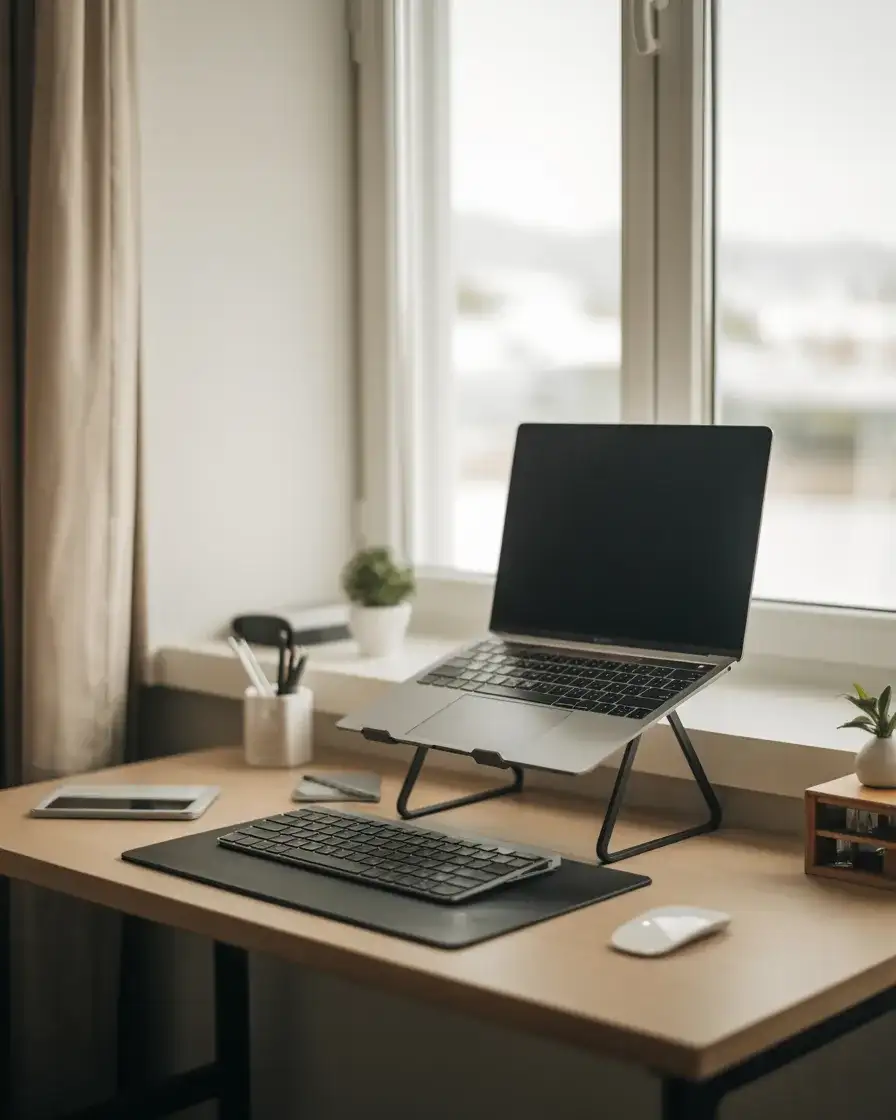
For Americans embracing remote work and frequent travel, a compact desk setup that can be packed and reassembled becomes essential. The core is a laptop, a portable monitor, a wireless keyboard and mouse, and a laptop stand—all of which fit in a backpack. When you arrive at your destination, find any table or desk and recreate your complete workspace in minutes. This philosophy has become widespread as more companies adopt permanent remote policies, freeing workers to spend time in different cities or states without sacrificing productivity.
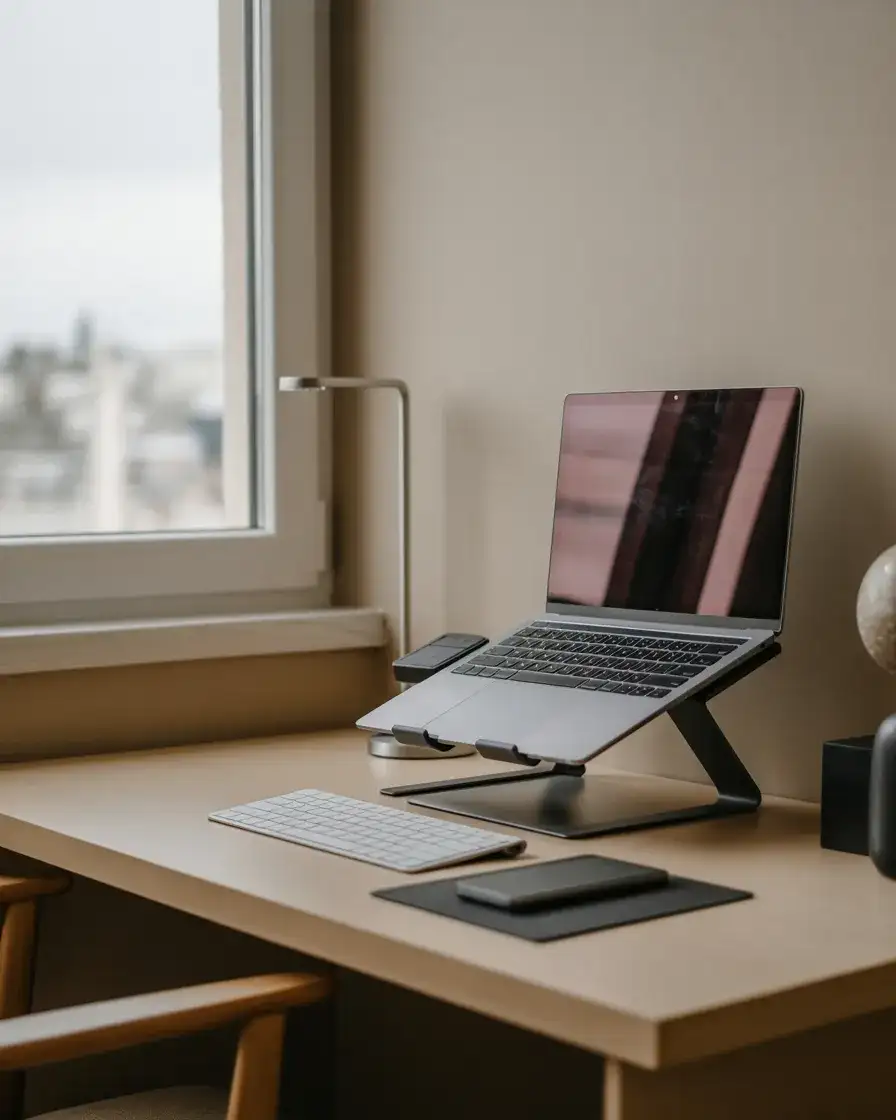
Expert commentary emphasizes investing in quality over quantity—a single excellent portable monitor serves you better than three mediocre ones. Battery-powered or USB-powered accessories eliminate the need for multiple outlets, crucial when working from coffee shops or Airbnbs with limited power access. The total investment runs $400-$800 for a complete kit, and everything should fit comfortably in a carry-on bag. Cable organizers and a small pouch for dongles prevent the digital nomad curse of spending ten minutes untangling cords every time you set up.
18. Dedicated Journaling and Planning Station

The analog planning and journaling movement has created demand for desk setups that honor paper-based productivity systems. A dedicated station for your planner, journals, and stationery collection keeps everything in one beautiful, accessible spot. Tiered letter trays hold different notebooks, a pen cup displays your favorite writing instruments, and a small drawer organizer stores washi tape, stickers, and page markers. This intentional setup makes the daily planning ritual something to look forward to rather than a chore hunted down across scattered surfaces.
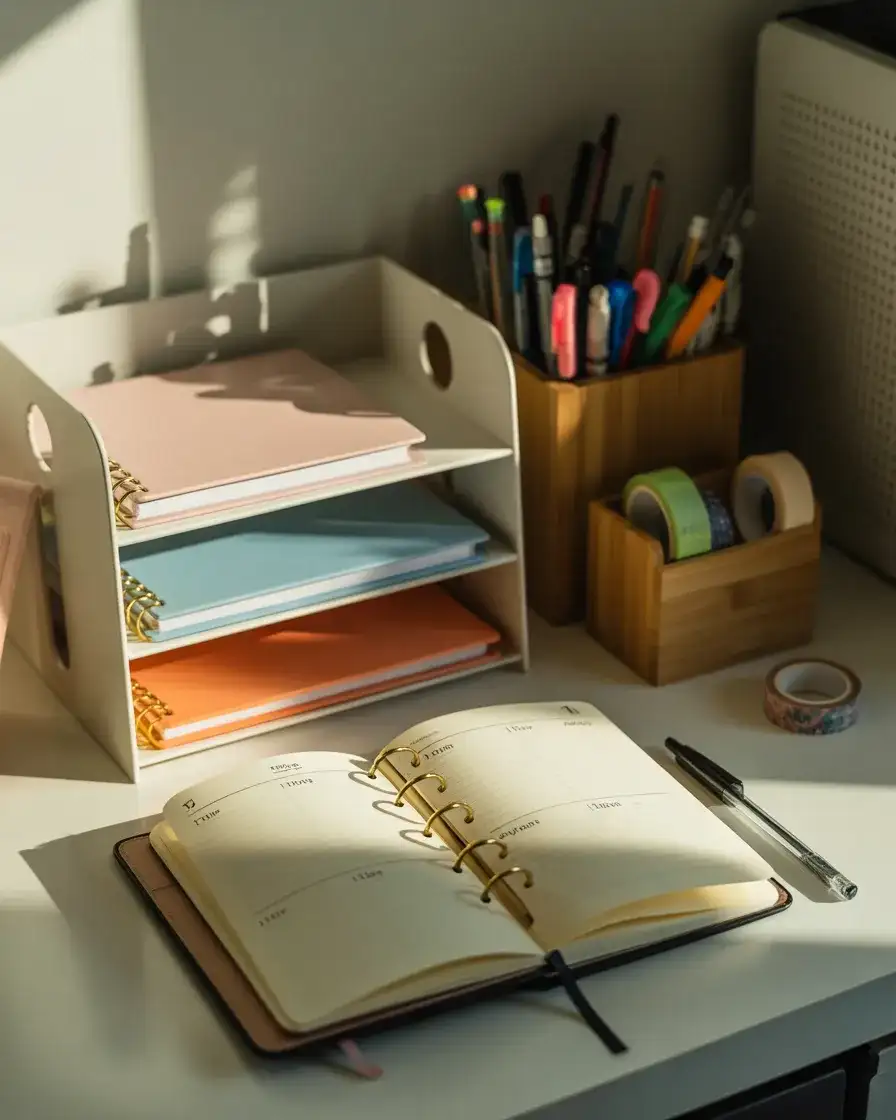
A micro anecdote: someone told me that creating a specific home for her planning supplies tripled her consistency with journaling. Before, she’d waste five minutes gathering materials, which was enough friction to skip the practice entirely. Now everything lives in one spot, and starting takes seconds. That’s the power of dedicated organization—it removes tiny barriers that accumulate into real obstacles. The cost is negligible since you probably already own the planners and pens; you’re just giving them a proper home.
19. Dual-Purpose Dining Table Office
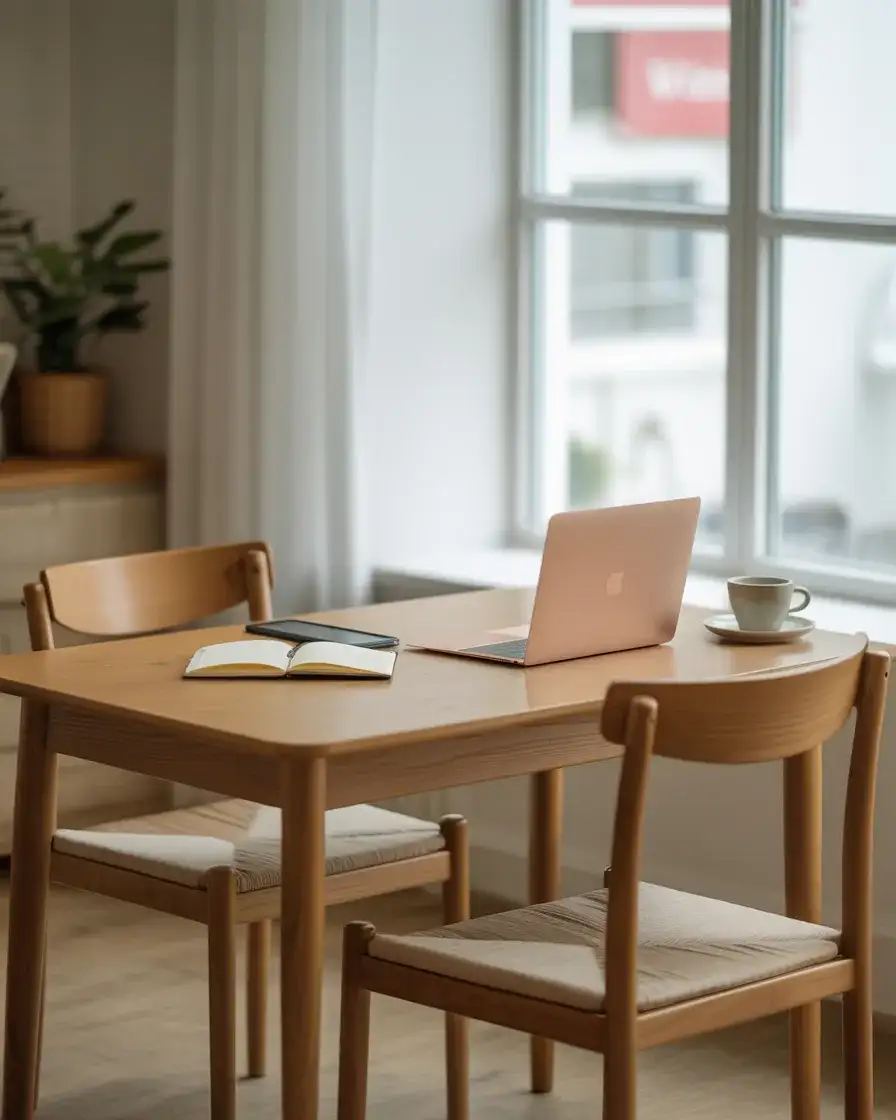
In smaller homes and apartments, the dining table frequently moonlights as a desk, requiring organization solutions that transition between functions. A portable desk caddy holds your daily work essentials and can be moved to a shelf or closet when it’s mealtime. Use a decorative tray to corral your laptop and notebooks, creating a defined work zone that lifts off the table completely. This approach is common across American urban areas where space constraints force creative dual-use solutions, and it actually helps maintain work-life boundaries by physically removing work items at day’s end.
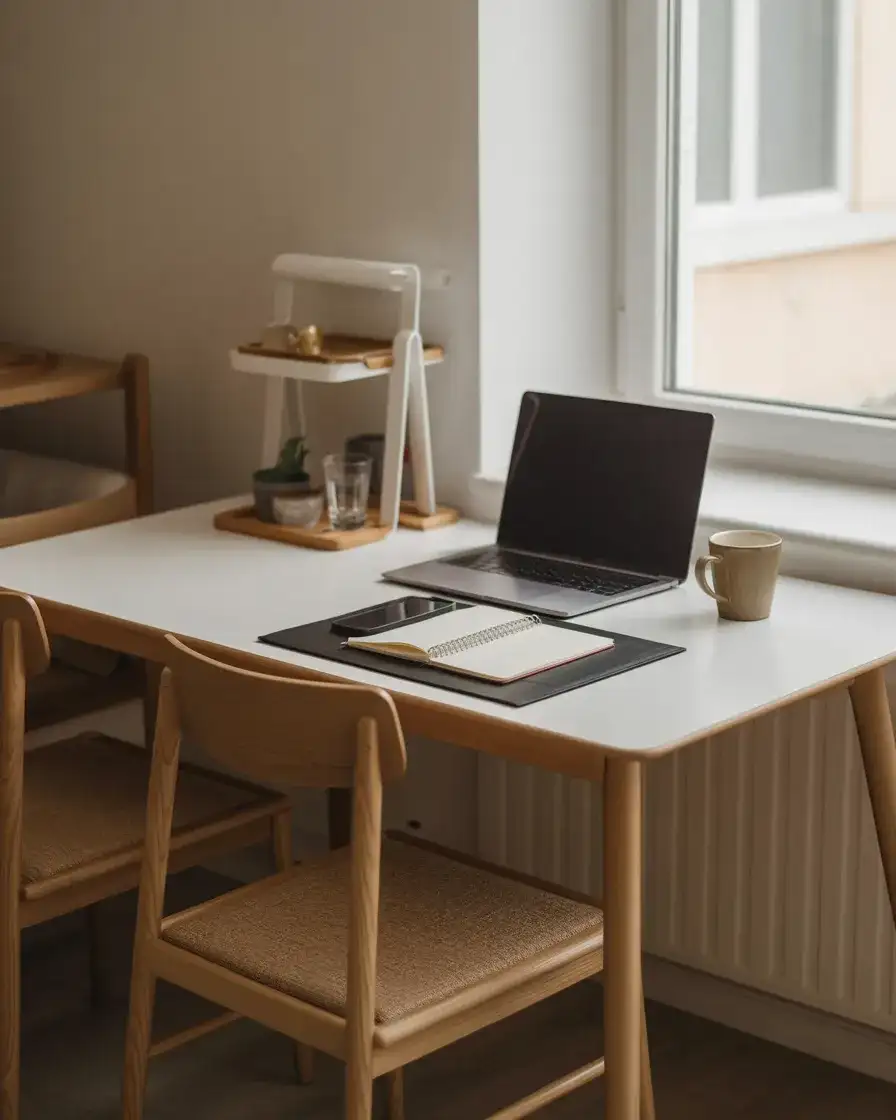
Real homeowner behavior shows that people in this situation often eat at the table less frequently because clearing it twice daily feels tedious. The fix is embracing the routine as a transition ritual—clearing the work stuff signals the end of the workday, just as setting it up in the morning signals the start. Some people keep a timer going for a three-minute cleanup sprint, making it feel like a quick reset rather than a burden. The key is accepting the dual function instead of resenting it.
20. Library-Inspired Book Organization
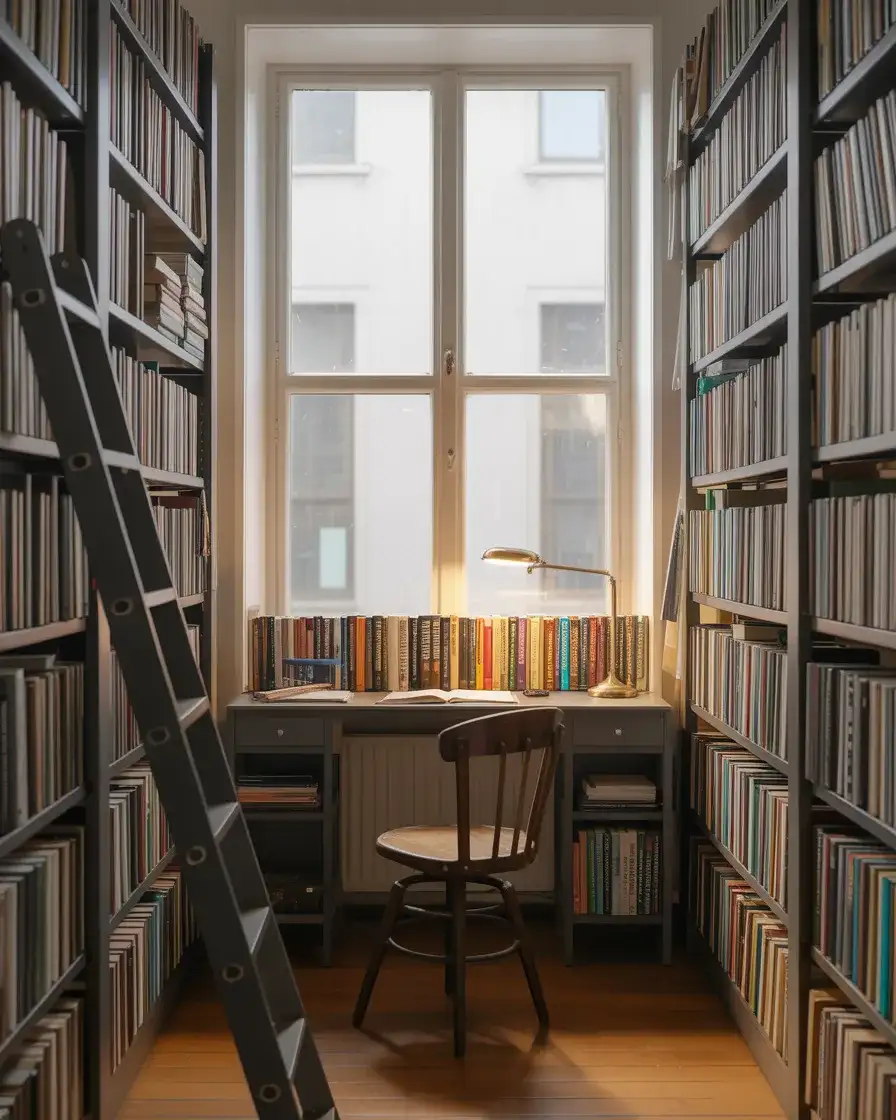
For students, researchers, and avid readers, organizing books by subject or color creates both function and visual appeal around your desk area. Tall bookcases flanking your workspace create a library alcove effect, with frequently referenced books at arm’s reach and decorative or less-used volumes higher up. Some people use the Dewey Decimal concept for personal libraries, while others prefer color-coordinated spines for that rainbow effect that photographs beautifully. This idea’s aesthetic approach satisfies both practical needs and the desire for an inspiring environment.
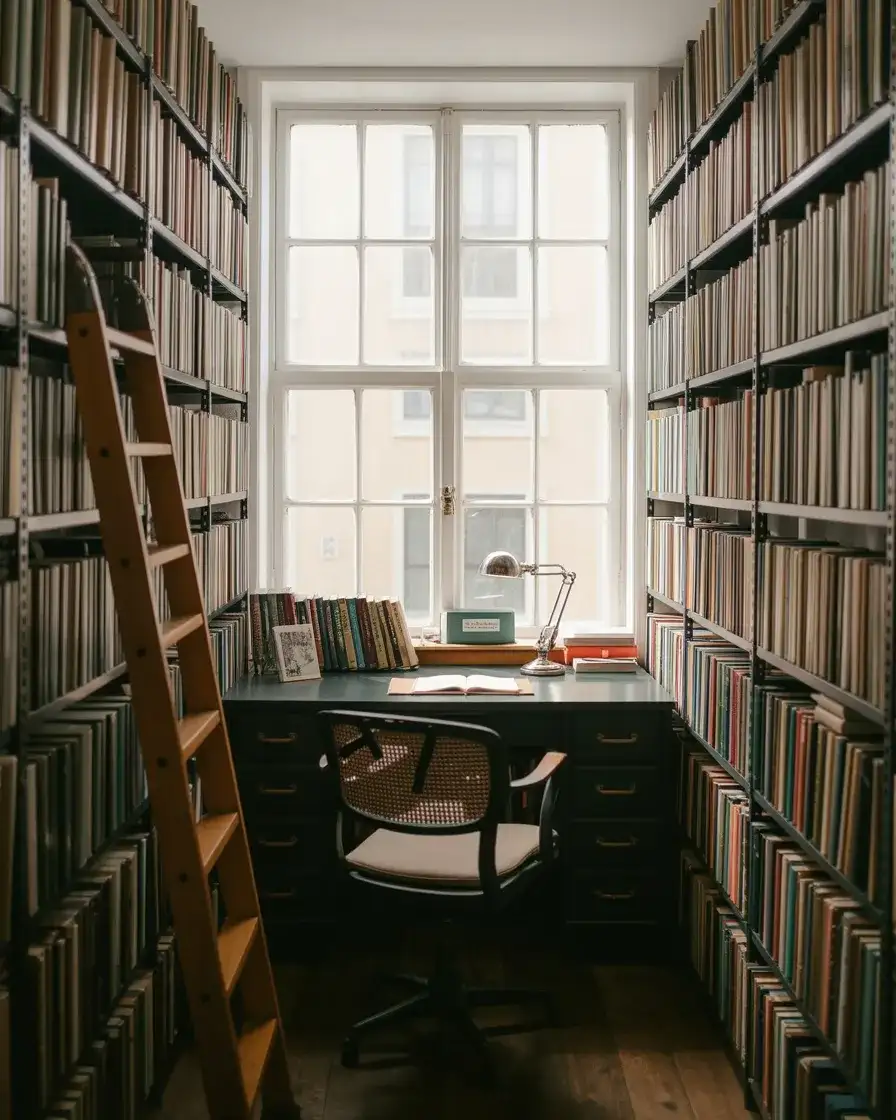
The American lifestyle context reveals a resurgence in home libraries as people invest in physical books despite digital options. There’s something psychologically grounding about being surrounded by your knowledge collection, and it genuinely supports deeper work. Budget-wise, thrifted bookshelves from Facebook Marketplace or estate sales can create this look for $100-$300. The organizing time investment pays back in reduced search frustration and increased likelihood of actually referencing the books you own.
21. Muji-Inspired Minimal Organization
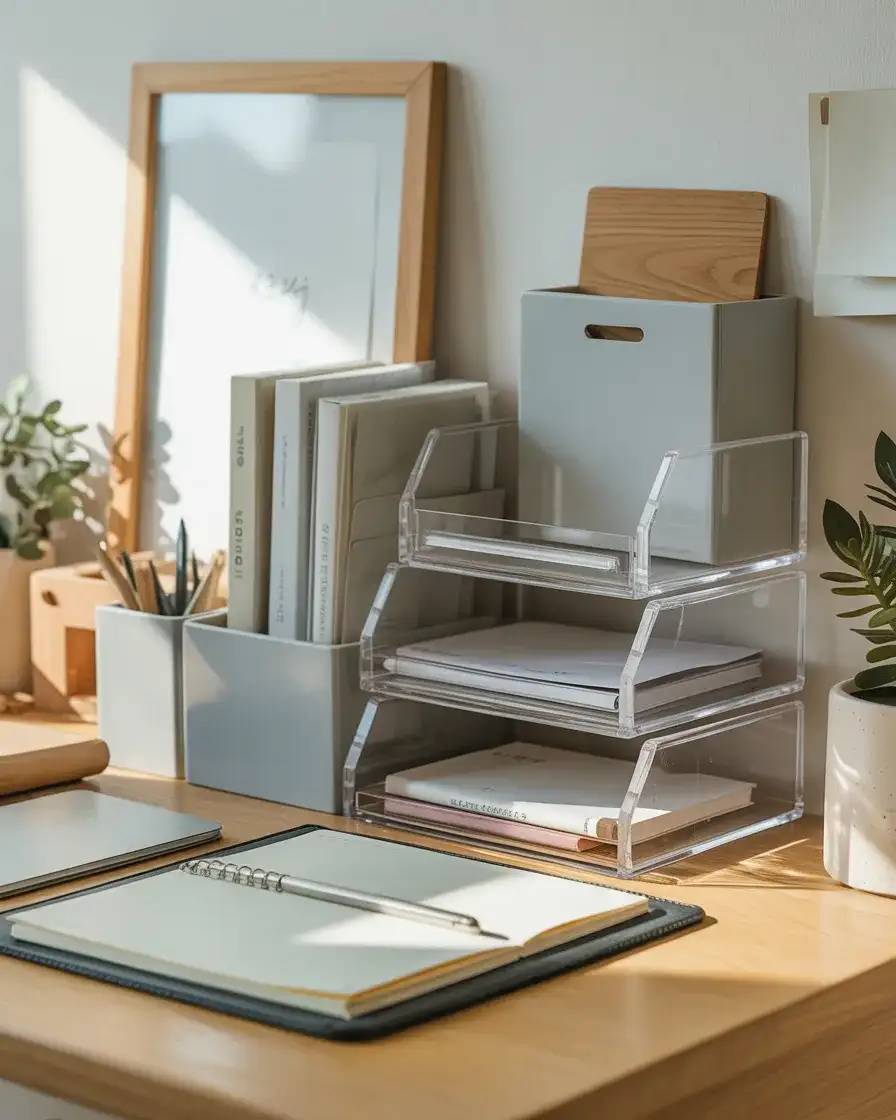
The Muji aesthetic—clean lines, neutral colors, modular storage—has influenced American desk organization significantly in recent years. Acrylic dividers create sections within desk drawers, translucent storage boxes stack neatly on shelves, and simple white or gray containers unify disparate supplies into a cohesive visual system. The philosophy is about right-sizing storage to contents, not oversized bins with wasted space. This Japanese-influenced approach creates calm through order, making it easier to maintain organization because everything has its specific, perfectly sized home.
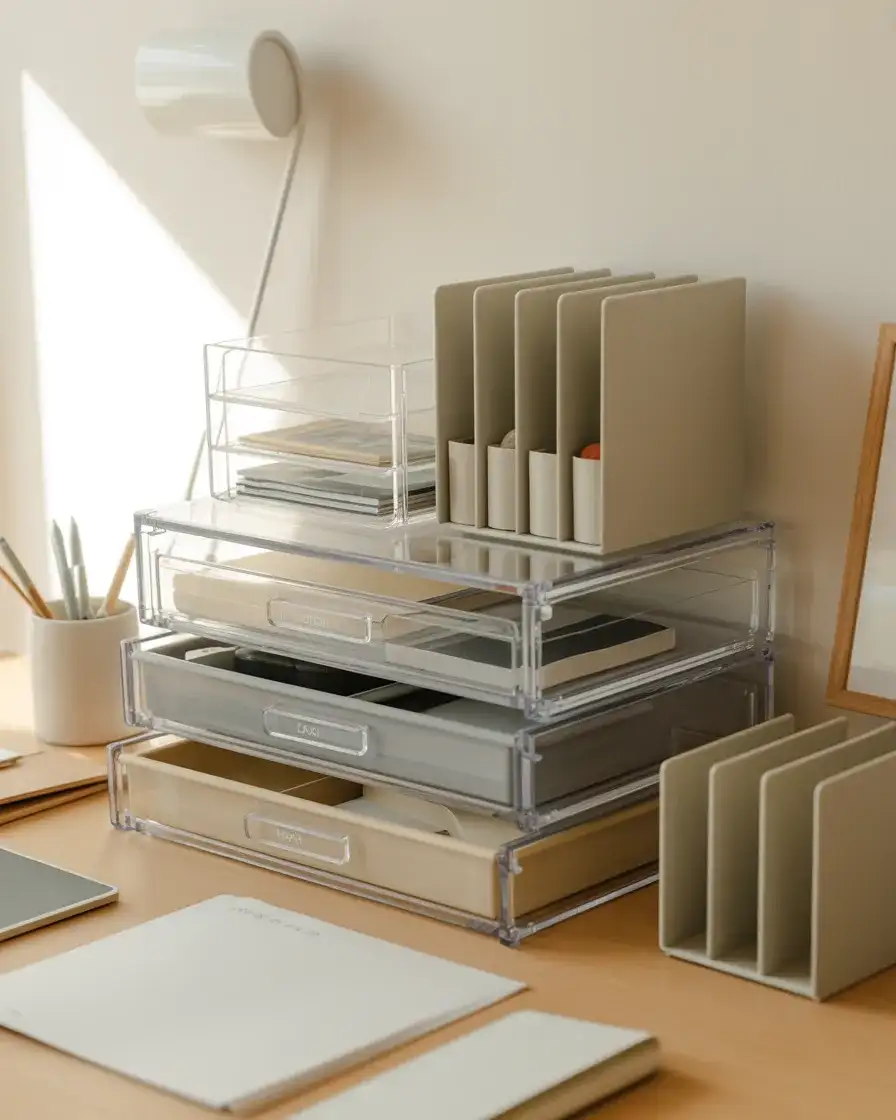
Where this works best is for people who are naturally inclined toward minimalism and find visual clutter mentally draining. The upfront investment is moderate—Muji products aren’t cheap, but alternatives from Container Store or Amazon offer similar aesthetics. A complete drawer organization system might run $50-$100. The payoff is in maintenance; when storage matches contents precisely, things naturally return to their places because there’s no ambiguity about where they belong. This reduces the daily friction of staying organized.
22. Artist Desk with Supply Accessibility

For those doing art at their desk—whether digital illustration, watercolor, or mixed media—supply organization directly impacts creative flow. A tiered cart beside the desk holds paint tubes, brushes, and colored pencils sorted by type and shade. A lazy Susan on the desk surface keeps frequently used items rotating into reach. Vertical cup holders display brushes and tools like a visible menu of options. This accessibility matters because searching for the right brush or color interrupts the creative state, whereas seeing everything at once keeps you immersed in the work.

From a practical standpoint, protect your desk surface with a large cutting mat or craft paper—paint stains and ink marks are inevitable. The investment in proper organization supplies might seem high at first ($100-$200 for comprehensive storage), but it extends the life of your materials by preventing damage from chaotic storage and makes your practice more sustainable by removing setup friction. Artists in creative hubs like Portland, Brooklyn, and Austin have normalized these setups as essential to their practice, not optional luxuries.
23. Seasonal Desk Refresh System

Rather than committing to a single permanent aesthetic, some people embrace seasonal desk transformations that keep the space feeling fresh and motivating. Swap out your desk accessories, plants, and small decor items four times a year—think warm amber tones and small pumpkins in fall, cool blues and minimal greenery in winter, fresh florals in spring, and bright energizing colors in summer. This isn’t about buying new furniture but rotating smaller elements that shift the mood. It’s become a Pinterest favorite because it satisfies the desire for change without major expense or commitment.

This approach combats desk fatigue, that feeling when your workspace becomes so familiar it fades into background invisibility. The quarterly refresh takes maybe 20 minutes and costs very little if you shop your own home for items or hit thrift stores for affordable seasonal finds. Store off-season items in a labeled box so next year’s transition is even easier. It’s a small practice that yields outsized psychological benefits, helping your desk feel like a chosen, curated space rather than a static necessity you’ve stopped noticing.
Conclusion
Now that you’ve explored 23 distinct approaches to desk organization for 2026, from minimalist floating desks to seasonal refresh systems, you have a wealth of options that can be mixed, matched, and adapted to your specific needs and space constraints. The key is starting with what genuinely serves your workflow and lifestyle rather than chasing aesthetics alone. Which of these ideas resonates most with your current desk challenges? Share your thoughts and any organization victories in the comments below—the best desk setups often come from real people solving real problems, and your experience might be exactly what another reader needs to hear.