Your garage door takes up more visual real estate on the front of your home than almost anything else—and yet it’s one of the most overlooked surfaces when it comes to curb appeal. That’s changing fast. In 2026, homeowners across the country are treating garage doors the way interior designers treat a statement wall: as an opportunity. Whether you’re deep in a full exterior makeover or just hunting for weekend inspiration on Pinterest, there’s never been a better time to rethink what that big panel on the front of your house can look like. From sleek contemporary styles to cozy farmhouse vibes, this guide walks you through 23 fresh ideas that are already trending—and will keep your home looking sharp well into the decade.
1. Matte Black Garage Door with Slim Sidelights
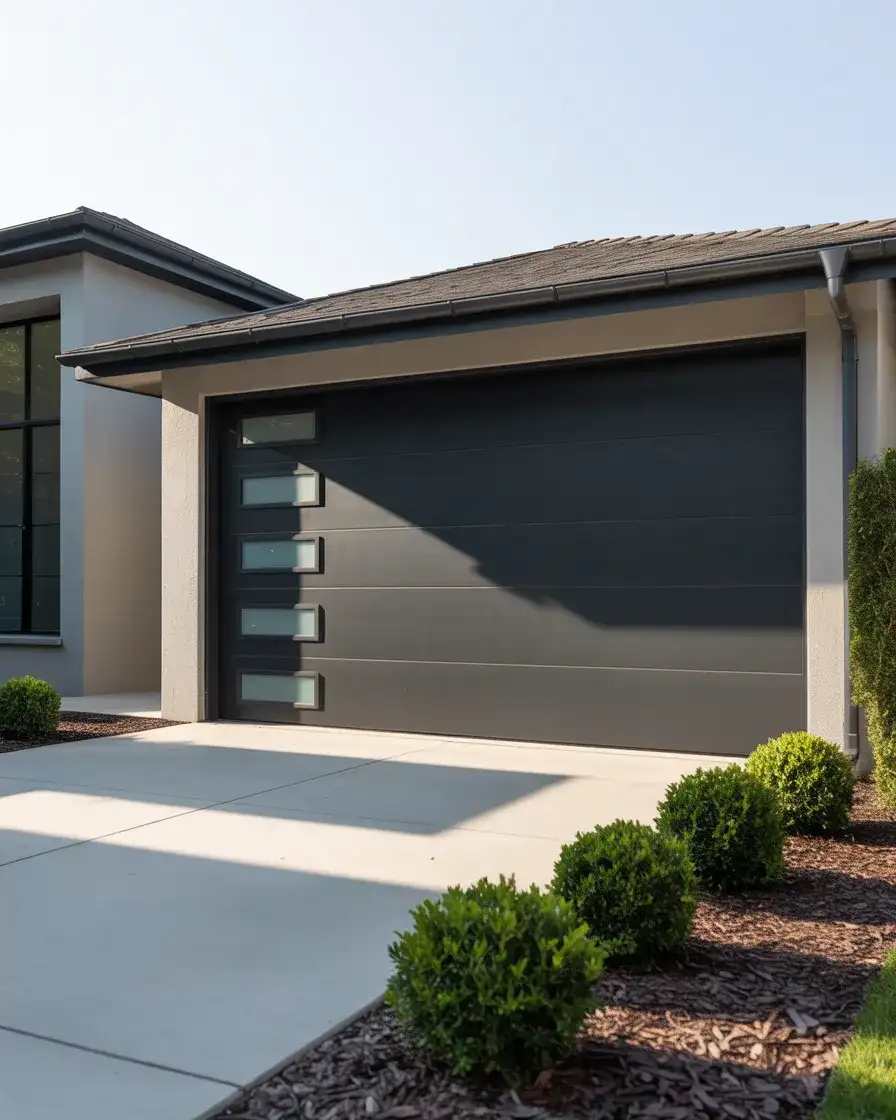
There’s a reason black garage doors have dominated Pinterest boards for the last two years—and the momentum shows no sign of slowing. A matte black finish creates a bold, grounding effect on almost any architectural style, from craftsman bungalows to new construction colonials. Pair it with slim vertical windows on either side of the door, and you get a look that feels curated and intentional without a single coat of paint on the rest of the house.
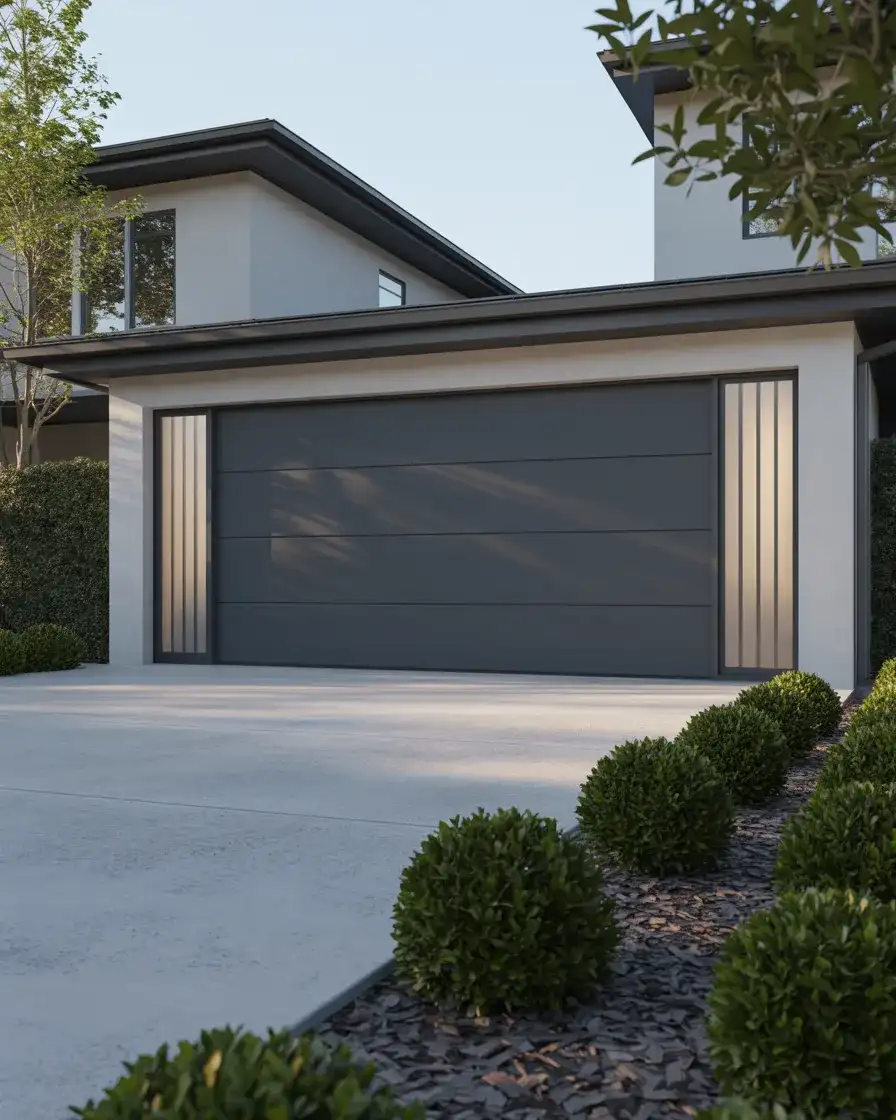
Black is a finish that works remarkably hard for relatively little investment. Most garage door manufacturers now offer matte black as a standard powder-coat option, which means you don’t have to commission custom work to get this look. Experts in exterior design consistently note that the contrast between a dark door and lighter siding creates an effect similar to eyeliner—it sharpens the whole face of the house. Budget-wise, expect to pay between $900 and $2,500 for a quality steel door in this finish, depending on size and panel style.
2. Carriage House Door with Board-and-Batten Detail
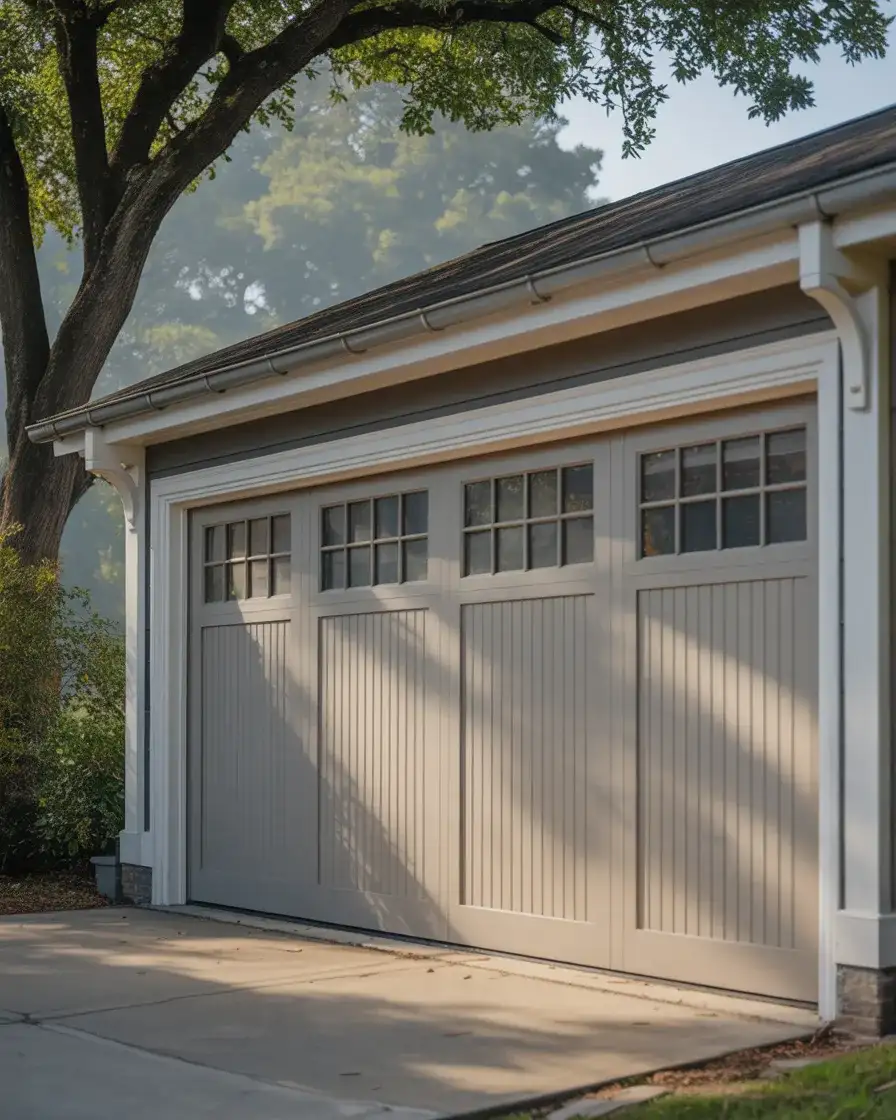
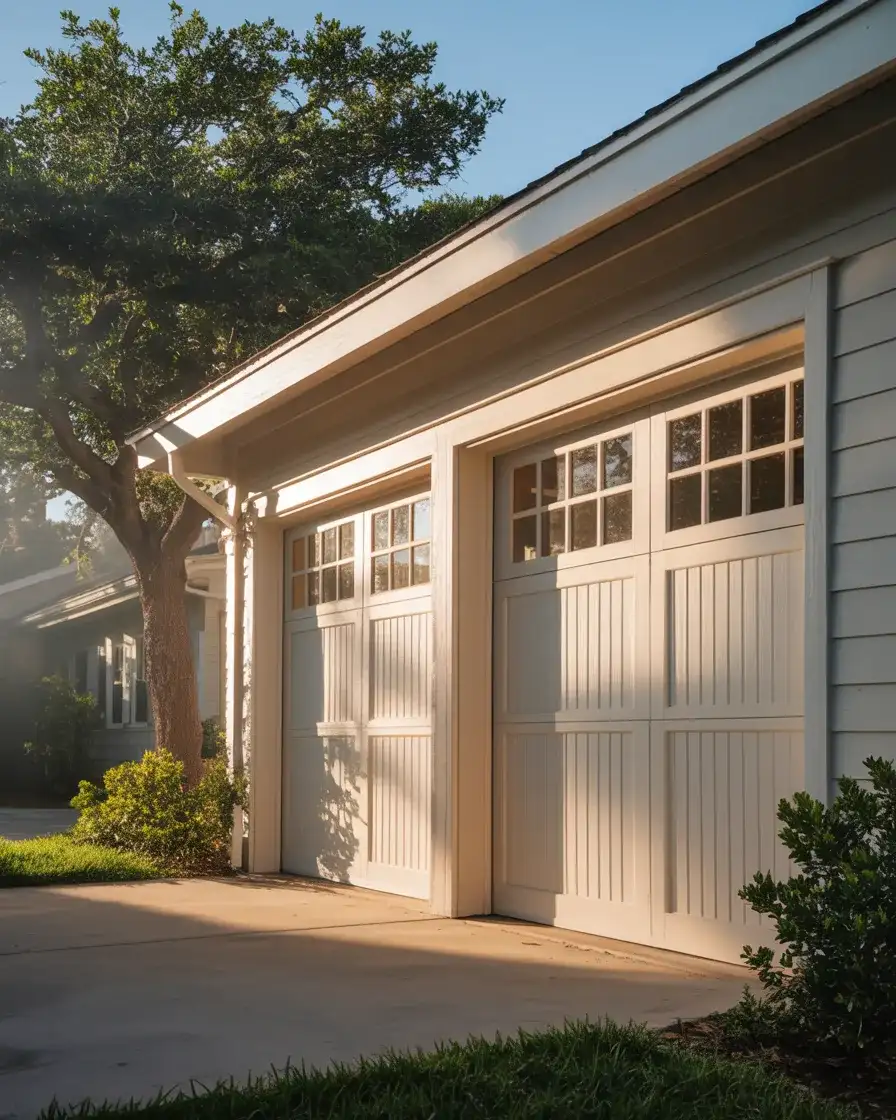
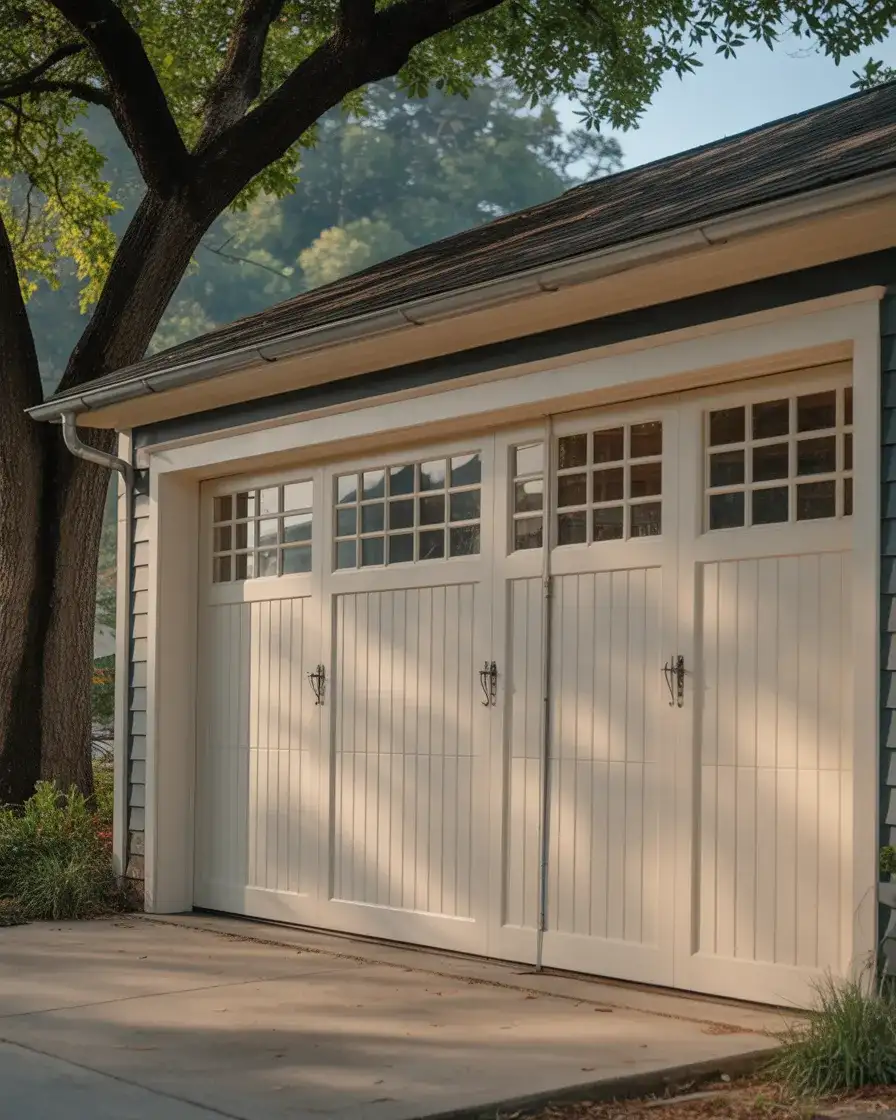
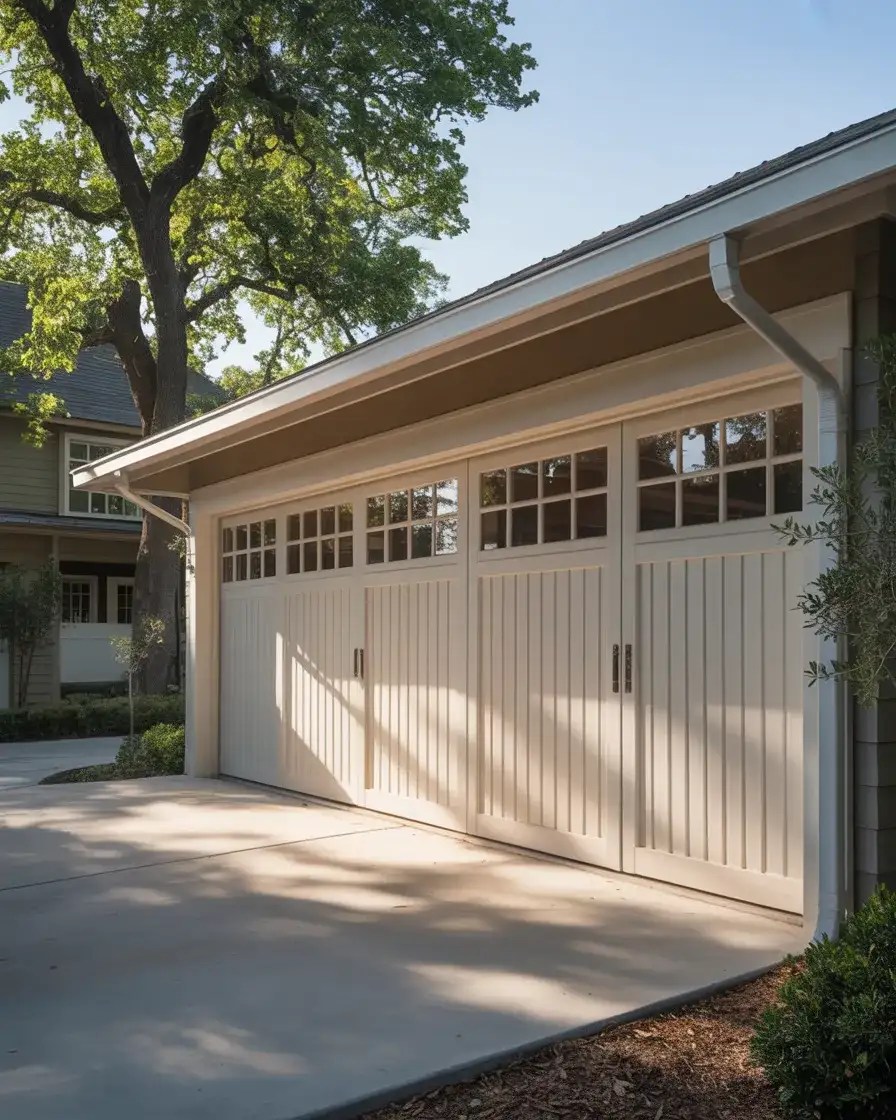
The carriage door aesthetic is evergreen—and it’s undergoing a quiet renaissance in 2026 with cleaner lines and fewer fussy ornamental details than the versions popular a decade ago. Modern takes on this classic style often use board-and-batten overlay patterns in combination with top-row windows, giving the door an honest, handmade quality that reads beautifully alongside modern farmhouse exteriors and traditional Colonials alike.
One thing real homeowners often get wrong with carriage doors is over-accessorizing. The temptation to add decorative handles, strap hinges, and carriage lights all at once can tip a charming look into something that feels theme-park-ish. A smarter approach: choose one or two hardware accents in a consistent metal finish—oil-rubbed bronze or matte black—and let the door’s texture do the rest of the visual work. Restraint really is the secret ingredient here.
3. Pergola Over Garage Door with Climbing Vines
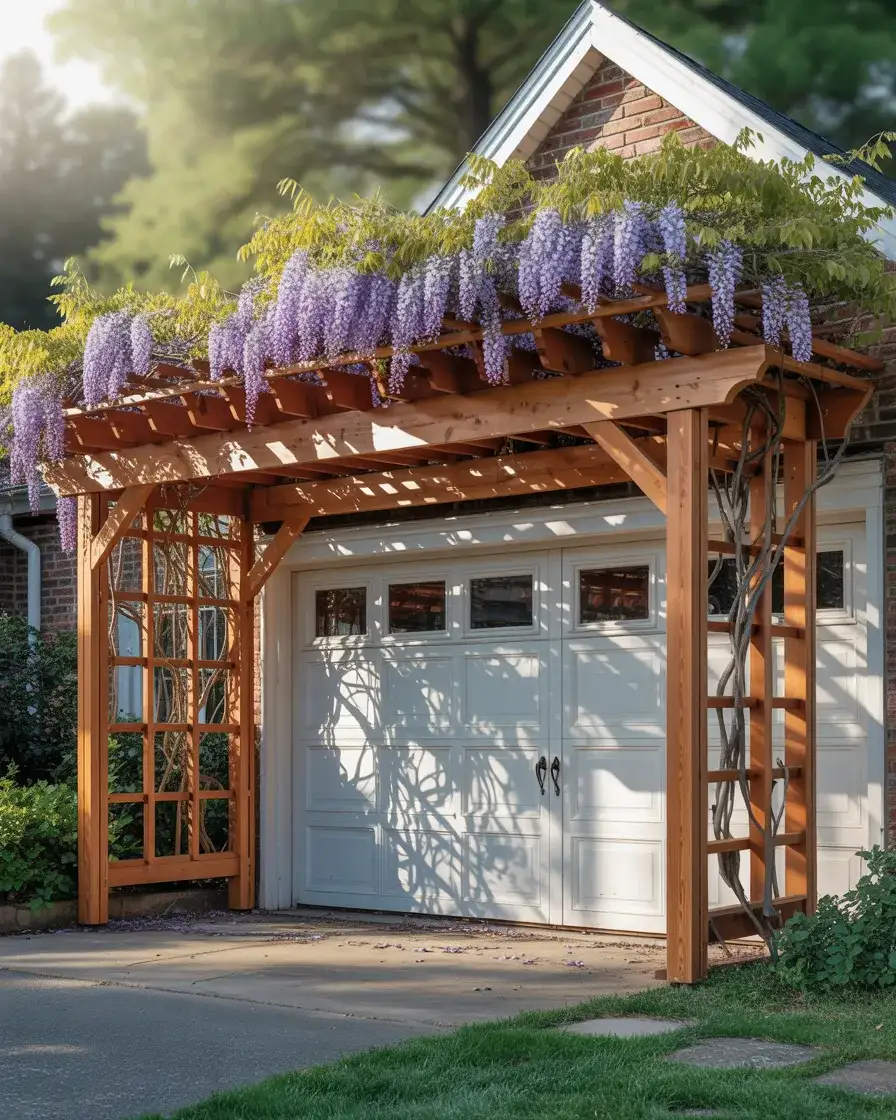
Adding a pergola over the garage door is one of the most dramatic upgrades you can make to a home’s exterior—and it costs far less than a full renovation. A simple cedar or pressure-treated wood structure framing the garage opening softens what is usually the most industrial-looking part of a home’s facade. When you train a climbing vine like Virginia creeper, wisteria, or climbing hydrangea across it, the whole front of the house takes on a storybook quality that photographs beautifully for residential listings and social media alike.
This look works best in the Pacific Northwest, New England, and the mid-Atlantic states, where humidity and mild summers support vigorous vine growth. In drier climates like Texas or Arizona, drought-tolerant options like climbing roses or trumpet vines can deliver a similar effect with less water. Structurally, the pergola needs to be anchored to the home’s framing—not just the brick or siding—so this is one project where a quick consult with a contractor before you swing a hammer is genuinely worth it.
4. Full Glass Panel Garage Door
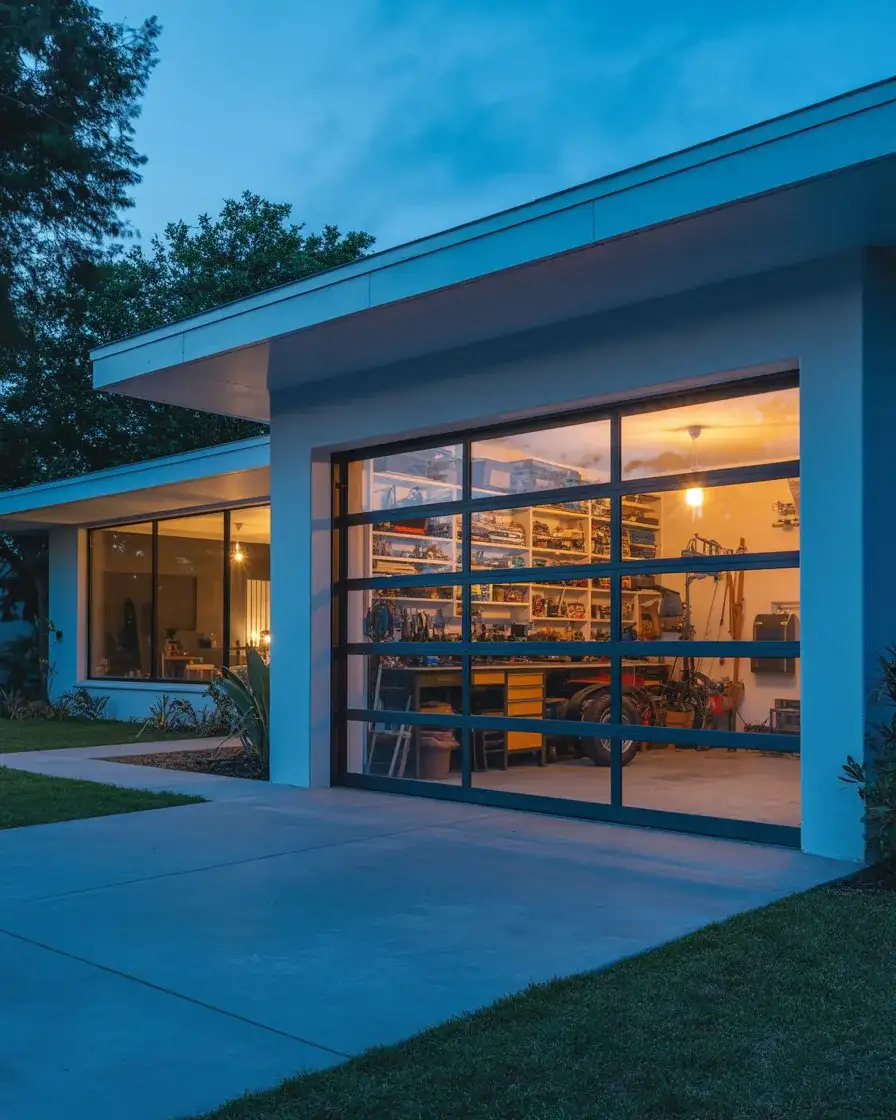
Nothing reads “contemporary” quite like a full-panel glass garage door. These doors—typically aluminum frames with tempered or frosted glass inserts running from top to bottom—are a statement that says the homeowner has taste, confidence, and probably a very organized garage interior. They’re a natural fit for mid-century modern homes and new builds with flat or low-pitched rooflines, and they create a striking visual connection between the interior space and the outside world.
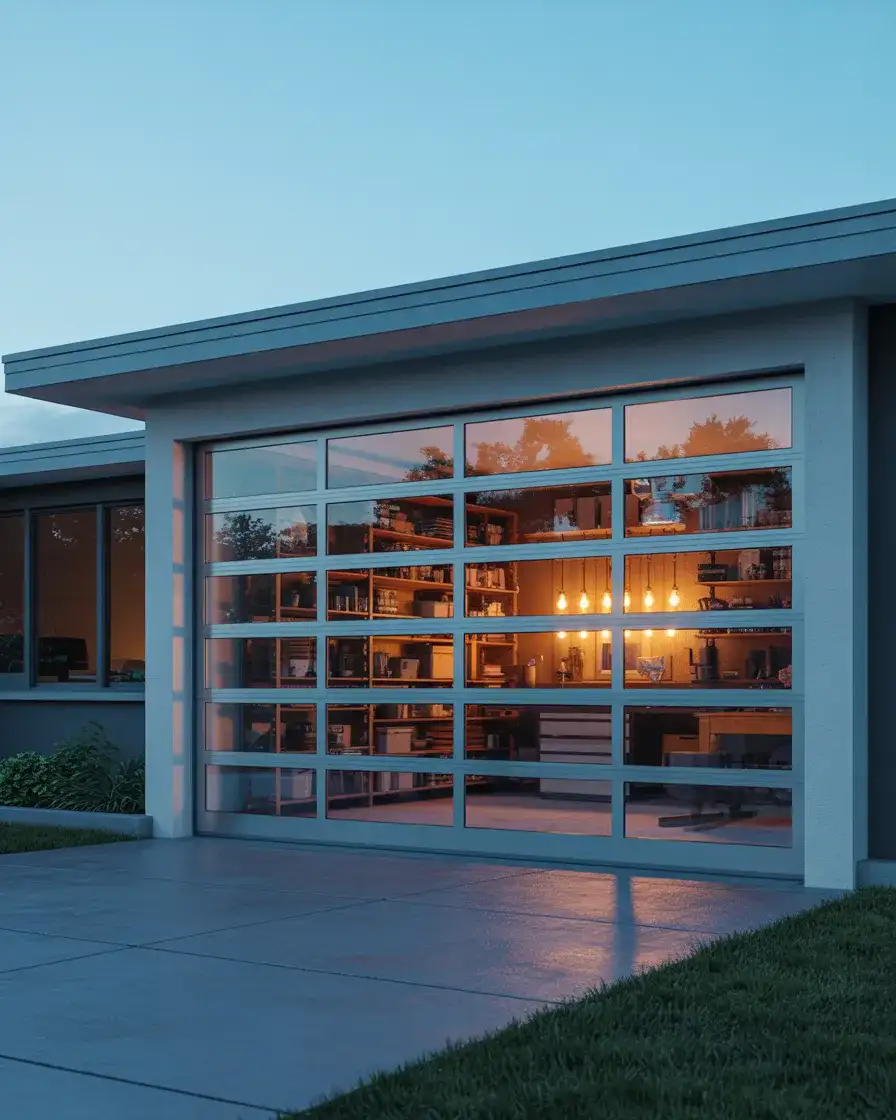
The practical trade-off with glass doors is privacy and insulation. Frosted or obscured glass solves the privacy concern elegantly, but even thermally broken aluminum frames don’t perform as well as insulated steel in extreme cold. In climates like Minnesota or Michigan, this is a real consideration—homeowners in those regions often opt for a single glass panel row at the top rather than a fully glazed door. That compromise still delivers the visual drama while keeping the heating bills in check.
5. Wooden Garage Door in Natural Cedar Finish
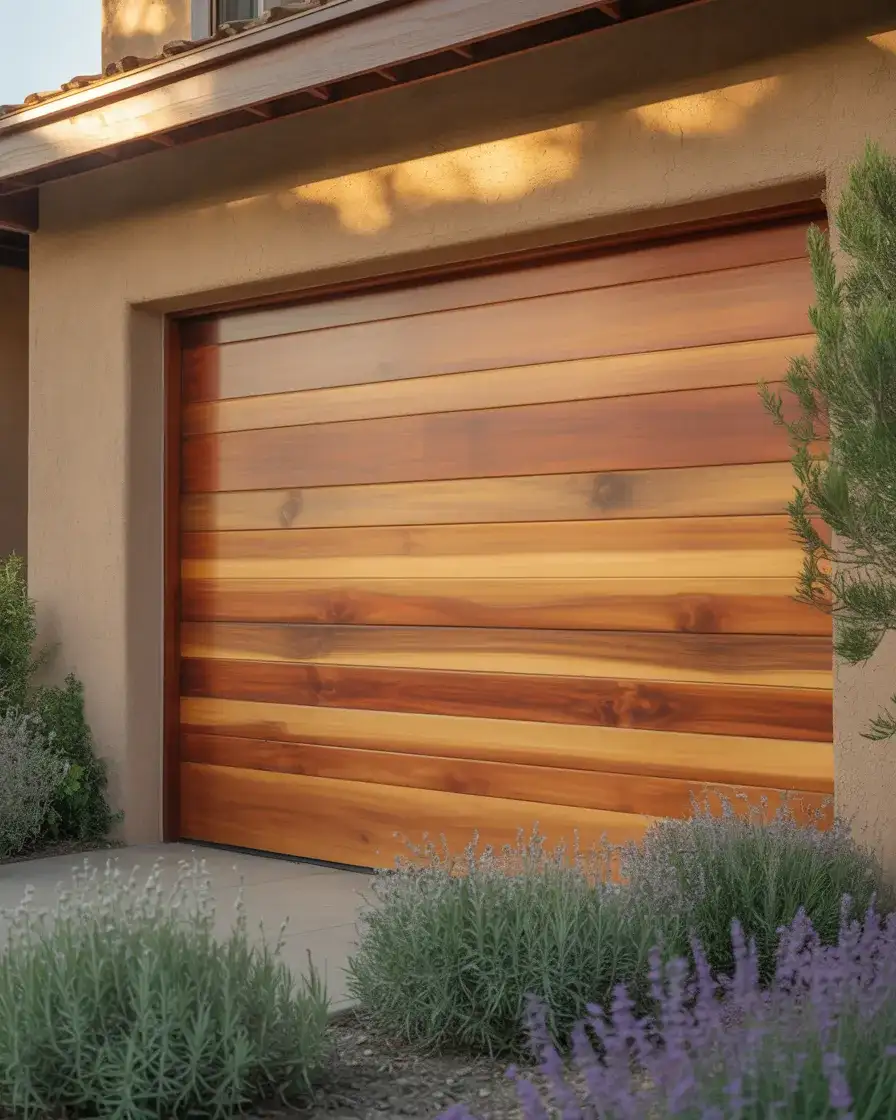
A wooden garage door in its natural state is one of those design choices that ages beautifully—quite literally. Real cedar, redwood, or fir develops a silver-gray patina over time that adds character rather than looking worn. In 2026, the trend is toward celebrating that natural grain rather than painting over it, letting the warmth of real wood provide contrast against painted siding, stone veneer, or smooth stucco. The look pairs especially well with dark metal hardware and earthy, nature-forward landscaping.
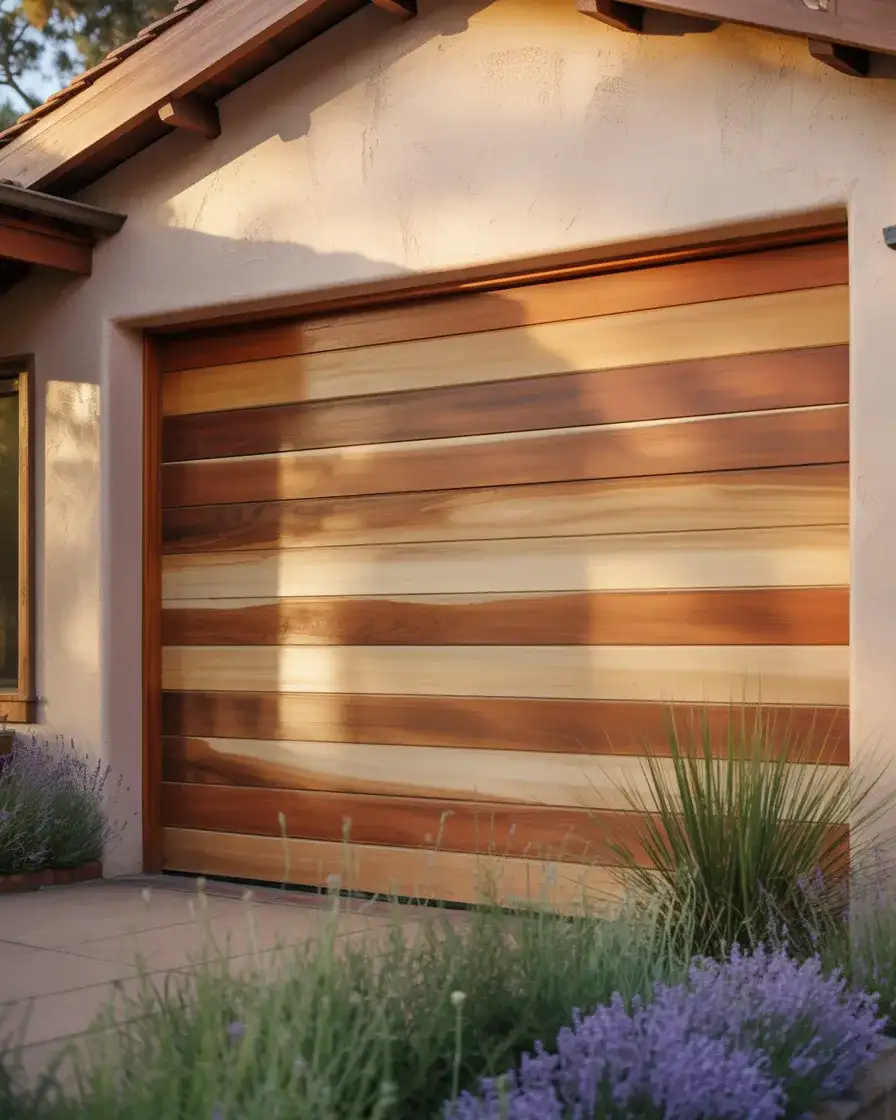
Maintenance is the honest conversation no one wants to have about real wood doors. Without a proper UV-blocking oil or stain reapplied every two to three years, cedar will dry, crack, and cup. A homeowner in Scottsdale shared that after two summers of neglect, her beautiful cedar door warped enough to let wind whistle through the bottom seal. The fix was a full refinish and new weather stripping—about $400 total. The lesson? Build the maintenance schedule into your calendar before the door is even installed.
6. Wood-Look Steel Door in Walnut Tone
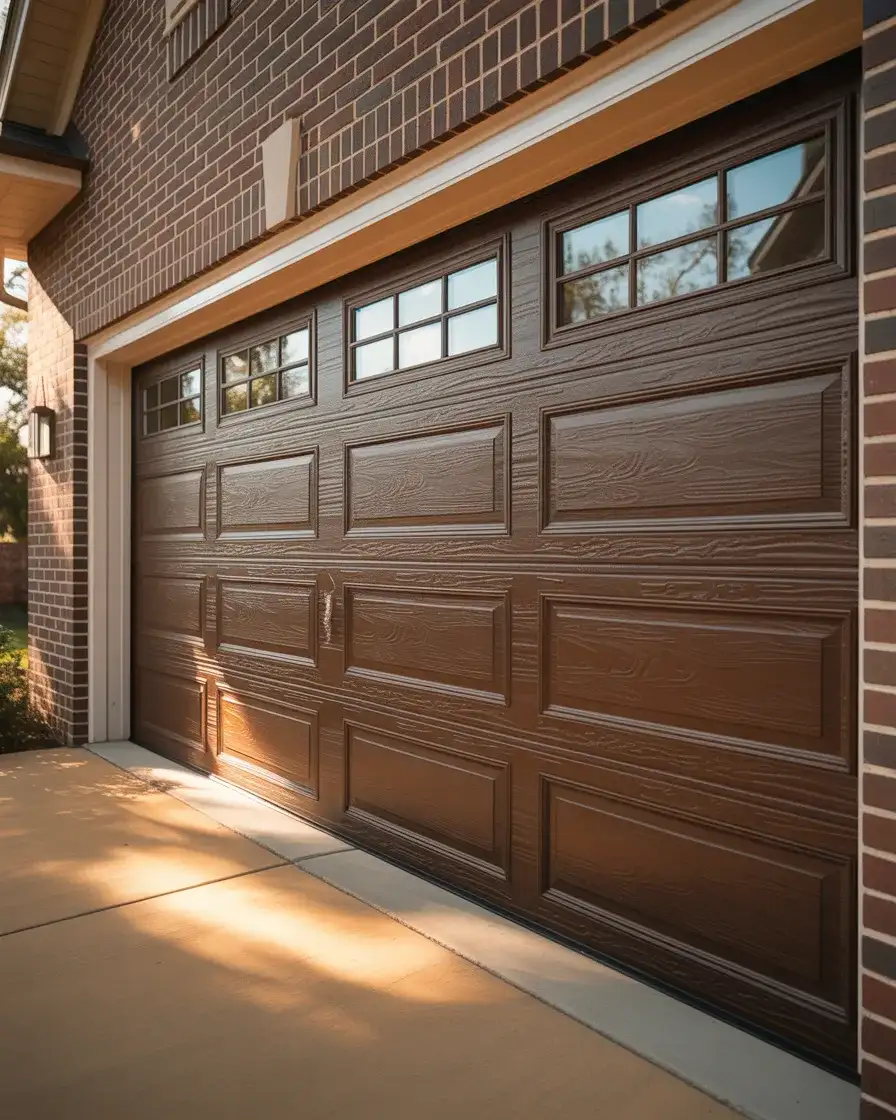
The wood-look steel garage door has quietly become one of the best-selling categories in the garage door market—and it’s easy to understand why. Homeowners want the warmth and character of real wood grain without the warping, splitting, or annual refinishing. Modern embossed steel and fiberglass doors have become remarkably convincing, especially in rich walnut, mahogany, or chestnut tones. From across a driveway, the visual result is nearly indistinguishable from the real thing.
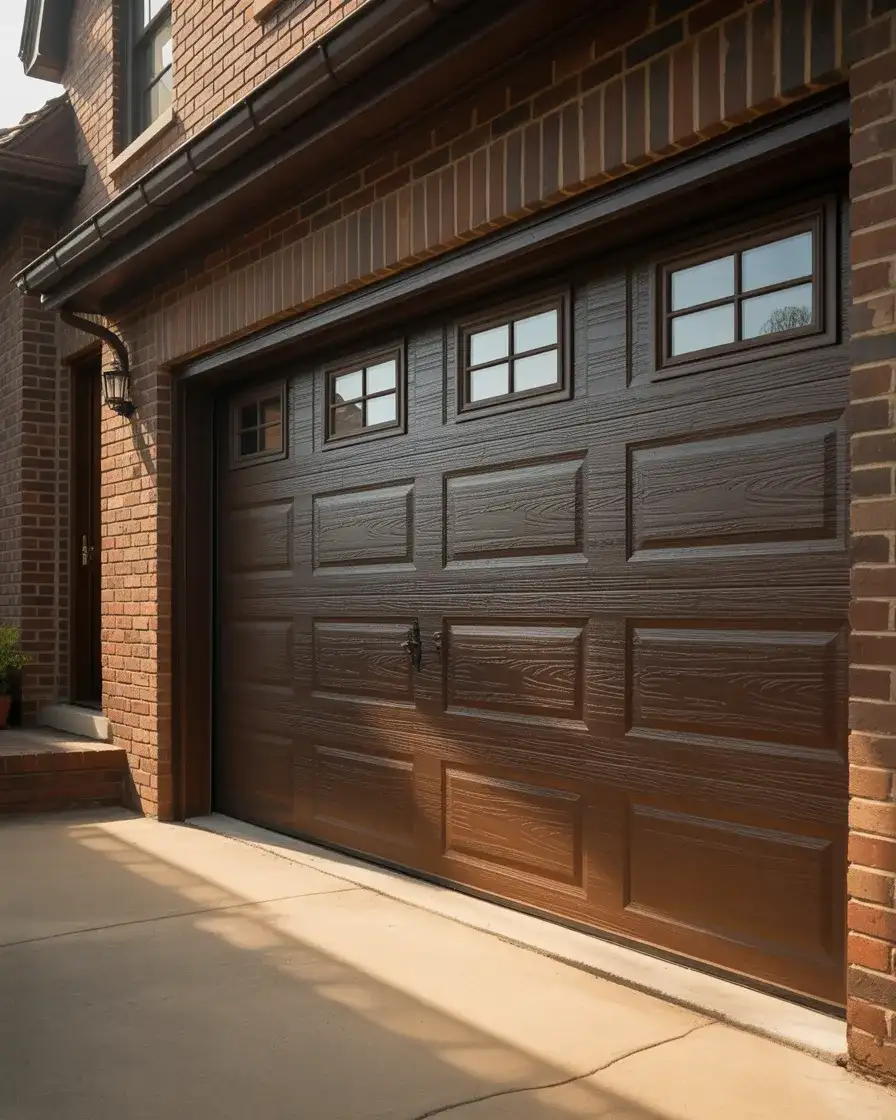
Price-wise, wood-look steel doors typically run $800 to $2,000 installed—a fraction of what a custom real-wood door costs. The insulation value is also considerably better, since the steel skin wraps a foam core that keeps garages warmer in winter and cooler in summer. For households in the Sun Belt where the garage doubles as a workshop or home gym, that thermal performance is genuinely meaningful, not just a spec sheet number.
7. Awning Over Garage Door in Metal and Wood
An awning over the garage door is a detail borrowed from commercial architecture that translates surprisingly well to residential design. Unlike a full pergola, an awning is leaner—typically a shed-style roof on steel or powder-coated iron brackets, sometimes topped with standing seam metal and framed in wood. It creates shade, protects the door from UV and water intrusion, and adds a layer of visual depth that flat facades desperately need. In 2026, the combination of dark metal frames with light cedar or pine decking overhead is especially sought after.
Where awnings shine most is in southern states—Florida, Georgia, and the Carolinas—where afternoon thunderstorms arrive fast and the sun beats hard on painted surfaces. A properly installed awning can extend the life of a garage door finish by several years by reducing direct UV exposure by 40 to 60 percent, according to exterior coating manufacturers. It also gives the drop zone between the car and the front door a covered moment, which anyone who’s ever wrestled groceries in a downpour will immediately appreciate.
8. Contemporary Flush-Panel Door in Warm White
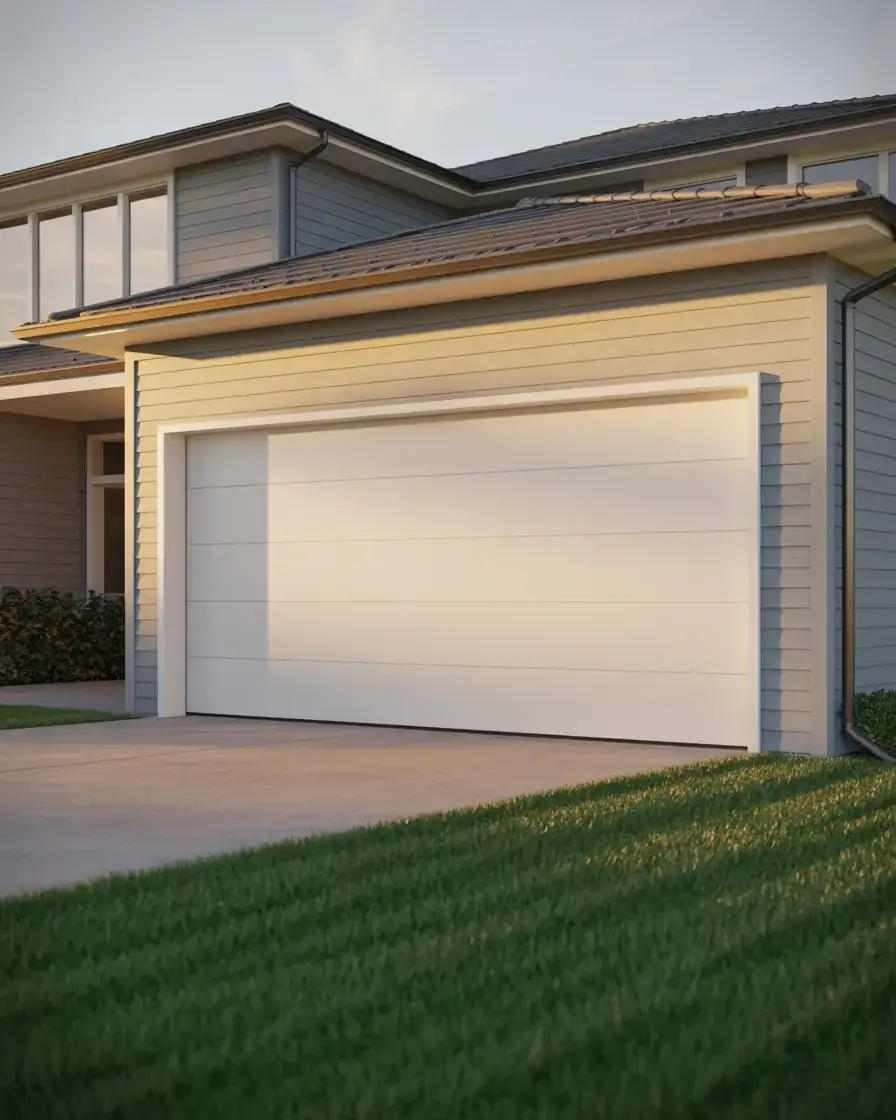
The contemporary flush-panel garage door—smooth face, no raised detail, no window row—is the architectural equivalent of a well-tailored white shirt. It works. It doesn’t try too hard. And paired with the right home, it becomes a sophisticated design choice rather than a default. In 2026, white garage doors are experiencing a resurgence specifically in this flush format, particularly on modern and transitional homes where the exterior palette is built around off-white, greige, or warm gray tones.
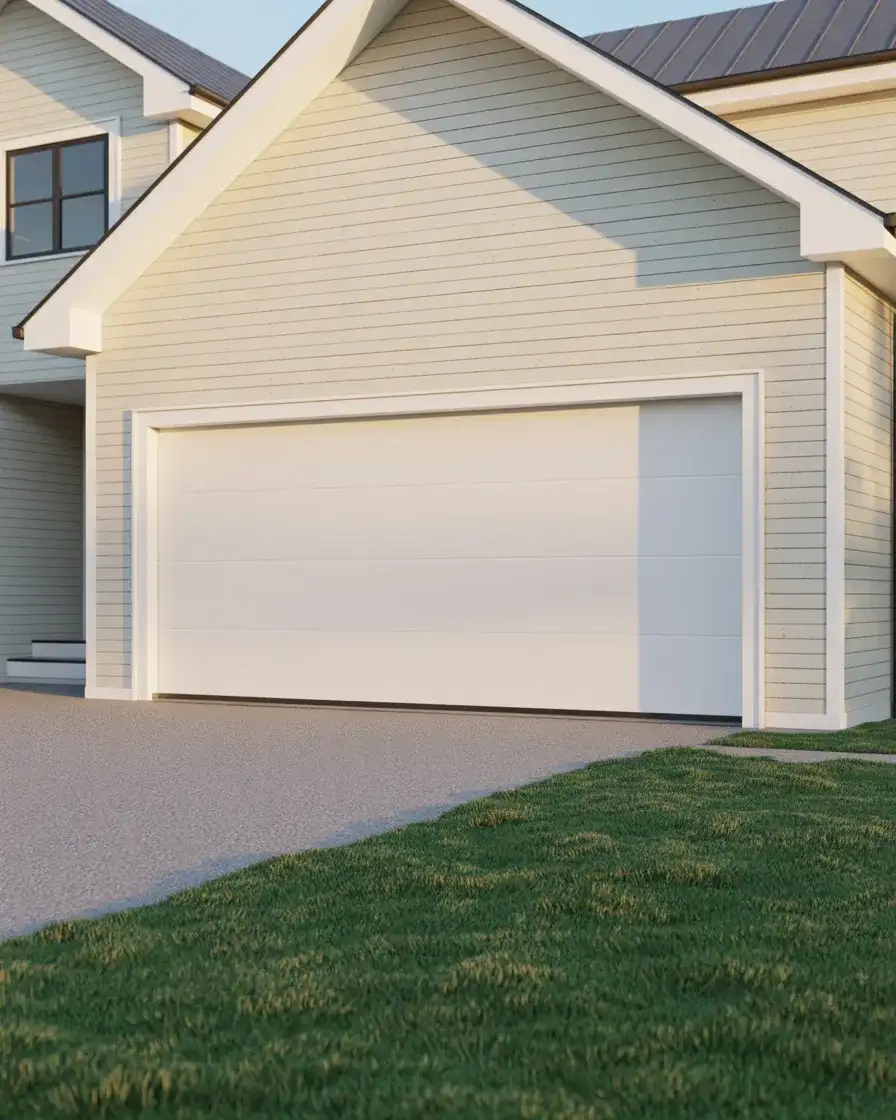
Exterior designers often note that the mistake homeowners make with white garage doors is choosing the wrong white. A bright, blue-toned white on a home with warm-toned brick or cream stucco will look jarring—almost dirty by comparison. Always pull a paint chip from your siding or trim before ordering and compare them in direct sunlight. Warm whites like Benjamin Moore’s White Dove or Sherwin-Williams Alabaster are reliable bridges between the door and most traditional or transitional facades.
9. Garage Door Makeover with Board Trim and Paint
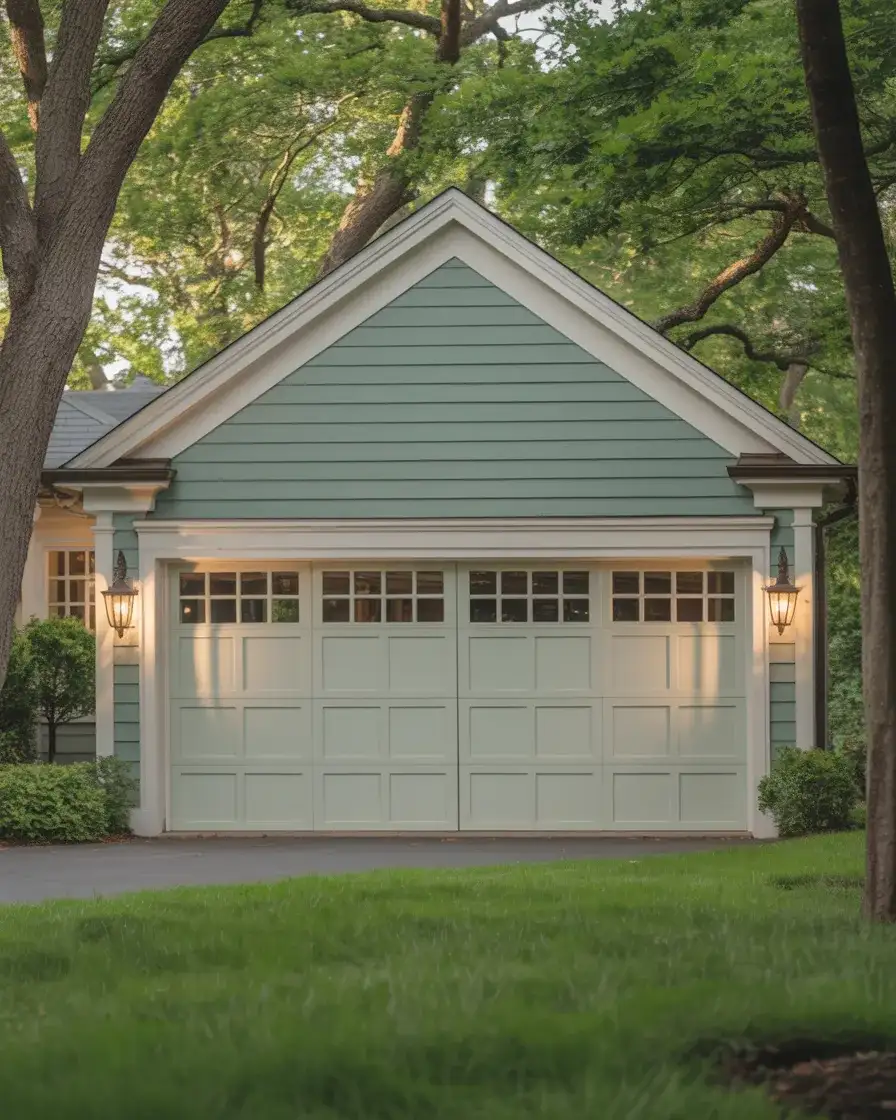
Not every makeover requires a full door replacement. One of the most budget-friendly—and genuinely stunning—transformations you can make to a plain raised-panel steel door is adding wood trim overlay and fresh paint. Thin strips of primed wood or PVC board glued and nailed to the door’s surface create the appearance of a custom panel design for a fraction of the cost. This approach works especially well for residential exteriors in traditional neighborhoods with HOA guidelines that limit structural changes.
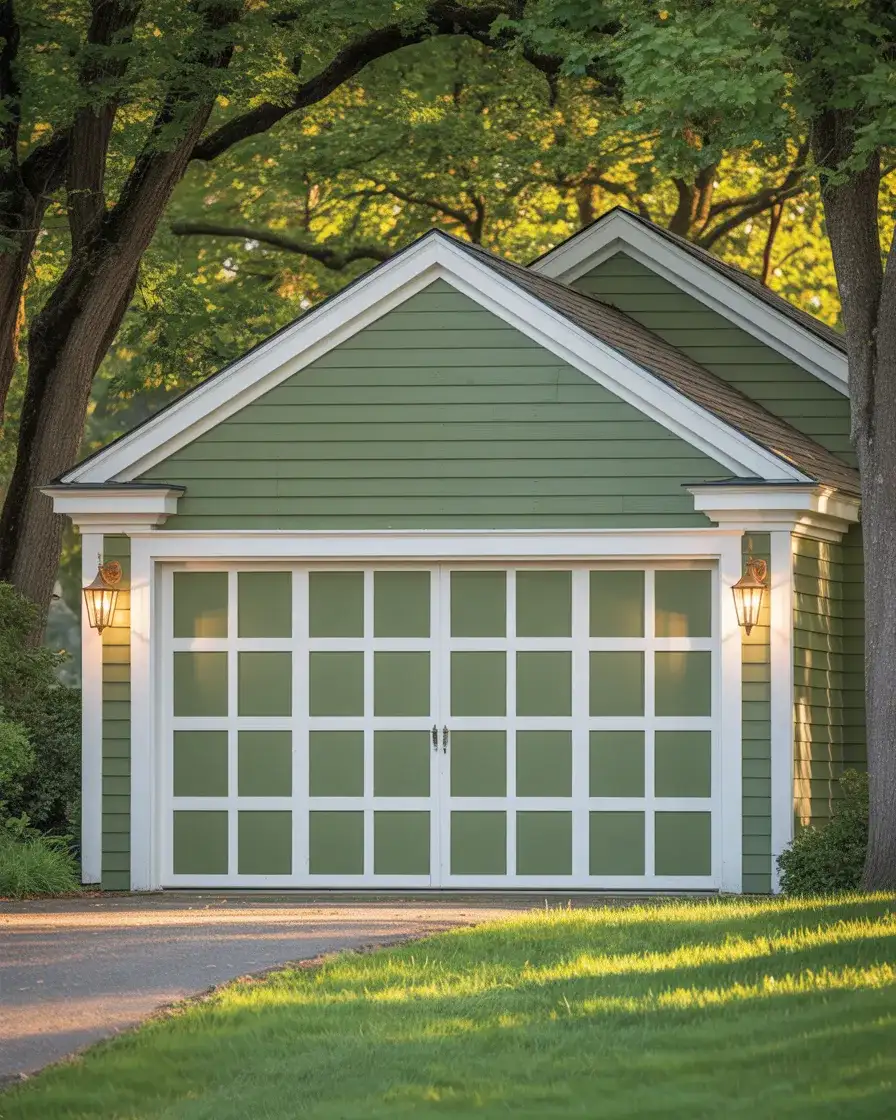
A trim-and-paint makeover on a standard two-car door typically runs $150 to $400 in materials, making it one of the highest-ROI projects in residential exterior design. The key is surface prep: any loose paint or rust on the door must be sanded and primed before the new trim goes on, or the adhesion will fail within a season. Use exterior-grade construction adhesive rated for metal substrates, supplemented with finish nails or pin nails into the door’s thicker raised sections. It holds far better than people expect.
10. Dark Green Garage Door with Brass Hardware
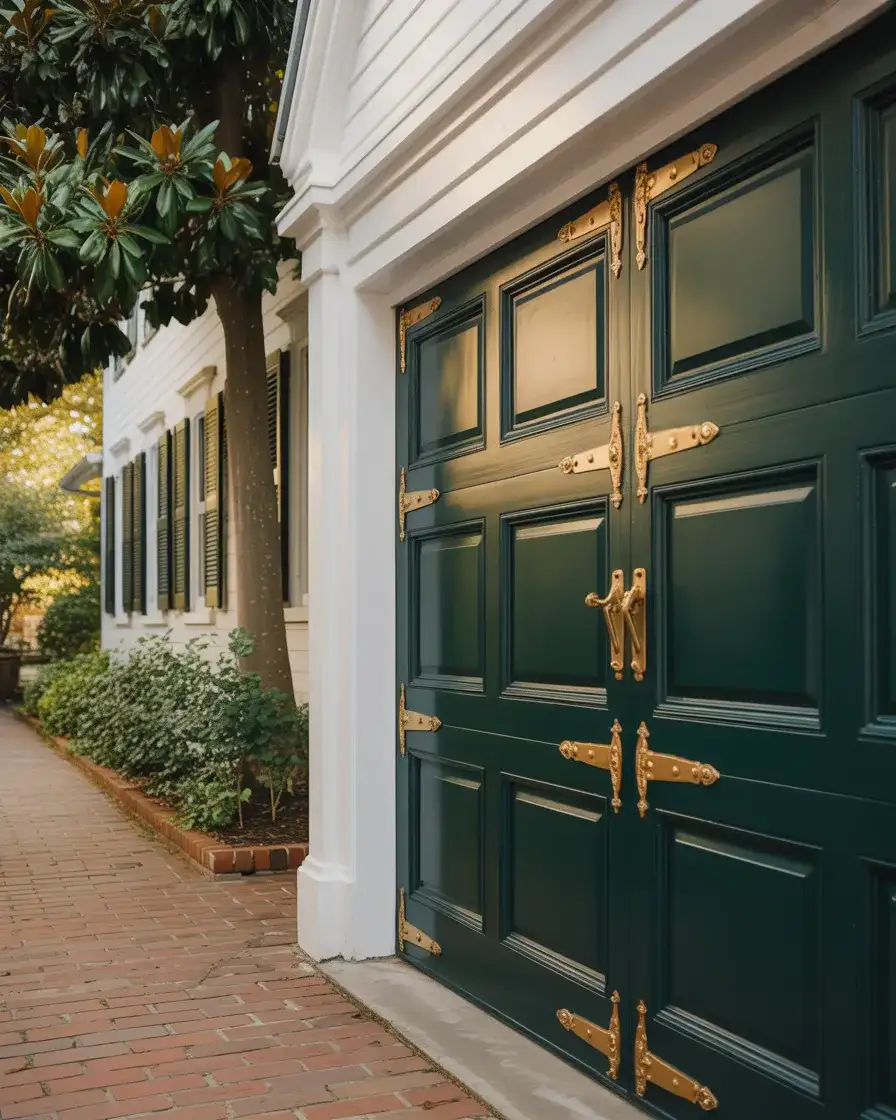
Among the colors trending hardest for garage doors right now, deep forest green is having a genuine cultural moment. Shades like Hunter Green, Backwoods, or Rookwood Antique Green land somewhere between moody and grounding—they recede visually rather than demanding attention, which paradoxically makes the home feel more distinguished. Pair this dark tone with unlacquered brass or aged brass hardware, coach lights, and a wood front door, and the entire facade ties together with the kind of layered richness that takes interiors years to develop.
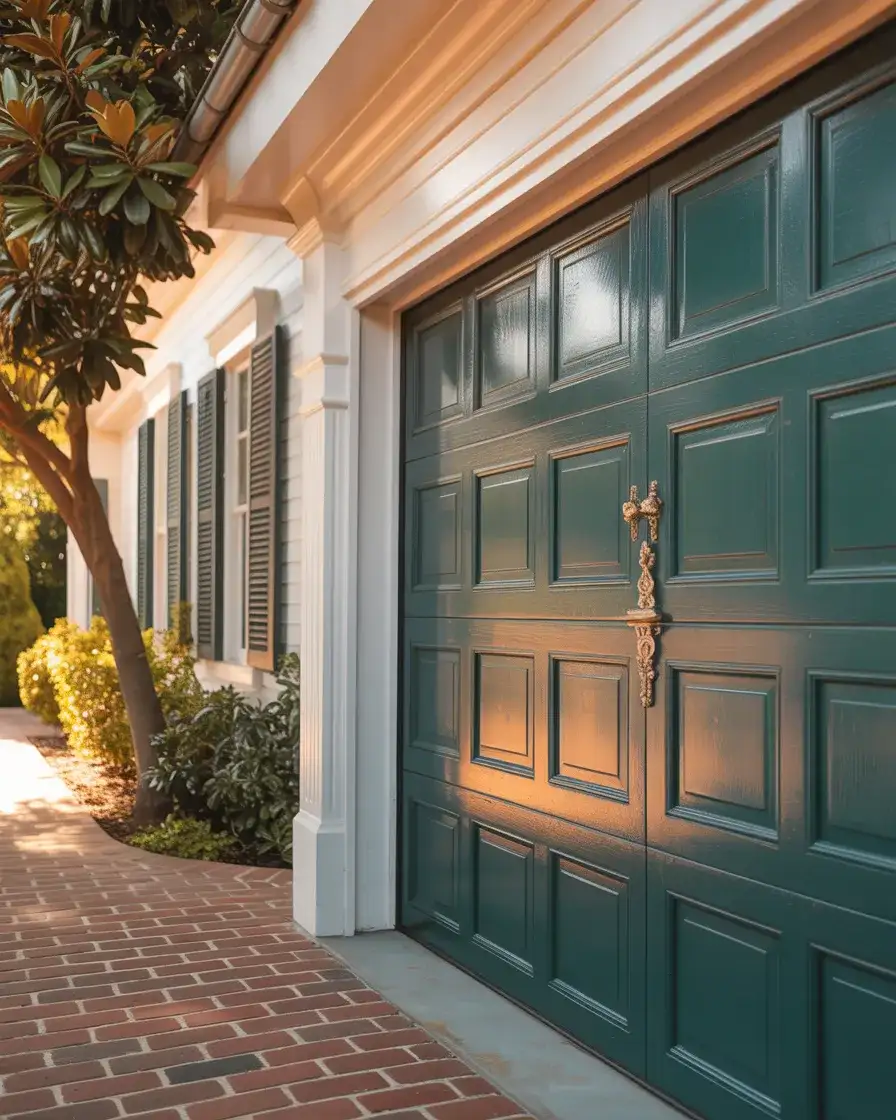
Green reads differently depending on the region. In the Northeast and Pacific Northwest, it echoes the surrounding landscape and feels native to the environment. In more arid climates, a deep green can feel unexpected and sophisticated against tan stucco or pale limestone. Interior designers who have extended their palettes to exteriors consistently recommend testing a large sample of any deep color on the actual door surface across different times of day before committing—dark colors shift dramatically between morning light and late afternoon shadow.
11. Folding Garage Door for Indoor-Outdoor Living
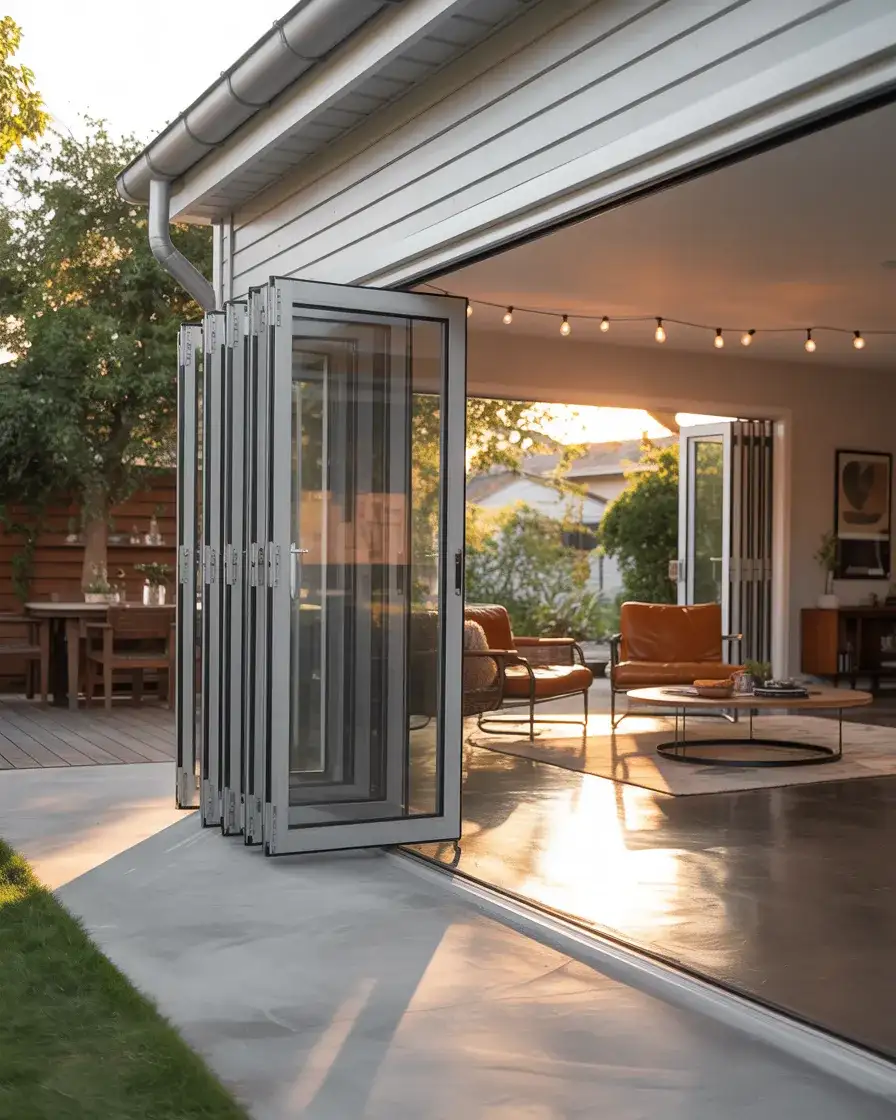
The folding garage door—also called a bi-fold or accordion garage door—is catching fire in 2026 as more homeowners convert their garages into flex spaces: home offices, studios, gyms, and entertainment rooms that need to open fully to the outdoors. Unlike a traditional overhead door, a folding system folds flat against the side walls rather than rolling up, which means the opening can be completely unobstructed. The effect, especially on a contemporary home, is spectacular—the garage essentially becomes a pavilion.
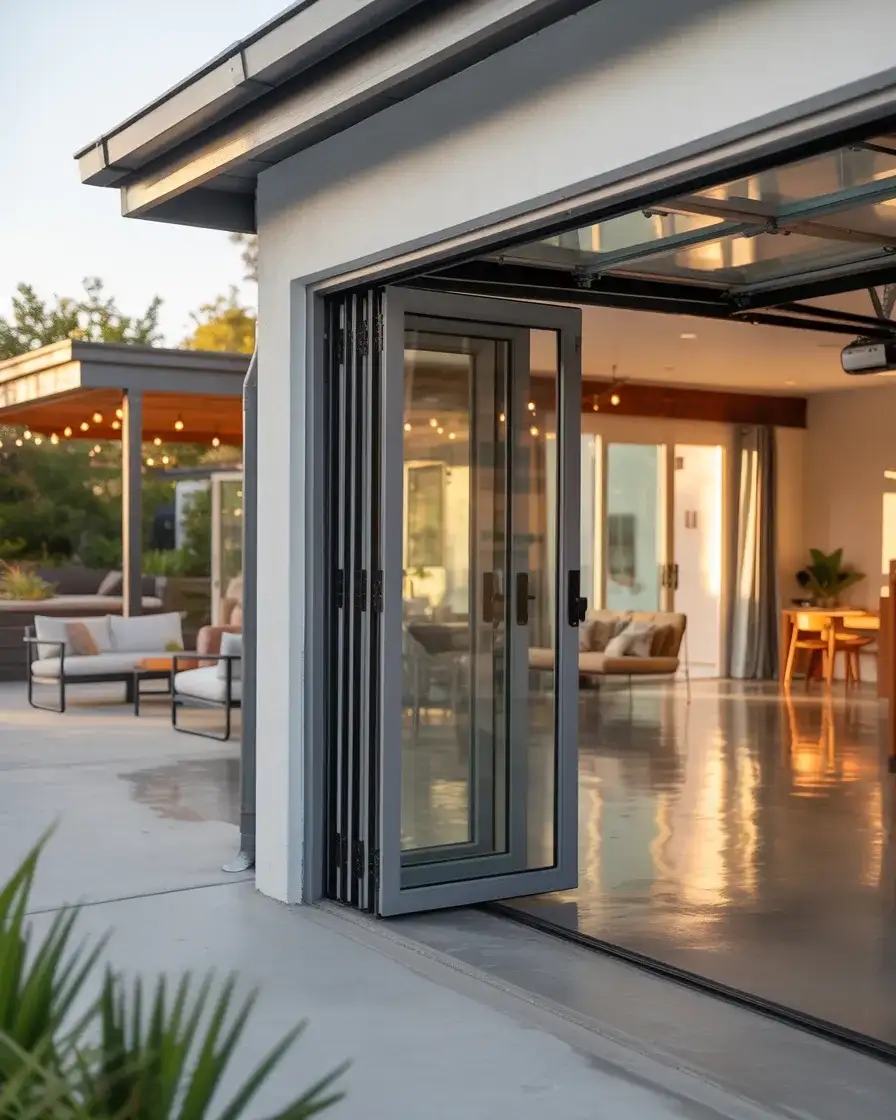
Folding garage doors represent a more significant investment than traditional doors—expect $3,500 to $8,000 or more for a standard two-car opening, depending on material and glazing. But for households where the garage has genuinely become livable square footage, the return on that investment—both in enjoyment and in resale value—is consistently strong. The trend is particularly popular in California, Texas, and Florida, where the climate allows outdoor-indoor living across more of the year.
12. Garage Conversion with French Doors
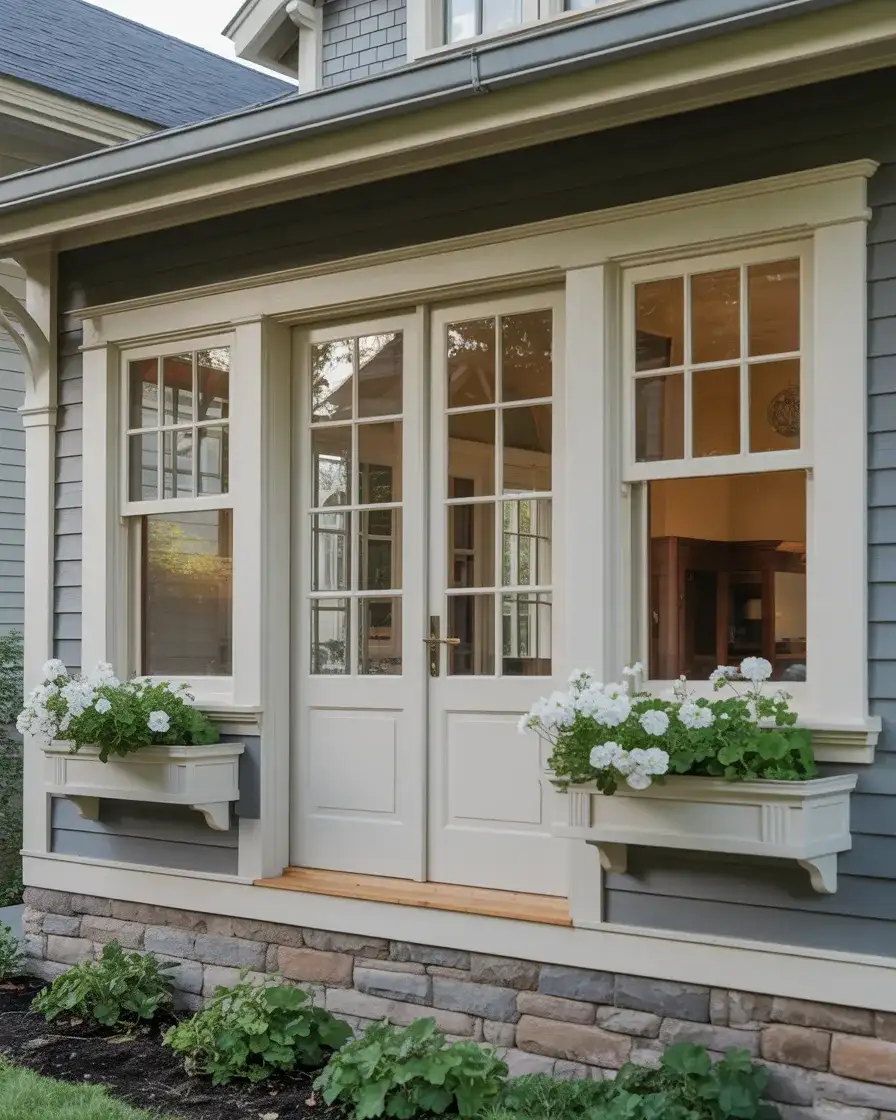
A conversion that replaces the garage door opening with a set of double French doors—flanked by windows and topped with a transom—is one of the most dramatic and lasting changes a homeowner can make. This transforms the garage into a proper room: an ADU suite, a home office, a music room, or an art studio. The exterior result can be breathtaking when done right, with the new door placement anchoring the facade in a way that the wide, flat garage door panel never could.
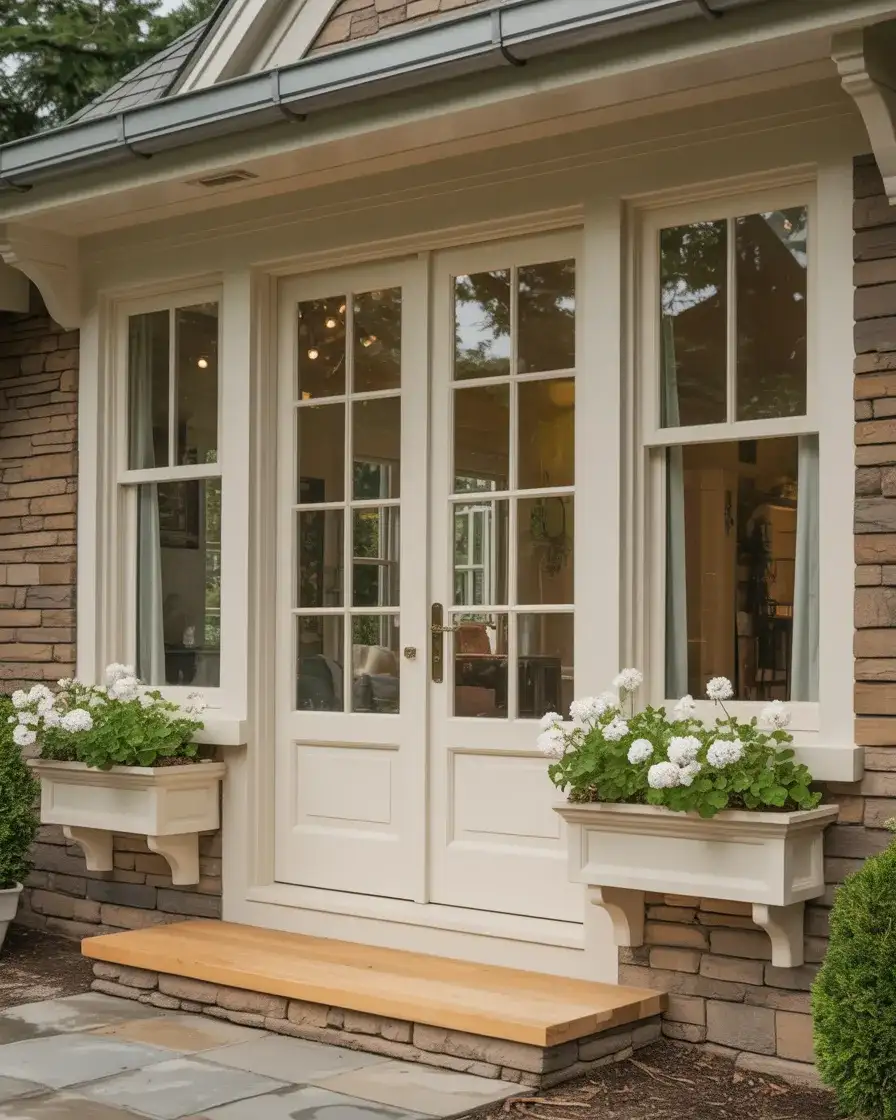
Permitting is the first conversation to have before committing to a garage conversion in any municipality. Some cities have embraced ADU conversions enthusiastically with streamlined permits; others maintain strict requirements about parking minimums that can complicate or outright block a conversion. In California’s Bay Area, for instance, homeowners have navigated this process successfully with the right permit applications—adding both square footage and property value. Check with your local building department before falling in love with the design.
13. Exterior Lights Flanking the Garage Door
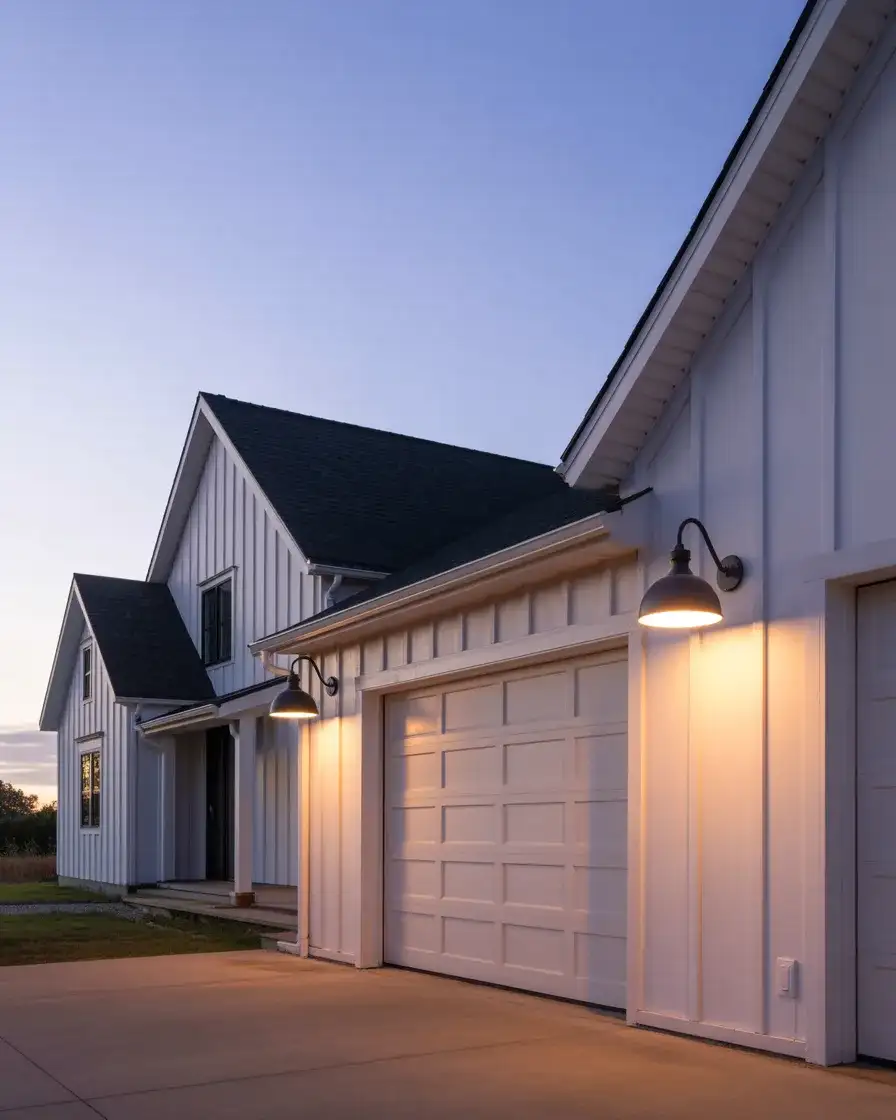
Lights exterior to the garage door are one of the most overlooked opportunities in curb appeal. Two well-chosen sconces flanking the door—or a trio of pendant-style barn lights mounted on the facade above—can transform the entire front elevation at night. In 2026, the trend is moving toward oversized fixtures: larger sconces with more architectural presence, often in matte black, aged bronze, or natural verdigris finishes that complement both modern farmhouse and traditional styles.
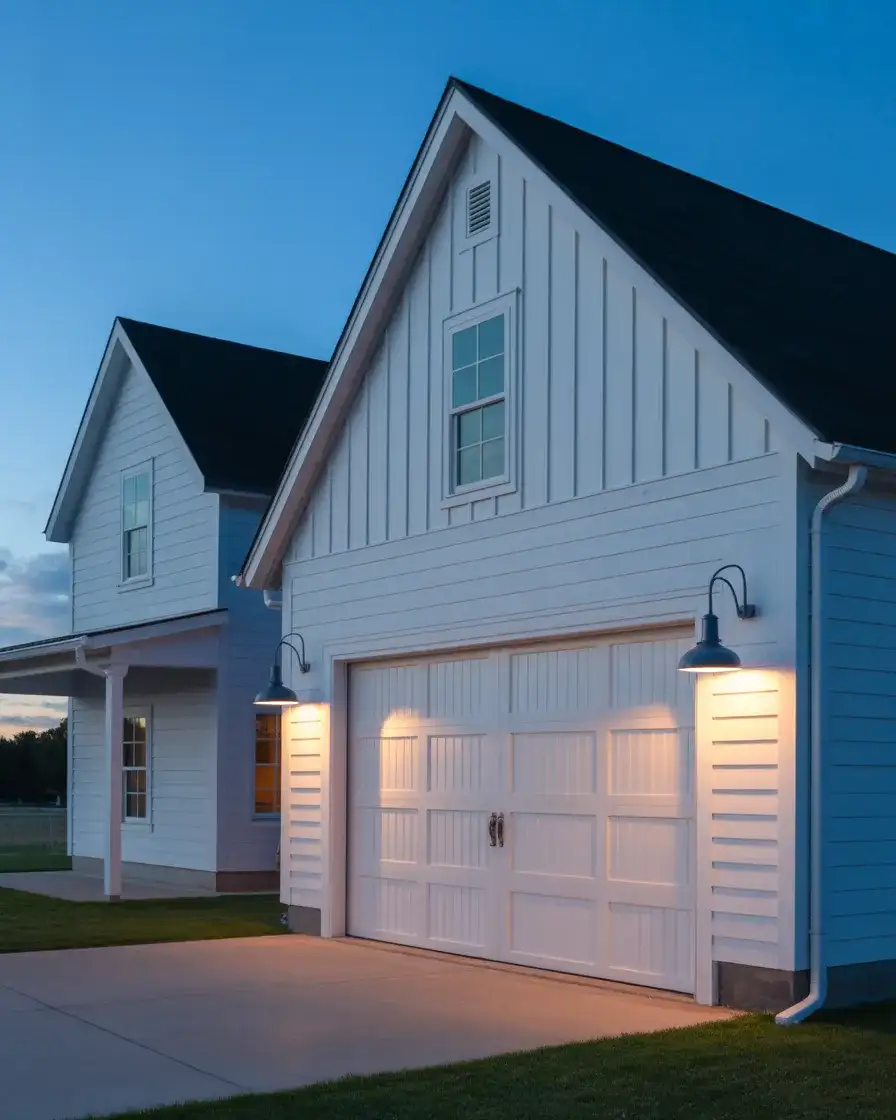
Lighting scale is where most homeowners go wrong. The instinct is to buy fixtures that seem proportionate when held in the hardware store aisle—but against a 16-foot-wide garage door, a 10-inch sconce looks like an afterthought. The general design rule of thumb: your garage flanking lights should be at least 20 to 25 percent of the door’s height for visual balance. For a standard 7-foot-tall door, that means looking at fixtures 16 to 18 inches tall at minimum. It feels big in the store but right at home.
14. Trellis Over Garage Door with Espaliered Plants
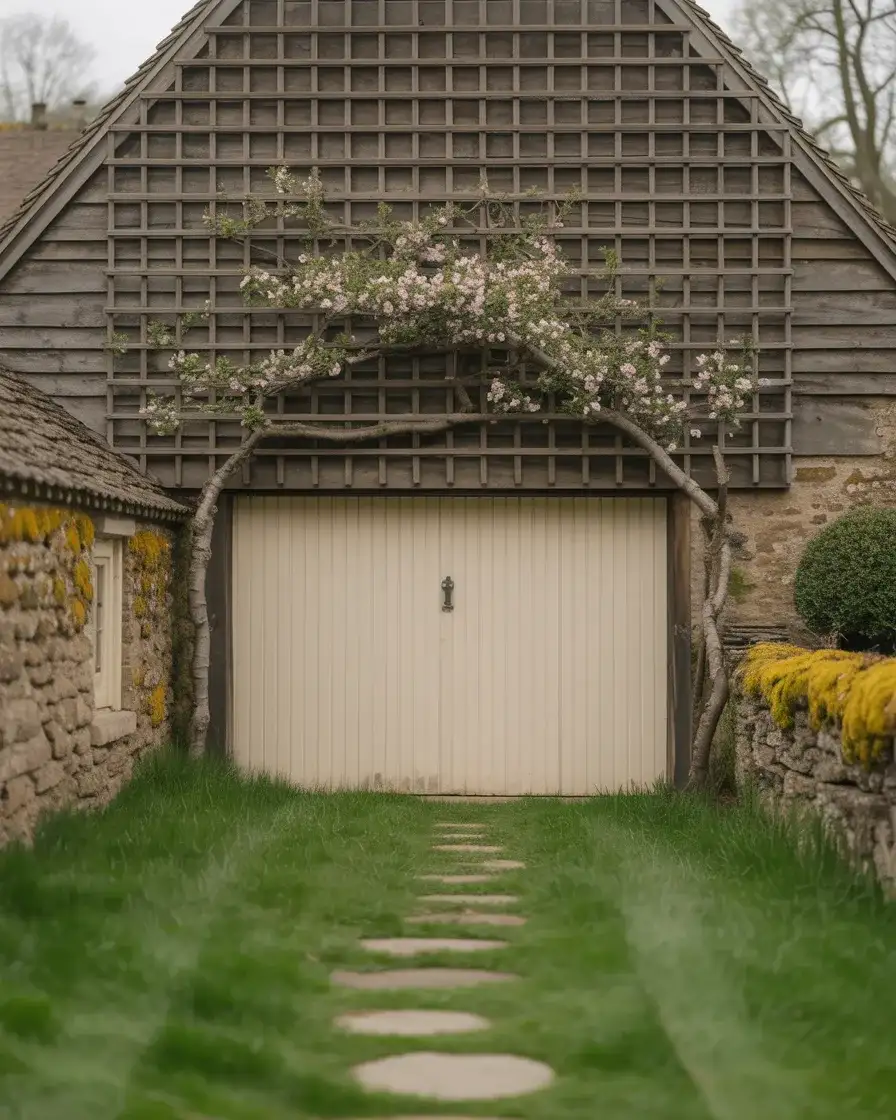
A trellis over the garage door is a lighter, more architectural take than a full pergola—typically a flat or angled grid of wood or metal strips that provides a framework for trained plants without the overhead mass. Espaliered fruit trees, flat-trained climbing roses, or pyracantha grown against a trellis above the garage door create living art that changes with the seasons. The look is particularly striking in residential neighborhoods where Tudor, French Country, or English Cottage-style homes dominate the streetscape.
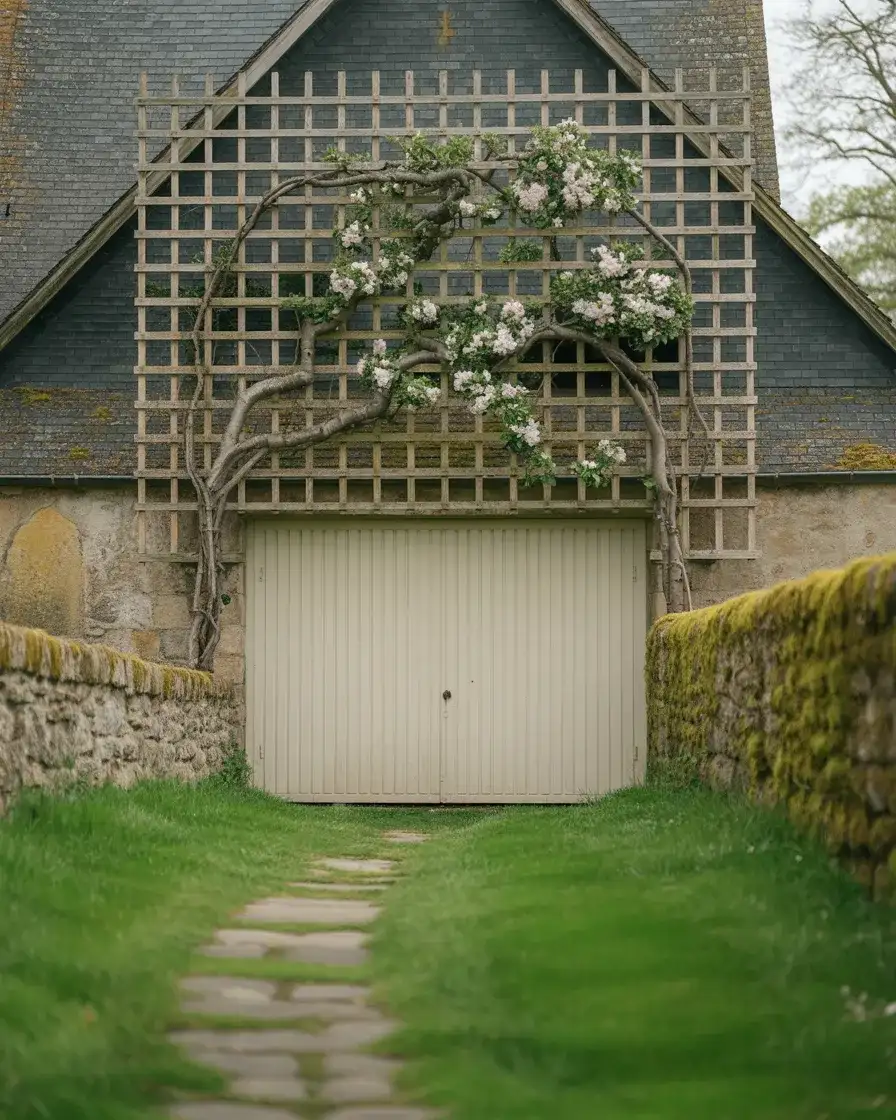
An espaliered plant above a garage takes 3 to 5 years to reach full dramatic effect, so patience is genuinely part of this design decision. The upside is that once established, it’s one of the most striking and low-maintenance front-yard features imaginable. Pyracantha is especially good for cold climates—it’s evergreen, produces white flowers in spring and red berries in winter, and tolerates vigorous training. In warmer zones, a climbing rose like ‘New Dawn’ or ‘Don Juan’ will cover a trellis with blooms in three seasons.
15. Arbor Over Garage Door in White Painted Wood
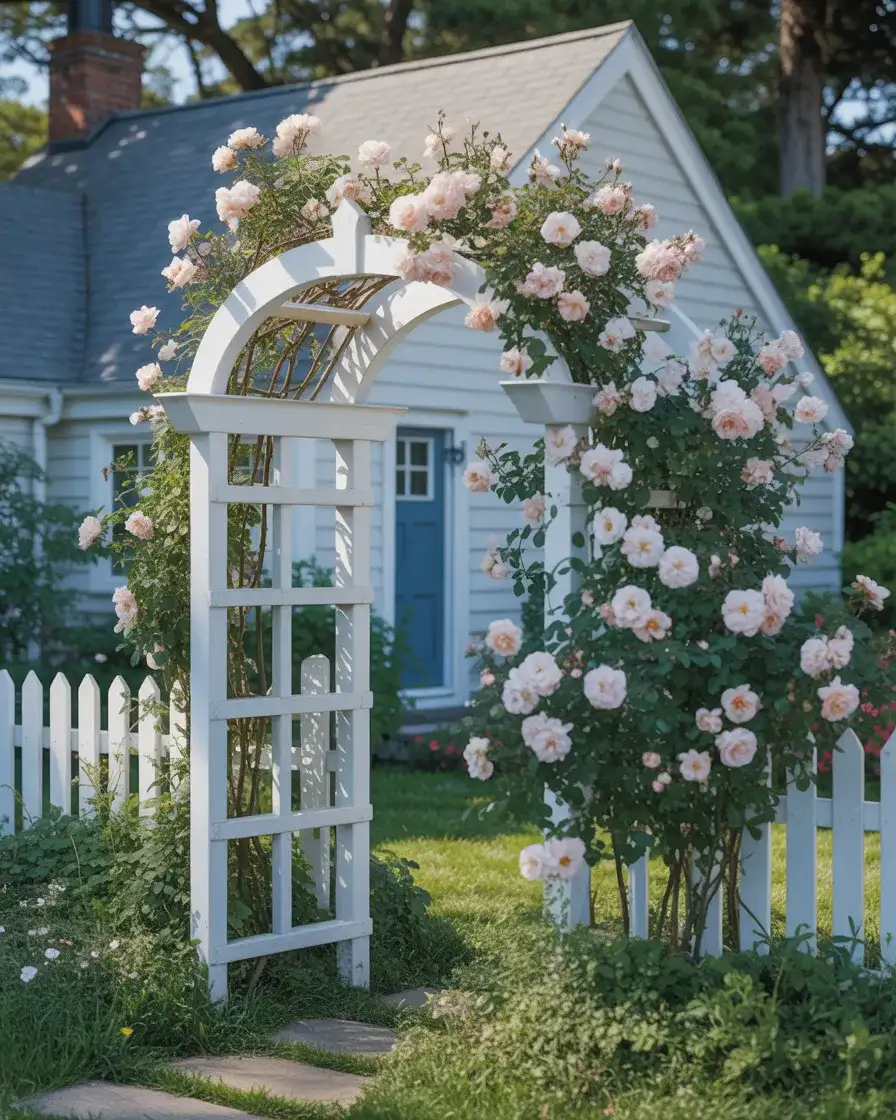
Where a pergola is flat and horizontal, an arbor above the garage often takes an arched or peaked form—more architectural, more intentional, and more romantic. A painted white wood arbor spanning the garage opening is especially effective on Cape Cod, cottage, and bungalow-style homes, where it echoes the curved details that already exist in the architecture. Plant a repeat-blooming climbing rose or a trained wisteria over it, and the result is the kind of front yard that stops people on their morning walks.
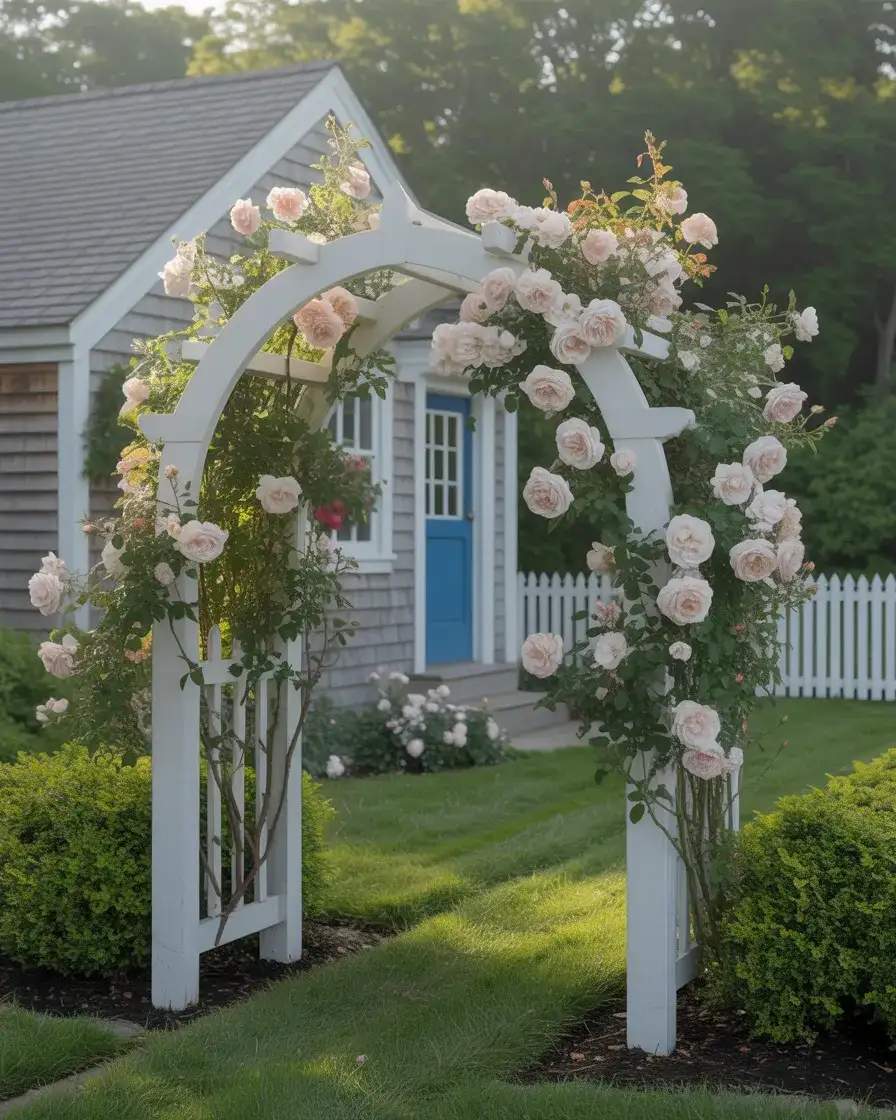
Structurally, an arbor over a garage needs to be designed to allow full door clearance when the door opens. This seems obvious but is frequently overlooked in the planning stage. The arbor columns should sit at least 18 inches outside the door’s side edges, and the overhead structure needs enough vertical clearance—typically 10 to 12 feet from grade—that the door’s panel stack or roll doesn’t contact it. A few hours with a structural sketch and a tape measure before construction begins prevents a very frustrating and expensive mistake later.
16. Garage Door Mural: Large-Scale Painted Art
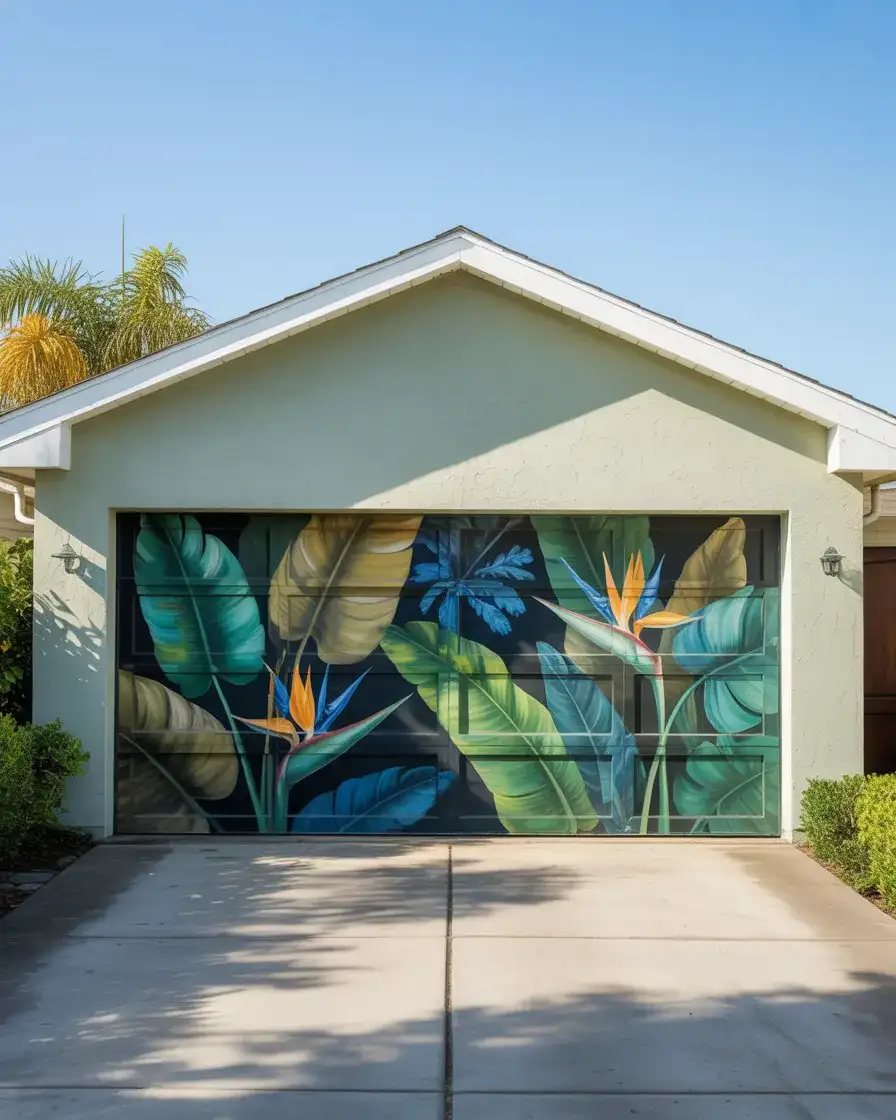
A mural painted directly on a garage door is the boldest move on this list—and when it’s done with skill, it’s also the most memorable. From realistic trompe l’oeil scenes mimicking carriage house doors to graphic botanical prints to abstract geometric designs, garage door murals have become a genuine art form in American neighborhoods. Cities like Savannah, Austin, and Portland have entire neighborhoods where homeowners commission local muralists to transform their garage facades into neighborhood landmarks.
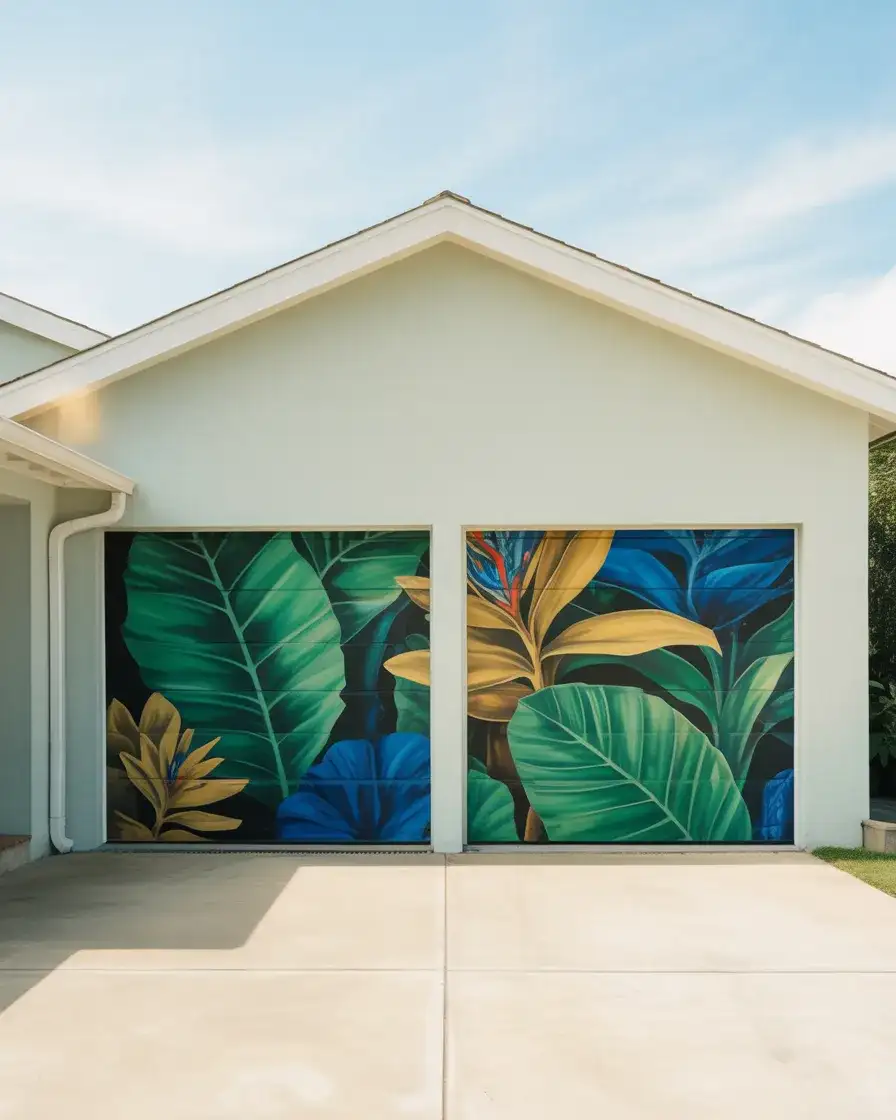
The most common mistake in commissioning a garage door mural is skipping proper surface prep and primer. Exterior latex murals applied to bare or poorly prepped steel may look brilliant for a season, but they’ll peel and flake within two years without a quality exterior bonding primer first. Professional muralists who specialize in exterior work—as opposed to indoor galleries—understand this and will insist on the prep work. Their quotes are almost always worth it compared to the heartbreak of watching a beautiful image dissolve in the first winter.
17. Modern Farmhouse Garage Door with X-Brace Detail
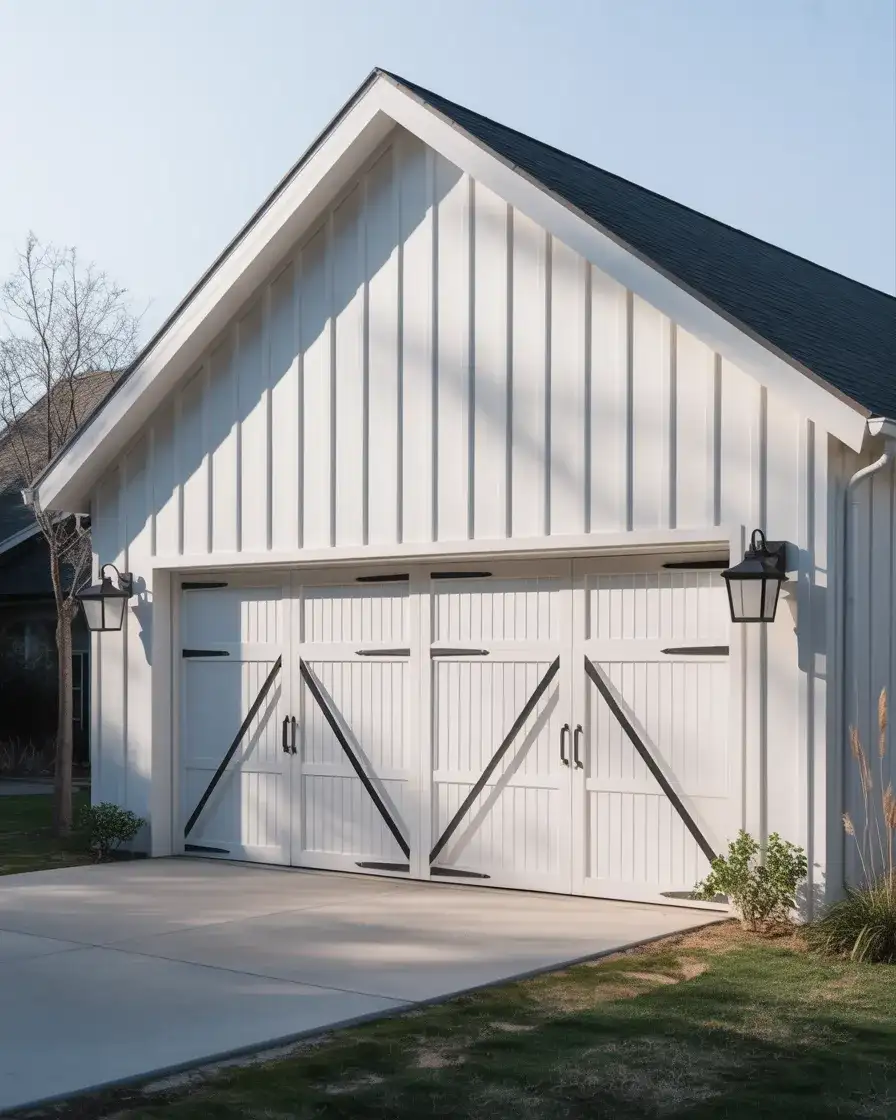
The modern farmhouse aesthetic shows no signs of fading in 2026 — it’s just evolving. Where earlier versions leaned into the purely rustic, contemporary farmhouse exteriors are pulling in cleaner lines and bolder contrasts. The X-brace overlay on a white or light-painted garage door has become a signature detail of this updated style: simple, geometric, and unmistakably agricultural in its reference without feeling like a costume. It’s especially powerful paired with board-and-batten siding and black metal accents throughout the exterior.
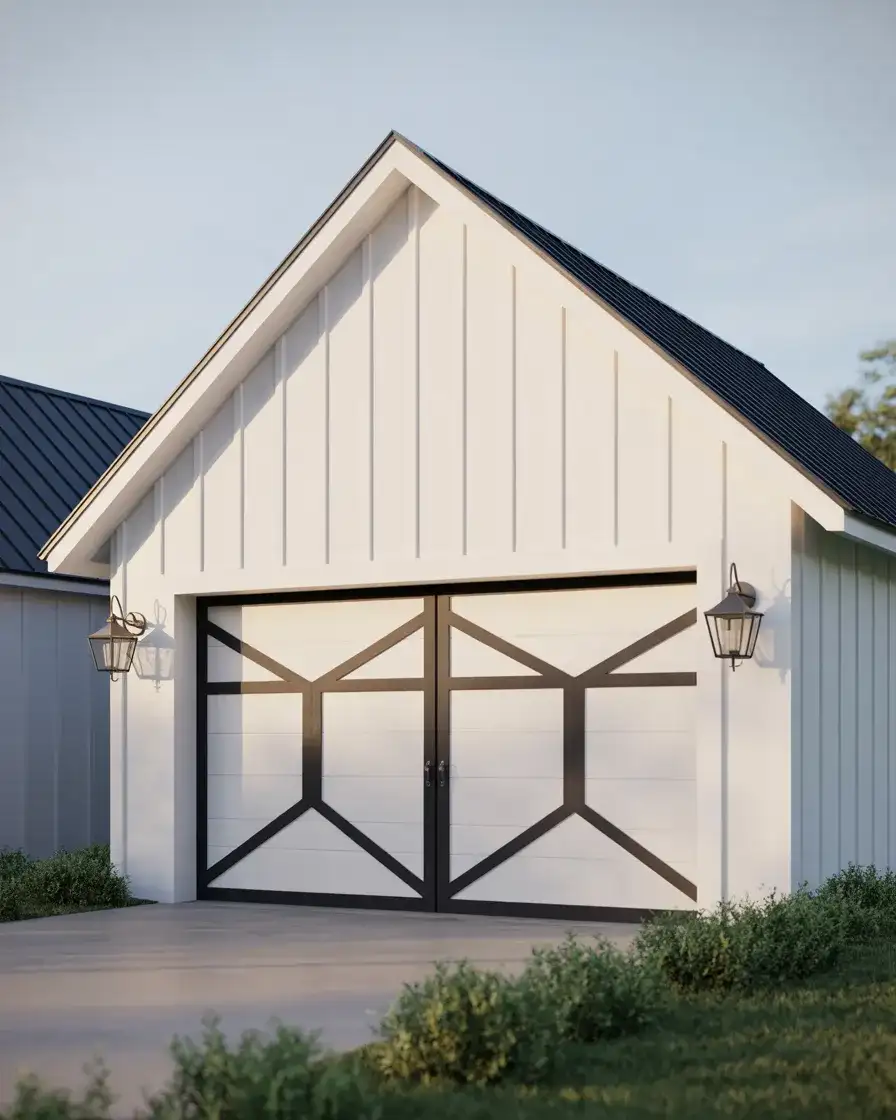
This is one of the easiest curb appeal upgrades a homeowner with basic DIY skills can tackle. Flat bar steel in 1/8-inch thickness can be cut to length at any metal supplier, sanded, primed, and painted matte black before being attached with construction adhesive and weatherproof screws. The whole project on a standard two-car door typically takes a Saturday and under $200 in materials. Online tutorials abound—and the results consistently photograph well enough to outperform everything else on a listing page.
18. Christmas Decorations on the Garage Door
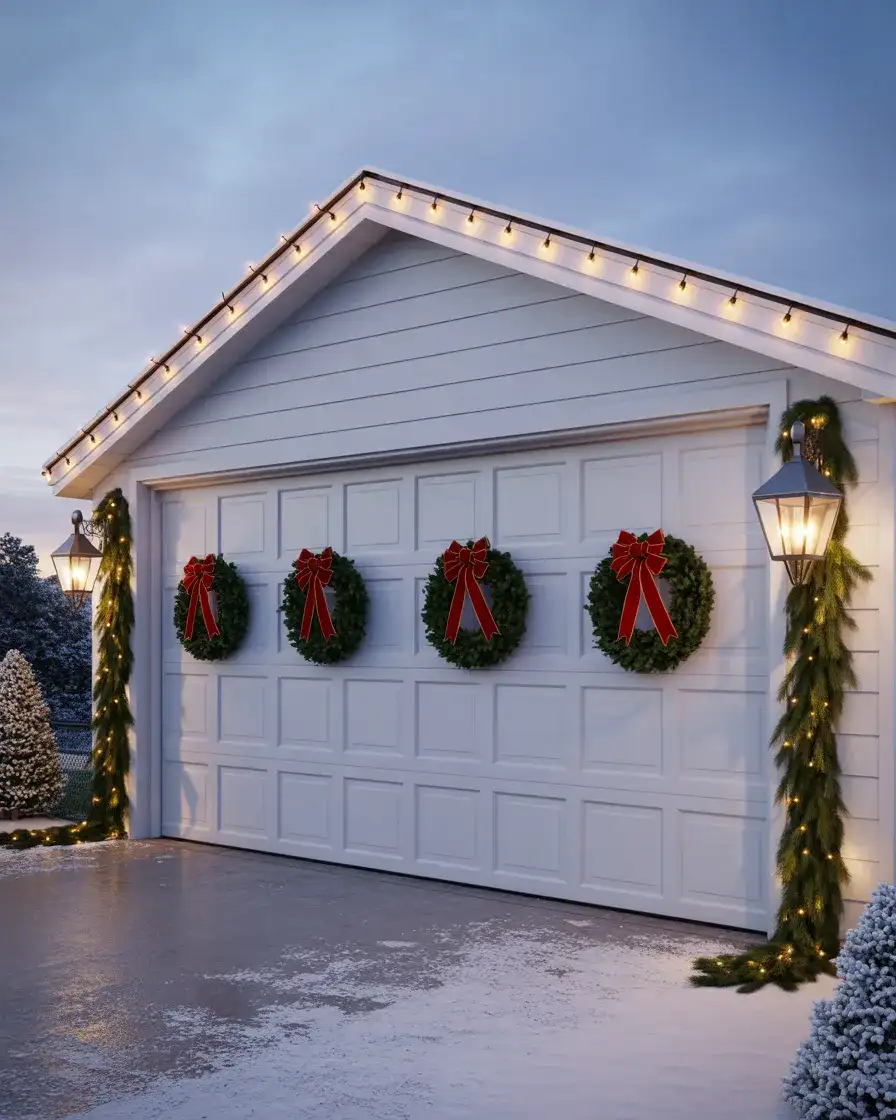
Seasonal decorating has become a full-scale sport in American neighborhoods, and the garage door is prime real estate for Christmas decorations. From simple wreaths hung in a row across each panel section, to elaborate magnetic light-up snowflakes, to trompe l’oeil window decals that make it appear the garage is a cozy lit room—the options in 2026 are more sophisticated and more photogenic than ever. The residential trend is moving toward cohesive, curated looks rather than maximum volume.
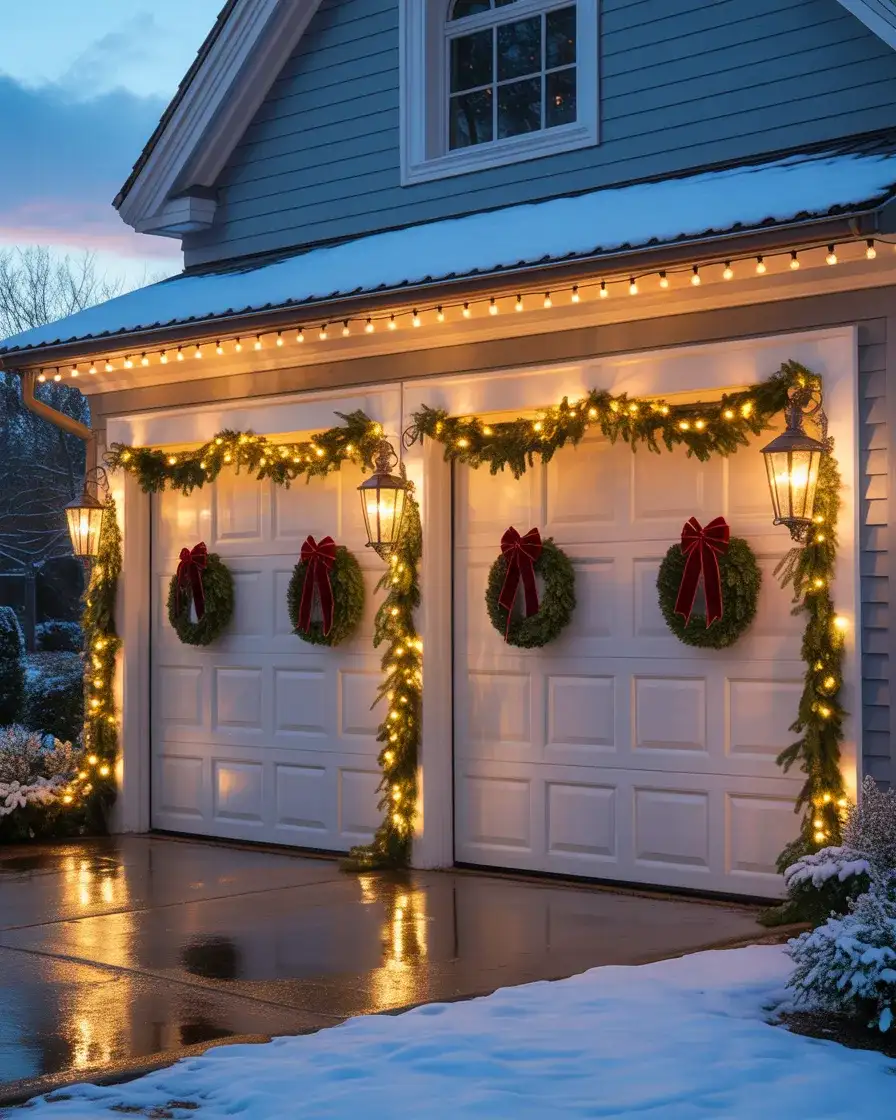
For the cleanest and least damaging approach to garage door holiday decor, magnetic hooks and hangers are the answer most homeowners discover after a season of fumbling with adhesives or drilling holes into painted panels. Heavy-duty magnetic clips rated for outdoor use hold wreaths, garland, and light strands to steel doors without leaving a mark. The one thing to watch: magnetic hooks can slide slowly downward on very smooth painted surfaces during the day as temperatures warm—a small rubber pad on each hook usually solves it completely.
19. Pergola Above Garage Door with String Lights
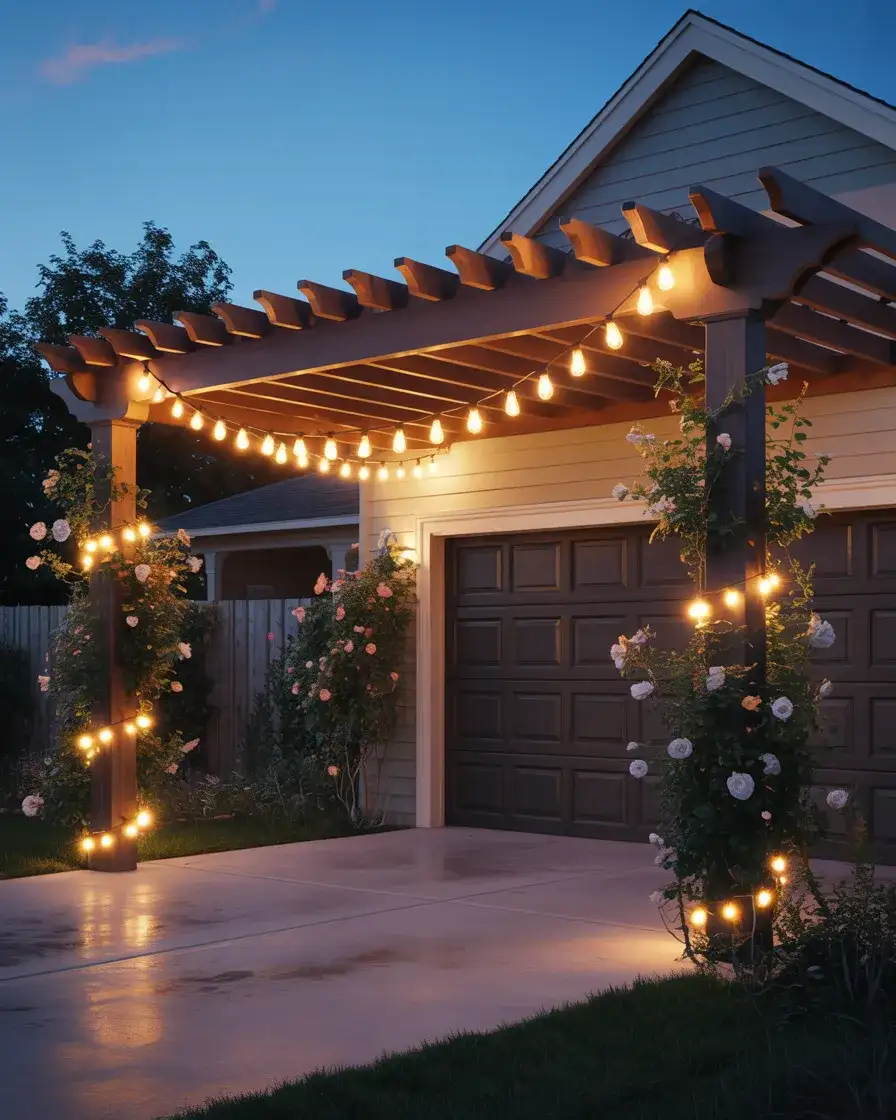
A pergola above the garage takes on an entirely different personality at night when strung with lights—and this combination is among the most-saved exterior ideas on Pinterest right now for exactly that reason. The structure provides the architecture; the lights provide the warmth. Whether you string warm Edison bulbs across the beams in a loose catenary pattern or wrap them along each rafter, the result transforms a utilitarian concrete apron into an outdoor living space that glows with genuine welcome on a dark evening.
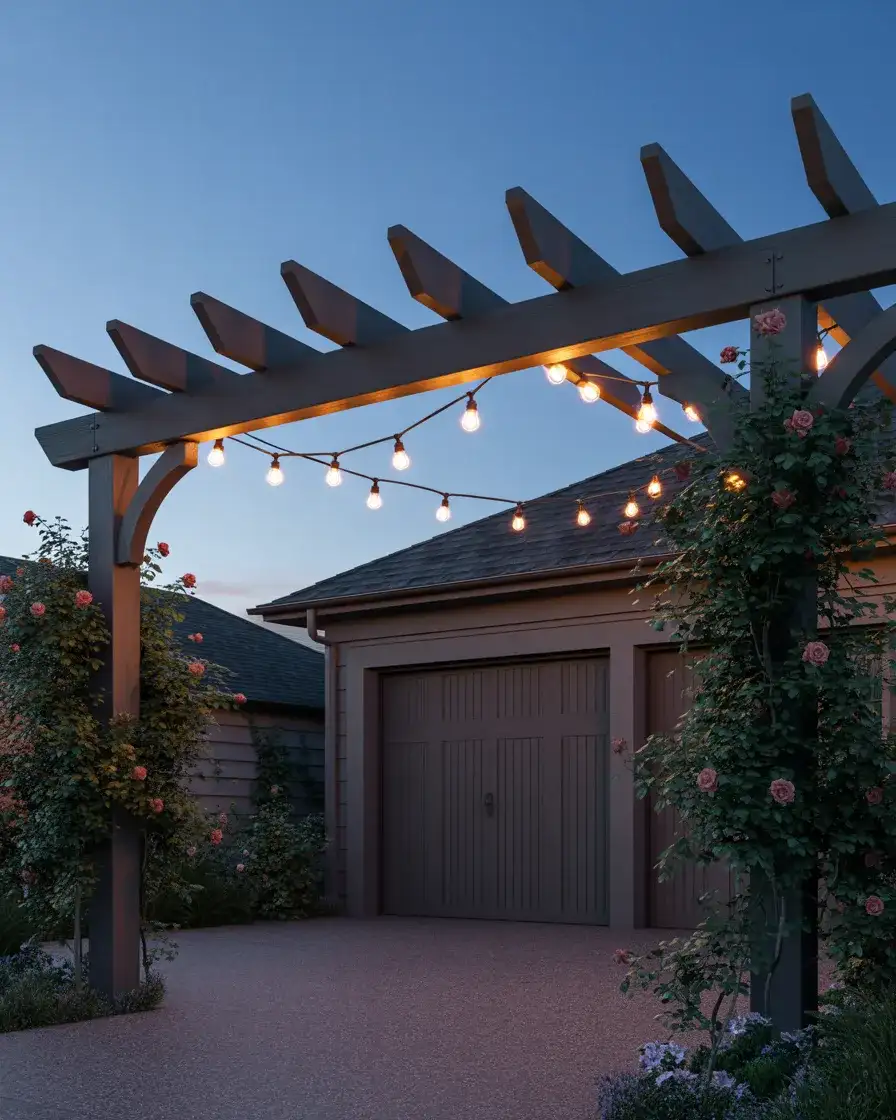
For the pergola-and-lights combination to look intentional rather than improvised, the string light gauge and bulb style should match or complement other light fixtures on the home’s exterior. Mixing different color temperatures—say, warm Edison bulbs on the pergola with cool LED path lights below—creates a disjointed effect that reads as unplanned. Committing to a single color temperature (2700K–3000K for warm, inviting light) throughout the entire exterior lighting scheme gives the whole property a cohesion that photographs and sells beautifully.
20. Faux Wood Garage Door in Gray-Brown Tone
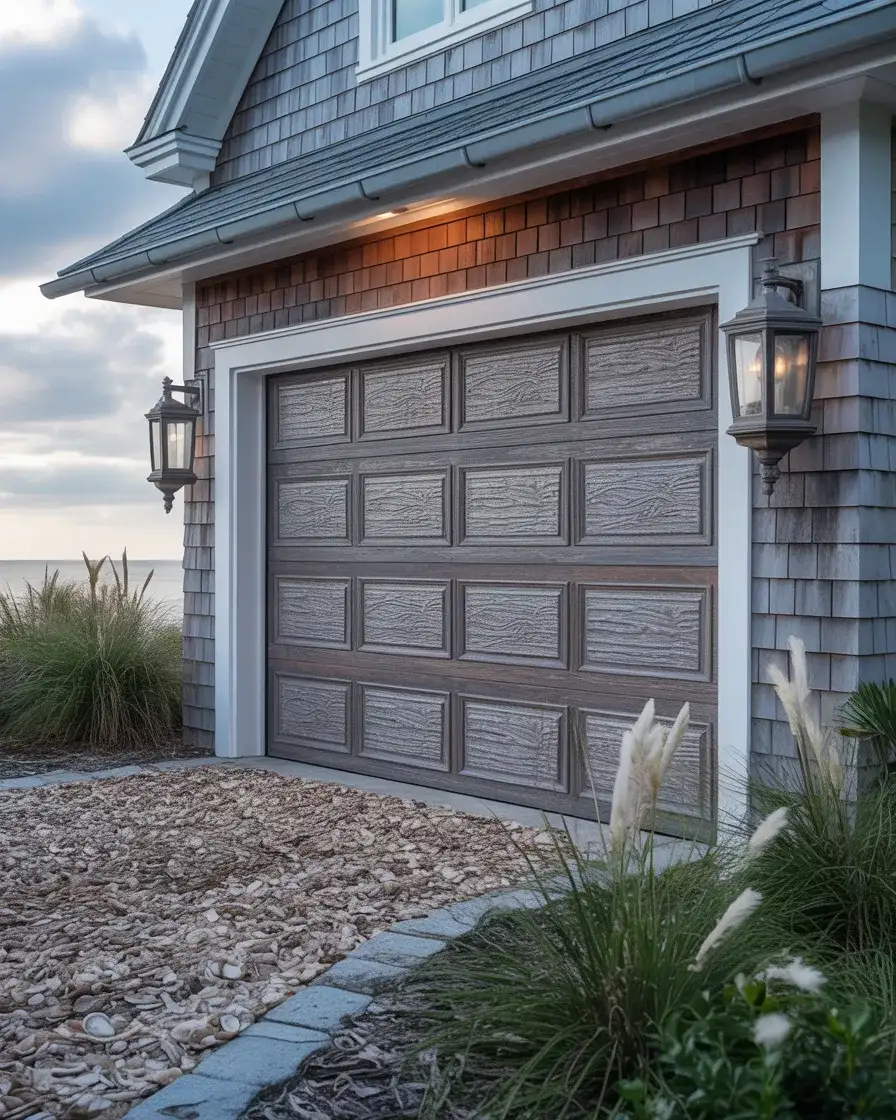
The faux wood finish has evolved dramatically in recent years, and the gray-brown driftwood tones trending in 2026 are a particular revelation—they split the difference between the warmth of a natural wood door and the cool, contemporary neutrality of a modern facade. This silvered, weathered effect references the look of barn wood or coastal driftwood while living on a low-maintenance steel or fiberglass panel that requires no staining. It pairs exceptionally well with blue-gray or greige home exteriors and exterior lights in aged bronze.
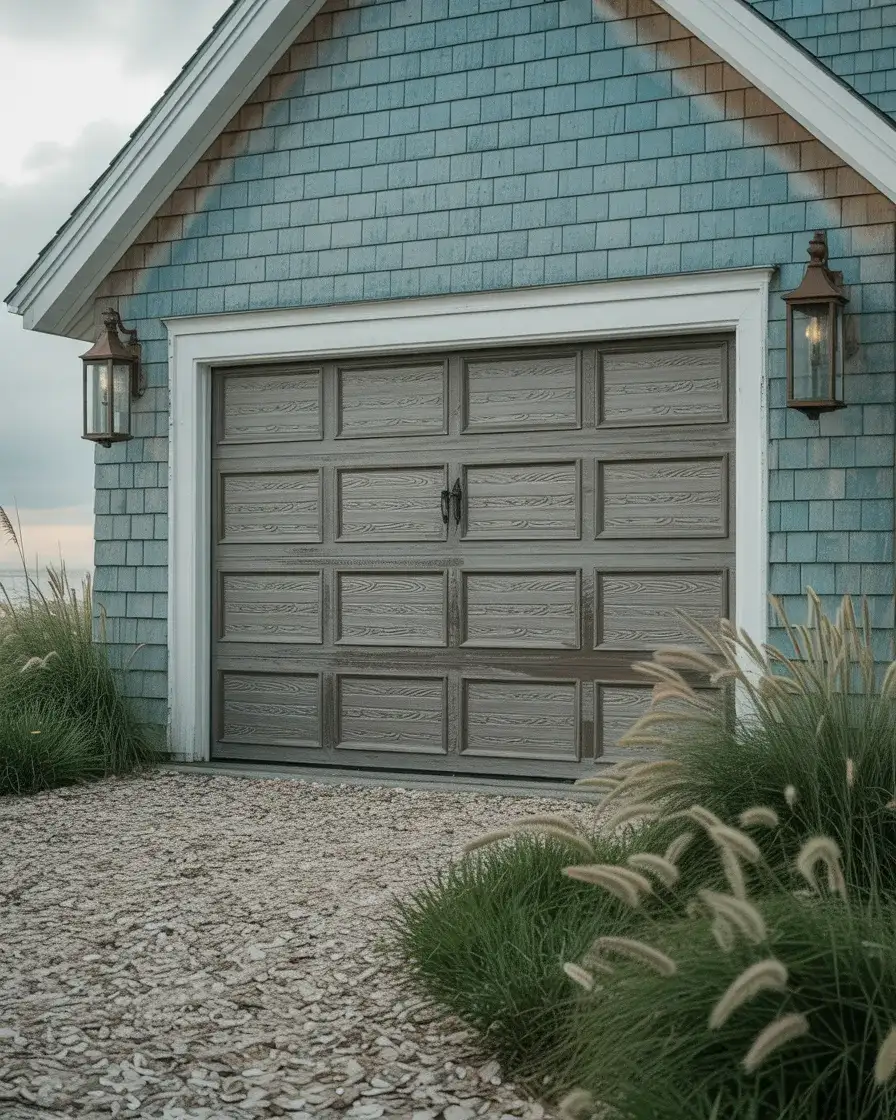
Buyers in the real estate market consistently respond well to faux wood finishes—so much so that real estate photographers have noted that homes with realistic wood-grain garage doors routinely outperform comparable homes in online click-through rates on listing sites. The psychological warmth that wood grain creates is real and measurable. For sellers preparing a home for market, upgrading to a quality faux wood door is one of the few exterior investments that reliably returns more than its cost at closing, according to the Cost vs. Value Report published annually for the remodeling industry.
21. Garage Door with Decorative Windows Row
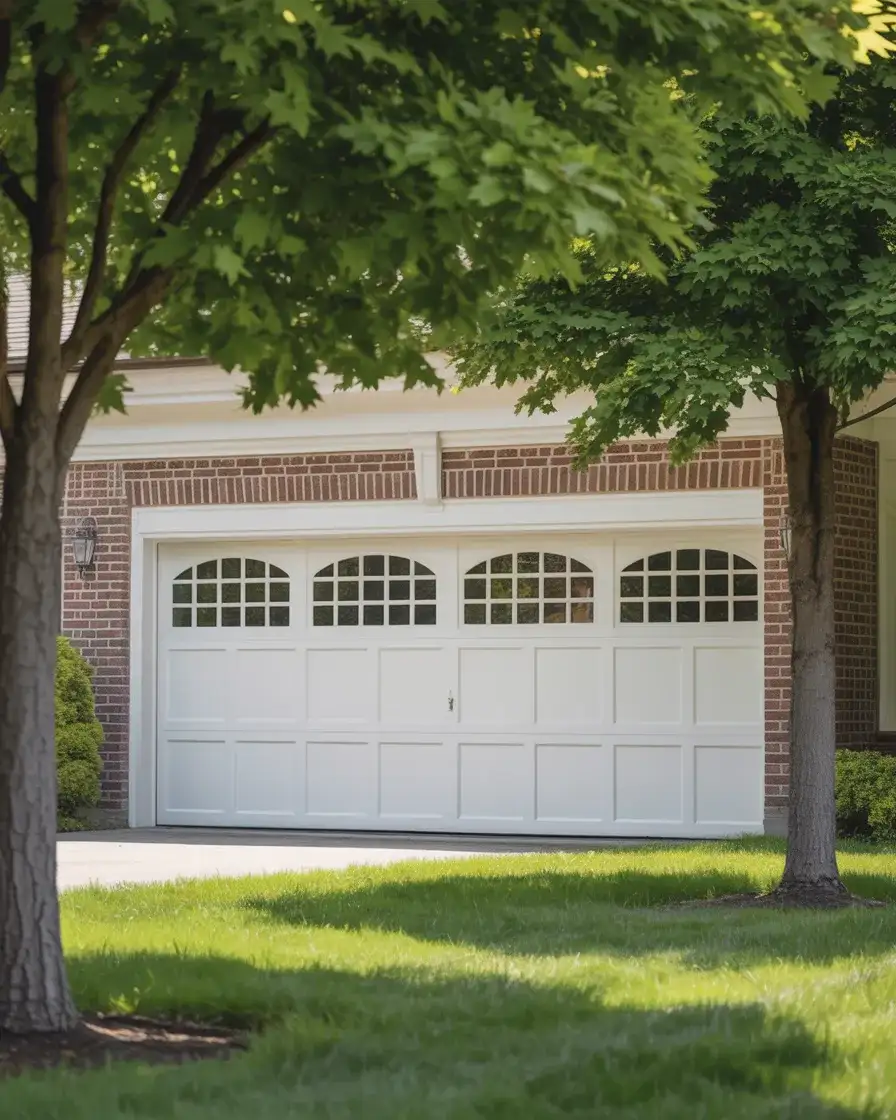
A row of decorative windows across the top panel of a garage door might be the single most impactful upgrade available at the lowest cost. Window inserts—available as DIY retrofit kits or factory-installed options—bring natural light into the garage interior, add visual interest to what is otherwise a flat expanse, and give the door a more finished, residential appearance. In 2026, arched and rectangular window styles with true divided light muntins are pulling away from the simpler square options that dominated the last decade.
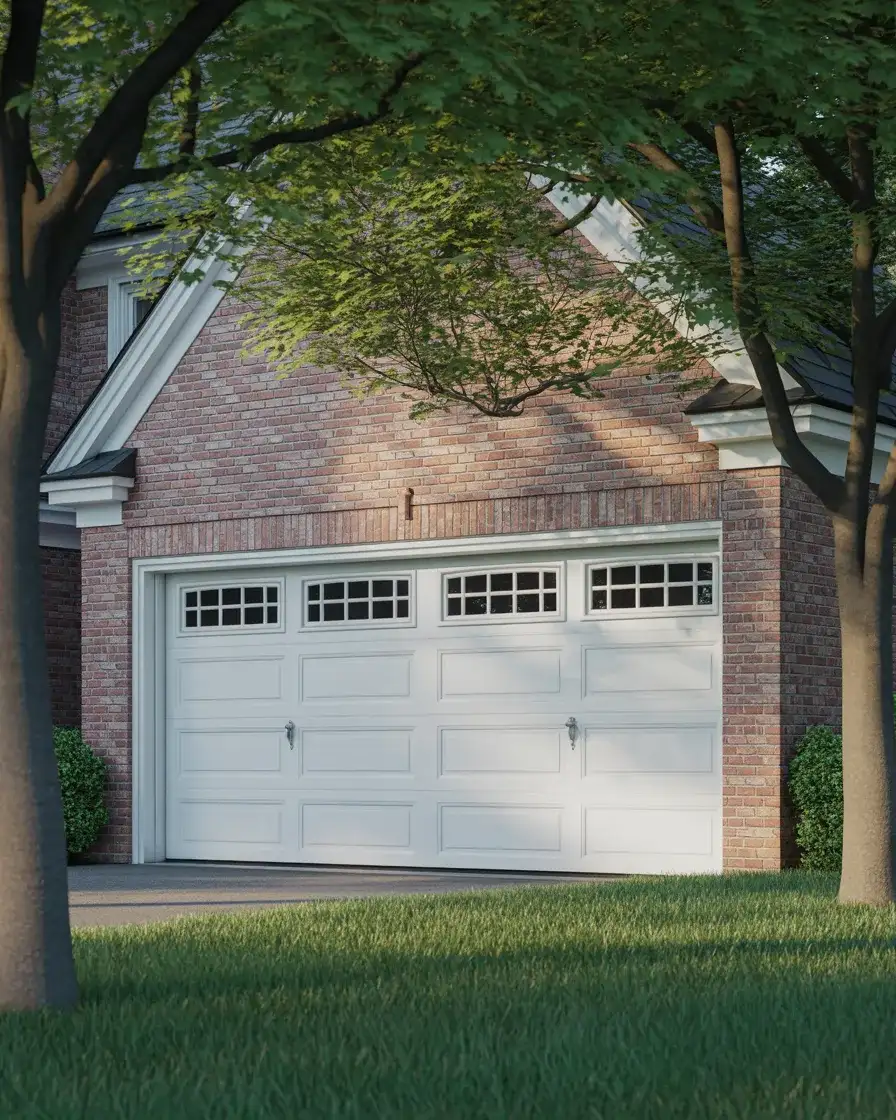
Retrofit window inserts are a genuinely beginner-friendly DIY project that most homeowners can complete in an afternoon. Kits from major manufacturers like Clopay or Wayne Dalton typically include the polycarbonate or acrylic panel, the decorative grille overlay, and the trim ring—everything snaps or screws into a pre-cut opening. If your door doesn’t have pre-cut holes, a jigsaw with a fine-tooth blade handles the steel panel work neatly. Add a can of touch-up primer to your materials list, and the finished result looks factory-installed every time.
22. Faux Wood Garage Door in Rich Mahogany
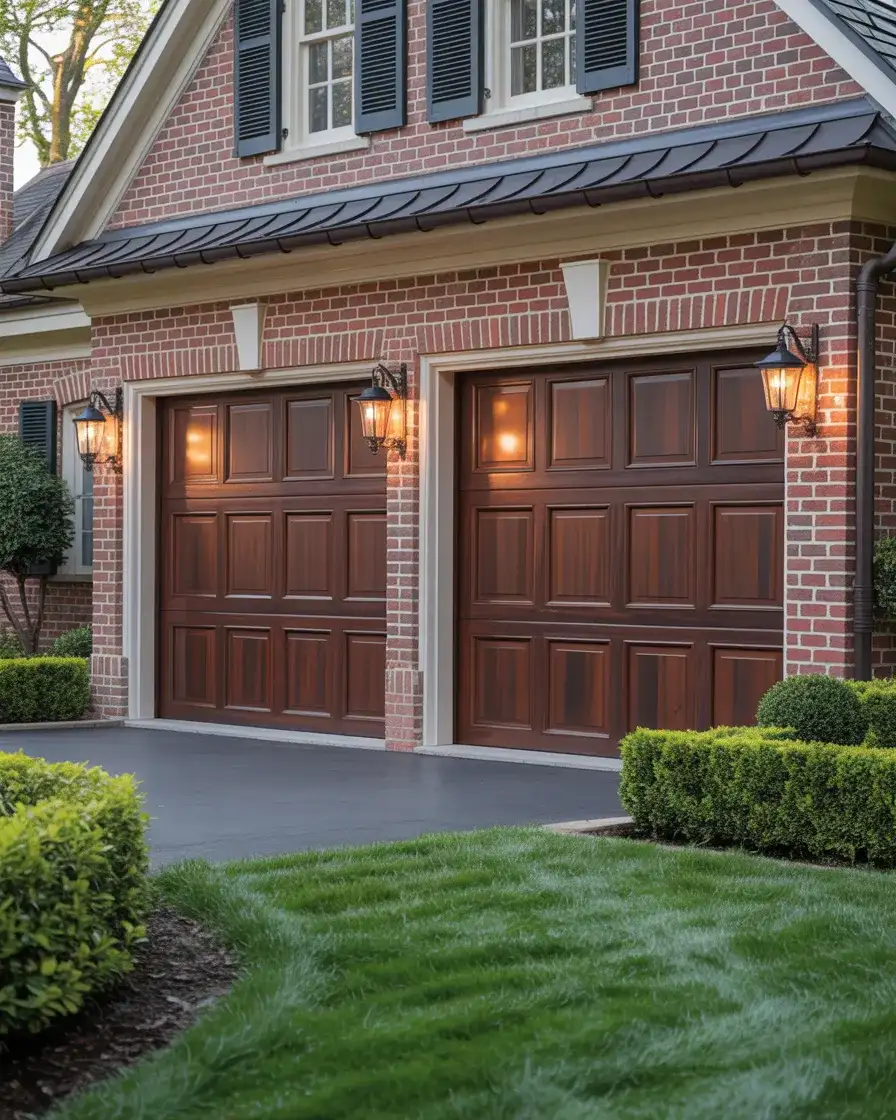
Where the gray-brown faux wood finish reads coastal and contemporary, a deep mahogany wood-look garage door reads estate-quality and traditional. This warm, reddish-brown tone has a gravitas that pairs beautifully with brick, limestone, and painted colonial facades where the architecture itself is formal and symmetrical. In 2026, mahogany-toned doors are especially popular in the mid-Atlantic and Southeastern states, where traditional architecture continues to dominate new residential construction.
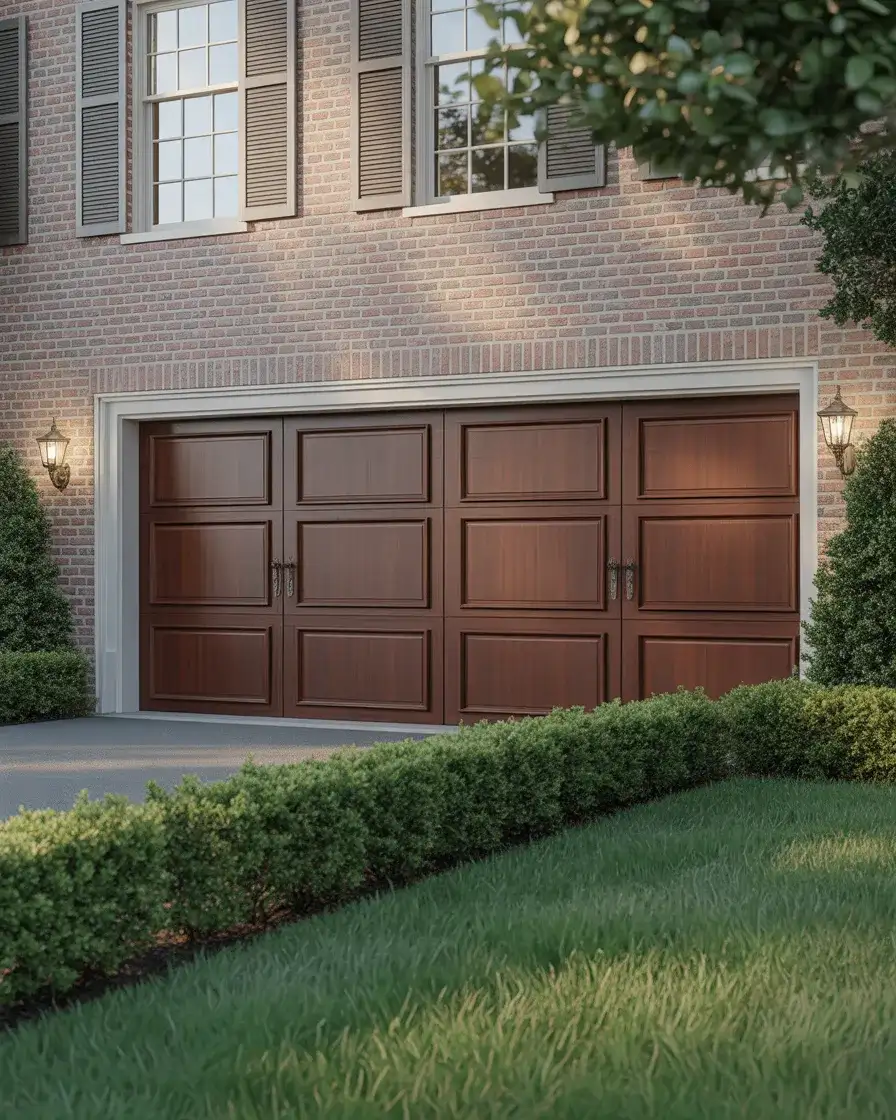
The richness of a mahogany-toned door can visually overwhelm a home’s facade if the other exterior elements aren’t substantial enough to anchor it. It pairs strongest with brick, stone, or stucco—materials with their own visual weight. On lighter wood, vinyl, or thin composite siding, the same deep door color can make the facade look top-heavy. If your siding is lightweight in appearance, consider adding stone veneer to the garage’s lower section first—that base grounds the whole composition and lets the mahogany door read as intended: luxurious and grounded.
23. Dark Painted Garage Door with Pergola and Potted Olive Trees
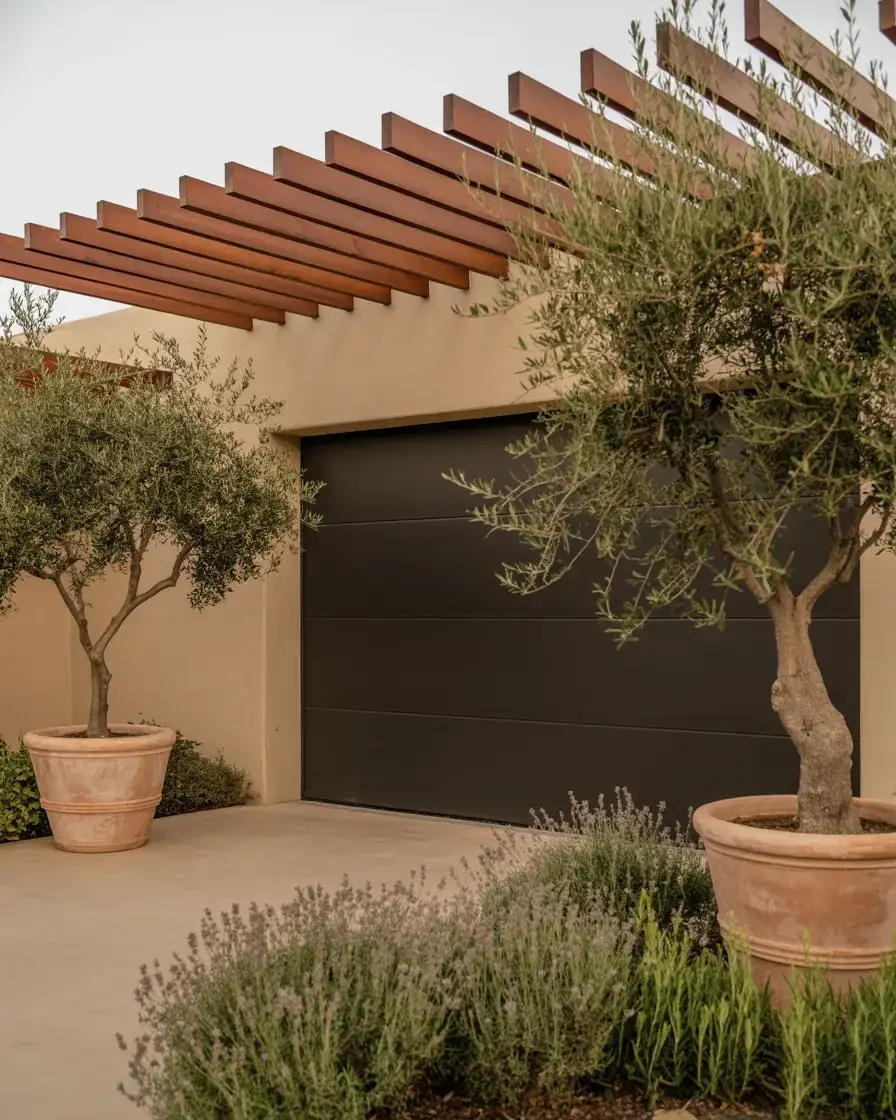
This final idea is really a composition rather than a single element—a dark garage door, a simple overhead pergola, and a pair of potted olive trees flanking the driveway entrance. Together these three ingredients create a layered, Mediterranean-inflected exterior that feels both effortlessly elegant and deeply livable. The deep-toned door anchors the facade, the pergola adds overhead structure, and the silver-green olive foliage brings organic life to what would otherwise be a very graphic composition.
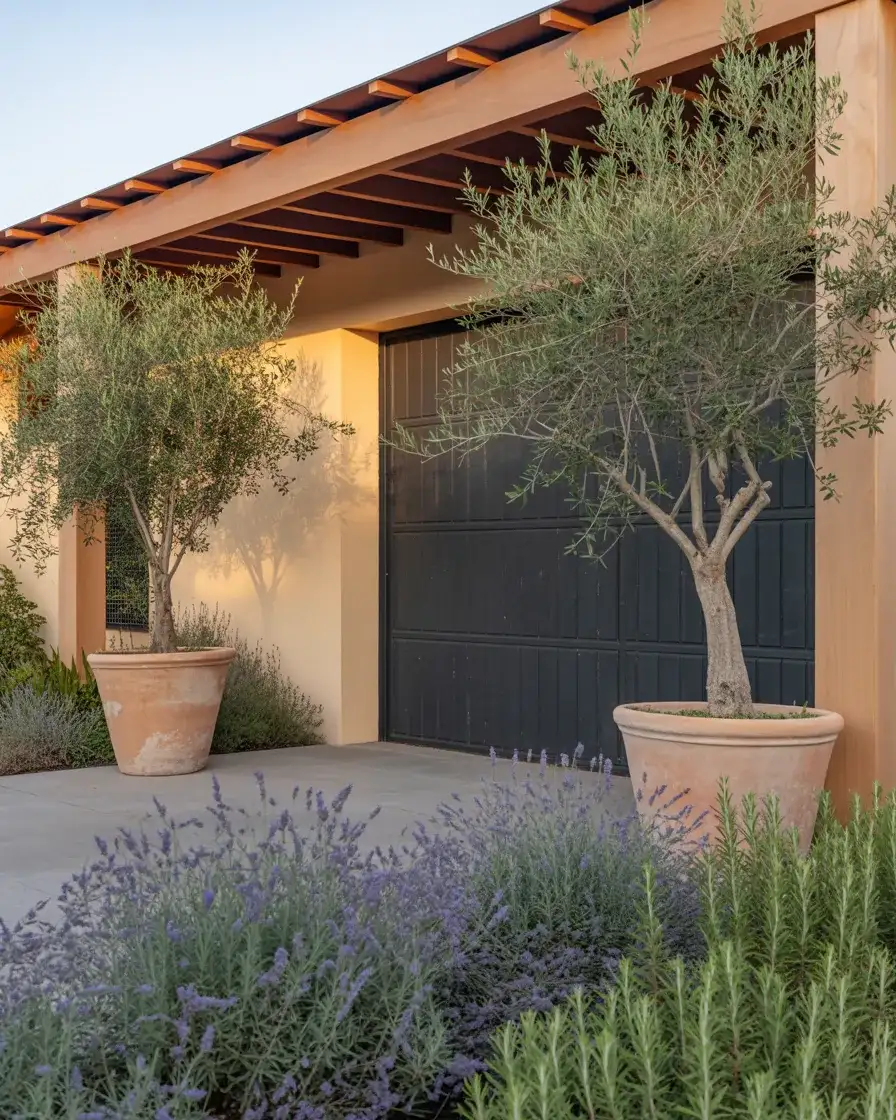
The olive tree has become the designer’s plant of choice for this kind of composed garage vignette—and for good reason. It’s drought-tolerant enough for pots in most American climates (with some winter protection in zones 6 and below), it takes pruning well into a lollipop or natural cloud form, and its silver-green foliage complements virtually any exterior color palette from white to charcoal to terracotta. Large nursery olives in 25-gallon pots run $150 to $400 depending on age, but they’re one of those investments that become more beautiful—and more valuable—every year.
Conclusion
Your garage door is one of the most powerful tools you have for transforming how your home presents to the world—and as these 23 ideas show, the options in 2026 have never been more exciting or more accessible. Whether you go bold with a mural, serene with a natural cedar door, or lush with a climbing-vine pergola, the right choice is the one that makes you smile every time you pull into the driveway. We’d love to hear which idea sparked something for you—drop your thoughts, questions, or your own before-and-after stories in the comments below. Which of these garage door ideas are you planning to try?