Pantry design has become one of the most searched home improvement topics on Pinterest in 2026, and for good reason. Americans are reimagining how they store, organize, and access their food and kitchen essentials—moving beyond simple shelving to create functional, beautiful spaces that work with their lifestyle. Whether you’re planning a major renovation or looking to maximize what you already have, these pantry design ideas showcase the trends shaping homes this year. From compact solutions for tight corners to luxurious walk-in spaces that feel like boutique grocery stores, you’ll find inspiration that fits your space, budget, and style.
1. Walk-In Pantry with Floor-to-Ceiling Shelving
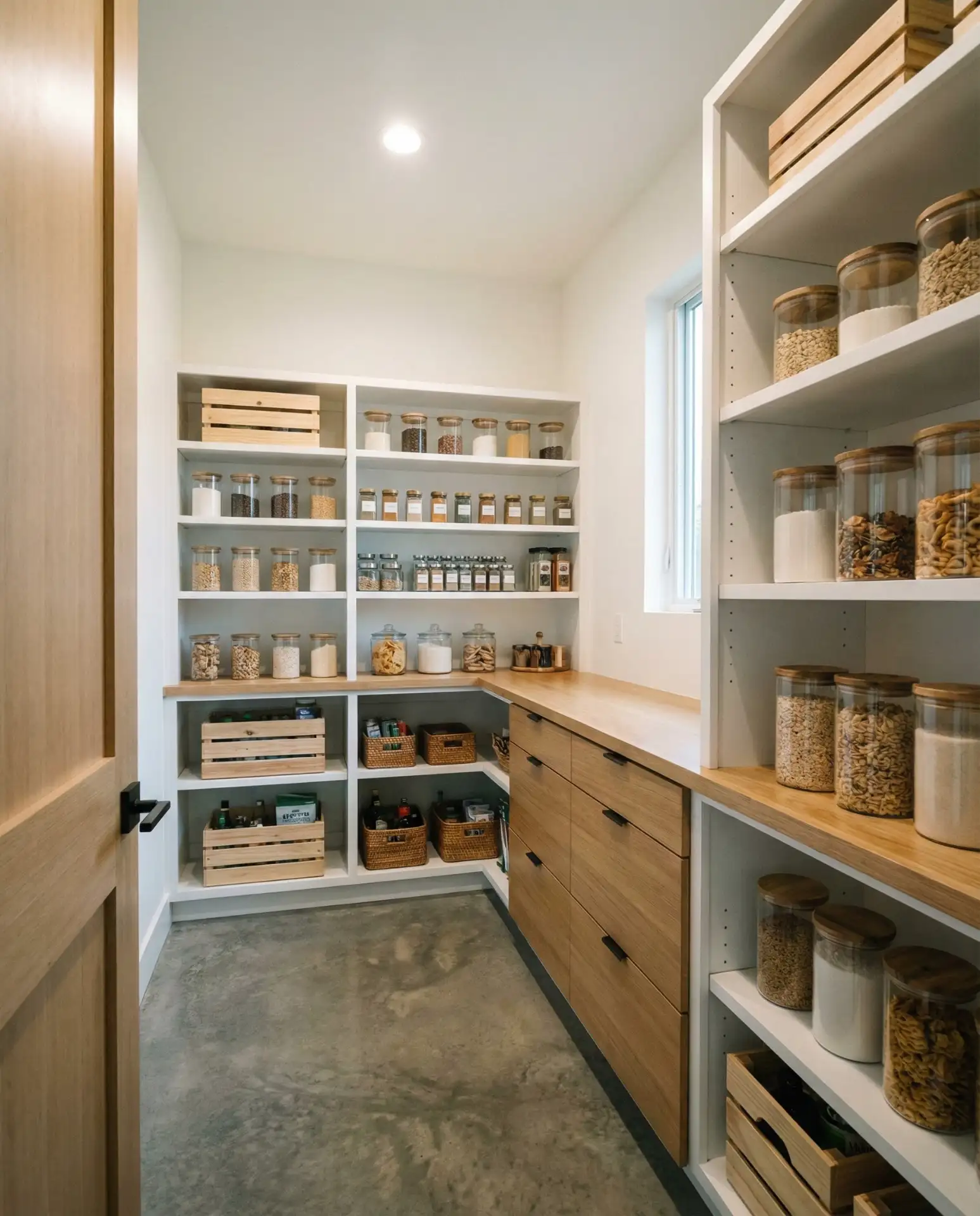
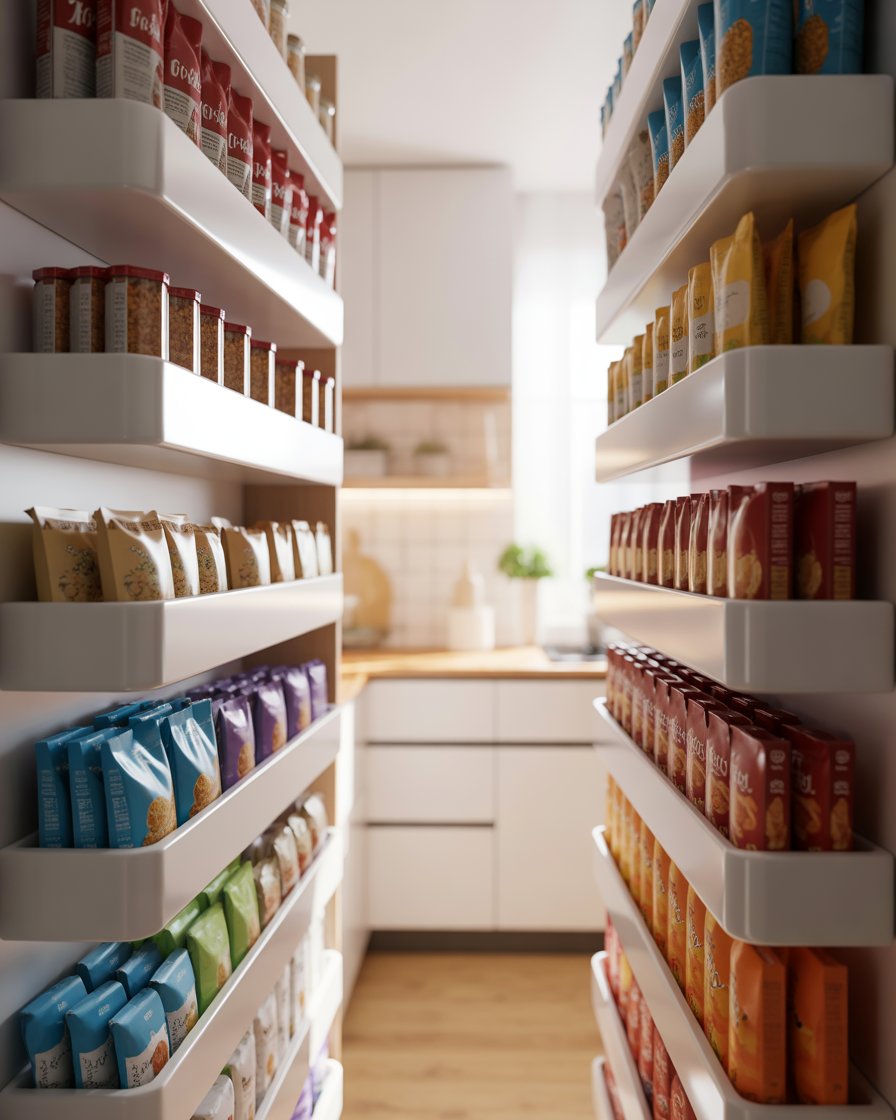
A walk in pantry with floor-to-ceiling shelving maximizes vertical space and transforms storage capacity in any home. This design works beautifully in both new constructions and renovations, offering dedicated zones for canned goods, baking supplies, and small appliances. The key is adjustable shelving that adapts as your needs change, with lower shelves for heavy items and upper reaches for seasonal or rarely-used products. 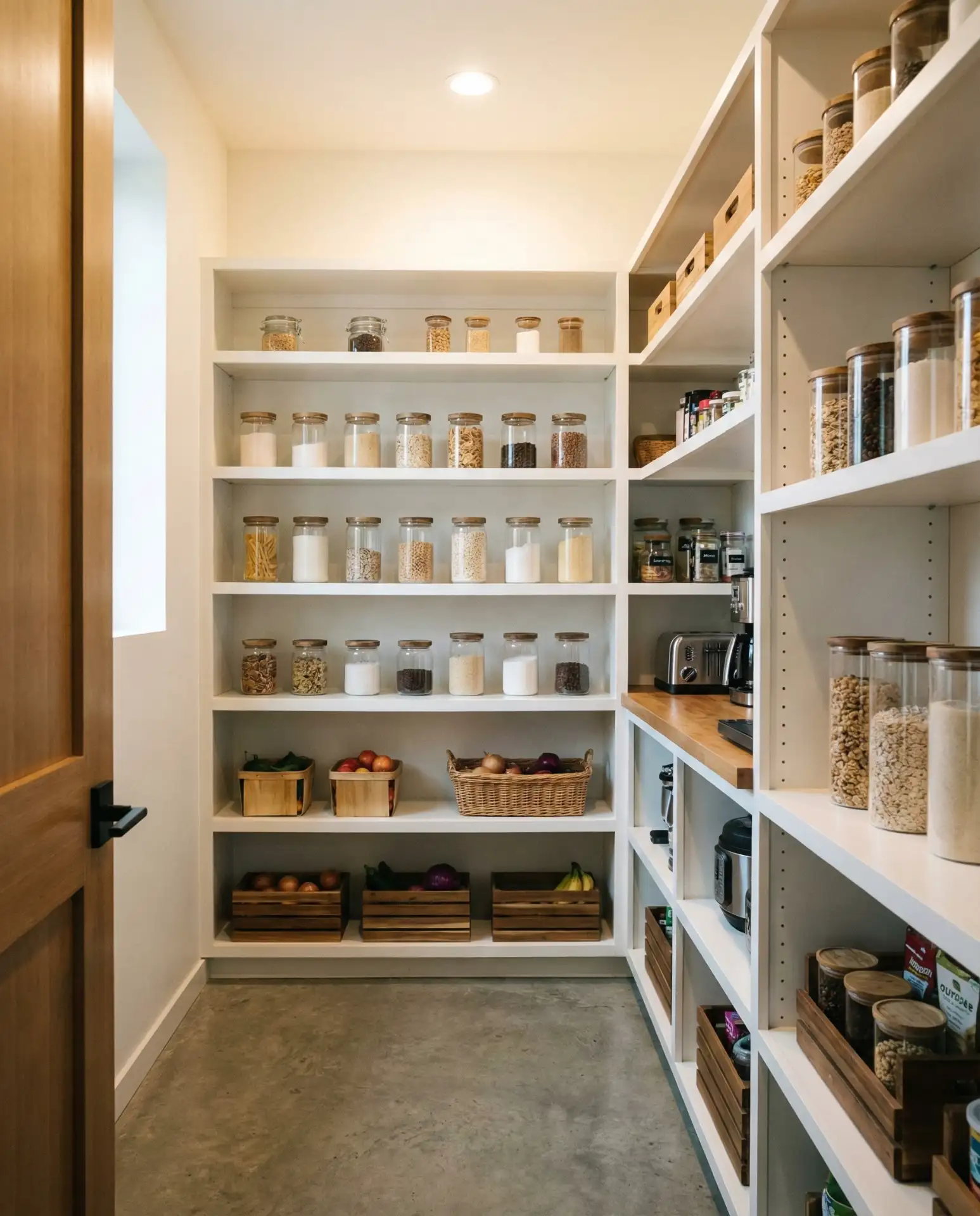
This setup works best in homes with at least 5×5 feet of available space, though larger is always better. The vertical design means you can store 40-60% more items compared to standard cabinet depths. Many homeowners add a rolling ladder or step stool—not just for function, but as a charming design element that references old-fashioned general stores and apothecaries.
2. Butler’s Pantry Between Kitchen and Dining
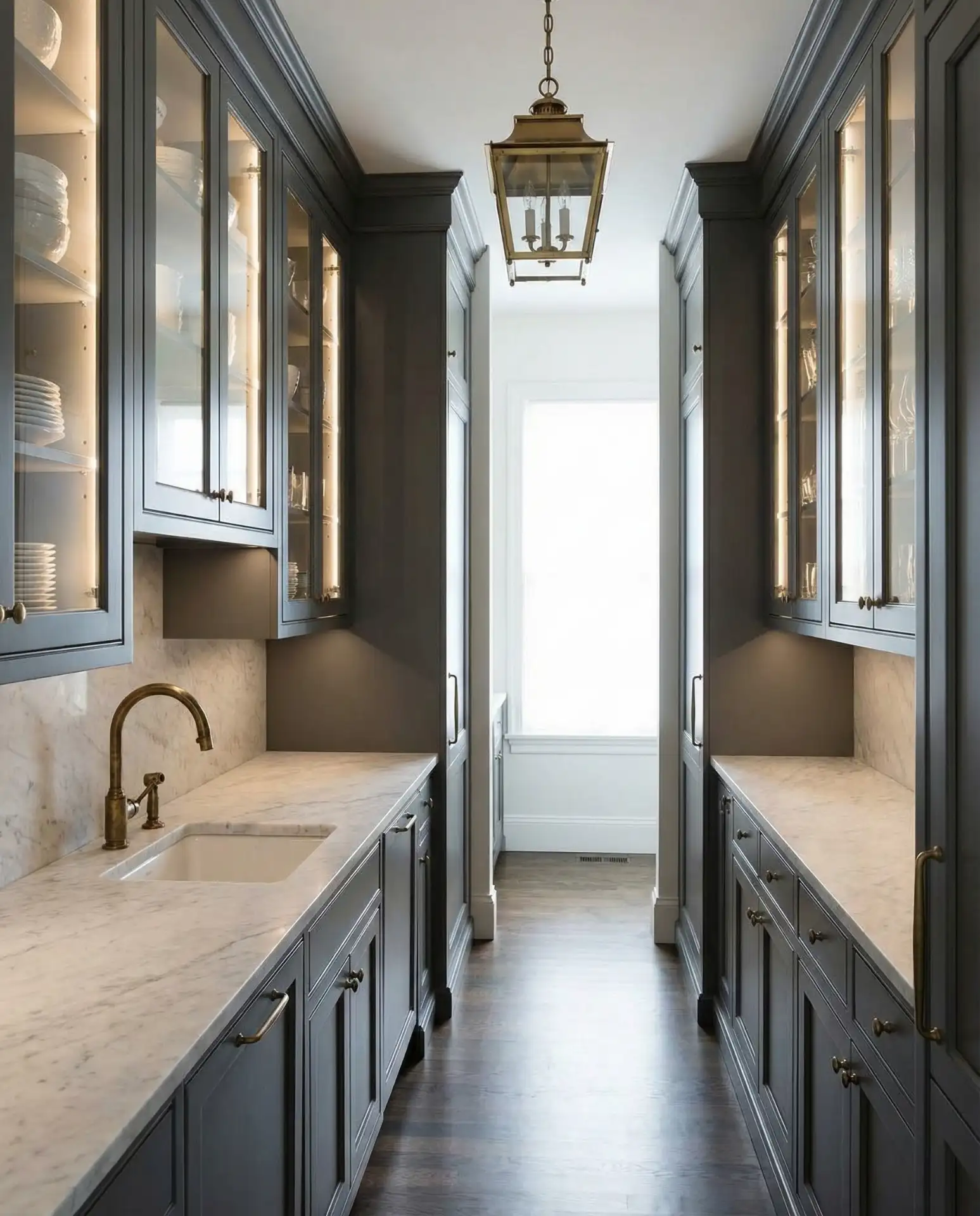
The butler pantry is making a major comeback in 2026, especially in homes that entertain frequently. Positioned between the kitchen and dining room, this transitional space handles prep work, serving, and cleanup without cluttering your main cooking area. It typically includes a sink, countertop workspace, and cabinets for dishes, glassware, and serving pieces that don’t need to be in the everyday kitchen rotation. 
In Southern and Midwestern homes, butler’s pantries often double as coffee stations or beverage bars. A friend who renovated her 1920s Colonial in Charleston told me her butler’s pantry became the most-used space in the house—it’s where she stages Thanksgiving dishes, stores her grandmother’s china, and makes weekday coffee without morning chaos in the main kitchen.
3. Corner Kitchen Pantry with Lazy Susan

A corner kitchen pantry turns awkward angles into surprisingly efficient storage. The secret weapon? Multiple lazy Susan turntables that bring items from the back corner to your fingertips with a simple spin. This small kitchen solution works particularly well in L-shaped or galley layouts where every inch counts, and you can’t afford dead space behind fixed shelving. 
The biggest mistake people make with corner pantries is installing fixed shelves and watching items disappear into the void. Rotating mechanisms cost $50-150 per shelf but save you from buying duplicate spices you forgot you owned. They’re especially popular in urban apartments and condos where square footage is premium but storage needs remain the same as larger suburban homes.
4. Open Shelving Pantry with Baskets
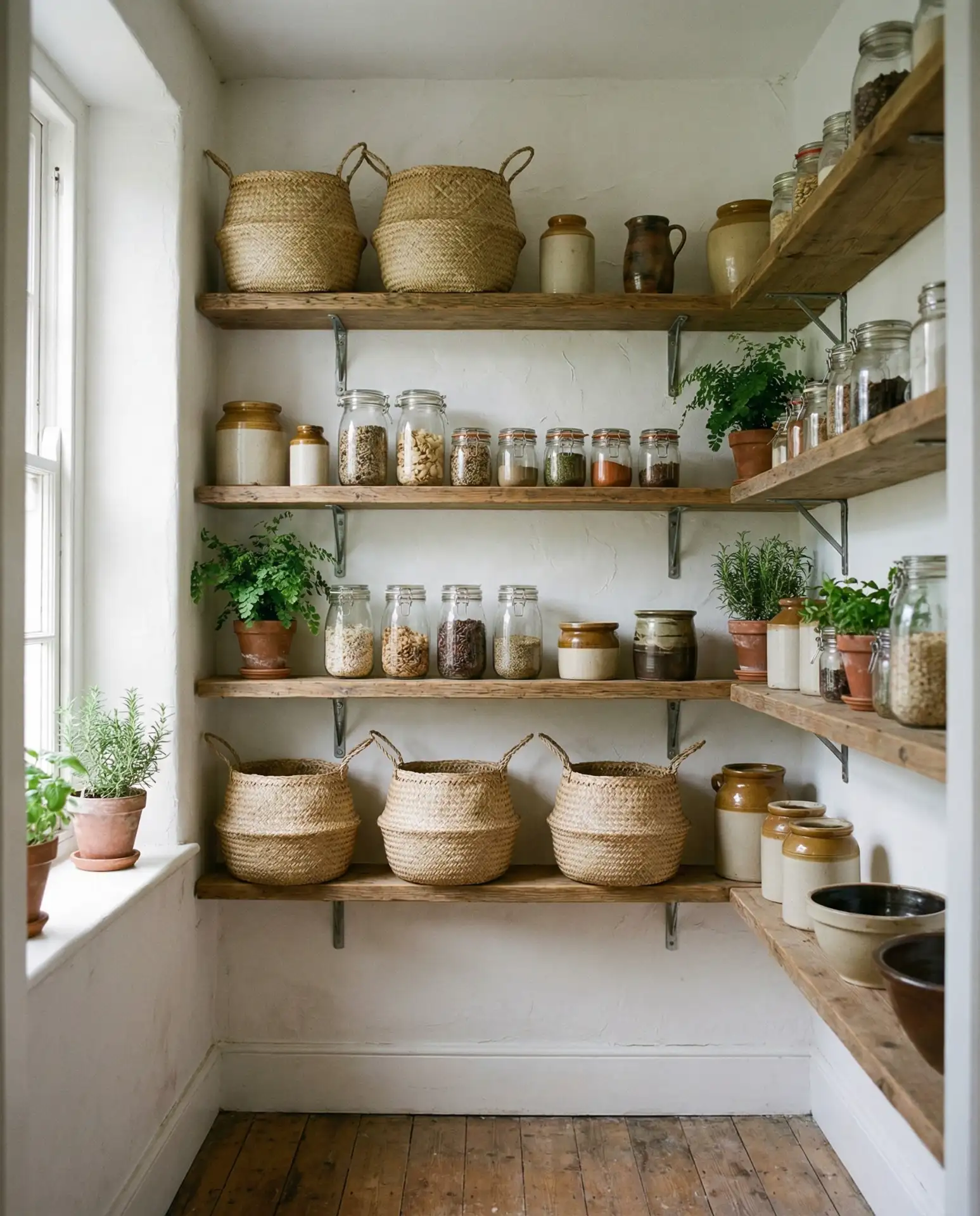
An open pantry with woven baskets brings farmhouse charm and practical organization together. This design eliminates cabinet doors entirely, using floating shelves paired with natural fiber baskets to corral smaller items while keeping everything visible and accessible. It’s a particularly smart choice for small spaces where door clearance is an issue or in rentals where permanent built-ins aren’t allowed. 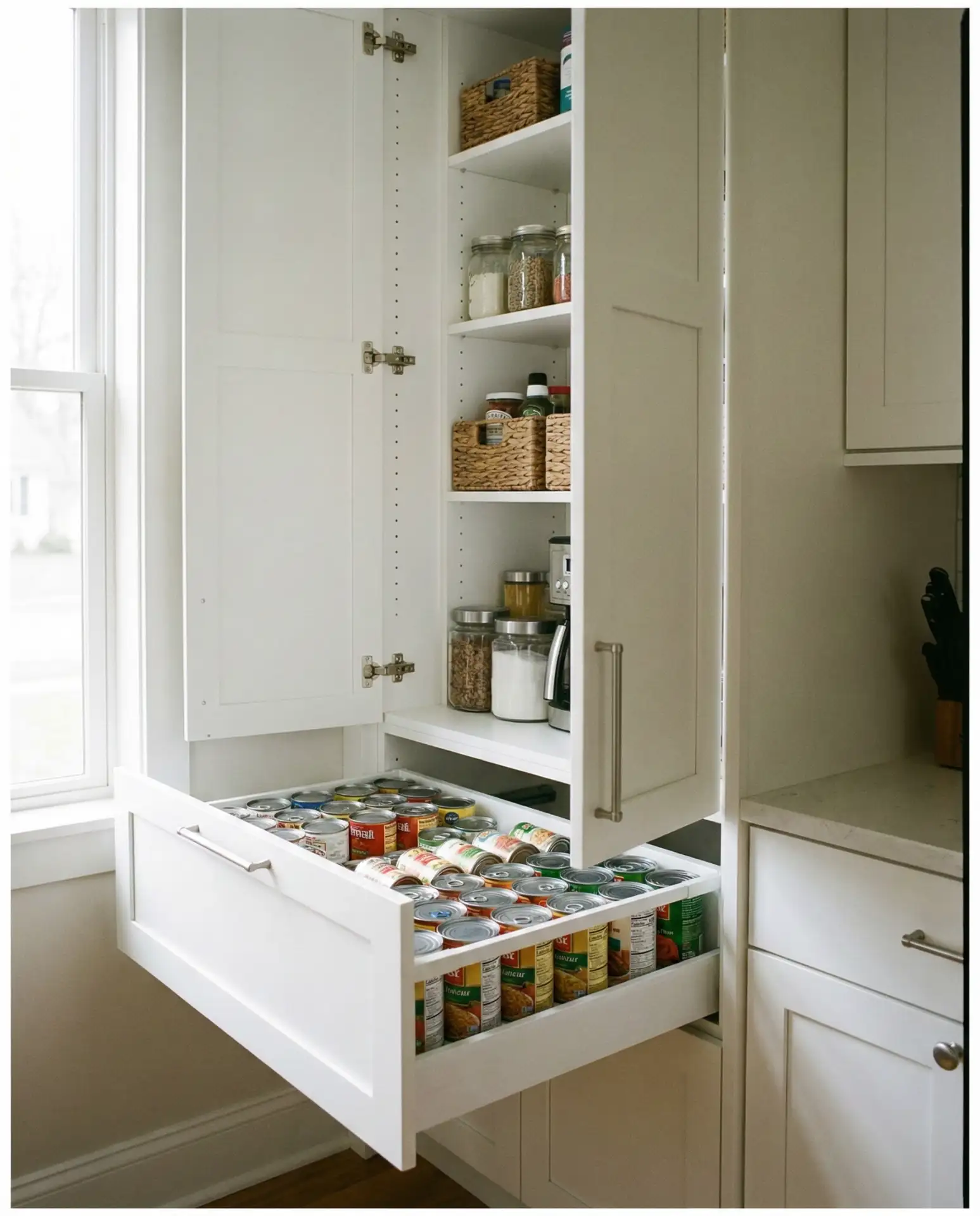
This style requires more maintenance than closed cabinets—dust happens, and visual chaos multiplies if you’re not diligent about organization. Budget $200-400 for quality baskets that will last years rather than cheap versions that fray and collapse. Label everything clearly, and commit to a color scheme for containers so the open display looks intentional rather than cluttered. Works beautifully in Pacific Northwest and New England homes where natural textures are trending.
5. Reach-In Pantry with Pull-Out Drawers
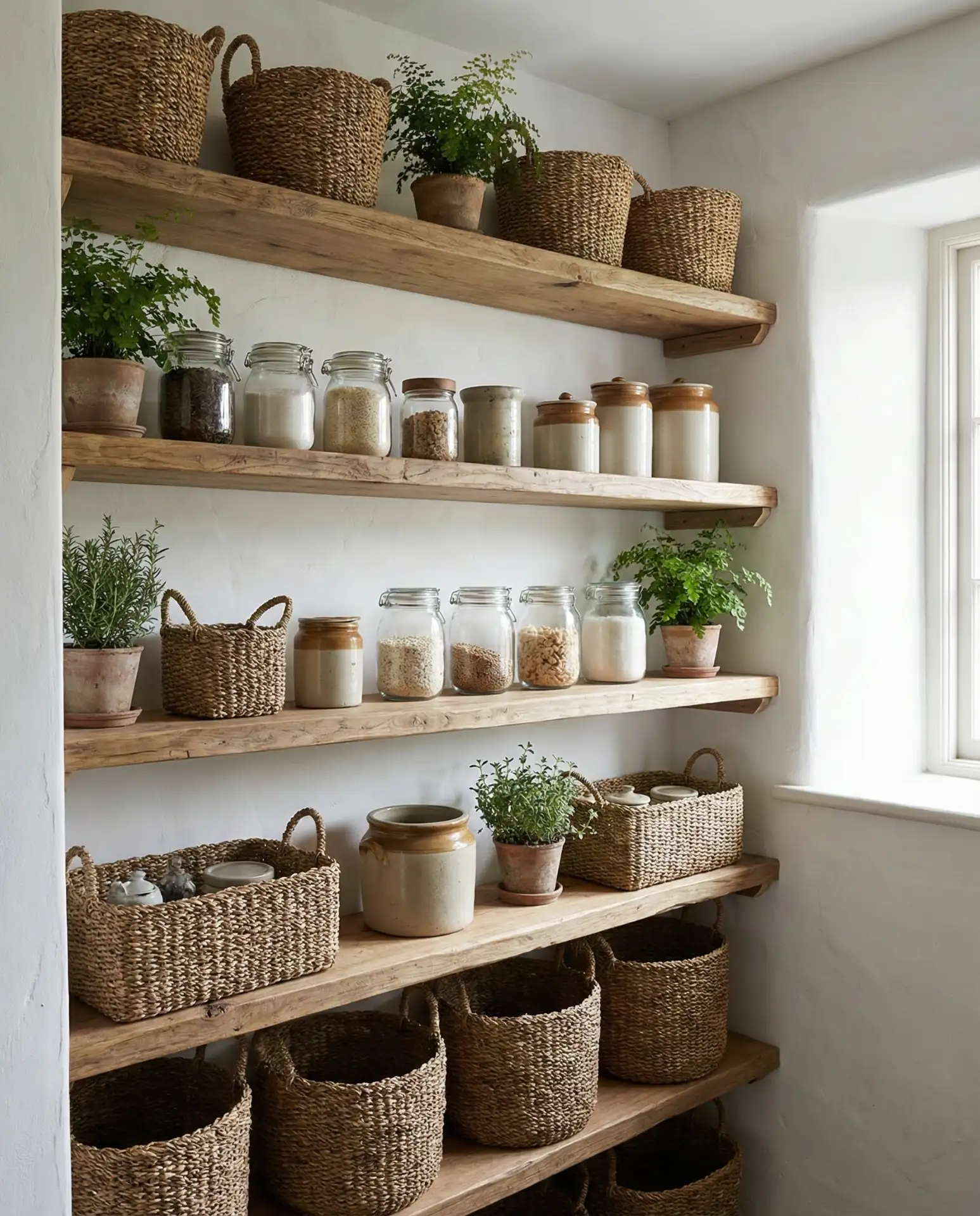
A reach in pantry with pull-out drawers solves the perennial problem of items getting lost in deep cabinet spaces. Instead of fixed shelves, deep drawers glide out fully, giving you a bird’s-eye view of everything stored inside. This configuration works perfectly in closet-sized pantries or narrow spaces where you can’t physically step inside but need serious storage capacity. 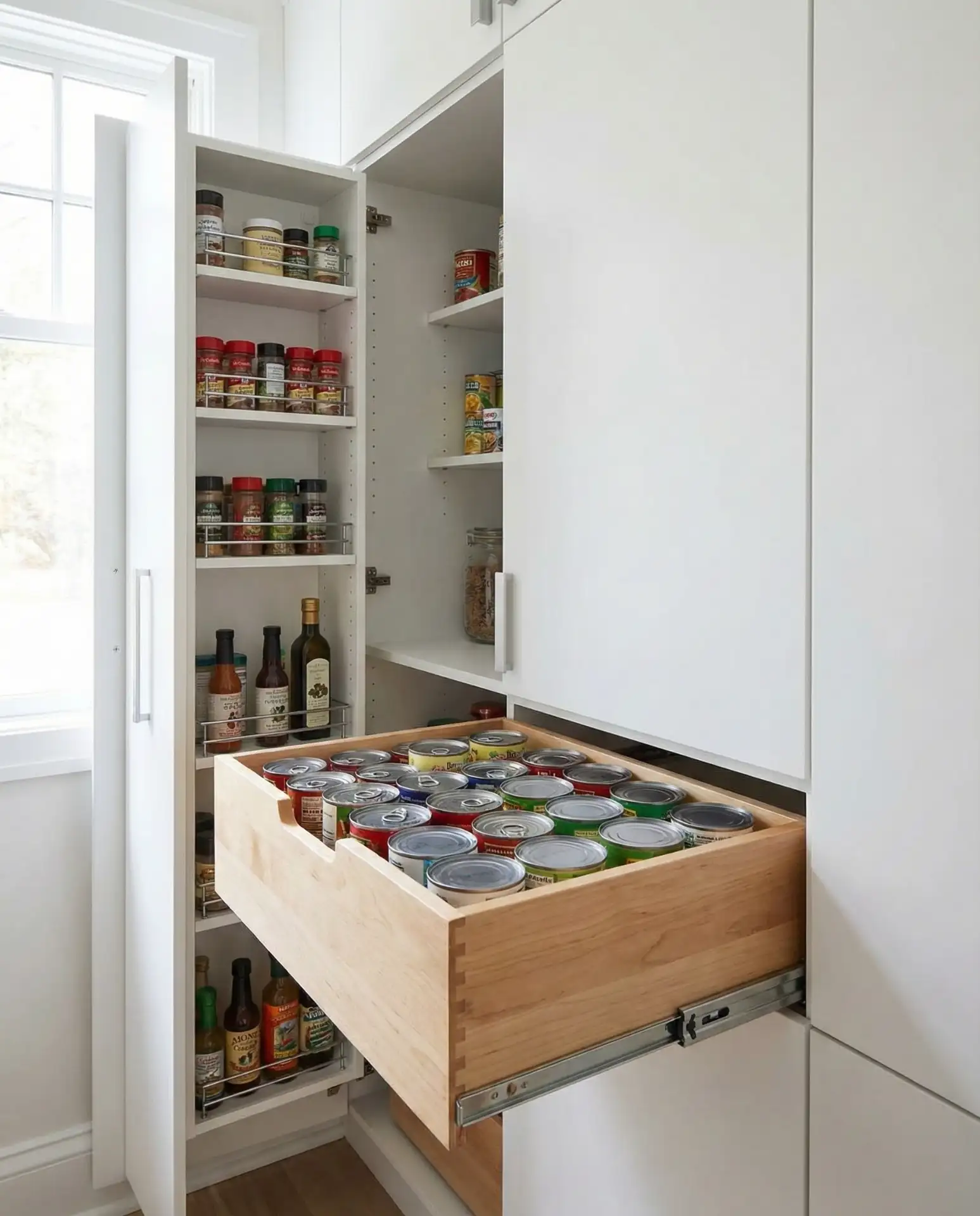
Soft-close drawer mechanisms are worth the upgrade—they prevent slamming and extend hardware life significantly. Homeowners typically install 4-6 deep drawers in a standard pantry closet, with the heaviest items (canned goods, bottled drinks) in bottom drawers and lighter packaged goods higher up. This setup is gaining traction in renovated bungalows and ranch homes where original kitchen layouts included small coat closets that now serve better as food storage.
6. Small Walk-In Pantry with Counter Workspace
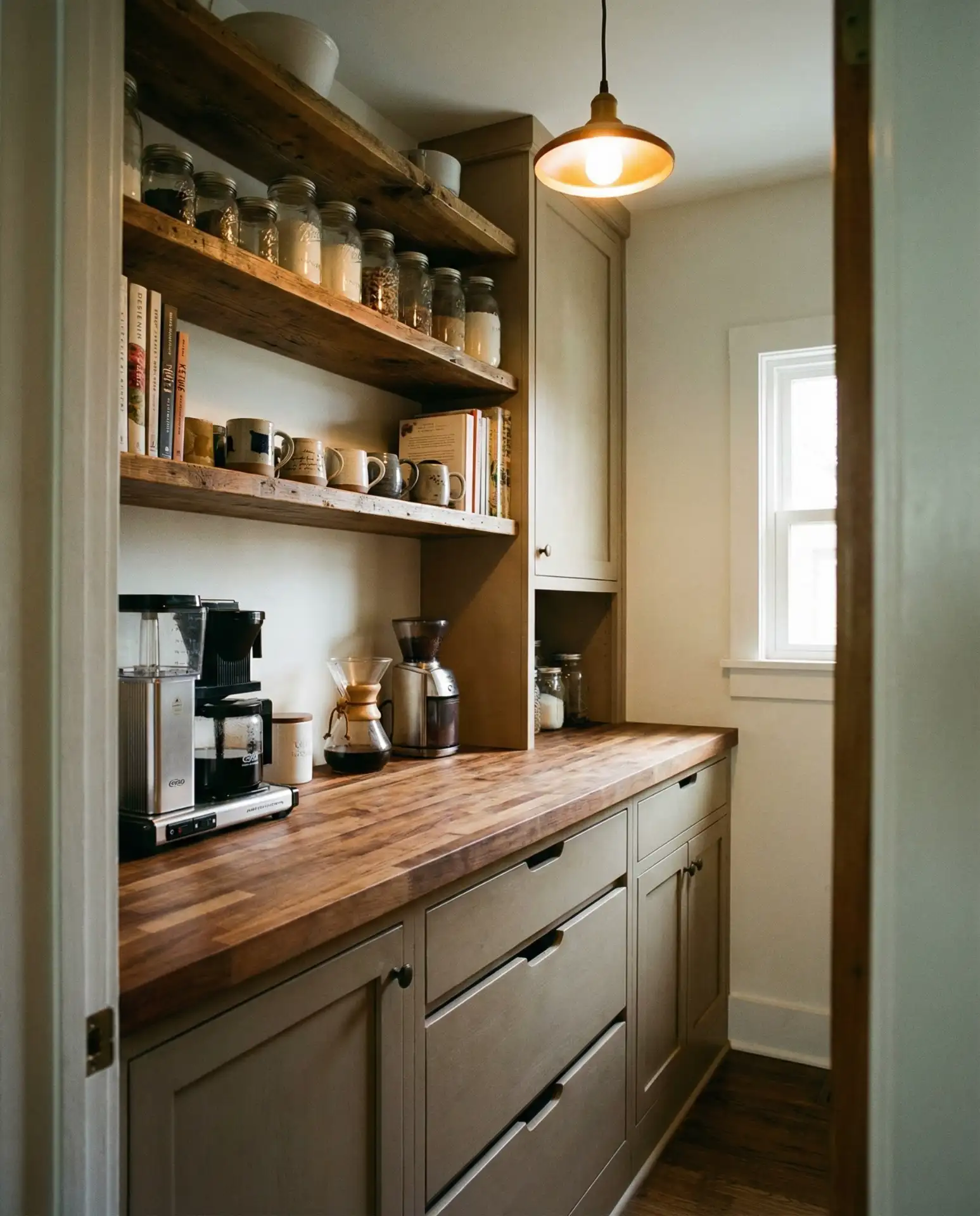
A small walk-in pantry becomes exponentially more functional when you add a countertop workspace at waist height. This creates a dedicated zone for meal prep, coffee making, or cooling baked goods without competing for main kitchen counter space. Even in a compact 4×6 foot pantry, a 24-inch-deep counter along one wall transforms how you use the room. 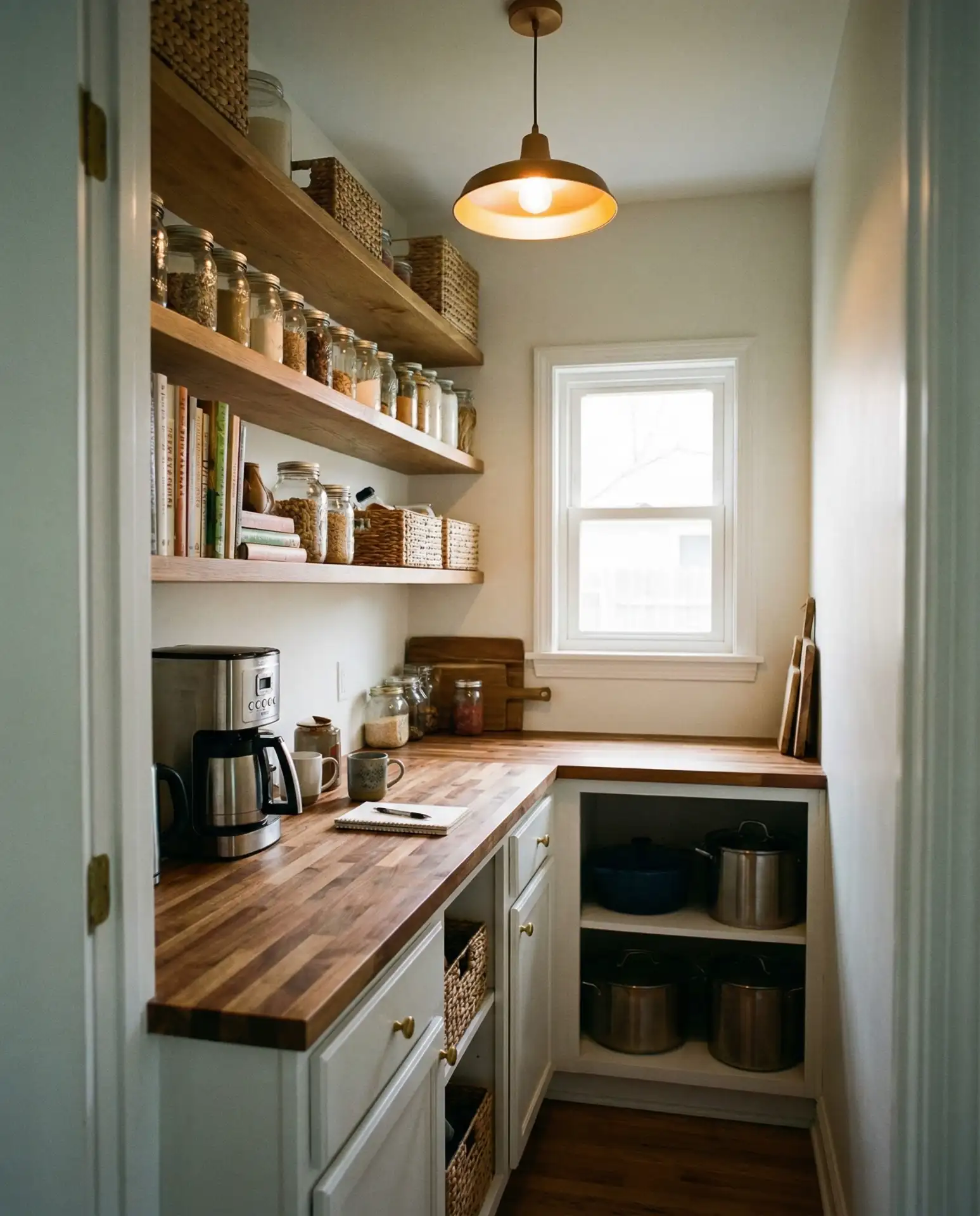
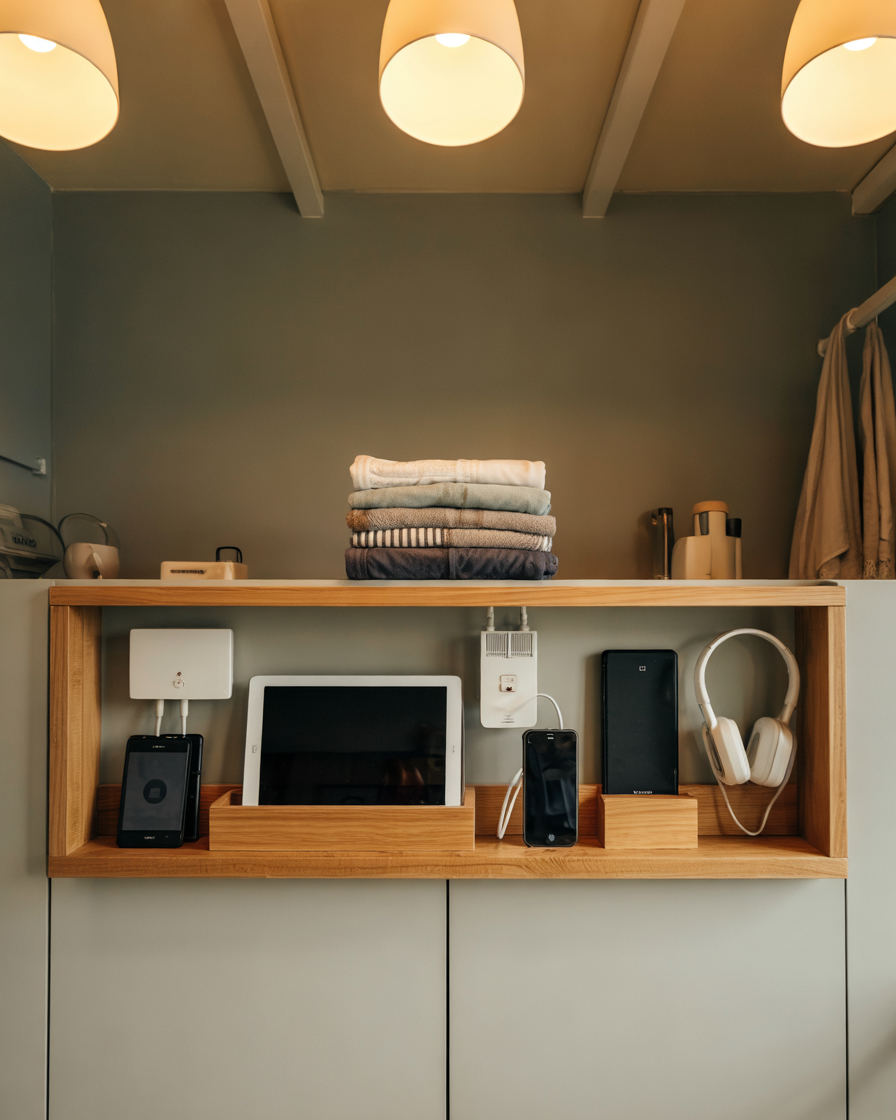
This design excels in homes where the kitchen opens to living areas and you want to hide small appliances and clutter behind a closed door. The counter height typically matches your kitchen counters (36 inches) for visual continuity. Many families use this zone for school lunch assembly, vitamin organization, or as a charging station for devices—keeping the main kitchen cleaner and more presentable when guests arrive.
7. Luxury Pantry with Glass-Front Cabinets
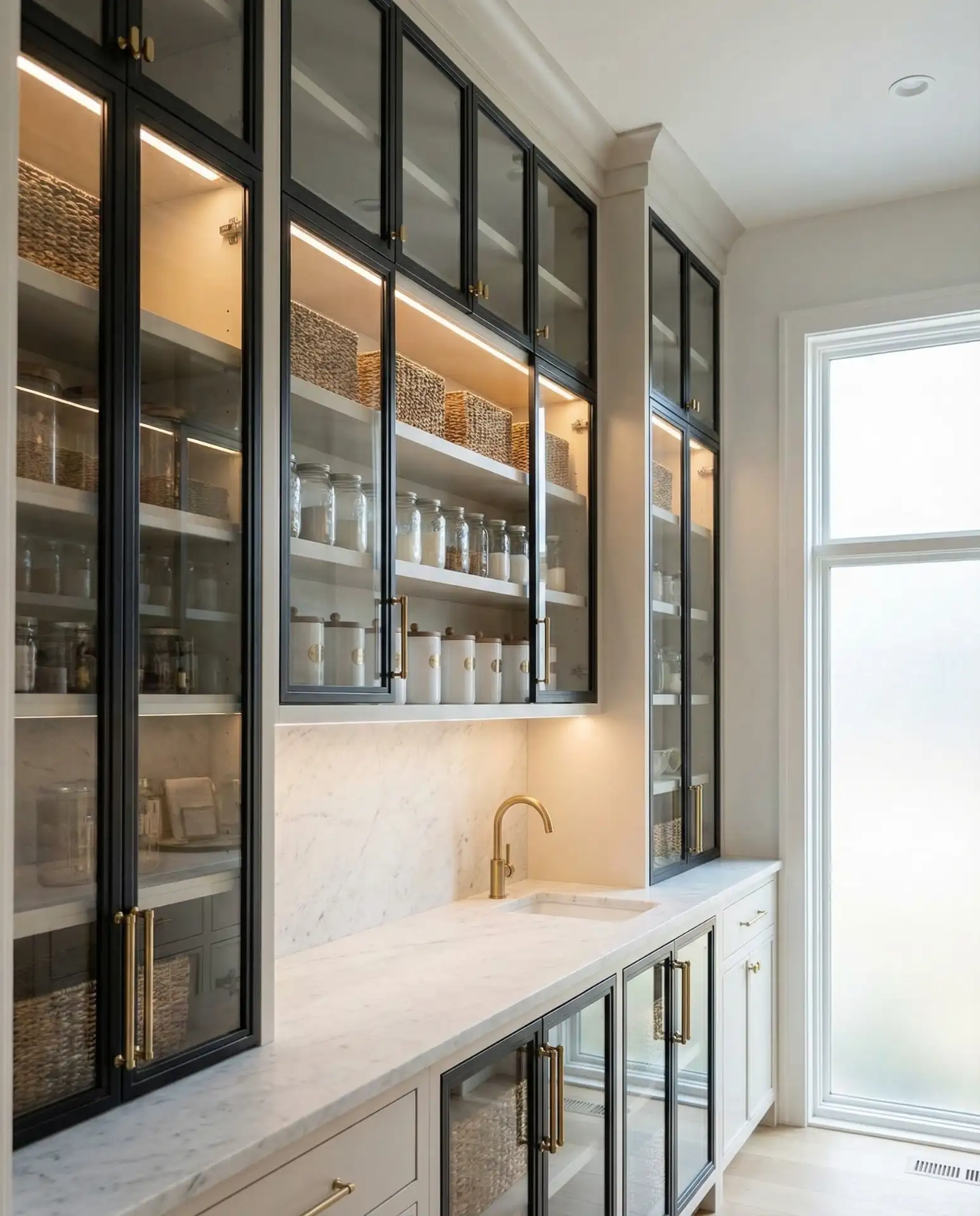
A luxury pantry with glass-front cabinets elevates storage to showpiece status, displaying beautiful containers, vintage dishware, or curated collections. This modern luxury kitchen feature combines high-end cabinetry with interior LED lighting that illuminates shelves like a boutique display. The glass keeps dust out while maintaining the open, airy feeling that makes even small pantries feel expansive. 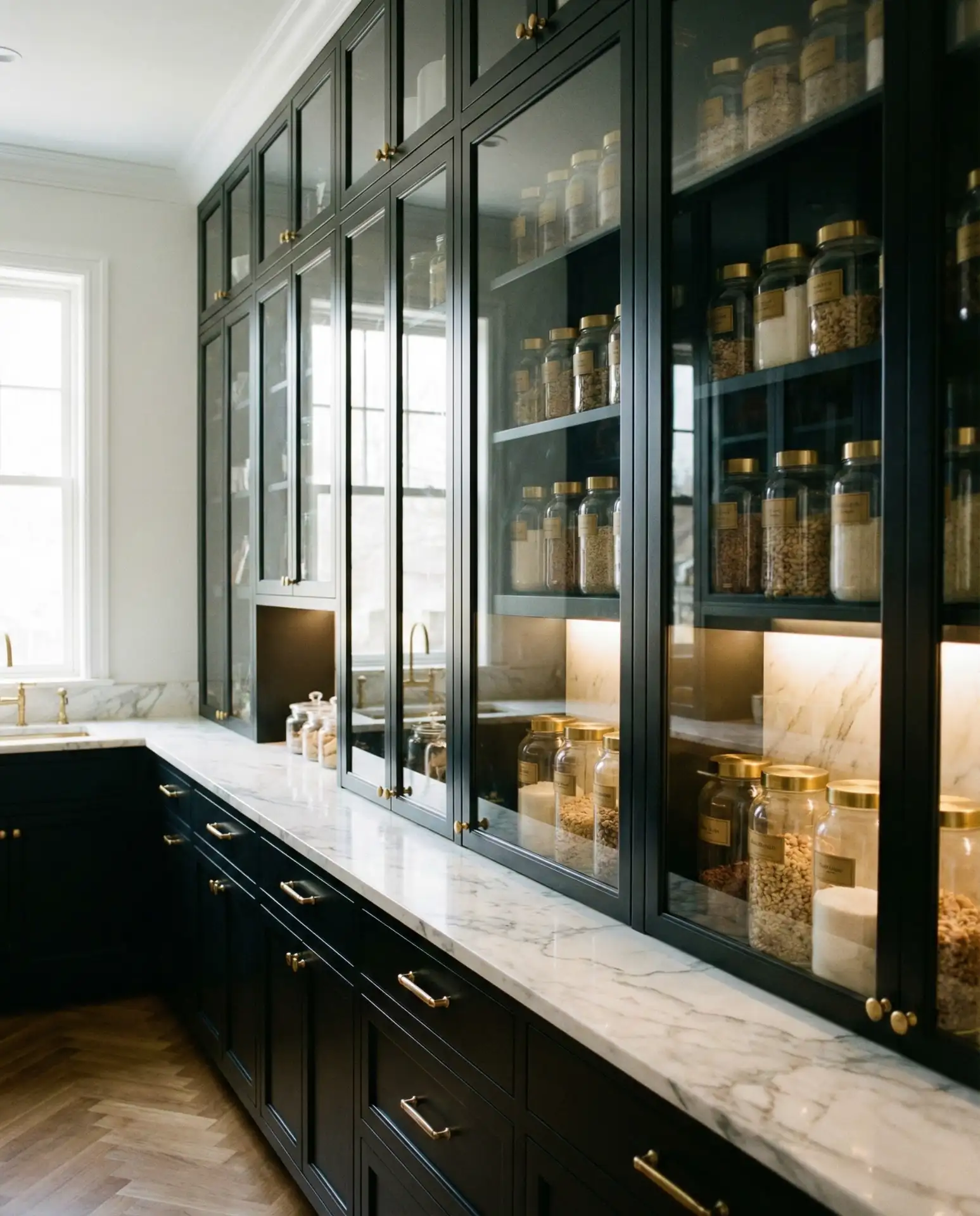
This approach demands discipline—everything visible needs to look good together. Invest $300-600 in matching airtight containers from brands like OXO or Weck, and commit to decanting dry goods rather than displaying boxes and bags. Textured or frosted glass offers a middle ground if you want the upscale look without perfect organization 24/7. Works especially well in California and Arizona homes where interior design leans contemporary and clean-lined.
8. Pantry Under the Stairs

Converting the space under your stairs into a pantry is pure genius for small spaces where traditional pantry locations don’t exist. The sloped ceiling creates natural height zones—tall items near the door where you can stand upright, shorter items toward the back. Custom shelving that follows the staircase angle ensures you use every cubic inch without wasted headroom. 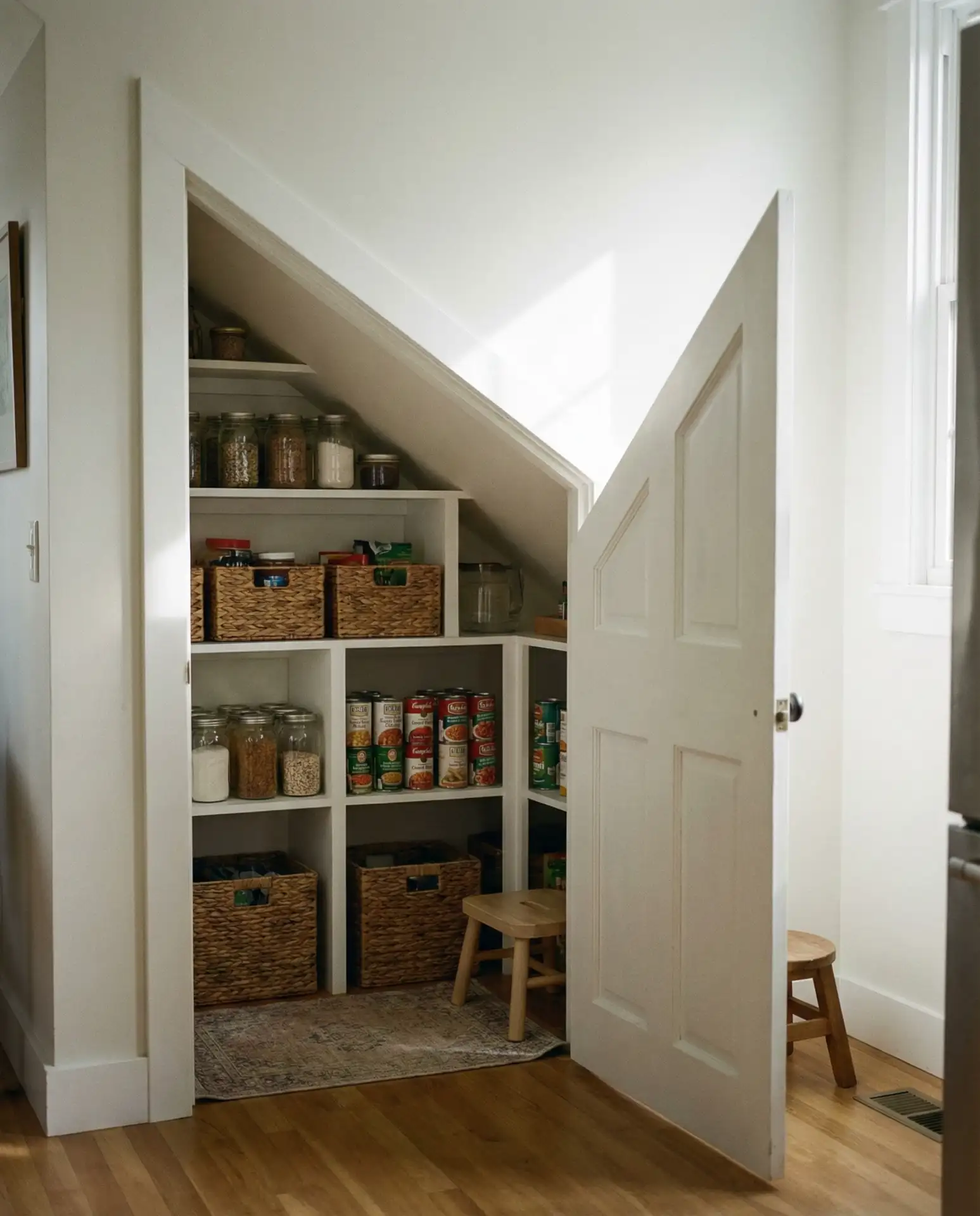
One practical insight: install motion-sensor lighting since these spaces can be dark and awkward to illuminate with a traditional switch. The biggest advantage is location—most under-stair spaces sit near kitchens or dining areas in two-story homes. Ensure proper ventilation to prevent mustiness, and check local codes about storage under fire-rated stairwells before beginning construction.
9. Shaped Pantry with L-Configuration
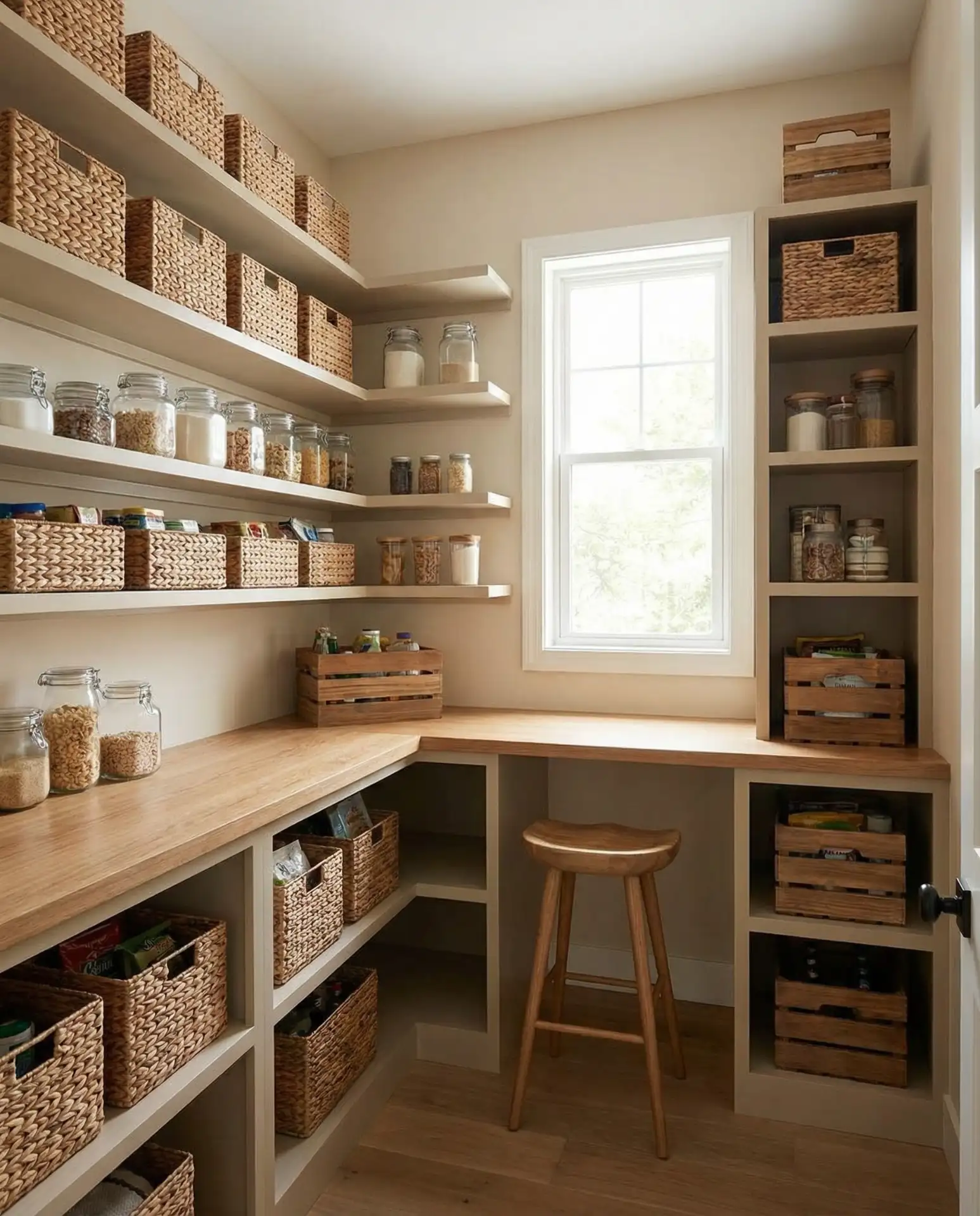
A shaped pantry using an L-configuration maximizes corner spaces that might otherwise go unused. This layout works brilliantly in large pantries where you have room to think beyond single-wall shelving. The perpendicular walls create natural zones—one side for dry goods and canned items, the other for appliances, serving pieces, or bulk storage. 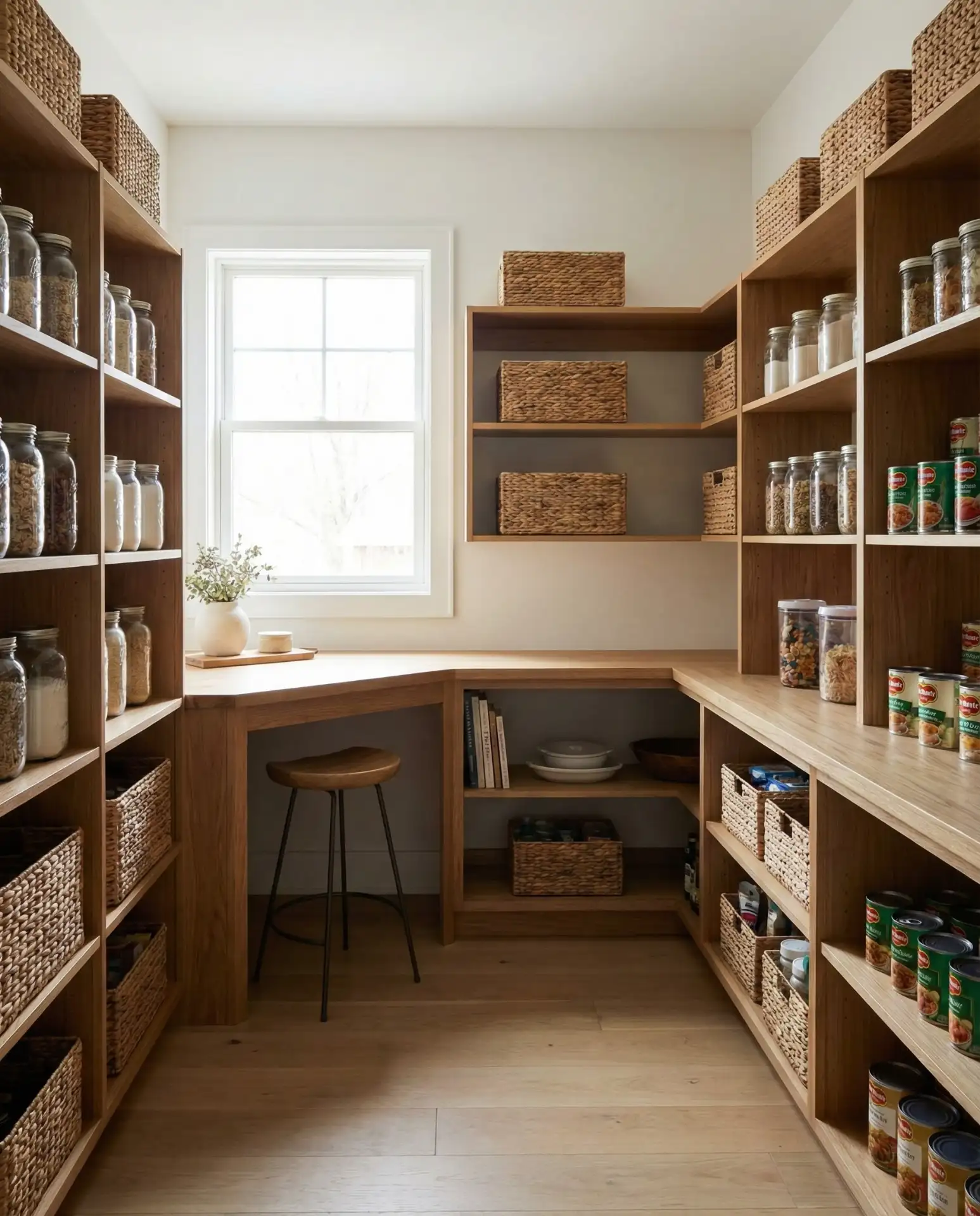
Where it works best: Homes with pantries that measure at least 6×8 feet can comfortably accommodate this design without feeling cramped. The corner where the two sections meet is prime real estate for a small countertop, stepladder storage, or even a compact wine fridge. This configuration has become standard in newer suburban construction where pantries are planned as rooms rather than afterthought closets.
10. Dry Pantry with Climate Control

A dry pantry with climate control takes food storage seriously, maintaining optimal temperature and humidity for flour, sugar, pasta, and other moisture-sensitive ingredients. This typically means a dedicated HVAC vent, dehumidifier, or at minimum a well-insulated space away from exterior walls. It’s especially important in humid climates where pantry staples can spoil or attract pests within weeks. 
In Florida, Louisiana, and other Gulf Coast states, this isn’t luxury—it’s necessity. Humidity above 60% turns flour rancid and invites pantry moths and weevils. Installing a small dehumidifier costs $150-300 but protects thousands of dollars in stored food annually. Avid bakers and families who buy in bulk especially benefit from keeping staples in consistent 65-75°F temperatures with 35-50% humidity.
11. Small Office Pantry for Home Workers
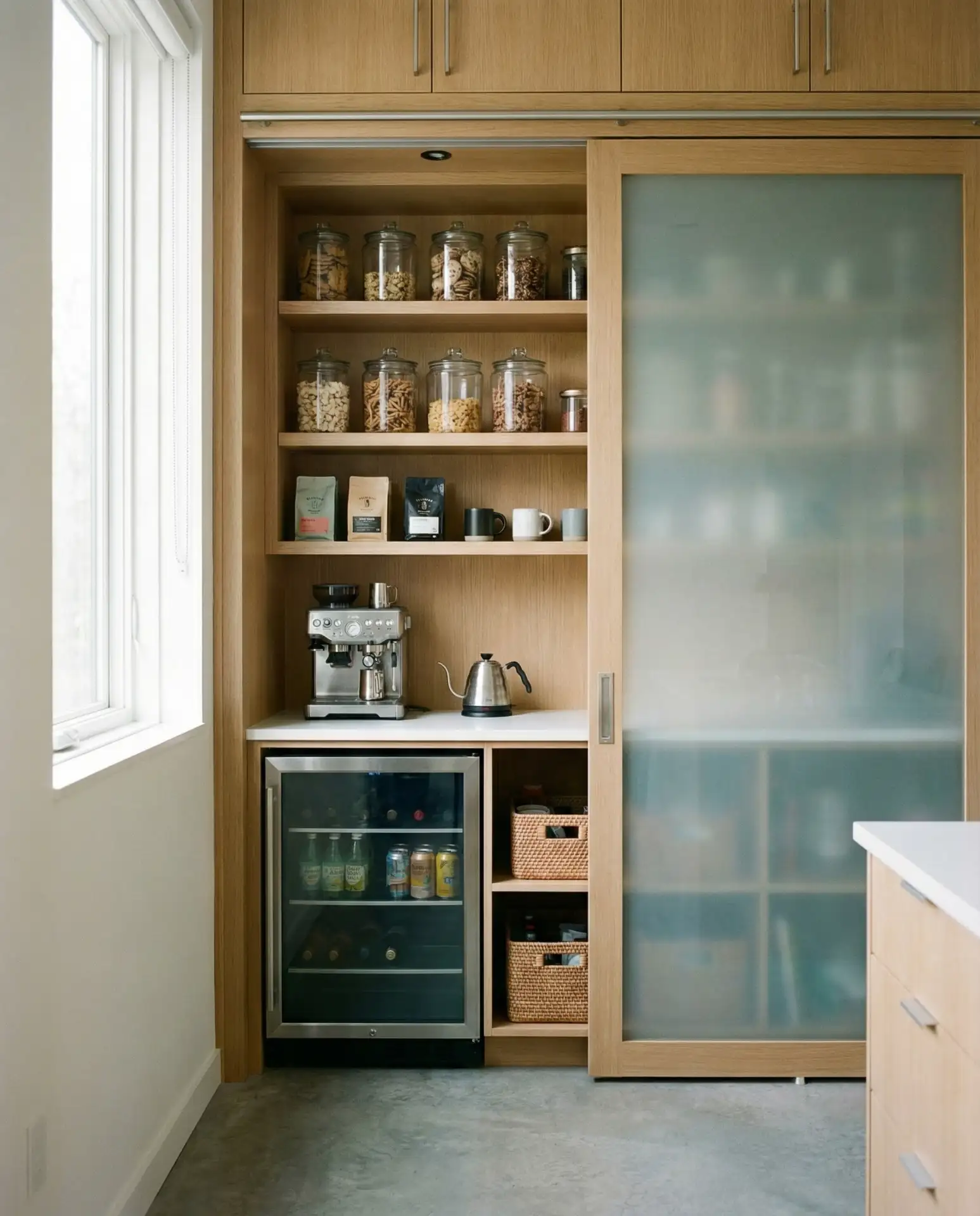
A small office pantry adjacent to your workspace keeps snacks, coffee, and lunch supplies within arm’s reach without repeated kitchen trips. This dedicated mini-pantry can occupy a closet, built-in cabinet, or even a tall bookshelf fitted with baskets. The concept has exploded since remote work became standard, with professionals realizing that proximity to food impacts both productivity and the cleanliness of their main home kitchen. 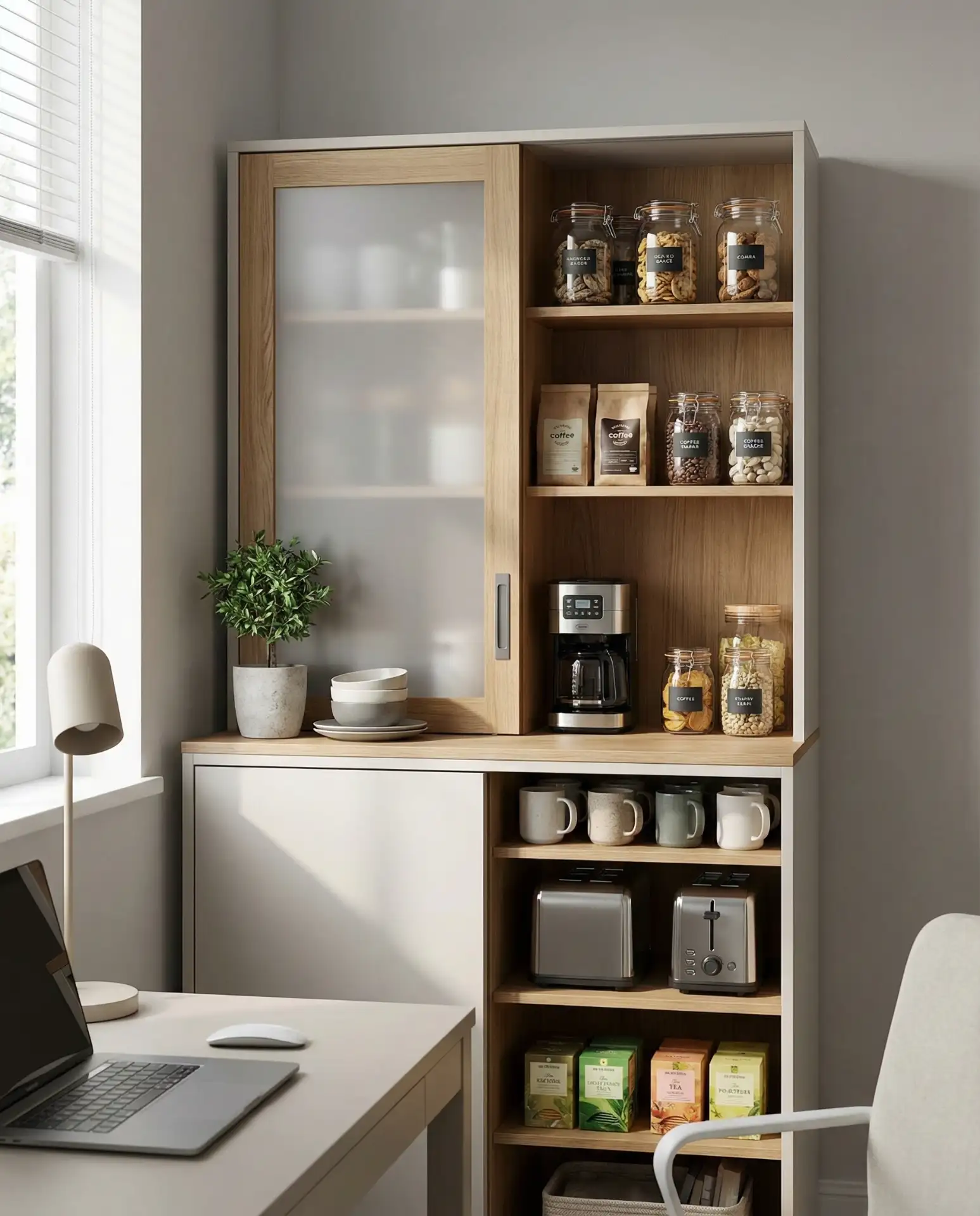
Real homeowner behavior shows that when snacks require leaving the office, people either snack less (good) or interrupt their workflow more (bad). Having granola bars, nuts, crackers, and a coffee setup in your office space maintains momentum during video calls and deep work sessions. Budget-conscious tip: repurpose a wardrobe armoire or entertainment center—these are often deeper than standard cabinets and can house a mini-fridge on the bottom shelf.
12. Pantry Door with Spice Rack Organization

Installing a spice rack system on the back of your pantry door transforms wasted vertical space into high-visibility storage. This works in any pantry size, from small closet configurations to expansive walk-ins. Shallow wire racks or acrylic shelves mounted to the door keep bottles visible and accessible, solving the common problem of duplicate spice buying because you can’t see what you already own. 
The common mistake here is overloading the door with too much weight, which wears out hinges prematurely. Stick to lightweight items—spices, packets, small containers—and avoid canned goods or heavy bottles. Over-door racks cost $20-80 depending on size and quality. This solution is particularly popular in apartment kitchens and older homes where original cabinet design didn’t account for modern spice collections that easily exceed 30-40 bottles.
13. Pantry with Chalkboard Wall for Inventory

A chalkboard-painted wall inside your pantry creates an old-fashioned inventory system that actually works. Write shopping lists, meal plans, or simply note when you’re running low on essentials. This analog approach has surprising staying power in our digital age—it’s visible every time you enter the space, doesn’t require devices or apps, and family members can contribute without passwords or sharing calendars. 
Expert tip: Use magnetic chalkboard paint so you can hang clips for recipes or coupons directly on the surface. A quart of chalkboard paint costs $15-25 and covers approximately 50 square feet—enough for a standard pantry wall. This feature resonates especially with busy families who need shared communication space and works beautifully in farmhouse, transitional, and eclectic home styles where functional charm takes precedence over sleek minimalism.
14. Ideas for Walk-In Pantry with Island Storage
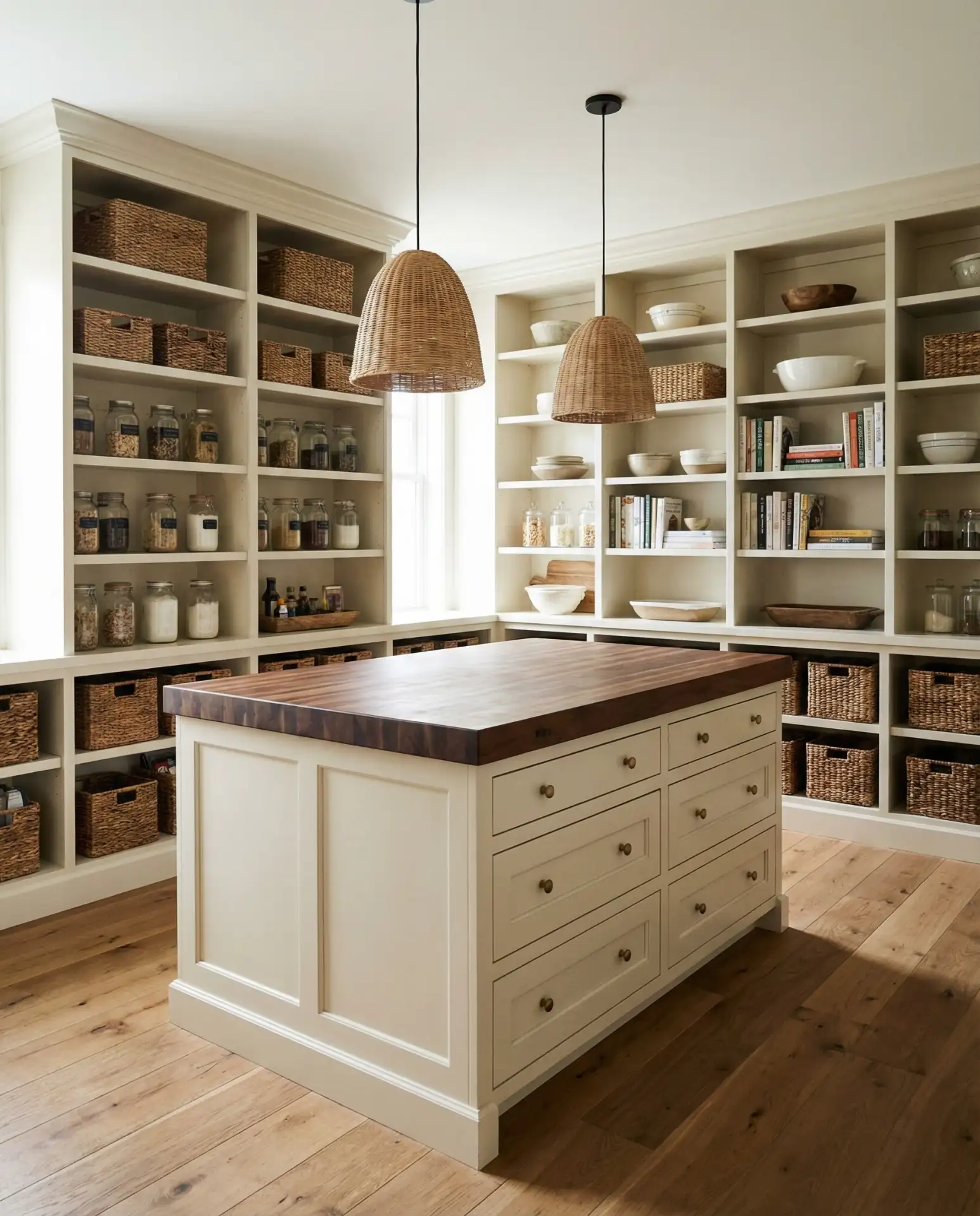
Among the best ideas for walk-in pantries is adding a central island that provides both workspace and storage. This works when you have at least 8×8 feet to play with, creating a boutique grocery store vibe where you can circle the space comfortably. The island typically houses drawers for utensils, linens, or small appliances, with the countertop serving as a staging area for meal prep or package unloading. 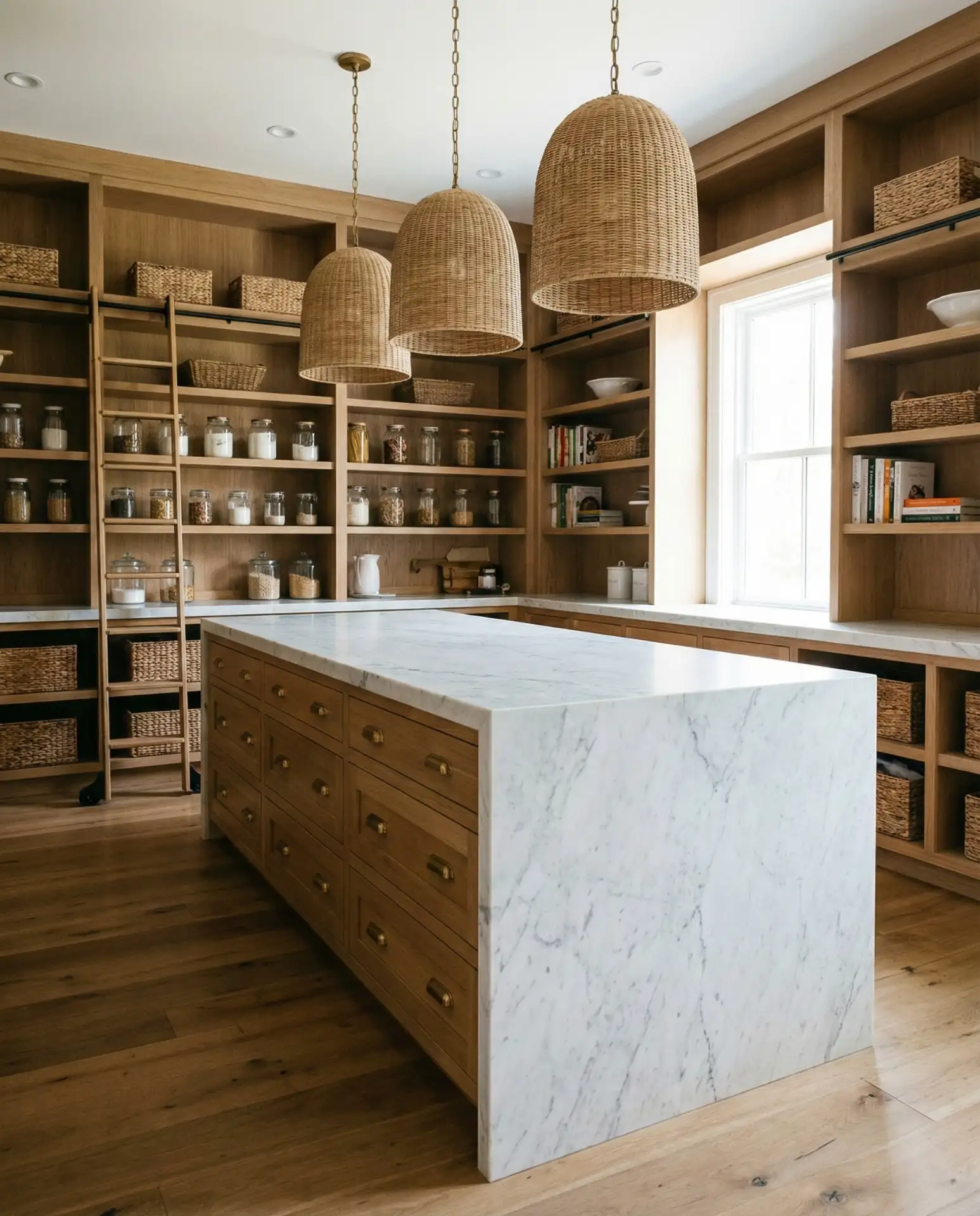
This configuration works best in homes where the pantry functions as more than storage—it’s a second prep kitchen. Leave at least 42 inches of clearance around all sides of the island for comfortable movement. Many homeowners add a small sink to the island for rinsing produce or filling pots without returning to the main kitchen. The budget for a custom island runs $1,500-4,000 depending on materials and complexity.
15. Bloxburg-Inspired Aesthetic Pantry
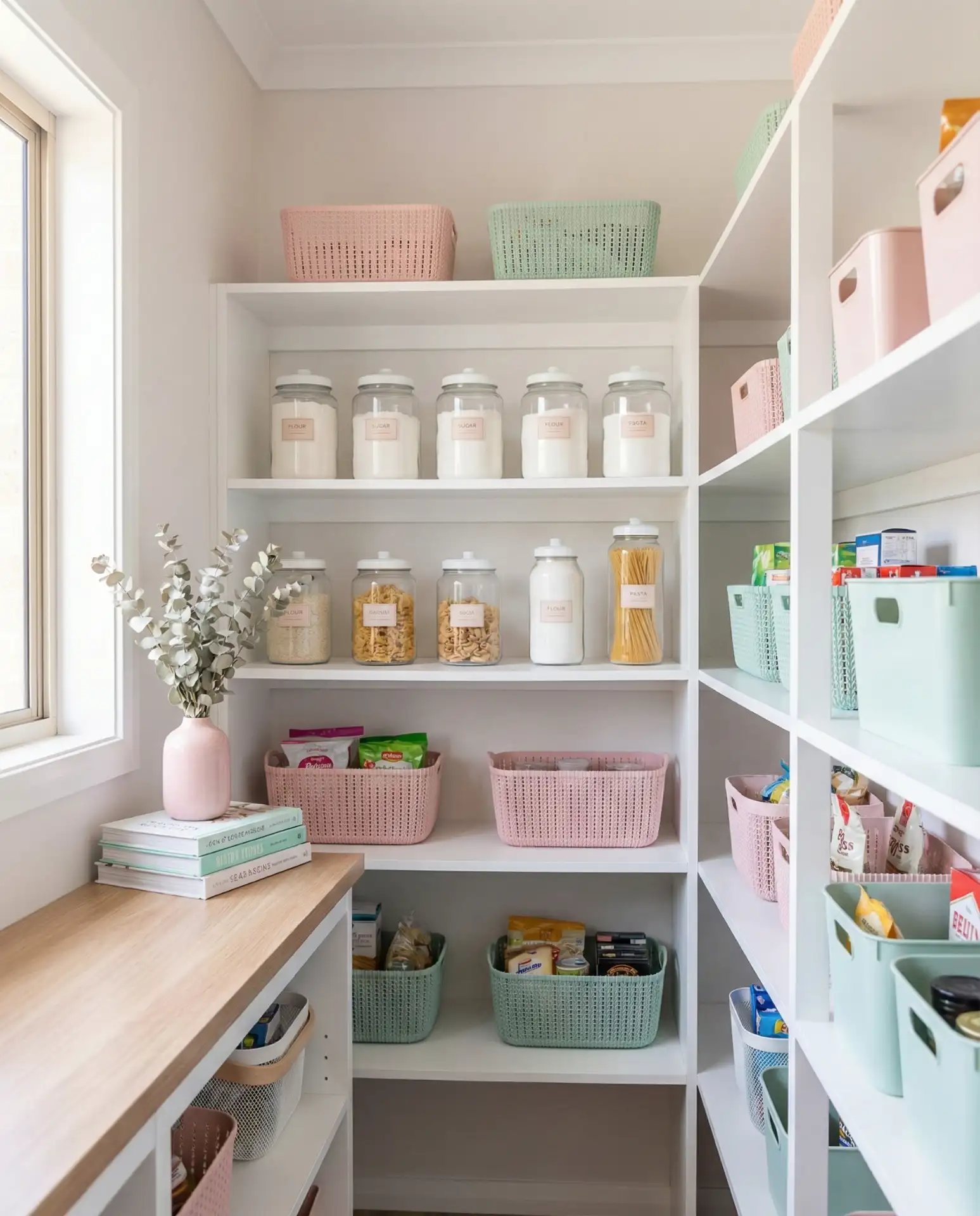
The Bloxburg aesthetic—clean lines, matching containers, soft pastels, and Instagram-worthy organization—has jumped from the gaming world to real home design. This style emphasizes visual harmony over pure function, with color-coordinated storage, uniform labels, and decorative elements like plants or artwork. It appeals especially to younger homeowners and renters who see their pantry as a reflection of personal style rather than purely utilitarian space. 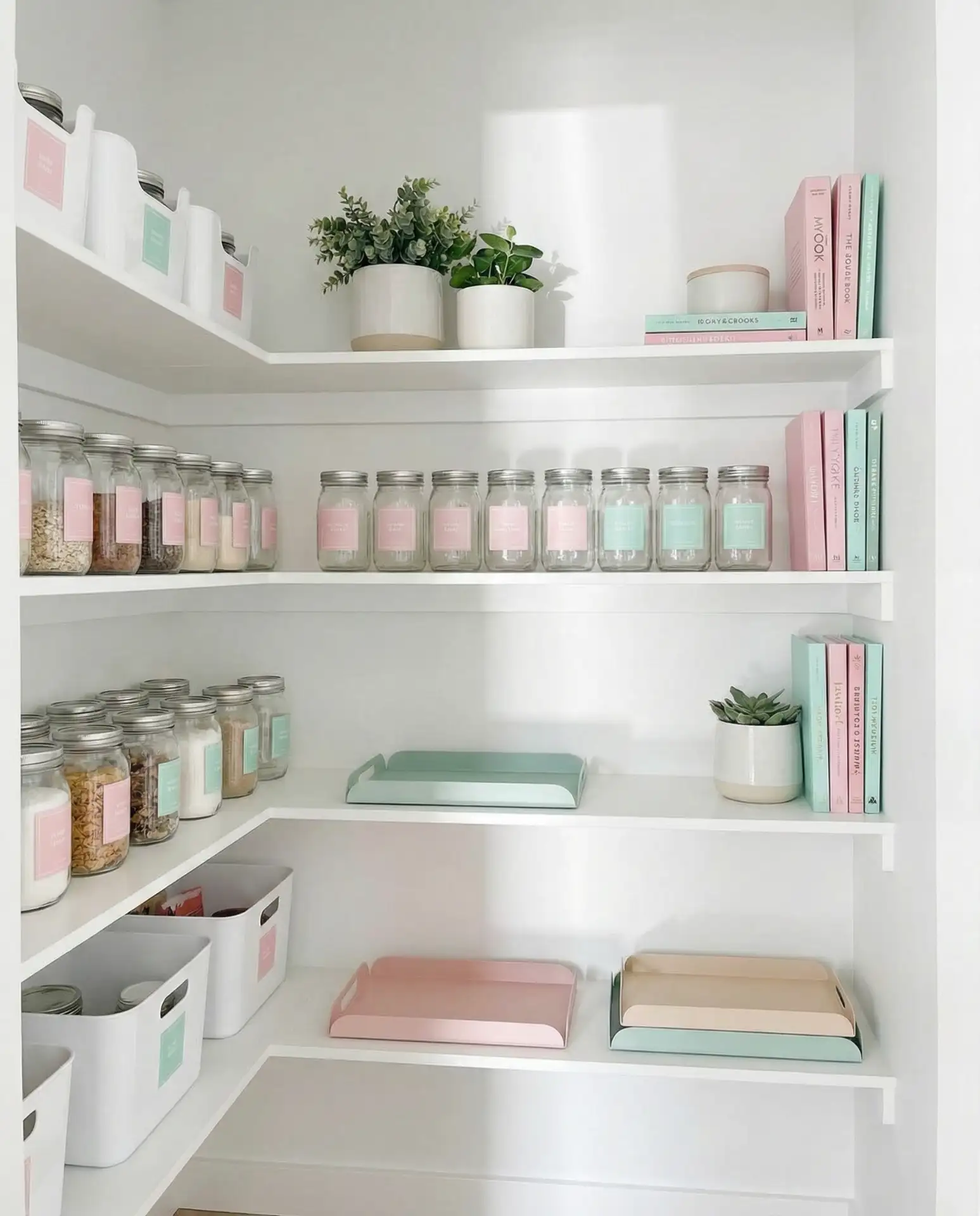
A Gen-Z client recently told me she designed her entire pantry around dusky rose and sage green containers because “it makes me actually want to cook.” While function matters, there’s real psychological value in creating spaces that feel good to use. The aesthetic pantry movement has driven sales of matching storage systems and label makers through the roof. Budget $400-800 to achieve this look comprehensively, but start with one category—baking supplies or snacks—to test the commitment before going all-in.
16. Ideas for Small Kitchens with Vertical Pull-Outs
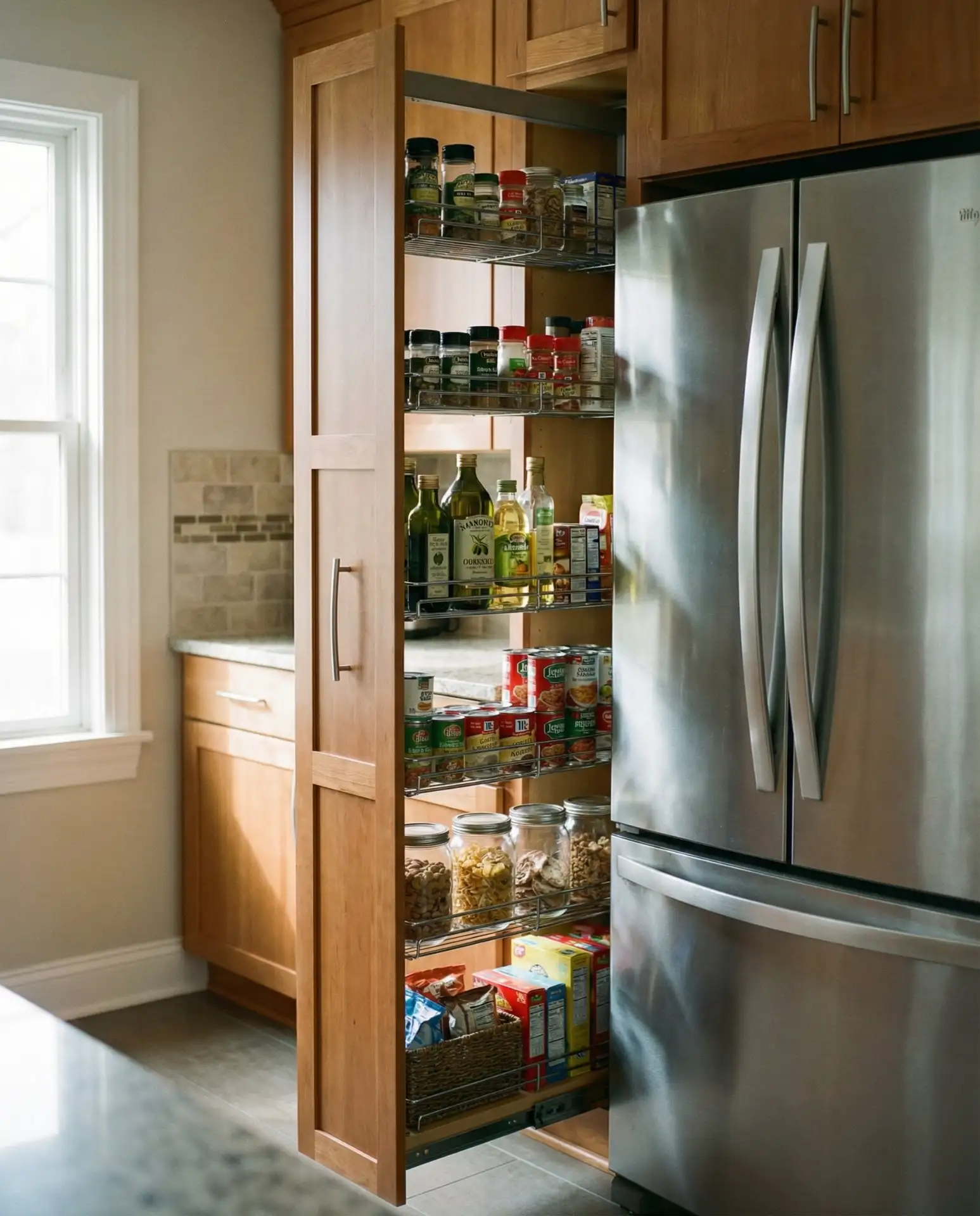
One of the smartest ideas for small kitchens is installing vertical pull-out pantries in narrow gaps beside refrigerators or ovens. These slim cabinets, typically 6-12 inches wide, glide out to reveal multiple shelves of storage in spaces you’d otherwise lose. They’re perfect for oils, vinegars, spices, or canned goods—items that stack well vertically and don’t require much depth. 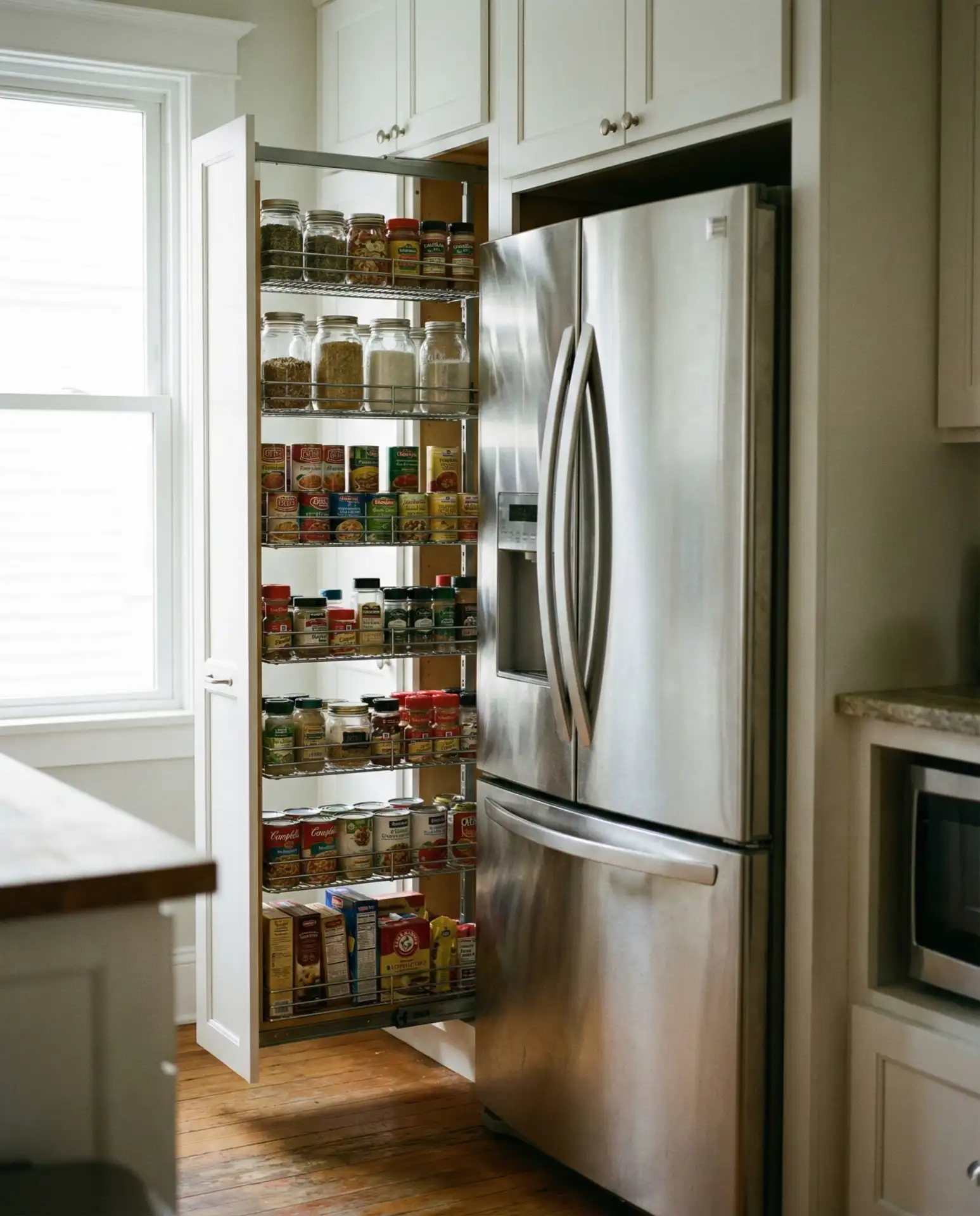
This solution thrives in galley kitchens, small condos, and renovated older homes where original layouts didn’t prioritize storage. The hardware quality matters enormously—cheap slides will jam or fail within months, while good soft-close mechanisms (budget $100-200 for DIY installation, $400-800 installed) will operate smoothly for decades. These vertical units have become standard in IKEA kitchen systems and custom cabinetry alike for good reason.
17. Indian Kitchen Pantry with Spice Storage
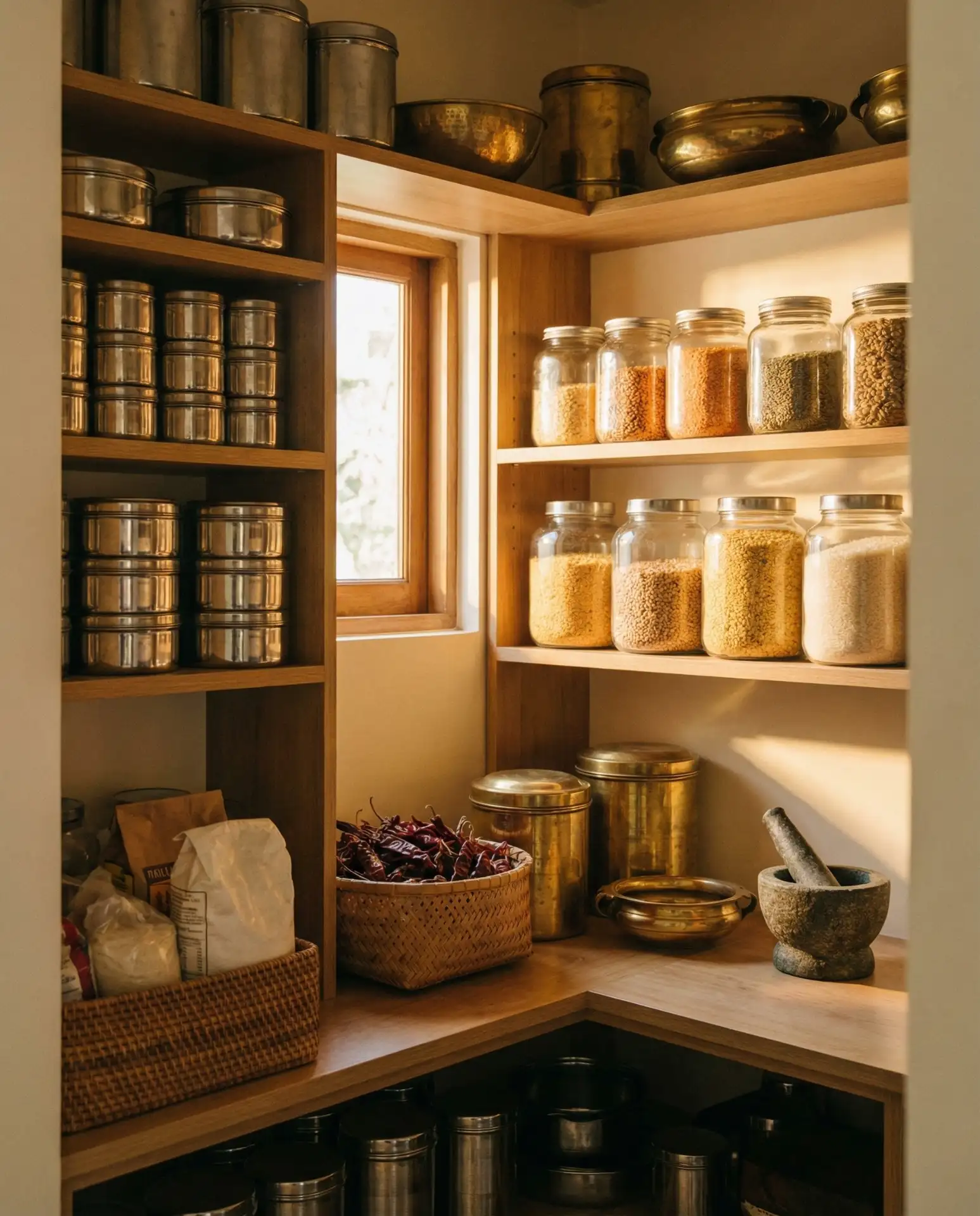
An Indian kitchen pantry addresses the unique storage needs of South Asian cooking—dozens of whole and ground spices, lentils, flours, rice varieties, and specialty ingredients. This design typically includes masala dabbas (spice boxes), clear canisters for dals and grains, and dedicated sections for pickles and chutneys. The organization system must handle both daily essentials and ingredients used less frequently but in large quantities. 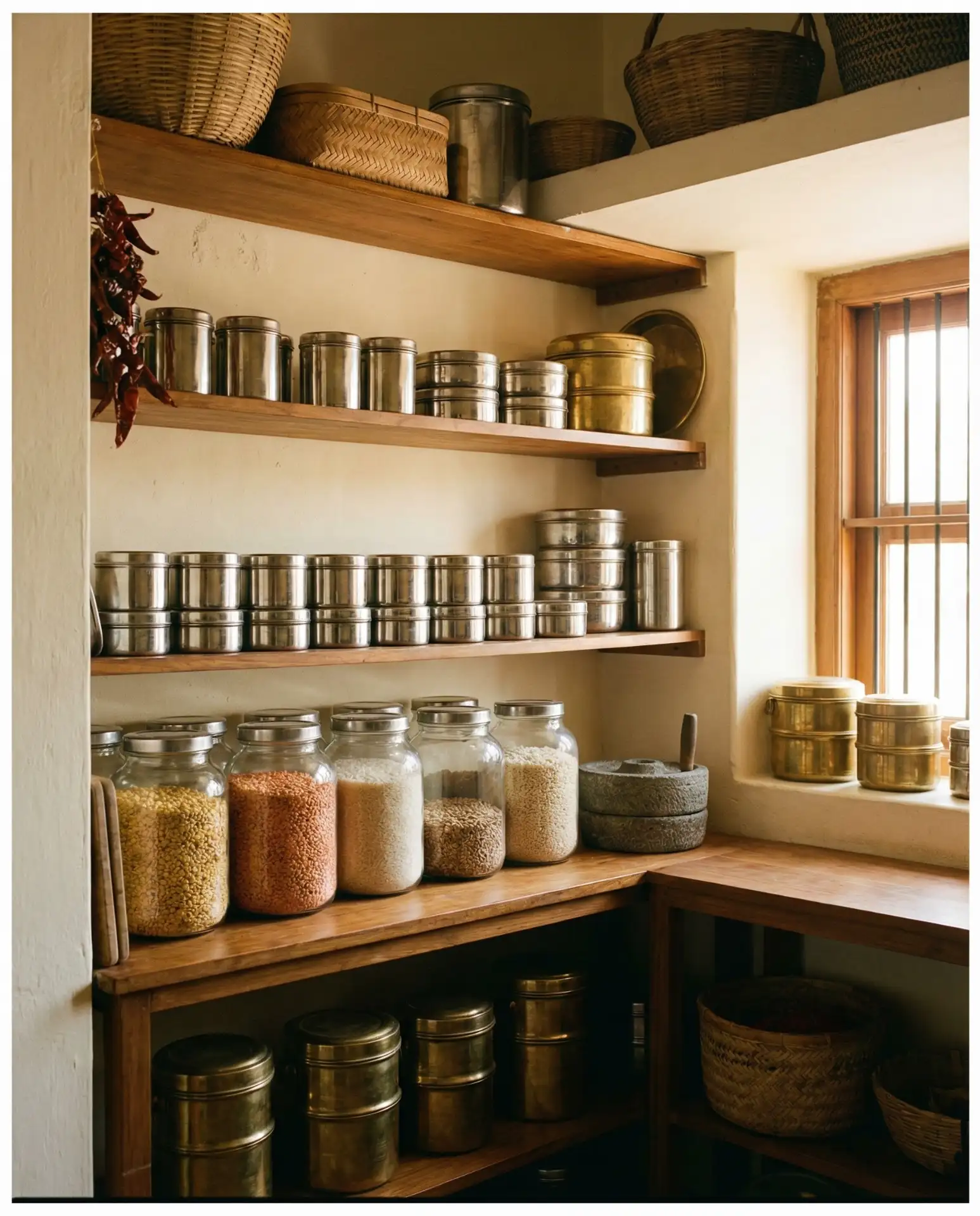
In areas with large South Asian communities—Edison NJ, Fremont CA, suburban Chicago—pantry designers have learned to accommodate 40+ spice varieties as standard. Common mistakes include storing spices above the stove (heat degrades flavor) or in clear glass (light damages quality). Airtight steel containers in a cool, dark pantry preserve flavor dramatically longer. Many families dedicate entire drawers to spice storage, organizing by frequency of use rather than alphabetically.
18. Small Corner Pantry with Diagonal Shelving
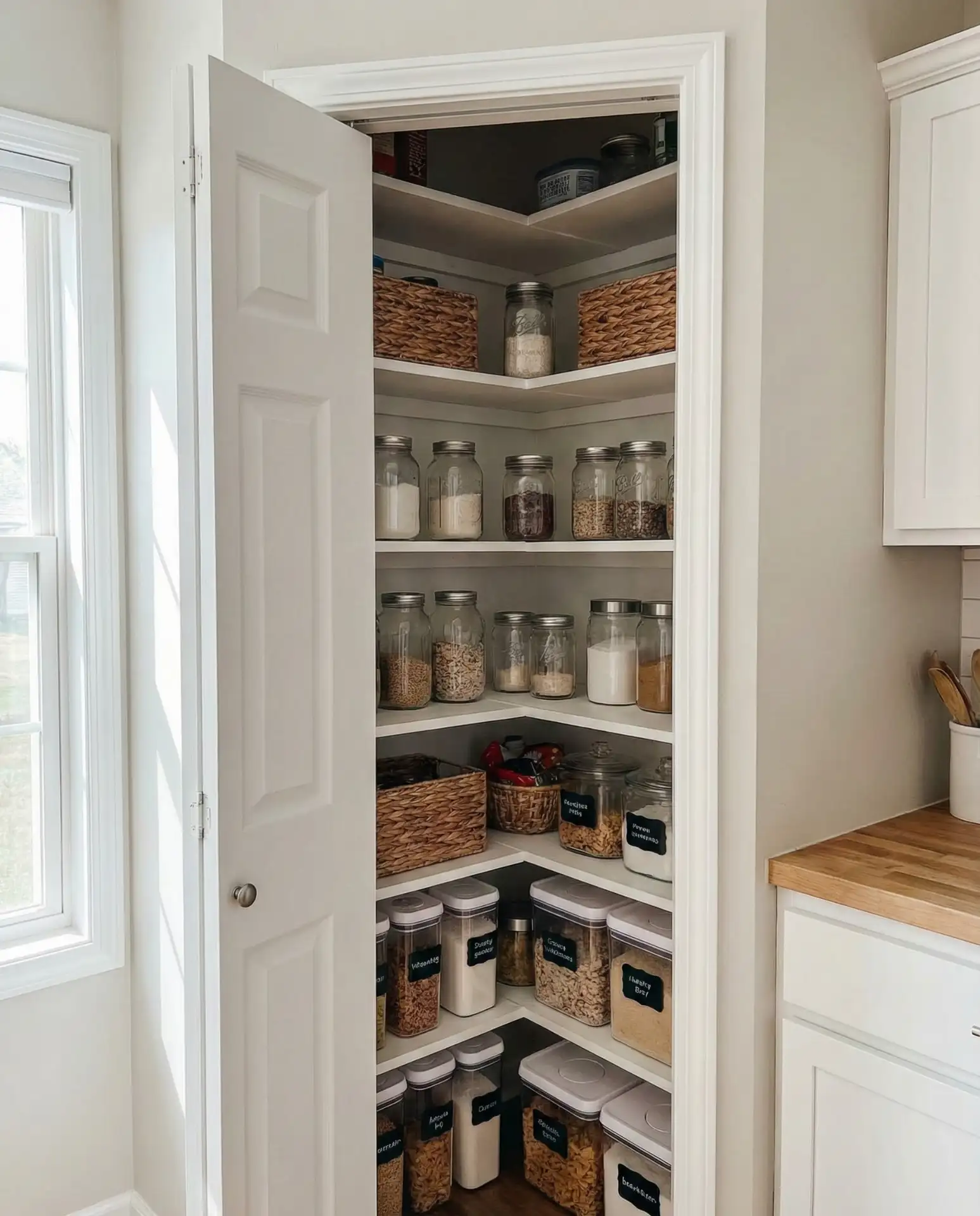
A small corner pantry with diagonal shelving takes advantage of angled walls that would otherwise be difficult to use efficiently. The shelves sit at 45-degree angles to the corner, maximizing depth while maintaining accessibility. This design works particularly well in kitchens where two walls meet at angles other than 90 degrees, or in renovated spaces where original architecture created awkward corners. 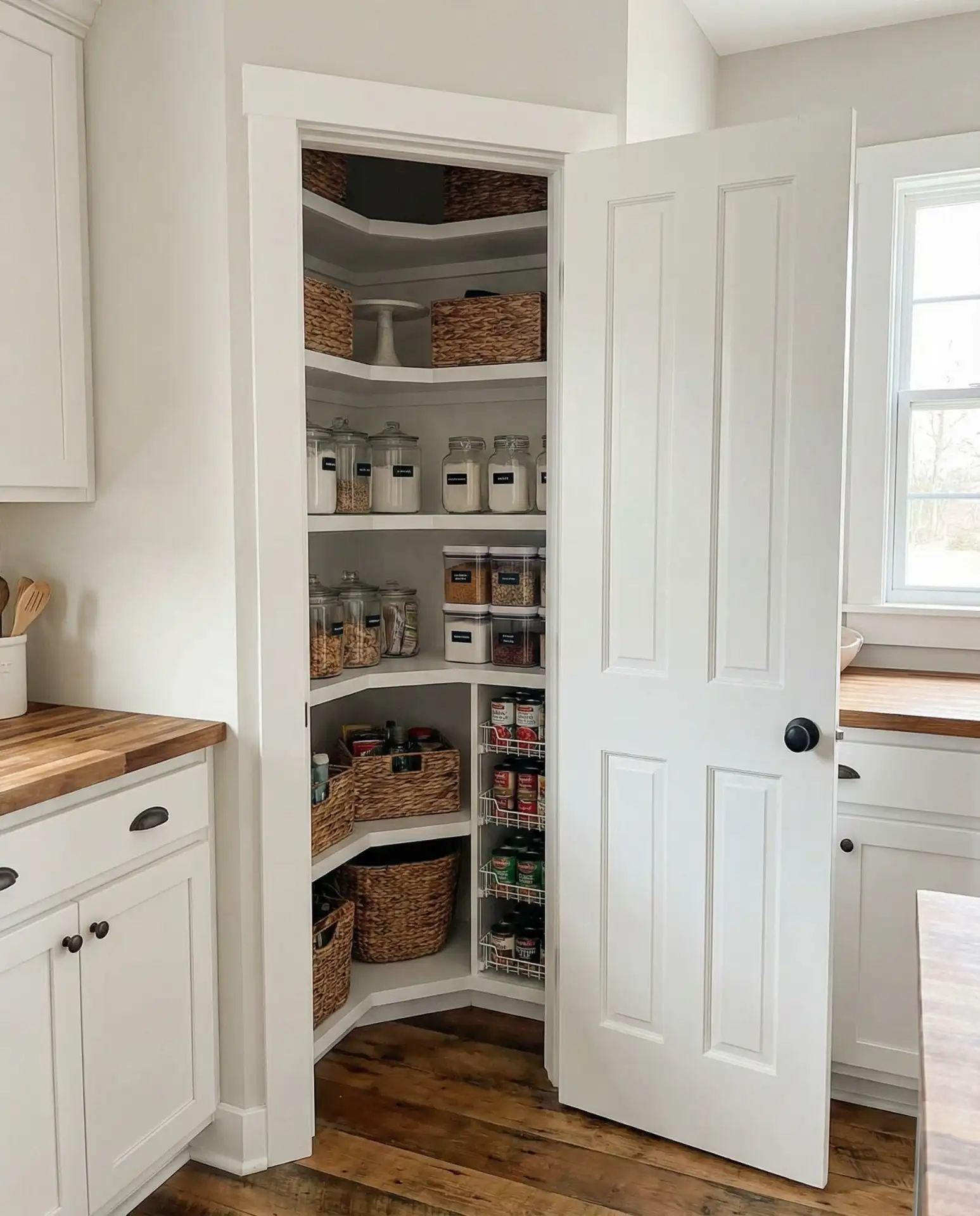
Where this works best: Victorian homes, craftsman bungalows, and other older properties where rooms don’t follow modern rectangular layouts. The angled approach prevents the dreaded “corner of shame” where items go to die unreachable. Custom diagonal shelving runs $500-1,200 installed but makes previously unusable space highly functional. It’s also becoming popular in new construction where designers intentionally create pantry corners for visual interest.
19. Kitchen Walk-Through Pantry Design

A kitchen walk-through pantry serves as a passage between spaces—typically from garage to kitchen or mudroom to cooking area. This design maximizes real estate by making storage functional circulation space rather than a dead-end room. Shelving lines both walls, and the path through remains wide enough (minimum 36 inches) for comfortable movement while carrying groceries or taking out trash. 
This configuration has become incredibly popular in modern suburban homes where attached garages make bulk shopping easy. Families unload directly into the pantry, then access the kitchen without dragging bags through living spaces. The biggest challenge is maintaining clear floor space—resist the urge to stack items on the floor or narrow the walkway. Proper planning ensures both storage capacity and smooth traffic flow.
20. Pantry with Integrated Appliance Garage

Integrating an appliance garage into your pantry keeps small electronics like toasters, blenders, and coffee makers off kitchen counters while remaining easily accessible. The “garage” is typically a dedicated cabinet section with a roll-up door or lift-up panel, with outlets inside so appliances stay plugged in and ready to use. This keeps your kitchen looking clean and uncluttered while maintaining convenience. 
Budget-wise, adding outlets to a pantry runs $150-300 per circuit if the electrical panel is nearby. The roll-up door mechanisms cost $80-200. This setup prevents the counter clutter that makes kitchens feel cramped and chaotic. In Texas and other states where kitchen size and storage are selling points, appliance garages have become expected features in mid-range and luxury homes. Some homeowners dedicate entire pantry sections to appliances, creating mini prep stations that can be closed off when not in use.
21. Farmhouse Pantry with Barn Door Entry
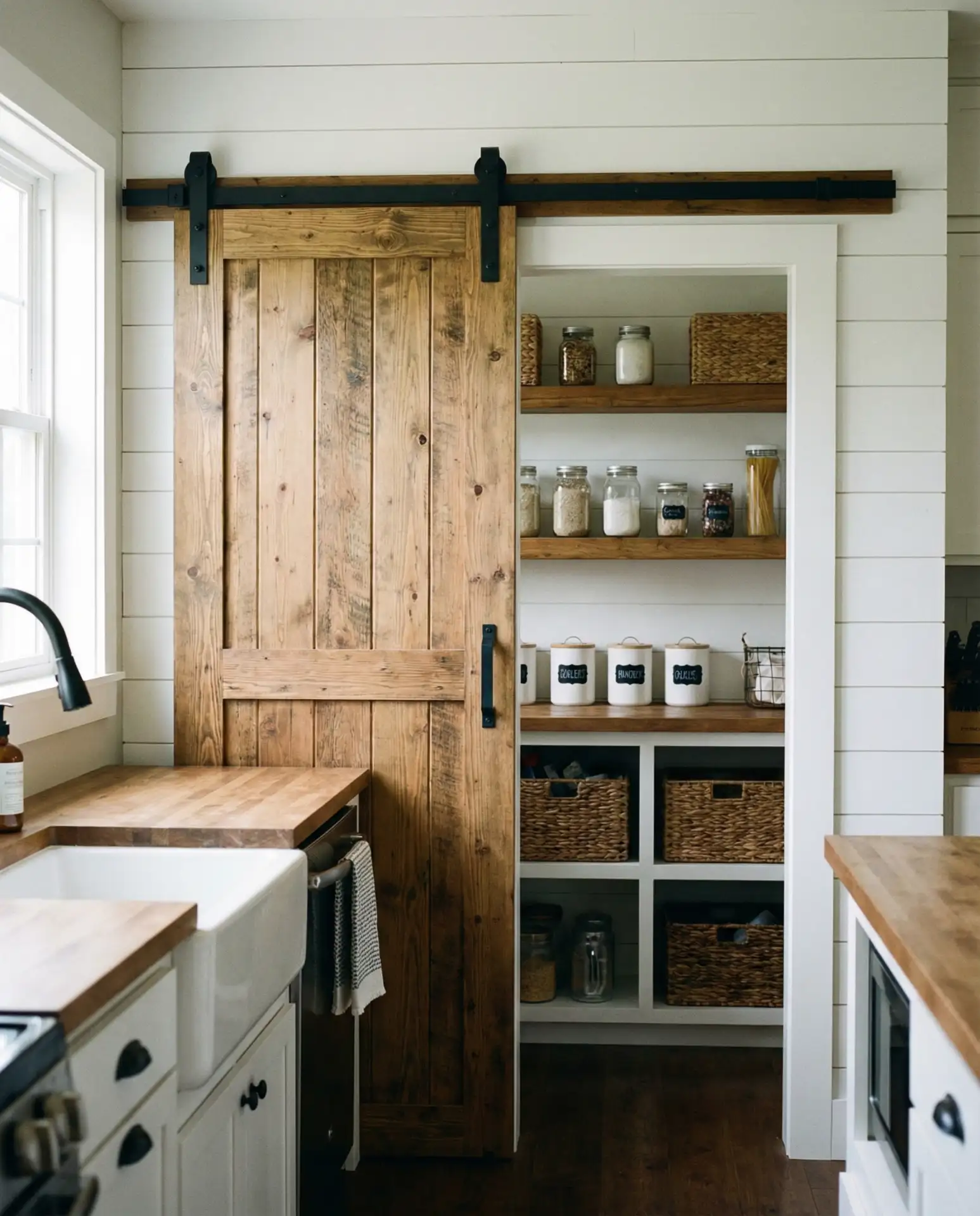
A sliding barn door entry adds rustic charm to any pantry while solving space constraints that make traditional swing doors impractical. The door slides along an exposed rail, requiring zero clearance arc and adding architectural interest to your kitchen. This style works beautifully in farmhouse, industrial, and transitional homes where you want storage to make a visual statement rather than disappear behind plain doors. 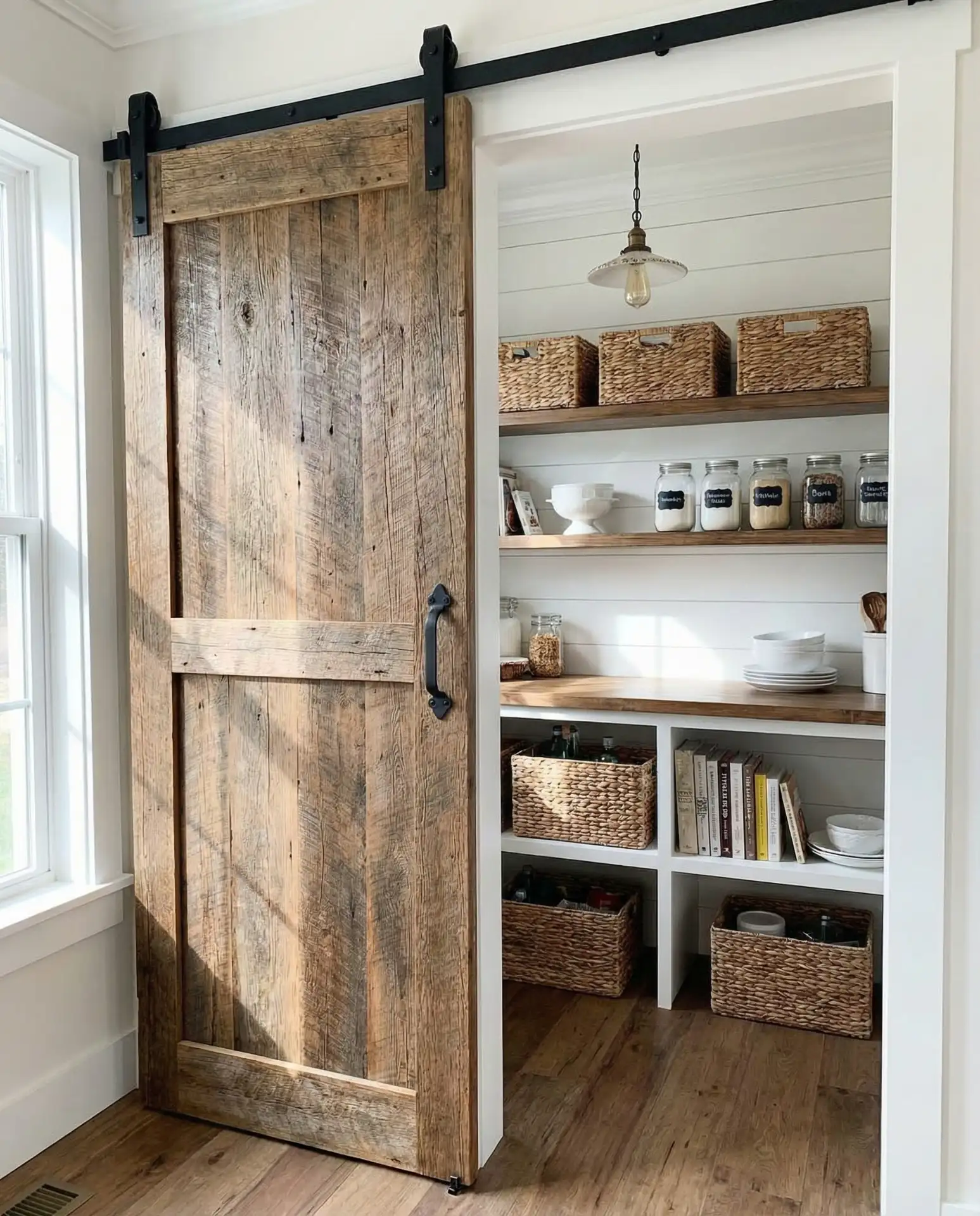
The practical reality: barn door hardware costs $200-500, and the door itself runs $300-800 depending on materials and finish. While they look stunning, barn doors don’t seal as tightly as traditional doors—sound and light transfer more easily. They work best when the pantry isn’t adjacent to bedrooms or quiet spaces. Extremely popular in renovated homes throughout the Midwest and South where farmhouse style dominates Pinterest searches and HGTV lineups.
22. Minimalist Pantry with Hidden Storage

A minimalist pantry with hidden storage embraces “out of sight, out of mind” through sleek cabinet fronts that conceal shelving, drawers, and organizational systems. Every surface appears clean and uncluttered, with push-to-open mechanisms eliminating visible hardware. This approach suits modern and contemporary homes where visual simplicity takes priority, even if achieving that simplicity requires complex organization behind closed doors. 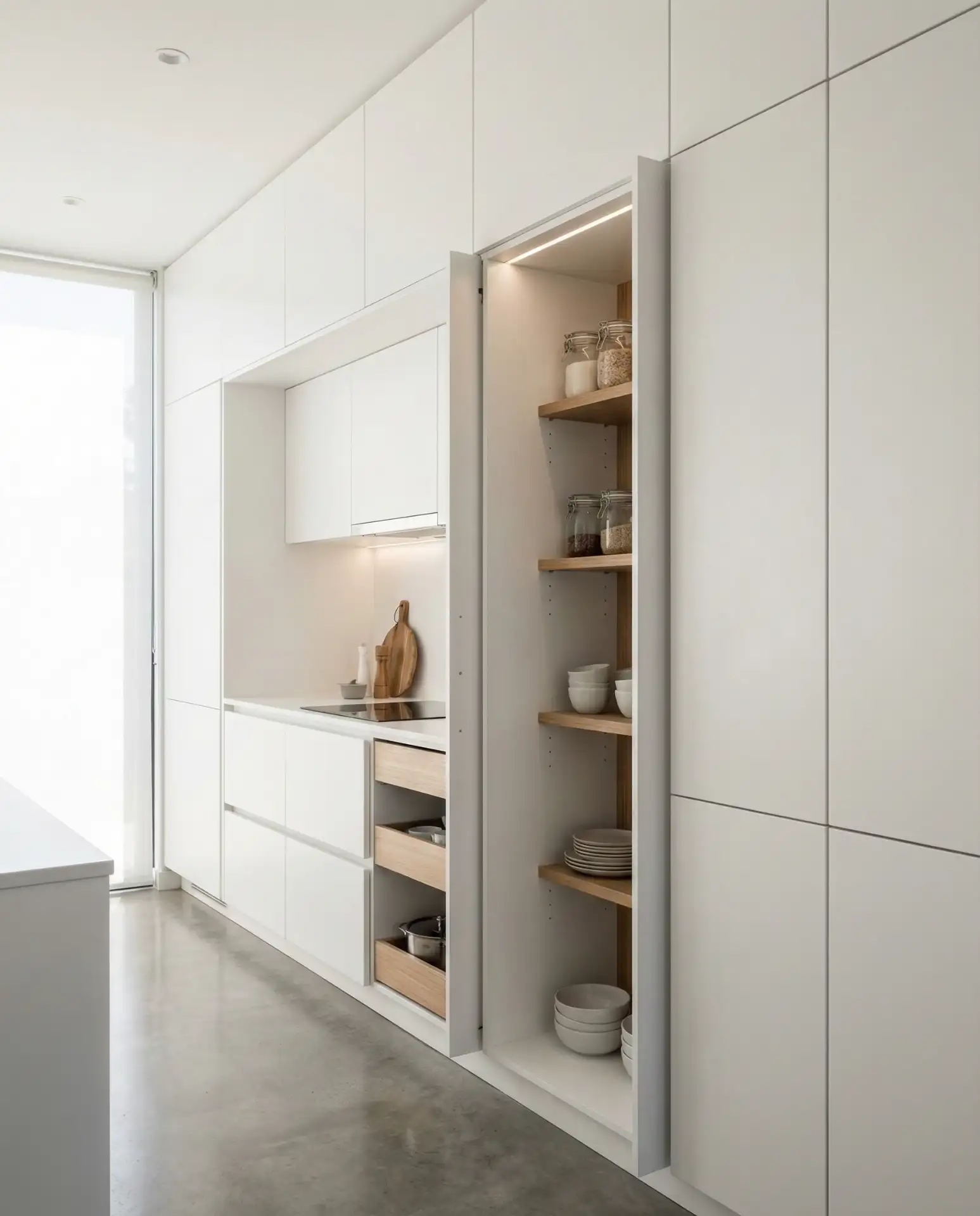
Expert commentary: While beautiful, this style demands rigorous organization—once doors close, you lose visual reminders of what you have. It works best for people who maintain detailed mental inventories or use phone apps to track pantry contents. The push-to-open hardware ($30-60 per door) needs professional installation to function properly. This design has gained traction in urban lofts, modern new builds, and homes where clean Scandinavian or Japanese-inspired minimalism guides all design choices.
23. Pantry with Wine and Beverage Station
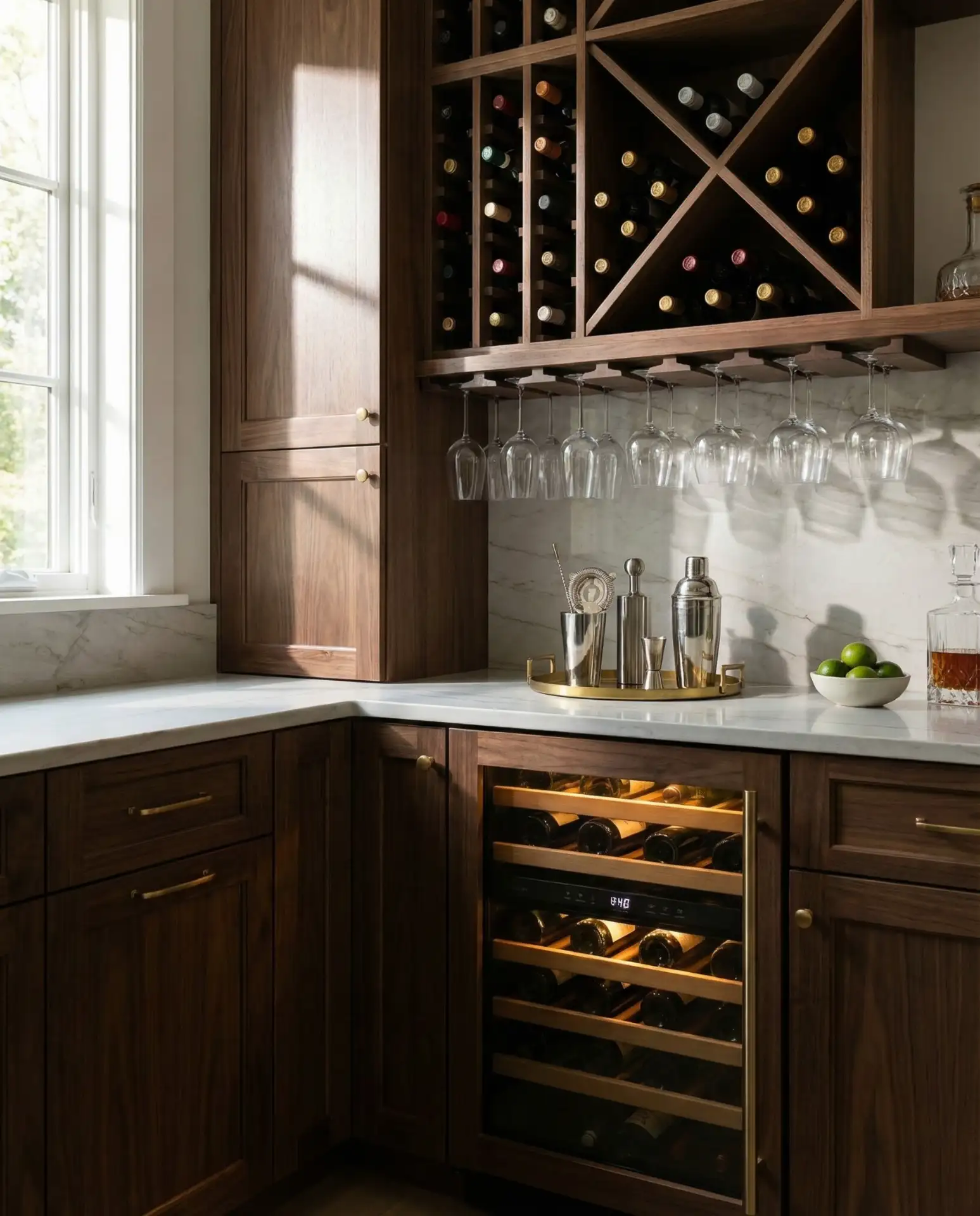
Dedicating a section of your pantry to wine storage and a beverage station creates an entertaining hub separate from food storage. This typically includes wine racks, stemware storage, a small wine fridge, and counter space for mixing drinks or opening bottles. In large pantries, this becomes a mini bar that keeps entertaining supplies organized and prevents cluttering main kitchen areas during parties. 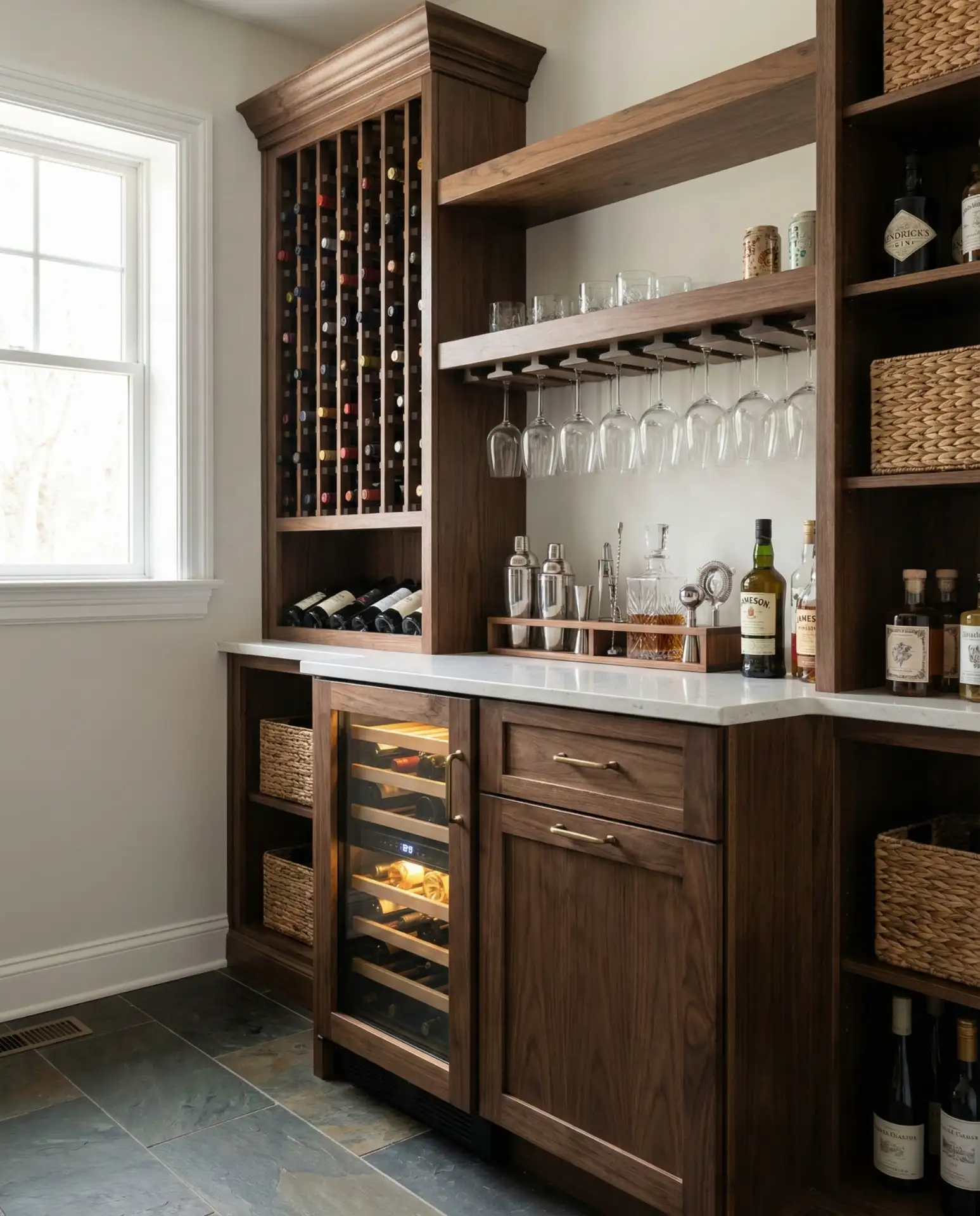
A wine fridge (18-24 bottle capacity) costs $400-1,200 and requires dedicated electrical. The benefit is maintaining proper temperature and humidity for bottles you’re aging beyond a few weeks. This setup particularly appeals to West Coast wine enthusiasts and East Coast homeowners in walkable neighborhoods where entertaining is frequent. The beverage station keeps bar supplies off kitchen counters and prevents guests from rummaging through cabinets during gatherings.
Conclusion
These pantry design ideas for 2026 prove that storage spaces have evolved far beyond simple shelving. Whether you’re working with a small closet or a spacious walk-in, there’s a solution that fits your space, style, and budget. The key is identifying what matters most—organization, aesthetics, convenience, or a combination of all three. Which design speaks to your needs? Drop a comment below and let us know what you’re planning for your pantry this year.