Staircases have become one of the most searched home elements on Pinterest in 2026, and it’s easy to see why. What was once a purely functional feature is now a design centerpiece—whether you’re updating a narrow entryway, opening up a closed-off stairwell, or choosing between floating treads and classic wood runners. American homeowners are reimagining everything from Victorian charm to sleek modern lines, and they’re looking for ideas that fit real homes with real budgets. In this guide, you’ll find fresh staircase ideas that balance style, safety, and smart use of space, from cozy cottage vibes to dramatic spiral designs.
1. Open Riser Staircases for Light-Filled Homes
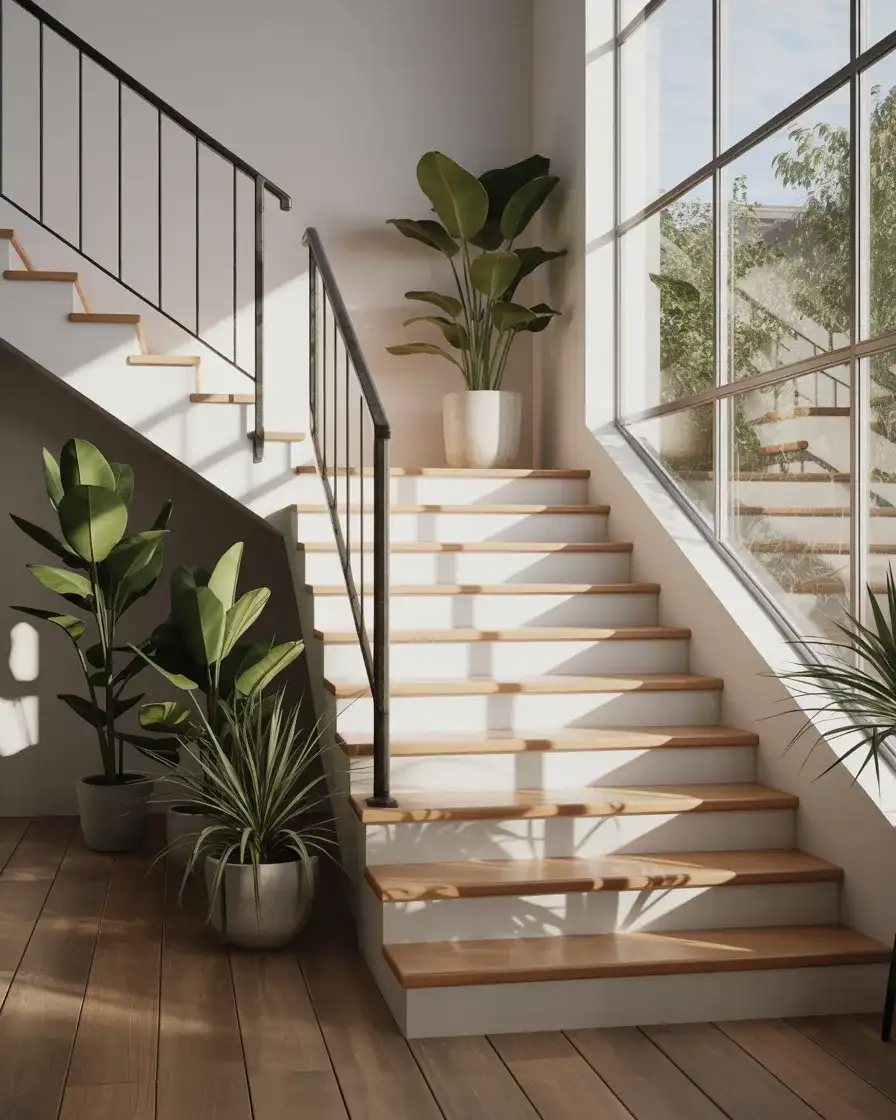
An open riser staircase eliminates the vertical boards between steps, letting light pass through from one floor to the next. It’s a popular choice in narrow homes where every bit of natural light counts, and it visually expands small entryways. The style works beautifully with wood treads and metal railings, creating a clean, airy aesthetic that feels modern without being cold. You’ll often see this design in split-level homes where the staircase sits near a window.
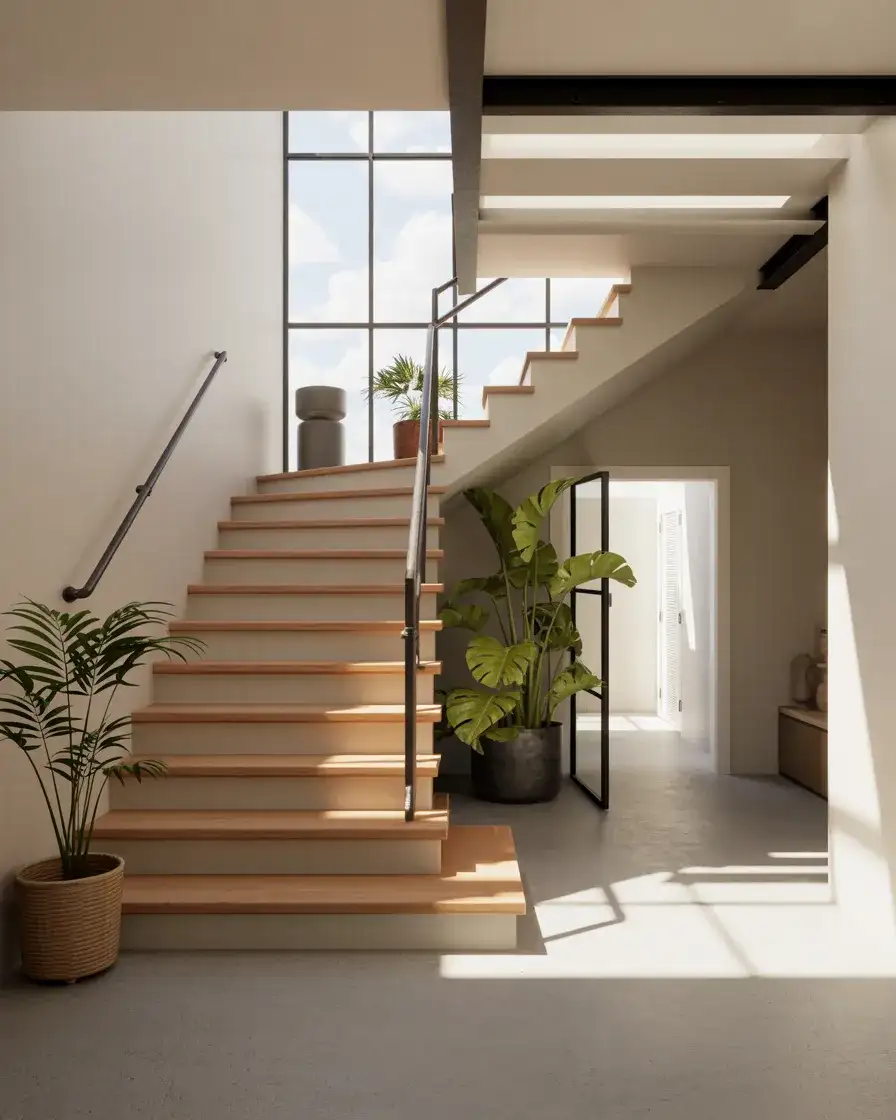
One common mistake is choosing treads that are too thin—they can flex underfoot and feel unsafe. Go for treads at least 1.5 inches thick, especially if you have kids or pets. Another pitfall is skipping the handrail on one side to maintain the “floating” look, which violates most building codes. A slim, powder-coated steel rail keeps the design light while meeting safety standards. If you’re in a two-story home, this style can save thousands compared to a fully enclosed build.
2. Enclosed Staircases with Wainscoting Detail
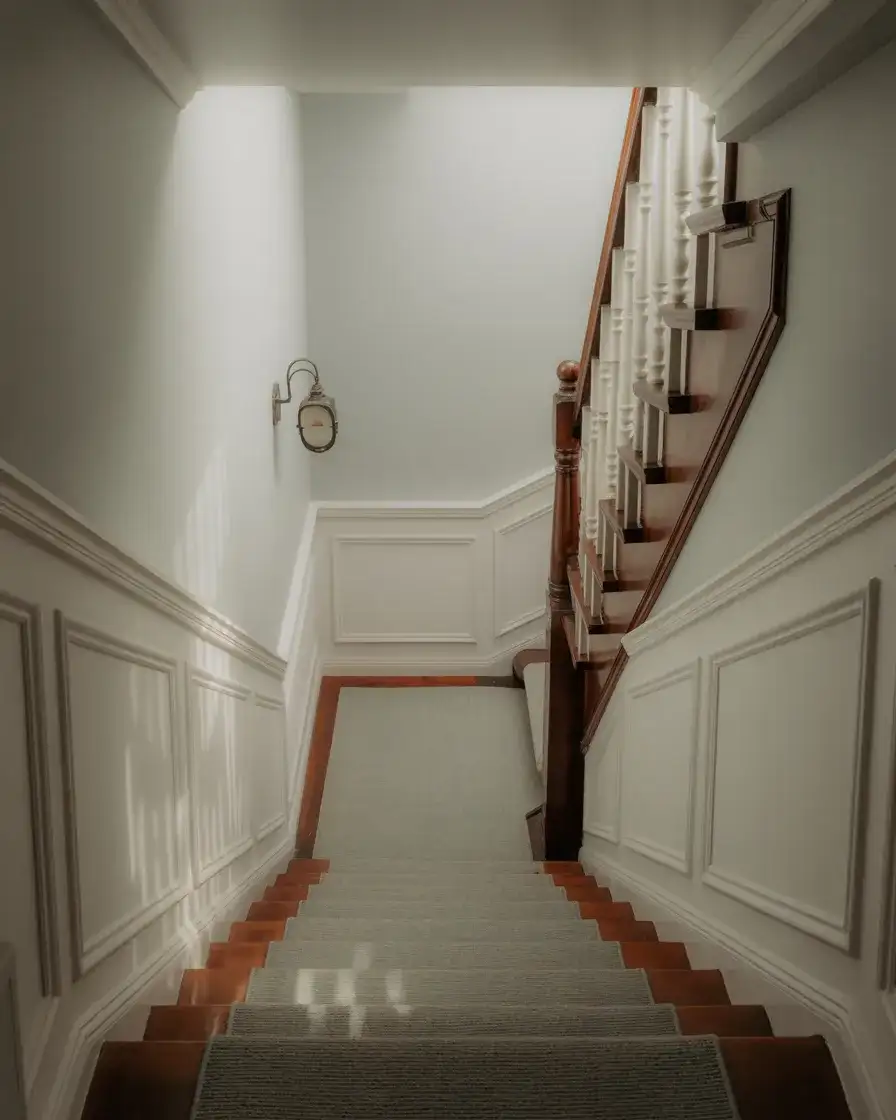
An enclosed staircase with wainscoting brings a sense of tradition and warmth, especially in older homes or Victorian restorations. The paneling runs along the lower half of the stairwell walls, often painted in soft whites or sage greens, while the upper walls remain neutral or papered. This setup works particularly well in narrow enclosed hallways where full wallpaper might feel too busy. It’s a classic East Coast look that’s making a comeback in suburban remodels.
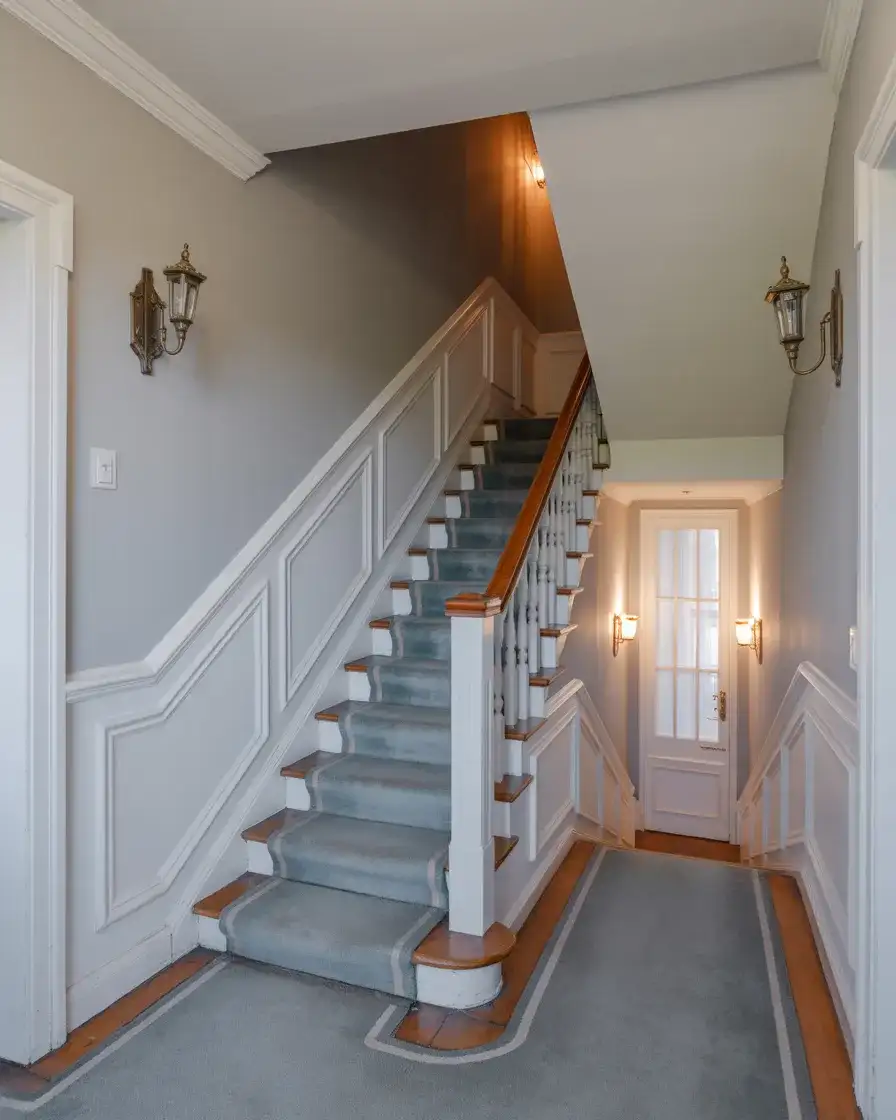
This style works best in homes built before 1960, where the stairwell was already designed to be fully walled in. The wainscoting adds character without requiring structural changes, and it hides scuffs and dings better than flat drywall. If you’re installing it yourself, aim for a height of 32 to 36 inches—any taller and it can visually shorten the space. Pair it with a low-pile runner to keep the traditional feel without making the stairs feel heavy.
3. Carpeted Runners on Dark Wood Treads
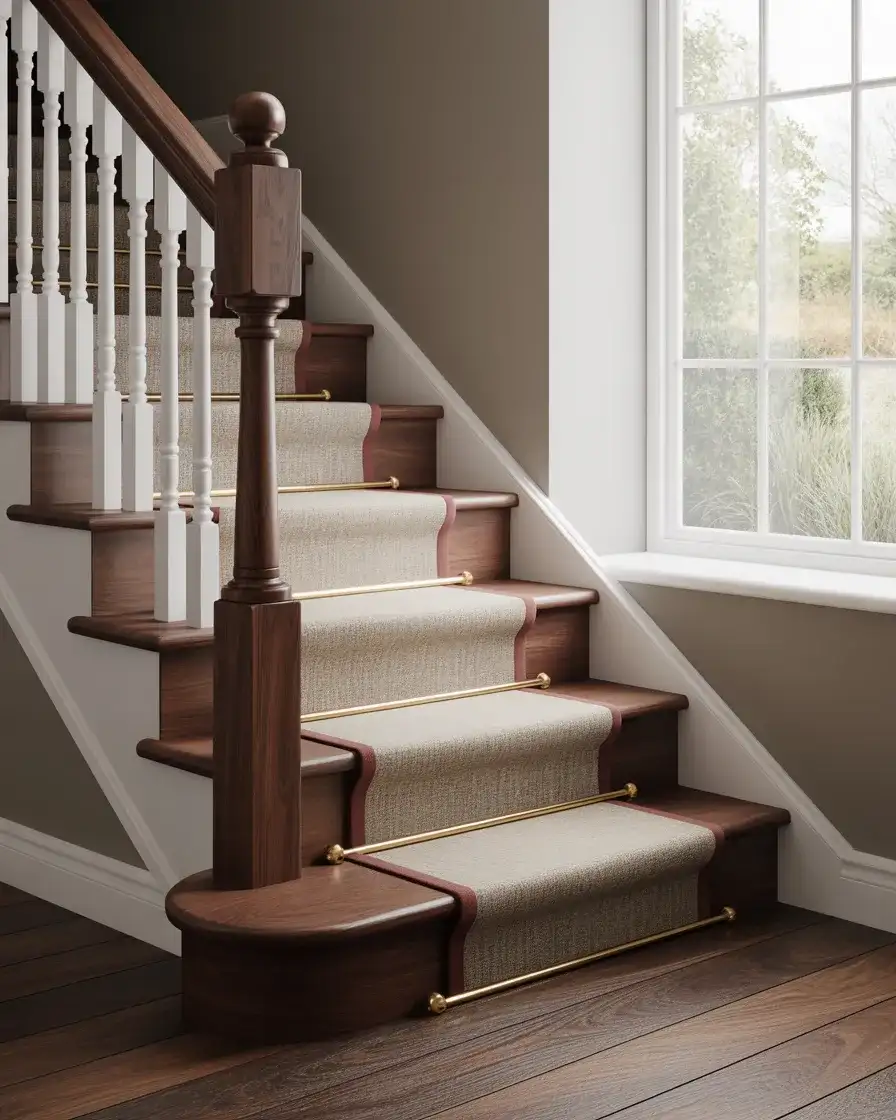
A carpeted runner down the center of dark wood stairs is one of the most requested looks on Pinterest, especially among families with young kids or older adults. The runner softens footsteps, adds grip, and lets you show off the wood grain on either side. It’s a practical middle ground between fully wooden stairs (which can be slippery) and wall-to-wall carpet (which hides the architecture). You’ll see this in everything from colonial revivals to modern farmhouses.
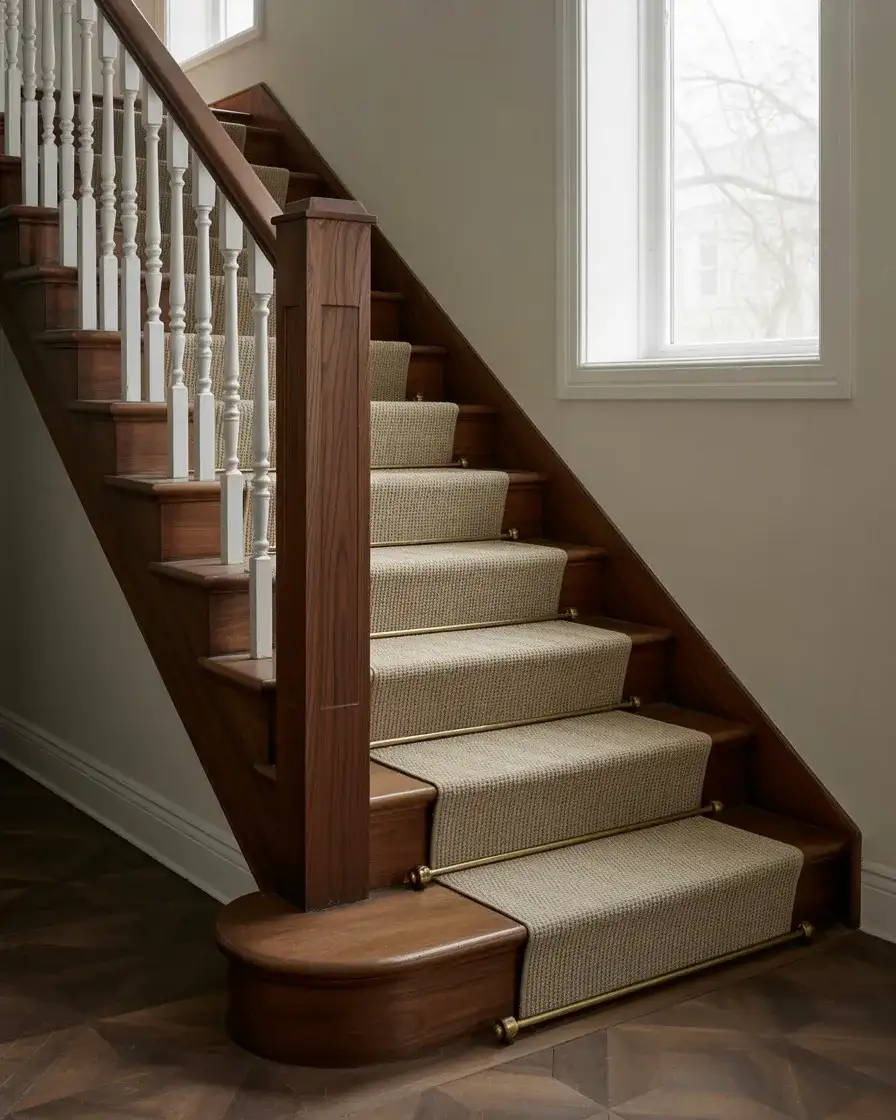
In the Midwest and Northeast, where winters are long and floors get cold, this setup is almost standard. A wool-blend runner in a neutral tone will last 10 to 15 years with regular vacuuming, and it’s easier to replace than a full carpet job. If you’re installing it yourself, use a stair tool to tuck the edges cleanly—loose corners are a tripping hazard. Budget around $600 to $1,200 for a quality runner and professional installation on a standard 13-step staircase.
4. Floating Stairs with Glass Panels
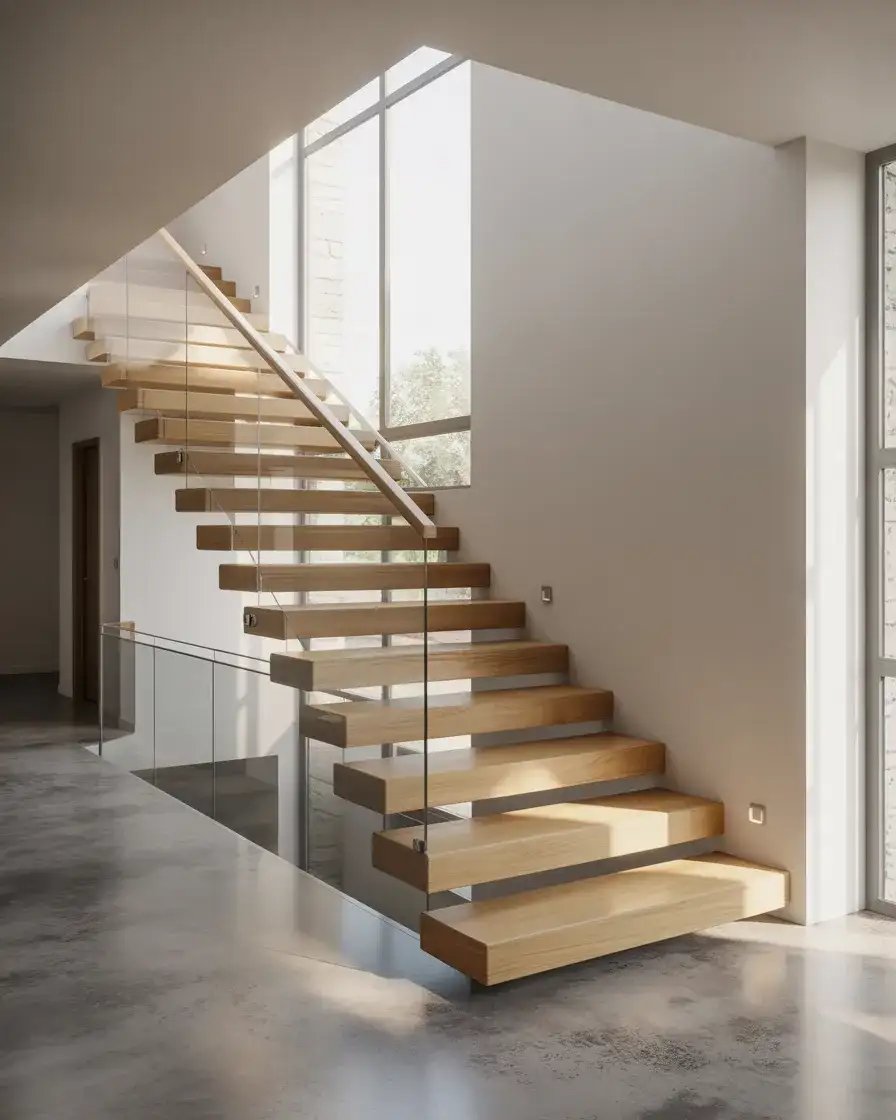
A floating staircase paired with glass panels is the ultimate statement piece in contemporary homes. The treads are anchored to a wall or central spine, with no visible risers, and the glass railing keeps sightlines open. This design is especially popular in open floor plans where the staircase sits near a living room or entryway. It’s sleek, modern, and makes even a small space feel expansive. You’ll see this style in urban lofts and new builds across California and Texas.
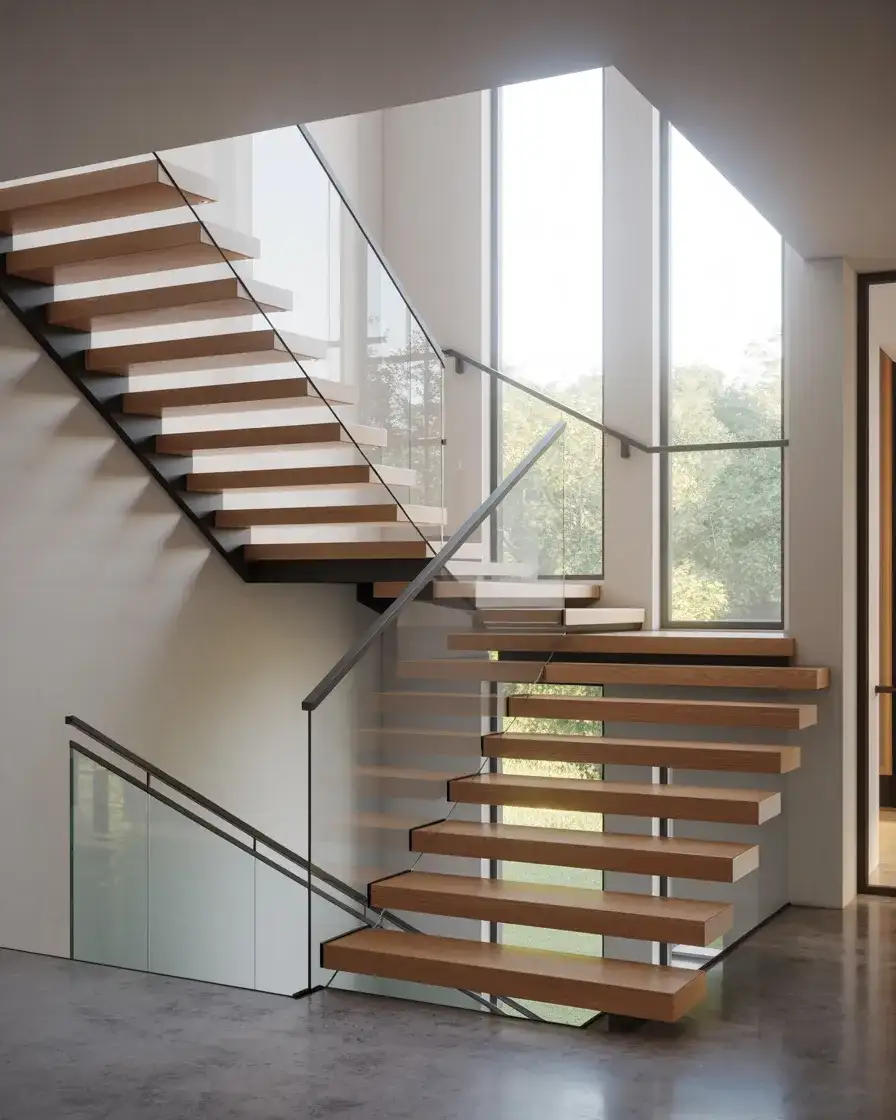
This is a high-end option, with costs starting around $15,000 for materials and installation, but it’s worth it if you’re aiming for a luxury aesthetic. The glass panels need to be tempered and at least half an inch thick to meet code, and they’ll show fingerprints—so plan on weekly cleaning if you have kids. The floating treads themselves are typically 2 to 3 inches thick and cantilevered from a steel frame hidden inside the wall. It’s a conversation starter, but it’s not for everyone—some people find the lack of risers unsettling, especially with young children in the house.
5. Spiral Staircases for Compact Footprints
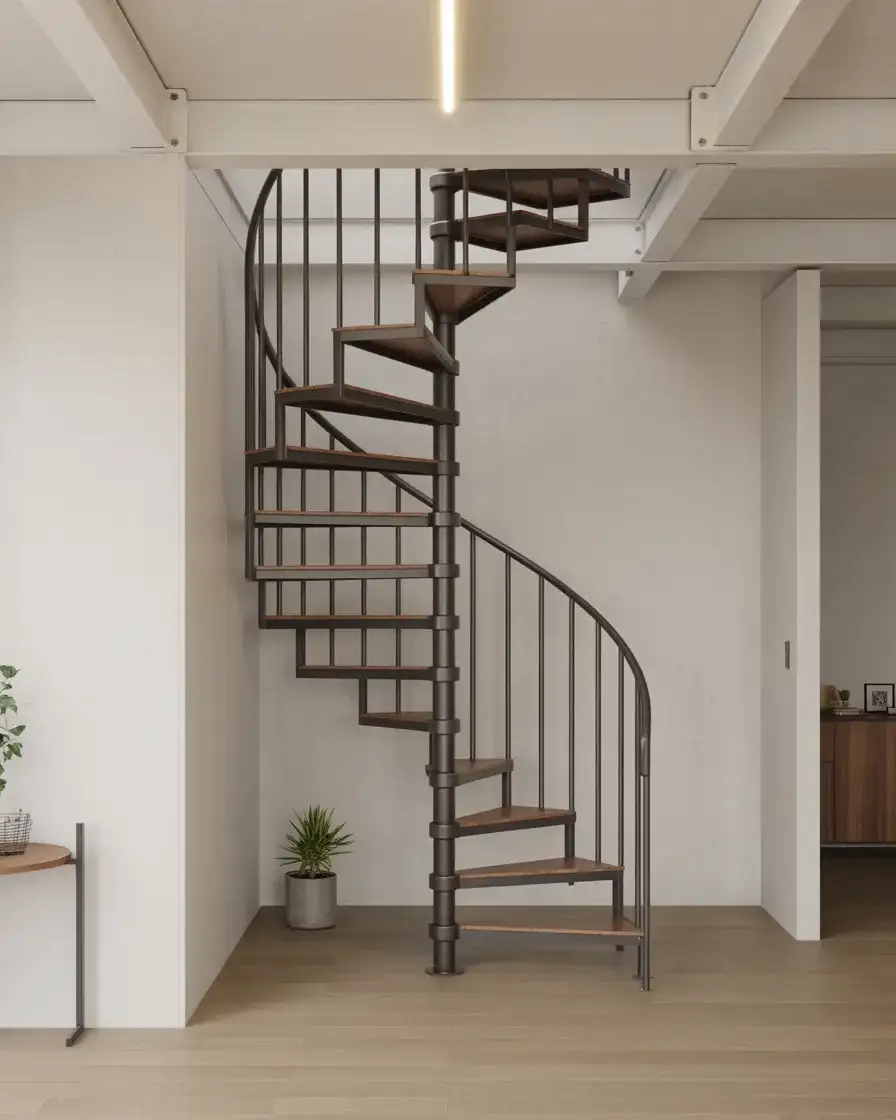
A spiral staircase is the go-to solution when you need to connect floors but don’t have room for a traditional straight run. These staircases wind around a central pole, taking up as little as 4 feet in diameter. They’re common in lofts, tiny homes, and split-level layouts where every square foot matters. While they’re space-efficient, they can be tricky to navigate with large furniture or for anyone with mobility challenges. The style ranges from industrial metal to classic wood, depending on your home’s vibe.
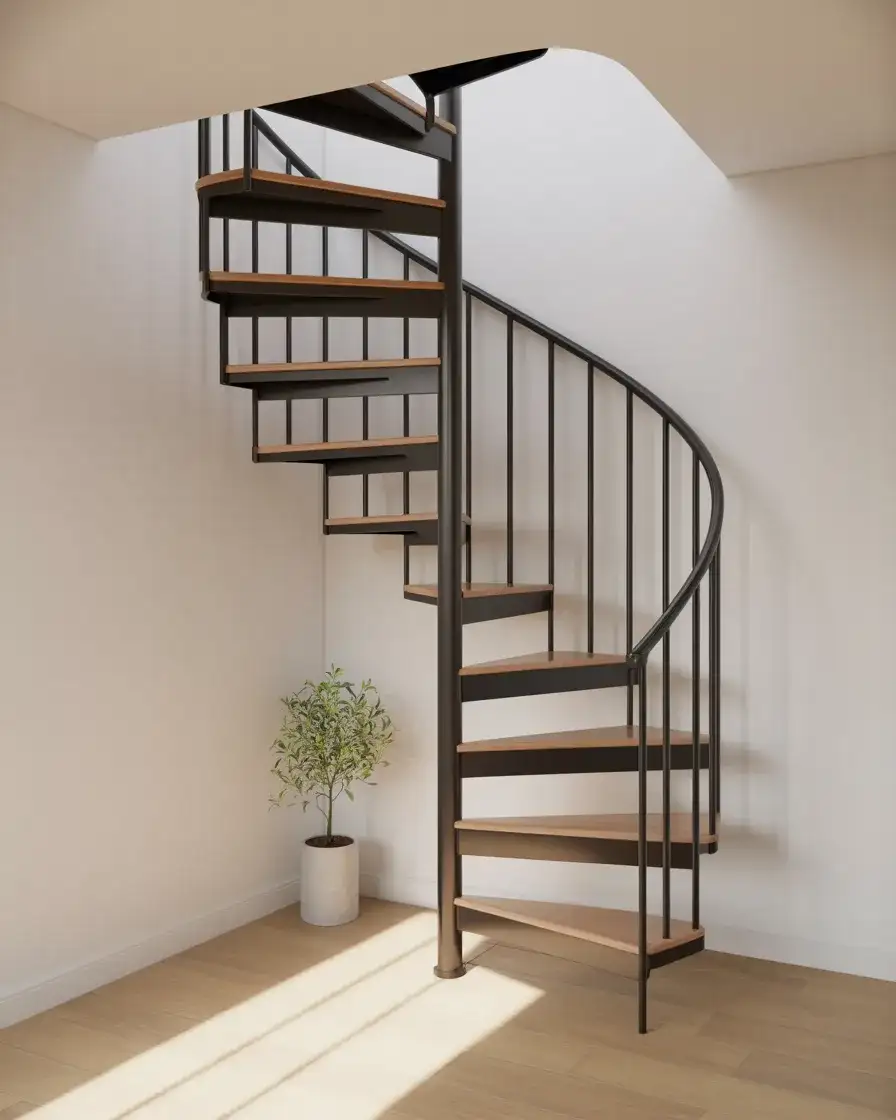
Practical insight: if you’re installing one, make sure the treads are at least 7.5 inches deep at the walkline (the path you naturally follow as you climb). Anything narrower feels unstable. Also, check your local code—some jurisdictions restrict spiral staircases to secondary access only, meaning you can’t use one as the main route to a bedroom. A prefab kit from a big-box retailer costs around $1,500 to $3,000, but custom metalwork can run $8,000 or more. If you live in a condo or townhouse, this is often the only way to add a second story without losing precious floor space.
6. Curved Staircases with Grand Entrances
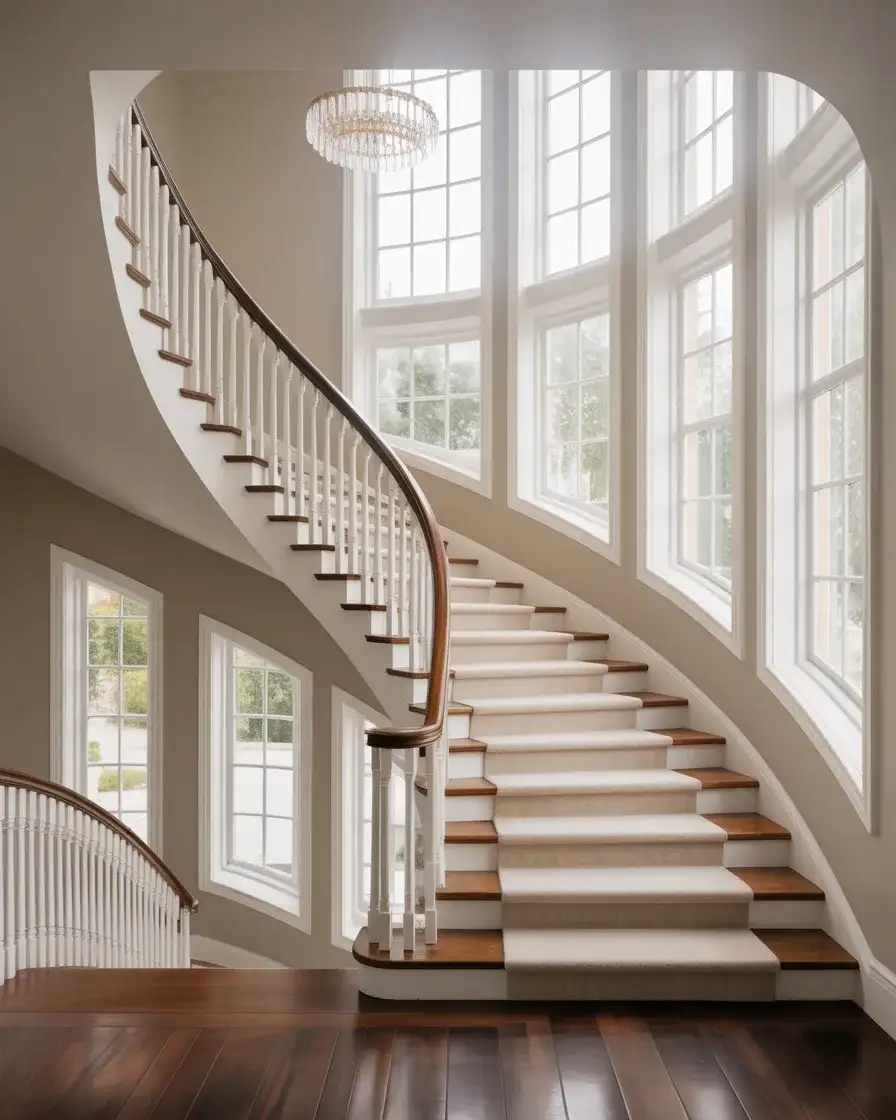
A curved staircase is the definition of elegance, sweeping gently upward in a smooth arc rather than turning at sharp angles. This style is most at home in entry halls with high ceilings, where the staircase becomes the focal point of the home. You’ll often see carved wooden balusters, a polished handrail, and a neutral runner that lets the architecture shine. It’s a Southern classic, but it’s also showing up in new builds across the Sunbelt, where homeowners want a touch of old-world charm.
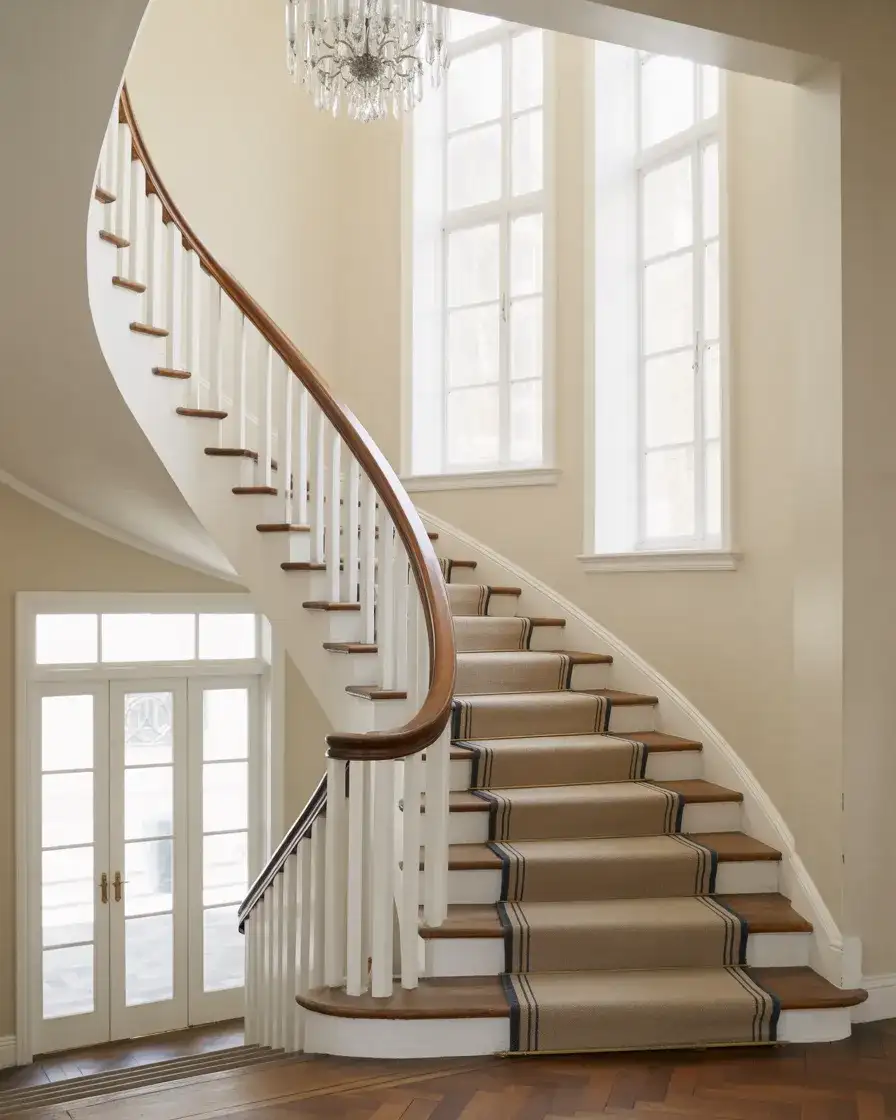
This is one of the pricier staircase styles, with custom-built curved stairs starting around $20,000 and going up from there depending on materials and finish details. The curve requires precise carpentry, and the handrail has to be laminated in sections to follow the bend without splitting. If you’re buying a home with one of these, consider it a major selling point—it’s a feature that adds significant resale value. Just be prepared for the upkeep: dust settles in the crevices of turned balusters, and refinishing the handrail is a bigger job than on a straight staircase.
7. Black Painted Stairs for Modern Drama
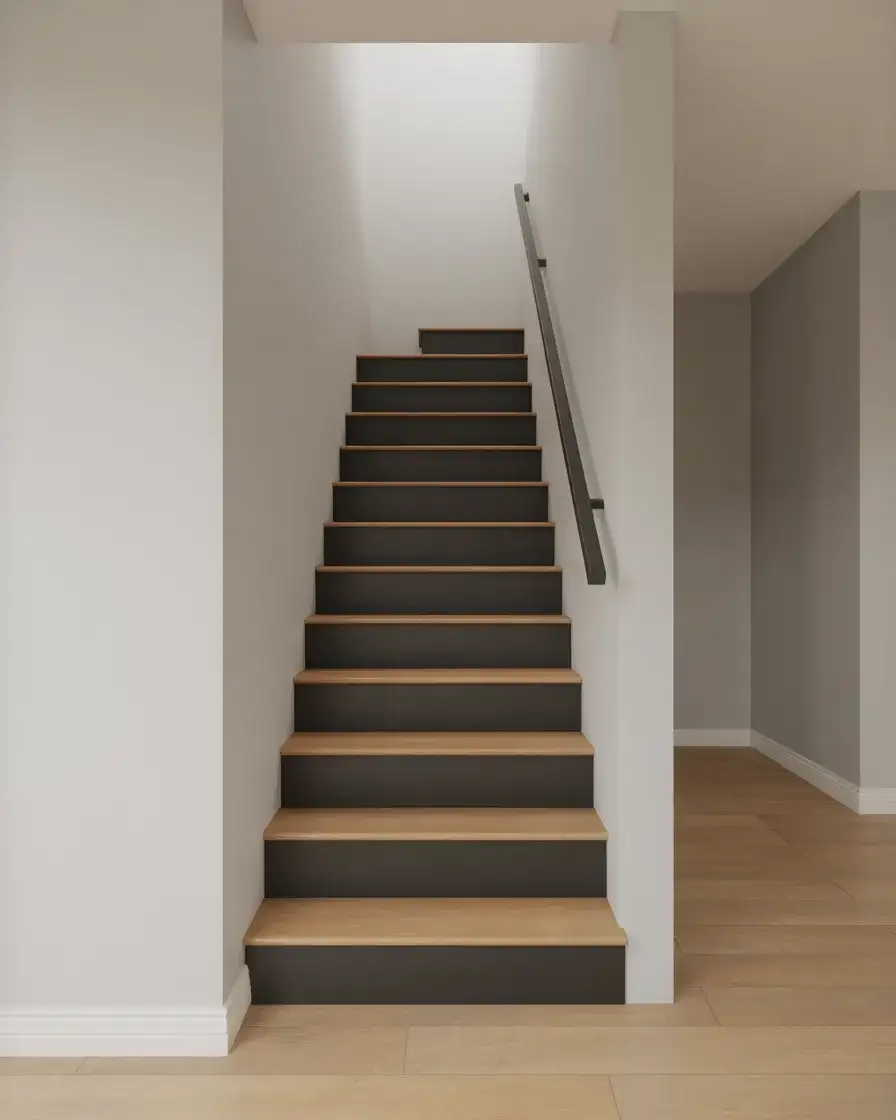
Painting your staircase black is a bold move that’s gained serious traction in 2026, especially in homes with dark interiors or moody color schemes. The look works best when paired with white or light gray walls to create contrast, and it’s often combined with wooden treads left natural or stained dark. This style fits seamlessly into narrow hallways where you want the staircase to recede visually or in open layouts where it becomes a graphic design element. It’s a favorite in Pacific Northwest homes with lots of natural wood and greenery.
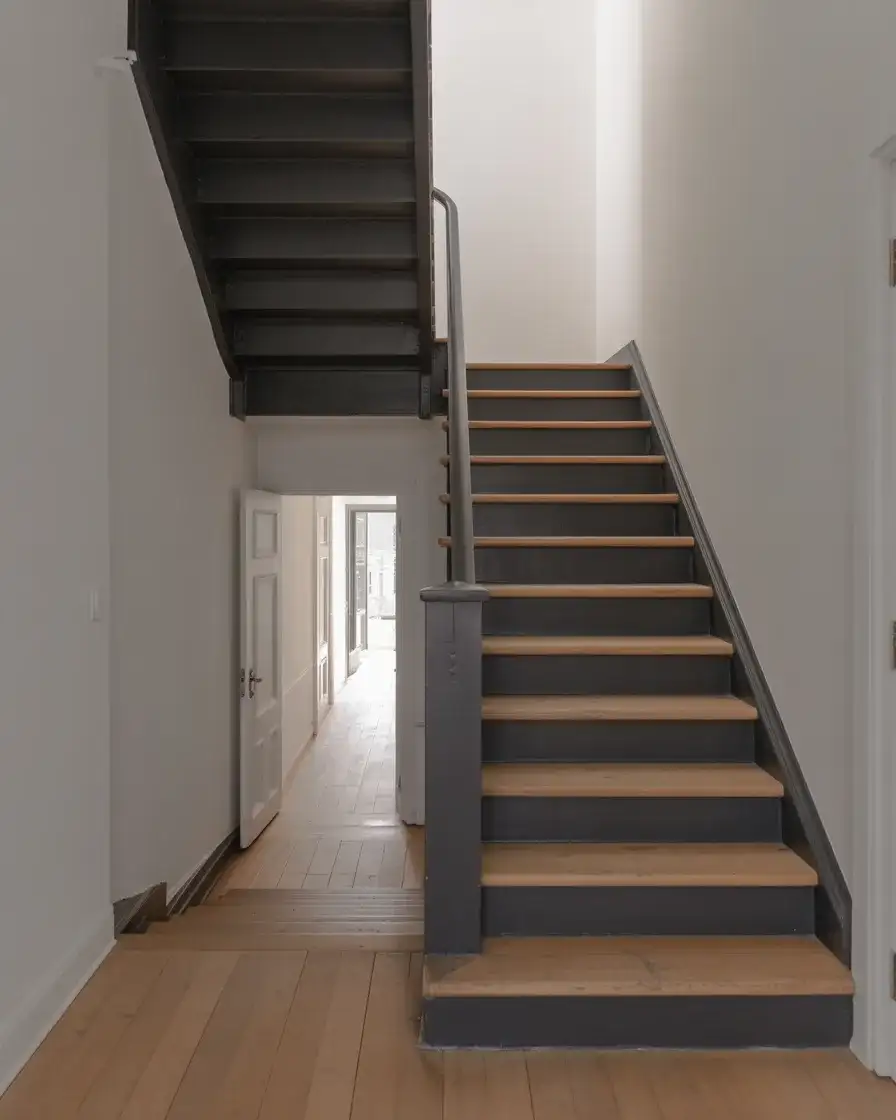
A neighbor of mine painted her entire staircase—treads, risers, and spindles—matte black last year, and the transformation was instant. She said it took two coats of a high-durability floor paint and about a weekend’s worth of work. The key is using a paint that can handle foot traffic, like a porch and floor enamel, and adding a clear topcoat for extra protection. The look hides scuffs better than you’d think, and it makes any art or plants nearby pop. Just keep in mind that dust and pet hair show up more on black, so plan on sweeping more often.
8. Victorian Staircases with Ornate Newel Posts
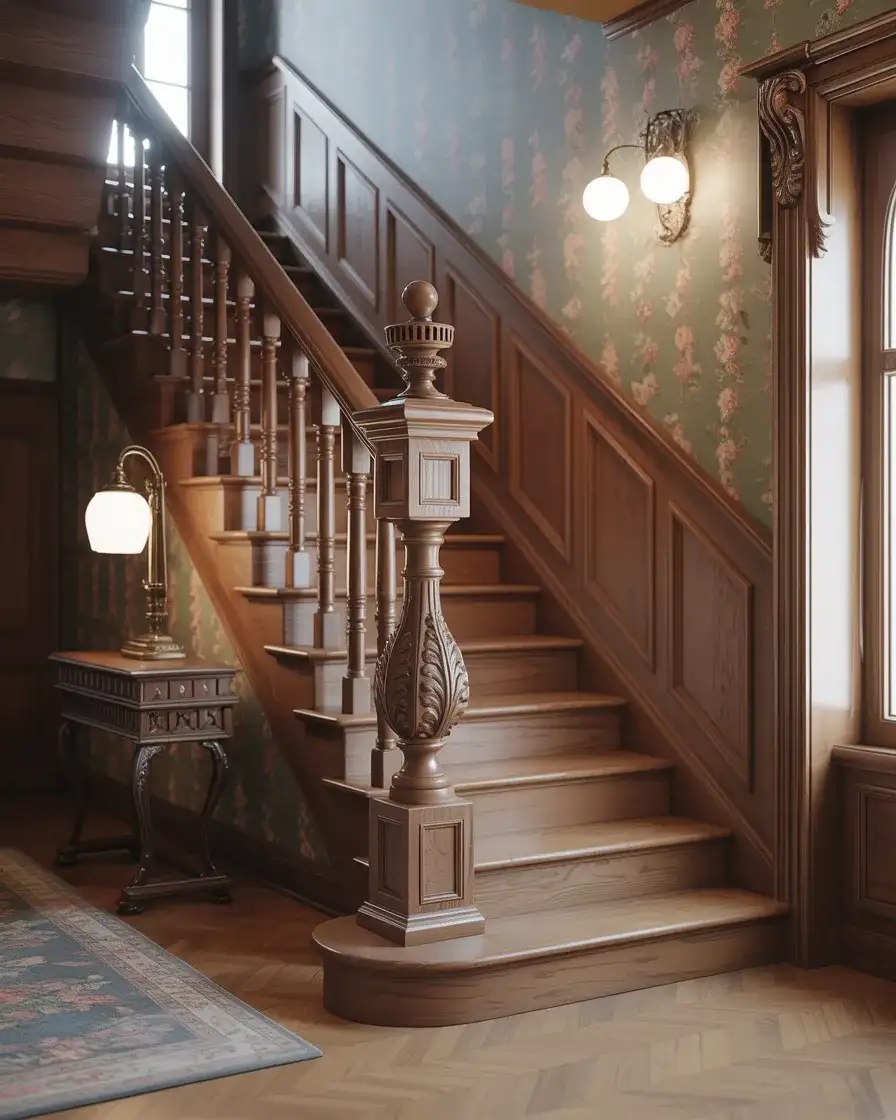
A Victorian staircase is all about the details—carved newel posts, turned balusters, and decorative brackets that give the space a sense of history. These staircases are typically wooden, often in mahogany or walnut, and they feature a wide, sturdy handrail that’s as much about presence as function. You’ll find them in older homes throughout New England and the Midwest, and they’re increasingly popular in historic restorations. The style is formal but not stuffy, especially when paired with updated paint colors or modern lighting.
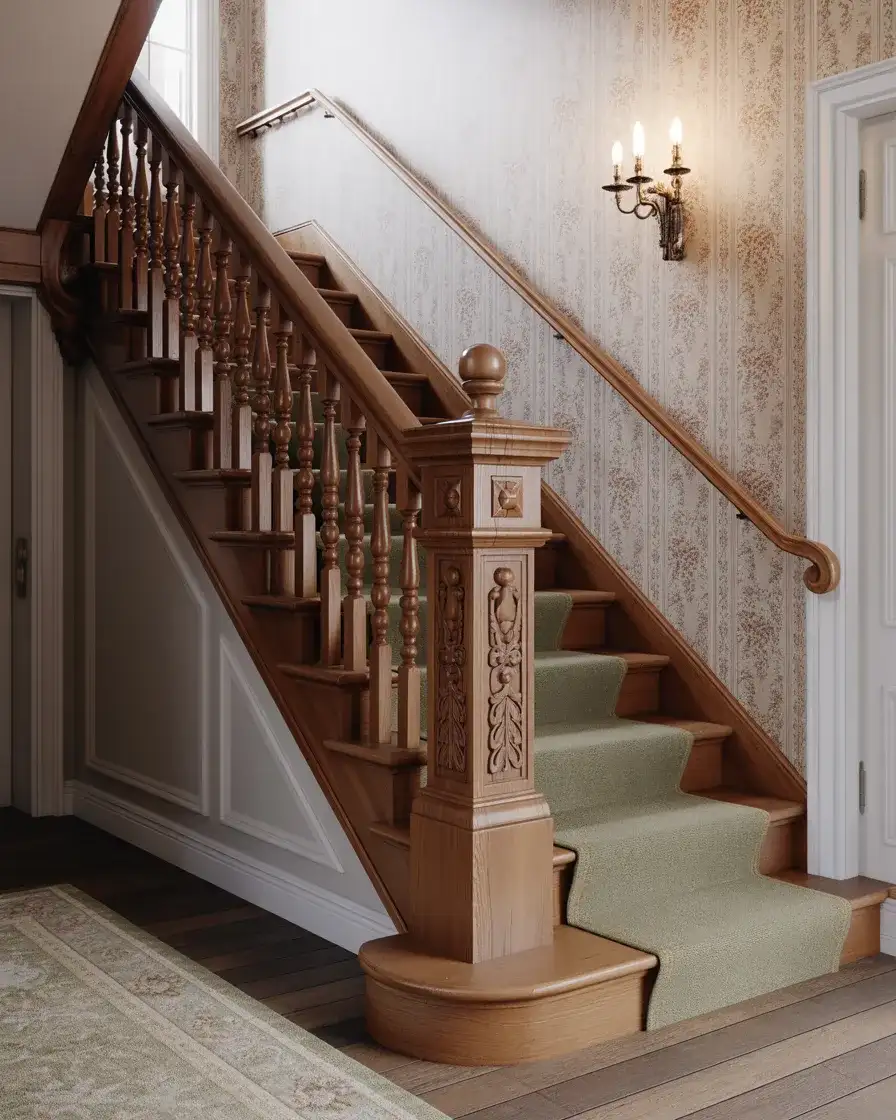
Where it works best: in homes built between 1860 and 1910, where the original staircase is still intact or can be restored. Replacement newel posts and balusters are available from architectural salvage shops, but expect to pay $300 to $800 for a quality piece. If you’re refinishing one of these staircases, don’t strip the entire thing—often a good cleaning and a fresh coat of tung oil or polyurethane is enough to bring back the luster. The ornate details can collect dust, so a soft brush attachment on your vacuum is your best friend.
9. Narrow Enclosed Staircases with Built-In Storage
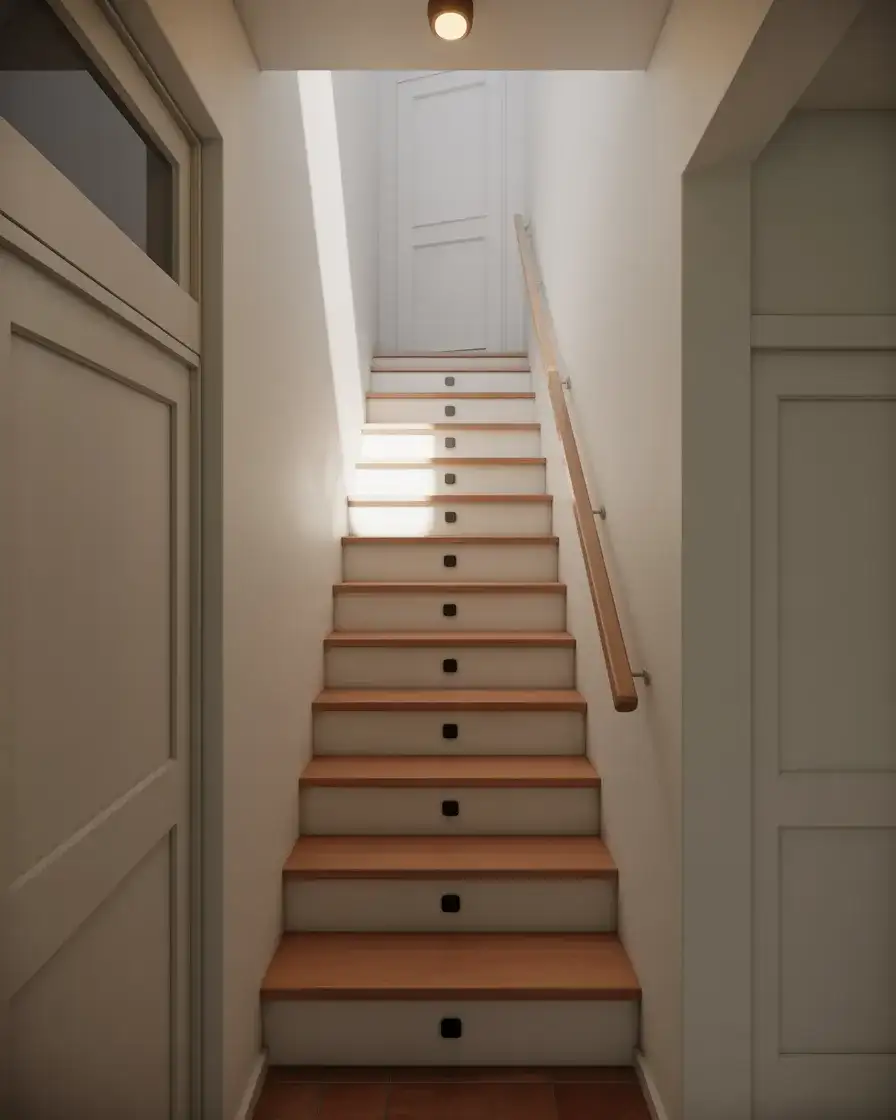
A narrow enclosed staircase doesn’t have to feel like wasted space—add built-in storage underneath, and you’ve just solved a major pain point in small homes. Pull-out drawers, cubbies, or even a small coat closet can fit under the lower treads, making use of what’s often dead space. This setup is common in cottage homes, row houses, and bungalows where every inch counts. The staircase remains fully walled in for safety, but the storage keeps clutter at bay.
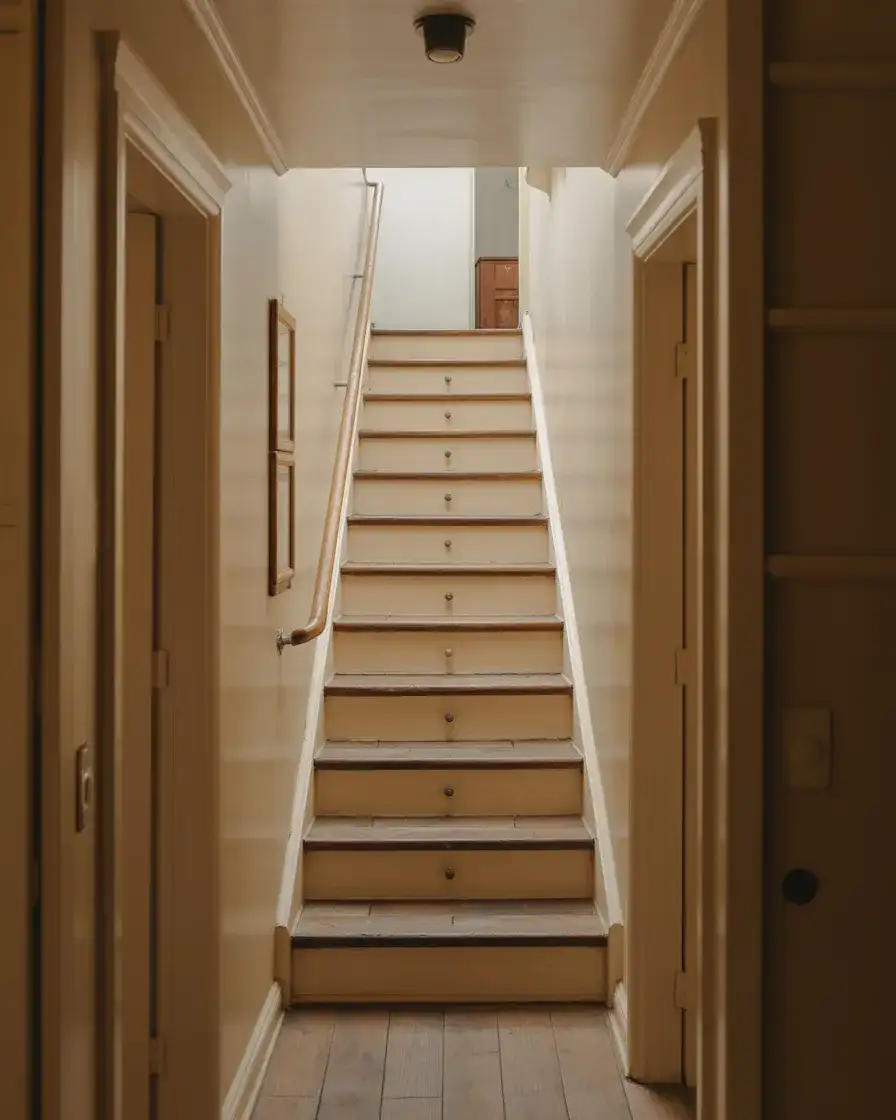
Expert-style commentary: this is one of the smartest budget-friendly upgrades you can make if you’re living in a smaller home. A carpenter can install pull-out drawers for around $800 to $1,500, depending on the number of steps and the finish you choose. The key is making sure the drawers glide smoothly—soft-close hardware is worth the extra $50 per drawer. If you’re DIYing it, measure carefully around the stringer (the angled support beam) so you don’t accidentally drill into structural wood. This works especially well in homes without a basement or garage, where shoe and coat storage is always at a premium.
10. Cottage Staircases with Painted Risers
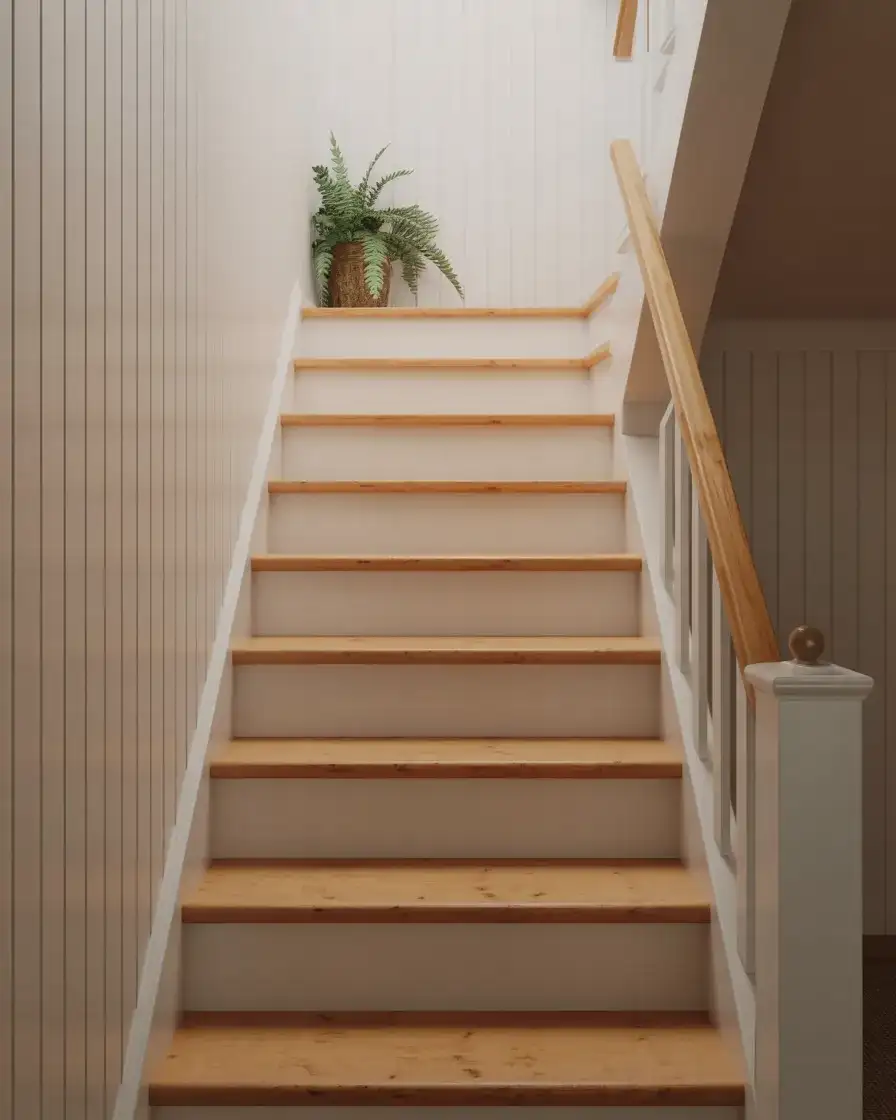
A cottage staircase often features painted risers in soft colors—white, pale blue, or sage—while the treads are left as natural wood or painted in a contrasting shade. This style brings a relaxed, coastal vibe into the home and works beautifully in narrow or short staircases where you want to add visual interest without overwhelming the space. It’s a budget-friendly way to refresh an old staircase, and it pairs perfectly with beadboard walls or shiplap detailing.
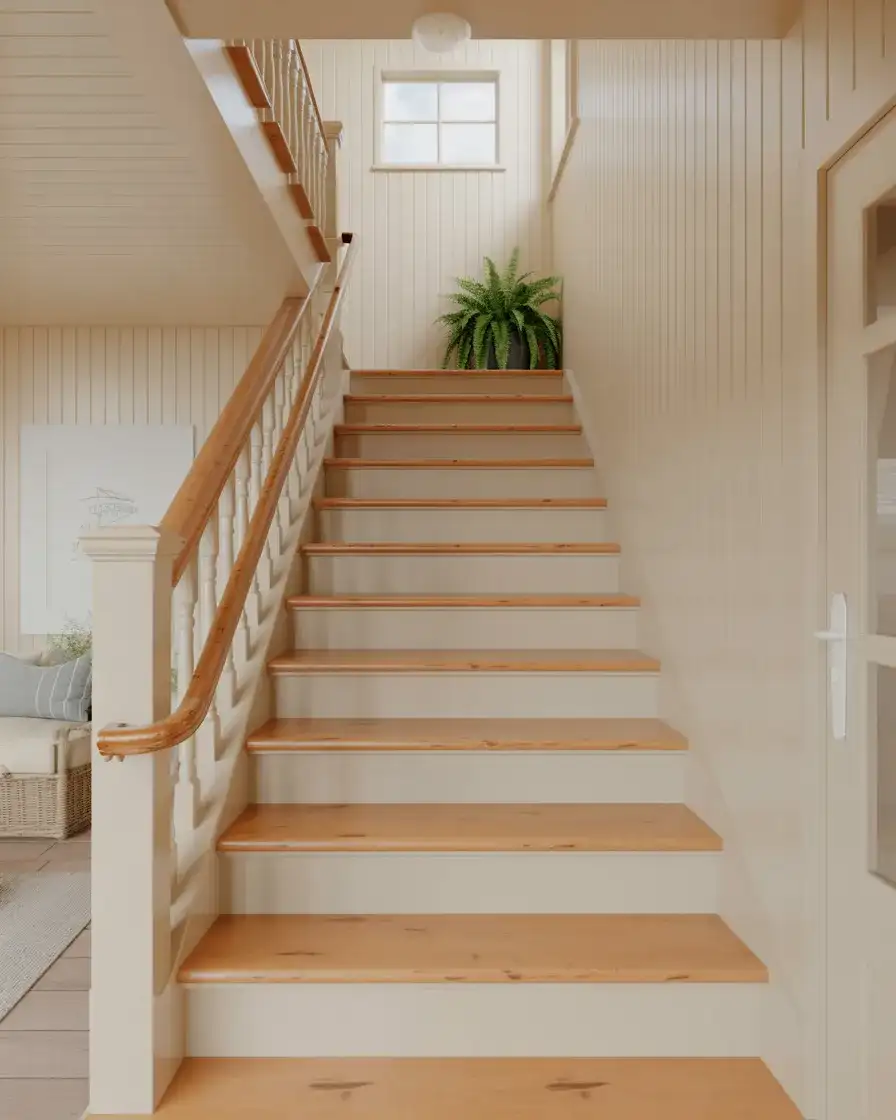
Budget angle: this is one of the least expensive staircase makeovers you can do. A gallon of quality floor paint costs around $40, and you can tackle the project in a weekend. Tape off the treads, apply two coats to the risers, and seal with a matte or satin polyurethane. The result feels custom and intentional, especially if you match the riser color to other accents in your home. It’s popular in beach towns and lake houses, where the aesthetic leans casual and lived-in. If you’re renting, check with your landlord first—painted risers are easy to redo, but it’s better to ask than apologize later.
11. Straight Staircases with Minimalist Railings
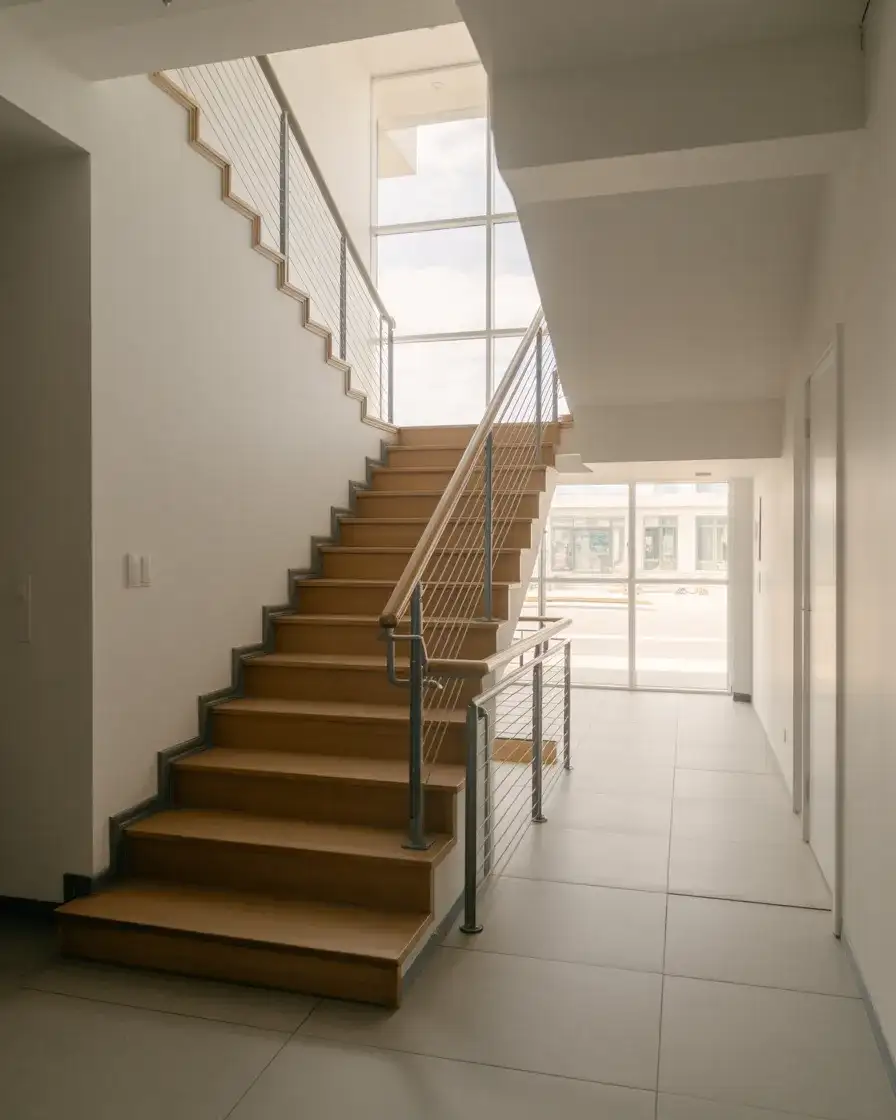
A straight staircase with a minimalist railing—think thin metal cables or horizontal bars—is the epitome of modern simplicity. These staircases run in a single direction without turns, making them easy to build and ideal for narrow spaces. The railing design keeps sightlines open and doesn’t compete with the architecture. You’ll see this style in Scandinavian-inspired homes, mid-century moderns, and new builds where clean lines are the priority. The treads are often wood or white oak, left natural or lightly stained.
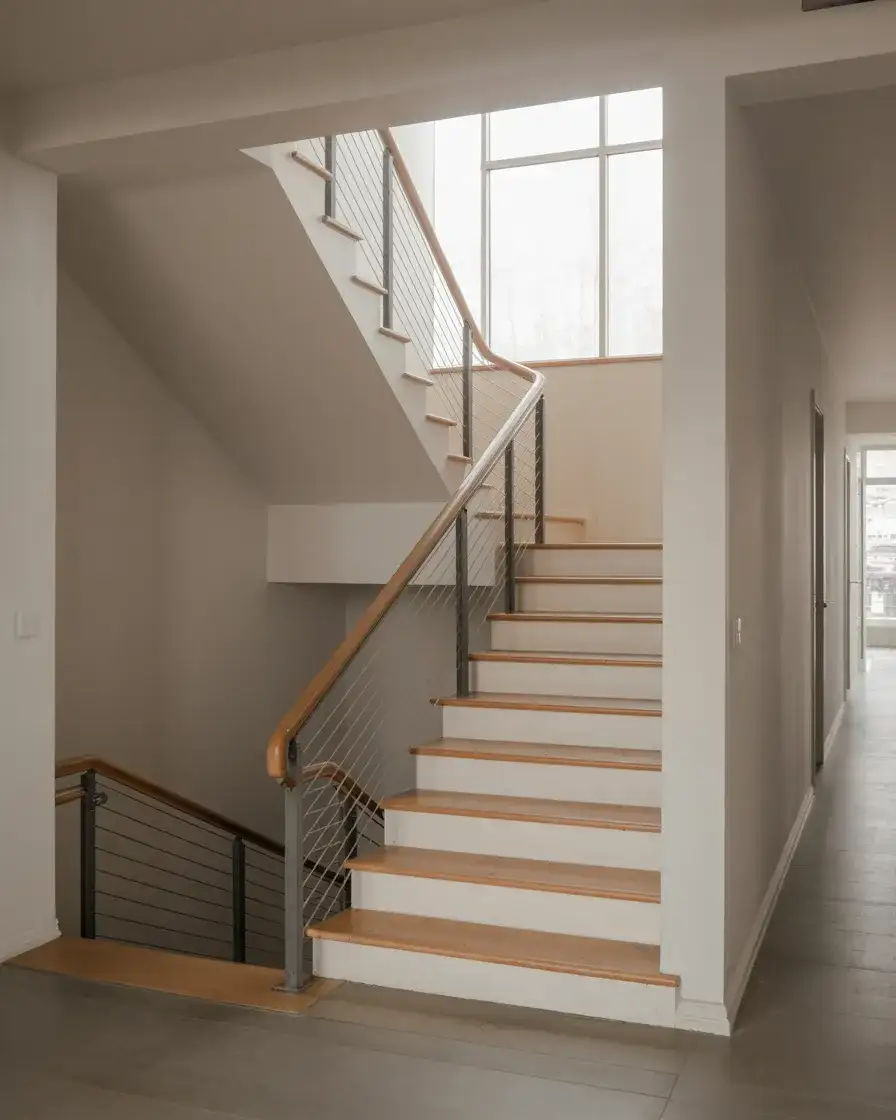
Real homeowner behavior: many people switch to cable railings during a remodel because they’re easier to clean than traditional spindles—no dusting individual balusters every week. The cables are tensioned with turnbuckles and should be checked once a year to make sure they haven’t loosened. Installation is straightforward if you’re handy, with DIY cable kits starting around $400 for a 10-foot run. If you have toddlers, check the spacing—cables should be no more than 4 inches apart to meet code. This style is especially popular in urban lofts and townhomes where the staircase is visible from the living area.
12. Split-Level Staircases with Mid-Landing
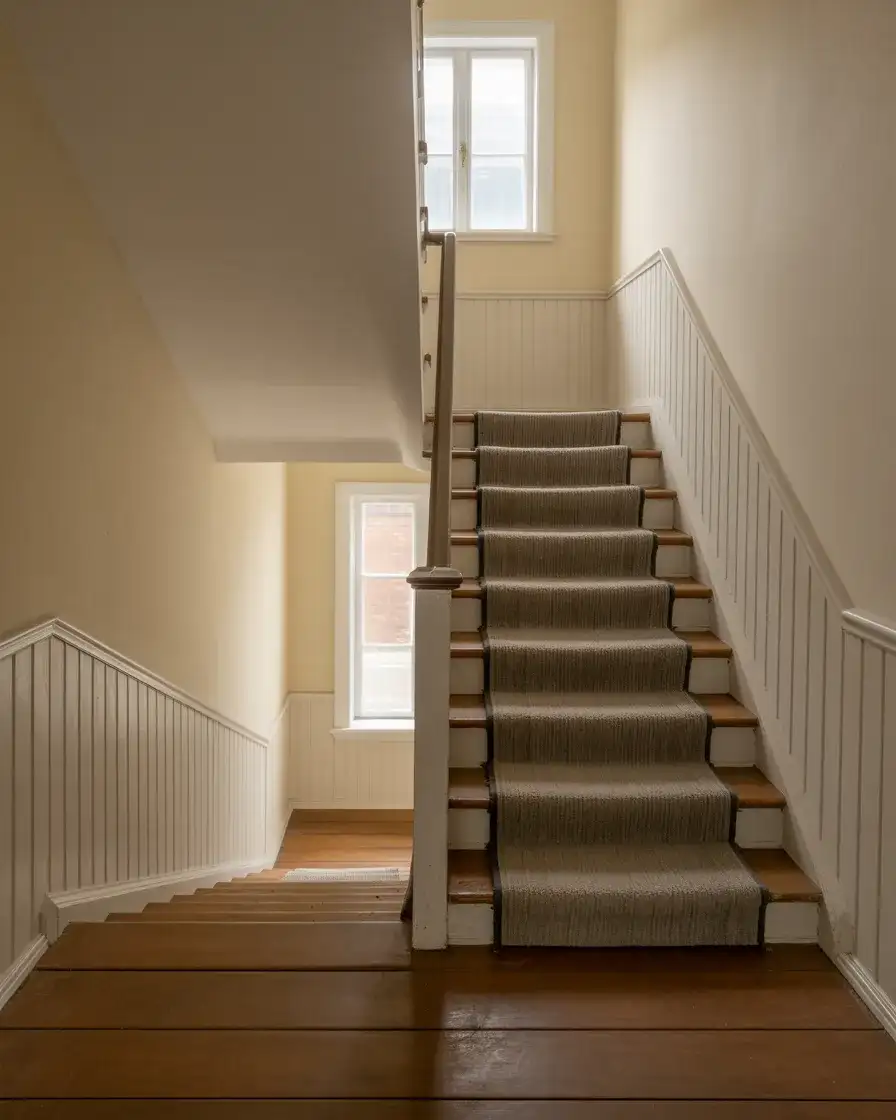
A split-level staircase typically features a mid-landing that changes direction, connecting three different floor levels in a single run. This layout was hugely popular in the 1960s and 70s, and it’s still common in ranch-style homes and raised ranches across the Midwest and Northeast. The mid-landing is a natural spot for a window, a piece of art, or even a small bench. The staircase can be carpeted for comfort or left as wood for a more modern look.
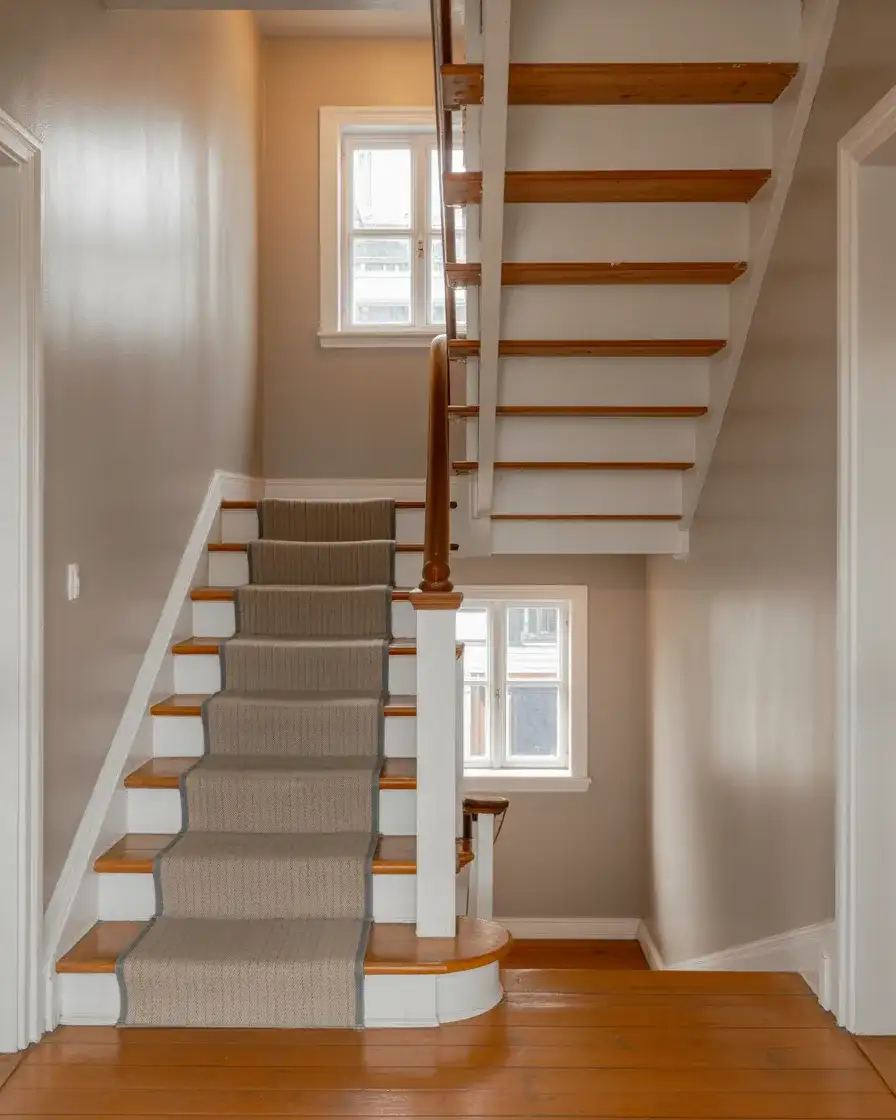
American lifestyle context: split-level homes were designed for families who wanted distinct living zones without the cost of a full second story. The staircase is the spine of the house, and updating it can modernize the entire feel. Swapping dated carpet for a runner or refinishing the treads makes a huge difference. If you’re buying a split level, don’t overlook this space—good lighting on the landing and a fresh coat of paint on the handrail can turn a dated feature into a design asset. It’s also one of the safer staircase layouts for older adults, since the mid-landing offers a natural resting point.
13. Unique Staircases with Custom Metalwork
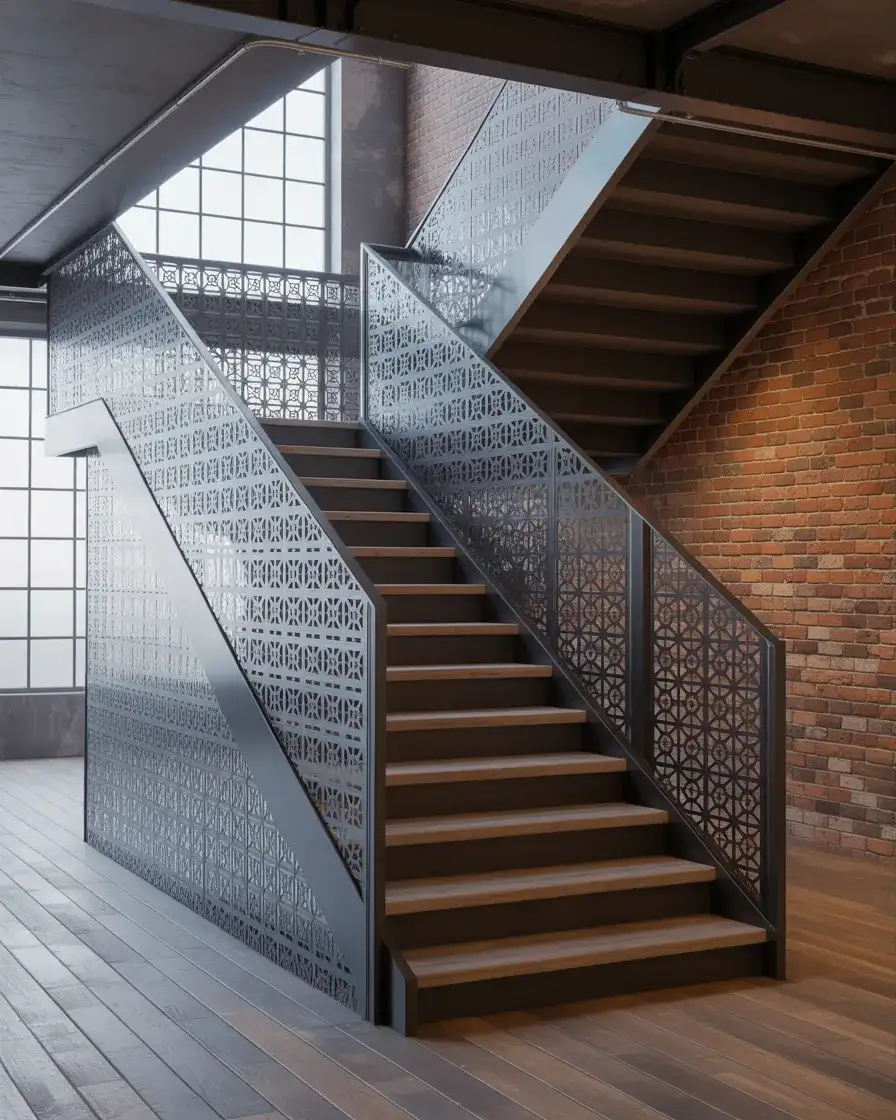
A unique staircase with custom metalwork is a one-of-a-kind feature that reflects the homeowner’s personality. This might include laser-cut steel panels with geometric patterns, wrought iron balusters with organic curves, or a handrail made from reclaimed industrial pipe. These staircases are often open or floating, letting the metalwork take center stage. You’ll see this style in artist lofts, modern farmhouses, and renovated warehouses where the goal is to blend function with sculpture.
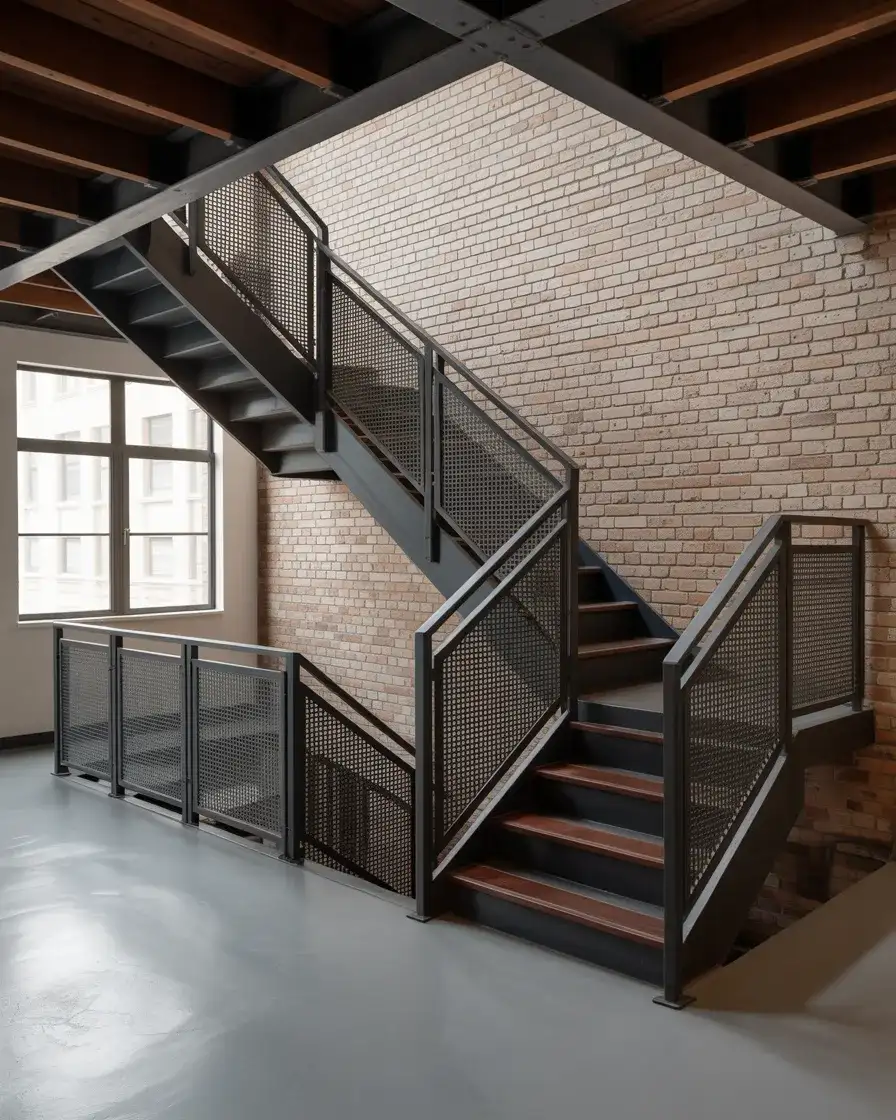
Micro anecdote: I toured a renovated firehouse in Brooklyn last year where the homeowners commissioned a local metalworker to create a staircase railing that mimicked the ladder trucks from the building’s past. The result was stunning—a conversation piece that honored the space’s history while feeling completely modern. Custom metalwork isn’t cheap—expect to pay $5,000 to $15,000 depending on complexity—but it’s an investment that adds serious character. If you’re considering this, work with a fabricator who can show you previous residential projects and who understands building codes for railings and spacing.
14. Closed Staircases with Wallpapered Walls
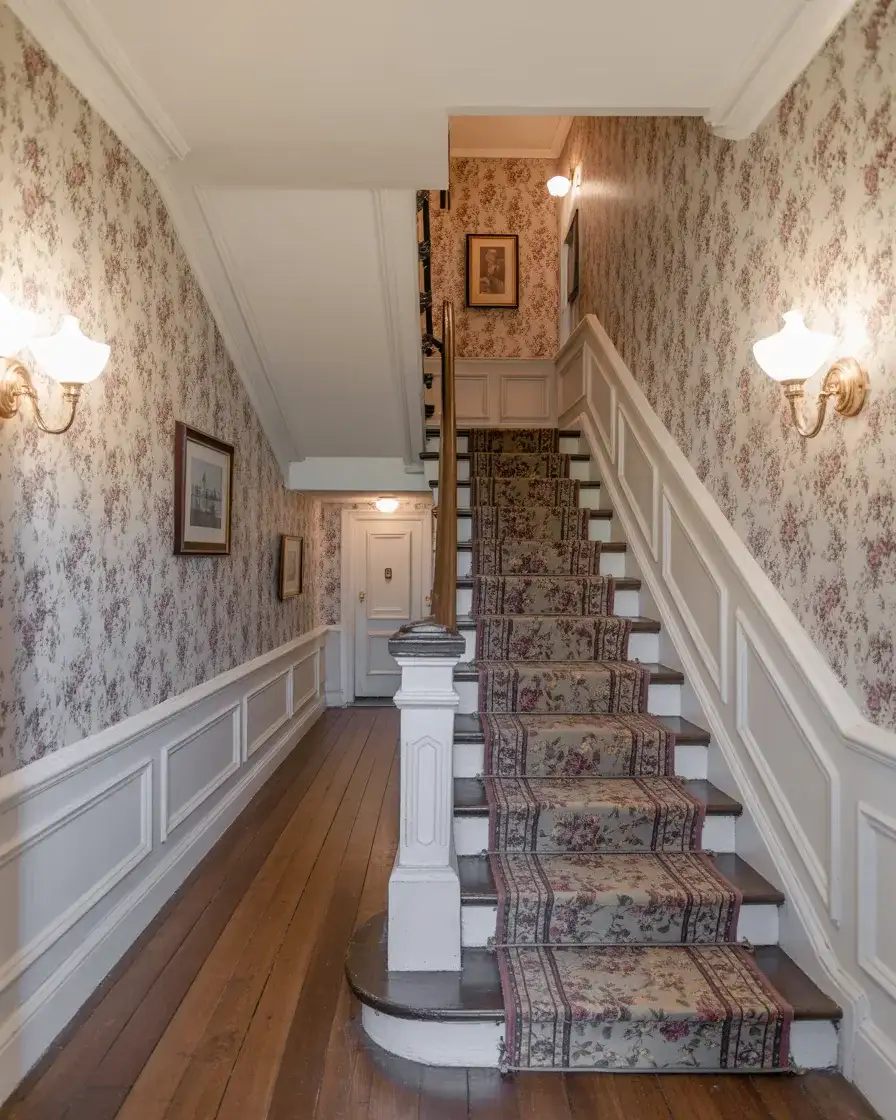
A closed staircase with wallpapered walls transforms a functional space into a design moment. The walls on both sides are fully enclosed, creating a cozy tunnel effect that’s perfect for bold patterns—florals, geometrics, or even murals. This setup works especially well in Victorian or cottage homes where the staircase is narrow and tucked away from the main living areas. The wallpaper adds personality without requiring any structural changes, and it’s a relatively low-cost update that makes a big impact.
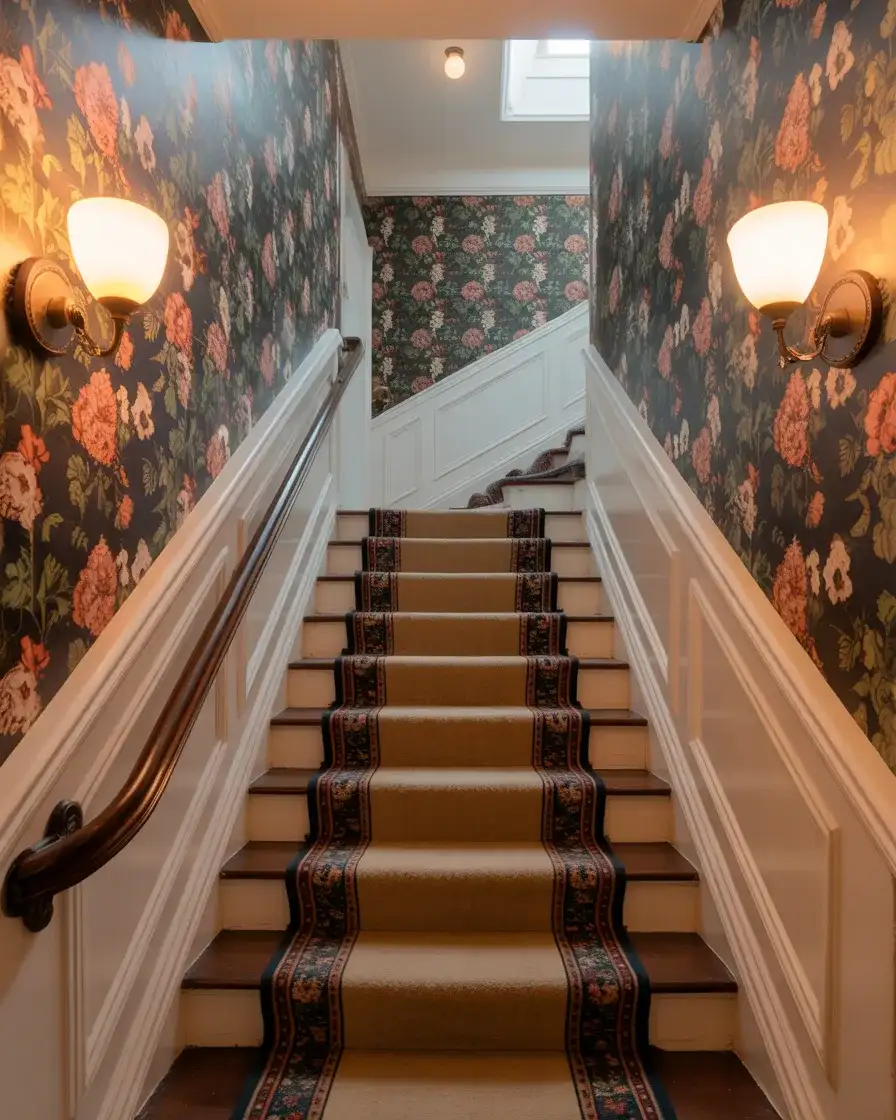
Common mistakes and how to avoid them: the biggest error is choosing wallpaper that’s too busy or too dark for a narrow stairwell—it can make the space feel claustrophobic. Stick with medium-scale patterns and colors that reflect light, like soft blues, greens, or warm neutrals. Also, make sure you order enough wallpaper to account for pattern matching and waste; stairwells have awkward angles, and you’ll need extra. A single roll covers about 30 square feet, and a typical stairwell needs 3 to 5 rolls. Prep the walls properly—sand, prime, and patch any imperfections—so the paper goes on smooth.
15. Wood Staircases with Natural Grain on Display
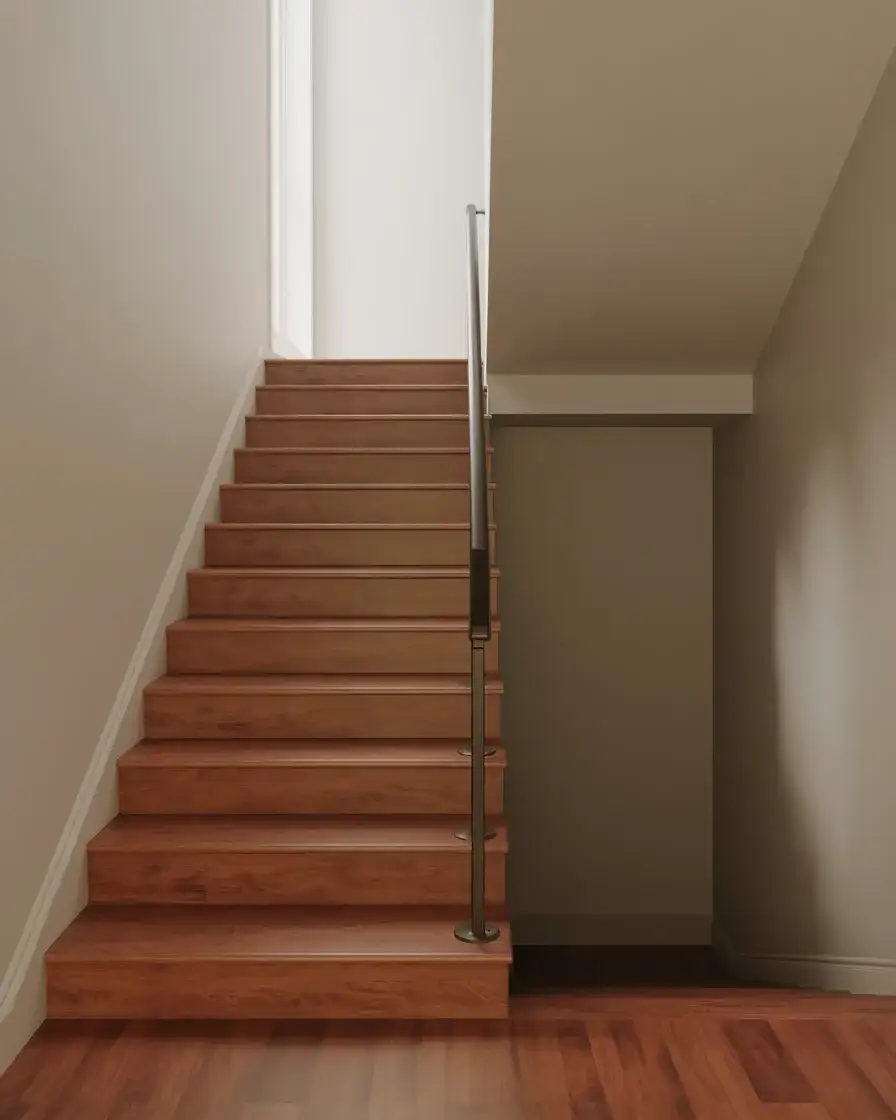
A wood staircase that celebrates natural grain—whether it’s oak, walnut, or reclaimed pine—is a timeless choice that works in nearly any home. The key is letting the wood speak for itself: minimal stain, a clear finish, and simple hardware. This style fits beautifully in open floor plans, cottage interiors, and modern farmhouses. You’ll often see it paired with white risers or black metal railings to keep the focus on the wood’s texture and color. It’s a look that ages well and adapts to changing design trends.
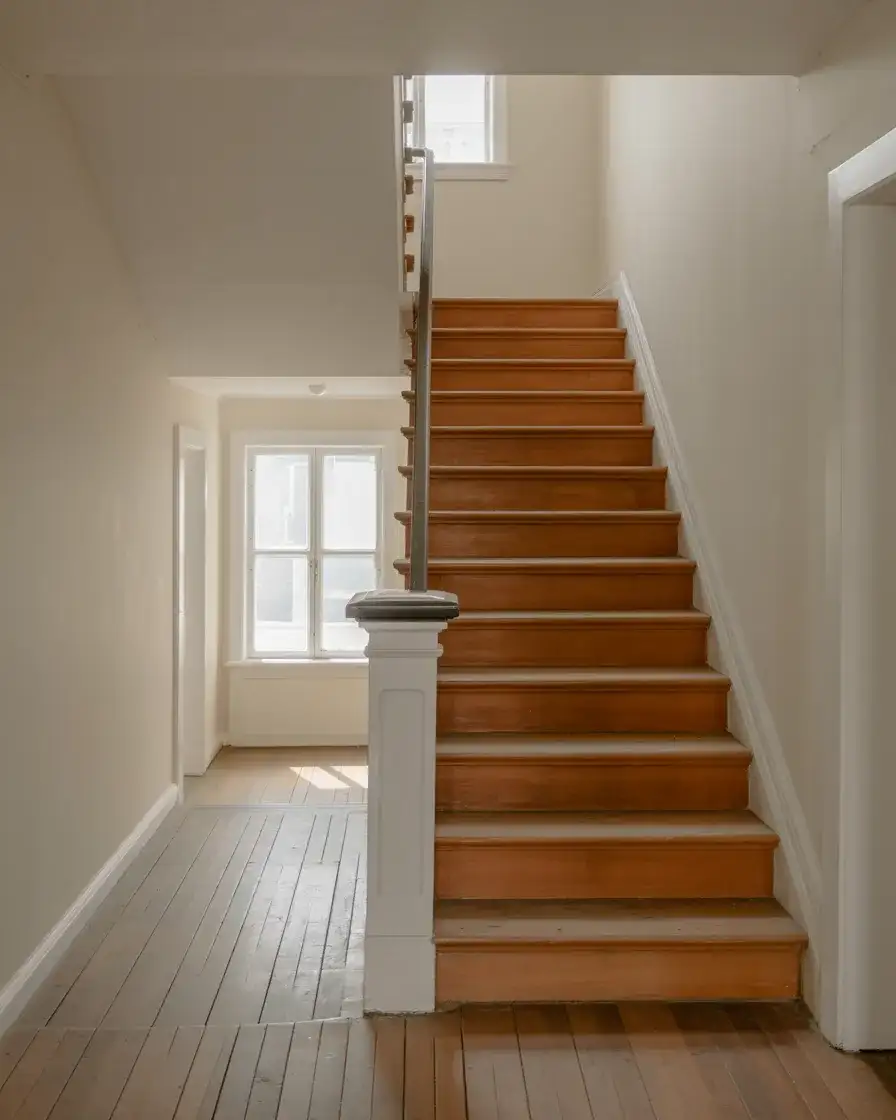
Where it works best: in homes where wood is already a prominent material—think exposed beams, hardwood floors, or wood-paneled accent walls. The staircase becomes part of a cohesive material palette that feels warm and grounded. If you’re refinishing an existing wood staircase, consider a water-based polyurethane for the topcoat—it doesn’t yellow over time like oil-based products, so the wood keeps its true color. For high-traffic households, add a coat of floor wax once a year to protect the finish and make cleaning easier. The natural look requires a bit more maintenance than painted stairs, but the payoff is worth it.
16. Staircases in Bloxburg and Minecraft Builds
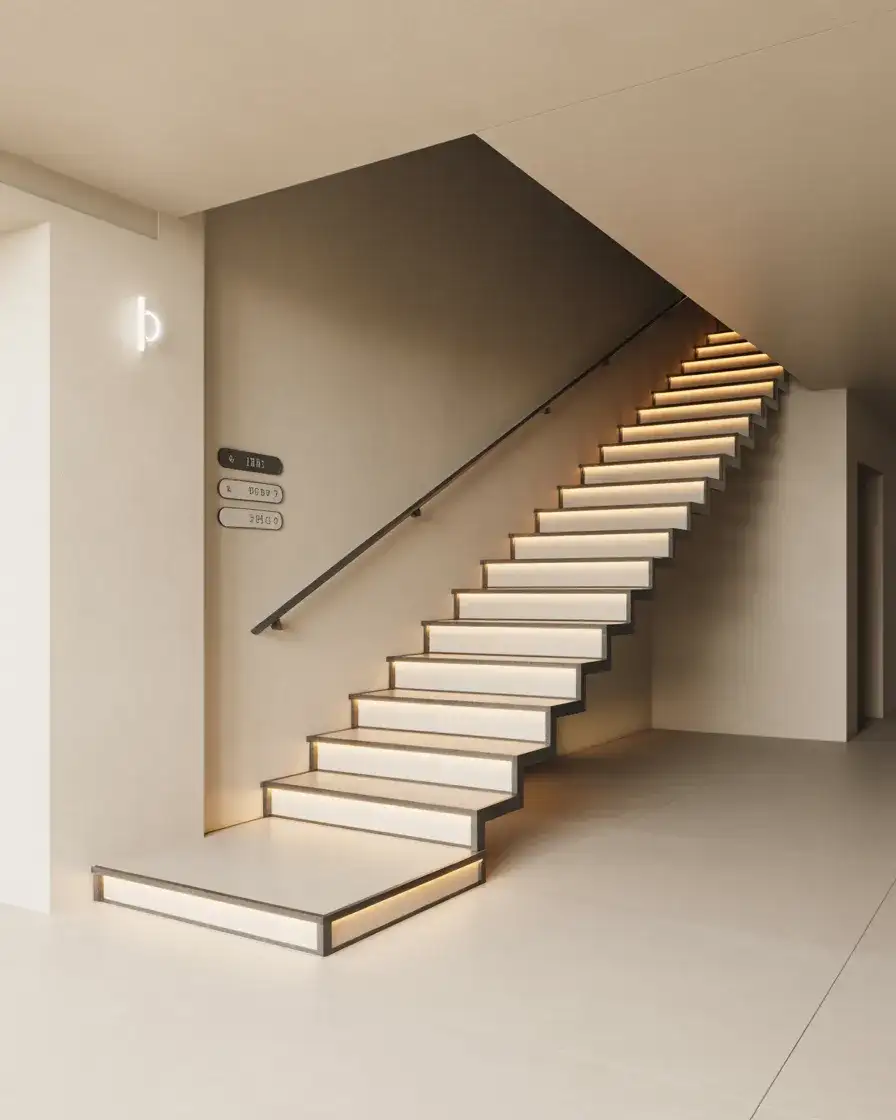
In virtual worlds like Bloxburg and Minecraft, staircases are a key design element that players use to connect levels, create drama, and show off their building skills. Spiral, floating, and straight designs are all popular, often with custom railings, lighting, and color choices that wouldn’t be practical in real life. Players experiment with everything from glass blocks to neon accents, and the results often inspire real-world design ideas. It’s a space where creativity has no budget constraints and where even a short or narrow staircase can become a statement piece.
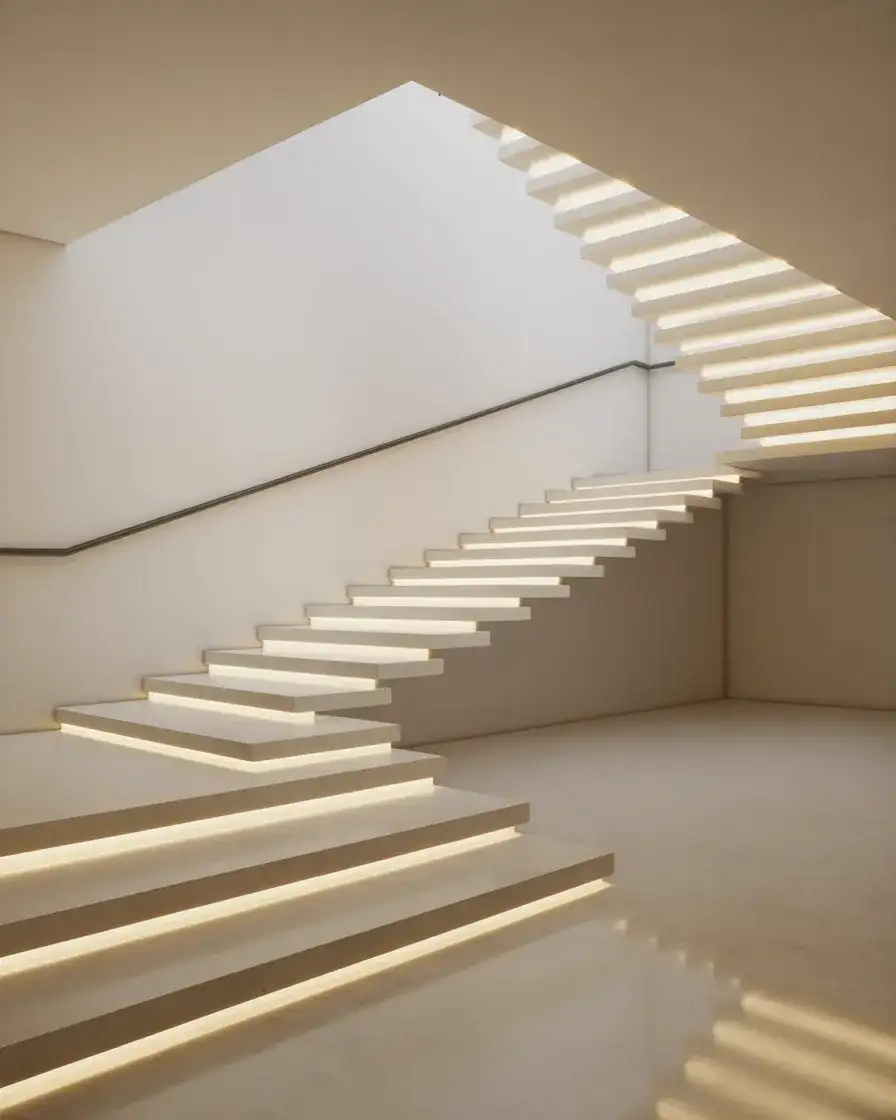
Real homeowner behavior: parents with kids who play these games often find themselves fielding requests for LED lighting, floating stairs, or bold color schemes inspired by what the kids built online. Some of these ideas—like under-tread lighting or glass railings—are totally doable in real life, while others (like a spiral staircase made of neon blocks) stay in the virtual realm. If your teenager is passionate about design in Bloxburg or Minecraft, it might be worth involving them in a real-world staircase update—they’ll bring fresh ideas, and it’s a great way to teach them about budgets, materials, and building codes.
17. Short Staircases for Raised Entries
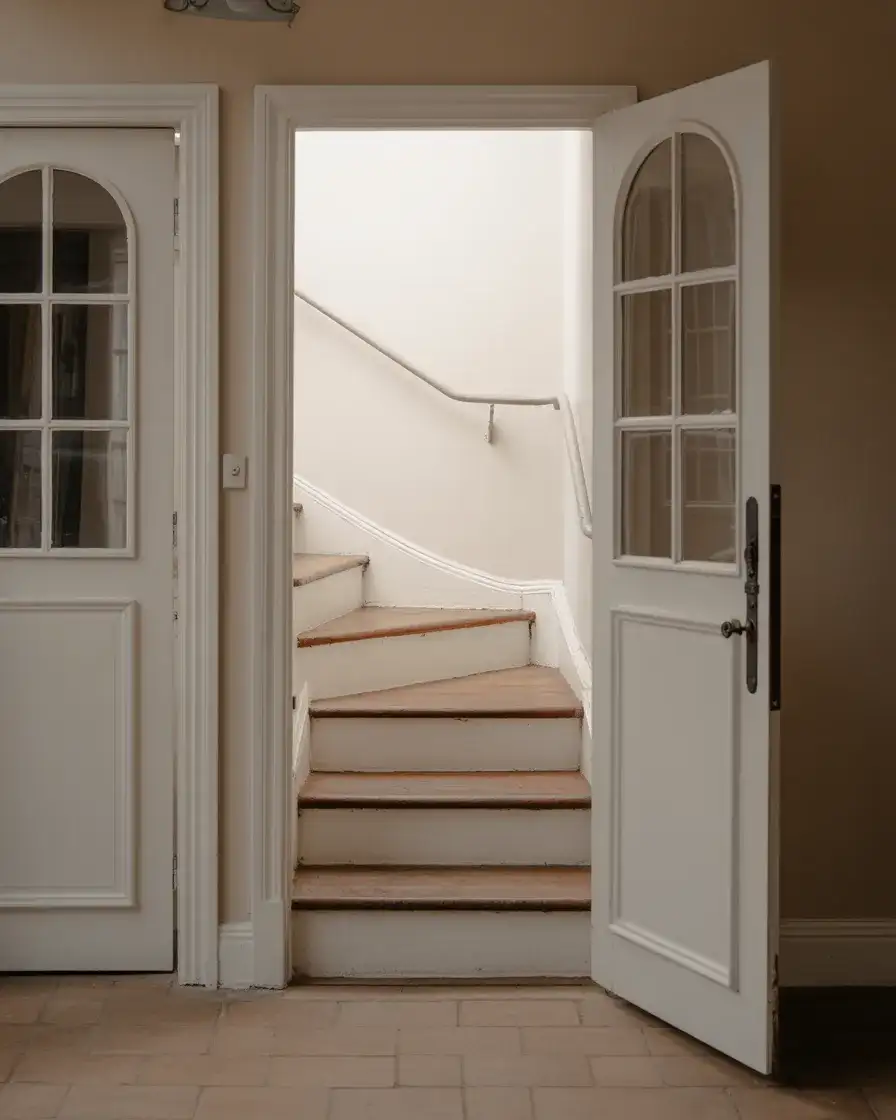
A short staircase—often just three to five steps—is common in homes with raised entries, split-level layouts, or sunken living rooms. These staircases connect small changes in elevation and are usually open on one or both sides. They’re a great opportunity for a design statement: dramatic black risers, a bold runner, or unique railing. Because they’re small, updates are affordable and make a big impact. You’ll see them in mid-century homes, ranch-style homes, and even modern builds where the garage sits below the main floor.
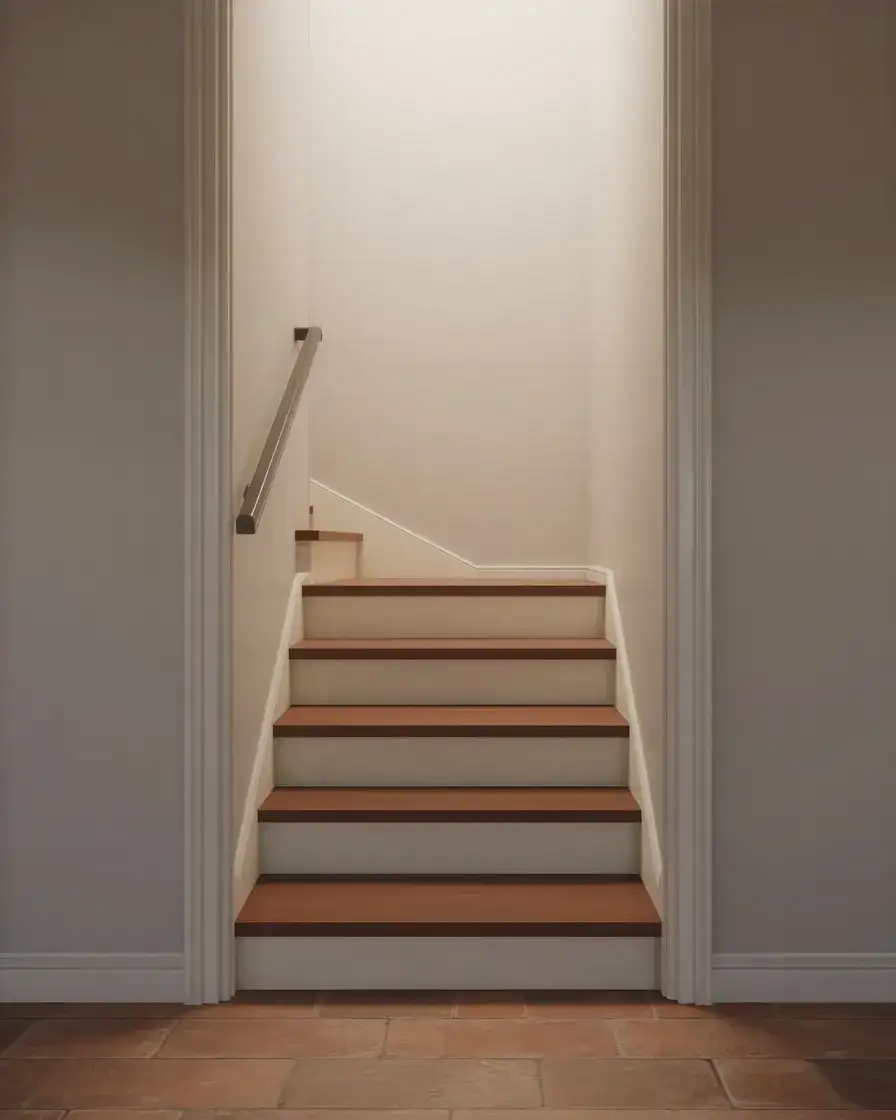
Practical insight: short staircases are often overlooked in renovations, but updating them can transform your entryway. A fresh coat of paint, new treads, or a bold runner costs a few hundred dollars and takes a weekend. If you’re adding a handrail, make sure it’s at least 34 inches high and securely anchored—even a short fall can cause injury. These staircases are also a tripping hazard if they’re not well-lit, so consider adding a small fixture or LED step lights. In homes with open floor plans, the short staircase often marks the transition between public and private spaces, so it’s worth making it look intentional.
18. Staircases Underneath Repurposed as Reading Nooks
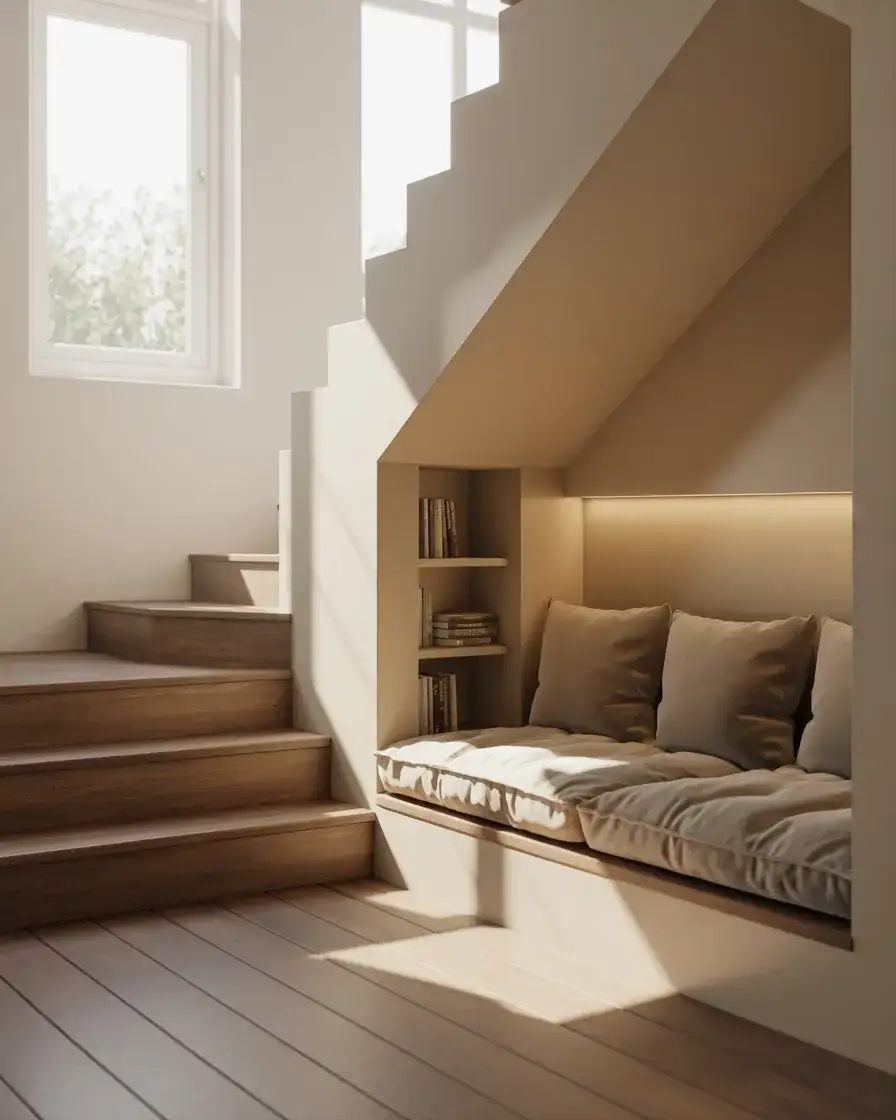
The space underneath a staircase is prime real estate for a cozy reading nook, especially in homes where square footage is tight. A built-in bench, some cushions, and a small bookshelf can transform the area into a retreat. This works best with open or enclosed staircases where the underside is accessible, and it’s especially popular in narrow homes or cottage layouts where every nook needs a purpose. Add a task light, and you’ve got a spot that’s both functional and charming.
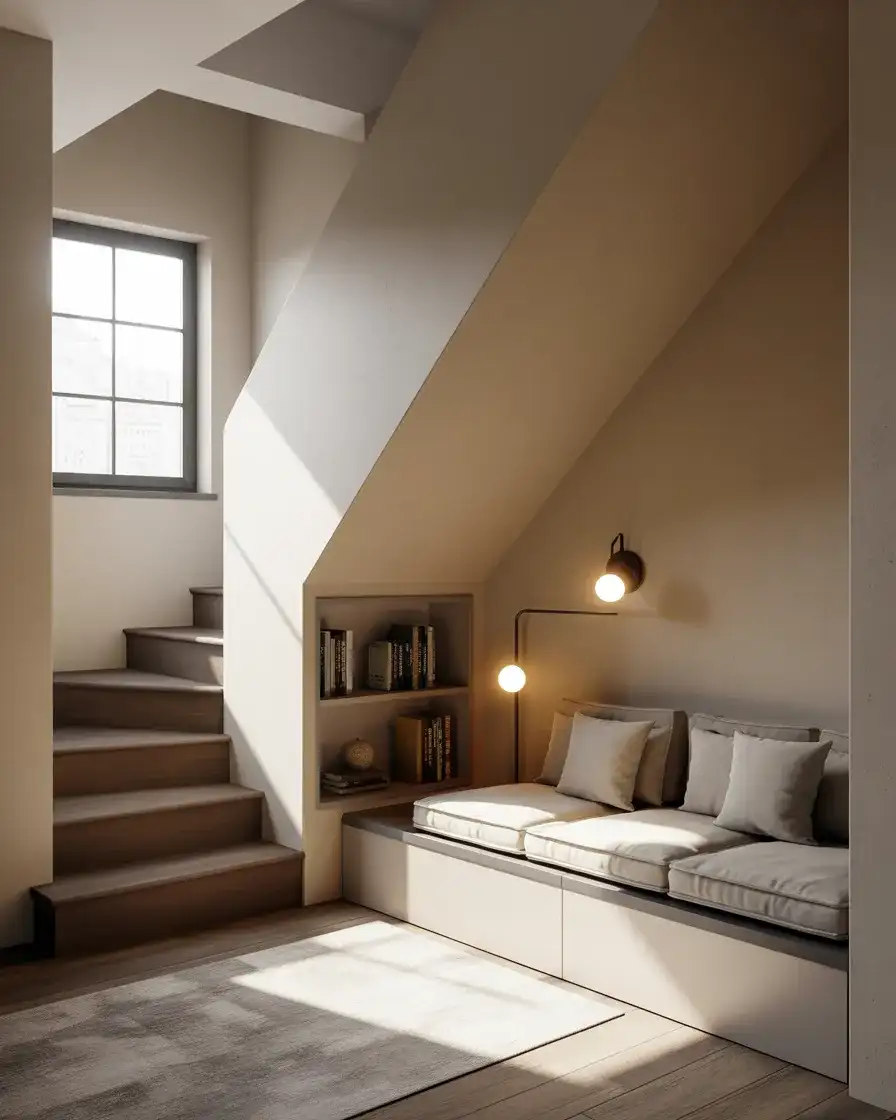
American lifestyle context: in families with kids, the under-stair nook often becomes the favorite hideout—a place to read, play games, or just decompress. Adults love it too, especially in open-concept homes where quiet corners are hard to come by. The setup doesn’t require major construction; a local carpenter can build a bench for around $500 to $1,000, depending on finishes. If you’re DIYing it, make sure the bench is at least 18 inches deep and 16 inches high for comfortable seating. This is also a great spot to tuck away a charging station or small desk if you work from home.
19. Glass Railings for Unobstructed Views
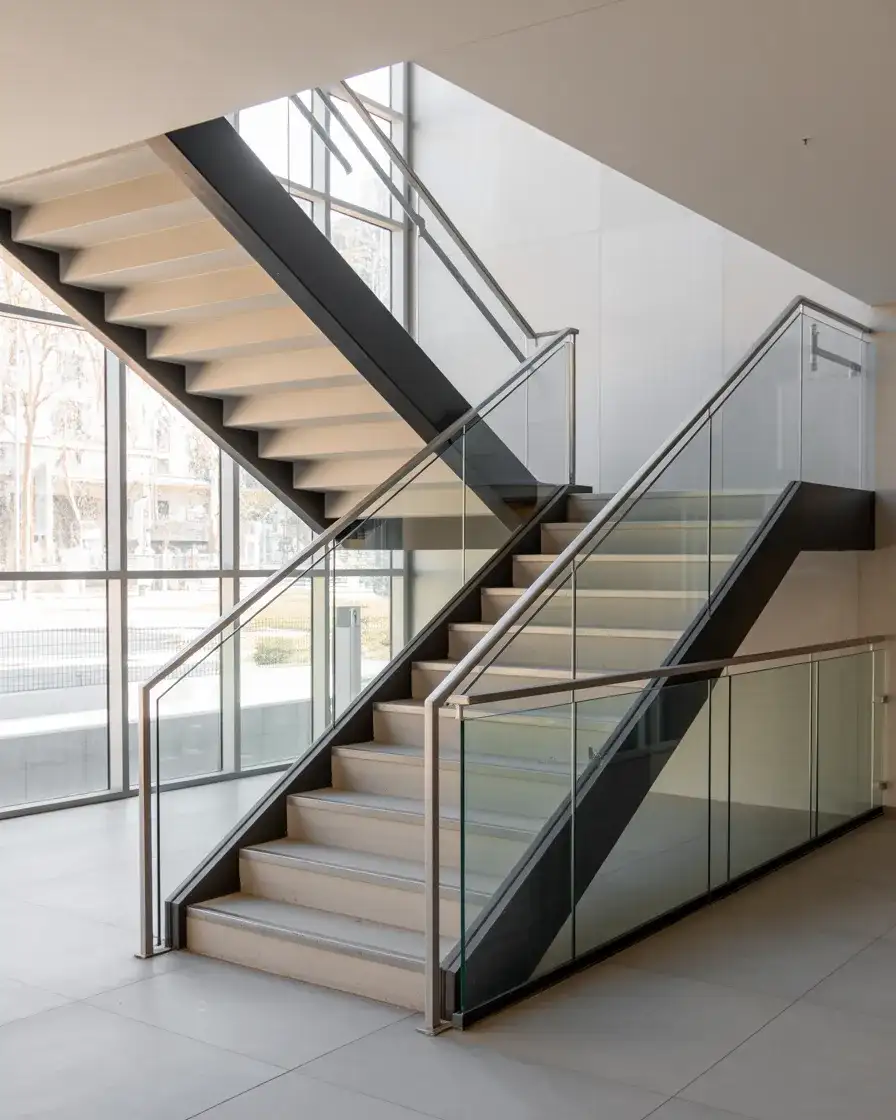
A glass railing on a staircase keeps the view open, whether you’re looking out a window or across an open floor plan. Tempered glass panels are held in place by slim metal posts or a continuous handrail, creating a barrier that’s safe but almost invisible. This style is popular in homes with scenic views, waterfront properties, and modern builds where the architecture is meant to feel light and airy. Pair it with floating treads or wood stairs for a high-end look.
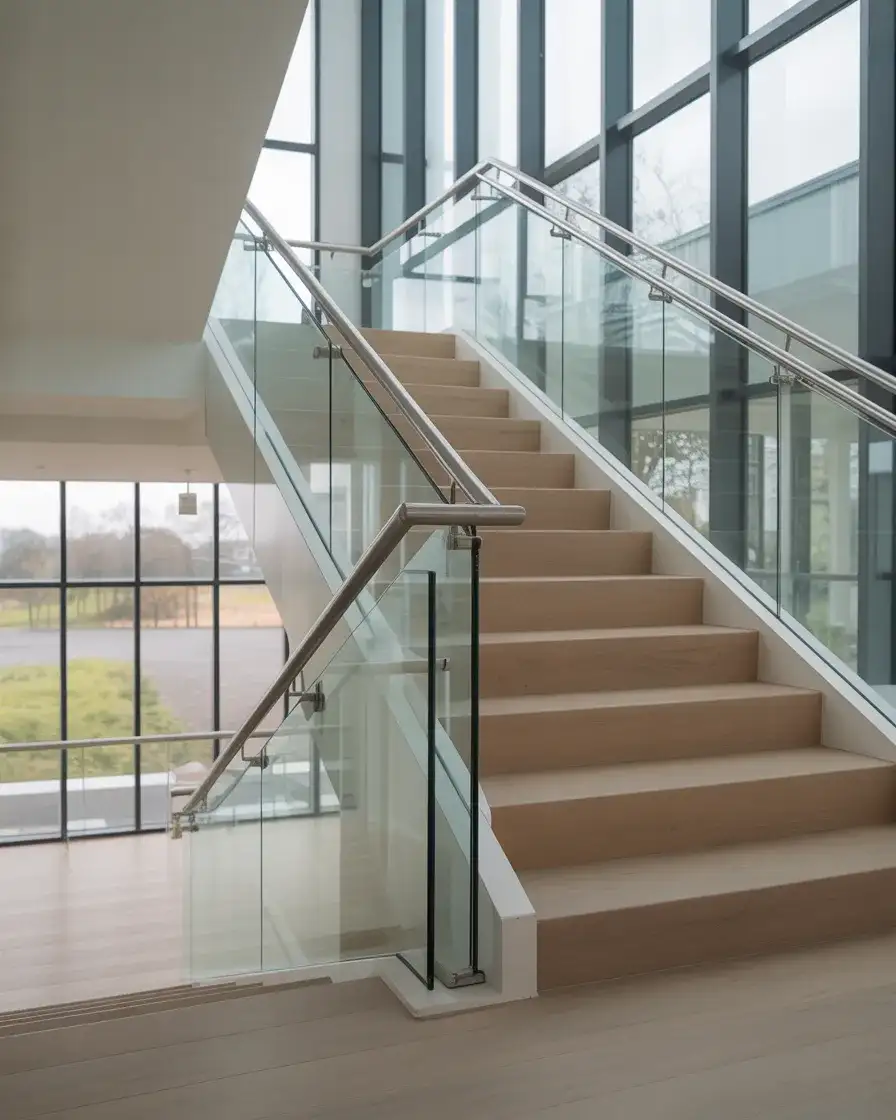
Budget angle: glass railings are an investment, typically costing $150 to $300 per linear foot installed, which puts a standard staircase railing at $3,000 to $6,000. The glass needs to be tempered for safety, and panels should be at least half an inch thick. Maintenance is straightforward but constant—fingerprints, dust, and water spots show up easily, so keep a microfiber cloth and glass cleaner handy. If you have pets or young kids, expect to clean weekly. The payoff is a staircase that feels open and modern and one that doesn’t block light or views. It’s especially effective in homes with limited natural light, where every bit of brightness counts.
20. Victorian Staircases Restored with Modern Updates
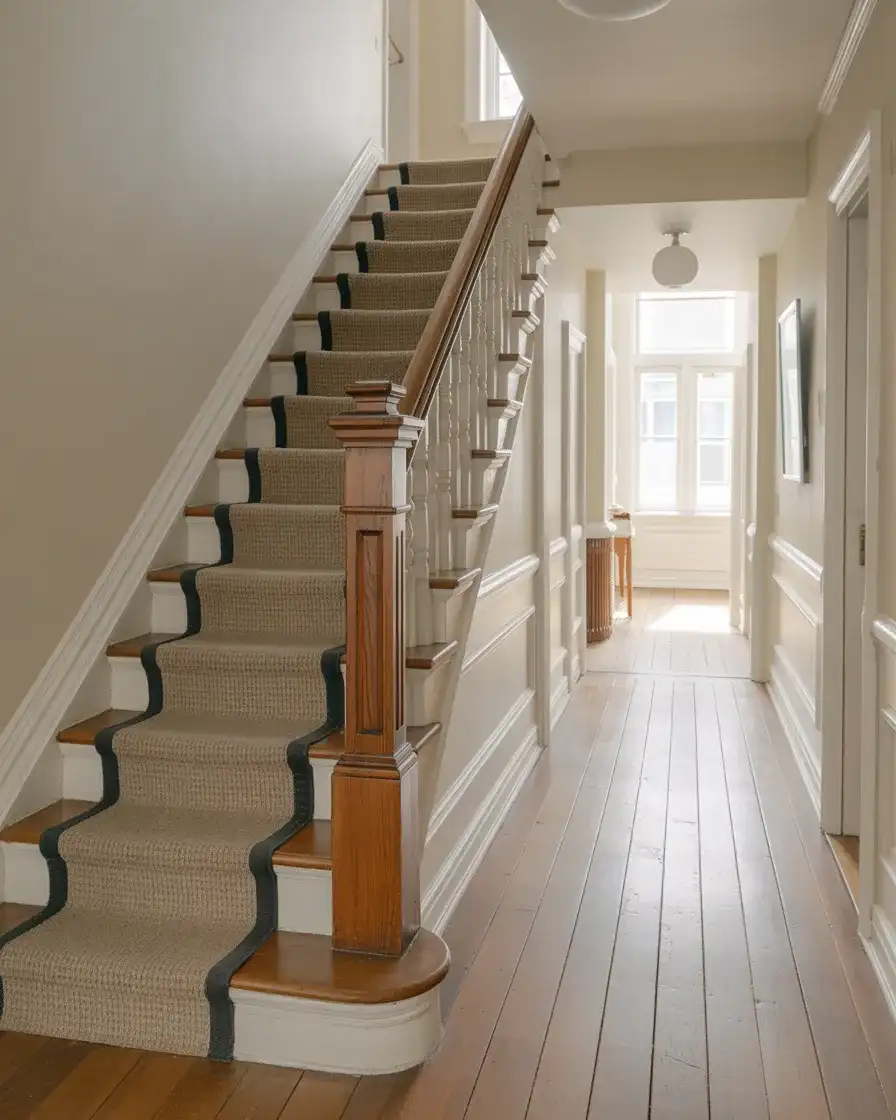
A Victorian staircase doesn’t have to feel frozen in time—many homeowners are restoring the original wooden details while adding modern touches like updated lighting, painted risers, or a fresh runner. The ornate newel posts and turned balusters stay intact, but the overall feel is lighter and more livable. This approach works beautifully in narrow enclosed stairwells or entry halls where the goal is to honor the home’s history without making it feel stuffy. You’ll see this in historic neighborhoods across the country, from San Francisco to Charleston.
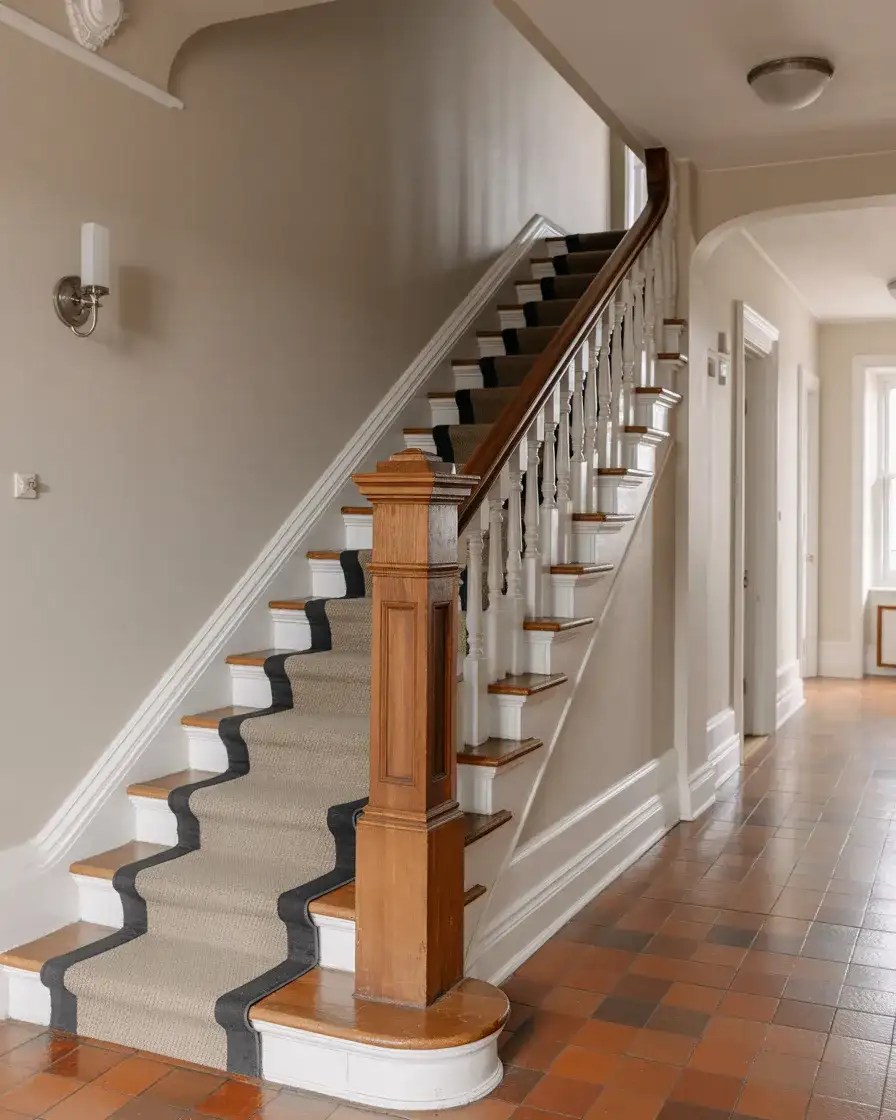
Expert-style commentary: when restoring a Victorian staircase, resist the urge to rip out original details. Reproduction balusters are expensive and never quite match the quality of the originals. Instead, clean and repair what’s there, and refresh the finish. If the handrail is loose, a few well-placed screws can stabilize it without altering the look. Painting the risers white or a soft neutral is a low-cost update that makes the staircase feel less heavy. If you’re adding a runner, choose a pattern that complements the era—florals, stripes, or Persian-style rugs all work well. The goal is to bring the staircase into the present without erasing its past.
21. Entry Staircases as Architectural Focal Points
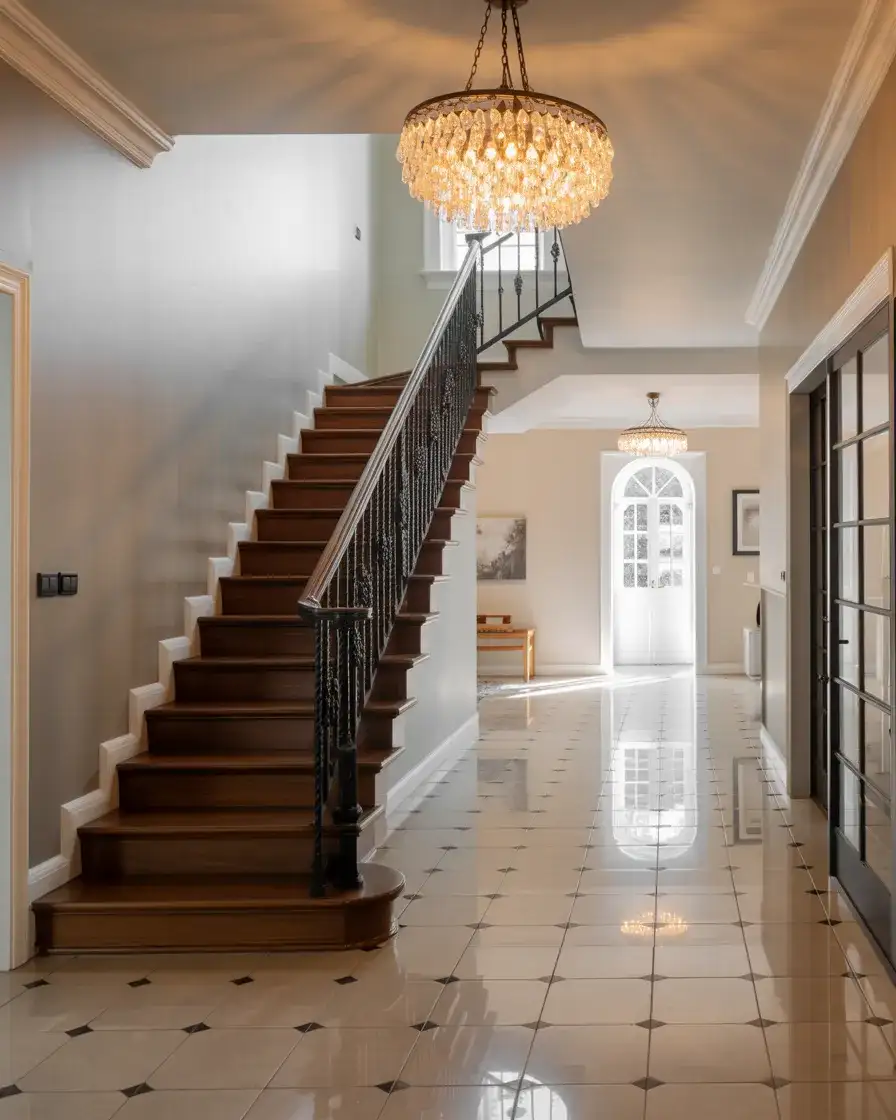
In many homes, the entry staircase is the first thing you see when you walk through the door, making it a natural architectural focal point. Whether it’s a curved masterpiece, a straight run with dramatic lighting, or a floating design that defies gravity, the staircase sets the tone for the entire home. Homeowners are leaning into this by choosing bold materials—black steel, rich wood, glass panels—and treating the staircase like a piece of sculpture. It’s common in two-story colonials, modern farmhouses, and luxury builds.
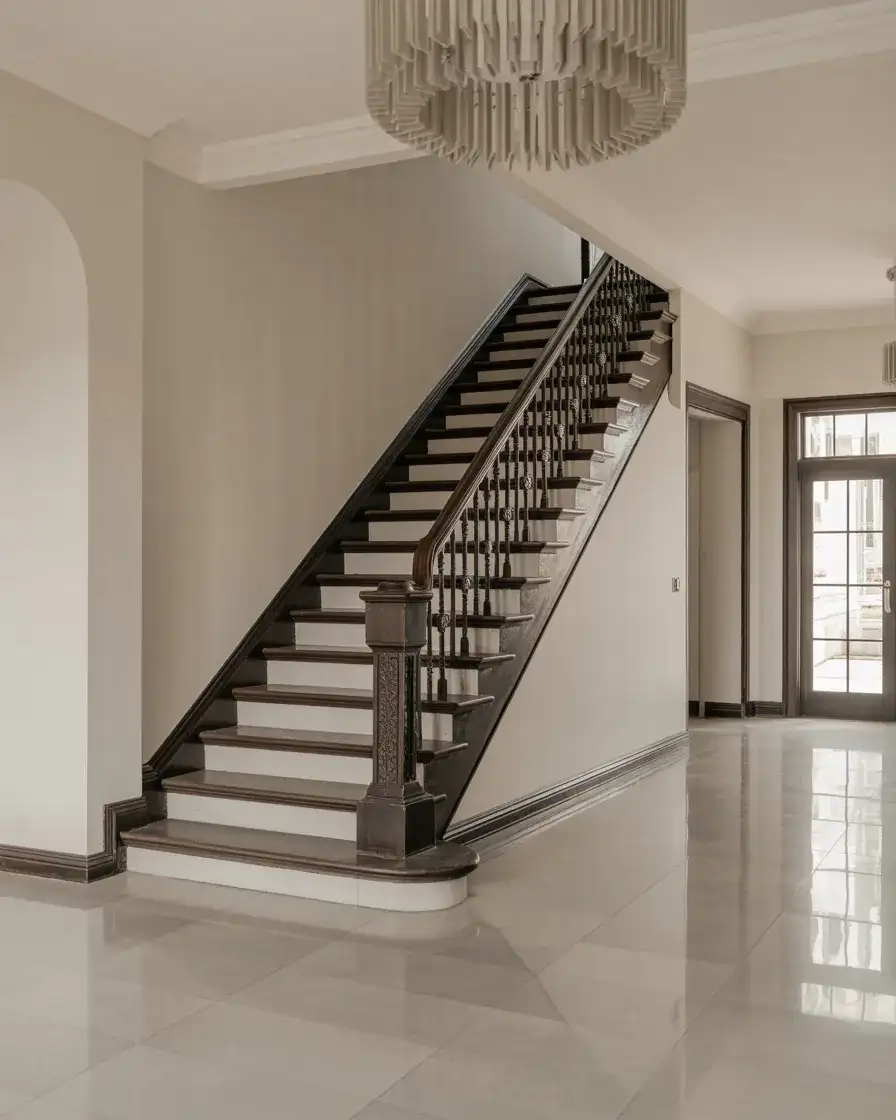
Micro anecdote: a friend renovating a 1920s colonial decided to make the entry staircase the star of the show by stripping decades of paint off the oak treads and painting the risers a deep charcoal. She added a vintage Persian runner and swapped the outdated chandelier for a modern fixture. The transformation cost less than $2,000, but it completely changed how the house felt. Guests now comment on the staircase before anything else. If your entry staircase is underwhelming, consider it low-hanging fruit for a high-impact update—new lighting, a fresh runner, or bold paint can make all the difference.
22. Dark Staircases for Moody Interiors
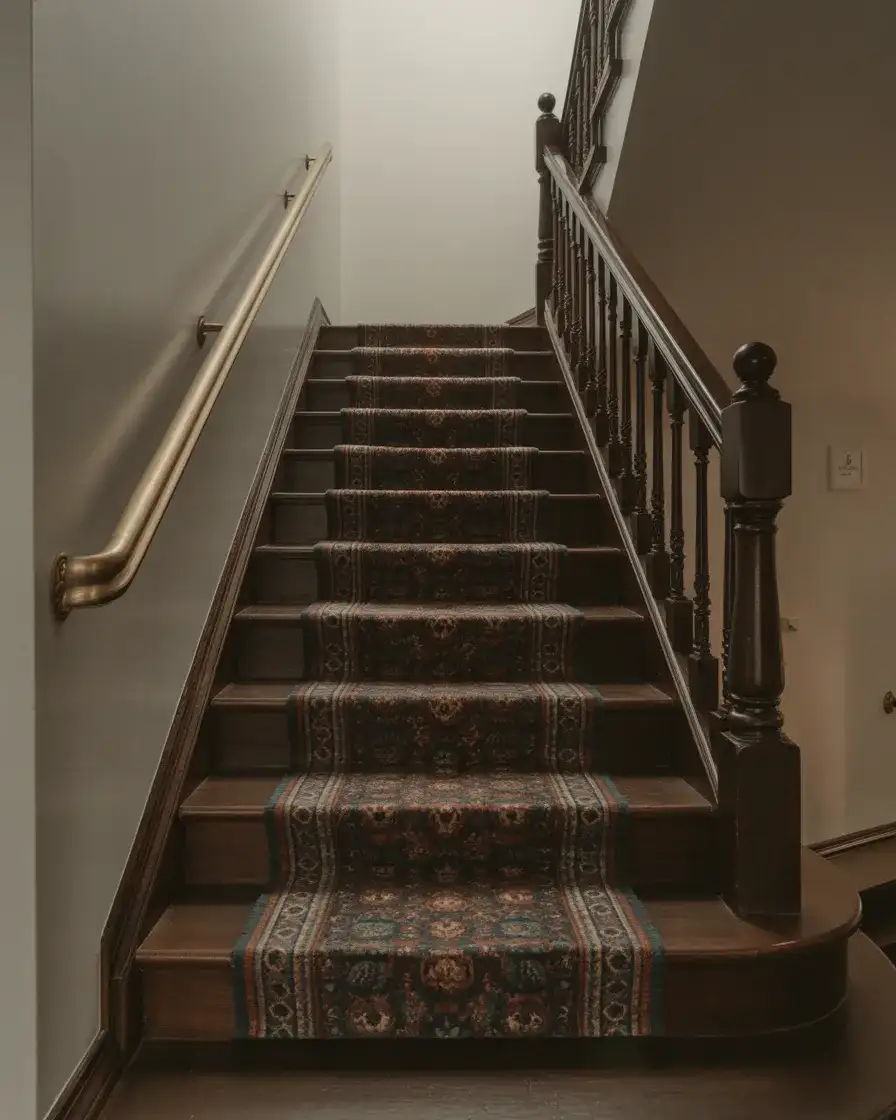
A dark staircase—whether stained in espresso or painted in deep charcoal—brings drama and sophistication to a home. This style works especially well in closed stairwells or narrow spaces where you want the architecture to recede, creating a cocoon-like effect. Pair it with warm lighting, brass hardware, and light-colored walls to keep the space from feeling too heavy. It’s a favorite in brownstones, modern lofts, and renovated farmhouses where the aesthetic skews cozy and intentional.
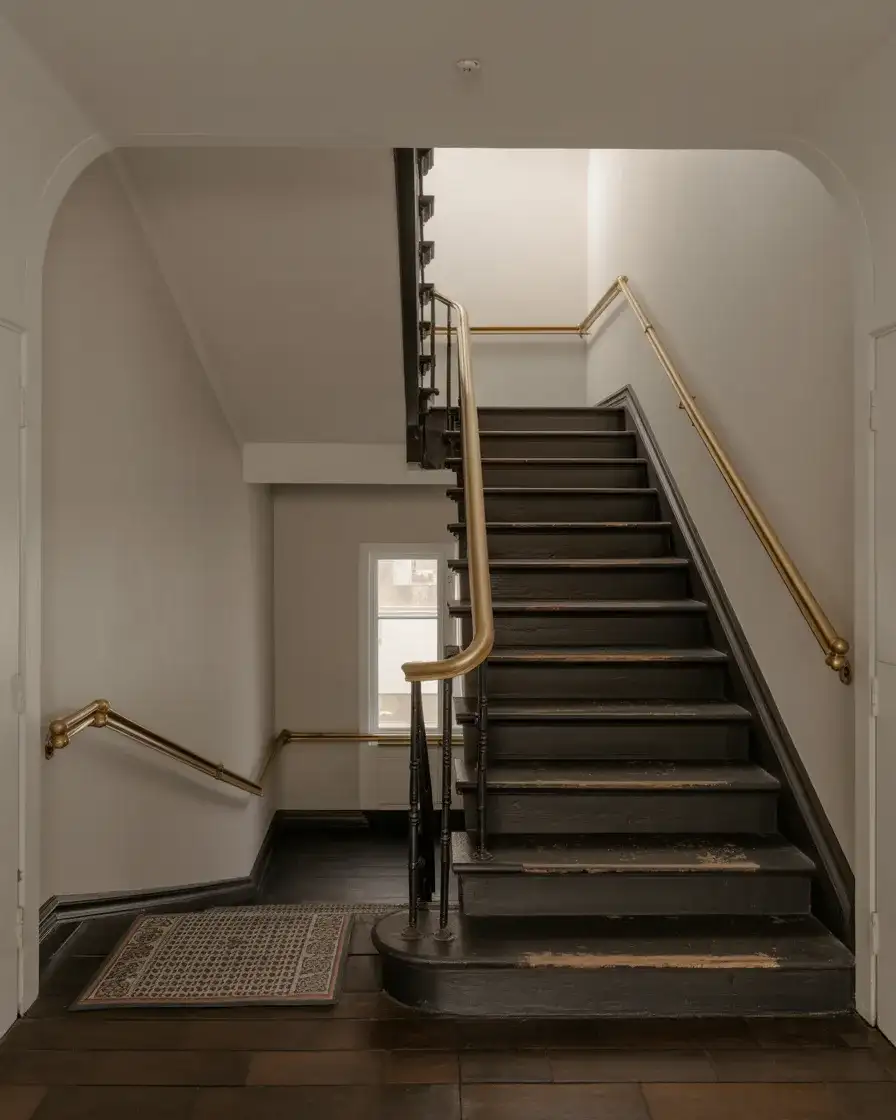
Where it works best: in homes with plenty of natural light elsewhere, so the dark staircase feels intentional rather than dingy. It’s also a smart choice in high-traffic areas where scuffs and wear are inevitable—dark finishes hide imperfections better than light ones. If you’re painting, use a satin or semi-gloss finish that’s easy to wipe down. For staining, apply a dark gel stain in thin coats to avoid blotchiness, and seal with a durable polyurethane. The look is bold and modern, but it’s not for everyone—if you prefer bright, airy spaces, this isn’t the move.
23. Carpeted Staircases for Comfort and Safety
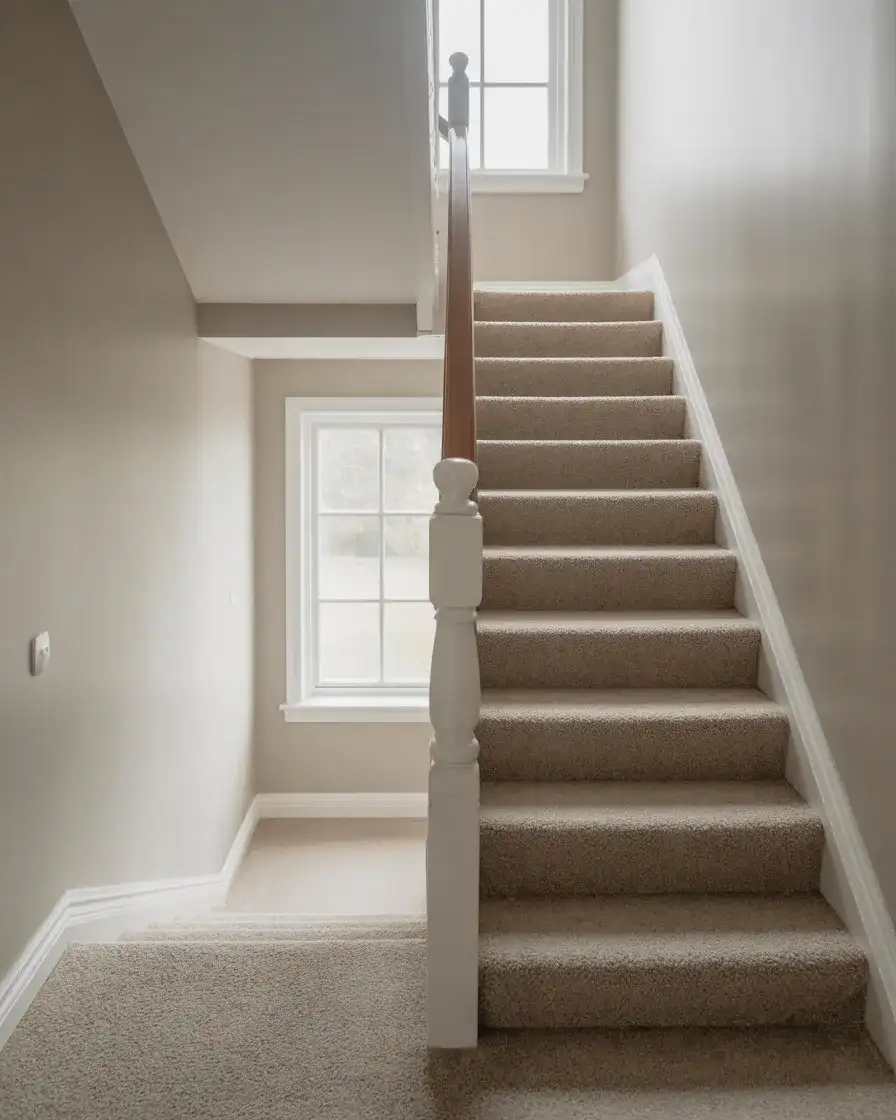
A fully carpeted staircase offers unmatched comfort and safety, especially for families with young children, elderly relatives, or pets. Wall-to-wall carpet muffles sound, provides traction, and softens falls. It’s a practical choice in two-story homes where the staircase sees heavy daily use. You’ll find this setup in suburbs across the country, from split-level ranches to traditional colonials. The key is choosing a low-pile, durable carpet in a color that won’t show every speck of dirt—neutrals like gray, beige, or soft taupe are the most forgiving.
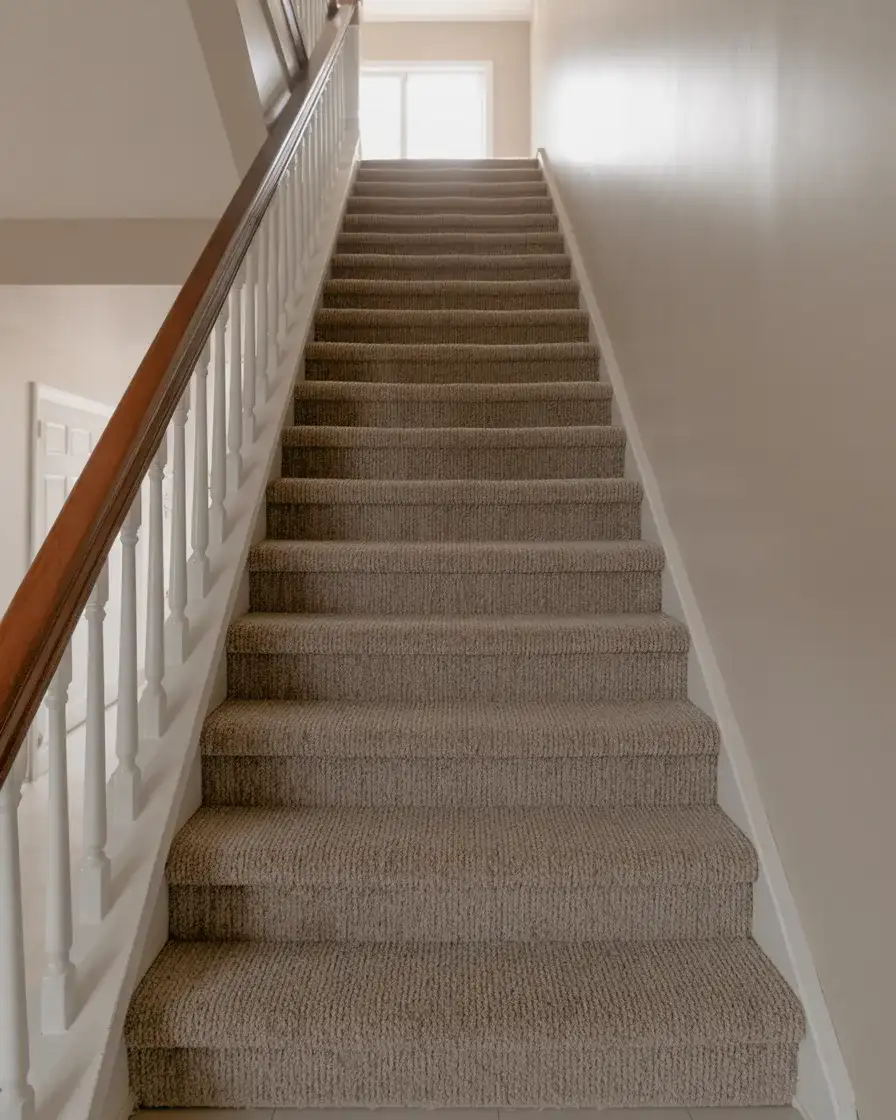
Common mistakes and how to avoid them: the biggest error is choosing carpet that’s too light or too plush. Light colors show every stain, and plush carpet wears out quickly on stairs. Go for a dense, low-pile carpet with a tight weave, and consider a stain-resistant treatment if you have kids or pets. Another mistake is skipping the carpet pad—it’s essential for cushioning and extending the life of the carpet. A quality pad costs an extra $1 to $2 per square foot but makes a huge difference in feel and durability. Expect to replace stair carpet every 7 to 10 years in a busy household, so budget accordingly.
Conclusion
Whether you’re drawn to the sleek lines of a floating staircase, the warmth of natural wood, or the cozy charm of a carpeted runner, there’s a staircase idea here that fits your home and your style. The best designs balance beauty with practicality, honoring the architecture while making daily life easier. Drop a comment below with your favorite idea, or share what you’re planning for your own staircase—we’d love to hear what inspires you.