There’s something quietly thrilling about a fresh coat of paint. It costs less than a new sofa, takes a weekend, and yet it has the power to completely transform how a room feels to live in. Heading into 2026, Americans are searching Pinterest in record numbers for bedroom paint ideas that go beyond the tired greige—craving spaces that feel intentional, personal, and just a little unexpected. Whether you’re finally tackling that master suite, brightening up a compact guest room, or hunting for the next color that feels both timeless and thoroughly now, you’ve landed in the right place. Here are ideas—from moody midnight blues to earthy sage greens, from bold accent walls to soft, cocoon-like hues—that will make your bedroom the most beautiful room in the house.
1. Dusty Sage Green for a Calm, Nature-Inspired Retreat
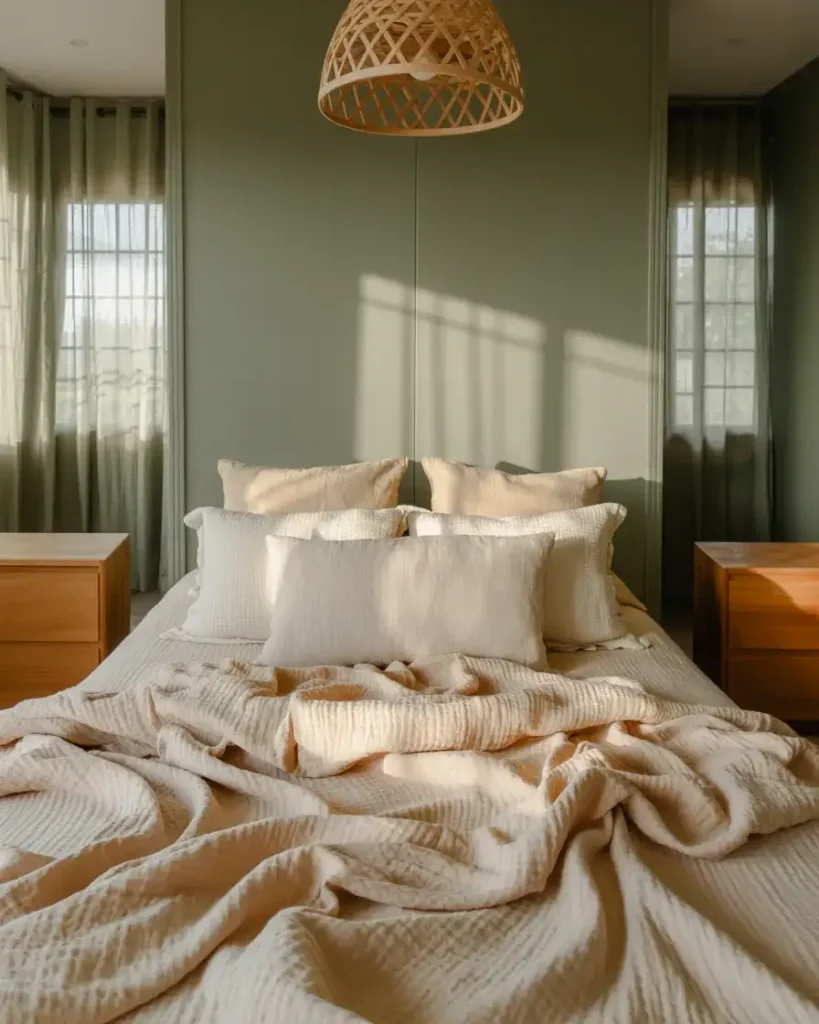
If there’s one color dominating mood boards and inspo feeds this season, it’s dusty sage green—a muted, earthy tone that sits somewhere between olive and mint and manages to feel both grounding and fresh. Unlike bolder greens that demand attention, sage is generous: it plays beautifully with warm wood furniture, linen bedding, and rattan accents. It also shifts subtly with natural light, looking almost golden in morning sun and deeply mossy at dusk. Paint the four walls for full immersion, or try it on just the wall behind your headboard for a softer commitment that still makes a statement.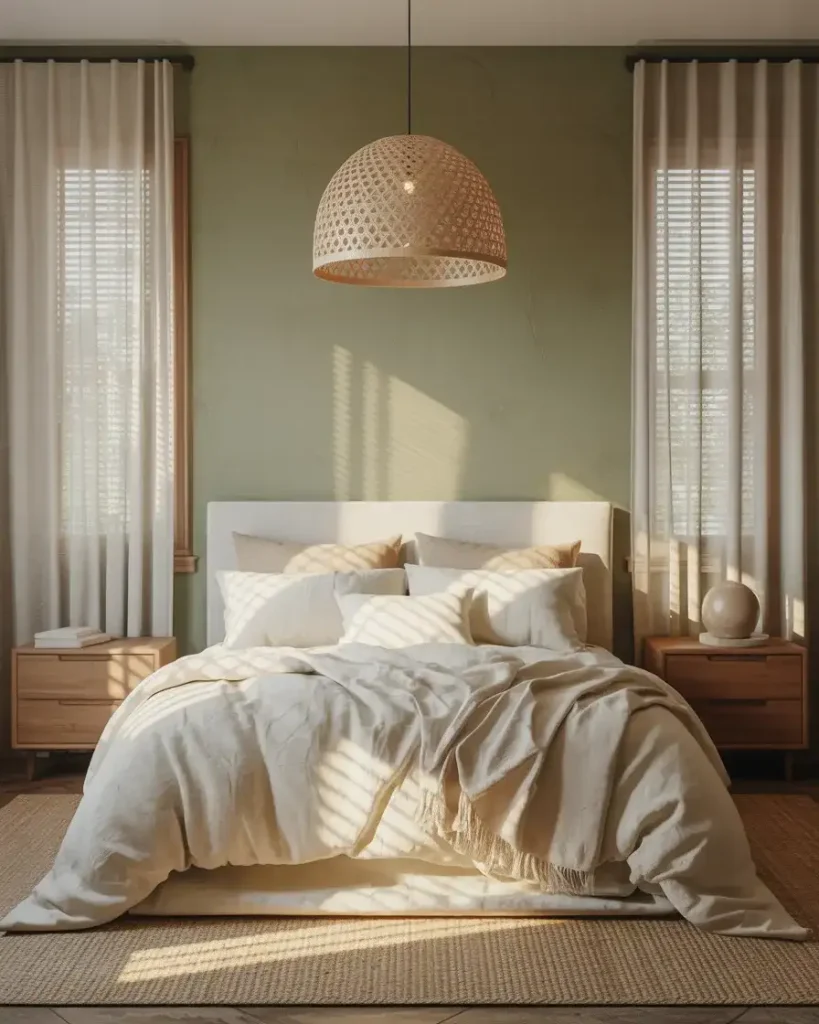
Sage green pairs particularly well with terracotta, warm brass hardware, and undyed linen—a combination that interior designers call “organic modern.” If you want a foolproof starting point, look to Sherwin-Williams’ Privilege Green or Whole Foods (SW 6421), both of which lean into that complex dusty quality without feeling flat. This is a shade that works in virtually every bedroom type—from a sun-drenched primary suite to a north-facing room that needs warmth—making it one of the most versatile calls you can make in 2026.
2. Deep Navy Blue Accent Wall with Crisp White Trim
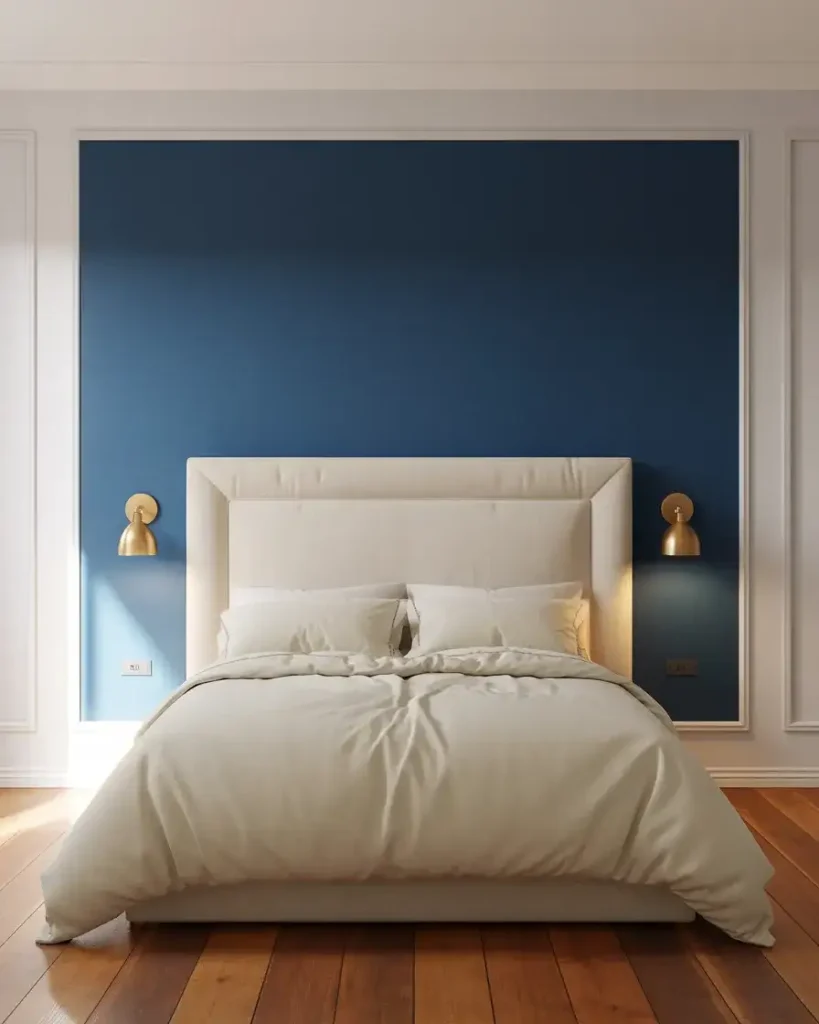
A deep navy blue accent wall is one of those classic combinations that never feels dated—and in 2026, it’s getting a fresh second wind thanks to homeowners pairing it with warmer neutrals instead of the cool grays of years past. The contrast between inky navy and bright white trim is sharp and sophisticated, giving a bedroom the kind of polished, collected look that you’d find in a designer’s personal home. Consider painting just the wall where your headboard sits, then pulling in navy through small accessories like a throw pillow or a ceramic lamp base to tie the room together.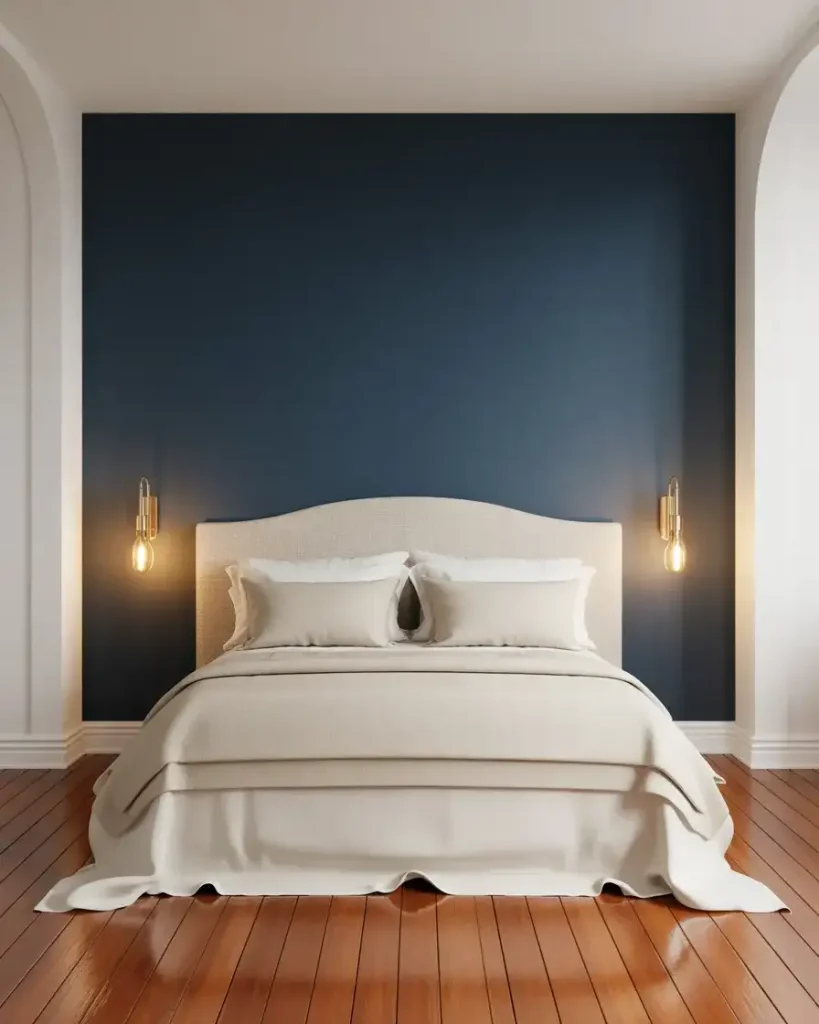
One common mistake people make with dark accent walls is choosing paint that’s too cool-toned—navy with a blue-black base can feel cold and cave-like without the right lighting. To avoid this, pick a navy with warm, slightly purple undertones, like Benjamin Moore’s Hale Navy or Sherwin-Williams Naval (SW 6244). Then layer your lighting: a warm-toned bulb in your bedside lamps will turn the wall from foreboding to genuinely cozy once the sun goes down. This is a pairing that rewards careful attention to the details.
3. Warm Terracotta for a Bohemian, Sun-Soaked Atmosphere
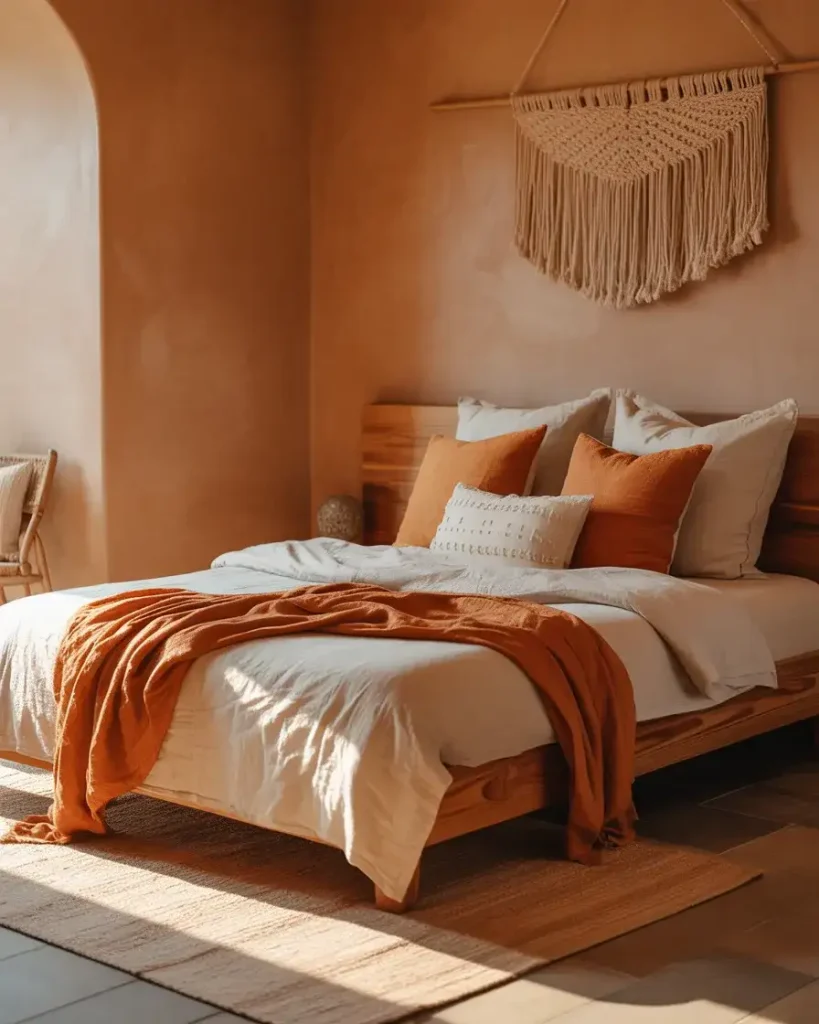
Terracotta has been having a long, slow, completely deserved moment—and it shows no sign of fading. As a wall color idea, it brings an earthy warmth that makes a bedroom feel immediately embracing, like the walls themselves are glowing. It works especially well in bedrooms that get afternoon light, where it deepens into something almost amber. Pair it with cream, rust, and camel for a full Southwestern palette, or dial it back with cool white bedding and natural jute accents for a more restrained, globally inspired look that still has plenty of soul.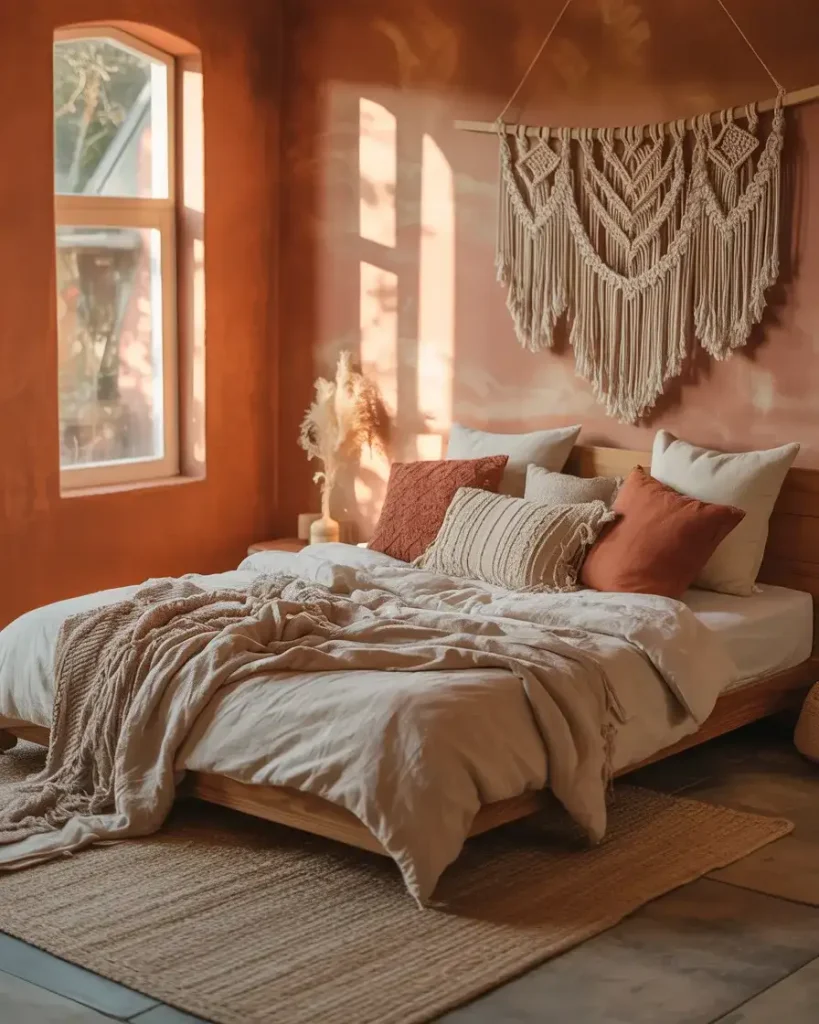
A homeowner in Tucson described terracotta as “the color that made our bedroom feel like a destination instead of just a room where we sleep”—and that captures it perfectly. The shade draws from the landscape around it: the burnt reds of canyon walls, handmade pottery, and late-afternoon desert light. For renters hesitant to commit, terracotta works just as well as an accent through bedding, a large woven wall hanging, or even a painted secondhand dresser. The spirit of the color comes through regardless of how much square footage you give it.
4. Soft Blush Pink for a Romantic, Feminine Master Suite
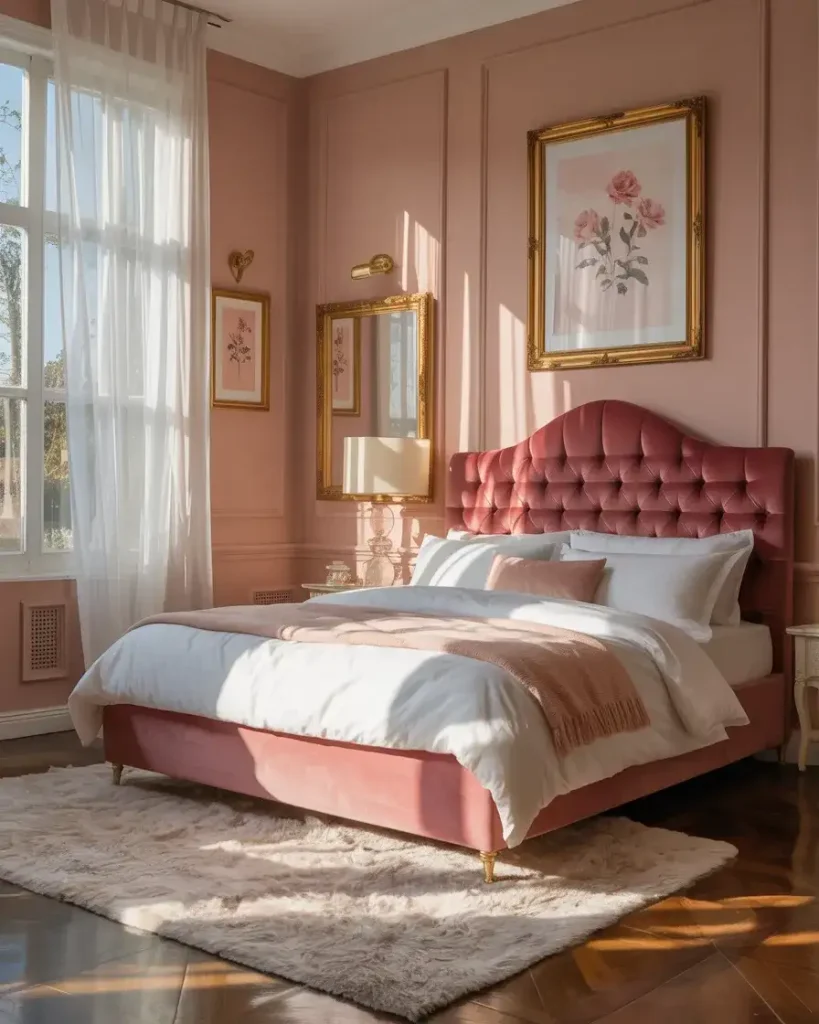
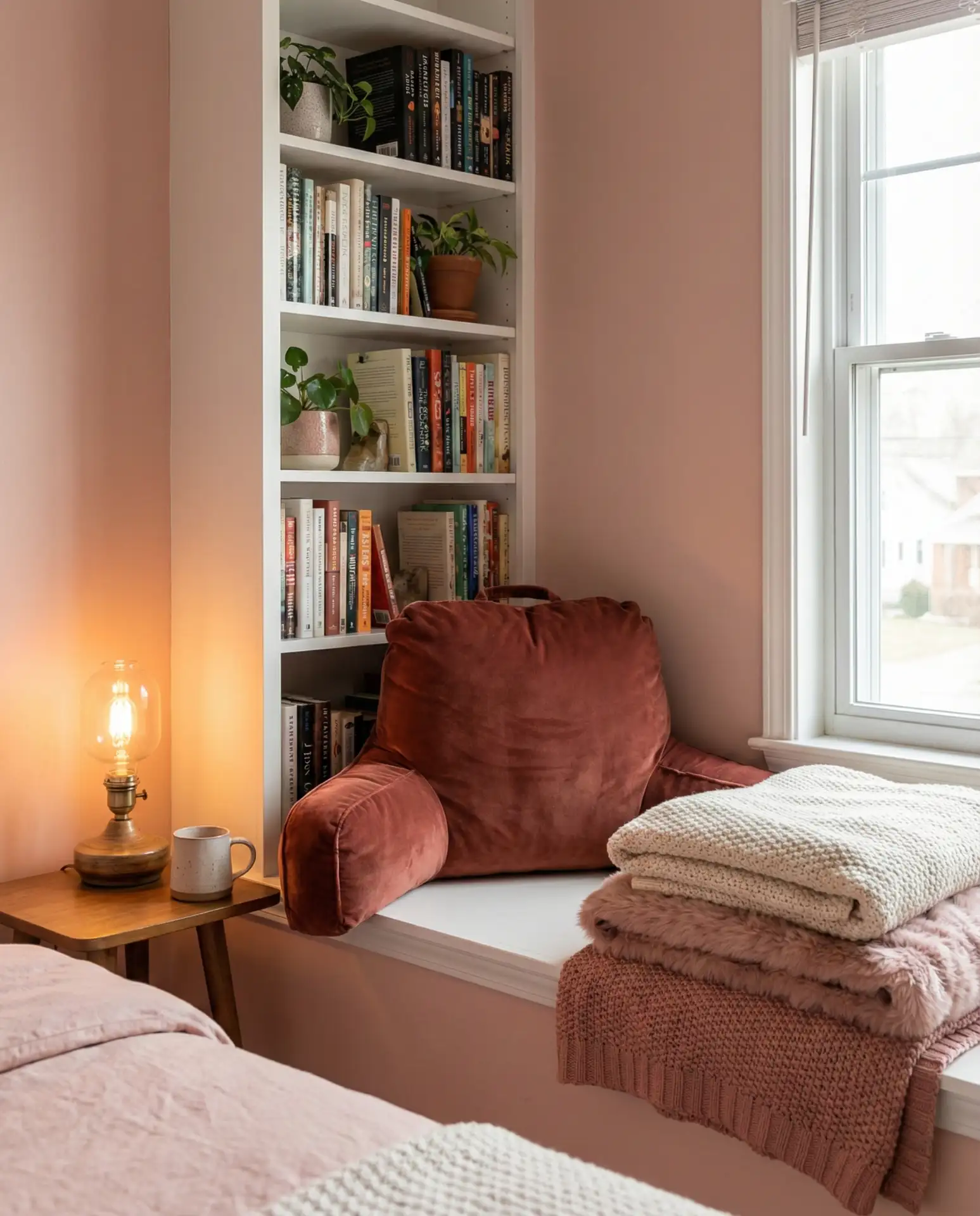
Forget the bubblegum pink of your childhood bedroom—soft blush is something else entirely. It’s grown-up, romantic, and quietly confident, sitting closer to warm white than to candy. As a room color idea for a master suite, it wraps the space in a flattering glow that makes everyone who enters feel slightly more relaxed and, yes, a little more beautiful. It layers effortlessly with soft charcoal, antique gold, and deep plum for a palette that feels genuinely luxurious without trying too hard.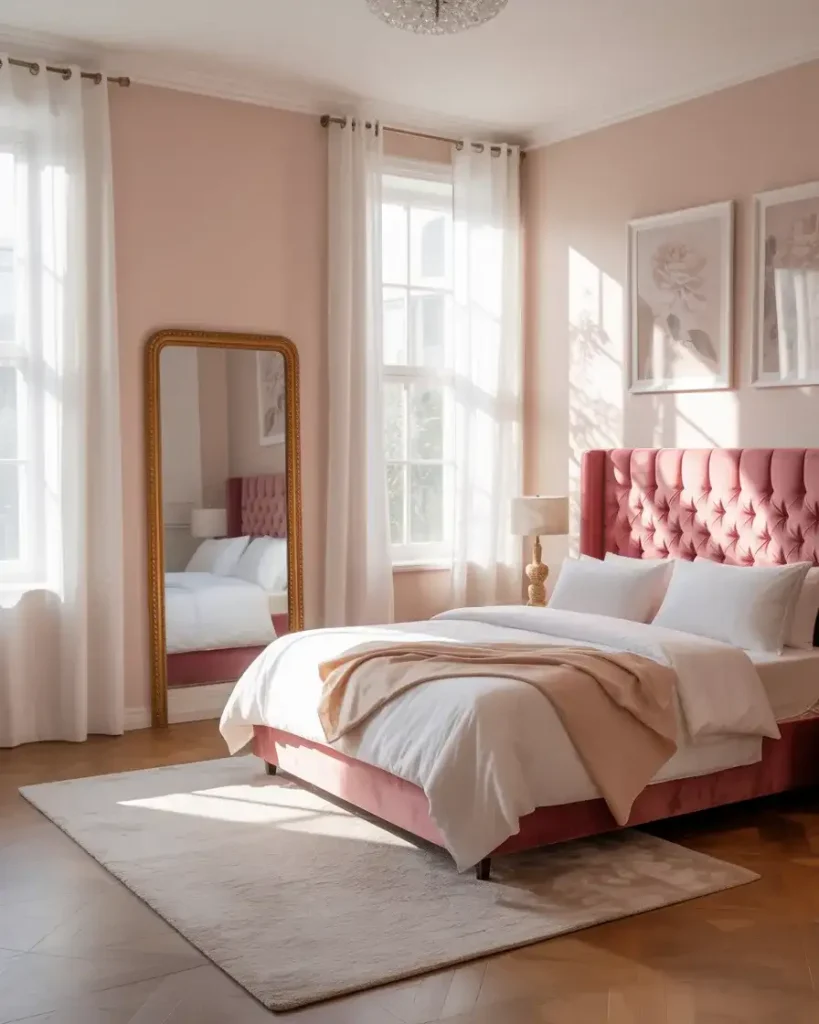
Where this color works best is in rooms with south- or west-facing windows, where natural light reinforces the warmth in the pigment. In north-facing rooms, choose a blush with a peachy or gold undertone rather than a cooler, lavender-leaning one, which can look flat without generous light. Farrow & Ball’s Setting Plaster is a beloved reference, but Sherwin-Williams’ Mellow Coral and Benjamin Moore’s Pink Bliss both offer more budget-friendly starting points that read as sophisticated rather than saccharine in most American homes.
5. Moody Charcoal with Warm Wood and Ambient Lighting
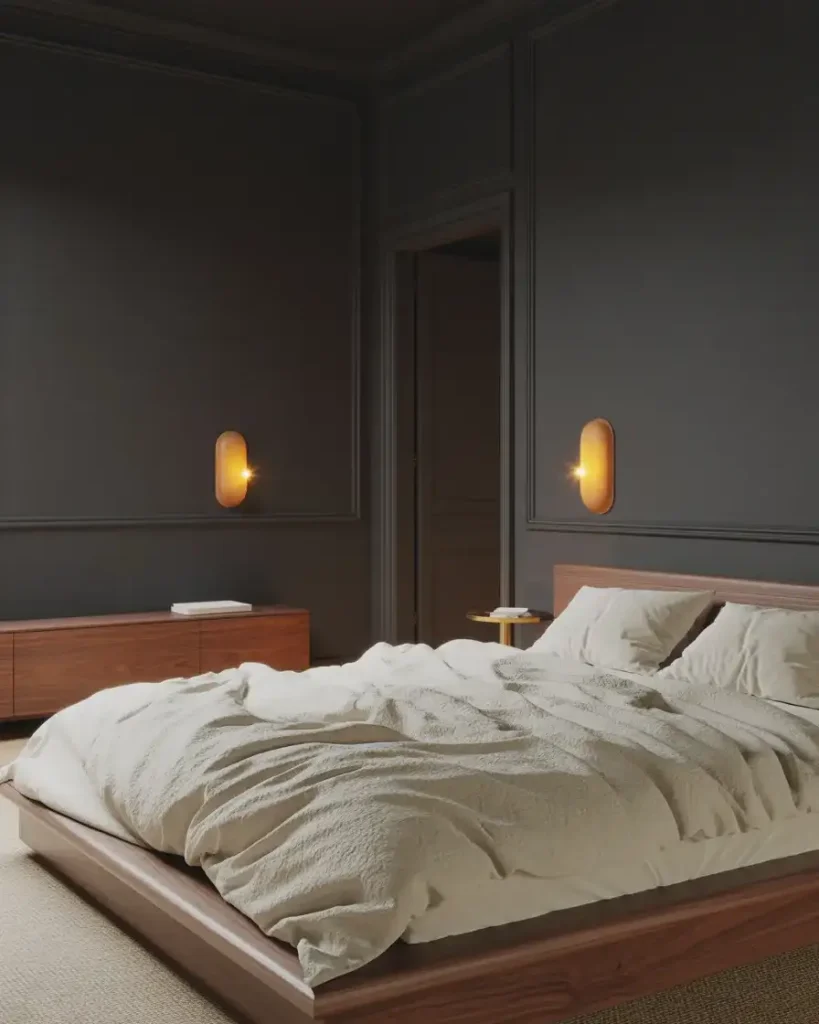
There’s a reason that moody, dark bedrooms keep showing up in every “most saved” list on Pinterest—they feel like a genuine escape. Deep charcoal wall design ideas create a cocooning effect that turns a bedroom from a functional room into a sensory retreat. The key is pairing charcoal with warmth: honey-toned wood furniture, amber bulb lighting, plush velvet or bouclé textiles, and warm metallics like aged brass or copper. Without those counterpoints, charcoal can feel sterile; with them, it feels like the best hotel room you’ve ever stayed in.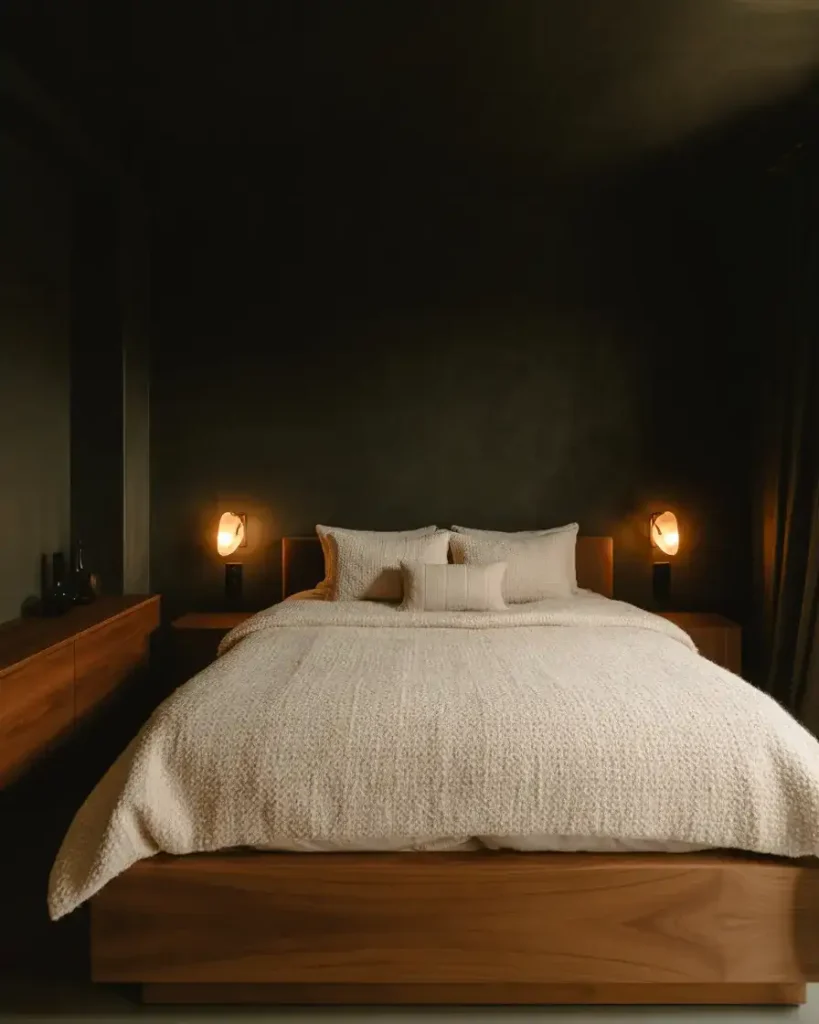
Budget-wise, going dark is actually one of the more economical ways to make a dramatic transformation. You’re typically using one or two coats over an existing neutral, and the impact is immediate and total. The practical tip most designers give: paint your ceiling the same charcoal shade (or one slightly lighter). Many people leave the ceiling white and find it kills the moody effect they were going for—a charcoal room with a bright white ceiling can look unfinished rather than intentional. Commit to the whole room, and the result is stunning.
6. Warm White with Textured Wall Art for Minimalist Elegance
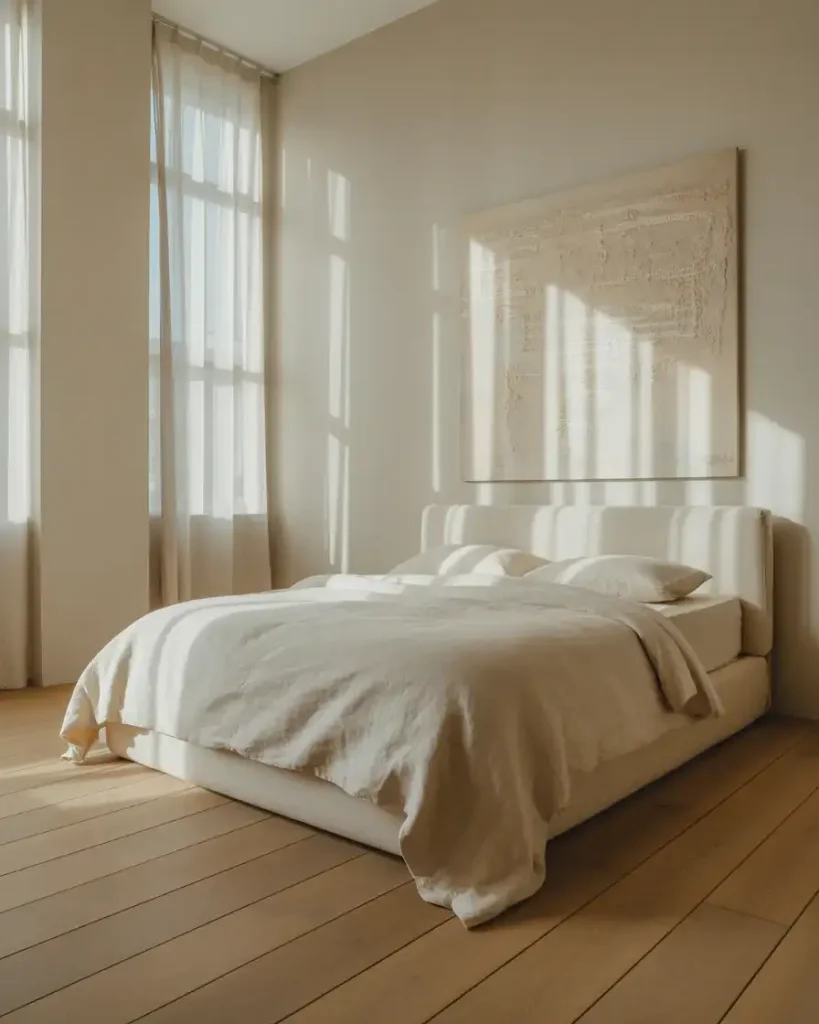
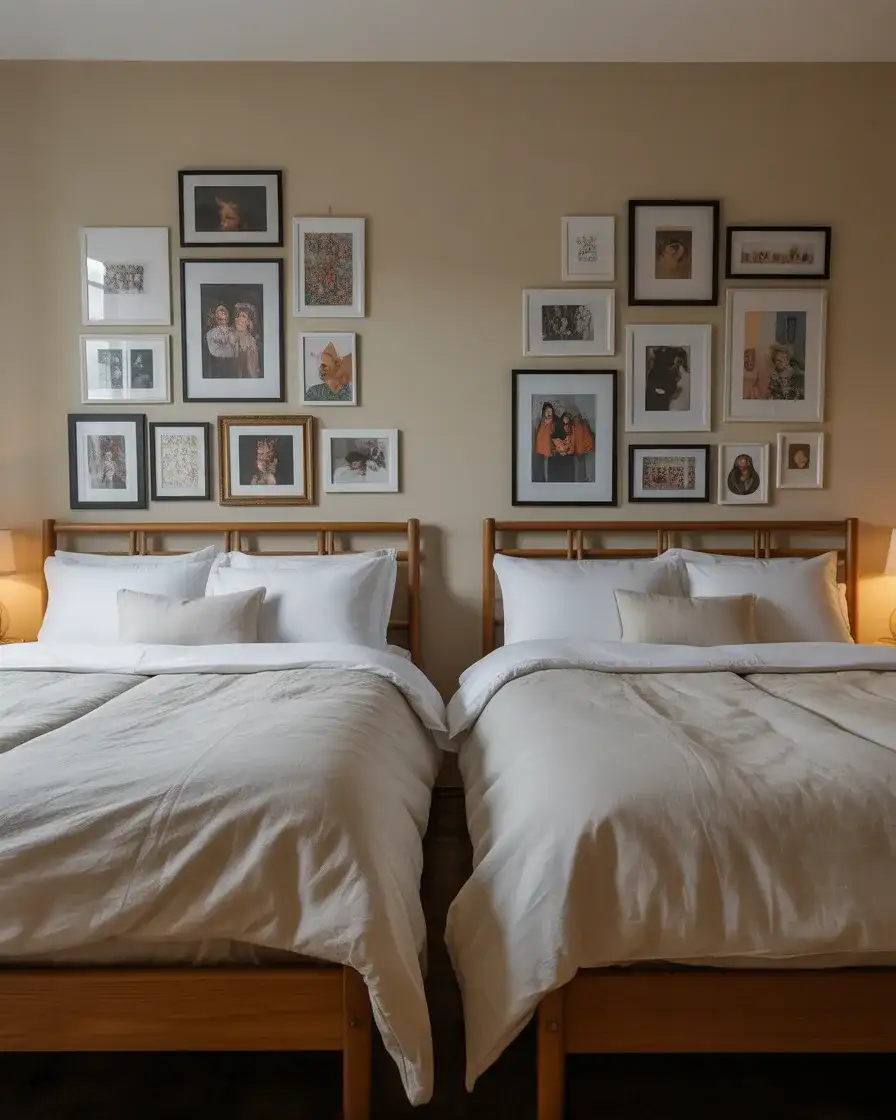
Not every stunning bedroom relies on color drama. Warm white done thoughtfully—with textured canvas wall art, layered textiles, and natural material accents—can create a space that feels like a high-end retreat without a single bold choice. The difference between warm white and cold white is everything: warm whites have yellow, pink, or beige undertones that make a room feel inviting rather than clinical. Think of the difference between a luxury spa and a hospital corridor. Both are white—but only one makes you exhale when you walk in.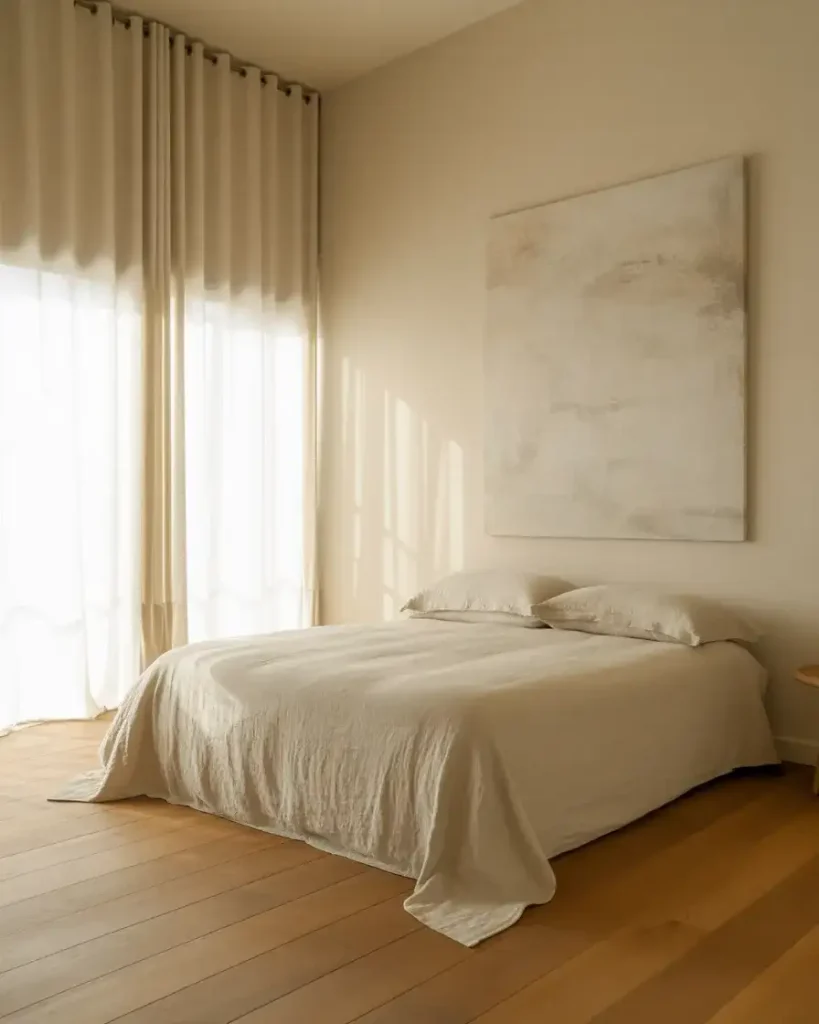
This is where texture becomes the design hero. A single large abstract canvas in creamy whites and taupes can anchor the headboard wall just as powerfully as a coat of paint. Add a chunky knit throw, a sisal rug, and linen curtains, and you’ve created something that photographs beautifully but—more importantly—feels genuinely restful to come home to. Sherwin-Williams Alabaster (SW 7008) is essentially the patron saint of warm whites, and for good reason: it’s creamy without tipping into yellow and adaptable without feeling beige.
7. Bold Mustard Yellow as a Sunny Statement Accent Wall
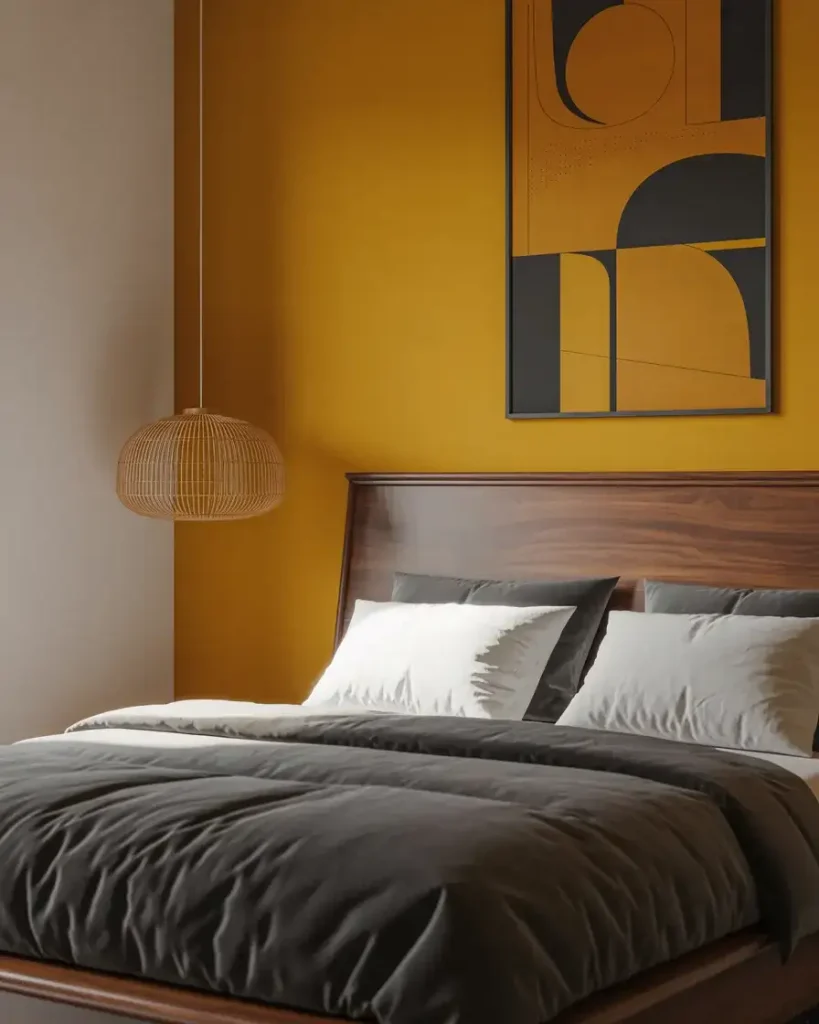
For those willing to be bold, mustard yellow is having a significant style revival—moving away from the timid butter yellows of the past toward deep, saturated, almost ochre-toned versions that feel simultaneously retro and thoroughly modern. As an accent wall color, mustard is a confidence move: it signals that the room’s occupant has a point of view and isn’t afraid to express it. Against deep charcoal, black, or forest green accents, mustard sings. Against natural wood and rattan, it becomes warm and inviting rather than brash.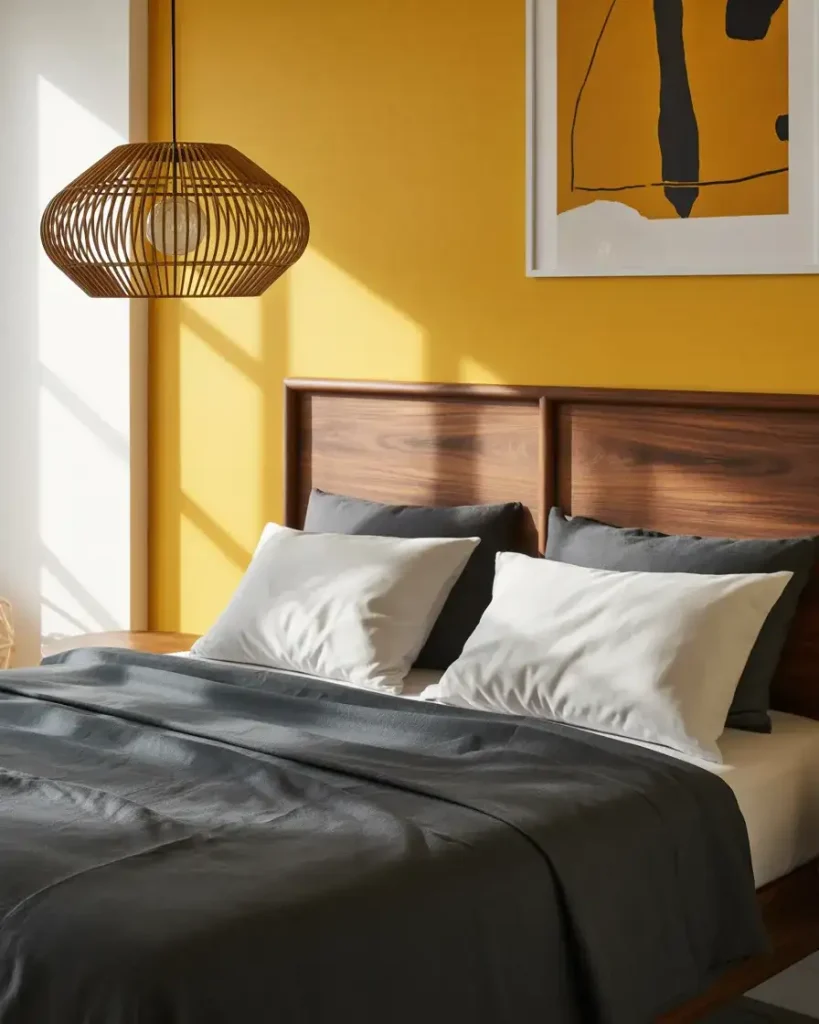
Mustard yellow is ideal for east-facing bedrooms that catch the first light of morning—the warm undertones in the paint amplify what’s already a golden quality of early sunlight, making waking up genuinely pleasant. Expert decorators recommend keeping the remaining three walls very neutral—soft white or warm linen—to let the accent do its job without overwhelming the room. And if you’re using mustard in a small space, go floor to ceiling and don’t stop at chair rail height; the full-height commitment actually makes the room feel taller.
8. Warm Greige—The Evolved Neutral That Feels Custom
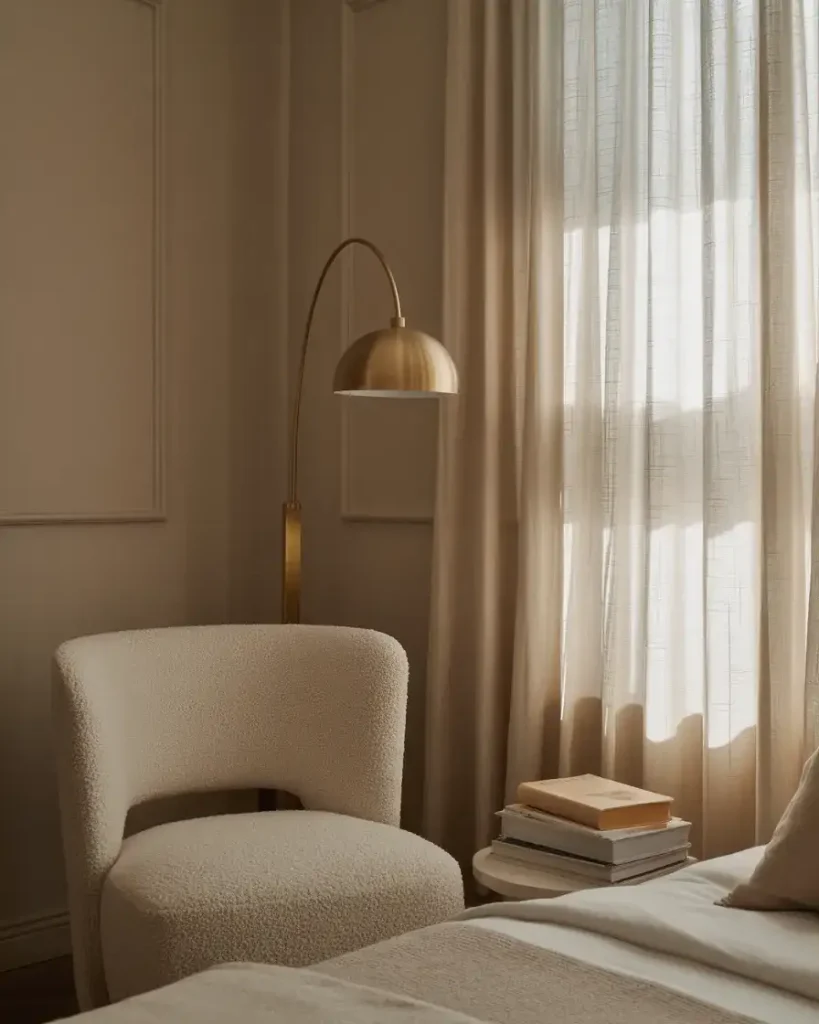
Greige—that beloved middle ground between gray and beige—gets a 2026 upgrade with warmer, richer versions that feel more intentional than the flat, builder-grade neutrals of the last decade. The best colors of 2026 neutrals have complex undertones: a little pink, a little brown, a little sand—so they shift beautifully through the day. They’re the kind of color where guests assume you hired a designer, even if you found the shade by holding up swatches in afternoon light and trusting your gut. They also photograph beautifully, making them a perennial Pinterest favorite.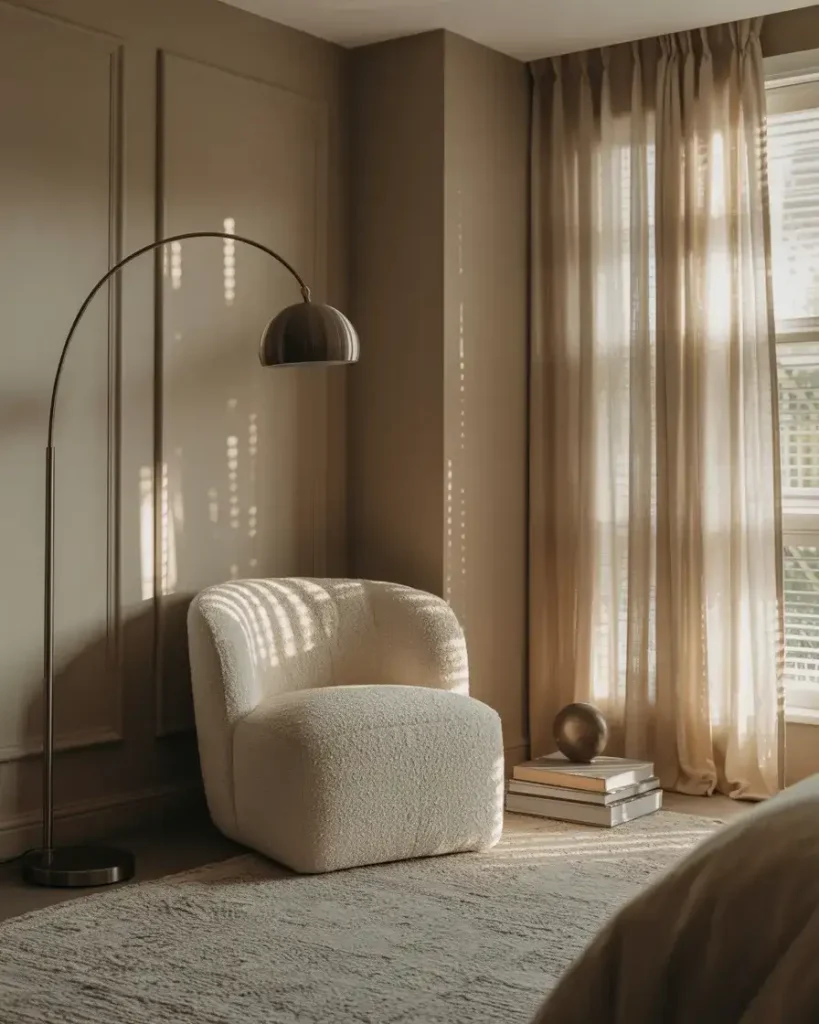
What makes greige so enduringly popular among real American homeowners is its flexibility. It works with virtually any furniture color or style—dark espresso, light oak, painted white, black metal—and it doesn’t fight with bedding. You don’t need to “design around” greige the way you might with a bolder hue; instead, it becomes the quiet backdrop that makes everything else look better. Sherwin-Williams Accessible Beige (SW 7036) and Agreeable Gray (SW 7029) remain the gold standard, and for good reason.
9. Forest Green Walls for a Lush, Library-Inspired Bedroom
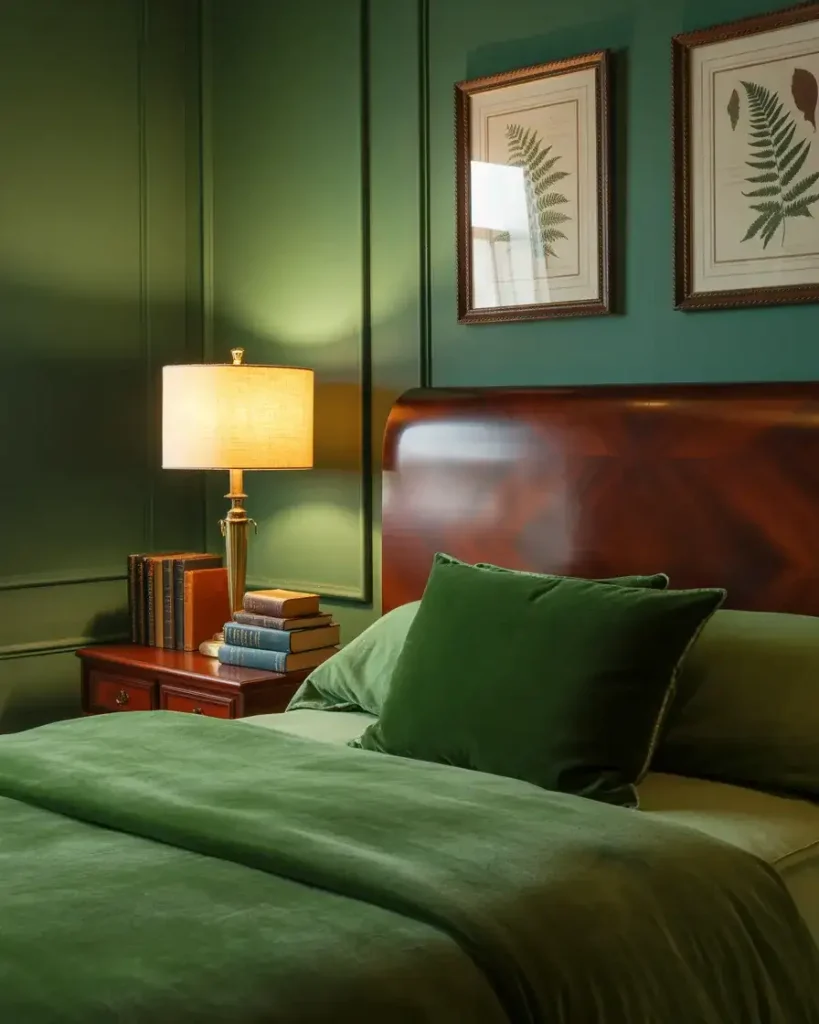
Deep, enveloping forest green is the color of the well-read, the well-traveled, and the person who collects books and has opinions about lighting. In a bedroom, it creates a space that feels simultaneously alive and still—like sleeping inside a clearing in the woods. It pairs beautifully with dark stained wood, leather, and rich jewel tones in artwork and textiles. Unlike lighter greens that can feel country or casual, forest green reads as intellectual and collected—perfect for a primary bedroom that functions as a true personal sanctuary.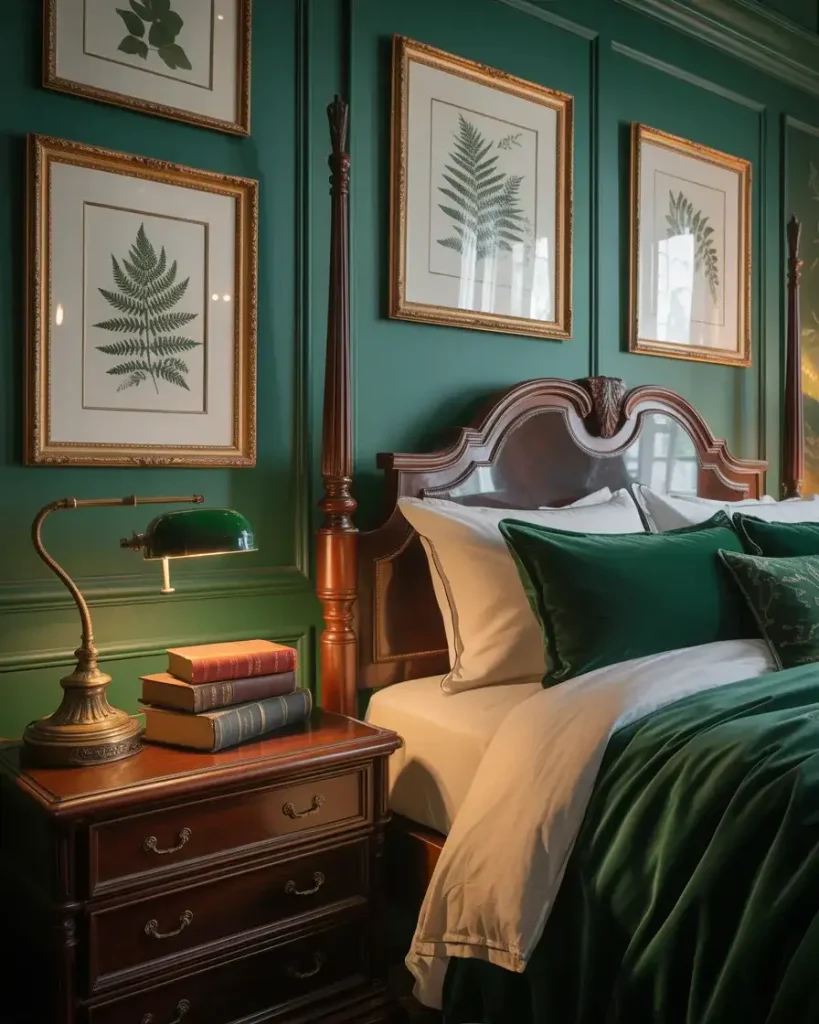
In terms of the American lifestyle context, forest green in the bedroom aligns with a broader cultural appetite for nature-inspired interiors—what designers call “biophilic design.” After years of mostly working and living indoors, many homeowners are actively bringing natural references inside, and deep green walls are the simplest, most impactful expression of that instinct. Pair the color with real plants, natural wood, and stone-look ceramics, and the effect is total. For specific paint choices, look at Benjamin Moore’s Hunter Green or Sherwin-Williams Cascades (SW 6477).
10. Pale Lavender for a Dreamy, Relaxing Aesthetic Bedroom
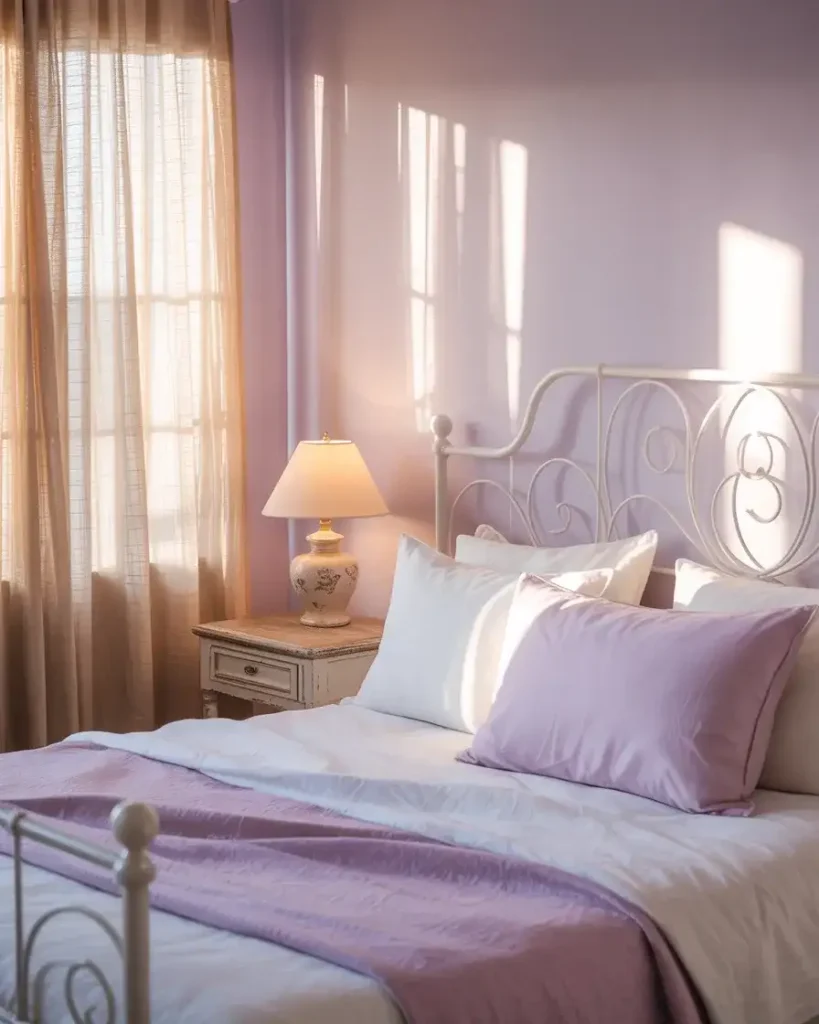
Lavender is staging a thoughtful comeback—and it looks nothing like the purple bedroom of a teenage daydream. The new lavender is pale, almost gray, with just enough violet in it to feel whimsical and relaxing rather than loud. It’s a profoundly calming aesthetic choice, referencing the color psychology principle that cool purple tones lower heart rate and encourage deeper, more restful sleep. In spaces flooded with natural light, pale lavender shifts to almost silver; in lower light, it deepens into something genuinely beautiful.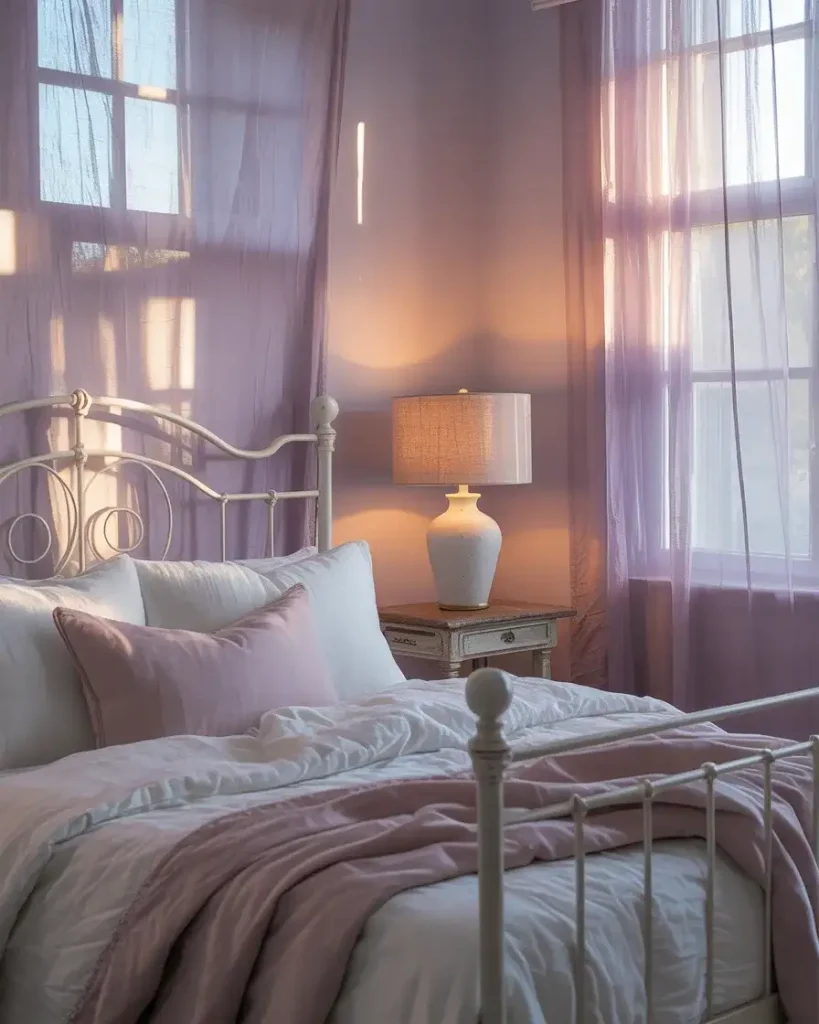
Sleep researchers and interior designers agree more often on lavender than almost any other bedroom color—there’s genuine evidence that the hue creates a mental association with rest and winding down. One real homeowner who repainted her guest bedroom in pale lavender reported that overnight guests consistently commented on how well they slept—a detail that sounds small but speaks to the genuine power of color on mood. For the most livable versions of this shade, look for lavenders with warm, pink-leaning undertones rather than cold, blue-based ones.
11. Two-Tone Painted Door Art for a Playful Bedroom Entry
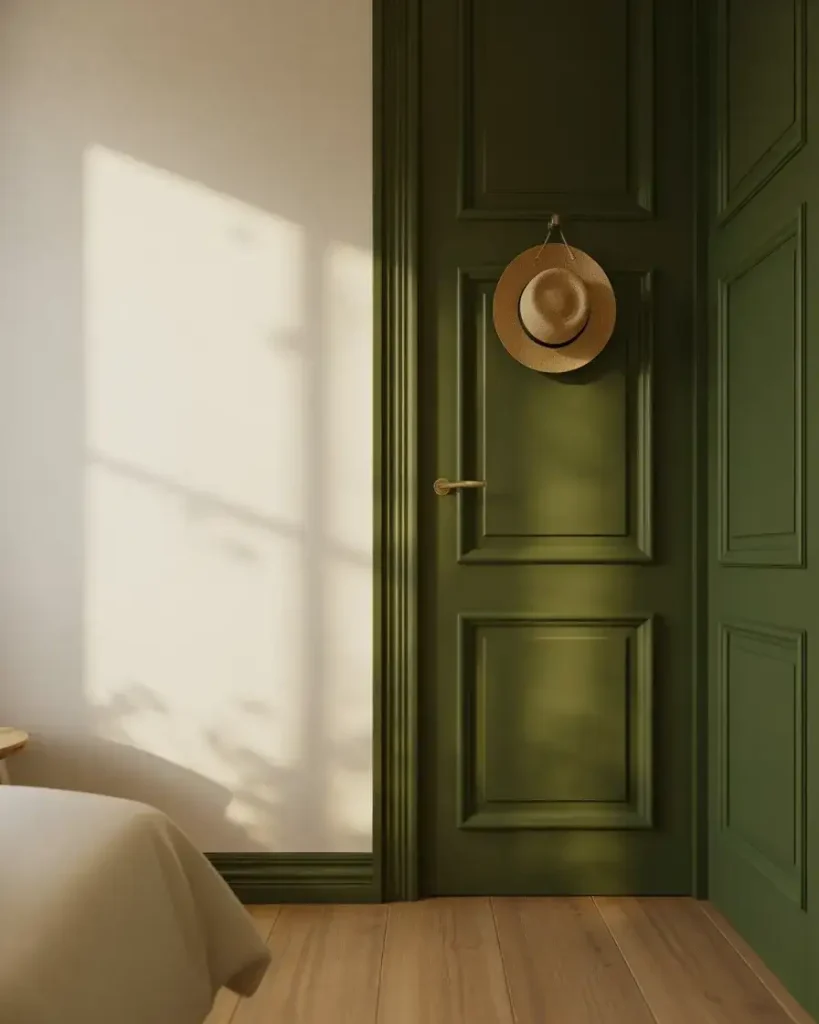
Interior doors are one of the most underrated surfaces in a bedroom, and in 2026, the smartest decorators are treating them as a canvas—literally. Door art painting techniques, from simple two-tone color blocking to subtle ombre effects, add personality and visual interest to a space without requiring a full wall repaint. A door painted in a bold contrasting color to the walls—forest green against cream, deep navy against warm white—becomes a design statement and a surprise that makes a room feel custom and considered.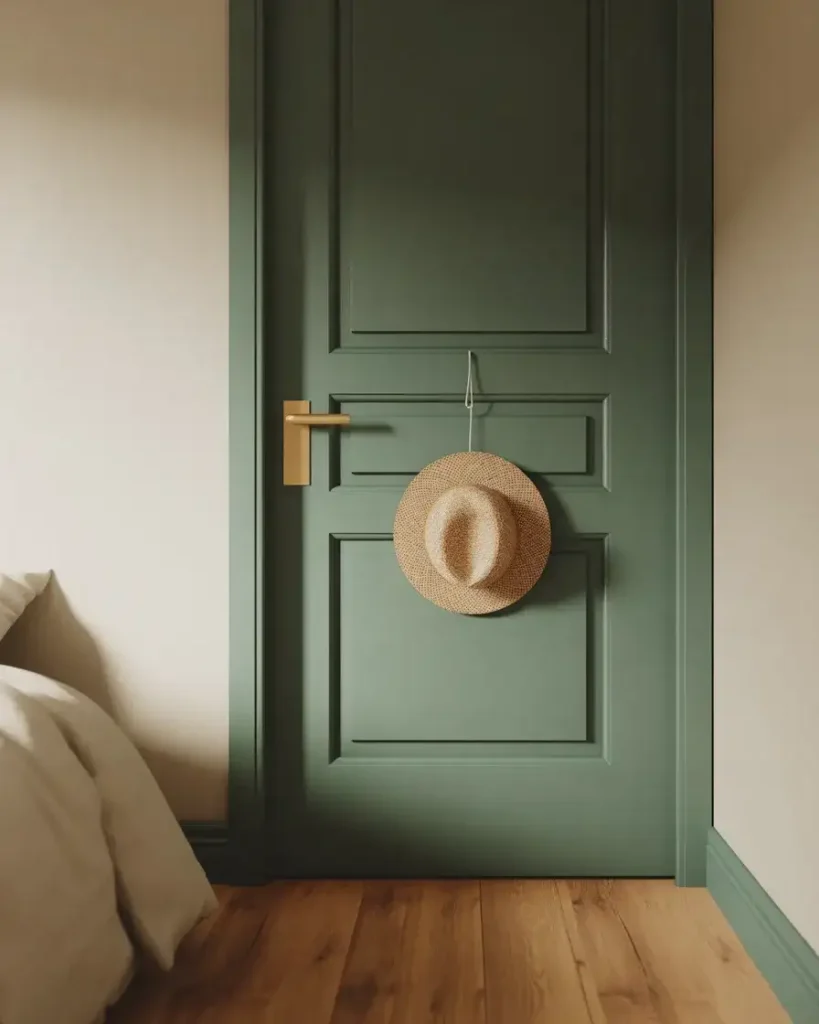
This trend started in European interiors and has been making its way through American design media over the last two years. What makes it so appealing for practical homeowners is the commitment level: you can paint a door in a single afternoon for the cost of a quart of paint. If you love it, great—your room has a whole new character. If it’s not quite right, you repaint. It’s the lowest-stakes experiment in your decorating toolkit, and the upside is a bedroom that looks like you spent five times what you did.
12. Dusty Blue for a Breezy, Coastal-Influenced Bedroom
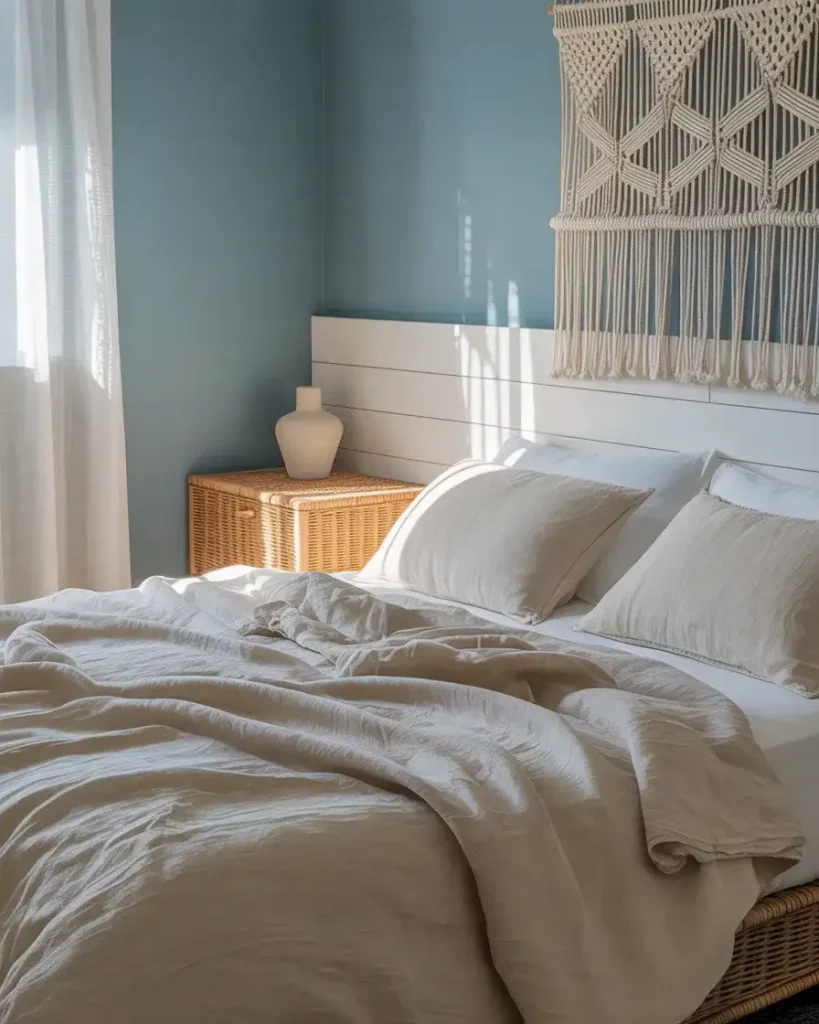
Dusty blue is the coastal palette’s most grown-up, versatile expression—sitting far from the bright nautical turquoise you’d find in a beach house gift shop and much closer to the actual color of the sky on an overcast ocean morning. It has a built-in softness and sophistication that makes it work beautifully in primary bedrooms, guest rooms, and even studio apartments where the bedroom is part of a larger living space. As a color choice, it layers naturally with warm sand, driftwood textures, and linen without feeling at all theme-y.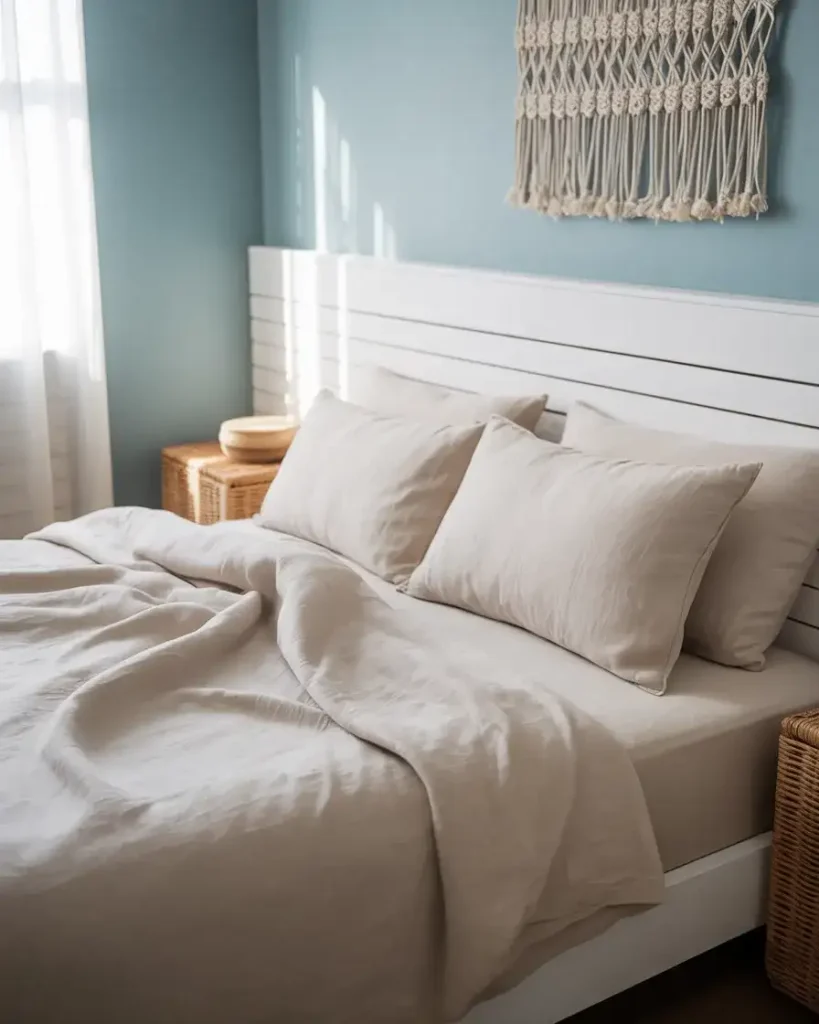
Dusty blue is a particularly strong choice for bedrooms in warmer American climates—think Florida, Southern California, and the Gulf Coast—where the color reinforces an indoor-outdoor connection and echoes the ever-present sky and sea. But it works equally well in landlocked states, where it provides a visual escape and a daily reminder that there’s a bigger, calmer world beyond the commute. Sherwin-Williams’ Rarified Air (SW 6525) and Benjamin Moore’s Buxton Blue hit exactly the right note—dusty, warm, and unpretentious.
13. Warm Peach for a Glowing, Optimistic Small Bedroom
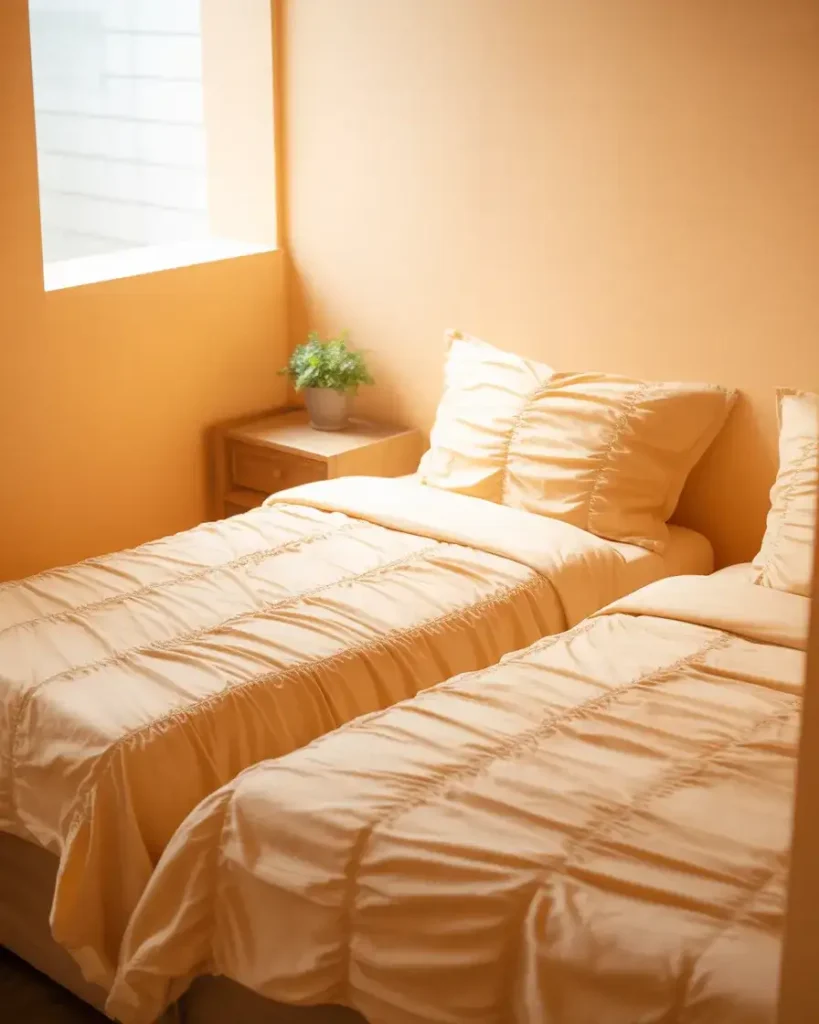
Peach is arguably the single most underestimated color in residential painting—and it’s especially powerful in ideas for small rooms because of the way warm apricot and peach tones reflect light and seem to push walls outward. Where a cool gray or stark white can make a small bedroom feel enclosed, a well-chosen warm peach creates a sense of expansion—the room feels bigger, brighter, and sunnier than its square footage suggests. It also flatters skin tones beautifully, making morning mirrors significantly more cheerful.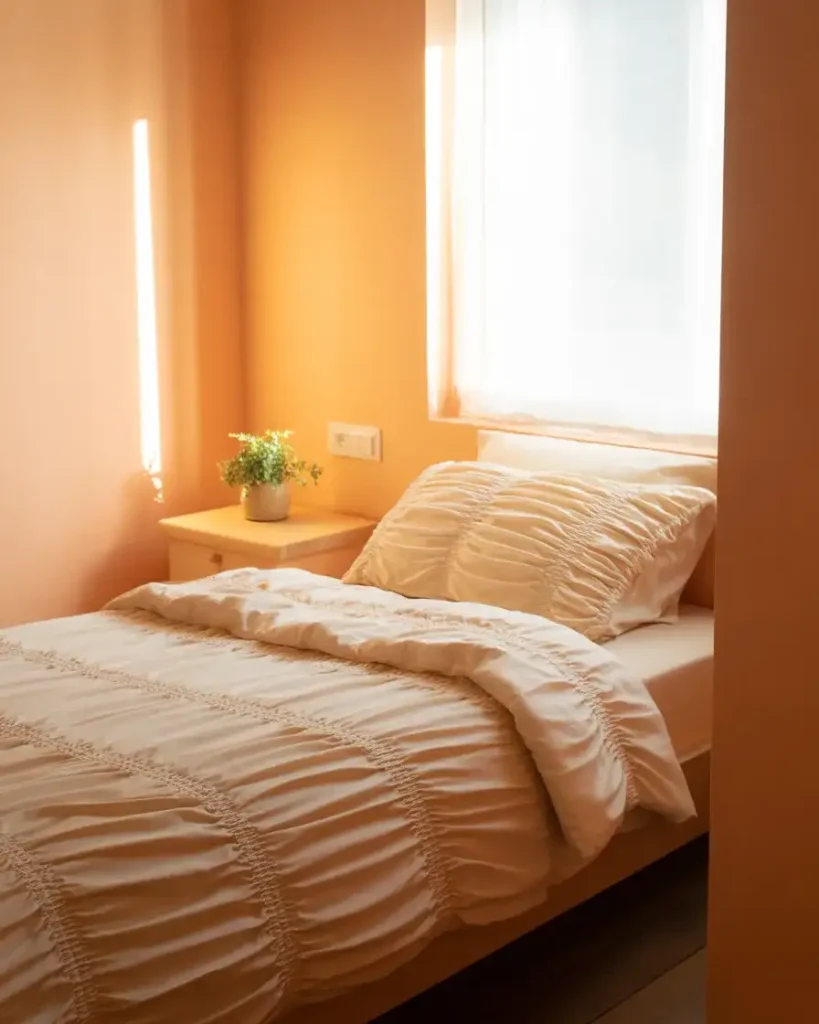
Among the real homeowner behaviors that decorators consistently observe: people choose white for small bedrooms out of a fear that color will make the space feel smaller—and then live with a room that feels cold and impersonal. Warm peach breaks that pattern completely. It’s the color choice of homeowners who’ve done enough research to know the rule and have enough courage to break it wisely. Pair peach walls with white trim, minimal furniture, and strategic mirrors, and you’ll have a small bedroom that feels genuinely abundant rather than cramped.
14. Deep Burgundy for a Jewel-Toned Master Color Statement
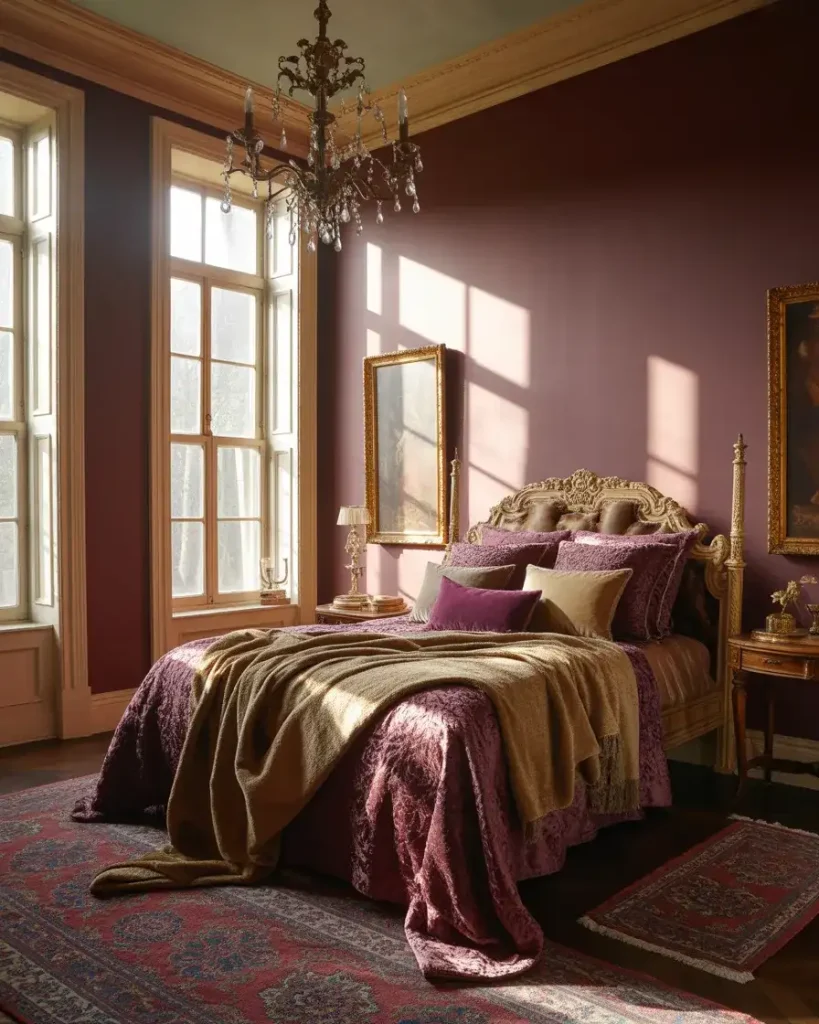
If you’ve ever walked into a hotel suite and felt immediately impressed without quite being able to say why, there’s a good chance burgundy or wine was somewhere in the mix. As an ideas master color, deep burgundy carries a history of elegance—it references old-world libraries, velvet opera seats, and vintage wine cellars, but in a bedroom context it translates to something warmer and more personal. It’s particularly strong in rooms with architectural character: high ceilings, crown molding, bay windows—the kind of details that deserve a color confident enough to meet them.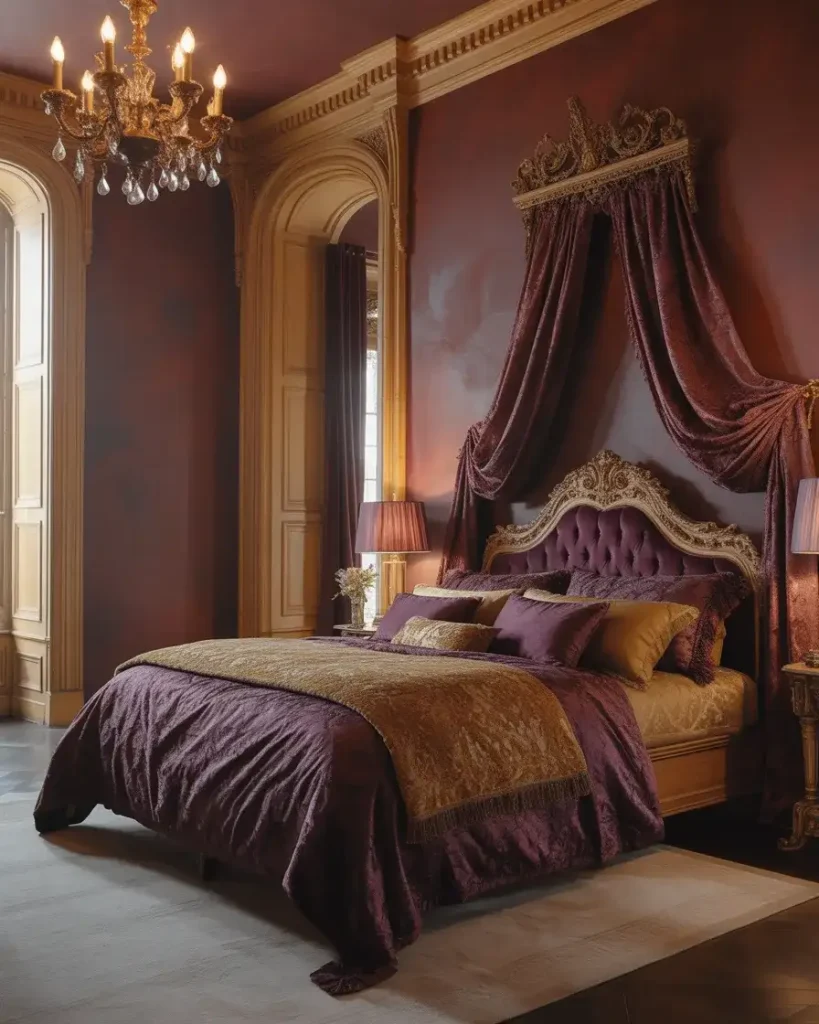
An expert design perspective: burgundy is one of the few dark colors that actually looks better in lower-lit rooms rather than worse. Where a dark gray might feel dingy without strong natural light, burgundy has enough warmth and depth that even a north-facing room with modest windows will feel rich and intentional rather than gloomy. The key is keeping metallics warm—gold, aged bronze, antique brass—and avoiding chrome or nickel, which will cool the whole scheme and rob it of its inherent richness.
15. Soft Lilac and White for an Indian-Inspired Decorative Bedroom
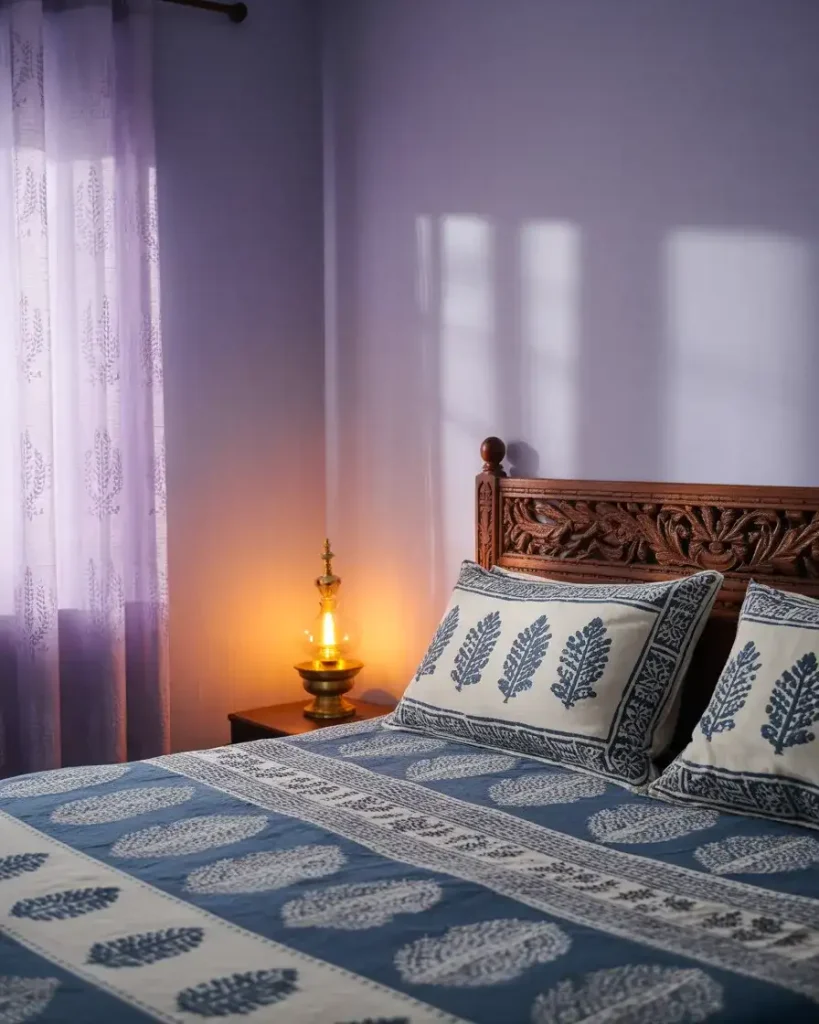
The influence of South Asian interior traditions on American bedroom design is profound and growing—and one of the most accessible ways to draw on ideas from Indian aesthetics is through a palette of soft lilacs, warm whites, and dusty purples layered with richly patterned textiles. In traditional Indian design, violet and lavender tones represent spirituality and calm, often paired with gold embroidery and intricate block-print patterns that bring extraordinary visual depth to a bedroom without requiring expensive renovations.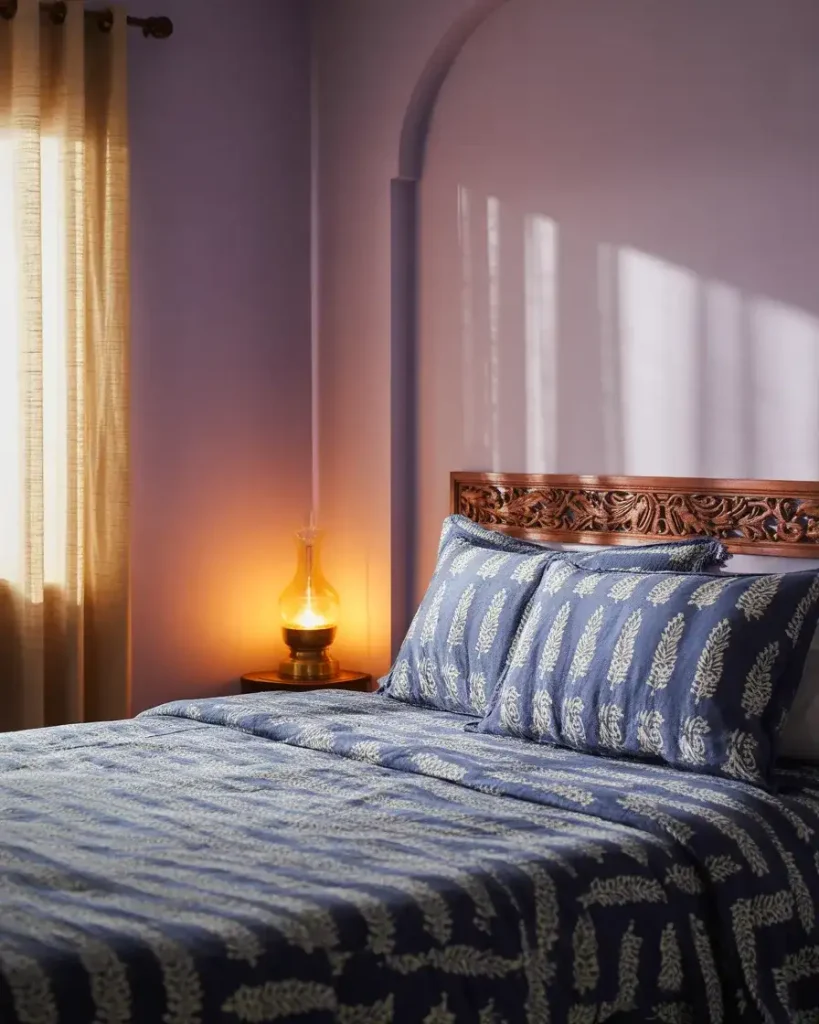
This color concept works particularly beautifully when the paint is kept soft and restrained—allowing the textiles and decorative details to carry the cultural story. Block-print cotton bedspreads from artisan retailers, hand-embroidered cushion covers, and carved wooden furniture do the cultural heavy lifting, while lilac walls provide a backdrop that feels gentle and welcoming rather than overwhelming. For American homes, this kind of layered, textile-rich approach to a bedroom creates a space that feels personal and well-traveled without costuming the room.
16. Slate Gray with Bold Canvas Wall Art as a Modern Focal Point
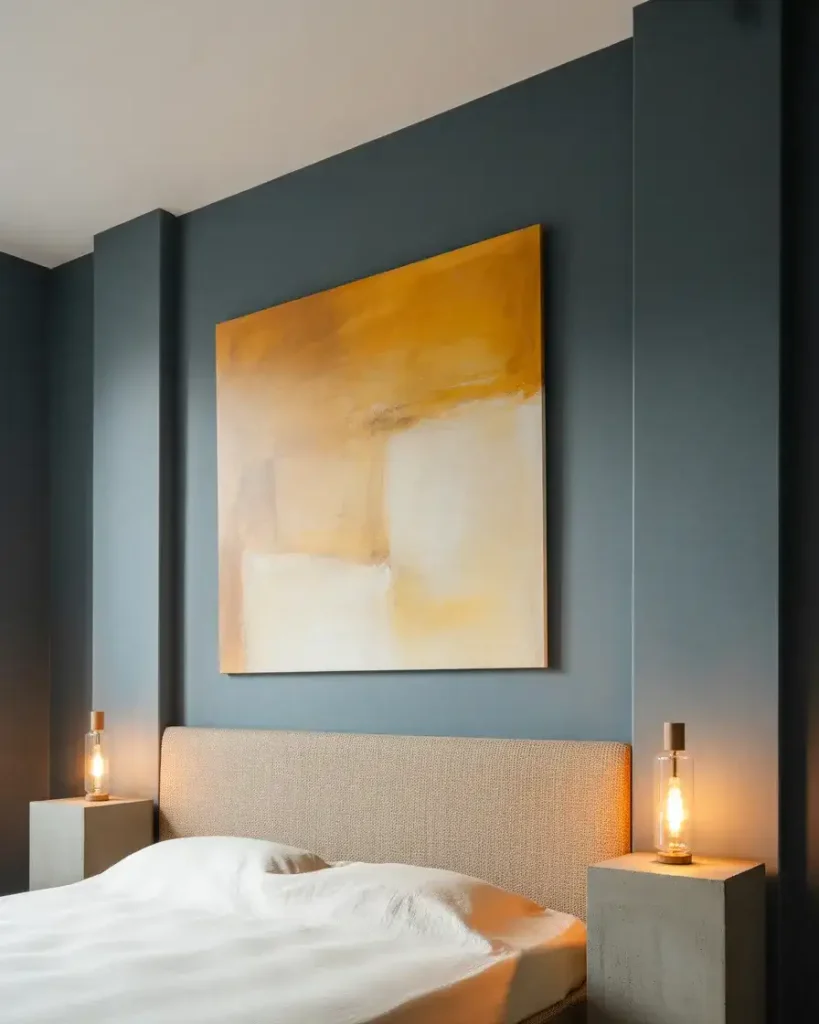
Slate gray occupies a uniquely sophisticated corner of the color spectrum—it has the depth of a dark hue without the dramatic commitment of true charcoal or navy, and it works as a remarkably good foil for wall art of almost any style. Large-format ideas canvas prints take on an almost gallery-like quality against a slate backdrop, their colors seeming to lift off the wall. Abstract works in warm ochre, burnt orange, or deep teal are particularly striking—the contrast is vivid without being garish.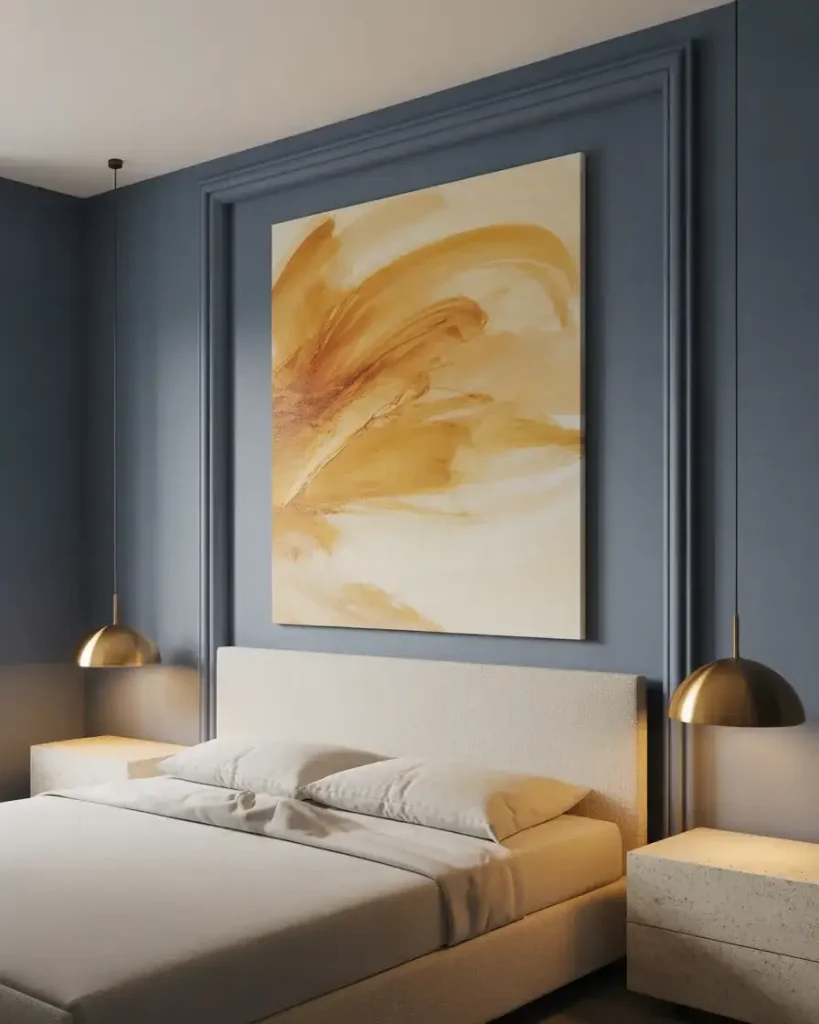
Where slate gray works best is in open-plan studios or loft-style spaces where the bedroom area needs to feel deliberate and distinct without being physically separated from the rest of the room. The color grounds the sleeping area visually, creating a sense of enclosure and intention. Combine it with warm whites on adjacent walls and let the art do the emotional work—and you’ll have a bedroom that looks designed rather than decorated, a distinction that matters enormously when you’re scrolling through images online looking for ideas that feel genuinely achievable.
17. Earthy Clay Tones Inspired by Sherwin-Williams 2026 Palette
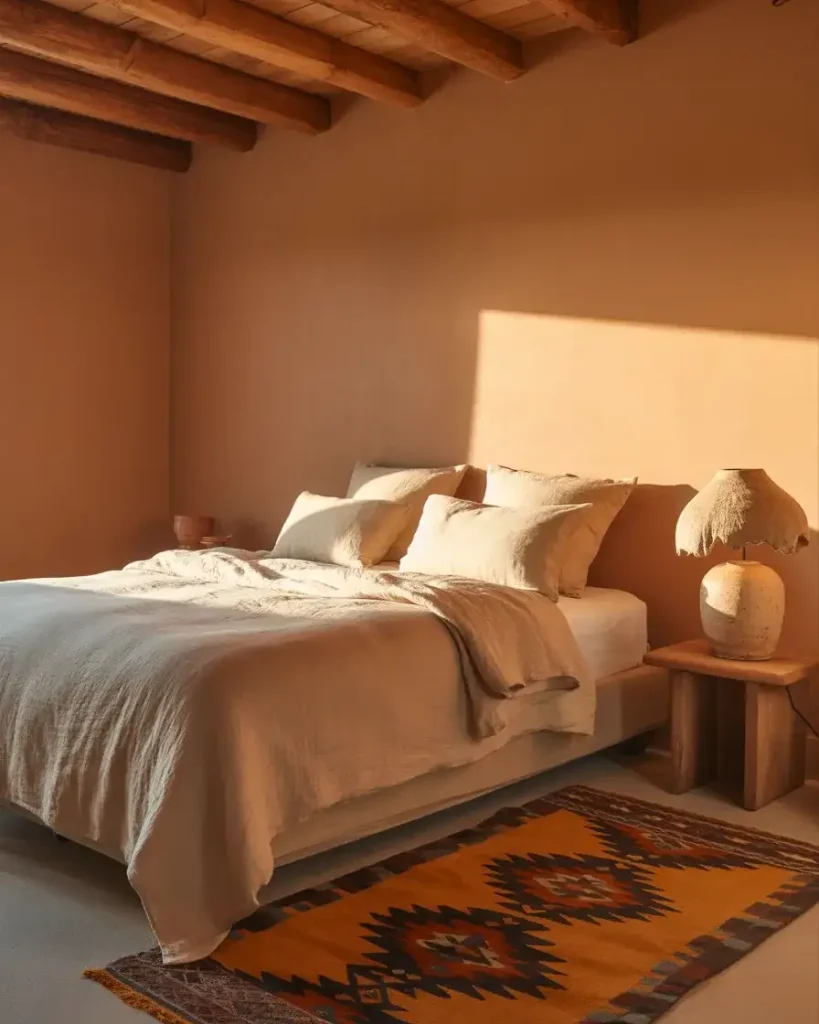
The colors Sherwin-Williams has spotlighted heading into 2026 lean heavily into clay, ochre, and mineral-rich earth tones—a palette driven by the same cultural appetite for grounding, warmth, and nature connection that’s been building through the past several years. Clay tones are distinct from both beige and terracotta: they’re more complex, often carrying undertones of orange, red, and even a little brown or purple, which gives them an almost geological richness. In a bedroom, a well-chosen clay makes the entire space feel like it was carved from the earth.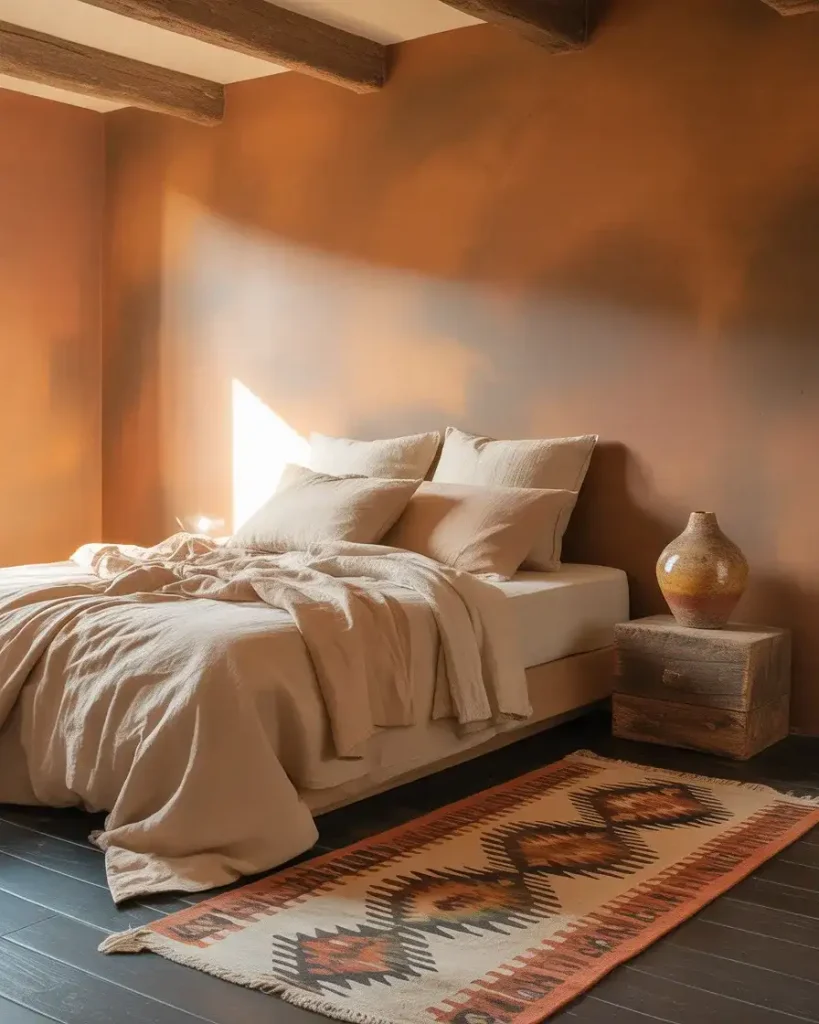
If you’re visiting a Sherwin-Williams store and feeling overwhelmed by the clay family’s many variations, ask to compare them against a white piece of paper and then against a warm wood sample. Clays that look similar on the chip reveal their personalities dramatically against those reference points: some will glow orange, others will surprise you with their almost pink depth. The 2026 trending shade from Sherwin-Williams’ forecast, Redend Point (SW 9081), sits in this family beautifully—complex, warm, and completely livable for everyday use.
18. Warm Ivory with Exposed Brick for a Loft-Style Bedroom
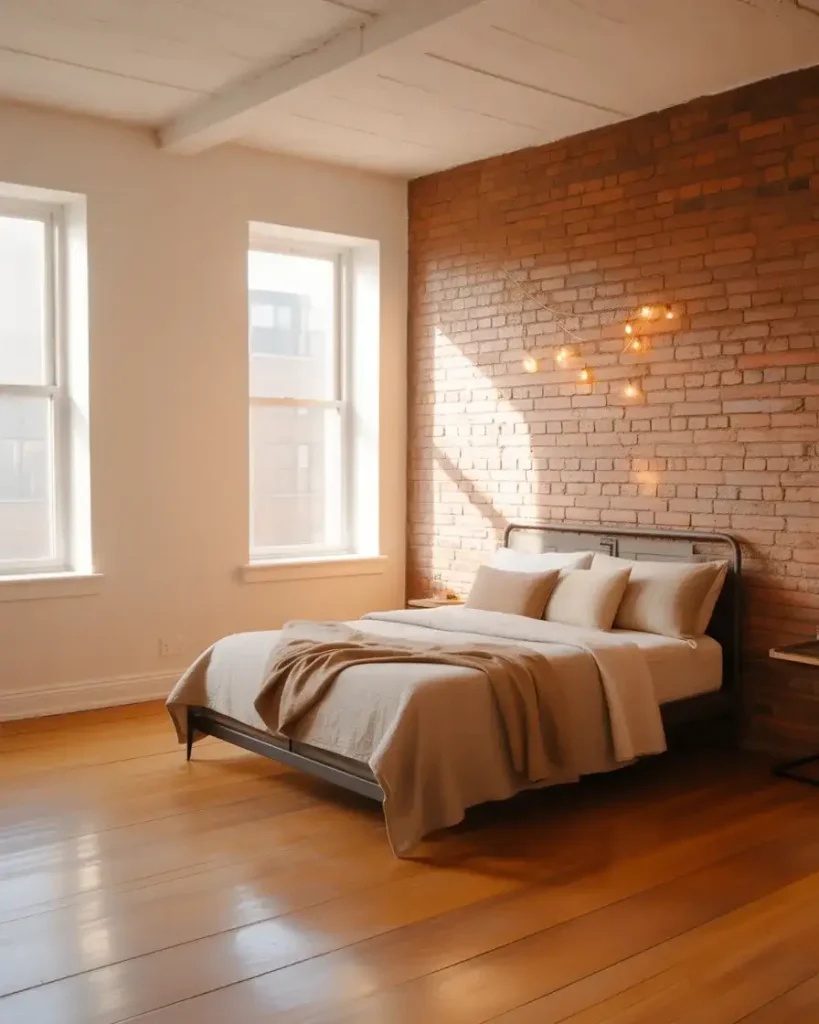
There’s something undeniably romantic about an exposed brick wall—and pairing it with warm ivory paint on the remaining three walls creates one of the most effortlessly appealing bedroom aesthetics in the urban American decorating playbook. The contrast between the rough, variegated brick and smooth, creamy painted walls creates a textural dialogue that makes the whole room feel alive. This is a wall ideas approach that works especially well in converted industrial spaces, older urban buildings, or any home where the architecture has something interesting to say.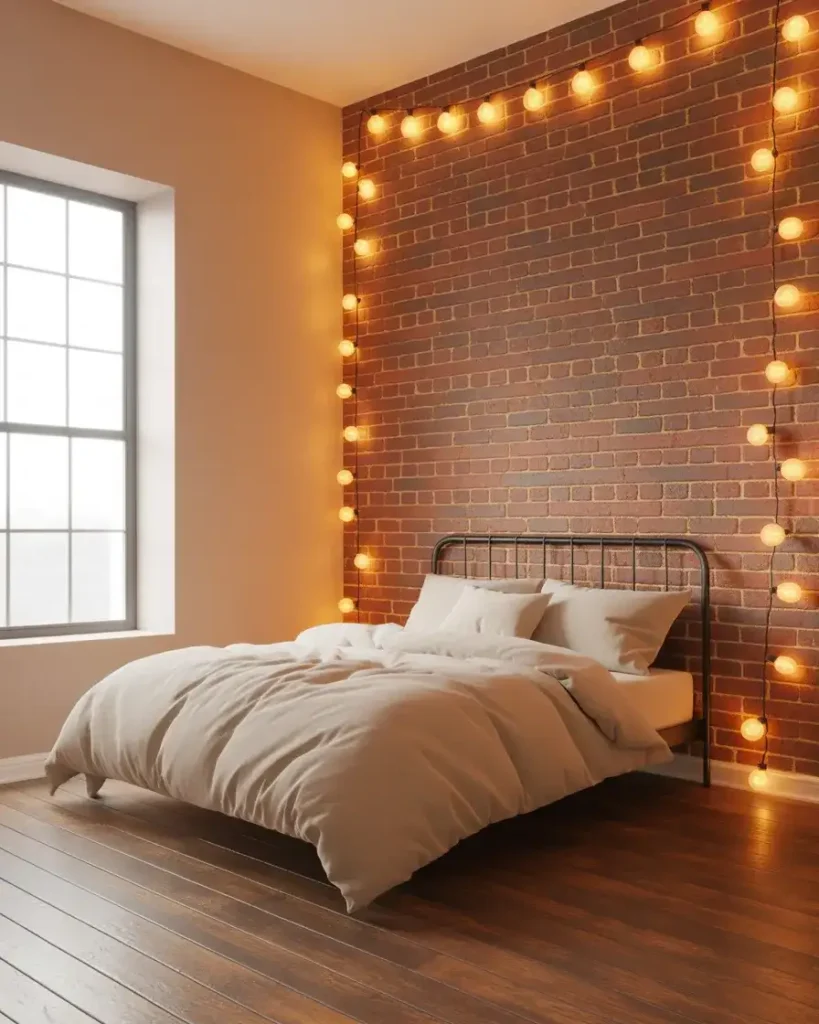
The micro anecdote that captures this perfectly: a couple who converted a former Chicago printing plant into a live-work loft found themselves initially planning to plaster over the original brick. Their designer convinced them to keep it, paint the surrounding walls in warm ivory, and let the texture contrast become the focal point. Two years later, every person who visits asks about the bedroom first—before the open kitchen, before the cathedral ceilings. Sometimes the best design decision is the one you almost didn’t make.
19. Sage and Stone with a Geometric Accent Wall Pattern
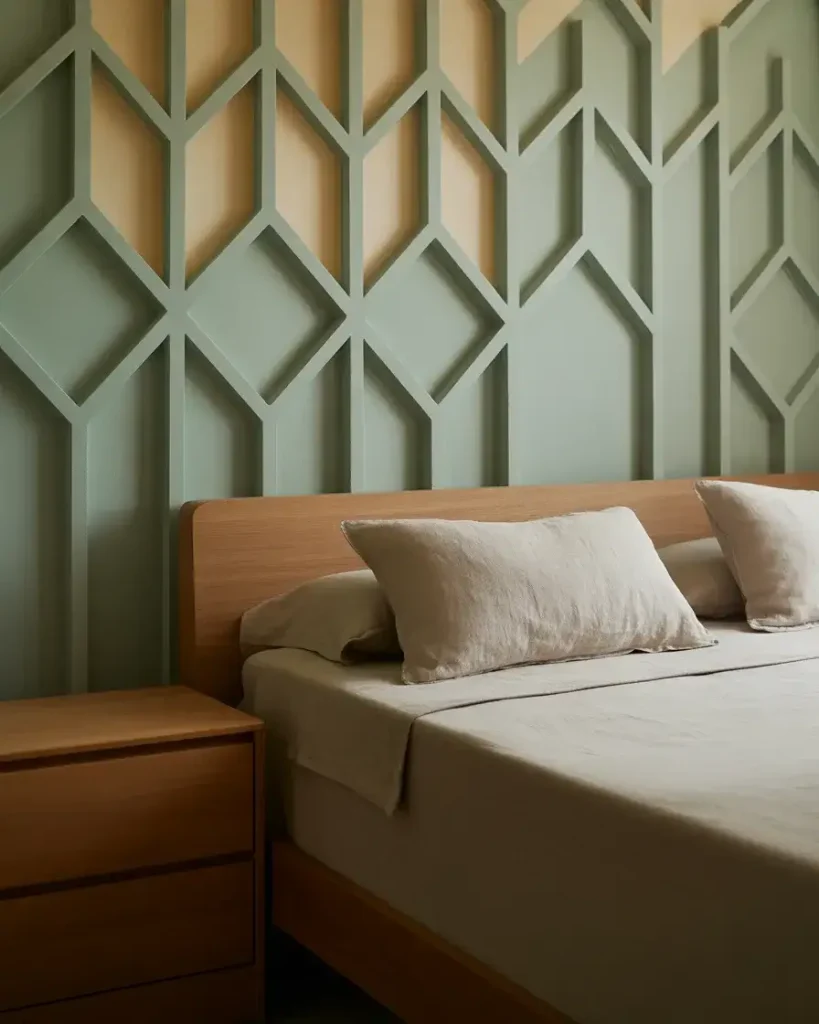
Paint doesn’t have to mean solid color—and geometric painted wall design ideas are one of the most compelling ways to add pattern, depth, and visual interest to a bedroom without hanging anything. A soft sage and warm stone geometric—whether it’s a simple half-paint technique, a series of painted triangles, or a more elaborate diamond grid—gives a wall the graphic energy of wallpaper at a fraction of the cost. As an accent wall treatment behind a bed, it creates a headboard effect that’s entirely two-dimensional but feels enormously substantial.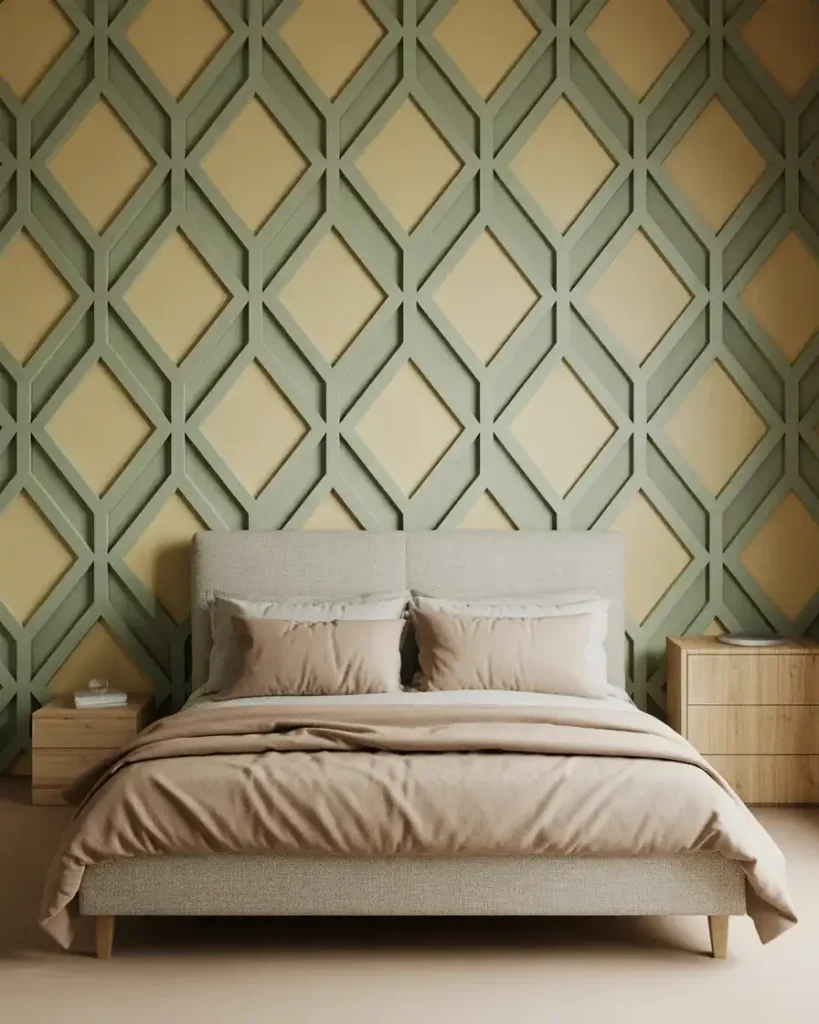
From a practical standpoint, geometric painted walls are a highly achievable DIY project—the results look far more labor-intensive than they are. The tools are simple: painter’s tape, two complementary paint colors, a level, and patience. The most common mistake is choosing colors that are too similar, which makes the pattern disappear, or too contrasting, which overwhelms the room. A soft sage and warm stone combination hits the sweet spot: distinctive enough to register as a pattern, similar enough in value to feel cohesive and calm rather than busy.
20. Creamy Off-White with Wainscoting for a Classic American Bedroom
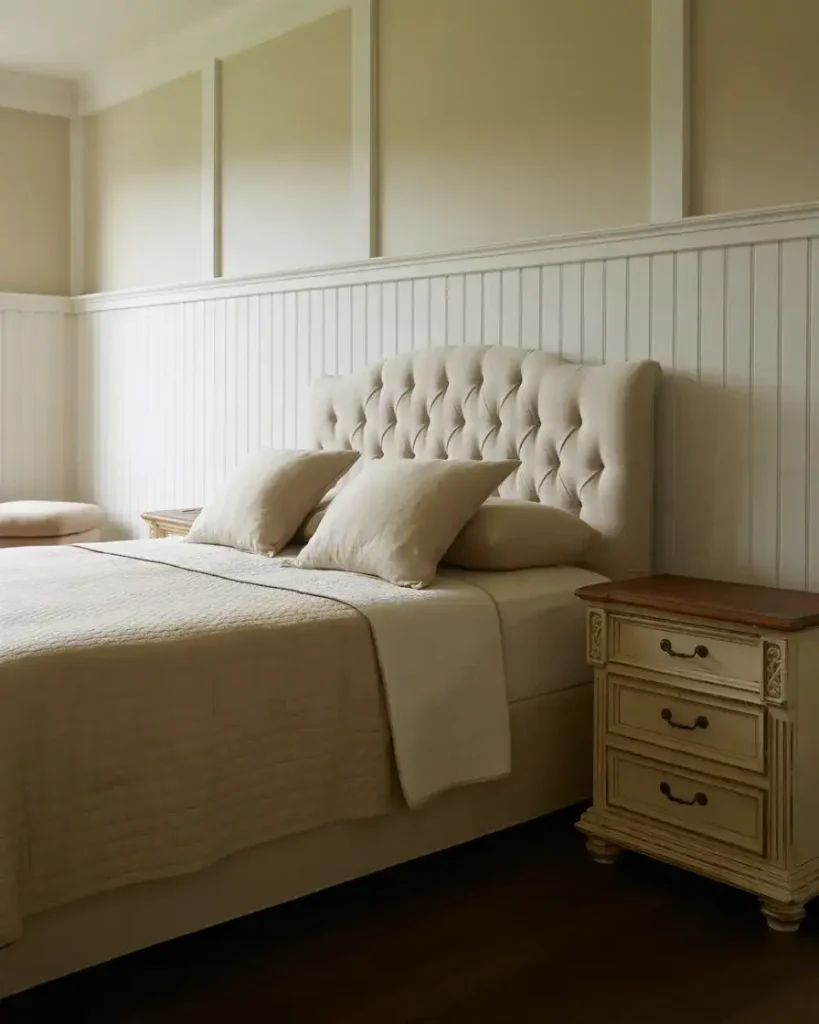
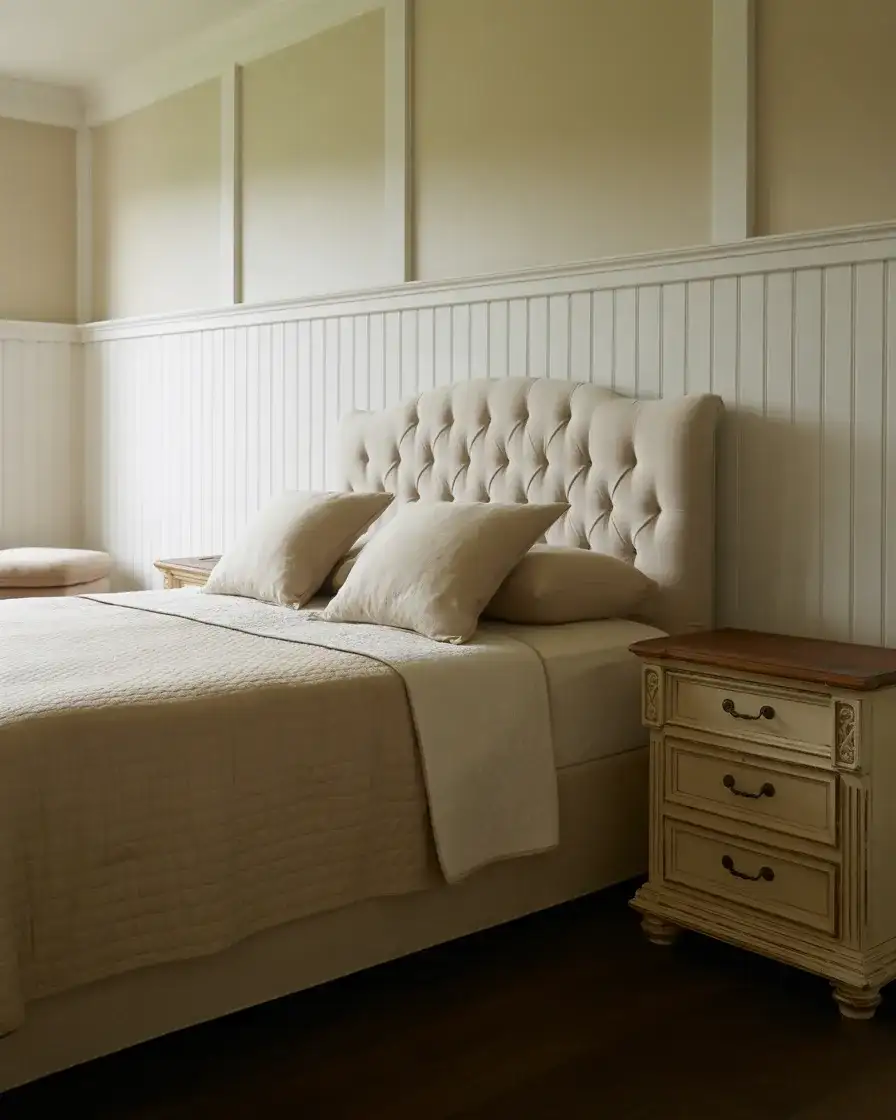
Wainscoting—the classic American wall treatment where paneling covers the lower third of a wall—is experiencing a genuine resurgence, and when paired with creamy off-white paint in two complementary tones, it creates a bedroom that feels both historically rooted and completely fresh. The upper wall in a slightly deeper cream and the wainscoting below in a clean, brighter white create a sophisticated tonal play that adds architectural interest to even a plain-box bedroom. This is a wall of ideas and color ideas combined that works beautifully in traditional, farmhouse, and transitional-style homes.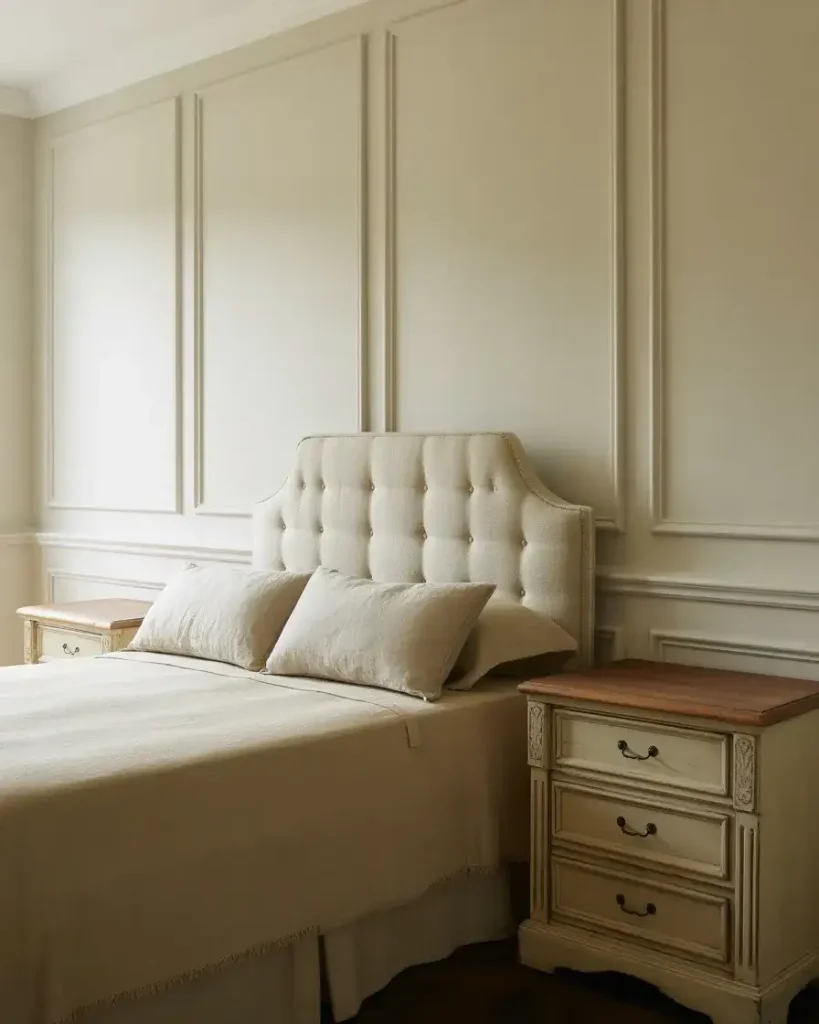
This is genuinely one of the most cost-effective upgrades a homeowner can make to a bedroom with uninspiring flat walls. Pre-made MDF wainscoting panels are widely available at big-box home improvement stores and can be installed over a weekend by a moderately handy homeowner. The paint transformation that follows—two tones of creamy white, both in an eggshell finish for easy cleaning—is the finishing touch that makes the room look like something from the pages of a traditional home magazine. Investment in materials runs between two hundred and six hundred dollars for a typical bedroom.
21. Inky Black for a High-Drama, Fashion-Forward Bedroom
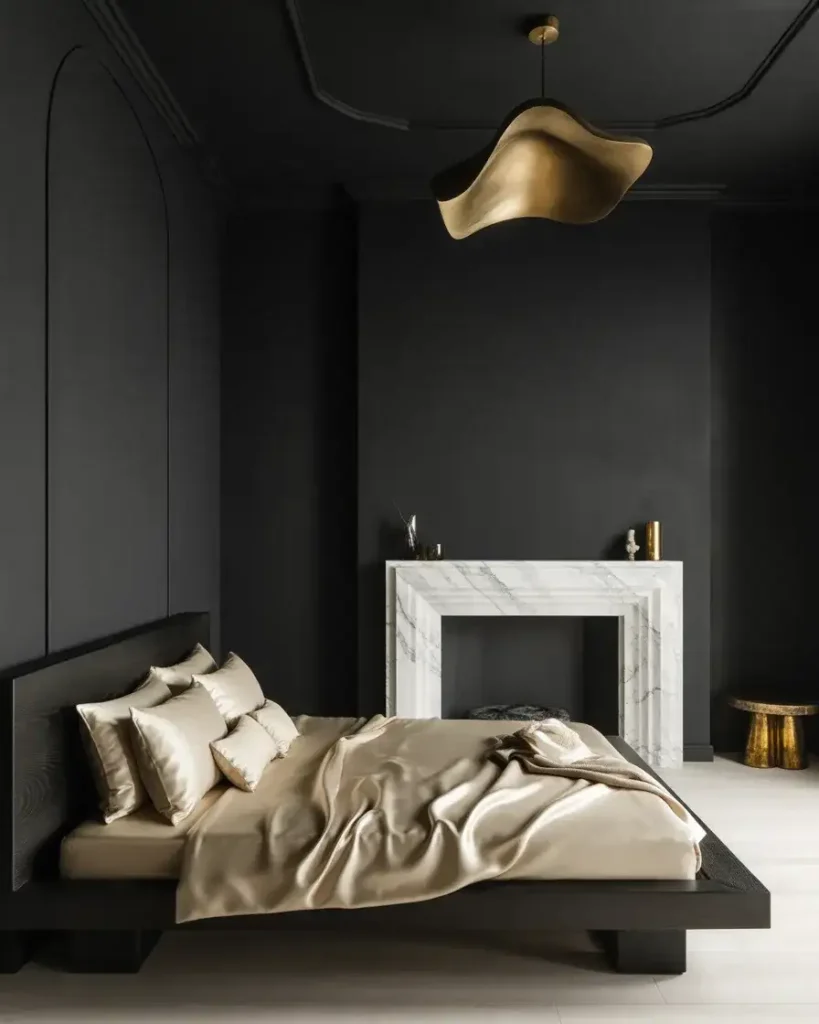
Painting a bedroom black is not for the faint of heart—but for those willing to commit, the result is one of the most striking, fashion-forward interiors possible. Black walls function like a stage set for everything else in the room: furniture glows against them, metallics sparkle, textiles look richer, and the entire space takes on a jewel-box quality that no other color replicates. This isn’t really a relaxing color choice in the conventional sense, but for certain personalities—those who find dark spaces energizing and private—it’s profoundly restful and deeply personal.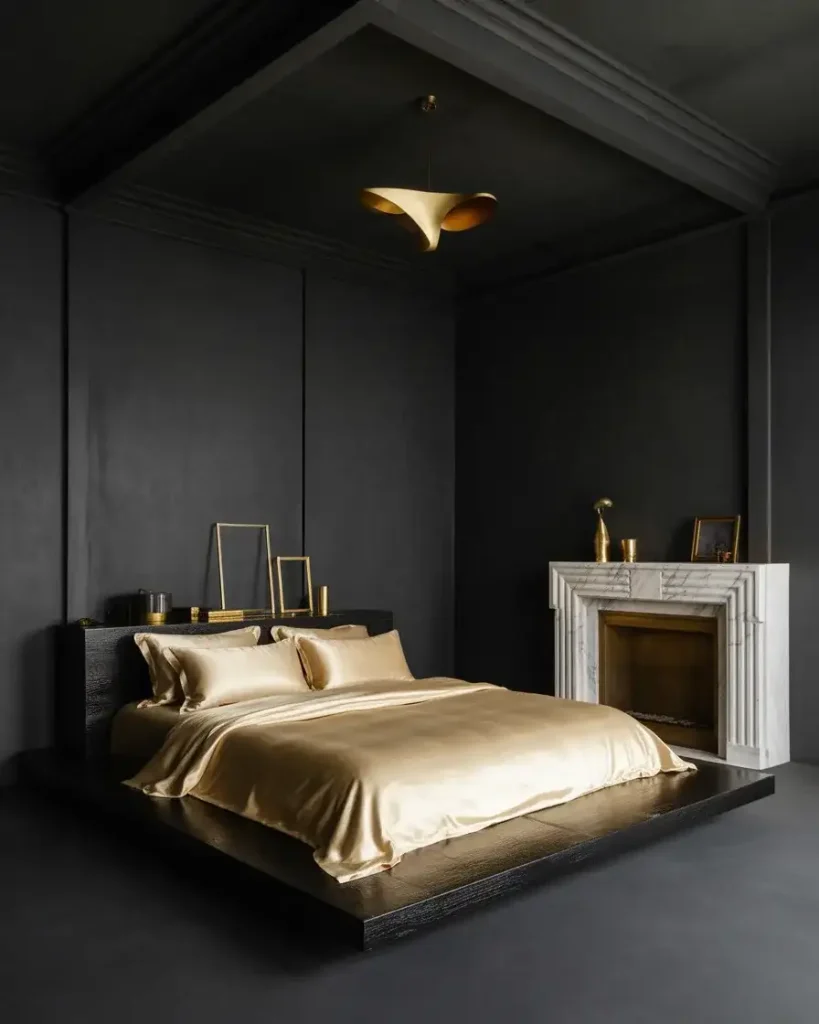
The most common mistake people make when attempting a black bedroom is stopping halfway—painting only one wall, leaving the ceiling white, or using a black that’s too cold or too shiny. For the full effect, choose a flat or matte finish (which absorbs light and makes the color feel intentional rather than accidental), paint the ceiling and walls the same shade, and ensure your lighting is warm and layered. Black bedrooms are rooms you design around the lighting, not the other way around. With the right bulbs and placement, the result can be spectacular.
22. Dusty Rose and Gold for a Maximalist, Vintage-Glam Bedroom
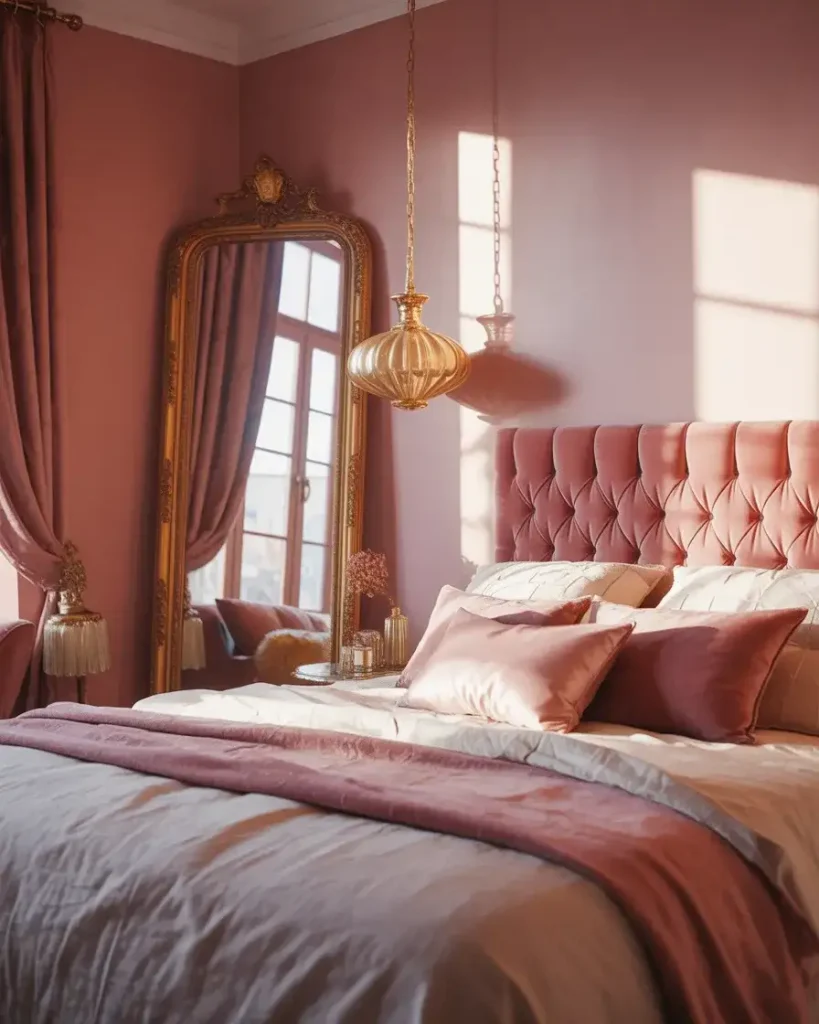
Maximalism is back—loudly and joyfully—and the dusty rose-and-gold bedroom is its most romantic expression. This is a room color ideas approach that leans into abundance: layered patterns, gilded accessories, textured wallcoverings, and a color palette that references Hollywood Regency glamour filtered through a contemporary sensibility. Dusty rose paint provides the warm, enveloping base; gold accents in mirrors, lamp bases, and hardware add the shimmer; and rich textiles in velvet, silk, and brocade tie it all together into something that feels genuinely indulgent.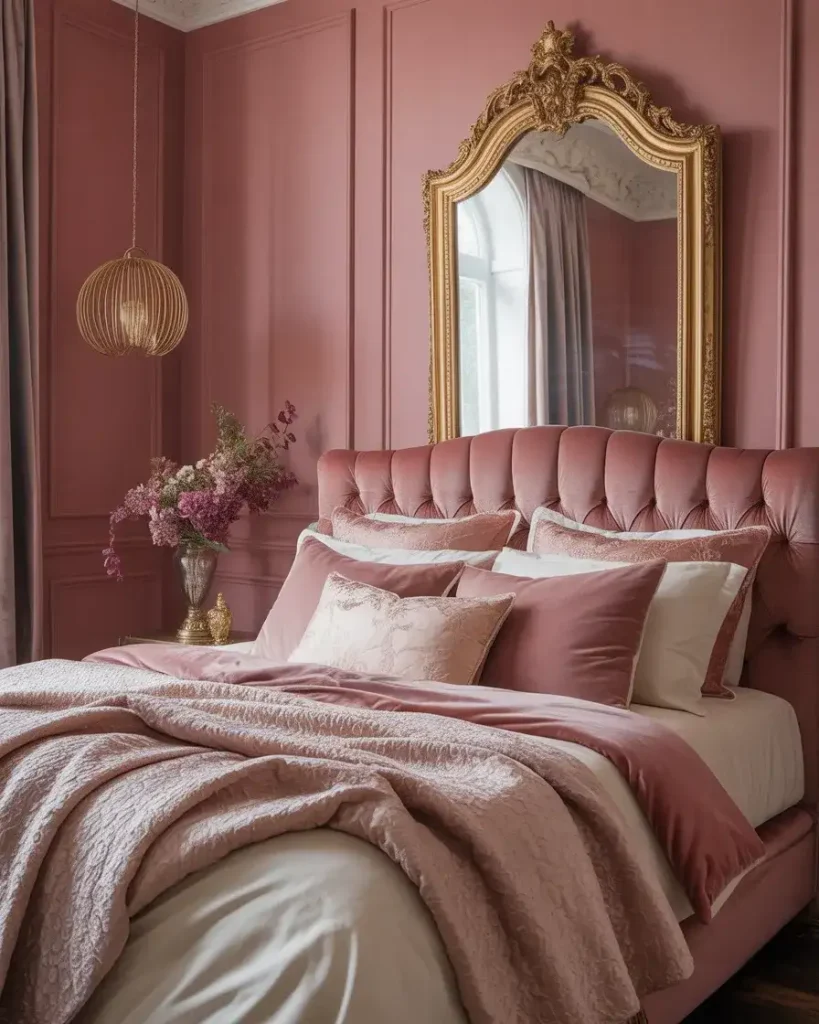
Where this works best is in bedrooms of homes built in the 1920s through 1940s, where the bones—decorative moldings, high ceilings, arched doorways—already have some vintage glamour built in. The paint and furnishings are then completing a conversation that the architecture started decades ago. That said, modern new-construction bedrooms can pull this off too, as long as the furniture and accessories are rich enough to provide the visual weight that the architecture itself might be lacking. Think of it as a palette that requires commitment—but rewards generously.
23. Two-Tone Blue and White Panel Walls for a Fresh, Nautical Feel
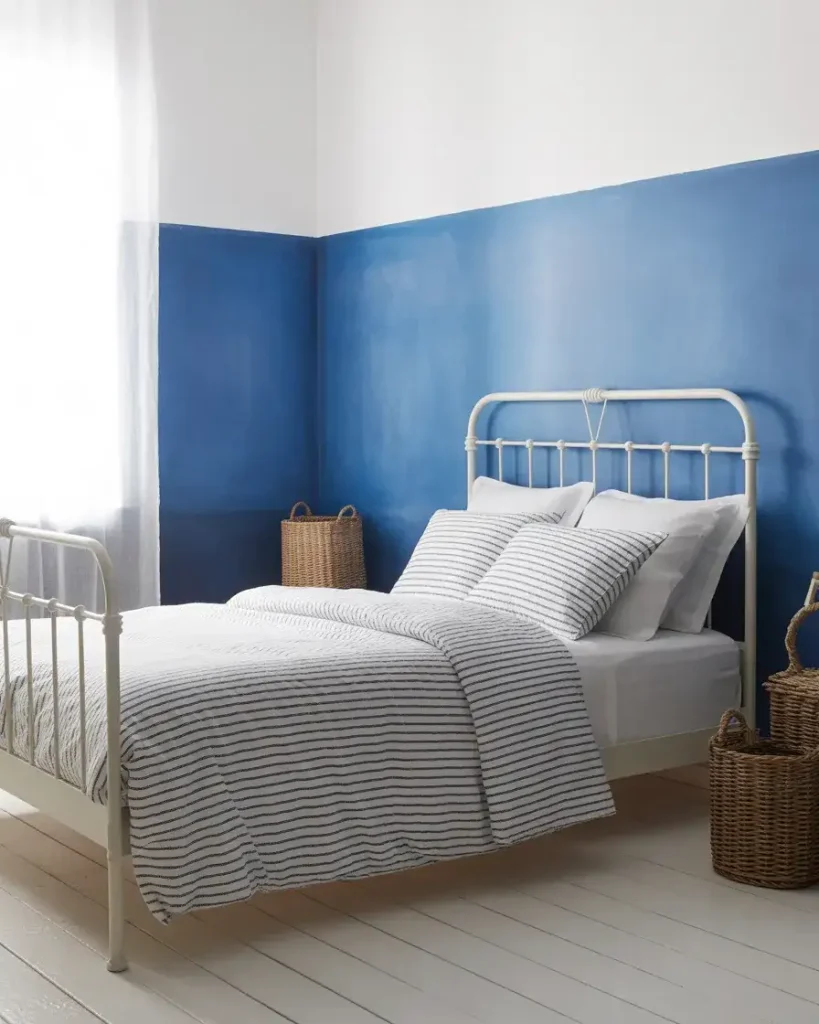
The two-tone painted bedroom—where the lower portion of the wall is painted in a deeper or contrasting shade divided by a color block or chair rail line—has become one of the most searched wall ideas of the past two years, and a blue-and-white pairing is its most classic, clean-feeling variation. Deep coastal blue on the lower third of the wall, crisp white above, separated by a simple painted or molded line: it’s a combination that reads as refreshed and considered, working equally well in a beach house guest room or a city apartment bedroom that craves a sense of openness.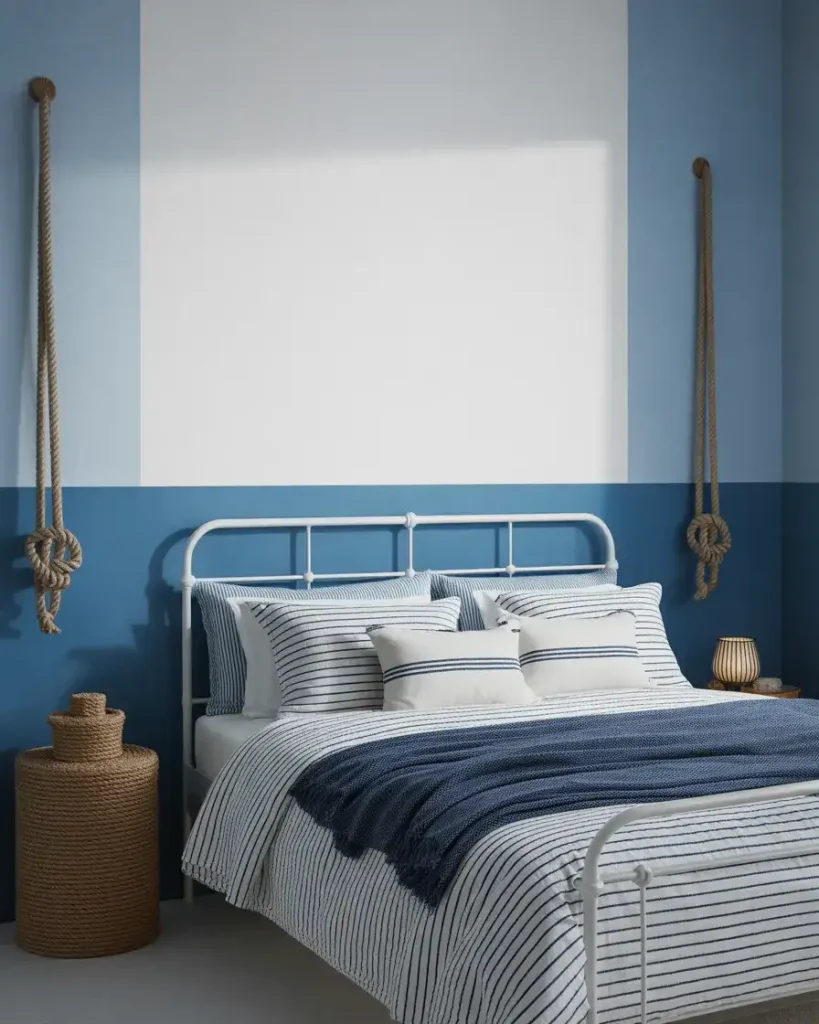
This is a technique that works particularly well in rented spaces because it requires no structural modification—the “rail” between the two colors is simply a painted line or a piece of inexpensive half-round molding glued to the wall. The transformational power is enormous relative to the effort and cost. If you’re in a rental and can’t paint, this two-tone approach applied to removable wallpaper panels or peel-and-stick solutions can achieve a very similar visual effect—proof that the best bedroom ideas aren’t always contingent on owning the walls.
24. Warm Ochre and Natural Linen for an Organic, Grounded Bedroom
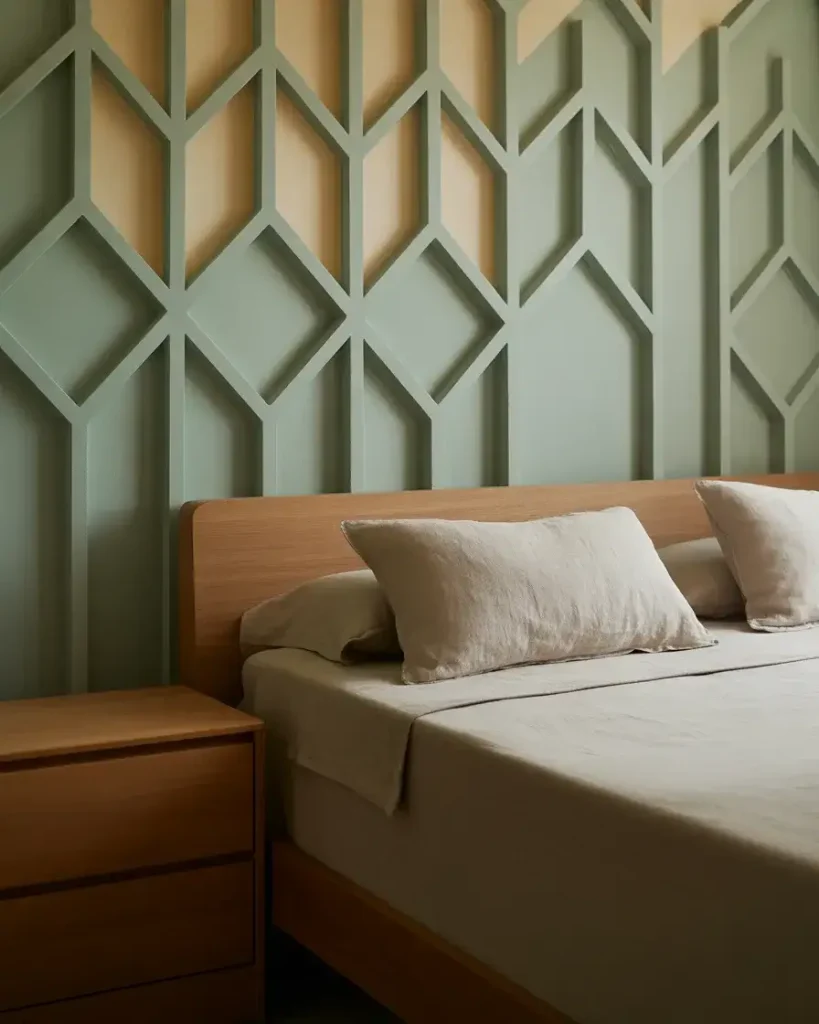
Warm ochre—a golden, sun-baked yellow with enough brown in it to feel earthy rather than bright—is one of those colors that makes an immediate case for itself the moment you see it on a wall. It wraps a bedroom in warmth and vitality, evoking afternoon light in a Provençal farmhouse or the glow of an adobe wall at sunset. Paired with natural linen bedding, undyed cotton, and organic textures like jute, seagrass, and raw wood, ochre creates a bedroom that feels both deeply rooted and endlessly sophisticated—the kind of inspo that gets pinned and re-pinned because it seems both aspirational and somehow within reach.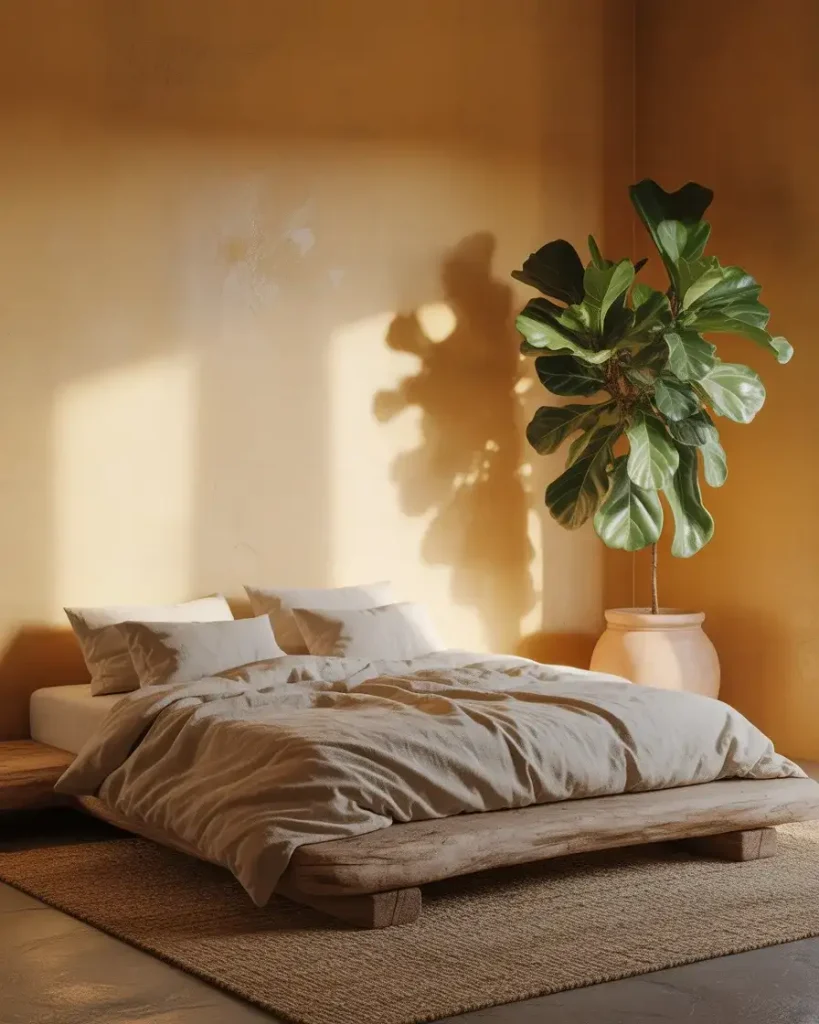
The key to making warm ochre work in a contemporary American bedroom is restraint in the accessories. The color is confident and warm on its own—you don’t need to pile on pattern or decoration. Let the walls do the work, keep furniture simple and natural, and invest in textiles with genuine texture and good weight. A single large framed botanical print or a woven wall piece adds just enough visual relief without competing. The result is a bedroom that feels grounded, generous, and—above all—like a place you actually want to return to at the end of every day.
Conclusion
Your bedroom is one of the most personal spaces you’ll ever design—and the color you choose for its walls is the single loudest design decision in the room, even when the color itself is quiet. Whether you’re drawn to the moody confidence of forest green, the romantic ease of dusty rose, or the grounding simplicity of warm ochre, there’s a 2026 bedroom paint idea here that will make your space feel more like you. We’d love to hear what you’re planning—drop your chosen color, your questions, or your before-and-after stories in the comments below, and let’s talk paint.