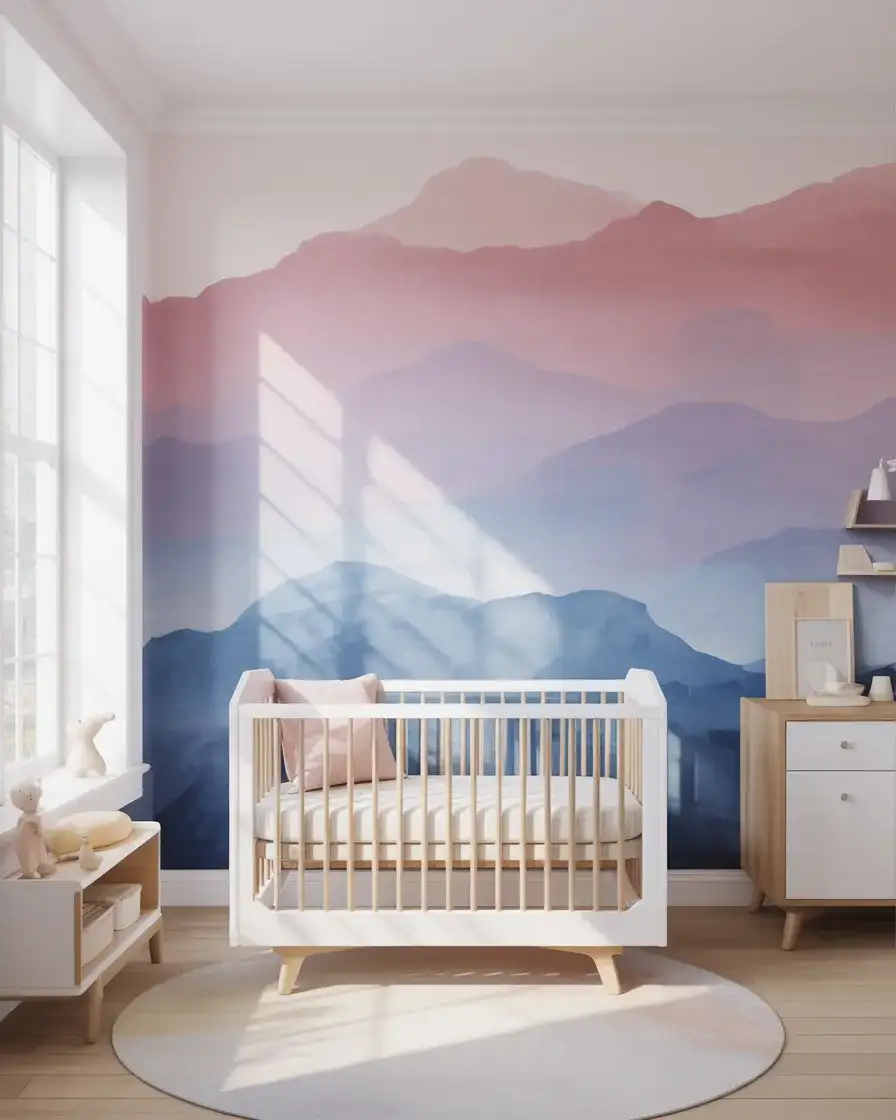
There’s something quietly exciting about designing a baby’s first room. It’s not just a nursery—it’s the first space your little one will ever know, and the place where you’ll spend countless sleepless nights rocking, feeding, and whispering. Pinterest has made nursery design a full-blown movement, and heading into 2026, the ideas circulating are softer, bolder, and more personal than ever. Whether you’re drawn to moody greens, dreamy pastels, or something completely out of the box, this guide is built to help you find the direction that feels like yours.
1. Soft Sage Green Accent Wall
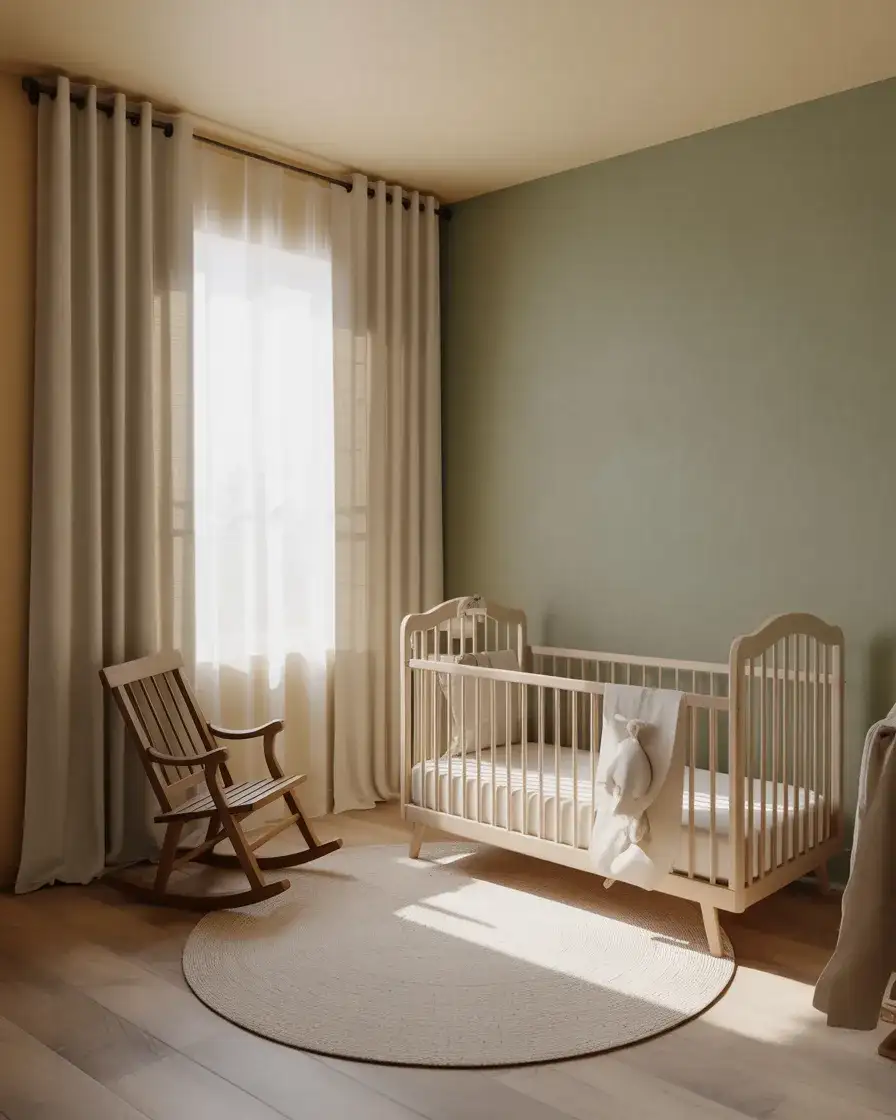
A single wall painted in a muted sage green can completely transform the mood of a nursery without overwhelming the space. This approach works especially well in small room setups, where a full-room color change might feel heavy. The trick is choosing a shade that leans warm—something with a hint of gray or gold undertone—so it reads as calming rather than clinical. Pair it with white or cream furniture, and the whole room feels like a quiet exhale.
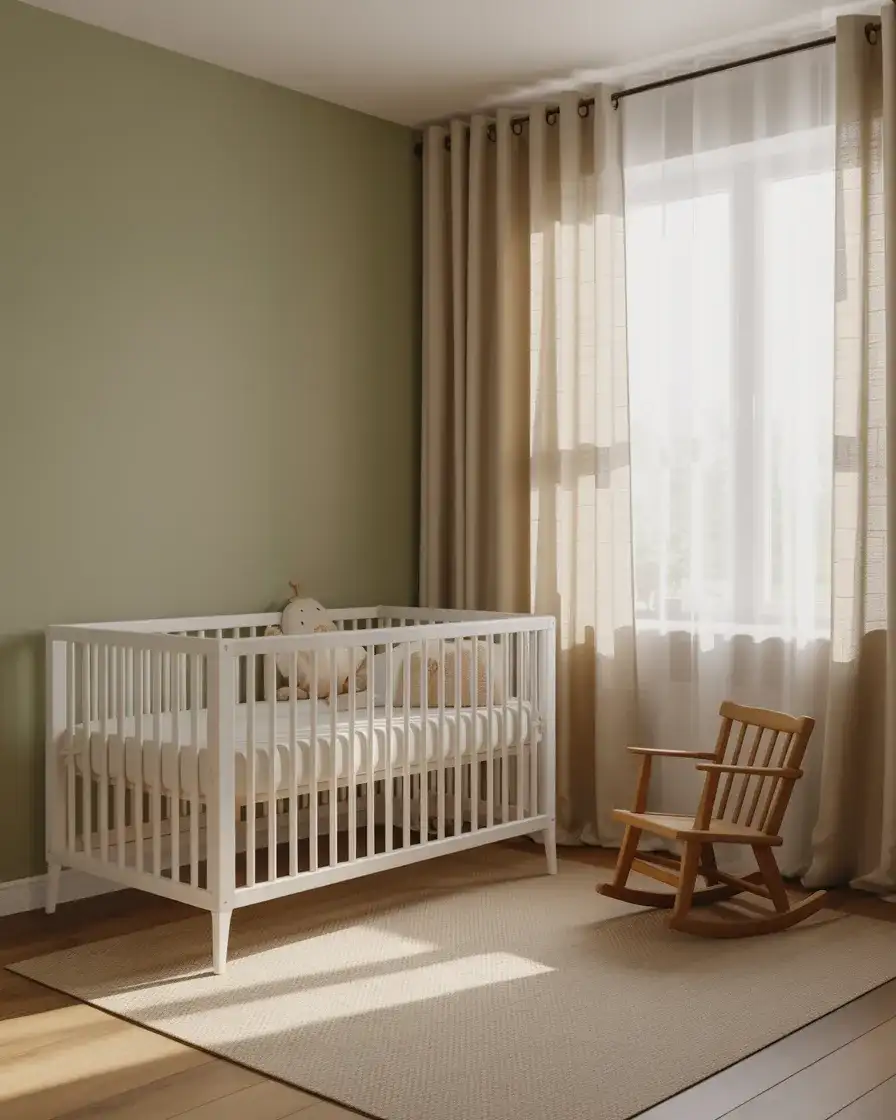
If you’ve been hesitant about going green, sage is the gentlest entry point. Interior designers have noted that green hues actually promote longer, deeper sleep in babies—which, honestly, is reason enough to try it. For families working on a budget, a single accent wall is one of the most affordable ways to make a dramatic design shift. A single quart of quality matte paint is usually all you need, and the payoff in visual impact is enormous compared to a full repaint.
2. Whimsical Woodland Nursery
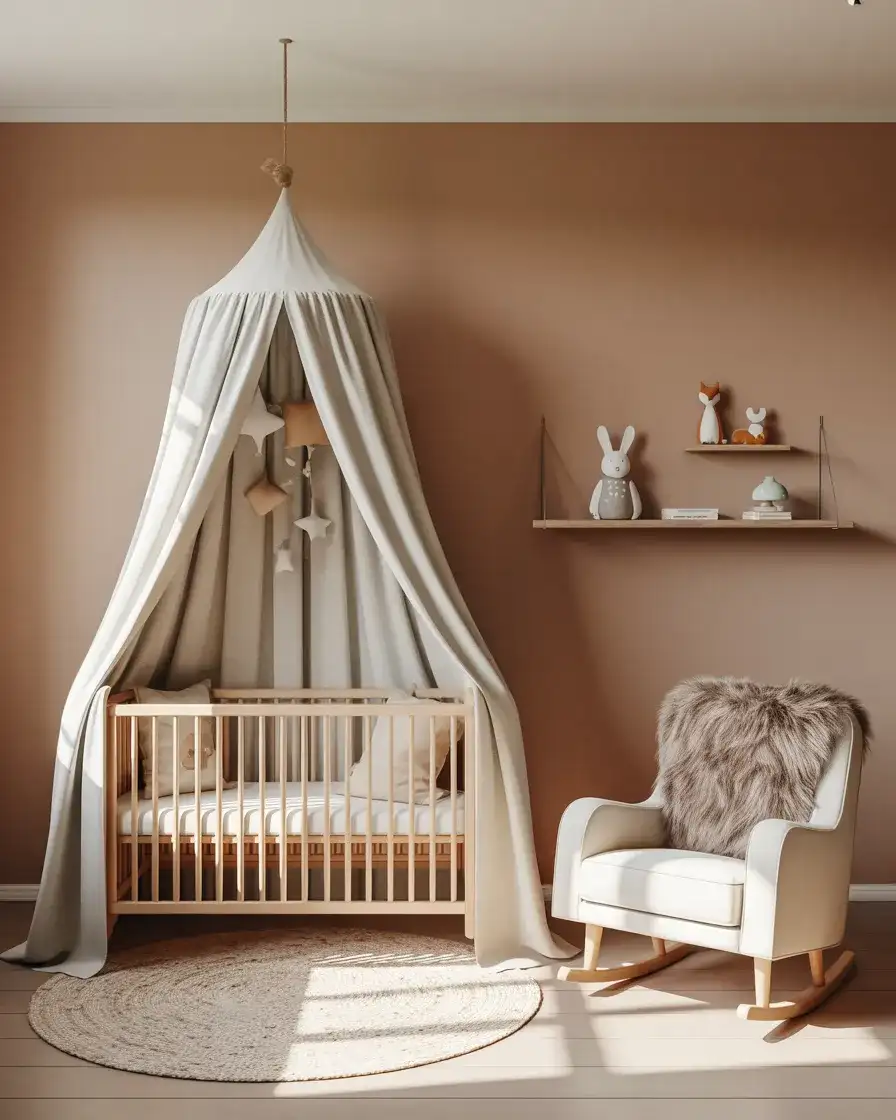
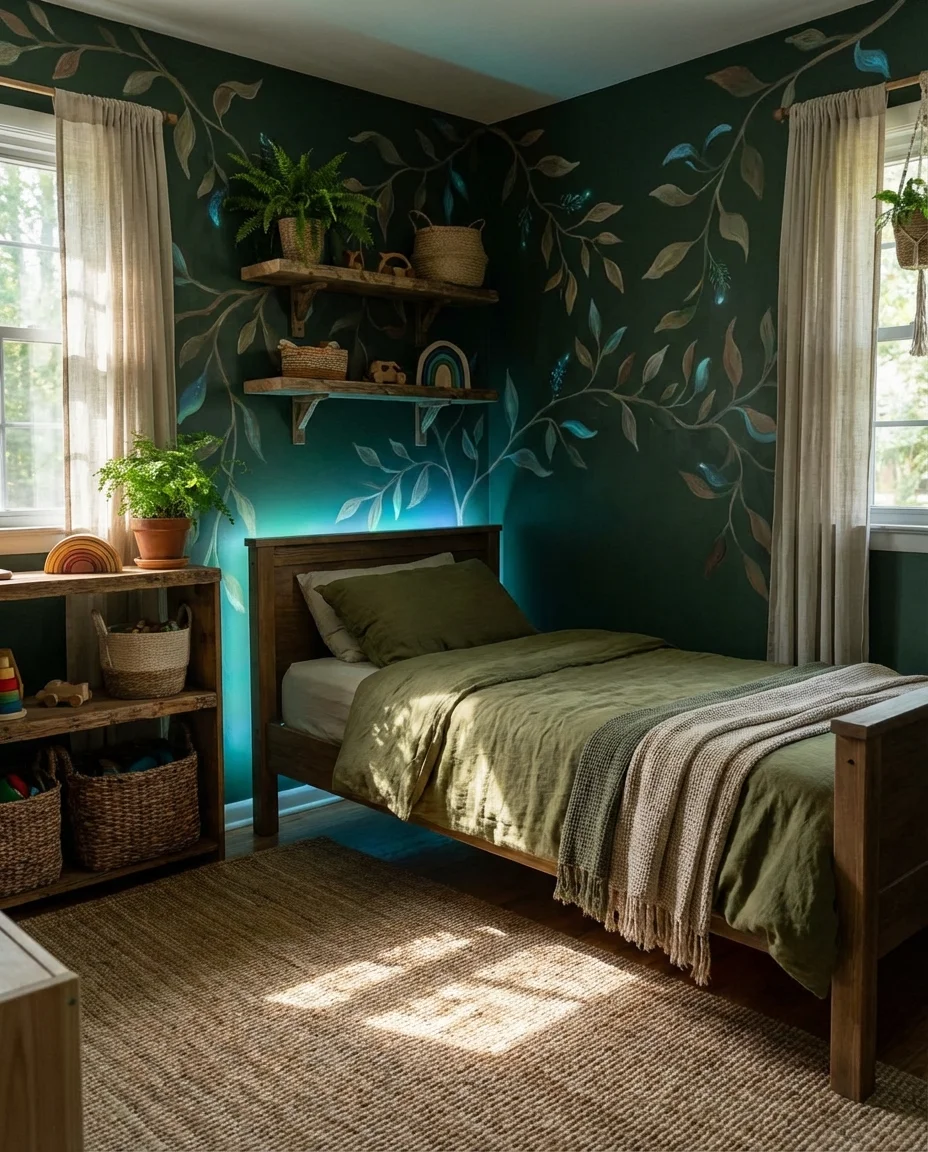
There’s a reason whimsical woodland nurseries keep showing up on Pinterest boards year after year—they tap into something primal and comforting. Think soft mushroom walls, a crib draped in a canopy, and little woodland creatures scattered across shelves and textiles. This style is incredibly nature-inspired without veering into anything too literal or themed. It works beautifully in both larger rooms and tighter spaces, because the magic lives in the details rather than the square footage.
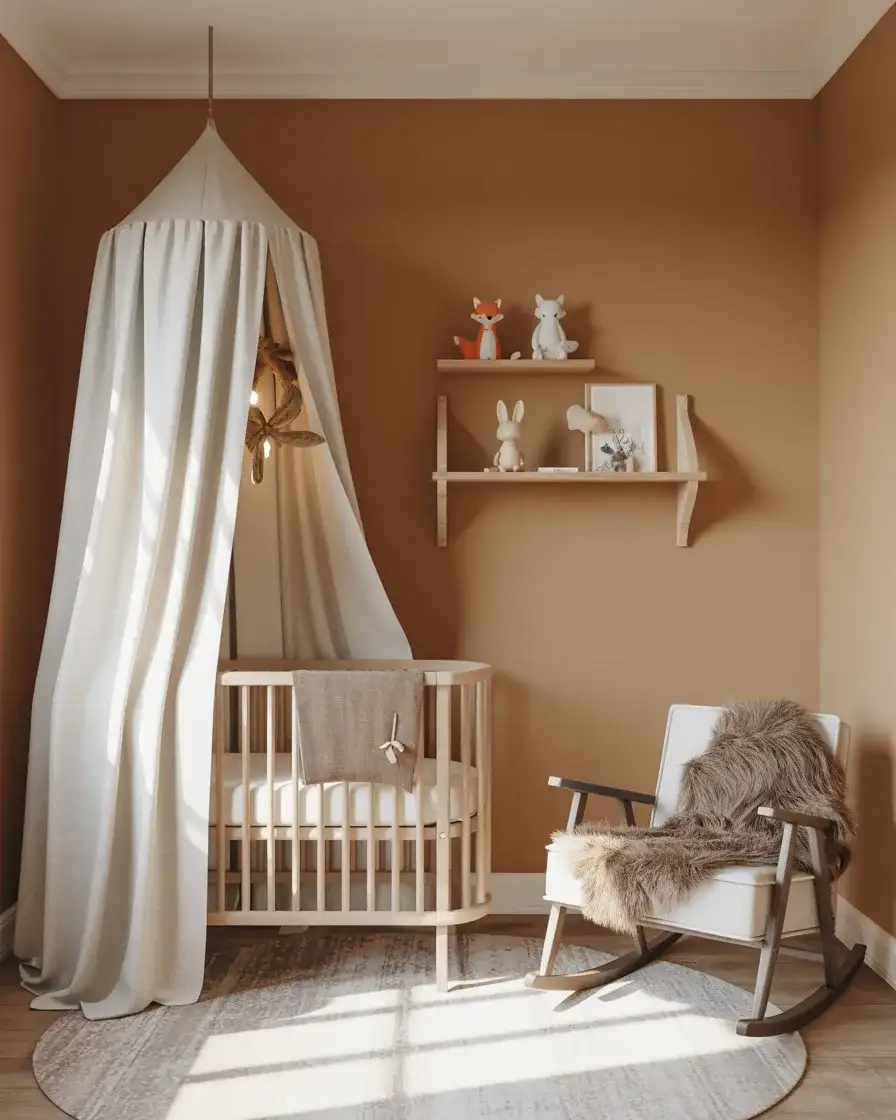
The woodland aesthetic thrives in rural and suburban homes across the American Midwest and Pacific Northwest, where the surrounding landscape already tells this story. That regional connection makes the design feel intentional rather than trendy. One mistake people often make is going too dark with the palette—sticking to warm creams, soft browns, and sage rather than deep forest greens keeps it feeling light and airy, which matters a lot in a room where you’ll be spending so many nighttime hours.
3. Gender-Neutral Neutral Palette
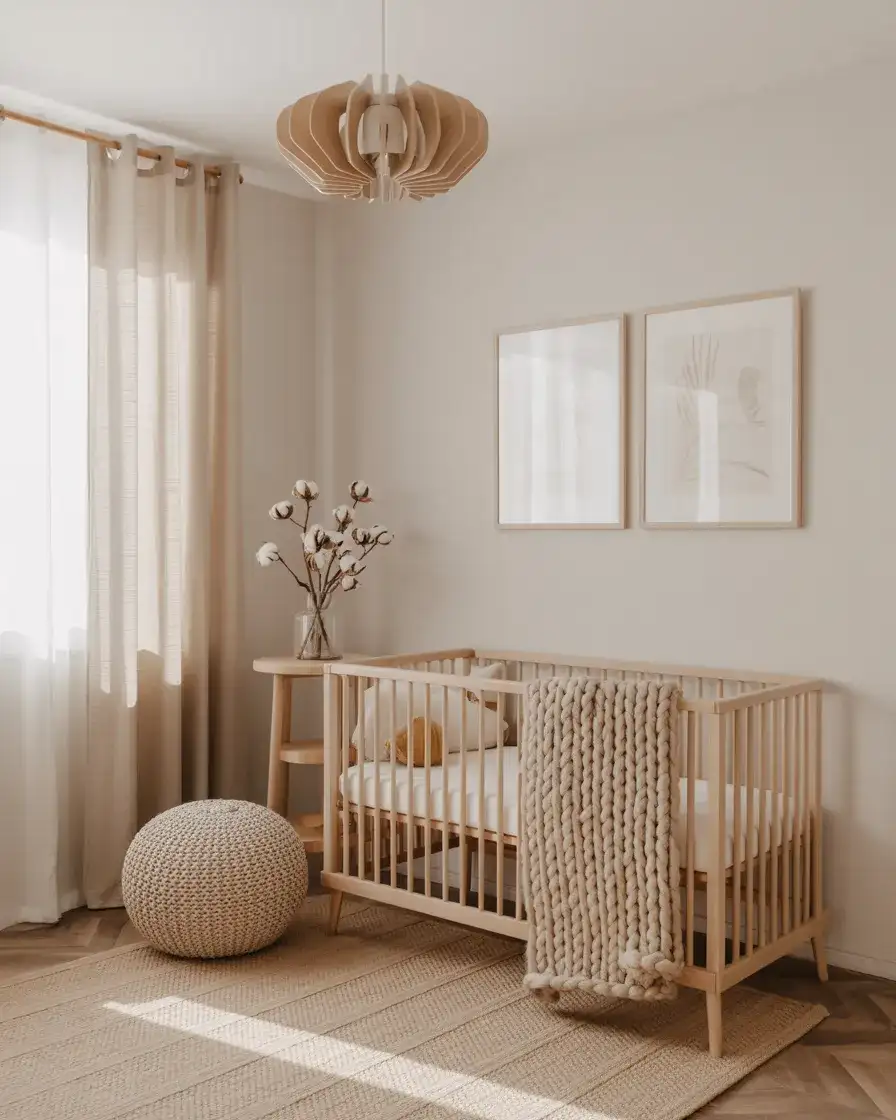
The shift toward gender-neutral nursery design has been one of the biggest trends of the past few years, and it’s only accelerating. Neutral themes—think warm whites, tans, soft beiges, and greige—create a room that feels timeless and quietly sophisticated. It’s also deeply practical: if you have more than one child down the road, you won’t need to repaint. The beauty of this approach is that it lets textures and materials do the heavy lifting instead of color.
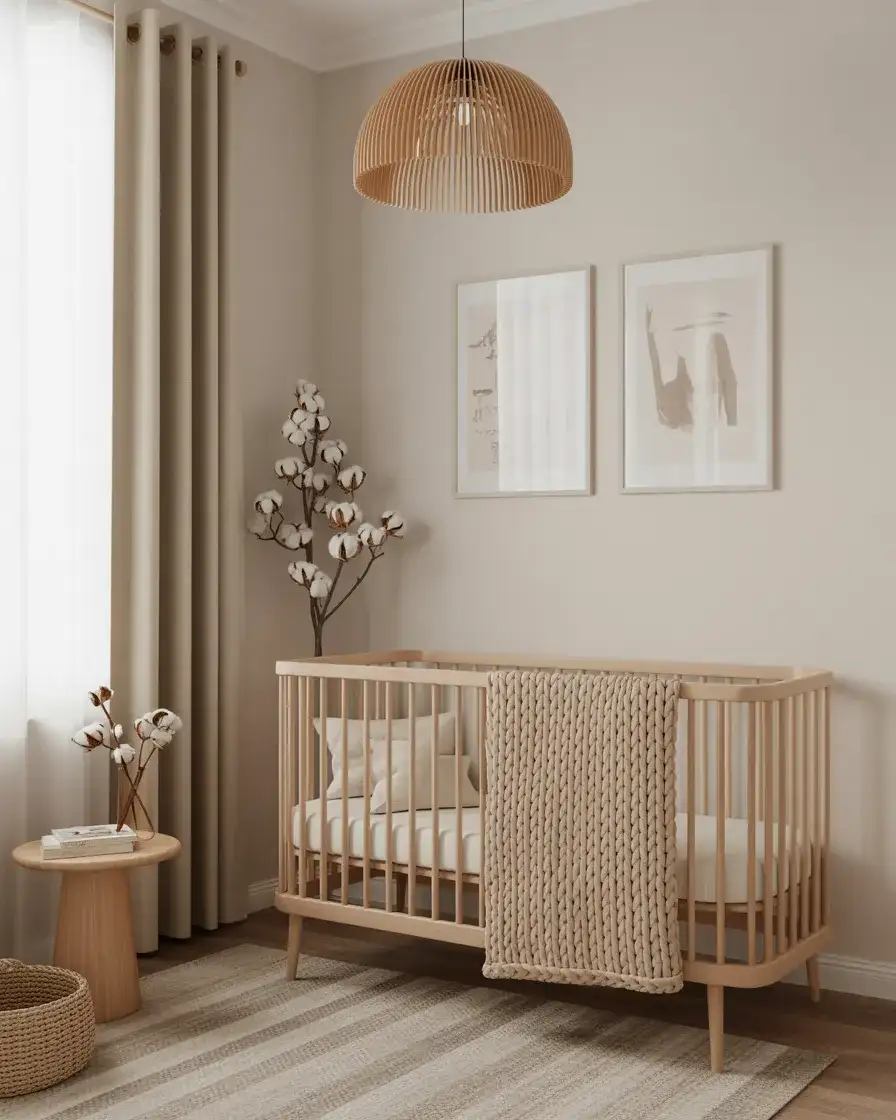
A homeowner in Austin shared how switching from a pink nursery to a neutral one before their second child saved them an entire weekend of painting and prep. That kind of real-world flexibility is what makes neutral design so appealing to growing families. The key is layering—a flat beige wall needs texture to feel intentional. Woven baskets, linen curtains, a chunky knit blanket, and natural wood all add warmth and dimension without introducing a single new color.
4. Pastel Pink Dreamy Retreat
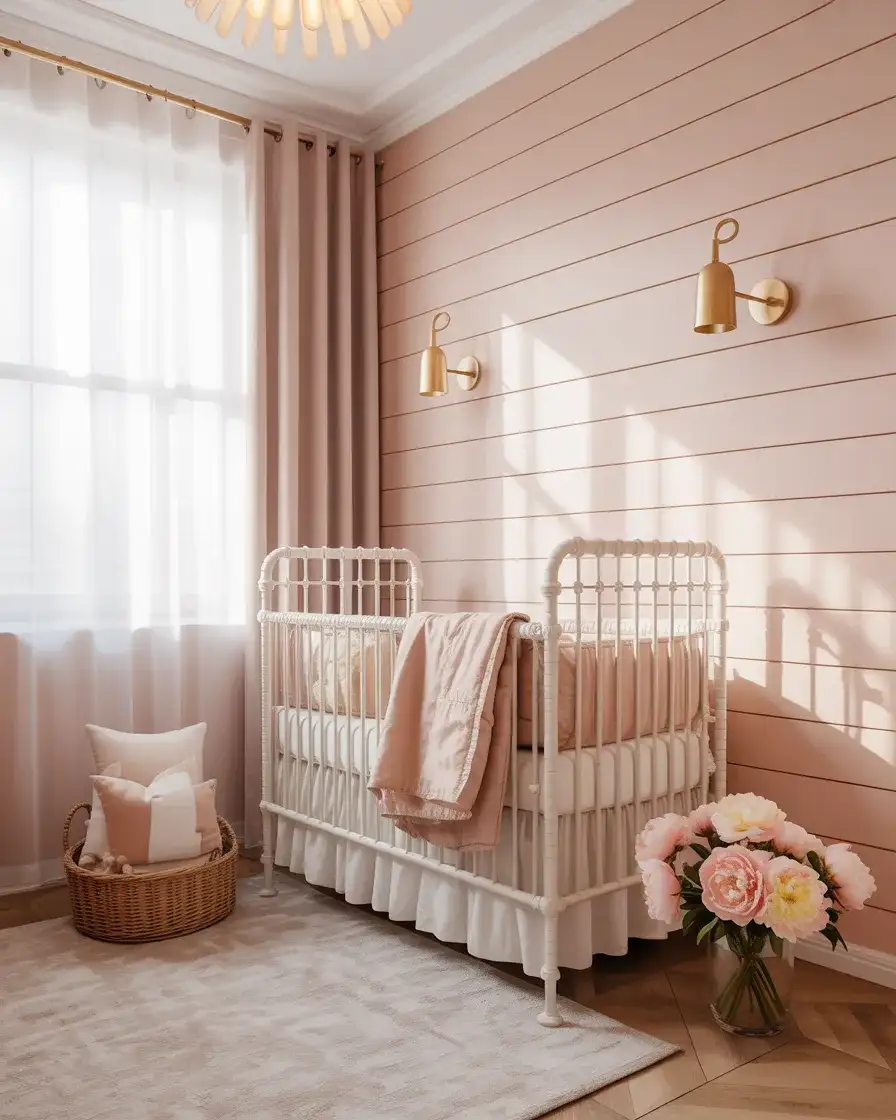
Not all pink nurseries look the same anymore—and that’s the best part. A neutral pastel pink, something dusty and muted rather than bubblegum, can feel incredibly sophisticated and cute at the same time. This shade pairs beautifully with white furniture, gold accents, and soft floral touches. It’s a look that works especially well in rooms with good natural light, where the pink picks up warmth from the sun and glows rather than just sitting flat on the wall.
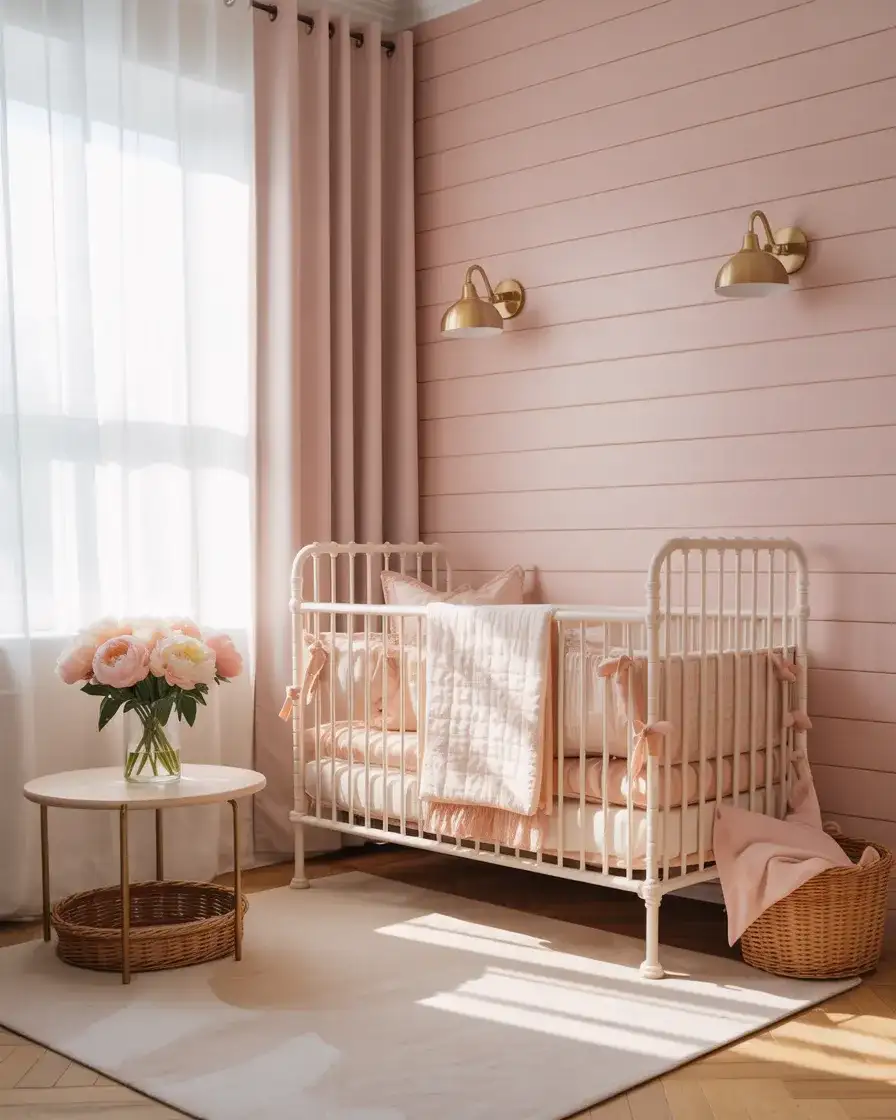
This aesthetic works best in rooms that face east or south, where natural light is plentiful and warm. Without that light, a dusty pink can read as gray or cool, which defeats the dreamy quality entirely. Budget-wise, this is a design that rewards investing a little more in paint quality—a high-end matte finish in a well-chosen dusty rose will age beautifully and stay looking fresh for years without touch-ups. It’s one of those rooms that genuinely improves with age.
5. Winnie the Pooh Classic Charm
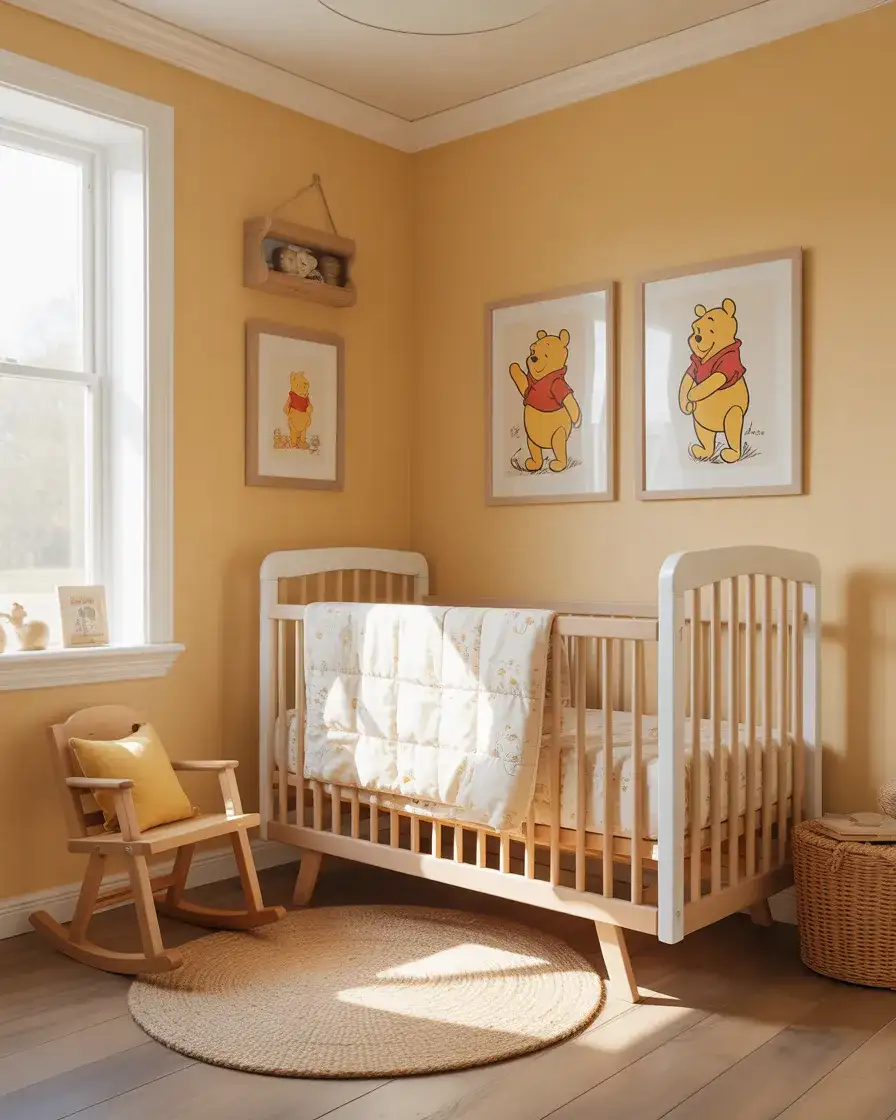
If there’s one Disney nursery theme that never goes out of style, it’s Winnie the Pooh. The original A.A. Milne illustrations—not the more modern cartoon versions—give this theme an almost storybook quality that feels genuinely vintage-inspired. Soft honey tones, warm woods, and hand-painted details bring the Hundred Acre Wood into your home without it feeling garish or overly branded. It’s a theme that grows up alongside your child rather than feeling babyish within a year.
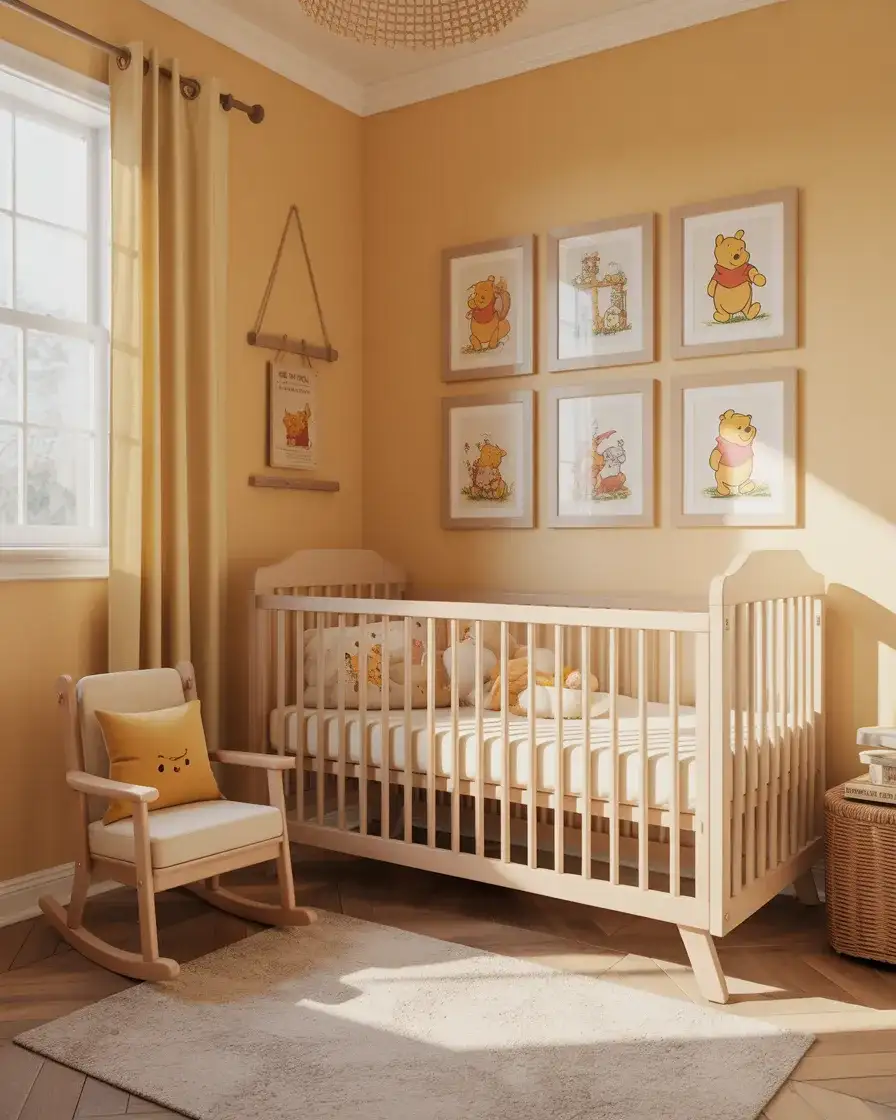
An interior stylist once pointed out that the secret to a themed nursery that doesn’t feel like a gift shop is restraint—pick three or four signature pieces and let the rest of the room stay neutral. With Pooh, that might mean two framed prints, a stuffed bear, and a honey-jar accent on the changing table. Everything else stays in creams and warm woods. The theme whispers rather than shouts, and that’s exactly what makes it feel timeless and genuinely worth revisiting years later.
6. Colorful Rainbow Mural Wall
For parents who want something genuinely bold, a rainbow mural wall is one of the most visually stunning nursery ideas circulating right now. But this isn’t your elementary school rainbow—it’s a colorful ombre sweep of soft, muted tones that blend seamlessly from one shade to the next. Think dusty rose into lavender into powder blue into soft mint. The effect is dreamy and almost painterly, and it turns one wall into a true focal point that anchors the entire room.
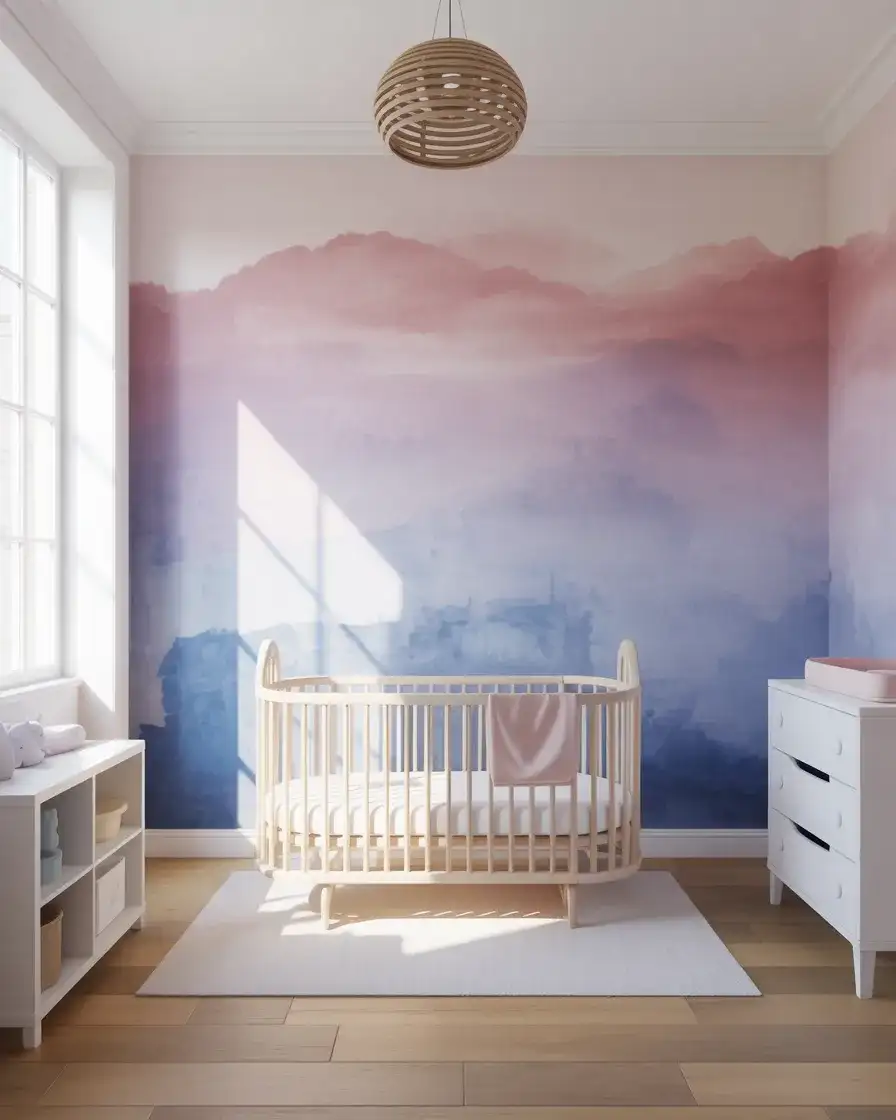
Hiring a muralist for this effect typically runs between $300 and $800 depending on your region and wall size—a reasonable investment for a piece that functions as art, accent, and conversation starter all at once. If DIY appeals to you, the key is using a wide roller and working in thin, overlapping layers while the paint is still wet. Rushing the blend is the most common mistake, and it results in visible bands rather than that smooth, gallery-worthy gradient.
7. Floral Garden Nursery
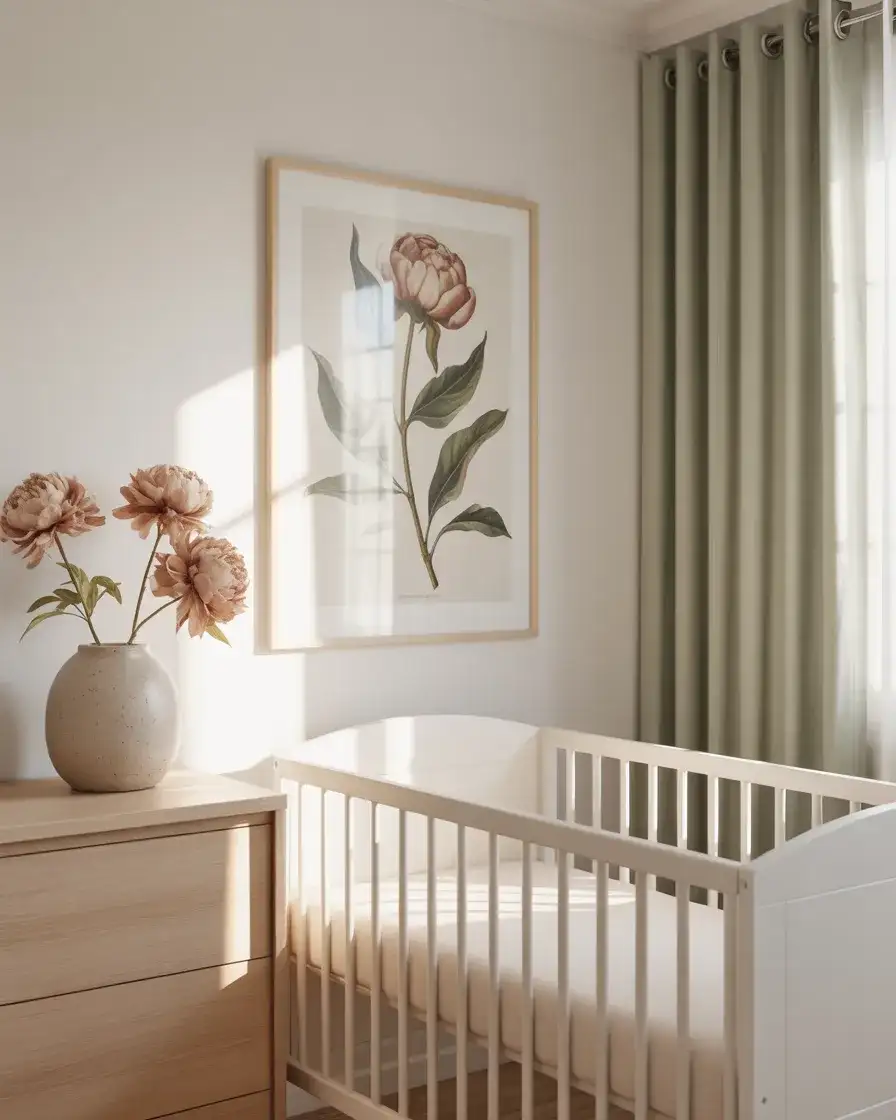
A floral nursery doesn’t have to mean wallpaper from floor to ceiling—though that can be stunning too. The softer approach is layering floral elements throughout the room: a botanical print above the crib, floral bedding with a muted background, and a vase of dried flowers on the dresser. This creates a nature-inspired feel that’s also incredibly romantic and feminine without being over-the-top. It’s the kind of room that looks effortless but actually takes a little curation to pull off.
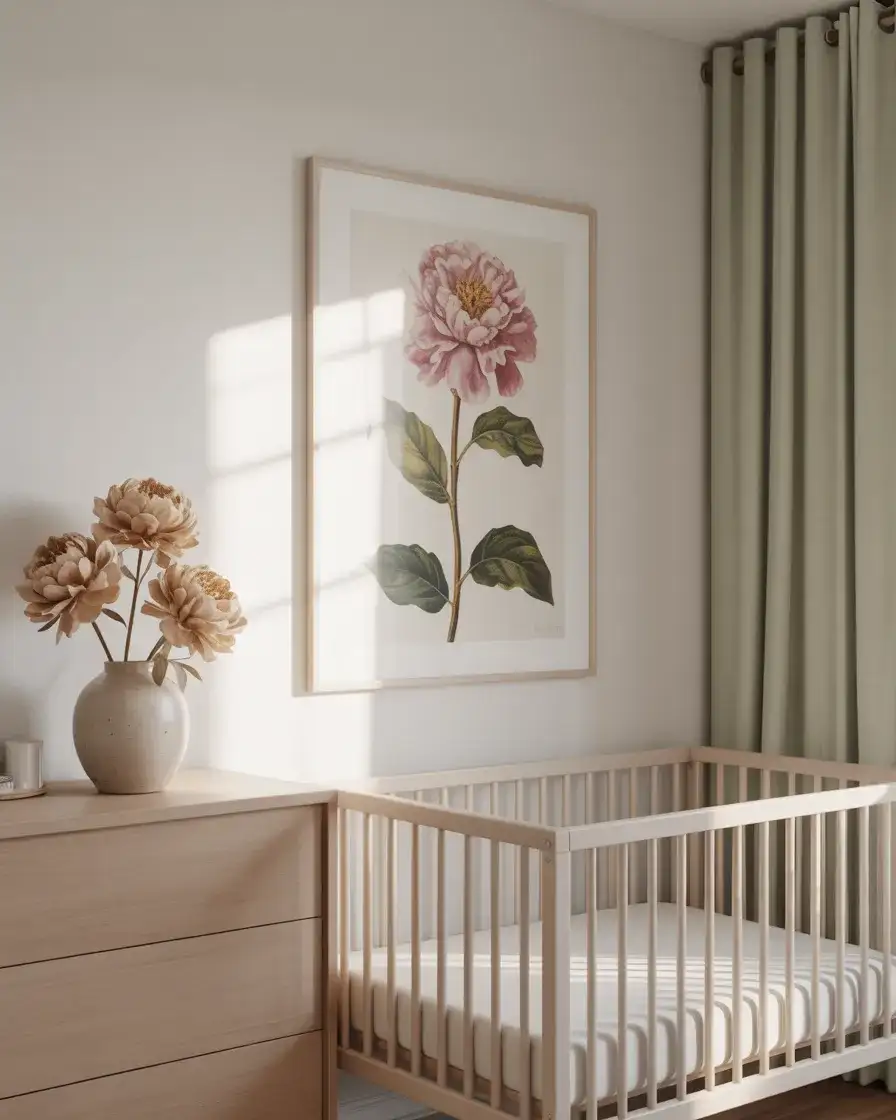
This style works particularly well in homes in the South and Southeast, where floral motifs already feel at home in the broader décor. One practical tip: real dried flowers are gorgeous but can be dusty and fragile over time. High-quality silk or preserved arrangements give you the same visual impact with far less maintenance—especially important in a nursery where you’ll be cleaning frequently anyway. The visual difference is genuinely minimal once they’re styled and in place.
8. Twin Nursery with Symmetry
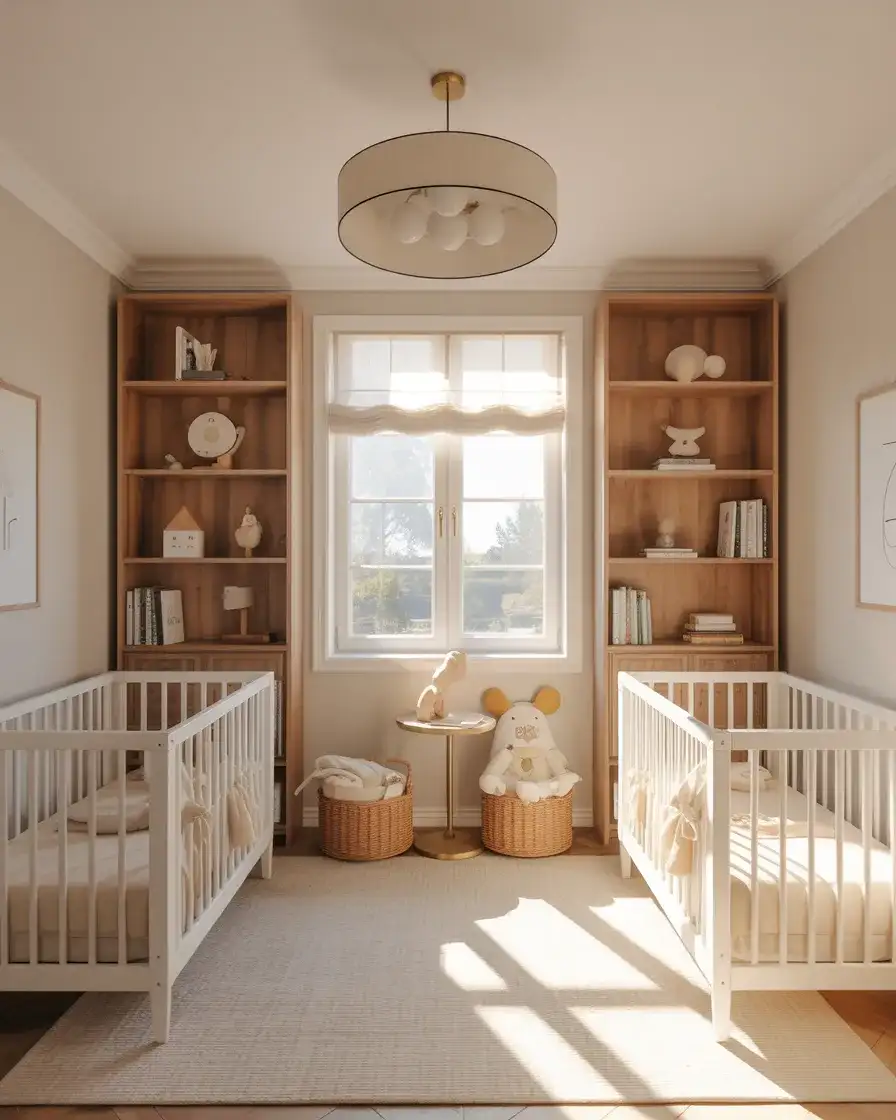
Designing for twin babies is one of the most exciting—and slightly nerve-wracking—nursery challenges out there. The most satisfying approach is built around symmetry: two cribs flanking a shared centerpiece like a tall bookshelf or a statement pendant light. A neutral color palette keeps things cohesive without making the room feel monotonous, and matching but not identical textiles—same color, different textures—add just enough variation to feel intentional and alive.
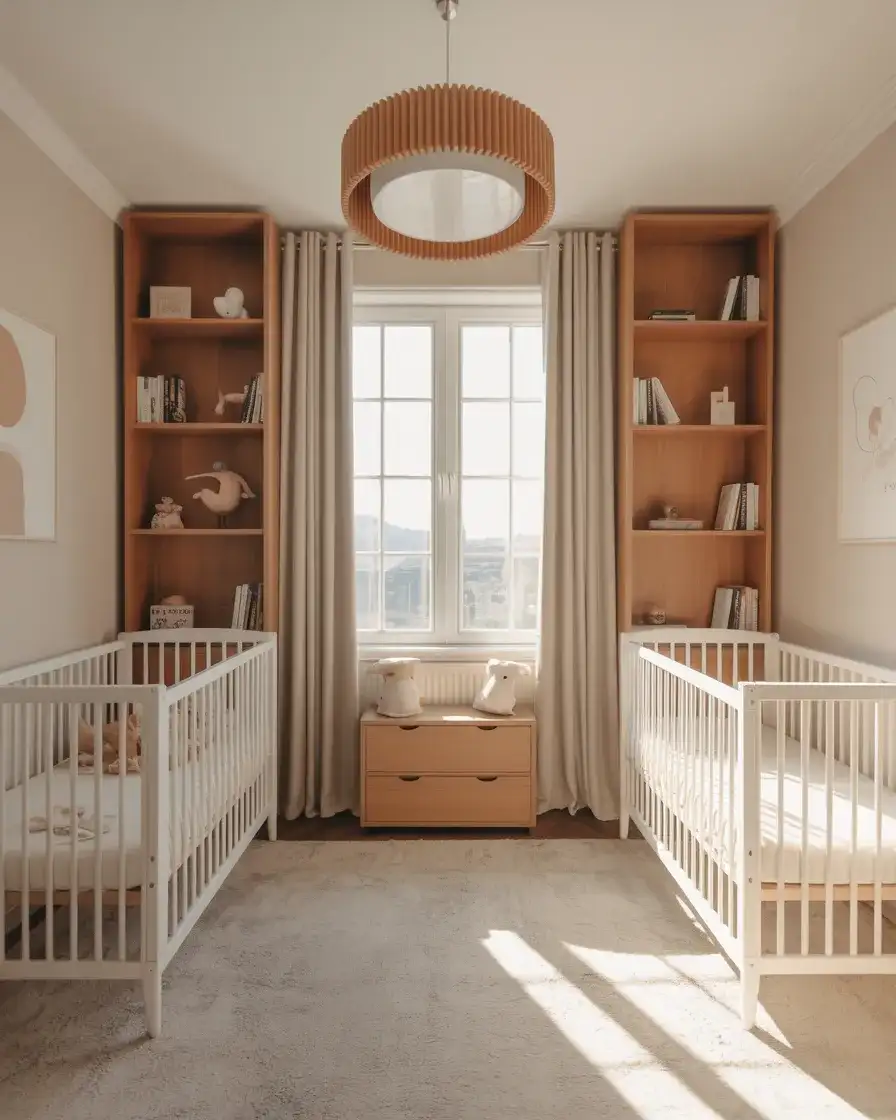
Parents of twins often report that the hardest part isn’t the design—it’s the logistics of fitting everything into one room. A narrow layout with cribs on the same wall and the changing station on the opposite side actually flows better than a symmetrical arrangement in tight spaces. Keeping the furniture minimal and choosing a tall, narrow bookshelf over a wide dresser saves precious floor space while still giving you plenty of storage for blankets, books, and essentials.
9. Country Farmhouse Nursery
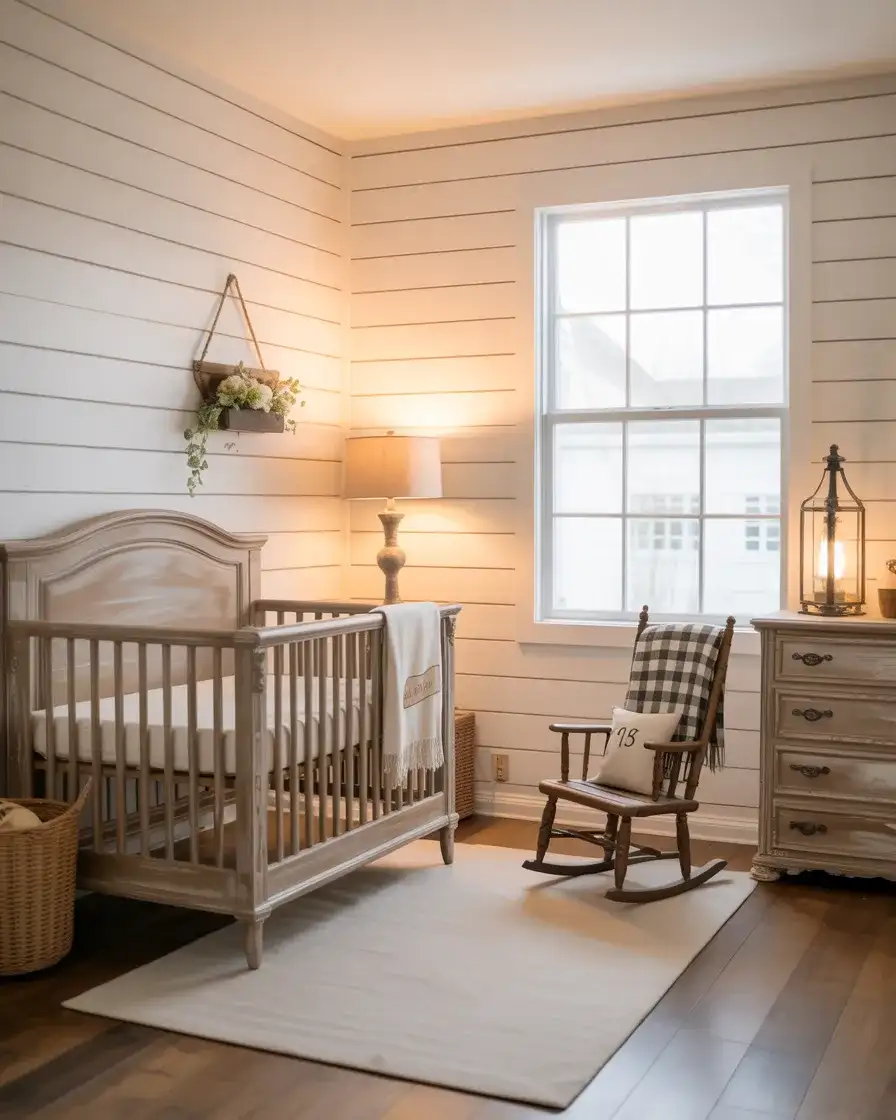
The country farmhouse nursery is having a genuine moment, and it’s easy to see why. There’s something deeply soothing about a room that feels like it belongs on a sprawling property somewhere in the heartland—worn wood, soft whites, and a little bit of rustic texture. A vintage-inspired iron crib or a weathered wooden one instantly sets the tone. Layer in some shiplap and a few checkered or buffalo-check accents, and you’ve got a nursery that feels both nostalgic and completely fresh.
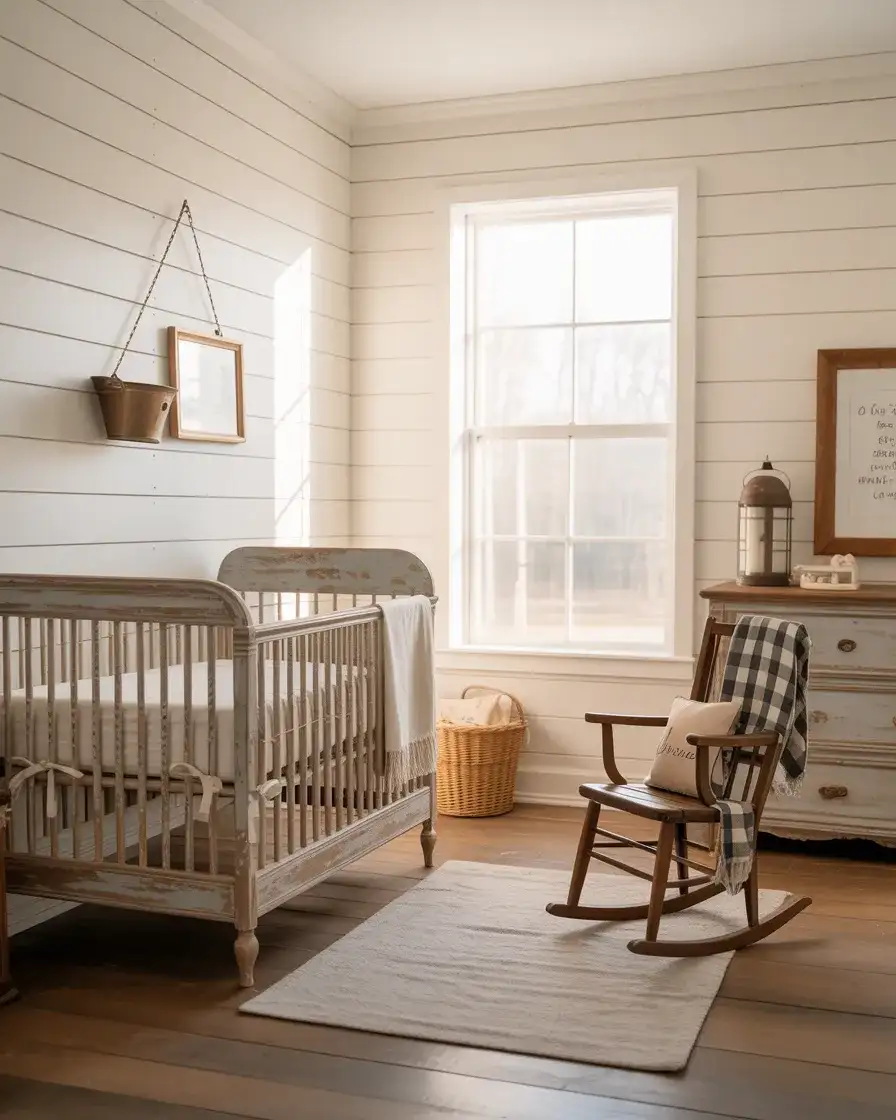
This aesthetic is rooted in American rural life and feels especially at home in states like Tennessee, Texas, and the Carolinas. For families shopping on a budget, thrift stores and estate sales are absolute goldmines for the kind of worn, character-rich furniture this style demands. A beat-up wooden dresser from a garage sale, refinished in white or left as-is, can become the most charming piece in the room—and it’ll cost a fraction of what you’d pay new.
10. Unique Celestial Night Sky
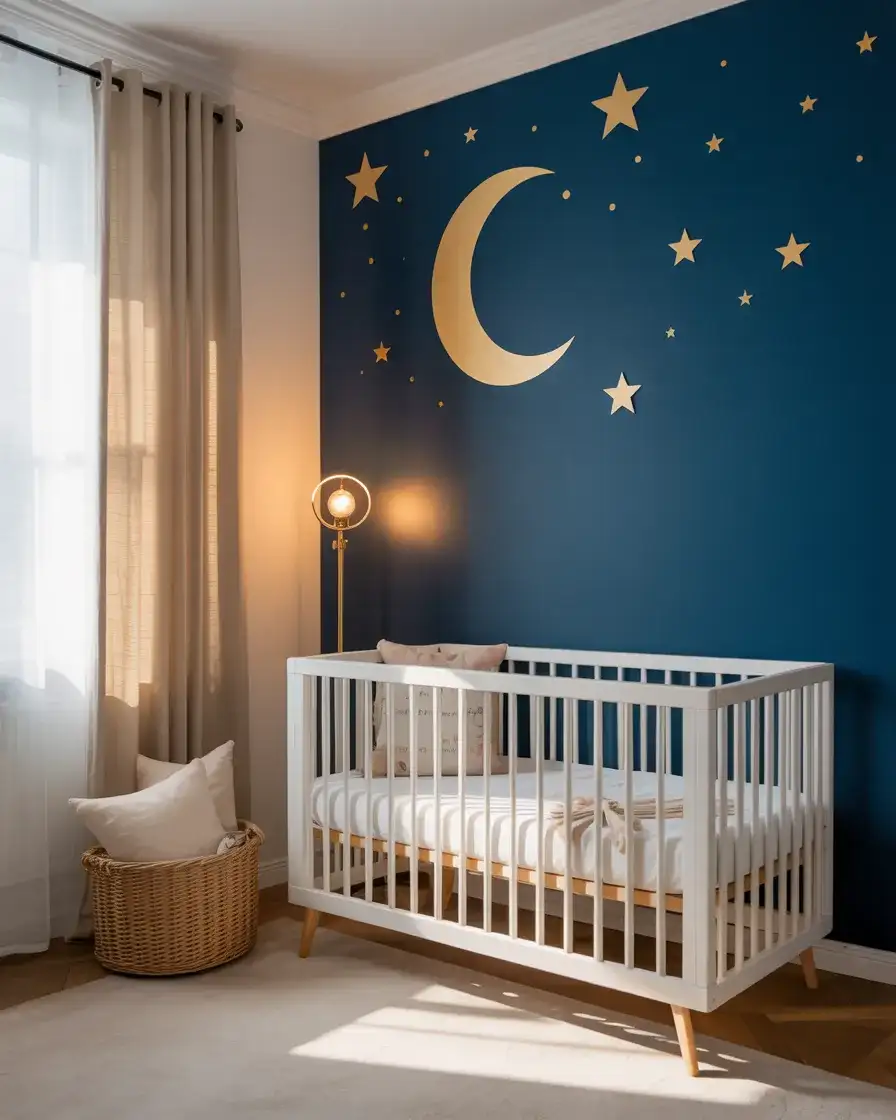
If you want a nursery that genuinely stops people in their tracks, a celestial night sky ceiling or accent wall is one of the most unique ideas circulating right now. Deep navy or midnight blue backgrounds scattered with gold or white stars and moons create an almost magical atmosphere. This is a colorful concept that somehow still manages to feel calming—probably because night skies are inherently tied to sleep and quiet. It works beautifully as either a full ceiling treatment or a single dramatic wall.
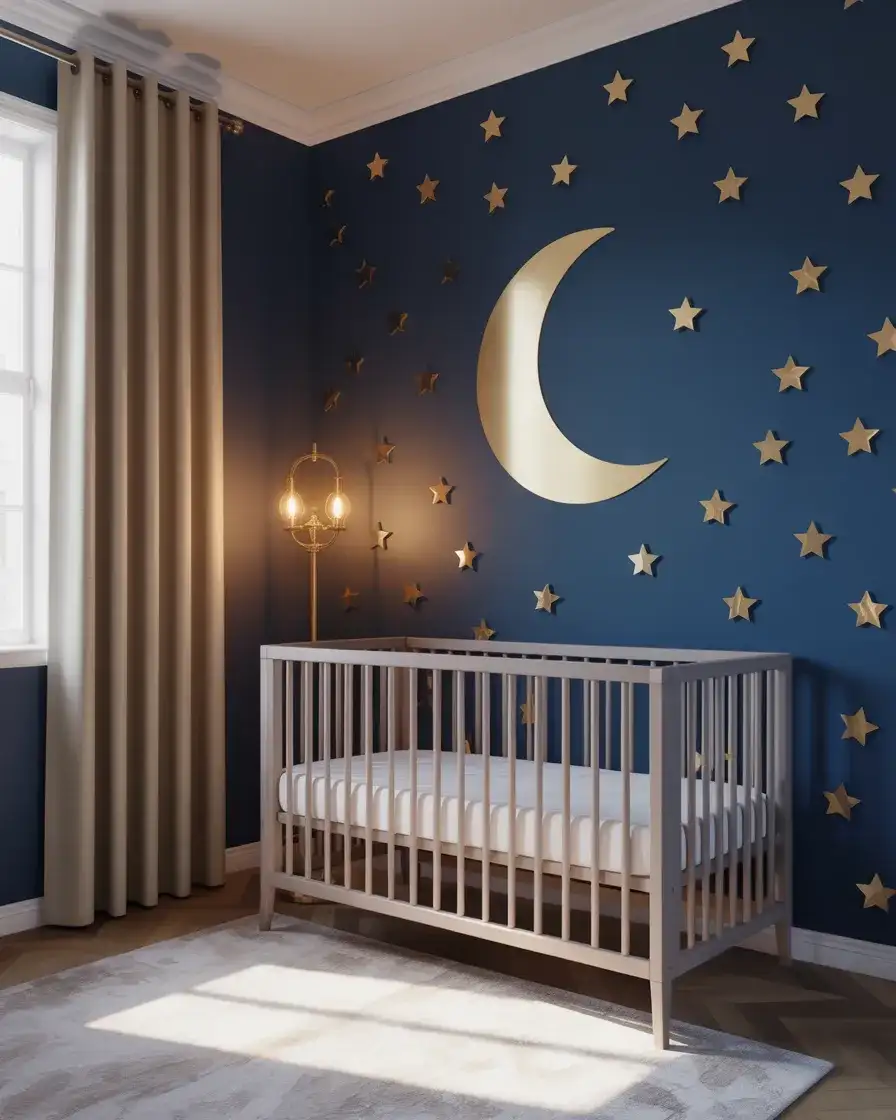
For a DIY approach, gold vinyl star decals are inexpensive and surprisingly convincing from a distance—you can find packs of hundreds for under twenty dollars online. The placement matters more than the quantity: cluster them unevenly rather than scattering them in a grid, because real night skies aren’t uniform. A few larger gold moon and planet accents break up the pattern and add real depth without requiring any painting skill at all. It’s one of the easiest dramatic upgrades you can make.
11. Green Tropical Leaf Nursery
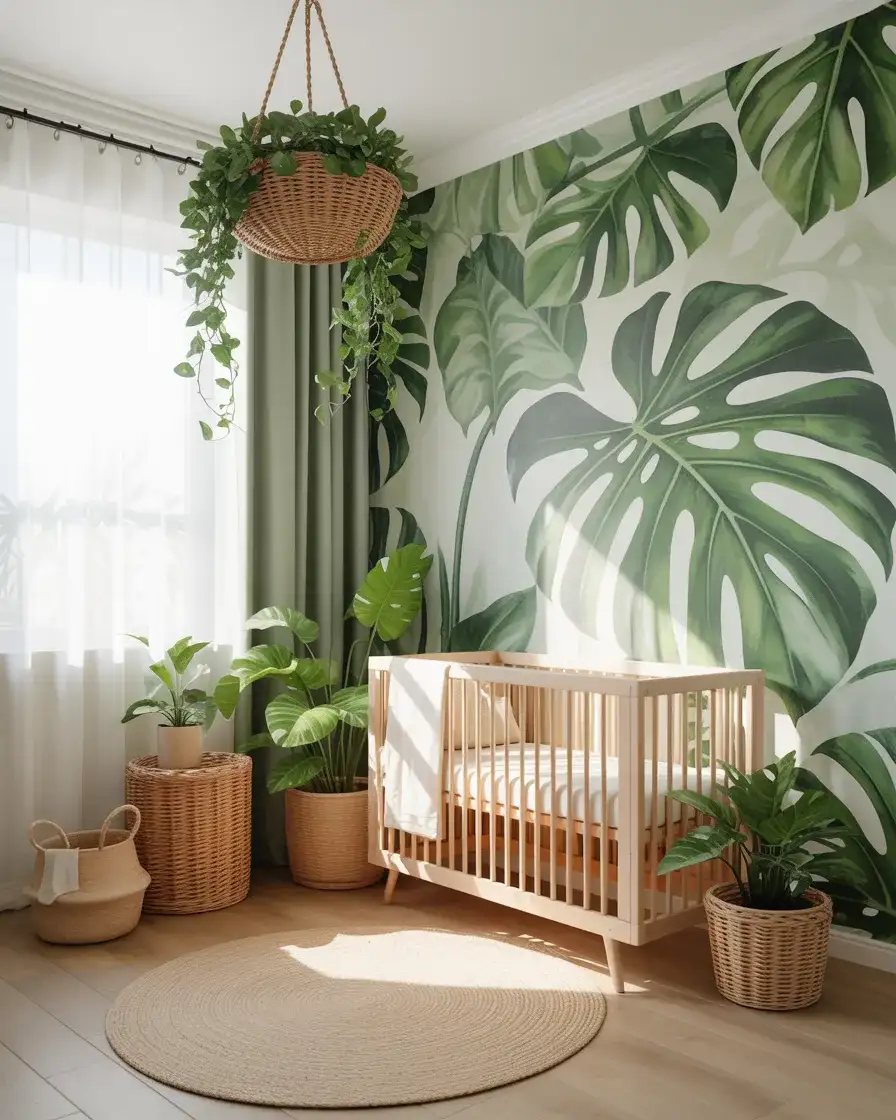
A tropical leaf nursery brings the outdoors in with bold, lush confidence. Green is the star here—deep emerald, soft sage, and everything in between—mixed with oversized leaf prints on wallpaper or bedding and real or faux plants scattered throughout. This style feels especially vibrant and nature-inspired in rooms with tall ceilings or good natural light. It’s not a subtle look, but when it works, it’s genuinely transportive—like a little jungle hideaway tucked right inside your home.
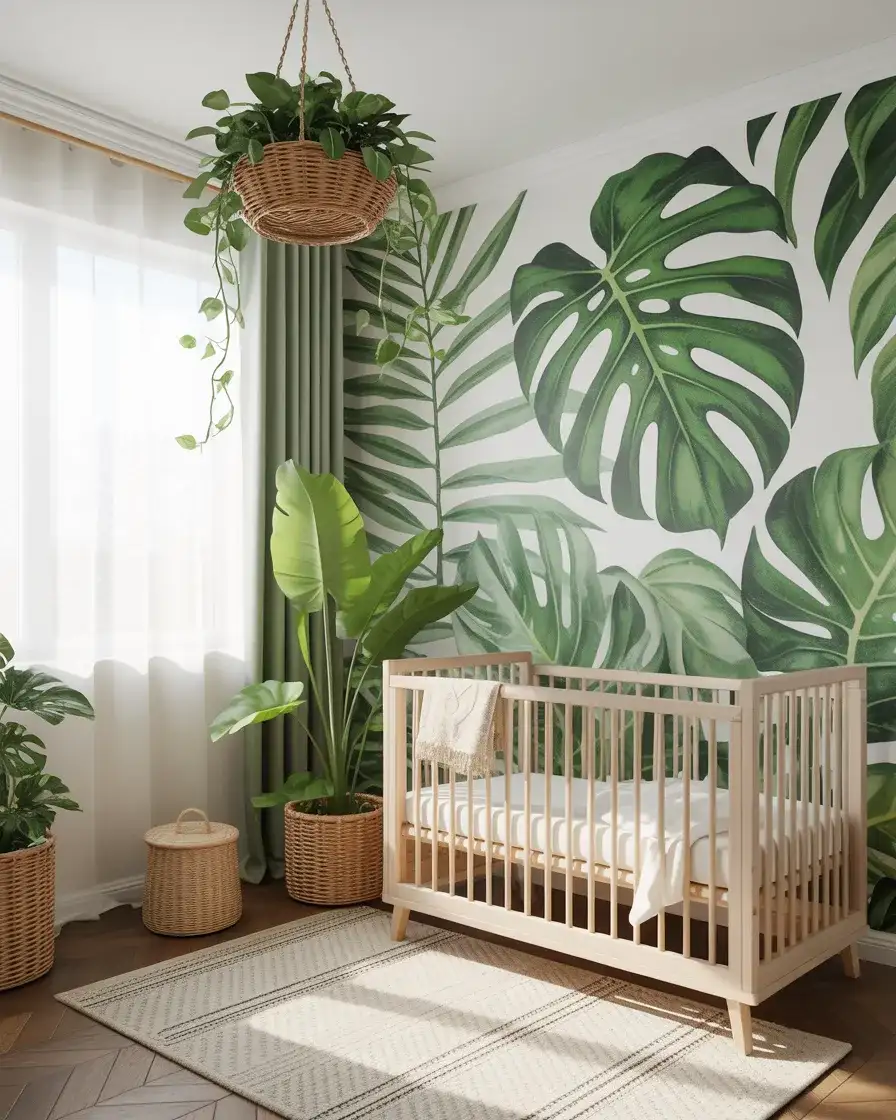
This design choice is especially popular in Florida, Hawaii, and Southern California, where the tropical aesthetic already flows naturally through the rest of the home. A common mistake is overdoing the plants—a nursery with real foliage everywhere can become a maintenance headache and a potential allergen concern. Pick two or three statement plants and supplement the rest with high-quality faux greenery. The visual effect is nearly identical, but the upkeep disappears entirely.
12. Goth-Inspired Dark Nursery
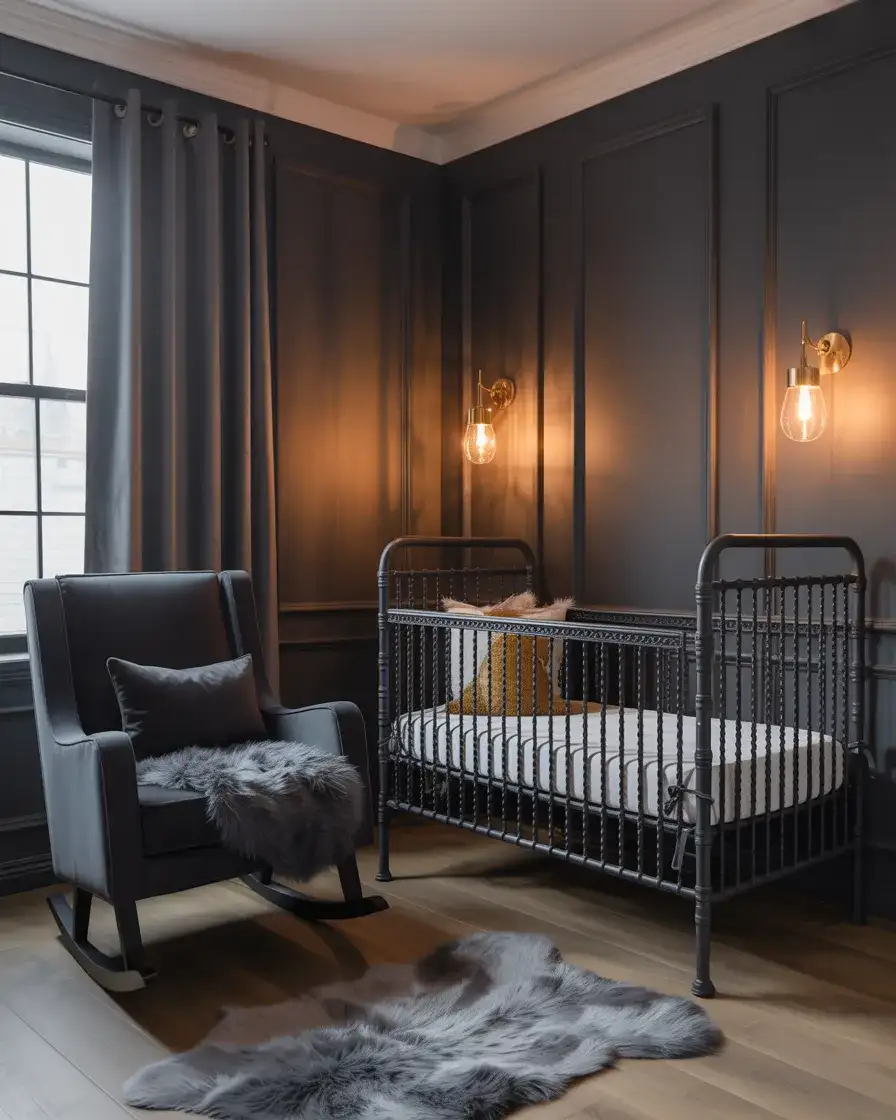
Yes, goth nurseries are a real thing—and they’re stunning. This isn’t about anything dark or scary; it’s about leaning into deep, moody tones like charcoal, black, and deep plum with intention and elegance. Pair those dark walls with soft textures like velvet, silk, and faux fur, and gold or brass accents to keep it feeling luxurious rather than gloomy. It’s a genuinely unique take on nursery design that challenges every convention while still feeling incredibly cozy and safe.
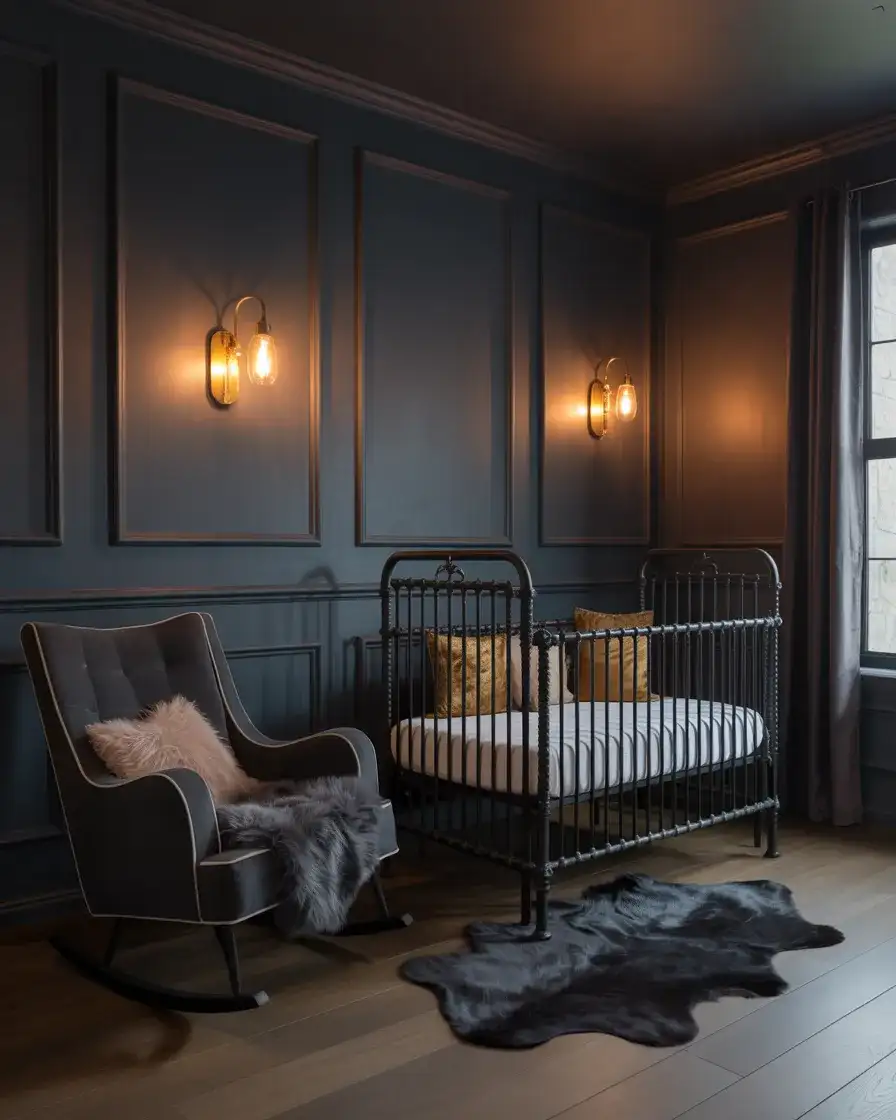
The biggest challenge with dark nurseries is lighting. A room painted in deep charcoal absorbs light, which can make the space feel cramped if you’re not careful. Warm-toned lighting—think amber bulbs rather than cool white—is essential here. Gold and brass fixtures do double duty, adding both reflective warmth and a touch of glamour that elevates the whole dark palette from simply moody to genuinely sophisticated and intentional. Layer at least two light sources for the best effect.
13. Yellow Sunshine Nursery
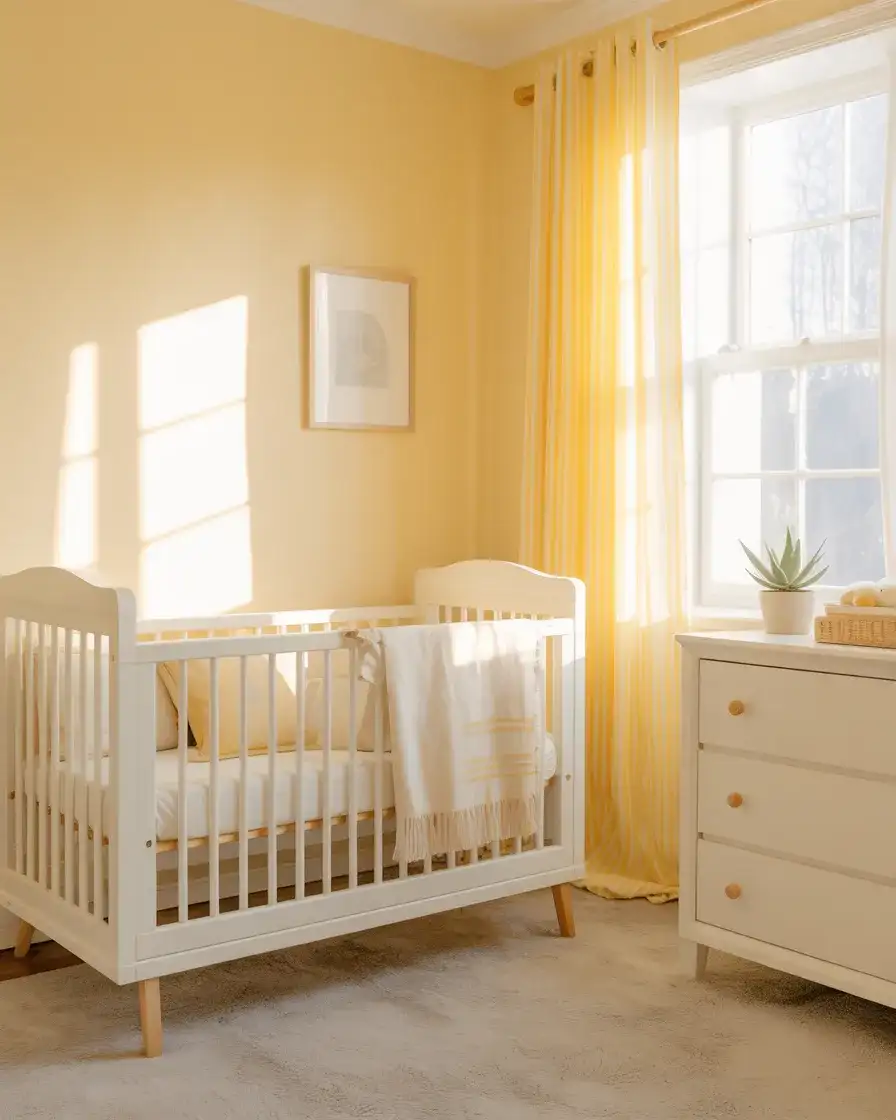
A yellow nursery done right is one of the happiest rooms you can walk into. The key word there is “done right”—because bright, saturated yellow can quickly tip into overwhelming. The sweet spot is a soft, buttery shade that reads as warm and cheerful without dominating. This pairs beautifully with white and cream furniture, and it’s one of the best unisex colors out there. It feels energetic without being loud, and it photographs beautifully, which matters when you’re documenting every milestone.
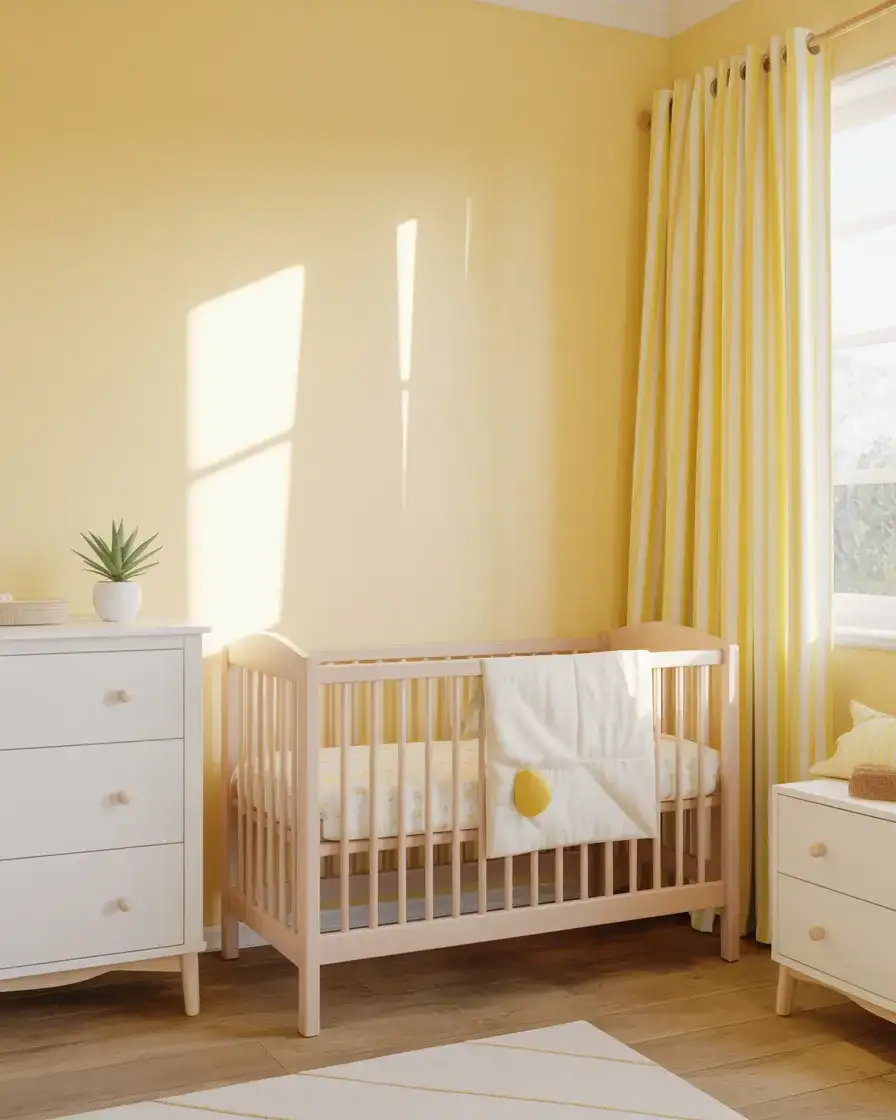
Yellow is one of those colors that shifts dramatically depending on the light in the room. In a north-facing room, even a warm yellow can read greenish or flat. Test at least three sample swatches on the wall and observe them at different times of day before committing. This is especially true if your nursery gets limited natural light—in that case, a slightly more saturated shade actually performs better than a pale one, because the warmth holds up even in dimmer conditions.
14. Disney Princess Enchanted Room
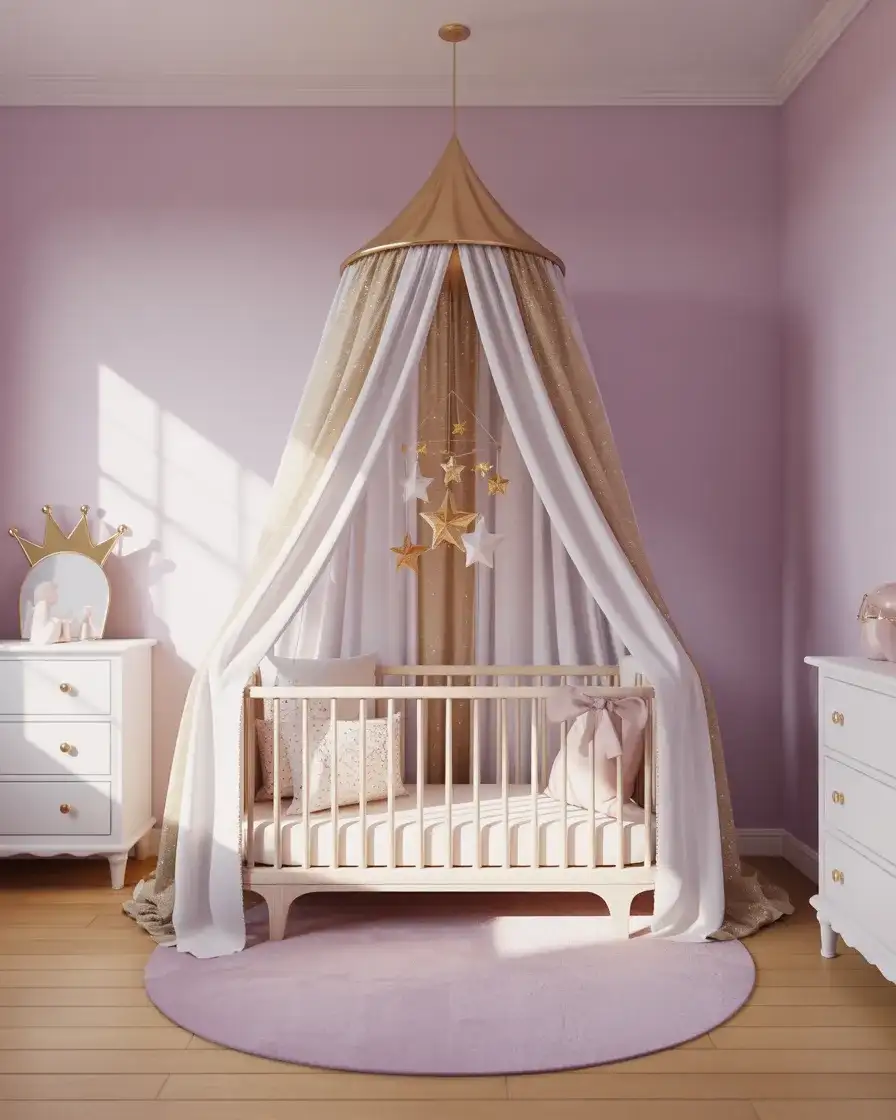
A Disney princess nursery doesn’t have to look like a theme park gift shop. The trick is pulling the aesthetic rather than the branding—think soft lavender walls for Rapunzel vibes, a canopy over the crib that evokes a castle bedroom, and cute gold star accents that nod to magic without spelling it out. This approach lets the room feel like a fairy tale without being overwhelmingly literal, and it grows with your daughter far longer than a nursery plastered with character merchandise.
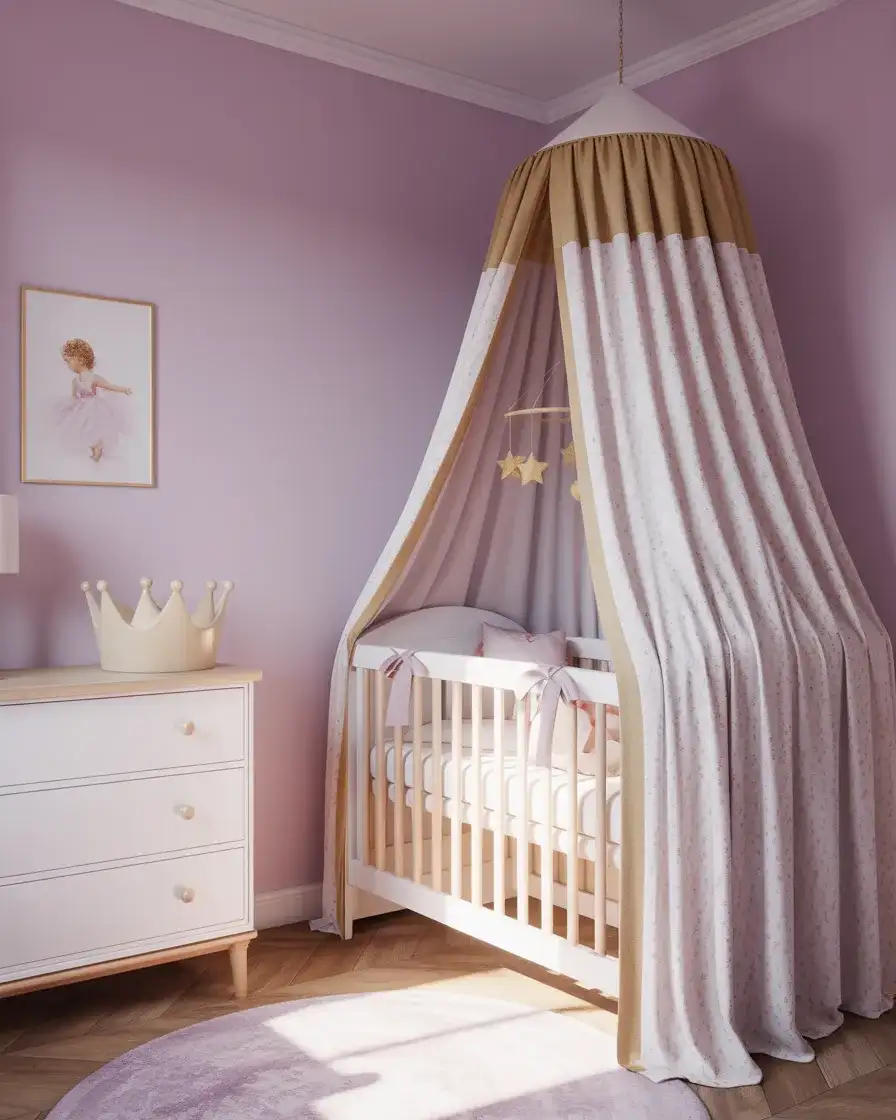
Parents who’ve gone this route consistently say the best advice is to invest in one or two high-quality statement pieces—a stunning canopy, a gorgeous mobile, or a beautiful piece of art—and keep everything else simple and neutral. A lavender and gold color scheme with white furniture lets the magic live in the atmosphere rather than in licensed products, which tend to date quickly and clutter the space if you’re not selective about what you bring in.
15. Small Room Minimalist Crib Setup
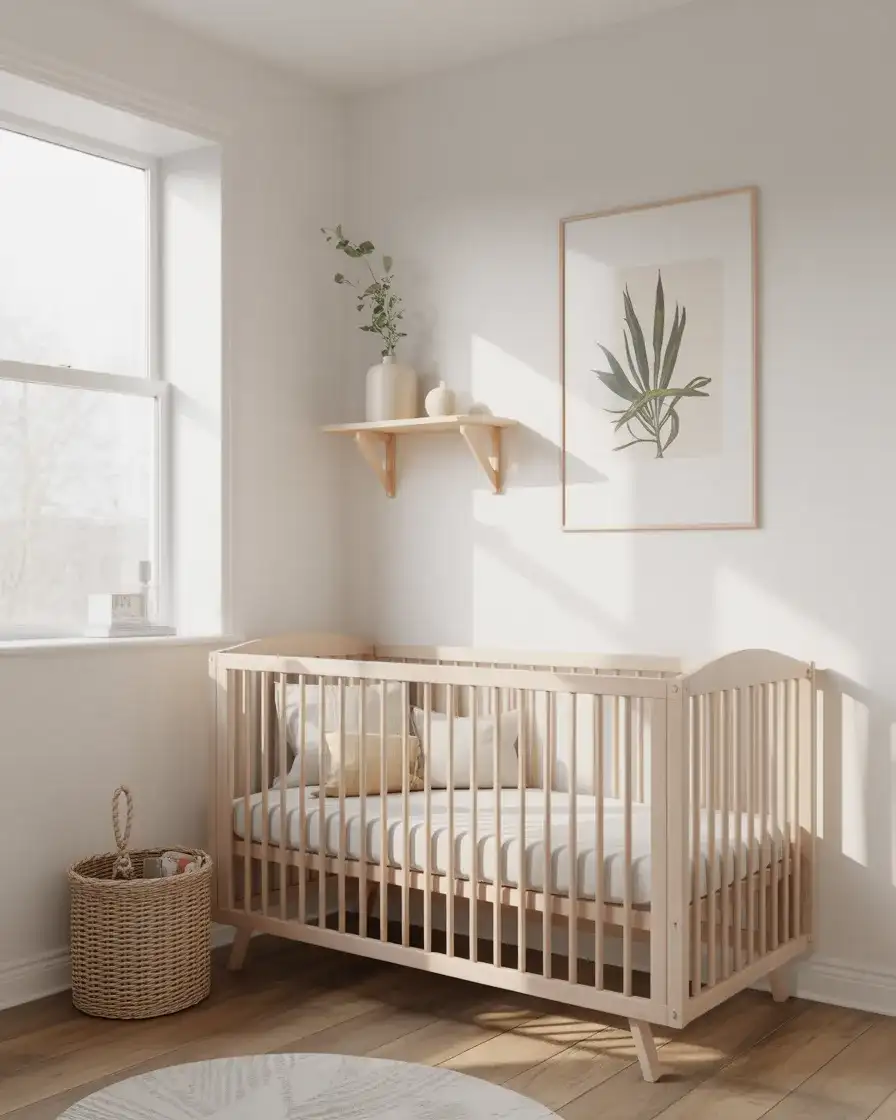
Not every nursery gets a dedicated bedroom, and that’s completely fine. A small room or even a shared space can feel just as intentional and beautiful with the right minimalist approach. The crib becomes the focal point, surrounded by only the essentials: a compact changing pad, one small shelf, and a single piece of art on the wall. Everything else stays out. This isn’t about deprivation—it’s about editing ruthlessly so that the space feels calm, purposeful, and completely uncluttered.
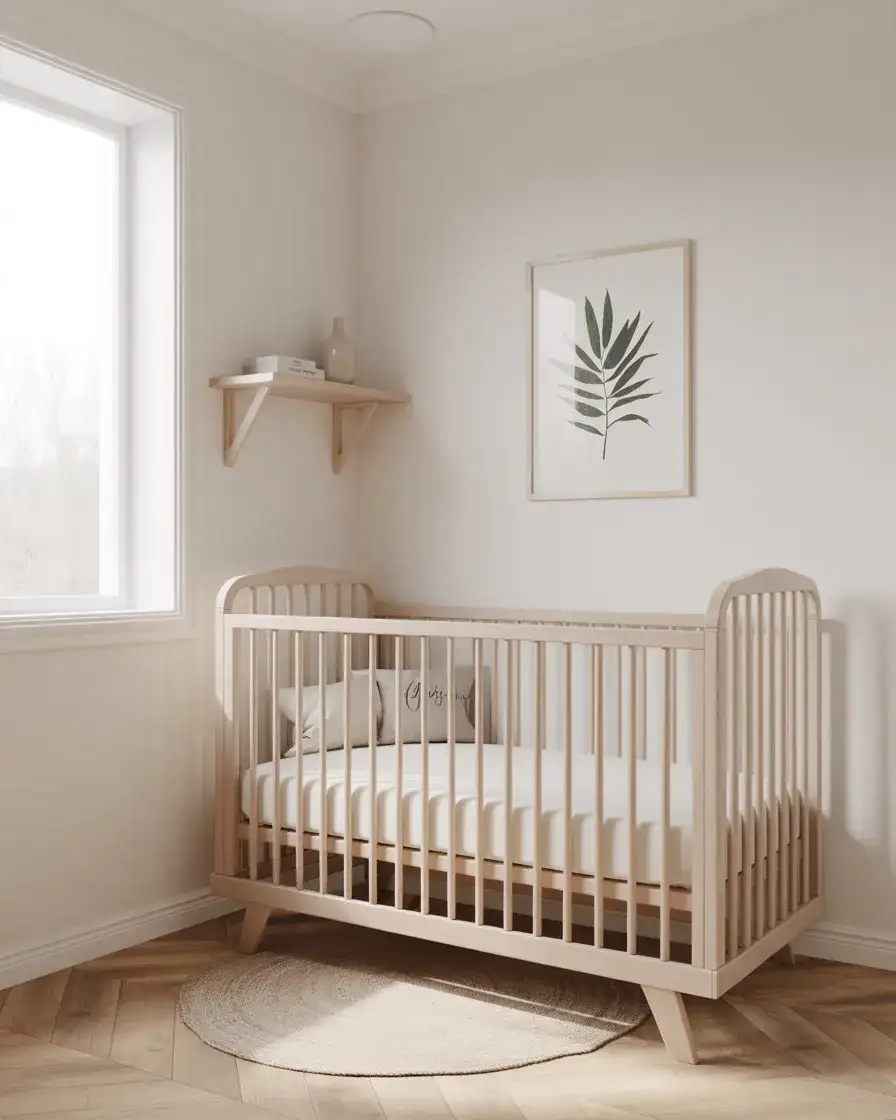
In small nurseries, vertical space is your best friend. A tall, narrow shelf unit or a few floating shelves stacked above the crib can hold everything you need without eating into precious floor area. The most common mistake in tiny nurseries is trying to fit a full-sized dresser—in most cases, a compact dresser or even a well-organized closet does the job far better and keeps the room feeling genuinely open, breathable, and easy to navigate in the dark during those late-night feeds.
16. Vintage-Inspired Antique Nursery
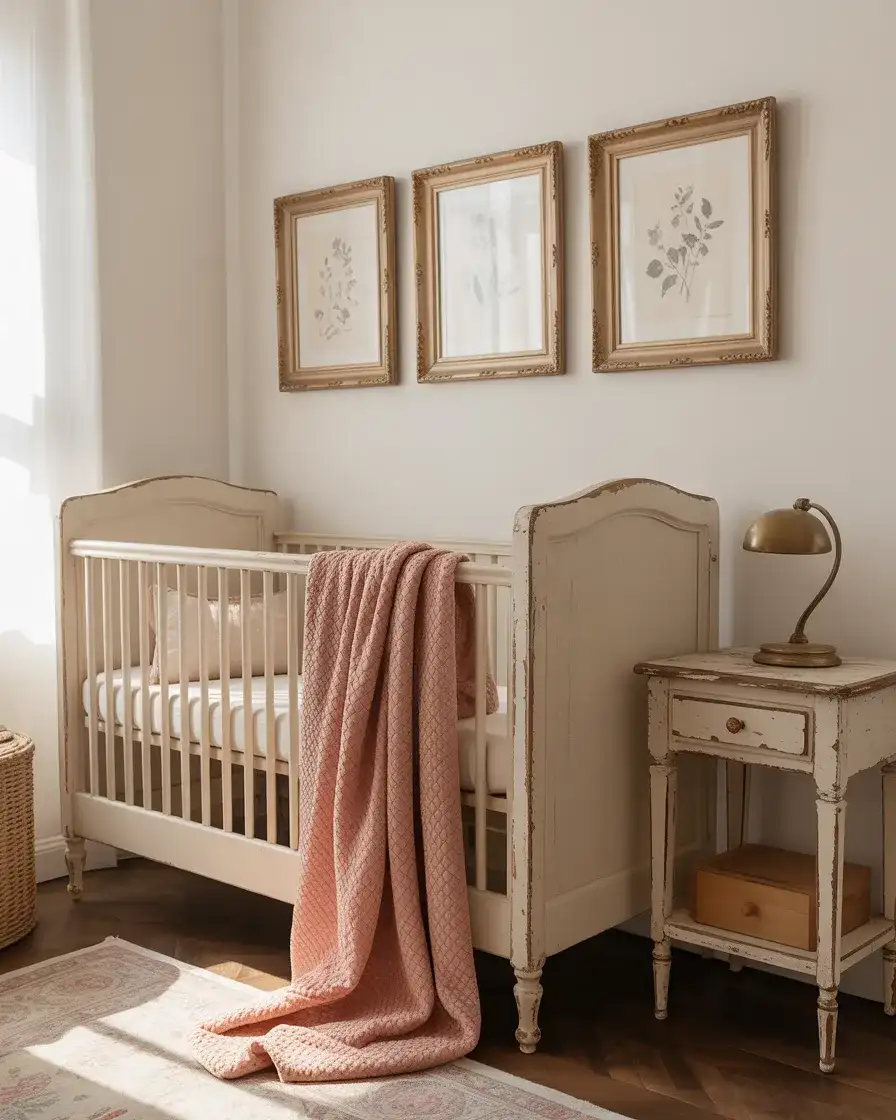
There’s a warmth to vintage-inspired nursery design that modern minimalism sometimes struggles to match. Think of a beautifully restored antique crib, a soft chenille throw in dusty rose, and framed botanical prints that look like they came from a grandmother’s attic. This style leans into neutral pastel tones and aged textures—crackled ceramic, worn leather, faded linen—to create a room that feels layered, loved, and full of quiet character from the very start.
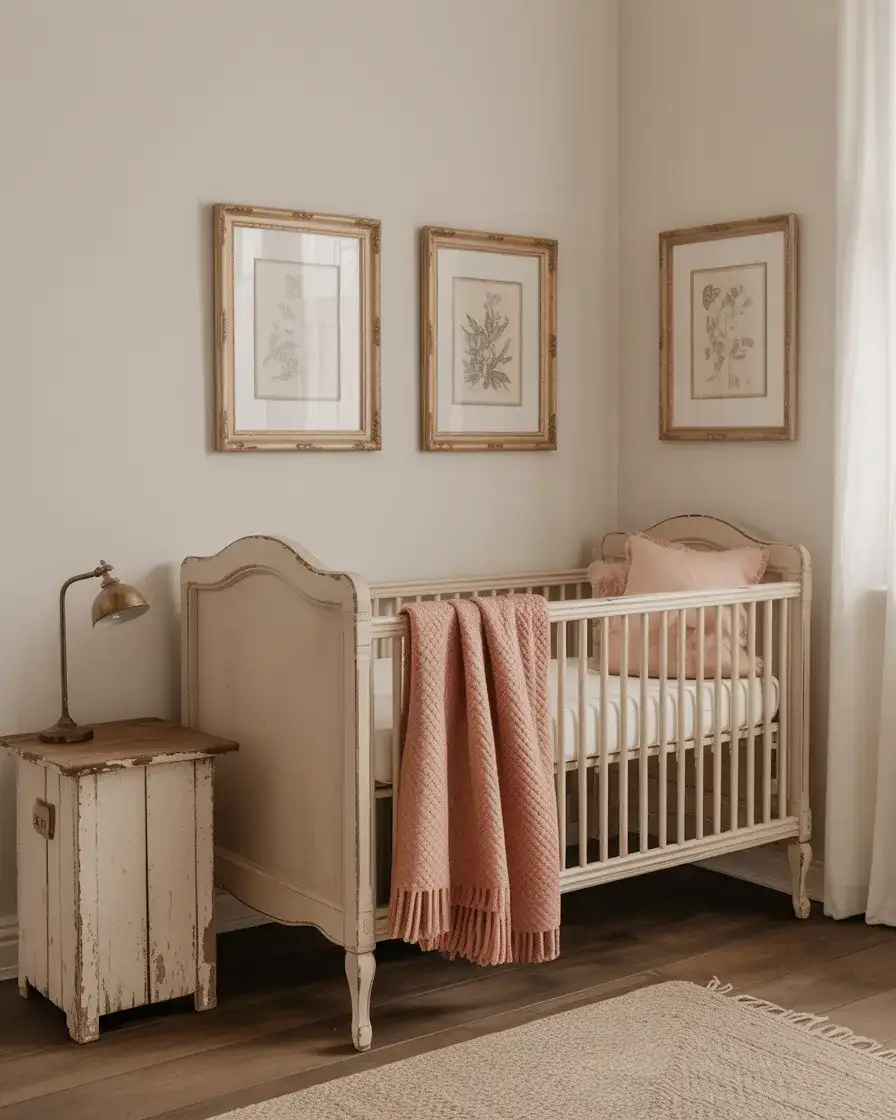
Antique cribs can be gorgeous, but safety is non-negotiable—older cribs often don’t meet current federal standards for slat spacing and drop sides. If you fall in love with a vintage piece, have it professionally inspected or use it as a decorative display piece only and place a modern, safety-certified crib nearby. The aesthetic payoff of vintage furniture is undeniably real, but it should never come at the expense of your baby’s safety. Always check current CPSC guidelines before using any secondhand crib.
17. Unisex Gender-Neutral Boho Style
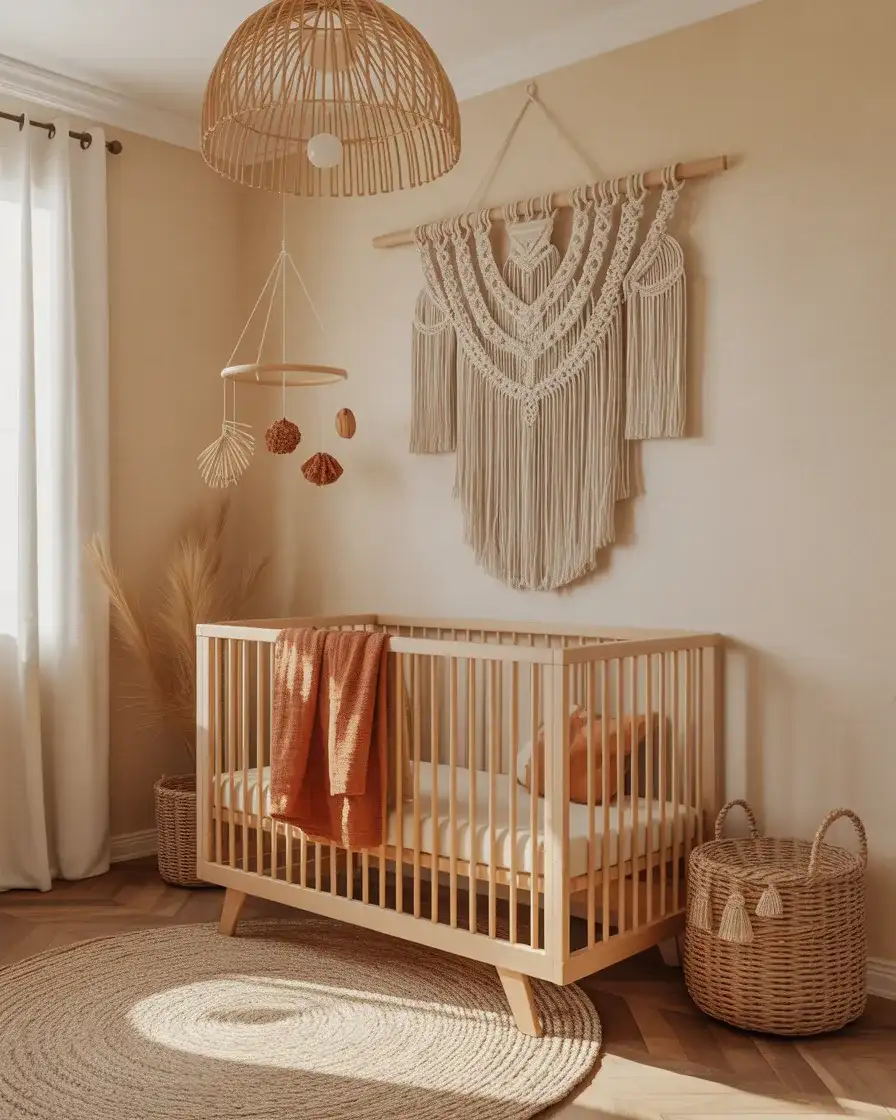
Boho nurseries have exploded on Pinterest, and for good reason—they manage to feel both unisex and gender neutral and deeply warm at the same time. Macramé wall hangings, woven baskets, a rattan mobile, and earthy tones like terracotta, cream, and dusty sage all come together in a way that feels free-spirited and intentional. This is a style that actually invites layering over time, which means the room can evolve with your child without ever needing a full redesign.
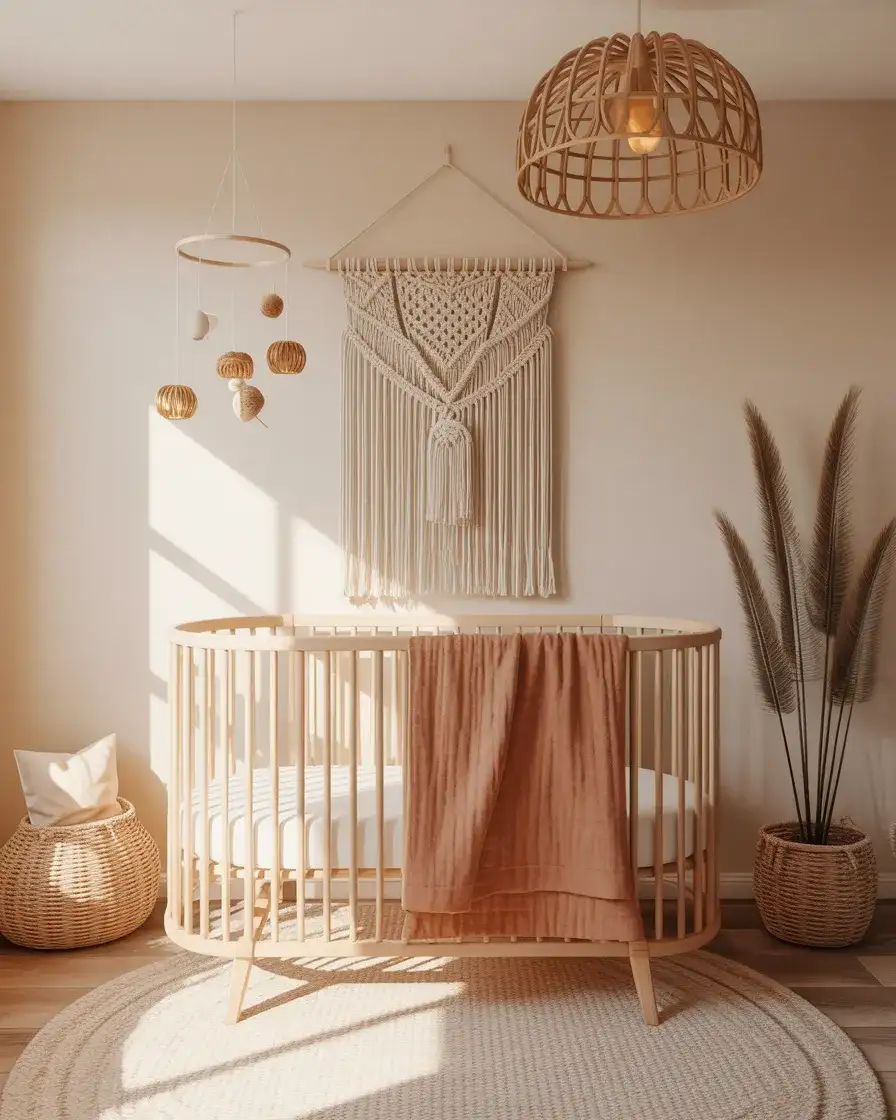
One thing boho nurseries do exceptionally well is make a room feel curated without feeling stiff. The secret is mixing textures deliberately—rough woven next to soft linen, hard rattan next to plush cotton. A designer friend once suggested that the best boho rooms feel like they were assembled over time rather than all at once, so resist the urge to buy everything simultaneously. Pick two or three anchor pieces first, live with them, and add layers as you find things you genuinely love.
18. Western Cowboy Nursery
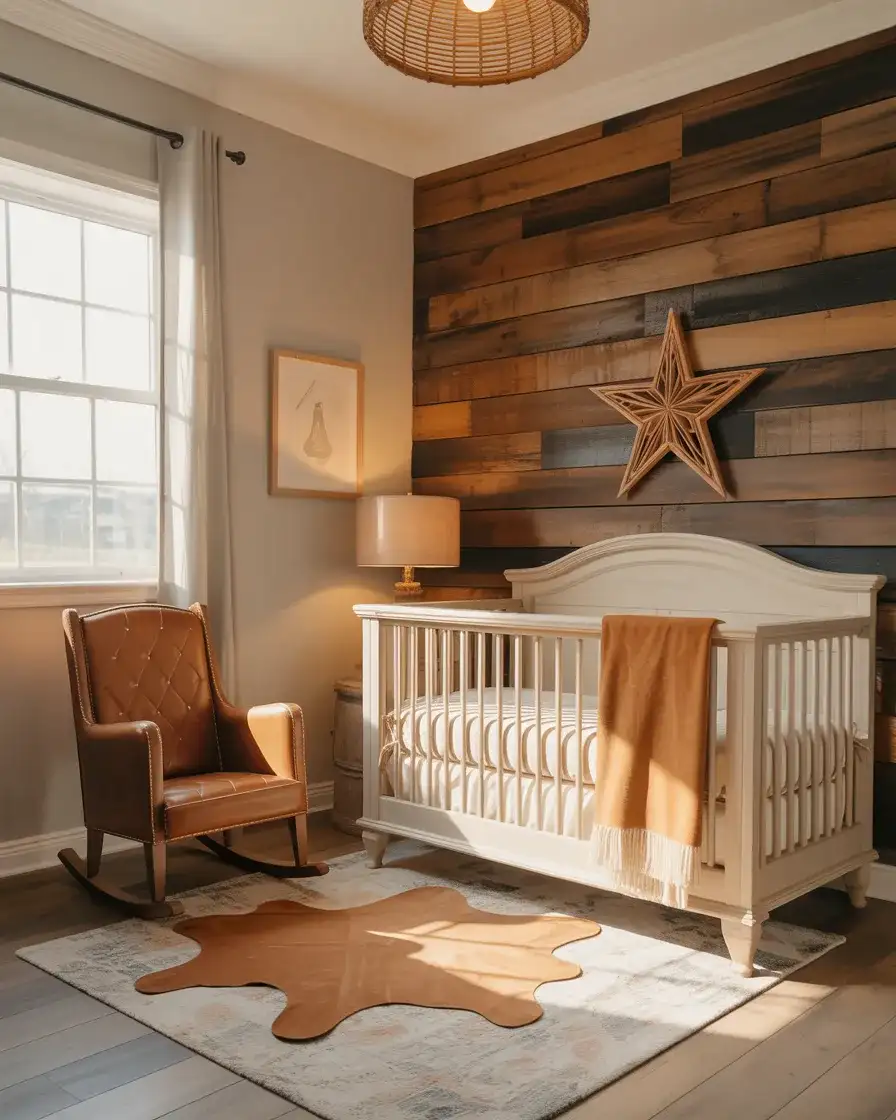
A western nursery is one of those ideas that sounds niche but actually delivers incredible warmth when done with a light hand. We’re talking leather, suede, warm wood tones, and maybe a subtle star or two on the wall—not a full rodeo arena. The palette stays in the range of caramel, cream, and dusty browns, and the furniture leans rustic but clean. It’s a country aesthetic with a sharper edge, and it feels especially at home in states like Texas, Montana, and Arizona.
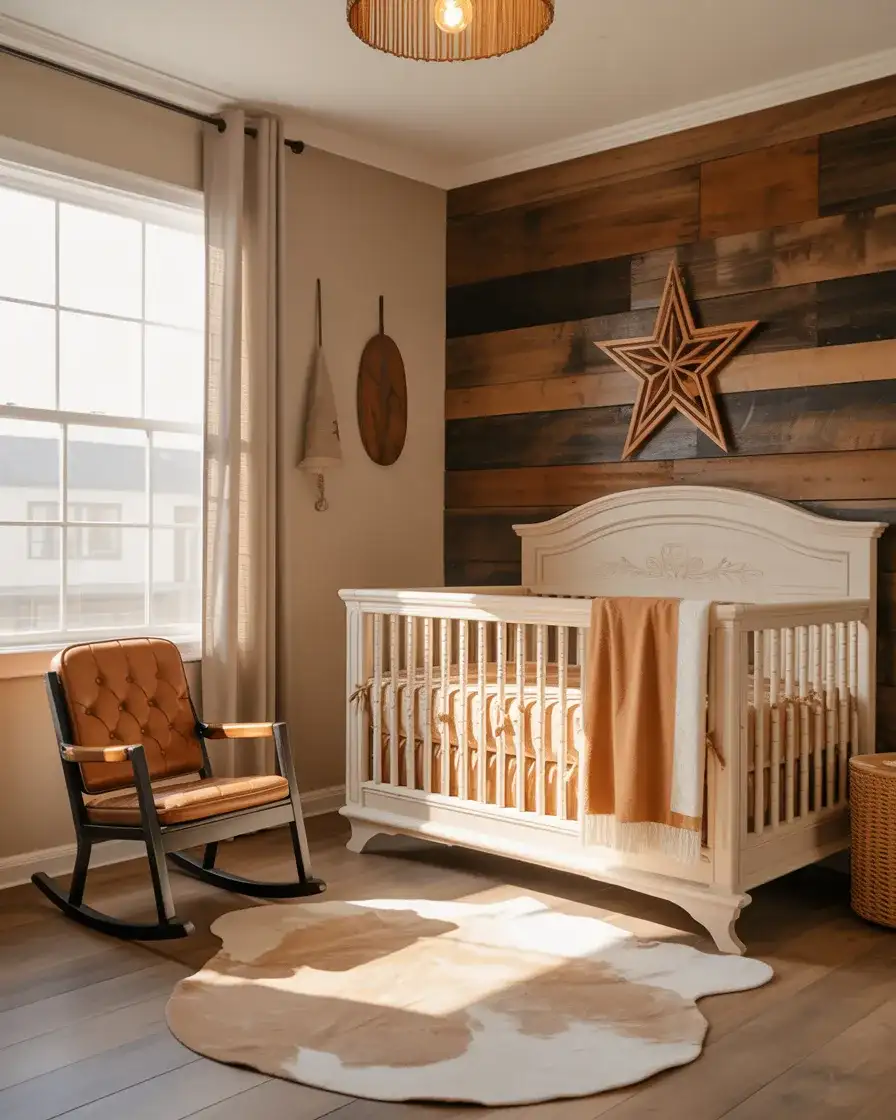
The biggest pitfall with western nurseries is veering into costume territory—too many literal cowboy props and the room starts to feel more like a movie set than an actual home. Keep it to one or two signature western touches and let the materials and palette do the real storytelling. A reclaimed wood accent wall, warm leather accents, and a star or two are more than enough to establish the theme without it ever feeling forced, cluttered, or overdone.
19. Cute Pastel Bubble Nursery
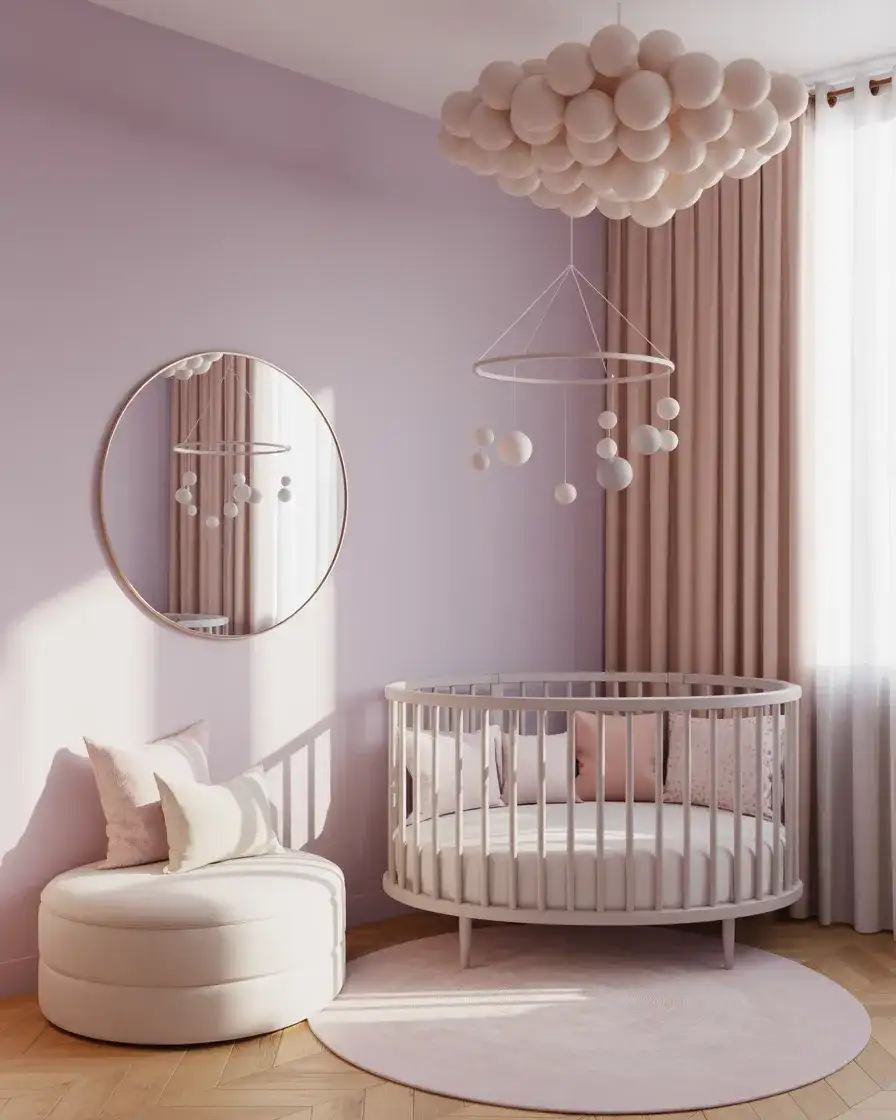
The bubble nursery trend is one of the most visually playful ideas to come out of Pinterest recently, and it’s undeniably cute. The concept is simple: oversized circular or bubble-shaped elements—a round crib, circular mirrors, bubble-shaped mobiles, and soft neutral pastel tones—create a nursery that feels almost whimsical and otherworldly. Everything is rounded, nothing is sharp, and the whole room reads as soft, safe, and dreamlike. It’s a style that photographs beautifully too.
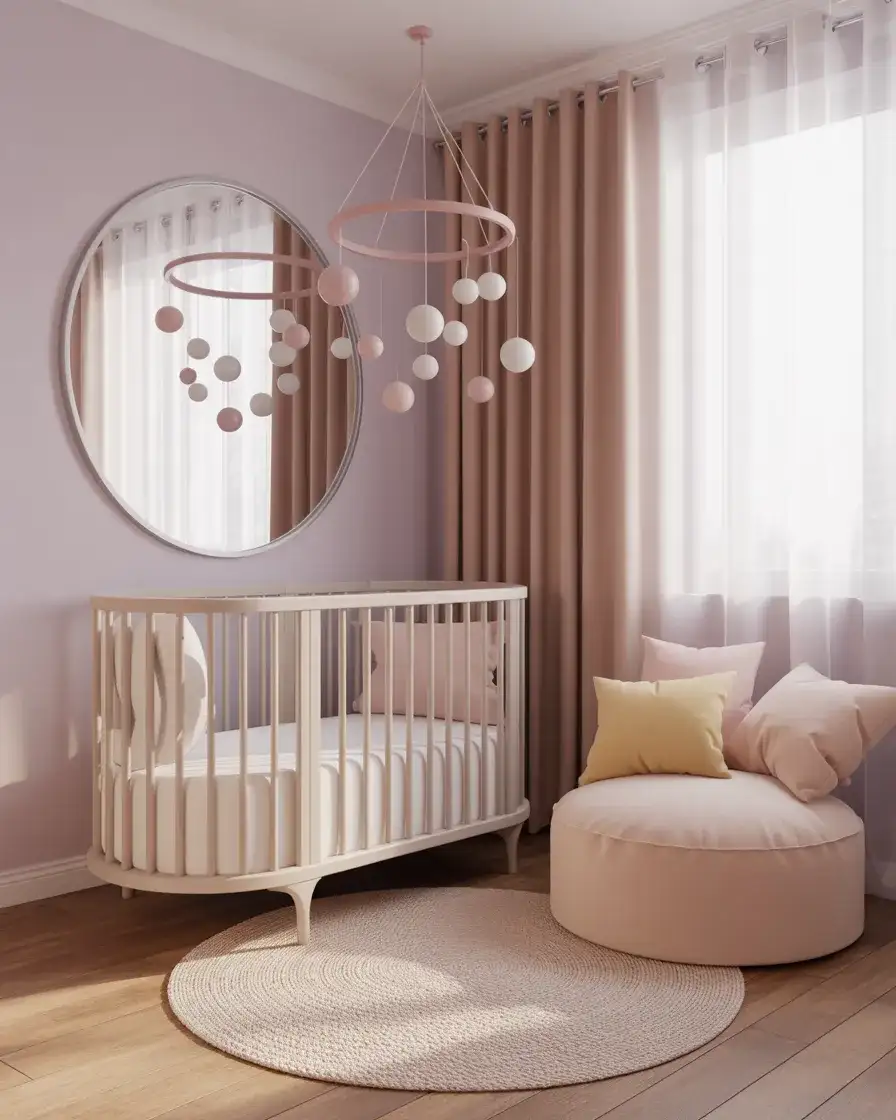
Round cribs are trendy but come with a practical caveat—standard crib sheets don’t fit them, which means buying specialty bedding. Before committing to a circular crib, factor in the ongoing cost of replacement sheets and the availability of options in your preferred color palette. If the budget feels tight, you can still achieve the bubble aesthetic with a standard rectangular crib surrounded by circular accents like round mirrors, spherical mobiles, and a round rug.
20. Pink and Gold Glam Nursery
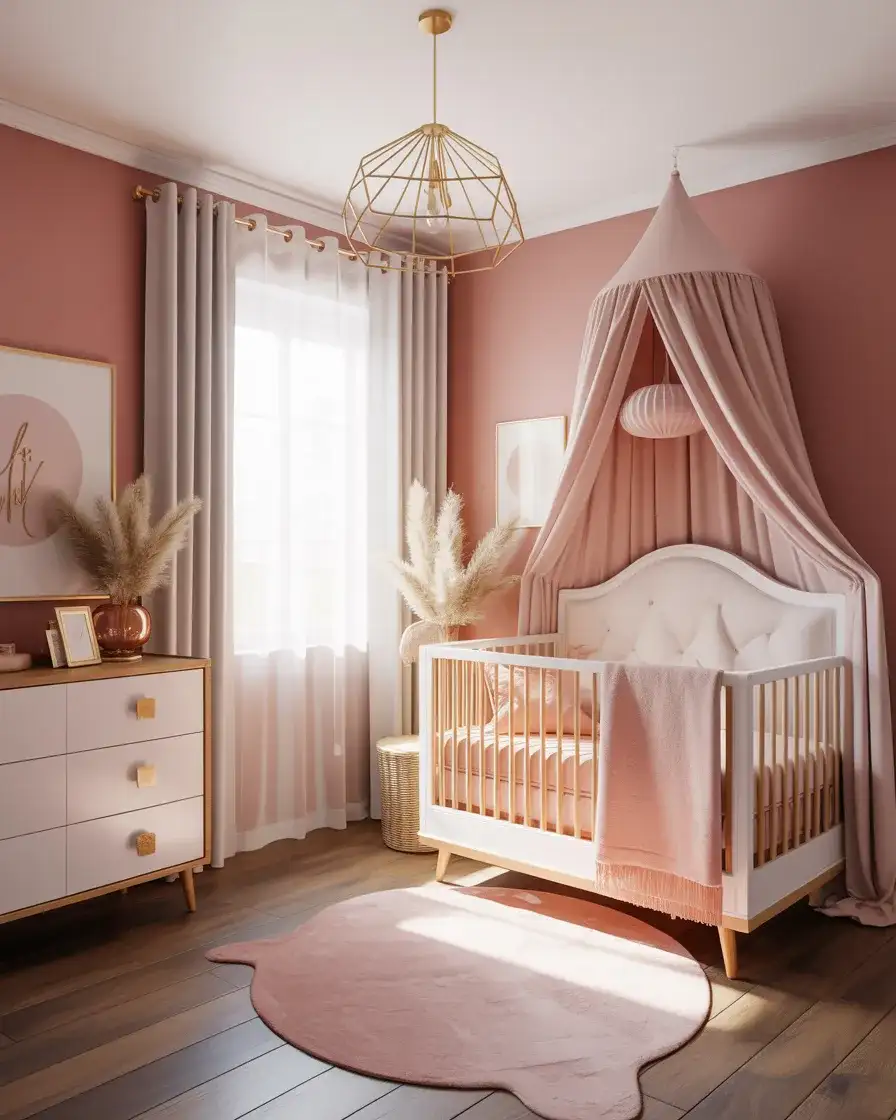
If you want a nursery that feels genuinely luxurious, pink and gold is one of the most striking combinations on the market right now. A soft blush or dusty rose wall with gold accents—think gold leaf on a dresser, gold-toned light fixtures, and gilded picture frames—creates a room that feels both glamorous and incredibly soft. It’s not over-the-top; it’s refined. This style is especially popular among first-time parents designing a daughter’s nursery and wanting something that feels elevated and intentional.
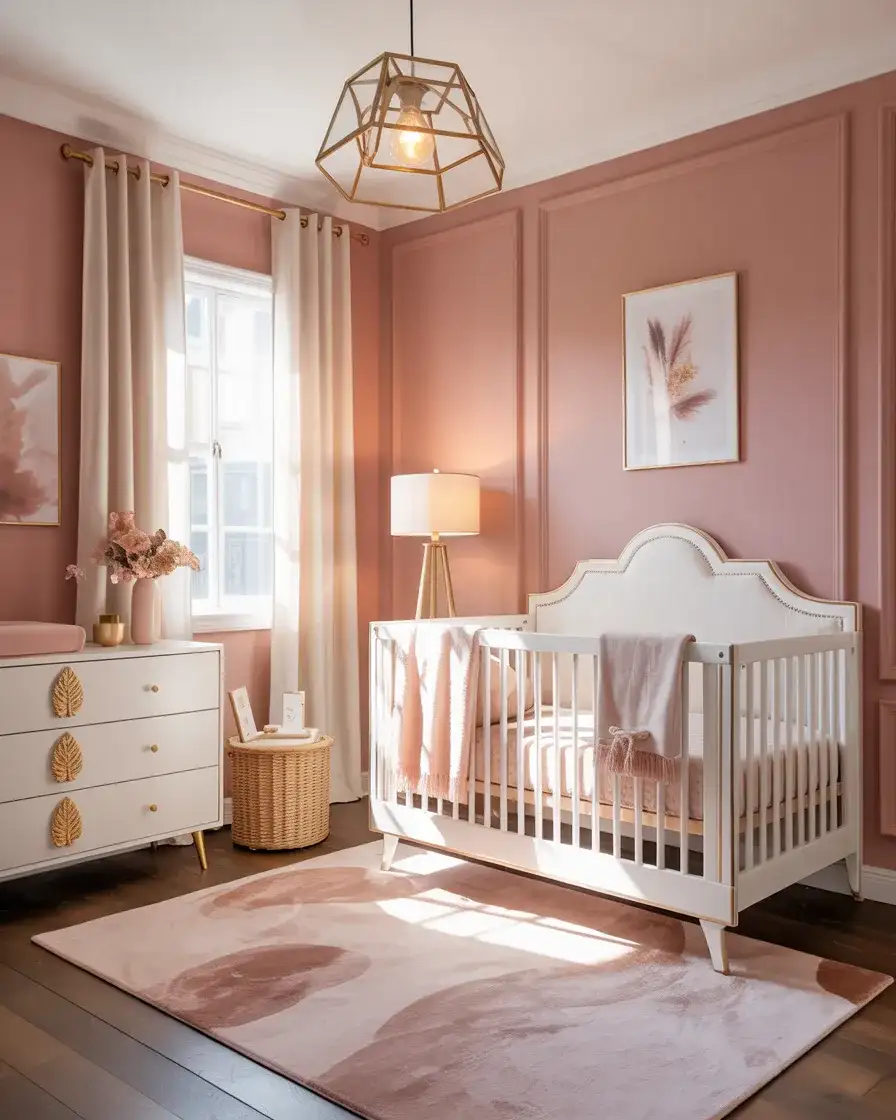
Gold accents can easily tip into gaudy if you’re not selective. The rule of thumb is to limit gold to two or three key pieces—a light fixture, a mirror, and one decorative accessory—and let everything else stay in soft neutrals. Brass rather than bright gold reads more warmly and ages more gracefully. A little restraint goes a long way here, and the rooms that feel the most luxurious are almost always the ones where the gold is used as an accent, not a statement.
21. Nature-Inspired Earthy Cocoon
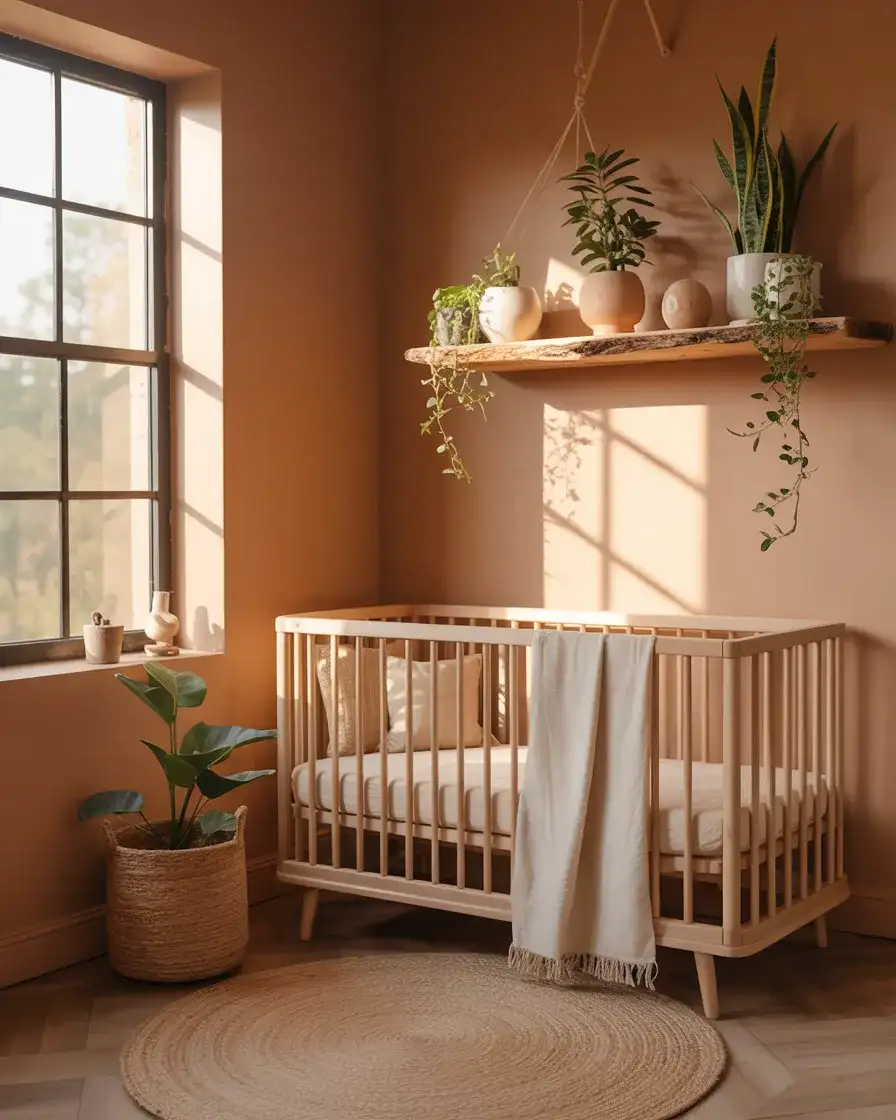
An earthy cocoon nursery is the design equivalent of a deep breath. Nature-inspired tones—warm browns, soft clay, mossy green, and creamy white—wrap around the room and create an atmosphere that feels grounded and deeply peaceful. This is a neutral style at its core, but one with more warmth and texture than a typical minimalist nursery. Think clay pots, jute rugs, linen curtains, and maybe a live-edge shelf or two. It’s the kind of room that makes you slow down the moment you walk in.
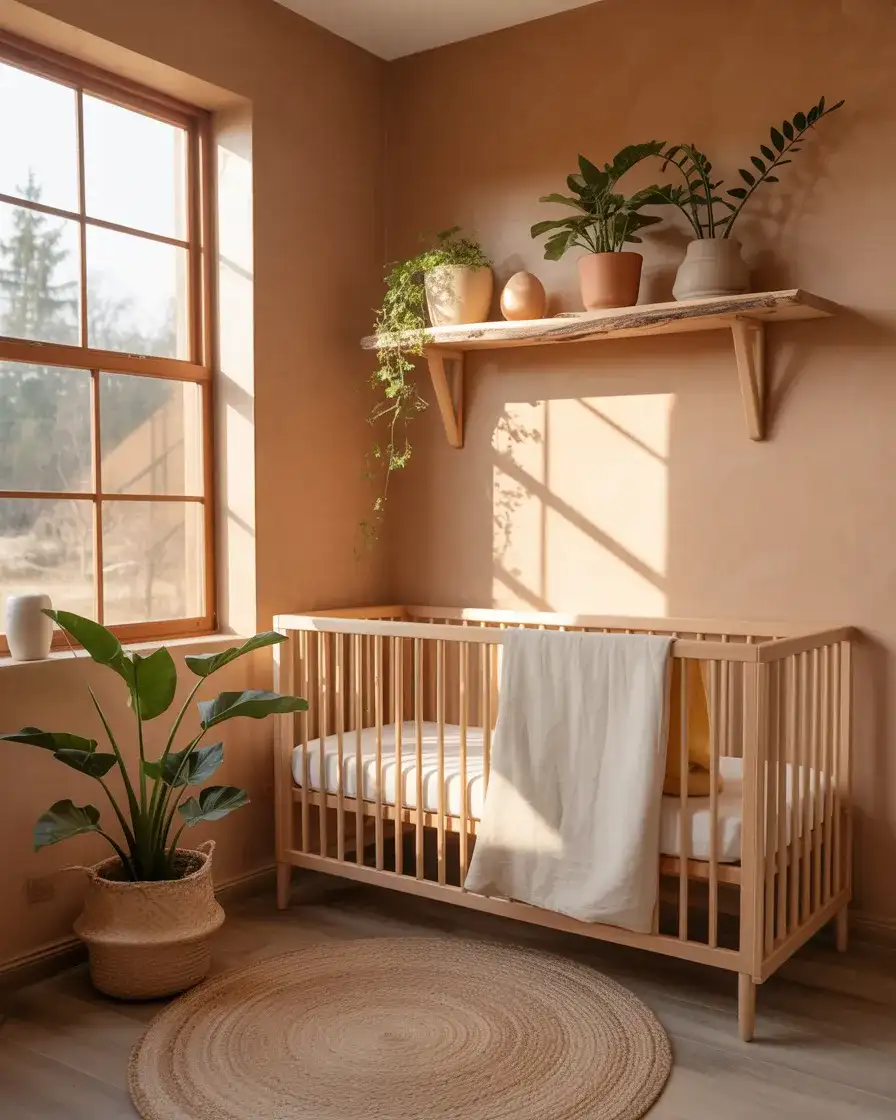
Earthy nurseries tend to photograph darker than they look in person, so if you’re planning to share on social media or document your baby’s first months, keep that in mind when choosing exact shades. A clay tone that feels perfectly warm in real life can read muddy in photos. Slightly lighter versions of your chosen earth tones—think warm sand instead of deep terracotta—will hold up better on camera while still delivering that cocoon-like feeling in the actual space.
22. Small Space Convertible Nursery Nook
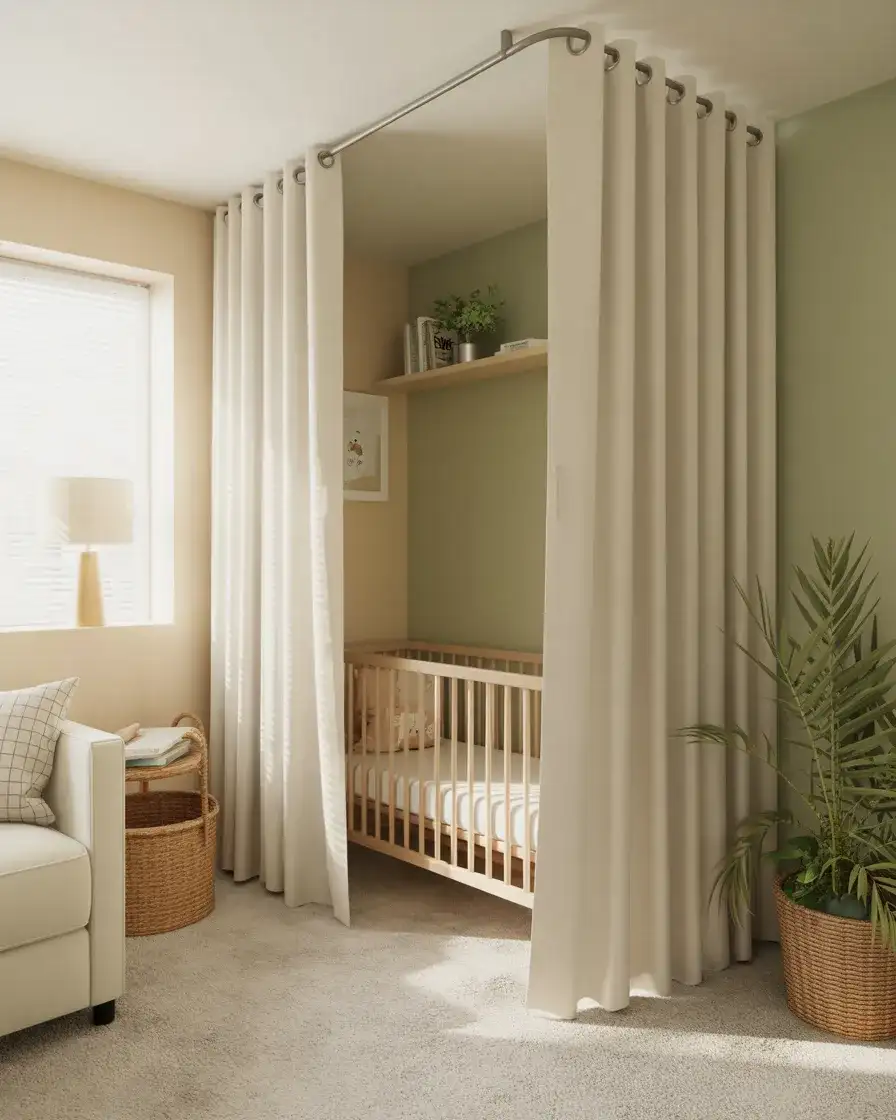
City living and small room realities mean that plenty of American parents are designing nurseries that aren’t dedicated rooms at all—they’re corners, alcoves, or shared spaces that need to pull double duty. A convertible nursery nook solves this beautifully. A curtain or half-wall creates visual separation without closing off the space entirely. The unisex palette keeps it flexible, and every piece of furniture serves more than one purpose. It proves you don’t need square footage to create magic.
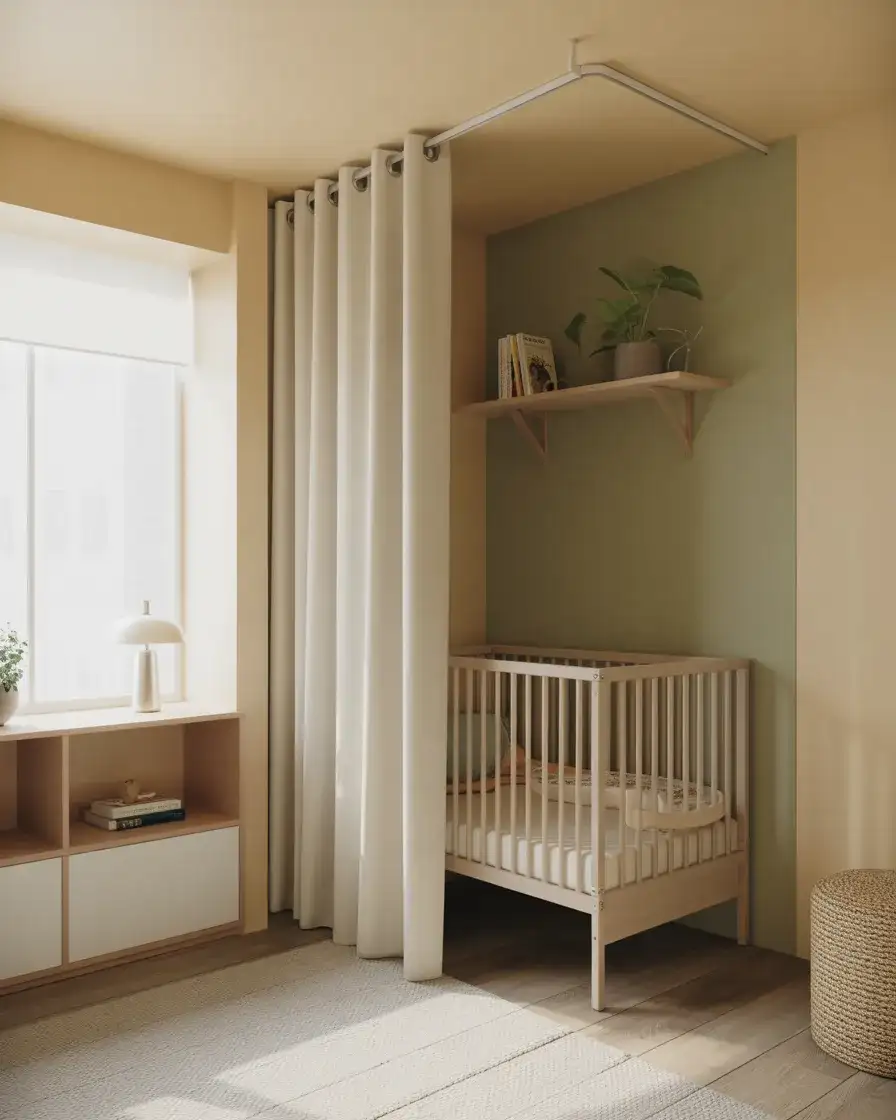
A parent in a Brooklyn one-bedroom once turned a closet alcove into a nursery nook that became the most photographed corner of their entire apartment—real proof that constraints can actually inspire creativity. The curtain approach works especially well because it’s completely reversible. When your baby outgrows the nook, the curtain comes down, and the space transforms back into whatever you need it to be next without a single hole left in the wall.
23. Colorful Maximalist Storybook Nursery
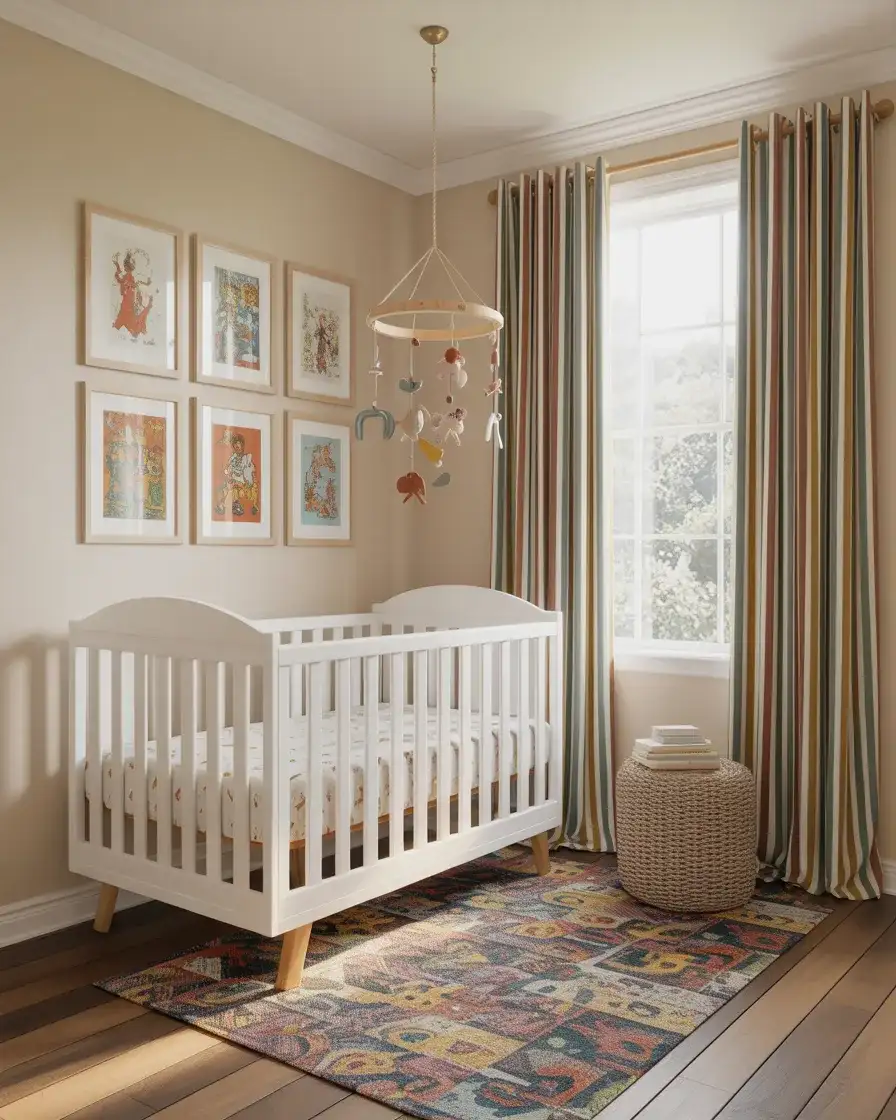
Not every nursery needs to be quiet and muted—sometimes the best rooms are the ones that make you feel like you’ve stepped inside a children’s book. A colorful maximalist nursery layers bold prints, vibrant textiles, and whimsical details into something that feels joyful and alive. Think a gallery wall of illustrated prints, striped curtains, a patterned rug, and a mobile that looks like it belongs in an art museum. It’s a style that celebrates imagination and refuses to play it safe.
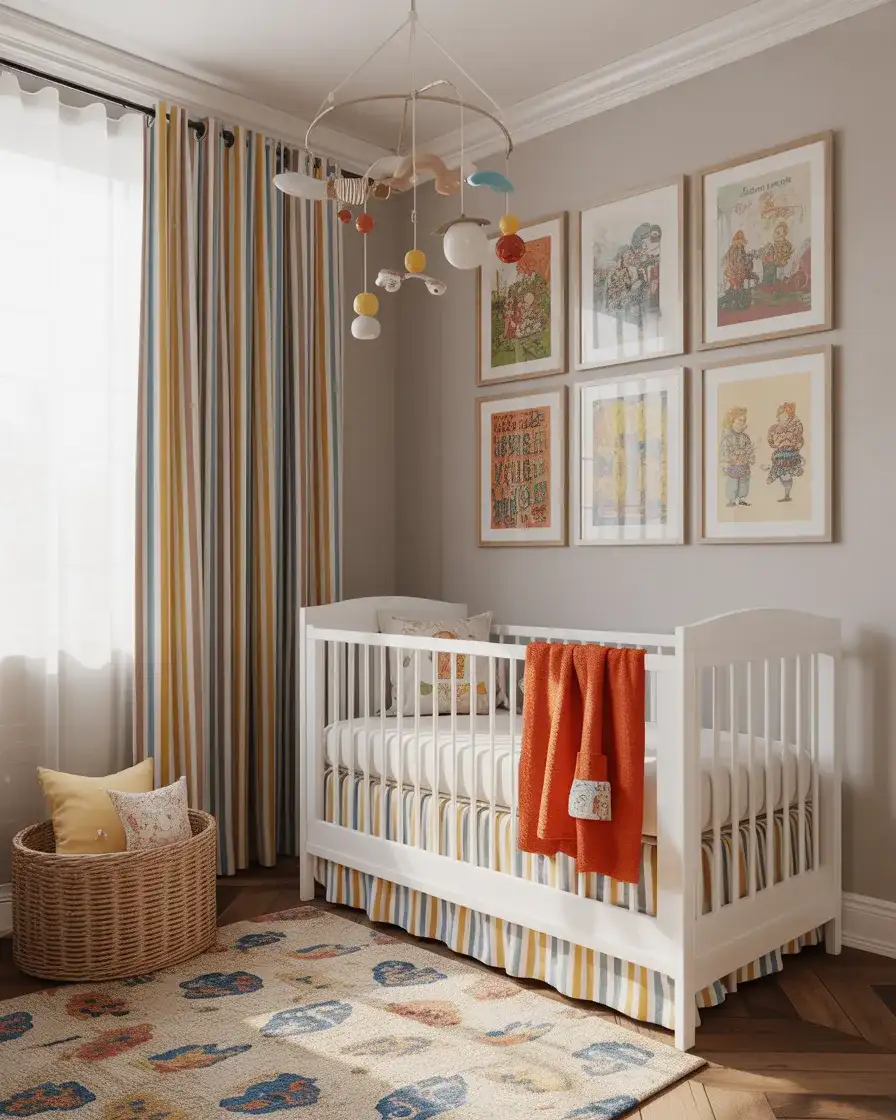
The secret to maximalism that doesn’t feel chaotic is a consistent underlying structure. Choose one neutral base—a white crib, white walls, or a cream rug—and build the color on top of it. Without that anchor, bold prints and vibrant textiles can easily overwhelm the eye. A good rule of thumb is the sixty-thirty-ten principle: sixty percent neutral, thirty percent your dominant color, and ten percent accent pops. Apply that even in the most colorful rooms, and it will always feel intentional.
Conclusion
Your baby’s nursery is one of the few rooms in your home where you get to be completely unapologetic about what you love. Whether you’re drawn to moody dark walls, a sun-drenched yellow corner, or a maximalist storybook explosion of color, the right nursery is the one that feels like it was made for your family. We’d love to hear which of these ideas sparked something for you—drop your favorites in the comments below and share what you’re planning for your own little one’s first space.