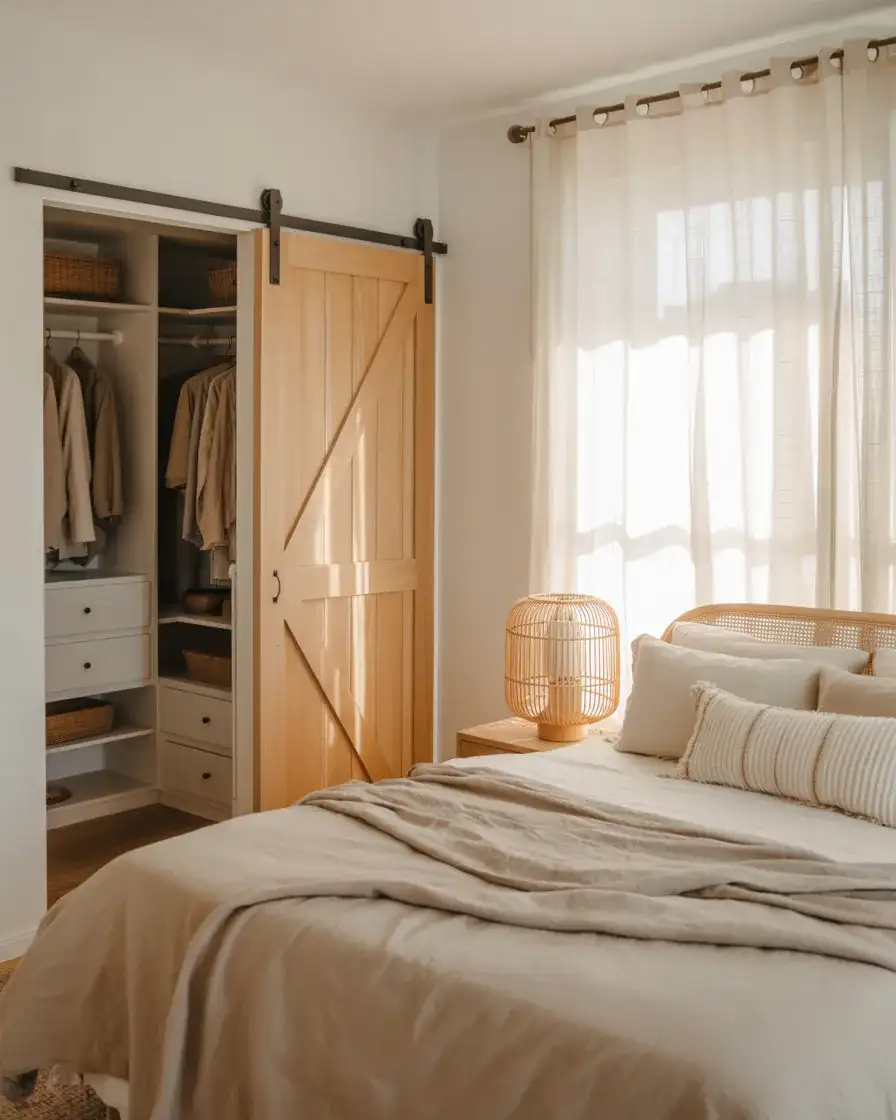
Barn doors have quietly moved from farmhouse novelty to full-blown design staple—and in 2026, they’re showing up in living rooms, master suites, kitchens, and even tiny apartments across the country. Americans are searching Pinterest in record numbers for ways to add character, save space, and create that editorial-worthy look without a full renovation. Whether you’re working with a new build or breathing life into an older home, barn doors offer a rare combination of function and serious visual impact. In this article, we’re breaking down of the freshest barn door ideas to inspire your next project—from sleek modern panels to weathered antique beauties that tell a story the moment you walk in.
1. Sliding Barn Door as a Living Room Divider
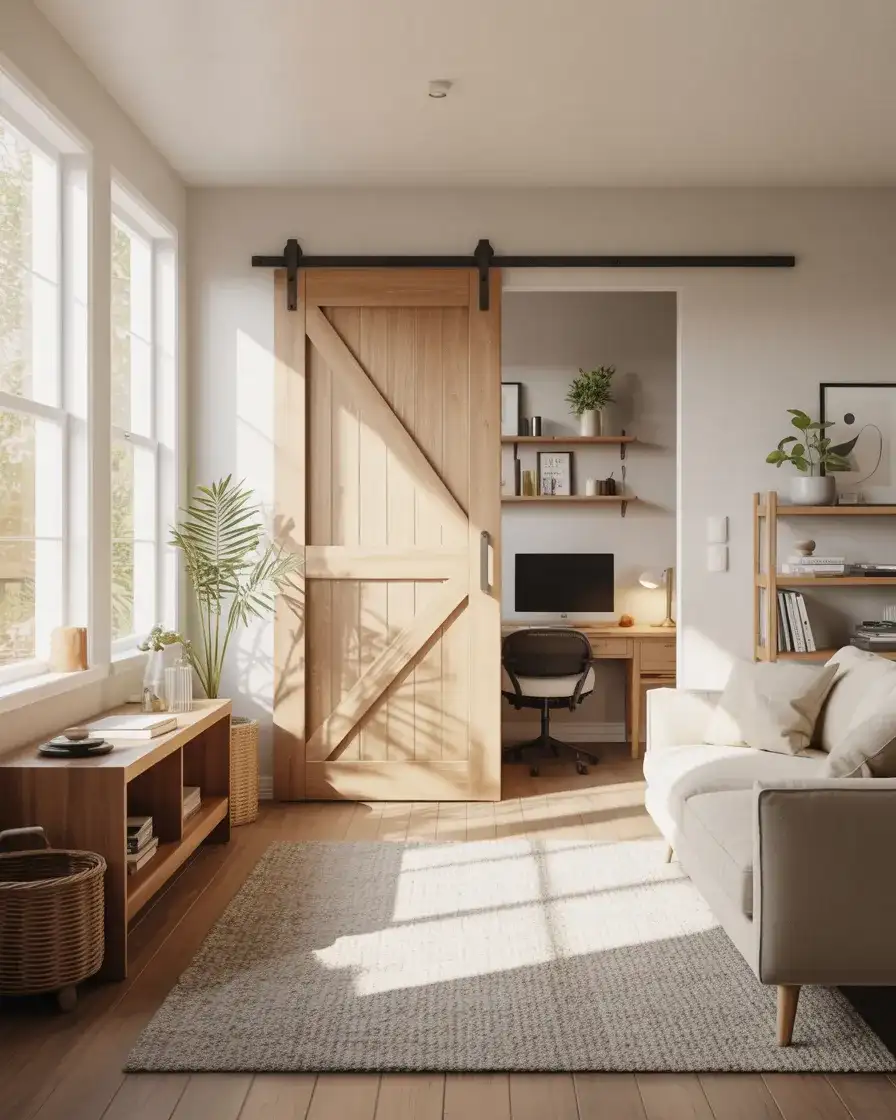
One of the most clever uses of a sliding barn door is as a room divider in open-concept living spaces. Rather than committing to a permanent wall, a large wood panel on a ceiling-mounted rail gives you the flexibility to open up or close off the space depending on the moment—movie night, a Zoom call, or a kids’ playdate. It’s a design move that feels intentional without being precious, and it photographs beautifully for anyone curating their home on social media.
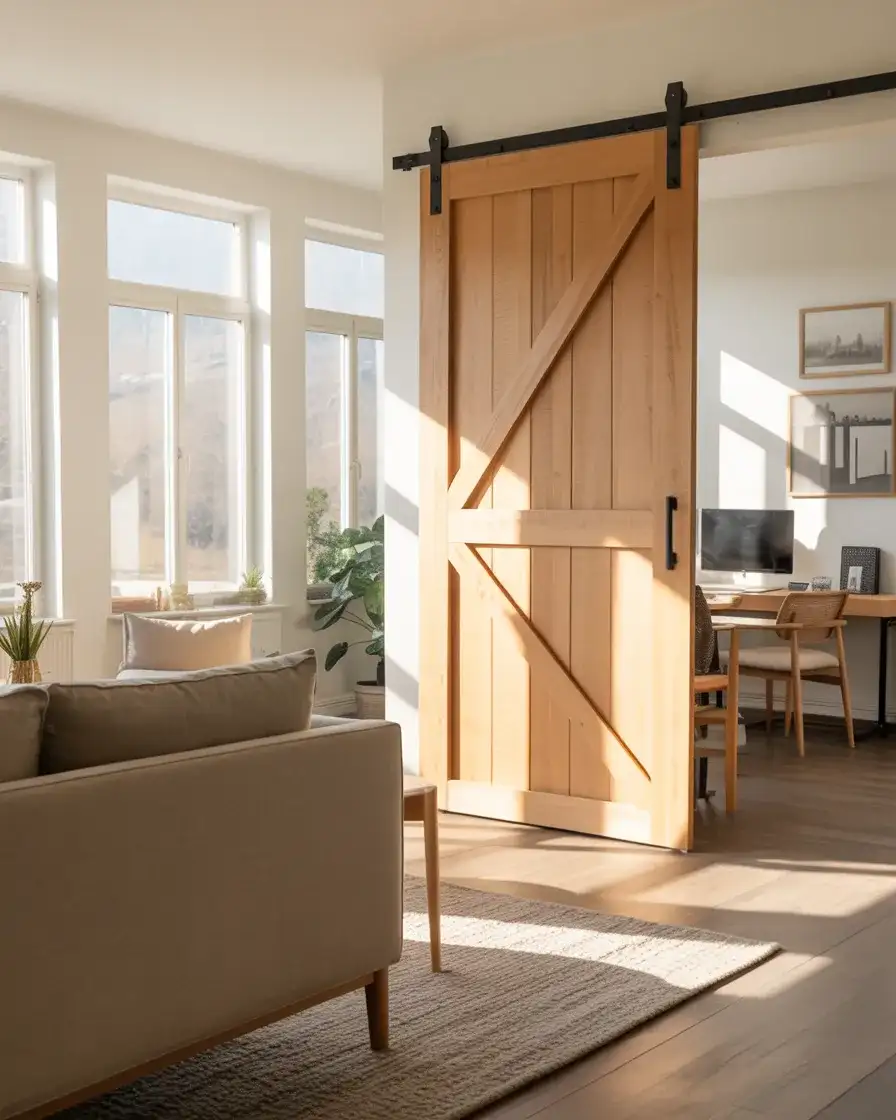
Practically speaking, sliding barn doors save the roughly 9–14 square feet that a swinging door would eat up—a meaningful gain in tighter floor plans common in East Coast row houses or West Coast condos. If your living room doubles as a workspace, this kind of partition makes the whole home feel more organized without requiring a contractor. It’s a weekend project for a handy homeowner or a half-day job for a carpenter. Either way, the payoff is immediate.
2. Modern Black Barn Door for the Master Bedroom
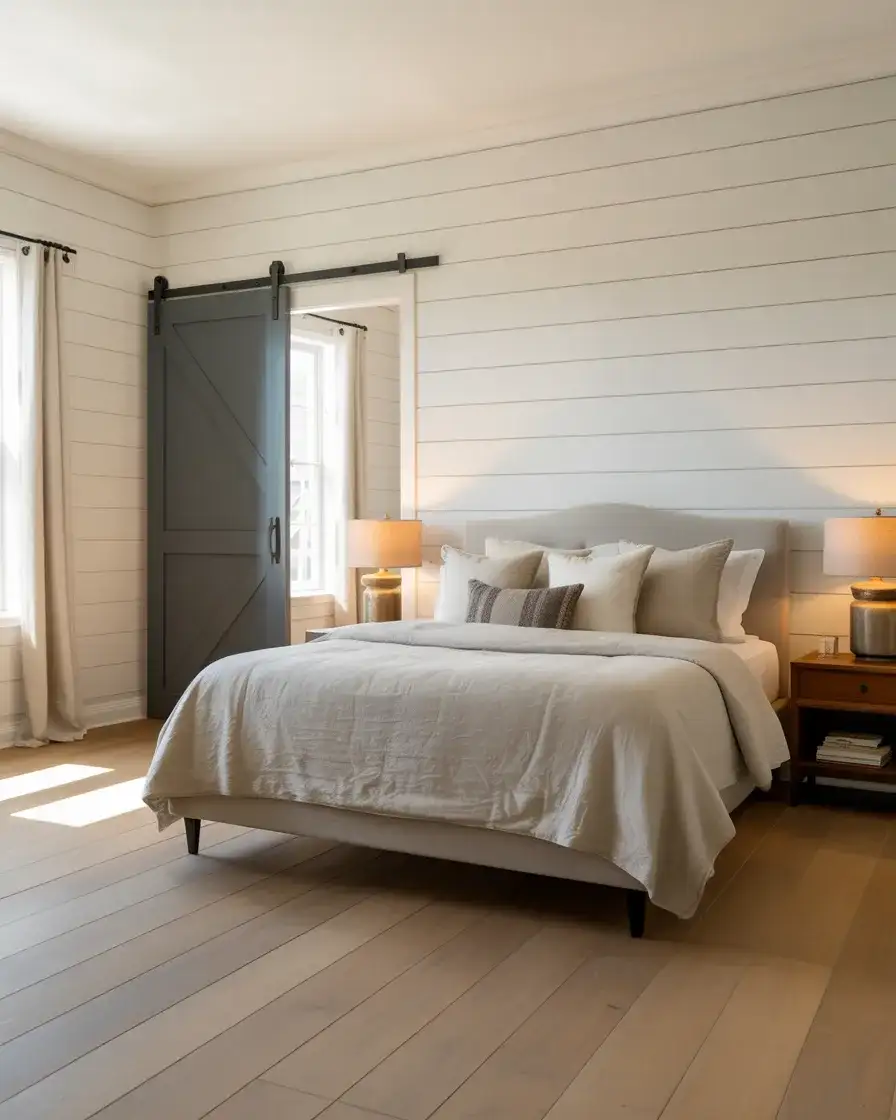
If you’ve been scrolling design accounts lately, you’ve probably noticed how many high-end bedrooms are leaning into the modern black barn door aesthetic. A flat-panel door in matte black—especially with a matching black metal rail—brings an almost industrial-luxe quality to the primary suite. It’s a bold statement that somehow feels quiet and restrained at the same time, particularly against white walls or natural wood tones. Paired with linen bedding and warm lighting, this look is pure editorial gold.
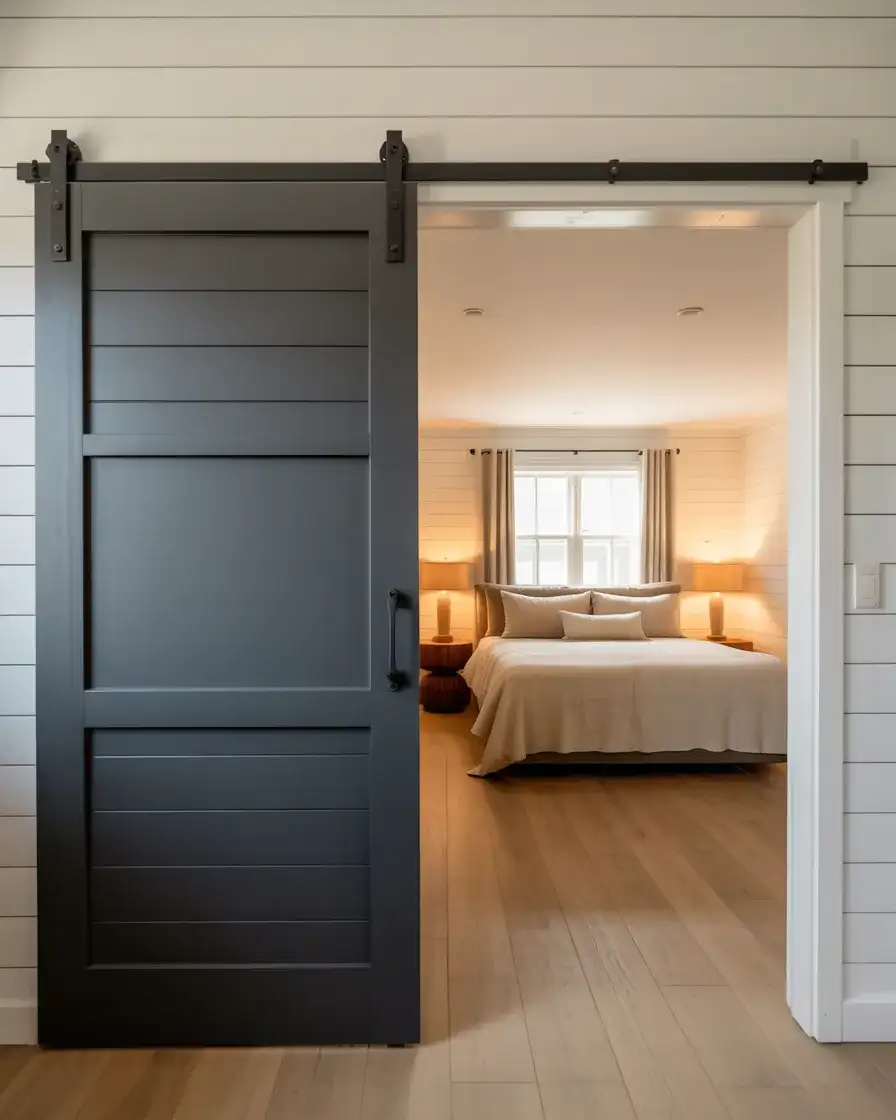
Expert-style commentary: Interior designers frequently recommend matte black finishes for hardware in bedrooms because they anchor the space without competing with softer elements like fabric and organic textures. A black barn door essentially functions like a large piece of furniture—it gives the room a focal point and a visual anchor. If you’re worried about it feeling heavy, the fix is simple: keep the surrounding wall color light and let natural materials do the balancing work.
3. Rustic Farmhouse Barn Door for the Kitchen Pantry
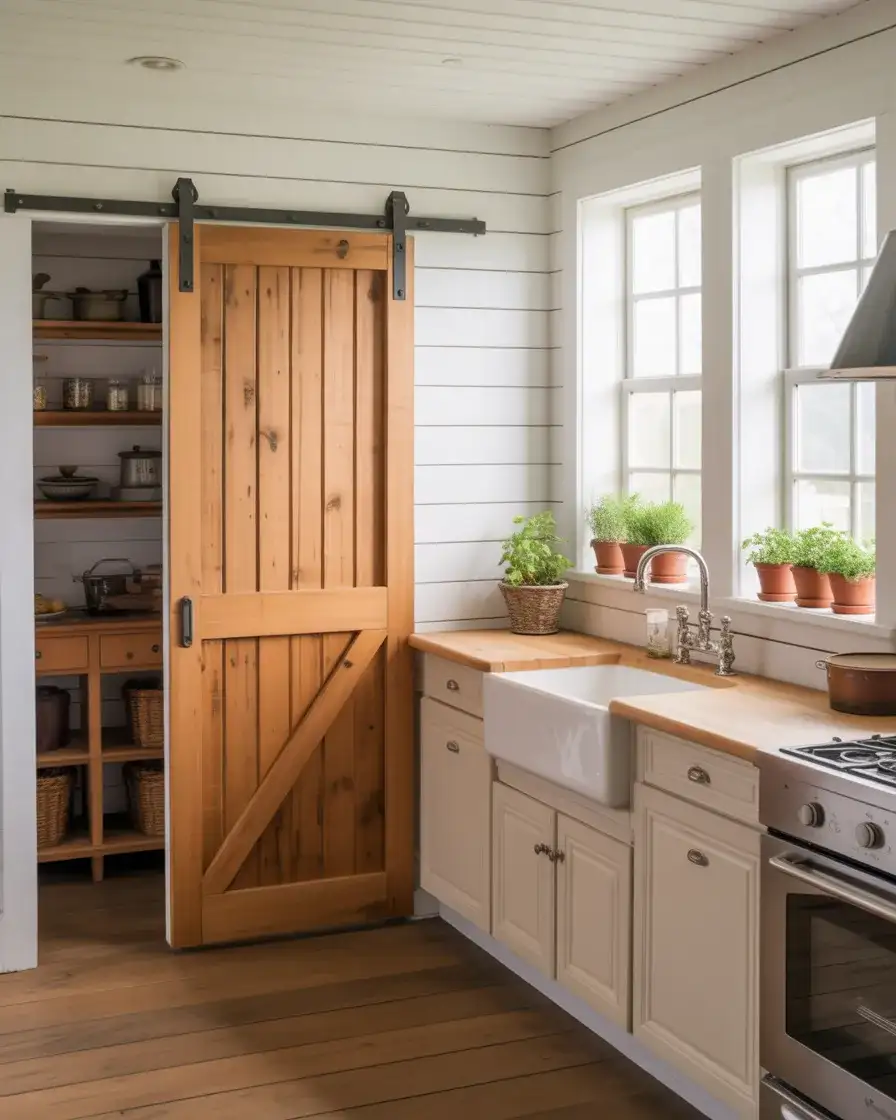
A rustic farmhouse barn door on a kitchen pantry might be the single most searched design idea on Pinterest right now—and for good reason. It transforms a utilitarian storage closet into a genuine design moment. The warm grain of reclaimed wood or knotty pine against crisp white kitchen cabinetry creates that beloved contrast that reads as lived-in and intentional all at once. It’s the kind of detail that makes guests ask, “Did you design this yourself?”
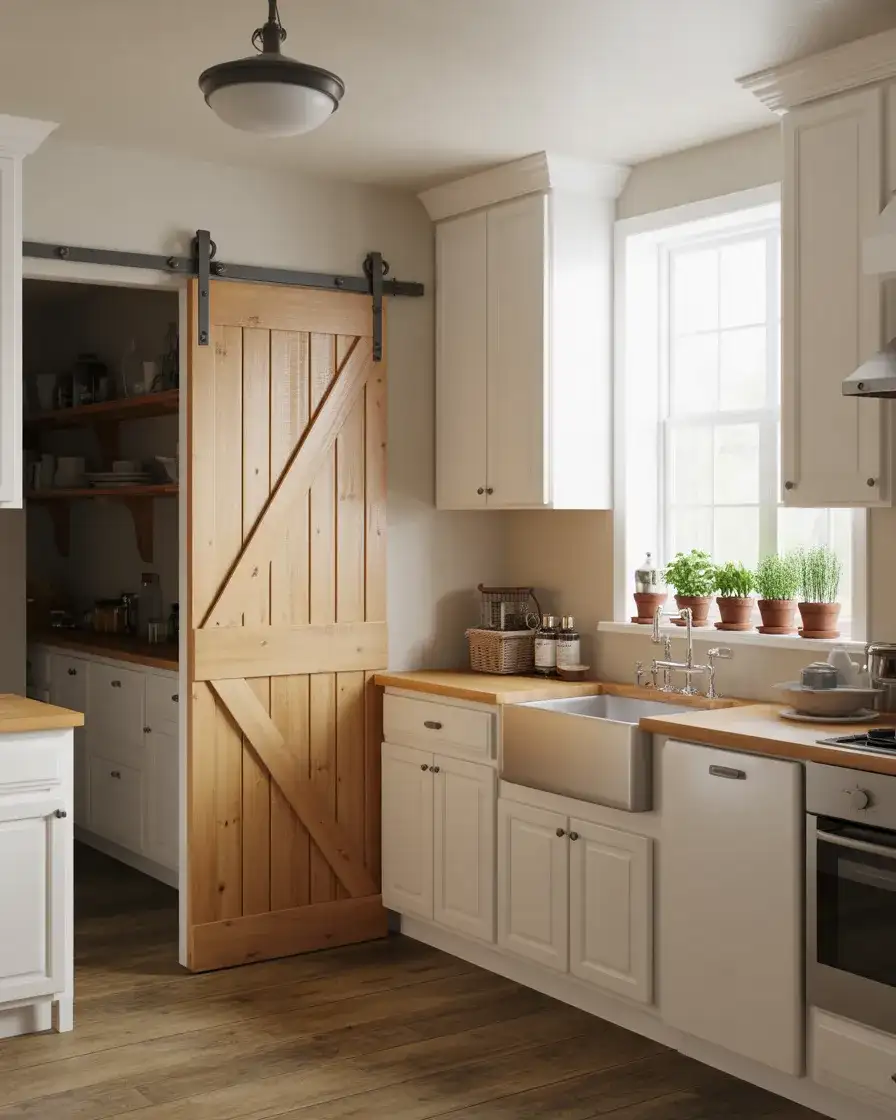
A common mistake homeowners make is sizing the door too small—you want the door to overlap the pantry opening by at least two inches on each side for full coverage and proper clearance when sliding. Budget-wise, a quality pre-finished barn door kit with hardware typically runs between $250 and $600, which is far less than a custom-built pantry cabinet system. For the DIY-inclined, it’s a genuinely rewarding weekend project that adds lasting value to the kitchen.
4. Double Barn Doors for an Open Great Room
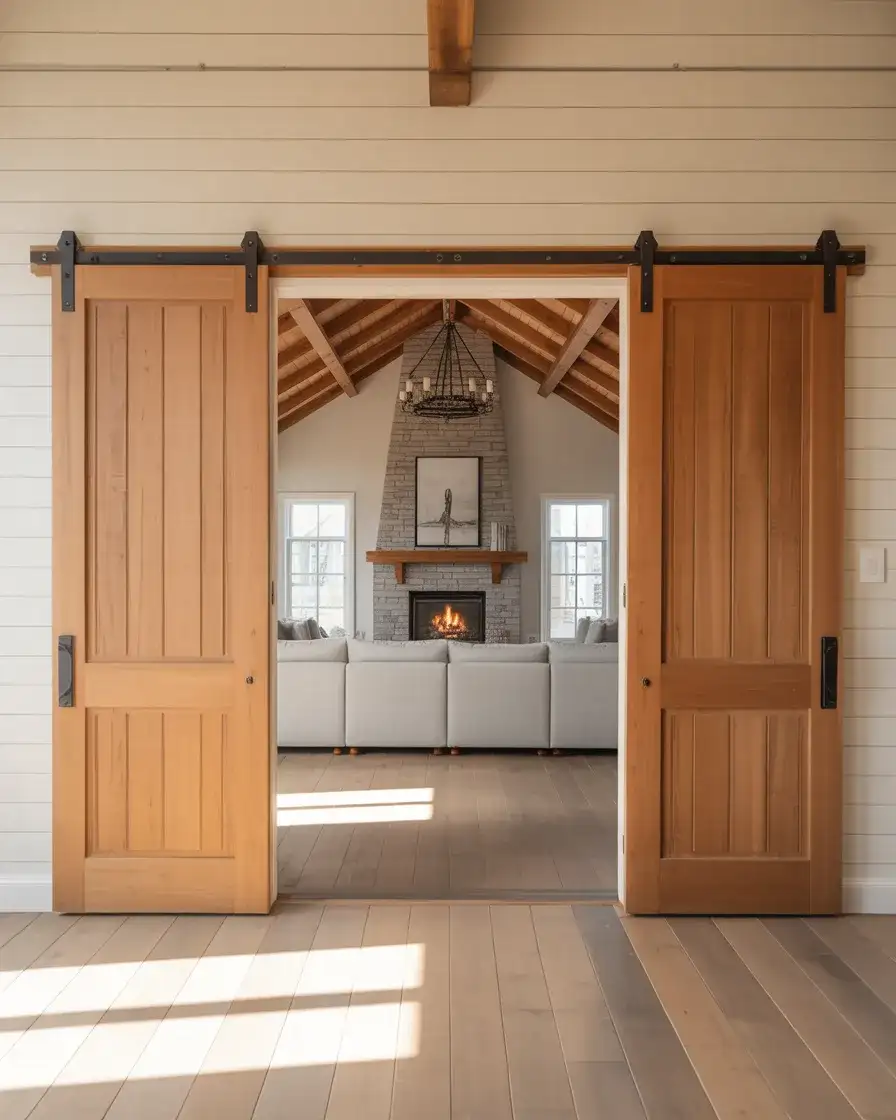
When a single door just isn’t enough—whether because the opening is wide or you want true symmetry—double barn doors are the answer. Two matching panels sliding in opposite directions create a grand, almost ceremonial quality when opened, and a wall of warmth when closed. This approach works especially well in great rooms that connect to formal dining areas or in homes where the living space flows directly into a home theater or music room. The visual weight of two panels feels architectural rather than decorative.
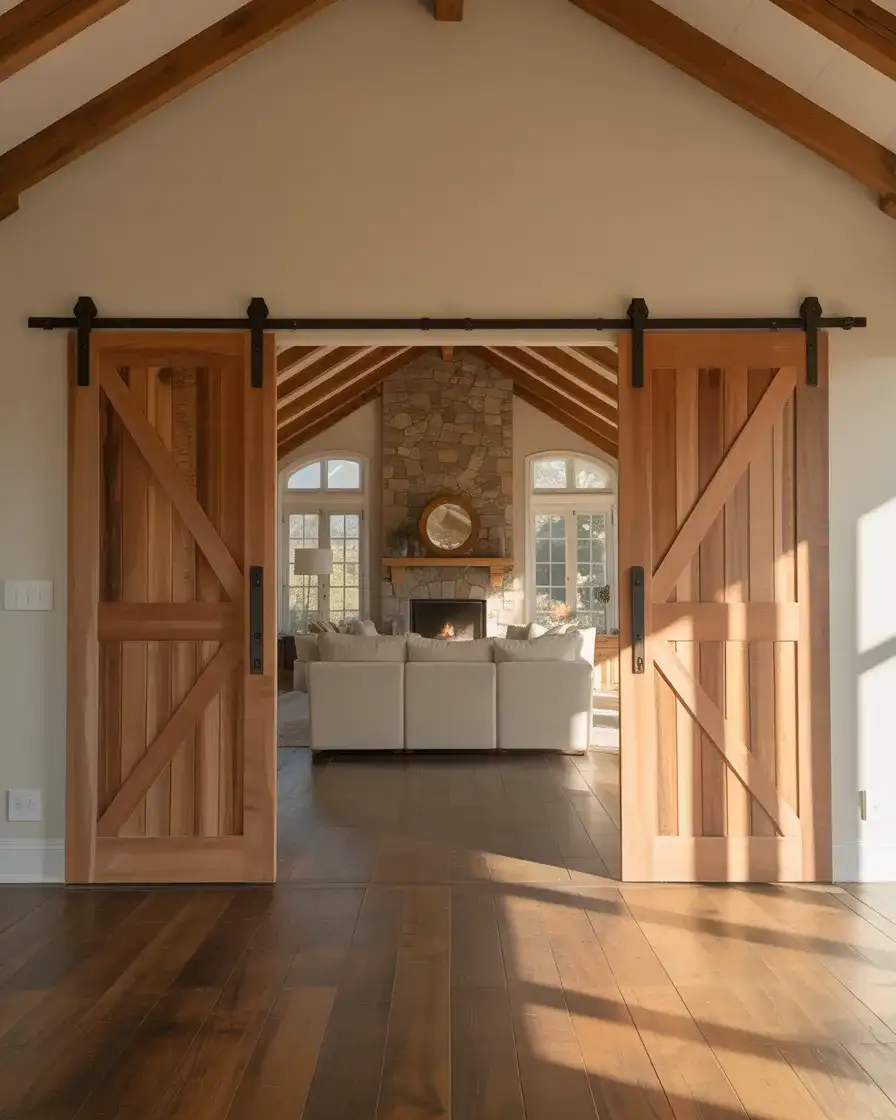
A real homeowner who installed double barn doors between her kitchen and mudroom reported that it completely changed how her family used the space—they started keeping them open during the day and closing them when company came over, creating an instant sense of tidiness. This kind of behavioral shift is something interior designers call “environmental design”: when a space becomes easier to manage, people manage it better. Double doors essentially give you an architectural cue built right into your daily rhythm.
5. Glass Panel Barn Door for a Home Office
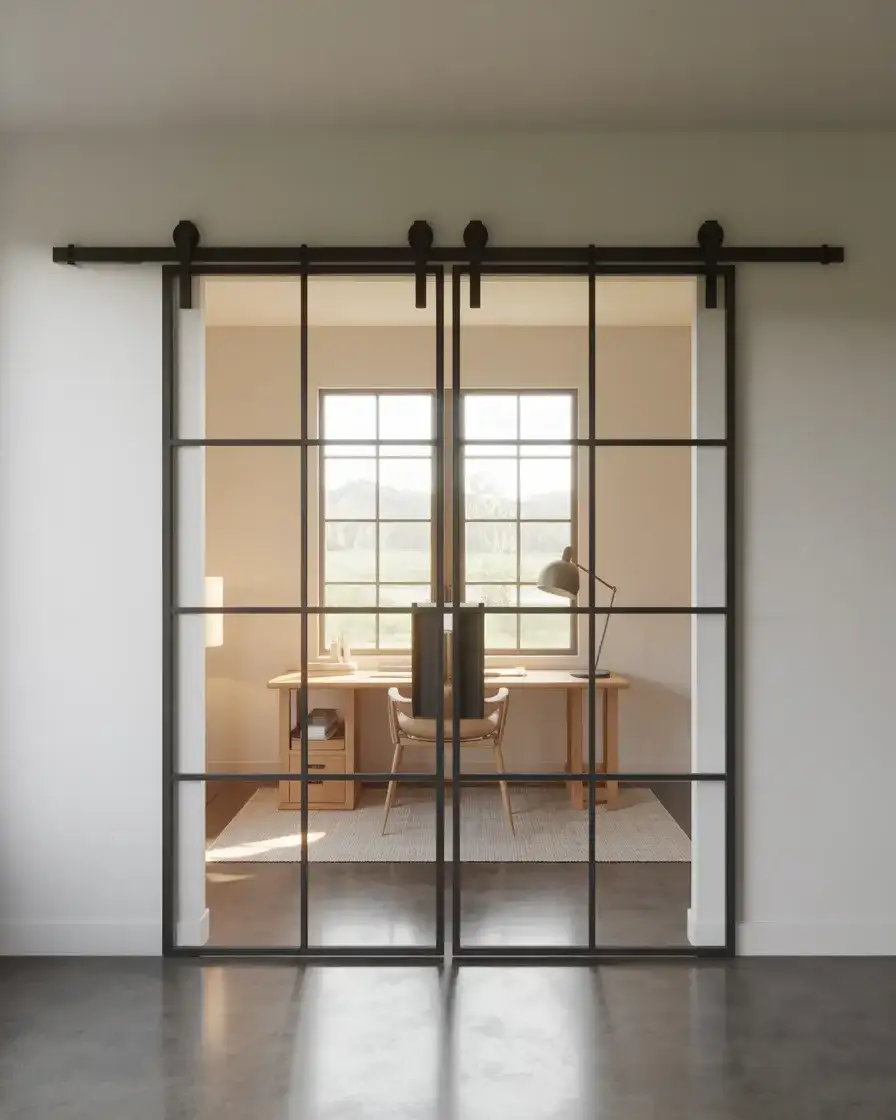
The glass barn door is having a serious moment, and nowhere does it make more sense than in front of a home office. You get the privacy of a closed door without cutting off light flow—a critical consideration in smaller homes where a dark hallway or windowless office can feel oppressive. Frosted, reeded, or clear glass inserts in a wood or steel frame bring a cool studio loft energy that works in both traditional and contemporary settings. It’s the barn door for people who want to feel separated but not isolated.
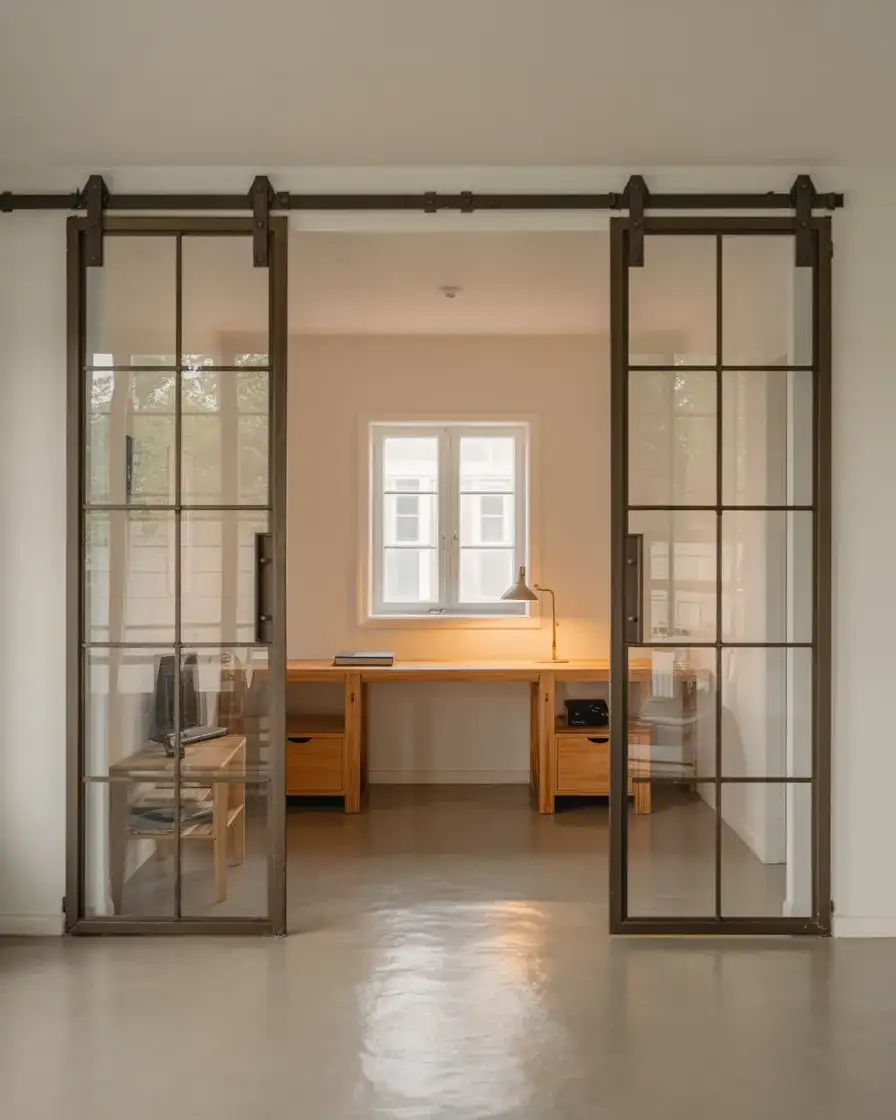
Where it works best: this style of door thrives in homes with an open floor plan where the office is carved out of a larger shared space. It’s especially effective in pre-war apartments or townhomes where additional walls would feel cramped and dark. The glass keeps borrowed light moving through the home, which matters enormously for morale and focus during long work-from-home days—something most American households have become deeply attuned to in recent years.
6. White Barn Door for a Bright Bathroom Entrance
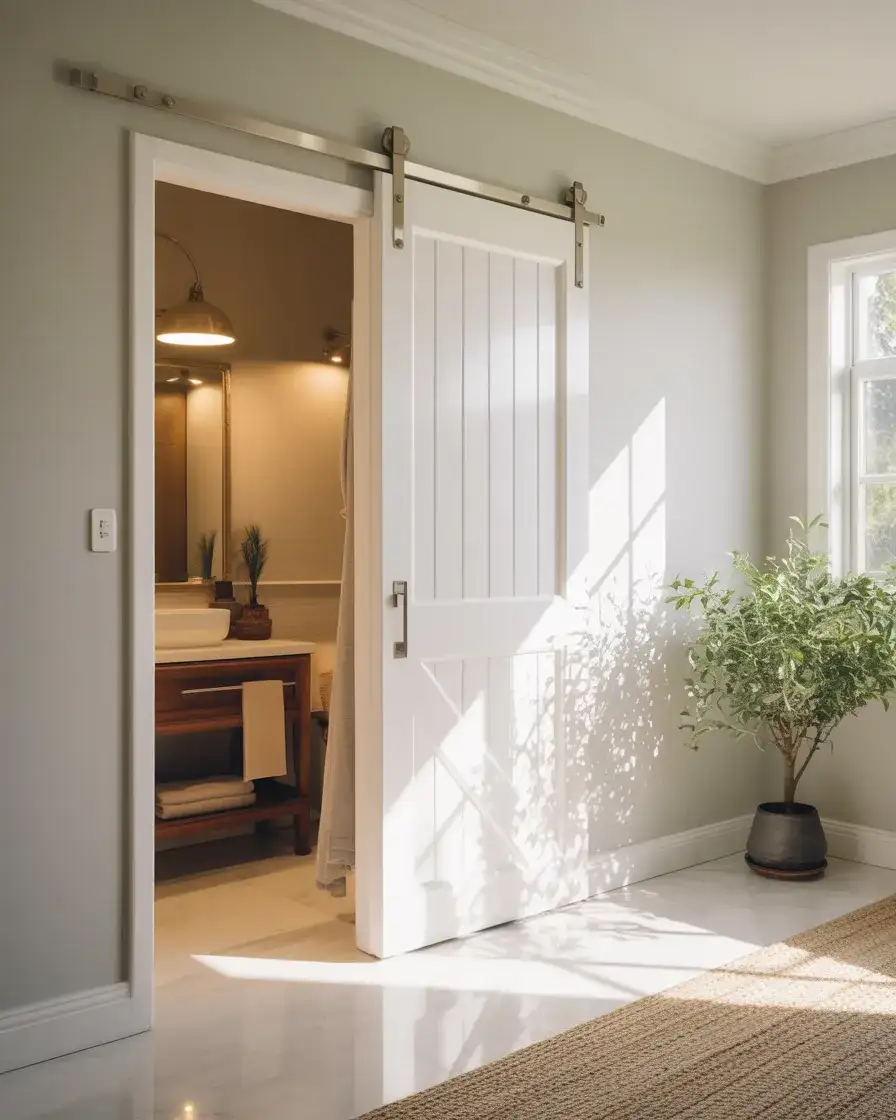
A crisp white barn door leading into a bathroom is one of those ideas that looks almost too simple on paper—until you see it in person. The clean finish makes a hallway feel wider, the sliding mechanism eliminates the awkward inward-swinging door problem in tight bathrooms, and the style reads as intentionally designed rather than an afterthought. It’s the kind of detail that makes a builder-grade home feel custom without the custom price tag. White-painted shiplap or MDF panels are popular choices for their clean, seamless look.
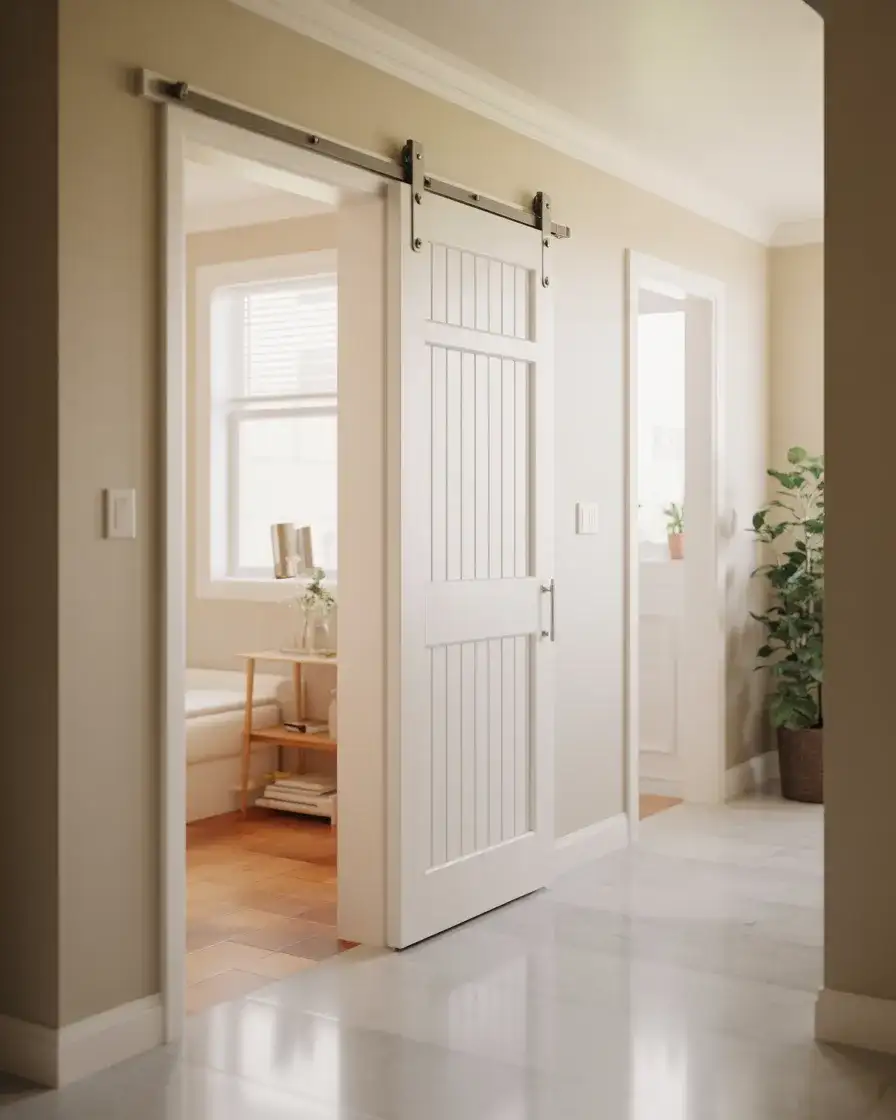
One important practical note: standard barn doors don’t create a soundproof or airtight seal, which matters for bathrooms. A soft-close mechanism and a floor guide keep the door snug and quiet, and adding a simple rubber doorstop at the frame helps prevent drafts and sound leakage. For most residential bathrooms that aren’t adjacent to a bedroom, this is a total non-issue—and the style gain is absolutely worth the minor acoustic trade-off.
7. Large Arched Barn Door for a Dramatic Entryway
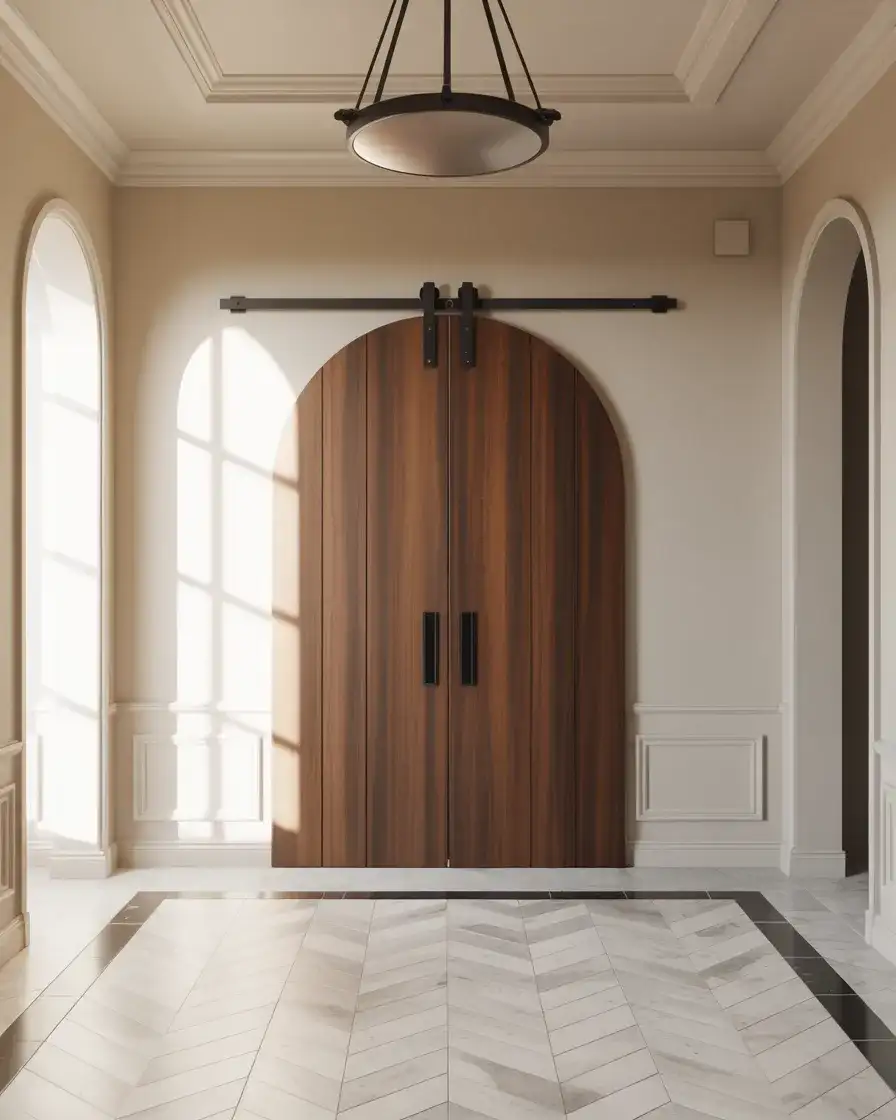
If you want to make an unforgettable first impression, a large arched barn door is your move. The curved top edge—whether it’s a full arch or a more subtle rounded silhouette—adds an almost architectural grandeur that flat-panel doors simply can’t match. This style tends to work beautifully in entryways, foyers, or as a statement piece between a living room and a formal dining room. It borrows visual language from historic estate homes and monastery architecture, then grounds it in something approachable and warm.
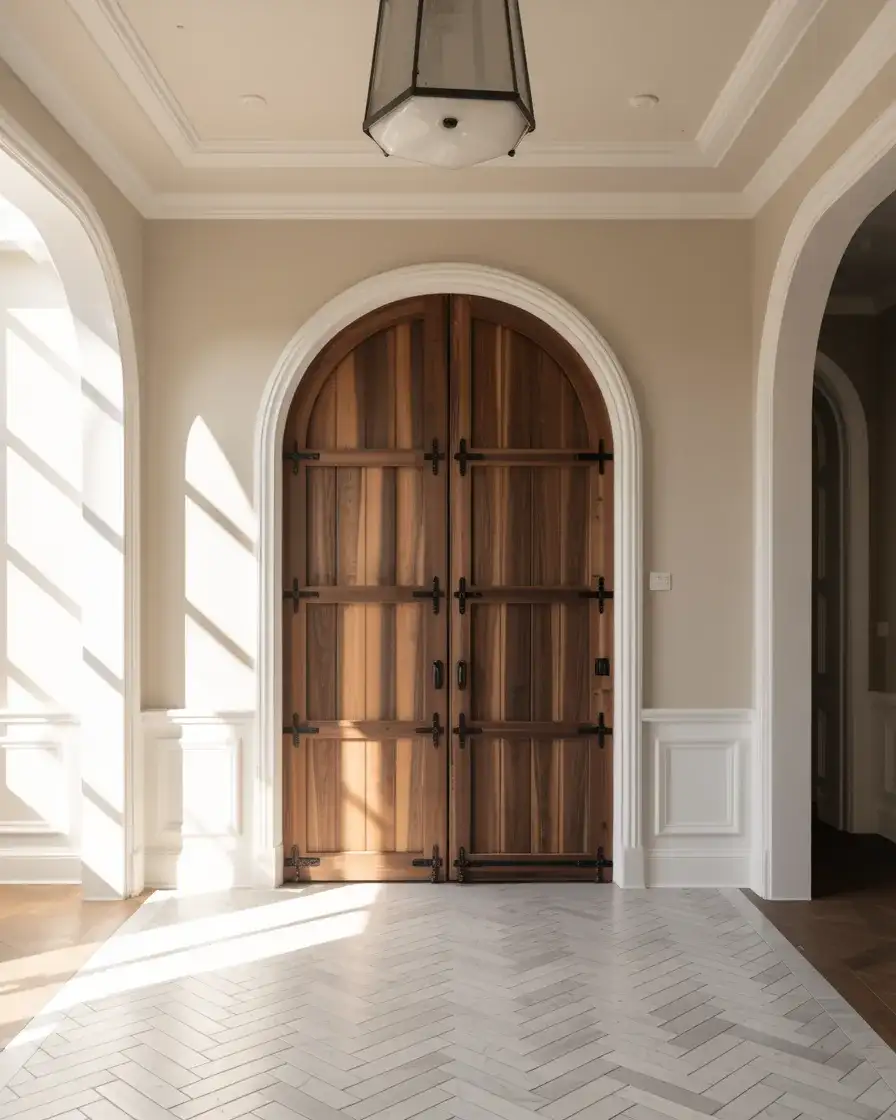
These doors are most often custom-made, which places them in a higher price tier—typically $800 to $2,500 or more depending on materials and the complexity of the arch. But for homeowners in the South and Southwest, where hacienda and Spanish revival architecture are common, an arched barn door feels like a natural extension of the home’s bones rather than a trend-chasing addition. Think of it as buying art that also opens and closes.
8. Bedroom Closet Barn Door in Natural Wood
Replacing standard closet doors with a wood barn door panel in the bedroom is one of the most impactful—and relatively affordable—upgrades you can make to a primary or guest room. Bifold doors feel dated, mirrored sliders can feel cold, and standard hinged doors often create awkward dead zones. A single natural wood barn door slides cleanly to the side, revealing the full closet opening at once while adding warmth and texture to what is often the most visually prominent wall in the room.
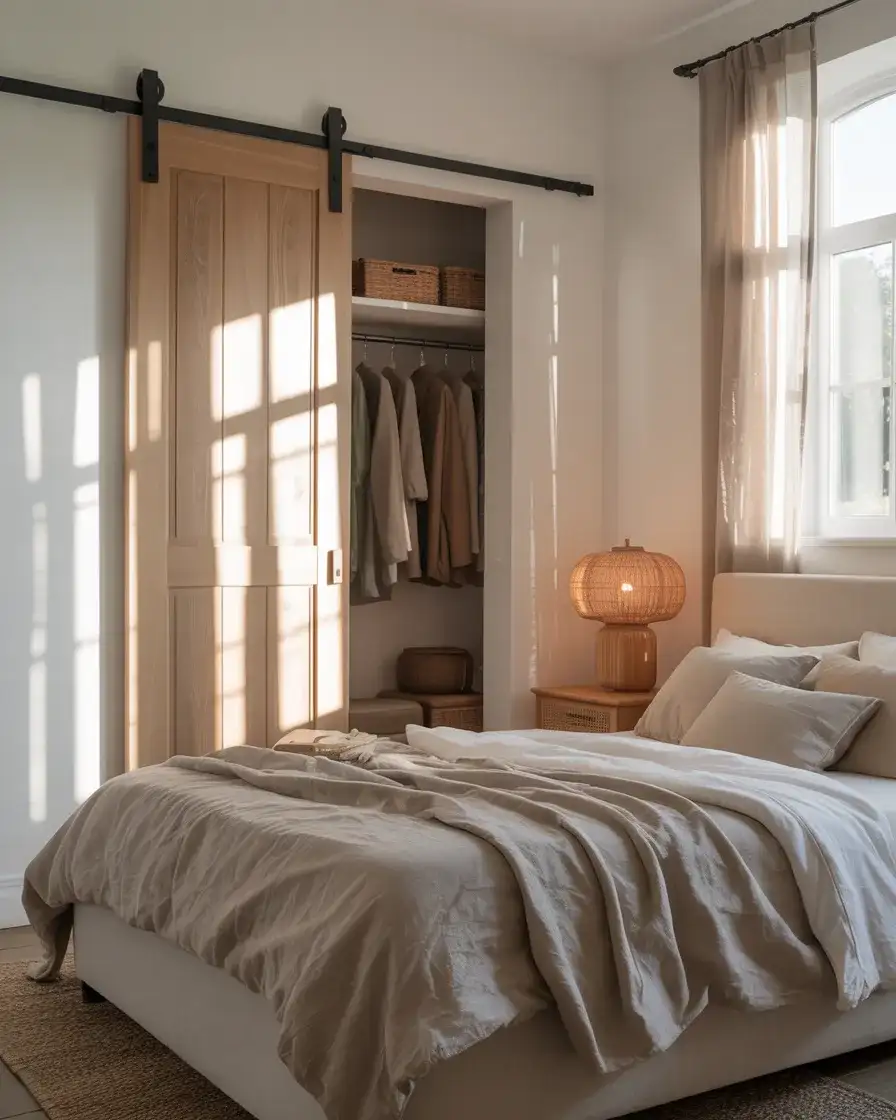
Where this approach truly shines is in master bedrooms, where a walk-in closet replaces a traditional reach-in. The extra-wide opening—often 60 to 72 inches—is actually easier and cheaper to cover with a single oversized barn door than with custom bi-fold or French door panels. A lot of homeowners discover this while planning a primary suite refresh and end up wishing they’d done it years sooner. It’s one of those renovations that earns compliments from everyone who sees it.
9. Antique Barn Door Repurposed as a Headboard Wall Feature
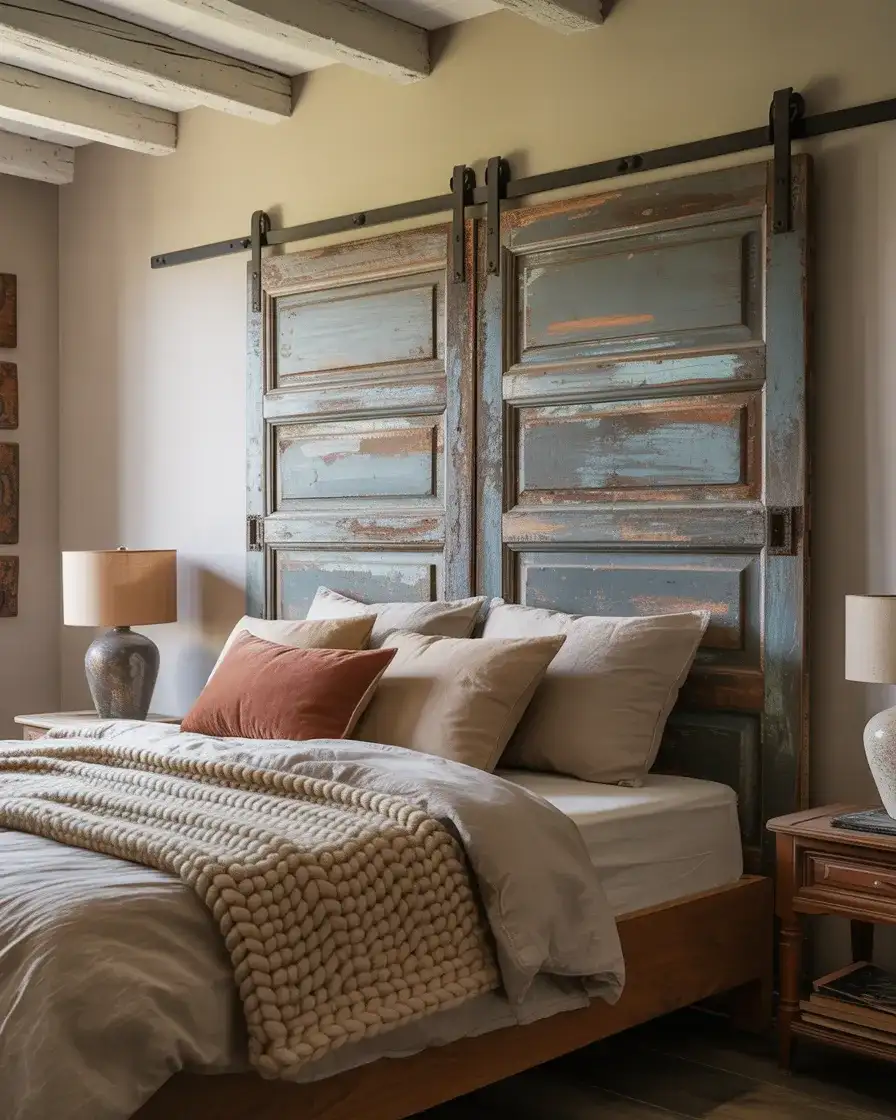
Not every barn door needs to slide. One of the most inspired uses of an antique door is mounting it flat against the wall as a dramatic headboard backdrop. An old door with original paint, chippy hardware, and deep wood grain brings a century of character into a bedroom in a single move. This works especially well in bohemian, eclectic, or vintage-leaning interiors where collected objects tell a story. Hunt for them at architectural salvage shops, estate sales, or online marketplaces—prices vary wildly, but a great find can go for under $200.
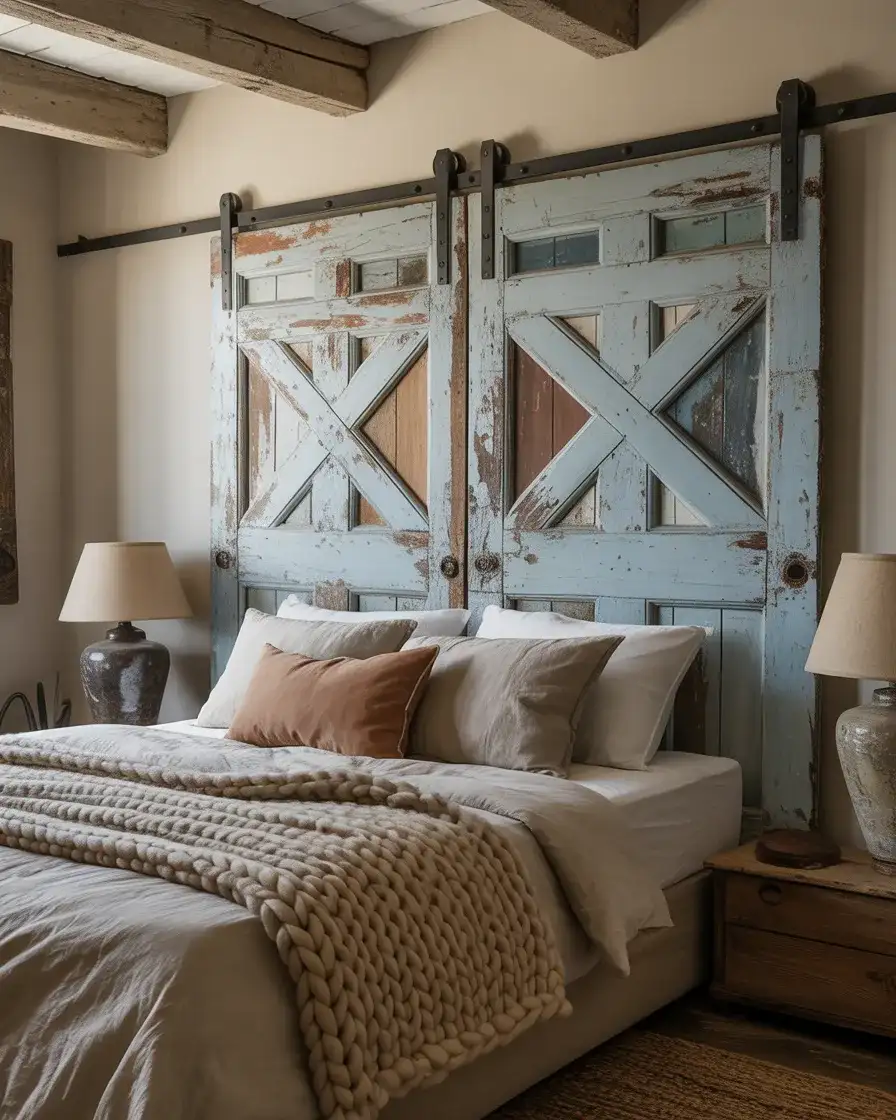
Micro anecdote: A couple in Vermont bought a 150-year-old barn door at a local auction for $85, stripped nothing, and installed it behind their queen bed. It became the single most photographed element when they listed the house—the listing agent said it alone drove three additional showing requests. The moral is that authenticity reads on camera, and in today’s market, that matters as much aesthetically as it does financially.
10. Green Painted Barn Door for a Moody Living Room
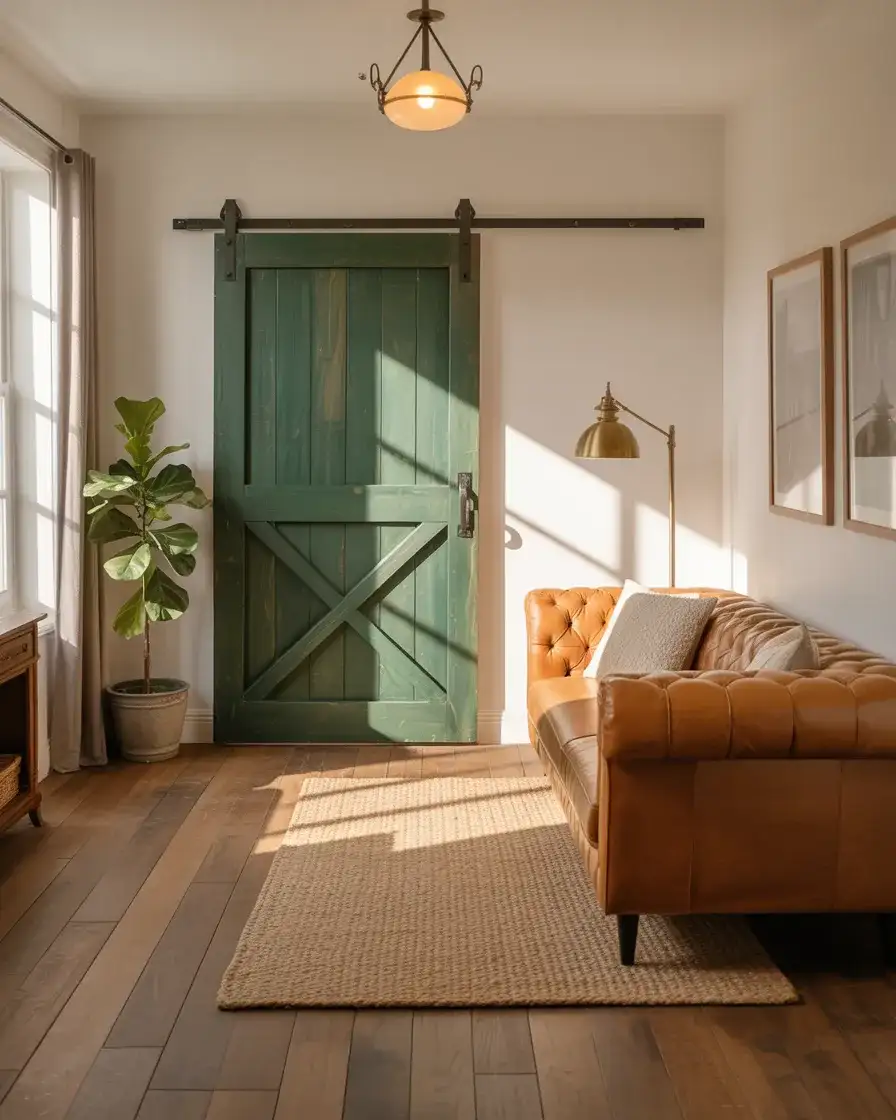
Color is one of the easiest and most underused tools in the barn door playbook, and right now green—in all its moody, nature-forward iterations—is everywhere. A deep forest green, sage, or olive-painted barn door introduces a grounded, organic quality to a living room without committing to a full accent wall. It works especially well when the surrounding walls are neutral: warm white, greige, or soft gray. The door becomes the room’s green moment, and everything else can stay calm and easy around it.
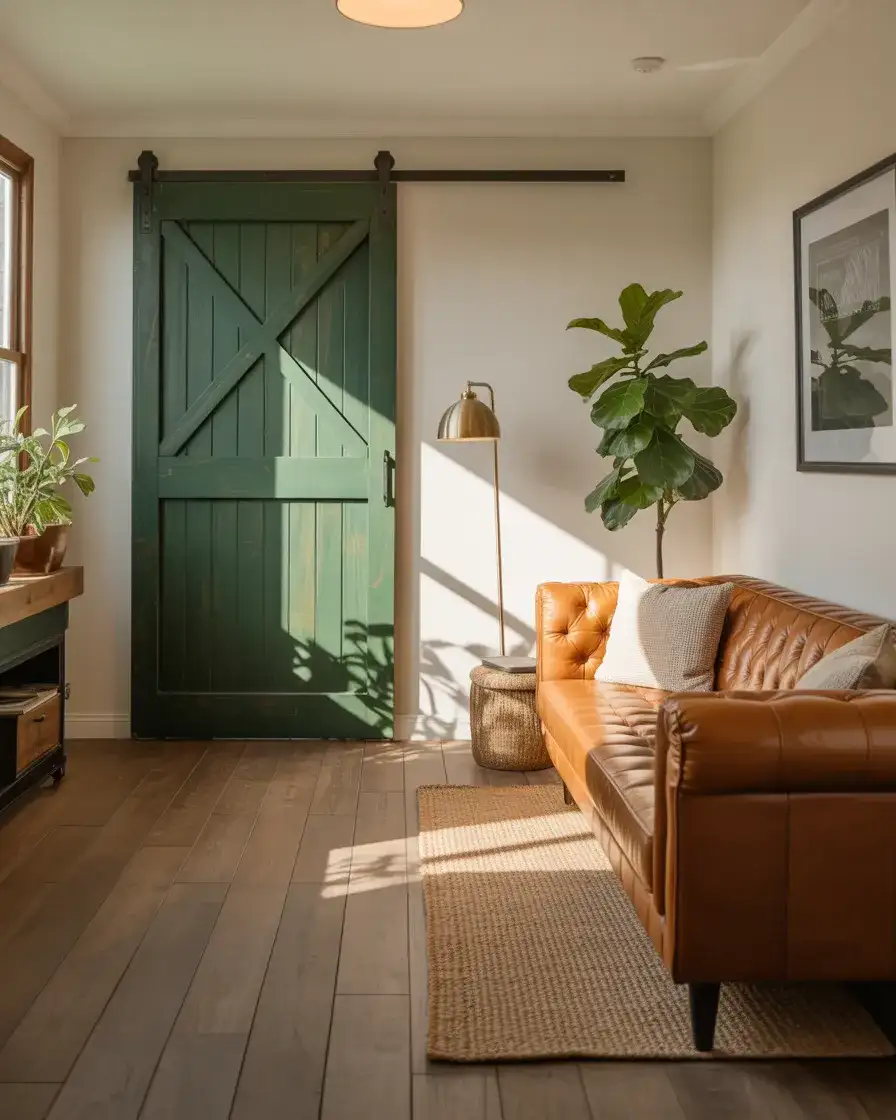
American homeowners in the Pacific Northwest and New England have been especially quick to adopt green barn doors, where the color feels connected to the landscape just outside the window. Interior designers note that painted barn doors are one of the lowest-risk ways to experiment with color—if you change your mind, you simply repaint. That reversibility is part of what makes bold color choices so much easier to commit to on a door than on a whole wall.
11. Split Barn Door Design for a Laundry Room
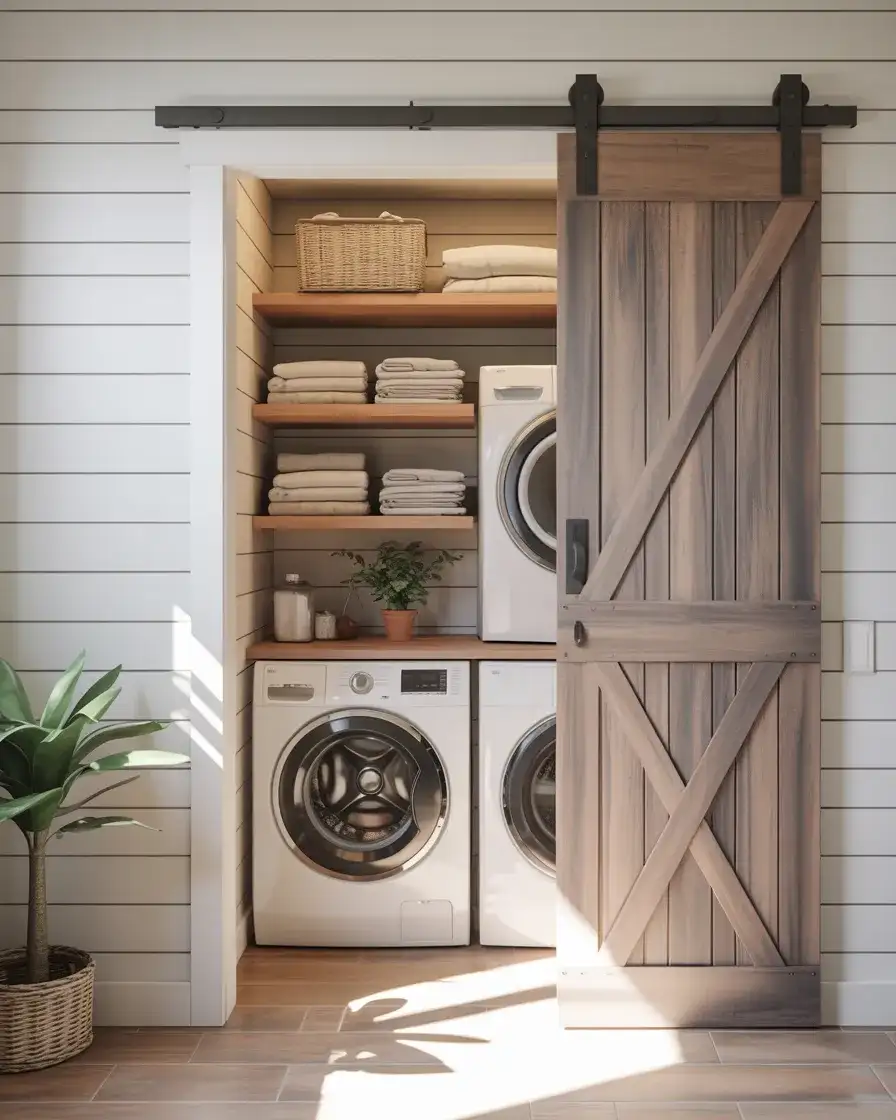
A split barn door—sometimes called a Dutch-style door—divides into a top and bottom half that can each operate independently. For a laundry room, this is a functional dream: keep the bottom panel closed to block noise and keep detergent bottles out of sight, while leaving the top open for airflow during a long drying cycle. It’s a style borrowed from horse stables and farmhouse kitchens and updated for modern utility rooms, and it’s catching on fast with practical-minded homeowners who want both form and function without compromise.
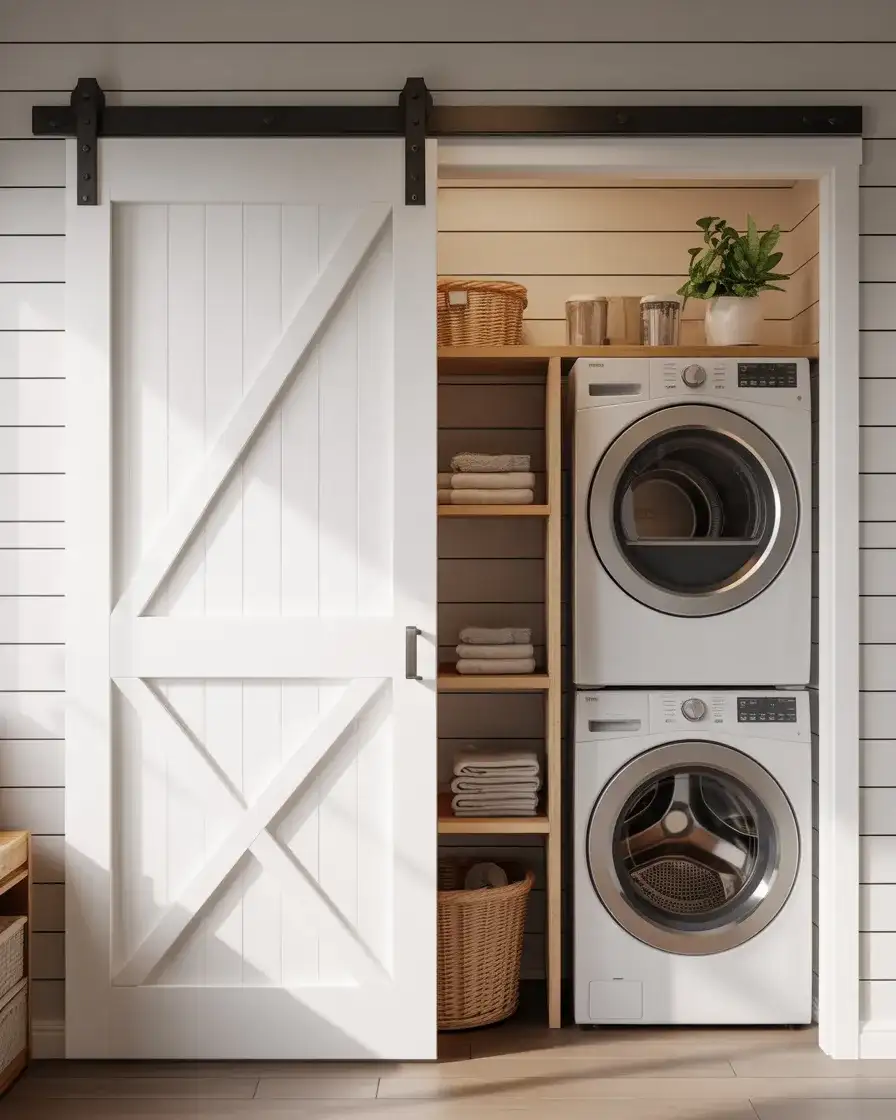
Practical insight: a split barn door needs a slightly more robust rail system since the two halves need to travel along the same track independently. Make sure the rail you choose is rated for the full combined weight of both panels—typically 100 to 150 lbs total. Most hardware kits designed for split doors come with this specification already accounted for. The extra engineering is worth it: this is a door that families with young children, pets, or lots of laundry will appreciate every single day.
12. Foldable Barn Door for a Compact Hallway
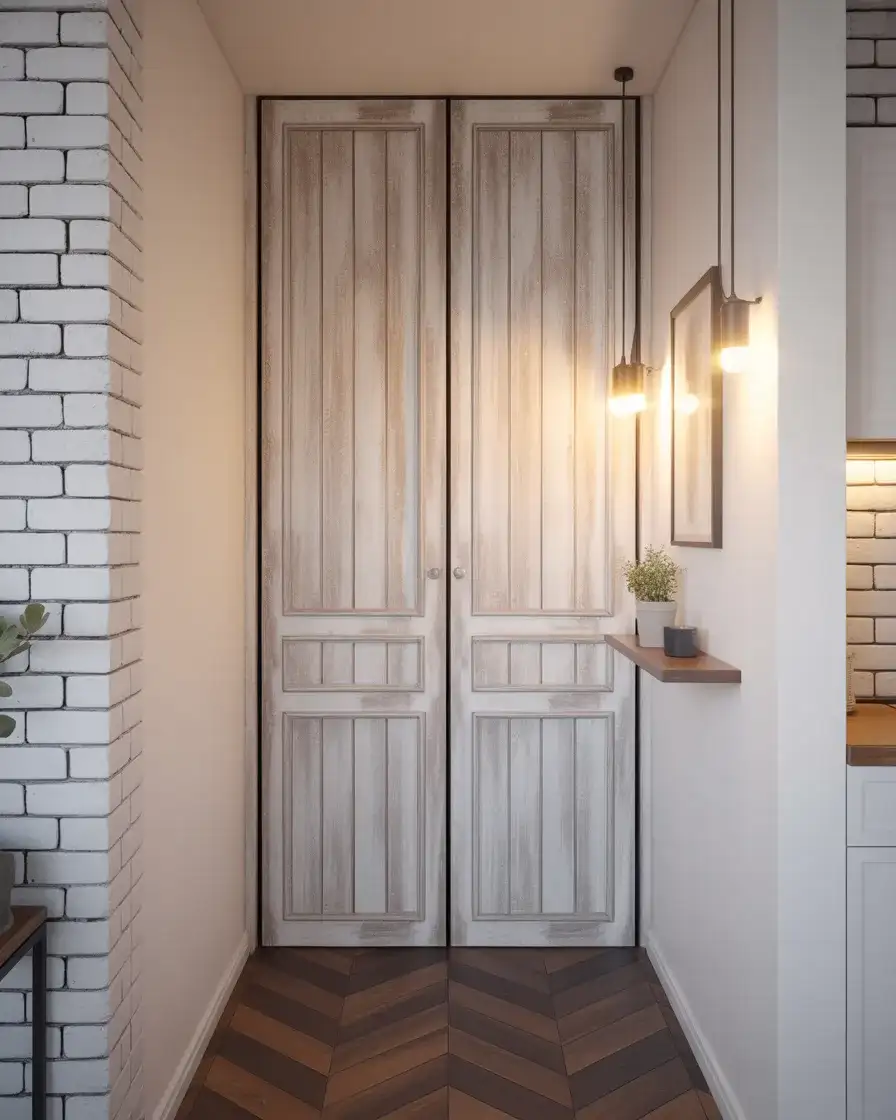
For narrow hallways and tight spaces where a traditional sliding door doesn’t have enough wall clearance to park fully open, a foldable or accordion-style barn door is the elegant solution. Two or more hinged panels fold against each other when open, stacking compactly beside the doorway. It offers the visual language of a barn door—the hardware, the wood, the rail—without demanding the extra wall real estate. This style works particularly well in apartment renovations, older homes with narrow corridors, or any situation where space is genuinely constrained.
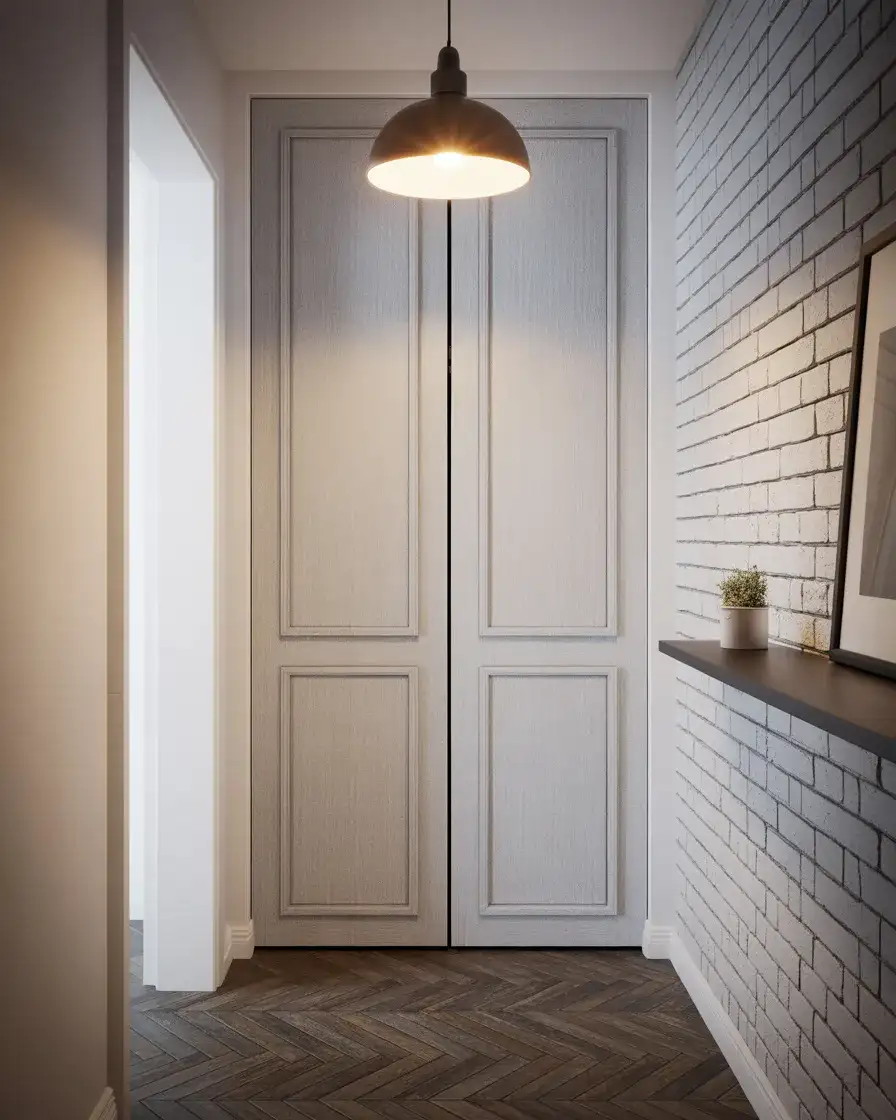
Micro anecdote: a New York City apartment dweller replaced a clunky accordion plastic door—the kind that came with the building in the ’80s—with a custom two-panel fold-out barn door in white oak. The result looked so good she posted it on Instagram and had 12 people in her building ask for her contractor’s number by the end of the week. Sometimes the most impressive renovations are the most confined ones, where creativity is the only option available.
13. Stained Wood Barn Door for a Study or Library
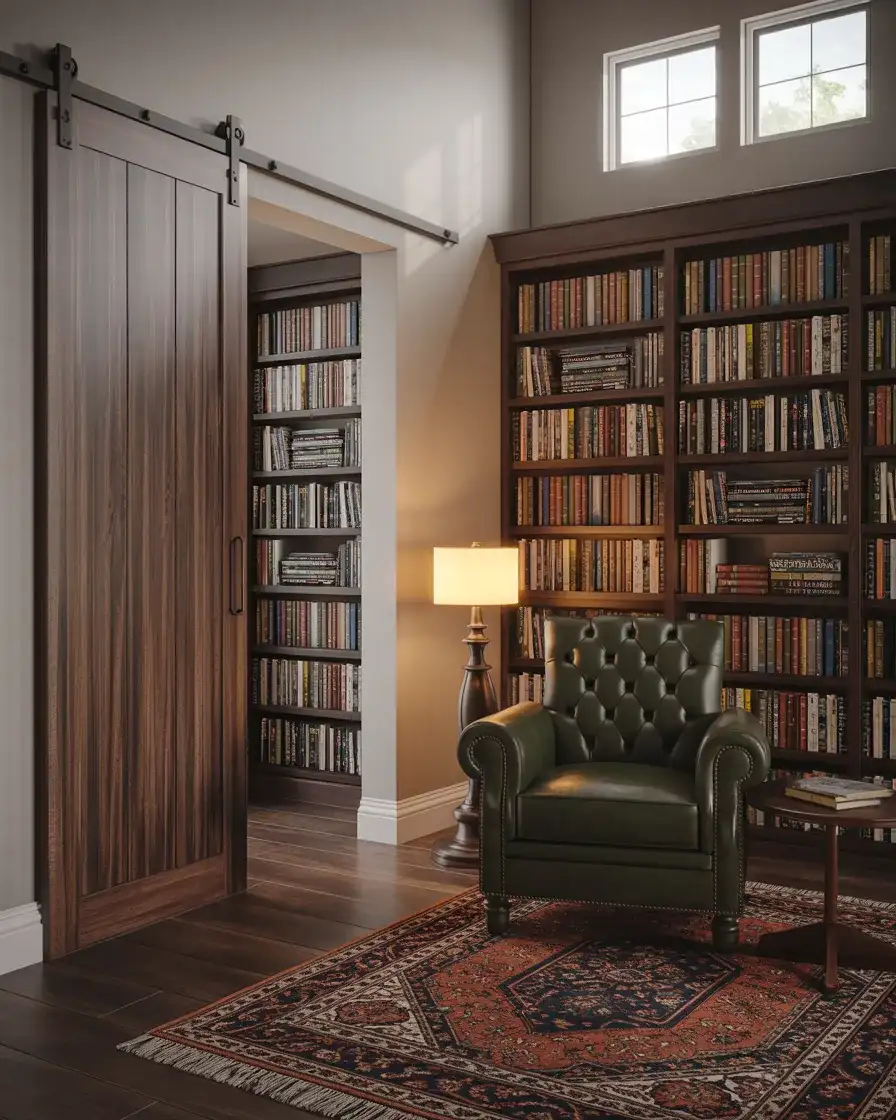
A deeply stained wood barn door—think walnut, ebony, or rich espresso—brings a gravitas to a study or library that no other door style quite replicates. The richness of the finish against floor-to-ceiling bookshelves and leather furniture feels intentional and serious in the best possible way. It’s a look that reads as heirloom and contemporary at the same time, particularly when paired with matte black hardware and unlacquered brass accents. The grain of the wood becomes a feature in itself under good lighting.
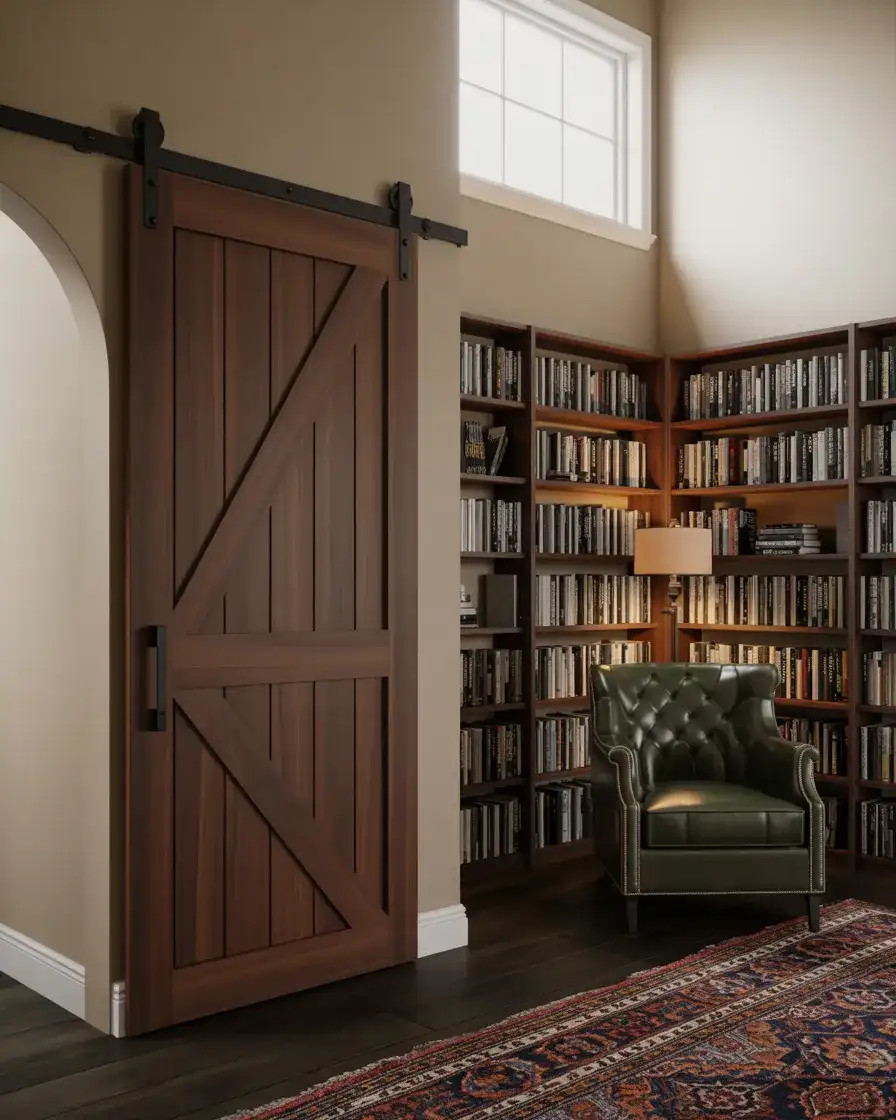
Expert-style commentary: furniture makers and interior designers consistently note that stain—rather than paint—is the smarter long-term investment for high-traffic doors. Paint chips and scuffs show more visibly, especially in darker colors, while a well-applied penetrating oil stain weathers beautifully over time. If you’re going for a rich, dark finish on a study door that will be opened and closed dozens of times a day, choose a penetrating stain over a surface coat for durability and longevity.
14. Bifold Barn Door for a Closet Makeover
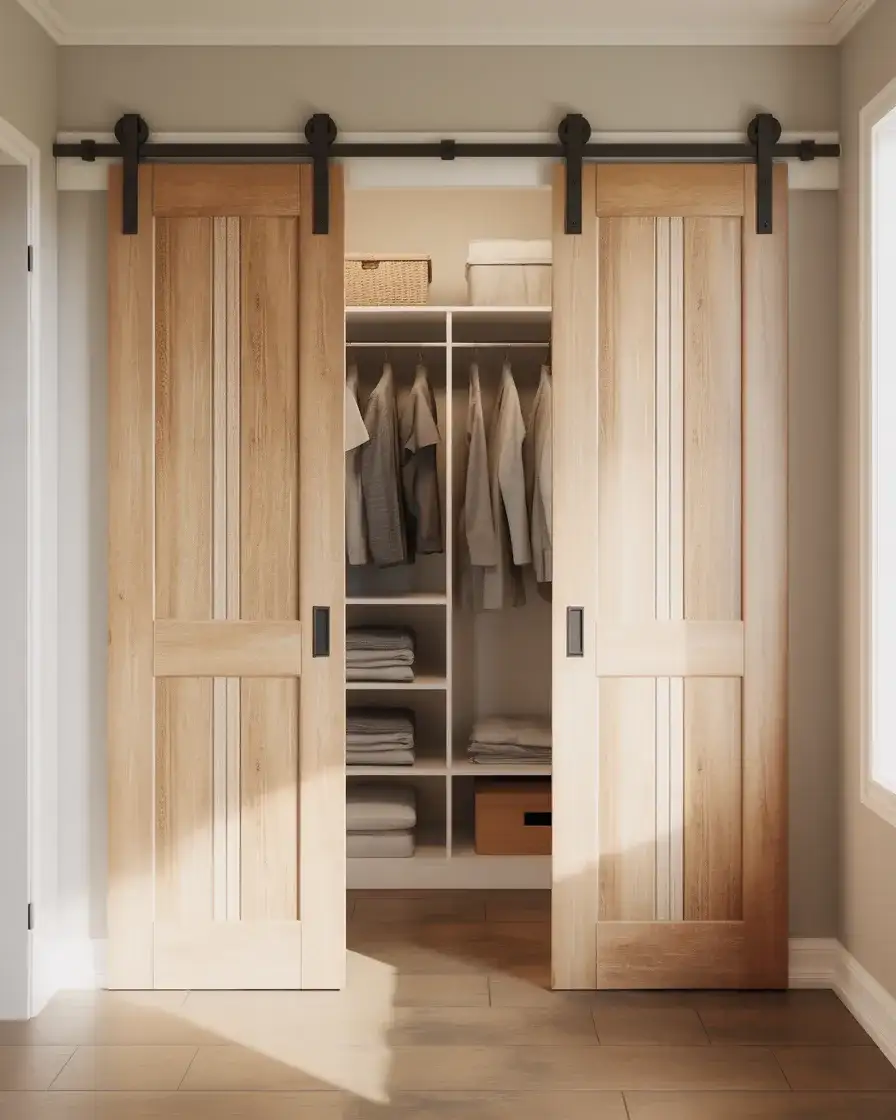
The bifold barn door is a hybrid solution that combines the space-saving mechanics of a folding door with the tactile appeal of barn door hardware and styling. Two hinged panels slide and fold simultaneously on a top-hung rail, offering full access to the closet opening without requiring extra wall space for the door to park. It’s one of the smartest choices for reach-in closets in bedrooms and hallways, and it upgrades the look dramatically from the hollow-core bifolds that come standard in most American new builds.
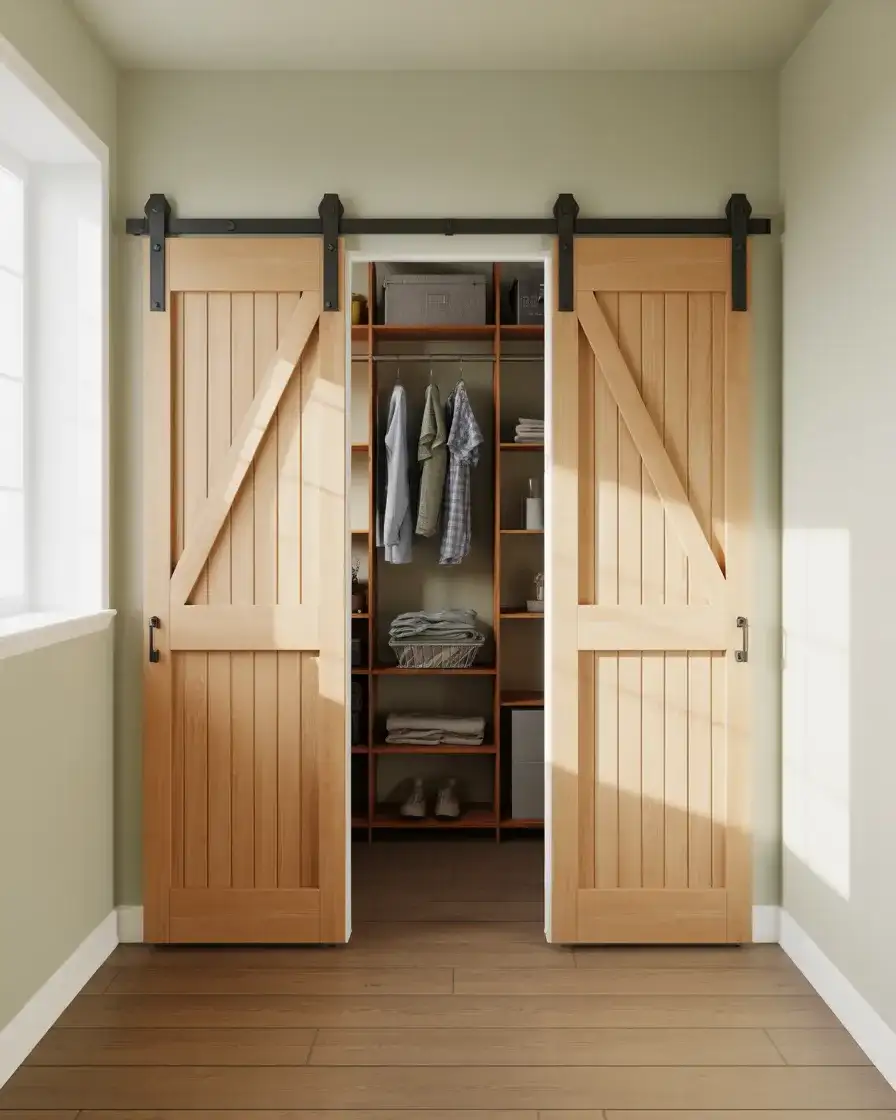
Budget/price angle: bifold barn door kits are among the most accessible on the market, frequently available at major home improvement retailers for $150 to $400 for the complete door and hardware package. Compare that to custom-built closet doors, which can easily run $600 and up, and the value proposition becomes clear. For renters who want to leave behind an upgrade when they move out, some bifold kits are even reversible and relatively easy to uninstall—just be sure to patch those screw holes before handing back the keys.
15. Double Sliding Doors for a Master Bath Suite
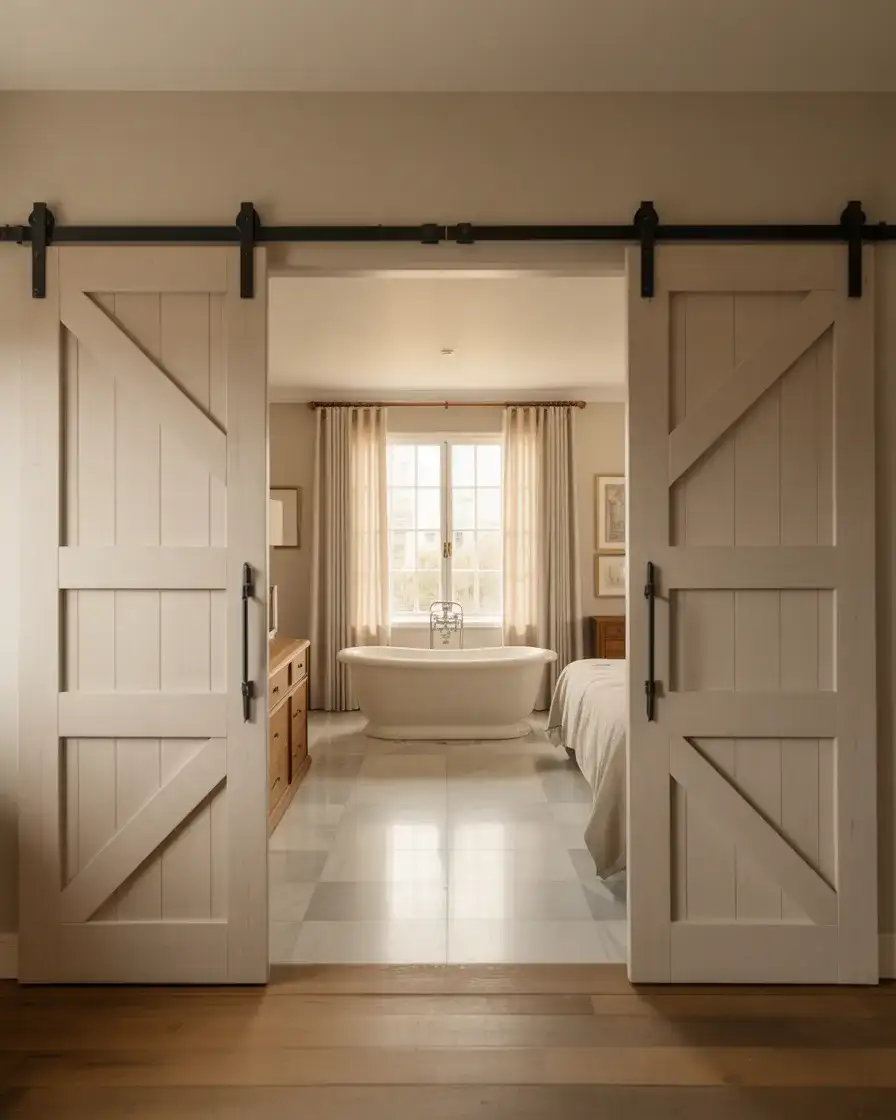
Double sliding barn doors leading into a master bath feel unabashedly luxurious—the kind of architectural detail you see in boutique hotels and high-end design magazines and immediately want in your own home. Two panels that slide apart in opposite directions create a wide, ceremonial opening that makes the act of entering the bathroom feel like an event. In master suites with a connected dressing area or spa-style bath, this setup creates a visual sequence that elevates the whole wing of the home.
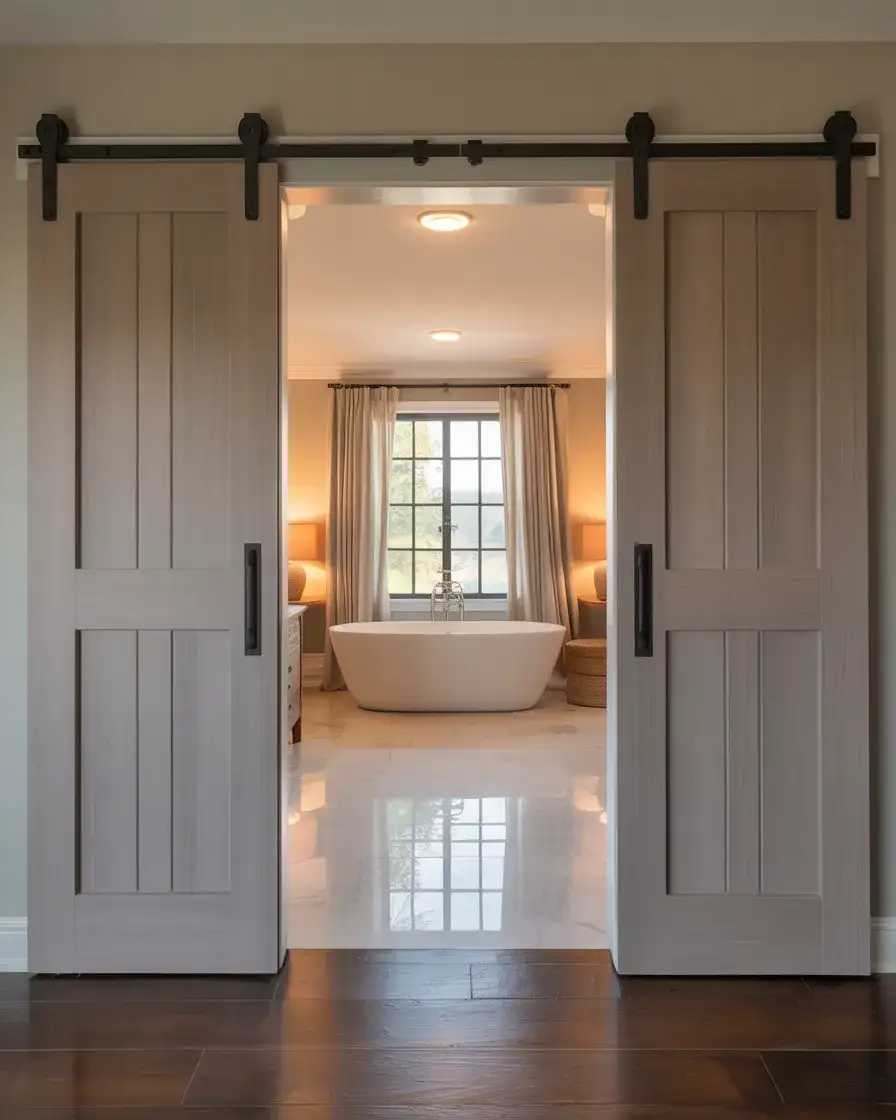
Real homeowner behavior: couples who’ve installed double sliding bath doors frequently report that the doors become a behavioral trigger—one partner going to bed while the other reads in the bedroom can use the closed doors to block light completely without disrupting the other. What looks like a design decision turns out to be a lifestyle upgrade. Add soft-close hardware, and the whole experience becomes genuinely silent and smooth, which is worth every dollar of the installation.
16. Corner Barn Door Installation for Awkward Spaces
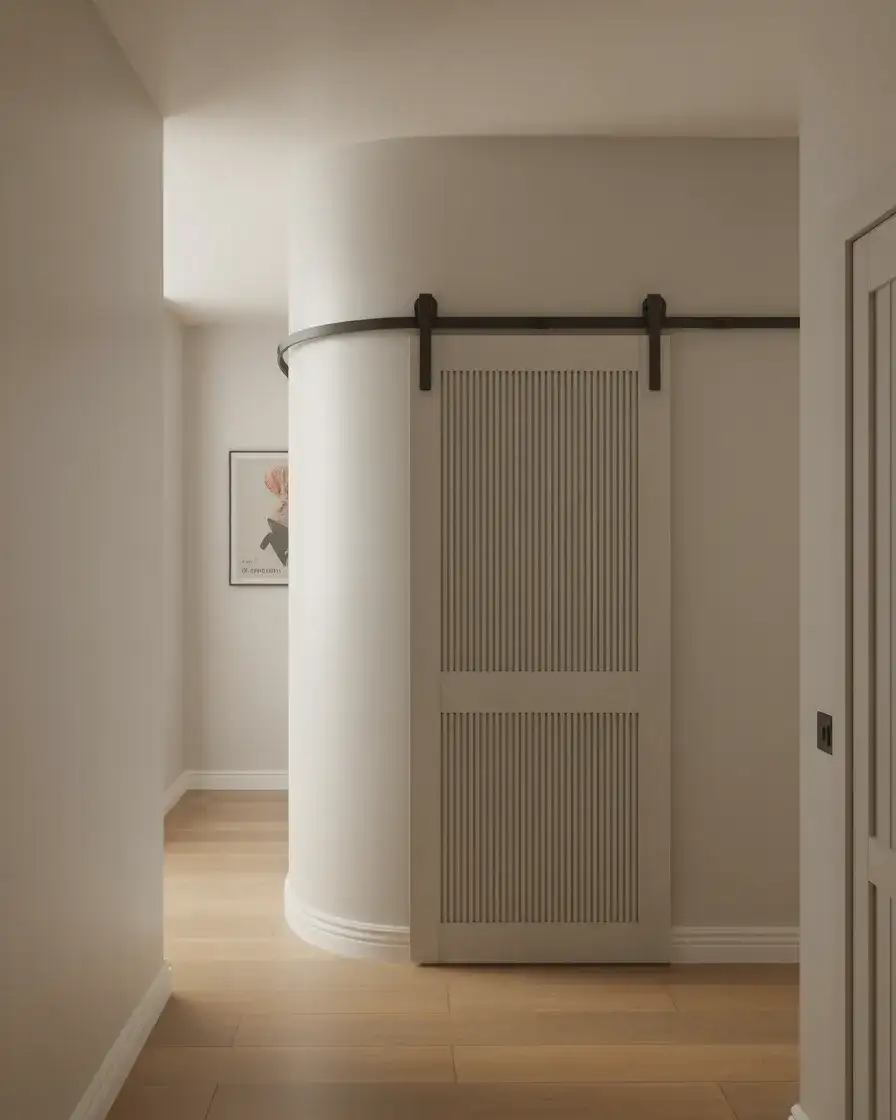
A corner barn door installation is one of those clever solutions that most people don’t even know is possible until they need it. When a doorway is positioned too close to a corner for a standard sliding door to travel along the wall, a corner bracket system allows the rail to turn 90 degrees—letting the door slide around the corner and park on the adjacent wall. It’s a niche application, but for older homes with unusual floor plans or tight hallway intersections, it’s genuinely transformative and far less invasive than any framing solution.
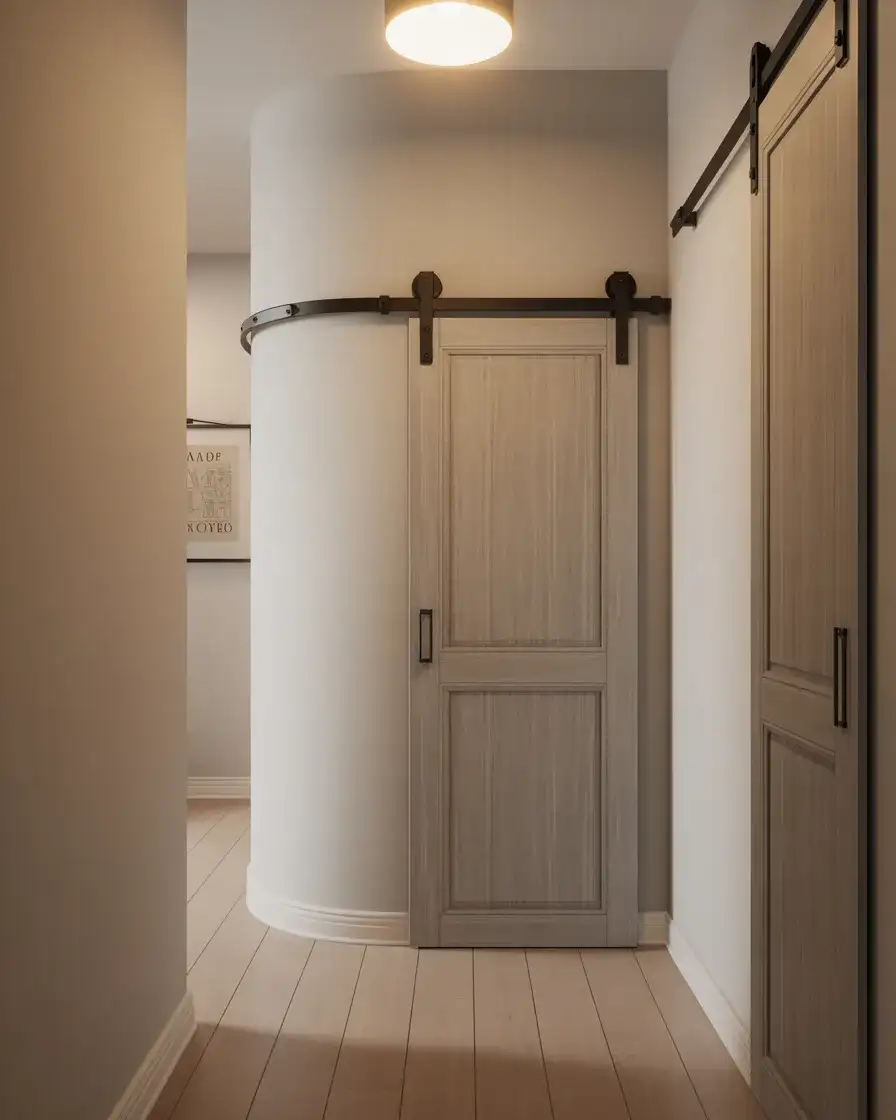
Common mistakes and how to avoid them: the biggest error with corner installations is underestimating the wall thickness at the corner, which affects how tightly the bracket can make the turn. Always measure the corner projection—the space between the doorframe edge and the corner itself—before ordering any hardware. Reputable barn door hardware suppliers offer corner kits in multiple geometries, so when in doubt, call their customer service line. It’s a specialized installation that rewards careful measuring and costs far less than a major renovation.
17. Half Barn Door for a Kids’ Room or Nursery
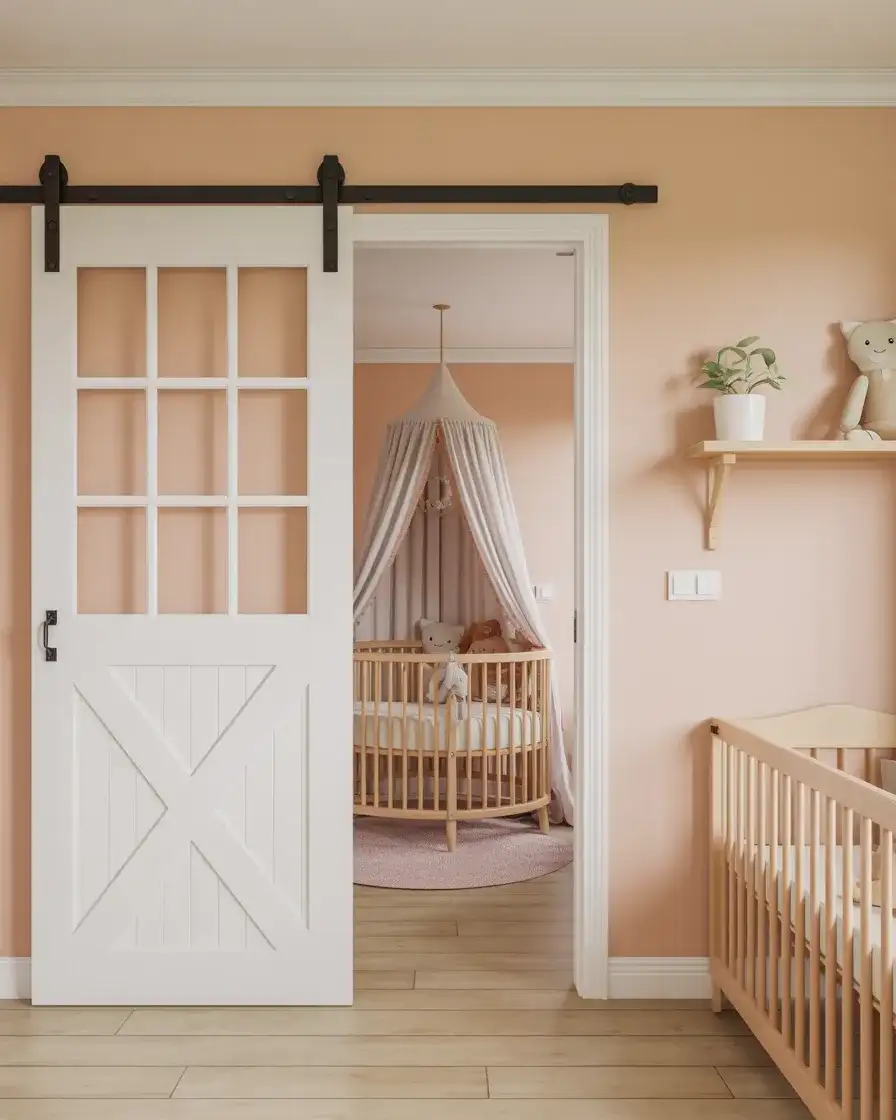
A half barn door—covering only the lower portion of the doorway—is one of the most practical inventions for families with toddlers, pets, or crawling babies. The bottom panel keeps little ones safely contained while leaving the top open for airflow, light, and easy supervision. It’s the barn door version of a baby gate, except it’s mounted on a sliding rail, looks genuinely stylish, and doesn’t have to come down every time an adult needs to pass through. It’s become a staple in modern nursery design for parents who don’t want to sacrifice their aesthetic for safety.
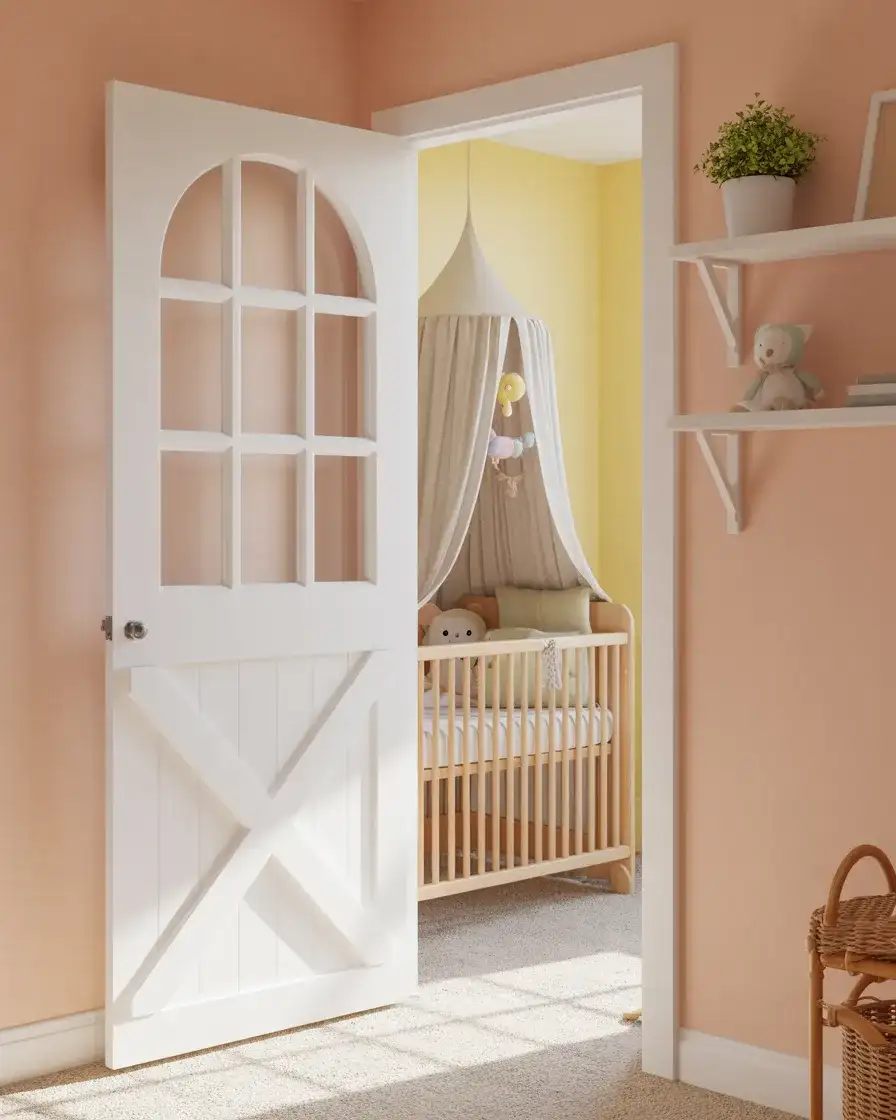
American lifestyle context: the half barn door trend has exploded in Midwestern and Southern family homes where open floor plans mean a nursery or toddler room is often just off the main living area. Parents can cook dinner, watch TV, or work from the dining table while keeping a clear line of sight and sound into the child’s room. It replaces the visual clutter of a swing-arm baby gate with something that actually makes the house look better. A rare win for parents of young children anywhere.
18. Folding Barn Door to Hide a Home Bar or Butler’s Pantry
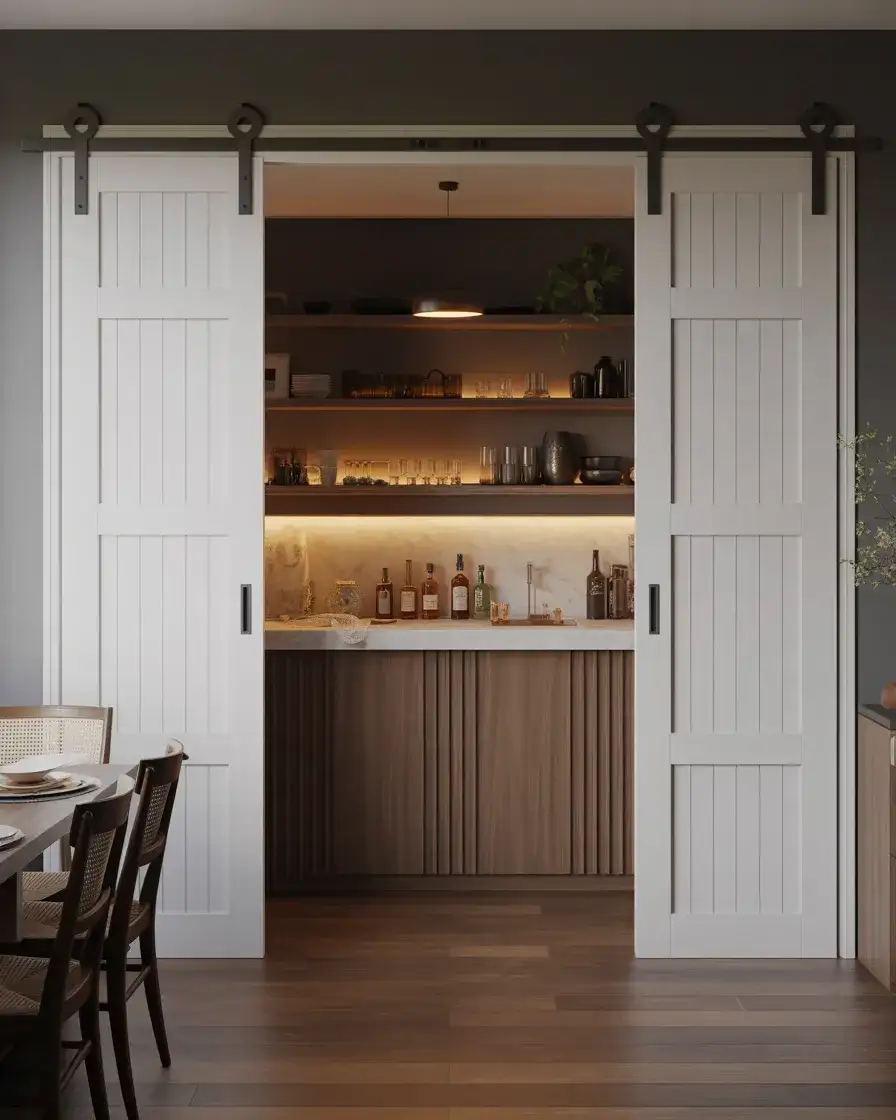
There’s something delightfully theatrical about a folding barn door that, when opened, reveals a fully stocked home bar or butler’s pantry tucked behind it. The closed door reads as a seamless design element—perhaps a feature wall in the dining room—and then, when guests arrive, it unfolds like a curtain rise to reveal the party. This concept has become particularly popular in American homes that lack dedicated entertaining spaces, turning an awkward alcove or deep closet into a serious focal point.
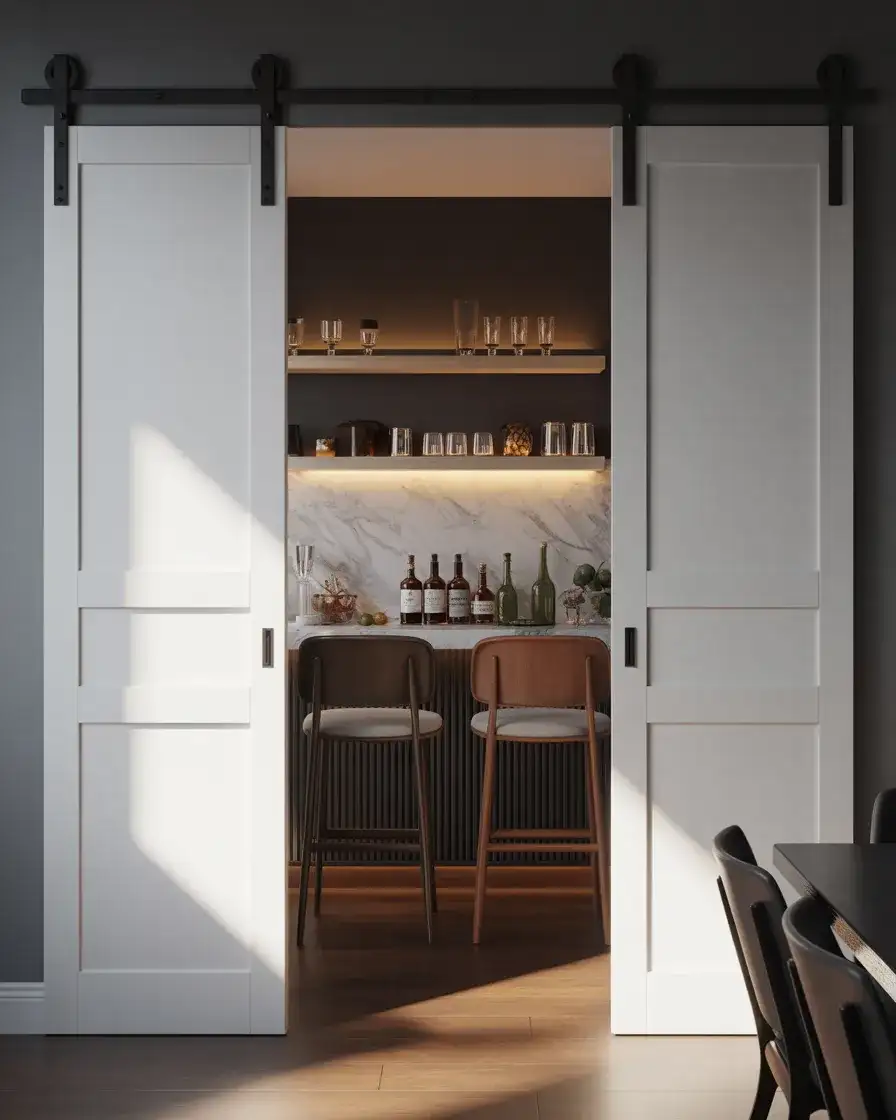
Where it works best: this application thrives in homes where the kitchen and dining room are separated by a short transitional corridor or alcove—the kind of layout common in 1950s and 1960s suburban American homes that are getting renovated en masse right now. Converting a pass-through or coat closet space into a butler’s pantry with a folding barn door treatment costs a fraction of a full kitchen remodel and adds the same sense of intentional luxury. It’s one of the best entertaining upgrades you can make under $5,000.
19. Modern Sliding Door with Metal Frame for an Industrial Loft
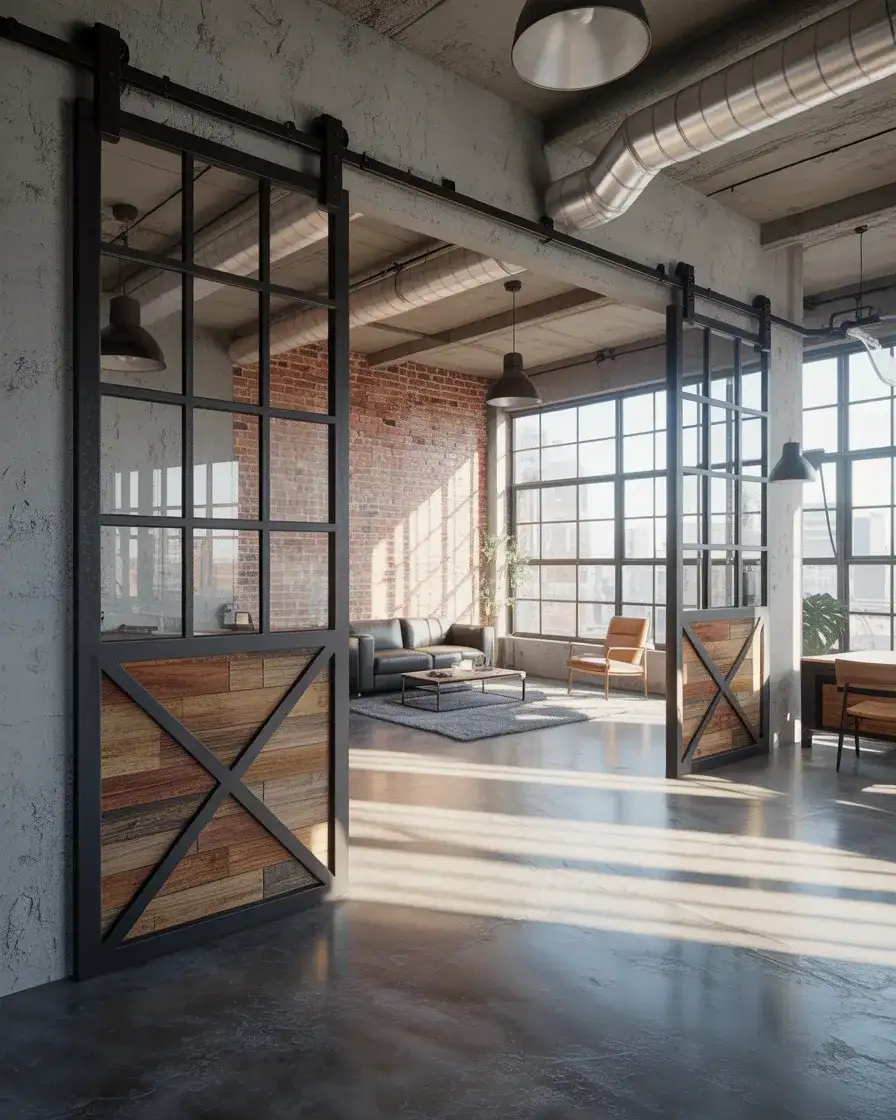
In an urban loft or converted warehouse space, a modern sliding barn door with a steel or iron frame feels completely at home. The raw metal hardware and industrial-weight rail system echo the exposed ductwork, concrete floors, and steel-framed windows that define the aesthetic. A steel-framed door with wood or glass inserts brings refinement to rough bones—it’s the architectural equivalent of wearing a great blazer with worn jeans. Clean, purposeful, and undeniably cool in the hands of the right designer or homeowner.
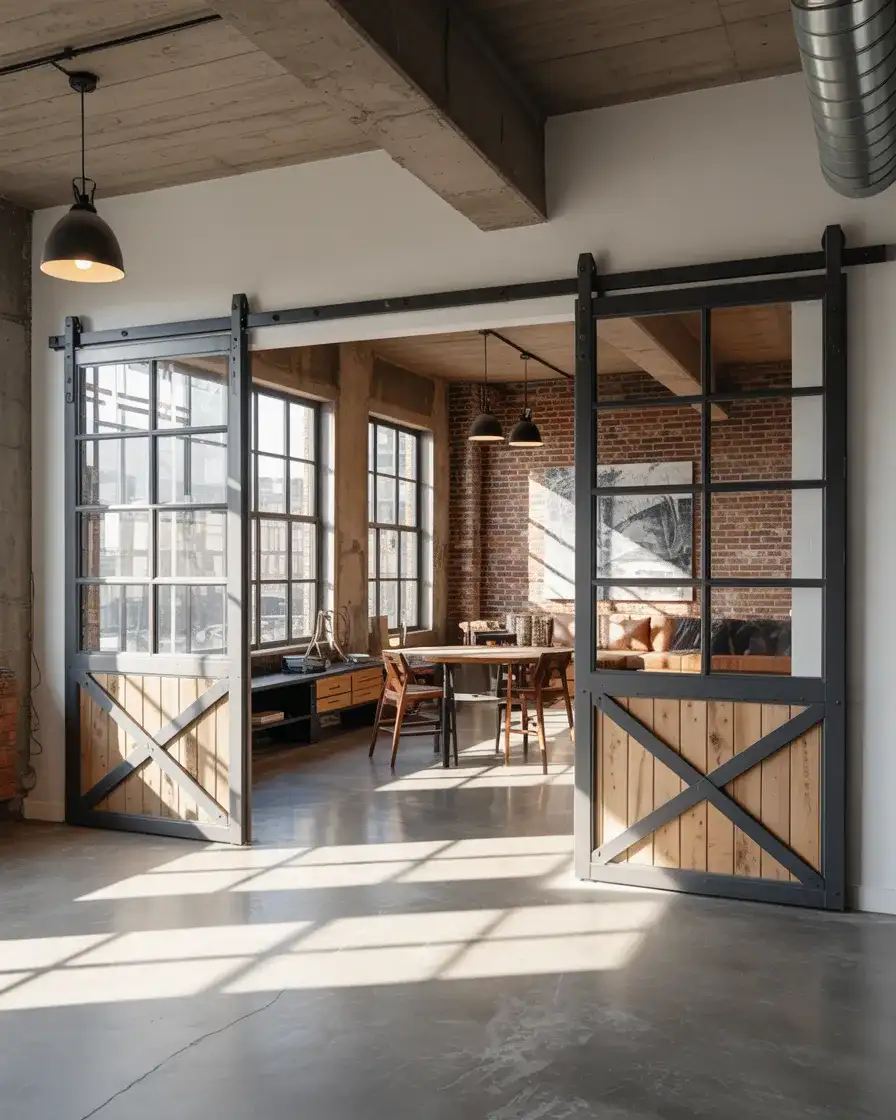
Expert-style commentary: designers working in the loft and urban renovation space consistently emphasize that the quality of barn door hardware is where you should never cut corners—literally. Cheap rollers and rails wobble, squeak, and wear out quickly, which defeats the purpose of a door meant to be used multiple times daily. Invest in commercial-grade hardware for any high-traffic installation, particularly in open-plan spaces where the door is as much a design centerpiece as it is a functional partition.
20. Farmhouse White Barn Door for a Mudroom Entry
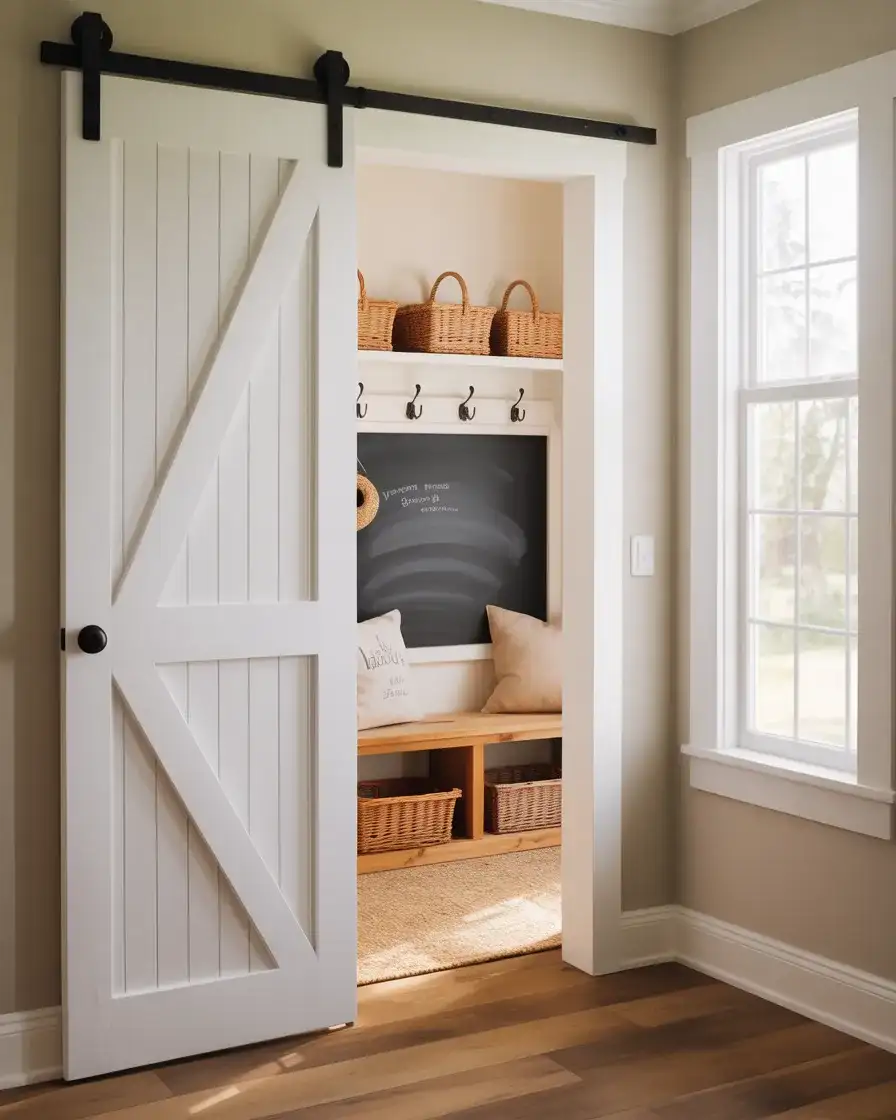
A farmhouse white barn door leading into a mudroom is one of those practical-meets-pretty solutions that American families have embraced wholeheartedly—and Pinterest has been pinning relentlessly for years. It closes off the visual chaos of boots, bags, coats, and backpacks from the rest of the main living area while maintaining a light and airy look that doesn’t make the entry feel cramped. The crisp white finish works with virtually any home palette and hides everyday dings and scuffs far better than you’d expect from a painted surface.
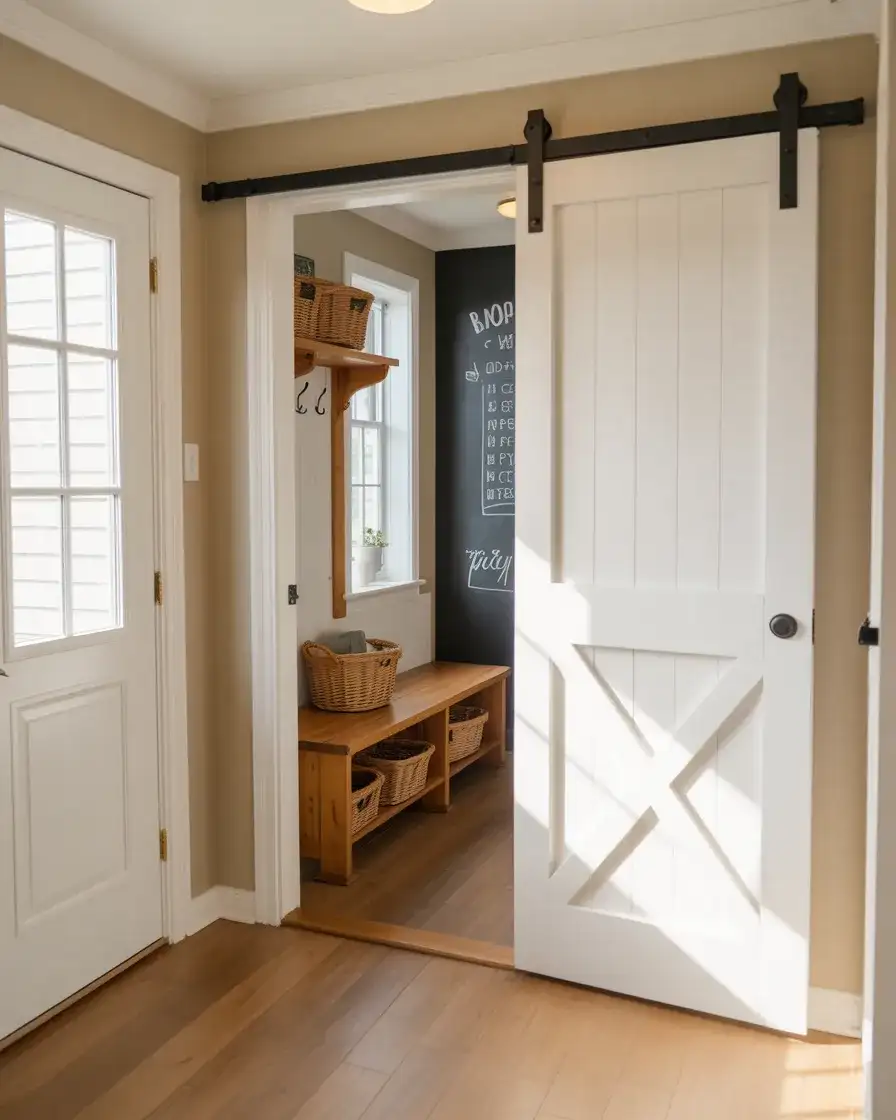
Real homeowner behavior: families across the suburban Midwest and South report that a mudroom barn door fundamentally changes how their household functions—kids know that the mess stays behind the door, and guests never see the after-school chaos. One Iowa mom described it as “the best parenting tool that isn’t a parenting tool.” What began as an aesthetic decision became a behavioral boundary that made the whole household run more smoothly. That’s the quiet power of good design.
21. Stained Glass Accent Barn Door for a Dining Room
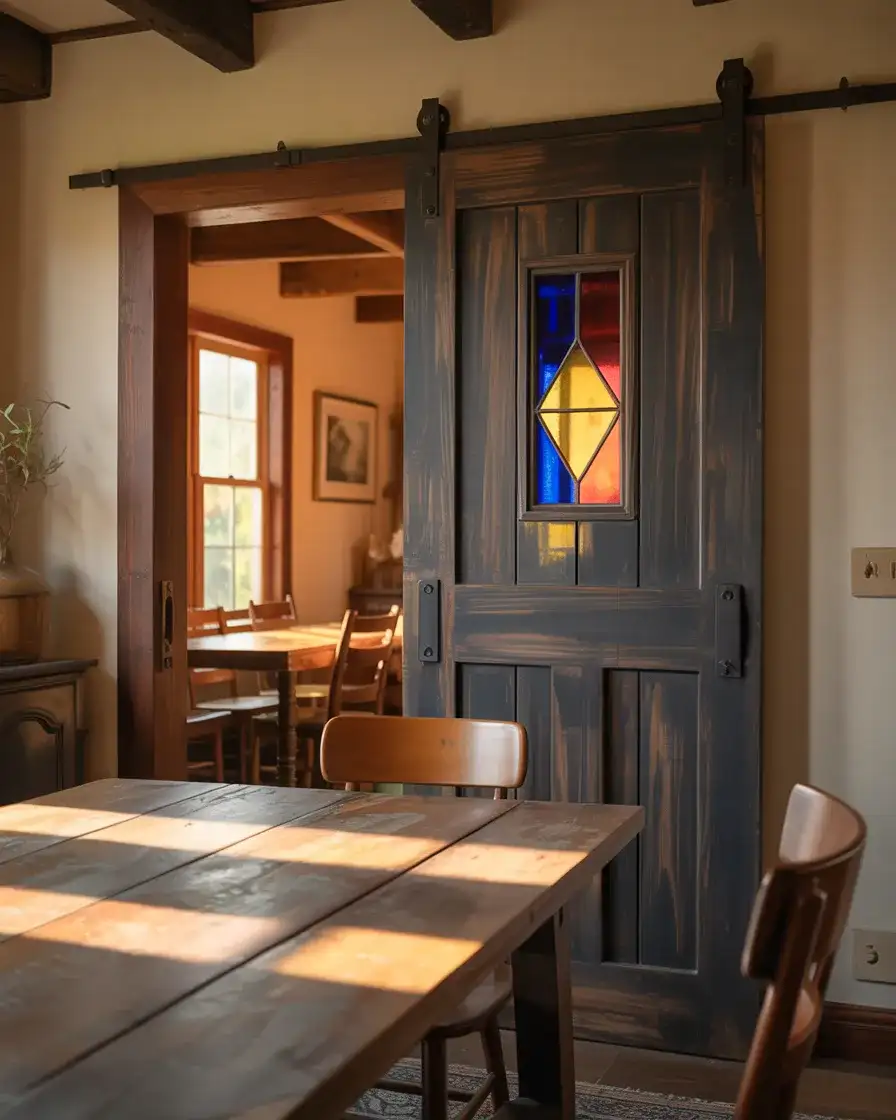
For the homeowner who wants something truly original, a stained glass accent panel set into a barn door frame is a show-stopping choice for a dining room entrance. The colored light that passes through stained glass inserts casts warm, jewel-toned patterns across the floor and table—it changes with the time of day and creates an atmosphere that no pendant light could replicate on its own. This is an heirloom-quality detail that reads as artisanal and bespoke, and it works equally well in Victorian, Arts and Crafts, or even contemporary interiors depending on the glass pattern chosen.
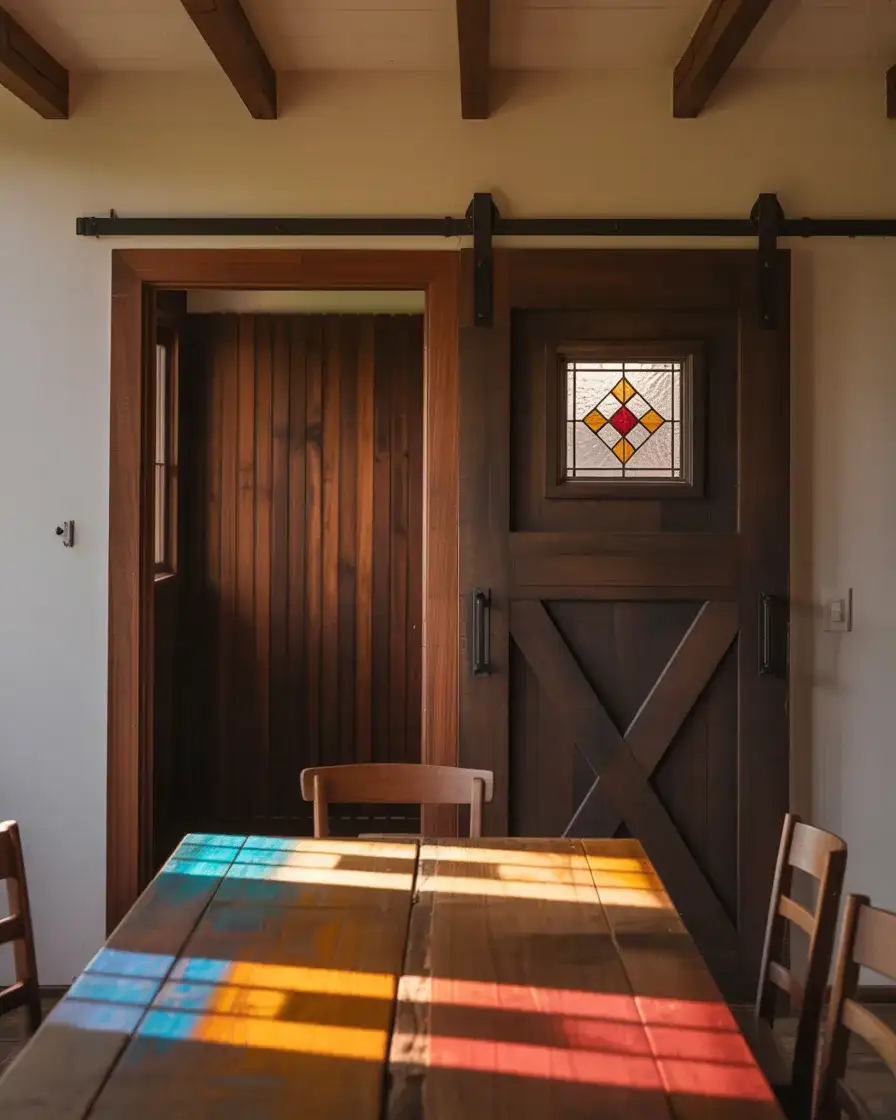
Budget/price angle: custom stained glass inserts for barn doors range from $200 for simple geometric leaded panels to $2,000 or more for hand-painted art glass. The sweet spot for most homeowners is working with a local stained glass artist who can create a custom design for $400–$800 — which, combined with a standard barn door frame and hardware, still lands well under $1,500 total. Architectural salvage shops sometimes carry antique stained glass panels that can be fitted into a new frame for a fraction of the custom cost.
22. Natural Wood Barn Door for an Outdoor-Indoor Transition Space
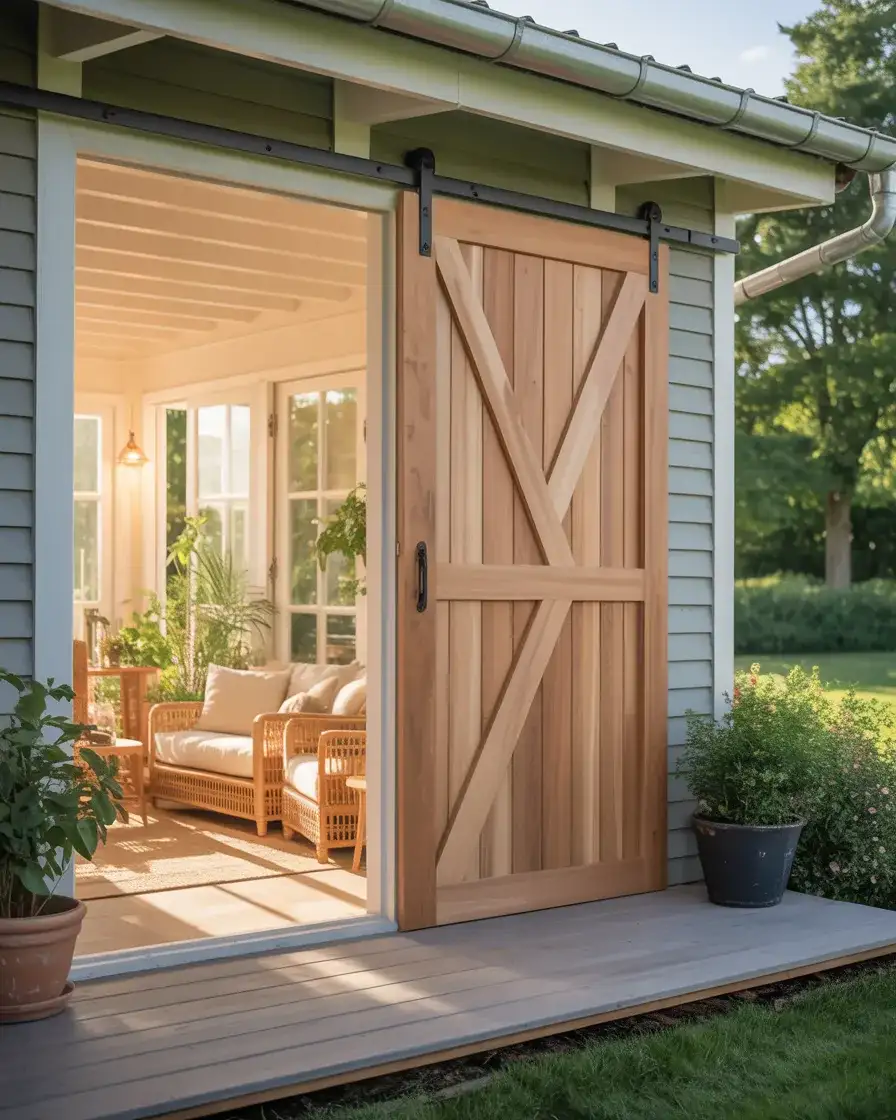
One of the most expansive applications of the barn door idea is using it as a transition element between indoor living spaces and covered outdoor areas—screened porches, sunrooms, covered patios, or breezeway connections. A large natural wood door on an exterior-grade rail brings the warmth of interior design to the threshold of the outdoors, softening what is often an abrupt architectural shift. In climates where the back porch is a genuine extension of the living room for six or more months of the year, this installation is genuinely transformational.
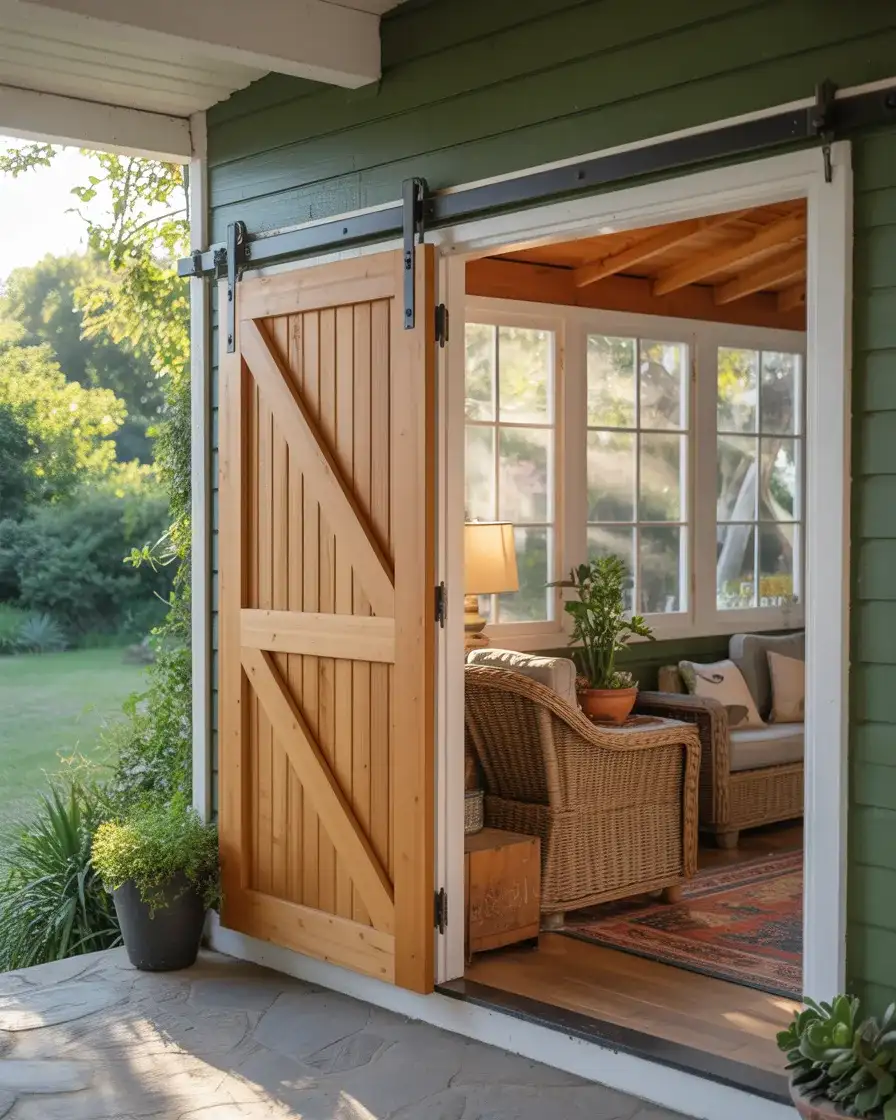
American lifestyle context: in Southern states, the Pacific Northwest, and coastal New England, the indoor-outdoor lifestyle is a genuine year-round aspiration. A barn door at the porch entry makes it easier to leave the space open on mild days—just slide it out of the way—and completely closed on cold nights without feeling like you’ve locked yourself into a box. For homes built in the ’90s and 2000s with standard sliding glass doors that feel cold and institutional, replacing or flanking them with barn door panels is an instant warmth upgrade that photographs beautifully every season of the year.
Conclusion
Barn doors have earned their permanent place in the American home—not as a fleeting trend, but as a genuinely versatile design tool that solves real problems while looking spectacular doing it. Whether you’re drawn to the drama of a double sliding suite entry, the practicality of a split pantry door, or the quiet elegance of a glass-panel office divider, there’s a barn door idea in this list for every home and every budget. We’d love to hear which of these ideas spoke to you most—drop your thoughts, questions, or your own barn door story in the comments below. And if you’ve already installed one in your home, share a photo—this community is always inspired by real-life results.