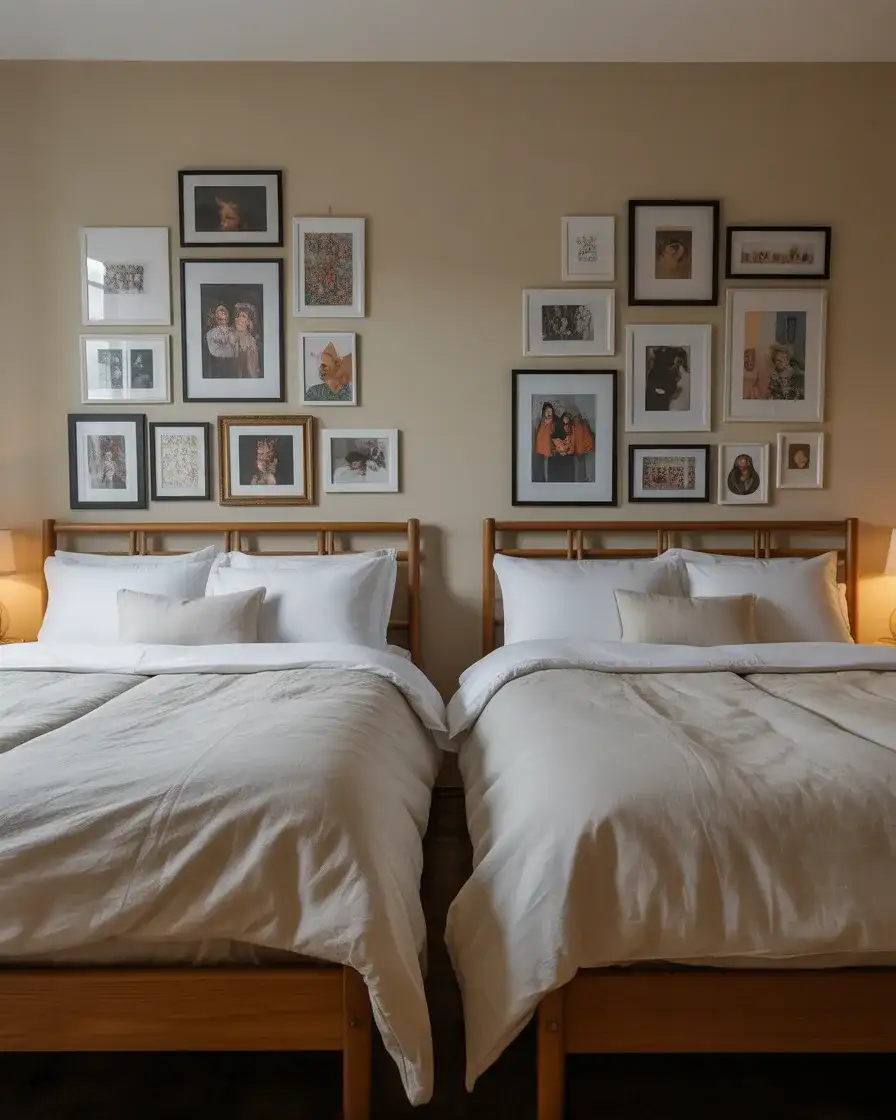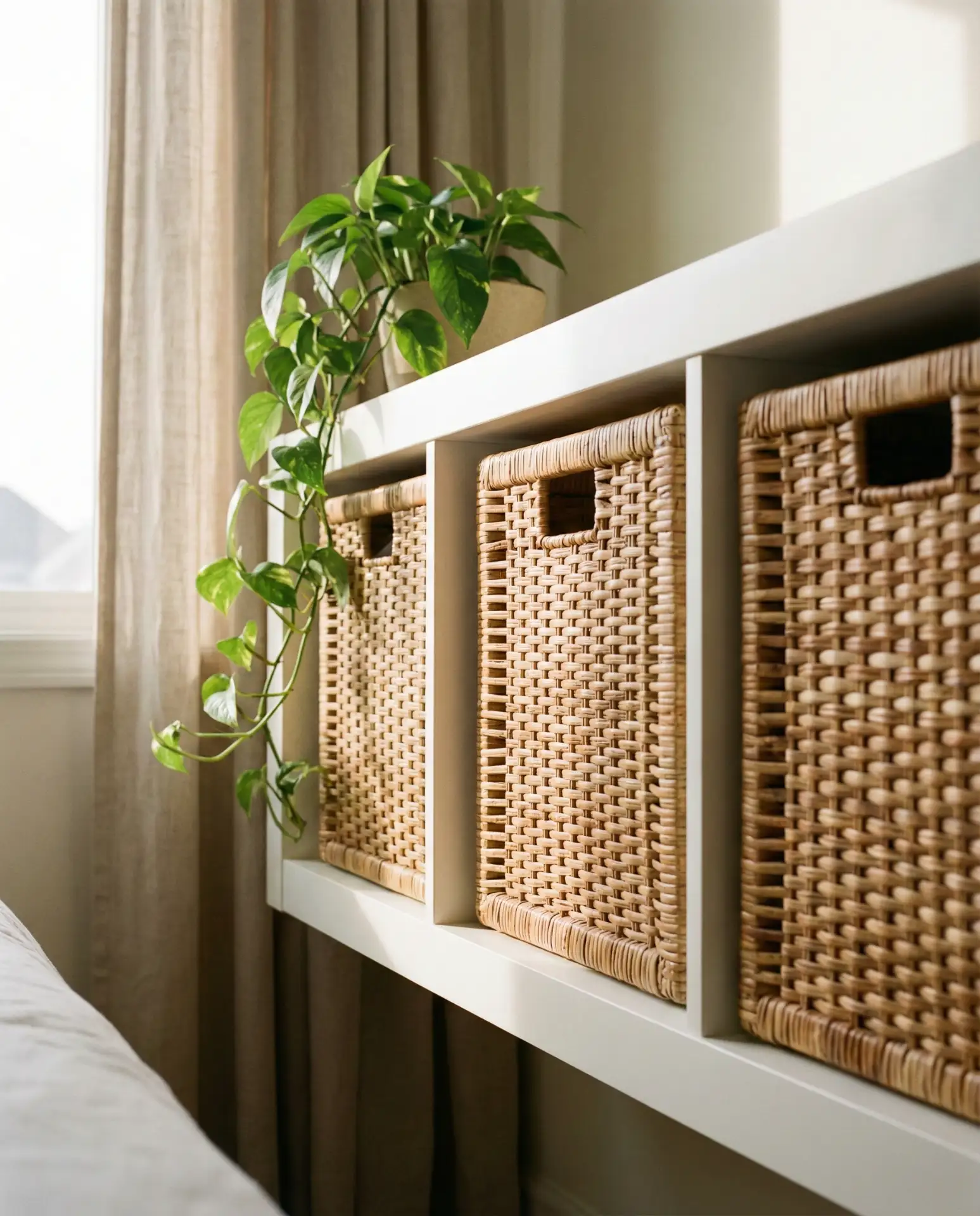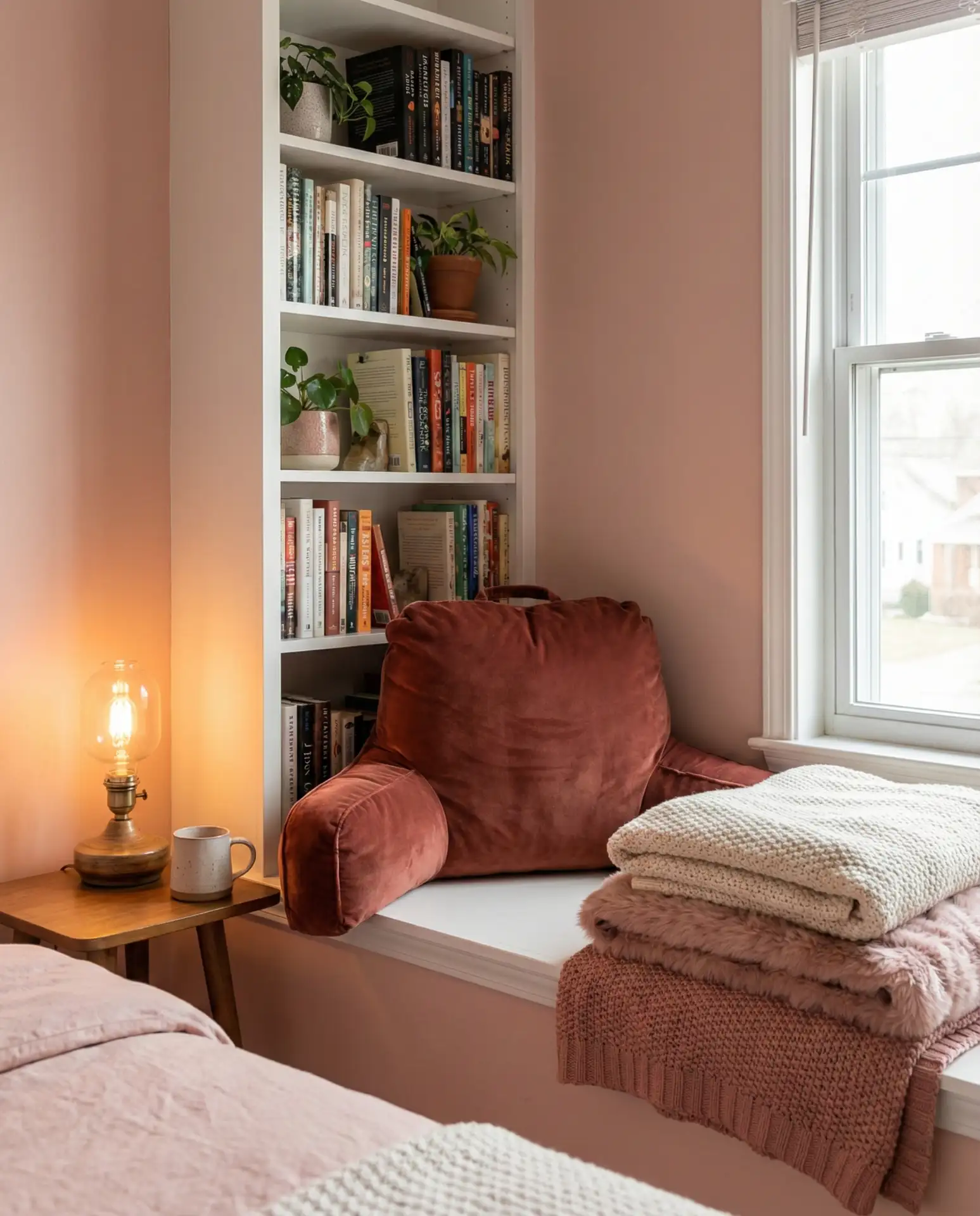
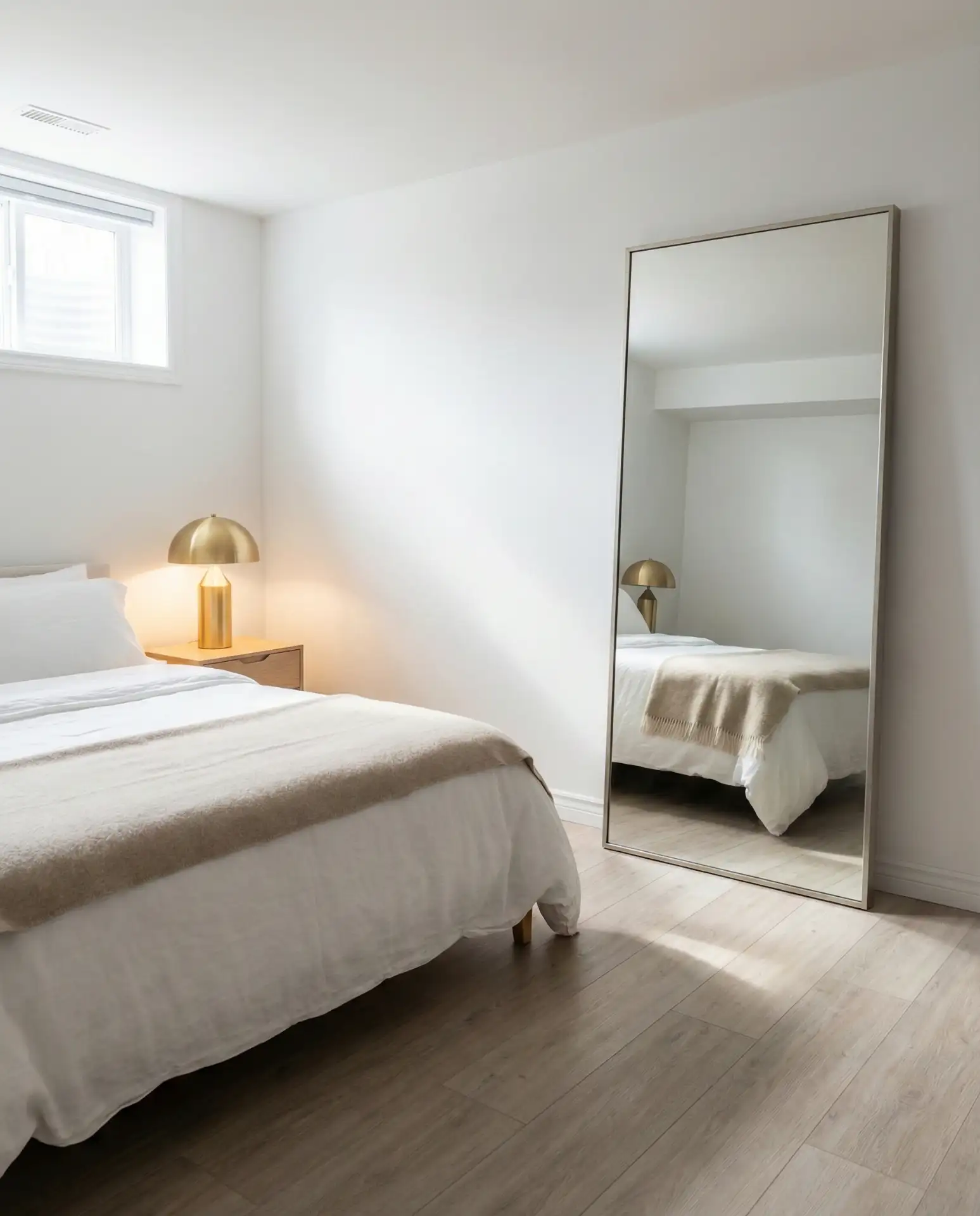
Basement bedrooms are having a major moment in 2026, and it’s not hard to see why. As home prices continue to climb and multigenerational living becomes more common across the U.S., families are getting creative with below-grade square footage. Whether you’re carving out a cozy guest retreat, a teen’s private sanctuary, or a master suite with serious wow factor, the basement offers untapped potential that goes far beyond storage and laundry. Pinterest searches for basement bedroom transformations have surged as homeowners realize these spaces can be just as inviting—and stylish—as any upstairs room. In this guide, you’ll find 22 thoughtfully curated ideas that blend function, beauty, and smart design, each tailored to help you make the most of your lower level.
1. Bright Basement Bedroom with Oversized Windows
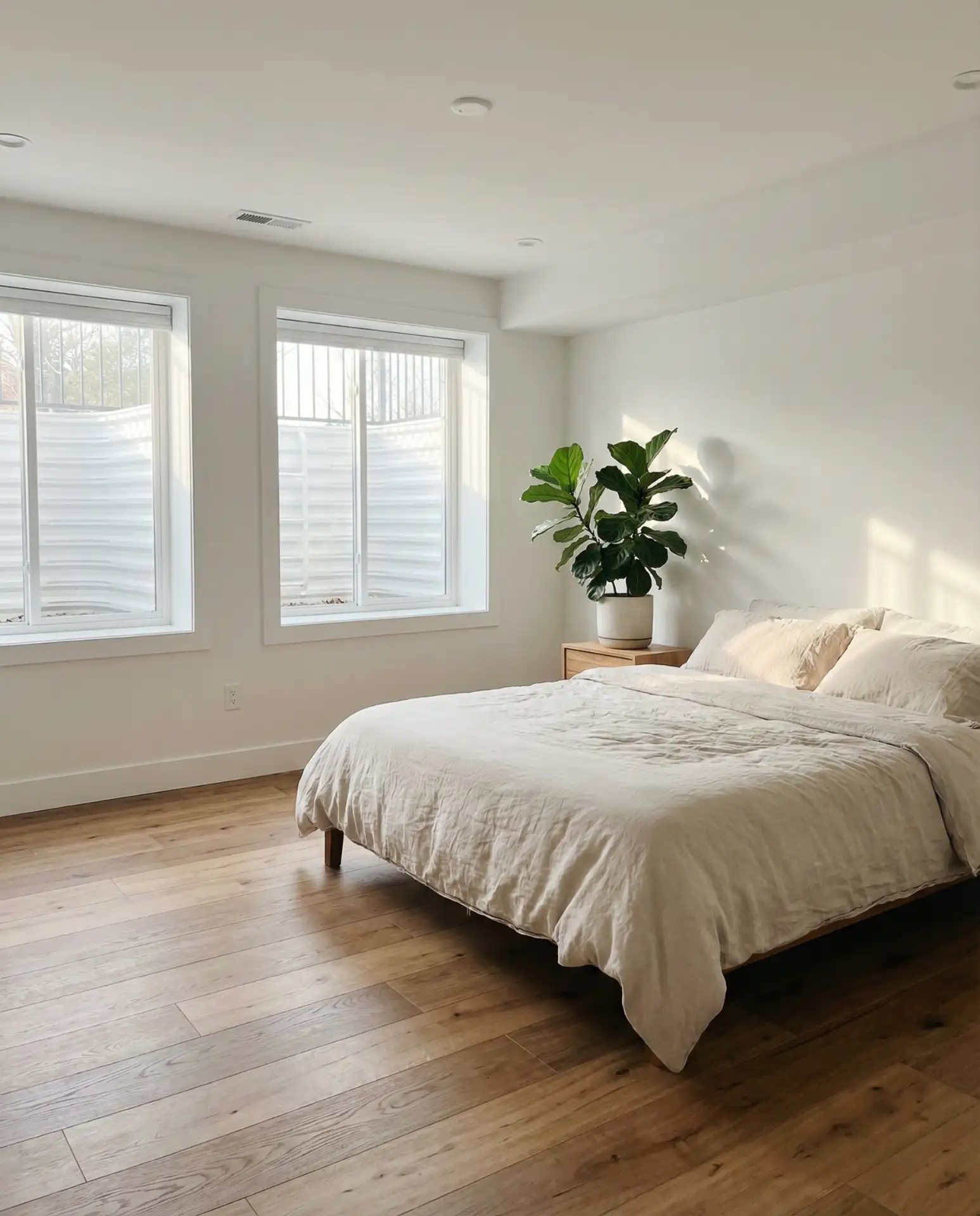
One of the biggest concerns when designing a basement bedroom is lack of natural light, but windows change everything. If you’re lucky enough to have a walkout basement or even partial above-grade walls, installing large windows can flood the space with daylight and create an airy, above-ground feel. This approach works beautifully in ranch-style homes across the Midwest and West, where grading allows for generous window wells or full walk-out access. Pair white or light-toned walls with sheer curtains to maximize brightness, and suddenly your basement doesn’t feel like a basement at all.

This setup is ideal for guest-friendly spaces where visitors might feel hesitant about staying below grade. Natural light boosts mood and makes the room feel welcoming, especially for longer stays. If egress windows aren’t an option due to grading or code restrictions, consider installing window wells with mirrors or reflective surfaces to bounce available light deeper into the room. Budget-conscious homeowners can start with one large window and layer in LED daylight-spectrum bulbs to supplement. The investment pays off in comfort and perceived square footage.
2. Cozy Basement Bedroom for Teens with Bold Color
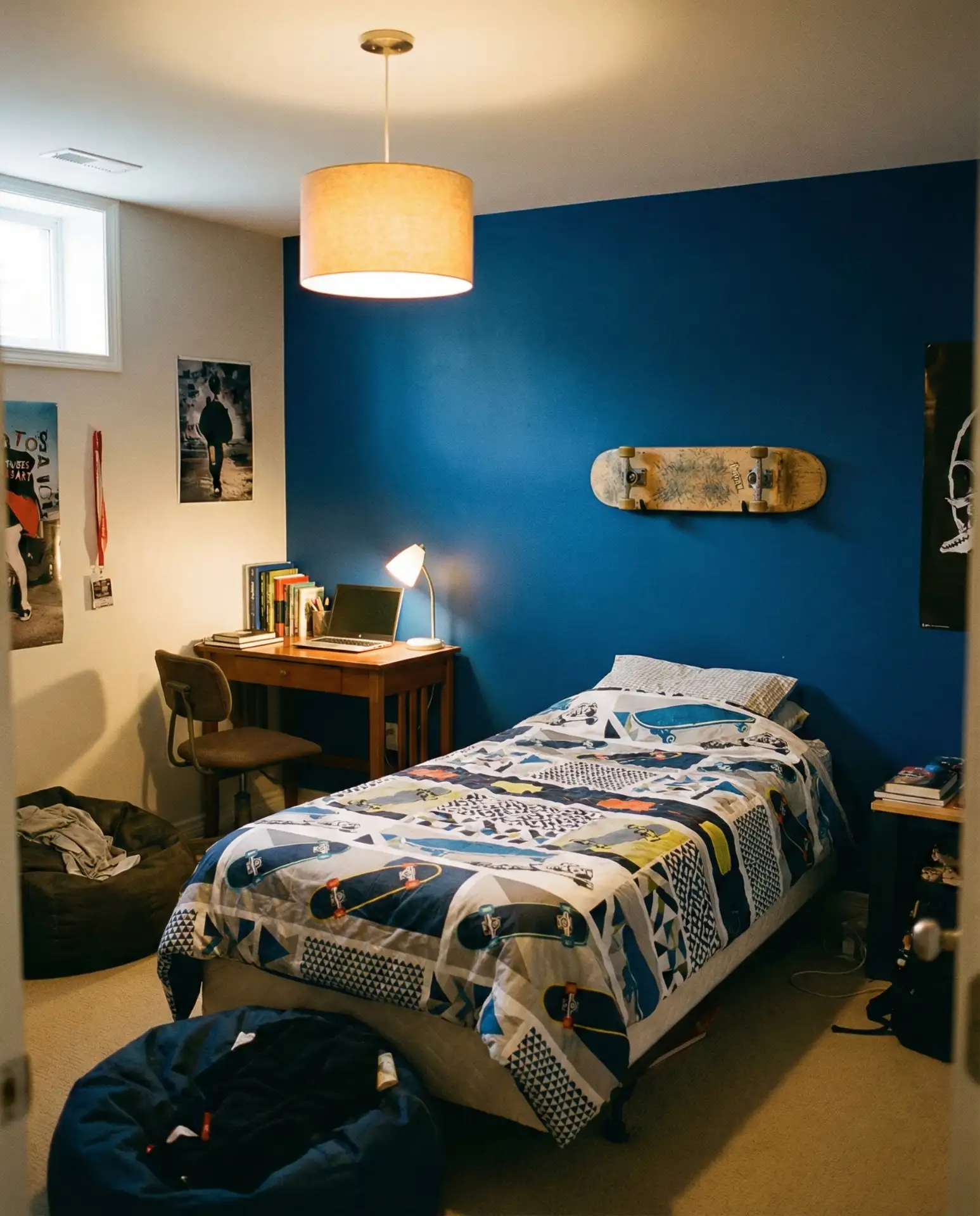
Teenagers crave privacy and personality, and a basement bedroom offers both in spades. For a teens’ space, don’t shy away from bold accent walls—deep navy, charcoal, or even moody forest green can make a low ceiling feel intentional rather than limiting. Add string lights, wall-mounted shelves for collectibles, and a comfy couch or bean bag chair for hangouts. This is the age where kids want a retreat that feels distinctly theirs, and the basement’s separation from main living areas gives them that autonomy without feeling banished.
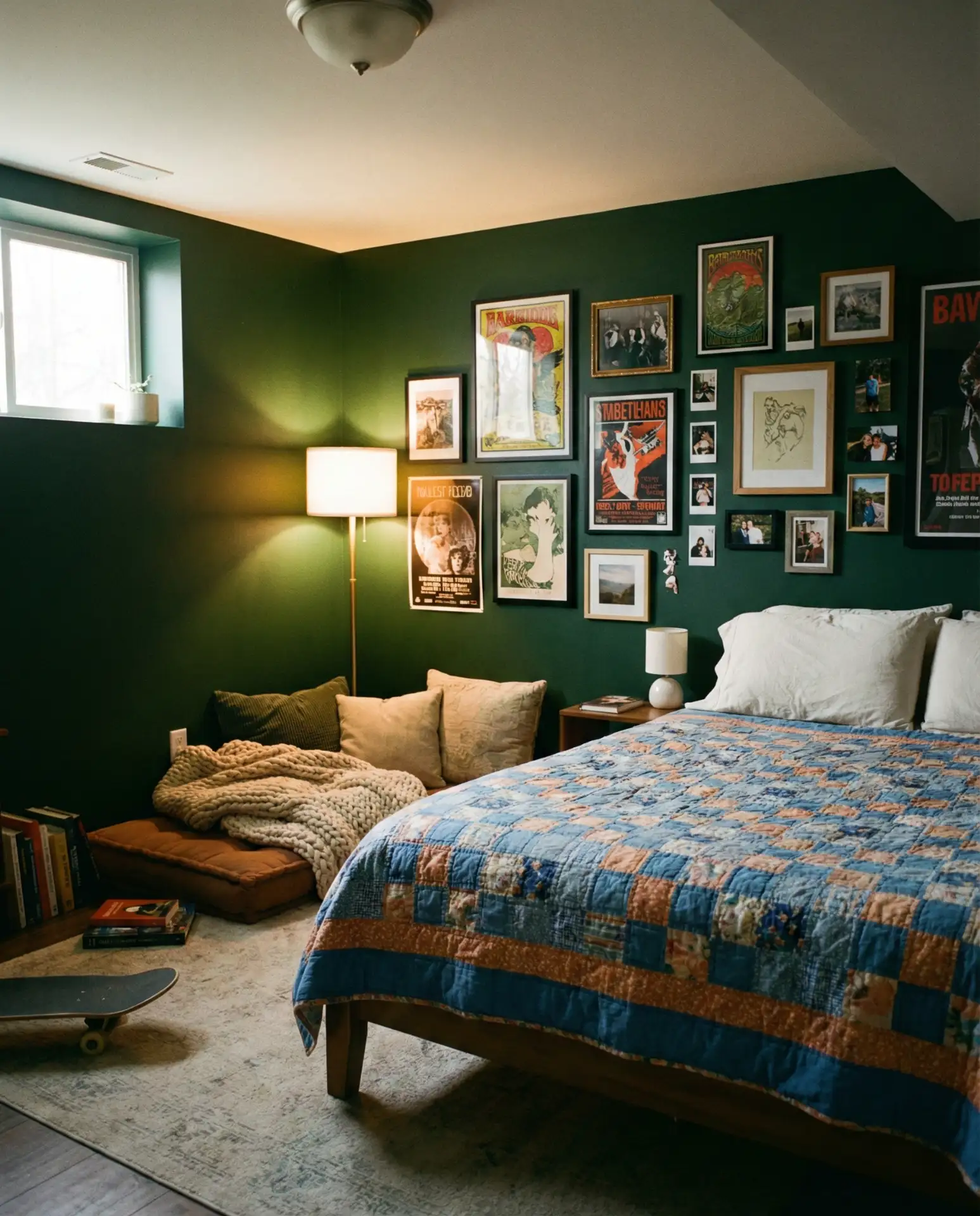
A common mistake parents make is treating the basement teen room as an afterthought, using hand-me-down furniture and minimal decor. Teens notice, and it can make the space feel like a punishment rather than a privilege. Instead, involve them in the design process—let them pick paint colors, bedding, and lighting. A small budget can go a long way with peel-and-stick wallpaper, thrifted finds, and DIY projects. The result is a room they’ll actually want to spend time in, and one that grows with them through high school.
3. Budget-Friendly Basement Bedroom with Smart Storage
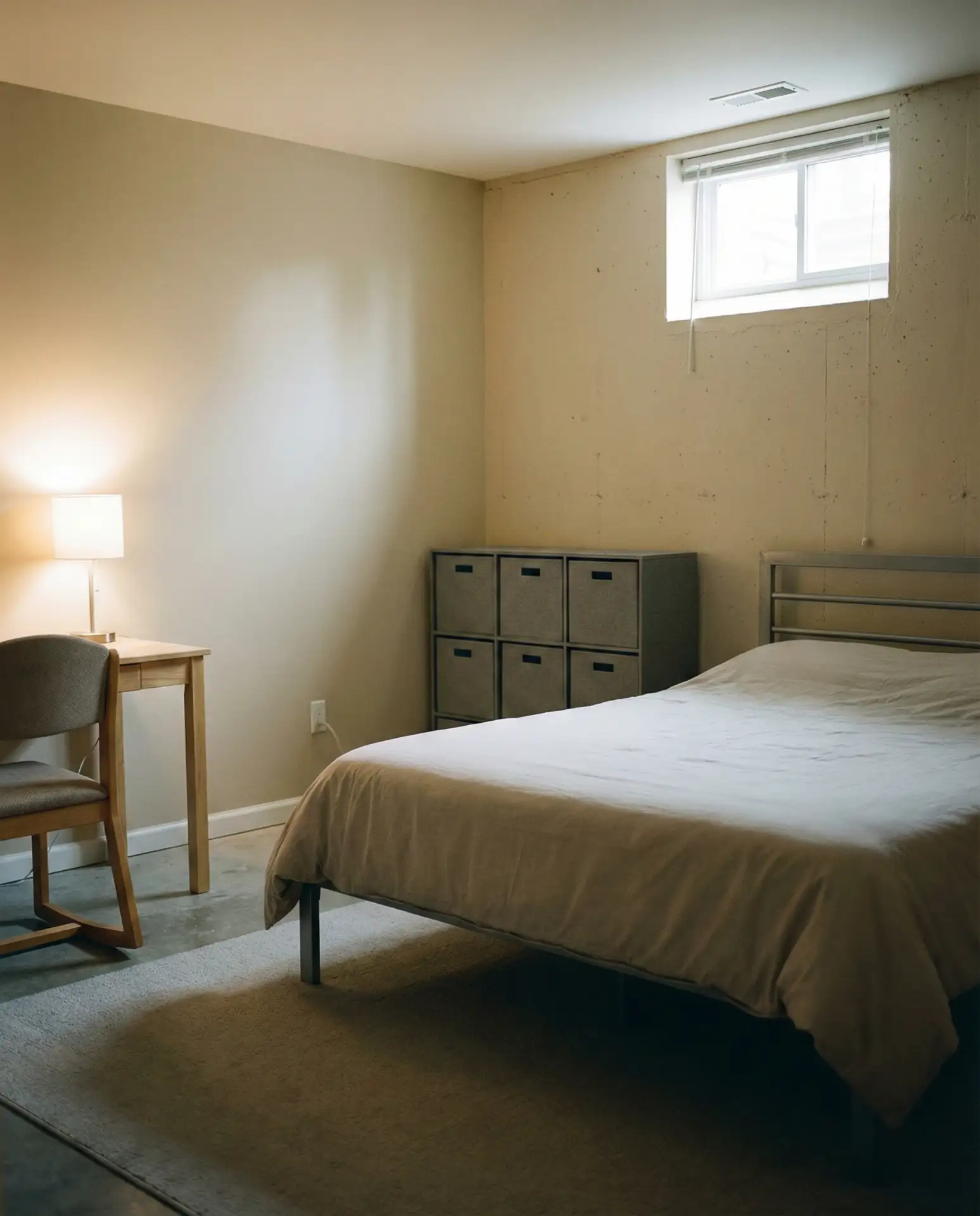
Transforming a basement bedroom on a budget is entirely achievable if you focus on high-impact, low-cost upgrades. Start with a fresh coat of paint in a light neutral shade to brighten the space, then invest in multi-functional furniture like a platform bed with built-in drawers or a storage ottoman that doubles as seating. Basements often lack closet space, so open shelving units, hanging racks, and under-bed storage become essential. This approach is especially practical for kids’ or guest-friendly rooms where flexibility matters.

Across the U.S., homeowners are increasingly turning to secondhand marketplaces and DIY solutions to outfit basement bedrooms without breaking the bank. A recent survey found that nearly 40% of families repurpose furniture from other rooms when finishing a basement, and that’s a smart move. Look for pieces that can grow with the space—modular shelving, adjustable desks, and neutral-toned bedding that won’t date quickly. Skipping trendy decor in favor of timeless basics keeps costs down and ensures the room remains functional for years.
4. Aesthetic Basement Bedroom with Soft Textures and Layers
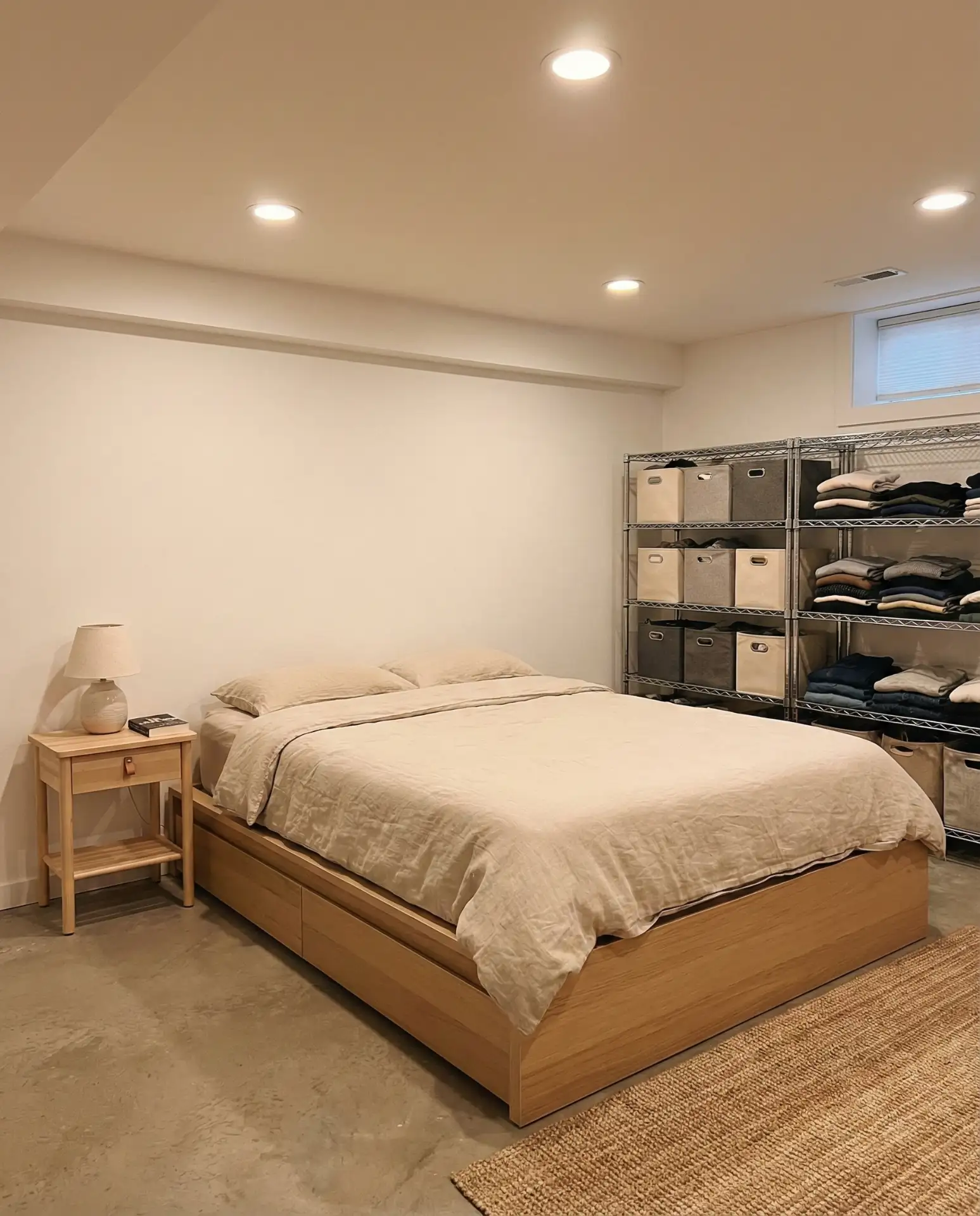
If you’re chasing that aesthetic Pinterest vibe—the kind that racks up thousands of saves—layering is your best friend. Think linen duvet covers, chunky knit throws, velvet pillows, and a plush area rug underfoot. Even in a basement with low ceilings, soft textures create warmth and visual interest without overwhelming the space. Stick to a cohesive color palette—creams, taupes, soft grays—and add depth with varying fabric weights and subtle patterns. This style translates beautifully whether you’re designing for couples or a serene guest retreat.
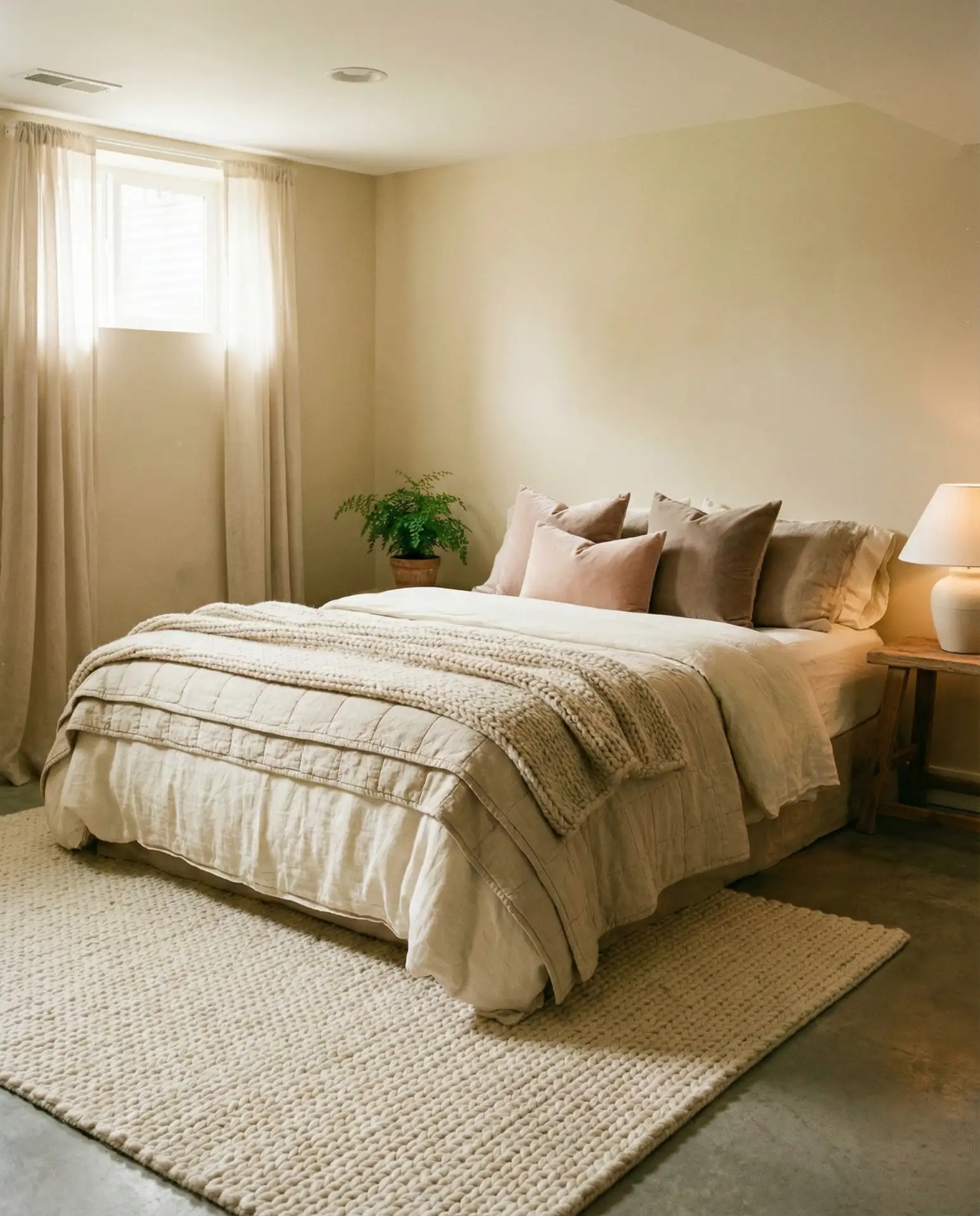
One design trick that works wonders in basements is avoiding stark contrasts. Instead of bright white walls and dark furniture, aim for tonal harmony—light walls with mid-tone wood and soft bedding with gently patterned accents. This creates a cohesive, sophisticated look that photographs beautifully and feels restful in person. It’s the kind of space where guests linger over morning coffee, and homeowners actually look forward to retreating at the end of the day.
5. Master Suite Layout with Ensuite Bath and Walk-In Closet

A master suite layout in the basement is a game-changer for multigenerational households or empty nesters who want main-floor living with guest space below. Carve out a private bedroom zone with an attached full bath and walk-in closet to create a true retreat. In regions like the Southeast and Southwest, where basements are less common, this setup adds serious resale value and square footage. Use pocket doors or barn-style sliders to save space, and ensure plumbing is roughed in for convenience. This configuration works especially well in walkout basements, where natural light supports the spa-like feel.
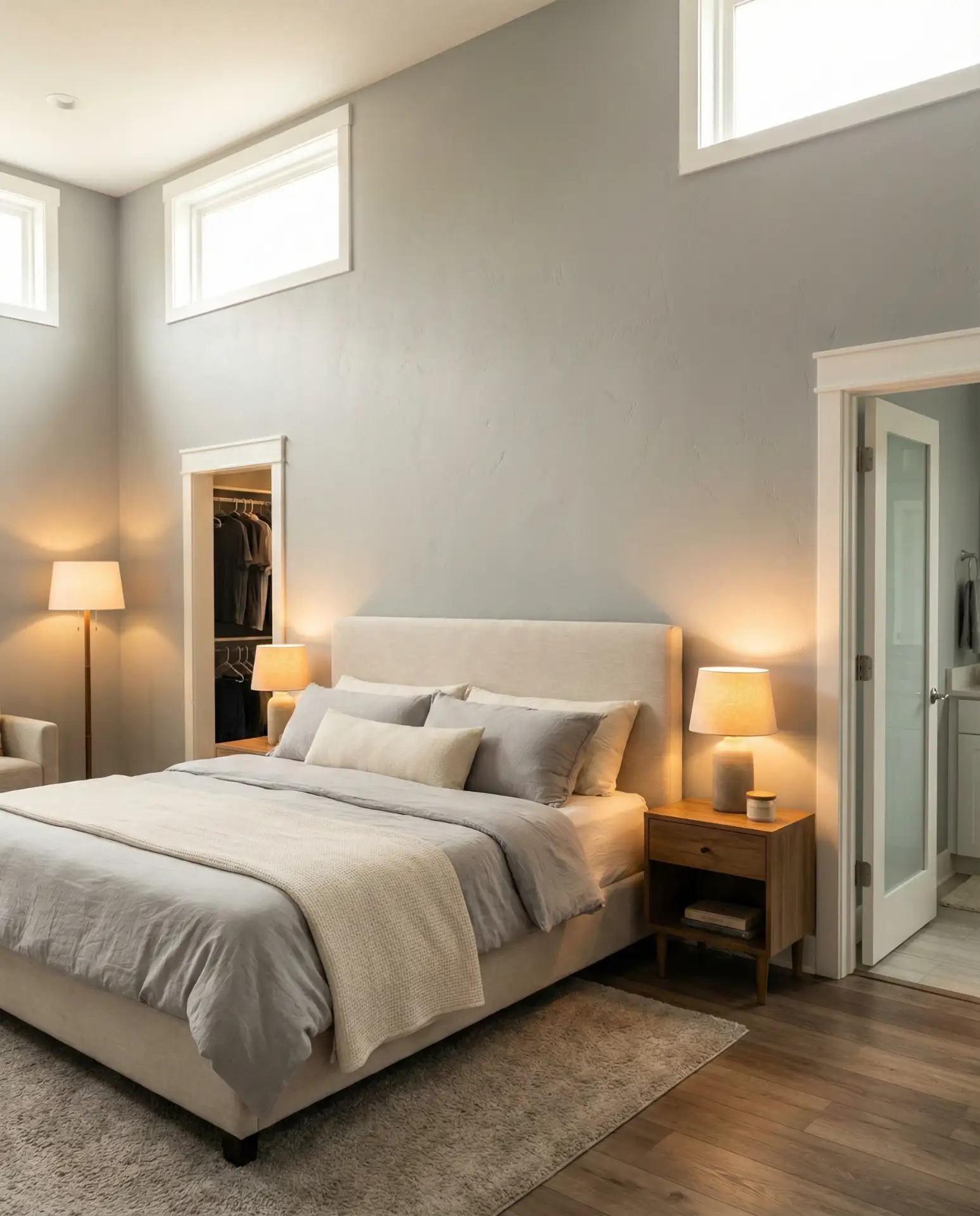
Homeowners who’ve gone this route often report that the investment pays off in daily quality of life, not just resale numbers. Having a private suite downstairs means aging parents or adult children can visit without sacrificing privacy, and it provides a quiet buffer from the activity upstairs. Budget for soundproofing between floors if noise is a concern, and don’t skimp on lighting—layered sources like recessed cans, bedside lamps, and a statement pendant can transform the mood entirely.
6. Open-Concept Basement Bedroom with Room Dividers
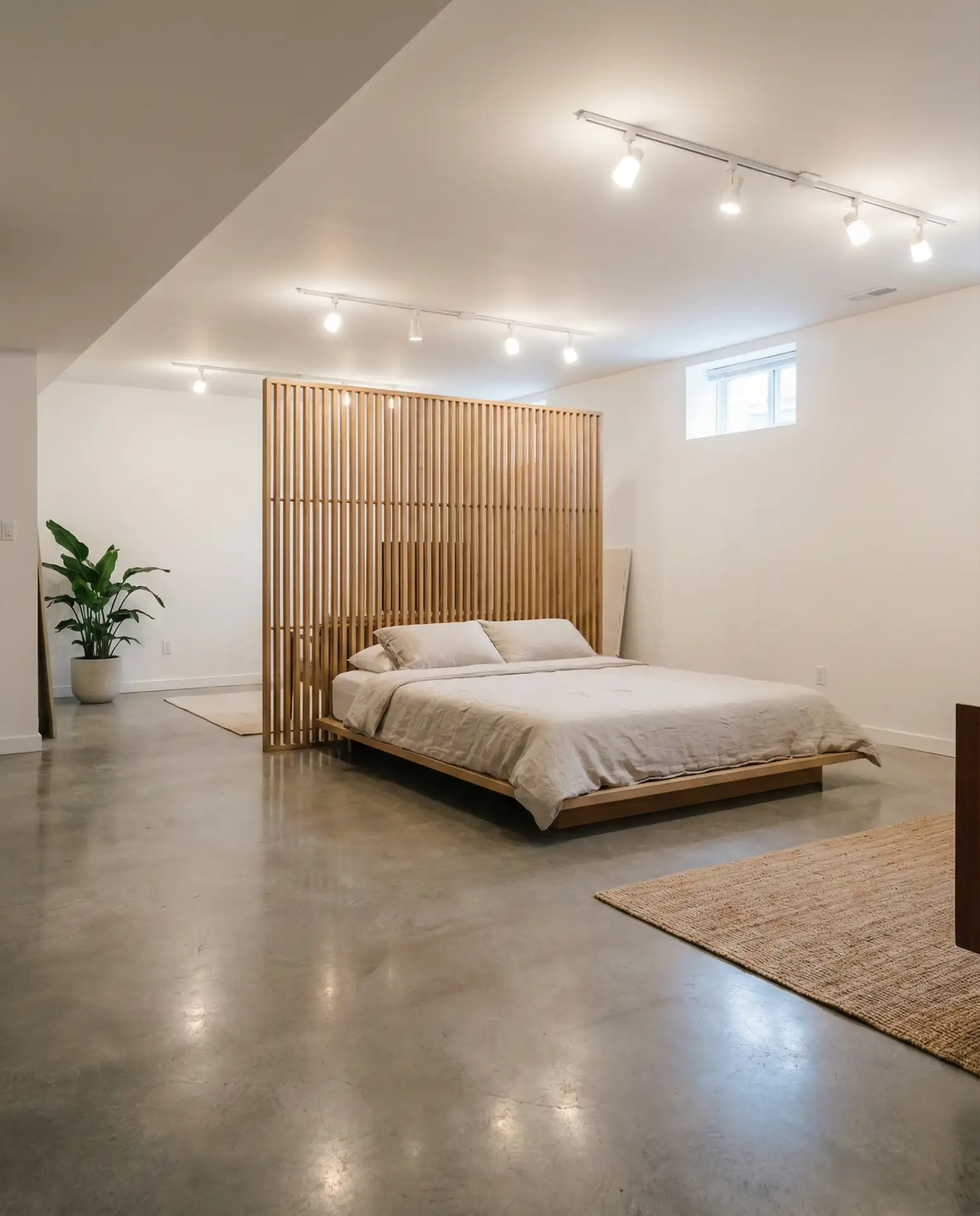
For basements with open floor plans, room dividers offer a flexible way to define sleeping zones without closing off the space entirely. Think folding screens, tall bookcases, or even curtain panels suspended from ceiling tracks. This approach is popular in loft-style basements or studio-like layouts where you want to preserve sight lines and airflow while still creating privacy. It’s also ideal for a budget since dividers are far less expensive than building walls, and they can be rearranged as needs change.
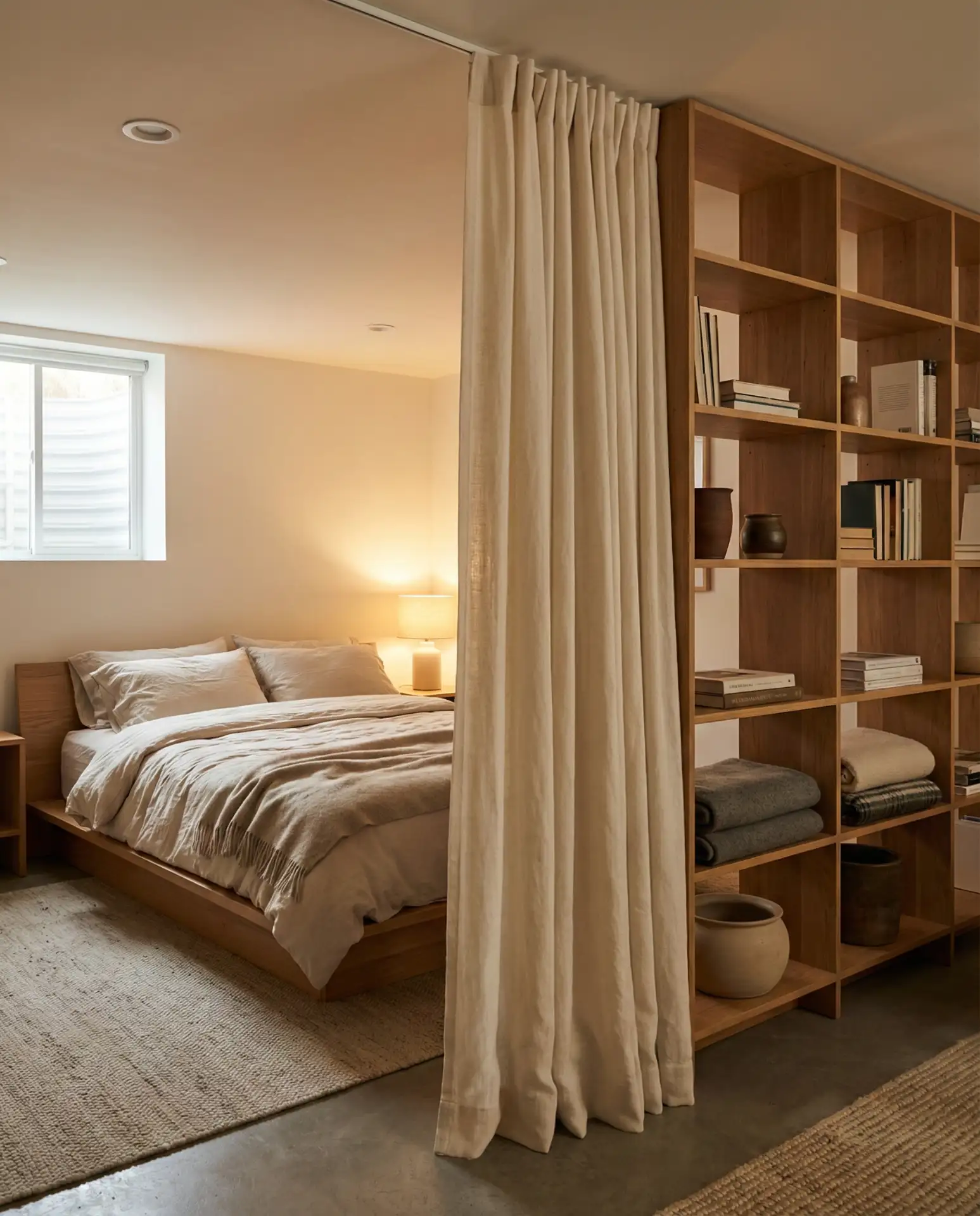
This setup works best in homes where the basement doubles as a multi-use space—perhaps a bedroom plus a home gym, craft area, or media zone. Dividers let you shift the footprint as needed, so the room can grow with your lifestyle. One couple in Portland installed sliding barn doors on a track system, allowing them to fully close off the bedroom when hosting guests or leave it open for everyday flow. The versatility is a huge selling point, especially in smaller homes where every square foot counts.
7. Dark Moody Basement Bedroom with Charcoal Walls

Embrace the lack of natural light by leaning into a dark, cocooning aesthetic. Charcoal or deep navy walls paired with warm brass fixtures and layered lighting create an intimate, hotel-like retreat. This style is especially striking in basements with low ceilings, as the dark tones can actually make the space feel more intentional and less claustrophobic than stark white walls. Add a statement upholstered headboard, rich textiles, and dimmable lighting to complete the look. It’s a bold choice that feels sophisticated and surprisingly restful.

A friend who’s an interior designer in Brooklyn swears by this approach for basement bedrooms. She says clients are often skeptical at first, worried that dark paint will make the space feel like a cave. But once the room is finished—with the right lighting and textures—they’re converts. The key is balancing the dark walls with lighter bedding and strategic light sources. Recessed lighting, wall sconces, and even LED strip lights behind the headboard can add layers without harsh overhead glare.
8. Low-Ceiling Basement Bedroom with Recessed Lighting
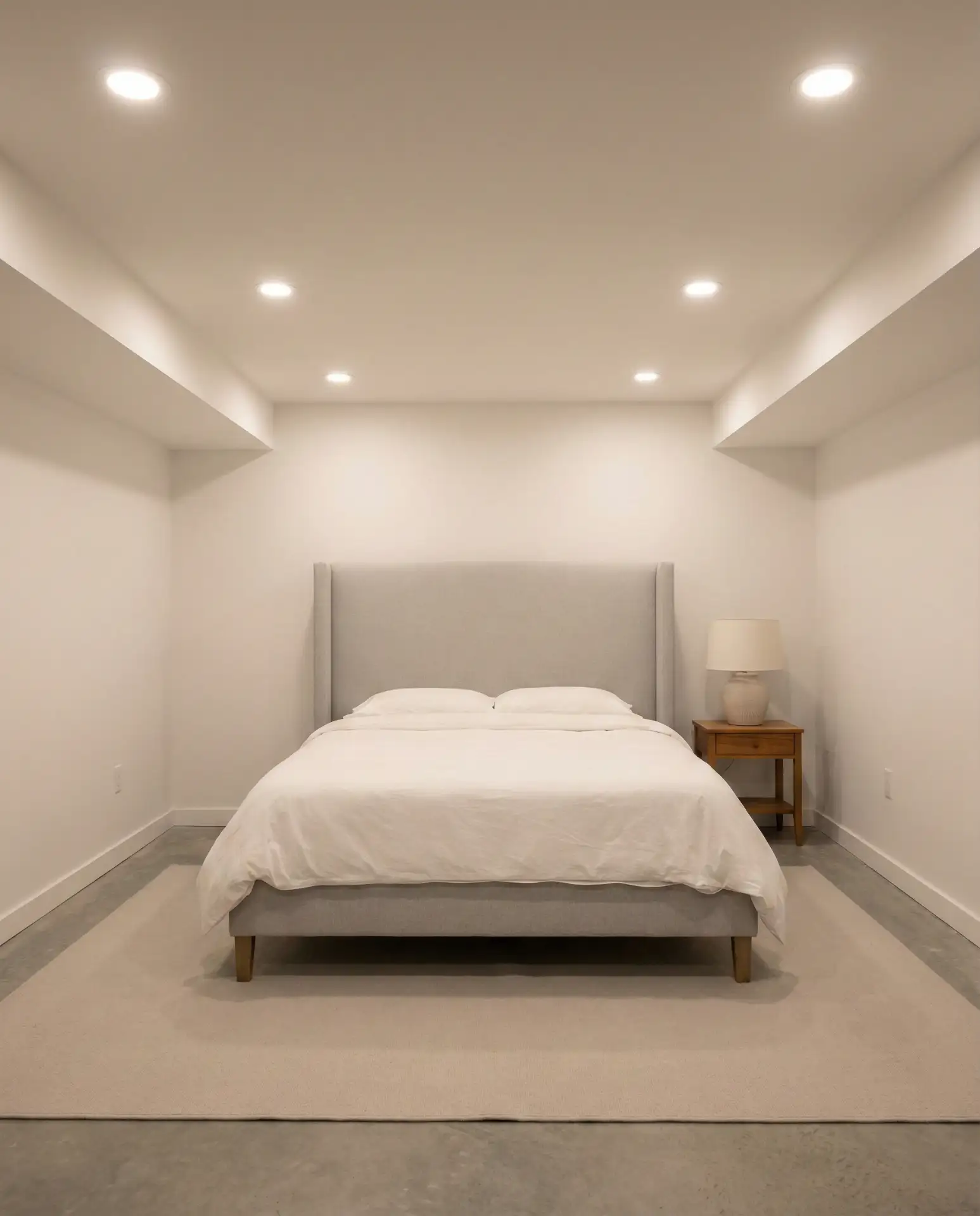
If you’re working with a low ceiling—seven feet or less—recessed lighting is your secret weapon. Flush-mount or recessed fixtures eliminate the visual clutter of hanging pendants and keep the ceiling plane clean, which makes the room feel taller. Pair this with vertical design elements like tall headboards, floor-to-ceiling curtains, or striped wallpaper to draw the eye upward. This strategy is especially useful in older homes across the Midwest and Northeast, where basement ceilings tend to hover around the legal minimum.
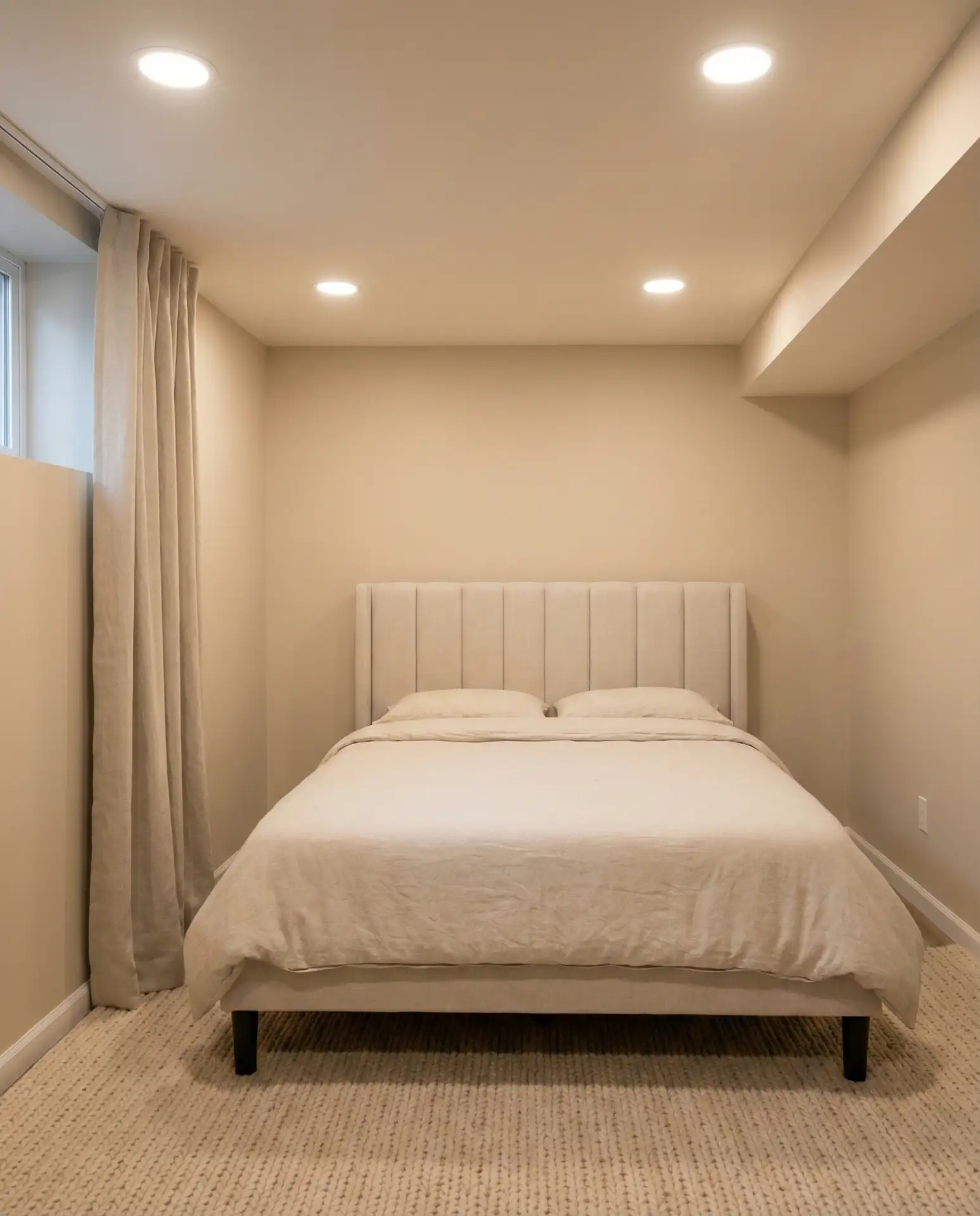
Experts recommend spacing recessed lights about four feet apart for even illumination and using dimmable bulbs so you can adjust the mood. Avoid large ceiling fans or bulky fixtures that will emphasize the low clearance. Instead, opt for slim-profile fans or skip them altogether in favor of a portable tower fan. The goal is to create a sense of openness without calling attention to the ceiling height.
9. Men’s Basement Bedroom with Industrial Accents
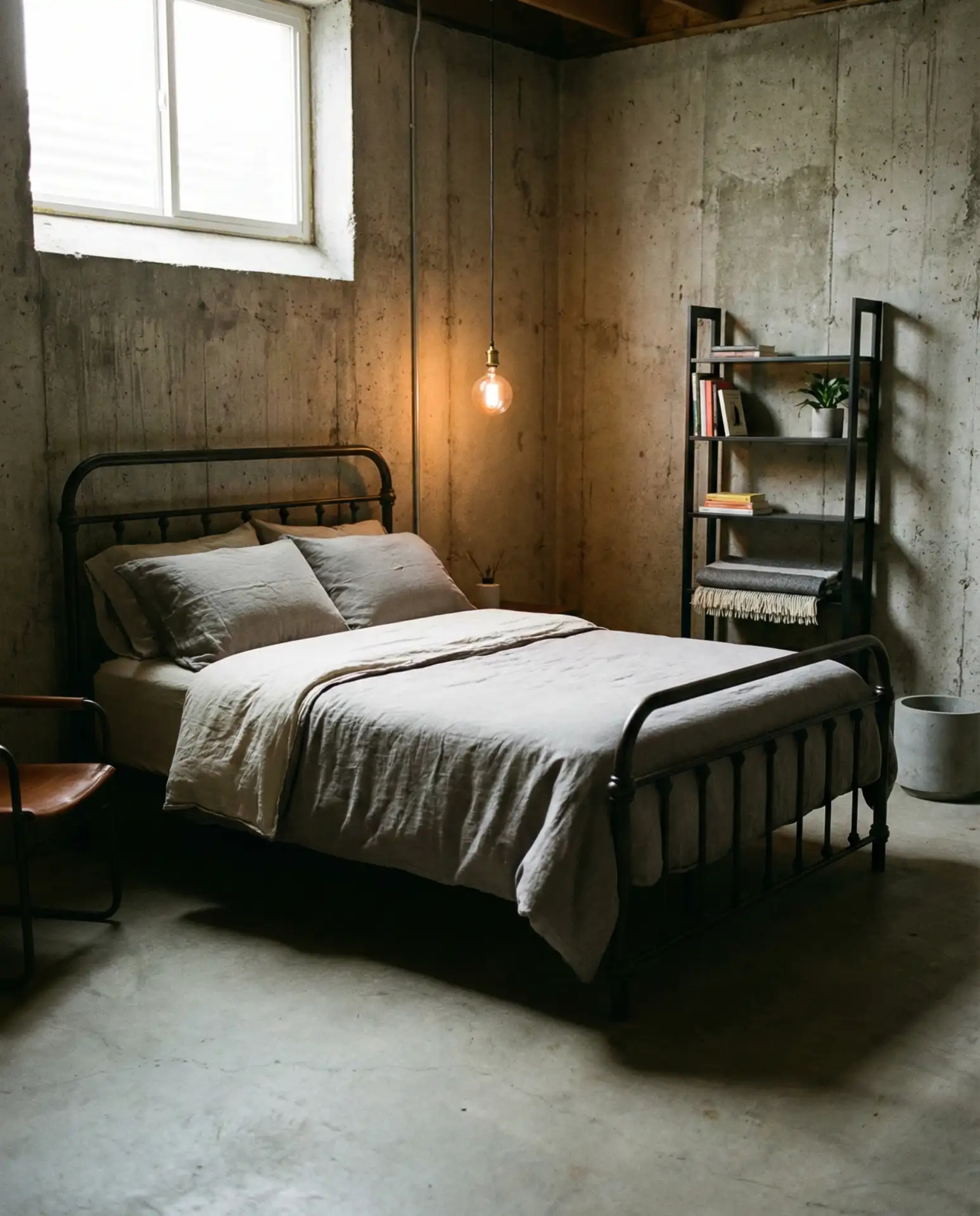
A men’s basement bedroom benefits from streamlined, utilitarian design—think exposed ductwork, metal bed frames, and concrete or wood-look flooring. Industrial-style lighting, like Edison bulbs or metal cage fixtures, adds character without fuss. Keep the color palette neutral with blacks, grays, and natural wood tones, and incorporate functional storage like wall-mounted shelves or metal lockers. This aesthetic pairs well with concrete walls or floors, which can be left exposed for a raw, loft-like vibe.
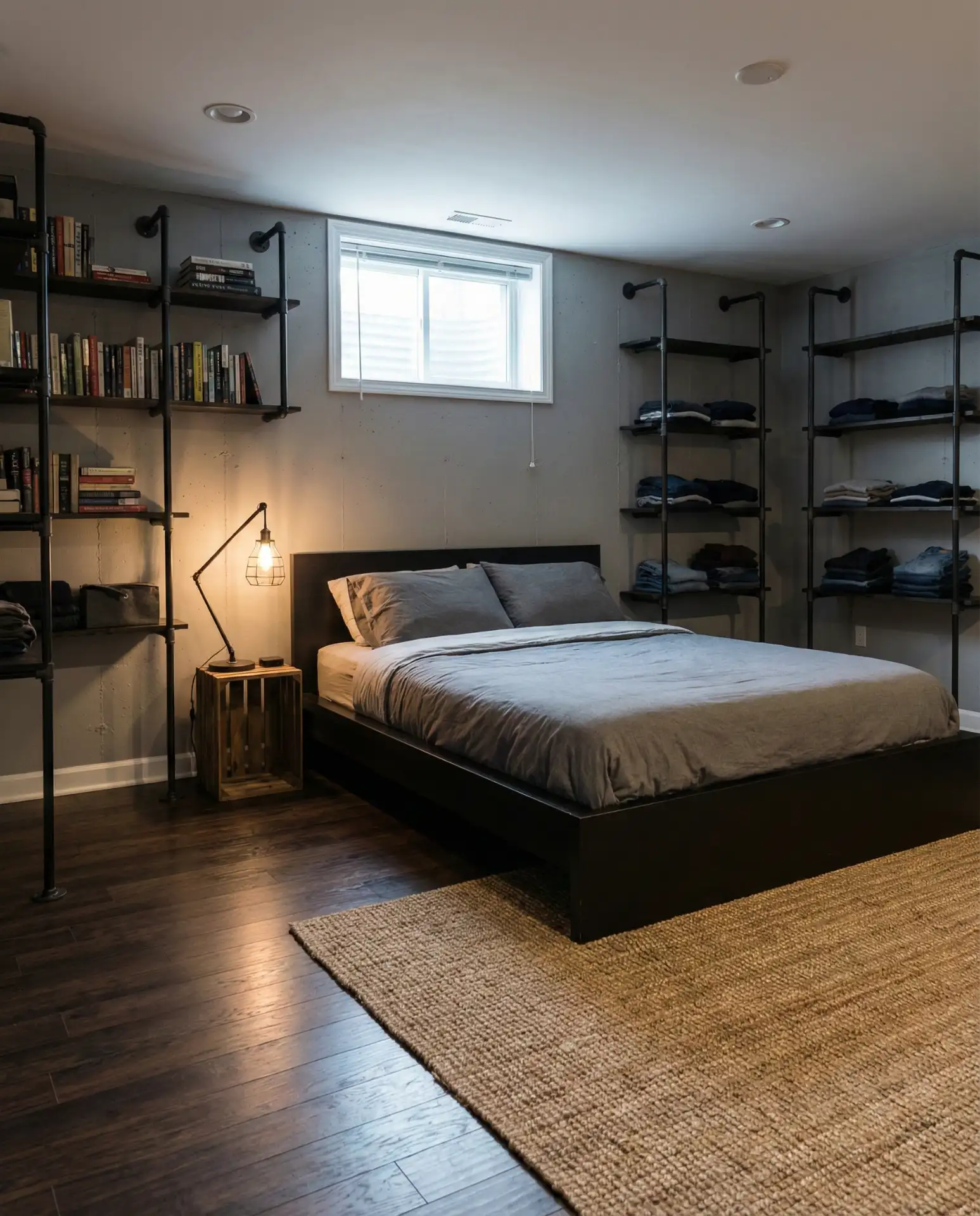
This style is particularly popular in urban markets like Chicago, Denver, and Seattle, where loft-inspired design resonates with younger homeowners. One mistake to avoid is going too sparse—industrial doesn’t mean uncomfortable. Layer in a quality mattress, a soft rug, and blackout shades to ensure the space is restful. Add personal touches like framed art, a vintage record player, or a leather reading chair to keep it from feeling sterile.
10. Guest-Friendly Basement Bedroom with Ensuite Access
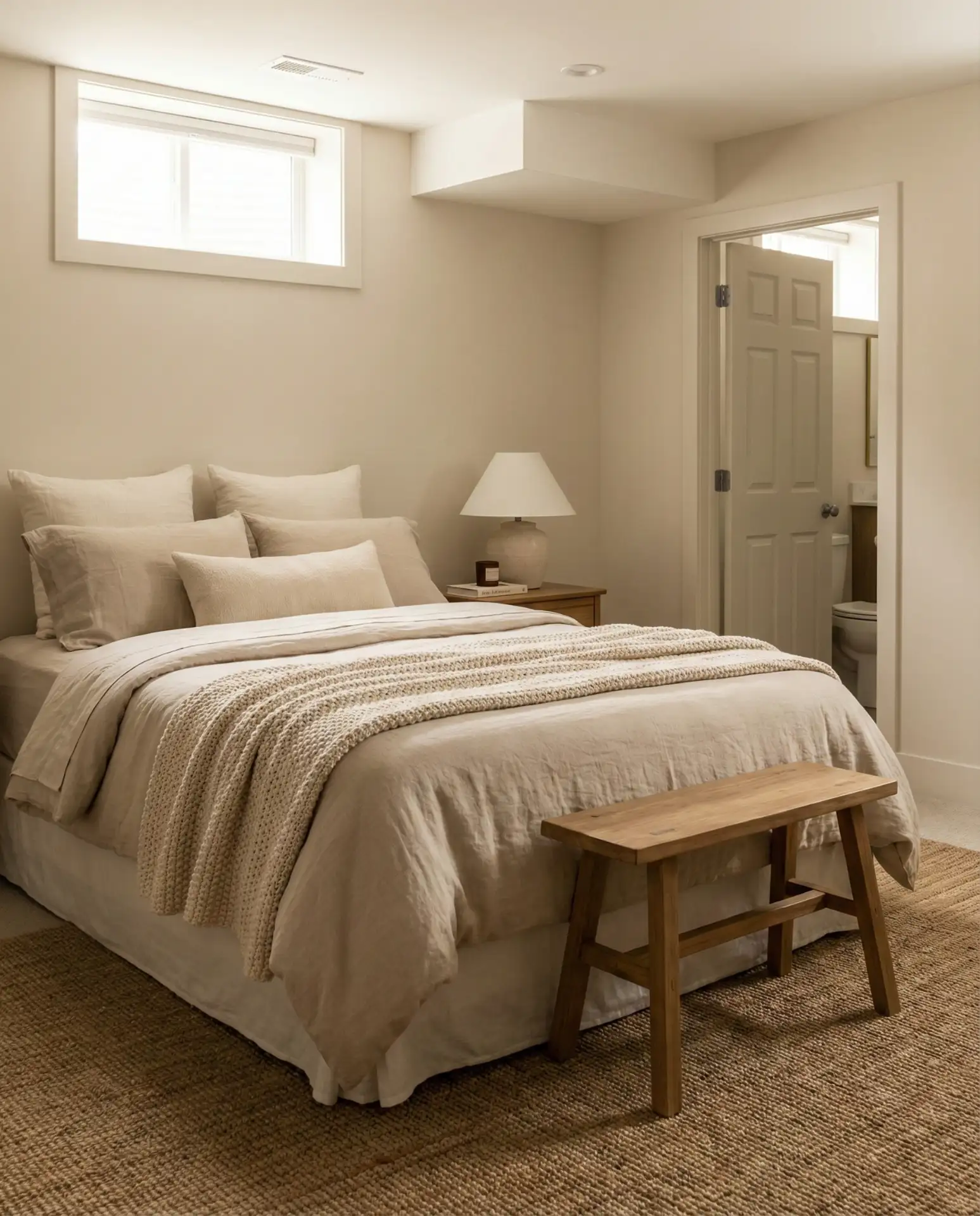
A truly guest-friendly basement bedroom anticipates needs before they’re voiced. That means an attached or nearby full bath, a luggage rack or bench, bedside reading lights, and fresh linens in a neutral palette. Consider adding a small coffee station with a kettle and mugs, and ensure the space has strong Wi-Fi coverage. If your basement has a small window, dress it with blackout shades so guests can sleep in without early morning light disruption. These thoughtful touches elevate the experience from functional to genuinely welcoming.
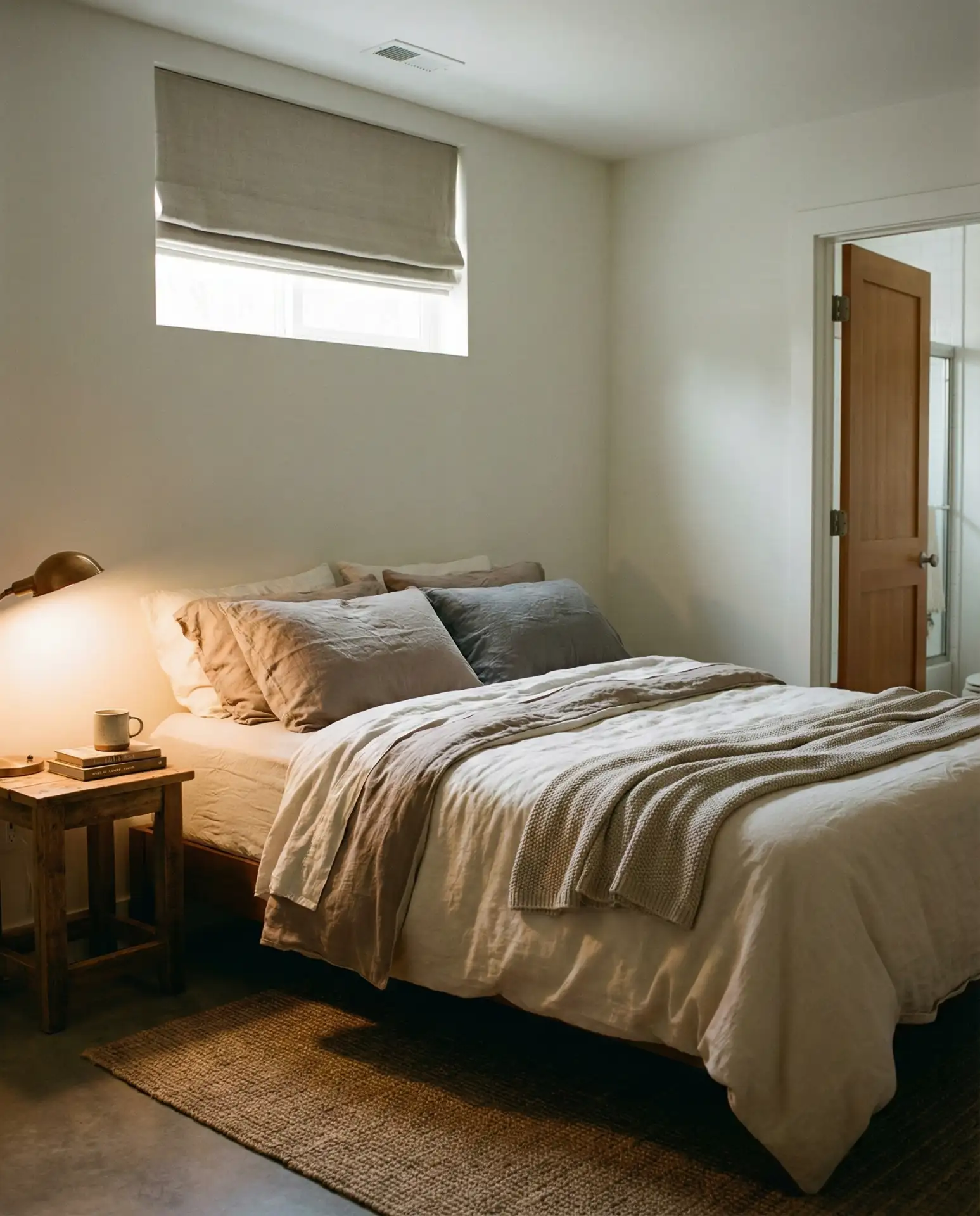
Where this setup works best is in homes that regularly host extended family or out-of-town friends. In my own experience visiting relatives in North Carolina, the basement guest suite felt like a boutique hotel stay—complete with a basket of toiletries and a handwritten welcome note. That level of care doesn’t require a big budget, just intentional design and attention to detail. Even small gestures, like a carafe of water or a phone charging station, make guests feel genuinely cared for.
11. Kids’ Basement Bedroom with Built-In Bunks
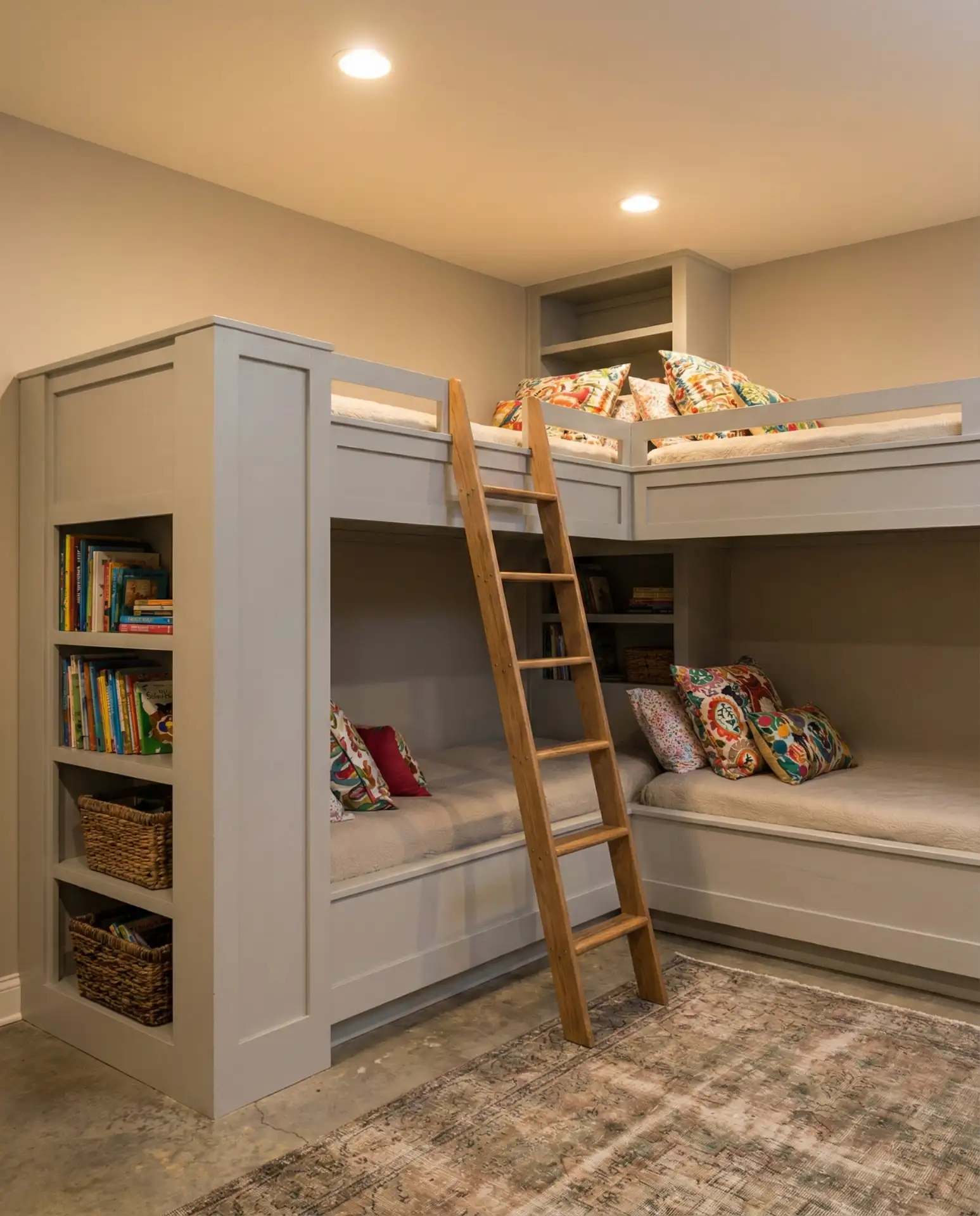
For families with multiple kids, a basement bedroom with built-in bunk beds maximizes sleep space without crowding the room. Custom-built bunks with integrated storage drawers, reading lights, and even small cubbies for personal items turn the setup into a functional, playful retreat. Use durable, easy-to-clean materials like painted wood or laminate, and opt for cheerful but not overly juvenile colors—soft blues, greens, or yellows that can grow with them. This layout works especially well in homes with limited upstairs bedrooms, offering kids a dedicated space that feels special rather than cramped.
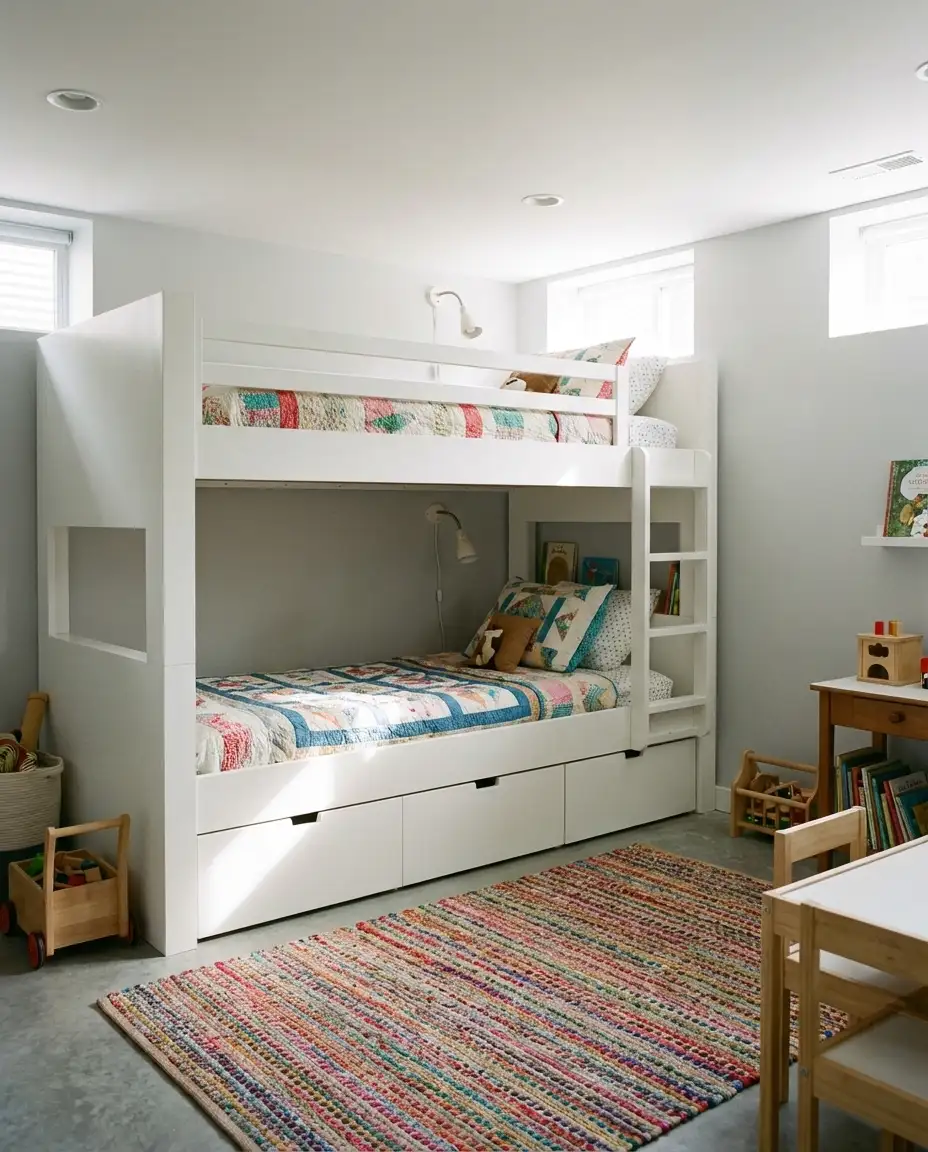
Real homeowner behavior shows that kids’ basement bedrooms often become the go-to spot for sleepovers and playdates, so durability matters. Choose stain-resistant rugs, washable bedding, and furniture that can take a beating. Safety is paramount—ensure bunks meet current standards, with sturdy guardrails and stable ladders. If you’re DIYing, consult a structural engineer to confirm the design can handle the weight and use. The payoff is a room that serves your family for years and adapts as kids age.
12. Teen Boys’ Man Cave with Gaming Setup
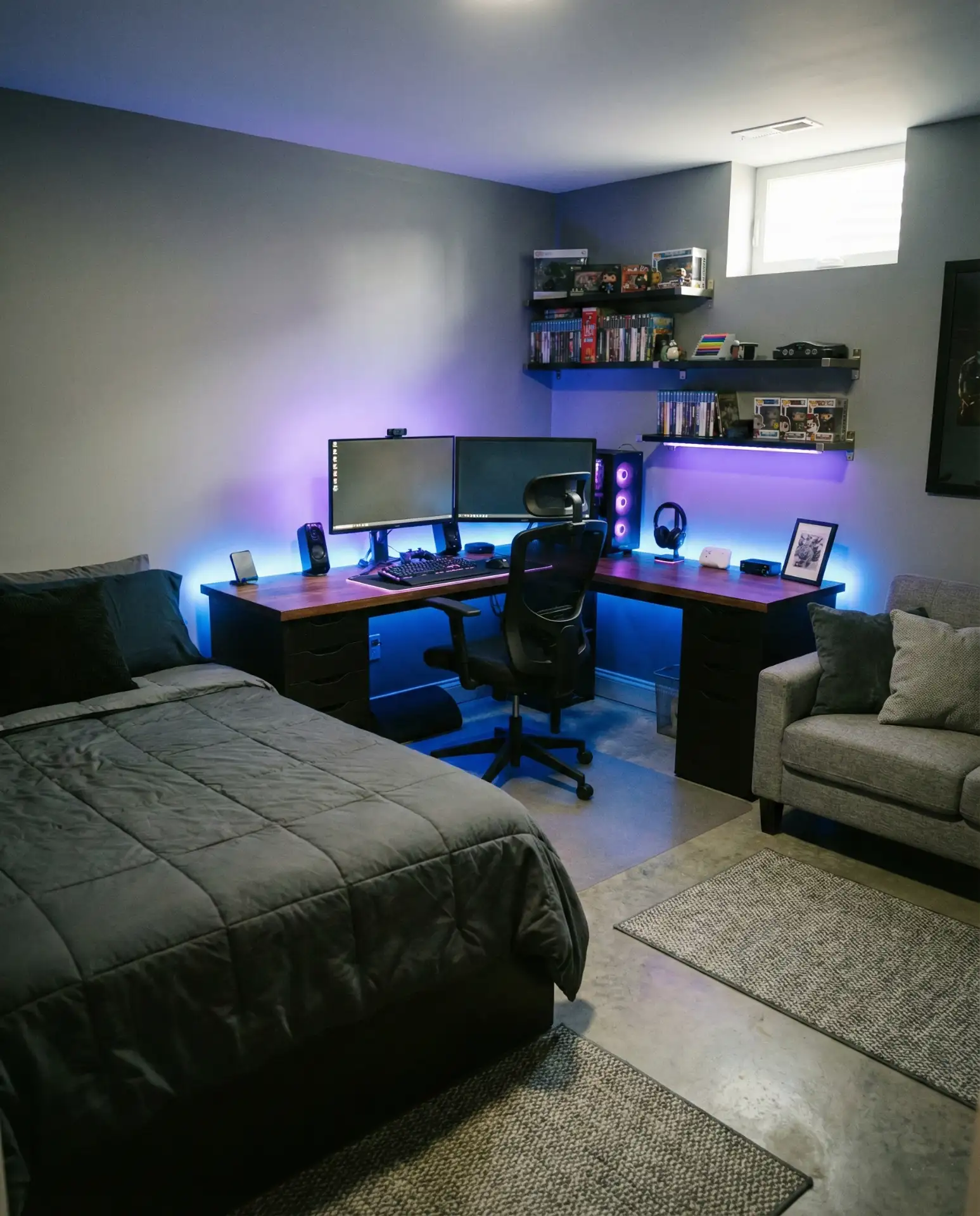
A teen boy’s man cave basement bedroom is all about creating a space that doubles as a hangout zone. Incorporate a dedicated gaming area with a desk, monitor, and comfortable chair, plus a twin or full bed for sleep. Add a small couch or floor seating for friends, and don’t skimp on power outlets and cable management—nothing kills the vibe faster than tangled cords. Keep the color scheme cool-toned with grays, blues, or blacks, and let your teen personalize with posters, LED strips, or collectibles. This setup keeps noise and activity contained downstairs, which parents appreciate.
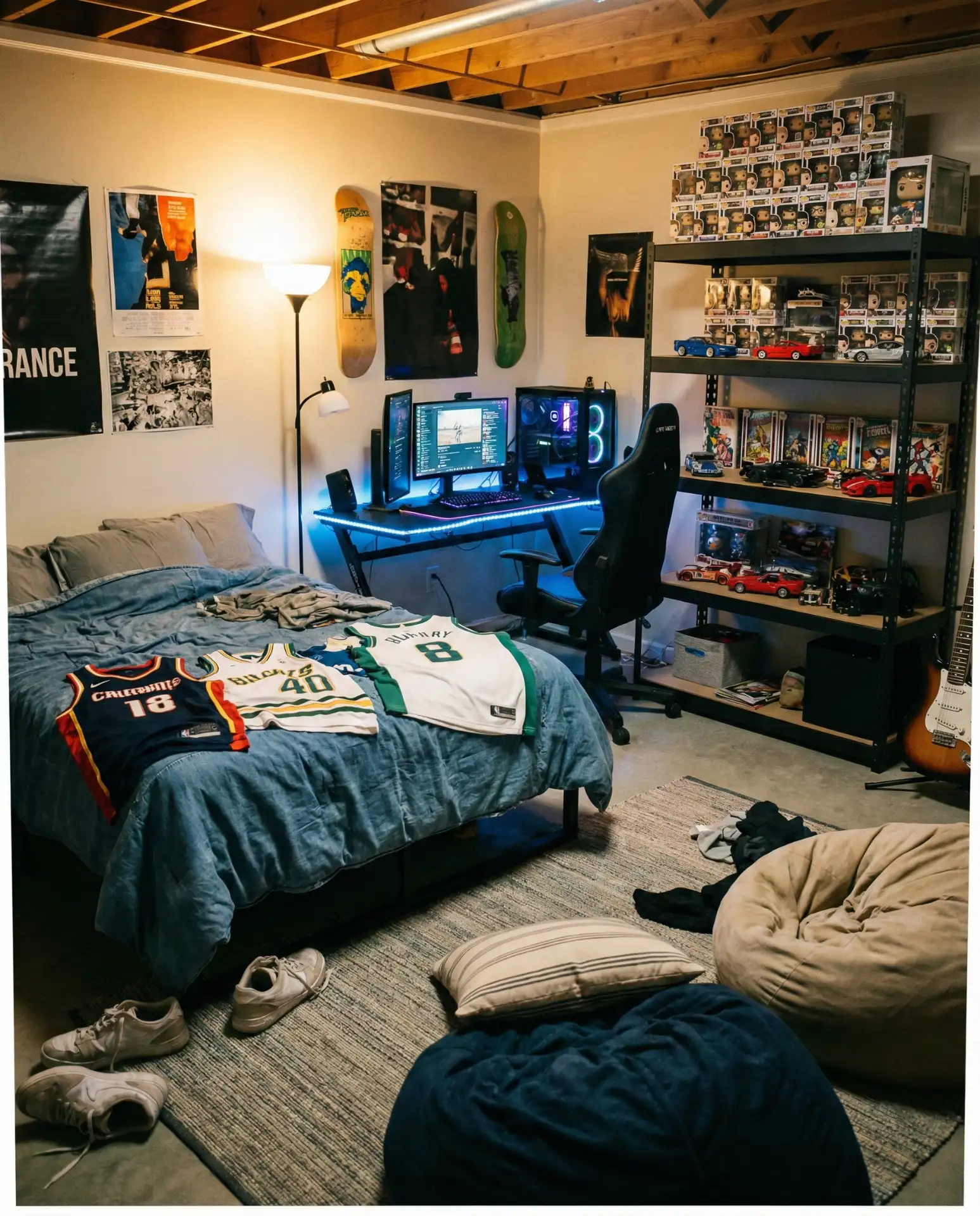
From a practical standpoint, this setup can save families from constant disputes over shared upstairs spaces. Teens get autonomy, and parents reclaim the living room. Budget tip: look for secondhand gaming chairs and desks on Facebook Marketplace or Craigslist—they’re often in excellent condition and priced to move. Invest in good soundproofing or ask your teen to use headphones during late-night gaming sessions to keep the peace.
13. Rustic Basement Bedroom with Reclaimed Wood Accents
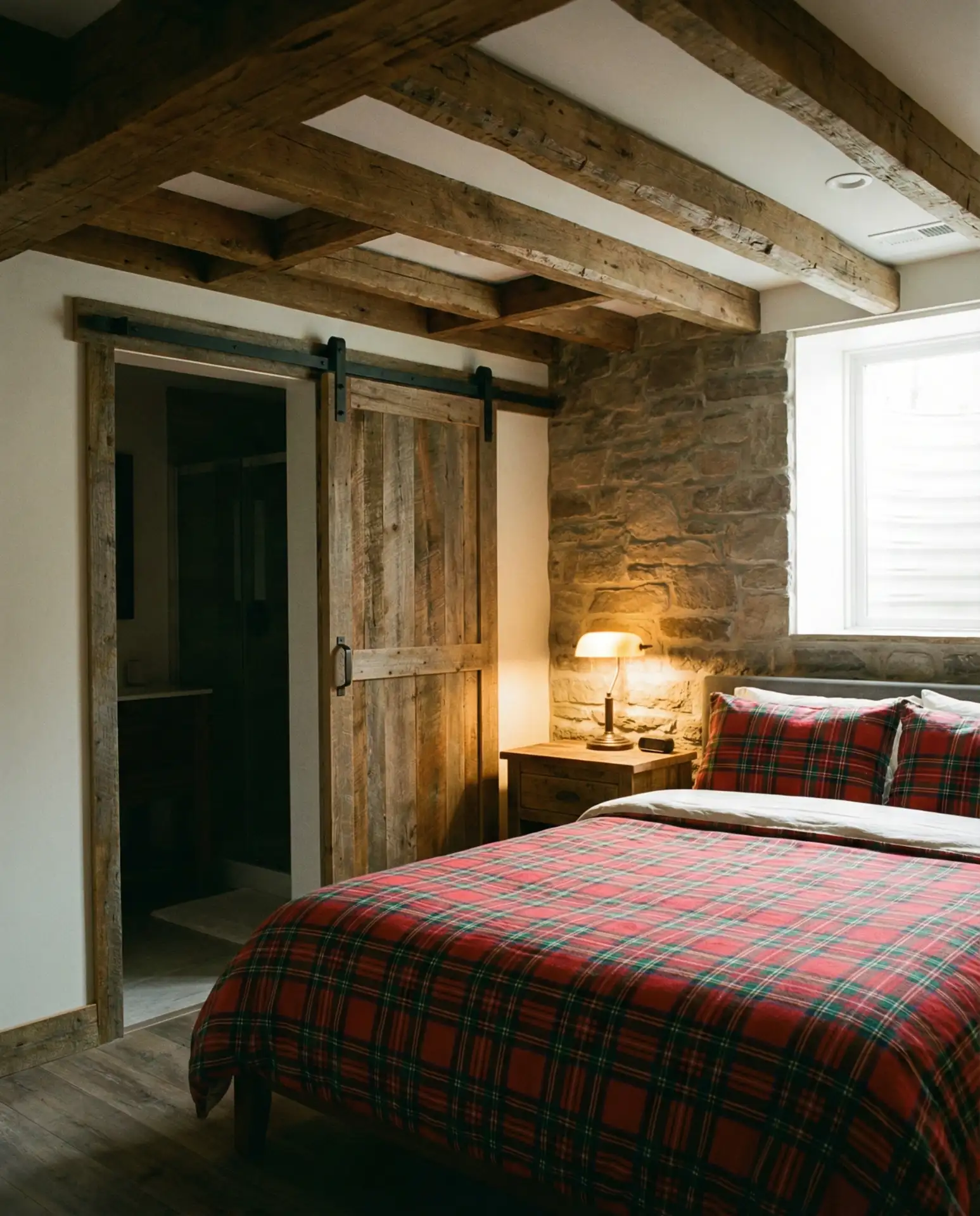
A rustic basement bedroom brings warmth and character through natural materials like reclaimed wood, stone, and linen. Consider a wood plank accent wall behind the bed, exposed beam ceilings if the structure allows, or a barn door leading to an ensuite bath. Pair these elements with soft, neutral bedding and vintage-inspired lighting—think wrought iron sconces or a weathered wood chandelier. This style works beautifully in mountain and rural properties, but it’s also gaining traction in suburban homes where homeowners want to add texture and history to new construction.
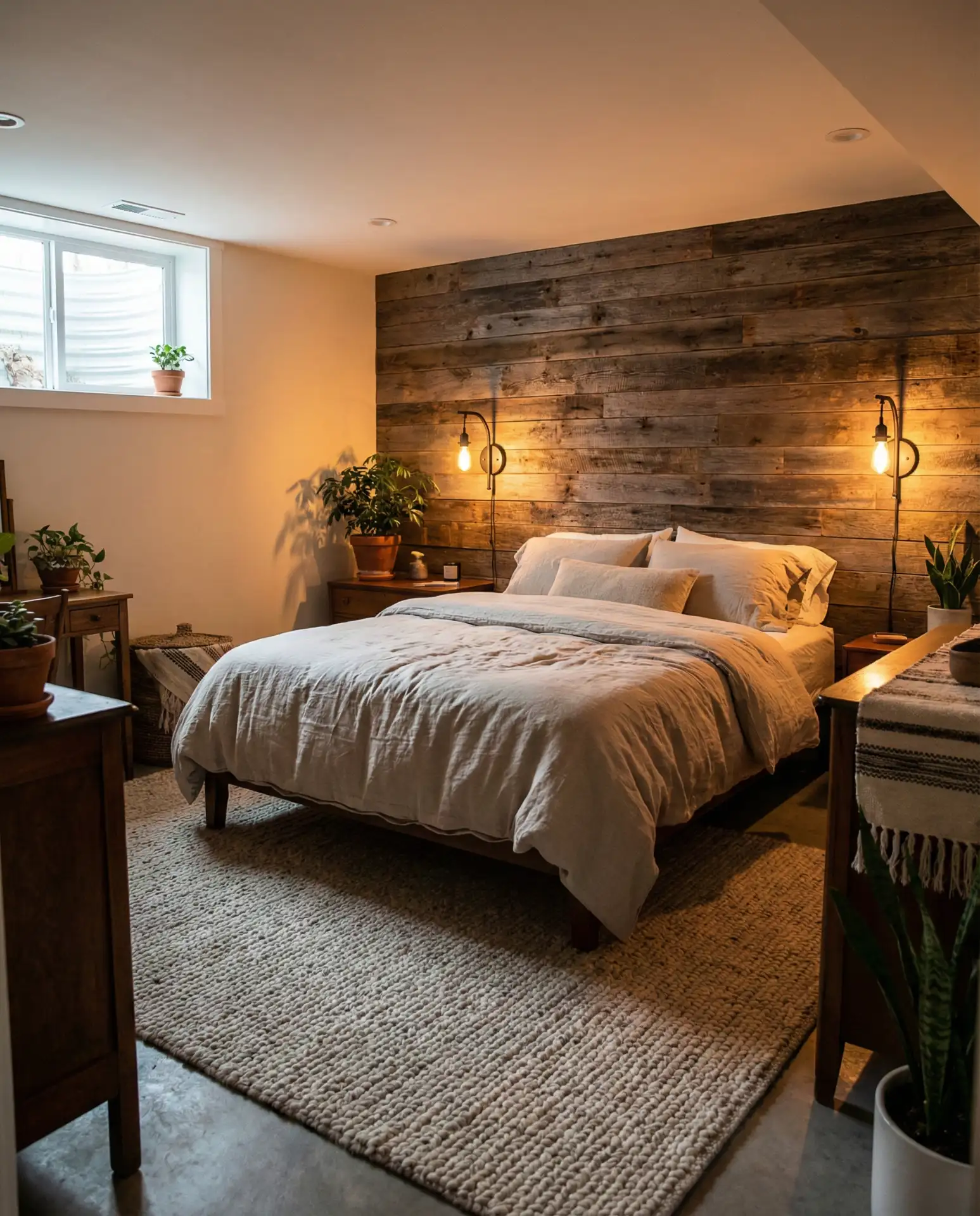
Expert commentary: Interior designers often recommend sourcing reclaimed wood locally to save on shipping and support regional salvage yards. In areas like Vermont, Montana, and Oregon, reclaimed barn wood is relatively easy to find and adds authentic patina that you can’t replicate with new materials. Just be sure to treat and seal the wood properly to prevent moisture issues, which is critical in basement environments. The rustic look is forgiving and ages gracefully, so it’s a smart long-term investment.
14. Couple’s Basement Bedroom with Spa-Like Retreat
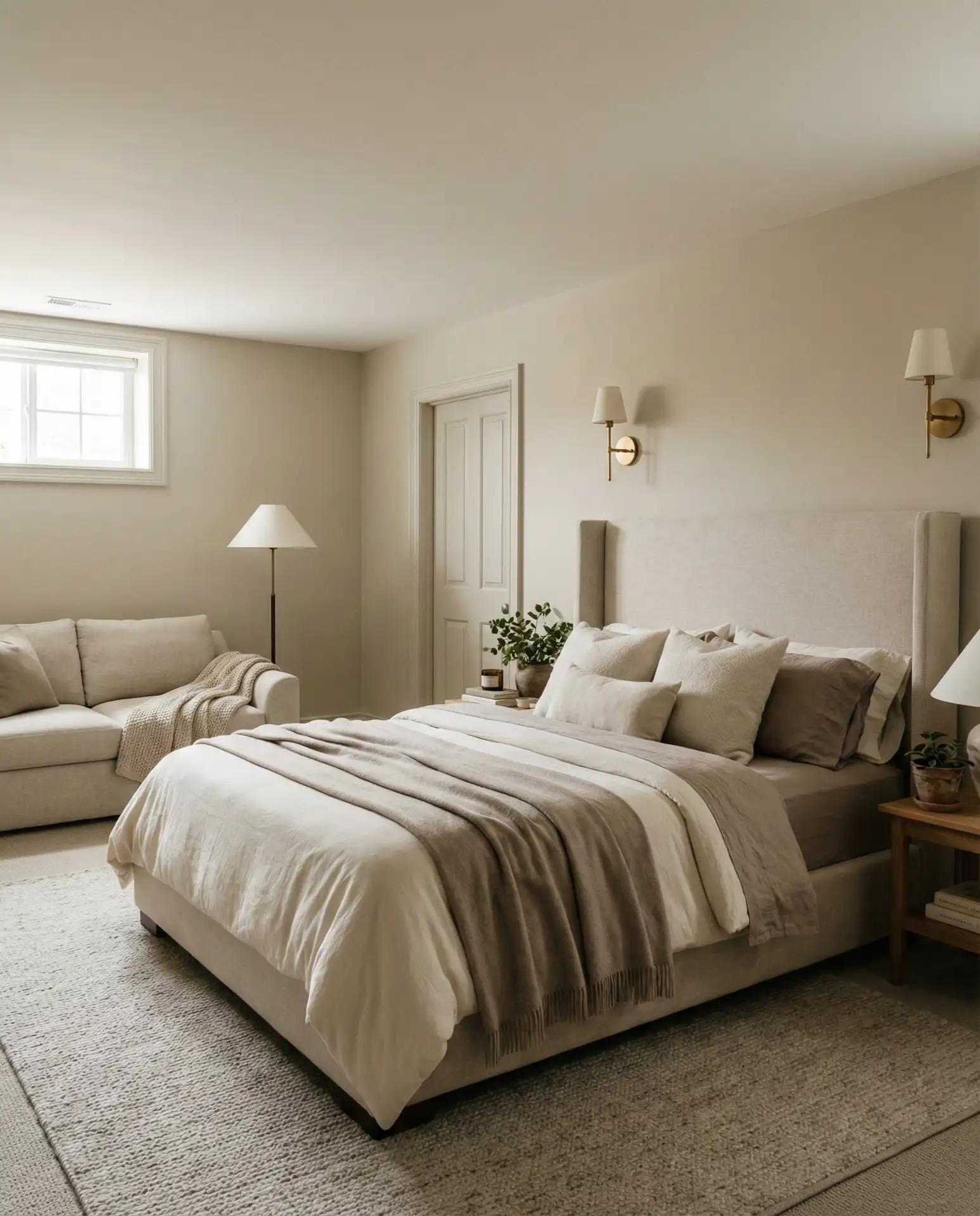
A basement bedroom designed for couples should prioritize comfort, privacy, and a sense of escape. Think plush bedding, blackout curtains, and a seating area with a loveseat or pair of accent chairs for morning coffee. If space allows, add a small ensuite with a soaking tub or walk-in shower with rainfall fixtures to create a spa-like retreat. Soft, layered lighting—dimmable overhead, bedside lamps, and even candles—sets the mood for relaxation. This setup is ideal for empty nesters or couples in multigenerational homes who want a private sanctuary away from the hustle upstairs.
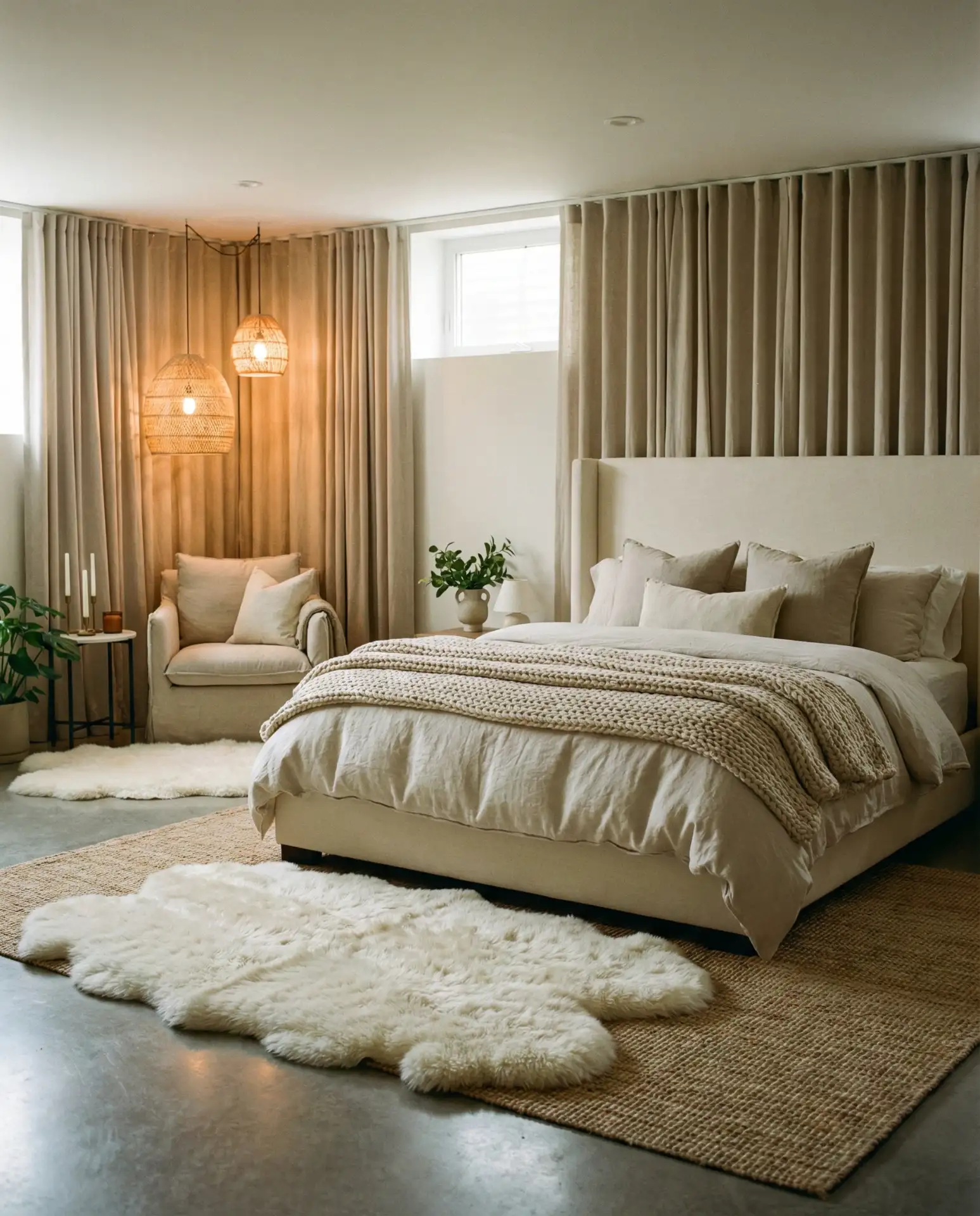
Homeowners report that investing in a high-quality mattress and bedding pays dividends in daily comfort. Don’t overlook small luxuries like a heated blanket, a sound machine, or a small beverage fridge stocked with sparkling water. These details transform the basement from a backup bedroom into a true retreat where couples actually want to spend time. It’s also worth considering a small sitting area where you can read or watch TV without being in bed—this helps maintain the bedroom’s role as a sleep sanctuary.
15. Windows Aesthetic with Sheer Curtains and Daylight
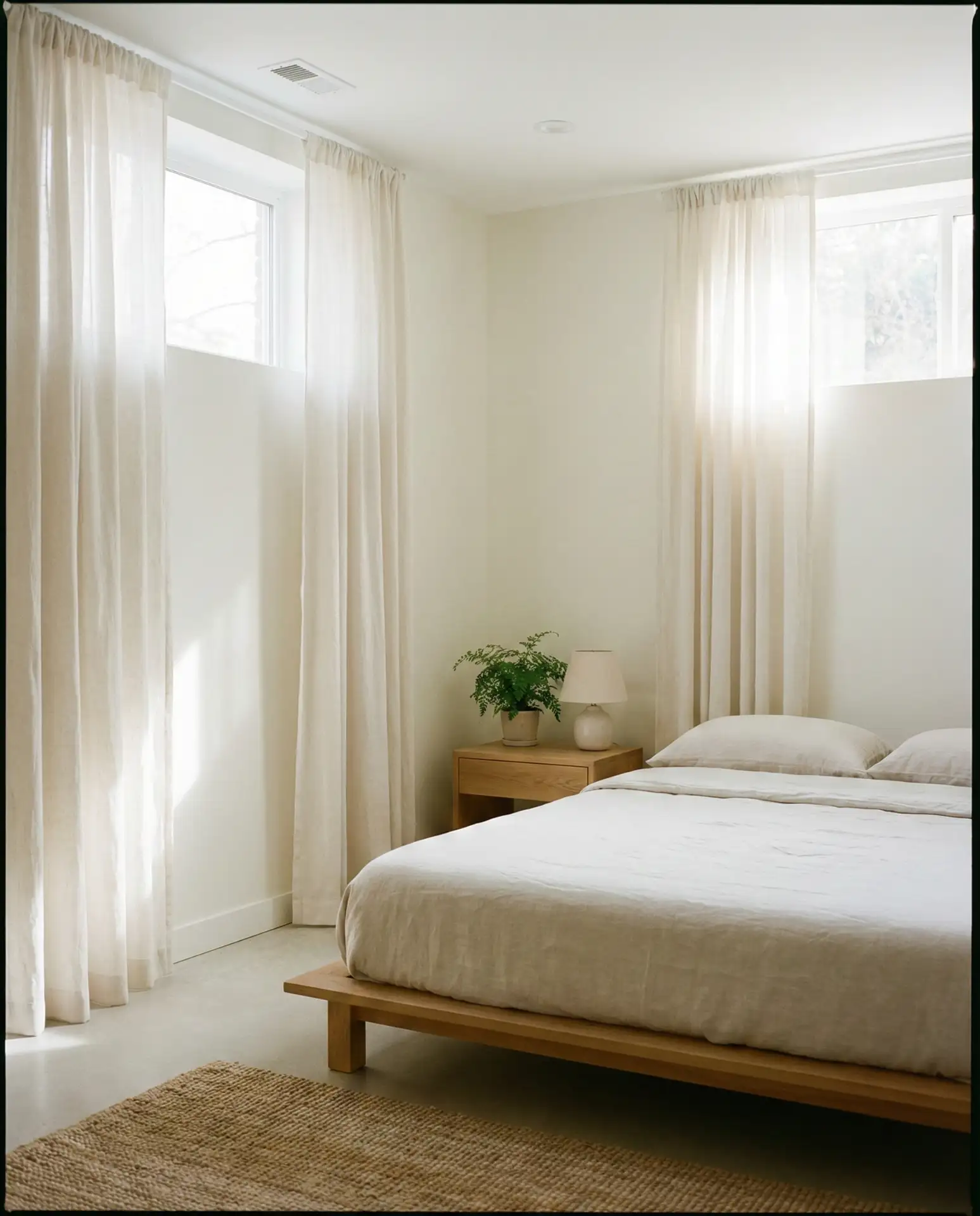
Maximizing a window’s aesthetic in a basement bedroom means celebrating every bit of natural light you can get. Dress windows with sheer or semi-sheer curtains that filter daylight without blocking it entirely, and keep window sills clear of clutter to maintain sight lines. If you have multiple small windows, treat them as a collective design element by hanging curtains at the same height to create visual unity. This approach works especially well in walkout basements where you can take advantage of larger or more numerous openings.
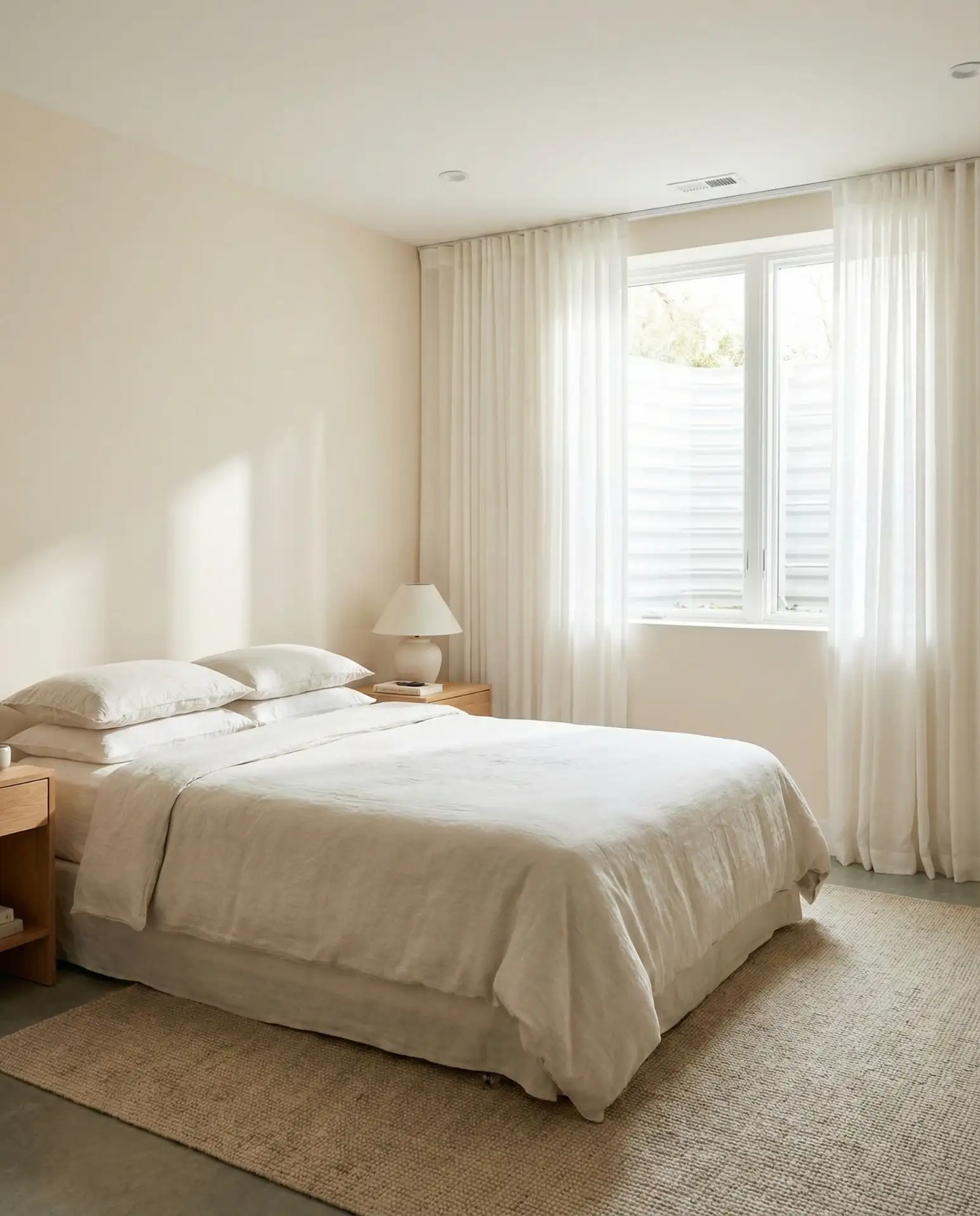
A practical insight: window treatments matter more in basements than anywhere else in the home. Opt for dual-layer curtains—sheer panels for daytime privacy and heavier blackout liners for sleep. This gives you flexibility without sacrificing the aesthetic. In colder climates, cellular shades can add insulation and reduce drafts, which is especially important in below-grade spaces. The goal is to make the windows a focal point rather than an afterthought.
16. Budget Room Dividers for Flexible Layouts
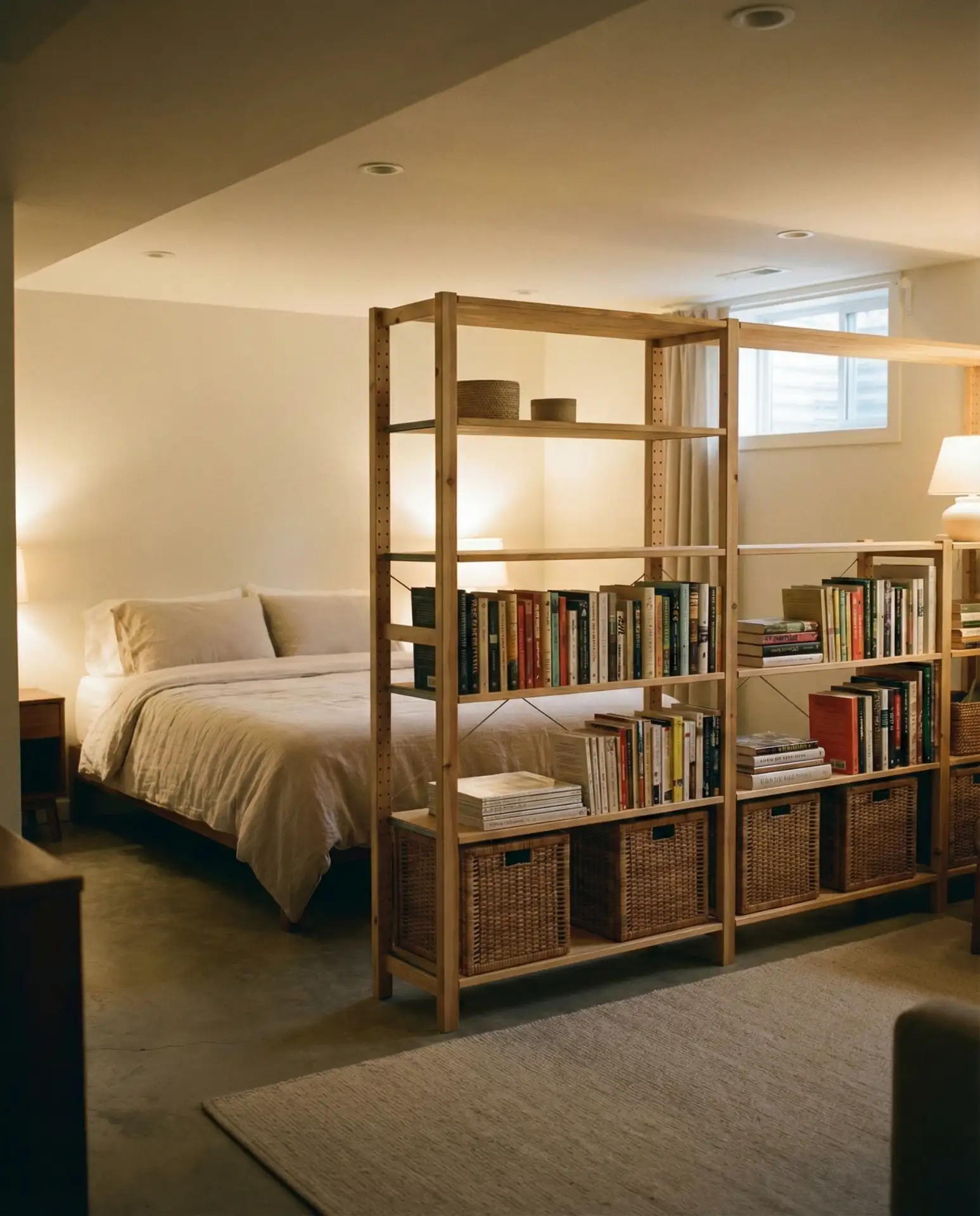
When working with a budget and needing room dividers to section off a basement bedroom, think creatively. Tension rods with fabric panels, folding screens from thrift stores, or even open shelving units can create effective separation without permanent construction. This is ideal for renters or homeowners who want flexibility as their needs evolve. Choose dividers that double as storage or decor—like a bookcase filled with baskets and books—to maximize functionality. This approach is especially practical in open basements where you’re carving out sleeping zones within a larger multi-use area.
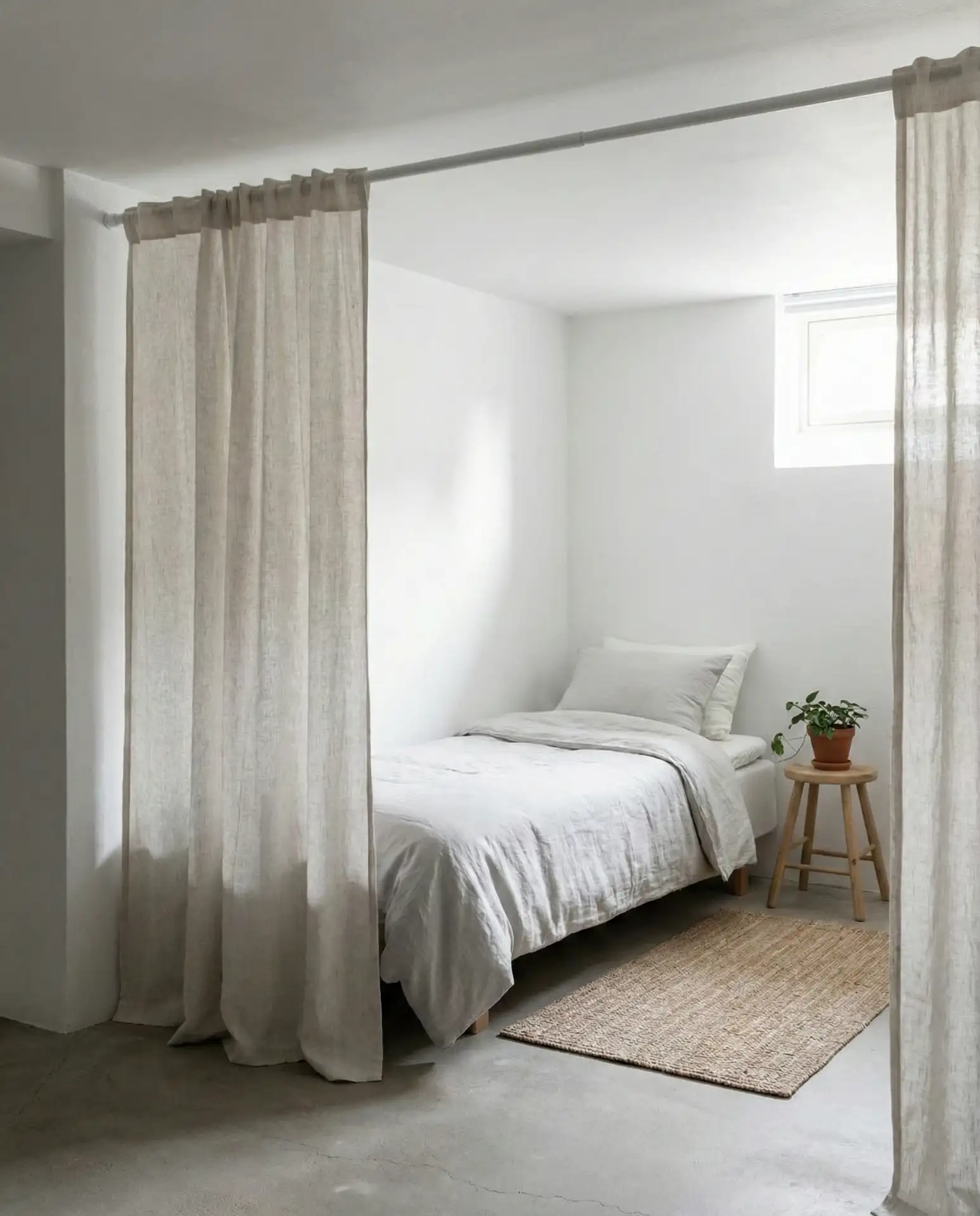
Common mistakes include choosing dividers that are too flimsy or short, which can look unfinished and fail to provide adequate privacy. Aim for dividers that are at least six feet tall and visually substantial. If you’re using curtains, invest in a quality rod system that won’t sag or pull away from the ceiling. The beauty of this strategy is that you can reconfigure the space as your needs change—remove the divider entirely, shift it to a new location, or upgrade to a more permanent solution down the road.
17. Small Window Basement with Reflective Surfaces
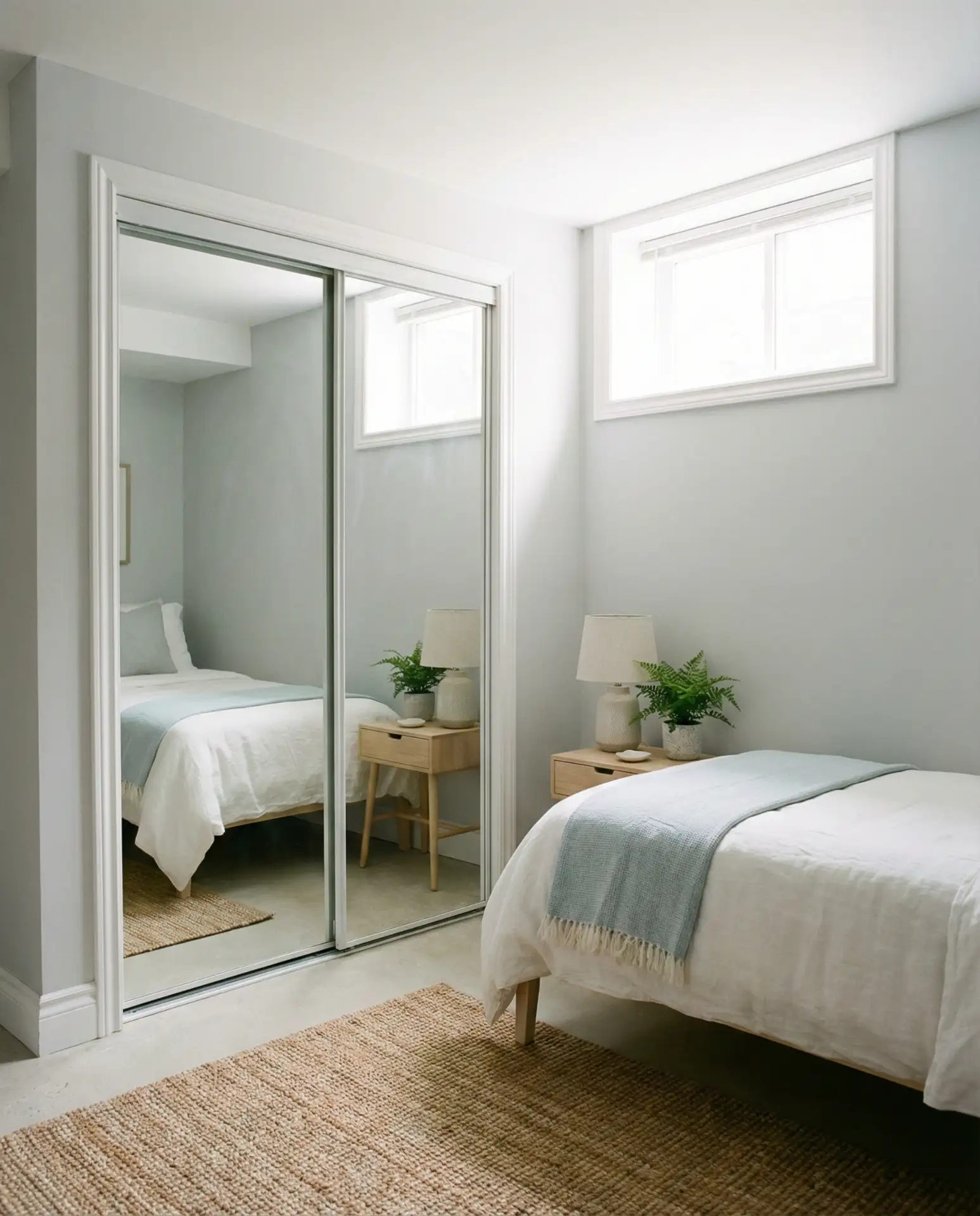
A basement bedroom with a small window can still feel bright if you strategically use mirrors and reflective surfaces to bounce light around the room. Hang a large mirror opposite the window to double the perceived daylight, or incorporate metallic finishes in light fixtures and decor. Choose a light color palette—whites, soft grays, pale blues—to enhance brightness. This trick is especially effective in older homes where window size is limited by foundation constraints. The result is a space that feels more open and less cave-like, even with minimal natural light.
American lifestyle insight: many homeowners underestimate the psychological impact of natural light, especially in below-grade spaces. Studies show that even small amounts of daylight can improve mood and sleep quality, so maximizing what you have is worth the effort. Consider adding a light well or enlarging the existing window if structurally feasible. If not, layer in full-spectrum LED bulbs that mimic daylight and keep the space feeling fresh and awake.
18. Concrete Walls with Warm Industrial Style
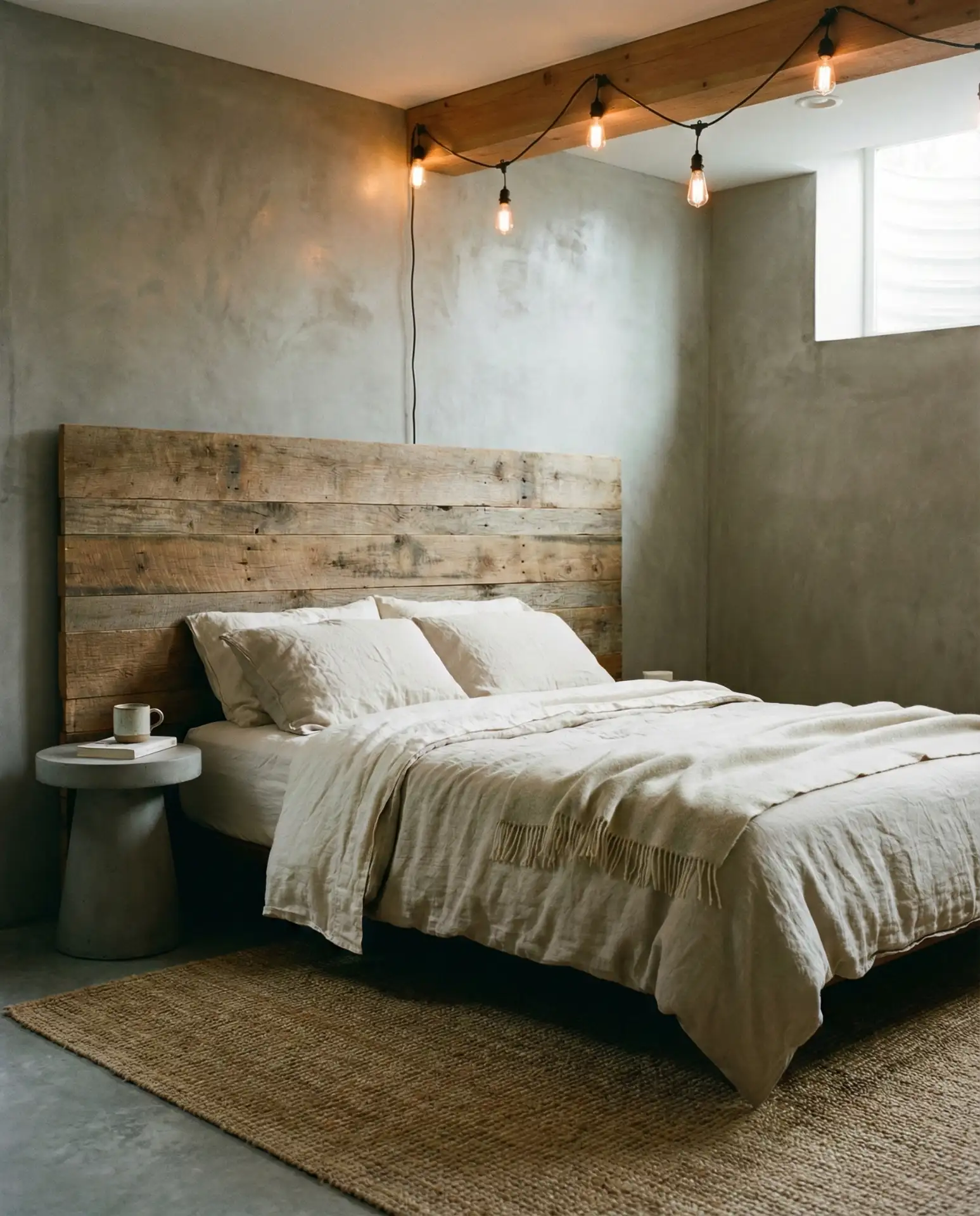
Exposed concrete walls are increasingly popular in modern basement bedrooms, offering a raw, industrial vibe that feels intentional and design-forward. To keep the space from feeling cold, layer in warm elements like wood furniture, soft textiles, and ambient lighting. A rustic wood headboard against concrete creates beautiful contrast, and area rugs underfoot add comfort. This aesthetic works especially well in urban lofts or newly finished basements where the concrete is in good condition and can be sealed and polished. It’s a bold choice that makes a strong design statement.
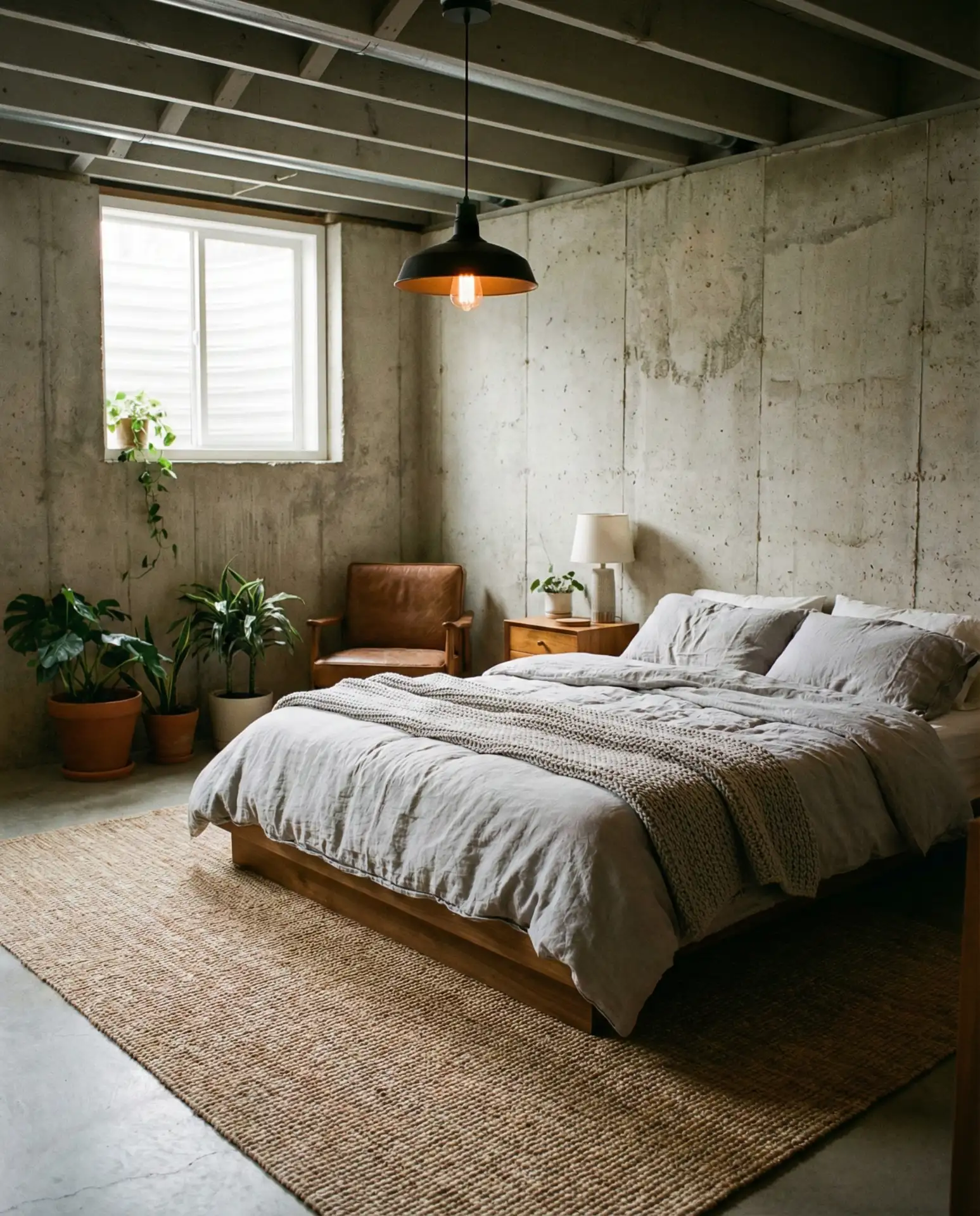
Budget angle: leaving concrete exposed saves money on drywall and paint, but you’ll need to invest in proper sealing to prevent moisture and dust issues. Epoxy or concrete sealer is essential, especially in humid climates. The upfront cost is offset by the durability and low maintenance of concrete, which can last decades without needing a refresh. Pair it with secondhand industrial furniture and thrift-store finds to keep the overall project affordable.
19. Windows Modern with Black Frame Accents
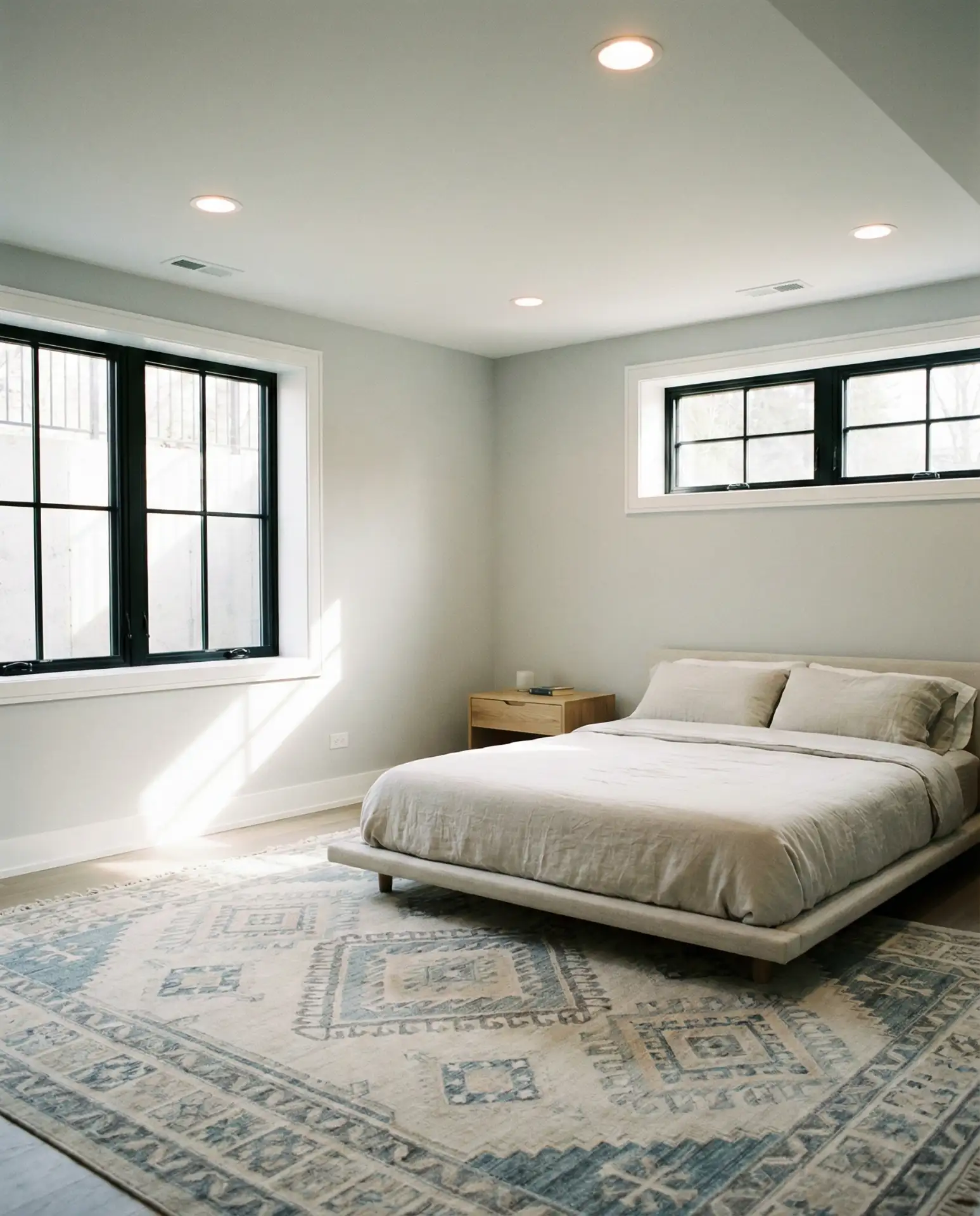
A modern windows aesthetic pairs clean-lined black-framed windows with minimalist decor for a crisp, contemporary look. This style is especially striking in newer builds or renovated basements where you can install oversized windows with sleek frames. Pair them with white or light gray walls, low-profile furniture, and restrained decor to let the architecture shine. The black frames add graphic punch and draw the eye outward, making the space feel more connected to the outdoors even if the view is limited. It’s a look that feels fresh and current, perfect for design-conscious homeowners.

Where this works best is in walkout basements or homes with above-grade walls that allow for substantial fenestration. The black frames provide a modern contrast that works with any color palette, from all-white Scandinavian minimalism to warmer earth tones. If you’re retrofitting existing windows, black vinyl wraps or paint specifically designed for window frames can achieve the look without full replacement. It’s a relatively affordable update that delivers major visual impact.
20. Couch and Bedroom Combo for Multi-Use Space
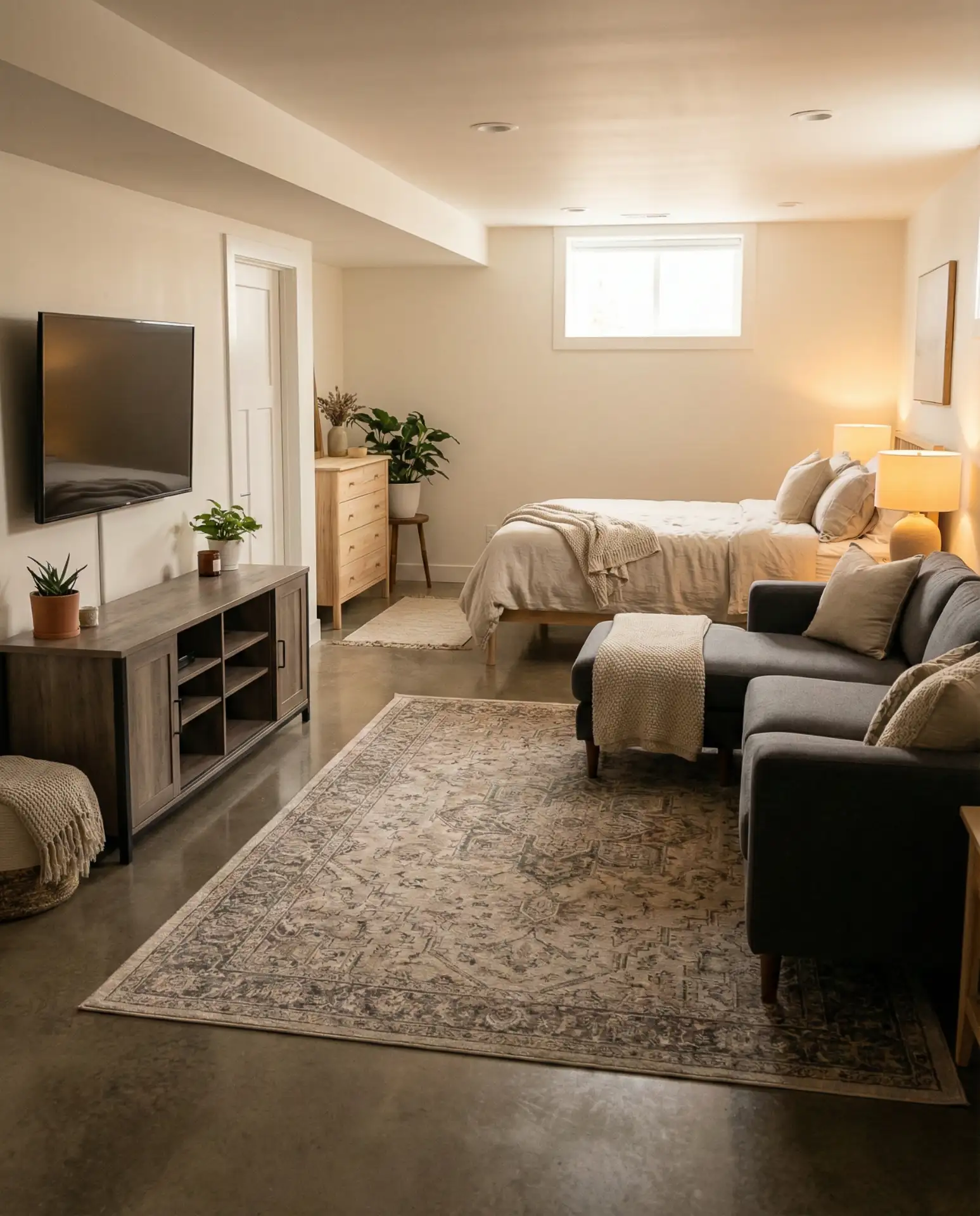
A basement bedroom with a couch creates a true multi-use space where sleeping and lounging can coexist. Place a comfortable sectional or loveseat across from the bed to create a sitting area for watching TV, reading, or entertaining. This layout is particularly useful in guest-friendly rooms or teen spaces where the room needs to function beyond just sleep. Choose a sofa bed or futon if you need extra sleeping capacity, or opt for a standard couch and add floor pillows for overflow seating. The key is balancing comfort with flow so the room doesn’t feel cramped.
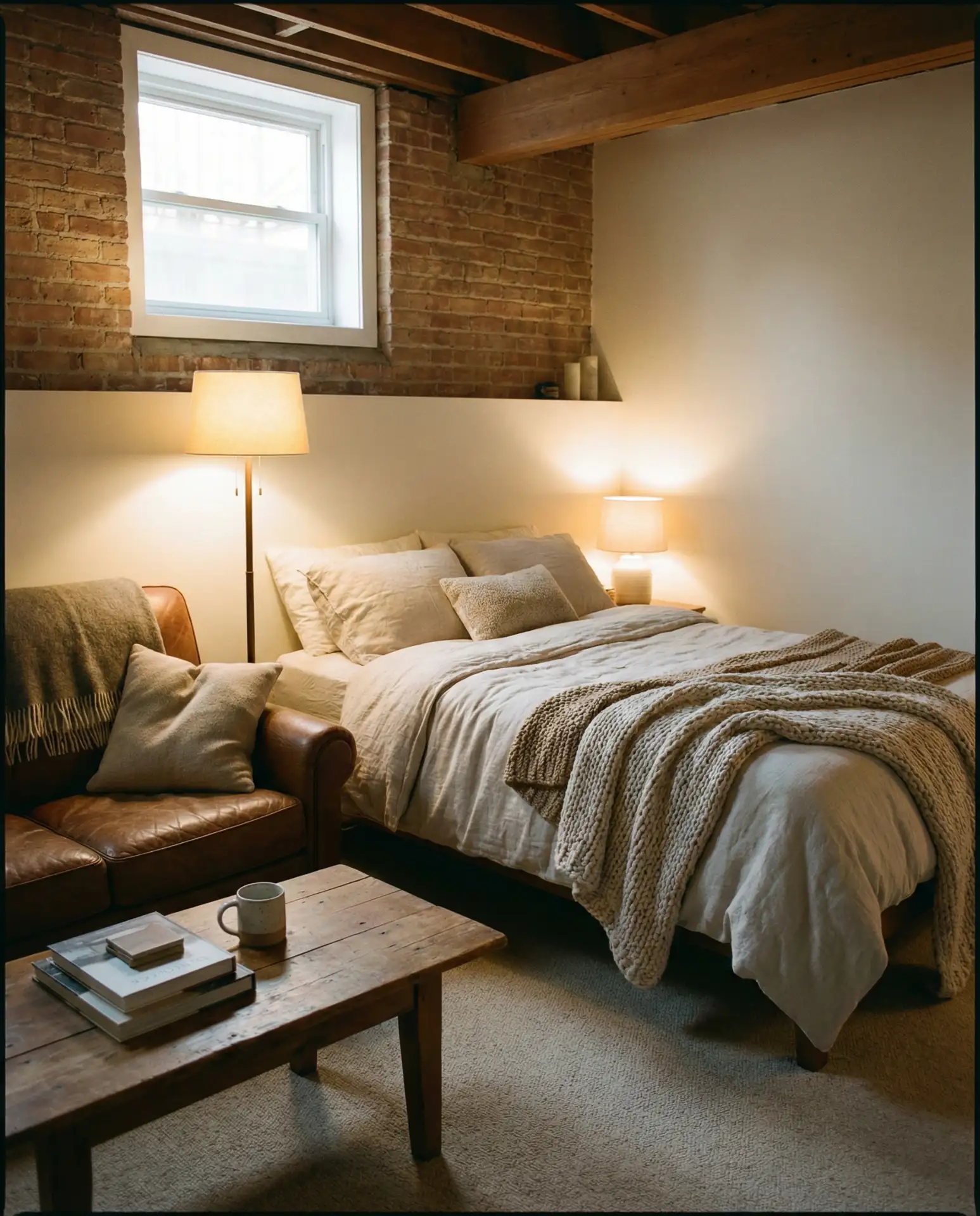
Real homeowner behavior shows that basement bedrooms with seating areas get used more frequently than those without. The couch becomes a natural gathering spot for kids, teens, or guests, and it keeps the bed from becoming a catch-all for clothes and clutter. Budget-conscious shoppers can find quality used couches at estate sales or online marketplaces—just inspect carefully for structural soundness and signs of pet damage. A washable slipcover can refresh even a tired piece.
21. Layout Optimized for Small Basement Bedrooms
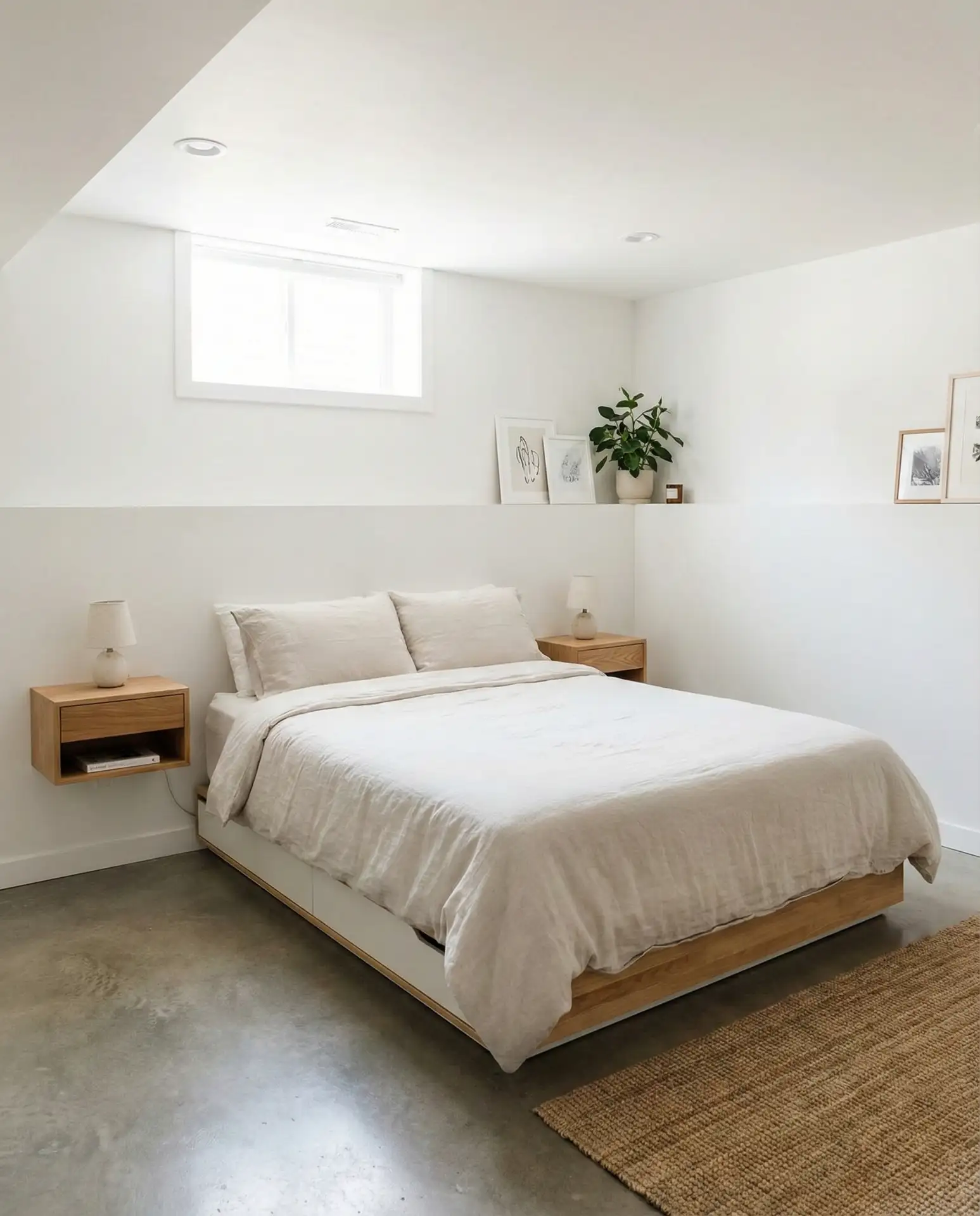
When working with a small basement bedroom, the layout becomes critical. Float the bed in the center of the longest wall to maximize circulation space, and use wall-mounted nightstands or floating shelves to save floor area. Skip bulky dressers in favor of under-bed storage or a small closet organizer system. Keep the color palette light and the decor minimal to prevent the room from feeling cluttered. This strategy is especially important in older homes where basement bedrooms might measure just 10×10 feet. Smart layout choices can make even tight quarters feel functional and comfortable.
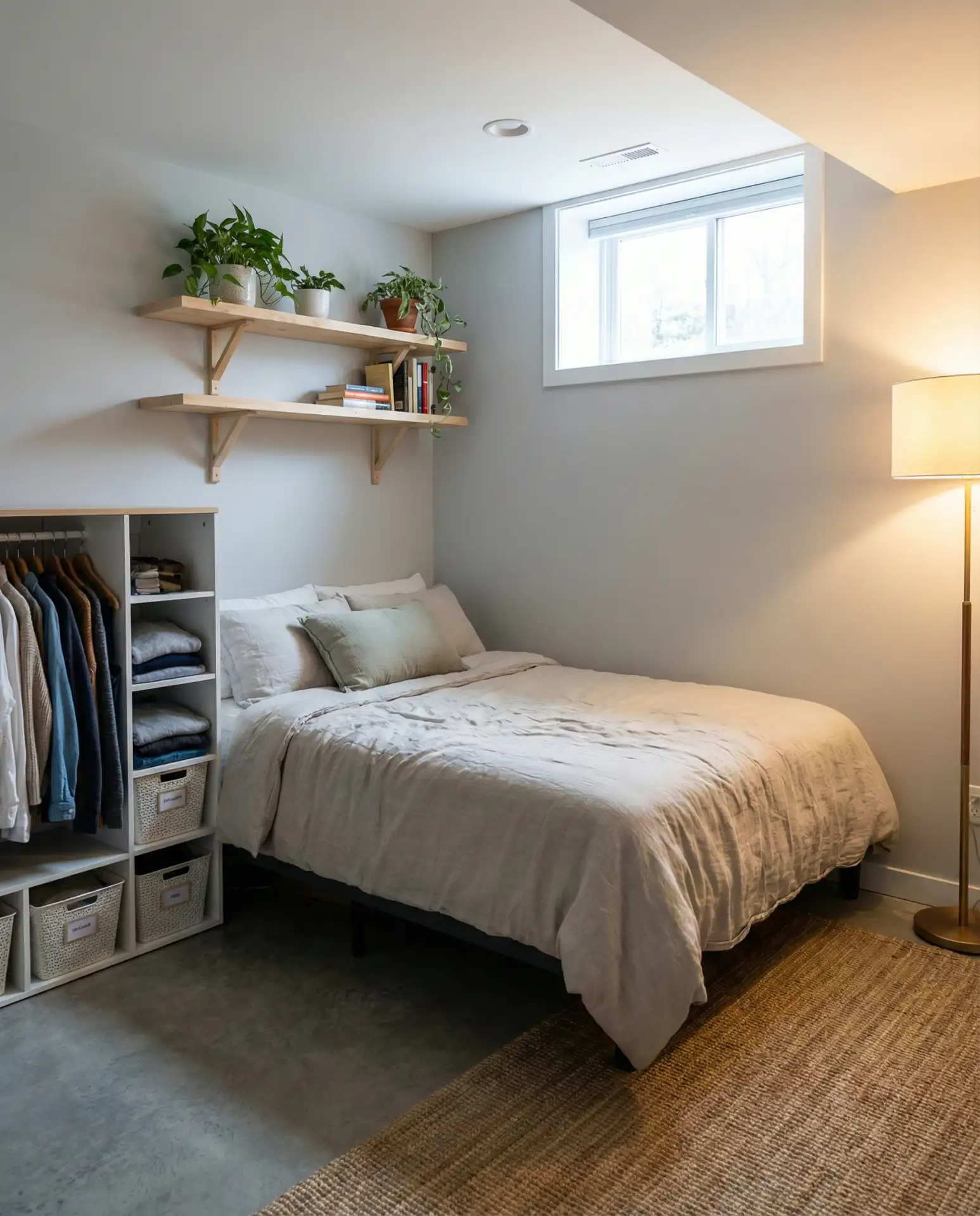
Expert-style commentary: Interior designers recommend the “walk-around test” when planning a small bedroom layout. You should be able to walk comfortably around the bed without squeezing or turning sideways. If you can’t, consider downsizing to a full or even a twin XL mattress. The goal is livability over square footage claims. A well-planned small bedroom beats a cramped “large” one every time.
22. Walkout Basement Bedroom with Patio Access
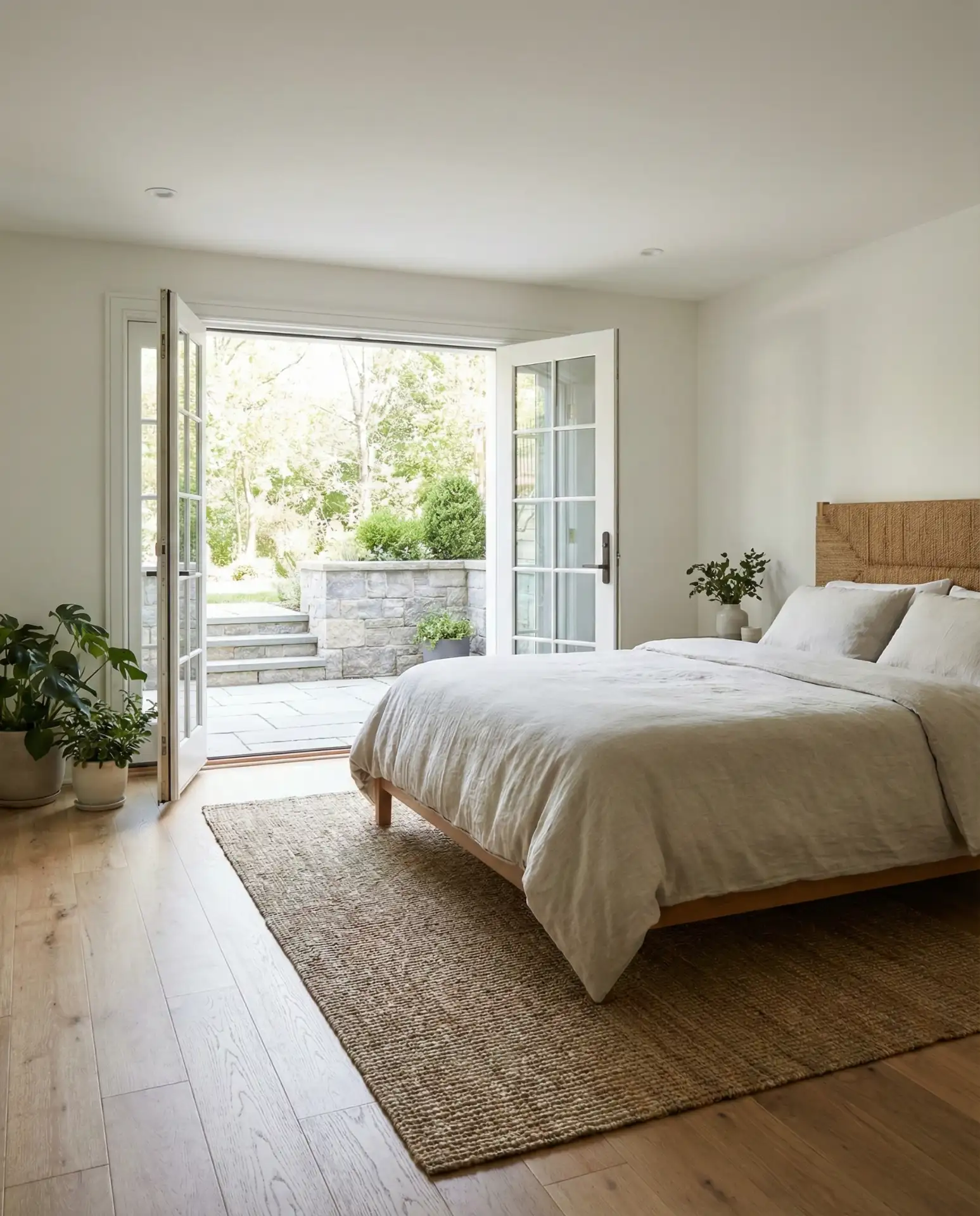
A walkout basement bedroom with direct patio or yard access is the gold standard for below-grade living. Install French doors or sliding glass doors to create seamless indoor-outdoor flow, and position the bed to take advantage of the view. This setup feels more like a main-floor suite than a basement, with abundant natural light and fresh air circulation. It’s ideal for master suite layouts, guest-friendly spaces, or even rental units. In regions like the Pacific Northwest and parts of the Midwest, where sloped lots are common, walkout basements add serious value and livability.
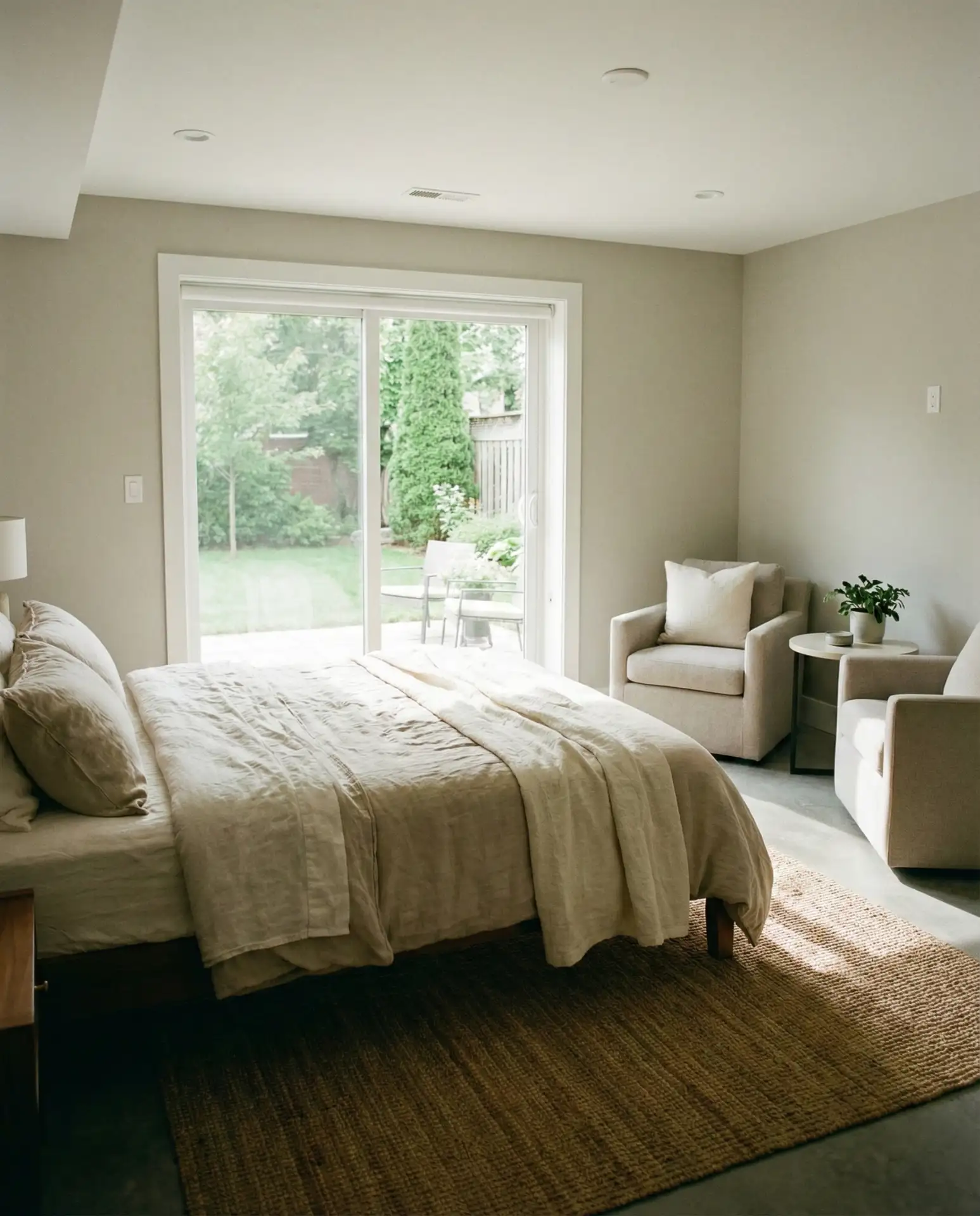
Common mistakes include skimping on quality doors or failing to address grading and drainage around the patio, which can lead to water intrusion. Invest in properly sealed, insulated doors with low-E glass to manage temperature and prevent drafts. Ensure the patio slopes away from the foundation and that gutters and downspouts direct water well clear of the house. When done right, a walkout basement bedroom becomes the most desirable space in the home—light-filled, private, and with its own outdoor retreat just steps away.
Conclusion
Whether you’re transforming a neglected storage area into a teen sanctuary, carving out a serene master suite, or creating a welcoming guest retreat, basement bedrooms offer incredible potential for American homes. The key is thoughtful planning that addresses the unique challenges of below-grade spaces—light, ceiling height, moisture control—while embracing the opportunities for privacy and added square footage. Which of these ideas resonates with your space? Drop a comment below and share your basement bedroom plans or challenges; we’d love to hear what’s working in your home.