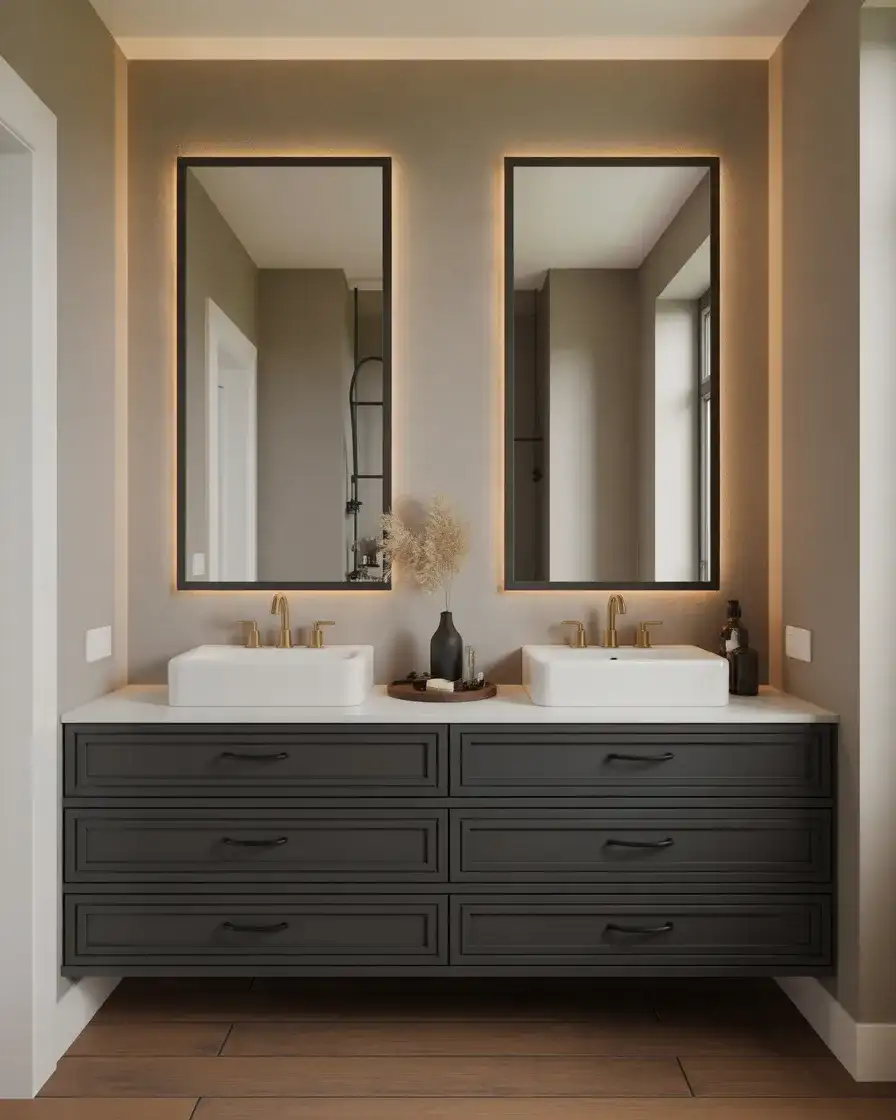
Bathroom design is having a real moment right now, and it’s not hard to see why. More Americans than ever are treating their bathrooms less like a utility room and more like a personal sanctuary—a space that sets the tone for the entire day. Pinterest searches for bathroom decor have surged, especially as homeowners and renters alike look for ways to bring spa-worthy calm, bold personality, or cozy intimacy into even the most compact of spaces. Whether you’re starting from scratch, giving your guest bath a quick refresh, or just hunting for a single statement idea, this guide covers 23 bathroom decor ideas for 2026 that actually work in real homes—from moody, dramatic walls to playful, funky tiles, and everything deliciously in between.
1. Moody Midnight Blue Walls
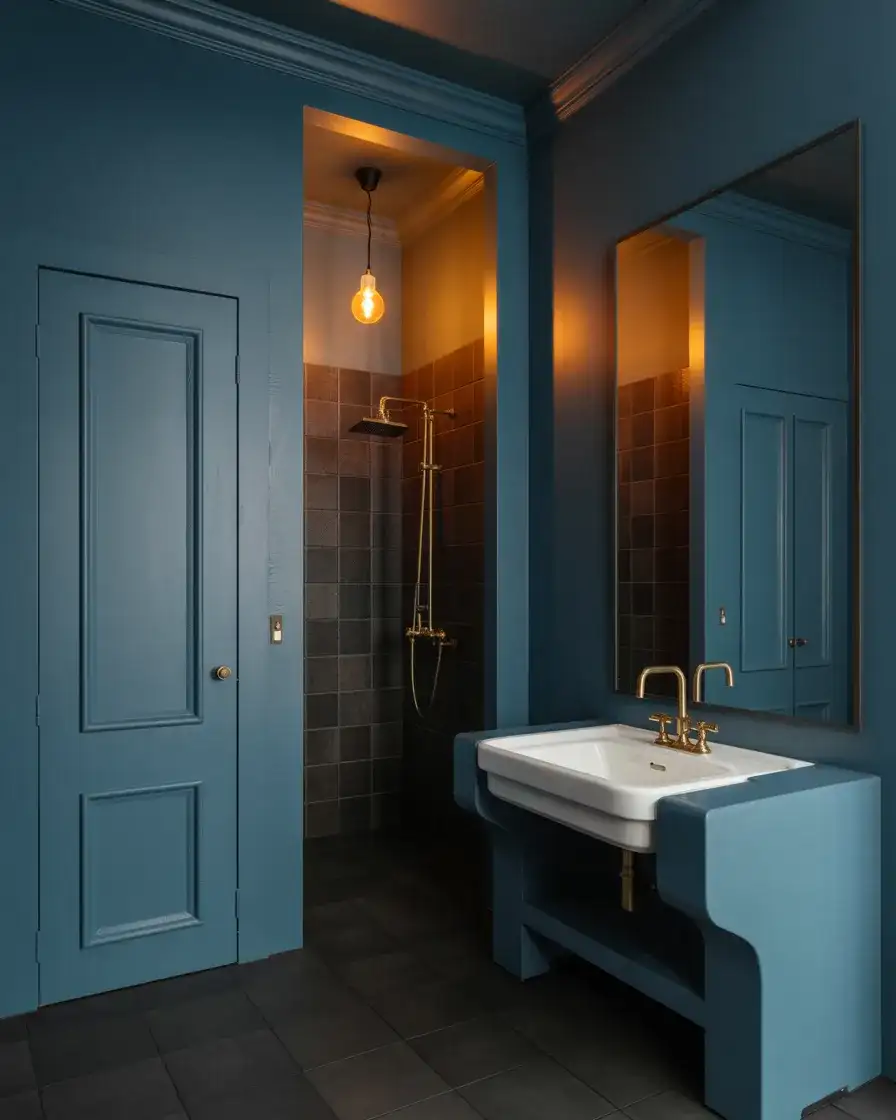
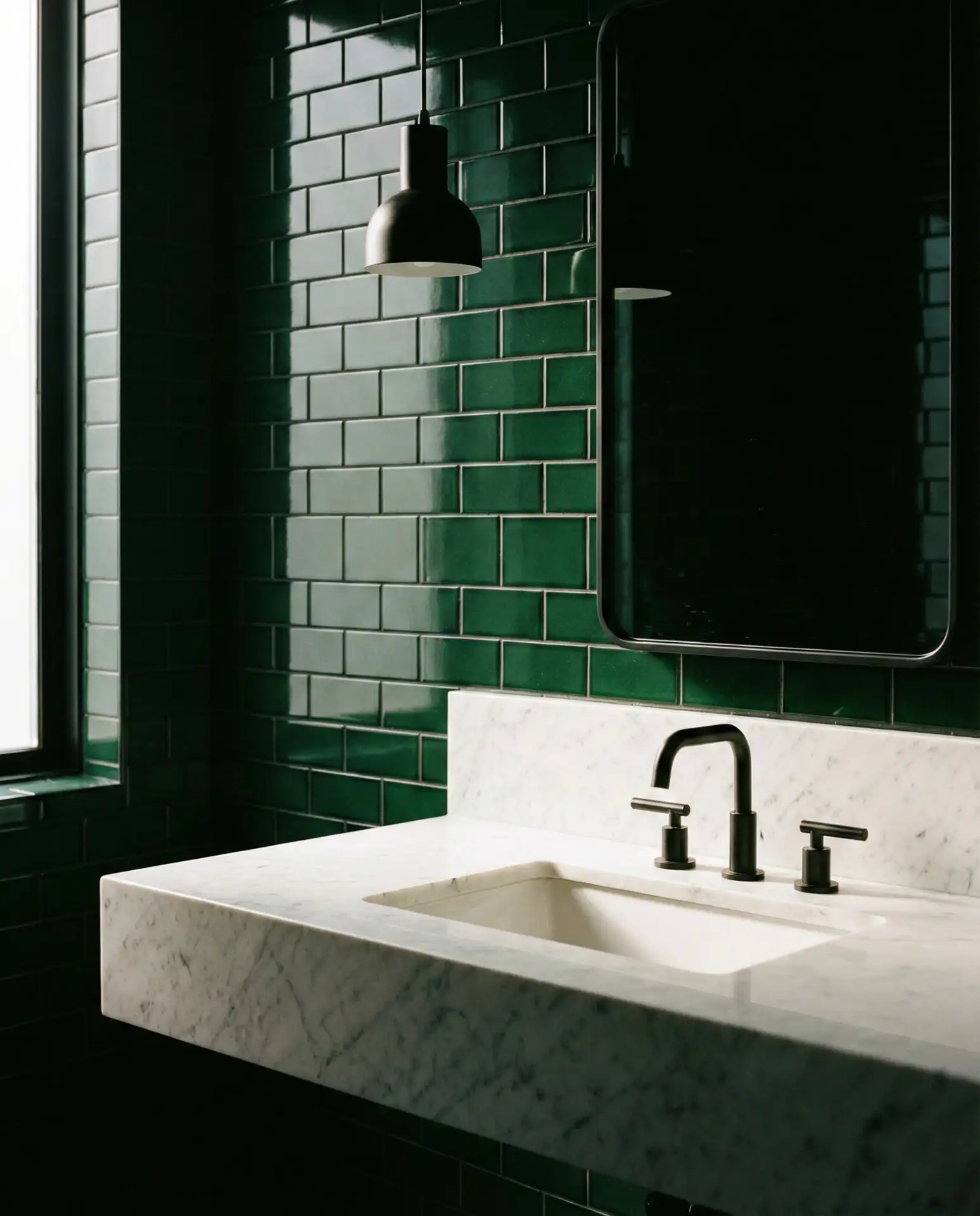
There’s something undeniably seductive about a moody, deep-toned bathroom—and midnight blue is leading the charge in 2026. This shade sits beautifully between navy and indigo, creating a rich, enveloping atmosphere that feels like stepping into a quiet, private world. It works especially well in bathrooms with limited natural light, where the depth of the color leans into the drama rather than fighting it. Pair it with aged brass fixtures and a single oversized mirror for an effect that reads luxurious without feeling over-designed. It’s the kind of aesthetic that photographs beautifully and feels even better in person.
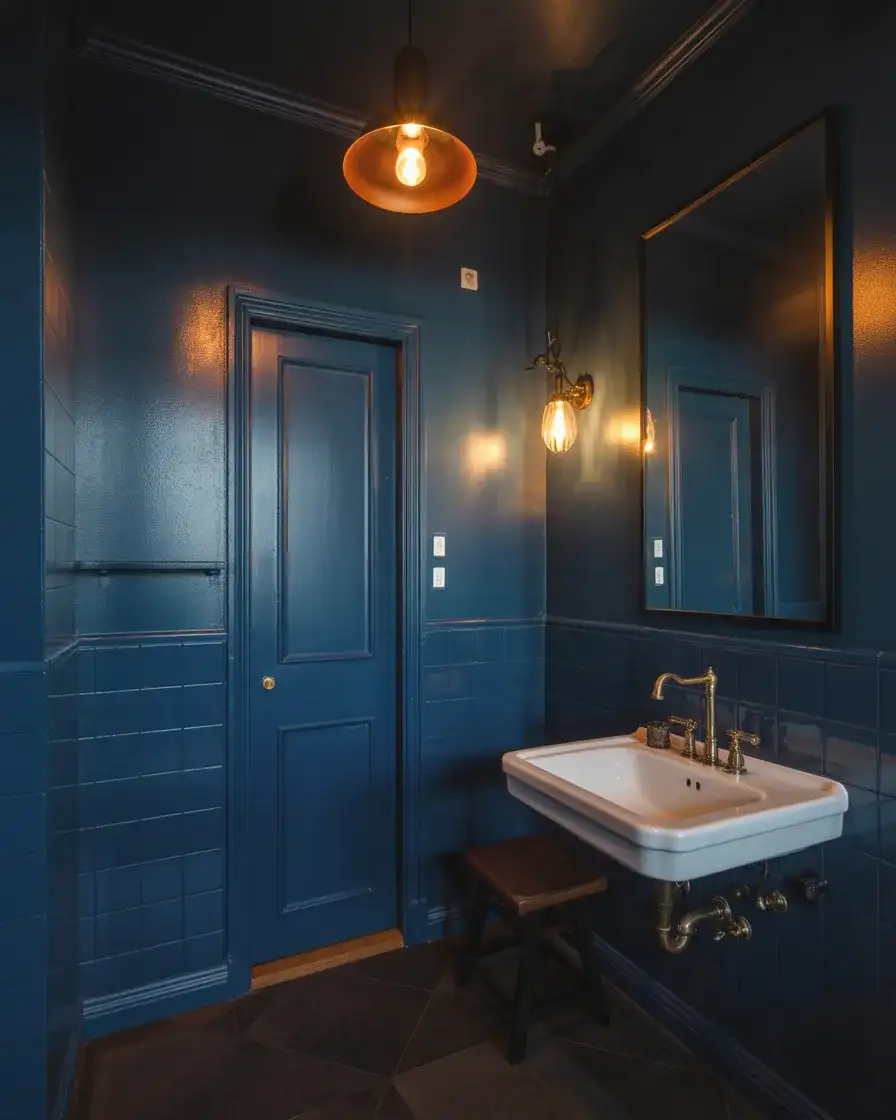
If you’ve been hesitant to go dark in a small room, here’s the thing most designers won’t tell you upfront: dark paint in a small bathroom can actually make the space feel more intentional and finished, not smaller. The key is keeping the ceiling light—a soft white or very pale gray—and making sure your lighting sources are warm rather than cool. A couple of sconces at eye level will do more for the space than an overhead fixture ever could. This is one of those rooms where going bold pays off every single time you walk in.
2. Pink Terrazzo Tile Moment
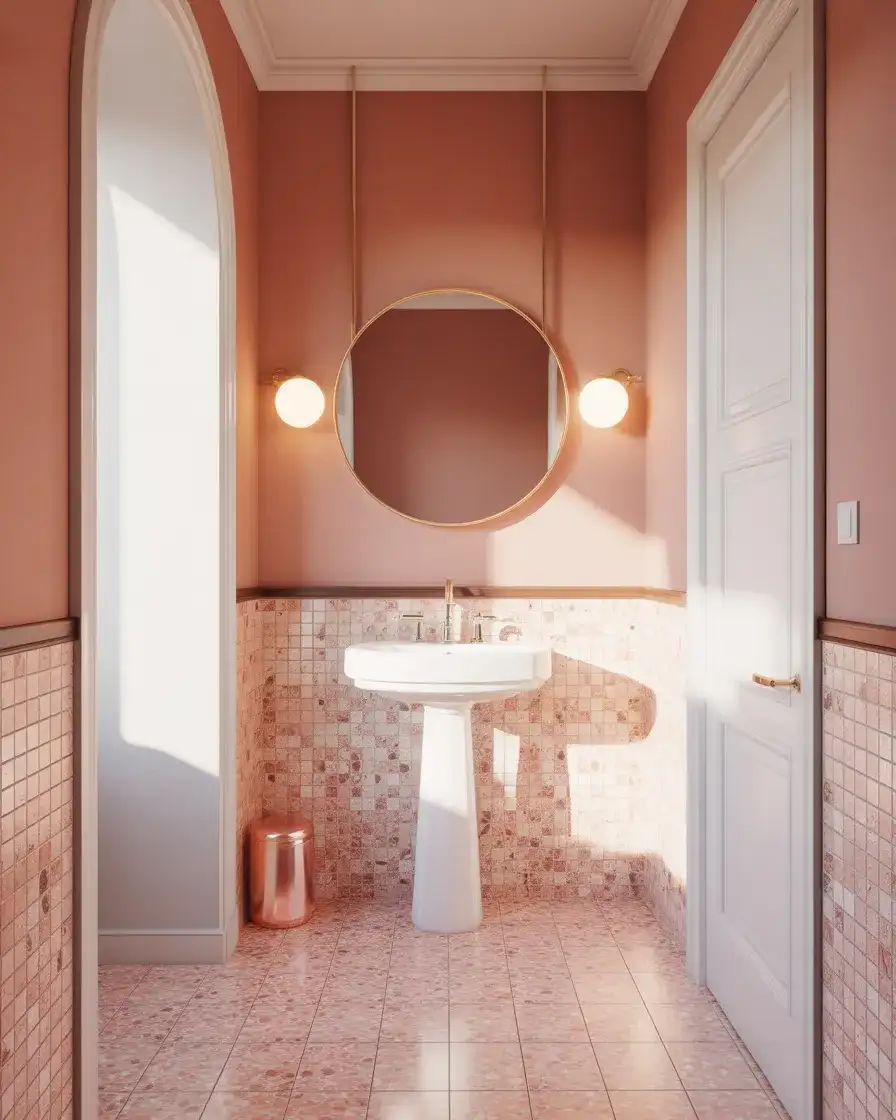
Terrazzo has been building momentum for years, but 2026 is the year it fully embraces its pink and fun potential. Think blush-toned terrazzo floors speckled with white, cream, and the occasional fleck of terracotta—a combination that feels retro and thoroughly modern at the same time. It plays particularly well in guest baths and powder rooms, where you can afford to be a little more daring since the space isn’t carrying the weight of everyday practicality. The speckling breaks up color in a way that hides wear gracefully, which is a practical win alongside all the visual joy.
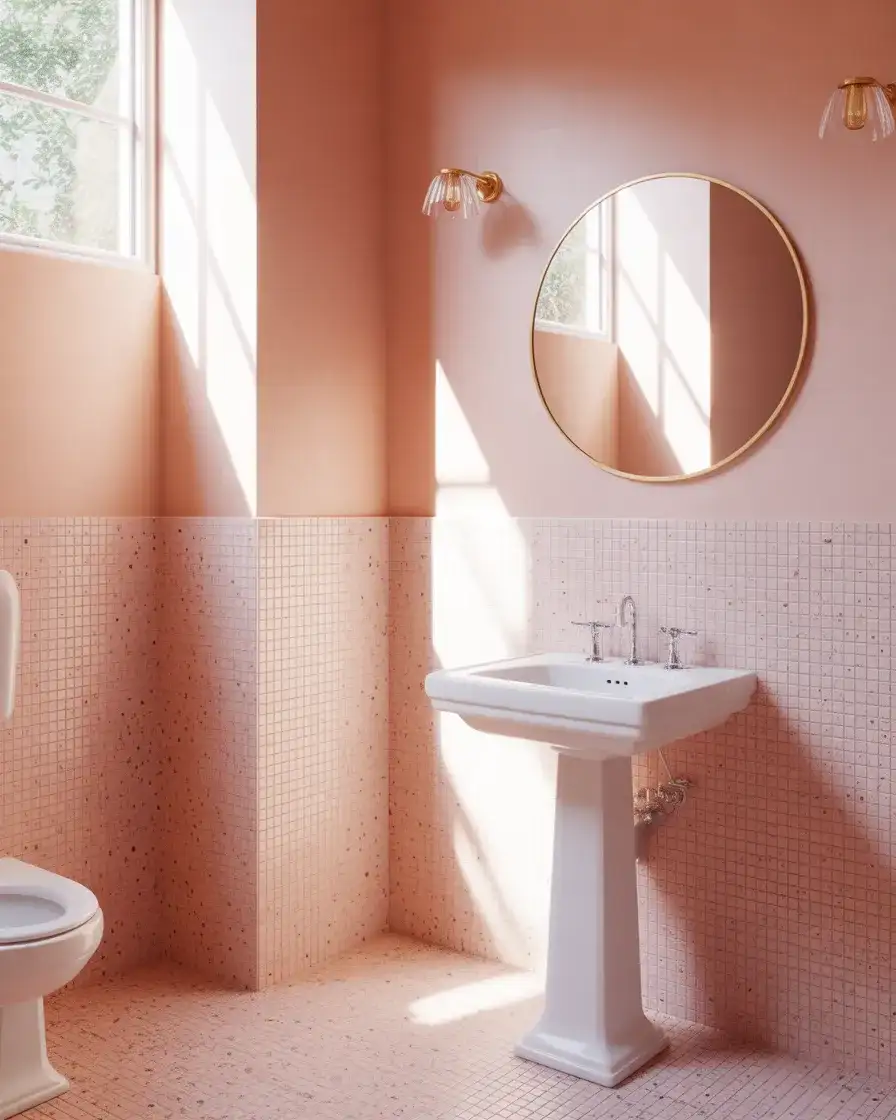
When it comes to budget, terrazzo tile ranges widely—from affordable porcelain look-alikes starting around $4–$8 per square foot to genuine poured terrazzo that can run upward of $30 per square foot installed. For a powder room or half bath, even the premium option stays manageable given the smaller square footage. If you want the look without the commitment, terrazzo-printed peel-and-stick tiles have come a long way and are a genuinely good solution for renters or anyone doing a temporary refresh.
3. The Classic Black and White Grid
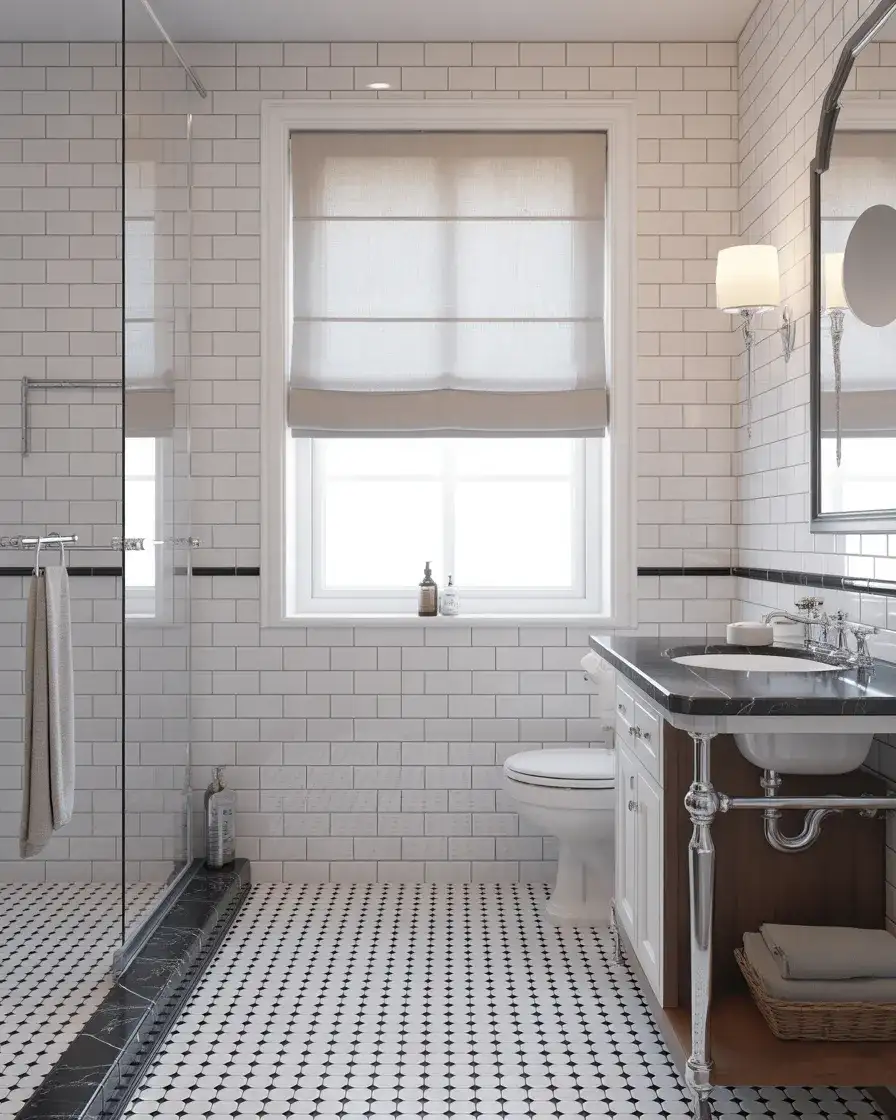
There’s a reason the black and white bathroom never really goes out of style—it’s a design language that speaks to everyone, from minimalists to maximalists who just haven’t fully committed yet. In 2026, this timeless palette is getting a fresh treatment: grid-patterned floors are pairing with subway tile in a matte finish rather than the glossy versions we’ve seen for decades. The result feels cleaner, quieter, and more grown-up. Add a neutral linen window shade and some dark-veined marble accents, and you’ve got something that looks like it belongs in a design magazine without requiring a design budget.
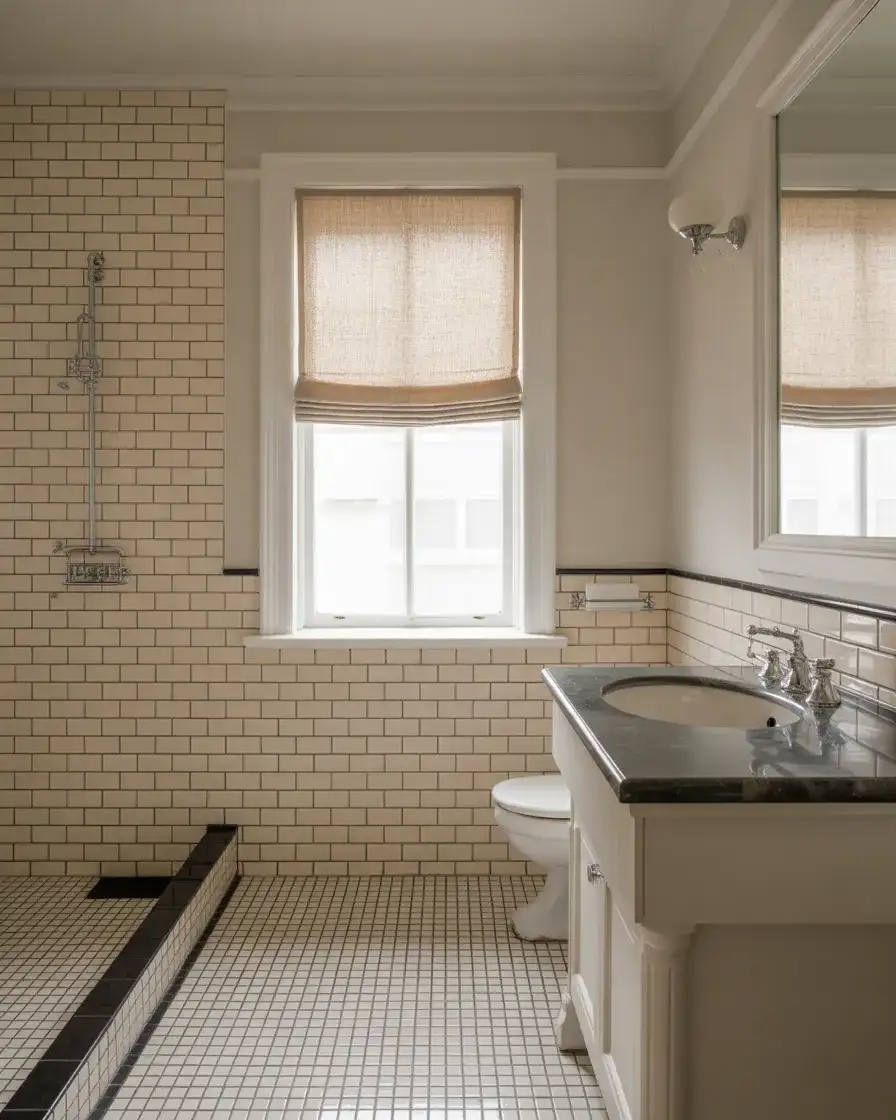
One thing homeowners consistently get wrong with black and white tile work is skimping on the grout color decision. White grout with black tile looks stunning on day one but requires serious maintenance to keep bright. Charcoal or mid-gray grout is the smarter long-term choice—it ages gracefully and doesn’t scream every time someone forgets to squeegee after a shower. It’s a small decision with a big impact on how the whole room looks five years down the road.
4. Warm Rustic Wood Accents
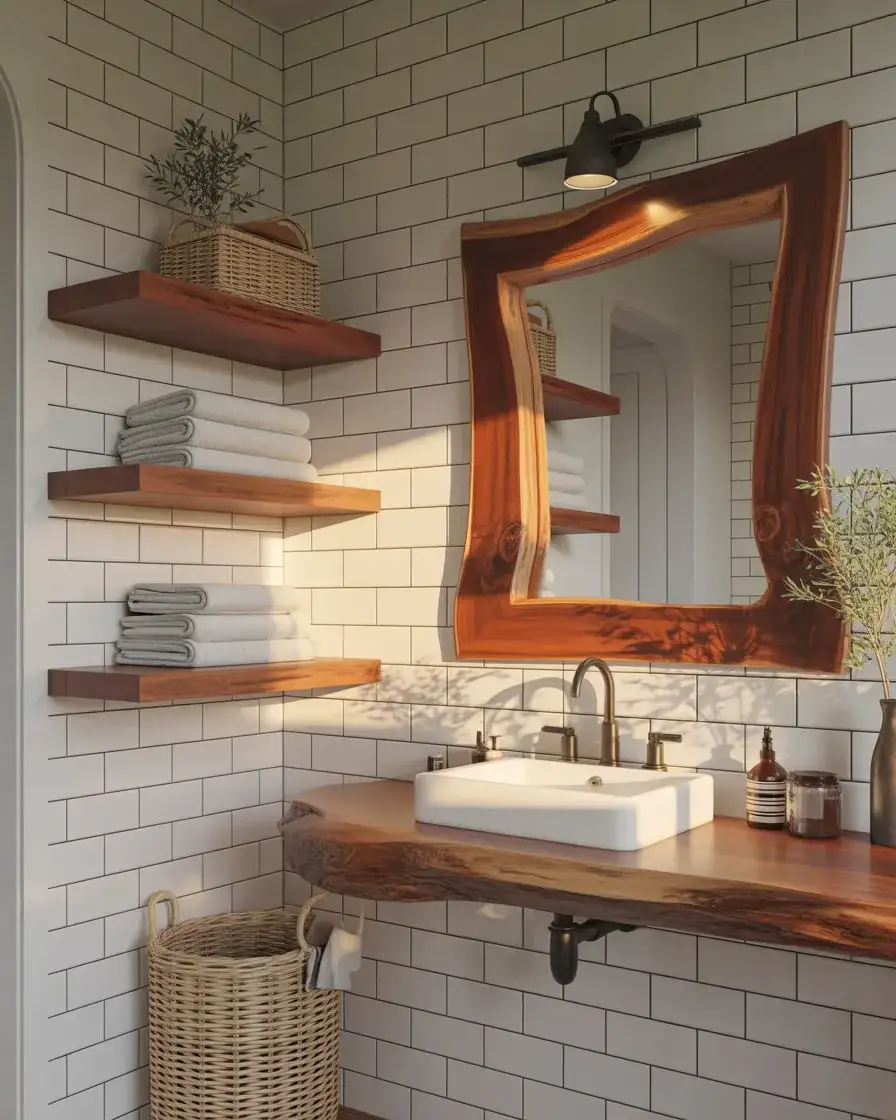
Wood in a bathroom used to feel like a risky choice, but the appetite for rustic, cozy warmth has completely changed how designers approach the space in 2026. Floating teak shelves, a live-edge wood mirror frame, or a simple bamboo bath mat are all low-risk entry points that bring the organic texture of nature indoors without worrying about moisture damage. The key is using properly sealed or naturally water-resistant species—teak, cedar, and eucalyptus are the top three. When layered against white tile and matte black hardware, the wood creates that effortlessly warm, lodge-like feeling that never looks overdone.
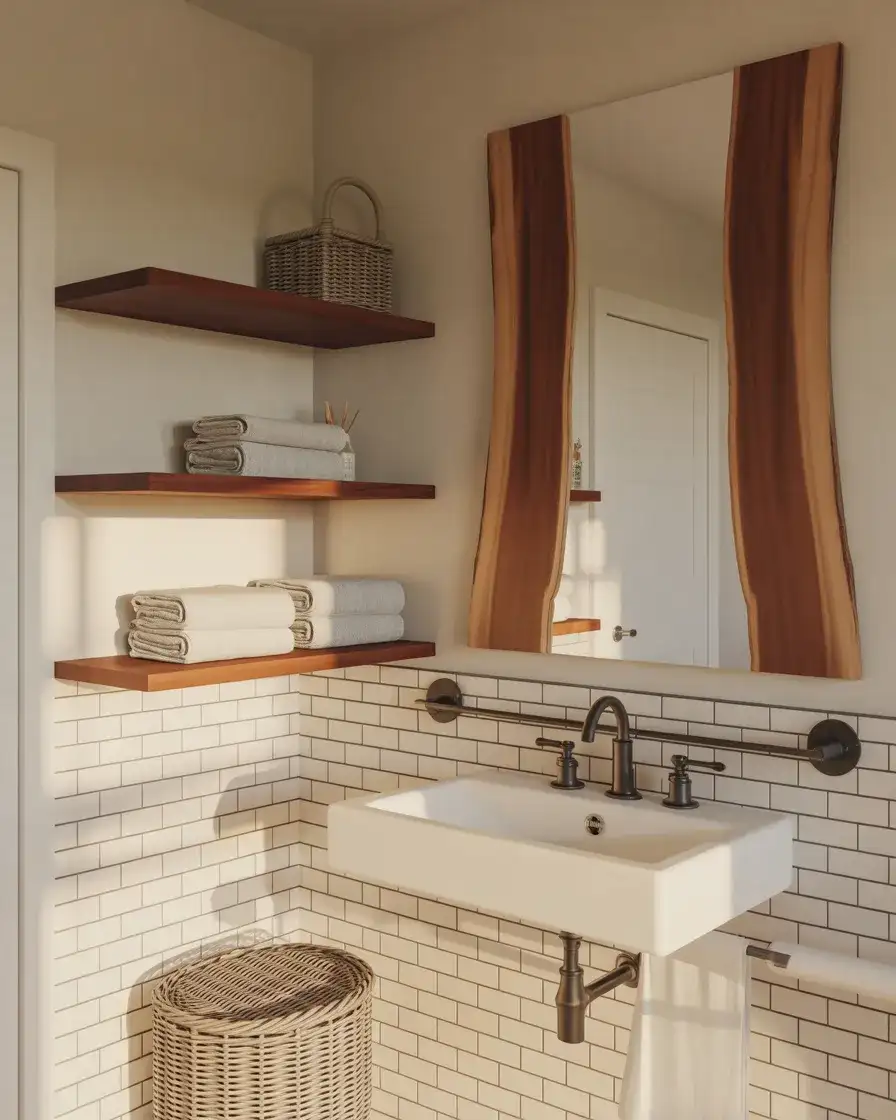
This look resonates deeply in regions like the Pacific Northwest, the Mountain West, and New England—places where indoor-outdoor connection is part of the lifestyle DNA. But it works just as beautifully in a Brooklyn apartment or a suburban Houston home when executed with intention. The trick is restraint: one or two wood elements anchor the room without making it feel like a sauna. Think of wood as a punctuation mark, not the whole sentence.
5. Spa-Inspired Green Sanctuary
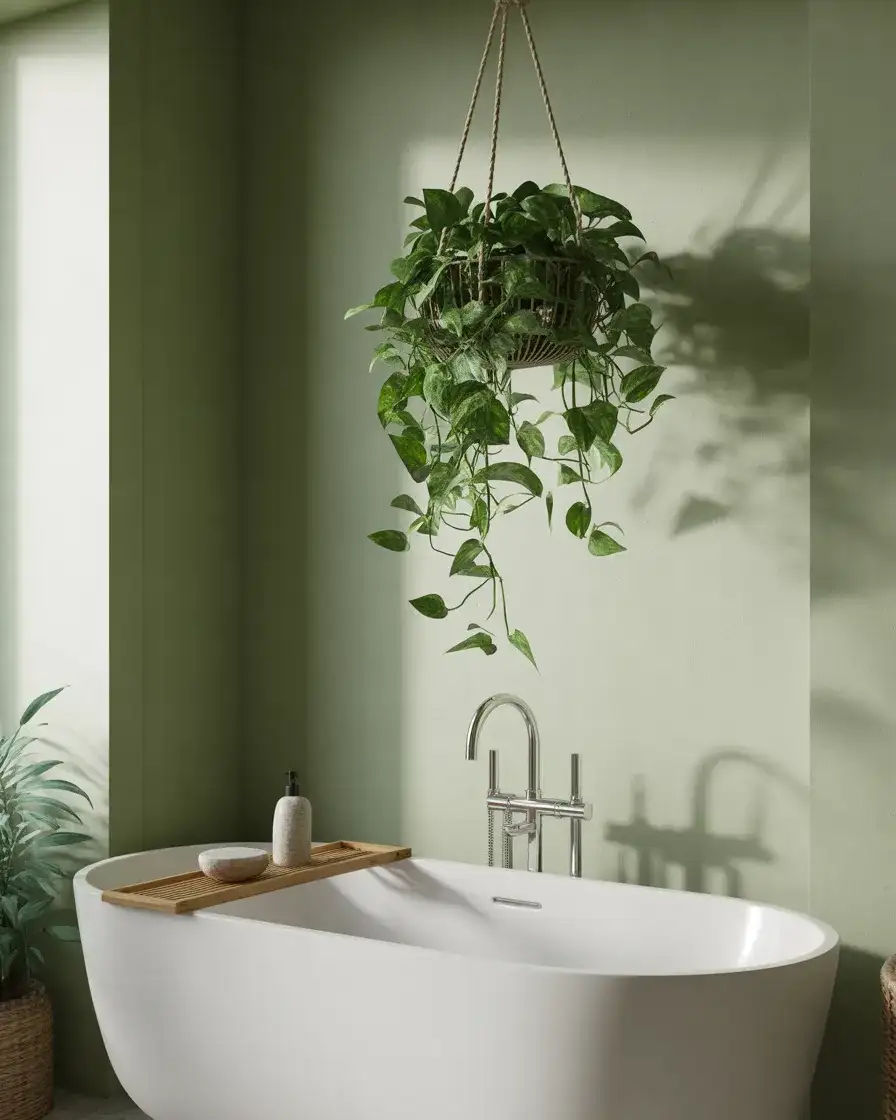
We’re officially in the era of the home spa, and green—in all its mossy, sage, and forest-toned glory—is the color that makes it feel real. In 2026, olive-toned walls paired with natural stone and living plants have become the go-to formula for creating a bathroom that genuinely feels restorative rather than just clean. The palette signals the nervous system to slow down, which is exactly the point. Hang a few trails of pothos from a ceiling hook, add a stone diffuser, and suddenly your morning routine starts to feel like a wellness ritual.
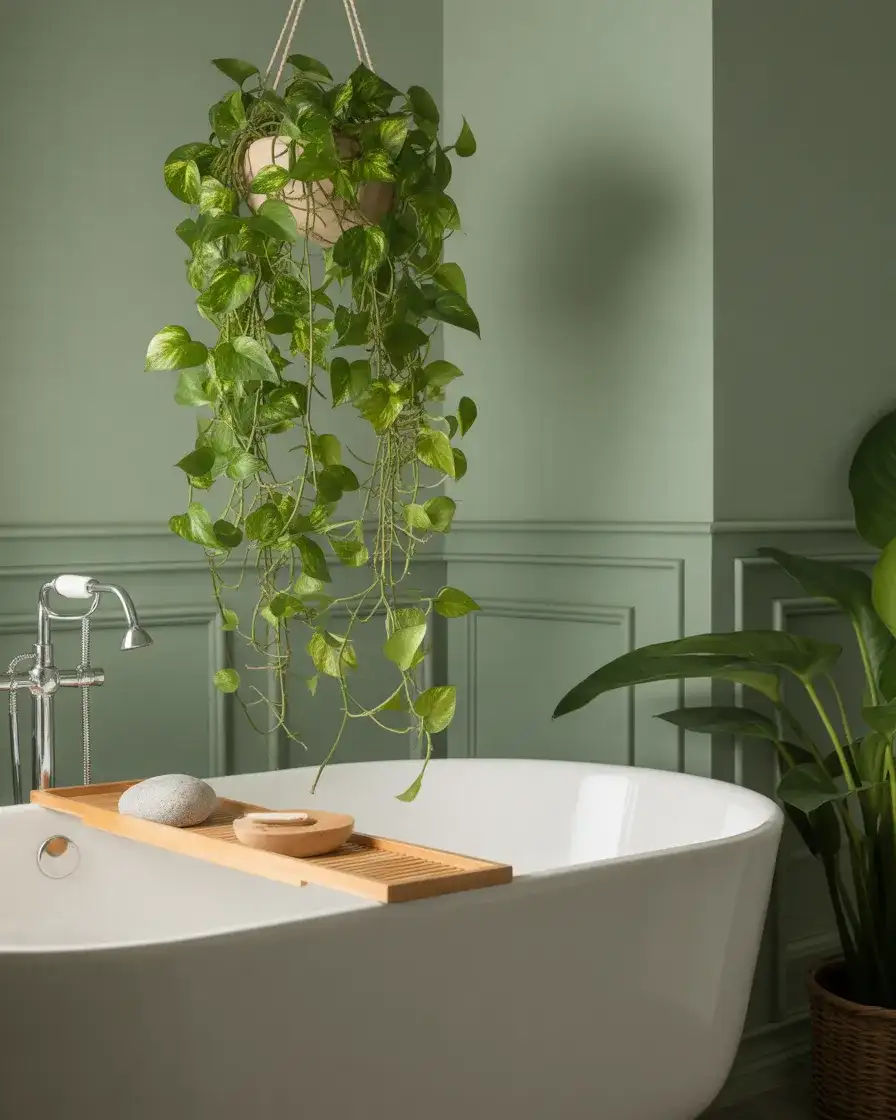
A real homeowner in Portland recently shared that switching her bathroom walls from a standard gray to a deep sage green was the single design change that made her feel most at home in her rental. She paired it with a $30 hanging plant bracket from a local hardware store and used Command strips to hang two simple prints of botanical illustrations. The total additional investment was under $60, and the transformation photographs look like something out of a boutique hotel. Small changes, outsized impact—that’s the magic of the right color choice.
6. Funky Maximalist Wallpaper
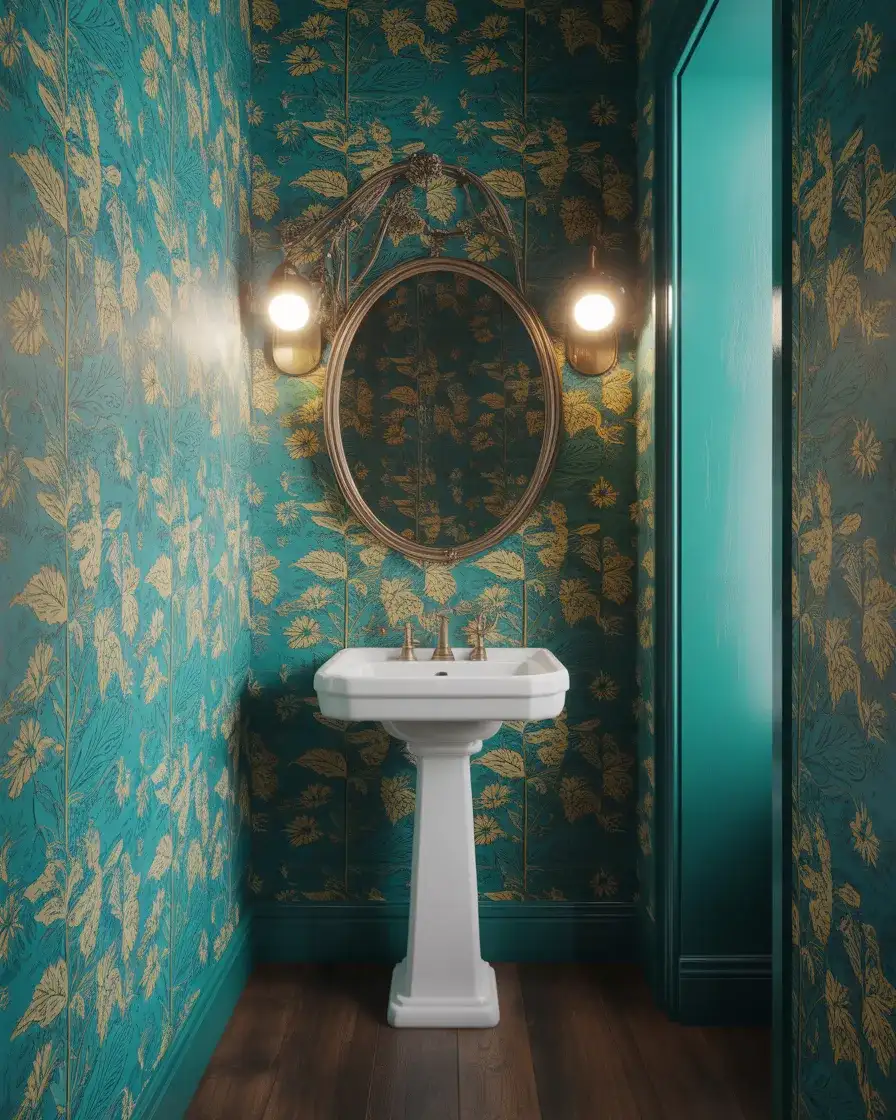
If there’s one room in the house where you’re fully allowed to go funky and completely wild with pattern, it’s the bathroom—specifically the powder room or half bath. In 2026, bold botanical prints, abstract swirls, and even retro geometric patterns are showing up on bathroom walls in the most joyful ways. Because the square footage is small, you’re not committing to acres of pattern—you’re committing to a moment. And that single, maximalist moment can define the personality of an entire home. This is inspo territory: the kind of room guests remember and talk about.
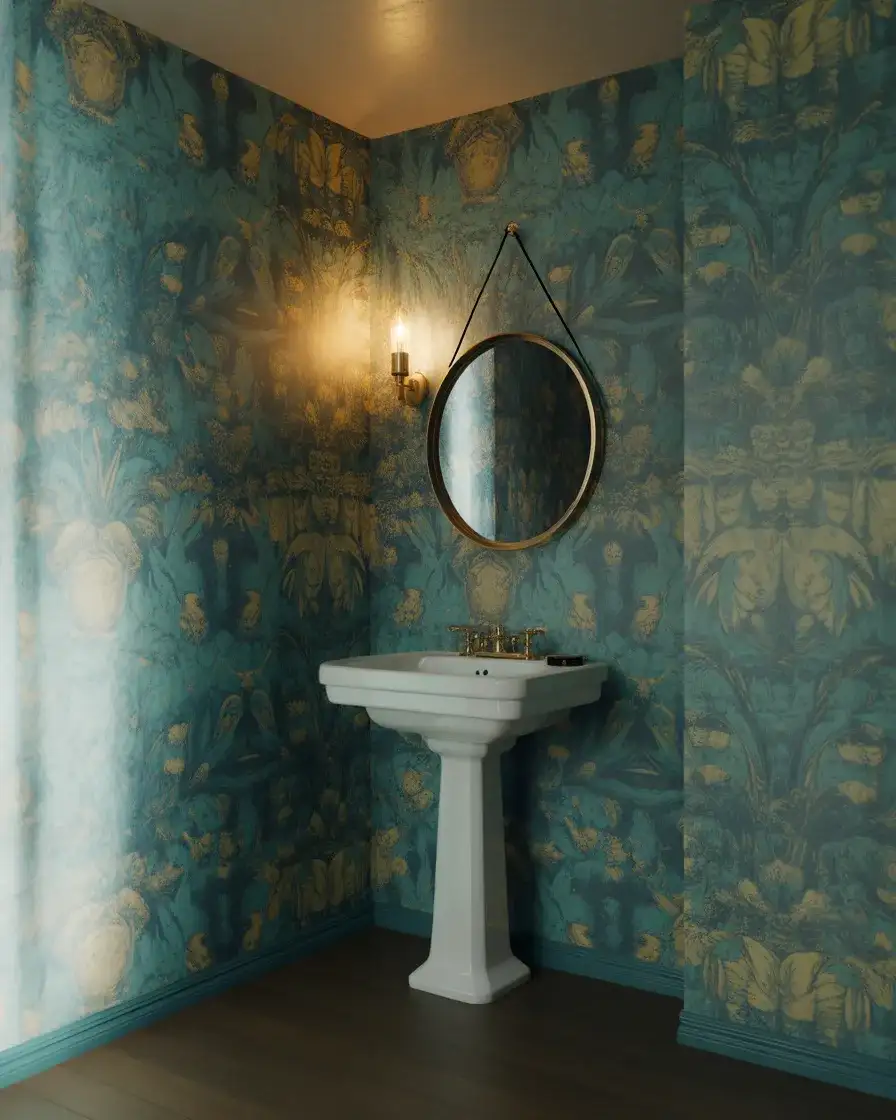
Expert designers often describe the powder room as “the jewel box of the home”—the one room where you can break every rule you’re carefully following everywhere else. The best approach is to choose a wallpaper that contains a color from an adjacent room and let that color tie things together. This keeps the drama feeling intentional rather than chaotic. And if you’re renting or commitment-averse, peel-and-stick wallpaper from brands like Chasing Paper or Tempaper has genuinely good options that can be removed without damage.
7. Minimalist White and Warm Linen
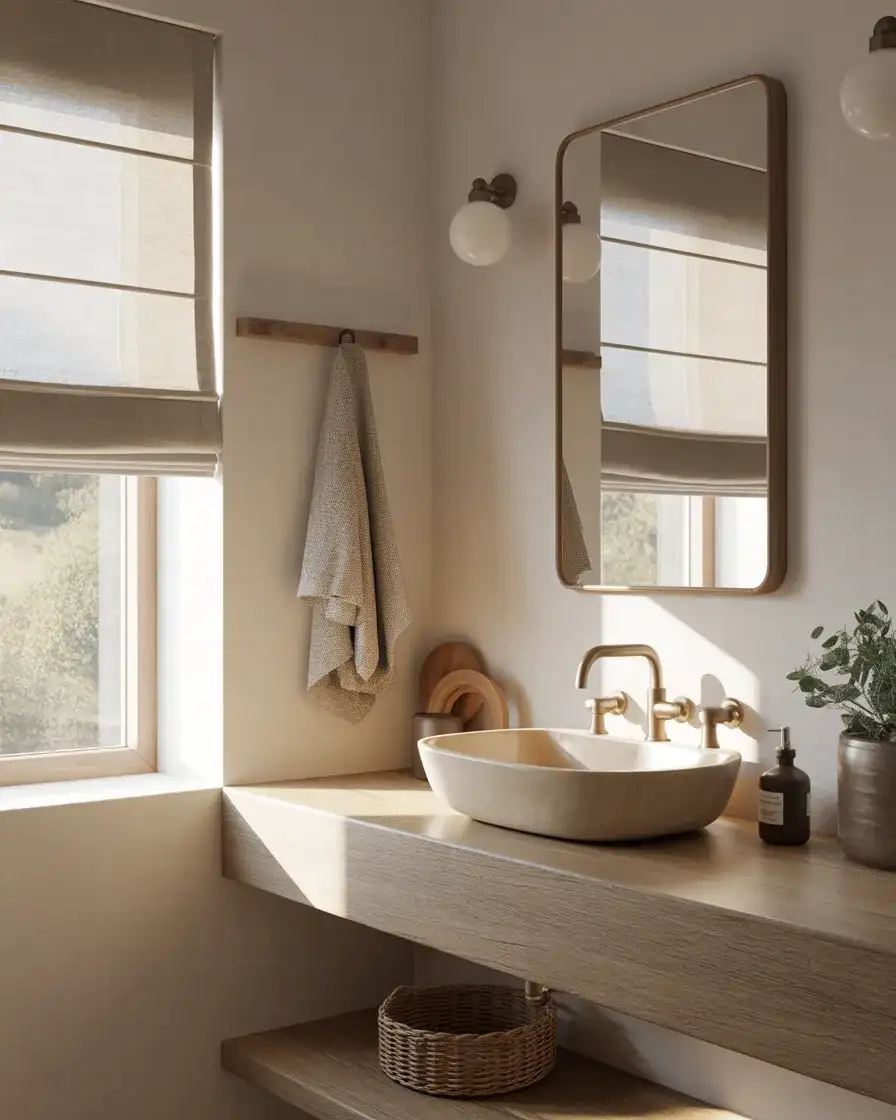
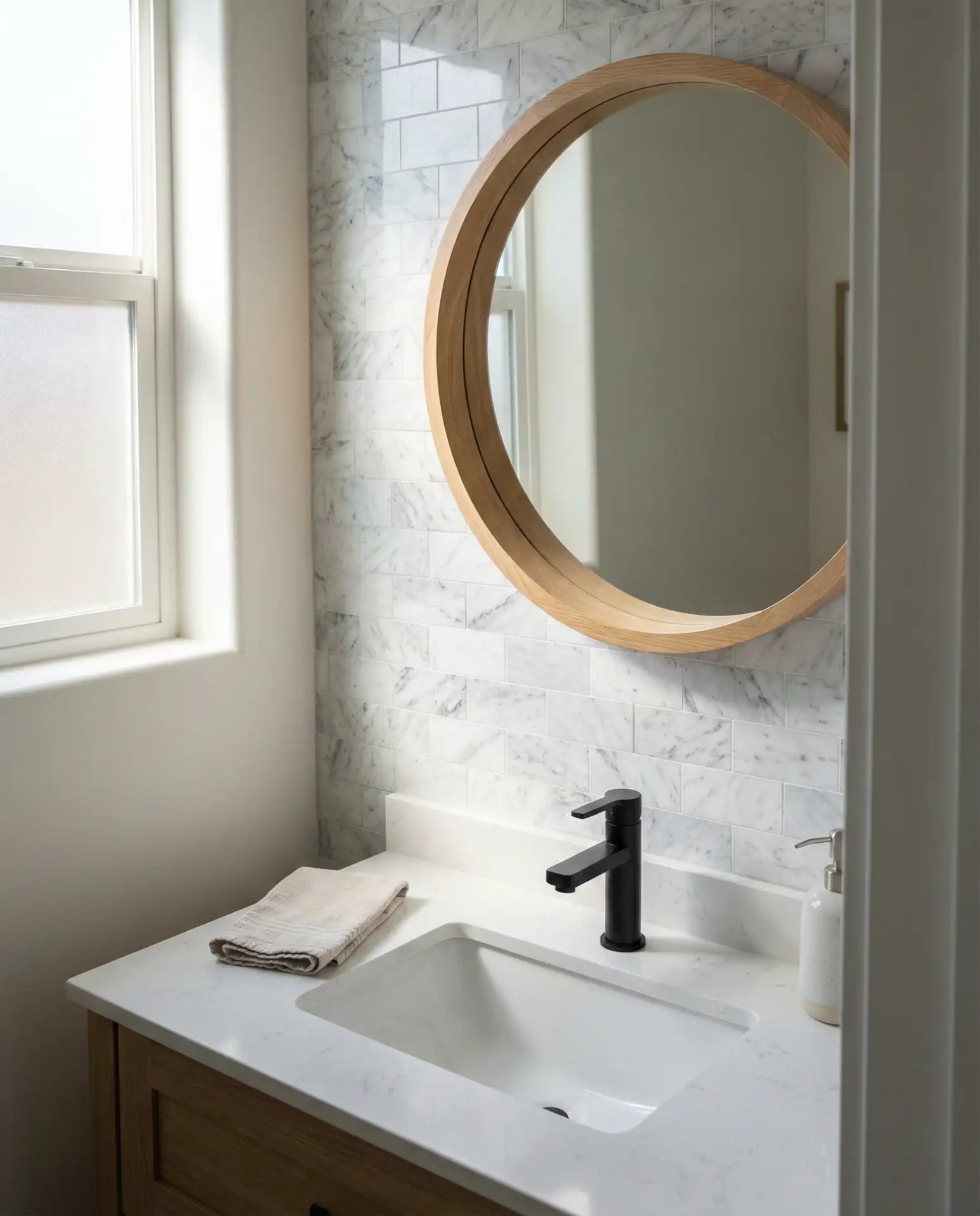
The white bathroom isn’t going anywhere—it’s just getting warmer and smarter in 2026. Rather than the stark, cold white of a decade ago, today’s minimalist bathrooms layer in warm-toned whites alongside natural linen, aged oak, and matte fixtures that absorb light rather than bouncing it around aggressively. The effect is calm and neutral in the best sense: a quiet room that holds space for you without demanding attention. It’s the anti-Instagram bathroom—and yet it photographs absolutely beautifully, especially in morning light.
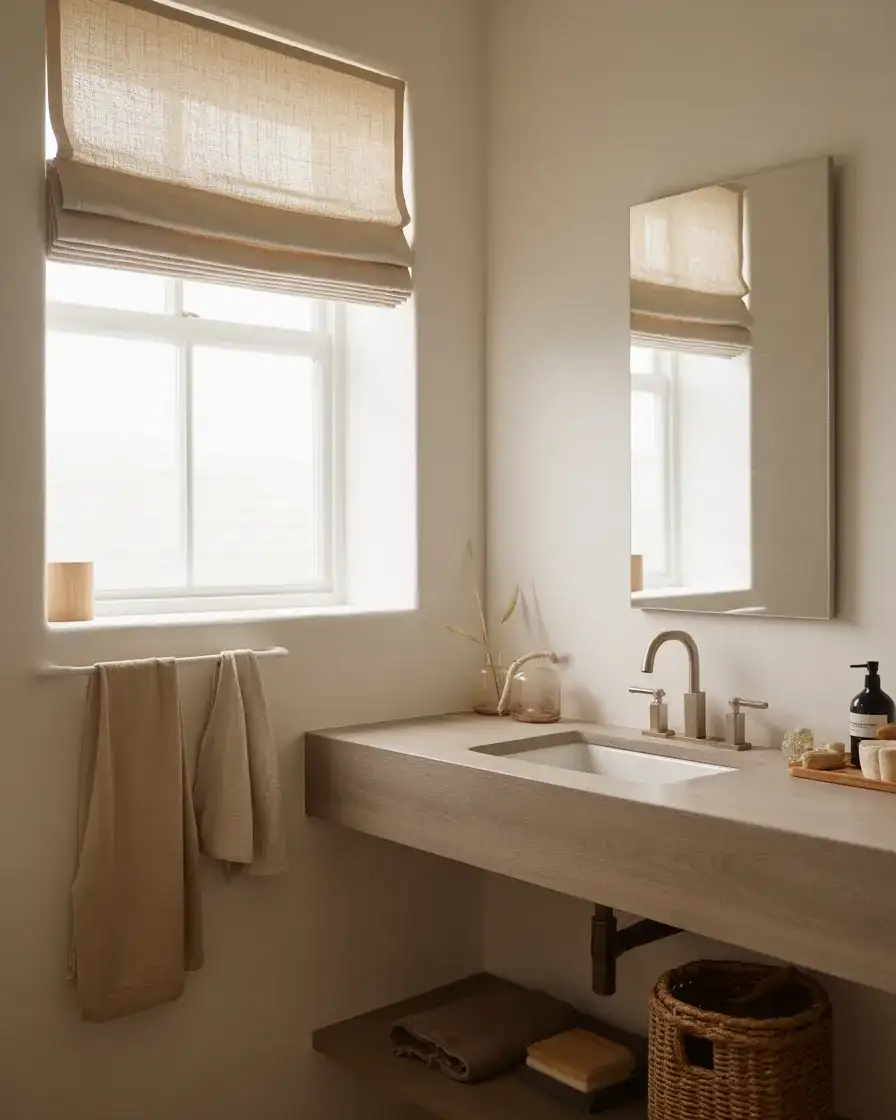
Where this works best is in primary bathrooms connected to a bedroom, where the continuity of a warm neutral palette helps the two rooms breathe together as a suite rather than as separate, competing spaces. The key to keeping it from feeling sterile is texture: a chunky knit bath mat, a woven rattan mirror, and a linen hand towel with a contrasting stitch border. It’s all about layering materials within the same color family so the eye finds interest without finding noise.
8. Earthy Brown and Terracotta Tones
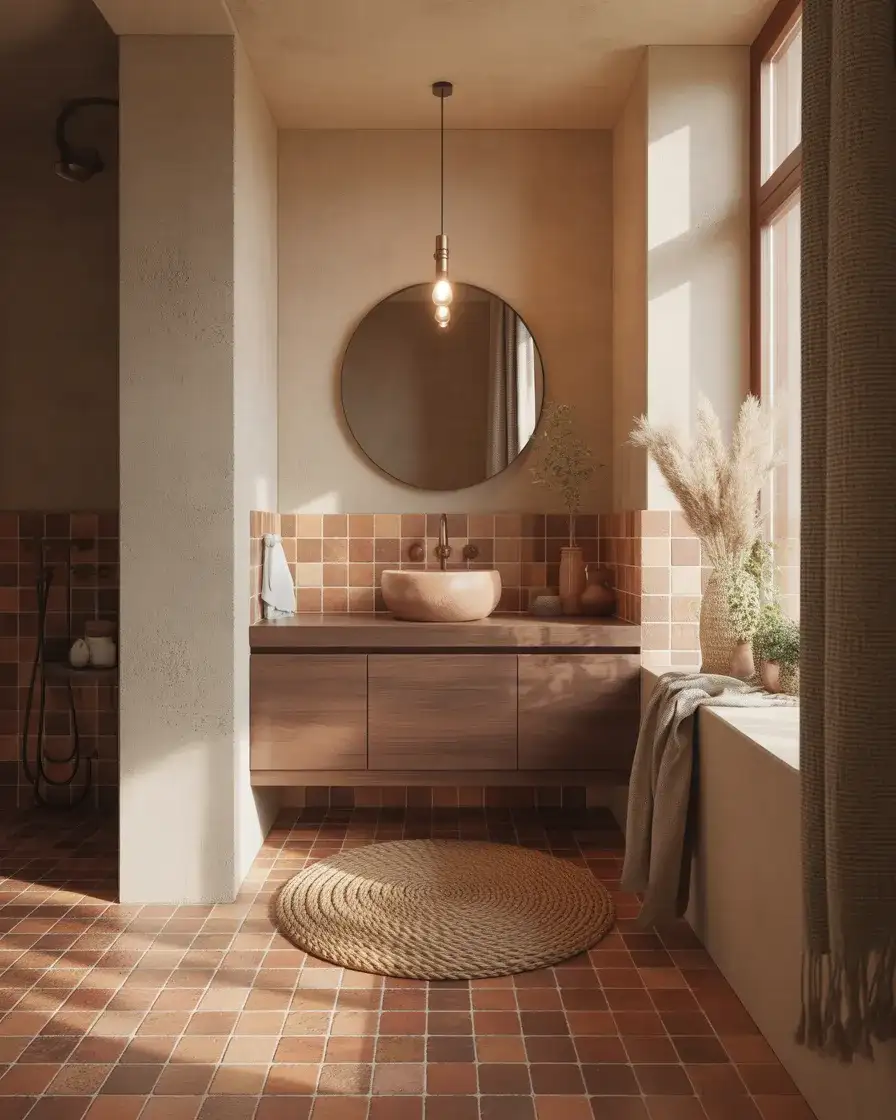
Earth tones have fully taken over interior design, and the bathroom is no exception. In 2026, brown and terracotta are the new neutrals—warm, grounding, and deeply connected to the current appetite for natural, organic materials. Think walnut-toned vanities, clay-colored plaster walls, terracotta floor tiles with a handmade variation in their finish, and woven jute accessories that bring the whole palette together. This is the bathroom equivalent of a pottery studio: tactile, earthy, and undeniably cozy. It also pairs beautifully with the increasing trend toward rounded, organic forms in fixtures.
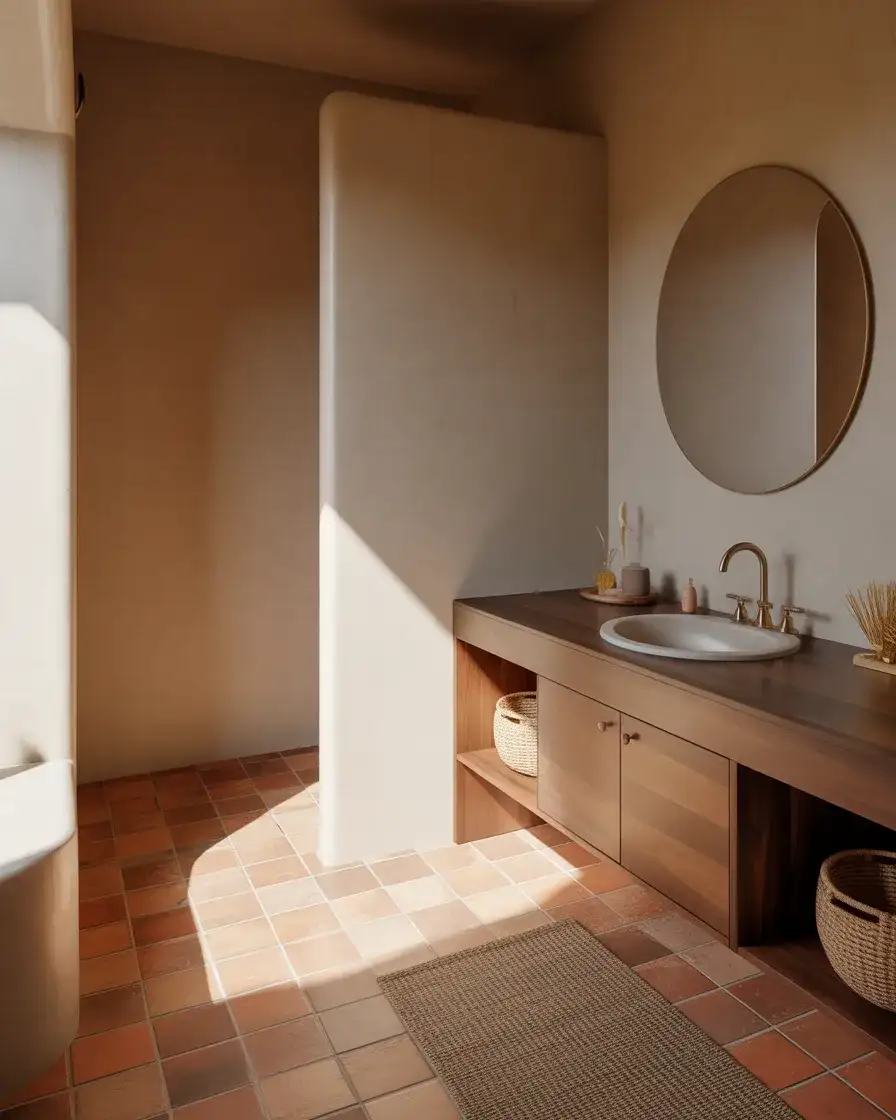
Limewash paint is one of the best ways to achieve that soft, layered terracotta-clay wall finish without committing to actual plaster. Brands like Romabio and Portola have DIY-friendly options in the $60–$100 per gallon range, and a single gallon typically covers a standard bathroom easily. The application technique—sponging it on in overlapping, slightly varied strokes—is genuinely forgiving, which makes it one of the better weekend DIY projects even for people who’ve never painted anything interesting before.
9. Cute and Playful College Bathroom
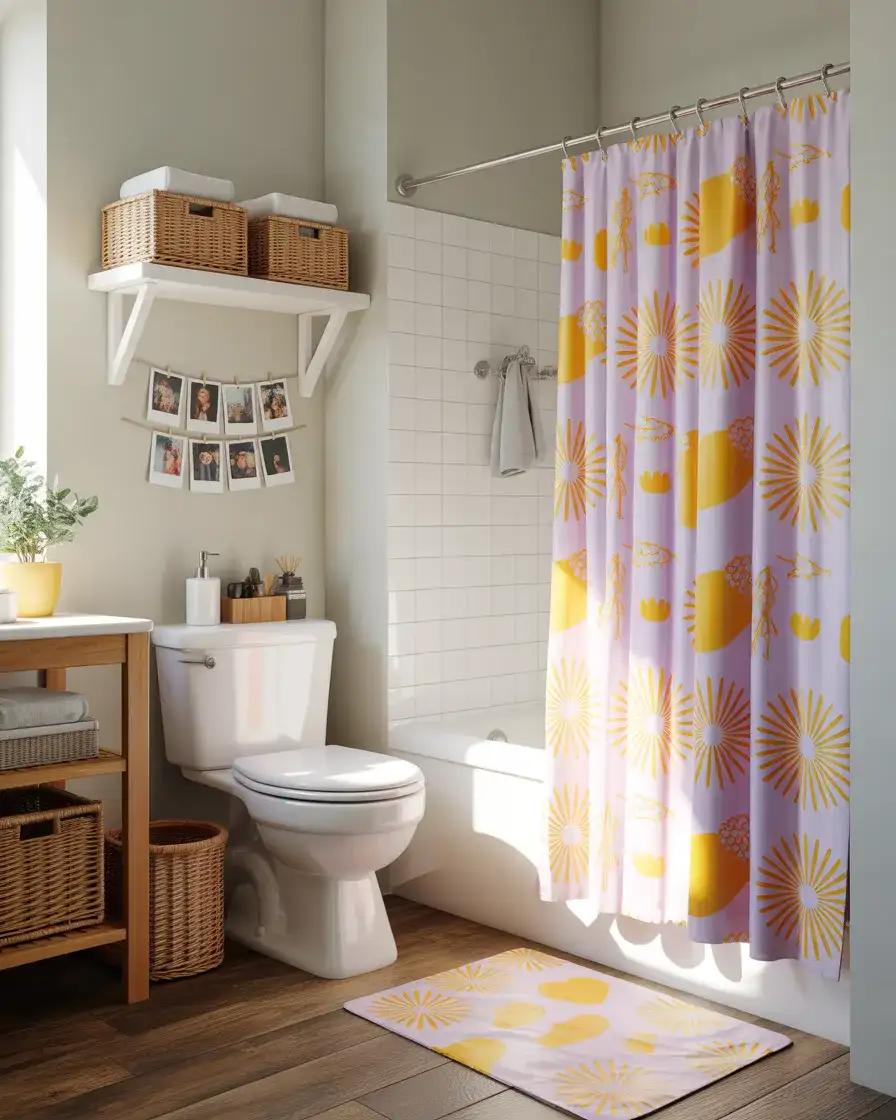
Not every bathroom needs to be a sophisticated retreat—sometimes it just needs to be cute, personal, and completely your own, especially when you’re working with a shared college dorm or apartment bathroom with zero permanent alteration allowed. In 2026, the Pinterest-savvy approach involves a cohesive caddy system in a color you actually love, matching shower curtain and bath mat sets in bold prints, and a small adhesive hook gallery wall with postcards, polaroids, or mini prints that express personality without damaging a single wall. It’s maximally personal and minimally invasive.
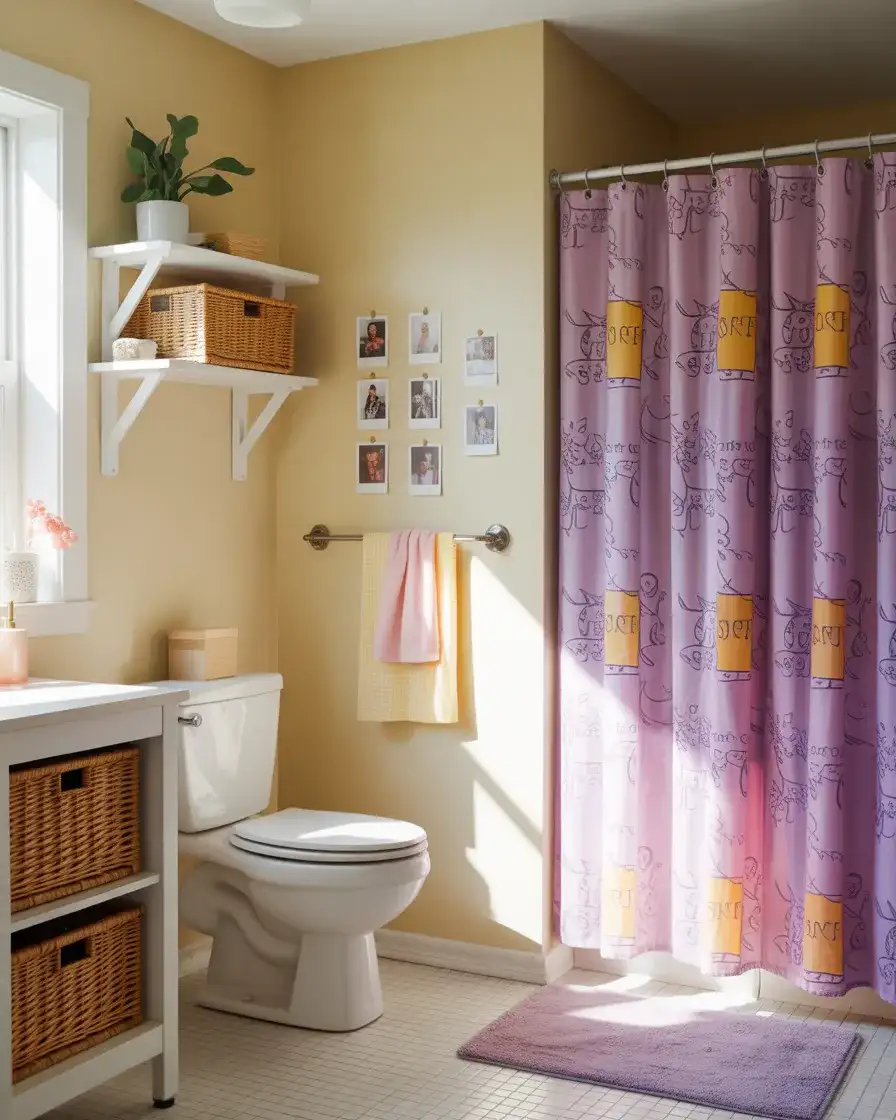
The most common mistake in a college or renter’s bathroom is going in without a color plan and ending up with a visual jumble that somehow still manages to look boring. Pick one accent color—say, sage green or dusty mauve—and buy everything in that family: your shower curtain, your towels, and your caddy. A $45 investment in a cohesive set from Target or Amazon does more for the space than $200 of random, mismatched items. Coordination is the secret weapon of small, renter-friendly decor.
10. Bold Red Accent Bathroom
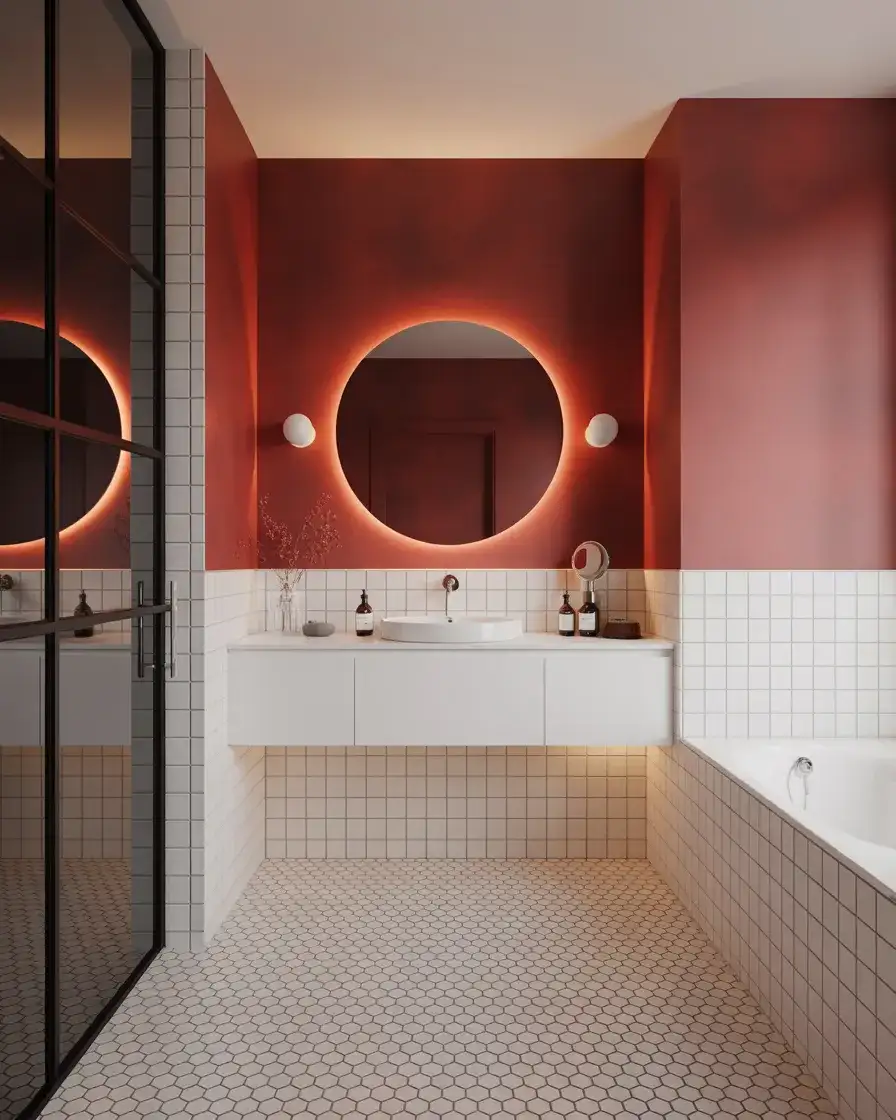
Red in a bathroom might sound alarming, but used with precision, it becomes one of the most electrically confident design choices you can make. In 2026, red is showing up as a single accent wall in powder rooms, as a bold vanity color in primary baths, and even as the star in a black and white room where a lacquered red cabinet or a cherry-red towel rail acts as an unexpected focal point. This is not timid design—it’s for the person who knows exactly who they are and wants their space to say it clearly. Think Italian mid-century modern meets downtown Manhattan apartment.
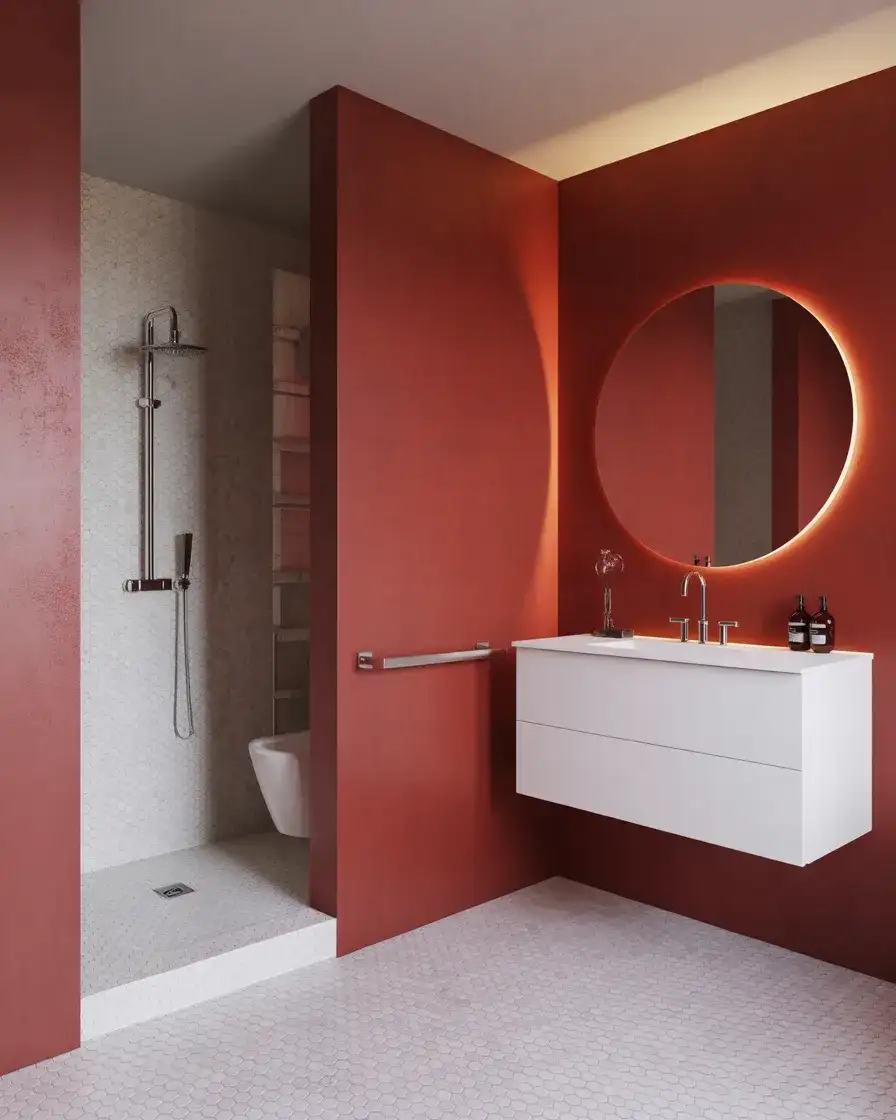
Here’s where red really earns its place: in a home where the rest of the design palette is relatively restrained—lots of white, gray, or cream throughout the living spaces—a red bathroom becomes the dramatic punctuation mark that gives the whole home a sense of intention and wit. Interior designers often call this “the controlled outburst,” and it’s a technique that appears consistently in the homes of people with genuinely strong personal style. The red room works because everything else doesn’t.
11. Guest Bathroom Refresh with Spa Vibes
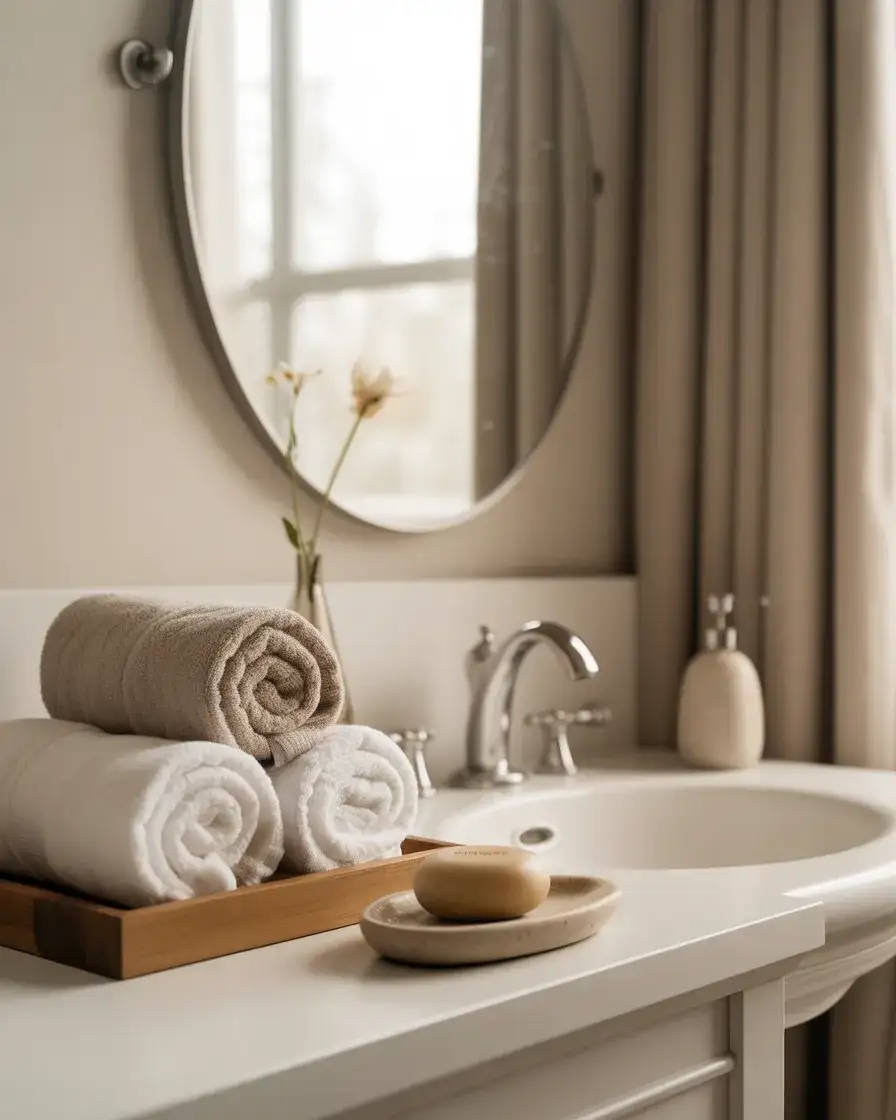
The guest bathroom often gets neglected—it only sees regular traffic when people visit, so it becomes a catch-all for the toiletries and hand towels nobody uses daily. In 2026, the most thoughtful homes are treating the guest bath with a spa-inspired philosophy: simple, elevated, and stocked with the kind of details that make someone feel like they’re staying somewhere special rather than somewhere tolerant. A rolled hand towel tower, a ceramic tray with a single bar of luxe soap, and a small bud vase with a fresh stem—these micro-gestures cost almost nothing and communicate real warmth to a visitor.
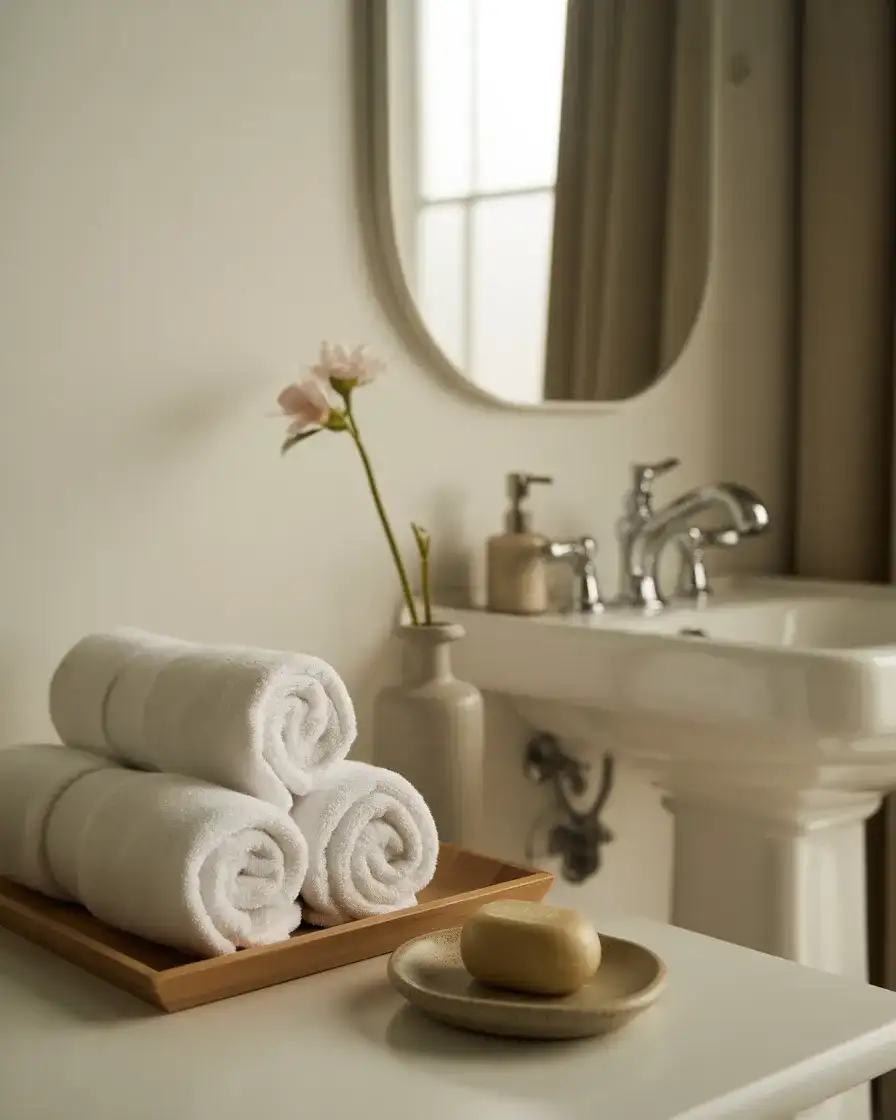
Think about the last time you stayed somewhere and felt genuinely taken care of—not because there was an expensive object in the room, but because someone had thought through the small things. That’s what a guest bathroom refresh is really about. Swap the hand soap for something that smells extraordinary. Put a small hook at the right height for a bag or a robe. Leave a fresh towel that’s actually soft. These are acts of hospitality that cost less than a dinner out but feel, to a guest, like a five-star upgrade.
12. Western and Ranch-Inspired Bathroom
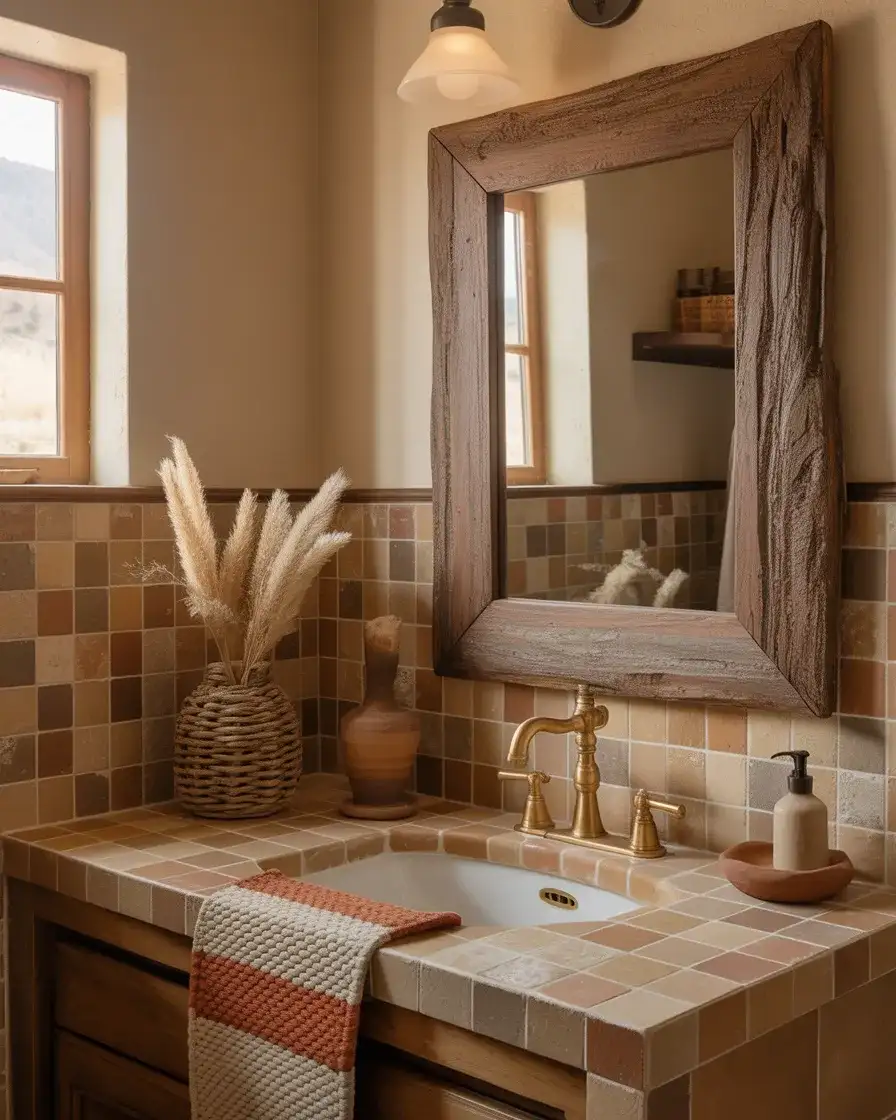
The western aesthetic is surging in home decor right now, and it’s landed in the bathroom with unexpected elegance. This isn’t about cowhide rugs and cowboy boots—at least not literally. It’s about the visual language of the American West: warm sandstone tones, leather-wrapped accessories, unlacquered brass that weathers beautifully, and handmade ceramic pieces in off-white or clay hues. Layer in a rough-hewn wood mirror frame and a woven cotton bath mat in cream and rust, and you’ve got something that feels simultaneously regional and rustic and completely current.
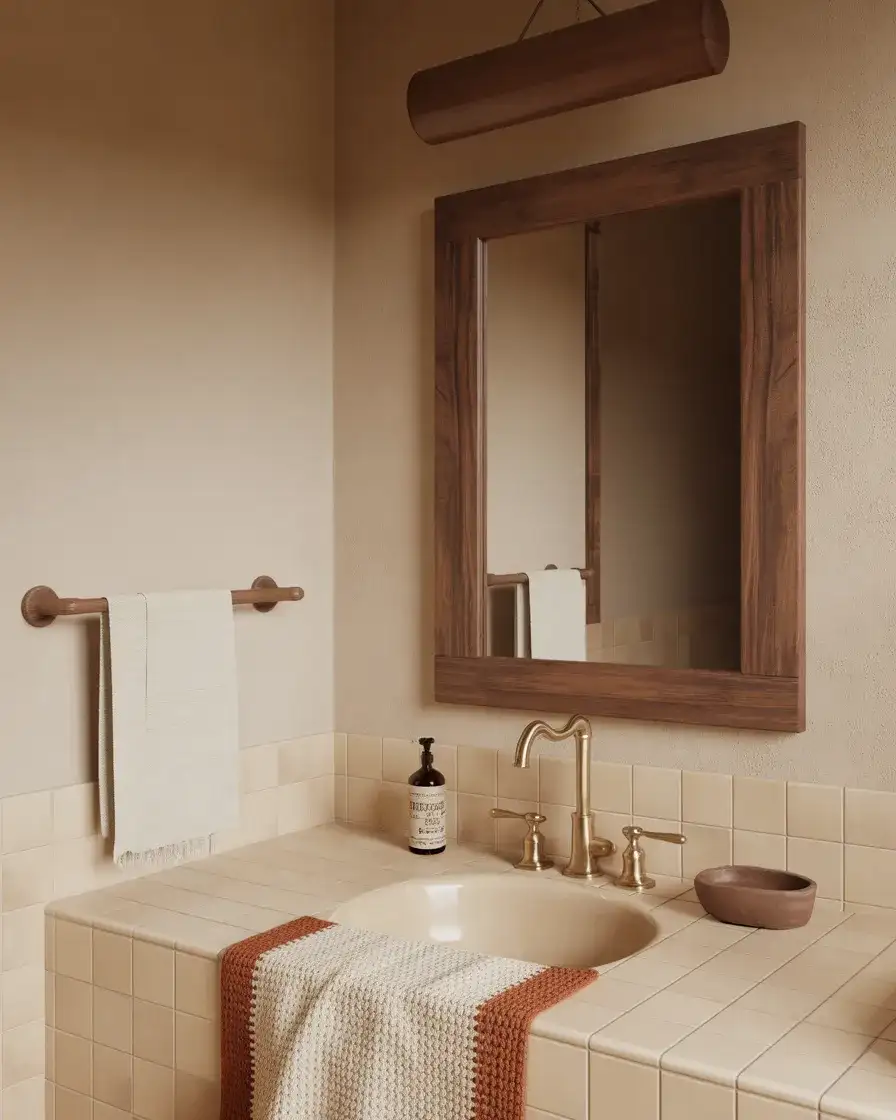
This aesthetic resonates particularly deeply in Texas, New Mexico, Arizona, and across the Mountain states, where the landscape genuinely informs how people choose to live inside. But it’s traveled far beyond its regional origins—you’ll find Western-inspired powder rooms in Brooklyn townhouses and Chicago condos, often mixed with other design sensibilities to create something that feels personal rather than themed. The hallmark is always authenticity: choose materials that age gracefully rather than things that merely gesture at the aesthetic.
13. Christmas and Holiday Bathroom Styling
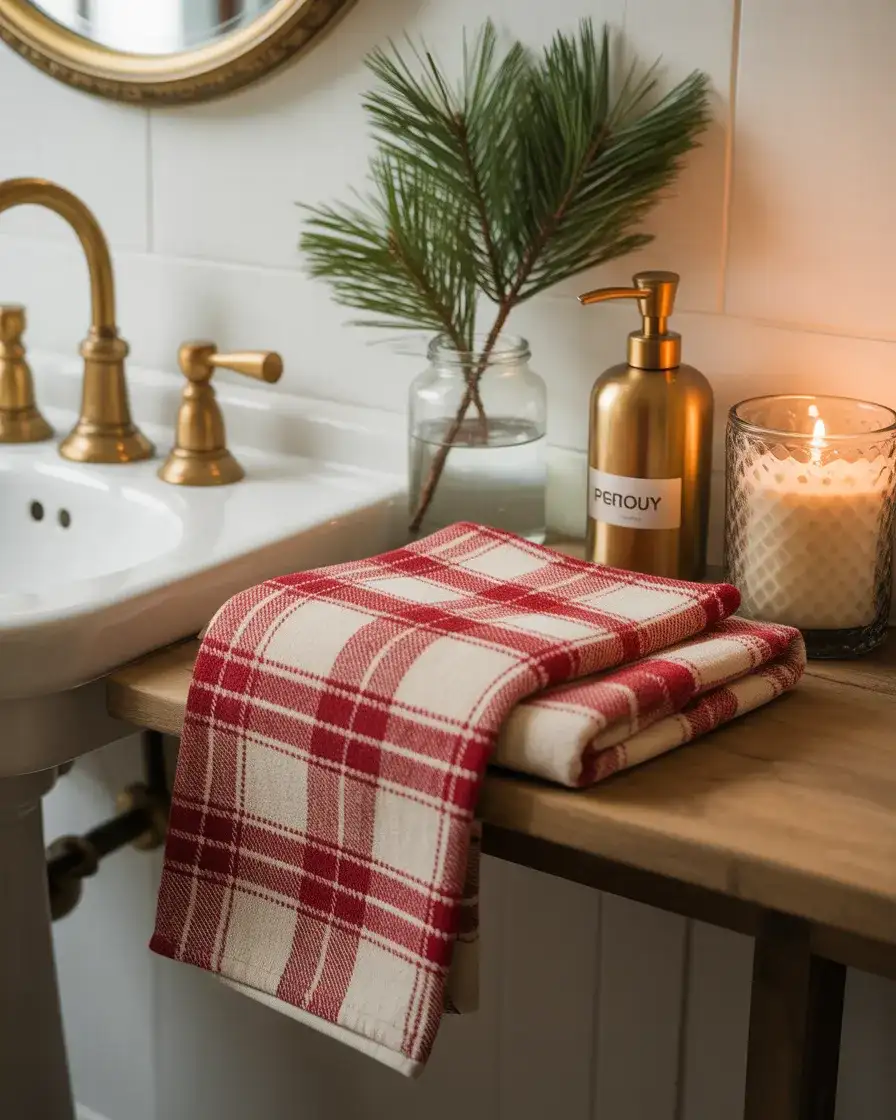
The bathroom is one of the most overlooked spaces when people decorate for Christmas and the holiday season—and yet it’s one of the most visited rooms in the house during any gathering. A simple swap of your everyday hand towels for festive plaid or cream-with-gold-embroidery versions, a small pine sprig tucked into a jar beside the sink, and a holiday-scented hand soap in a beautiful pump can transform the space in under fifteen minutes. It’s cute, it’s seasonal, and it communicates to guests that you care about the whole experience of being in your home—not just the main stage of the living and dining rooms.
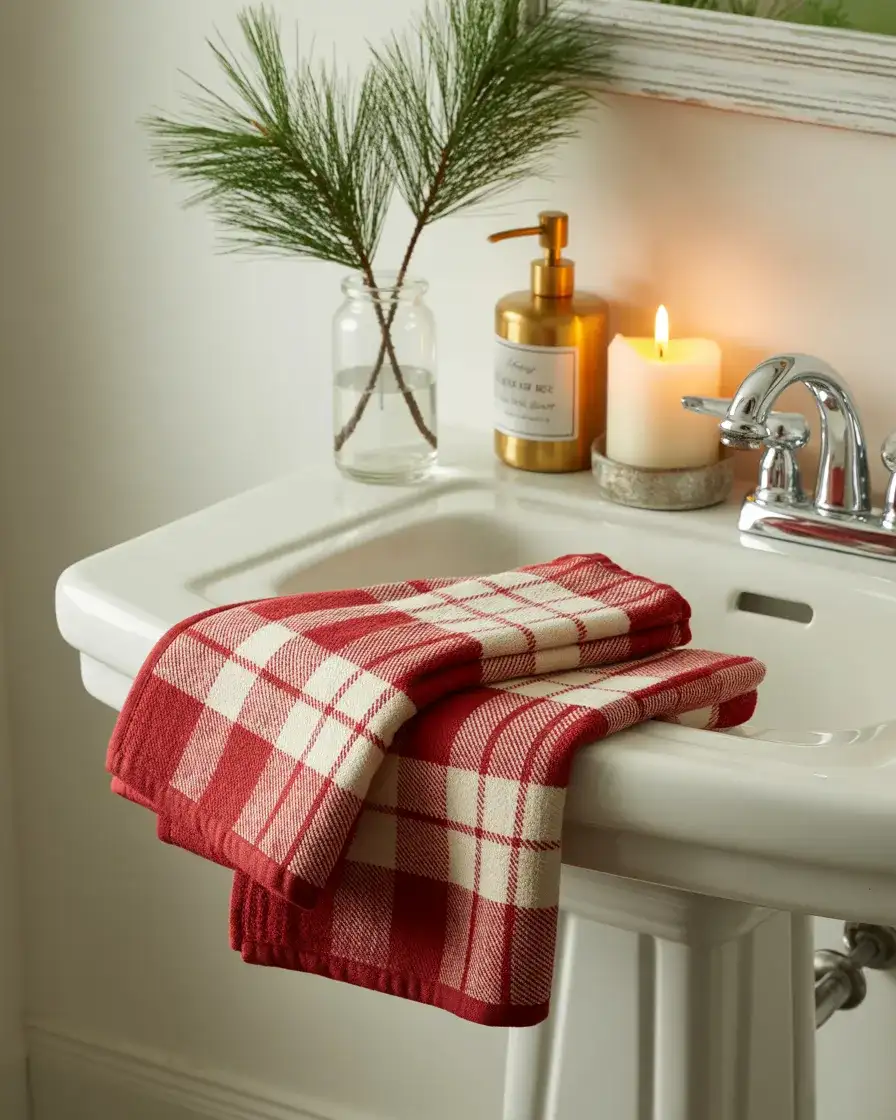
Real homeowners who do this consistently report that guests comment on the bathroom decor at holiday parties just as frequently as they comment on the tree or the table setting. It’s the element of pleasant surprise—nobody expects the powder room to be beautiful, so when it is, it registers as a genuinely warm gesture. The investment is minimal: a seasonal hand towel set runs $12–$25 at Target or TJ Maxx, and the whole effort, including styling, takes less time than setting the dinner table.
14. Half Bathroom with Big Personality
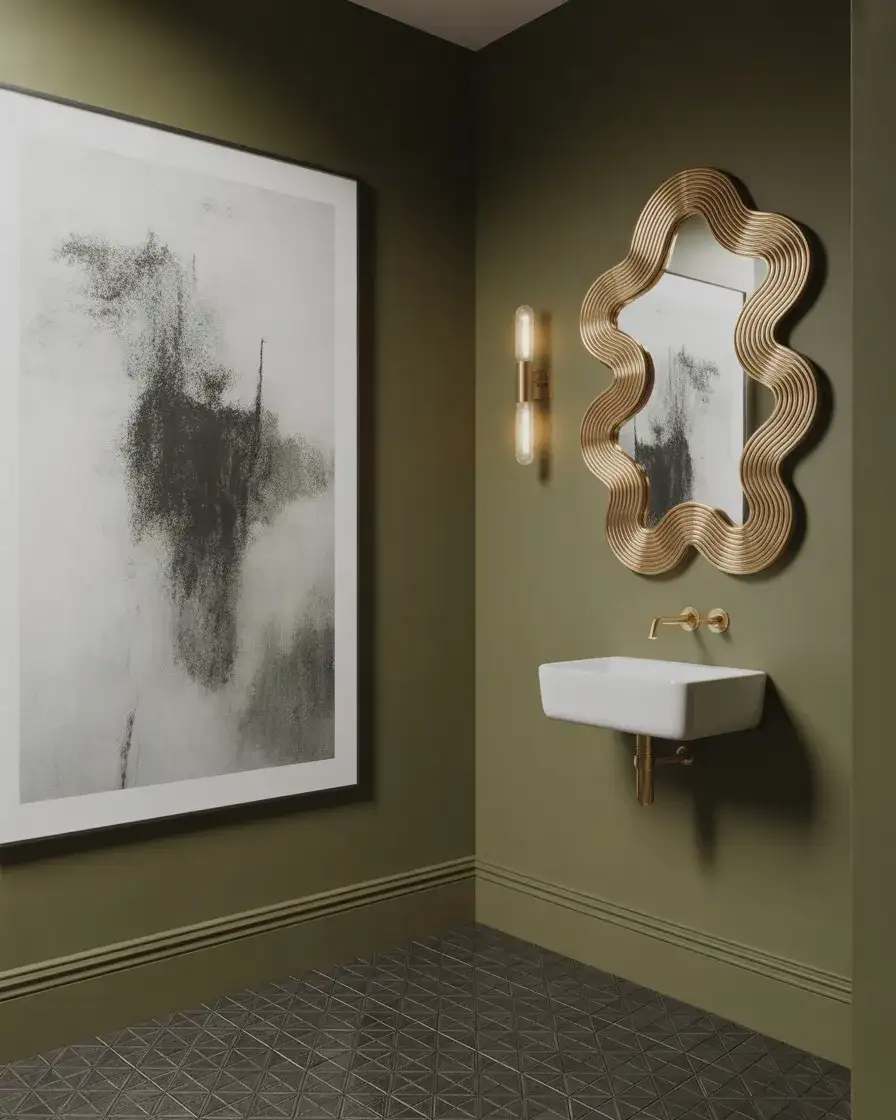
The half bath—typically just a toilet and a sink tucked off the main living area—is the place where design rules genuinely don’t apply. Because it’s the smallest room in the house and only used for a few minutes at a time, it’s the perfect test lab for ideas that would feel overwhelming at full scale. In 2026, the smartest half-bath moves involve treating the room like a tiny gallery: a single large piece of art, a statement mirror with a sculptural frame, and a wall treatment—wallpaper, paint, or limewash—that commits fully rather than hedging. This is pure inspiration territory.
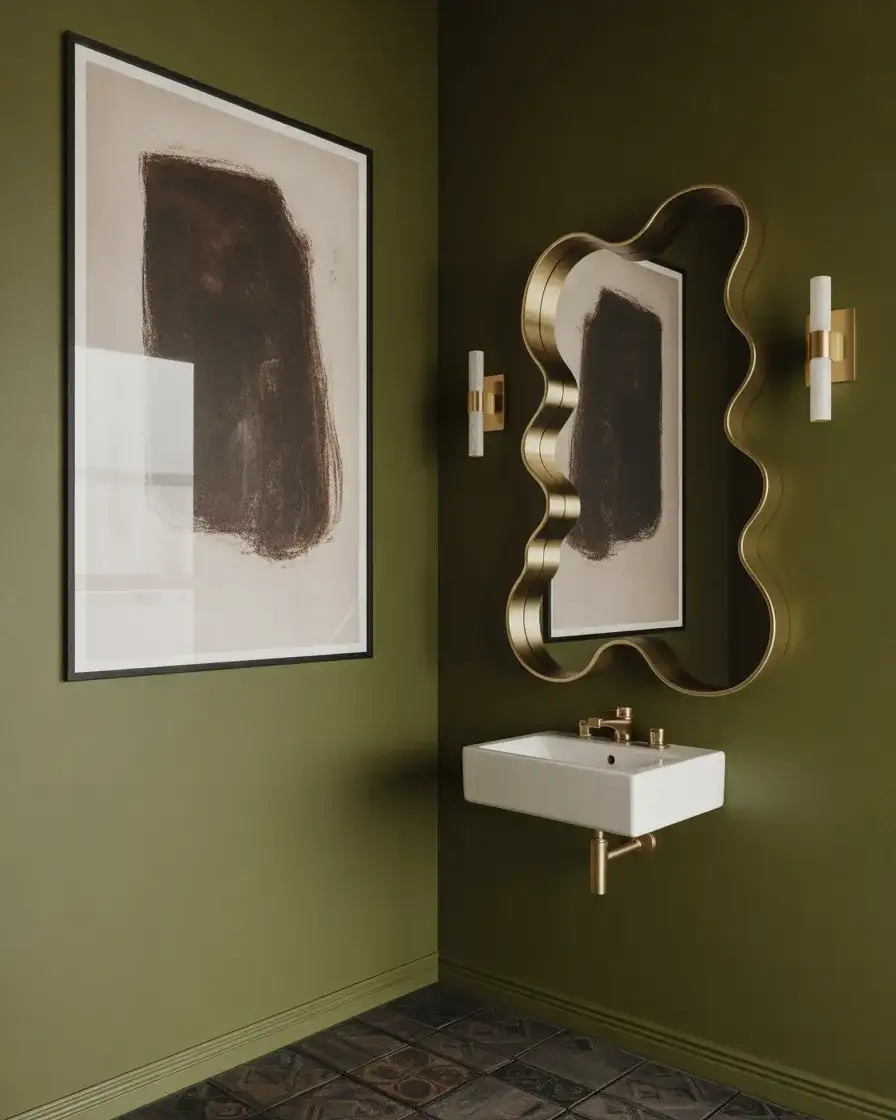
A half bath renovation is also one of the most financially efficient upgrades you can make to a home’s resale value. Real estate agents consistently list updated powder rooms among the renovations with the highest return on investment—often because buyers notice the bathroom first and use it as a proxy for how well the rest of the home has been maintained. Even a cosmetic refresh—new faucet, new mirror, fresh paint, and updated hardware—can shift a buyer’s perception significantly without requiring a gut renovation.
15. Aesthetic Black Vanity Statement
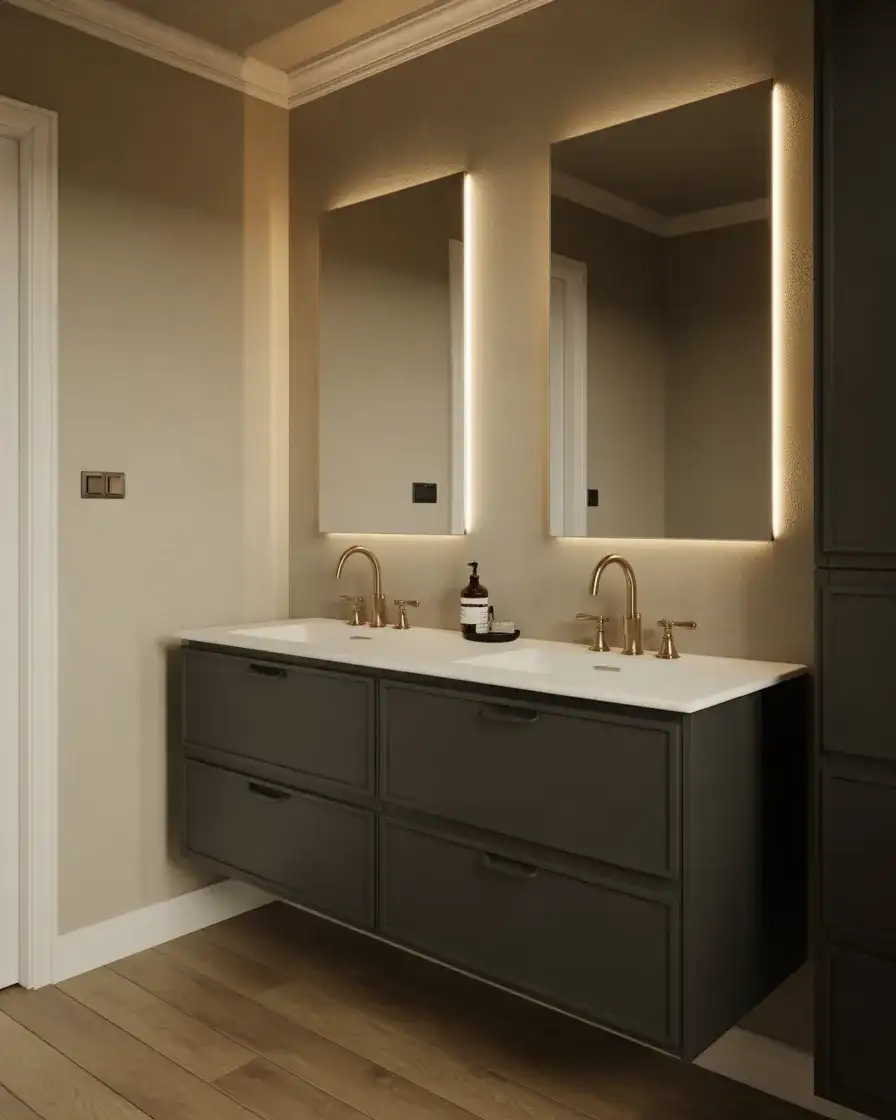
The matte black vanity has become one of the defining bathroom aesthetic moves of the mid-2020s, and in 2026 it continues to evolve. What’s changing is the context around it: rather than pairing it with all-white, designers are layering black vanities against warmer tones—aged linen walls, warm wood floors, terracotta-adjacent tile—to keep the room from feeling too stark. The result is sophisticated without the coldness that pure monochromatic black-and-white can sometimes carry. A single statement piece like this can anchor a room completely, which means everything else can stay relatively simple and quiet.
One practical consideration that often gets overlooked with dark vanities: fingerprints and water spots show more on matte black than on wood or painted finishes. The fix is simple—a microfiber cloth kept in a nearby drawer and a quick weekly wipe-down. It’s a minor maintenance trade-off for a look that genuinely elevates a bathroom from builder-grade to designed. For many homeowners, that trade is completely worth it, especially when the vanity is the visual centerpiece of the room.
16. Apartment-Friendly Bathroom Ideas
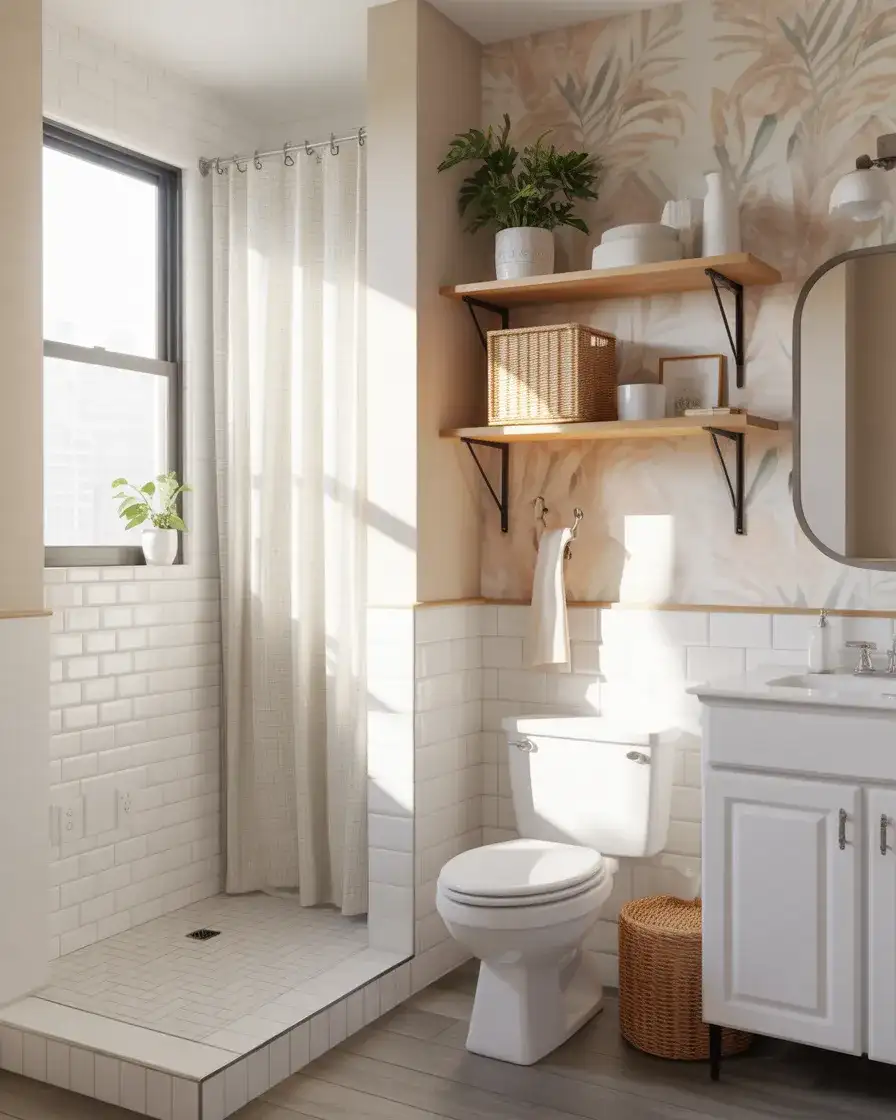
Working with a rental bathroom is one of the most common design challenges in America—especially in cities where the majority of residents under 40 are renting and dealing with the same beige tile, chrome fixtures, and builder-grade vanity they’ve encountered in every apartment they’ve ever lived in. The good news is that ideas for apartment-scale design have never been more creative. Over-toilet storage units, tension rod shelving, peel-and-stick tile in herringbone patterns applied directly over existing ugly tile, and removable wallpaper have all improved dramatically in quality and are now genuinely cute solutions rather than desperate ones.
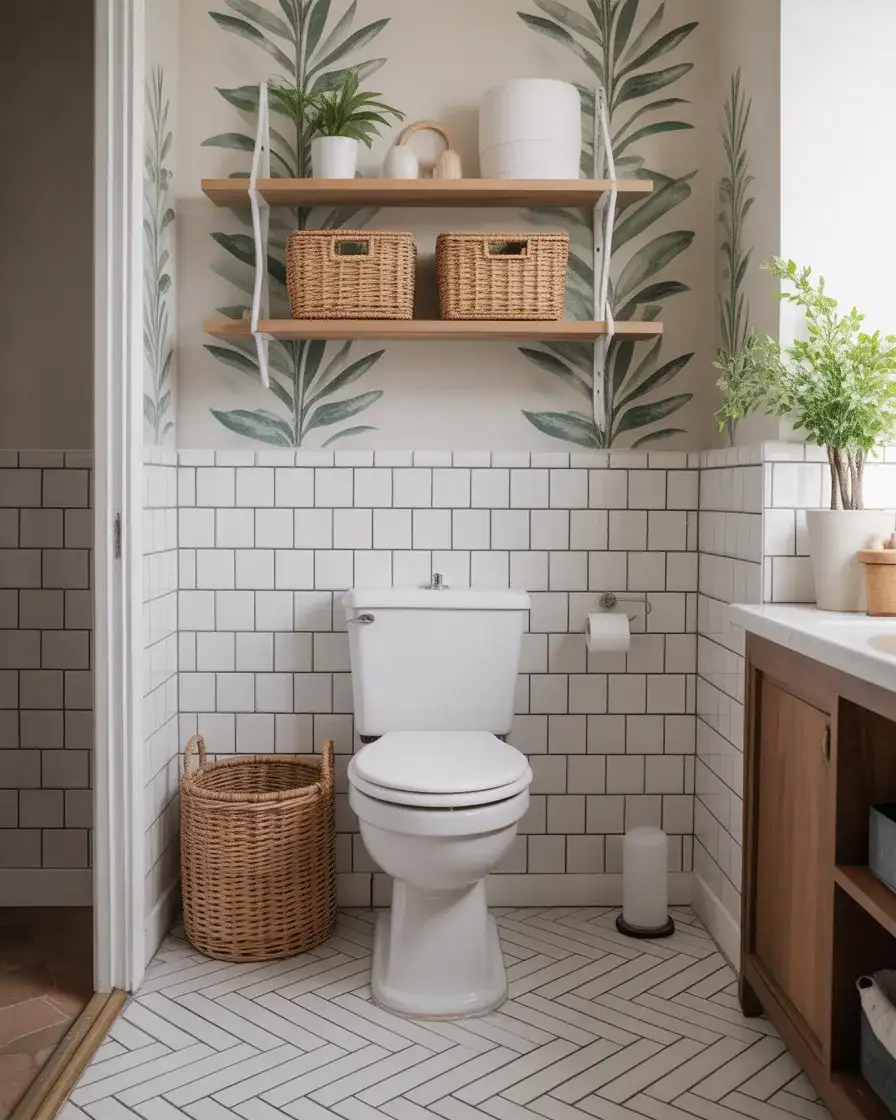
The over-toilet space is genuinely underutilized in most apartments. A simple ladder shelf—the freestanding kind with no wall mounting required—can hold a small plant, rolled towels, a decorative basket with toiletry overflow, and a candle, turning dead vertical space into a styled vignette. Units from IKEA, Wayfair, and Amazon all start under $60, and the impact-to-cost ratio is extremely favorable. This is the single most recommended first move for renters trying to make a bathroom feel curated rather than temporary.
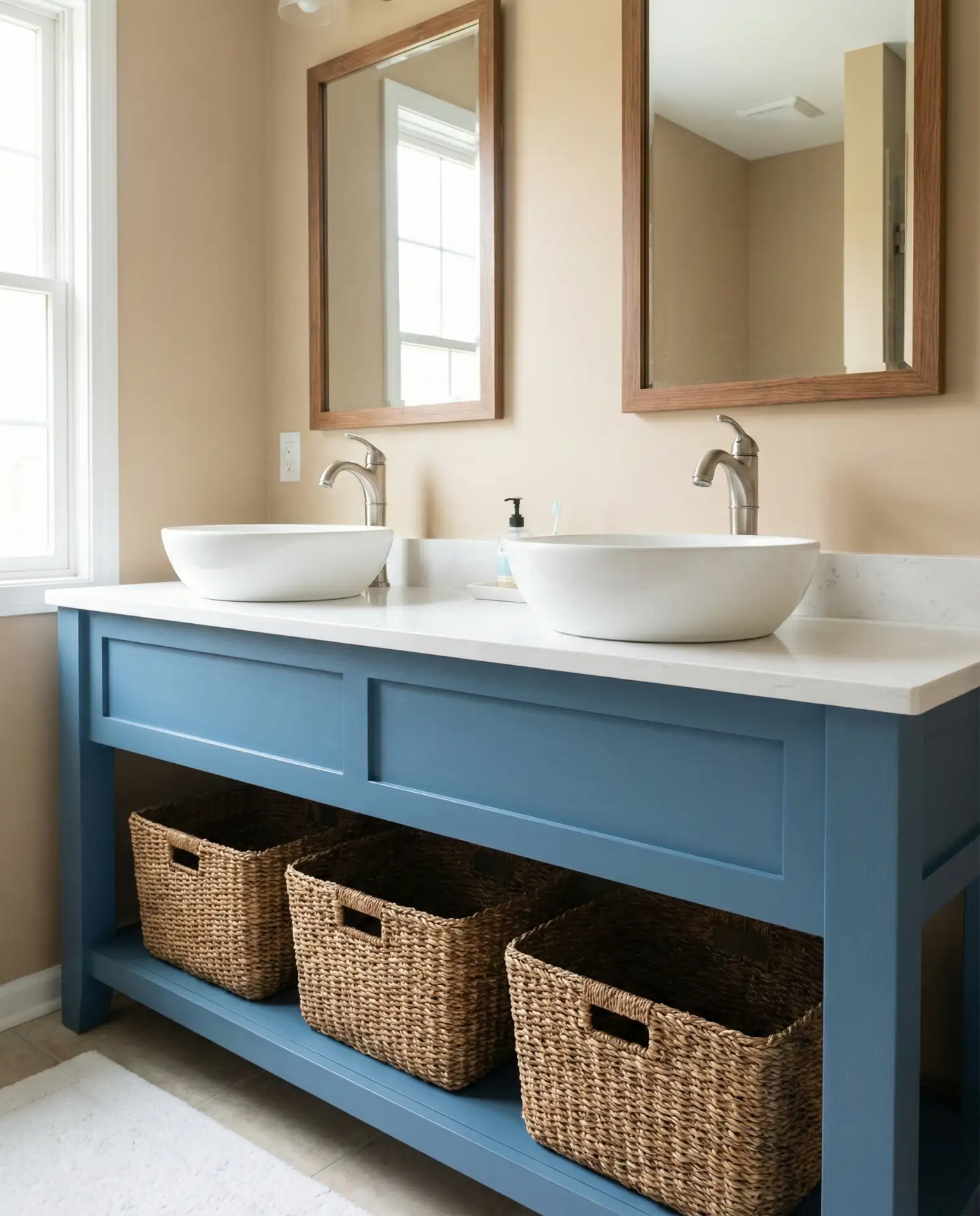
17. Blue Coastal and Breezy
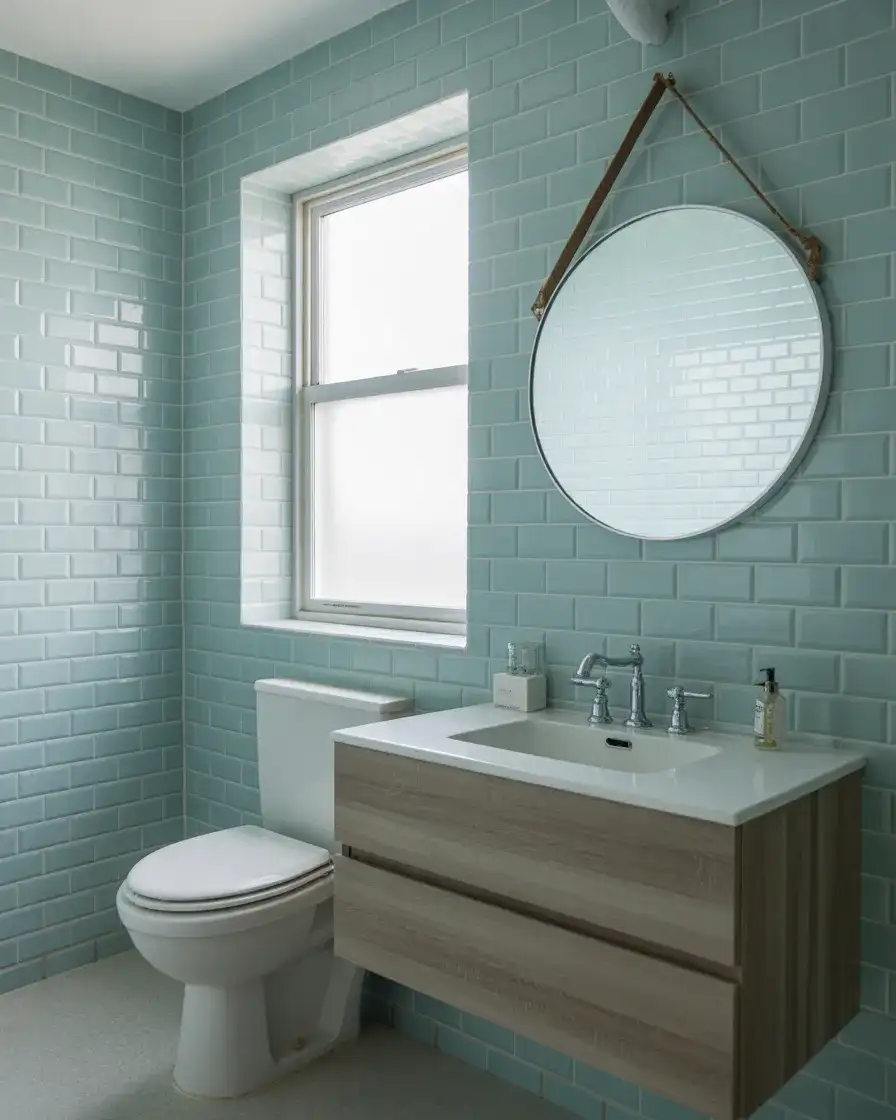
Coastal blue bathrooms have evolved well past the seashell-and-rope aesthetic that once defined beach-house decor. In 2026, the look is cleaner, more architectural, and surprisingly versatile—it works as well in a landlocked midwestern suburb as it does three blocks from the ocean. Think soft French blue subway tile, driftwood-toned vanities, and crisp white accents that keep the palette light and airy without tipping into kitsch. The inspiration here is less “beach cottage” and more “a studio in Lisbon that happens to be twenty minutes from the sea. ” There’s a distinction, and it makes a real difference in the result.
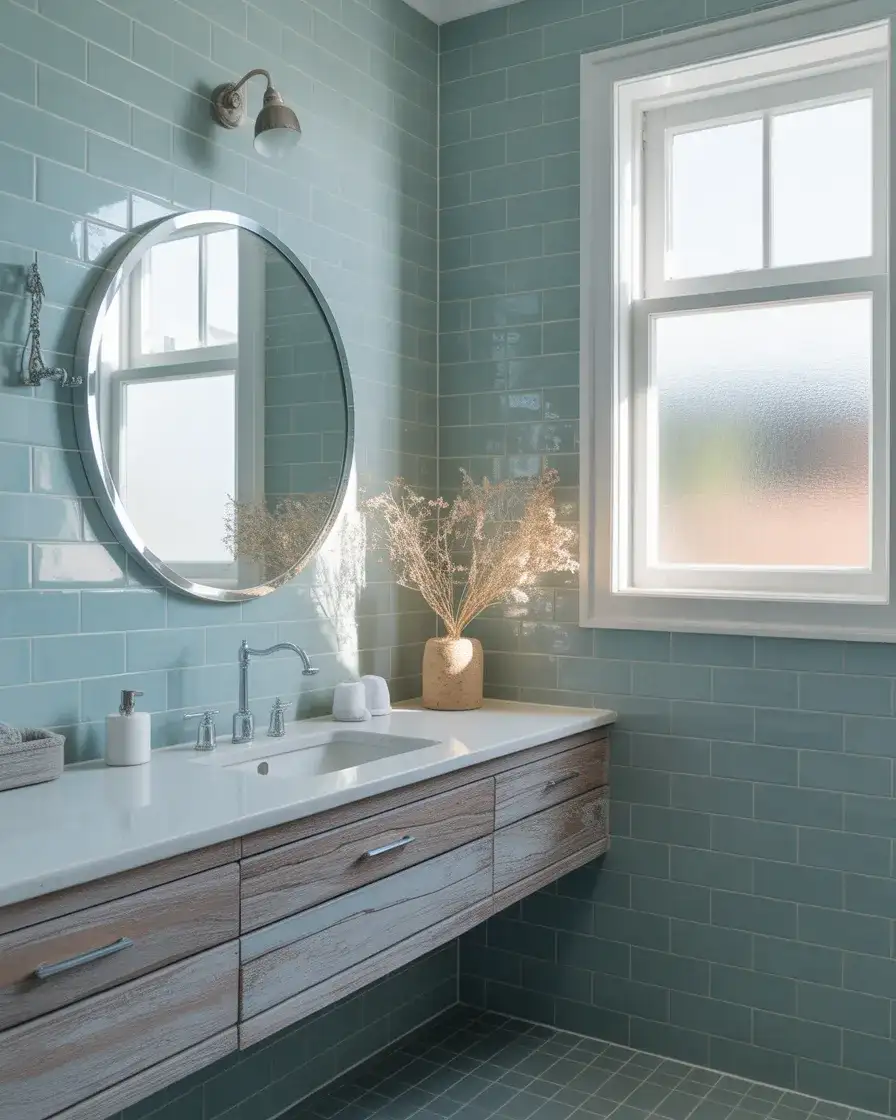
Zellige tile—the handmade Moroccan tile with a characteristically irregular, reflective surface—is one of the most beautiful choices for a blue bathroom and has become significantly more accessible in price over the past two years. The variation in each tile’s surface means light behaves differently across the wall throughout the day, which gives the room an almost living quality. For a shower surround or a single feature wall, it’s an investment that transforms the entire sensory experience of the space, not just its appearance.
18. Spa-Style Walk-In Shower Upgrade
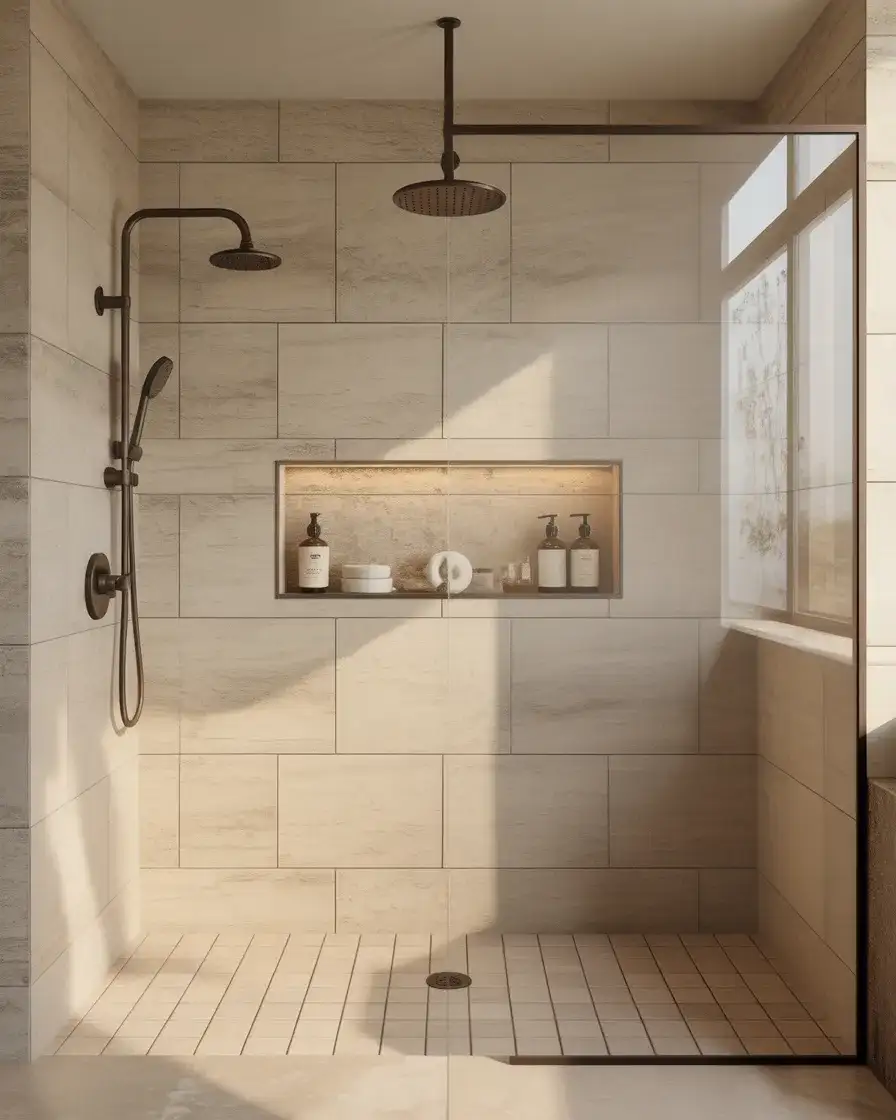
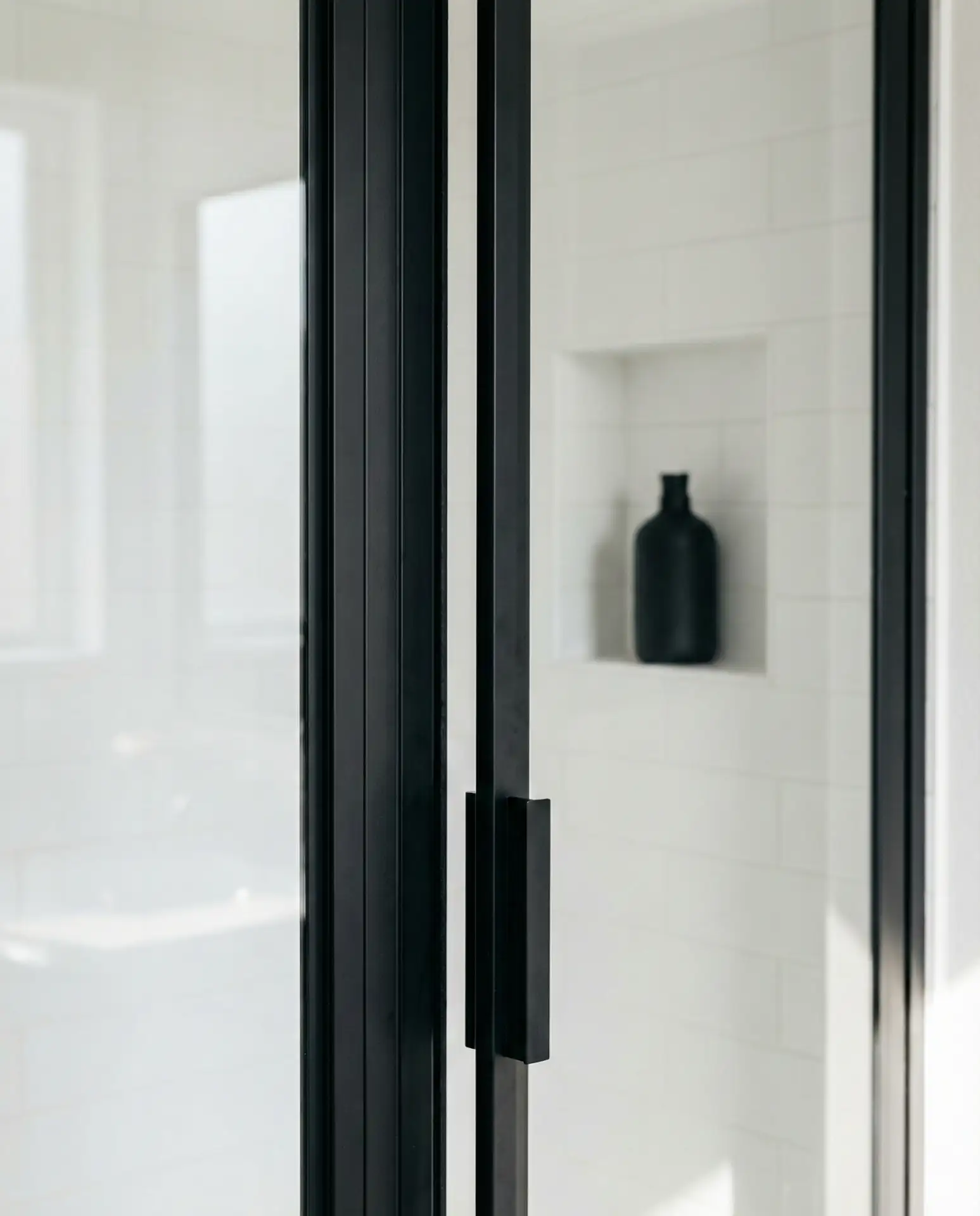
The walk-in shower has replaced the soaking tub as the primary spa aspiration in most American primary bathrooms, and the 2026 version is defined by a few very specific upgrades: large-format stone-look tile in soft travertine or warm limestone hues, a frameless glass enclosure that keeps sightlines open, a rain shower head positioned directly overhead, and a built-in niche or two for product storage that eliminates the caddy entirely. This is brown-adjacent and neutral in palette, grounding and calming, with the quiet luxury of a high-end hotel that you never have to leave.
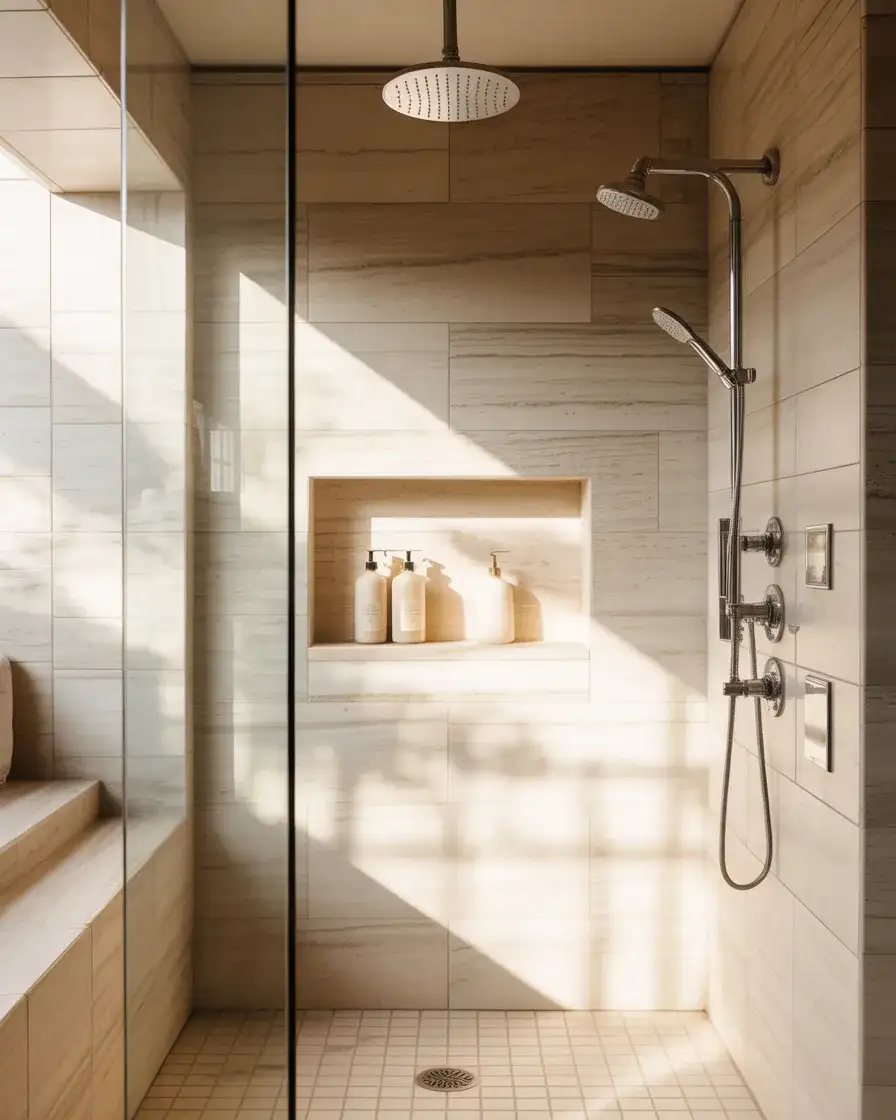
If you’re renovating a shower and have the choice between a tile niche and a shower caddy, choose the niche every single time. Caddies rust, fall, and clatter and eventually become an organizational problem. A built-in niche is permanent, water drains naturally from it if it’s slightly angled, and it keeps the visual experience of the shower clean and intentional. The added cost during a renovation is usually $200–$400 for the framing and tile work—a very small line item relative to the overall project and a quality-of-life improvement you’ll appreciate every single day.
19. Green Biophilic Plant-Forward Bathroom
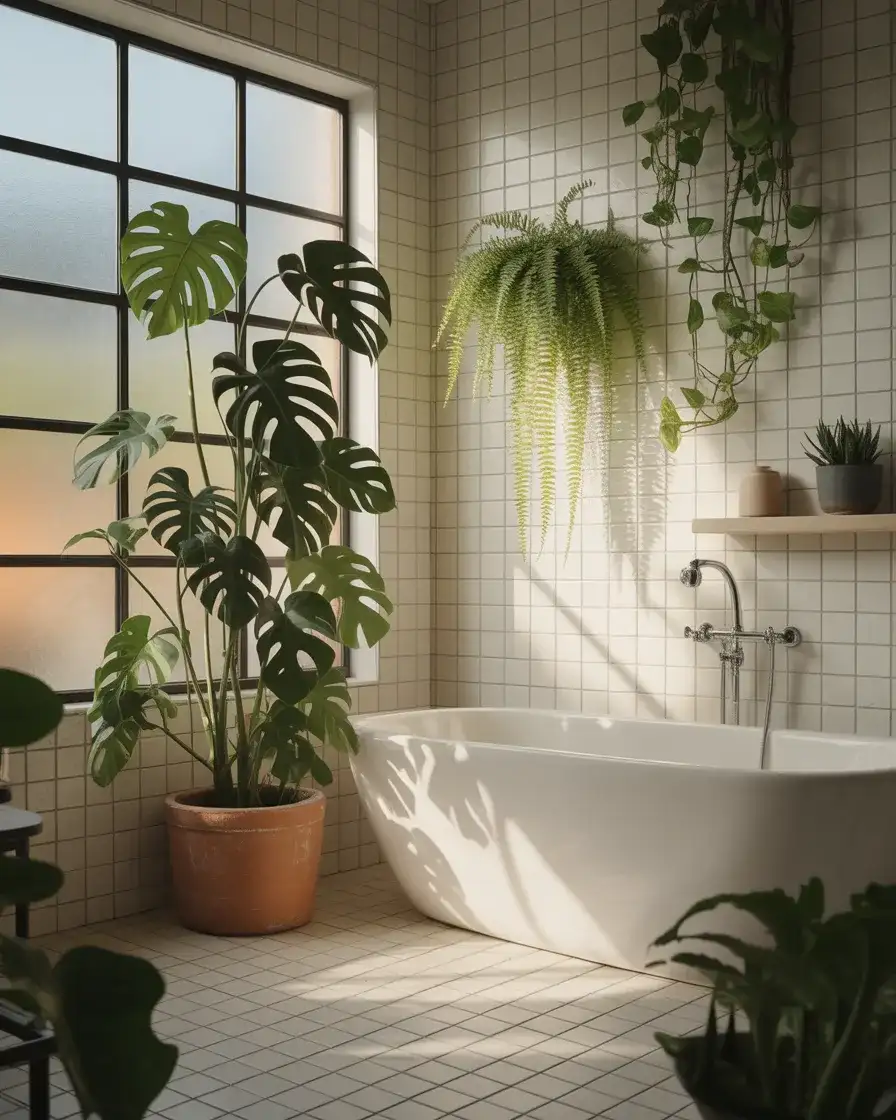
Biophilic design—the intentional integration of nature into interior spaces—is one of the defining movements of the decade, and nowhere does it make more sensible physical and psychological sense than in the bathroom. The humidity and indirect light that bathrooms naturally provide are exactly what many green plants thrive in. In 2026, the most compelling plant-forward bathrooms treat plants not as accessories but as structural elements: a climbing pothos that runs along a shelf rail, a banana leaf in a floor pot that reaches toward the ceiling, and ferns tucked into wall-mounted terracotta pots. It’s lush, alive, and honestly transformative in its effect on the mood of the room.
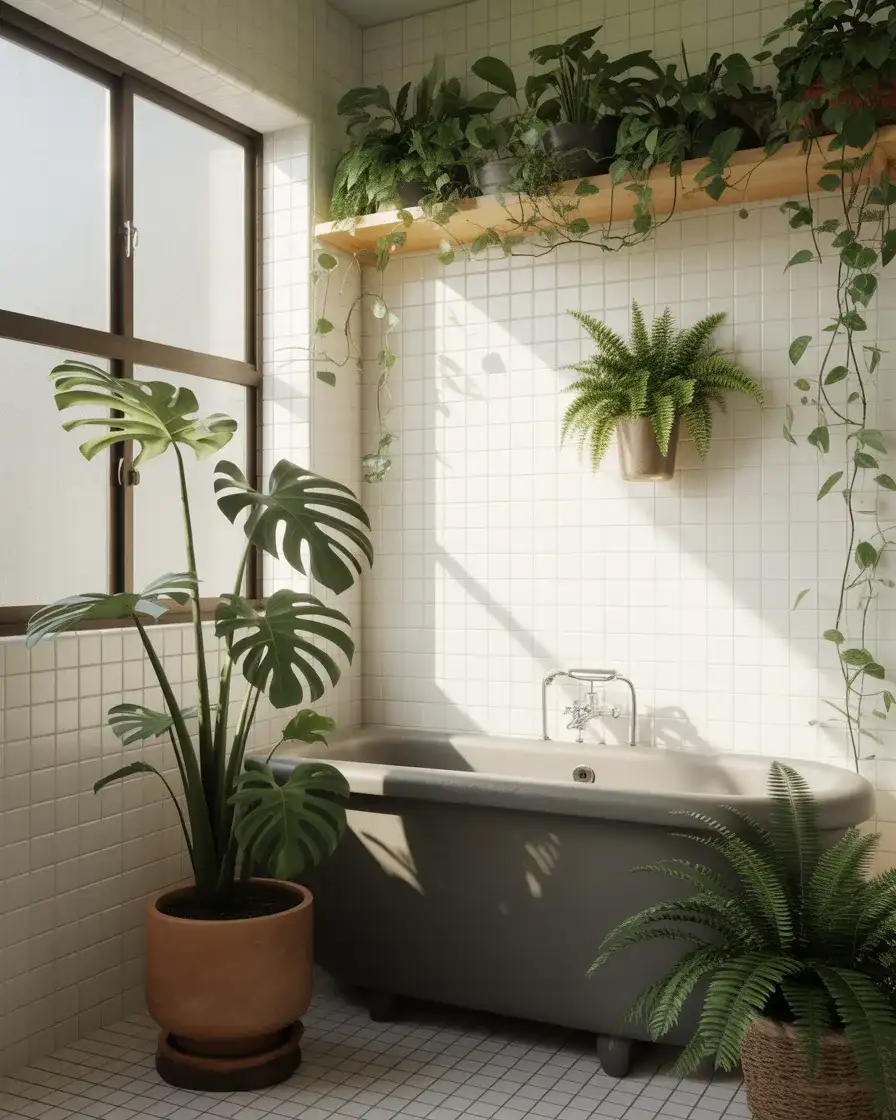
The best bathroom plants for low-maintenance success are pothos, peace lilies, snake plants, and ZZ plants—all of which tolerate indirect light and higher humidity without complaint. If you have a window, cast iron ferns and maidenhair ferns will reward you with genuine lushness. If your bathroom has no window, a small UV grow light disguised inside a hanging fixture can support a surprising amount of plant life without turning the room into a grow tent. The goal is abundance, not perfection—a few trailing leaves and a bit of moss are enough to change everything.
20. Moody Candlelit Evening Aesthetic
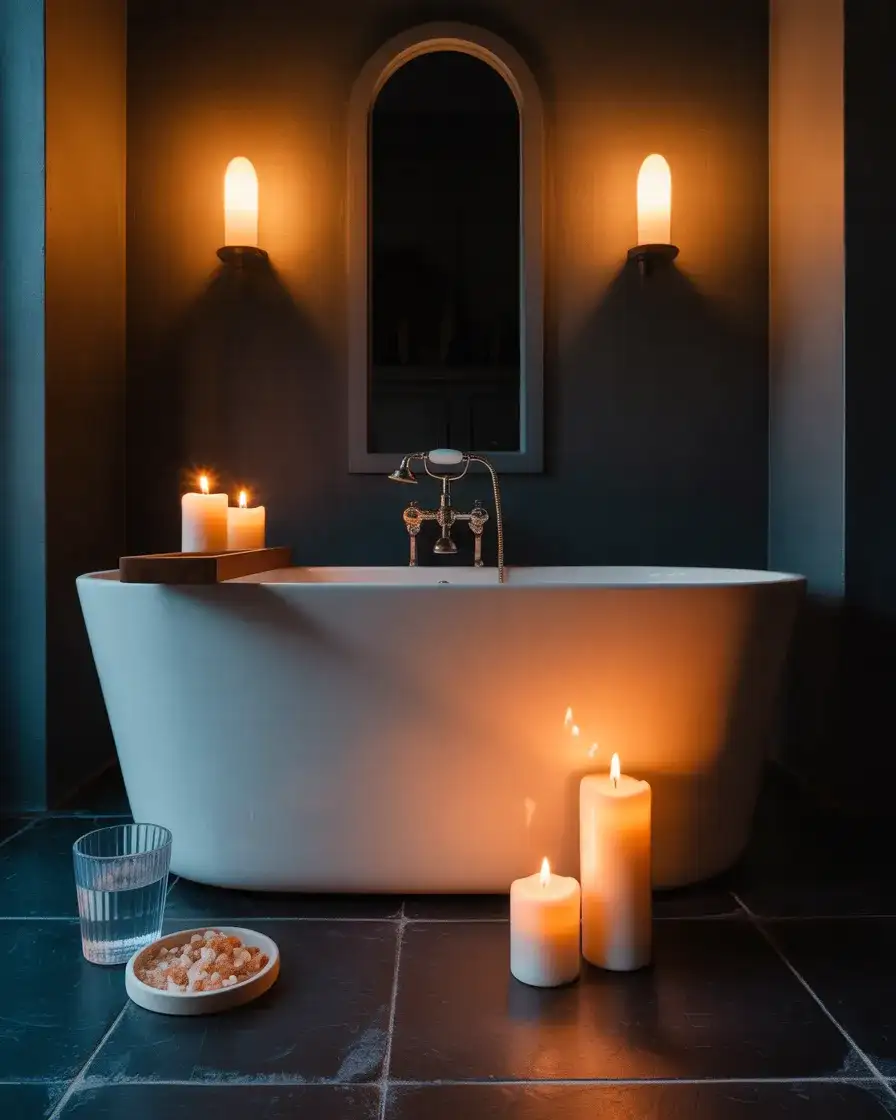
The bathroom as an evening retreat is one of the most powerful design ideas gaining traction in 2026, and the key is creating a room that functions differently depending on the time of day. During morning routines it needs clarity and brightness; in the evening it should be capable of transforming into something moody, warm, and deeply restorative. That means dimmable sconces, a cluster of candles on the edge of the tub or vanity, a bathrobe hook positioned within arm’s reach of the bath, and perhaps a small sound-absorbing bath mat that makes the acoustic quality of the room feel quieter and more intimate. This is pure inspo for the self-care movement.
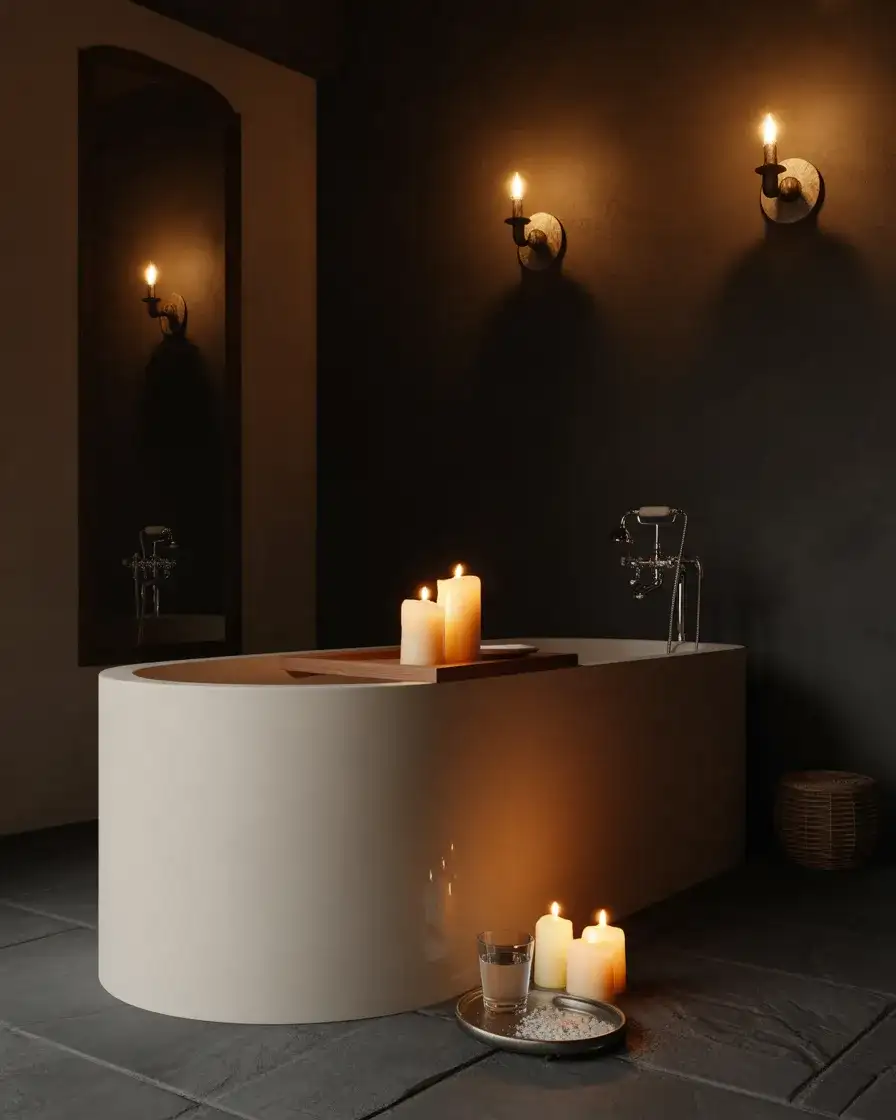
Scented candles and sound are the two most underestimated elements of bathroom atmosphere. A small Bluetooth speaker placed out of the water’s splash zone can completely change the experience of an evening bath. And the candle doesn’t need to be expensive to be effective—the scent matters far more than the brand. Lavender, vetiver, cedarwood, and sandalwood all encourage the nervous system to downshift. Pairing the right scent with warm, low lighting is essentially a physiological signal to your body that it’s time to rest. Design and neuroscience meeting in your bathroom.
21. Bright and Fun Kids’ Bathroom
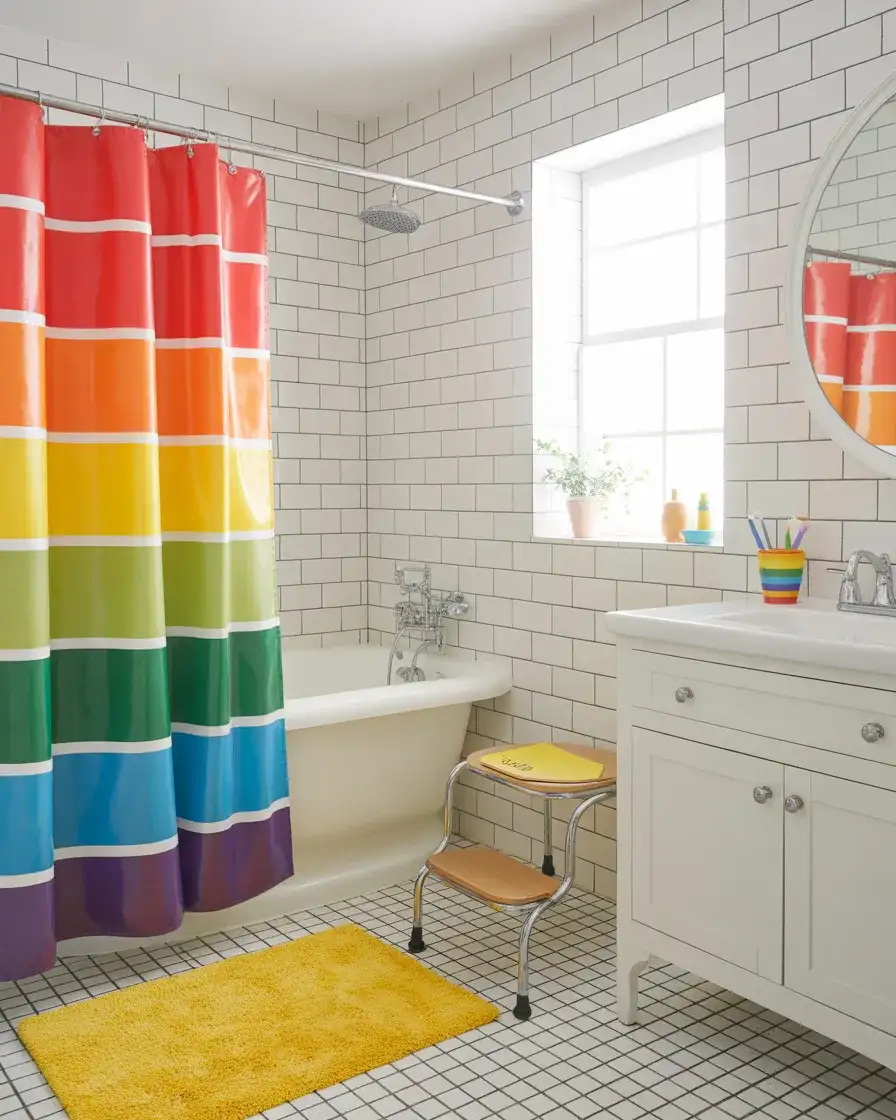
A kids’ bathroom should be joyful, sturdy, and easy to clean—and in 2026, the smartest approach is building on a durable, neutral base that can be personalized with color and personality through swappable soft goods and accessories. Think white subway tile that will survive years of splashing, a simple chrome faucet that won’t corrode or develop a finish that chips, and then go completely fun with a bold-printed shower curtain, a colorful cup and soap dispenser set, and a bath mat in a vivid hue. When kids’ tastes inevitably change, you swap the curtain and the accessories rather than retiling the whole room.
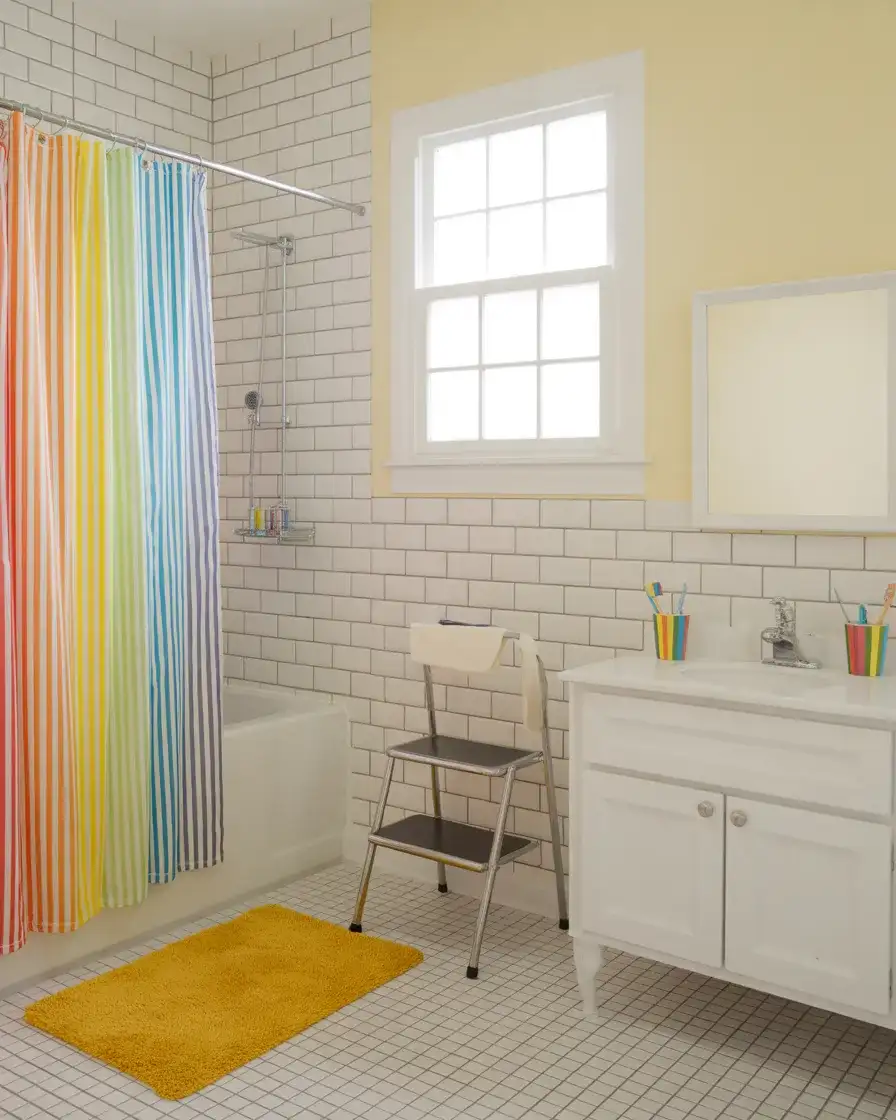
One common mistake parents make in a kids’ bathroom is installing hooks too high—an oversight that means kids leave towels on the floor because they literally cannot reach. Install a second set of hooks at child height (typically 36–42 inches from the floor), and the towel-on-floor problem decreases dramatically. It’s a two-minute fix with a drill and two screws, and it makes the room actually functional for the people using it most. Good design serves the user—even when the user is four feet tall.
22. Elegant Pink and Gold Glam Bathroom
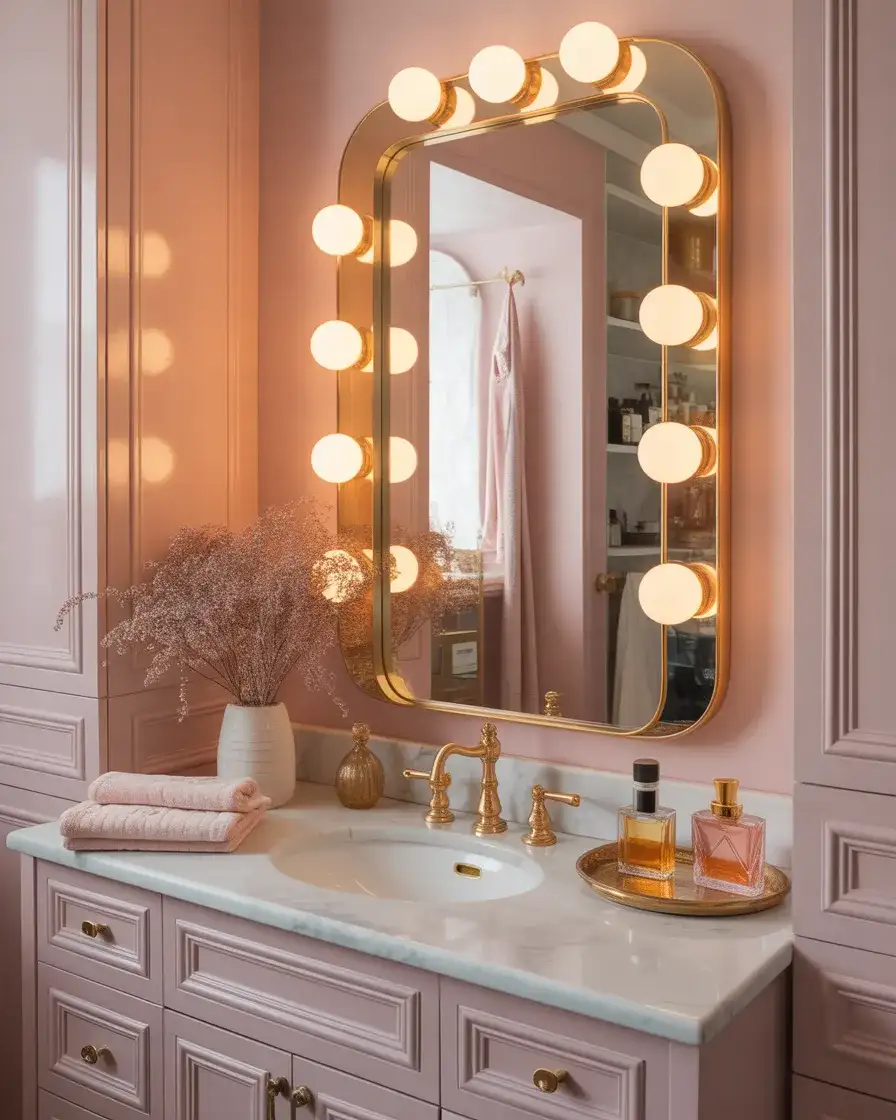
Glamour is back, and it’s arrived in the bathroom with great confidence. In 2026, the pink and gold bathroom is one of the most searched and saved looks on Pinterest—and for good reason. Blush pink walls paired with warm gold fixtures, a vintage-inspired vanity mirror with bulb lighting, and accessories in velvet, marble, and gilded ceramic create a space that feels like a Hollywood dressing room crossed with a Parisian vanity suite. It’s unapologetically aesthetic in the very best way, designed for people who see their bathroom as a stage for getting ready rather than merely a utility for getting clean.
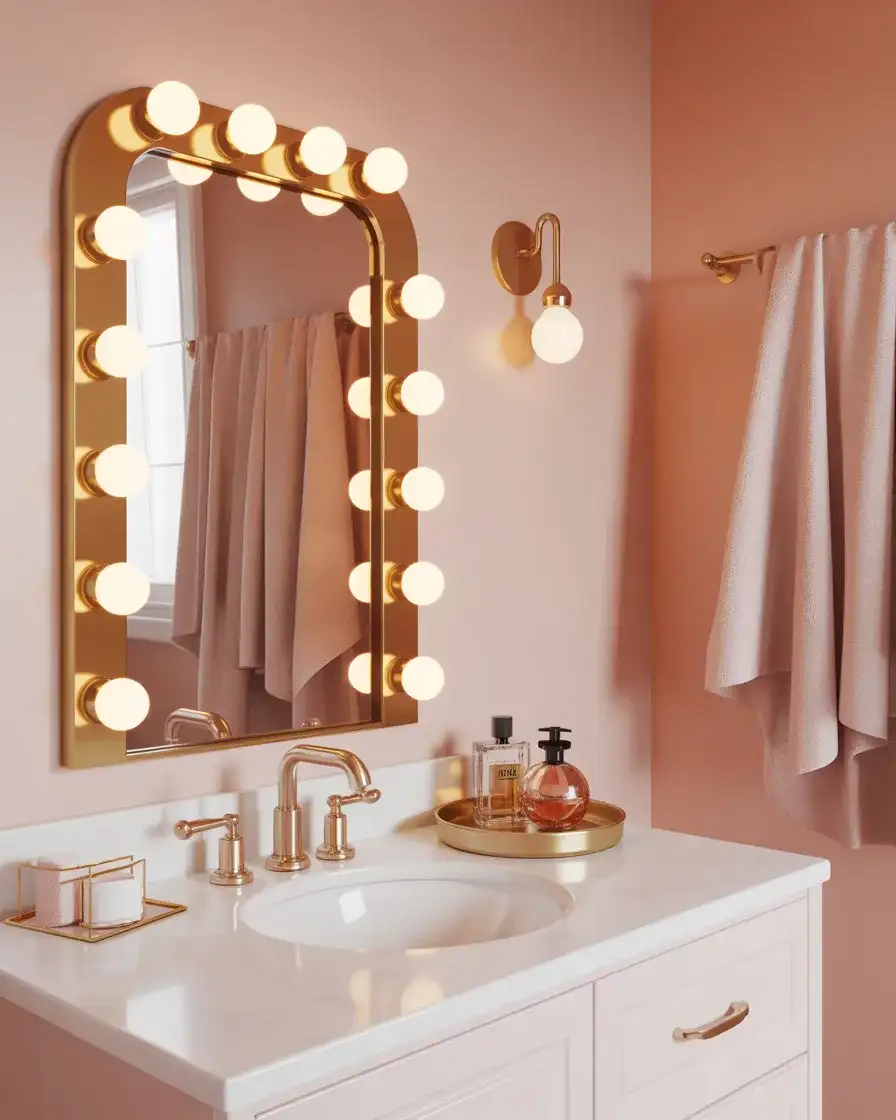
The pink-and-gold combination has extraordinary longevity as a design choice because the warmth of gold keeps pink from reading as childish, and the softness of pink keeps gold from feeling ostentatious. It’s a balance; the two colors strike naturally, which is exactly why you see them together in high-end hotel design again and again. You don’t need an expensive renovation to achieve this at home—swap the fixtures to brushed gold ($40–$80 for a basic faucet at most hardware stores), paint the walls, and introduce pink through your soft goods. The transformation is remarkable for the budget required.
23. Cozy and Layered Hygge Bathroom
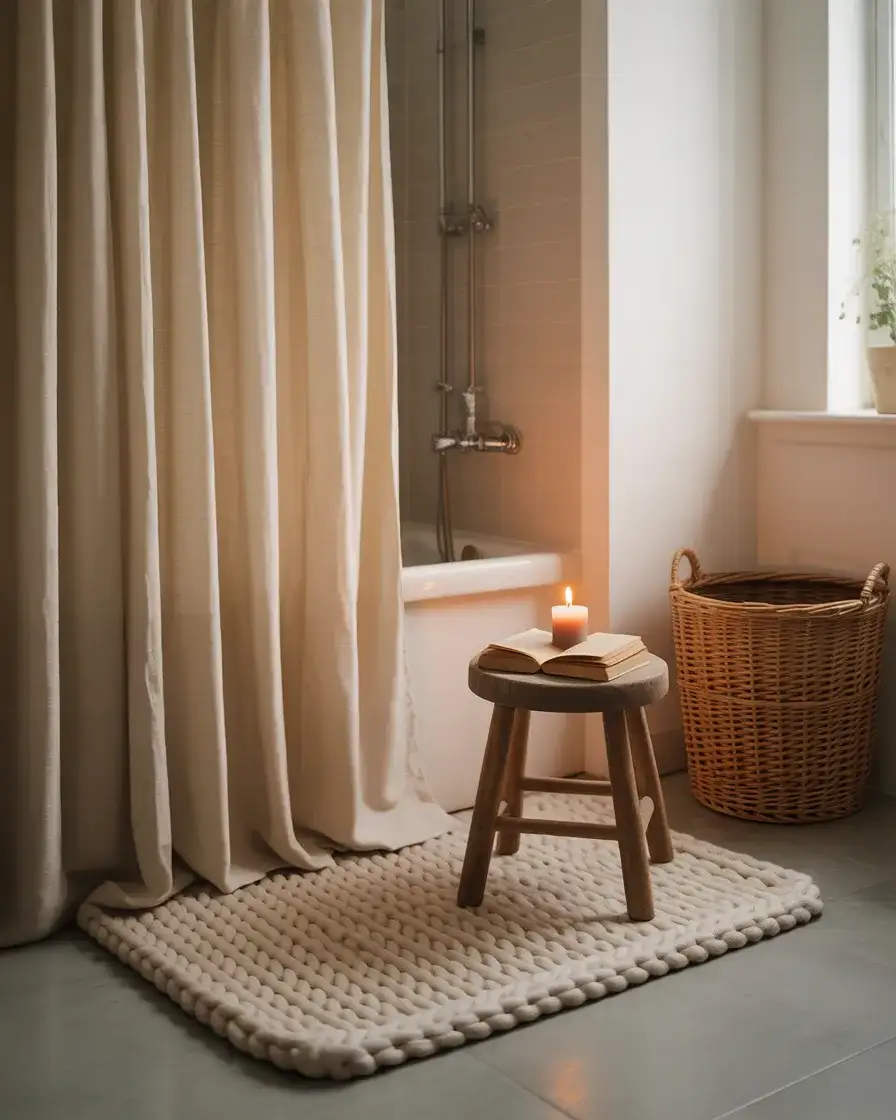
The Danish concept of hygge—that untranslatable combination of coziness, warmth, contentment, and togetherness—has found a genuinely natural home in bathroom design, and in 2026 it’s the organizing philosophy behind some of the most comforting, livable bathrooms being created. Think chunky knit bath mats, a small wooden stool holding a candle and a book, a shower curtain in cream linen that falls to the floor in soft folds, and warm-toned walls that make the room feel like it’s wrapping its arms around you. This is a neutral, deeply cozy approach that prioritizes feeling over appearance—and somehow produces spaces that look extraordinary precisely because of that priority.
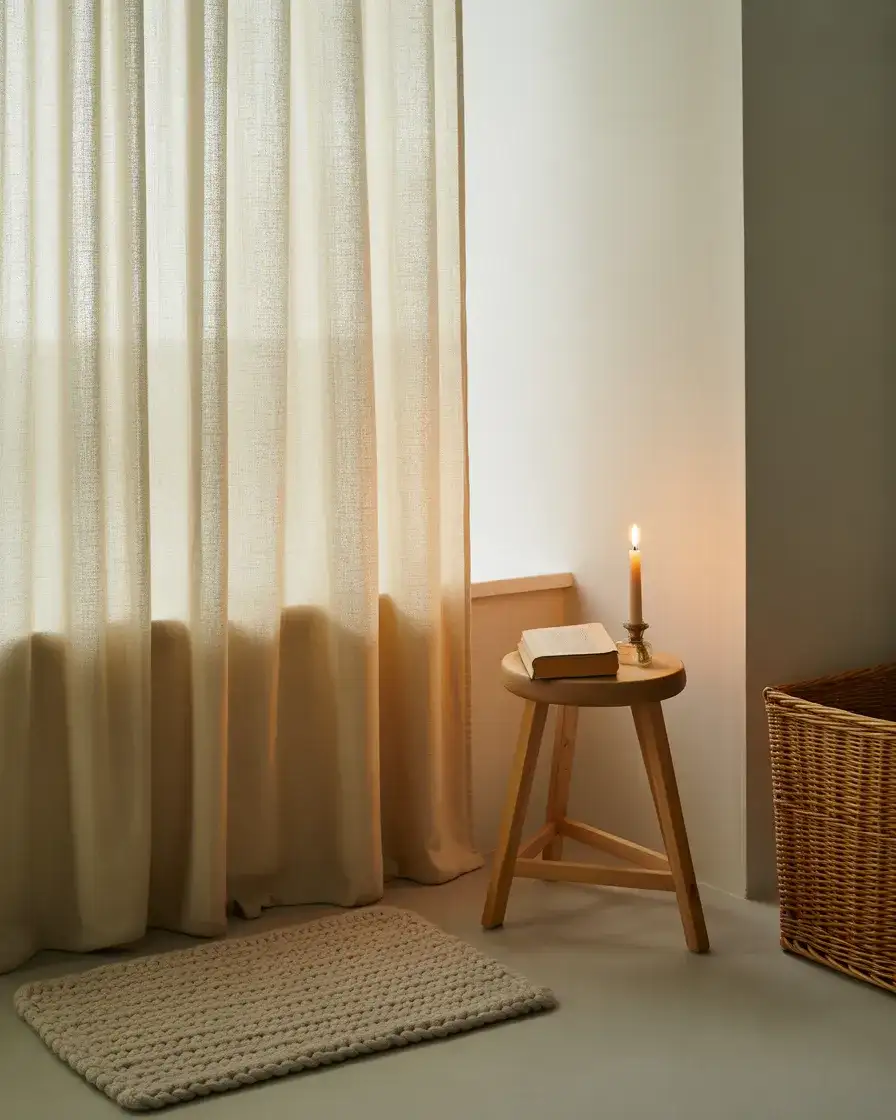
Hygge bathroom design works because it’s fundamentally about how a room makes you feel rather than how it looks in a photograph—though the beautiful irony is that these rooms photograph exceptionally well precisely because every element was chosen for sensory comfort rather than visual spectacle. The best thing you can invest in for a hygge bathroom is not a fixture or a tile but a truly excellent towel—one that’s thick, absorbent, and large enough to actually wrap around you. Brands like Parachute, Brooklinen, and Boll & Branch all have options that will outlast several design trends, which makes them genuinely economical in the long run.
Conclusion
Bathroom decor in 2026 is ultimately about one thing: making a room that serves your actual life—your morning rituals, your evening wind-downs, the guests you welcome, and the private moments that are entirely your own. Whether you’re drawn to the drama of a moody blue wall, the joyful personality of funky wallpaper, or the quiet simplicity of a layered neutral space, there’s no single right answer here. We’d love to hear which of these ideas resonated most with you—drop your favorites, your own bathroom stories, or any questions in the comments below. Your next beautiful bathroom is closer than you think.