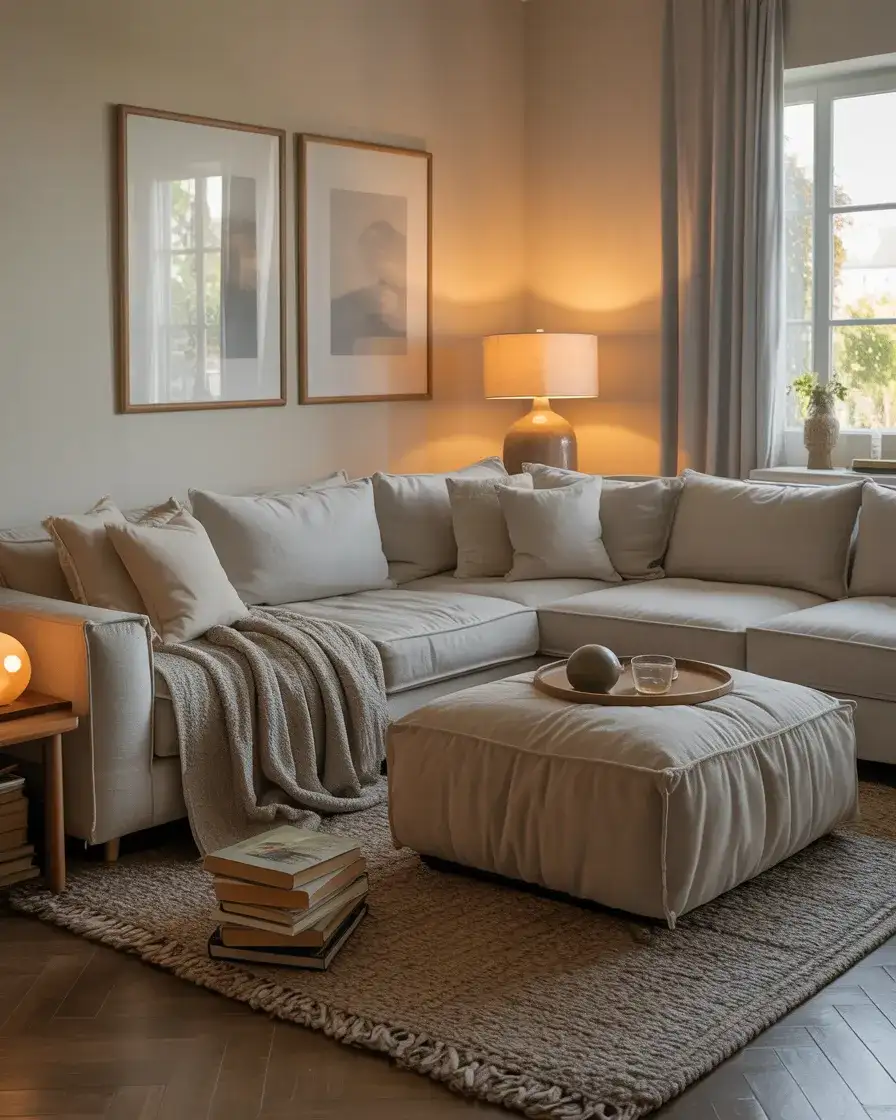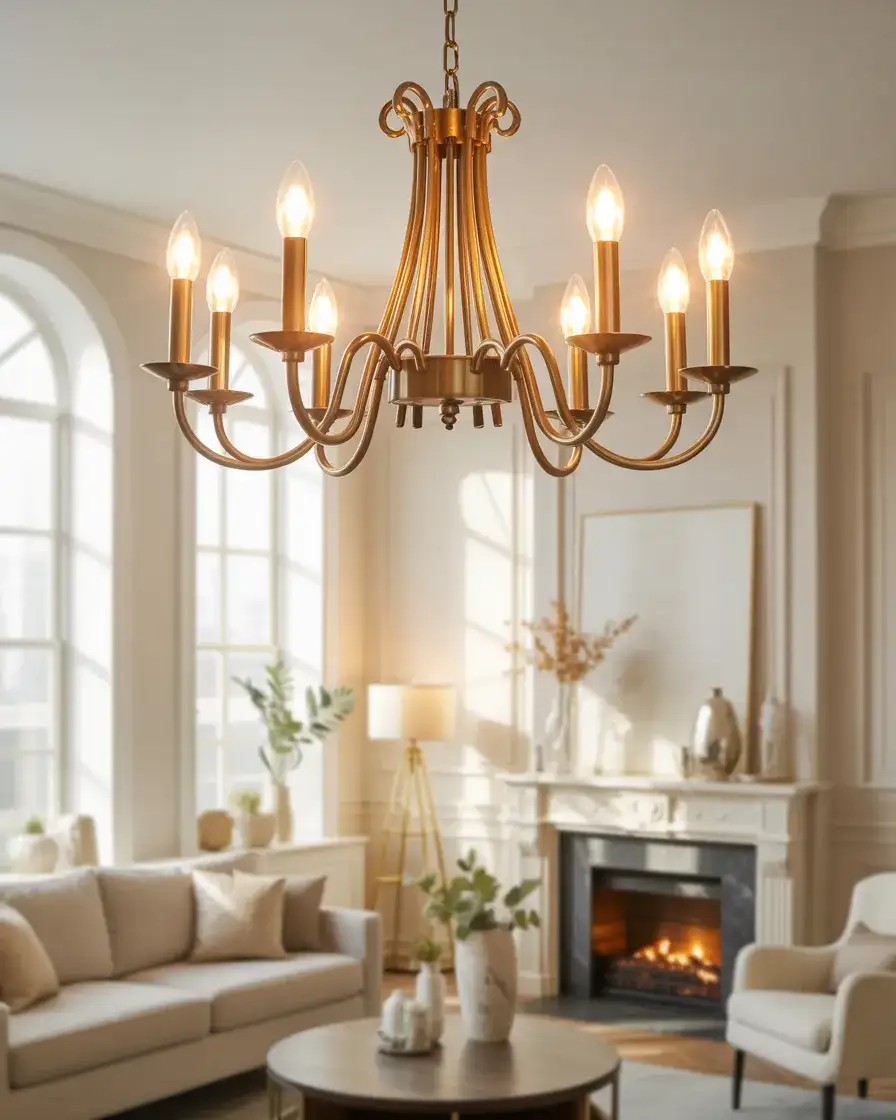
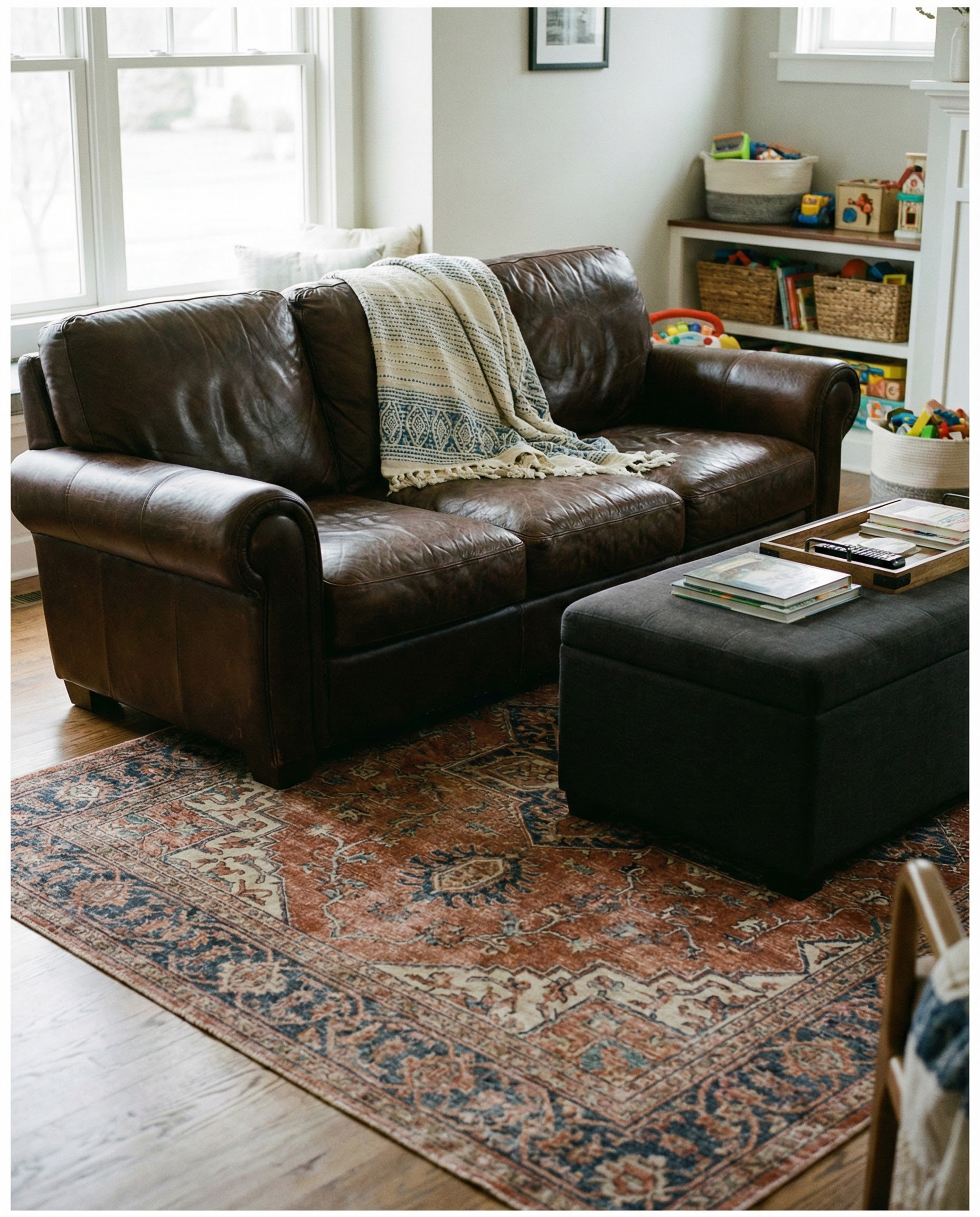
The brown couch has made a triumphant return to American living rooms, and it’s showing no signs of slowing down in 2026. Whether you’re drawn to rich chocolate tones, butter-soft leather, or plush velvet textures, a brown sofa offers unmatched versatility and warmth. Pinterest users are searching for ways to style these grounded pieces in fresh, contemporary ways—moving far beyond the dated look of the early 2000s. This collection brings together twenty-two distinct approaches, from vibrant colorful accents to serene modern interiors, proving that brown is anything but boring. Let’s explore how to make your brown couch the star of a space that feels both timeless and completely current.
1. Chocolate Velvet Drama with Jewel Tones
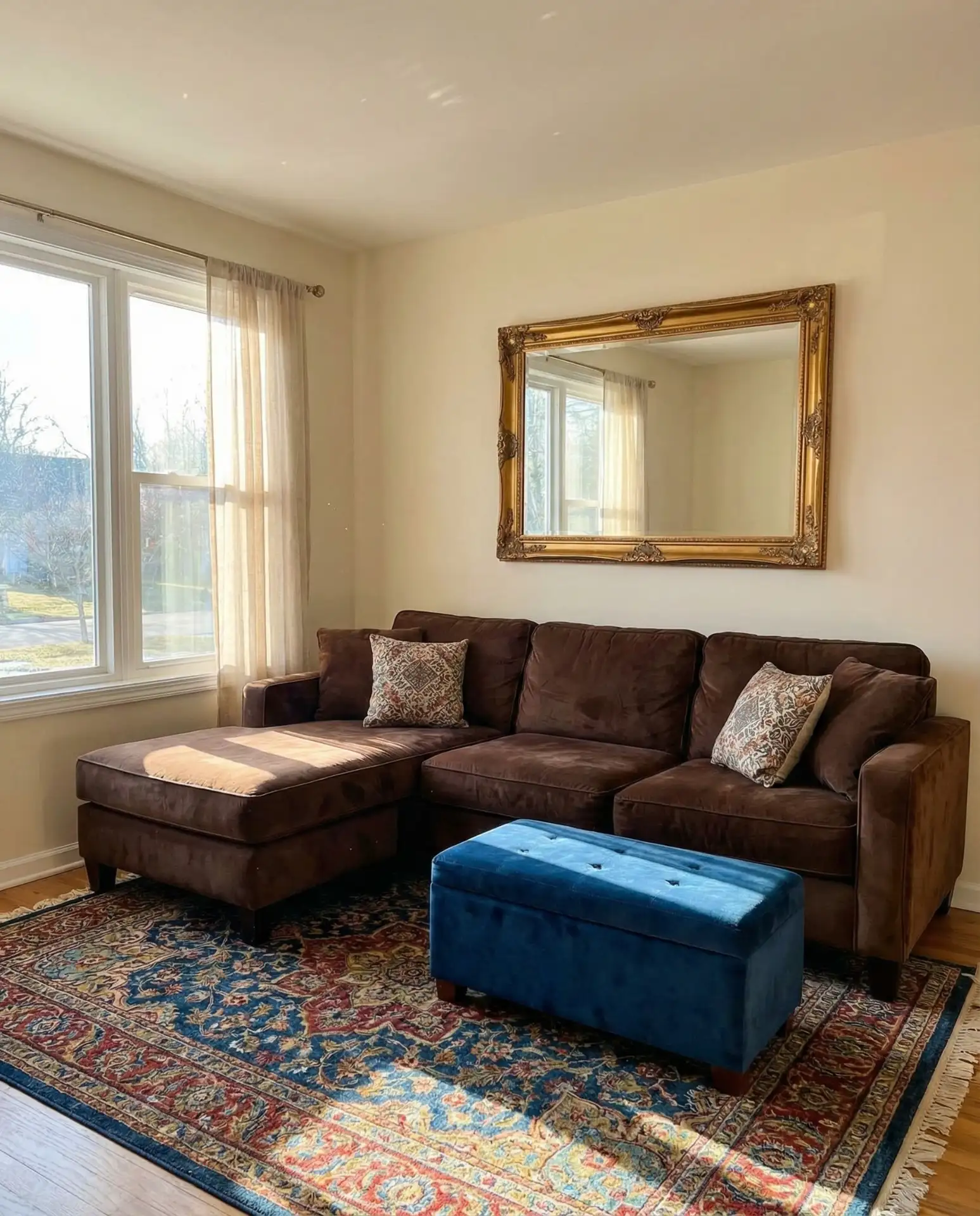
A chocolate brown velvet sofa becomes the anchor for a luxurious, moody living room when paired with emerald greens, sapphire blues, and burgundy accents. The plush texture of velvet catches light beautifully throughout the day, creating depth and visual interest even in smaller spaces. Layer in brass or gold fixtures to amplify the richness, and consider a patterned area rug that pulls all your jewel tones together. This approach works especially well in homes with good natural light, where the velvet’s sheen can truly shine. 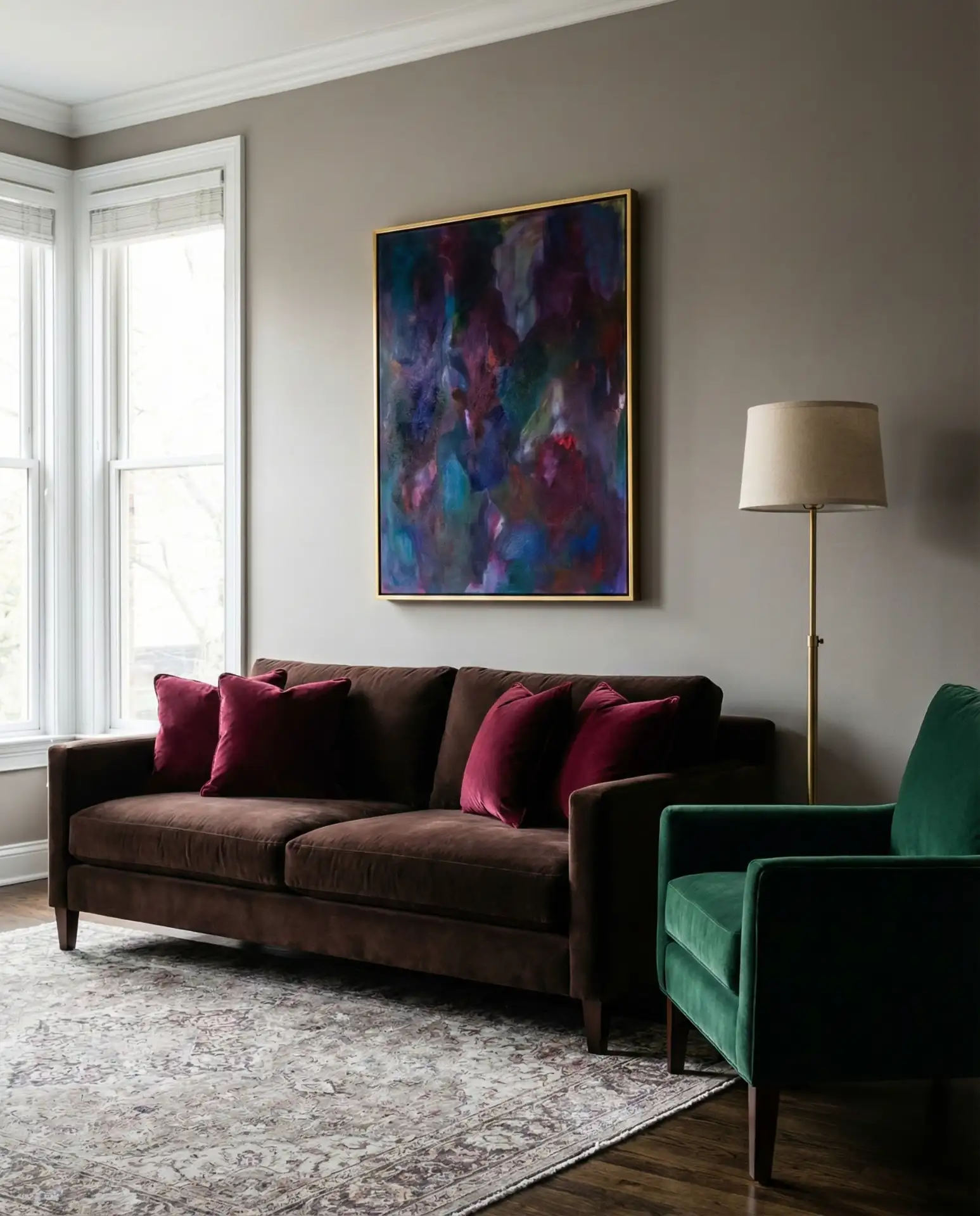
The key mistake people make with this look is going too dark everywhere else. Balance your chocolate velvet piece with lighter walls—soft cream or warm white—so the room doesn’t feel like a cave. Add plenty of table and floor lamps to create pools of light in the evening, and don’t be afraid to break up the richness with a few lighter accent pieces like linen curtains or a pale coffee table. The goal is opulence that still feels livable, not a space that overwhelms you the moment you walk in.
2. Light Leather Scandinavian Simplicity
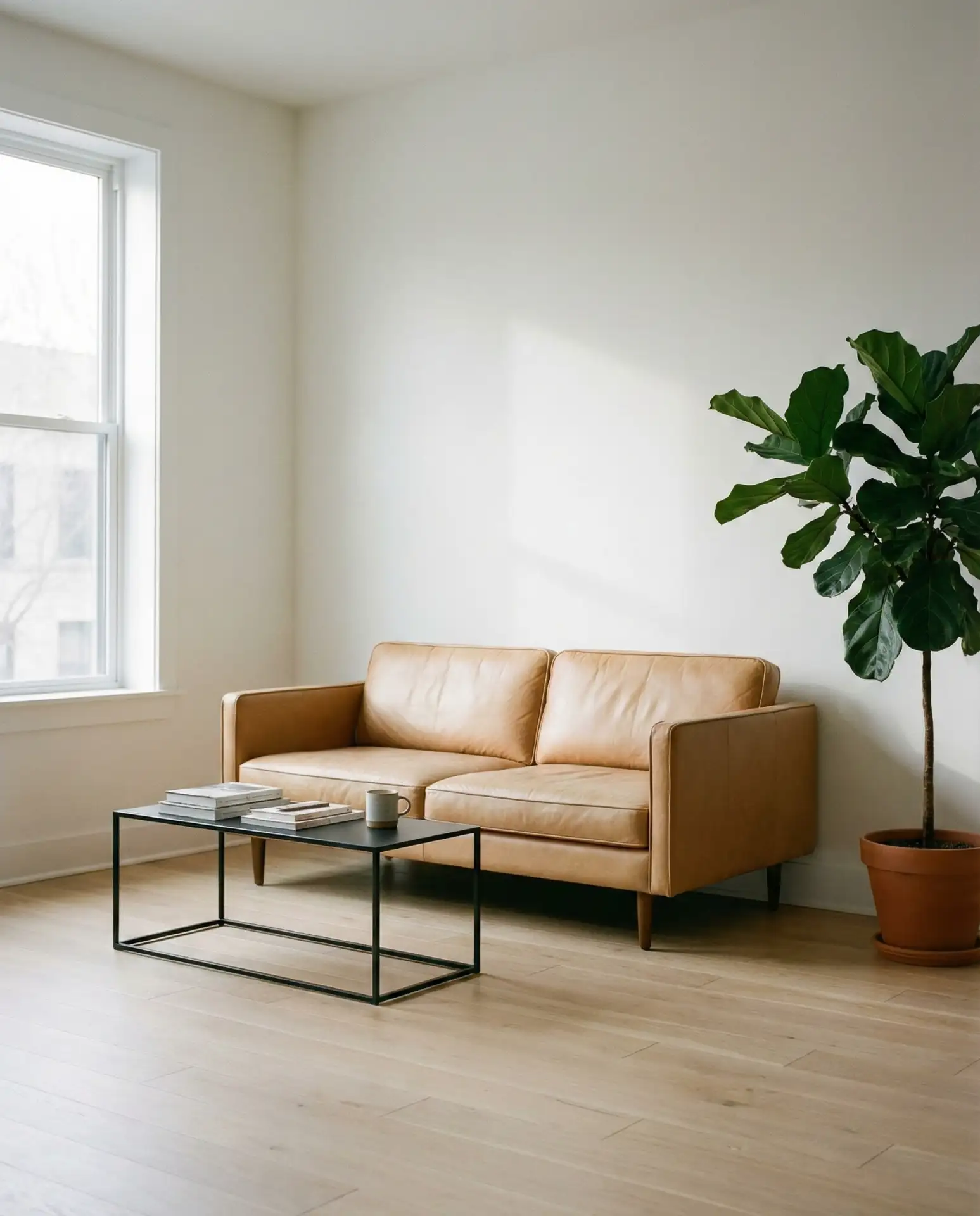
A light tan or caramel leather sofa brings warmth to minimalist Scandinavian interiors without sacrificing the clean aesthetic that defines the style. Pair it with white oak flooring, simple geometric shelving, and a neutral color palette of whites, grays, and soft blacks. The leather will develop a beautiful patina over time, adding character and storytelling to your space. This works particularly well in open-concept apartments where the living area flows into the kitchen and dining space. 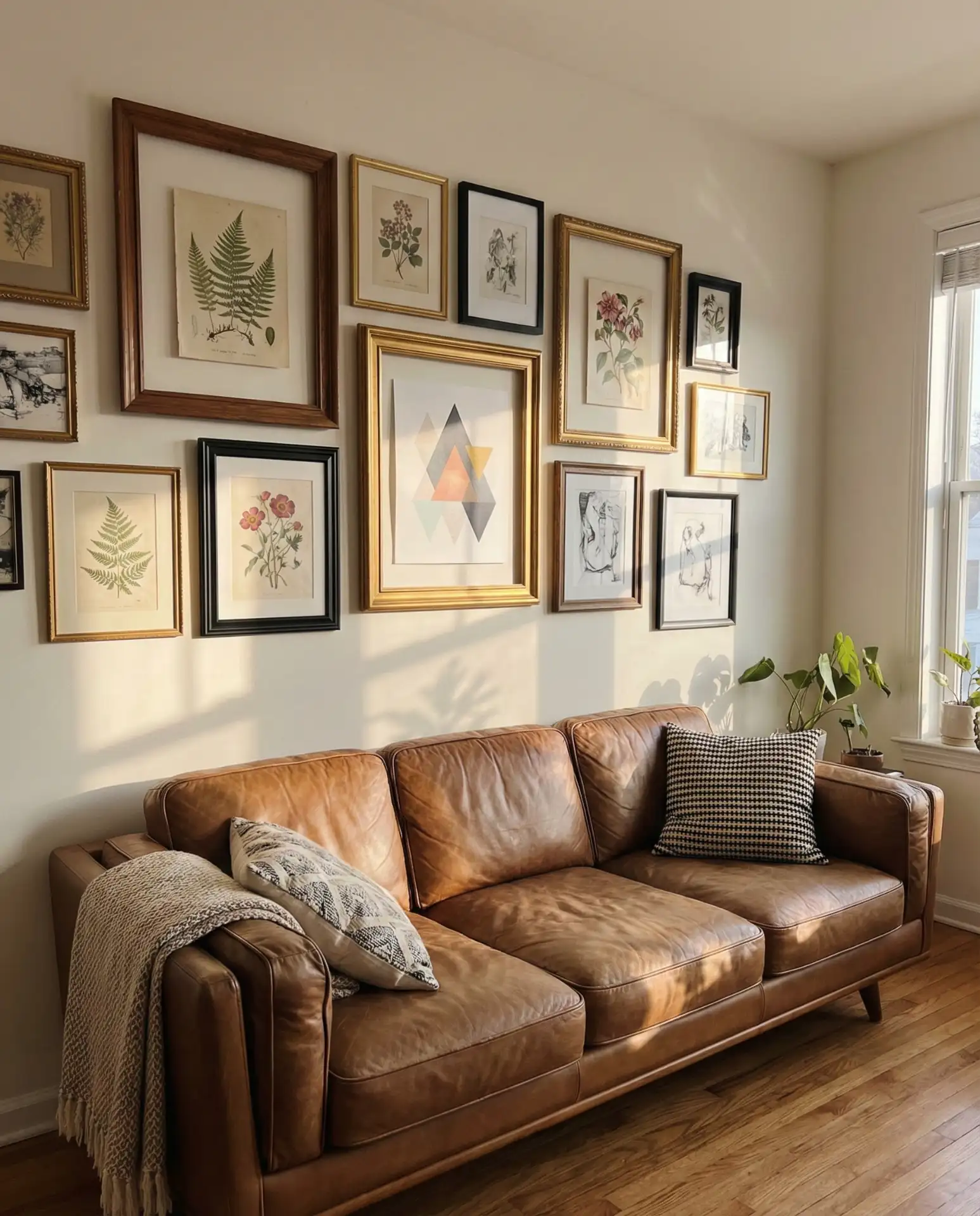
In the Pacific Northwest and New England, where Scandinavian design has deep roots, homeowners favor this approach for how it maximizes natural light during gray winter months. The pale leather reflects whatever light enters the room, making spaces feel larger and airier. Keep accessories minimal—a wool throw, maybe one or two cushions in muted tones—and let the quality of the leather do the talking. This is about restraint and intentionality, not filling every surface.
3. Colorful Eclectic Gallery Wall
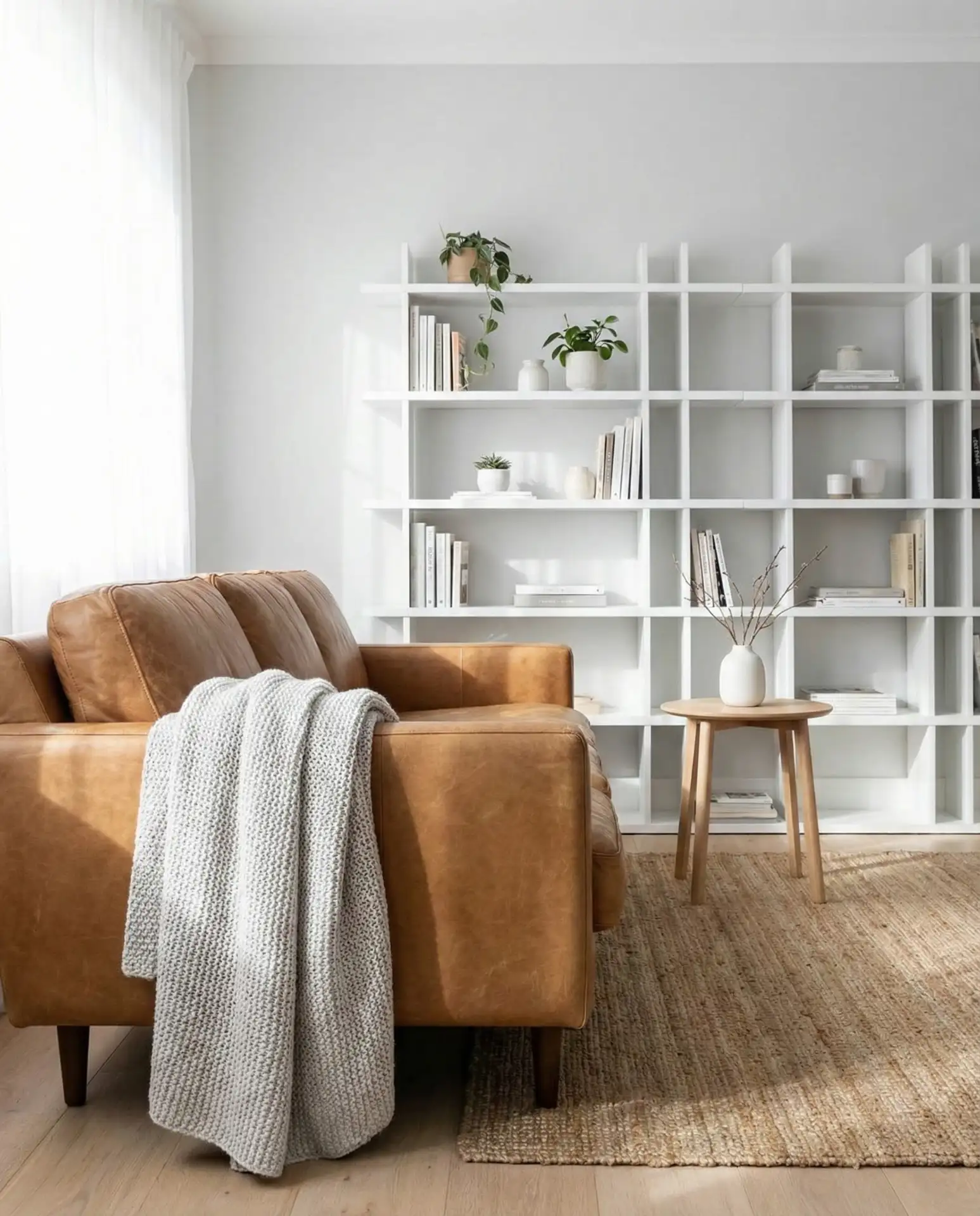
When you have a medium brown sofa that feels somewhat neutral, transform the wall behind it into a colorful gallery that reflects your personality and travels. Mix vintage prints with contemporary photography, family heirlooms with flea market finds, and vary the frame styles for a collected-over-time feel. The brown serves as a grounding force that prevents the visual chaos from overwhelming the room. This approach is popular among younger homeowners who want their space to tell a story rather than look like a showroom. 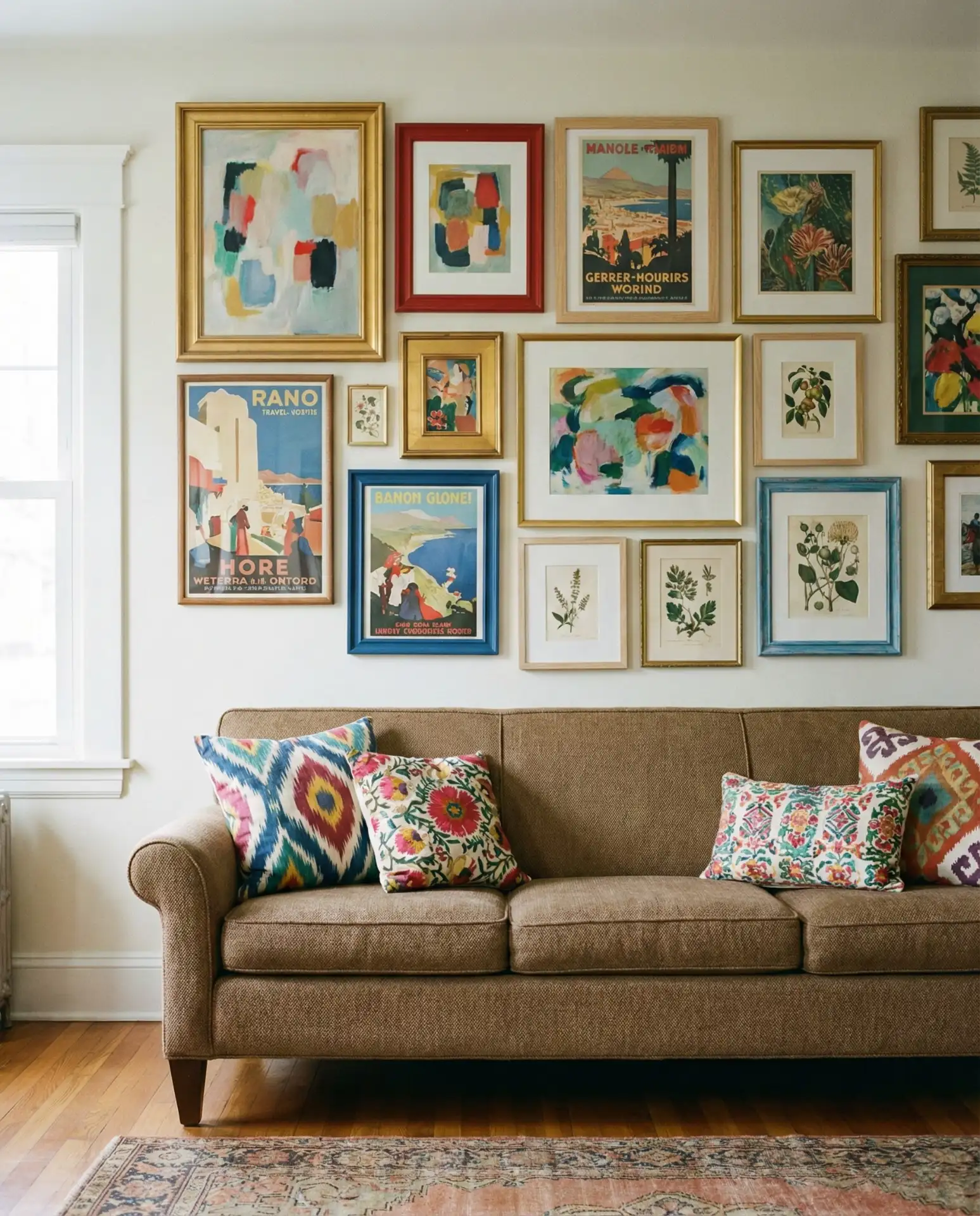
Budget-conscious decorators love this idea because you can build the gallery over months or even years, adding pieces as you find them. Start with three to five frames and expand outward, maintaining roughly two to three inches of space between each piece. Thrift stores, estate sales, and online marketplaces offer endless options for unique frames and artwork at a fraction of retail prices. The brown couch costs more upfront, but everything around it can be assembled gradually without losing impact.
4. Orange and Terracotta Southwest Warmth
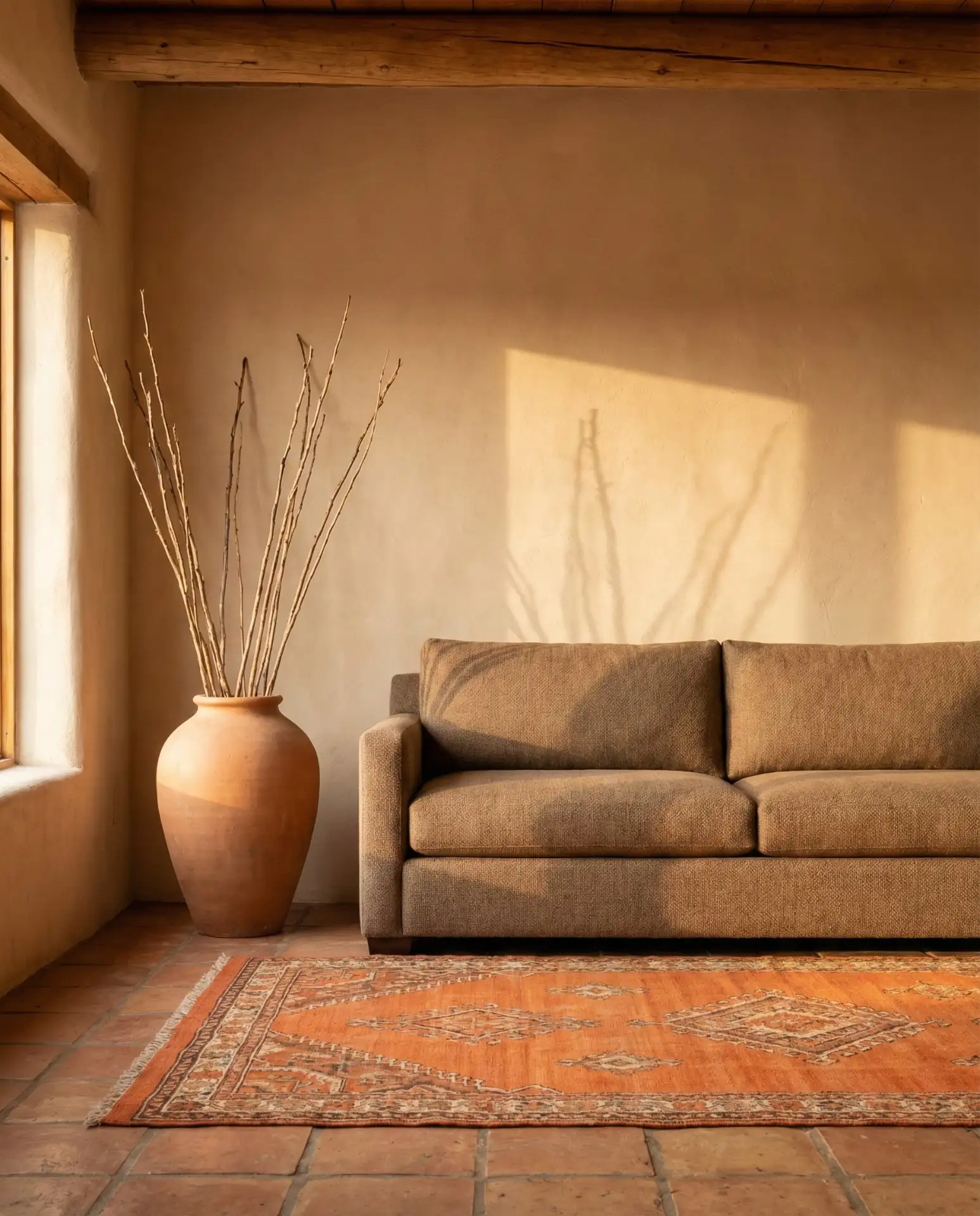
Lean into the natural warmth of your brown couch by surrounding it with orange and terracotta accents that evoke the desert landscapes of Arizona and New Mexico. Think woven textiles, clay pottery, and sun-bleached wood pieces that create a cohesive Southwest aesthetic. The brown leather or fabric acts as the perfect neutral backdrop for these warmer earth tones, which are experiencing a major resurgence on Pinterest and design blogs. Add in some cacti or succulents for an authentic touch that requires minimal maintenance. 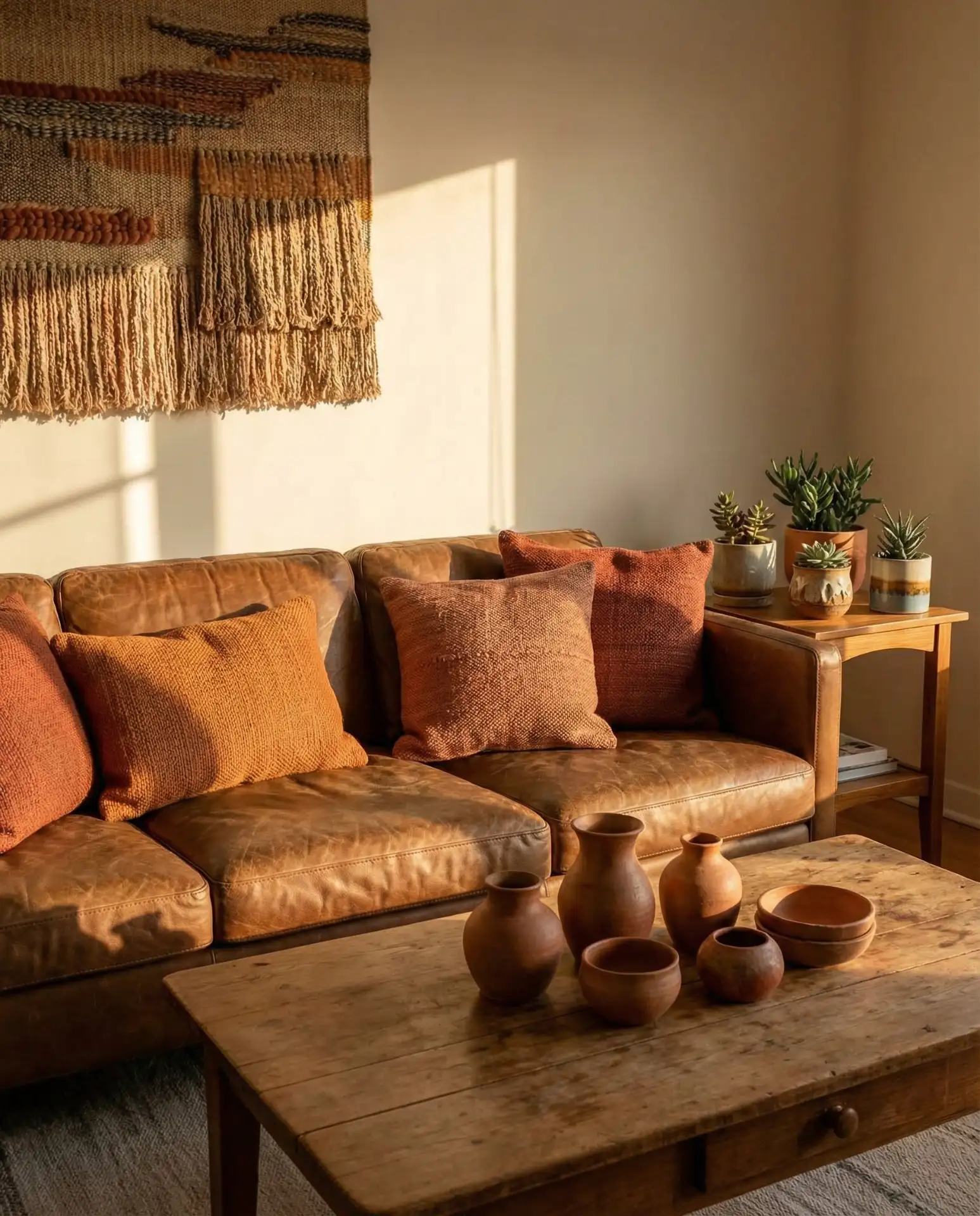
A friend who moved from Boston to Tucson discovered this combination worked perfectly in her new home, where the intense sunlight would have washed out cooler color schemes. The terracotta tiles on her floor, combined with orange accent pillows on her brown couch, created a space that felt both cooling and connected to the landscape outside her windows. She learned that this palette actually helps rooms feel comfortable even in extreme heat, because the colors psychologically belong to the environment.
5. French Country Leather with Vintage Finds
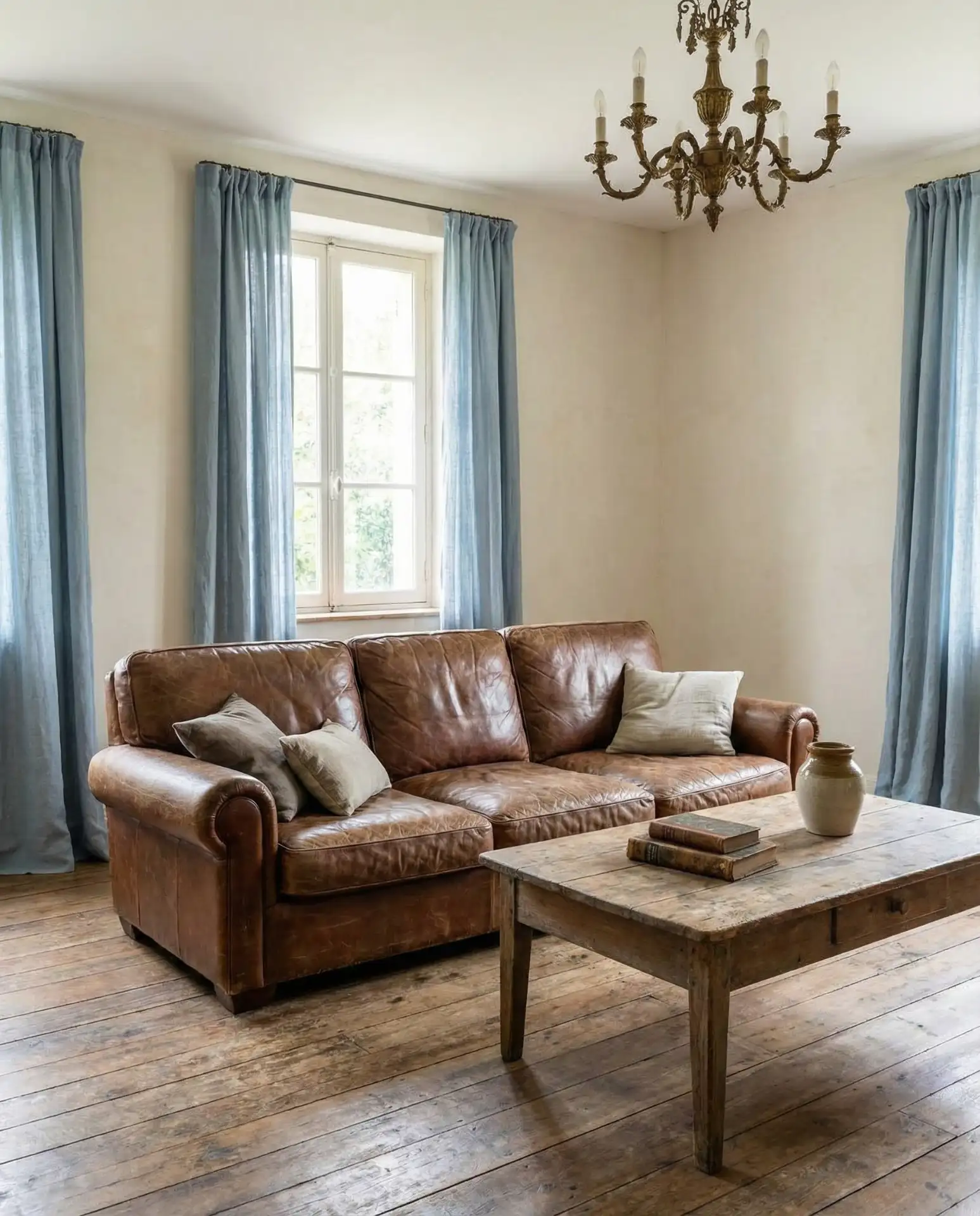
A French country leather sofa with its slightly worn, lived-in appearance pairs beautifully with antique wooden furniture and soft, faded textiles. This style celebrates imperfection—the scratches on a leather armrest, the mismatched dining chairs, and the vintage chandelier with a few missing crystals. Choose muted colors like dusty blue, sage green, and cream to complement the brown leather, and incorporate natural materials like linen, wool, and unfinished wood. This approach works wonderfully in historic homes or spaces with architectural details like exposed beams or original hardwood floors. 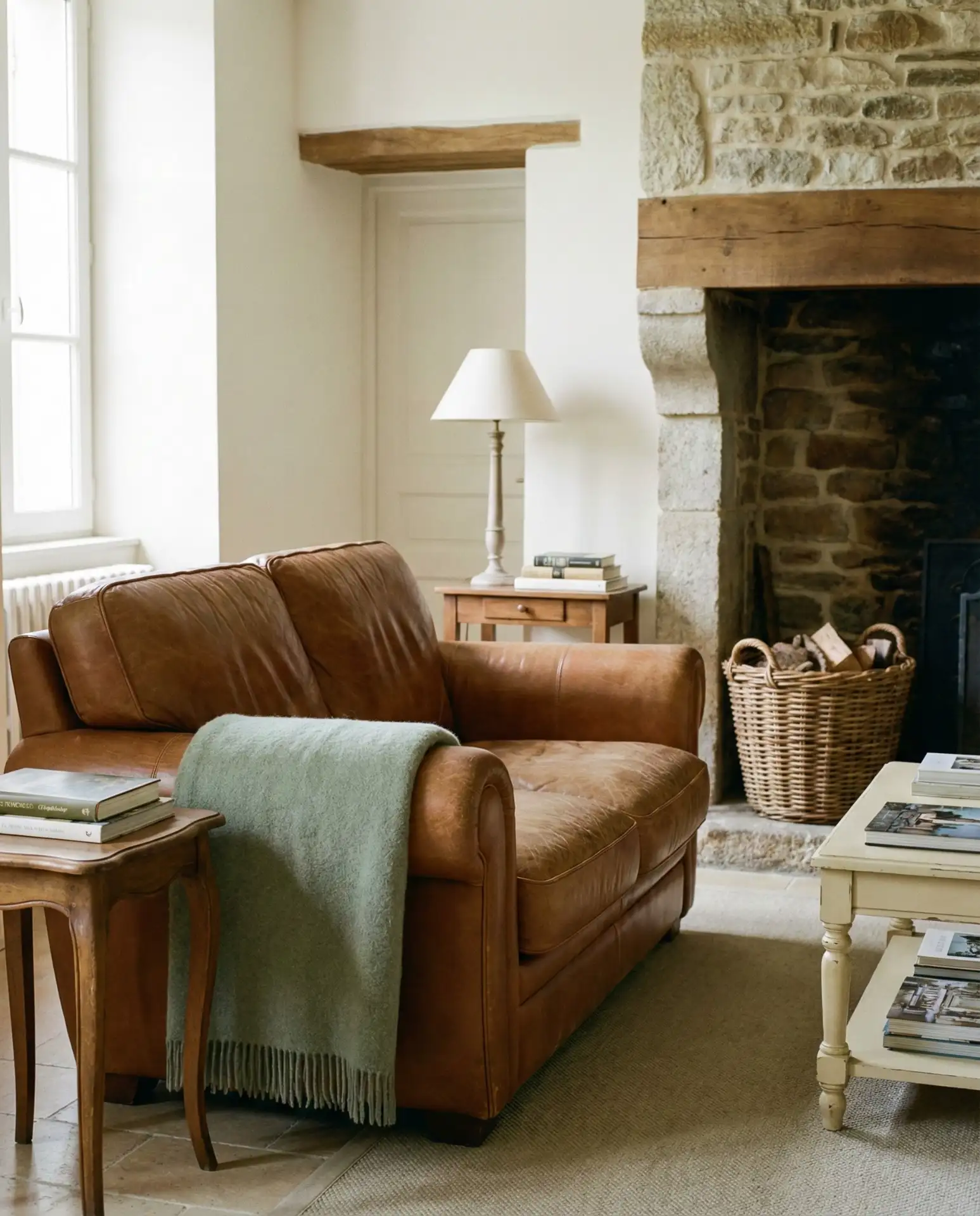
Where this works best is in rural settings or older suburbs where you have the space and architectural bones to support a more romantic, layered look. Urban apartments can achieve a version of this style, but you’ll need to be more selective with scale—smaller vintage pieces and fewer but more impactful textiles. The leather sofa should show some age; if it’s brand new, give it time or consider buying a secondhand piece that already has character. This isn’t about perfection; it’s about creating a home that feels like it’s been in the family for generations.
6. Red Accent Pop for Bold Personalities
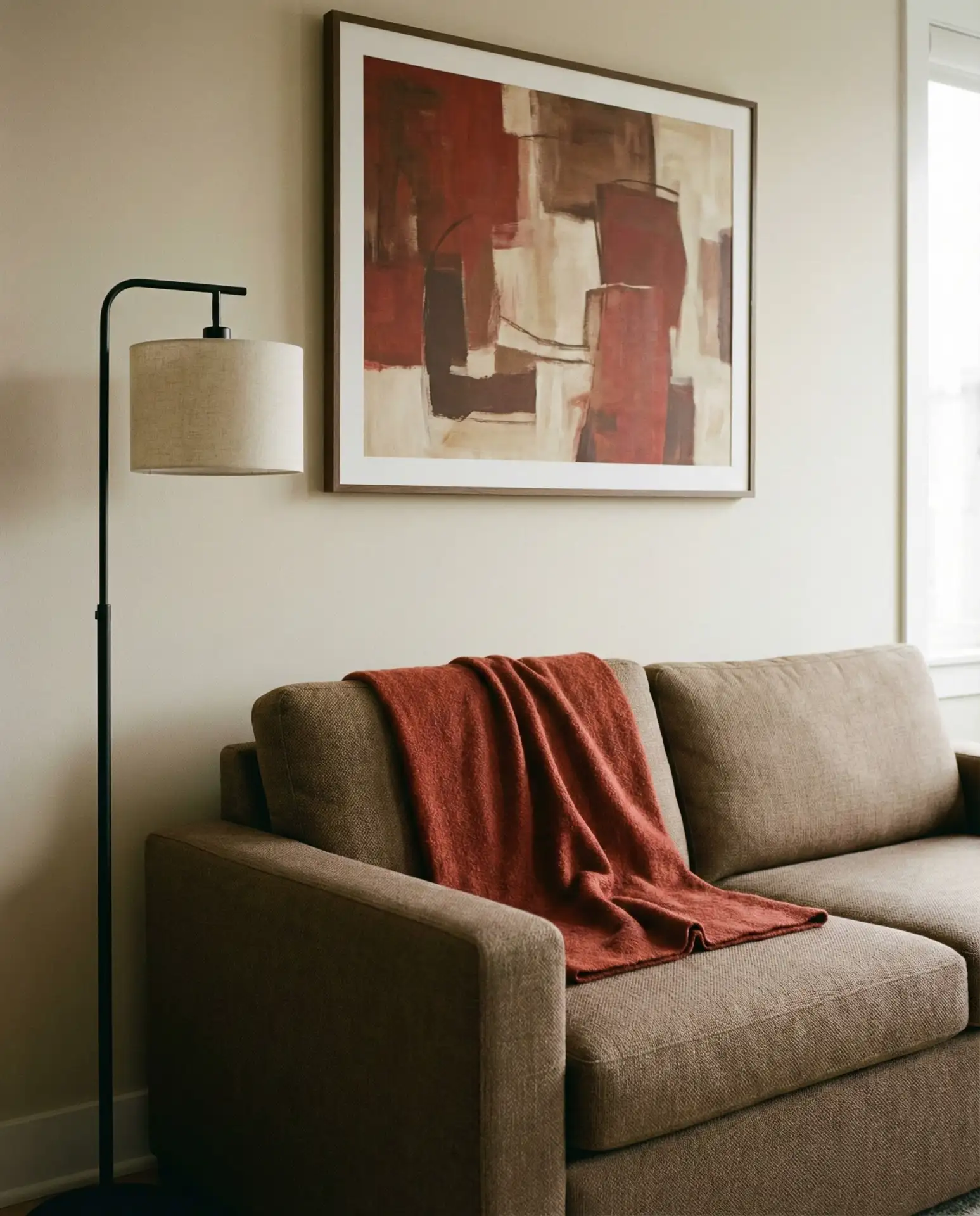
Pairing a brown couch with red accents creates an unexpectedly sophisticated combination that works for those who want drama without going dark. Choose a deeper burgundy or brick red rather than bright cherry for a more refined look that won’t tire your eyes. Red throw pillows, a patterned area rug with red details, or even a single red armchair can transform a space from neutral to notable. This combination has roots in traditional design but feels completely fresh when executed with modern interior design sensibilities—clean lines, uncluttered surfaces, and intentional negative space. 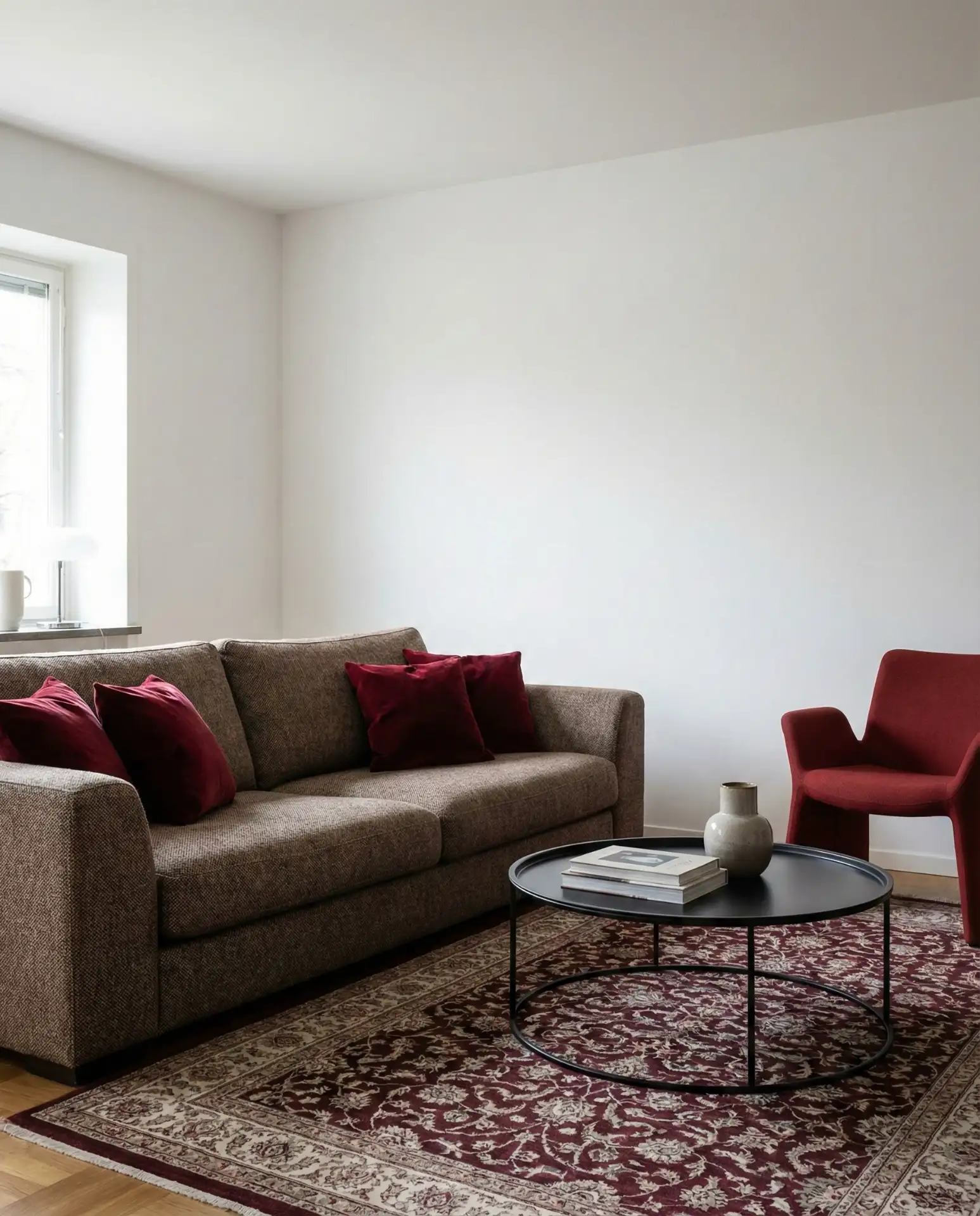
From an expert perspective, this color combination succeeds because brown and red are analogous on the color wheel, creating harmony while still providing contrast. The brown acts as a stabilizer for the red’s energy, preventing the space from feeling too stimulating or aggressive. Use red in roughly twenty to thirty percent of the room’s visual weight—any more and it dominates, any less and it reads as an afterthought. Metallic accents in brass or copper bridge the two colors beautifully and add a third textural layer.
7. Medium Brown Neutrality with Textural Layers
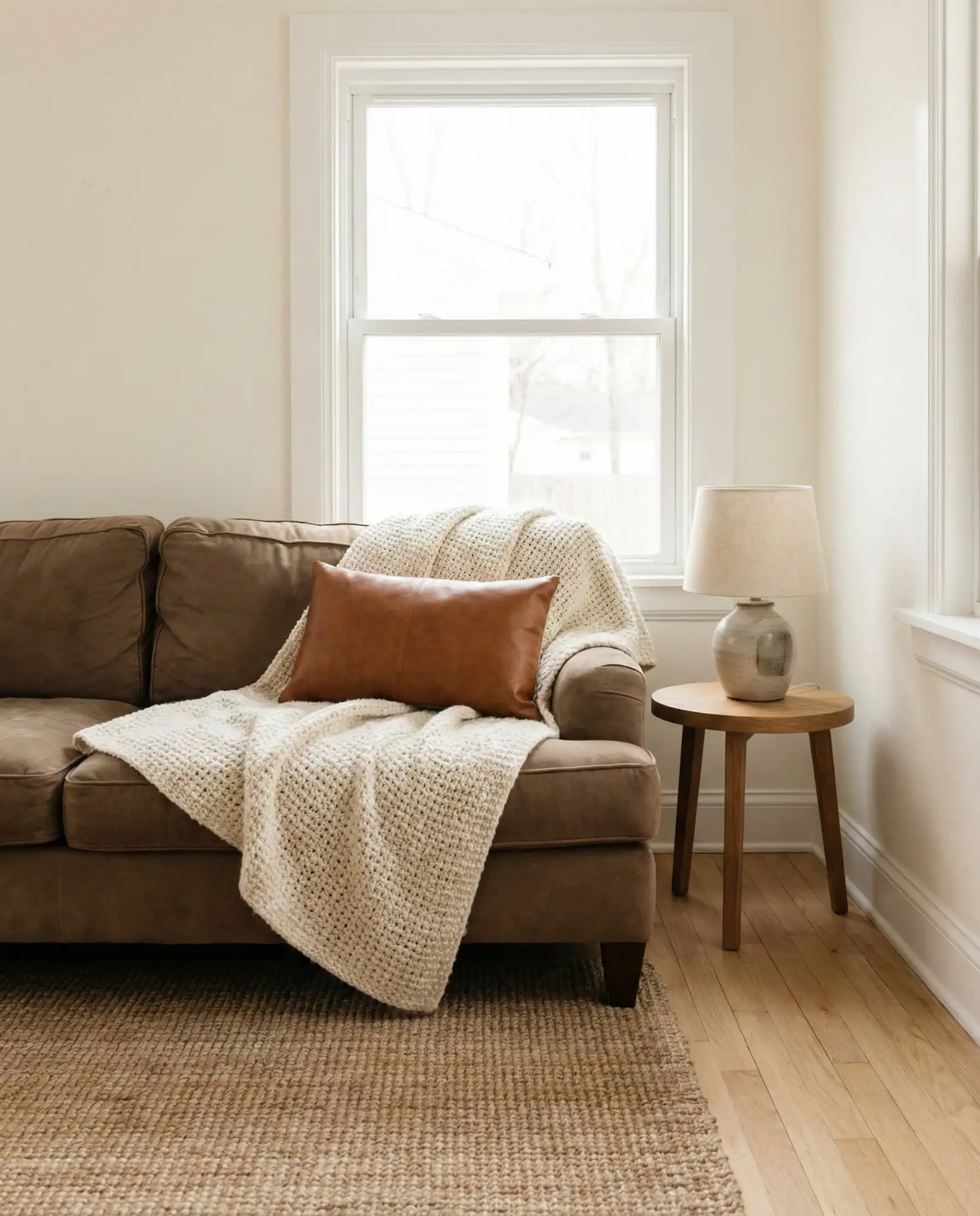
A medium brown sofa in a neutral-toned room becomes interesting through the strategic layering of textures rather than colors. Combine smooth leather or tight-weave fabric with chunky knit throws, nubby linen pillows, jute or sisal rugs, and rough-hewn wood surfaces. This monochromatic approach, popular in both urban and rural American homes, creates visual interest without the commitment of bold color. The brown serves as the mid-tone that anchors everything from your cream walls to your dark wood floors. 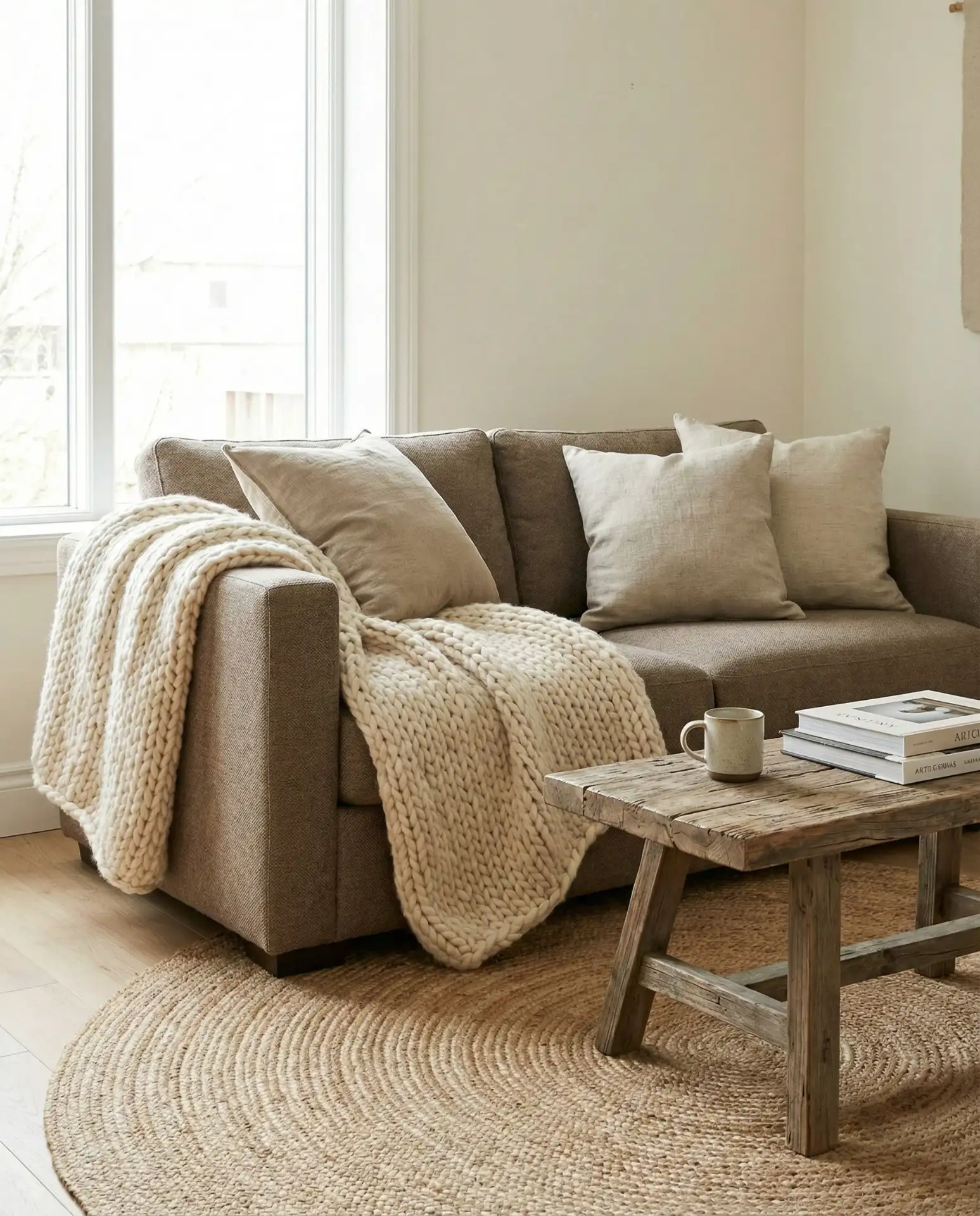
Real homeowners who embrace this style appreciate how easy it is to change the mood seasonally by swapping out just a few textiles. Summer might mean lightweight linen and cotton, while winter calls for wool, sheepskin, and velvet. The brown couch remains constant, but the supporting cast rotates to keep the space feeling fresh. This approach also photographs beautifully for those who share their homes on social media, because the textural depth creates dimension even in flat images.
8. Girly Glam with Blush and Gold
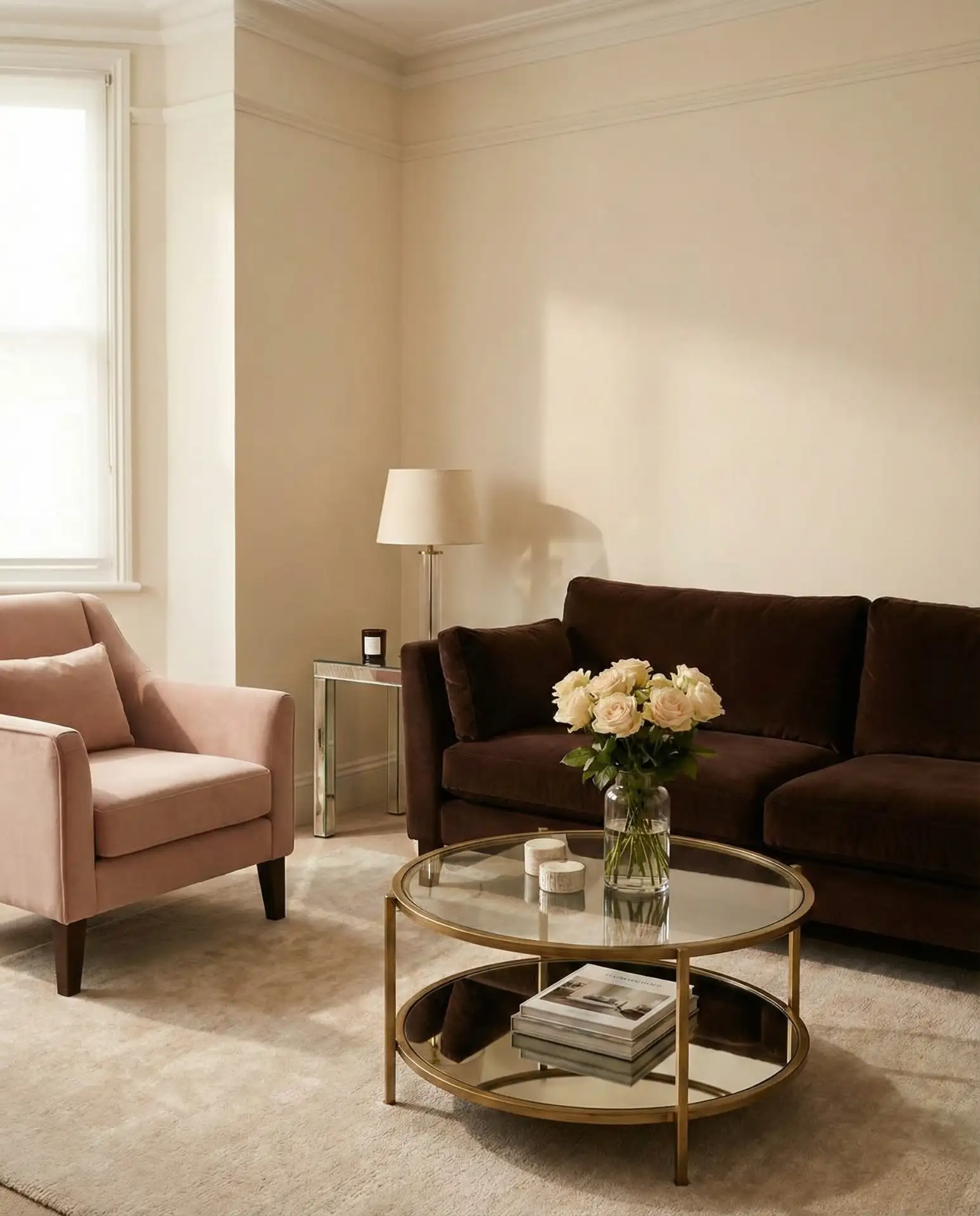
Who says brown can’t be girly? Pair a rich brown sofa with blush pink accents, gold fixtures, and glamorous details like mirrored surfaces or crystal chandeliers for a feminine space that still feels grounded and sophisticated. The brown prevents the pink from reading as too juvenile or saccharine, while the pink softens the brown’s inherent masculinity. Add in some fresh flowers, plush velvet textures, and maybe a faux fur throw for maximum impact. This combination appeals particularly to young professionals decorating their first homes who want sophistication with personality. 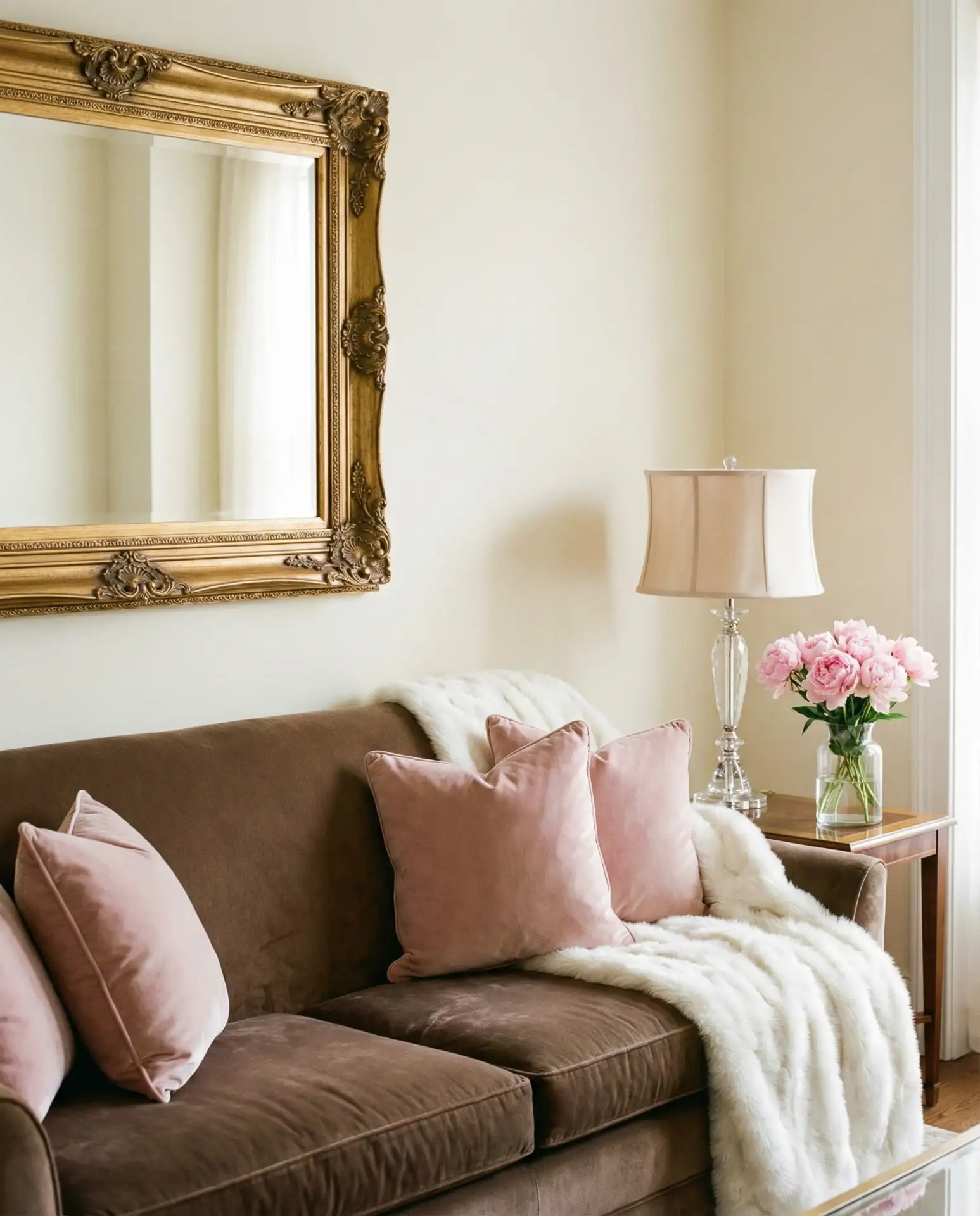
If you’re working with a tight budget, focus your spending on one statement piece—maybe the gold-framed mirror or a really beautiful chandelier—and save on the smaller accessories. Big-box stores and online retailers offer plenty of affordable plush pillows and throws that look far more expensive than they are. The brown sofa itself is your investment piece; everything around it can be more accessible price-wise. Target, HomeGoods, and Amazon all carry options that fit this aesthetic without requiring designer budgets.
9. Bohemian Leather with Global Textiles
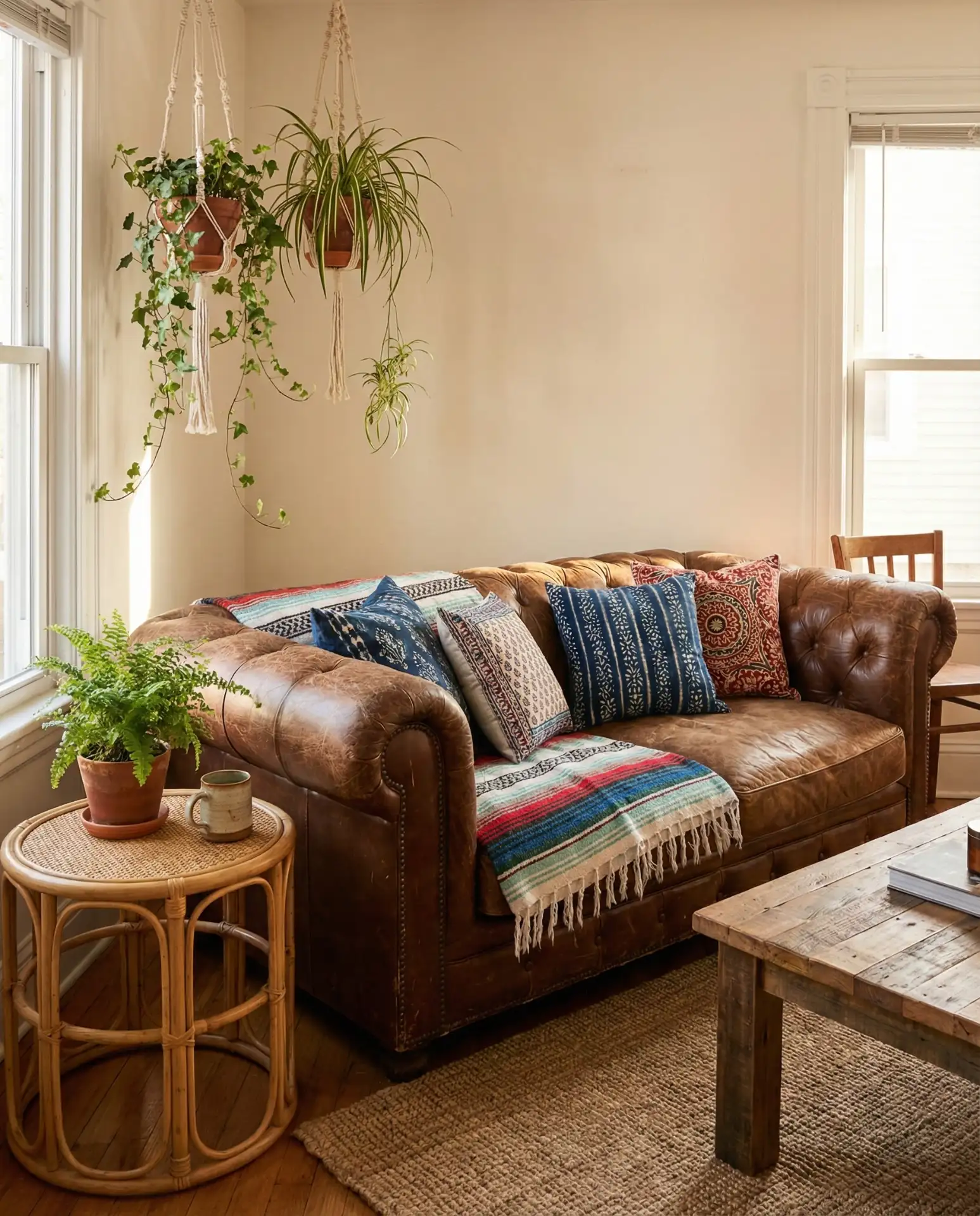
A worn bohemian leather sofa becomes the perfect canvas for layered global textiles—Moroccan wedding blankets, Turkish kilim pillows, Indian block-printed throws, and Mexican woven textiles. This collected, well-traveled aesthetic celebrates pattern mixing and cultural appreciation when done thoughtfully. The brown leather acts as the neutral foundation that prevents all these patterns from fighting with each other. Incorporate plants abundantly, hang macramé or woven wall hangings, and don’t be afraid to mix wood tones for that lived-in, gathered-over-time feel. 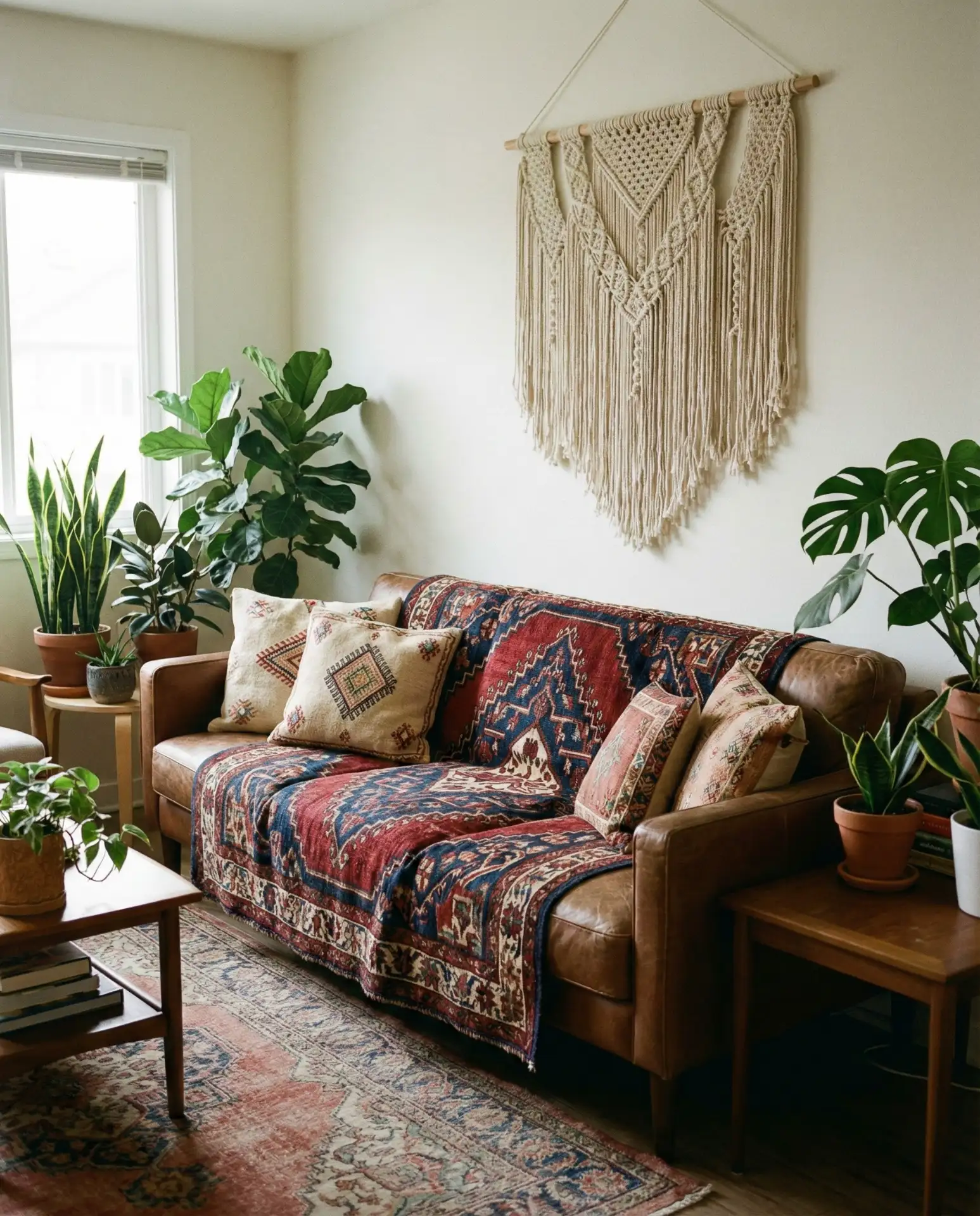
The common mistake here is buying everything new from chain stores marketed as “boho,” which ends up looking like a catalog page rather than a curated collection. The beauty of this style lies in its authenticity—pieces collected from actual travels, inherited from family, or discovered at local ethnic markets and estate sales. If you haven’t traveled extensively, seek out fair-trade shops and artisan cooperatives that source directly from makers. The leather couch can be secondhand too; in fact, a piece with some wear and tear fits the aesthetic better than pristine new furniture.
10. Grey Walls for Modern Sophistication
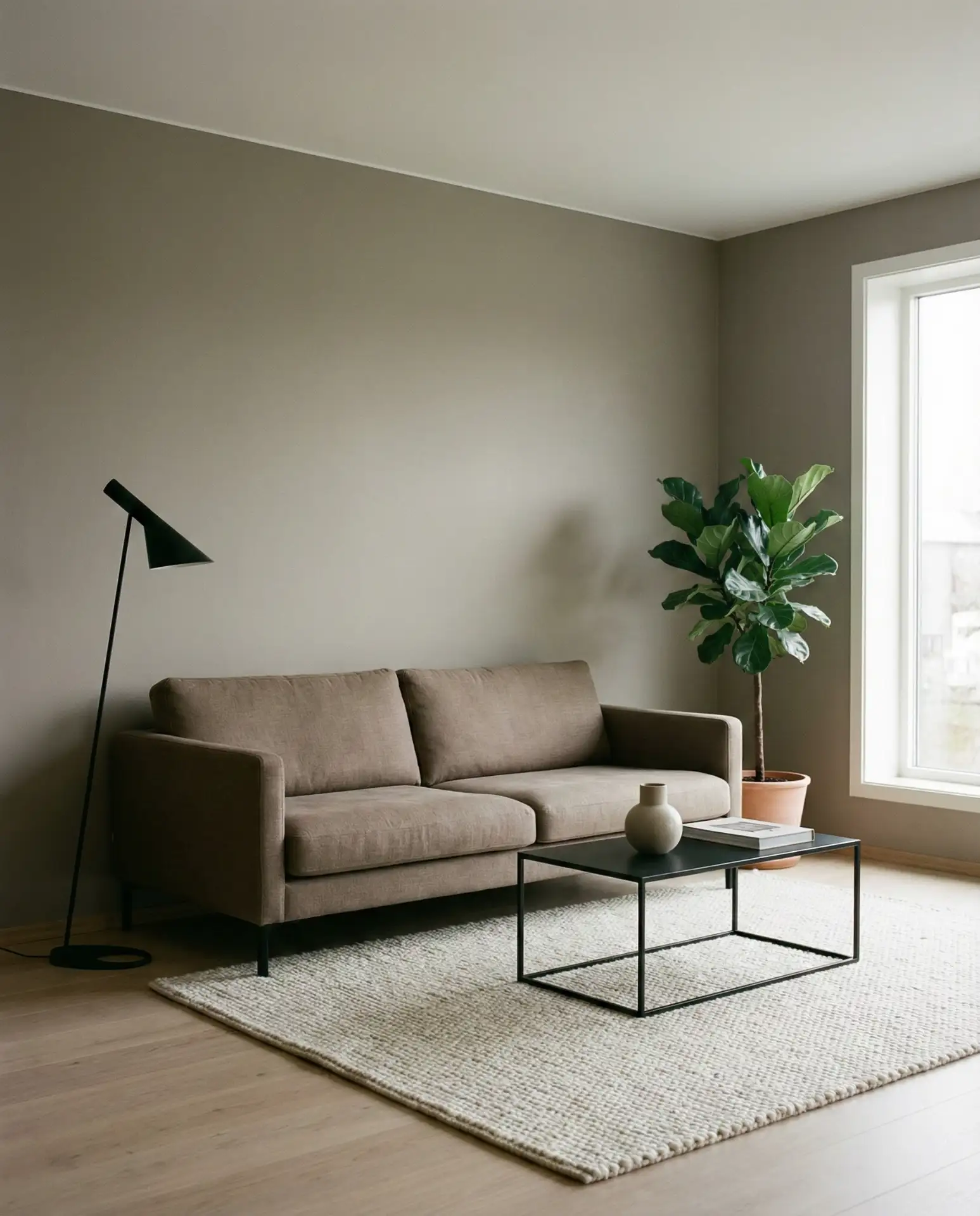
Pairing a brown couch with grey walls creates a sophisticated, contemporary look that’s neither warm nor cool but perfectly balanced. Choose a greige (grey-beige hybrid) or a grey with warm undertones to prevent the space from feeling cold or institutional. This combination works brilliantly in modern interior design schemes where clean lines and uncluttered spaces take priority. Add in black accents through lighting fixtures or picture frames, and keep accessories minimal—maybe a single sculptural vase or a stack of design books on the coffee table. 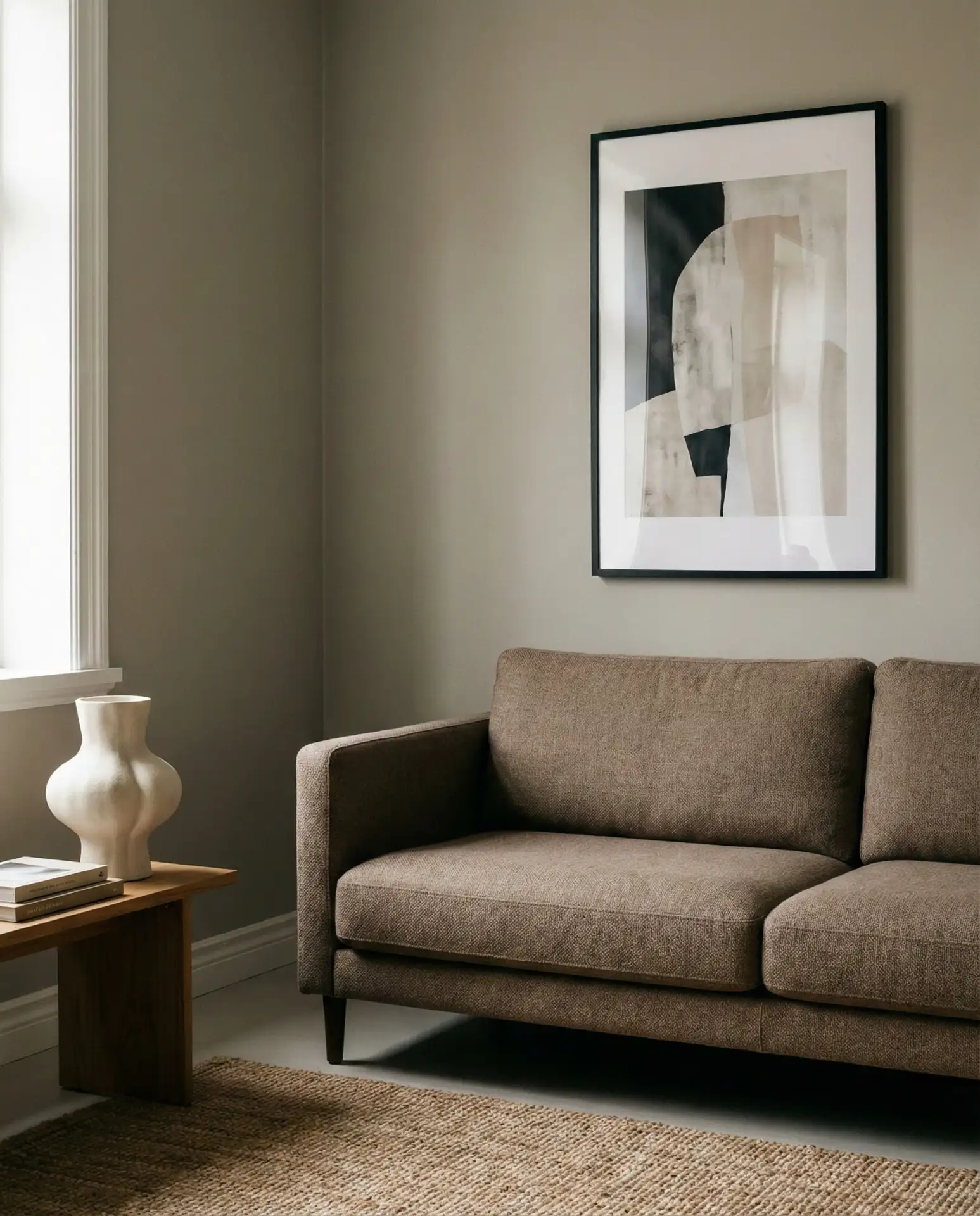
This combination performs exceptionally well in urban apartments and condos where the architecture already leans modern, with features like exposed concrete, floor-to-ceiling windows, or open floor plans. The brown brings necessary warmth to what could otherwise feel stark or cold, while the grey provides the neutral backdrop that modern design requires. In cities like Chicago, Seattle, and New York, where grey weather dominates much of the year, homeowners often choose this palette to acknowledge the climate while maintaining a sense of coziness indoors.
11. Chestnut Tones with Warm Woods
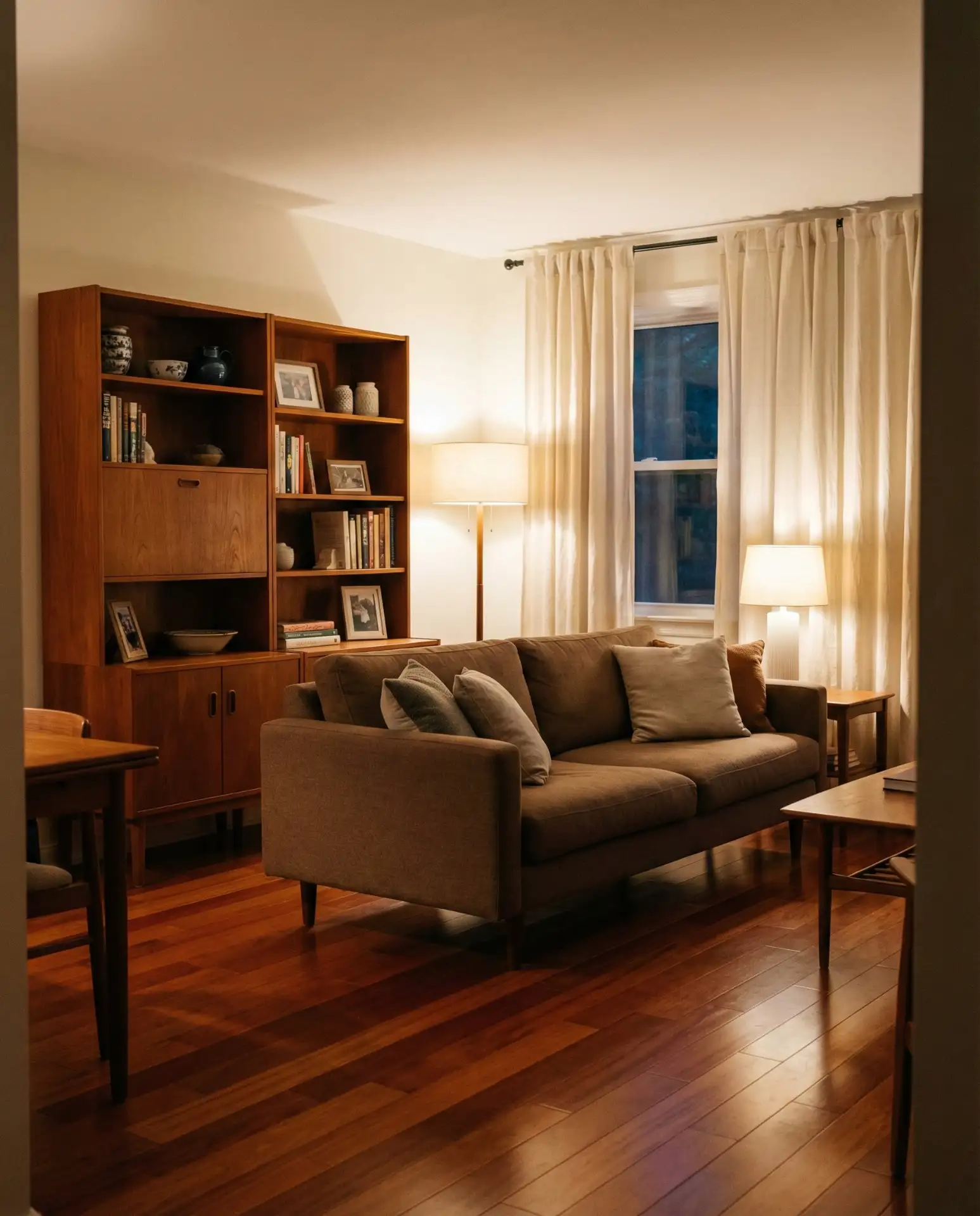
A chestnut brown sofa harmonizes beautifully with warm-toned wooden furniture—think walnut, cherry, or teak pieces that echo the sofa’s rich color. This approach creates a cohesive, enveloping warmth that works particularly well in spaces with limited natural light or in colder climates. Mix in cream or ivory accents to prevent the room from feeling too heavy, and consider a lighter area rug to break up all that brown. The key is varying the shades of brown throughout the space so you create depth rather than monotony. 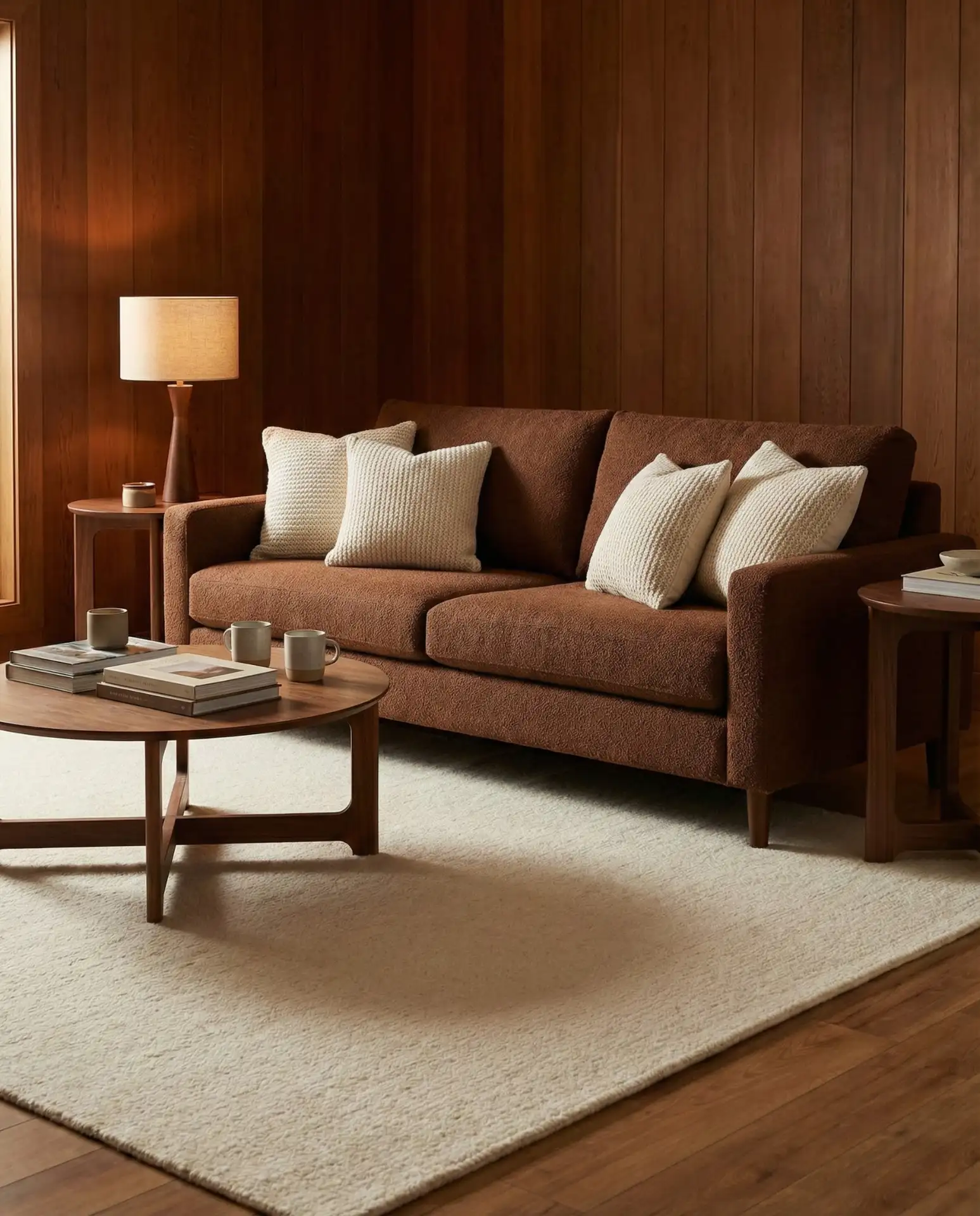
Many American homeowners make the mistake of thinking all browns must match exactly, but that’s actually what makes a room feel flat and uninspired. Different wood species and brown shades create visual interest through subtle variation. Your chestnut sofa, a walnut coffee table, and a teak side table together tell a richer story than three pieces in the exact same tone. Think of it like wearing different shades of denim—the variation is what makes it work, not perfect matching.
12. Green Plants as Living Accessories
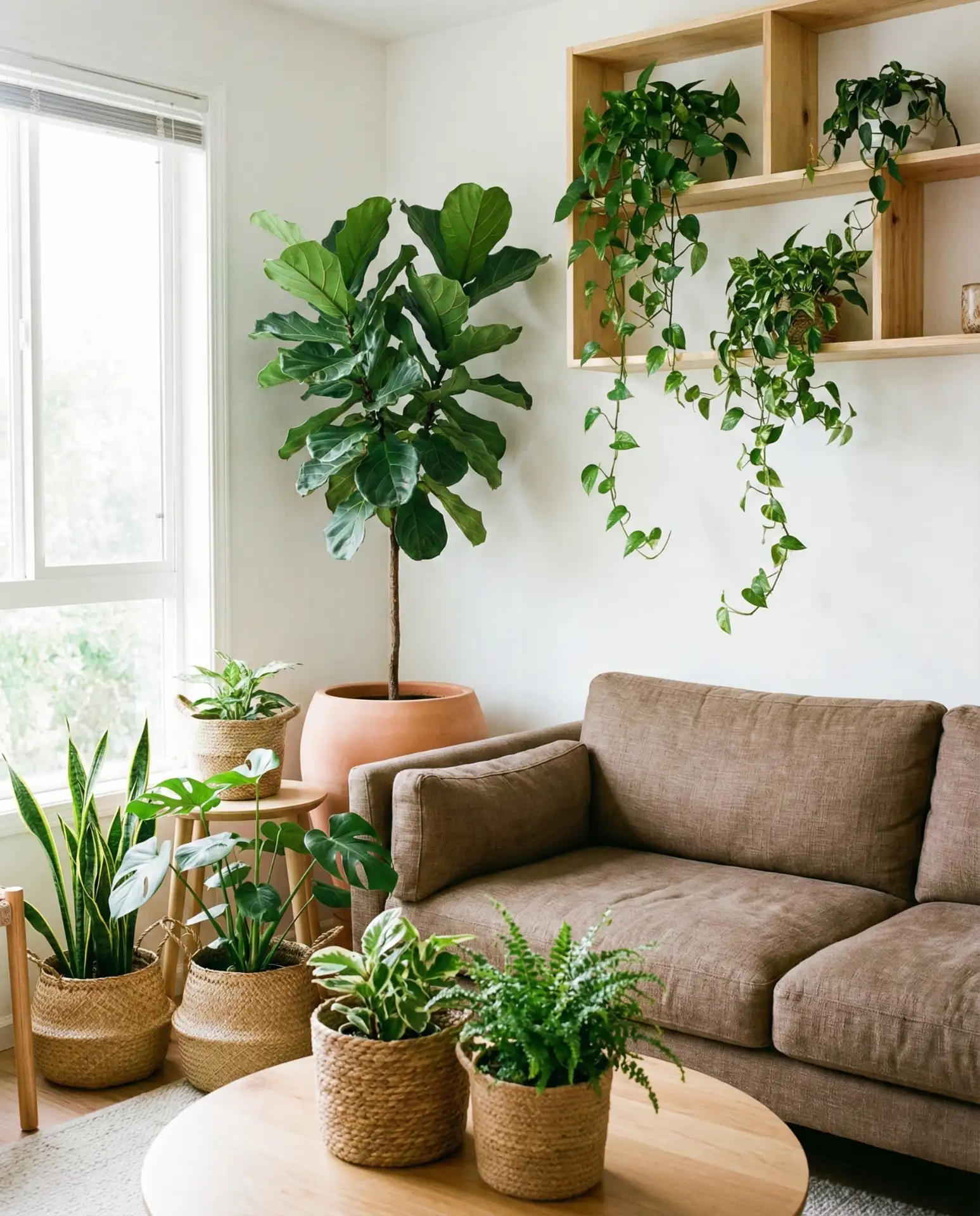
Transform your brown couch into a natural oasis by surrounding it with abundant green plants in varying heights and textures. The earthy brown provides the perfect backdrop for everything from tall fiddle leaf figs to trailing pothos vines. This biophilic design approach, which connects indoor spaces with nature, has become increasingly popular as more Americans work from home and seek calming environments. Mix in some woven baskets as planters, choose ceramic pots in neutral tones, and watch how the green brings your entire space to life. 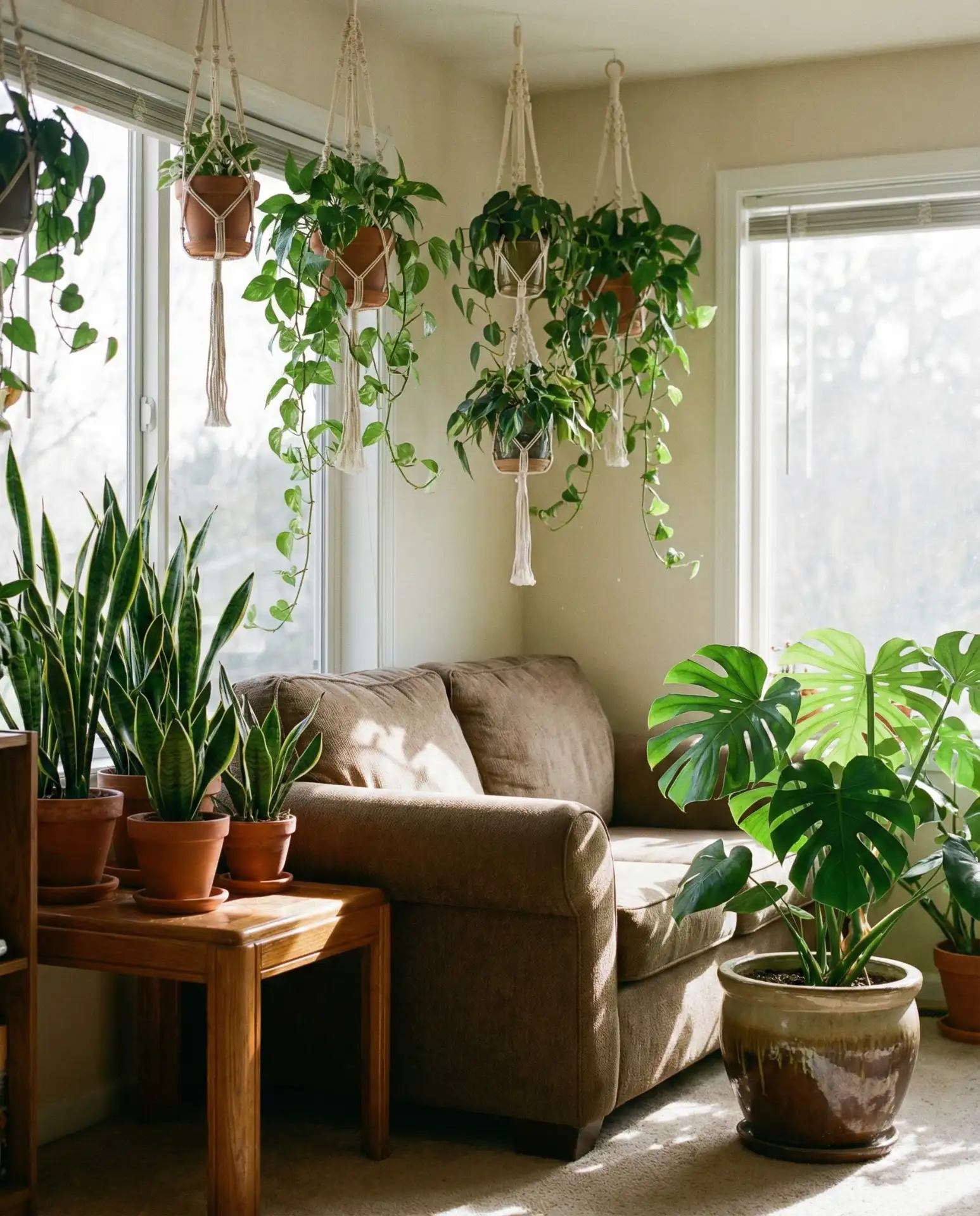
A couple in Portland transformed their living room this way and found that the plants not only beautified the space but also actually improved the air quality and their mood during long, grey winters. They started with just three plants and gradually added more as they learned which varieties thrived in their specific light conditions. The brown leather sofa they’d inherited suddenly felt intentional rather than outdated once the greenery framed it properly. Plants are also forgiving decor—if one dies, you simply replace it, unlike a poorly chosen permanent fixture.
13. Pink and Brown Feminine Balance
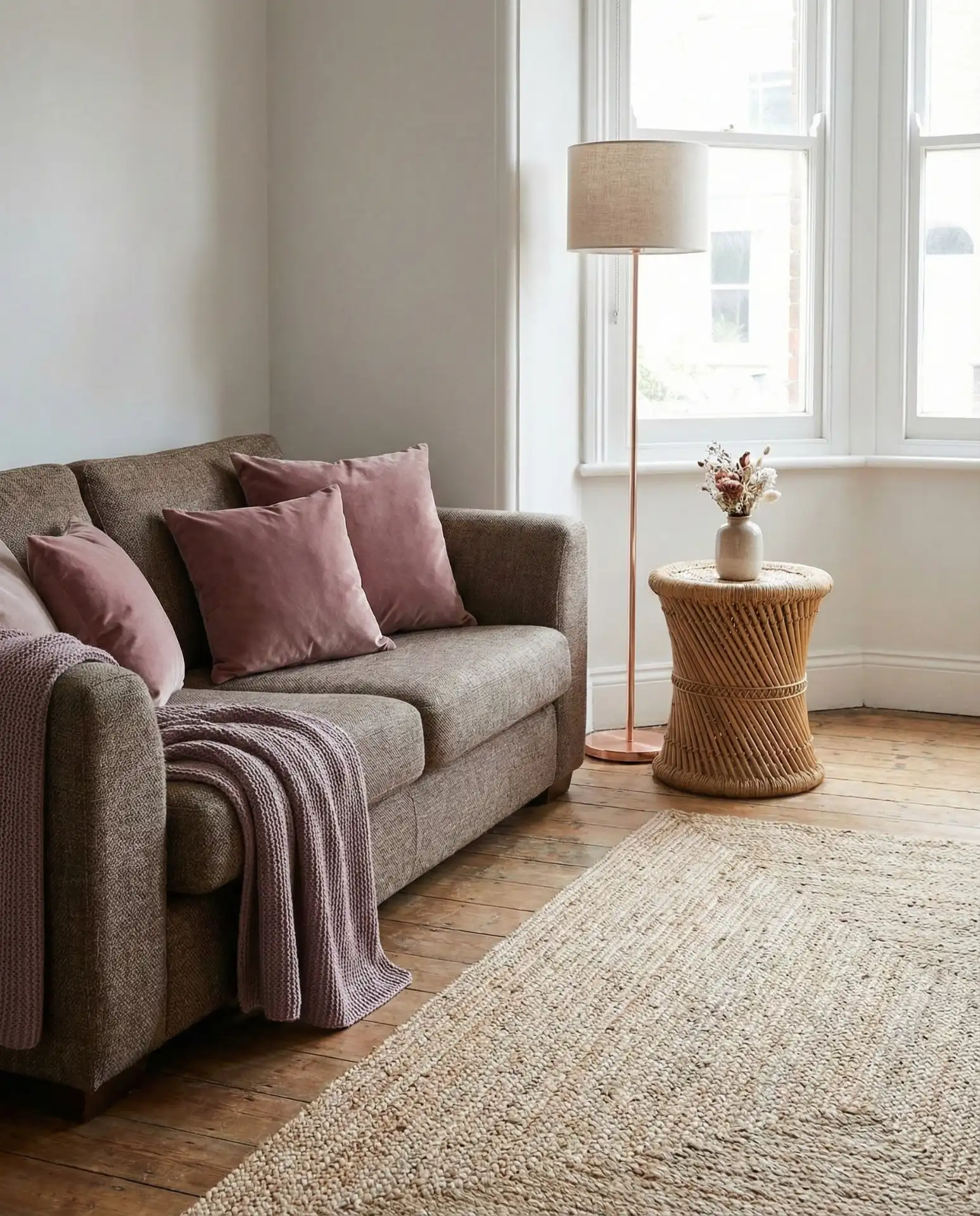
The combination of brown and pink has evolved far beyond nursery aesthetics into a sophisticated pairing for adult spaces. Choose dusty rose, mauve, or terracotta-tinged pink rather than bubblegum shades, and you’ll create a space that feels both feminine and grounded. The brown keeps the pink from floating away into territory that’s too sweet or insubstantial. Add in natural materials like rattan, jute, and unfinished wood to reinforce the earthy quality, and consider metallic accents in rose gold or copper to bridge the two colors. 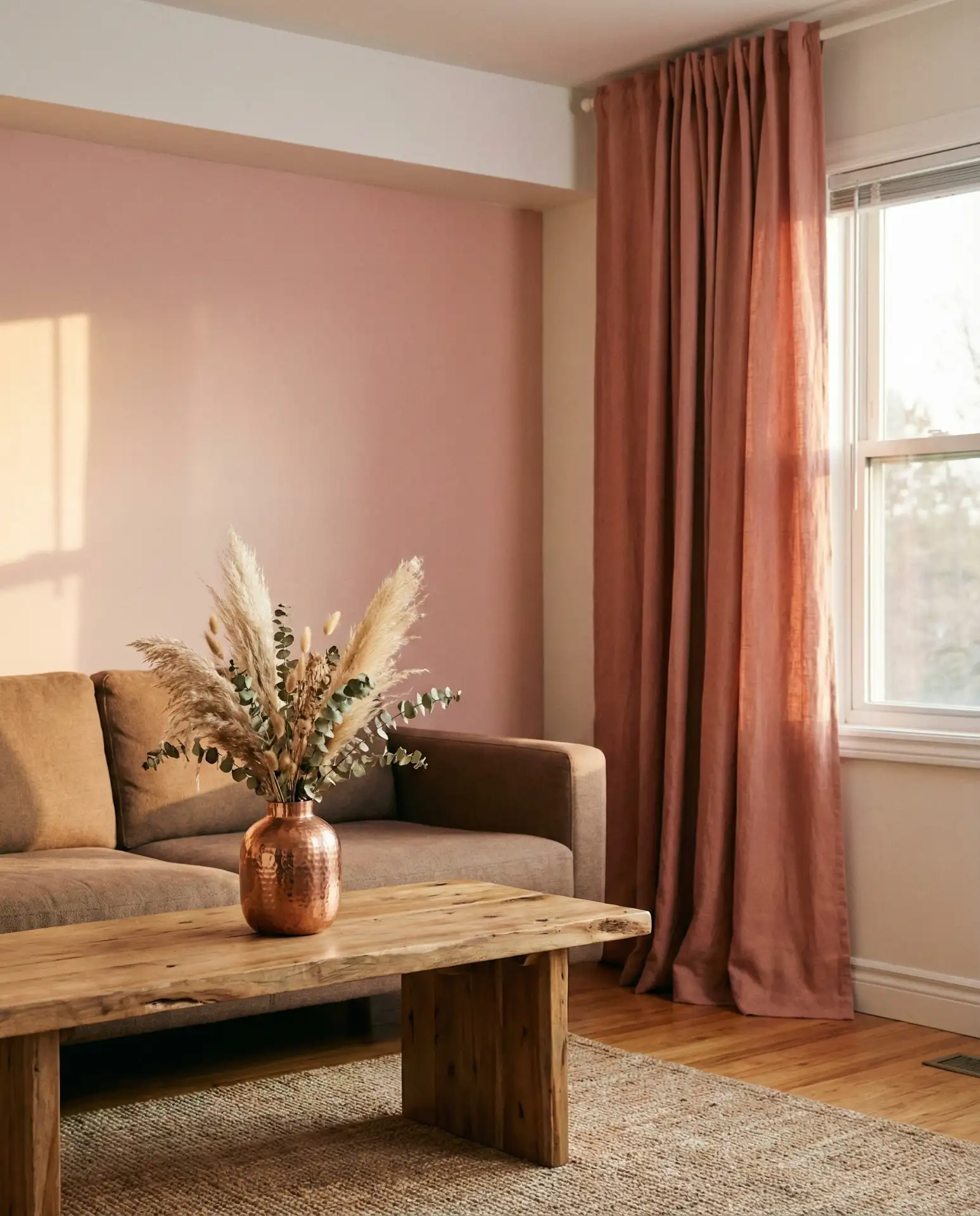
Where this works best is in rooms with plenty of natural light, where the pink can shift throughout the day from warm to cool depending on the sun’s angle. Northern-facing rooms might need a warmer, more peachy pink to compensate for the cooler light, while southern exposures can handle dustier, grayer pinks. The brown sofa serves as the constant that keeps the space from feeling too ethereal or disconnected from reality. This is especially popular in master bedrooms and sitting areas where a softer, more intimate atmosphere is desired.
14. Mustard Accents for Retro Vibes
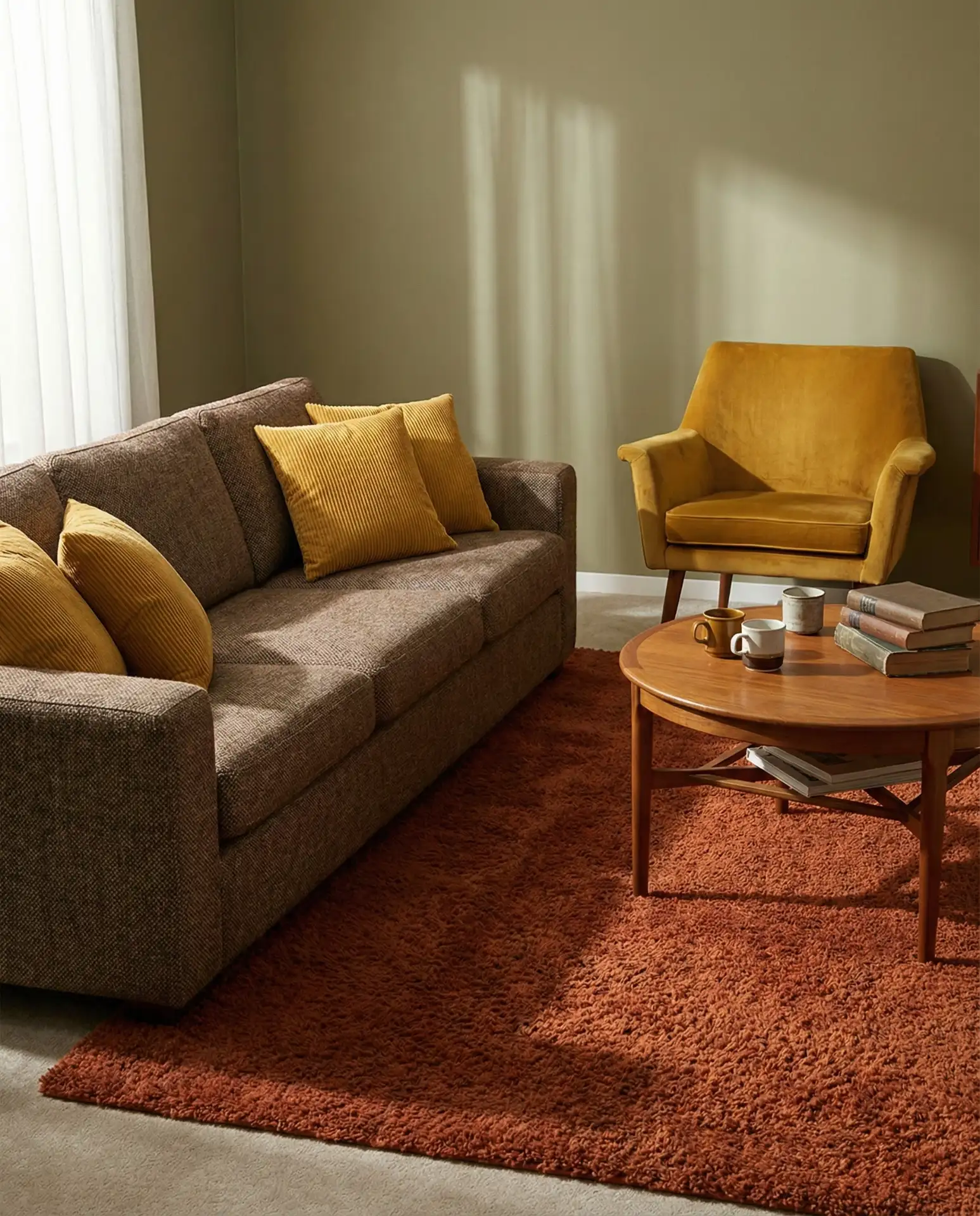
Pair your brown couch with mustard yellow accents for a warm, retro-inspired look that references the 1970s without feeling dated. Mustard and brown are natural companions on the color wheel, creating a harmonious, vintage aesthetic that’s seen a major revival. Add in some burnt orange, avocado green, or rust for an authentic throwback vibe, or keep it more contemporary by limiting the mustard to just a few key pieces—pillows, a throw, or an accent chair. This combination works surprisingly well in both small apartments and larger family homes. 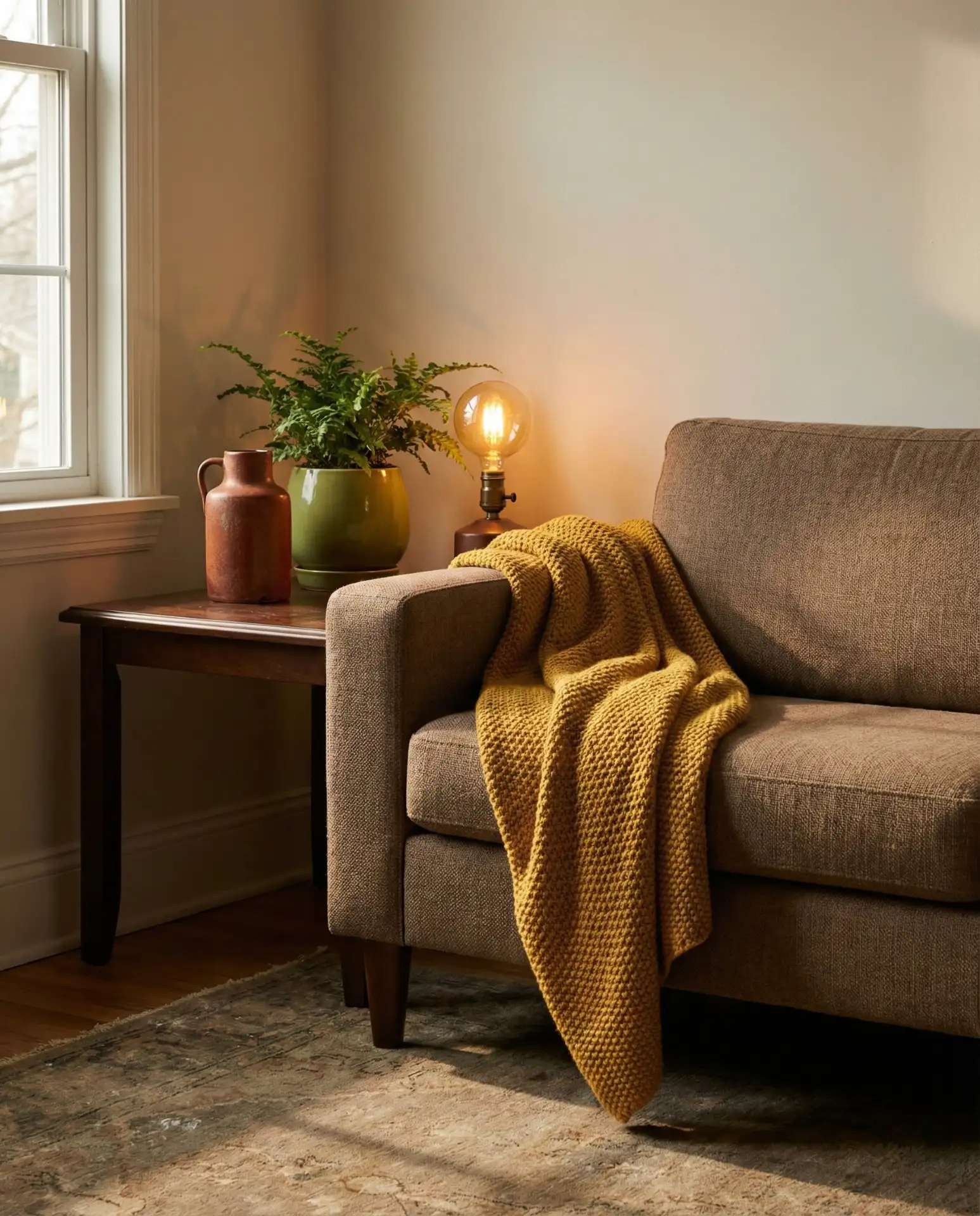
Budget-savvy decorators appreciate this look because thrift stores and vintage shops are filled with affordable mustard and brown pieces from the actual 1970s. You can often find original lamps, ceramic pieces, and artwork for a fraction of what new items cost, and they come with authentic patina and character. Mix these vintage finds with a few contemporary pieces to keep the space from feeling like a time capsule. The brown couch can be brand new; it’s the accessories that deliver the retro charm without requiring you to sacrifice modern comfort.
15. Curtains That Complete the Picture
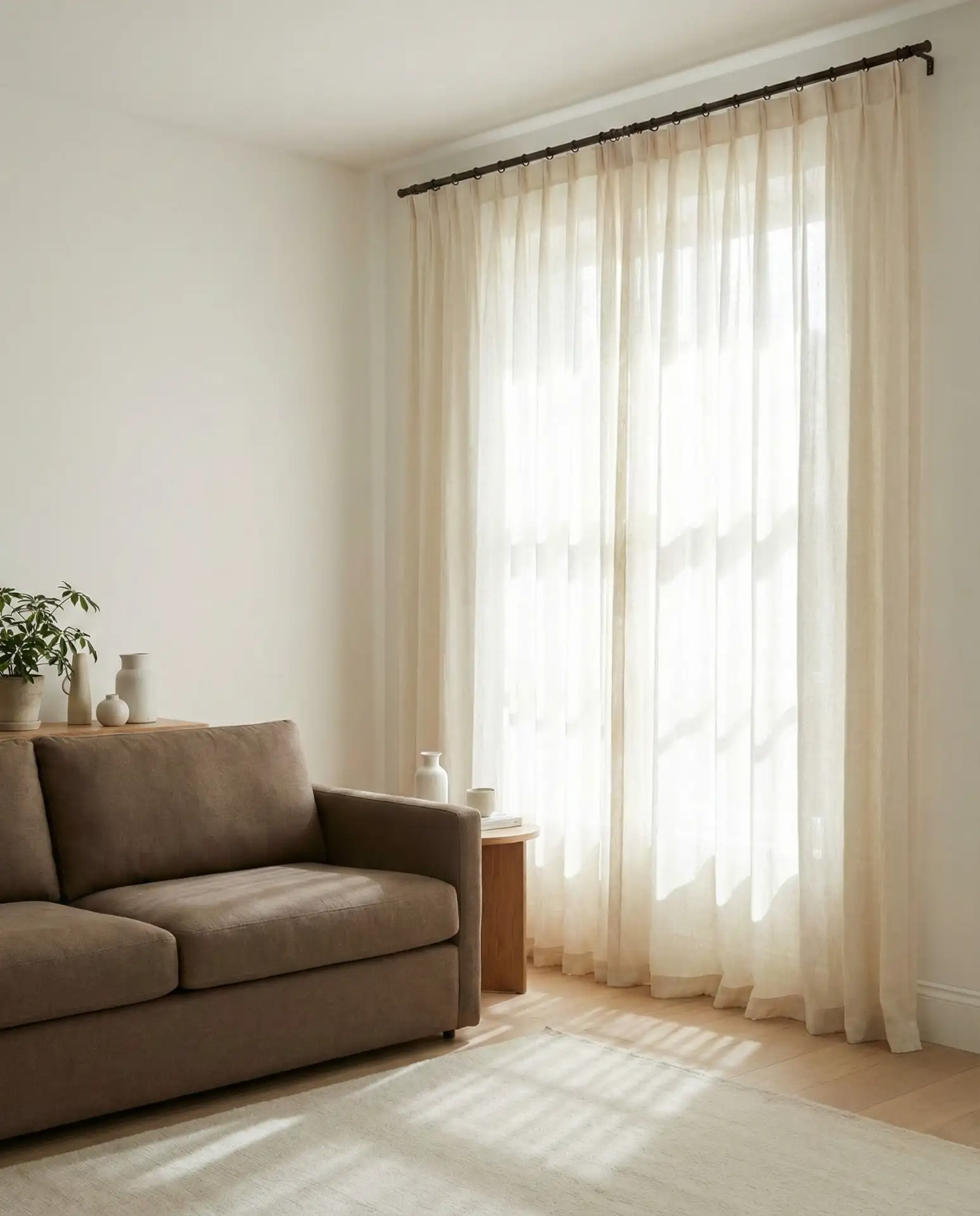
The right curtains can make or break a living room with a brown sofa, and the choice depends entirely on the mood you’re creating. Floor-to-ceiling linen curtains in cream or white will brighten a space and create an airy, Scandinavian feel. Velvet drapes in a complementary jewel tone add drama and luxury. For a more casual, laid-back approach, consider simple cotton curtains in a soft pattern that picks up accent colors from your pillows or rug. Hang them high and wide—mount the rod closer to the ceiling than the window frame and extend it several inches beyond the window on each side—to maximize the sense of space and light. 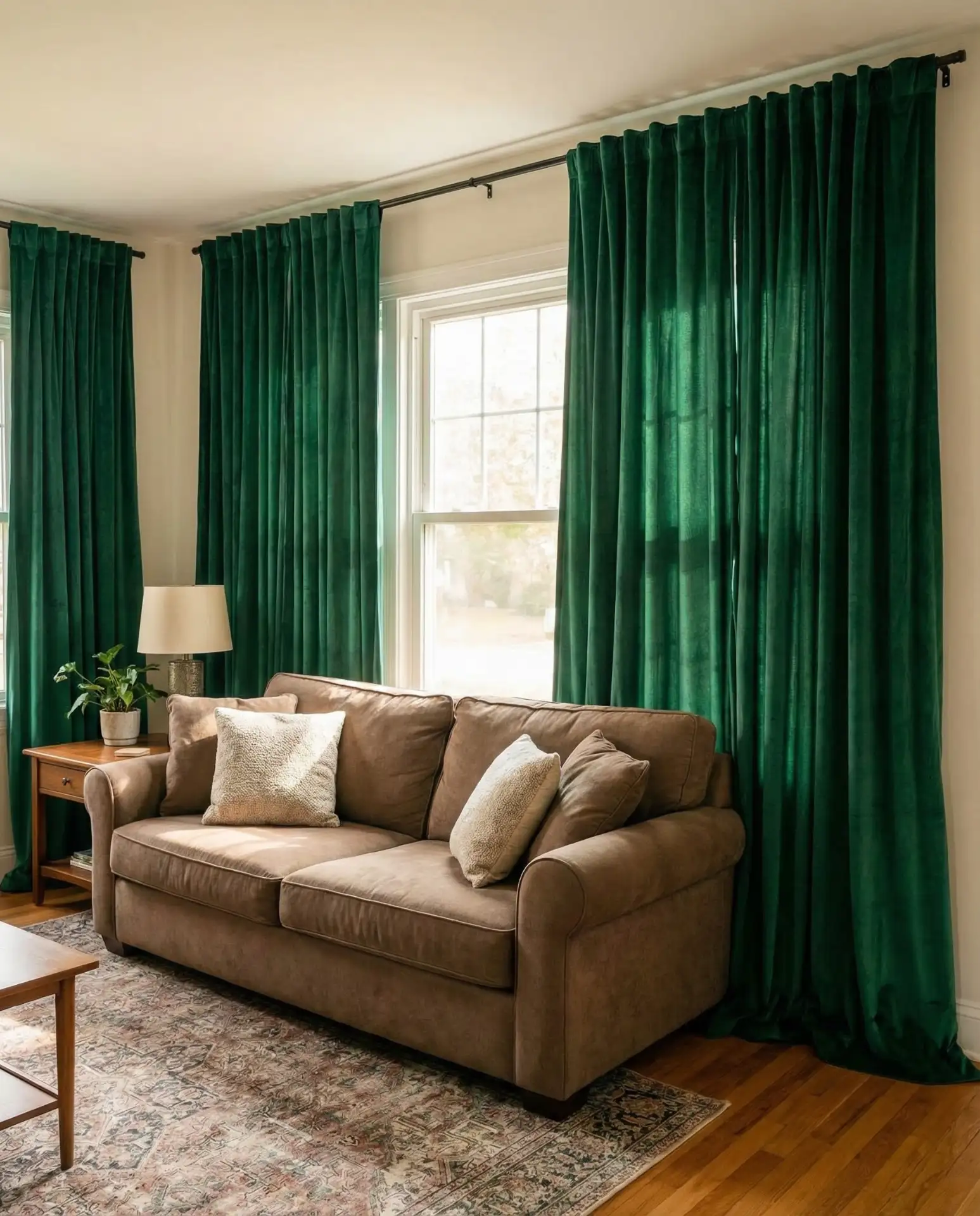
Expert designers emphasize that curtains should almost always puddle slightly on the floor—about half an inch to an inch of extra fabric creates a more custom, luxurious look than curtains that hang exactly to the floor or, worse, float above it. For a brown couch, avoid curtains in a similar shade unless you’re deliberately going monochromatic; instead, choose something that either contrasts or complements based on your overall design direction. If your couch is the room’s focal point, let the curtains recede into a neutral background. If you want drama at the windows, keep other elements simpler.
16. Yellow Sunshine for Dark Spaces
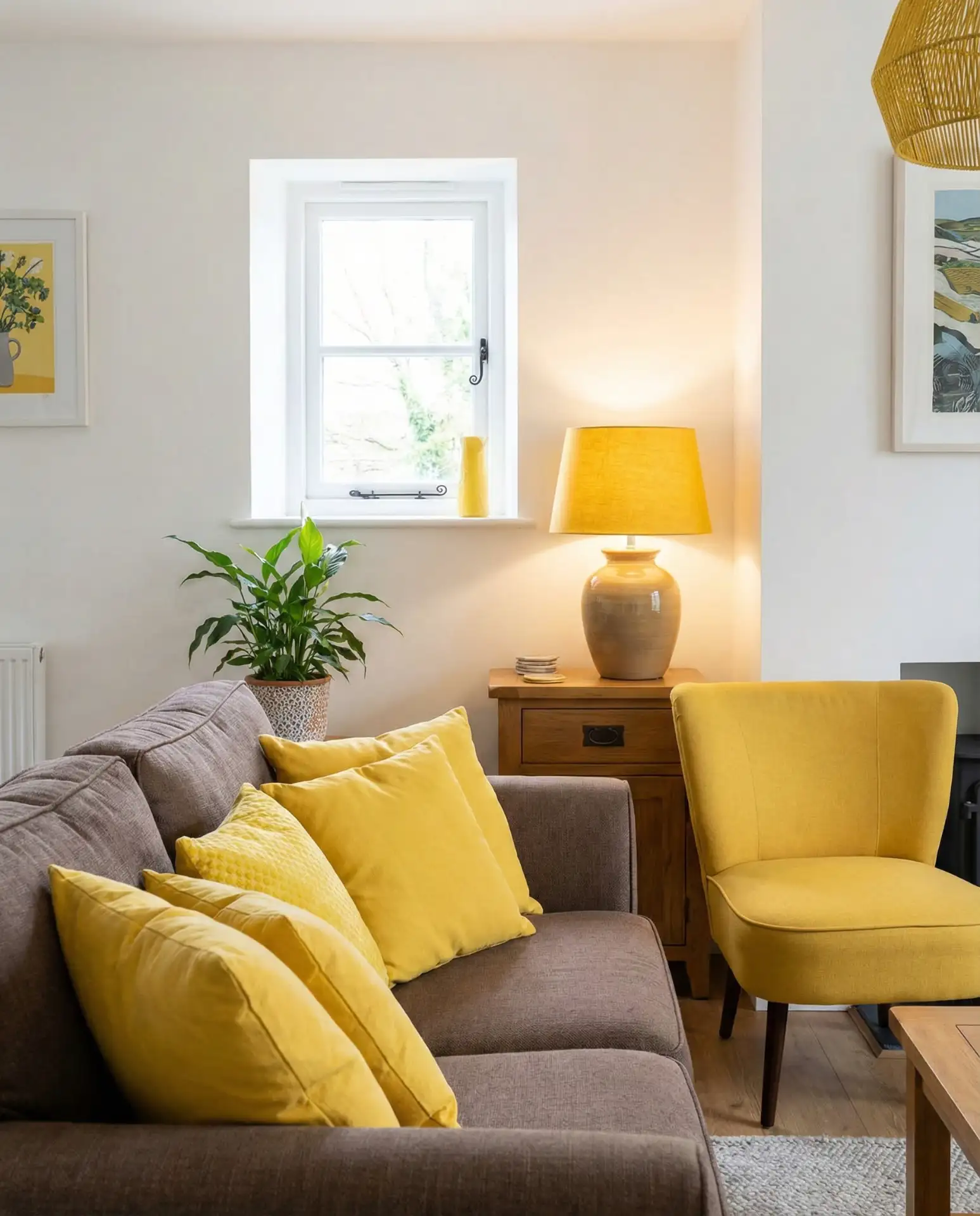
In rooms with limited natural light or northern exposures, pairing a brown couch with bright yellow accents can artificially create the warmth and cheerfulness that sunlight would provide. Choose a clear, sunny yellow rather than mustard for this effect—think lemon or daffodil tones. The brown grounds these brighter yellows and prevents them from overwhelming the space or appearing too juvenile. This combination works particularly well in basement family rooms, interior apartments without windows, or any space where you’re fighting against darkness and want to inject energy and optimism. 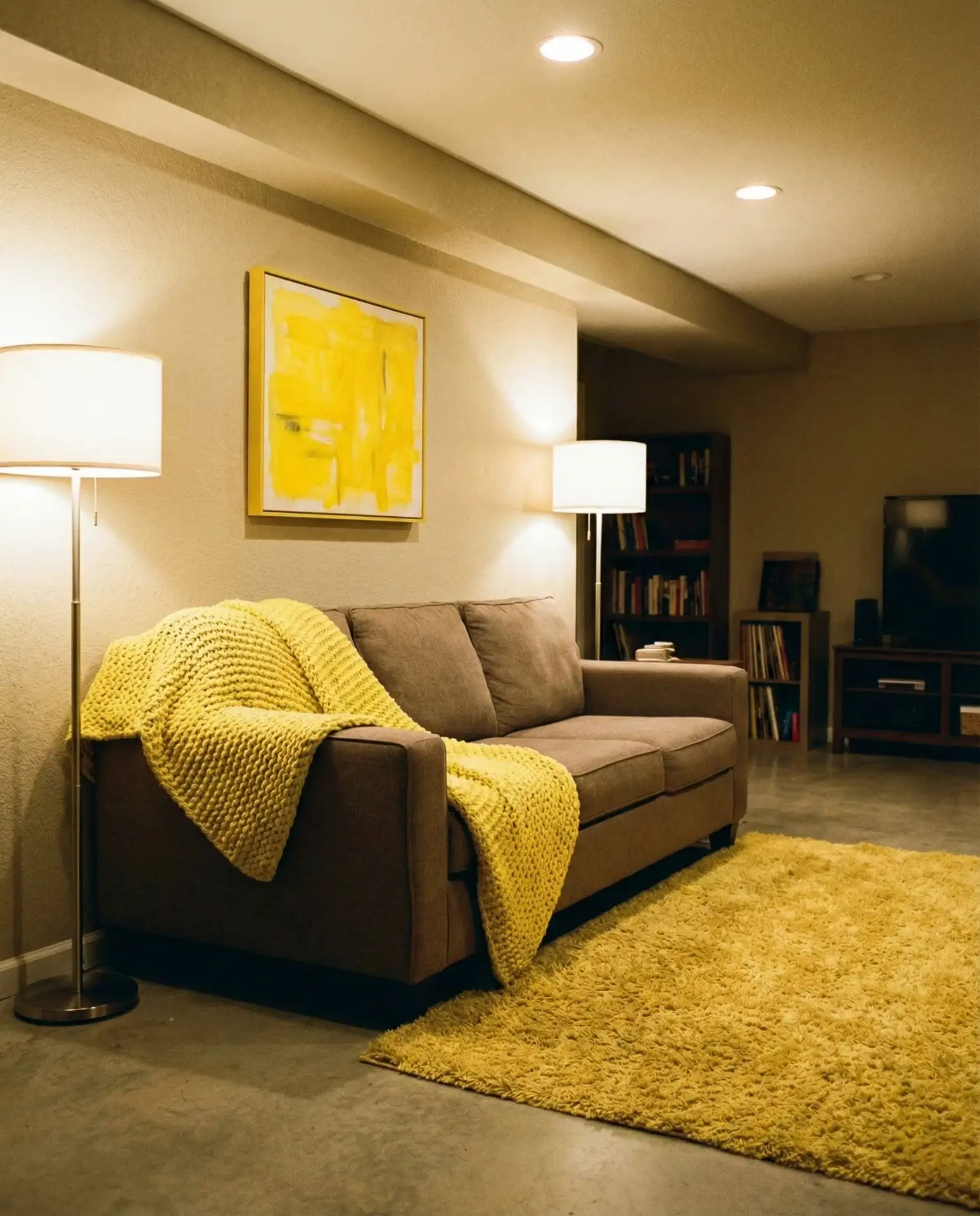
Real homeowners with basement living spaces swear by this technique, reporting that the yellow accents psychologically compensate for the lack of natural light and make the space feel more inviting. One family in Minnesota uses this approach in their lower-level family room, where the brown sectional and bright yellow accents create a cozy retreat during long winter months. They’ve found that guests actually seek out this room despite it being underground because it feels intentionally designed rather than like an afterthought or storage area that someone tried to make livable.
17. TV Stand Integration for Media Rooms
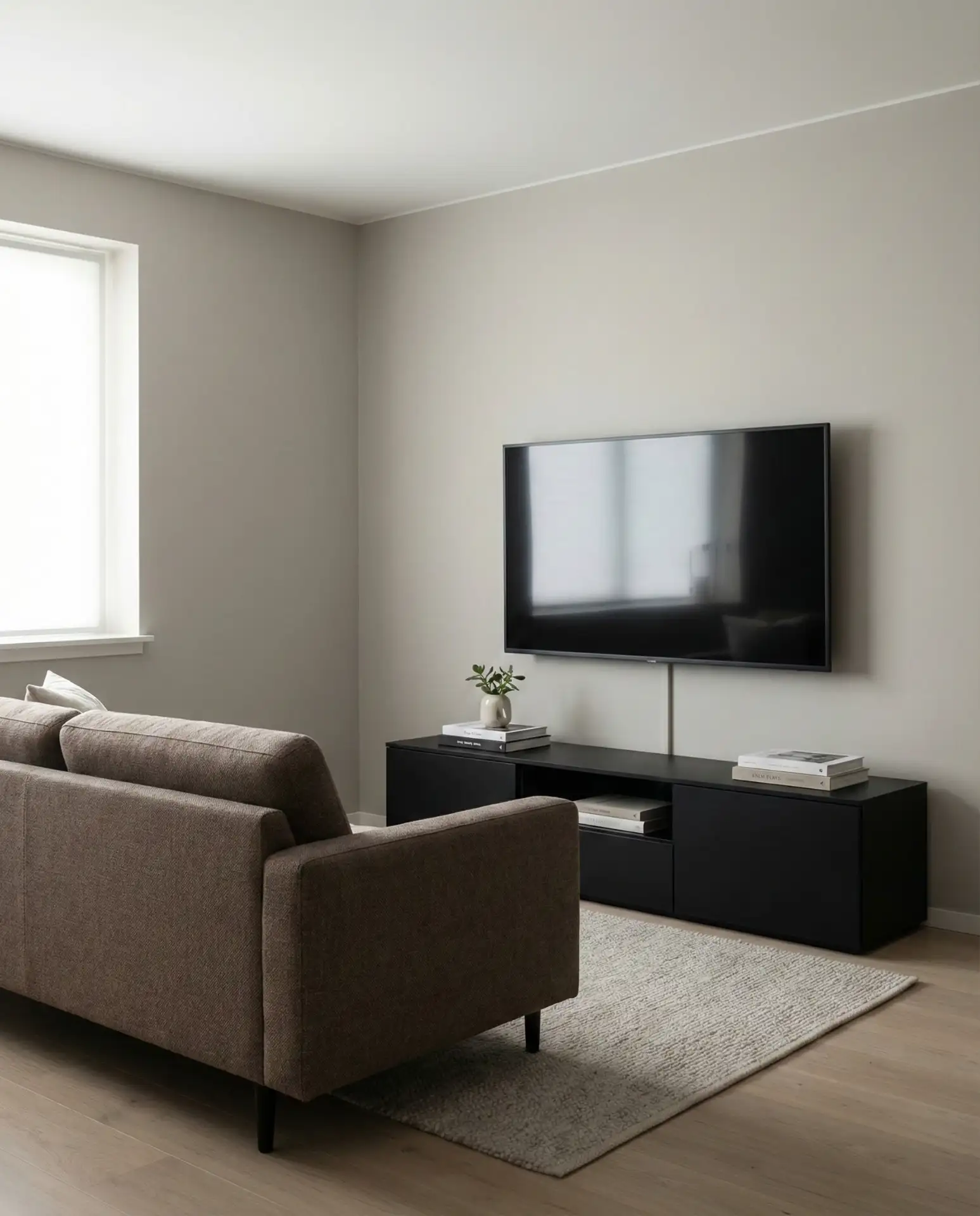
Choosing the right TV stand to pair with your brown couch involves considering both function and aesthetic harmony. A low, modern console in black or dark wood creates a sleek look that doesn’t compete with the sofa for attention. For a more traditional space, a wooden media cabinet in a complementary brown tone works beautifully. The key is ensuring the stand’s style matches your overall design direction—mid-century modern, industrial, farmhouse, or contemporary. Consider the scale carefully; the stand should be wider than the TV for proper visual balance and ideally positioned so viewers on the brown couch don’t have to crane their necks. 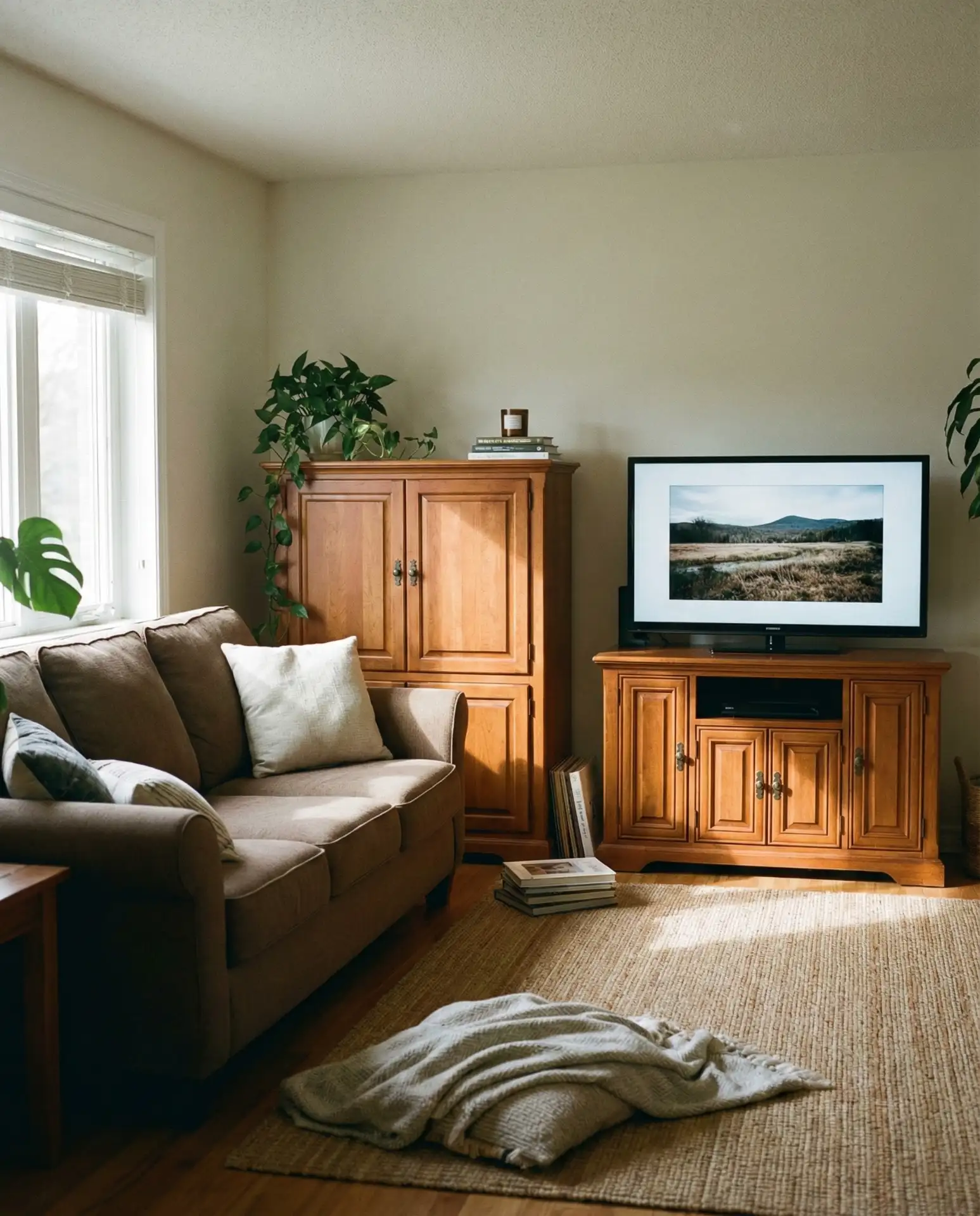
The common mistake is buying a TV stand that’s too small or too large for both the television and the space. Measure carefully before purchasing, and remember that you’ll need room for any additional equipment like soundbars, gaming consoles, or cable boxes. In terms of style, the stand should complement rather than match your brown couch exactly—similar tones work, but identical browns can make the room feel flat. Add some decorative objects on the stand’s surface, but keep them low and minimal so they don’t interfere with viewing or visually clutter the focal point of the room.
18. Monochromatic Brown Layers
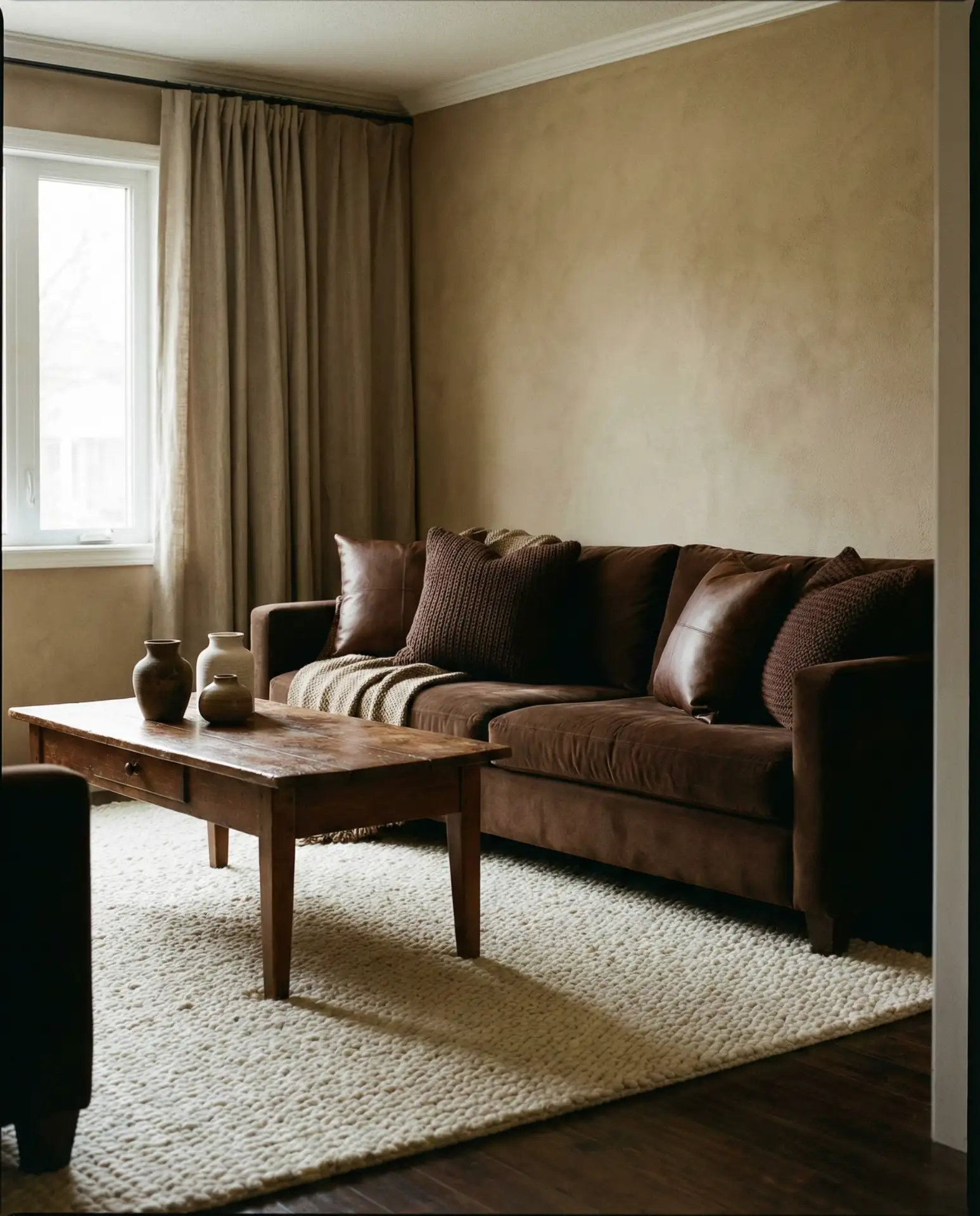
Embracing a full monochromatic brown scheme—from light tan walls to chocolate accents to chestnut furniture—creates a cocooning, sophisticated space when executed with intentionality. The secret is varying both the shades and the textures dramatically: smooth leather against rough jute, glossy wood next to matte fabric, and light cream beside deep espresso. This approach requires confidence but delivers a unique, enveloping warmth that’s impossible to achieve with multi-color schemes. It works exceptionally well in smaller spaces where you want to create an intimate, womb-like feeling. 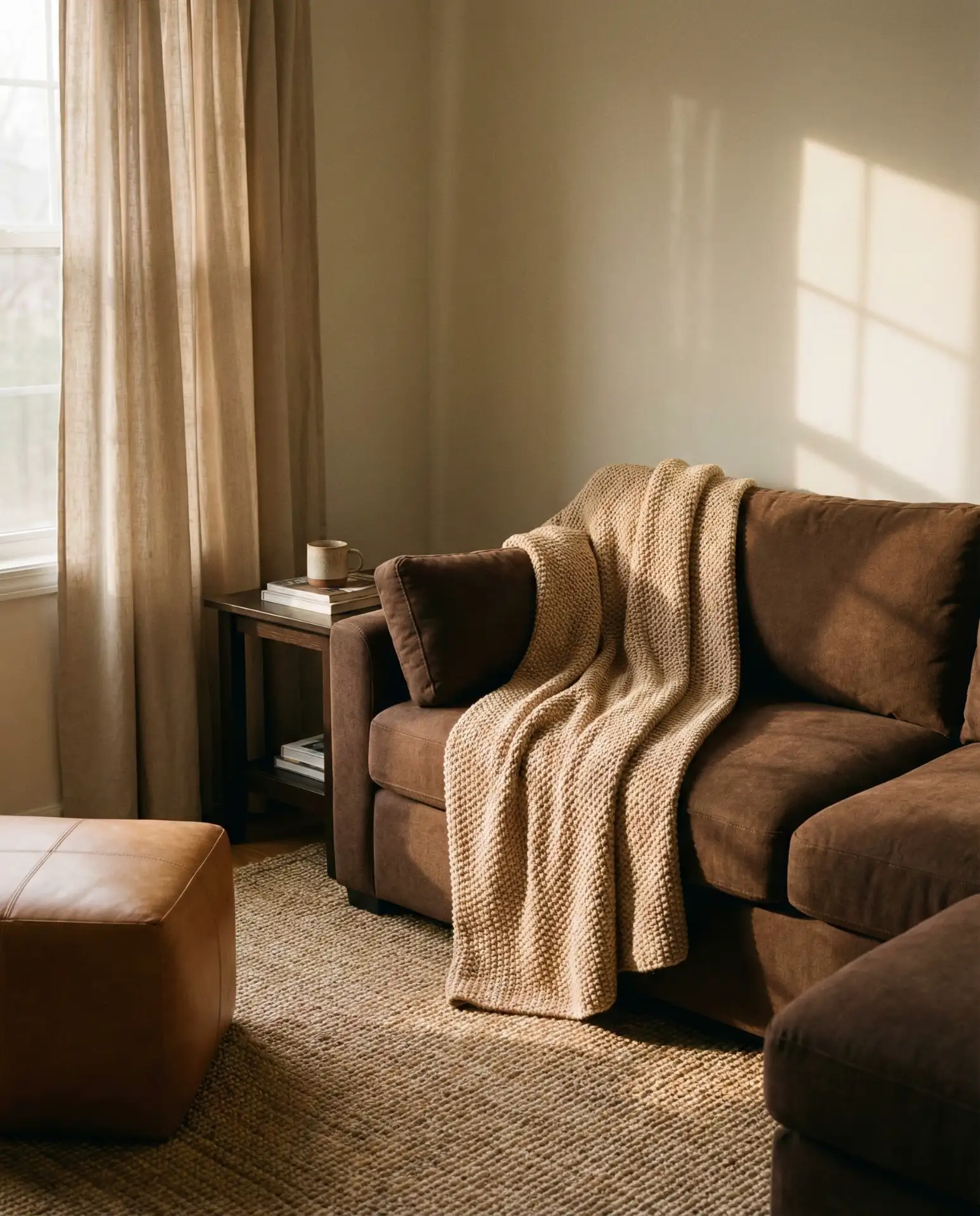
This look performs best in spaces with excellent natural light that can illuminate all the brown tones throughout the day, creating shifting shadows and highlights that add visual interest. Without good light, the space risks feeling cave-like or oppressive. Consider adding multiple light sources—floor lamps, table lamps, and even candles—to maintain warmth during evening hours. The payoff is a room that feels cohesive and intentional, like a carefully edited sanctuary rather than a generic space anyone could have decorated.
19. Industrial Loft Aesthetic
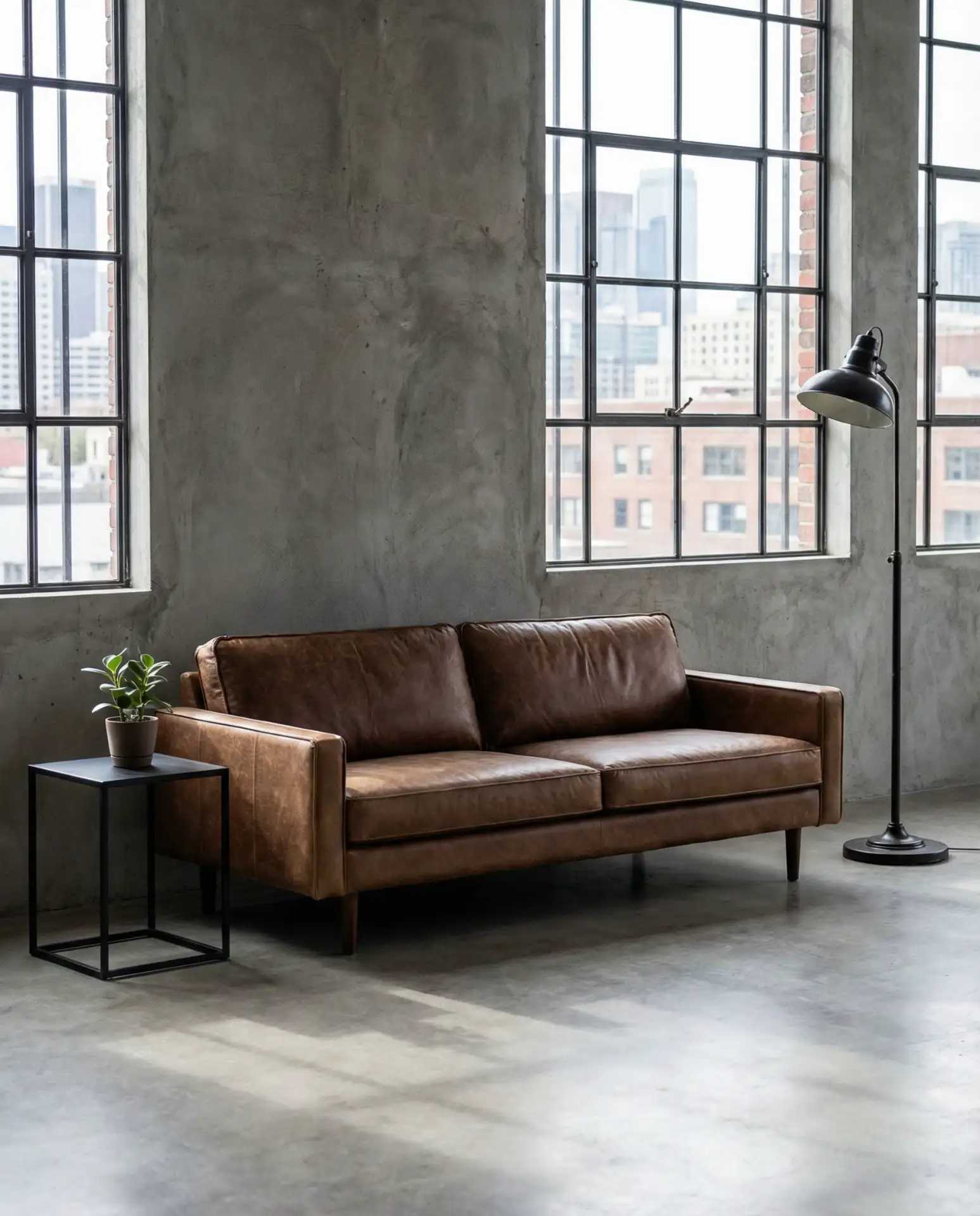
A brown leather sofa fits perfectly into industrial loft spaces with exposed brick, concrete floors, and metal fixtures. The worn, rugged quality of brown leather complements the raw, unfinished materials that define this aesthetic. Pair it with metal and wood furniture—think iron pipe shelving, reclaimed wood coffee tables, and vintage factory lighting. Keep the color palette relatively neutral with blacks, grays, and whites, allowing the brown leather to provide the only significant warm tone in the space. This works beautifully in converted warehouse apartments or newer constructions designed to mimic that urban loft feeling. 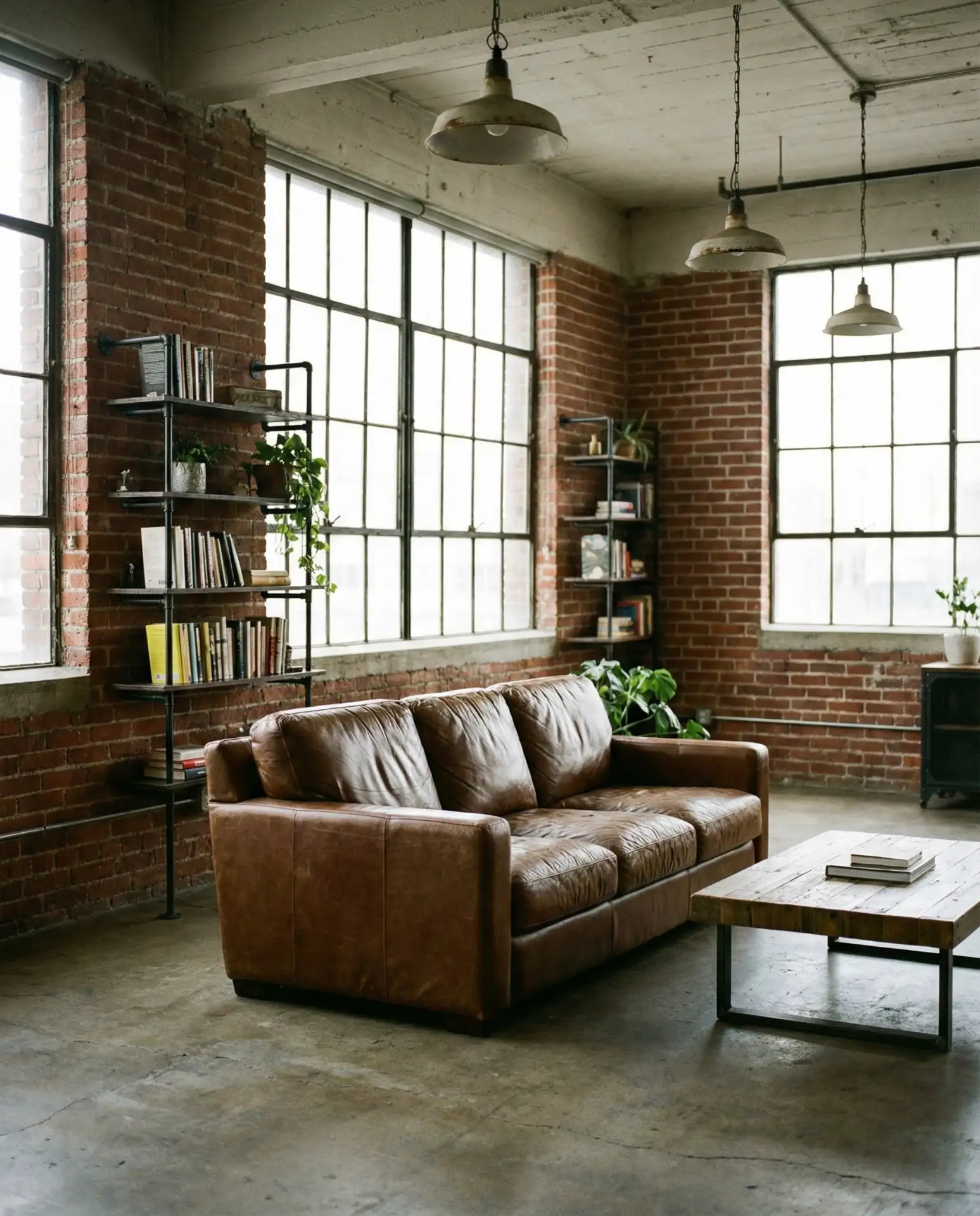
In cities like Detroit, Pittsburgh, and parts of Brooklyn, where industrial buildings have been converted to residential spaces, this combination feels organic rather than forced. The brown leather sofa often becomes a prized possession in these homes, precisely because its distressed quality improves with age rather than looking worn out. Residents tend to invest in a quality leather piece and let everything else be more affordable or secondhand, knowing the sofa will anchor the space for decades while other elements come and go.
20. Colorful Rug as Foundation
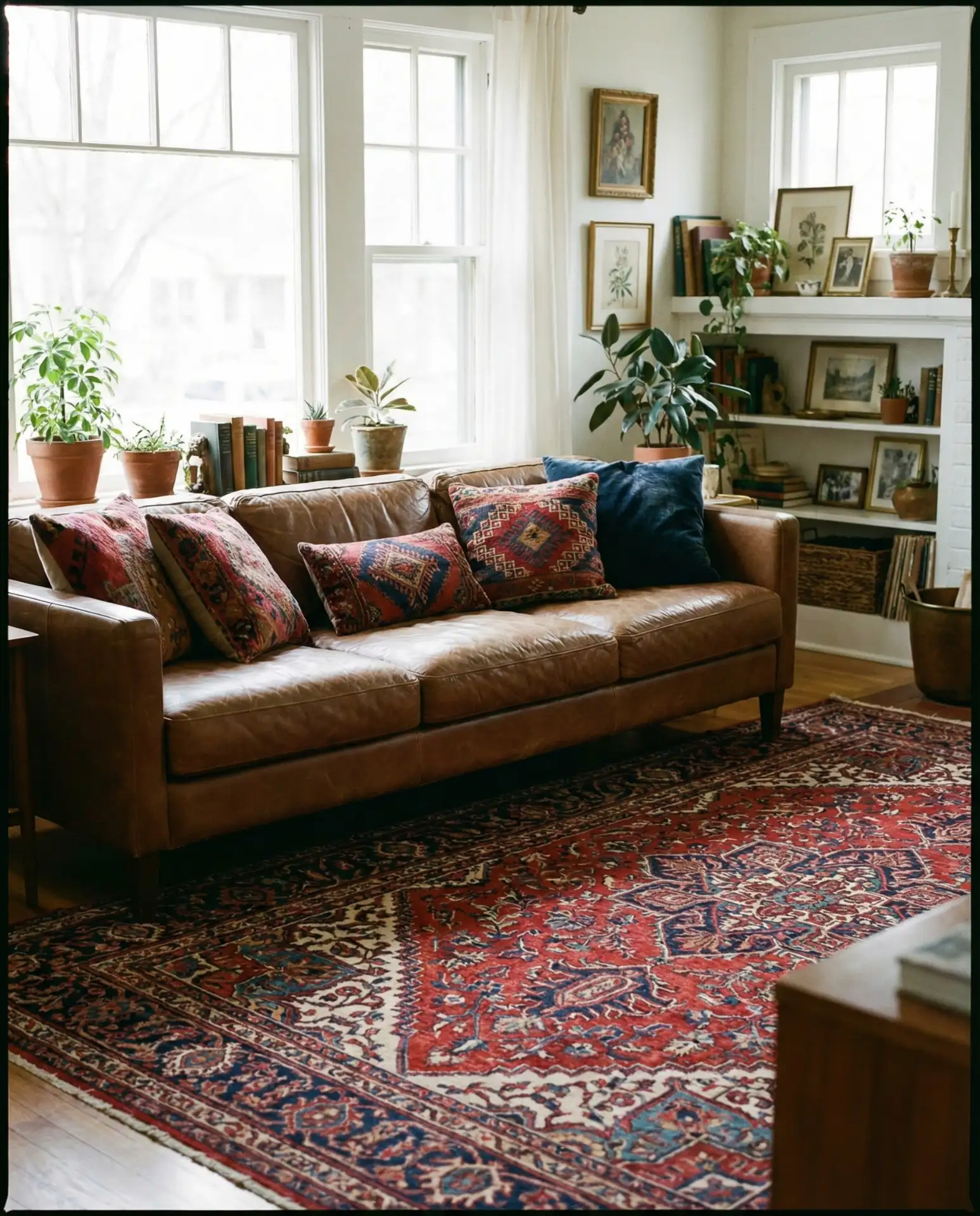
Let a colorful patterned area rug do the heavy lifting in defining your room’s palette, with your brown couch serving as the neutral anchor. Choose a rug that incorporates brown along with several other colors—perhaps a vintage Persian with reds, blues, and creams, or a contemporary geometric design with pinks, yellows, and teals. Pull accent colors from the rug into your pillows, throws, and artwork, creating a cohesive look where the brown sofa grounds all those lively hues. This approach is forgiving because the rug’s pattern hides dirt and wear while providing a built-in color scheme for the entire space. 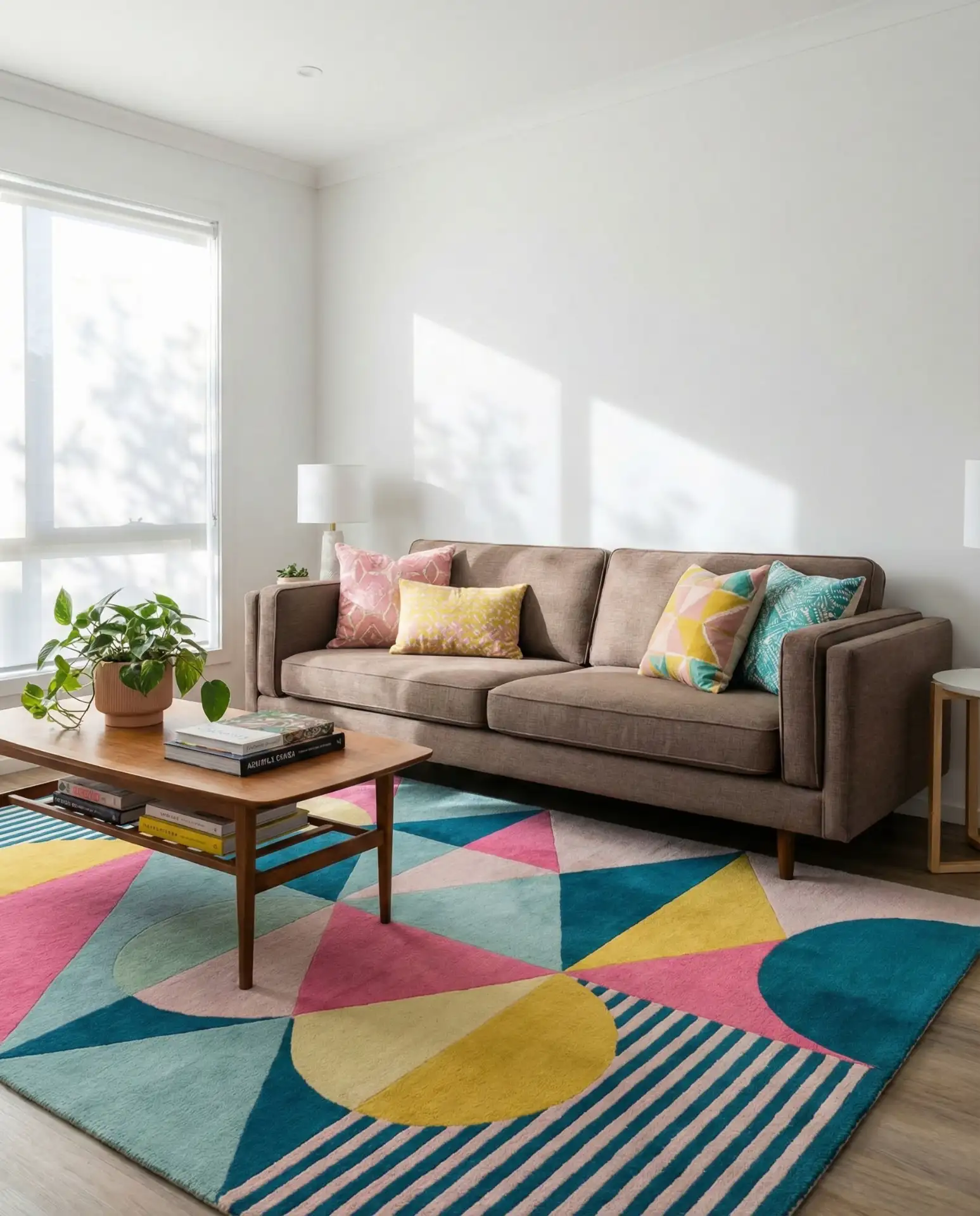
Where this works best is in open-concept spaces where you need to define the living area without walls or in rental apartments where you can’t paint but want to inject personality. The rug becomes your statement piece, essentially determining the room’s entire design direction. Homeowners often find this approach easier than starting with paint colors or artwork because the rug provides a tangible, physical reference point for all subsequent decisions. If you’re unsure about your decorating skills, let a beautiful rug guide you—it’s hard to go wrong when you’re simply echoing colors that already work together.
21. Minimalist Zen Sanctuary
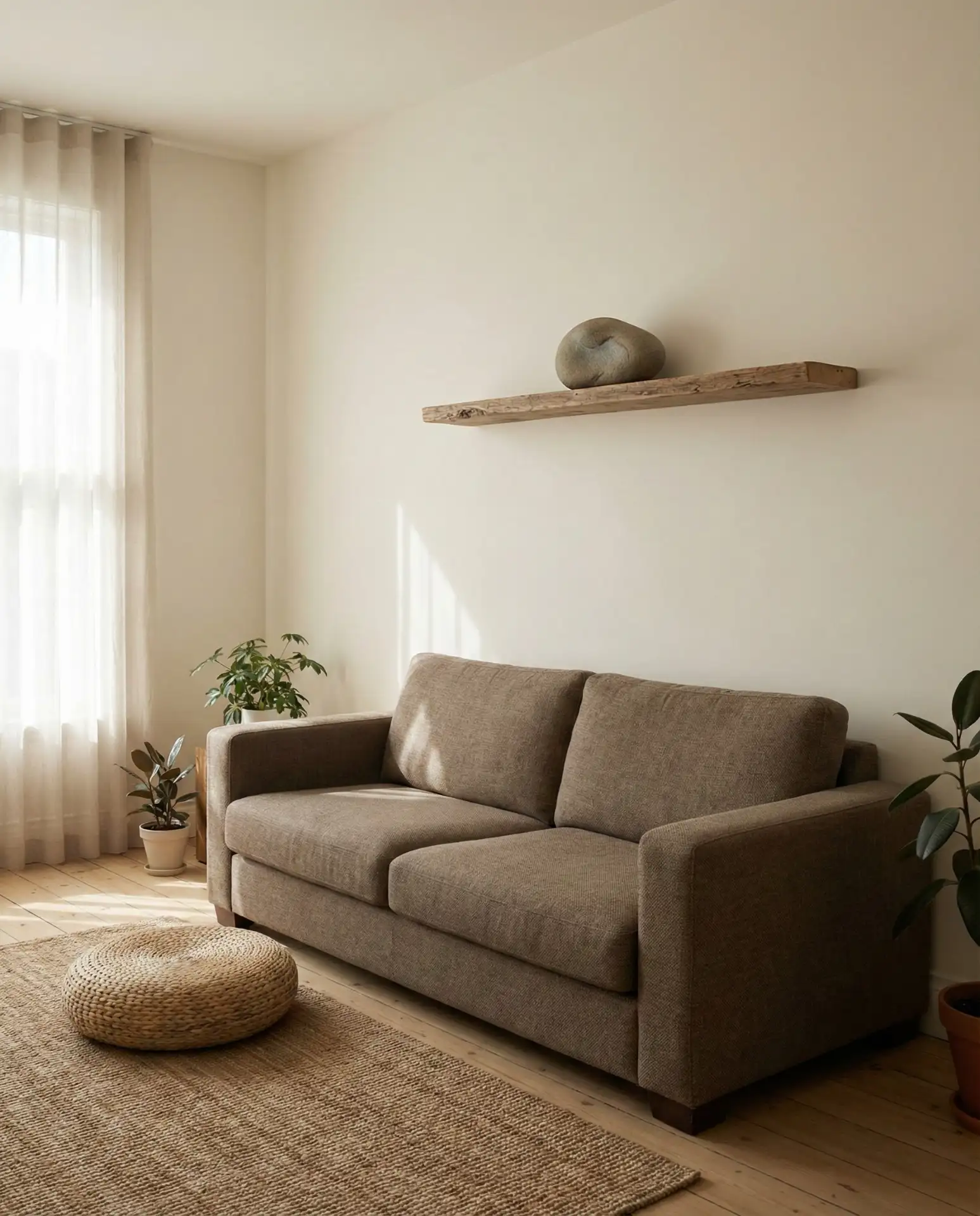
Create a calming, meditation-friendly space by pairing your brown sofa with minimal furniture, plenty of negative space, and natural materials like stone, bamboo, and light wood. Keep color to an absolute minimum—perhaps just the brown of the sofa and natural wood tones, with everything else in whites, creams, and soft grays. This Zen-inspired approach emphasizes quality over quantity, with each piece carefully chosen for both function and beauty. Add a few carefully placed plants, a simple floor cushion for meditation, and soft, diffused lighting for a space that encourages contemplation and rest. 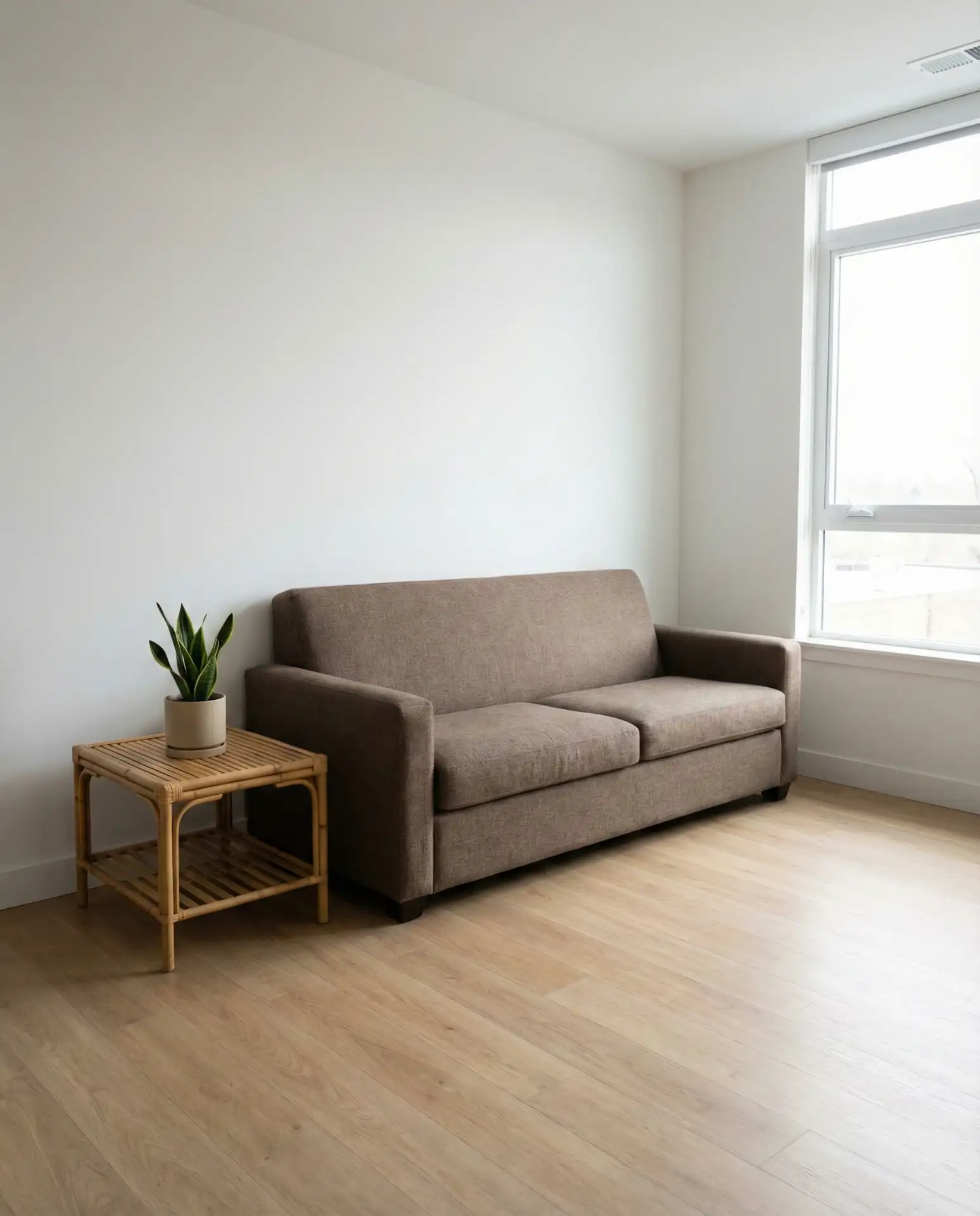
This approach appeals particularly to those who work high-stress jobs or live in crowded urban environments where home needs to serve as a refuge from constant stimulation. The brown sofa provides just enough warmth and comfort to keep the space from feeling cold or institutional, while the minimalist surroundings create the mental clarity and calm that come from having fewer objects demanding your attention. It’s also surprisingly practical for those who struggle with clutter, because there simply aren’t many places to accumulate things in a properly minimalist space.
22. Family-Friendly Durability Focus
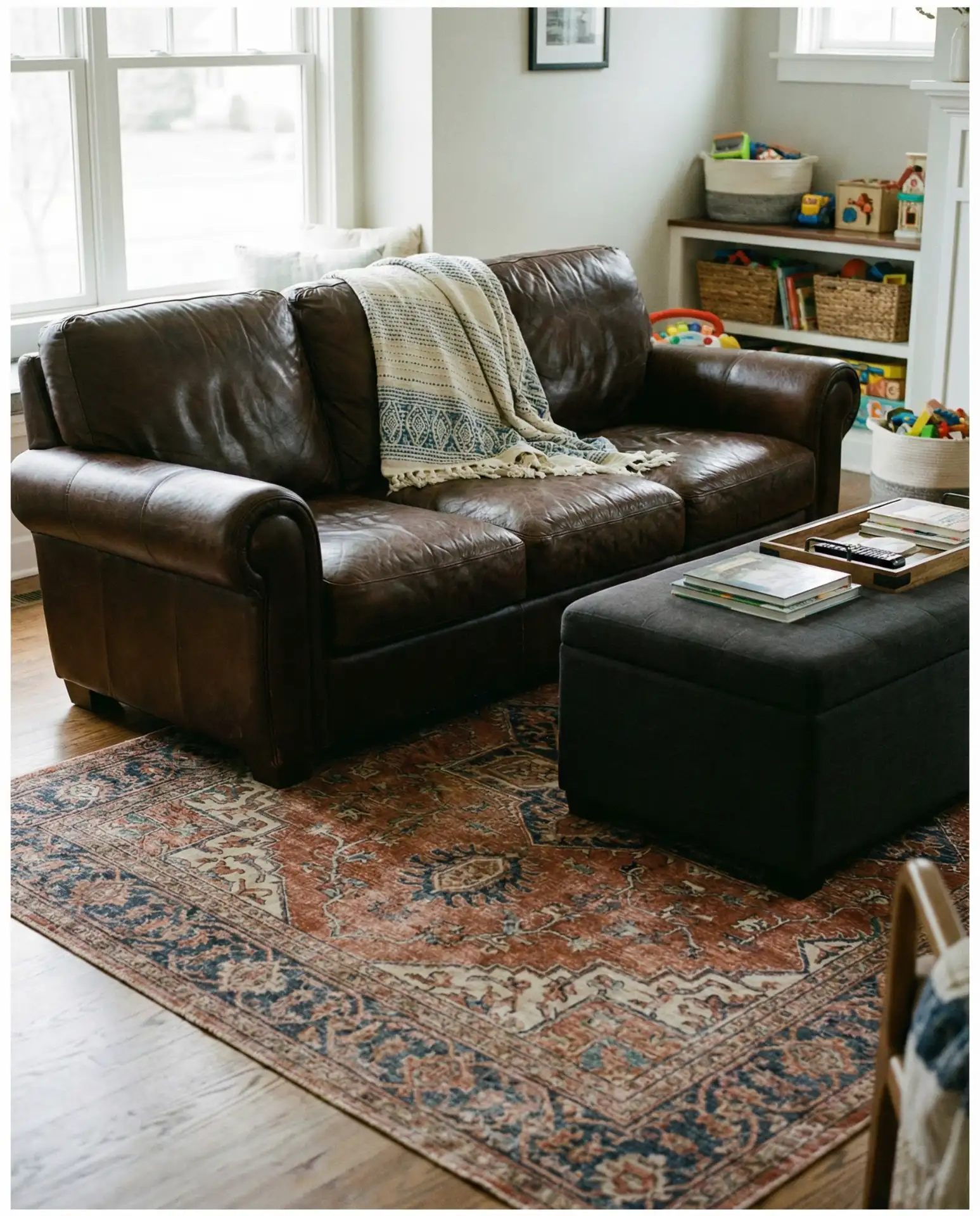
For families with children and pets, a brown sofa—especially in leather or performance fabric—becomes a practical choice that can still look intentional and stylish. Choose darker browns that hide stains better than lighter tones, and select materials that wipe clean easily. Style it with washable slipcovers, durable area rugs that can handle spills, and storage solutions like ottomans with interior space for toy containment. The goal is to create a beautiful room that can withstand real life: juice spills, muddy paw prints, crayon marks, and the general chaos of an active household. 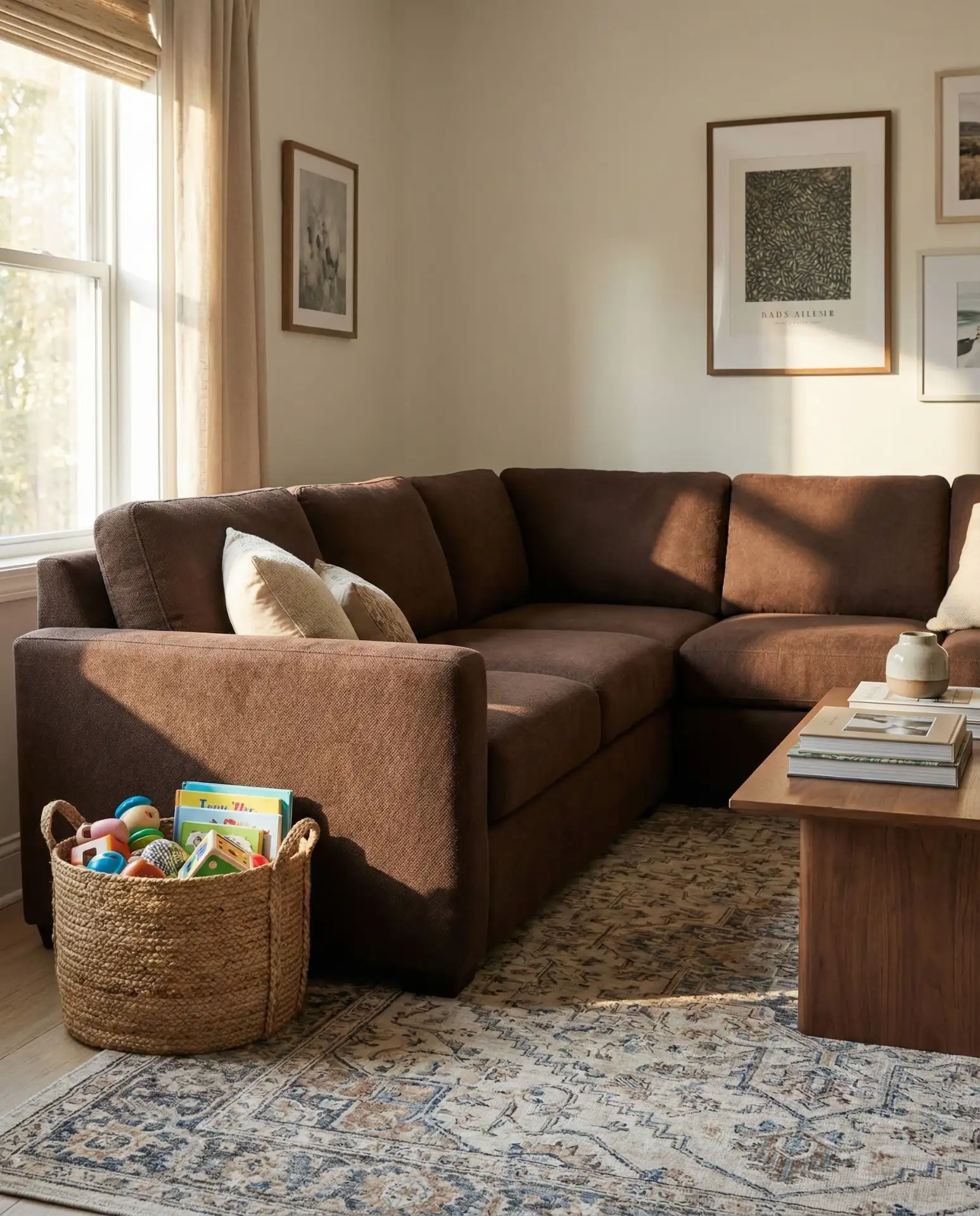
Real parents emphasize that the brown sofa was the smartest furniture investment they made because it ages gracefully rather than showing every mark and imperfection. One mother of three in suburban Atlanta shared that her brown leather sectional has survived six years of constant use, countless spills, and even a puppy’s teething phase, developing what she calls a “lived-in character” rather than looking destroyed. The key is accepting from the start that this furniture will be used, not preserved like a museum piece, and choosing materials and colors that improve or at least remain acceptable with wear rather than fighting a losing battle for pristine perfection.
Conclusion
Whether you’re drawn to the drama of jewel tones, the freshness of Scandinavian simplicity, or the warmth of Southwest-inspired palettes, your brown couch offers a versatile foundation for countless design directions. The key is choosing an approach that reflects your lifestyle, your space’s architecture, and your personal style rather than following trends that don’t resonate with you. We’d love to hear which of these ideas speaks to you or how you’ve styled your own brown sofa—share your thoughts and photos in the comments below, and let’s keep the inspiration flowing.