Bungalow homes have always held a special place in American architecture, and heading into 2026, their exteriors are getting fresh attention from homeowners seeking timeless charm with modern appeal. Whether you’re restoring a classic 1920s Craftsman or reimagining a mid-century gem, the right exterior transformation can turn your bungalow into a neighborhood showstopper. Pinterest boards are overflowing with paint colors, contemporary design tweaks, and coastal inspirations that prove these compact homes can deliver big style. From California beaches to tree-lined Midwest streets, bungalows are being reimagined for today’s lifestyle while honoring their historic roots. Here are inspiring ideas to help you create an exterior that feels both fresh and authentic.
1. Classic White Craftsman Revival
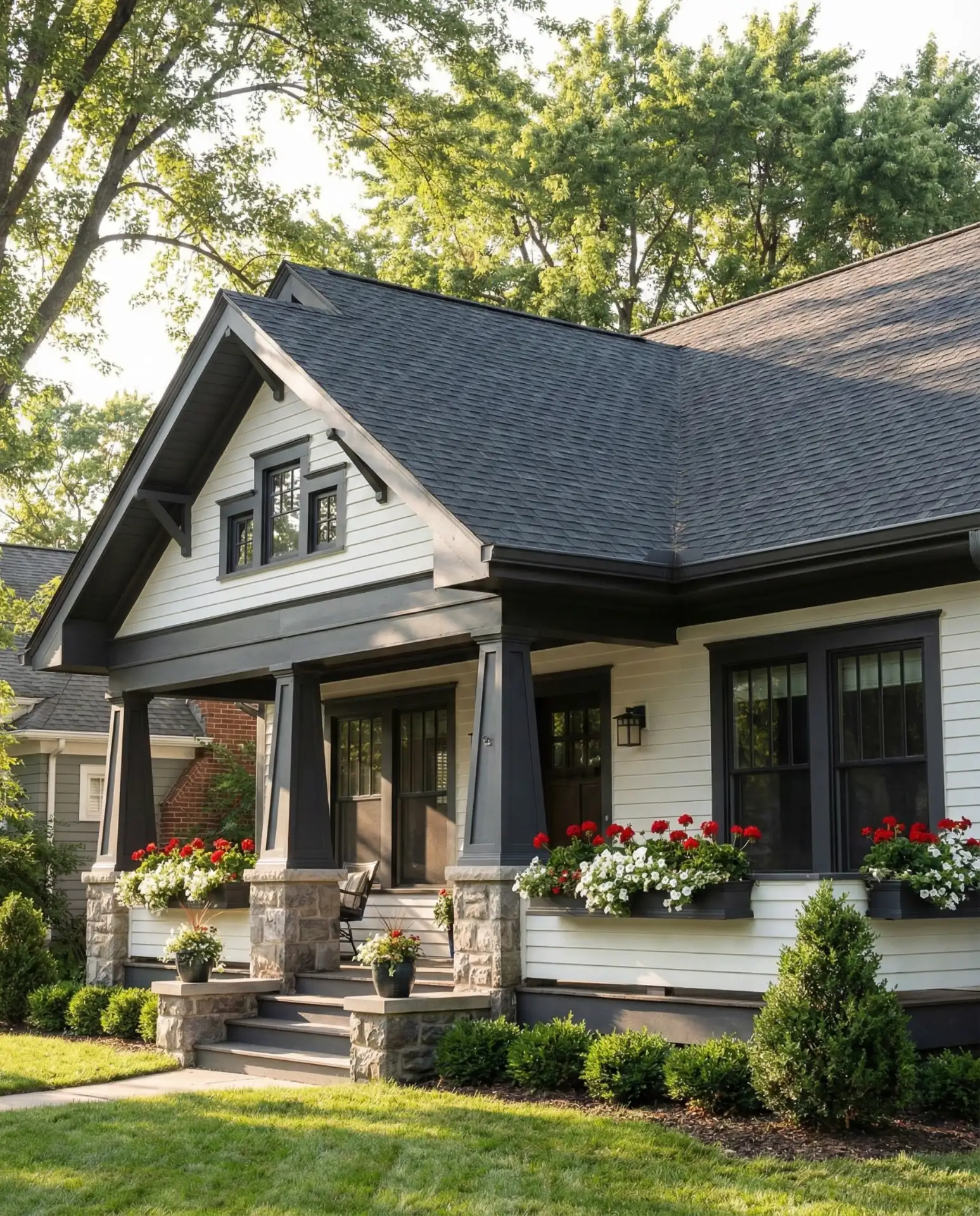
A crisp white exterior brings new life to traditional Craftsman bungalows while highlighting their signature architectural details. The color choice emphasizes deep eaves, exposed rafter tails, and tapered porch columns that define this beloved American style. Pairing white siding with dark window trim and a charcoal roof creates the contrast that makes every detail pop, from decorative brackets to window boxes brimming with seasonal blooms. 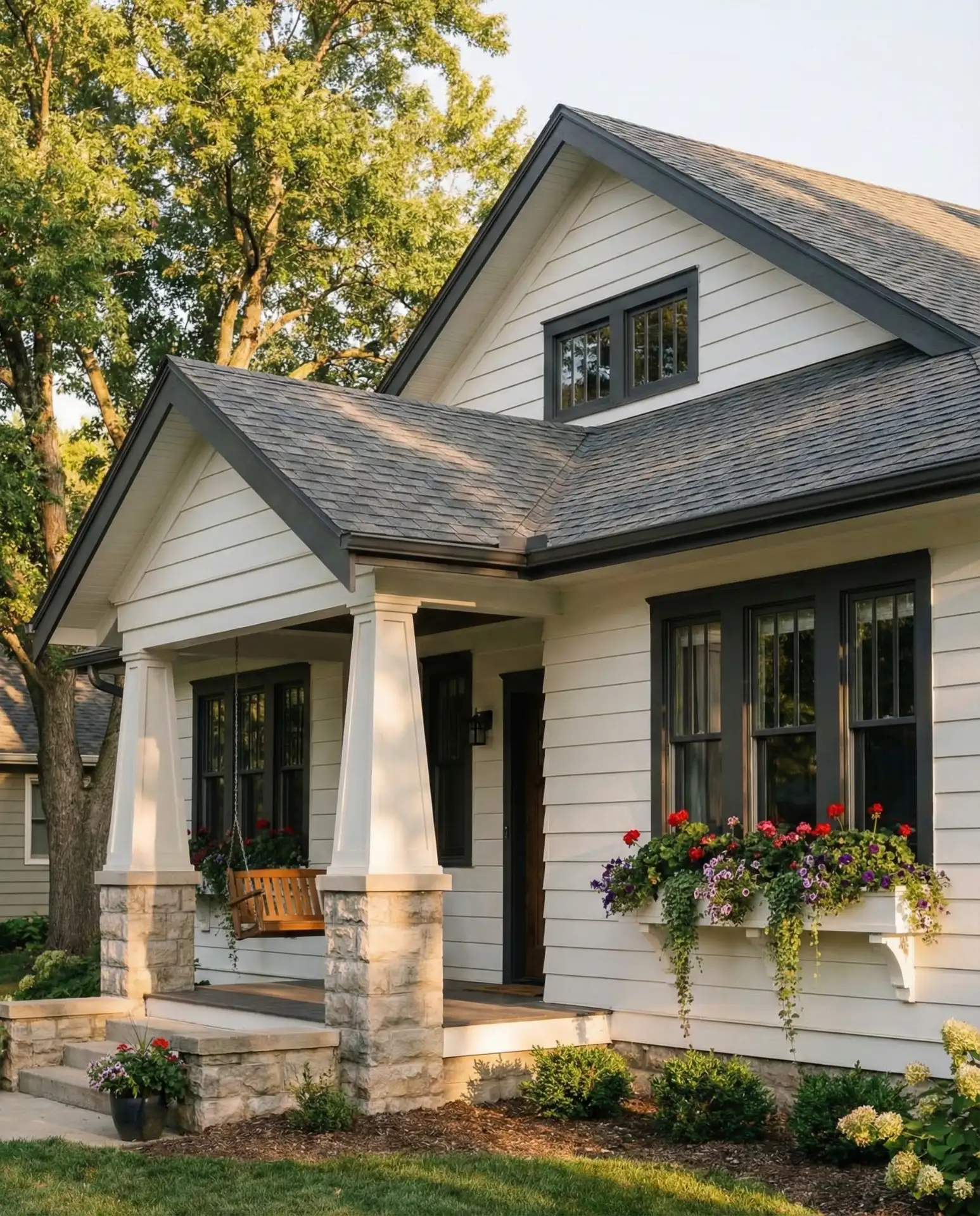
This approach works particularly well in neighborhoods with mature trees, where the white facade creates a luminous focal point against green canopies. Many homeowners in the Pacific Northwest and Midwest gravitate toward this palette because it feels clean without being stark, and the maintenance requirements are manageable with quality exterior paint. The key is using a warm white rather than a blue-toned one to maintain that welcoming, lived-in character Craftsman homes are known for.
2. Earthy Green with Natural Wood Accents
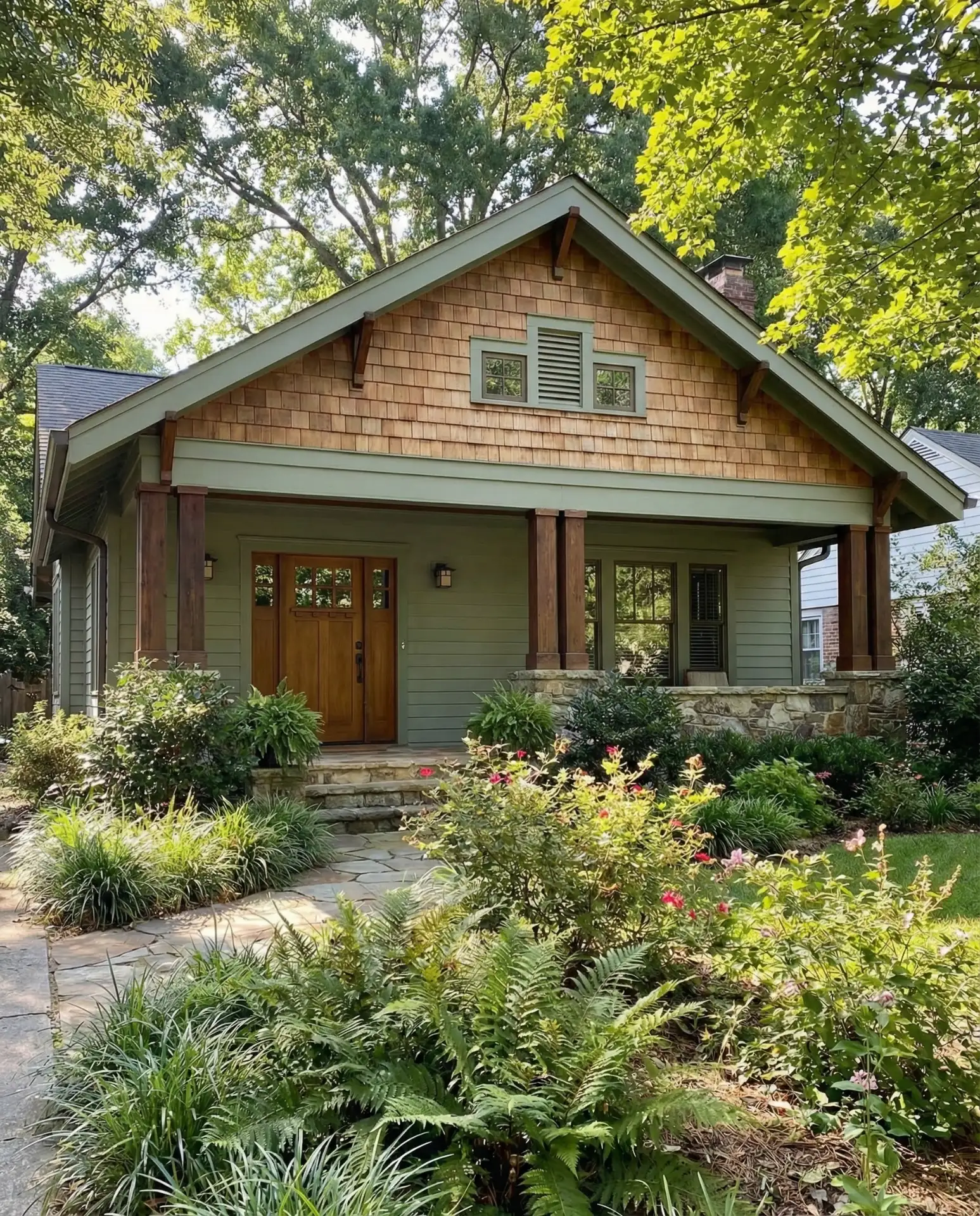
Sage and olive green tones connect bungalows to their natural surroundings while nodding to the Arts and Crafts movement’s emphasis on organic materials. These colors pair beautifully with stained cedar shakes, exposed beam ends, and natural stone foundations that many older bungalows feature. The green hues shift throughout the day, appearing deeper in morning shadows and lighter under afternoon sun, creating visual interest without additional ornamentation.
In California and the Southwest, this color story feels especially authentic to the landscape, blending homes into hillsides and garden settings. One common mistake is choosing a green that’s too bright or tropical—stick with muted, earthy tones that have gray or brown undertones. These shades age gracefully and hide minor dirt and weathering better than lighter colors, which matters in regions with dusty summers or heavy pollen seasons.
3. Modern Black Statement Exterior
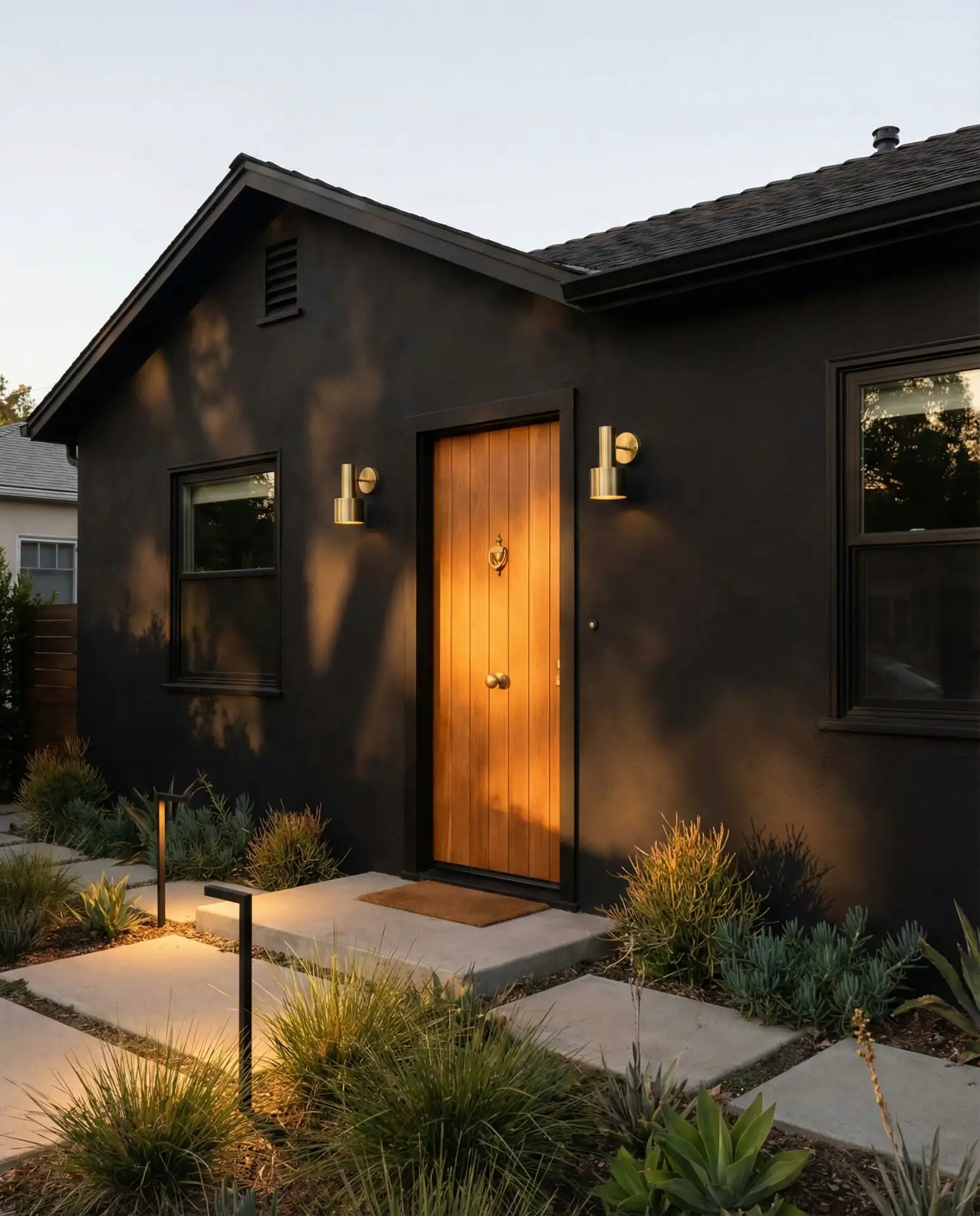
A bold black exterior transforms traditional bungalows into striking contemporary statements while maintaining their fundamental proportions and charm. This modern approach works because it simplifies the visual field, making architectural lines and shapes the primary focus rather than decorative details. Paired with warm wood front doors, brass hardware, and strategic landscape lighting, black creates drama without feeling heavy or oppressive. 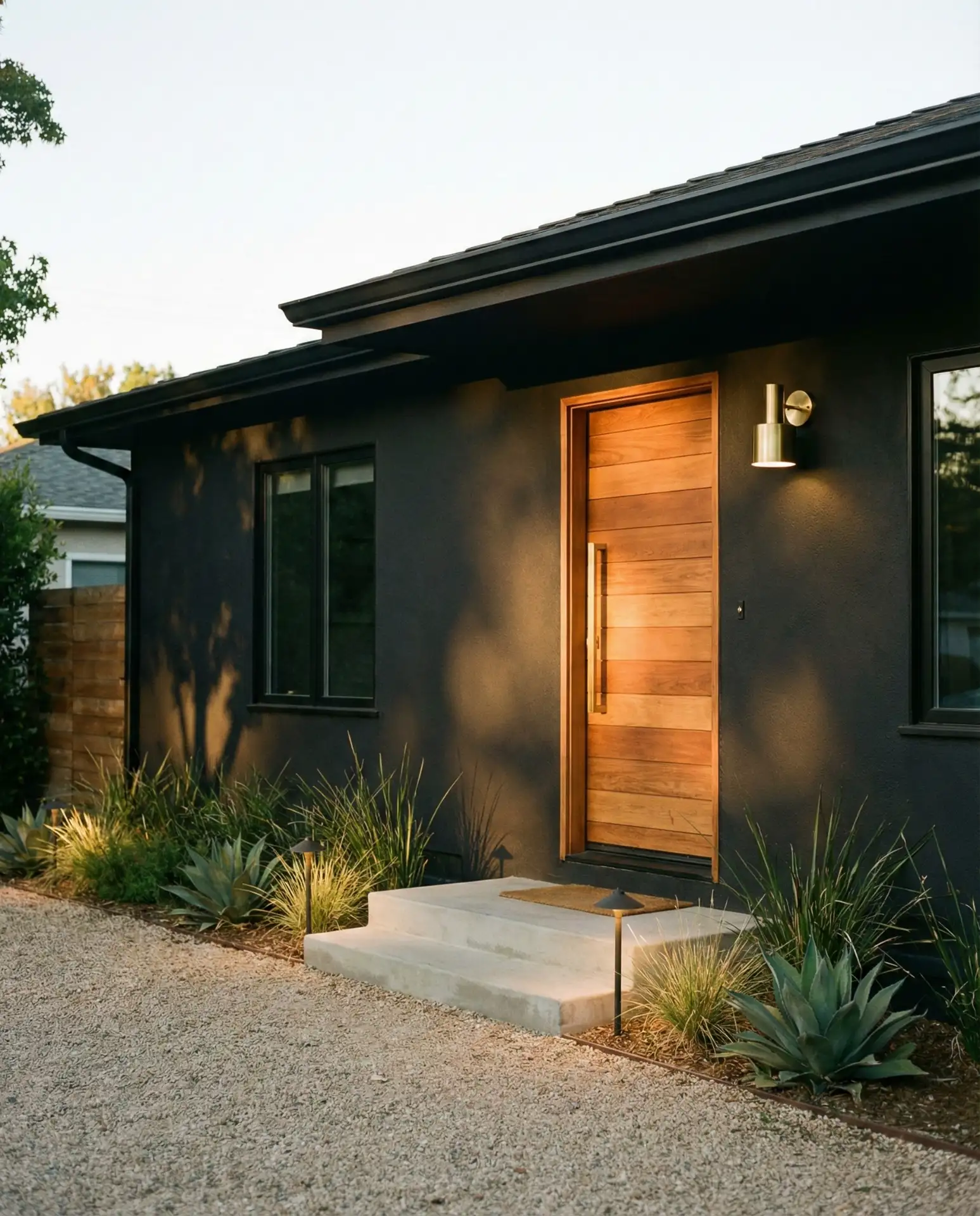
This works best in urban settings or neighborhoods with varied architectural styles where a bold choice won’t clash with surroundings. The practical consideration here is heat absorption—in southern climates, black exteriors can increase cooling costs significantly. Consider this palette for northern regions or homes with excellent shade coverage. Many designers recommend matte or satin finishes rather than gloss, which shows every imperfection and can look plasticky under direct sun.
4. Coastal Blue and White Palette
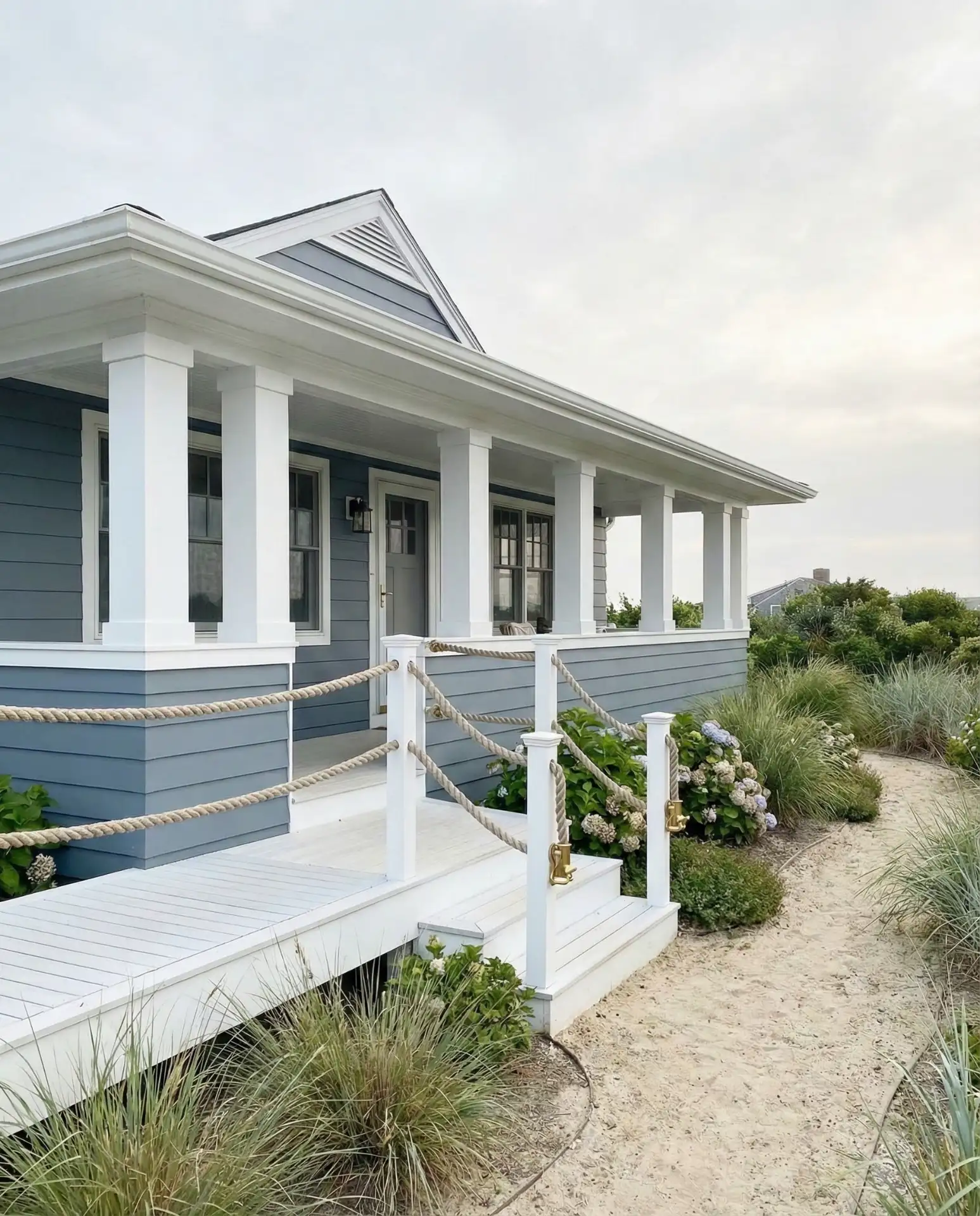
Soft blue-gray siding with crisp white trim captures beach house serenity even miles from the ocean, making this a popular choice for coastal California bungalows. The combination feels breezy and relaxed while maintaining the structured formality that bungalow architecture requires. This design approach often includes white-painted porch floors, blue-gray ceilings that mimic twilight skies, and nautical-inspired hardware that reinforces the seaside connection. 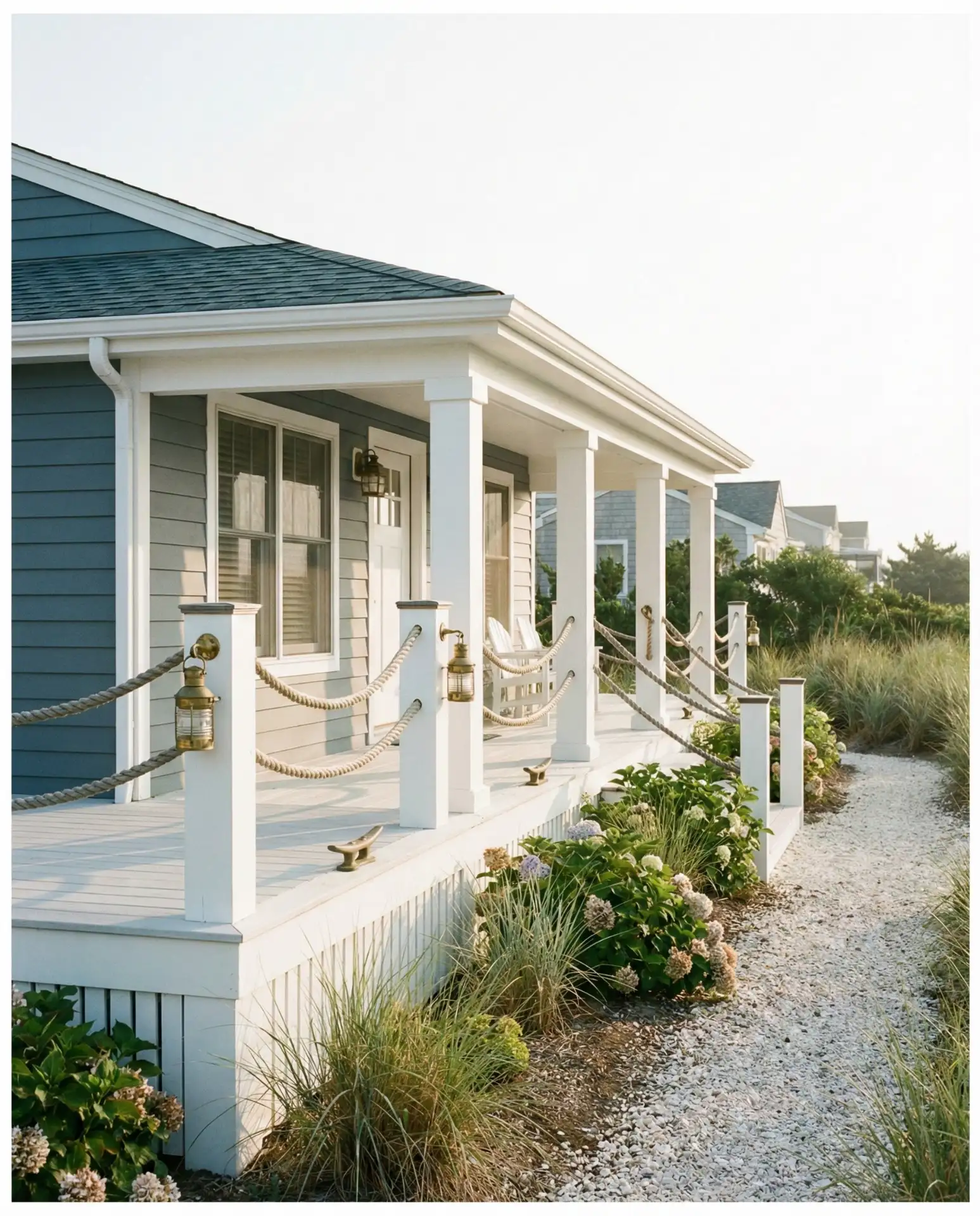
Real homeowners in beach communities often extend this palette to fencing and outbuildings, creating a cohesive compound feel. The blue-gray hides salt spray residue and wind-blown sand better than pure white, which is a practical consideration for true coastal locations. One couple in San Diego mentioned their blue bungalow needed repainting two years later than their neighbor’s white one, simply because the color masked minor weathering and fading more effectively.
5. Warm Red Brick with Updated Trim
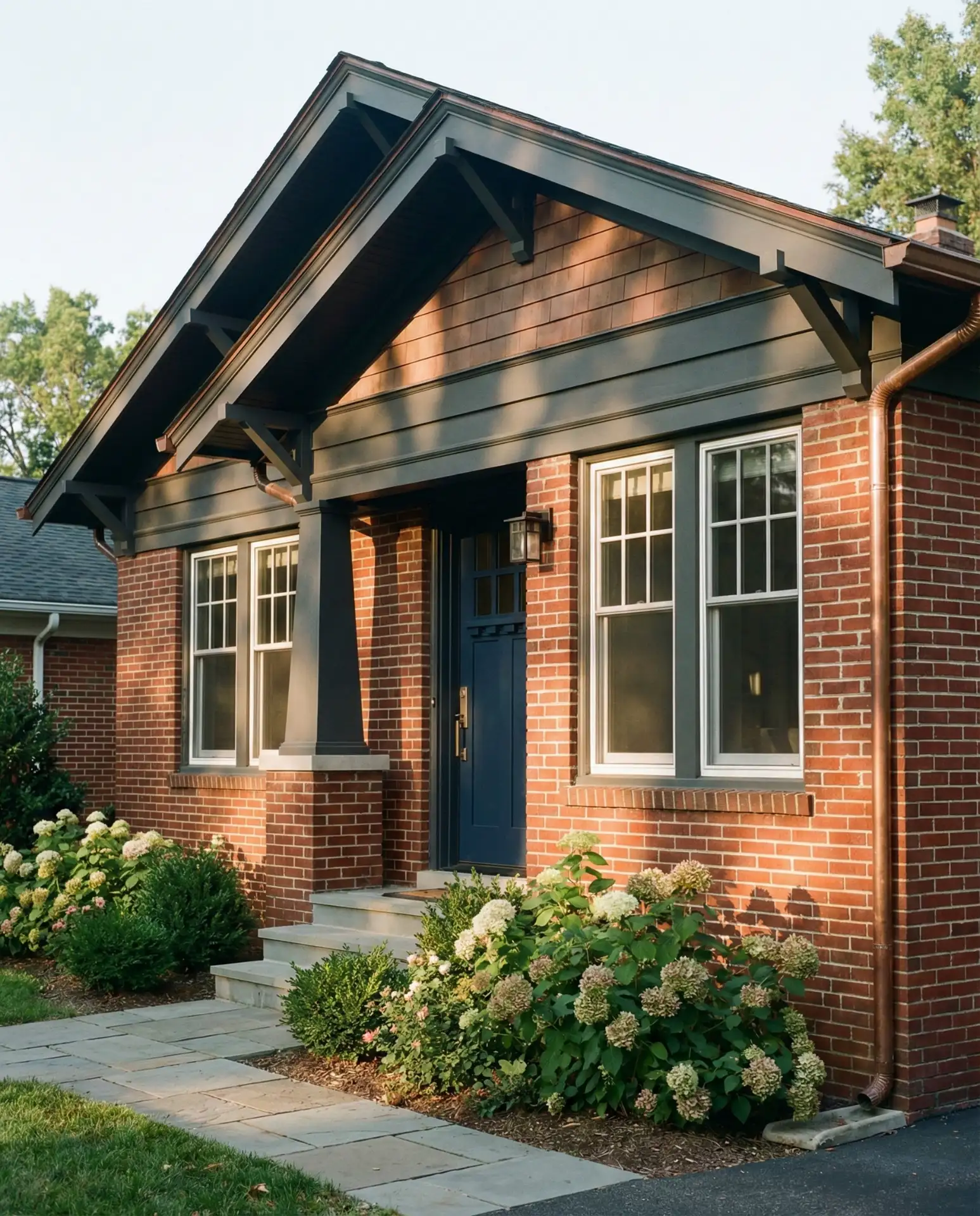
Original brick bungalows gain fresh appeal when red brick is paired with modern paint colors on trim, doors, and shutters rather than attempting to cover the masonry. The brick provides permanence and texture that synthetic siding can’t replicate, while updated accent colors signal contemporary taste. Deep charcoal, forest green, or navy trim creates sophisticated contrast against warm terracotta and rust tones in the masonry. 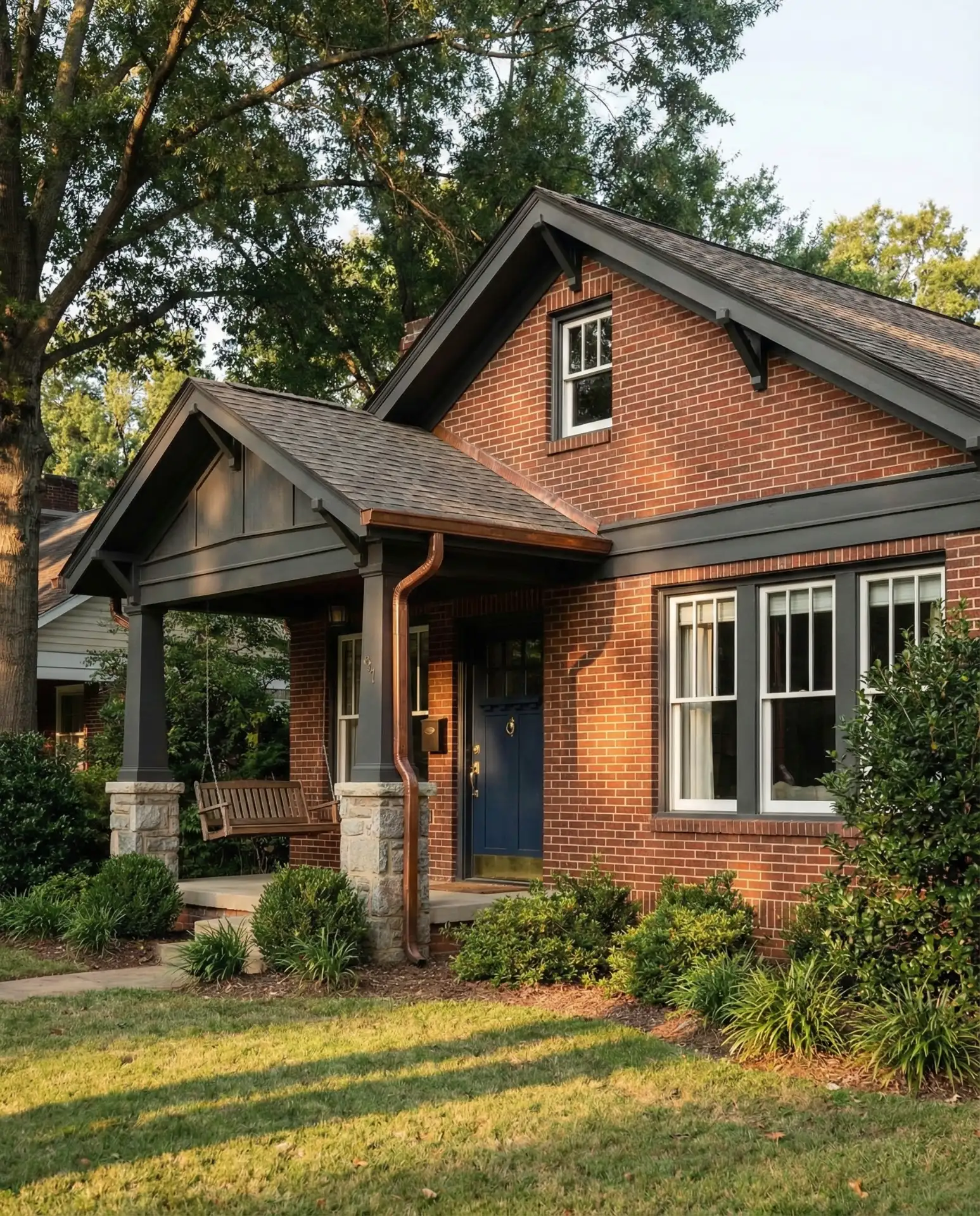
In the Midwest and Mid-Atlantic regions, brick bungalows are common, and many were built in the 1920s and 1930s with solid craftsmanship that deserves preservation. Rather than painting brick, which traps moisture and causes long-term damage, focus your budget on high-quality trim paint and hardware upgrades. This approach costs significantly less than re-siding while maintaining the home’s historic integrity and resale value in neighborhoods where original materials matter to buyers.
6. California Ranch-Style Fusion
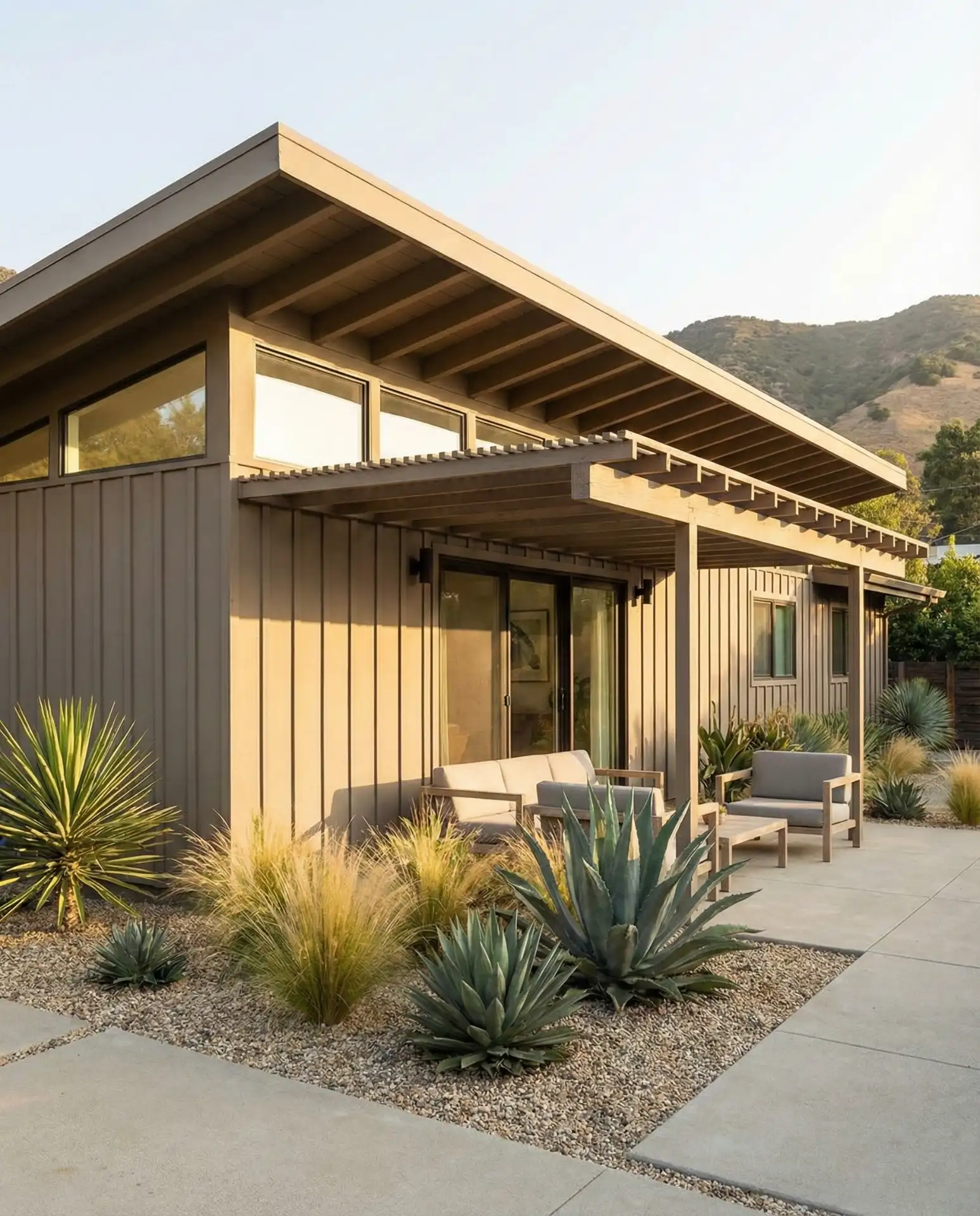
Blending bungalow charm with California ranch aesthetics creates low-slung profiles with horizontal emphasis and indoor-outdoor integration. This modern design approach extends rooflines to cover patios, adds clerestory windows for natural light, and uses board-and-batten siding to emphasize horizontal lines. Warm neutrals like sand, cream, and taupe dominate the palette, connecting homes to the surrounding landscape. 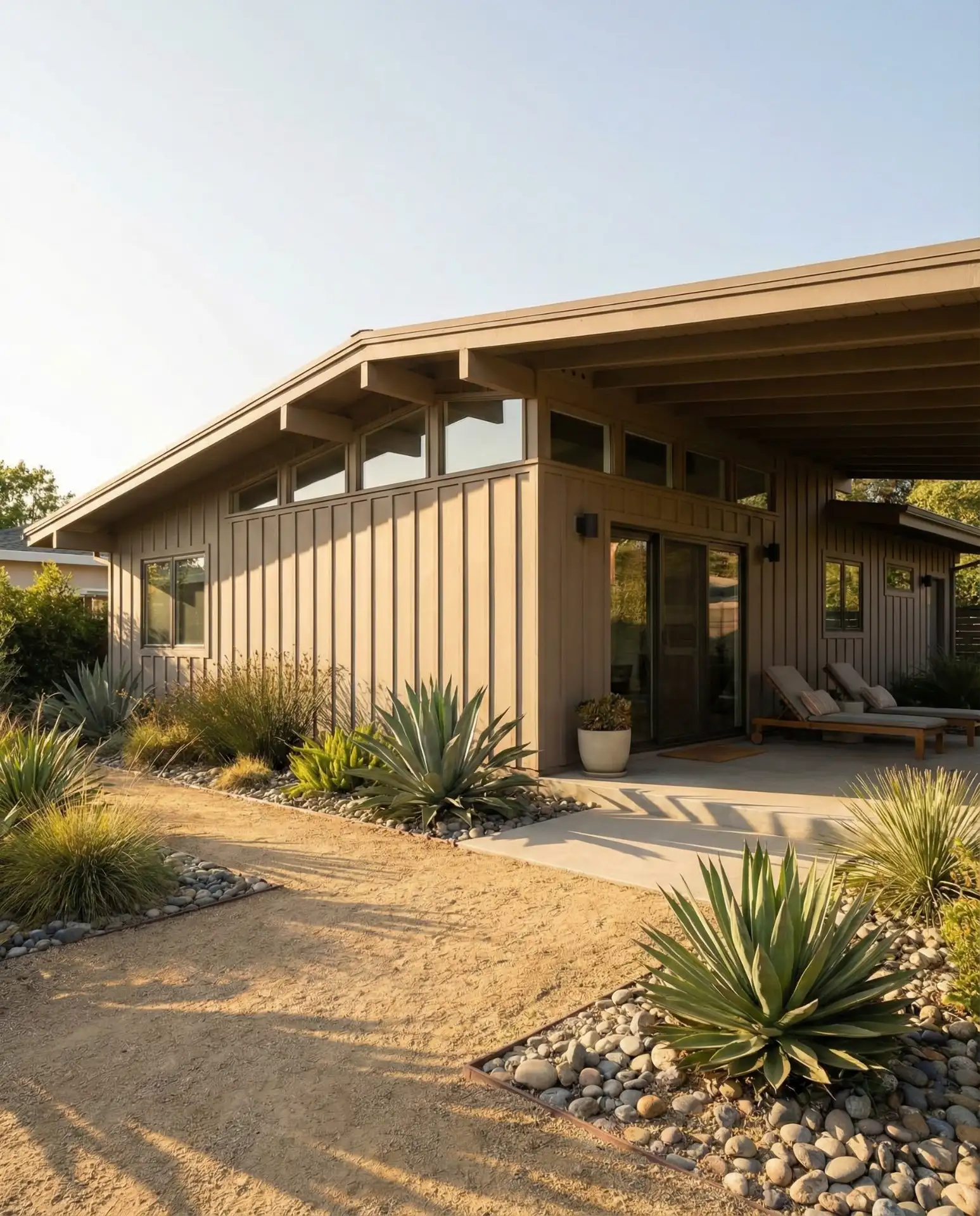
Where this works best is in suburban settings with generous lots where horizontal expansion makes sense and zoning permits patio roof additions. Homeowners pursuing this style often remove front yard fencing to create a more open, ranch-like approach to the street. The fusion feels particularly authentic in Southern California, where both architectural styles evolved simultaneously in the early twentieth century and share similar climate-responsive design principles.
7. 1920s Craftsman Authenticity
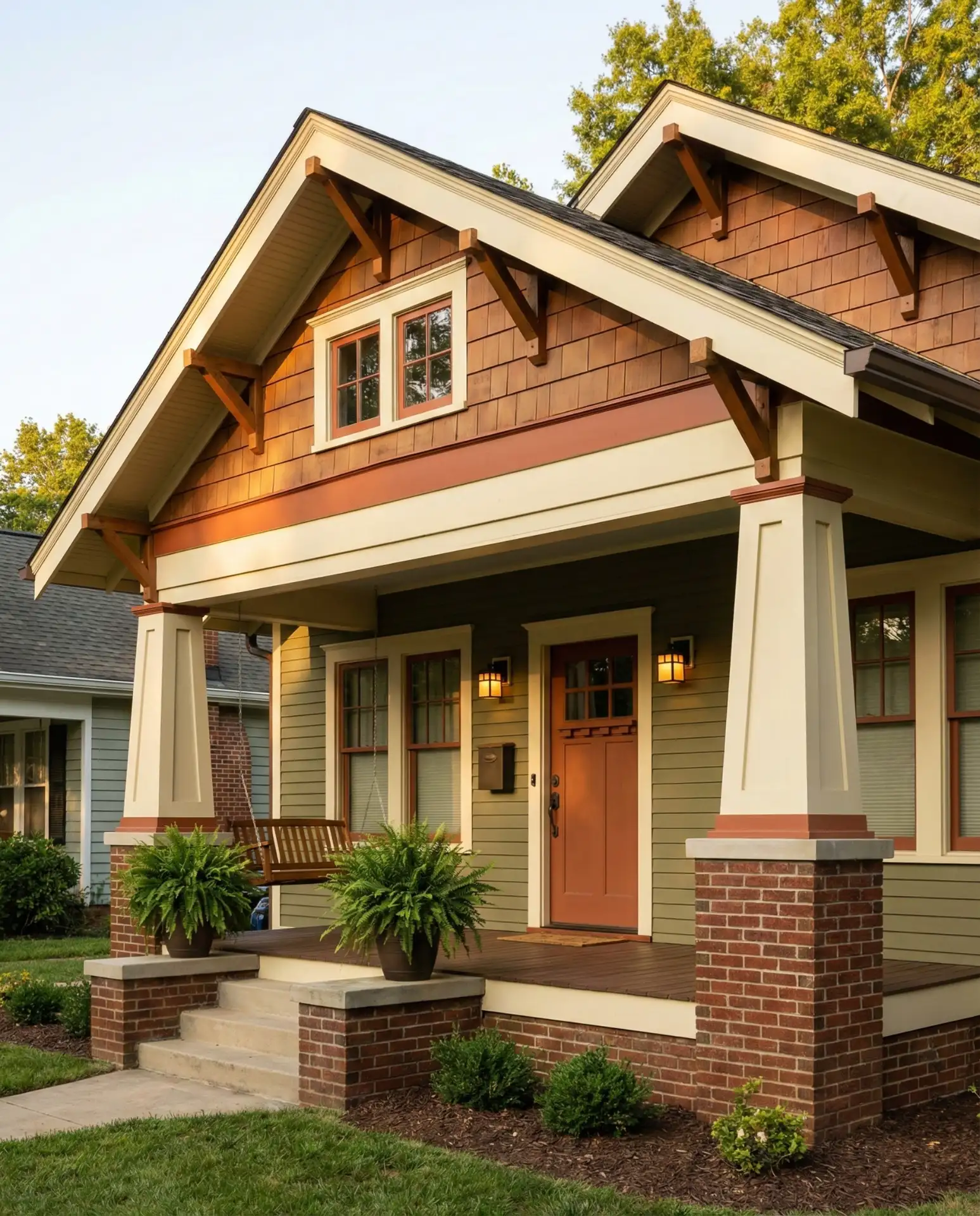
Restoring a 1920s craftsman to its original glory means researching period-appropriate colors, materials, and details that honor the Arts and Crafts philosophy. Earthy palettes with rich browns, deep greens, and warm ochres dominated this era, often in multi-color schemes that highlighted architectural features. Authentic restorations include clinker brick foundations, genuine cedar shakes, and hand-split stone work that define the 1920s aesthetic. 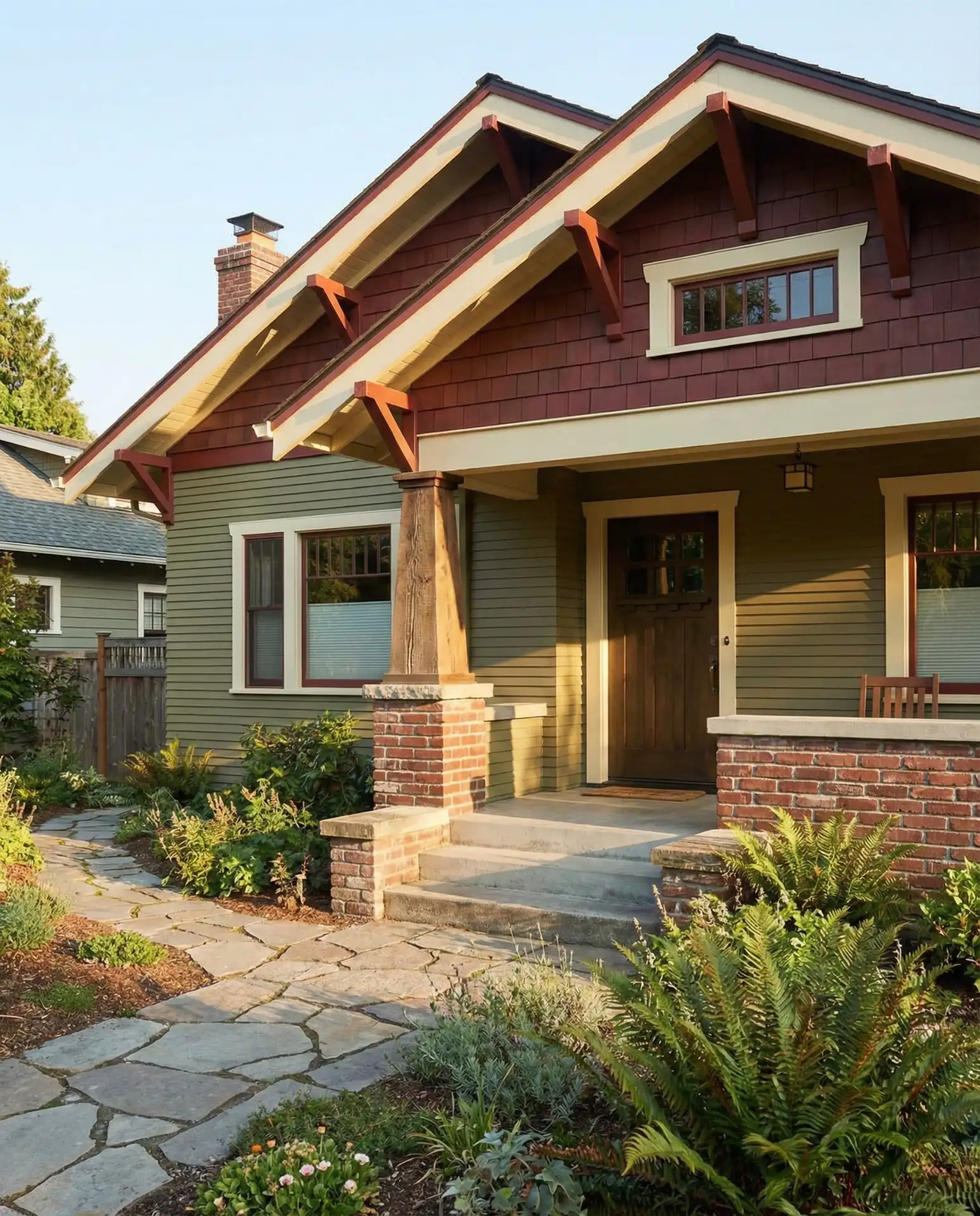
Expert restorers emphasize that authentic doesn’t mean museum-perfect—it means using the right materials and proportions while incorporating modern weatherproofing and energy efficiency behind the scenes. In historic districts from Portland to Pasadena, these careful restorations often increase property values significantly because they stand out in a sea of misguided renovations. The investment in authentic materials pays off both aesthetically and financially in the long run.
8. Minimalist Contemporary Makeover
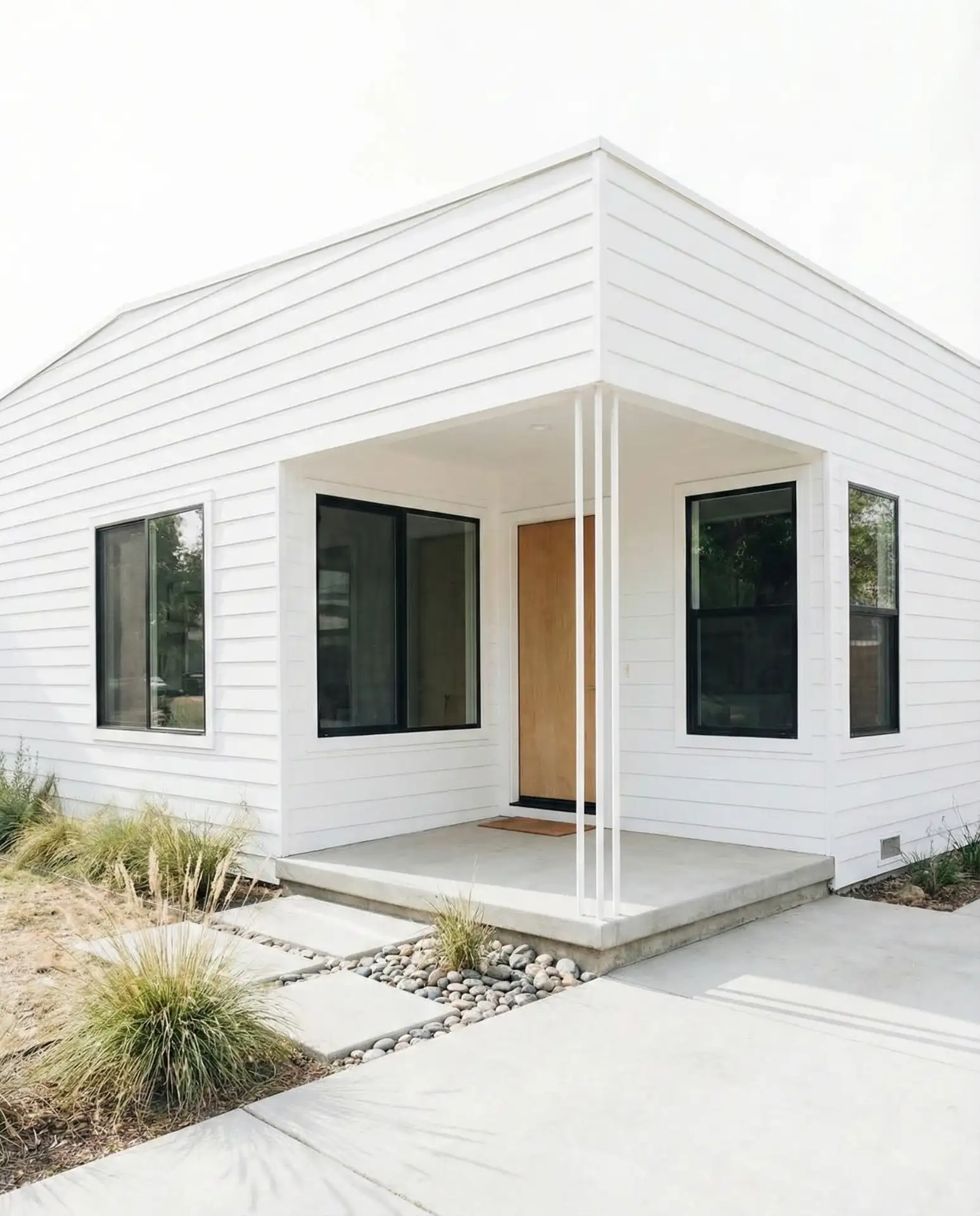
A contemporary makeover strips away decorative excess, emphasizing clean lines and simple material palettes that honor bungalow proportions while feeling thoroughly modern. This approach typically involves removing ornamental brackets and gingerbread trim, replacing them with flush boards and minimal detailing. Monochromatic color schemes in white, gray, or black create visual calm and make the home’s basic geometry the primary design element. 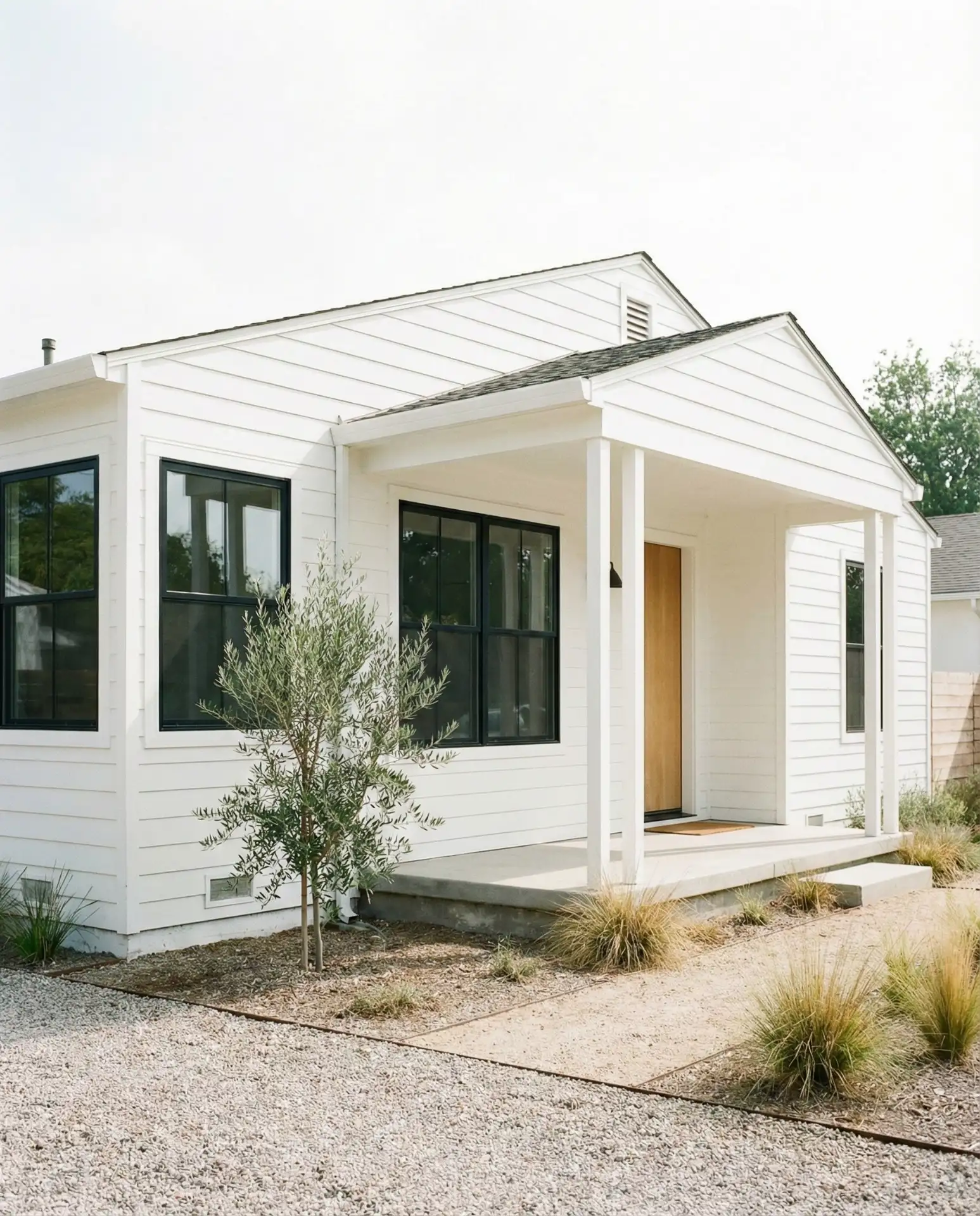
This style sparks debate in preservation-minded neighborhoods but thrives in areas with mixed architectural periods where creativity is encouraged. A common mistake is removing too much character—the goal is simplification, not erasure. Keep the basic bungalow roofline and proportions intact while updating surfaces and details. In rapidly gentrifying urban areas, this aesthetic signals renovation and investment, often attracting younger buyers who prioritize modern function over historic preservation.
9. Mid-Century Modern Influence
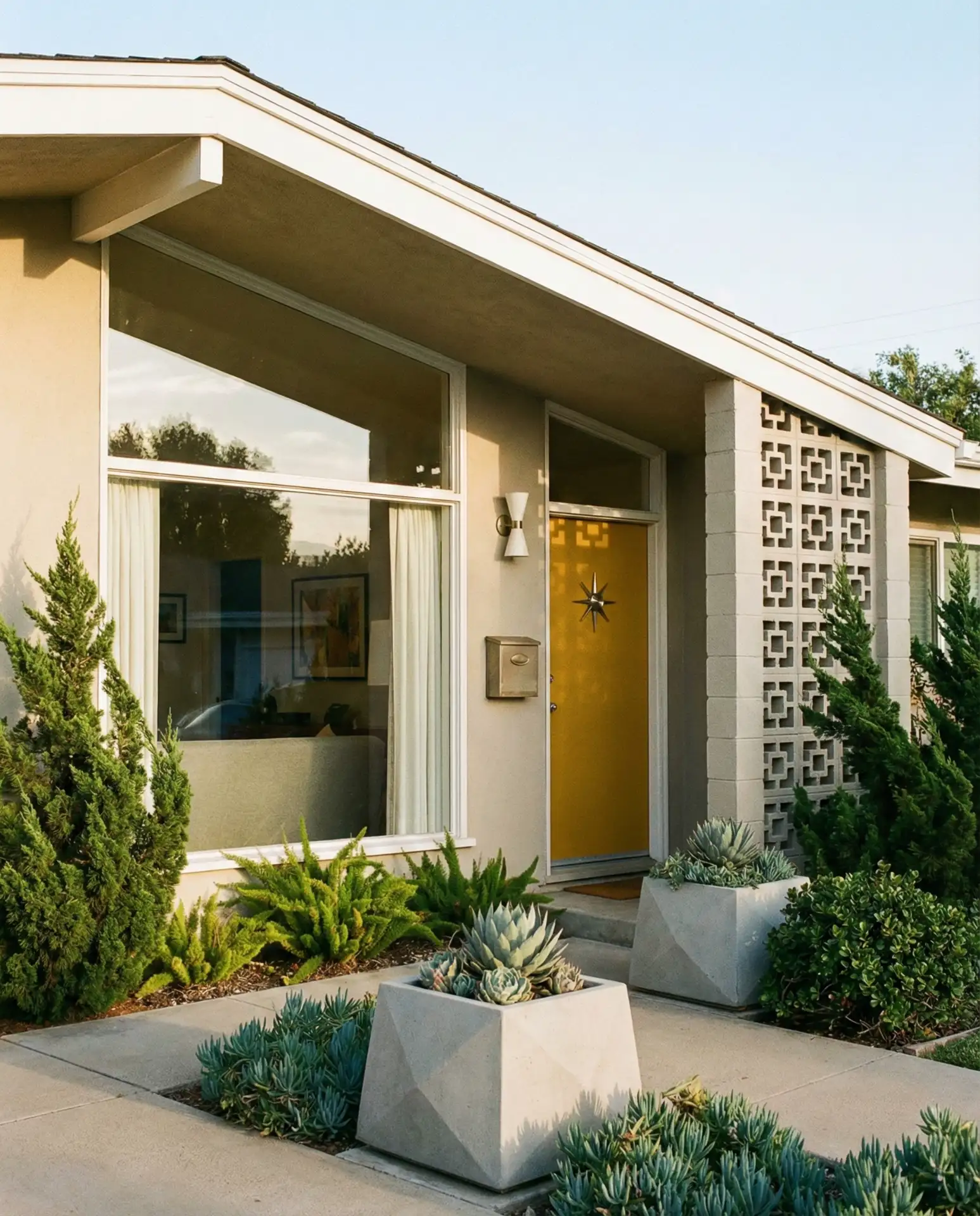
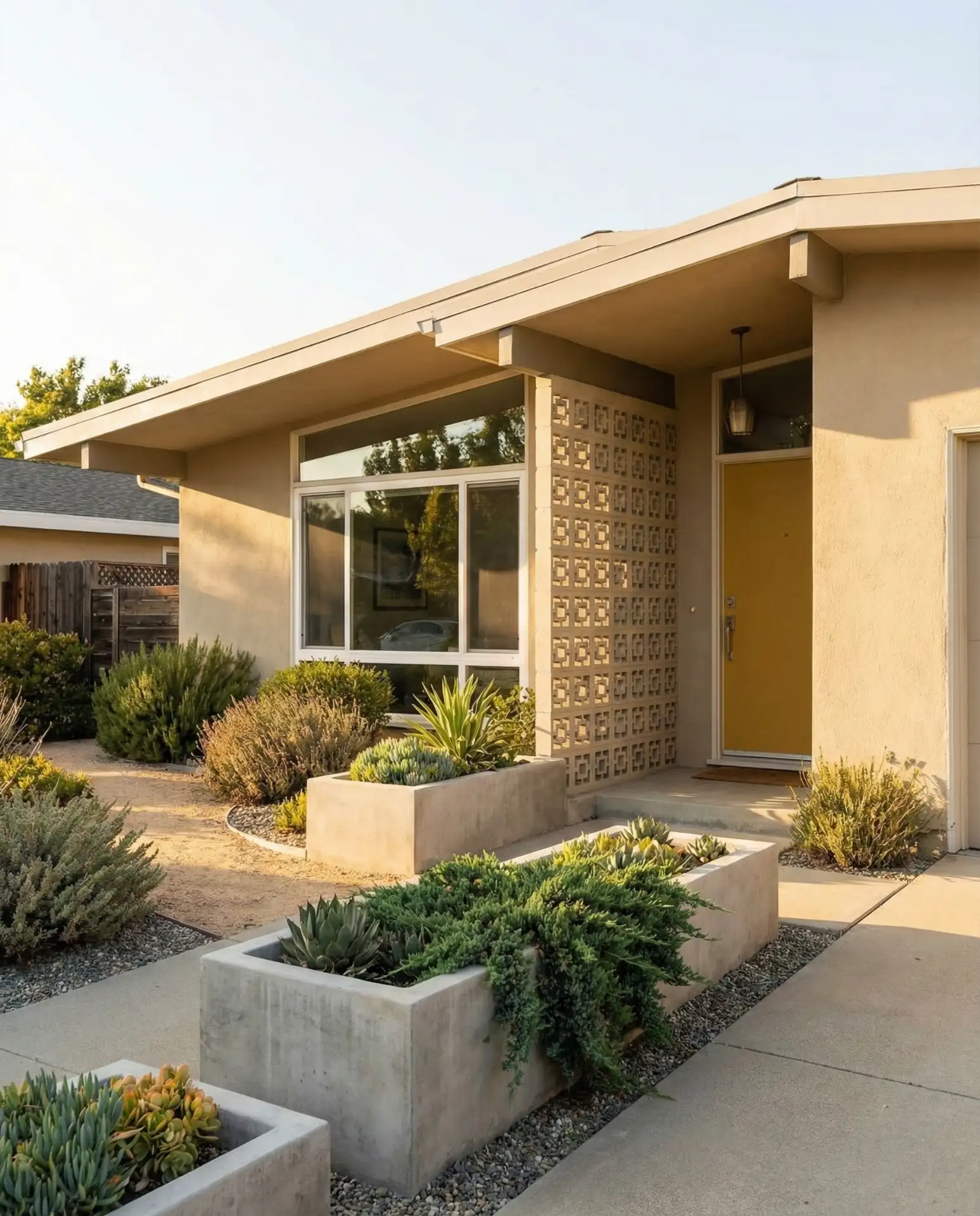
Bungalows built in the 1950s often incorporated mid-century elements like large picture windows, decorative concrete blocks, and butterfly rooflines that deserve emphasis rather than concealment. This design direction celebrates post-war optimism with bright color accents, geometric patterns, and integration of indoor and outdoor spaces through generous glazing. Avocado green, mustard yellow, and burnt orange details pay homage to the era without full-on costume party aesthetics.
In Palm Springs and other desert communities, this style has achieved near-religious following status, with homeowners meticulously researching original paint colors and hardware. The practical insight here is that these homes were designed for passive cooling through strategic window placement and roof overhangs—preserving those features improves both authenticity and energy efficiency. Many owners report lower cooling bills after restoring original ventilation strategies that previous owners had inadvertently blocked during misguided updates.
10. Raised Foundation Showcase
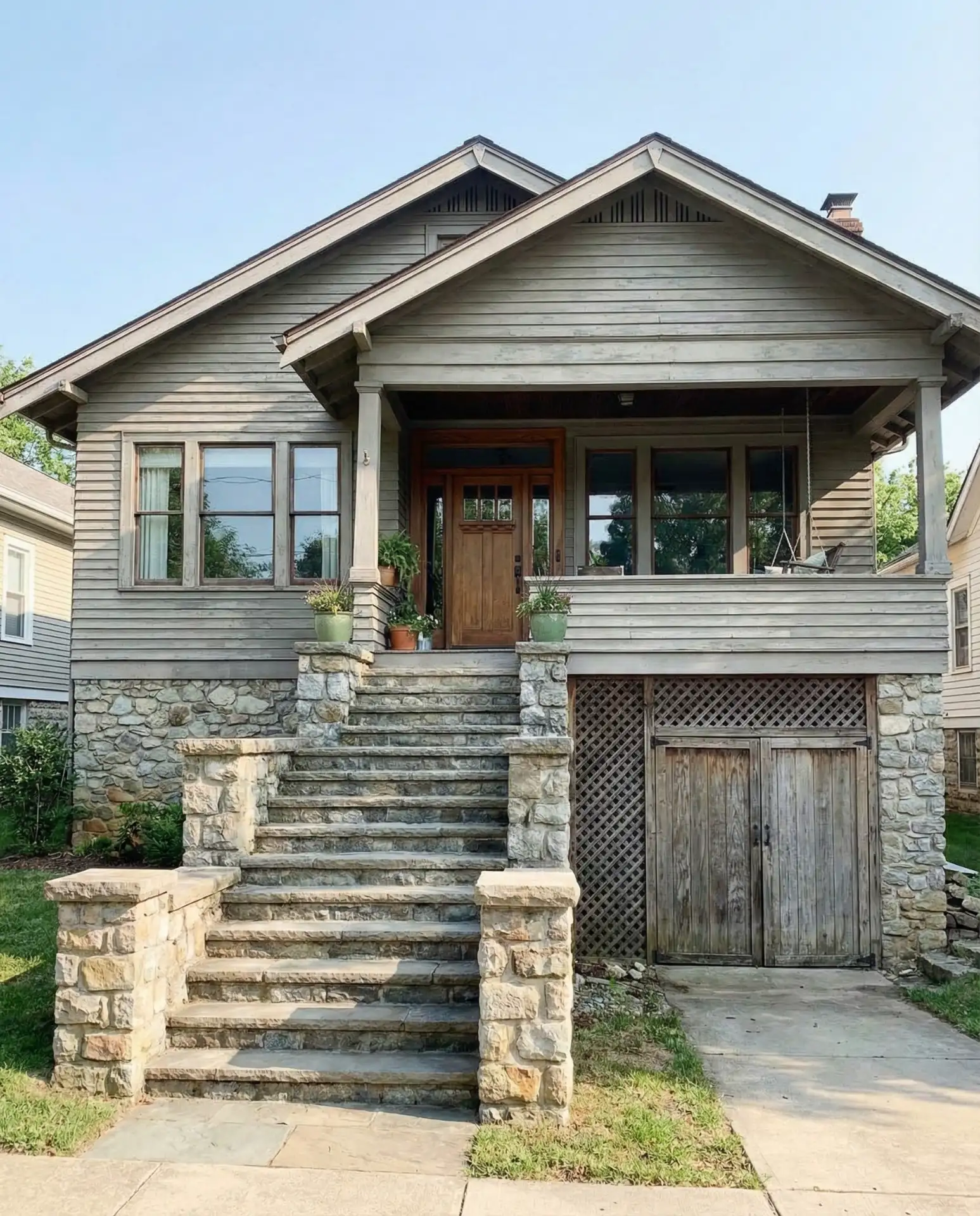
A raised foundation elevates bungalows above grade, creating dramatic curb appeal and practical benefits in flood-prone regions. The exposed foundation becomes a design opportunity, whether finished in stone veneer, painted concrete, or decorative lattice that provides ventilation while screening storage areas. Stairs leading to the front porch gain prominence, often flanked by substantial planters or stone piers that announce the entrance. 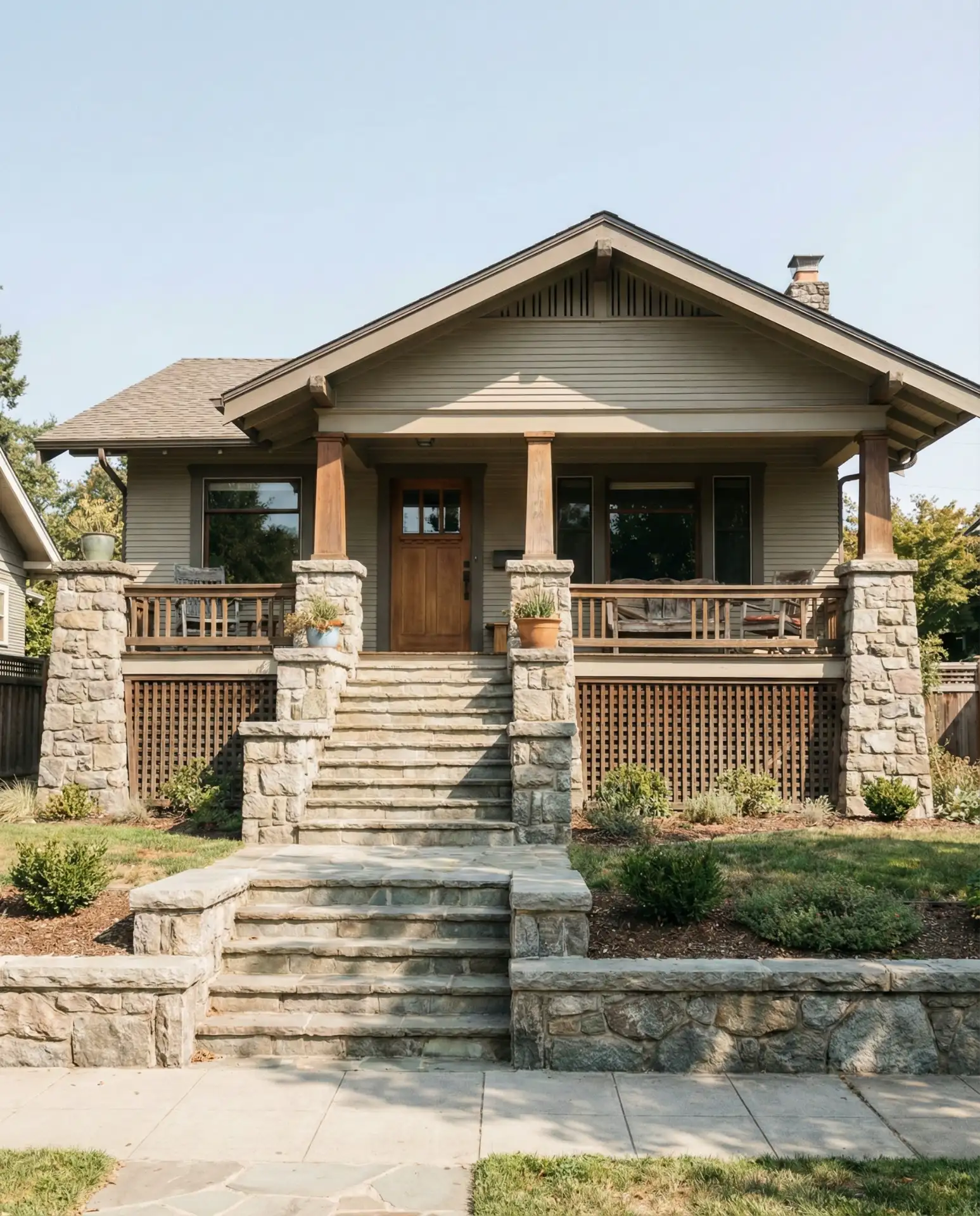
The arrangement is most appropriate in southern states that have flooding and in suburban residential areas that have hilly topography and thus have elevation changes. After flooding and flood damage in slab-on-grade homes, many homeowners, particularly in Houston and New Orleans, seek raised bungalows. Owners and flood victims need and value the storage, mechanical accessibility, and above-high-water living the top spacing and flooding height provide. Budget planning is required. Raising a home is expensive, but in the long run, elevated bungalows save more.
11. 1930s Depression-Era Charm
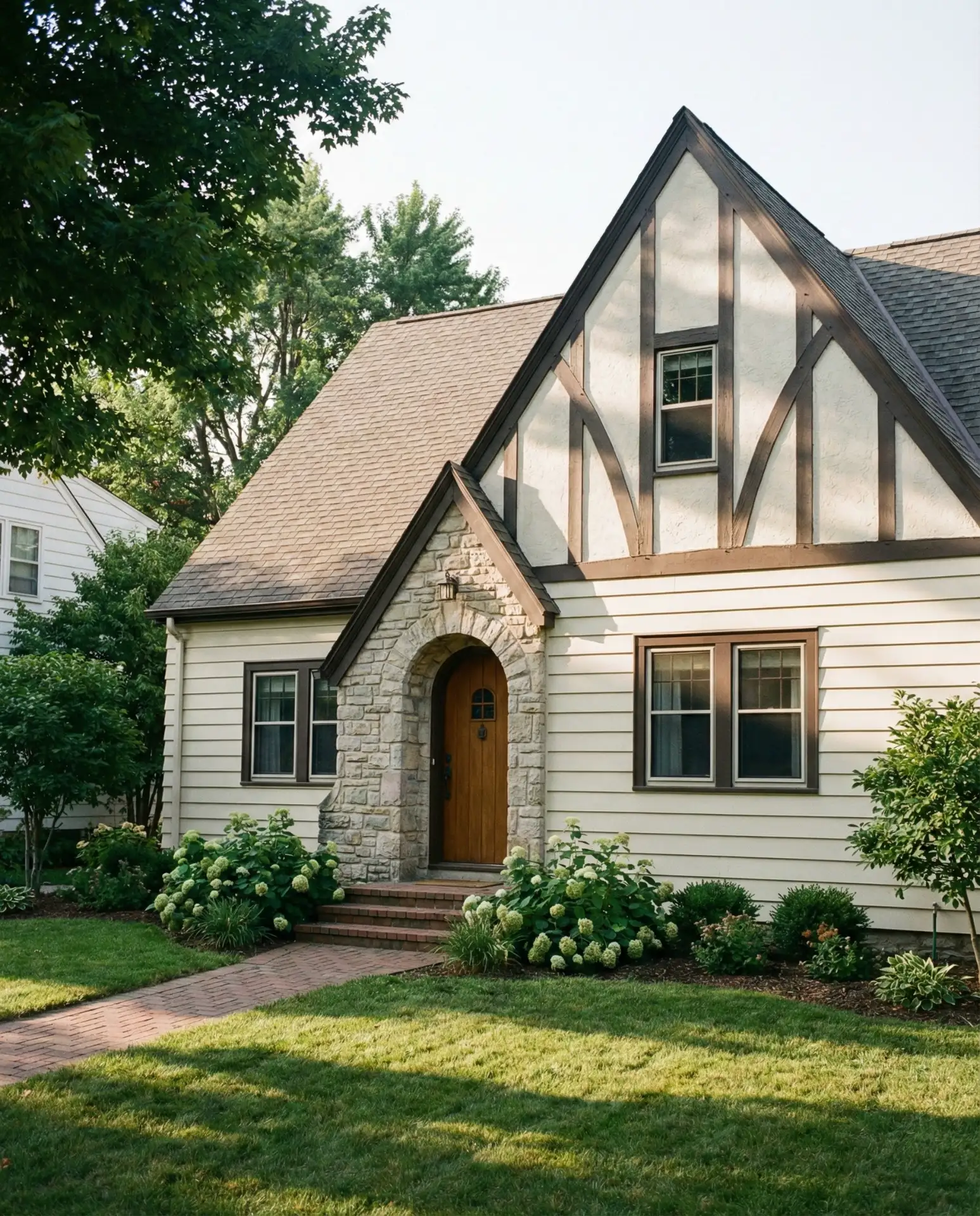
The homes are bungalows of the 1930s and are bungalows of a simplified detailing owing to the economics of the depression, which produced a more plain era, with less fancy, more ornamental wood, and a more solid construction with more efficient space planning. The homes exhibit a type of Tudor style that is more decorative in the sense that it had its timbering in gradation, its roof having a distinct steeple, and its door having a more pitched arch than projecting door styles of the period’s Craftsman styles The paint colors were light in combo with the interiors and were of a cream, pale yellow, and/or soft grey. 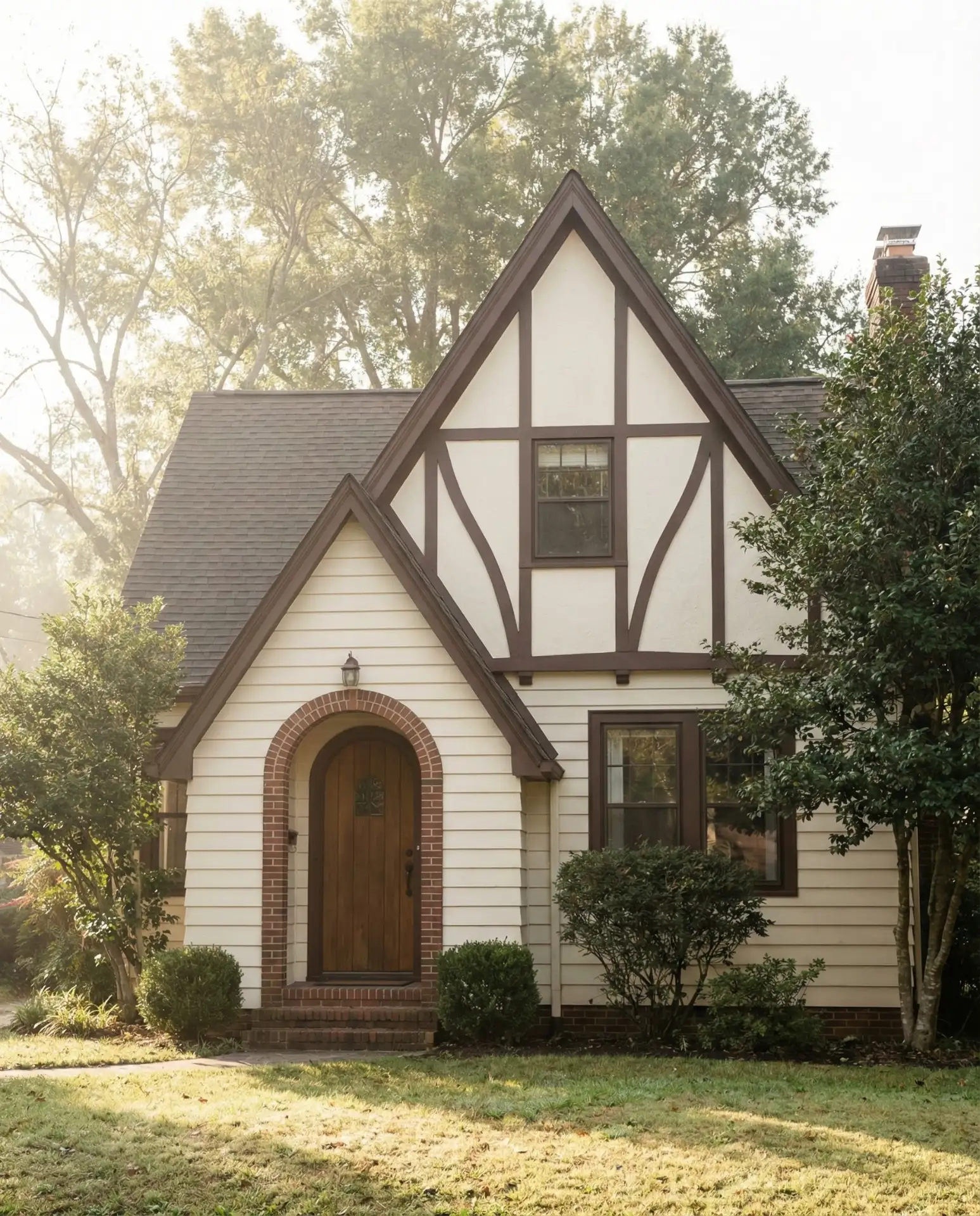
In Midwestern cities like Cincinnati and Cleveland, entire neighborhoods of 1930s bungalows retain remarkable consistency of style and scale. Real homeowner behavior here leans toward preservation—many owners proudly maintain original windows, hardware, and even light fixtures from this era. The materials used in 1930s construction were often superior to what came later, with old-growth lumber and plaster walls that provide better insulation and sound dampening than modern alternatives. Respect these qualities during renovation rather than gutting them.
12. Indian Bungalow Colonial Fusion
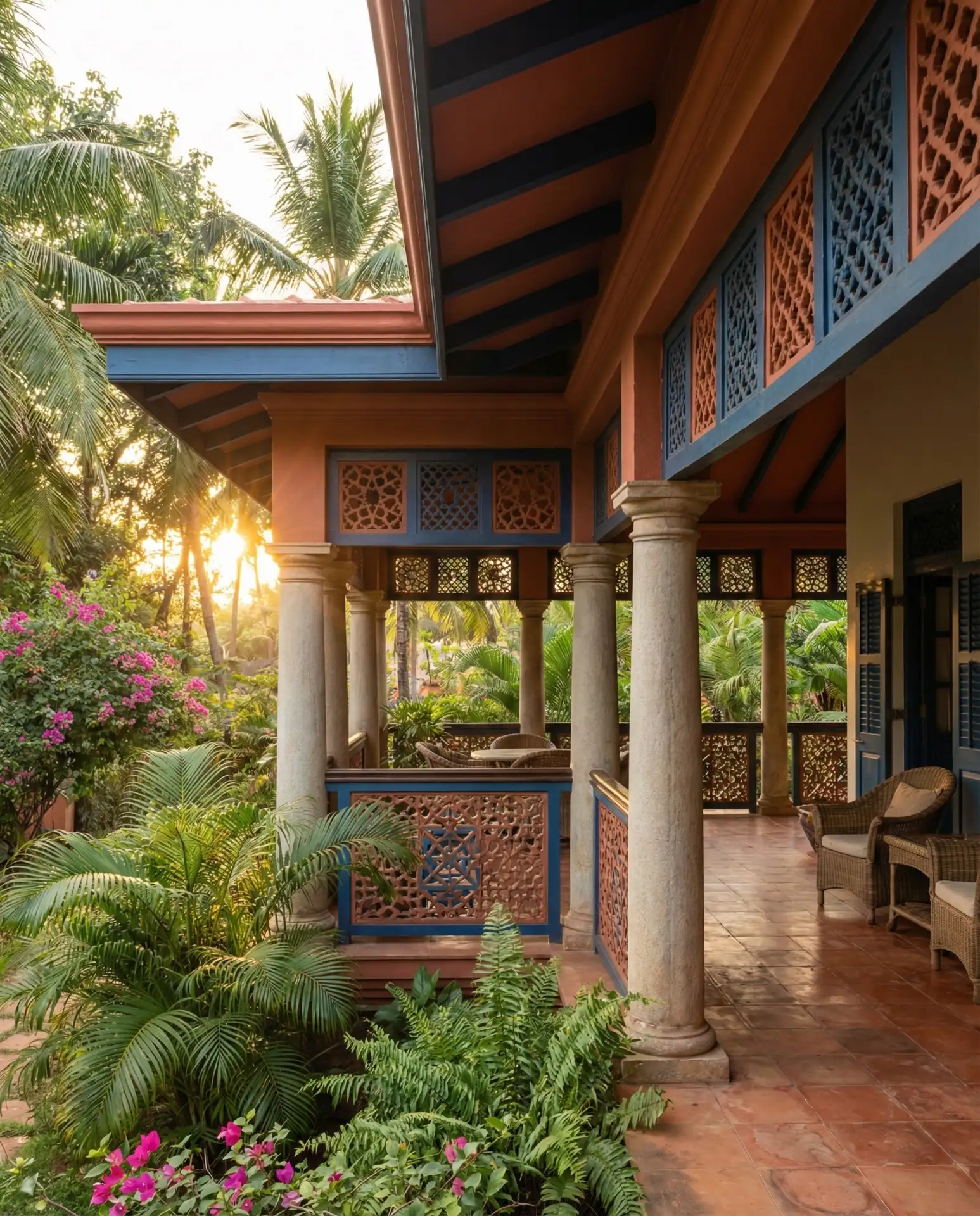
The term “bungalow” originated in Indian colonial architecture, and modern interpretations can honor this heritage through wide verandas, decorative jali screens, and tropical color palettes. These homes emphasize shaded outdoor living spaces with deep overhangs, often supported by classical columns that create a formal procession to the entrance. Rich terracotta, deep blue, and ochre hues reference traditional Indian color traditions while working beautifully in warm American climates. 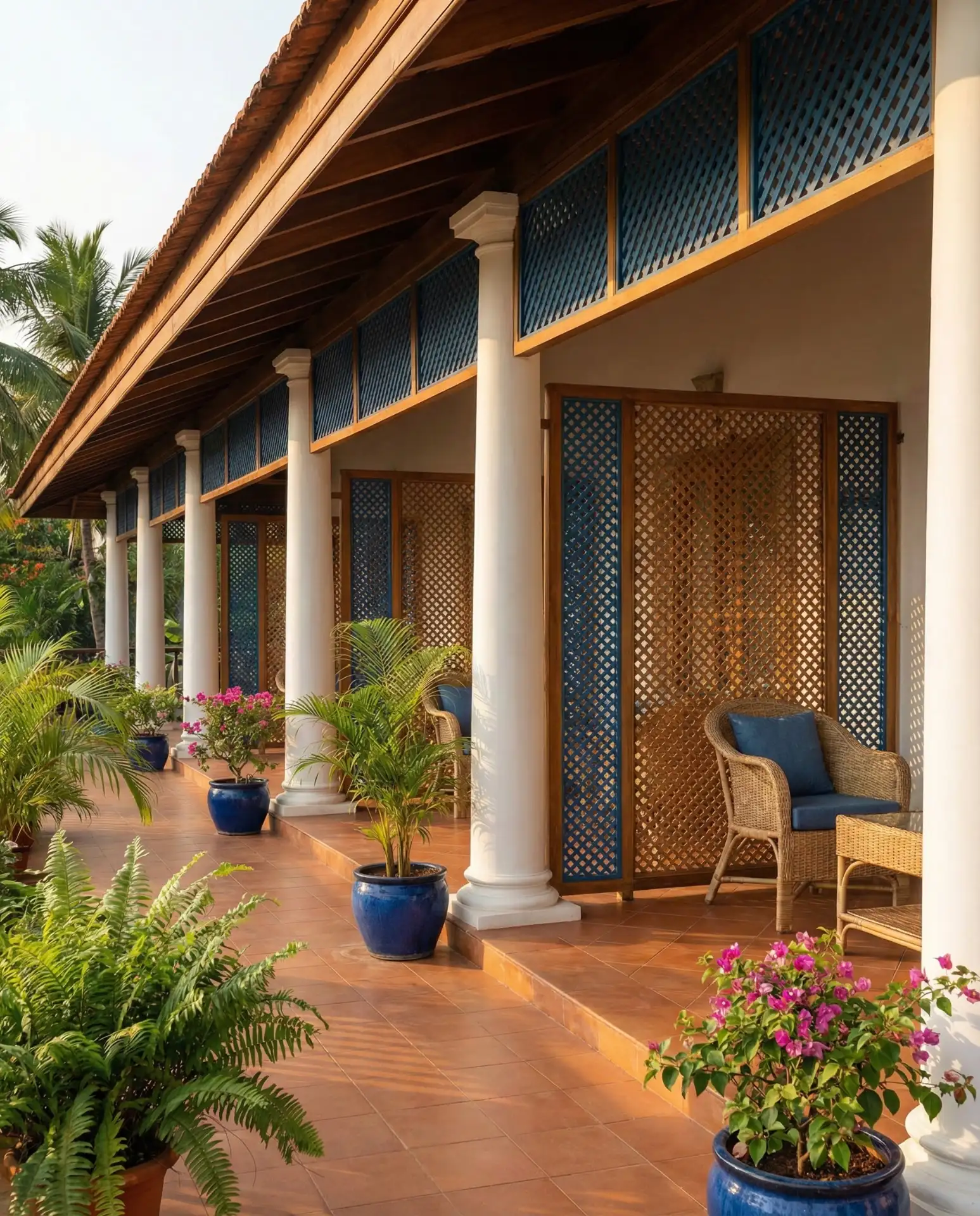
This aesthetic thrives in Florida, Southern California, and Gulf Coast regions where climate parallels allow for similar architectural strategies. One homeowner in Tampa created a stunning example by adding a deep wrap-around porch with decorative metalwork screens that provide privacy while maintaining airflow—a feature that dropped their cooling costs noticeably. The fusion style feels exotic without being appropriative because it references the shared architectural DNA between American and Indian bungalow traditions.
13. Luxury Small-Footprint Design
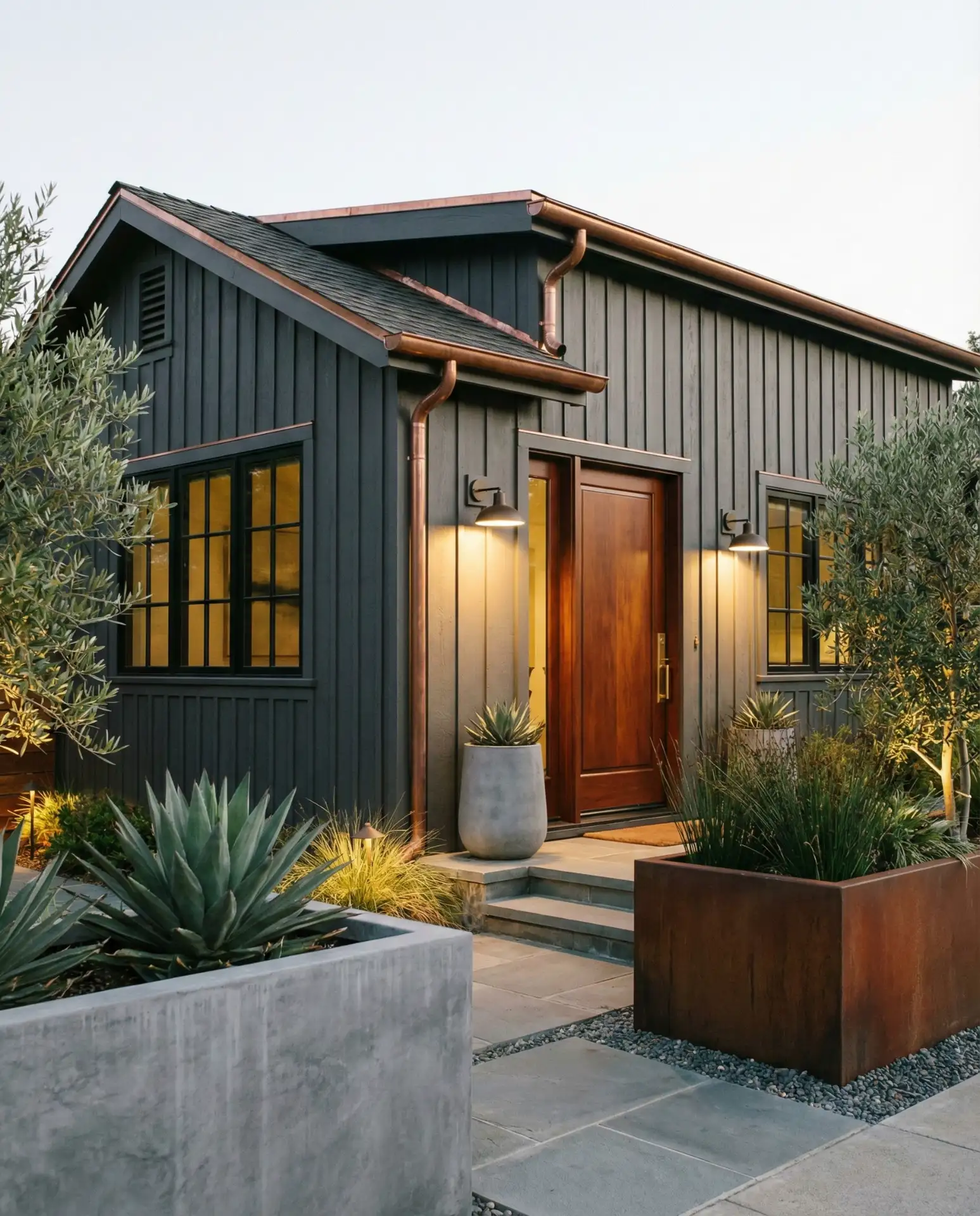
High-end finishes and thoughtful details transform modest bungalows into luxury showcases that prove square footage doesn’t dictate sophistication. This approach invests in premium materials like copper roofing, mahogany entry doors, hand-forged hardware, and professional landscape design that creates curb appeal through quality rather than scale. The contemporary luxury bungalow often features monochromatic sophistication with charcoal siding, black windows, and carefully curated plantings in modern containers. 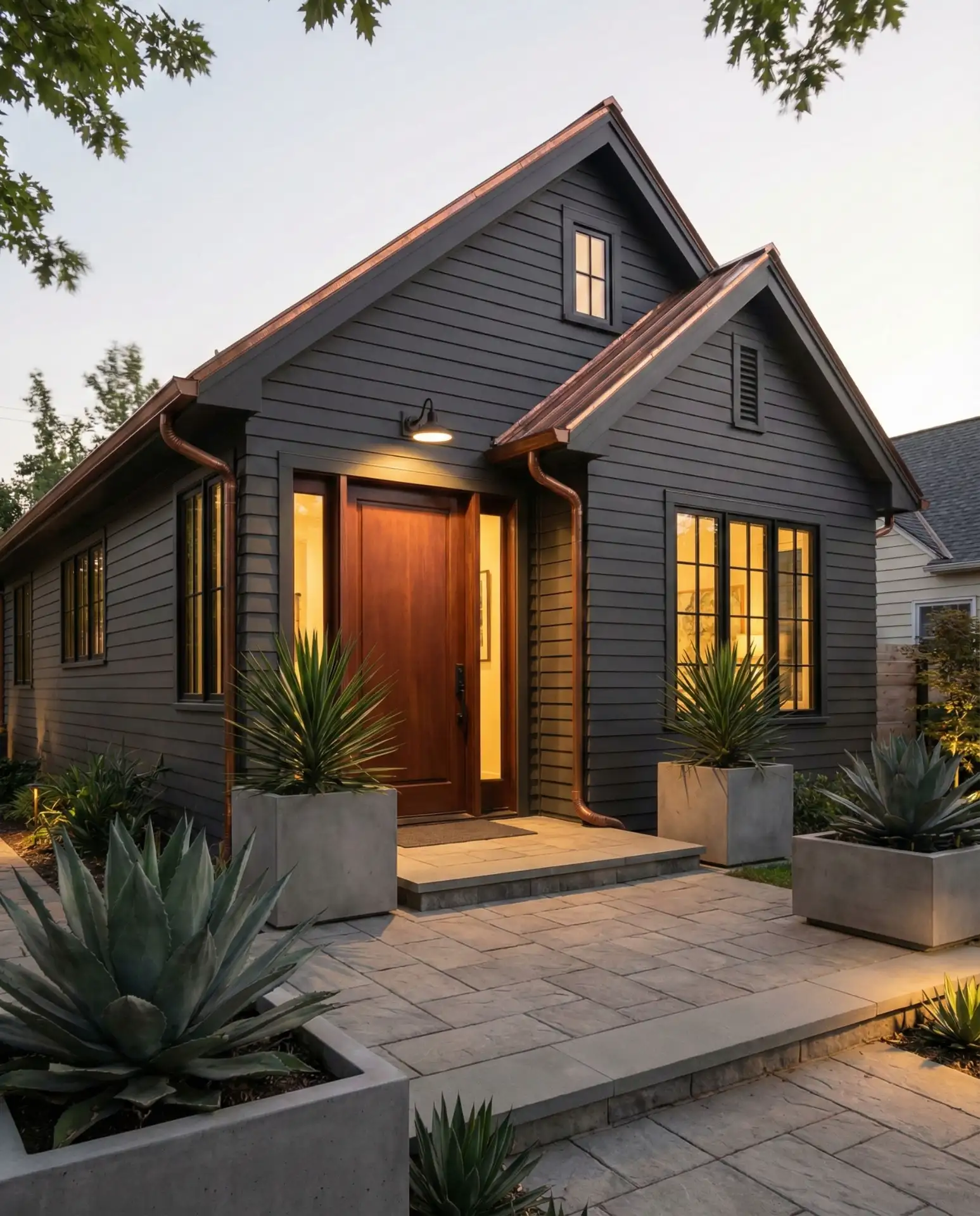
Where budget matters most, focus spending on the elements people touch and see up close—door hardware, porch lighting, and front walkway materials—rather than spreading dollars thin across the entire facade. A couple in Seattle spent fifteen thousand dollars on their front entry and porch alone, creating a jewel-box entrance that photographs beautifully and makes a powerful first impression. The rest of the house received quality but not premium finishes, demonstrating strategic prioritization that maximizes visual impact within real-world budgets.
14. Front House Design Modern Simplicity
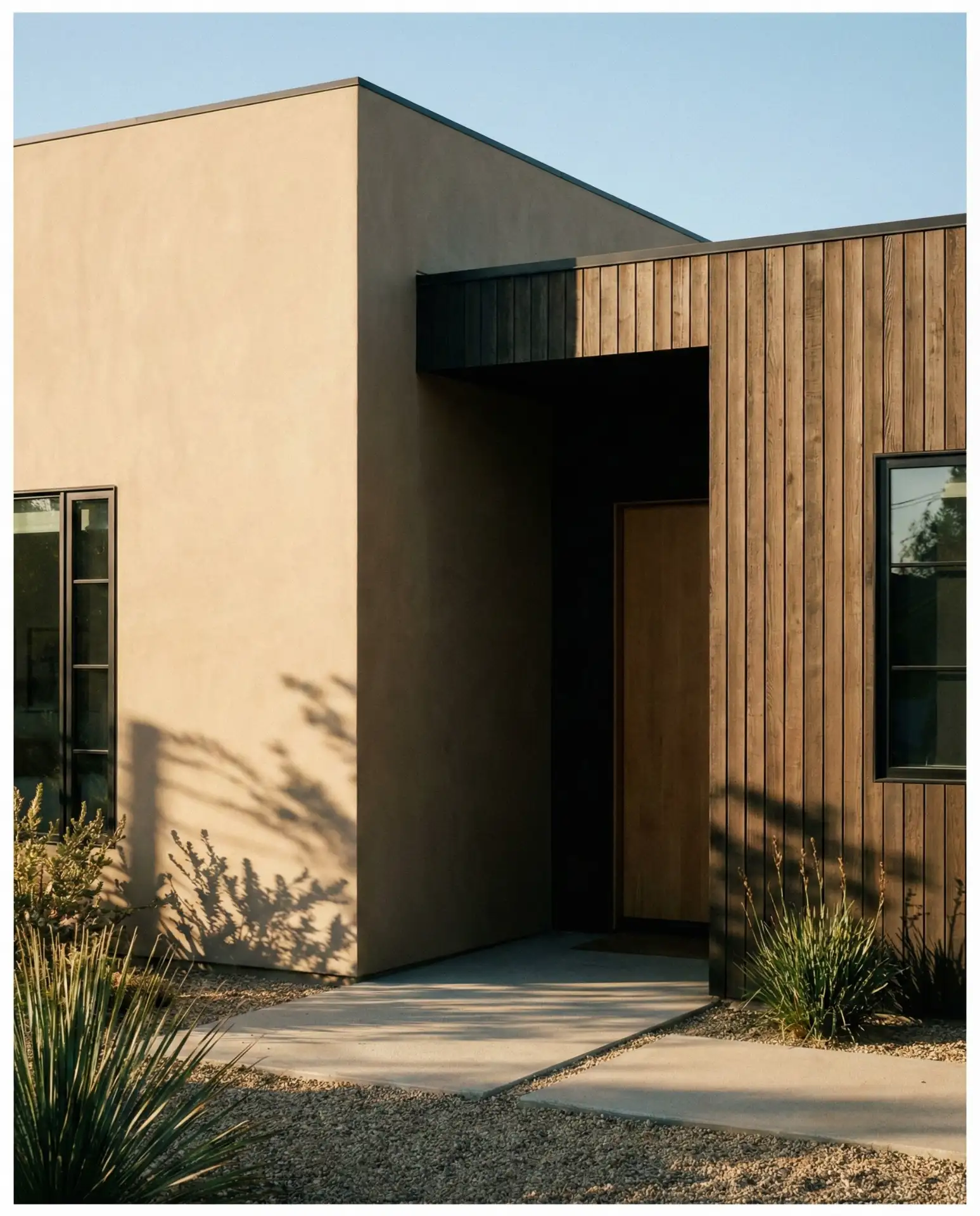
The modern front house design approach focuses on creating a striking street presence through geometric clarity and material contrast rather than decorative flourishes. This often means treating the facade as a composition of simple volumes—a recessed entry, a projecting bay window, a clean roofline—that create shadow patterns and visual interest through form alone. Material choices emphasize texture: smooth stucco against rough stone, vertical siding opposing horizontal trim, and glass expanding dark solid walls. 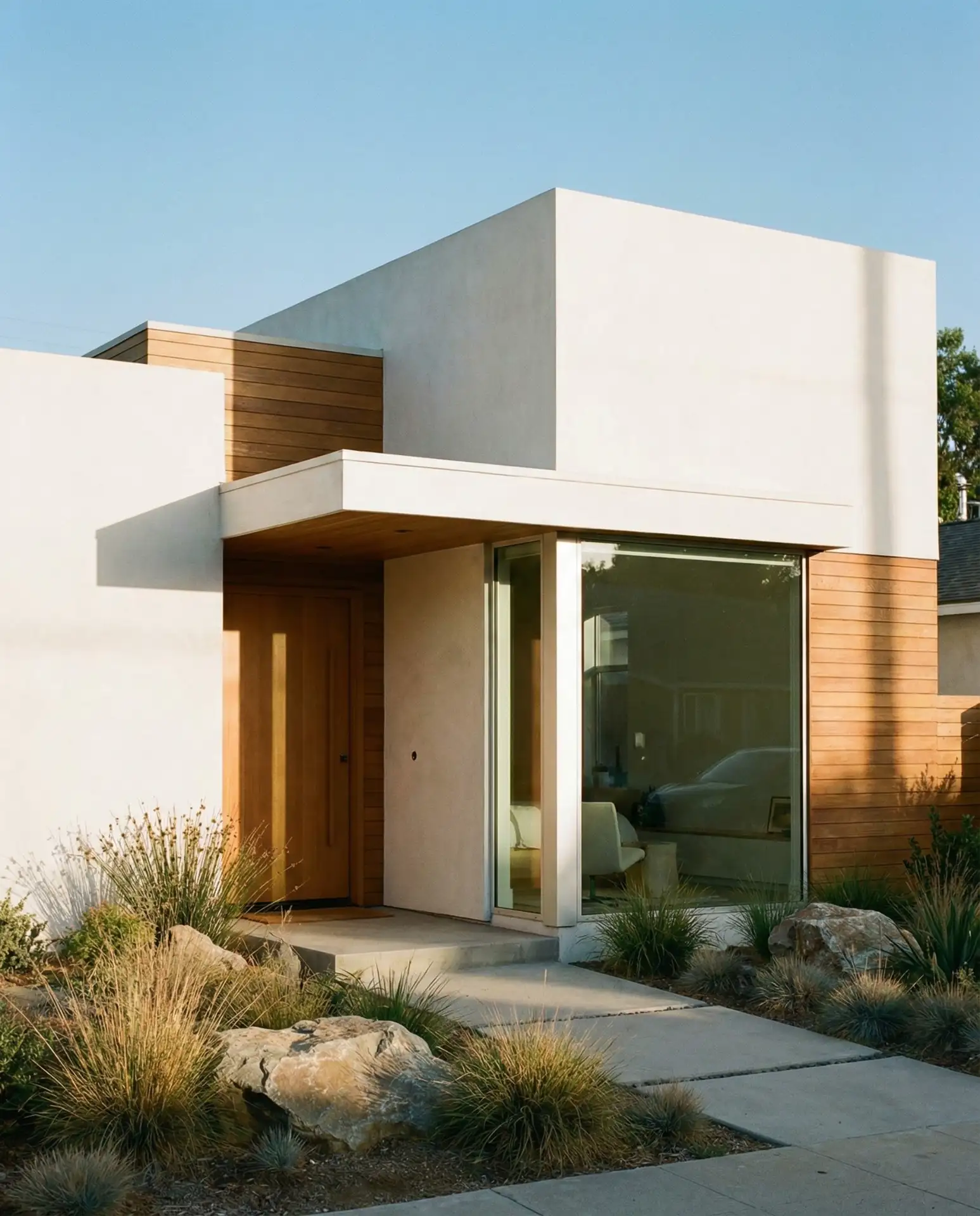
Common mistakes include making the design too austere, creating an uninviting facade that looks more commercial than residential. Balance modern simplicity with human-scale details like a sheltered entry alcove, a built-in bench, or a textured front door that invites interaction. In urban neighborhoods from Brooklyn to Portland, these modern bungalows stand out precisely because they don’t try too hard, letting good proportions and quality materials speak for themselves without shouting for attention.
15. Charcoal Gray Contemporary Neutral
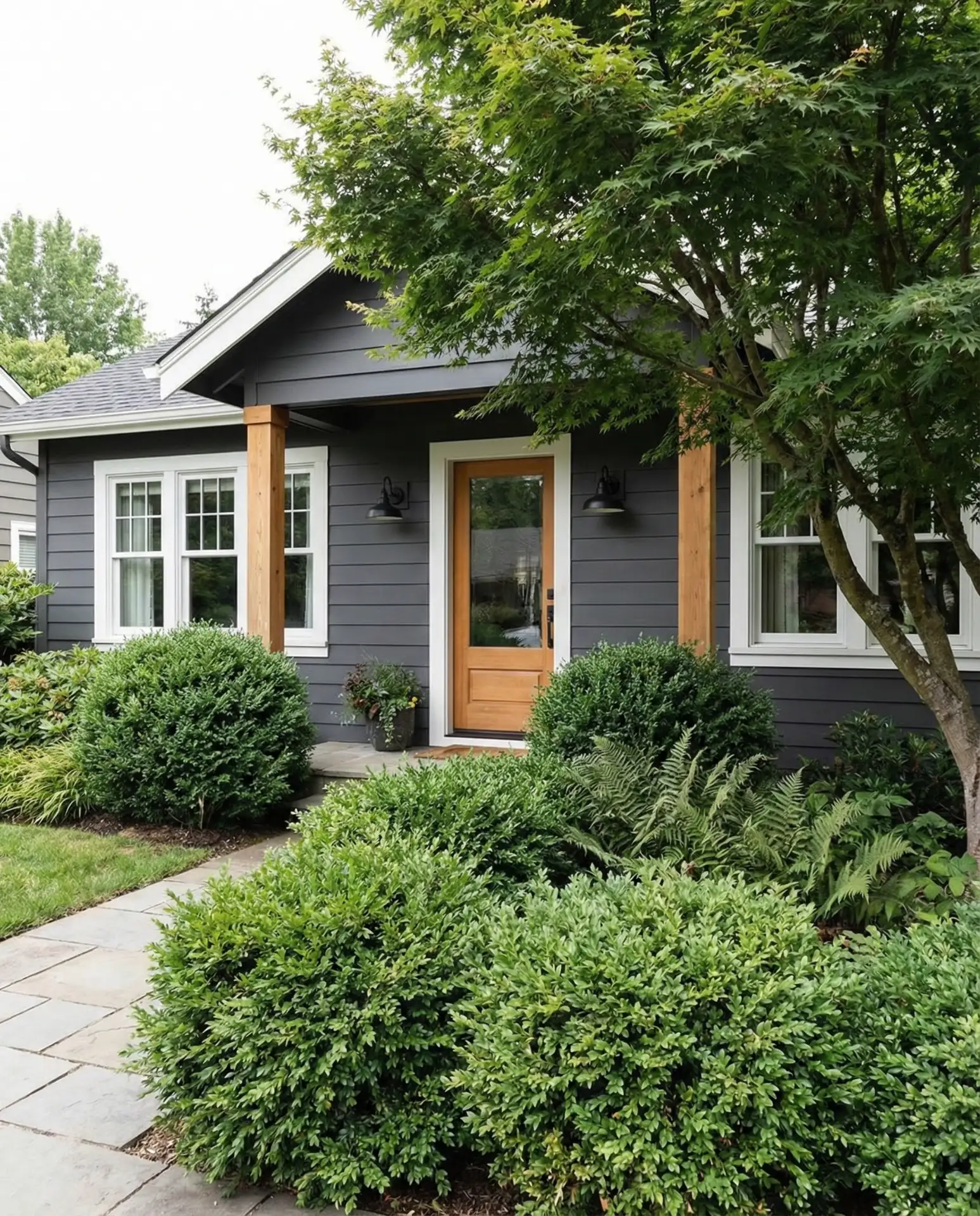
A deep charcoal gray is becoming the preferred choice for an increasing number of homeowners searching for modern sophistication without the harshness of pure black or the blandness of beige. This paint color works across all styles of bungalows, whether they’re traditional or contemporary, because it offers a neutral background for showcasing the architectural details and landscape beds. When partnered with white or natural wood, charcoal adds an extra layer of complexity and dimension and depth that aren’t achievable with simpler colors. 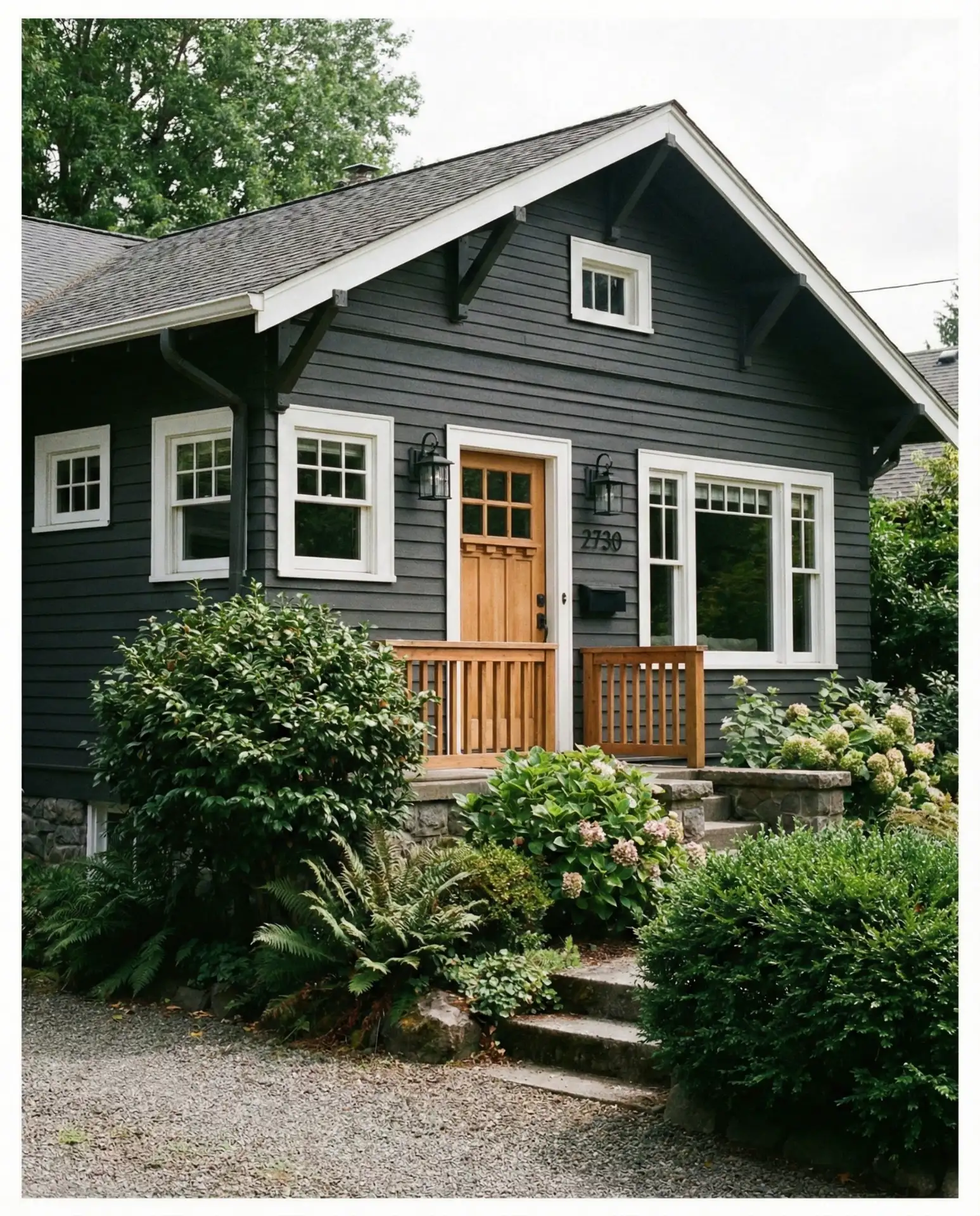
In the Pacific Northwest, where gray skies dominate much of the year, charcoal exteriors surprisingly work well because they embrace rather than fight the ambient light conditions. The color appears almost black in overcast weather but reveals its gray undertones in direct sun, creating subtle variation throughout the day. From a practical standpoint, charcoal shows less dirt than lighter colors and hides imperfections better than pure black, making it relatively low-maintenance for busy homeowners who want style without constant upkeep.
16. Traditional White with Colorful Door
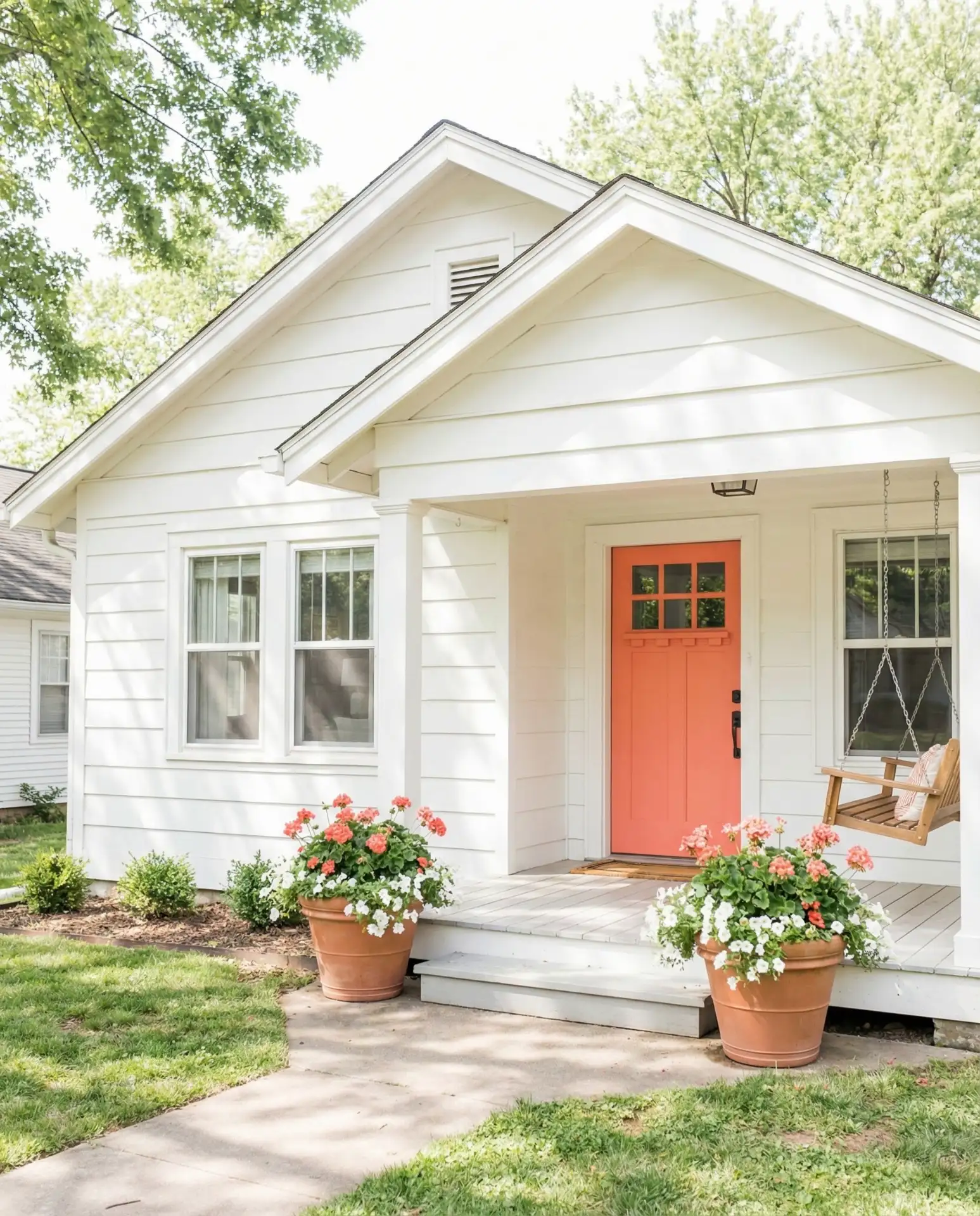
One of the most common white bungalows opens its doors along the exterior with additions of coral, teal, or a soft yellow, inviting and artistic, complementing the greater design of the home. This style can make the home remain traditional and universally appealing while allowing the owner to express themselves in their style, which can easily be changed. The vibrant tones of the coral, teal, and yellow open the home, making the entry point the most important place of the home, which can also be used as the center of attention in photos. 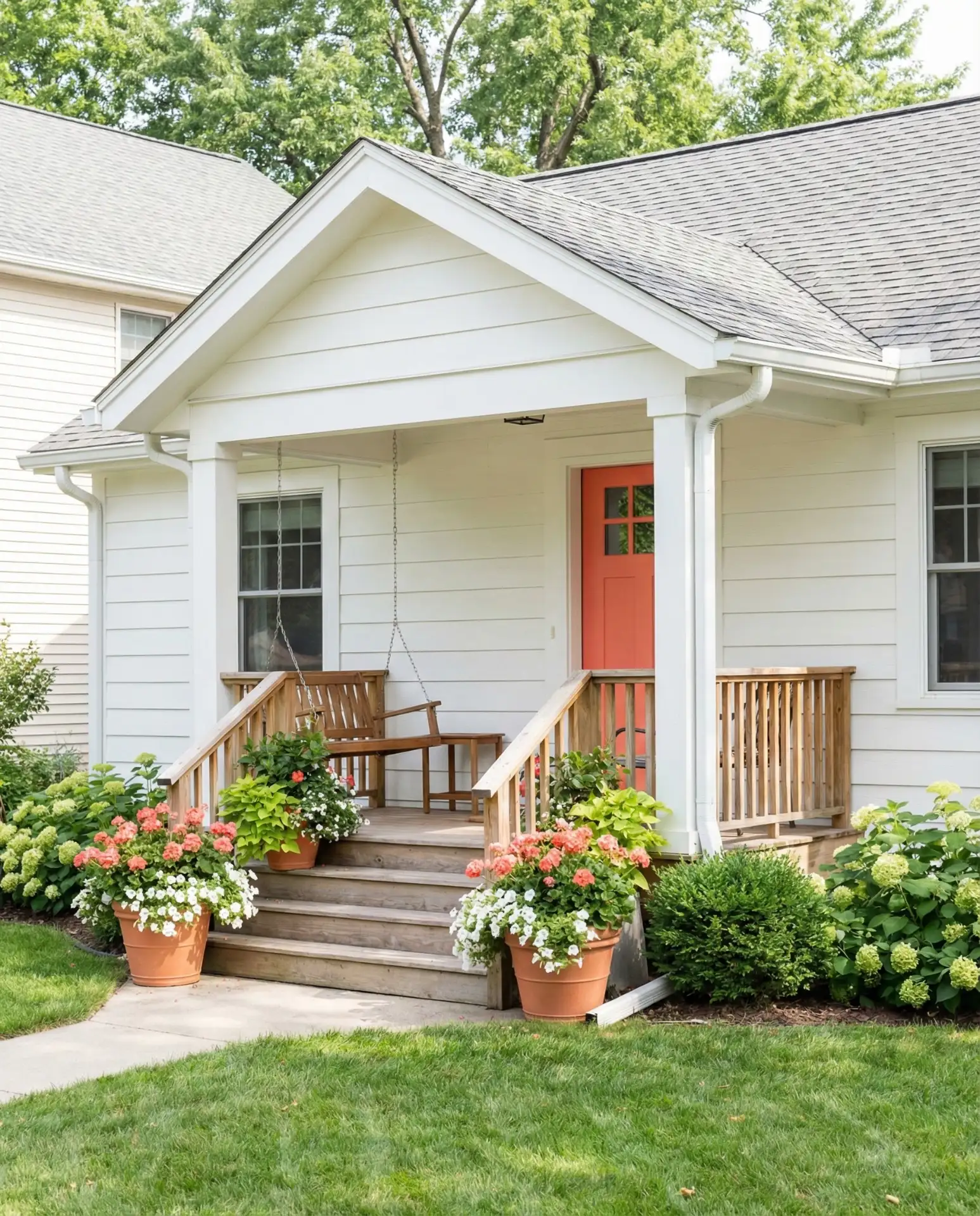
It is a fact that the owner’s home behavior indicates that doors with bright colors are changed more than any other color on the home. This is a notable feature because no other updates can be made to the home without a significant addition or investment. This feature can also be very useful if you are located in an area with strict HOA guidelines that limit what exterior color the body of the home can be. A quality exterior door can be purchased for under fifty dollars and in a single afternoon can be transformed into a bright door that can outline the home with color.
17. Natural Cedar Shake Exterior
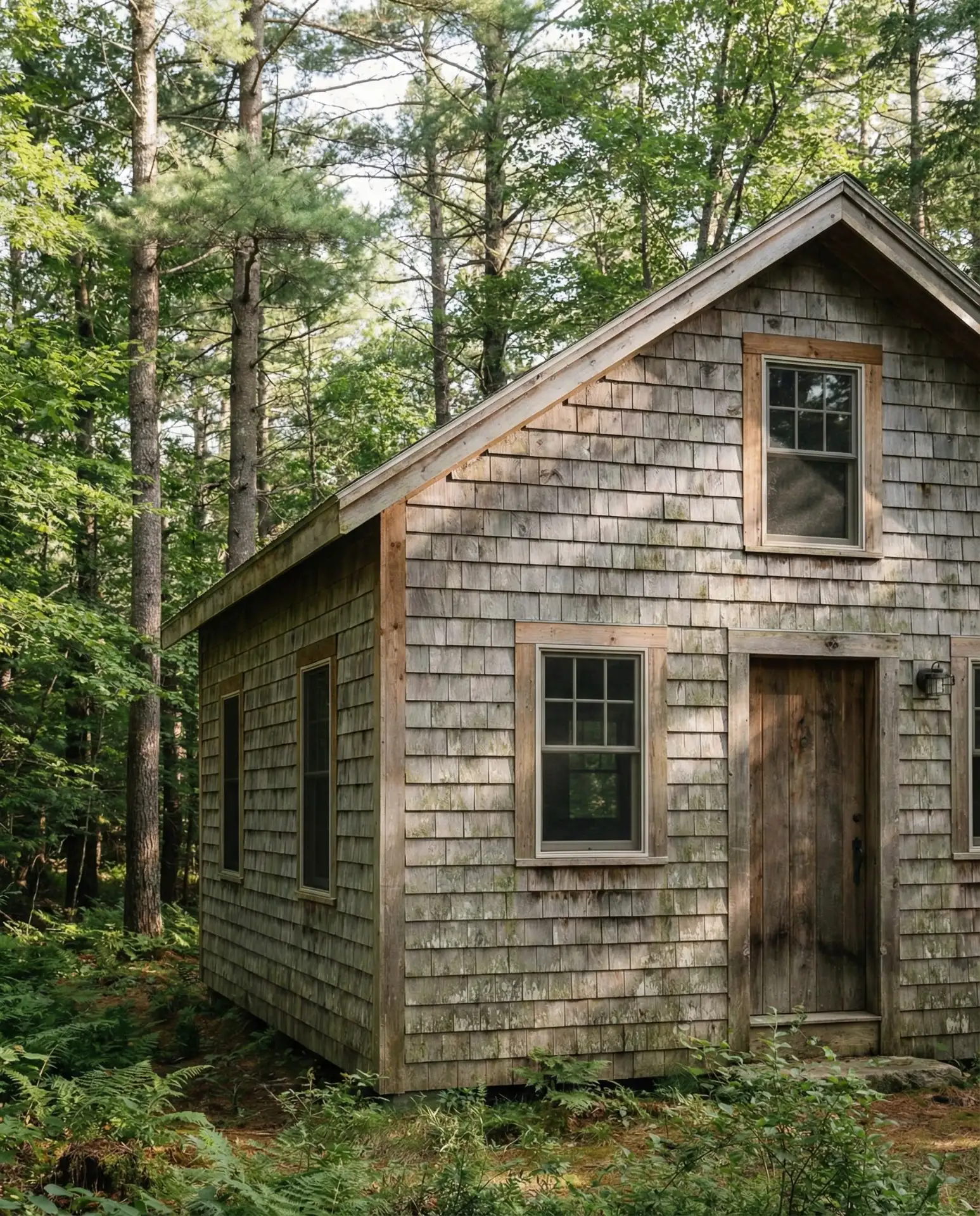
Unpainted cedar shakes weather to a silvery gray patina that connects bungalows to their natural environment while requiring virtually no maintenance beyond occasional cleaning. This design choice honors the Arts and Crafts movement’s emphasis on natural materials and honest expression of structure. The irregular texture of hand-split shakes creates subtle shadow patterns that synthetic siding can’t replicate, adding organic visual interest to otherwise simple facades. 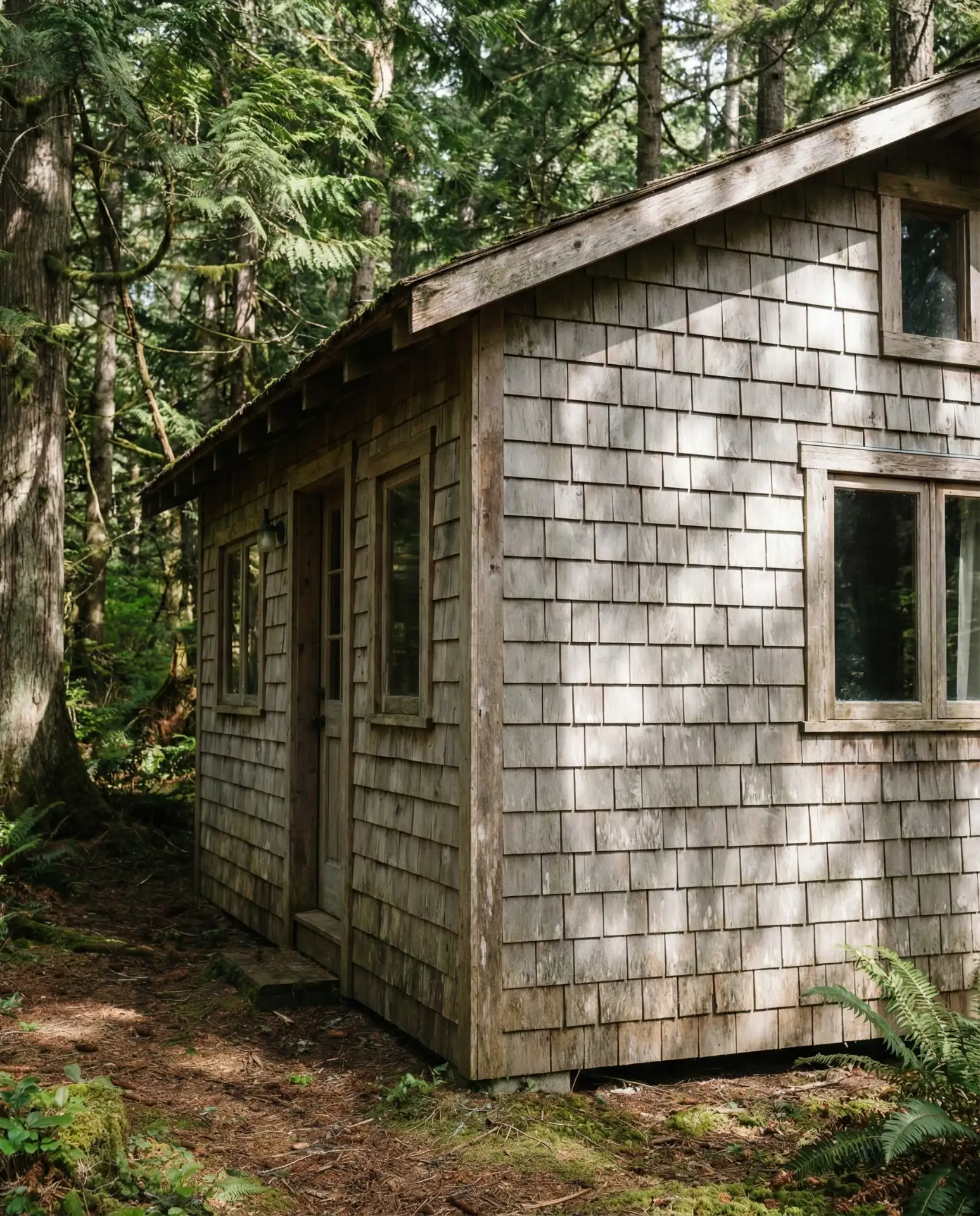
Where this works best is in wooded settings where the weathered cedar blends seamlessly with surrounding tree bark and natural colors. Pacific Northwest homeowners particularly embrace this aesthetic, which feels indigenous to the region’s climate and culture. One important note: untreated cedar is not suitable for all climates—in humid regions without good air circulation, cedar can develop mold and rot. Research local conditions and consider whether your lot provides the ventilation and seasonal drying that cedar requires to age gracefully rather than deteriorate prematurely.
18. Painted Brick in Bold Hues
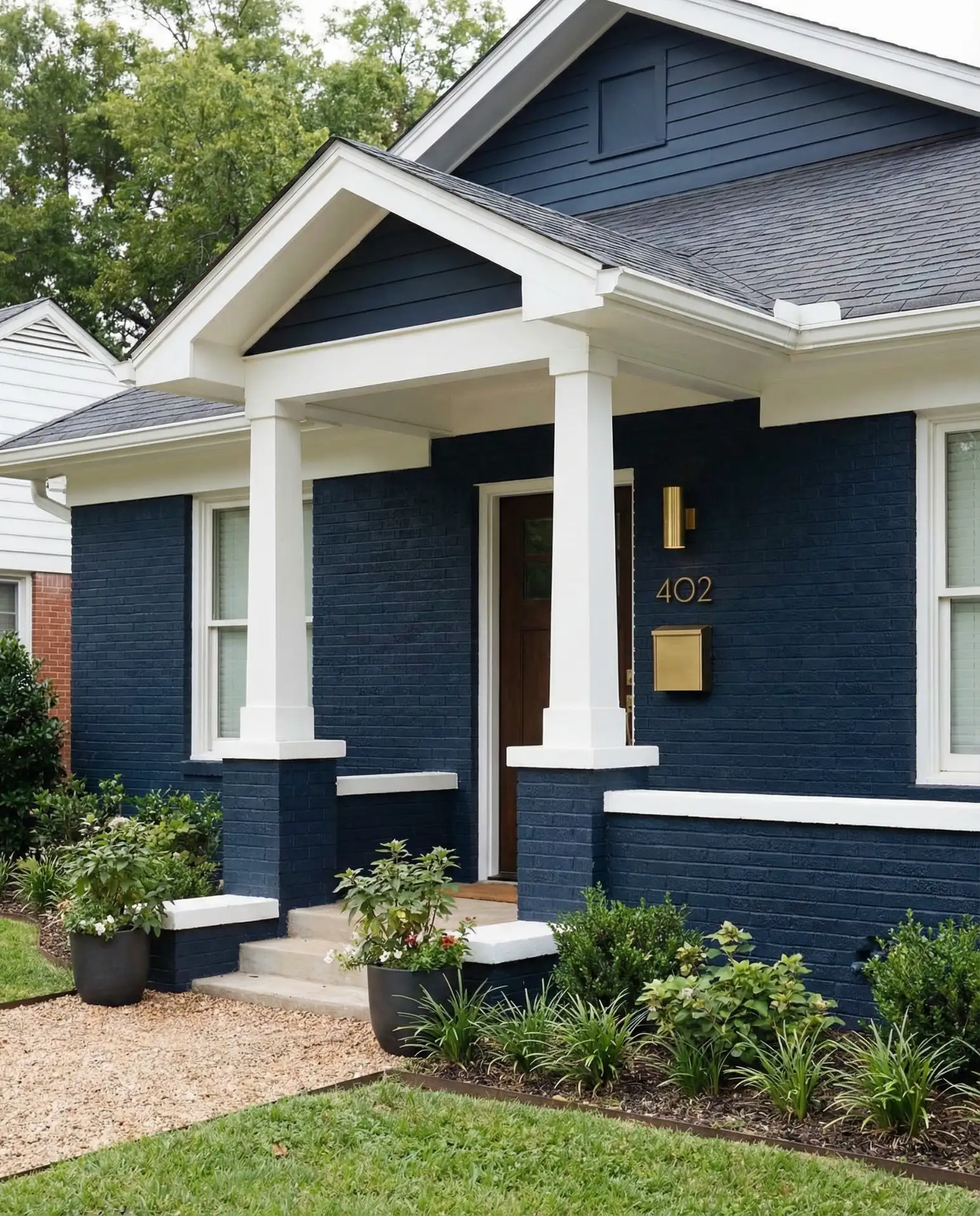
When brick condition is poor or the color clashes with contemporary tastes, painting it in deep navy, forest green, or even black creates a dramatic transformation. This approach remains controversial among preservationists but offers practical solutions for bungalows with mismatched brick repairs or unattractive orange-toned masonry. Modern masonry paints are vapor-permeable, addressing historical concerns about trapping moisture, though painted brick still requires more maintenance than unpainted. 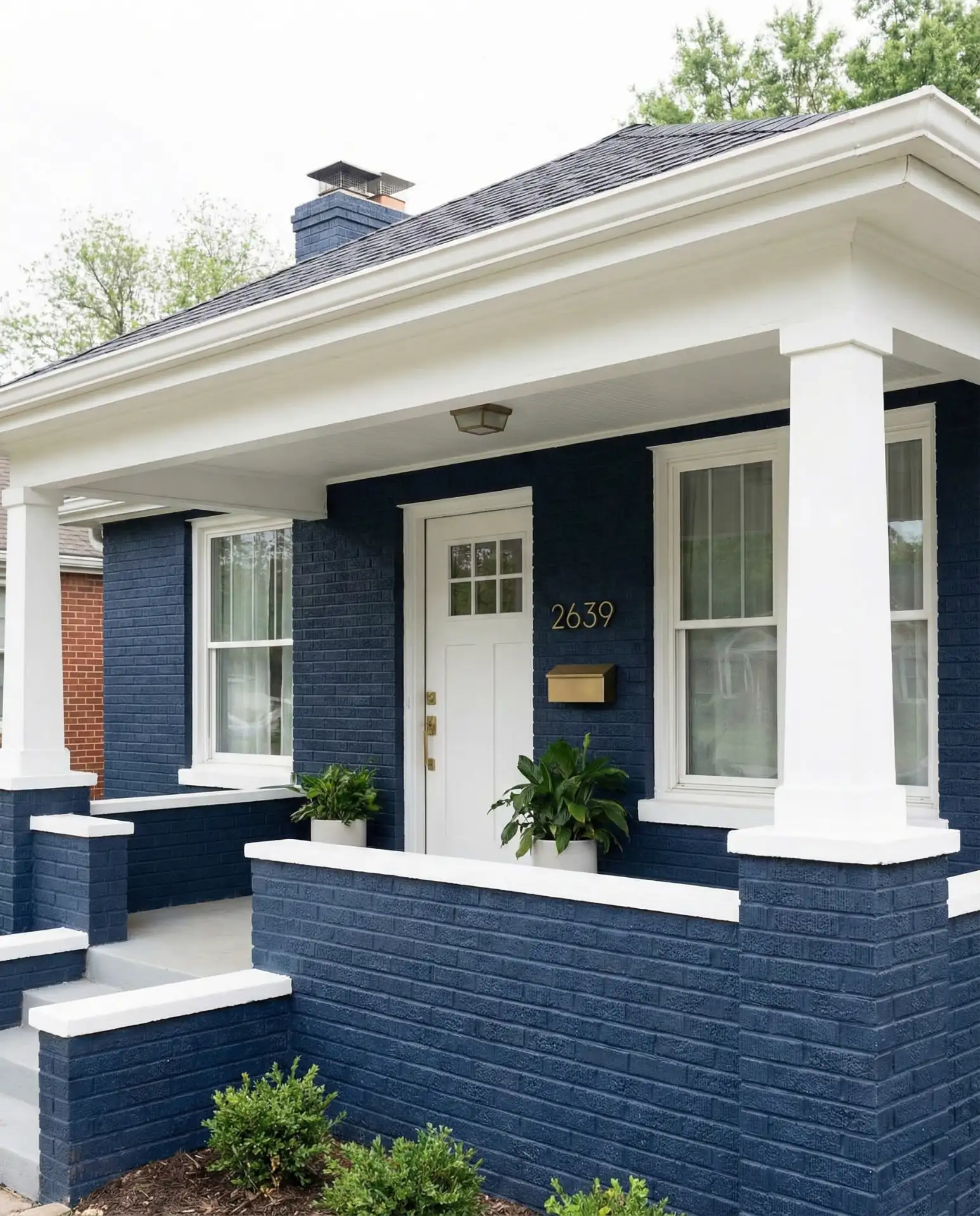
Expert commentary suggests that if you’re going to paint brick, commit fully—partial or poorly executed paint jobs look worse than leaving brick alone. Budget fifteen to twenty dollars per square foot for proper surface preparation, priming, and two coats of quality masonry paint. The investment pays off in curb appeal, but understand that painting brick is essentially permanent; removing paint later is extremely difficult and often damages the underlying masonry. Make this choice with long-term commitment in mind, not as a trendy experiment.
19. Mixed Material Contemporary Facade
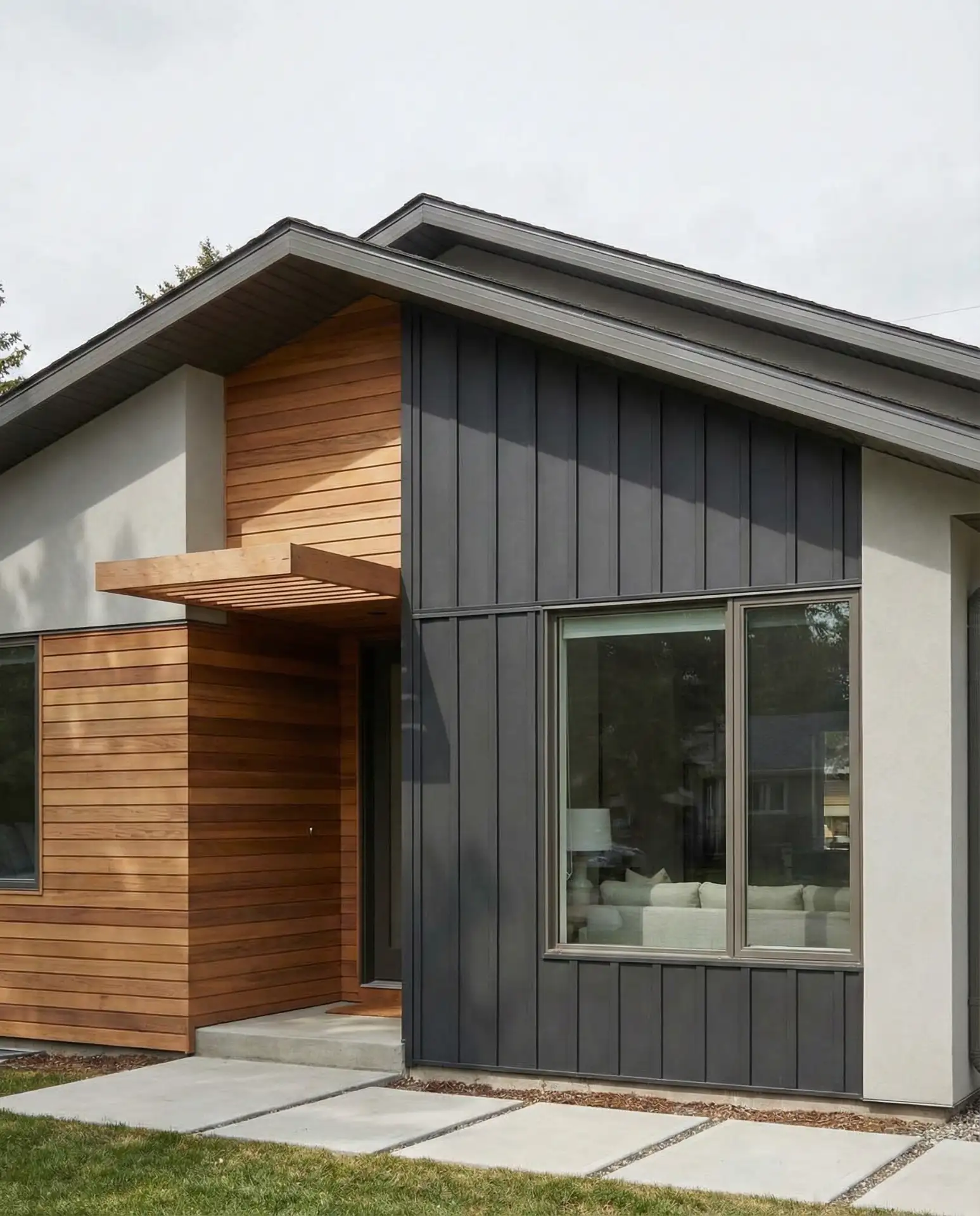
Combining siding types—horizontal lap siding with board-and-batten, stucco with wood panels—adds visual complexity that transforms simple bungalow boxes into architecturally interesting compositions. This modern strategy typically zones materials by function or geometry, perhaps using vertical siding on a projecting bay and horizontal on recessed areas. The key is maintaining clear boundaries and intentional proportions rather than arbitrary patchwork that looks indecisive. 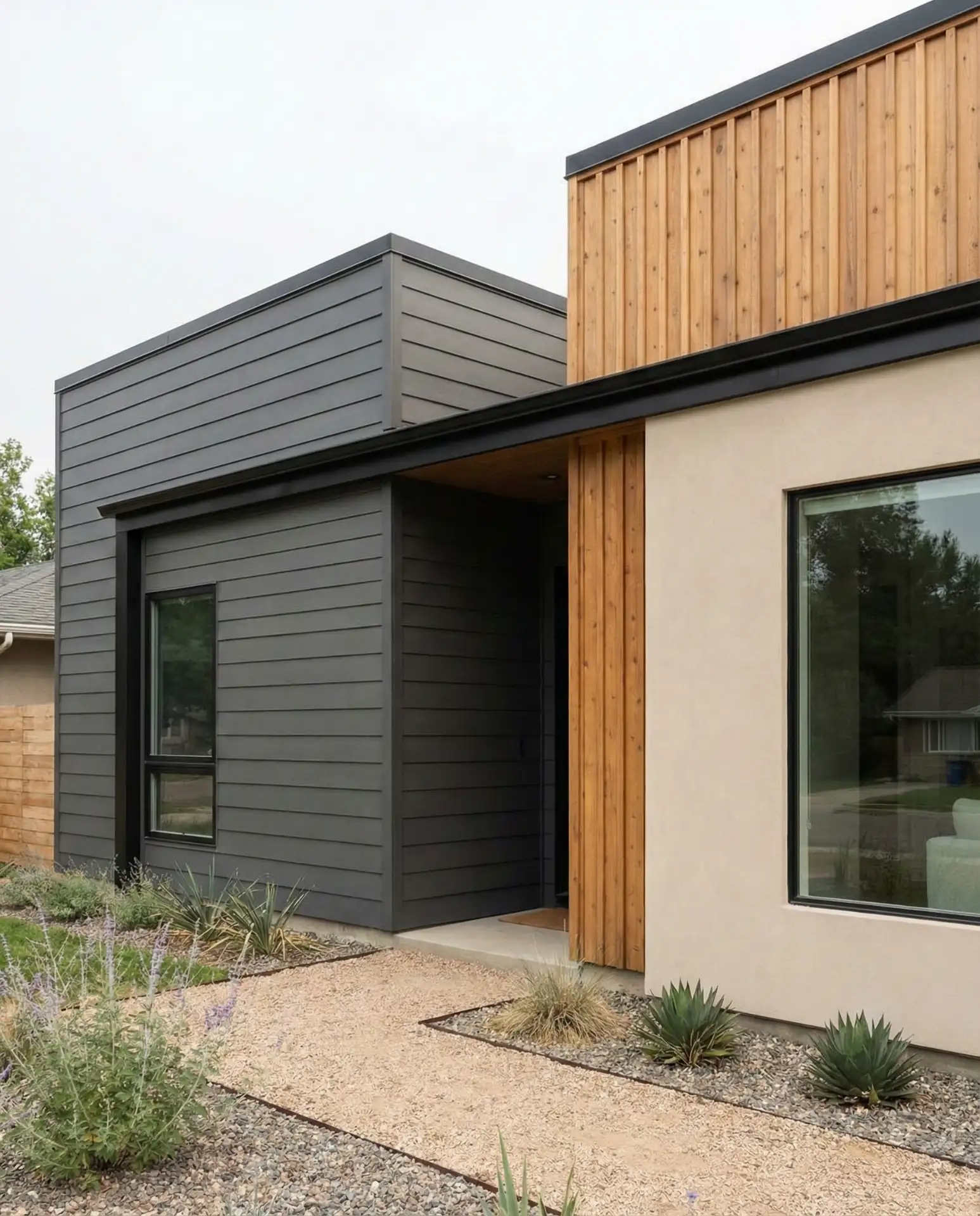
Common mistakes include using too many materials or creating transitions in awkward locations that fight rather than follow the home’s structure. Limit yourself to two or a maximum of three exterior materials plus trim. A designer in Austin noted that the most successful mixed-material projects use one dominant material covering at least sixty percent of the facade, with accent materials highlighting specific architectural features. This creates hierarchy and coherence rather than visual competition between equally weighted surfaces.
20. Farmhouse-Inspired White and Wood
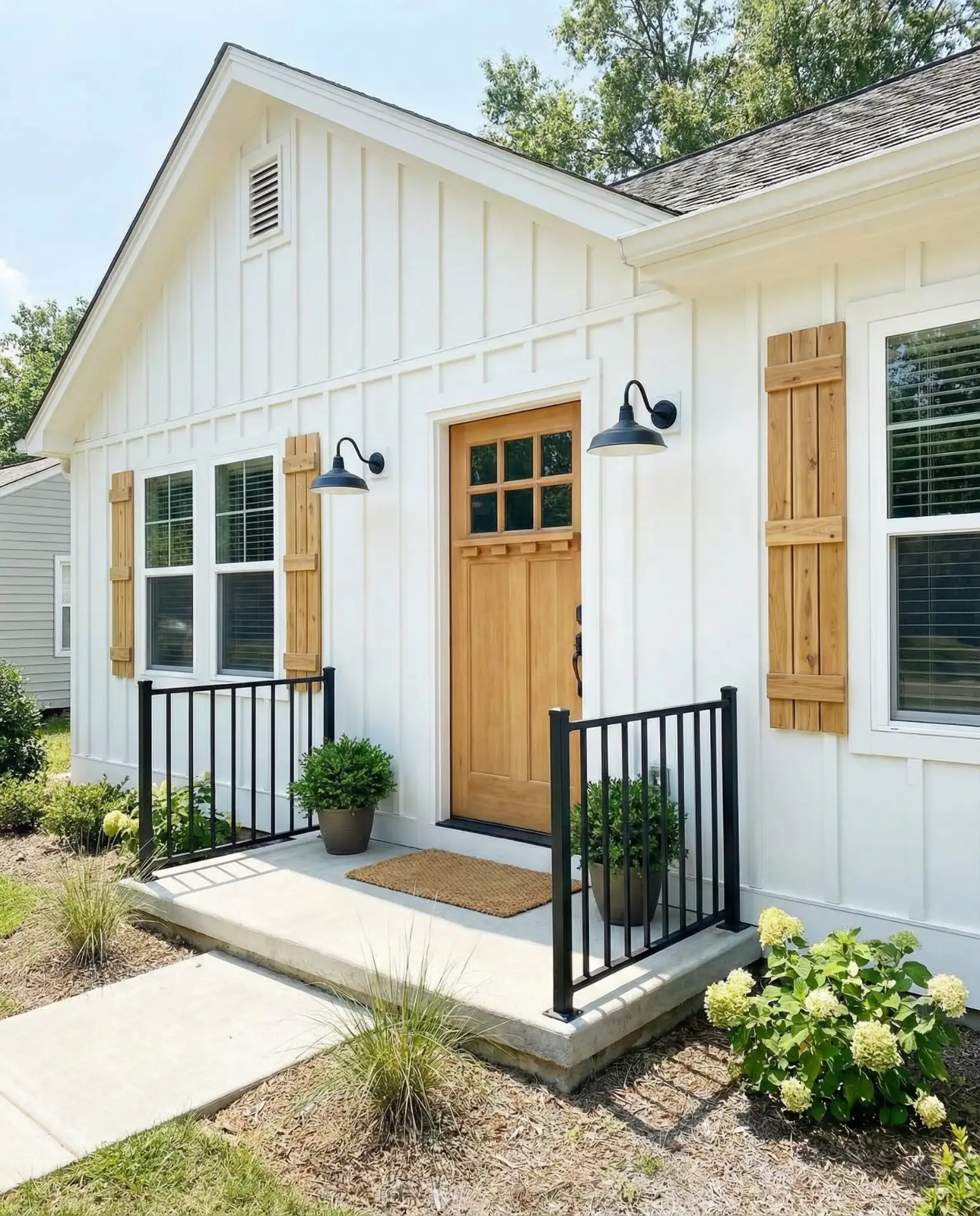
The modern farmhouse trend translates beautifully to bungalows through white-painted siding combined with natural wood accents on doors, shutters, and porch elements. This approachable design feels fresh and clean while maintaining warmth through natural material contrast. Black metal details—railings, light fixtures, and house numbers—provide punctuation that keeps the palette from feeling too soft or suburban-bland. 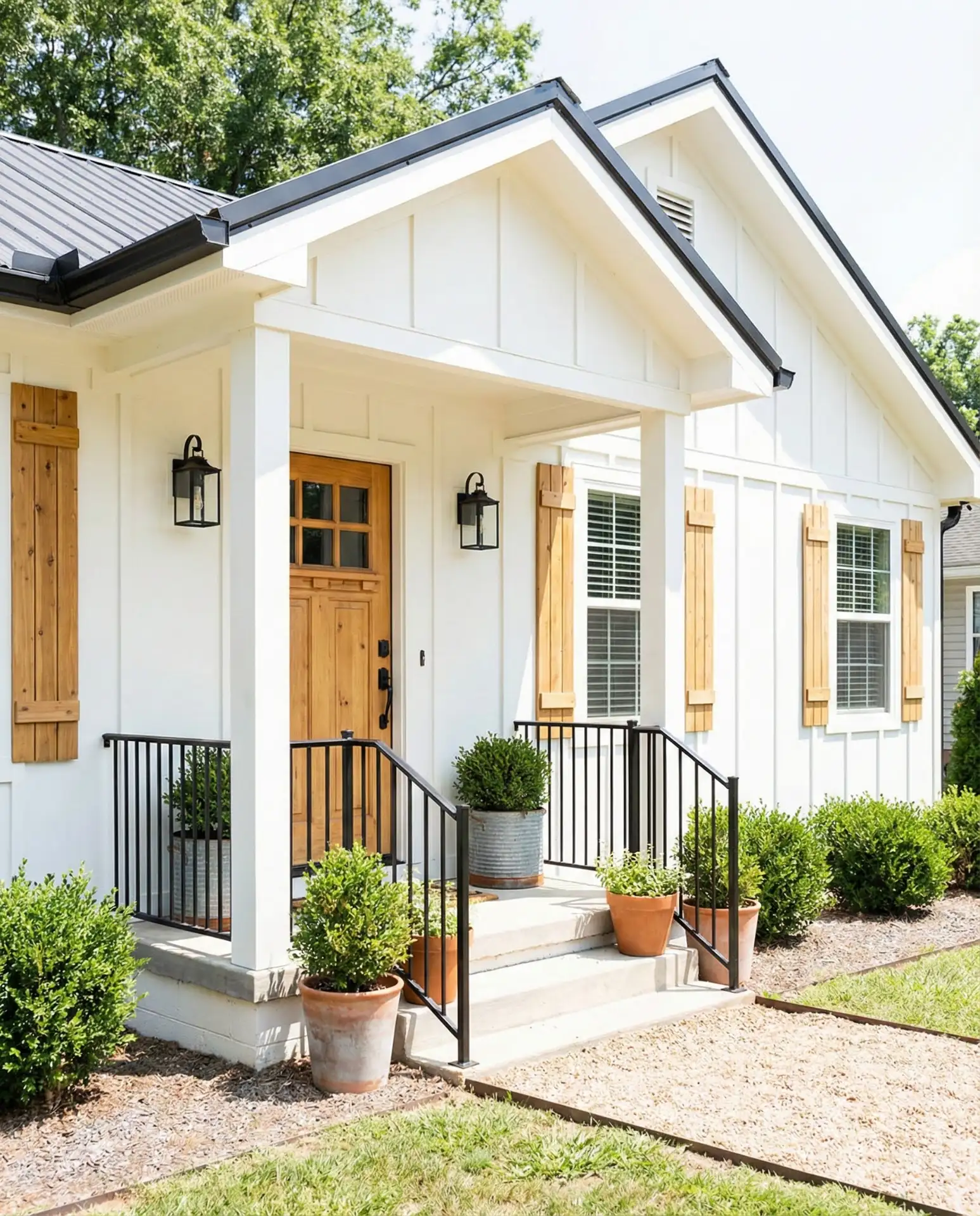
In rural and suburban settings across the Midwest and South, this aesthetic dominates new construction and renovations because it feels both traditional and current. The practical consideration is maintaining white siding in agricultural areas with dust and pollen—expect to power wash annually or accept a slightly weathered appearance. Many homeowners actually prefer the soft patina that develops, finding it more authentic to actual farmhouse living than pristine showroom white. The wood accents typically require refinishing every three to five years depending on sun exposure and climate.
21. Terra Cotta and Cream Mediterranean
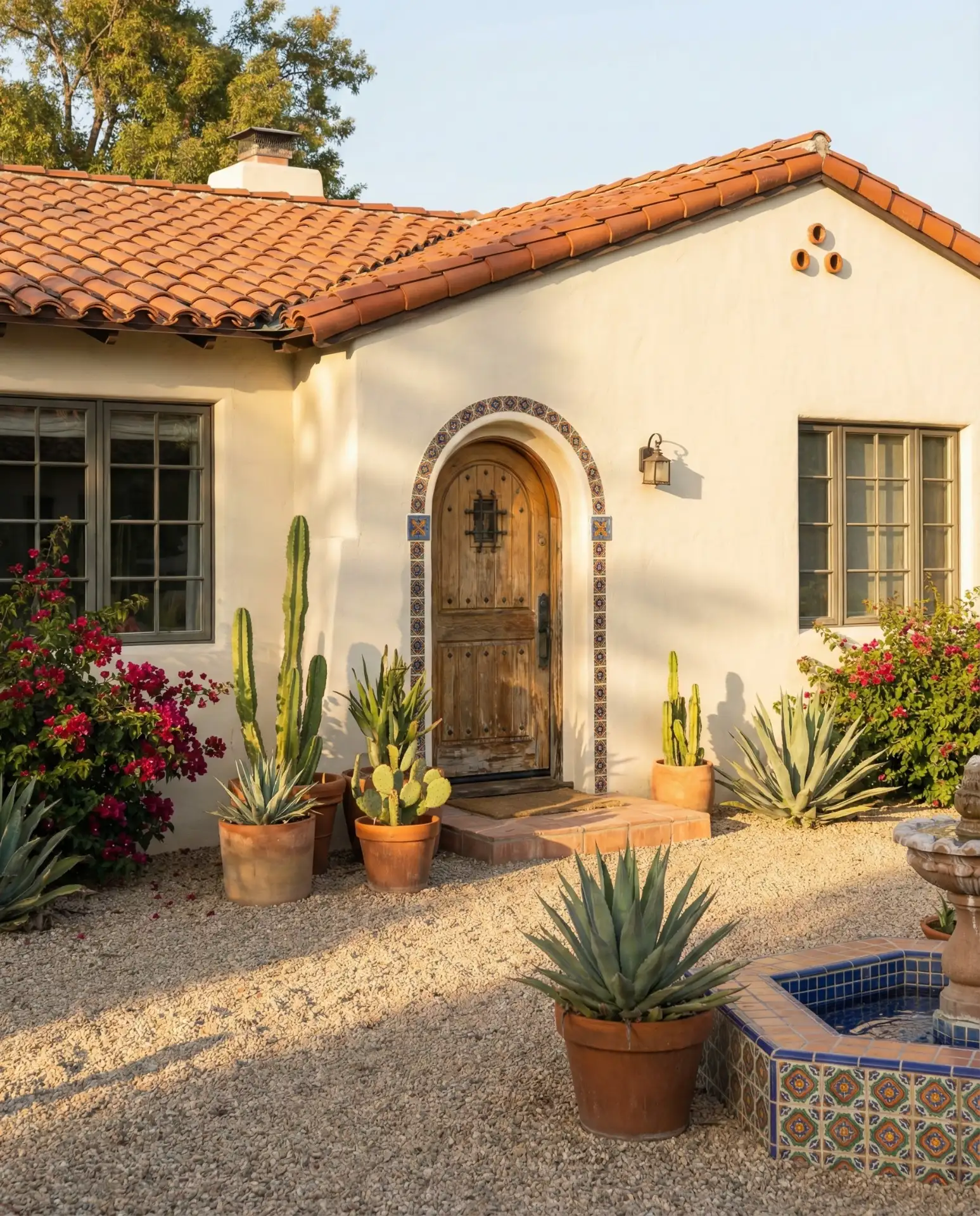
Warm terra cotta roofing paired with cream stucco walls gives bungalows a Mediterranean character that works beautifully in California, Arizona, and other warm climates. This design direction often includes arched openings, decorative tile accents, and lush courtyard gardens that enhance the Southern European connection. The color palette—warm ochres, soft terracottas, and sun-bleached creams—reflects intense sunlight beautifully and ages gracefully in dry climates. 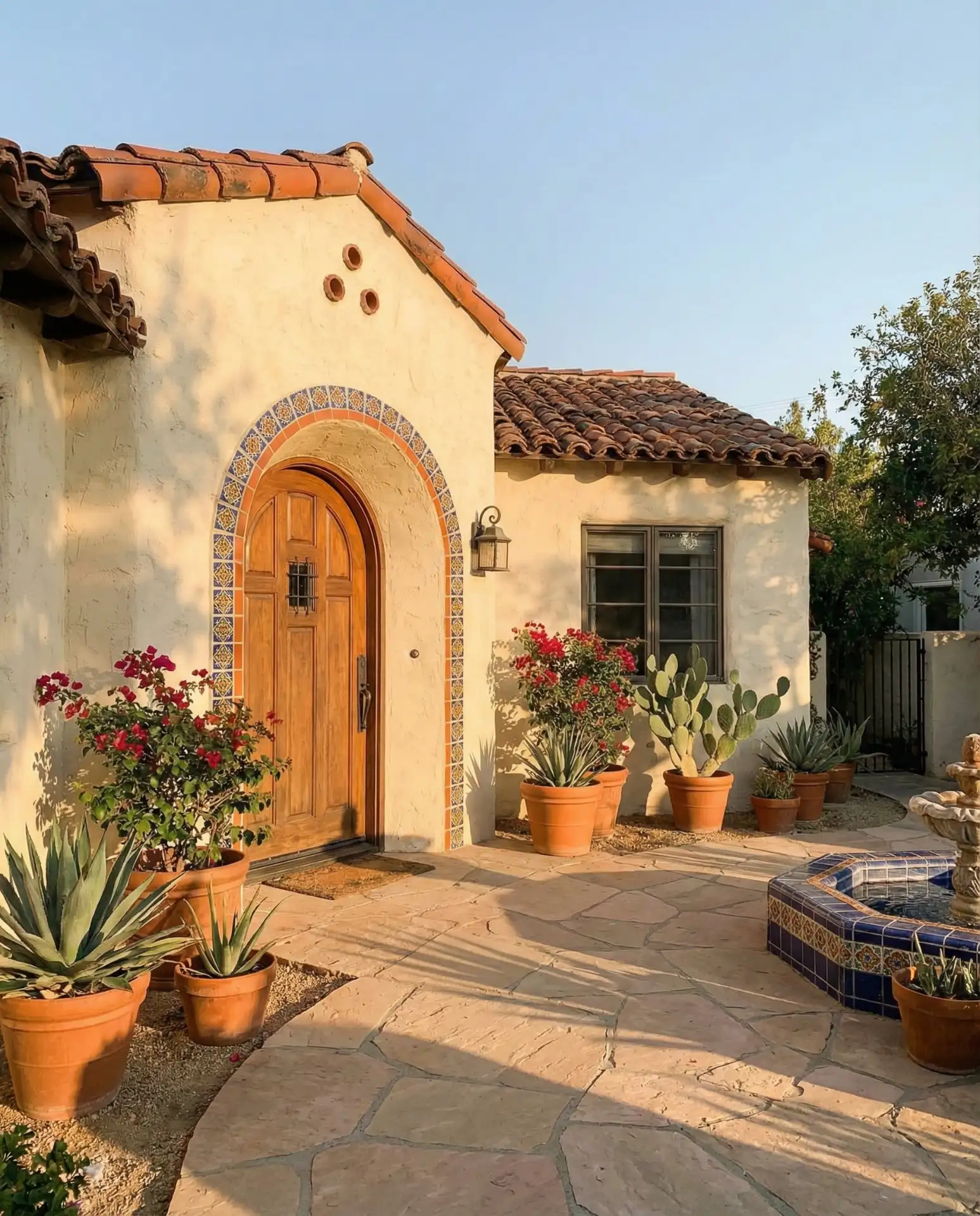
This aesthetic thrives in neighborhoods with Spanish Colonial or Mission Revival architecture, where it contributes to cohesive streetscapes rather than standing out awkwardly. The tile roof represents a significant investment—expect to pay three to five times more than composition shingles—but the longevity is equally impressive, with quality clay tiles lasting fifty years or more. In fire-prone regions of California, clay tile roofing also provides superior fire resistance compared to standard roofing materials, which can lower insurance premiums enough to partially offset the installation cost over time.
Conclusion
These exterior ideas demonstrate that bungalows remain endlessly adaptable to personal style, regional context, and contemporary living requirements. Whether you’re drawn to authentic period restoration or bold modern transformation, the key is making intentional choices that respect your home’s fundamental proportions and character while expressing your own aesthetic vision. We’d love to hear which approach resonates most with your plans—share your thoughts or your own bungalow transformation stories in the comments below.