Bunk beds have come a long way from the bare-bones frames crowding college dorms and summer camps. In 2026, they’re one of the most searched home topics on Pinterest—and for good reason. Whether you’re outfitting a kid’s room, making the most of a studio apartment, or designing a dreamy cabin retreat, there’s a bunk bed configuration that fits your space and your life. This roundup pulls together of the best bunk bed ideas circulating right now, from clever built-ins to bohemian loft setups, so you can find the look (and the layout) that actually works for you.
1. Built-In Bunk Beds That Look Like They Came With the House
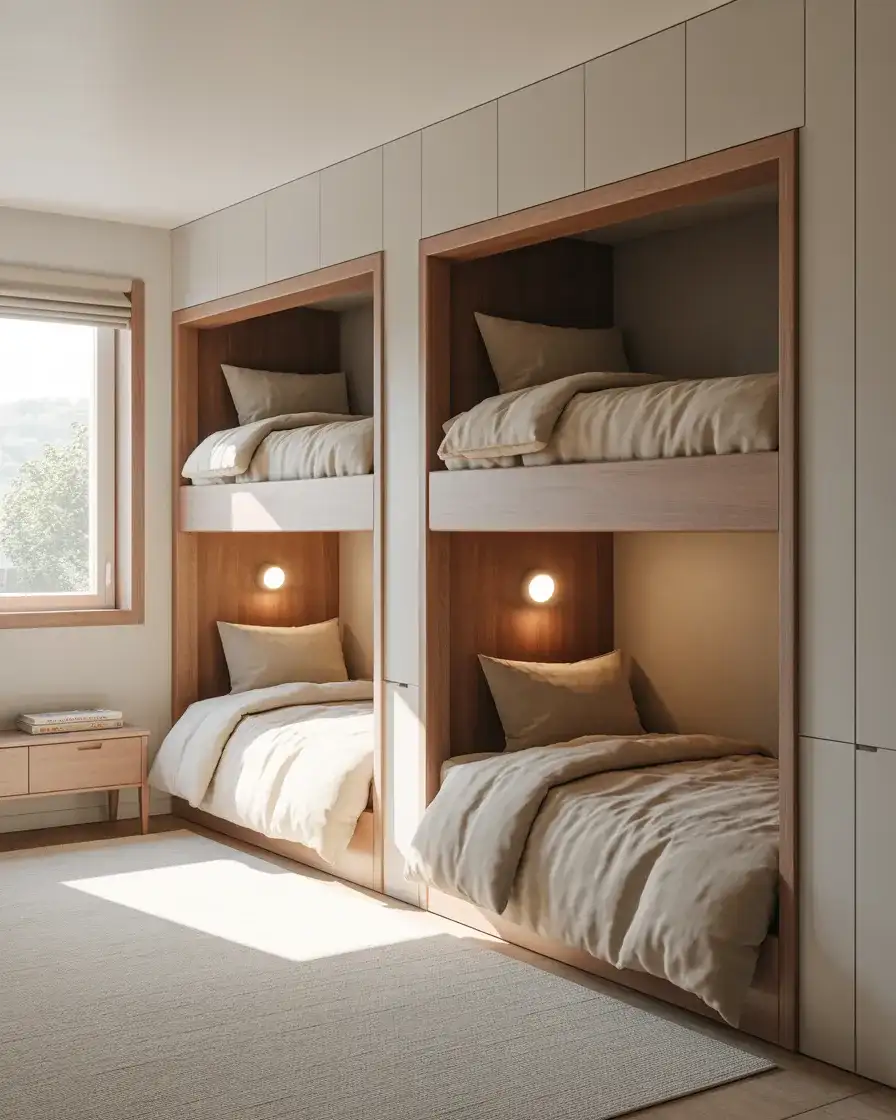
There’s something almost magical about a built-in bunk that looks less like furniture and more like architecture. These are the beds you see in craftsman bungalows and Scandinavian-inspired renovations—framed into the wall, finished with the same trim as the rest of the room, and topped with reading lights tucked neatly into the woodwork. They’re a dream for small rooms because they eliminate the visual clutter of exposed bed frames and free up floor space that a freestanding unit would swallow whole.
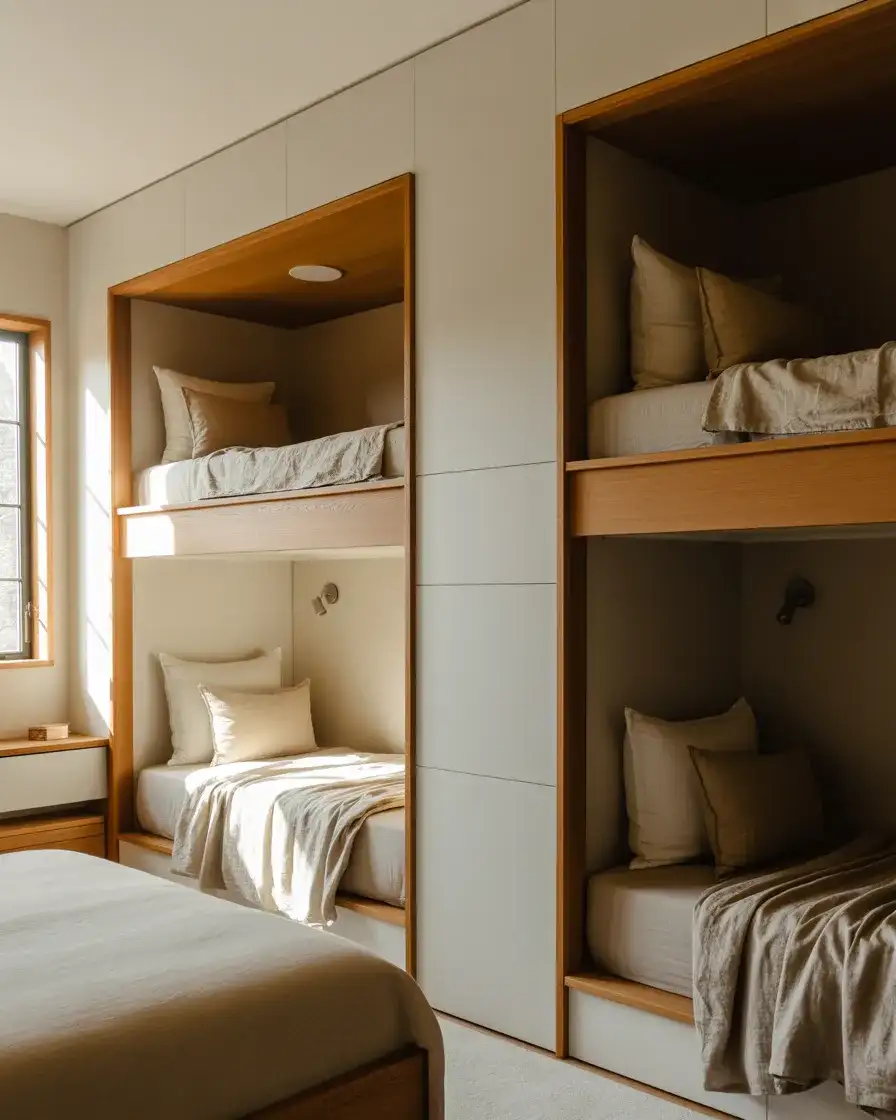
The smartest built-ins include drawers beneath the lower bed and cubbies along the sides—storage solutions that feel intentional rather than tacked on. If you’re renovating, ask your contractor about framing the bunks directly into a wall cavity. The result is a space that looks like it was planned from the very beginning, not like you squeezed furniture into an afterthought corner.
2. Triple Bunk Beds for Big Families With Small Square Footage
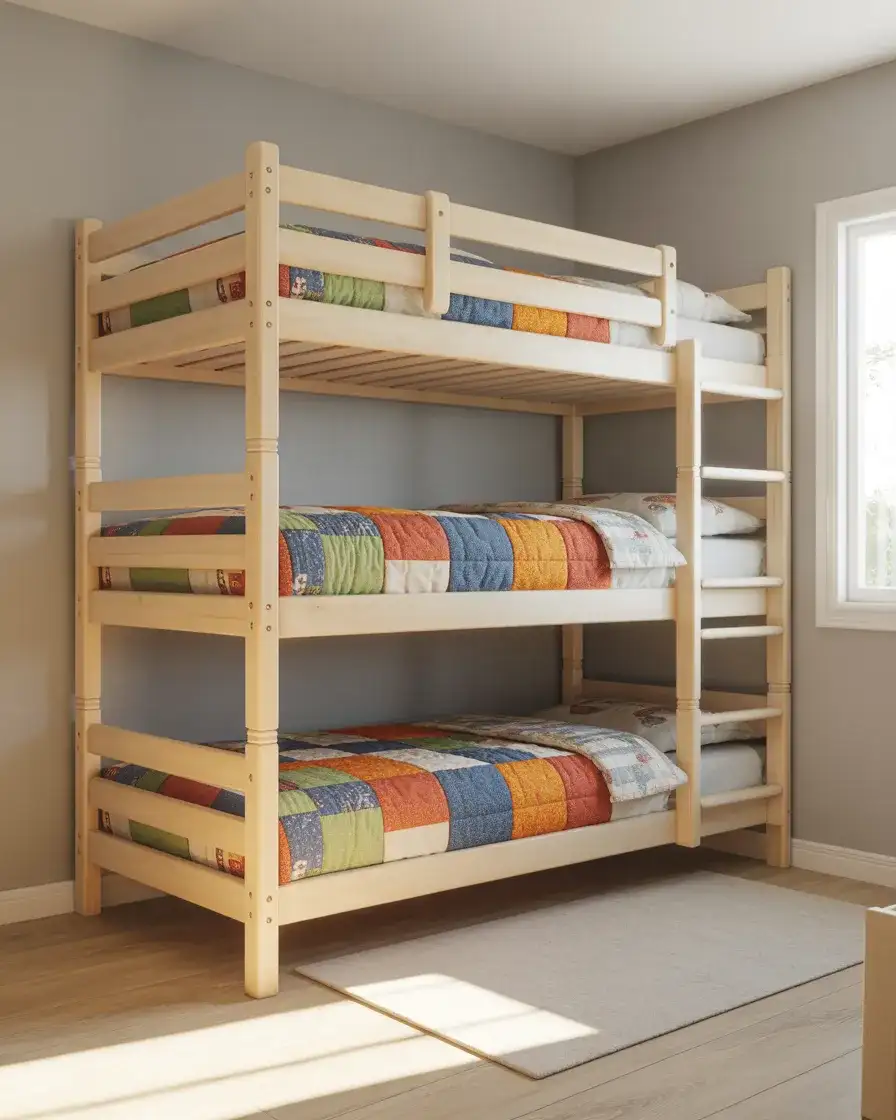
When three kids share a room, the math gets interesting fast. A triple bunk bed—three sleeping levels stacked or arranged in an L—solves the space equation beautifully. These beds work especially well in narrow rooms where a traditional twin-over-twin setup would only accommodate two children and leave zero space for a dresser. Designs for small bedrooms have pushed bunk manufacturers to get creative, and the results are impressive: triple units with integrated ladders, side rails, and even built-in stairs that double as drawers.
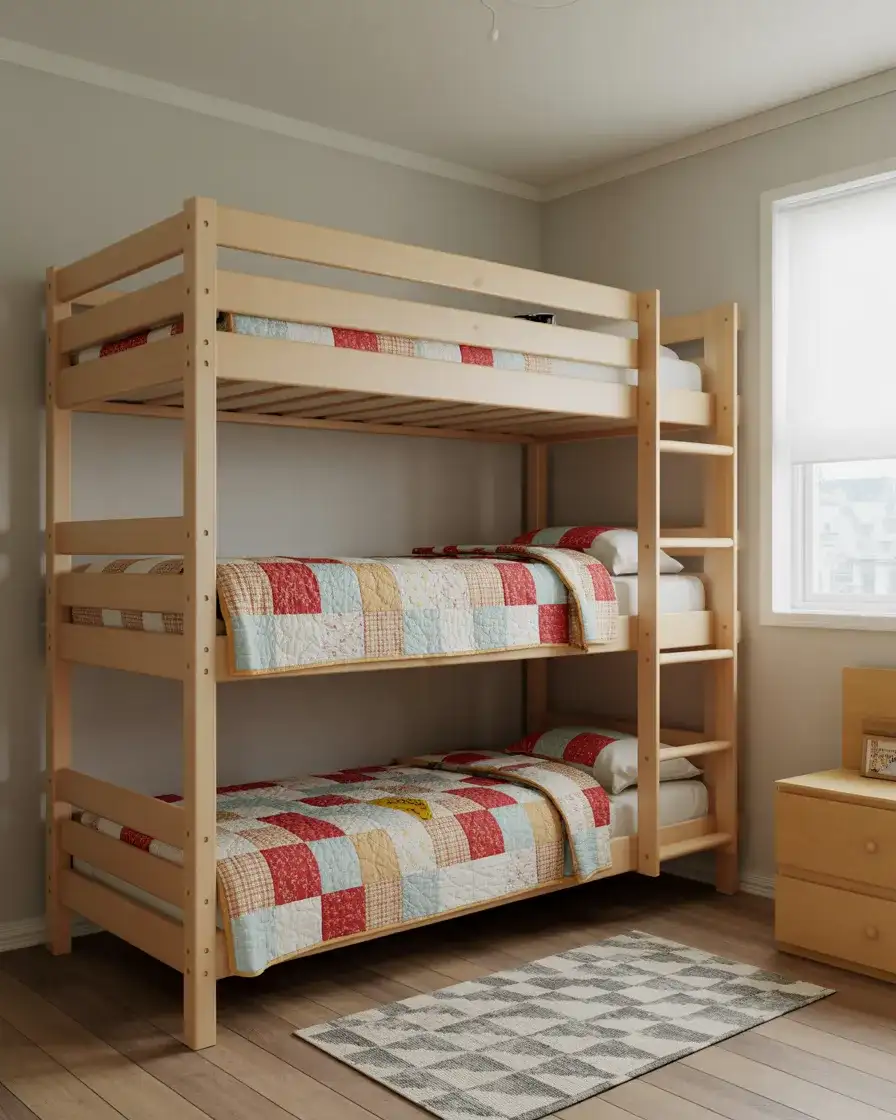
One thing parents often overlook: ceiling height matters enormously with triple bunks. You need at least eight feet of clearance for a three-level unit to feel safe and comfortable, and ideally nine or ten feet so the top bunk doesn’t feel like a coffin. Measure twice—and account for mattress thickness—before you order anything.
3. Bunk Beds With a Slide for Kids Who Live for the Drama
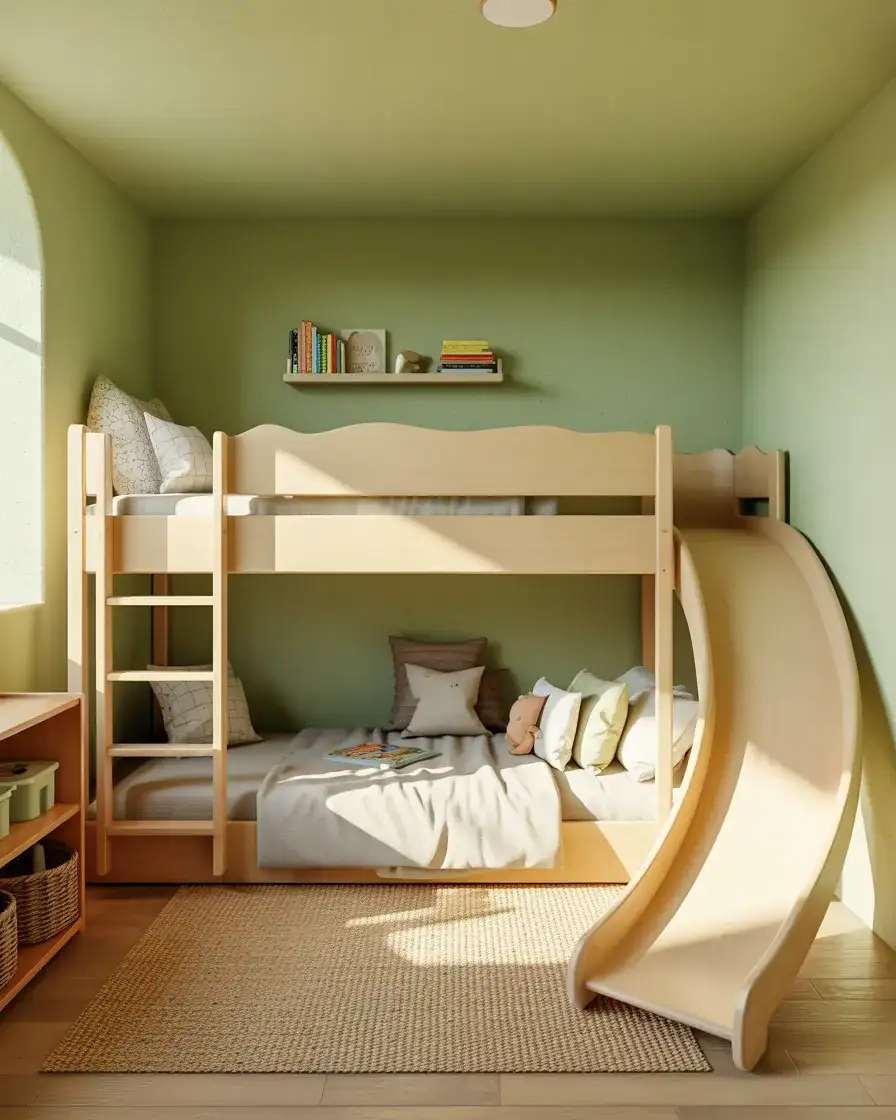
If you’ve ever had a seven-year-old beg you for a slide on their bed, you already know there’s no talking them out of it. The good news is that modern bunk beds with slides have gotten genuinely stylish—they’re no longer the garish plastic castle structures of early 2000s big-box stores. Today’s versions come in natural wood tones with curved, low-profile slides that actually complement a well-designed kids’ room. Some even include a small fireman’s pole as an alternative descent option, which is honestly just fun for everyone.
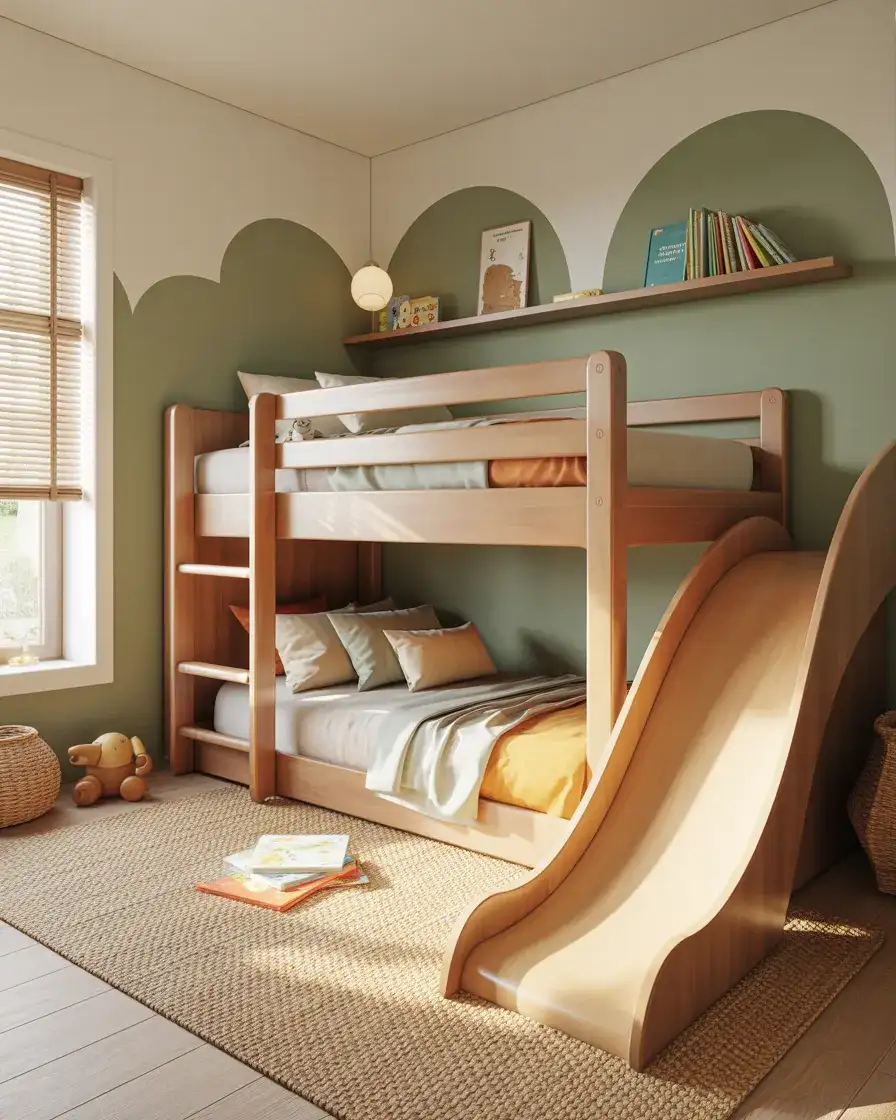
Think of the slide as an investment in sleep hygiene—no joke. Kids who are genuinely excited about bedtime tend to go to bed more willingly. One family in Austin documented on their blog that their three kids’ bedtime resistance dropped significantly after they installed a slide bunk. Whether that translates to your household is a mystery, but it’s a compelling data point from real homeowner behavior.
4. Aesthetic Bunk Beds That Look Straight Off a Mood Board
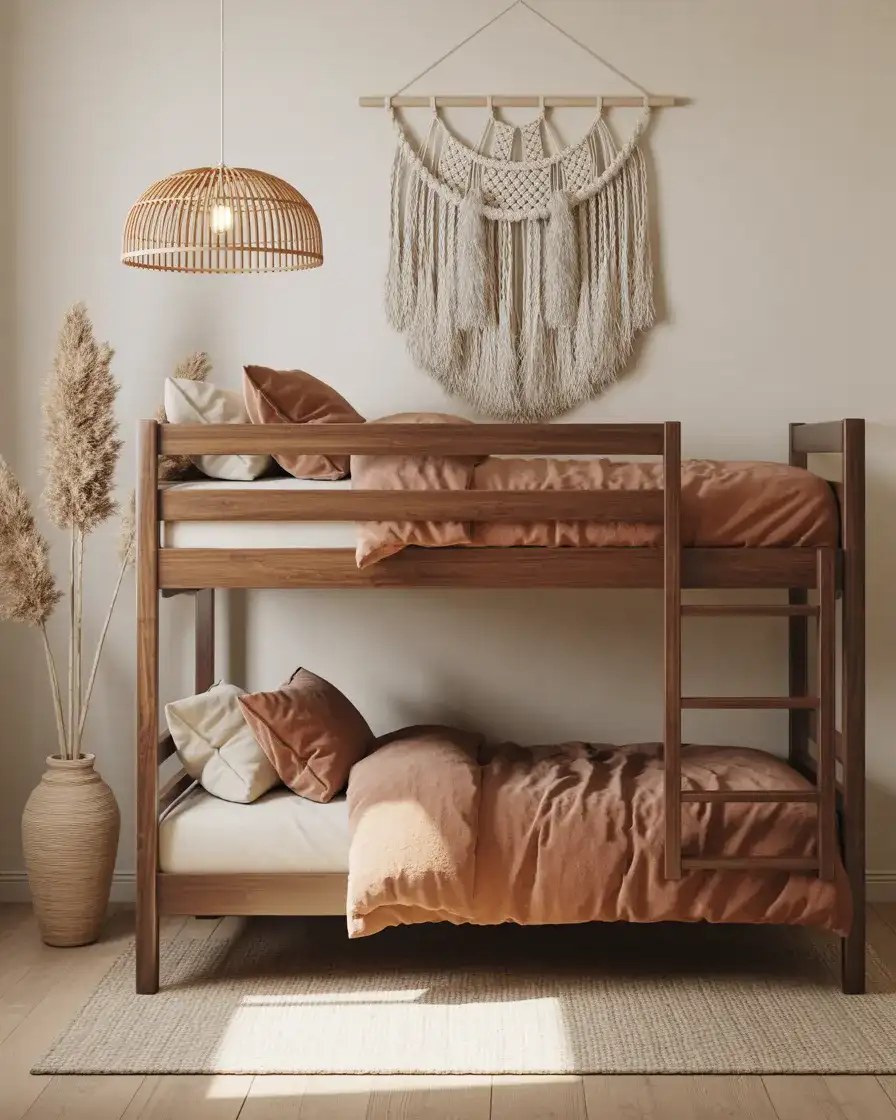
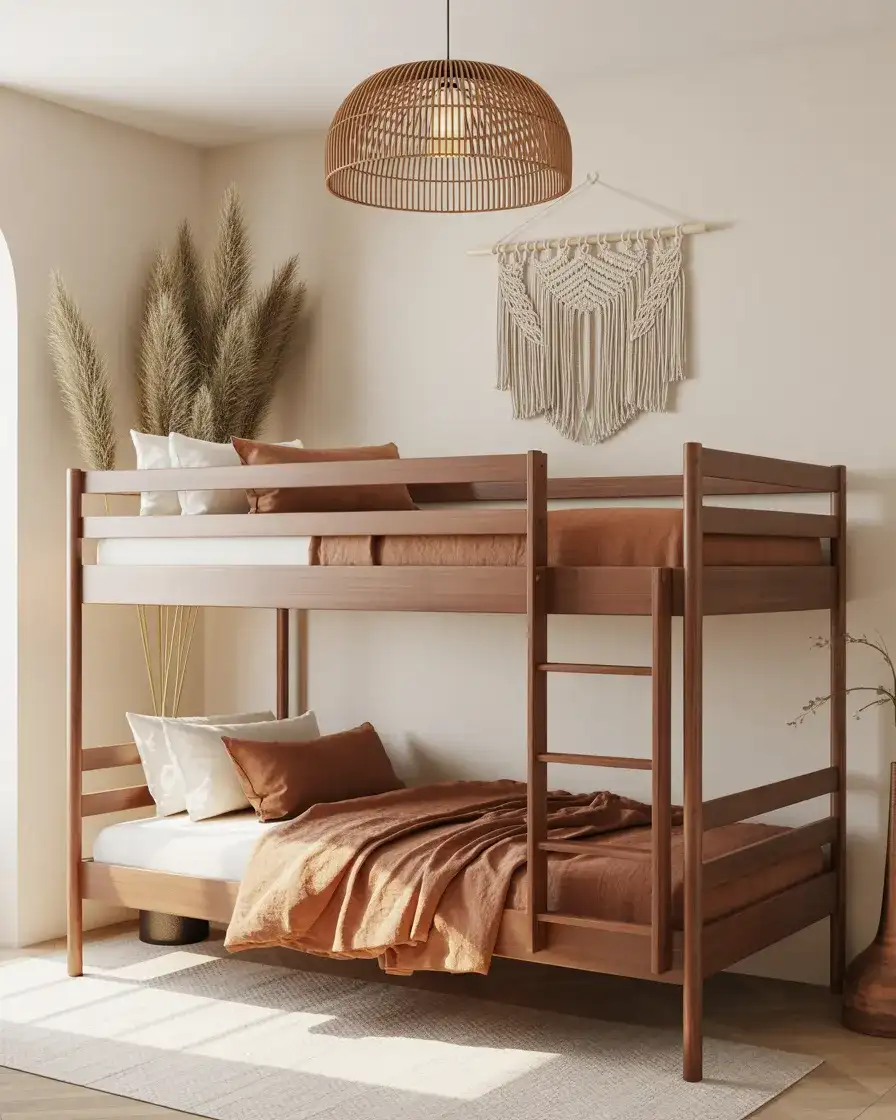
The word “aesthetic” gets thrown around a lot, but when it comes to bunk beds, it means something specific: a setup so visually cohesive it could anchor an entire room’s design. We’re talking terracotta-toned linen bedding layered over warm walnut frames, rattan pendant lights overhead, and a macramé wall hanging peeking out from behind the upper bunk. These beds earn their Pinterest saves. The key is choosing a palette and sticking to it—earthy neutrals, warm whites, or deep moodboard tones—and then treating the bunk as furniture worth styling, not just a place to sleep.
Interior stylists recommend approaching the bunk bed like you would a sofa: it’s the room’s visual anchor, so it should be the first piece you select. Build your color story outward from there. Start with the bedding (it’s the easiest thing to change if you don’t love it), then move on to lighting, rugs, and wall art. The bunk itself can stay neutral while the accessories do all the personality work.
5. IKEA Bunk Bed Hacks That Look Way More Expensive Than They Are
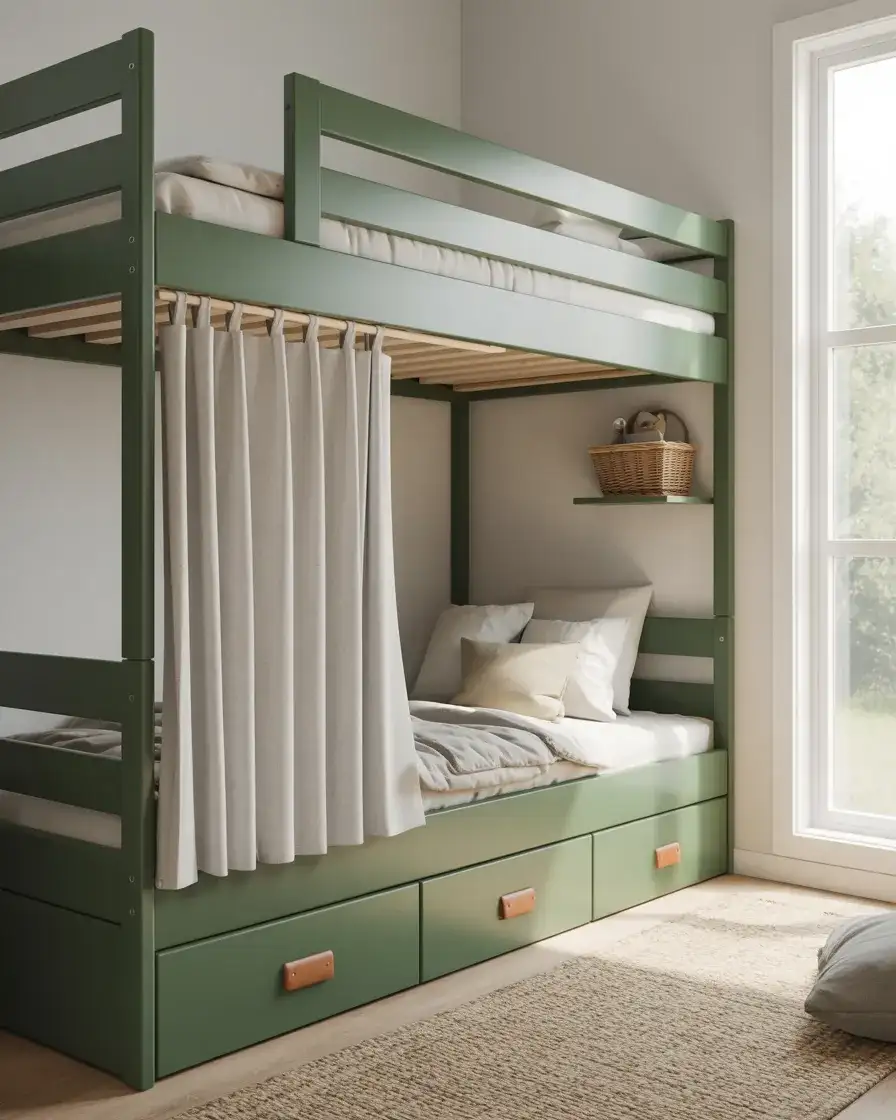
The IKEA KURA and MYDAL bunk beds have been Pinterest staples for years, and they’re only getting more popular as DIY culture refuses to die. What makes them endlessly hackable is their simplicity—plain, paintable surfaces and modular configurations that respond beautifully to a little creativity and maybe fifty dollars’ worth of extras from the hardware store. A fresh coat of deep forest green, some leather drawer pulls, and a set of linen curtains on tension rods transform a basic flat-pack bed into something that looks like it came from a boutique children’s furniture shop.
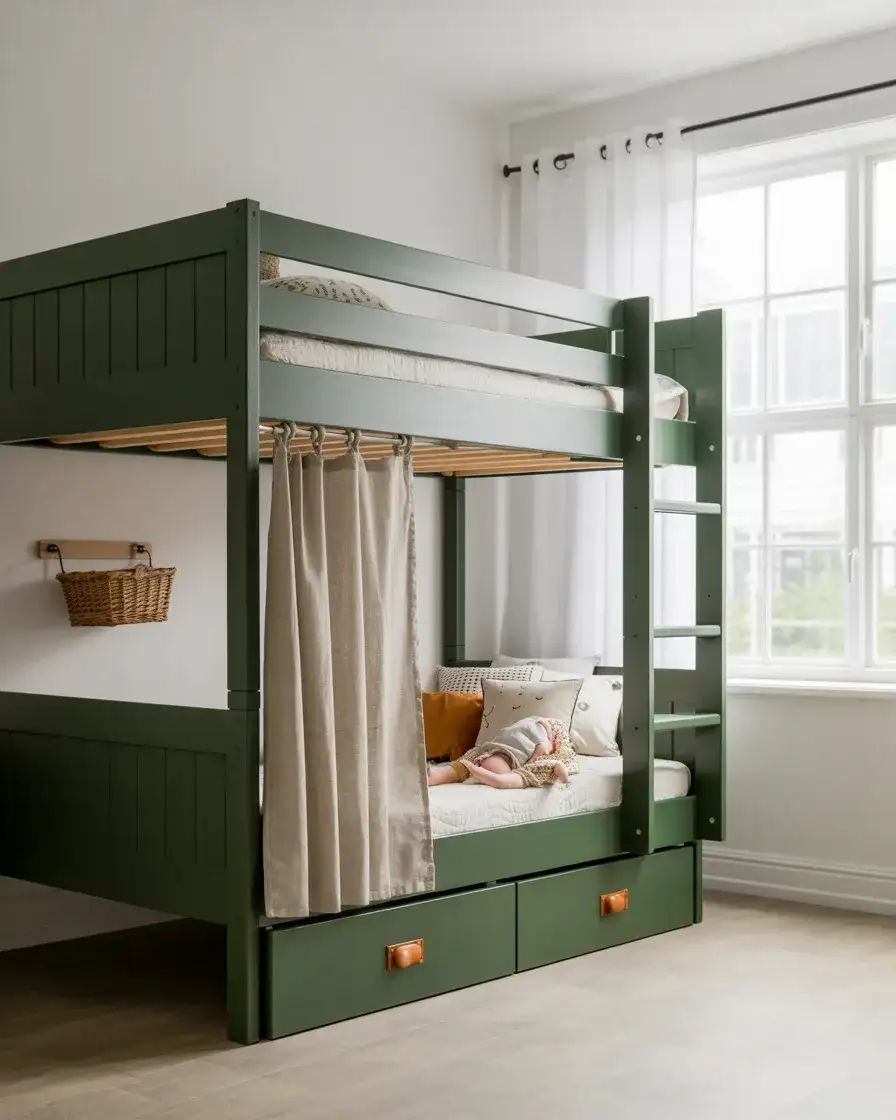
From a budget angle, it’s hard to beat the IKEA base price—you’re typically looking at under $300 for the frame, leaving plenty of room for customization. The most popular hacks right now include adding plywood backing panels painted in a contrasting color to create a built-in feel, hanging curtains on the lower bunk for a hideaway reading nook, and attaching clip-on reading lights from IKEA’s own accessories line for a cohesive, low-cost finish.
6. Bunk Beds With Curtains for a Little Privacy and a Lot of Charm
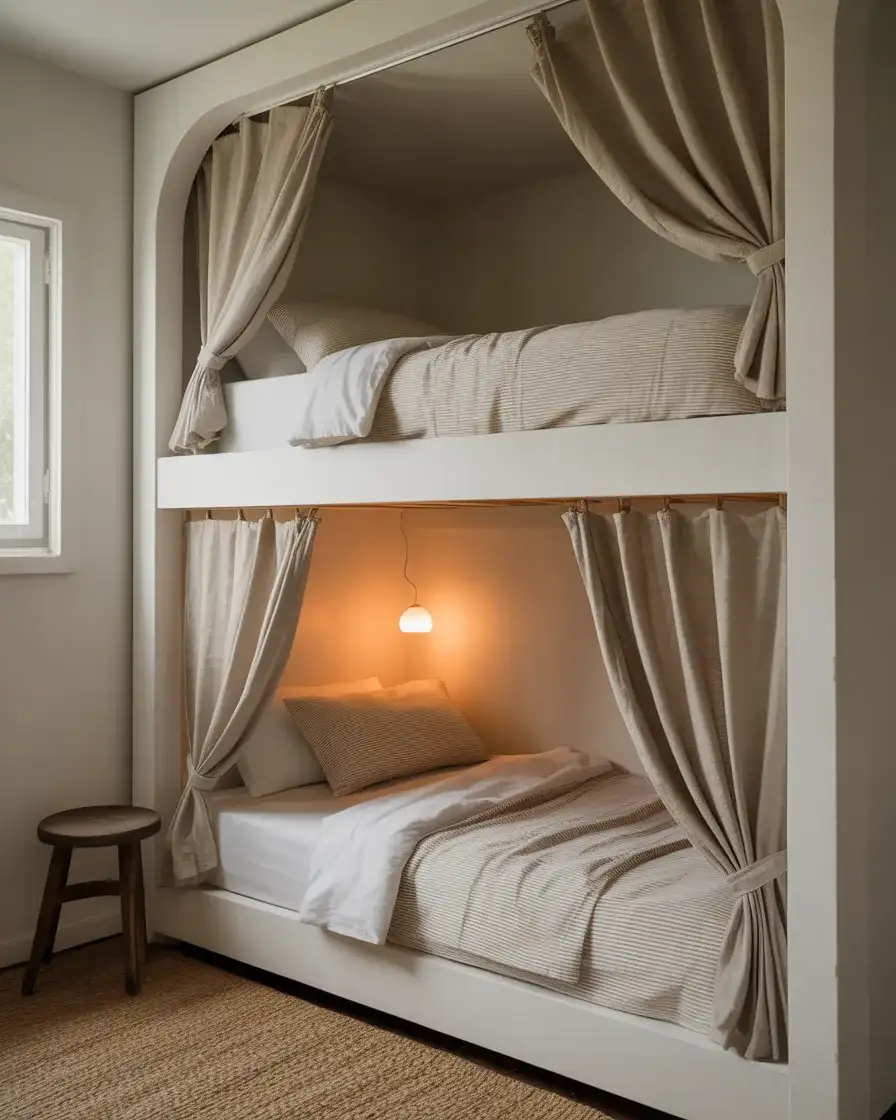
Privacy ideas for shared kids’ rooms often center around the bunk bed, and curtains are the most elegant solution on the market right now. A simple panel of linen or cotton velvet hung from a slim curtain rod—or even a taut bungee wire—gives each child a sense of their own enclosed space without the claustrophobia of a solid enclosure. These curtained bunks are especially popular in homes where siblings share a room but have meaningfully different sleep schedules, a real logistical challenge that curtains solve without drama or renovation.
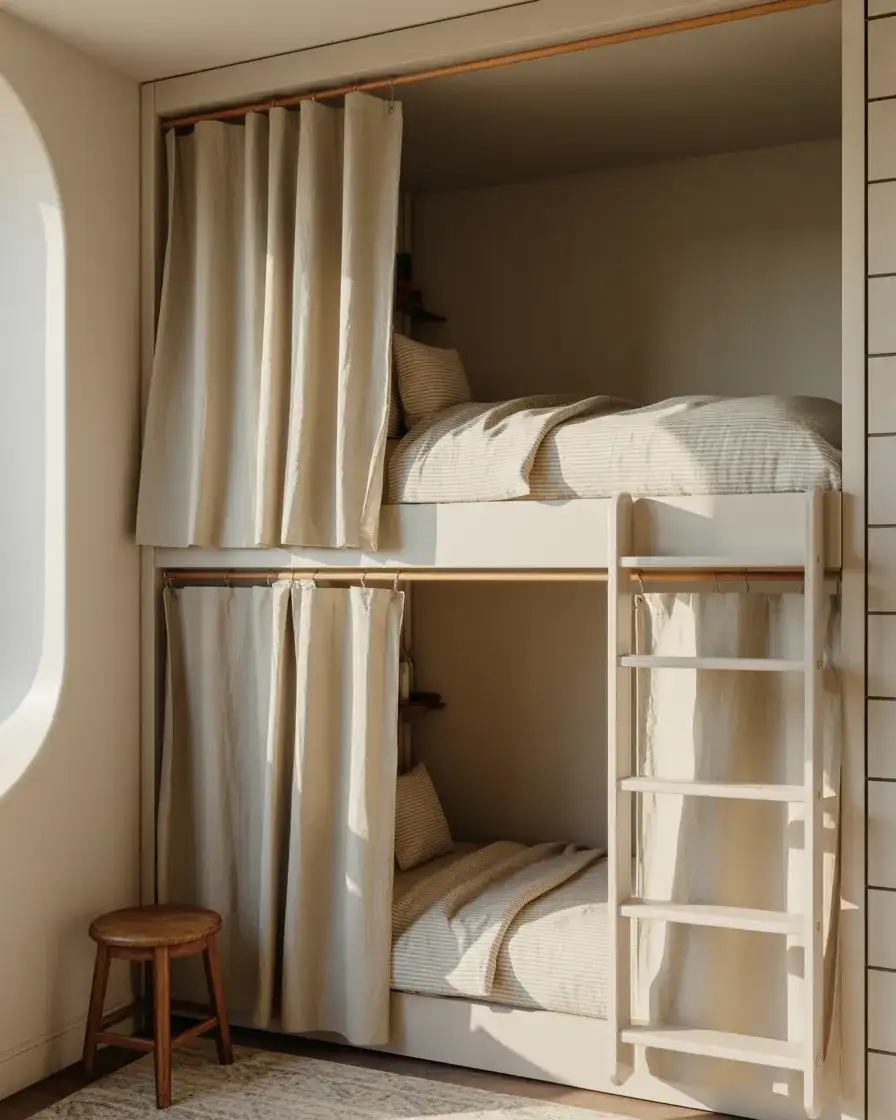
The most common mistake with bunk curtains? Going too heavy. Blackout curtains might seem like a great idea for light-sensitive sleepers, but they can make the lower bunk feel airless and small—especially in a room that doesn’t have great ventilation. A medium-weight linen or chambray panel lets a little light filter through while still providing that cozy, cave-like feeling kids are actually craving when they ask for curtains in the first place.
7. L-Shaped Bunk Beds That Do More With the Corner
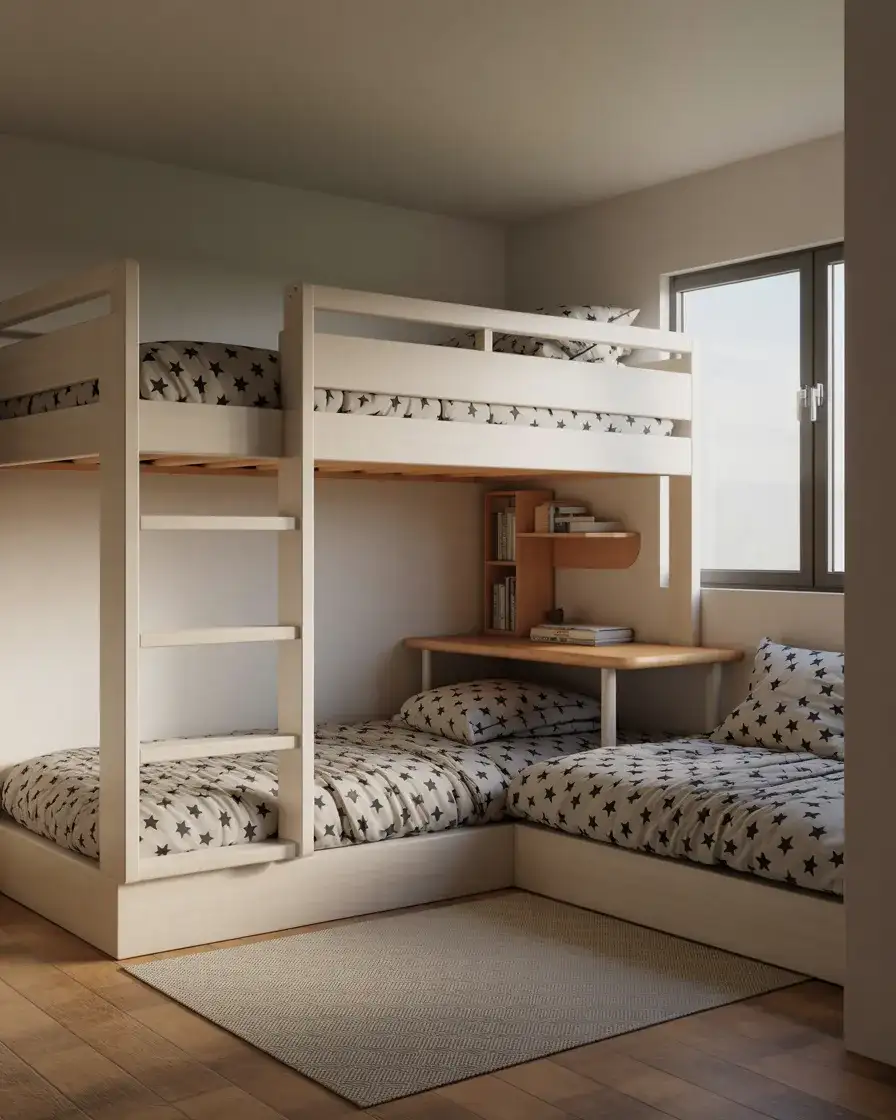
The L-shaped bunk—sometimes called a corner bunk—is having a serious moment right now, and it’s not hard to see why. Instead of stacking two beds directly above each other, the upper bunk sits perpendicular to the lower one, creating a natural alcove underneath that can be used for a desk, a reading chair, or just open floor space for playing. It’s one of the most versatile bunk configurations for a kids’ room, especially when you’re trying to carve out multiple functions from a single room without it feeling cluttered.
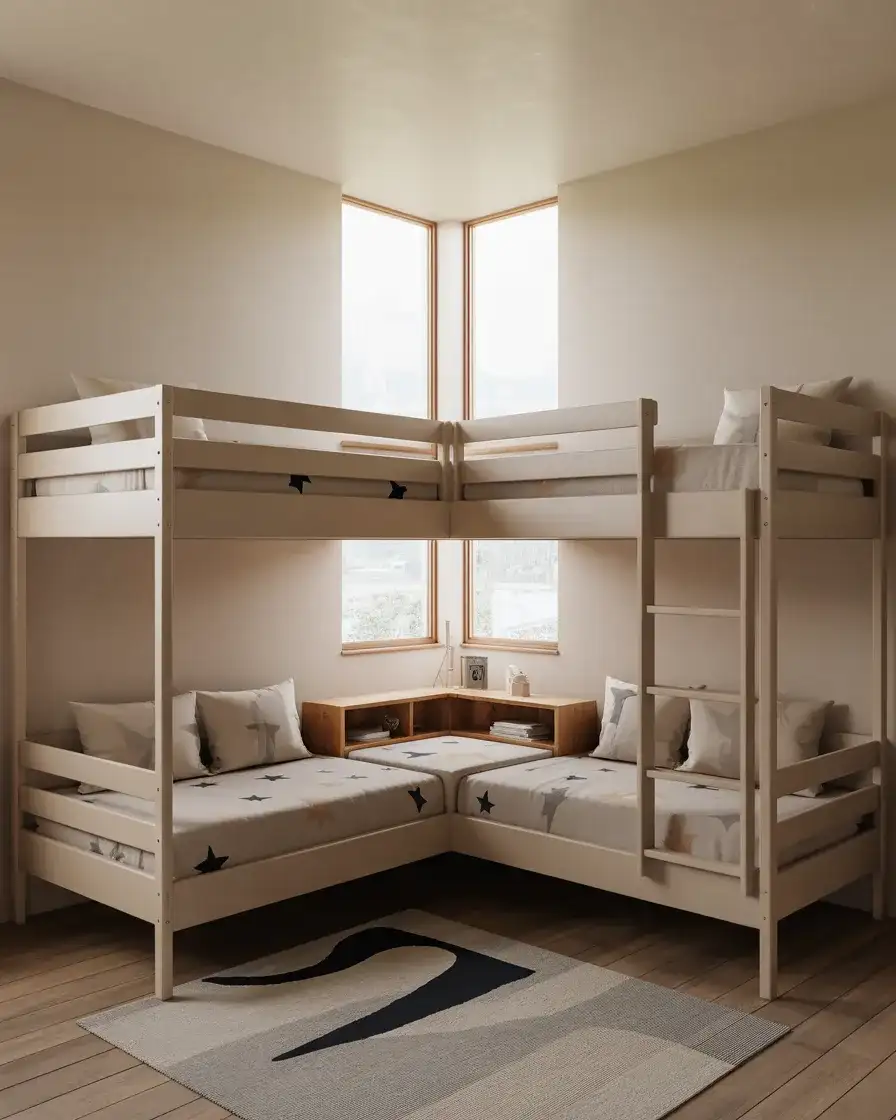
Where this style really shines is in square rooms, where the corner placement feels intentional rather than compromising. If you’re designing a room from scratch, a seasoned interior designer would tell you to position the L-shaped bunk in the corner furthest from the door—it anchors the room without blocking traffic flow, and it leaves the wall nearest the window open for a dresser or bookshelf where natural light can actually reach it.
8. Rustic Bunk Beds Built From Reclaimed Wood and Raw Character
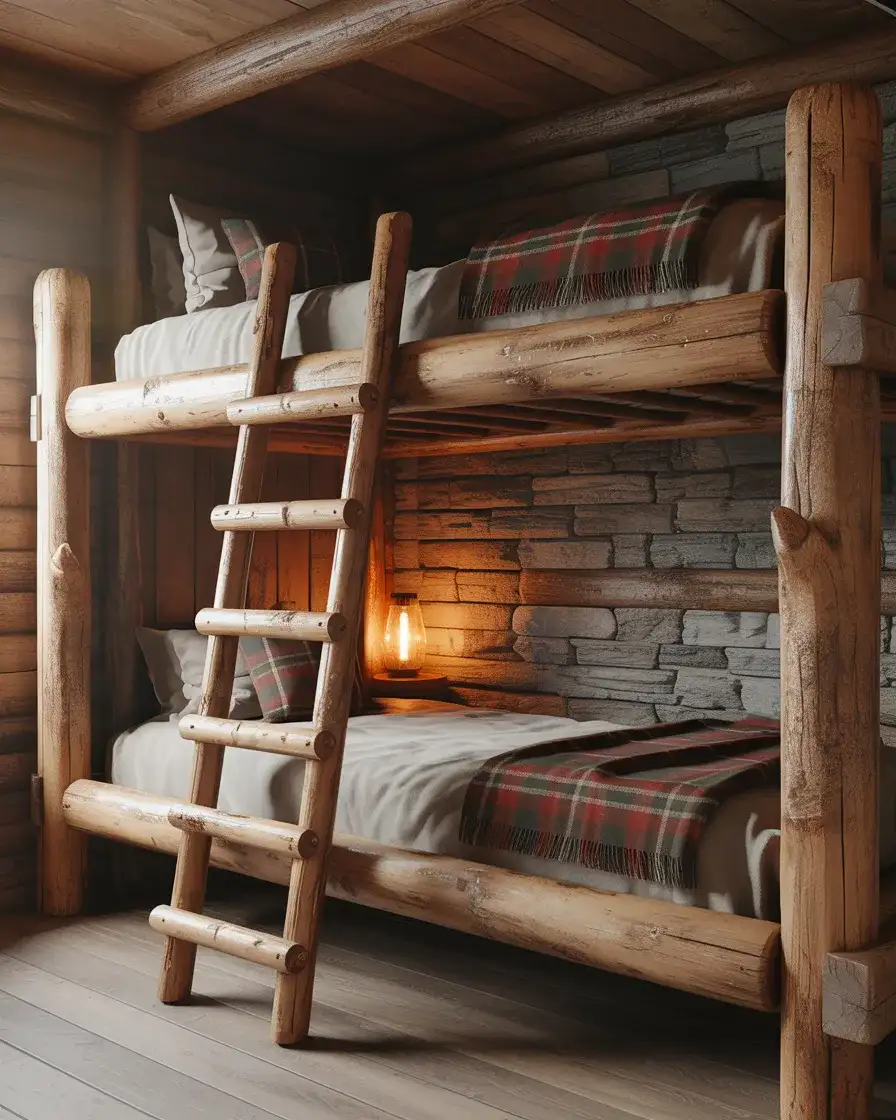
Rustic bunk beds tap into something deeply satisfying about the American relationship with natural materials. There’s a reason the reclaimed barn wood aesthetic never fully goes away—it carries a sense of history and warmth that no amount of smooth-cut IKEA pine can replicate. These beds show up everywhere from mountain cabin retreats in Colorado to farmhouse-style primaries in the rural South, and they’re increasingly finding their way into urban apartments whose owners are tired of everything looking so polished and interchangeable.
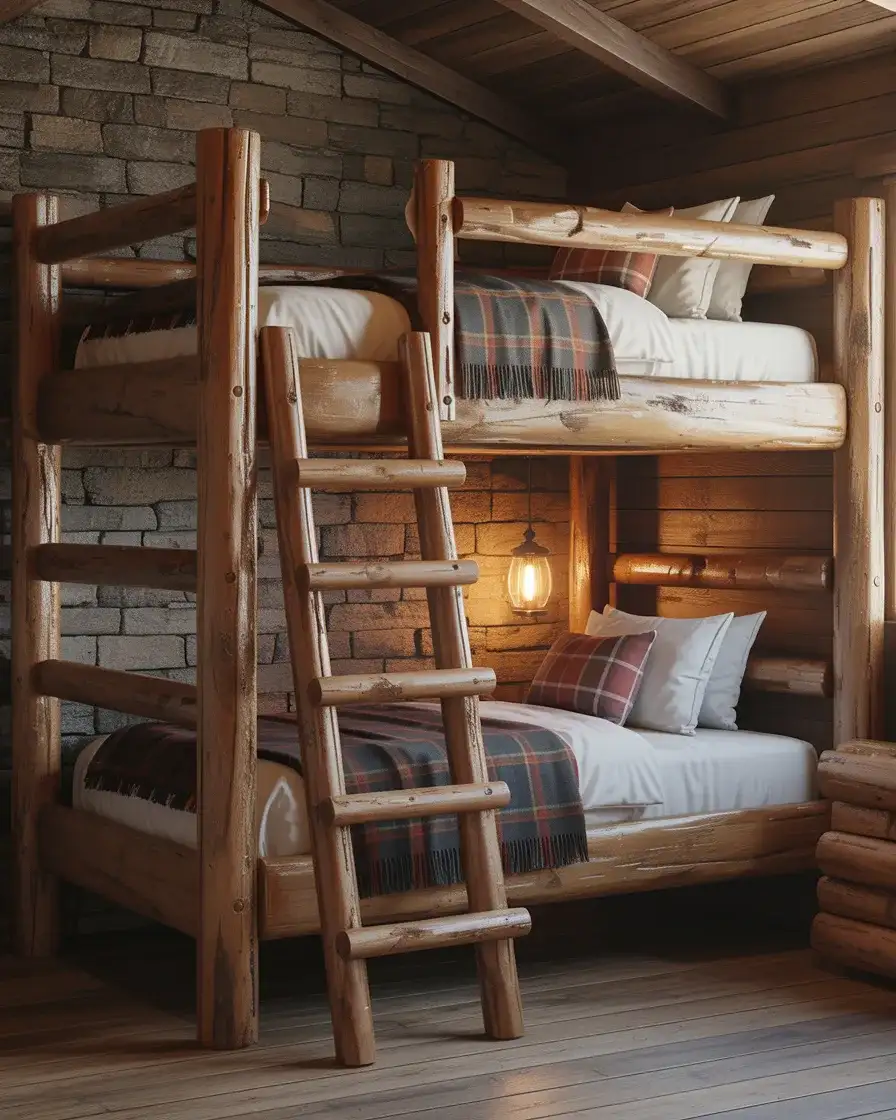
A micro-anecdote worth keeping in mind: a woodworker in Vermont who makes custom bunk beds from locally sourced timber says his two-year waitlist is the longest it’s ever been. Families are specifically seeking out handmade, story-rich furniture—pieces that have a provenance and will outlast their kids’ childhoods. If a custom piece isn’t in the budget, look for bunk beds described as “solid wood” with a hand-finished or wire-brushed surface that mimics the reclaimed look at a fraction of the cost.
9. Bunk Beds for Adults That Are Actually Worth Sleeping In
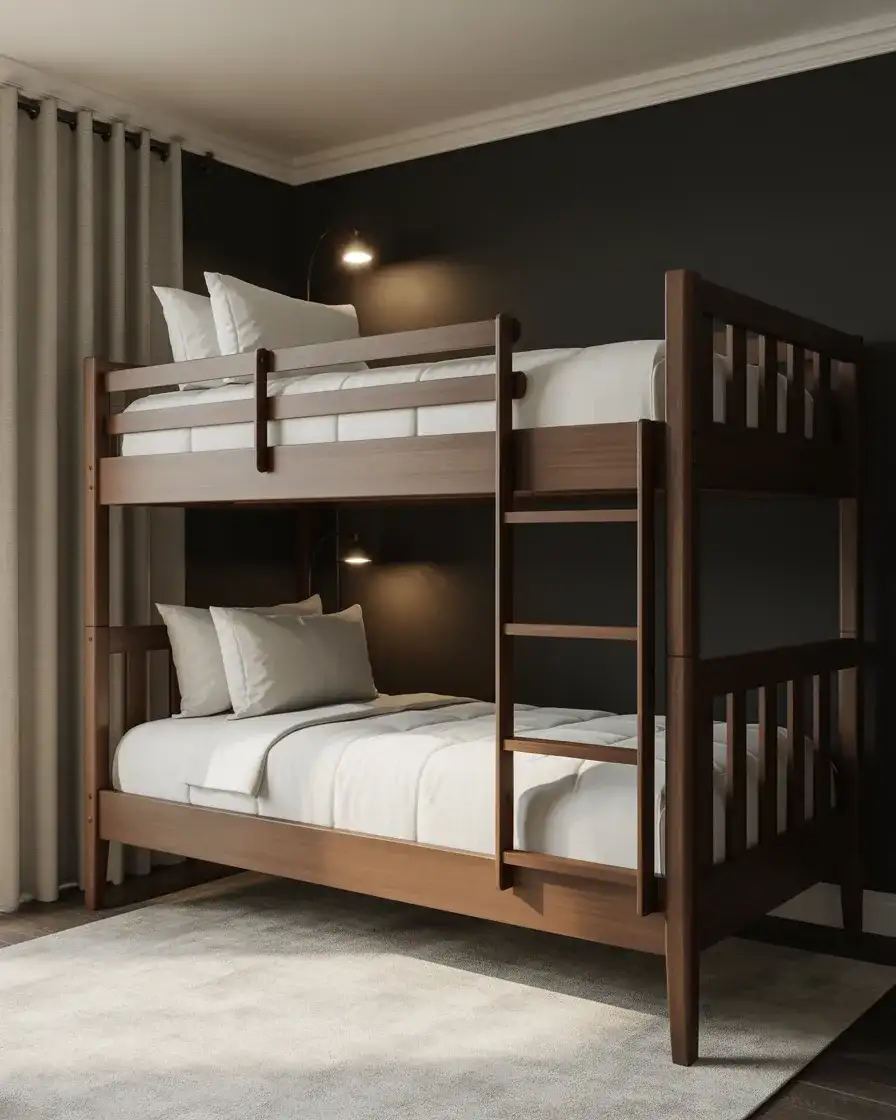
The stigma around ideas for adults who sleep in bunk beds is fading fast, and frankly, it’s about time. Whether you’re outfitting a weekend cabin for guests, maximizing a studio apartment, or creating a hostel-style spare room for frequent visitors, adult-grade bunk beds are a legitimate and increasingly stylish solution. The key difference from kids’ bunks is scale and structure—adult versions use full- or queen-sized mattresses, thicker frames, reinforced hardware, and higher weight ratings that actually reflect how grown humans sleep.
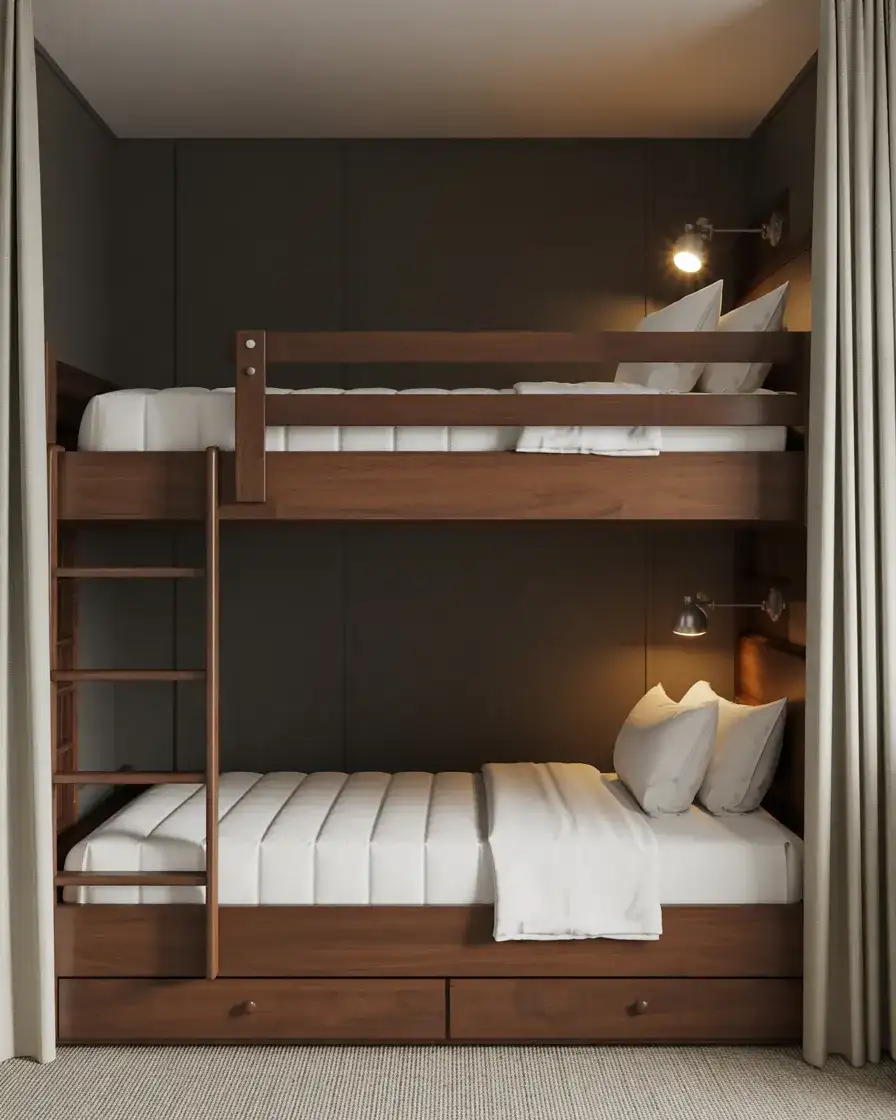
This works especially well in vacation rentals and Airbnb-style spaces. Hosts who have added stylish adult bunks in their listings report higher occupancy rates from groups of friends traveling together—a market that actively prefers staying in one shared space rather than booking multiple hotel rooms. The beds pay for themselves in a matter of months when you factor in the extra guests you can accommodate at peak season pricing.
10. Bunk Beds With a Desk Underneath for the Homework Hustlers
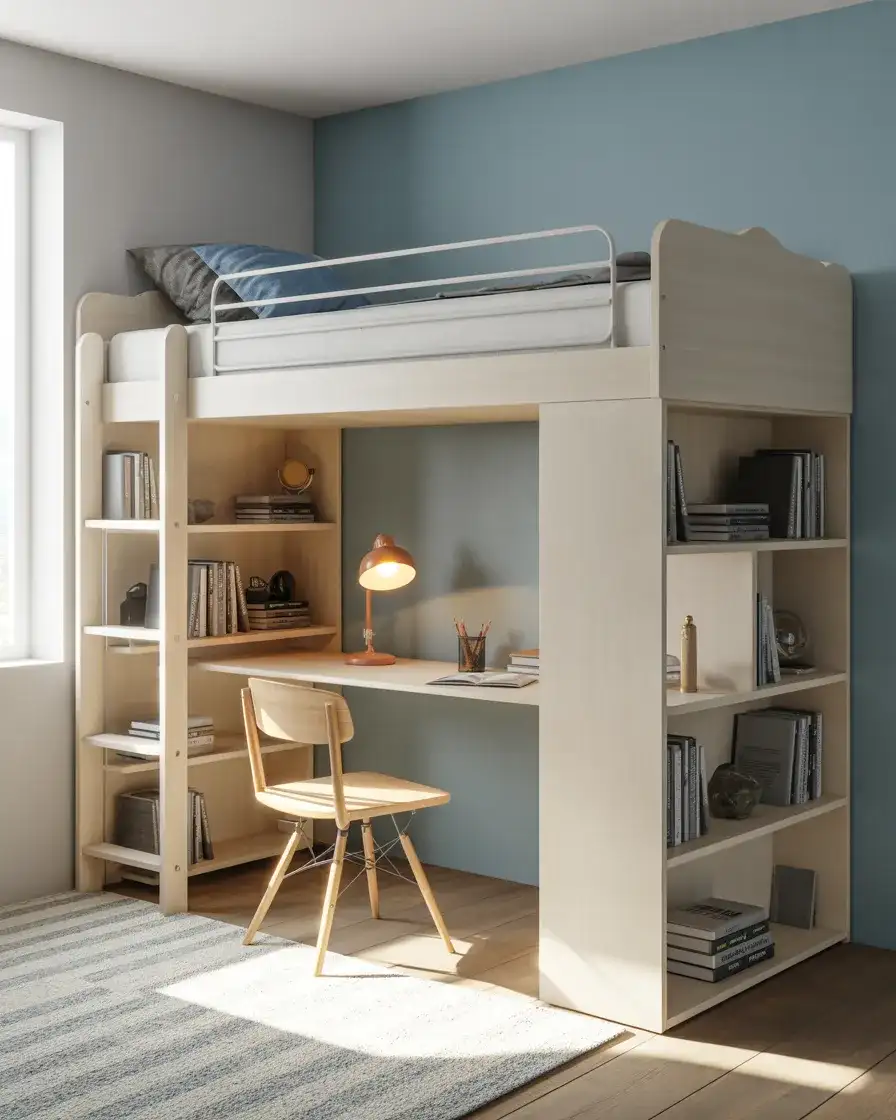
The loft-and-desk combo is one of the most practical bunk configurations ever designed for a child’s bedroom, and the 2026 versions are smarter than ever. A full loft bed—desk underneath—gives kids a dedicated homework zone that feels separate from their sleeping space, which child development experts say is actually beneficial for sleep hygiene and academic focus. The desk sits in the shadow of the upper bunk, which creates a cozy, cave-like study nook that many kids find surprisingly conducive to concentration.
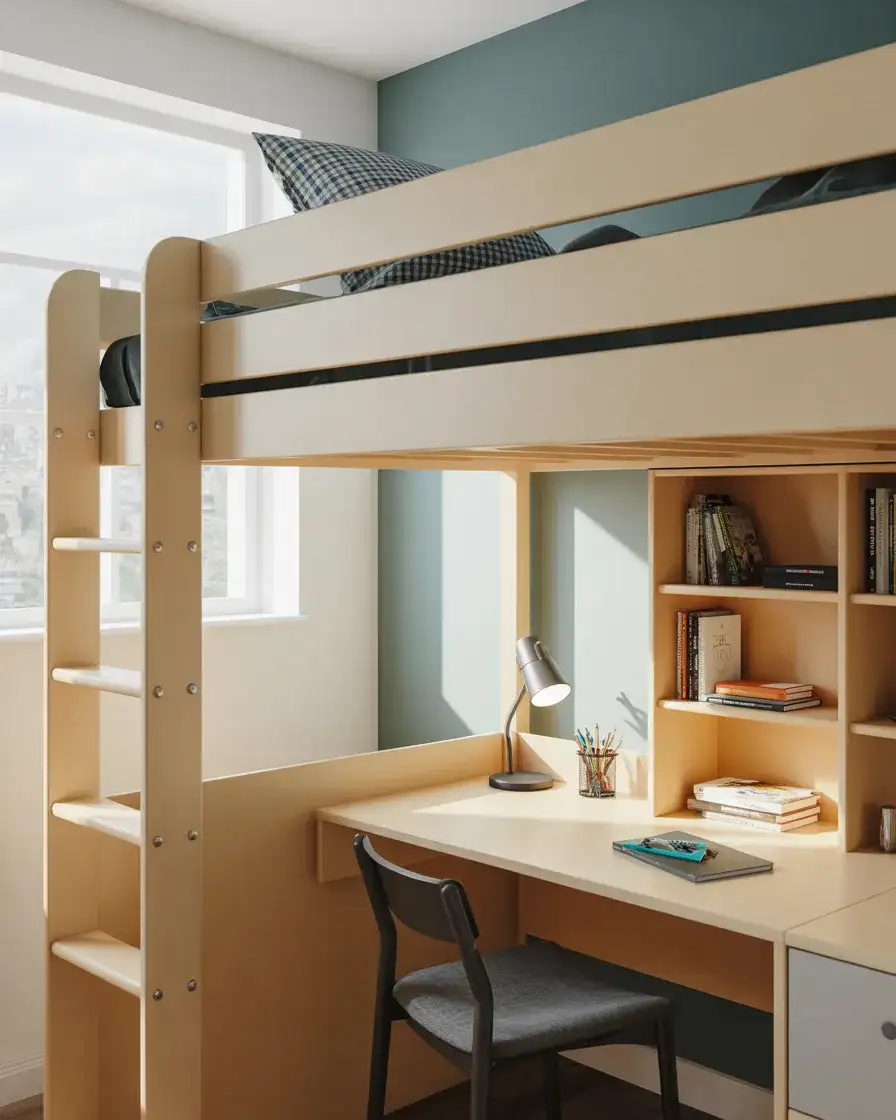
One practical tip: make sure the desk surface clears the bunk frame by at least 18 inches of headroom. Kids grow, and what works for a nine-year-old sitting at a desk will feel cramped by the time they’re thirteen and have added five inches to their height. If you can, opt for an adjustable-height desk surface—several brands now build this into the loft-desk configurations specifically to address this very issue.
11. Minecraft-Inspired Bunk Beds for the Gaming Generation
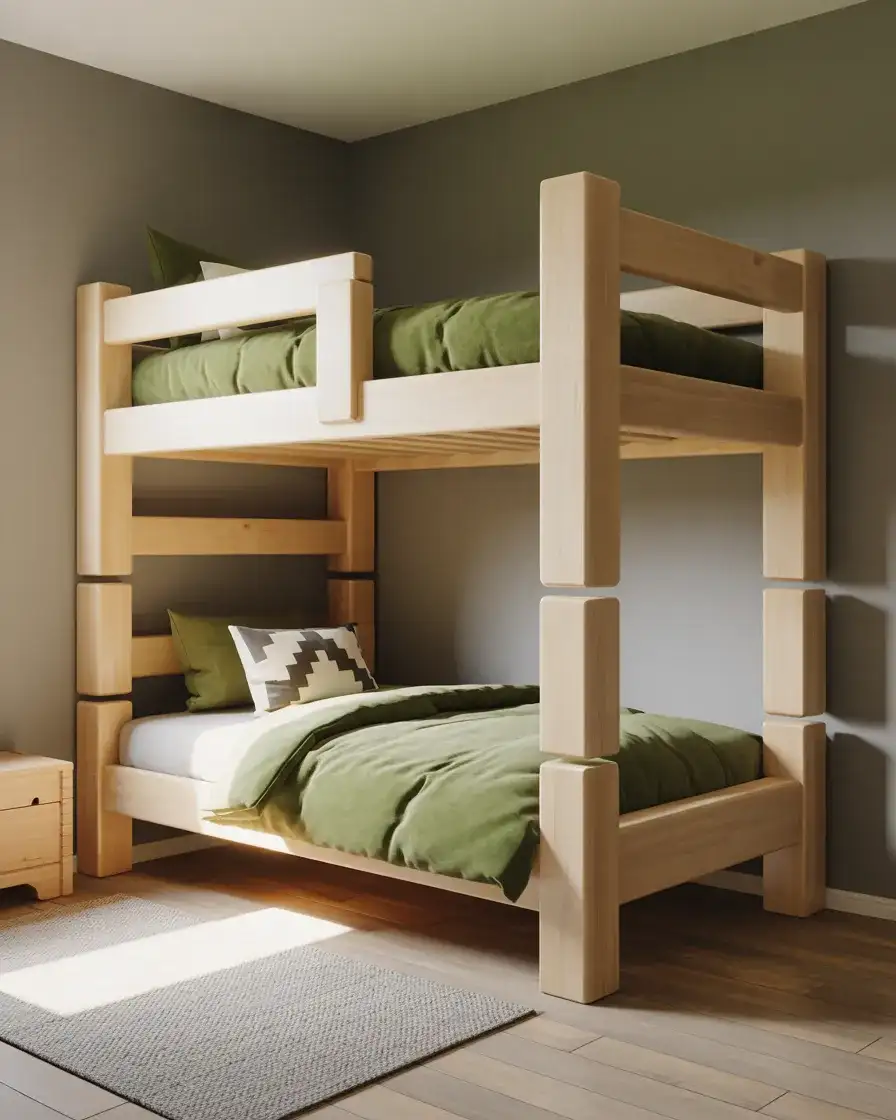
The Minecraft aesthetic—blocky, pixelated, and instantly recognizable—has migrated from screen to bedroom in a really satisfying way. Minecraft-inspired bunks lean into chunky, square-cut wood construction with bold, block-like forms that echo the game’s visual language without veering into kitschy licensed territory. These beds look great in a kid’s room that’s already decorated with a gaming theme, but they also hold up as a design choice in rooms that aren’t overtly gamer-coded, since the geometric, Bauhaus-adjacent aesthetic reads as intentional and modern.
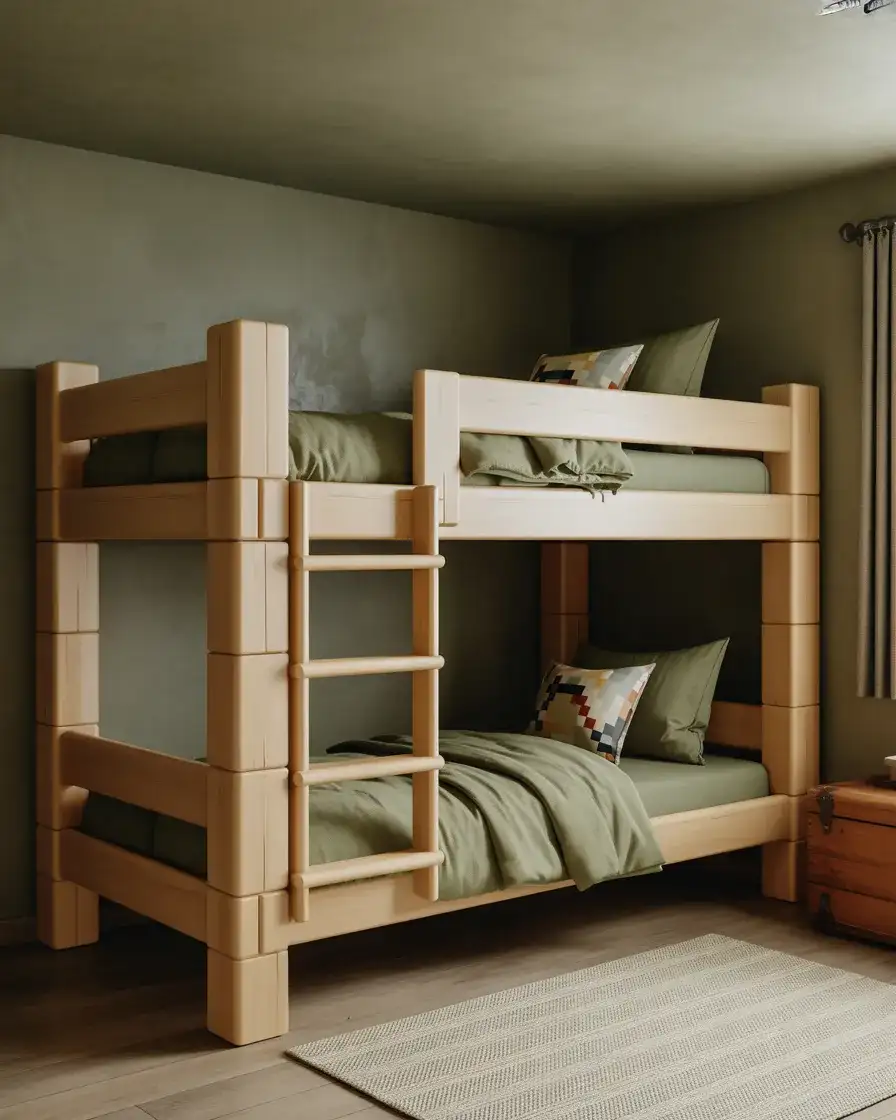
The beauty of this style is that it grows with kids. A ten-year-old who loves Minecraft will eventually grow out of the game, but the chunky, solid-wood geometric bed will still look cool in a teenager’s room reframed as a “brutalist” or “architectural” piece. It’s one of the few themed beds you can justify from a longevity standpoint—the design language has enough design credibility to outlast a childhood phase.
12. Queen Bunk Beds for Grown-Up Guest Rooms and Vacation Homes
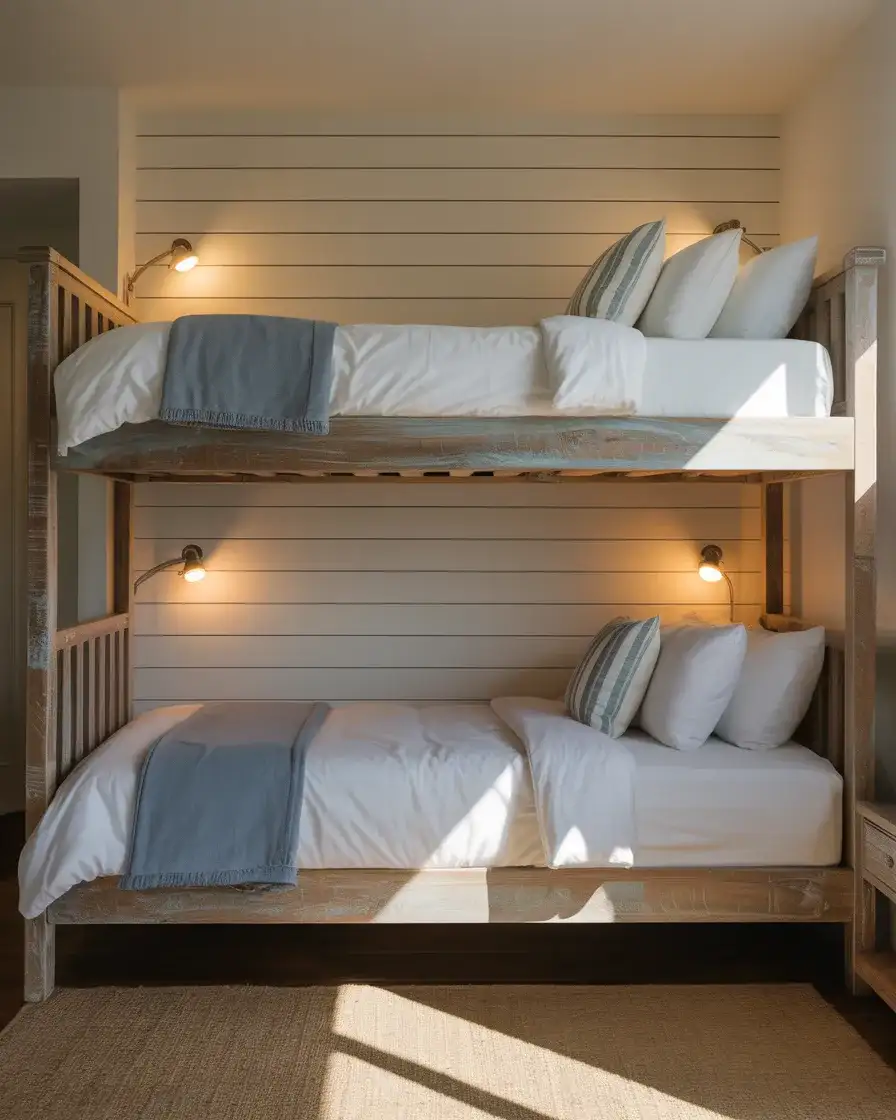
A queen bunk bed sounds like an oxymoron until you see one in action—and then it immediately makes sense. These are the beds that vacation rental owners in coastal markets like the Outer Banks, Lake Tahoe, and the Florida Keys have been quietly installing for the past few years. A queen-over-queen configuration can sleep four adults in one room without any of the “camping on the floor” compromise, and the premium versions are genuinely luxurious, with solid hardwood frames, built-in USB ports, and proper guardrails that don’t feel like an afterthought.
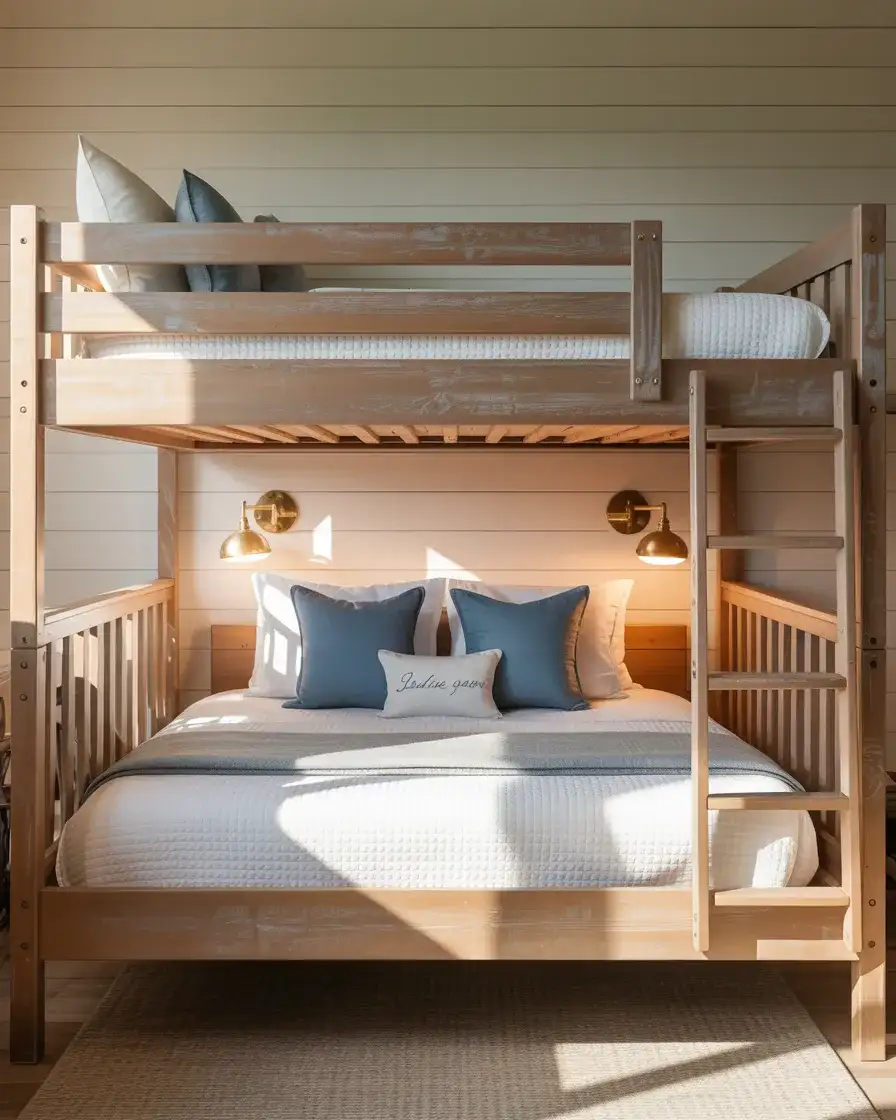
These beds require serious structural consideration. The upper queen bunk carries a significant load—not just the mattress weight but the movement of sleeping adults—so this is absolutely not a DIY project unless you have genuine carpentry experience. Most manufacturers rate their queen bunks for 400–600 pounds per bunk, which is sufficient for two adults, but always verify the weight capacity before purchasing and use the recommended slat system rather than improvising.
13. Unique Bunk Beds That Break Every Expectation
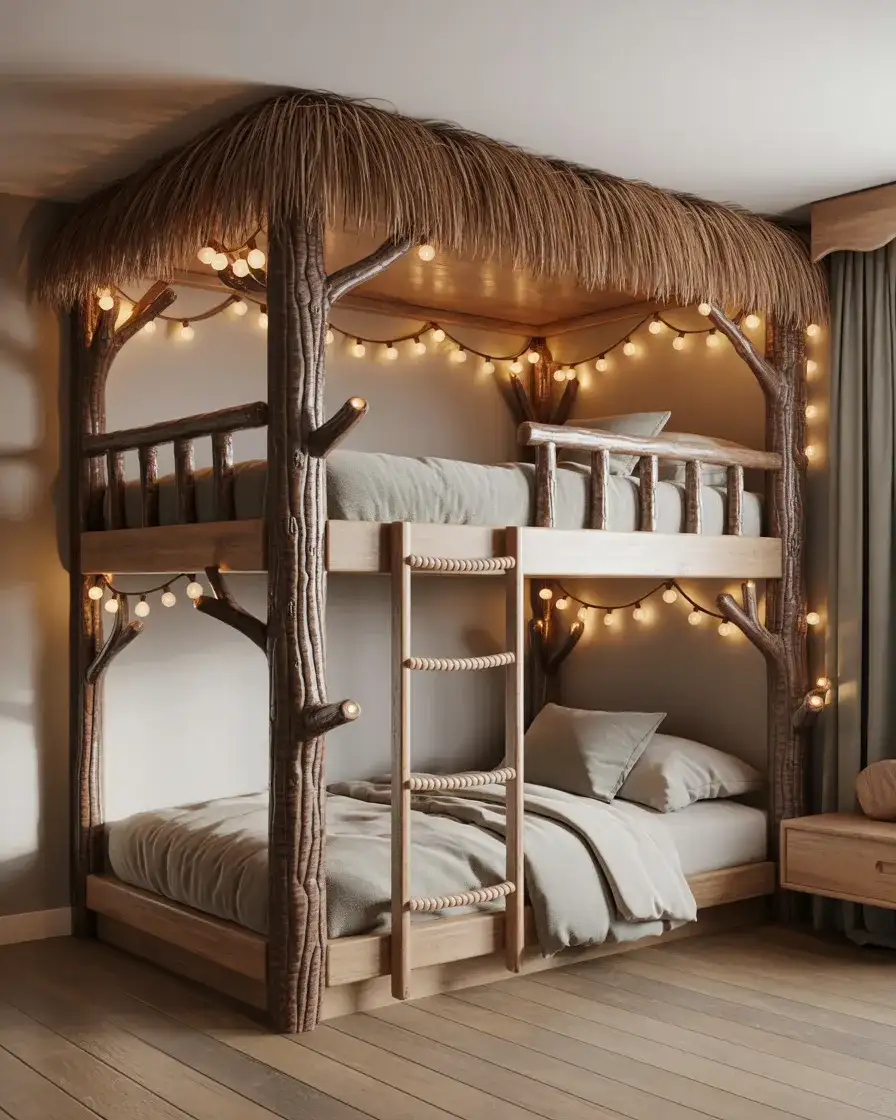
Unique bunk beds are the ones that make you stop scrolling. We’re talking about a bunk designed to look like a lighthouse, a bed framed inside a giant vintage truck silhouette, or a minimalist floating loft where the upper bunk appears to hover with no visible supports. These aren’t just novelties—many of them are thoughtfully engineered pieces that happen to also be extraordinary conversation starters. They tend to appear in kids’ rooms designed by parents who take inspo seriously and aren’t afraid to go all in on a concept.
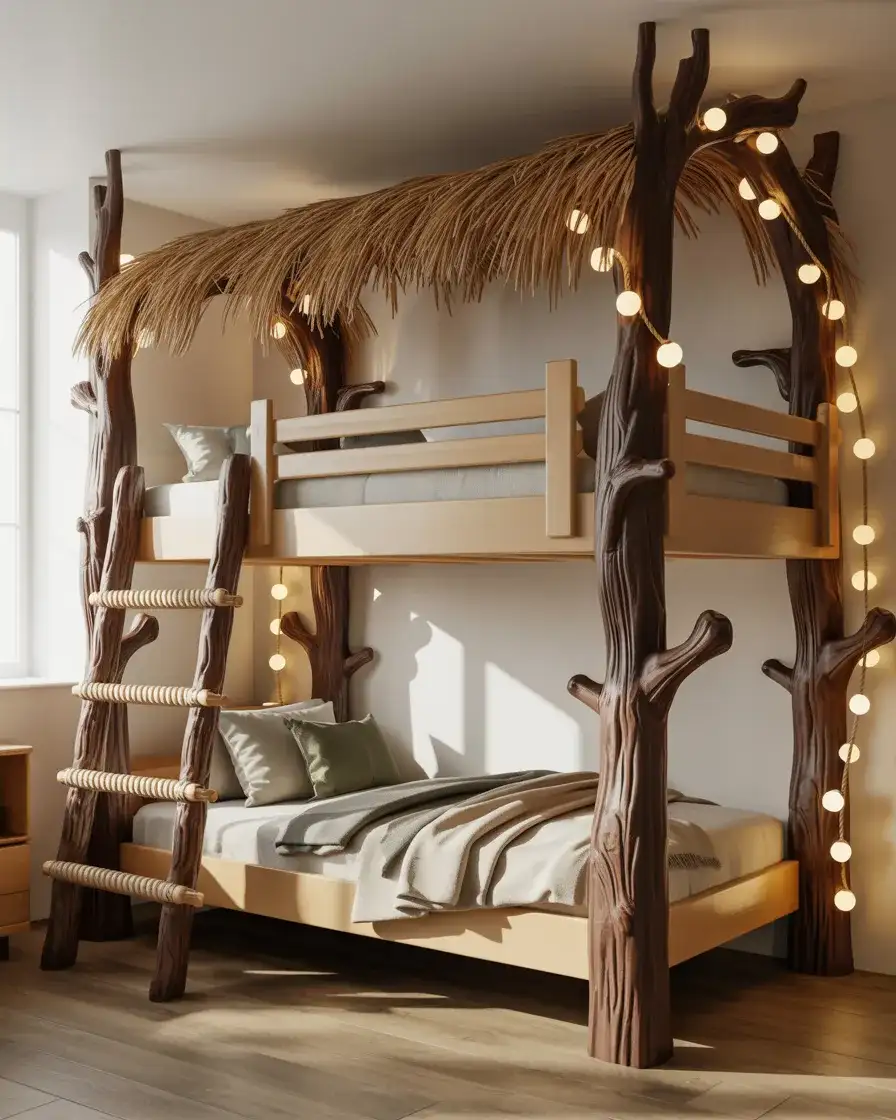
American parents are spending more on children’s bedroom design than in any previous generation, and one-of-a-kind furniture is a big part of that shift. Custom bed makers on Etsy and small-batch furniture studios now report that the bunk bed category is their fastest-growing segment. People want their kids’ rooms to feel as designed as the rest of the house—and a statement bunk is the single highest-impact way to get there.
14. Cabin Bunk Beds That Bring the Wilderness Indoors
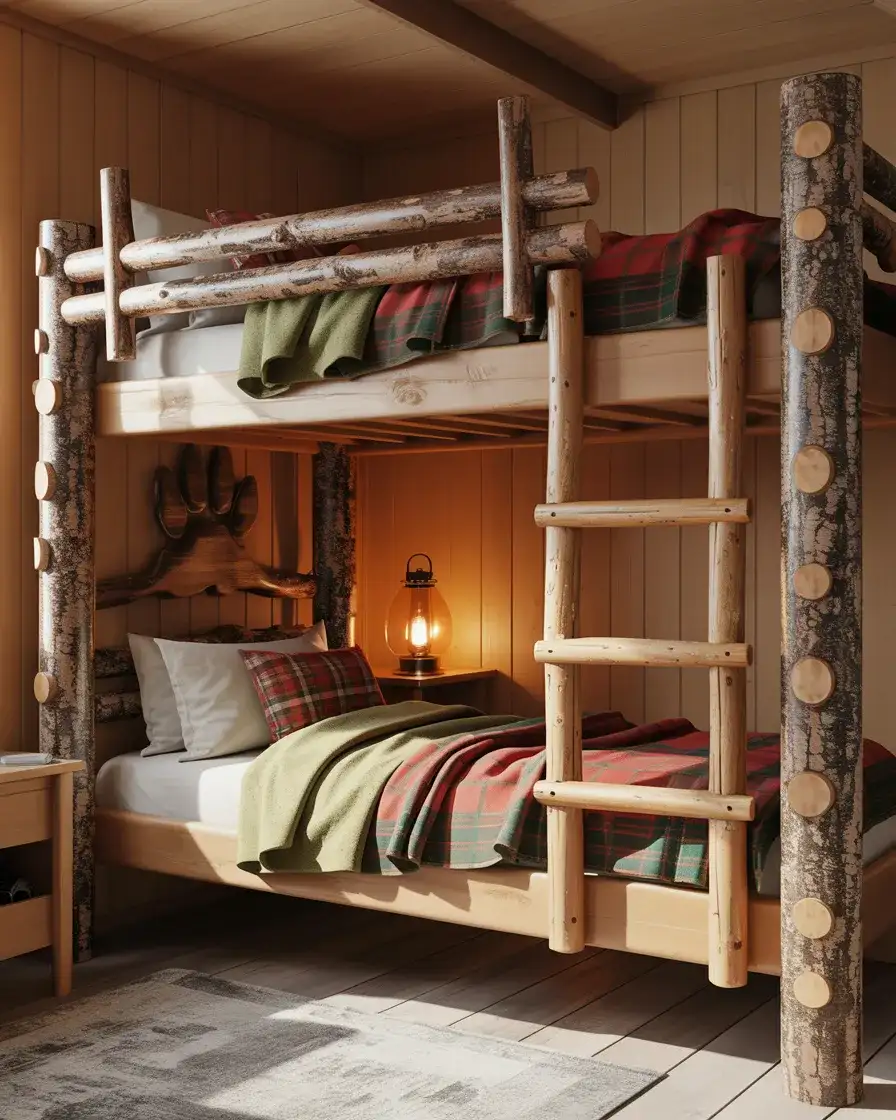
Nothing captures the spirit of the American outdoors quite like a well-built cabin-style bunk bed. These are the beds built for mountain retreats, lakeside cottages, and homes where flannel blankets live on permanent rotation. They’re typically made from thick-cut pine or cedar, occasionally still featuring the bark on the log rails, and they pair naturally with wool plaid bedding, antler accents, and the kind of warm, amber lighting that makes you feel like a thunderstorm is rolling in outside and you couldn’t be more content. This is peak rustic done right.
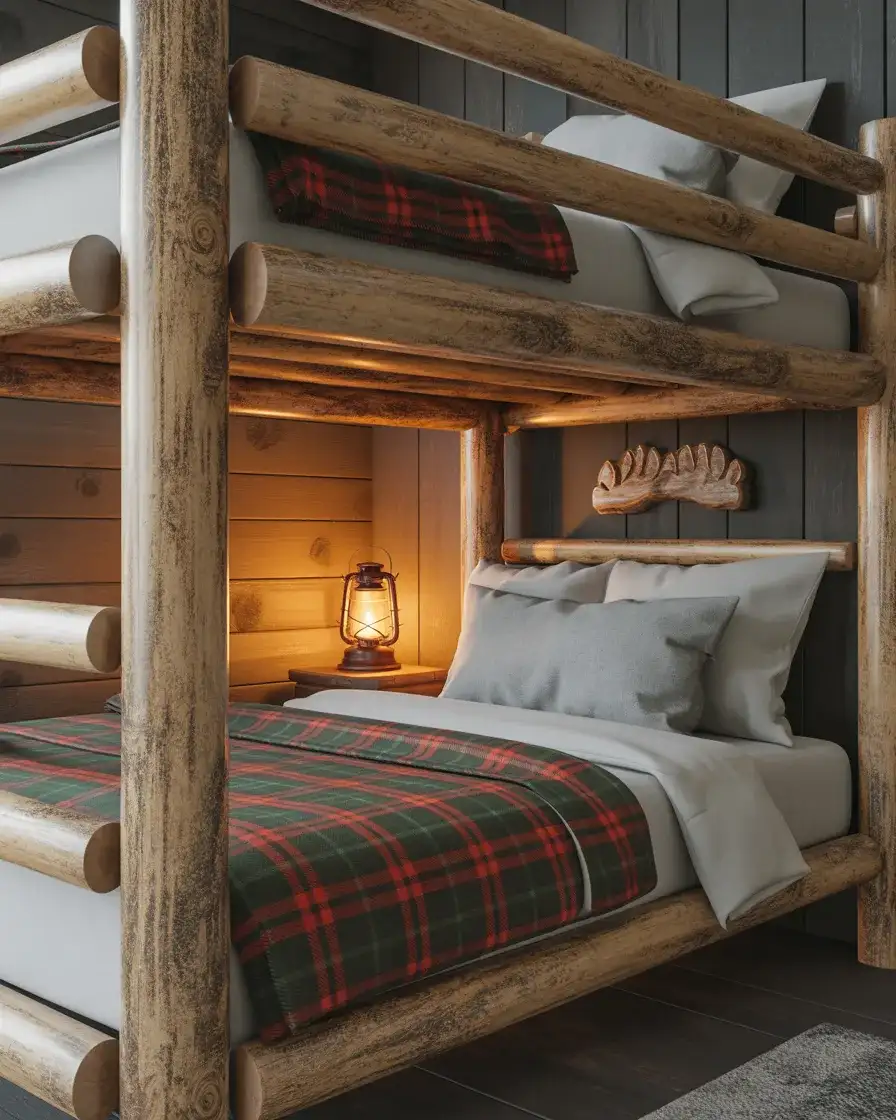
These beds work best—not surprisingly—in spaces where the surrounding architecture supports them. A log-style bunk in a room with white plaster walls and chrome fixtures looks incongruous; in a room with reclaimed wood planks, a river rock accent wall, or tongue-and-groove cedar paneling, it feels inevitable. If you’re going for this look in a suburban home, consider committing to the broader aesthetic rather than dropping a cabin bed into an otherwise contemporary space.
15. Twin Over Full Bunk Beds for the Age-Gap Sibling Solution
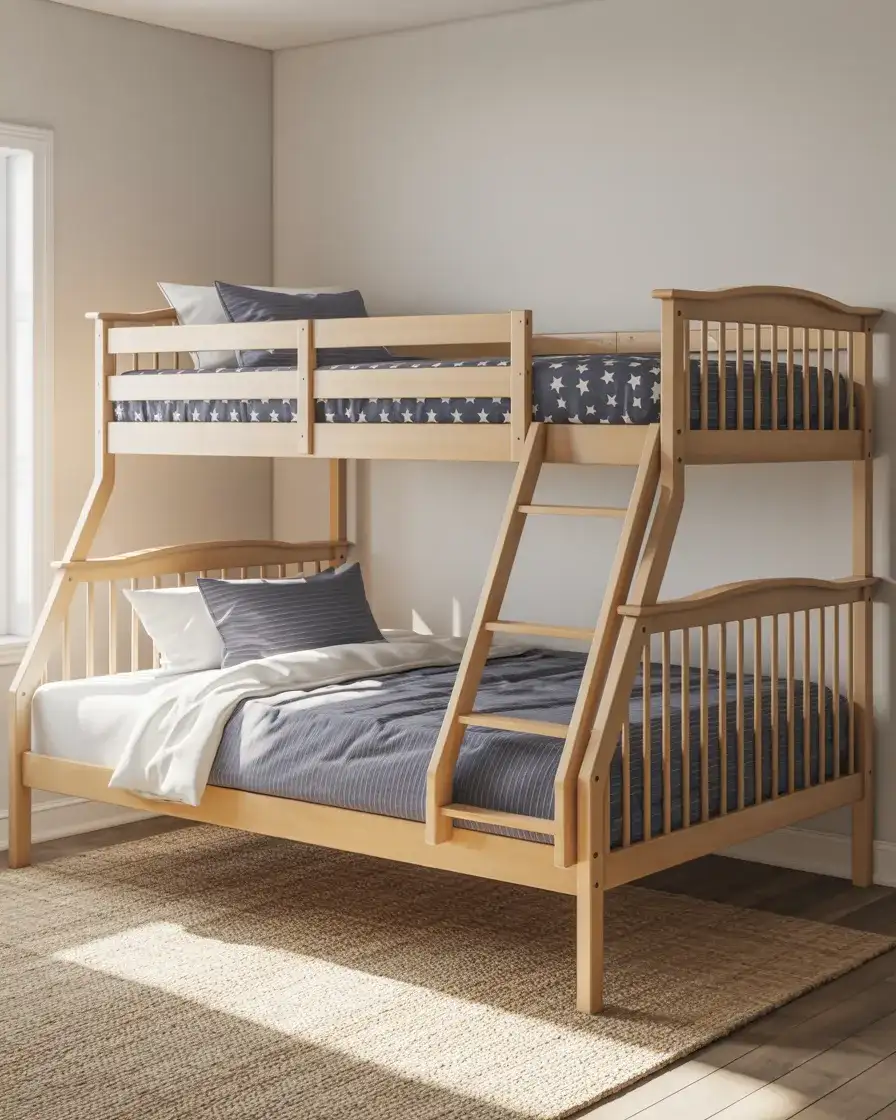
The twin-over-full configuration is genuinely one of the most practical bunk setups available for families with kids at different growth stages. The younger or smaller child sleeps on the twin up top—where the tighter size is perfectly suited to a small body—while the older child has a full-sized lower bunk with plenty of room to spread out, keep a stuffed animal army, and not feel like they’ve been stuffed into a toddler bed. It’s a configuration that grows gracefully: as kids age, the setup continues to feel right-sized for each of them.
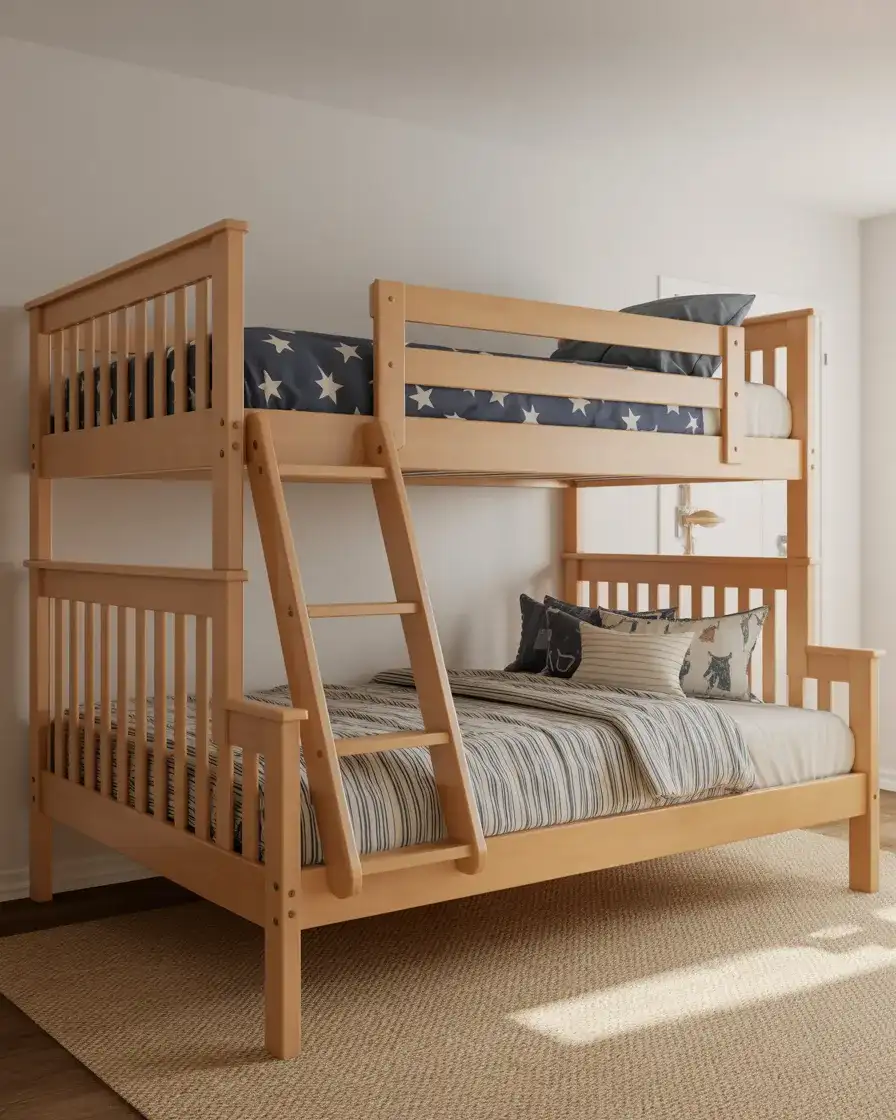
Here’s something real homeowners often figure out the hard way: the full-size lower bunk is also significantly more comfortable for a parent doing the bedtime reading routine. The full mattress has enough room to sit beside a child without hanging off the edge, which matters more than it sounds after the fifteenth consecutive night of “just one more chapter.” The twin-over-full isn’t just practical for the kids—it quietly makes parenting a little easier too.
16. Small Room Bunk Beds That Actually Make the Room Feel Bigger
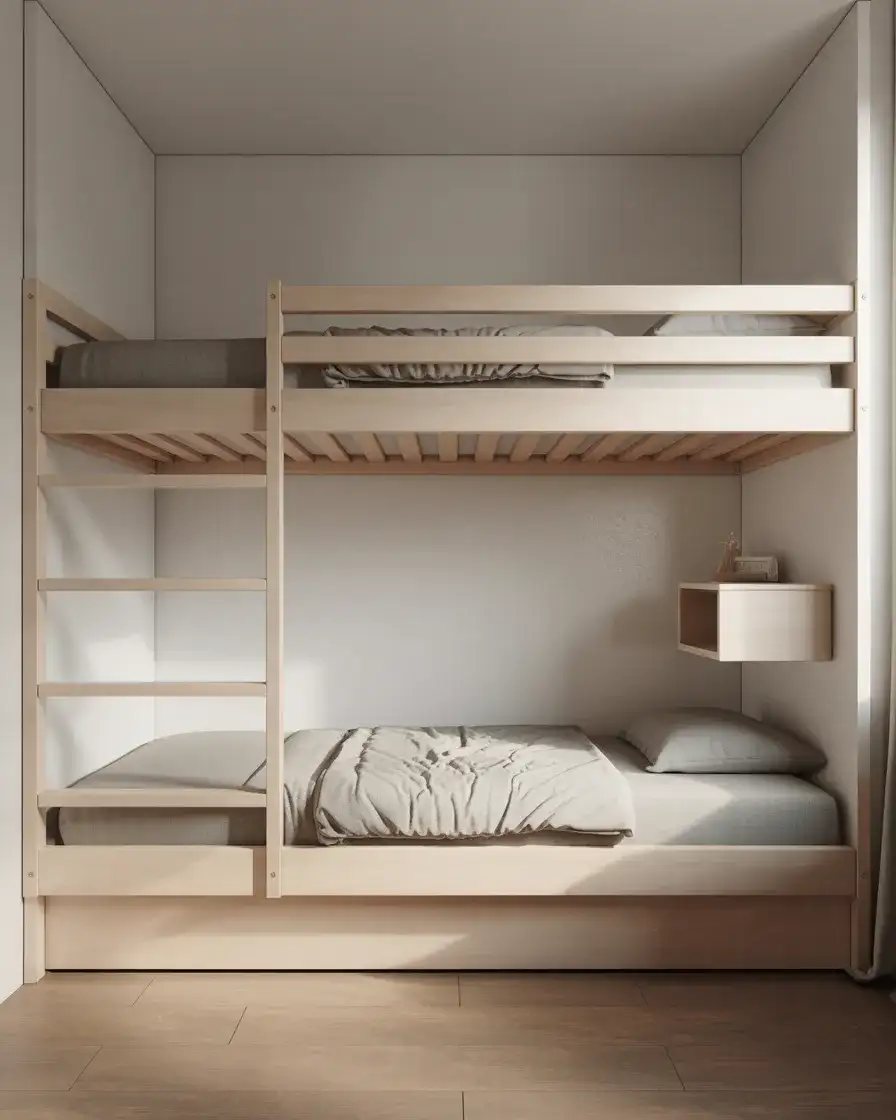
The counterintuitive truth about small rooms and bunk beds is that the right bunk can actually make a cramped space feel more open, not less. When a bunk replaces two separate beds that were crowding the room, you reclaim floor space. Add in the vertical momentum of stacked sleeping levels—especially in rooms with high ceilings—and the room’s proportions start to feel more considered and less claustrophobic. This is the core logic behind most ideas for small rooms: go up, not out, and keep the floor as clear as possible.
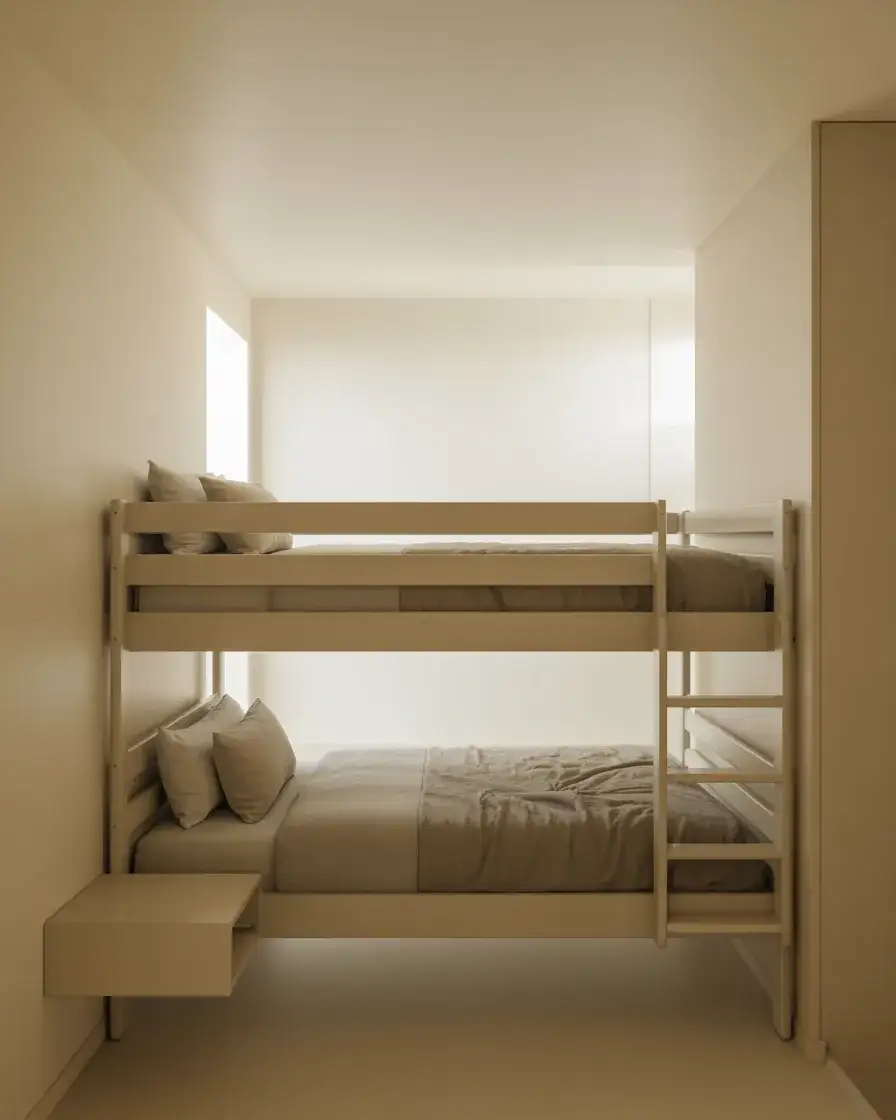
The design principle that makes this work is proportion. Choose a bunk with a thin, open frame rather than a solid, box-like structure, and you’ll preserve sightlines across the room. Opt for bedding in lighter tones and skip the heavy bed skirts. Keep storage vertical rather than horizontal. A small room with a well-chosen bunk bed and thoughtful styling doesn’t just function better—it can feel like a room twice its size in photographs, which is exactly why this setup dominates the small-space boards on Pinterest.
17. Murphy Bunk Beds That Disappear When You Need Them To
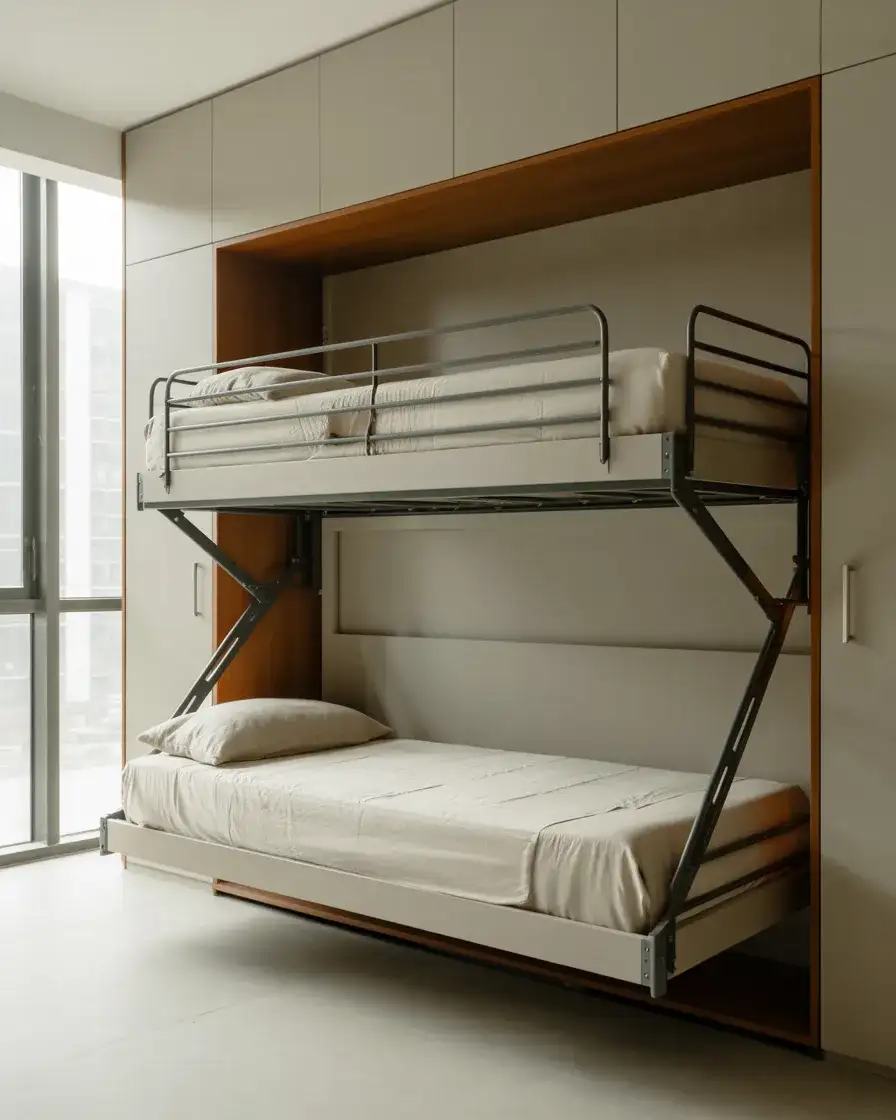
The Murphy bunk bed is the ultimate shape-shifter in residential furniture. By day, it folds flat against the wall and presents as a sleek cabinet, bookshelf, or even a sofa configuration. By night, it unfolds into a full two-bunk sleeping setup that can handle two kids or two adults without compromising the room’s daytime livability. These are especially popular in urban apartments that double as home offices, in vacation homes that alternate between guest room and hobby space, and in any situation where the word “multipurpose” isn’t optional.
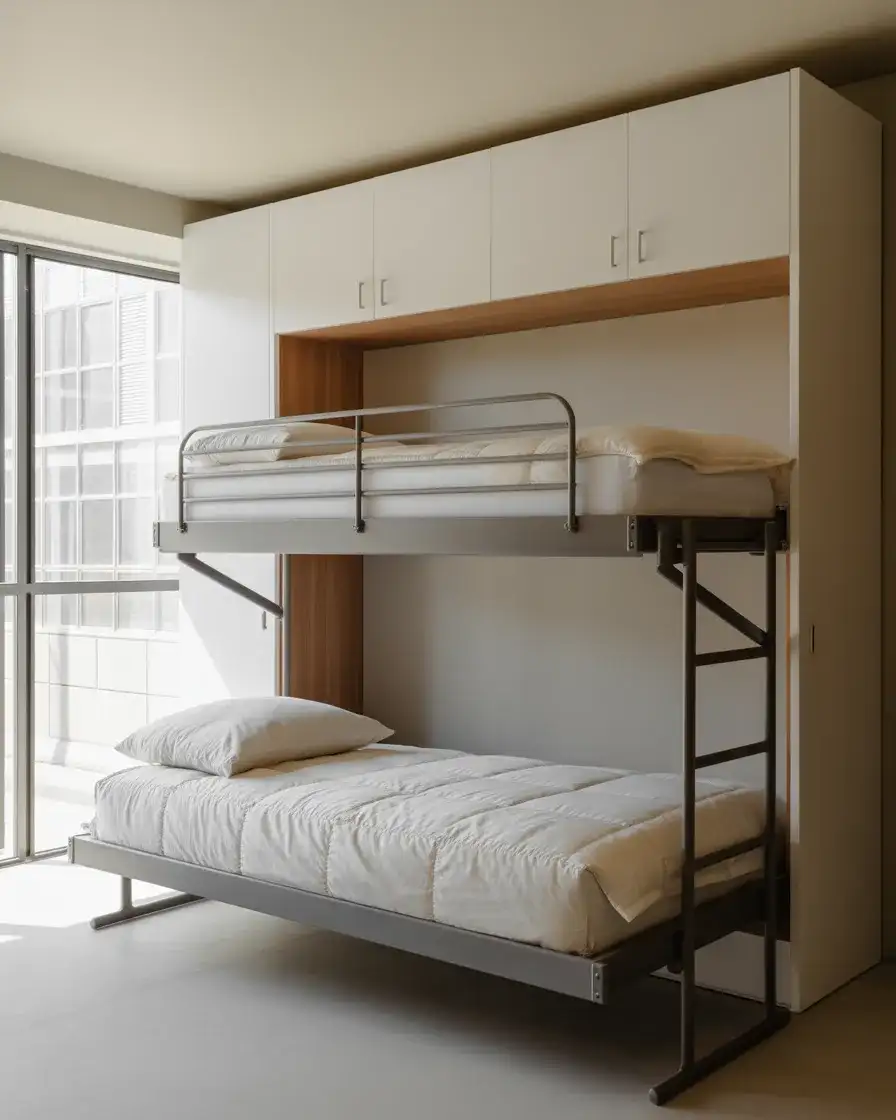
One thing to understand before committing to a Murphy bunk: the wall needs to be able to handle the anchor hardware, which means drywall alone won’t cut it. You’ll need to locate studs or install a proper backing board during the mounting process. Many Murphy bunk systems come with installation guides, but a professional install is worth the cost here—these beds carry adult-level loads when deployed, and the wall anchoring is what keeps the whole system safe.
18. Bunk Bed Inspo From the Most Saved Pins of the Year
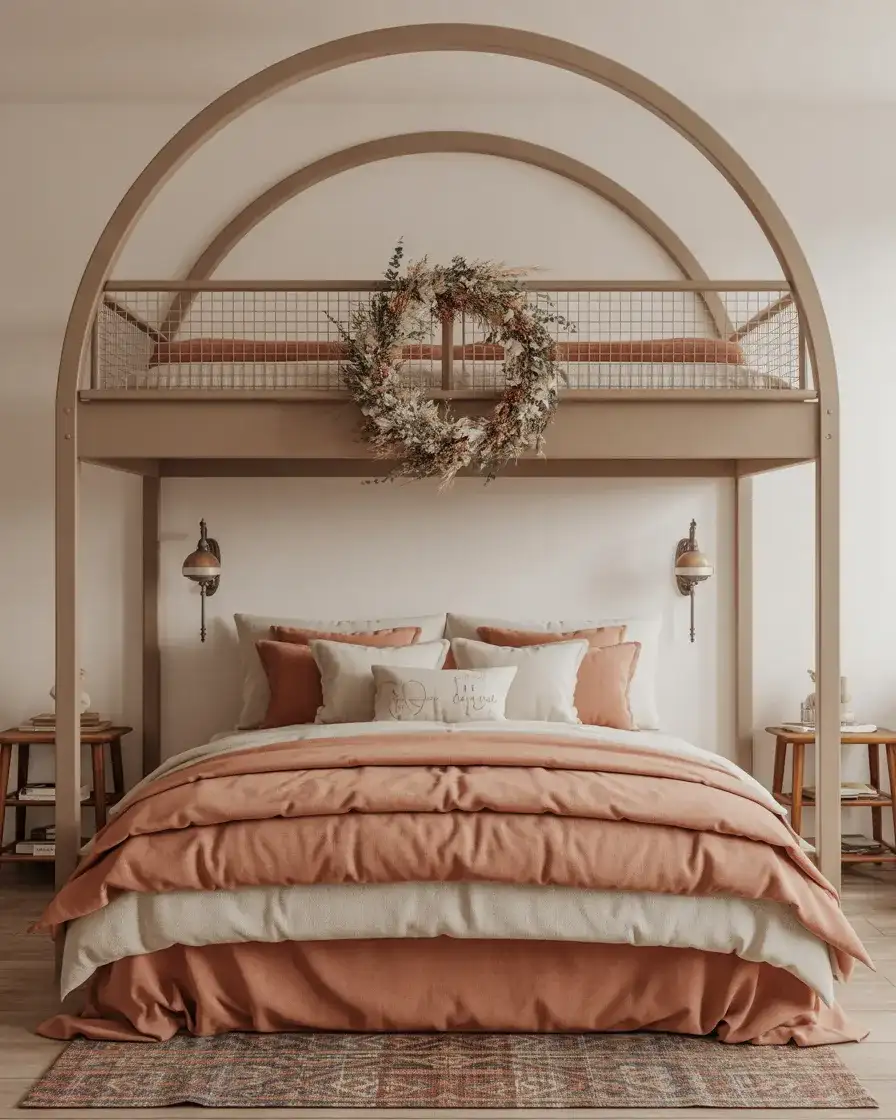
Every year Pinterest surfaces a handful of bunk bed images that accumulate hundreds of thousands of saves, and studying them reveals a clear pattern: the most-shared inspo always combines strong visual hierarchy with a sense of coziness that feels genuinely livable, not staged. The top pins from the past year featured bunk beds with built-in nooks, arched canopy frames, and richly layered textiles—pieces that feel less like furniture and more like self-contained worlds. The aesthetic that resonates most on the platform right now is warm and handcrafted, with a slight vintage lean.
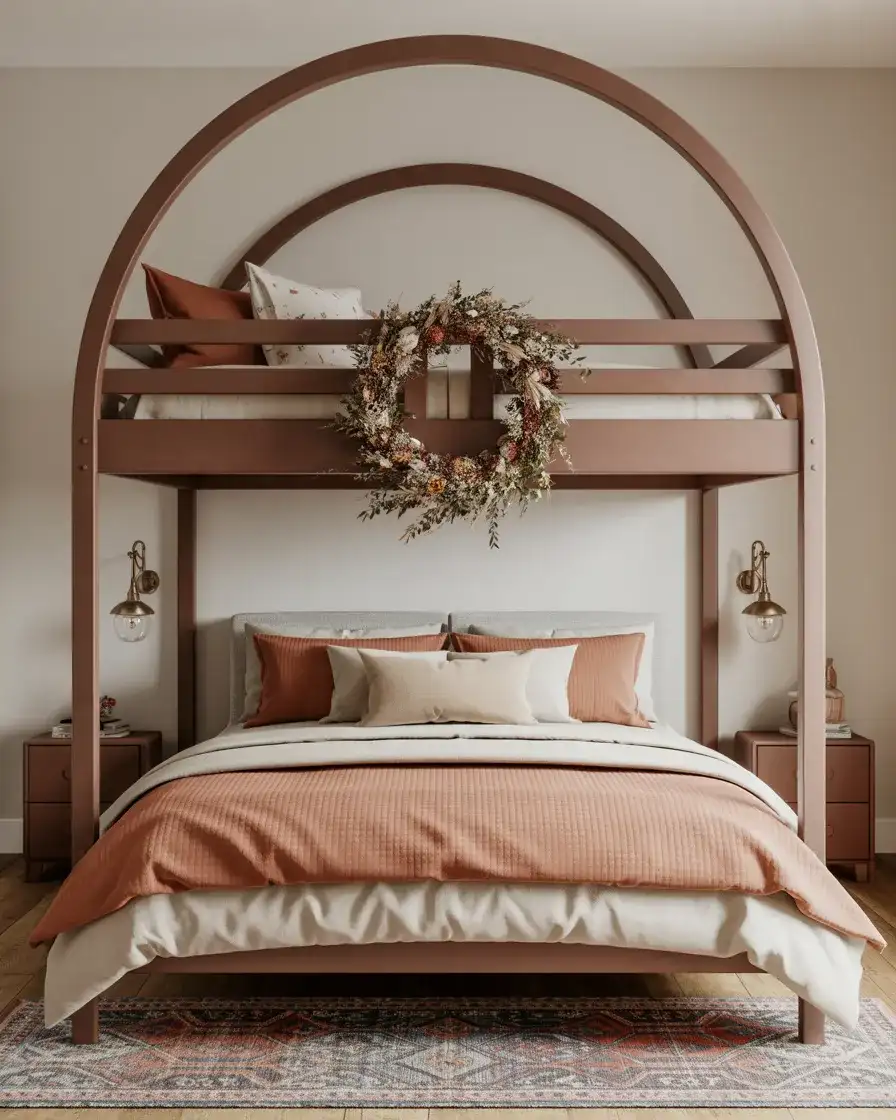
What separates a room that gets saved from a room that just gets scrolled past comes down almost entirely to lighting and layering. Natural light is king—if you want your bunk bed setup to look the way the best Pinterest images do, take your photos in the morning when the light is directional and warm. Then layer: a throw blanket, two or three pillows in varying textures, and a small plant on the shelf. The bed doesn’t have to be perfect; it just has to feel like a real, beautiful space where someone actually sleeps.
19. Dog-Friendly Bunk Beds That Give Every Family Member a Spot
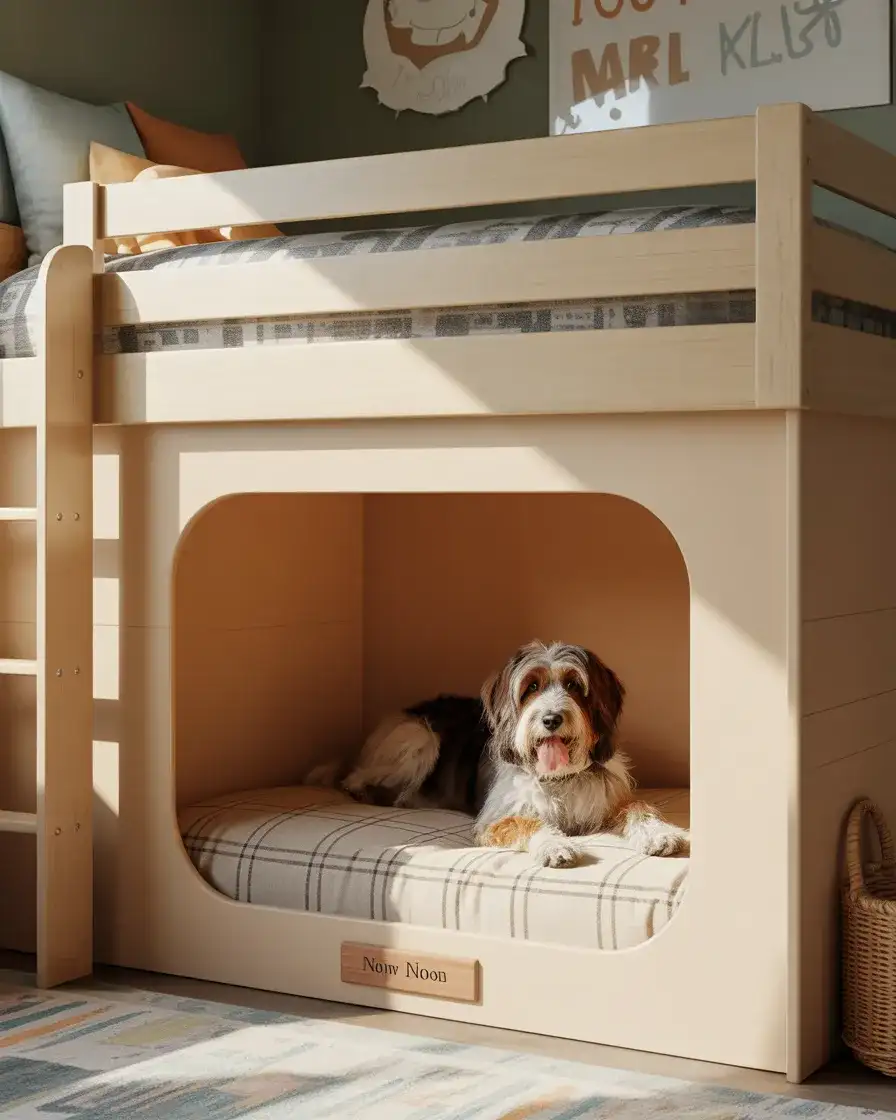
The dog-bed-under-the-bunk trend is one of those ideas that makes you slap your forehead and wonder why nobody thought of it sooner. The space beneath the lower bunk—typically dead square footage collecting dust bunnies—becomes a perfectly scaled sleeping nook for a medium or large dog when fitted with a custom cushion and a few thoughtful touches. It’s a configuration that resonates deeply with American pet owners (and Americans spend more on pet comfort than nearly any other country), and it has the added benefit of keeping the dog close while keeping the floor uncluttered.
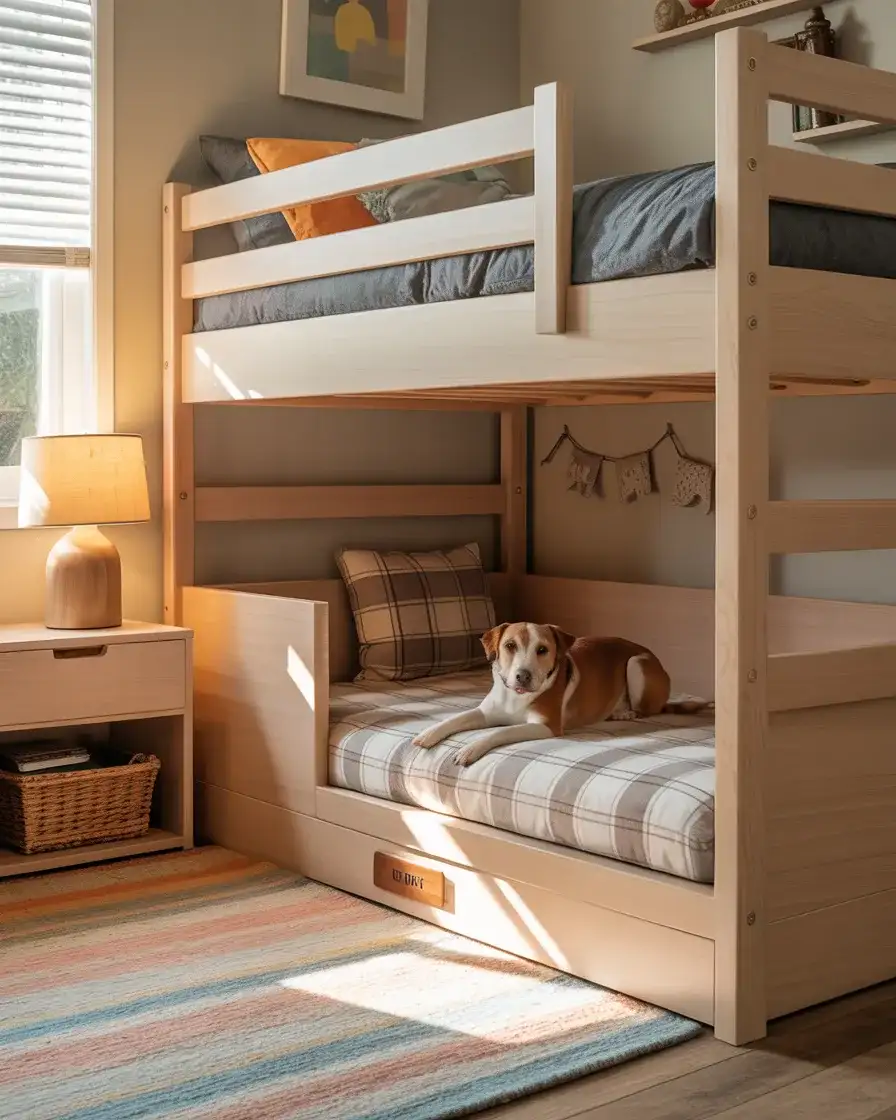
The smartest versions of this setup include a small hook on the side of the bunk for the leash, a little name sign above the opening (kids love personalization), and a washable cushion cover in a durable fabric like canvas or outdoor-grade linen. If you’re building custom, consider leaving the opening at 24–28 inches wide, which accommodates most medium-large breeds comfortably without feeling cavernous. It’s a small detail, but getting the scale right makes all the difference between a dog who actually uses the nook and one who ignores it entirely.
20. Loft Bunk Beds With Privacy Nooks Built Into the Lower Level
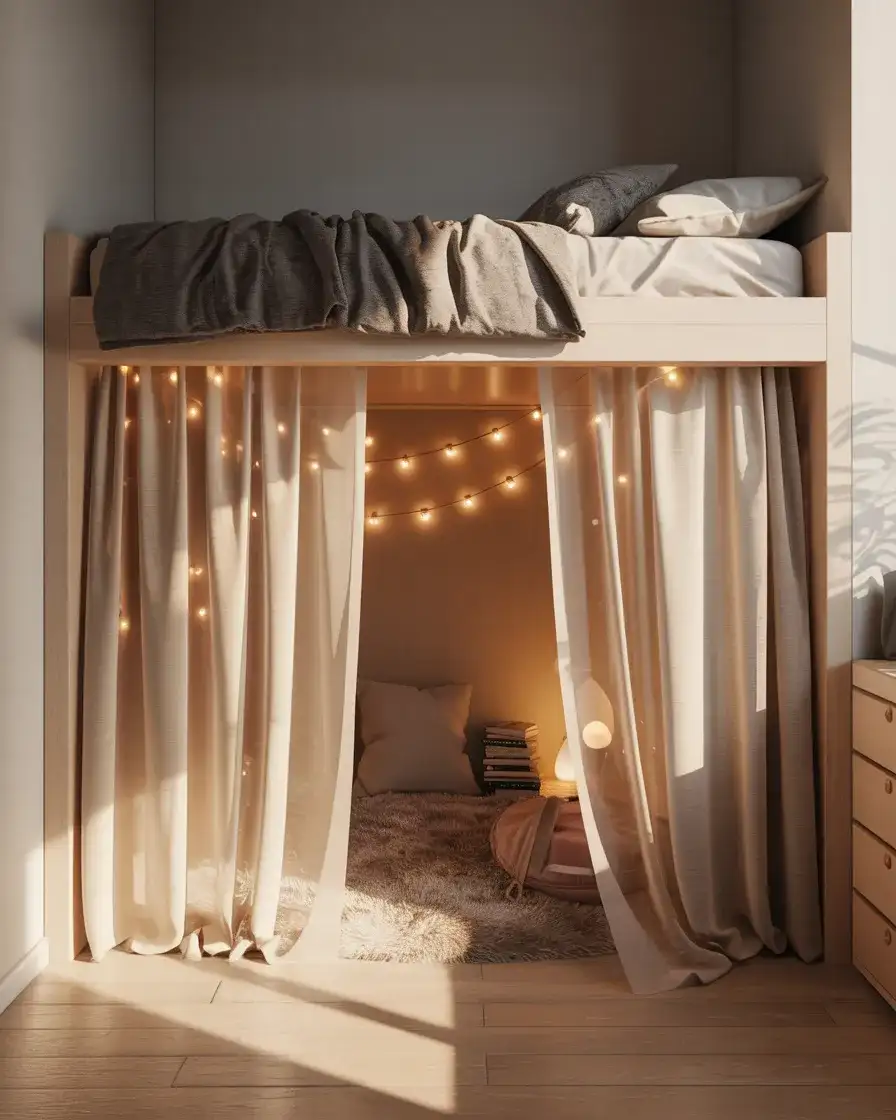
Privacy is something teenagers actively want and younger kids increasingly ask for, and the lower level of a loft bunk is a natural place to create it. A true privacy nook beneath a loft bed features three solid sides—the wall behind and the bunk frame on two additional sides—with a curtain across the open front. The result is a reading hideout, a quiet study zone, or just a “do not disturb” space that kids can retreat to when the rest of the house gets loud. In many homes, this nook becomes the single most loved corner in the children’s wing.
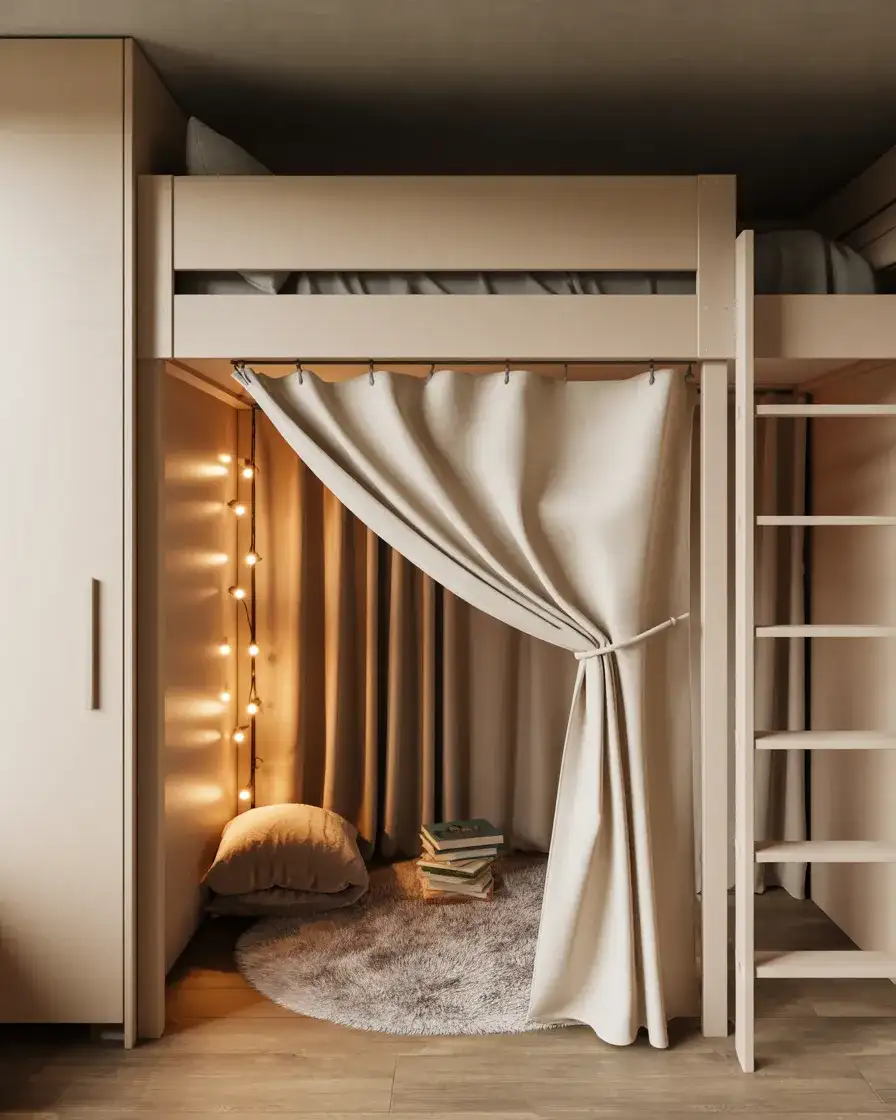
Child psychologists note that children between the ages of six and twelve have a growing need for personal space that parents often underestimate. Giving a child a “room within a room”—even if it’s just a curtained nook under a loft bunk—can meaningfully reduce conflict around shared bedroom situations. It’s not about hiding; it’s about having a corner of the world that feels genuinely theirs. Few pieces of furniture deliver that feeling as economically as a well-designed loft bed.
21. Modern Bunk Bed Designs for Small Bedrooms That Punch Above Their Weight
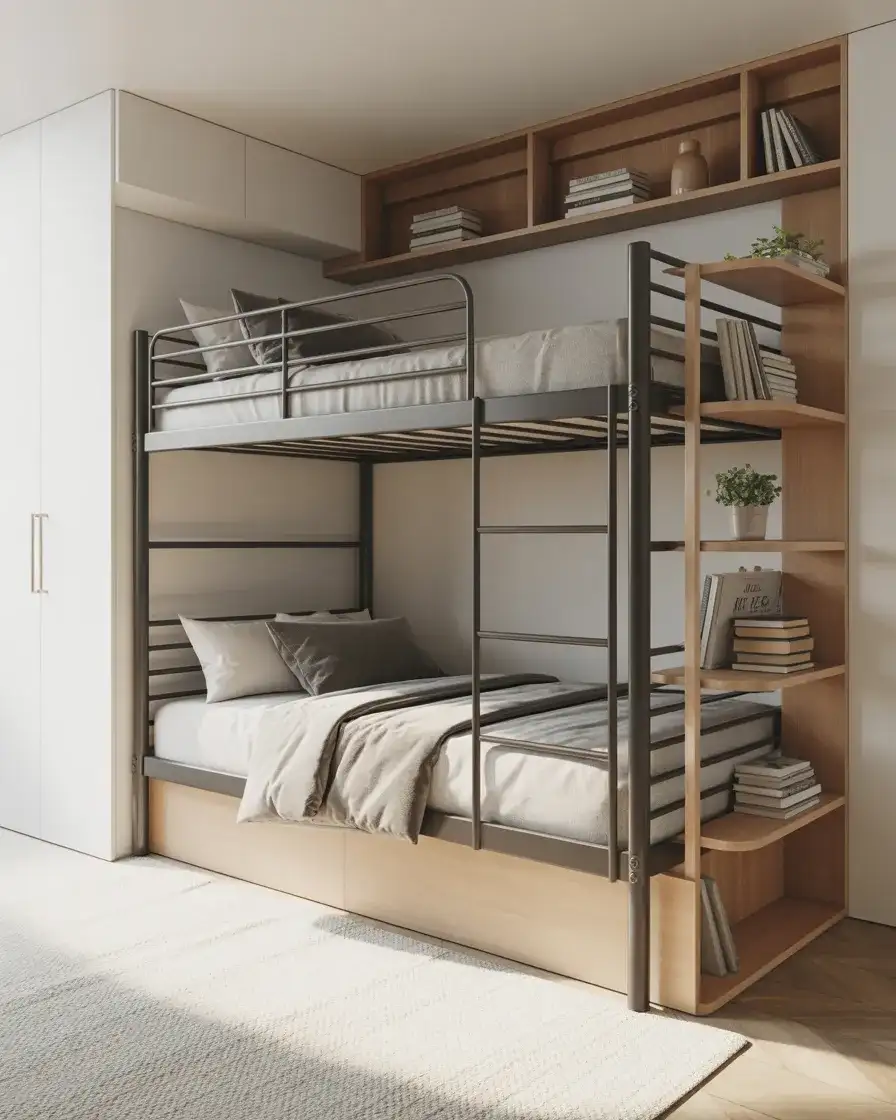
A modern approach to designs for small bedrooms treats the bunk bed as a structural element rather than just a furniture piece. The best examples use powder-coated steel in matte black or warm bronze—materials that read as architectural detail—paired with built-in shelving that turns the bunk frame into a full-wall storage system. These setups are common in renovation projects featured in design media, and they represent the current frontier of what a bunk bed can be: not an afterthought, but a fully integrated spatial solution that makes a ten-by-ten room function like a room twice that size.
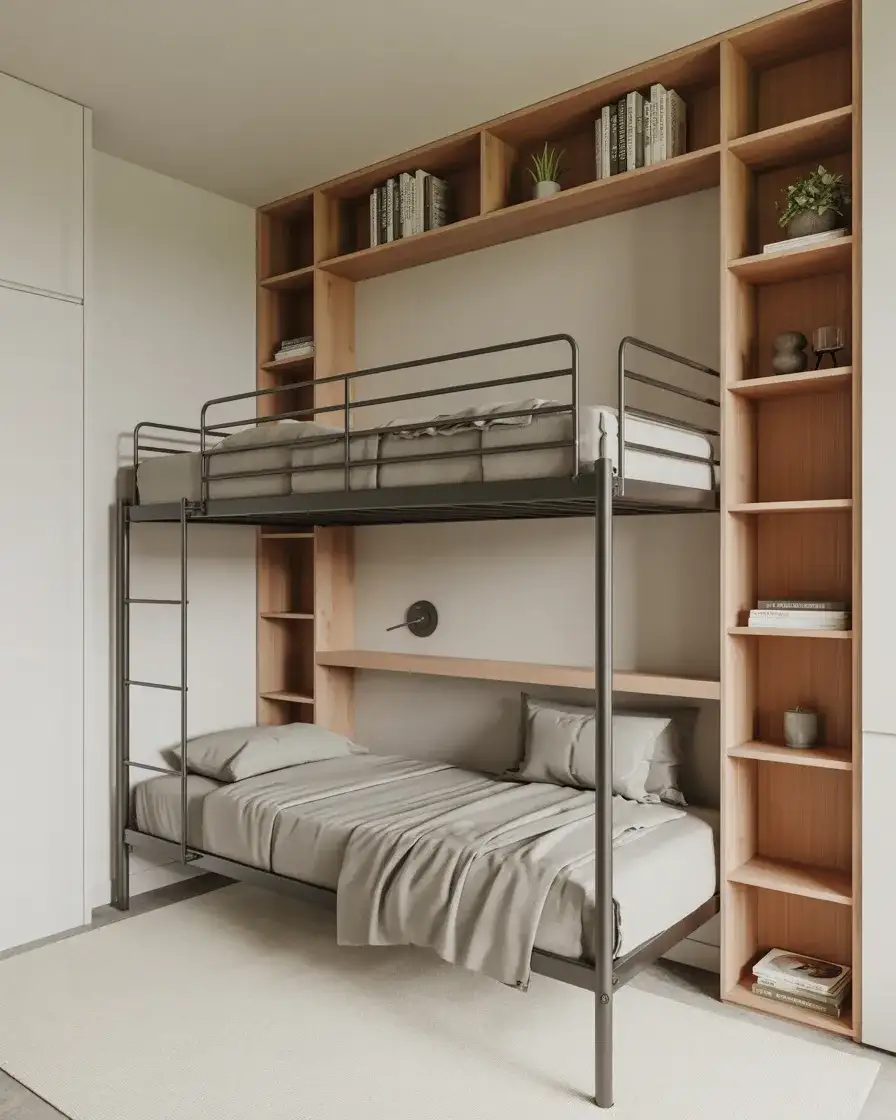
The most common mistake in small bedroom bunk design is over-stuffing the space with too many additional furniture pieces. If the room is under 120 square feet, the bunk bed system should do the heavy lifting for storage—don’t also add a bulky dresser, a large desk, and a toy chest. Commit to the bunk as the room’s primary workhorse, keep the remaining floor space as open as possible, and let the architecture breathe. The room will look designed, not cluttered.
22. Bunk Bed Designs That Double as a Whole Room Ecosystem
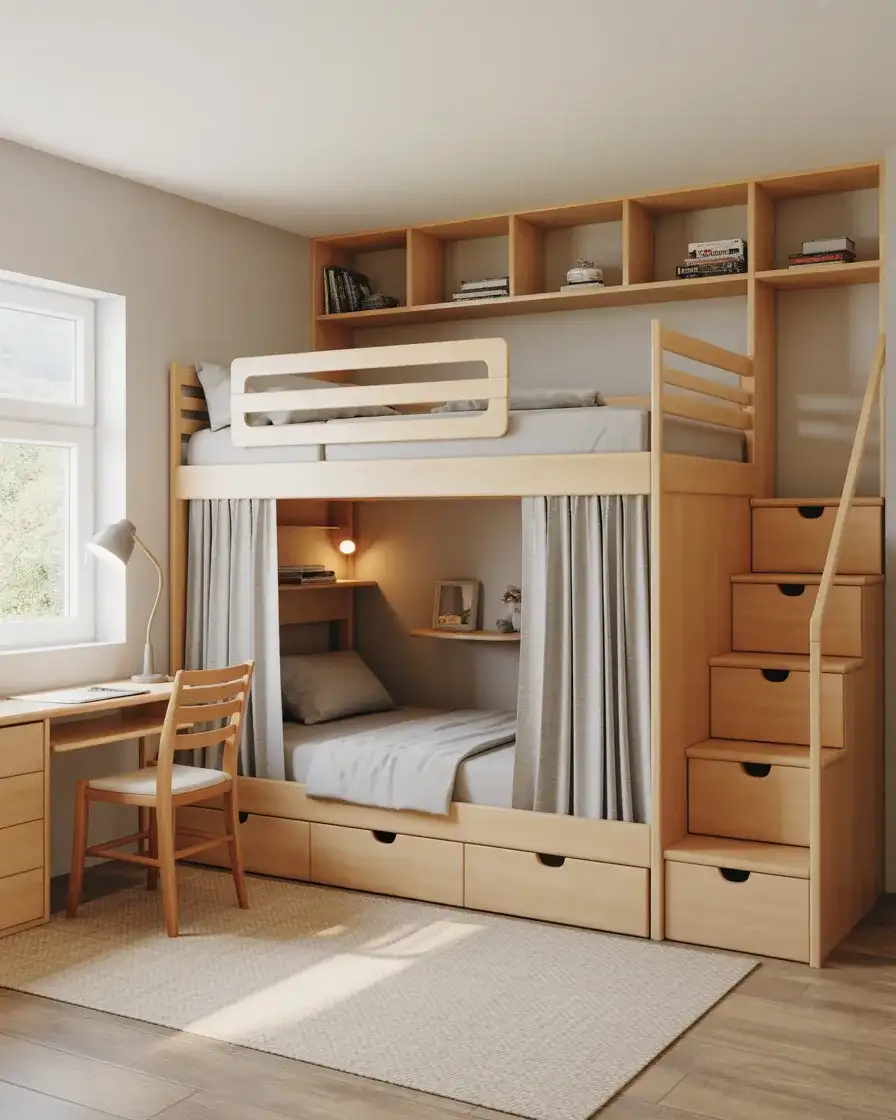
The most ambitious bunk bed designs of 2026 don’t stop at sleeping. They’re full room ecosystems: an upper bunk with a guardrail and reading light, a lower bunk with curtains and a small shelf, a staircase with integrated built-in drawers, a fold-down desk on one side, and open cubbies that replace what would otherwise be a separate bookshelf. When you add it all up, these system-style bunks do the job of five or six individual pieces of furniture while occupying the footprint of one. They’re expensive upfront, but the per-square-foot value they deliver is unmatched in residential furniture.
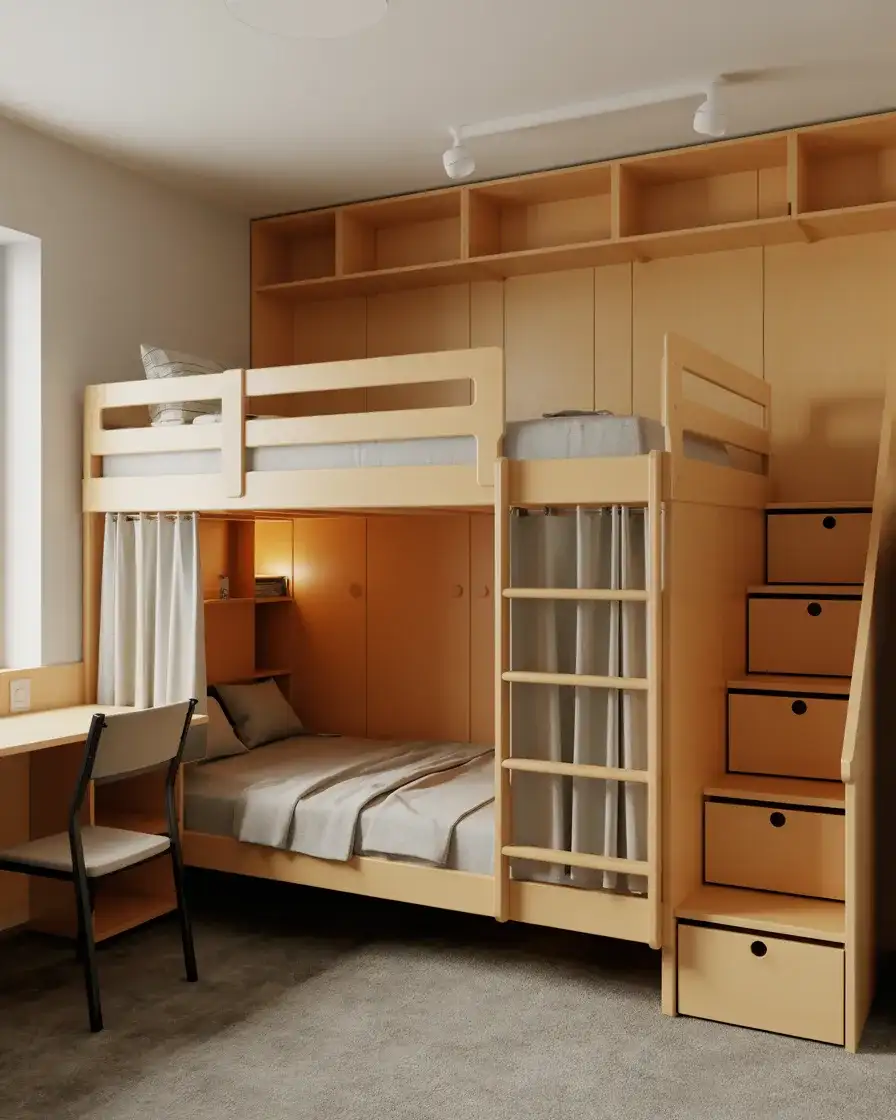
If you’re going this route, the most important practical insight is to plan your room layout before ordering. These systems are large—often 8–12 feet in length—and they need to be positioned before you bring in any other furniture. Measure the room carefully, account for door swing and window placement, and consider how much natural light the system will block from the windows it might partially cover. A floor plan sketch, even a rough one, will save you from a very frustrating delivery day.
23. Staircase Bunk Beds That Replace the Ladder for Good
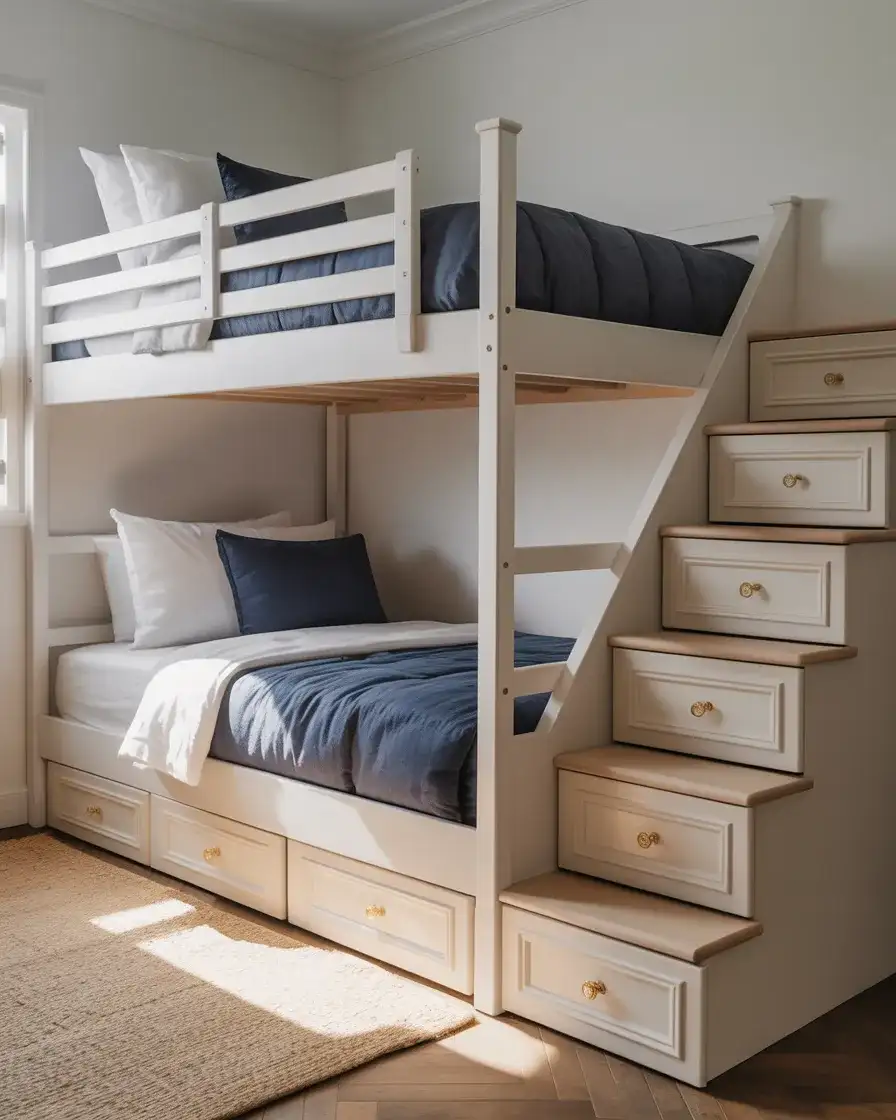
If there’s one upgrade that universally improves the bunk bed experience for families with younger kids, it’s replacing the standard ladder with a proper staircase. Staircase bunks are safer and easier to navigate in the dark, and—best of all—the stairs themselves typically incorporate deep pull-out drawers that serve as the room’s primary dresser, eliminating the need for a separate storage piece entirely. They’re one of the most popular choices in current ideas for small rooms because they do double duty without adding any footprint beyond what the stair structure already requires.
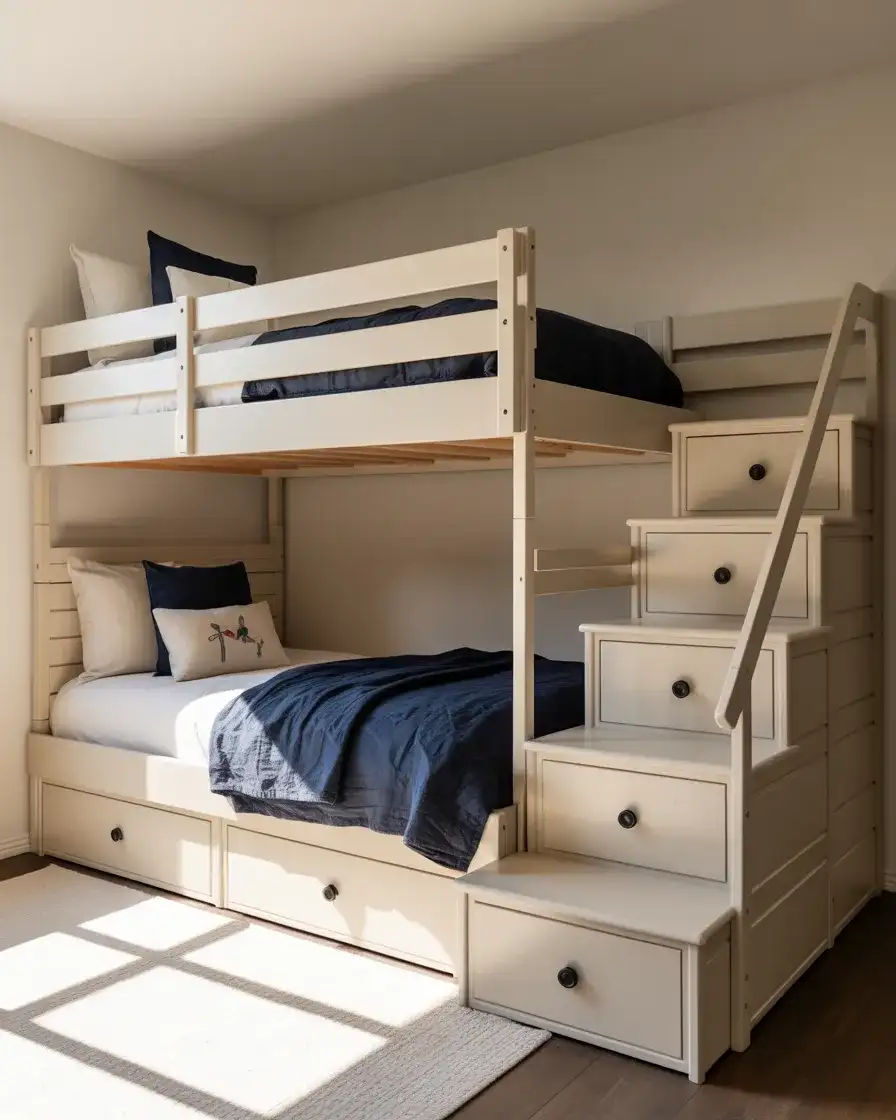
The staircase bunk is also the configuration most likely to pass the “grandparent test”—meaning elderly relatives and visiting adults can actually use the lower bunk without the physical challenge of navigating a vertical ladder in the middle of the night. If your home doubles as a gathering place for extended family, this thoughtful design decision quietly makes the guest room more accessible to everyone who visits. It’s the kind of choice that looks simple on the surface but reflects a real understanding of how people actually live.
Conclusion
Whether you’re working with a 90-square-foot city bedroom or a sprawling cabin sleeping loft, there’s a bunk bed idea in this list that can genuinely transform the way you use your space. The best setups don’t just sleep two people—they create a sense of order, coziness, and intentionality that ripples through the entire room. Which of these ideas are you planning to try? Drop your thoughts in the comments below—we’d love to know what you’re working on and what’s inspiring you this year.