Bunk beds aren’t just for summer camp anymore—and if your Pinterest feed is any indication, Americans are rediscovering them in a big way heading into 2026. Whether you’re outfitting a shared kids’ room, carving out a cozy guest nook, or rethinking a small apartment, today’s bunk bed designs are smarter, more beautiful, and more functional than ever before. From built-in storage beds with hidden desks to moody cabin lofts and sleek metal frames, there’s a style for every taste and square footage. In this guide, you’ll find 23 inspiring bunk bed ideas—each one designed to spark your next room makeover.
1. Built-In Bunk Beds With Storage Stairs
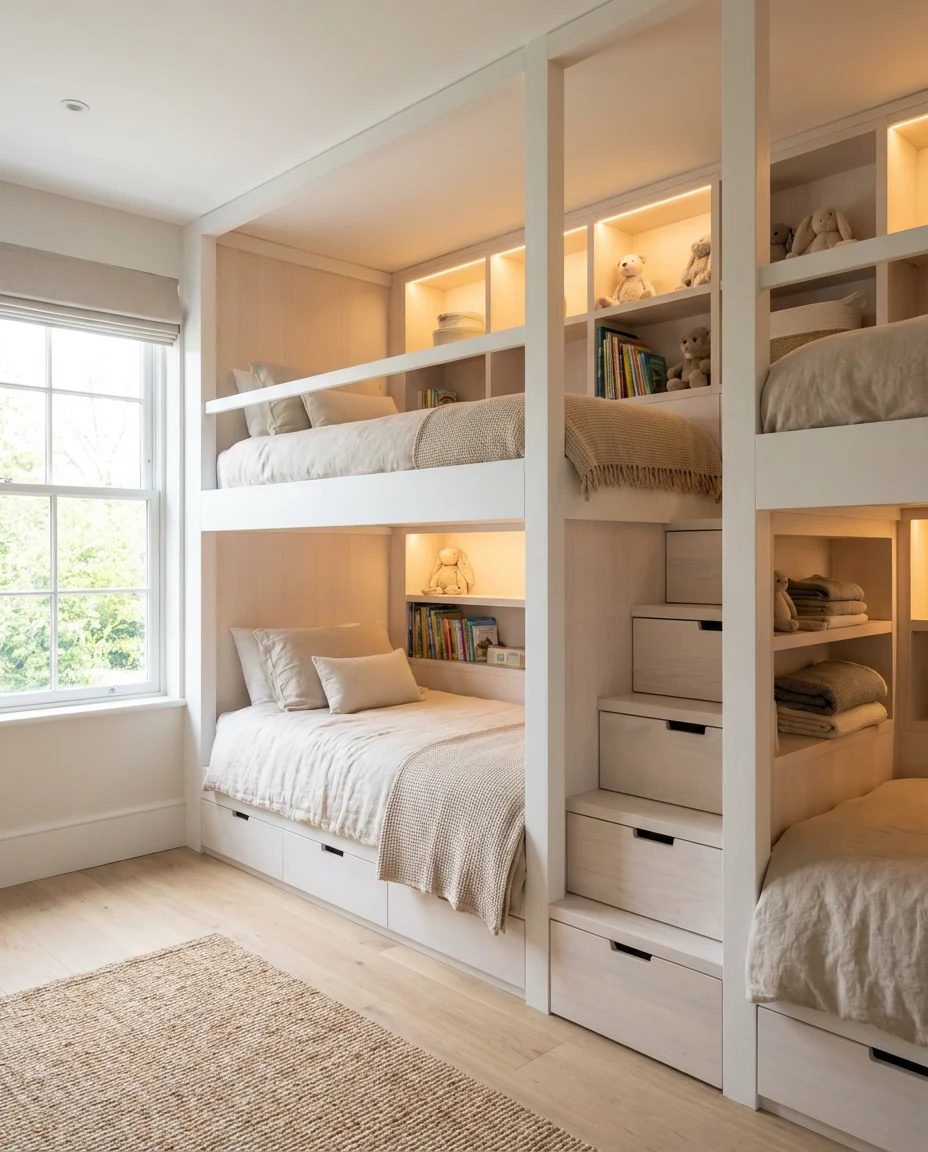
If you’re working with a small room and need every inch to count, built-in bunk beds with storage stairs are one of the smartest investments you can make. These beds are literally constructed into the wall, giving them a seamless, architectural feel that freestanding frames can never quite match. The stairs double as drawers—each step conceals a pull-out compartment perfect for folded clothes, shoes, or extra bedding. It’s the kind of setup that turns a cramped bedroom into something that feels genuinely custom and intentional.
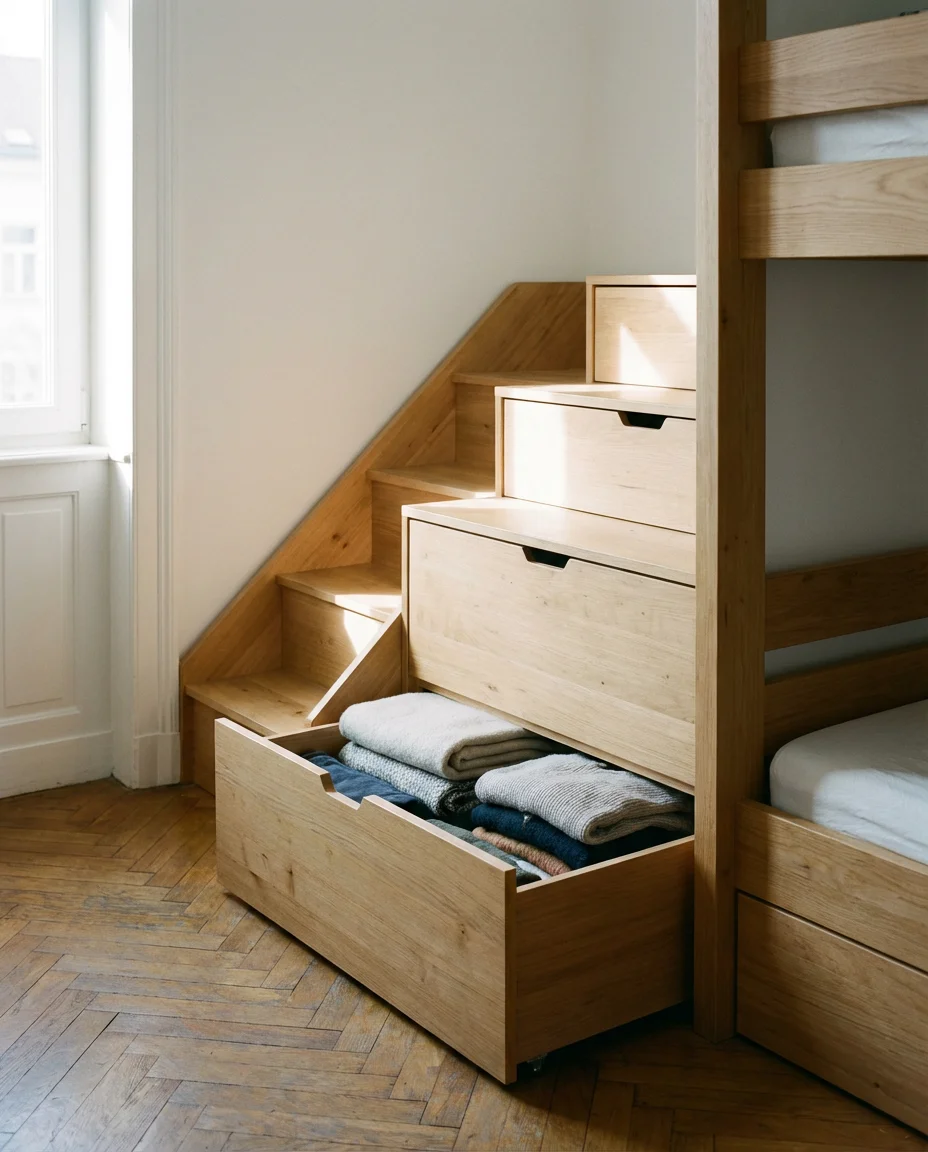
Built-ins work especially well in older homes where awkward alcoves and sloped ceilings make standard furniture a frustrating puzzle. A good carpenter can transform even the most oddly shaped nook into a sleeping solution that looks like it was always meant to be there. Budget-wise, you’re looking at anywhere from $2,000 to $8,000 depending on materials and complexity—but for homeowners planning to stay long-term, it’s an upgrade that adds real value to the home. Think of it as furniture that becomes architecture.
2. Triple Bunk Beds for Sibling Rooms

For families with three kids sharing one room, a triple bunk is a genuine game-changer. These tall, stacked configurations give each child their own dedicated sleeping space without multiplying the furniture footprint. Modern triple bunks come in everything from minimalist white wood to chunky farmhouse pine, and many include guardrails on every level plus wide, sturdy ladders. The kids’ room suddenly becomes a space where everyone has a spot to call their own—and the floor stays clear for play.
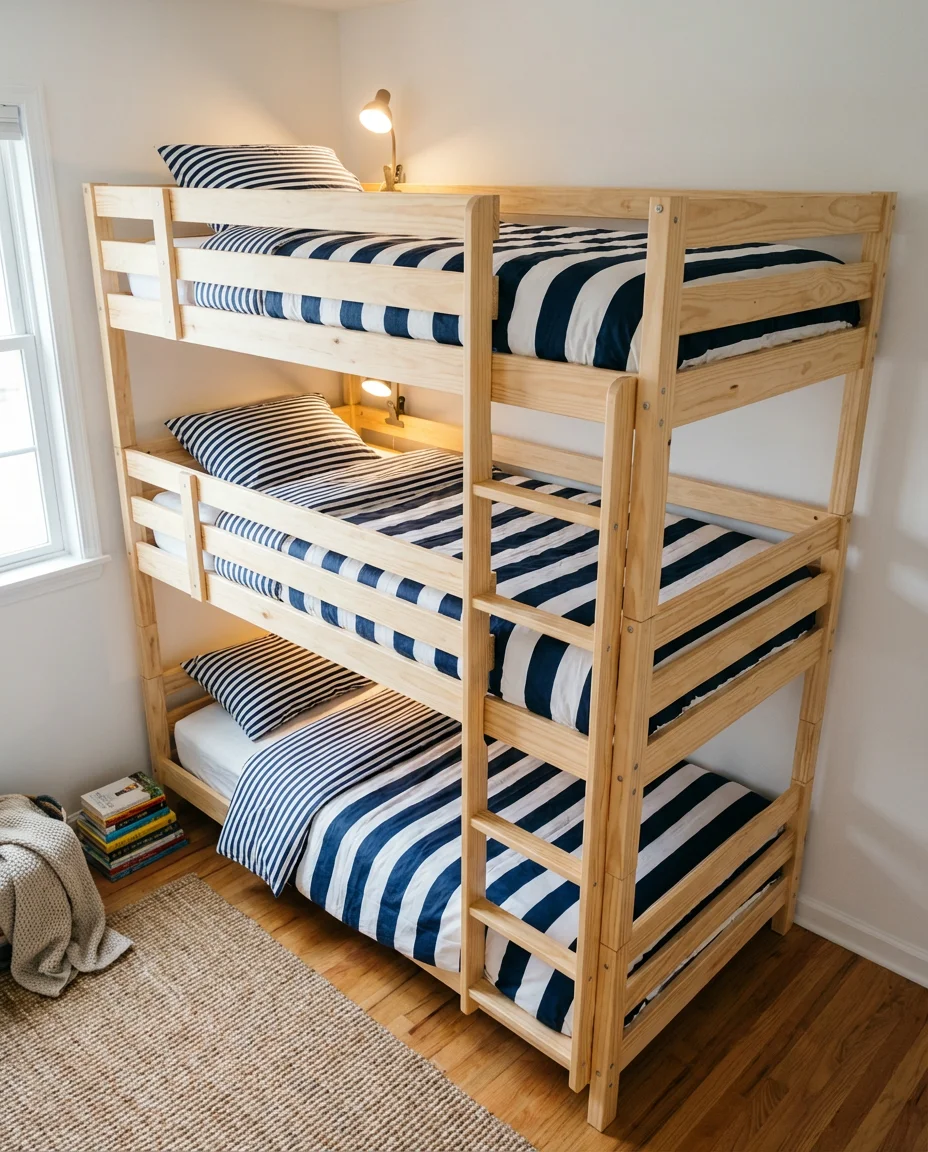
One thing parents often overlook is ceiling height. Before ordering a triple bunk, measure from floor to ceiling and subtract at least 30 to 36 inches for safe headroom on the top bunk. Rooms with 8-foot ceilings can feel uncomfortably tight with three tiers, so it’s worth doing the math before you fall in love with a design online. Standard 9-foot ceilings are much more forgiving, and vaulted ceilings practically beg for a dramatic three-story sleeping tower.
3. Aesthetic Bunk Beds With Curtain Privacy
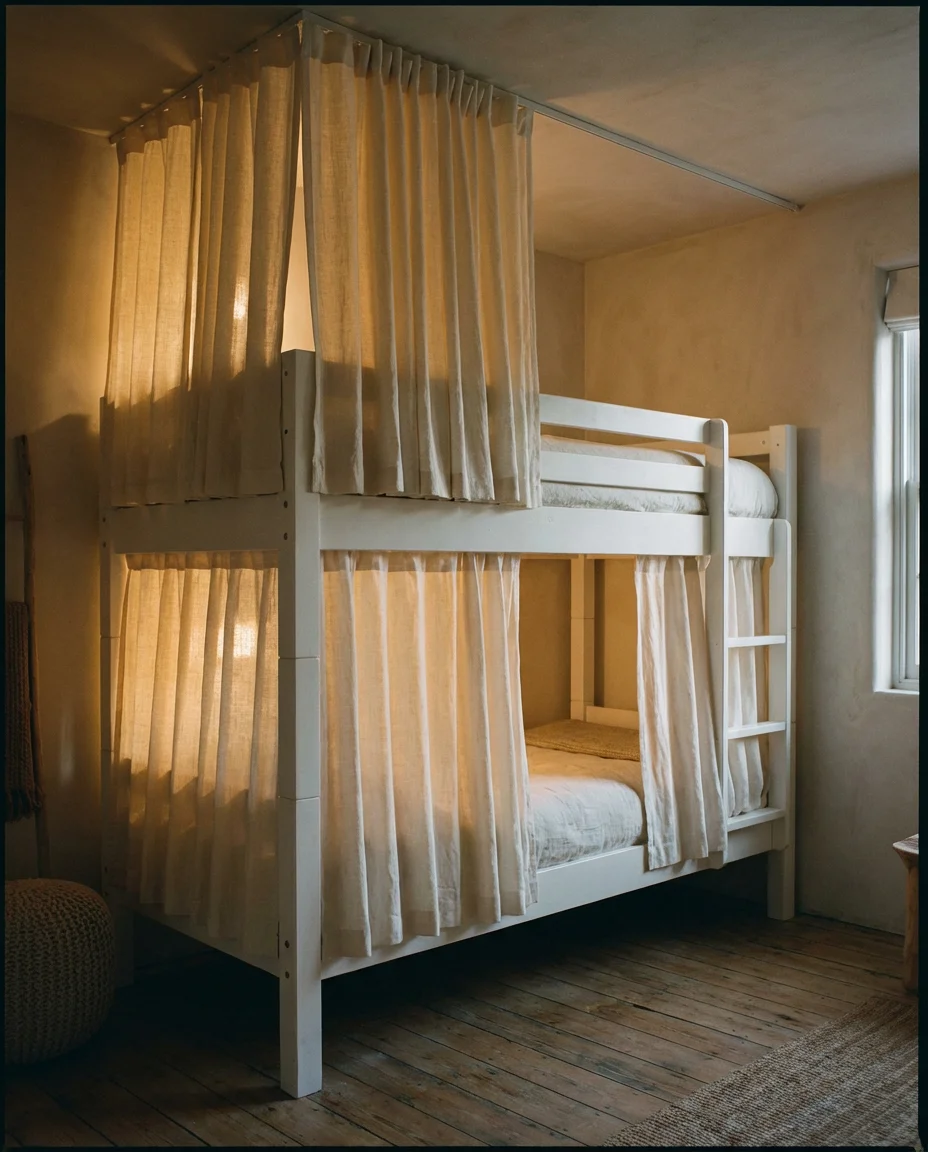
The aesthetic bunk bed trend of 2026 leans heavily into the idea of personal sanctuary—and nothing says “this is my space” quite like a set of linen curtains you can pull closed around your bunk. Inspired by Japanese sleeping pods and boutique hostel design, curtained bunks are showing up everywhere from shared kids’ rooms to teen retreats. Light, gauzy fabrics in soft neutrals keep the look airy, while thicker blackout panels work beautifully for kids who are sensitive to morning light or who love a cozy cocoon feeling.
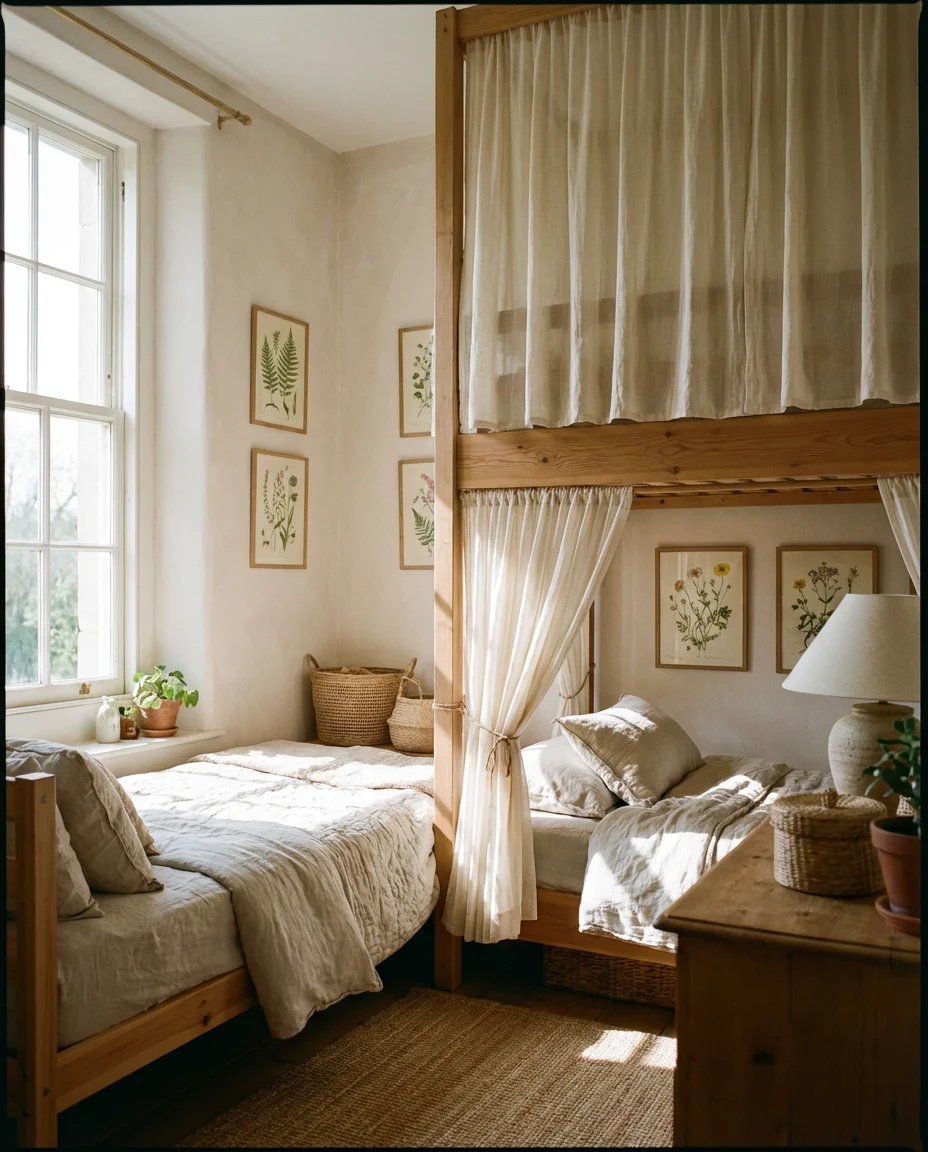
Curtains don’t have to be an afterthought—treat them like a design element. Choose a fabric that ties into your room’s palette, and install a slim curtain rod directly on the bunk frame. Many IKEA bunk frames actually accommodate this modification with simple hardware. A real homeowner trick: sew small tie-backs using the same fabric so the curtains can be looped open during the day without bunching. It’s a small detail, but it makes the whole setup look intentional rather than improvised.
4. Rustic Cabin Bunk Beds in Wood
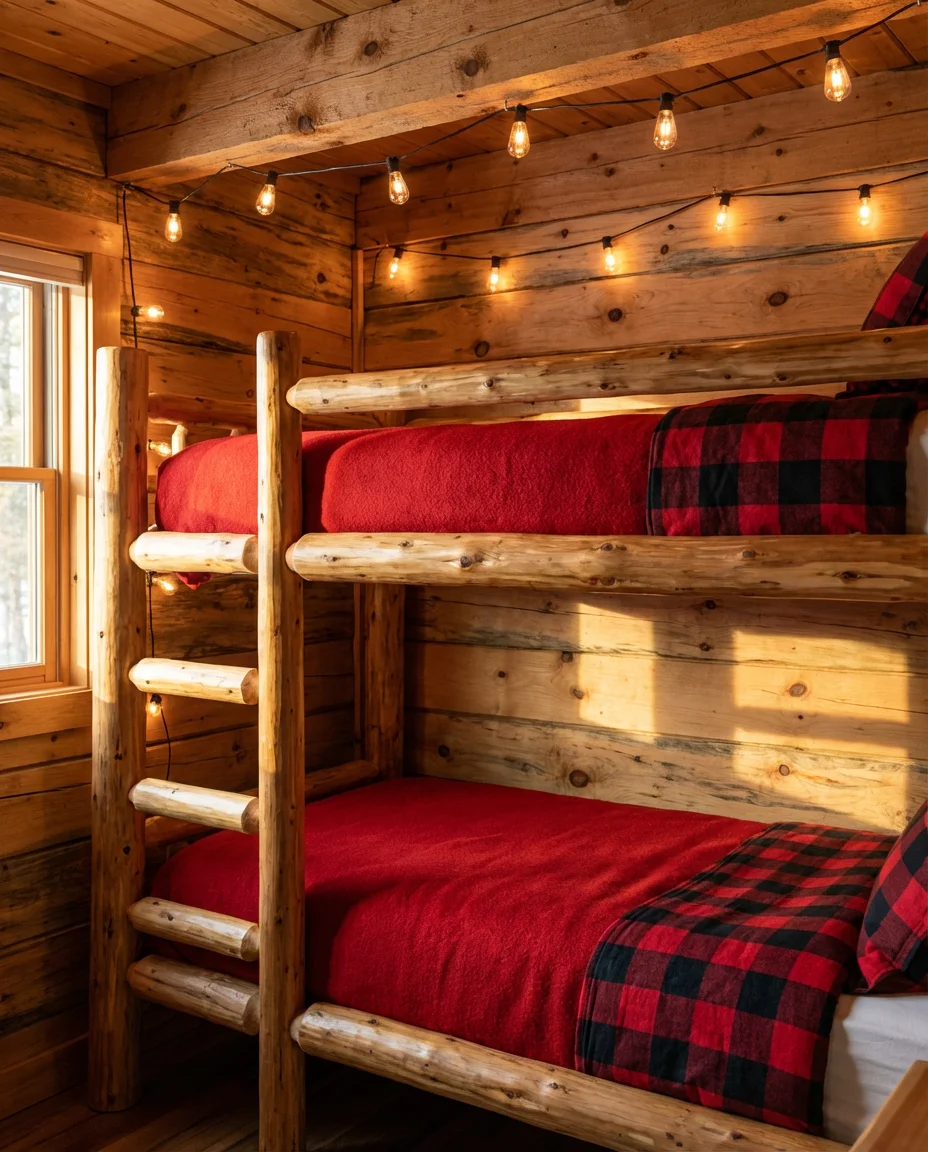
There’s something deeply nostalgic about a rustic wood bunk bed—the kind that looks like it belongs in a cabin tucked somewhere in the Appalachians or the Rockies. These beds typically feature natural pine or cedar construction, visible wood grain, and chunky joinery that celebrates the material rather than hiding it. The warmth they bring to a room is almost impossible to replicate with metal or painted wood frames. Paired with plaid flannel bedding and some Edison-bulb string lights, a rustic bunk bed transforms a plain bedroom into something that feels genuinely lived-in and loved.
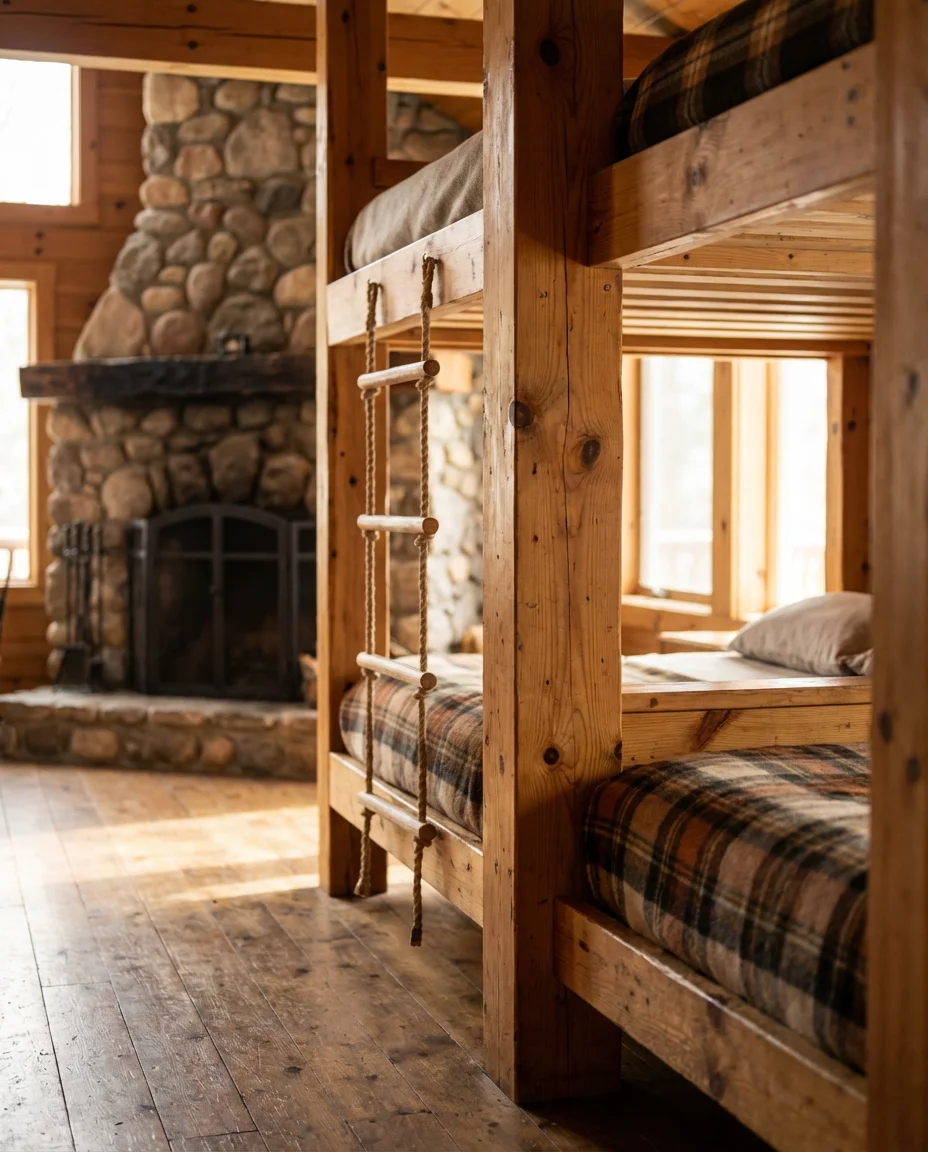
This style works best in rooms with other natural elements—exposed beams, reclaimed wood shelving, and stone or brick accent walls. If your home is more contemporary, you can still pull it off by keeping the rest of the room simple and letting the bunk bed be the statement piece. Cedar in particular has the bonus of being naturally resistant to moisture and pests, which is a practical win for vacation homes or lake houses where beds sometimes sit unused for months at a time.
5. IKEA Bunk Bed Hacks for Small Bedrooms

IKEA bunk beds have built an almost cult following among parents and interior design enthusiasts, and it’s easy to see why. Frames like the MYDAL and KURA are affordable, safe, and—crucially—incredibly hackable. With a little paint, some added molding, or a custom canopy, these budget-friendly bases transform into something that looks like it came from a boutique children’s furniture brand. For designs in small bedrooms, the KURA reversible loft bed is especially brilliant: flip it one way for a loft, the other way for a bunk, and tuck a reading nook or play space underneath.
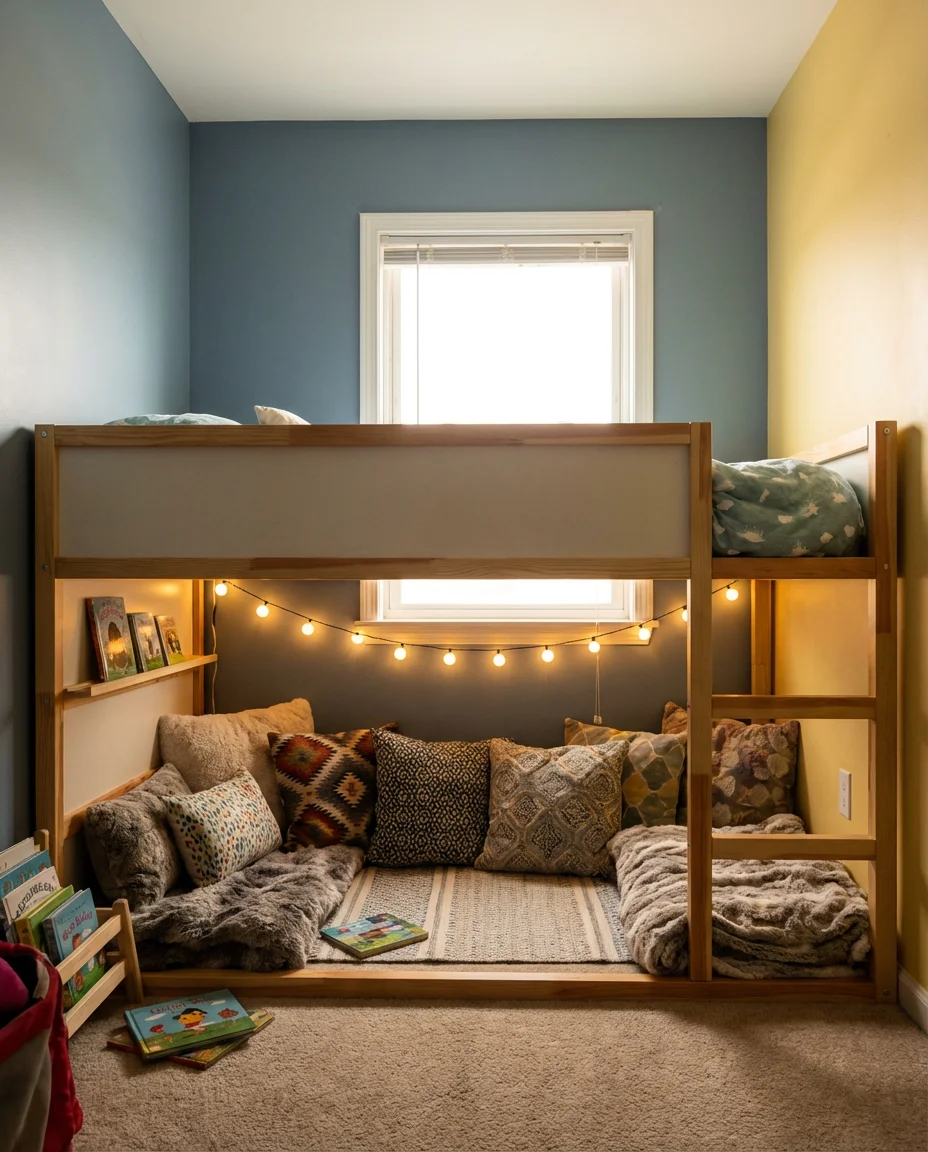
The Pinterest IKEA hack community is genuinely one of the most creative corners of the internet. People have added shiplap panels to MYDAL sides, painted KURA frames in moody forest greens, and outfitted the undersides with peel-and-stick star wallpaper for a magical nighttime effect. If you’re handy with a drill and some sandpaper, a $199 flat-pack bunk bed can genuinely look like a $1,000 custom piece. The key is committing to the details—hardware upgrades, a cohesive color story, and quality bedding do most of the heavy lifting.
6. Bunk Beds With Desk Underneath for Teen Rooms
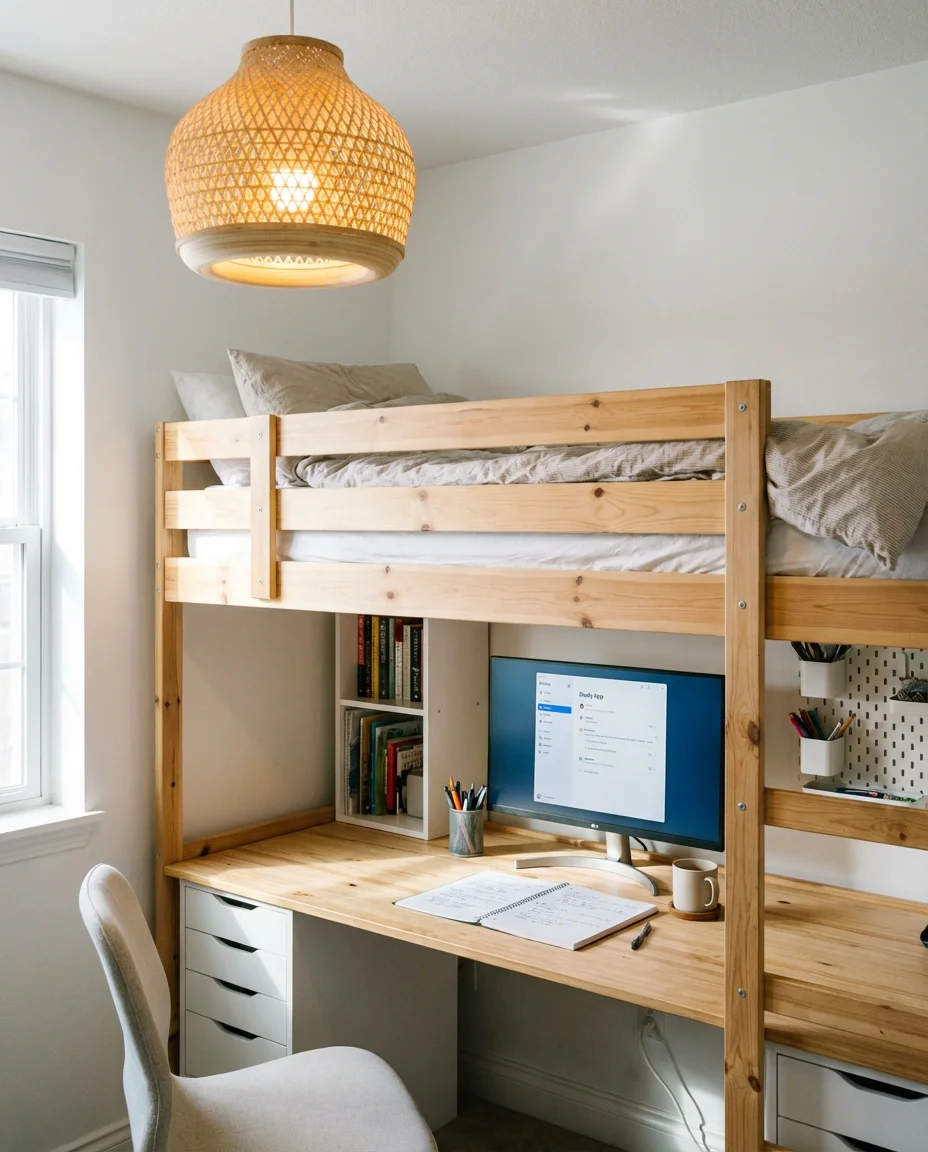
The loft-style bunk with a desk underneath is one of the most functional furniture configurations ever invented for a teenager’s room. By elevating the sleeping surface, you free up the floor entirely for a proper workspace—wide enough for a monitor, notebooks, and a decent lamp. This is especially valuable for ideas for small rooms where a separate bed and desk simply won’t fit side by side. Teens love the feeling of having a dedicated study zone that feels tucked away and focused, almost like a mini home office that’s entirely their own.
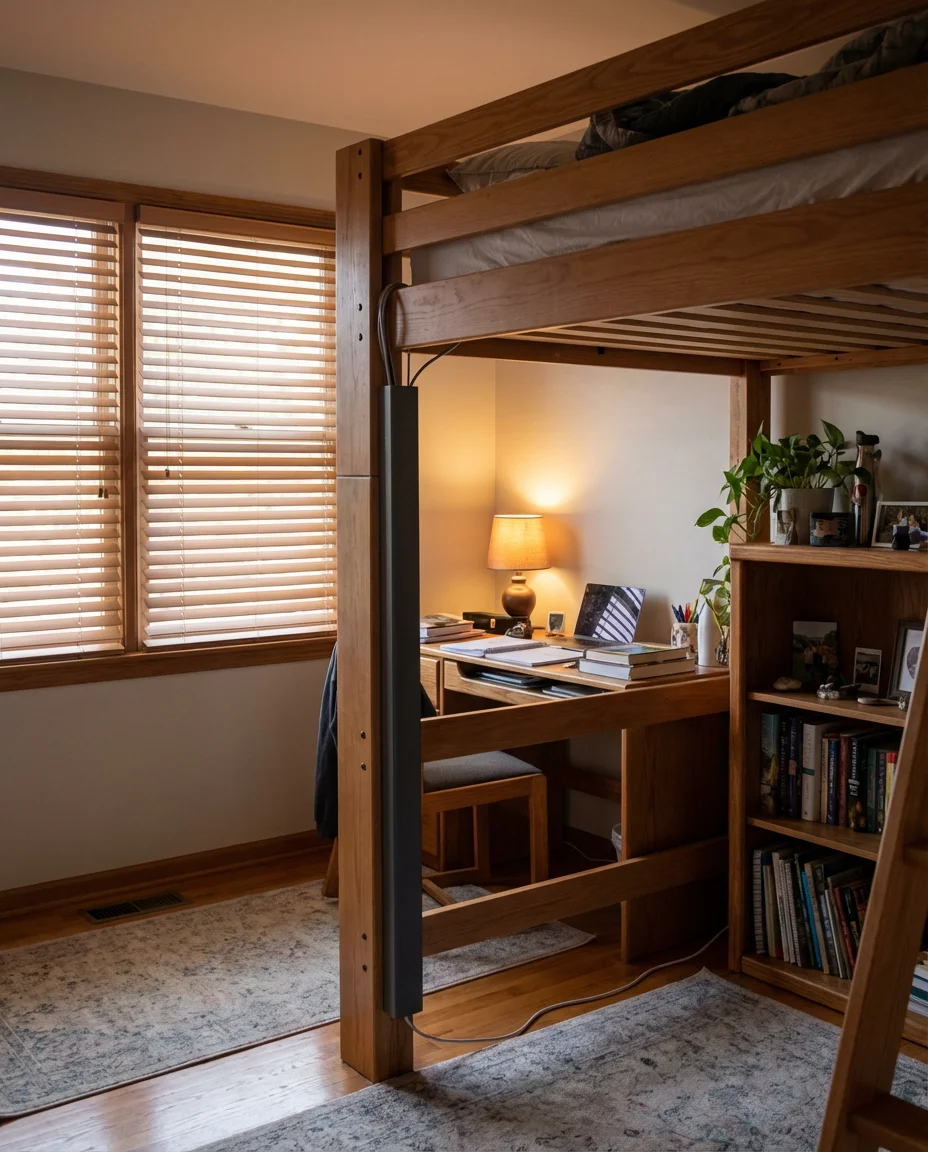
Interior designers who specialize in kids’ spaces often recommend this setup for children transitioning from elementary to middle school, when homework starts becoming a bigger part of daily life. A proper workspace—not a kitchen table, not a couch—communicates to kids that studying matters and deserves its own real estate. Look for loft beds with built-in cable management channels if your teen uses a computer; it keeps cords from becoming a tangled mess dangling from the upper bunk.
7. Metal Bunk Beds With an Industrial Edge
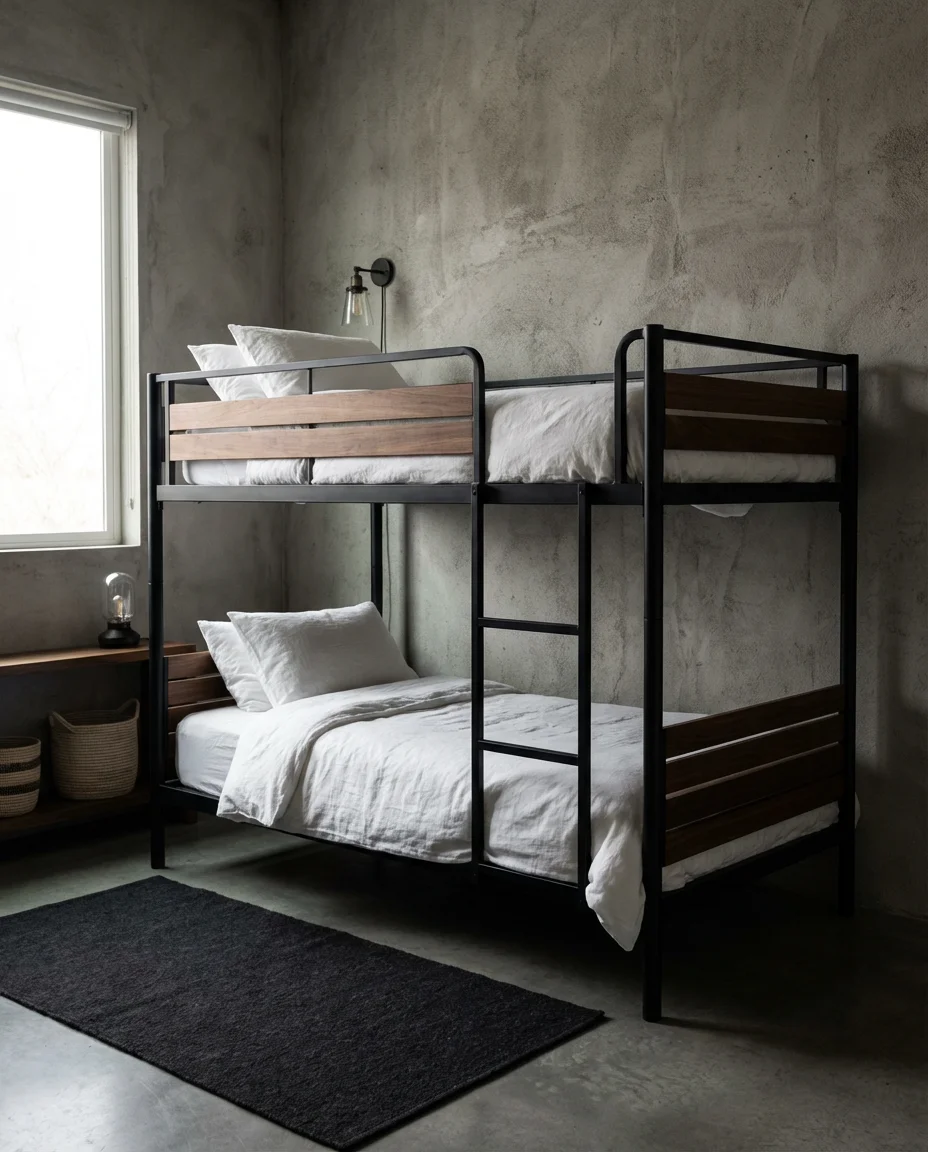
Metal bunk beds have shed their sterile, utilitarian image and stepped firmly into the design conversation. In 2026, the best metal bunks pair matte black powder-coated frames with warm wood accents—think walnut slat panels or bamboo ladders—creating a look that’s industrial without feeling cold. These frames are incredibly durable, which makes them a smart long-term investment for active households. The clean lines and open silhouette also make small rooms feel less cluttered than bulkier wood alternatives.
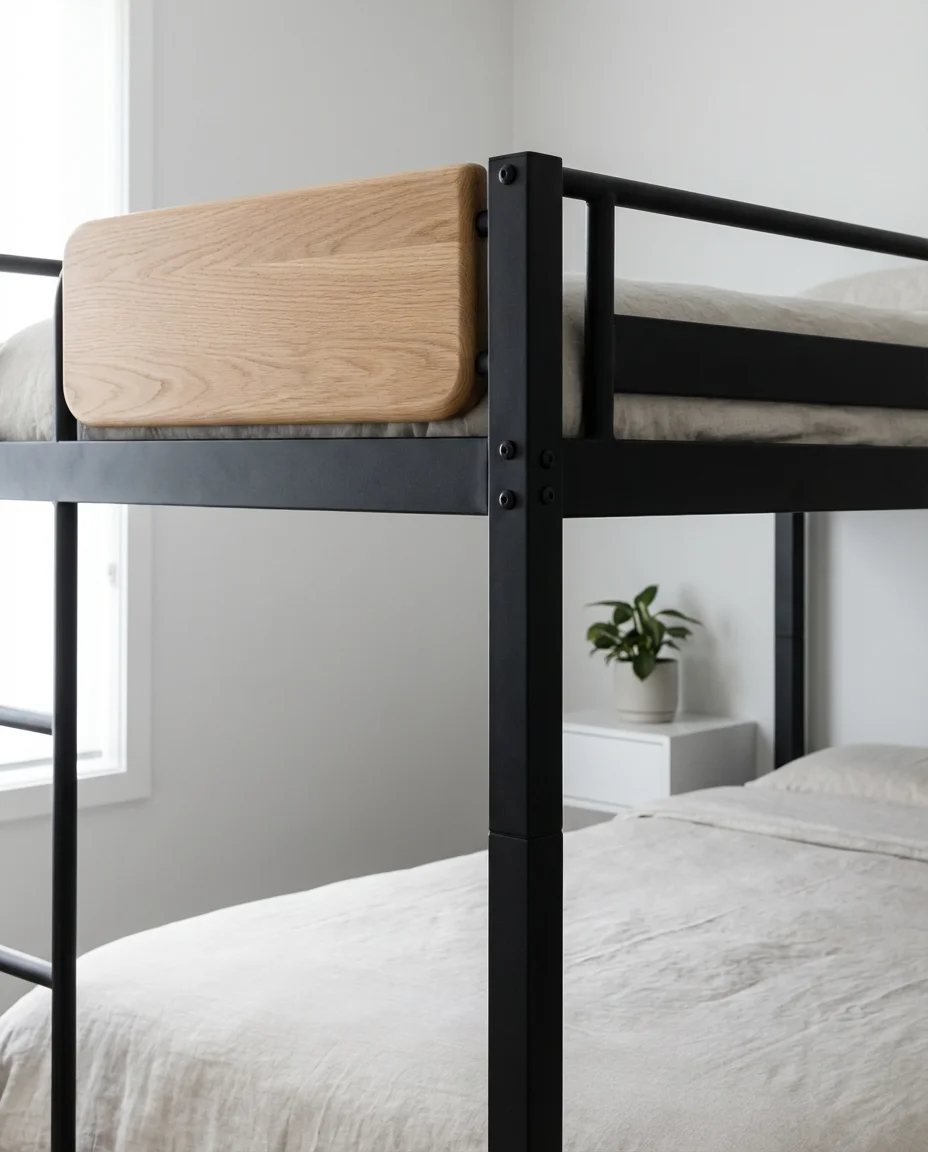
Matte black metal bunks are having a particular moment right now in urban apartments and loft-style condos—places where exposed brick, concrete floors, and open ceilings set the tone. The style bridges the gap between grown-up living and practical sleeping arrangements without making either bunk feel like a consolation prize. For adults sharing a studio or one-bedroom with a roommate, a well-chosen metal bunk bed can actually become a focal point of the room rather than something to apologize for.
8. Bunk Beds for Adults in Guest Rooms
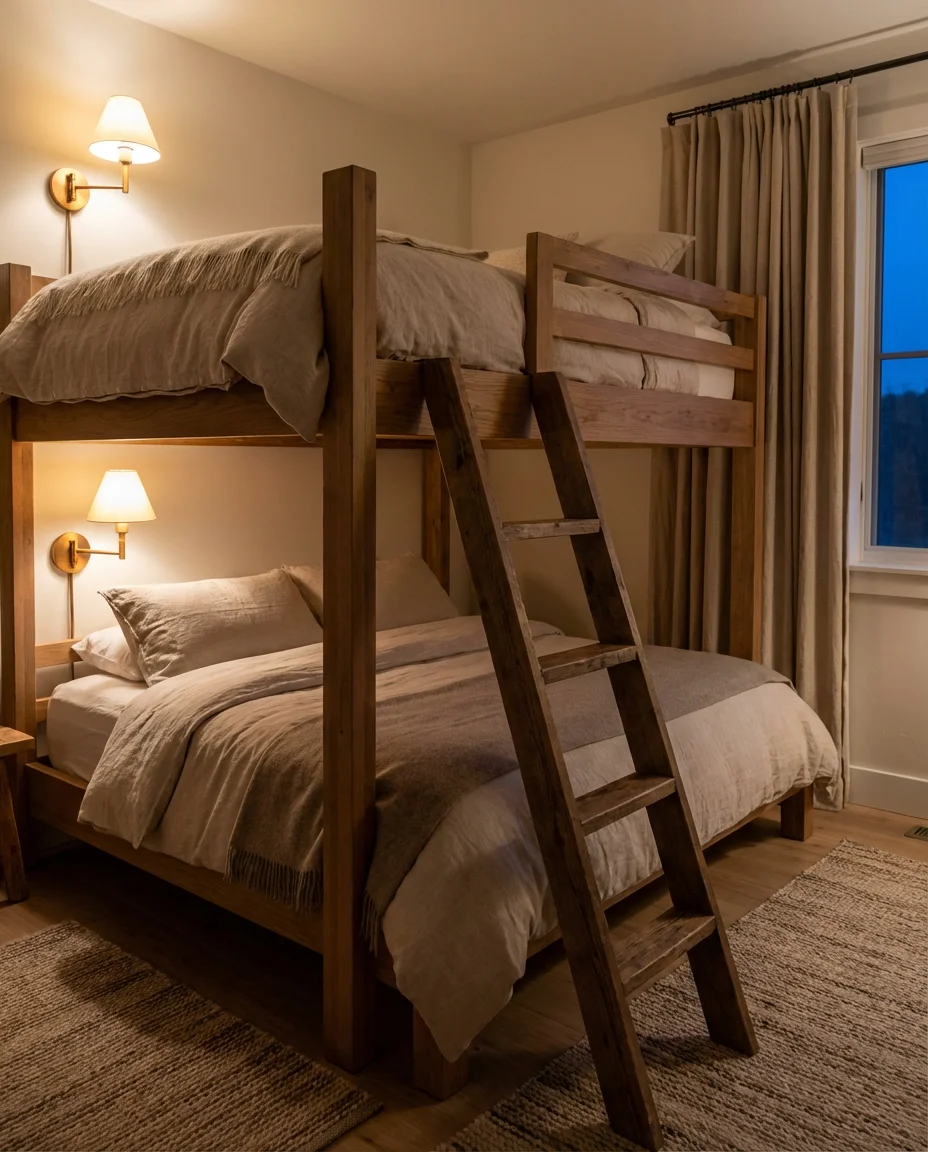
The idea of bunk beds for adults has officially graduated from novelty to necessity, especially as housing costs push more Americans toward creative space-sharing solutions. Adult-appropriate bunks are wider, taller, and structurally rated for higher weights than their kids’-room counterparts. Many feature queen- or full-size lower bunks paired with a twin up top, giving the primary sleeper real comfort while still accommodating a guest. These are becoming standard fixtures in Airbnb rentals, tiny homes, and even boutique hotels that lean into the cozy, communal aesthetic.
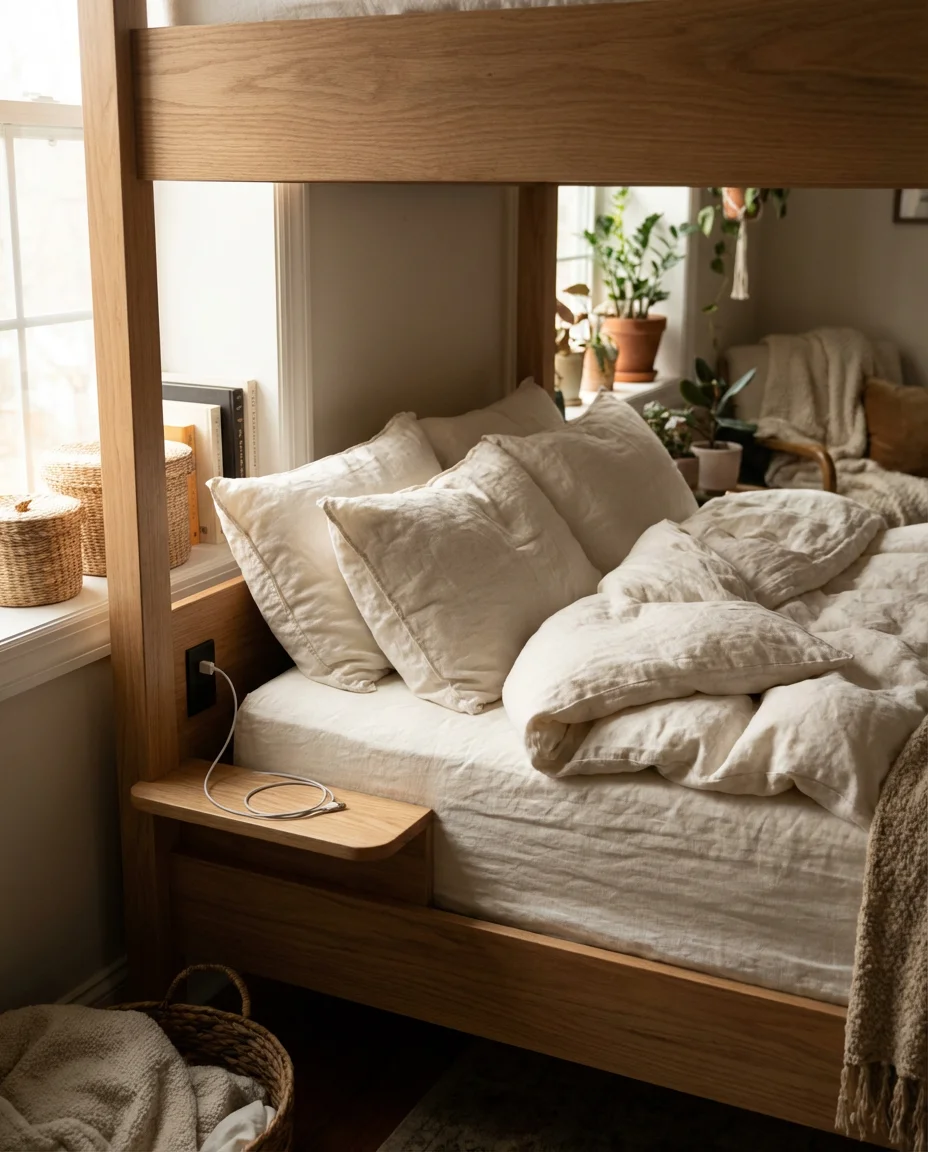
One common mistake people make when buying adult bunk beds is underestimating mattress thickness. Many bunks have guardrail heights calibrated for slim, 6-inch mattresses—use a 10- or 12-inch memory foam mattress on the top bunk, and suddenly the guardrail feels dangerously low. Always check the manufacturer’s recommended mattress height before purchasing, and if you’re customizing a built-in, design your guardrails with thicker mattresses in mind from the start.
9. Twin Over Full Bunk Bed Configurations
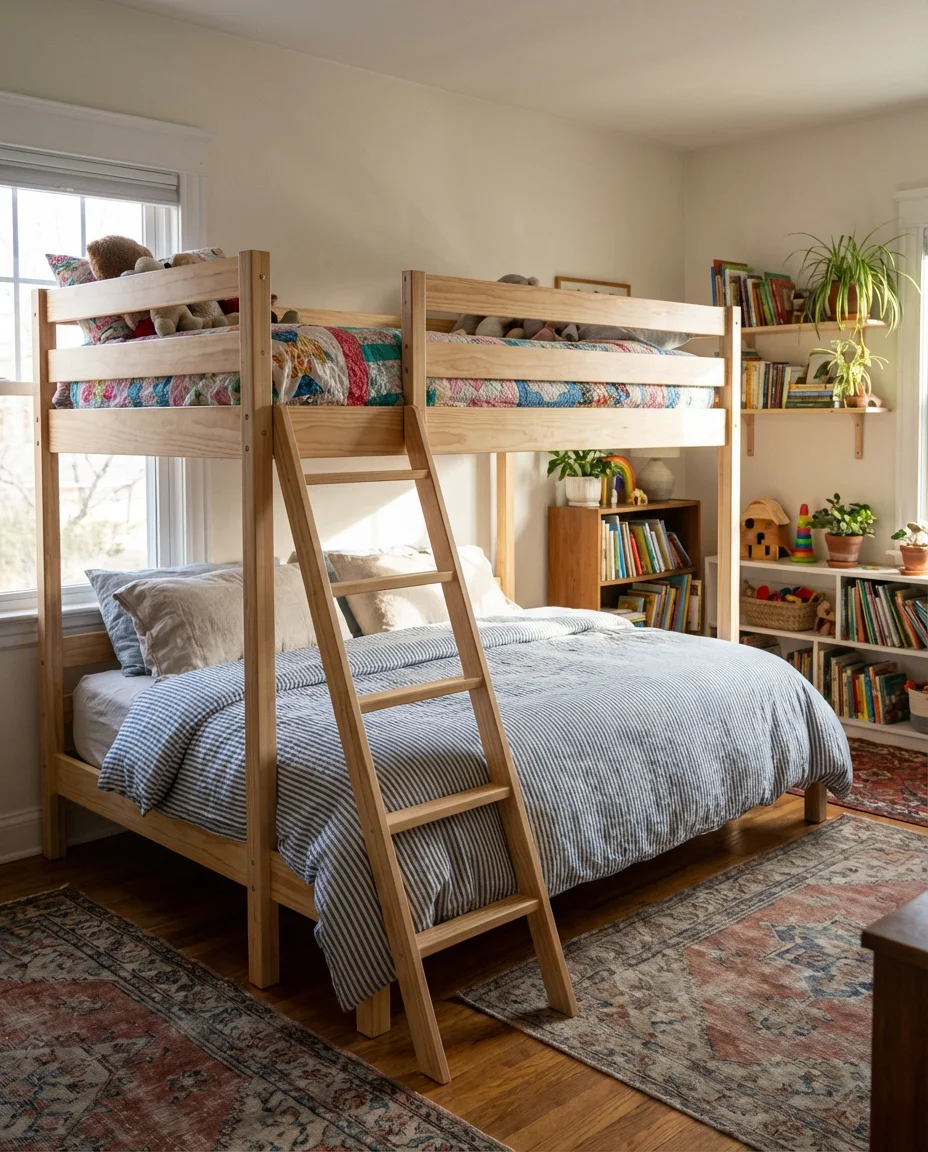
The twin-over-full bunk bed is one of the most practical configurations for shared sibling rooms, especially when kids are different ages and sizes. The full-size lower bunk gives the older or larger child a comfortable, grown-up sleeping surface, while the twin on top works perfectly for younger kids who don’t need as much space. This setup sidesteps the perennial sibling argument about who gets the better bunk—the full bed becomes an obvious upgrade, making the bottom feel like the desirable spot for once.
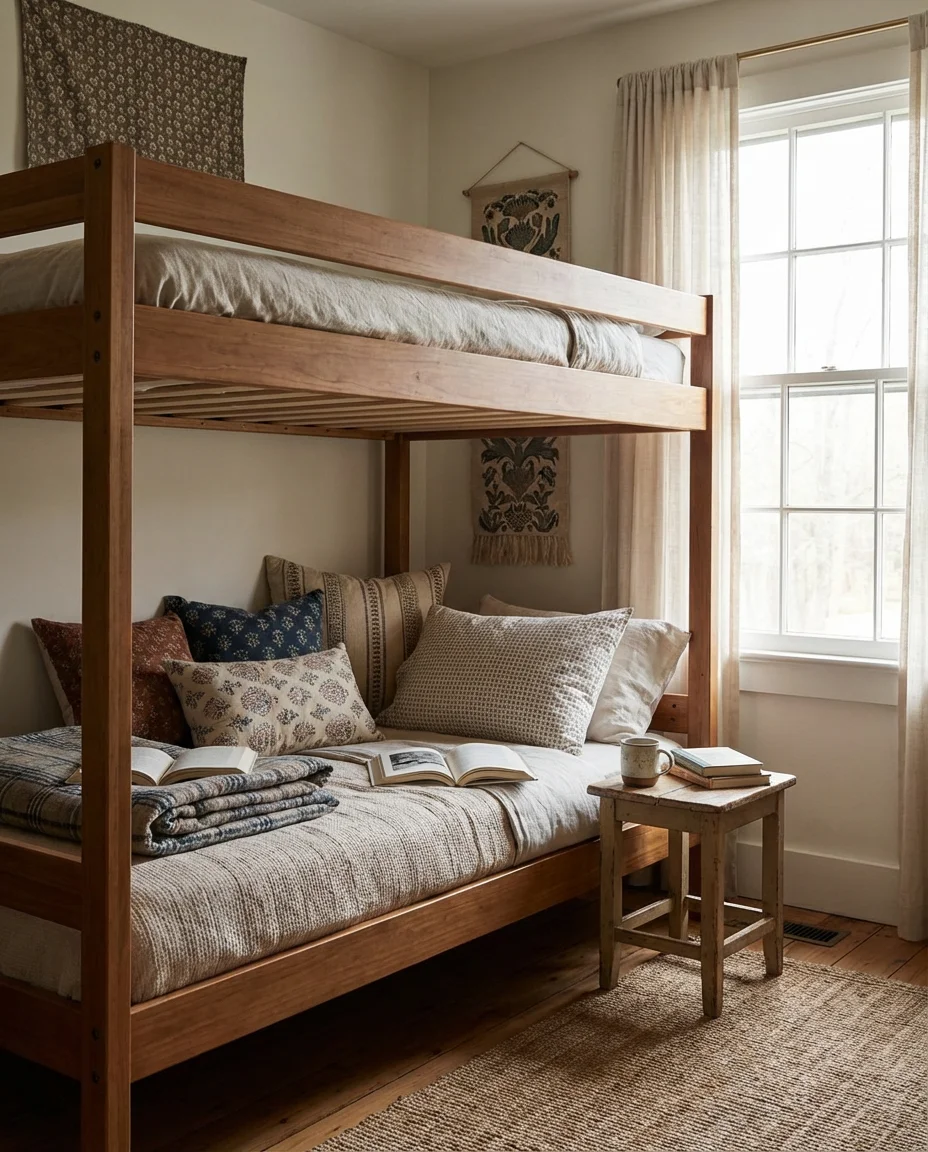
In terms of American lifestyle context, twin-over-full bunks fit especially well in the classic 1950s and 1960s ranch-style homes that dominate so many suburban neighborhoods across the Midwest and South. These homes were built for families, but their bedrooms tend to run modest in size—usually 10×12 or 10×10. A twin-over-full bunk fills that space efficiently without crowding it, and the lower full bed doubles as a reading and lounging spot during the day, which is exactly how most kids actually use it.
10. Unique-Shaped Bunk Beds as Statement Pieces

Not every bunk bed needs to be a simple rectangle stacked on another rectangle. Unique, shaped bunk beds—think hexagonal canopies, arched headboards, house-frame silhouettes, or L-shaped configurations with a loft on one end and a play space on the other—are becoming the centerpiece of imaginative children’s rooms. These designs read almost like sculpture, turning the sleeping area into an experience rather than just a functional necessity. When a child’s room has a bed that feels genuinely exciting, the whole space transforms.
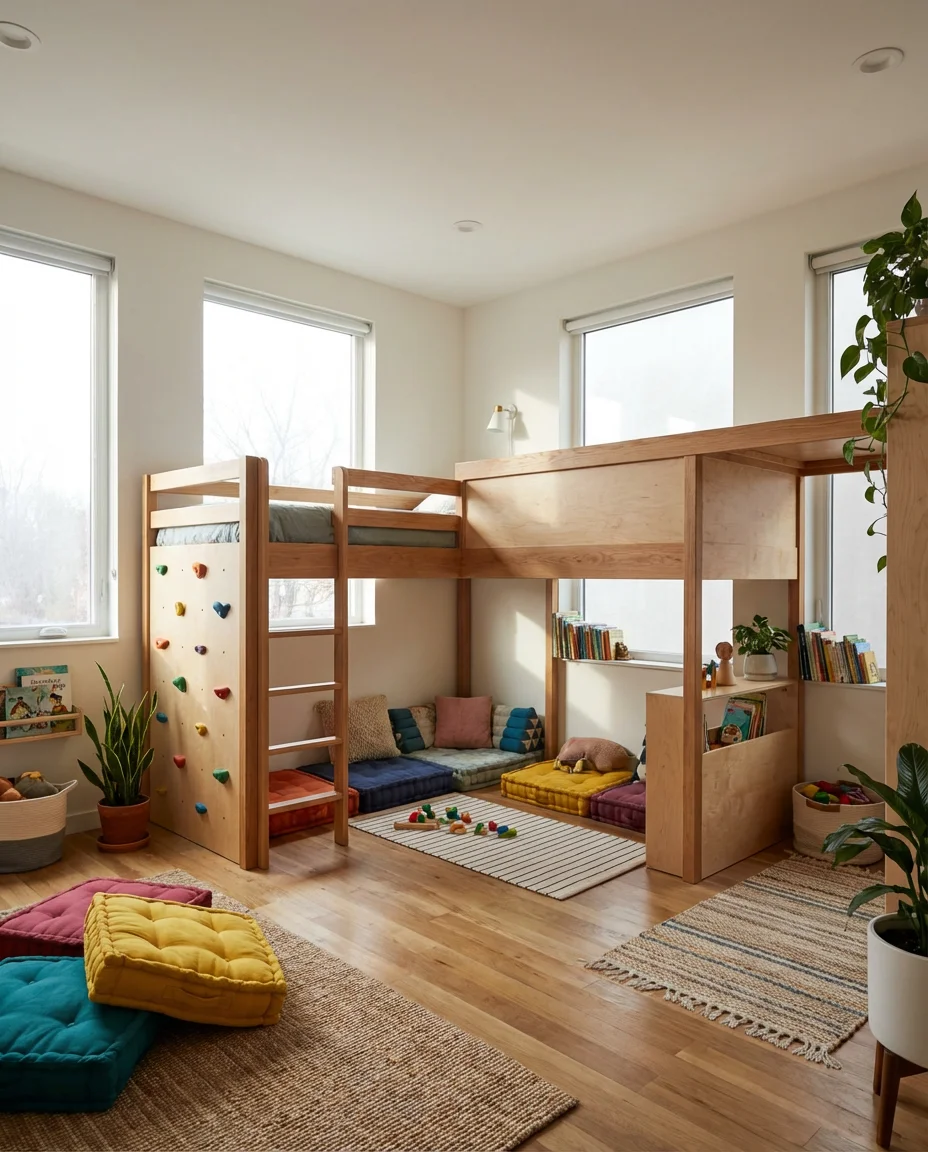
The house-frame bunk bed—essentially a bed shaped like a little A-frame cabin—has dominated Pinterest boards for a few years now and shows no sign of slowing down in 2026. It works as both a bunk and a visual anchor, instantly establishing a theme for the whole room. Style it with mountain-themed wall art, wood-tone accents, and some simple indoor plants, and you’ve created a room that feels cohesive and carefully designed rather than assembled from random pieces.
11. Murphy Bunk Beds for Multifunctional Spaces
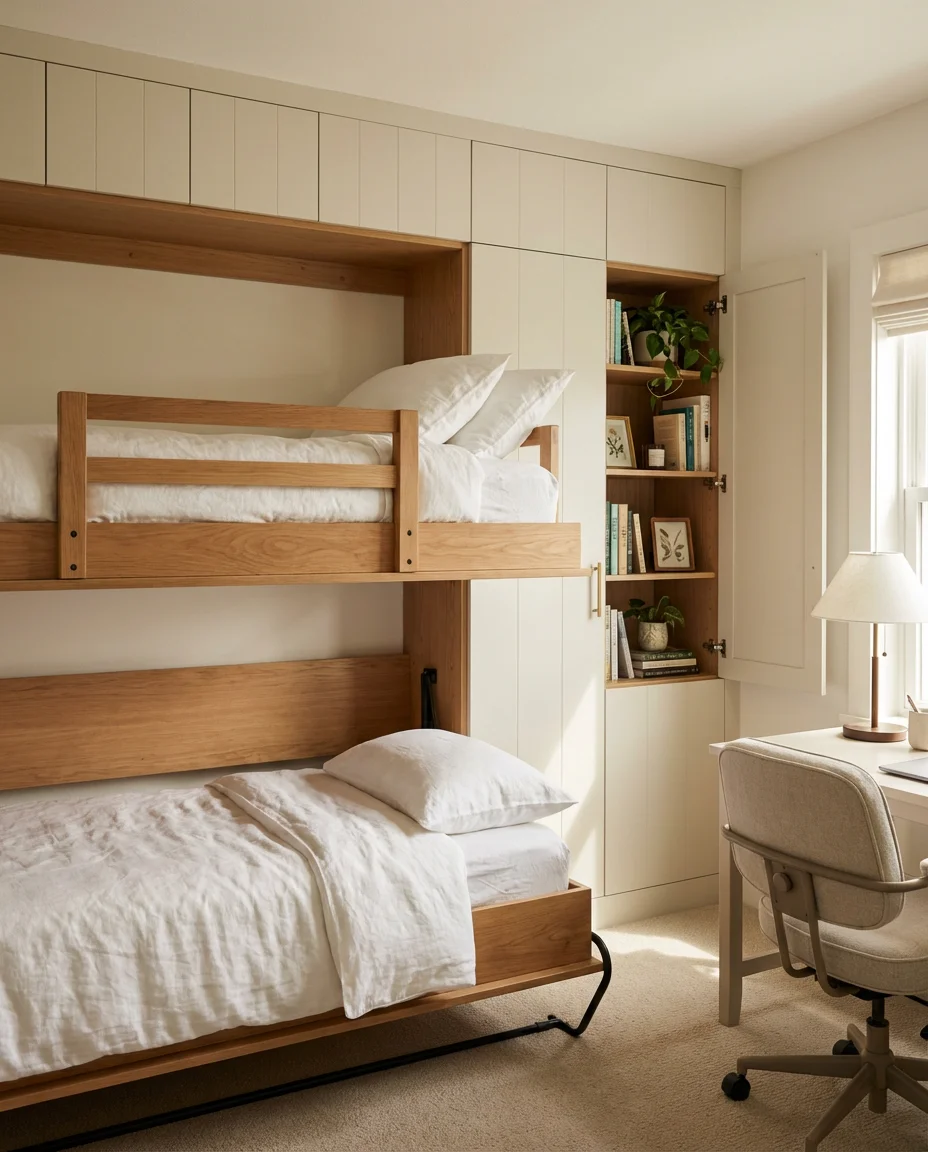
The Murphy bunk bed is arguably the most impressive space-saving furniture innovation of the last decade. By day, the whole system folds flat against the wall—sometimes concealed behind a panel that doubles as a bookcase or desk surface. By night, two full sleeping berths unfold with minimal effort. For anyone furnishing a home office that needs to occasionally host overnight guests, or a studio apartment where every square foot is spoken for, this is a legitimate dream solution. The best systems take under 30 seconds to deploy and feel completely solid once locked into position.

Murphy bunk beds range widely in price—entry-level DIY kits start around $800, while fully custom, cabinet-integrated wall units from specialty companies can top $6,000. The investment tends to make the most sense in high-cost urban housing markets like New York, San Francisco, or Boston, where that same square footage reclaimed by a wall bed can functionally add an entire room to your floor plan. It’s worth factoring in professional installation, which usually runs $300 to $600 but ensures the wall anchoring is properly load-bearing.
12. Bunk Beds With Slides for Playful Kids’ Rooms

Few things make a child feel like the luckiest kid on the block quite like a bunk bed with a slide. These beds combine the practicality of elevated sleeping with the pure joy of a playground-style exit, and they work beautifully as a centerpiece in a kids’ room designed around adventure and play. Slides attach to the end or side of the upper bunk and come in everything from simple plastic chutes to custom wood and metal designs that look like they belong in a high-end treehouse. Some configurations even incorporate a climbing wall on the opposite side of the ladder.
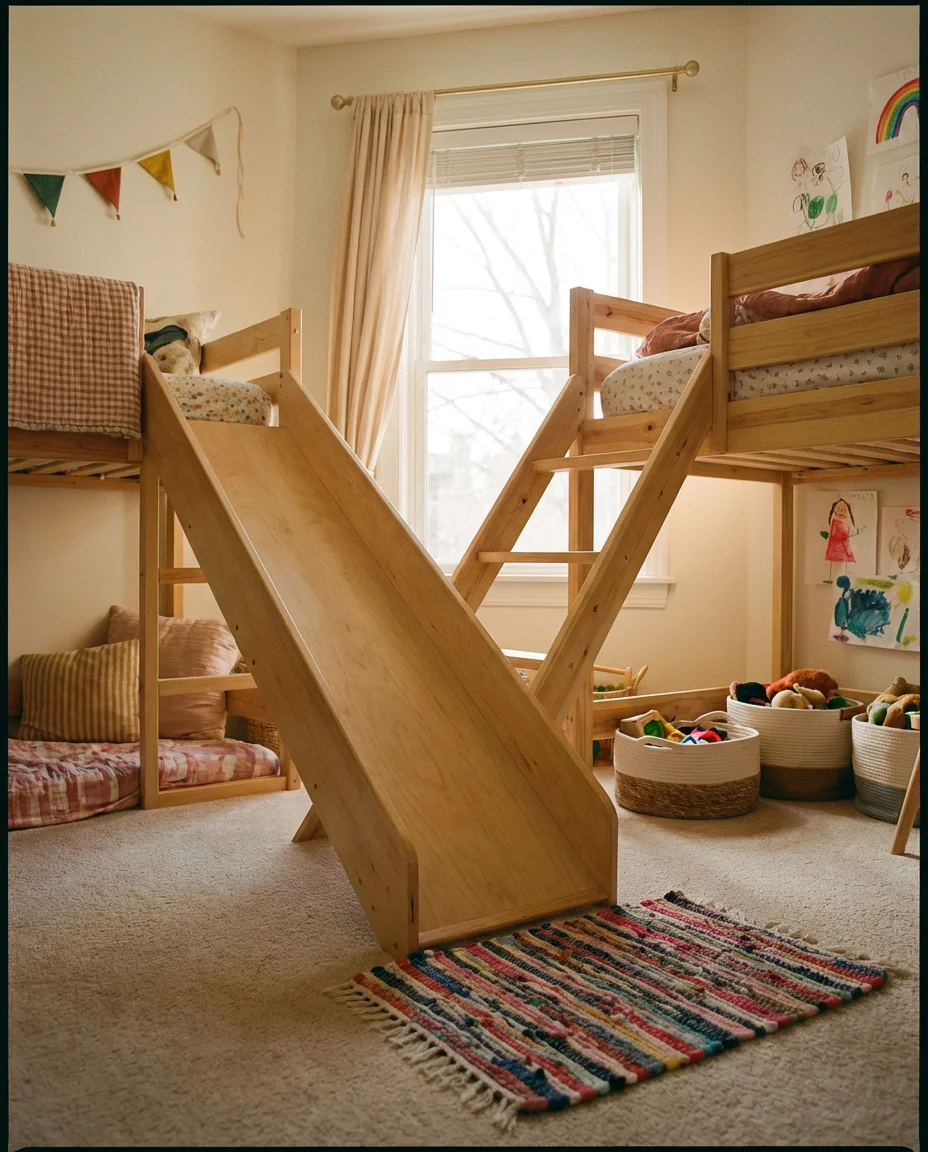
The slide bunk bed is most appropriate for children ages 3 through about 10 — old enough to use the slide safely and young enough to still find it thrilling. Parents often worry about the novelty wearing off, but in practice, kids tend to use slides enthusiastically for years. One practical insight: position the slide landing zone away from walls and furniture, and consider placing a small rug at the base to cushion landings and prevent floor scuffs. Safety rails on the top bunk are non-negotiable; look for rails that extend at least 5 inches above the mattress surface.
13. Double Bunk Bed Designs for Shared Teen Rooms
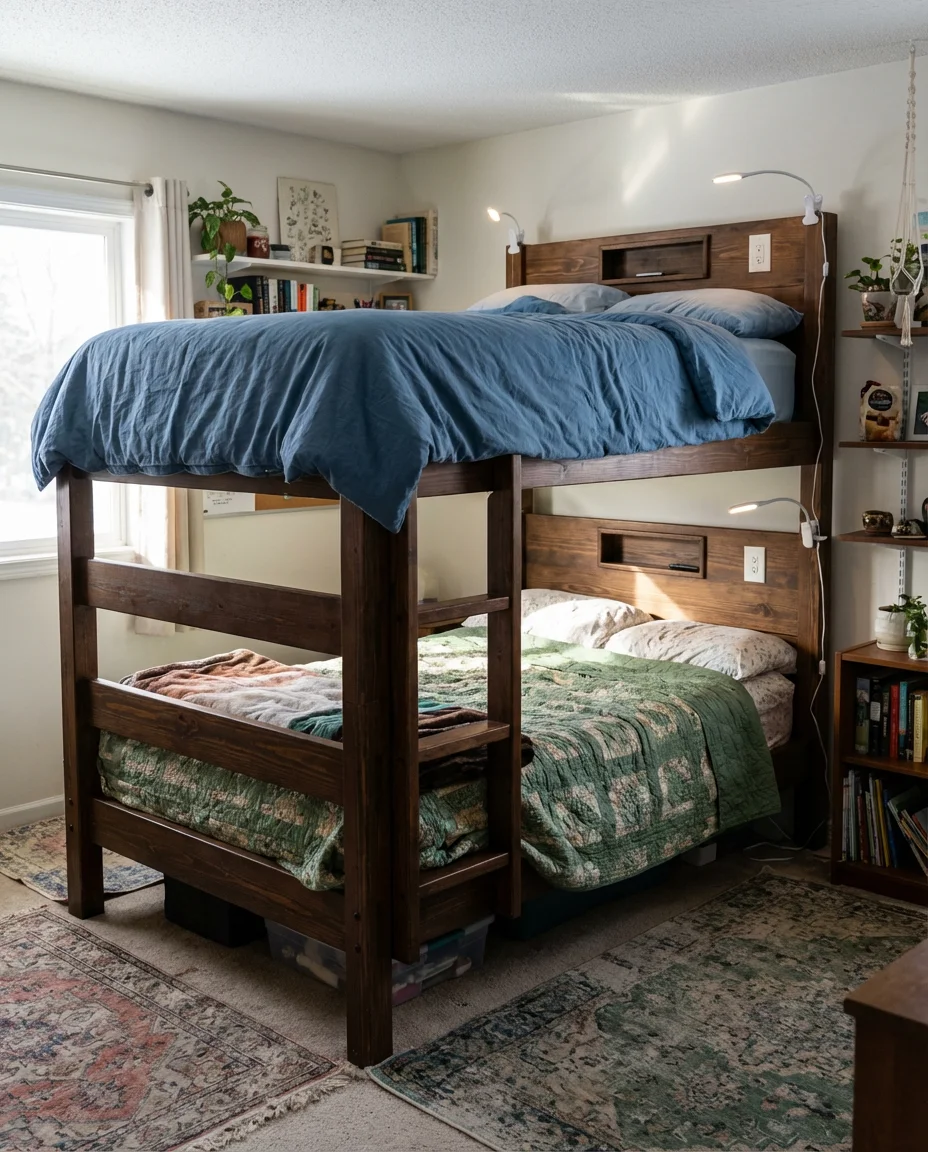
A double bunk bed in a shared teen room doesn’t have to feel like a dorm situation—in fact, the best designs feel genuinely grown-up and personal. Wider full-over-full configurations give both sleepers real space, while designs that incorporate individual reading lights, USB charging ports, and small bedside shelves built into the frame acknowledge that teenagers need both sleep and a degree of nighttime independence. Each bunk becomes a defined zone, almost like a tiny private apartment stacked on top of another tiny private apartment.

When designing shared teen spaces, interior designers consistently emphasize the importance of letting each occupant express their own aesthetic—even if they’re sleeping two feet apart. Different colored bedding, individual curtains, or small photo displays clipped to the bunk rail help each teenager feel a sense of ownership over their zone. It seems like a small thing, but it genuinely reduces conflict between siblings who otherwise share everything. The bed becomes a boundary line as much as a sleeping surface.
14. Bunk Bed Privacy Ideas With Curtains and Panels
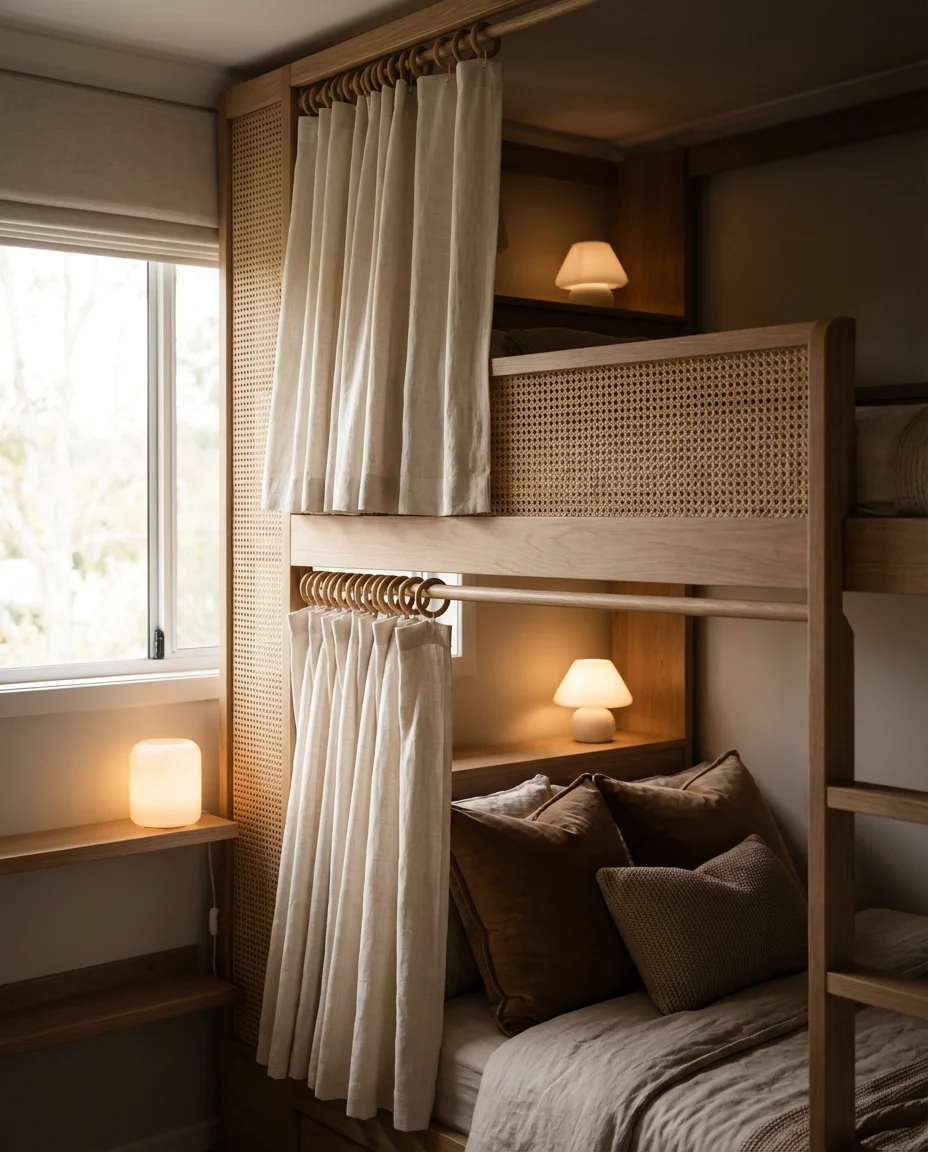
Privacy ideas for bunk beds have exploded in creativity, going far beyond simple fabric curtains. In 2026, designers are incorporating sliding wood panels, rattan screens, fabric canopies with tie closures, and even translucent frosted acrylic panels that filter light while maintaining an airy feel. Each approach creates a different mood—linen curtains feel soft and romantic, natural rattan reads as earthy and bohemian, while frosted panels give a modern, architectural quality. The best inspo online shows how these privacy solutions can completely transform the character of an otherwise ordinary bunk setup.
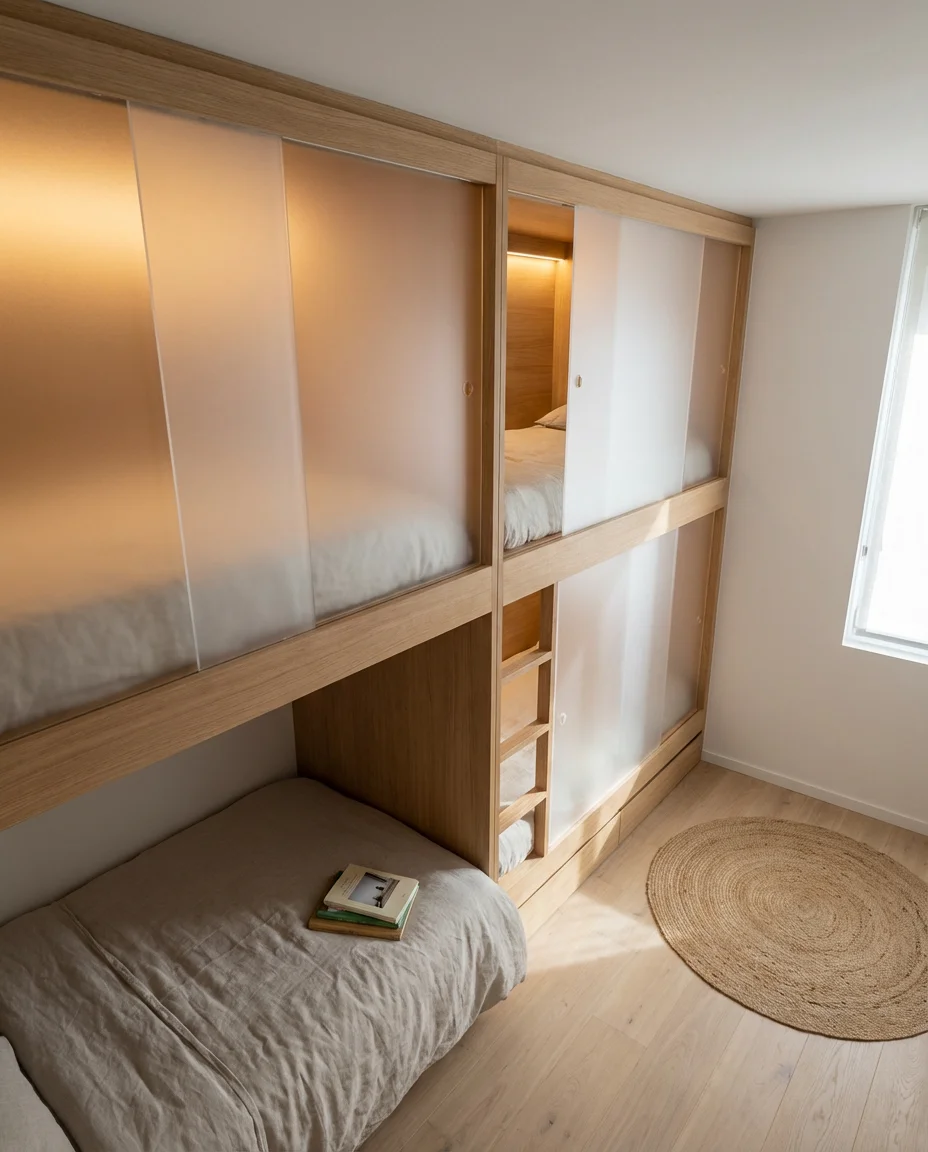
Privacy modifications work particularly well in rooms shared by kids of different ages or in vacation homes where adults and children sleep in the same space. They signal respect for individual boundaries without the drama of a room divider cutting through the middle of the space. A real homeowner in a small Seattle bungalow described adding curtains to her kids’ bunk as “the single change that ended 80% of our bedtime arguments.” Darkness, personal space, and the ritual of closing your own curtain apparently do wonders for a child’s sense of autonomy at night.
15. Bunk Bed Inspo From Scandinavian Design
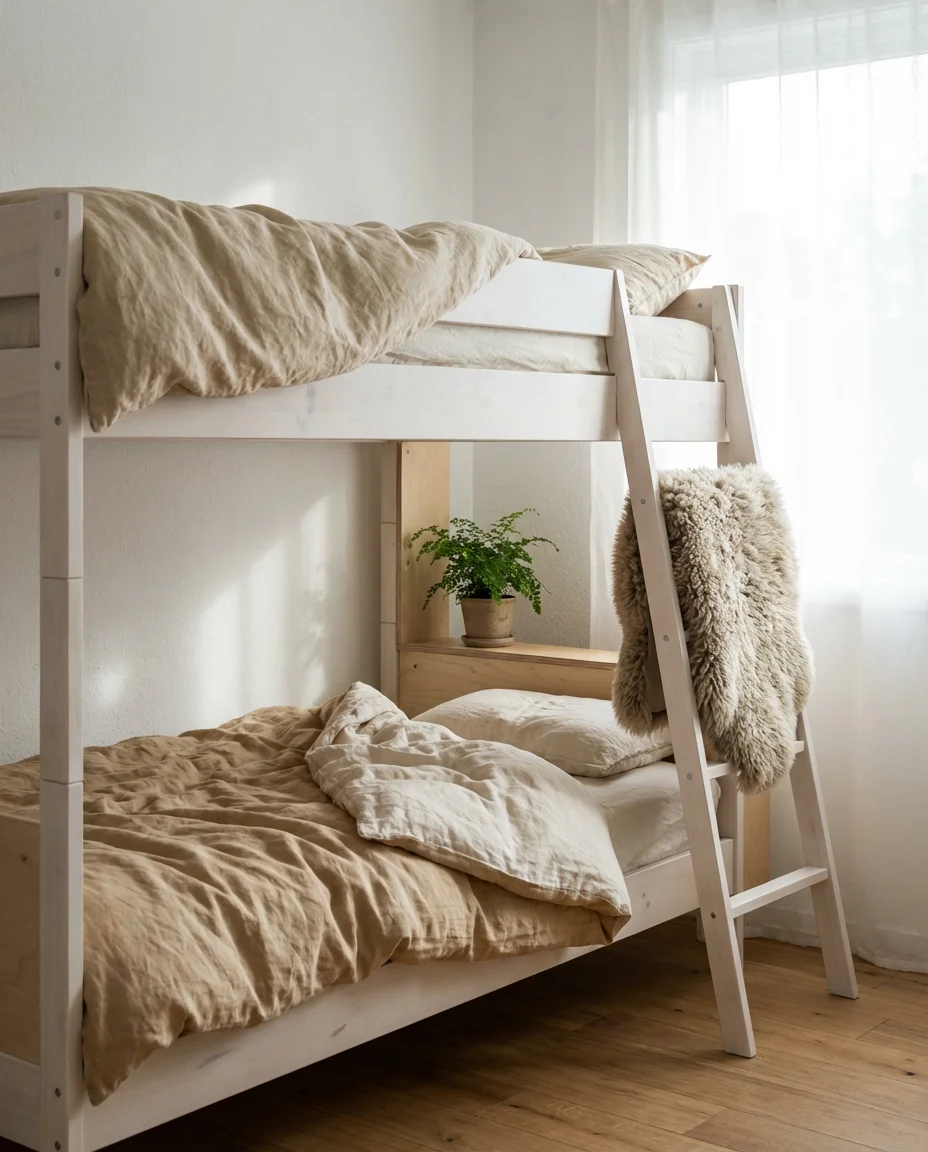
Scandinavian design philosophy—clean lines, natural materials, functional beauty—translates perfectly to bunk beds, and the inspo coming out of Nordic interiors right now is absolutely worth studying. These beds tend to be white or natural birch, with minimal ornamentation and an emphasis on quality construction over decorative flair. What makes them feel luxurious rather than spare is the layering: linen bedding in soft earth tones, sheepskin throws draped over ladder rungs, and a small potted plant on a built-in shelf. The restraint is part of the appeal.
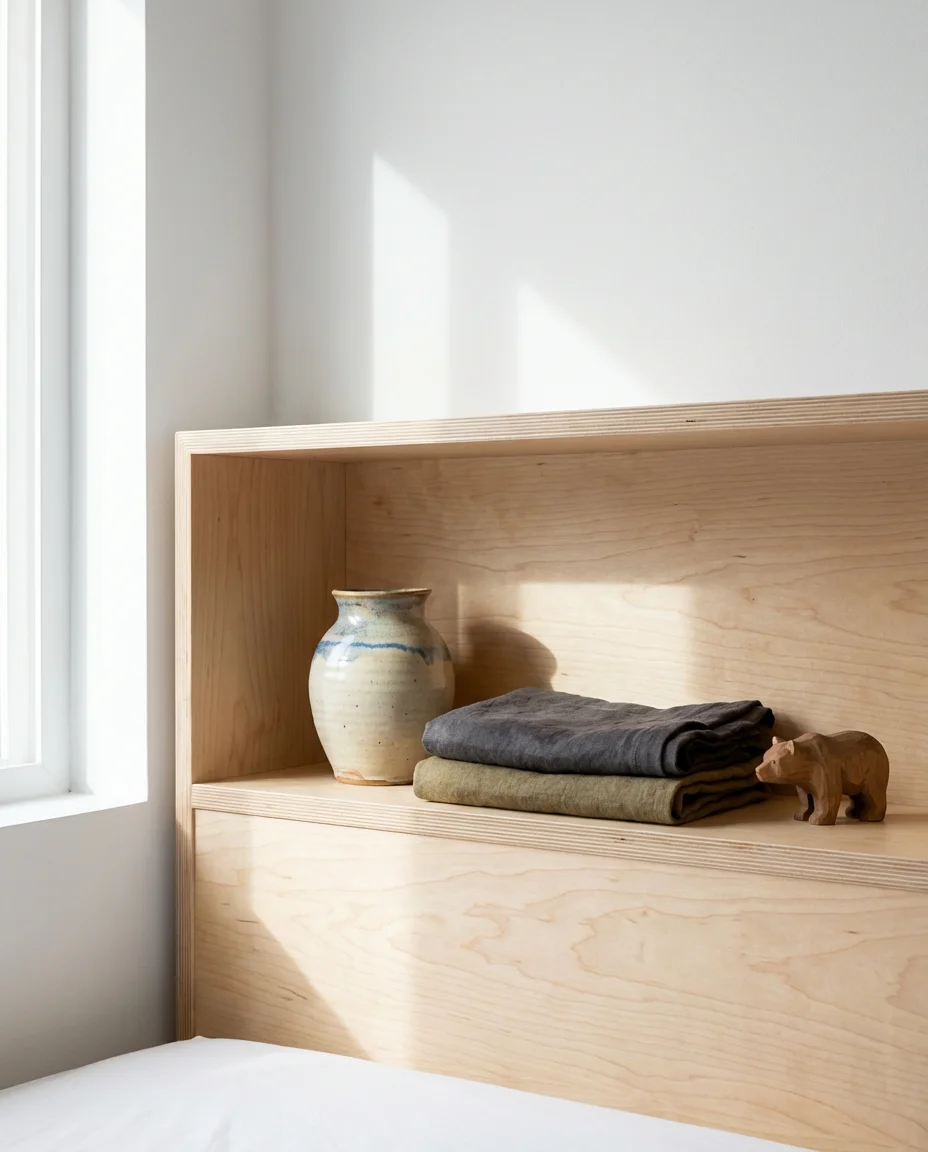
This aesthetic resonates strongly with American homeowners who are fatigued by maximalist decorating and are drawn to the concept of hygge—that Danish and Norwegian sense of coziness and comfort that comes from simple, warm, well-chosen surroundings. A Scandinavian-inspired bunk bed doesn’t shout for attention; it just makes you want to climb up, pull the covers over your head, and stay there for the whole weekend. For parents trying to create calming sleep environments for overstimulated kids, that low-key energy is genuinely therapeutic.
16. Dog-Friendly Bunk Beds for Pet-Loving Families
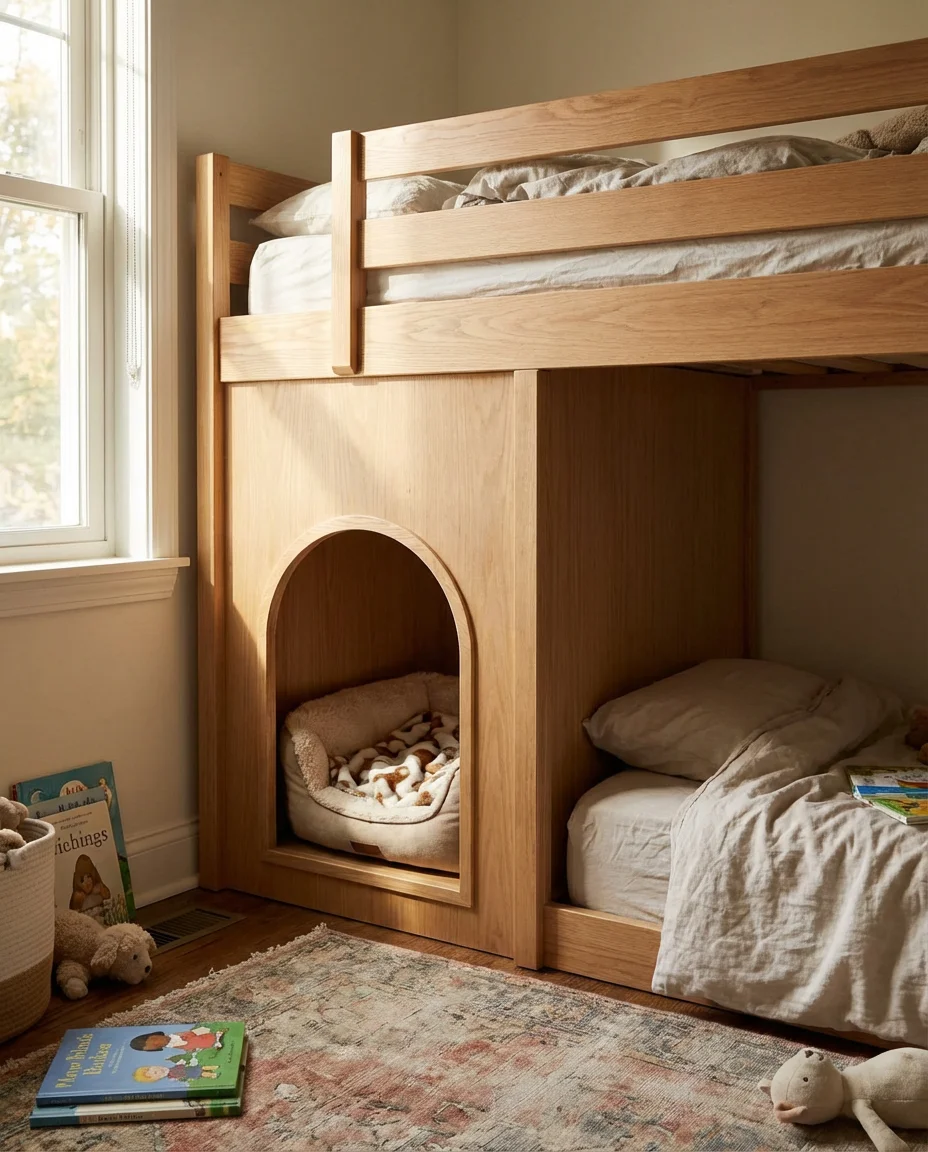
Here’s one that’s genuinely delightful: bunk beds designed with a dedicated dog berth built right into the frame. These increasingly popular configurations include a small sleeping platform or enclosed kennel-style nook at the base of the bed—sometimes at floor level, sometimes tucked below the bottom bunk. The idea is that pets sleep near their people without taking up bed real estate, which is especially useful for families with large breeds who absolutely refuse to sleep anywhere except beside a child. It’s a surprisingly practical solution that the whole family—four-legged members included—tends to love.
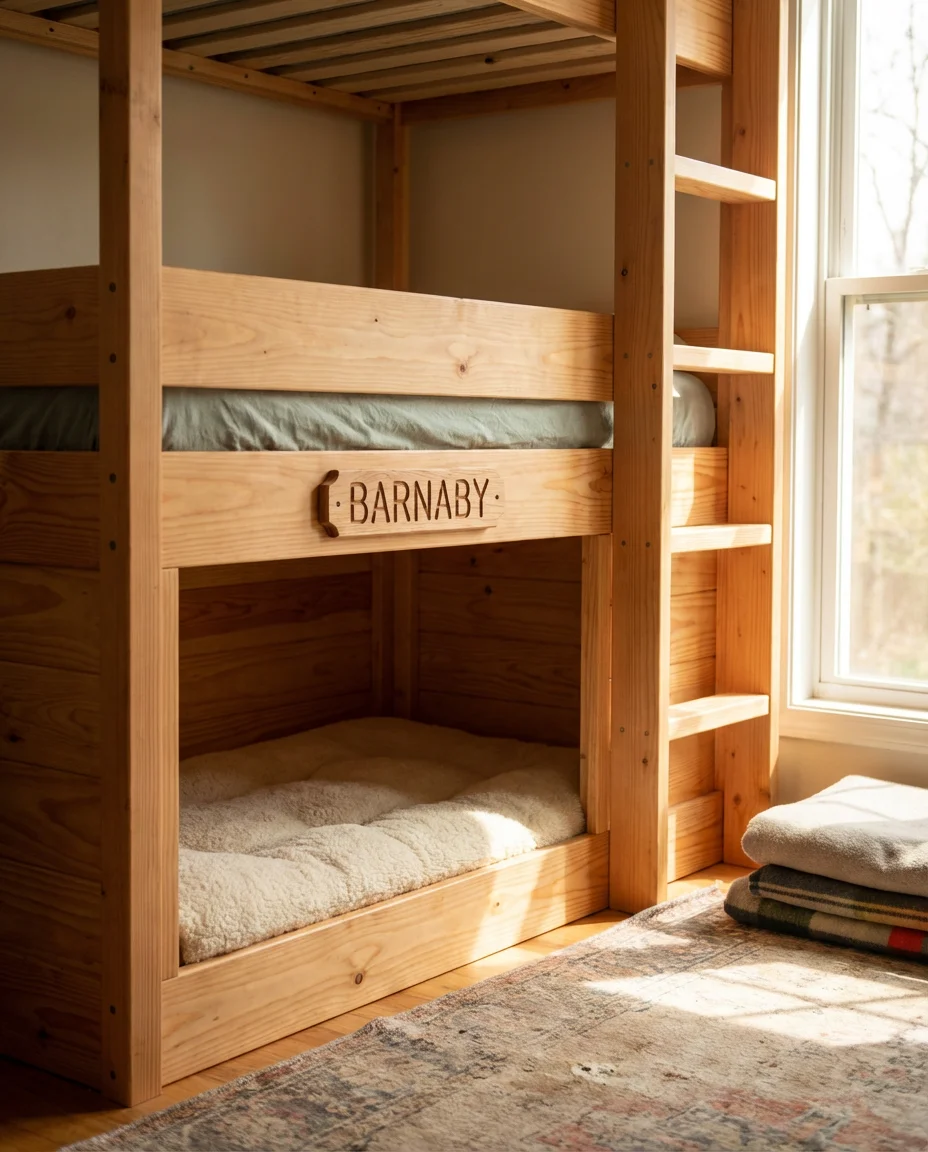
Dog nook bunks work best with medium to large dogs that are crate-trained or naturally den-oriented. The enclosed space mimics the security of a crate while integrating the dog seamlessly into the room’s design. Custom woodworkers have had a field day with this concept—adding personalized name plaques, locking doors, removable cushions, and even built-in food and water bowl holders. If you’re commissioning a custom built-in bunk for a kid who’s inseparable from the family dog, designing a matching dog berth into the same unit is one of the most charming and functional choices you can make.
17. Queen Bunk Beds for Adult Guest Suites
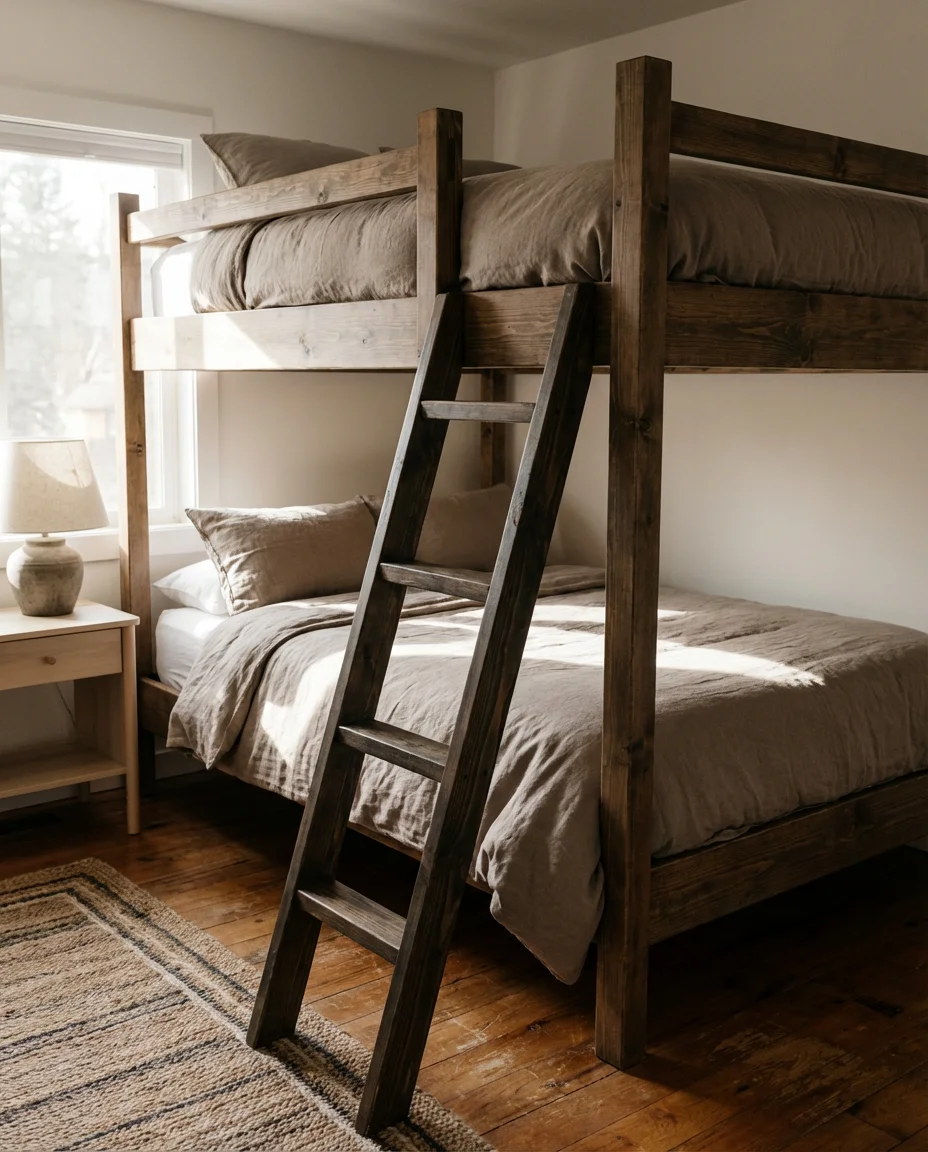
A queen bunk bed might sound like a contradiction in terms, but these oversized configurations are real, increasingly available, and genuinely useful for families who host a lot of guests. A queen-over-queen setup gives two couples comfortable, private sleeping surfaces without requiring a second bedroom. They’re particularly popular in ski chalets, beach houses, and lake homes—vacation properties where the guest count regularly exceeds the number of dedicated bedrooms and where “roughing it” isn’t really the vibe. Built properly, a queen bunk feels substantial and solid, not wobbly or provisional.
The structural requirements for queen bunks are considerably more demanding than for twin or full configurations—the wider span means more torque stress on the joints, so construction quality really matters. Always look for solid hardwood or heavy-gauge steel construction, not engineered wood or hollow-tube metal. Expert-level tip: add a center support leg under the lower queen mattress even if the manufacturer’s specs don’t require it. Over years of use and varied sleeper weights, that extra support prevents center sag and keeps both bunks feeling firm and stable.
18. Minecraft-Inspired Bunk Beds for Gaming Kids
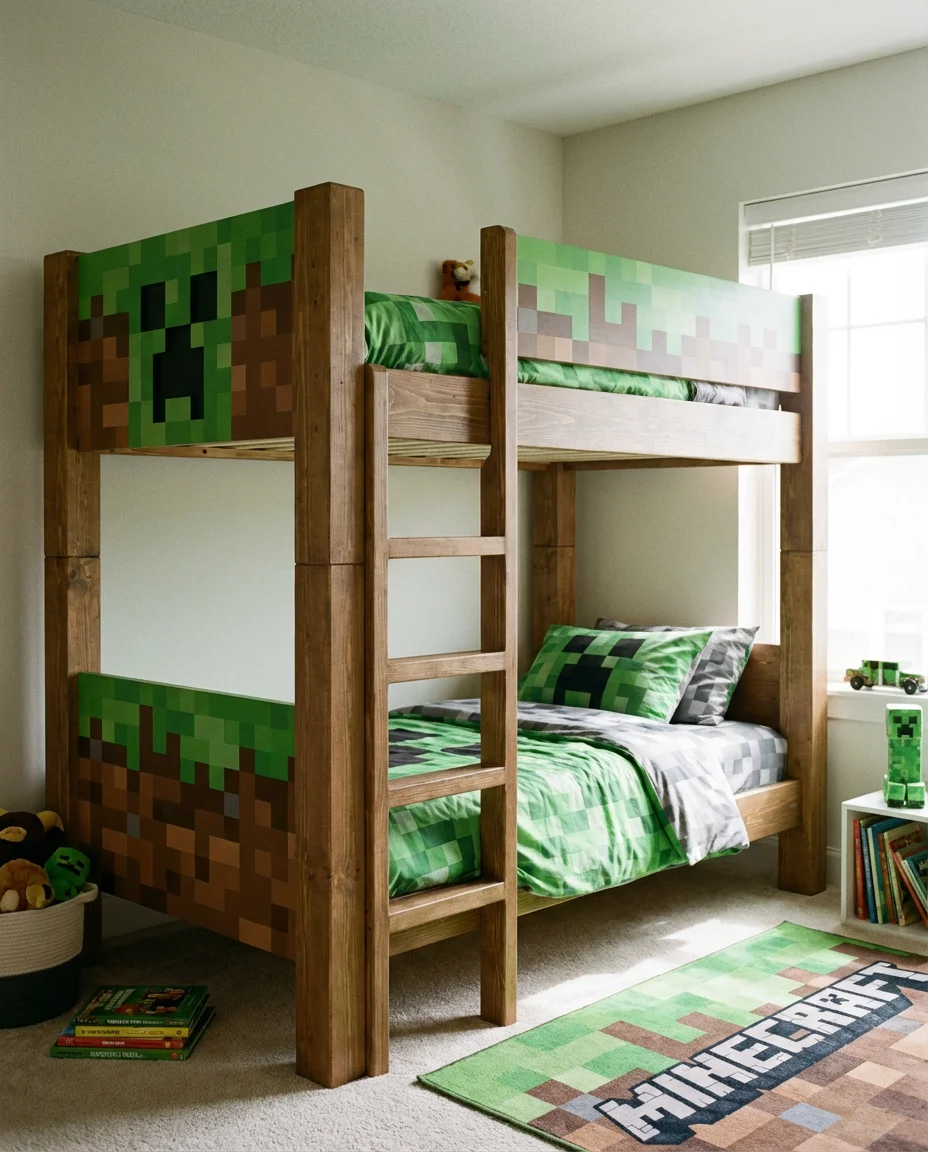
For the child whose entire world revolves around Minecraft, a pixelated, block-style bunk bed is basically the greatest possible gift. These beds embrace the game’s signature chunky, cubic aesthetic—squared-off corners, pixel-pattern painted panels, creeper green accents, and diamond-blue hardware details. The whole thing reads as a giant 3D piece of fan art that happens to be furniture. It’s unapologetically nerdy and completely joyful, and it tends to age better than you’d expect because gaming culture has such strong nostalgic staying power for kids growing up right now.

You don’t need to commission an expensive custom build to get this look—a plain white or natural wood bunk bed becomes a Minecraft-inspired masterpiece with the right paint treatment and some well-placed decals. Stencil a pixel grass pattern along the frame sides, paint the ladder rungs in alternating brown and green, and add a few strategically placed Creeper face prints. The DIY version often looks even more authentic than the manufactured alternatives, and it makes the whole project a fun weekend activity to tackle alongside your kid. Let them choose the color scheme—they’ll care about that bed for years.
19. Bunk Beds for Small Rooms With Low Ceilings
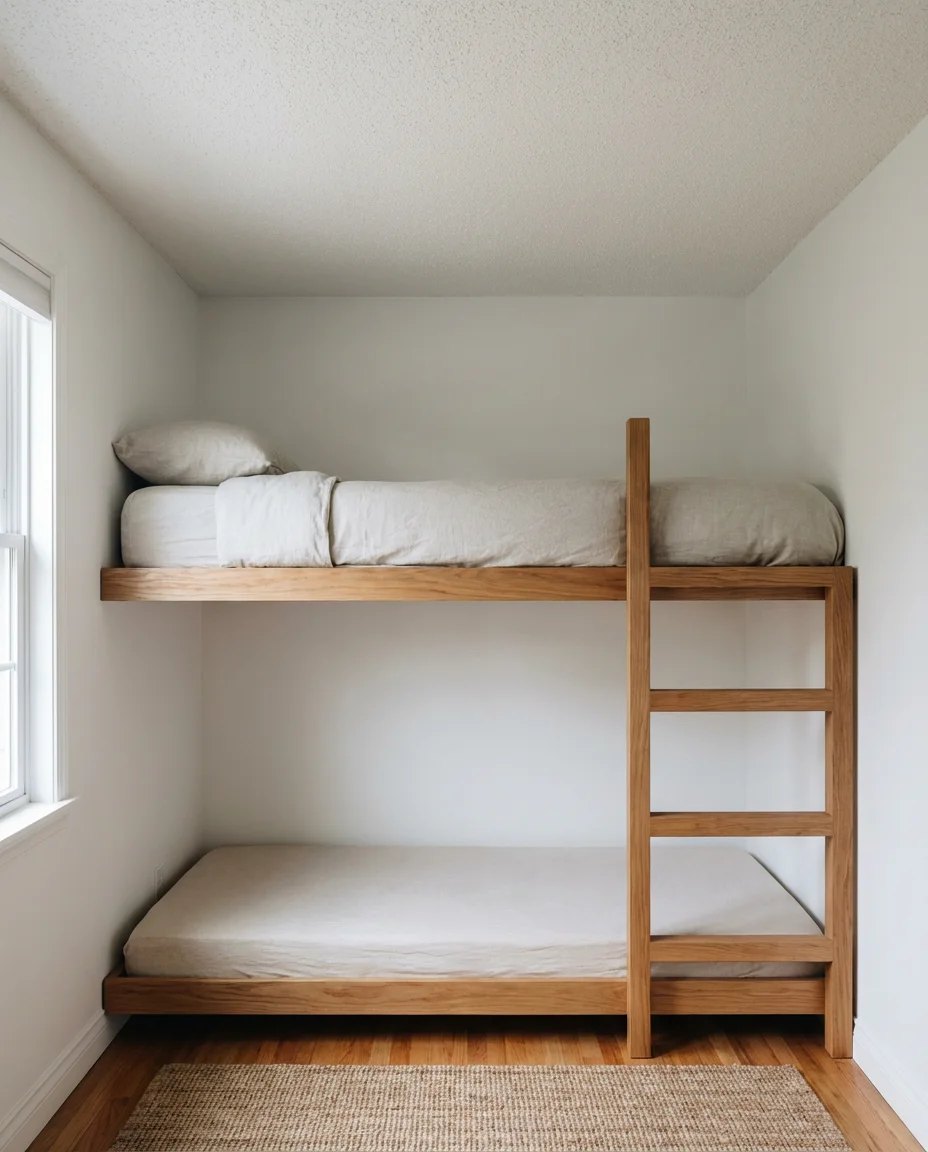
Designing bunk beds for small rooms with low ceilings requires a fundamentally different approach than standard bunk shopping. The key is minimizing the vertical profile of the upper bunk without sacrificing sleeping comfort. Low-profile bunks—sometimes called “low bunk” or “shorty” configurations—reduce the overall stack height by using thin platform-style mattress bases instead of thick box springs, compressing the frame height between bunks, and eliminating decorative top railings. The goal is to get that top mattress surface as low as possible while still maintaining safe clearance above it.
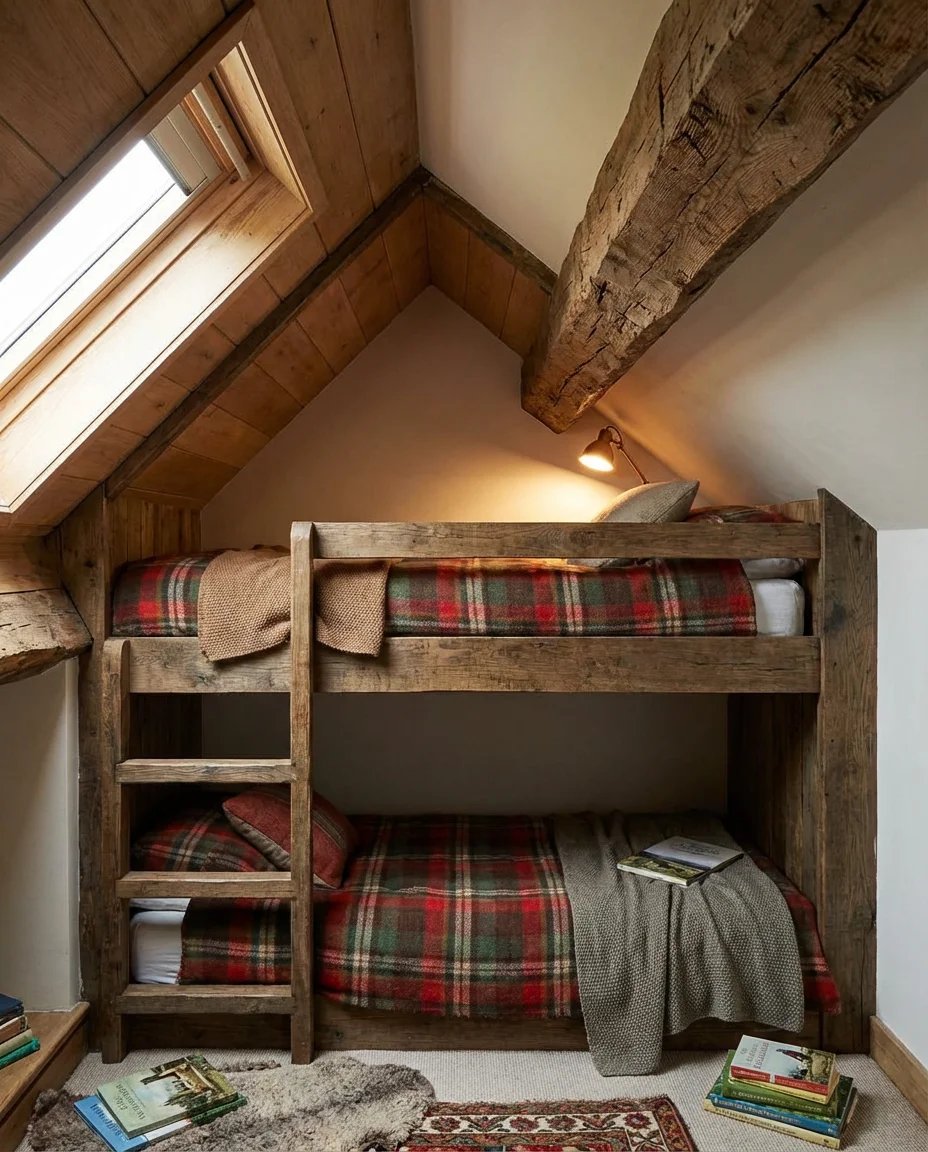
A good rule of thumb for top bunk headroom: the sleeper should be able to sit up in bed comfortably without hunching. That means you need at least 30 inches of clearance between the top of the mattress surface and the ceiling—ideally 33 to 36 inches. For rooms with 7-foot ceilings, this math gets tight quickly, which is why measuring before buying (not after) is so critical. Some clever homeowners in older New England colonials with notoriously low upstairs ceilings have solved the problem by recessing the bunk slightly into a dormer, effectively borrowing ceiling height from the roof pitch.
20. Bunk Bed Designs With Integrated Reading Nooks
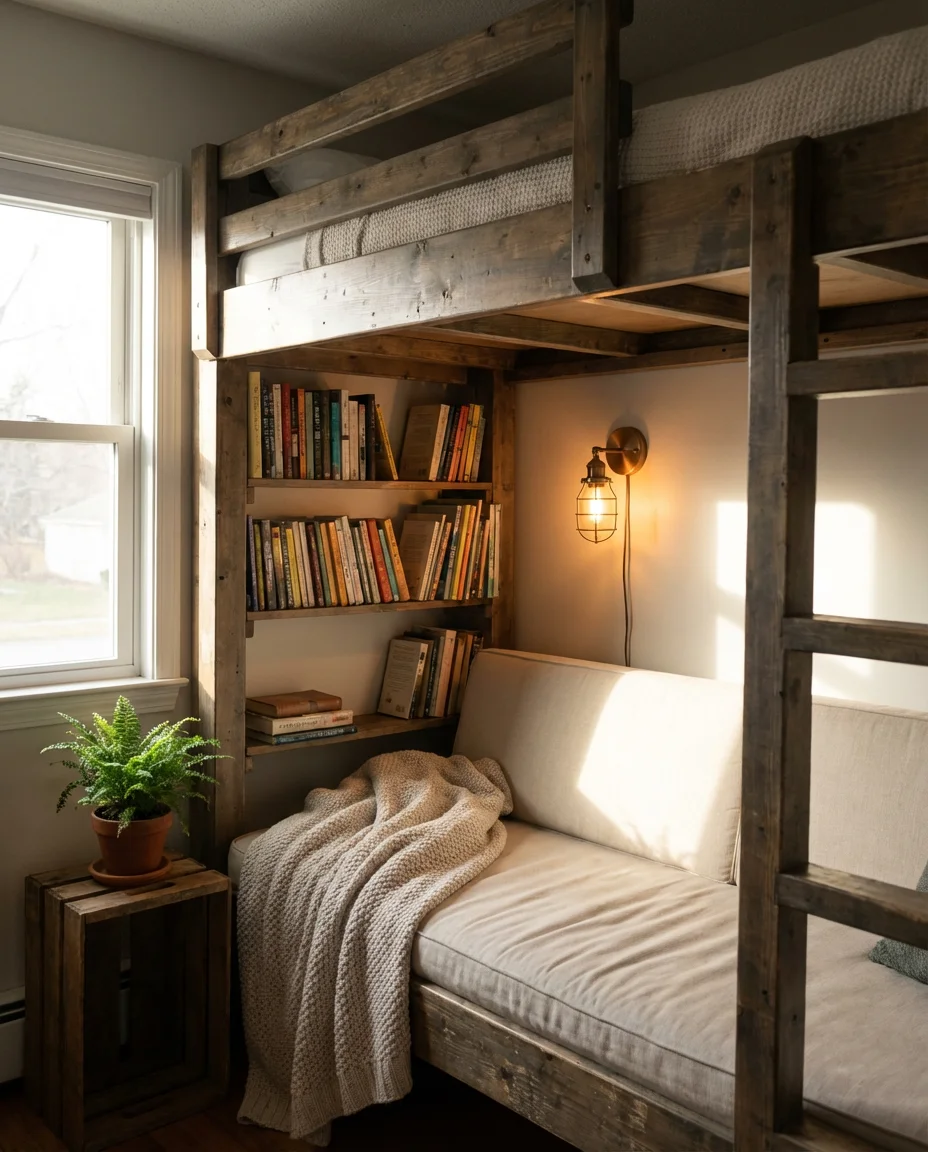
Reading nooks tucked beneath or beside a loft bunk represent one of the most magical applications of elevated sleeping design. By raising the bed, you create a sheltered, cave-like space below that’s perfectly proportioned for curling up with a book—low ceiling, soft lighting, cushioned seating, and walls close enough to feel genuinely private and protected. For bookish kids (and let’s be honest, bookish adults), this configuration is deeply appealing on an almost primal level. It taps into the human love of enclosed, sheltered spaces—what psychologists call “prospect and refuge”—while being genuinely beautiful to look at.
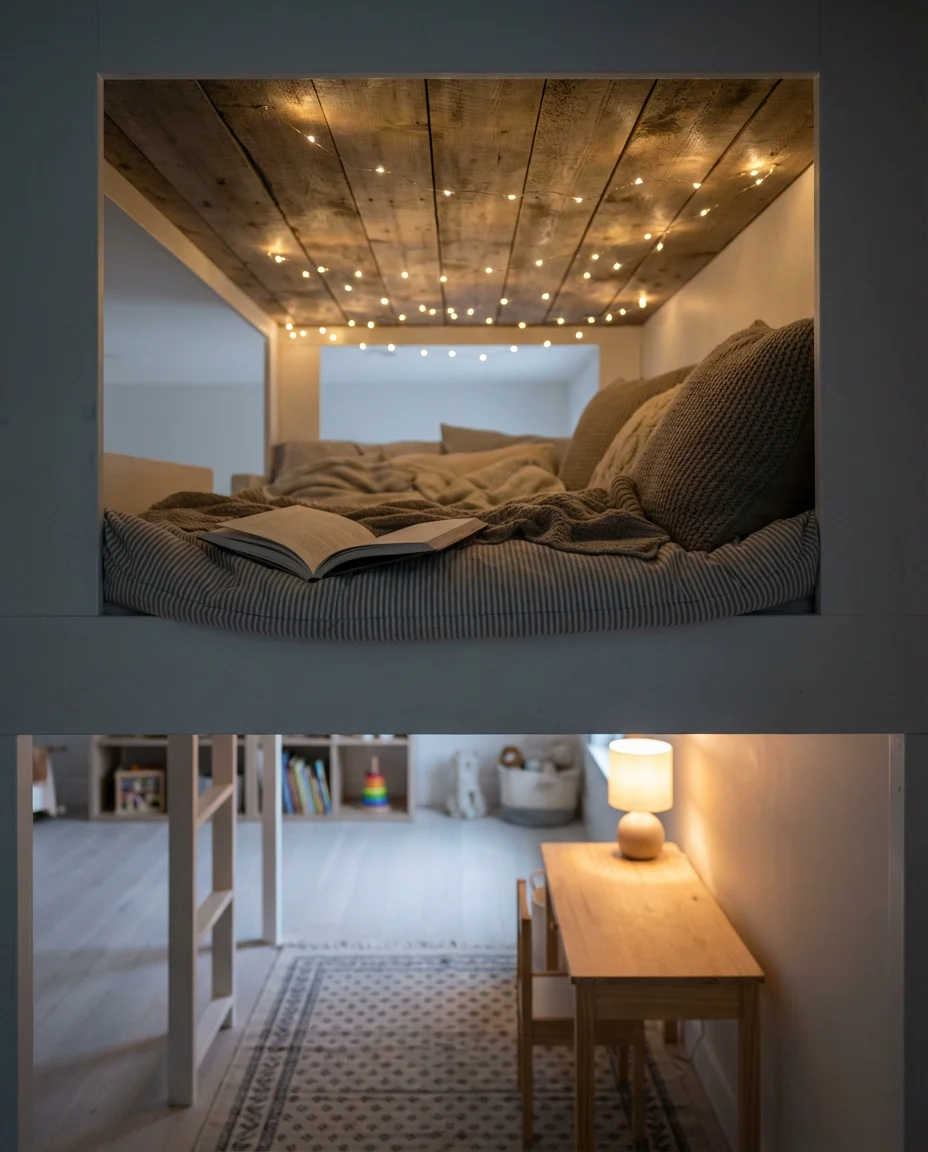
The reading nook loft works best when the under-bed space is at least 5 feet tall—enough headroom for a seated adult or a standing child. Fill the back wall with built-in bookshelves, add a plush window seat cushion or beanbag, and wire in a small wall sconce or clip-on reading light. If budget is a consideration, an IKEA loft bed with a DIY plywood reading bench and a string of warm fairy lights achieves about 80% of the custom-built effect at a fraction of the cost. Sometimes the simplest builds are the most charming.
21. Industrial Pipe Bunk Beds for Loft Apartments
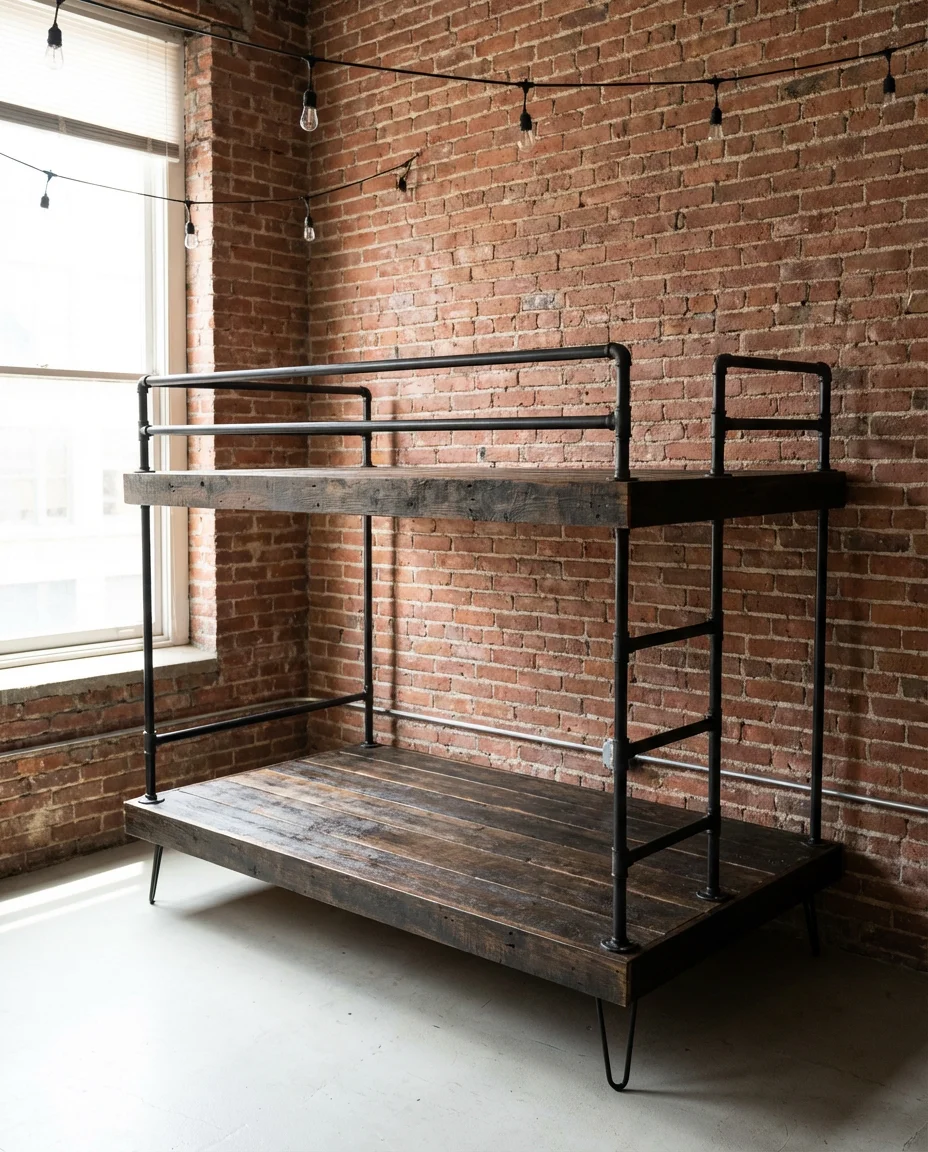
Black iron pipe bunk beds—yes, literally constructed from threaded plumbing pipe and wood planks—have become a genuine design trend for adults in urban loft spaces. The construction is surprisingly sturdy and endlessly customizable and produces a look that’s rugged, architectural, and distinctly grown-up. Pair the pipe frame with reclaimed wood sleeping platforms and hairpin leg details, and you’ve got something that looks straight out of a Brooklyn design studio. It’s DIY furniture that doesn’t look DIY, which is perhaps its greatest achievement.
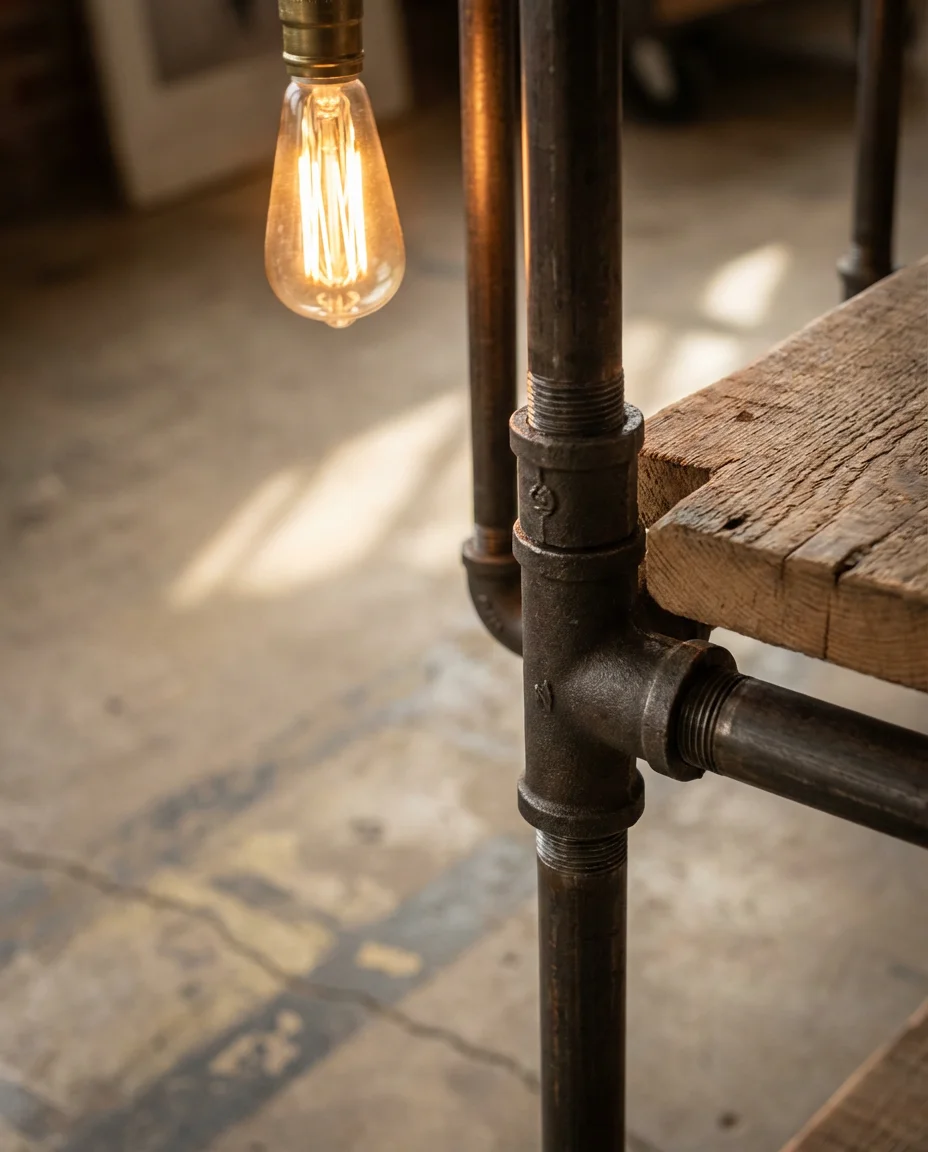
Building your own pipe bunk bed requires basic plumbing knowledge and a willingness to spend a Saturday with a pipe wrench and a floor flange, but the materials are widely available at any hardware store. A twin-over-twin pipe bunk can typically be built for $300 to $500 in materials—considerably less than most retail metal bunks of comparable quality. The pipes thread together without welding and can be disassembled and reassembled when you move, which is a significant practical advantage for renters who can’t make permanent modifications to their space.
22. Bunk Bed Kids Room With Themed Wall Murals
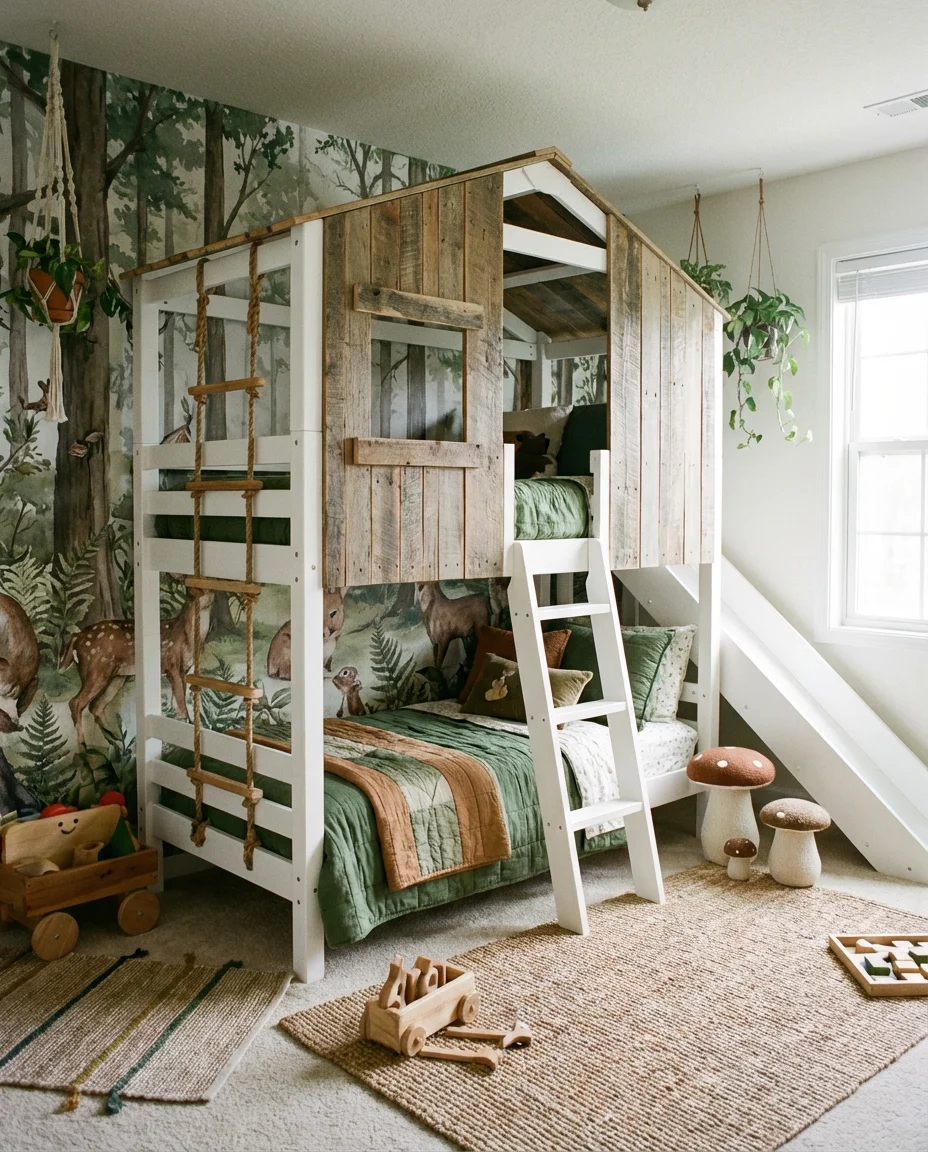
The bunk bed is often the anchor piece in a kid’s room design, and when you pair it with a full-scale wall mural—a forest, an ocean, a galaxy, or a mountain range—the result is a room that feels completely immersive and transportive. Children’s room designers increasingly approach the bunk wall as a storytelling canvas: the bed becomes a treehouse, a spaceship, or an undersea cave, depending on what surrounds it. Peel-and-stick mural wallpaper has made this look achievable for non-painters and renters alike, with stunning results that install in a few hours and remove cleanly when tastes change.

The most successful themed bunk room designs commit fully to the concept rather than hedging—if you’re doing an enchanted forest, every element (bedding, lighting, accessories) should reinforce the story. Half-measures tend to look confused and make the room feel more cluttered than curated. That said, it’s worth designing with some flexibility for evolving tastes; a child who loves dinosaurs at age five may feel differently at age nine. Choose themes with enough visual richness to grow with the child—nature scenes, celestial maps, and abstract color-field murals tend to have longer staying power than highly specific character-based themes.
23. Floating Bunk Bed Designs for a Modern Look
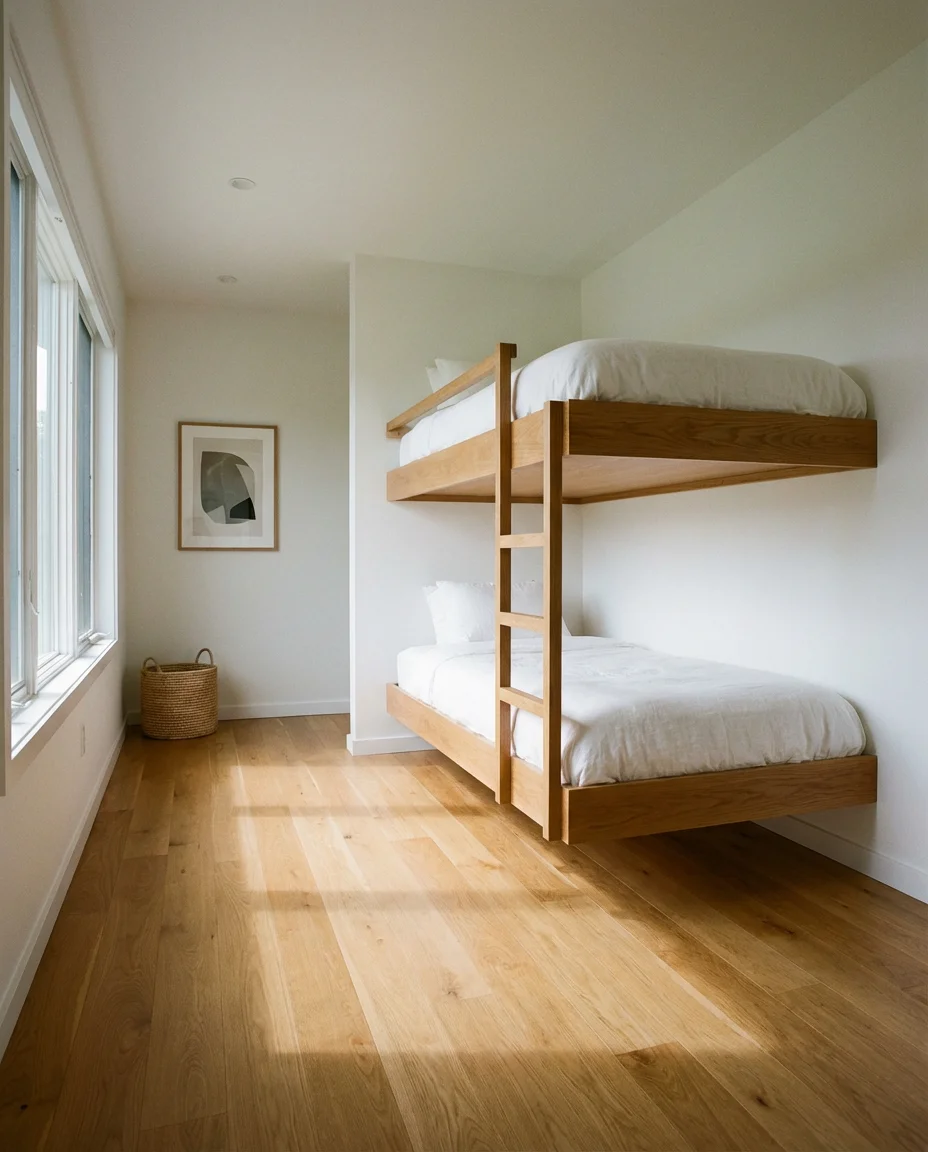
Floating bunk beds—wall-mounted configurations where the sleeping platforms cantilever from the wall without visible floor-level support legs—represent perhaps the most architecturally ambitious direction for bunk bed design in 2026. The effect is genuinely striking: the beds appear to hover in space, and the floor beneath remains completely clear, amplifying the sense of openness in even a modest-sized room. These systems require serious structural wall anchoring and are almost always custom-built or professionally installed, but the visual payoff is extraordinary.

Floating bunks work beautifully in contemporary and minimalist interiors where clean lines and uncluttered floor plans are priorities. They’re particularly effective in rooms with polished concrete or continuous hardwood floors that would be visually interrupted by furniture legs. From a practical standpoint, the open floor beneath both bunks makes cleaning significantly easier—no more fishing dust bunnies from under a bed frame. If you’re renovating a room from scratch and want to make a genuine architectural statement with the sleeping area, this is the direction that will photograph best and impress everyone who sees it in person.
Conclusion
Bunk beds in 2026 are as diverse and creative as the people designing them—from minimalist Scandinavian lofts to whimsical slide-and-tower kids’ palaces, there’s genuinely something here for every taste, budget, and square footage. Which of these ideas sparked something for your own space? Drop a comment below and tell us what direction you’re thinking—we’d love to hear how you’re reimagining your bedroom this year.