If your dresser has been quietly collecting dust, hair ties, and forgotten receipts, you’re not alone—and you’re definitely not without options. Dresser styling has had a serious moment on Pinterest, with millions of Americans searching for ways to turn that flat surface into something that actually feels intentional. Whether you’re working with a sleek IKEA MALM or a vintage refinished piece, 2026 is the year to finally make your dresser work as hard as the rest of your room. Below, you’ll find 22 fresh, real-world ideas that range from budget-friendly to design-forward—every single one worth pinning.
1. The Classic White Dresser with a Linen Tray Moment
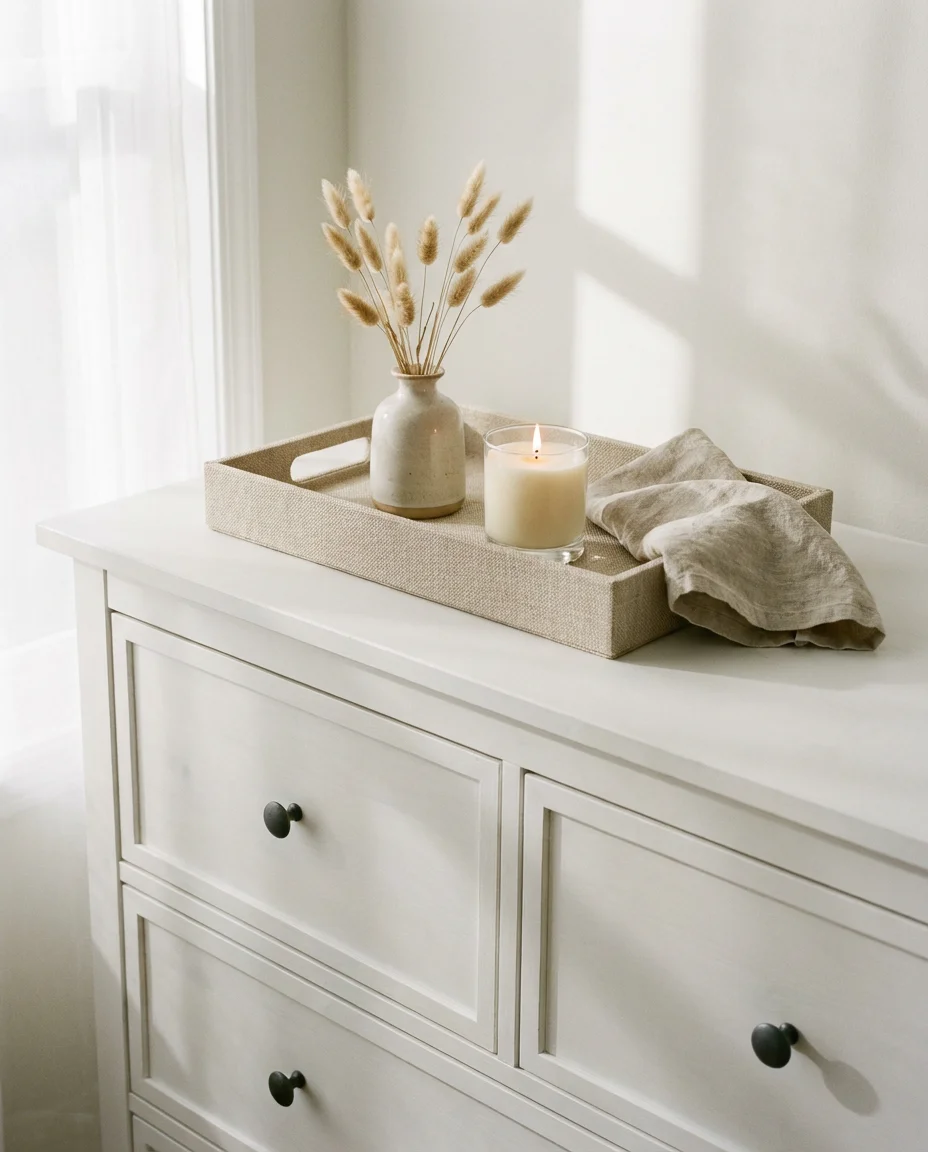
A white dresser gives you a clean canvas, and a simple linen tray on top pulls the whole look together instantly. This styling approach works in virtually any bedroom—modern, farmhouse, or transitional—because neutral always plays well. Group a small ceramic vase, a candle, and a folded linen cloth inside the tray, and you’ve created what designers call a “contained vignette.” It keeps things looking curated rather than cluttered, which is the entire goal when decorating a surface you actually use every day.
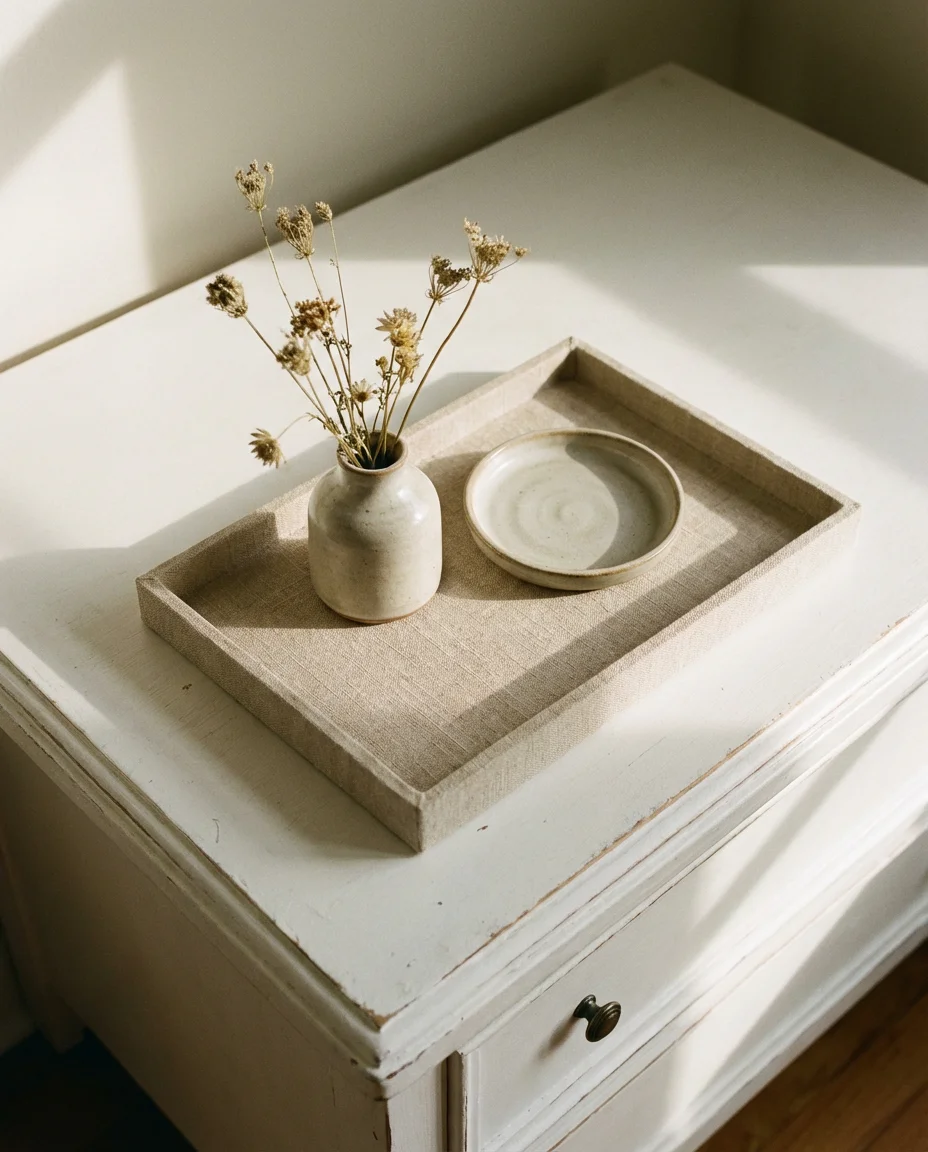
The linen tray trick is especially smart in smaller bedrooms—around 10×10 feet or less—where visual clutter can feel overwhelming fast. By corralling your everyday items into one contained spot, you give your eye a place to rest. One common mistake people make is overfilling the tray. Keep it to three items max: one tall, one medium, and one small. That asymmetry is what makes it feel styled rather than stuffed.
2. Mirror, Mirror Above the Dresser
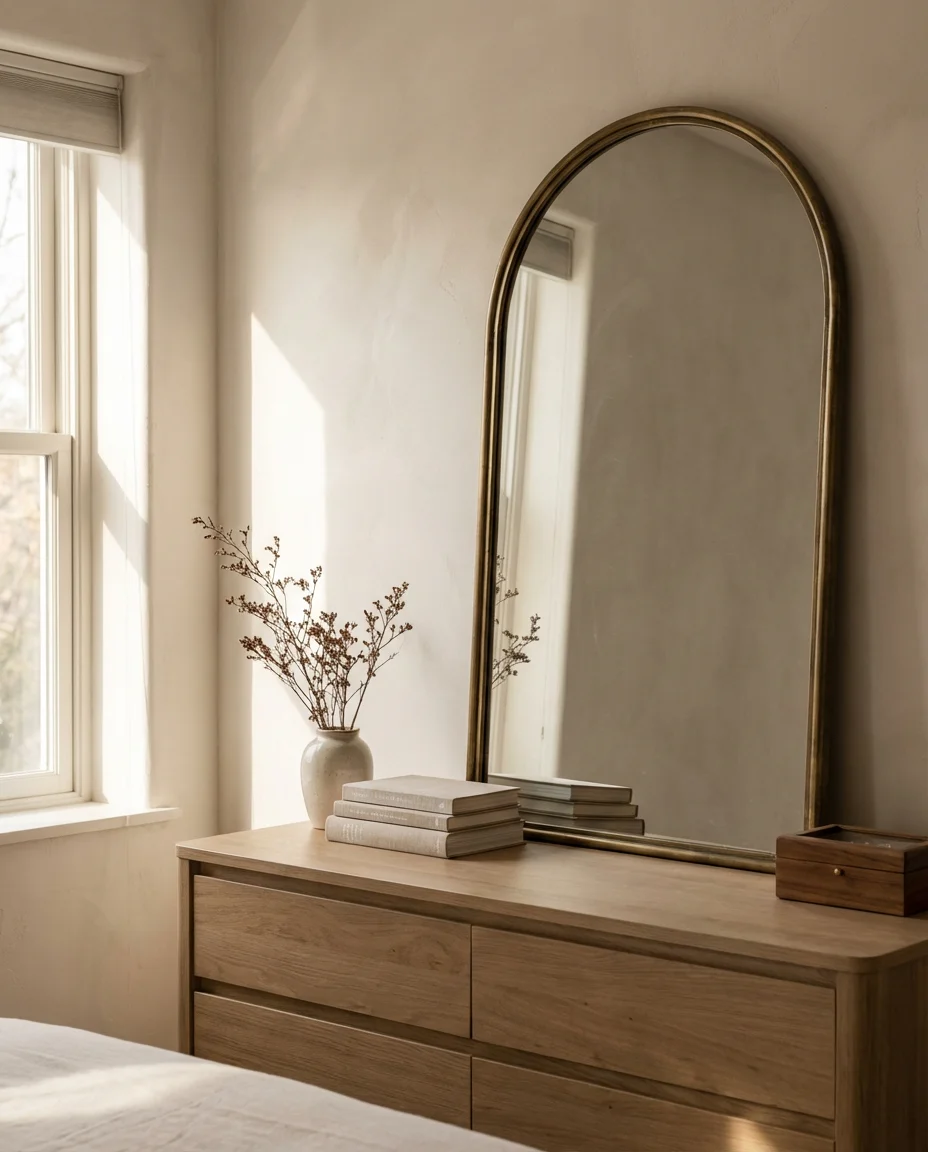
Adding a mirror above your dresser is one of the oldest tricks in the design playbook—and it still works because it genuinely does something. It adds light, makes the room feel bigger, and gives you a reason to look up from your phone in the morning. In 2026, the shapes to know are arched, sunburst, and asymmetrical frameless styles. A leaning floor mirror propped against the wall behind the dresser is also having a major moment, especially in apartments where you can’t put a hole in the wall.
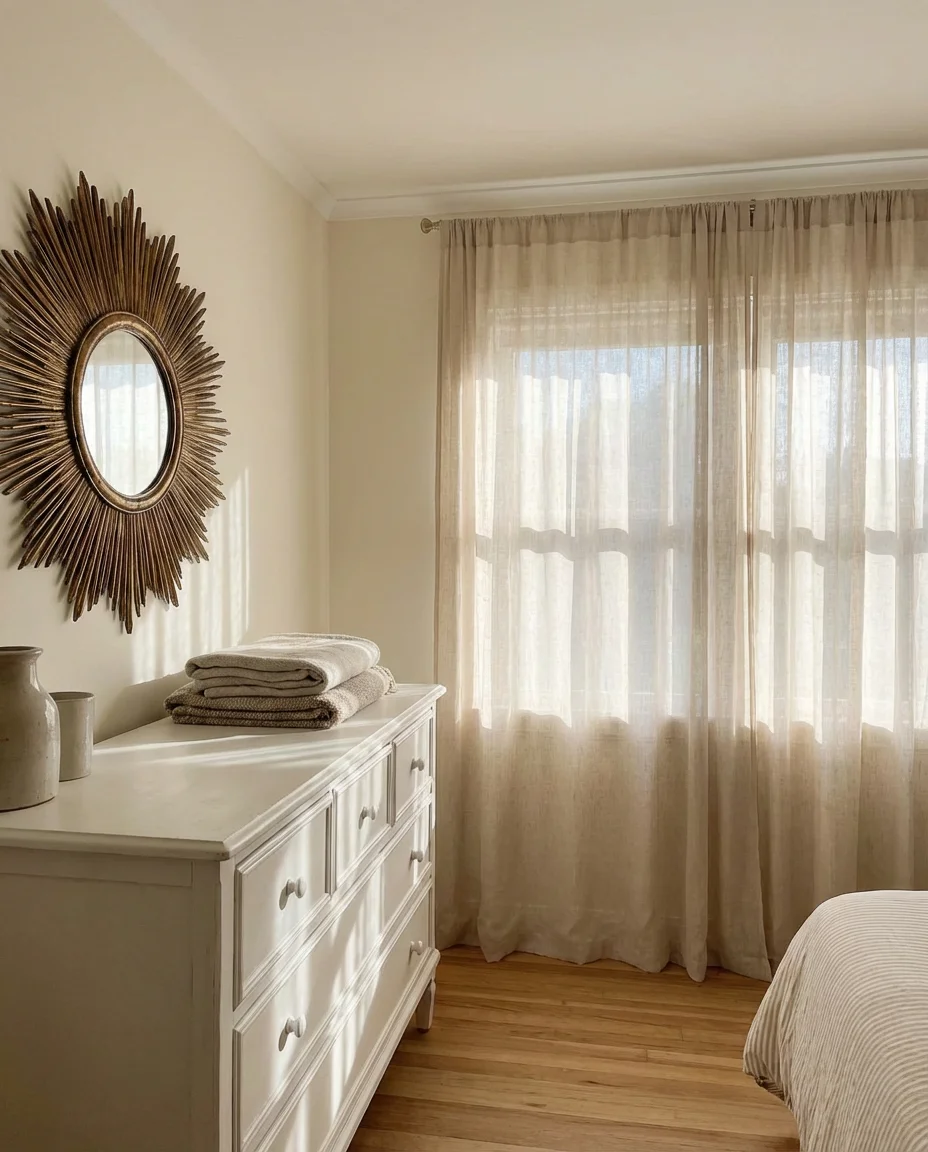
Interior designers consistently cite the mirror-over-dresser combo as one of the highest-return moves in bedroom styling. “It’s functional and decorative at the same time,” says the logic behind every well-styled primary bedroom. If you want to avoid the most common mistake here—hanging the mirror too high—keep the bottom edge about 6 to 8 inches above the dresser surface. That gap gives breathing room without making things feel disconnected from the piece below.
3. Black Dresser with Bold Art Above
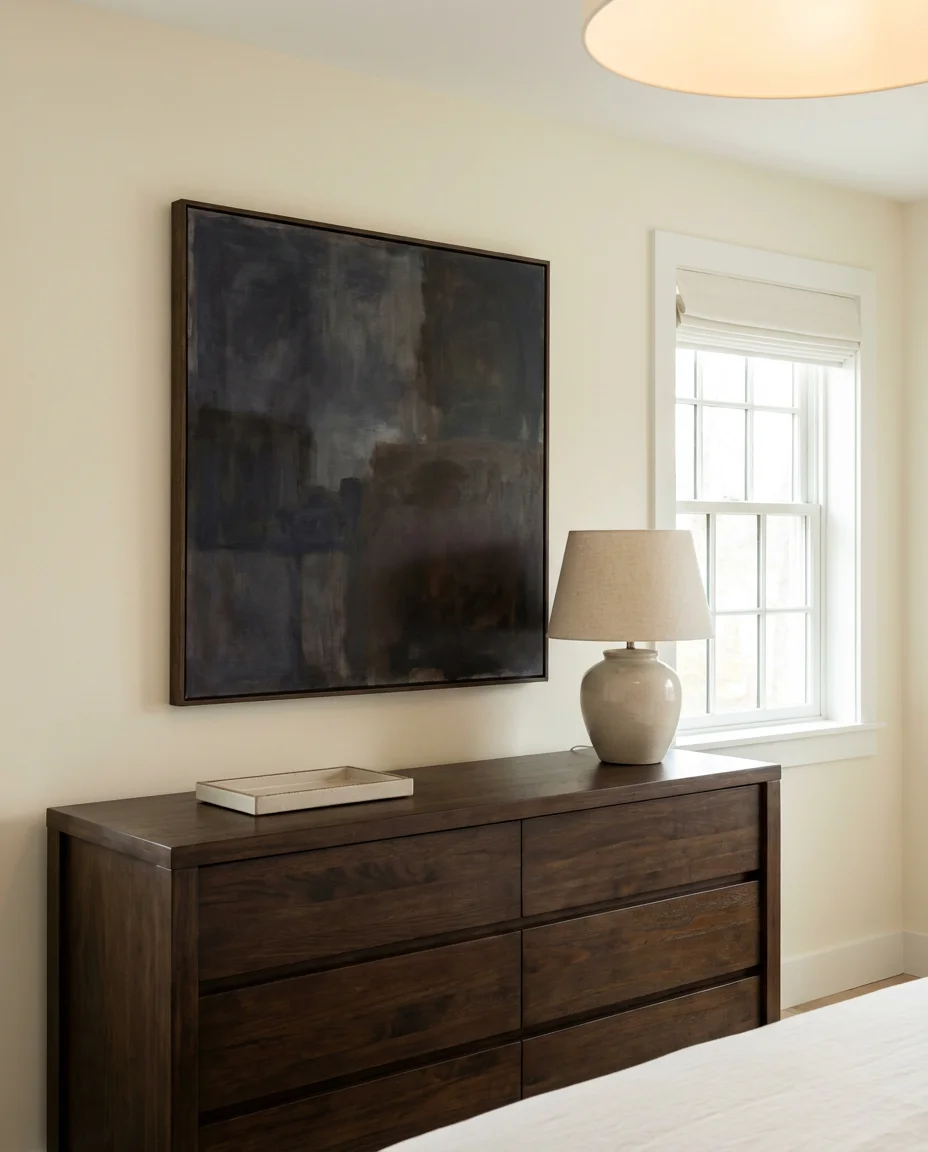
A black dresser is a commitment—and a rewarding one. The deep tone grounds the room, especially when paired with black art or a dramatic oversized print hung above it. Think abstract ink paintings, high-contrast photography, or a single expressive canvas in dark moody tones. The visual effect is striking without being overpowering when the rest of the room keeps things lighter. This combination reads as confident and intentional, which is exactly the energy most people want in a bedroom makeover.
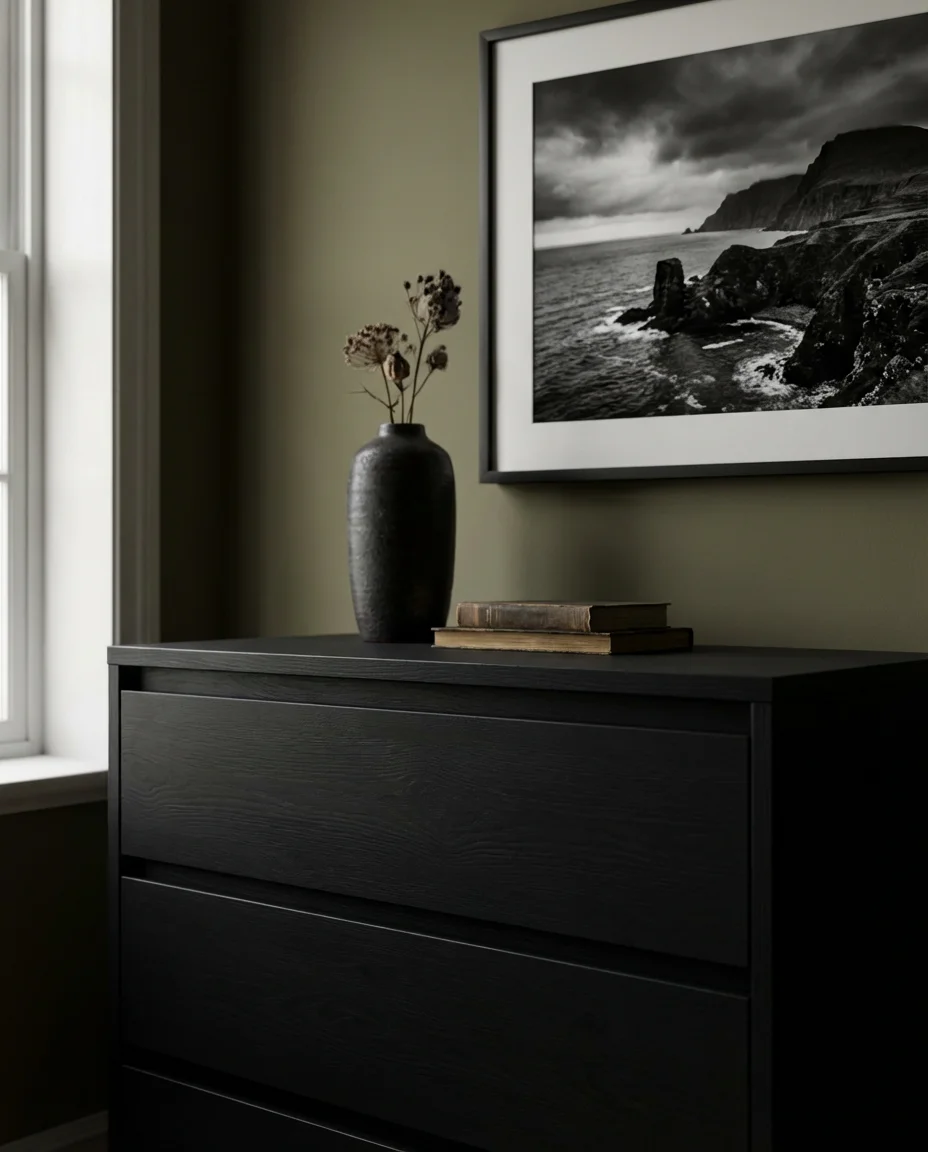
This look works best in bedrooms with at least one other warm element—a wood floor, a cream rug, or natural fiber curtains—to keep the space from feeling too cold. A homeowner in Portland recently shared on a design forum that she’d been afraid to paint her old dresser black for two years before finally going for it. Her takeaway? She wished she’d done it sooner. The contrast with her white walls made the whole room feel more finished than she’d ever managed with light-colored furniture.
4. IKEA MALM Upgrade with Wallpaper Drawer Inserts
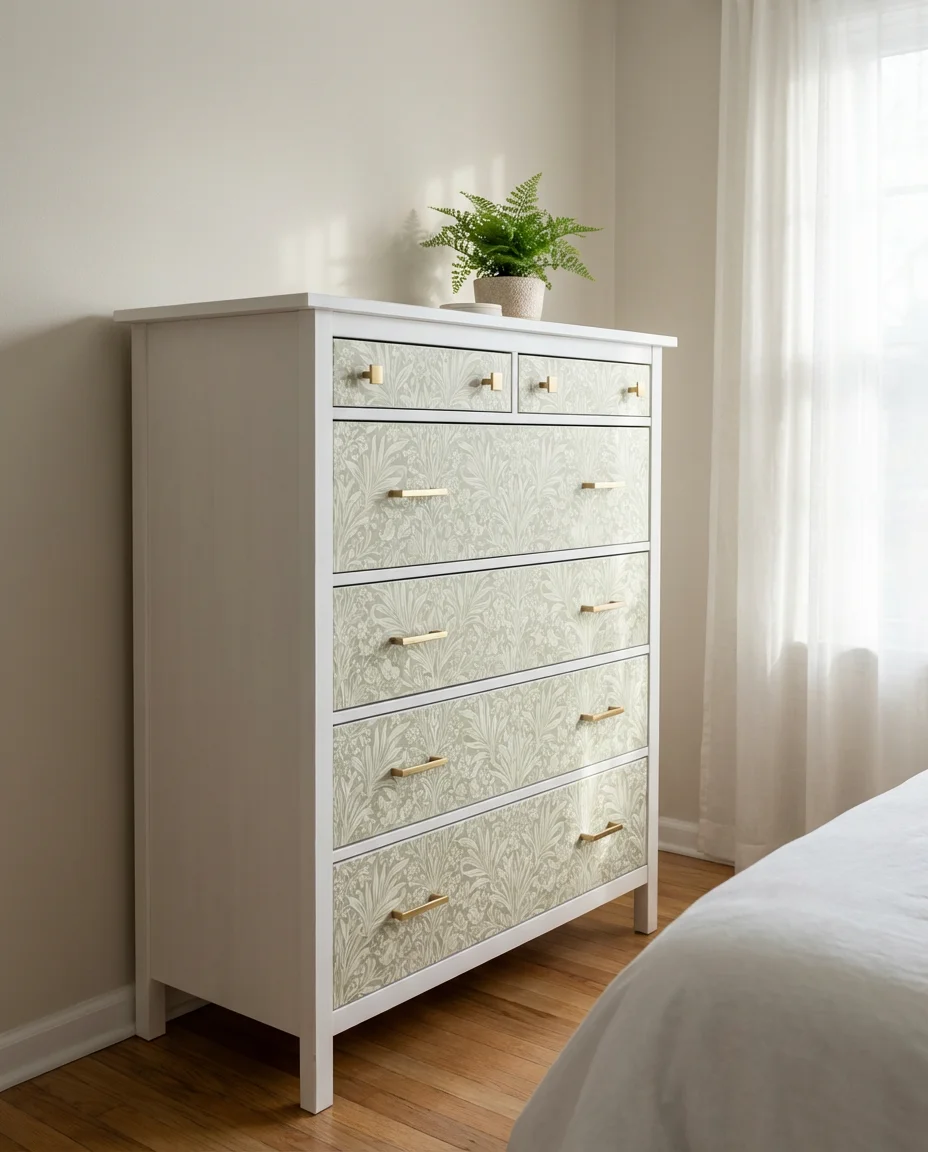
The MALM dresser from IKEA is practically a cultural institution at this point—it’s in millions of American bedrooms, and for good reason. It’s affordable, clean-lined, and endlessly hackable. One of the easiest upgrades? Lining the drawer fronts or the inside of each drawer with removable peel-and-stick wallpaper. A botanical print, a subtle stripe, or a moody abstract pattern can completely transform the piece without a single drop of paint or a permanent commitment. This is the kind of upgrade that takes an afternoon and costs under $40.
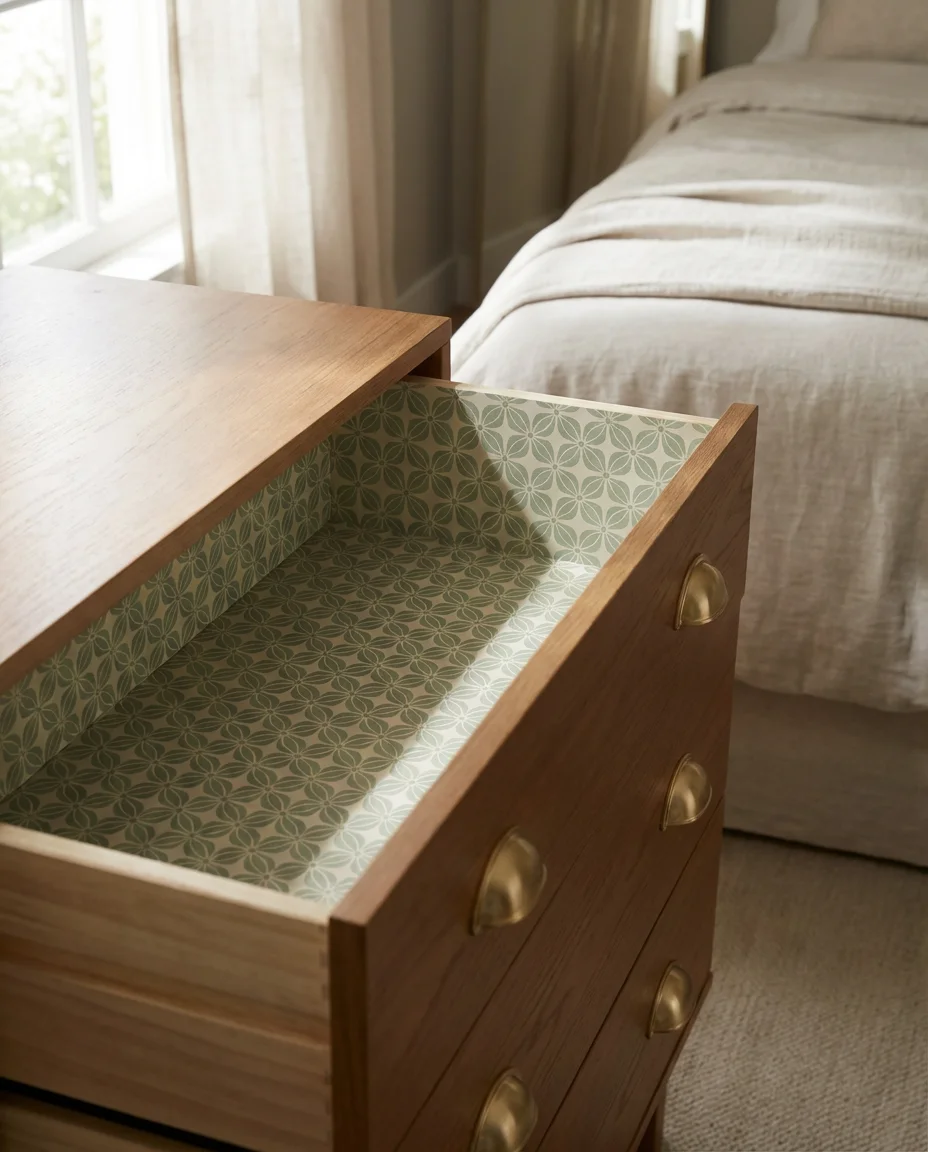
Budget-minded decorators have long known that the MALM is one of the best platforms for a glow-up. A full sheet of peel-and-stick wallpaper runs about $15 to $30, and most standard MALM drawers only need half a sheet per face. Add new hardware—brushed brass pulls run $2 to $5 each—and the total transformation costs well under $100. That’s a genuinely new-looking dresser for less than a dinner out for two in most American cities right now.
5. The Tall Dresser Styled Like a Sideboard
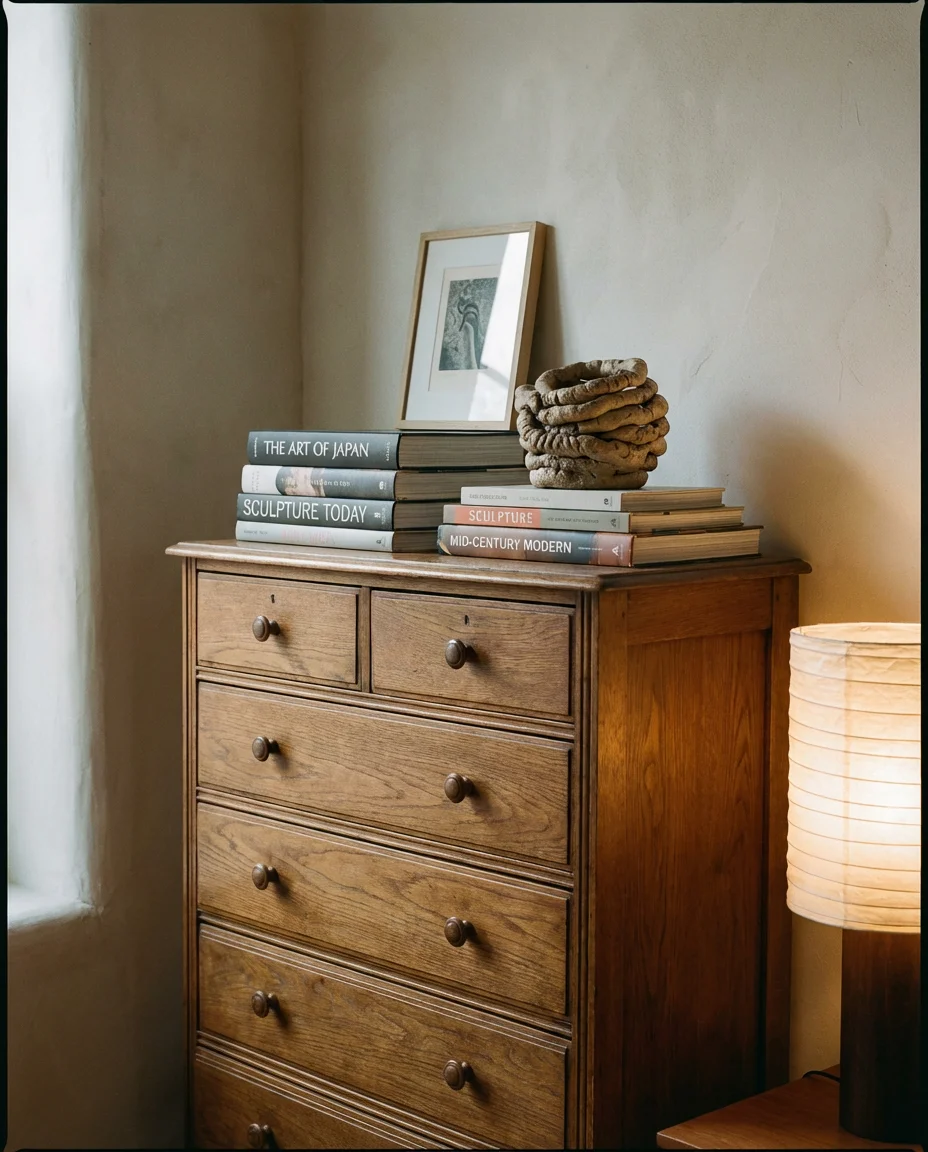
A tall dresser doesn’t have to look like bedroom furniture—and increasingly, people are styling them to feel more like a living room sideboard or a hallway console. Stack books horizontally on top, add a sculptural object, and lean a small piece of art against the wall rather than hanging anything. The vertical scale of a tall dresser gives you natural drama to work with; the trick is to not fight it. Let that height become the feature rather than trying to visually shrink the piece with small objects that get lost.
This approach is particularly well-suited to primary bedrooms where the dresser sits on a longer wall and needs to hold its own against surrounding furniture. Think of it as anchoring the wall rather than just occupying it. A statement floor lamp placed to one side completes the vignette and turns a functional storage piece into a genuine design moment. Where it works best: rooms with at least 9-foot ceilings, where the vertical proportions feel naturally balanced.
6. Waterfall Edge Dresser with Organic Objects
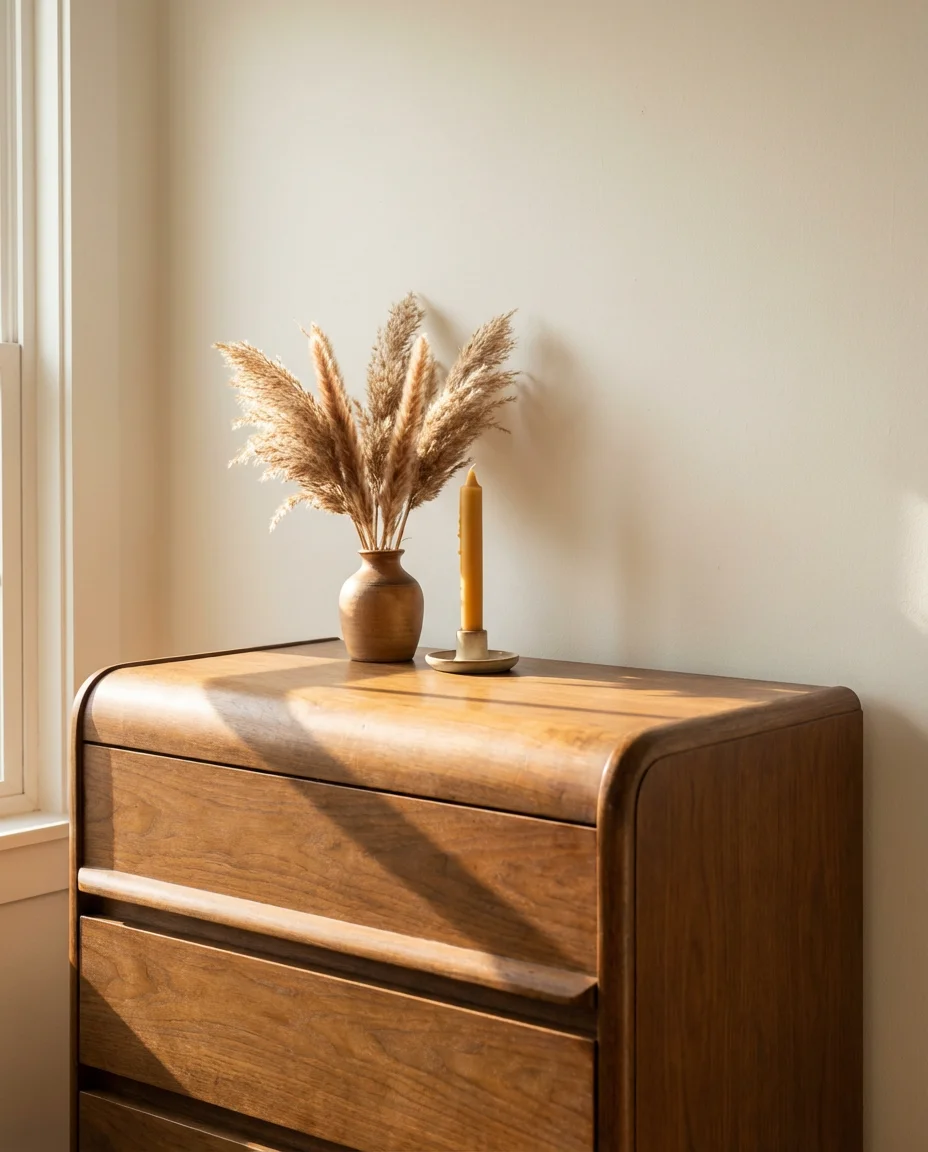
The waterfall dresser—where the top surface flows continuously down the sides in one unbroken material—is having a genuine resurgence in 2026. Originally a hallmark of mid-century American furniture, it’s now showing up in both high-design and accessible contexts. Styling one requires restraint: the form itself is the statement. A small bundle of dried pampas, a chunky stone object, and a single thin taper candle are all you need on top. Let the silhouette do the talking.
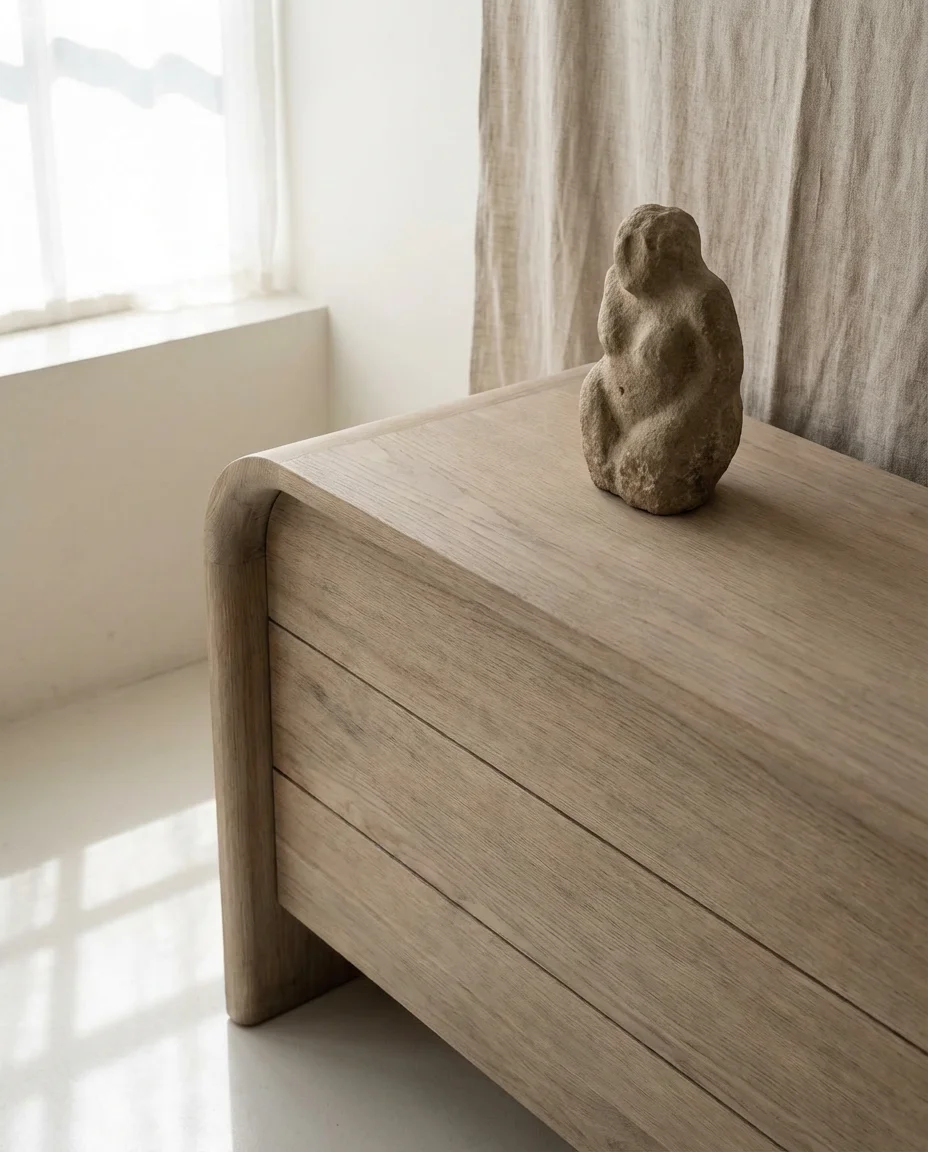
Interior design experts often note that the biggest mistake with a waterfall dresser is over-styling it. The continuous edge creates its own visual rhythm, and too many objects on top break that flow in a way that reads as chaotic. If you’re shopping for one, walnut veneer and oak are the most widely available finishes right now, with prices ranging from around $400 for newer production pieces to well over $1,200 for genuine vintage finds in good condition.
7. Painted Art Dresser as a Bedroom Focal Point
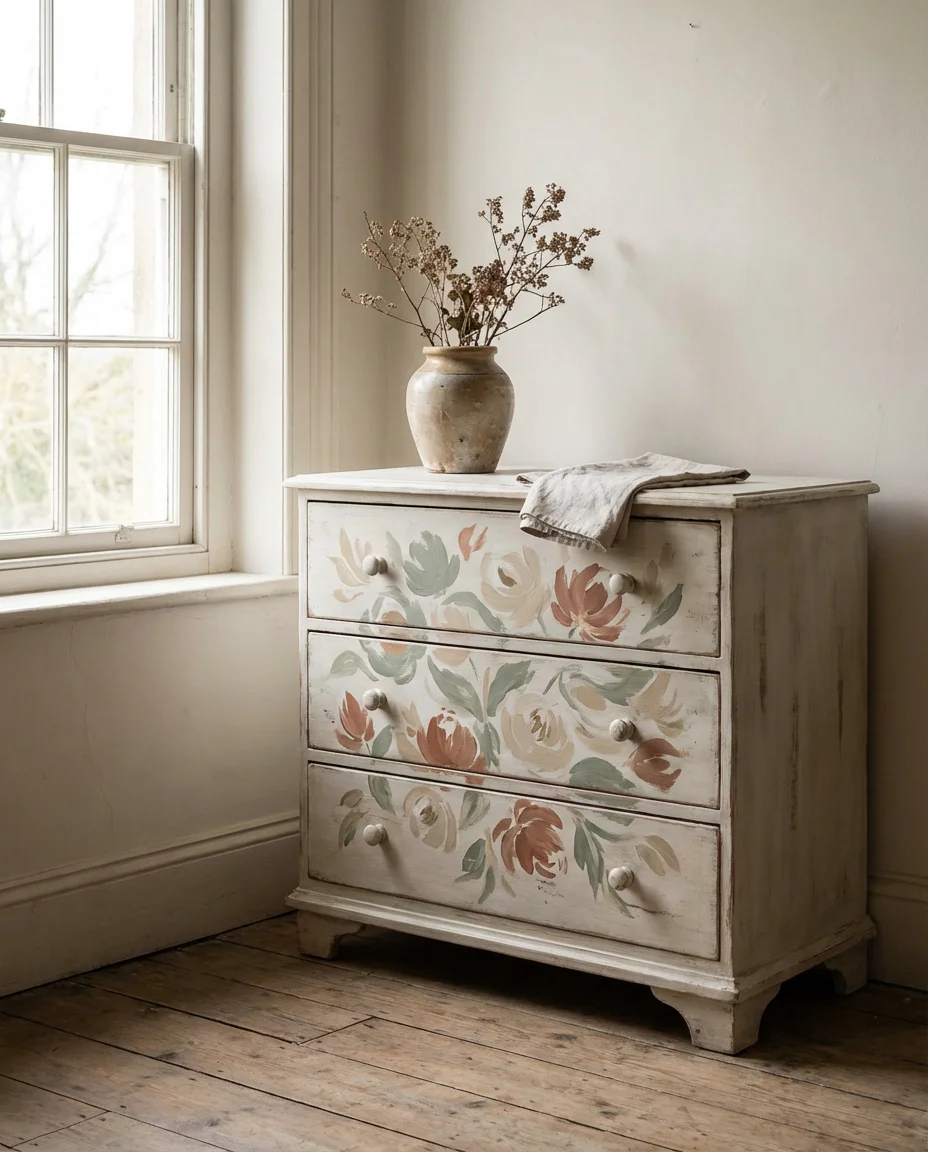
A painted art dresser—where hand-painted florals, abstract shapes, or graphic patterns are applied directly to the furniture surface—is one of the boldest moves in bedroom decor. It turns a functional piece into a literal art object. This trend has deep roots in folk furniture traditions across Europe and Latin America, but the 2026 version feels fresh: looser brushwork, abstract botanicals, and color palettes that lean earthy rather than primary. You don’t have to be an artist to try it, either; botanical stencils and chalk paint work beautifully together.

A micro-anecdote worth sharing: a designer based in Austin took a plain $60 thrift-store dresser, applied a soft sage base coat, and then painted loose abstract florals across the drawer fronts with acrylic craft paint. The finished piece was featured in three separate Instagram posts that together earned over 200,000 saves on Pinterest. The total material cost? Under $80. That is exactly the kind of high-impact, low-cost move that makes painted furniture such a compelling choice for anyone on a budget.
8. Long Low Dresser with Gallery Wall Above
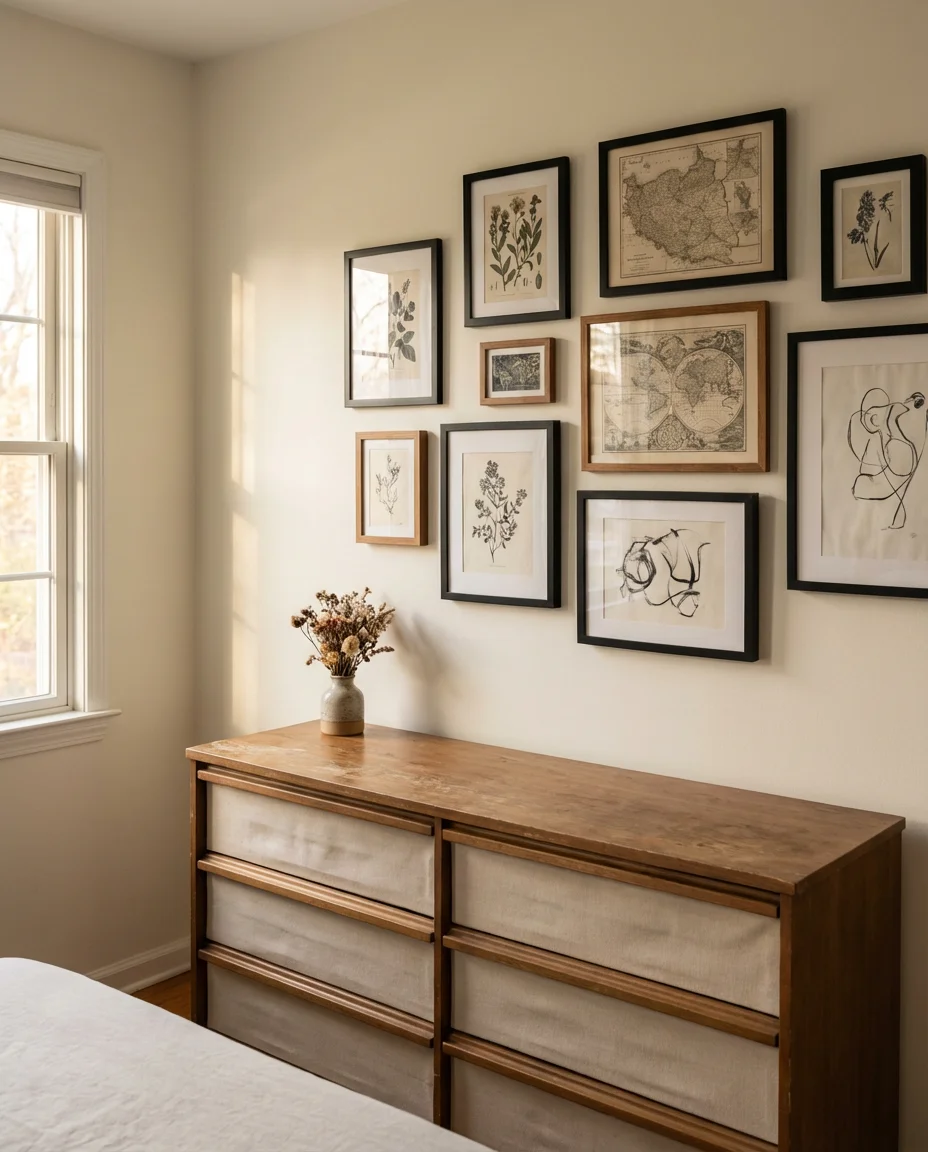
A long dresser—the kind that stretches 60 inches or more across a wall—gives you tremendous surface real estate to work with, and the natural pairing is a gallery wall hung directly above it. The horizontal format of the dresser creates a visual baseline that makes any arrangement of frames feel grounded rather than floating. Mix frame sizes and finishes for a collected-over-time look, and keep the bottom of the lowest frame about 8 inches above the dresser top for a cohesive, intentional result.
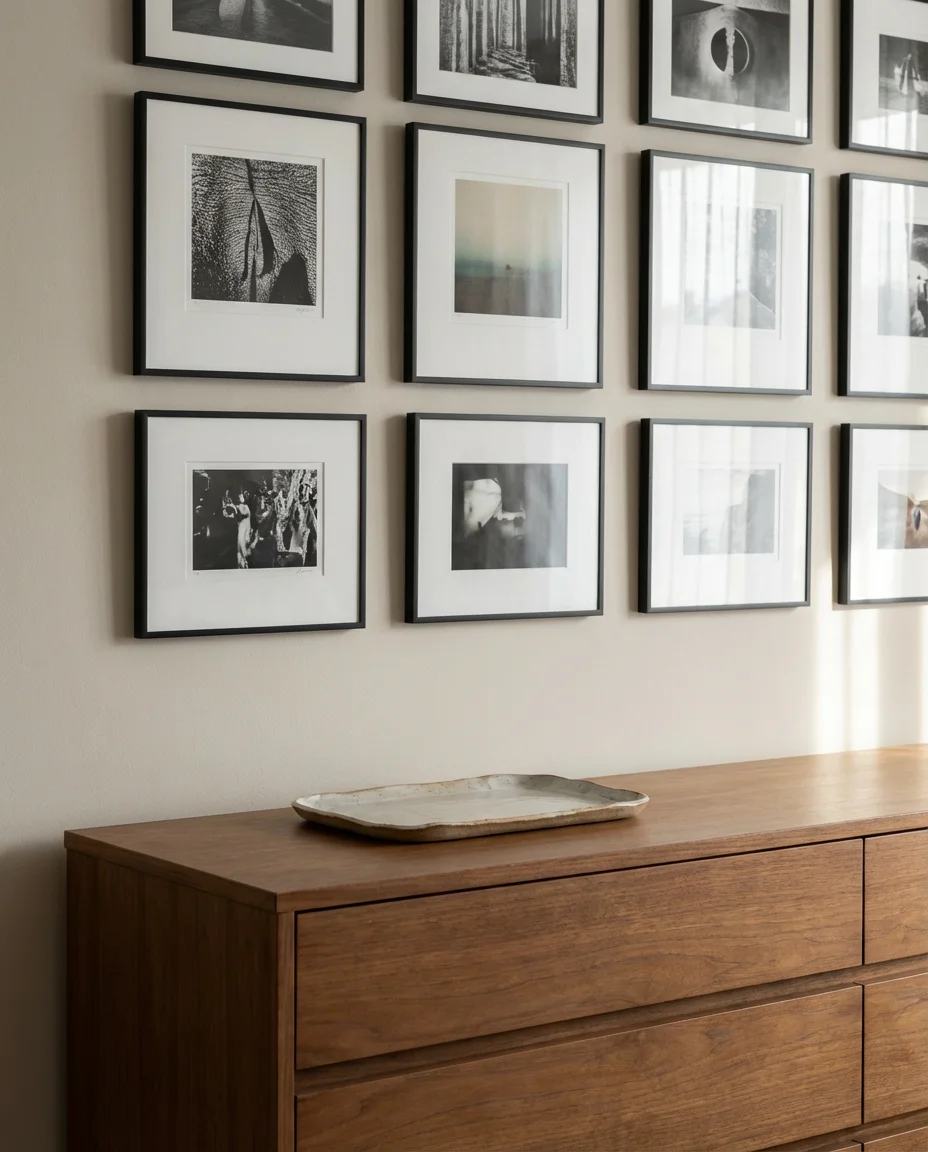
This combination is a natural fit for the primary bedroom in a ranch-style home or anywhere with wider walls and modest ceiling heights. The horizontal spread of both the dresser and the gallery wall keeps everything in the same visual lane, making the room feel wider and more relaxed. Keep the dresser top styling simple when using a busy gallery wall—a single vase and a small tray are enough. Let the art carry the visual weight.
9. Refinished Art Deco Dresser with Brass Hardware
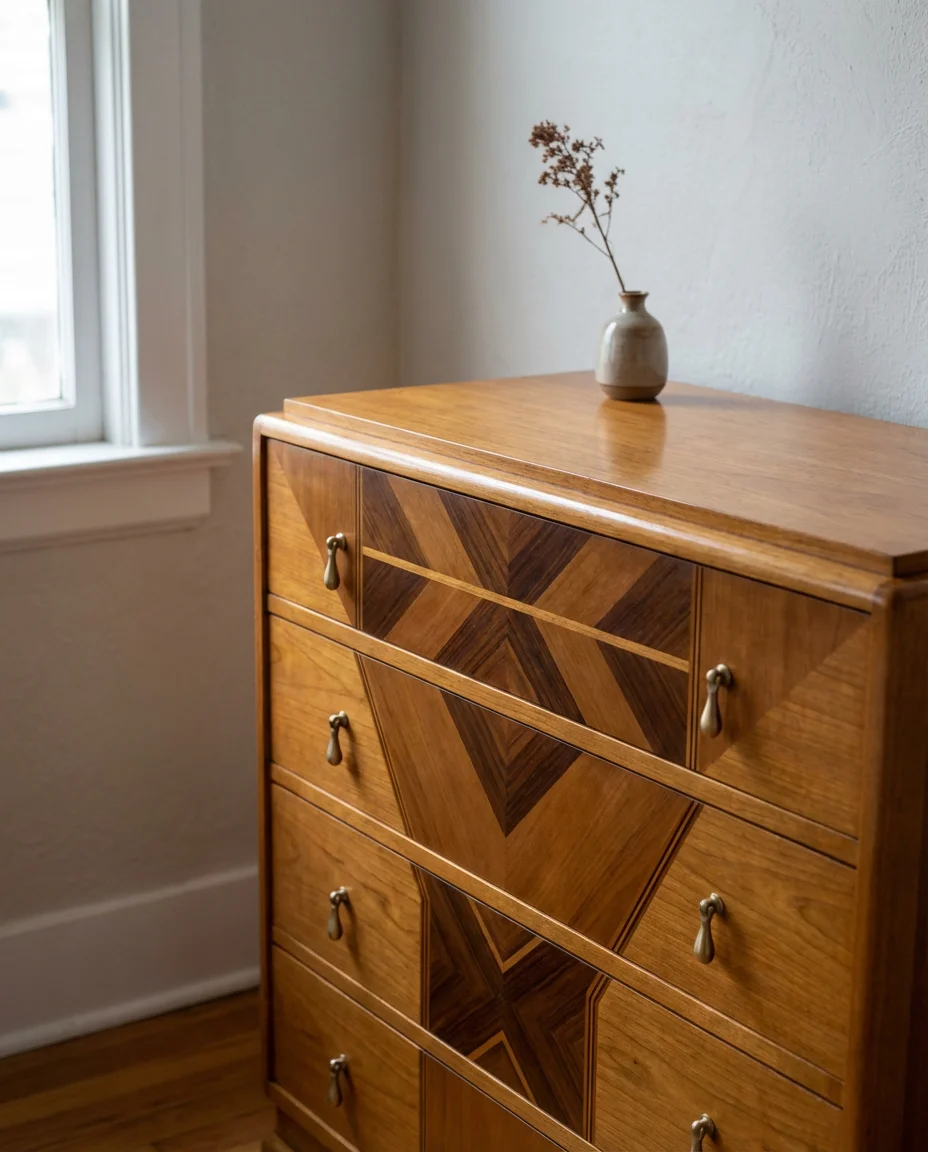
A refinished Art Deco dresser with updated brass hardware is one of those finds that stops people mid-scroll on Pinterest every time. The original 1930s and 40s pieces had gorgeous bones—strong geometric lines, interesting veneers, and low-slung profiles—and a solid sanding plus a fresh finish brings all of that back to life. Pair the makeover with unlacquered brass pulls (they’ll patina beautifully over time), and you’ve got a piece that looks like it cost five times what you actually spent.
Art Deco dressers are still relatively affordable at American estate sales and thrift stores—pieces that would cost $2,000 new can sometimes be found for $150 to $400 in rough condition. The refinishing process typically requires stripping, sanding to 220 grit, and applying two to three coats of a water-based poly or oil finish. Total material cost with new hardware: $100 to $200. The result is a piece with genuine history and character that no flat-pack furniture can replicate.
10. White Art Above a Dark Wood Dresser
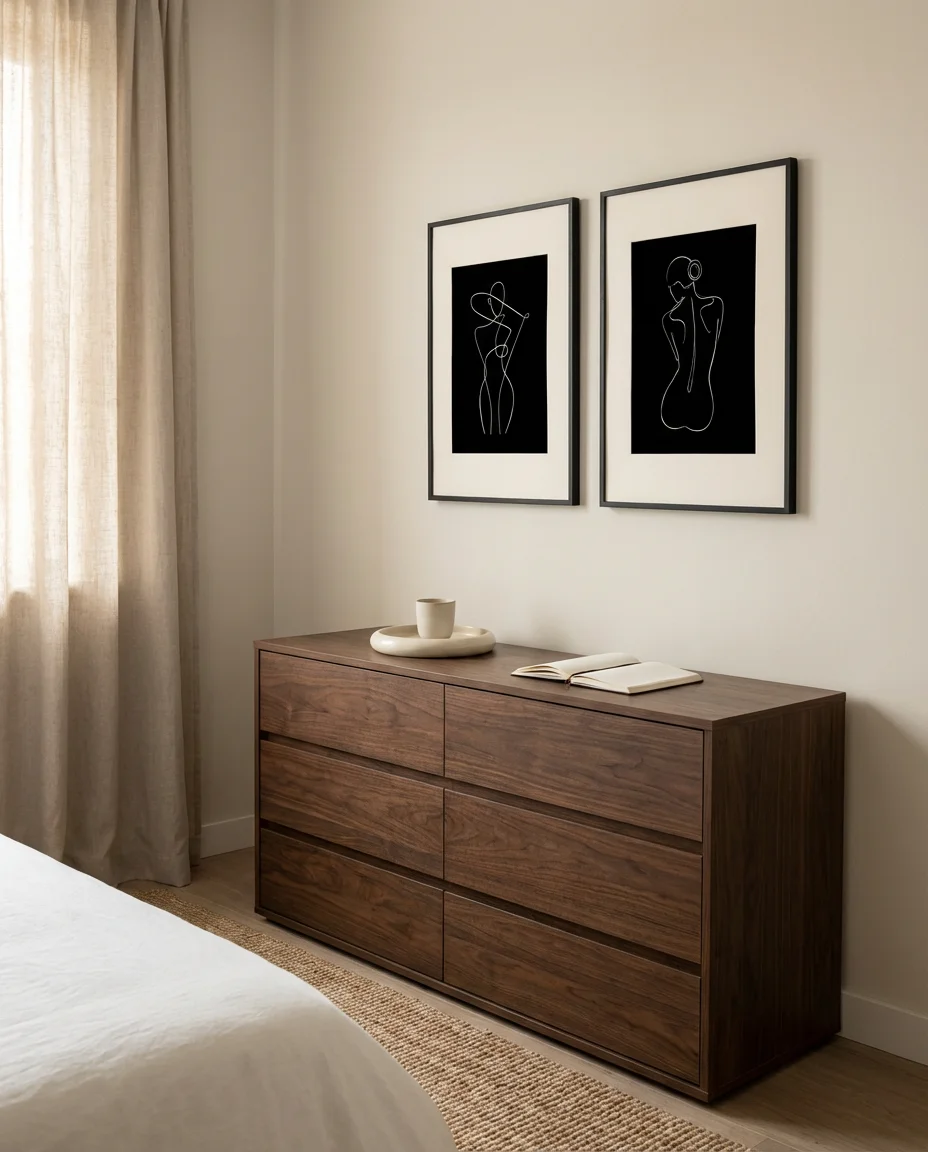
Hanging white art—think minimalist line drawings, pale abstract prints, or light-toned photography—above a dark wood dresser creates one of the cleanest contrasts in bedroom design. The light artwork lifts the eye upward and prevents the heavy tones of dark wood from making the wall feel closed in. This pairing works especially well in rooms where you want warmth without weight: the wood brings richness, the white art brings air, and together they hit a balance that feels both sophisticated and livable.
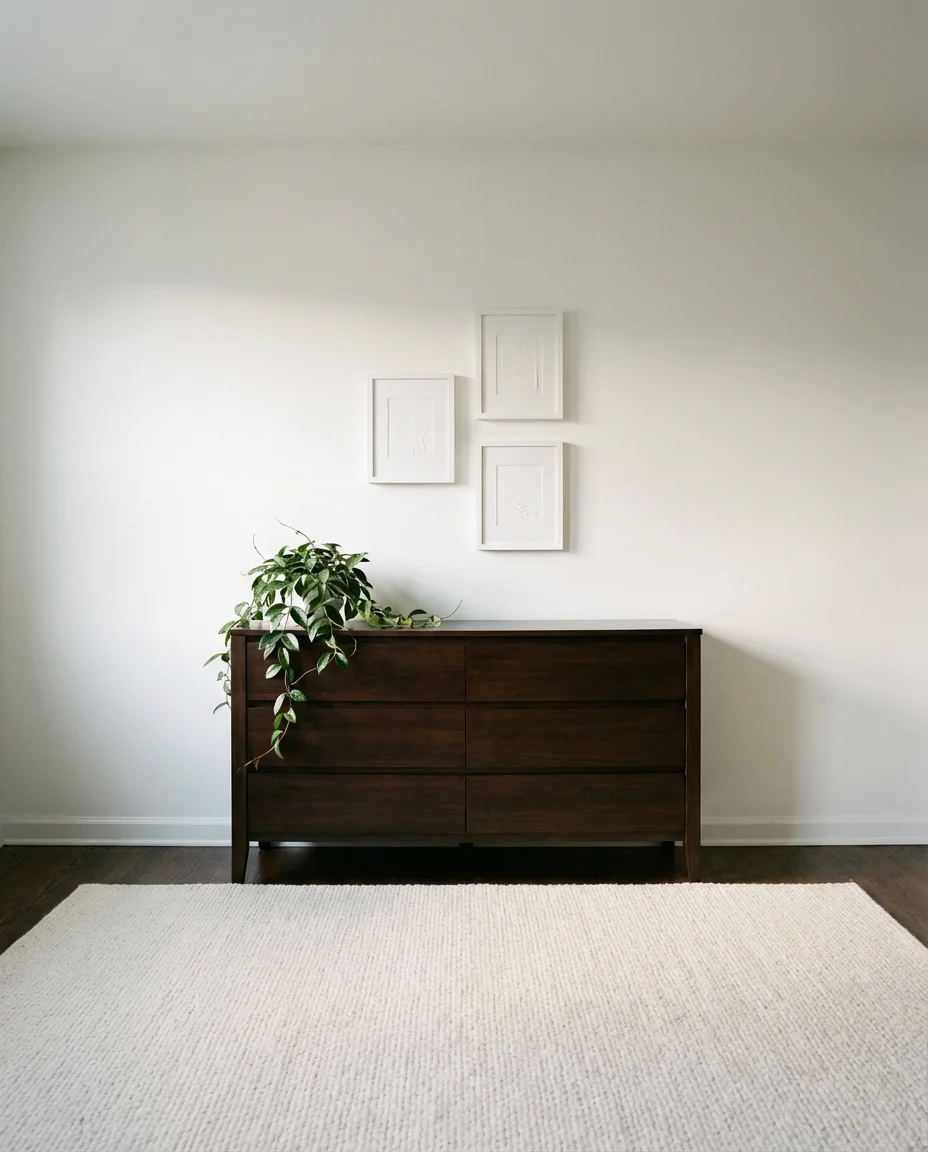
Americans in the Midwest and Northeast particularly gravitate toward this look in older homes with original dark wood floors and trim—the dresser echoes that existing warmth while the art keeps things from getting too heavy. A real homeowner trick: print minimalist art at home on cardstock and frame it yourself. Many of the most-pinned dresser styling photos on Pinterest use artwork that costs $0 to create—a simple botanical sketch on cream paper in a $15 frame is genuinely indistinguishable from a $200 gallery print at normal viewing distance.
11. Inspo Board Dresser Corner with Mood Lighting
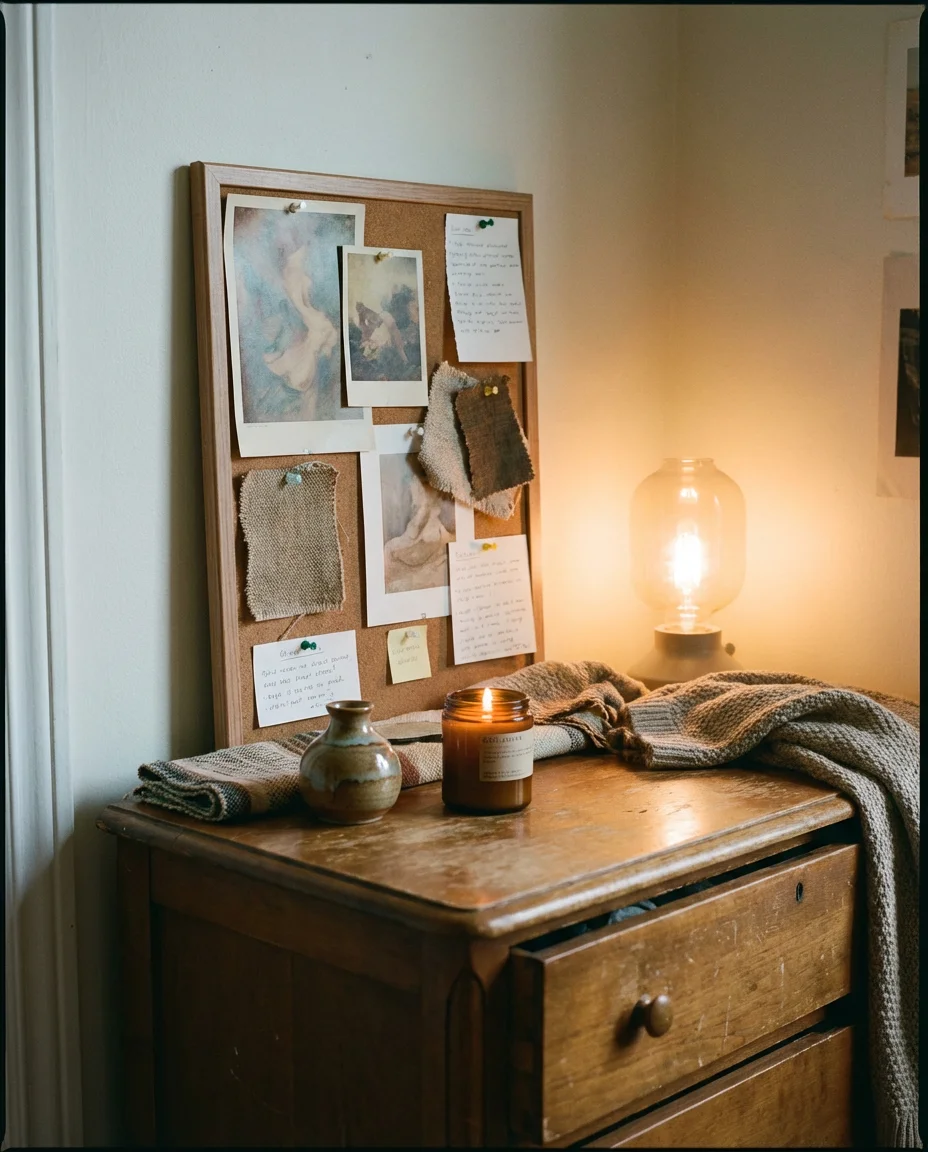
For the person who treats their bedroom as a creative sanctuary, turning the dresser corner into an inspo-style vignette—think curated objects, pinned prints, small candles, and a warm-toned lamp—transforms the space into something that feels alive. This approach blurs the line between styling and self-expression. Place a small corkboard or magnetic panel above the dresser and rotate photos, prints, and fabric swatches seasonally. The result feels personal and ever-evolving in a way that static décor never quite achieves.
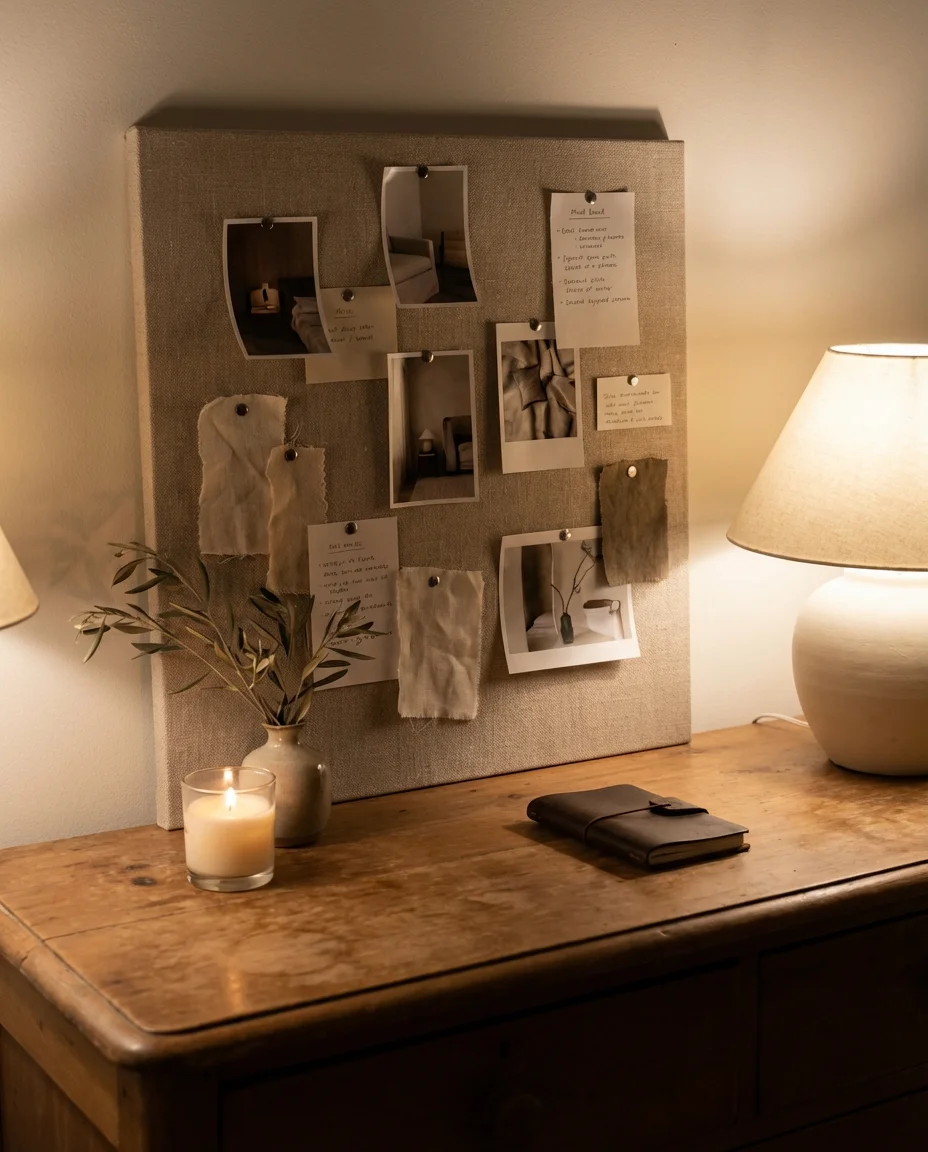
Mood lighting is the element most people forget until they’ve tried it and wonder how they ever lived without it. A small Edison-bulb table lamp or a rechargeable LED light strip tucked behind the dresser or lamp base creates an ambient warmth that shifts the entire bedroom atmosphere at night. This is especially impactful in rentals and apartments where overhead lighting is fixed and often harsh. The dresser corner becomes the mood anchor of the room, which is a meaningful thing in small spaces.
12. Bedroom Dresser Styled with Plants and Ceramics
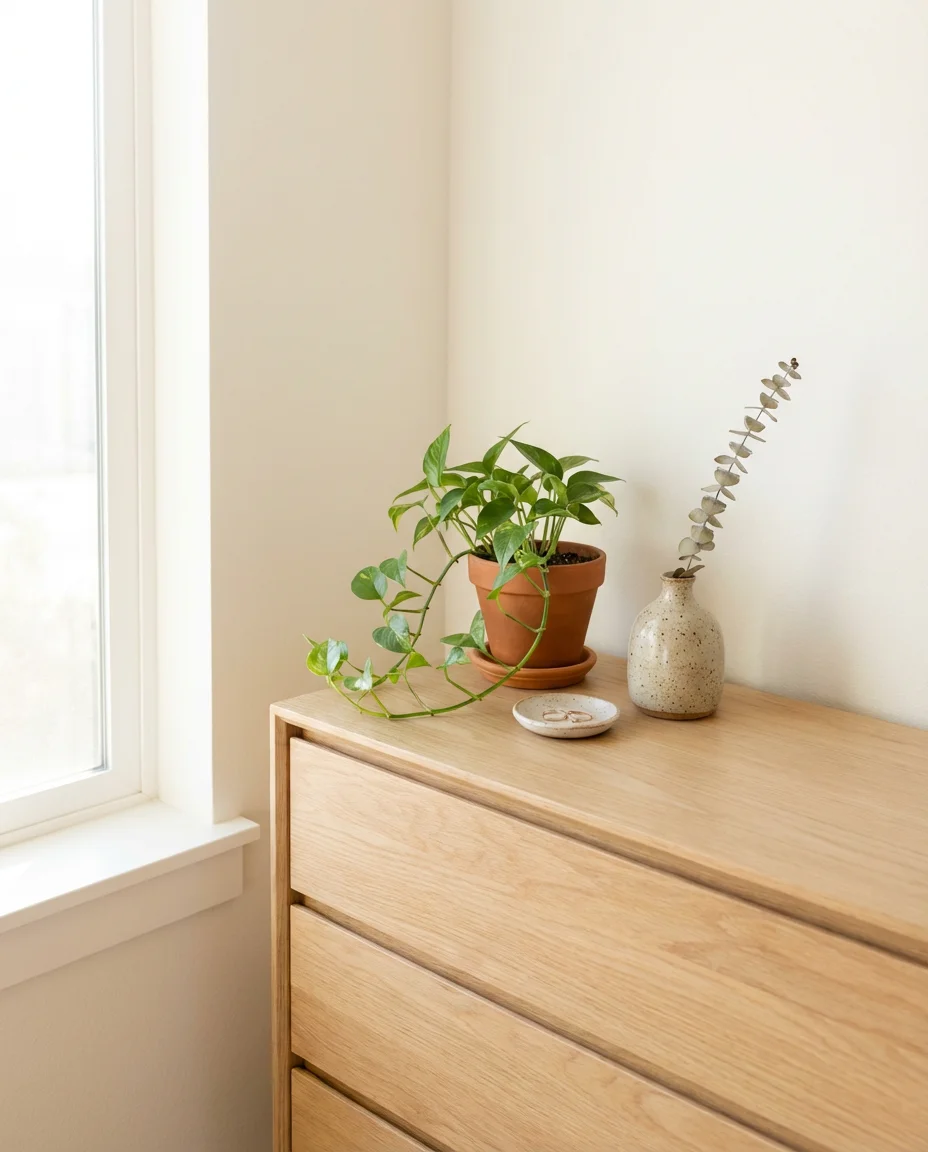
Plants on a bedroom dresser feel natural, grounding, and—when chosen correctly—surprisingly low-maintenance. Trailing pothos, a compact snake plant, or a single sprig of eucalyptus in a bud vase all work beautifully in this context. Pairing greenery with handmade ceramics—an irregular stoneware bowl, a pinch pot holding rings, and a textured bud vase—adds an artisanal quality that elevates the whole surface. The combination of organic shapes and living material gives a dresser top genuine visual life without trying hard.
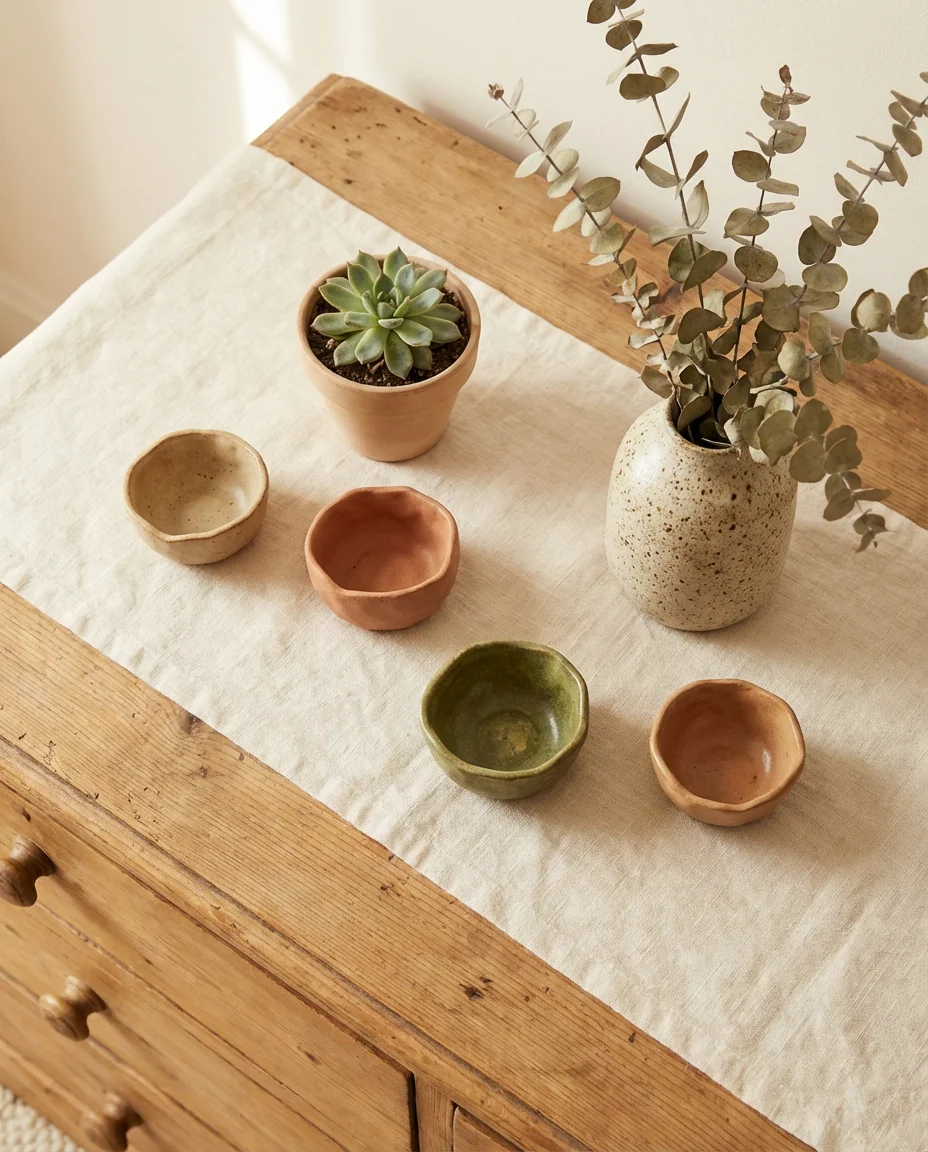
Where this works best: bedrooms with a window nearby that provides indirect light, which is enough for most trailing houseplants. The ceramic element doubles as function—a small dish corrals jewelry, and a shallow bowl holds pocket items—so nothing on the surface is purely decorative. That ratio of beautiful-to-useful is something designers talk about often, and it’s what separates a styled dresser from one that just has stuff on it. Keep the plant in proportion to the dresser; a pot no wider than 5 inches works for most standard-width pieces.
13. Dresser Makeover Ideas with Two-Tone Paint
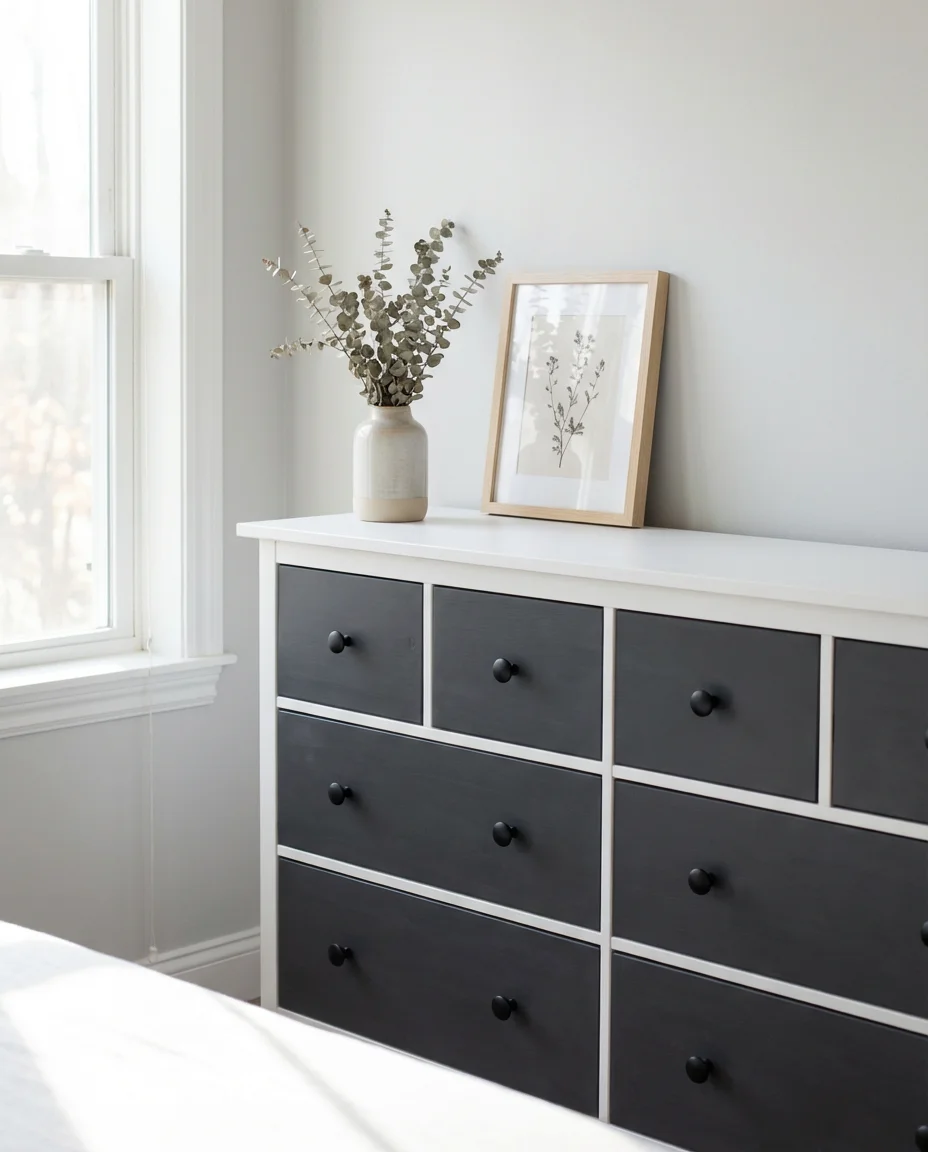
Two-tone painting is one of the best makeover ideas for a dated dresser because it adds custom-looking depth without requiring professional skill. The classic approach: paint the body one color and the drawer fronts a second, complementary tone. Sage body with cream drawers. Dusty blue body with warm white fronts. Charcoal body with terracotta drawers—that one is having a real moment right now. The contrast draws the eye naturally to the drawer structure, which turns a basic rectangular form into something with genuine graphic interest.
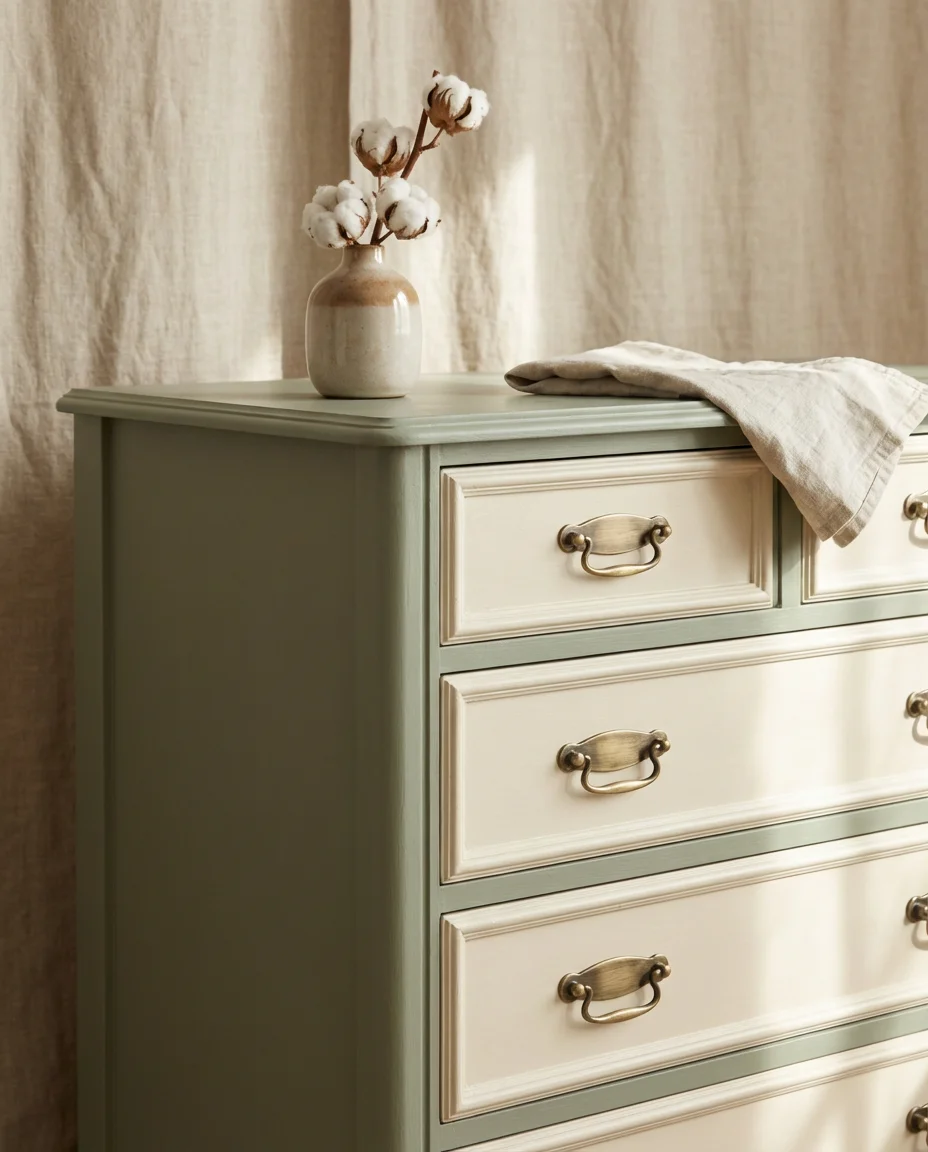
The most common mistake with two-tone dressers is choosing colors that are too similar—they read as mismatched rather than intentional. Aim for contrast: light versus dark, warm versus cool, or a saturated tone against a near-neutral. Use chalk paint or mineral paint for the best coverage on wood surfaces without sanding, and finish with a clear wax for protection. Total project cost for most standard dressers runs between $40 and $80 in materials, making this one of the highest-impact low-budget bedroom upgrades available.
14. Decor Art Layering on a Minimalist Dresser

The art of layering decor on a minimalist dresser is about knowing what to leave out as much as what to include. Start with a large piece of art—leaned against the wall is more relaxed than hung—then layer a smaller object in front of it at a slight angle. Add one organic element: a dried botanical, a small stone, or a twisted twig. Three items, three scales, one cohesive story. This is the formula behind nearly every dresser styling image that earns major saves on Pinterest, and it works because the eye moves naturally across the layers.
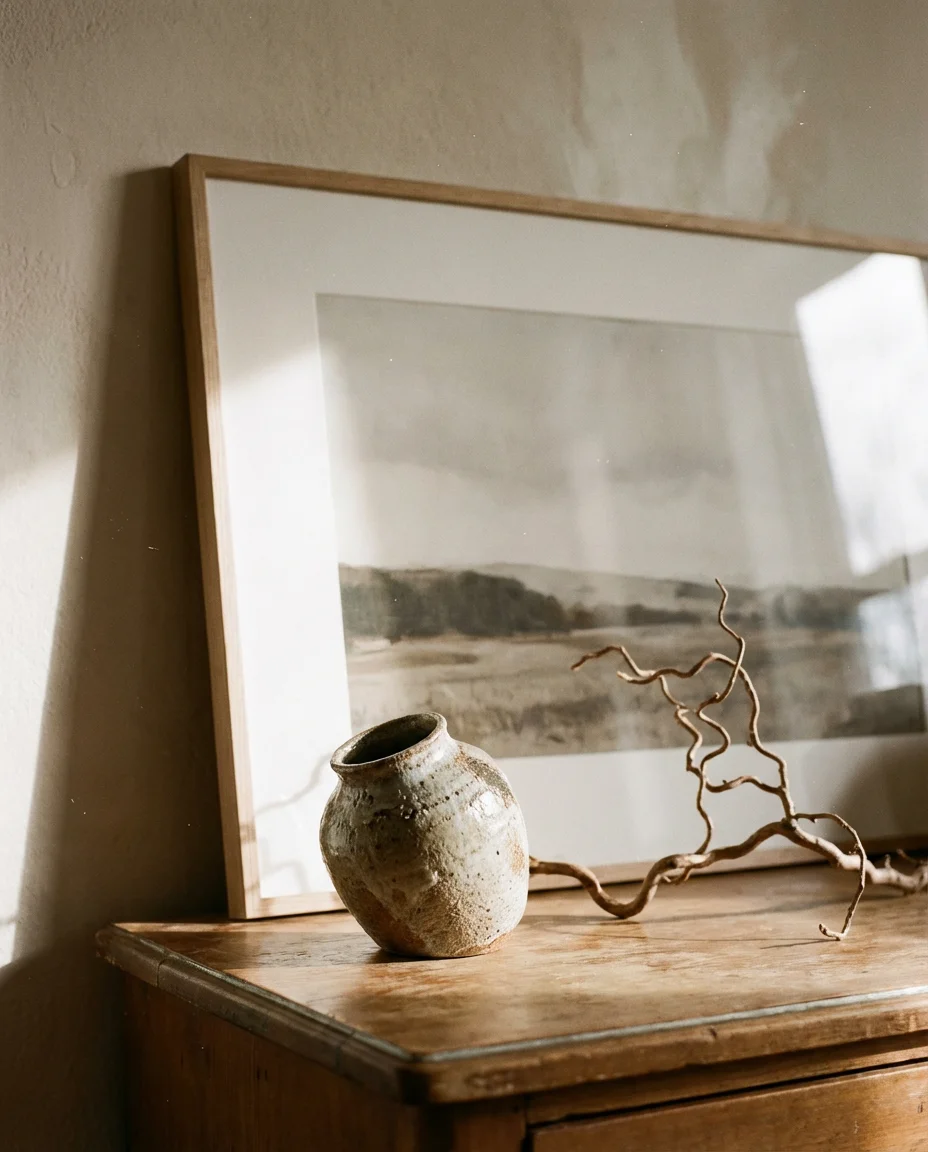
Expert-level tip from interior stylists: the leaned art should be at least 50% as wide as the dresser surface for the arrangement to feel proportionate rather than lost. A small 5×7 print leaning on a 60-inch dresser looks like it belongs on a nightstand—it’s just too small to anchor the space. Go for at least an 18×24 print, or group two or three smaller frames together as one visual unit. That scale shift is everything when you’re working with a long, low surface.
15. Refurbished Art Nouveau Dresser with Curved Lines
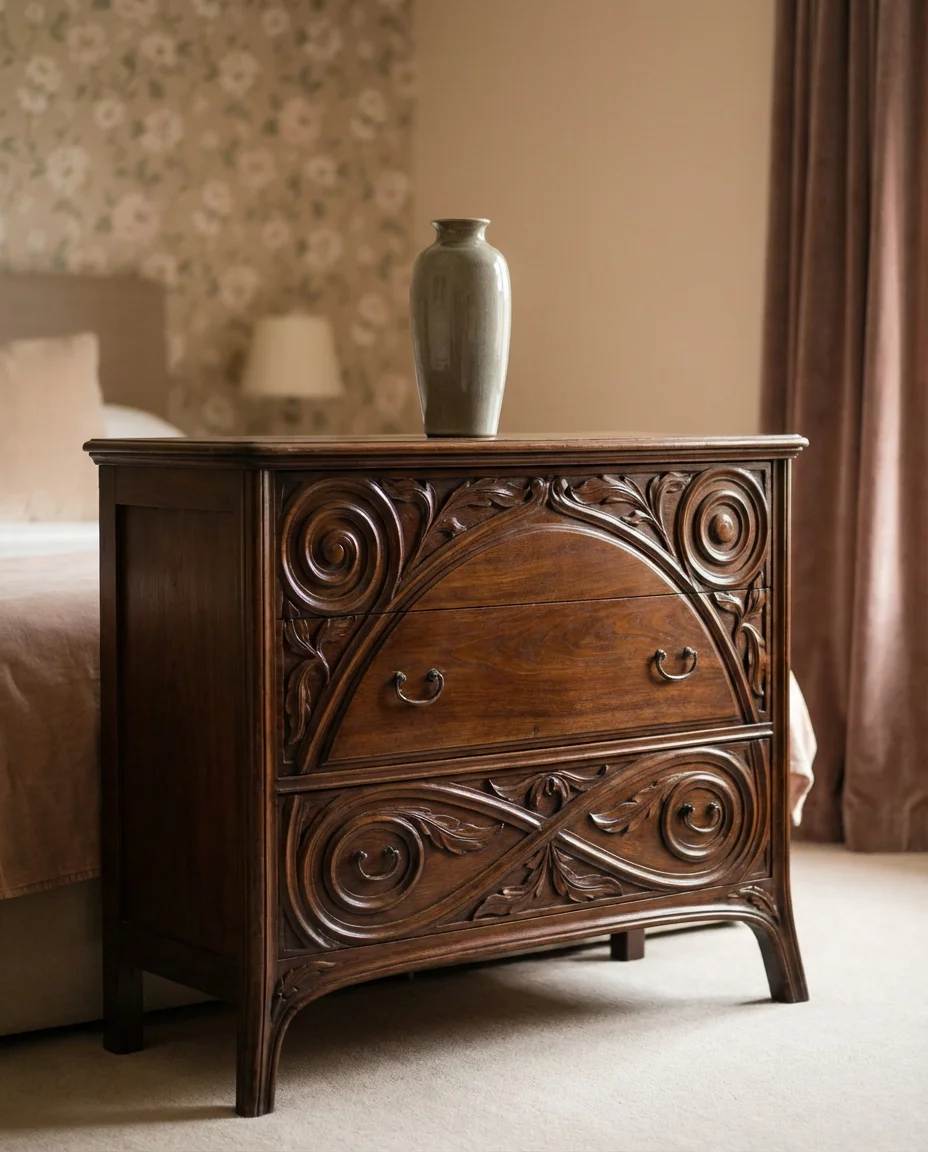
A refurbished Art Nouveau dresser—with its characteristic flowing curves, carved organic motifs, and elegant proportions—brings a kind of beauty to the bedroom that modern furniture simply can’t manufacture. These early 20th-century pieces show up regularly at estate sales, antique malls, and online marketplaces, often in need of little more than a cleaning and a polish. The original hardware—drop pulls, decorative escutcheons—is almost always worth keeping. This is furniture with a story, and that matters in a room meant for rest and restoration.
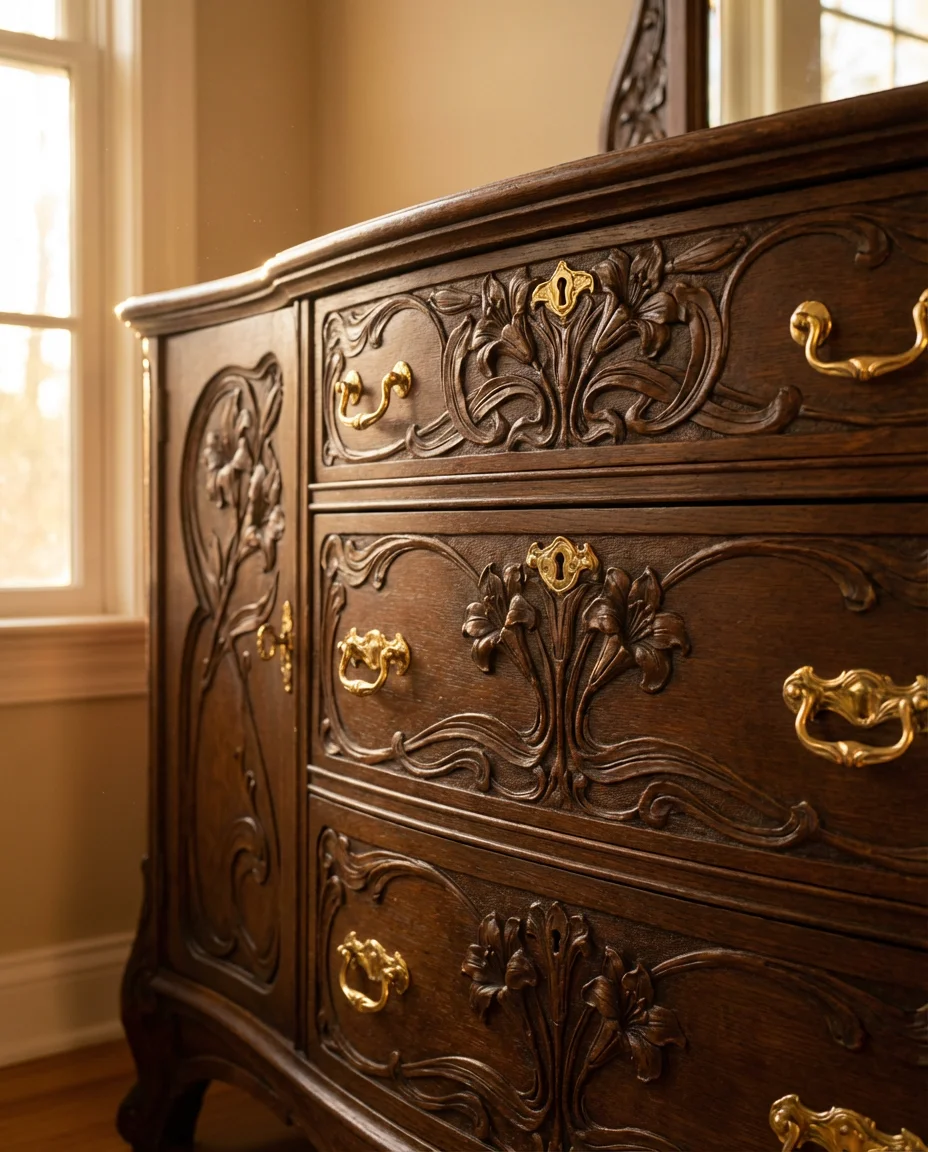
Americans with a taste for European antique aesthetics have been driving renewed interest in Art Nouveau furniture for the past several years, particularly in cities like New Orleans, Chicago, and San Francisco, where Victorian and Edwardian architecture provides a natural backdrop. For styling, keep the top minimal—one tall bud vase, a small tray, and nothing else. The carved wood does the decorating. Adding too many objects on top of a piece this detailed is a common mistake that makes the dresser look buried rather than featured.
16. La Table Basse Style—Dresser as a Statement Console
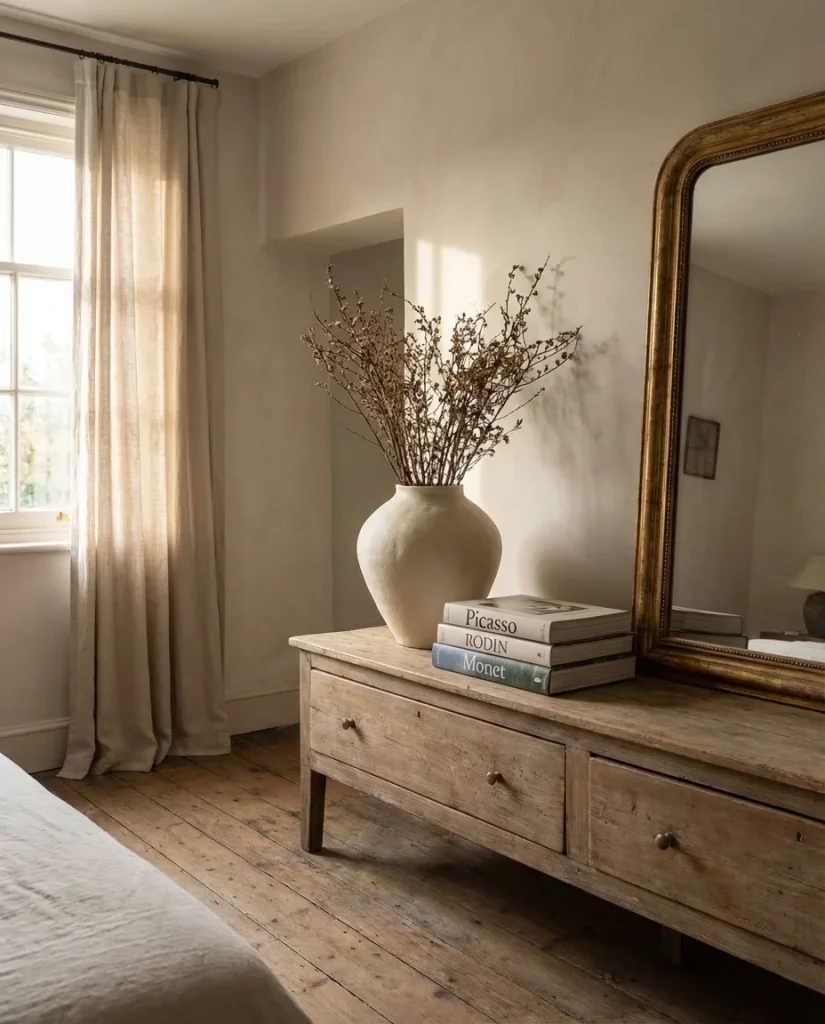
Inspired by the French concept of la table basse—the low decorative table used as a styling centerpiece—this approach treats the dresser as a statement console rather than purely functional storage. A low-profile dresser placed against a bedroom wall becomes the room’s visual anchor when styled with intention: an oversized sculptural vase, a stack of art books, a single trailing plant, and a mirror that leans rather than hangs. The overall effect is more gallery than bedroom, and it photographs beautifully.
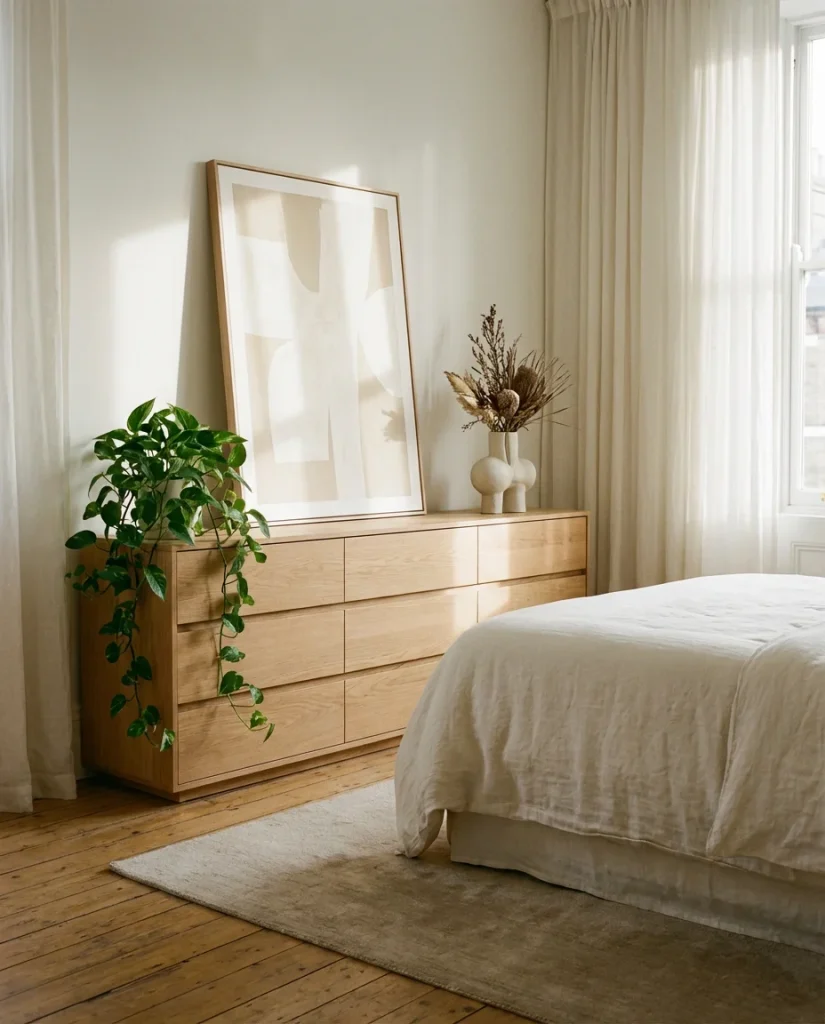
This styling sensibility—borrowed from French interior design and adapted for American bedrooms—is showing up increasingly in design accounts that appeal to the 30–50 age demographic. It works particularly well in primary bedrooms where the homeowner wants the space to feel like a retreat rather than a utility room. The key is confidence: commit to a few large, beautiful objects rather than filling every inch. Negative space on a dresser top is not wasted space—it’s breathing room, and it’s what makes styled surfaces feel intentional.
17. Kitchen-Inspired Dresser with Functional Beauty
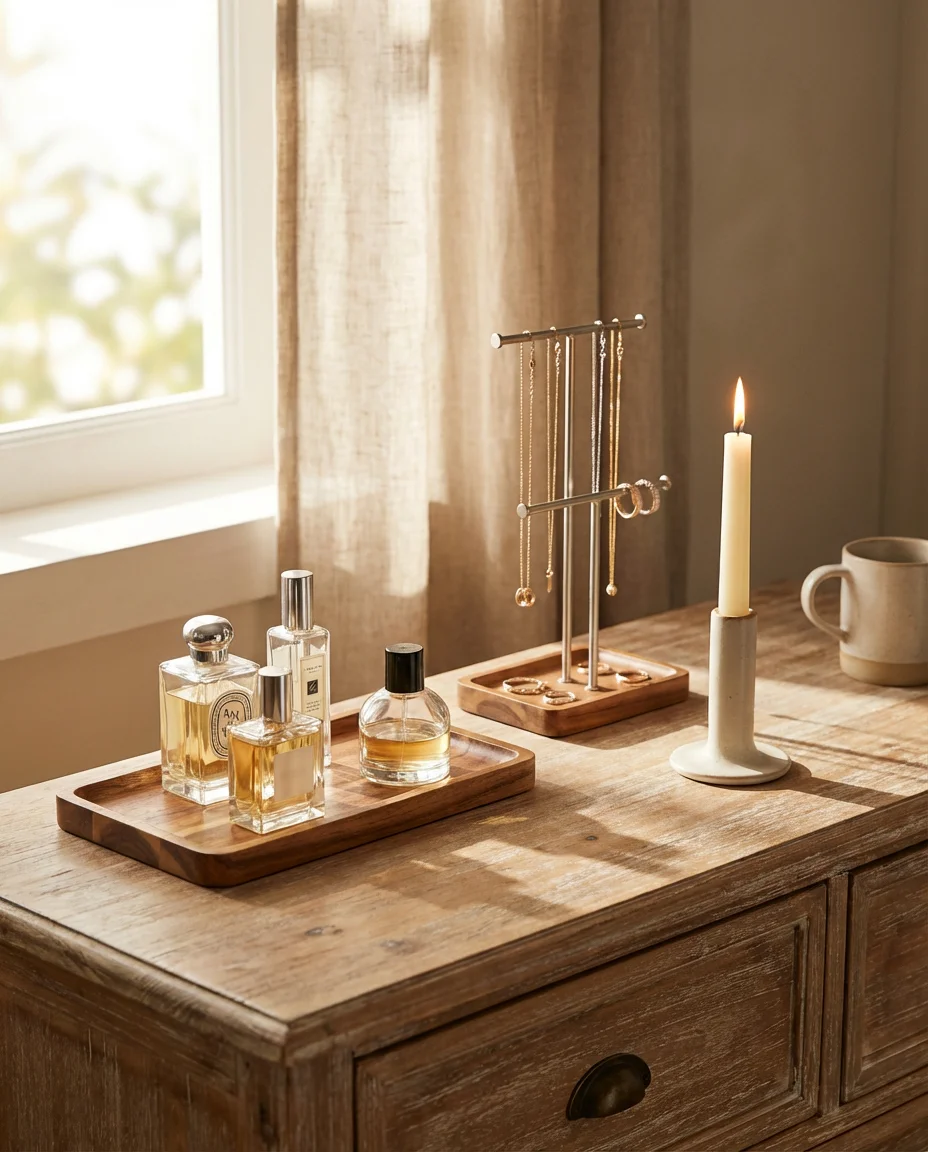
The kitchen-inspired dresser approach takes cues from counter styling—practical objects displayed beautifully—and applies them to bedroom storage. A small wooden tray corrals perfumes like a countertop soap dish corrals kitchen essentials. A tiered organizer holds jewelry the way a spice rack holds jars. The logic is the same: things you use daily should be accessible and displayed in a way that makes them pleasant to look at. This is the philosophy behind some of the most practical, beautiful dresser tops you’ll ever see.
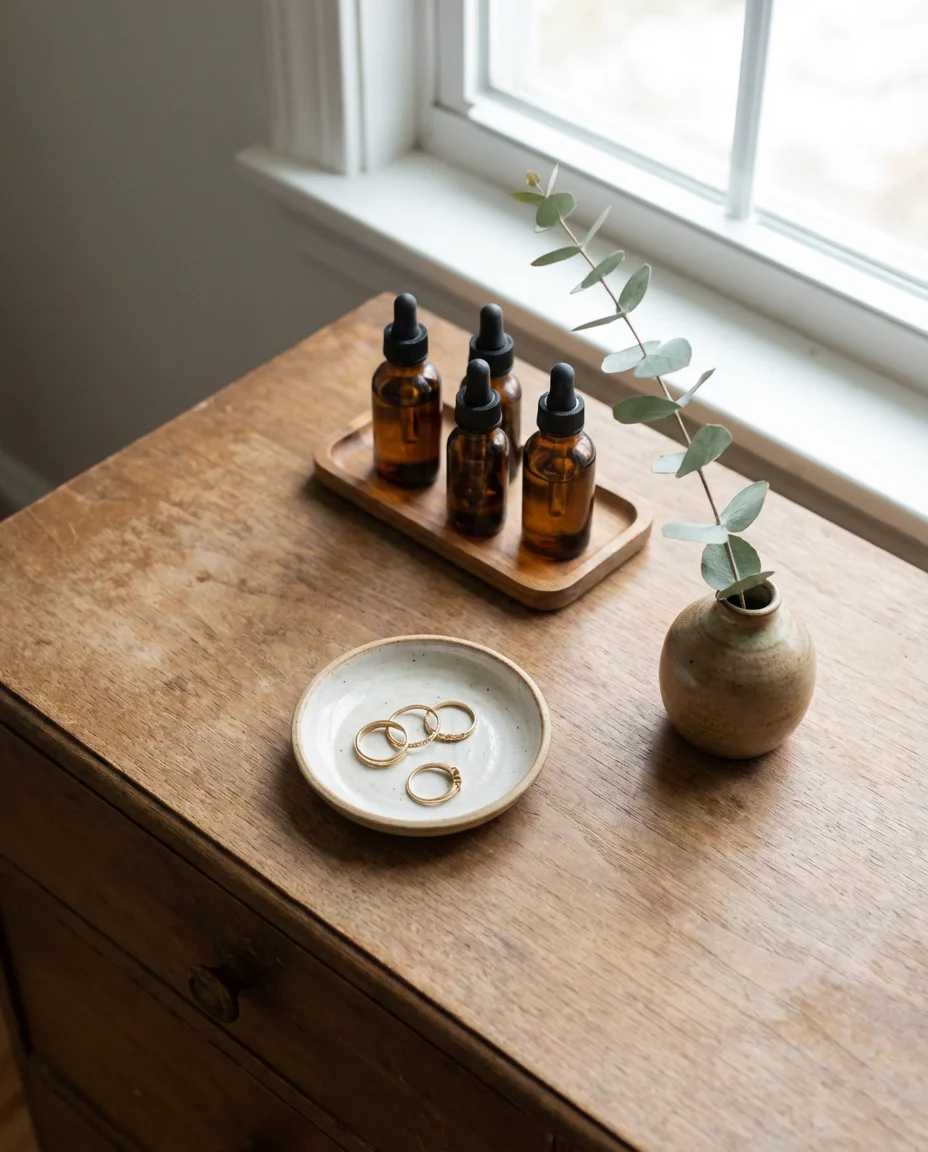
This approach resonates particularly well with the American lifestyle tendency to want spaces that work hard and look good doing it. There’s no patience in most households—especially busy ones with kids or demanding schedules—for surfaces that look beautiful but require constantly moving things to find what you need. The kitchen-counter logic solves this perfectly: everything has a place, the place is visible, and the overall arrangement reads as styled rather than chaotic. Function and beauty don’t have to be in opposition.
18. Design-Forward Dresser with Abstract Sculpture

For the bedroom that wants to feel like a boutique hotel, nothing elevates a dresser quite like a single piece of abstract sculpture placed deliberately on top. A twisted ceramic form, a cast concrete figure, or a hand-thrown stoneware object in an unexpected shape—any of these signals that the room has been thought about, that someone made a choice. This is pure design thinking applied to the most overlooked surface in the bedroom. Pair it with a clean dresser in a neutral tone and keep everything else on the surface at or near zero.
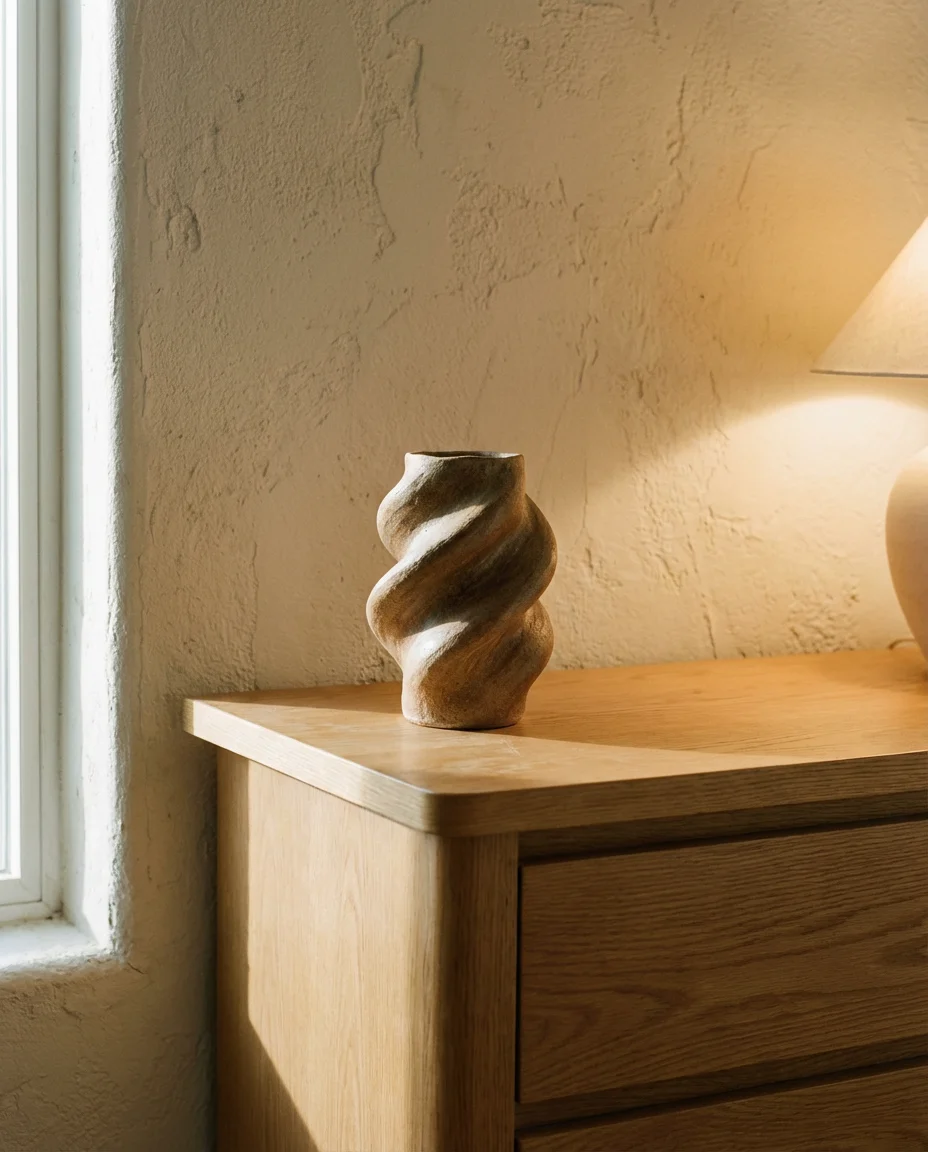
Abstract sculpture for home décor has become increasingly accessible in recent years, with small ceramic and concrete pieces available through Etsy, local craft markets, and home goods stores like CB2 and West Elm for $30 to $150. The scale matters: a piece that’s 10 to 14 inches tall typically works best on a standard-height dresser, providing enough visual presence without competing with the furniture itself. One piece is almost always better than a group here—the single-object approach communicates intentionality in a way that a cluster of small things simply cannot.
19. Dresser Ideas with Wallpaper-Backed Mirror Frame
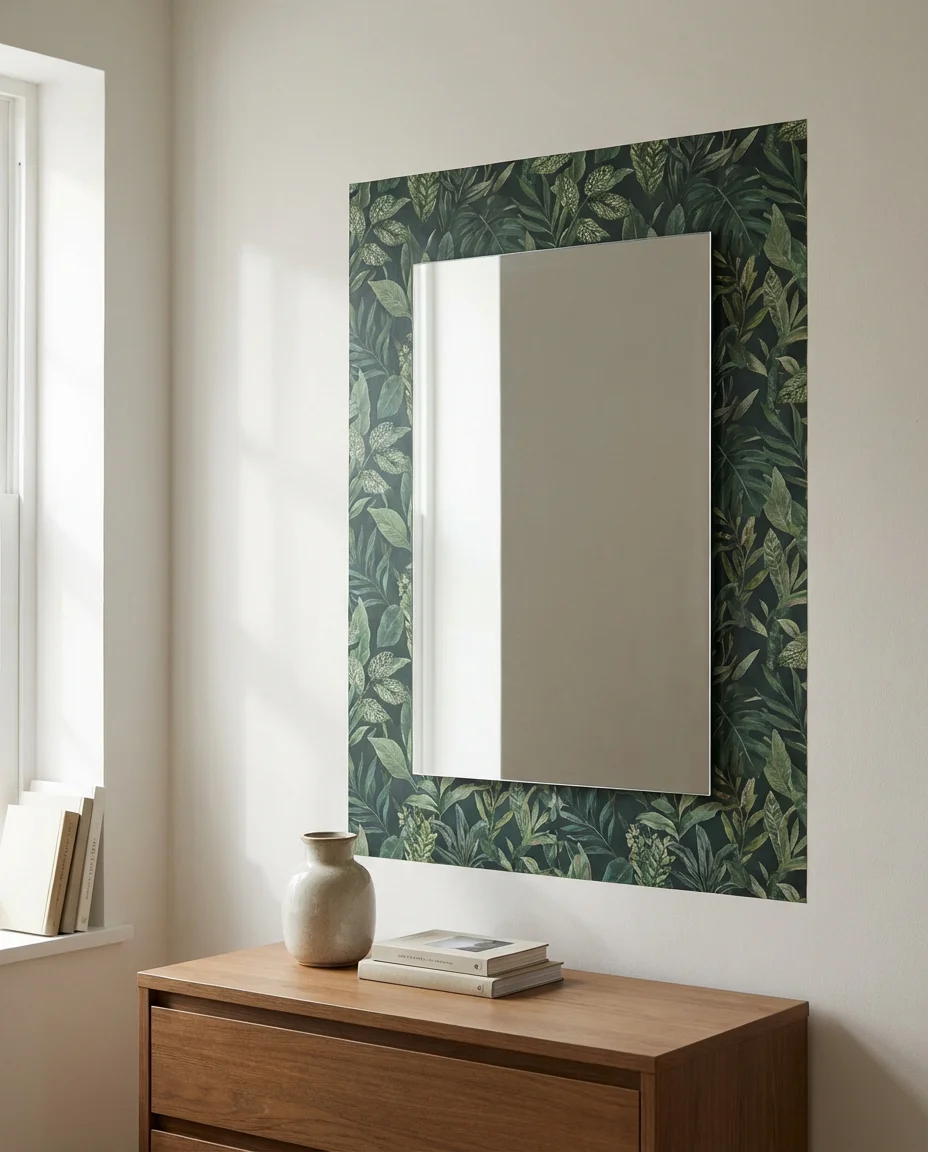
One of the most creative ideas circulating on Pinterest right now involves framing a plain dresser mirror with a panel of bold wallpaper applied to the wall directly behind and around it. The wallpaper becomes the frame—an oversized, pattern-forward statement that makes the mirror feel custom and intentional. This works best with a mirror that has a simple or thin profile; ornate frames compete with the wallpaper pattern, while clean-edged mirrors let the paper do the decorating. Botanical prints, geometric patterns, and abstract painterly designs are the most popular choices for this treatment.
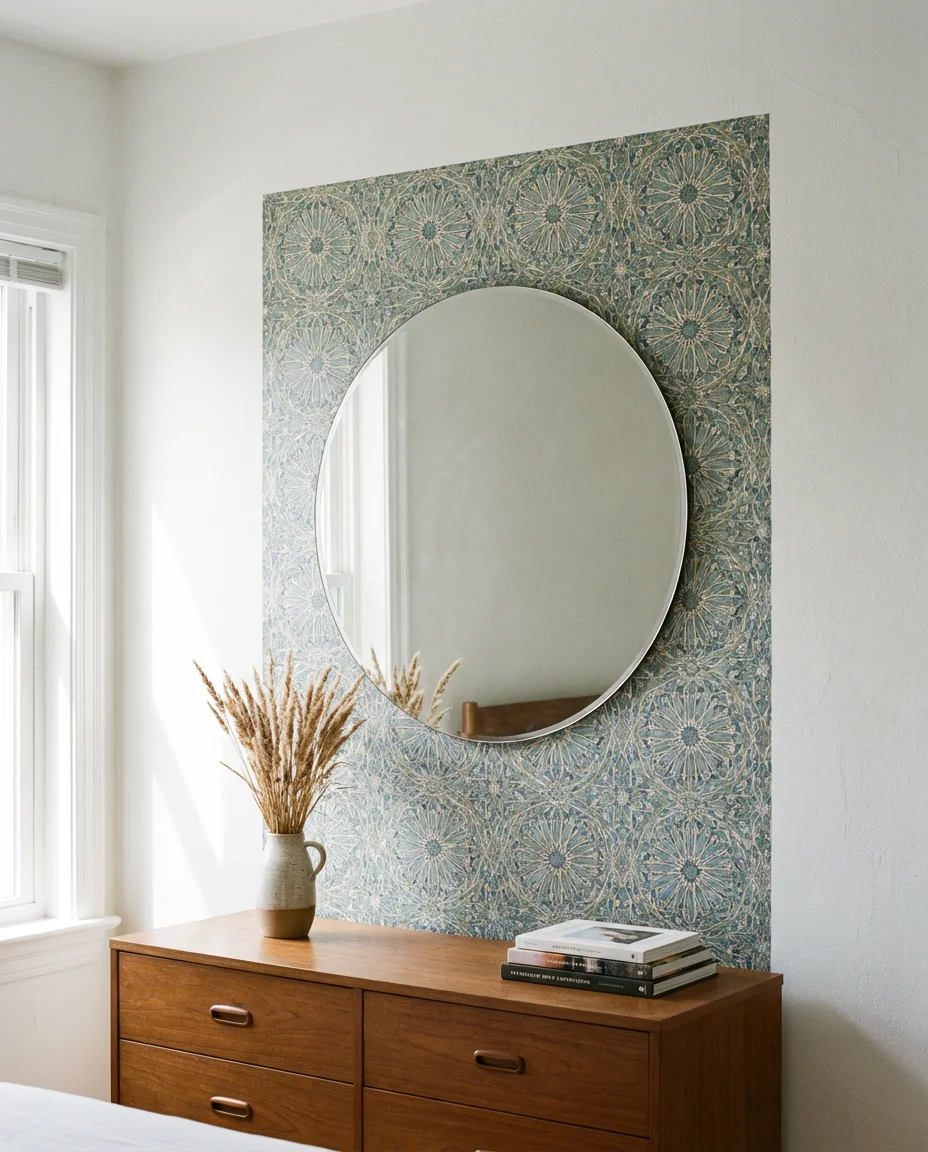
This is a particularly good move for renters who want a dramatic look without permanent wall damage—peel-and-stick wallpaper has improved dramatically in quality over the past few years, and a 2-foot-by-4-foot panel behind a mirror leaves an impressive footprint for well under $50 in material costs. The practical insight here is to measure the mirror first, then add 4 to 6 inches on all sides when cutting the wallpaper panel—that generous border is what makes the effect feel intentional rather than accidental.
20. Styling a Dresser Top with Books and Candles
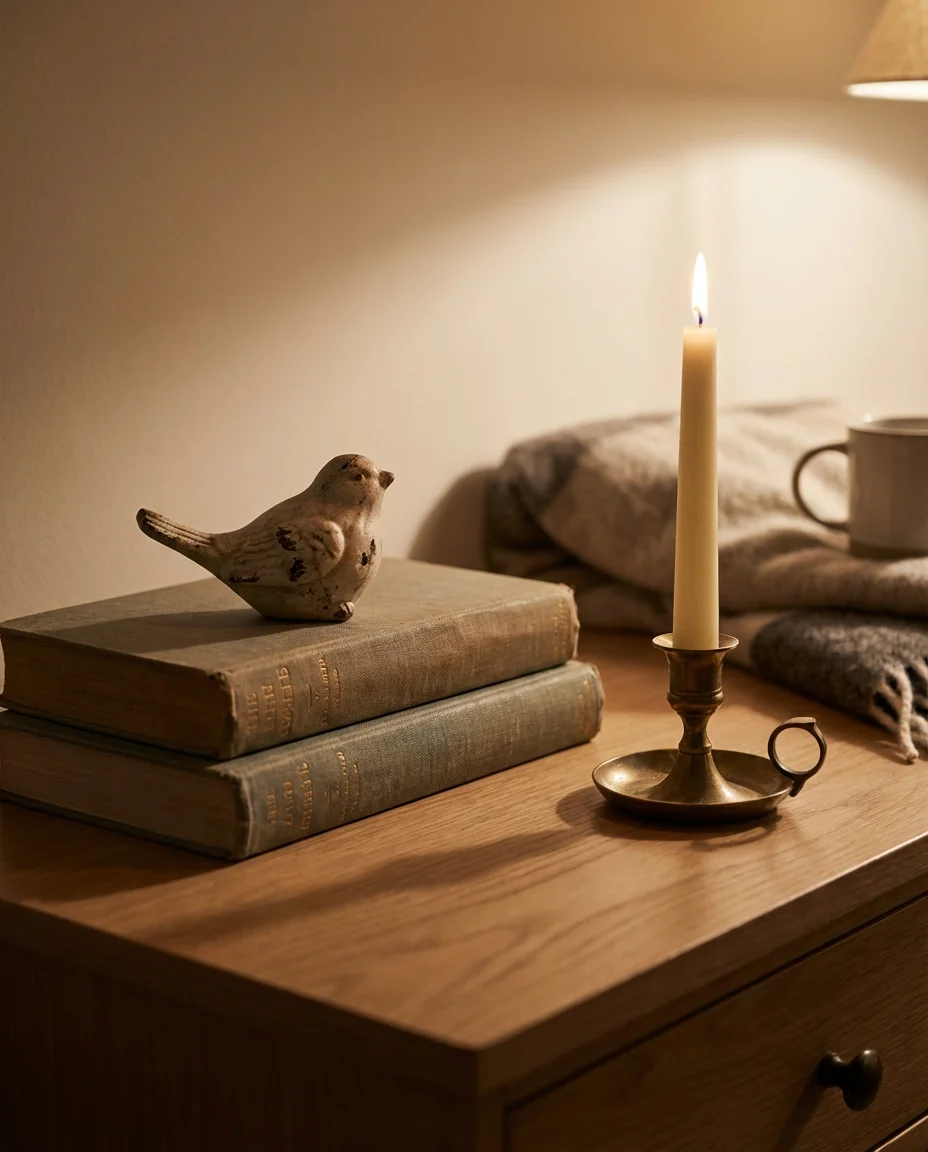
Books and candles are a timeless pairing in home styling, and on a dresser top they create an atmosphere that reads as both personal and polished. Stack two or three hardcovers horizontally, place a small object on top of the stack—a stone, a ring dish, or a folded cloth—and position a taper or pillar candle nearby in a ceramic or brass holder. The result is a vignette that feels lived-in without looking messy, which is the sweet spot every dresser styling is chasing. Choose books with spines in tones that complement the room palette for a cohesive look.
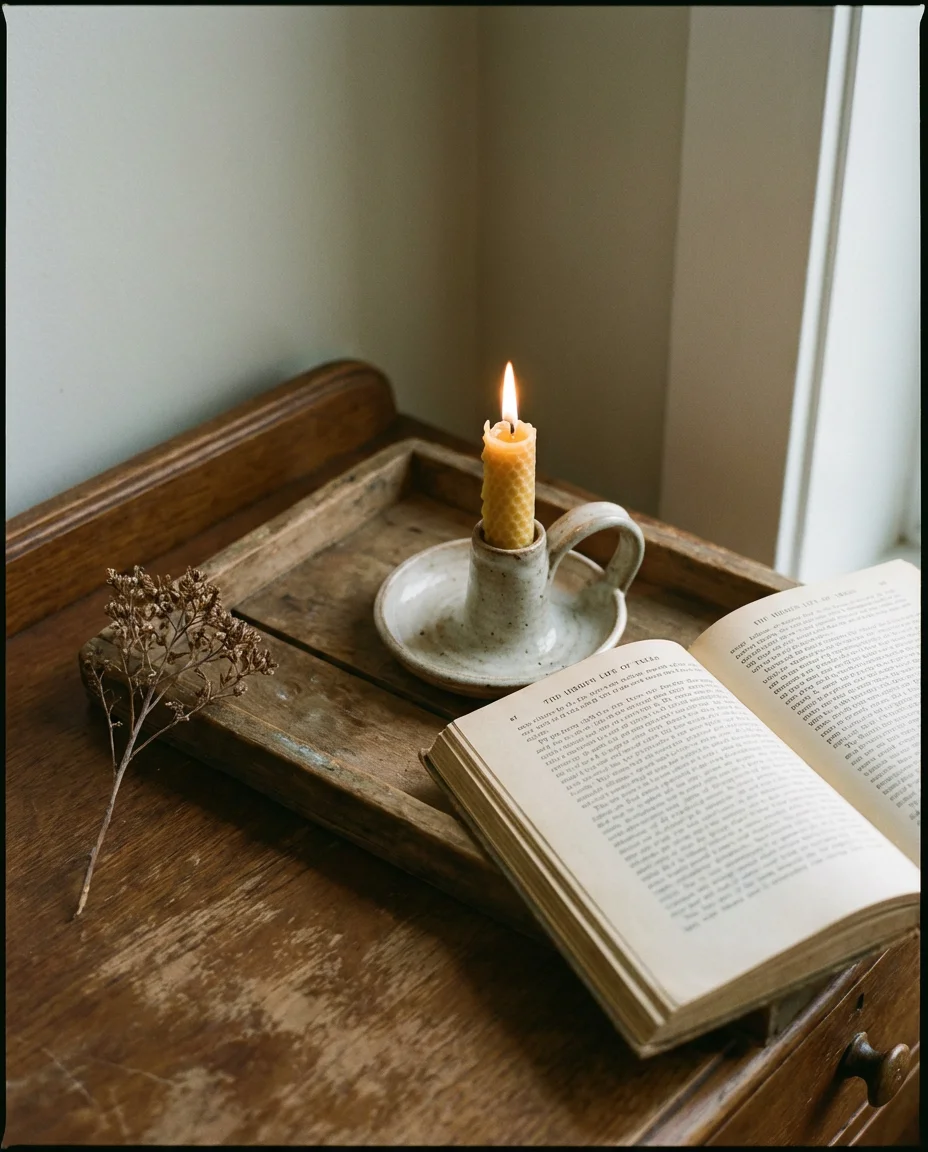
Real homeowner behavior backs this up consistently: the most-used dresser tops tend to be the ones that have a candle. Lighting a candle in the evening while getting ready for bed is a habit shared by a significant portion of people who describe their bedrooms as feeling like a retreat. The ritual matters as much as the aesthetic. A single quality candle in a beautiful vessel—soy or beeswax, ideally in a scent that feels calm—is one of the cheapest and most meaningful additions you can make to a bedroom dresser.
21. Black and White Art Dresser Moment
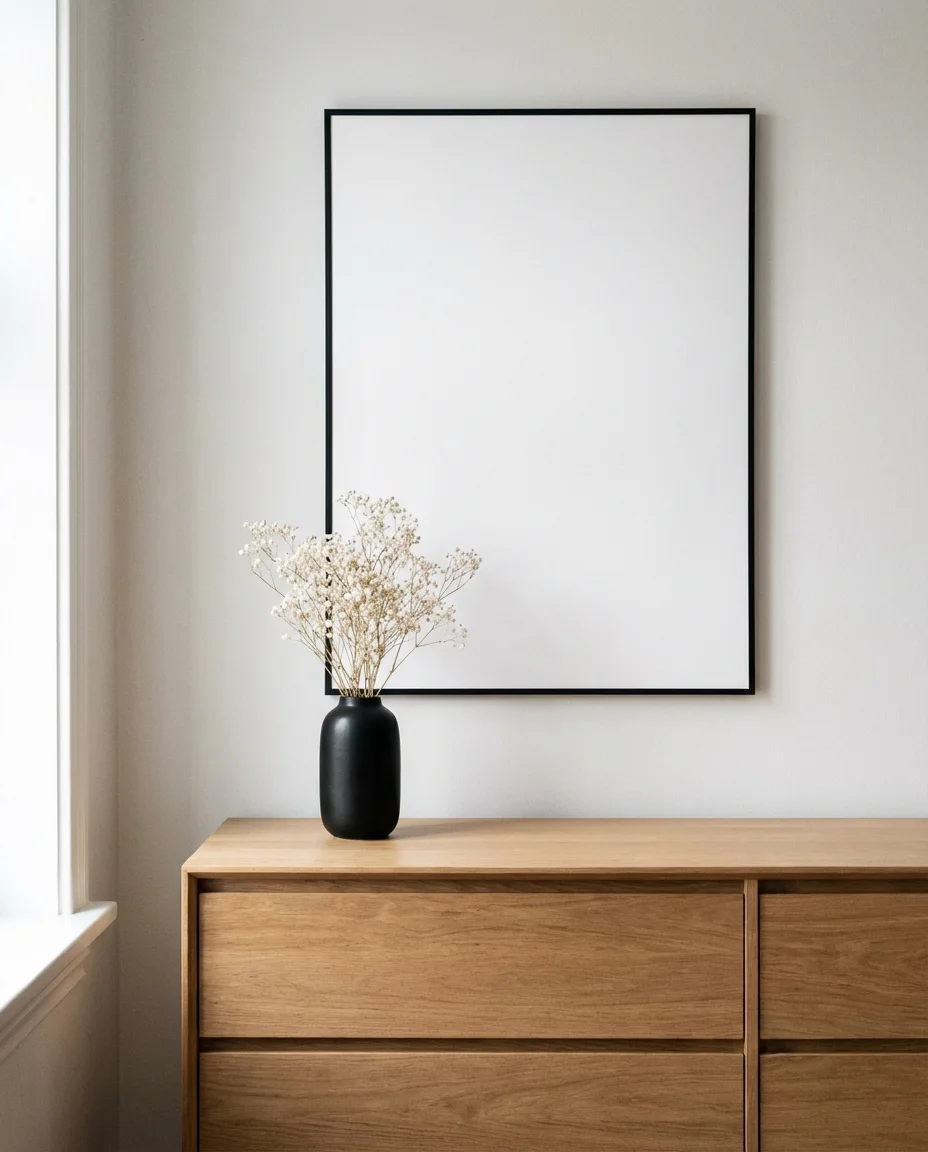
A focused black-and-white color story above and on the dresser is one of the most enduring approaches in bedroom styling—and one of the hardest to get wrong. A white art print or photograph in a black frame, placed above a dresser in either finish, creates a graphic clarity that works in virtually any room. The restraint of a two-tone palette forces quality and composition to do the work, which is why this combination keeps appearing in the most-shared bedroom photos year after year. Add a single black ceramic vase with dried white flowers on the surface to carry the palette down.
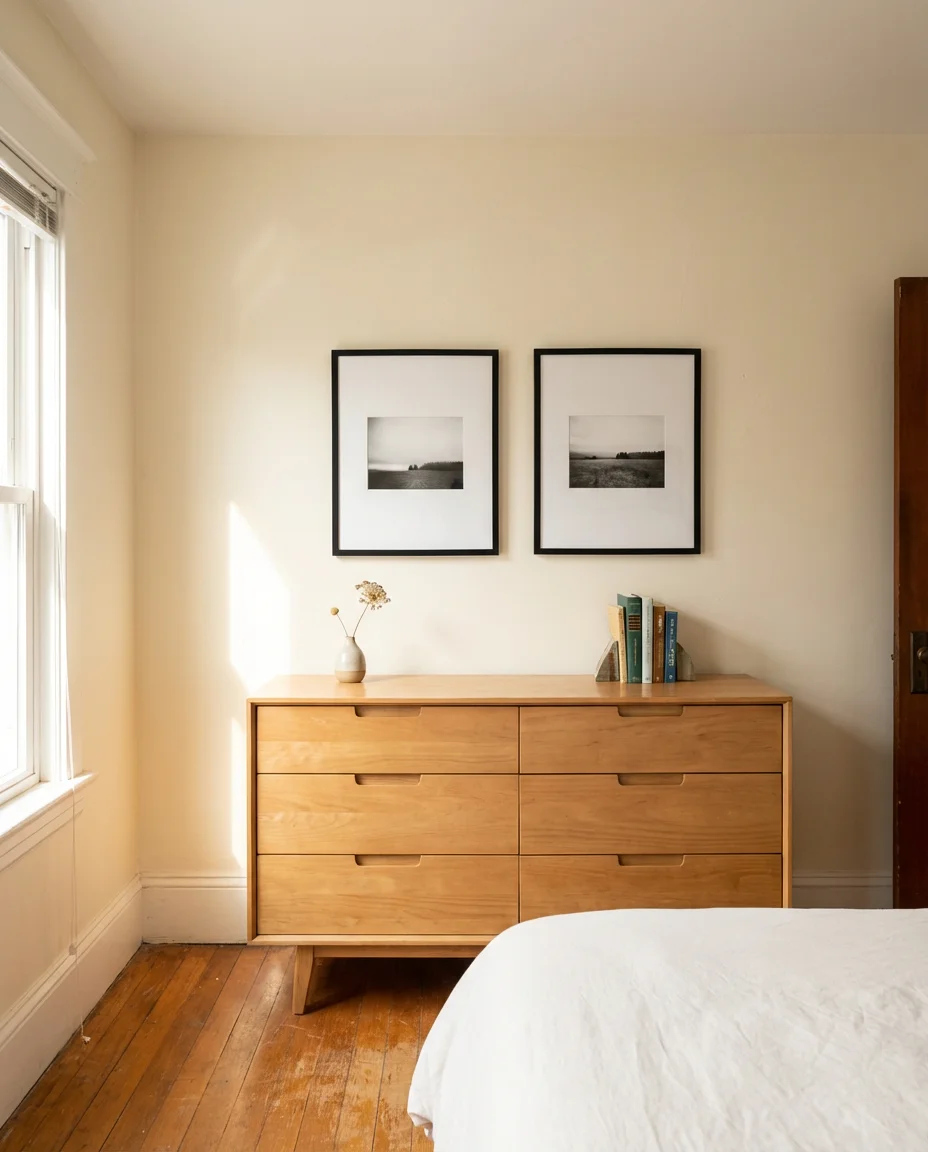
The black-and-white dresser moment works especially well in bedrooms that already have mixed wood tones or varied textile colors—it acts as a visual anchor, providing one clear, stable reference point that keeps everything else from feeling chaotic. Expert stylists often recommend this as a starting point for clients who aren’t sure where to begin with a bedroom refresh. Pick your black-and-white statement first, then build the rest of the room around it. It’s a remarkably low-risk way to create a look that feels considered and complete.
22. The Fully Curated Dresser Shelfie
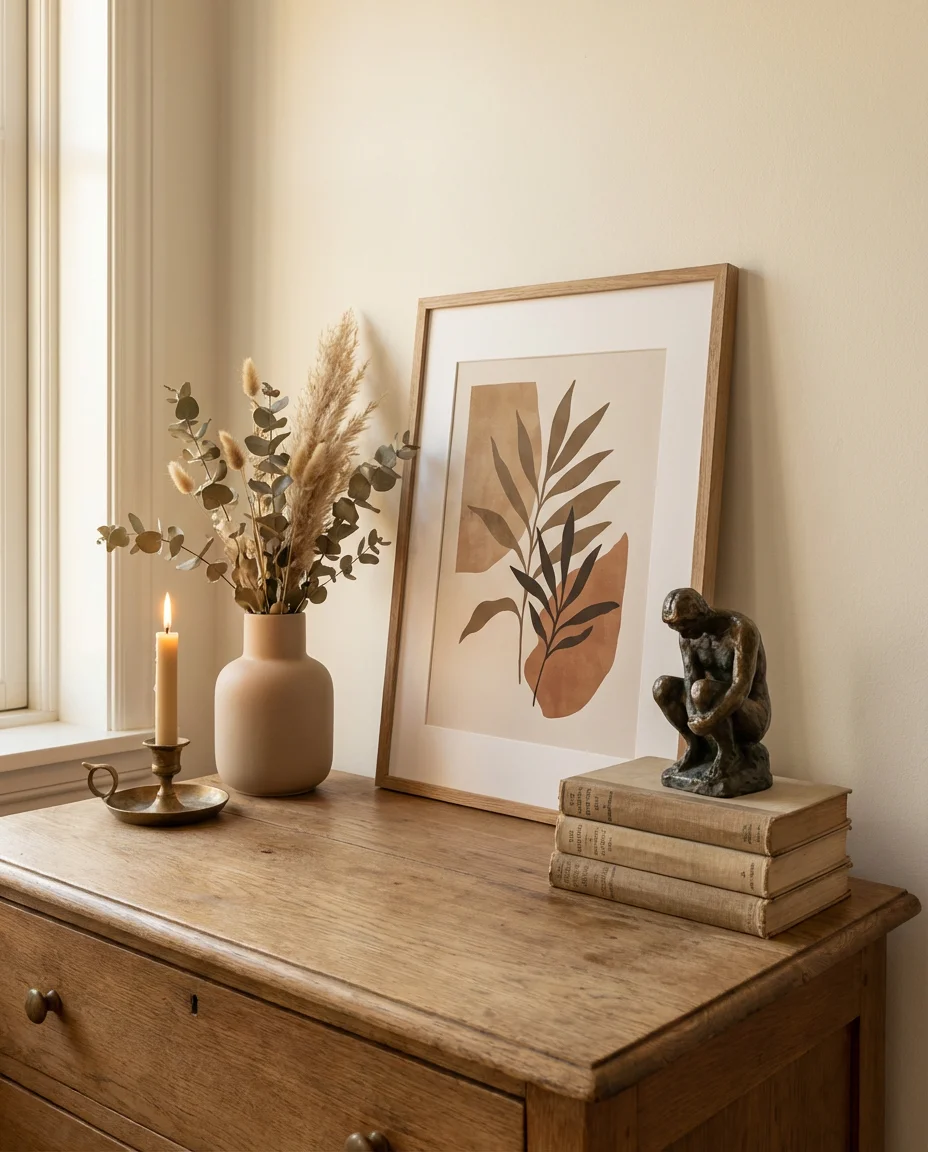
The “shelfie”—a styled, photographable surface—has been a Pinterest staple for years, and the dresser top is the bedroom’s best candidate for the format. A fully curated dresser shelfie brings together art, objects, plants, books, candles, and personal items in a composition that tells a visual story. The key difference between a shelfie and clutter is intention: every object was chosen, every placement was considered, and there’s enough negative space for the eye to breathe between elements. This is dresser styling at its most deliberate—and most satisfying.
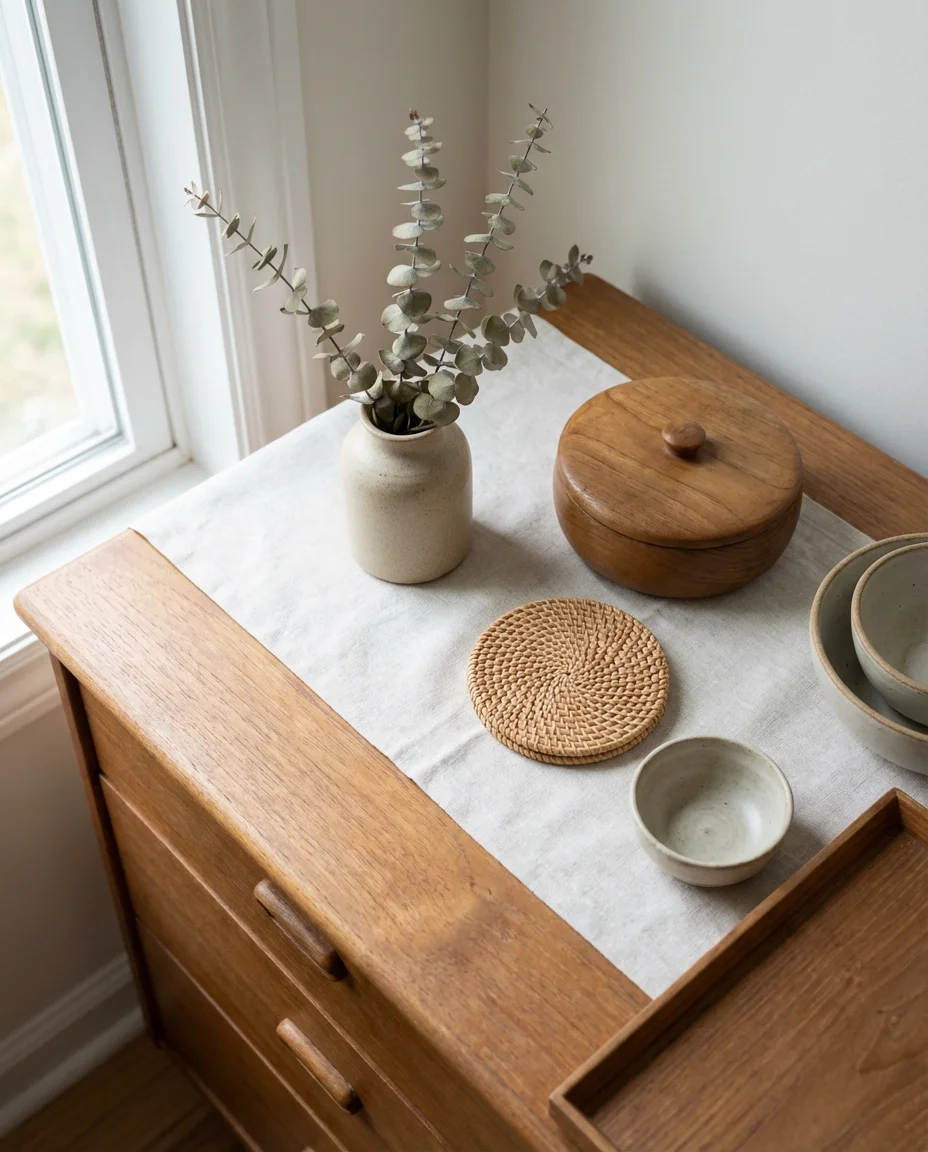
The most common mistake with the dresser shelfie is treating it as permanent. The best-looking styled surfaces get refreshed regularly—a new candle, a different seasonal branch, a rotated print—which keeps the space feeling alive rather than like a display that got frozen in place. Think of your dresser top the way you think of a seasonal table centerpiece: tend to it, adjust it, and let it change with you. That willingness to keep editing is what separates a truly styled space from one that just looks like it used to be styled, once, a long time ago.
Conclusion
Your dresser is one of the most present surfaces in your daily life—you see it first thing in the morning and last thing at night, and it deserves more than a pile of receipts and a forgotten phone charger. Whether you’re working with a brand-new IKEA piece, a thrifted treasure, or something you’ve already owned for years, even one of these ideas can shift how the whole room feels. We’d love to hear which direction you’re taking—drop a comment below and tell us which idea you’re trying first, or share a photo of your own dresser styling. Inspiration goes both ways.