Something about the English cottage garden has captured American hearts all over again—and Pinterest boards are overflowing with proof. Whether you’re dreaming of a rambling front yard spilling with hollyhocks or a tucked-away backyard retreat, the cottage aesthetic feels more relevant in 2026 than it has in decades. It’s romantic without being fussy, lush without being loud, and surprisingly adaptable to American climates and lifestyles. In this guide, you’ll find 22 fresh ideas that range from classic to contemporary—enough to inspire your next weekend project or full garden overhaul.
1. Wildflower Border Along a Picket Fence
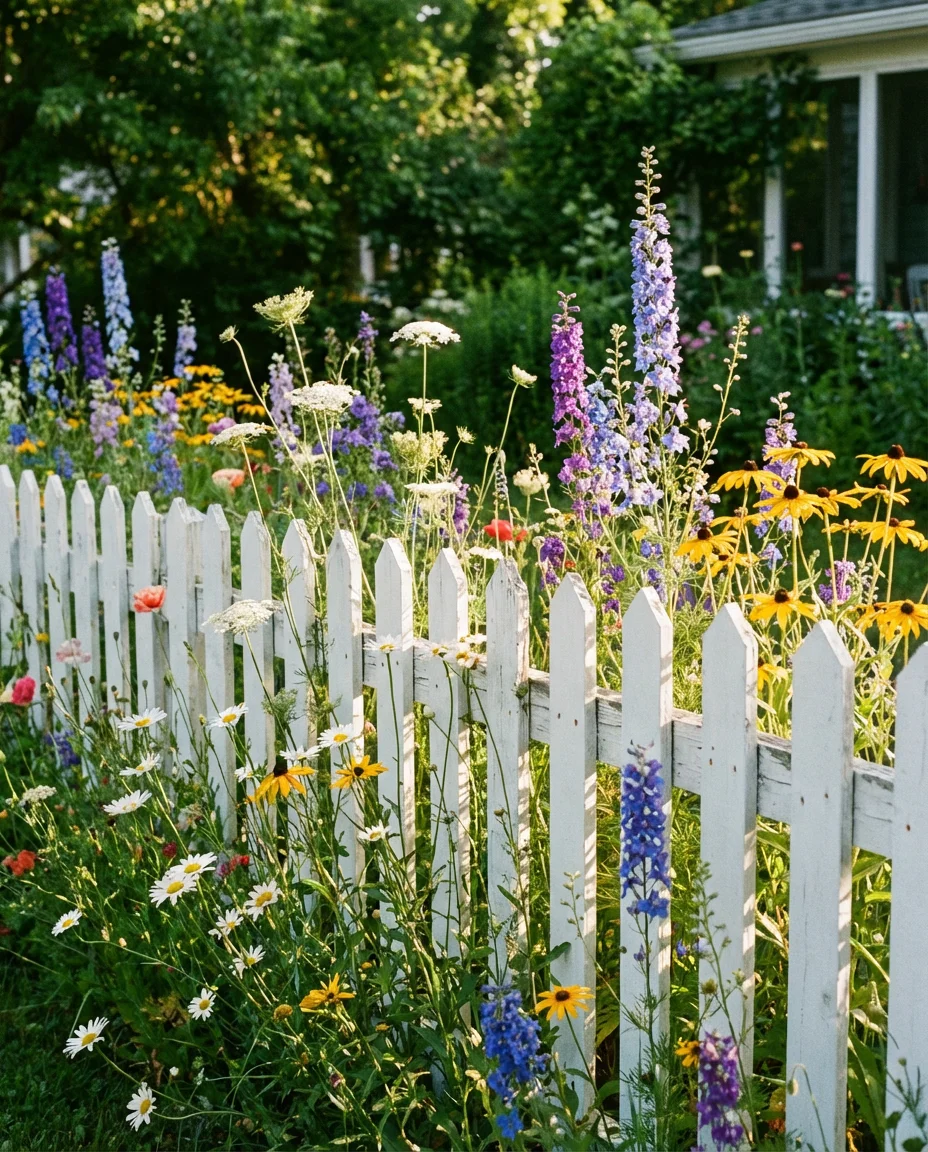
A fence doesn’t have to be purely functional—in cottage garden design, it becomes the canvas. Lining a classic white picket fence with a loose, layered border of wildflowers like black-eyed Susans, larkspur, and ox-eye daisies creates that effortless, “it just grew that way” look that defines the aesthetic. The key is to plant in drifts rather than rows, letting taller stems lean casually toward the wood.
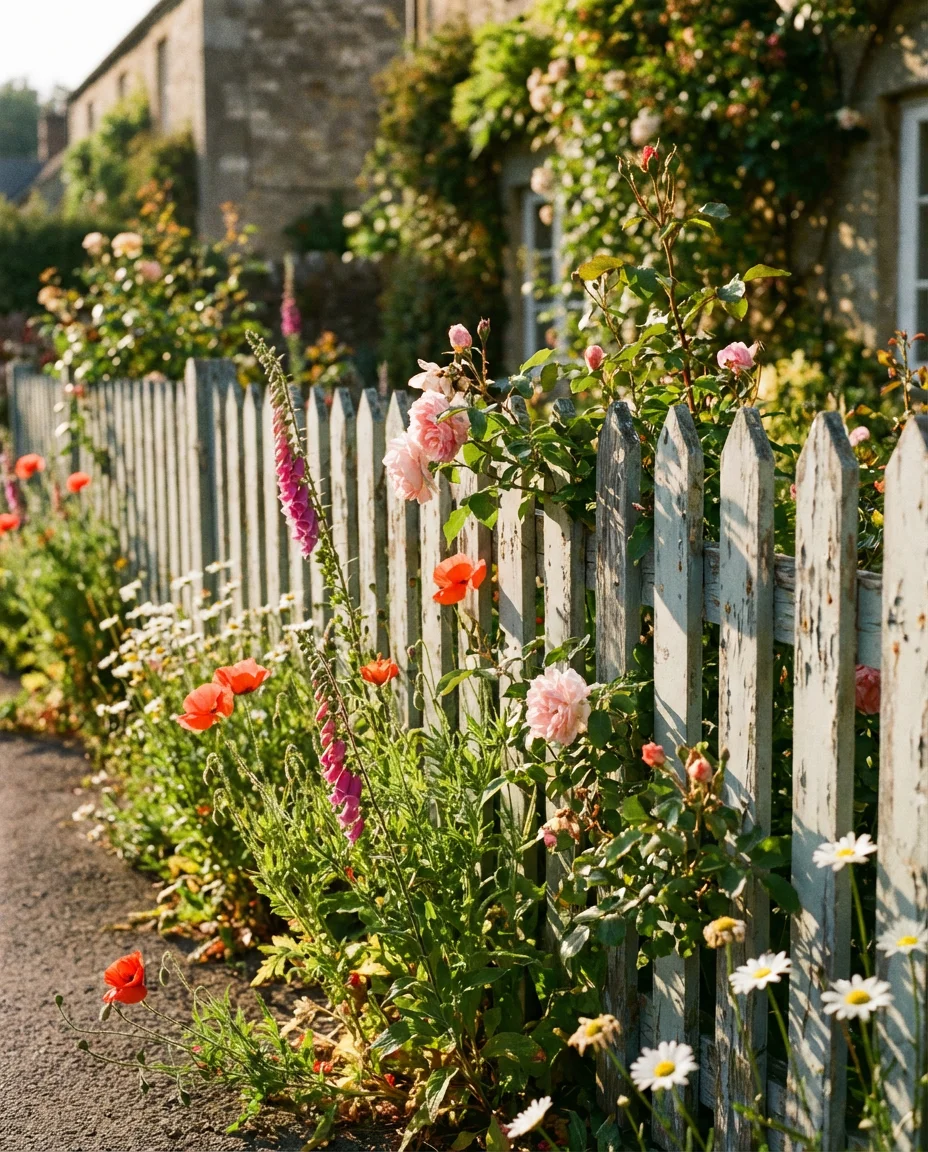
This approach works best for homeowners who want high visual impact without precise upkeep. Once established, a wildflower border largely maintains itself through reseeding. Budget-wise, a packet of mixed wildflower seed runs between $8 and $15 and can cover a 20-foot fence run—making it one of the most affordable cottage garden upgrades you can make this season.
2. Cottage Garden Layout with a Curved Stone Path
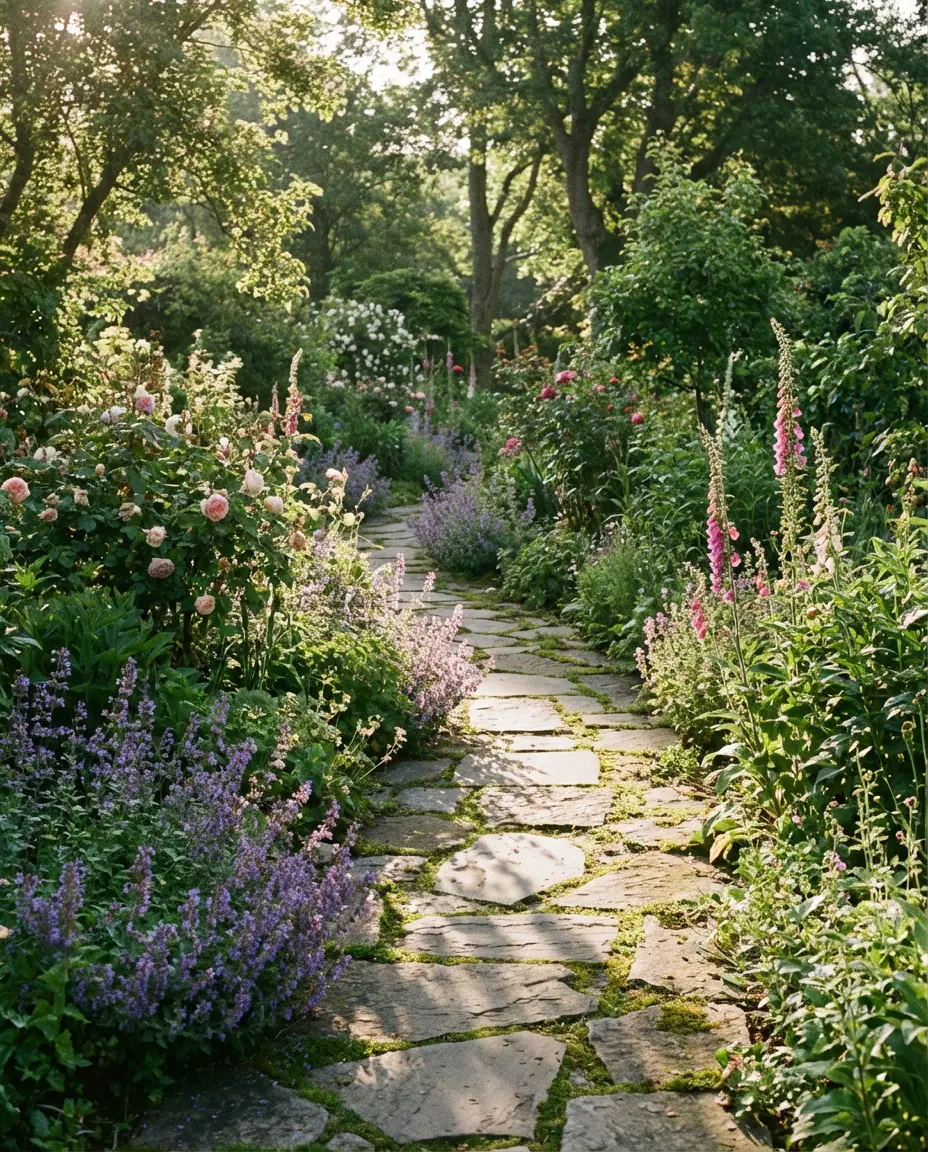
The layout of a cottage garden lives and dies by its paths. A gently curved patio stone path winding through beds of roses, catmint, and foxglove immediately gives a garden that storybook quality—and it guides visitors through the space in a way a straight path simply can’t. Flat fieldstones or irregular flagstone pieces work perfectly here, especially when they’re allowed to settle slightly and collect a little moss at the edges.
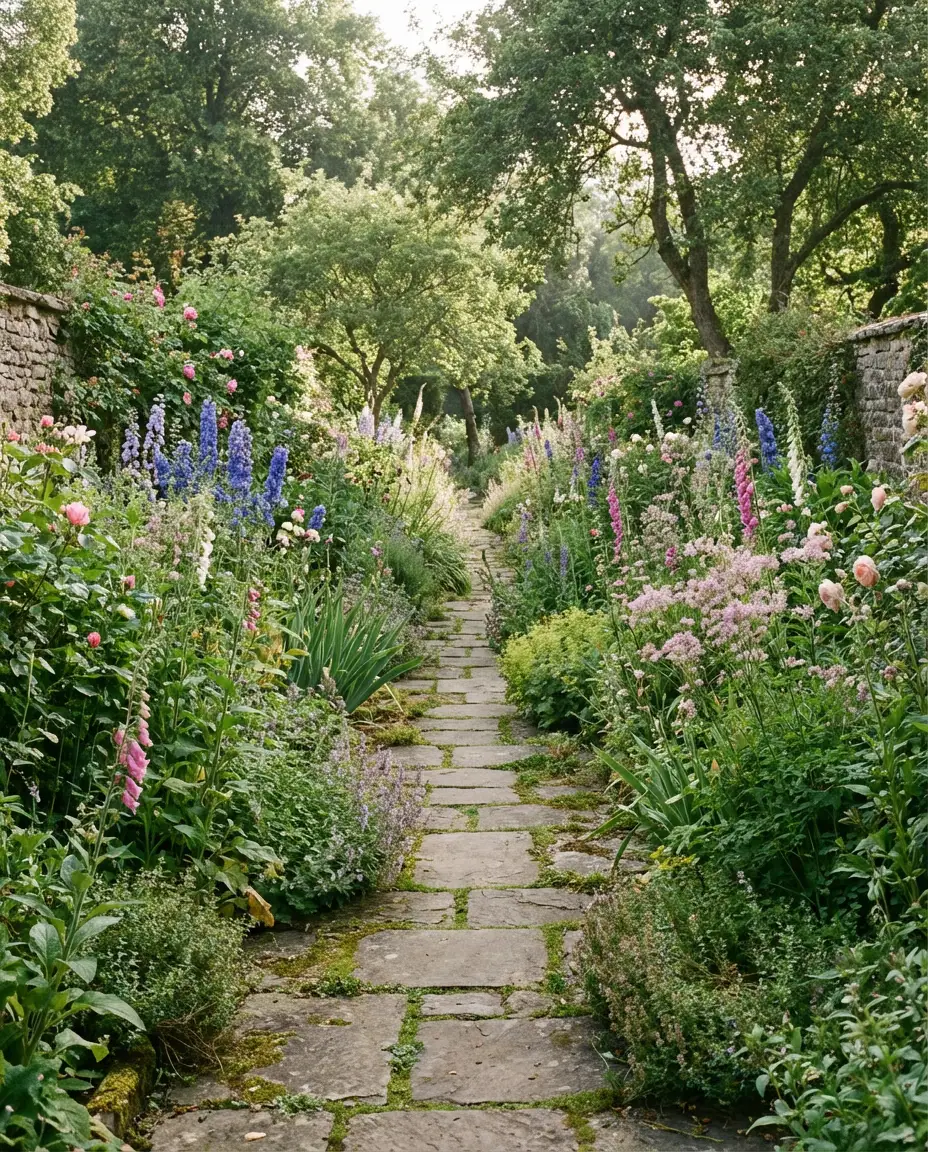
Where it works best: front yards with enough depth to let the curve breathe or backyard gardens where you want to create a sense of journey and discovery. A path that disappears slightly around a bend makes even a modest garden feel larger and more intentional than its square footage suggests.
3. Climbing Roses Over a Garden Gate
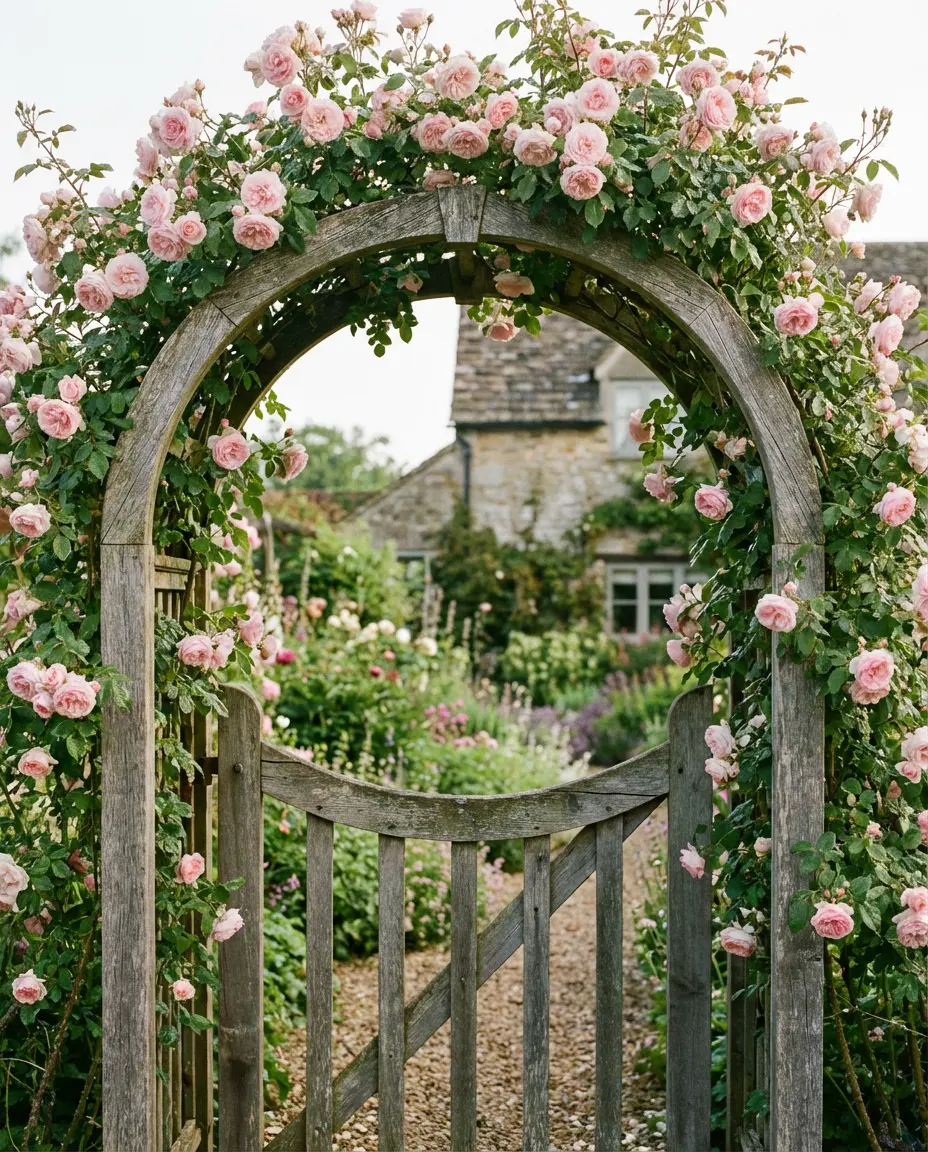
There is perhaps no single image more synonymous with the English cottage garden than a flowering gate draped in climbing roses. Varieties like ‘New Dawn,’ ‘Cecile Brunner,’ or ‘Zephirine Drouhin’ are reliable performers across a wide range of American climates, from the Pacific Northwest to the mid-Atlantic. The design move is simple: train canes along an arched gate frame and let the blooms do the rest come late spring.
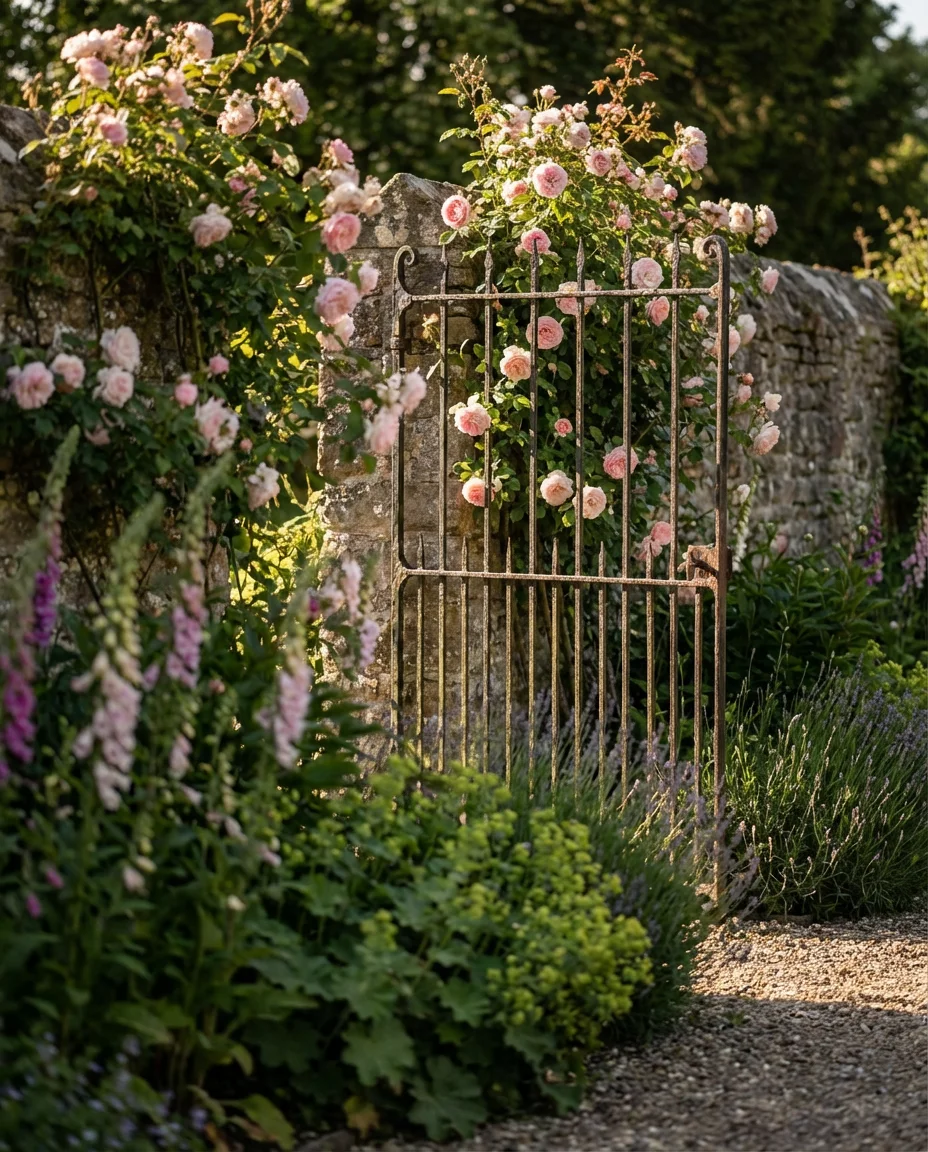
One homeowner in Virginia told a local garden club that she planted a single bare-root rose at her gate seven years ago—and it’s now the thing every neighbor stops to photograph in June. That kind of slow payoff is central to the cottage garden ethos: patience becomes your best design tool.
4. French Country Cottage Front Yard
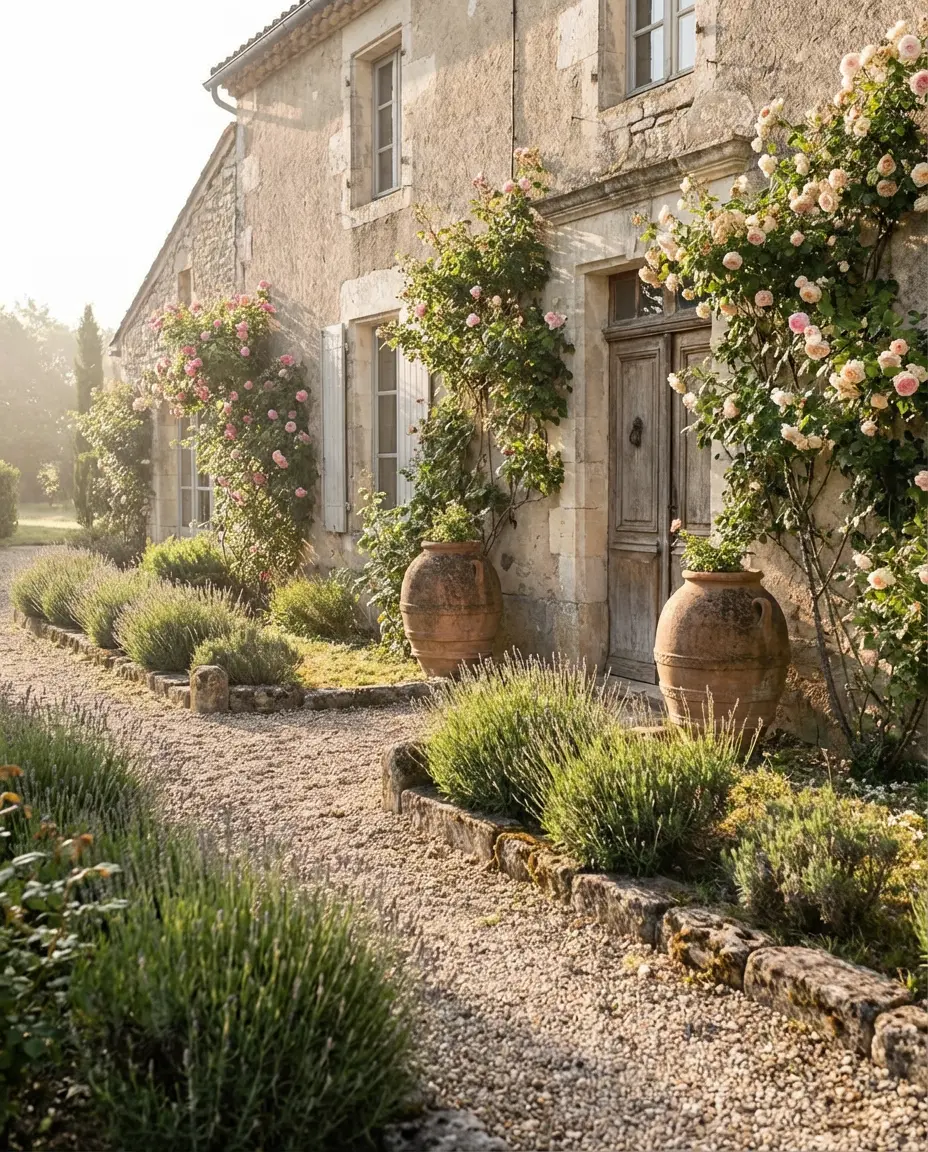
The crossover between French country and English cottage is a natural one—both celebrate abundance, aged materials, and flowers spilling over their boundaries. A front yard designed with this hybrid sensibility might feature lavender-edged gravel paths, roses climbing a stone façade, and terracotta urns anchoring the entrance. The palette tends toward dusty purples, pale pinks, and creamy whites—sun-bleached and beautiful.
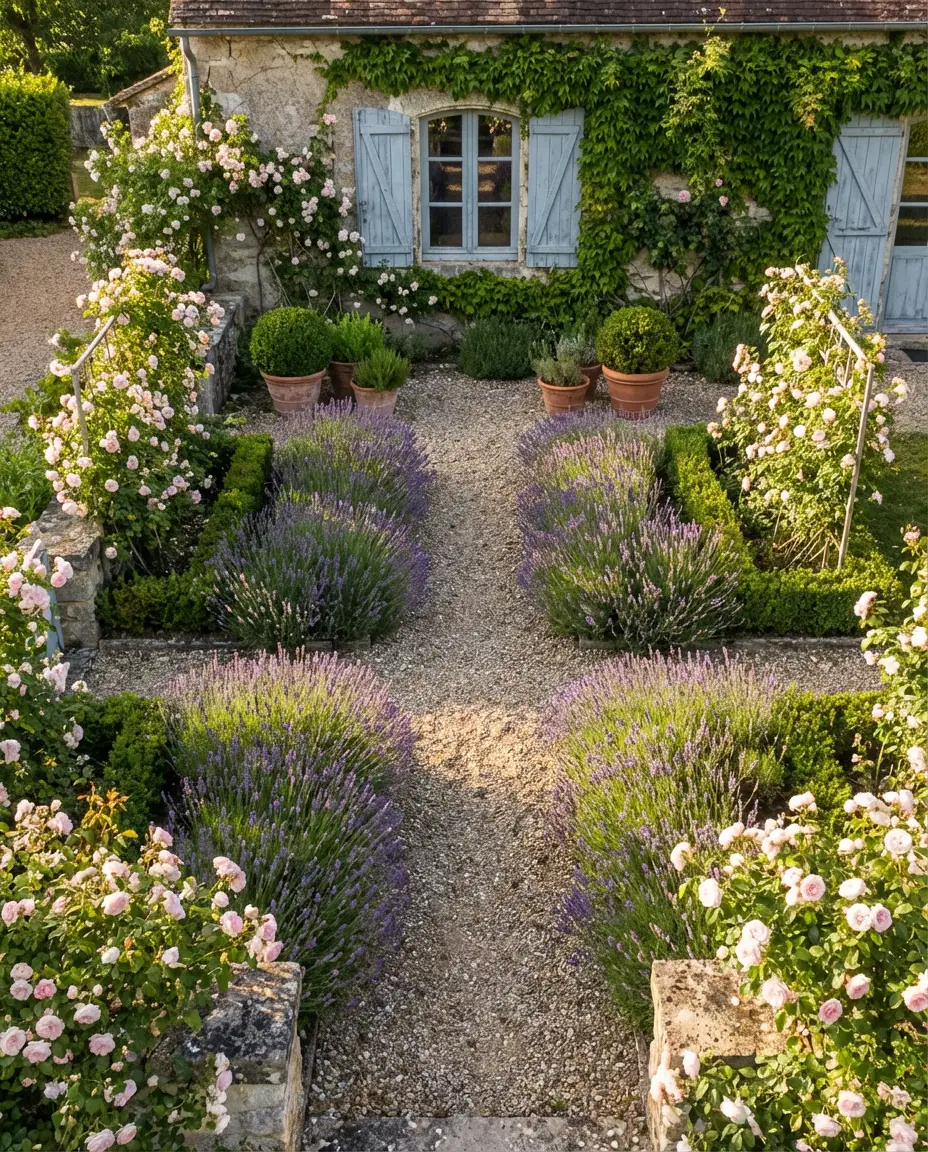
This style translates exceptionally well to American homes with craftsman, colonial, or farmhouse exteriors—particularly in the Southeast and California’s wine country regions, where the Mediterranean climate echoes what makes French country gardens feel so alive. Keep hardscape materials natural and aged-looking; that authenticity is everything.
5. Cottage Garden Backyard with Seating Nook
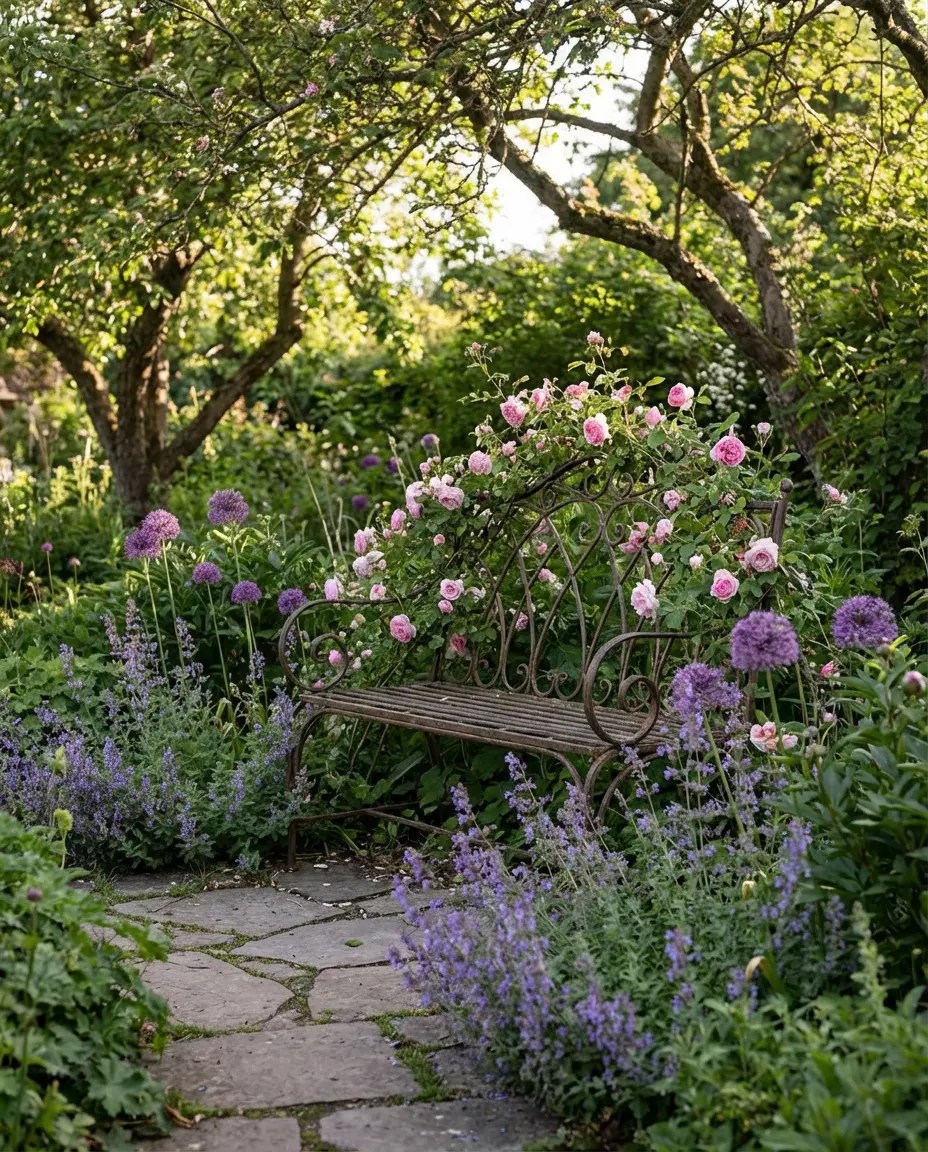
A backyard cottage garden becomes a lifestyle when you build a seating destination into its heart. Think of a weathered iron bench or a pair of wooden chairs tucked between tall alliums and nepeta, with a small stone surface for your morning coffee. The furniture should feel like it was simply set down and forgotten there—not arranged with precision. That studied casualness is the whole point of the cottage aesthetic.
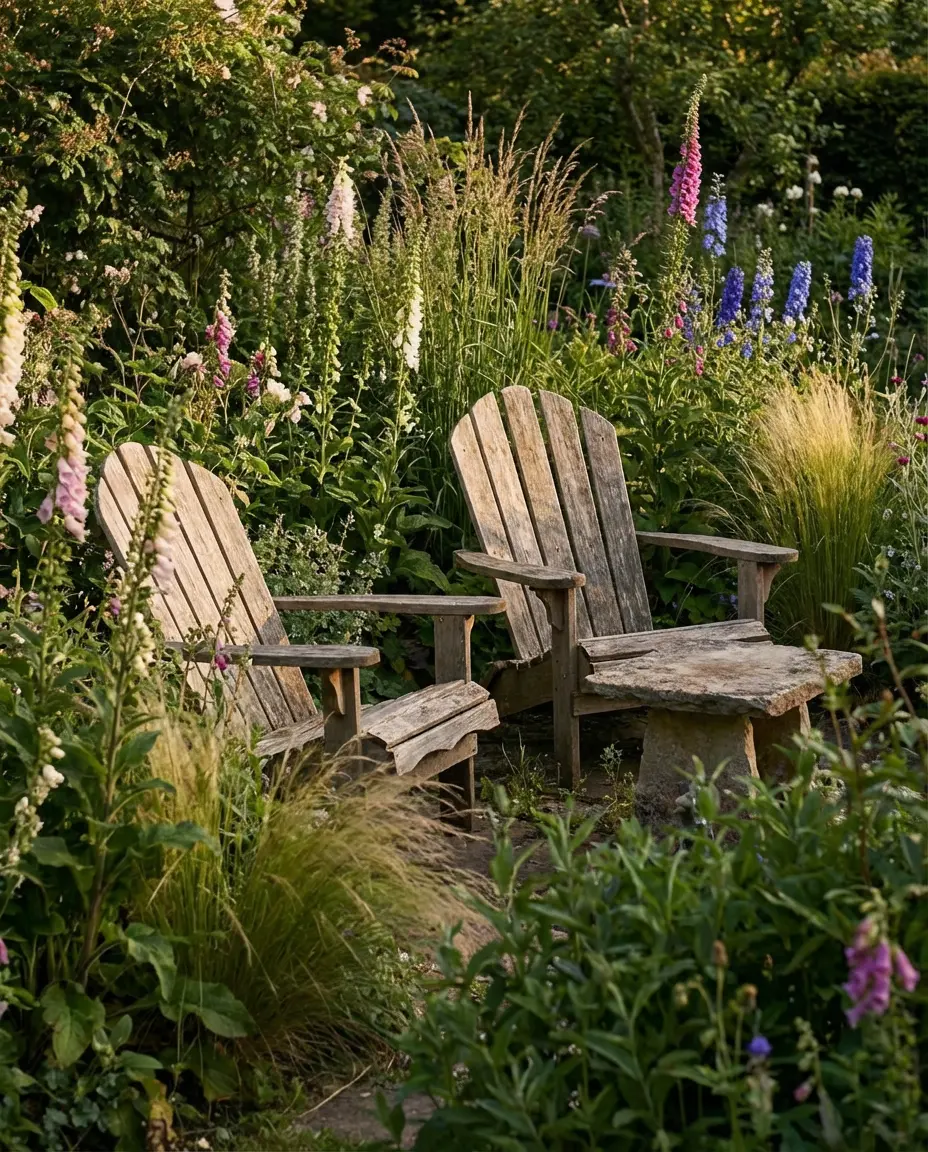
Expert garden designers often note that Americans under-invest in destination seating within their gardens—we plant beautifully but forget to create a reason to sit inside the planting. A cottage seating nook solves this by making the garden something you inhabit, not just admire from the deck. That shift changes everything about how you experience your outdoor space.
6. Modern Cottage Garden with Clean-Edged Beds
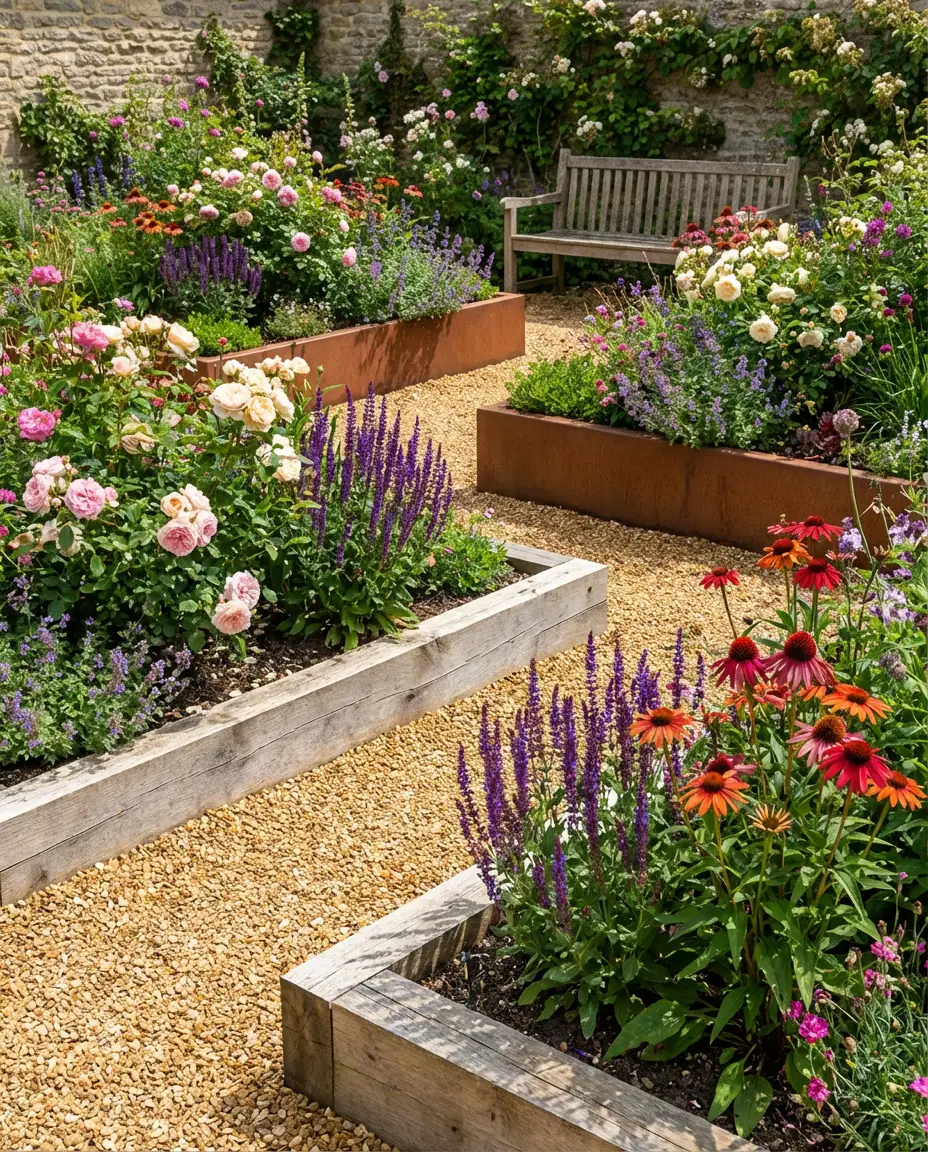
The modern interpretation of the cottage garden keeps the abundant planting but introduces crisp structure—think sharply edged lawn borders containing loose, naturalistic flower beds, or a grid of gravel squares each filled with free-growing perennials. This design layout approach lets the wildness of cottage planting live inside a framework that reads as intentional and contemporary, which appeals strongly to homeowners who love the look but fear the chaos.
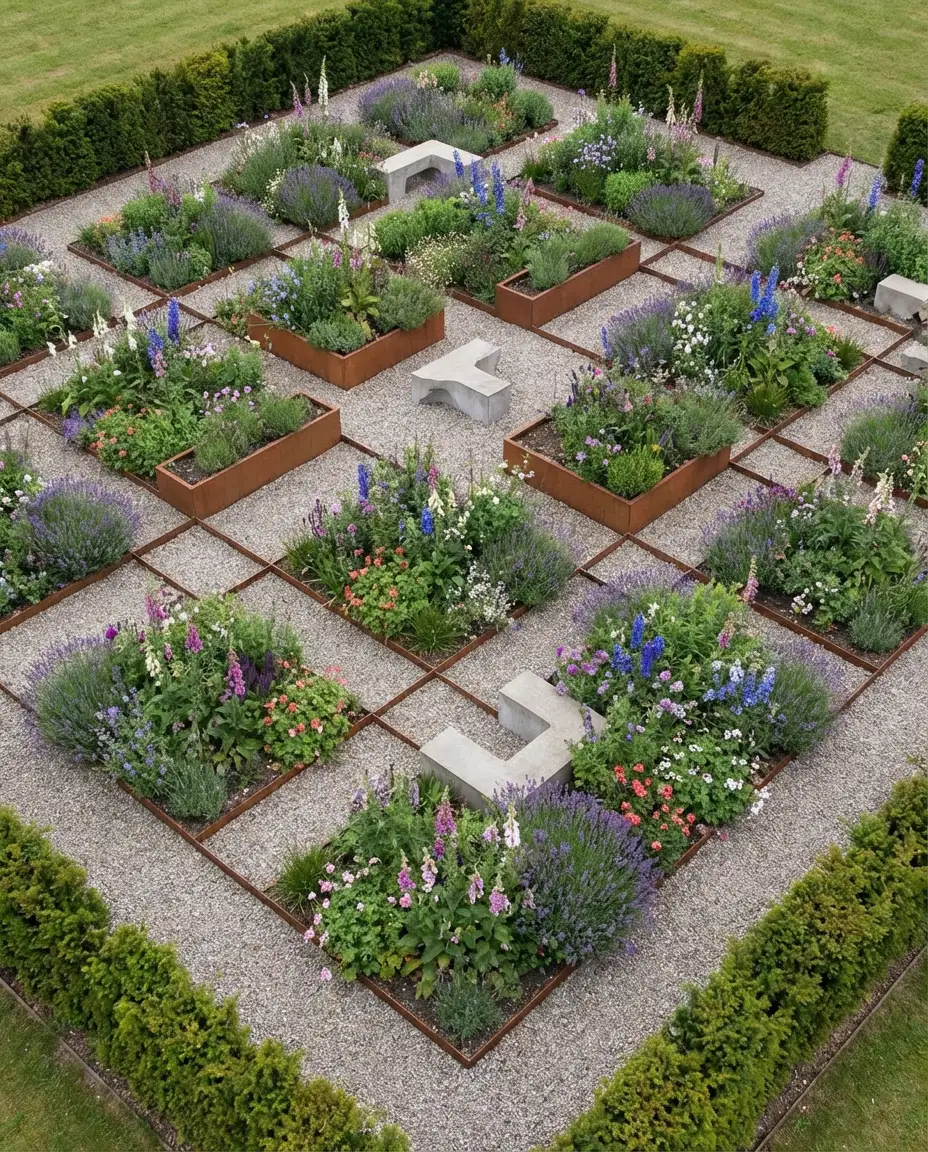
The most common mistake people make with this hybrid style is choosing plants that are too tidy—compact mounding perennials that don’t provide the height and movement the cottage look needs. Don’t be afraid of verbena bonariensis, bronze fennel, or tall grasses to bring life and drama to the upper layer of your beds.
7. Flower-Filled Cottage Garden Pots on a Patio
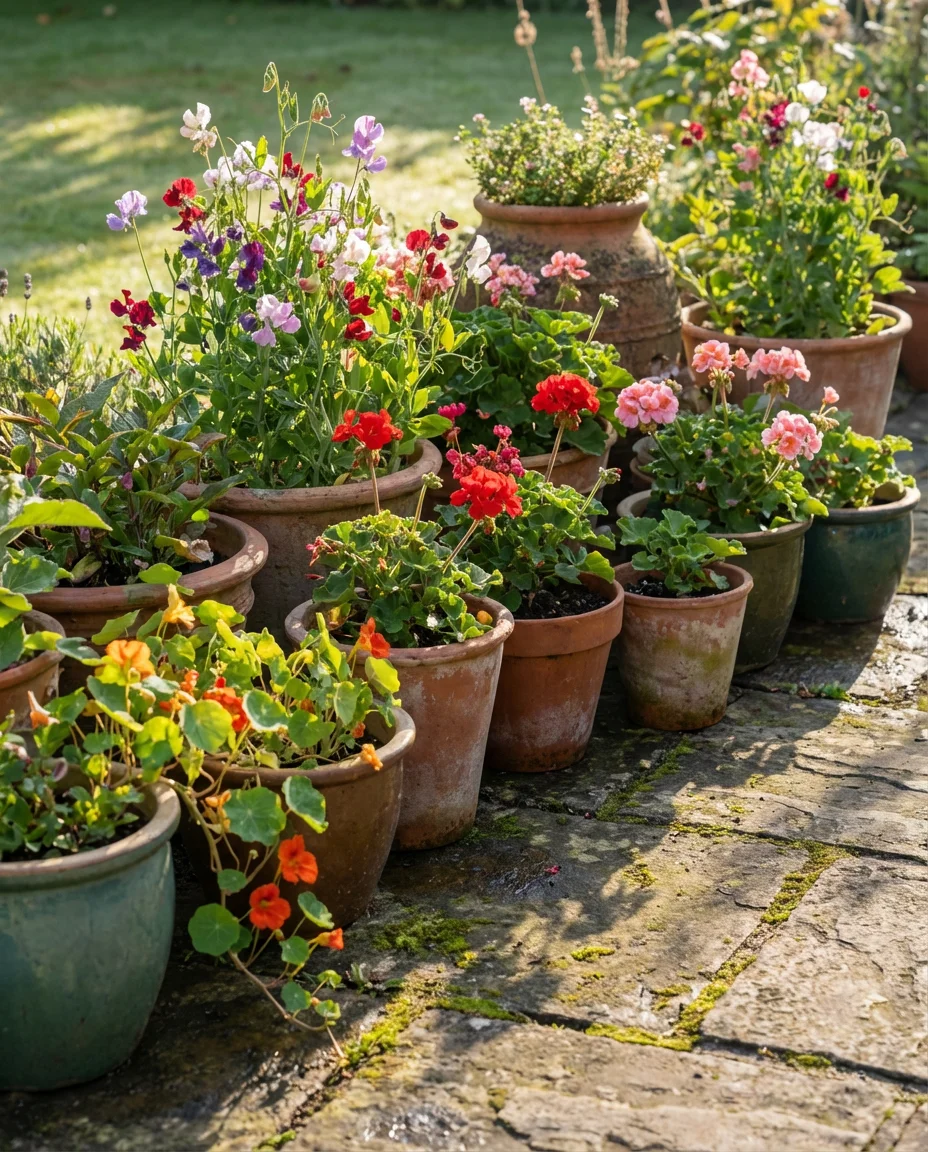
Not everyone has the ground space for a full cottage garden—and that’s exactly where pots become your best friend. Grouping terracotta or aged ceramic containers on a patio and planting them with cottage standbys like sweet peas, geraniums, lobelia, and trailing nasturtiums delivers that overflowing abundance in a completely container-friendly format. Vary the height of your pots and the scale of your plantings for visual richness.
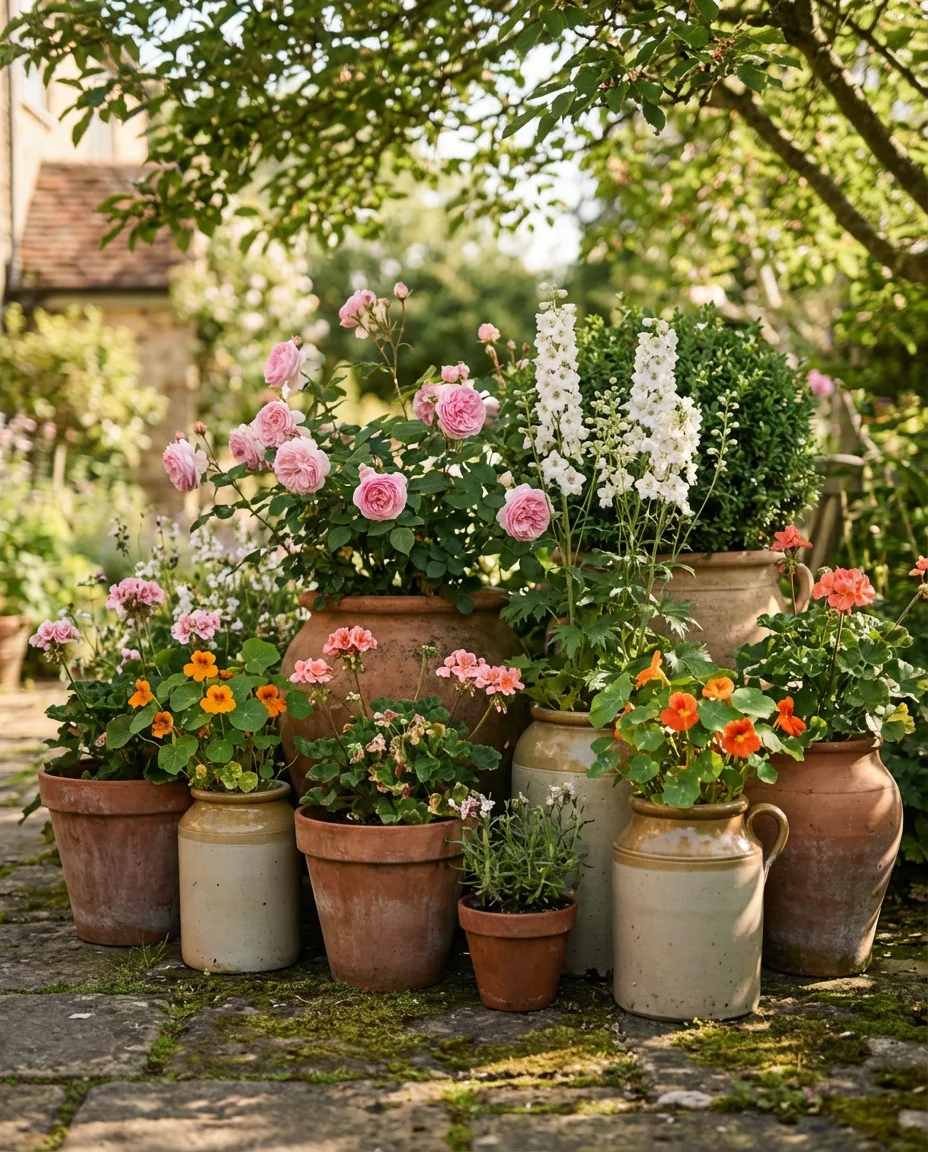
This setup is ideal for renters, condo owners, or anyone working with a small urban outdoor space. It’s also wonderfully flexible—you can rearrange and refresh containers seasonally without any permanent commitment. A full patio container display can be assembled for $150–$250, including pots, soil, and starter plants from a local nursery.
8. Romantic Cottage Wedding Garden Style
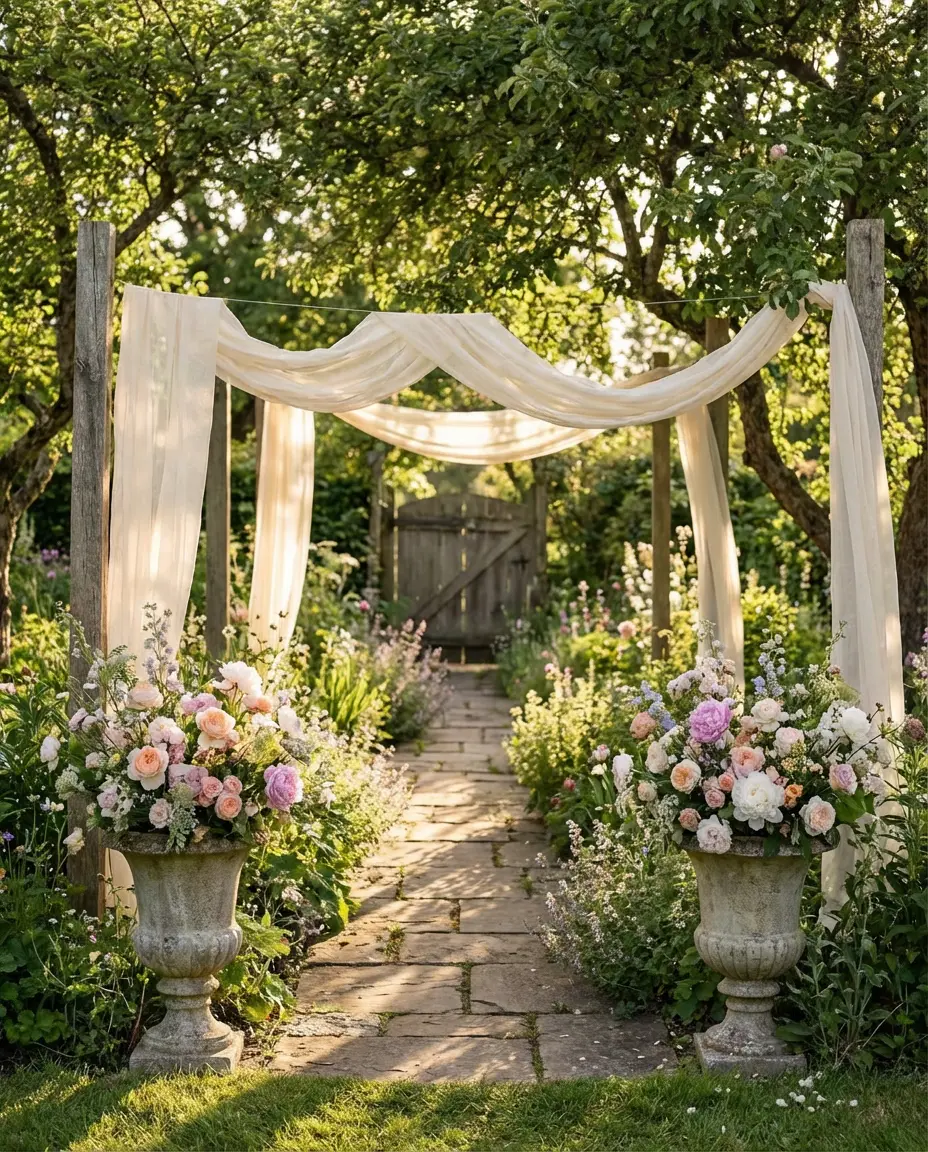
The English cottage garden has become one of the most requested aesthetics for outdoor wedding settings—and it’s not hard to see why. Overflowing urns of garden roses, sweet William, and peonies along a stone path, combined with draped fabric and candlelight, create an atmosphere that feels like it belongs in a Jane Austen novel. This garden style can be designed specifically with event use in mind, maximizing bloom timing for late spring and early summer.
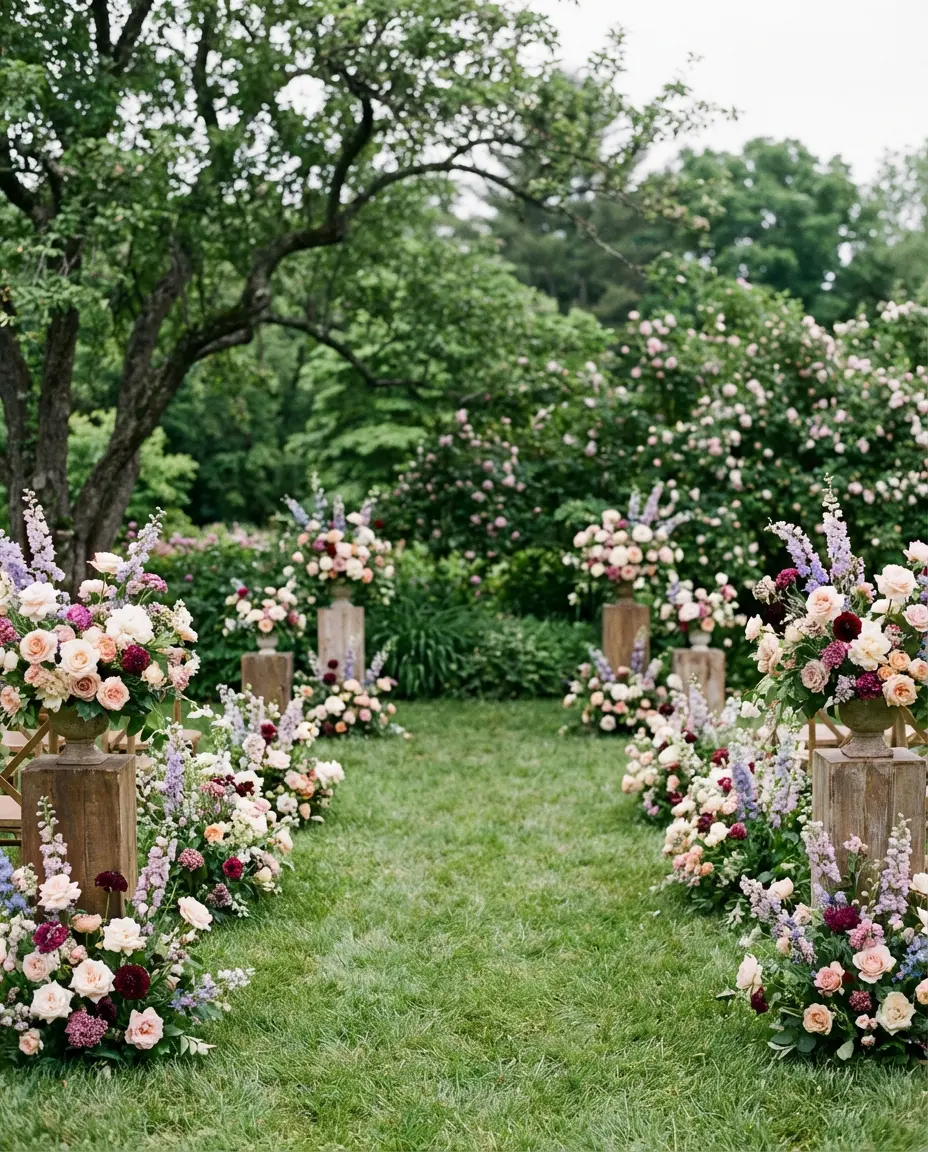
For couples planning a garden wedding, the trick is to plant in waves: bulbs for late April color, then hardy annuals and perennials for a May–June peak. If the ceremony is in late summer, dahlias, rudbeckia, and lavender carry the cottage look beautifully into August. Work backward from your date, and your garden can be at its absolute best on the day that matters most.
9. Charming Cottage Garden Shed with Climbing Plants
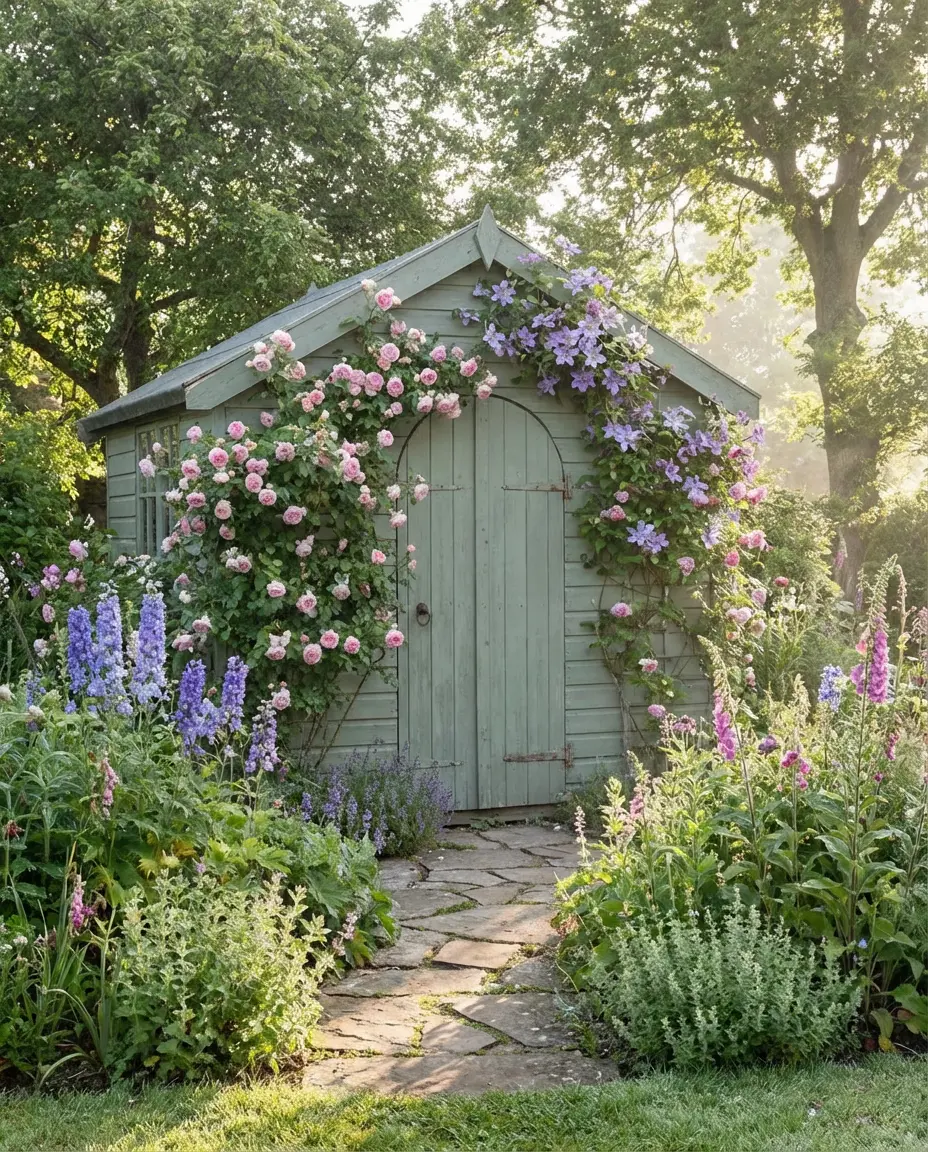
A garden shed in a cottage setting is never just for storage—it’s a focal point, a backdrop, a piece of garden architecture. Paint it in a chalky sage, duck egg blue, or muted terracotta, then let climbing plants do their work: roses, clematis, and honeysuckle are all classic choices. The design layout plans should position the shed at the end of a path or visible from a seating area so it reads as a destination rather than an afterthought.
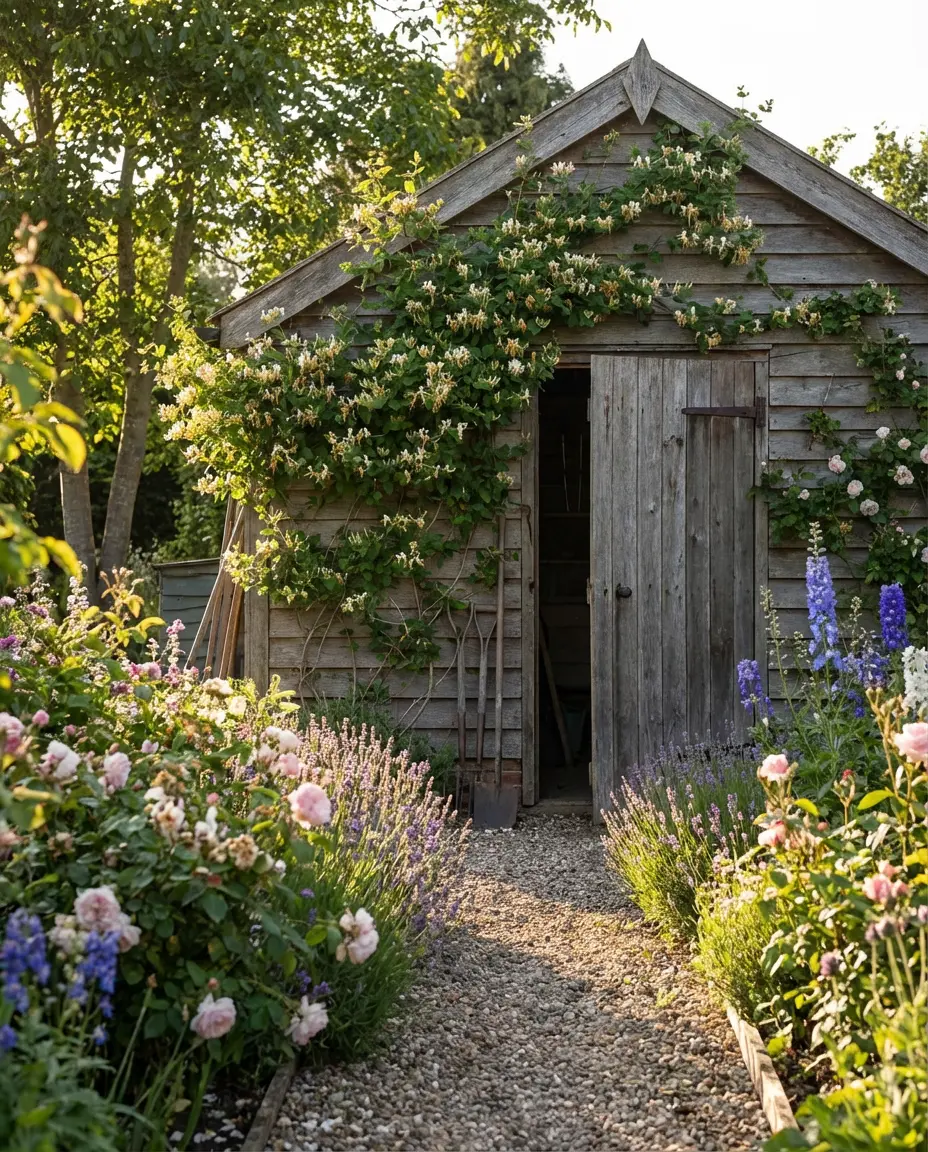
In practical terms, a well-placed shed with vertical plantings also solves the common challenge of garden utility—where to store tools, pots, and supplies—without sacrificing beauty. It pulls double duty as architecture and function, which is very much in keeping with the cottage garden tradition of making everything in the garden earn its place.
10. Lush Cottage Garden Plant Selection for Every Season
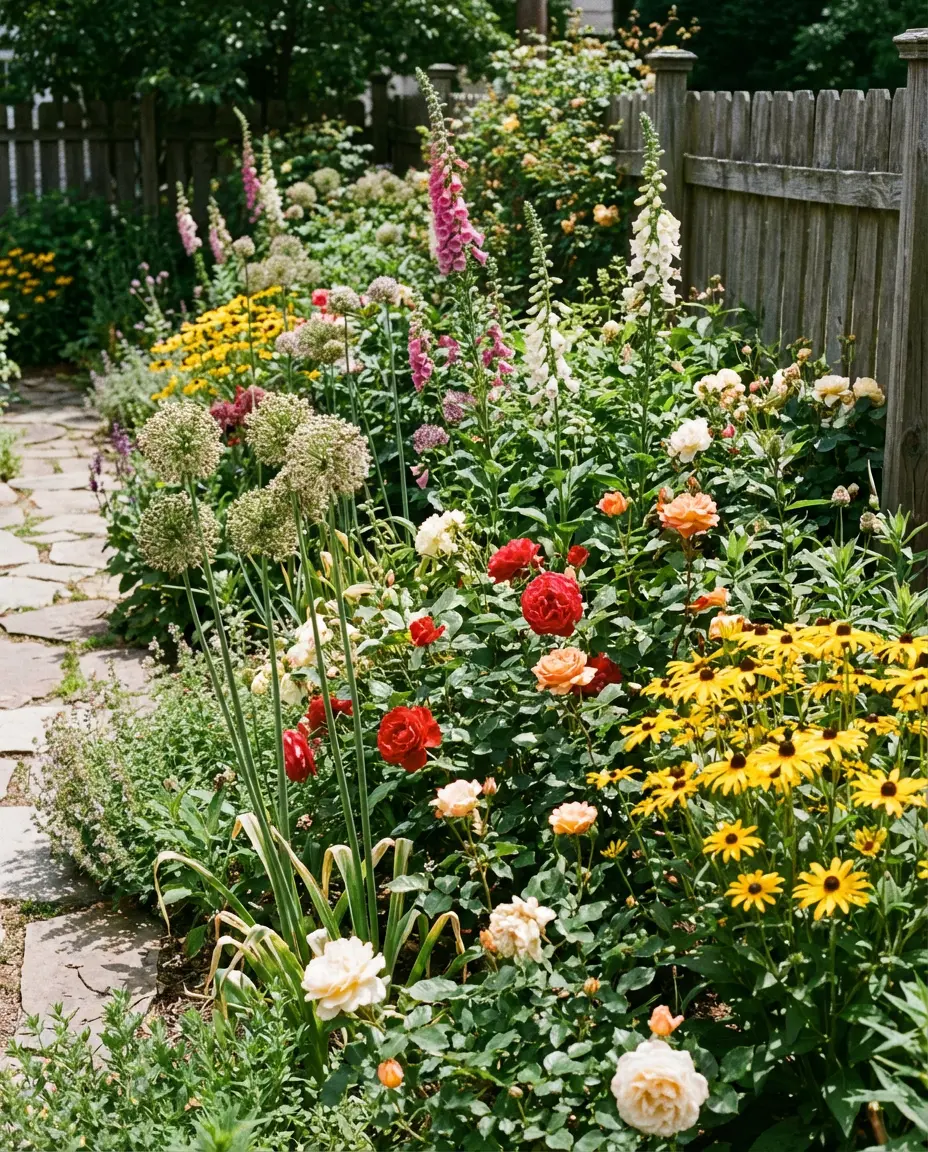
Choosing the right plants is the single most important decision in any cottage garden, and the goal is to create a succession of bloom from early spring through late fall. Start with hellebores and alliums in spring, move into roses and foxglove in early summer, then dahlias and rudbeckia for late-season color. This layered approach—what garden writers call a “relay race of bloom”—keeps the layout feeling alive and abundant no matter the month.
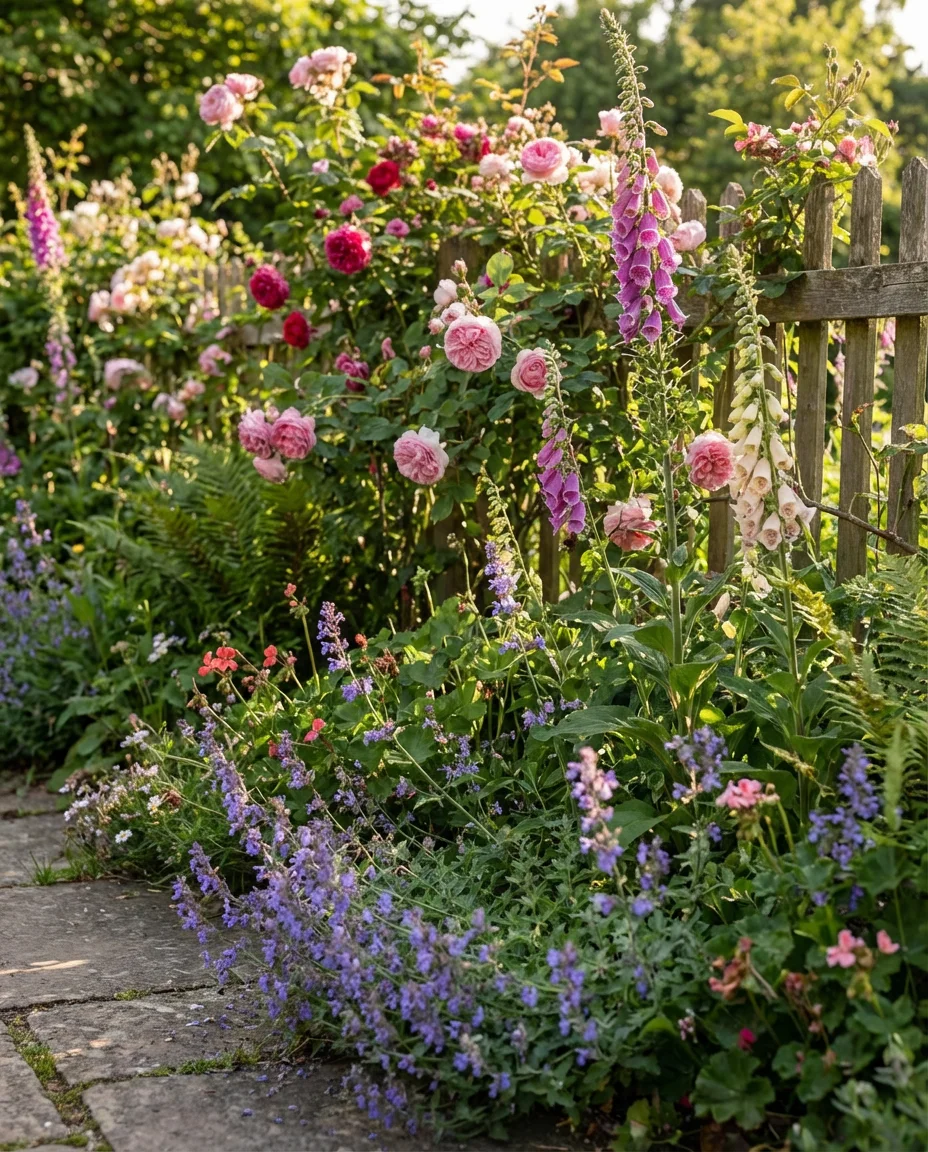
American gardeners often make the mistake of planting for the Instagram moment—choosing what looks stunning in May and forgetting about July through October. A well-planned cottage garden should offer something beautiful every single week. Spend time with a bloom calendar and plan your plant list like a timeline, not a snapshot.
11. Cottage Garden Ideas with Tropical Accents
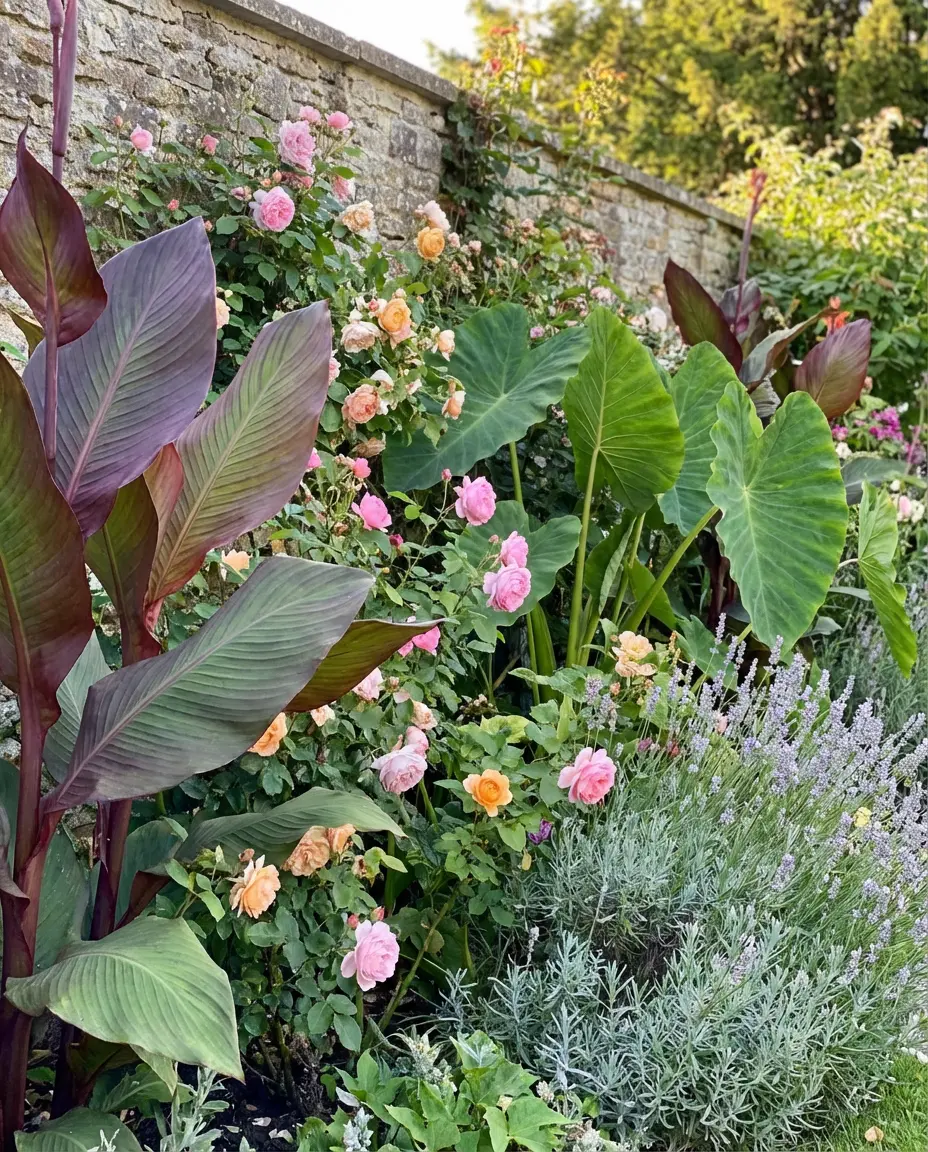
It might sound like a contradiction, but blending tropical plants into a cottage garden framework is one of the most exciting design moves happening in American gardens right now. Bold-leaved cannas, elephant ears, or canna lilies add drama and scale among the softer textures of English perennials—and in warmer climates like Florida, Georgia, or Southern California, this hybrid approach makes complete sense. The key is balance: tropical as accent, cottage planting as the dominant character.
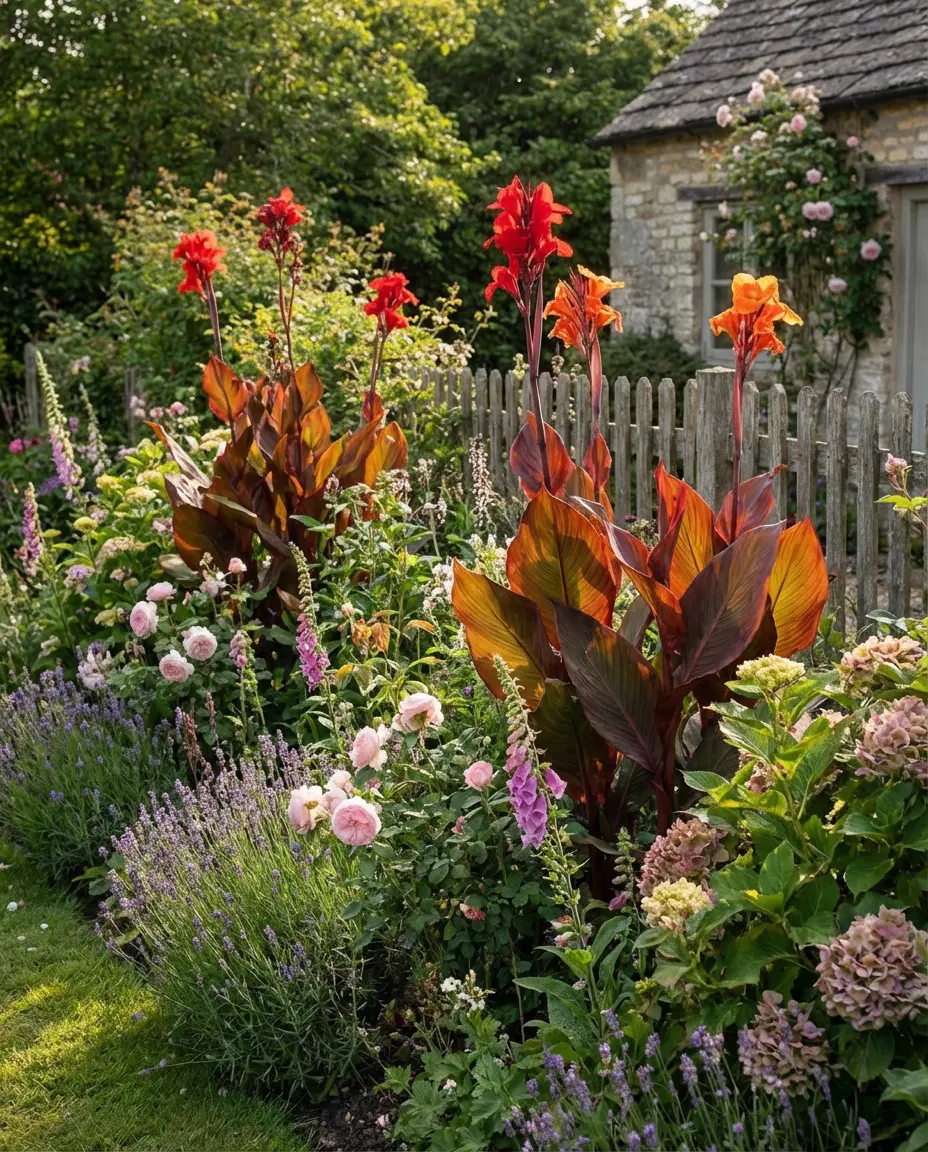
This style is especially popular with homeowners in the Gulf South and mid-Atlantic regions, where humid summers favor tropical growth but where the traditional cottage look still appeals aesthetically. Think of the tropicals as structural “punctuation marks” within the softer grammar of the cottage garden—they draw the eye and create memorable focal moments.
12. Front Yard Cottage Garden Layout Plans
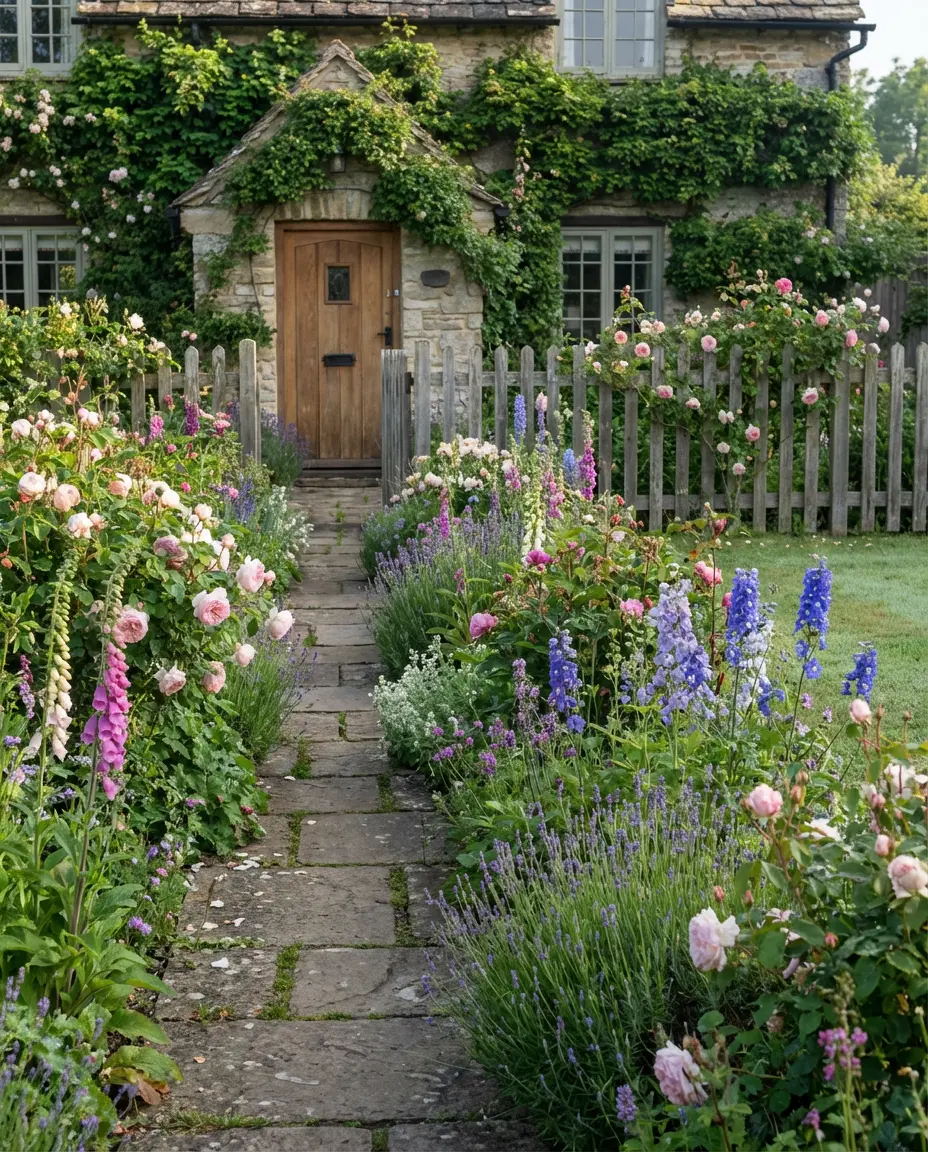
Translating the cottage garden to a front yard requires a bit more planning than a backyard—you’re designing for curb appeal, neighbors, and the street view simultaneously. Successful design layout plans for front cottage gardens typically feature a central path leading to the door, deep symmetrical or asymmetrical borders on either side, and anchor plants (like roses or hydrangeas) at key points to give the abundant planting some visual structure and stopping power.
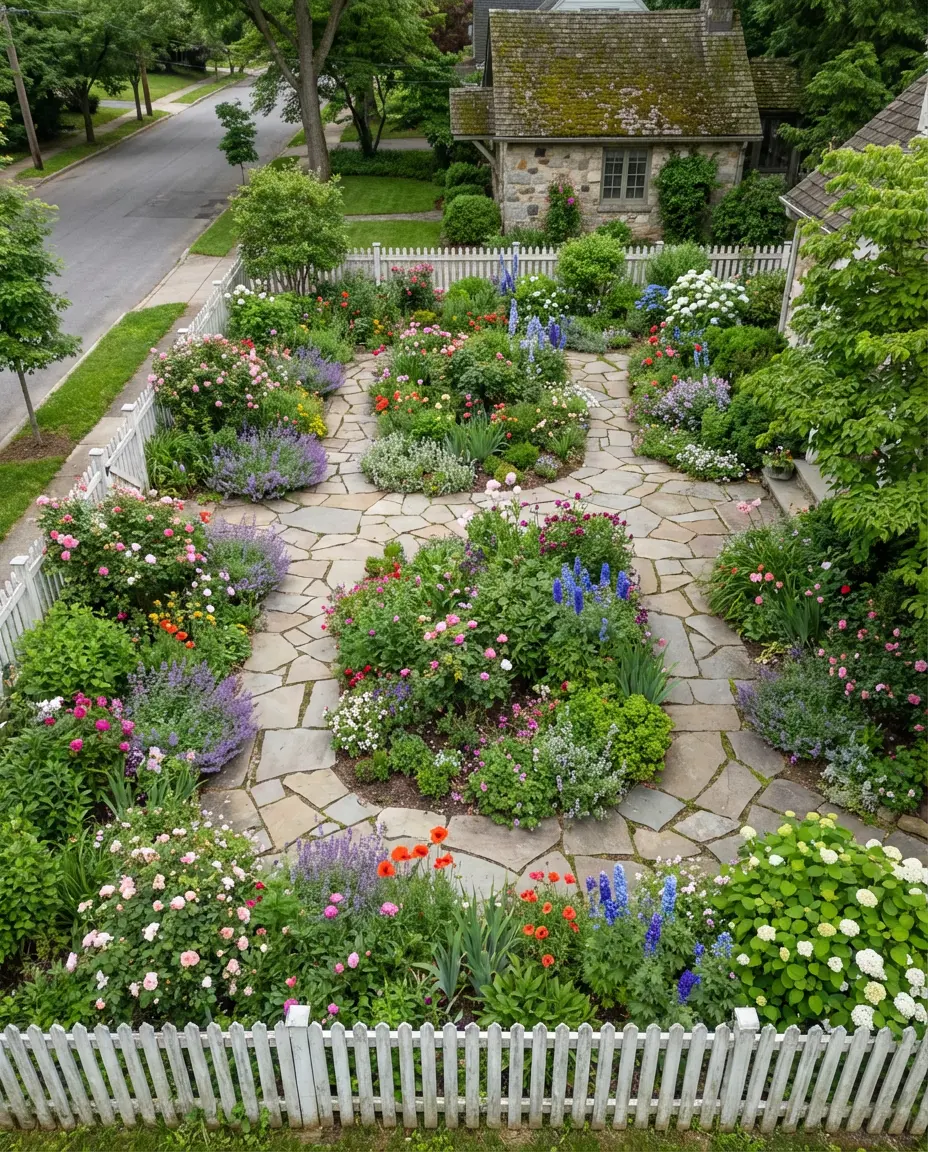
One practical consideration often overlooked: visibility from passing cars and pedestrians means your taller plants should be set back, and your ground-level showstoppers—salvias, geraniums, and low roses—should be closest to the path or sidewalk edge. This creates a layered visual that reads beautifully from a distance and rewards up-close inspection equally.
13. Inspiration from French Country Cottage Garden Style
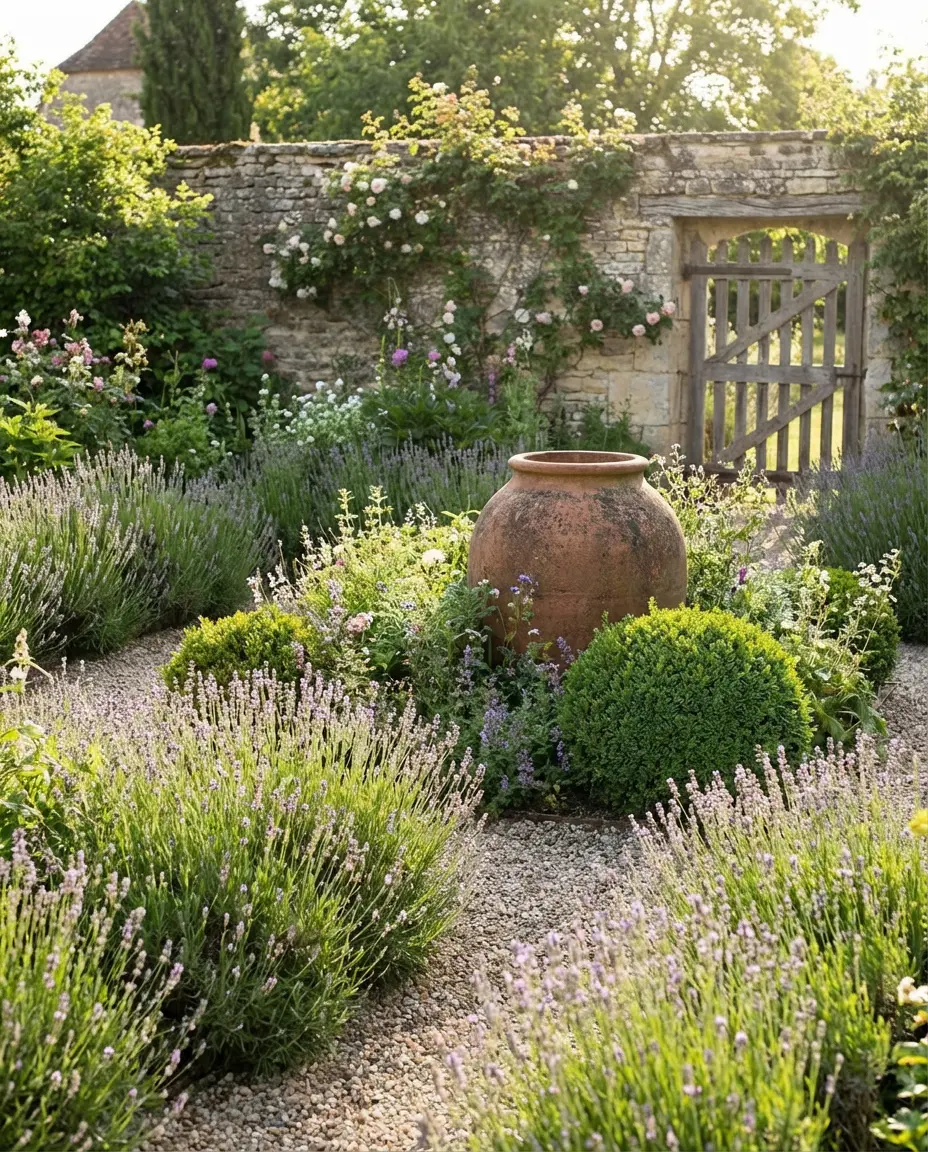
Drawing ideas inspiration french country style into your cottage garden brings a particular kind of elegance—think topiary balls within loose planting, terracotta oil jars used as vertical accents, and allées of lavender creating soft structure. The style pairs beautifully with stone or brick home exteriors and can transform an ordinary suburban lot into something that feels genuinely Provençal. The secret is restraint in hardscape paired with abandon in planting.
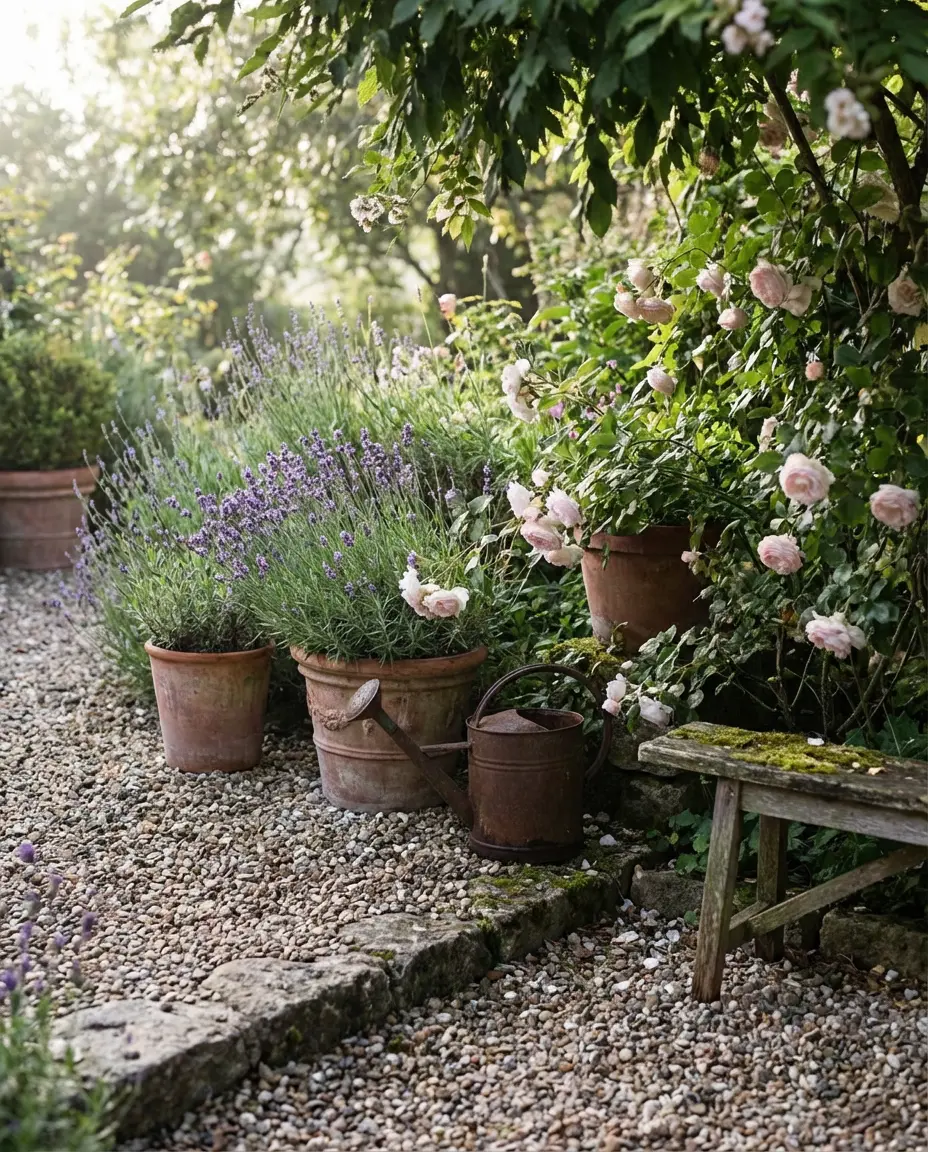
Real homeowners who’ve leaned into this style describe it as feeling “accidentally curated”—like the garden evolved naturally over generations rather than being designed in a weekend. That impression doesn’t happen by accident. It comes from choosing aged, imperfect materials and planting with a confidence that allows things to overflow, lean, and self-seed just enough to feel lived in and deeply real.
14. Cottage Garden Flowers for a Classic Color Palette
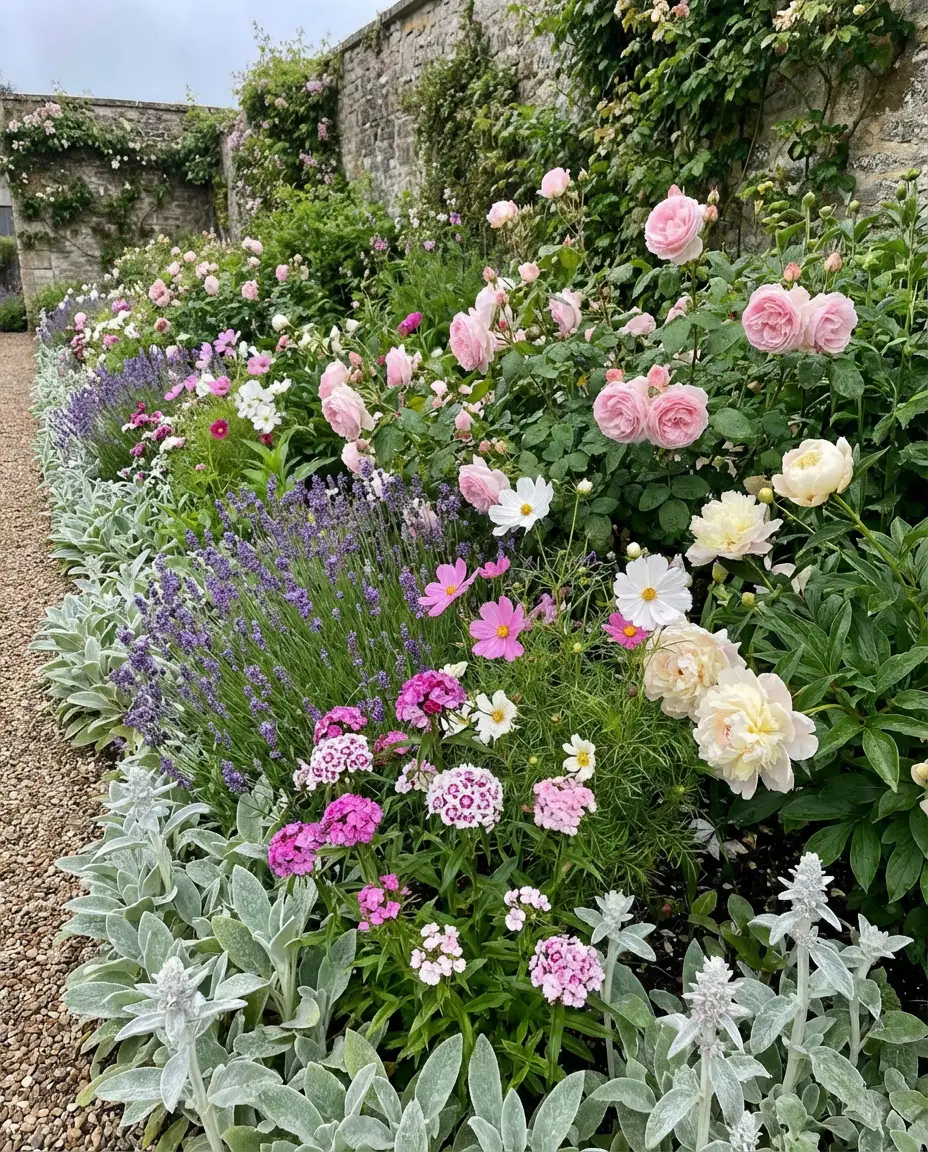
The color palette is what gives a cottage garden its signature mood, and the most iconic flowers tend toward soft pinks, lavenders, creamy whites, and occasional deep plums. Roses, delphinium, sweet William, cosmos, and peonies are the classics for a reason—they bloom in abundance, rebloom with deadheading, and create that lush, tumbling effect that defines the ideas behind this whole design tradition. Work in some silvery foliage like artemisia or lamb’s ear to cool and brighten the whole palette.
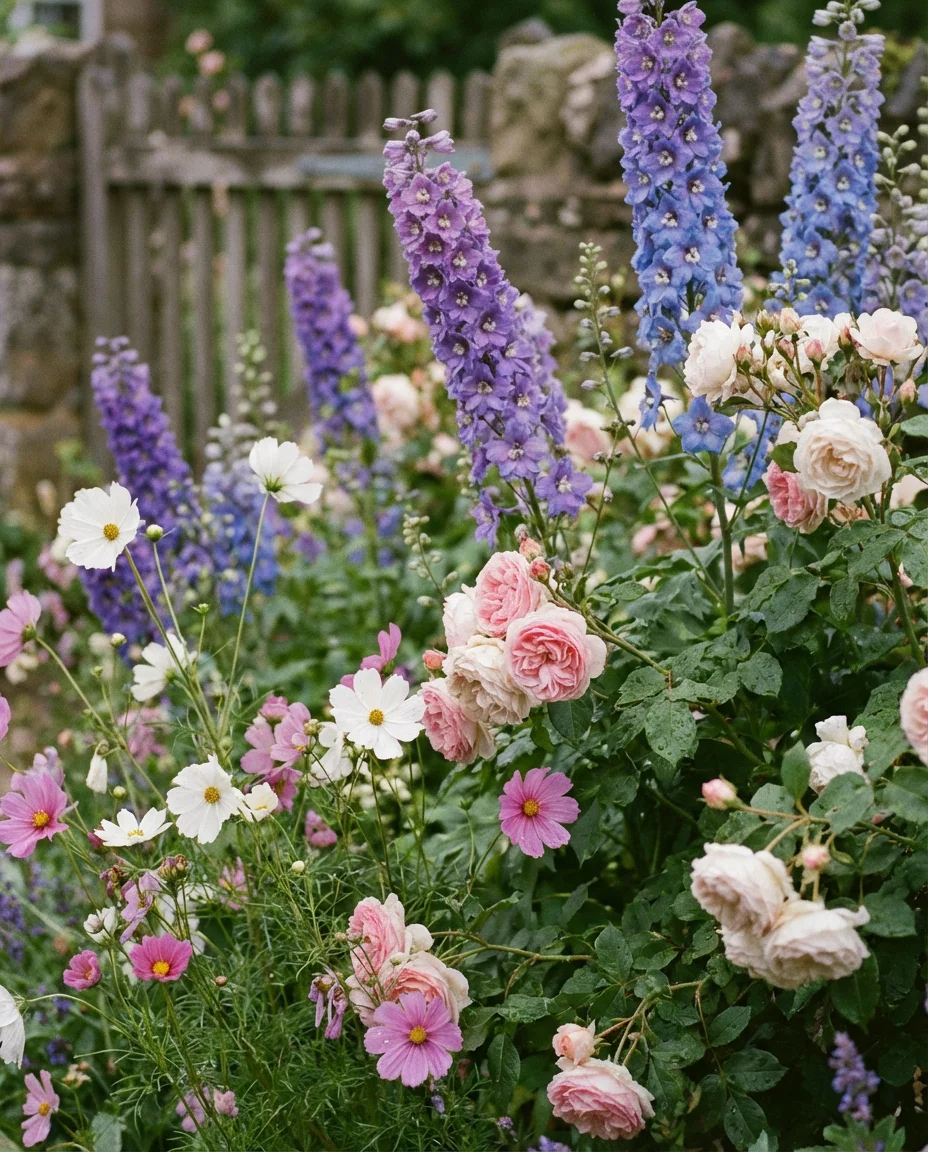
For Americans in warmer zones, swap classic English perennials for heat-tolerant substitutes that capture the same aesthetic: gaura instead of cosmos, salvia instead of delphinium, and knock-out roses instead of hybrid teas. The spirit stays intact even when the specific plants shift—what matters is the layered, abundant effect, not strict adherence to a British plant list.
15 Cottage Garden Ideas for a Backyard with a Patio
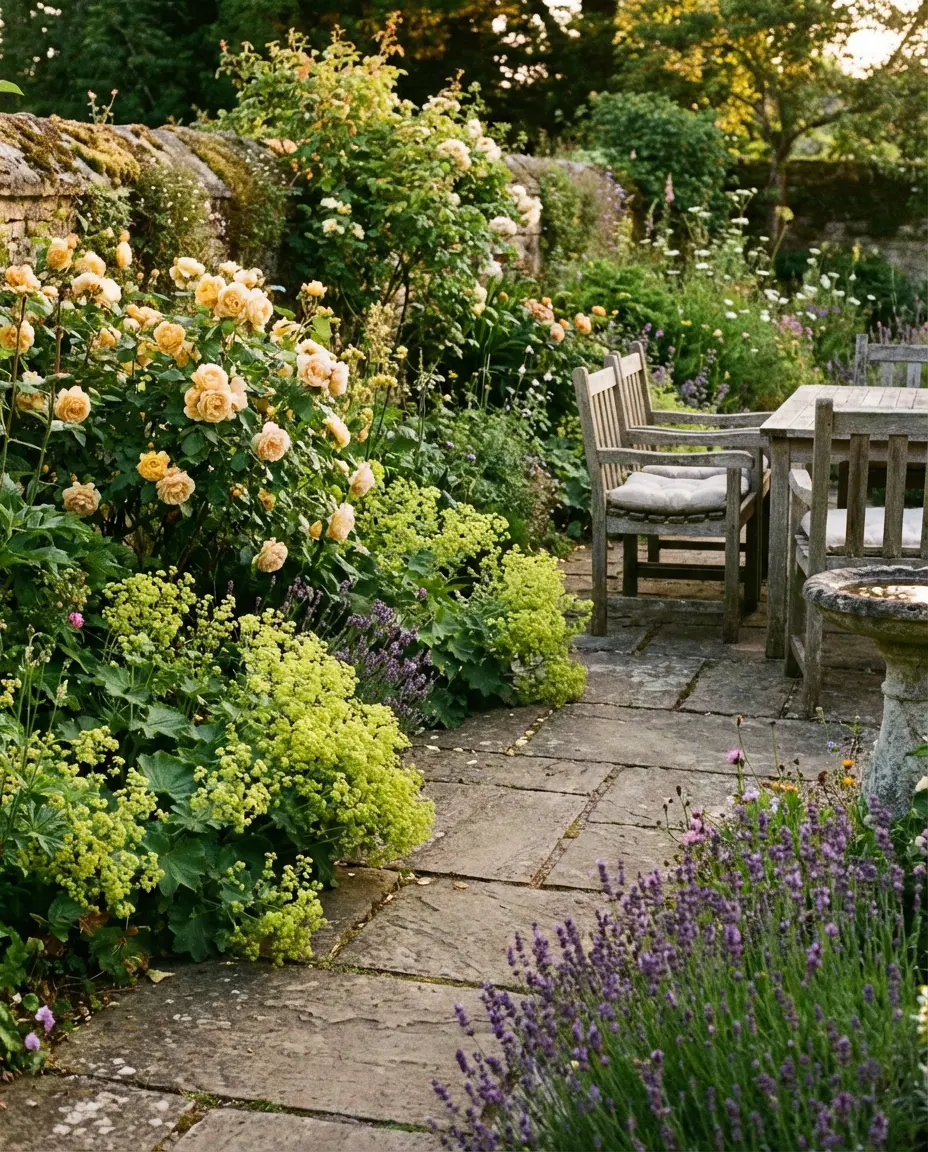
Combining a patio with a cottage garden in the backyard creates the best of both worlds: a hard surface for outdoor dining and entertaining, surrounded by the soft, immersive beauty of cottage planting. The transition between the paved area and the garden bed is where the magic happens—let plants spill slightly onto the stone, soften the edges with trailing thyme or alchemilla mollis, and the patio feels like it’s nestled inside the garden rather than placed in front of it.
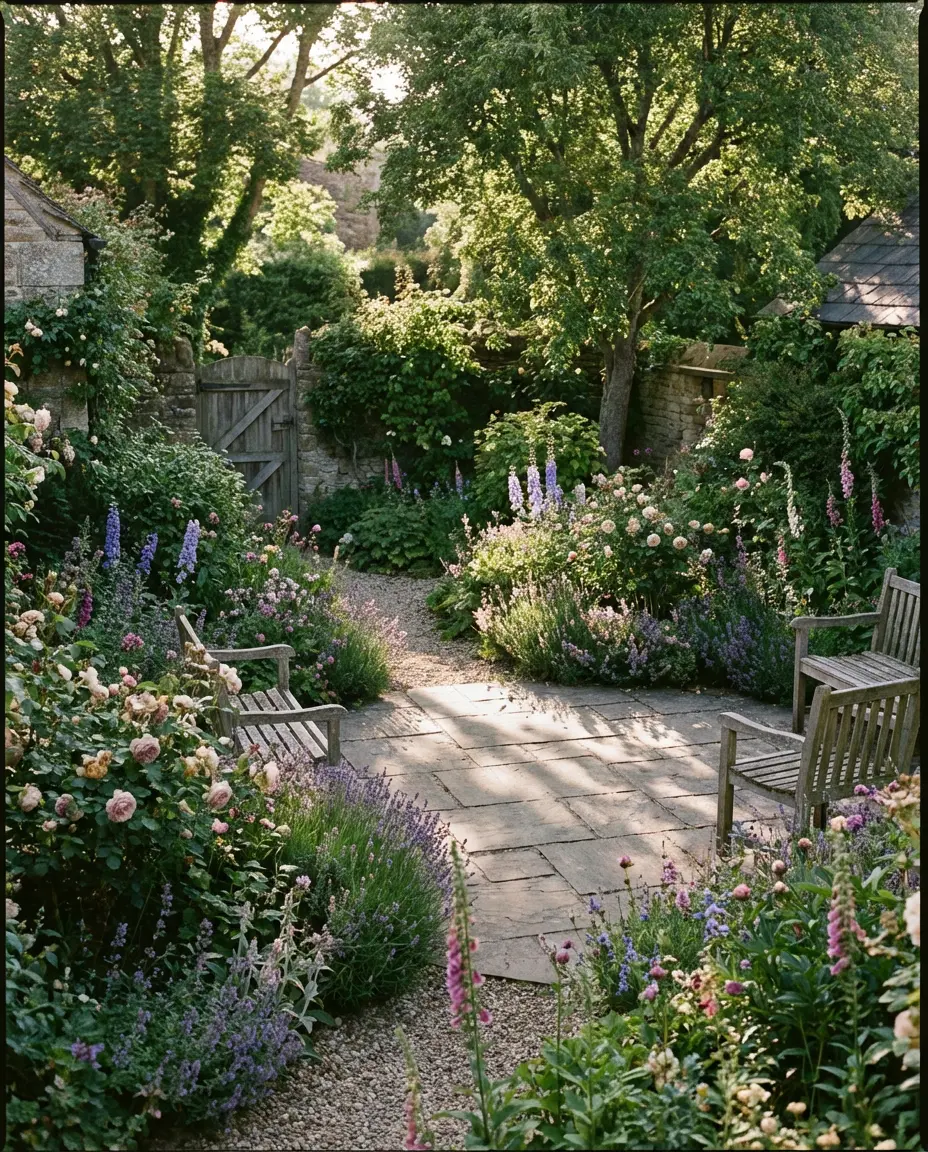
Think of your patio as a room without walls—the cottage planting forms the “walls” of that outdoor room. This framing makes the space feel intentional and private, even in a suburban setting with neighbors on either side. It’s one of the most effective ways to create the feeling of seclusion without building actual structures or fencing.
16. Cottage Garden Aesthetic with an Antique Bench
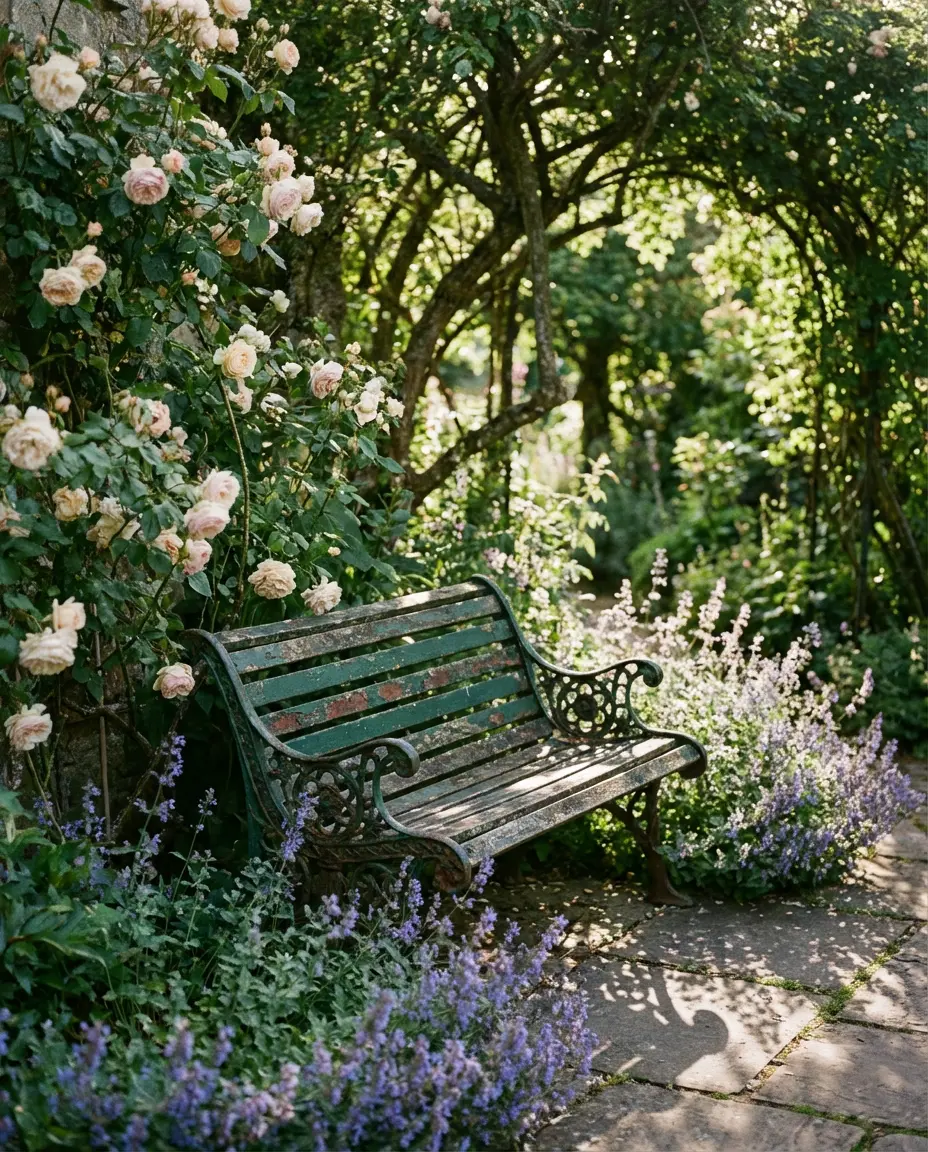
Garden furniture in a cottage setting should feel old, found, and a little imperfect—and nothing embodies that better than an antique cast iron or slatted teak bench tucked among the plantings. The aesthetic calls for pieces that look like they’ve weathered decades outdoors: peeling paint, soft patina, and moss on the feet. Set the bench within a surround of tall roses, catmint, or wisteria, and you have an instant garden moment worthy of any magazine spread.
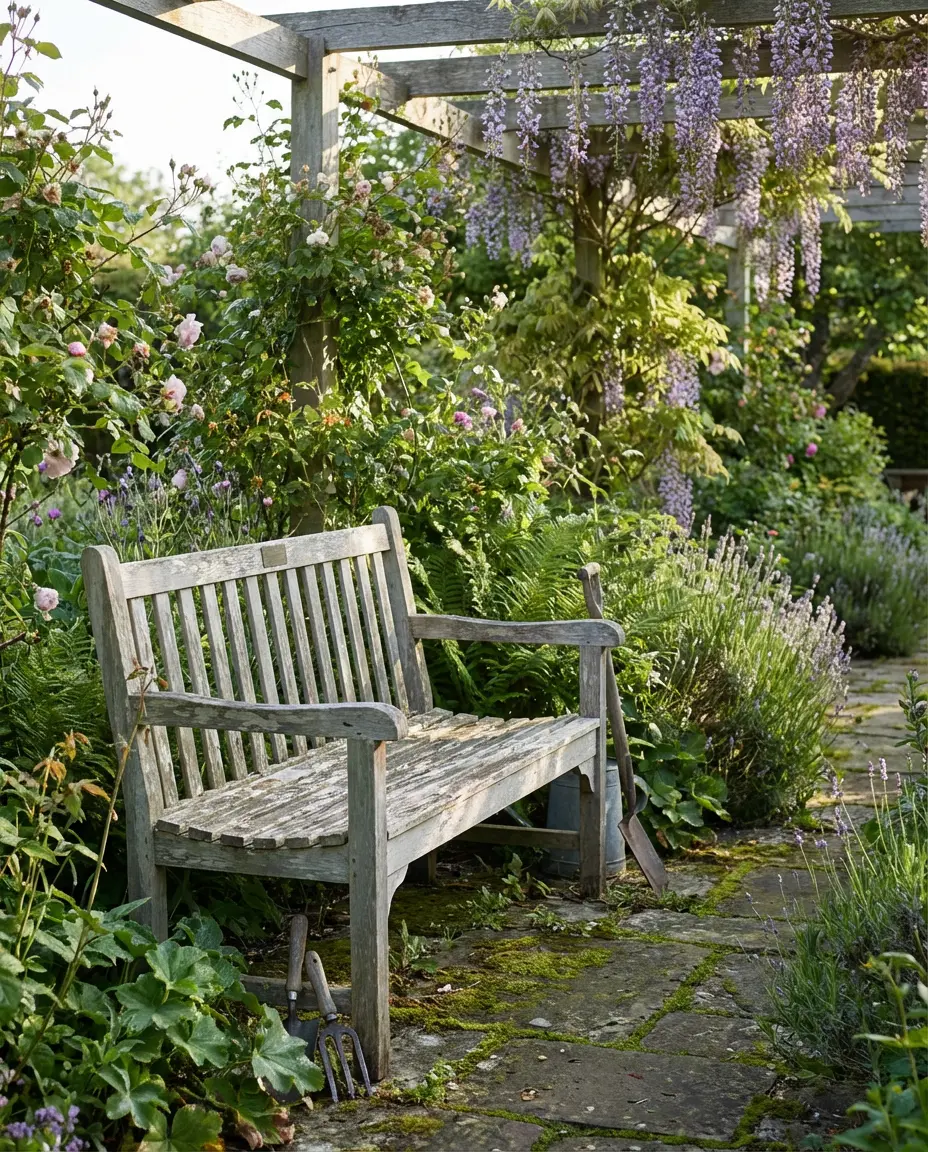
Thrift stores, estate sales, and online marketplaces like Facebook Marketplace are excellent sources for this kind of furniture—often for $40–$100. Resist the urge to restore or repaint immediately; the worn finish is exactly what gives these pieces their cottage garden credibility and visual warmth.
17. Cottage Border Design with Edging Plants
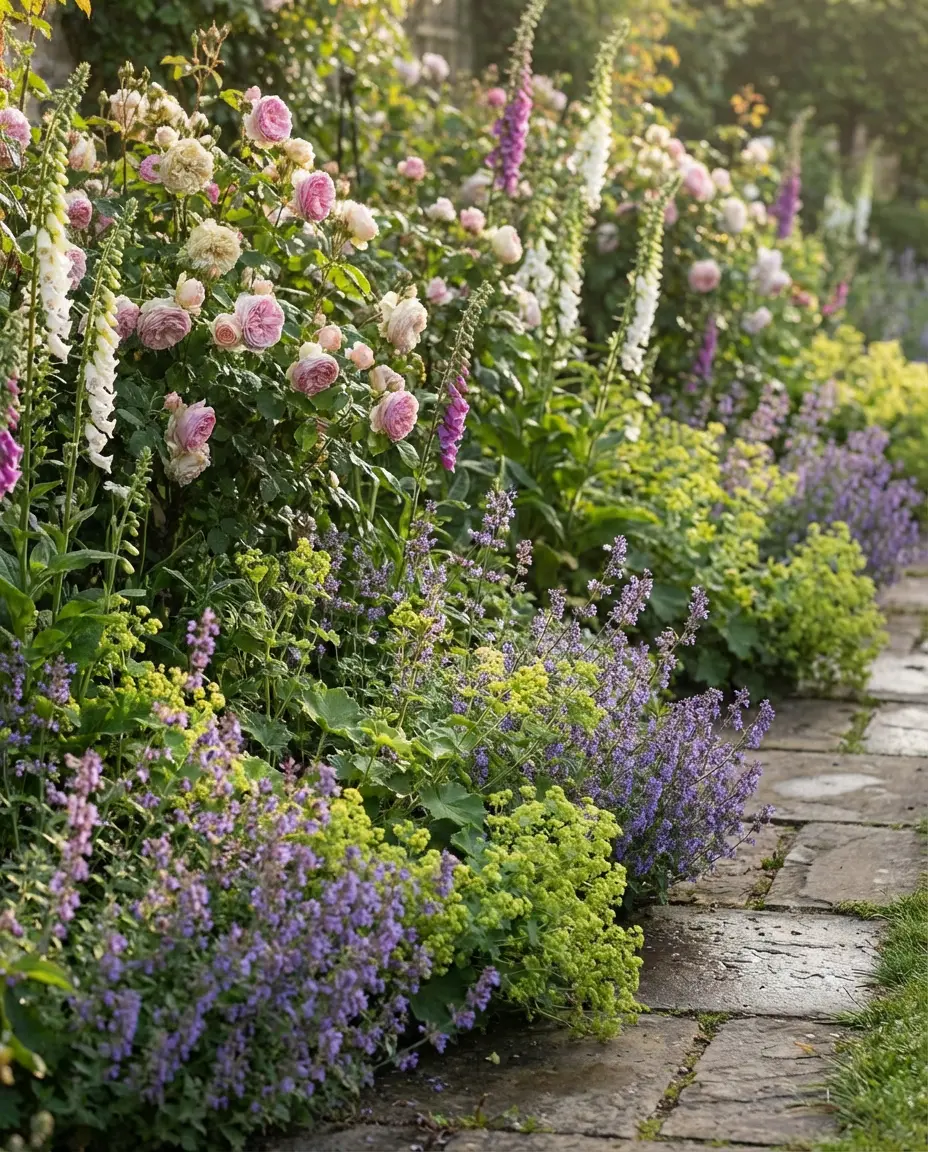
The border is the workhorse of the cottage garden—and how you edge it makes a significant difference to the overall design. Low-growing edging plants like nepeta, alchemilla mollis, hardy geraniums, and creeping thyme create a soft, undulating front line that blurs the boundary between path and planting in the most pleasing way. Avoid hard plastic edging strips; instead, let plants be the edge and let them breathe past it.
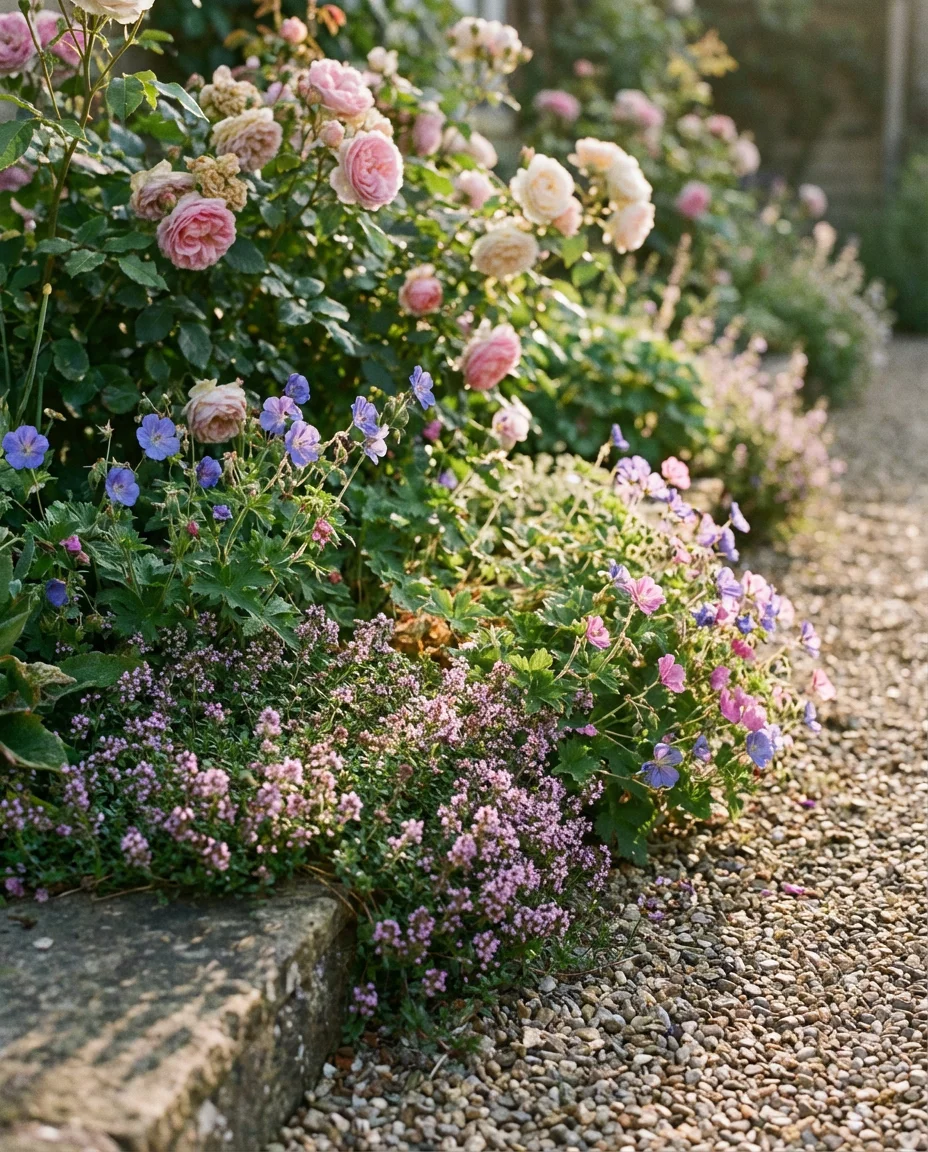
Where this works best is in gardens with an existing stone, gravel, or brick path—materials that welcome the soft overflow of plant growth. Concrete paths with hard edges tend to fight the cottage aesthetic. If your paths are concrete, consider tucking a ribbon of gravel alongside the border to create that transitional softness between paving and planting.
18. English Cottage Garden Patio with Stone Paths
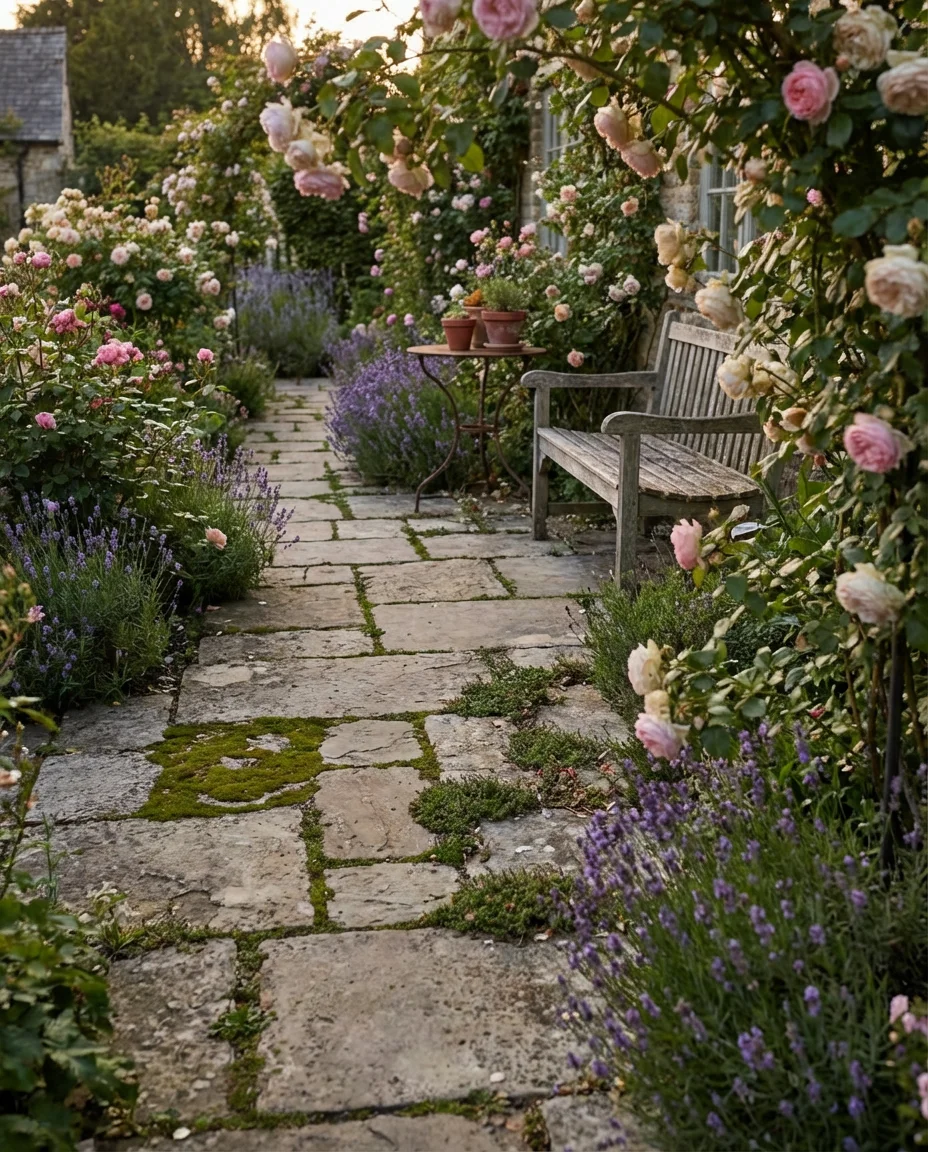
When a patio stone path winds through a cottage garden and ends at a simple terrace, the whole outdoor area transforms into a cohesive living landscape. The stone material—whether bluestone, limestone, or local fieldstone—should feel natural and slightly irregular, with gaps between pieces that allow moss or thyme to colonize. This integration of path and planting is one of the defining characteristics of the English garden tradition and one of its most practical elements too.
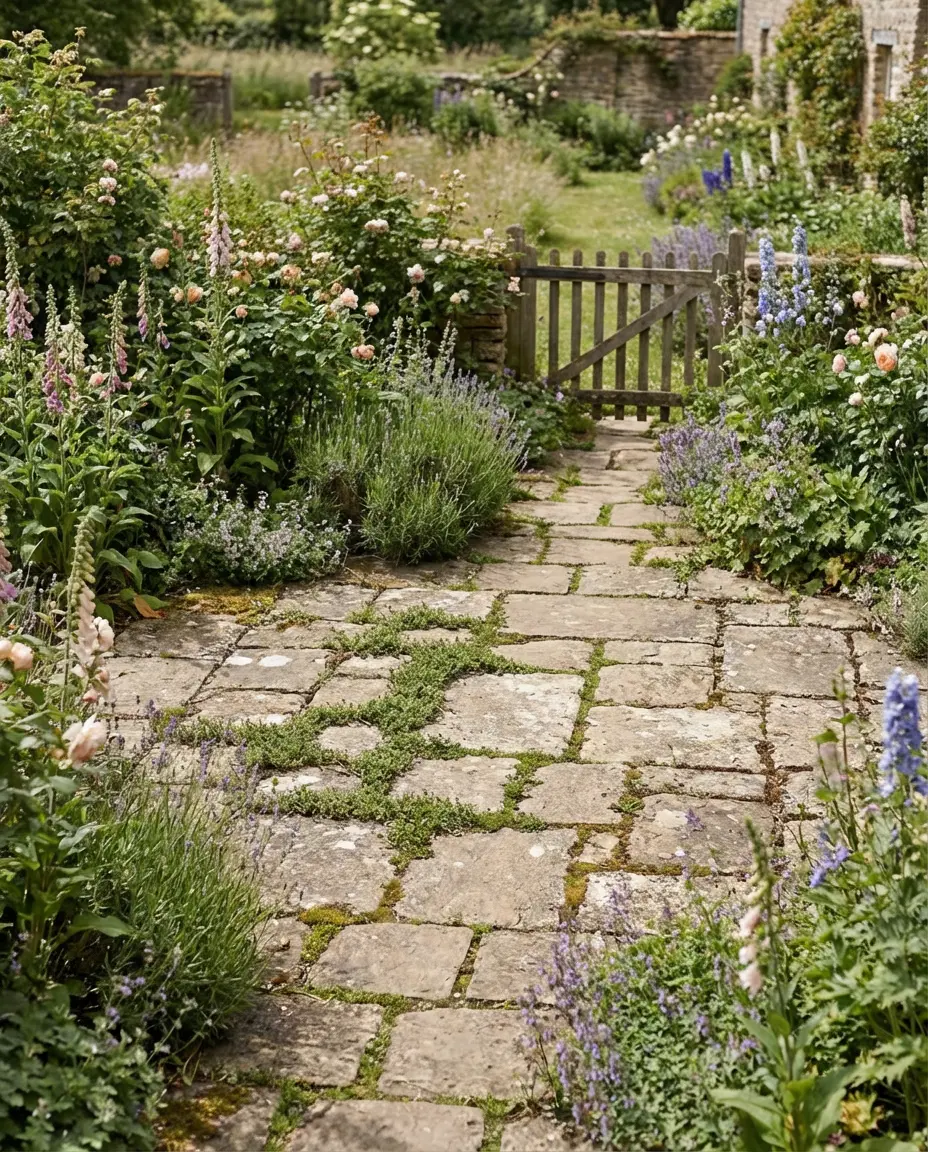
In American contexts, reclaimed stone is both environmentally responsible and visually superior to freshly cut material—the aged surface reads as authentic and lived in immediately, rather than requiring years of weathering. Check local salvage yards and architectural reclamation businesses; reclaimed limestone or bluestone can often be found at comparable prices to new material, sometimes less.
19. Cottage Garden Design for a Small Space
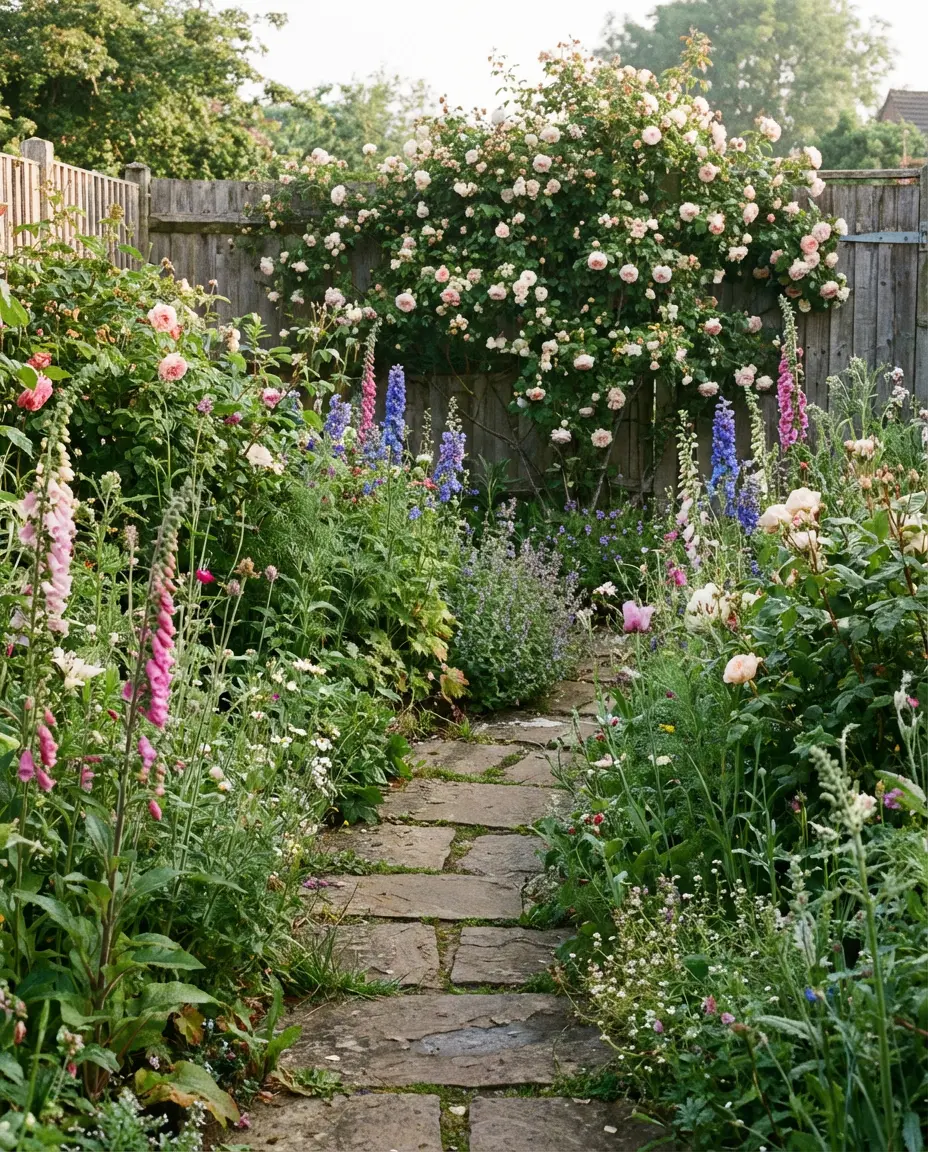
Small gardens are where the cottage aesthetic actually shines brightest—because the abundance of planting fills every inch, there’s no empty space to betray the garden’s limited size. A 10-by-20-foot side yard or narrow front strip can be transformed with the right design: a central stepping stone path, deep borders on either side, and vertical interest from climbing roses or clematis on a fence or trellis. Density is your friend here, not your enemy.
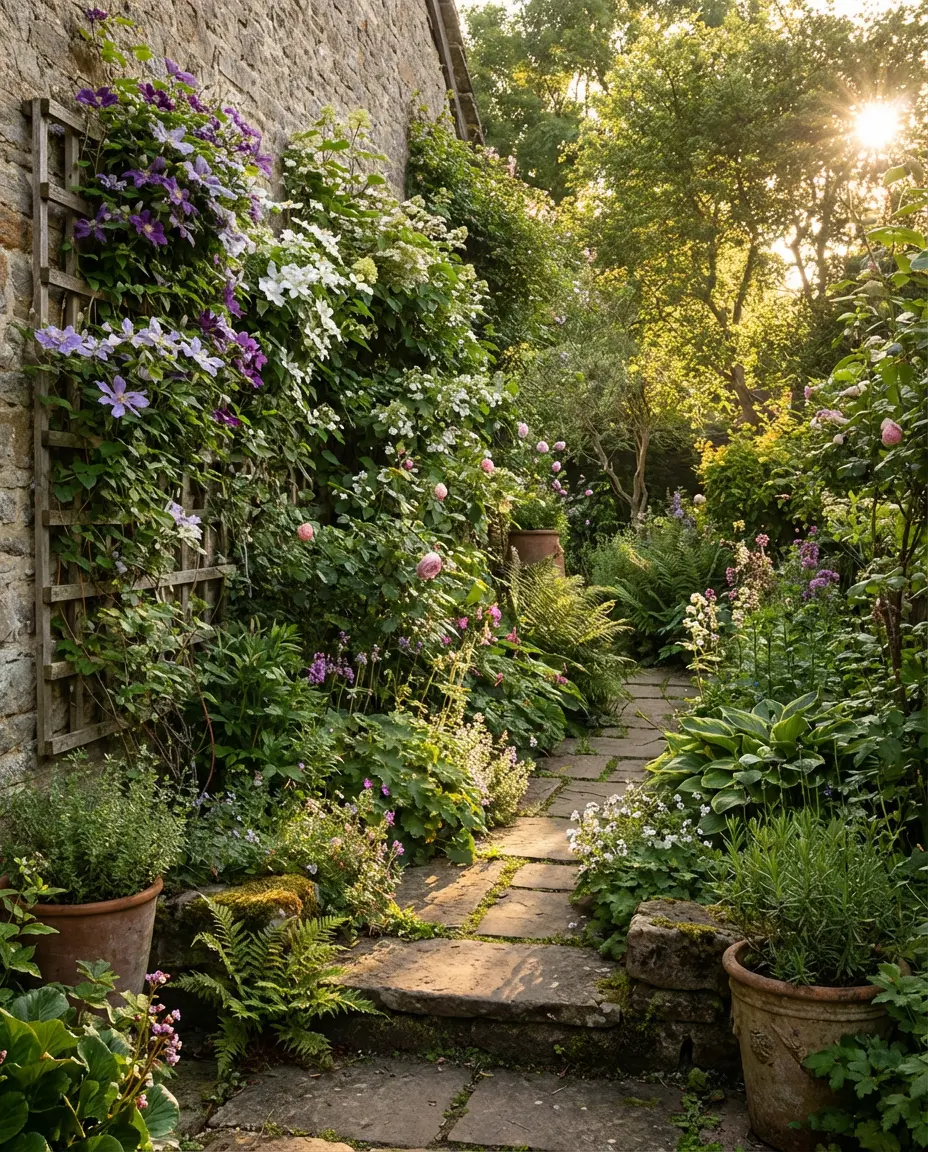
Many American homeowners are surprised to discover that their side yards—those long, neglected strips between house and fence—are actually perfect cottage garden canvases. They’re often partially shaded, which suits many cottage plants perfectly, and their narrow proportions naturally channel the kind of dense, focused planting that makes cottage gardens look so lush and intentional.
20. Cottage Garden Ideas with a Rustic Wood Fence
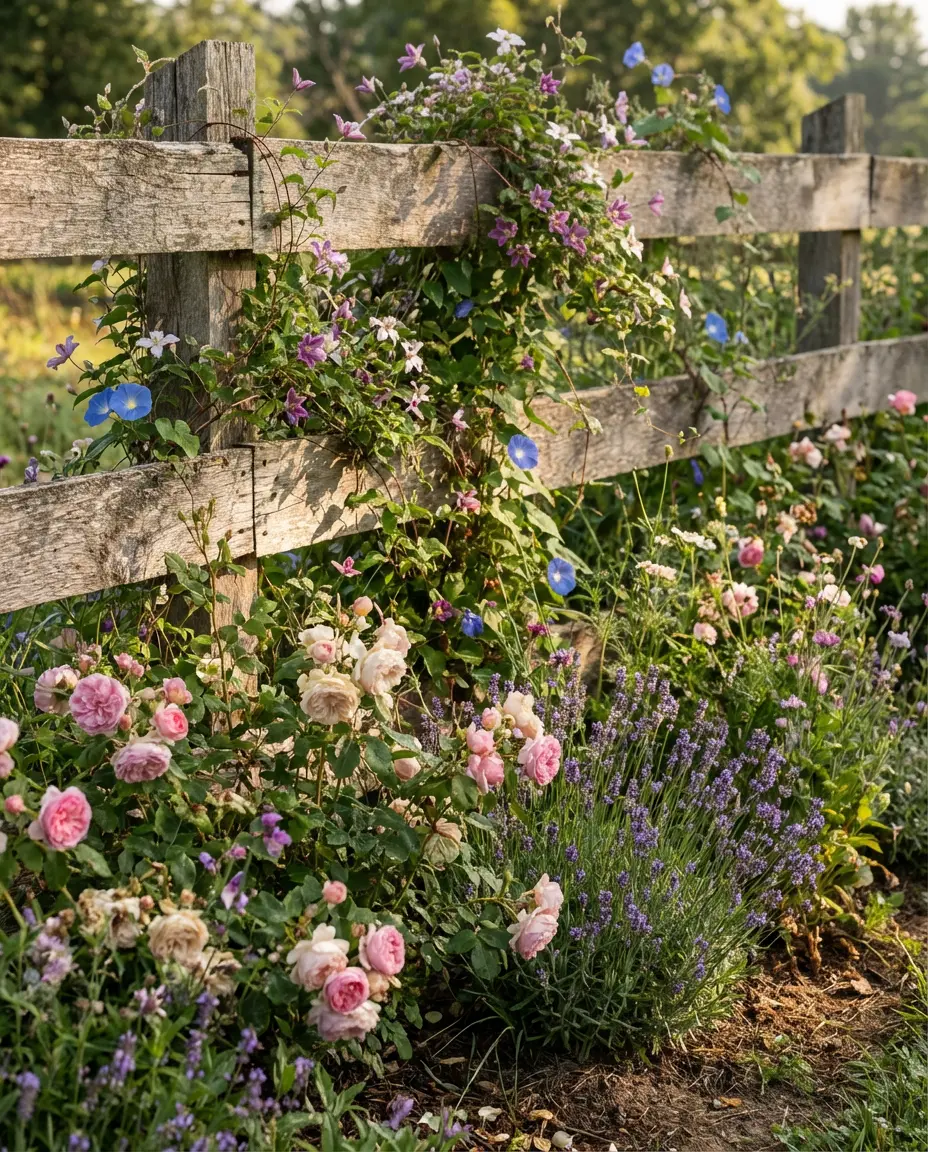
A rustic split-rail or weathered board fence is one of the most versatile backdrops in the cottage garden toolkit. Unlike a painted picket fence, raw or aged wood has a warmth that blends seamlessly with naturalistic planting—and it provides a perfect support structure for climbing flowers like clematis, morning glory, or climbing hydrangea. The worn wood texture and the organic softness of the planting create a visual partnership that’s hard to beat for pure cottage authenticity.
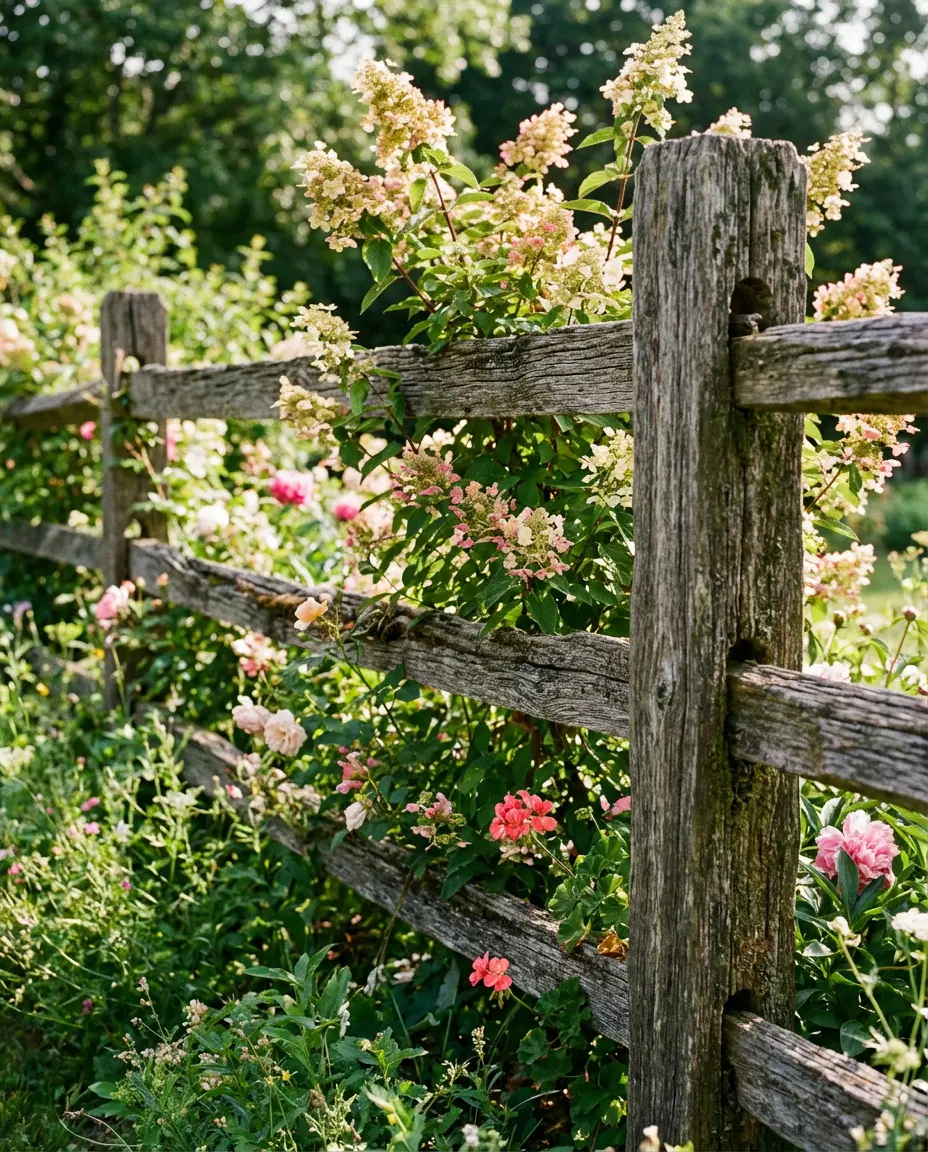
The most common mistake with this setup is overplanting with aggressive climbers that quickly overwhelm a rustic fence structure. Morning glory and some clematis species can be vigorous enough to pull down lightweight fencing within a season or two. Anchor your posts well and choose climbers that are proportional to your fence’s weight and strength—or plan to replace fence sections every few years as a happy trade-off for the beauty they frame.
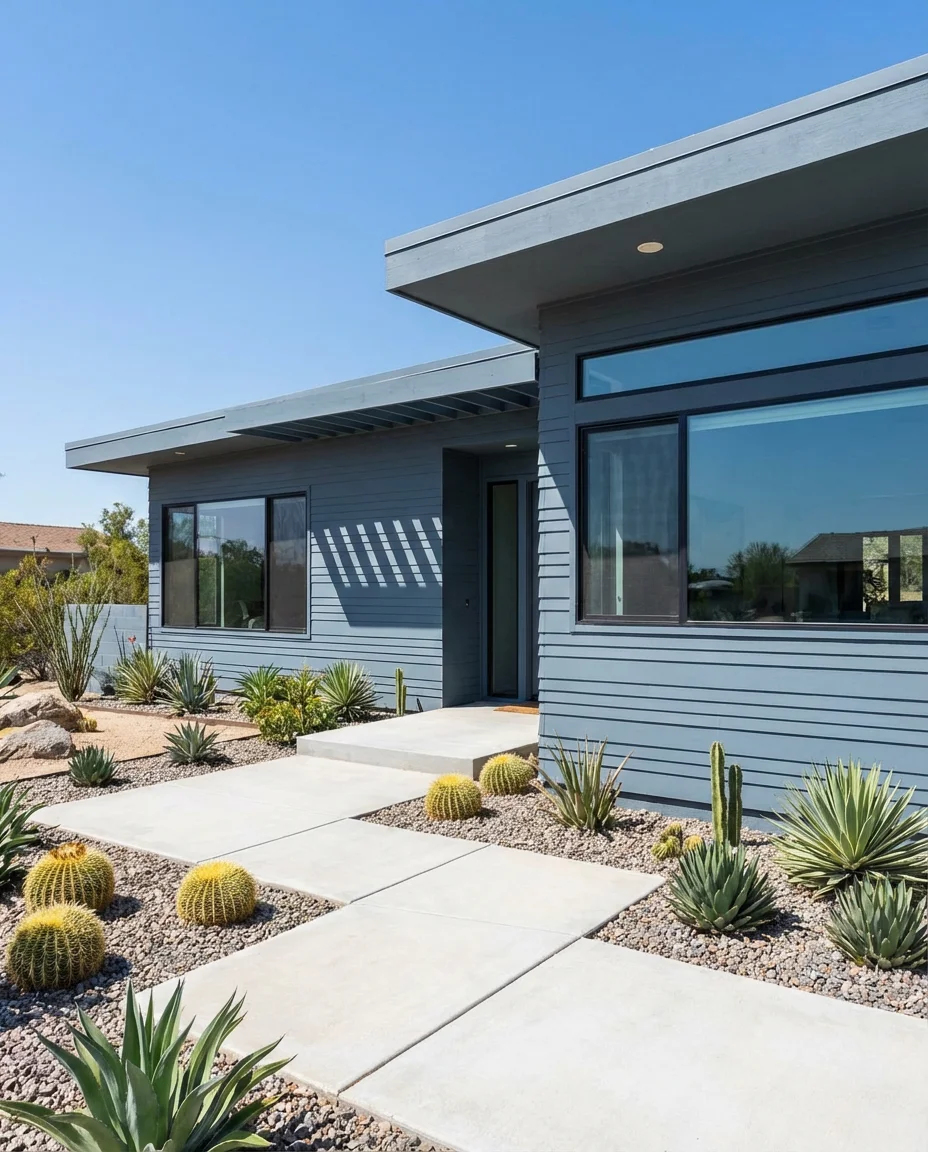
21. Cottage Garden Style for a Modern Home Exterior
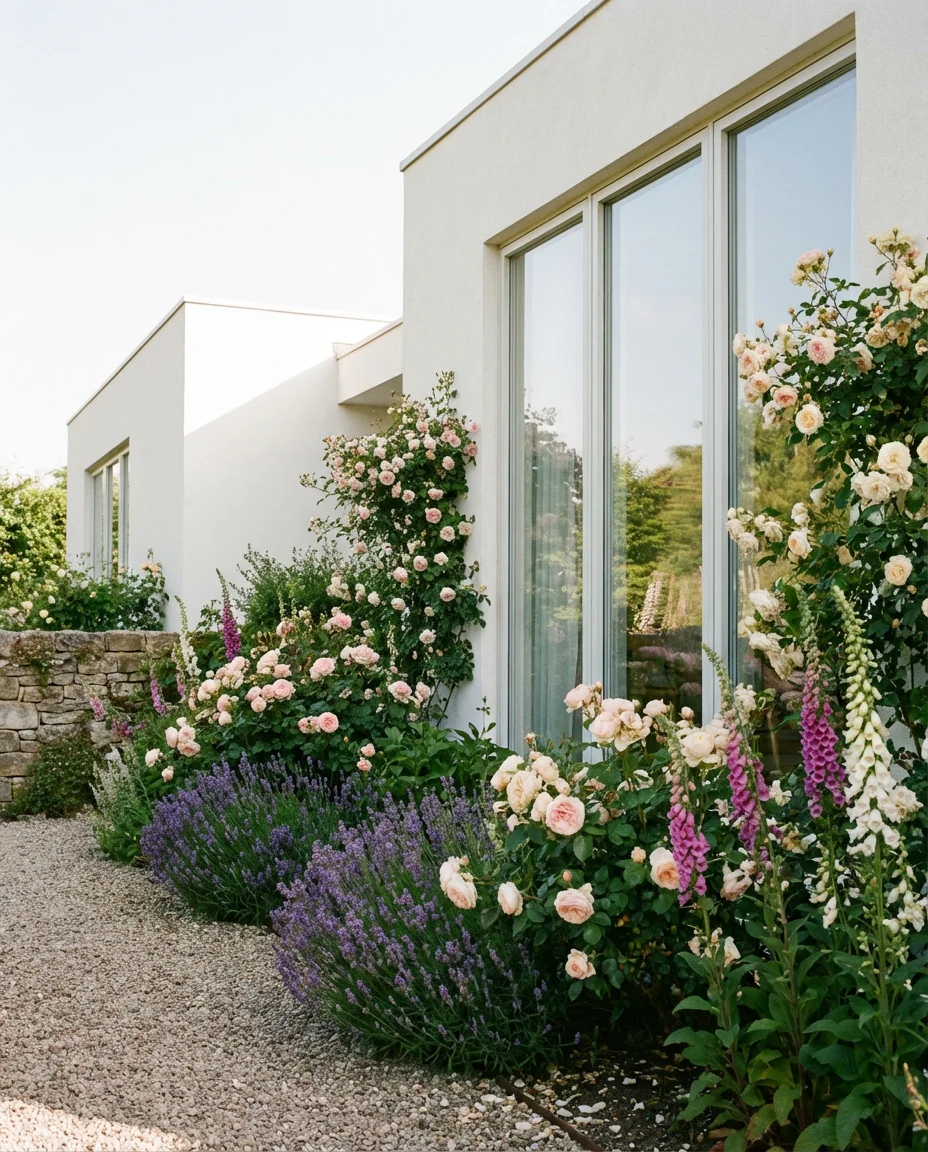
One of the most interesting design conversations happening in residential landscaping right now is the pairing of the cottage garden style with a modern home exterior. Clean architectural lines, large windows, and minimalist facades become surprisingly beautiful backdrops for the lush, romantic overflow of cottage planting. The contrast is the point—the structured building and the wild garden create a tension that feels fresh and genuinely contemporary without losing the warmth of the cottage tradition.
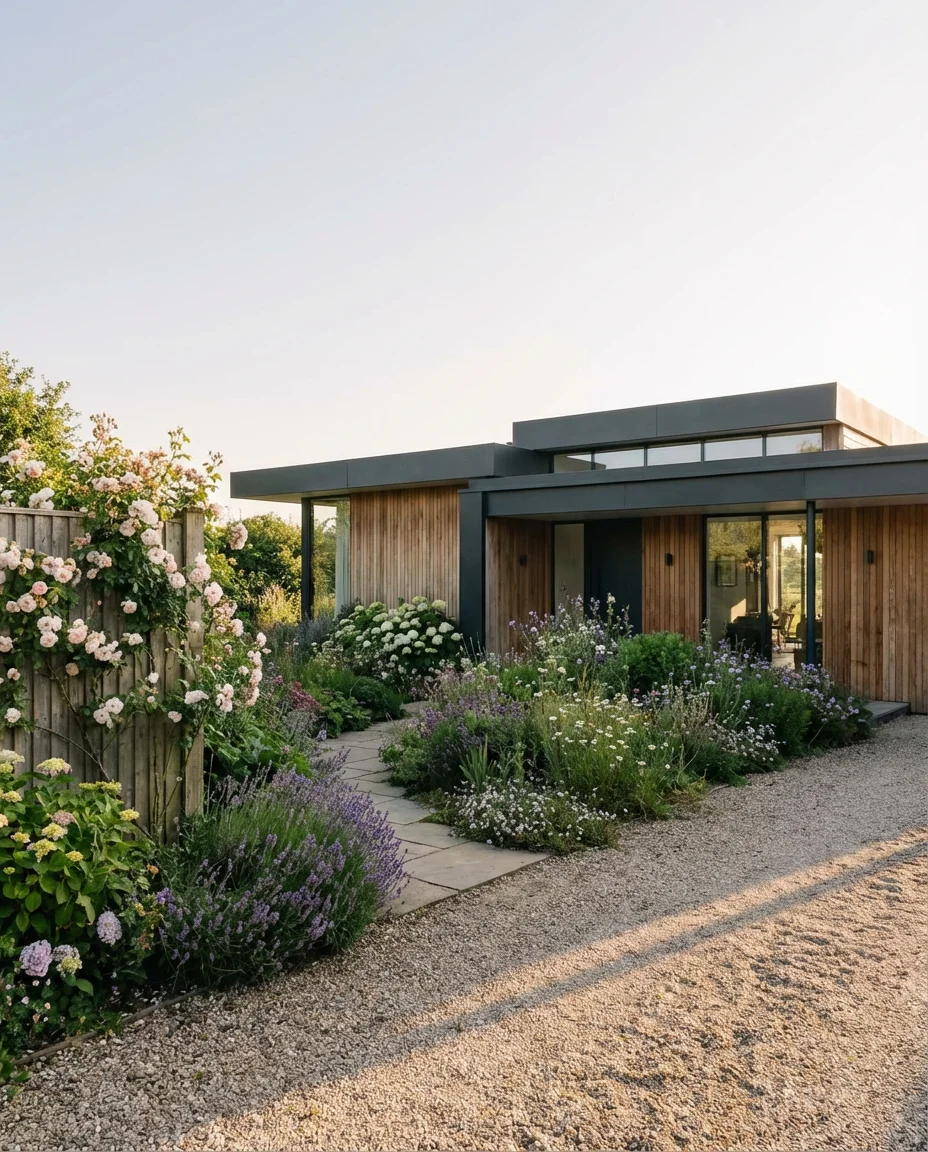
This pairing works particularly well for homes built after 2000, which often have the architectural confidence to hold their own against abundant planting without looking overwhelmed. The key is keeping the planting slightly away from the building’s foundation to preserve the clean reading of the facade while allowing the garden to do its lush, romantic thing in the foreground.
22. Cottage Garden Design Layout for a Complete Backyard Transformation
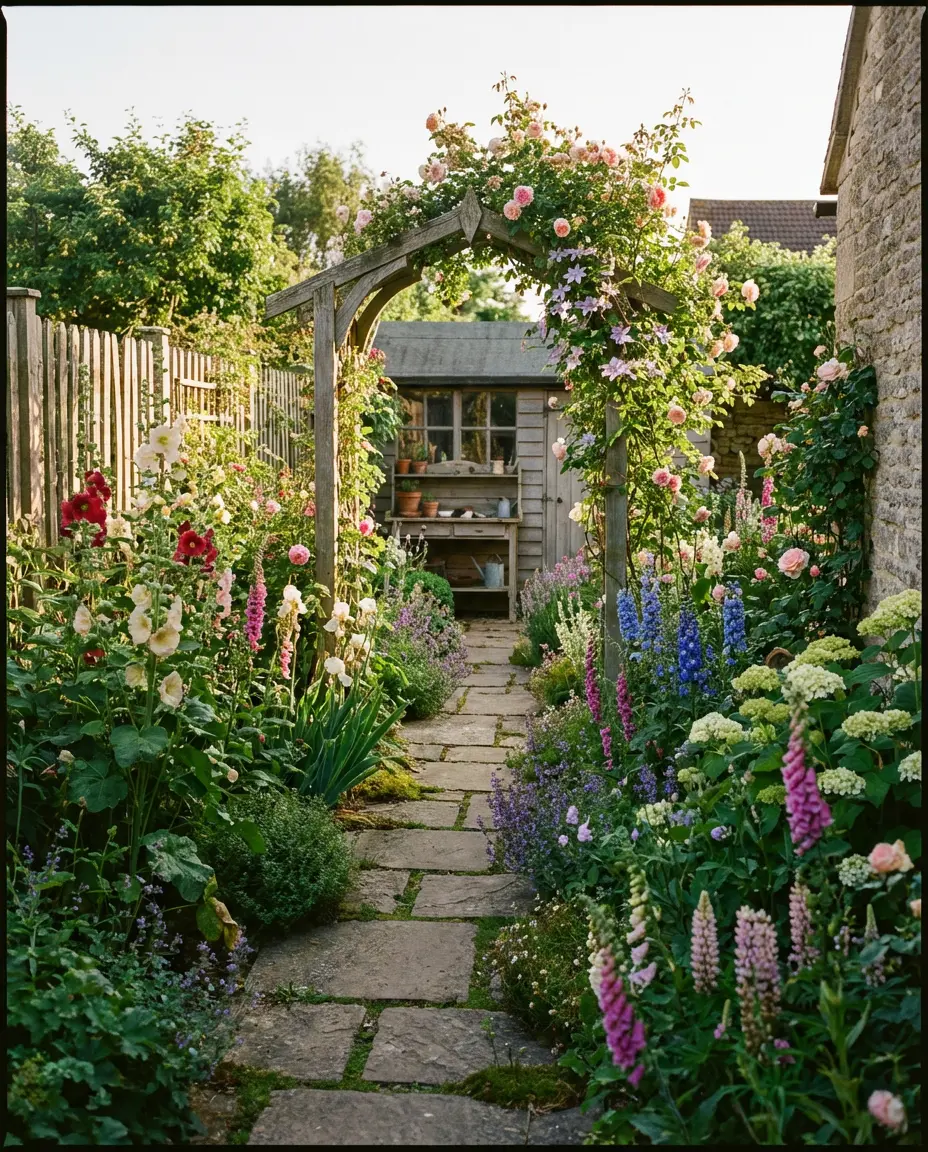
When you’re ready to commit fully, a complete backyard cottage garden transformation—redesigning the entire space from lawn to layered planting—is one of the most rewarding garden projects an American homeowner can undertake. A comprehensive design layout for this kind of project typically includes removing or reducing existing lawn, installing meandering patio stone paths, planting deep mixed borders, and adding vertical elements like arches, obelisks, or a garden shed. The result is an entire backyard that functions as an immersive garden room.
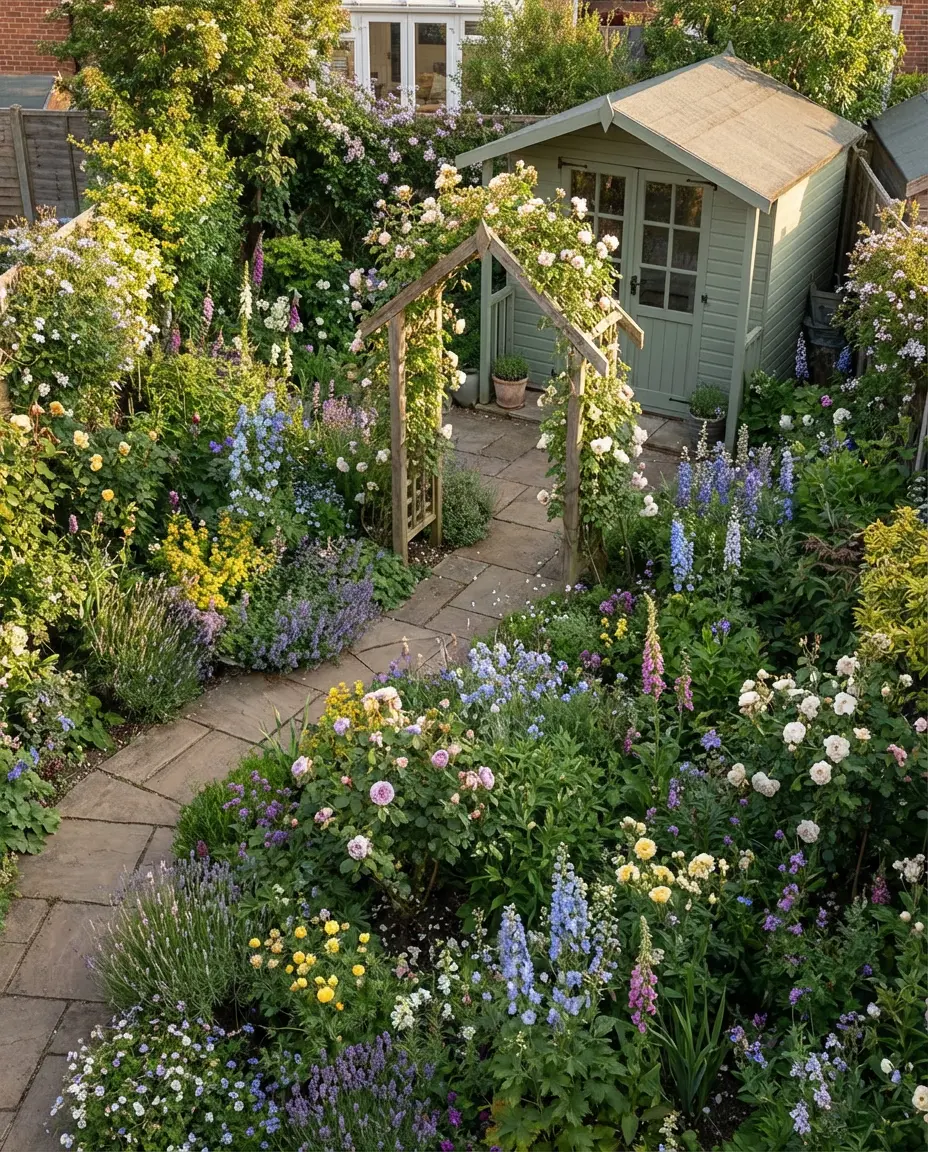
Budget for a full backyard cottage transformation varies widely, but a DIY approach with bare-root plants, reclaimed stone, and a phased planting plan can be achieved over 2–3 seasons for $2,000–$5,000 — comparable to a new patio installation, but with a living, growing result that improves every year. Hire a garden designer for the initial layout plan if the budget allows; that single investment typically pays for itself in plants not wasted on poor placement decisions.
Conclusion
Whether you’re starting with a single flower-filled pot on a rental patio or planning a complete backyard overhaul, the English cottage garden offers something for every space, budget, and lifestyle in 2026 — and its timeless appeal shows no signs of fading from those Pinterest boards anytime soon. We’d love to hear which of these ideas sparked something for you—drop your thoughts, questions, or photos of your own cottage garden in the comments below, and let’s keep the conversation growing.