Farmhouse decor continues to evolve, and in 2026, the style is shedding its overly rustic reputation in favor of something fresher and more layered. American homeowners scrolling through Pinterest are discovering that modern interpretations can coexist beautifully with vintage charm, while coastal influences and boho textures are breathing new life into the farmhouse aesthetic. Whether you’re drawn to French country elegance or simple minimalism, this year’s farmhouse trends offer something for every type of home. In this article, you’ll find curated ideas that blend timeless appeal with contemporary sensibility, each one designed to inspire your next decorating project.
1. Linen-Draped Dining Chairs with Reclaimed Wood Tables
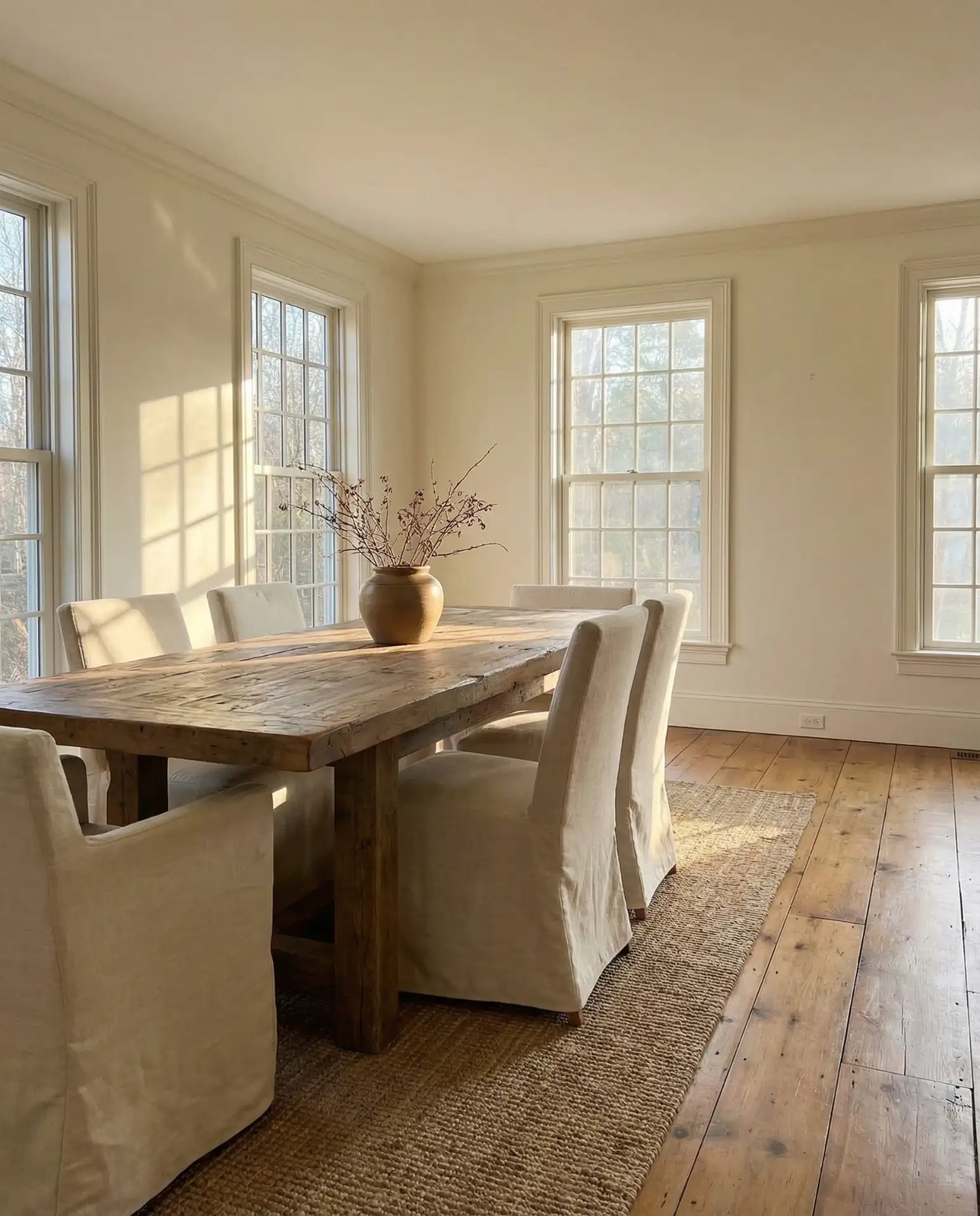
The pairing of rustic reclaimed wood tables with soft, slipcover-style linen chairs creates a dining space that feels both grounded and elegant. This combination works especially well in open-concept homes where the dining area needs to feel cohesive with modern kitchens and living spaces. The natural grain of salvaged wood introduces warmth and texture, while the neutral linen keeps the look from feeling too heavy. It’s a balance that appeals to those who want vintage character without the clutter, and it’s particularly effective in homes with abundant natural light. 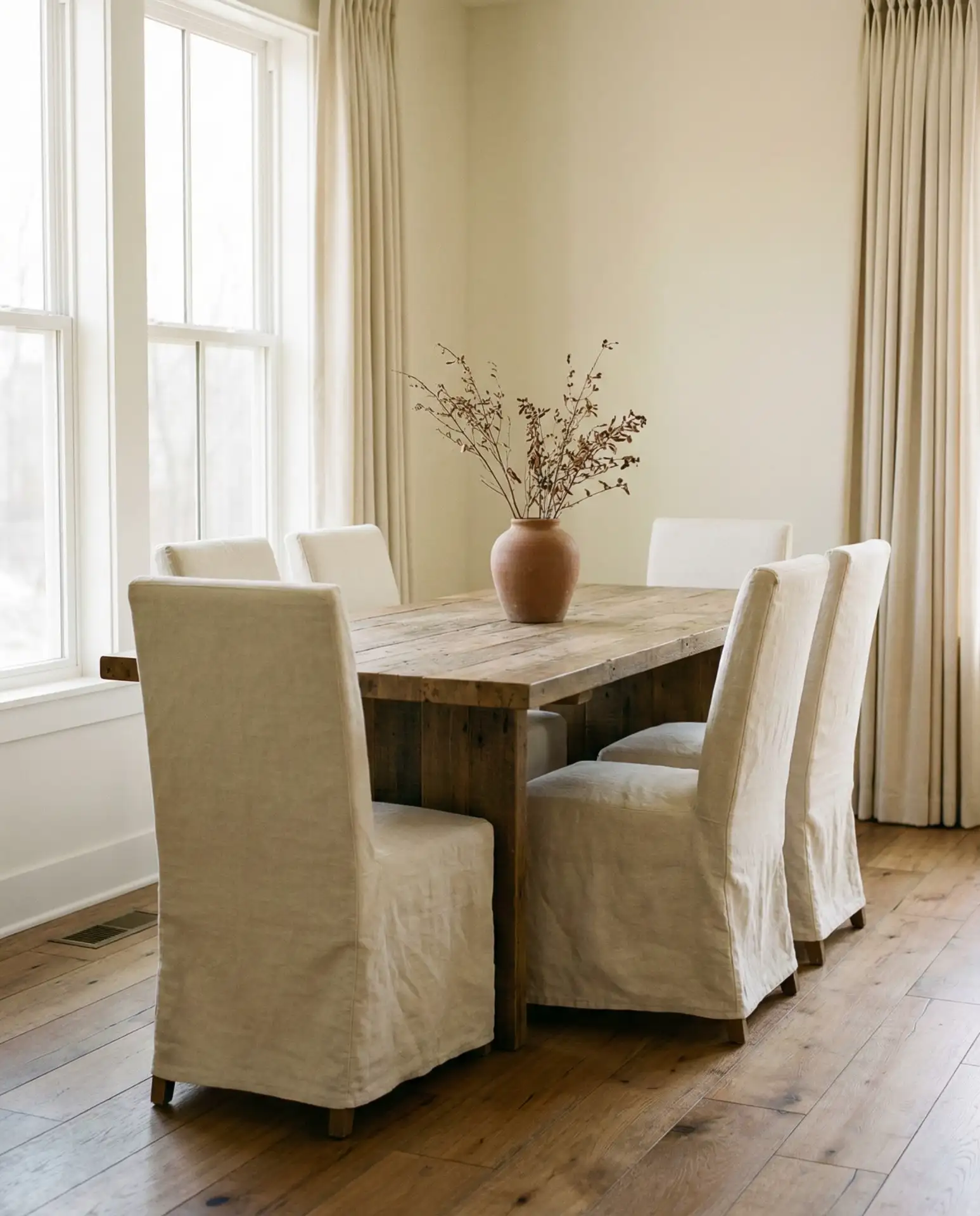
This setup works best in suburban homes with distinct dining rooms or large eat-in kitchens where family gatherings are frequent. One common mistake is choosing linen that’s too bright white—opt for off-white or oatmeal tones instead, as they hide everyday wear better and maintain that lived-in, cottage-style charm. Another pitfall is pairing overly ornate chairs with a chunky table; the silhouette should stay streamlined to preserve the balance between casual and refined.
2. Whitewashed Brick Accent Walls in Living Rooms
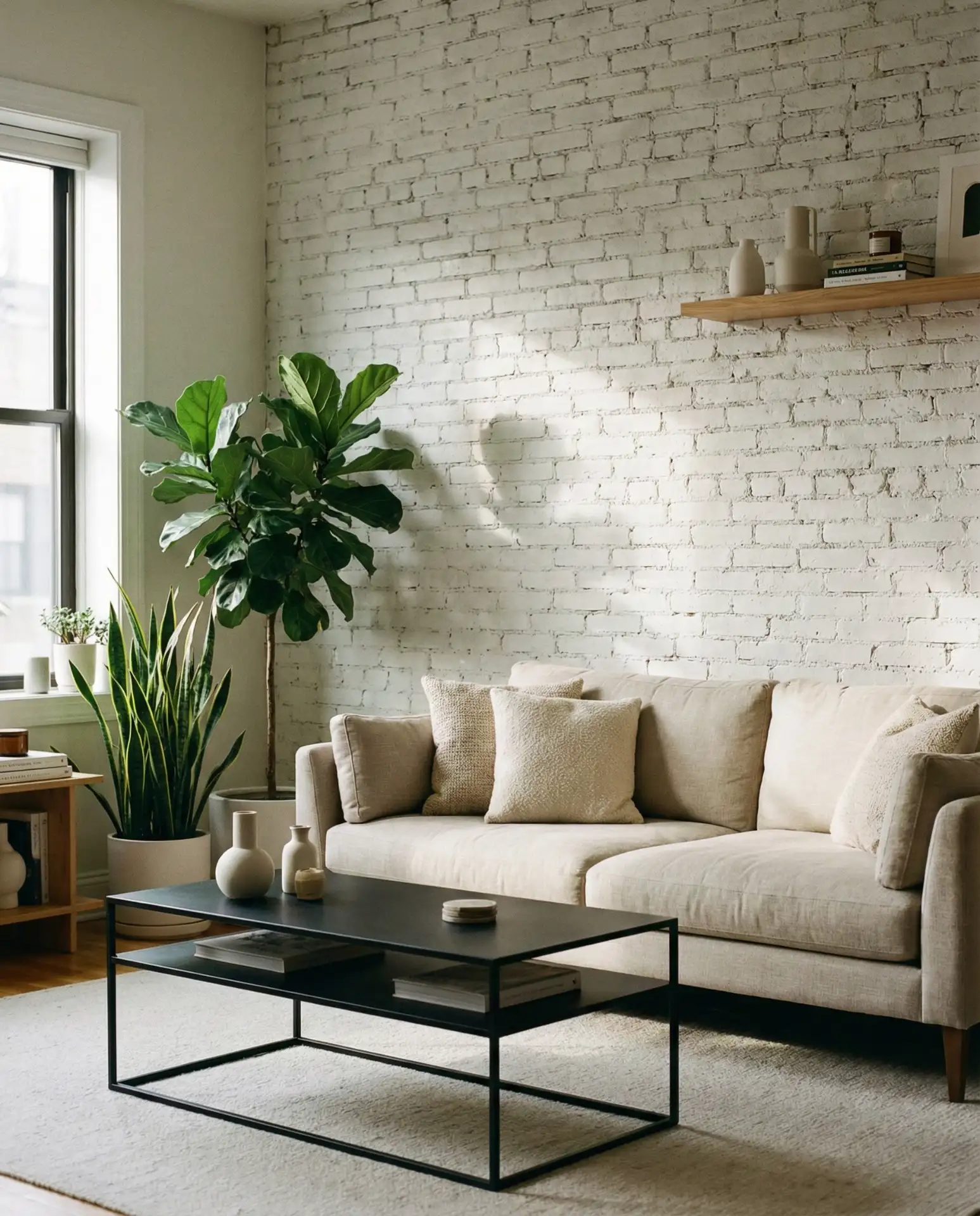
Exposed brick gets a lighter, airier treatment with whitewashing techniques that let the texture show through while softening the overall effect. This approach is ideal for homeowners who want to honor the antique bones of older homes without making spaces feel dark or closed-in. The whitewashed finish works beautifully in living rooms anchored by contemporary furniture, creating a visual tension that feels intentional rather than accidental. It’s a popular choice in converted lofts and historic homes across the Northeast and Midwest, where original brick is often a starting point rather than an added feature. 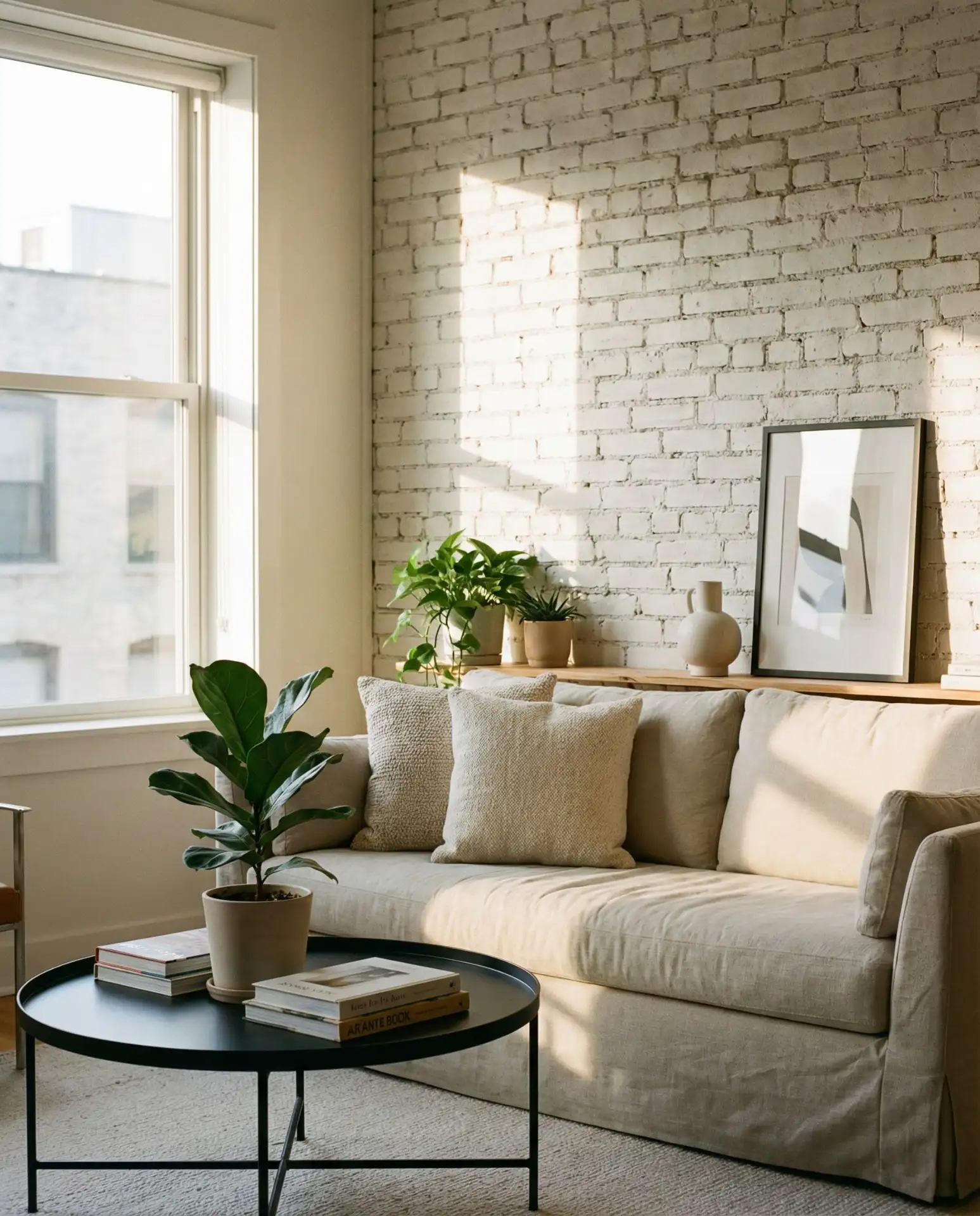
A designer I spoke with recently mentioned that many clients initially worry whitewashed brick will look too shabby, but when executed properly, it becomes the most sophisticated element in the room. The key is using a diluted paint mixture rather than solid coverage, allowing the brick’s natural variation to remain visible while still achieving that lightened effect.
3. Open Shelving with Ironstone and Wooden Cutting Boards
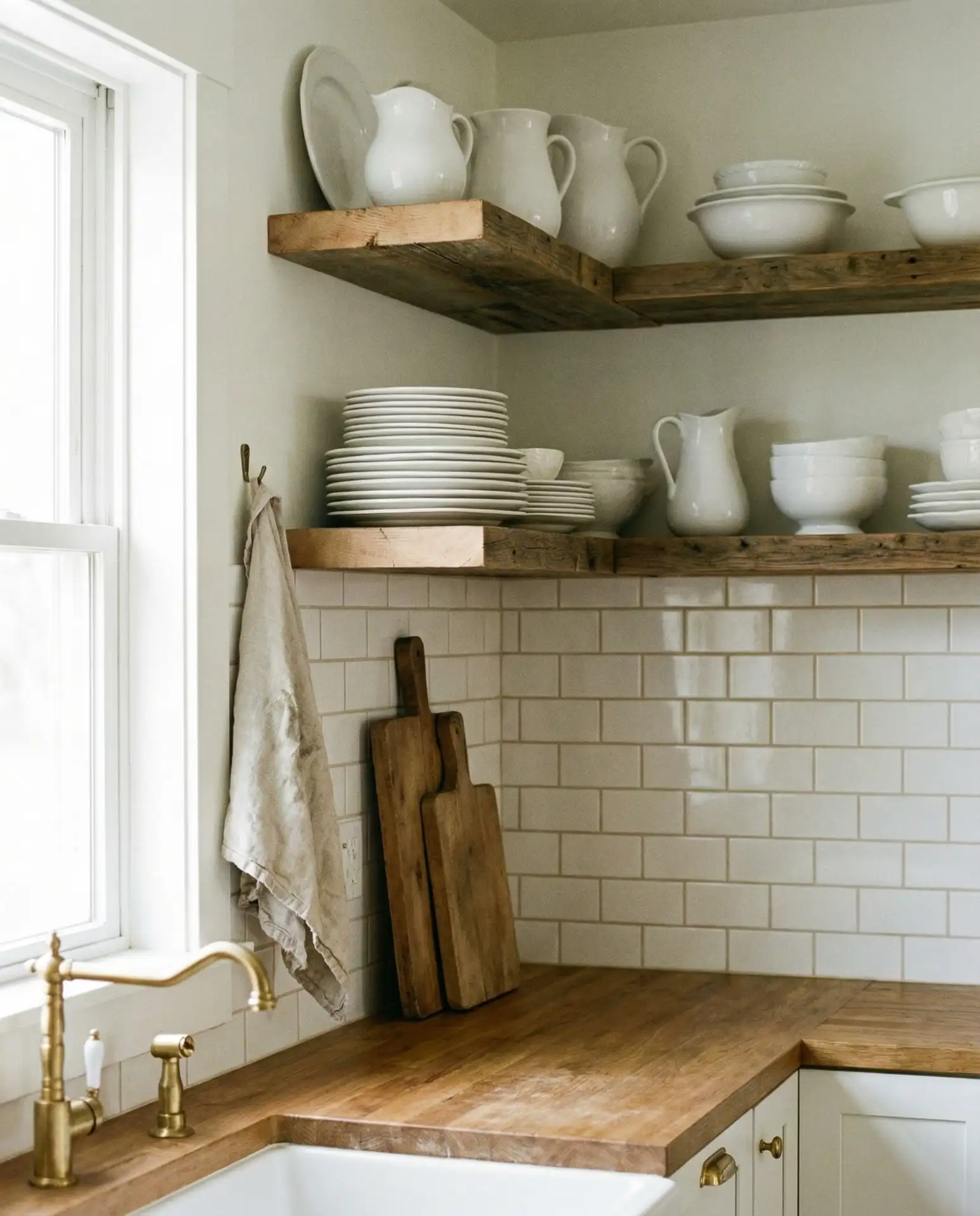
Open kitchen shelving styled with curated collections of white ironstone and aged wooden boards offers a simple yet striking alternative to traditional upper cabinets. This look thrives on repetition and restraint—too many colors or patterns will disrupt the calm, French countryside vibe that makes the style so appealing. The neutral palette keeps the kitchen feeling spacious, while the organic textures of wood and ceramic prevent it from reading as cold or clinical. It’s a particularly smart move in smaller kitchens where upper cabinets can make ceilings feel lower. 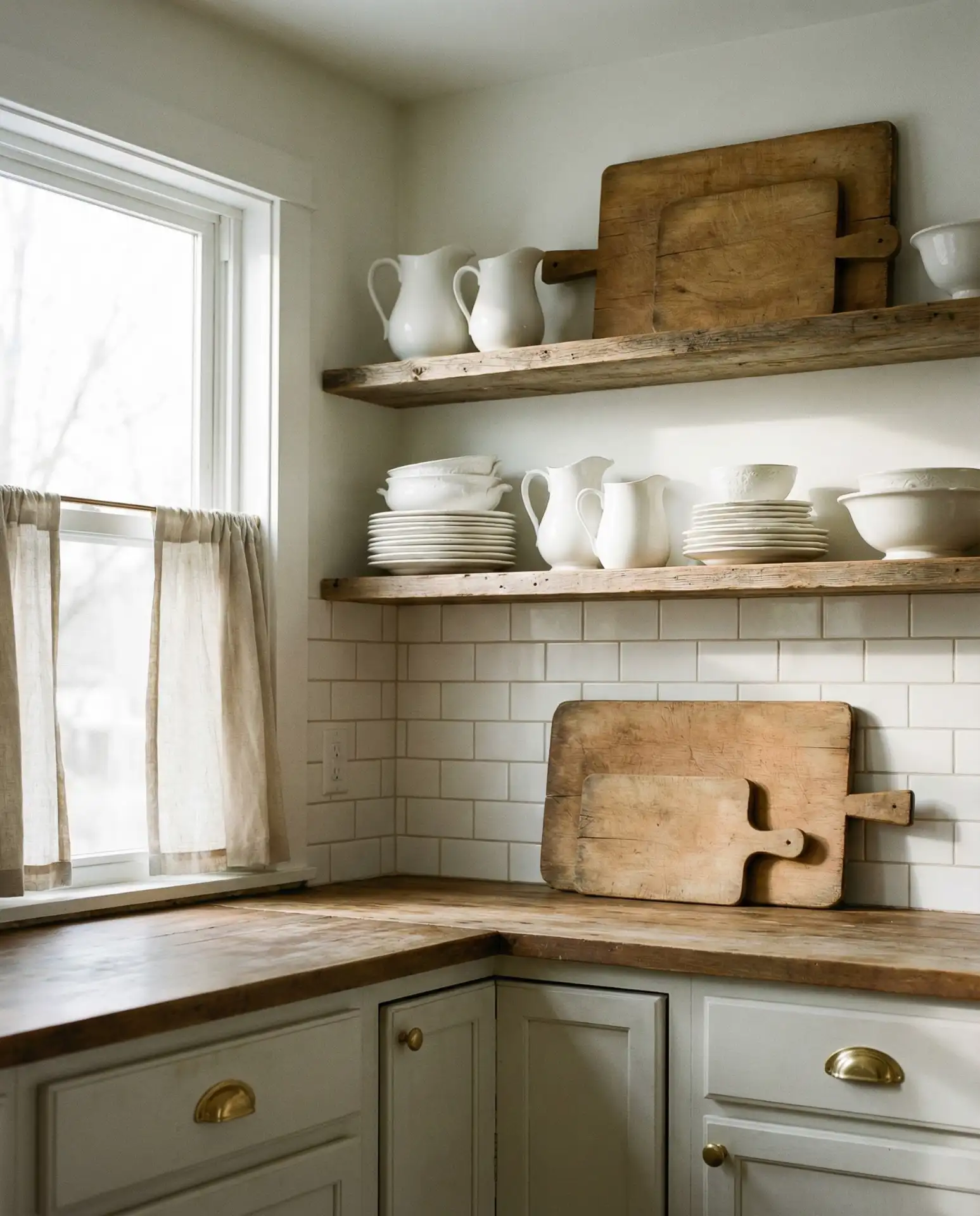
This works best in kitchens where you actually cook and use your dishes daily—the lived-in patina of wooden boards and the slight imperfections of hand-thrown pottery are what make the display feel authentic. In terms of budget, you can find quality ironstone at estate sales and antique markets for $10 to $30 per piece, making it an accessible way to build a collection over time without a significant upfront investment.
4. Shiplap Ceilings Painted in Soft Greige
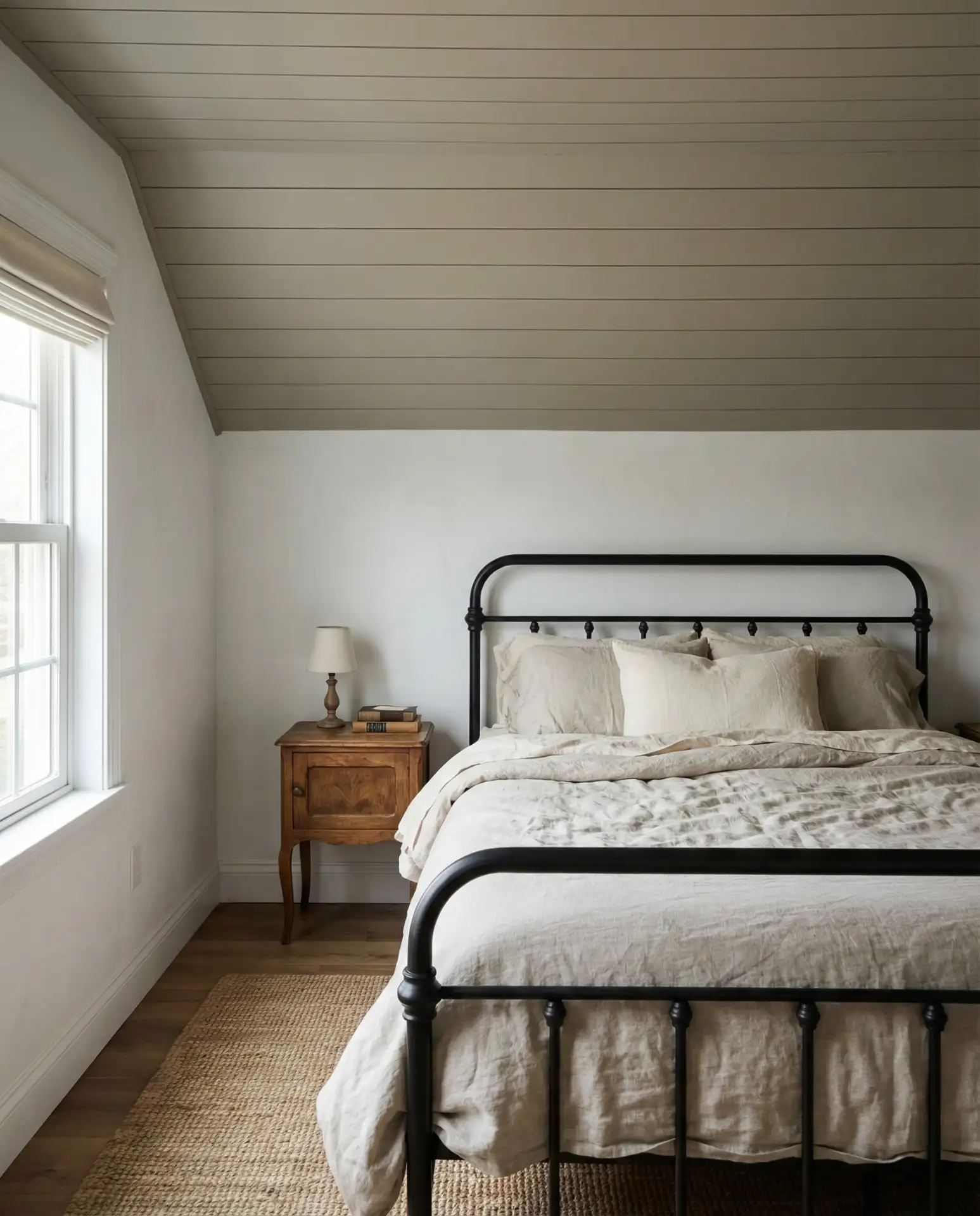
Moving shiplap from walls to ceilings creates an unexpected architectural moment, especially when painted in warm greige tones rather than stark white. This treatment adds dimension and interest to bedrooms, dens, or covered porches without overwhelming the space. The subtle color choice prevents the ceiling from feeling too primitive or cabin-like, instead lending a contemporary farmhouse elegance that pairs well with both modern furnishings and more traditional pieces. The horizontal lines also have a way of making rooms feel wider and more expansive. 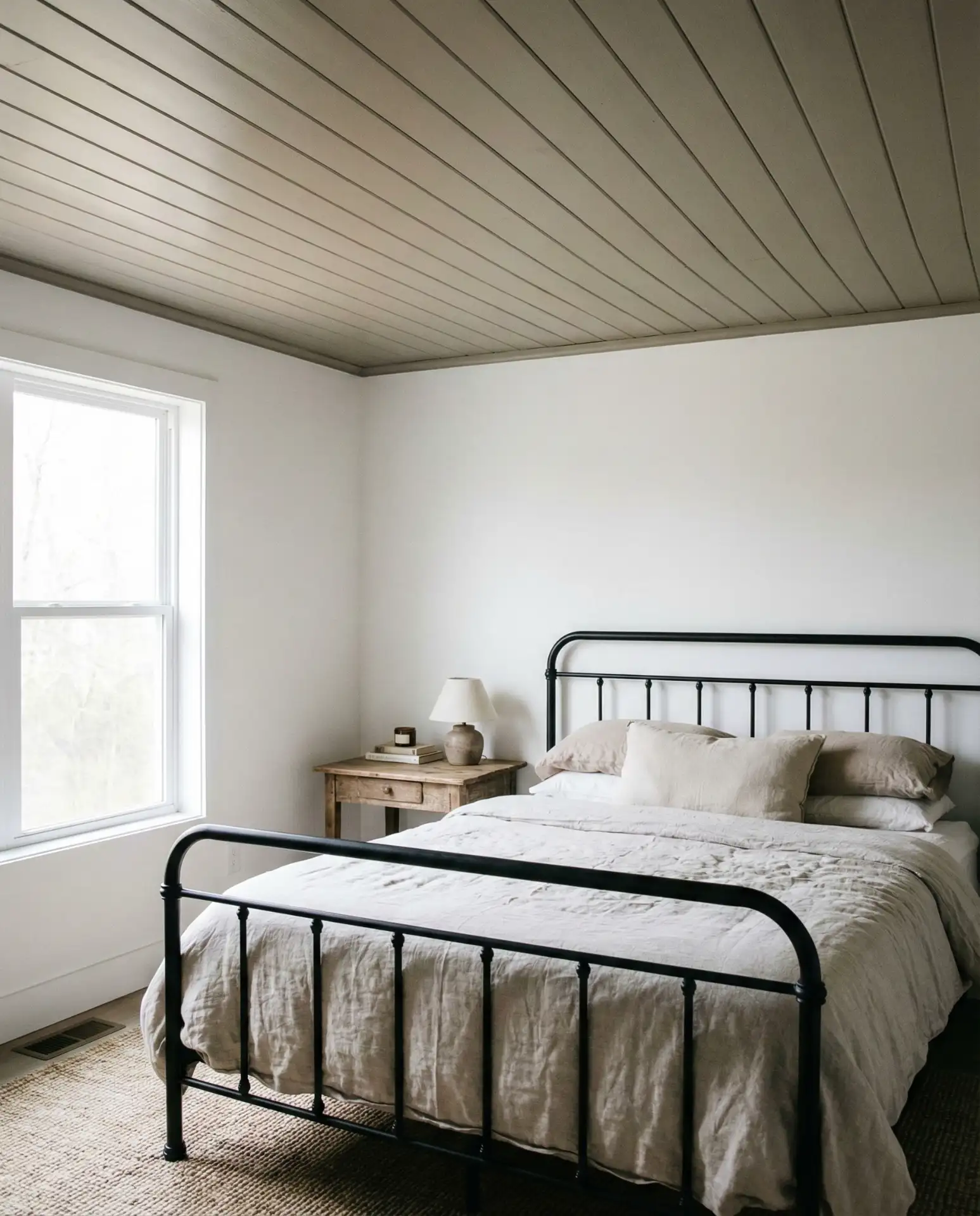
Across the South and Southwest, where vaulted ceilings are common in newer construction, homeowners are using this technique to add character to otherwise generic spaces. The practical insight here is that greige tones are far more forgiving than pure white when it comes to showing dust and imperfections, making maintenance significantly easier over time.
5. Vintage Enamelware Displayed as Kitchen Art
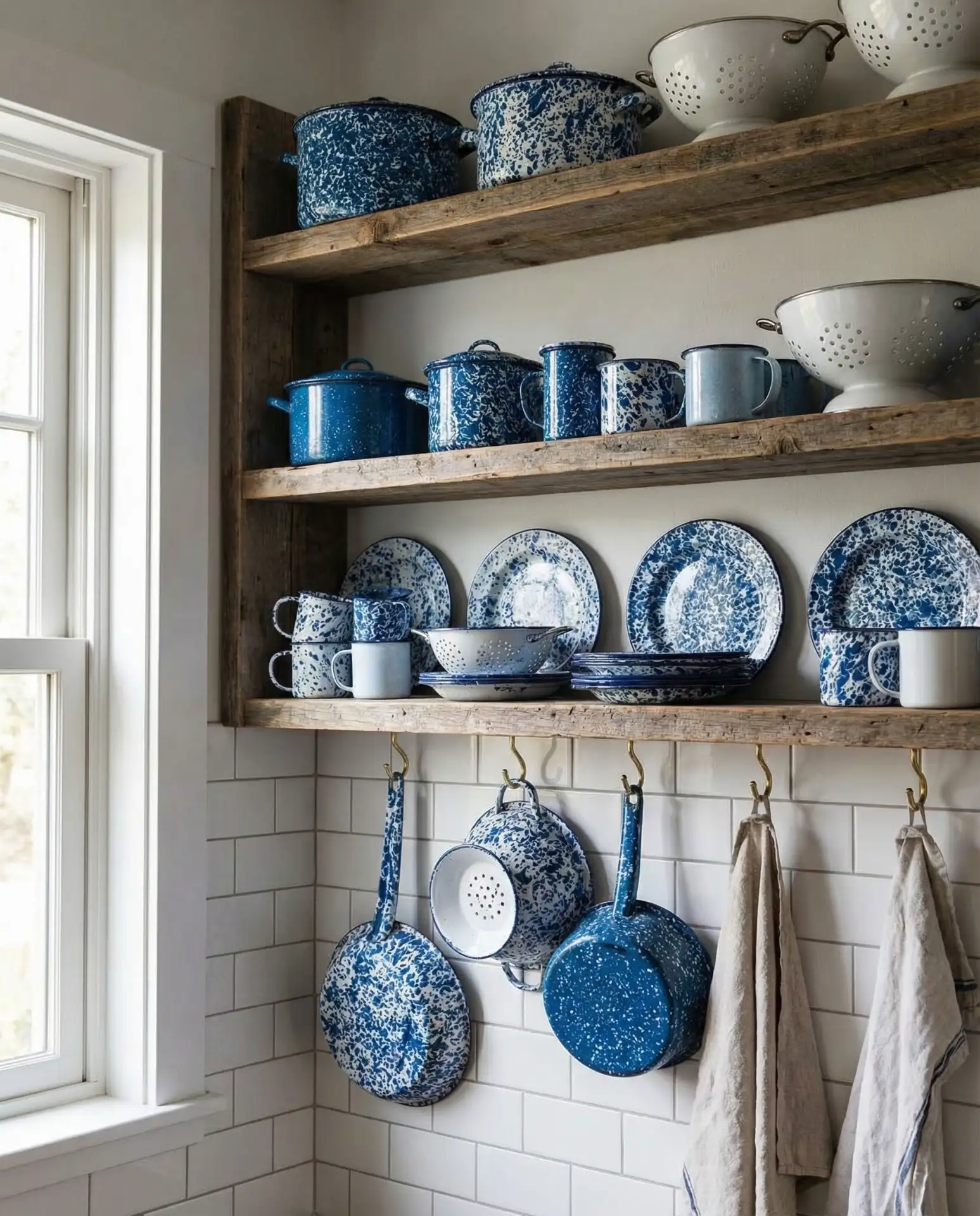
Collections of chipped vintage enamelware—think coffee pots, colanders, and canisters—are being mounted on walls or arranged on ledges as functional art. The worn patina and colorful speckled finishes bring personality to kitchens without requiring new purchases, and the utilitarian shapes have an honest, rustic appeal that feels very at home in farmhouse settings. This approach works particularly well in kitchens with white or neutral backgrounds, where the pops of blue, red, and cream really stand out. It’s also a sustainable decorating choice, giving new life to pieces that might otherwise be overlooked. 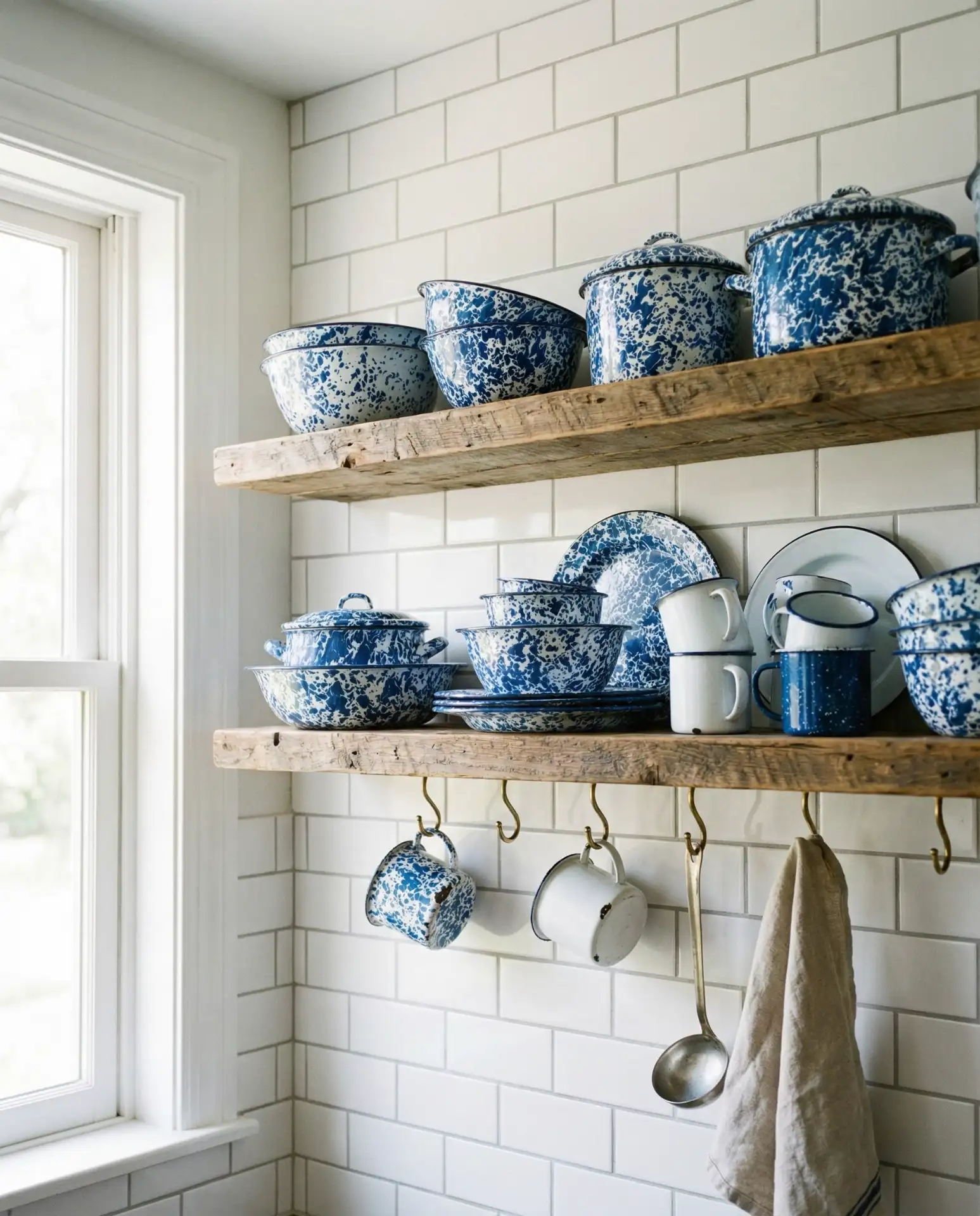
Many homeowners make the mistake of over-curating these displays, but the charm lies in the mix—different colors, sizes, and levels of wear all contribute to the collected-over-time aesthetic. Real collector behavior often involves finding pieces at flea markets and thrift stores over months or years, which naturally creates the kind of varied, authentic grouping that can’t be replicated with a single shopping trip.
6. Black Window Frames Against White Interiors
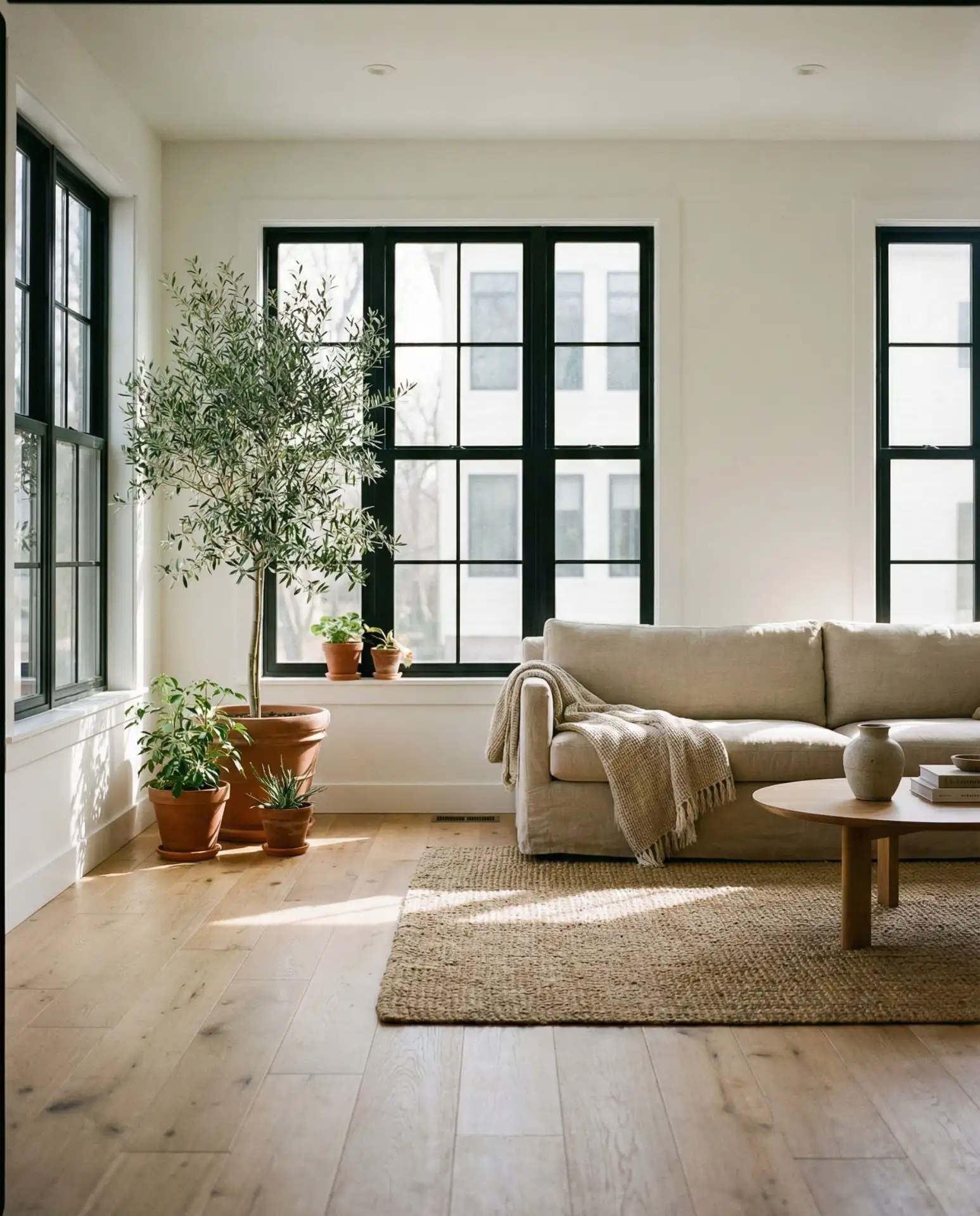
The contrast of black-framed windows against white walls delivers a crisp, graphic quality that feels both modern and rooted in industrial design history. This look has become a signature of updated farmhouse interiors, where the dark frames act as architectural jewelry, drawing the eye outward to gardens, fields, or suburban greenery. The effect is especially striking in rooms with multiple windows or in homes with open floor plans where sightlines extend across several spaces. It’s a detail that elevates the entire aesthetic without requiring major structural changes. 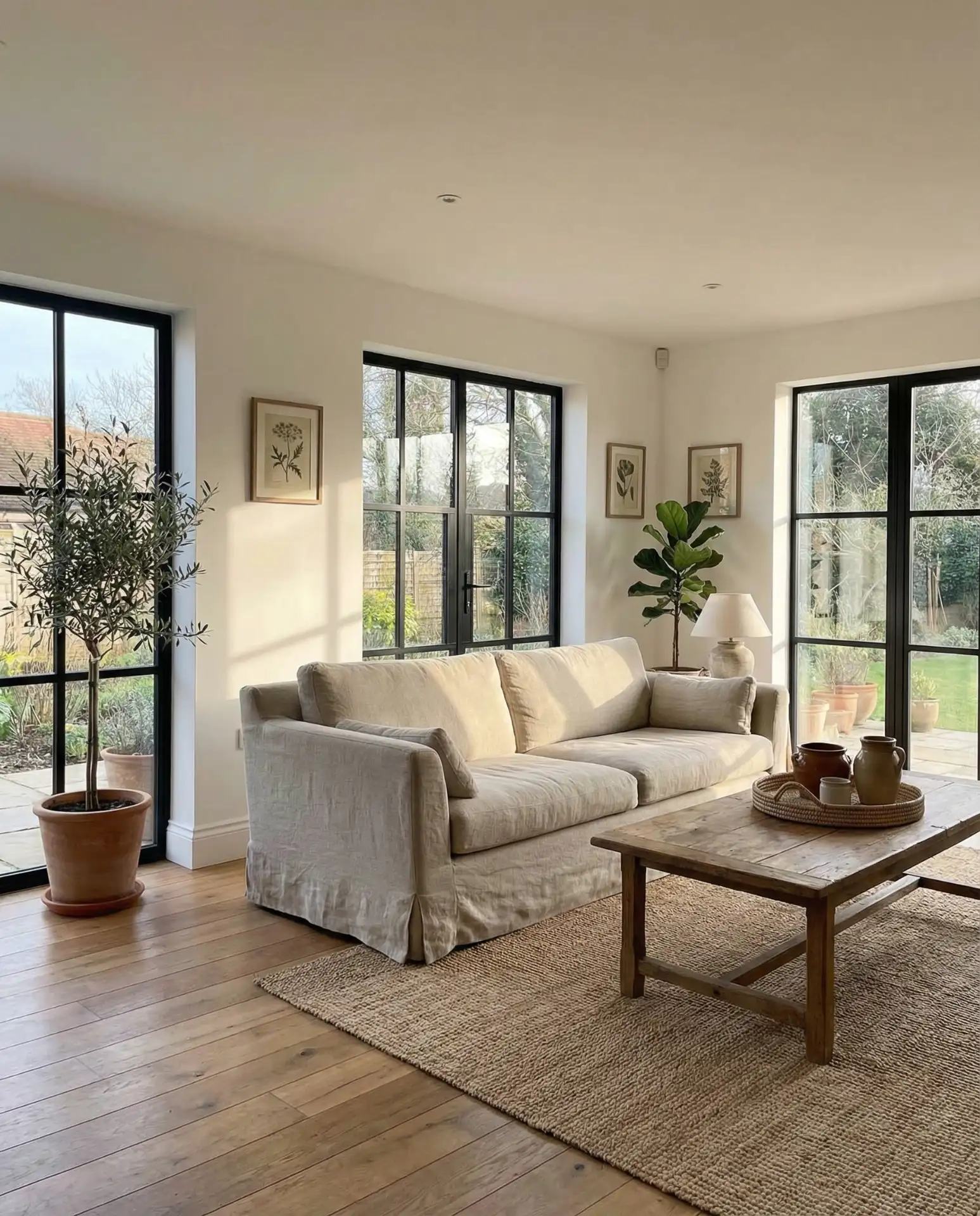
This design choice works best in homes with good natural light and views worth framing. In the Pacific Northwest and New England, where wooded lots and water views are common, the black frames act like picture frames for the landscape. Expert commentary suggests that this is one upgrade where professional installation pays off—poorly fitted black frames will show gaps and imperfections far more noticeably than white ones would.
7. Stone Fireplace Surrounds with Minimal Mantels

Fireplace surrounds clad in natural stone—limestone, fieldstone, or stacked slate—paired with sleek, understated mantels create a focal point that’s both rustic and refined. This combination allows the texture and irregularity of the stone to take center stage while keeping the overall silhouette clean and contemporary. The mantel itself often becomes a simple floating shelf in dark wood or painted steel, just substantial enough to display a few carefully chosen objects. It’s a departure from the heavy, ornate mantels of traditional farmhouse design, and it feels much more aligned with how people actually live today. 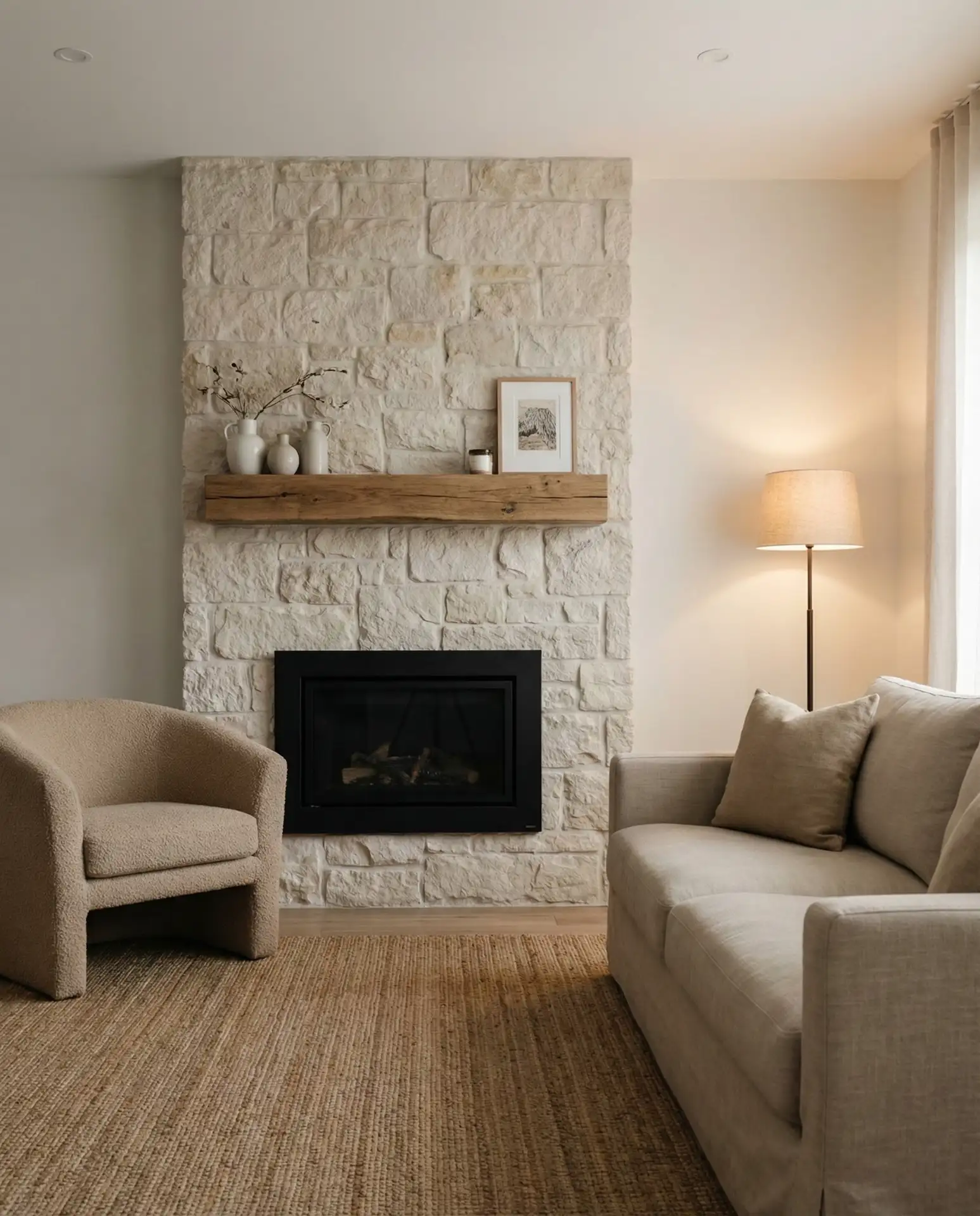
One homeowner I know in Colorado replaced her painted brick fireplace with stacked stone and a simple walnut mantel, and the transformation turned the entire living room from dated to timeless. The stone brings in the outdoor landscape, which is particularly effective in mountain or rural settings where the natural environment is a key part of the home’s identity.
8. Woven Basket Storage in Mudrooms and Entryways
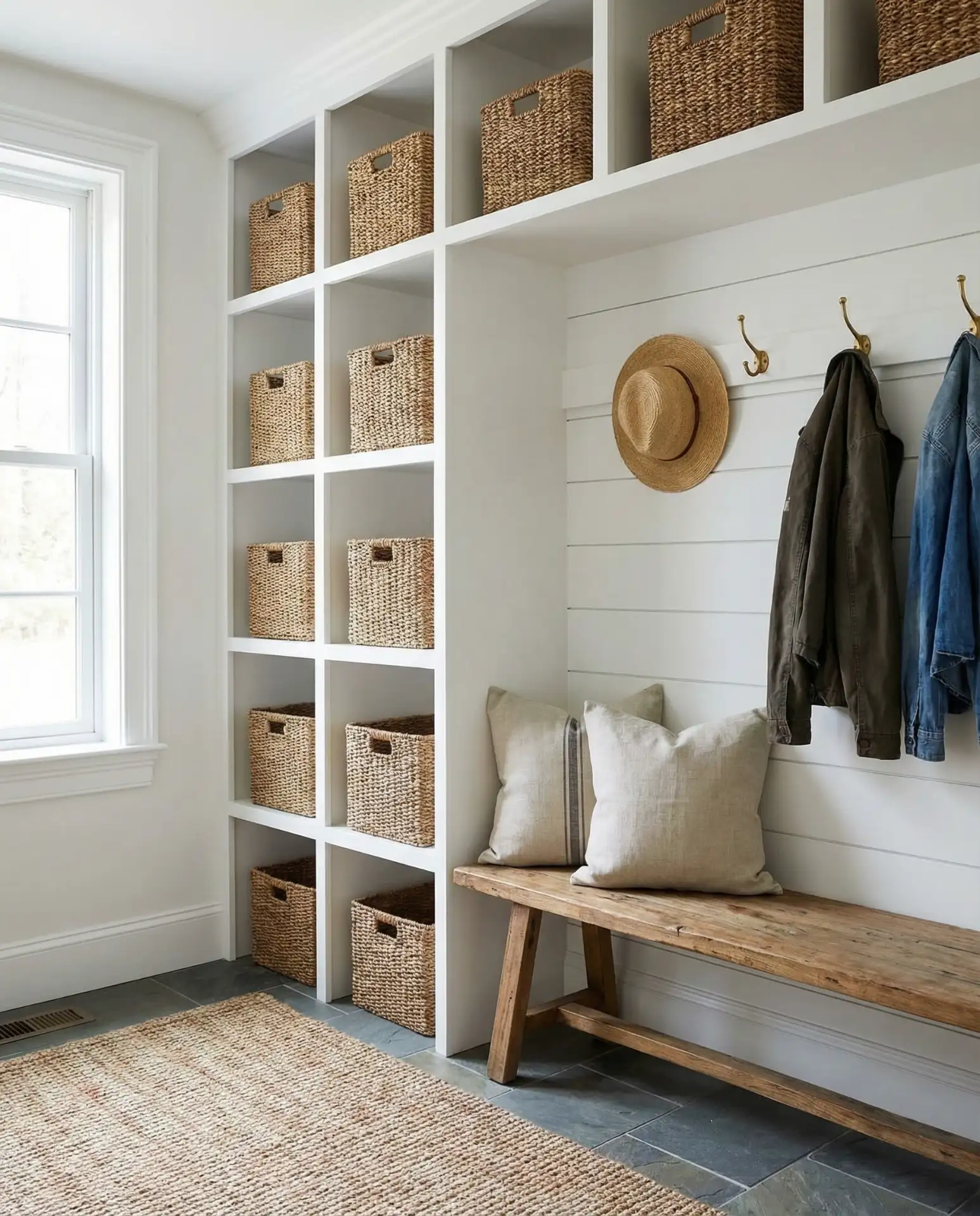
Woven baskets in varying sizes provide both storage and texture in mudrooms, entryways, and laundry rooms, offering a boho softness that balances out harder architectural elements. These baskets can hold everything from shoes and scarves to pet supplies and sports gear, making them as functional as they are decorative. The natural fiber materials—seagrass, jute, rattan—introduce an organic warmth that feels very much in line with coastal and cottage farmhouse aesthetics. They’re also easy to swap out seasonally or as your needs change, which adds flexibility to the design. 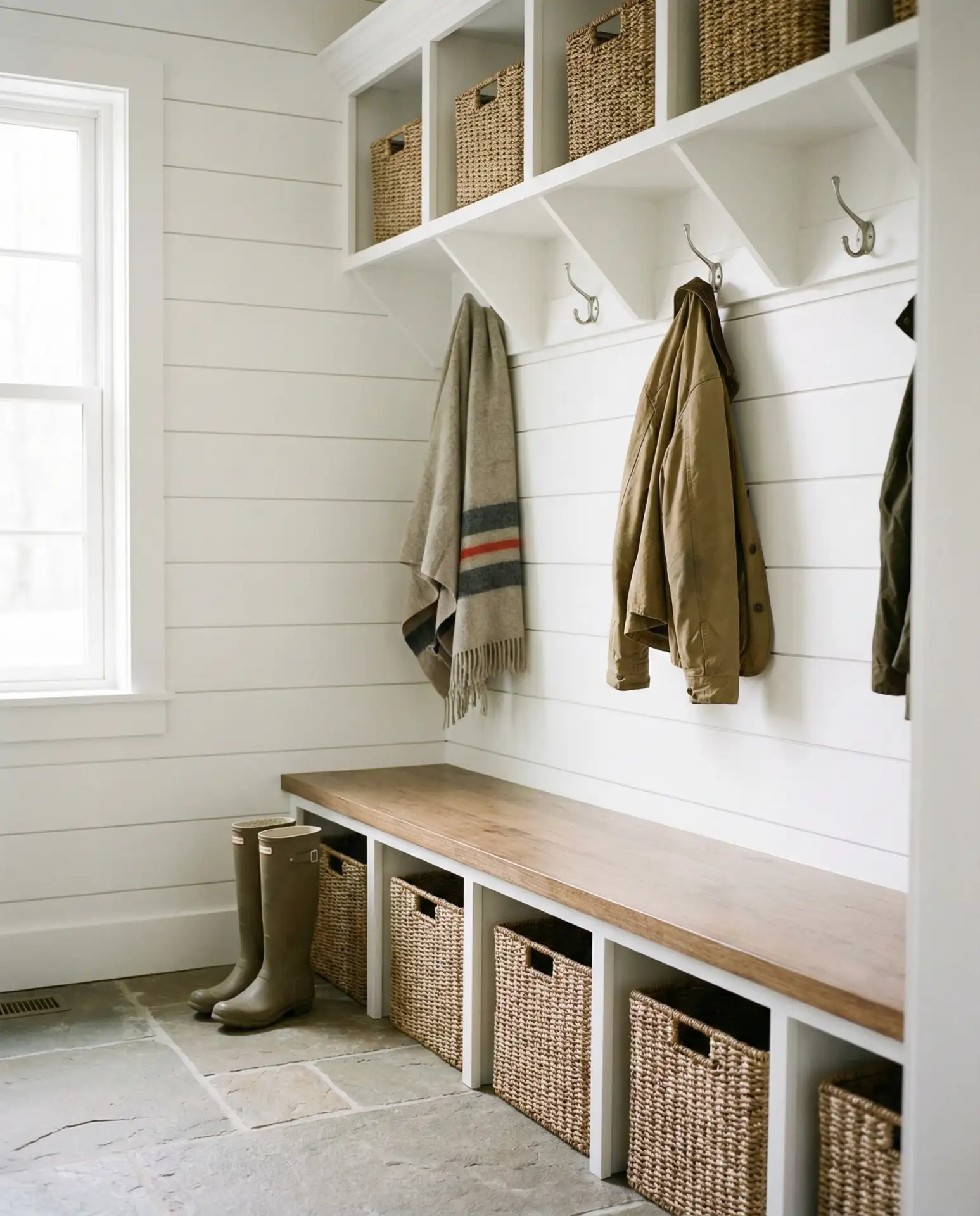
This works best in high-traffic entryways where shoes, bags, and outdoor gear accumulate quickly. The budget angle here is appealing—quality woven baskets can be found at home goods stores for $15 to $40 each, making them an affordable way to corral clutter while adding visual interest. Just make sure to measure your cubbies or shelves before purchasing, as baskets that don’t quite fit will disrupt the clean, organized look you’re aiming for.
9. Plaster-Style Wall Finishes in Neutral Bedrooms
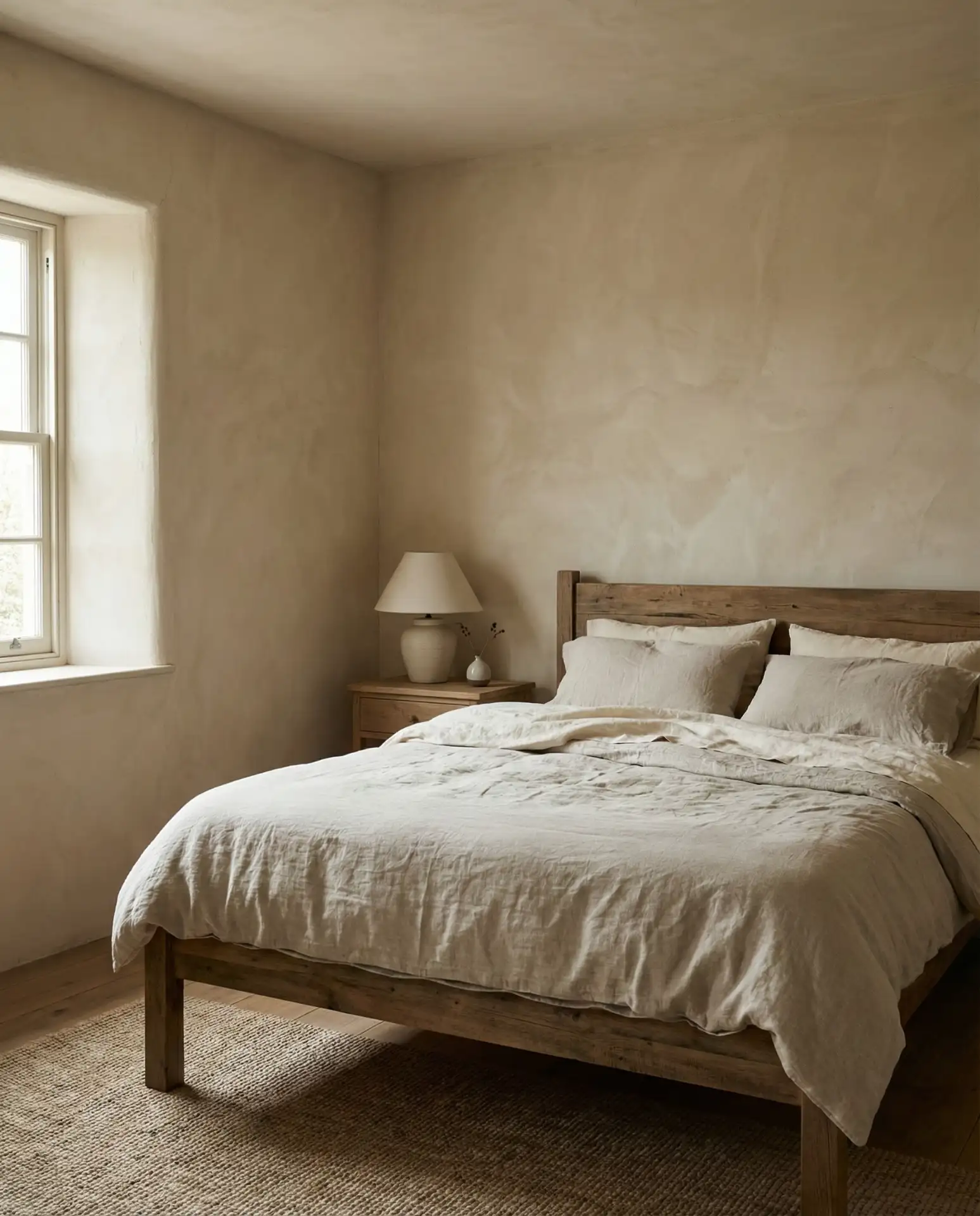
Textured plaster walls in soft, neutral tones bring a French country sensibility to bedrooms, adding depth and visual interest without pattern or color. The slightly imperfect, hand-troweled finish has an artisanal quality that feels both vintage and timeless, and it’s particularly effective in rooms with minimal furniture where the walls themselves become the main design element. This technique works well in primary bedrooms and guest rooms where a calm, restful atmosphere is the goal. The subtle variation in the plaster catches light beautifully throughout the day, creating a dynamic surface that flat paint simply can’t match. 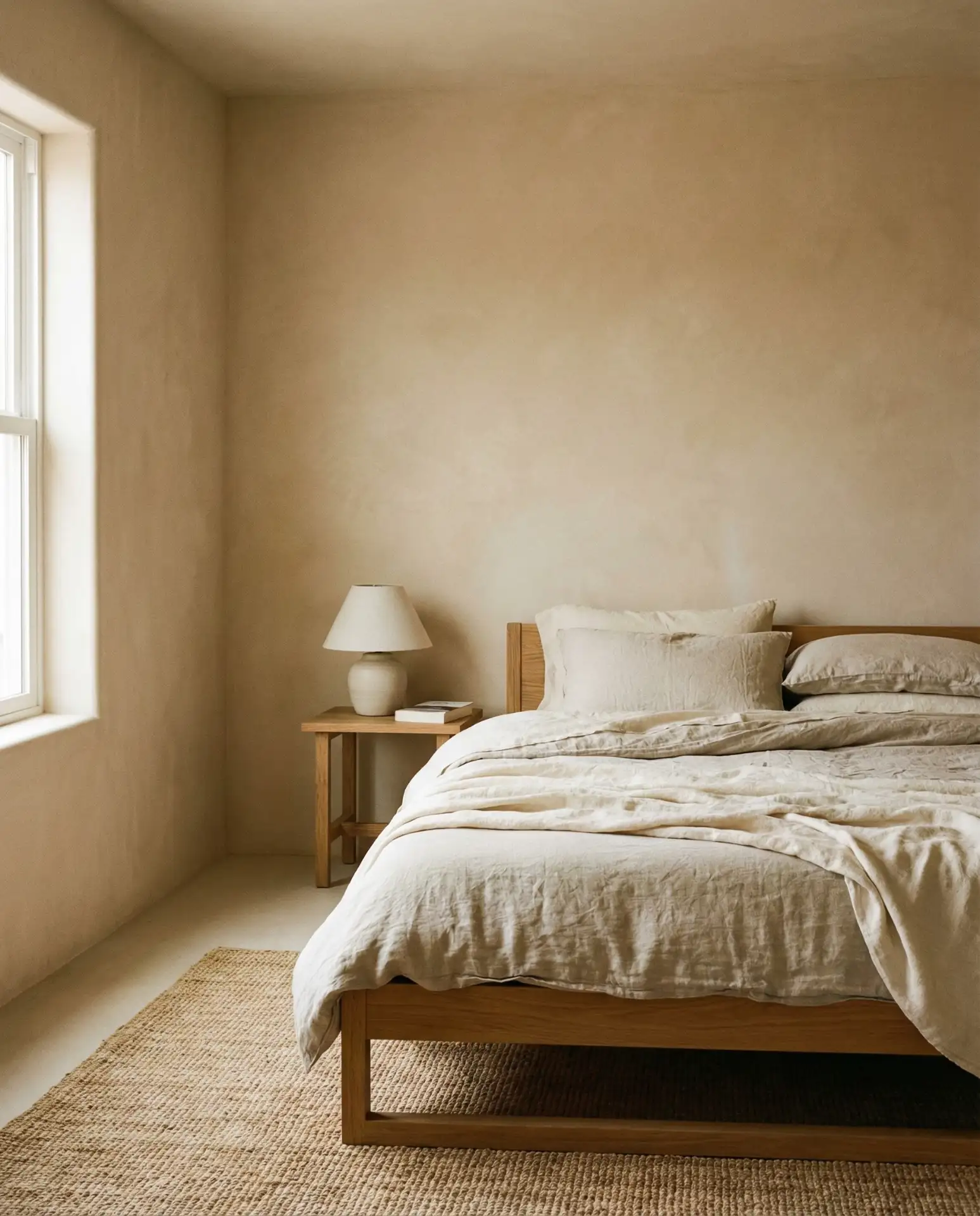
Across California and the Southwest, where Spanish and Mediterranean influences are common, this plaster finish feels especially at home and connects interiors to regional architectural traditions. A practical insight is that DIY versions using specialized plaster paint are available, but for the most authentic finish, hiring a skilled plasterer is worth the investment—the hand-applied texture is what gives the walls their character.
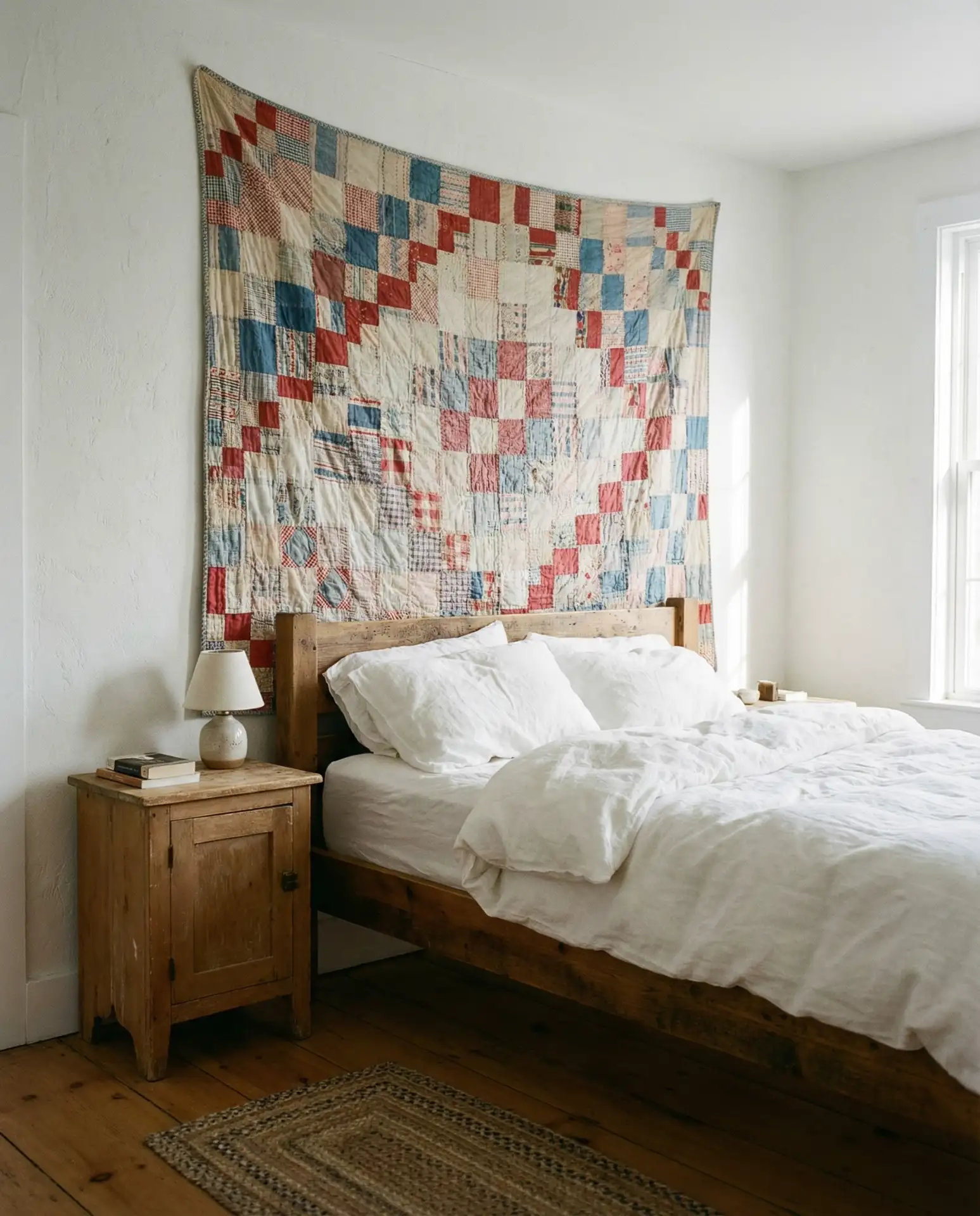
10. Vintage Quilts as Wall Hangings or Bed Toppers
Antique quilts are being repurposed as textile art on walls or layered at the foot of beds, bringing in pattern, history, and handmade warmth. These pieces often feature colorful patchwork or intricate stitching that tells a story, and they offer a way to introduce visual complexity without relying on mass-produced prints. The vintage aspect adds authenticity to farmhouse spaces, especially when paired with simple furniture and neutral backgrounds that let the quilt take center stage. It’s a design move that honors craft traditions while creating a truly personal, one-of-a-kind interior. 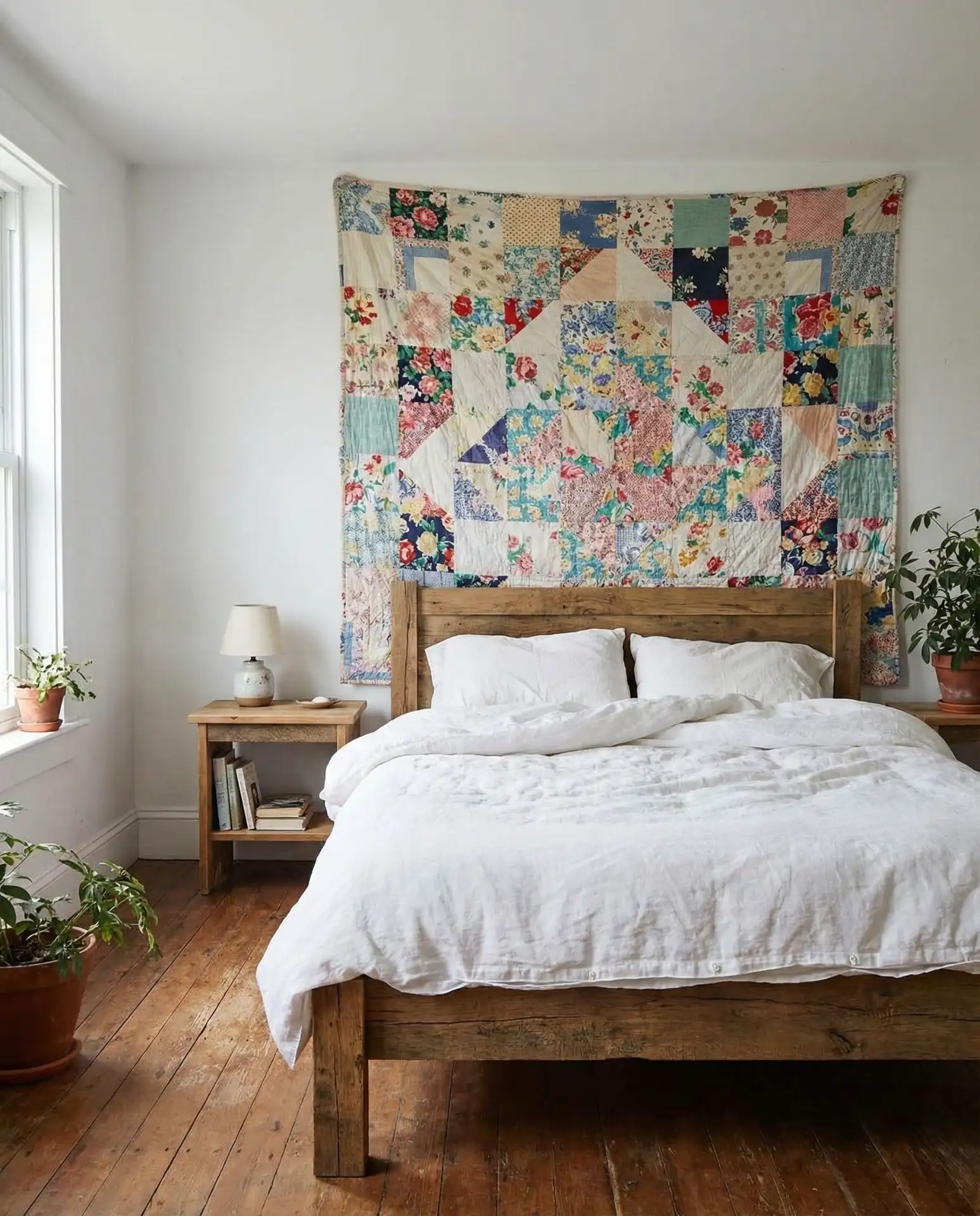
This approach works best in bedrooms or hallways with enough wall space to accommodate the quilt without crowding. One common mistake is hanging valuable or fragile quilts in direct sunlight, which will cause fading and fabric degradation over time. If you’re using a quilt on a bed, rotate it seasonally to preserve the textile and prevent excessive wear on any one area.
11. Galvanized Metal Accents in Kitchens and Bathrooms
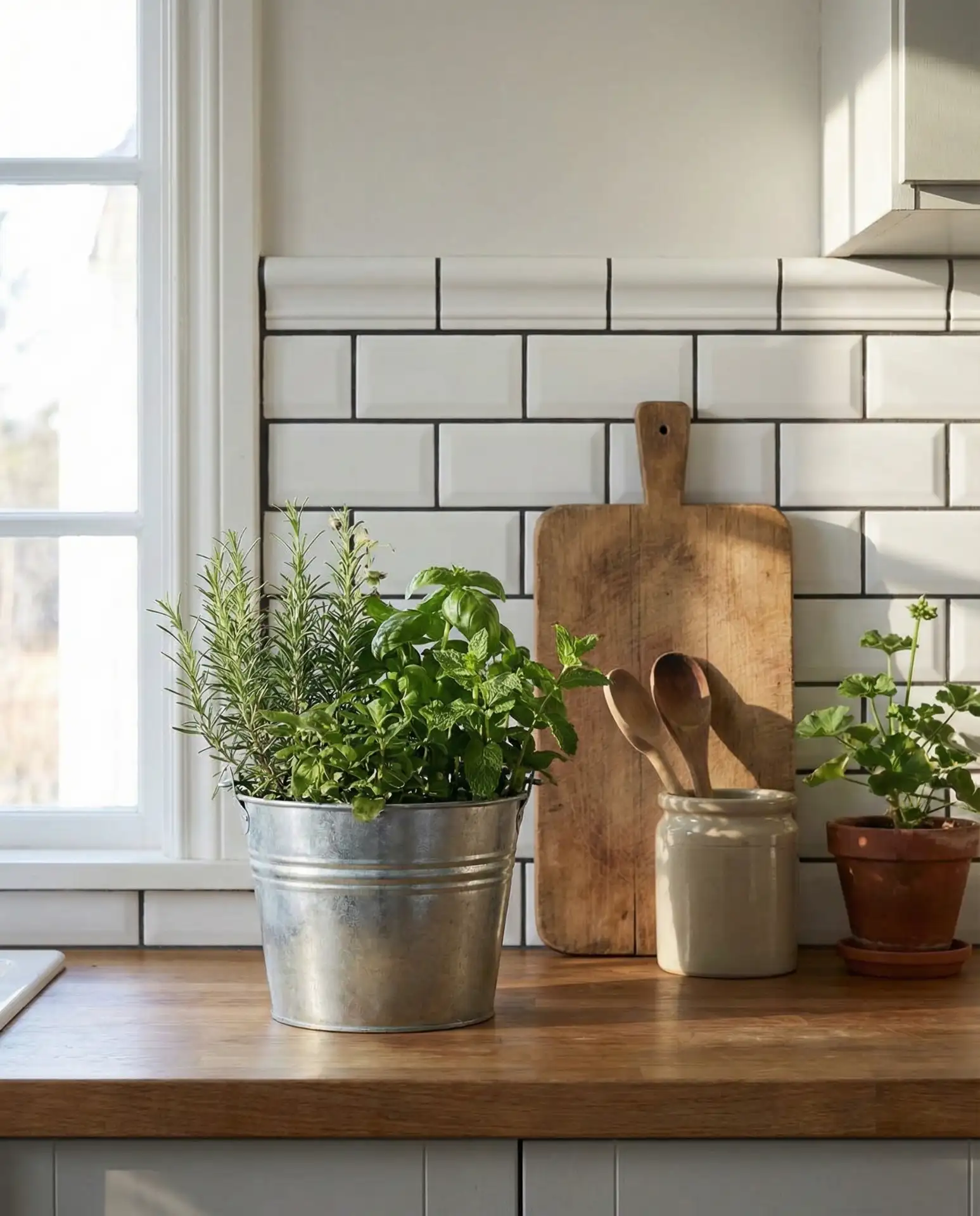
Galvanized metal buckets, planters, and trays introduce industrial texture into kitchens and bathrooms, offering a rustic counterpoint to softer materials like linen and wood. These pieces have a utilitarian history—originally designed for farm and garden use—which makes them feel authentic in country and farmhouse settings. The silvery patina develops over time, adding to the lived-in aesthetic that defines the style. They’re also incredibly versatile, functioning as utensil holders, flower vases, or storage containers depending on the space and need. 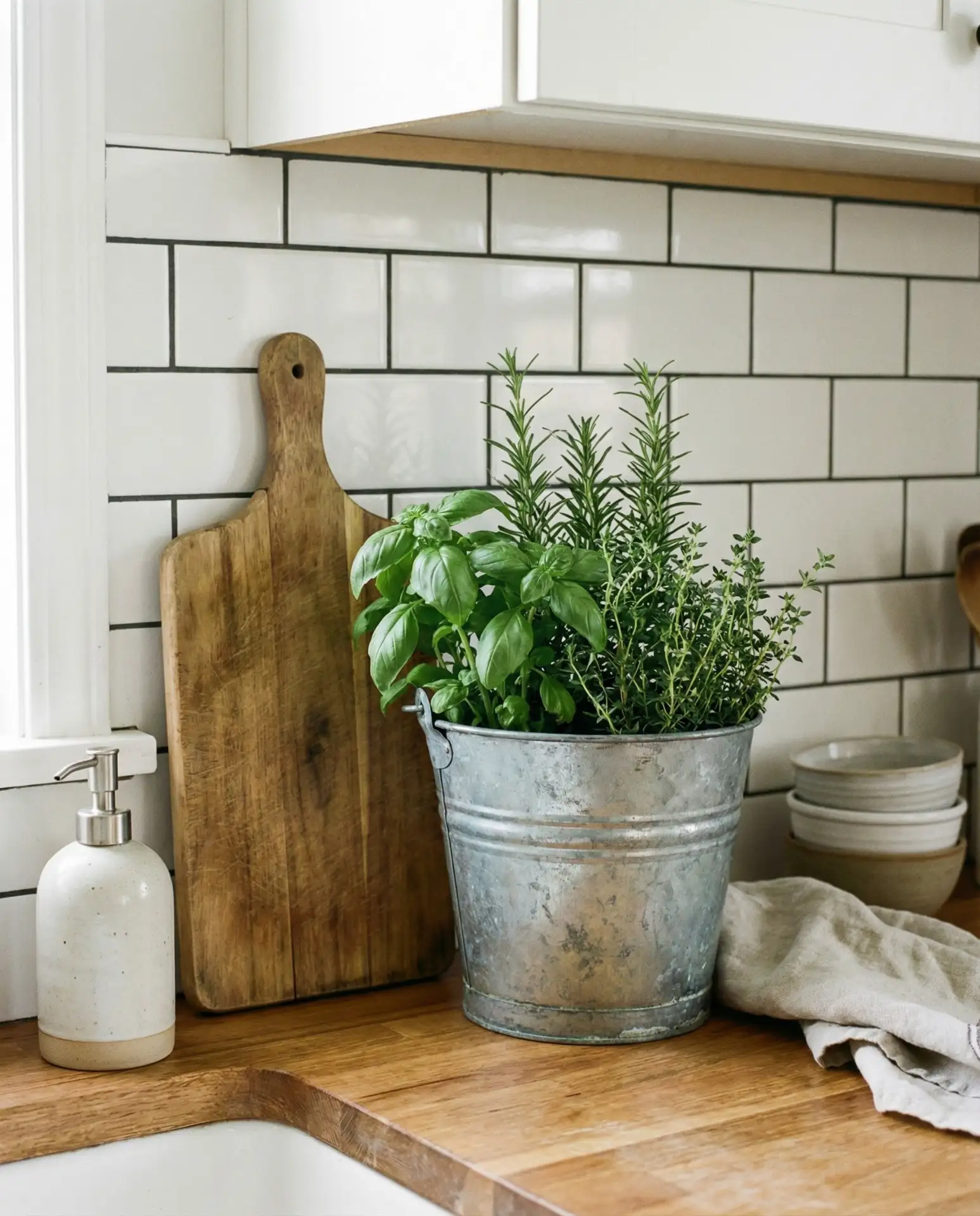
In the Midwest and rural areas where farming heritage runs deep, galvanized metal feels especially resonant and connects contemporary interiors to local history. From a budget perspective, these pieces are often available at hardware stores, farm supply shops, and flea markets for under $20, making them an accessible way to layer in authentic farmhouse character without a significant investment.
12. Exposed Ceiling Beams in Dark Stained Wood
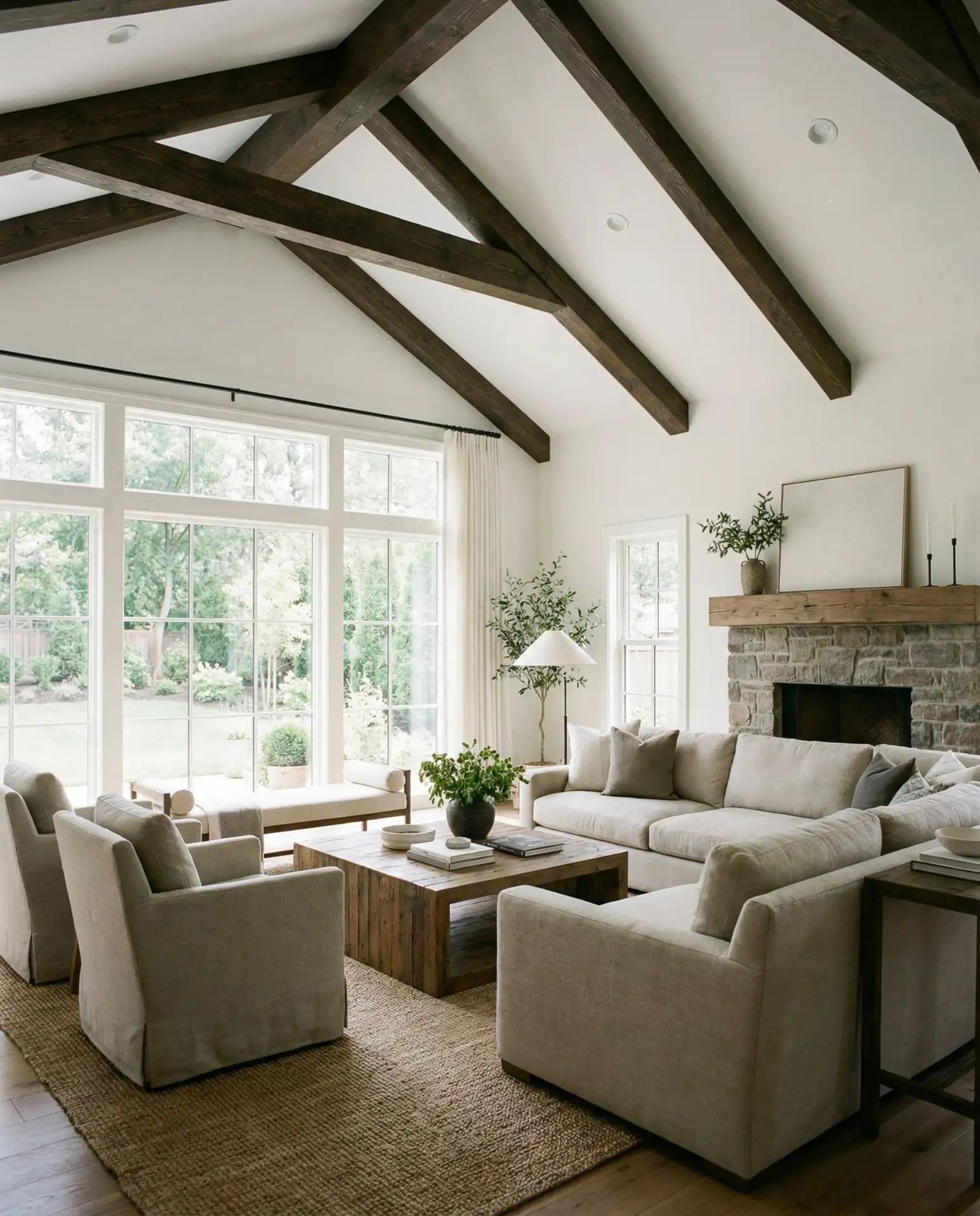
Dark-stained ceiling beams create dramatic contrast against white or light-colored ceilings, adding architectural weight and a sense of history to living rooms, kitchens, and bedrooms. This look draws from both Western ranch design and Italian farmhouse traditions, where heavy timber construction was both functional and beautiful. The beams work especially well in homes with vaulted or high ceilings, where they help bring the eye down and create a more intimate, grounded feeling. They also serve as a bridge between modern furnishings and more traditional architectural elements. 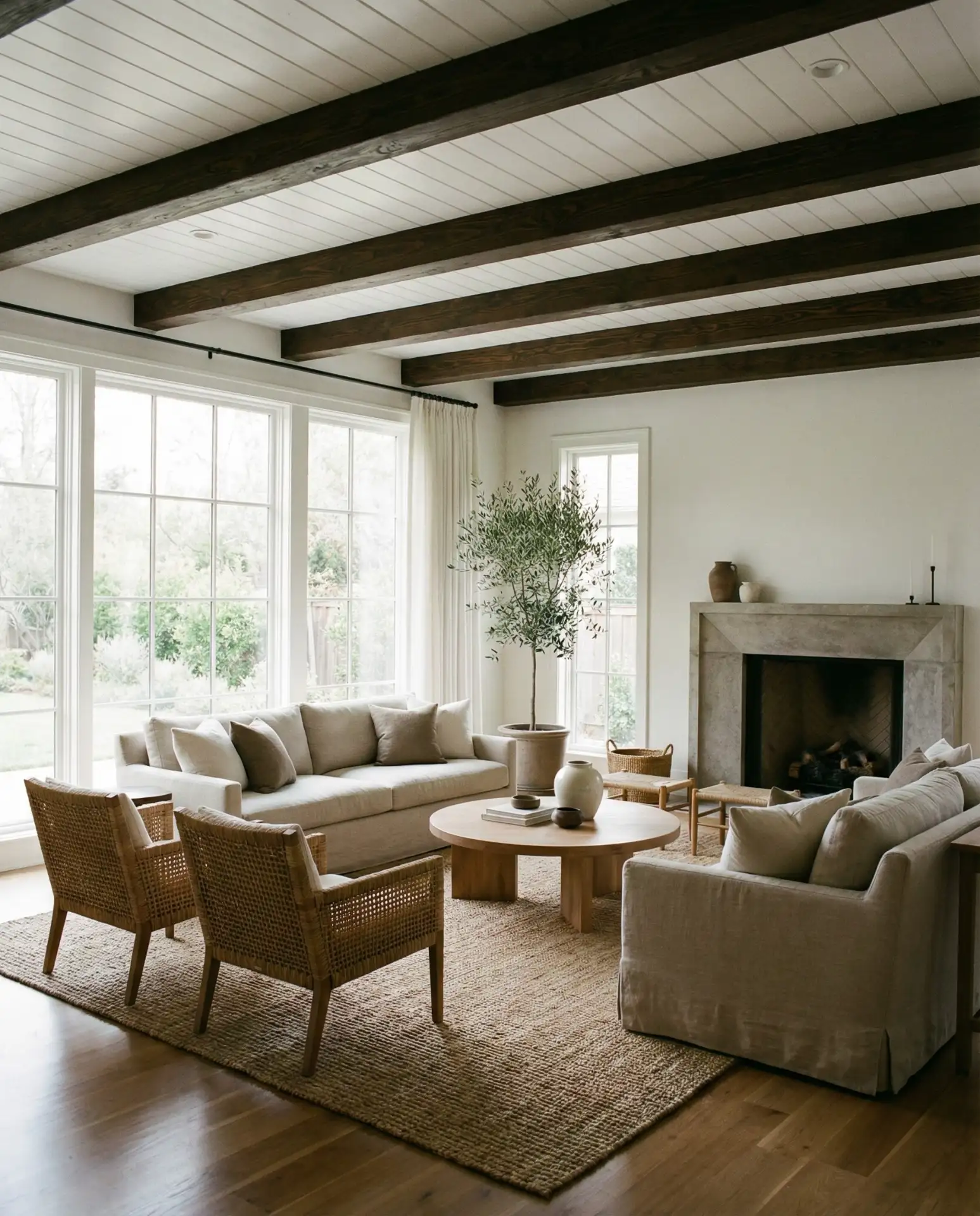
A friend recently added faux beams to her new-build home in Texas, and the transformation was remarkable—the space instantly felt more rooted and substantial. The key with dark beams is ensuring the rest of the room has enough light and brightness to prevent the space from feeling too heavy or cave-like, which is why pairing them with white walls and ample windows is so effective.
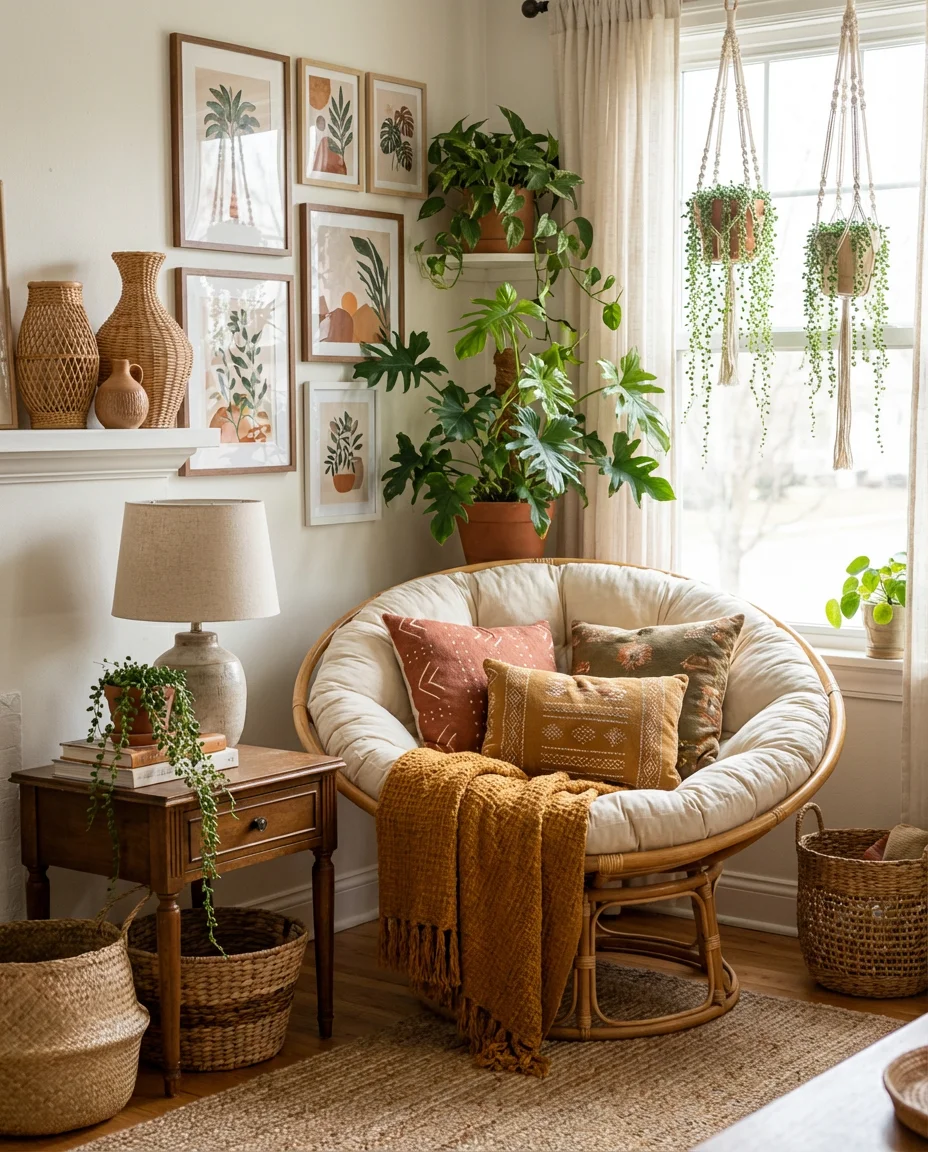
13. Terracotta Pots and Planters Throughout the Home
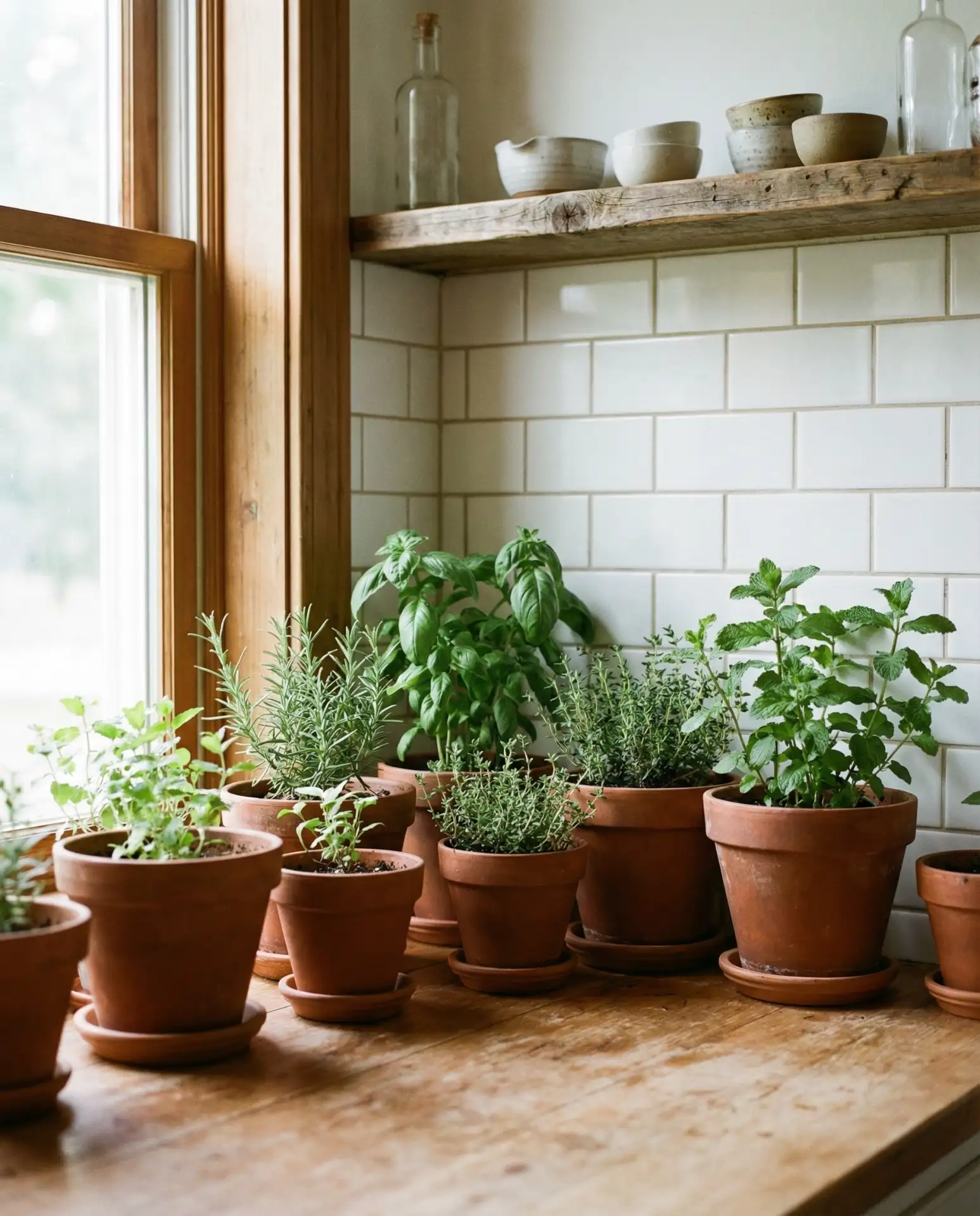
Terracotta’s earthy, porous quality brings warmth and organic texture to farmhouse interiors, whether on kitchen windowsills, bathroom shelves, or living room side tables. The natural clay color complements boho and Mexican farmhouse styles beautifully, and the unglazed finish has an honest, unpretentious quality that feels very much in keeping with the farmhouse ethos. These pots age gracefully, developing mineral deposits and patina that only add to their character. They’re also widely available and affordable, making them an easy way to introduce natural materials into any room. 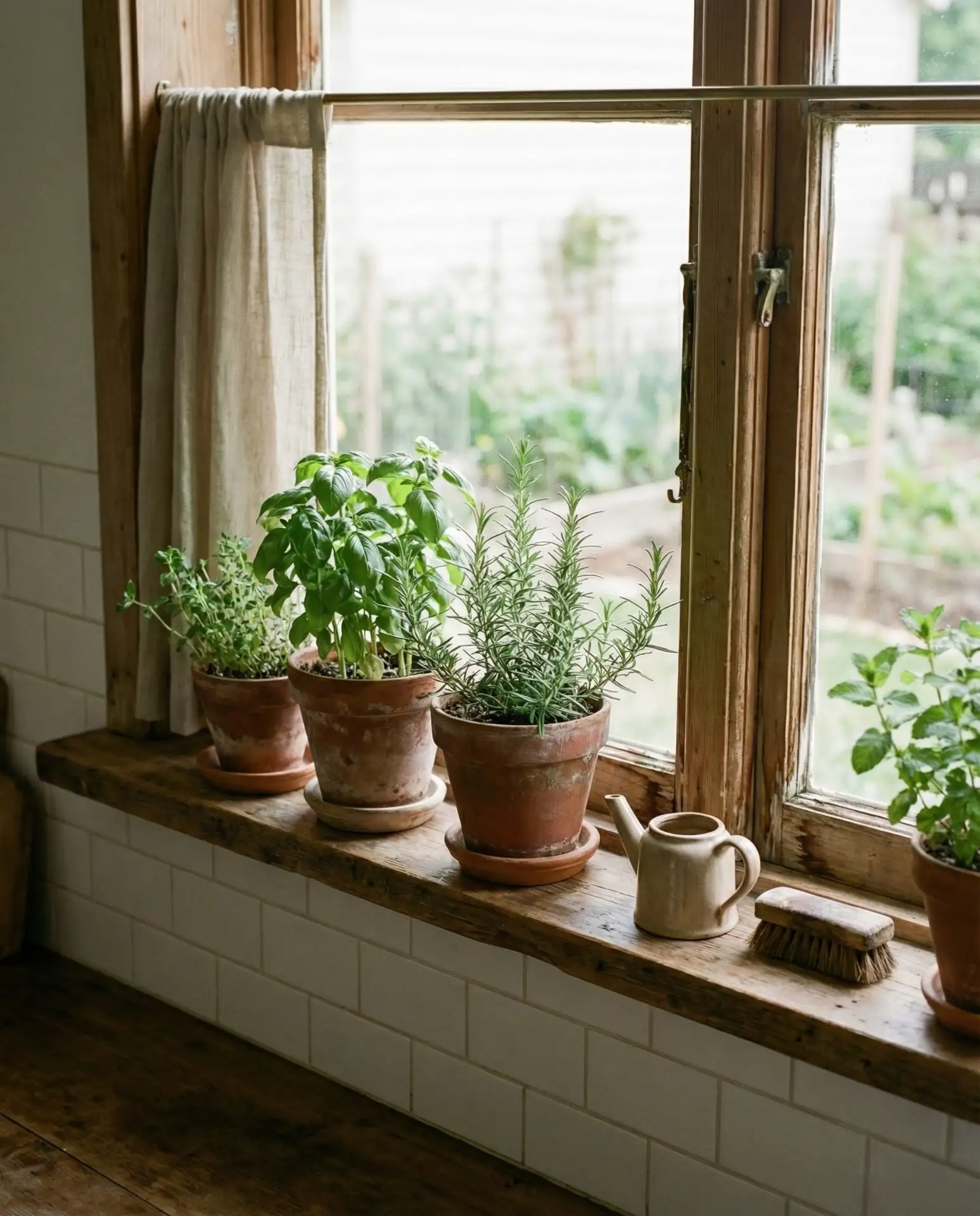
This works best when you use a variety of pot sizes and allow some to remain empty or hold dried stems rather than live plants—the sculptural quality of terracotta shines even without greenery. Real homeowner behavior often involves collecting pots over time from different sources, which creates a more interesting, less matchy-matchy grouping than buying a set all at once.
14. Painted Kitchen Cabinets in Soft Sage or Dusty Blue
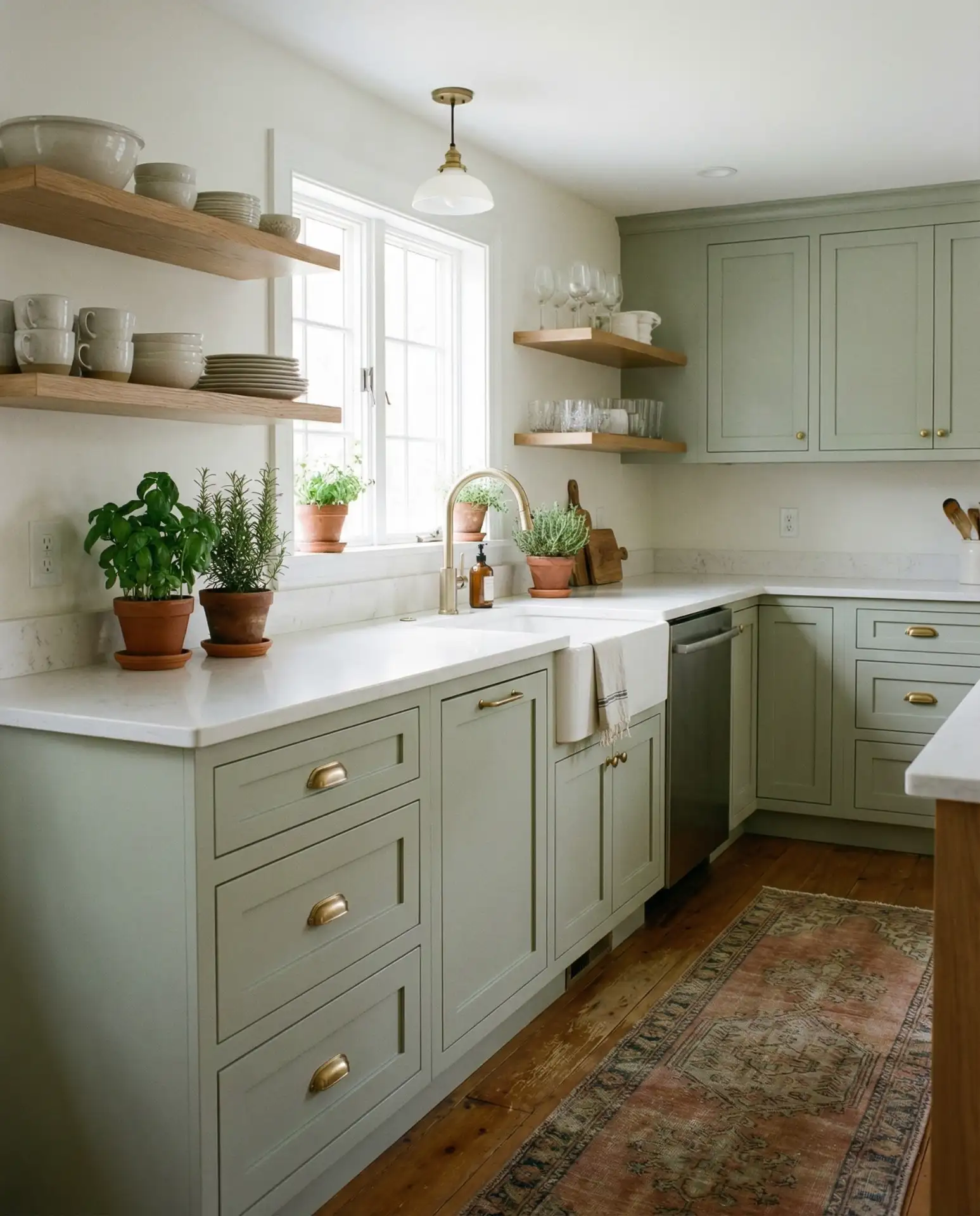
Moving away from all-white kitchens, soft sage greens and dusty blues are bringing subtle color into farmhouse spaces without overwhelming them. These muted, nature-inspired tones work beautifully with brass or black hardware and natural wood countertops, creating a layered, eclectic look that still feels cohesive. The color adds personality and warmth while maintaining the light, airy quality that defines modern farmhouse design. It’s a particularly effective choice in kitchens with good natural light, where the paint color will shift subtly throughout the day.
Across the Northeast and Pacific Northwest, where green landscapes dominate, sage cabinets feel like a natural extension of the outdoors. A common mistake is choosing a color that’s too saturated or too gray—the best farmhouse greens and blues have enough warmth to feel inviting rather than institutional. Testing paint samples in your actual kitchen lighting is essential before committing to a full cabinet repaint.
15. Weathered Wood Mirrors with Minimal Frames
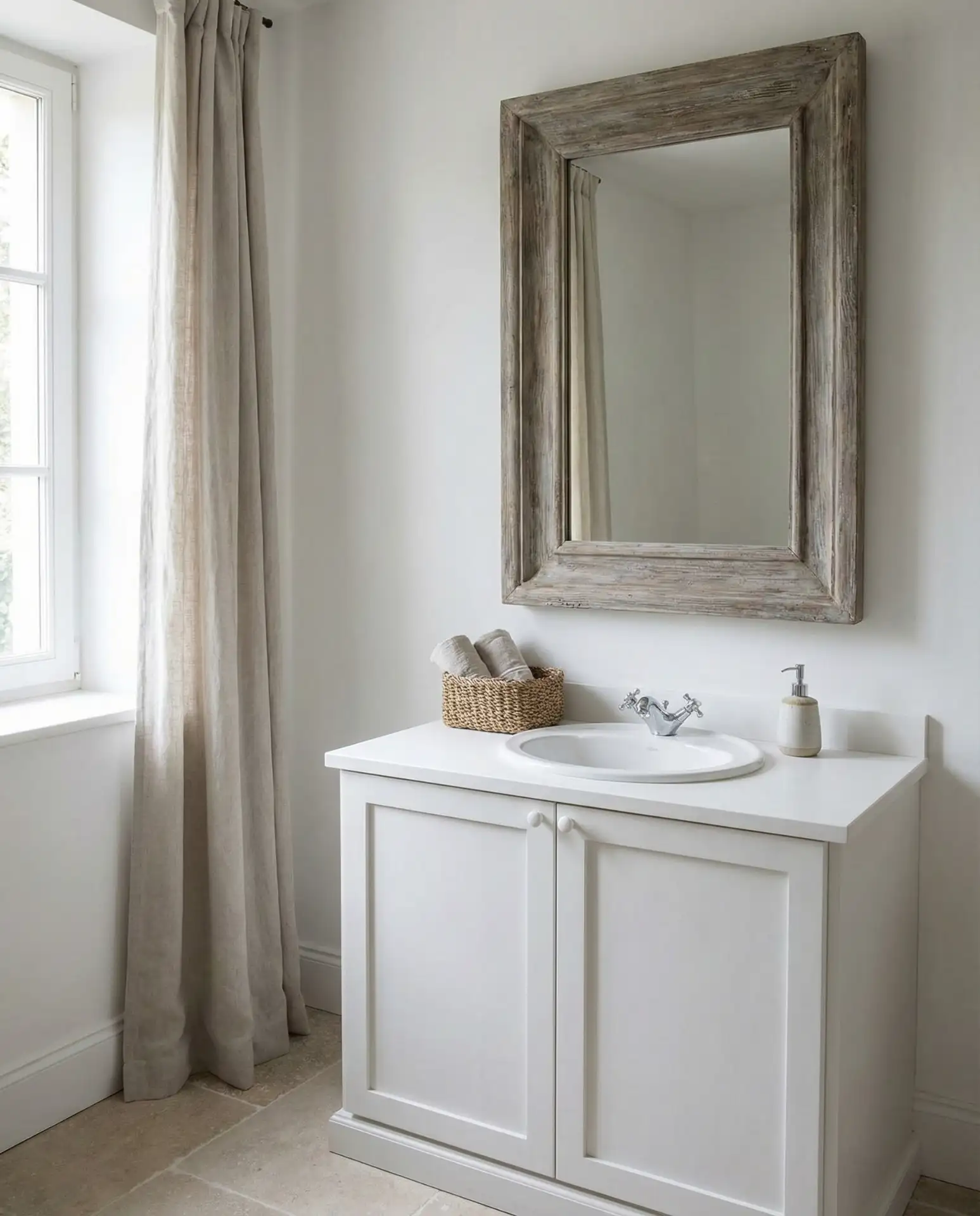
Large mirrors framed in weathered or reclaimed wood serve double duty, reflecting light while adding rustic texture to bedrooms, bathrooms, and entryways. The worn finish of the wood brings in vintage character without requiring actual antiques, and the simple frame design keeps the focus on the mirror’s function rather than turning it into an overly decorative object. These mirrors work particularly well in smaller spaces where bouncing natural light around the room makes a noticeable difference in how open and airy the space feels. 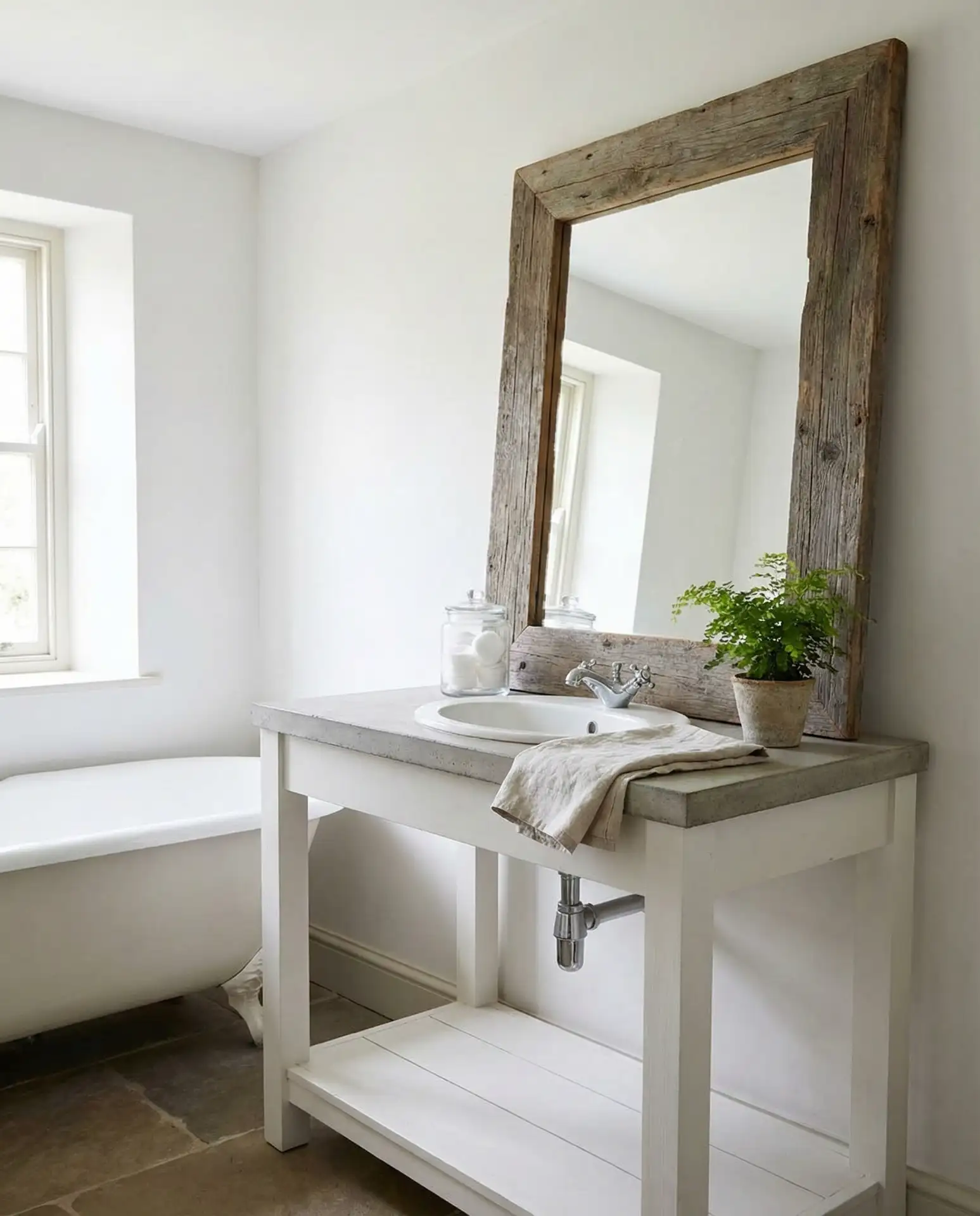
Expert-style commentary suggests that the mirror size should be proportional to the space—a mirror that’s too small will look lost, while one that’s too large can overwhelm the room. In bathrooms, positioning the mirror opposite a window maximizes the light-reflecting benefit and makes the room feel significantly more spacious, which is especially valuable in older homes with smaller floor plans.
16. Open Floor Plans with Defined Zones Using Rugs
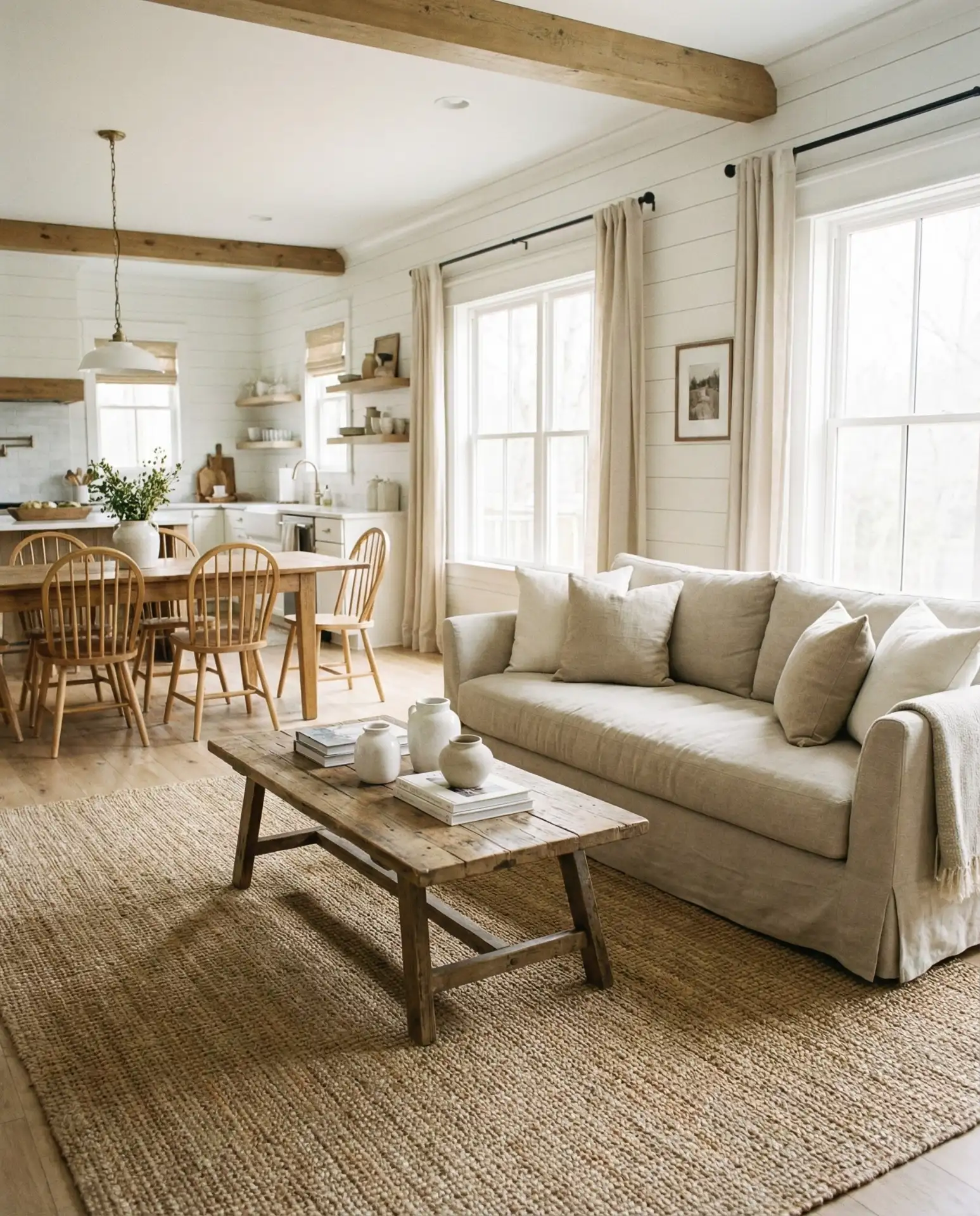
In open-concept homes, layered rugs in natural fibers—jute, sisal, wool—help define living, dining, and kitchen zones without breaking up the visual flow. This approach maintains the spacious feeling that modern farmhouse design is known for while creating functional areas that feel intentional and complete. The rugs also introduce texture underfoot, which is especially important in homes with hard flooring throughout. Choosing rugs in similar neutral tones keeps the palette cohesive while different textures and weaves provide subtle variety. 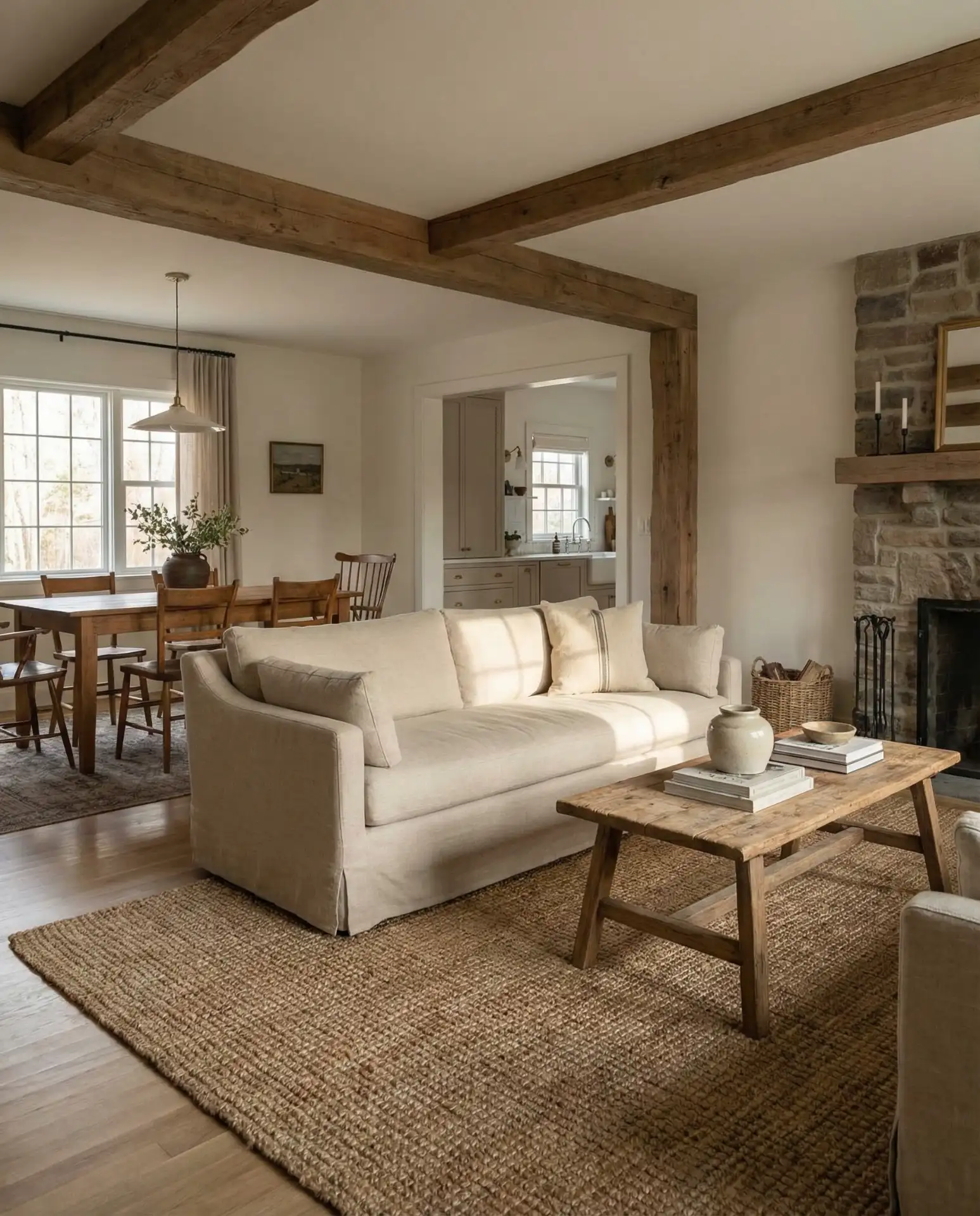
This works best in homes where furniture placement already suggests different zones—the rugs simply reinforce what’s already happening spatially. One common mistake is using rugs that are too small; the front legs of all seating should sit on the rug to properly anchor the space and create a sense of connection between pieces. In terms of budget, quality jute and sisal rugs can be found for $200 to $500 depending on size, making them a worthwhile investment for both function and aesthetics.
17. DIY Floating Shelves in Bathrooms and Kitchens

Simple DIY floating shelves made from reclaimed wood or thick pine boards offer functional storage with a handmade quality that aligns perfectly with farmhouse values. These shelves are straightforward to install and can be customized to fit any space, making them ideal for renters or homeowners on a budget. The simple, bracket-free design keeps the look clean and uncluttered, while the natural wood grain adds warmth and texture. In bathrooms, they hold towels, toiletries, and decorative objects; in kitchens, they display dishes, cookbooks, and plants. 
Many homeowners tackle this as a weekend project, and the sense of accomplishment that comes from building something with your own hands adds to the farmhouse ethos of self-reliance and practicality. The key is using quality wood that’s been properly sealed or finished to withstand moisture in bathrooms, and ensuring the shelves are securely anchored to studs for safety and longevity.
18. Neutral Linen Bedding in Layered Tones
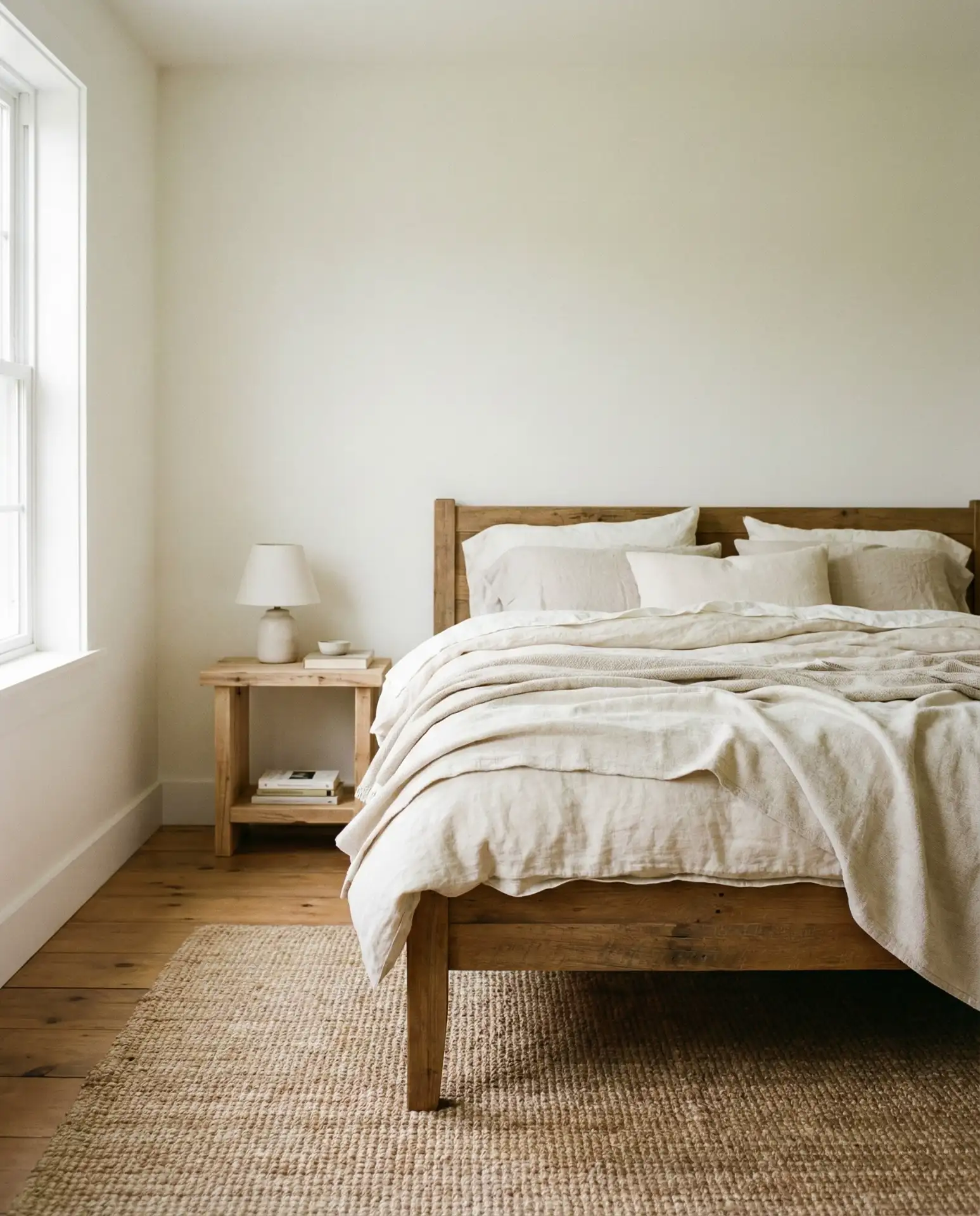
Beds dressed in multiple shades of natural linen—oatmeal, cream, soft gray—create a relaxed, cottage-style bedroom that prioritizes comfort and simplicity. The breathable fabric has a slightly rumpled quality that gets better with age, and the layered neutrals add depth without introducing pattern or color. This approach feels especially right in coastal farmhouse bedrooms where the goal is a light, breezy atmosphere that encourages rest. The absence of busy prints or bold colors keeps the focus on texture and the quality of the materials themselves. 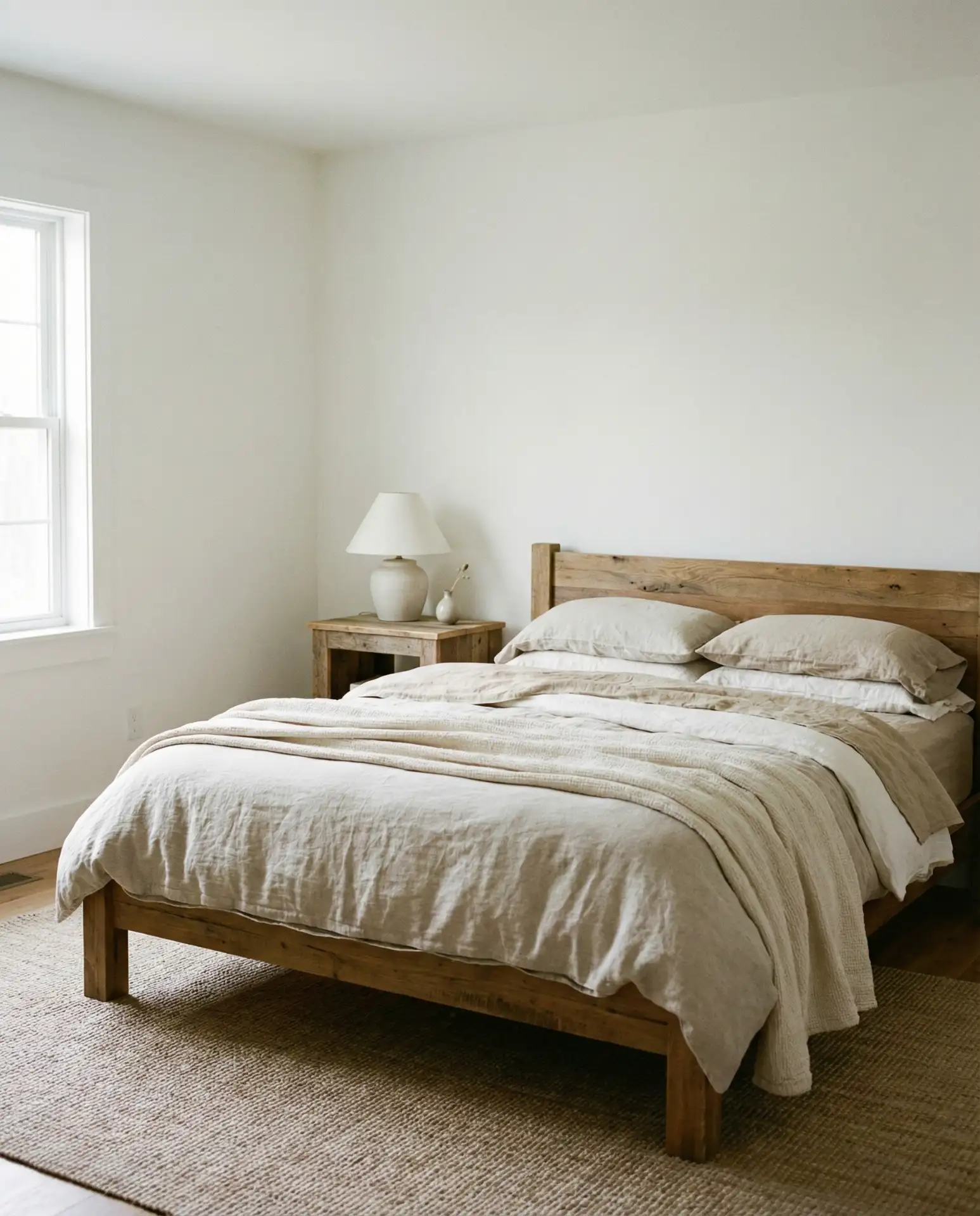
This works best in bedrooms with ample natural light and white or light-colored walls that amplify the airy feeling. One practical insight is that linen bedding requires less maintenance than you might expect—the natural wrinkles are part of its charm, so there’s no need for ironing. In terms of real homeowner behavior, many people start with one or two linen pieces and gradually build their collection, which naturally creates the layered look as different shades and weights accumulate over time.
19. Antique Wooden Ladders as Towel Racks or Blanket Displays
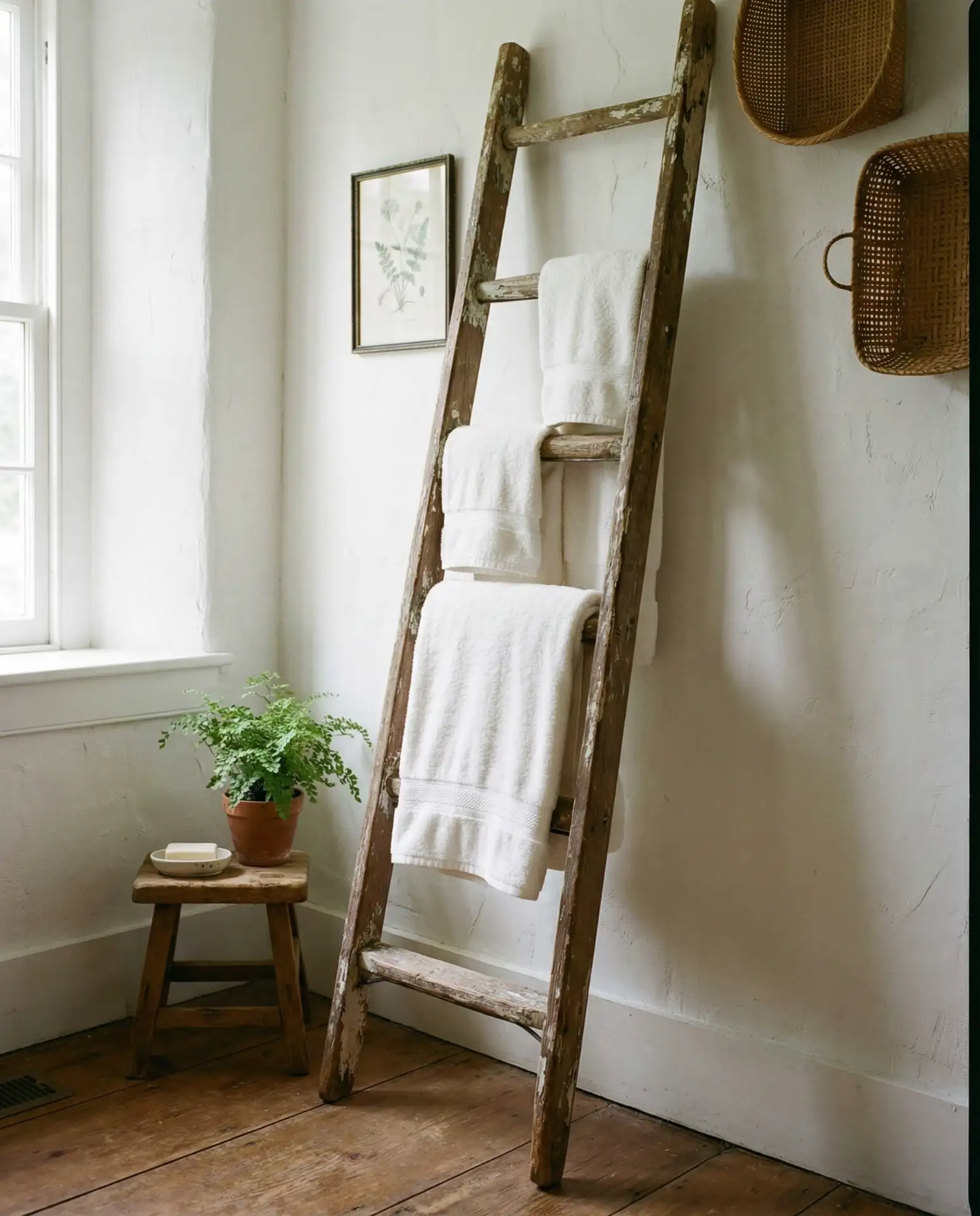
Vintage wooden ladders repurposed as leaning towel racks in bathrooms or blanket displays in living rooms bring vertical interest and antique character into farmhouse spaces. The worn rungs and weathered finish tell a story, and the functional aspect means these pieces earn their place in the room rather than serving as pure decoration. This is a favorite move among those who love primitive and vintage farmhouse styles, where every object ideally has both beauty and purpose. The ladder’s angles also create visual rhythm that breaks up the straight lines of built-in cabinetry and furniture. 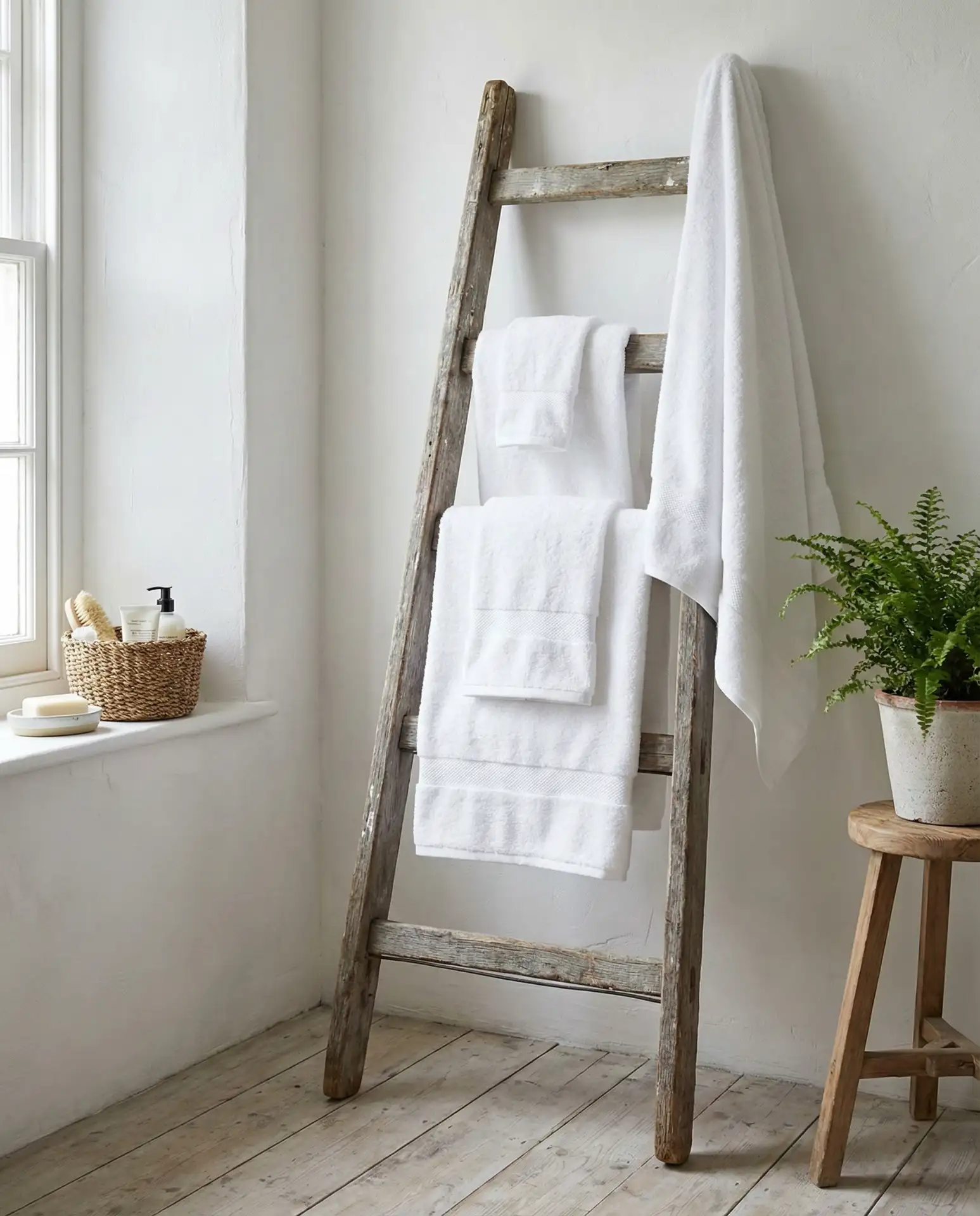
Common mistakes include choosing ladders that are too tall or too short for the space—measure your wall height before shopping. Another pitfall is placing the ladder where it might get bumped frequently; bathrooms work best when the ladder is positioned in a corner or along a wall with clearance. From a budget perspective, authentic vintage ladders can be found at antique stores and estate sales for $30 to $100, making them an affordable way to add genuine farmhouse character.
20. Christmas Farmhouse Decor with Natural Greenery and Simple Ornaments
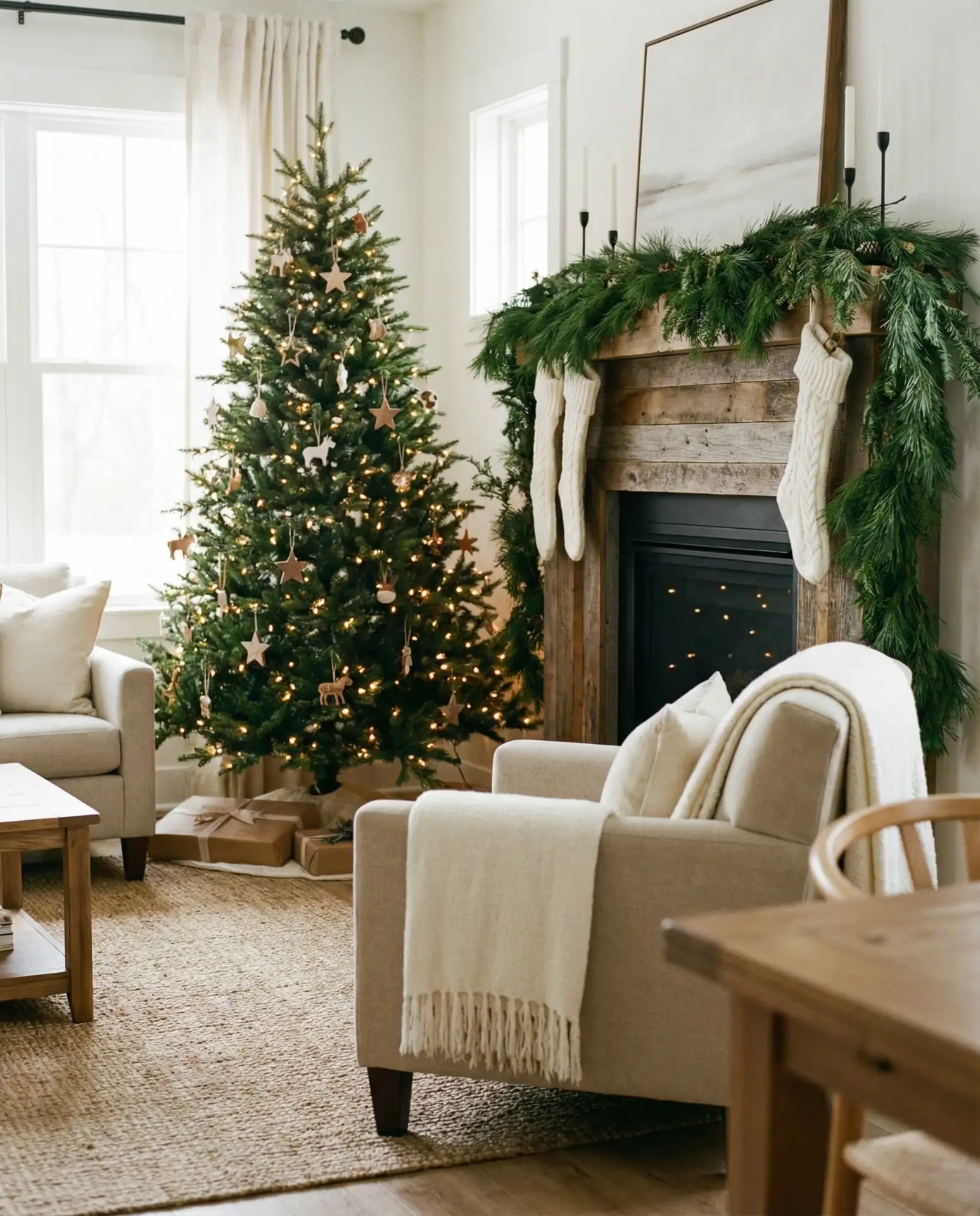
Seasonal Christmas decorating in farmhouse homes leans heavily on fresh greenery, wooden ornaments, and natural materials rather than elaborate themes or color schemes. Garlands made from pine and eucalyptus drape across mantels and staircases, while trees are trimmed with simple felt or wooden decorations that feel handmade and personal. The approach is restrained and elegant, allowing the architecture and existing farmhouse elements to remain visible rather than being overtaken by holiday excess. This style resonates particularly well with those who want their homes to feel festive without sacrificing the clean, uncluttered aesthetic they’ve worked to create. 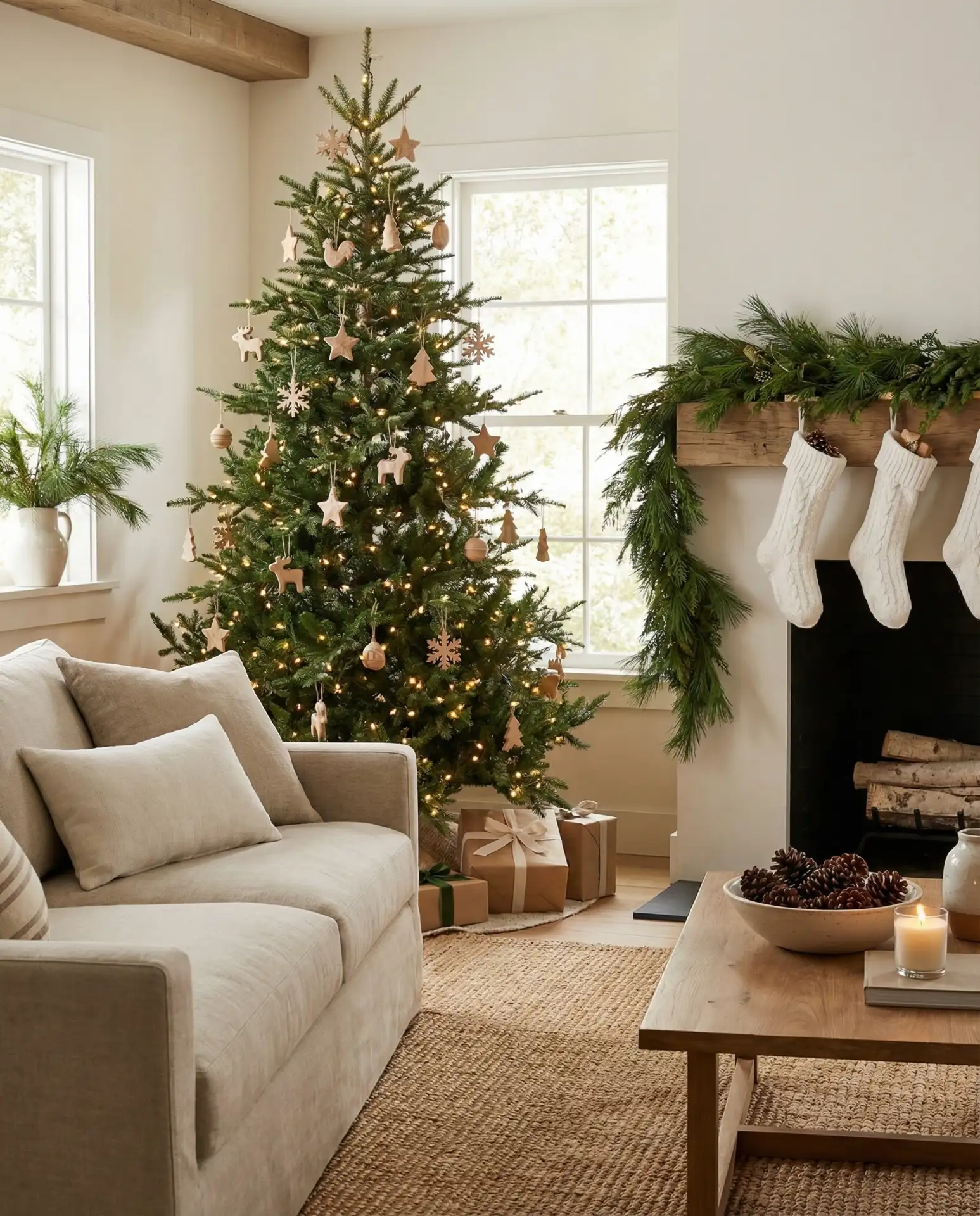
Where this works best is in homes where natural materials are already a dominant feature—the holiday decor simply amplifies what’s already there. A practical insight from longtime farmhouse decorators is that investing in quality dried or preserved eucalyptus garlands allows you to reuse them year after year, making the upfront cost worthwhile. The greenery also fills the home with a subtle, natural scent that artificial decorations can’t replicate, adding another sensory layer to the holiday experience.
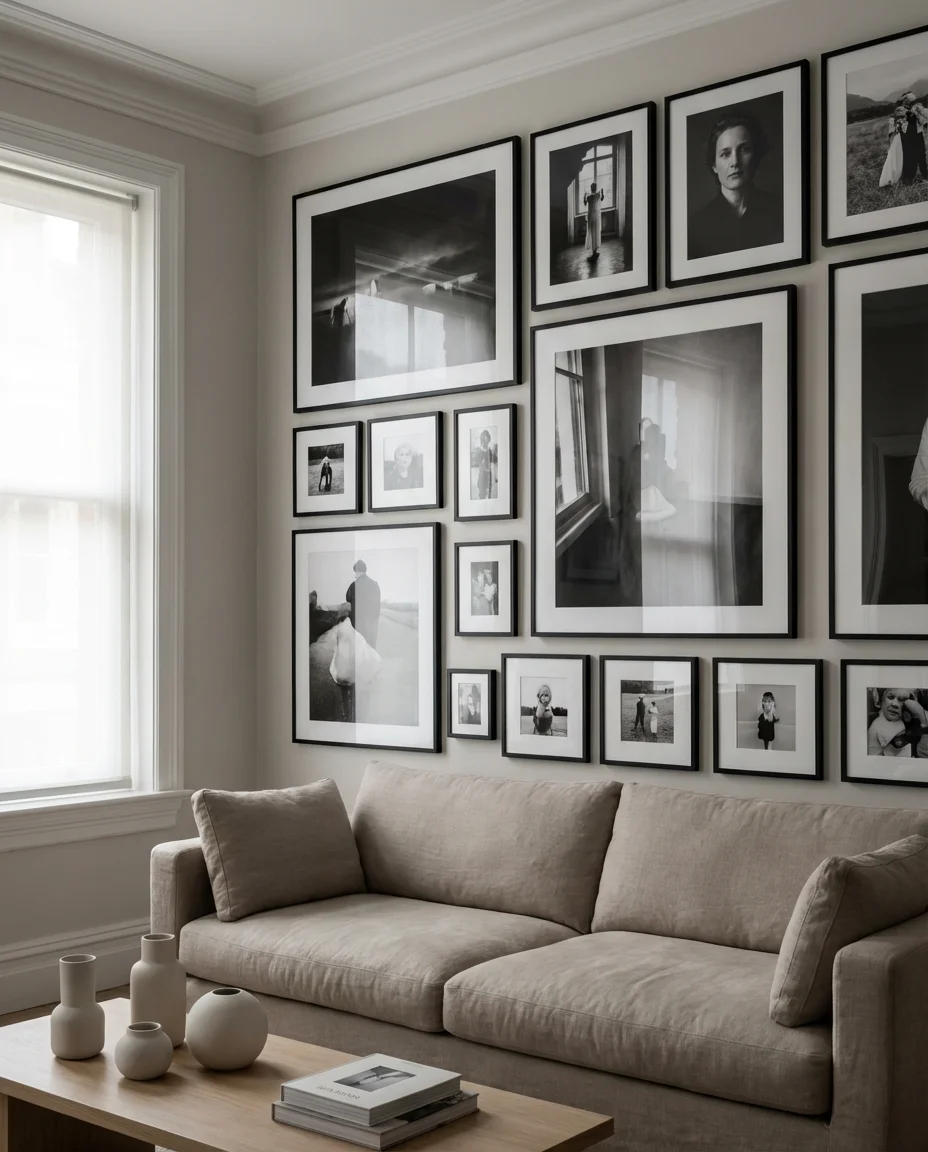
21. Classy Black and White Photography in Simple Frames
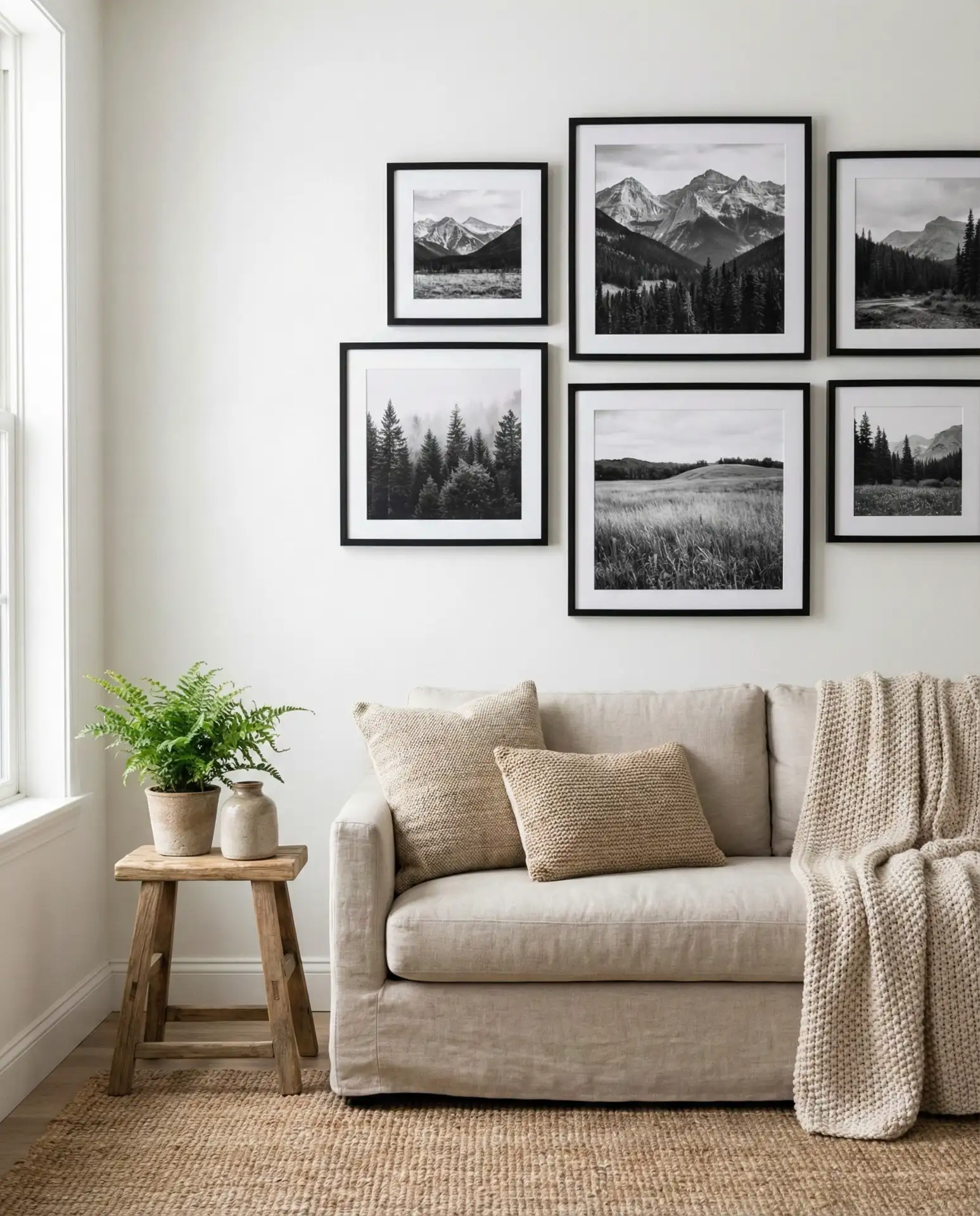
Black and white photography displayed in simple black or natural wood frames brings a classy, gallery-like quality to farmhouse interiors without competing with the other design elements in the room. The lack of color ensures the images work with any palette, while the subject matter—landscapes, architectural details, family portraits—can add personal meaning or artistic interest. This approach is particularly effective in contemporary farmhouse spaces where a touch of sophistication balances out the more casual, rustic elements. The simplicity of the frames keeps the focus on the images themselves rather than on decorative framing. 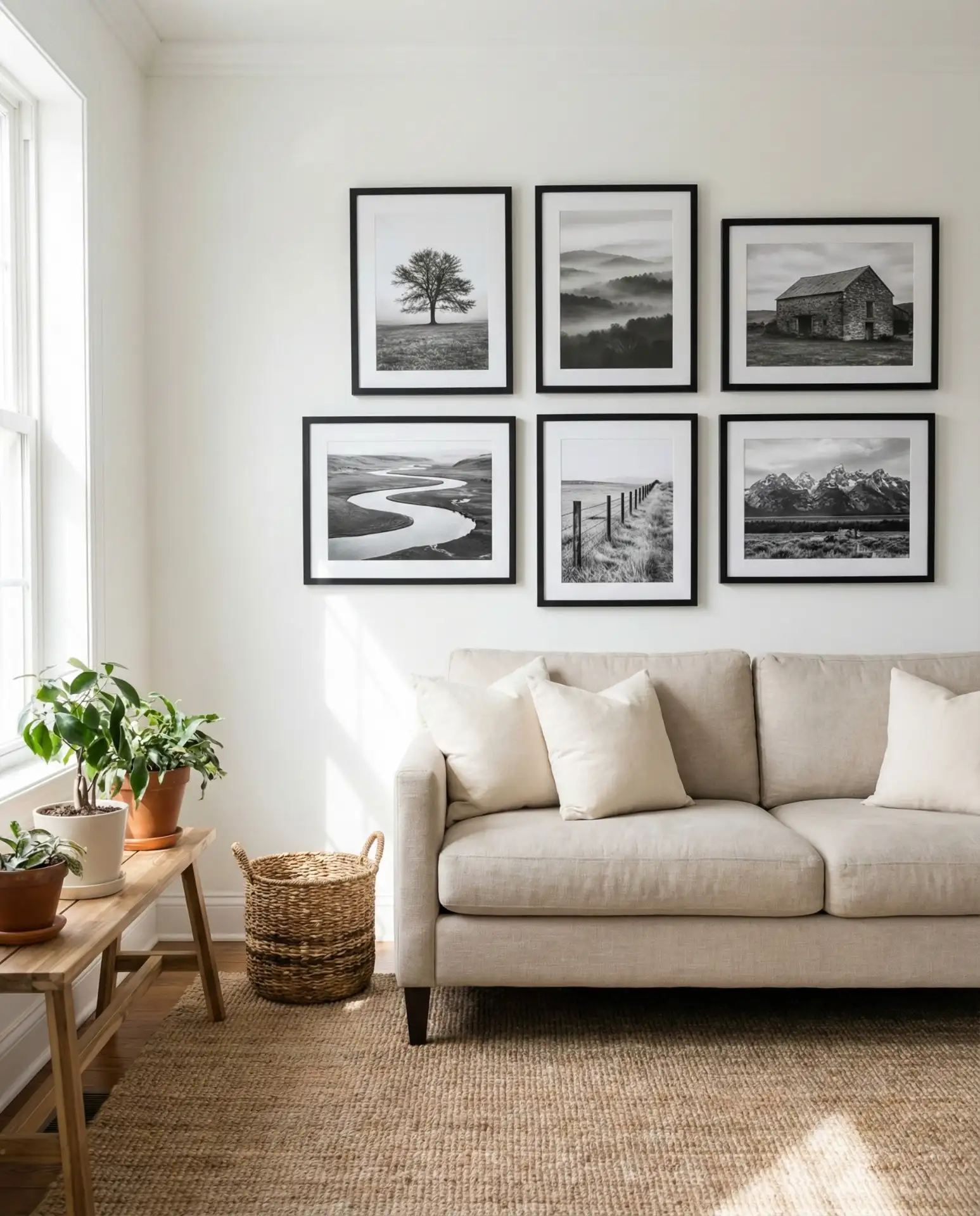
This works best in rooms with plenty of wall space and good natural light that won’t cause glare on the glass. One common mistake is hanging all frames at the same height in a rigid grid—varying the arrangement slightly or creating a salon-style wall with different frame sizes adds visual interest while maintaining cohesion. Real homeowner behavior often involves rotating images seasonally or as family photos accumulate, which keeps the wall feeling current and personal rather than static.
Conclusion
Farmhouse decor in 2026 is about finding the right balance between heritage and modernity, between simplicity and warmth, and between personal expression and timeless appeal. Whether you’re drawn to coastal lightness or moody, dark interiors, there’s room within the farmhouse aesthetic to create something that feels uniquely yours. Try one or two of these ideas in your own home, and share your favorites in the comments below—we’d love to hear which direction you’re taking your farmhouse style this year.