
Farmhouse kitchens continue to evolve, and 2026 brings a fresh wave of interpretations that honor tradition while embracing contemporary living. Whether you’re drawn to the warmth of reclaimed wood, the charm of vintage details, or the clean lines of modern minimalism, this year’s farmhouse kitchen ideas reflect how Americans are blending comfort with functionality. Pinterest users are searching for spaces that feel both timeless and current—rooms that tell a story while serving the demands of everyday life. In this article, you’ll discover inspiring farmhouse kitchen concepts that balance rustic authenticity with the practical needs of modern homeowners, from coastal influences to bold color choices that redefine what a farmhouse kitchen can be.
1. Modern Farmhouse Kitchen with Sleek Black Fixtures
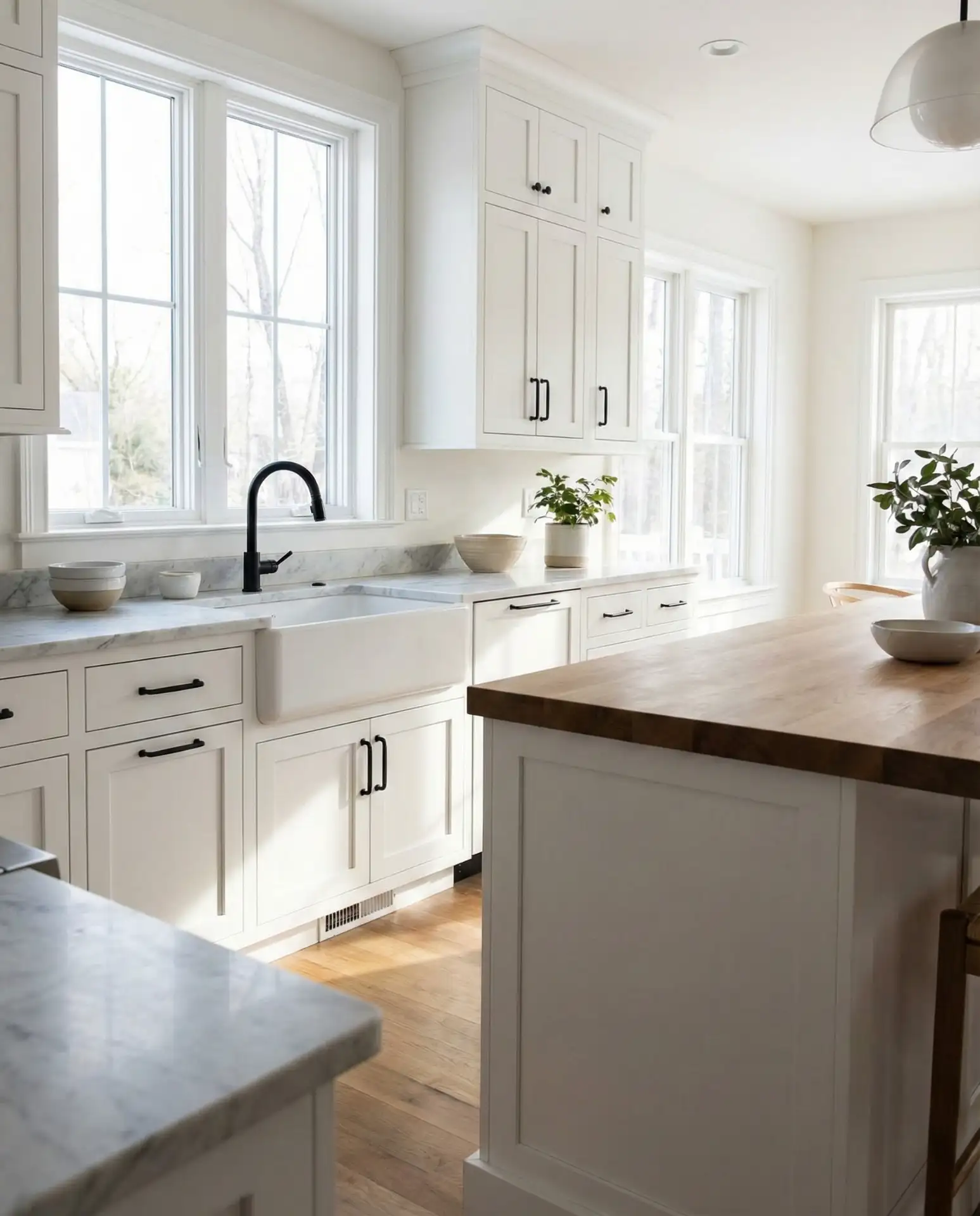
The modern farmhouse kitchen has become a staple in American homes, where clean lines meet rustic warmth. This approach pairs white shaker cabinets with matte black hardware and fixtures, creating a sophisticated contrast that feels both current and timeless. The beauty lies in balancing industrial elements—like black pendant lights and faucets—with natural wood accents on open shelving or a butcher-block island. 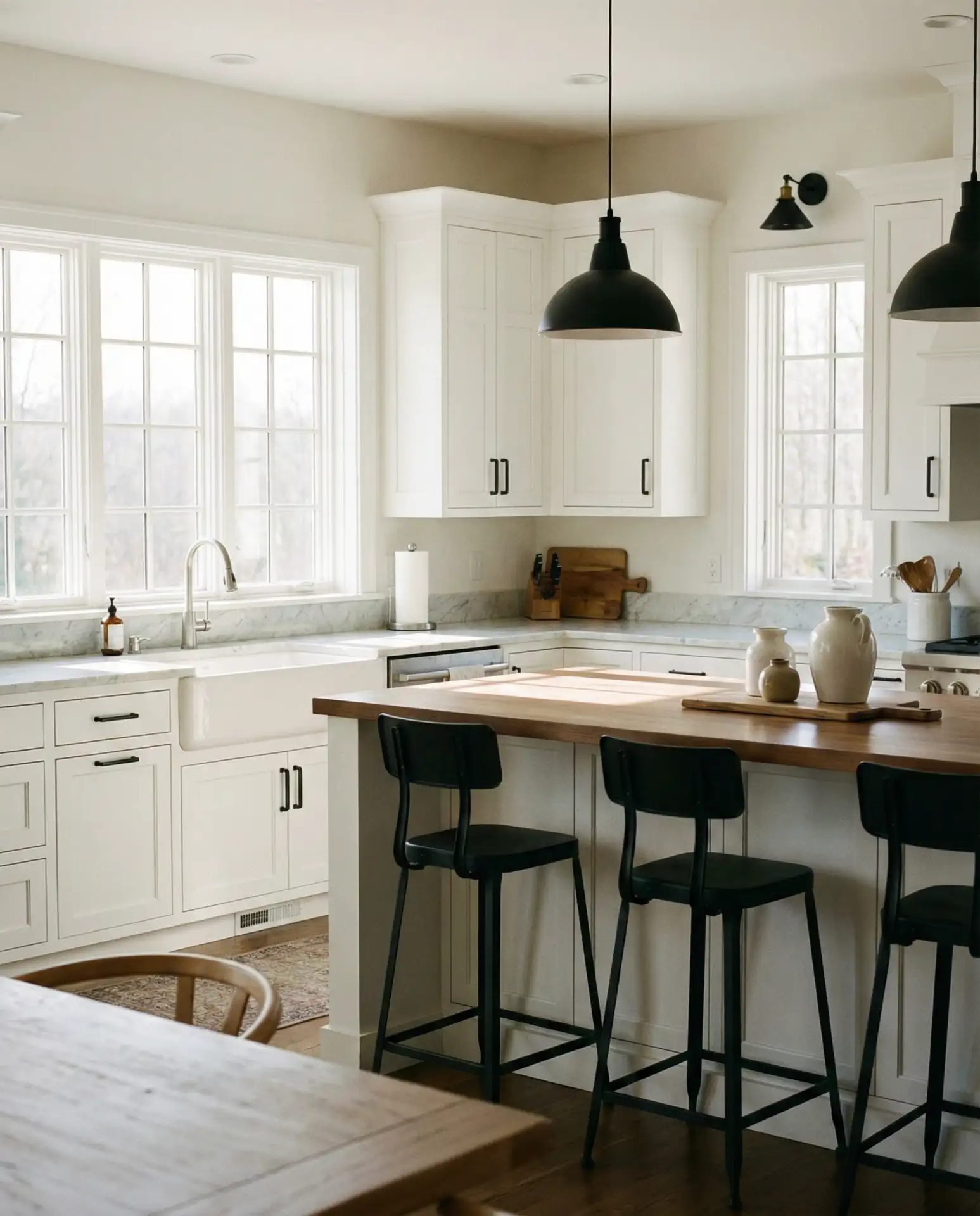
This style works particularly well in open-concept homes where the kitchen flows into living areas. One common mistake homeowners make is over-accessorizing—the modern farmhouse thrives on restraint. Keep countertops relatively clear, choose one statement piece like a vintage scale or ceramic pitcher, and let the quality of materials speak for themselves. The black-and-white palette provides a neutral foundation that won’t feel dated as trends shift.
2. Rustic Kitchen with Reclaimed Beam Ceiling
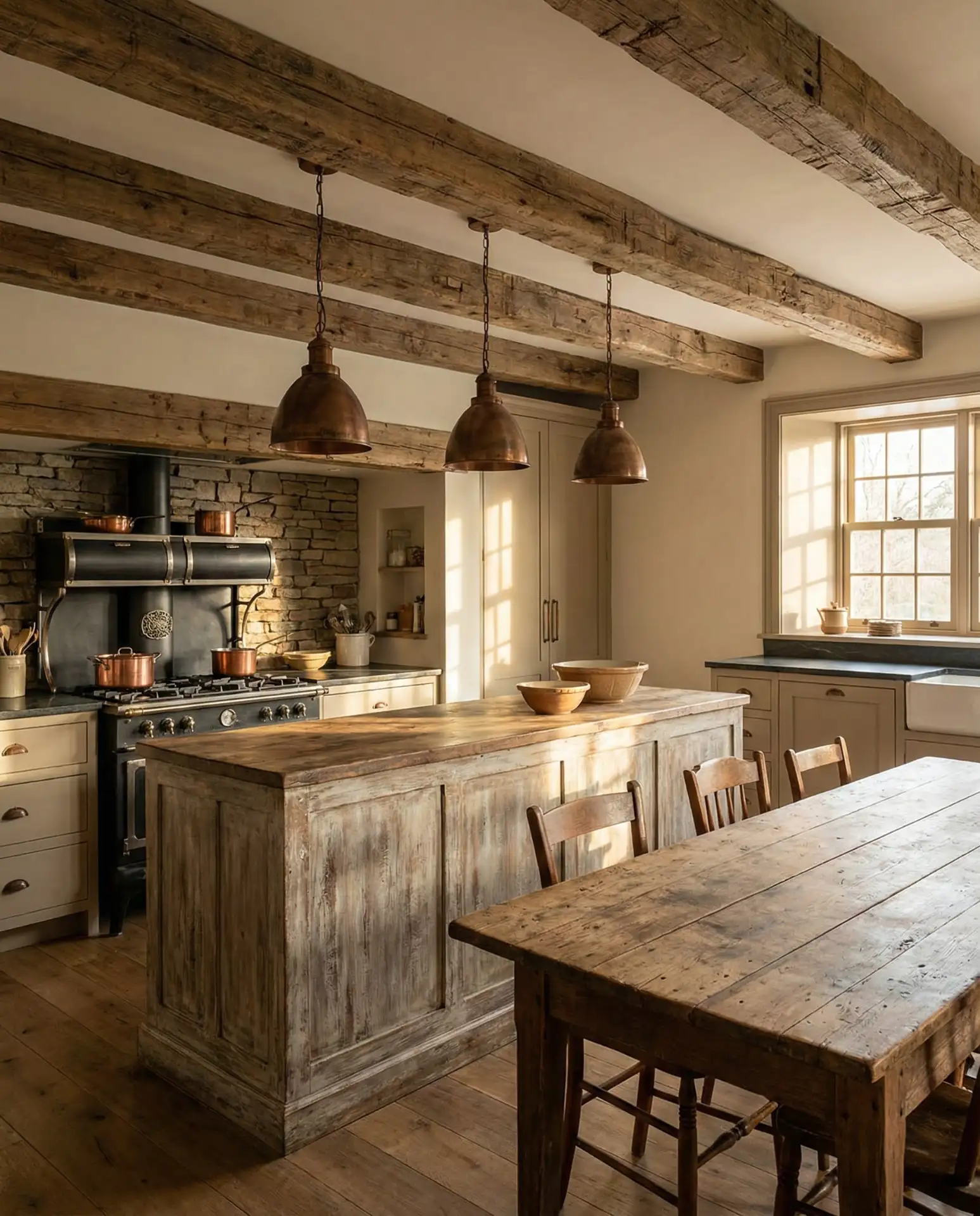
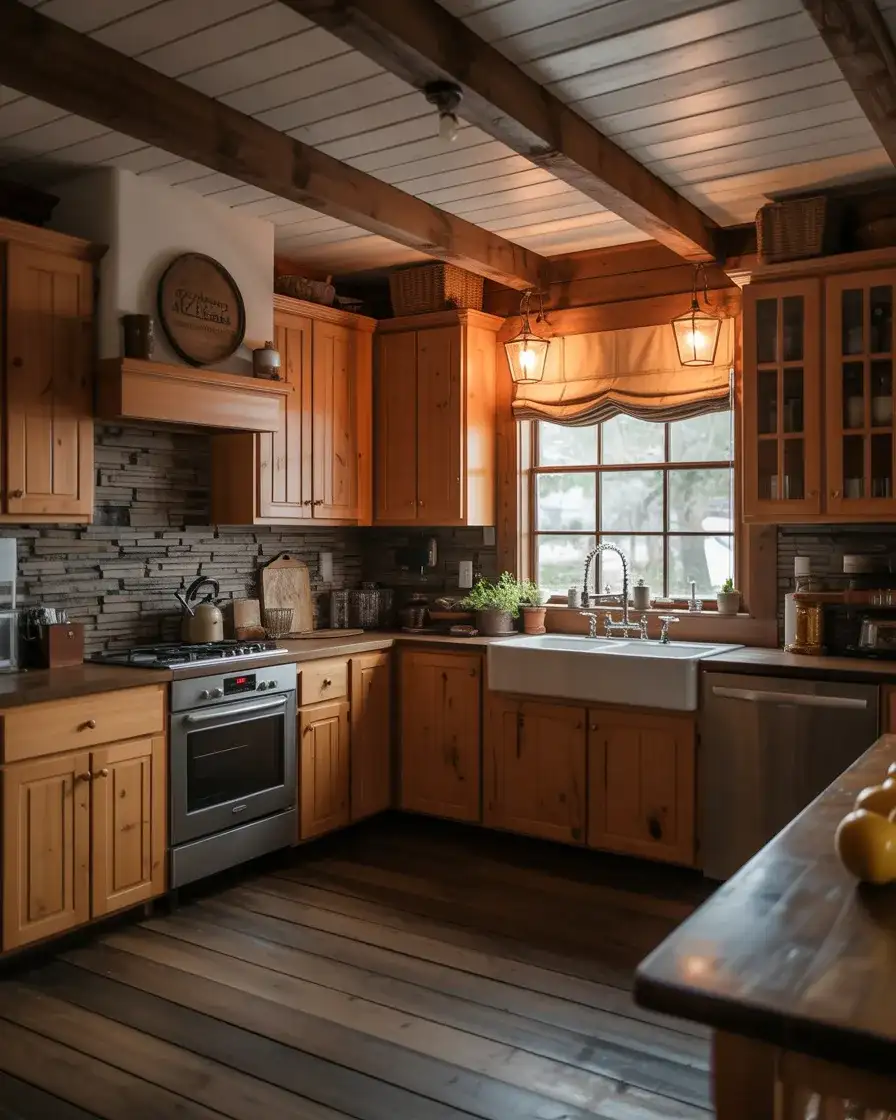
Nothing captures rustic charm quite like exposed ceiling beams crafted from reclaimed wood. These architectural elements add instant character and warmth, especially in homes with higher ceilings. Paired with vintage lighting fixtures and distressed cabinetry, the beams create a sense of history that feels authentic rather than manufactured. The texture and patina of aged wood brings depth that new materials simply cannot replicate. 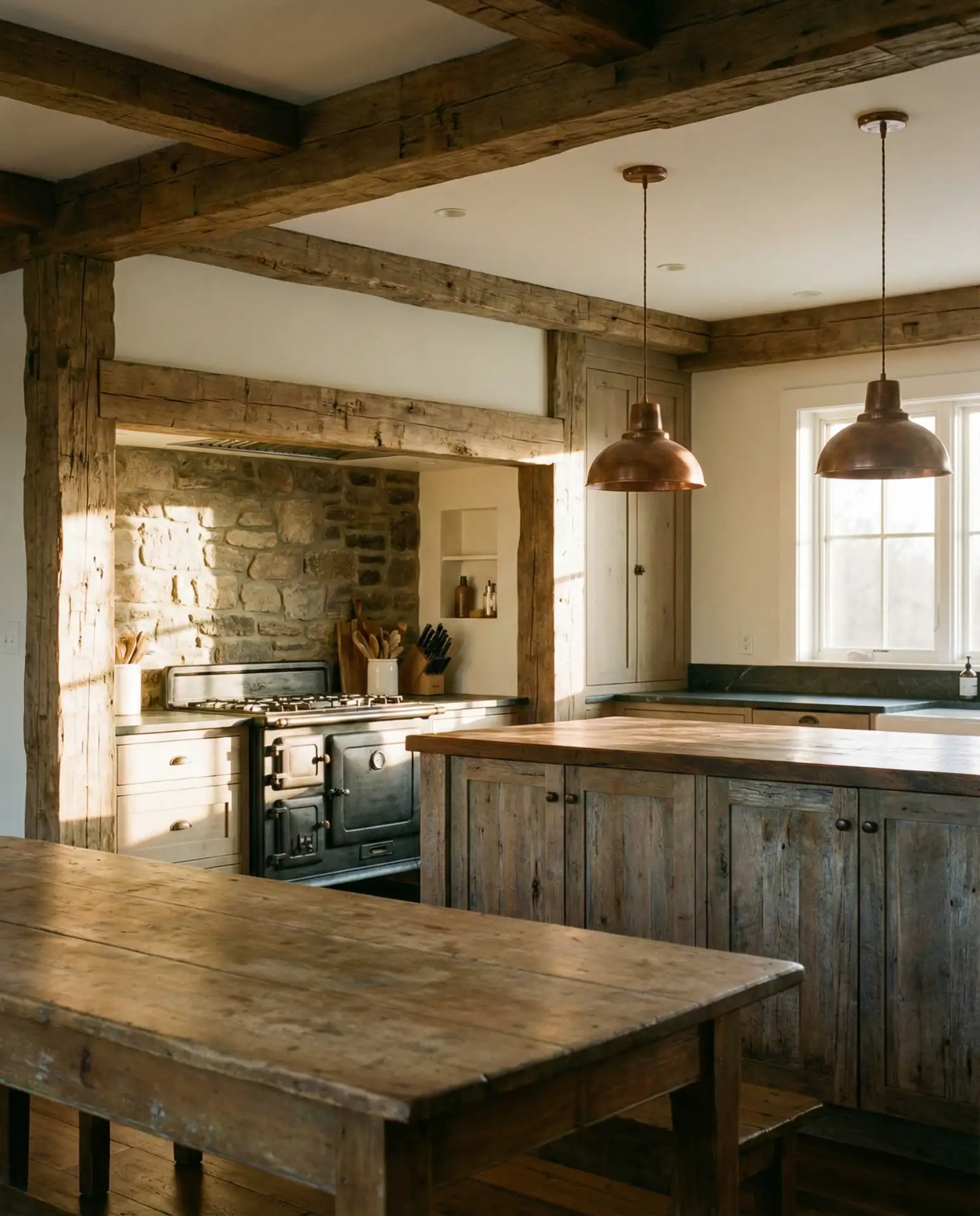
In the Midwest and rural areas across America, homeowners are sourcing beams from old barns and warehouses, giving these materials a second life. A designer I spoke with mentioned that authentic reclaimed beams typically cost between $15-35 per linear foot installed, while faux beams run $8-15 per foot—both options can achieve the look, though real wood offers superior character. The key is ensuring proper installation and treating the wood to prevent pests while preserving its weathered beauty.
3. Italian-Inspired Kitchen with Terracotta Accents
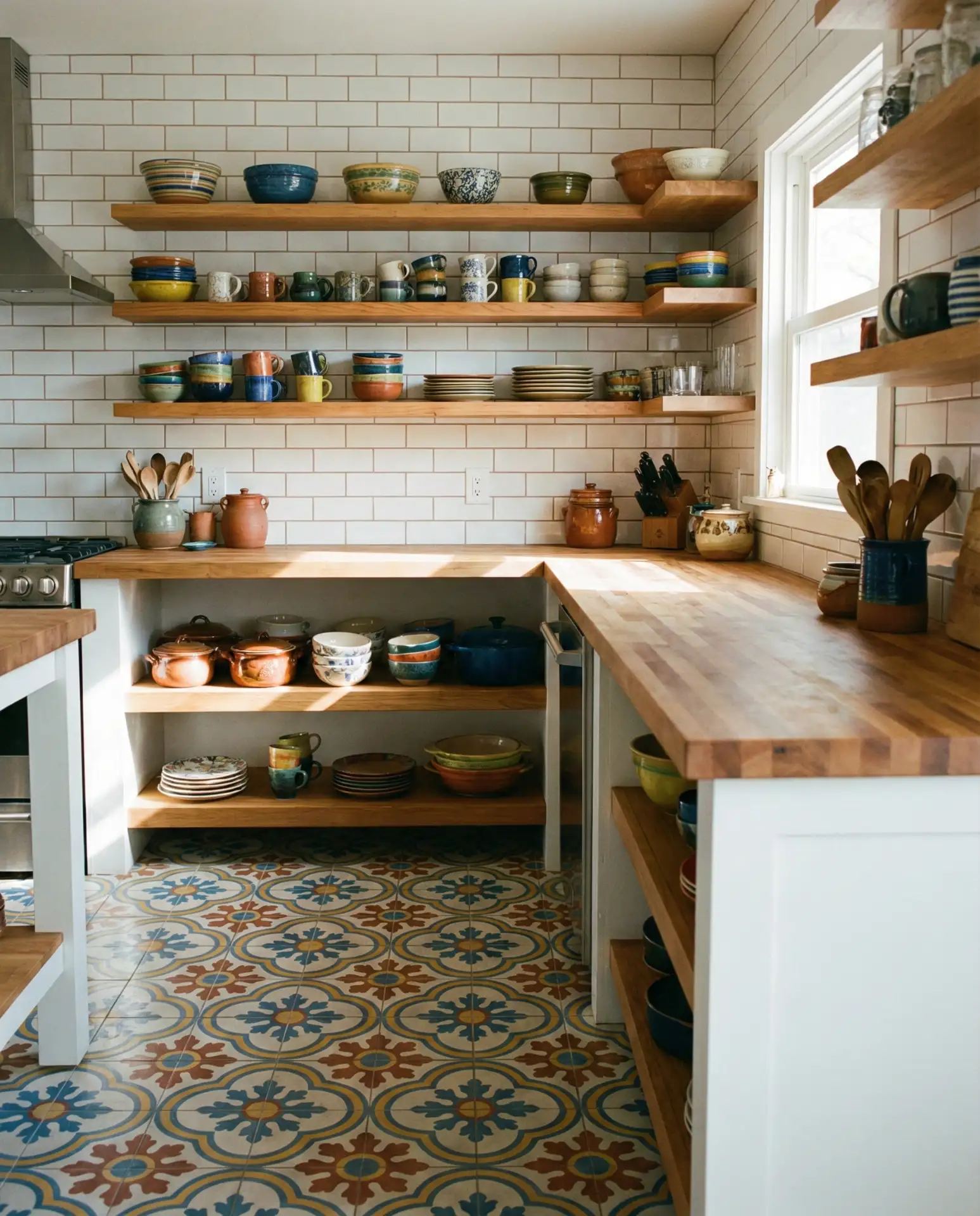
An Italian farmhouse kitchen brings the warmth of Tuscany into American homes through terracotta tiles, warm wood tones, and earthy color palettes. This style embraces imperfection—hand-plastered walls, slightly irregular tile patterns, and furniture with visible grain and knots. The European influence shows in the emphasis on gathering spaces, with large farmhouse tables and open shelving displaying pottery and cookware as functional art. 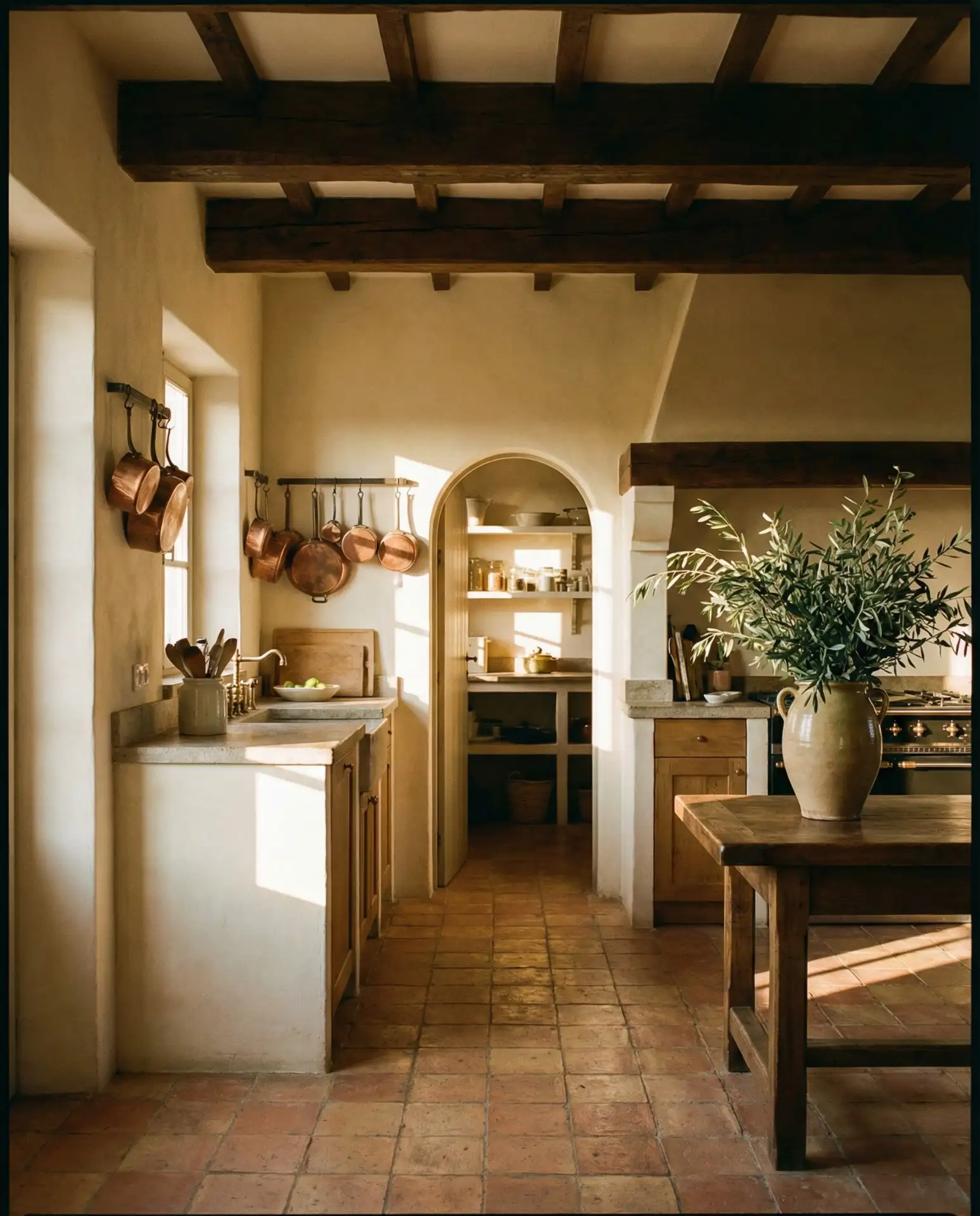
This approach works beautifully in homes with Mediterranean or Spanish Colonial architecture, but it translates surprisingly well to standard American ranch homes too. The warmth of terracotta creates an inviting atmosphere year-round, though it particularly shines in regions with abundant natural light. Consider incorporating a pot rack to display copper pans, open shelving for ceramics, and a large wooden island that can serve as both prep space and casual dining area.
4. Country Kitchen with Apron Front Sink
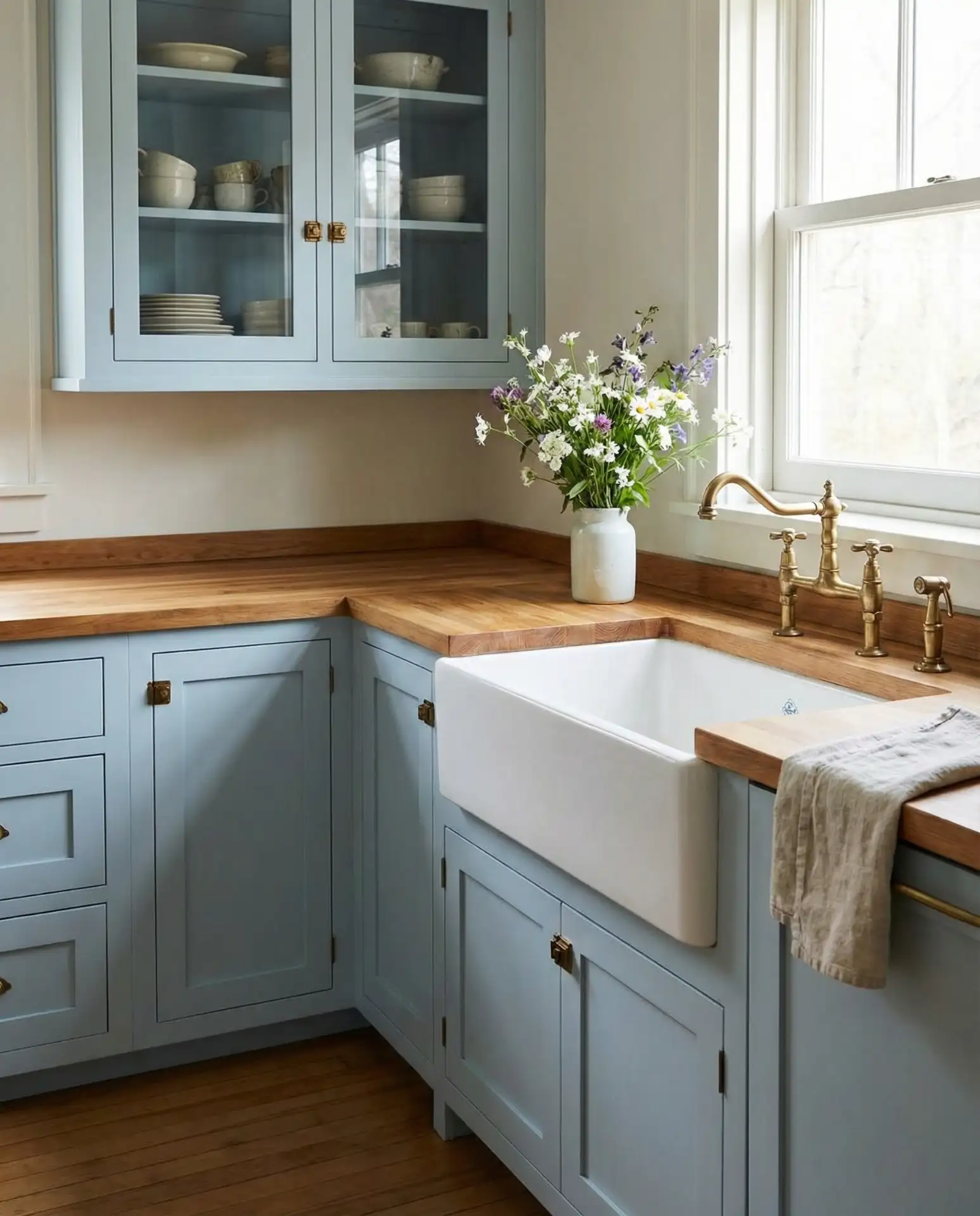
The classic country kitchen centers around a deep apron-front sink—often called a farmhouse sink—that serves as both a functional workhorse and a design statement. These sinks, typically made from fireclay or cast iron, can handle large pots and baking sheets while adding authentic vintage appeal. Surrounding cabinetry in soft cream or pale blue tones keeps the look fresh and bright, while glass-front upper cabinets display collections of dishware and glassware. 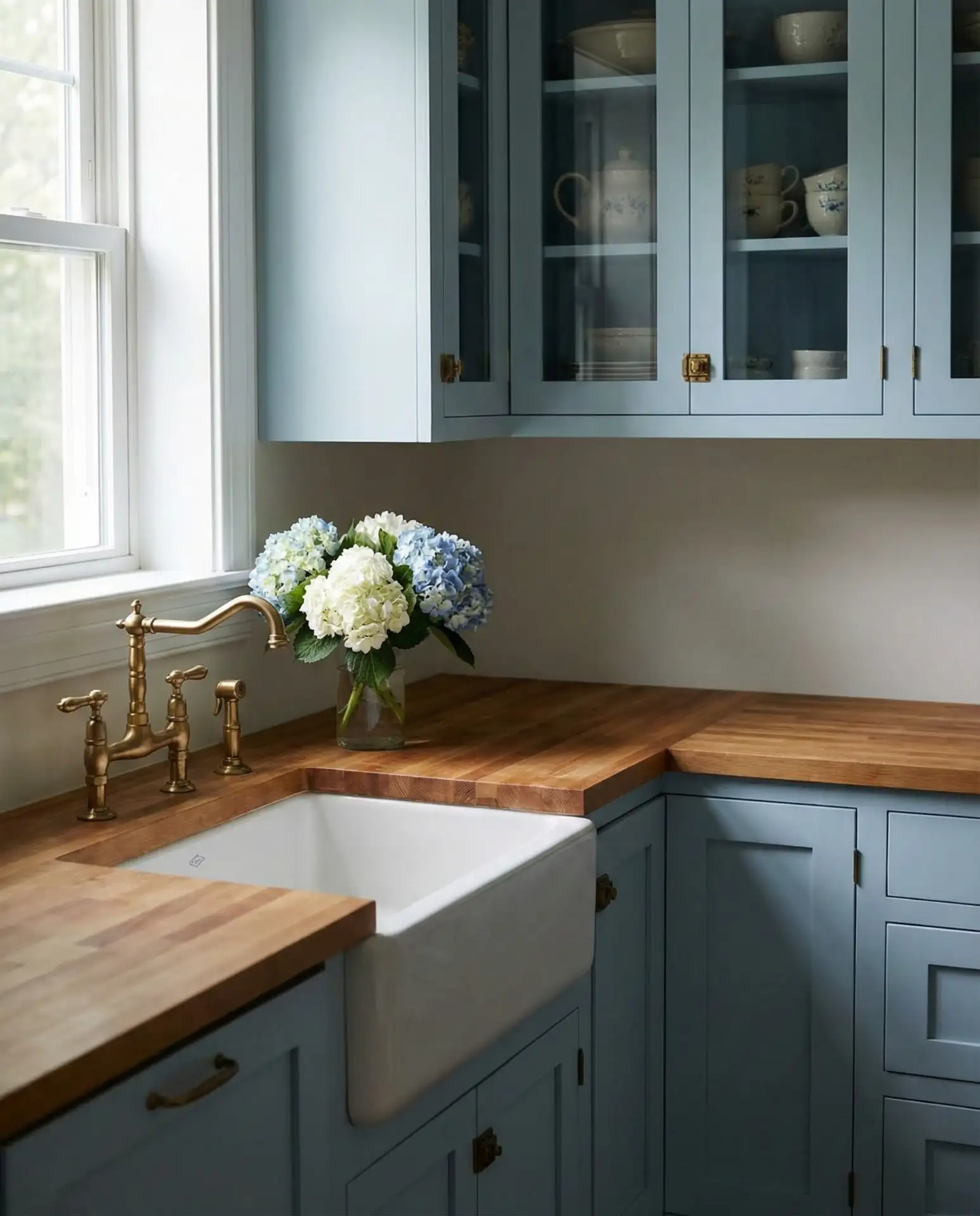
I recently visited a home in Connecticut where the homeowner installed a 33-inch apron sink and immediately noticed how much easier it was to wash oversized items without splashing water everywhere. The deeper basin and front-facing installation reduce strain on your back during extended food prep sessions. Just be aware that these sinks require slightly modified cabinet bases, so factor that into renovation budgets—expect to add $200-400 for custom cabinetry modifications beyond the sink cost itself.
5. All-White Farmhouse Kitchen with Natural Textures
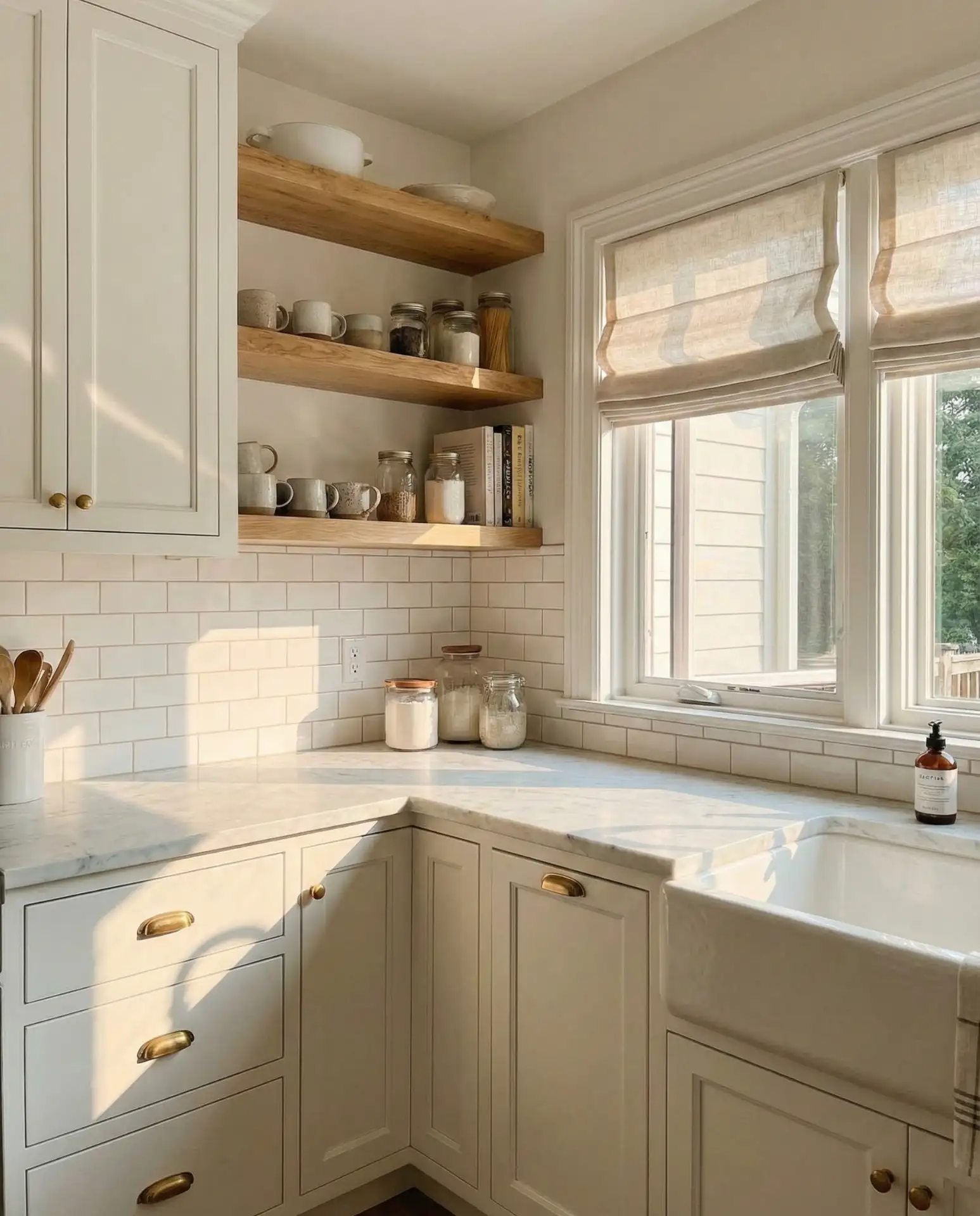
A white farmhouse kitchen remains timelessly popular, offering a bright, airy canvas that works in homes of any size. The secret to preventing this look from feeling sterile lies in layering textures—think white subway tile with visible grout lines, linen curtains, woven baskets, and raw wood cutting boards. Contemporary farmhouse designs often use white as a foundation, then introduce warmth through natural materials rather than color. 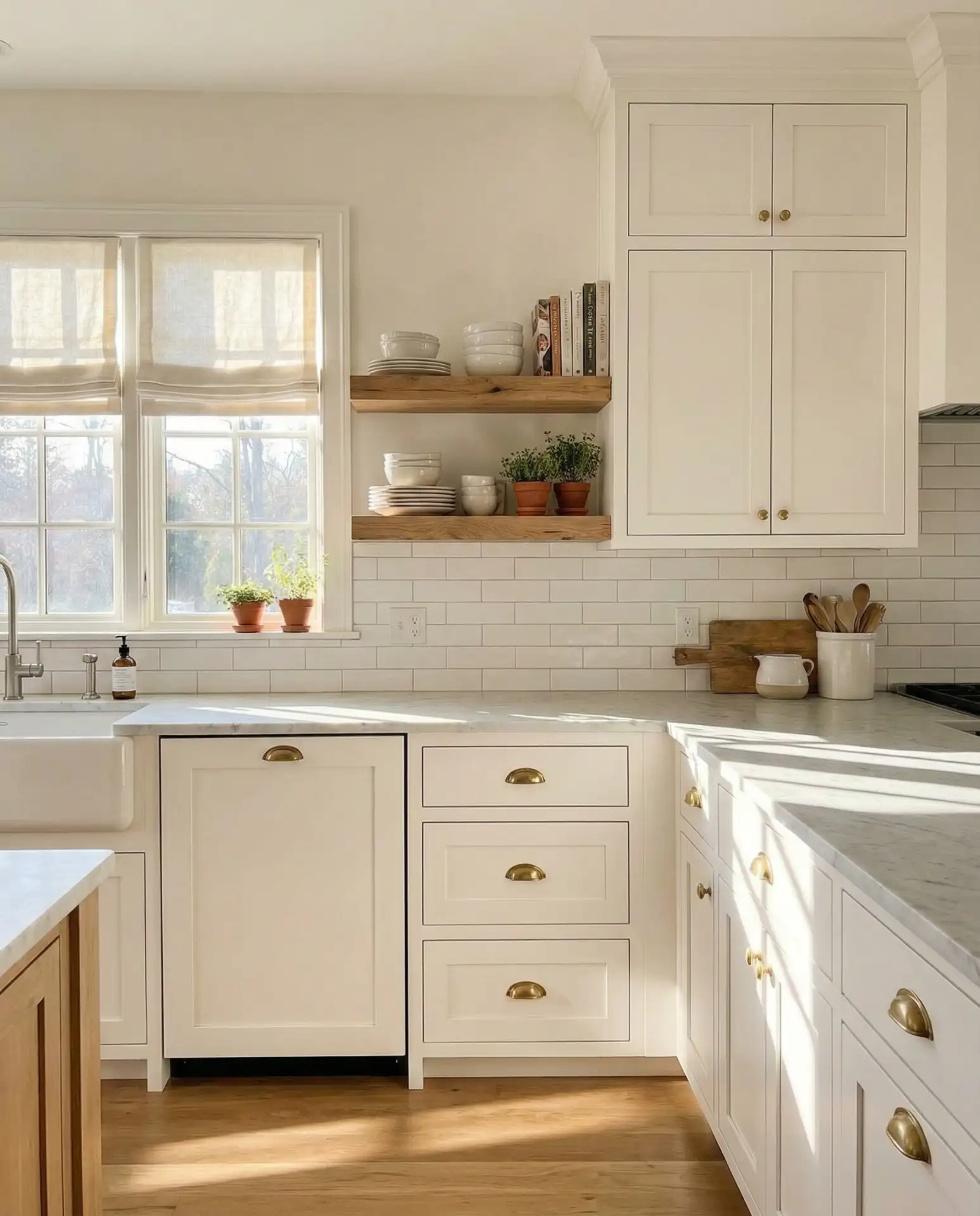
Where this works best is in smaller kitchens or spaces with limited natural light—the reflective quality of white surfaces helps bounce light around the room, making it feel larger and more open. To add personality without disrupting the serene palette, rotate seasonal elements like fresh greenery, wooden serving boards, or ceramic containers. The all-white approach also has practical advantages: it’s easier to maintain a cohesive look when adding new items or making future updates.
6. French Country Kitchen with Blue Island
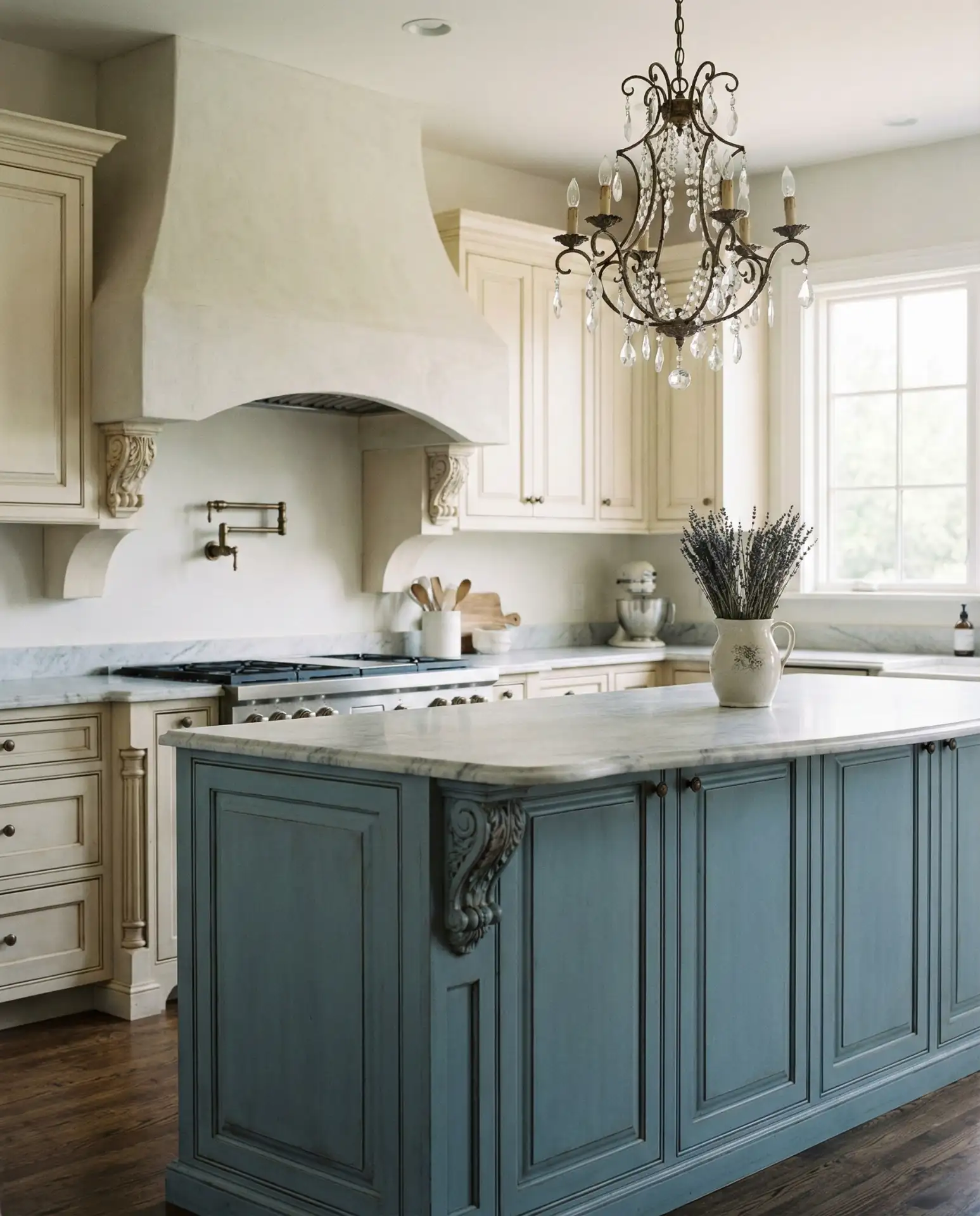
The French country aesthetic brings Old World elegance to the farmhouse kitchen through gentle curves, ornate details, and a soft color palette. A painted blue island—often in shades of dusty azure or weathered navy—serves as the focal point, contrasting beautifully with cream or ivory perimeter cabinets. This style embraces decorative elements like corbels, turned legs, and furniture-style cabinetry that resembles freestanding pieces rather than built-ins. 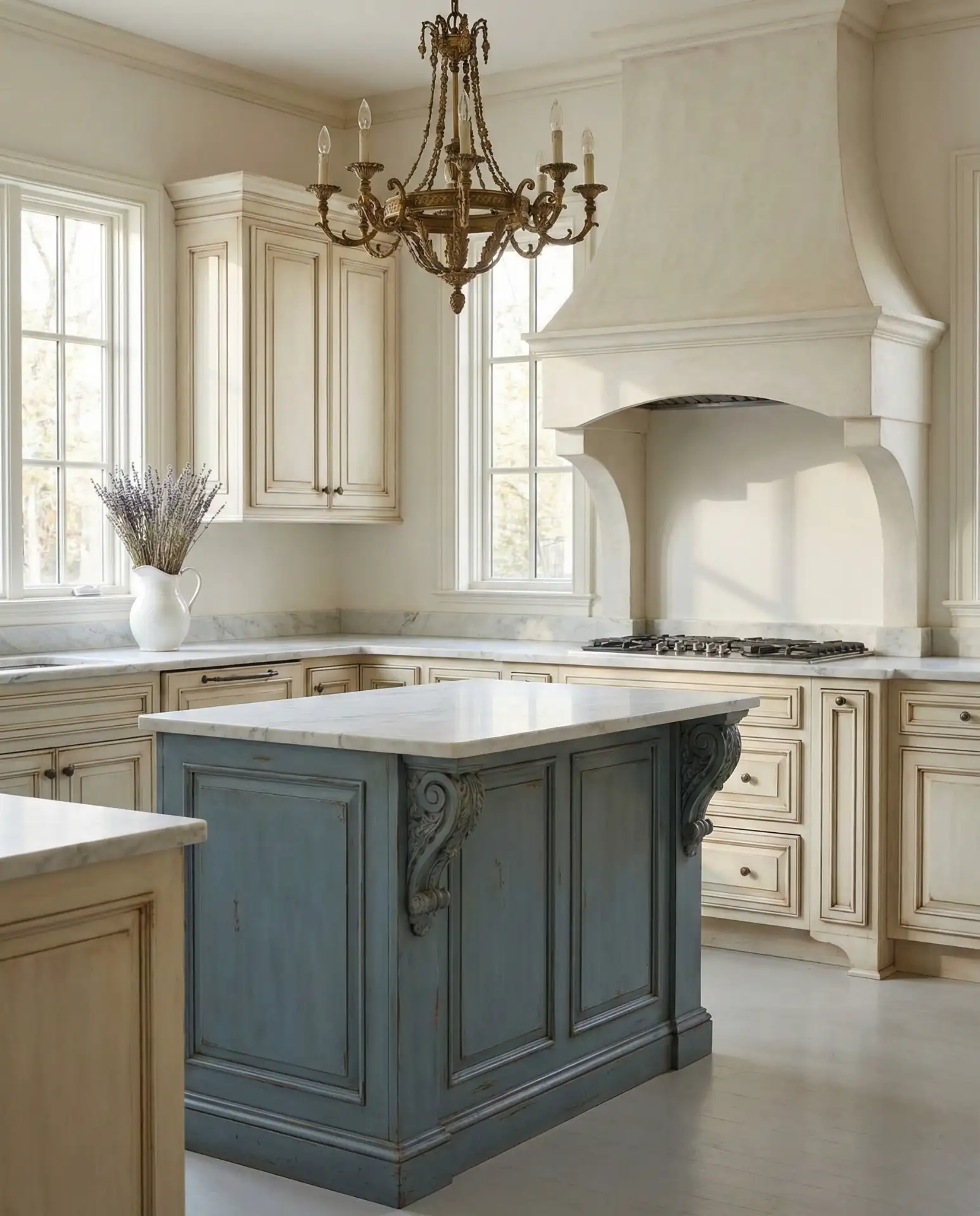
French country kitchens typically feature a mix of open and closed storage, with some items displayed on open shelving and others tucked behind glass-front doors. Budget-conscious homeowners can achieve this look by painting an existing island or repurposing a vintage sideboard as an island base. Quality chalk or milk paint in authentic French blues runs $35-50 per quart and requires minimal prep work, making it an accessible weekend project that delivers significant visual impact.
7. Coastal Farmhouse with Shiplap Walls
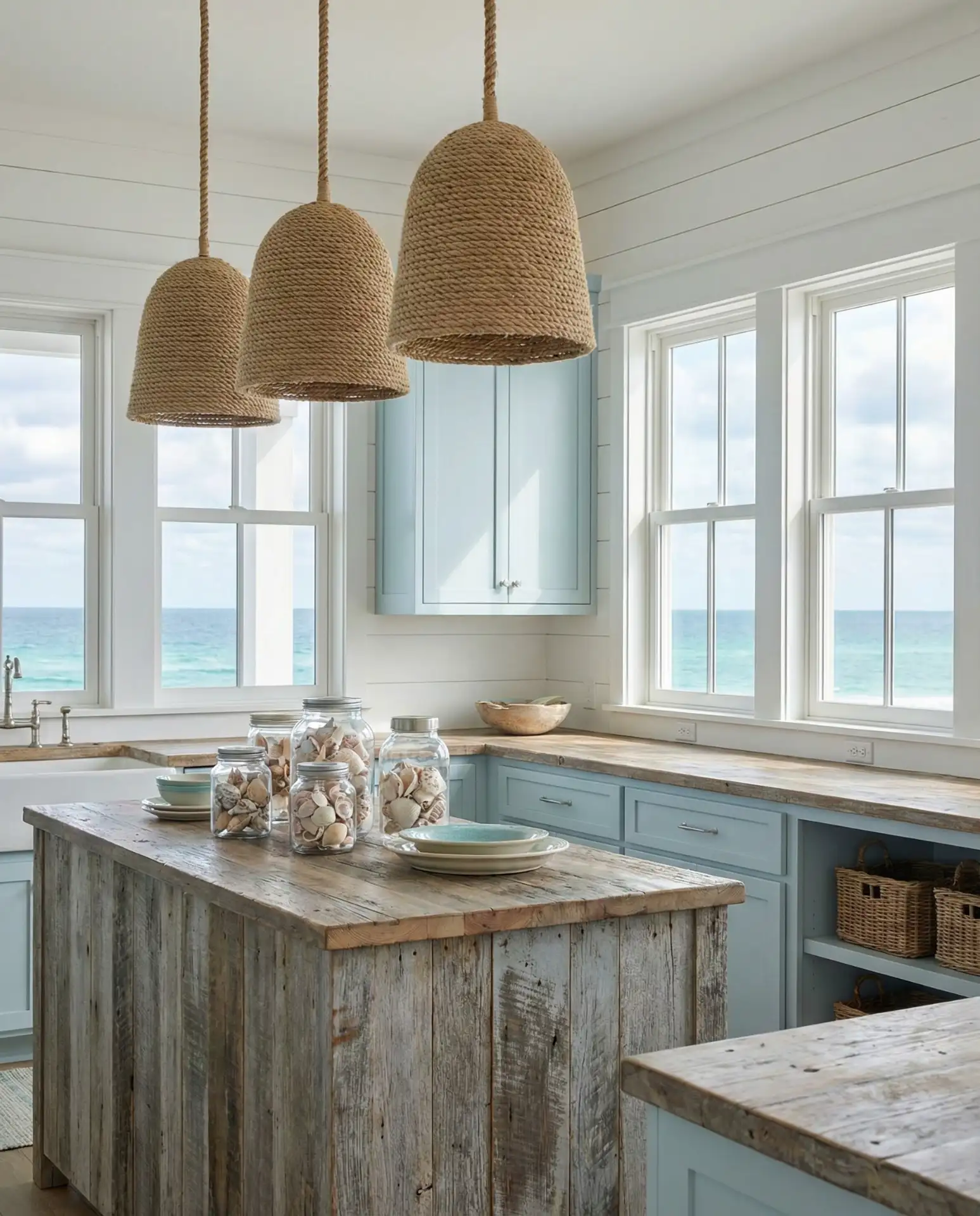
The coastal farmhouse kitchen merges nautical freshness with rustic warmth, creating spaces that feel breezy and relaxed. Horizontal shiplap walls painted in soft white or pale blue provide texture without overwhelming the space. This style works particularly well in beach communities and lakeside homes, where the connection to water inspires lighter, airier design choices. Natural rope accents, driftwood elements, and sea-glass colors complete the look. 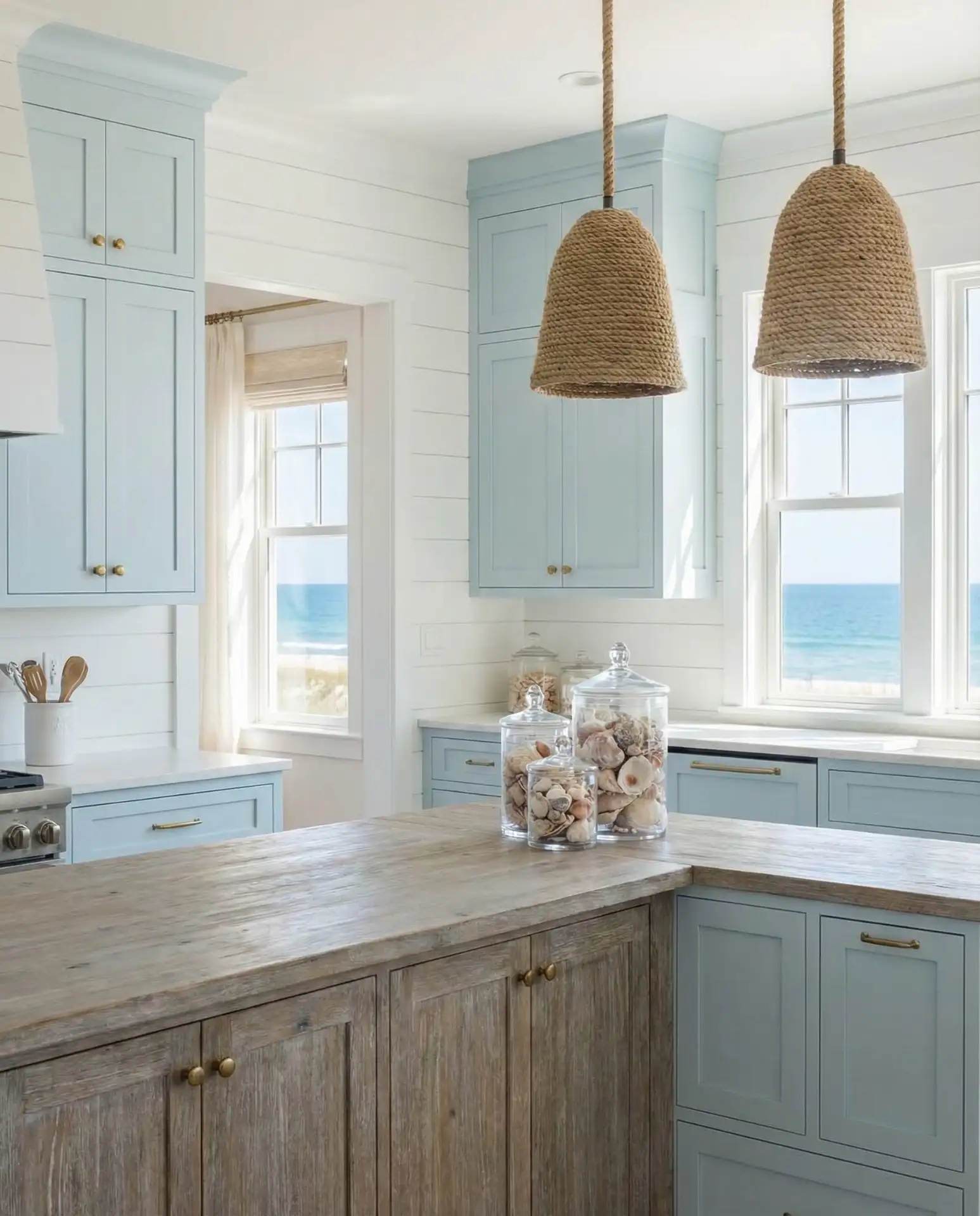
Real homeowner behavior shows that coastal farmhouse kitchens tend to have more relaxed organization systems—open shelving displaying everyday dishes, hooks for frequently used items, and baskets for produce. The casual, lived-in feel suits families who prioritize function over formality. When installing shiplap, many contractors recommend leaving a slight gap between boards (nickel-width) to allow for seasonal expansion and contraction, preventing buckling in humid coastal climates.
8. Brick Backsplash Farmhouse Kitchen
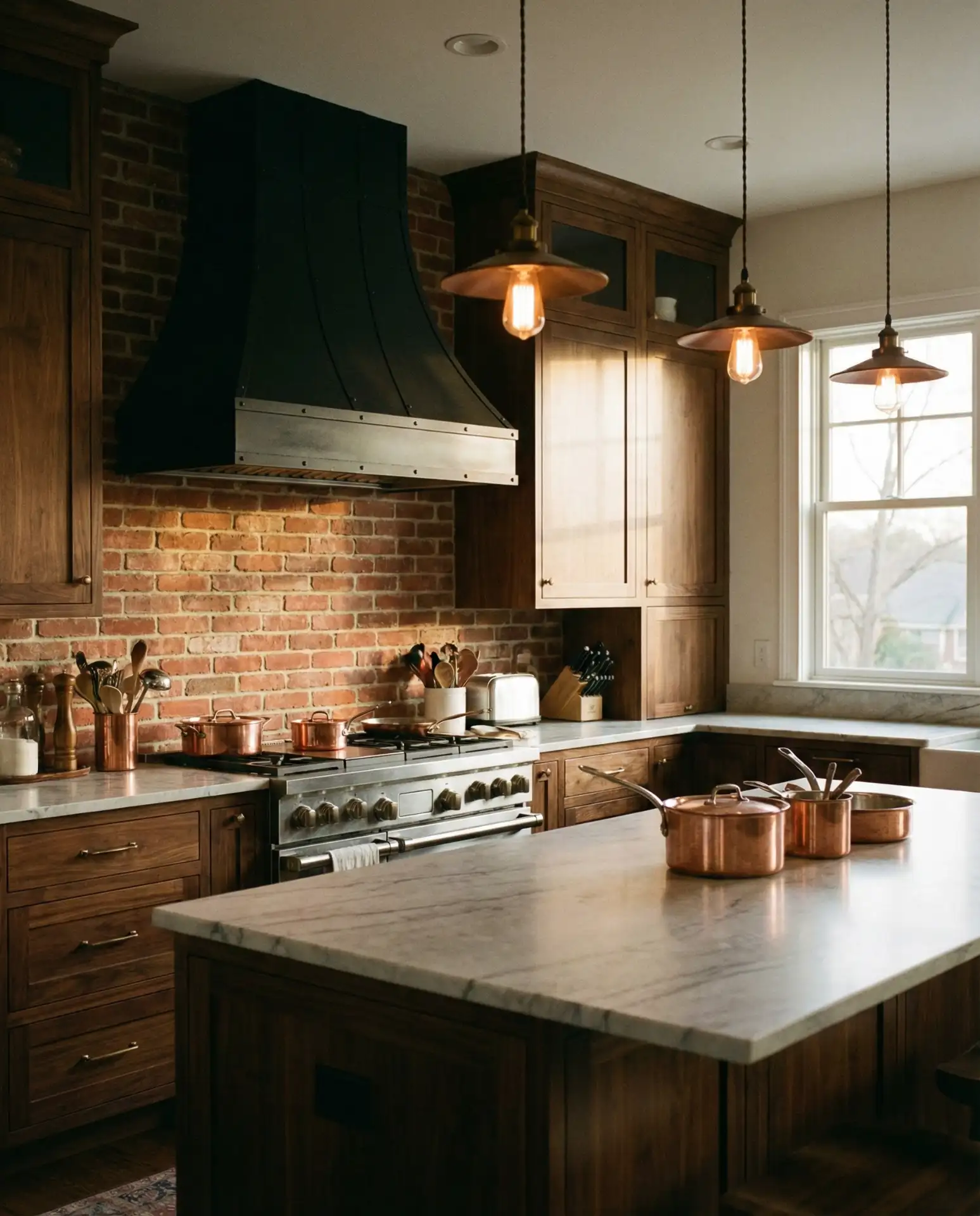
A brick backsplash introduces raw, industrial texture that grounds a farmhouse kitchen in authenticity. Whether you choose exposed original brick, thin brick veneer, or brick-style tile, this element adds warmth and character that pairs beautifully with both modern and rustic approaches. The irregular surface and earthy tones create visual interest without requiring pattern or color, making it an ideal backdrop for simple, streamlined kitchens. 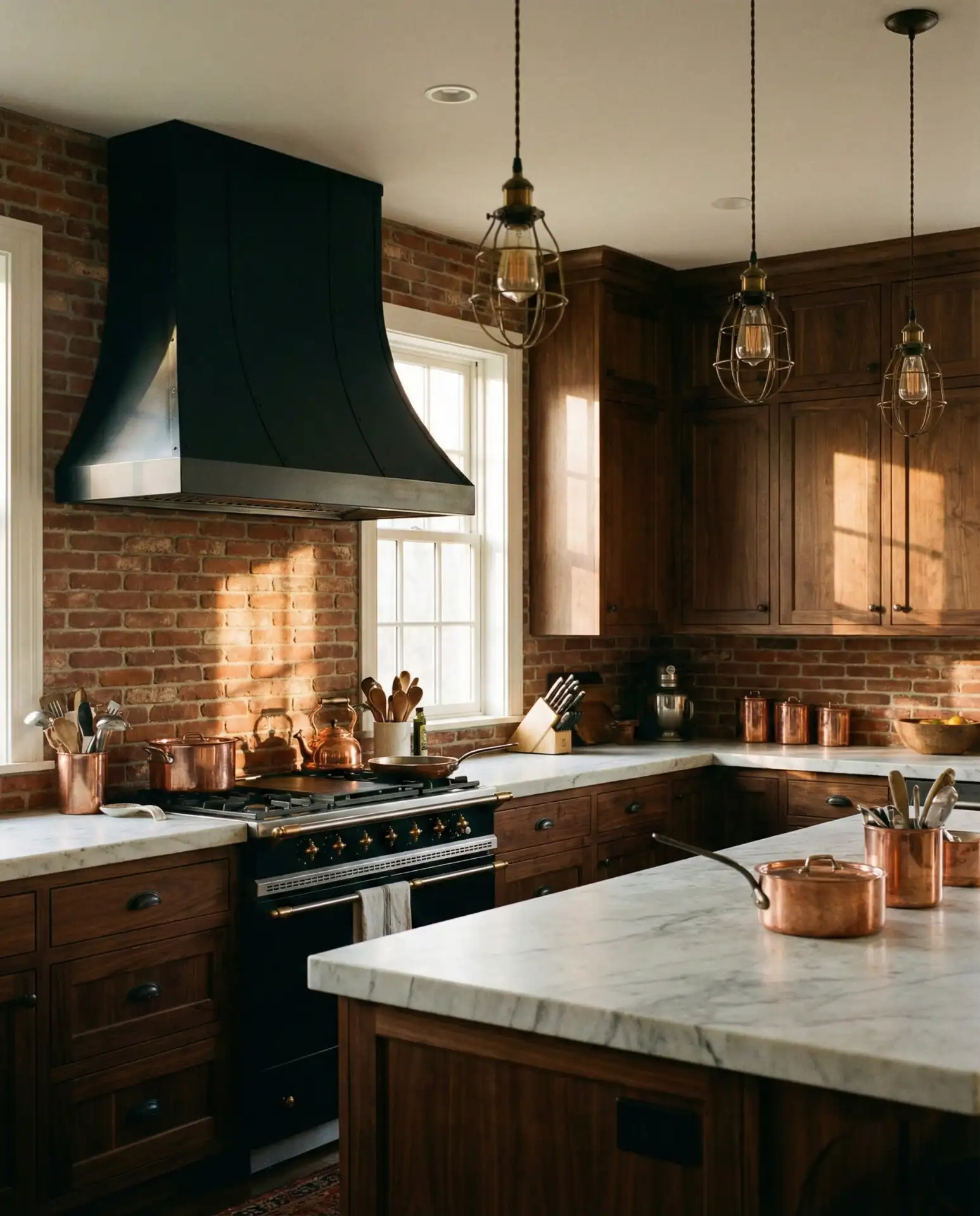
From a practical standpoint, brick backsplashes require proper sealing to prevent grease absorption and staining. Many homeowners apply a matte sealer that protects the surface while maintaining the natural look of the brick. In older homes with existing brick walls, simply cleaning and sealing the brick costs significantly less than installing new tile—often $3-5 per square foot for cleaning and sealing versus $15-30 for new brick veneer installation. The investment pays off in durability and timeless appeal.
9. Cozy Kitchen with Farmhouse Dining Nook
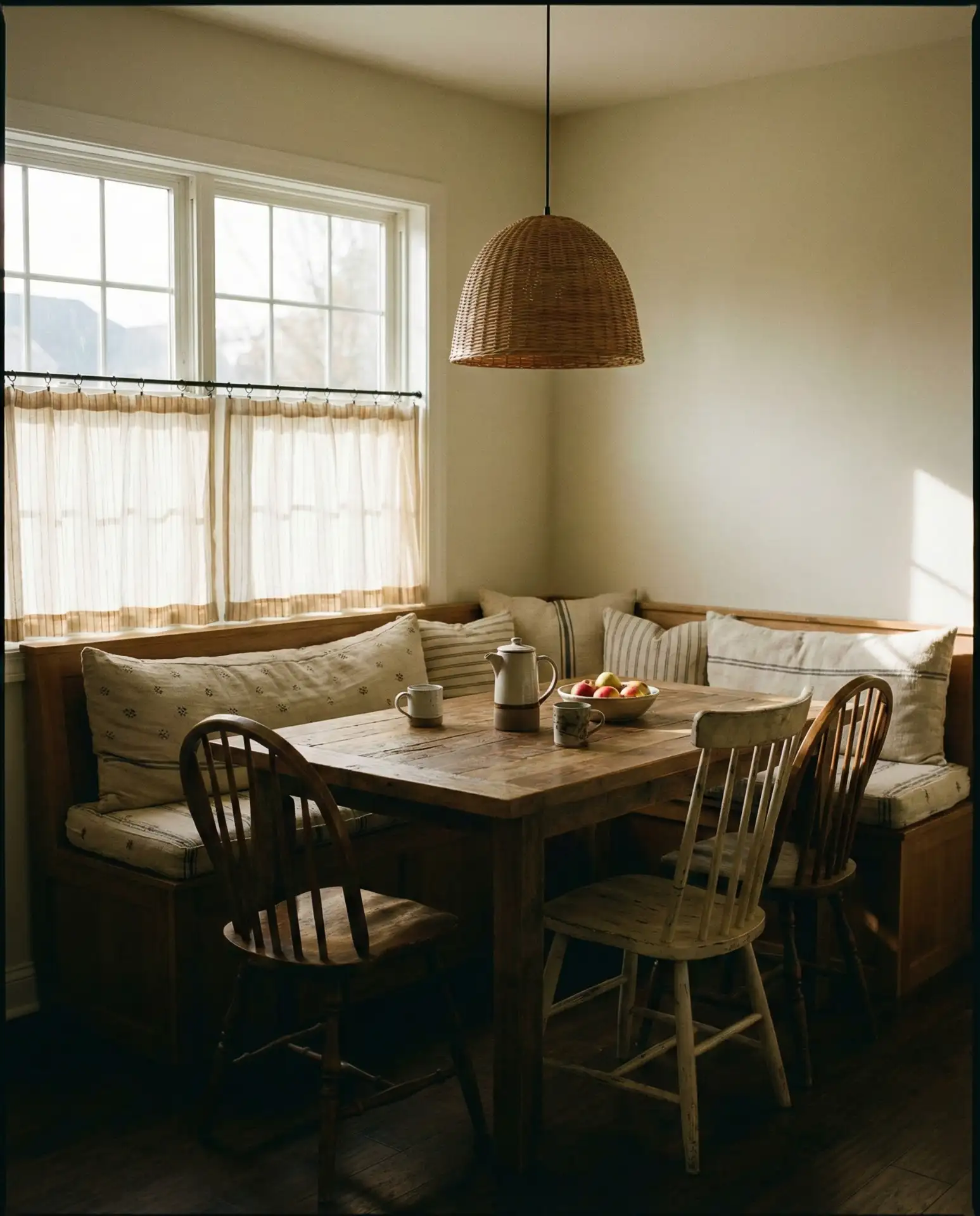
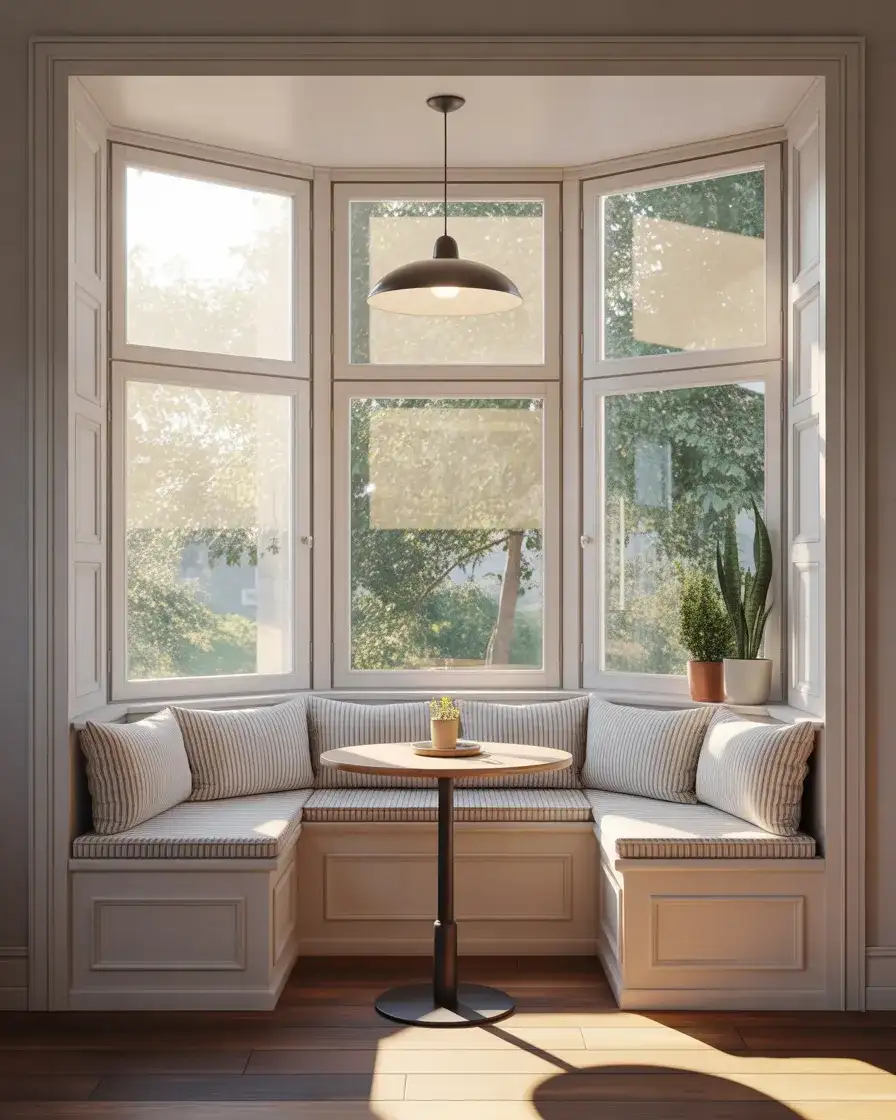
A cozy farmhouse kitchen extends beyond cabinetry and appliances to include an integrated dining area that encourages lingering over meals. Built-in banquettes with cushioned seating, a weathered wood table, and simple linen curtains create an intimate space within the larger kitchen. This layout works especially well in American homes where the kitchen serves as the social hub, providing a casual alternative to formal dining rooms. 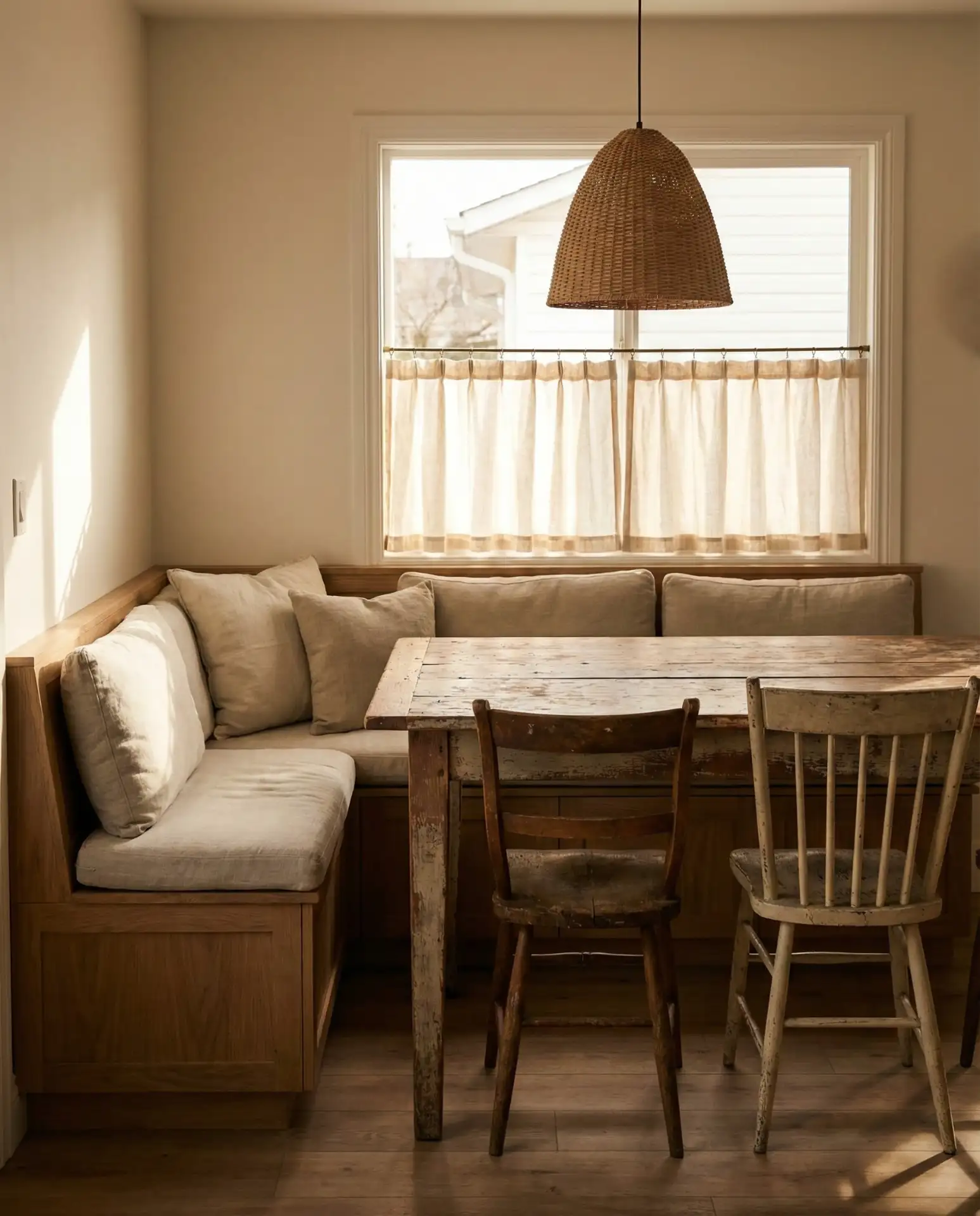
This setup is particularly popular in the South and Midwest, where family meals remain central to daily life. Expert designers recommend positioning the nook near a window to maximize natural light and create a pleasant view during meals. Storage drawers built into the banquette base add practical value—perfect for storing table linens, placemats, or seasonal items. The combination of function and comfort makes this one of the most family-friendly farmhouse kitchen configurations.
10. Red Accent Farmhouse Kitchen
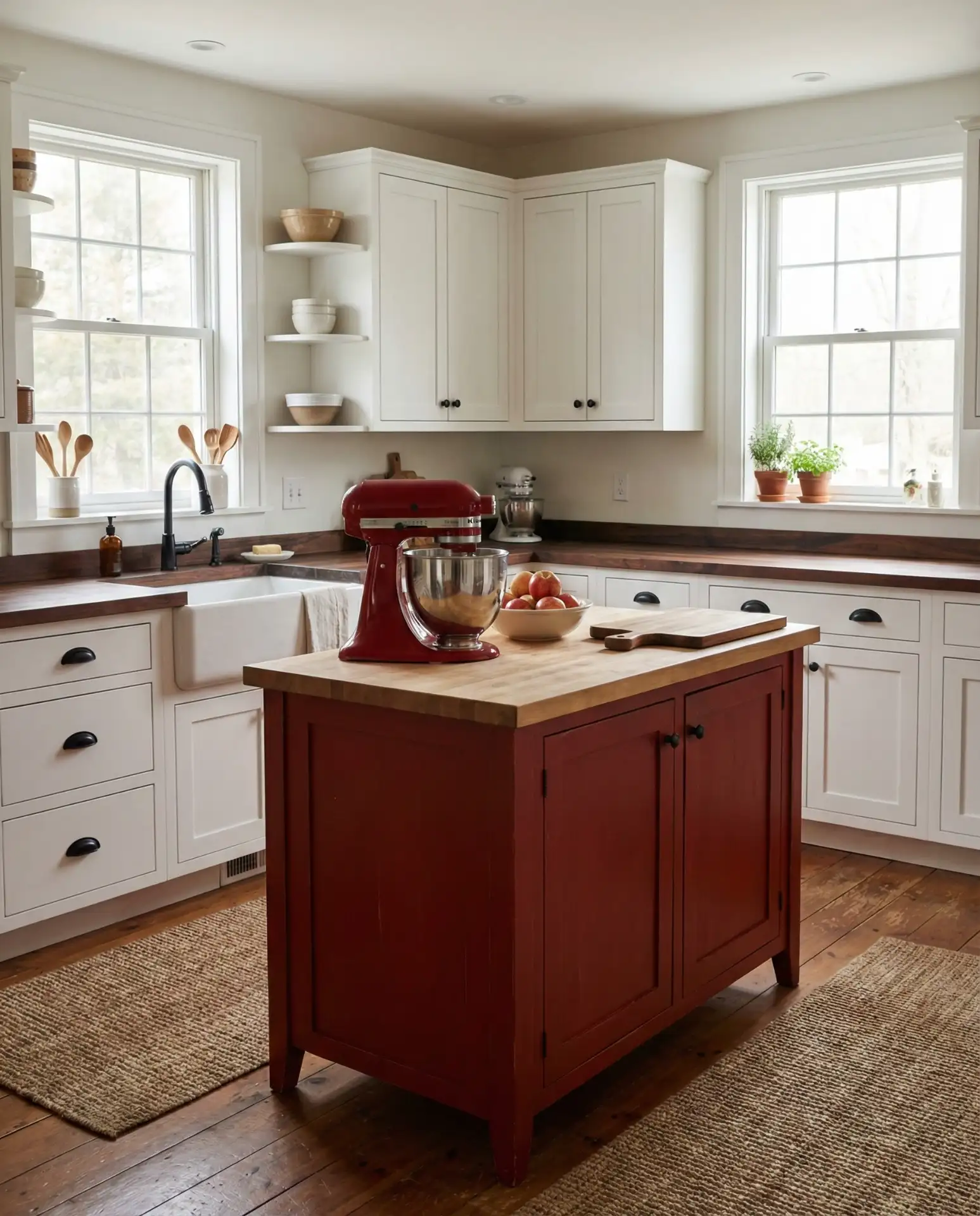
While neutral palettes dominate farmhouse design, a bold red accent brings unexpected energy and warmth. This might appear as a painted island, a vintage red refrigerator, or backsplash ideas incorporating red brick or tile. The key is using red sparingly—as a punctuation mark rather than the primary color. Against a backdrop of white or cream cabinetry, red creates a cheerful, welcoming atmosphere reminiscent of classic American country kitchens. 
Common mistakes include using too much red, which can overwhelm the space, or choosing the wrong shade. Historically accurate farmhouse reds lean toward barn red or dusty cranberry rather than bright cherry or fire engine tones. These muted shades feel authentic and age gracefully. If you’re hesitant about commitment, start with red accessories—dish towels, a stand mixer, pottery—and see how you respond to the color before painting cabinetry. Paint is relatively easy to change, but it helps to test your color tolerance first.
11. Yellow Farmhouse Kitchen with Vintage Stove

Soft, buttery yellow brings sunshine into farmhouse kitchens, creating spaces that feel perpetually cheerful and warm. This color works beautifully on walls, especially when paired with white cabinetry and dark wood or soapstone counters. A restored vintage stove in cream or yellow becomes the kitchen’s centerpiece, combining authentic period appeal with surprising functionality. These classic ranges often feature six or more burners and spacious ovens that serious home cooks appreciate. 
A family in Vermont recently restored a 1950s Chambers stove, spending about $3,000 on professional refurbishment. While that might seem steep, comparable new ranges with similar cooking capacity and character run $8,000-15,000. The restored stove not only functions beautifully but serves as a conversation piece and nod to sustainable living through reuse. Yellow walls in particular benefit from natural light, so this palette shines in kitchens with good window exposure.
12. Tiny Farmhouse Kitchen with Smart Storage
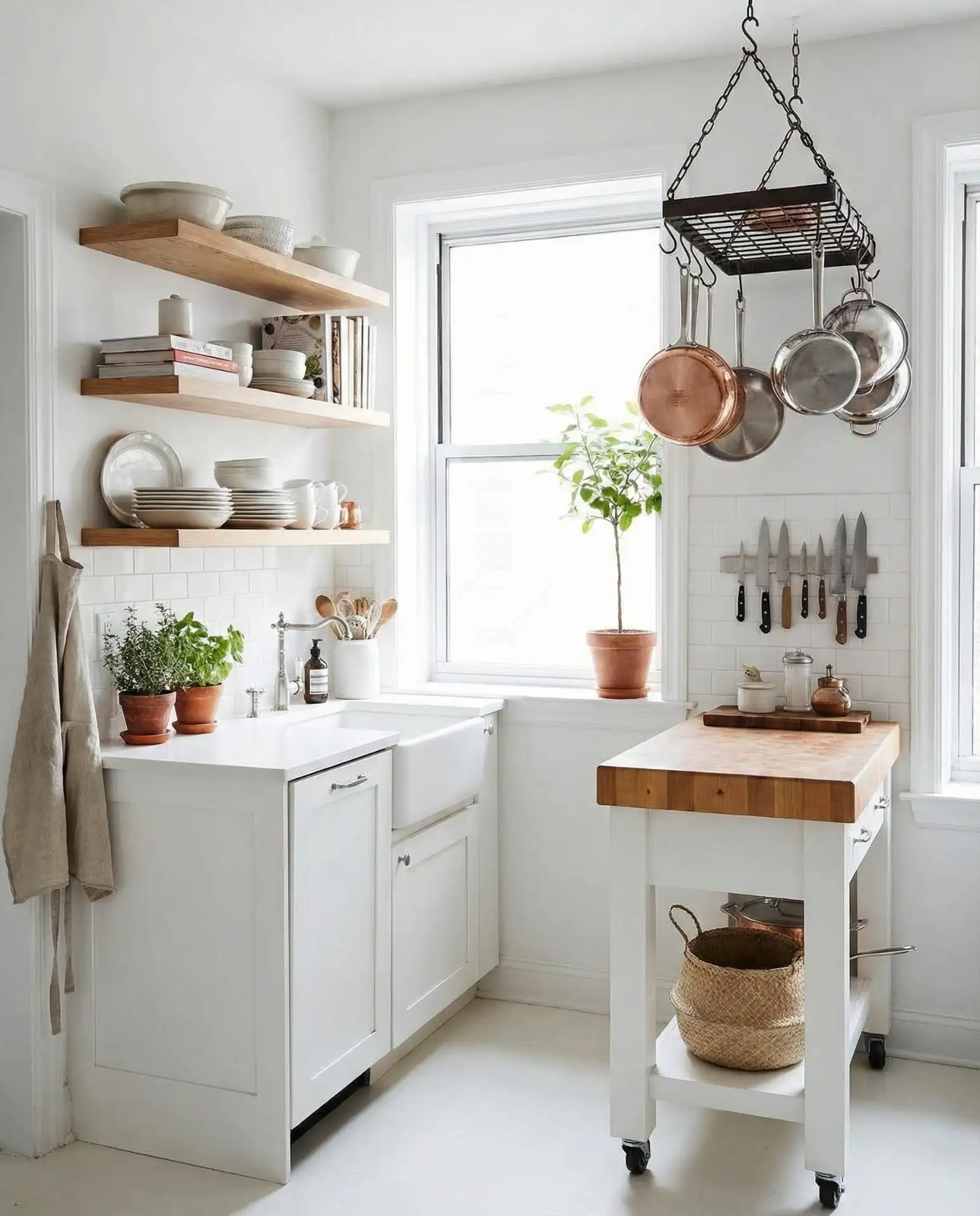
A tiny farmhouse kitchen proves that charm and character don’t require square footage. Vertical storage, open shelving, and multi-functional furniture maximize limited space while maintaining cottage warmth. Light colors—white cabinets with pale counters—help small kitchens feel more spacious, while carefully chosen vintage pieces add personality without clutter. The trick is editing ruthlessly and choosing items that serve both practical and aesthetic purposes. 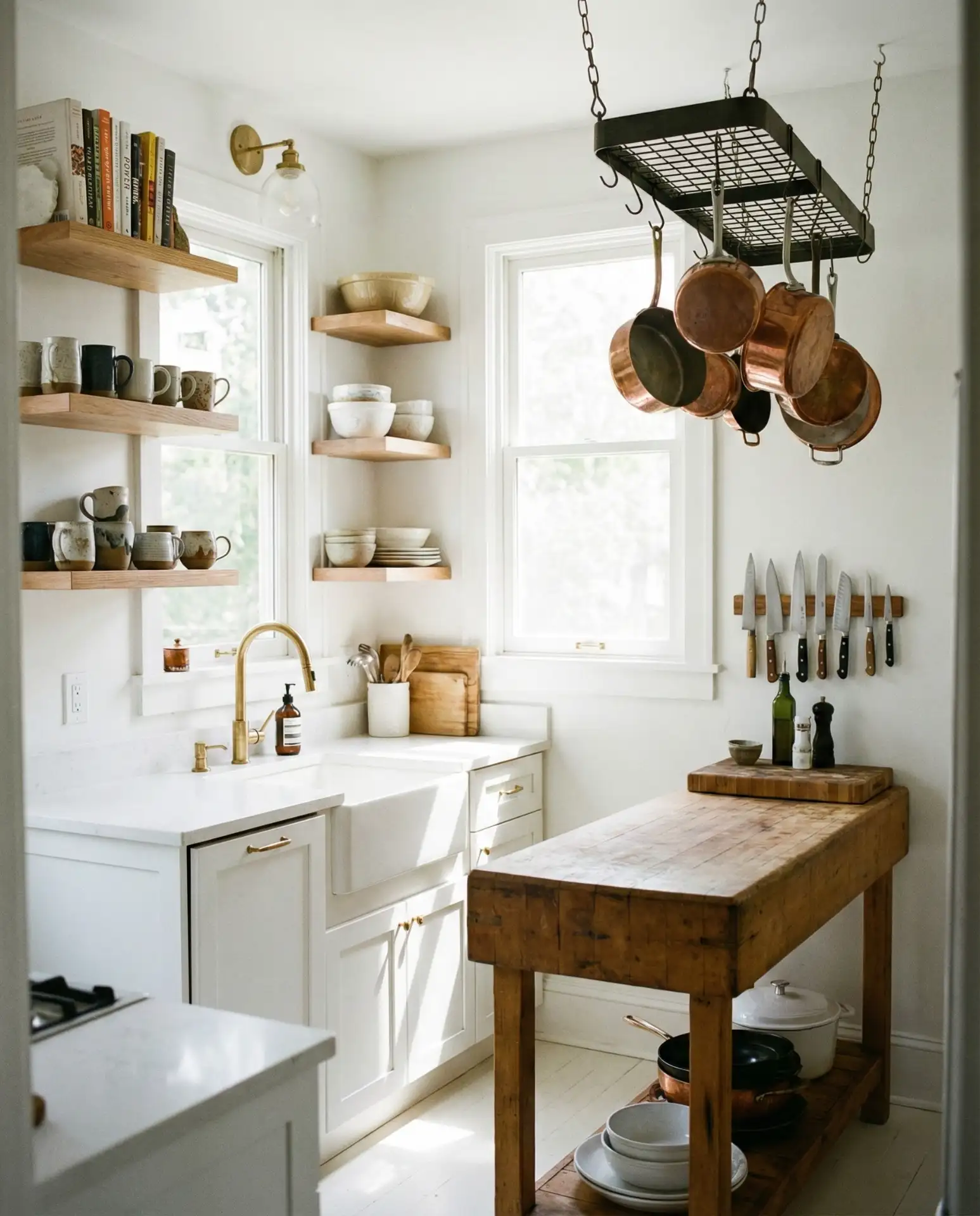
Practical insights for small farmhouse kitchens include installing pegboards for flexible storage, using the inside of cabinet doors for spice racks or measuring cups, and choosing slim appliances designed for compact spaces. A 24-inch range instead of 30 inches, a counter-depth refrigerator, and a single-bowl sink can reclaim precious inches without sacrificing functionality. Many apartment dwellers and tiny home enthusiasts embrace farmhouse style specifically because its emphasis on simplicity aligns perfectly with small-space living.
13. Green Cabinetry Farmhouse Kitchen
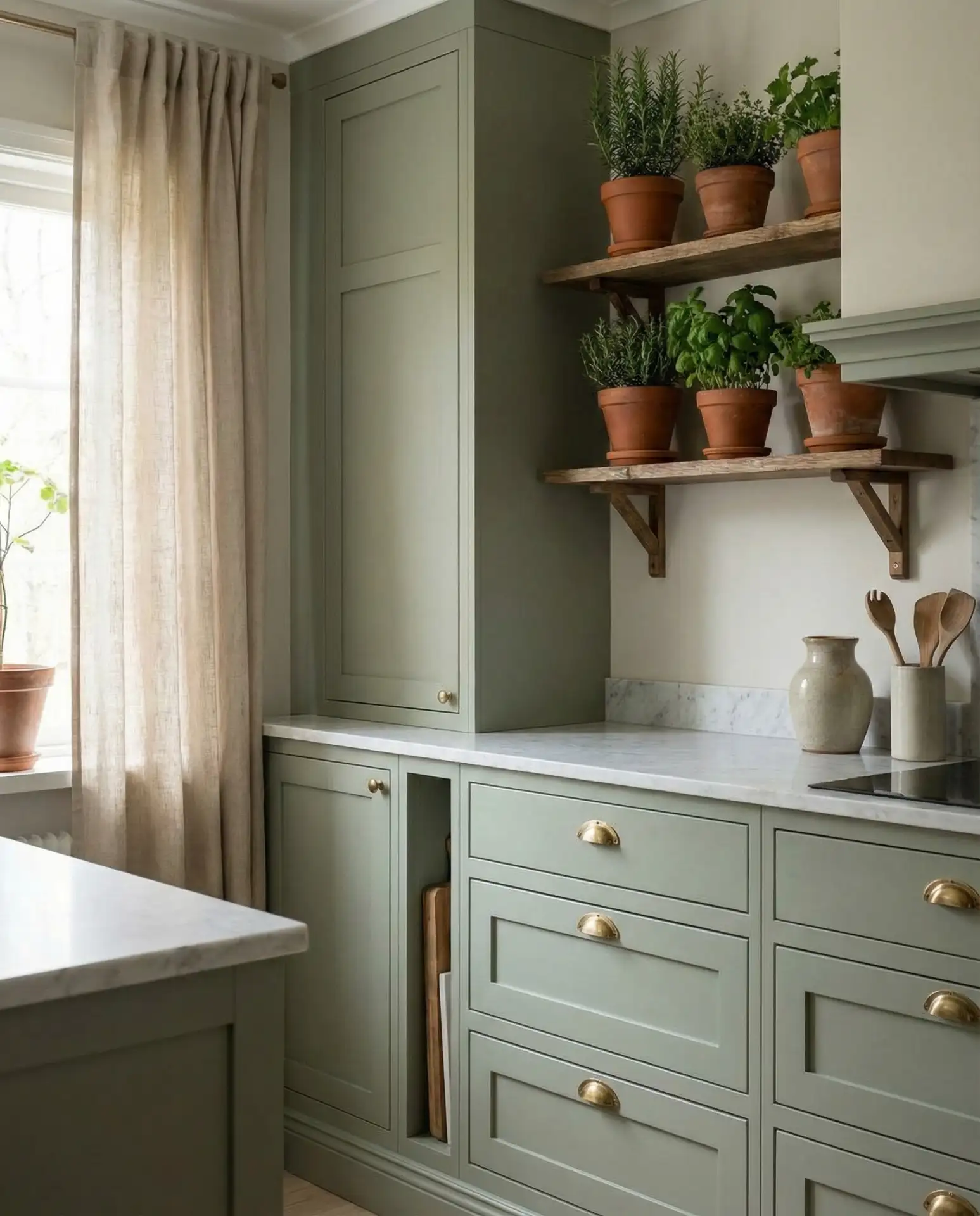
Green cabinetry has emerged as a sophisticated alternative to standard white or wood tones in farmhouse kitchens. From deep forest hues to soft sage green, these nature-inspired colors create a grounded, organic feel that complements wood elements and natural materials. Paired with brass or aged bronze hardware, green cabinets bring depth and richness while maintaining the approachable warmth essential to farmhouse style. 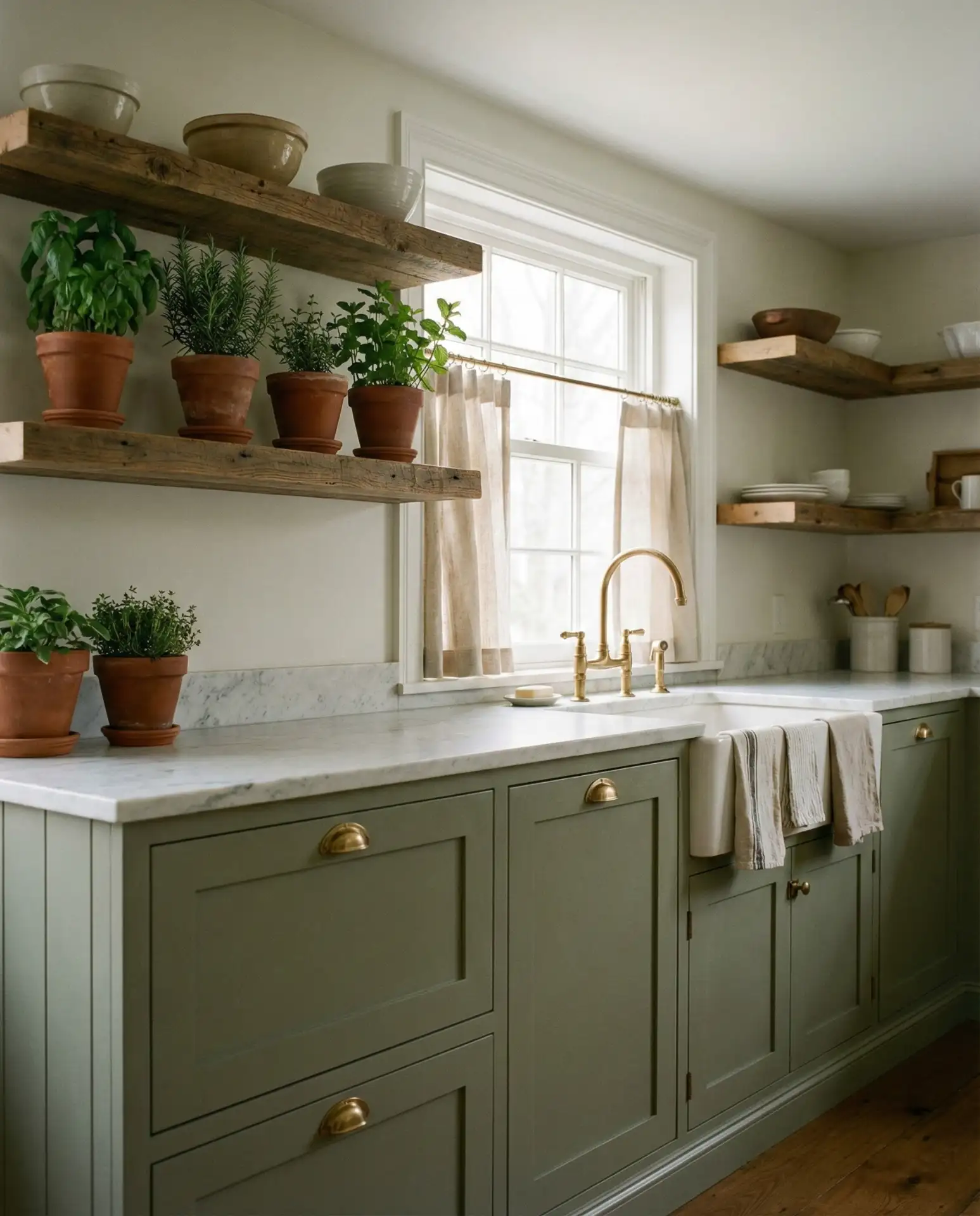
Where this works best is in kitchens with ample natural light, as green can read darker in poorly lit spaces. North-facing kitchens might opt for lighter sage or mint tones, while south-facing rooms can handle deeper emerald or hunter greens. The color pairs beautifully with natural wood floors, white subway tile, and marble or quartz counters. Budget tip: painting existing cabinets professional-grade green costs $2,000-4,000 for an average kitchen, significantly less than replacement while delivering dramatic transformation.
14. European Farmhouse with Plaster Range Hood
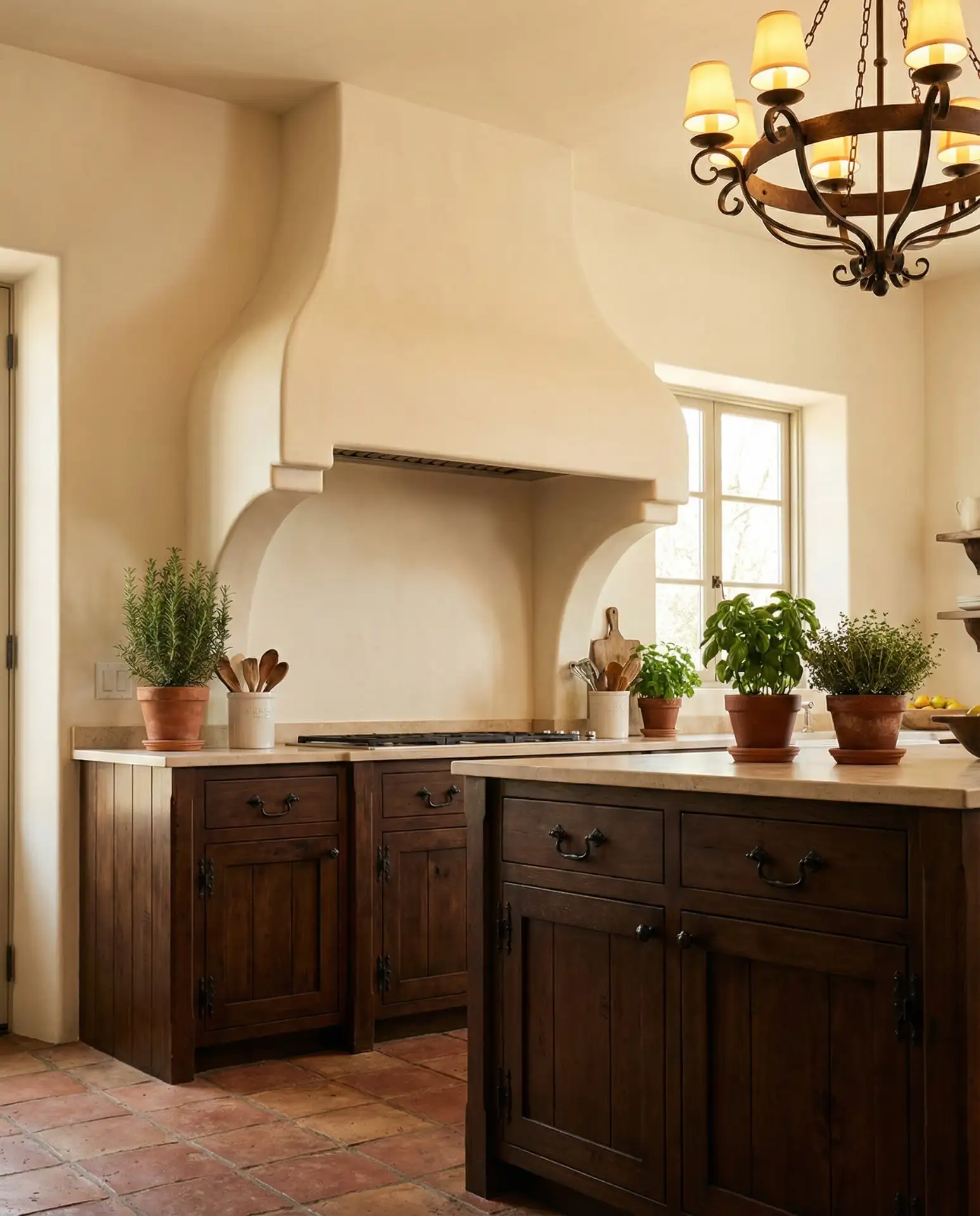
The European farmhouse kitchen distinguishes itself through architectural details like a plaster-finished range hood that becomes a sculptural focal point. Hand-troweled plaster creates subtle texture and organic curves that soften the kitchen’s overall look. This Italian and French-inspired approach emphasizes craftsmanship and Old World techniques, where imperfections add to rather than detract from the design’s appeal. 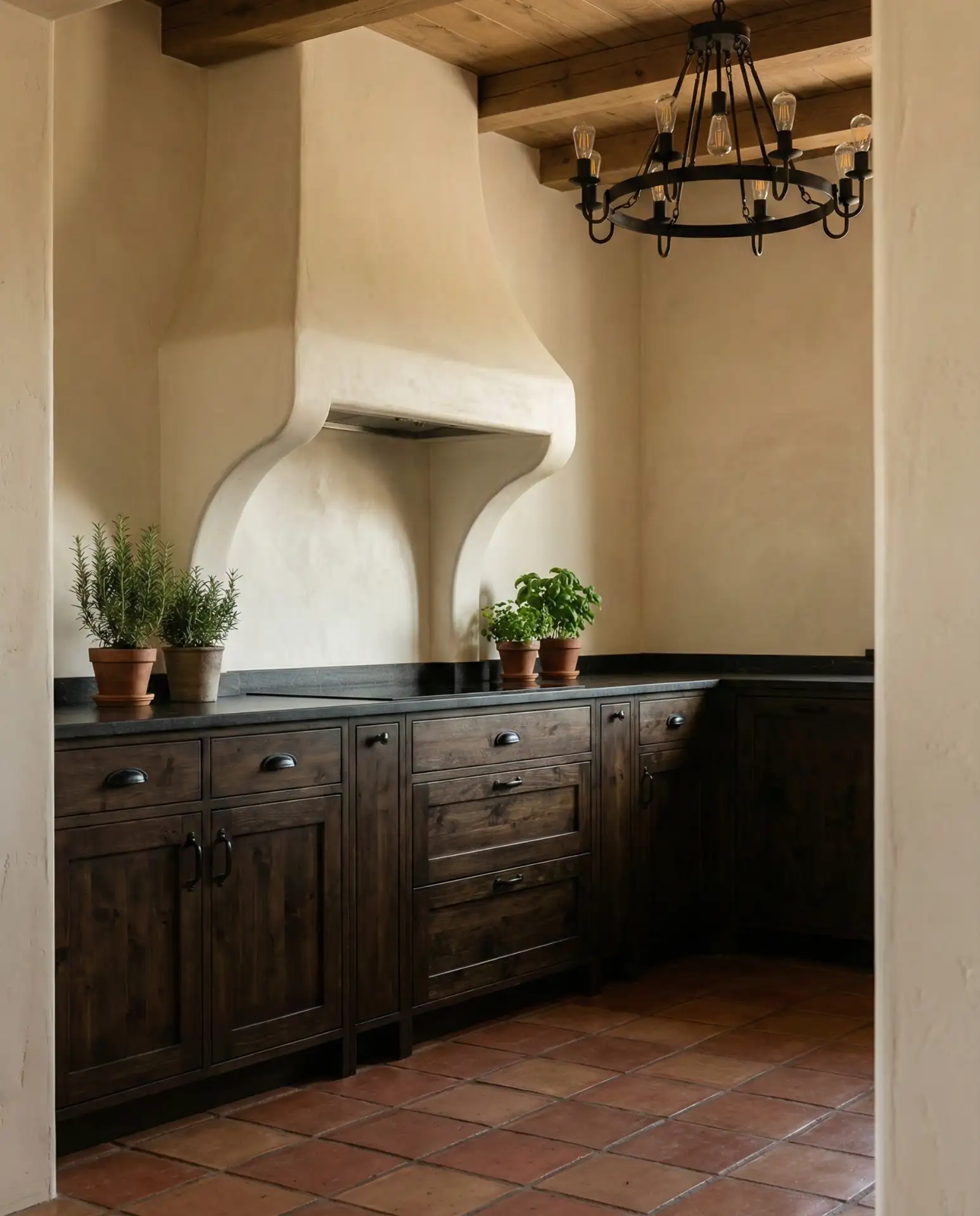
Expert commentary suggests that authentic plaster hoods require skilled craftspeople and typically cost $3,000-8,000 depending on size and complexity. However, the investment creates a truly custom element that defines the entire kitchen. For those working with tighter budgets, faux plaster finishes using joint compound and specialized techniques can achieve a similar look for $800-1,500. The key is building a proper structure underneath—usually wood framing covered with cement board—before applying the plaster finish.
15. Farmhouse Kitchen with Innovative Backsplash Ideas
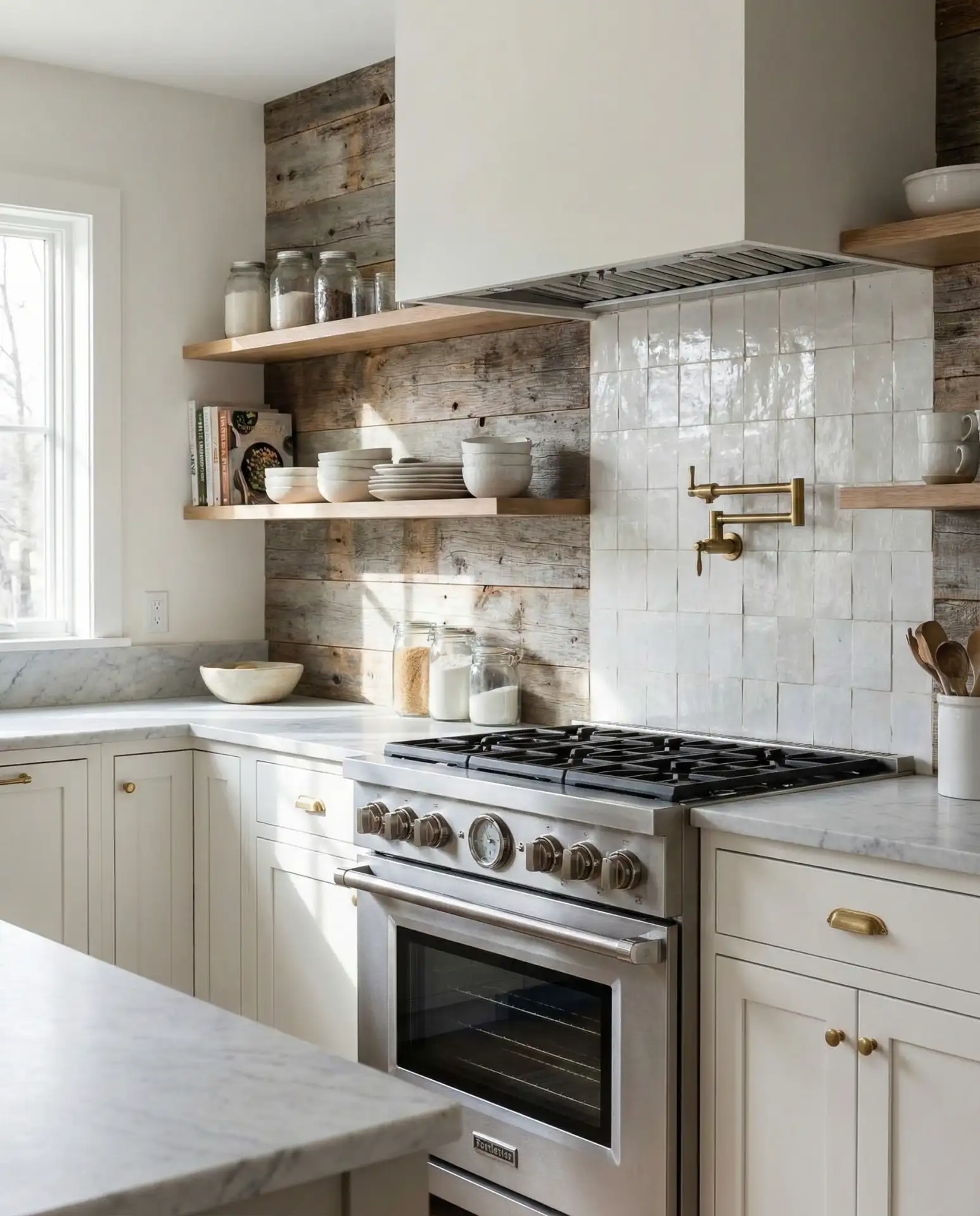
Beyond traditional subway tile, backsplash ideas for farmhouse kitchens now include reclaimed wood planks, pressed tin tiles, and zellige or handmade ceramic tiles that introduce pattern and texture. These materials honor the farmhouse emphasis on natural, artisanal elements while creating visual interest behind cooktops and sinks. Contemporary interpretations might mix materials—wood on one wall, tile behind the range—for a collected-over-time aesthetic. 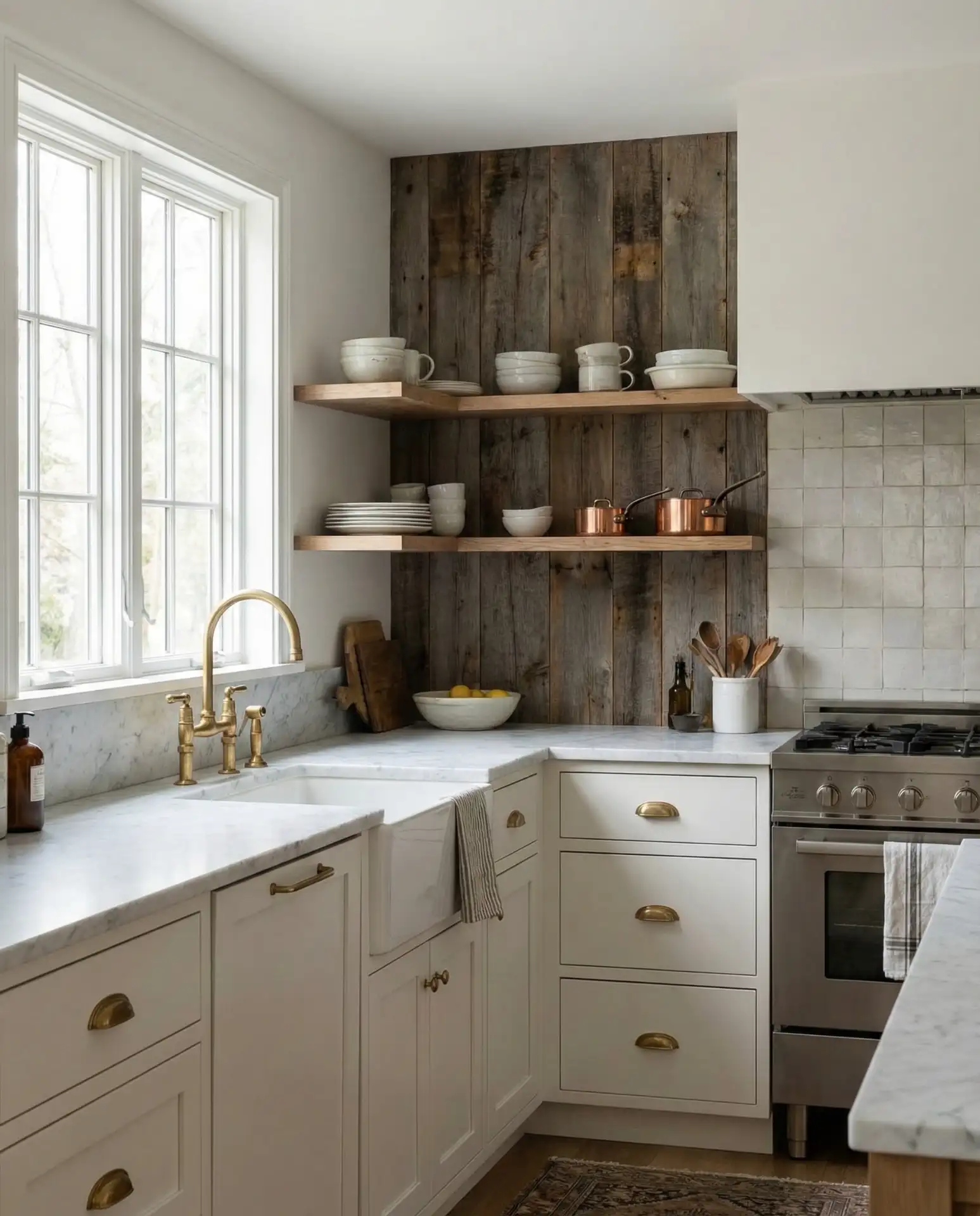
Real homeowners often start with a standard backsplash and later add character through creative updates. Reclaimed wood requires sealing to withstand kitchen moisture and should be installed with proper spacing to allow for expansion. Pressed tin offers an affordable vintage look at $15-25 per square foot installed, while authentic zellige tiles from Morocco run $30-60 per square foot but deliver unmatched handcrafted beauty. Consider your lifestyle—families with young children might prioritize easy-clean surfaces, while empty nesters can embrace more delicate materials.
16. Black Farmhouse Kitchen with Dramatic Contrast
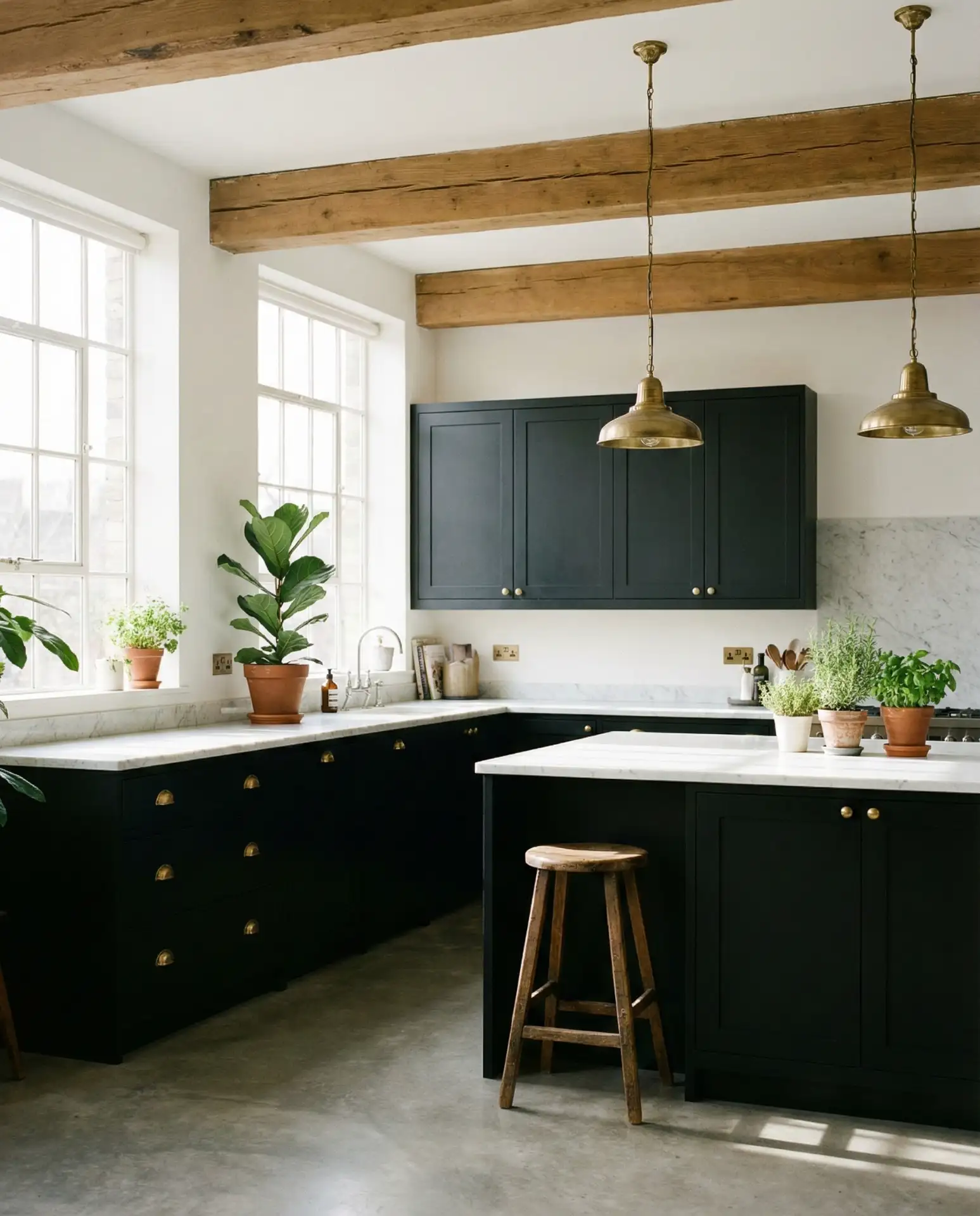
Black cabinetry creates striking drama in farmhouse kitchens, especially when balanced with lighter countertops and walls. This moody approach works surprisingly well with farmhouse elements—think black shaker cabinets paired with warm wood tones, brass hardware, and plenty of natural light. The darkness grounds the space and provides a sophisticated backdrop for displaying colorful pottery, fresh flowers, or copper cookware. 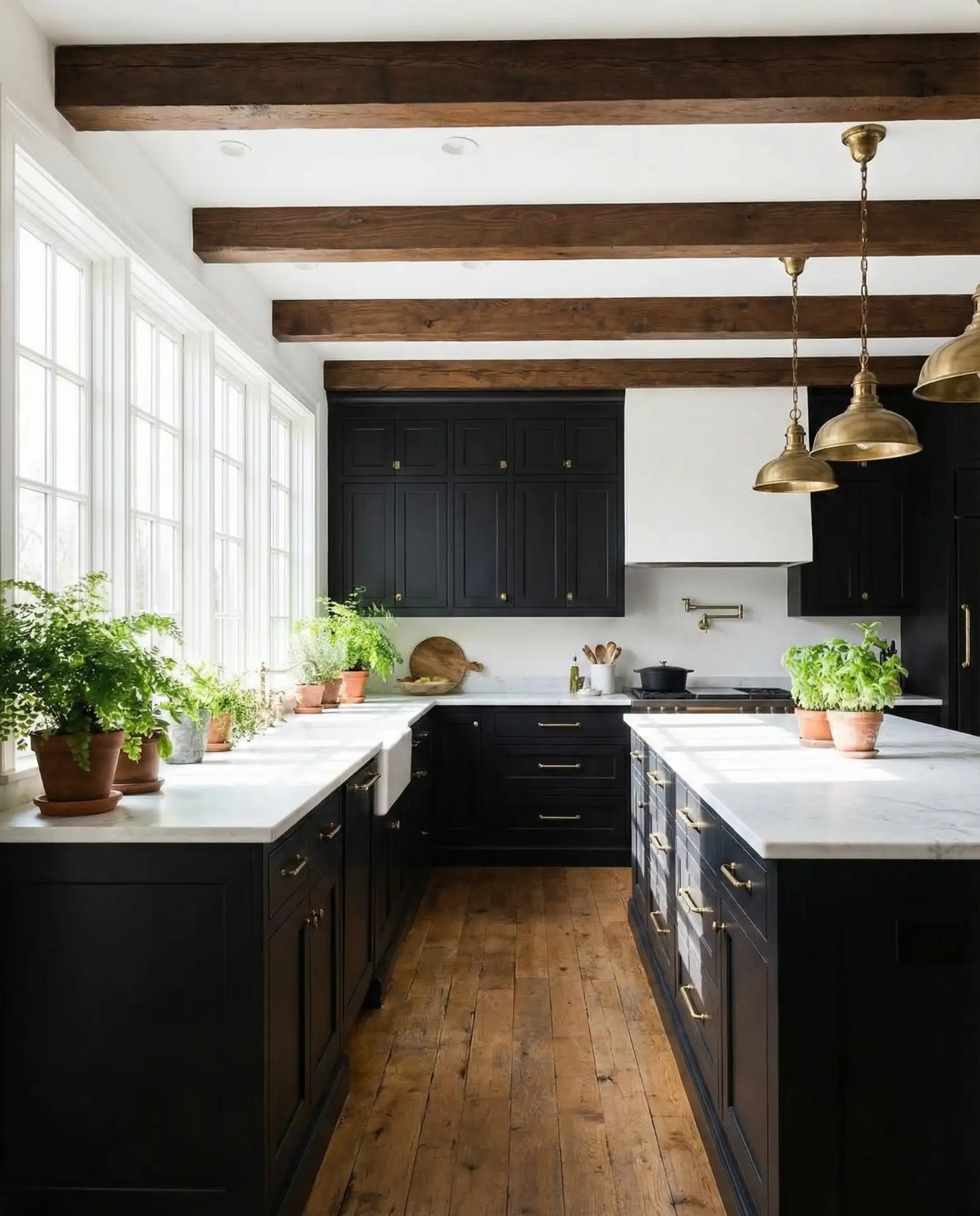
This style demands excellent lighting to prevent the kitchen from feeling cave-like. Large windows, skylights, or abundant artificial lighting are essential. Many homeowners balance black lower cabinets with white or glass-front uppers to maintain visual lightness. The black shows fingerprints and dust more readily than lighter colors, so be prepared for more frequent cleaning. However, the dramatic effect and timeless sophistication make the extra maintenance worthwhile for design-focused homeowners.
17. Sage Green and Natural Wood Kitchen
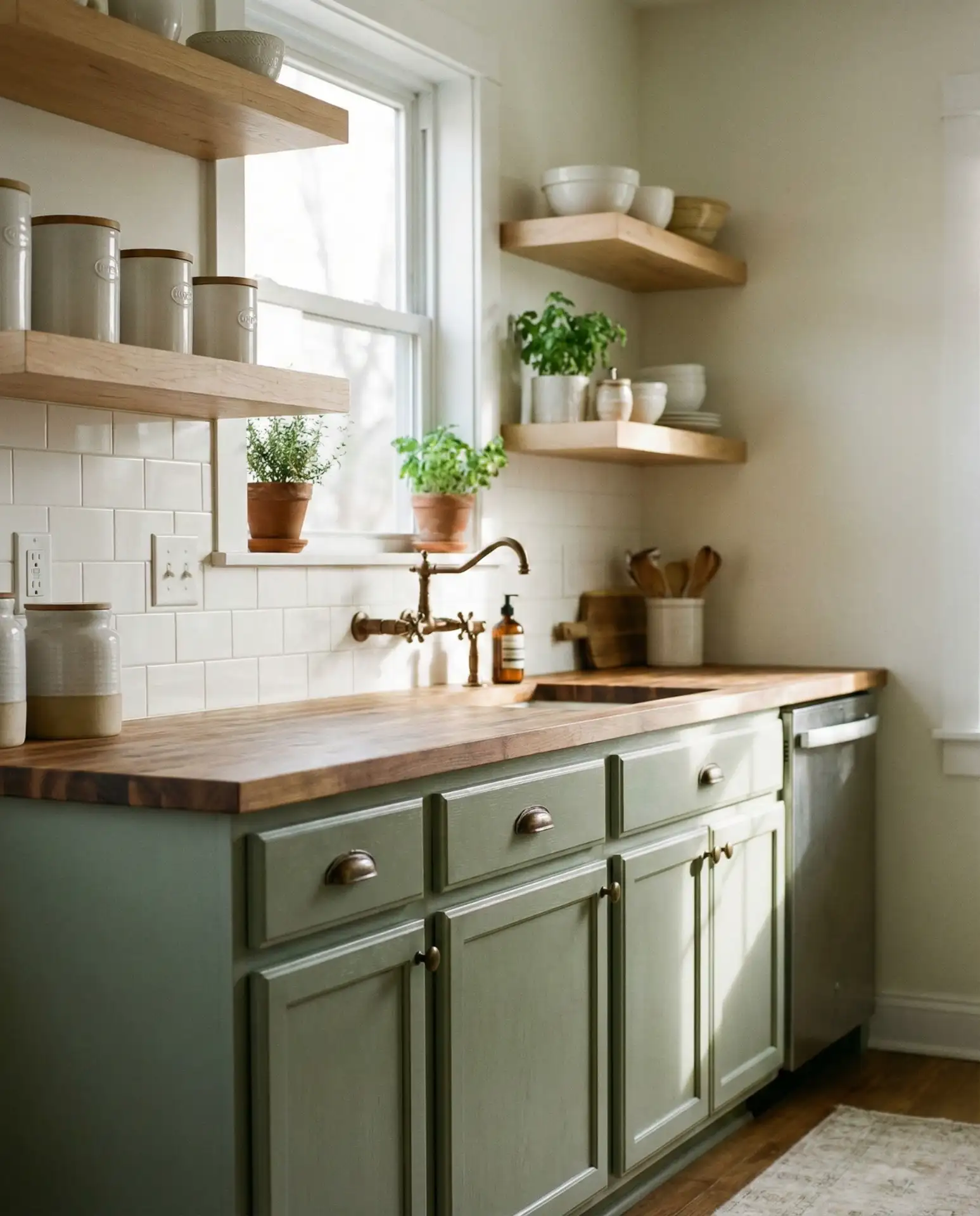
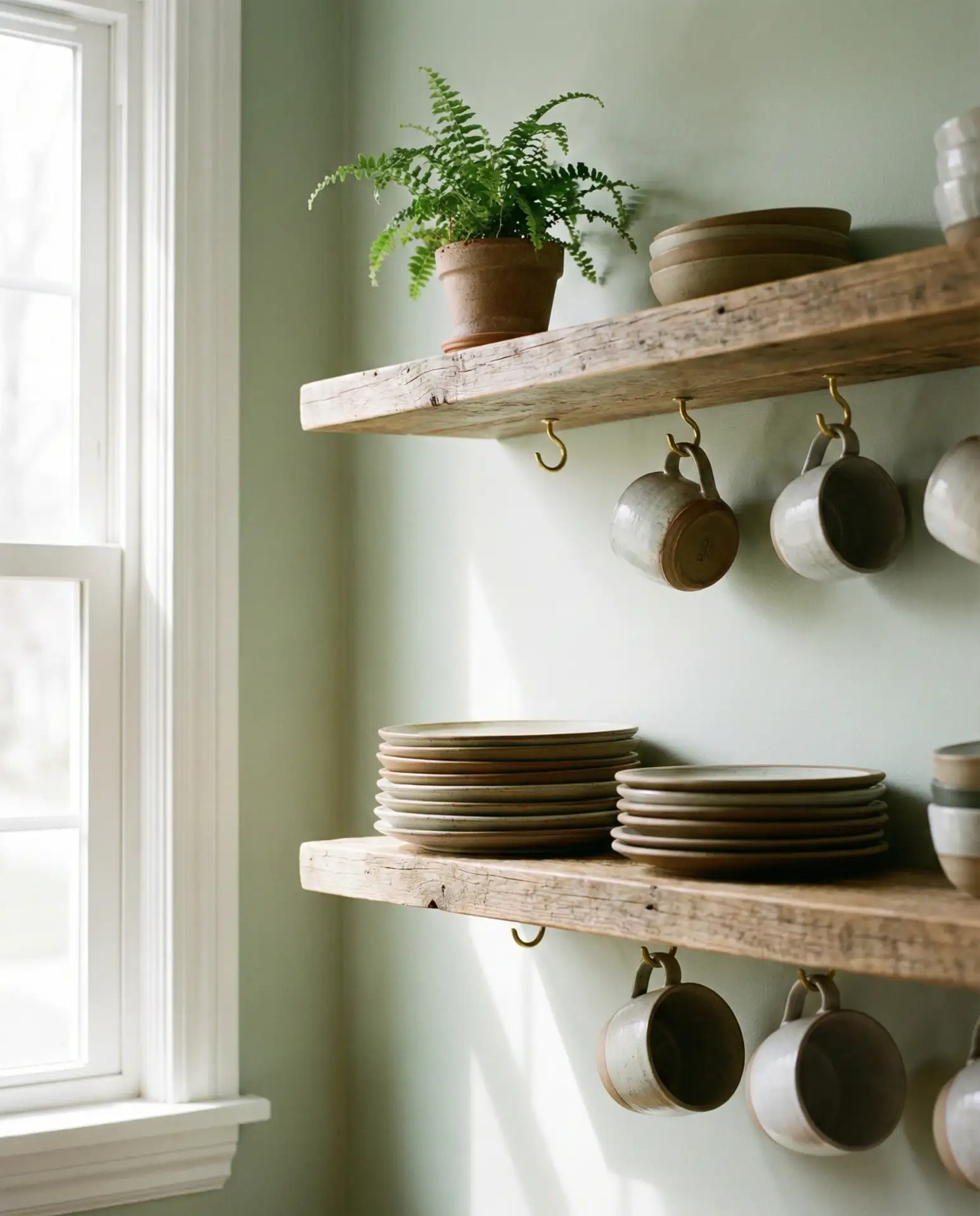
The combination of sage green cabinetry and natural wood creates one of the most soothing, nature-inspired farmhouse palettes. This soft, muted green pairs beautifully with light oak, maple, or birch wood elements—whether in flooring, countertops, or open shelving. The overall effect feels organic and calming, bringing the outdoors inside while maintaining a cozy atmosphere perfect for family gatherings. 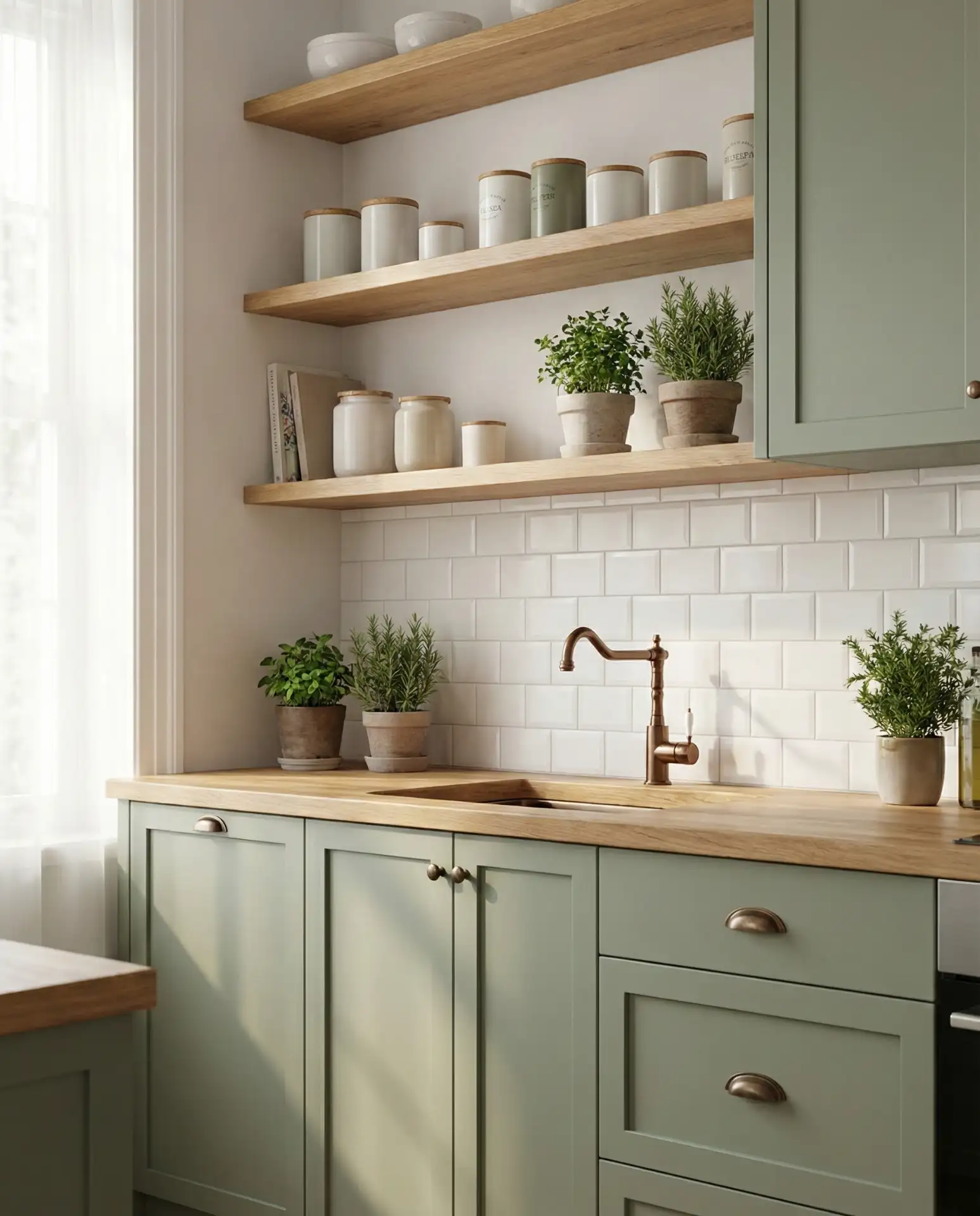
Regional context plays into this trend’s popularity—the Pacific Northwest and New England have particularly embraced sage green kitchens, perhaps because the color echoes the abundant greenery in these regions. The color is forgiving and works across lighting conditions, from bright afternoon sun to cloudy winter days. Pair it with white walls and ceilings to keep the space feeling fresh, and incorporate plenty of greenery through herbs, potted plants, or cut branches to reinforce the natural theme.
18. Contemporary Farmhouse with Minimalist Details
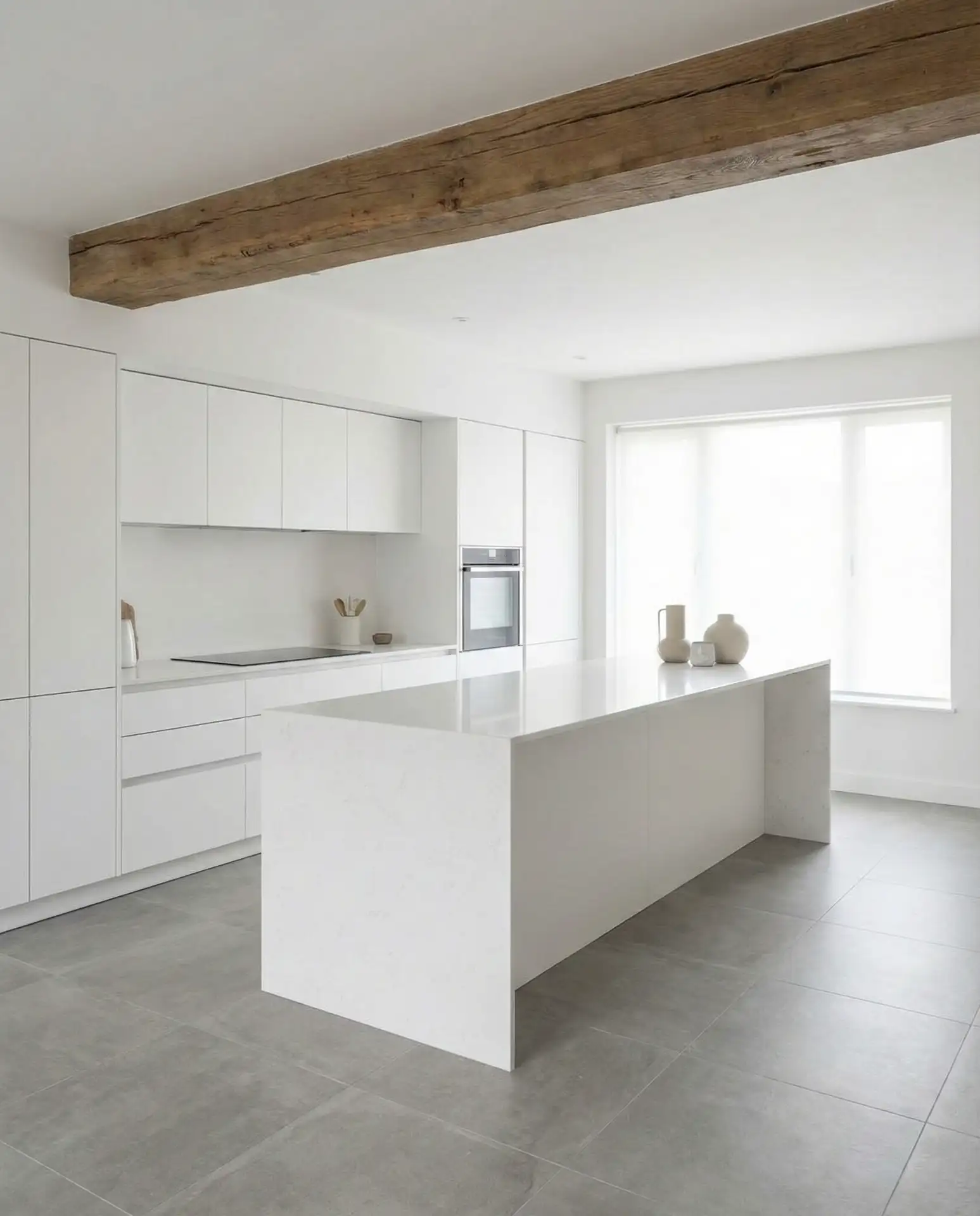
The contemporary farmhouse strips away excessive ornamentation, focusing on clean lines, quality materials, and thoughtful restraint. This approach uses slab-front or simple shaker cabinets, integrated appliances, and minimal hardware to create a streamlined look that still feels warm and inviting. Modern elements like waterfall-edge islands or seamless backsplashes coexist with farmhouse staples like wood beams or vintage lighting. 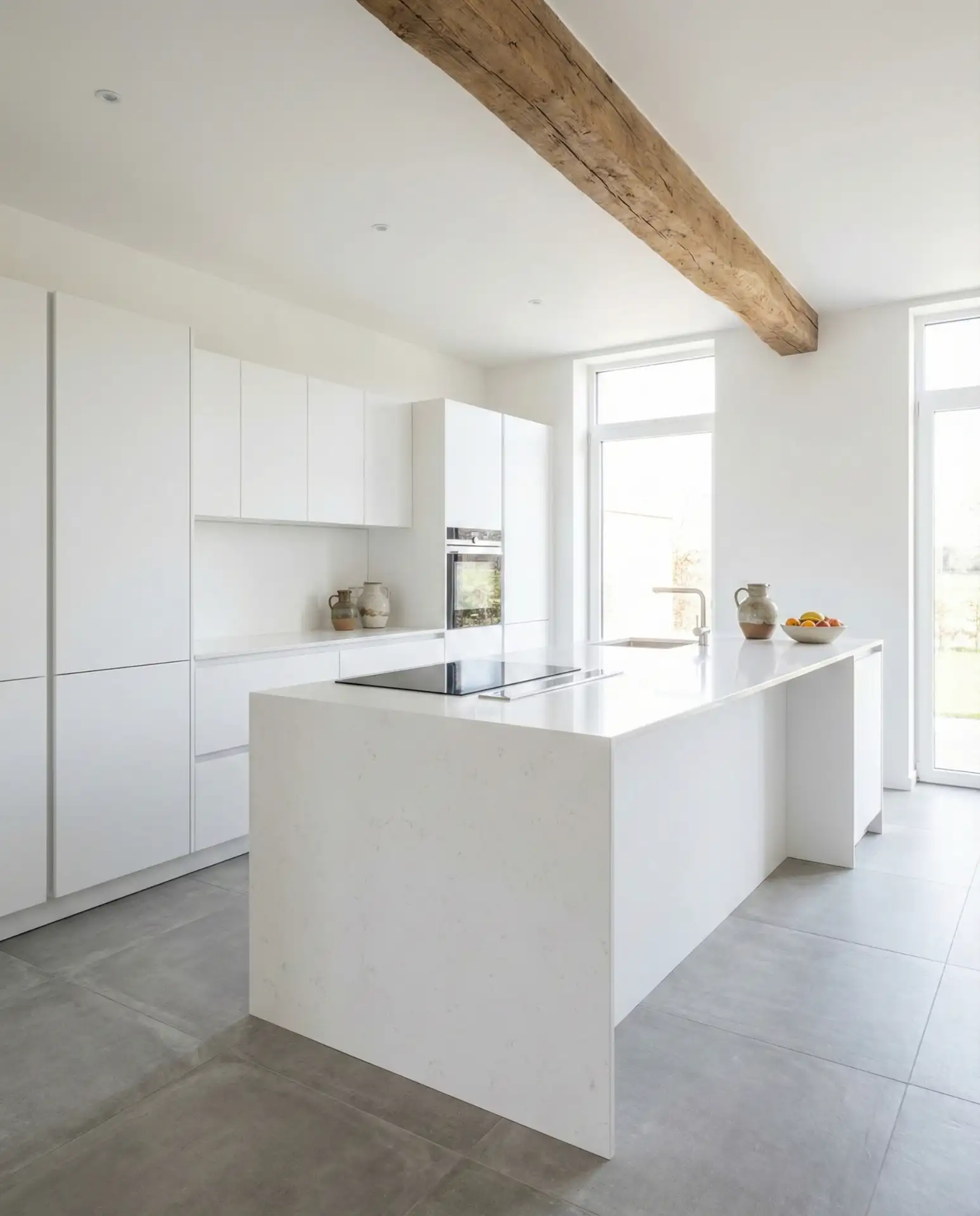
A common mistake in contemporary farmhouse design is going too stark—losing the warmth that makes farmhouse style appealing in the first place. Combat this by incorporating natural materials, varying textures, and at least a few warm tones. The minimalism should feel intentional and curated rather than cold or sterile. Think of it as editing down to the essentials while ensuring those essentials are high-quality and thoughtfully chosen. This approach works especially well in urban or suburban new construction where architectural character might be limited.
19. Cottage-Style Farmhouse with Floral Accents
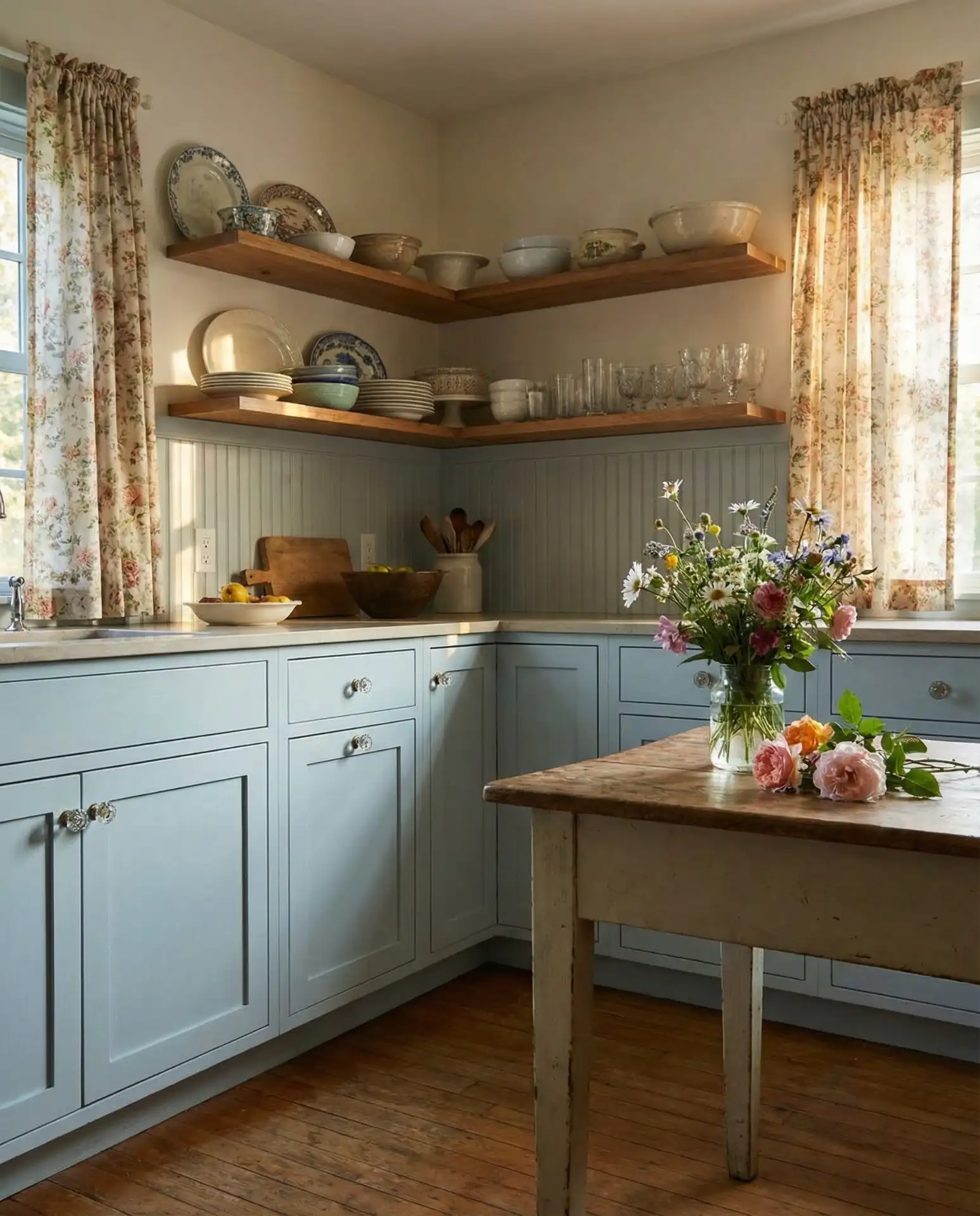
The cottage farmhouse kitchen leans into romantic details—floral curtains, vintage dishware displayed on open shelves, and soft pastel colors that create a gentle, feminine aesthetic. This style embraces pattern and decoration more freely than minimalist approaches, with vintage accessories and collections of mismatched china contributing to the lived-in charm. Beadboard panels, glass knobs, and painted furniture-style pieces reinforce the cottage feeling. 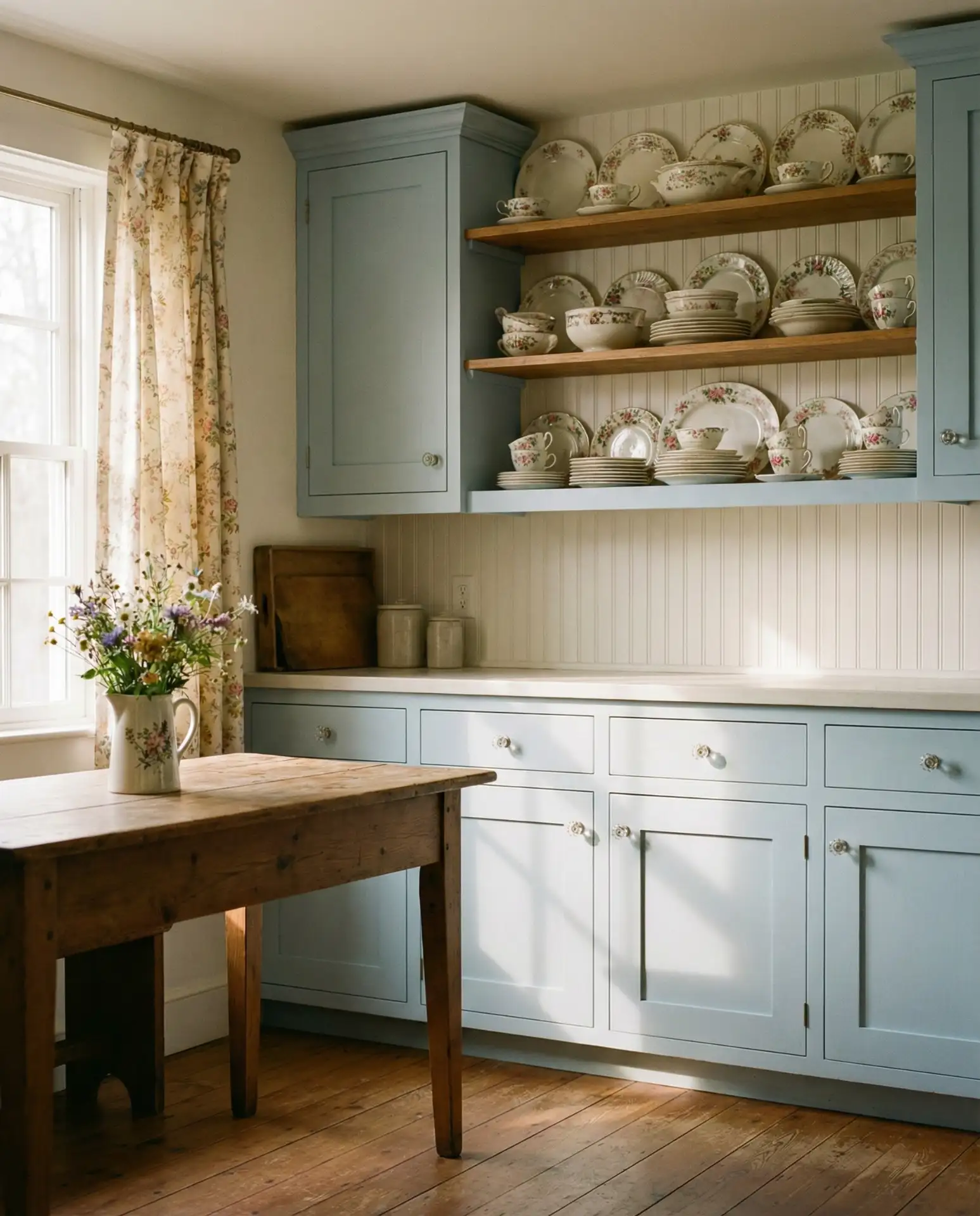
This approach thrives in smaller homes and actual cottages, where the cozy scale supports the intimate, collected aesthetic. Budget-conscious decorators love cottage farmhouse style because it celebrates thrifted finds, inherited pieces, and DIY projects. A friend in Maine furnished her entire cottage kitchen through estate sales and antique shops, spending less than $2,000 on a complete vintage dishware collection, lighting fixtures, and accessories that would cost $5,000+ new. The key is patience and a willingness to hunt for treasures.
20. Blue and White Farmhouse Kitchen
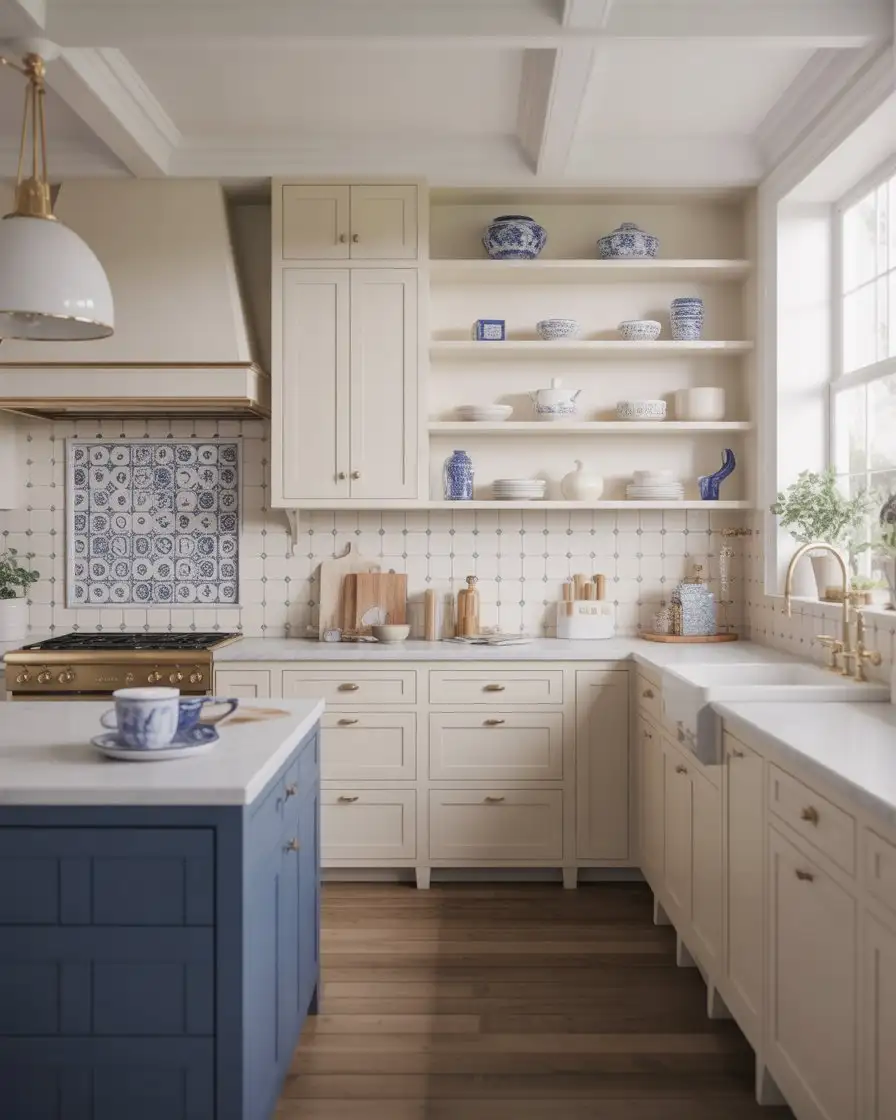
The classic pairing of blue and white creates timeless farmhouse kitchens that feel both fresh and traditional. This combination works across multiple farmhouse subtypes—from coastal interpretations using soft aqua tones to French country kitchens with deeper cobalt accents. Blue and white tiles, pottery, and textiles add pattern and interest while maintaining a cohesive color story that never feels dated or overwhelming. 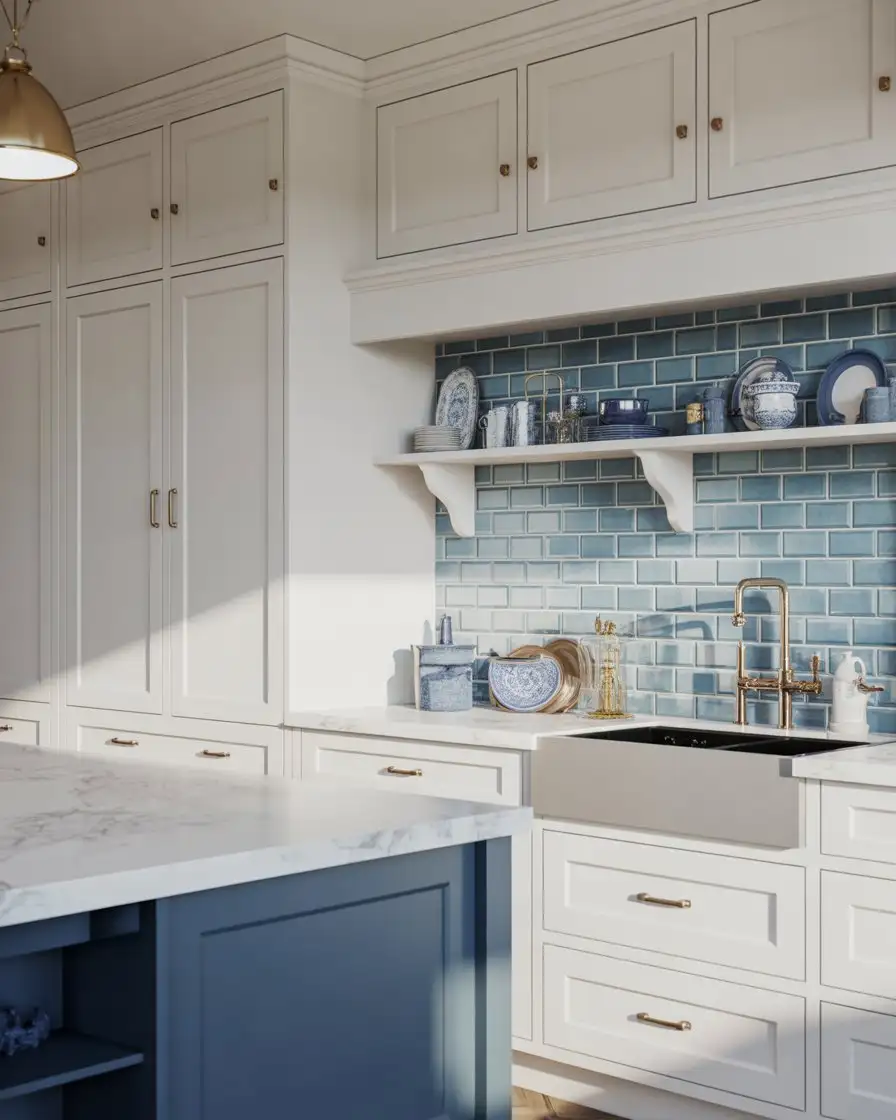
American homeowners particularly love this palette because it references traditional Americana while feeling clean and current. The blue might appear as painted cabinetry, patterned tile, or simply through accessories like dish towels and ceramics. One practical tip: choose your blue first, then build around it, as blue undertones vary widely from greenish to purple-leaning. Testing paint samples or tile in your actual kitchen lighting prevents costly mistakes. This combination also photographs beautifully, making it popular among those sharing their homes on social media.
21. Moody Farmhouse Kitchen with Dark Tones
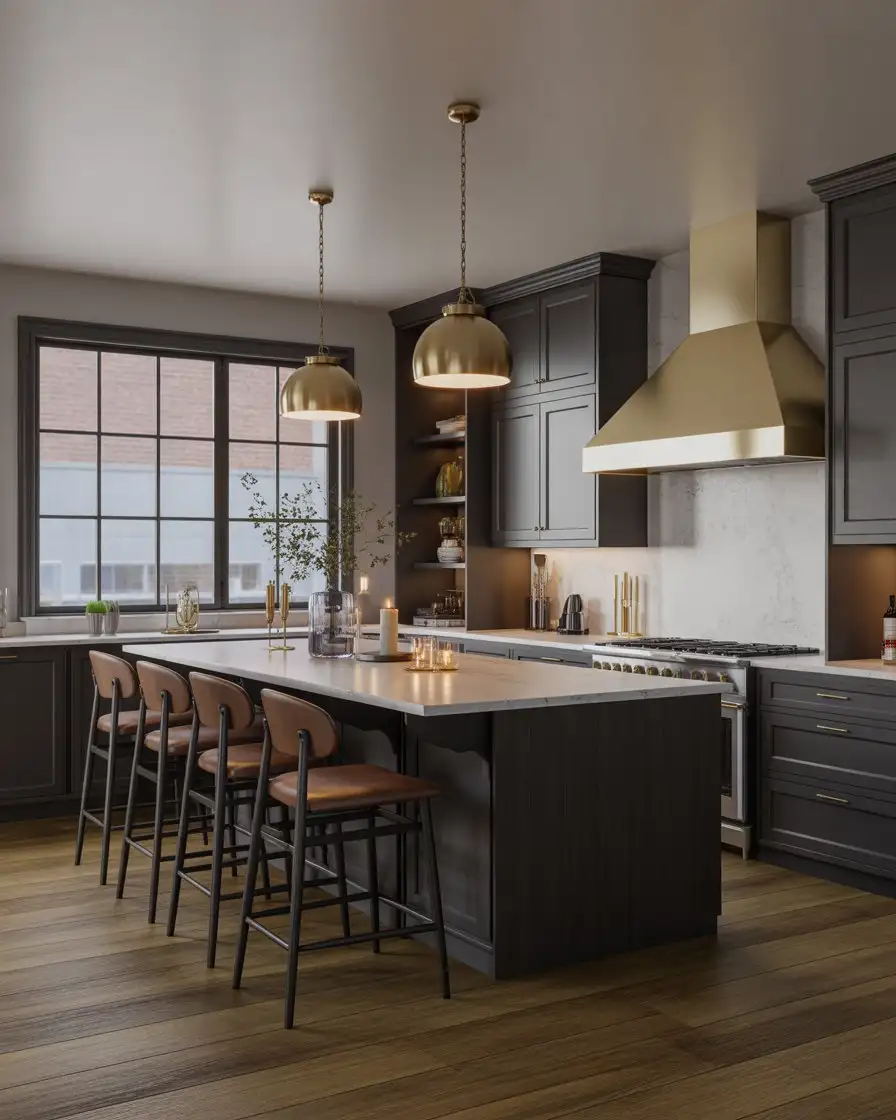
A moody farmhouse kitchen embraces darker colors—charcoal, deep navy, forest green, or even black—to create atmospheric, sophisticated spaces. This approach works best with abundant natural light or excellent artificial lighting to prevent the space from feeling too heavy. Layered lighting, including under-cabinet strips, pendant fixtures, and recessed cans, ensures the kitchen remains functional while maintaining its dramatic aesthetic. 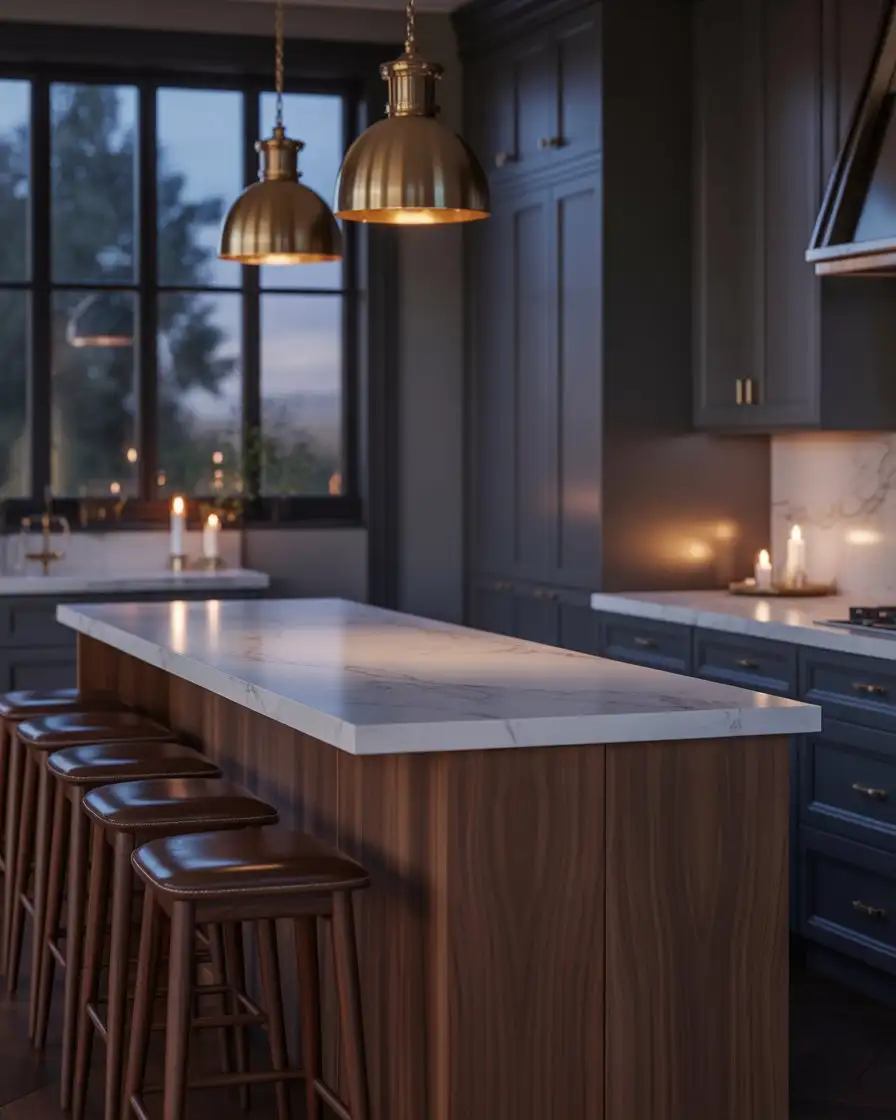
Where this works best is in homes with generous square footage and large windows. Smaller kitchens can incorporate moody tones through accent walls, a dark island contrasting with lighter perimeter cabinets, or dark hardware and fixtures against neutral backgrounds. The trend gained momentum as homeowners tired of all-white kitchens sought more personality and depth. Interestingly, dark kitchens can hide wear and minor imperfections better than white ones, making them practical for busy families despite requiring different cleaning approaches.
22. Boho Farmhouse with Global Textiles
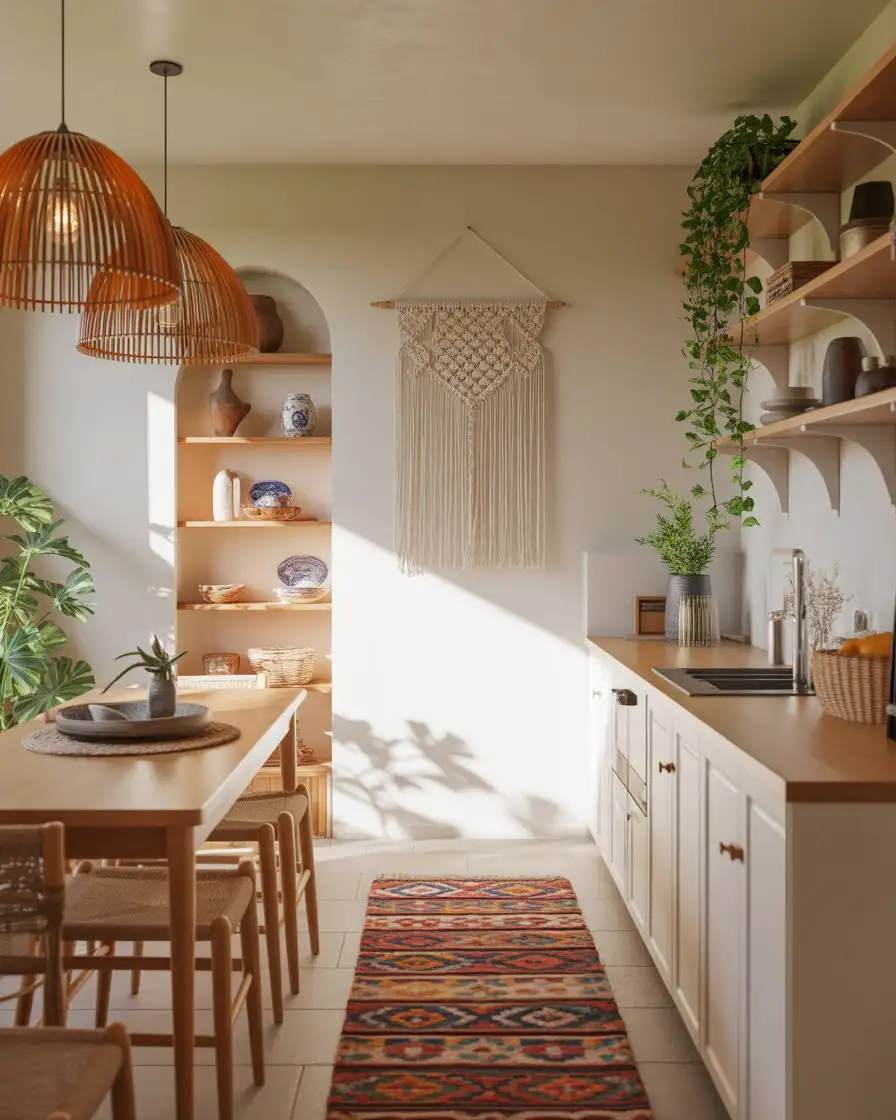
Boho farmhouse kitchens blend rustic American elements with global textiles, patterns, and handcrafted items from various cultures. Colorful Turkish or Moroccan rugs, woven baskets, macramé plant hangers, and ethnic pottery create an eclectic, well-traveled aesthetic. This style celebrates personal collections and encourages mixing rather than matching, resulting in spaces that feel uniquely personal and impossible to replicate. 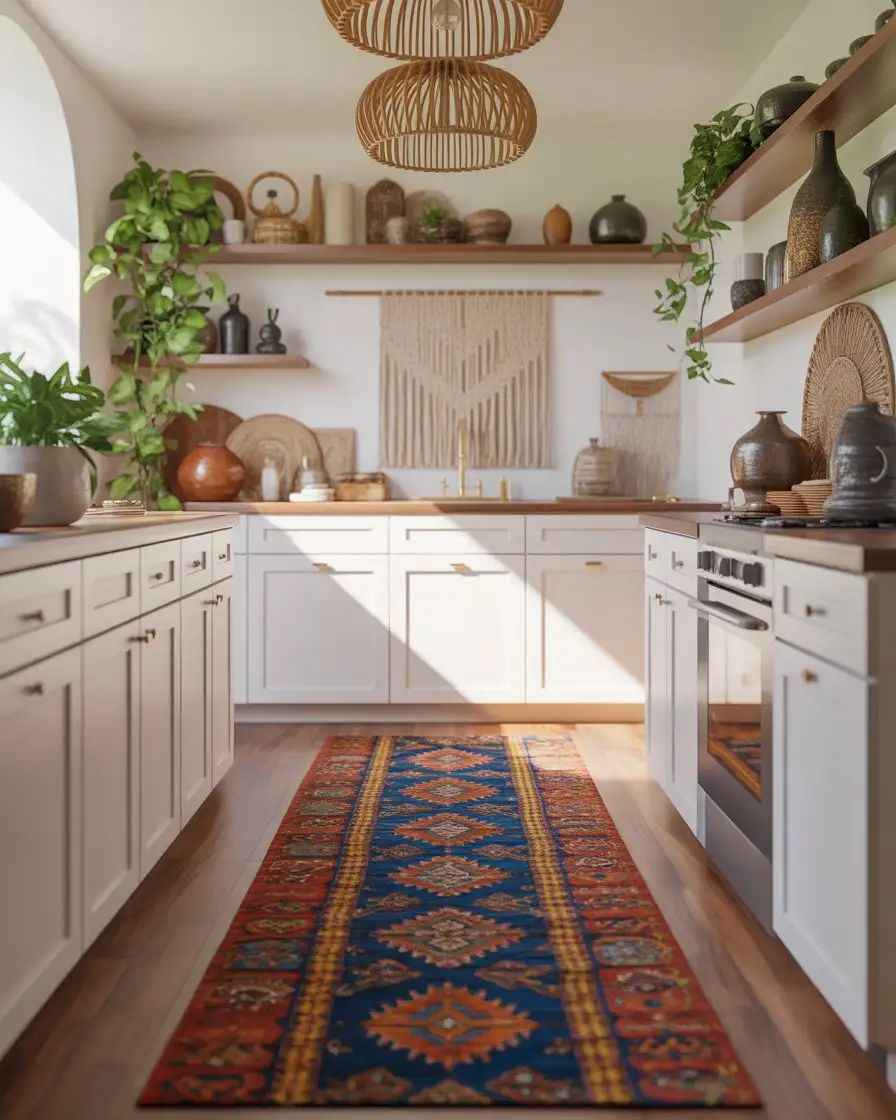
This approach resonates particularly with younger homeowners and those who travel frequently, as it provides a framework for displaying collected treasures. The beauty of boho farmhouse lies in its flexibility—there’s no single right way to execute it, which makes it forgiving for those still developing their design confidence. Start with a neutral farmhouse base, then layer in textiles, art, and objects collected over time. The style evolves naturally as your collection grows, making it both budget-friendly and deeply personal.
23. Industrial Farmhouse with Metal Accents
The industrial farmhouse marries rustic warmth with urban edge through metal accents, exposed ductwork or plumbing, and materials like concrete, steel, and reclaimed wood. Black metal bar stools, iron light fixtures, and stainless steel appliances create a modern counterpoint to traditional farmhouse elements. This fusion works particularly well in lofts, renovated warehouses, or new builds where homeowners want character without feeling too country. 
Common mistakes include over-industrializing and losing the farmhouse warmth entirely. Balance is essential—for every hard, cold element like metal or concrete, incorporate something soft and organic like wood, textiles, or plants. The industrial elements should accent and contrast rather than dominate. In cities like Chicago, Portland, and Denver, where industrial architecture is abundant, this hybrid style allows homeowners to honor their building’s history while creating inviting, livable spaces that feel connected to both past and present.
Conclusion
These farmhouse kitchen ideas demonstrate the style’s remarkable versatility and enduring appeal. Whether you’re drawn to the simplicity of all-white spaces, the drama of dark cabinetry, or the warmth of vintage details, there’s a farmhouse approach that fits your home and lifestyle. The beauty of this design philosophy lies in its flexibility—you can start with a few key elements and build over time, mixing influences from coastal to European to industrial as your tastes evolve. We’d love to hear which ideas resonated with you most or see photos of your own farmhouse kitchen. Share your thoughts in the comments below and let’s continue this conversation about creating spaces that truly feel like home.