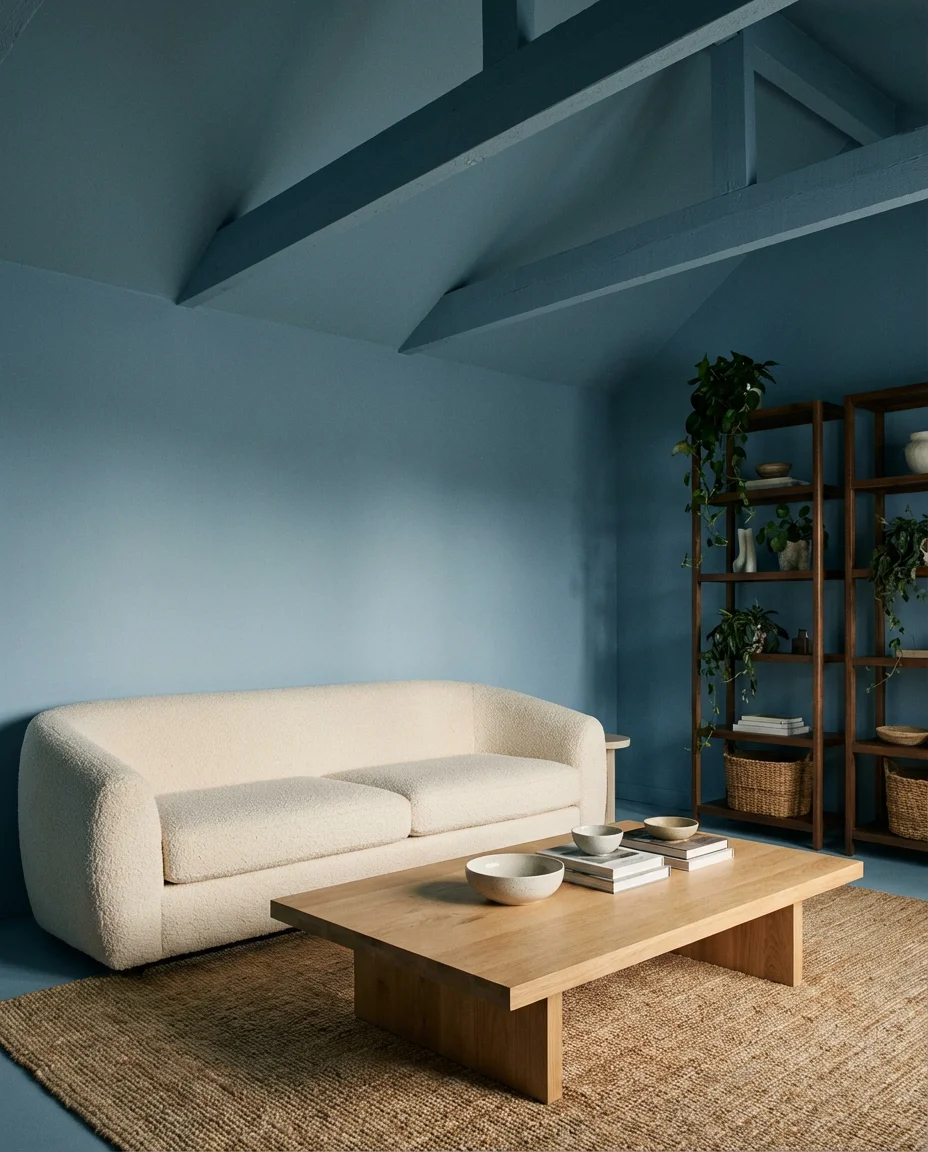
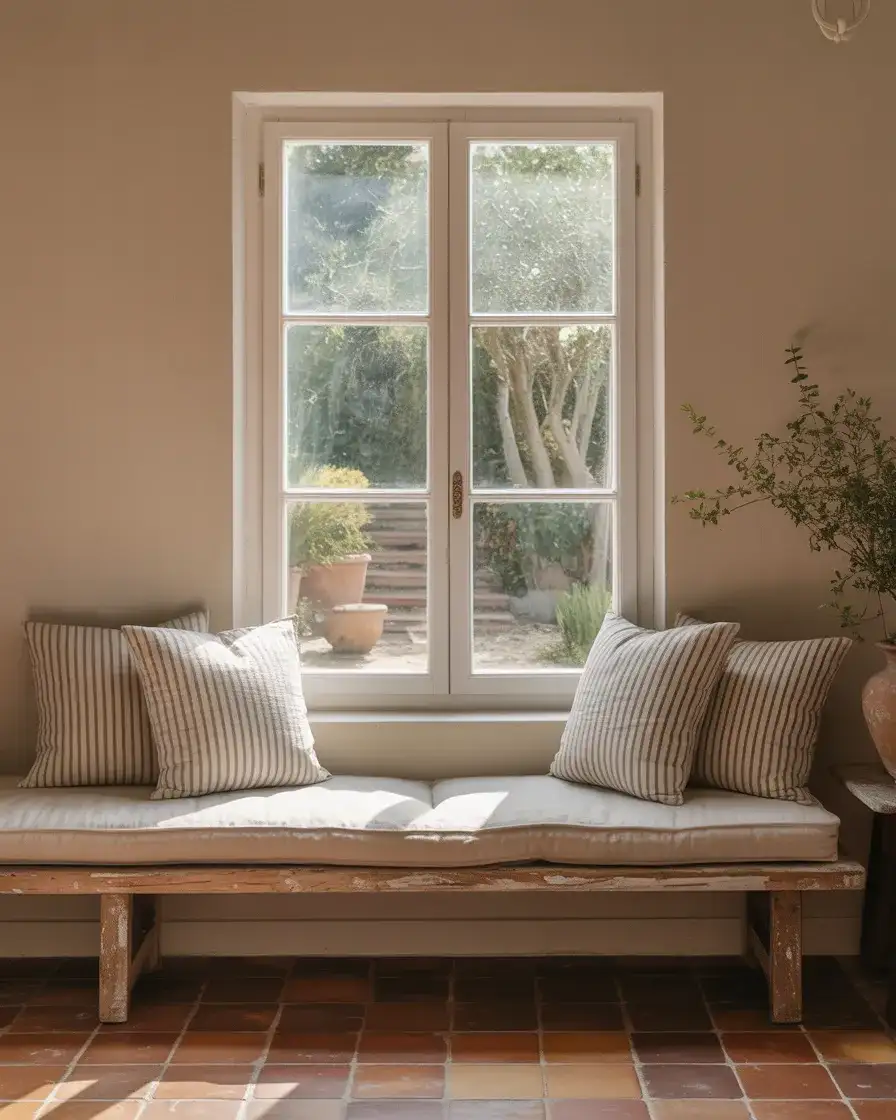
French country living rooms have become one of the most sought-after interior design styles in 2026, especially among Americans looking to create warm, inviting spaces that feel both elegant and lived-in. This timeless aesthetic blends rustic European charm with comfortable, family-friendly layouts—perfect for homes across the country, from New England farmhouses to California cottages. Pinterest users are turning to French country inspiration more than ever, searching for ways to incorporate its signature elements: weathered wood, soft linens, vintage accents, and those beautifully curated color palettes. Whether you’re drawn to the moody sophistication of deep blues or the airy freshness of sage green, this style adapts beautifully to your personal taste. In this article, you’ll discover twenty-three distinct ways to bring authentic French country living room design into your home in 2026.
1. Cozy Linen Slipcovers with Rustic Wood Accents
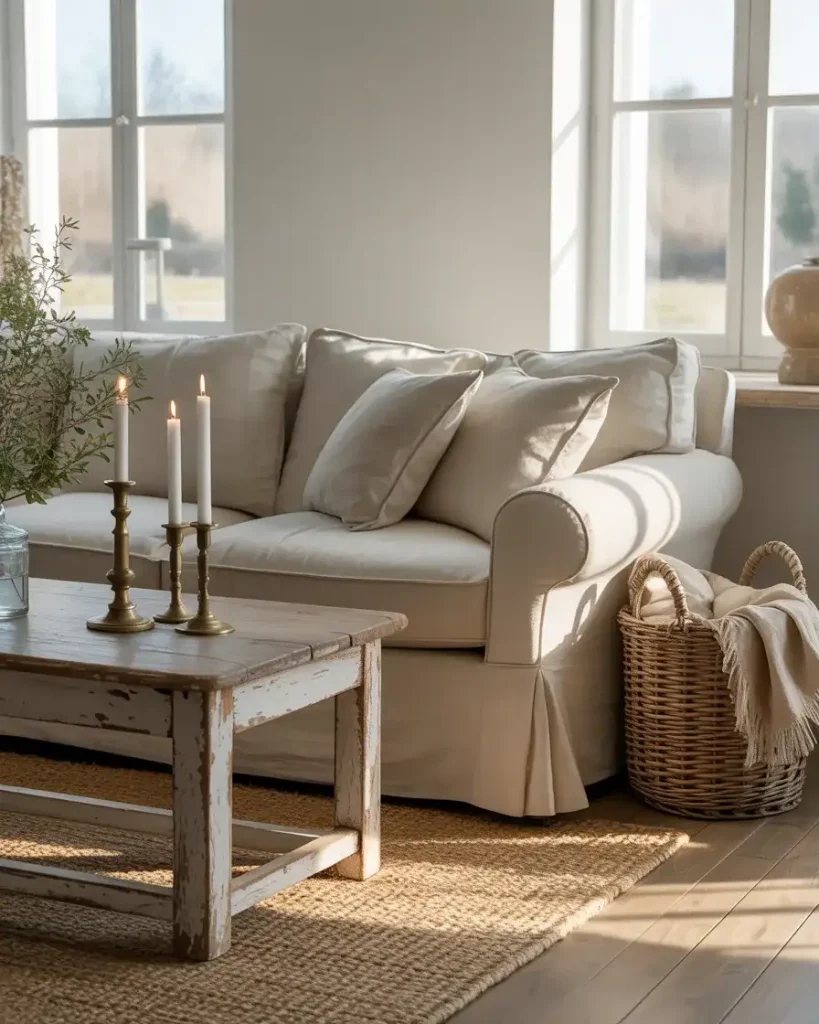
The foundation of any cozy French country living room starts with comfortable, lived-in furniture that invites you to settle in with a cup of coffee. Linen slipcovers in natural creams and soft whites bring that casual European elegance while hiding everyday wear—perfect for American families who actually use their living spaces. Pair these soft textiles with rustic reclaimed wood coffee tables or side tables that show their age through beautiful patina and natural imperfections. The contrast between the crisp fabric and weathered wood creates visual interest without feeling overly designed.
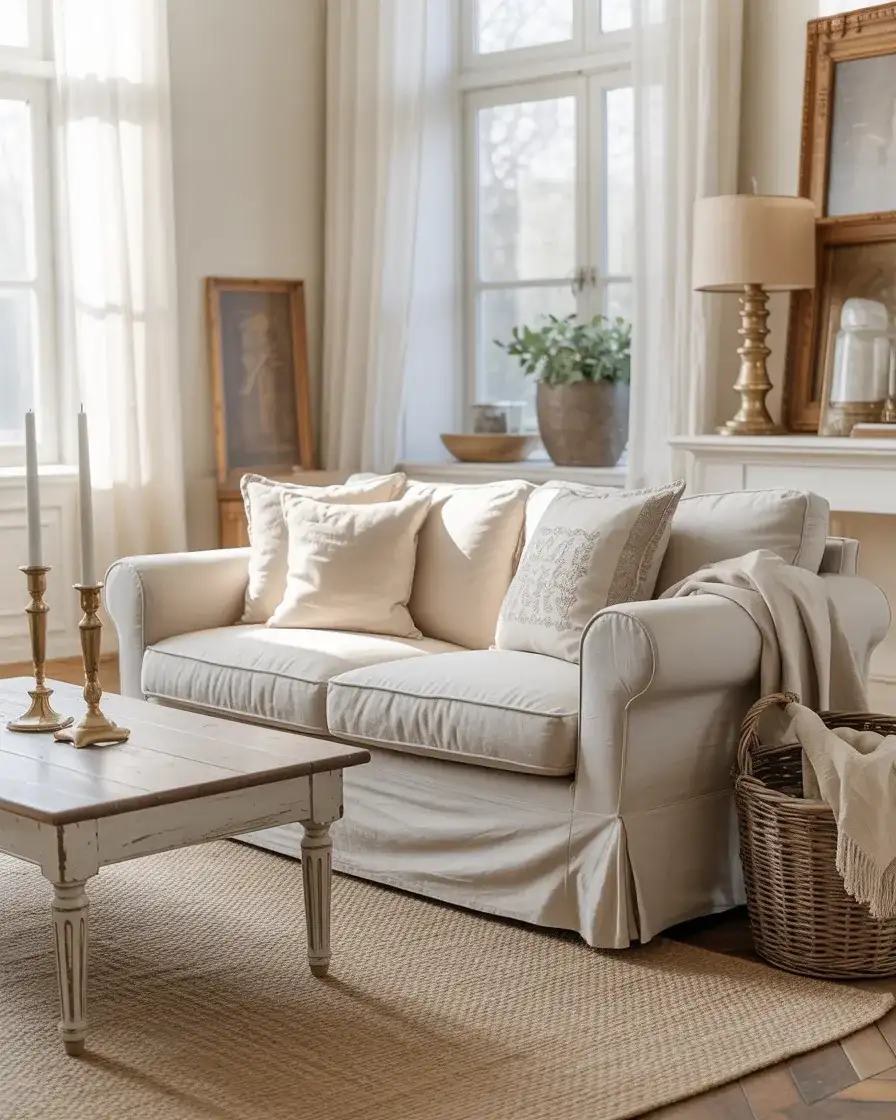
This combination works beautifully in both formal living rooms and casual family spaces throughout the Midwest and South, where homeowners appreciate furniture that can withstand real life. The slipcovers can be easily removed and washed—a practical detail that French country style has always embraced. Add texture through chunky knit throws, linen pillows in muted tones, and perhaps a vintage wooden bowl filled with dried hydrangeas. The key is making everything look effortlessly collected rather than perfectly matched, which is exactly what gives French country rooms their authentic, welcoming character.
2. Moody Blue Walls with Antique Brass Lighting
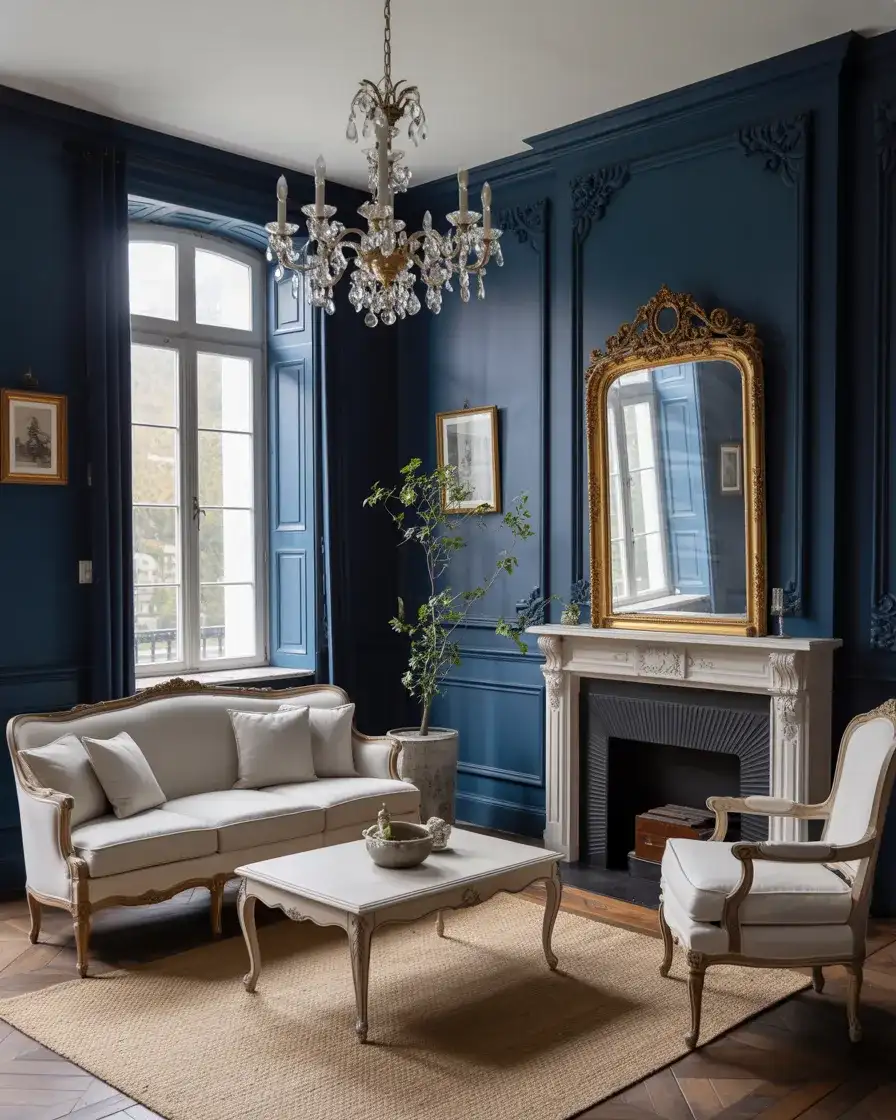
Deep, moody paint colors have taken center stage in French country design this year, moving beyond the expected pastels into richer, more dramatic territory. A sophisticated blue—think midnight navy or stormy slate—creates an intimate backdrop that makes a living room feel like a European salon. This trend appeals especially to younger American homeowners who want traditional French aesthetics but with a contemporary edge that feels fresh and current. The darkness of the walls actually makes the space feel larger by blurring boundaries while also providing the perfect canvas for showcasing art and architectural details.
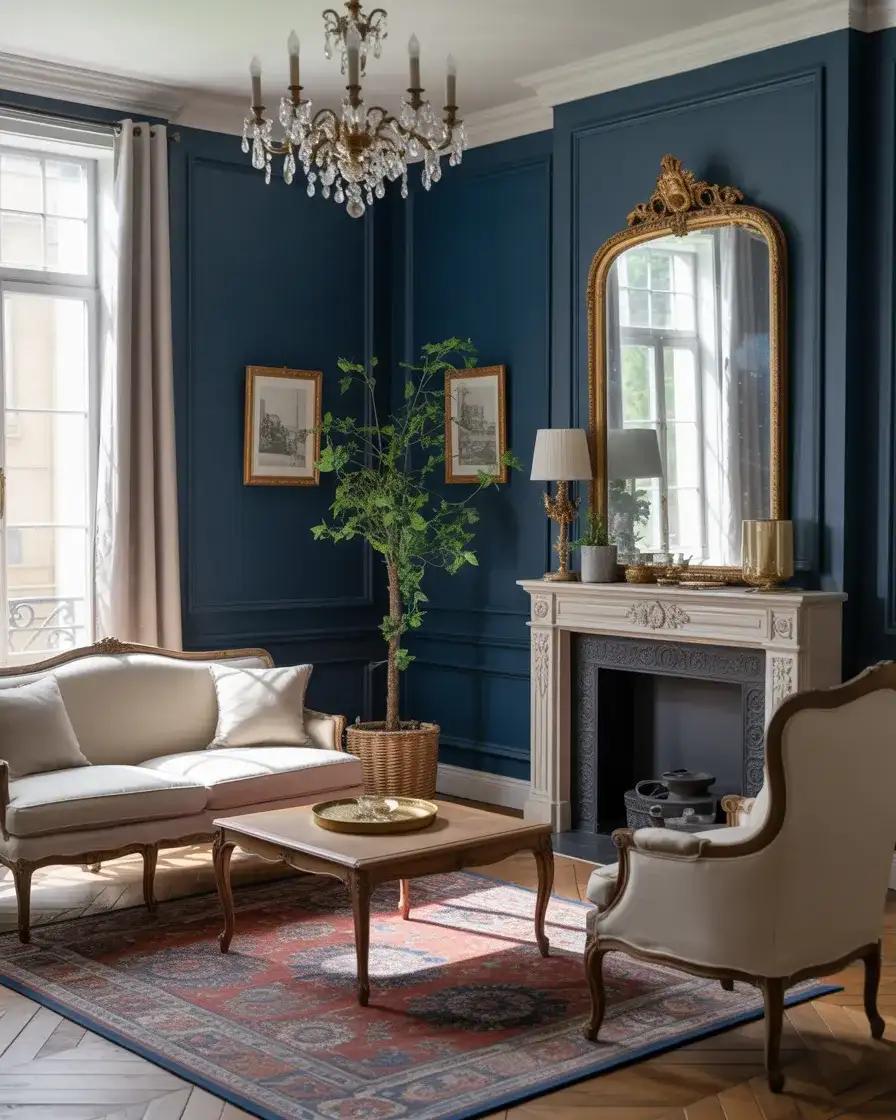
Common mistake: painting moody walls without adequate lighting, which makes the room feel like a cave rather than cozy. Always layer your lighting with antique brass fixtures—a statement chandelier, wall sconces, and table lamps—to create pools of warm light that highlight the depth and richness of the paint color. The brass finishes add warmth that prevents the blue from reading too cold, and their aged patina reinforces the collected-over-time feel that’s essential to French country style.
3. Cottage Style Built-Ins Flanking Stone Fireplace
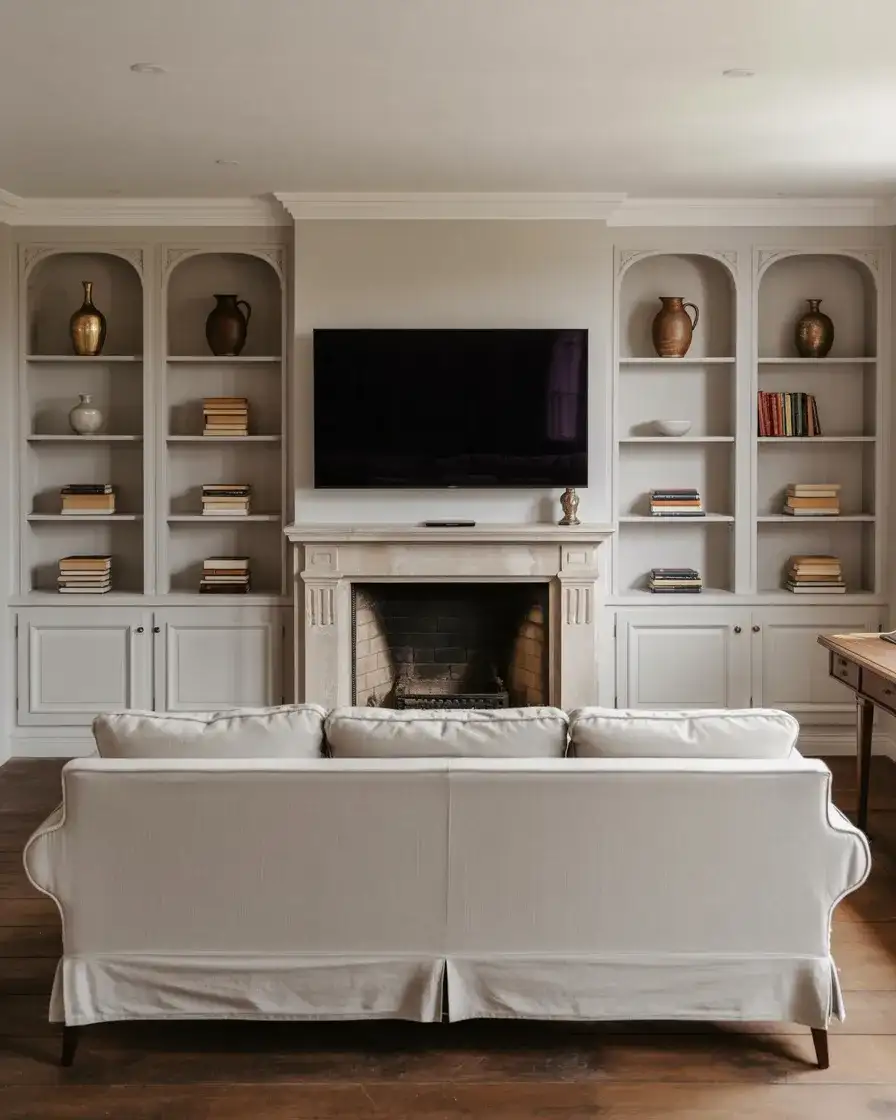
Custom built-ins with tv fireplace arrangements have become the centerpiece of French country living rooms, offering both beauty and functionality that American families need. Cottage-style built-in shelving painted in soft white or cream flanks a central fireplace, creating symmetry while providing display space for books, ceramics, and collected treasures. This architectural feature instantly elevates a room, adding the kind of permanent character that makes a house feel like it’s been loved for generations. The shelving can be open or incorporate glass-front cabinets with chicken wire or seeded glass for authentic French farmhouse charm.
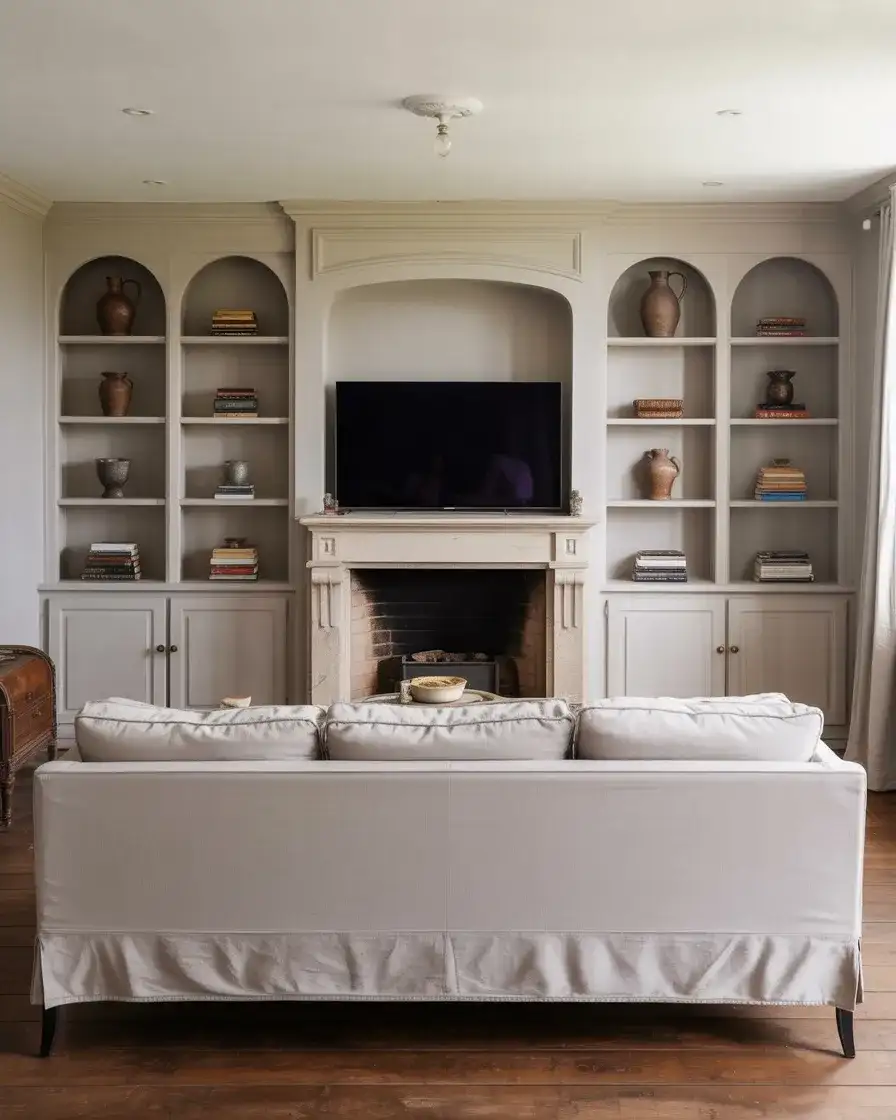
In the Pacific Northwest and Northeast, where fireplaces remain functional necessities, this arrangement works particularly well because it balances modern entertainment needs with traditional warmth. Style the shelves with a mix of vertical and horizontal elements—stacks of vintage books, ceramic vessels, framed family photos in mixed metals, and woven baskets on lower shelves for practical storage. The key is asymmetrical balance rather than mirror-image perfection, which keeps the look feeling organic and collected rather than staged.
4. Sage Green Velvet Sofa as Statement Piece
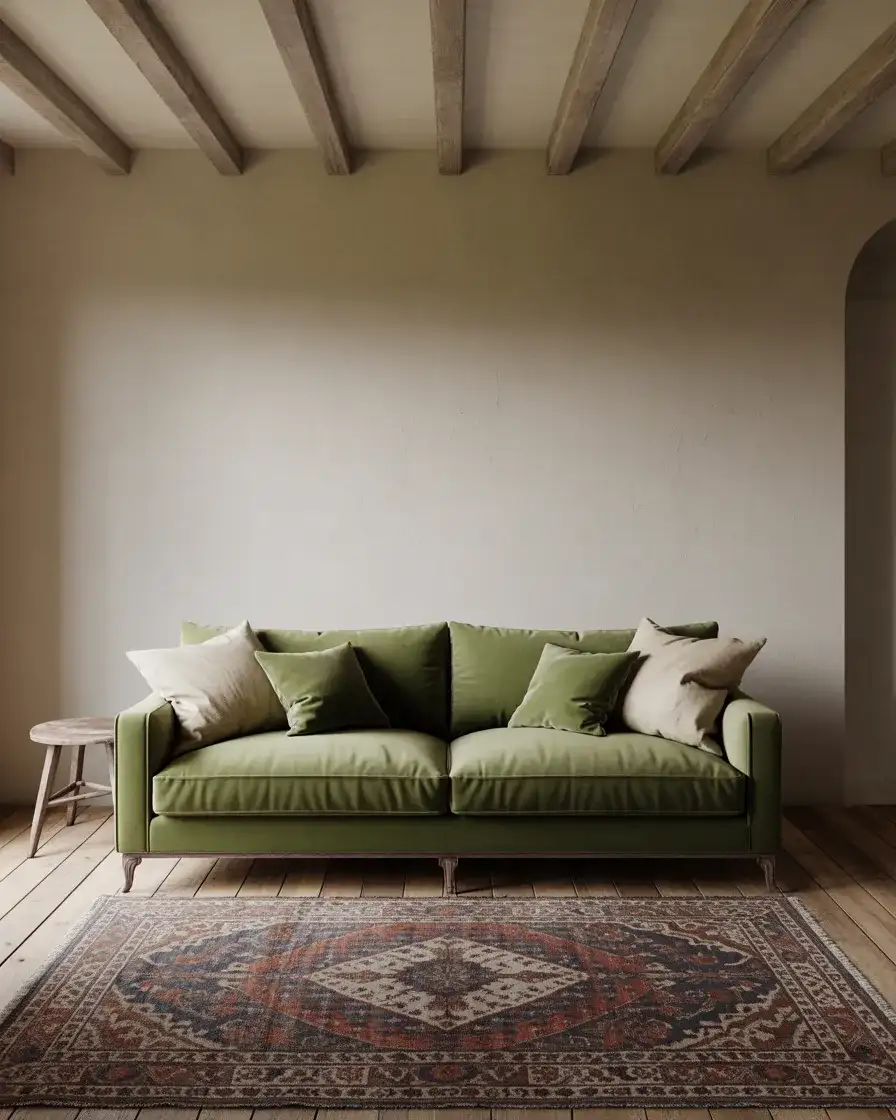
A luxurious sage green velvet sofa brings sophisticated color into the French country palette while maintaining the style’s connection to nature and garden-inspired hues. This particular green works beautifully because it’s neither too bright nor too drab—it has enough gray in it to feel elegant and timeless rather than trendy. The velvet fabric adds textural richness that elevates the space beyond typical country casual, making your living room feel more curated and intentional. Pair it with lighter neutrals and natural materials to let the sofa be the room’s focal point without overwhelming the senses.
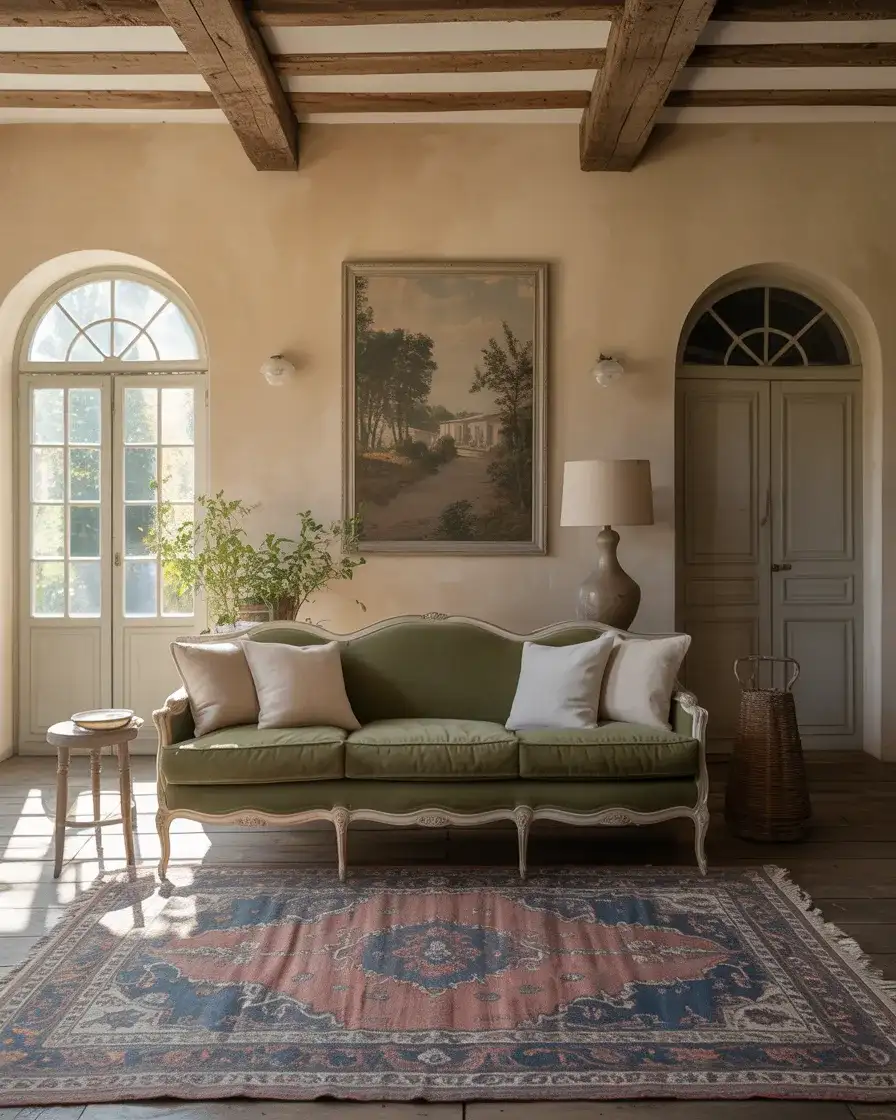
My neighbor recently invested in a sage velvet sofa for her 1920s bungalow in Portland, and she says it’s transformed how she feels about her living room—suddenly the space feels both more grown-up and more inviting. The velvet also has the practical advantage of not showing pet hair as much as lighter fabrics, though it does require regular brushing to maintain the nap. Layer in texture through linen curtains, jute rugs, and wood furniture to prevent the velvet from feeling too formal or precious for everyday family life.
5. Neutral Color Scheme with Layered Textures
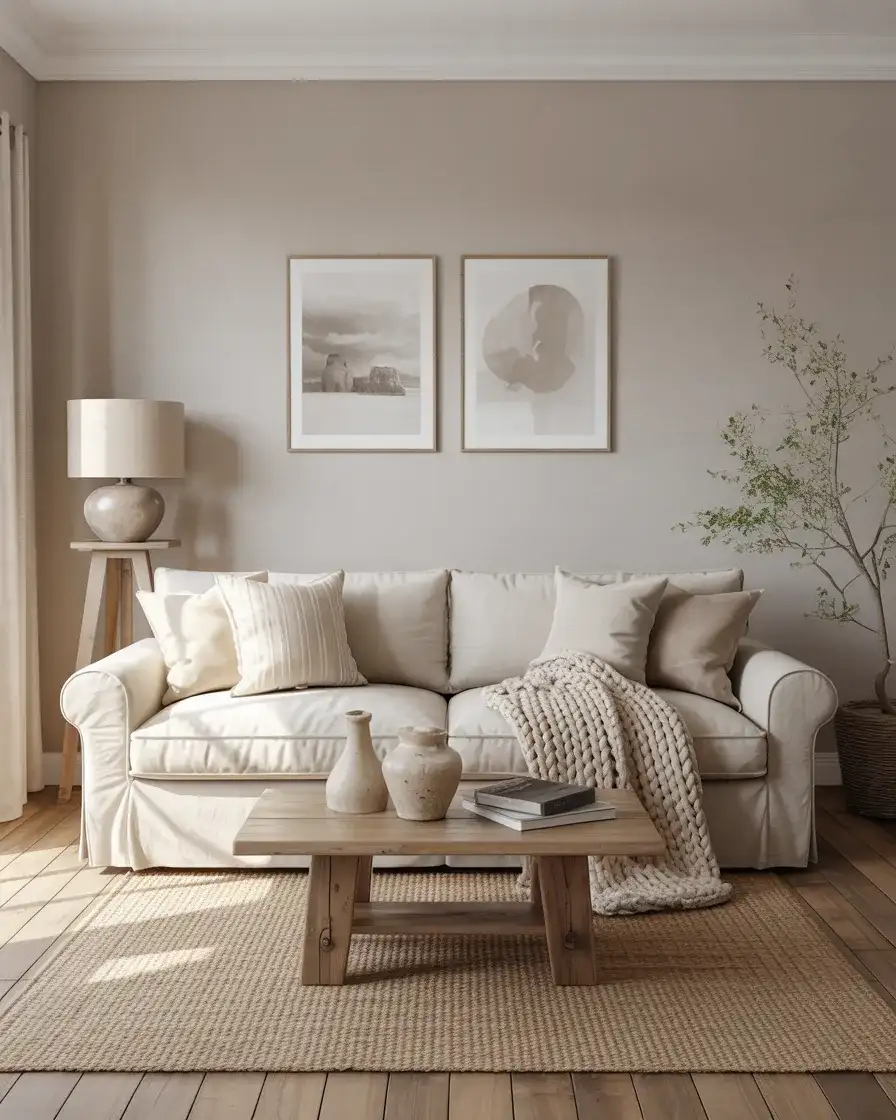
A thoroughly neutral French country living room relies entirely on texture and material variety to create visual interest and warmth. This approach uses colors like cream, taupe, warm gray, and soft beige as the foundation, then layers in different materials—linen, wool, wood, stone, and metal—to build depth. The result feels calm and timeless, perfect for Americans who want a space that won’t feel dated in five years and that pairs well with any seasonal decor. This palette also photographs beautifully, which is why it dominates Pinterest boards dedicated to French country living room inspiration.
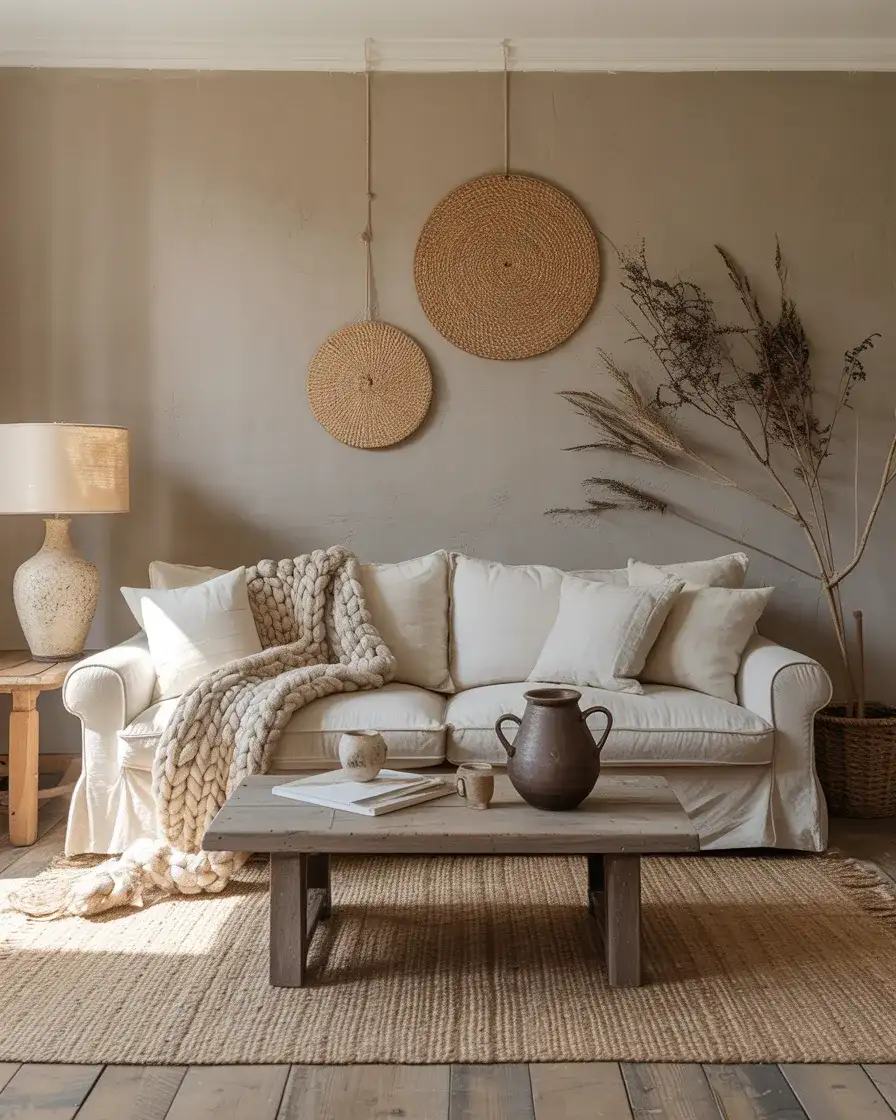
Where it works best: Open-concept homes in the South and Southwest, where natural light is abundant, and neutral palettes help keep spaces feeling cool and airy even in summer heat. The trick is varying your textures enough that the room doesn’t read as flat or boring—mix smooth linen with nubby wool, polished wood with rough-hewn beams, and matte ceramics with aged brass. Add warmth through wood tones rather than color, and let the architecture and natural light do much of the decorative work.
6. Leather Couch with French Bergère Chairs
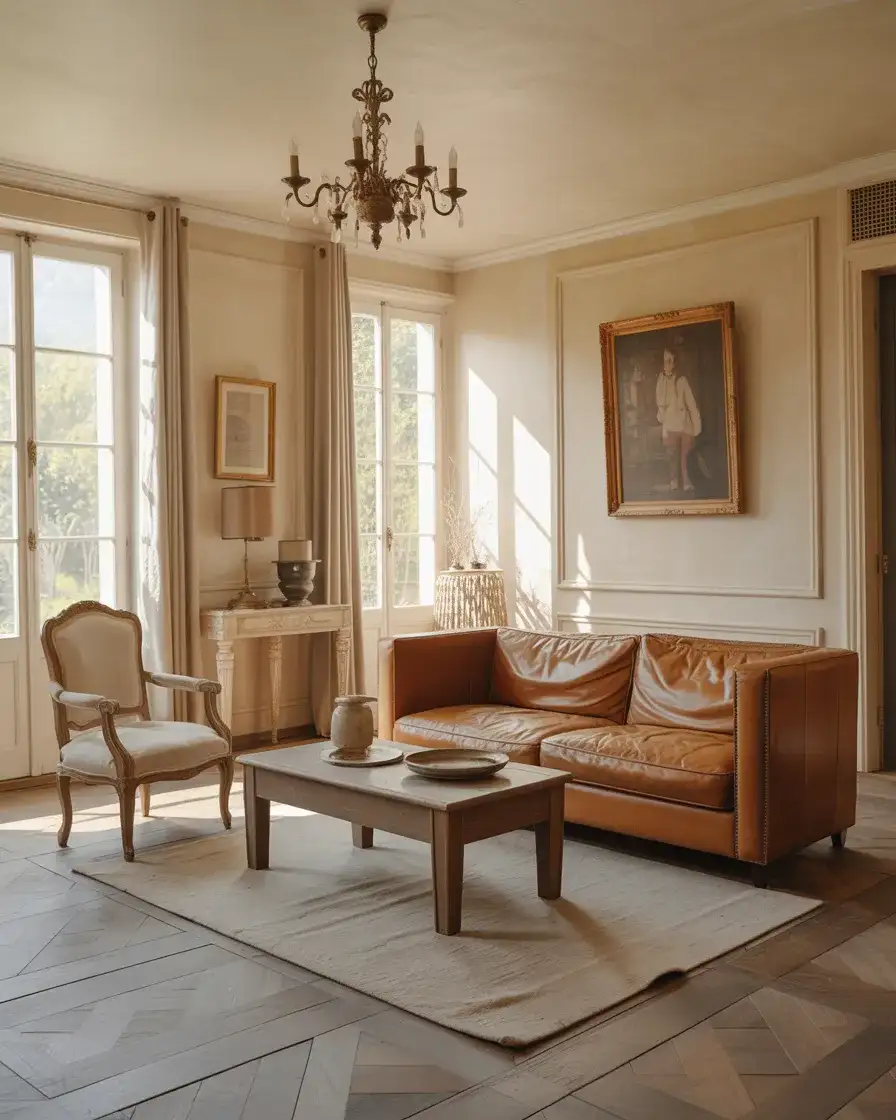
A cognac leather couch brings masculine balance to the typically soft, feminine French country aesthetic, creating a living room that feels grounded and livable for the whole family. The warm brown leather ages beautifully—actually improving with wear—which aligns perfectly with the French philosophy of buying quality pieces meant to last generations. Pair it with a set of classic French bergère chairs upholstered in linen or ticking stripe for that perfect mix of rustic and refined that defines modern French country style. This combination also introduces multiple seating areas, encouraging conversation and creating a more dynamic room layout.
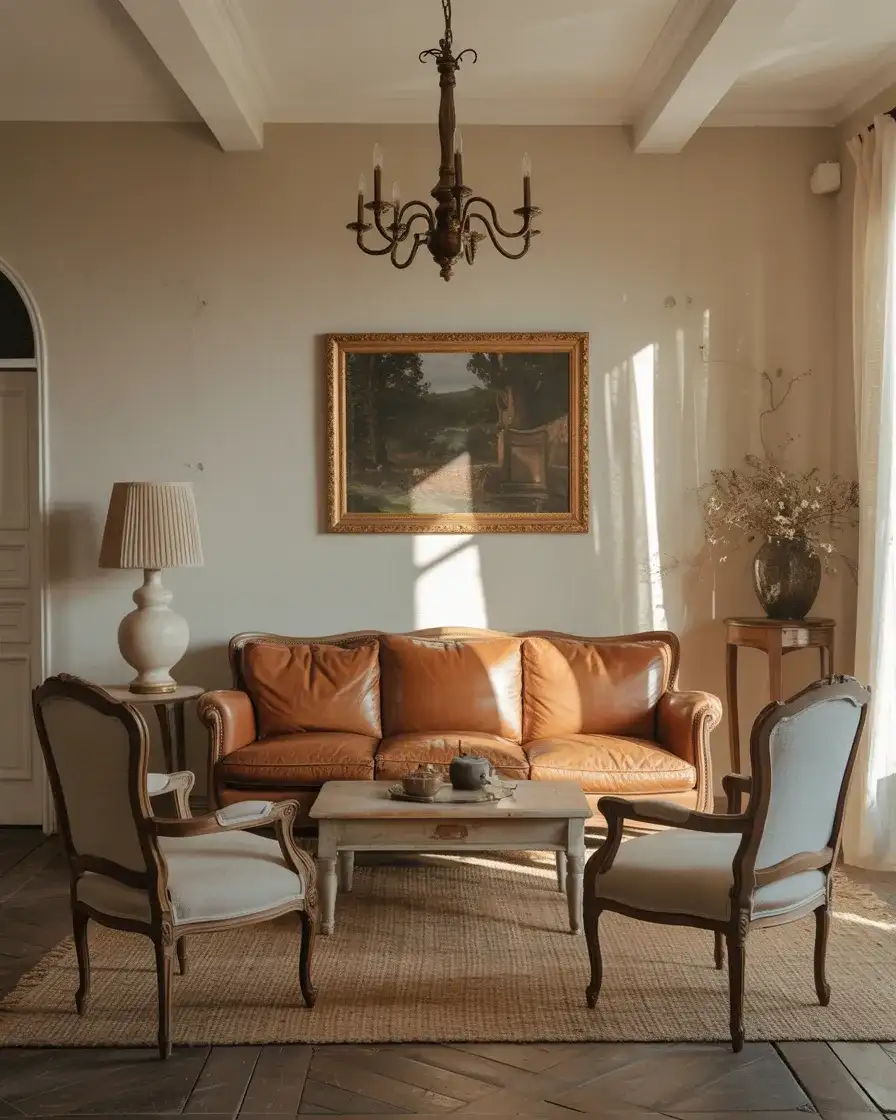
Real homeowner behavior: Families with kids and dogs gravitate toward leather sofas because they’re genuinely easier to maintain than fabric—spills wipe off, and scratches add character rather than looking like damage. The bergère chairs, while beautiful, stay cleaner when positioned slightly away from the main traffic flow, perhaps flanking a fireplace or creating a reading nook by a window. This setup works particularly well in family rooms that need to function for both casual weeknight TV watching and more formal weekend entertaining.
7. Traditional French Doors with Flowing Curtains
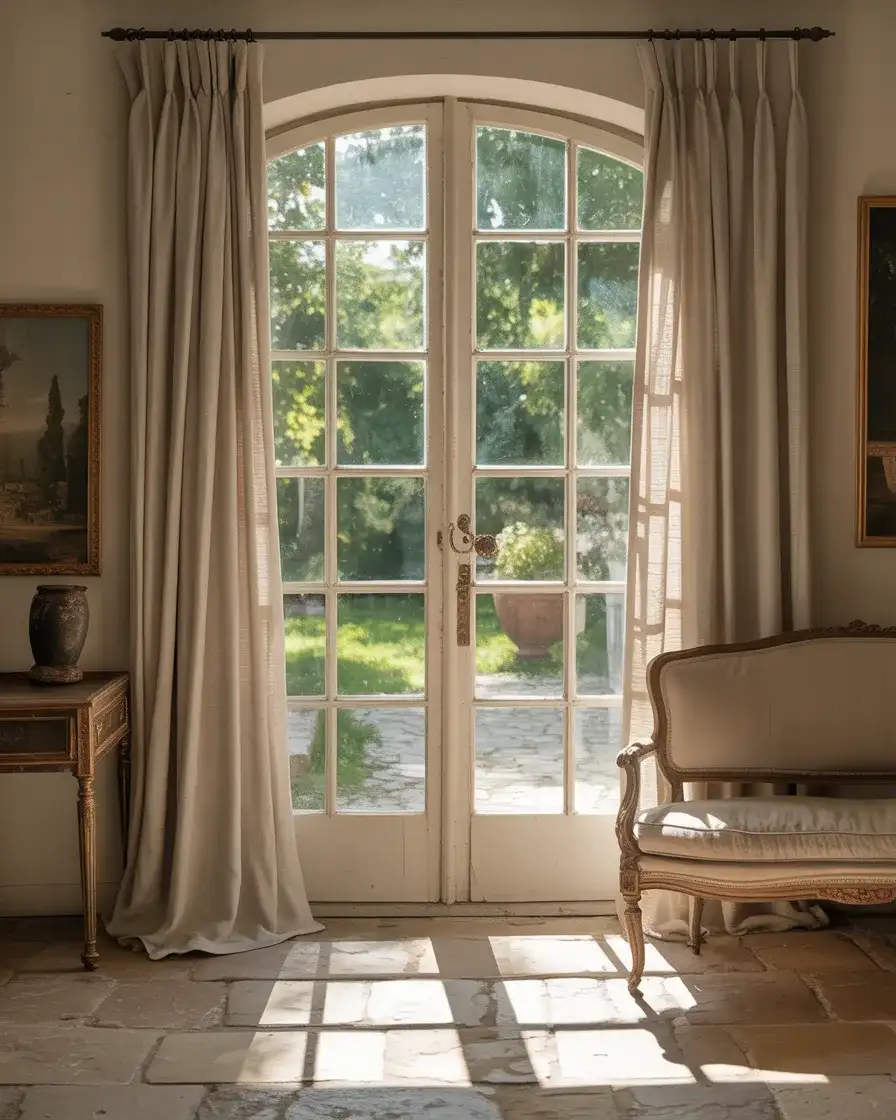
Authentic French country living rooms often feature tall windows or French doors that connect indoor and outdoor spaces, dressed with floor-length curtains in natural fabrics. This architectural detail floods the room with natural light while maintaining the soft, romantic aesthetic that defines the style. Traditional French homes use these doors to access gardens or courtyards, and Americans have adapted this idea beautifully in Southern and California homes where indoor-outdoor living is prized. The curtains should be simple—linen in natural tones or perhaps a subtle stripe—and hung high and wide to make ceilings feel taller and windows more generous.
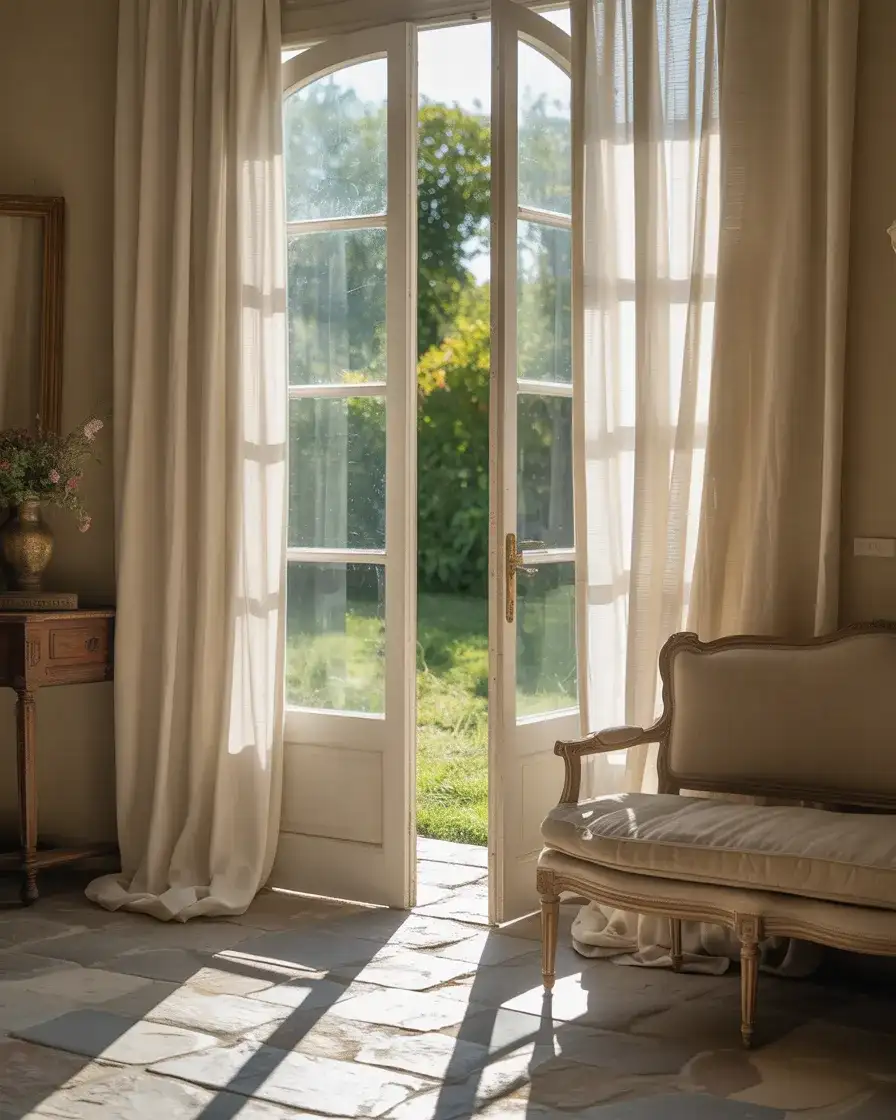
Budget angle: If you can’t install actual French doors, you can achieve a similar effect by replacing solid interior doors with vintage salvaged doors that have glass panes, which are surprisingly affordable at architectural salvage yards throughout the country. Hardware stores also carry affordable door kits that mimic the divided-light look. For curtains, IKEA’s linen panels at around $50 per pair offer excellent value and can be dyed or left natural—they’ll soften beautifully with washing and develop that relaxed drape that expensive custom curtains have from day one.
8. Eclectic Gallery Wall with Ornate Frames
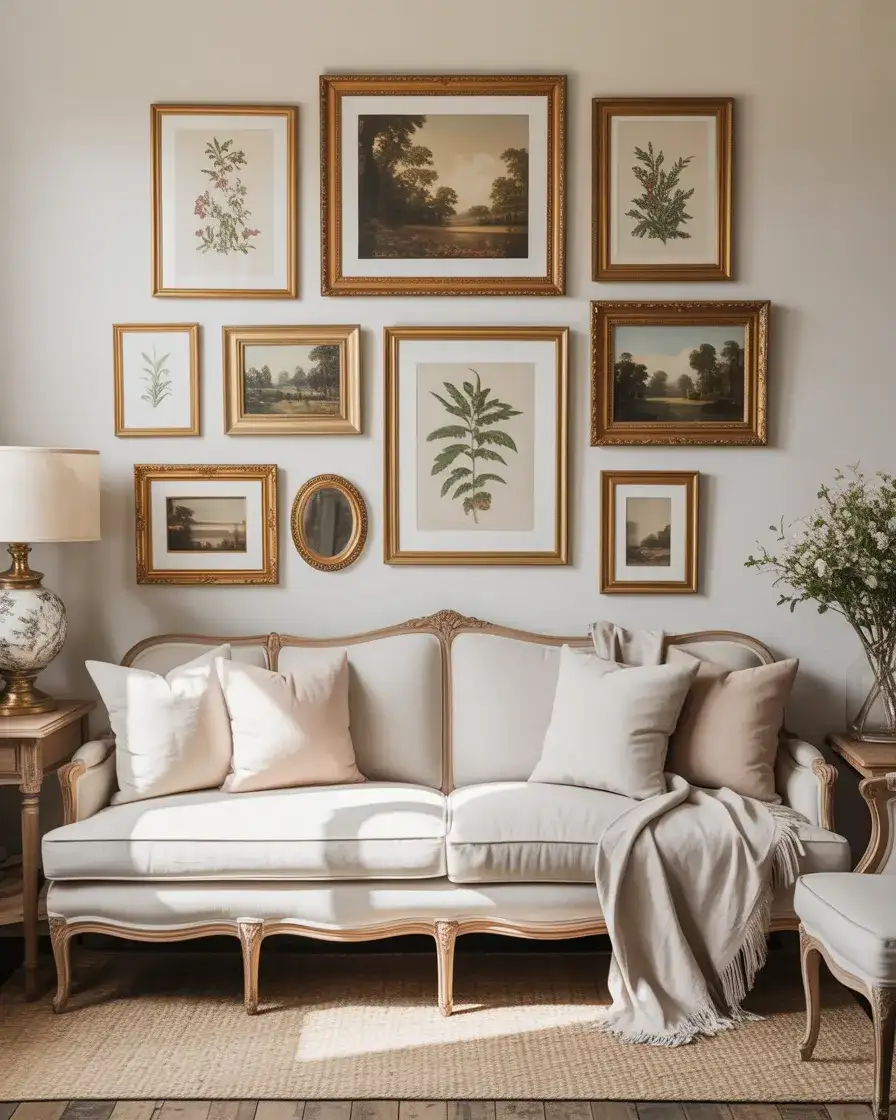
An eclectic gallery wall brings personality and history into your French country living room, serving as both an art display and a conversation starter. Mix ornate gold and silver gilt frames with simpler wood frames, combining botanical prints, vintage oil paintings, family photographs, and perhaps a small antique mirror to create a collected-over-time feeling. This approach to wall decor ideas above a couch or flanking a fireplace adds vertical interest and makes walls feel intentionally decorated rather than empty. The French have always embraced this layered, asymmetrical approach to displaying art, which feels much more personal than the matching triptych sets sold at big-box stores.
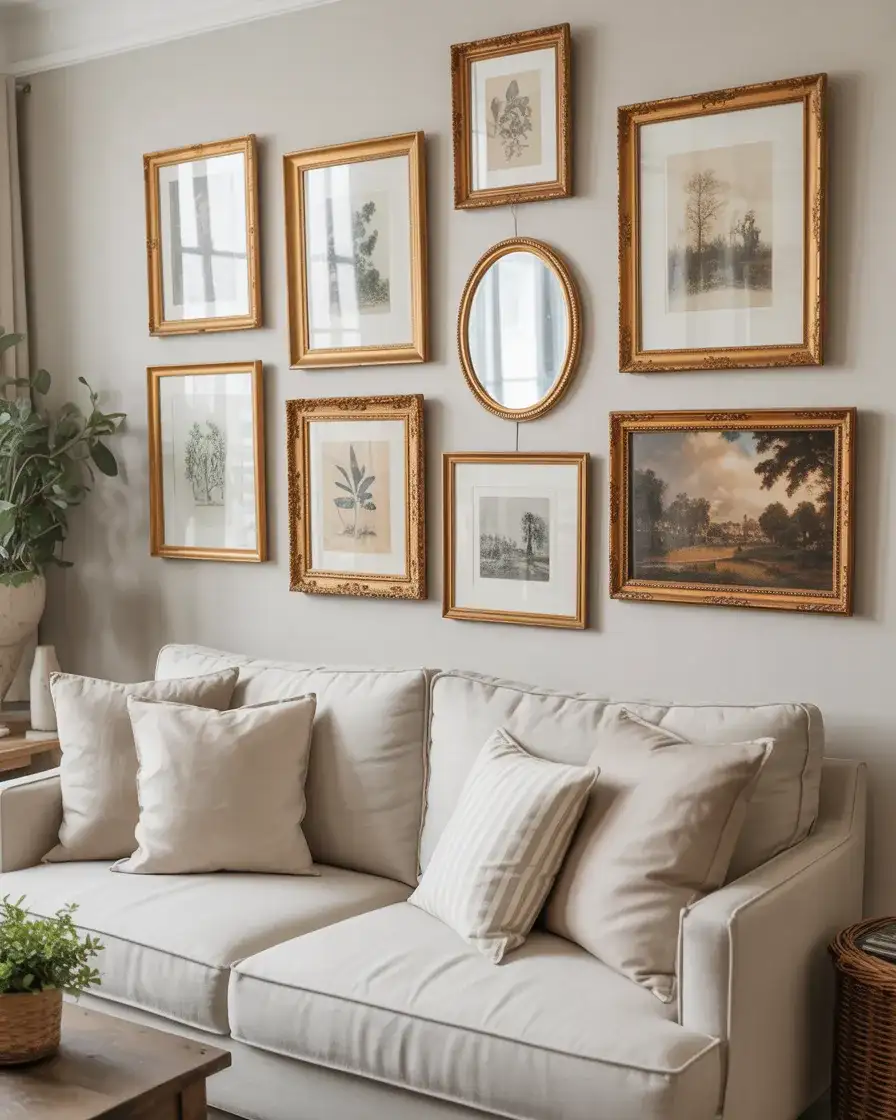
Expert-style commentary: The key to a successful eclectic gallery wall is maintaining some consistent element—whether that’s color palette, mat color, or frame finish—so the collection feels curated rather than chaotic. I recommend laying out your arrangement on the floor first, taking a photo, and then using that as your guide when hanging. Start with your largest or most important piece and build around it, keeping spacing relatively consistent at about 2-3 inches between frames. This works beautifully in homes with high ceilings, common in older American houses, where you need to fill vertical space without overwhelming the room.
9. Coastal Blue and White Provence Pattern Mix
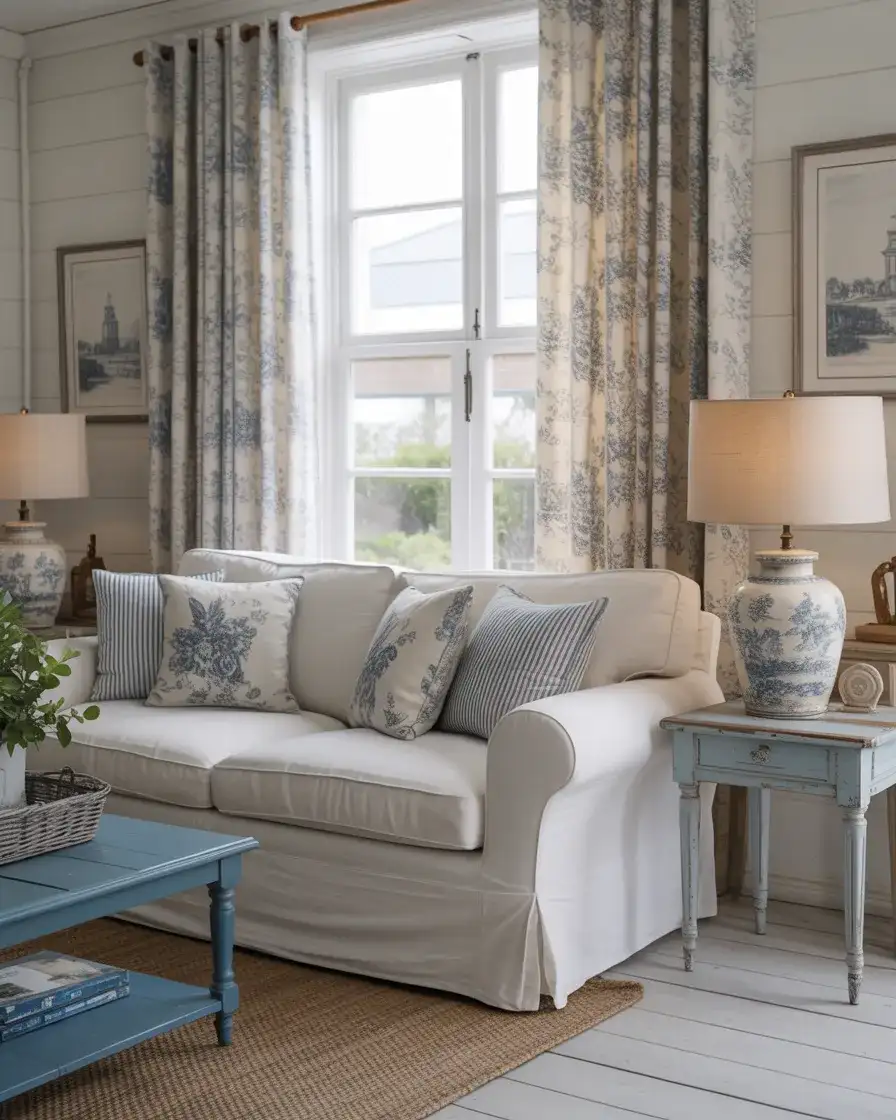
The intersection of French country and coastal style happens beautifully in a blue and white color scheme inspired by Provence patterns—think toile, ticking stripes, and delicate florals. This combination brings the relaxed, breezy feeling of French seaside villages into American homes, particularly appealing in coastal states from Maine to South Carolina. Layer different patterns in similar color values: striped pillows on a floral chair, toile curtains with solid linen upholstery, and checked throws over plain sofas. The repeated blue-and-white palette keeps the pattern mixing from feeling chaotic, creating a cohesive look that’s both collected and calming.
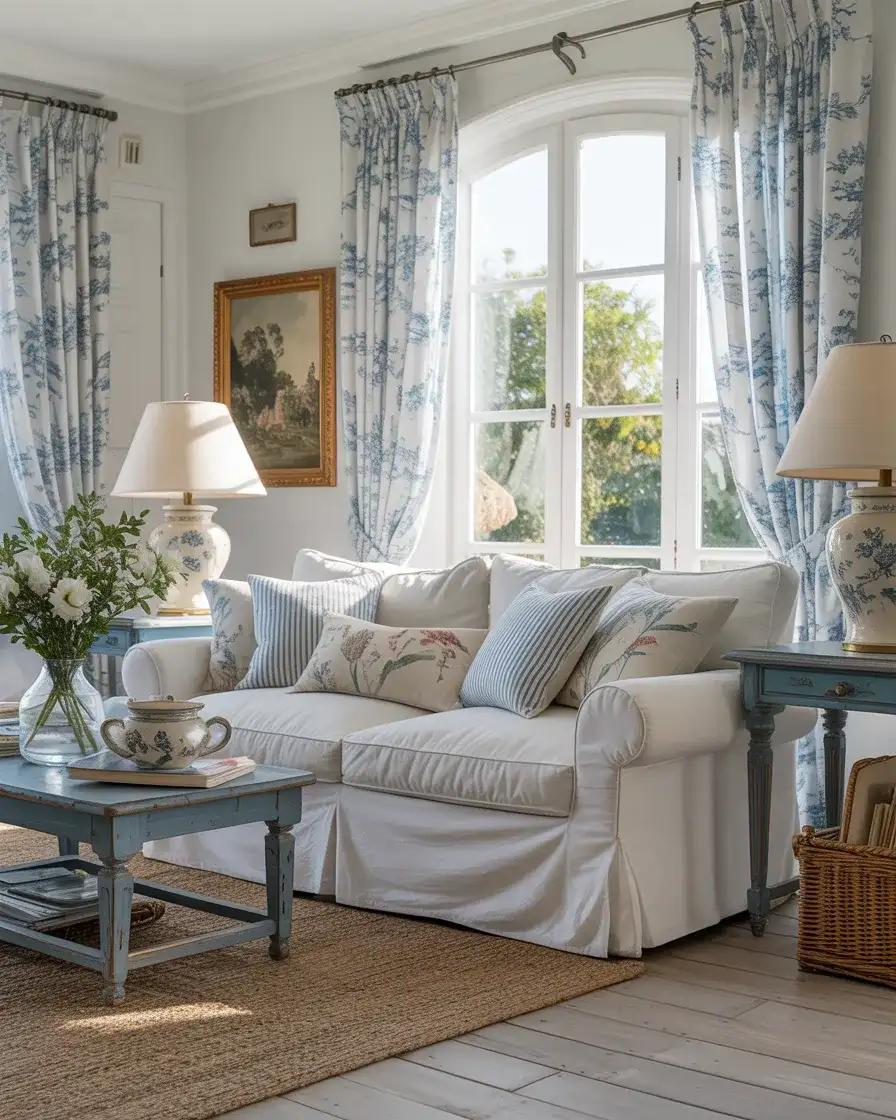
This palette works particularly well in beach houses and lake homes where you want to acknowledge the water views without resorting to obvious nautical themes like anchors and rope. The French country interpretation feels more sophisticated and less themed, using the same colors but through textile patterns and pottery rather than maritime accessories. Add natural wood tones and some greenery to warm up the blue and white, preventing it from feeling too crisp or cold. Wicker baskets and seagrass rugs reinforce the coastal connection while maintaining French country texture.
10. Dark Wood Beams with White Plaster Walls
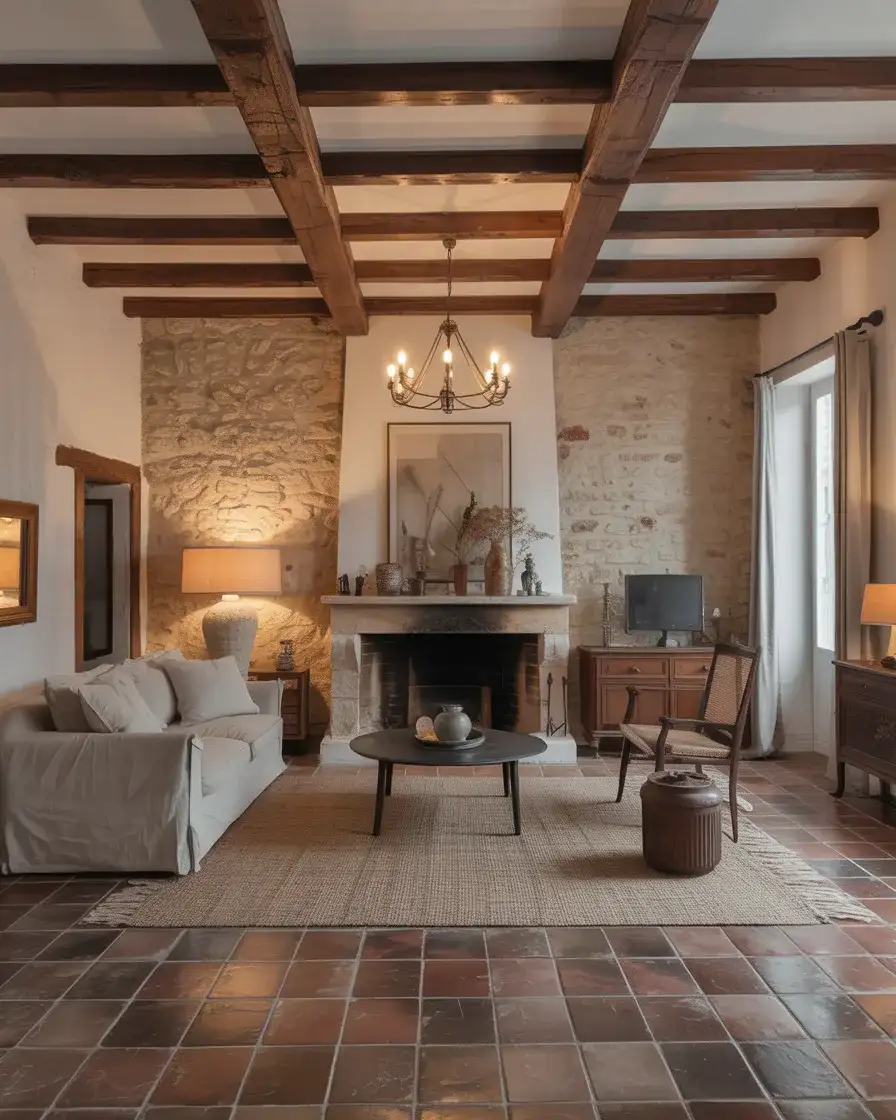
Exposed dark wood ceiling beams against bright white plaster walls create the architectural drama that anchors an authentic French country living room. This high-contrast combination—common in centuries-old European farmhouses—adds instant character and visual weight to what might otherwise be a plain room. Americans have embraced this look enthusiastically, either by exposing existing beams hidden behind drywall or by adding faux beams that provide the same aesthetic impact. The dark wood grounds the space and draws the eye upward, making even modest-sized rooms feel more substantial and historically rooted.
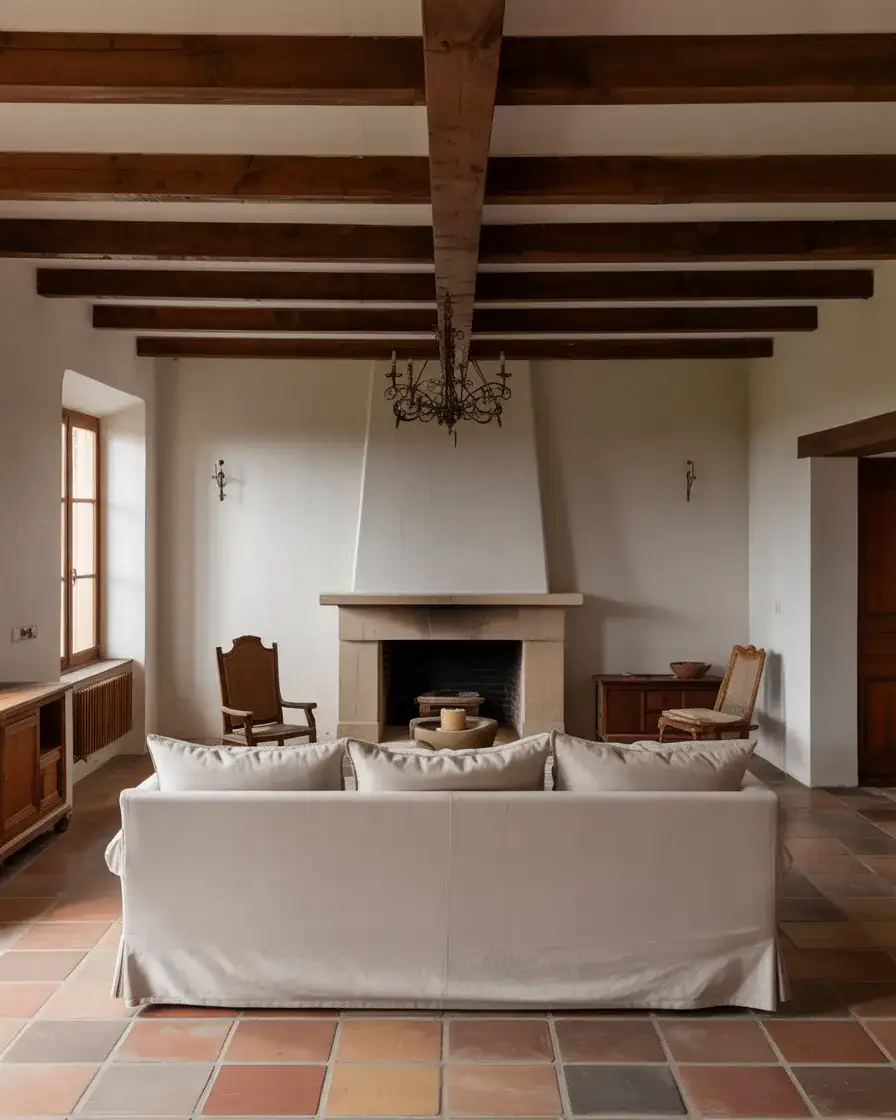
Where it works best: Homes in Texas Hill Country, Napa Valley, and Santa Fe have particularly embraced this aesthetic because it connects to both French and Spanish colonial architecture common in these regions. The beams work in rooms with ceilings from eight feet up—in standard-height rooms, paint them a lighter stain to avoid making the ceiling feel lower. Real reclaimed beams can be expensive (starting around $10-15 per linear foot), but hollow faux beams made from lightweight polyurethane cost a fraction of that and are easy enough for DIY installation, making this look surprisingly achievable on a modest budget.
11. Pink Blush Accents in Neutral Setting
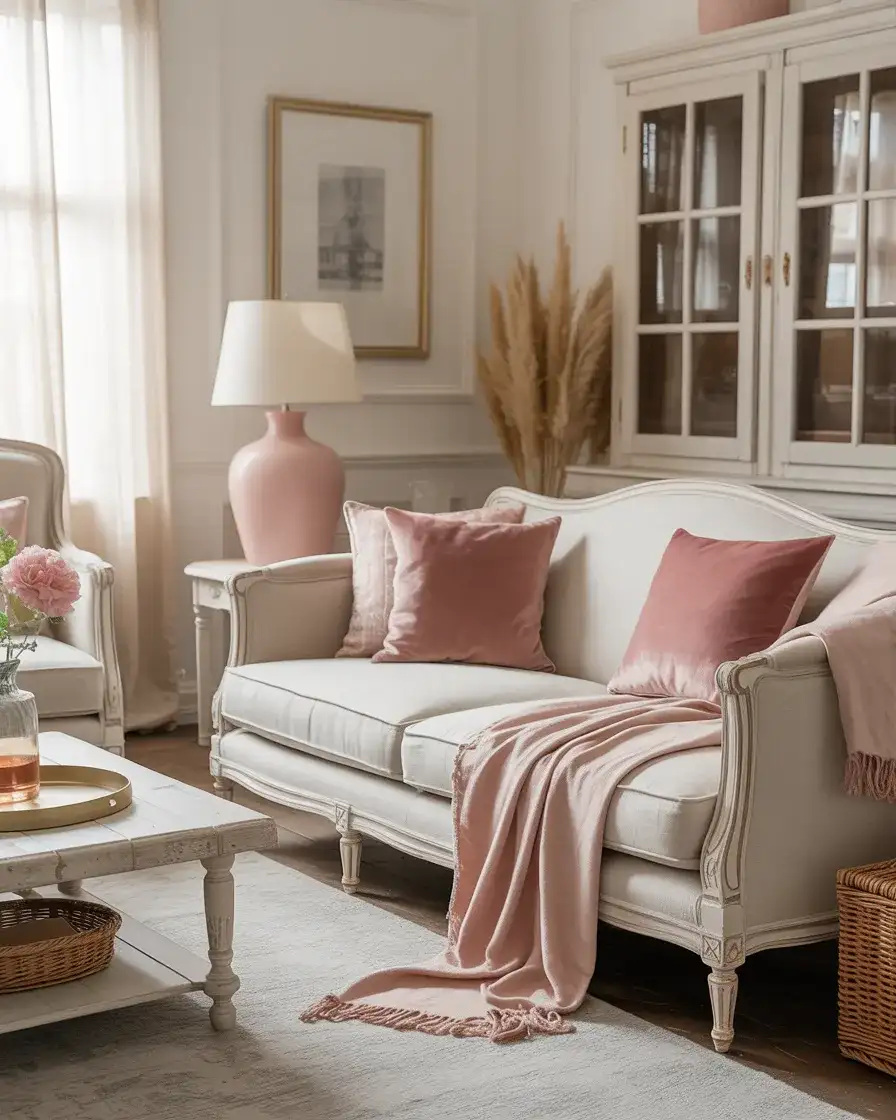
Soft pink blush tones bring unexpected warmth and femininity to French country living rooms when used as accents against a neutral backdrop. This isn’t the bright bubblegum pink of children’s rooms, but rather the dusty rose and pale coral found in French pottery, antique textiles, and aged plaster walls. The color adds just enough visual interest to keep an all-neutral space from feeling too stark while maintaining the soft, romantic quality that French country style celebrates. Americans have embraced this trend, particularly in 2026 as a more sophisticated alternative to the greige palette that’s dominated for years.
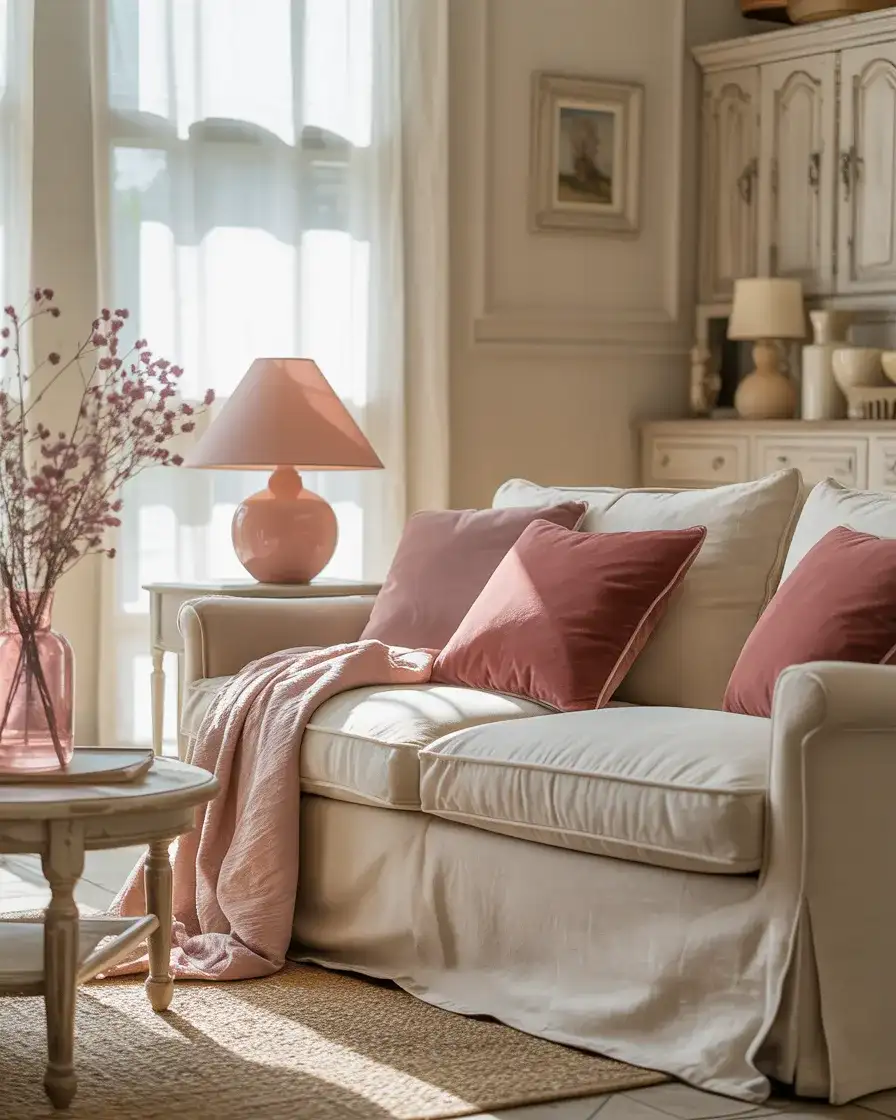
Common mistakes: Using too much pink or choosing shades that are too saturated, which can make the room feel juvenile or overly sweet rather than sophisticated. Instead, limit pink to about 10-15% of your color palette—perhaps one chair, a few pillows, pottery, and flowers. Choose tones with gray or brown undertones rather than pure pastels, which read more mature and European. This approach works beautifully in bedrooms that flow into living spaces, creating a cohesive color story throughout your home’s public rooms.
12. Rustic Wood Console Behind Sofa
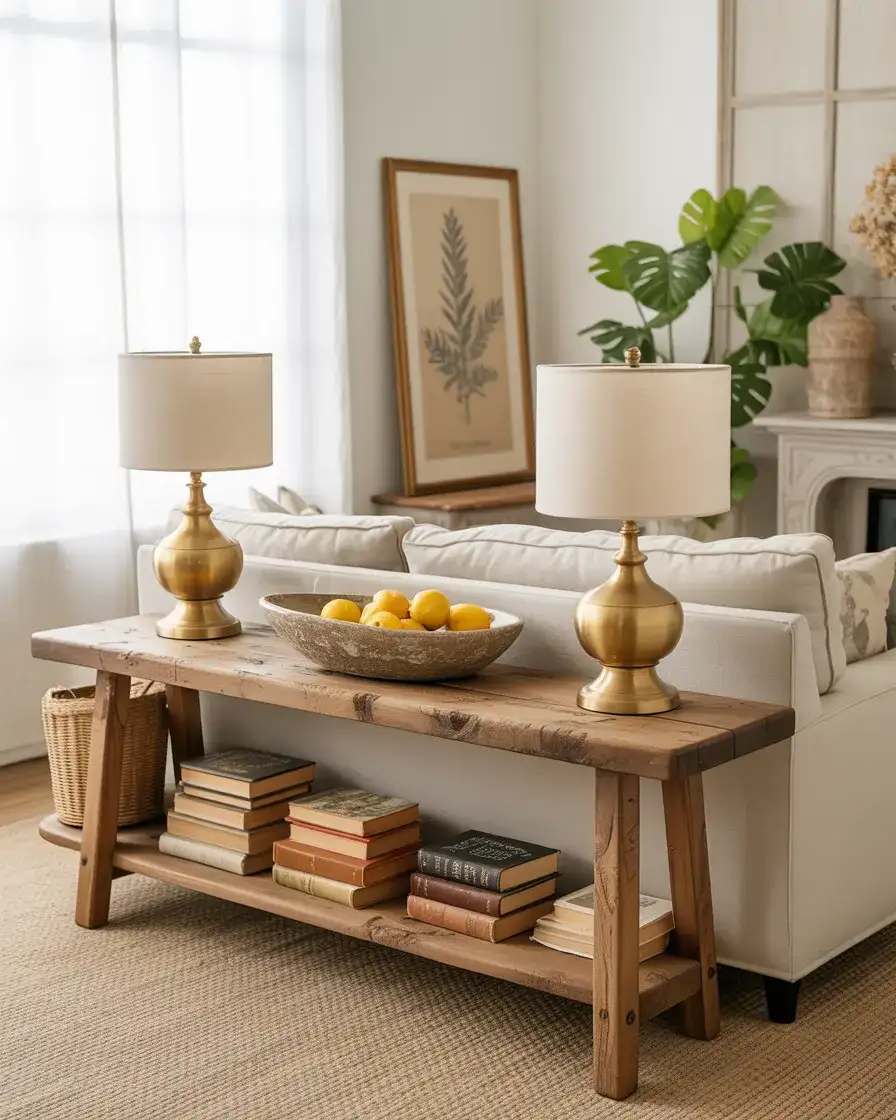
A rustic wood console table positioned behind your sofa creates both a practical surface and an opportunity for beautiful styling that adds depth to your French country living room. This furniture arrangement works particularly well in open-concept homes where the sofa floats in the middle of the room rather than sitting against a wall—the console fills the space behind it and prevents the sofa from looking awkward or unfinished. Choose a table with visible wood grain, natural imperfections, and perhaps a weathered finish that tells a story. The surface becomes a display area for lamps, books, pottery, and seasonal decor that can be easily swapped to refresh your room’s look.
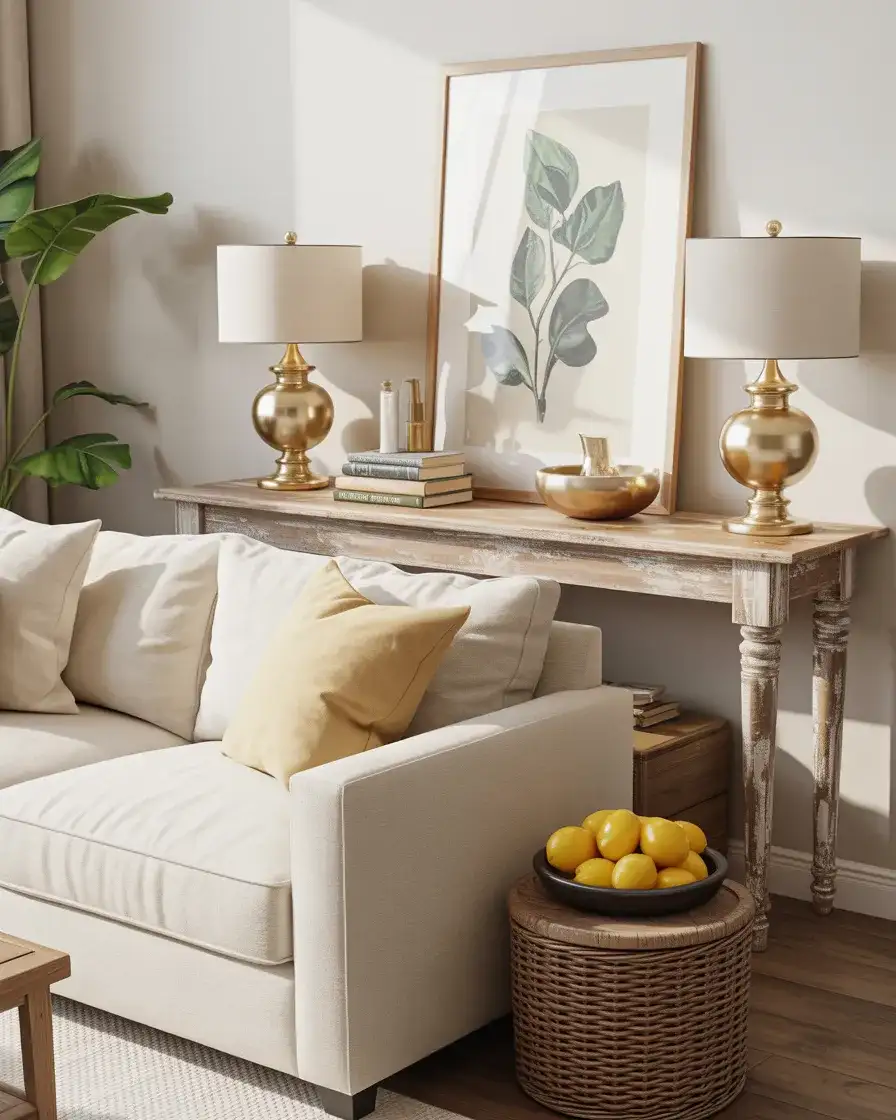
Practical insight: Console tables behind sofas also solve a common American living room problem—no place to set your drink or phone when you’re sitting on the couch. They’re particularly useful in homes with kids and pets, creating a buffer zone where you can keep things away from grabbing hands and wagging tails. Look for consoles around 30-32 inches high (slightly lower than standard dining table height) so they align well with sofa backs, and consider adding baskets underneath for extra storage of throws, magazines, or kids’ toys that can be quickly hidden when guests arrive.
13. Antique Armoire as Media Cabinet
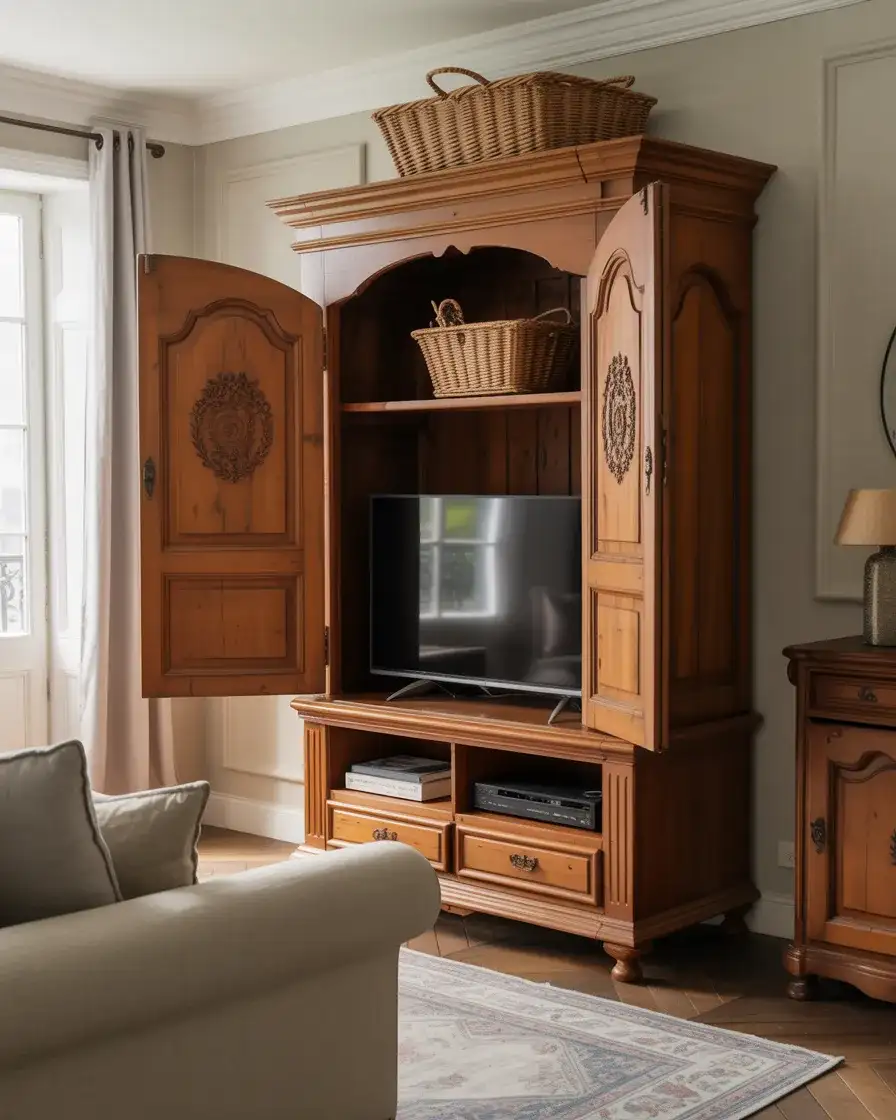
Repurposing a vintage French armoire as a media cabinet brilliantly solves the modern challenge of incorporating electronics into traditional French country style. The closed doors hide your TV, gaming equipment, and cable boxes when not in use, maintaining the room’s collected, pre-electric aesthetic. This furniture piece becomes a statement focal point—often featuring beautiful carved details, aged wood patina, and architectural interest—that grounds your living room in authentic French design. Americans have embraced this solution enthusiastically because it honors the past while accommodating current lifestyle needs without compromise.
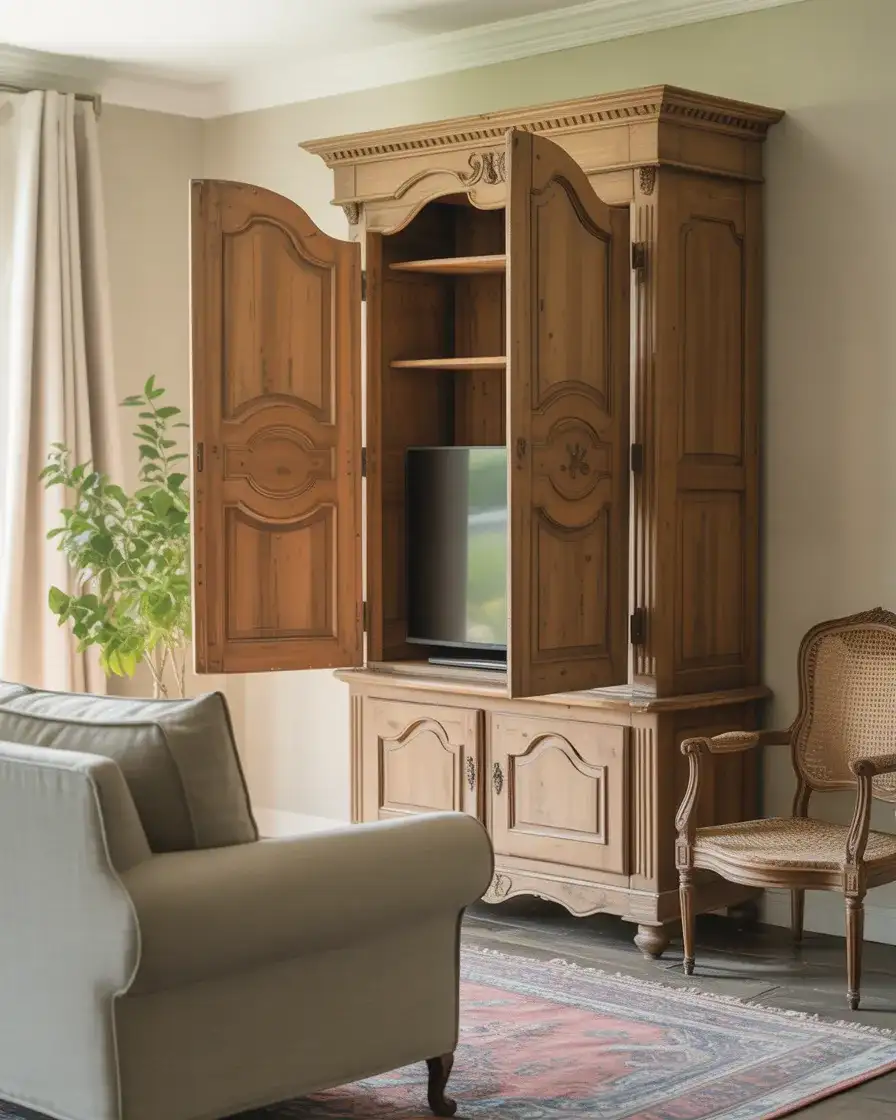
Where it works best: This works particularly well in formal living rooms or multi-purpose spaces where you want to control when the TV is visible, making the room feel more elegant during dinner parties or quiet reading time. In the Midwest and South, antique armoires are relatively affordable finds at estate sales and antique malls—often available for $300-800 depending on condition and provenance. You may need to remove a shelf or two to accommodate modern TV dimensions, but most armoires are deep enough to work once modified. Some homeowners even add ventilation holes disguised within the carved details to keep electronics from overheating.
14. Striped Ticking Fabric Upholstery
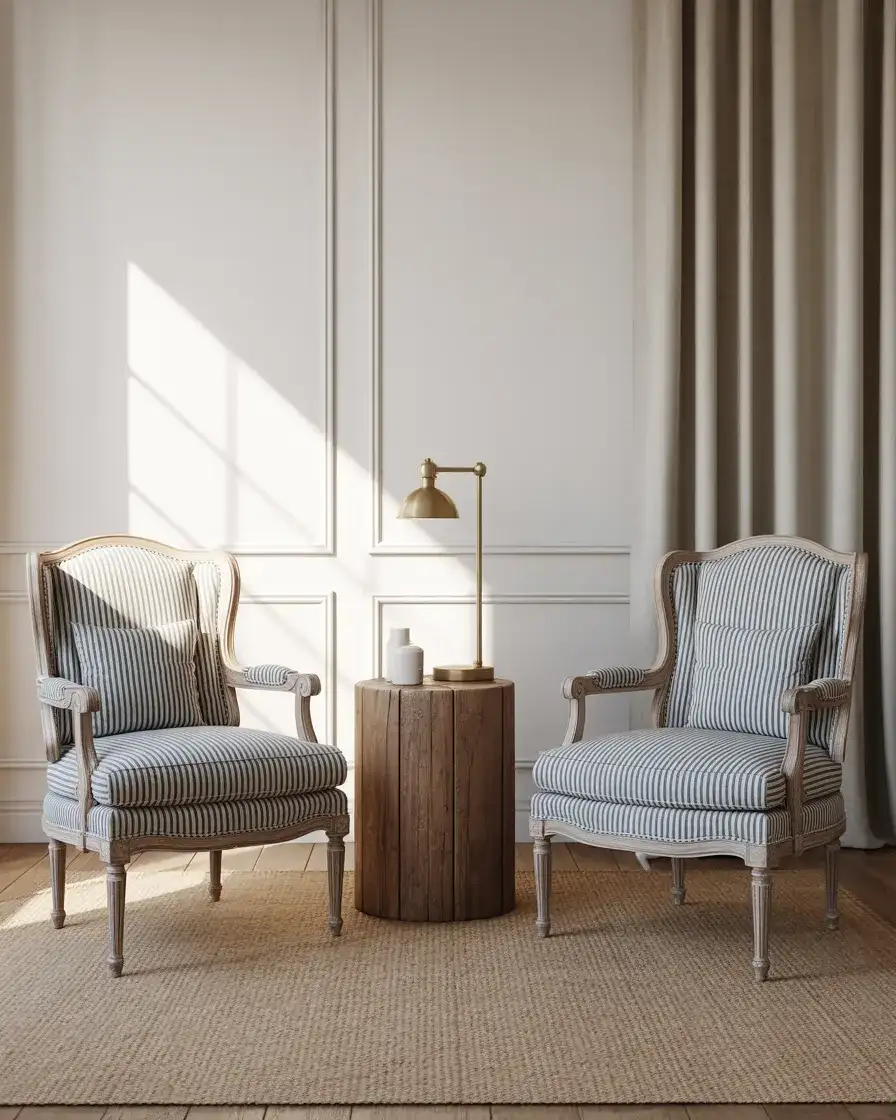
Classic French ticking stripe fabric—with its narrow lines in navy, black, or gray on white—brings a timeless pattern into your living room without overwhelming the space. This durable cotton fabric was originally used for mattress covers, which means it’s genuinely tough enough for everyday furniture use in busy American households. The decor pattern adds subtle visual interest and a hint of formality while remaining completely versatile, working equally well in coastal, farmhouse, or traditional French country settings. Use it for upholstering chairs, ottomans, or even pillows to introduce a pattern that won’t compete with your other design elements or tire your eyes over time.
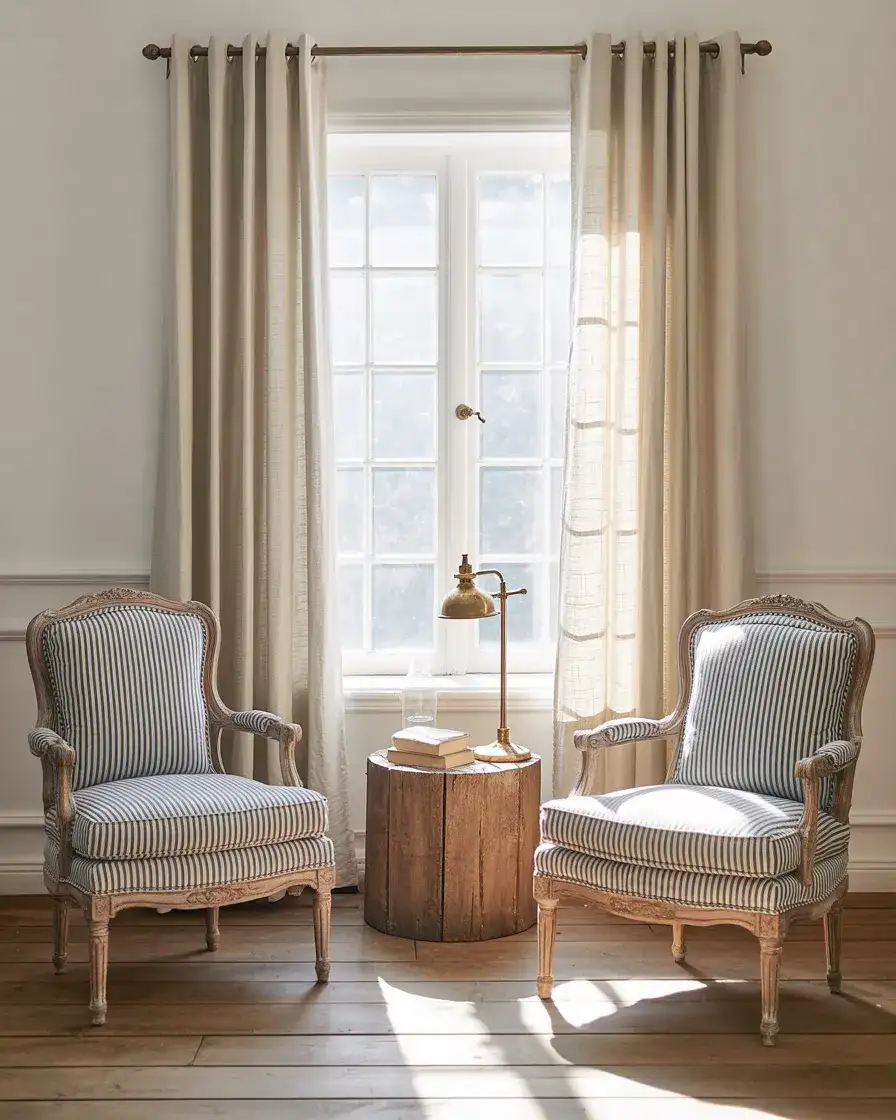
Real homeowner behavior: People who choose ticking stripe upholstery report that it genuinely holds up to life with kids, pets, and heavy use—the tight weave resists stains, and the pattern camouflages minor wear. It also washes beautifully if you’re using it for slipcovers or pillow covers, actually getting softer and more relaxed with each trip through the machine. The stripe orientation matters: vertical stripes make pieces look taller and more formal, while horizontal stripes feel more casual and can make furniture appear wider. Consider mixing both orientations in the same room for visual variety that still feels coordinated.
15. Stone or Marble Fireplace Surround
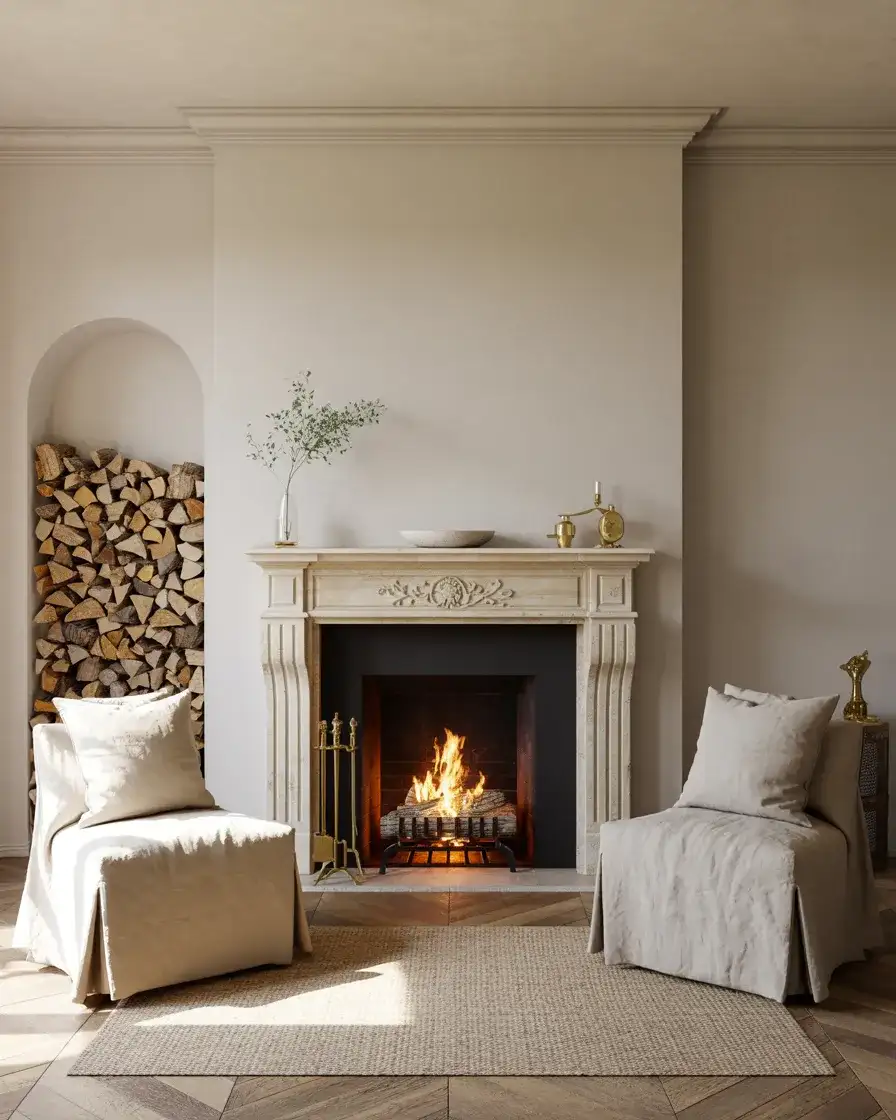
A natural stone or marble fireplace surround provides the architectural gravitas that authentic French country living rooms need, creating an instant focal point that feels permanent and luxurious. Limestone, in particular, captures that European aesthetic—its soft gray-beige tones and subtle texture bring Old World character without feeling overly formal or fussy. This natural material ages beautifully, developing a patina over time that only enhances its appeal. American homeowners in all regions have made fireplace renovations a top priority, understanding that this single change can transform a room’s entire character and often provides the best return on investment for resale value.
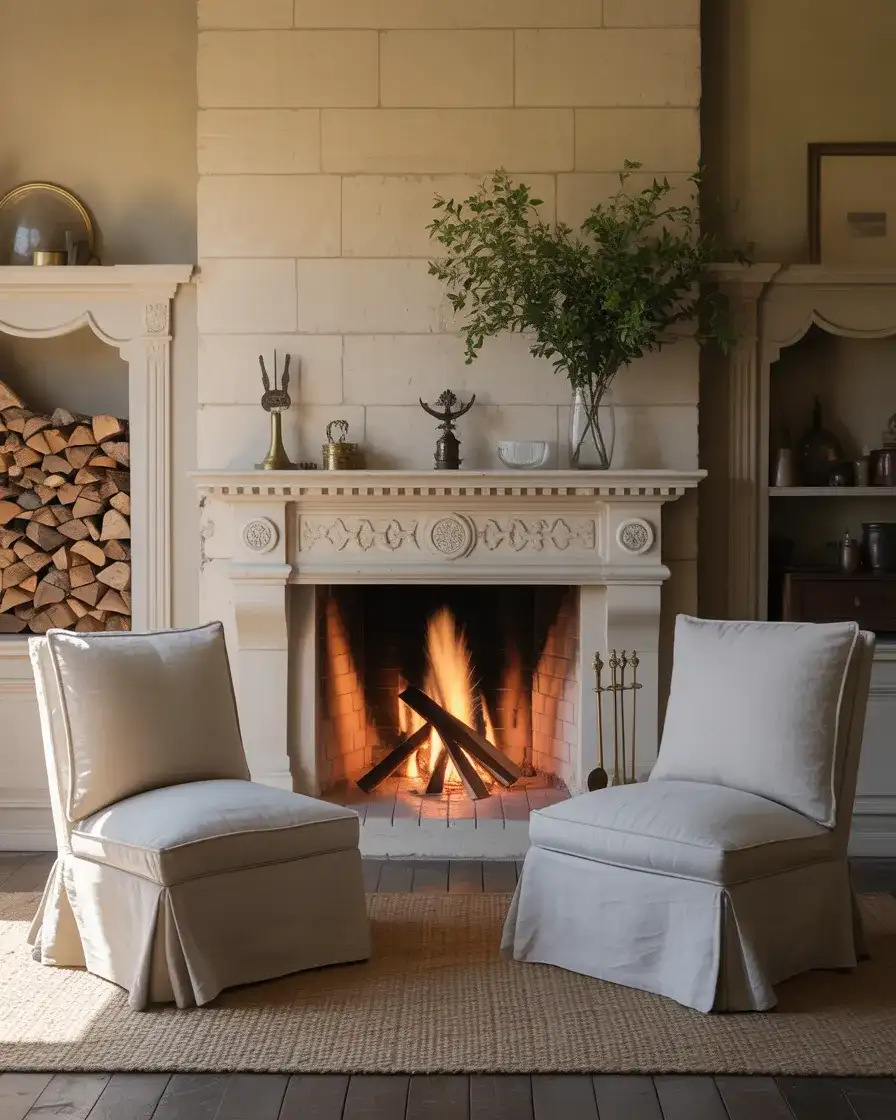
Budget angle: While custom stone fireplaces can cost $5,000-15,000 depending on materials and labor, there are more affordable approaches. Reclaimed limestone or salvaged marble can be found at architectural salvage yards for significantly less than new materials. Alternatively, some companies make realistic stone veneer panels that achieve a similar look for around $1,500-3,000 installed. If you’re truly DIY-inclined, painting an existing brick fireplace in limewash (a European paint technique using limestone) can give you a stone-like texture and appearance for under $100 in materials, making this high-impact look surprisingly accessible.
16. Vintage Persian Rug in Faded Tones
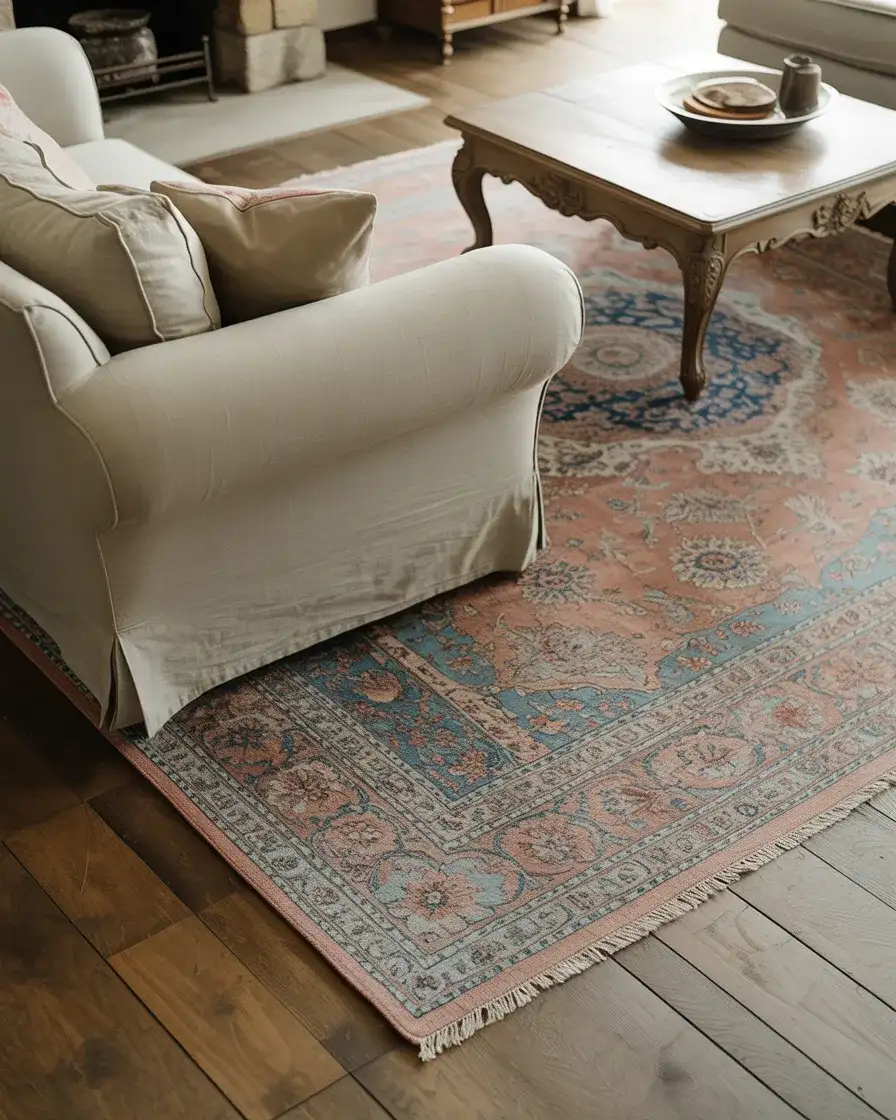
A well-worn vintage Persian rug in soft, faded colors—think dusty rose, pale blue, cream, and terra cotta—anchors your French country living room while adding pattern, warmth, and a sense of history. The beauty of these rugs lies in their imperfection: sun-faded sections, worn spots, and irregular dyes tell stories of decades of use in another home. This weathered quality feels much more authentic to French country style than brand-new rugs trying to look old. The rustic character of vintage rugs also means they’re practically indestructible—they’ve already survived 50-100 years, so your family’s daily life won’t harm them further.
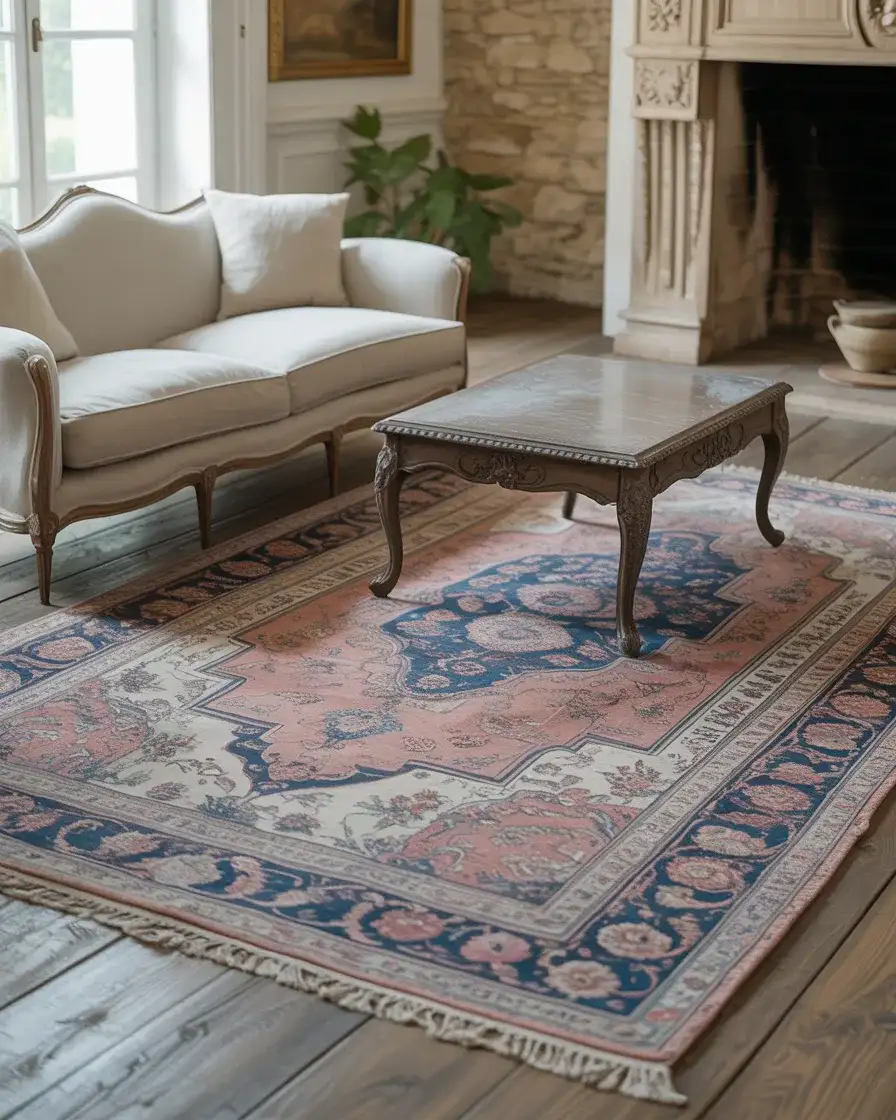
Expert-style commentary: When shopping for vintage rugs, look for pieces where the foundation is still solid even if the pile is low—test by folding the rug to see if the backing is intact and flexible rather than brittle. Estate sales, online marketplaces, and rug dealers specializing in vintage pieces are your best sources. Prices vary wildly, from $300 for smaller pieces to several thousand for large room-sized rugs, but you’re buying something that’s genuinely irreplaceable and will outlast any synthetic rug made today. Size matters: in living rooms, your rug should be large enough that at least the front legs of all major furniture pieces sit on it, creating a defined conversation area.
17. Whitewashed Wood Plank Walls
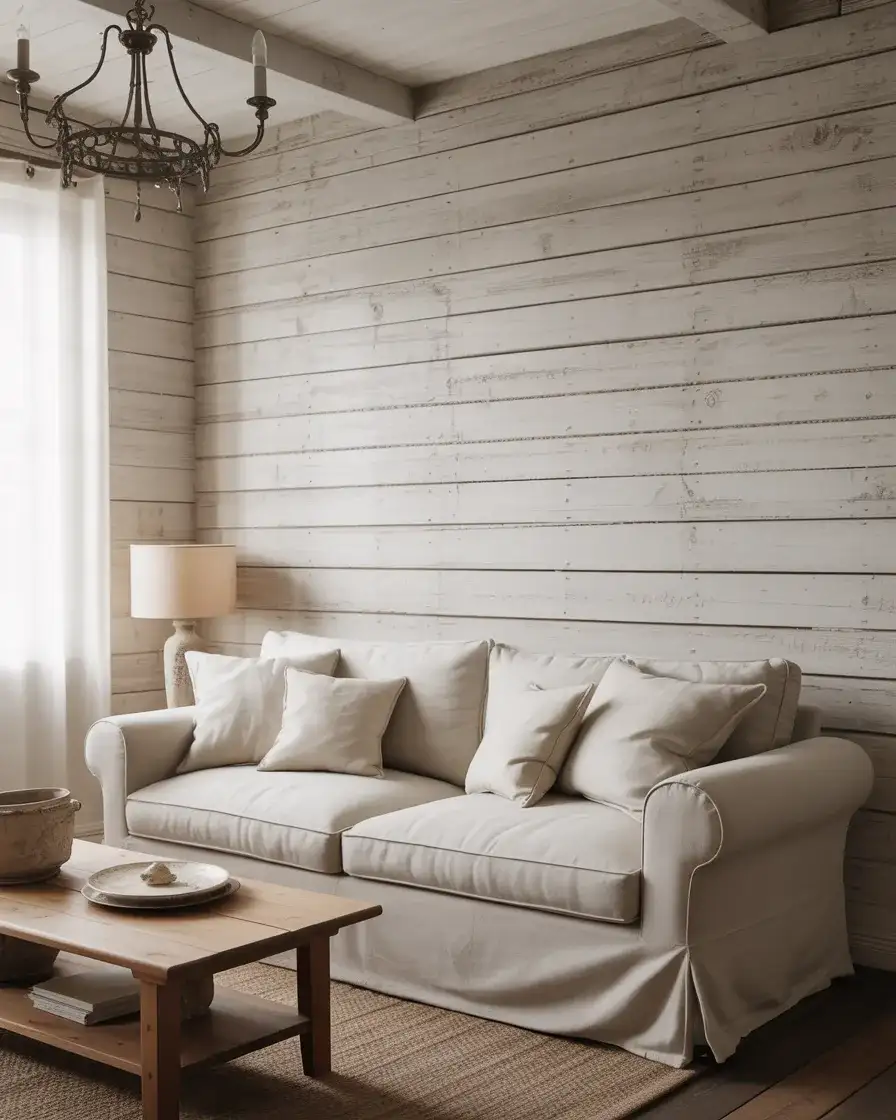
Whitewashed wood planks covering all or part of your living room walls add instant texture and architectural interest while maintaining the light, airy quality essential to French country style. This treatment—sometimes called pickling or limewashing—allows the wood grain to show through the white finish, creating subtle variation and depth that flat paint can’t achieve. The technique works on shiplap, tongue-and-groove, or even regular lumber, making it adaptable to different budgets and skill levels. American homeowners have particularly embraced this look in coastal and farmhouse settings, where it bridges the gap between rustic and refined.
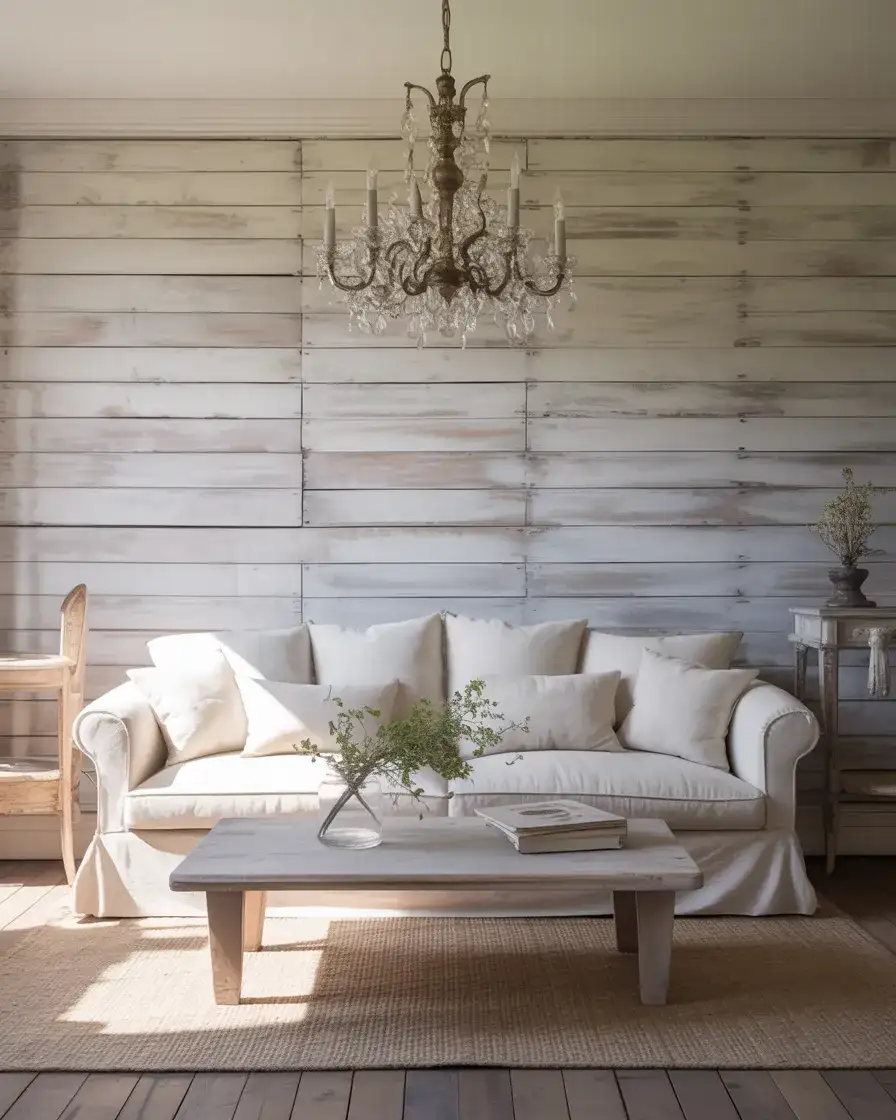
Practical insight: You can achieve the whitewashed look several ways depending on your desired finish. For a heavy, more opaque coverage, use diluted white paint (about 2 parts water to 1 part paint) and apply with a brush, wiping back with a rag while still wet. For a very subtle, authentic European look, use traditional limewash paint (available from specialty suppliers), which actually becomes part of the wood rather than sitting on top of it. This absorbs into the grain and ages beautifully, though it’s messier to apply and requires some learning. Either way, the result adds warmth and character to new construction homes that often lack architectural detail.
18. Oversized Gilt Mirror as Focal Point
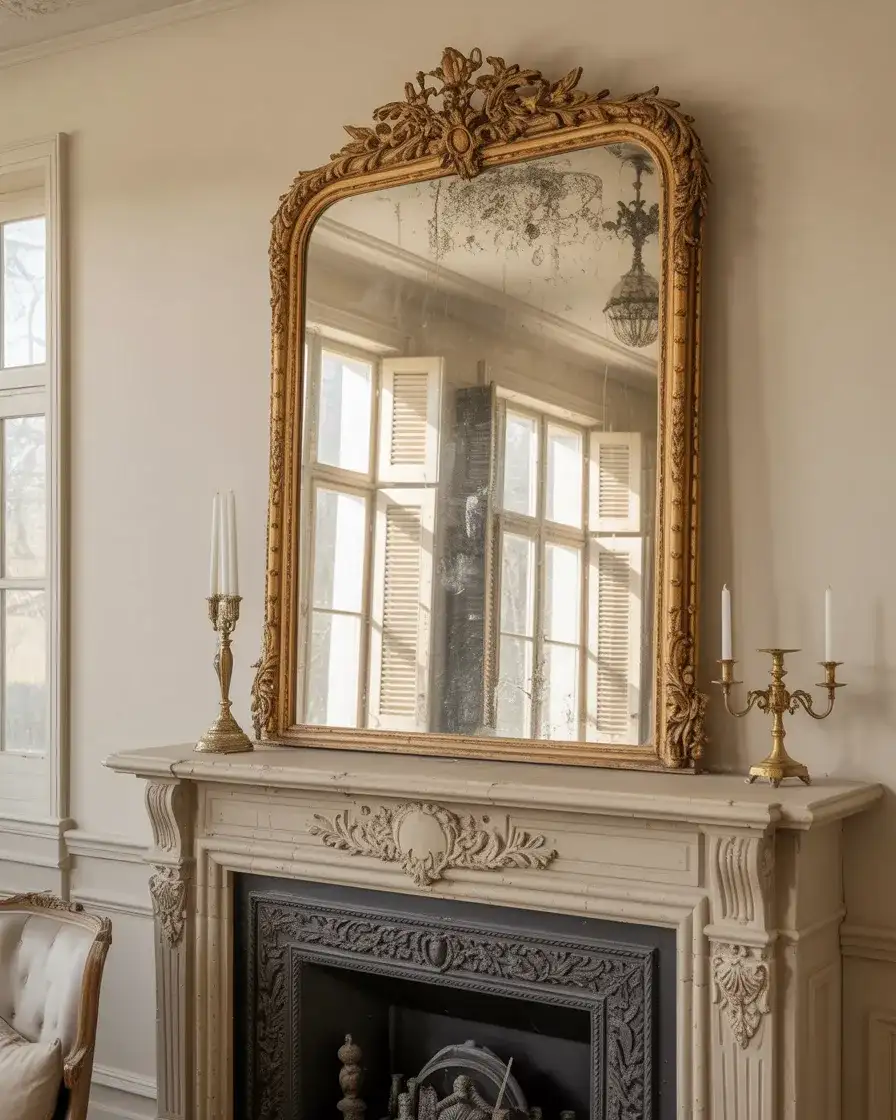
A large ornate mirror with an aged gold or silver gilt frame commands attention in a French country living room while serving the practical purpose of reflecting light and making the space feel larger. These mirrors—often sourced from antique shops or architectural salvage—bring instant European elegance and a sense of history that new pieces simply cannot replicate. The reflective surface bounces natural light around the room, particularly valuable in darker spaces or rooms with limited windows. Position these statement mirrors above mantels, behind sofas, or on large wall expanses where they can truly shine as wall decor ideas above couches that feel both functional and beautiful.
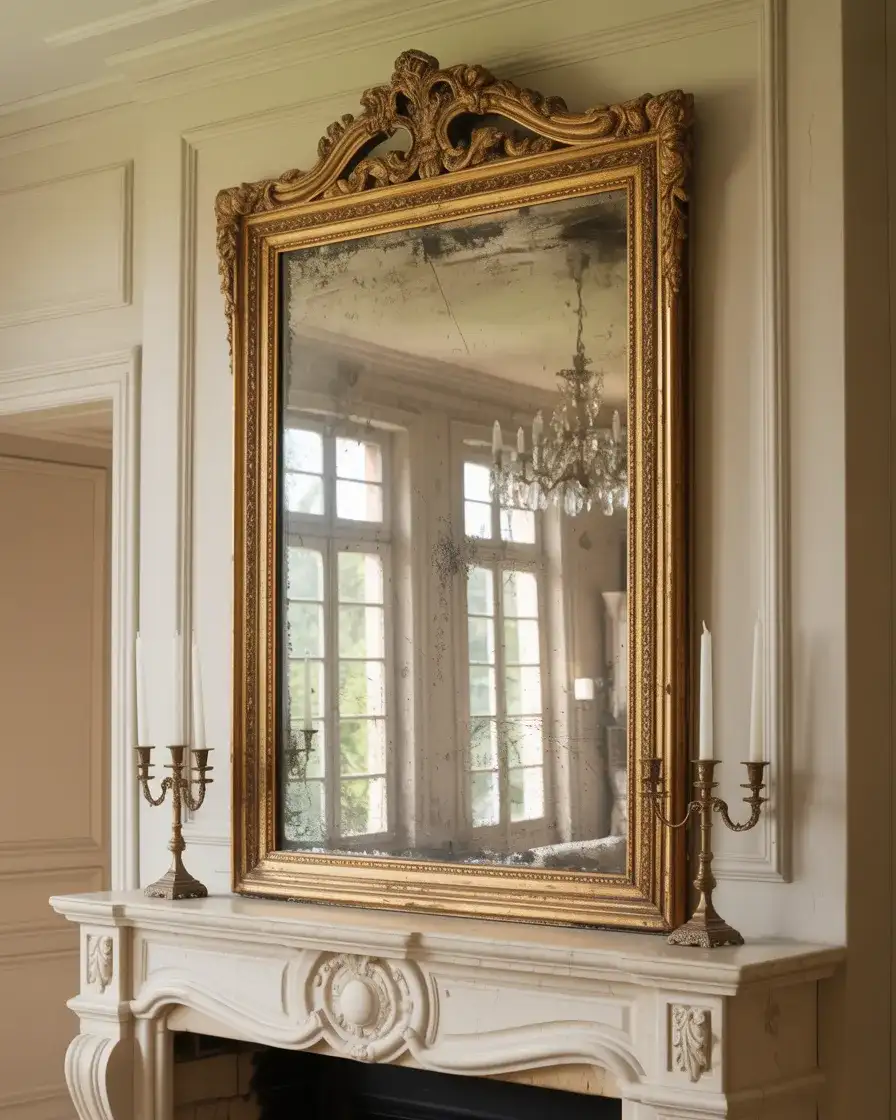
Where it works best: These dramatic mirrors work particularly well in formal living rooms or on walls perpendicular to windows, where they can capture and reflect the most natural light throughout the day. In Southern homes with abundant sunshine, they help distribute that light evenly around the room. For Northern homes with less direct sunlight, the mirrors make the most of every ray. Don’t worry if the silvering is deteriorating or if there are dark spots in the glass—this “foxing” is considered desirable in French country design because it proves the piece’s age and authenticity, adding character rather than detracting from beauty.
19. Mix of Wood Furniture Tones

Authentic French country living rooms embrace a mix of different wood tones rather than matching everything in the same finish—this layered approach creates the collected-over-time feeling that defines the style. Your furniture might include a dark walnut coffee table, lighter oak side tables, painted cream chairs with exposed beech frames, and whitewashed pine shelving all in the same room. This variety adds depth and visual richness while avoiding the matchy-matchy look of furniture sets that can feel retail-y and soulless. The key is ensuring your wood tones fall into complementary families (all warm or all cool undertones) so they harmonize even while differing in darkness.
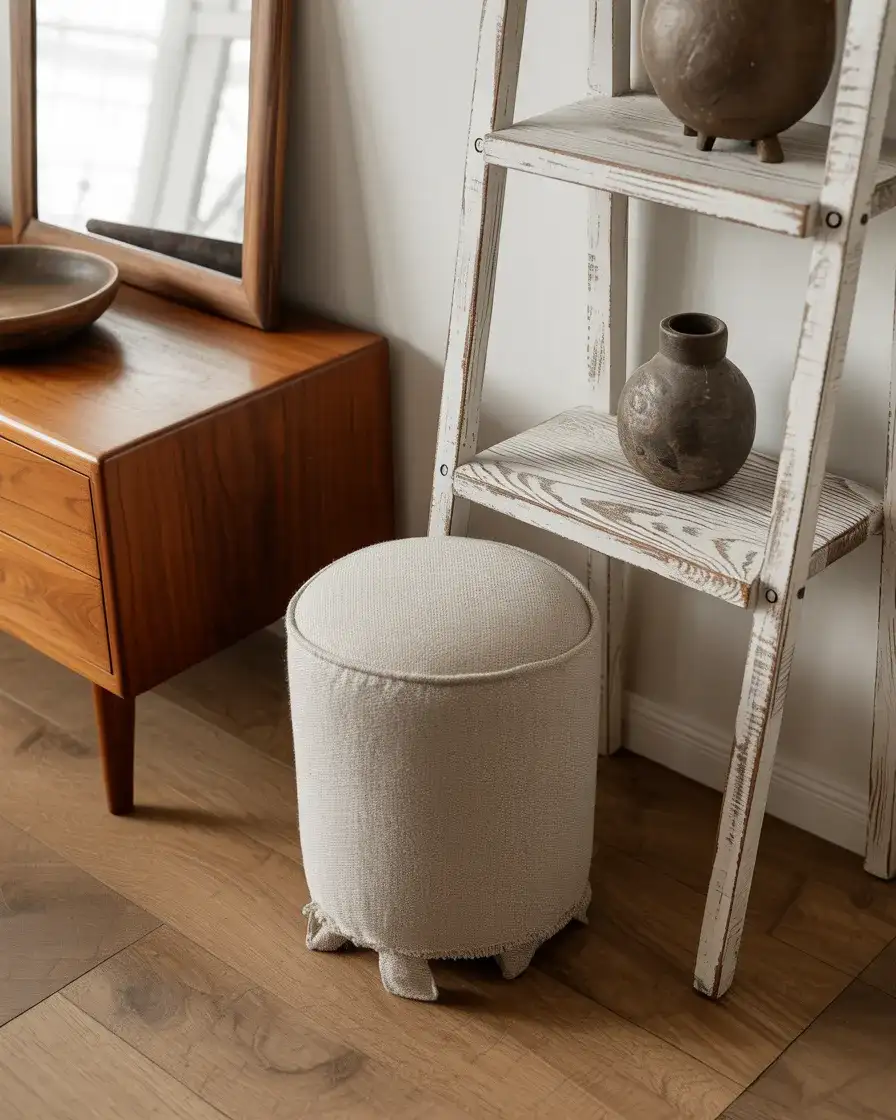
Common mistakes: Mixing too many wood tones (more than four or five different species/finishes) can tip from collected into chaotic. Also avoid pairing very yellow-toned woods (like golden oak) with very red-toned woods (like cherry) in the same sightline—these create visual tension rather than harmony. Instead, think in terms of cool browns (walnut, weathered oak) or warm browns (pine, honey oak) and stay mostly within one temperature family. The French also balance wood variety with plenty of painted or upholstered furniture, so the wood mixing happens within a calmer context of neutrals.
20. Fresh Flowers and Greenery in Pottery
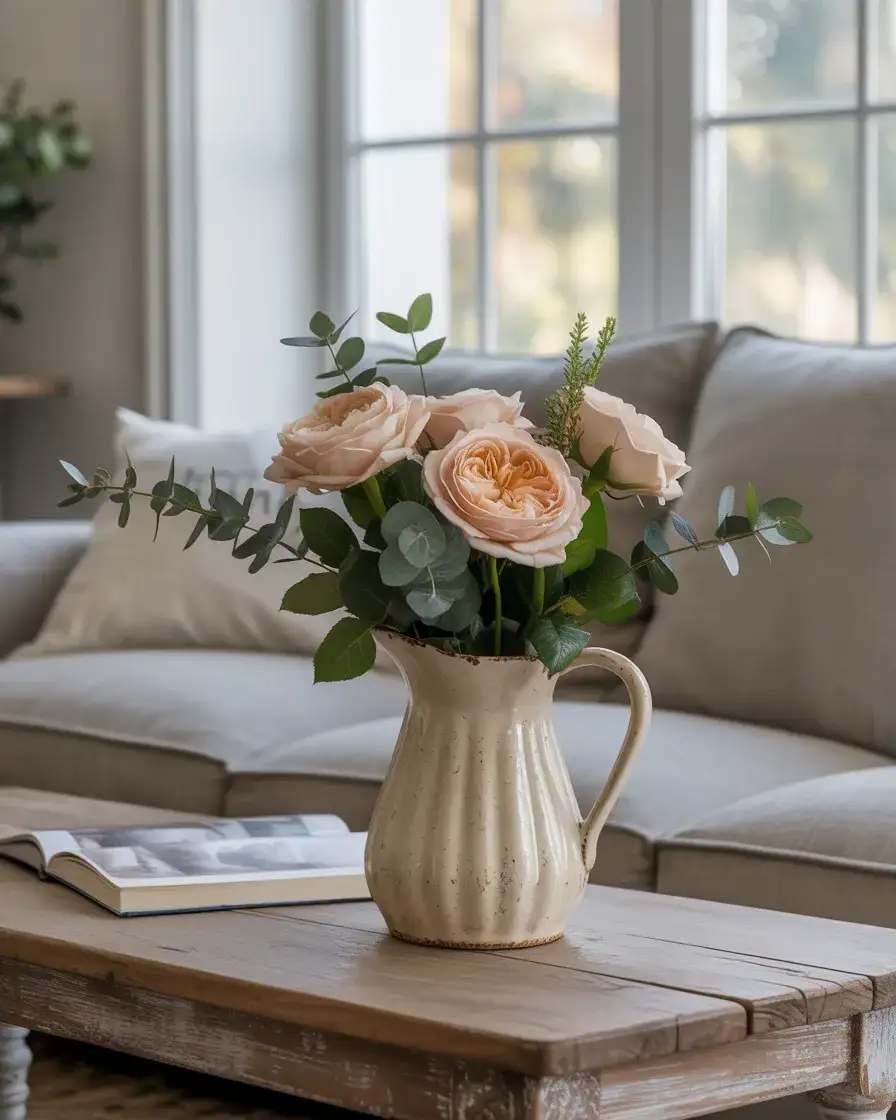
No French country living room is complete without fresh flowers or greenery displayed in simple ceramic or earthenware vessels—this brings life, color, and a connection to gardens and countryside into your space. The arrangements should look gathered rather than arranged by a florist: loose bunches of garden roses, wildflowers in season, or simply branches of greenery like eucalyptus or olive in neutral stoneware pitchers or bowls. This approach to decor changes with seasons and keeps the room feeling fresh and lived-in rather than static. Americans have particularly embraced farmers market flowers and grocery store blooms for this purpose, making European elegance surprisingly affordable and accessible.
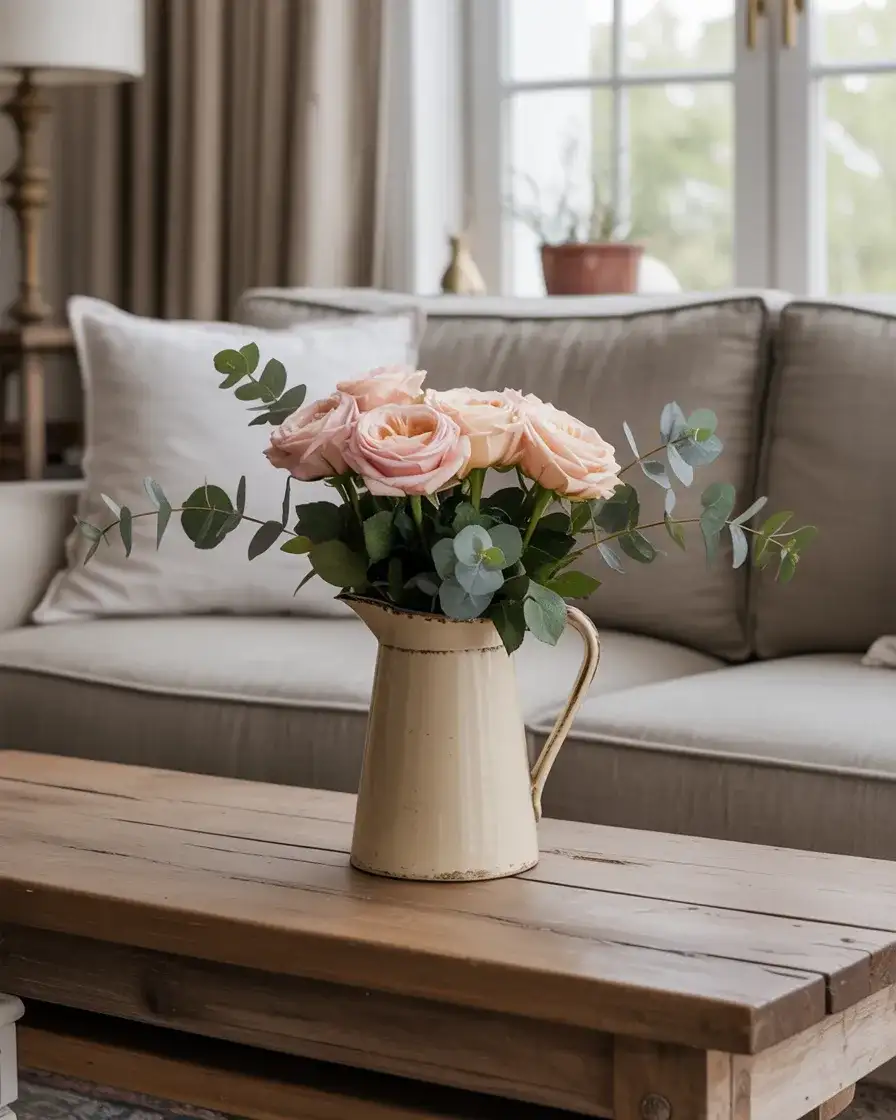
Real homeowner behavior: People who maintain fresh flowers weekly report it completely changes their relationship with their living room—the space feels more cared for and special even on ordinary weekdays. To make this habit sustainable, keep several vessels in different sizes ready to use, and don’t overthink the arrangements. French women just grab what looks good, cut stems to different heights, and stick them in water. For budget-conscious Americans, Trader Joe’s, Whole Foods, and local grocery stores offer fresh bunches for $5-10 that last a week. If fresh flowers aren’t sustainable, high-quality faux stems have improved dramatically—just limit yourself to very realistic greenery and avoid fake flowers with overly perfect blooms.
21. Iron Chandelier with Candle Details
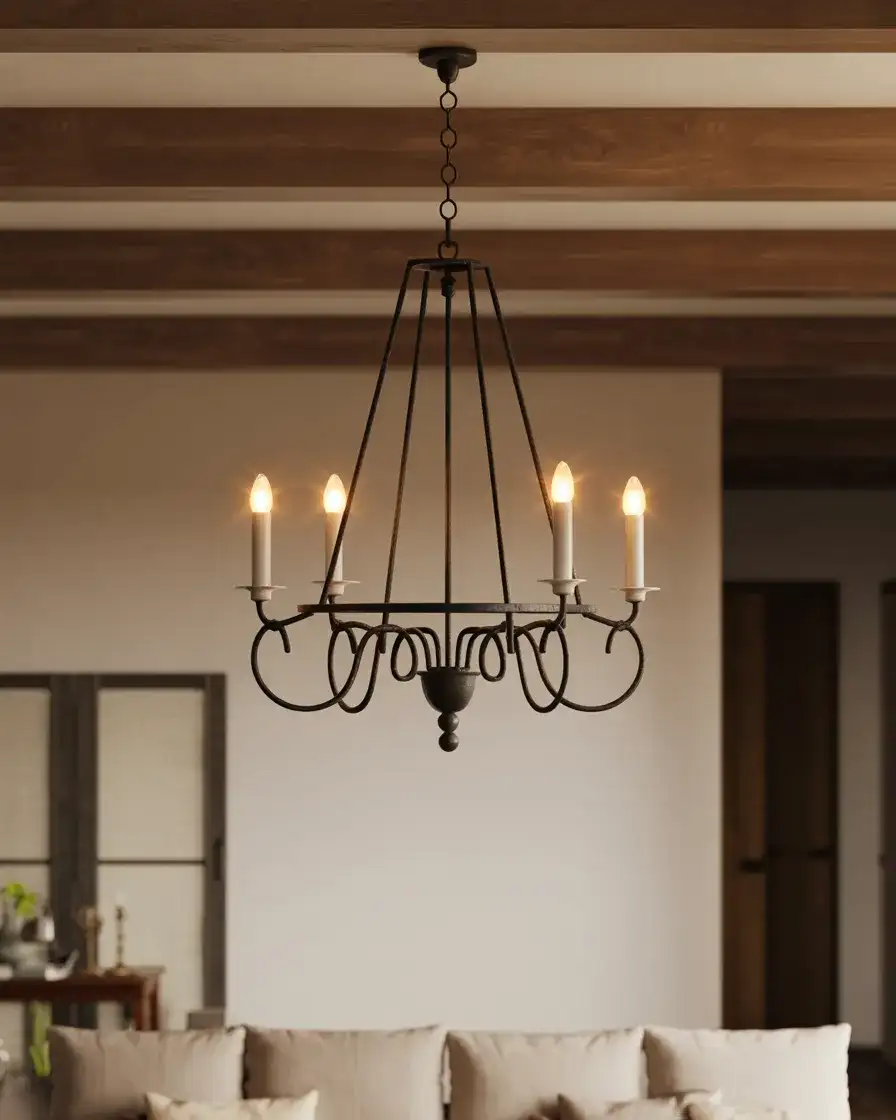
A wrought iron chandelier—particularly one designed to look like candles rather than modern bulbs—brings authentic French country character to your living room while providing essential ambient lighting. These fixtures range from simple, rustic designs with minimal ornamentation to more elaborate pieces with curved arms and decorative details, all sharing that handcrafted, Old World quality. The black or aged brown finish of iron grounds the space and provides visual weight that helps balance light-colored furniture and walls. This style of lighting has been used in French homes for centuries, and it remains just as effective today at creating atmosphere and establishing the room’s traditional character.
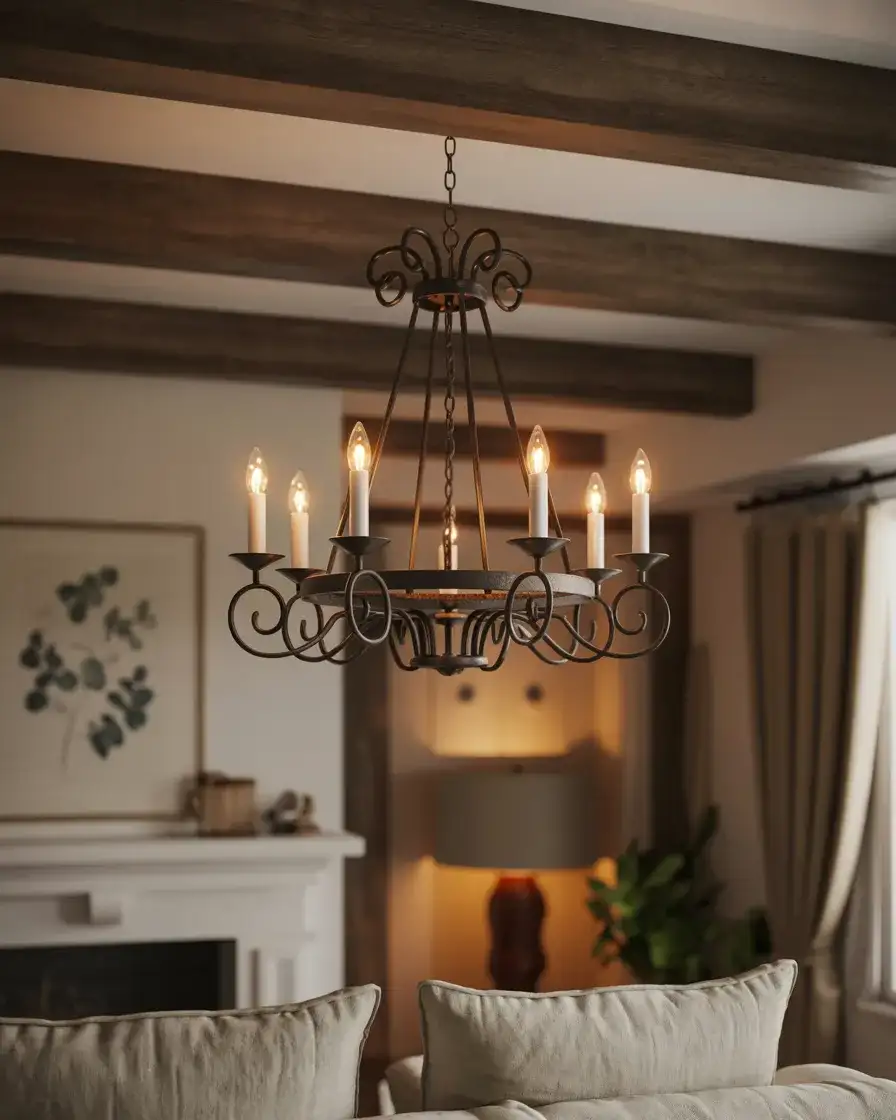
Budget angle: While authentic antique French chandeliers can cost thousands, excellent reproductions are available from $200 to $600 depending on size and quality. Companies like Wayfair, World Market, and specialty lighting retailers offer iron chandeliers that capture the look without the price tag of true antiques. Installation typically costs $150-300 if you need an electrician, but it’s a DIY-friendly project if you’re comfortable with basic wiring and your ceiling box can support the weight (most iron chandeliers weigh 15-30 pounds). Consider adding a dimmer switch during installation—this costs only $30-40 more but dramatically increases the fixture’s versatility for different moods and times of day.
22. Bench Seating with Linen Cushions
Incorporating a long wooden bench with linen cushions adds flexible seating while reinforcing the rustic, European farmhouse quality of French country design. These benches work beautifully along walls, in front of windows, or even as unexpected coffee table alternatives that invite casual, relaxed living. The combination of sturdy wood with soft textile cushioning captures that essential mix of practical and comfortable that defines the French country aesthetic. In American homes, benches solve the eternal problem of never having quite enough seating when guests visit, while taking up less visual space than traditional chairs during everyday life.
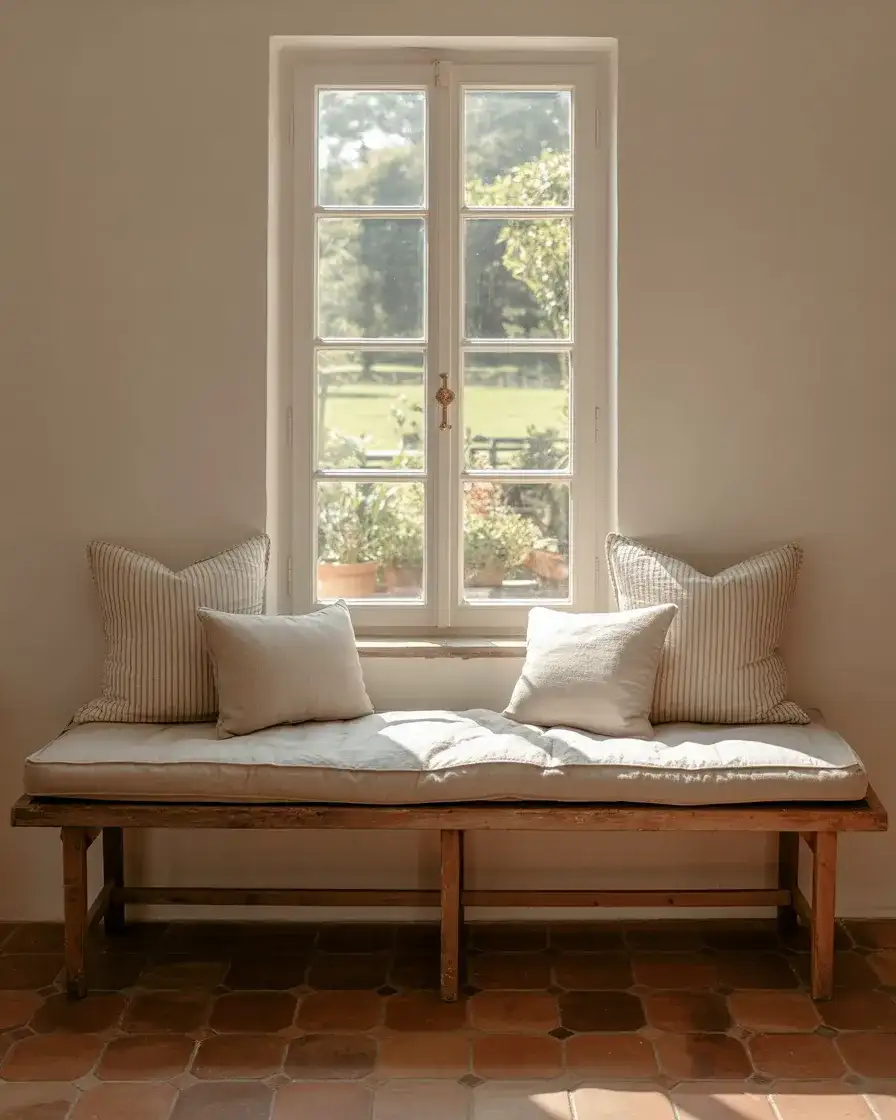
Practical insight: Church pews, old farm benches, and even DIY pieces made from reclaimed lumber work beautifully for this purpose—you’re not looking for refinement but rather honest, sturdy construction. Have cushions made from linen drop cloth fabric (affordable at hardware stores) stuffed with high-density foam for comfort, or buy premade bench cushions and cover them with linen. The length should be slightly shorter than the bench itself, allowing the wood to show at the ends. Add pillows for back support, and consider a woven basket or two underneath for storing throws, magazines, or toys—this maintains the room’s tidy appearance while keeping frequently used items accessible.
23. Ceramic and Stoneware Collections on Display
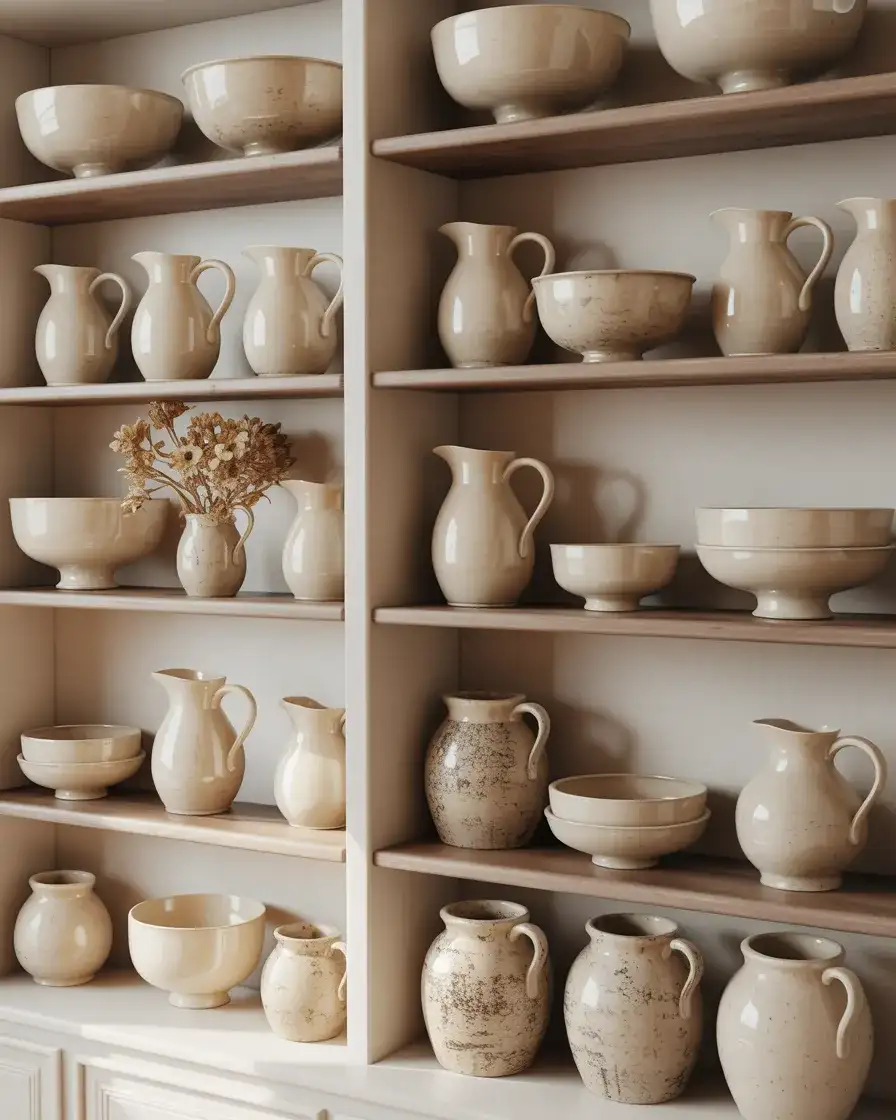
Curated collections of French ceramics, ironstone, and stoneware displayed on open shelves or mantels add personality and authentic European character to your living room. These aren’t precious items locked behind glass but rather everyday beautiful things—pitchers, bowls, plates, and crocks—that could be used but look equally lovely as decor. The neutral tones of cream, white, and natural clay complement any color scheme while adding textural interest through their varied shapes and subtle surface details. American collectors have enthusiastically embraced French pottery, with pieces available at antique markets, estate sales, and even modern retailers creating new pieces in traditional styles.
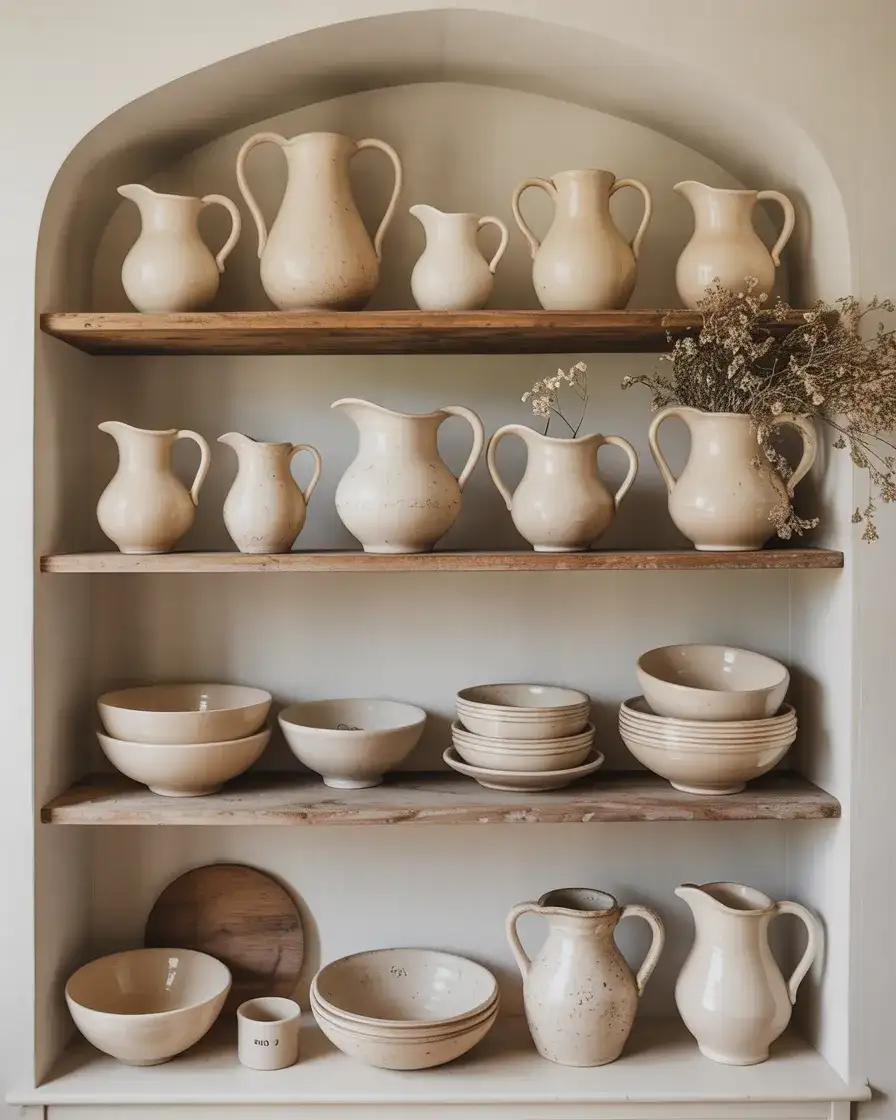
Expert-style commentary: When building a pottery collection, focus on pieces with good provenance—French confit pots, English ironstone, Italian terracotta—rather than generic white ceramics. Look for slight imperfections, aging marks, and crazing in the glaze that prove authenticity and add character. Display pieces in odd numbers (groups of three, five, or seven) and vary heights dramatically to create visual interest. Don’t line everything up like soldiers; instead, overlap pieces, place some further back, and leave breathing room. Mix in other natural elements like wooden bowls, brass candlesticks, or small plants so the collection feels integrated into the room rather than museum-like. This collected approach to display is quintessentially French and makes your living room feel genuinely personal.
Conclusion
French country living rooms in 2026 continue to captivate American homeowners with their timeless blend of elegance and comfort, proving that this style transcends passing trends. Whether you’re drawn to moody blue walls, coastal-inspired palettes, or neutral textures, these twenty-three ideas offer endless inspiration for creating a space that feels both sophisticated and welcoming. We’d love to hear which approach resonates with your vision—share your favorite ideas or your own French country living room journey in the comments below.