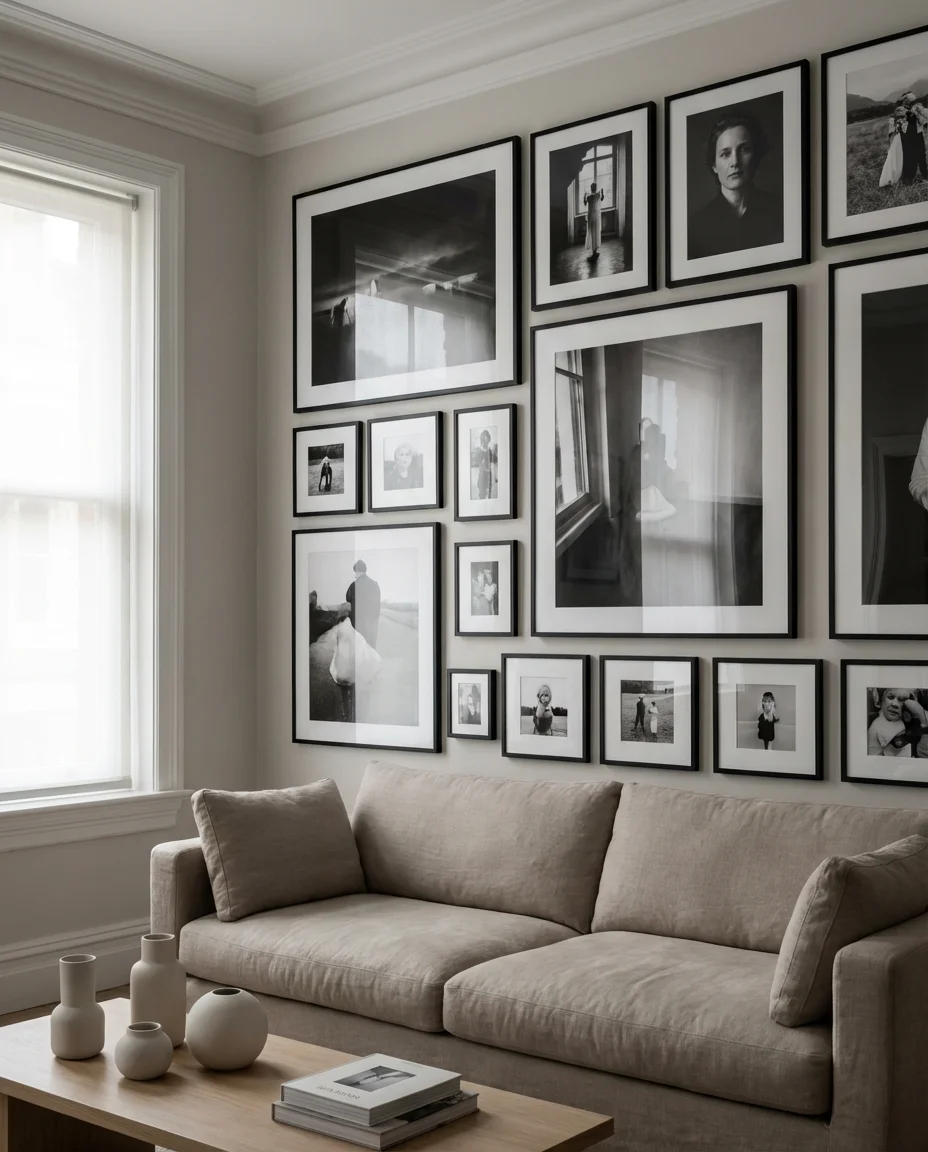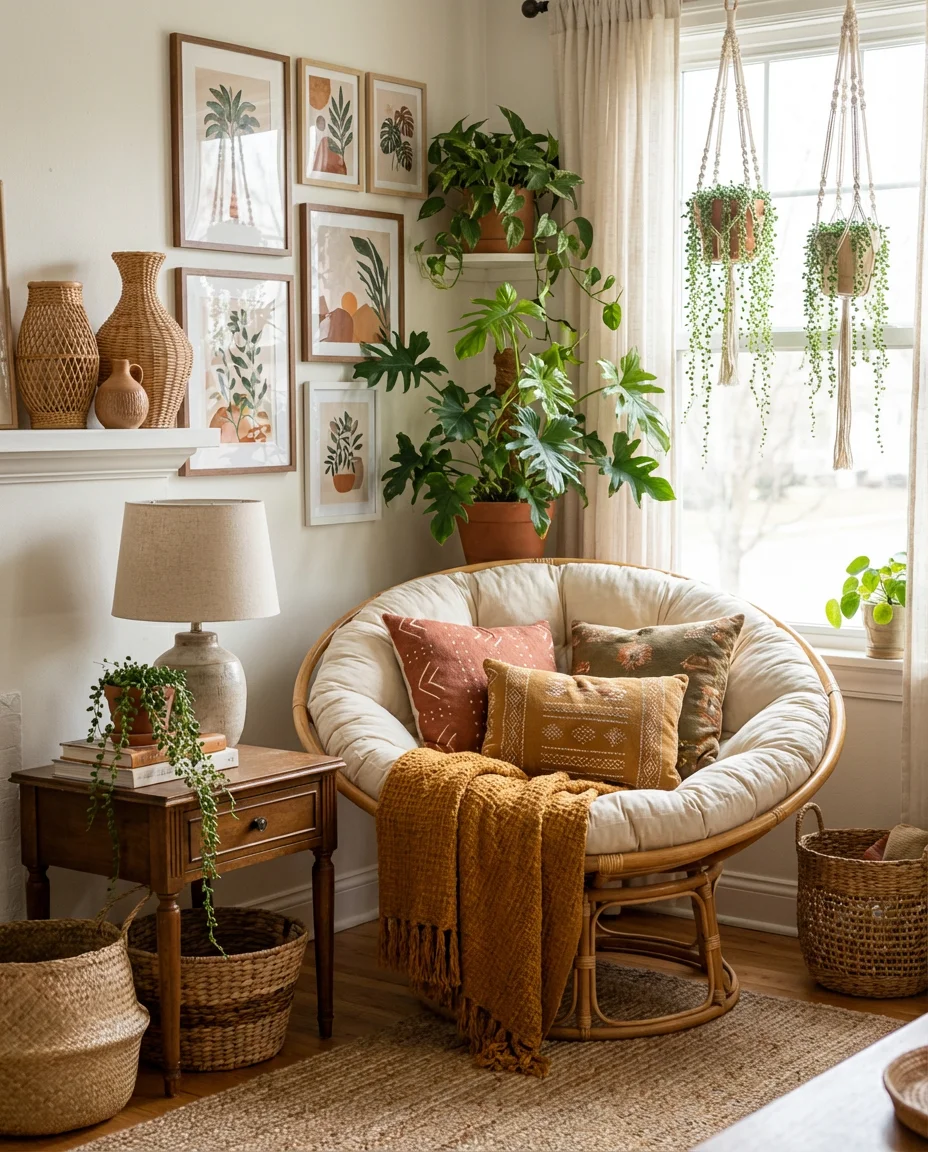
Gallery walls have evolved from simple photo clusters into bold, expressive design statements that define entire rooms. In 2026, American homeowners are moving beyond the matchy-matchy aesthetic, embracing everything from thrifted treasures to personal travel snapshots that tell authentic stories. Whether you’re curating a hallway showcase or transforming an overlooked bathroom corner, these ideas reflect how we’re finally treating our walls like the creative canvases they’ve always been. Pinterest searches for gallery wall inspiration continue to surge as people realize these installations offer both visual impact and deeply personal meaning. Here are 21 fresh approaches to help you create a gallery wall that feels unmistakably yours.
1. Vintage-Inspired Entryway Collection
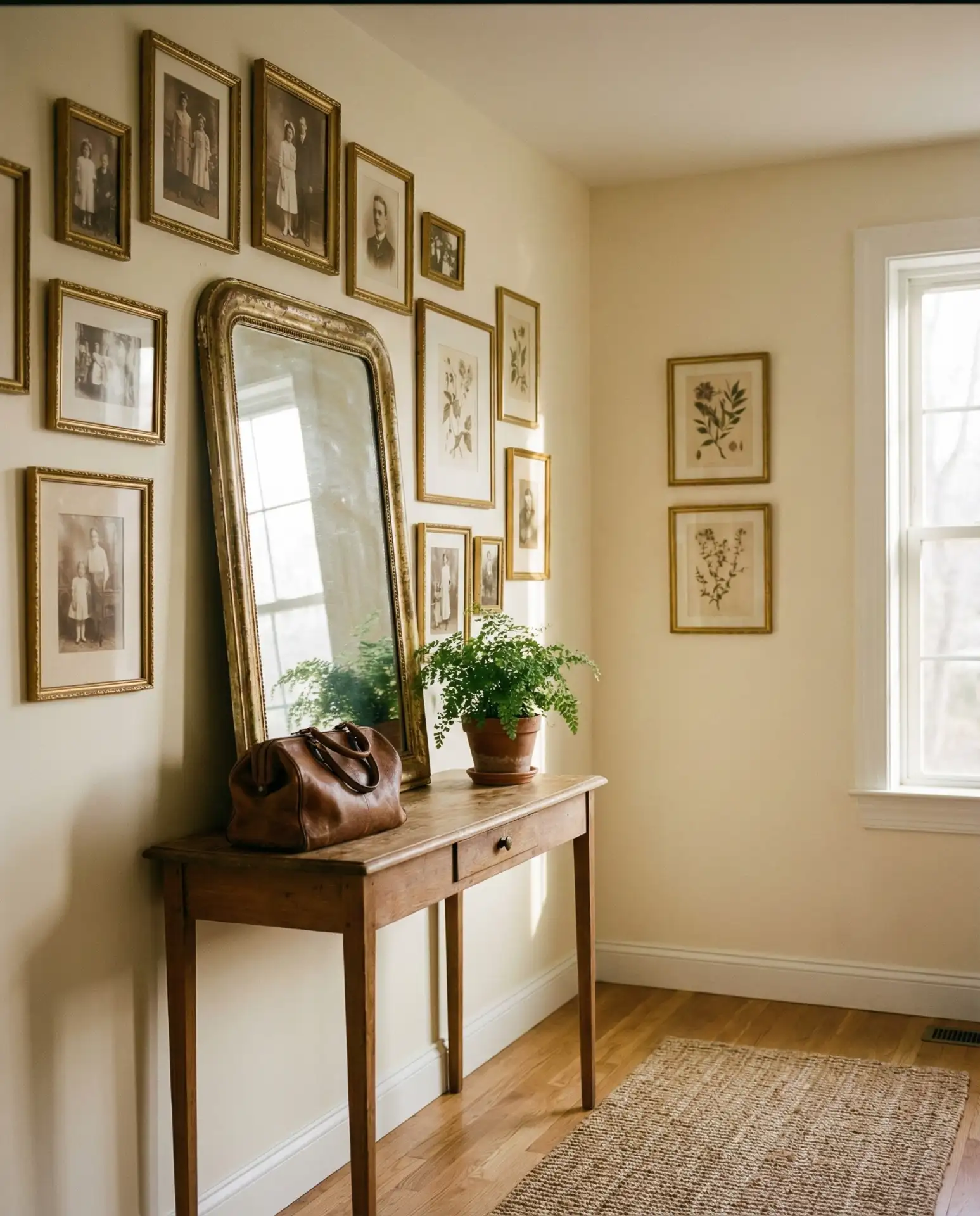
A vintage-inspired gallery wall in your entryway sets an immediate tone of warmth and character the moment guests step inside. Mix antique gilded frames with sepia-toned prints, old botanical illustrations, and perhaps a weathered mirror to create depth. The beauty of this approach lies in its imperfection—slightly mismatched frames and varied patinas tell a story of pieces collected over time rather than purchased in a single afternoon. 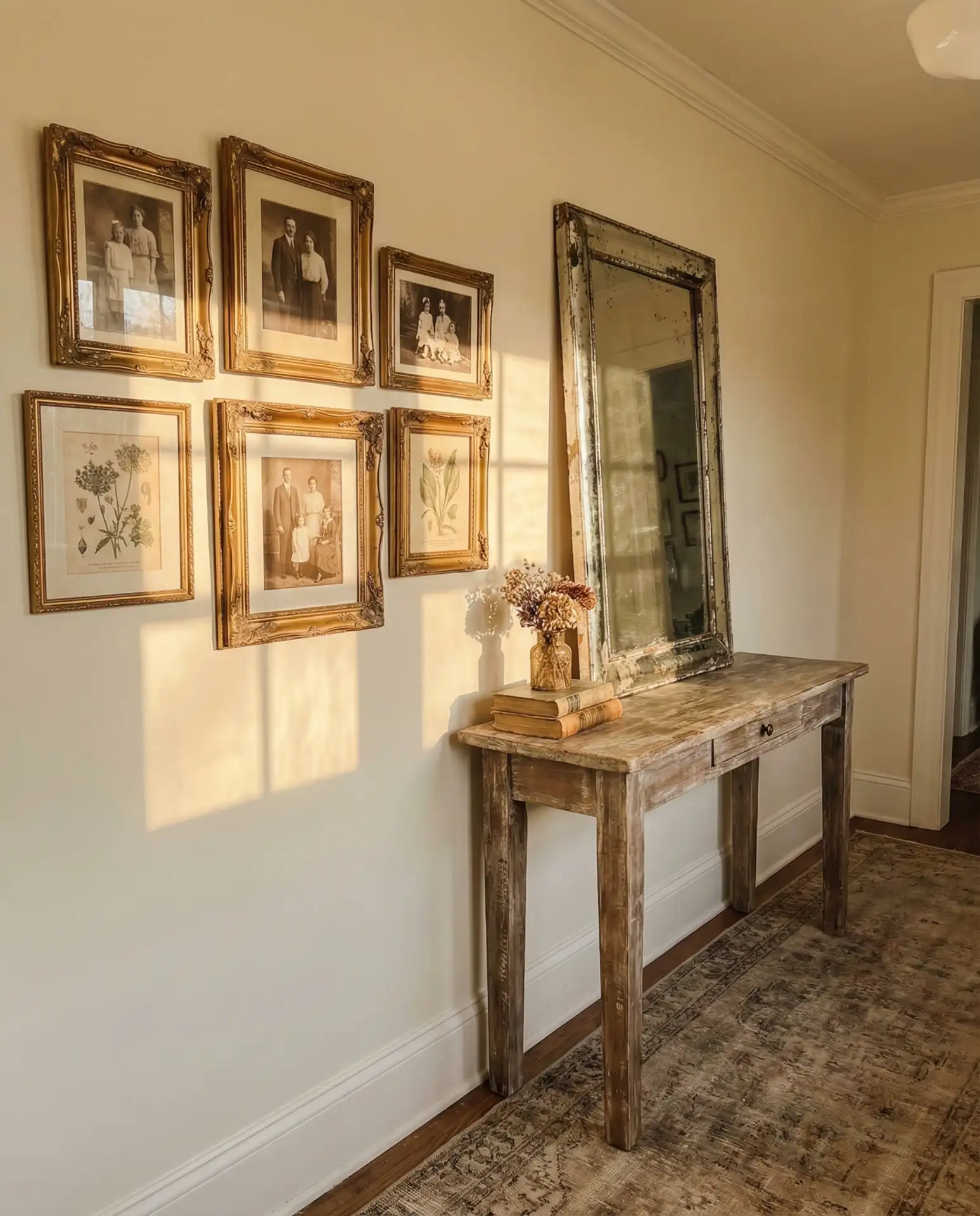
This works particularly well in homes with period architecture—Craftsman bungalows, Victorian townhouses, or even renovated farmhouses—where the vintage aesthetic feels native rather than applied. Many homeowners find success by starting with one or two genuine antiques from estate sales, then gradually adding reproduction prints that complement the originals. The key is maintaining a consistent color temperature across your selections, whether that’s warm amber tones or cooler silver-gray hues, so the collection feels intentional rather than haphazard.
2. Eclectic Mix with Bold Colors
An eclectic gallery wall throws out the rulebook, combining colorful abstract art with black-and-white photography, textile pieces, and even three-dimensional objects like small shelves or sculptural elements. This approach celebrates visual tension rather than avoiding it—the clash between a neon-bright painting and a muted vintage print creates energy that makes people stop and look twice. It’s particularly popular among younger homeowners who view their walls as ongoing collages that evolve with their tastes. 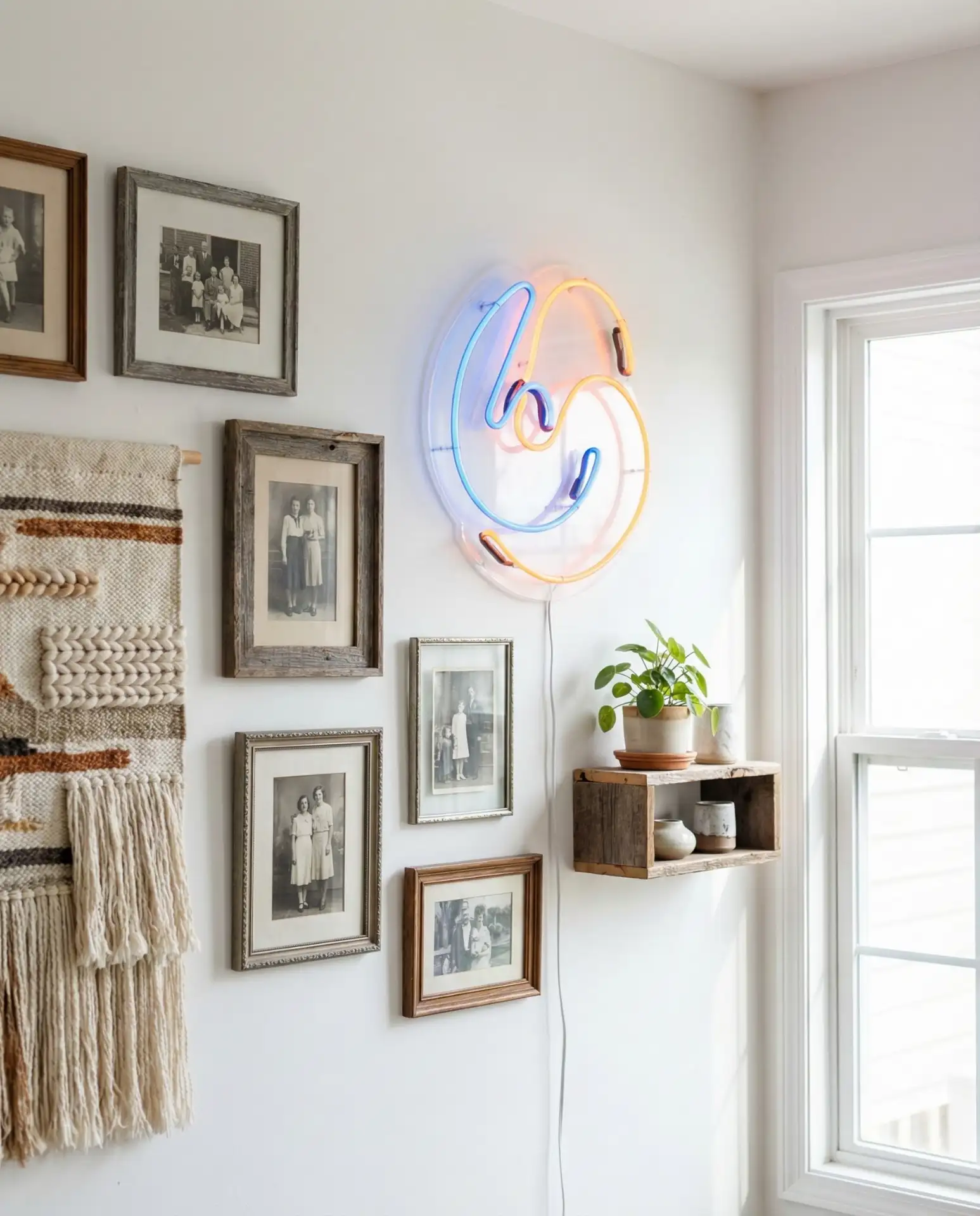
Budget-conscious decorators love this style because it allows for mixing thrift store finds with investment pieces without looking cheap. A $15 frame from Goodwill sits comfortably next to a $200 limited-edition print when the overall composition is thoughtfully arranged. Start by laying everything on the floor first, experimenting with different configurations until you find a balance that feels dynamic but not chaotic—aim for varied sizes and orientations while maintaining roughly equal visual weight across the arrangement.
3. Photo-Only Family Memory Wall
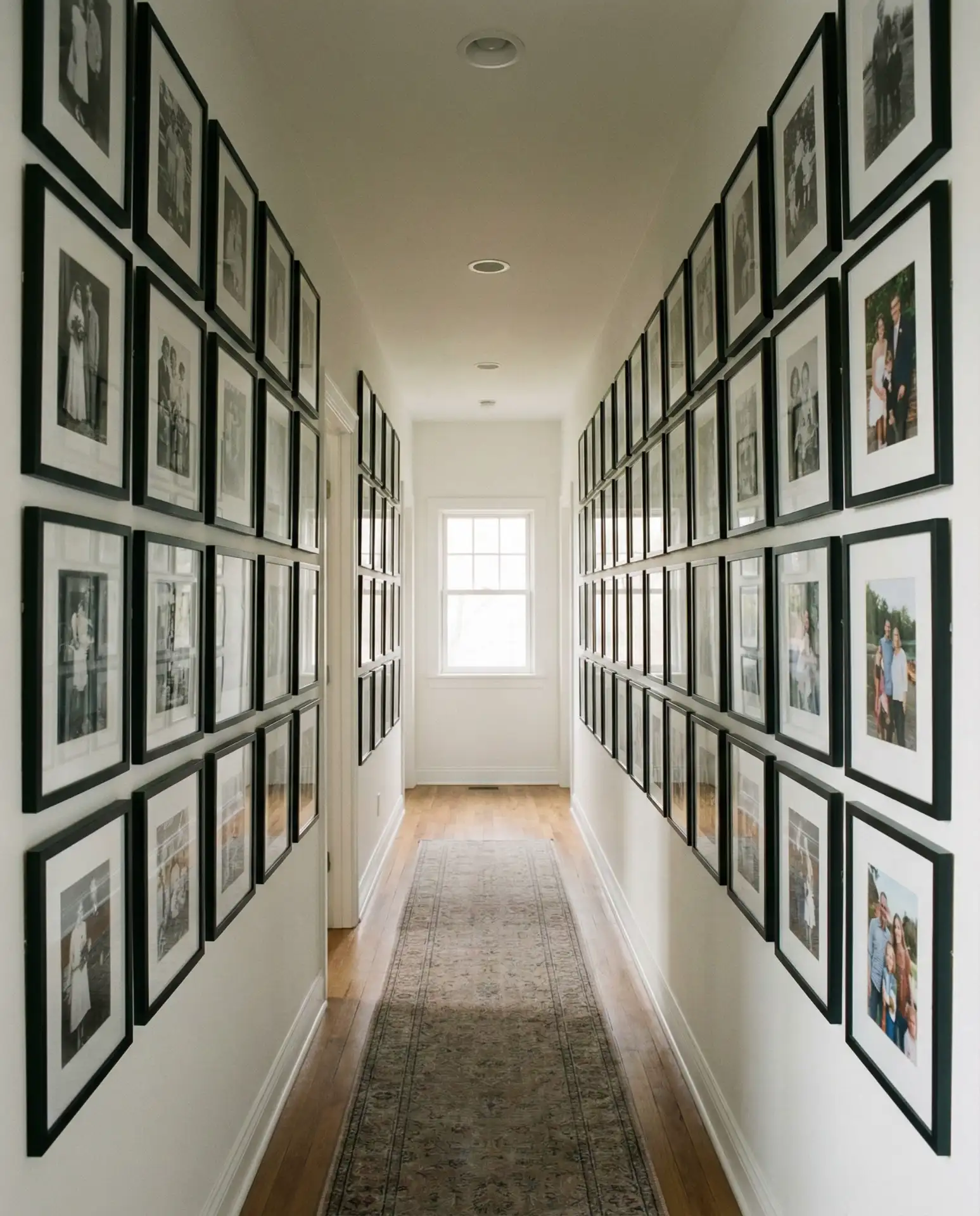
A photo gallery wall dedicated entirely to family photos creates an emotional anchor point in your home, transforming a blank wall into a visual timeline of your most important relationships. Rather than scattering family pictures throughout the house, concentrating them in one curated space gives them the prominence they deserve. Many families choose hallway walls for this treatment, creating a journey through memories as you move from room to room. 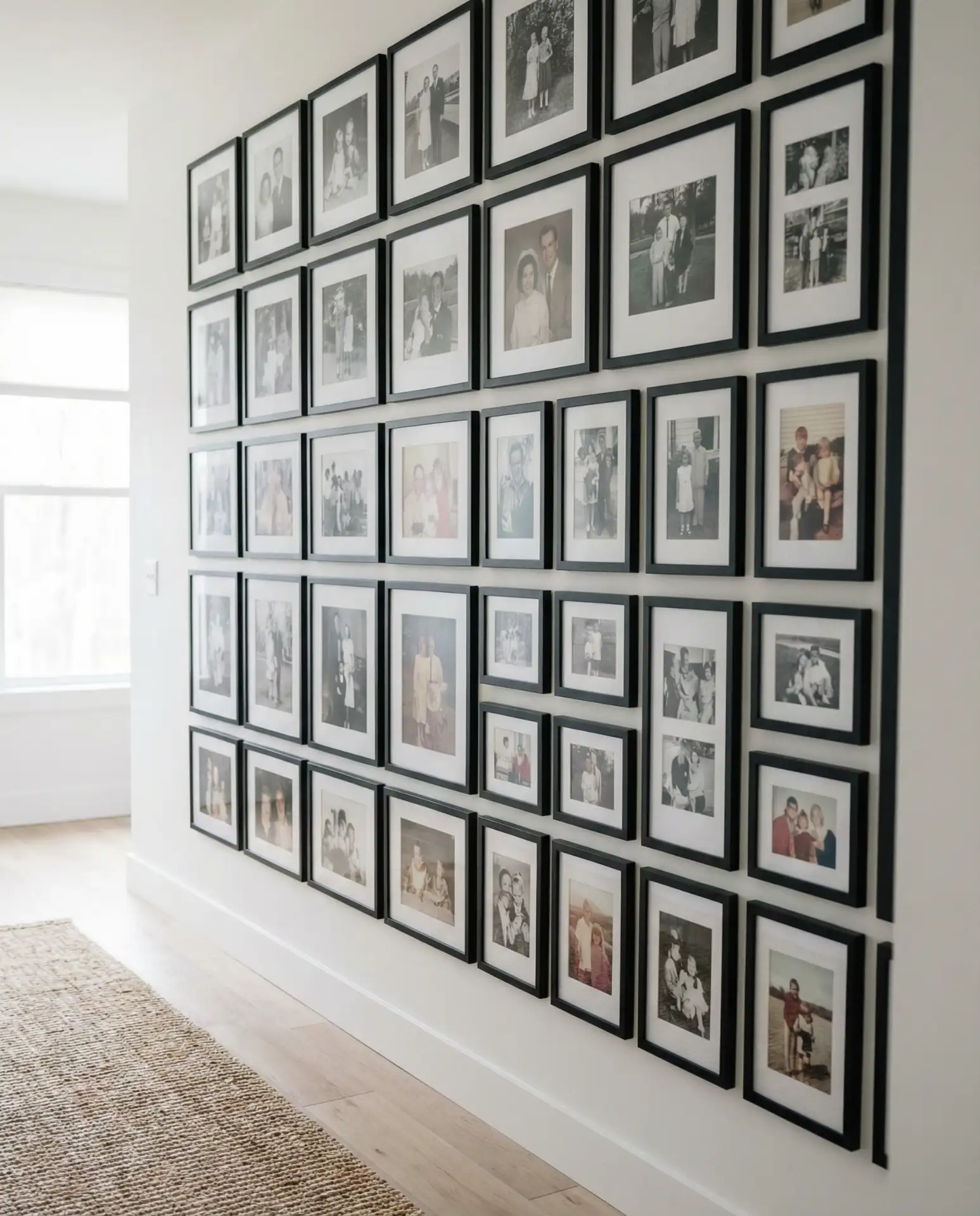
Where this works best: along staircases where you naturally pause while climbing, or in dining rooms where families gather and can reminisce together. The most successful versions use uniform frames—all black, all white, or all natural wood—to create cohesion among photos taken across different decades and with varying photographic quality. Include a mix of formal portraits and candid moments, and don’t be afraid to update the collection seasonally as new memories are made.
4. Unique Sculptural Gallery
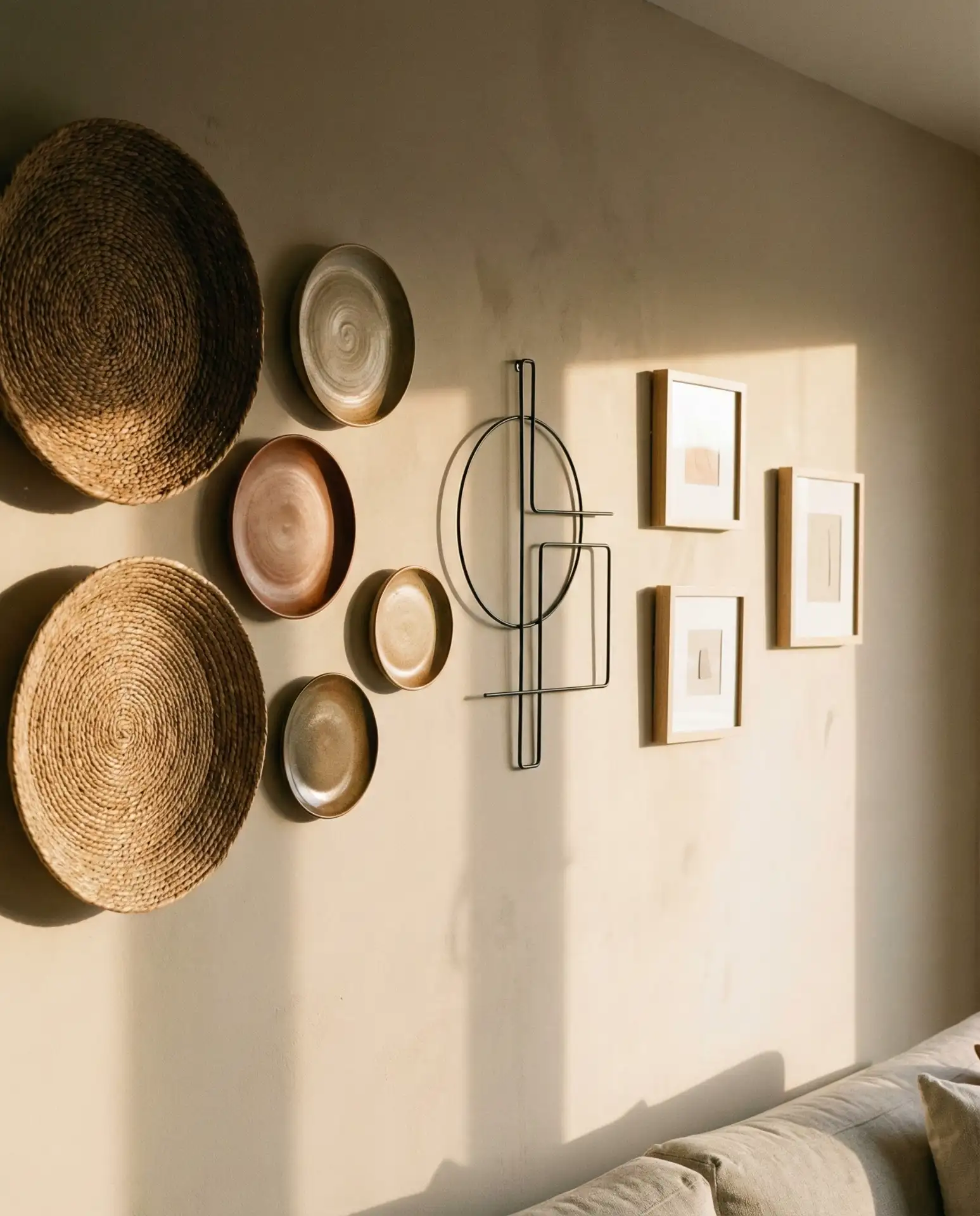
Moving beyond flat art, a unique sculptural gallery incorporates three-dimensional elements like ceramic wall hangings, metal sculptures, woven baskets, or architectural fragments that create actual shadows and depth. This approach transforms your wall into something more akin to an art installation than a traditional picture display. It’s especially effective in homes with minimalist furniture where the wall itself becomes the primary decorative statement. 
I spoke with a designer in Portland who noted that clients increasingly request sculptural gallery walls after seeing them in boutique hotels—they want that same elevated, unexpected quality at home. The practical insight here is weight distribution: use proper anchors rated for heavy objects, and consider the wall material before hanging a 15-pound ceramic piece. Mix lightweight items like woven textiles with heavier sculptures to create visual balance without overloading any single area of your wall.
5. Bohemian Textile and Art Mix
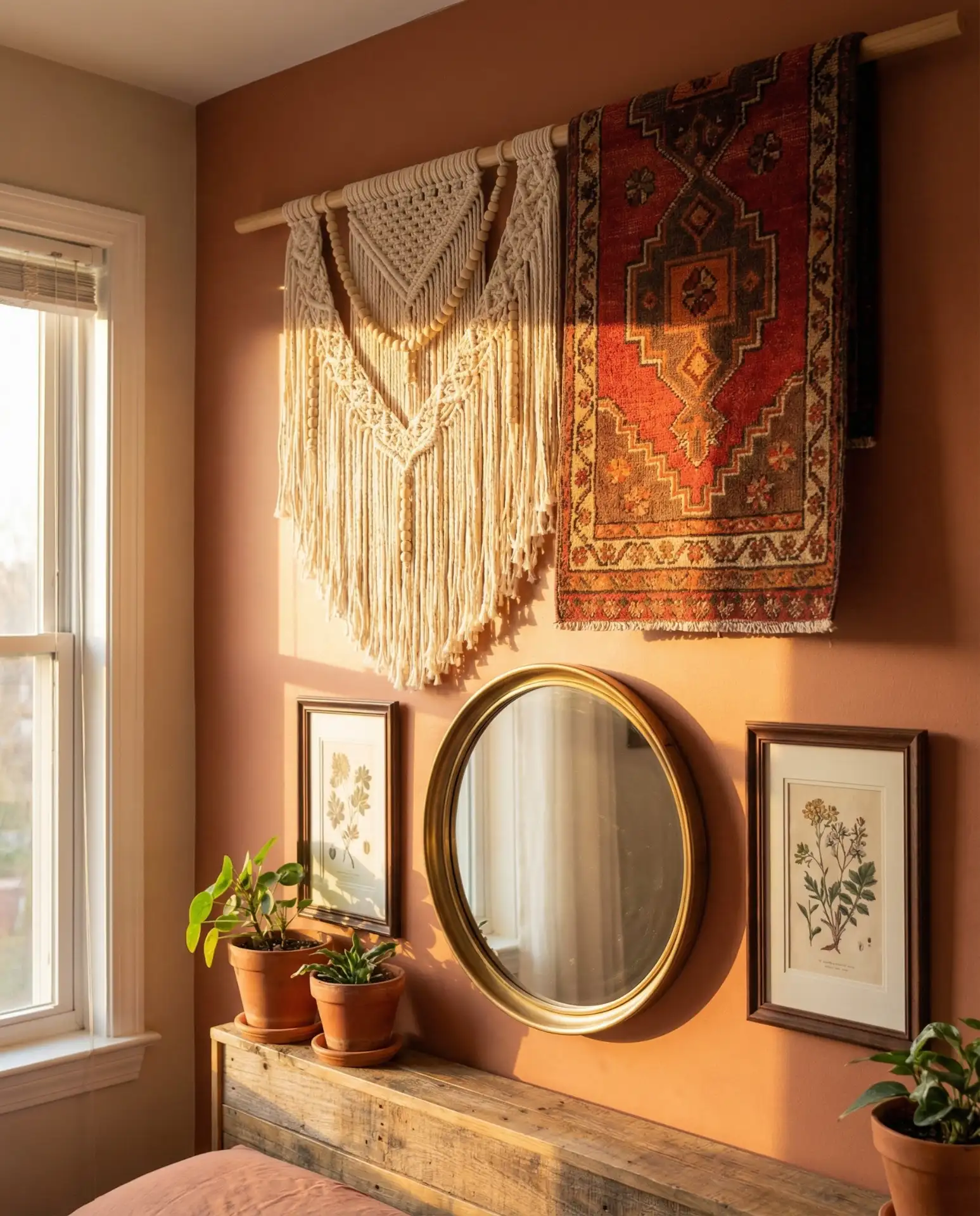
A bohemian gallery wall layers vintage textiles, macramé hangings, colorful prints, and natural materials to create a relaxed, globally-inspired aesthetic. Think Turkish kilim fragments, Indian block prints, Moroccan mirrors, and handwoven wall hangings that introduce texture alongside traditional framed art. This style works particularly well in bedrooms and informal living spaces where you want the atmosphere to feel collected and well-traveled rather than rigidly designed. 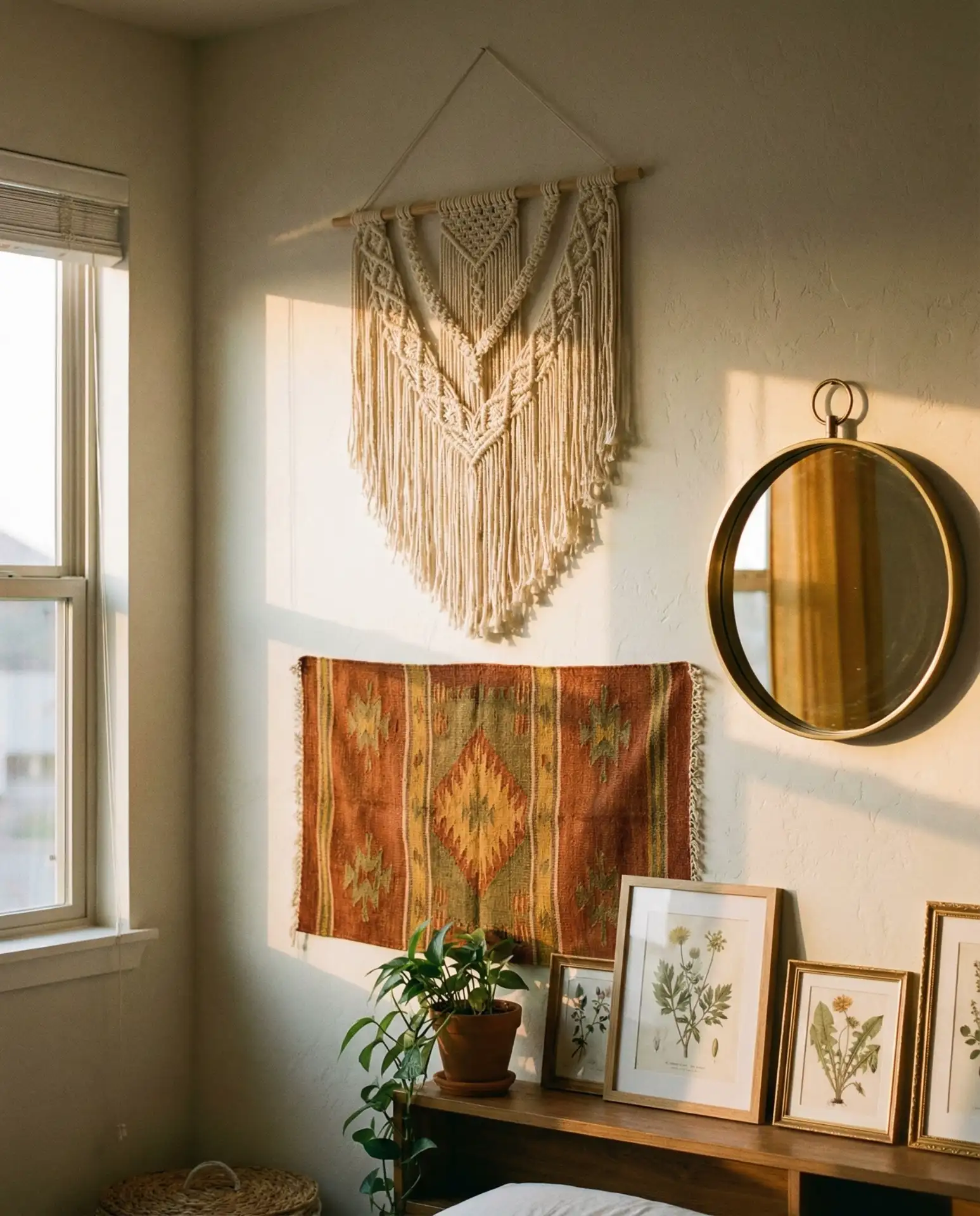
Real homeowner behavior shows that bohemian galleries evolve organically—people add pieces after trips, inherit textiles from family members, or find treasures at weekend markets. Unlike more formal gallery walls that require upfront planning, this style accommodates gradual growth. The common mistake is over-crowding; leave some negative space so each textile and artwork can breathe. Also consider how textiles might fade in direct sunlight—position valuable pieces on walls that receive indirect light throughout the day.
6. Travel Photography Showcase

Displaying your own travel photography transforms personal photos into art while keeping favorite destinations present in your daily life. Rather than leaving thousands of images buried on phones and hard drives, select your most compelling shots—architectural details, landscapes, street scenes—and print them at meaningful sizes. This approach works beautifully in home offices, where glancing at a Santorini sunset or Kyoto temple gate provides momentary mental escape during busy workdays. 
Expert-style commentary suggests organizing travel photos by color palette rather than by trip or location—grouping images with similar blue tones creates more visual harmony than mixing a bright Moroccan market with a foggy London street. Many people also add subtle labels using small brass plates beneath each frame noting the location and year, which becomes a conversation starter when guests visit. Consider professional printing services rather than drugstore prints; the investment in archival-quality paper and proper color correction makes your amateur photography look genuinely gallery-worthy.
7. Staircase Ascending Gallery

A stairs gallery wall follows the ascending line of your staircase, creating a dynamic diagonal arrangement that draws the eye upward as you climb. This classic placement makes use of otherwise-awkward vertical space while providing visual interest at multiple viewing heights. The key is maintaining consistent spacing between frames—typically 2-3 inches—and aligning them along a central diagonal line rather than trying to match bottom or top edges, which creates a disjointed look. 
This works particularly well in split-level homes or any house with prominent interior stairs that would otherwise feel bare. American staircases tend to be wider than their European counterparts, giving you more horizontal space to work with—take advantage by varying frame sizes within the ascending line. Start by hanging the center pieces first at eye level when standing mid-staircase, then work upward and downward from that anchor point. Consider the sightlines from both bottom and top of the stairs to ensure the arrangement looks balanced from multiple vantage points.
8. Hallway Portrait Series
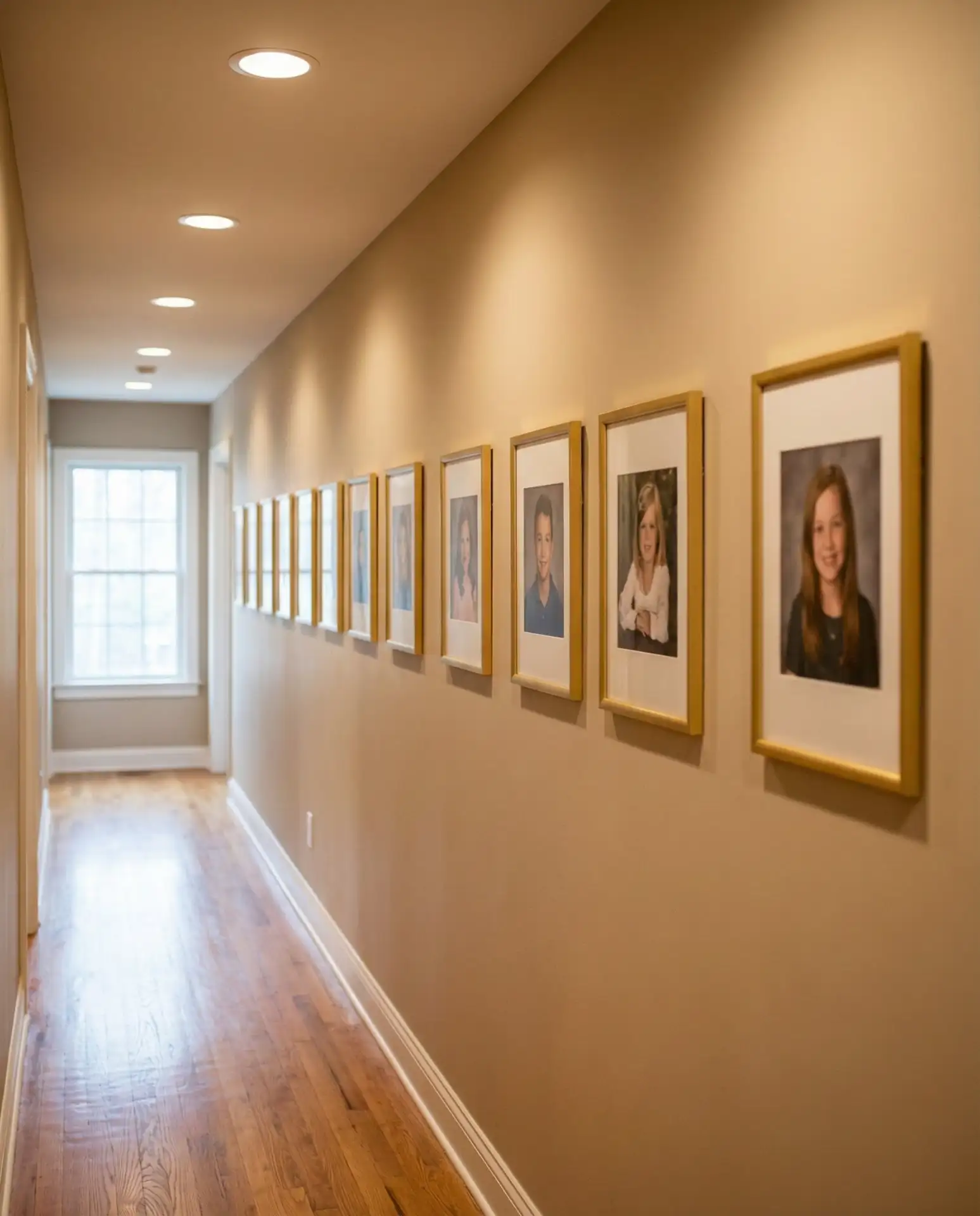
A hallway transformed with a uniform series of portraits—whether family photos , vintage finds, or curated black-and-white prints—turns transitional space into a proper gallery experience. Long, narrow hallways benefit especially from this treatment, as a single line of consistently-sized frames creates rhythm and purpose where blank walls would otherwise feel like wasted space. Many homeowners choose to display multi-generational family portraits this way, creating a literal walk through family history. 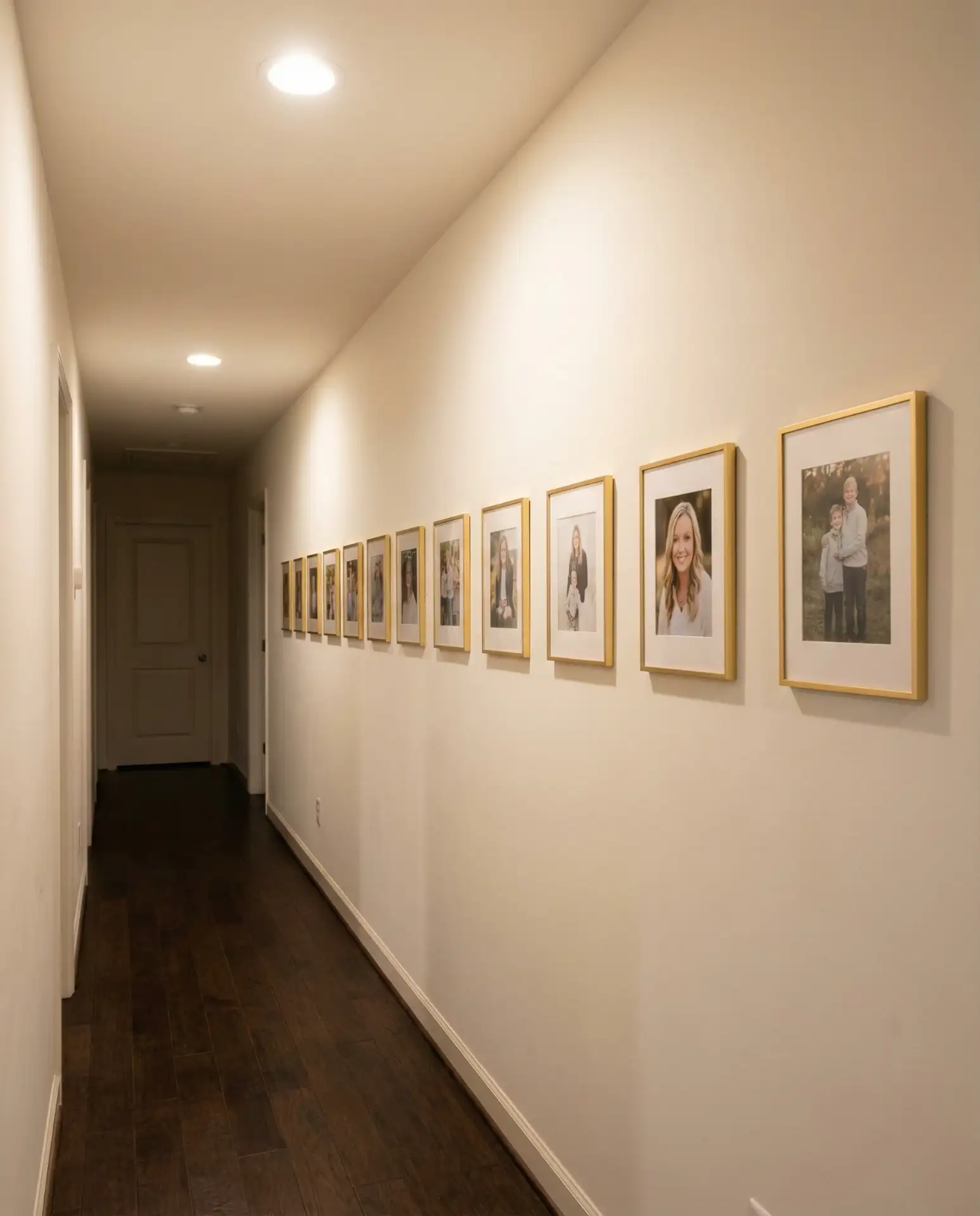
A micro-story from a friend in Charleston: she inherited dozens of family portraits spanning back to the 1890s and initially felt overwhelmed about where to display them. Installing them in a chronological line down her hallway solved both the storage problem and created an unexpectedly moving experience—guests regularly pause to examine the progression of family resemblances across generations. Use picture rail molding if available, which allows for easy rearrangement without additional wall damage as your collection grows or changes.
9. TV Gallery Integration
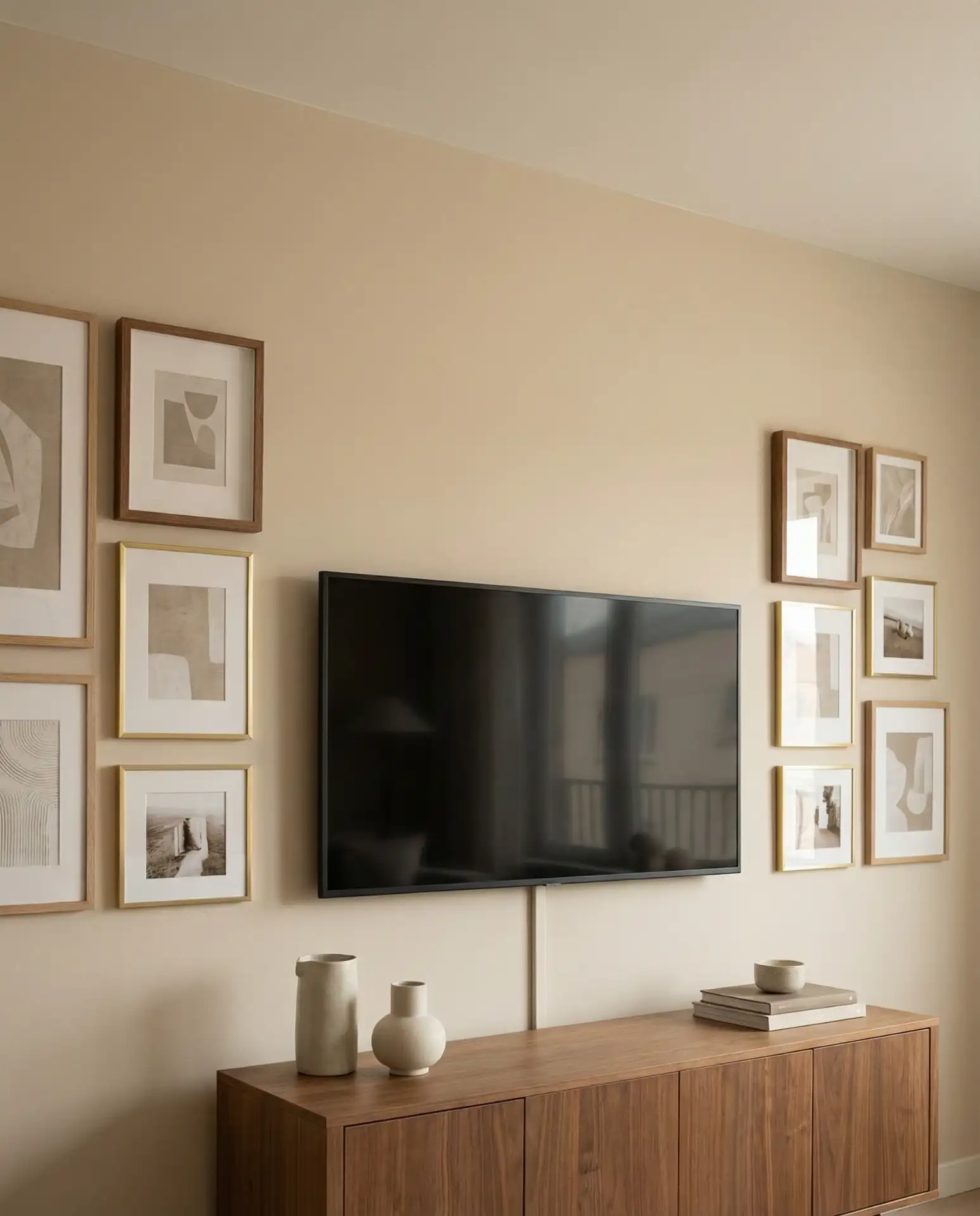
Rather than letting your TV dominate as a black rectangle on an otherwise empty wall, surrounding it with a carefully planned gallery wall integrates the screen into your overall design scheme. This approach acknowledges that televisions are functional necessities while preventing them from becoming the room’s only focal point. The frames and art create visual interest even when the TV is off, and many people report that guests don’t immediately notice the television among the surrounding pieces. 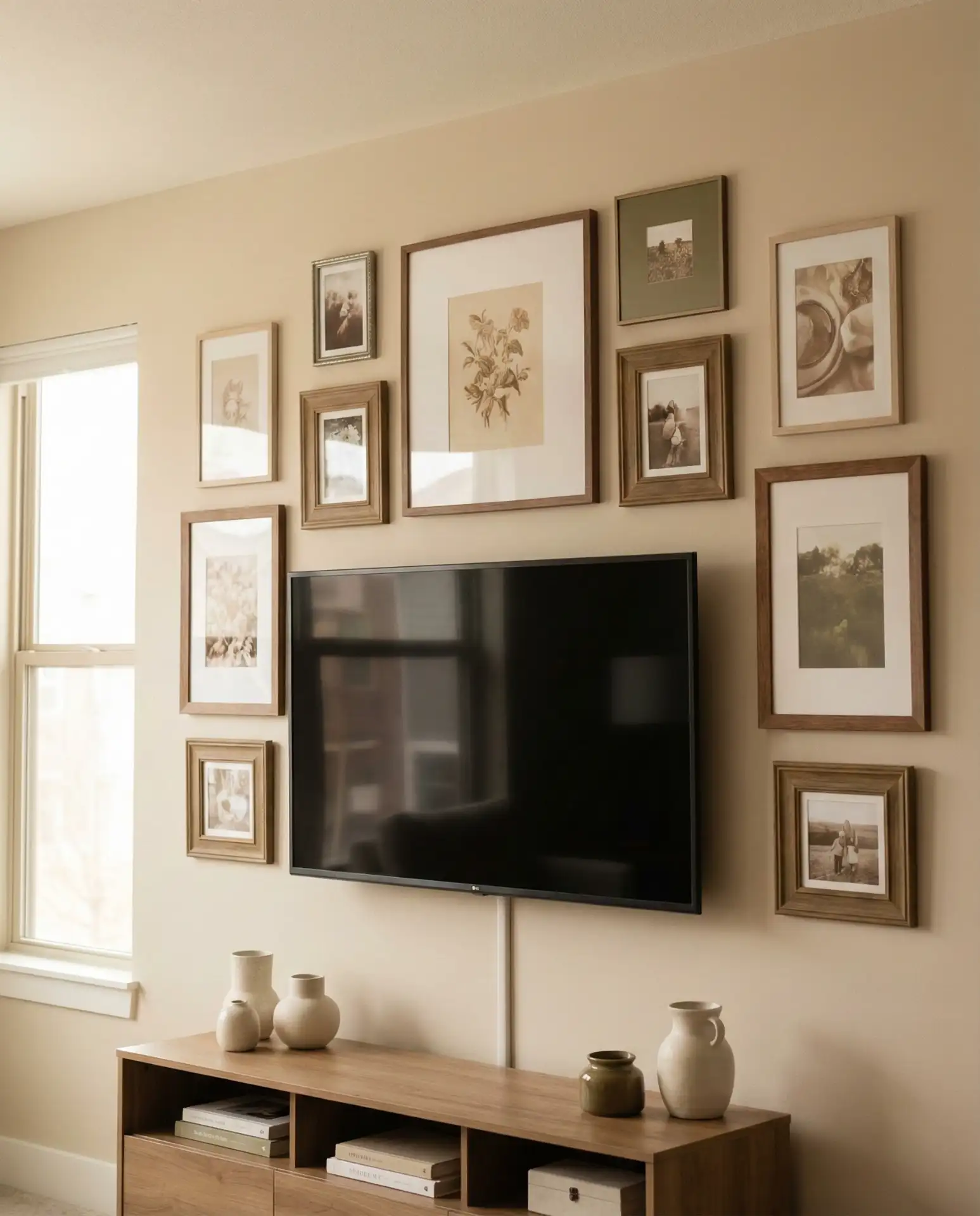
The budget angle matters here: many people overspend on enormous TVs, then have nothing left for proper surrounding decor. Consider sizing down the screen slightly and investing those savings into quality frames and art—a 55-inch TV surrounded by beautiful pieces often looks better than a naked 75-inch screen. Maintain symmetry by treating the TV as your central anchor point, then mirror the arrangement on either side. Leave adequate space between the TV edge and nearest frame (at least 4-6 inches) to avoid a cramped, cluttered appearance.
10. Shelves Gallery with Objects
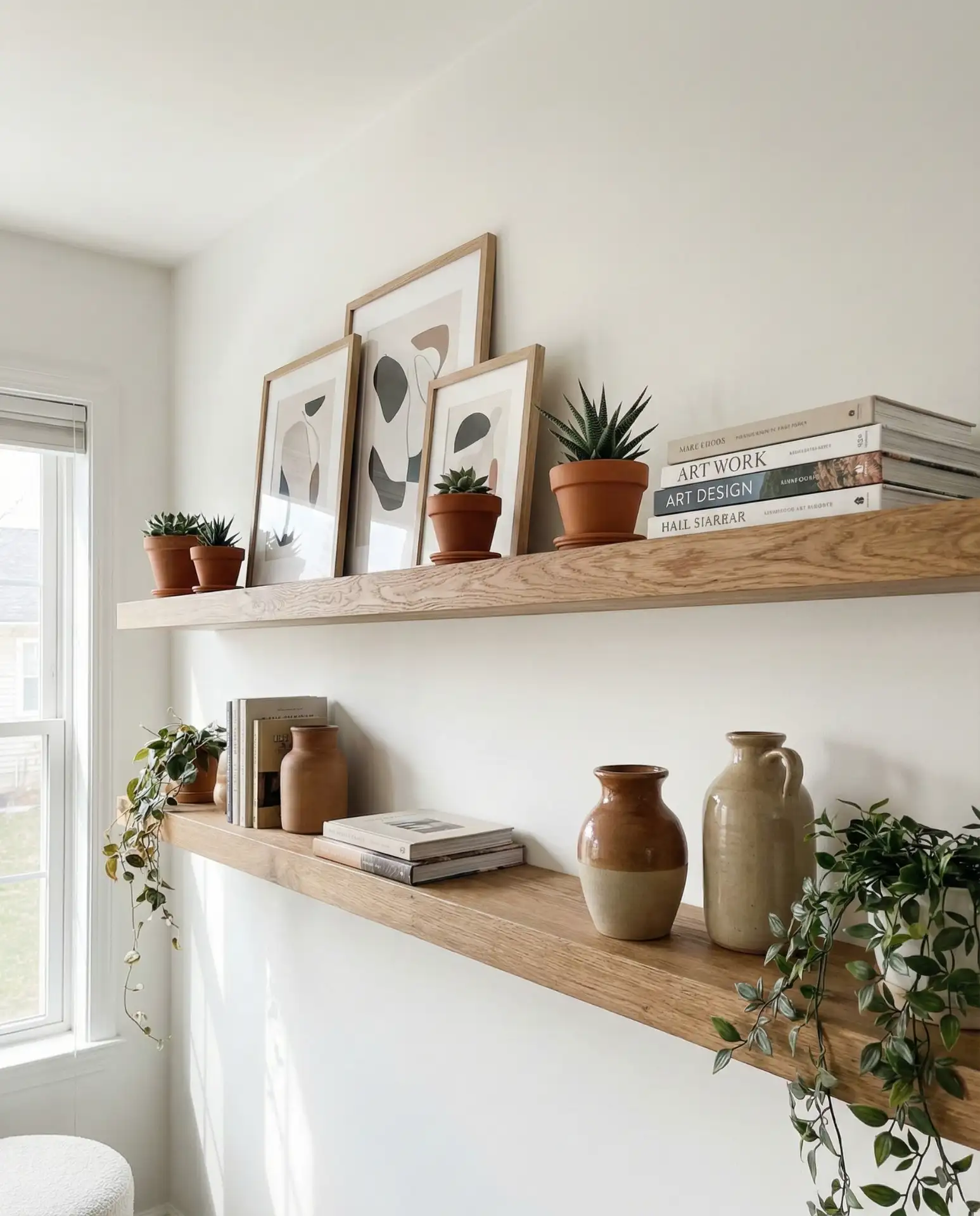
Combining floating shelves with framed art creates a layered, dimensional gallery wall that accommodates both two-dimensional pieces and three-dimensional objects like plants, books, or collected curiosities. This hybrid approach offers tremendous flexibility—you can easily swap out items seasonally or as your tastes evolve without putting new holes in the wall. It’s particularly effective in living rooms and bedrooms where you want the functionality of display space alongside the aesthetics of art. 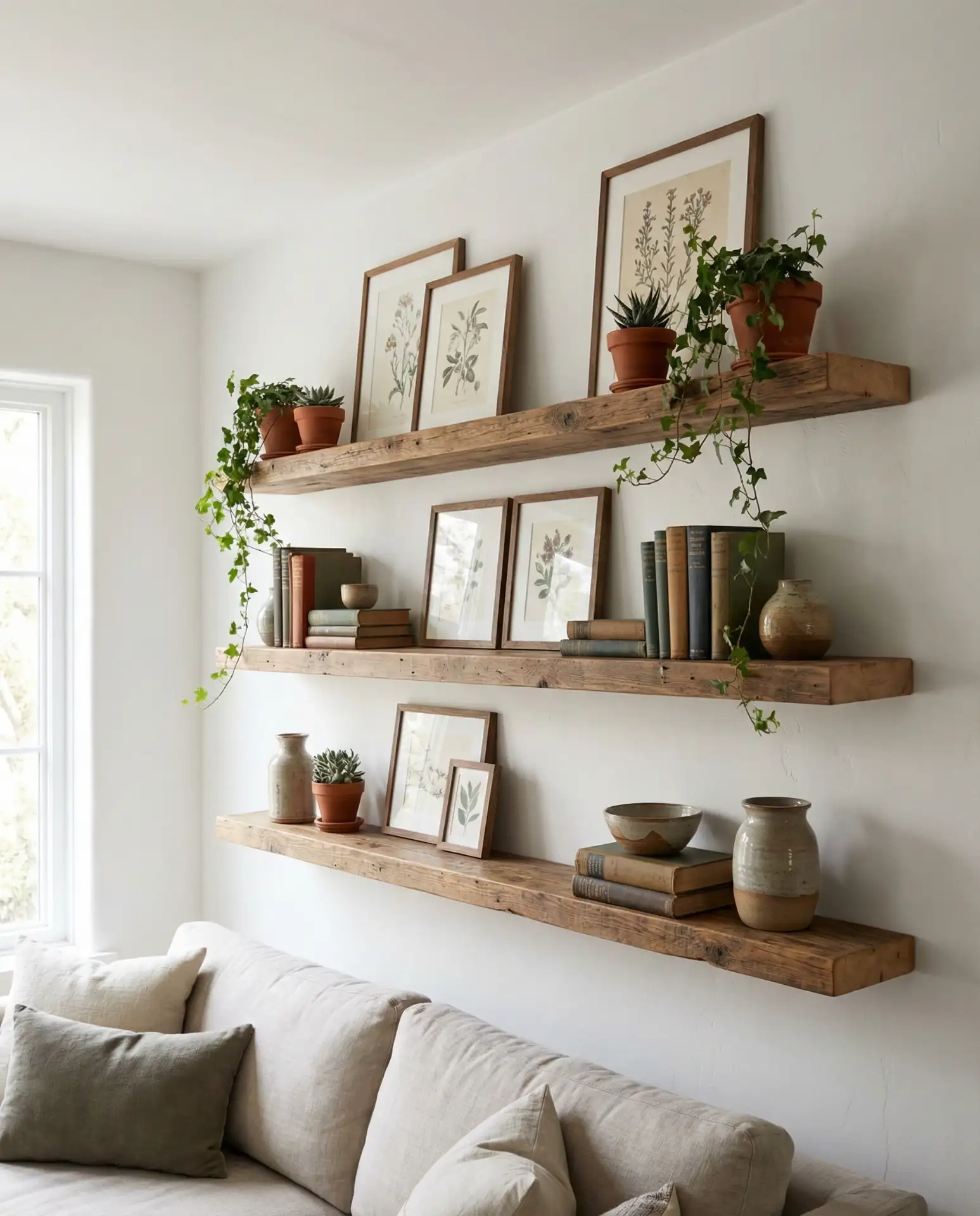
Where this works best is in spaces where you want to regularly refresh your display—the ability to simply swap objects on shelves rather than rehang frames makes seasonal updates effortless. Install shelves at varying heights rather than uniform horizontal lines for more visual interest. One common mistake is overloading shelves with too many small objects, which reads as cluttered rather than curated; instead, embrace negative space and let each piece have room to be appreciated. Group items in odd numbers (three, five, seven) as this creates more pleasing visual rhythm than even groupings.
11. Picture Frame Salon Wall
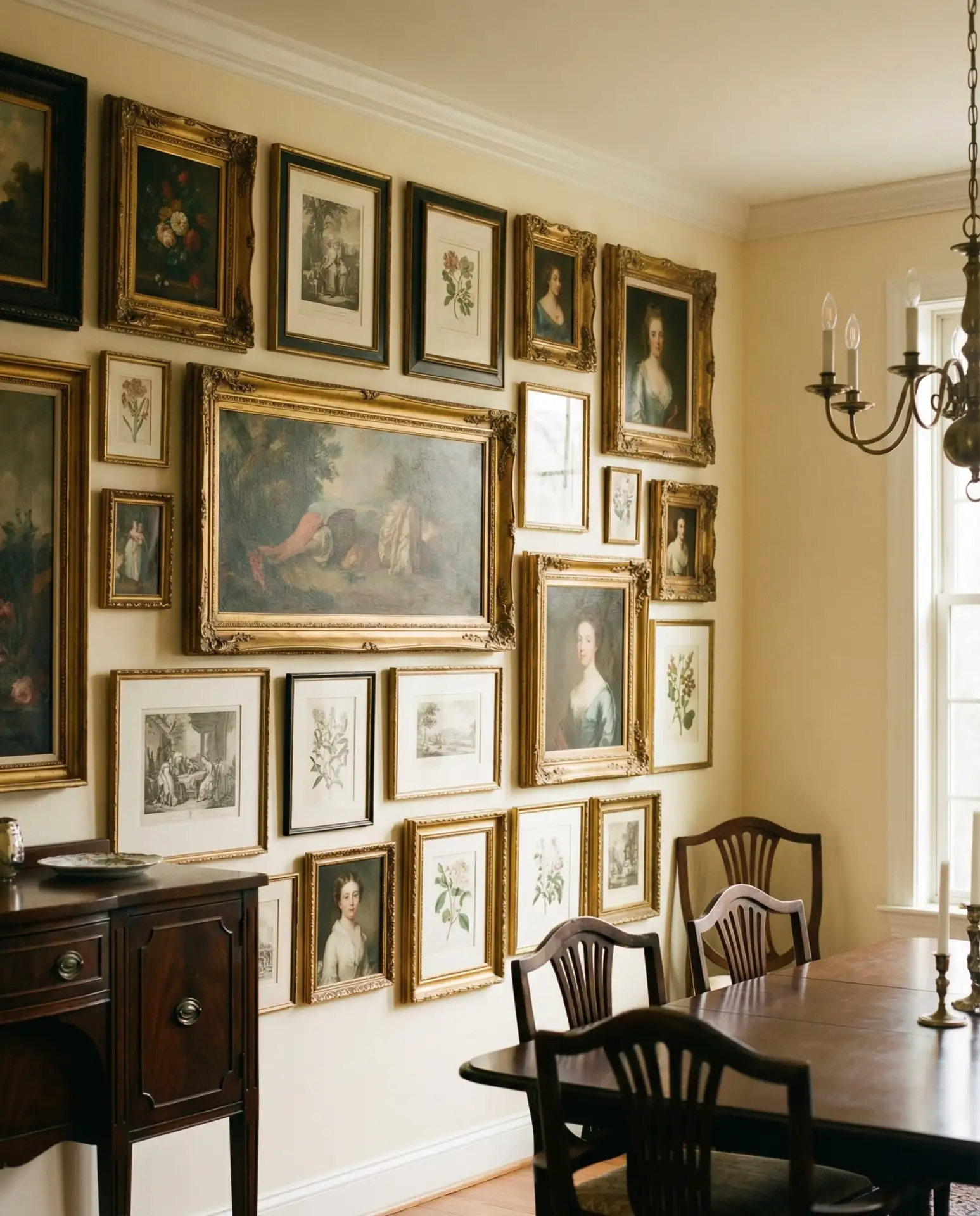
The salon-style picture wall takes inspiration from 18th and 19th-century galleries where paintings covered walls from floor to ceiling in dense, asymmetrical arrangements. This maximalist approach works with any content—family photos, vintage prints, contemporary art, or mixed media—but requires committing to abundance rather than restraint. The density is intentional and becomes the statement, creating an immersive visual experience that rewards close examination. 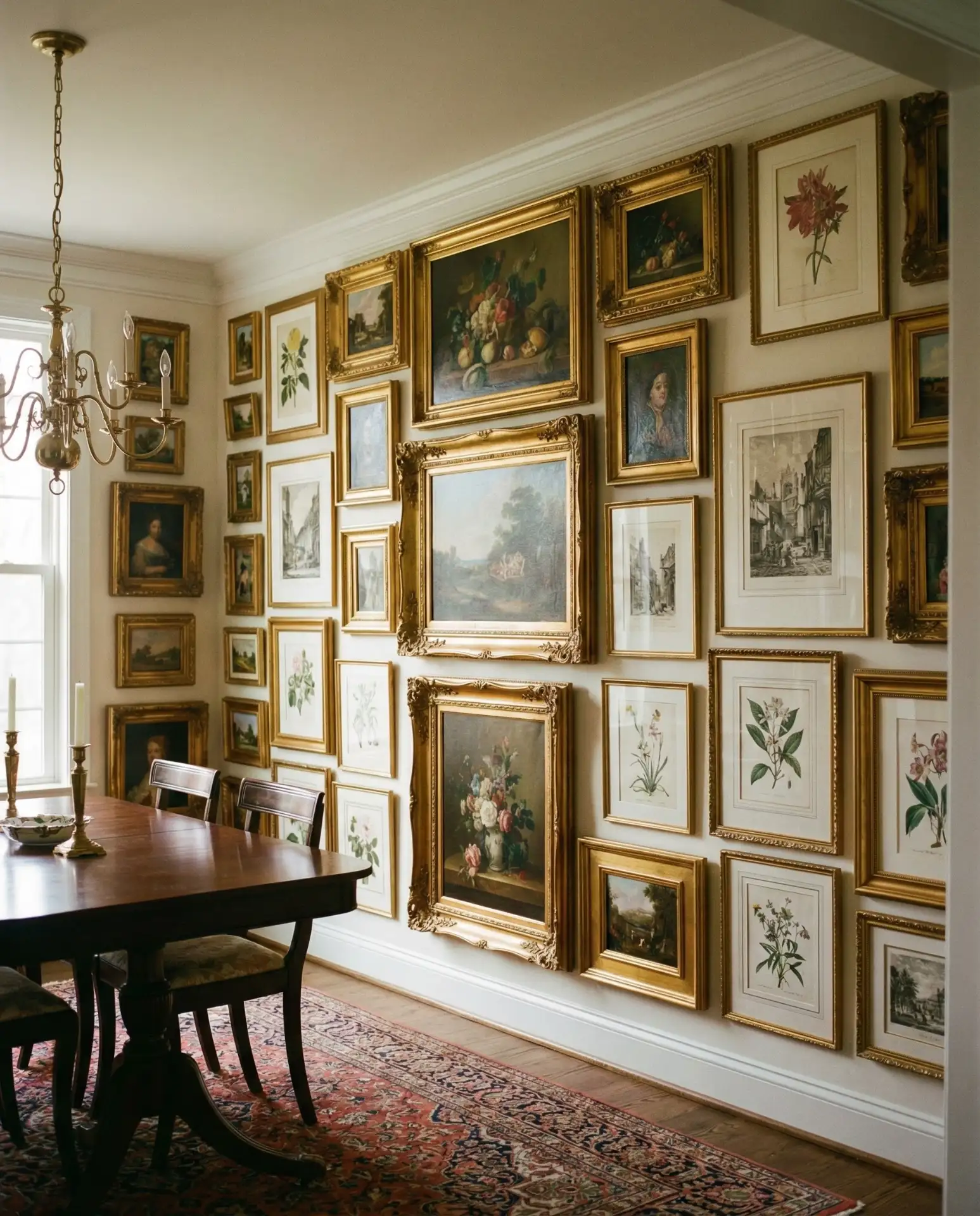
Real homeowner behavior shows that salon walls typically develop over months or years rather than being installed in a single weekend—people gradually fill in gaps as they find pieces that speak to them. Start with your largest pieces as anchor points, then fill in around them with progressively smaller frames until you achieve the desired density. The practical insight is that salon walls look better with frame-to-frame spacing of just 1-2 inches rather than the 3-4 inches typical of more modern arrangements. This tighter spacing creates the deliberately crowded aesthetic that defines the style.
12. DIY Handmade Art Collection
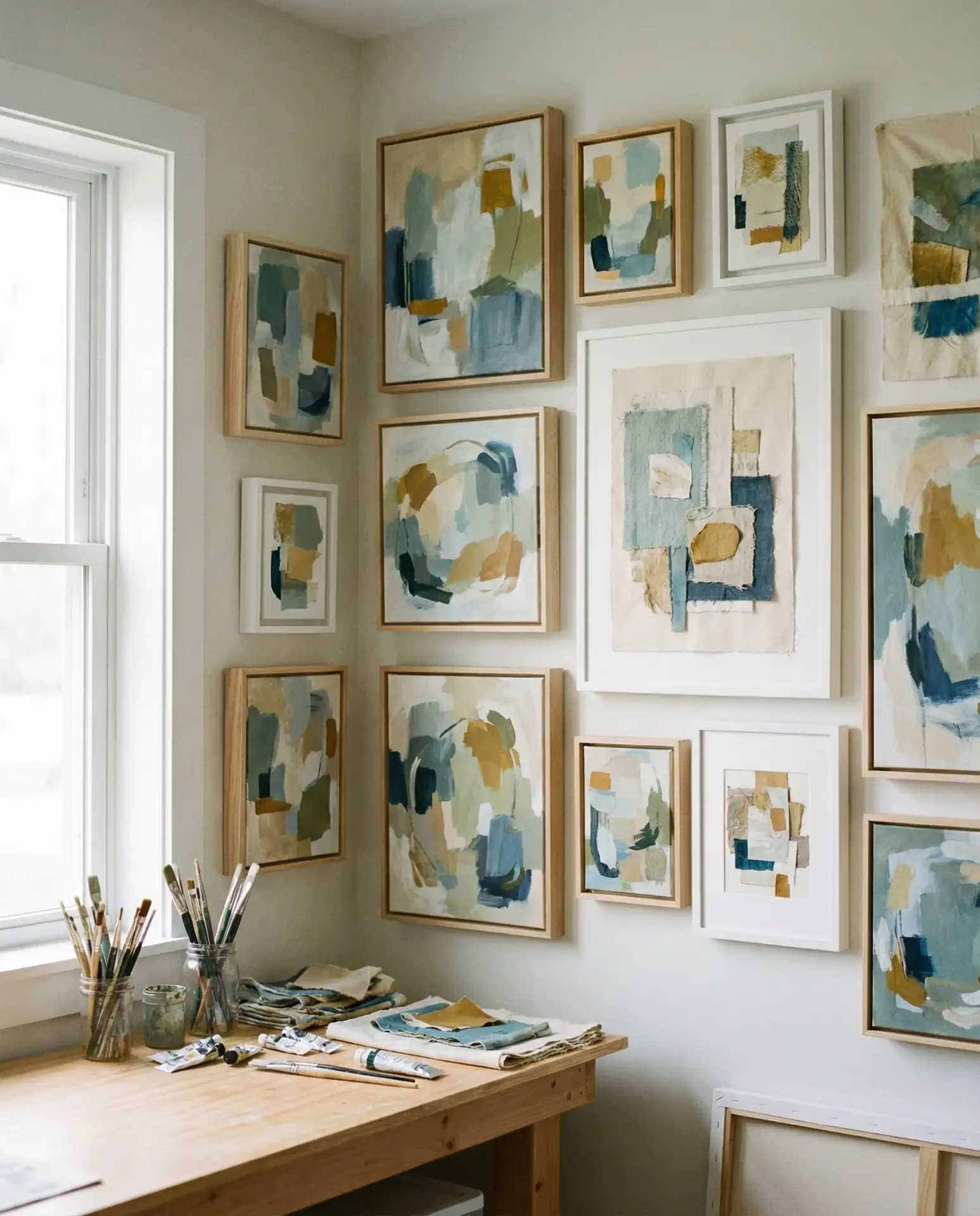
Creating your own DIY art for a gallery wall saves money while ensuring completely unique pieces that can’t be found in anyone else’s home. Abstract acrylics, watercolor experiments, block printing, or even framed fabric swatches become legitimate art when thoughtfully displayed. This approach particularly resonates with crafters and makers who enjoy the creative process as much as the finished result, and it allows you to customize colors precisely to your existing decor. 
Budget-conscious decorators can create an entire gallery wall for under $100 by purchasing canvases during craft store sales (often 50% off) and using basic acrylic paints. The key to making DIY art look intentional rather than amateurish is consistency—whether that’s maintaining a cohesive color palette across pieces, using uniform frame styles, or committing to a single technique like ink washes or collage. Don’t be intimidated by lack of formal training; abstract work in particular is forgiving, and the personal connection to handmade pieces often matters more than technical perfection.
13. Wedding Memory Wall
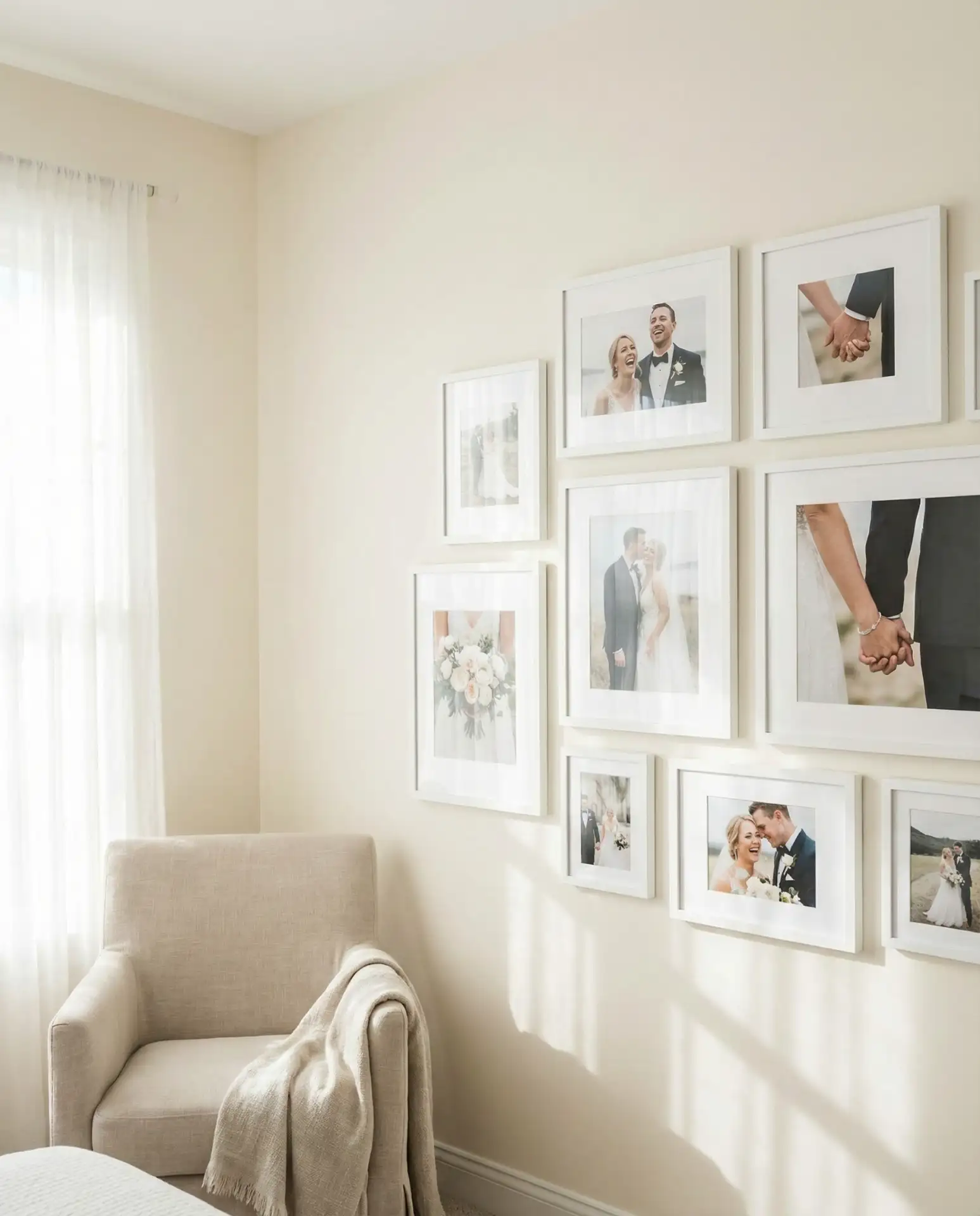
A wedding photo gallery wall celebrates one of life’s milestone moments while giving your favorite images from the big day the prominence they deserve beyond a wedding album that rarely gets opened. Rather than displaying only formal portraits, include candid moments, detail shots of flowers or decor, and perhaps your invitation or pressed flowers from your bouquet. This creates a more complete narrative of the day that feels personal rather than posed. 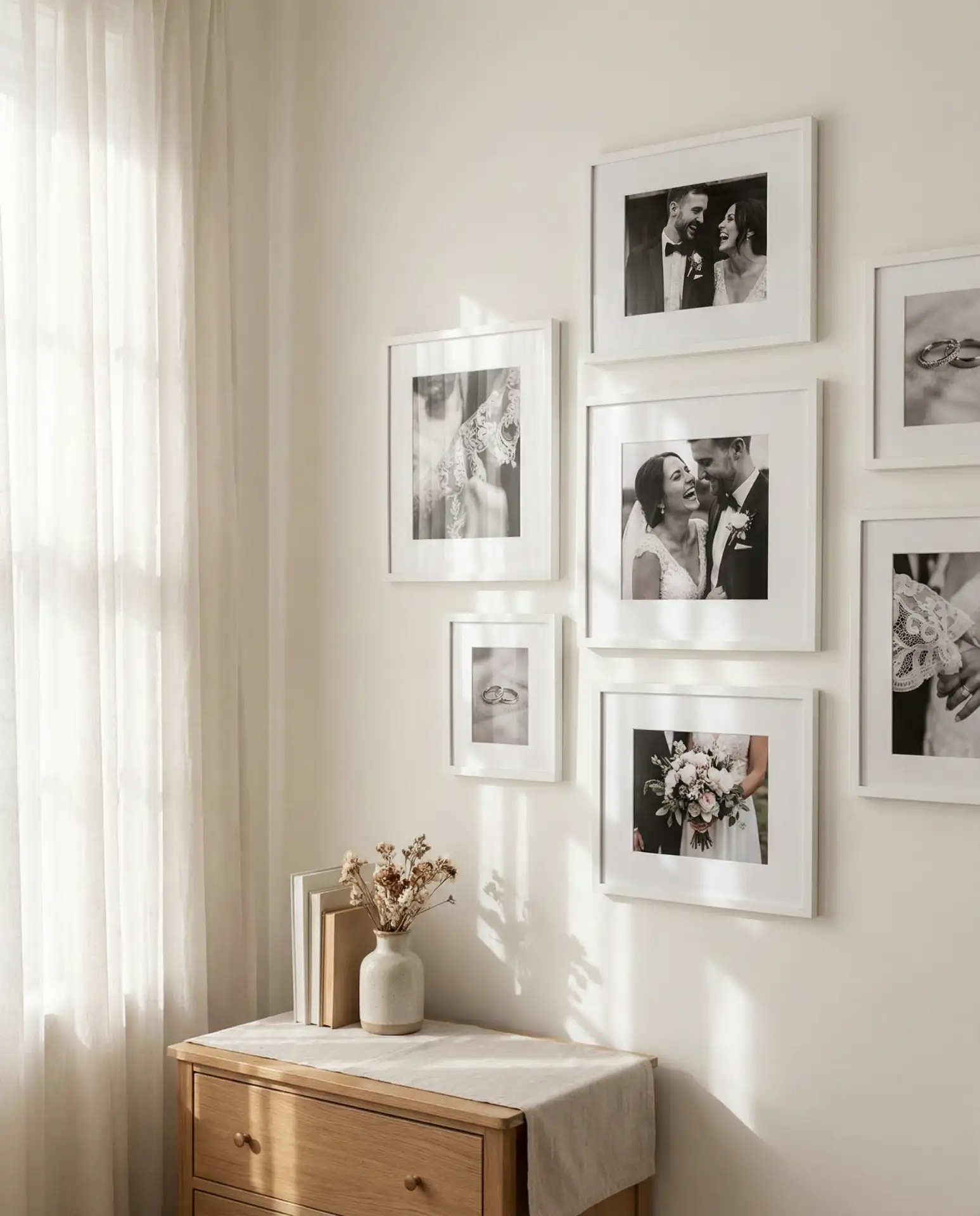
Where this works best is in primary bedrooms where the wall remains relatively private, maintaining the intimacy of the memories while still celebrating them daily. Many couples choose one large statement print (typically 20×30 inches or larger) as the centerpiece, then surround it with smaller supporting images. A nice touch is including photos of the wedding party or family members in addition to the couple—this honors the community that supported the marriage and creates conversation opportunities when family visits. Consider museum glass for frames to reduce glare and protect photos from fading over decades.
14. Bathroom Surprise Gallery
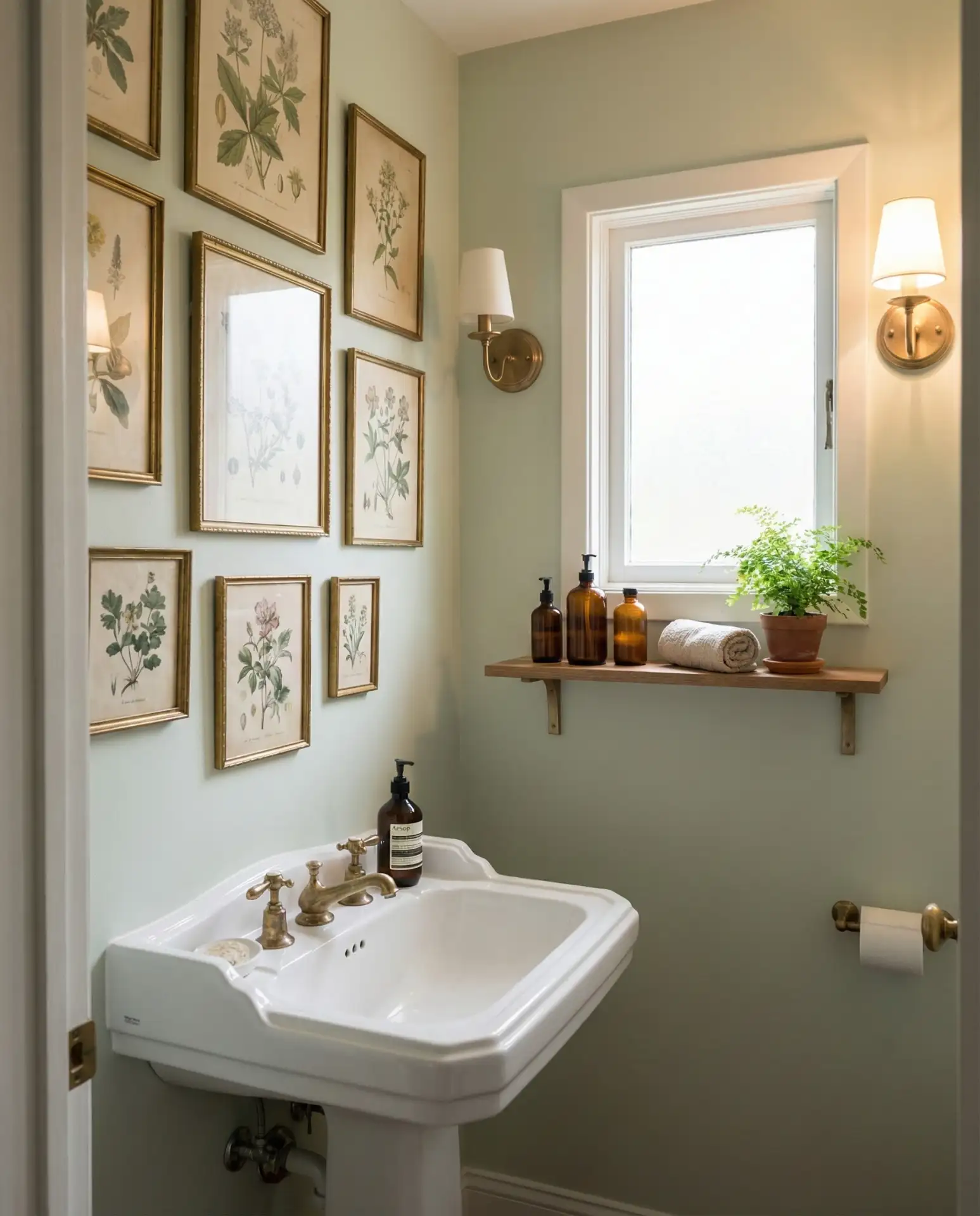
Installing a gallery wall in your bathroom transforms an often-overlooked space into something unexpectedly sophisticated, challenging the notion that art belongs only in primary living areas. Small powder rooms especially benefit from this treatment—when square footage is limited, directing attention upward to a well-curated wall creates visual interest and makes the space feel more designed. Choose prints that can handle humidity, or use acrylic boxes to protect paper-based art from moisture damage. 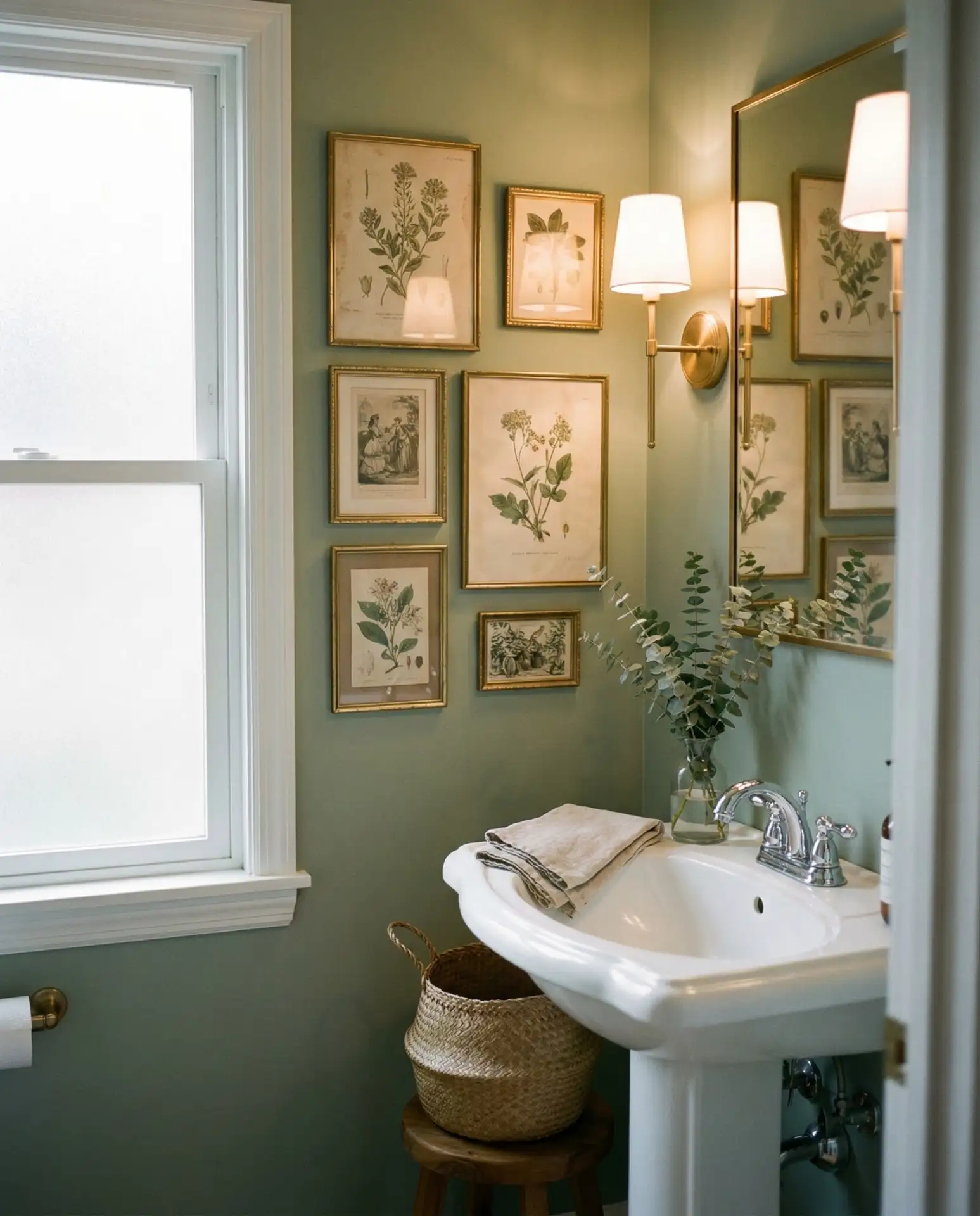
A common mistake is choosing bathroom art that’s too obviously “bathroom-themed”—rubber duckies, bubbles, or overly literal water imagery. Instead, treat the bathroom like any other room in your home, selecting art based on aesthetic merit rather than location. Botanical prints, vintage maps, abstract art, or black-and-white photography all work beautifully. The expert angle here is proper sealing: consider framing with sealed backs or choosing canvas prints over paper to protect against humidity damage in full bathrooms with showers. Powder rooms without showers can accommodate virtually any type of art.
15. Creative Mixed Media Wall
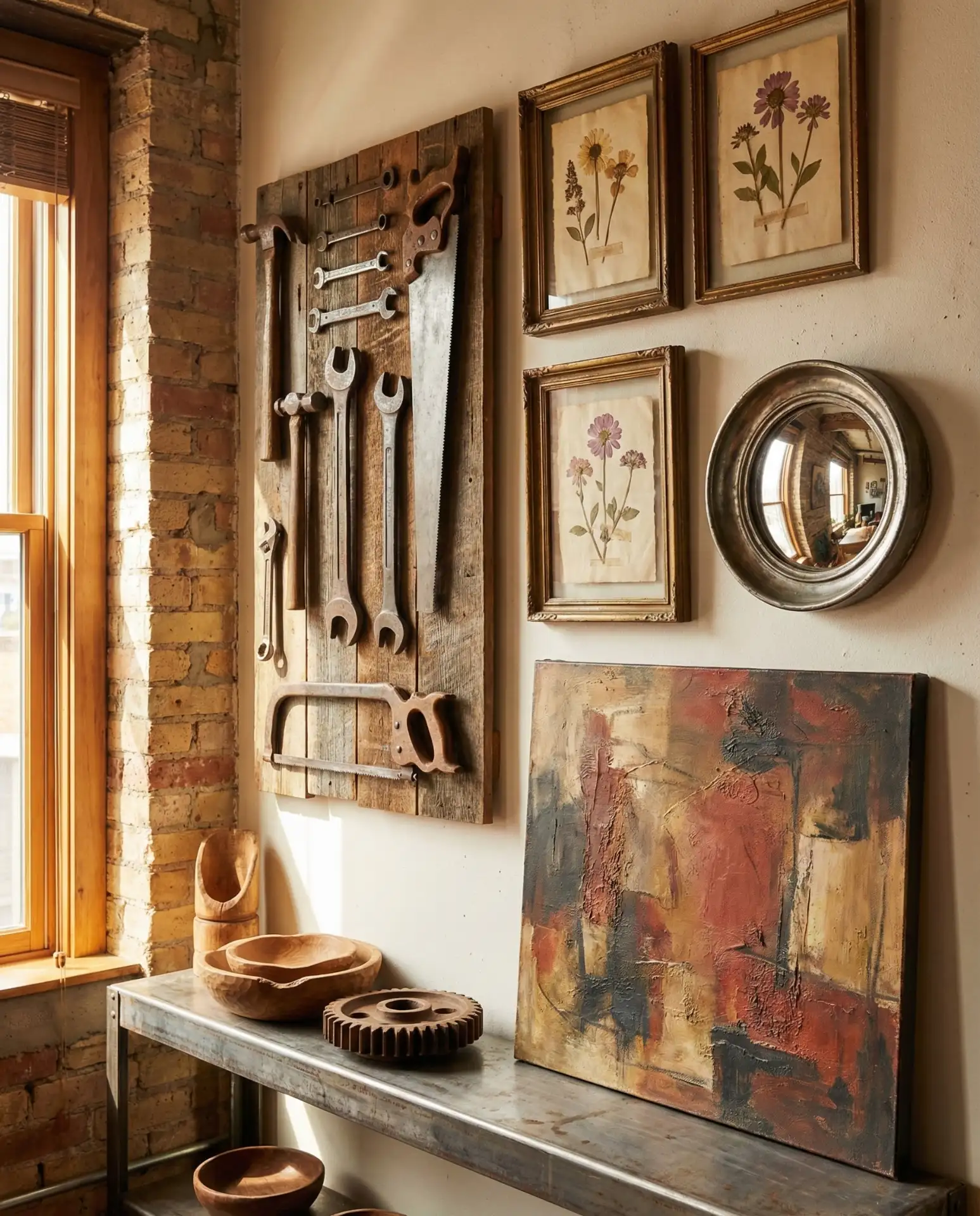
A creative gallery wall pushes boundaries by mixing traditional framed art with unconventional elements like vintage instruments, antique tools, architectural salvage, or even framed textiles and pressed flowers under glass. This approach celebrates found objects and elevates everyday items to art status through thoughtful display. It’s particularly popular in spaces with industrial, farmhouse, or eclectic design schemes where the unexpected combinations feel natural rather than forced. 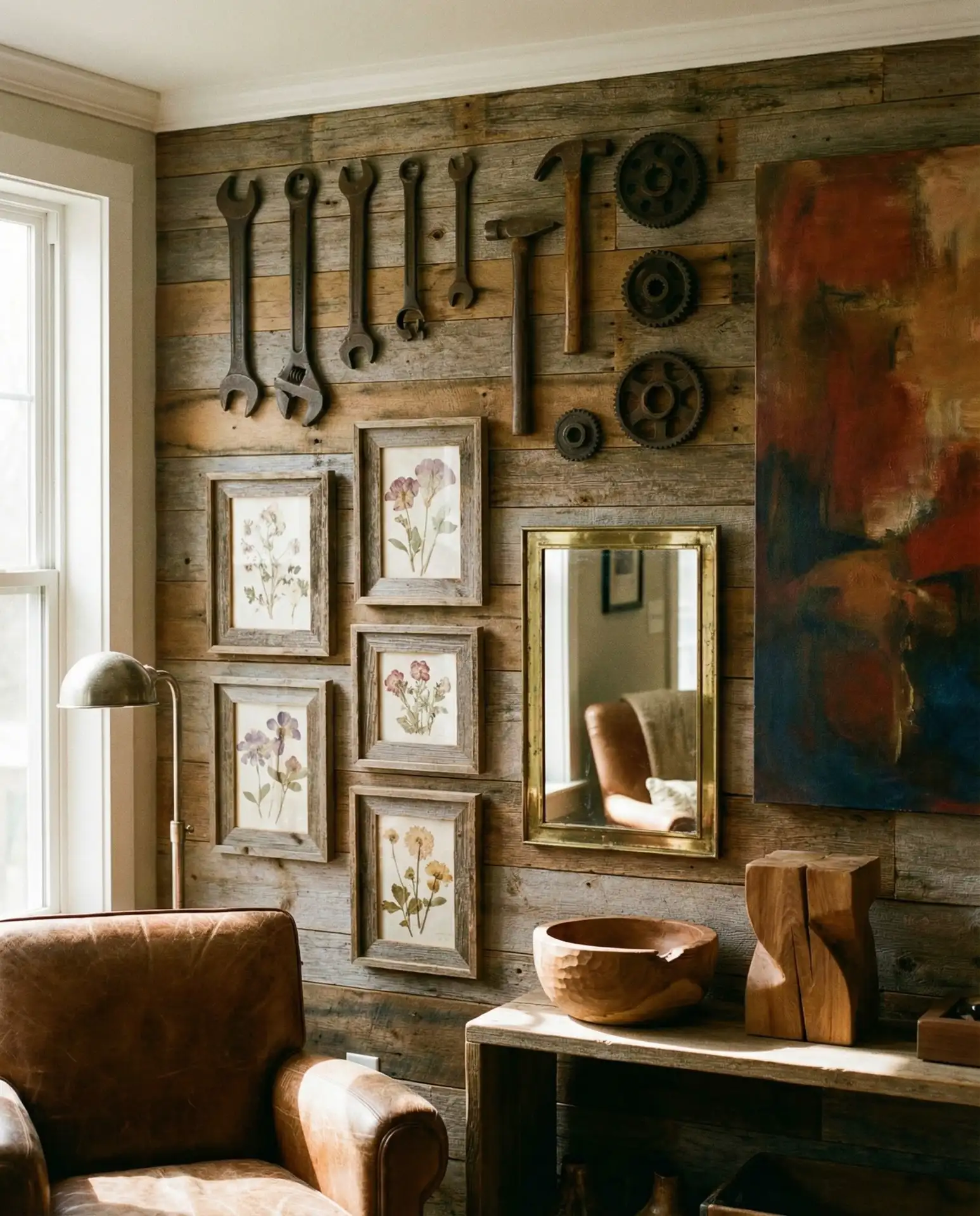
Real homeowner behavior shows that creative mixed media walls often start with a single unusual object—perhaps an heirloom tool or a flea market find—then expand as complementary pieces are discovered. The key is maintaining visual balance: heavier objects should be positioned lower on the wall, while lighter pieces can float higher without appearing top-heavy. Also consider how three-dimensional objects cast shadows; positioning them where natural or artificial light creates interesting shadow play adds another layer of visual depth. Don’t overthink whether items are “art” enough—if it speaks to you and contributes to the composition, it belongs.
16. Thrifted Frame Collection
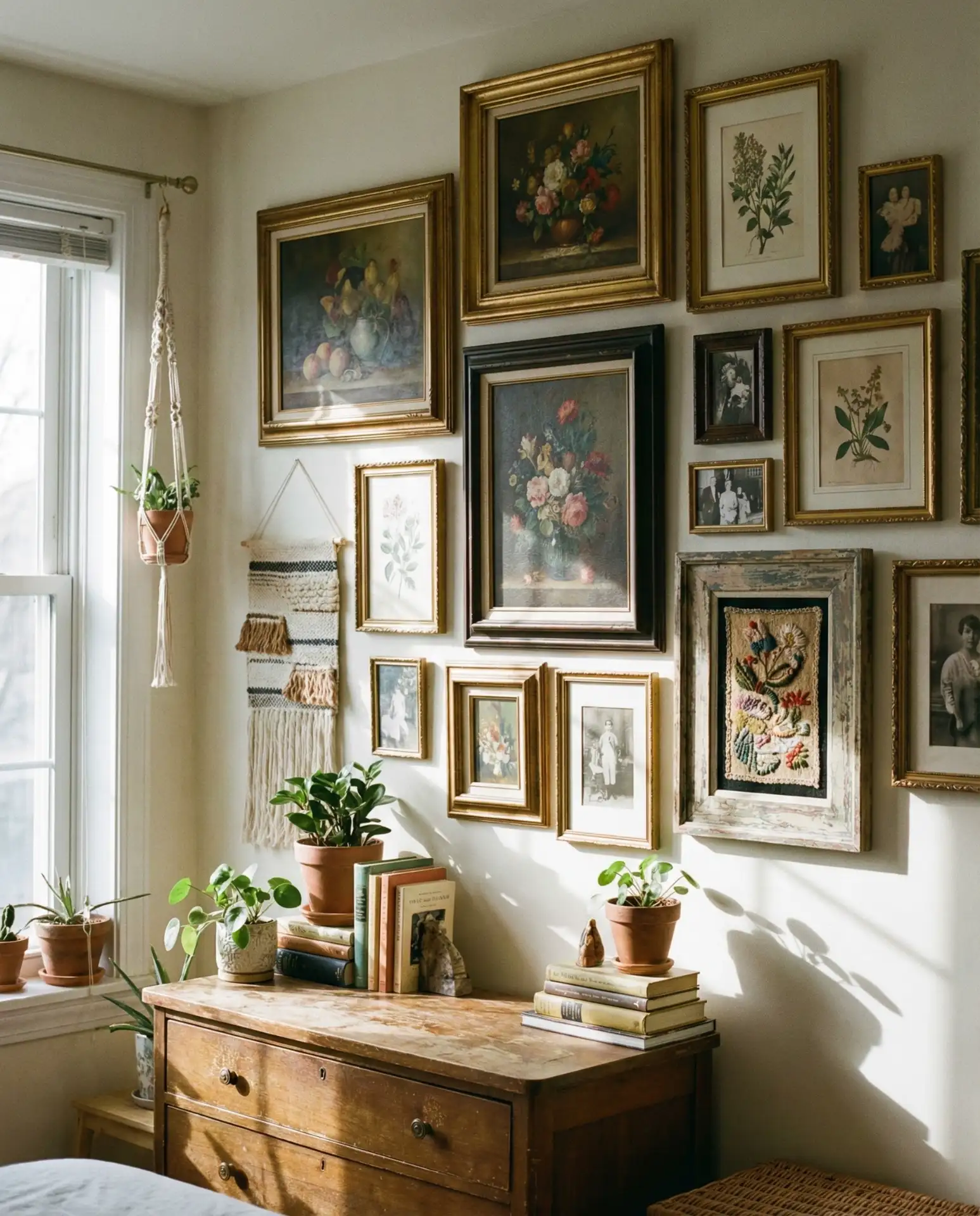
Building a gallery wall entirely from thrifted frames creates character and sustainability while dramatically reducing costs compared to buying new. Estate sales, thrift stores, and antique malls overflow with ornate gold frames, weathered wood options, and vintage styles that would cost hundreds new but sell for $5-20 secondhand. The mismatched nature of thrifted frames becomes a design feature rather than a flaw when you embrace the collected-over-time aesthetic. 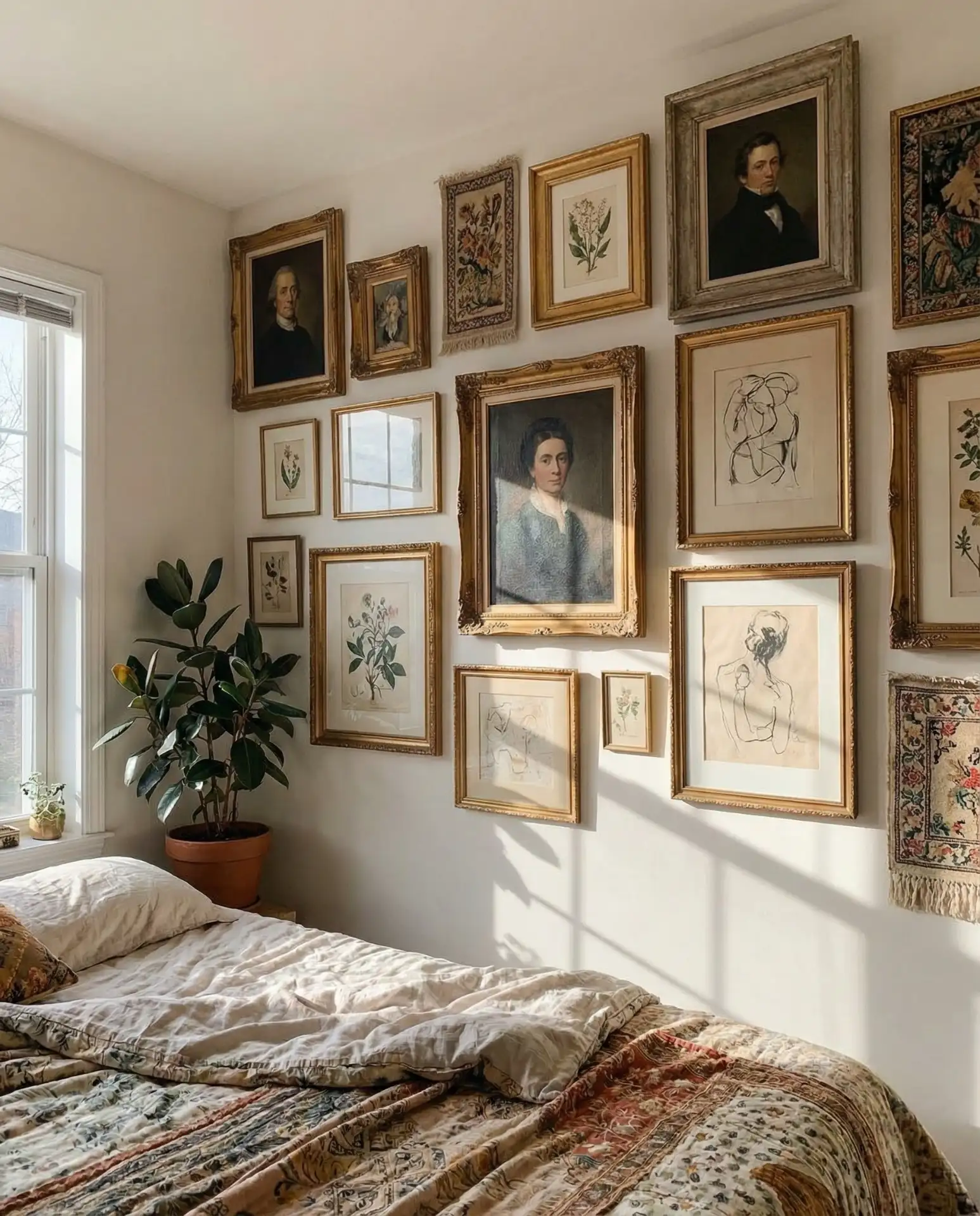
The budget angle is compelling: a thrifted gallery wall might cost $50-150 total for frames, mats, and prints, versus $500+ for new retail frames. Look for frames with interesting details—carved wood, ornate corners, unusual shapes—that add character your arrangement. You’ll likely need to replace the backing and glass on older frames, and a coat of spray paint can unify disparate finishes if desired, though many people prefer the authentic patina. Store frames as you find them so you have options when planning your layout; the best thrifted galleries result from having 20-30 frames to choose from, then selecting the best 10-15 for your final arrangement.
17. Family Timeline Gallery

Organizing your family photos chronologically along a wall creates a powerful visual timeline that documents growth, change, and family evolution over years or even decades. This works especially well for families with children—displaying annual school photos, milestone birthdays, or yearly vacation shots shows the progression of time in a way that single photos cannot. Many parents find this arrangement deeply meaningful, as it transforms everyday moments into a curated family history. 
A micro-anecdote: a colleague maintained a timeline wall in her hallway that began with her wedding photo and continued through the births of her three children, capturing each kid’s progression from infant to teenager. Visiting her home and watching that visual journey unfold over fifteen feet of wall was genuinely moving. Maintain consistency by using the same frame style throughout, and consider adding small brass plates or printed labels noting the year beneath each photo. Update the timeline annually—many families make this a New Year’s tradition, adding the previous year’s highlights and extending the story forward.
18. Christmas Seasonal Display

A Christmas -themed gallery wall provides an alternative to (or enhancement of) traditional holiday decorating, offering a more sophisticated seasonal statement than generic store-bought decor. Combine vintage holiday postcards, botanical prints of winter greenery, family photos from past Christmases, and perhaps framed holiday cards or children’s drawings. This approach works particularly well for people who love the holidays but prefer understated elegance over elaborate yard displays. 
Where this works best is in formal living rooms or dining rooms where you entertain during the holiday season—the gallery wall becomes a conversation piece that feels more adult and design-conscious than inflatable lawn decorations. The practical insight is storage: if you’re swapping out your regular gallery wall for a seasonal version, photograph the original arrangement before taking it down, noting measurements and spacing. This makes reinstallation in January much easier. Some homeowners maintain a permanent holiday gallery wall in less-prominent spaces like guest bedrooms, avoiding the hassle of annual installation while still enjoying seasonal decor.
19. Personal Photos Documentary Style
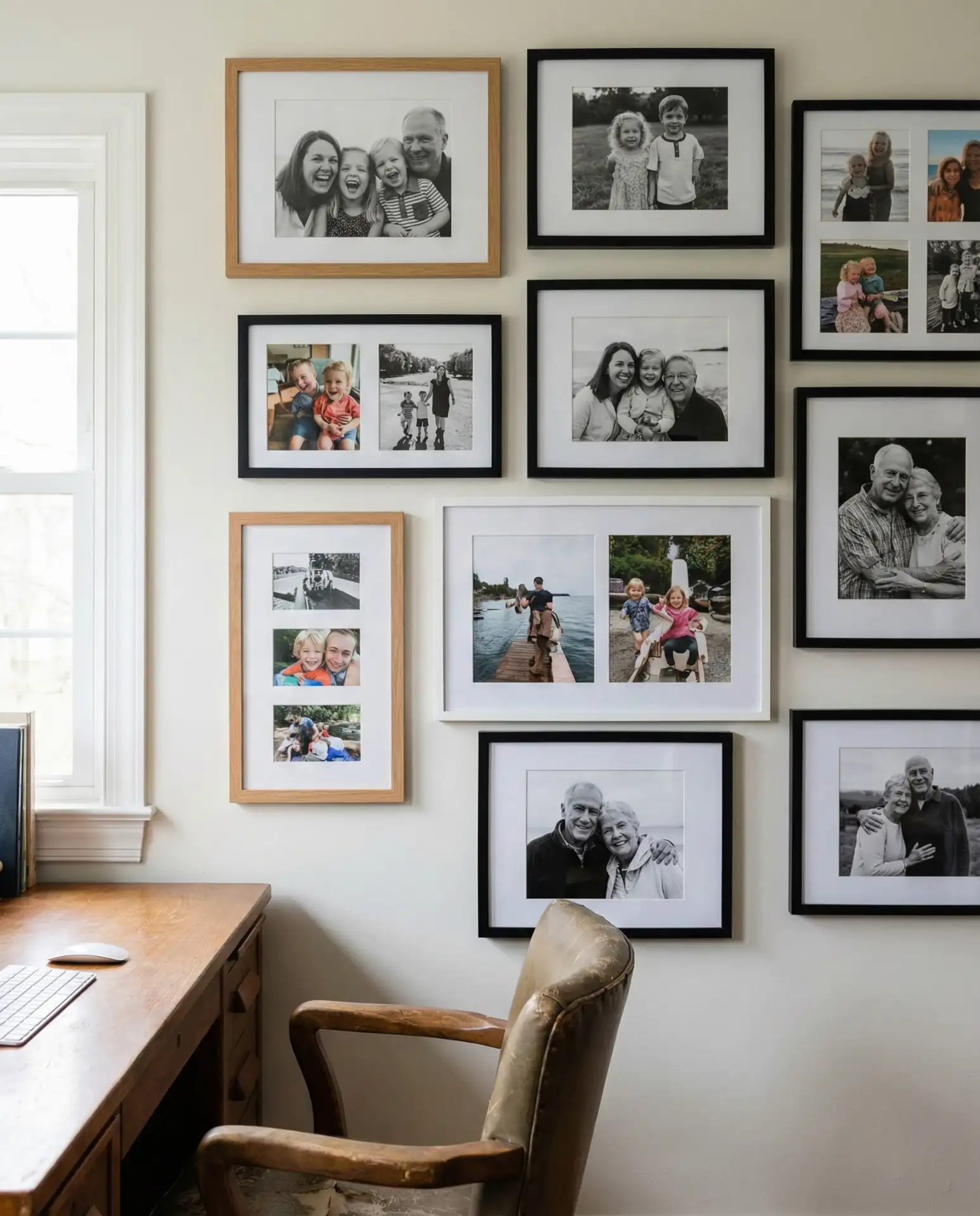
Treating your personal photos like documentary photography elevates everyday snapshots into compelling visual narratives worthy of gallery display. Rather than only hanging “perfect” professional photos, include candid moments, imperfect but emotionally resonant images, and photos that capture authentic rather than posed experiences. This approach reflects a broader cultural shift toward valuing authenticity over polish, making your gallery wall feel genuine and lived-in rather than staged. 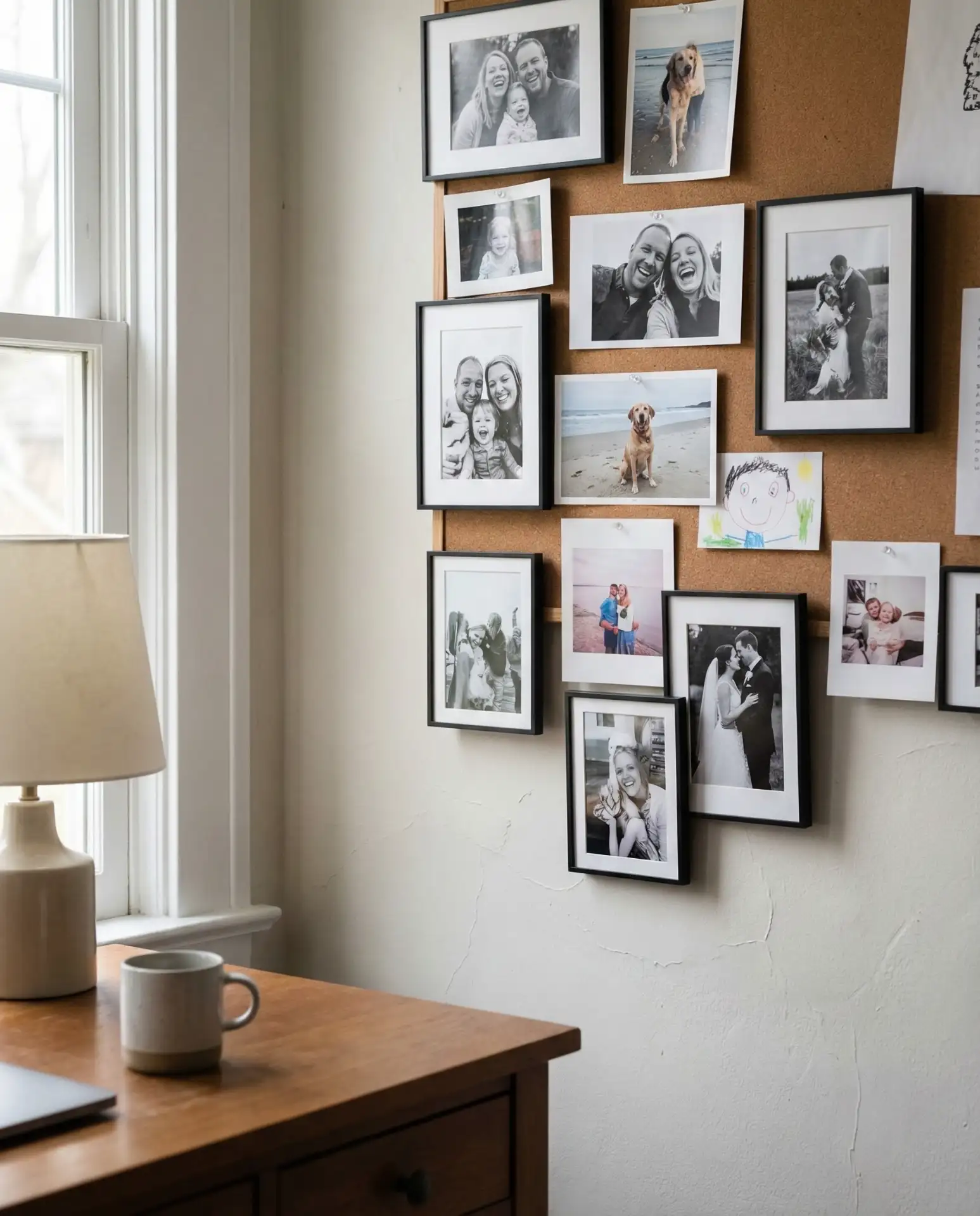
Expert-style commentary from professional photographers suggests converting personal photos to black and white, which unifies images taken with different cameras or in varying lighting conditions while adding artistic weight. Focus on moments with emotional content—genuine laughter, quiet contemplations, meaningful glances—rather than everyone staring at the camera with forced smiles. Size matters here: printing larger (11×14 or bigger) signals that you take these images seriously as art rather than merely snapshots. This style works particularly well in private spaces like bedrooms or home offices where the personal nature of the content feels appropriate.
20. Gothic Dark Romance Wall
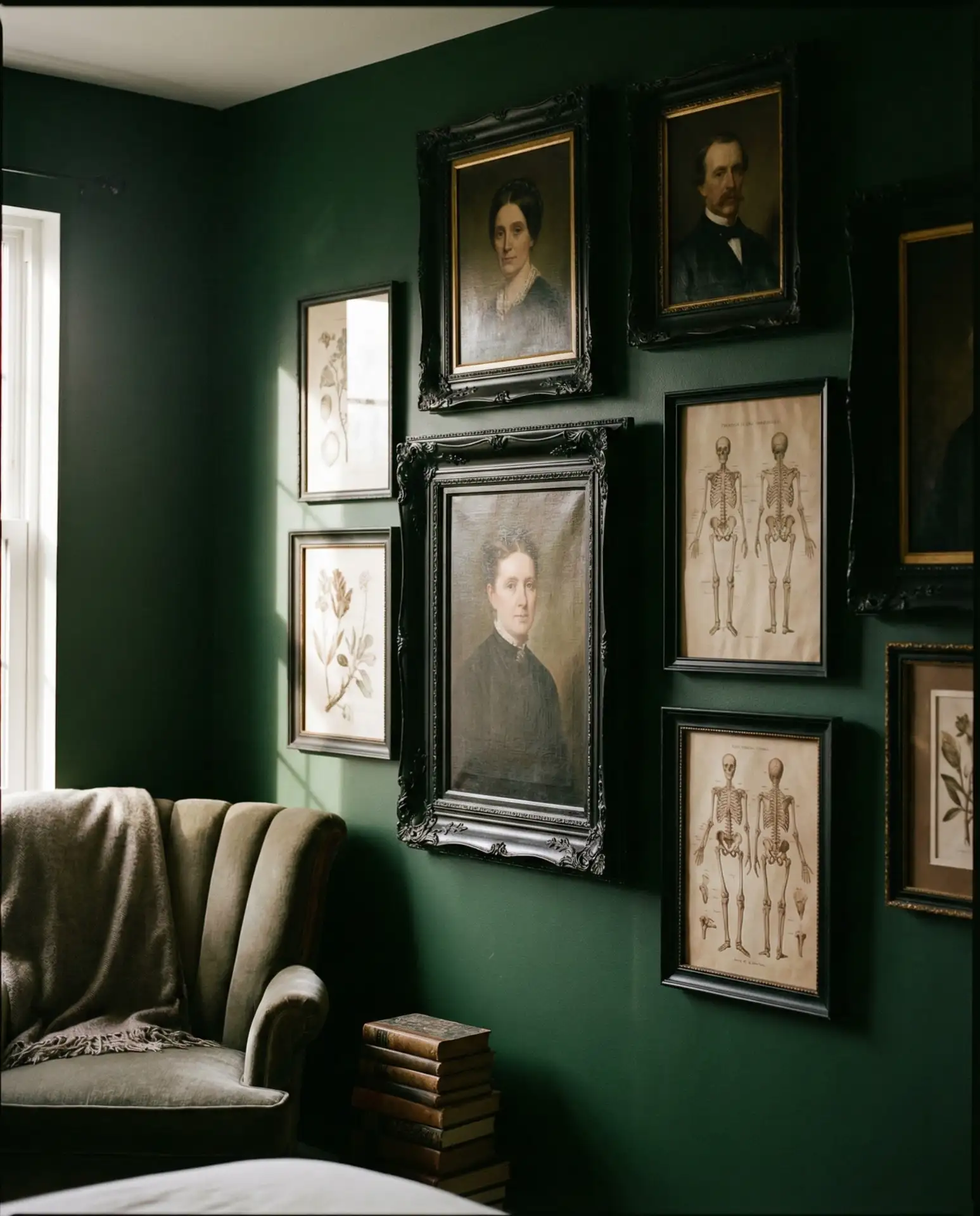
A gothic -inspired gallery wall embraces dark romanticism through moody artwork, vintage anatomical prints, Victorian portraiture, botanical illustrations of poisonous plants, or macabre curiosities like taxidermy mounts or preserved insects under glass. This aesthetic has gained significant traction among younger homeowners who reject the all-white, minimalist trend in favor of something more dramatic and personally expressive. Deep wall colors—charcoal, forest green, burgundy—enhance the gothic mood while making the artwork pop. 
Common mistakes include going too literal with horror movie imagery or cheap “spooky” decor rather than embracing the sophisticated, historical roots of gothic aesthetics. The best gothic gallery walls balance darkness with beauty—a skull is interesting, but a beautifully illustrated medical diagram of a skull from an 1890s textbook is art. Regional context matters: this style particularly thrives in the Northeast and Pacific Northwest where Victorian architecture and moody weather make gothic sensibilities feel native. Layer in candles, dark florals, and vintage textiles to complete the atmosphere beyond just the wall itself.
21. Coastal Vacation Memories
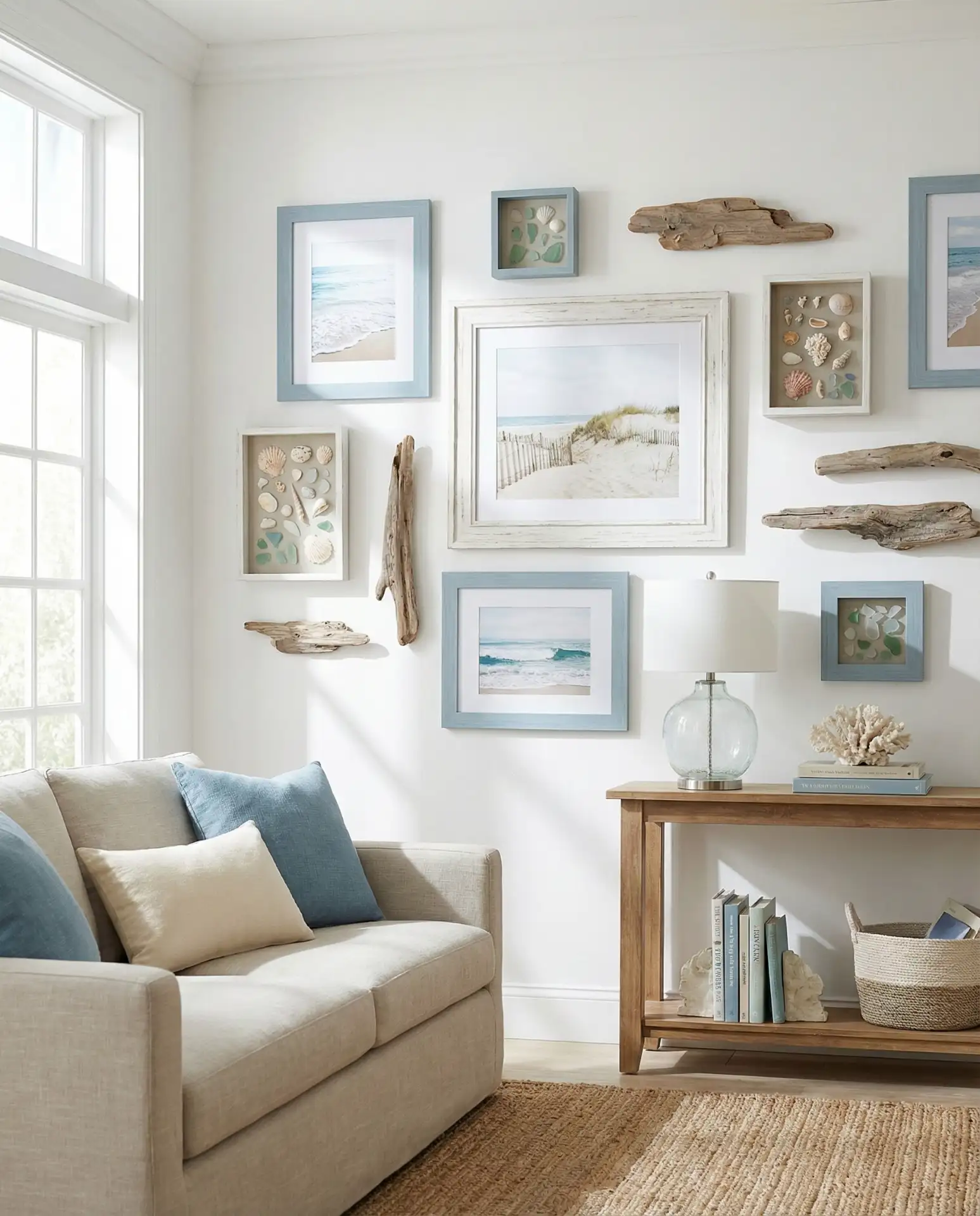
A coastal -themed gallery wall captures the relaxed, breezy feeling of beach vacations through a mix of seascape photography, nautical elements, collected shells or driftwood, and prints in the soft blues and sandy neutrals associated with coastal living. This approach works beautifully in homes far from actual coastlines, bringing vacation mindset into everyday spaces. Rather than relying on cliché anchors and rope, focus on sophisticated coastal imagery—abstract water patterns, aerial beach photography, or minimalist line drawings of shells. 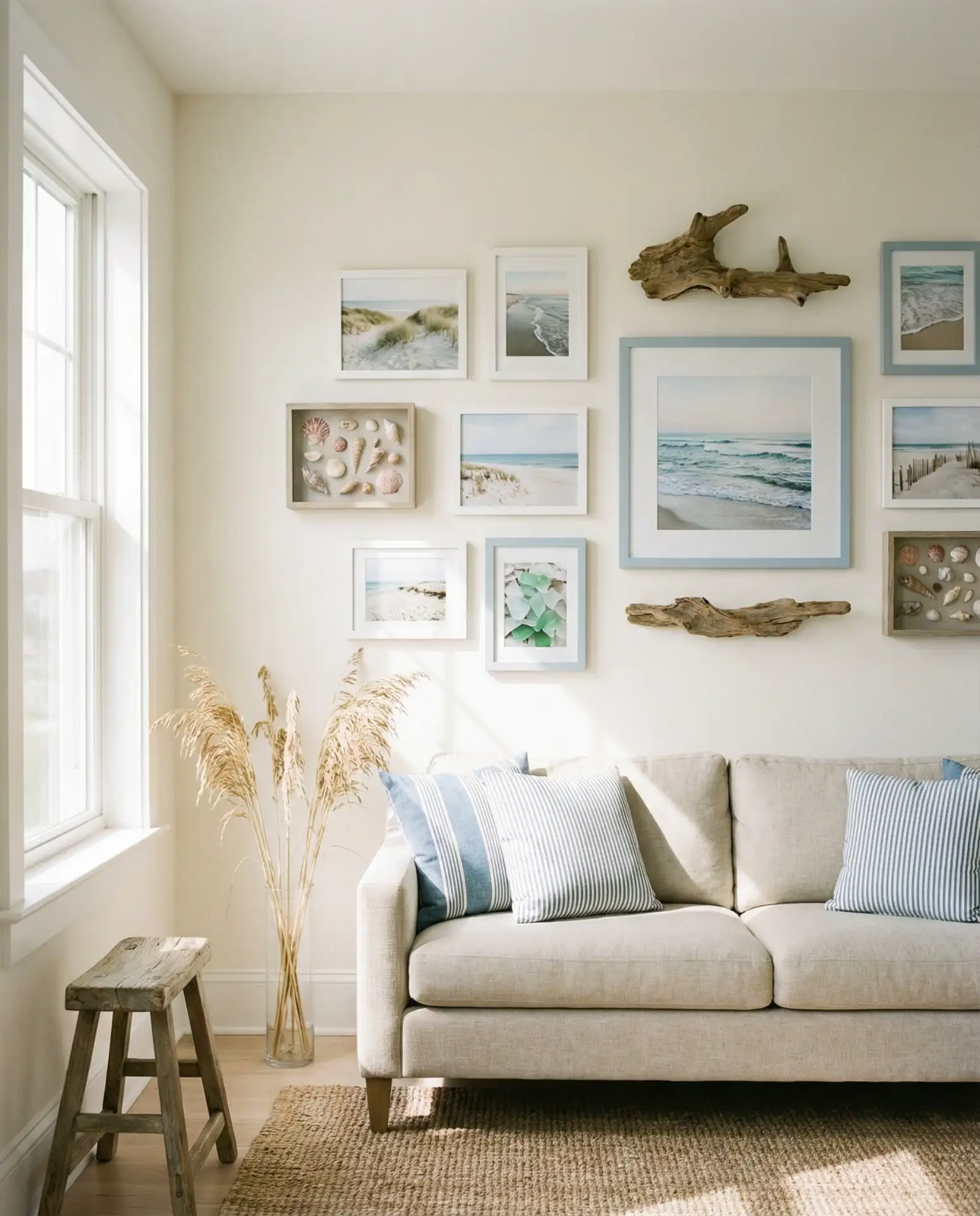
This aesthetic particularly resonates in landlocked states where coastal imagery provides visual escape and vacation associations without the kitsch of tropical resort decor. Include photos from your own beach trips alongside curated prints to make the gallery personal rather than generic. The practical insight is that true coastal style uses restraint—three carefully chosen pieces often work better than ten mediocre ones. Whitewashed or driftwood-style frames enhance the beachy feeling, and incorporating actual collected objects like sand dollars or sea glass in shadow boxes connects the gallery to real experiences and memories from specific trips.
Conclusion
Building a gallery wall in 2026 means embracing personal expression over following rigid design rules—these installations succeed when they reflect your actual life, interests, and aesthetic preferences rather than someone else’s vision of perfection. Start with pieces you genuinely love, trust your eye as you arrange them, and remember that galleries can always evolve as your collection grows. What gallery wall style speaks to you, or what memories are you planning to display? Share your ideas in the comments below.