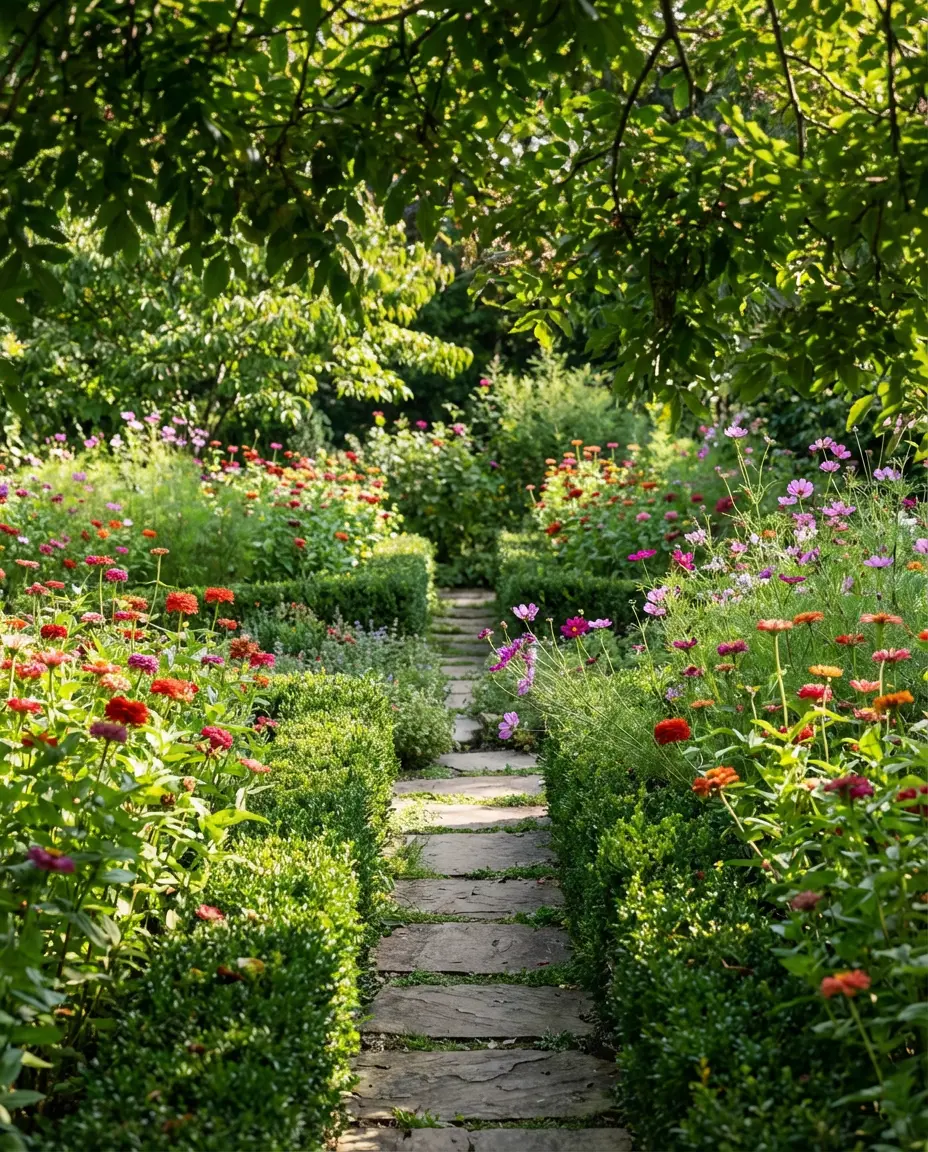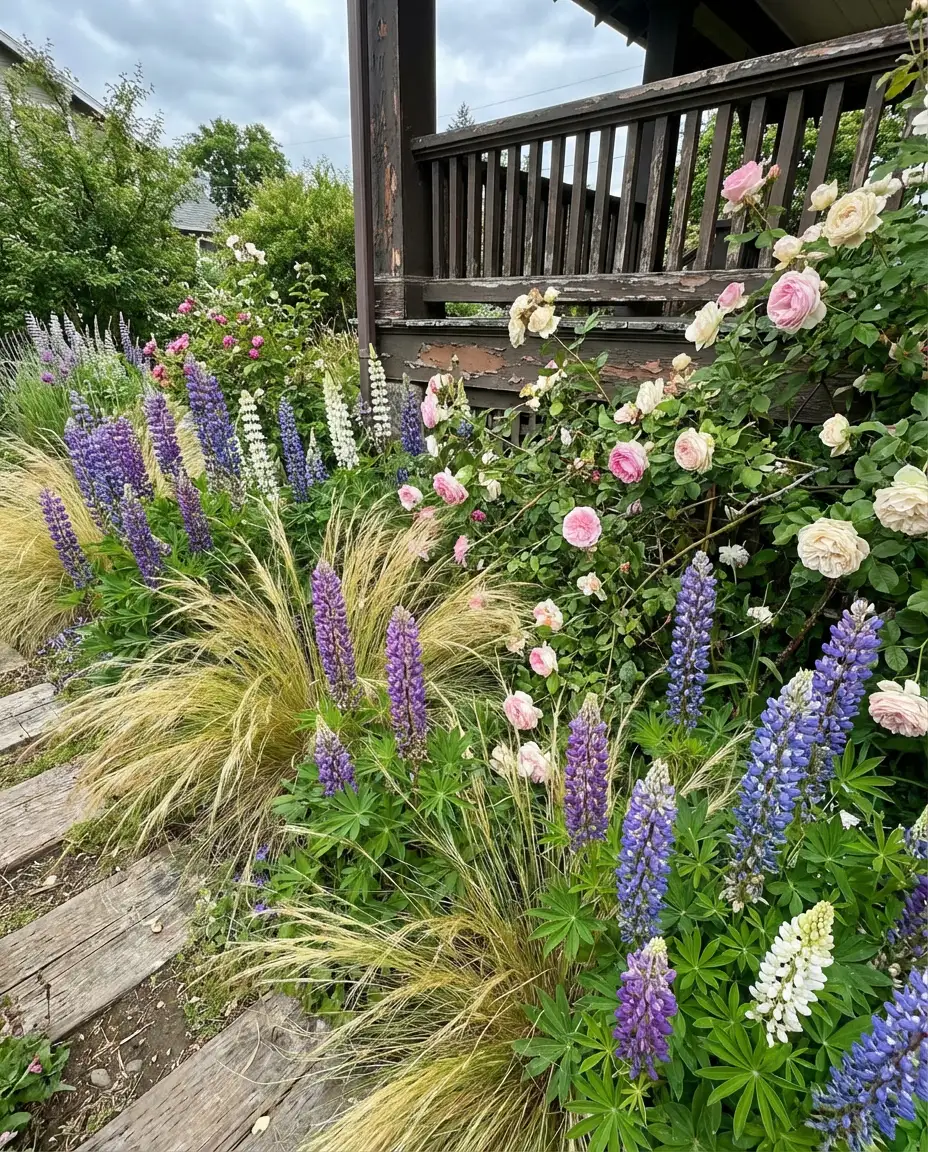

Something is shifting in American backyards and front porches this year, and Pinterest’s most-saved boards are proof. Garden decor in 2026 is leaning into personality—the kind of outdoor spaces that feel curated rather than catalog-perfect, full of texture, story, and a little bit of soul. Whether you’re working with a sprawling yard in the South or a modest city balcony in the Northeast, there’s never been a better time to reimagine what your outdoor space can be. From handmade clay accents to moody woodland installations, this list covers 22 of the freshest garden decor ideas trending right now—inspiration that travels beautifully from a Pinterest scroll straight to your own soil.
1. DIY Mosaic Stepping Stones
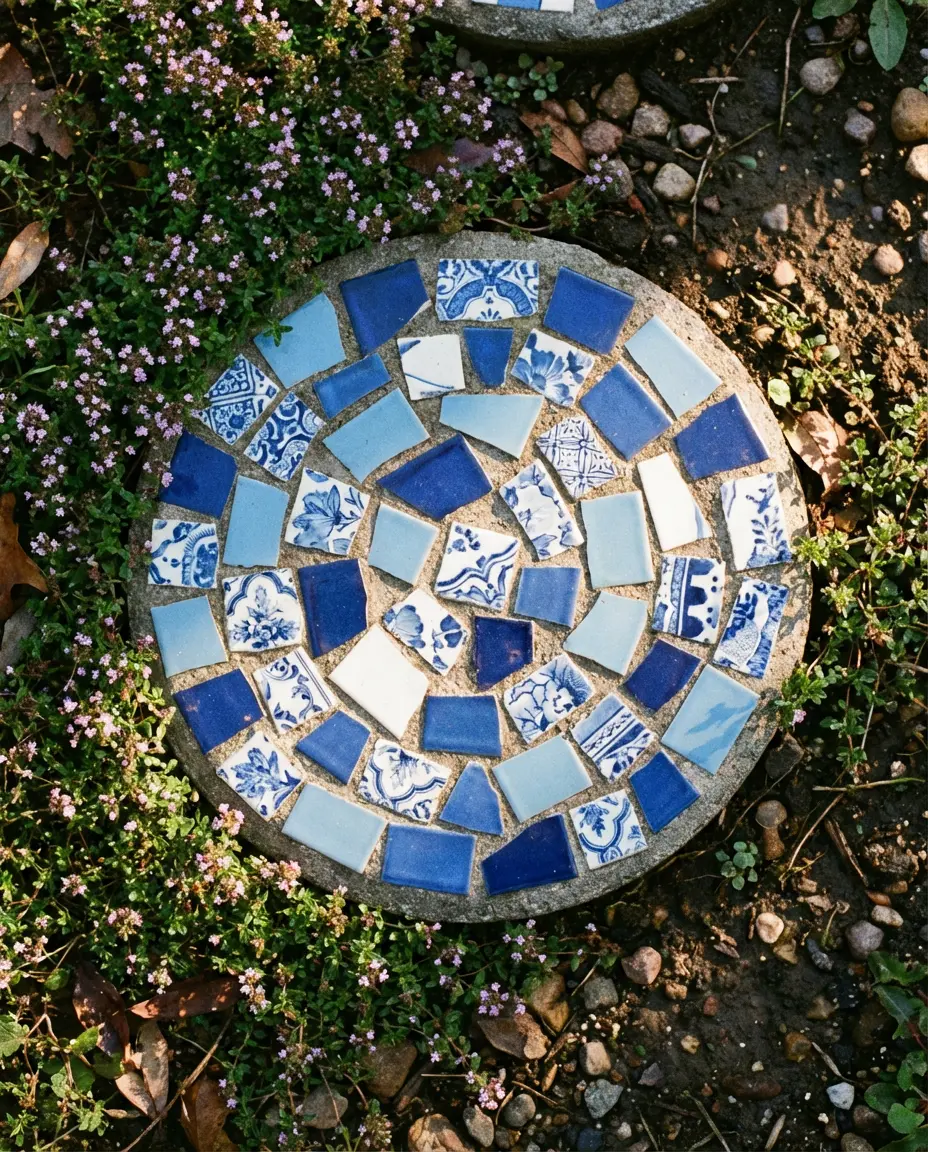
Few DIY projects deliver as much visual payoff as a hand-laid mosaic stepping stone path. These colorful garden accents are made by pressing broken tile, sea glass, or vintage china into quick-set cement, and the result is something that genuinely looks like it belongs in a boutique garden hotel. This is one of those homemade ideas where imperfection is actually the point—no two stones will ever match, and that’s entirely the charm. Perfect for a cottage garden path or a meditation corner, they add color and texture without spending much at all.

Budget-wise, you can pull this off for under $30 if you raid your recycling bin and thrift stores for broken dishes. Craft stores sell stepping stone molds for about $8–$12, and the cement mix runs another $10. The real cost is an afternoon and a willingness to get your hands dirty—which, for most gardeners, is the best kind of afternoon there is.
2. Vintage Ladder Plant Display

An old wooden ladder leaning against a garden fence or exterior wall instantly becomes one of those vintage, rustic styling moments that feels effortless but looks incredibly intentional. Drape trailing pothos, stack terracotta pots on each rung, or weave in small string lights for evening atmosphere. It’s the kind of repurposed display that thrives in country or farmhouse-style outdoor spaces, and it works just as well on a narrow side yard as it does on a wide wraparound porch. The worn patina of old wood is the whole look—don’t sand it down.
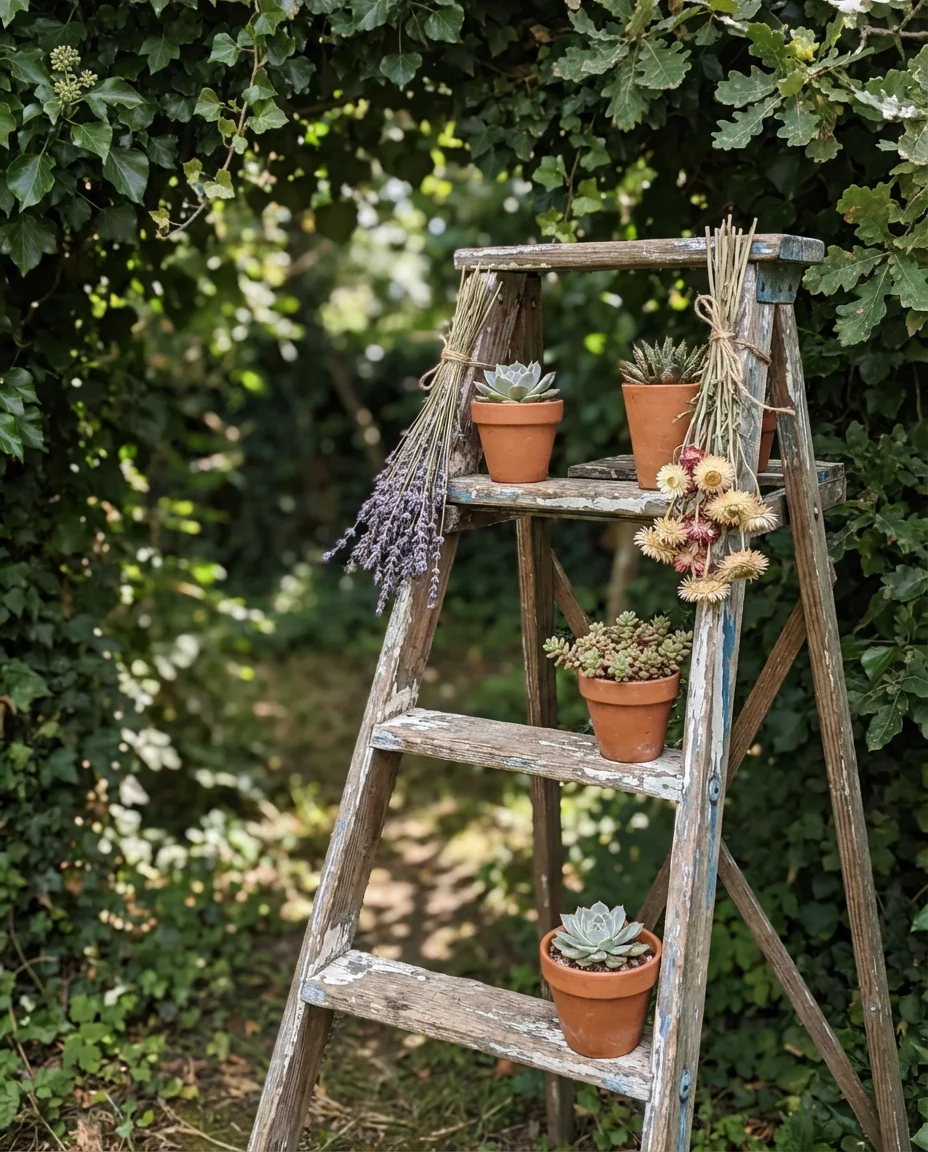
Homeowners in the American South and Pacific Northwest tend to gravitate toward this look because it blends naturally with the regional landscape—mossy greens, earthy tones, and weathered materials feel right at home in those environments. A reader in Portland once shared that she found her ladder at an estate sale for $4, and it became the most-commented-on feature on her back patio. Sometimes the best decor costs almost nothing.
3. Mushroom Garden Sculptures

The mushroom motif is having a serious moment in garden decor, and it’s not hard to see why. These whimsical, organic shapes fit naturally among ground cover, ferns, and shady woodland plantings, adding a sense of quiet magic to spaces that might otherwise feel flat. You’ll find mushroom sculptures in everything from hand-painted ceramic to cast stone and even clay, which makes them surprisingly versatile. Cluster a few different sizes near a tree base, tuck one beside a birdbath, or line them along a shadowy border for that enchanted-forest energy that’s trending hard on Pinterest this season.
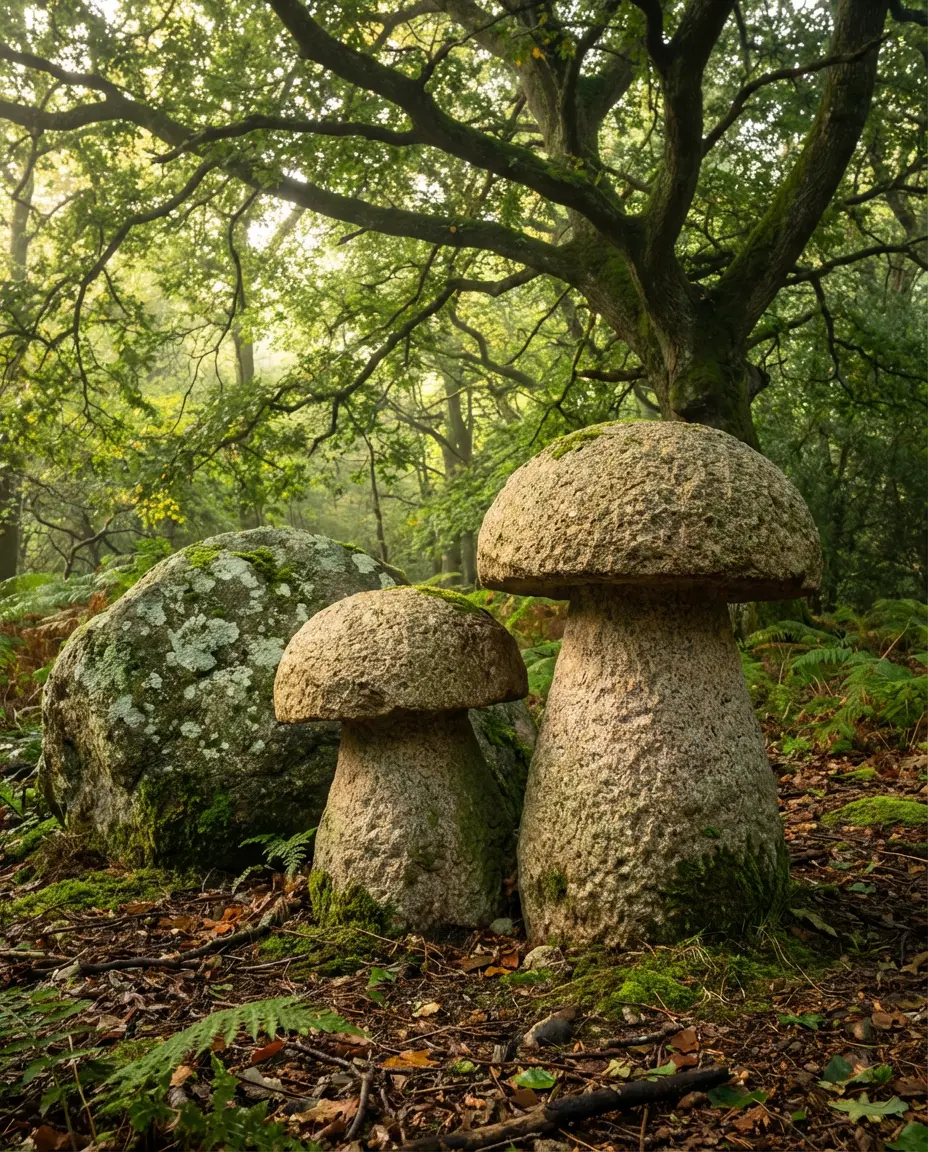
Where this works best: shaded garden beds under mature trees, woodland-style landscaping, or any corner of the yard that gets dappled light. The organic, rounded forms echo the natural shapes already present in the landscape, so they never look forced or out of place. If you’re leaning into a cottage or fairy-tale aesthetic overall, a grouping of three or five mushroom sculptures near the garden entrance creates an immediate sense of arrival.
4. Whimsical Fairy Garden in a Planter

A fairy garden tucked inside a wide ceramic planter or hollowed-out log is one of the most creative, conversation-starting pieces you can place on a porch or patio. The premise is simple: build a tiny landscape complete with miniature furniture, pebble pathways, and dwarf plants like thyme, mind-your-own-business, or baby tears. What makes it feel truly special is the storytelling—a tiny wooden door propped against a stone, a wee lantern hung from a twig. These are the miniature scenes that make adults stop mid-conversation and children absolutely lose their minds with delight.

One common mistake people make with fairy gardens is overplanting—filling every inch until the tiny details disappear into foliage. The trick is restraint: choose two or three small plants and let the decorative elements breathe. A single trailing sedum, a patch of moss, and one focal-point miniature scene will always read better than a crammed-in collection. Less truly is more when the scale is this small.
5. Japanese Zen Stone Garden Corner
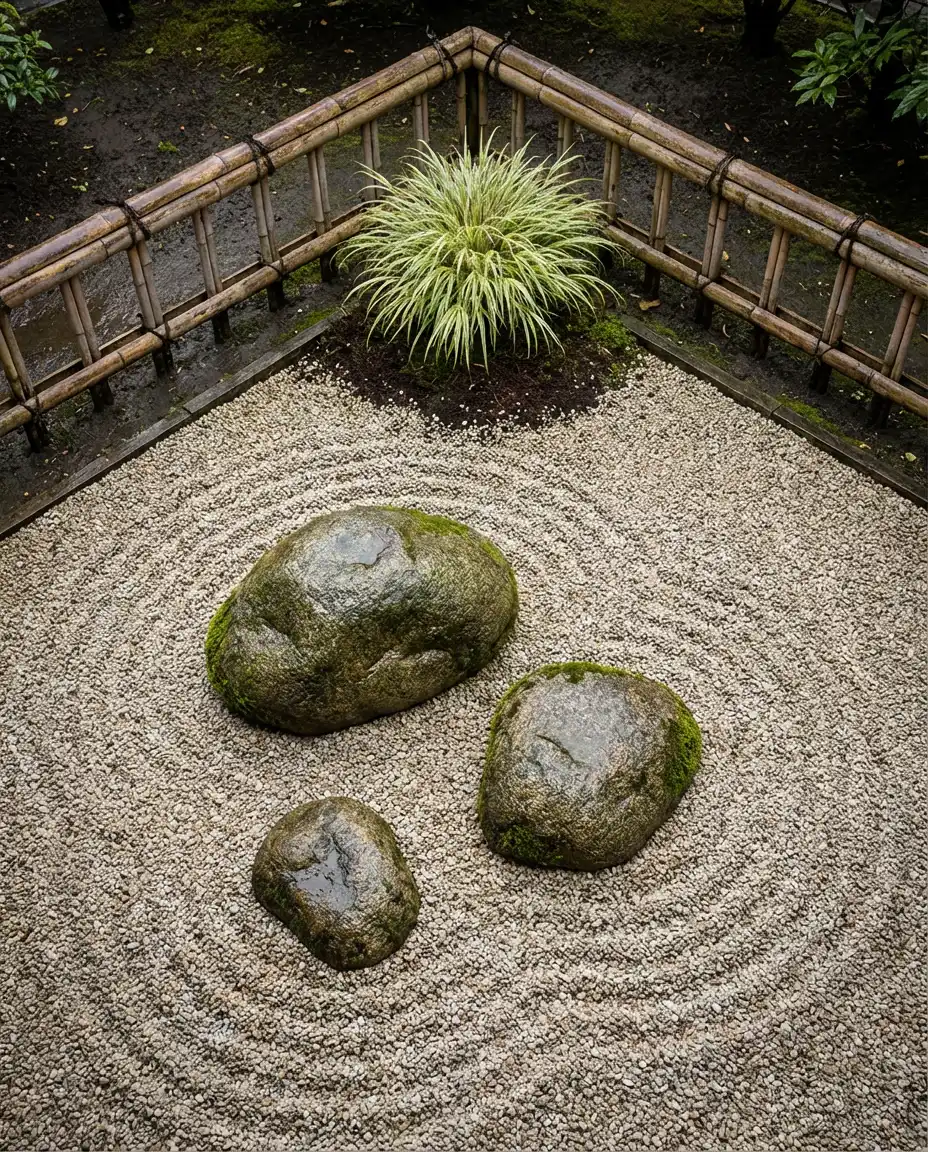
A Japanese-inspired zen corner transforms even a small slice of outdoor space into a place of genuine stillness. The formula is straightforward: raked gravel or crushed granite, a handful of carefully placed stones, maybe a low bamboo water feature, and absolutely nothing unnecessary. This aesthetic is rooted in the principle of ma—negative space—which is why it works so powerfully even in compact outdoor settings like side yards, courtyard corners, or the end of a narrow townhouse garden. The restraint is the beauty. You’re designing quiet, and that’s a rare and valuable thing.
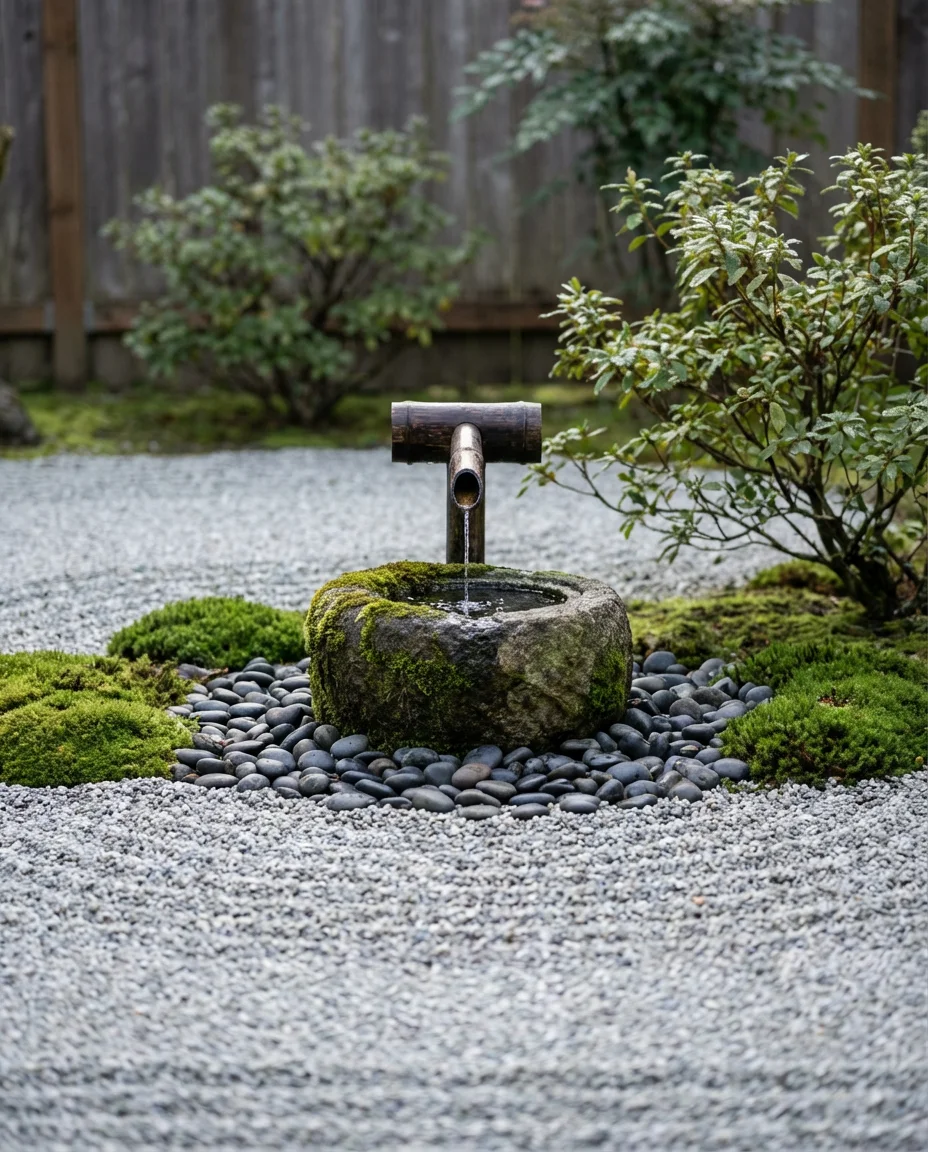
Landscape designers often note that American homeowners underestimate how transformative a dedicated “no-plant zone” can be in a garden. When everything around it is busy with blooms and foliage, a raked gravel section creates visual rest that the eye gravitates toward naturally. It’s also one of the lowest-maintenance garden features you can install—once it’s set, it largely takes care of itself, which makes it ideal for time-strapped homeowners who still want a polished, intentional outdoor space.
6. Rustic Wood Planter Box Row
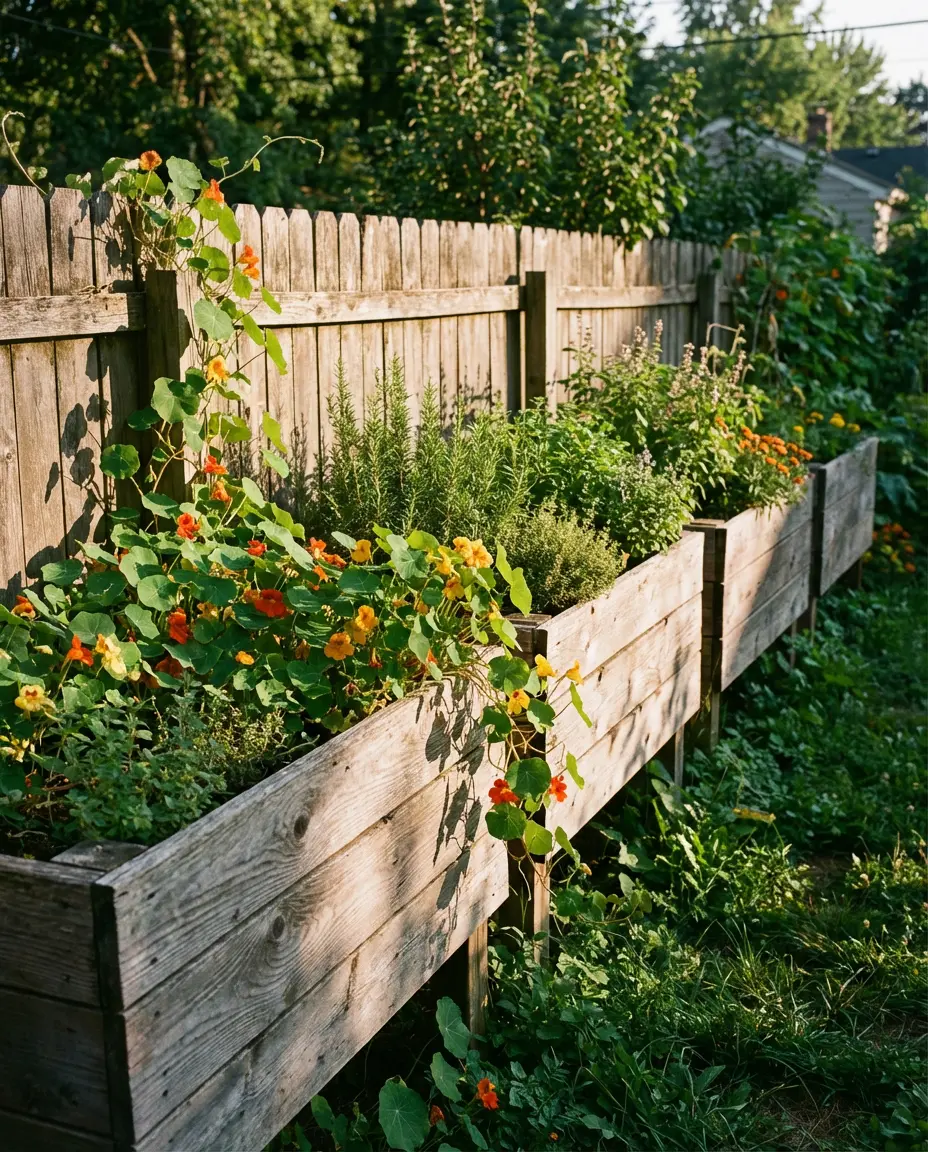
A row of rustic wood planter boxes along a fence line or deck railing is one of those garden moves that looks like it took a designer’s eye but really just takes an afternoon. Cedar and reclaimed pine are the most popular material choices right now—cedar for its natural rot resistance, and reclaimed pine for that lived-in, antique warmth that you simply cannot replicate with new lumber. Fill them with trailing nasturtiums, herbs, or compact ornamental grasses depending on your sun situation. The repetition of the boxes creates a clean, organized rhythm that makes even an ordinary backyard feel considered.
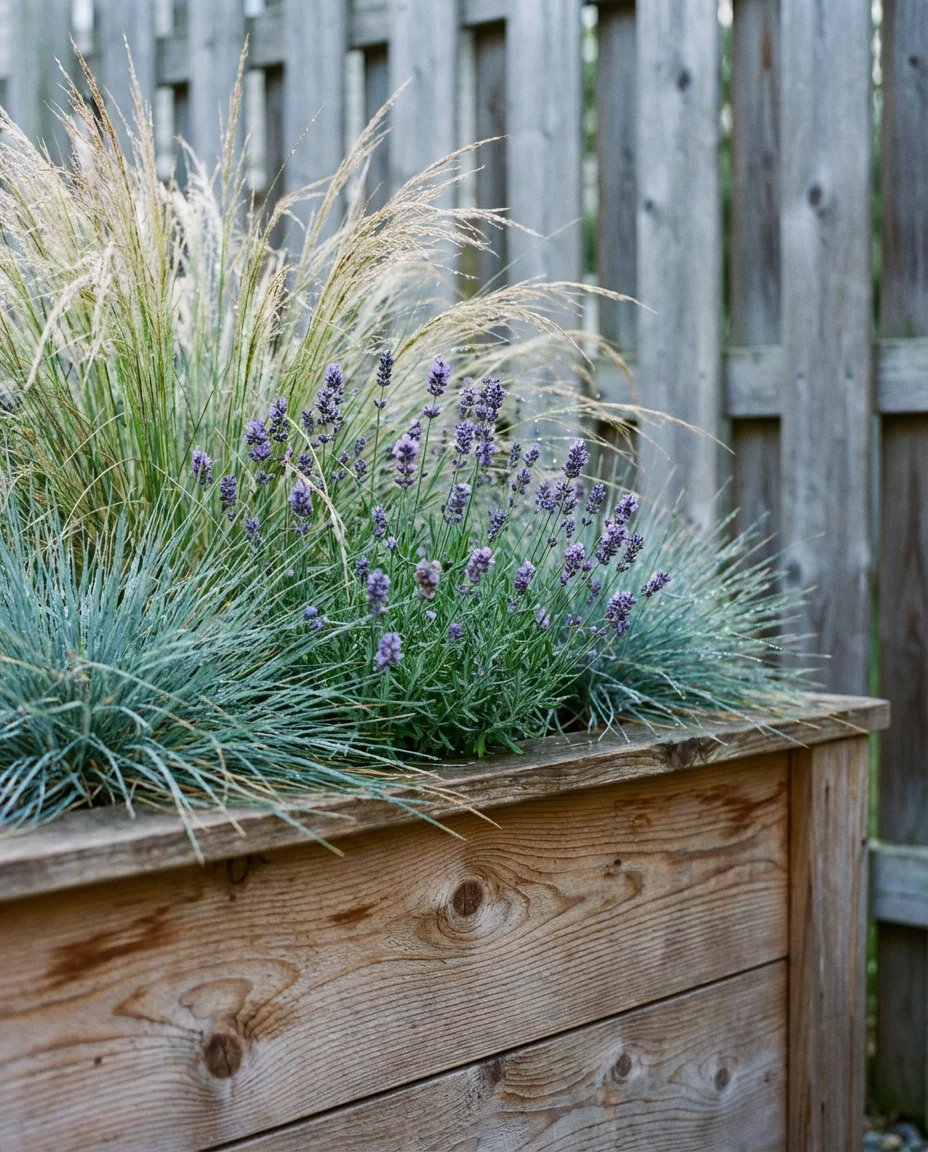
In the American Midwest and Mountain West, where yards tend to be larger and more utilitarian by default, adding a structured planter row along the back fence is one of the most popular ways homeowners are currently giving their outdoor spaces a defined “garden room” feel. It draws the eye, frames the space, and signals intention without requiring a full landscape overhaul. Building your own boxes from fence pickets keeps the cost around $15–$25 per planter.
7. Outdoor Christmas Light Canopy

String lights strung overhead in a loose canopy over a garden seating area have quietly become a year-round staple, not just a Christmas or holiday feature. The warm glow they cast at dusk transforms any patio into something that feels genuinely magical—the kind of space you want to linger in with a glass of wine long after dinner is done. For outdoor use, look for weatherproof Edison-style bulbs or the newer solar-powered globe strings that handle rain without any drama. Spacing matters: too dense and it looks like a parking lot; too sparse and you lose the canopy effect. Aim for strands every 12–18 inches.
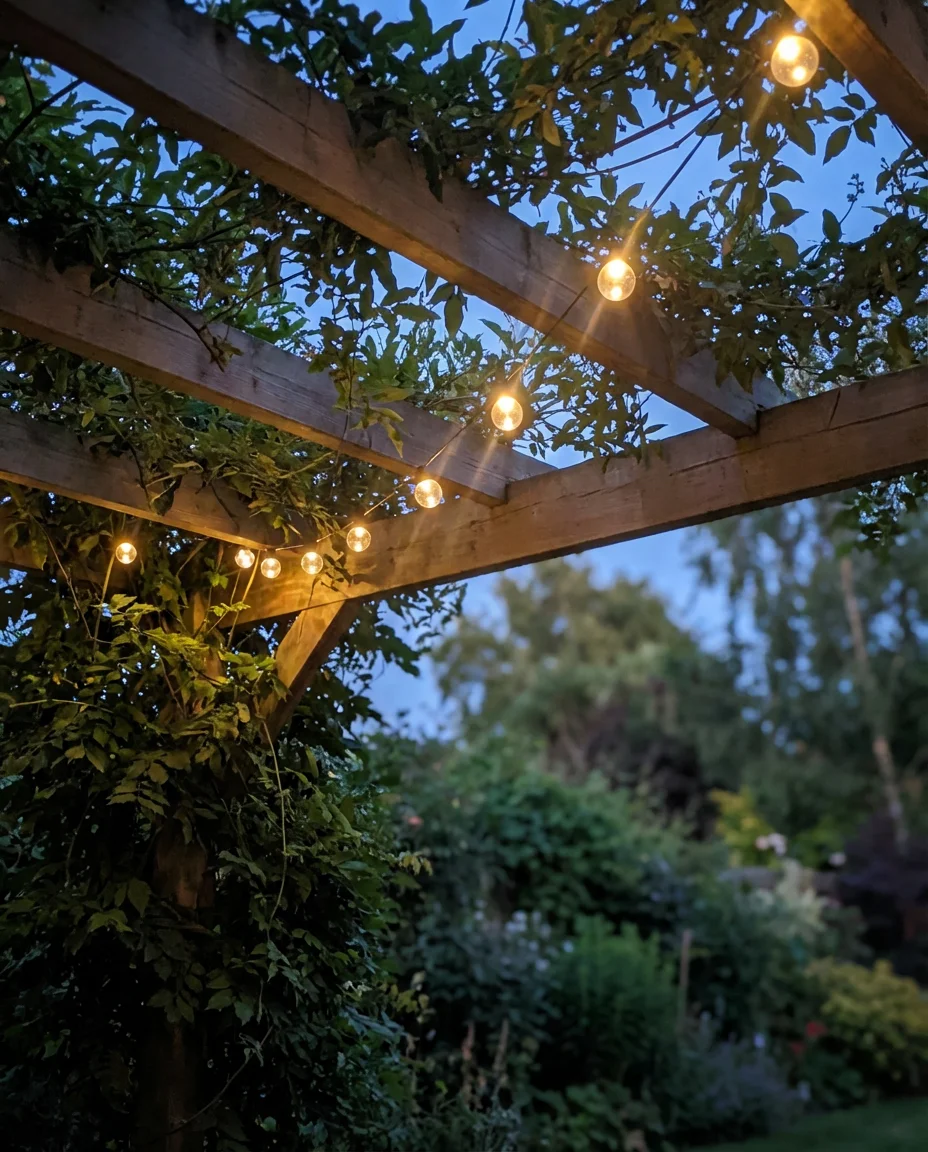
A practical tip that most people learn the hard way: always use a dedicated outdoor timer rather than running inside to switch the lights on each evening. Smart plug timers cost about $12 and let you schedule the canopy to come on at sunset automatically. It’s one of those small-effort, high-reward upgrades that genuinely changes how much you use and enjoy the space on a daily basis.
8. French Country Terracotta Pot Arrangement
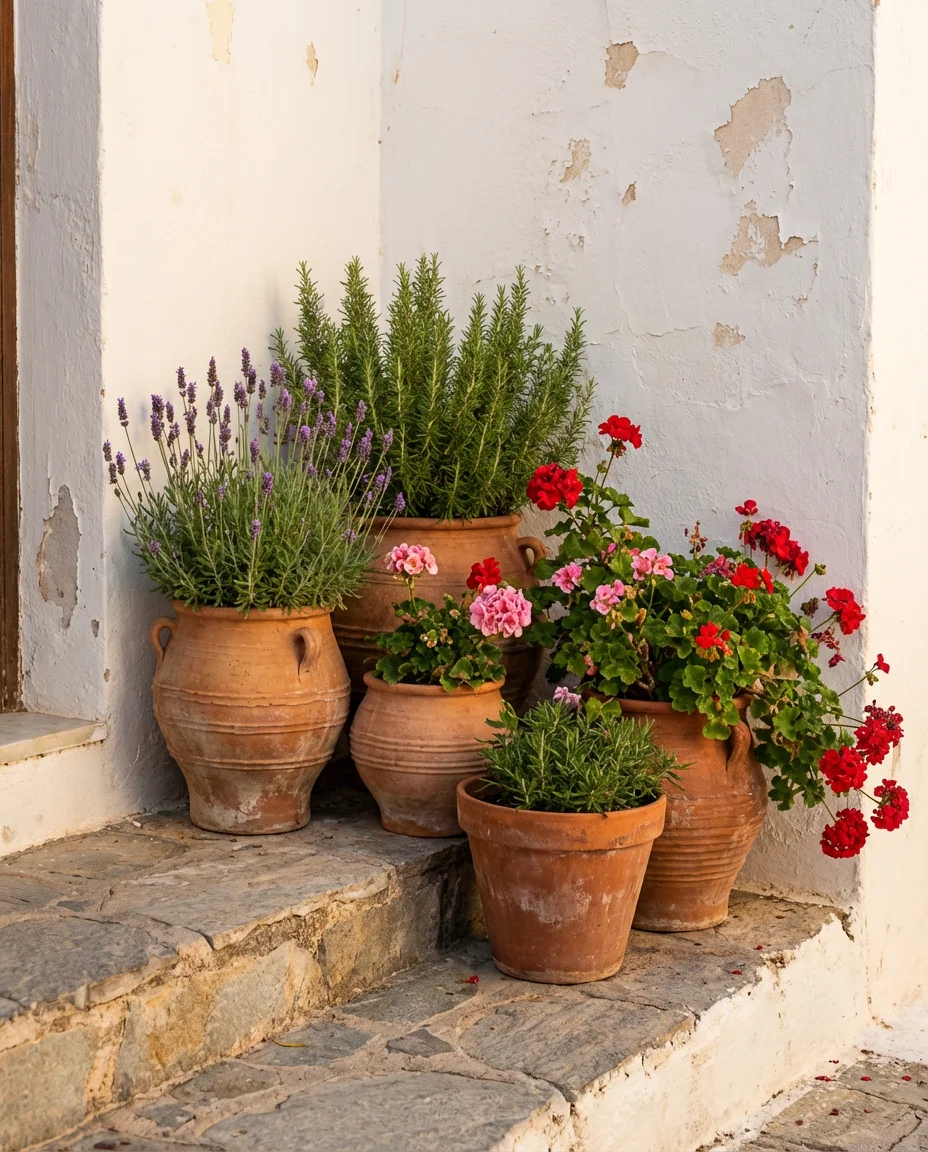
There is something eternally right about a French country arrangement of mismatched terracotta pots clustered near a doorway or garden gate. The warm, earthy tones of aged clay work with almost every plant palette—lavender, rosemary, trailing geraniums, citrus trees in larger vessels—and the whole composition improves as the pots weather and develop their characteristic white mineral bloom. This is the clay garden aesthetic at its most lived-in and lovely, and it costs far less than it looks. You don’t need to match the pots. In fact, you absolutely shouldn’t.
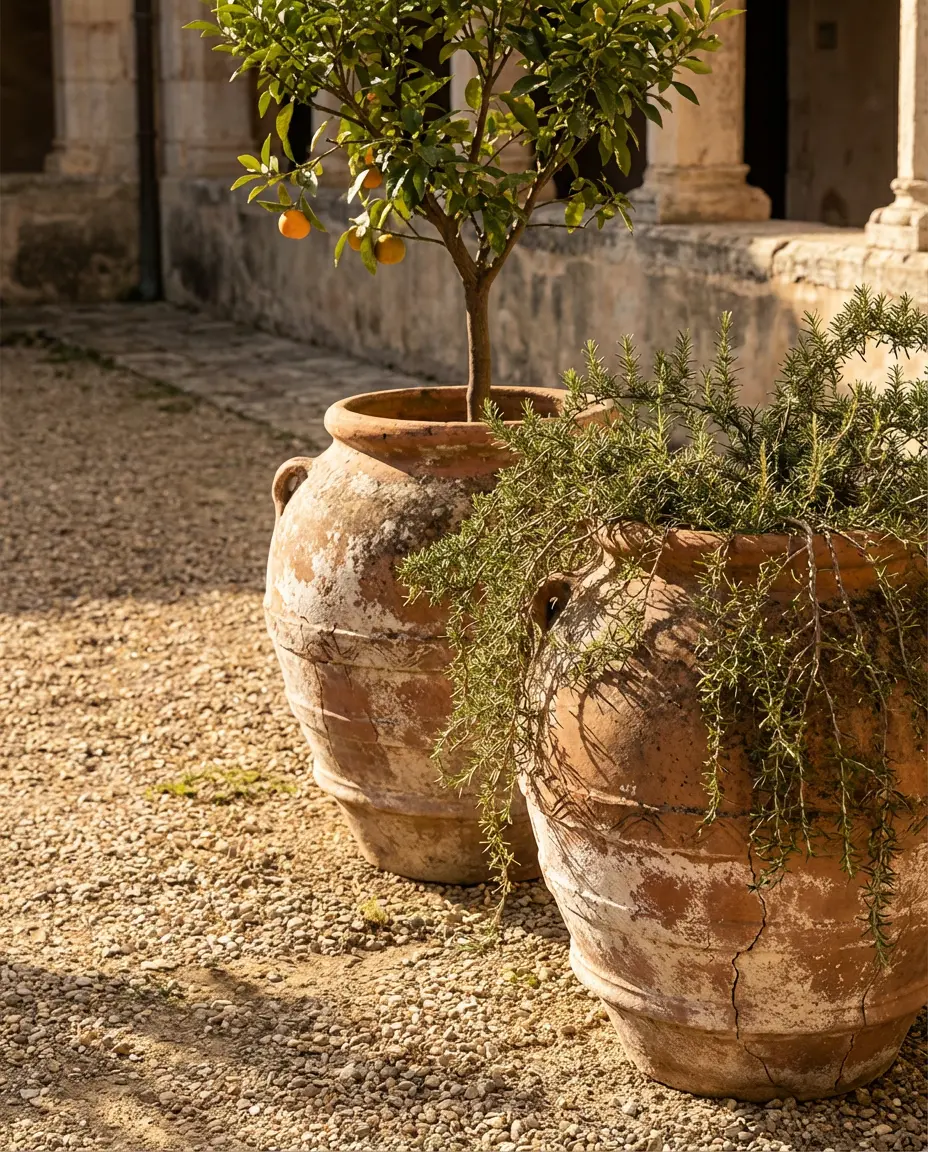
Real homeowners who’ve nailed this look share one consistent insight: vary the heights dramatically. Use an overturned pot or a small stool to prop one container higher than the rest, creating a tiered silhouette that photographs beautifully and reads well from across the yard. Groupings of odd numbers—three or five—have a natural visual balance that even-numbered clusters tend to lack. It’s one of those styling rules that sounds arbitrary until you actually try it and immediately see the difference.
9. Easter Garden Egg Hunt Display
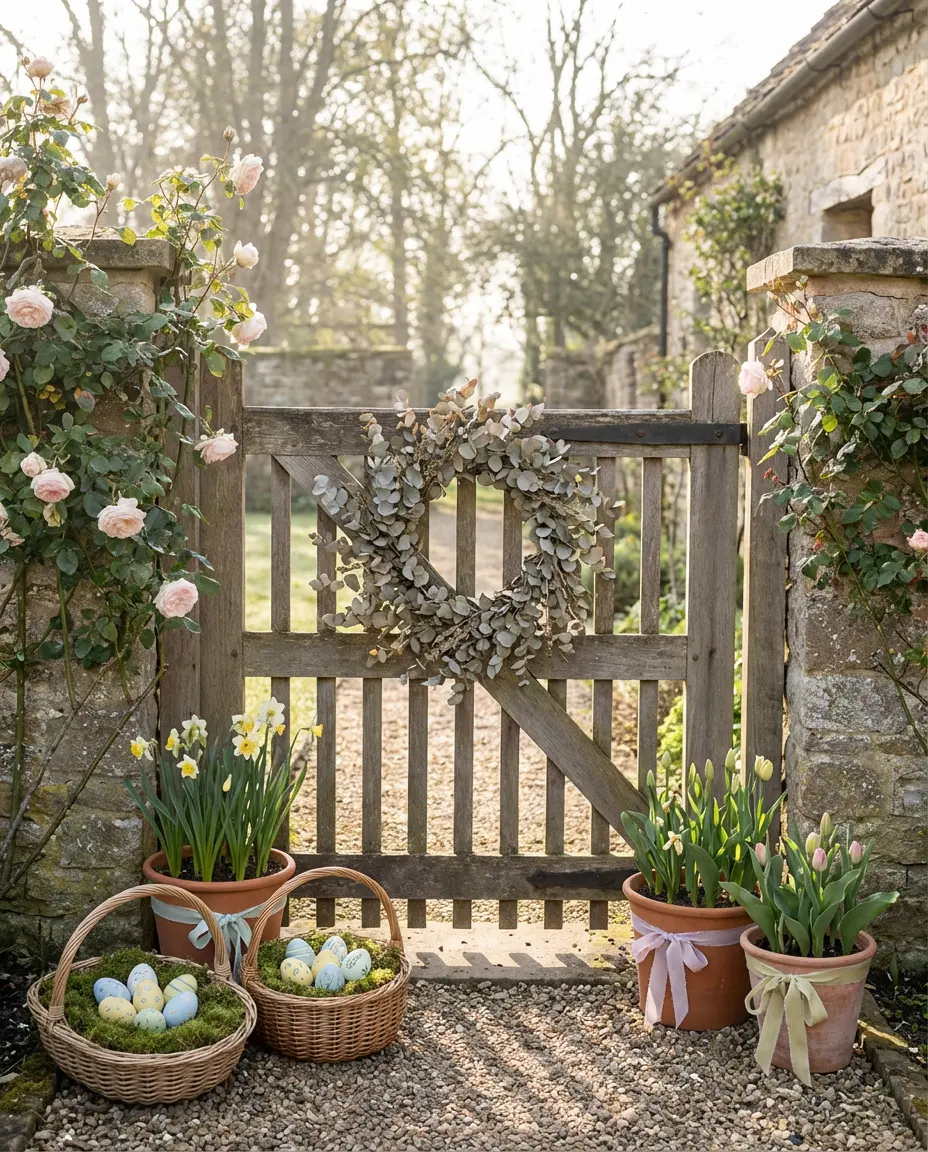
An Easter-themed garden display done with restraint and real style goes far beyond the plastic egg clichés. Think hand-painted ceramic eggs nestled in moss-lined wire baskets, pastel ribbon tied loosely around terracotta pots of spring bulbs, and a wreath of fresh eucalyptus on the garden gate. This is the kind of creative, seasonal styling that stays up through April without feeling tacky—the natural materials and soft palette blend into the spring garden rather than competing with it. It photographs beautifully for social sharing, which is exactly why it thrives in the Pinterest ecosystem every March.
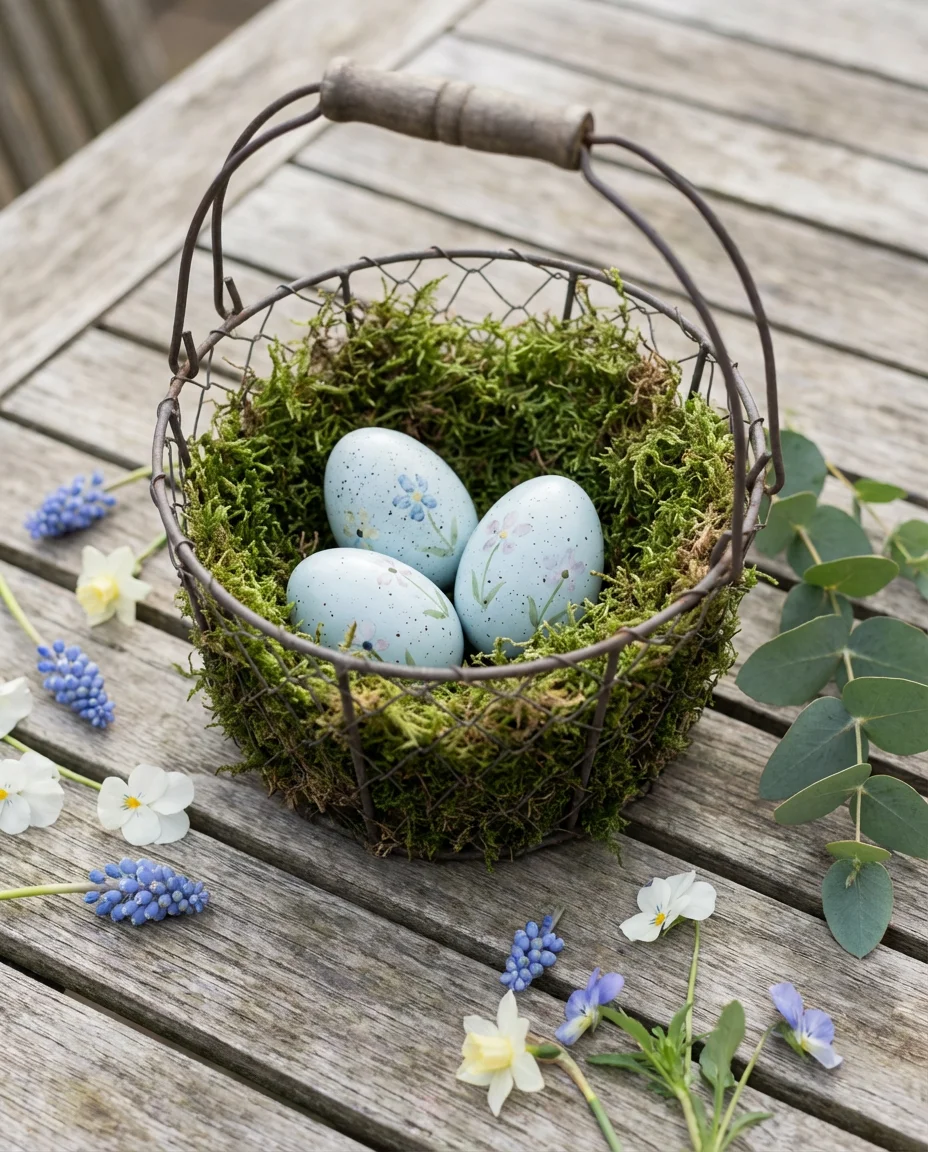
Where this works best is in front garden beds and entryway areas where guests and passersby can appreciate the detail. Keep the color palette tight—two or three coordinating shades of the same pastel family—rather than mixing every Easter color in the spectrum. A cohesive palette is what separates a thoughtfully styled garden moment from something that just looks busy. Less visual competition means each element gets its moment.
10. Miniature Greenhouse Cloche Display
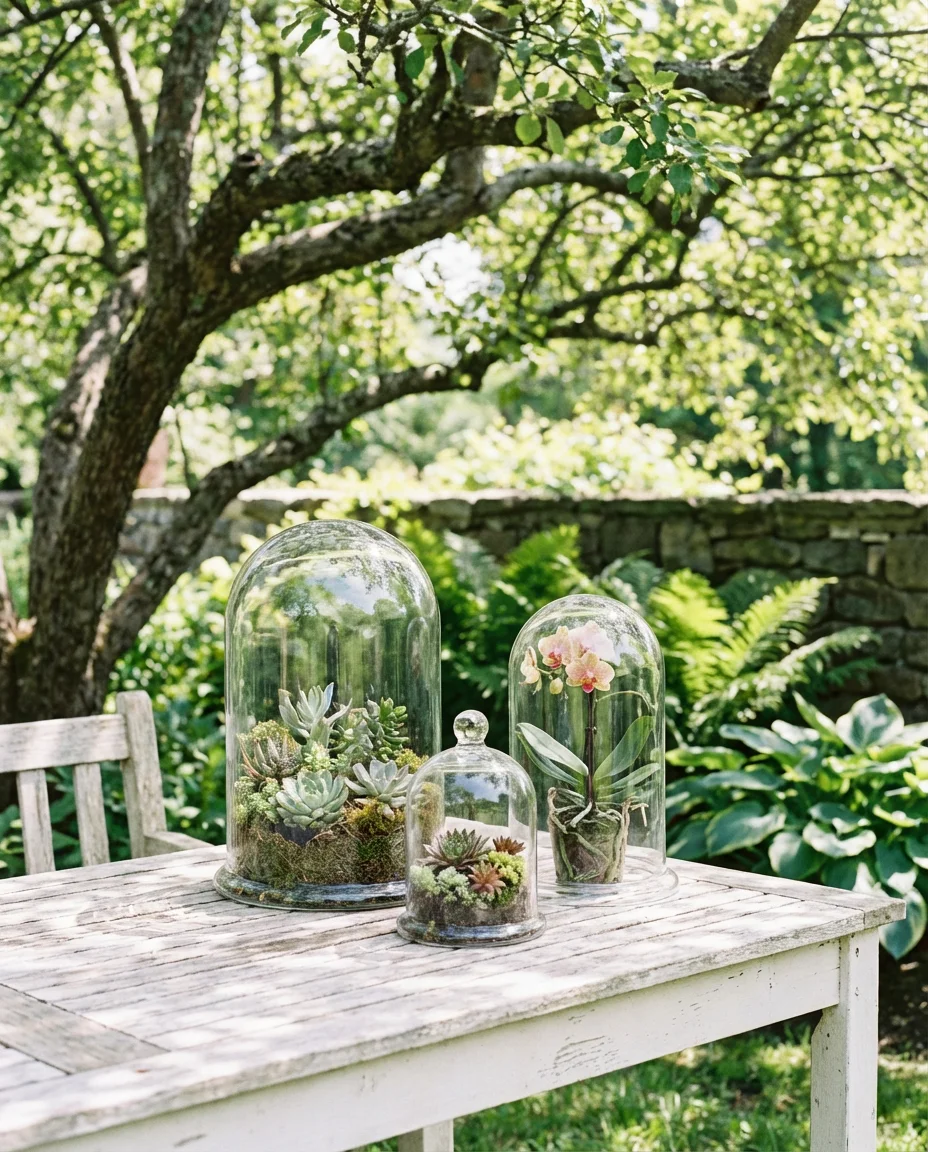
Glass cloches—those elegant bell-jar forms—are one of the most versatile and quietly beautiful garden accessories you can invest in. Use them to cover miniature succulent arrangements, protect early seedlings from late frosts, or simply display a single statement plant like a mossy stone or a tiny orchid on a garden table. The effect is Victorian-botanical, part laboratory and part fairytale, and it fits equally well in a whimsical cottage garden or a clean, modern outdoor dining setup. The glass catches light in a way that plastic or ceramic never quite manages.
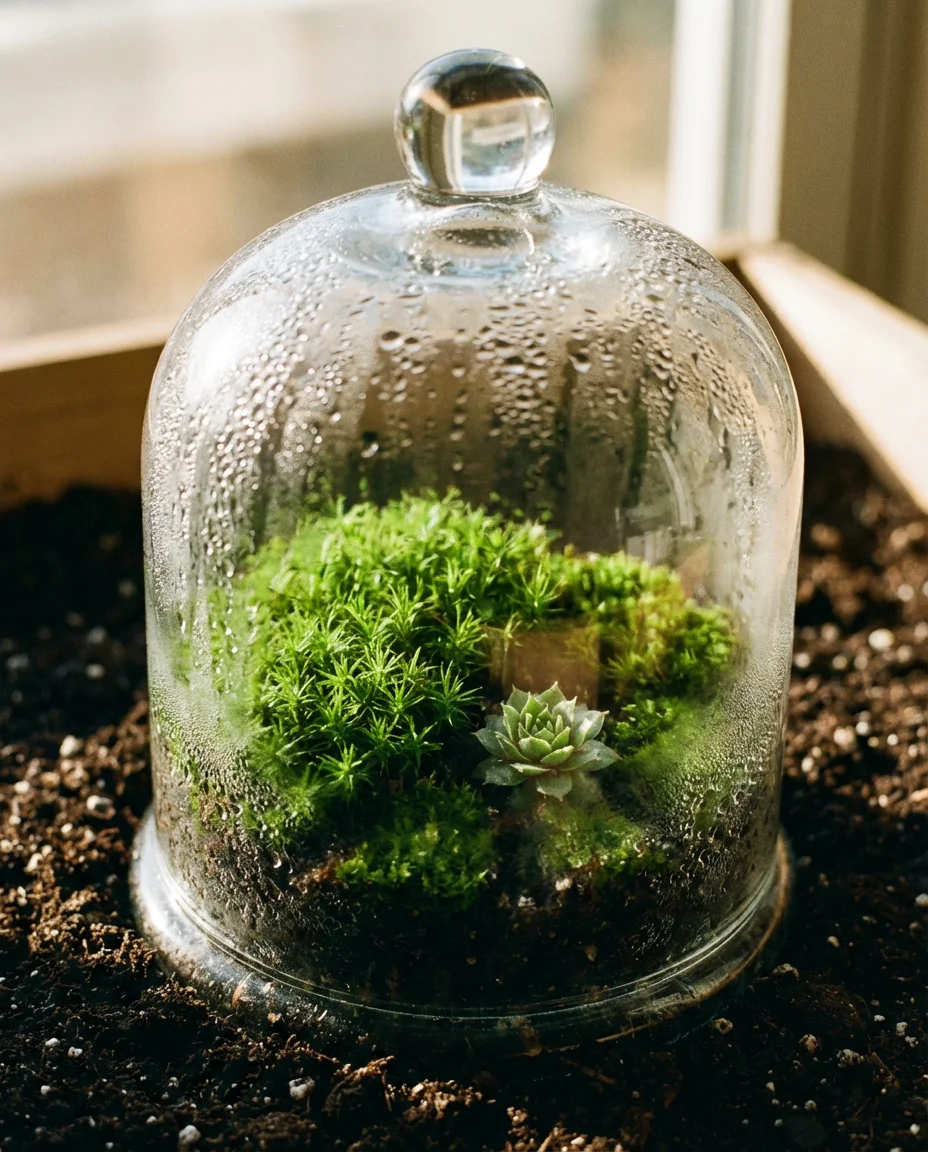
From a practical standpoint, cloches are genuinely useful, not just decorative. In USDA hardiness zones 5–7, where late spring frosts are still a real threat well into May, a glass cloche can protect tender seedlings on those surprise cold nights without requiring a full trip back inside. Thrift stores and antique markets regularly stock them for $3–$15, making this one of the most affordable ways to add a high-style, functional element to your outdoor space.
11. Reclaimed Wood Garden Sign Collection
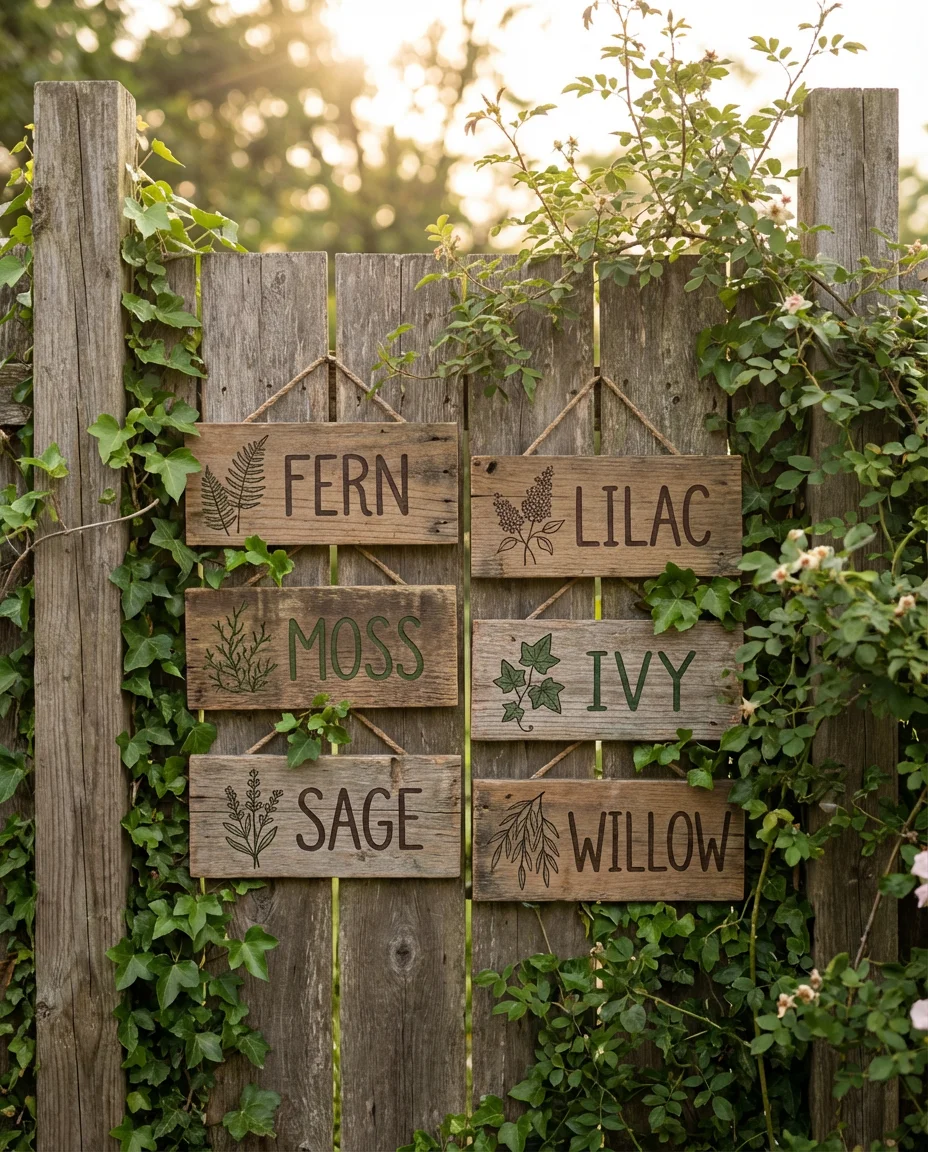
Hand-lettered garden signs made from wood offcuts and reclaimed barn lumber have become one of the most searched DIY projects on Pinterest for good reason—they’re cheap, personal, and deeply charming. A simple “grow” painted in white on a dark walnut board, or a botanical illustration burned into pine with a woodburning tool, adds a layer of handmade warmth that no store-bought sign ever quite captures. Group several in a cluster near the garden entrance, lean them against raised beds, or hang them on a fence panel for a gallery-wall effect brought outdoors.
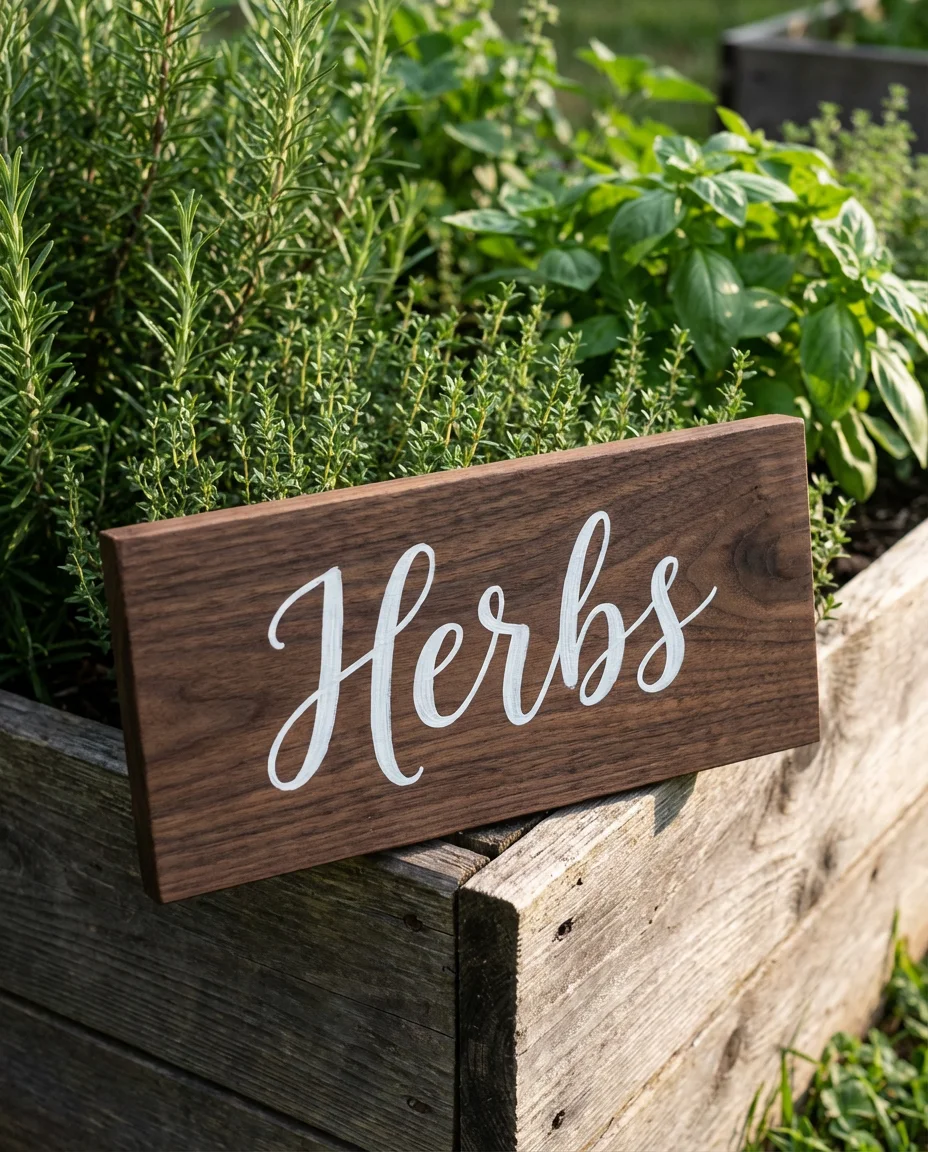
An expert-style tip worth noting: seal any painted or burned wood sign with a UV-protective exterior varnish before placing it outdoors. Even in mild climates, unprotected painted wood will fade and peel within a single season. Two thin coats of outdoor-rated polycrylic add years of life to your work and keep the lettering crisp through rain and sun. It takes ten minutes and costs about $8—one of the best investments you can make in a handmade piece.
12. Winter Evergreen Urn Arrangements

Winter is the season when most American gardens go quiet, but a pair of tall urns flanking a front door, stuffed with fresh-cut evergreen branches, pine cones, red twig dogwood, and maybe a curl of birch bark, announces that somebody cares about this space all year long. The architectural quality of a filled urn—the height, the fullness, the texture—does more visual work in a dormant winter landscape than almost any other single element. This is outdoor seasonal styling at its most impactful, and it photographs strikingly well against snow or bare branches.

American homeowners in New England and the upper Midwest have long treated the winter urn as a near-sacred front-entry tradition, sourcing fresh greens from local tree farms after Thanksgiving and refreshing them through January. The beauty of this approach is that fresh-cut evergreens hold their color and scent for four to six weeks in cold outdoor temperatures, meaning you get a full season of curb appeal from a single afternoon of arranging. No watering, no maintenance—just beauty.
13. Antique Birdcage Planter Feature
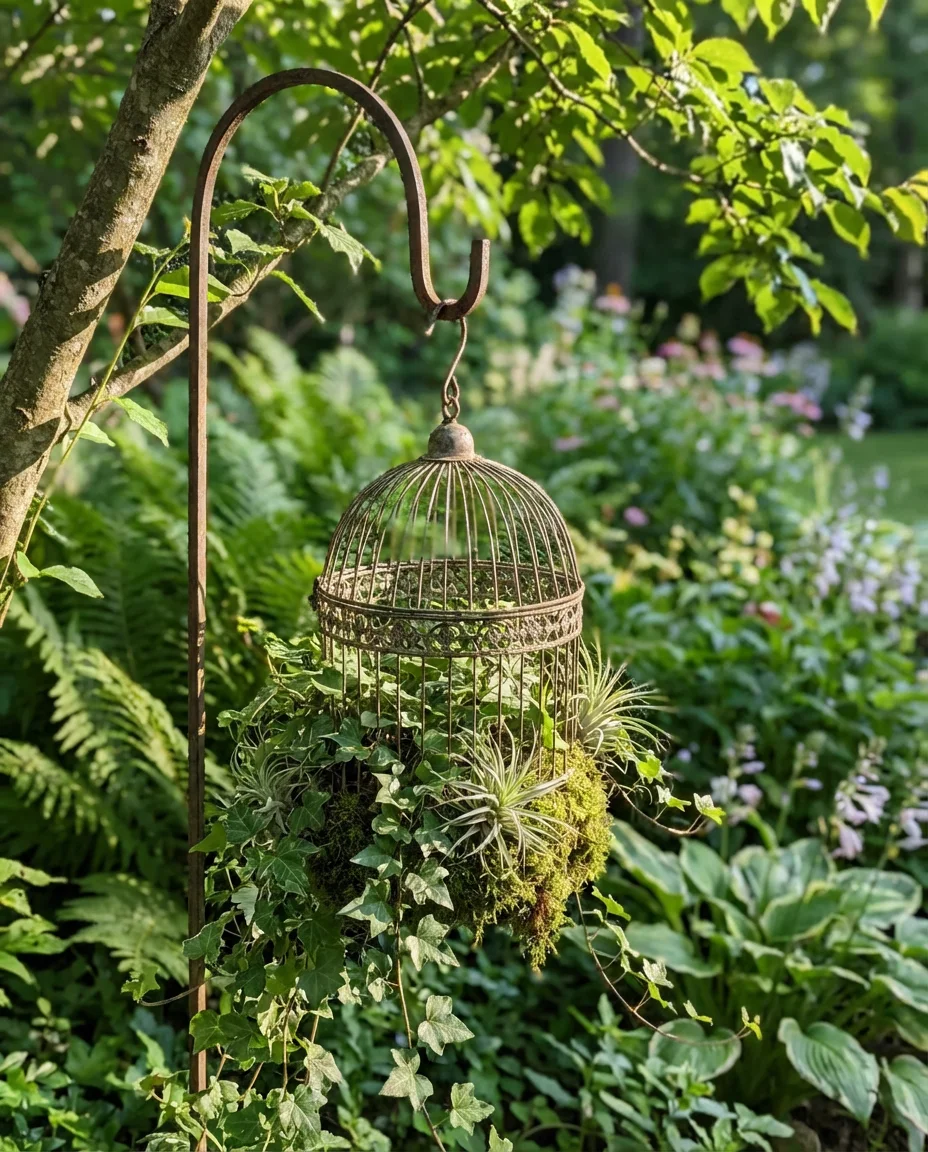
Repurposing an antique or vintage birdcage as an outdoor planter is one of those styling ideas that lands somewhere between garden art and architectural accent. Hang a small wire cage from a shepherd’s hook and fill it with trailing ivy, wire-stemmed succulents, or air plants resting on a bed of preserved moss. The open structure allows air and light through while creating a delicate, three-dimensional focal point that moves slightly in the breeze. It’s especially powerful in whimsical or romantic garden styles where the goal is to create atmosphere as much as horticulture.

Flea markets, estate sales, and online resale platforms are the best sources for these pieces—genuine antique birdcages in good condition run anywhere from $15 to $80 depending on size and origin, and the patina of real age is worth seeking out over the reproduction versions. A lightly rusted finish with visible age marks looks far more beautiful in a garden setting than something shiny and new. Let the history of the object become part of the story you’re telling with your space.
14. Wedding-Style Garden Arch

A freestanding garden arch draped in climbing roses, wisteria, or a mix of hanging florals brings a wedding-worthy romanticism to the permanent garden that never really goes out of season. Whether it marks the entrance to a vegetable patch, frames a garden gate, or simply stands as a destination moment at the end of a path, an arch adds vertical architecture and a sense of ceremony to the landscape. Paired with unique details like hand-tied ribbon bundles or small glass bud vases wired to the frame, it becomes something genuinely bespoke and deeply personal.
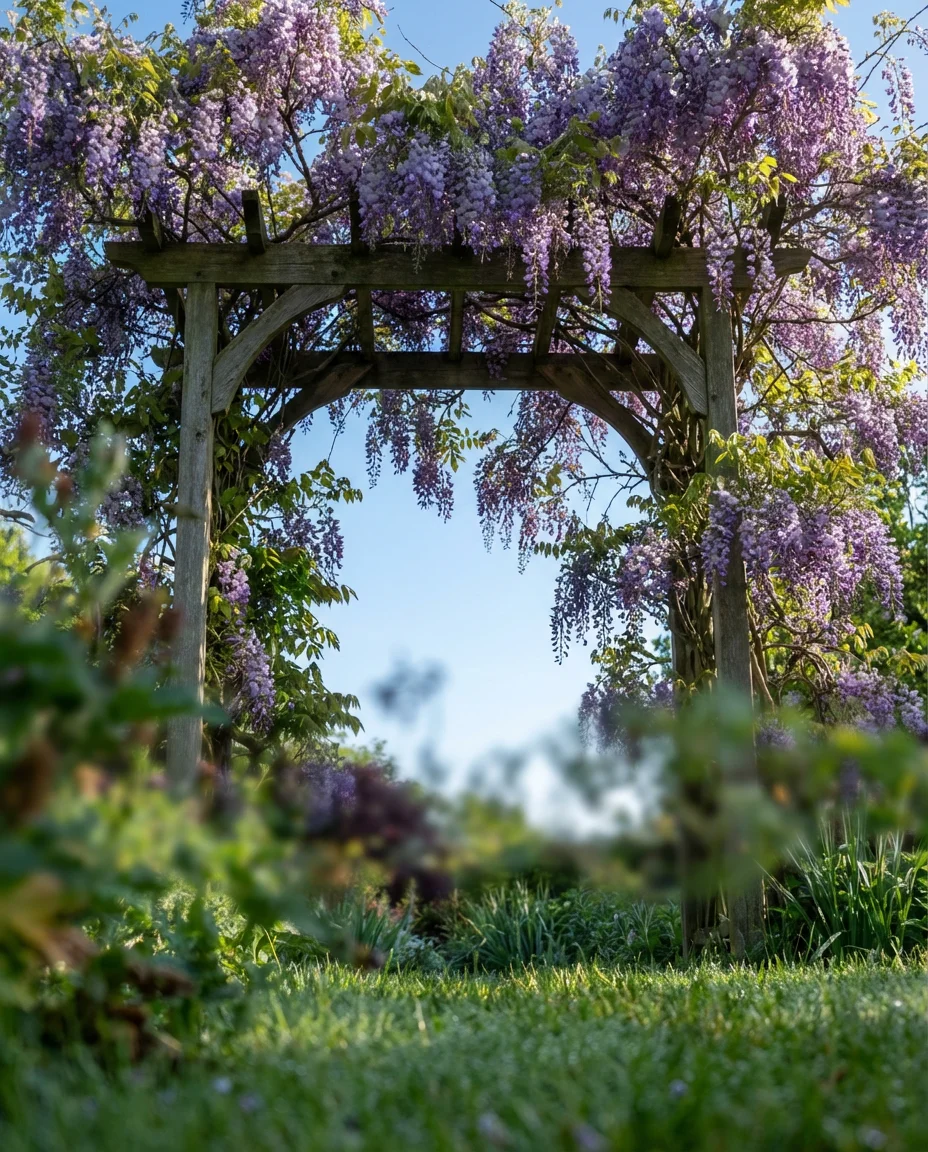
The most common mistake with garden arches is planting too close to the base and overwhelming the structure before the climbing plants have time to establish themselves properly. Give each plant at least 18 inches from the arch base, and train the canes or vines gently along the frame in the first season rather than letting them scramble. A little patience in year one means years two and three bring that full, lush, romance-novel coverage that makes the whole effort feel completely worth it.
15. Creative Painted Rock Garden Border
Painted rocks used as a garden border edging are one of the most creative, accessible projects in the garden DIY space right now—and the Pinterest boards dedicated to this trend have millions of saves. The technique involves collecting smooth river rocks and painting them in a cohesive color family or pattern: think cobalt blue and white for a Mediterranean feel, black and white geometric designs for a modern vibe, or soft watercolor botanicals for a cottage-garden sensibility. Lined up end-to-end along a flower bed, they create a border that’s simultaneously functional and genuinely artistic.

This is one of those homemade garden projects that families do together—kids who are old enough to hold a paintbrush can participate, and the resulting border becomes a kind of family artifact embedded in the landscape. Seal finished rocks with outdoor Mod Podge or a spray acrylic sealer to protect the paint from rain and UV exposure. River rocks can be collected from creek beds and lake shores for free or purchased in bulk bags from garden centers for around $10–$20 for a 50-pound sack.
16. Minecraft-Inspired Block Planter Wall
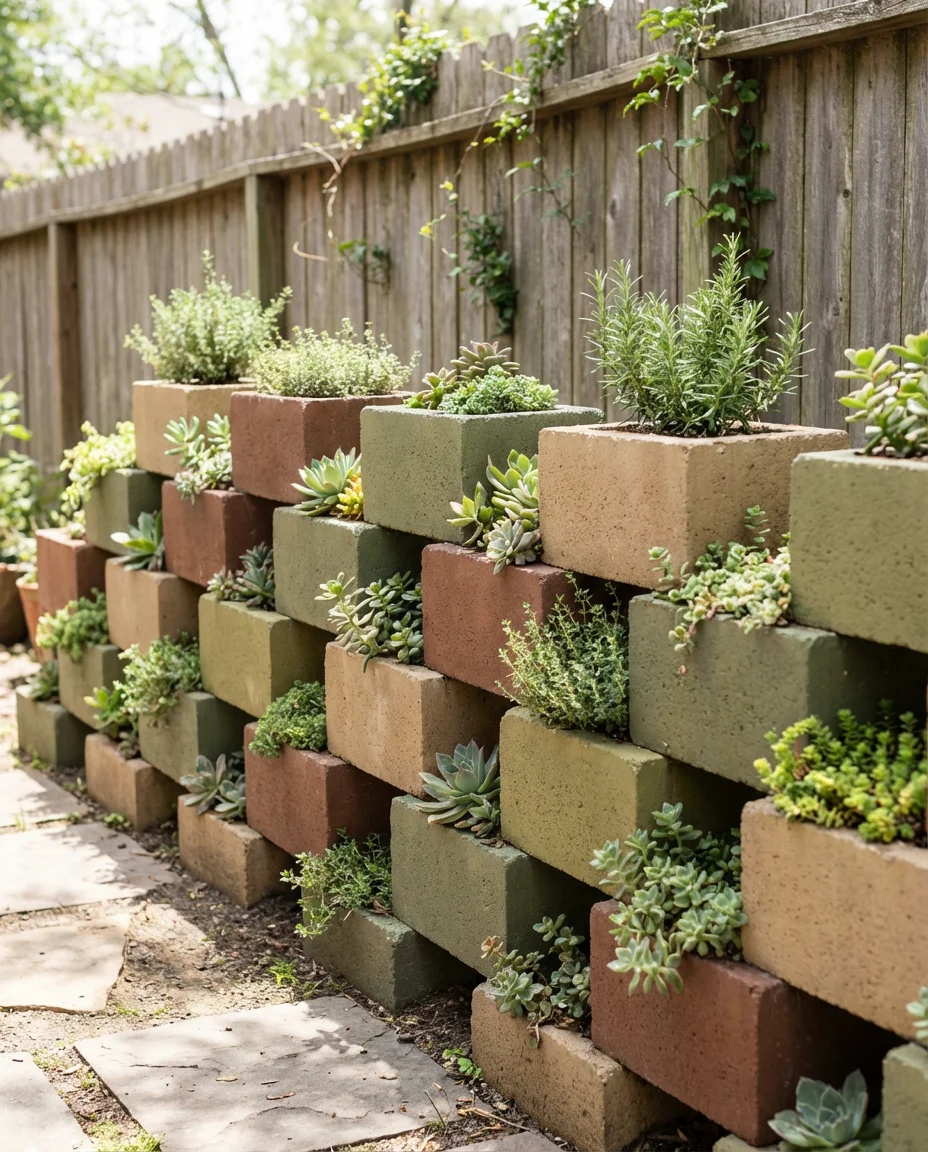
For households with younger kids who live and breathe Minecraft, a pixelated block-style planter wall built from painted CMU blocks or wooden cubes turns the garden into shared territory—a space that speaks to both parent and child. Stack painted concrete blocks in offset rows along a fence or retaining wall, fill alternating cavities with soil, and plant succulents, herbs, or flowering ground covers in each cell. The blocky, geometric aesthetic is surprisingly sophisticated in an outdoor setting, and it gives kids genuine ownership over a part of the garden that’s actually theirs.

From a practical standpoint, CMU blocks are remarkably affordable—standard 8x8x16 blocks run about $2–$3 each at home improvement stores. A small wall using 20–30 blocks creates a substantial visual statement for under $80 in materials. Paint them in earthy, nature-toned greens and browns to keep the look organic, or go full pixelated game-accurate coloring if the goal is to genuinely delight a ten-year-old. Either way, it’s a garden feature that earns real neighborhood curiosity.
17. Unique Upcycled Bicycle Planter

An old bicycle—the kind that’s beyond road use but still structurally sound—parked in the garden with flower-filled baskets wired to its frame is one of the most unique and photographed garden focal points you’ll find. It carries a kind of nostalgic narrative weight: there’s a whole life implied in a rusted bike leaning against a cottage wall with lavender tumbling from its front basket. This is vintage garden storytelling at its most effortless, and it works especially well in country or French country outdoor settings where a relaxed, time-worn character is the whole aesthetic goal.

Where this works best is in gardens with a loose, romantic planting style—billowy cottage perennials, informal hedgerows, and self-sowing annuals. In a formal or minimalist garden setting, the bicycle tends to look like clutter rather than charm. The surrounding plantings are really the key: cascade trailing petunias over the front basket, add a climbing rose to the back wheel, and let the whole thing be slightly overgrown. Perfection would ruin it entirely.
18. Clay Pot Tower Fountain Feature

A stacked clay pot fountain—made by threading a recirculating pump and tubing through a series of progressively smaller terracotta pots—is one of the most satisfying weekend projects in the outdoor space category. The sound of water trickling from tier to tier is genuinely calming, and the materials cost between $40 and $80 depending on pot sizes and pump power. It fits naturally in a rustic, Mediterranean, or cottage garden context, and the weathered terracotta develops more character with every season outdoors. This is the kind of feature that guests always ask about.

The most important practical consideration with any recirculating fountain is algae management, especially in warmer American climates where fountain water can green up quickly in summer. Adding a few drops of a pond-safe enzymatic treatment to the water reservoir once a week keeps it clear without harming the surrounding plants or local wildlife. Solar-powered submersible pumps are now widely available for under $25 and eliminate the need to run an extension cord—a major quality-of-life upgrade for fountain placement.
19. Whimsical Birdhouse Village Display

A curated collection of birdhouses mounted at varying heights on a single tall post—or clustered across several fence posts—creates a whimsical village-in-miniature effect that draws both birds and admirers. Mix architectural styles deliberately: a tiny rustic log-cabin house beside a colorful Victorian gingerbread design beside a simple painted Shaker box. The variety is the point. This kind of display works as garden art even in winter when birds aren’t nesting, because the visual composition carries the moment on its own. It’s creative in the most earnest sense—playful without being childish.
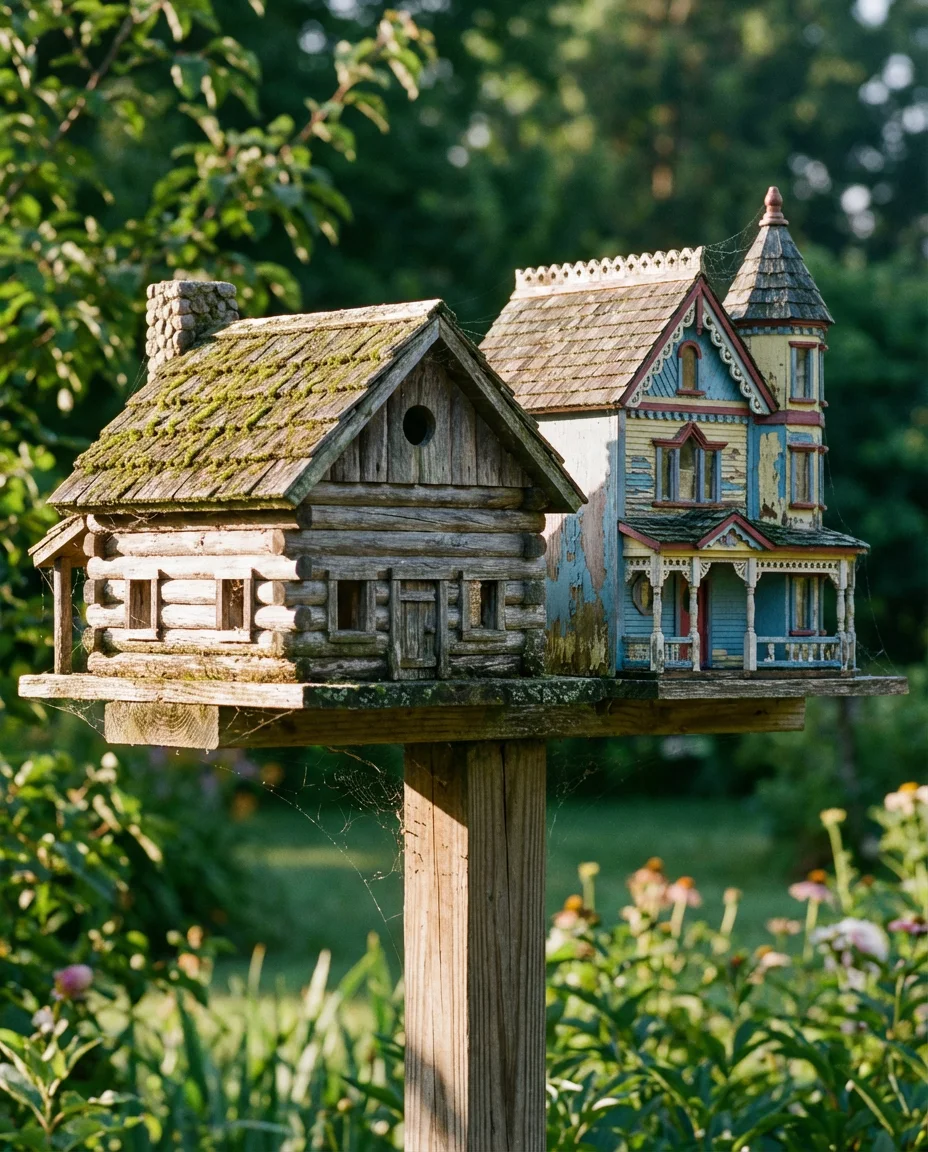
For the birdhouses to actually function for nesting rather than just looking charming, entry hole sizes matter significantly—a 1.5-inch hole suits chickadees and wrens, while a 2-inch opening invites bluebirds and tree swallows. Placing functional birdhouses at least five to six feet off the ground and away from heavy foot traffic areas gives nesting birds the security they need. You can have a beautiful display AND a genuinely wildlife-supporting garden—those two goals are not in competition with each other.
20. Homemade Wind Chime Installation
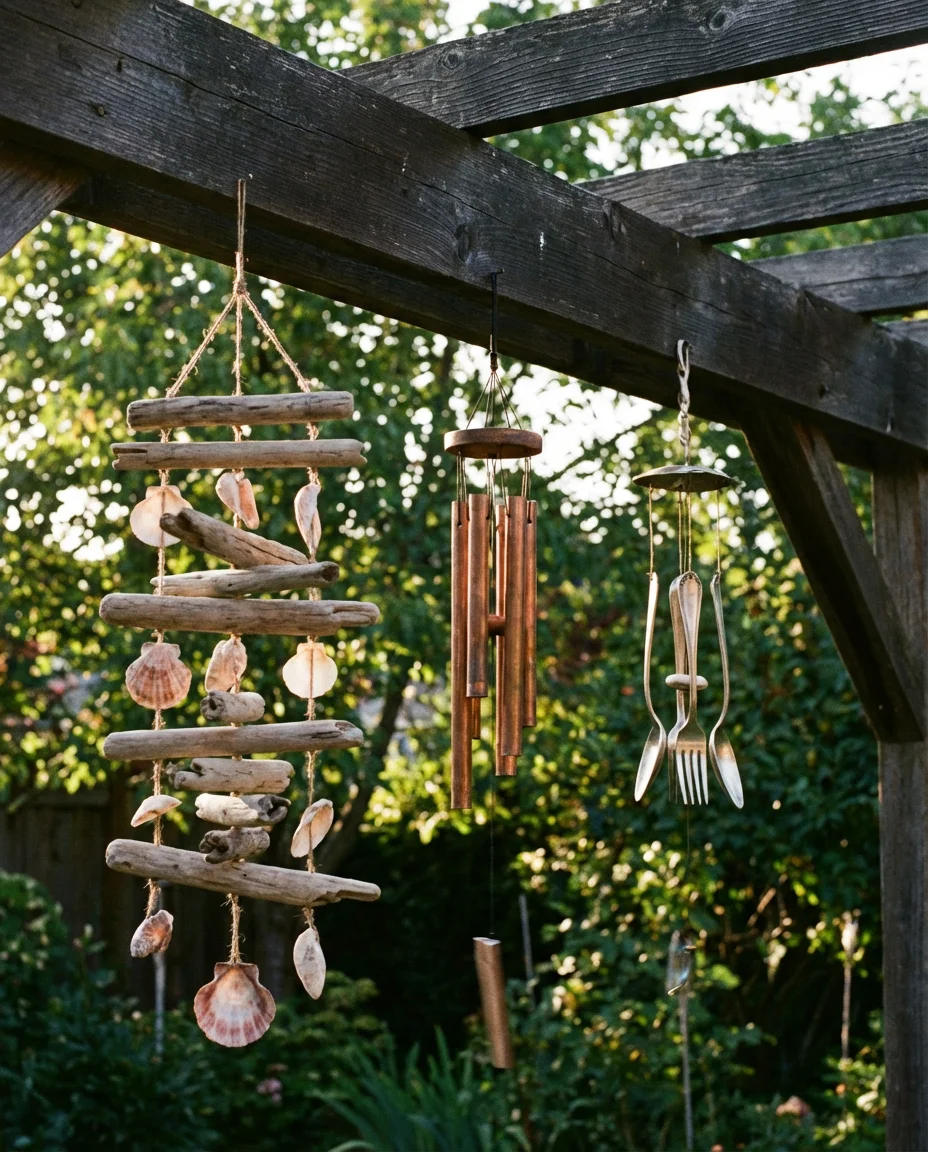
A homemade wind chime made from salvaged materials—driftwood, old silverware, shell fragments, copper pipe offcuts—adds both sound and movement to a garden in a way that feels deeply personal. No two handmade chimes sound or look alike, and the process of making one is meditative in a way that’s hard to describe until you’ve done it. Hang a series of them at varying heights from a pergola beam or tree branch, mixing materials and tones for a layered, ambient soundscape. This is one of those DIY garden ideas that edges close to art installation and doesn’t apologize for it.
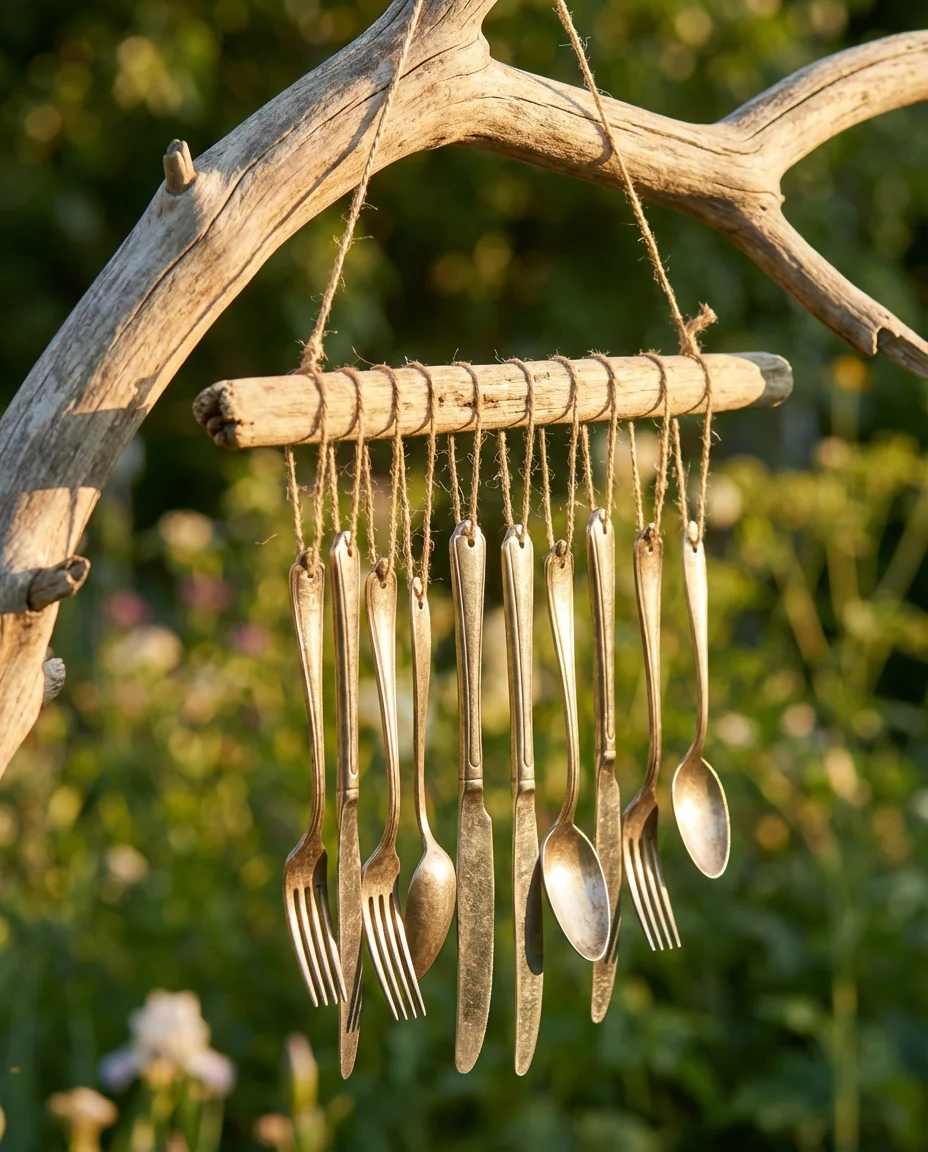
An American lifestyle note worth making: porch culture in the South and the rural Midwest has always embraced the wind chime as a fixture of outdoor living, not just decoration. Families pass down handmade chimes the way they pass down quilts—they accumulate meaning with time. Making one from materials that carry personal significance (shells from a favorite beach, keys from an old lock, silverware from a grandmother’s set) transforms a simple craft project into something that belongs genuinely to your family’s story.
21. Garden Ideas for Outdoor Wedding Ceremony Seating
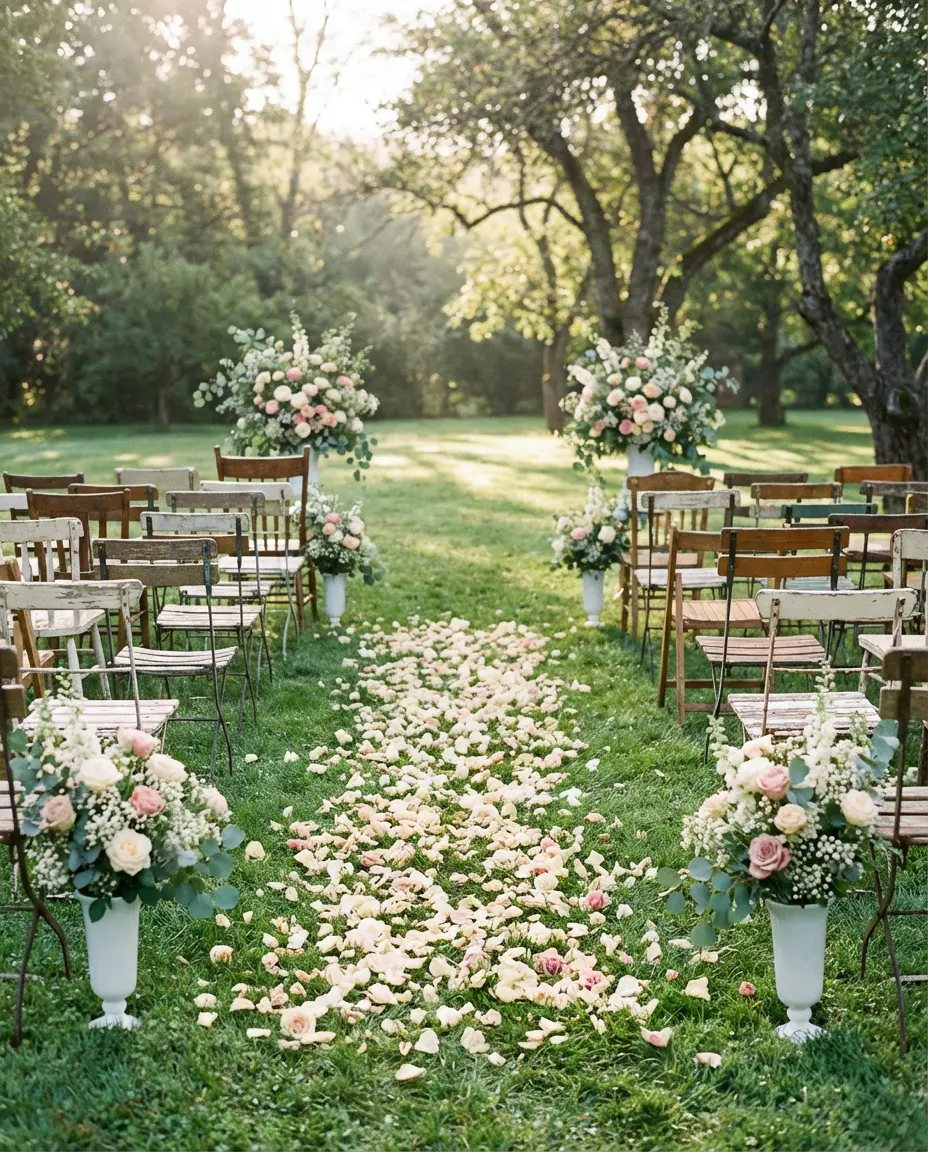
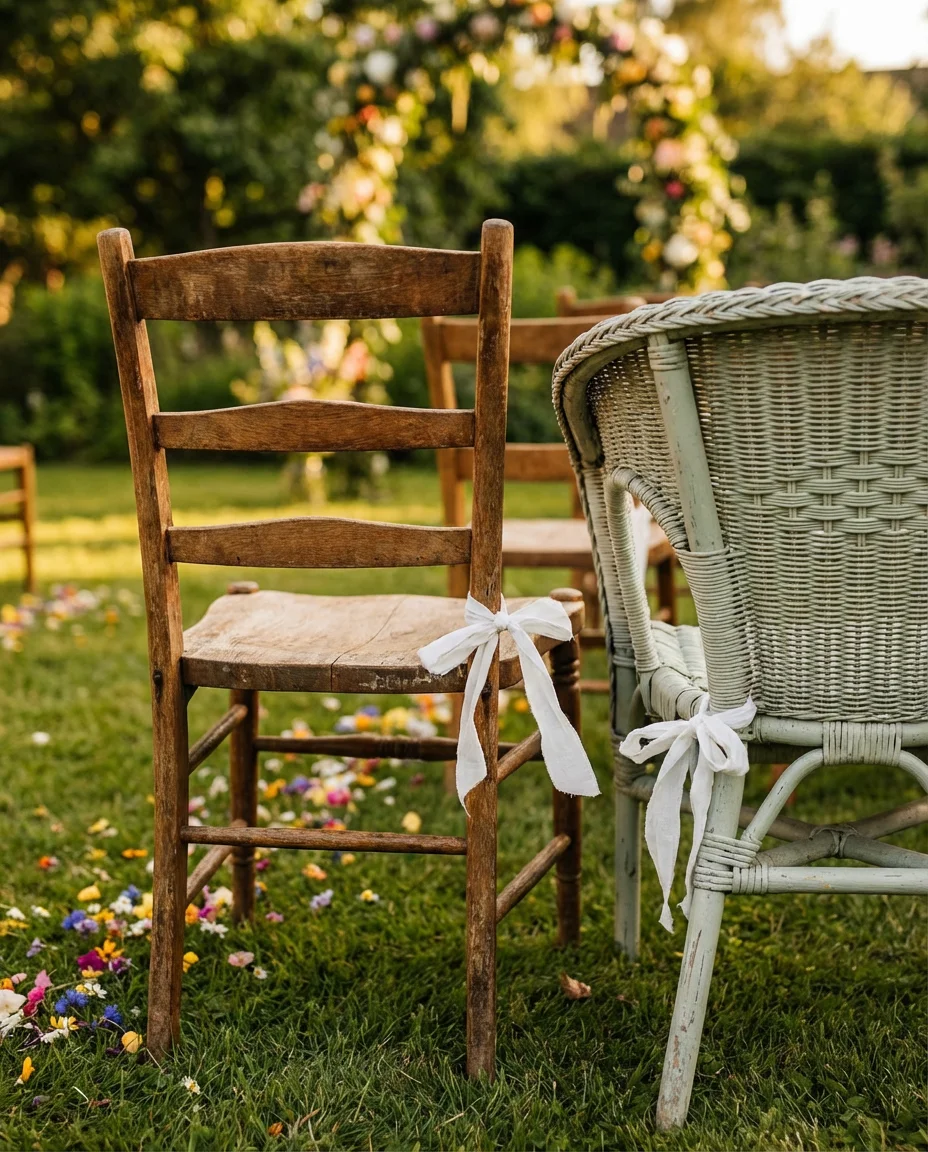
Using the backyard garden as a wedding ceremony venue has become one of the most beloved and personally meaningful choices couples make—and the outdoor garden decor ideas that support it are genuinely beautiful. Think rows of mismatched vintage chairs—bistro chairs, folding wooden chairs, even old church pews—lined along a petal-strewn grass aisle, flanked by tall flower arrangements in repurposed milk glass vases. The imperfect, layered, lived-in quality of garden furniture arranged for a ceremony feels more romantic than any rented ballroom chair ever could.
For couples planning this kind of setup, the most practical advice is to walk the seating area at the same time of day as the ceremony several weeks in advance and check the sun angle carefully. West-facing guests squinting into the afternoon sun can’t enjoy the moment properly, and it photographs poorly. Reorienting the aisle direction by even 30–45 degrees can solve the problem entirely. This is the one planning detail most people forget until the day itself—and it’s the one that matters most for both comfort and photography.
22. Painted Concrete Stepping Stone Path

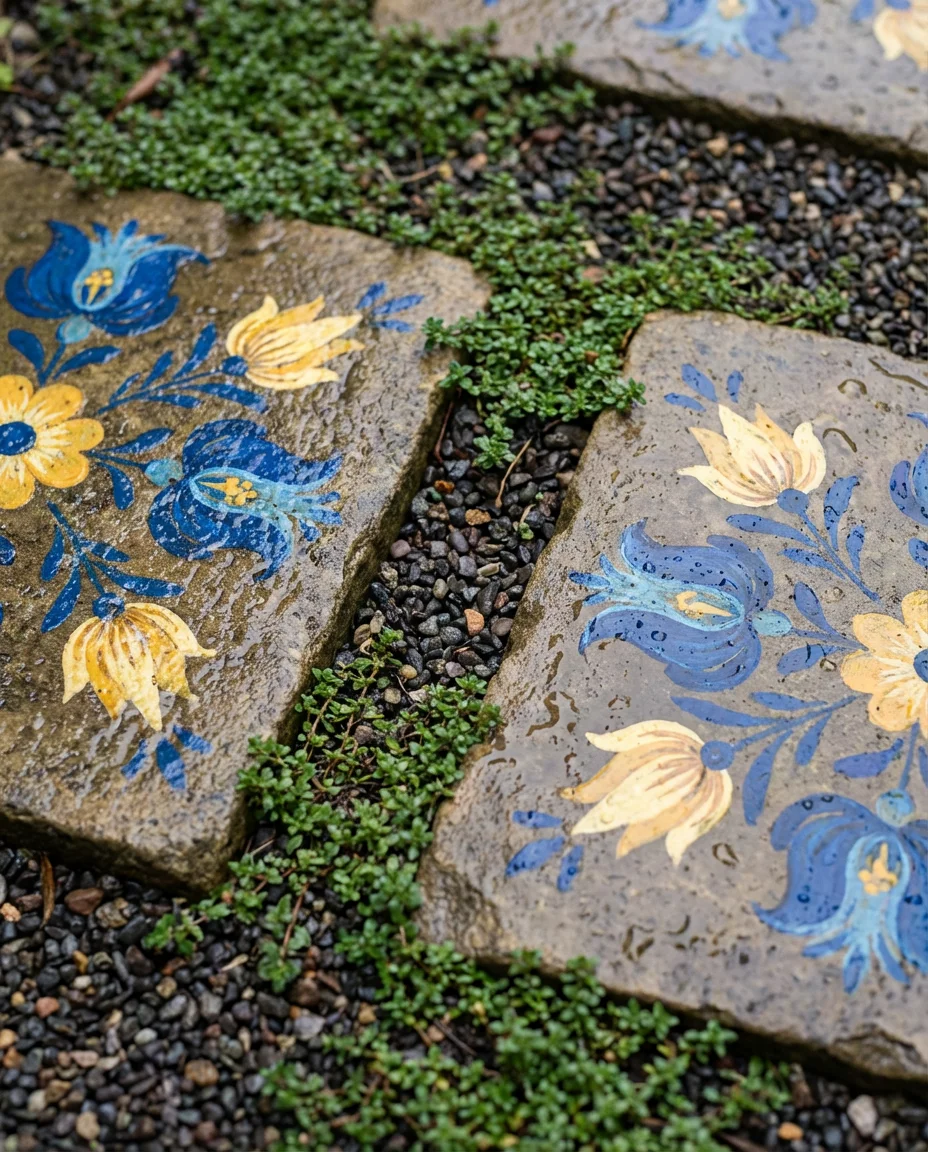
A hand-painted concrete stepping stone path is one of those projects that transforms the functional into the genuinely beautiful. Using exterior-grade concrete paint and simple masking techniques, plain gray pavers become a cohesive design element—imagine alternating black and white geometric tiles through a cottage garden, or hand-painted blue and yellow folk-art motifs along a Mediterranean-style path. This is where unique self-expression and practical outdoor infrastructure meet, and the result feels both intentional and joyful. Every step becomes a small visual event rather than just a way to get from A to B.
The key to longevity with any painted outdoor concrete is surface preparation and sealing. Clean and degrease the pavers thoroughly before painting, use a concrete bonding primer, apply your design in thin layers, and finish with two coats of exterior concrete sealer rated for foot traffic. Skipping any of these steps—especially the primer or the sealer—is the mistake that causes paint to peel after a single winter. Done correctly, a painted path can look fresh and intentional for three to five years before needing a refresh.
Conclusion
Whether you’ve been sketching garden plans all winter or just started browsing for a little inspiration today, these ideas are meant to be starting points rather than prescriptions—take what fits your space, your style, and your Saturday afternoon energy and leave the rest. The most beautiful gardens are always the ones that feel like their owners actually live in them. We’d love to know which of these ideas you’re most excited to try, or if you’ve already tackled something similar in your own outdoor space. Drop your thoughts, questions, and before-and-after moments in the comments below—this community learns best from each other.