Green bathrooms are having a major moment in 2026, and it’s easy to see why—this versatile color family brings nature indoors, creating spaces that feel calm, grounded, and utterly personal. From dark sage sanctuaries to cheerful mint powder rooms, Americans are turning to Pinterest for inspiration that ranges from moody and dramatic to light and serene. Green bathroom searches have surged as homeowners discover that green works beautifully with everything from terracotta warmth to crisp white contrast, and it suits any style—retro, modern, or somewhere in between. In this article, you’ll find 21 curated ideas that show just how adaptable and beautiful green can be in the bathroom, each one offering a distinct mood and approach to this enduring trend.
1. Dark Sage Serenity
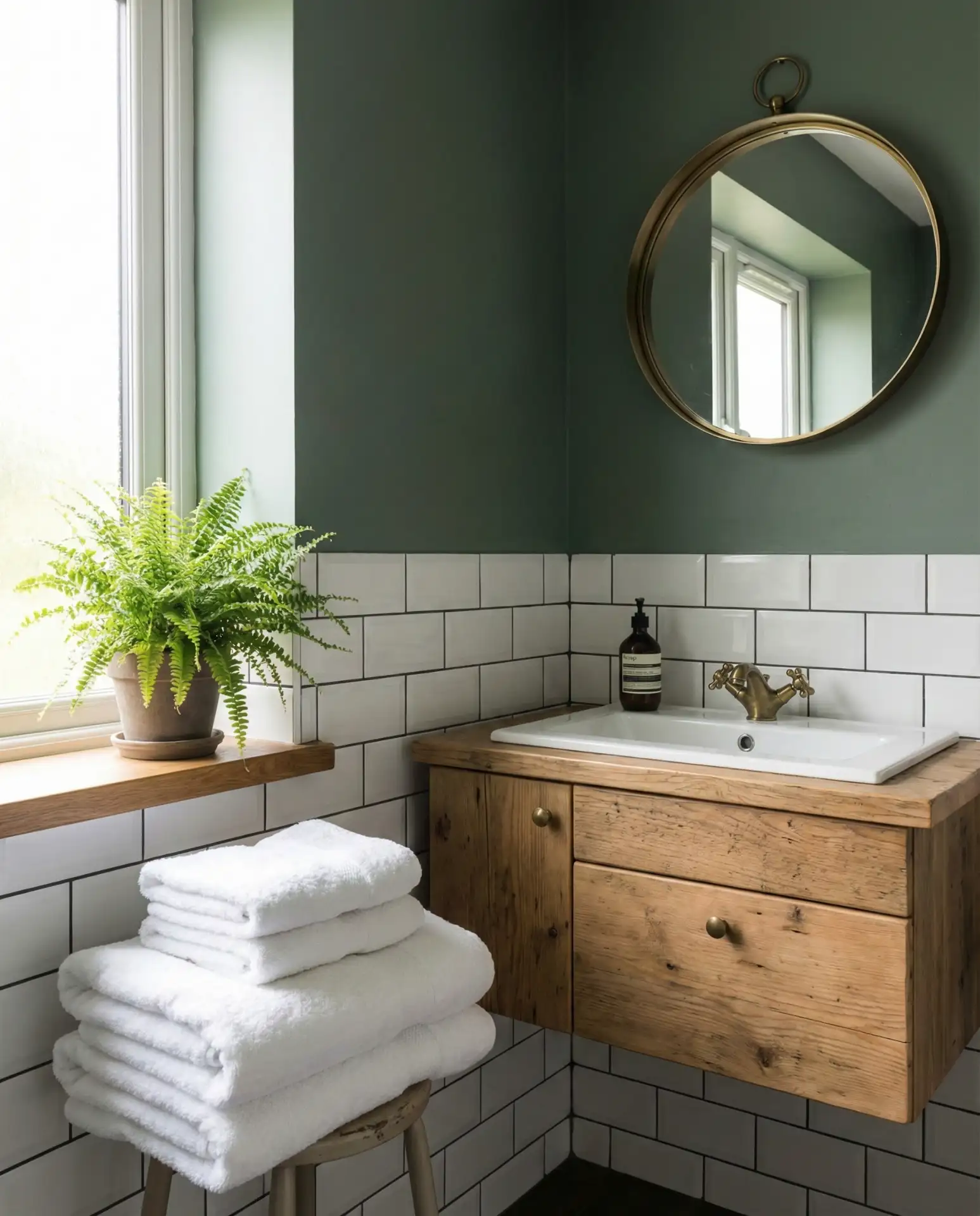
The dark sage bathroom is the antidote to sterile white tile—it’s grounded, sophisticated, and surprisingly versatile. This muted green-grey works beautifully in powder rooms and primary baths alike, especially when paired with natural wood vanities, brass fixtures, and plenty of white or cream to keep things from feeling too heavy. The color reads as both modern and timeless, making it a safe bet for homeowners who want personality without risk. It’s especially popular in the Pacific Northwest and Northeast, where the outdoors influence interior palettes. 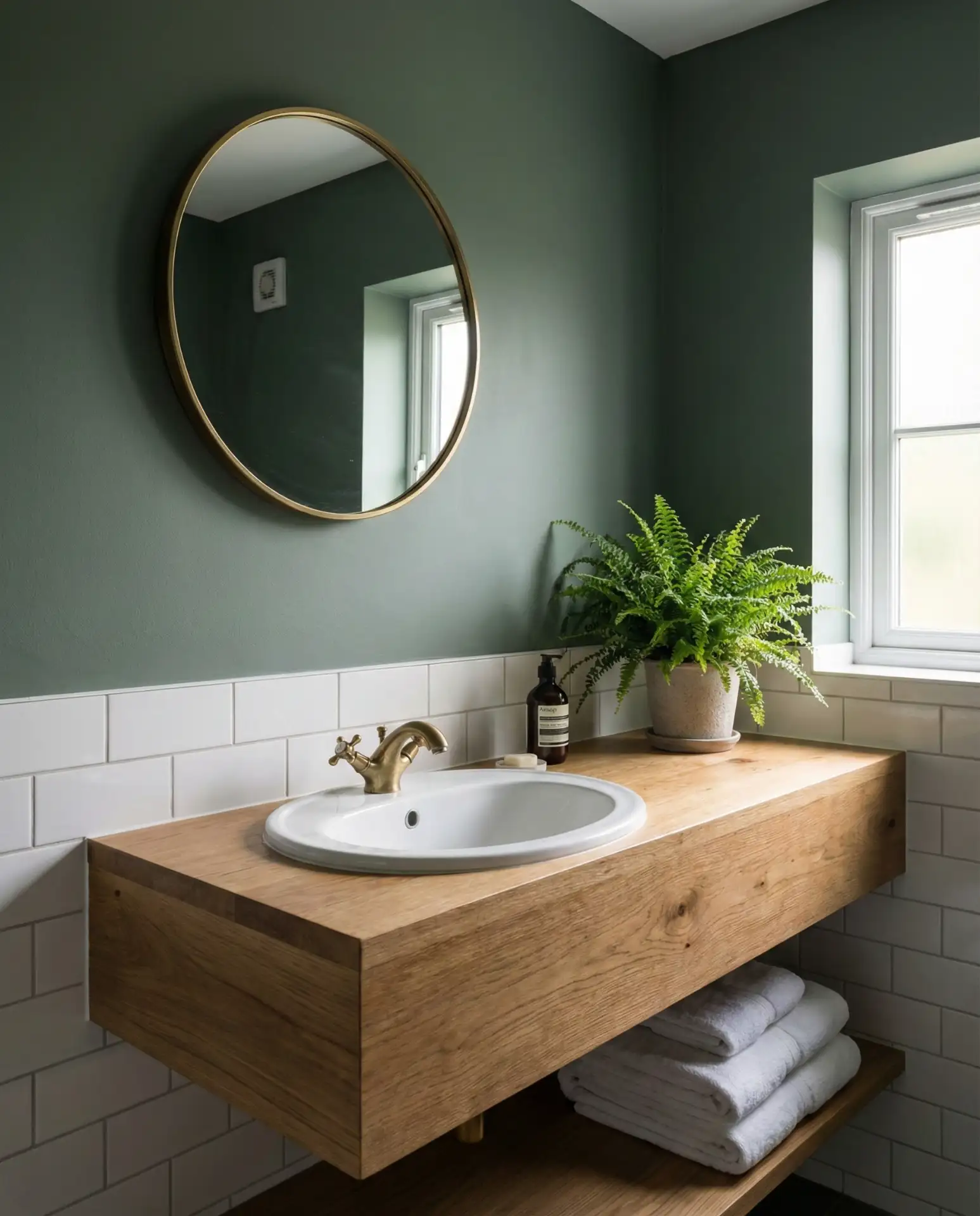
Where it works best: bathrooms with good natural light or strong artificial lighting, as dark sage can feel cave-like in windowless spaces. Pair it with warm whites (not stark cool whites) to maintain balance, and consider using it on just one or two walls if you’re nervous about full commitment. The color also hides water spots and soap scum better than pure white, making it surprisingly practical for busy family bathrooms.
2. Emerald Jewel Box

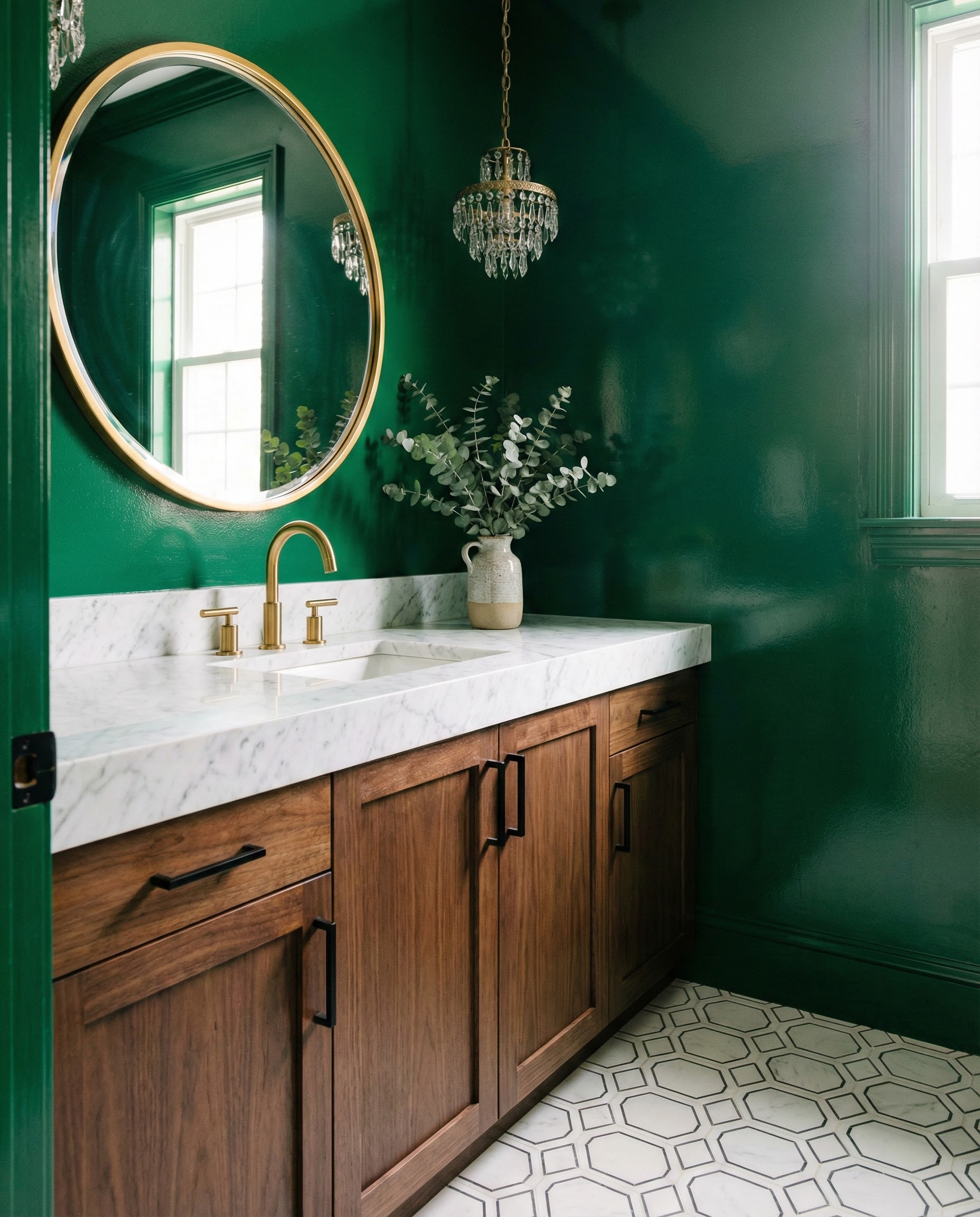
An emerald green bathroom feels like stepping into a jewel box—rich, luxurious, and unapologetically bold. This saturated green pairs beautifully with gold or brass fixtures, white marble, and black accents for maximum drama. It’s a color that demands quality materials; cheap finishes will look garish, but when done right with high-gloss paint or ceramic tile, emerald creates a space that feels like a boutique hotel. This look is trending heavily in urban lofts and renovated Victorians where homeowners aren’t afraid of color. 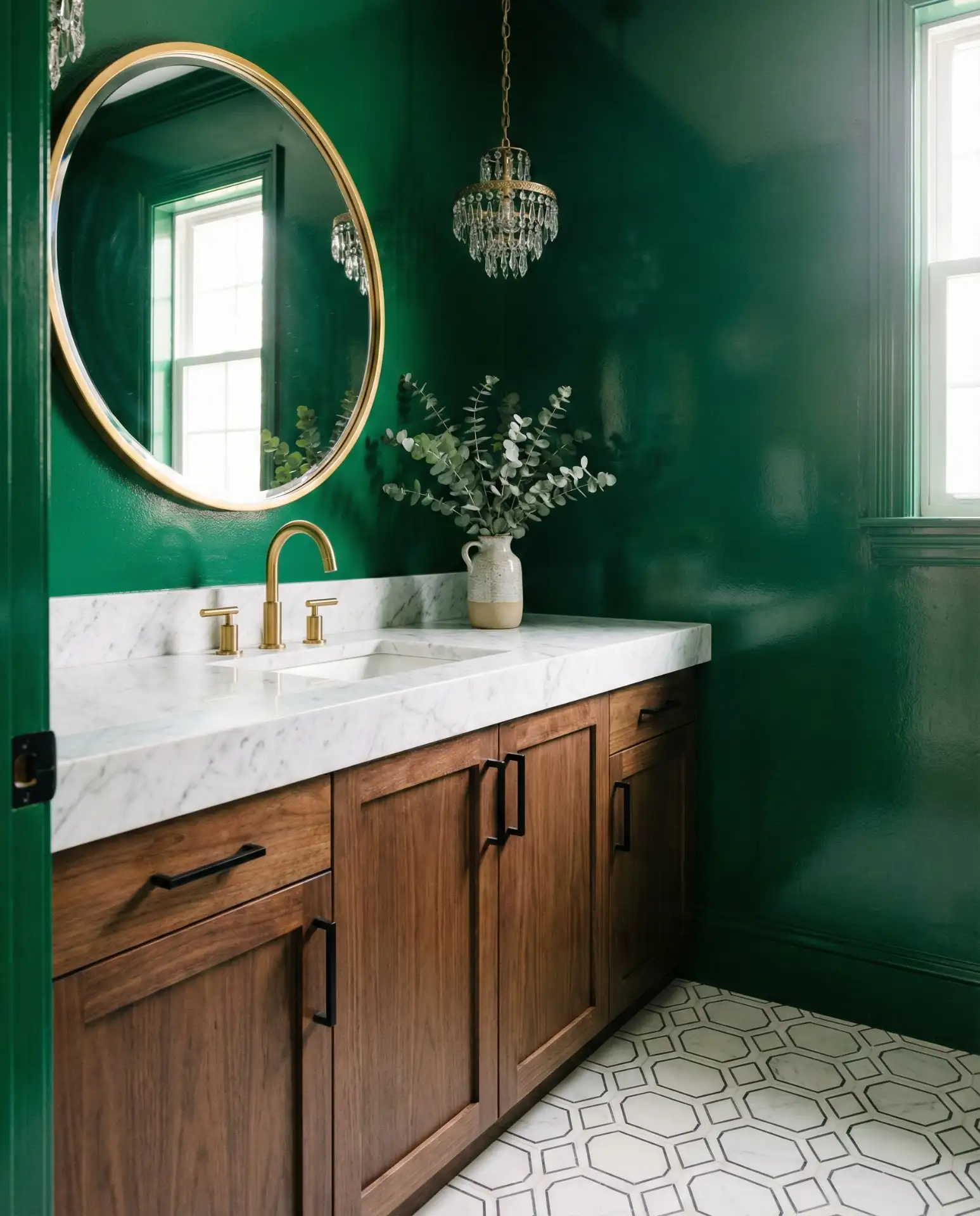
Budget angle: emerald works best in small doses if you’re watching costs—paint a single accent wall or install emerald tile in the shower only, then keep everything else neutral. High-gloss paint (like Benjamin Moore’s “Forest Green” in a pearl finish) creates that lacquered look for under $100 in a powder room. Invest your budget in one statement element—a vintage mirror, a sculptural light fixture—and let the emerald do the rest of the heavy lifting.
3. Pink and Green: The Unexpected Duo
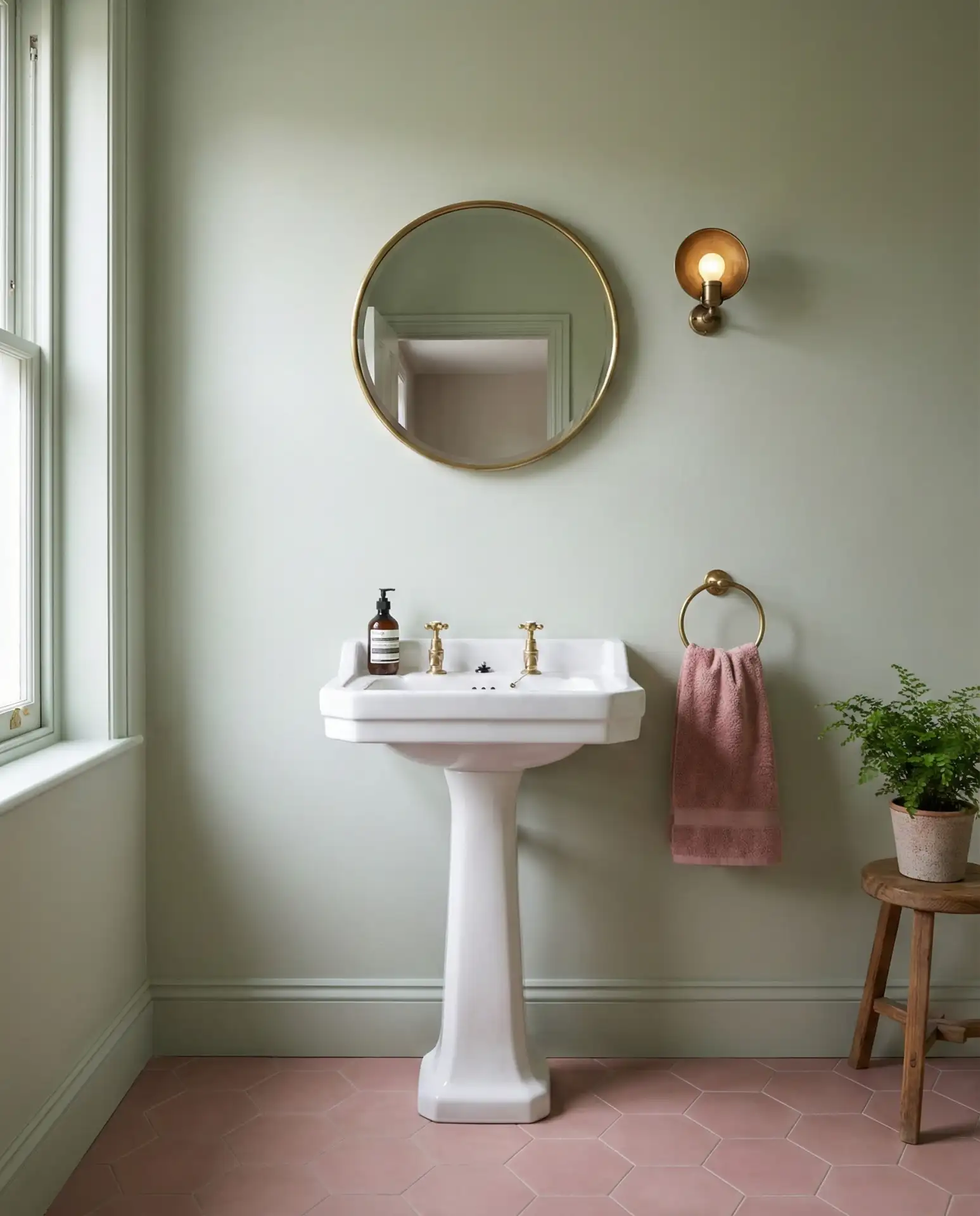
The combination of pink and light or sage green is having a revival, and it’s far more sophisticated than you might expect. Think dusty rose tiles with soft sage walls, or blush-toned marble paired with hunter green cabinetry. This palette feels fresh and vintage at the same time—it nods to Art Deco and midcentury design without feeling costumey. It’s particularly effective in powder rooms and guest baths where you can take bigger risks with color, and it photographs beautifully, which explains its Pinterest popularity. 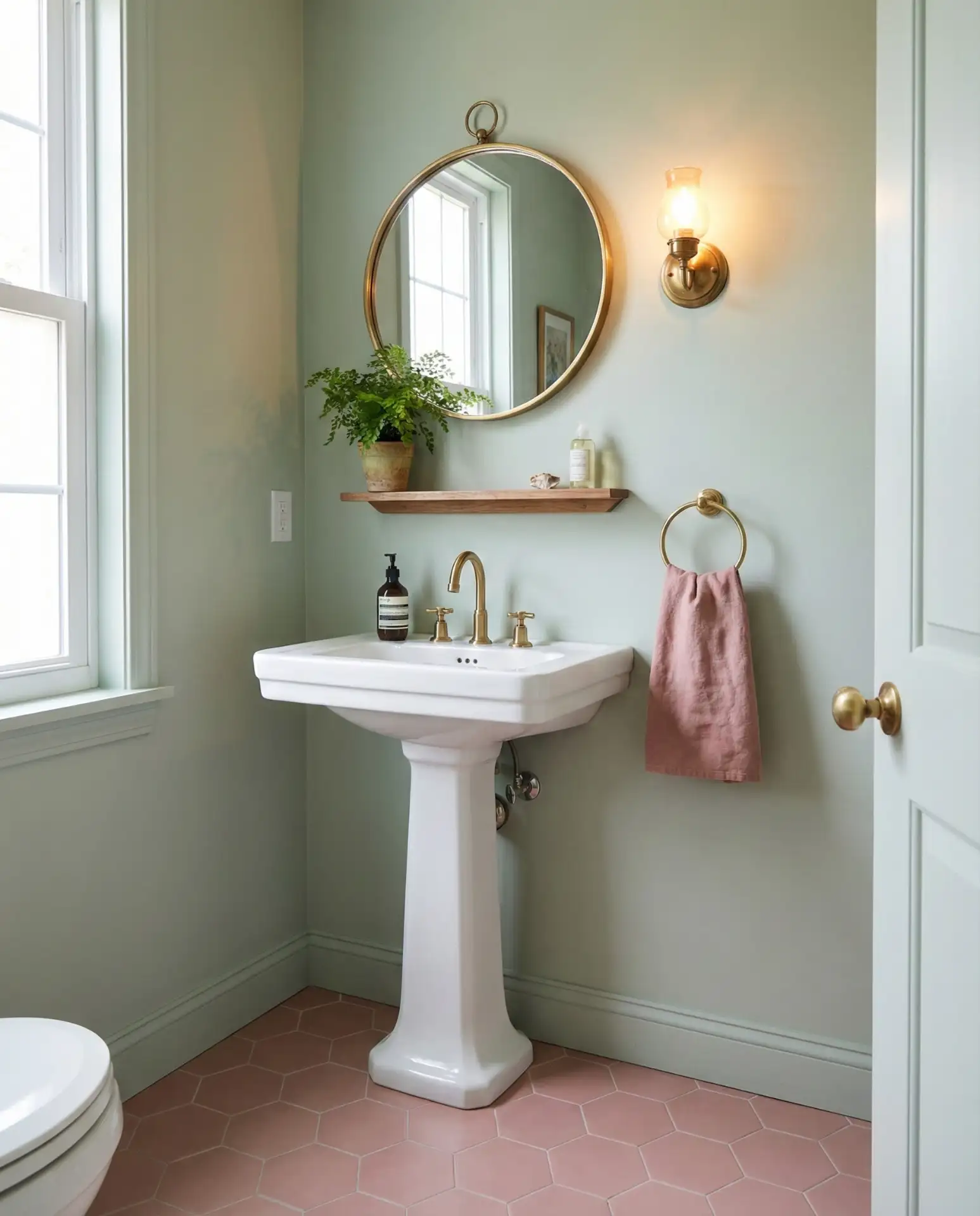
A designer in Charleston told me her clients were initially skeptical of pink and green together, but once they saw the sample board—soft, not saturated—they were sold. The trick is keeping both colors muted rather than bright; think blush and moss, not fuchsia and lime. This palette also works across styles: add geometric patterns for Art Deco, shiplap for farmhouse, or sleek fixtures for modern. It’s proof that “unconventional” doesn’t mean “risky.”
4. Olive Warmth in Small Spaces
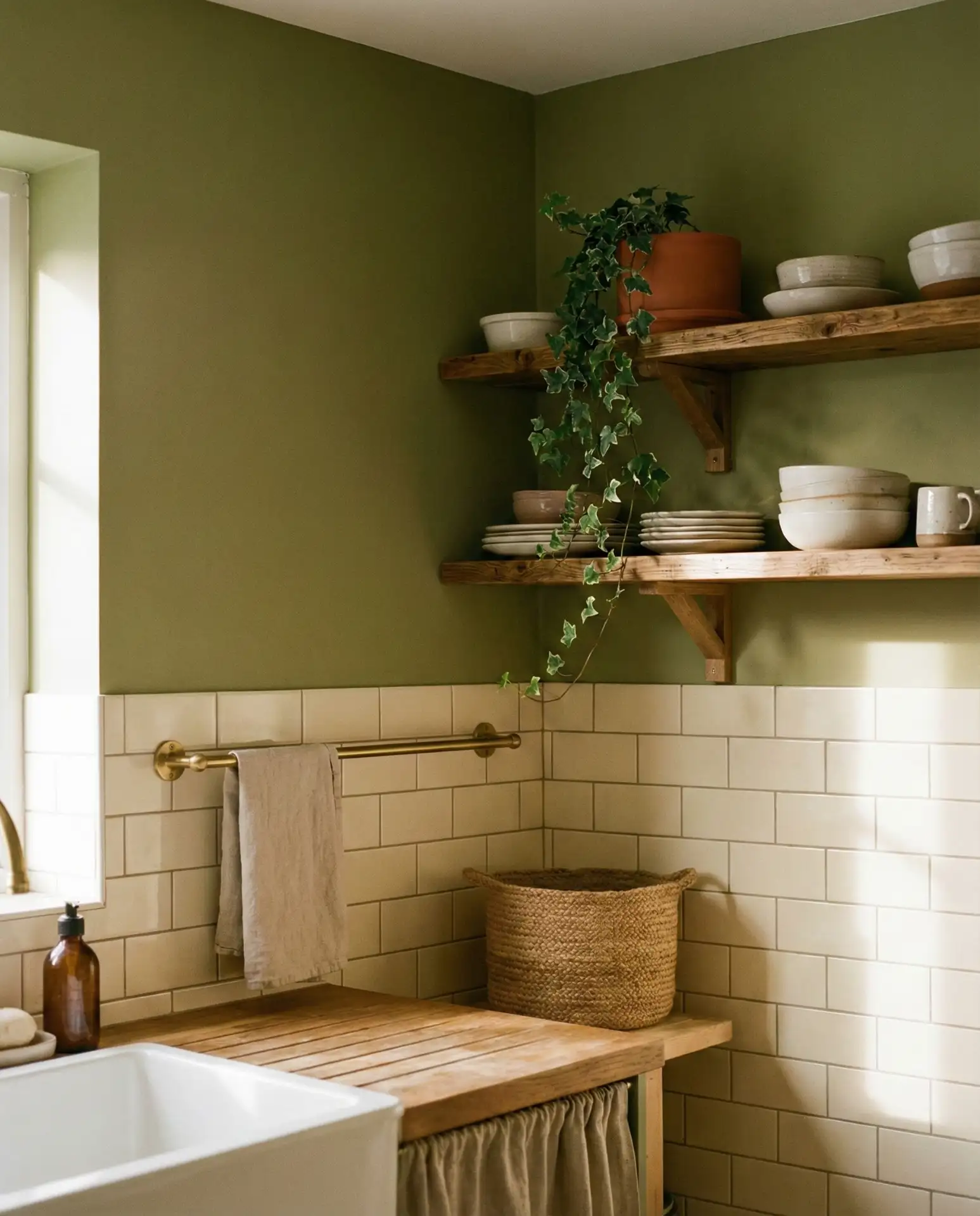
Olive green brings an earthy, grounded quality to bathrooms that cooler greens can’t match. With its warm, almost brown undertones, olive pairs beautifully with terracotta, cream, and natural wood—creating a Mediterranean or California casual vibe. It’s an especially smart choice for small bathrooms because it feels enveloping rather than claustrophobic, wrapping you in warmth instead of closing you in. You’ll see this color in renovated bungalows and modern farmhouses across the Sunbelt and West Coast. 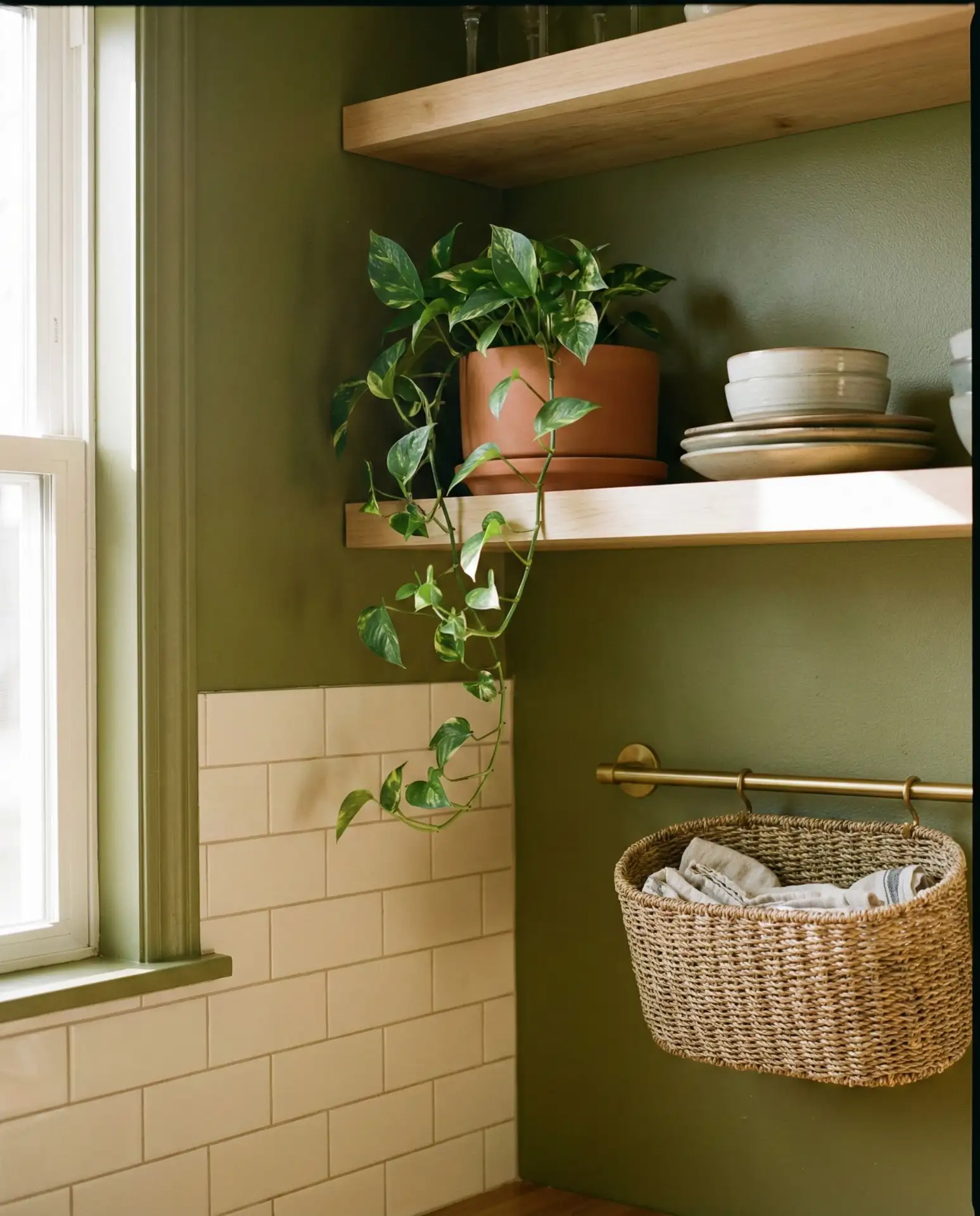
Practical insight: olive hides imperfections better than lighter greens, making it ideal for older homes with less-than-perfect walls. It also works well with vintage fixtures—if you’re keeping an old clawfoot tub or pedestal sink, olive provides a flattering backdrop without demanding perfection. Pair with warm-toned lighting (2700K bulbs) to enhance the cozy factor, and avoid cool whites which can make olive look muddy.
5. Moody Forest Drama
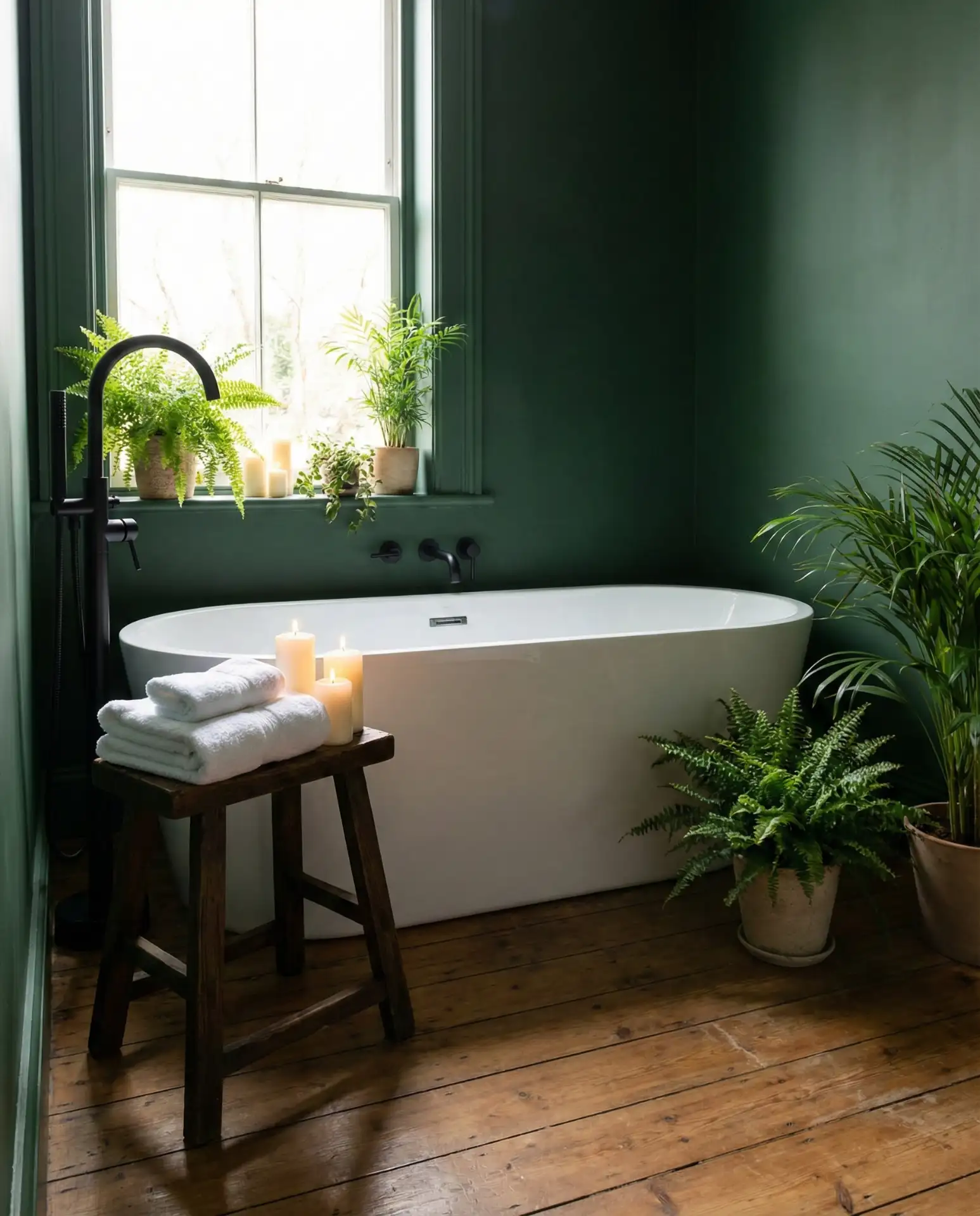
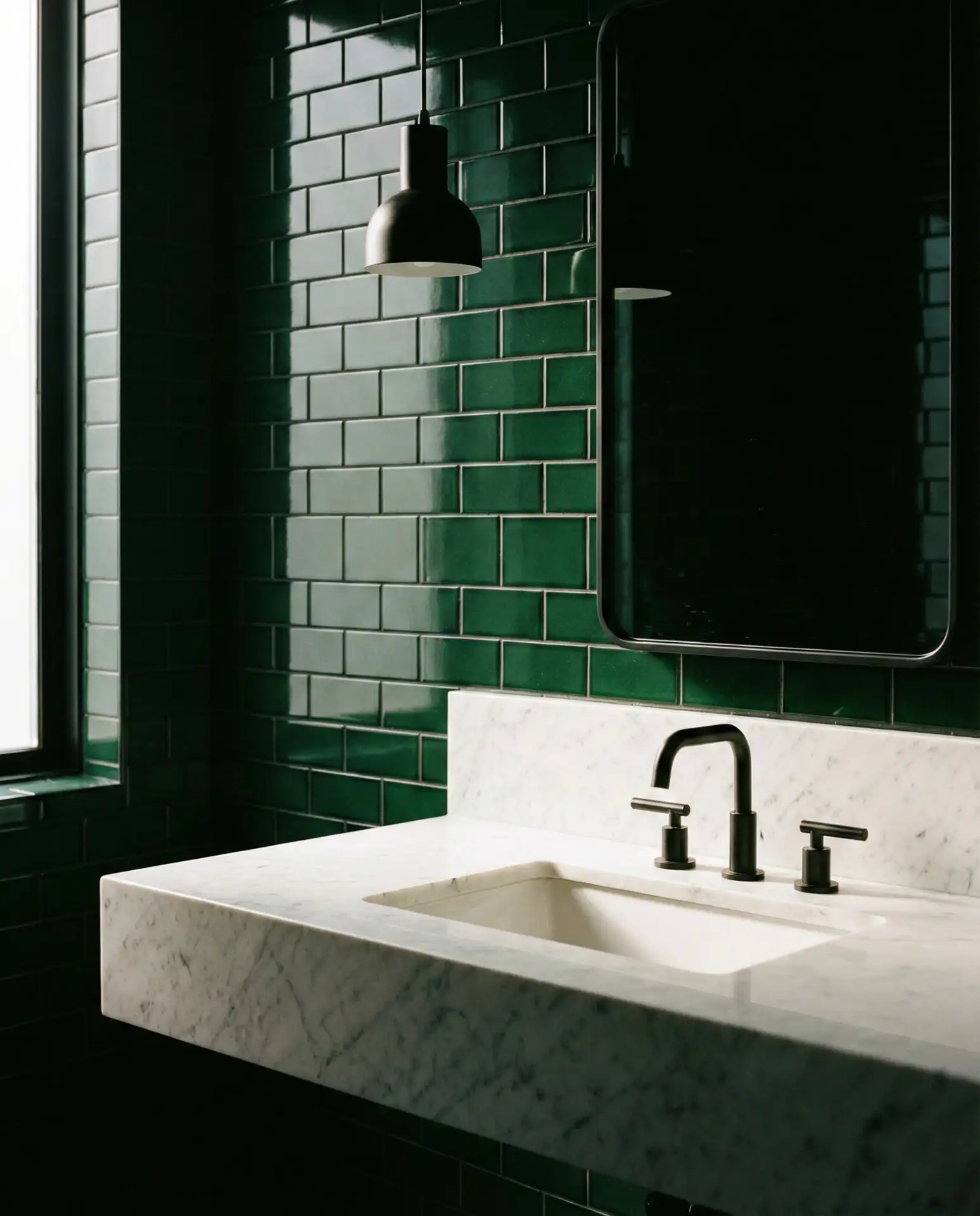
A moody forest green bathroom is all about atmosphere—think deep, saturated color that transforms the space into a private retreat. This look works best with abundant lighting (both natural and layered artificial), high-quality paint or tile, and contrasting elements like white fixtures or light wood. The result is a bathroom that feels like a luxury spa or a cabin in the woods, depending on how you accessorize. It’s bold, but when executed well, it’s absolutely stunning and surprisingly livable. 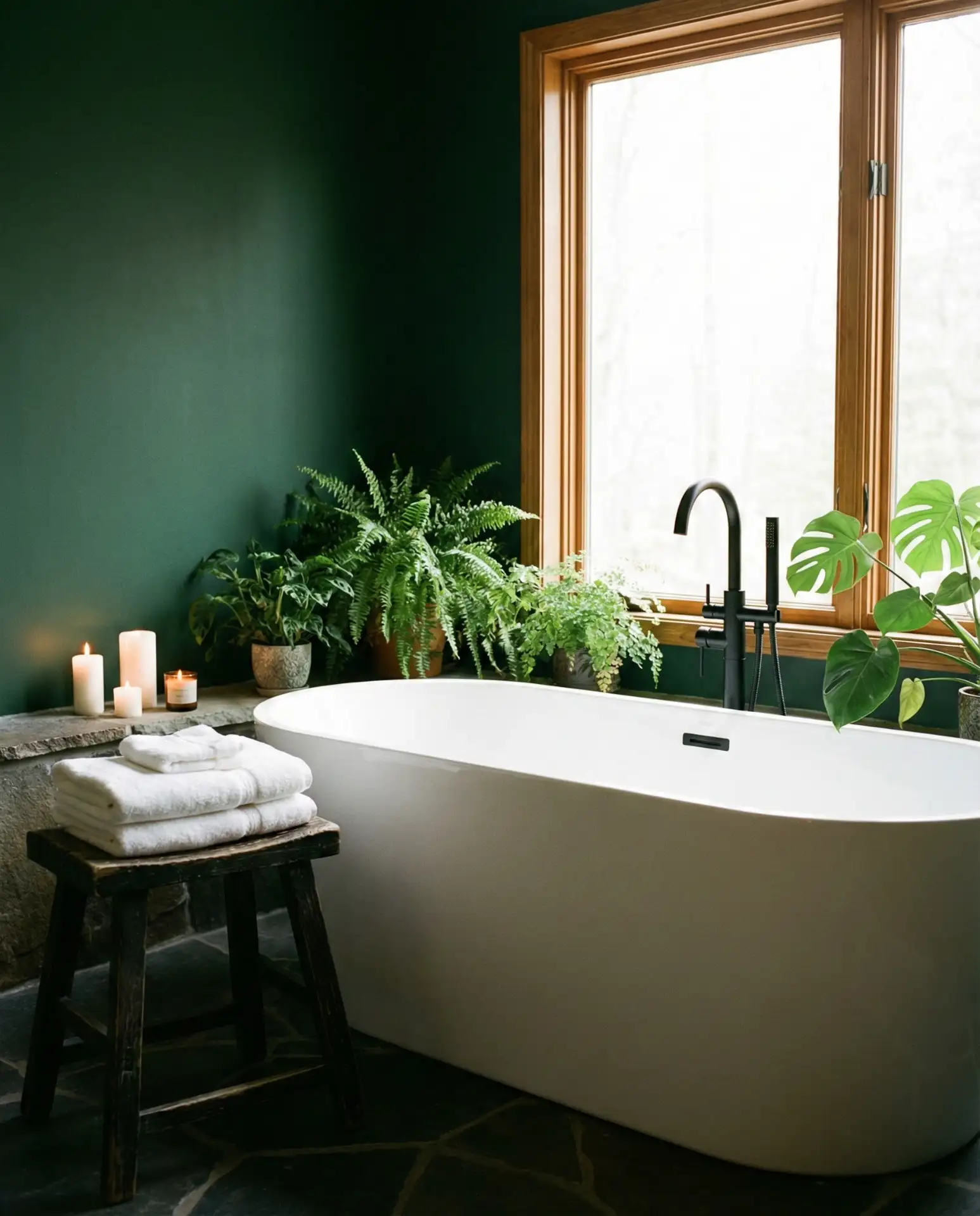
Common mistakes: pairing moody green with too many dark elements, which creates a cave instead of a cocoon. Instead, balance deep green walls with white or cream tile, a light-colored vanity, or plenty of mirrors to reflect light. Also avoid tiny overhead lighting—you’ll need multiple sources including sconces, pendant lights, or even a small chandelier to keep the space from feeling oppressive. Moody requires intentional brightness.
6. Seafoam Coastal Calm
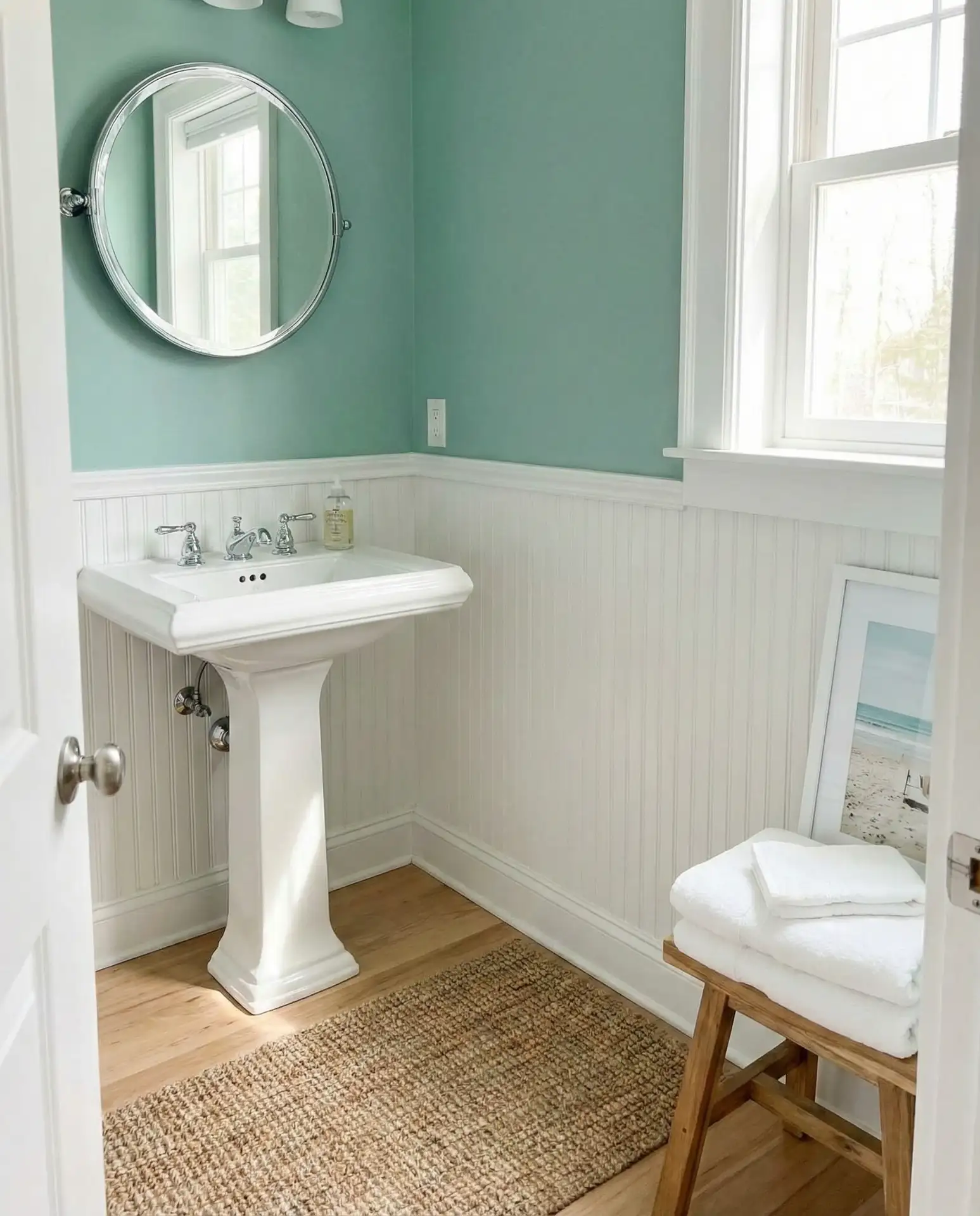
Seafoam green brings instant coastal vibes without the clichéd shells and anchors. This soft blue-green works beautifully in beach houses, but it’s equally at home in landlocked bathrooms where you want to evoke a sense of calm and escape. Pair it with white beadboard, chrome fixtures, and natural textures like jute or rattan for a classic coastal look, or go modern with sleek tile and matte black hardware. Either way, seafoam creates a serene, spa-like atmosphere that feels perpetually vacation-ready. 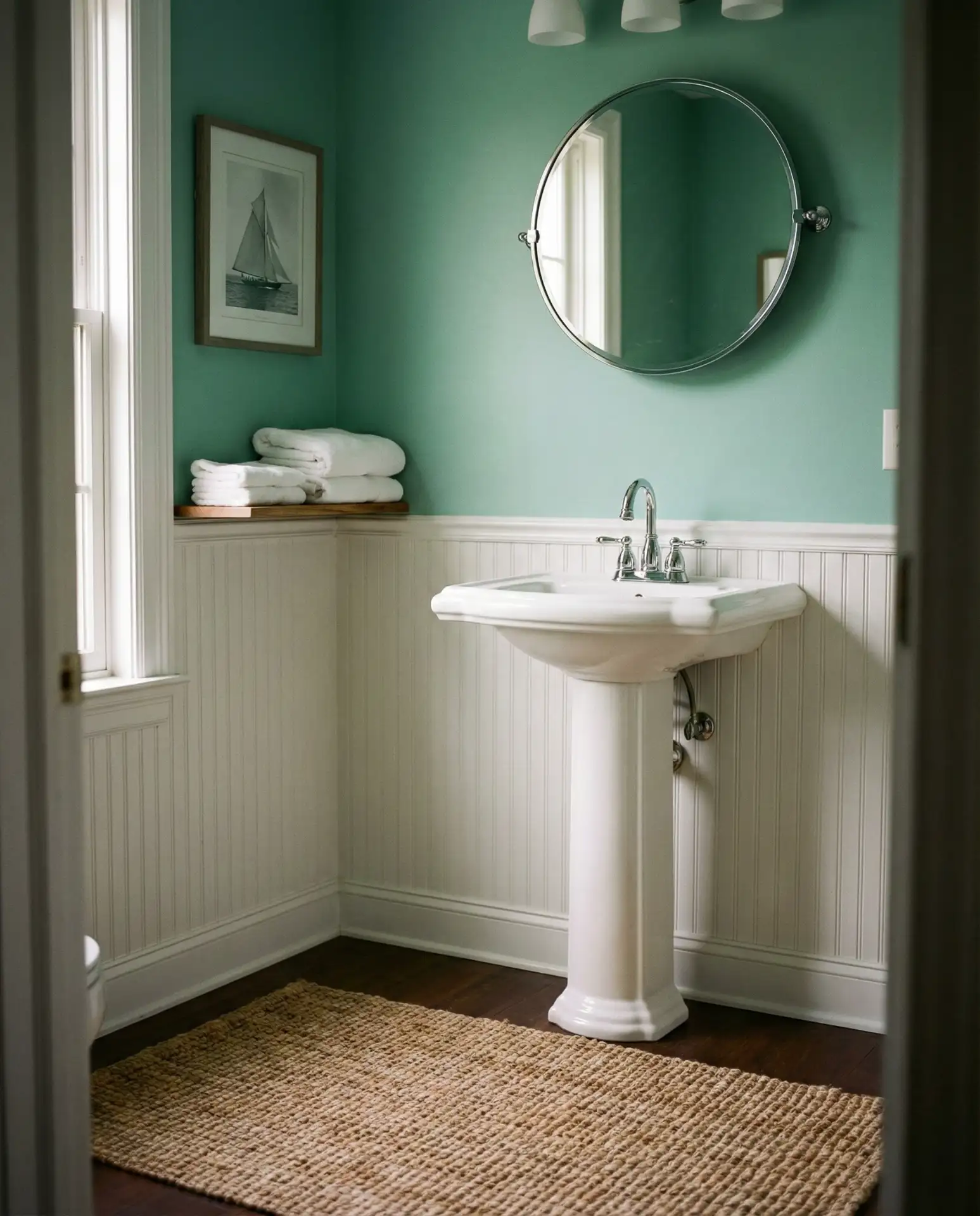
American lifestyle context: seafoam resonates especially along the Atlantic and Gulf coasts, where the color literally reflects the local landscape. But it’s migrating inland as homeowners seek that breezy, relaxed aesthetic even in suburban Denver or Phoenix. The color is also incredibly forgiving—it works with warm and cool tones alike, making it easier to decorate around than more saturated greens. It’s the low-commitment green that still delivers impact.
7. Black and Green: High Contrast Impact

Pairing green with black creates one of the most striking color combinations in bathroom design—sophisticated, modern, and utterly unexpected. Whether it’s black tile with green walls, a black vanity against green cabinetry, or black fixtures in an emerald space, the contrast makes both colors pop. This approach works especially well in contemporary and Art Deco–inspired bathrooms where drama is the goal. It’s a confident choice that rewards those willing to commit fully to the vision. 
Where it works best: bathrooms with good bones and architectural interest—the black-and-green combo highlights interesting tile patterns, beautiful fixtures, and thoughtful layouts. It’s less forgiving in builder-grade bathrooms with standard everything, where the contrast can emphasize mediocrity rather than elevate it. If you’re working with basic architecture, start with black accents (faucet, mirror frame, towel bar) against green walls rather than going full black-and-green everywhere.
8. Blue and Green: Nature’s Perfect Pair

The old design rule “blue and green should never be seen” was clearly written by someone lacking imagination—these two colors are natural companions. A blue and green bathroom might feature sage walls with blue-grey tile, or mint cabinetry with navy accents. The key is keeping the tones related (both warm or both cool) and letting one color dominate while the other supports. This palette evokes water and foliage, creating a space that feels inherently organic and calming. It’s particularly popular in homes with natural surroundings or water views. 
Expert-style commentary: the success of blue-green pairings depends on undertones. If your green leans yellow (like olive) and your blue leans purple (like periwinkle), they’ll clash. Instead, choose a blue-leaning green (like seafoam) with a green-leaning blue (like teal or slate). Test samples together in your actual bathroom lighting before committing—what looks harmonious in the store can fight under your specific bulbs and daylight.
9. Mint Freshness
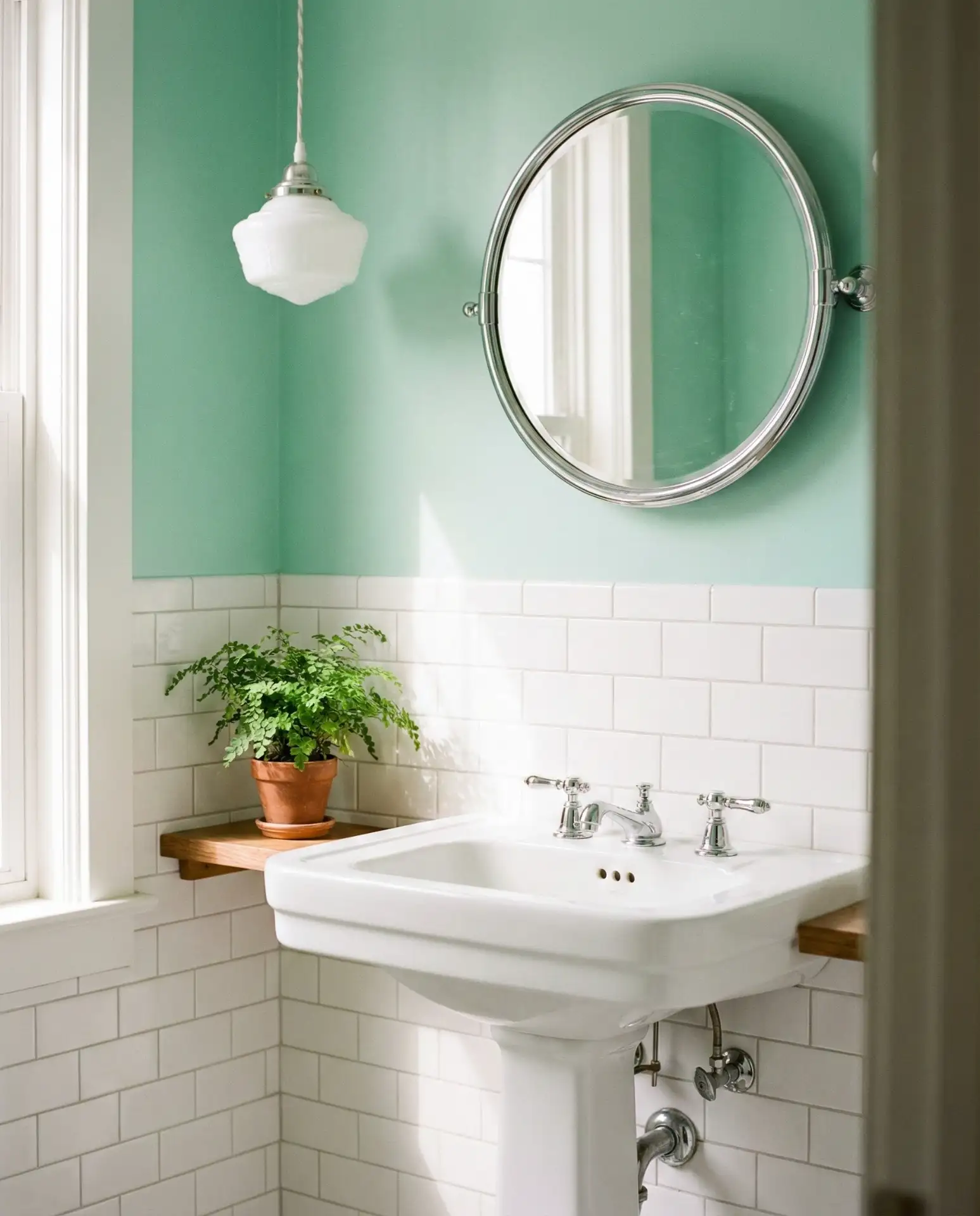
Mint green is the cheerful, optimistic member of the green family—light, fresh, and almost always successful in bathrooms. This pale green has just enough color to feel intentional but remains neutral enough to work with almost any accent. It’s particularly effective in rentals and starter homes where you want personality without permanence, and it pairs beautifully with white, chrome, and natural wood. Mint also has a nostalgic quality, evoking both 1950s diners and modern Scandinavian design depending on how you style it. 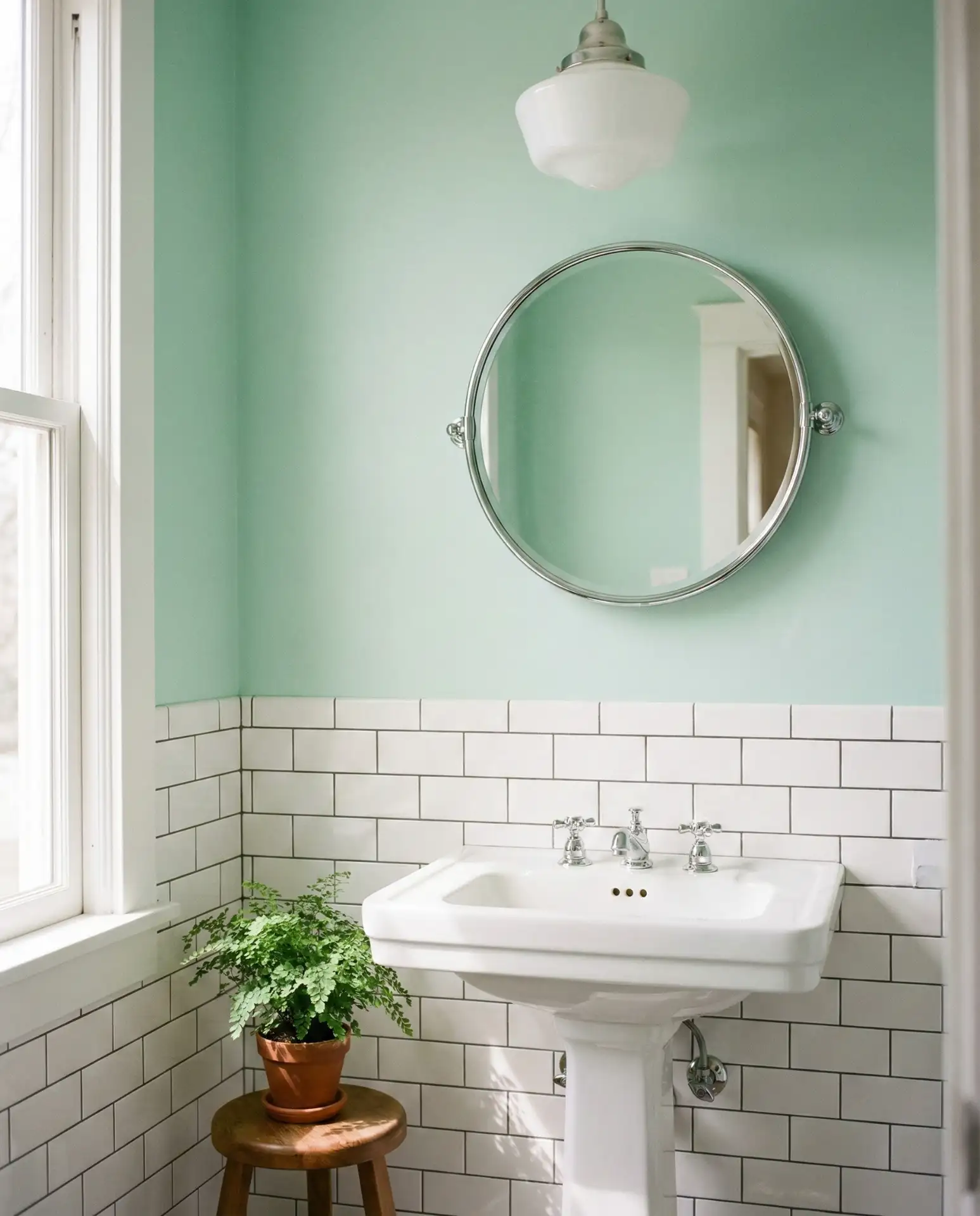
Real homeowner behavior: mint is one of the most rental-friendly greens because it’s easy to paint over when you move out, yet distinctive enough to make the space feel like yours. Many renters use peel-and-stick mint wallpaper for even easier removal. Pair mint with warm whites and natural textures to keep it from reading too sweet or juvenile—a jute rug, wooden shelving, or linen shower curtain all help ground the palette in grown-up territory.
10. Terracotta and Green: Mediterranean Warmth

The combination of terracotta and green brings instant Mediterranean or Southwest warmth to any bathroom. Think olive or sage walls with terracotta floor tiles, or earthy green cabinetry paired with terra cotta accessories. This palette works beautifully in homes with stucco walls, exposed beams, or Spanish Colonial architecture, but it’s also being adopted in urban settings where homeowners crave warmth and texture. The key is embracing the earthiness—these are colors that improve with age and imperfection. 
Where it works best: homes in warm climates where the indoor-outdoor connection matters, or anywhere you want to evoke that sun-drenched, relaxed aesthetic. This palette also works in bathrooms with beautiful natural light—the interaction between terracotta, green, and shifting sunlight creates constantly changing warmth throughout the day. Avoid in north-facing or windowless bathrooms where the colors can feel muddy without adequate light.
11. Sea Green Tranquility
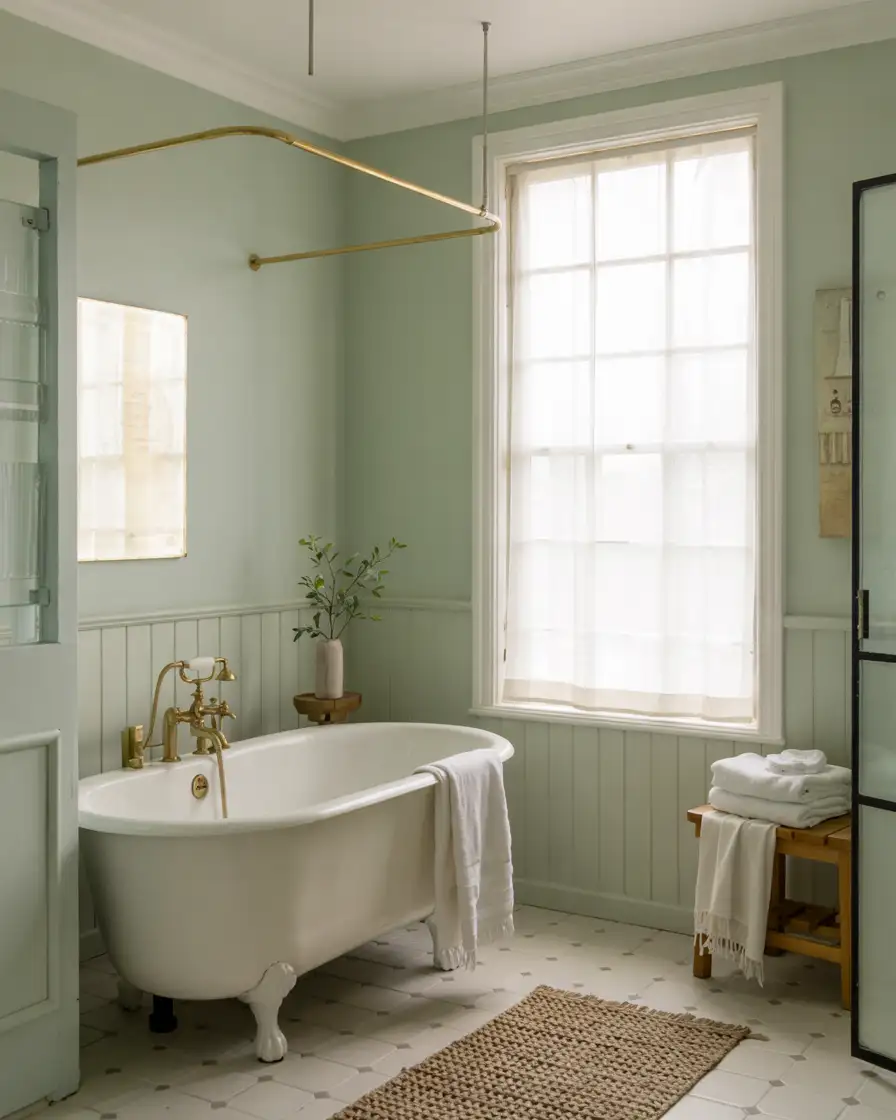
Sea green—that perfect balance between green and blue—creates bathrooms that feel like a deep breath. This color is neither too warm nor too cool, making it one of the most universally flattering greens. It works in traditional bathrooms with classic fixtures and in modern spaces with sleek lines, and it pairs effortlessly with white, cream, brass, and natural wood. Sea green also has the unique ability to make small bathrooms feel larger, as the color seems to recede and open up the space rather than close it in. 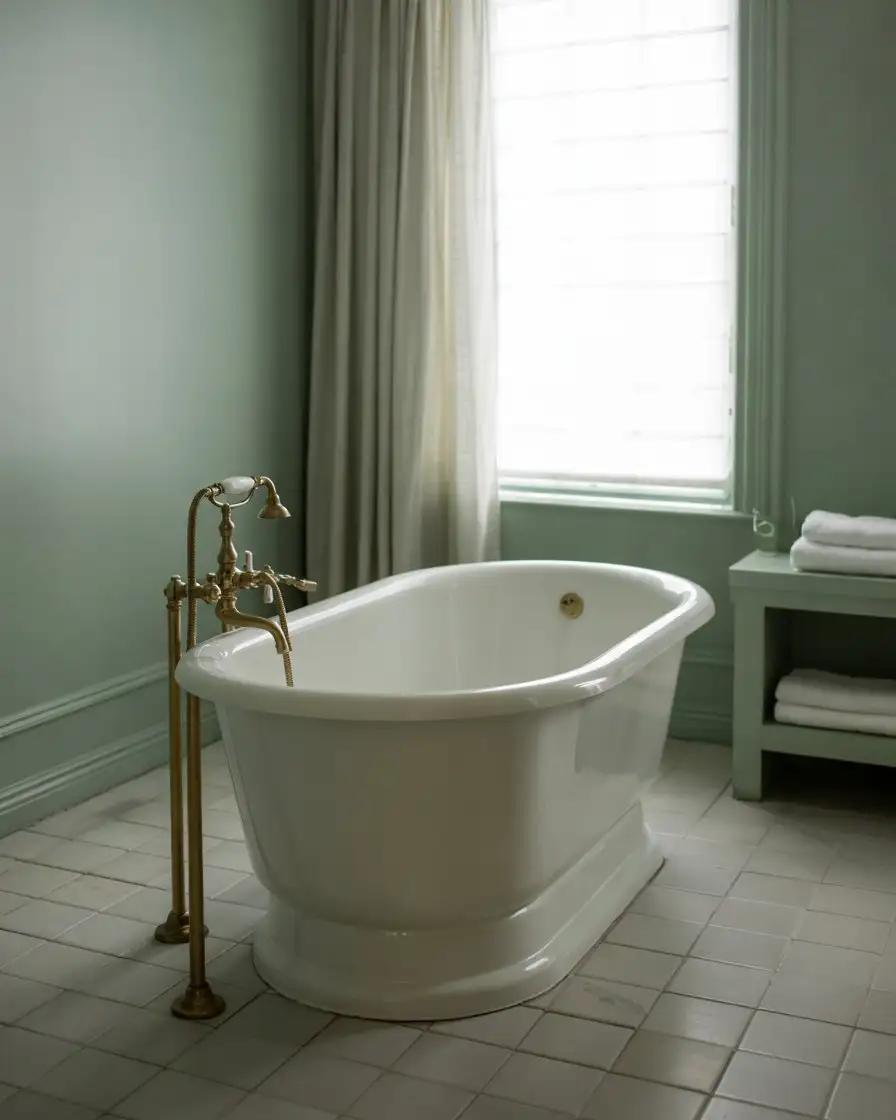
Budget angle: sea green paint transforms a basic bathroom for minimal investment—a gallon covers most small bathrooms and costs under $60. Brands like Sherwin-Williams (“Halcyon Green”) and Benjamin Moore (“Palladian Blue,” which leans green) offer beautiful ready-mixed sea greens. Keep everything else simple and let the color do the work. Even builder-grade fixtures look more intentional against a beautiful wall color.
12. Light Sage: The Versatile Neutral

Light sage has emerged as the new neutral in bathroom design—soft enough to work with almost anything, but distinctive enough to feel considered. This pale grey-green pairs beautifully with both warm and cool tones, making it incredibly forgiving when you’re selecting tile, fixtures, and accessories. It’s particularly popular in farmhouse and transitional bathrooms where the goal is warmth without weight, and it photographs beautifully in natural light, explaining its Pinterest dominance. Light sage is the safe choice that never feels boring.
Practical insight: light sage is particularly valuable in bathrooms where you’re keeping existing white fixtures—it provides color and personality without requiring you to replace perfectly functional elements. It’s also excellent for resale because it reads as neutral to most buyers while still having character. Pair with crisp white trim and simple hardware for a look that feels current but timeless, appealing across demographics and design preferences.
13. Beige and Green: Earthy Sophistication

The pairing of beige and green creates an earthy, sophisticated bathroom palette that feels both organic and elevated. Think sage walls with beige tile, or olive cabinetry with cream stone counters. This combination works across styles—from rustic to contemporary—because both colors are grounded in nature. It’s particularly effective in bathrooms aiming for a spa-like atmosphere, where the palette supports rather than competes with the sense of calm. Beige grounds the green, preventing it from feeling too vibrant or overwhelming. 
A Portland designer shared that her clients initially wanted all-white bathrooms but felt they lacked warmth. By introducing beige tile and sage accents, they achieved the calm they wanted without the sterility. The trick is varying the textures—smooth painted walls, rough natural stone, soft textiles—so the palette feels layered rather than flat. This approach also ages beautifully, as both colors hide wear better than stark white.
14. Aesthetic Retro Vibes
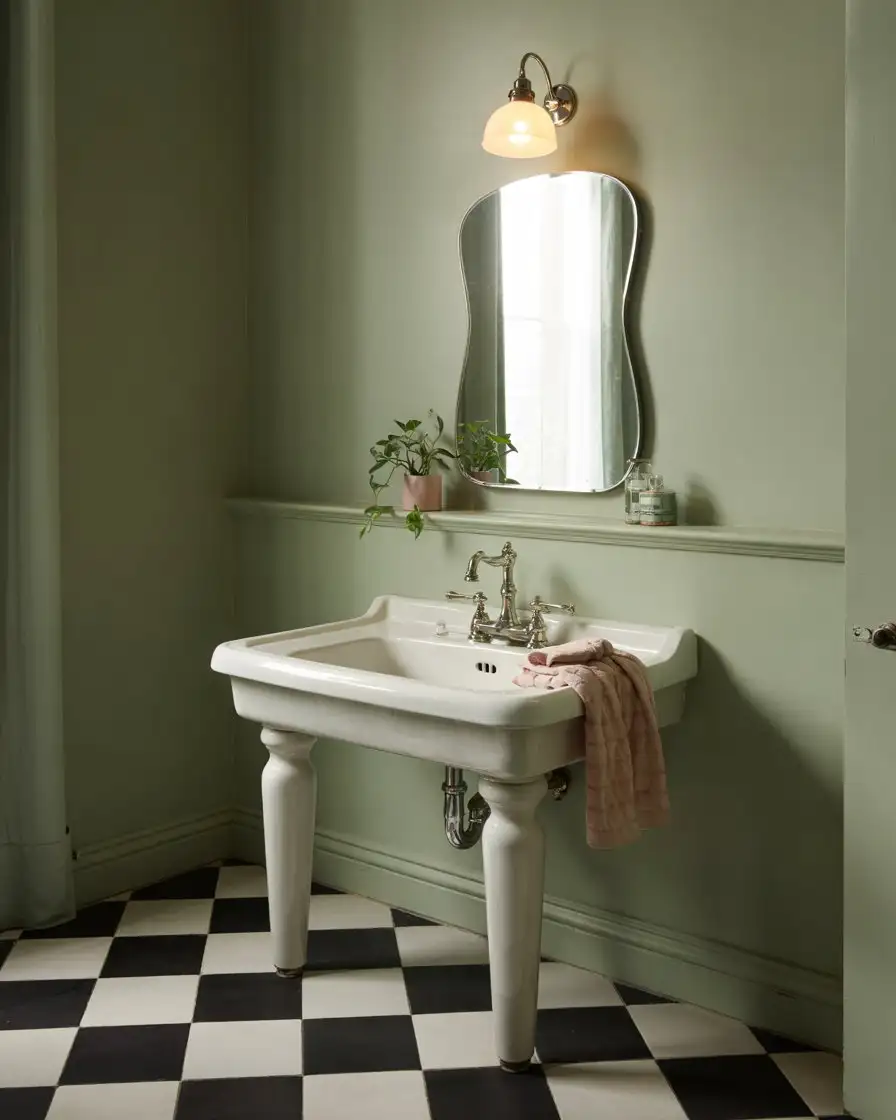
The aesthetic retro green bathroom draws inspiration from the 1950s through 1970s, featuring colors like avocado, mint, and seafoam paired with vintage-style fixtures and geometric patterns. This look has surged in popularity thanks to social media, where maximalist, personality-driven spaces outperform minimalism. You’ll see checkerboard floors, curved mirrors, vintage lighting, and bold tile patterns—all anchored by that signature retro green. It’s playful without being childish, nostalgic without being dated, and surprisingly versatile across home styles. 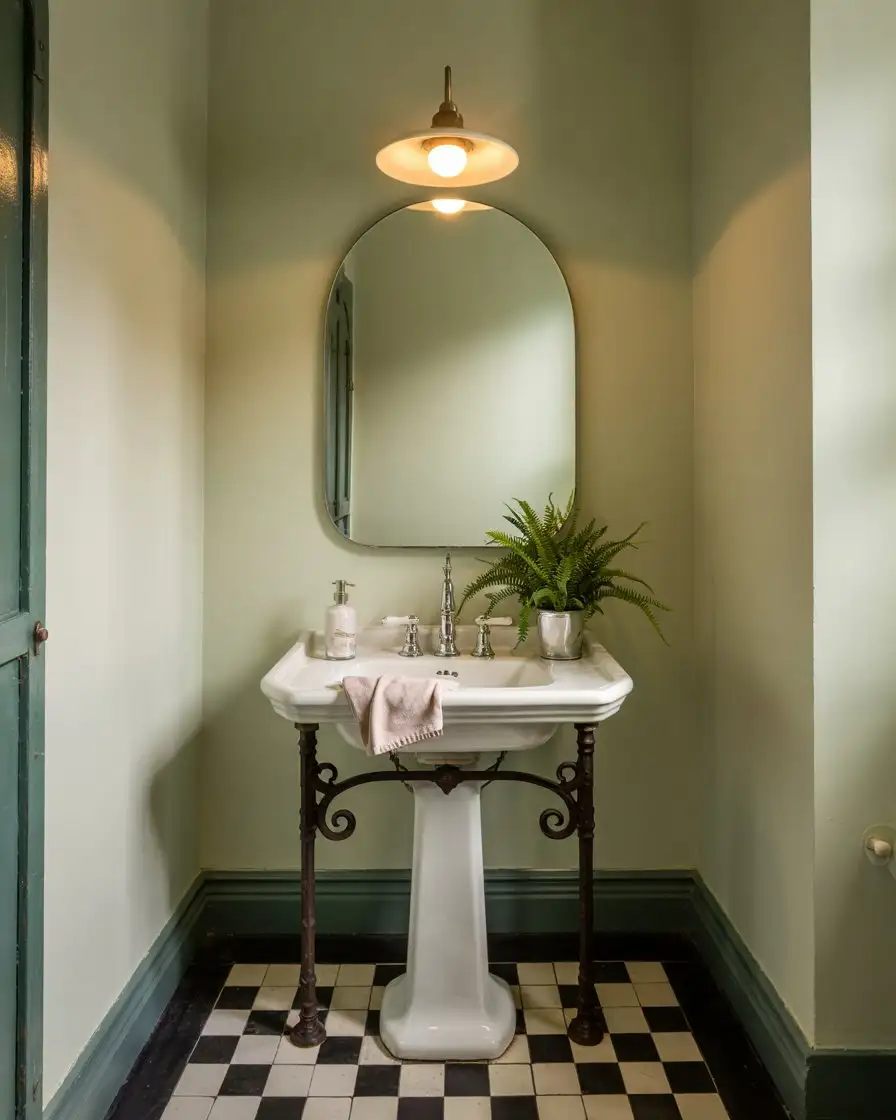
Real homeowner behavior: many people achieve the retro look by shopping secondhand—vintage fixtures, mirrors, and lighting are abundant at architectural salvage stores and estate sales, often for less than new equivalents. The key is restraint: choose one or two retro focal points and keep everything else relatively simple. A vintage sink and curved mirror can carry the whole theme without requiring you to commit to avocado tile from floor to ceiling.
15. White and Green: The Classic Pairing

White and green is perhaps the most timeless bathroom combination—fresh, clean, and endlessly adaptable. Whether you’re using emerald with crisp white subway tile or soft sage with white beadboard, this pairing works across every style and era. White provides the clean backdrop bathrooms need while green adds personality and warmth. This combination also maximizes light reflection, making bathrooms feel brighter and more spacious. It’s the design equivalent of a perfect white shirt—utterly classic, perpetually right. 
Common mistakes: using stark, cool white with warm greens, which creates visual tension. Instead, pair cool greens (seafoam, mint) with bright white, and warm greens (olive, sage) with warm white or cream. Also avoid all-matte finishes—mix in some gloss or semi-gloss paint on trim and tile to create dimension and light reflection. White-and-green bathrooms should feel crisp, not flat.
16. Cream and Green: Soft Sophistication

Cream and green creates a softer, more romantic bathroom than white and green—slightly vintage, wholly sophisticated. Think sage walls with cream marble, or emerald tile with cream-painted cabinetry. Cream warms everything it touches, making greens feel richer and more inviting. This palette works beautifully in traditional and transitional bathrooms, especially those in older homes where cream feels more period-appropriate than stark white. It’s also incredibly forgiving, hiding imperfections and softening harsh light. 
American lifestyle context: cream-and-green bathrooms are particularly popular in the South, where historical homes and humidity make bright white feel too stark or hard to maintain. Cream is also more forgiving of the yellow tones that older brass fixtures often develop, whereas white can make that tarnish look dirty. This palette rewards layering—mix different shades of cream and green for depth rather than matching everything exactly.
17. Green Walls as a Statement
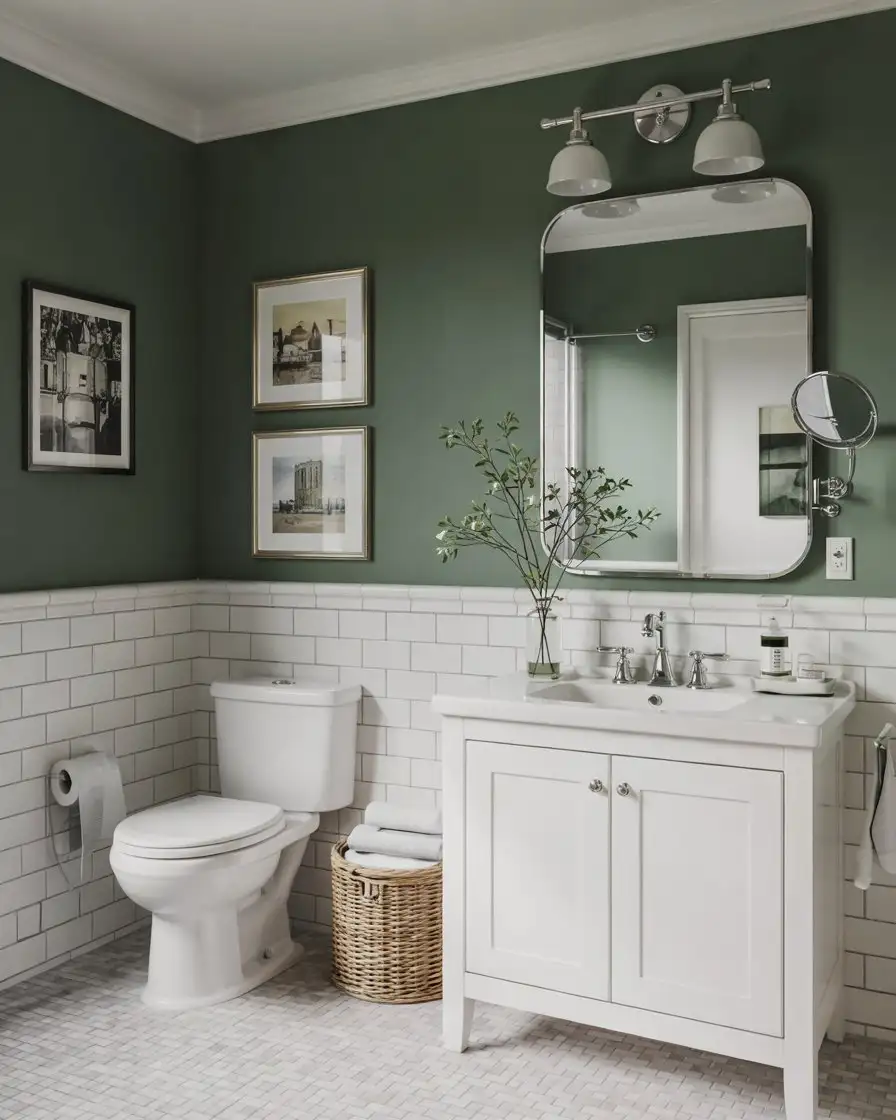
Sometimes the simplest approach is the most effective: painted green walls with everything else kept relatively neutral. This strategy lets you experiment with green without committing to tile or cabinetry, and paint is the most affordable way to completely transform a bathroom. Whether you choose a pale mint or a deep forest, green walls instantly create atmosphere and personality. The beauty of this approach is its flexibility—repaint is easy if your tastes change, making it ideal for renters and commitment-phobes alike. 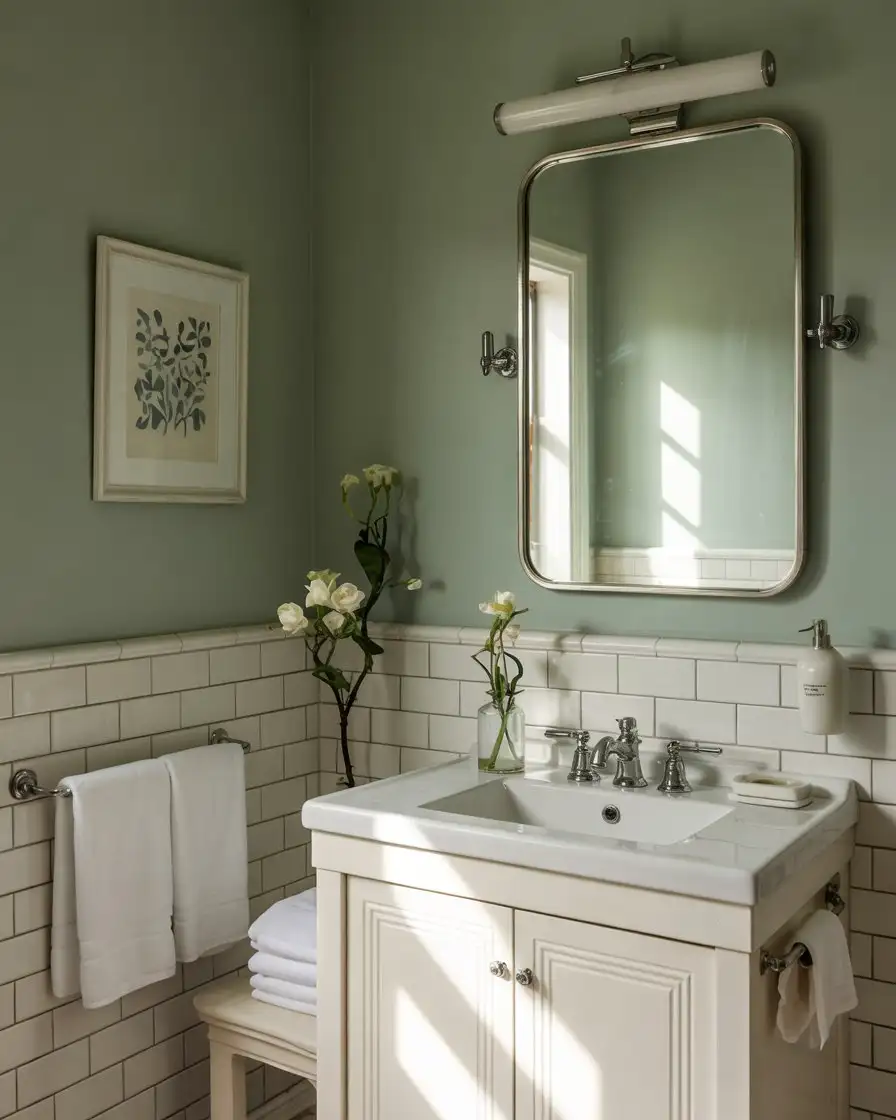
Expert-style commentary: the quality of paint matters enormously in bathrooms due to moisture. Invest in bathroom-specific paint with mildew resistance (like Benjamin Moore’s Aura Bath & Spa or Sherwin-Williams’ Duration Home), and always use at least semi-gloss finish for easy cleaning. Two coats minimum, and don’t skimp on primer—it prevents the previous color from bleeding through and ensures even coverage. Good paint prep is the difference between a DIY disaster and a professional-looking result.
18. Brown and Green: Organic Depth
The combination of brown and green creates deeply organic bathrooms that feel grounded and natural. Think dark green walls with walnut cabinetry, or sage tile with chocolate brown grout. This palette draws directly from nature—forest floors, moss-covered bark, fern-filled woods—and brings that earthy calm indoors. It’s particularly effective in bathrooms where you want a cocoon-like atmosphere, and it pairs beautifully with natural materials like stone, wood, and linen. Brown grounds the green, preventing it from feeling too bright or too cool.
Where it works best: bathrooms with natural light and a connection to outdoor greenery. The brown-green palette works less well in windowless spaces or bathrooms lit only by cool fluorescents. If you lack natural light, compensate with warm LED bulbs (2700K), and consider using lighter shades of both colors. Also layer in white or cream to prevent the space from feeling too dark—even a white ceiling and trim make an enormous difference.
19. Green Designs Across Styles
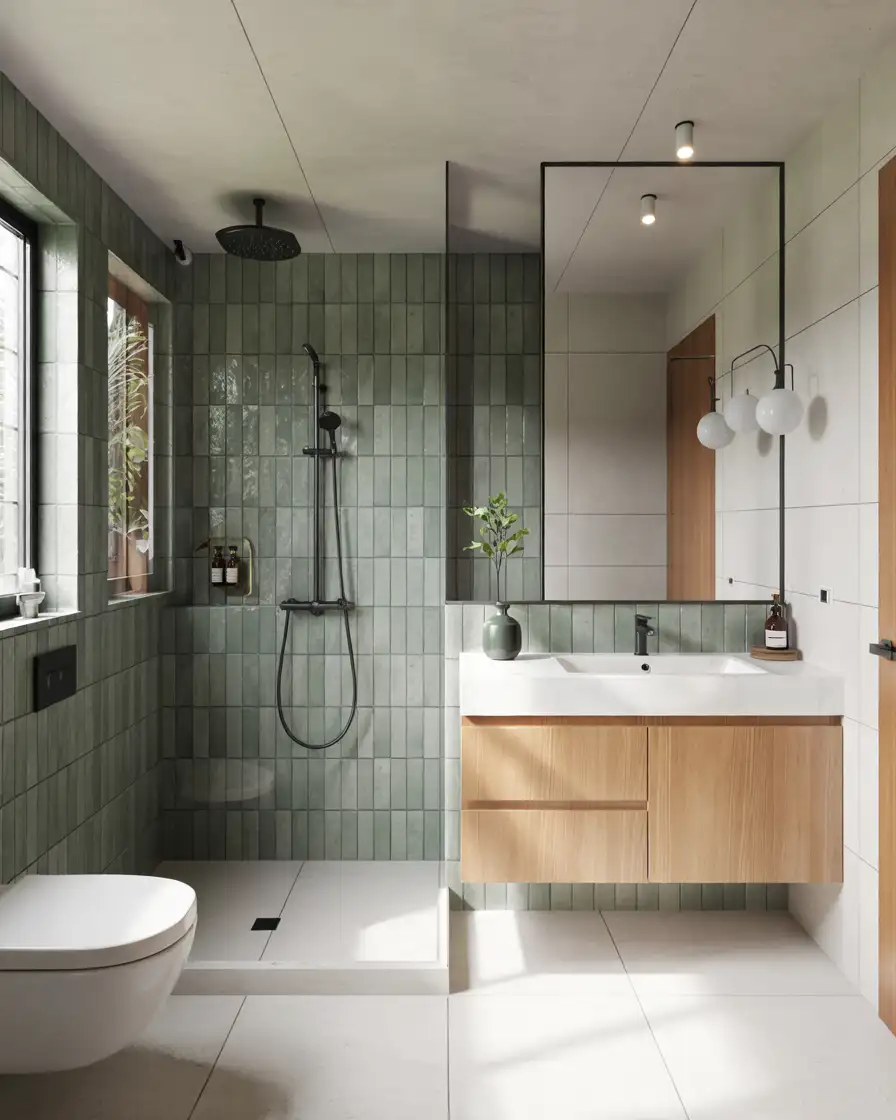
Green bathroom designs succeed across every aesthetic—from sleek modern to romantic traditional—because the color itself is so versatile. In modern bathrooms, green appears as large-format tile or flat-panel cabinetry in saturated tones. In traditional spaces, it’s often softer and paired with classic elements like marble and brass. Farmhouse bathrooms use sage and mint with shiplap and wood accents, while maximalist spaces layer multiple greens with pattern and texture. The lesson? Green adapts to your style rather than dictating it. 
Practical insight: before selecting your green, identify your overall style first. Modern bathrooms can handle saturated, pure greens. Traditional bathrooms do better with muted, greyed greens. Farmhouse leans toward sage and mint. Maximalist can embrace multiple greens at once. The green should support your design vision, not fight it. Sample several shades in your actual bathroom lighting before committing—greens shift dramatically under different lights.
20. Green Decor and Accessories
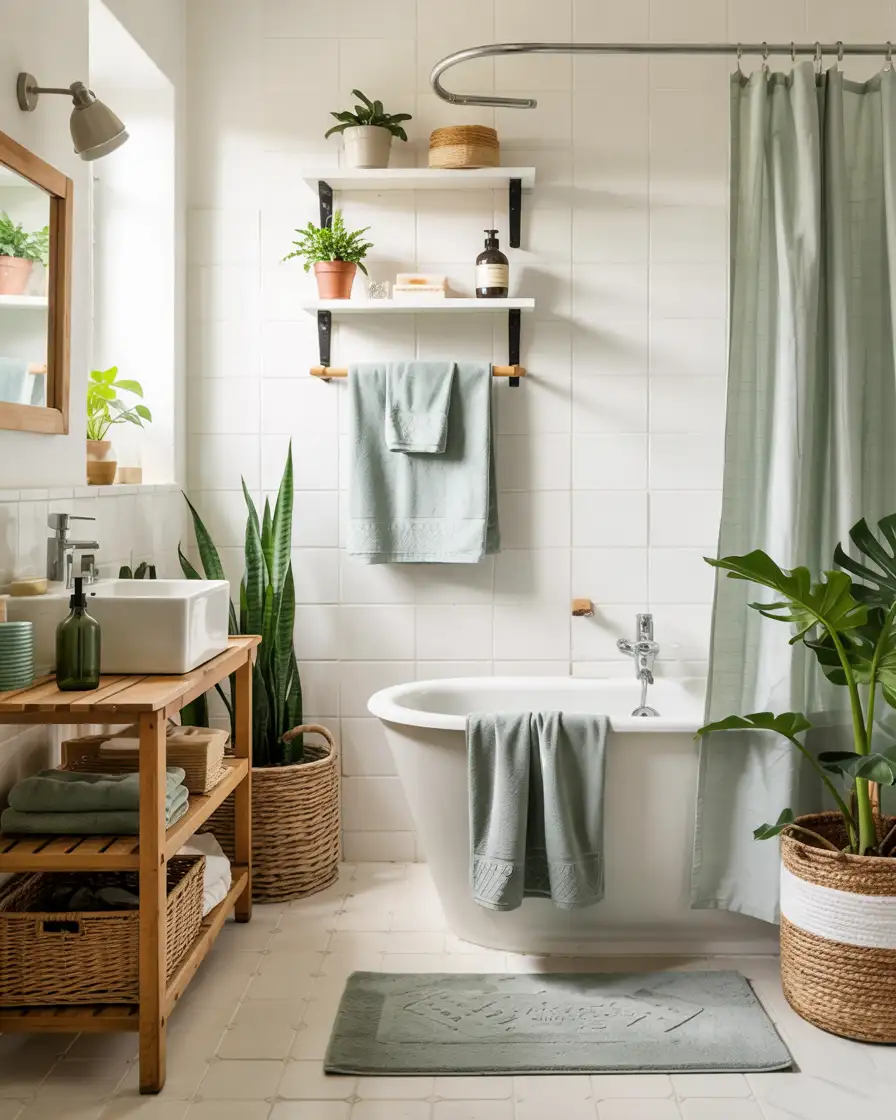
Not ready to paint walls or install tile? Green decor and accessories offer a low-commitment entry point to the trend. Think green towels, bath mats, shower curtains, and plants (obviously). You can also bring in green through artwork, storage baskets, soap dispensers, and even toilet brush holders—yes, those exist and can be beautiful. This approach is perfect for renters or anyone testing the waters before committing to permanent green elements. It’s also the easiest way to update a bathroom seasonally or as trends evolve. 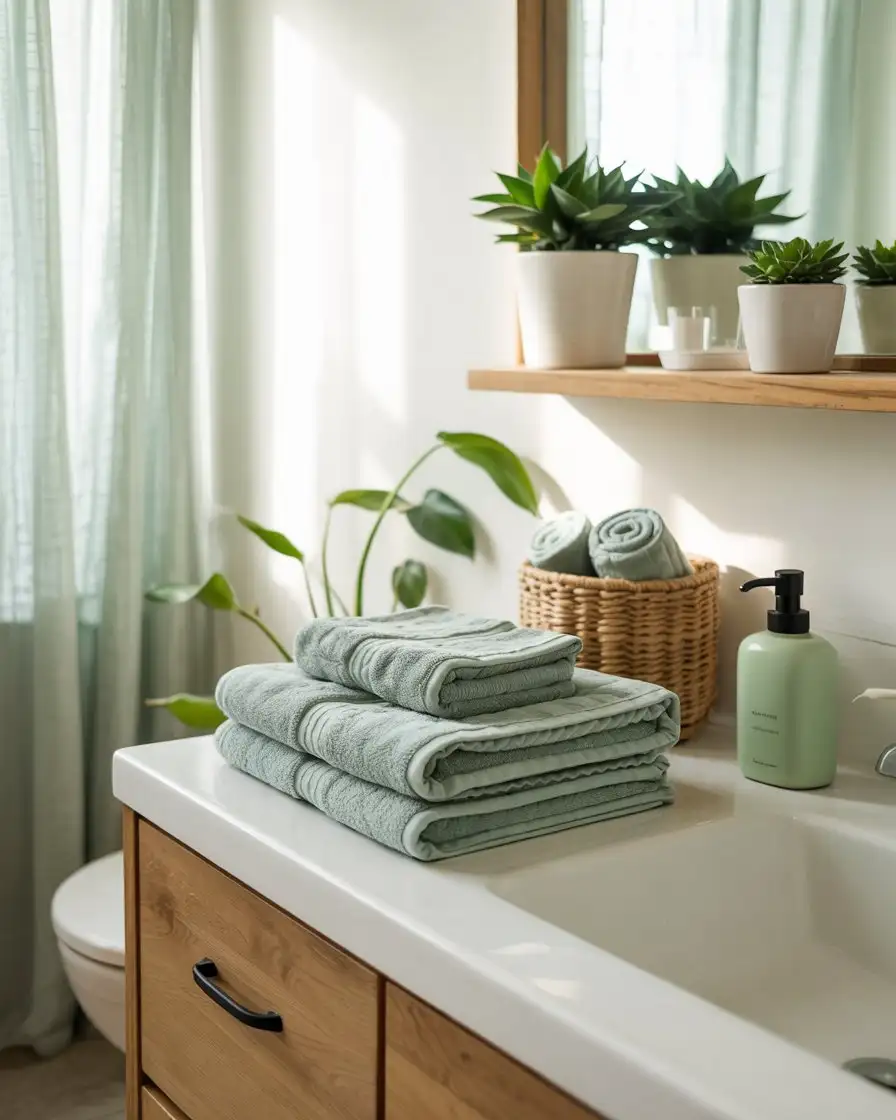
Budget angle: green towels and a bath mat from Target or H&M Home can completely shift a bathroom’s feel for under $50. Add a few potted plants (pothos and ferns thrive in bathroom humidity) for another $20, and suddenly you have a green bathroom without paint or tile. This is also the strategy for testing shades—buy accessories in the green you’re considering to see how you live with it before committing to walls or permanent fixtures.
21. Ideas for Every Green Lover
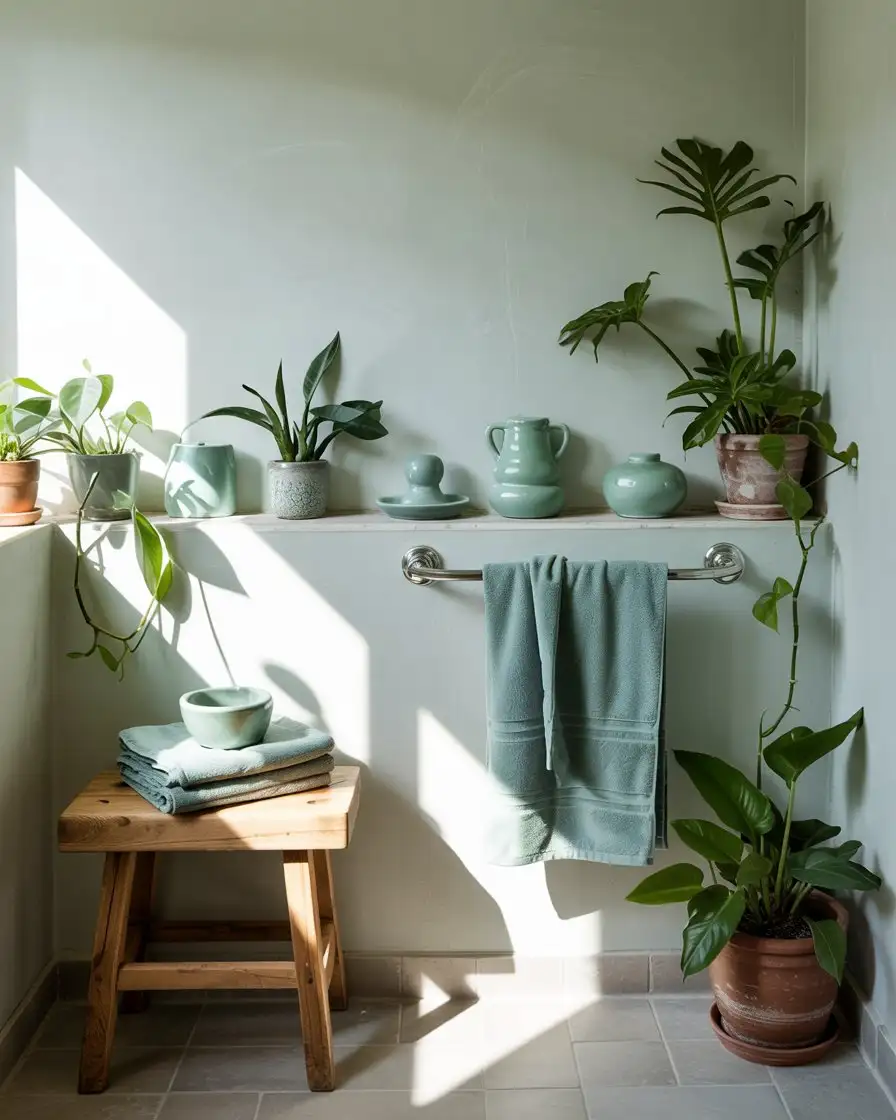
The beauty of green bathrooms is that there are endless ideas to explore—from barely-there mint to saturated emerald, from single accent walls to fully immersive color experiences. Green works in powder rooms and primary baths, in rentals and forever homes, on tight budgets and with unlimited funds. The key is finding the shade and application that resonates with your personal style and practical needs. Don’t be afraid to mix different greens in one space, or to pair green with unexpected colors like pink, terracotta, or even purple. 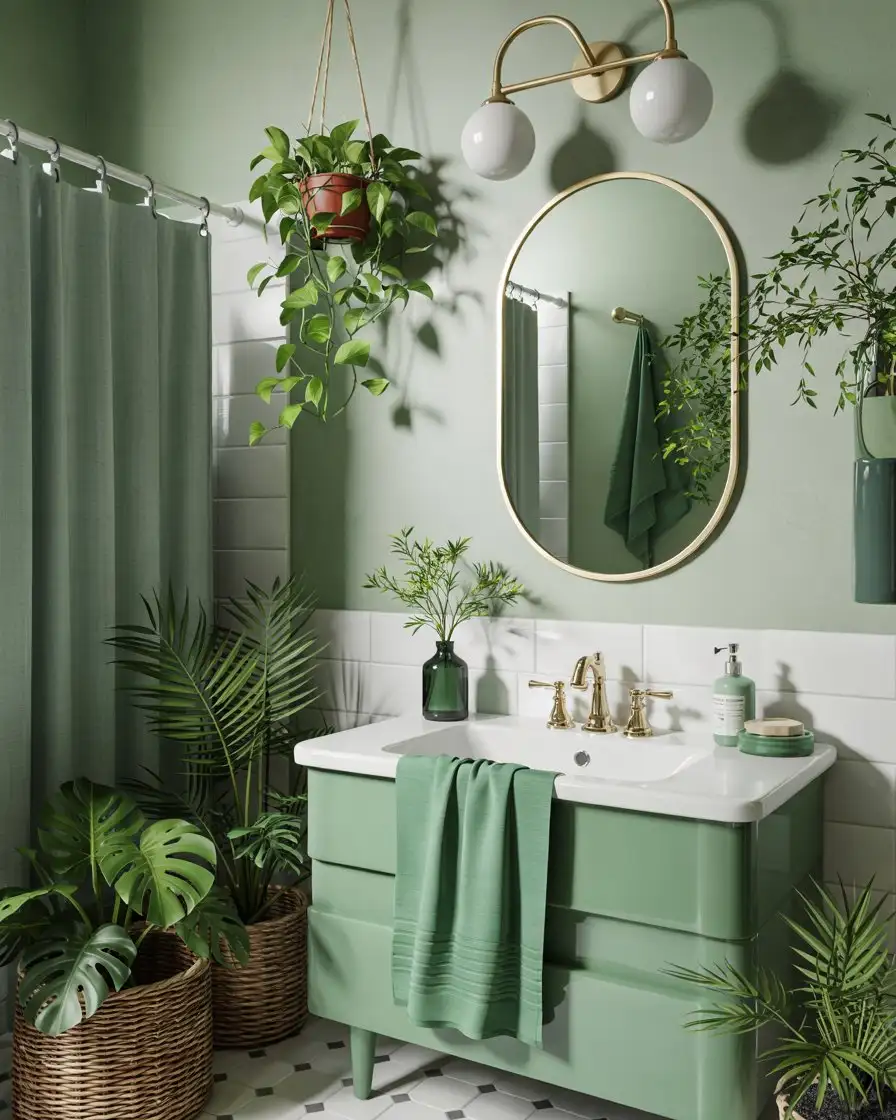
Real homeowner behavior: the most successful green bathrooms are those where the homeowner commits to their vision rather than hedging. Half-hearted green—a tiny accent wall, one green towel—often reads as indecisive rather than intentional. If you love green, embrace it fully in whatever form feels right to you. Paint all the walls, not just one. Choose green tile with confidence. Layer in plants unapologetically. The bathrooms people remember are those where someone made a clear, confident choice and stuck with it.
Conclusion
Green bathrooms in 2026 prove that this versatile color family has staying power far beyond fleeting trends. Whether you’re drawn to moody forest tones or cheerful mint, there’s a green bathroom approach that will work beautifully in your home and reflect your personal style. Which of these ideas speaks to you? Share your favorite green bathroom inspiration or your own green bathroom project in the comments below—we’d love to see how you’re bringing this timeless, nature-inspired palette into your space.