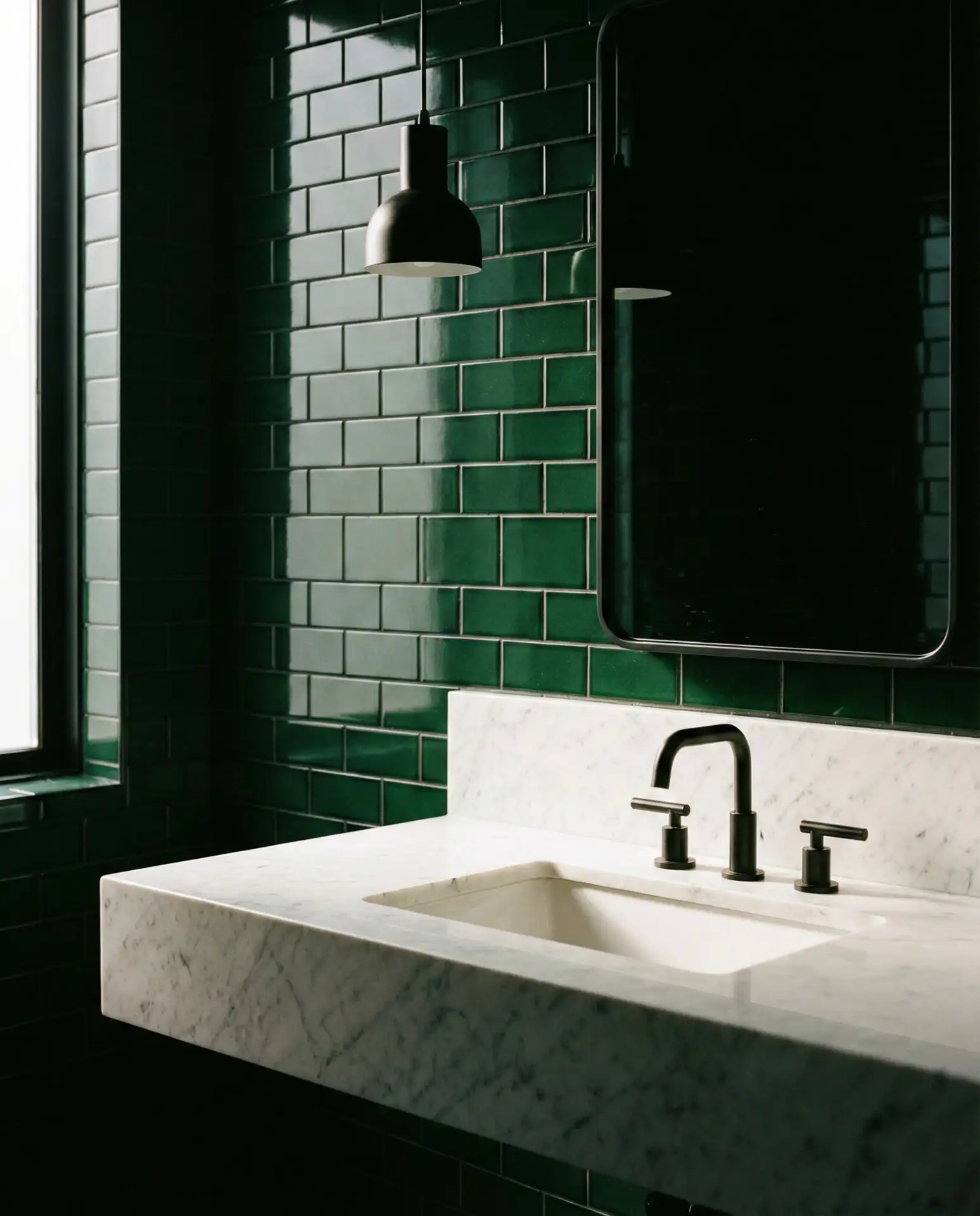
Green tile bathrooms are having a major moment in 2026, blending nature-inspired calm with bold design confidence. Whether you’re drawn to deep emerald drama or soft sage serenity, green tiles offer endless ways to personalize your space. American homeowners are searching Pinterest for fresh ideas that balance trending aesthetics with timeless appeal—and green delivers on both fronts. From vintage-inspired subway tiles to large-format contemporary slabs, this color brings warmth, character, and a connection to the natural world. Here are inspiring green tile bathroom ideas to help you create a space that feels uniquely yours.
1. Dark Emerald Walls with Brass Fixtures
A dark emerald tiled wall creates instant sophistication, especially when paired with warm brass faucets and lighting. This look works beautifully in powder rooms or primary bathrooms where you want to make a statement without overwhelming the space. The richness of deep green tile catches light differently throughout the day, shifting from moody to luminous depending on natural and artificial light sources.
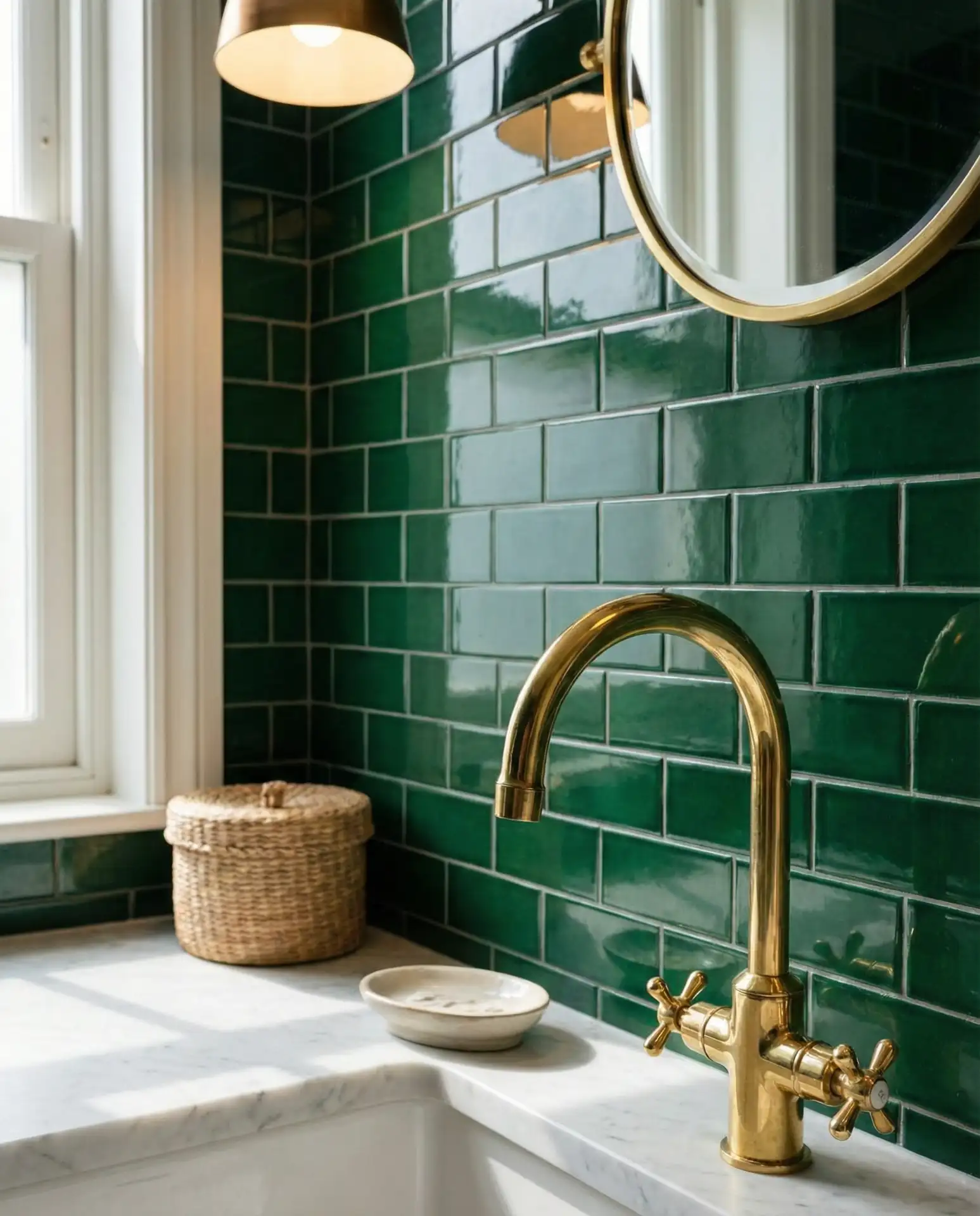
One common mistake is choosing grout that’s too light—it can make dark tiles look choppy. Instead, opt for a charcoal or deep gray grout to maintain visual continuity. The brass fixtures prevent the space from feeling cold, adding just enough warmth to balance the jewel-toned tiles. This combination has become especially popular in urban apartments where homeowners want boutique hotel vibes on a realistic budget.
2. Light Sage Subway Tiles for a Calm Retreat
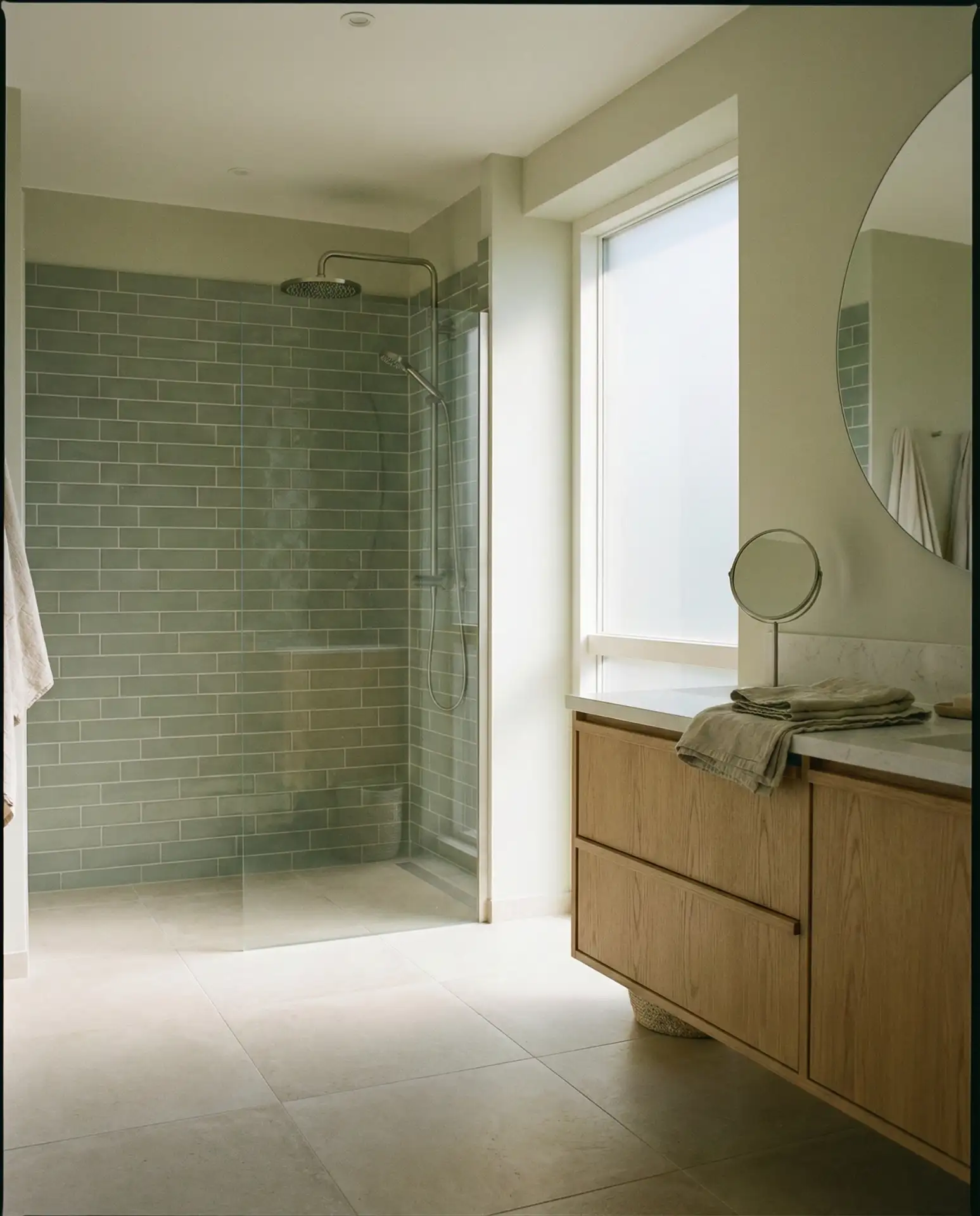
Light sage green subway tiles bring a soft, spa-like quality to any bathroom, offering visual interest without overwhelming the senses. This shade pairs effortlessly with white fixtures, natural wood accents, and matte black hardware. It’s a versatile choice that works in everything from farmhouse-style homes to sleek contemporary condos, making it one of the most searched interior design trends on Pinterest right now.
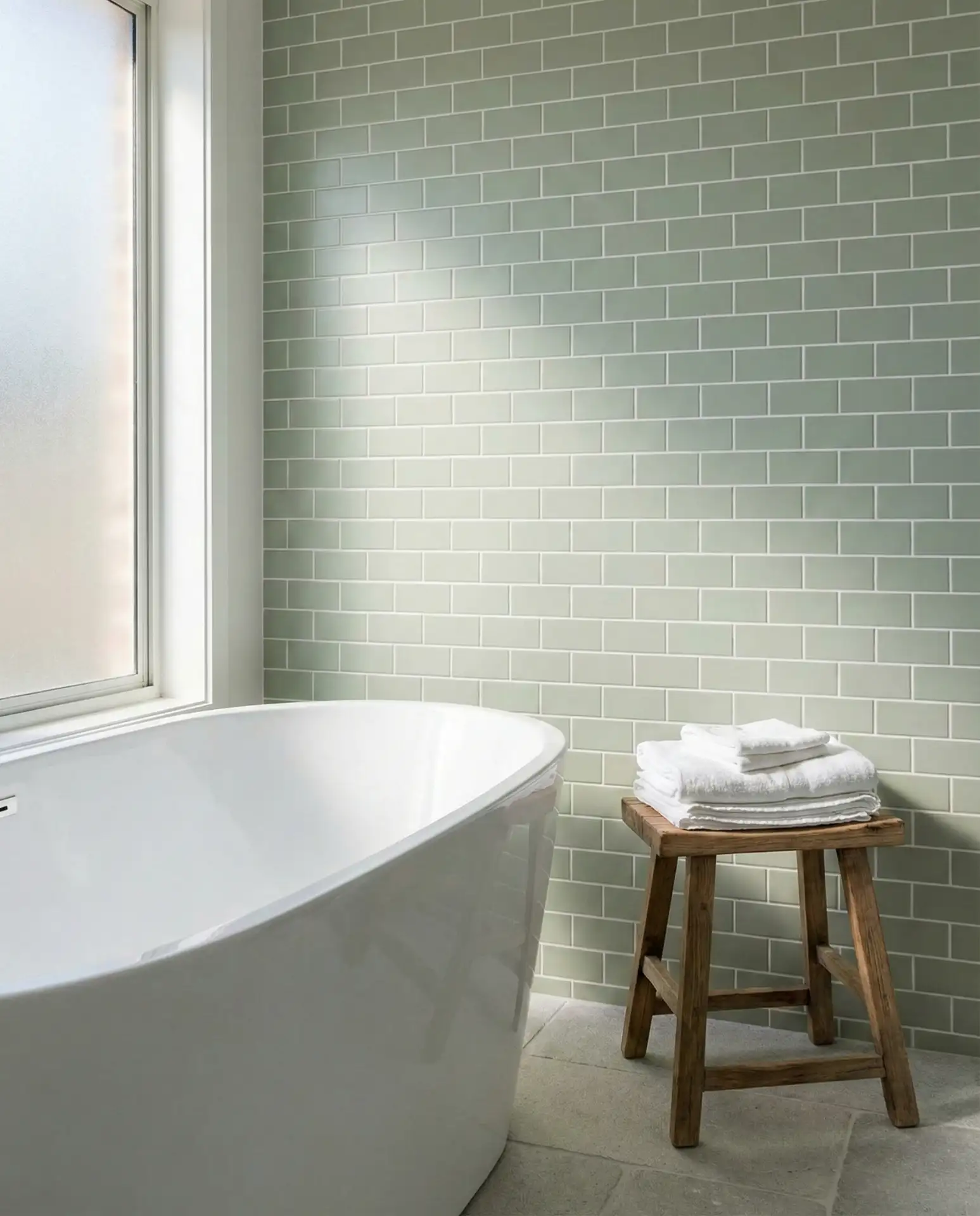
Where it works best: Bathrooms with limited natural light benefit enormously from sage green, as it reflects available light better than darker hues while still adding color. The subway tile format keeps things classic and budget-friendly, with installation costs typically lower than more complex patterns. Many homeowners find this shade ages beautifully, never feeling trendy or dated even years after installation.
3. Mint Green Hexagon Floor Tiles
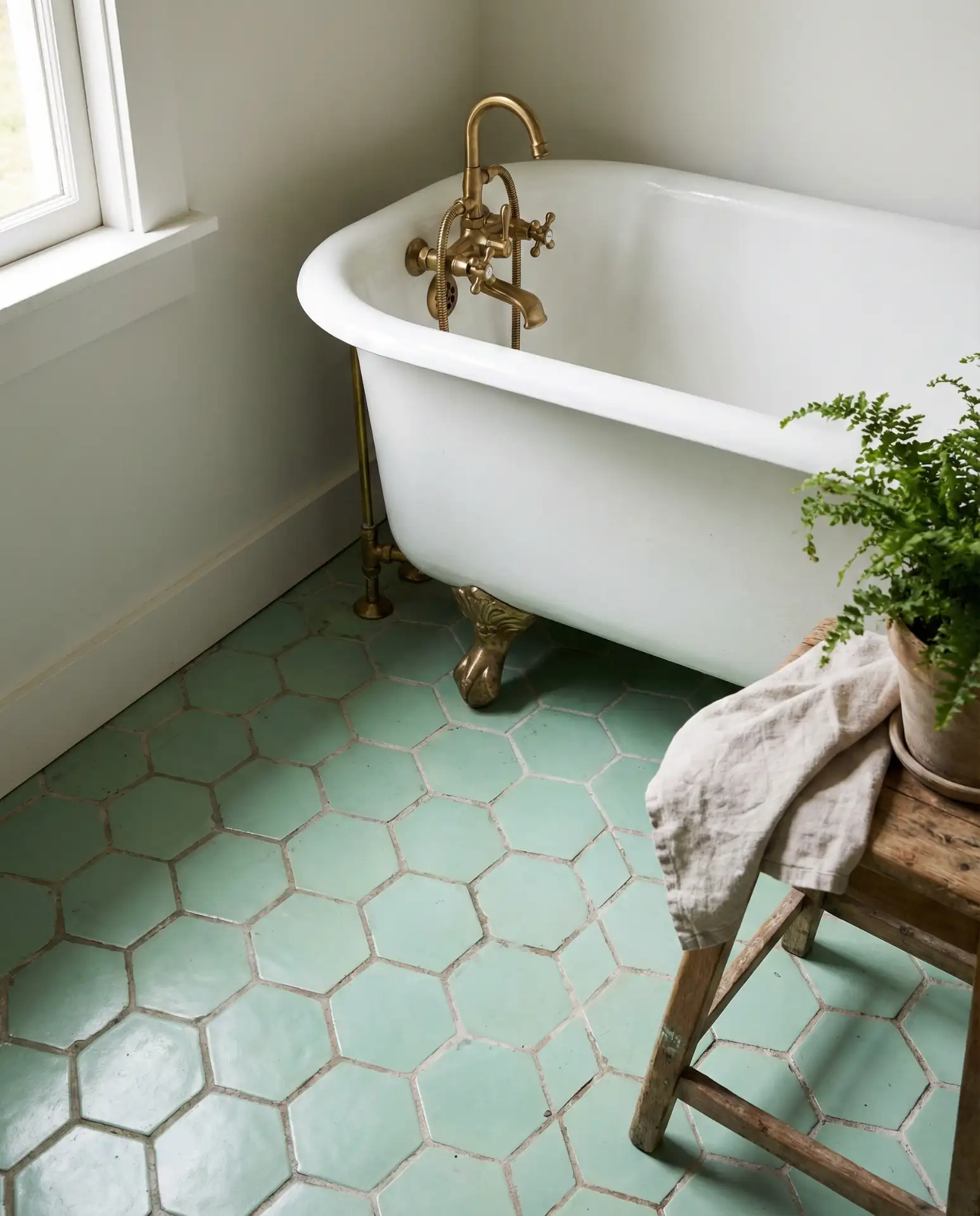
Mint green hexagon tiles on the floor create a playful yet sophisticated foundation for your bathroom design. This geometric shape adds visual movement without being overly busy, and the soft mint tone keeps the space feeling fresh and airy. Pair with white walls and simple fixtures to let the floor be the star, or layer in vintage-inspired elements for a retro feel that’s trending hard in 2026.
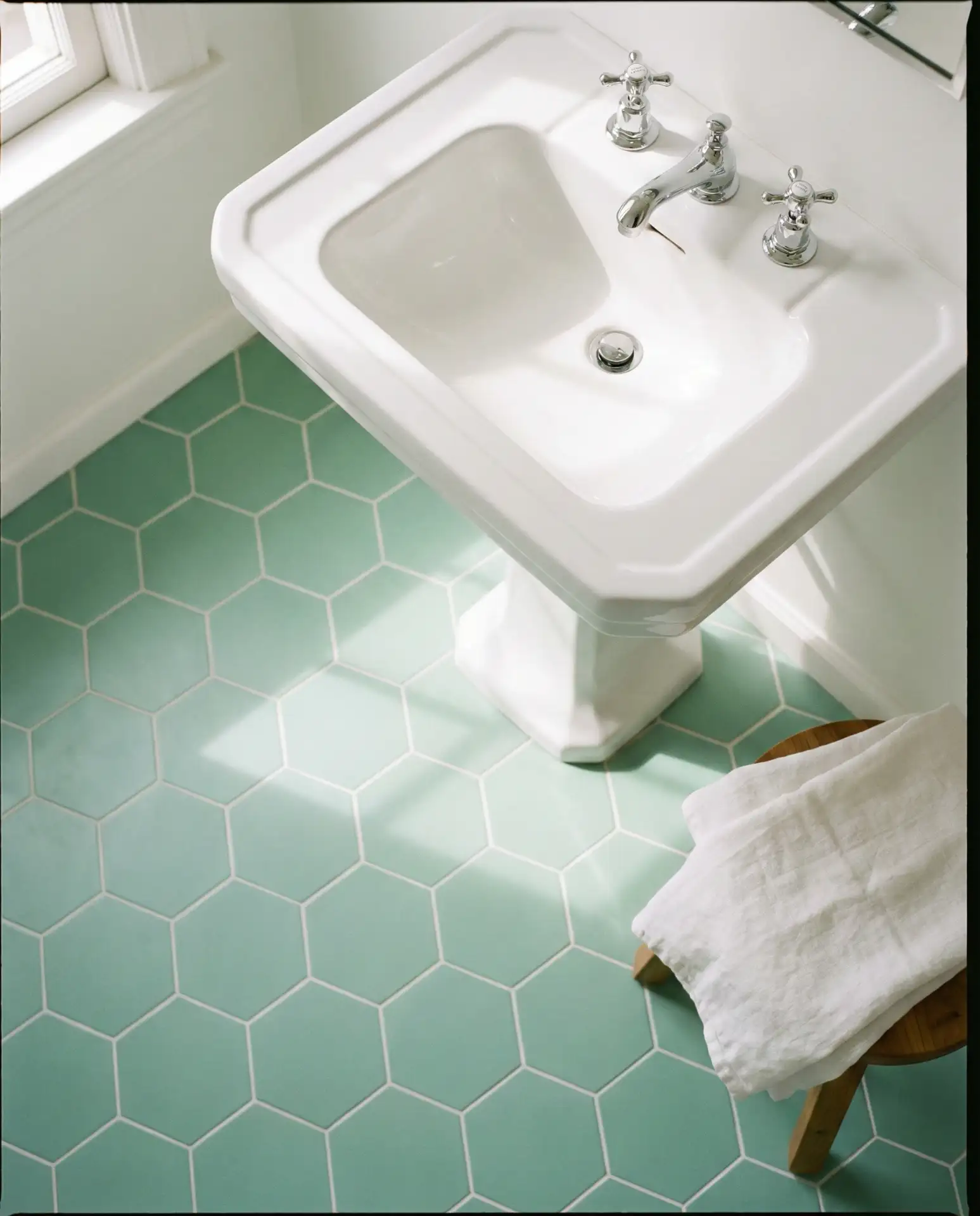
A designer friend recently installed mint hex tiles in a 1920s bungalow remodel, and the homeowners said it perfectly bridged the home’s original character with modern style. The key is keeping everything else relatively simple—too many competing patterns can make a small bathroom feel chaotic. These tiles typically run between four and eight dollars per square foot, making them an accessible upgrade for most renovation budgets.
4. Forest Green Zellige Tiles for Texture

Handmade forest green zellige tiles bring an artisanal quality that machine-made tiles simply can’t match. The slight variations in color and the glossy, undulating surface catch light beautifully, creating depth and movement on your wall. This Moroccan-inspired tile style has become incredibly popular for shower surrounds and accent walls, offering a high-end look that feels both global and grounded.
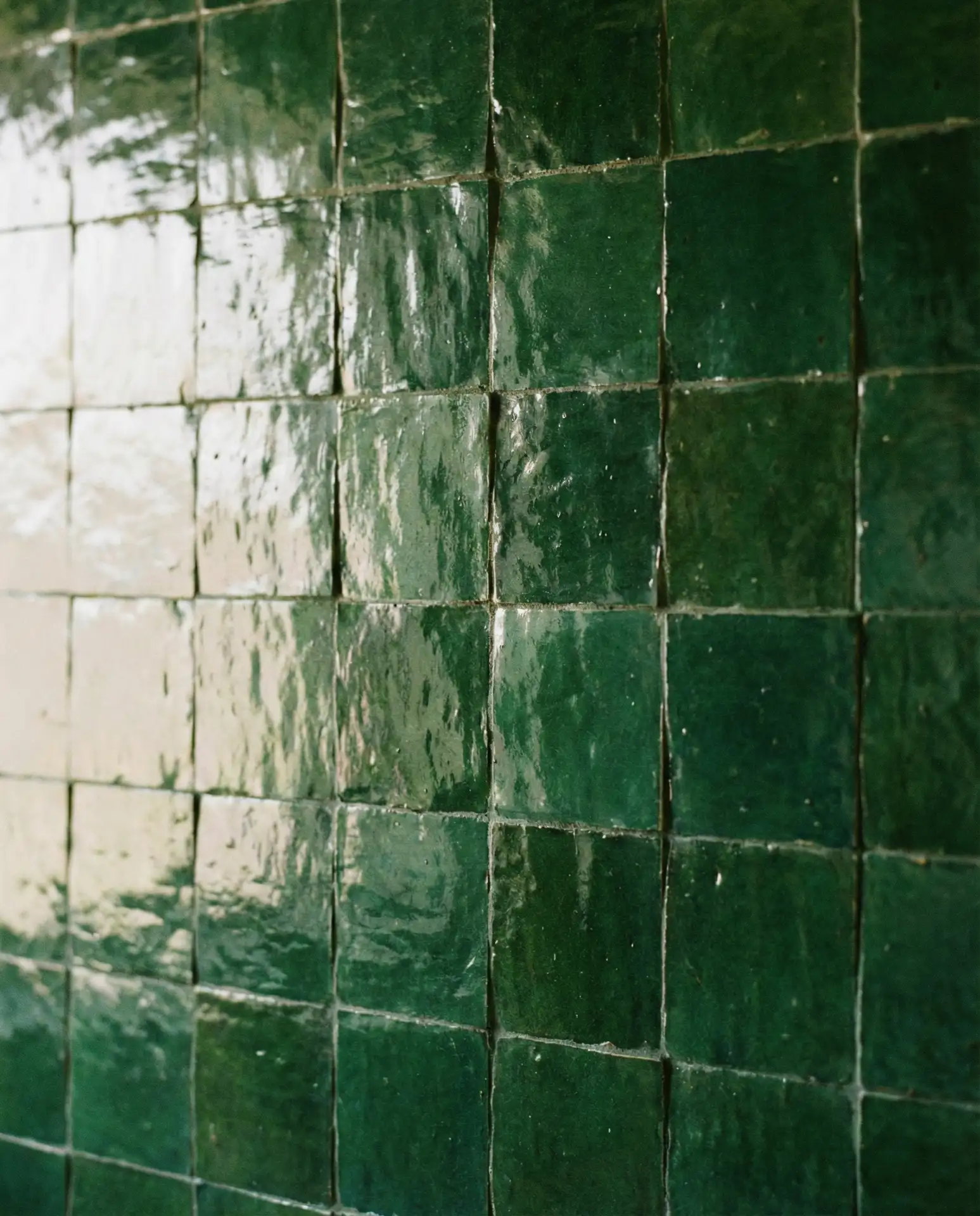
Real homeowner behavior shows that people often start with a small zellige accent wall before committing to larger installations—the tiles can be pricey, sometimes reaching fifteen to twenty-five dollars per square foot. But the investment pays off in visual impact and longevity. The handmade imperfections are actually the point, so embrace the irregularity rather than seeking perfect uniformity.
5. Olive Green Large Format Slabs

Olive green large-format tiles create a sleek, modern look with minimal grout lines for easy maintenance. These oversized slabs—often 24×48 inches or larger—work beautifully in contemporary bathrooms where clean lines and simplicity reign. The muted, earthy tone of olive green feels both current and timeless, grounding the space without demanding too much attention.

Where it works best: Open-concept primary bathrooms and wet rooms where the large tiles can truly shine without visual interruption. The reduced grout lines mean less scrubbing and fewer places for mildew to hide, which busy families particularly appreciate. Olive green also plays beautifully with natural materials like wood and stone, making it ideal for Pacific Northwest or California-inspired designs.
6. Jade Green Penny Tiles for Vintage Charm
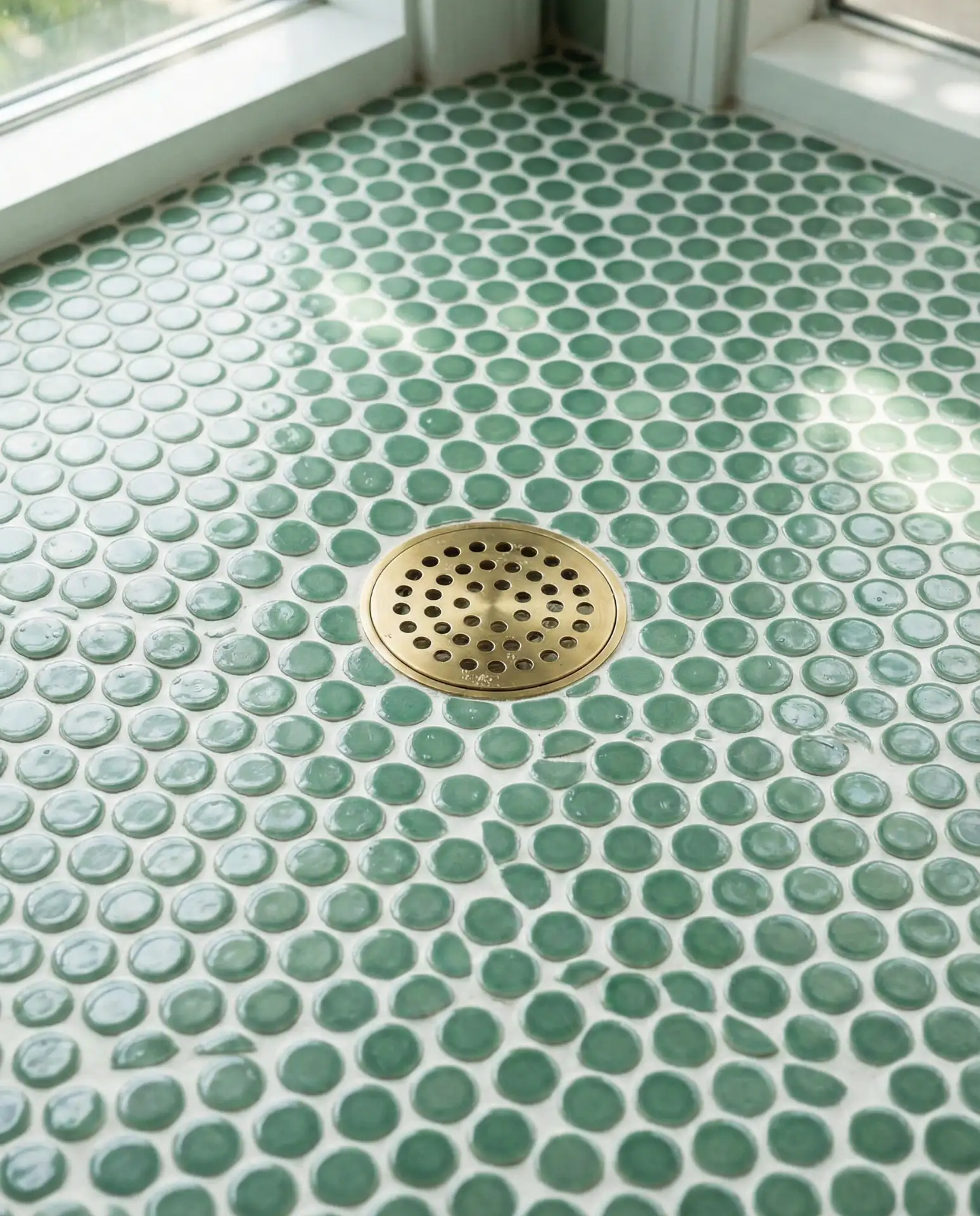
Jade green penny round tiles evoke classic American bathrooms from the 1920s and 30s while feeling completely fresh in 2026. The small circular tiles create a tactile, mosaic-like surface that works beautifully on floors or as a tub surround. White grout keeps the look crisp and vintage-authentic, while darker grout can give it a more contemporary edge.
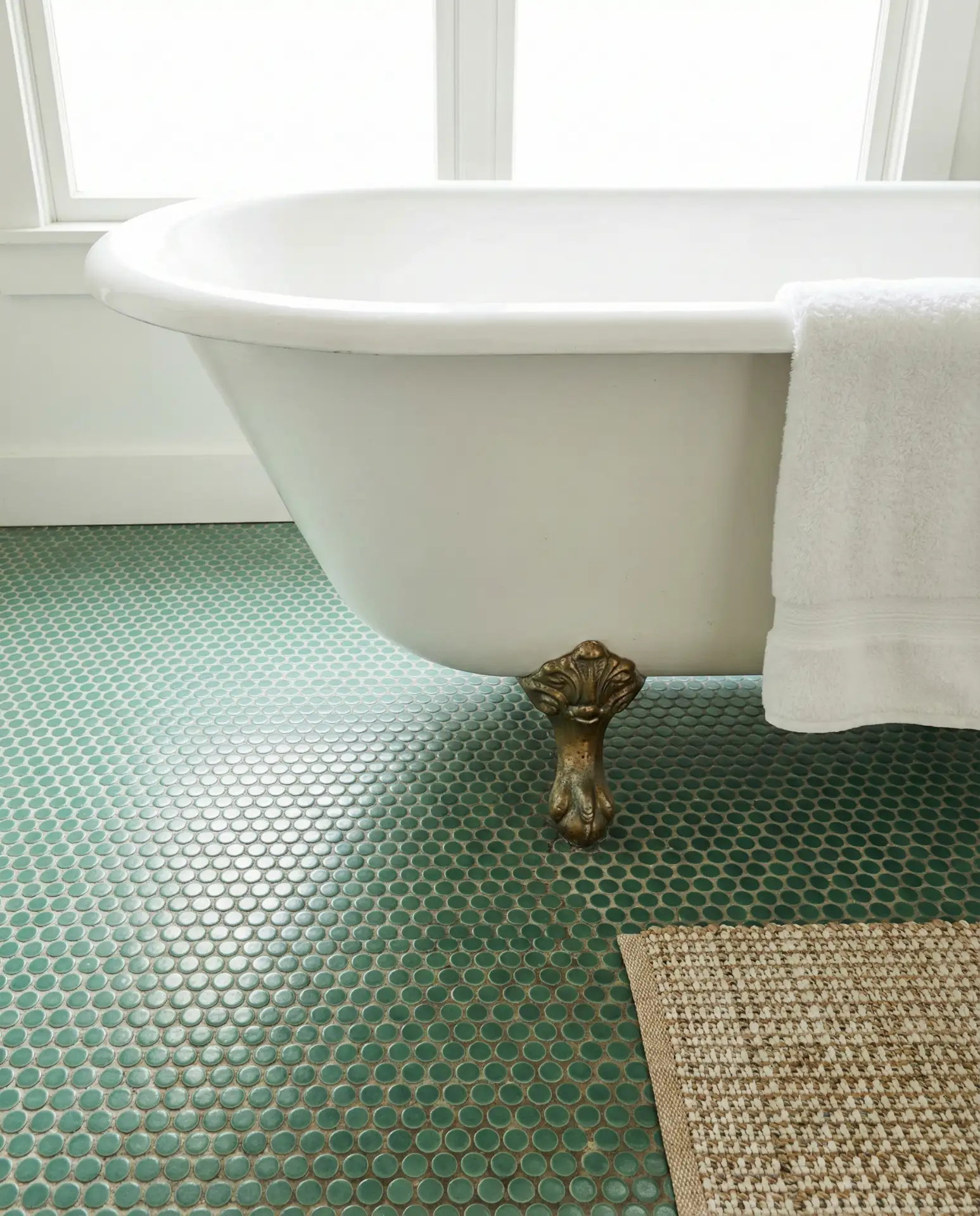
Practical insight: Penny tiles require more grout than larger formats, so sealing is essential to prevent staining and simplify cleaning. Many installers recommend using an epoxy grout for wet areas, which resists moisture better than traditional cement-based options. The curved edges of penny tiles also provide subtle slip resistance, making them a smart choice for shower floors where safety matters.
7. Blue-Green Gradient Tiles for Depth
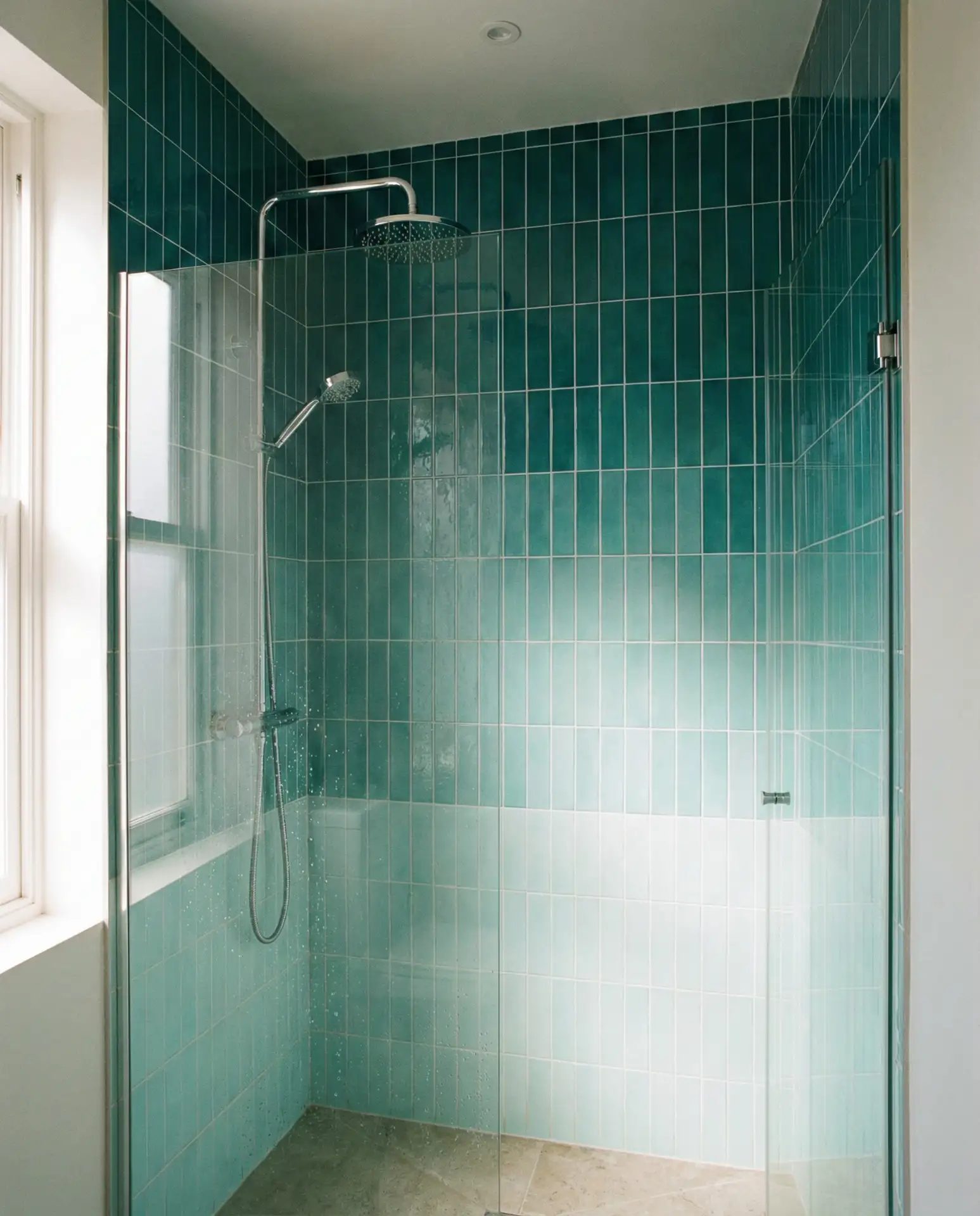
A blue-green gradient tile installation creates mesmerizing visual depth, shifting from aqua at the bottom to deeper green at the top. This technique works especially well in shower designs where the gradient can run floor to ceiling, mimicking the natural color variations found in water or forest canopies. The effect is both artistic and calming, transforming a functional shower into a focal point.
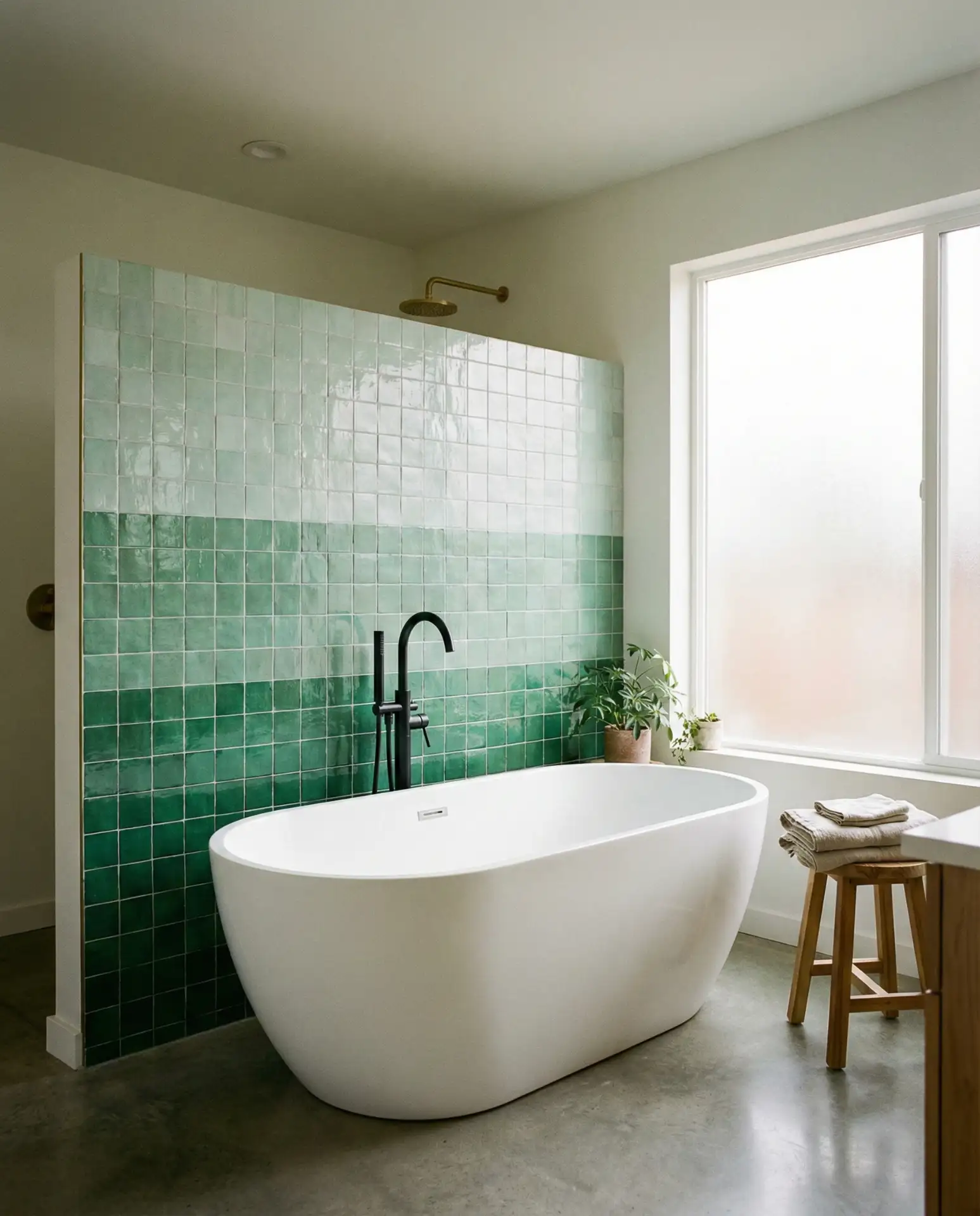
This is particularly popular in coastal regions where homeowners want to echo the ocean without literal seashell décor. The gradient effect requires careful planning during installation—tiles are typically arranged from lightest to darkest in a deliberate sequence. Budget-wise, expect to pay slightly more for installation since the tile setter needs extra time to ensure proper color flow throughout the space.
8. White and Green Checkerboard Pattern
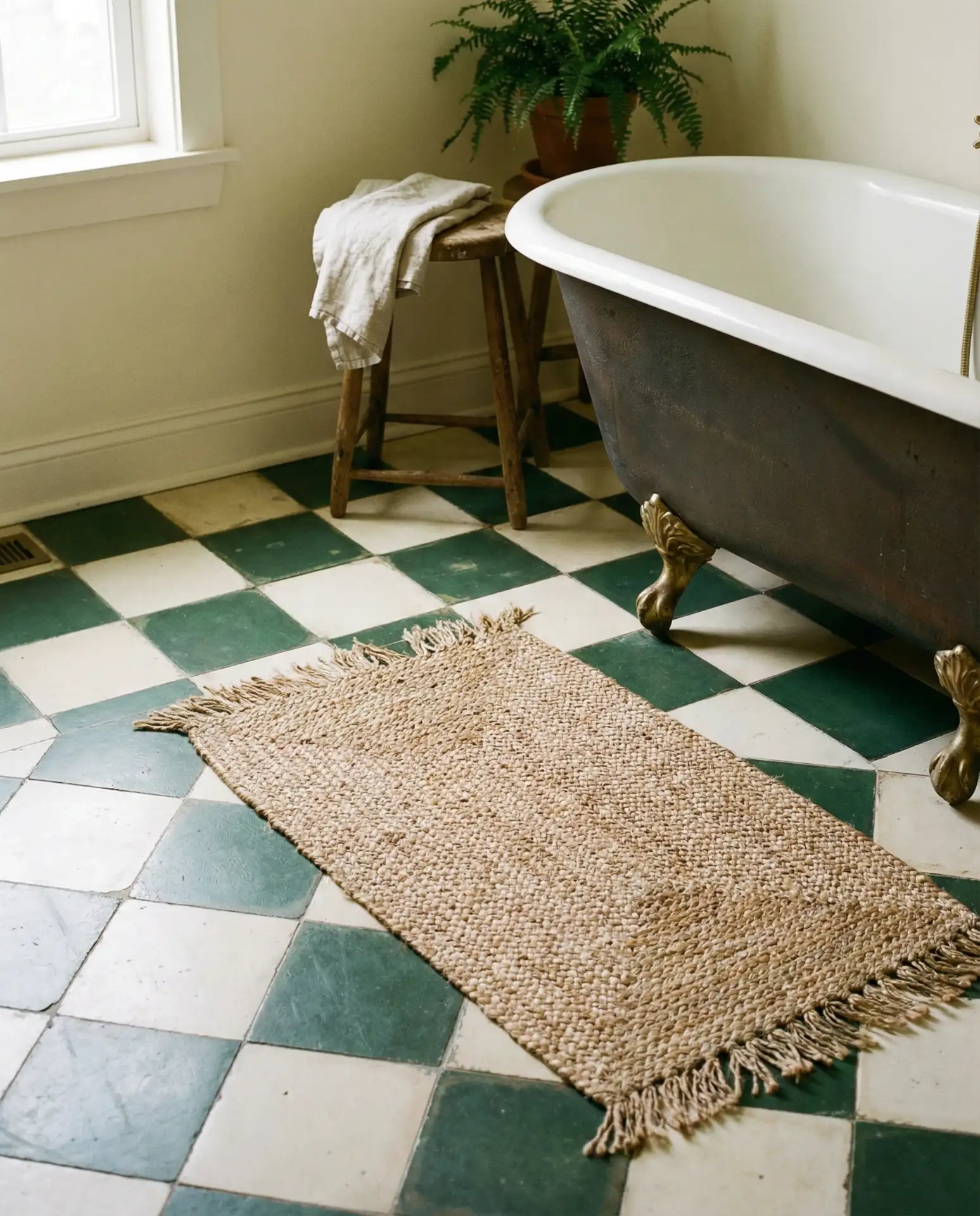
A white and green checkerboard pattern brings playful geometry to bathroom flooring ideas, creating visual interest that never gets boring. This classic combination works in virtually any style bathroom, from farmhouse to mid-century modern. The alternating squares create movement and energy, making even small bathrooms feel more dynamic and intentionally designed.

Expert-style commentary suggests using larger checkerboard tiles—at least 8×8 inches—in smaller bathrooms to avoid a dizzying effect. The pattern naturally guides the eye through the space, which can actually make a tight bathroom feel larger. Standard ceramic or porcelain tiles in this configuration typically cost between three and six dollars per square foot, making it an affordable way to add major personality.
9. Pale Green Moroccan Fish Scale Tiles
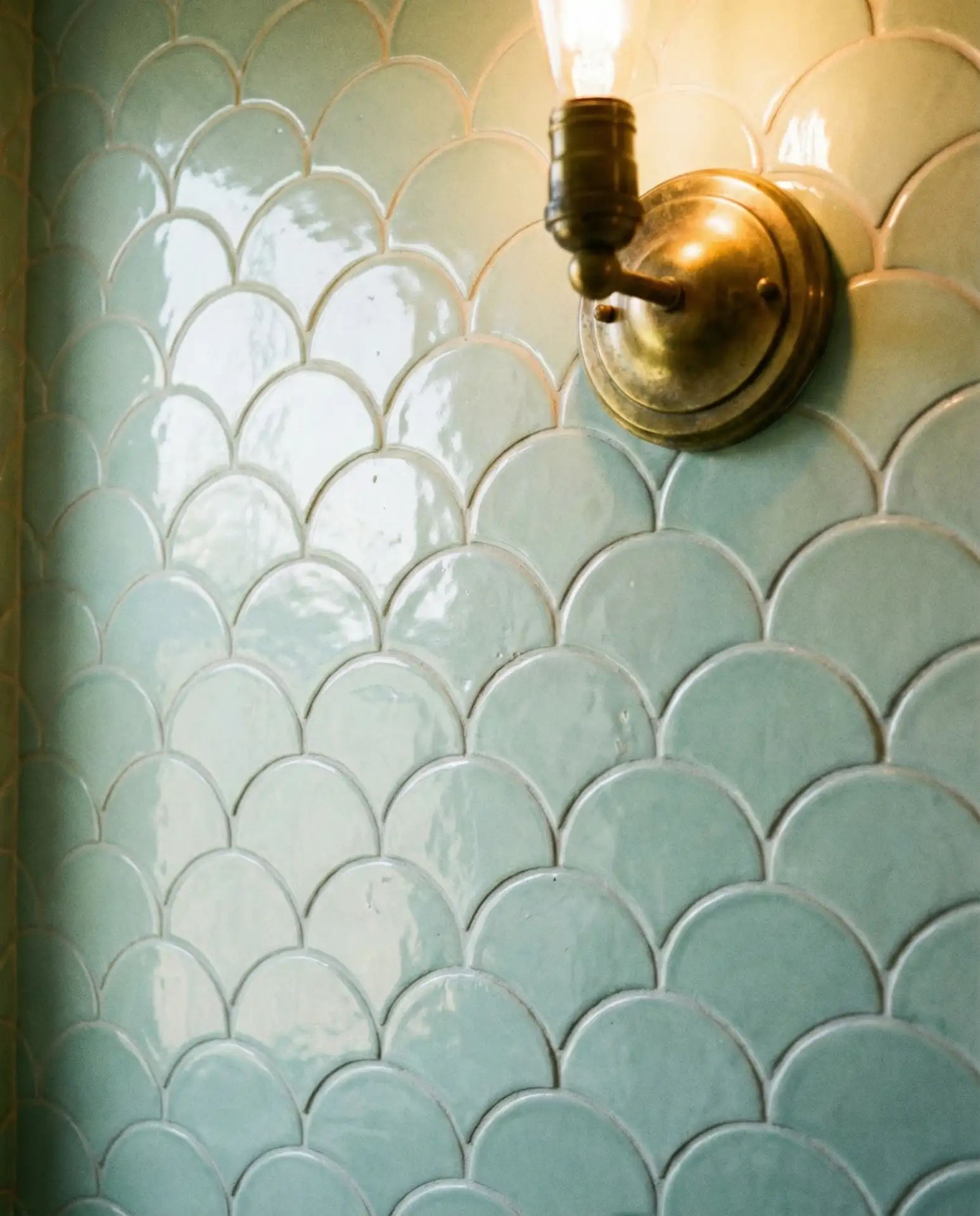
Pale green fish scale (or scallop) tiles create a dreamy, romantic atmosphere that’s been exploding on Pinterest. These overlapping tiles catch light beautifully, creating subtle shadows that add dimension to your wall. The organic shape feels softer than geometric tiles, making them perfect for bathrooms where you want a gentle, ethereal quality rather than sharp modern lines.
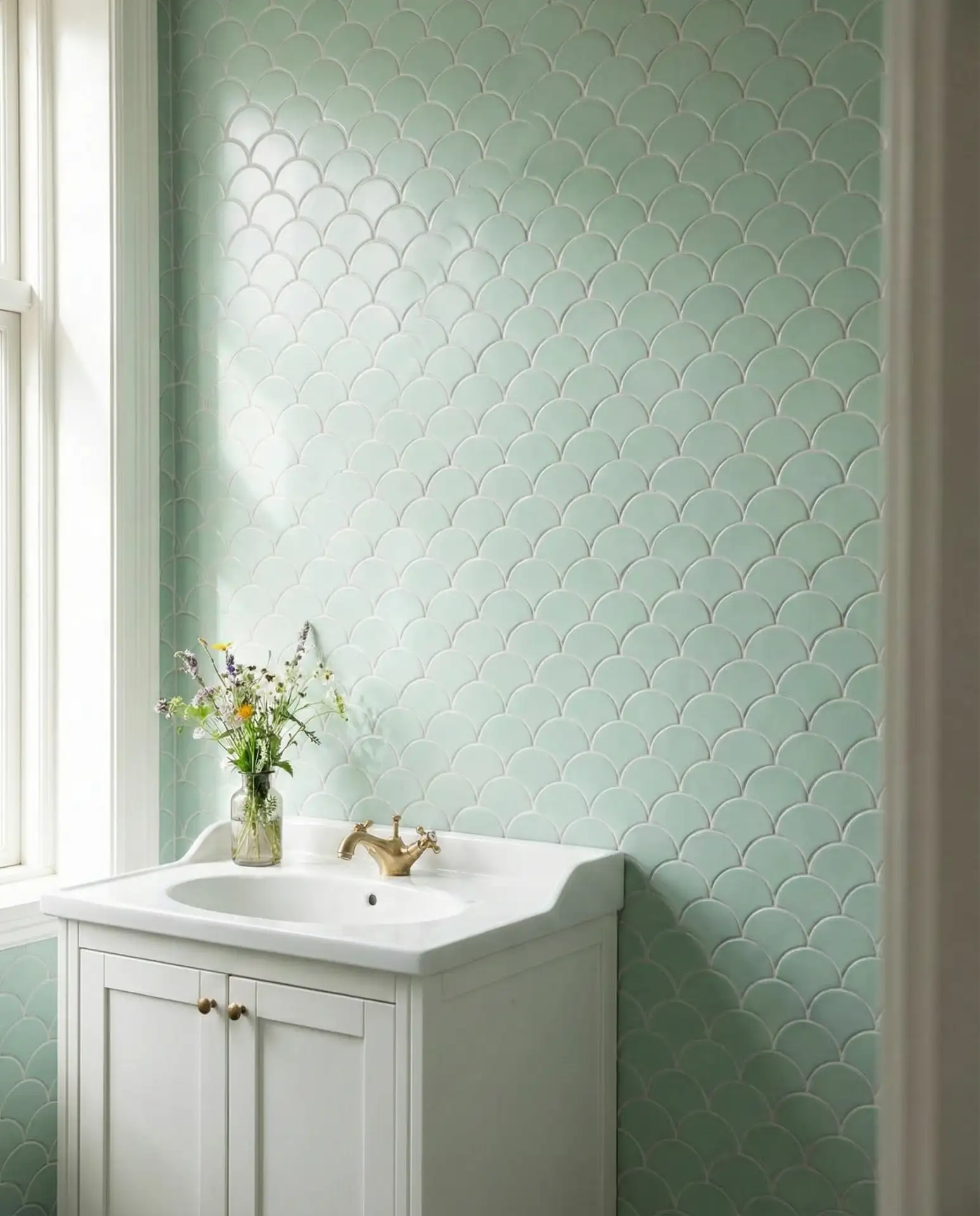
A couple in Austin recently tiled their bathroom with these and mentioned how the changing daylight throughout the day makes the walls look almost alive. The installation is more time-intensive than standard subway tile, so labor costs can run higher. Many homeowners use fish scale tiles as an accent—perhaps just behind the vanity or in the shower—to control costs while still achieving the look.
10. Black and Green Contrast Tiles
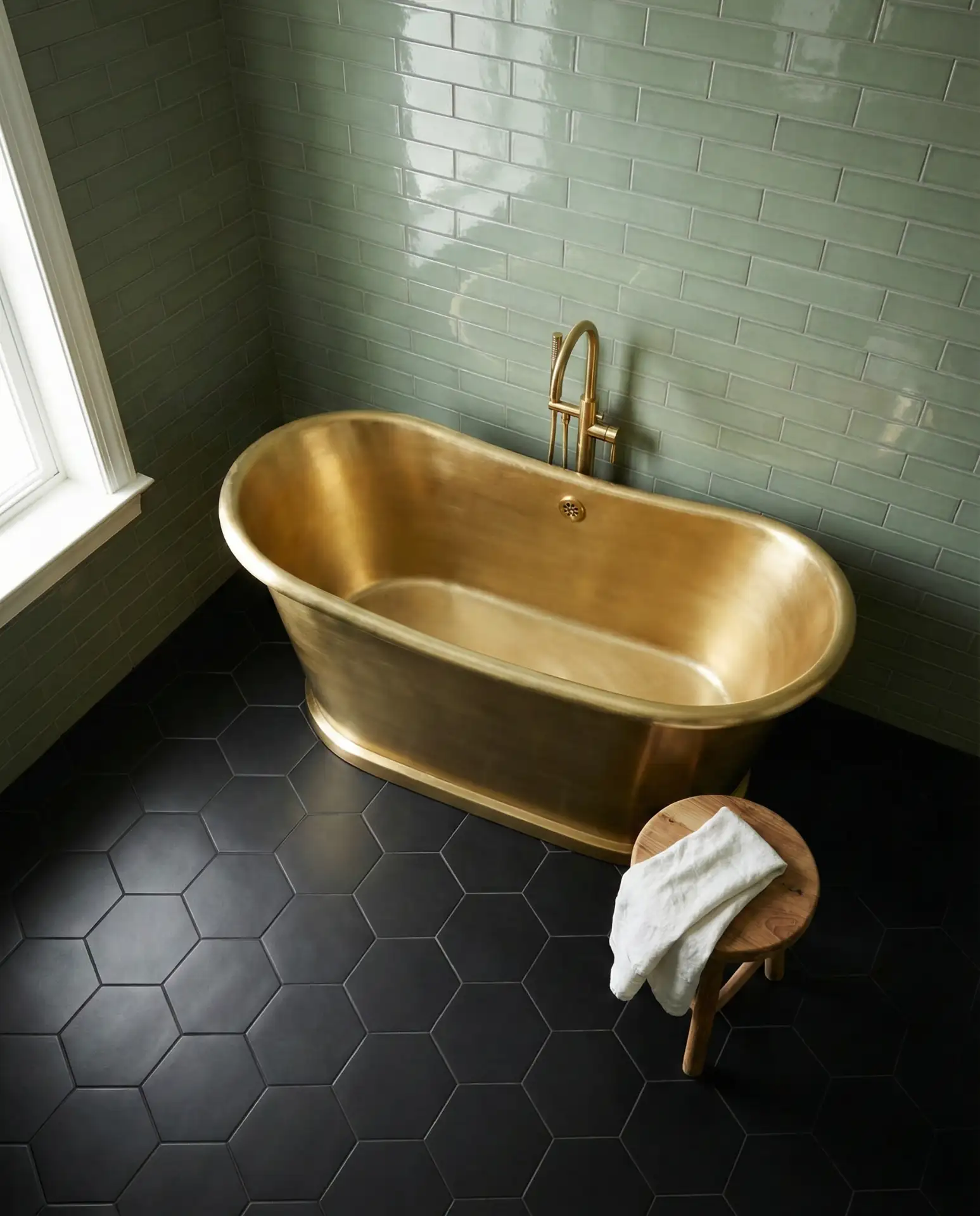
Black and green tile combinations create dramatic, sophisticated spaces with serious visual impact. Whether you use black grout with green tiles or alternate black floor tiles with green walls, this pairing feels both modern and timeless. The contrast keeps things from feeling too soft or too harsh, striking a perfect balance that works in everything from minimalist lofts to traditional townhomes.
Where it works best: Bathrooms with good natural light can handle this darker palette without feeling cave-like. The black anchors the space and makes the green feel more intentional and curated. If you’re nervous about going for a full black floor, consider starting with just black grout—it’s a lower-commitment way to test the dramatic effect before diving into a full black and green scheme.
11. Green and Pink Retro Color Combination
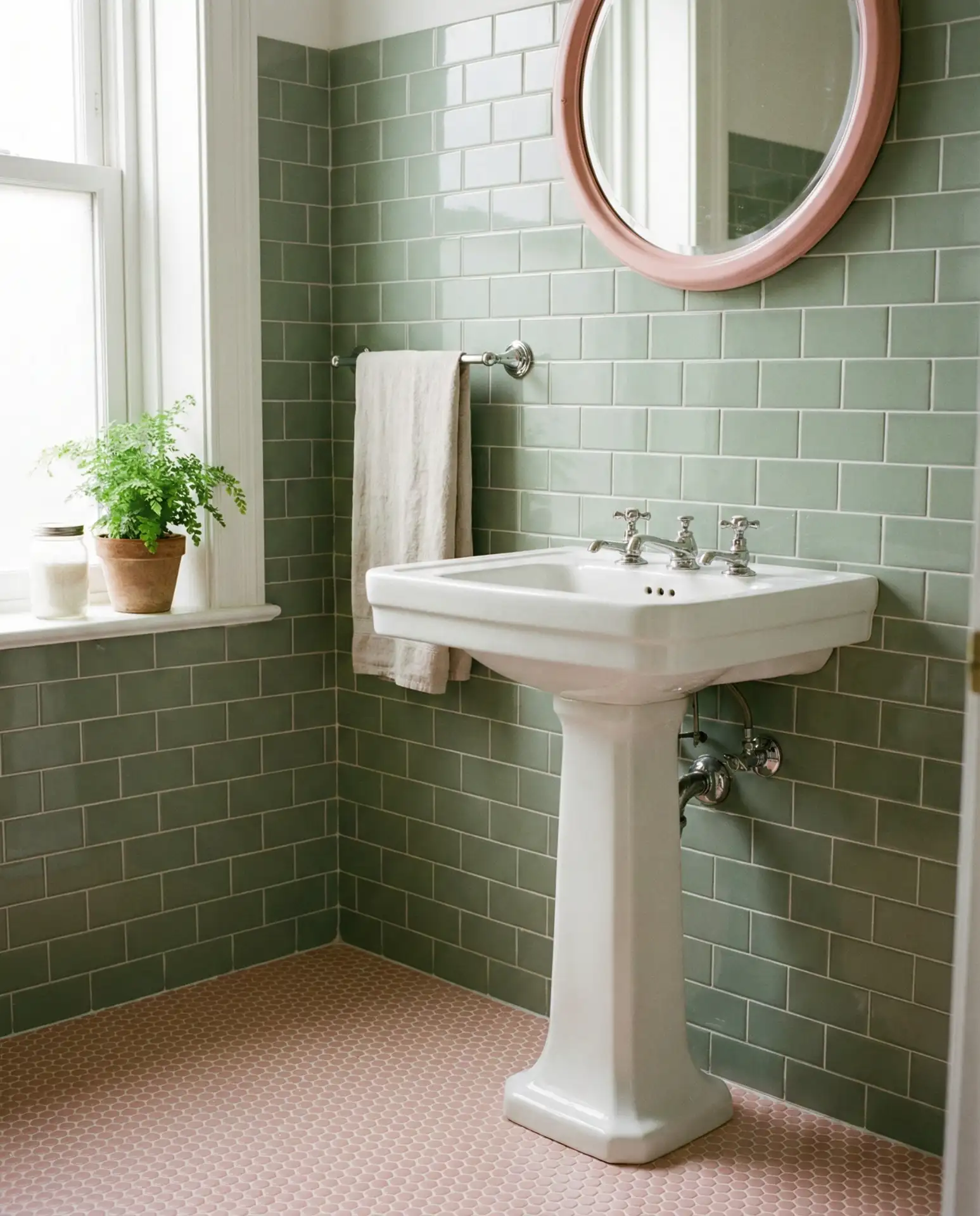
A pink and green color combination throwback is having a major moment, channeling 1950s diners and vintage motels in the best possible way. This unexpected pairing works beautifully when you use soft, muted tones rather than neon brights—think dusty rose with sage or blush with seafoam. The combination feels playful, feminine, and completely unique in today’s mostly neutral bathroom landscape.

Common mistakes include going too bright with both colors, which can feel overwhelming rather than charming. Instead, let one color dominate and use the other as an accent. Many homeowners use green as the primary tile color and bring in pink through towels, bath mats, or a painted vanity. This approach gives you the retro vibe without permanently committing to a potentially polarizing palette.
12. Aloe Green Matte Tiles for a Soft Look
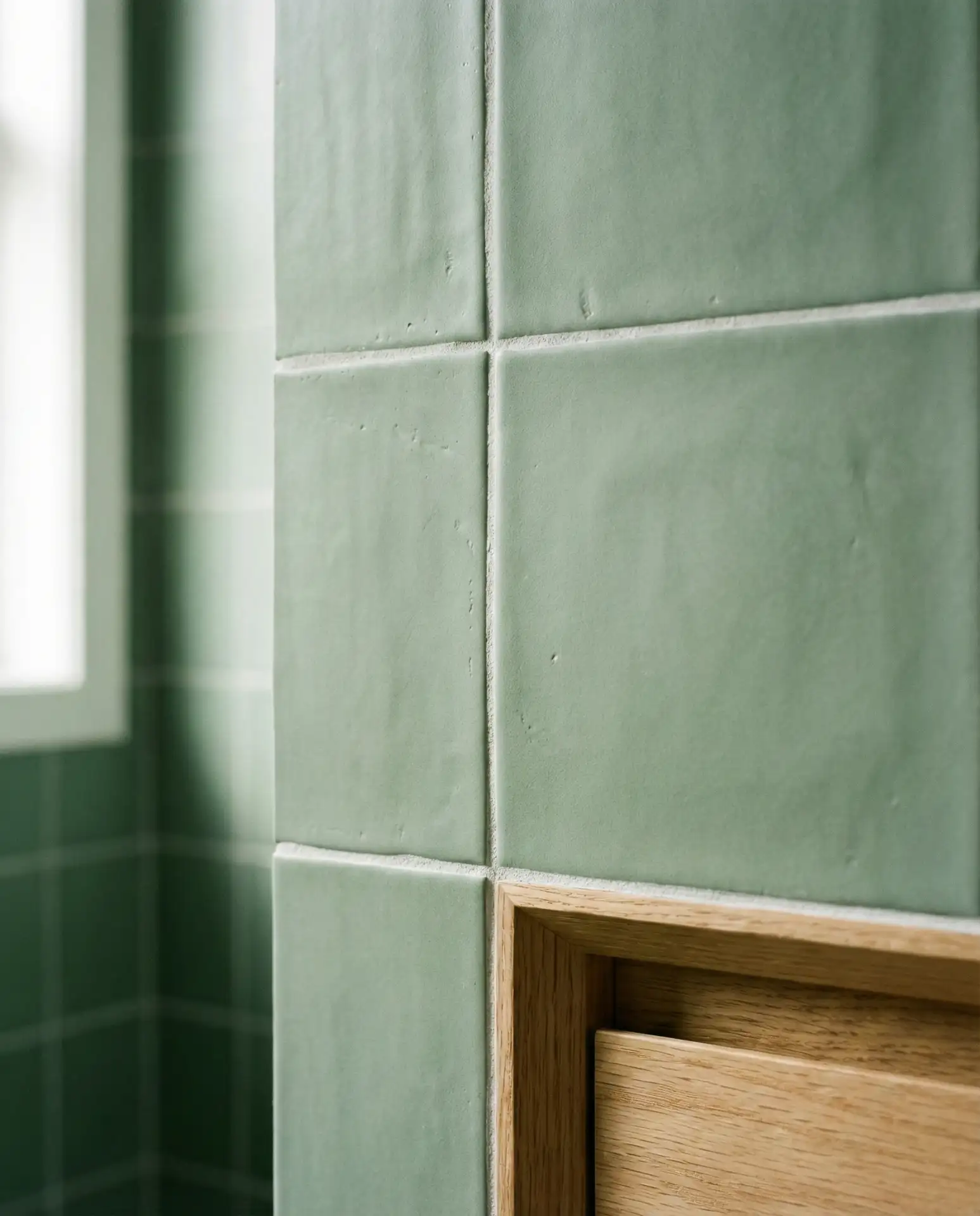
Aloe green tiles with a matte finish create an incredibly soothing, organic feel that’s perfect for spa-inspired bathrooms. Unlike glossy tiles that reflect light sharply, matte surfaces absorb and diffuse light for a softer, more intimate atmosphere. This gentle shade of green works beautifully with natural materials like wood, linen, and stone, grounding your interior design in nature-inspired tranquility.

Practical insight: Matte tiles show water spots less obviously than glossy finishes, making them easier to maintain in daily use. However, they can be slightly more porous, so proper sealing is important in wet areas. The softness of aloe green makes it particularly forgiving with decor—it pairs equally well with warm metallics like brass or cool metals like brushed nickel.
13. Green Terrazzo Tiles for Speckled Interest
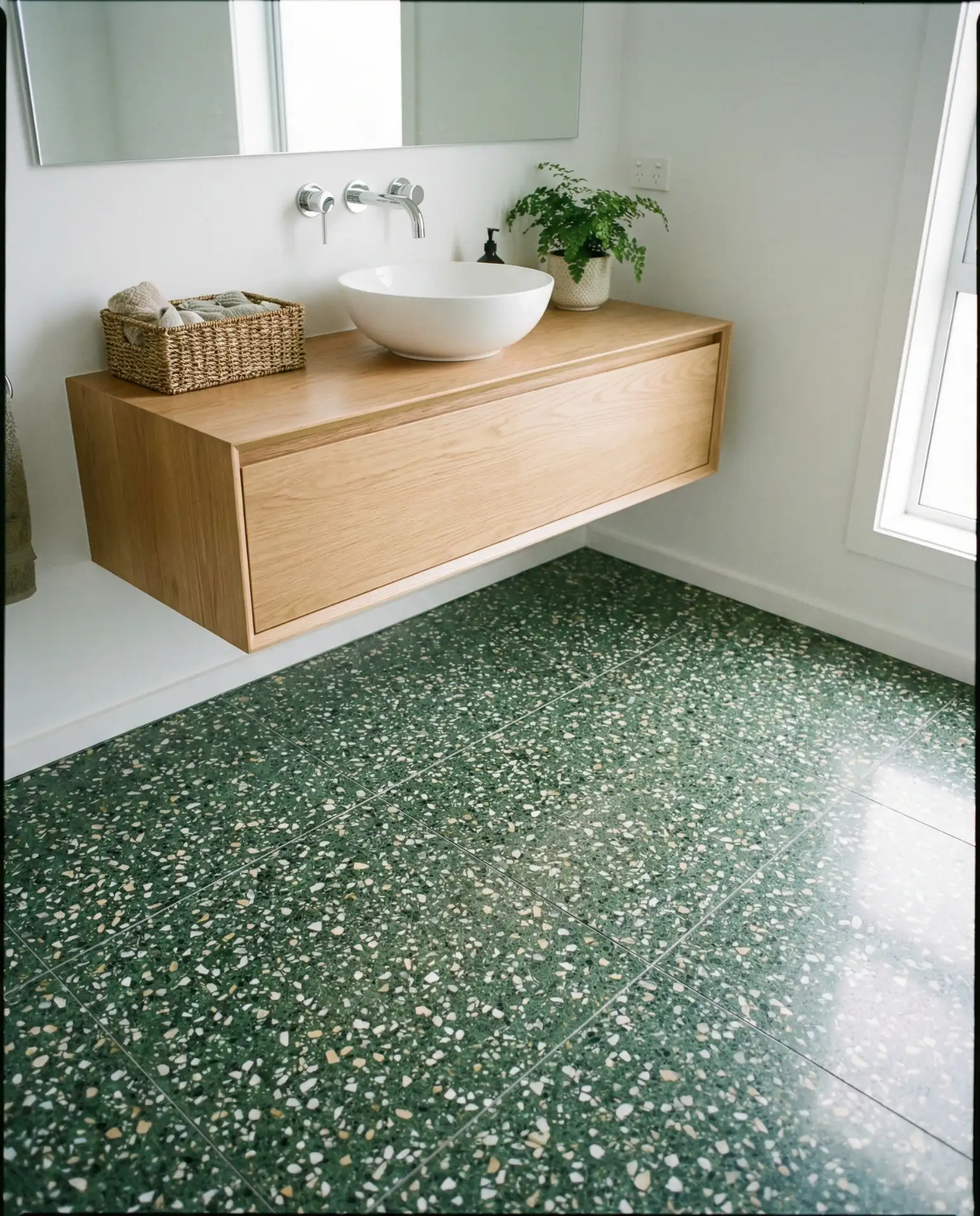
Green-based terrazzo tiles bring a playful speckled pattern that hides imperfections beautifully while adding major style points. The embedded chips of marble, glass, or stone within a green matrix create visual texture and depth that solid-color tiles can’t match. This Italian-inspired flooring material works equally well in contemporary and vintage-leaning spaces, offering flexibility that justifies its mid-range price point.
This is particularly popular in the Southwest and California, where terrazzo has strong architectural roots. The speckled pattern means you don’t see every water droplet or bit of soap residue, which busy families with kids particularly appreciate. Most terrazzo tiles are sealed at the factory, but resealing every few years keeps them looking pristine and prevents staining from common bathroom products.
14. Green Wallpaper Above White Tile Wainscoting
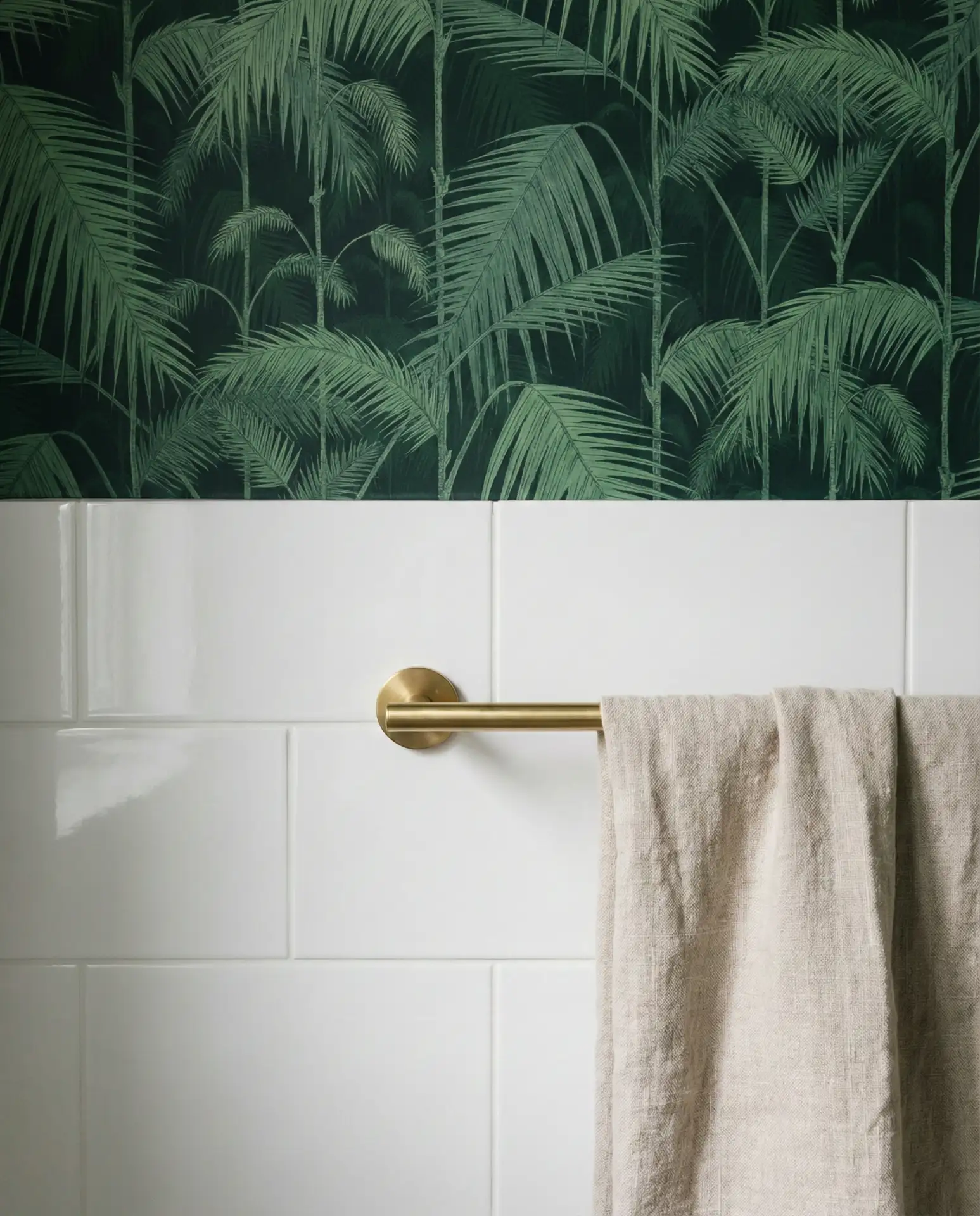
Pairing green wallpaper above classic white tile wainscoting creates a traditional yet fresh look that’s been trending hard. This approach gives you the durability of tile in wet zones while allowing more affordable pattern play above. Choose moisture-resistant or vinyl wallpaper for bathrooms to prevent peeling and damage, and consider botanical prints, geometric patterns, or subtle textures in green tones.
Where it works best: Powder rooms and half baths are where steam exposure is minimal, making wallpaper a more viable long-term choice. The tile typically extends three to four feet up the wall, protecting against splashes, while the wallpaper adds personality above. This combination allows you to experiment with bolder green patterns without the commitment and expense of tiling the entire room.
15. Green Glass Tiles for Light Reflection
Green glass tiles create a luminous, jewel-like quality that seems to glow from within, especially in shower designs where light passes through and reflects. These tiles work beautifully as accent strips, full backsplashes, or shower surrounds where their translucent quality can truly shine. The glass material is naturally water-resistant and easy to clean, making it both beautiful and practical for bathroom applications.
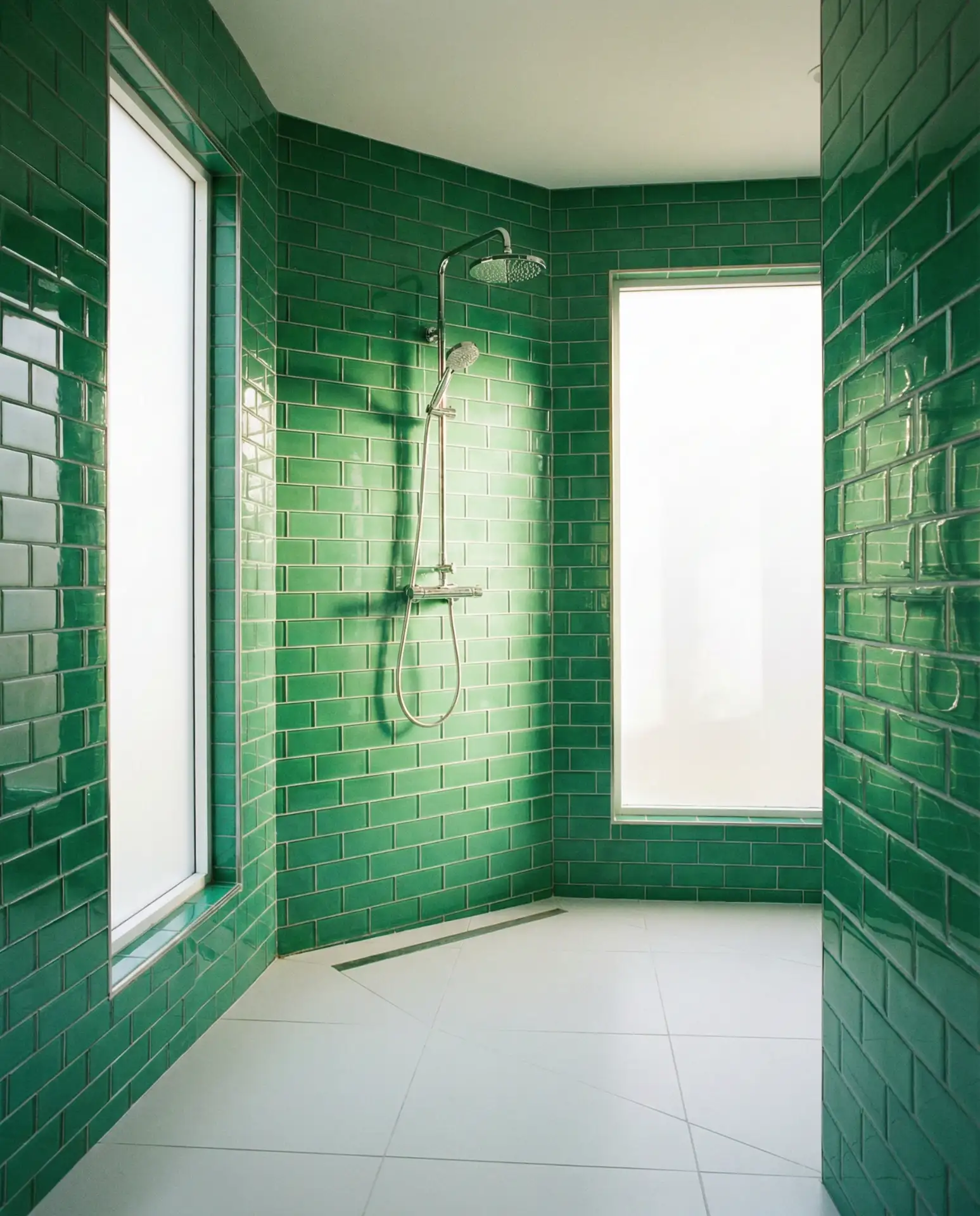
Budget angle: Glass tiles typically cost more than ceramic—expect to pay anywhere from eight to twenty dollars per square foot depending on quality and finish. However, they’re incredibly durable and won’t fade or discolor over time like some materials. The reflective quality also helps small bathrooms feel larger and brighter, potentially eliminating the need for additional lighting upgrades.
16. Green Encaustic Patterned Tiles
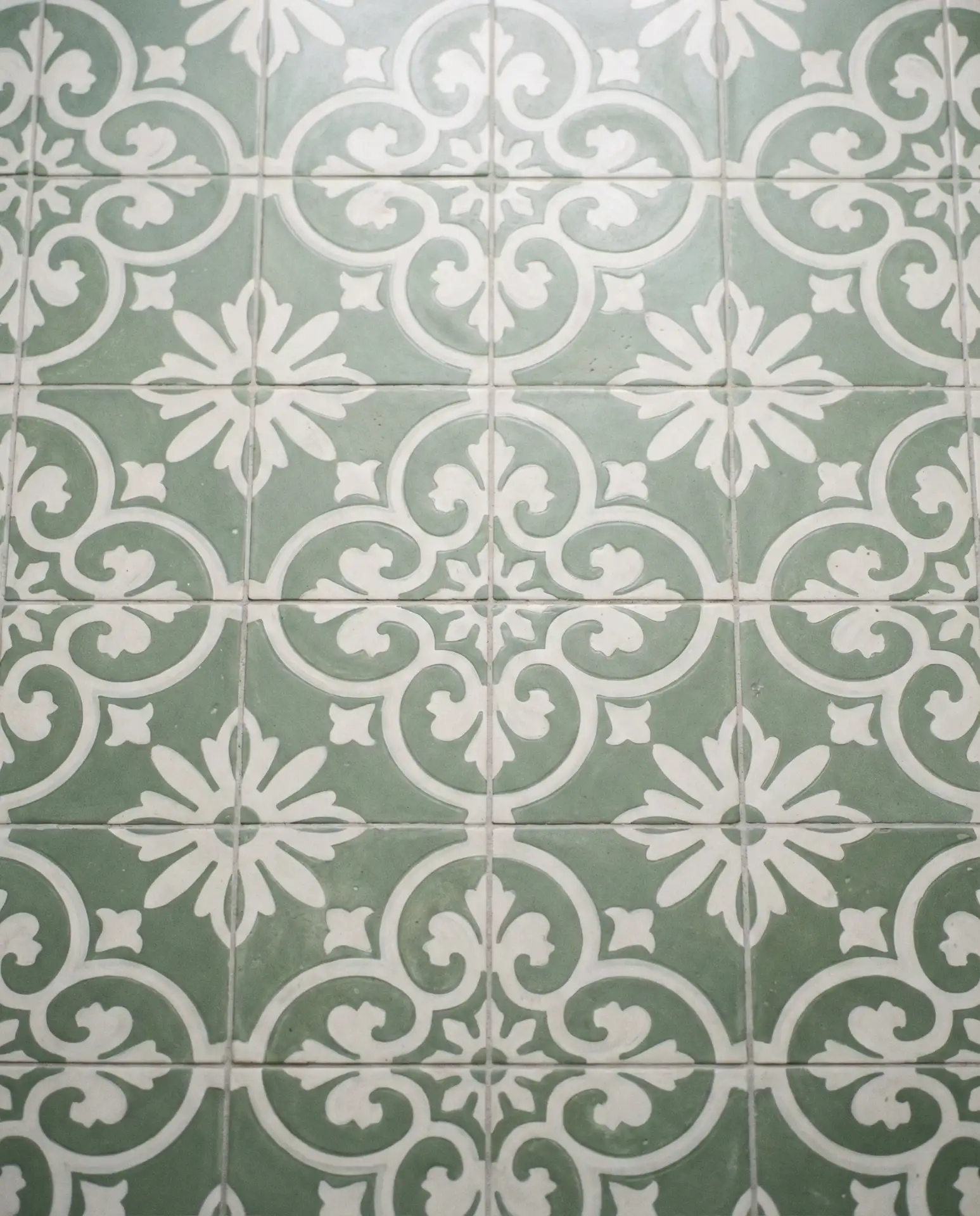
Green encaustic cement tiles with intricate patterns bring Old World charm and artisanal craftsmanship to modern bathrooms. These handmade tiles feature patterns that go all the way through rather than just on the surface, meaning they age beautifully and wear evenly over time. The geometric or floral designs add incredible visual interest to floors, creating a focal point that needs little additional decoration.
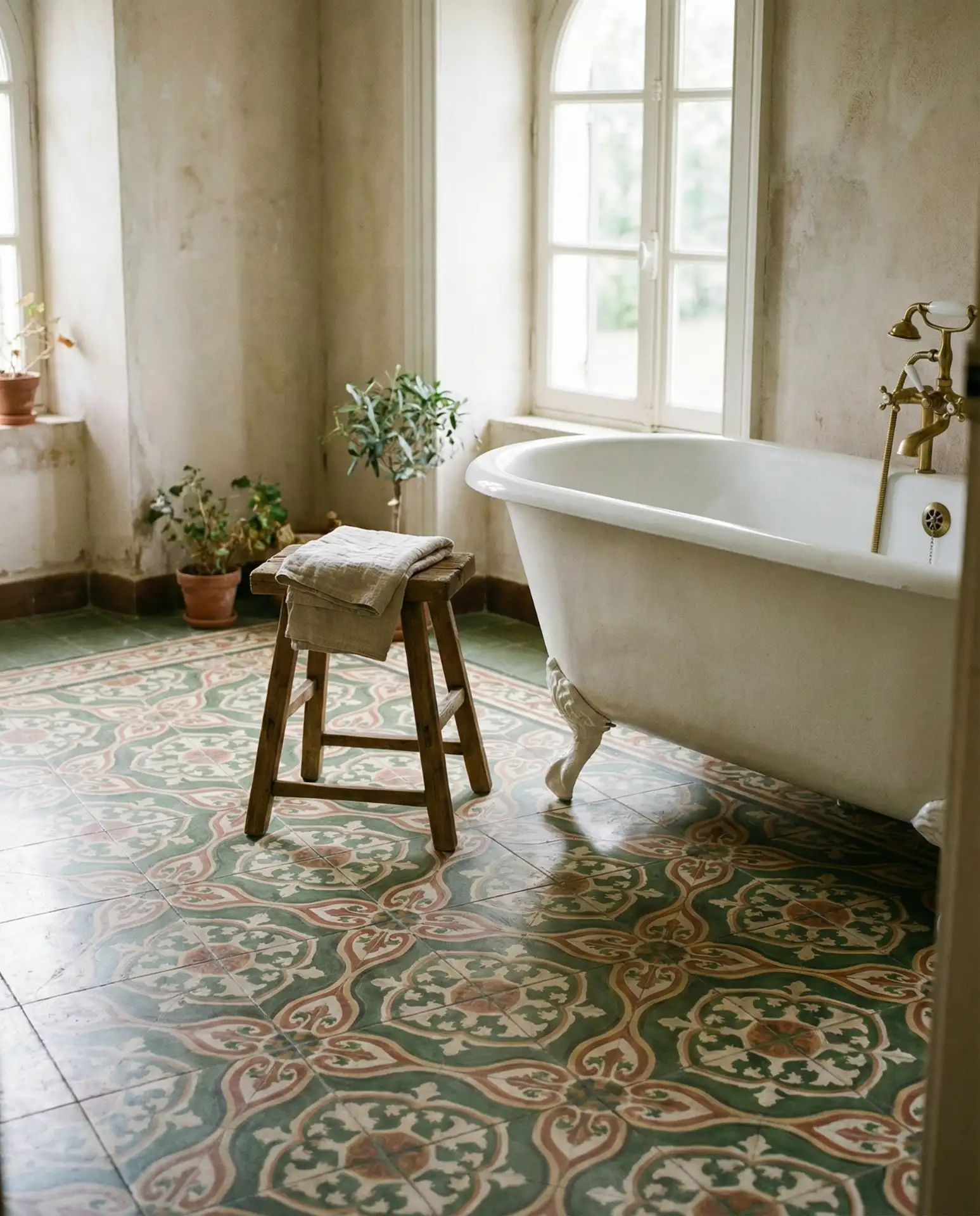
Real homeowner behavior often involves using these patterned tiles in smaller doses—perhaps just in a shower stall or as a rug-like inset in a larger floor—because they’re expensive and visually bold. Proper sealing is absolutely critical with cement tiles, as they’re more porous than ceramic. Many installers recommend sealing before grouting, then again after, and periodically thereafter to maintain their beauty.
17. Green Herringbone Pattern Tiles
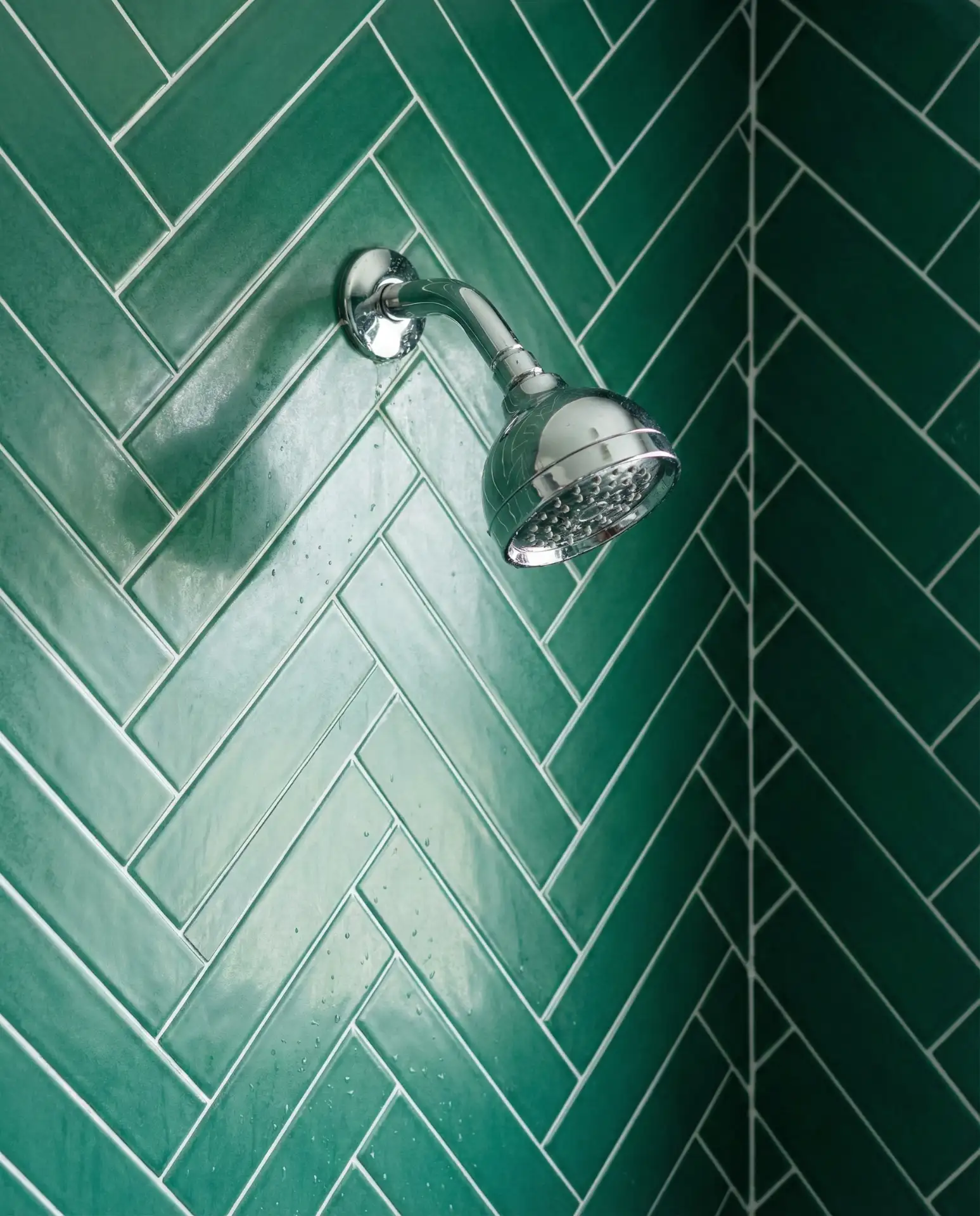
Installing light or dark green tiles in a herringbone pattern elevates standard subway tiles into something special without changing materials or budget significantly. The diagonal zigzag pattern adds movement and sophistication, making walls feel taller and spaces feel more considered. This layout works beautifully behind vanities, in shower surrounds, or as a full wall treatment in powder rooms.

Expert-style commentary notes that herringbone installation requires about twenty percent more tiles than straight-set patterns due to cutting and waste, plus labor costs run slightly higher. However, the elevated look often justifies the extra expense, especially in visible areas like primary bathrooms. The pattern naturally draws the eye upward, making it particularly effective in bathrooms with lower ceilings.
18. Green Stone-Look Porcelain Tiles
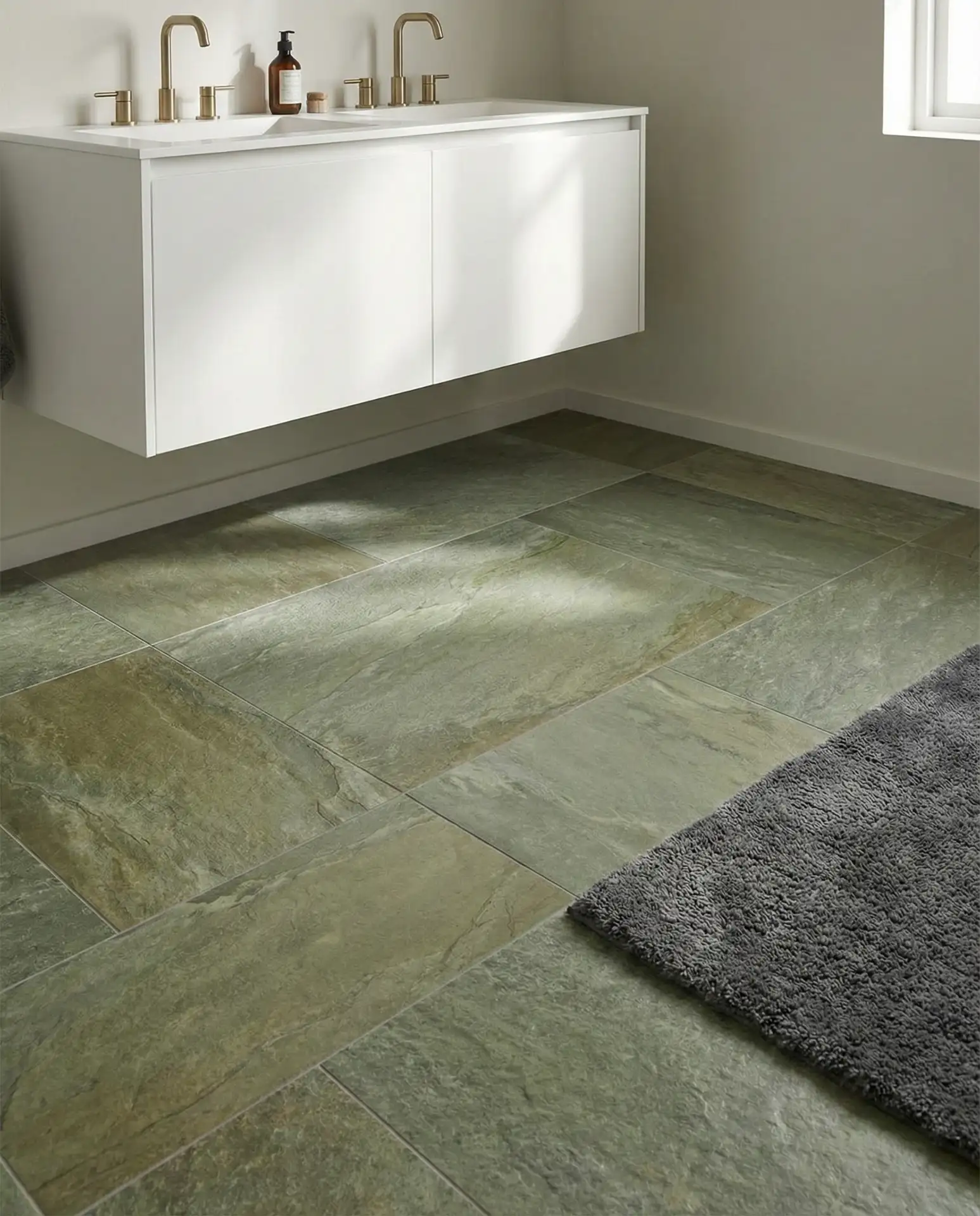
Green marble-look or stone-look porcelain tiles deliver the luxury aesthetic of natural stone at a fraction of the cost and maintenance. Modern printing technology creates incredibly realistic veining and color variation, giving you the olive, jade, or forest green stone look without the sealing requirements or expense of actual marble. These tiles work beautifully in both traditional and contemporary interior design schemes.
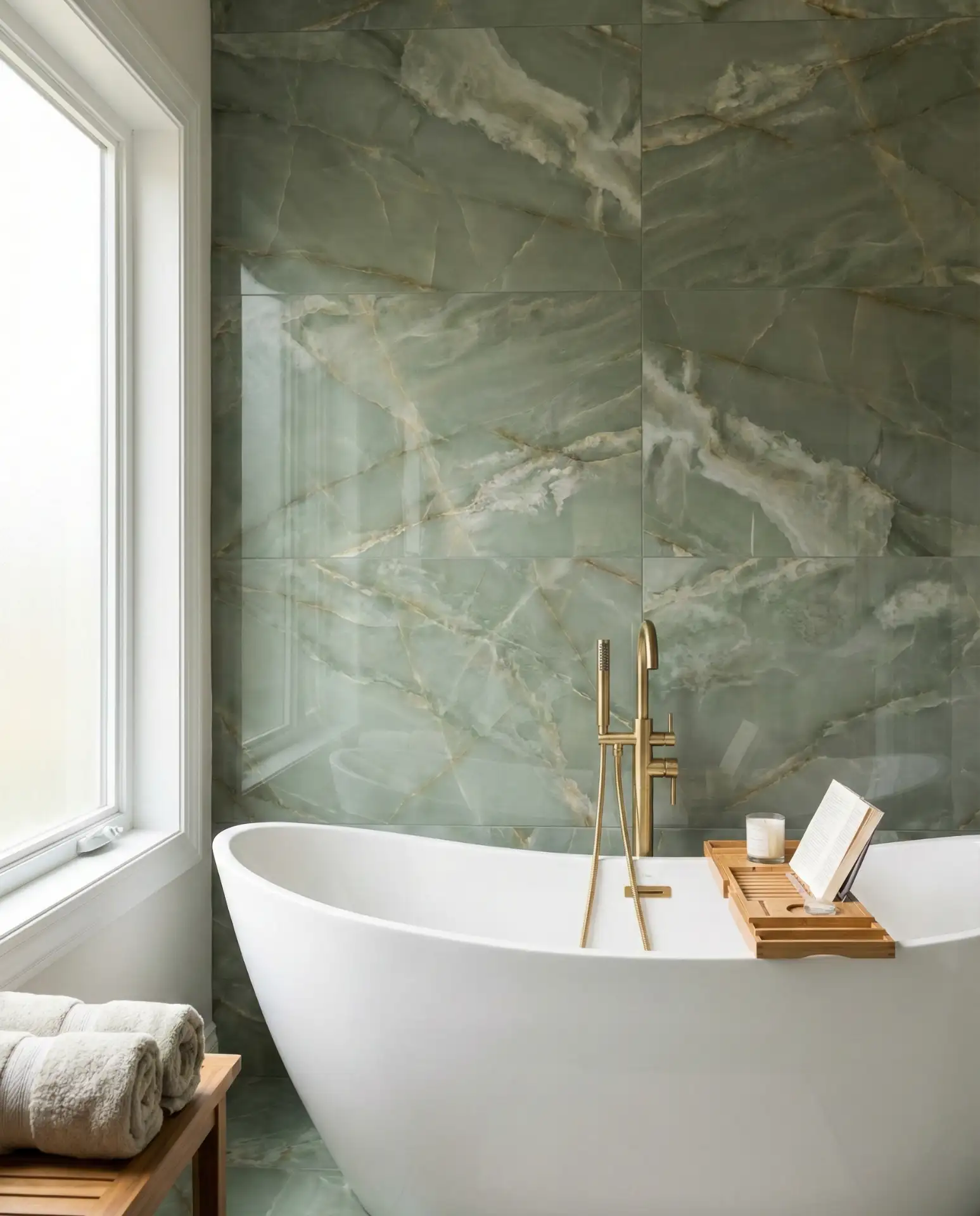
Practical insight: Porcelain is denser and more water-resistant than natural stone, making it ideal for wet areas where moisture penetration could be problematic. The tiles won’t etch from acidic cleaners the way real marble would, and they maintain their appearance for decades with minimal care. Most homeowners can’t tell the difference between quality porcelain and real stone from just a few feet away.
19. Green Vertical Stacked Tiles for Height
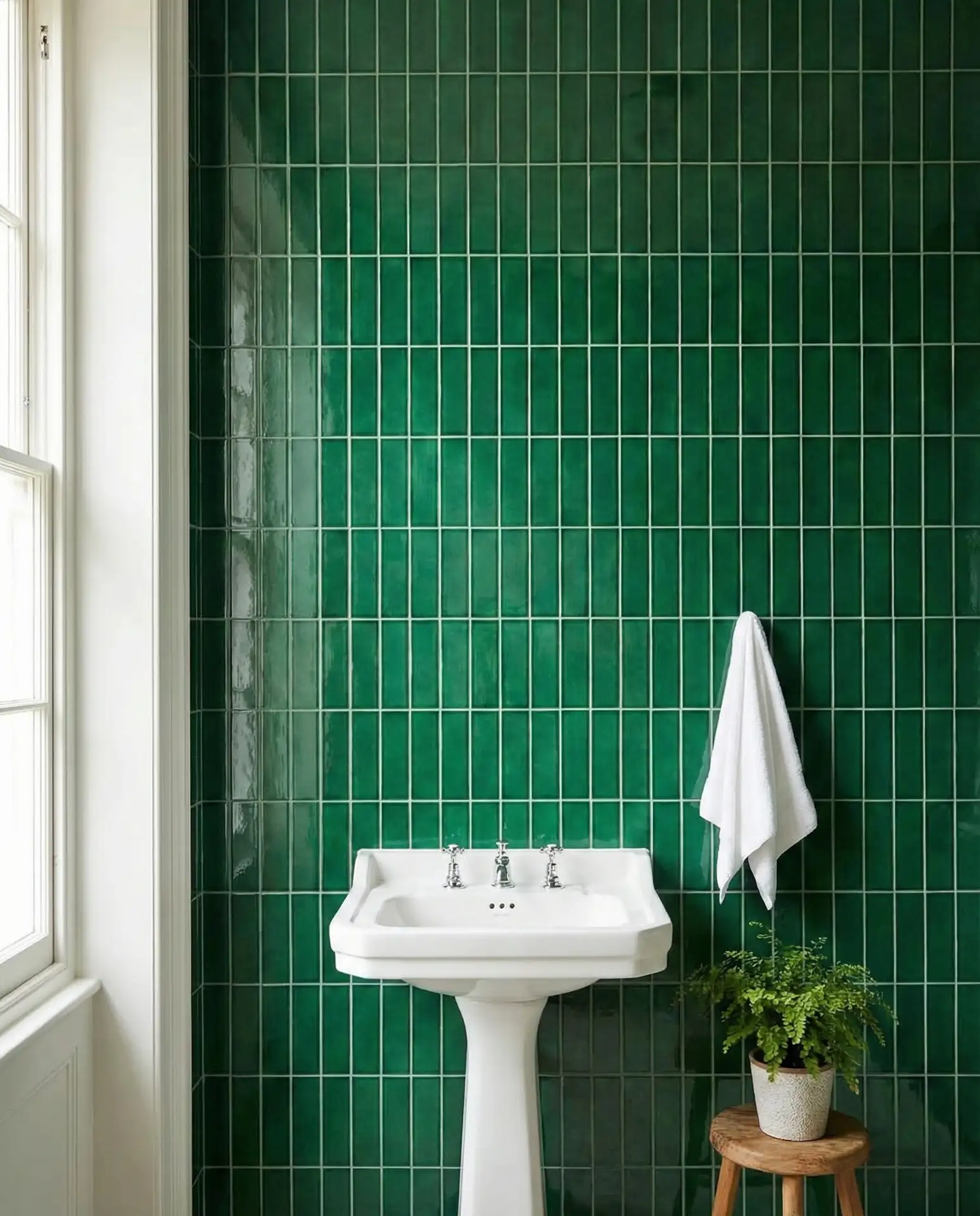
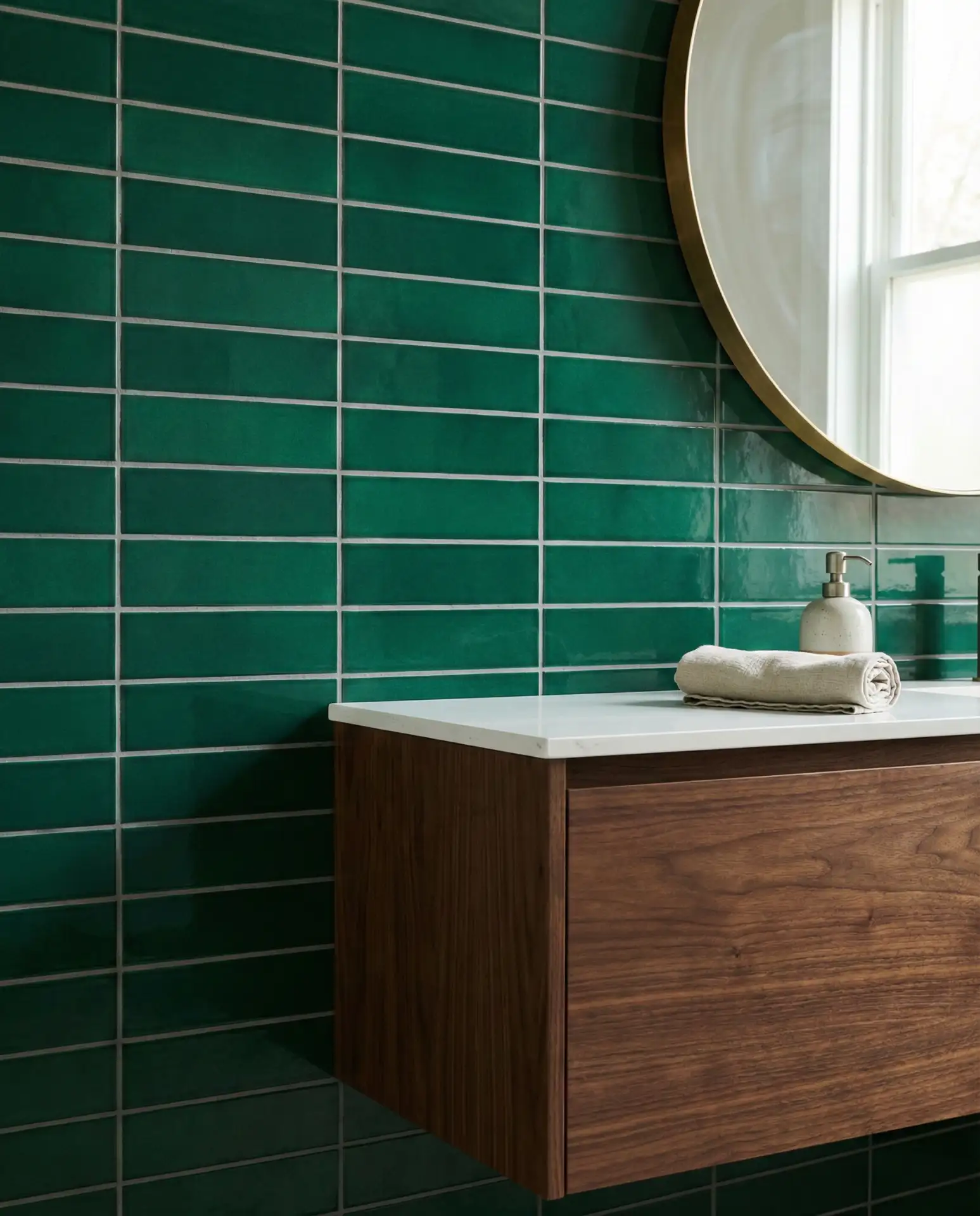
Installing sage or emerald green tiles in a vertical stack pattern rather than traditional horizontal creates the illusion of taller walls and higher ceilings. This simple layout change costs nothing extra but delivers significant visual impact, making it perfect for bathrooms where you want to maximize perceived space. The vertical lines guide the eye upward, creating an elegant, elongated aesthetic.
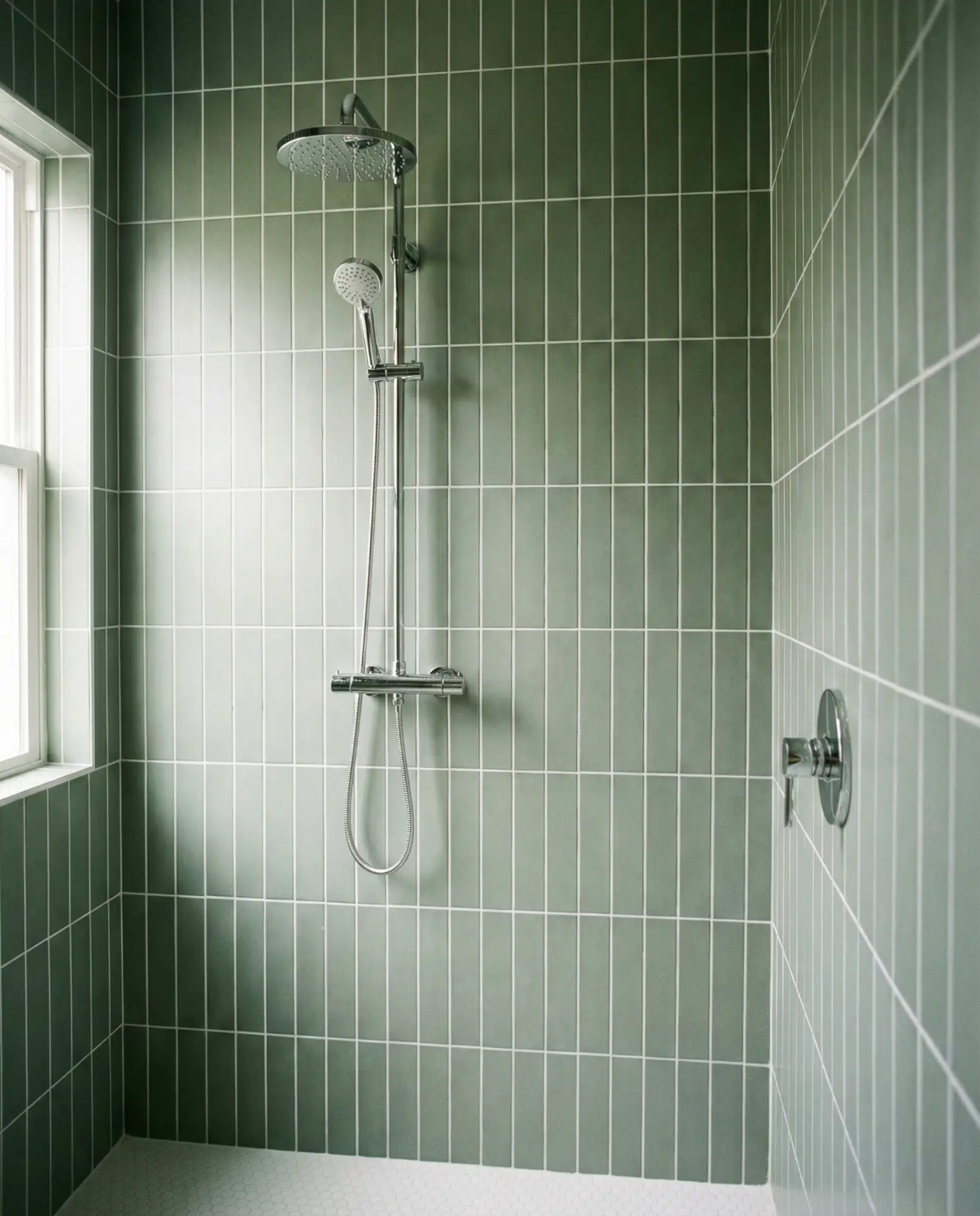
Where it works best: Bathrooms with standard eight-foot ceilings benefit enormously from this vertical emphasis, visually adding inches to ceiling height. The pattern also works beautifully in narrow bathrooms where horizontal lines might make the space feel wider but also more compressed. Many designers use this trick in shower stalls to make them feel less boxy and more spacious.
20. Green Basketweave Pattern Floor Tiles
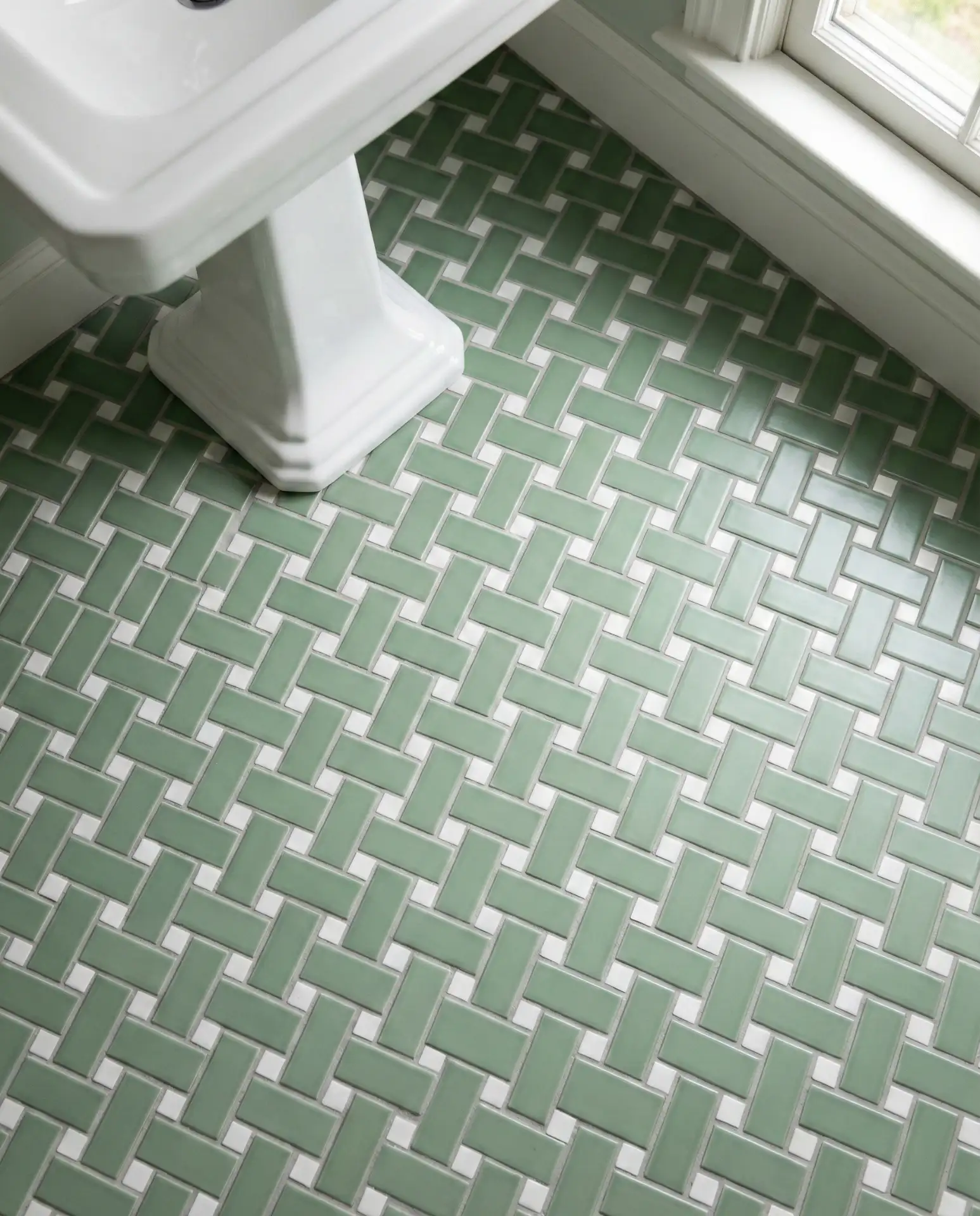
A mint or aloe green basketweave tile pattern brings traditional charm with a fresh color twist. This classic pattern uses rectangular tiles laid perpendicular to create a woven appearance that adds texture and visual interest to floors without overwhelming the space. The pattern has been popular in American bathrooms since the early twentieth century, so it carries vintage authenticity while feeling completely current in softer green shades.
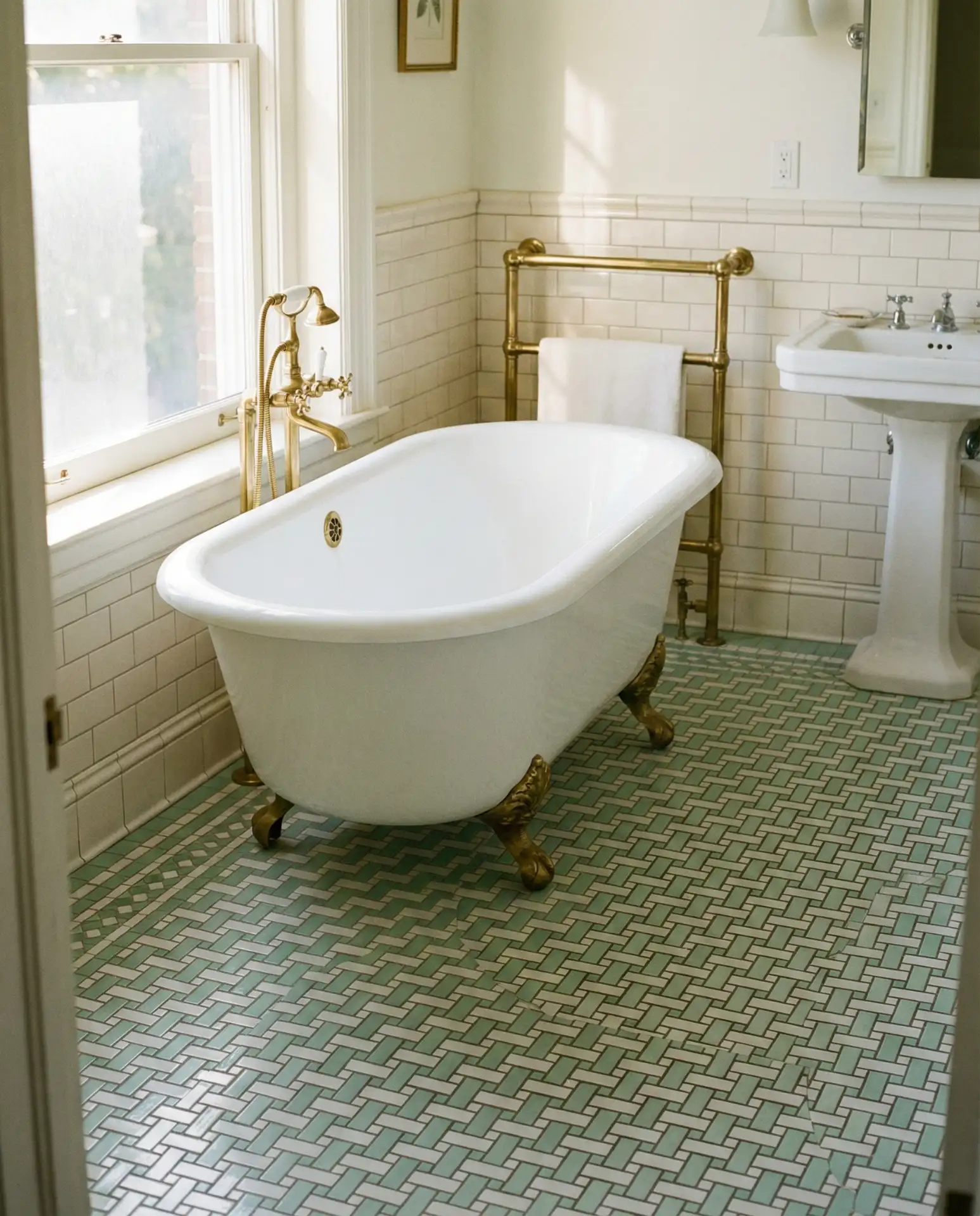
A homeowner in Charleston recently installed this pattern in a historic home renovation, noting how it honored the home’s 1920s roots while updating the color palette for 2026. The basketweave pattern requires careful installation to keep lines straight and spacing consistent, so it’s worth hiring an experienced tile setter. The interlocking pattern also provides subtle texture underfoot, which some find more comfortable than completely flat tiles.
21. Green Beveled Subway Tiles for Dimension
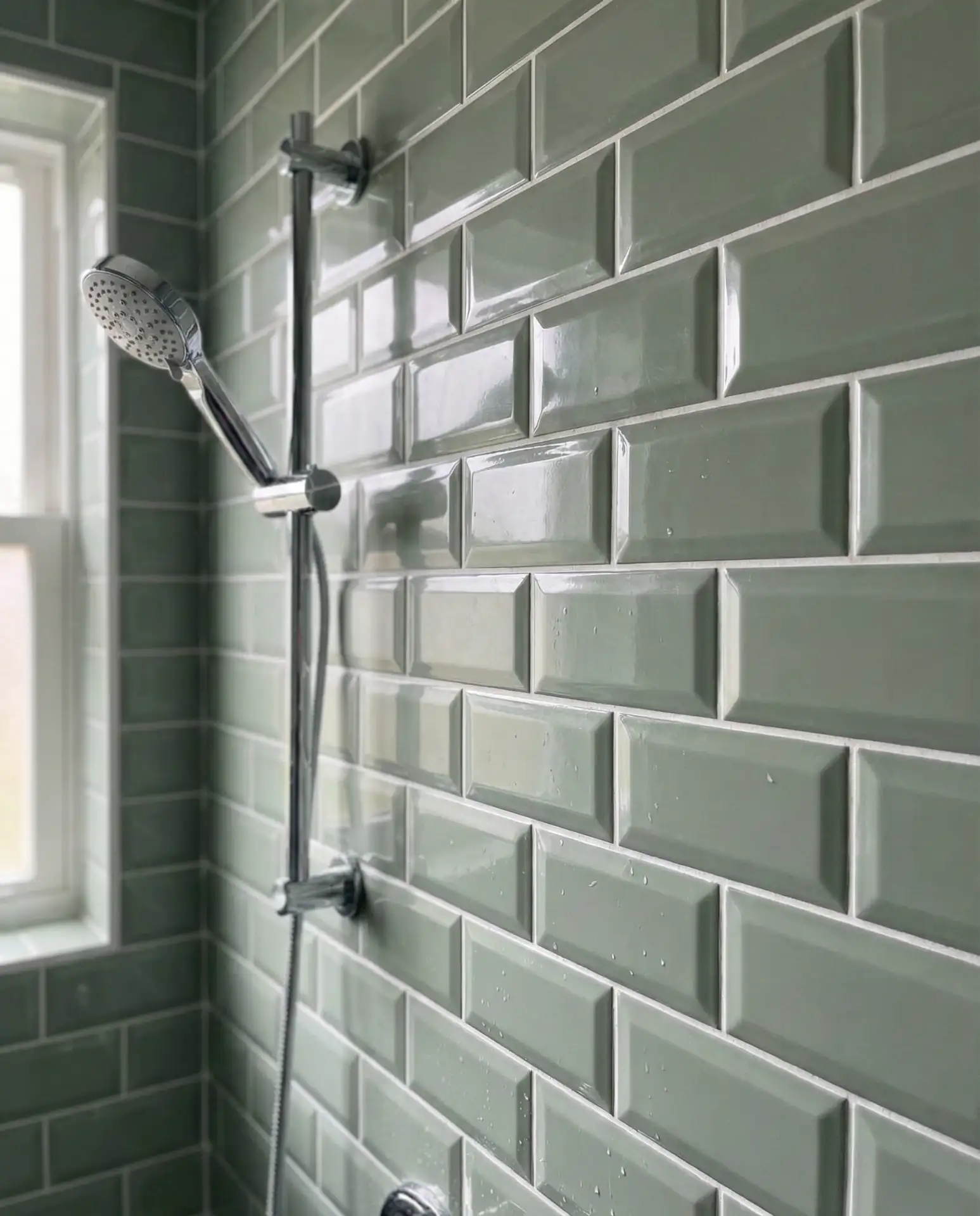
Beveled subway tiles in dark or light green tones add subtle dimensionality that flat tiles can’t achieve. The angled edges catch light differently throughout the day, creating gentle shadows that bring walls to life. This elevated take on classic subway tiles works in both modern and traditional bathrooms, offering a refined detail that reads as intentional and high-end without being fussy.
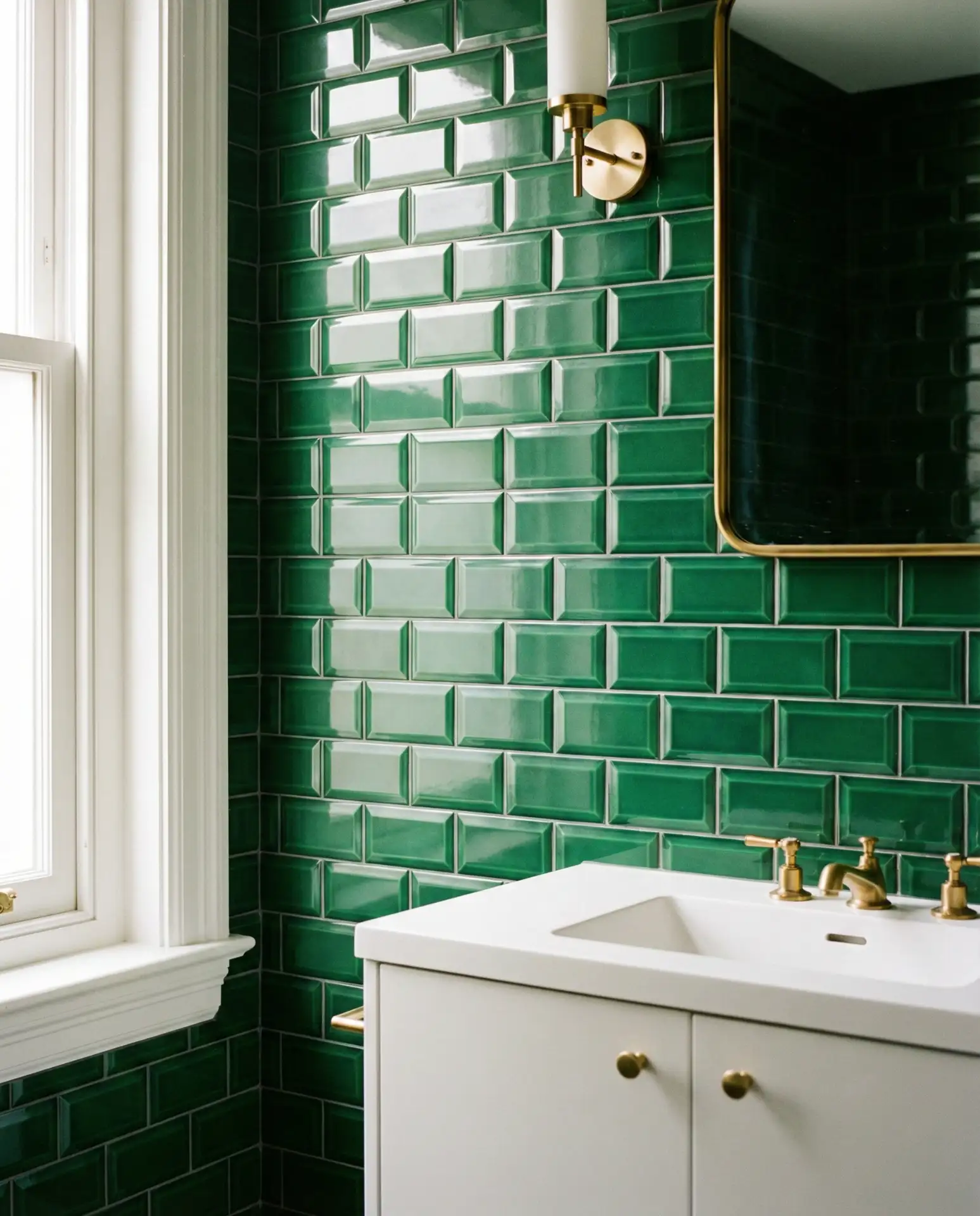
Budget angle: Beveled tiles typically cost one to three dollars more per square foot than standard flat subway tiles—a modest upcharge that delivers significant visual impact. The beveled edge also helps hide minor installation imperfections, which can actually save money if you’re working with a less experienced installer. Many suppliers stock beveled subway tiles in trending green shades, making them readily available and competitively priced.
22. Green Mosaic Accent Strips
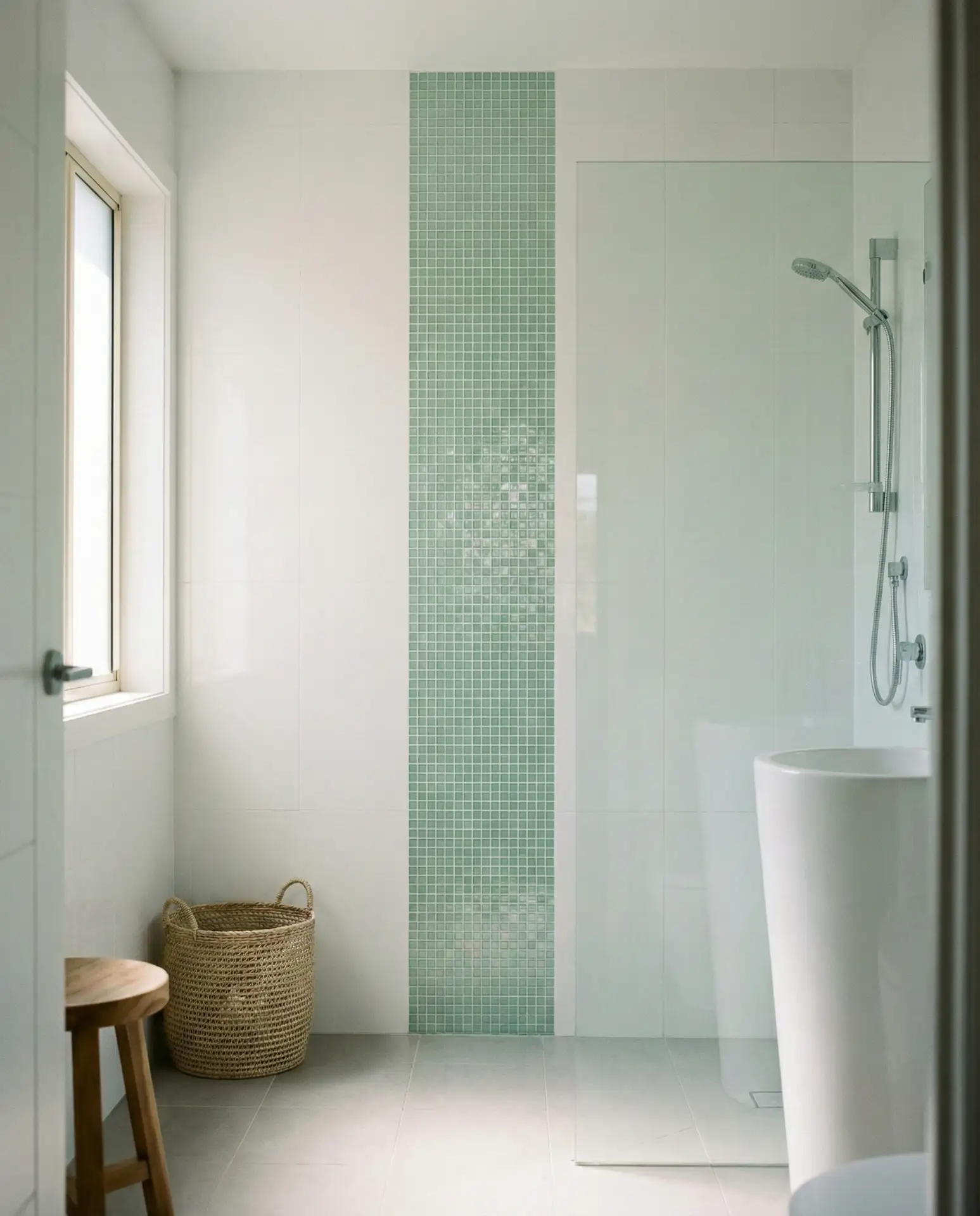
Adding jade, mint, or emerald green mosaic tile accent strips to an otherwise neutral bathroom is an affordable way to incorporate the trend without full commitment. These decorative bands—typically three to six inches wide—work as borders, horizontal dividers, or vertical accents that bring color and pattern to white or beige tile schemes. The approach gives you flexibility to change your mind later without a full bathroom remodel.
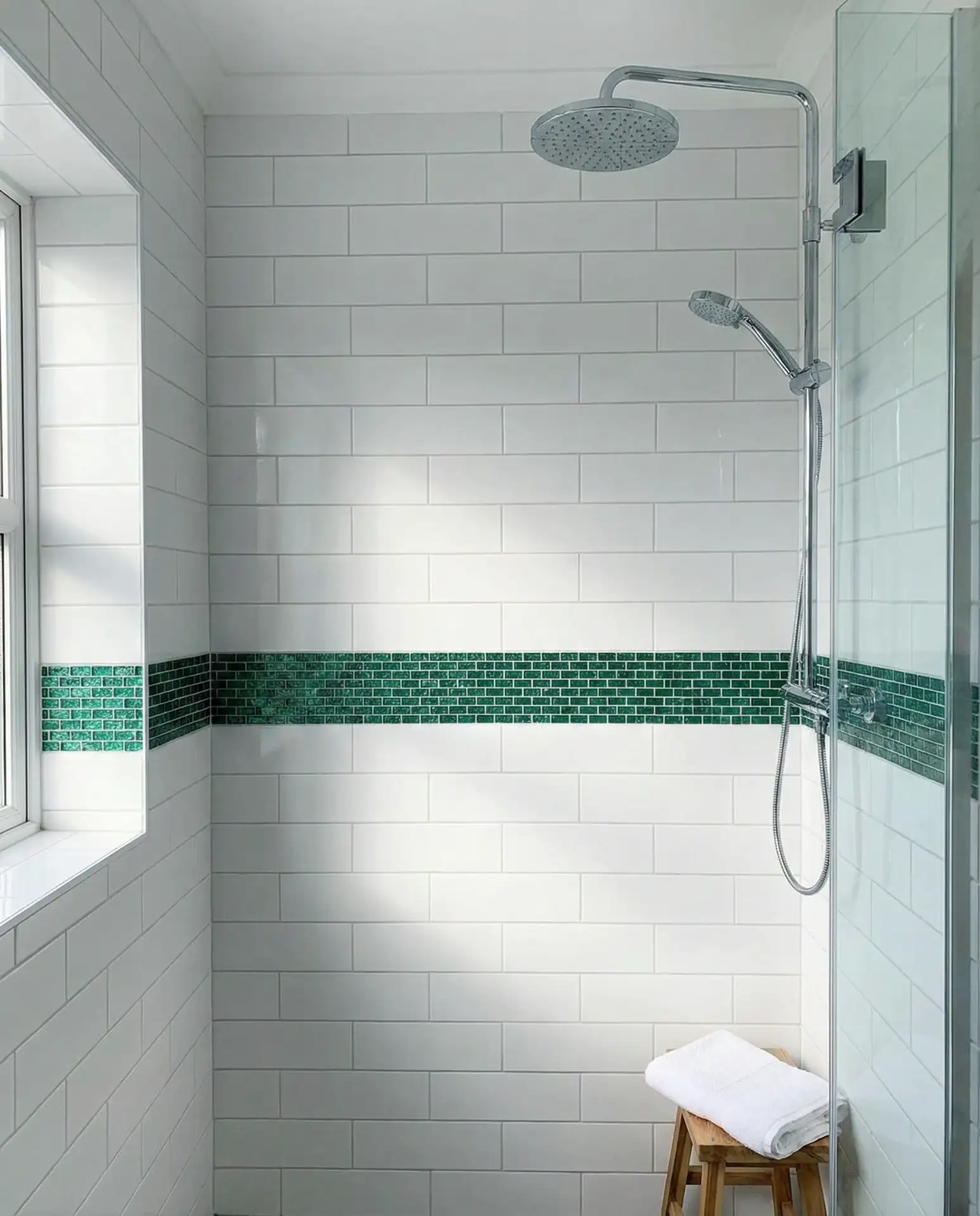
Common mistakes include placing accent strips at awkward heights or using widths that don’t relate well to surrounding tiles. Instead, align strips with natural sight lines—perhaps at countertop height or where the shower surround meets. Mosaic strips are sold on mesh backing for easy installation, and most tile setters can add them without significant labor upcharge since they’re incorporated during the initial tile work.
Conclusion
Green tile bathrooms offer remarkable versatility, from bold emerald statements to soft sage whispers, each bringing its own character and mood to your space. Whether you’re drawn to vintage patterns, modern minimalism, or something in between, there’s a green tile solution that fits your style and budget. We’d love to hear which ideas resonated with you—drop a comment below sharing your favorite look or any green tile projects you’re planning for your own bathroom.