Herb gardens have become one of the most searched home and lifestyle topics on Pinterest in 2026, as more Americans embrace fresh, homegrown flavor and sustainable living. Whether you’re working with a sprawling backyard or a compact apartment balcony, growing your own herbs offers both culinary rewards and a calming, hands-on hobby. From sleek vertical setups to rustic raised beds, the possibilities are as diverse as the homes they inhabit. In this guide, you’ll discover creative, achievable herb garden ideas that blend style, function, and the unmistakable charm of fresh basil, thyme, and rosemary at your fingertips.
1. Tiered Wooden Planter by the Kitchen Door

A three-tier wooden planter positioned just outside your kitchen door transforms cooking prep into a quick harvest ritual. This setup works beautifully in backyards where the herb station becomes part of your daily rhythm, letting you snip cilantro or parsley without stepping off the deck. Cedar or treated pine weathers well, and the tiered design maximizes vertical space while keeping everything within arm’s reach. Each level can host different sun needs—basil up top, parsley in the middle, and mint tucked below. 
In the Midwest and Northeast, gardeners often add a small overhang or position the planter under an eave to shield herbs from heavy spring rains. This prevents root rot in oregano and thyme, which prefer drier conditions. A weekend DIY build costs around forty to sixty dollars if you source lumber locally, and the structure lasts years with a single annual coat of linseed oil or outdoor sealant.
2. Galvanized Trough on a Sunny Porch

Long galvanized metal troughs bring an unexpected farmhouse elegance to a porch or front yard herb display. Their industrial look pairs well with modern or rustic home styles, and the depth accommodates robust root systems for sage, rosemary, and lavender. Drainage holes are essential—drill three or four along the bottom before filling with potting mix. The metal heats slightly in direct sun, which Mediterranean herbs adore, but requires consistent watering during July and August heat waves. 
One common mistake is overfilling the trough with too many plant varieties that compete for nutrients. Stick to four or five complementary herbs, and group those with similar water needs—rosemary and thyme together, and basil and chives apart. This simple pairing strategy cuts down on guesswork and keeps everything thriving through the season.
3. Vertical Pallet Garden Against a Fence

A repurposed wood pallet mounted vertically against a fence or garage wall offers a space-saving solution for small yards and urban lots. Each slat pocket holds a compact pot or landscape fabric pouch, creating a living wall of green. This idea shines in narrow side yards where ground space is tight but vertical real estate is wide open. Line the back with landscape fabric, fill each section with potting soil, and plant shallow-rooted herbs like thyme, oregano, and chives.
Vertical gardens dry out faster than ground-level beds, so a drip irrigation line or daily hand-watering is non-negotiable in hot climates. Gardeners in Arizona and Southern California often mist their pallet walls in the early morning to boost humidity and prevent leaf scorch. The setup costs under thirty dollars if you snag a free pallet from a local supplier and invest only in soil and plants.
4. Windowsill Herb Collection in Matching Terra-Cotta

A row of small terra-cotta pots lining a bright windowsill brings the garden indoors without fuss. This classic and practical strategy to indoor gardening is perfect for flats and houses that have no outdoor space. Basil, cilantro, and parsley thrive on a south-facing sill that gets at least 6 hours of sun a day. Unlike plastic pots, terra-cotta pots breathe, which prevents overwatering. Plus, the earthy, warm look of terra-cotta goes with almost any kitchen. 
In northern states where winter daylight is scarce, a small grow light positioned above the sill extends the growing season and keeps basil productive through February. Rotate pots every few days so all sides receive even light, and pinch back flowering tips to encourage bushier growth. This habit, practiced by many home cooks, yields a steady harvest for weeknight dinners and weekend meal prep.
5. Raised Cedar Bed with Integrated Trellis

A waist-high raised bed built from cedar planks offers ergonomic access and superior drainage, perfect for gardeners who want to skip the kneeling and bending. Adding a simple trellis to one end accommodates climbing varieties or provides a vertical anchor for tall herbs like dill and fennel. This design fits beautifully in backyard corners or along property lines, where it doubles as a subtle privacy screen. Fill the bed with a blend of compost, peat moss, and perlite for a loose, nutrient-rich foundation. 
Raised beds warm up faster in spring, giving you a two-week jump on the growing season compared to in-ground plots. In colder zones like Montana or upstate New York, this head start means harvesting basil by mid-May instead of early June. Budget around one hundred fifty to two hundred dollars for materials if you build it yourself, or double that for a prefabricated kit.
6. Hanging Baskets on a Covered Balcony

Suspended planters make brilliant use of overhead space on an apartment balcony, keeping herbs accessible without sacrificing precious floor area. Choose trailing varieties like creeping thyme or prostrate rosemary that spill over the edges, creating a cascade of green. Secure hooks into ceiling joists or railings rated for at least twenty pounds, and opt for self-watering baskets to reduce daily maintenance. Morning sun and afternoon shade—common on east-facing balconies—suit most culinary herbs. 
Balcony microclimates can be tricky—wind exposure dries out plants faster, and reflected heat from surrounding buildings intensifies sunlight. A neighbor in a Chicago high-rise solved this by grouping baskets near the railing’s leeward side and adding a windbreak made from bamboo screening. This simple adjustment cut water needs in half and kept delicate cilantro from scorching.
7. Spiral Herb Garden in a Small Side Yard
A spiral garden built from stacked stone or brick creates distinct microclimates within a compact footprint, ideal for small lots or narrow side yards. The top of the spiral stays dry and sun-drenched, perfect for Mediterranean herbs like rosemary and oregano, while the base remains cooler and moister, suiting parsley and chives. This three-dimensional design adds visual interest and can be completed in a weekend with basic masonry skills. Start with a four-foot diameter for a manageable first attempt.
Spiral gardens originated in permaculture design and have gained traction among suburban gardeners looking to maximize yield without expanding their footprint. The structure itself costs around eighty to one hundred twenty dollars in stone or reclaimed brick, and the layout naturally guides water downward, reducing the need for complex irrigation. It’s a conversation starter and a functional growing space rolled into one.
8. Vintage Crate Planters on a Front Porch

Weathered wooden crates stacked or arranged on a porch or front yard path deliver instant rustic charm while housing a thriving herb collection. Line each crate with landscape fabric to contain soil, or nestle potted herbs inside for easy rotation and seasonal swaps. This modular approach lets you rearrange the display as plants grow or as your design mood shifts. Pair mismatched crates for an eclectic look, or sand and stain matching sets for a more polished aesthetic. 
Crates work best where they won’t sit in standing water—elevate them on bricks or pavers to ensure airflow underneath. In humid Southern states like Louisiana or coastal Georgia, this ventilation prevents mold and keeps wood from rotting prematurely. A quick coat of outdoor polyurethane every other year extends their lifespan and maintains that coveted weathered patina.
9. Repurposed Gutter Planters on a Deck Rail

Rain gutter sections mounted horizontally along a deck railing transform unused edge space into a streamlined herb garden. This clever hack suits small deck setups where floor space is reserved for seating and grilling. Drill drainage holes every twelve inches, cap the ends, and fill with lightweight potting mix. Lettuce, arugula, and shallow-rooted herbs like cilantro flourish in the shallow depth, and the elevated position keeps foliage clean and away from ground pests. 
This setup is especially popular in the Pacific Northwest, where narrow decks and frequent rain make traditional pots cumbersome. The gutter’s linear form offers excellent drainage, and the open design allows roots to breathe. Total cost runs around twenty to thirty dollars for a ten-foot section, brackets, and end caps, making it one of the most budget-friendly ideas on this list.
10. Mason Jar Herb Garden in a Kitchen Window

Clear glass mason jars lined up on a kitchen window ledge offer a minimalist, farmhouse-inspired take on indoor herb growing. Fill each jar with water and root cuttings of basil, mint, or oregano, or use them as decorative sleeves for small nursery pots. The transparency lets you monitor root health and water levels at a glance, and the uniform shape creates a tidy, cohesive display. Label jars with chalk markers or twine tags for a handmade touch.
Water propagation is remarkably forgiving—basil cuttings root in as little as one week, and you can transplant them into soil once roots reach two inches. Many home cooks keep a rotating cast of jars, harvesting from mature plants while new cuttings take root. It’s a zero-waste way to multiply your herb supply and a satisfying ritual for anyone who loves watching green things grow.
11. Whiskey Barrel Planter in a Backyard Corner

A halved whiskey barrel offers generous depth and classic curb appeal, making it a go-to container choice for backyard herb gardens. The generous volume supports large herb varieties like rosemary shrubs and multi-stemmed basil plants, and the wood insulates roots from temperature swings. Position the barrel in a spot that receives morning sun and afternoon shade, ideal for preventing delicate cilantro and parsley from bolting in summer heat. Pre-drill additional drainage holes if needed, and line the interior with landscape fabric to slow wood degradation.
In Texas and other hot-summer states, the barrel’s wood wicks away excess moisture and prevents the soil from overheating, a common issue with black plastic pots. A neighbor in Austin reported her rosemary thrived for three years in a barrel before outgrowing it, while identical plants in standard pots struggled with root stress. Expect to pay fifty to eighty dollars for a genuine used barrel, or half that for a resin replica.
12. Ladder Shelf Herb Display on a Patio

A freestanding wooden ladder shelf brings vertical drama to a patio or porch, with each rung holding potted herbs at staggered heights. This tiered design maximizes sunlight exposure and makes watering straightforward—start at the top and work down. Choose a weather-resistant ladder or apply a protective finish to prevent warping and splitting. Herbs in varying pot sizes create visual rhythm, and you can swap plants seasonally to keep the display fresh and aligned with your cooking habits. 
Ladder shelves are especially effective on patios with southern or western exposure, where the vertical arrangement prevents lower plants from being shaded by taller neighbors. In desert climates like Nevada or New Mexico, positioning the ladder near a wall provides afternoon shade and reduces water evaporation. The setup also makes pest inspection easier—lift each pot to check undersides for aphids or spider mites without crouching.
13. Built-In Planter Box on a Kitchen Counter

A narrow planter box integrated into kitchen counter space or a wide windowsill creates a seamless indoor growing station. Custom-built from stainless steel, sealed wood, or food-safe resin, the box sits flush with the countertop and holds potted herbs or a continuous soil bed. This setup suits open-plan kitchens where the herb garden becomes a living design element. Include a removable liner for easy cleaning and drainage, and ensure the counter material below is water-resistant. 
This setup is best where there is abundant natural sunlight coming in; refresh for the seasons with large windows or a centrally placed skylight. If the kitchen is dark, consider using grow lights. One Brooklyn homeowner installed a twenty-inch planter in her galley kitchen and noted that she no longer needed to purchase herbs, as she was able to harvest enough with the eco-friendly system for about 15 dollars a month.
14. Terracotta Strawberry Jar For Mixed Herbs

Classic strawberry jars with multiple side pockets that become towers. They are great for apartment balconies and small yards. Each pocket holds a single herb, and they can be stacked vertically to grow 6 to 8 different herbs in the footprint of a single large pot. To plant, fill from the bottom upward and gently tamp soil around the plant to fill in air pockets. Top water and allow it to drain out the bottom to hydrate all levels. 
Because strawberry jars have a high surface area to volume ratio, they dry out quickly. A neighbor in Denver solved this by placing a PVC pipe down the center and watering directly into the pipe to reach the lower pockets. This simple irrigation method solved the problem and cut her watering in half while also preventing the top plants from hogging all the moisture.
15. Reclaimed Window Frame With Herb Pots

A pergola structure with an old window frame repurposed as a wall-mounted planter holder adds architectural character to a patio, fence, or porch wall. Small hooks or wire can be added to the frame’s crossbars to hang lightweight potted herbs at different heights. \ 🙂 \ \ 🙂 \ \ 🙂 \ \ 🙂 \ \ 🙂 \ \ 🙂 \ \ 🙂 \ \ 🙂 \
The glass panes can stay intact for a shabby-chic look, or they can be removed entirely for easier access for your plants. This vertical arrangement works well in tight spaces where floor pots would be too cluttered, and the vintage frame becomes a conversation piece.
At salvage yards or estate sales, reclaimed frames can be bought for free or up to thirty dollars, and the project requires only simple tools and about an afternoon. In coastal locations, sealing the wood is necessary to prevent the salt air from rotting the frames, and you should use hooks that won’t rust to avoid unattractive stains. You will end up with a unique herb display that looks personal and curated.
16. Corrugated Metal Raised Bed with Gravel Base

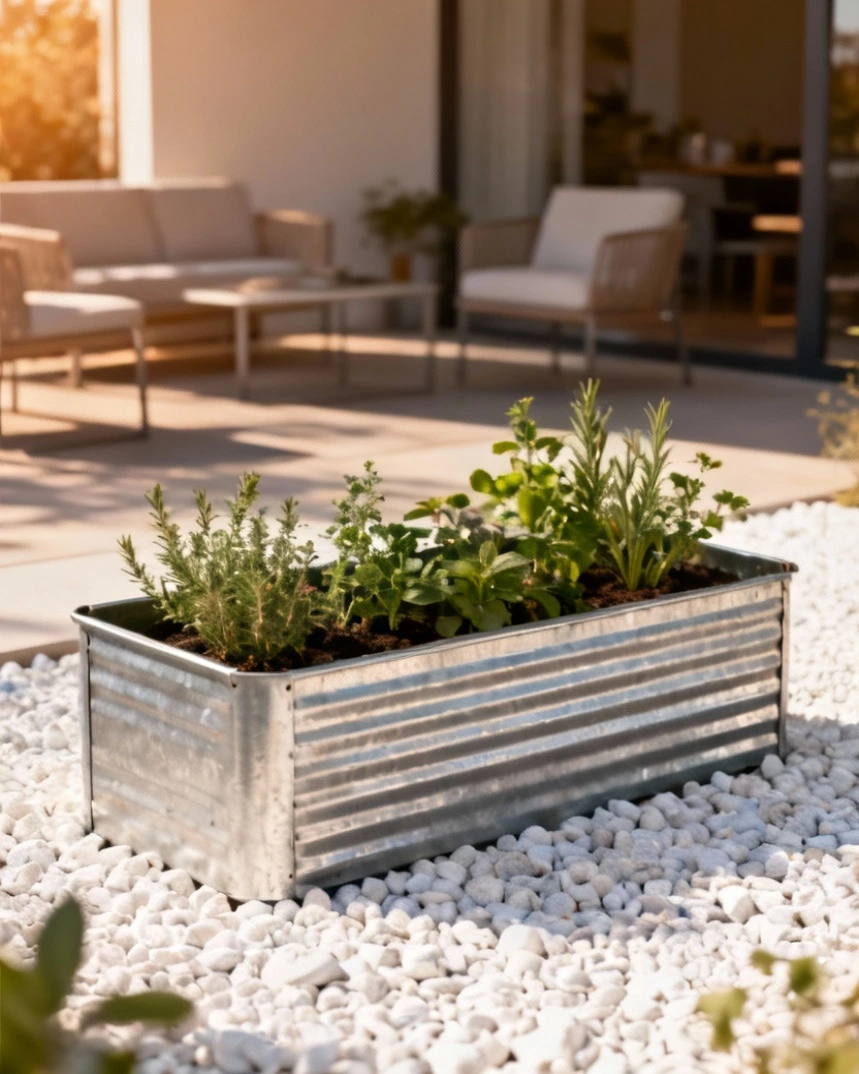
Raised beds made of shaped corrugated metal pans provide a sleek, industrial look that harmonizes with modern outdoor decor. The metal absorbs heat and cool air quickly, so lining the inside with landscape fabric or rigid foam insulation will help buffer the temperature changes. A gravel base beneath the bed is also advantageous to drainage and will help keep underlying pests from tunneling in. This is ideal for hot, dry climates where water quickly evaporates and the metal’s reflective properties help to keep the soil from overheating in extreme heat. 
Corrugated beds are especially popular in Arizona and Southern California, where their sleek profile fits xeriscaped yards and low-water gardens. One Phoenix gardener noted that adding a two-inch layer of straw mulch inside the bed cut her watering schedule from daily to every other day, even in July. Material costs run sixty to one hundred dollars depending on size, and assembly is straightforward with basic tools and sheet-metal screws.
17. Hanging Shoe Organizer Herb Wall

A fabric hanging shoe organizer repurposed as a vertical herb garden brings unexpected ingenuity to balcony railings or fence sections. Each pocket holds a small amount of potting soil and a single herb plant, creating a dense, lush wall of green. Secure the organizer with zip ties or outdoor-rated hooks, and choose a model made from breathable fabric to prevent root rot. This ultra-budget hack costs under ten dollars and transforms awkward vertical spaces into productive growing zones. 
This setup is a favorite among apartment dwellers in cities like Seattle and Portland, where balcony space is tight and rental restrictions limit permanent installations. The organizer’s pockets dry out quickly, so daily watering is non-negotiable in summer. One Seattle renter added a timer-controlled drip line along the top, solving the water issue and keeping basil and cilantro productive through September.
18 Rolling Cart Herb Garden for Flexible Placement

A mobile wooden or metal cart loaded with pots allows flexibility, letting you follow the sun or shelter plants when necessary. This solution works best for patios and decks with moderate sun exposure. The cart can also be used as a serving station for outdoor gatherings. Pick a design with slatted shelves for drainage and air circulation, and lock the wheels to keep it from rolling when stationary. 
A rolling cart works best for areas with sudden weather changes like hailstorms or frosts. One gardener from Milwaukee rolls her cart into the garage when the temperature gets below fifty, giving her basil extra weeks until late October. The cart, which you can get for about 40 to 70 dollars in a home goods store, ensures you’re never stuck with a bad spot for a plant to grow.
19 Tiered Corner Planter for Awkward Spaces

A triangular corner planter designed to nestle into L-shaped spaces maximizes small patio or balcony corners that often go unused. The tiered structure stacks three or four levels vertically, each holding a compact herb pot. This design works beautifully where square planters would jut out awkwardly, and the angled shelves ensure every plant receives light. Look for models with built-in drainage trays to protect decking or concrete below. 
Corner planters are especially useful in condos and townhomes where outdoor space is carved into odd shapes by architectural constraints. A neighbor in San Francisco installed one on her narrow balcony and grew thyme, oregano, chives, and parsley in a footprint smaller than a standard dining chair. The vertical tiers also deter curious pets—her cat couldn’t reach the upper levels, keeping delicate basil safe from nibbling.
20. Repurposed Colander Herb Planters

Vintage enamel colanders hung from hooks or arranged on shelves make whimsical, conversation-starting container planters for porch or kitchen displays. The built-in drainage holes are perfect for herbs, and the colorful finishes add a pop of nostalgic charm. Line each colander with coconut coir or landscape fabric to contain soil while allowing water to escape. Hang them in clusters at varying heights for a playful, eclectic look, or group them on a rustic wooden shelf. 
Estate sales and thrift shops sell affordable colanders, as they sell them for two and five dollars each. They are lightweight, which makes them easy to hang on the wall, and the retro design works well with farmhouse and cottage-style kitchens. One of the more common mistakes is overwatering. Because of the excellent drainage, more frequent watering is essential compared to with standard pots, and this is particularly the case during hot spells.
21. DIY Pallet Herb Table with Built-In Planters

A low-profile table constructed from a single pallet, with the slat gaps serving as built-in planter wells, offers a creative DIY project for outdoor backyard or patio spaces. Sand and stain the wood to your preferred finish, then line each gap with landscape fabric and fill with soil. The table height—typically knee to mid-thigh—makes planting and harvesting comfortable, and the flat top provides bonus space for garden tools or a watering can. Attach hairpin legs or casters for a modern touch.
This project costs under fifty dollars if you source a free pallet and purchase only legs, hardware, and finishing supplies. The table works best for herbs that tolerate shallow soil, like chives, lettuce, and cilantro—deep-rooted rosemary and fennel need more vertical space. It’s a weekend build that yields a functional, stylish growing station and a satisfying sense of DIY accomplishment.
Conclusion
These twenty-one herb garden ideas prove that fresh flavor and living greenery are within reach, no matter your space or budget. Whether you’re drawn to the rustic charm of whiskey barrels, the sleek lines of corrugated metal, or the cleverness of a repurposed shoe organizer, there’s a setup here that fits your home and lifestyle. Try one, mix and match, or use these as a springboard for your own creative twist—and share your results in the comments below. We’d love to see how you bring these ideas to life.