Kids’ rooms are having a major moment, and if your Pinterest feed looks anything like ours, you already know it. Parents across the country are rethinking what a child’s bedroom can actually be—less clutter, more character, and a whole lot more imagination. Whether you’re working with a tiny shared room in a city apartment or a spacious suburban bedroom that needs a refresh, 2026 is bringing some genuinely exciting directions. From nature-inspired palettes to game-world aesthetics and clever IKEA hacks, this roundup covers the ideas real families are falling for right now. Bookmark this, because you’re going to want to come back to it.
1. Whimsical Forest Canopy Bed Nook
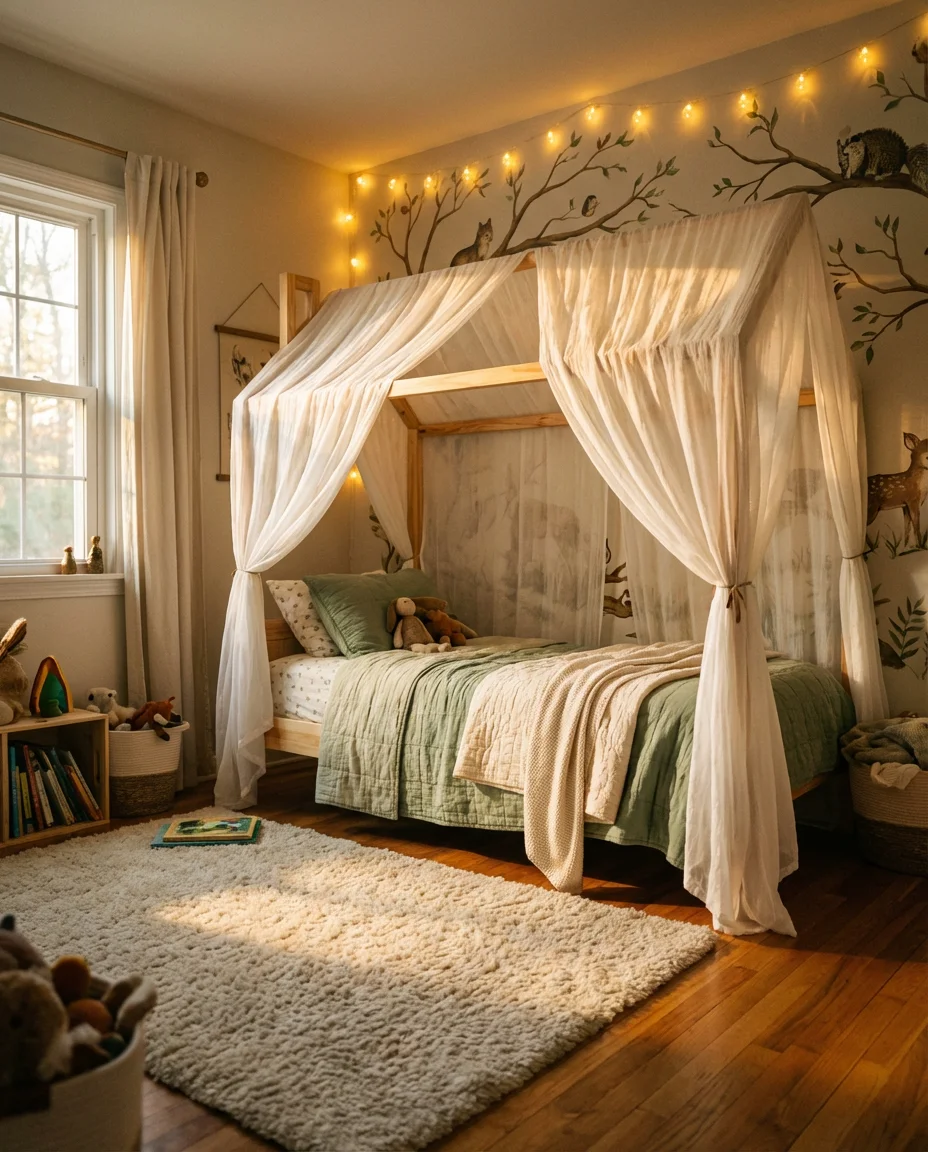
There’s something about a canopy bed tucked into soft woodland colors that makes a child’s room feel truly magical. This whimsical setup pairs sheer fabric draping with painted branch murals on the wall and warm Edison-style lighting strung above. It works beautifully whether you’re leaning into a full forest theme or simply want a cozy, story-worthy corner that sparks imagination every single night.
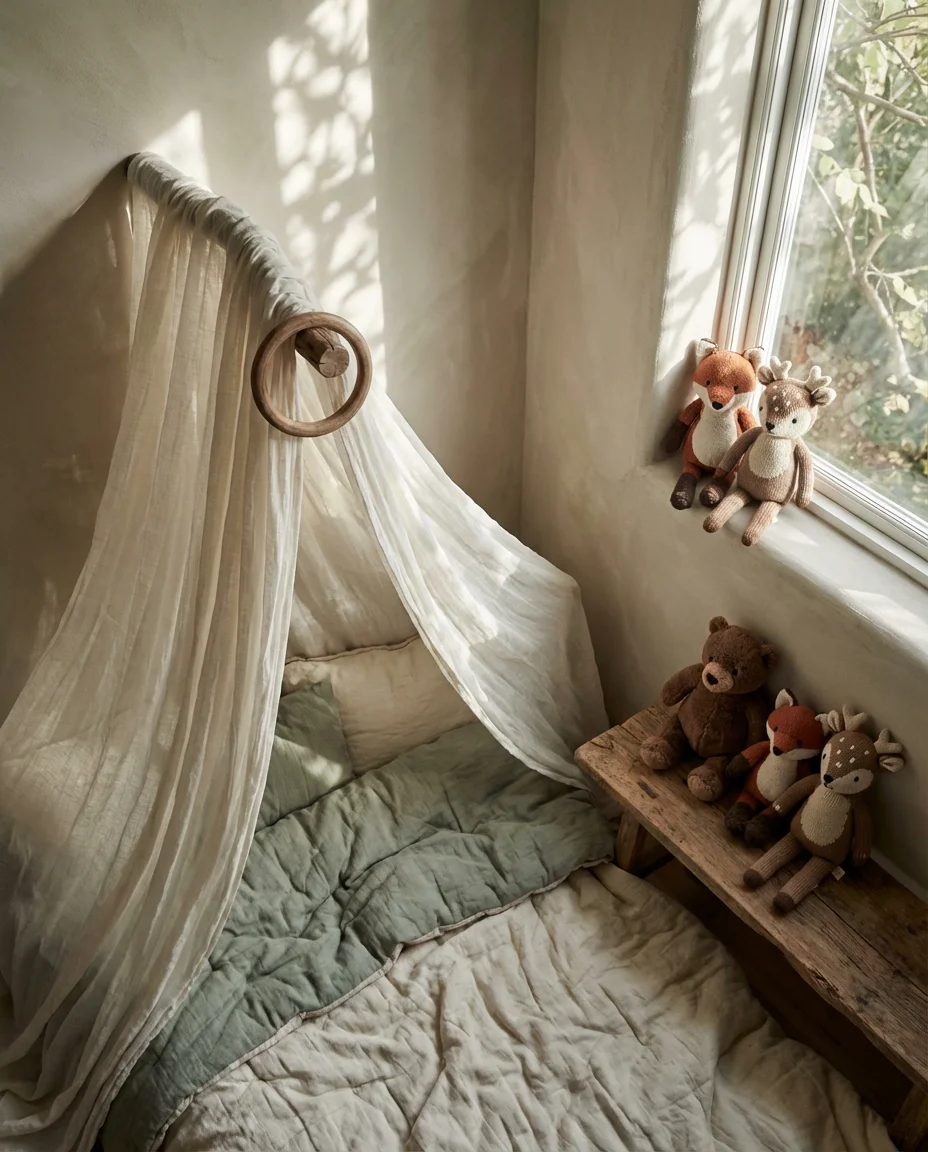
One designer who works frequently with young families put it plainly: a child’s room should feel like stepping into a story. That philosophy is exactly why this look keeps gaining traction—it invites kids to slow down, to imagine, and to actually want to spend time in their own space. Pair it with a simple reading basket and a low bookshelf, and you’ve created something far more valuable than any screen setup could offer.
2. Modern Bunk Bed for Shared Rooms
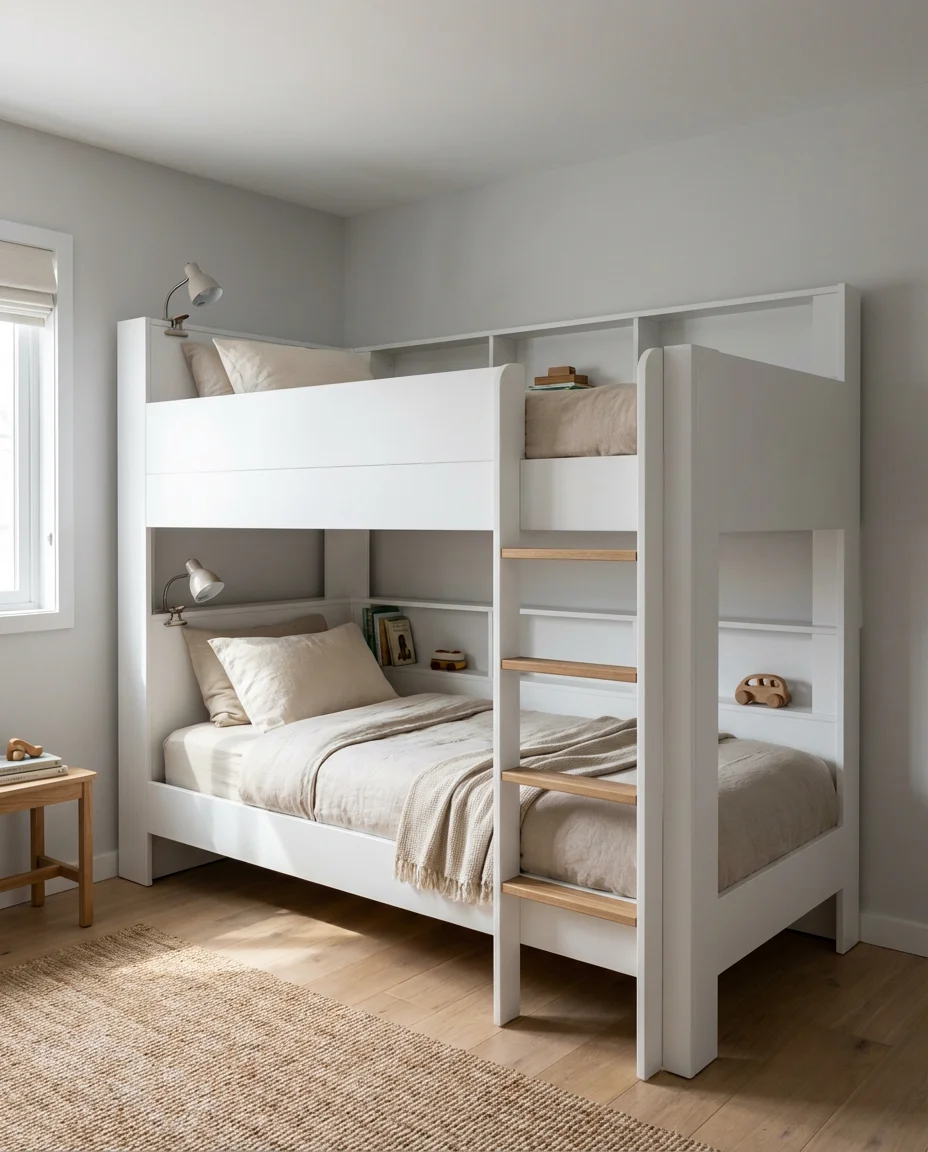
The bunk bed has always been the MVP of shared bedrooms, but 2026’s version is nothing like the wobbly pine set you grew up with. Today’s options come in clean matte finishes, with built-in ladders that double as shelving and guardrails that look intentional rather than industrial. This is the modern take on doubling up—where both kids get a defined, personal zone without sacrificing an inch of floor space unnecessarily.
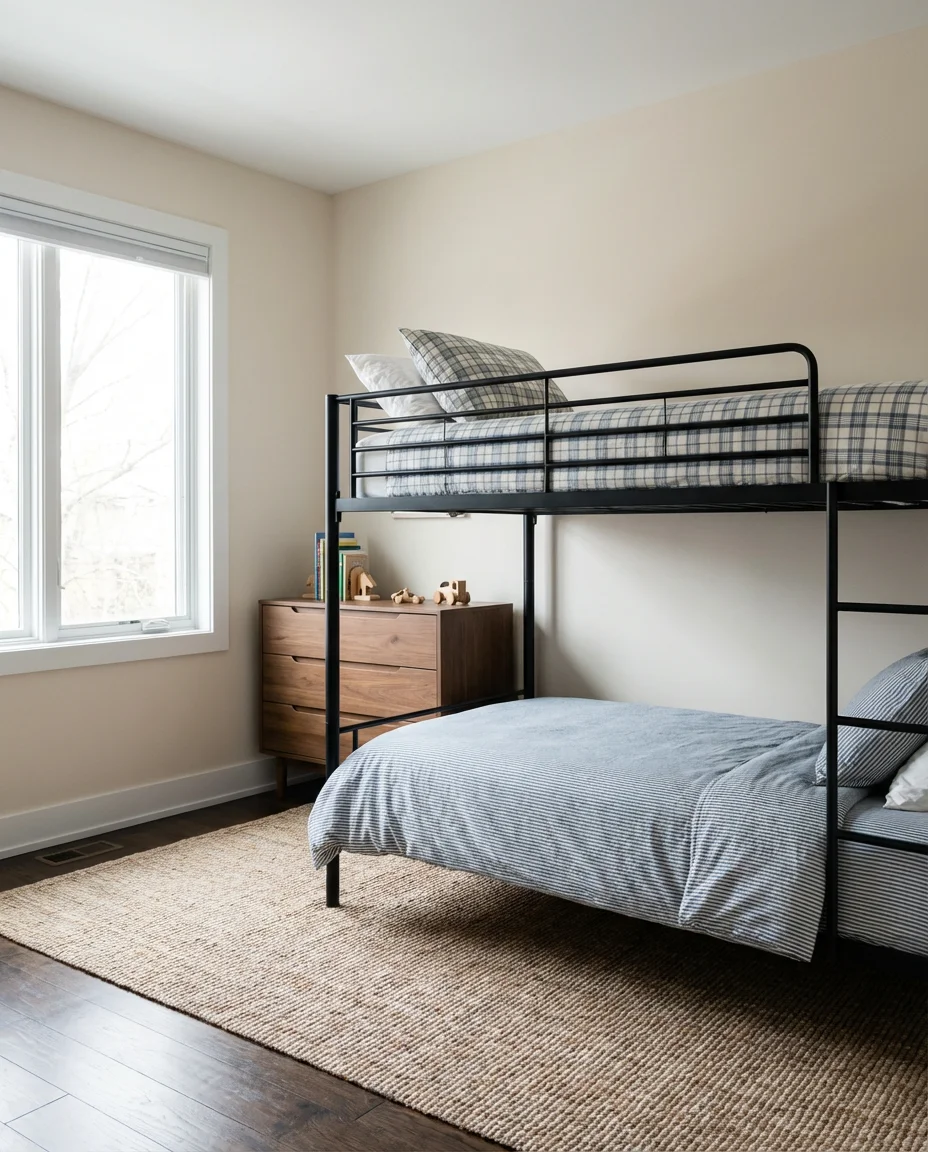
The mistake most parents make with shared rooms is treating them as one space rather than two. A great bunk bed setup lets each child claim their own territory—different pillow colors, a small clip light, a shelf for their favorite things. That tiny bit of personal ownership matters enormously to kids, especially those sharing a room by necessity rather than choice. Budget-wise, mid-range options from brands like Pottery Barn Kids and IKEA both deliver solid quality without requiring a second mortgage.
3. IKEA Kallax Hack Play Wall
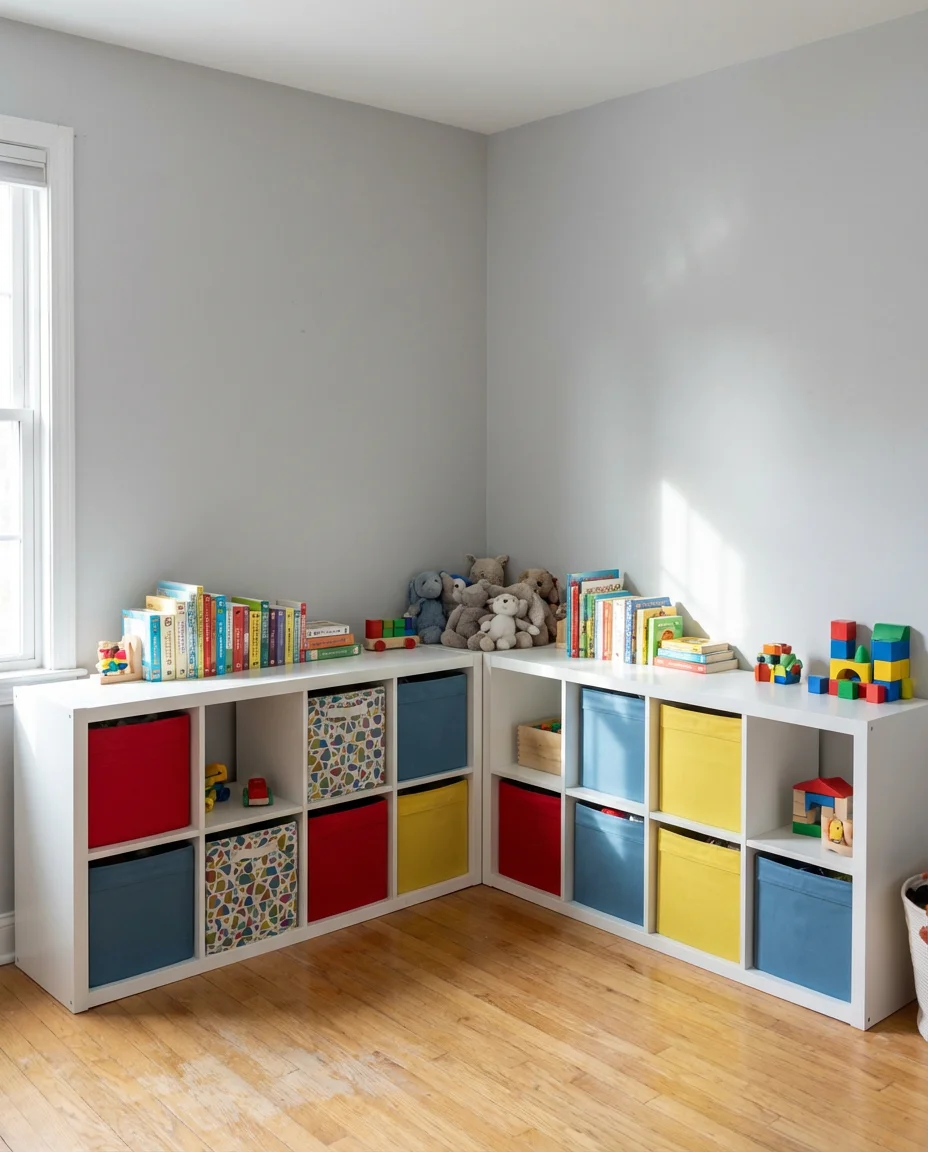
If there’s one piece of furniture that has genuinely transformed how American parents organize kids’ rooms, it’s the IKEA Kallax. Laid on its side, stacked in an L-shape, or fitted with fabric bins and mini doors—this shelving unit becomes a full play and storage wall that costs a fraction of custom built-ins. It’s the kind of solution that looks pulled-together in photos but is genuinely practical on a Tuesday morning when you’re begging the kids to clean up.
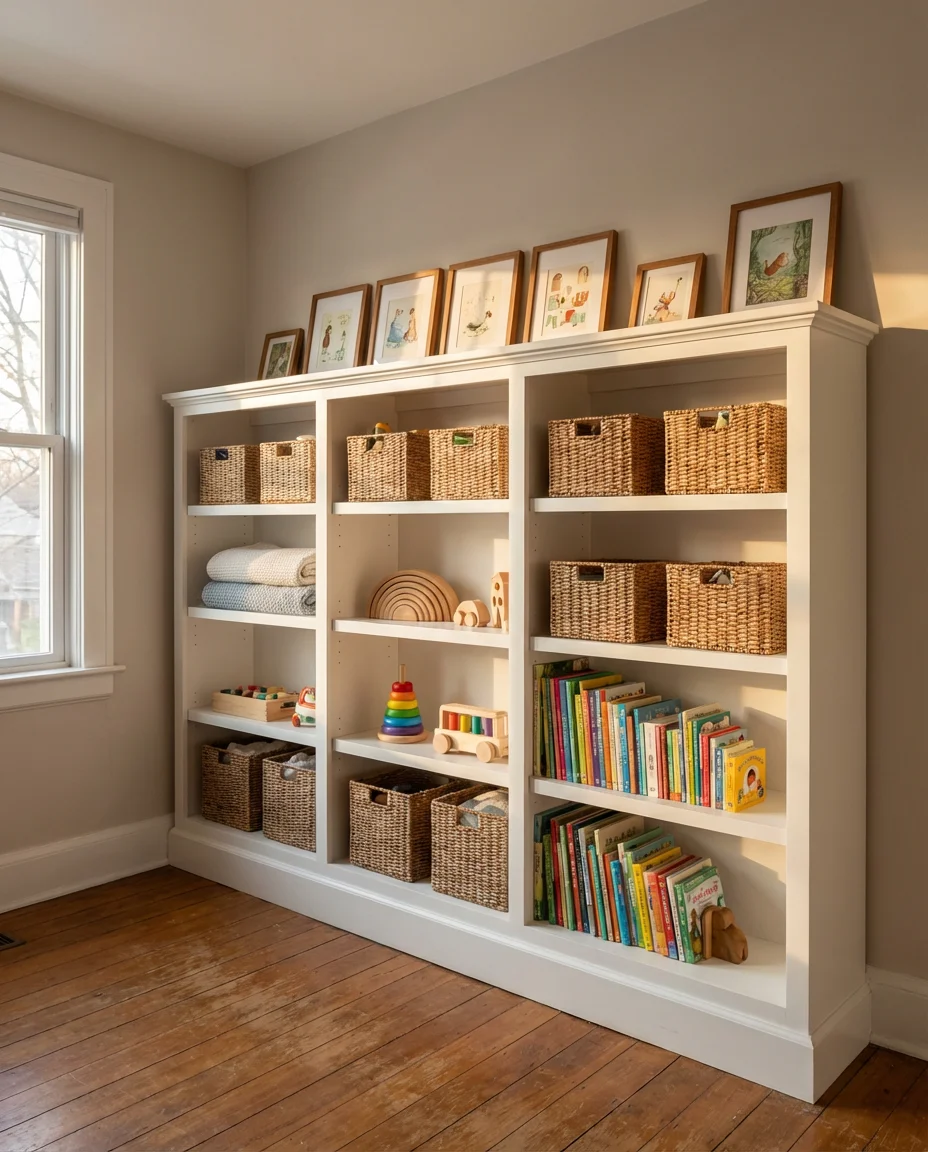
Where this setup works best is in rooms where floor space is limited but vertical wall real estate is available. A Kallax wall essentially gives you a toy chest, bookshelf, and display area in one compact footprint. Many parents add peel-and-stick wallpaper inside the cubbies for a pop of color—a five-dollar upgrade that makes the whole thing look custom. If you’re on a tight budget, this is genuinely one of the highest-value moves you can make in a child’s bedroom.
4. Minecraft-Themed Bedroom
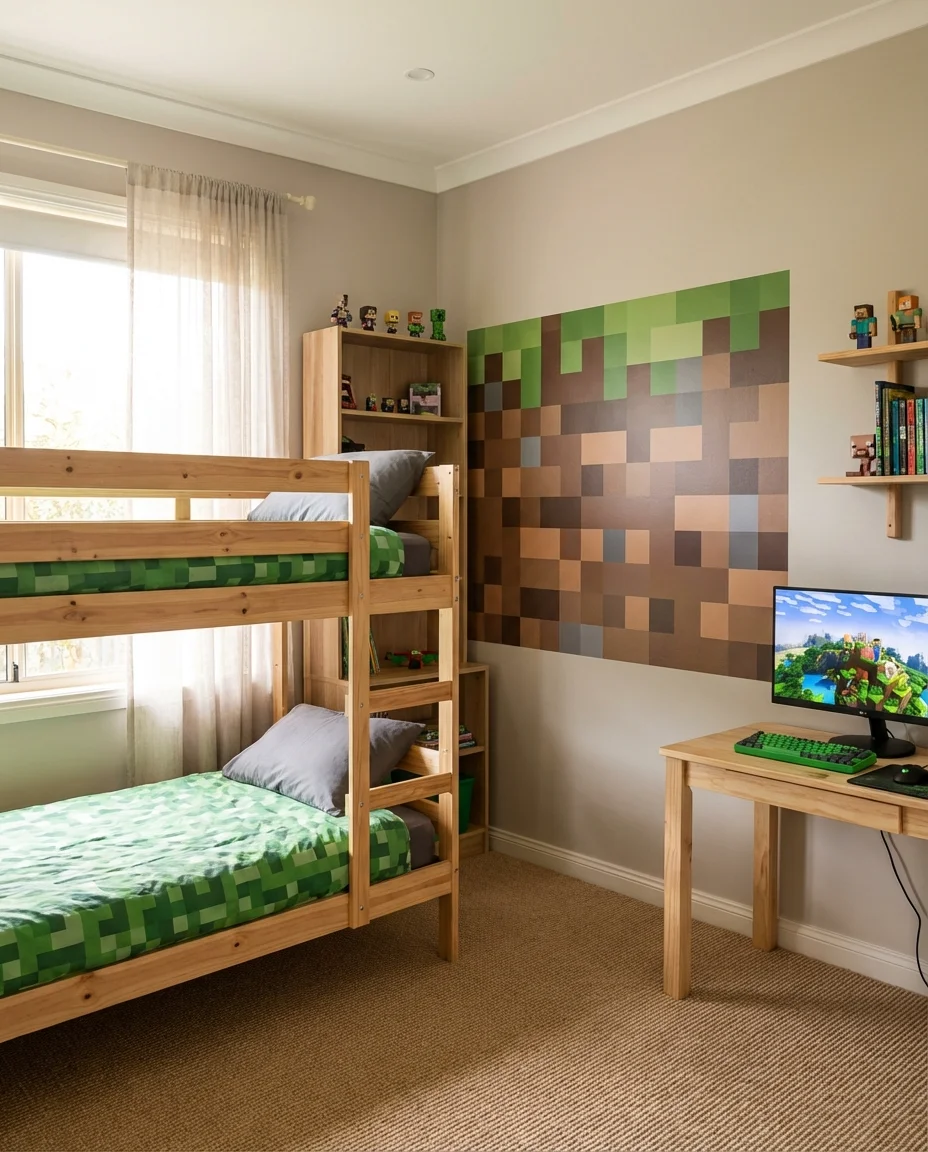
For a huge swath of American kids right now, Minecraft isn’t just a game—it’s practically a design language. And the good news for parents is that a fun Minecraft-inspired room doesn’t have to look like a birthday party supply store exploded. Done thoughtfully, it means block-inspired wall art in earthy greens and browns, pixelated throw pillows, and maybe a mural of a creeper that’s actually kind of cool even to adults. The key is restraint—let two or three elements carry the theme.
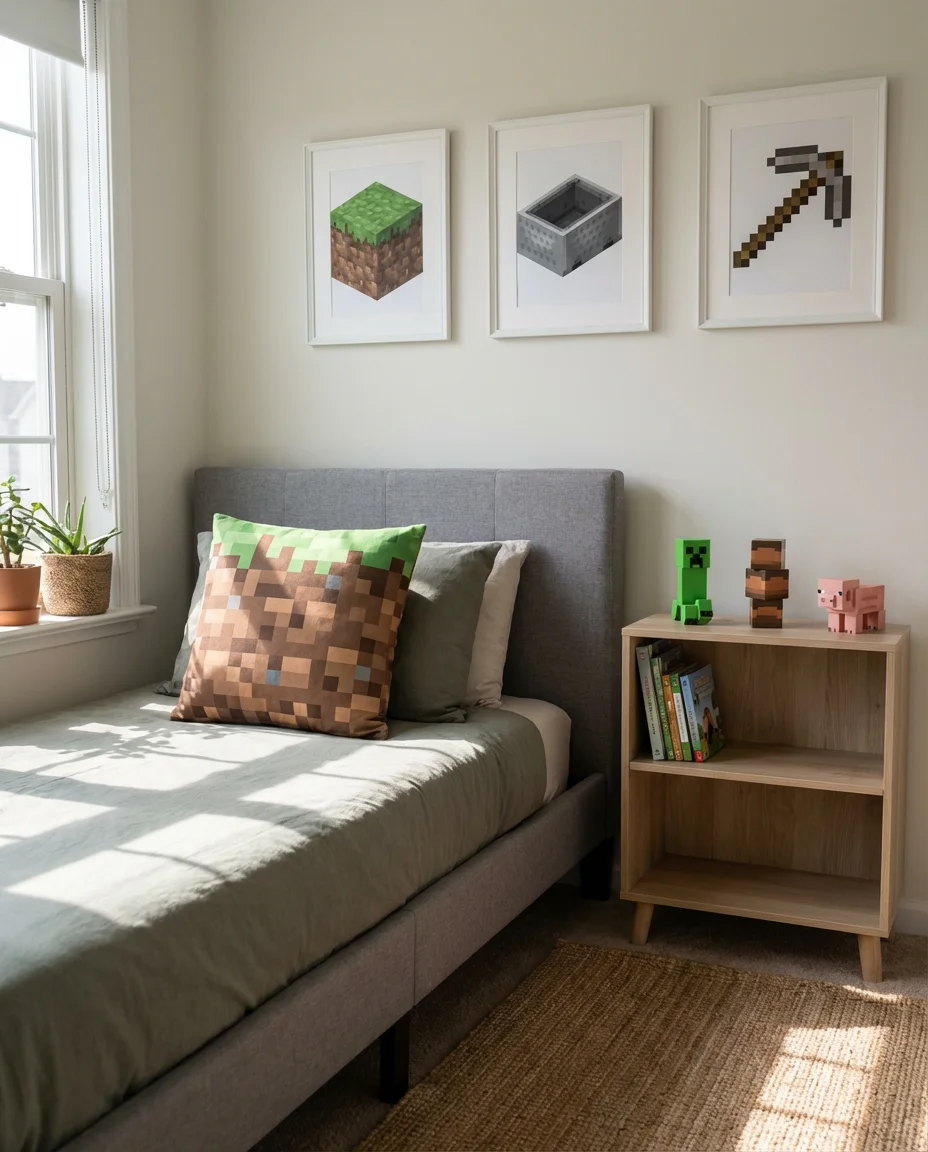
One thing parents often get wrong with themed rooms is going too literal too fast. Kids’ tastes change—sometimes within a year. A smarter approach is to keep big-ticket items like the bed frame and dresser theme-neutral and use removable wall decals, bedding, and small accessories to carry the Minecraft look. When your child inevitably pivots to a new obsession, you’re only swapping out the affordable stuff. That said, a well-painted accent wall is a commitment worth making—it photographs beautifully, and kids absolutely love it.
5. Toca Boca-Inspired Colorful Room
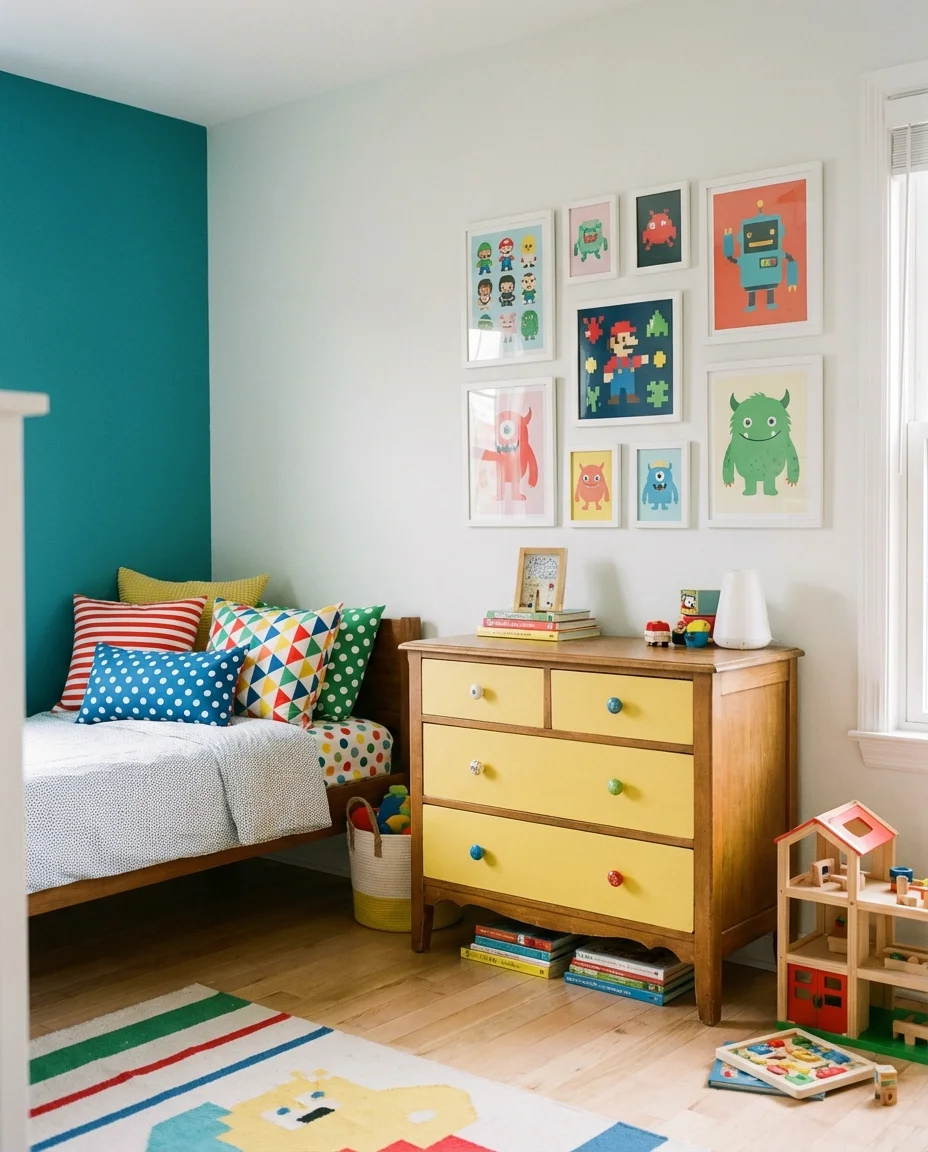
If your kid is obsessed with Toca Boca, you already know the visual language—bright, joyful, colorful, and utterly unapologetic about it. Translating that energy into a real bedroom means saying yes to bold primary colors, mixed patterns that somehow work together, and furniture that has personality built right in. Think of a bright yellow dresser next to a teal accent wall, with a gallery of whimsical prints above the bed. It shouldn’t look curated—it should look alive.
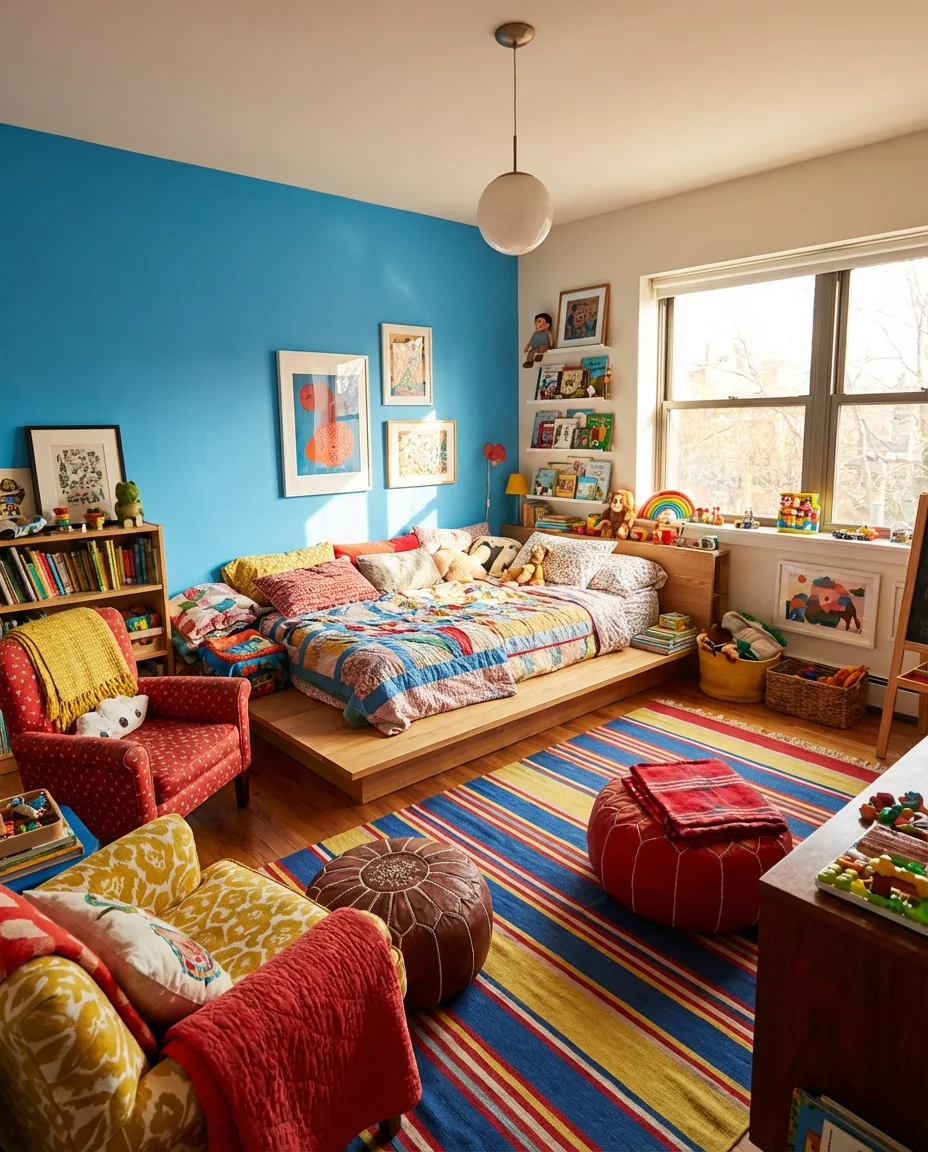
Real talk: many parents hesitate with bold color because they’re afraid it’ll feel overwhelming or age poorly. But interior designers who work with children’s spaces will tell you that kids actually regulate better in environments that reflect their energy rather than suppress it. The micro-anecdote version of this is the mom in a Reddit home design thread who repainted her daughter’s room from beige to Toca-palette bold and reported that her daughter started choosing to play in her room independently for the first time. Color communicates belonging.
6. Neutral Calm Kids Room for Small Spaces
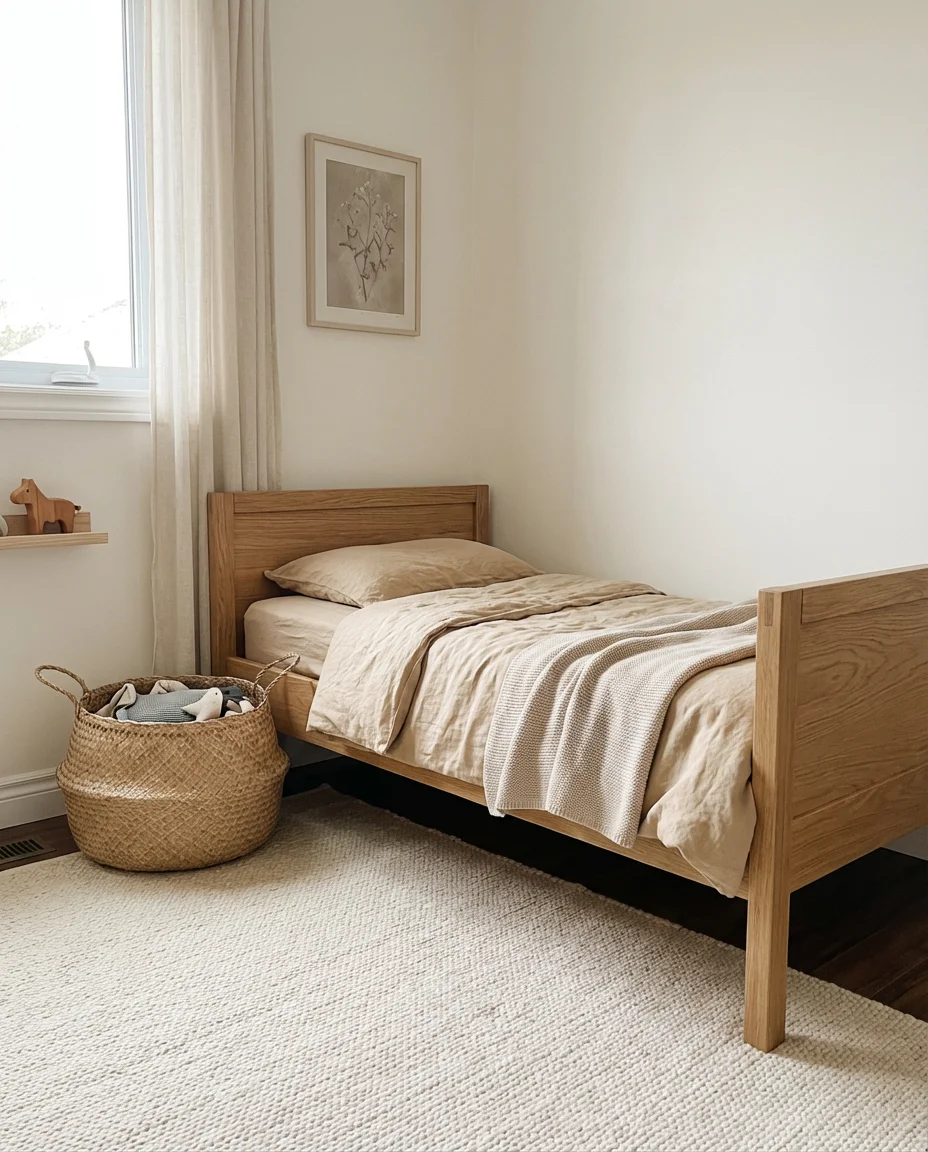
Not every family wants to go bold, and not every room has the square footage to pull it off even if they do. The neutral approach to kids’ rooms is having a serious moment in 2026 — think warm whites, sandy taupes, and soft natural textures that make even the tiniest bedroom feel considered and calm. This style works beautifully in small spaces, where keeping the visual noise low actually makes the room feel larger and more livable for everyone in the household.
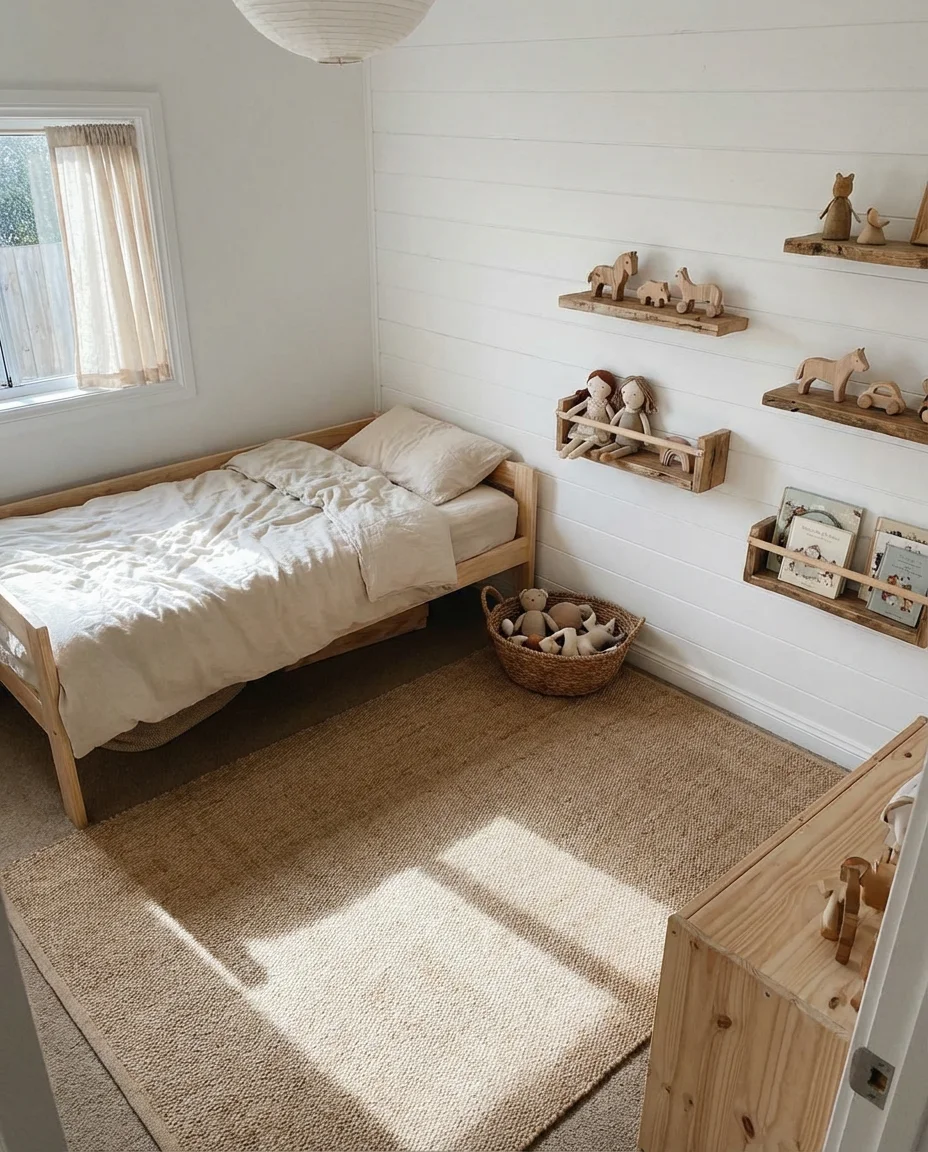
Where this works best is in apartments, starter homes, or any situation where the kids’ room is on the smaller side and you need the space to feel open rather than cramped. Neutral doesn’t mean boring—layering different textures (linen, knit, rattan, wood) keeps things visually interesting without adding clutter. A single piece of intentional wall art—maybe a simple botanical print or a custom name illustration—gives the room enough personality without overwhelming the calm you’ve worked to build.
7. Purple Dream Room for Girls
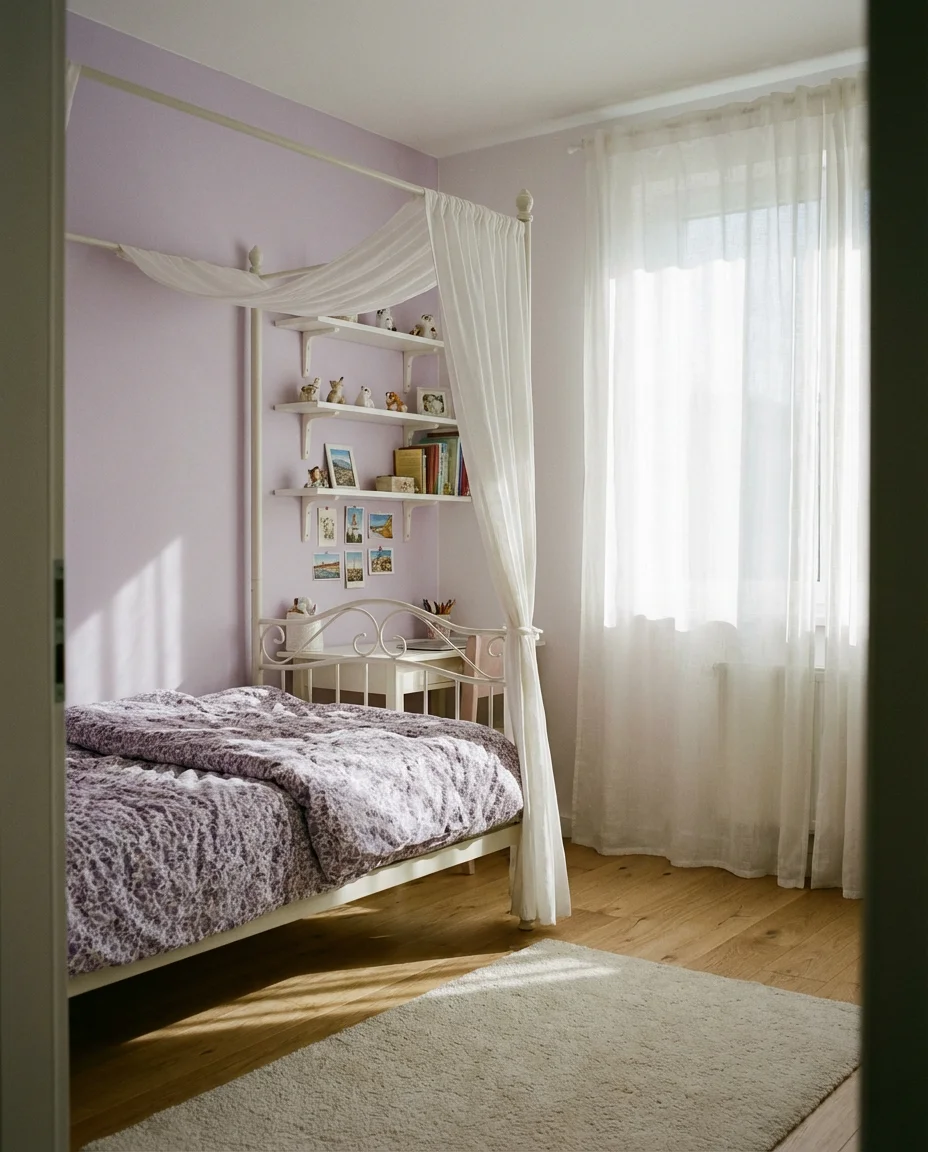
Move over millennial pink—purple is the color kids are actually asking for in 2026, and it makes sense. It’s rich without being dark, playful without being juvenile, and it photographs absolutely beautifully for those Pinterest-worthy room reveals. A cute purple bedroom can range from soft lavender with white accents for a dreamy, cloud-like feel all the way to deep plum with gold hardware for something a little more grown-up and dramatic. Both approaches are landing incredibly well right now.
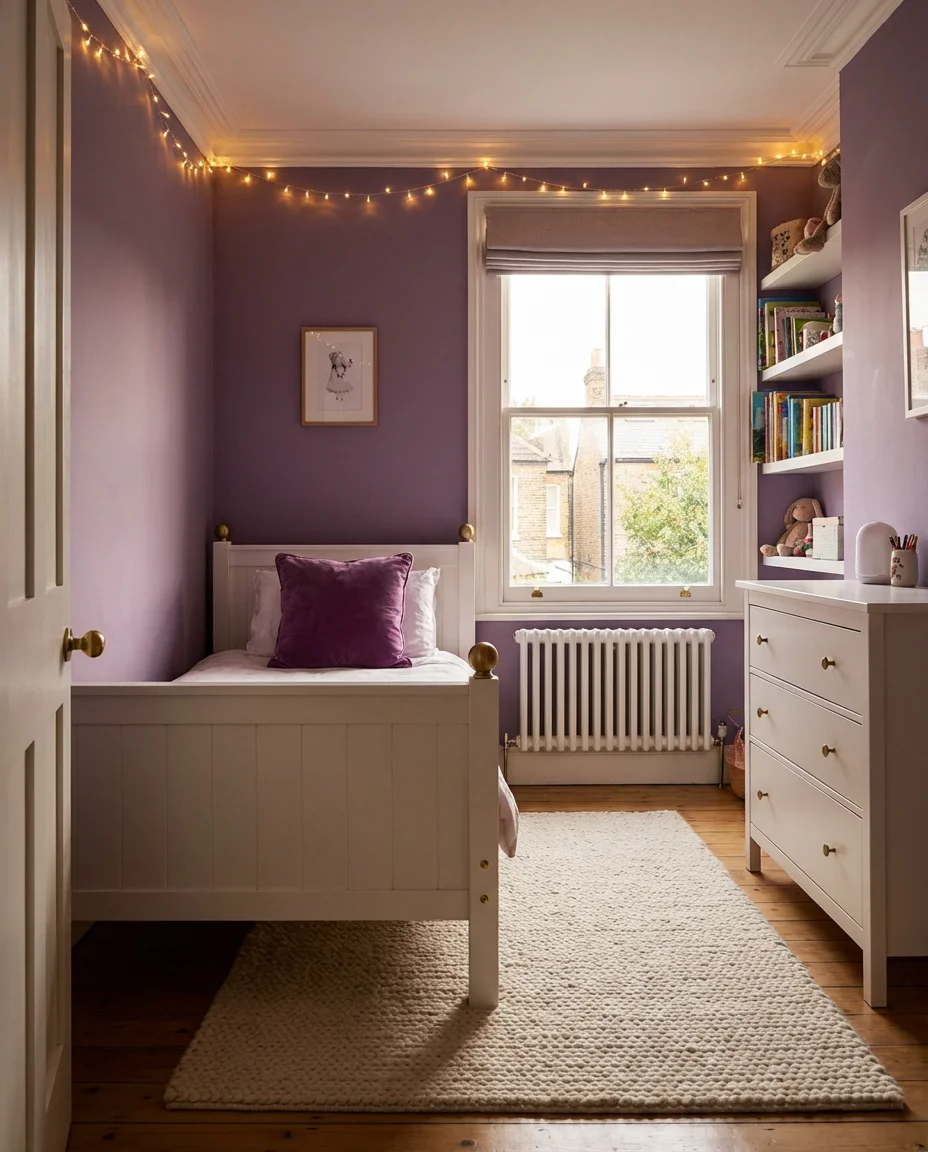
The common mistake with purple rooms is going too saturated on every surface. One designer with a large following on Instagram put it well: one strong purple wall does more work than four medium-purple ones. Let that accent wall breathe by keeping the remaining walls white or very light gray, and let your furniture and textiles carry coordinating tones. It’s also worth knowing that lavender specifically tests extremely well for sleep quality in kids—the cool undertones are genuinely restful. That’s a bonus most parents don’t expect from a color choice.
8. Pink Aesthetic Bedroom
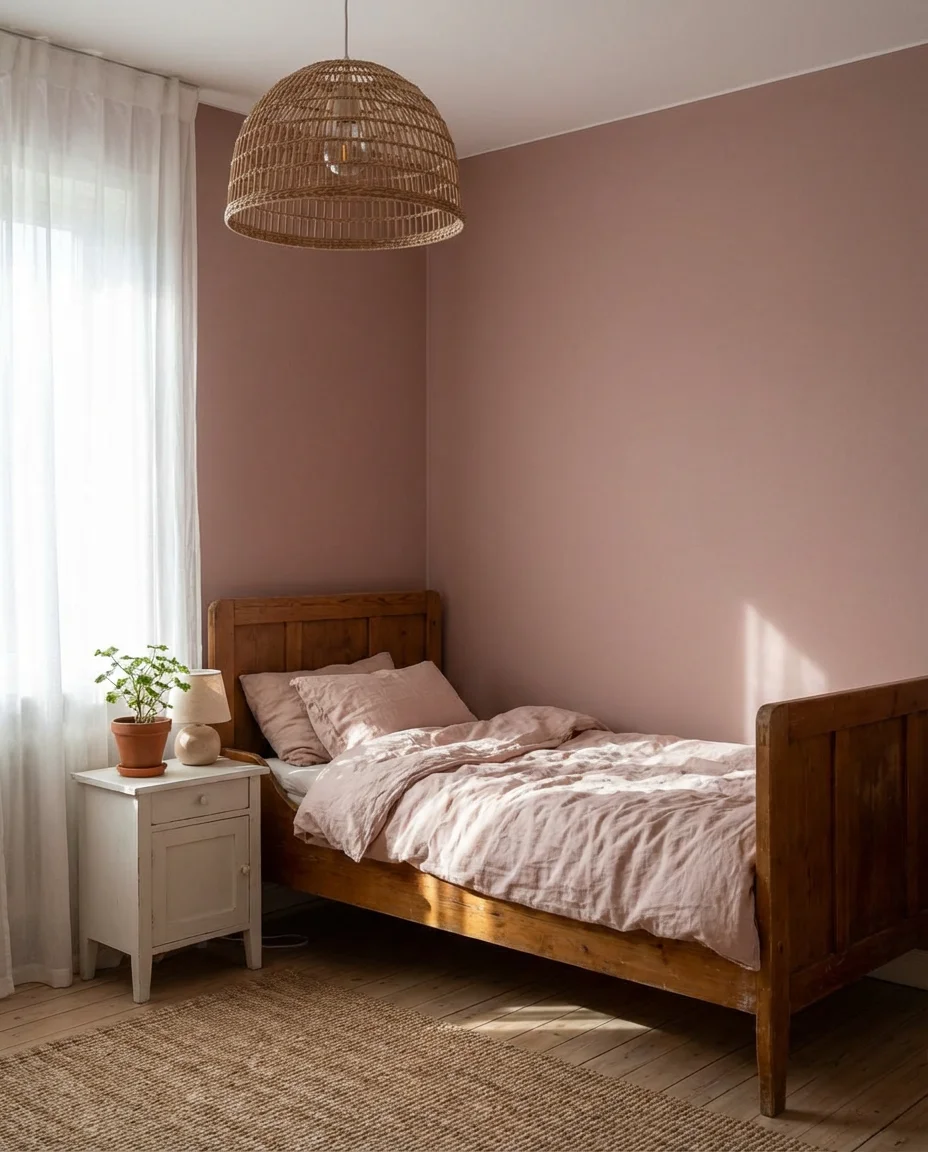
The pink bedroom has fully shed its bubblegum past. What’s trending now is a more editorial take—dusty rose, blush, vintage mauve—layered with warm wood tones and linen textures that feel more like something from a boutique hotel than a toy store. This approach is particularly popular with older kids who want something that feels cute but also a little more sophisticated, something they won’t immediately outgrow when middle school hits.
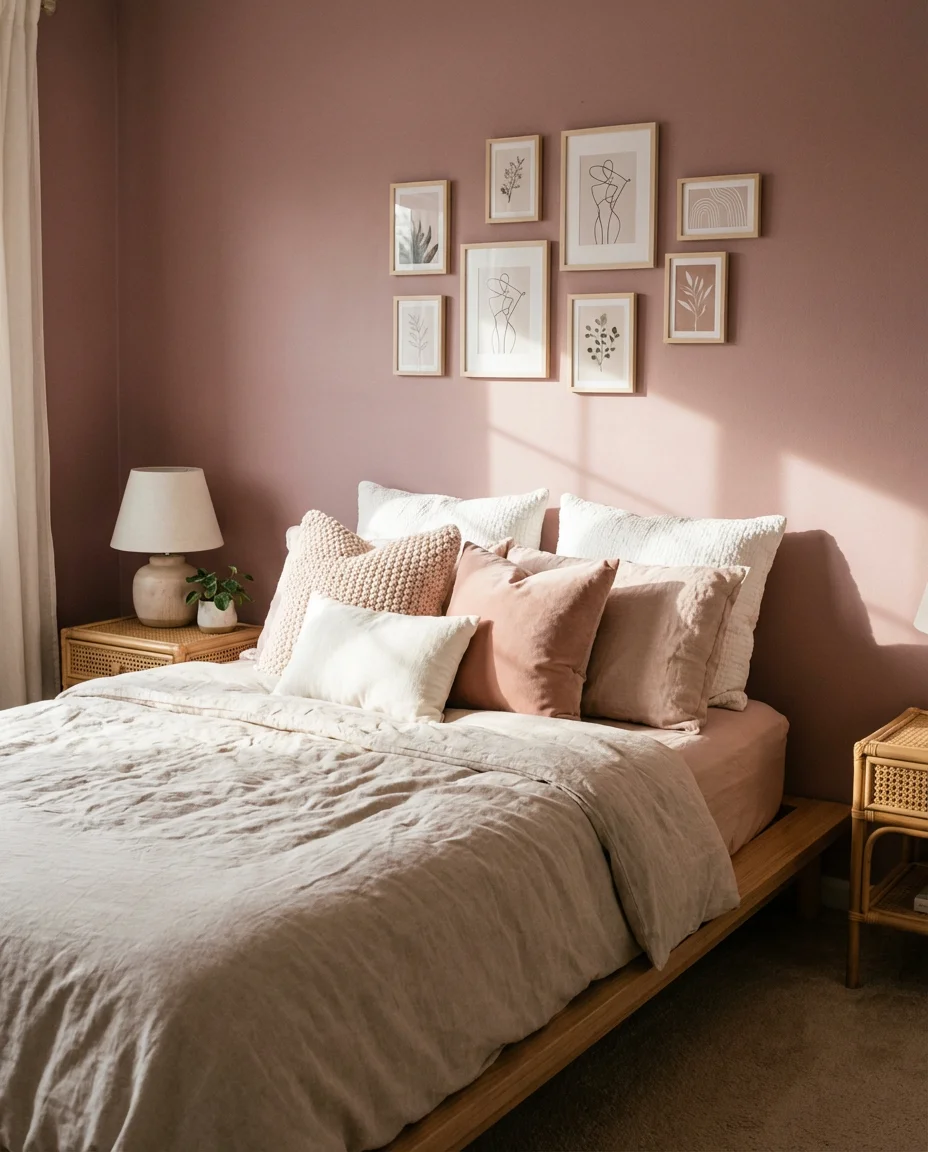
American families in particular are gravitating toward this toned-down pink because it photographs so well for social sharing but also genuinely functions beautifully as a daily living space. The trick is treating pink like a neutral—which, in its dustier forms, it actually is. Pair it with warm brass fixtures, natural wood shelving, and woven accents, and you have a room that will look just as good in five years as it does today. Budget tip: a single can of the right blush paint is the highest-ROI update you can make in any kids’ room.
9. Bloxburg-Inspired Aesthetic Room
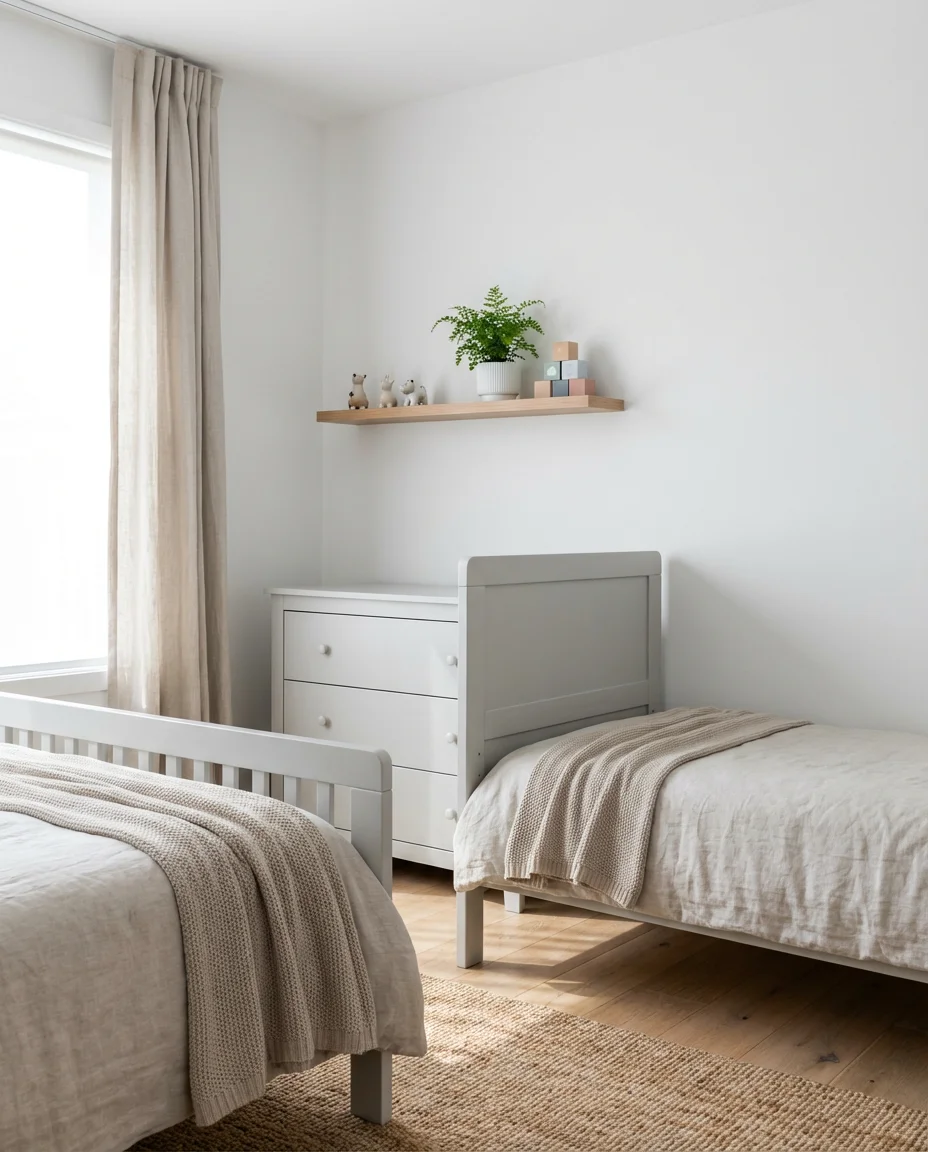
If your tween is deep into Bloxburg, you’ve probably watched them spend hours designing the most carefully curated virtual bedrooms imaginable. The smart parenting move is channeling that same design energy into their real space. Bloxburg aesthetics tend to run clean and modern—white or soft gray walls, matching furniture sets, and small decorative items arranged with intention. It’s surprisingly tasteful, and kids who are into it will be genuinely excited to help design their own room for once.
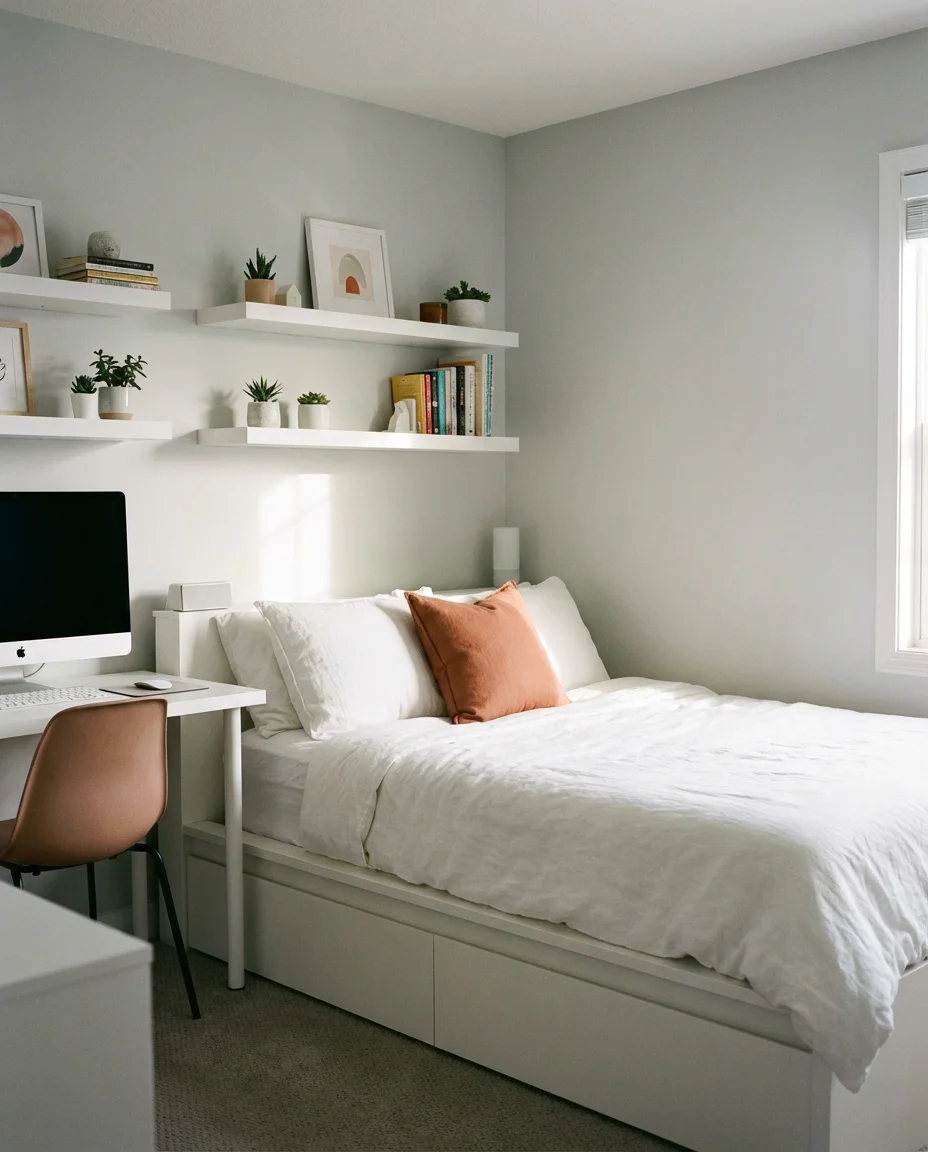
Here’s something parents consistently report: when kids have creative input into their own room design, they take significantly better care of the space. Letting a Bloxburg-obsessed child essentially “design” their bedroom—with your budget guardrails, of course—creates enormous buy-in. They’ll notice when things are out of place because they cared about where things were placed to begin with. It’s one of those rare situations where indulging a game interest actually pays off in real-life behavior. Worth every bit of the conversation.
10. Sims 4 Dream Bedroom Setup
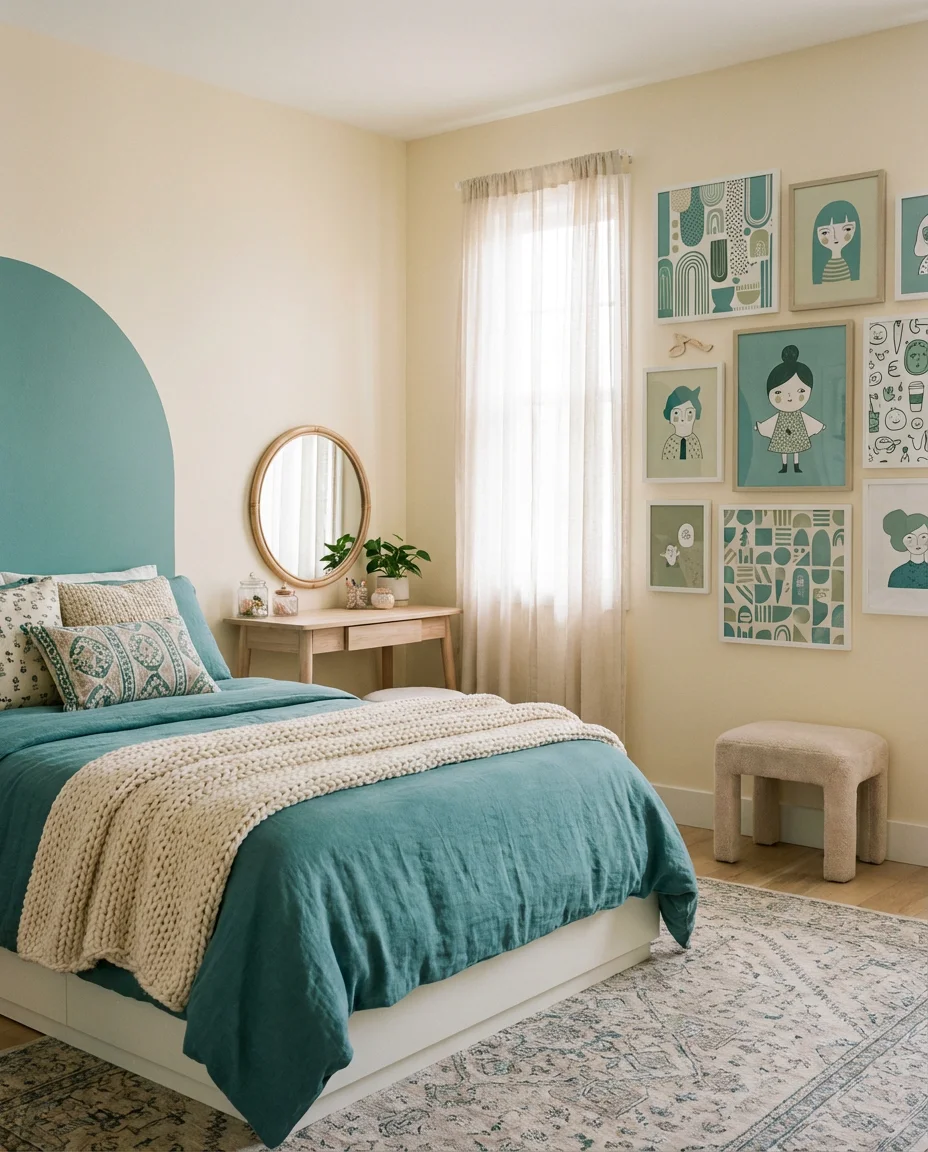
The Sims 4 design community is enormous, and its influence on real-world kids’ room trends is more significant than most parents realize. Sims-inspired rooms tend to blend maximalist personality with clean structural bones—a defined color story, deliberately placed accessories, and a sense that every object in the room has a reason for being there. This is actually a fantastic design framework for real spaces, especially for older kids who want a room that feels truly theirs rather than assembled from a catalog.
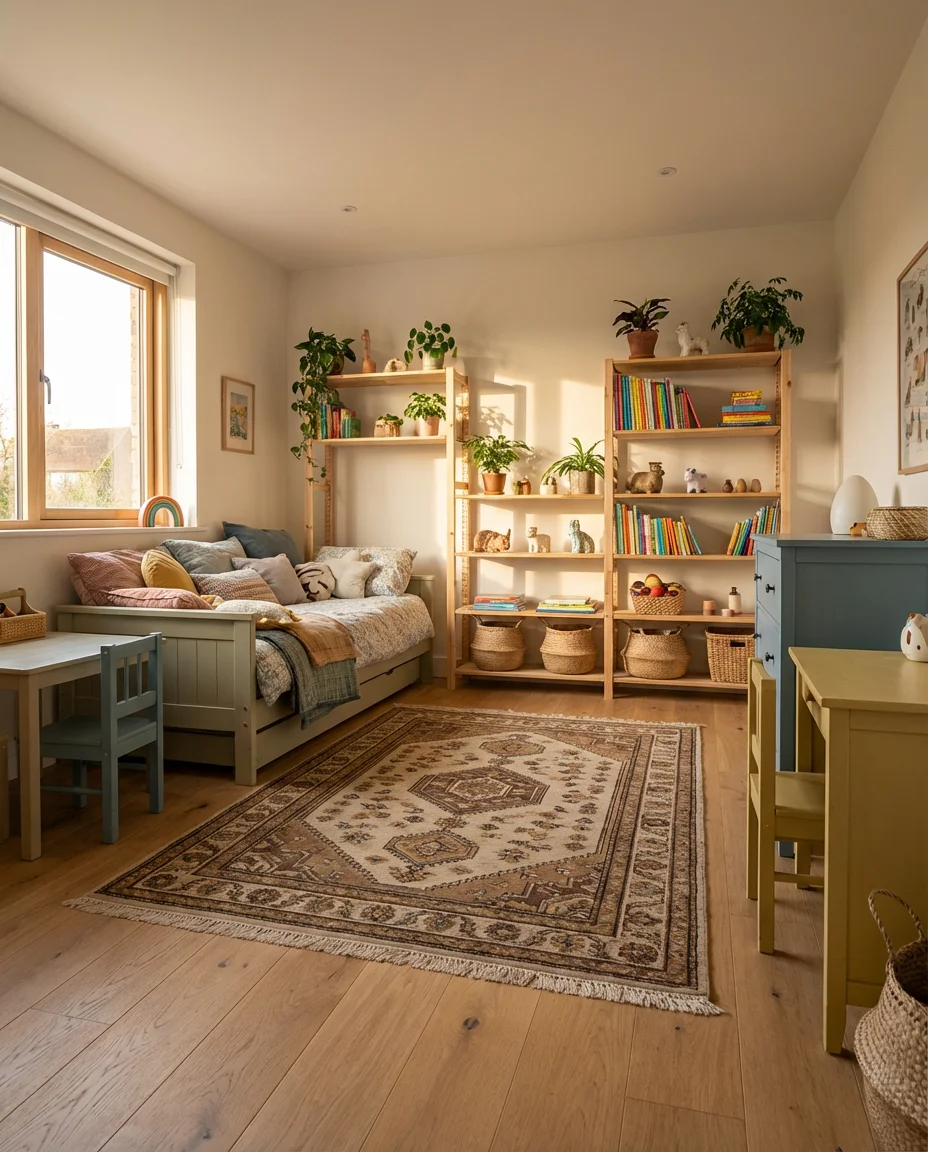
The practical insight here is that Sims aesthetics actually teach kids solid design thinking—balance, cohesion, and restraint. When you help a child translate their in-game vision into a real room, you’re working with someone who has already done the planning. Print screenshots of their favorite Sims room builds and use them as your mood board. You’ll be surprised how much overlap there is with real furniture available at Target, IKEA, or even thrift stores. This approach also stretches budgets significantly because kids are already invested in solving the puzzle.
11. Simple Reading Nook Corner
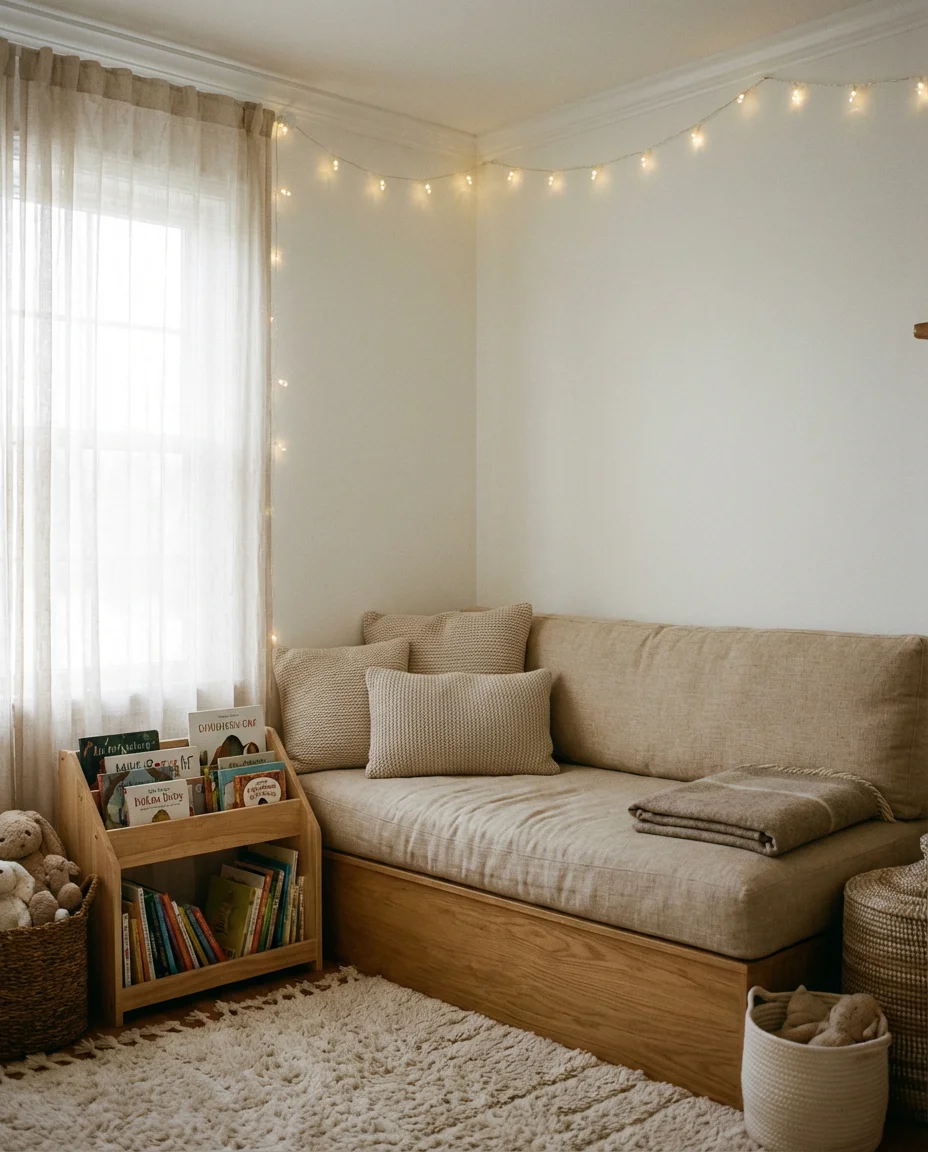
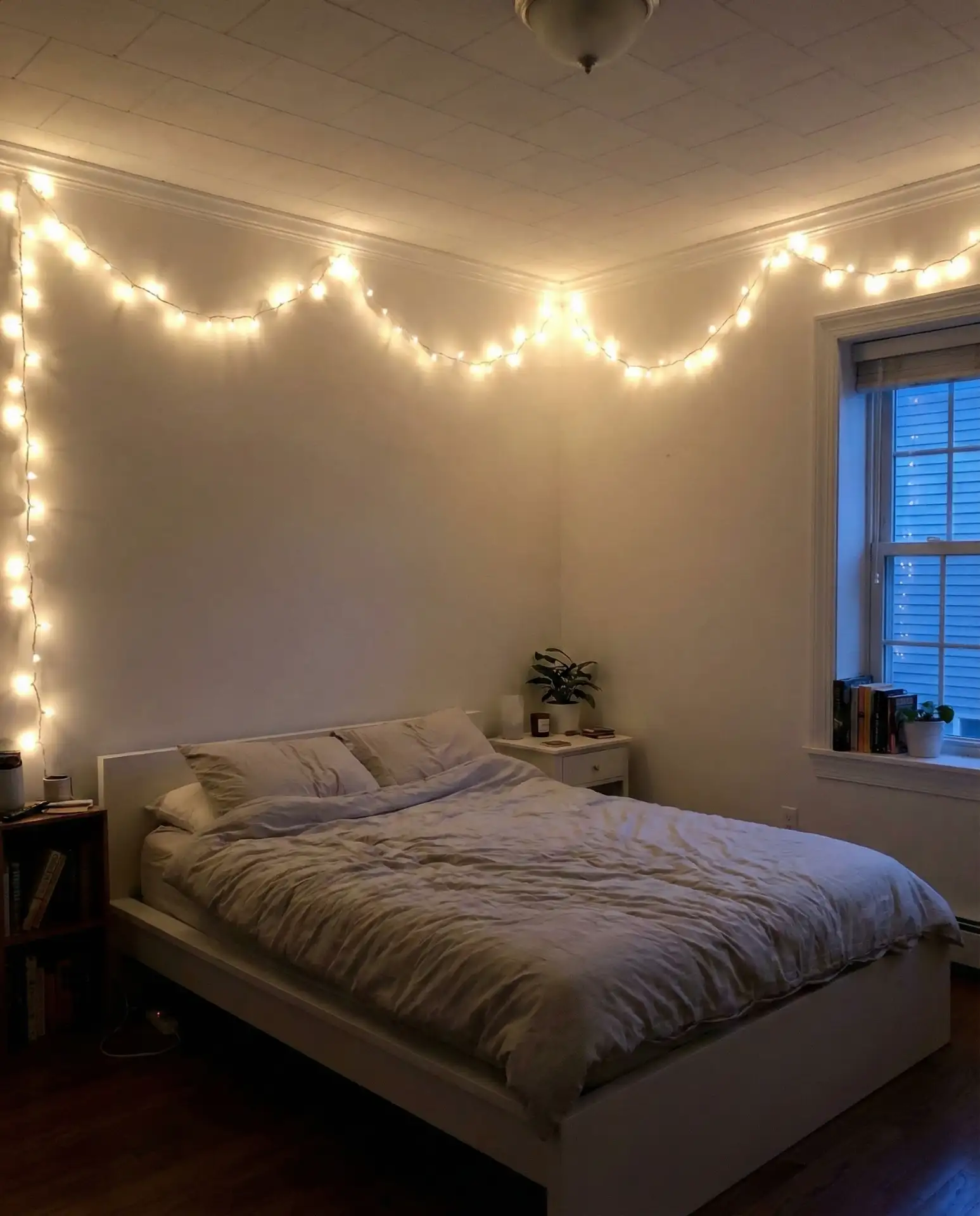
Sometimes the most meaningful thing you can put in a child’s room is a simple reading nook—nothing elaborate, just a corner with good light, a soft cushion, and a low shelf of books within easy reach. In 2026, these nooks are getting a design upgrade with built-in window seats, floor cushions in earthy textiles, and string lights that make the whole setup feel like a secret retreat. It’s one of those ideas that works at nearly every age and in nearly every room size.
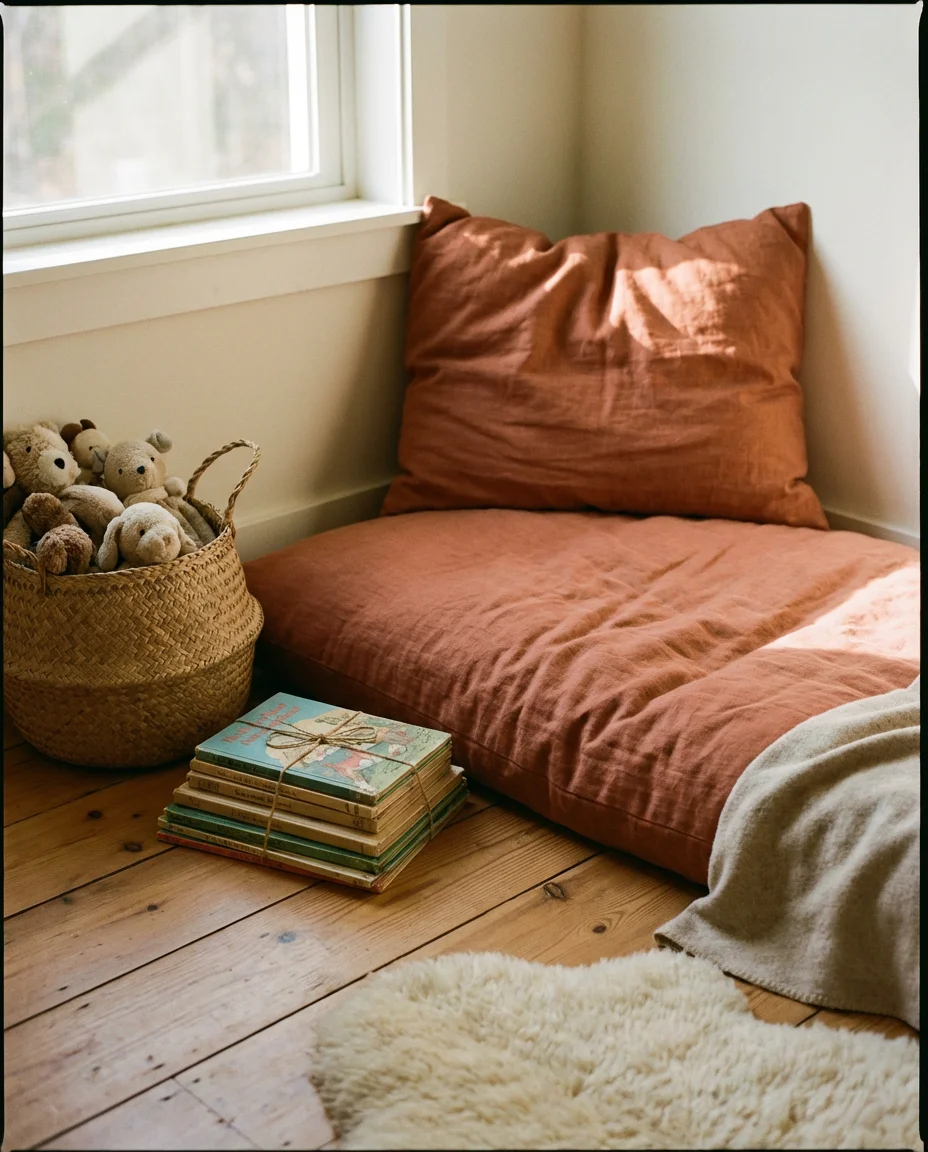
Reading nooks work best when they’re positioned near natural light—a window seat situation is ideal, but even a corner of the room with a dedicated lamp does the job. The key is making the child feel like this space belongs to them specifically. Let them pick the cushion fabric, arrange their books however they like, and personalize the spot with a few small items. One family in the Pacific Northwest turned a previously ignored corner of their son’s room into his absolute favorite spot in the house, purely by adding a cushion, a lamp, and a small rug. The books followed naturally.
12. Stray Cat-Inspired Urban Fantasy Room
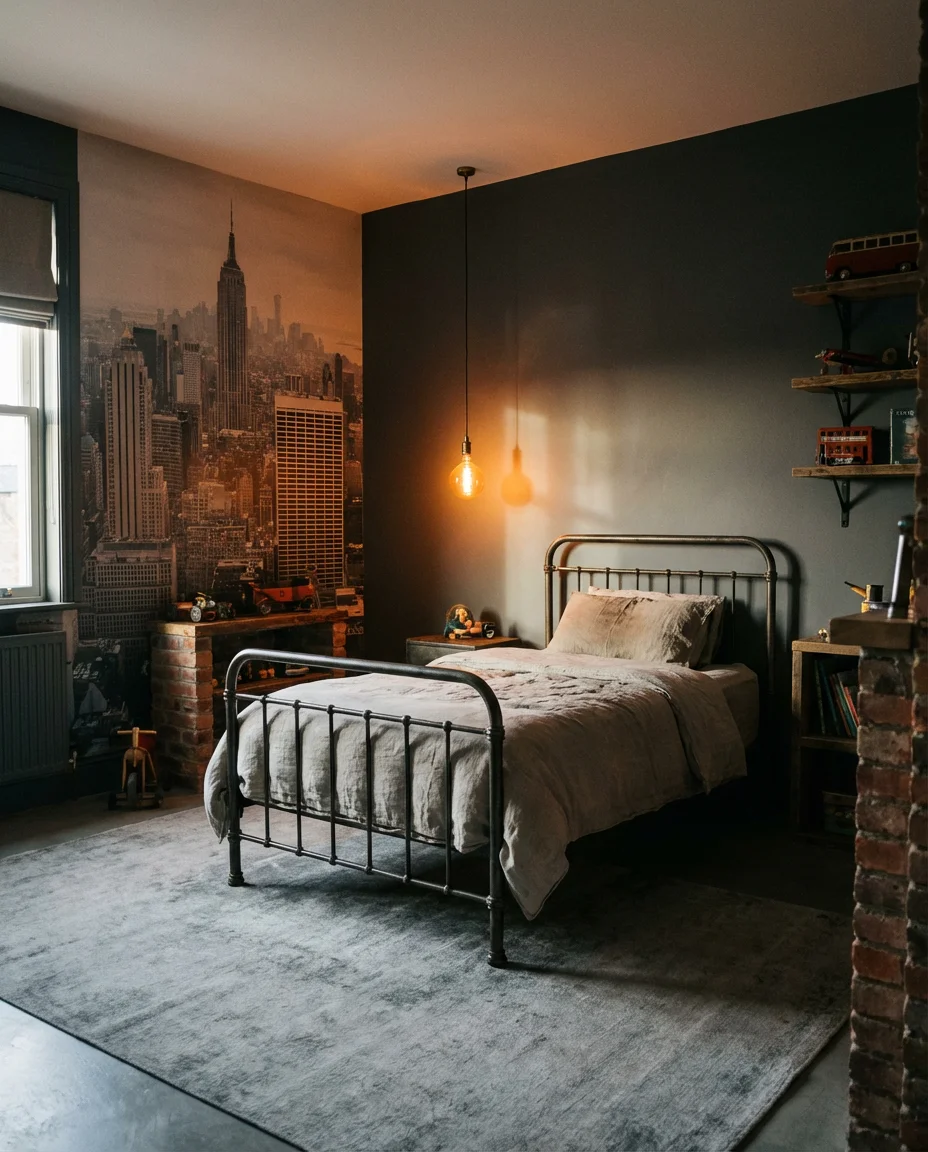
The game Stray captured the imaginations of kids and adults alike, and its atmospheric, neon-lit urban world has surprisingly strong potential as a room concept for older children who skew toward the edgier, more atmospheric end of design. Think cool gray walls, warm amber accent lighting, rooftop-city-inspired wall murals, and a few unexpected vintage or industrial touches. It’s a weird combination on paper, but in practice it creates the most genuinely cool kid rooms you’ve ever seen.
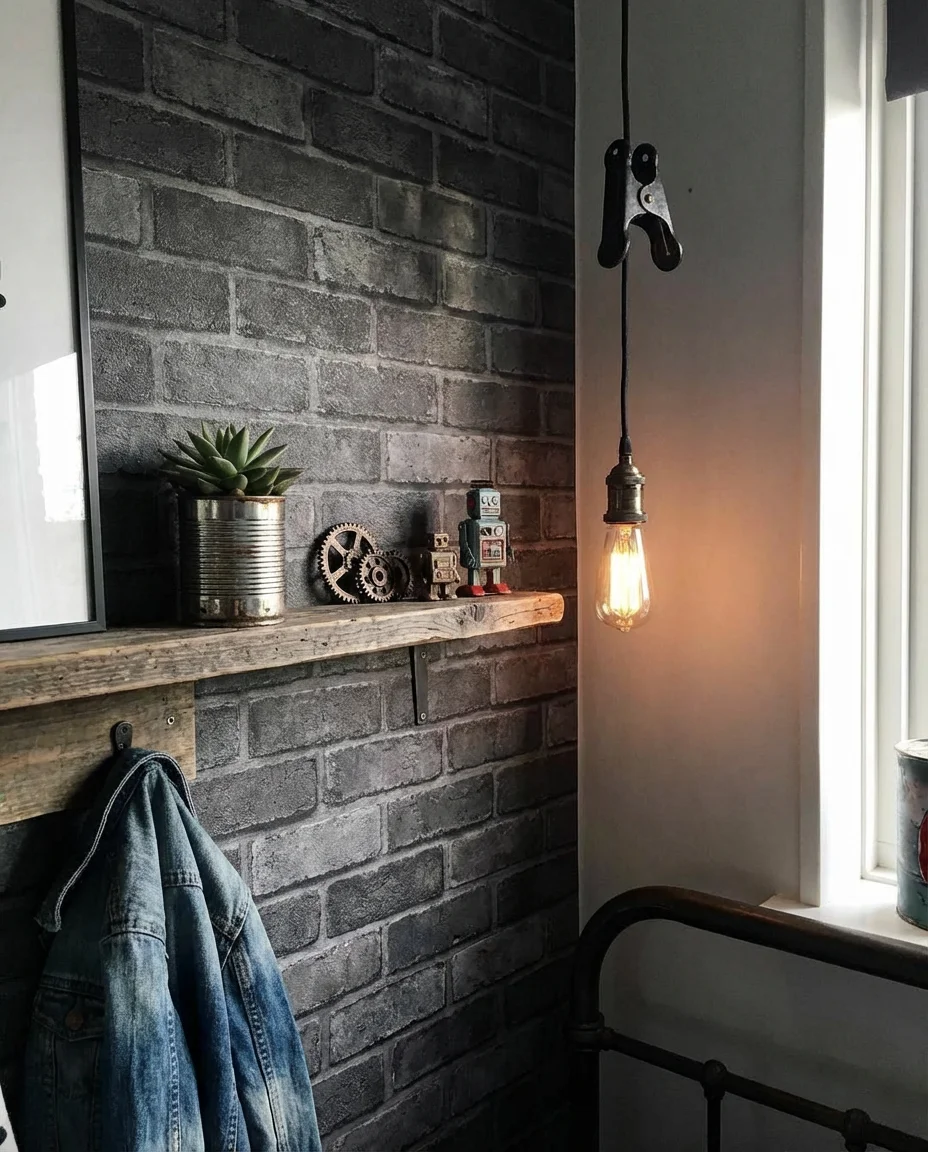
This style works best for kids between ages eight and fourteen who have strong visual personalities and want a room that reflects them specifically rather than a category. The common mistake is going too dark overall, which can make a room feel oppressive. The fix is layering in warm light sources—floor lamps, clip lights, and LED strips in amber—so the darkness feels atmospheric rather than heavy. One or two personality objects (a vintage clock, a cool framed print) carry more weight here than a dozen smaller accessories. Less truly is more when the backdrop is dramatic.
13. Indian-Inspired Kids Room with Global Flair
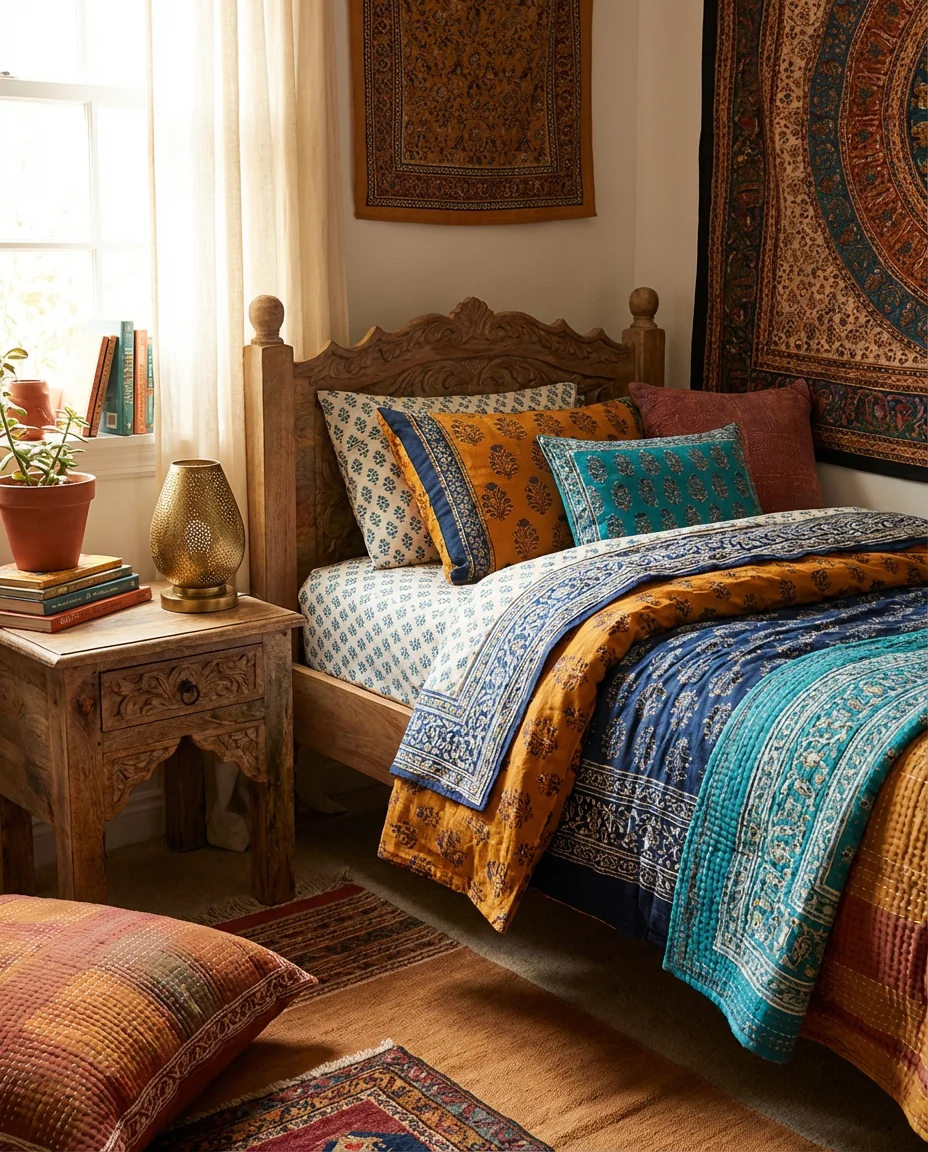
The Indian-inspired kids’ room trend is something that second-generation American families have been quietly perfecting for years, and it’s finally getting the Pinterest attention it deserves. This look weaves together rich jewel tones—saffron, turquoise, and deep rose—with hand-block-printed textiles, carved wooden furniture, and decorative elements that celebrate heritage with real visual confidence. It’s culturally meaningful and genuinely beautiful at the same time, and it photographs in a way that stops the scroll immediately.
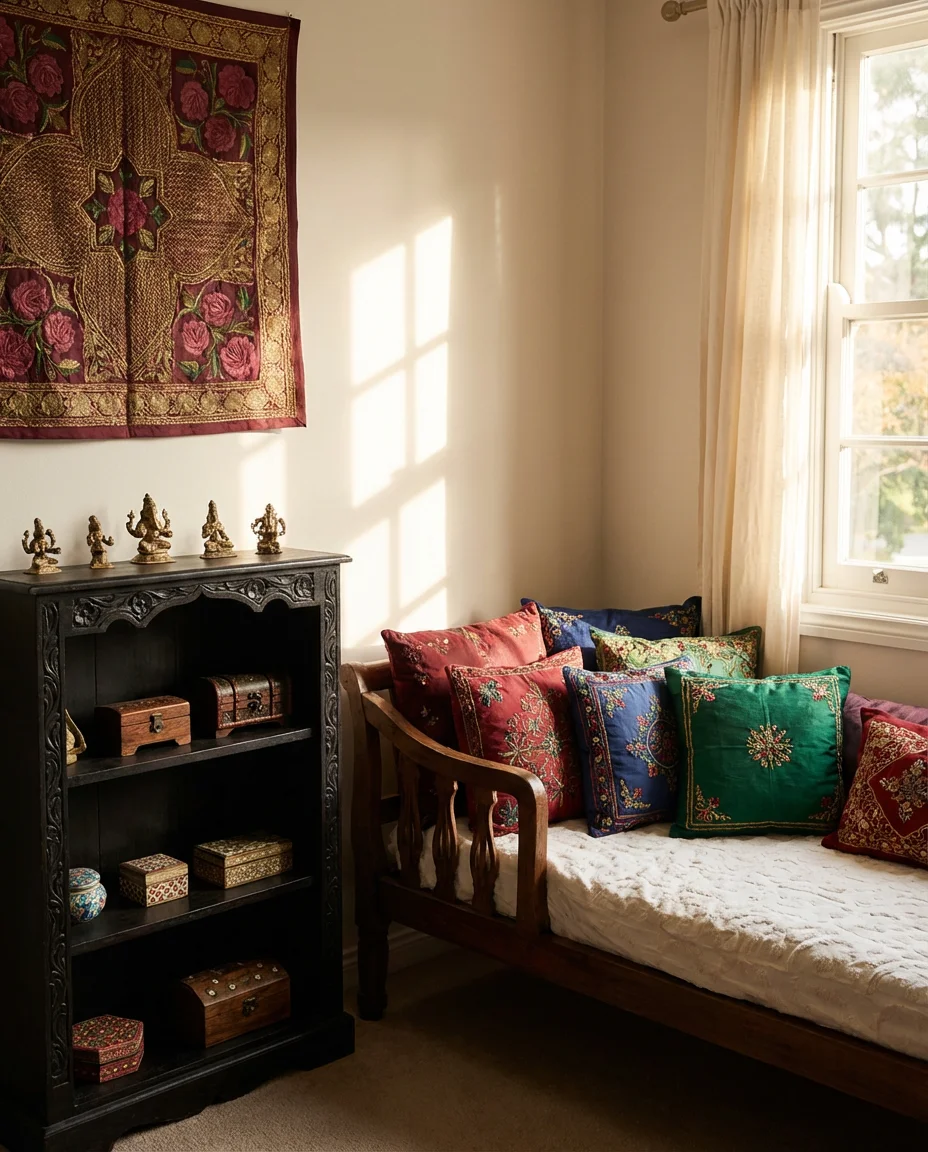
For families wanting to honor cultural heritage through a child’s space, the key is focusing on quality over quantity. A single hand-embroidered quilt, one carved wooden shelf, and a meaningful piece of art can do more cultural storytelling than a room crammed with generic “ethnic” decor. Many American families are sourcing these pieces through Etsy, Fair Trade shops, or directly from artisan markets—which also becomes a story the child can share with friends and carry into adulthood. The room becomes a quiet, beautiful form of identity.
14. Foster Home Welcoming Room Setup
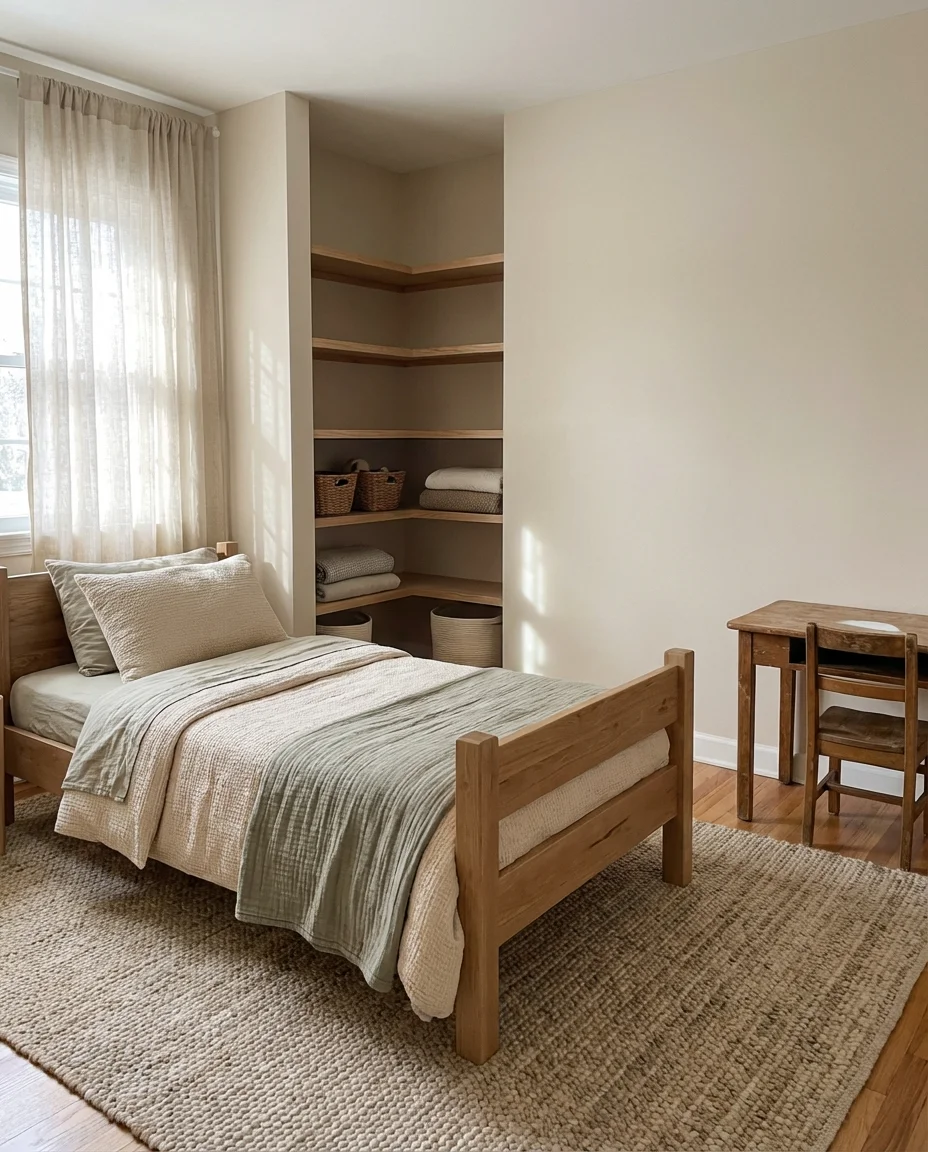
Designing a bedroom for a foster child comes with its own set of thoughtful priorities. The goal isn’t showiness—it’s safety, warmth, and the communication of welcome. Think soft, gender-neutral colors in warm tones, furniture that feels sturdy and permanent, cozy bedding that invites rest, and open shelf space where a child can immediately put their own things without it feeling like an afterthought. This room should say: this space is for you, and you belong here.”
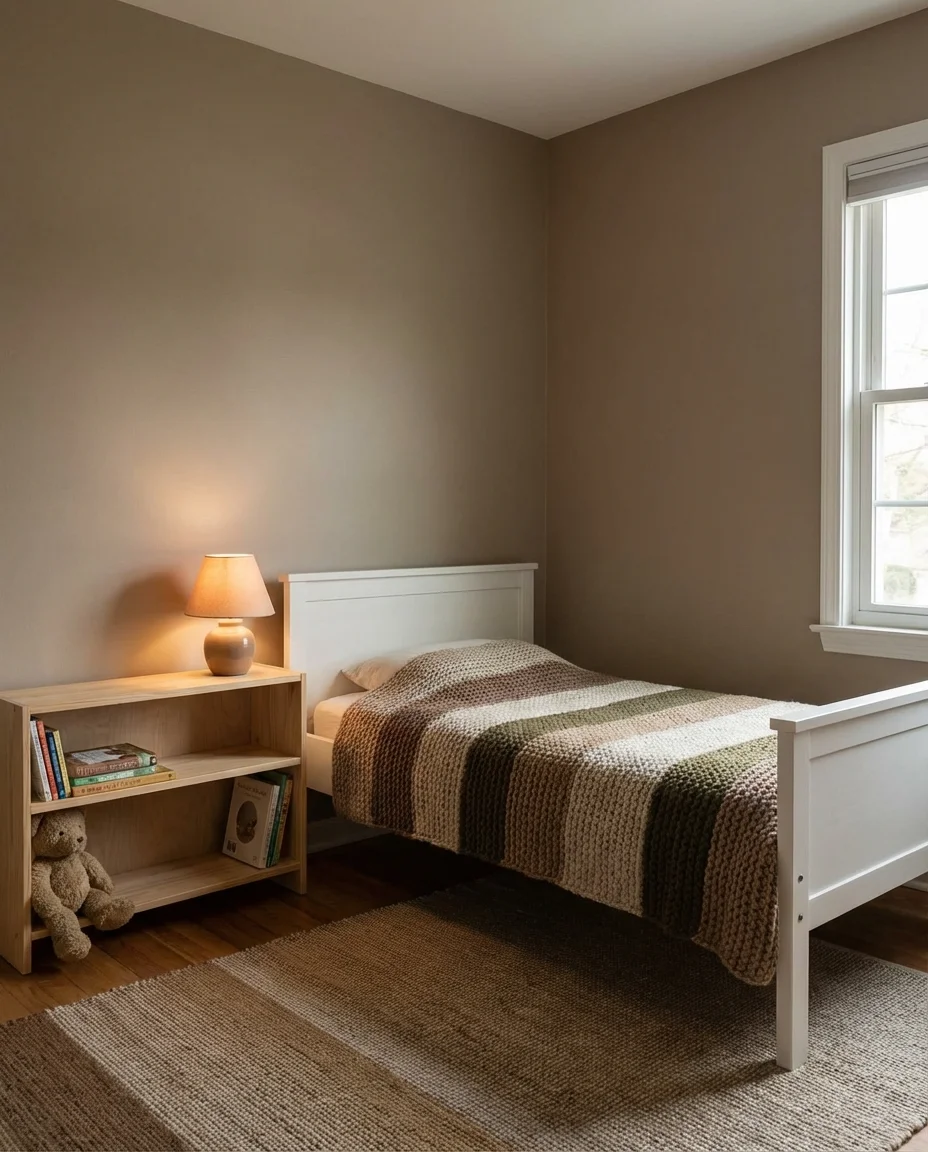
The American foster care system places thousands of children into new homes each year, and design advocates for foster families are increasingly vocal about how much physical environment affects a child’s initial sense of safety. Keeping things gentle, clear of clutter, and free of overly themed elements allows a foster child to see themselves in the space rather than feeling like they’ve walked into someone else’s world. A welcoming room is an act of care. If budget is a concern, many local nonprofits and organizations like Together We Rise provide bedding and furnishing support for foster families specifically.
15. Avatar World-Inspired Nature Room
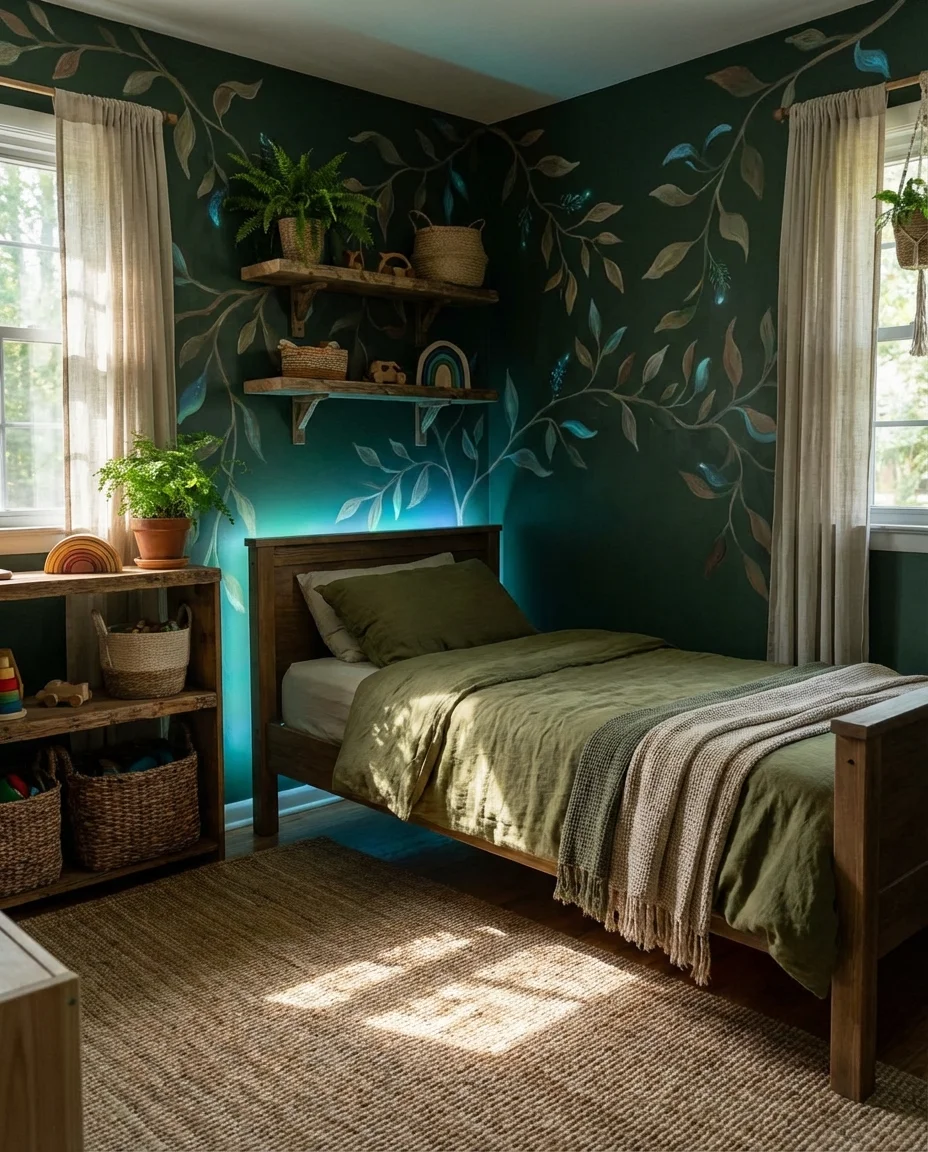
Whether your kid is devoted to the original animated series or the films, the Avatar world speaks to children who love nature, adventure, and a world that feels alive with energy. Translating that into a bedroom means leaning into deep greens, earth tones, and bioluminescent-inspired lighting accents—think trailing vines on a mural, glowing LED strips in cool teal and blue tucked behind furniture, and a general sense of being inside something organic and wild. It’s deeply whimsical without being childish.
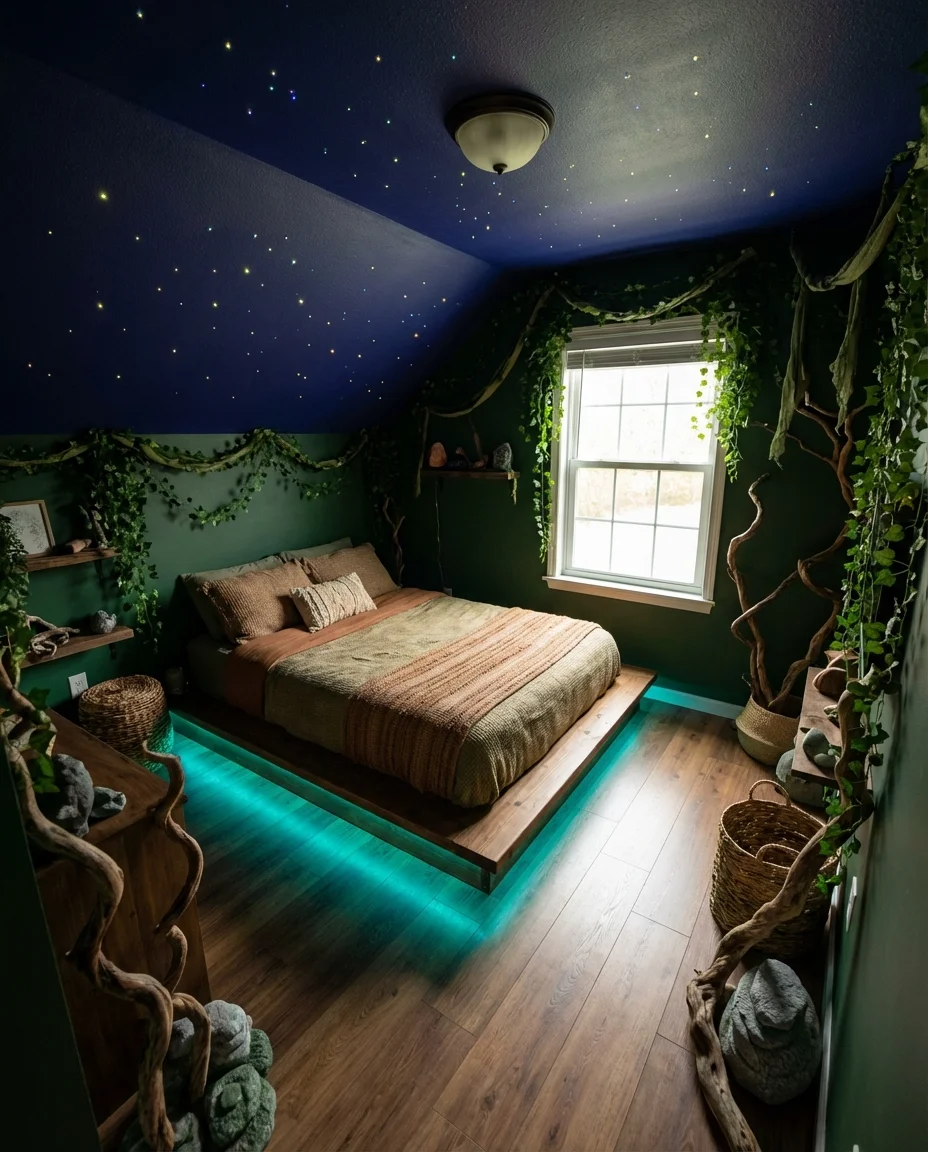
Expert-style take: the bioluminescent lighting angle in this theme serves a dual function—it creates magic during play and nighttime reading while also functioning as a gentle night light for younger children who don’t want complete darkness. LED strip lights in cool teal are inexpensive, easily installed, and controllable via remote, making them one of the smartest investments in any themed room. The mural is the larger commitment—consider peel-and-stick mural wallpaper panels if you want the look without the permanence, which is especially smart in rental homes or rooms likely to be reassigned.
16. Scene Kid Bedroom Aesthetic
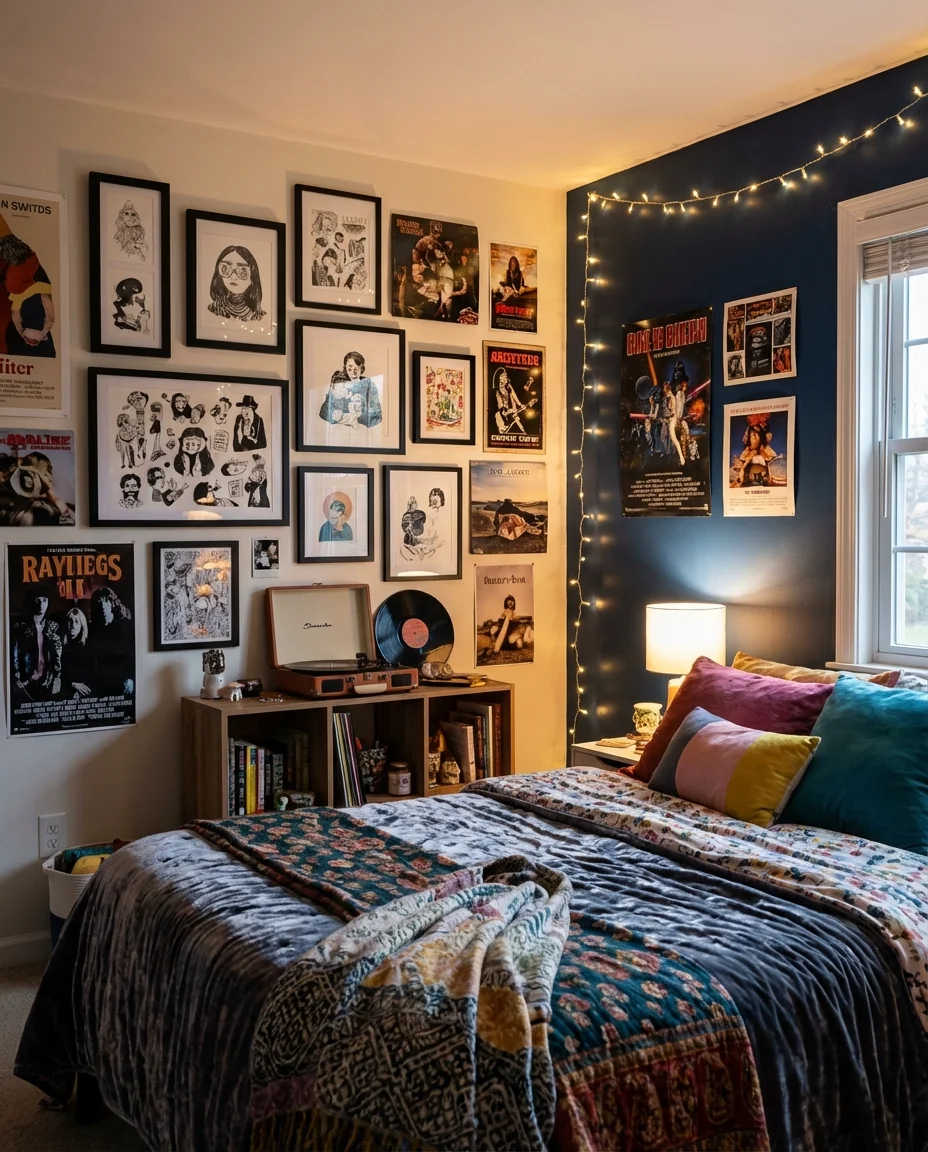
The scene aesthetic is back, and Gen Z kids with older millennial parents are absolutely living for it. This look is loud, layered, and completely intentional about its maximalism—band posters (or whimsical art prints in their place), fairy lights, mismatched but cohesive accessories, maybe a neon light element, and a general vibe of creative chaos that actually has an underlying logic to it. It’s one of those rooms that looks different from every angle, and that’s exactly the point.
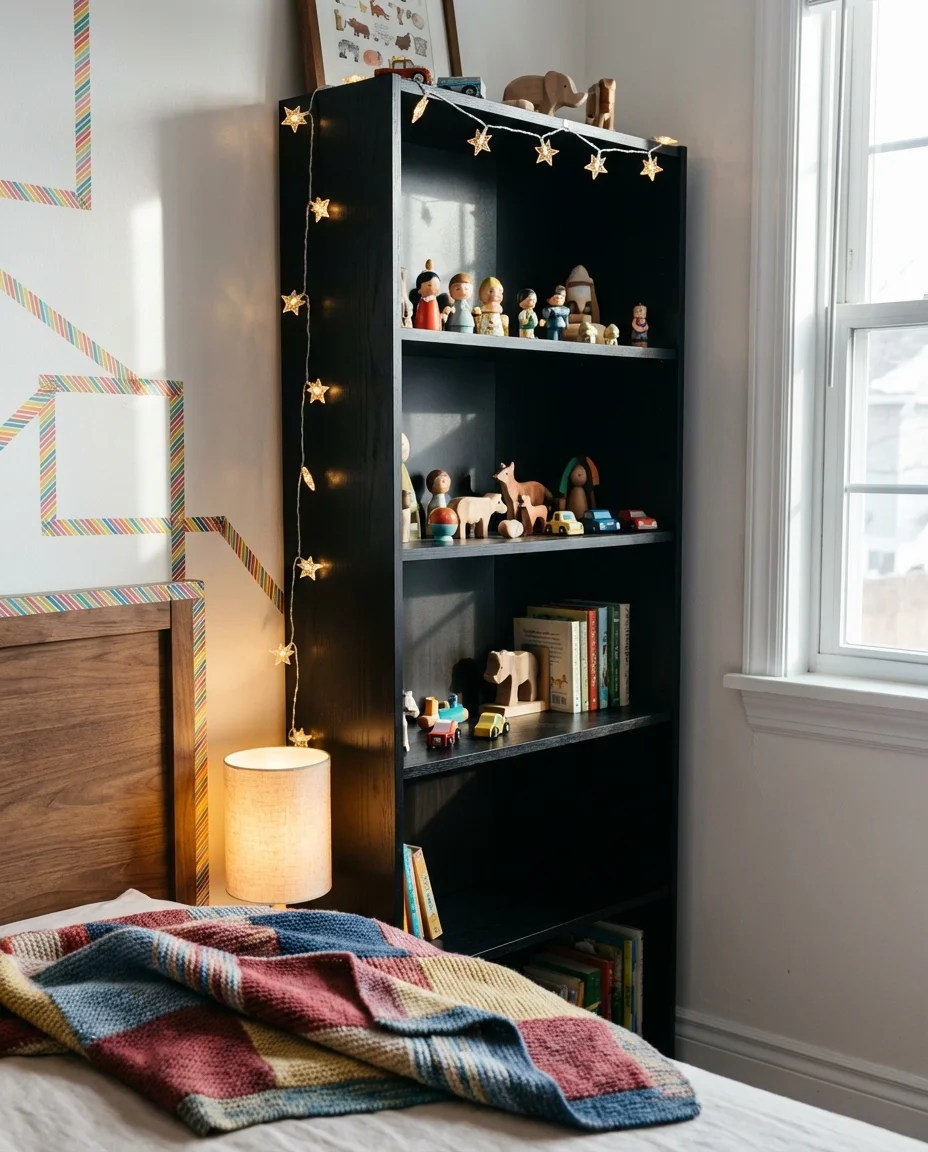
Real homeowner behavior research shows that children who have strong input into their bedroom design—including edgier, more personal aesthetics—demonstrate greater independence and a stronger sense of self-expression overall. The scene room is the physical manifestation of a child saying: this is me.” Parents who lean into that rather than fighting it often report dramatically fewer conflicts about bedroom tidiness, too, because the child is intrinsically motivated to maintain a space they genuinely love. Invest in a few strong statement pieces and let the personality take care of the rest.
17. Theater-Inspired Play Room
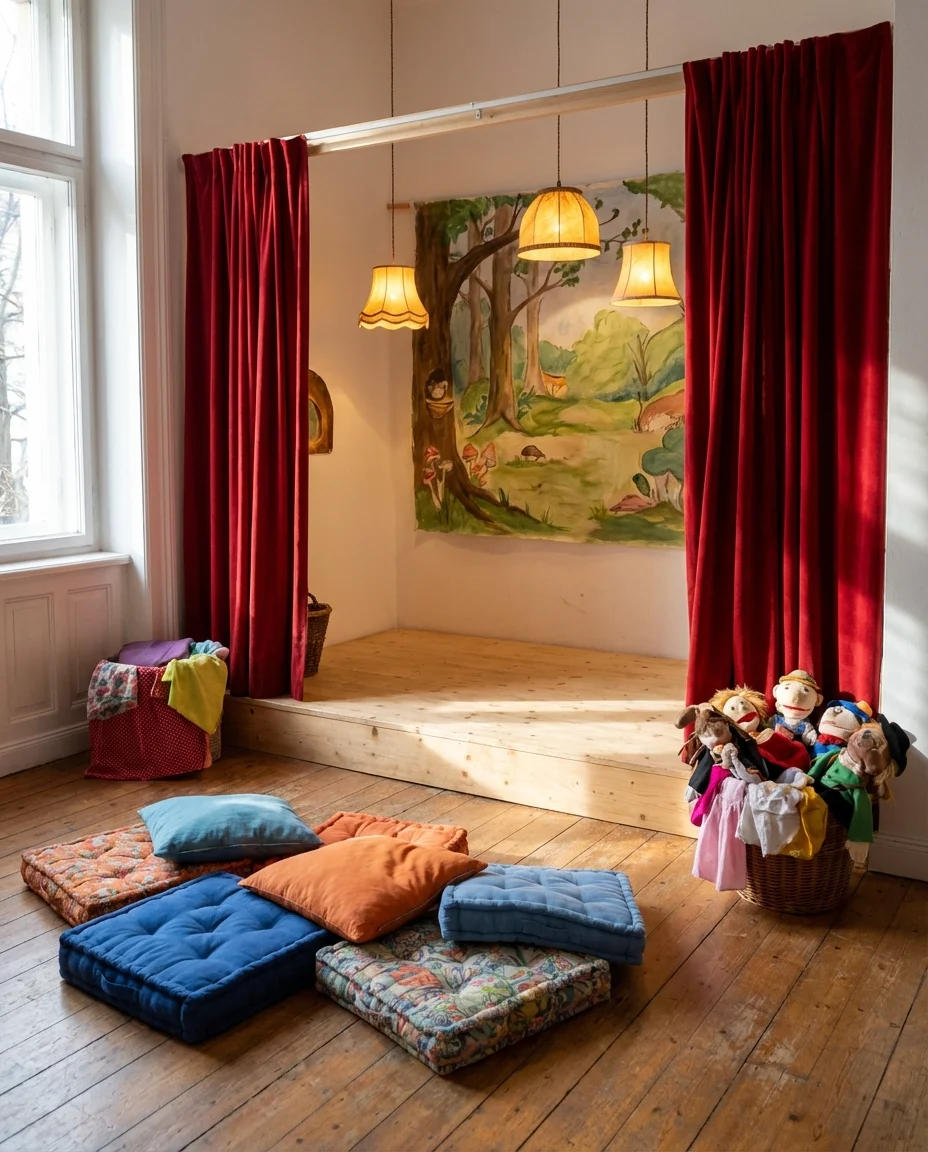
For kids who love performing, storytelling, or anything creative and dramatic, a theater-inspired bedroom or play space is an absolute dream come true. This setup features a small stage area—raised platform, curtain panels on either side, a backdrop wall—combined with a dress-up storage station and a proper seating area for the “audience.” It sounds elaborate, but even a modest version of this concept transforms how a child plays independently and with friends. It’s one of the most fun rooms you can build.
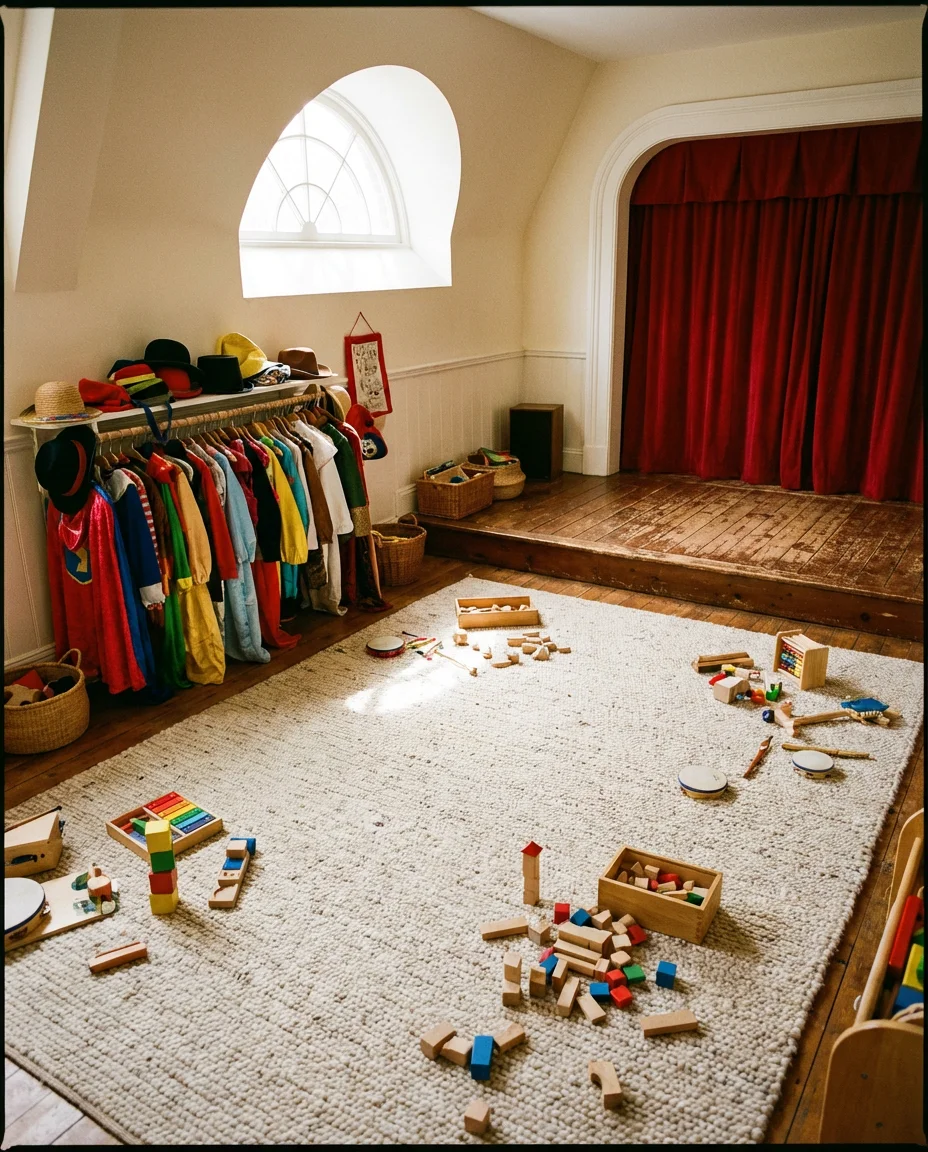
This works best in slightly larger playrooms or basement spaces where you have room for the stage and a few feet of “audience” area in front of it. The build is simpler than it sounds: a platform made from plywood (or even a few stacked pallets finished with paint), curtain rods bolted to the wall with IKEA curtain panels, and a simple painted backdrop. Total material cost can be kept well under three hundred dollars with a weekend’s worth of DIY. The return in imaginative play is incalculable—and parents often find themselves enjoying the shows almost as much as the kids enjoy putting them on.
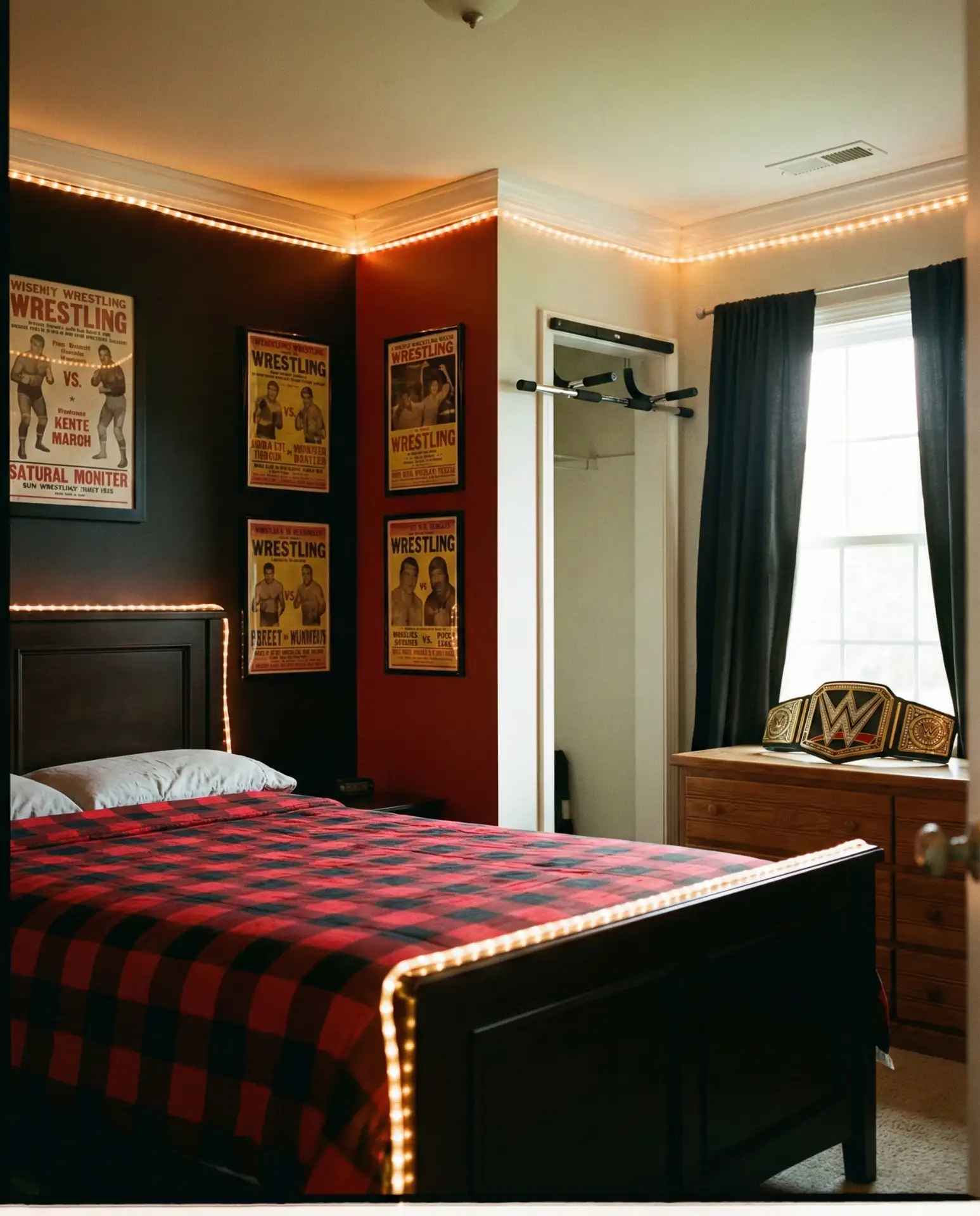
18. Simple Modern Boys Room
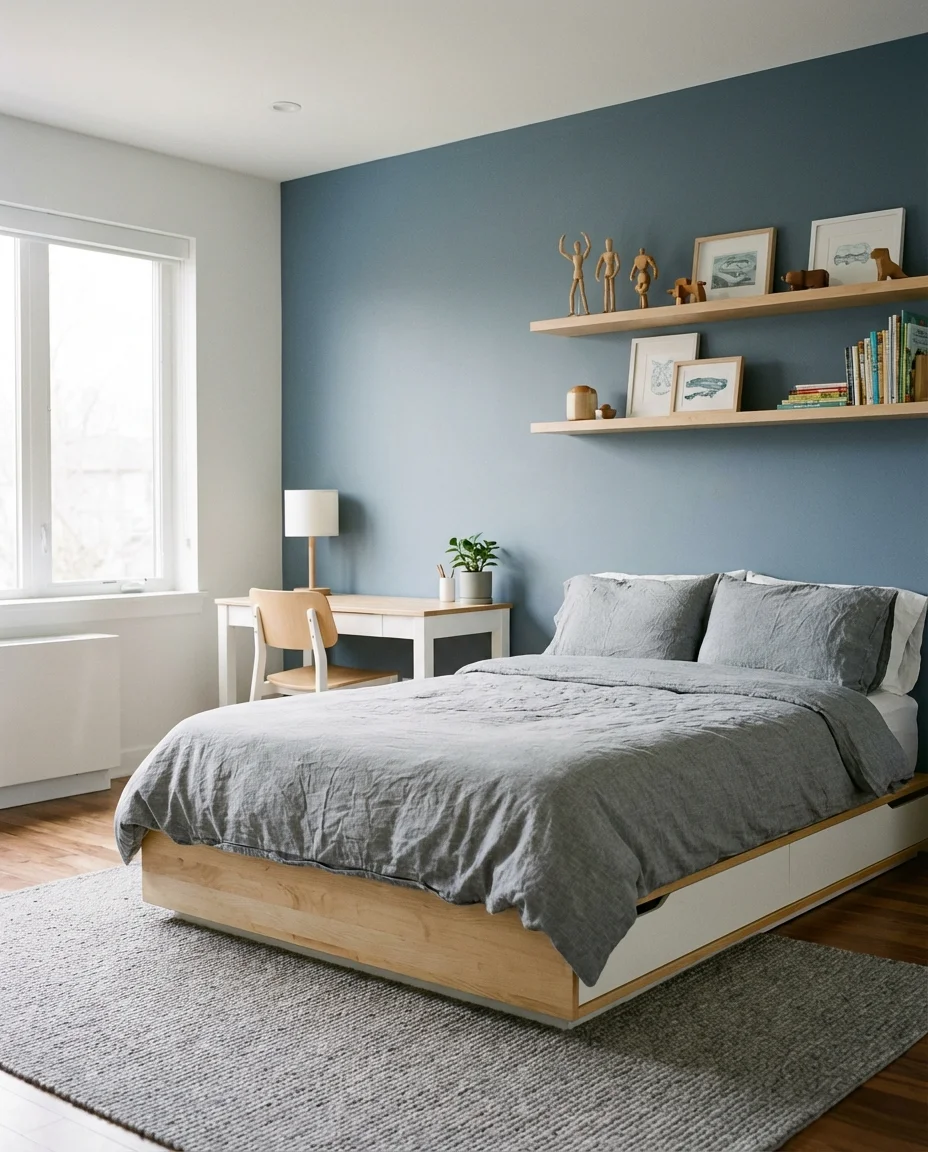
Boys’ rooms have an unfortunate history of being either sports-themed to the point of exhaustion or completely ignored in favor of “neutral.” In 2026, the simple modern approach strikes the right balance—clean lines, a muted but interesting color palette (slate blue, charcoal, warm off-white), and well-chosen furniture that respects the kid’s taste without pandering to it. A room that feels designed, not defaulted into.
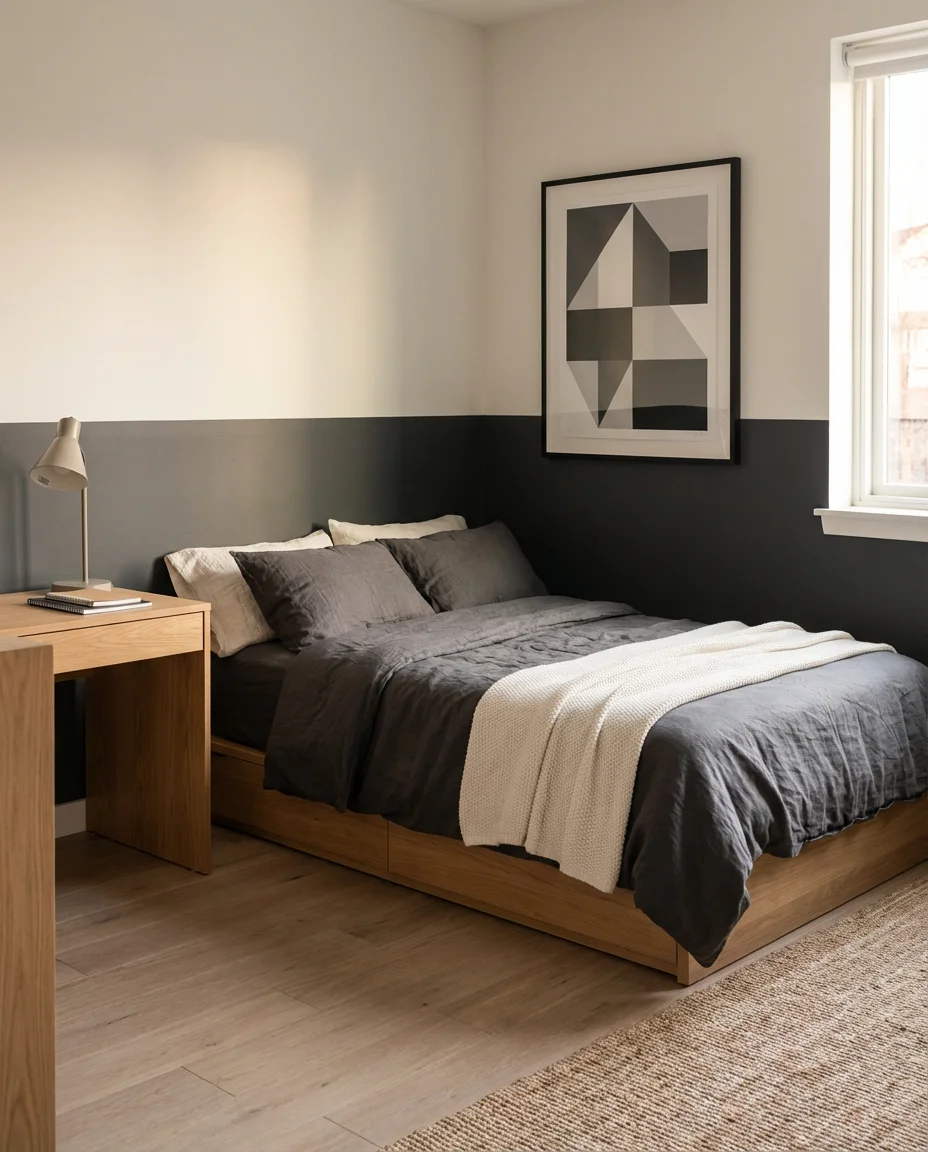
The American lifestyle angle here is relevant: as families move more frequently—for work, for school districts, for housing affordability—the ability to pack up and recreate a room quickly matters. A clean, modern room built around a neutral furniture set and a few personality accessories is significantly easier to recreate in a new home than a highly themed room is. It’s designed for adaptability, which increasingly resonates with families navigating the reality of a mobile American life. Pick a great rug, a solid bed, and a few things your kid actually loves. Done.
19. Colorful Shared Room for Two Kids
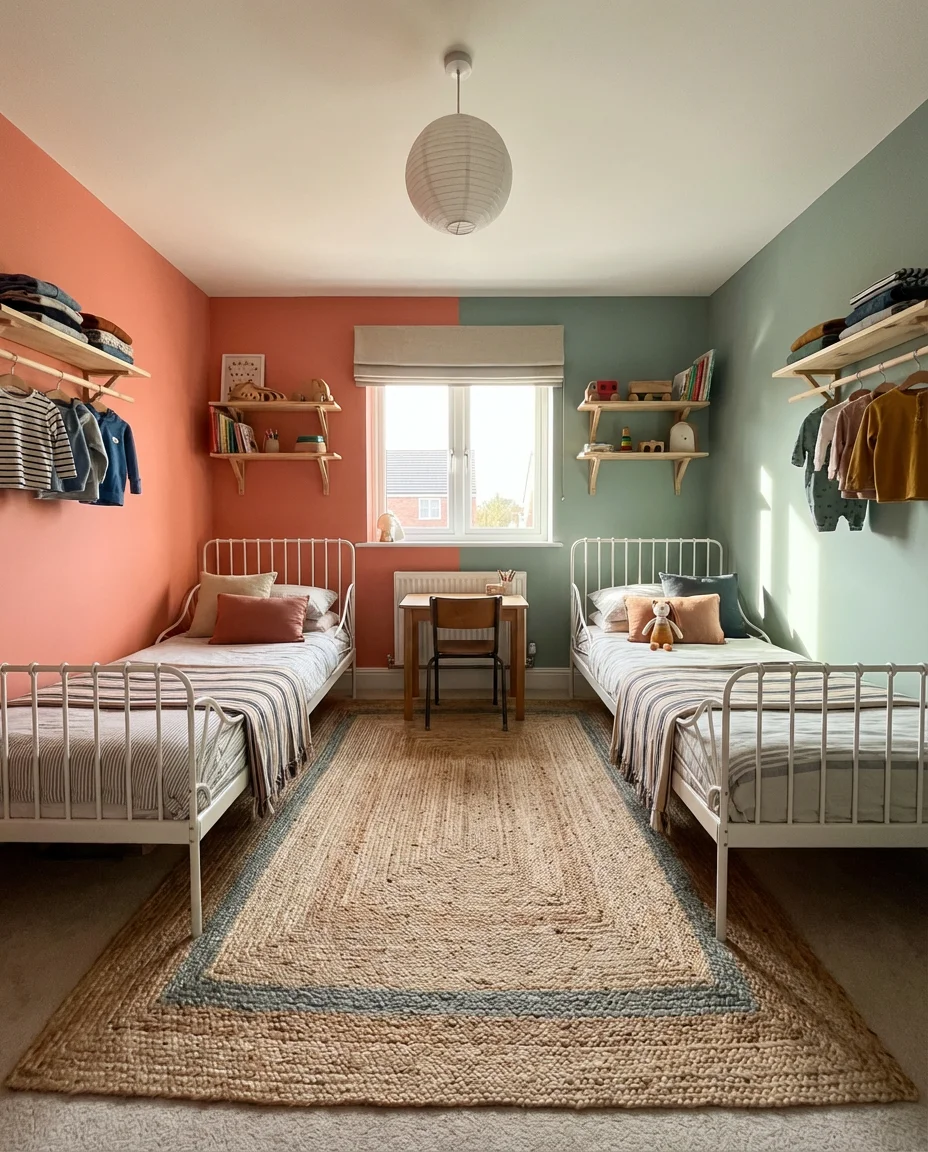
Two kids, one room, completely different personalities—it’s the design challenge that never goes away for millions of American families. The colorful shared room approach solves the tension by giving each child a defined color zone rather than forcing a single aesthetic on both. Think split-wall color blocking, where one side of the room is in cool tones and the other in warm, tied together by shared white furniture and a neutral rug that lives in the middle. It’s visually dynamic, kid-approved, and genuinely fun.
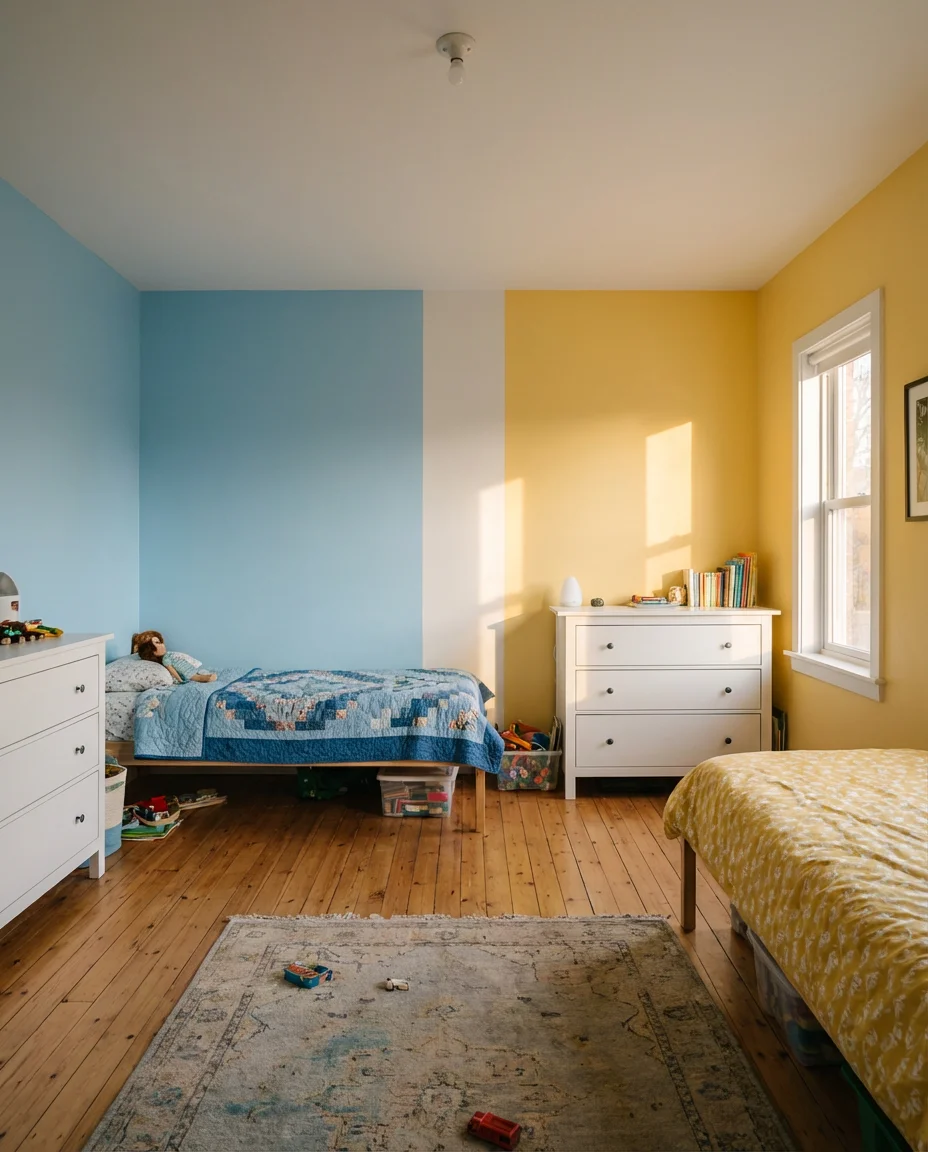
A common mistake with shared rooms is treating color as the only dividing element and not building in physical separation cues as well. Adding a simple mid-room shelving unit that faces each child’s bed gives both kids a sense of their own territory without requiring an actual wall. The shelving unit also doubles as storage, display space, and a subtle acoustic divider when one child is trying to sleep and the other is being characteristically chaotic. Form follows function at its finest.
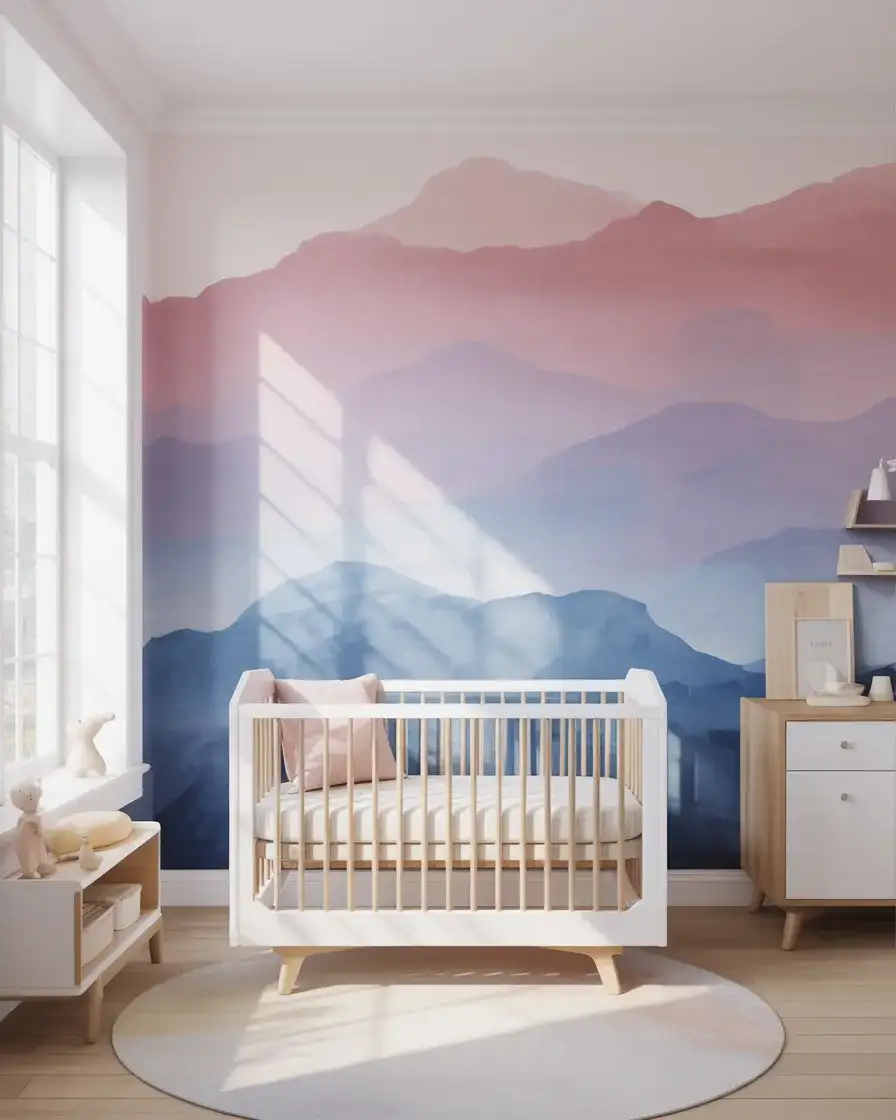
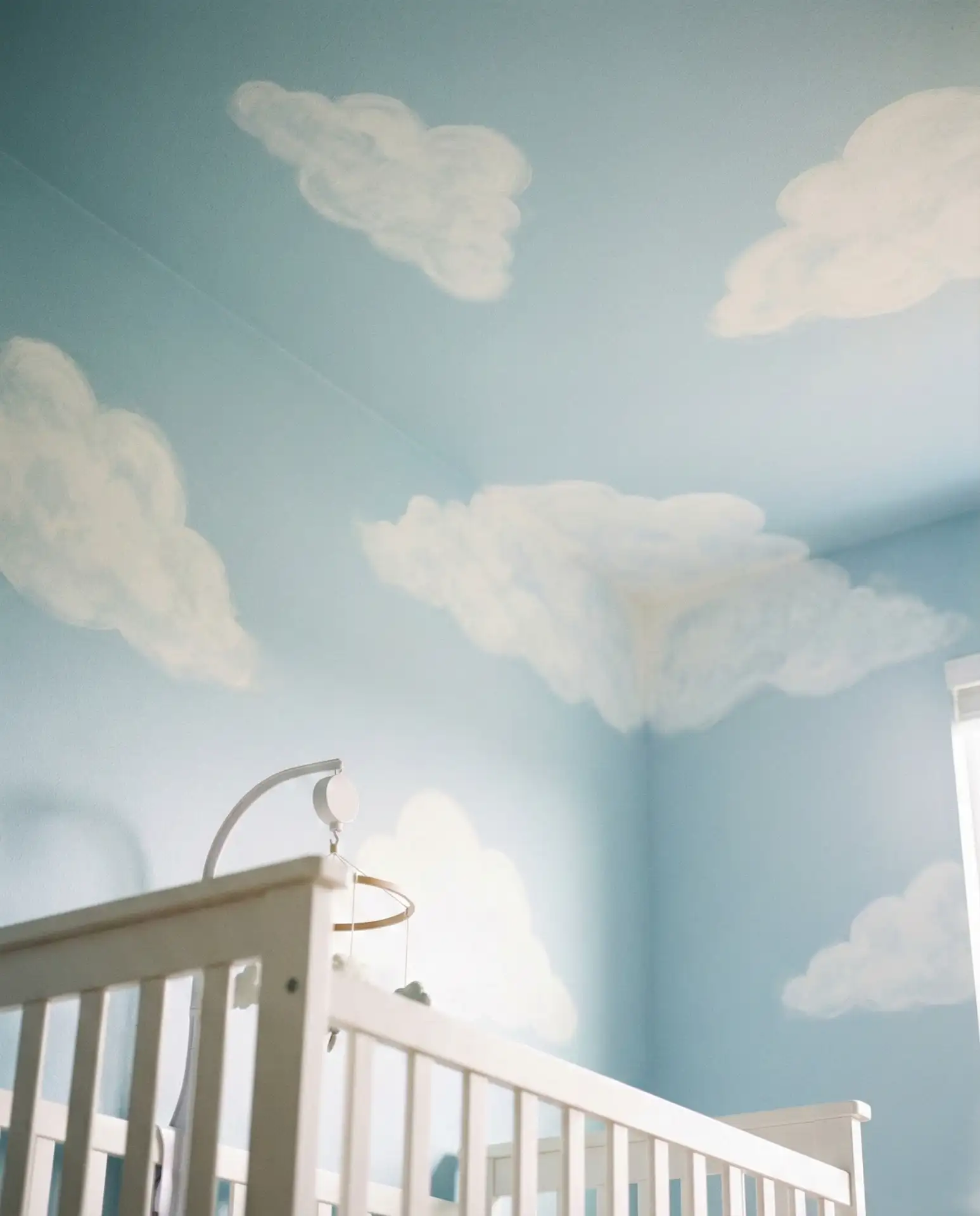
20. Cute Animal Friends Nursery-to-Toddler Room
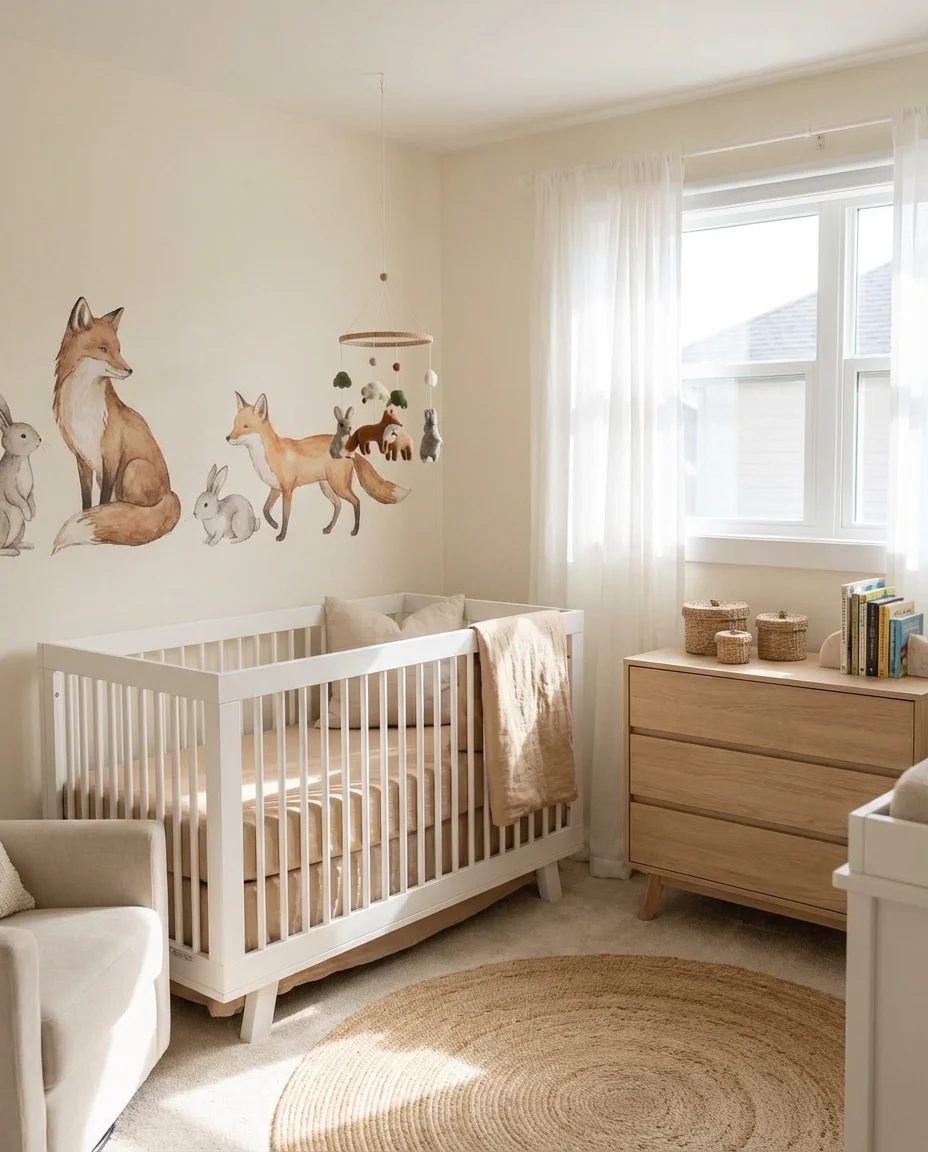
One of the smartest room investments young parents can make is designing a nursery that grows with the child rather than demanding a full redo at age two. A cute animal-themed room—illustrated bears, foxes, and bunnies in watercolor tones—hits the sweet spot of being utterly charming for infants while remaining age-appropriate for toddlers and young children. It’s simple enough to keep peaceful and warm enough to feel genuinely nurturing.
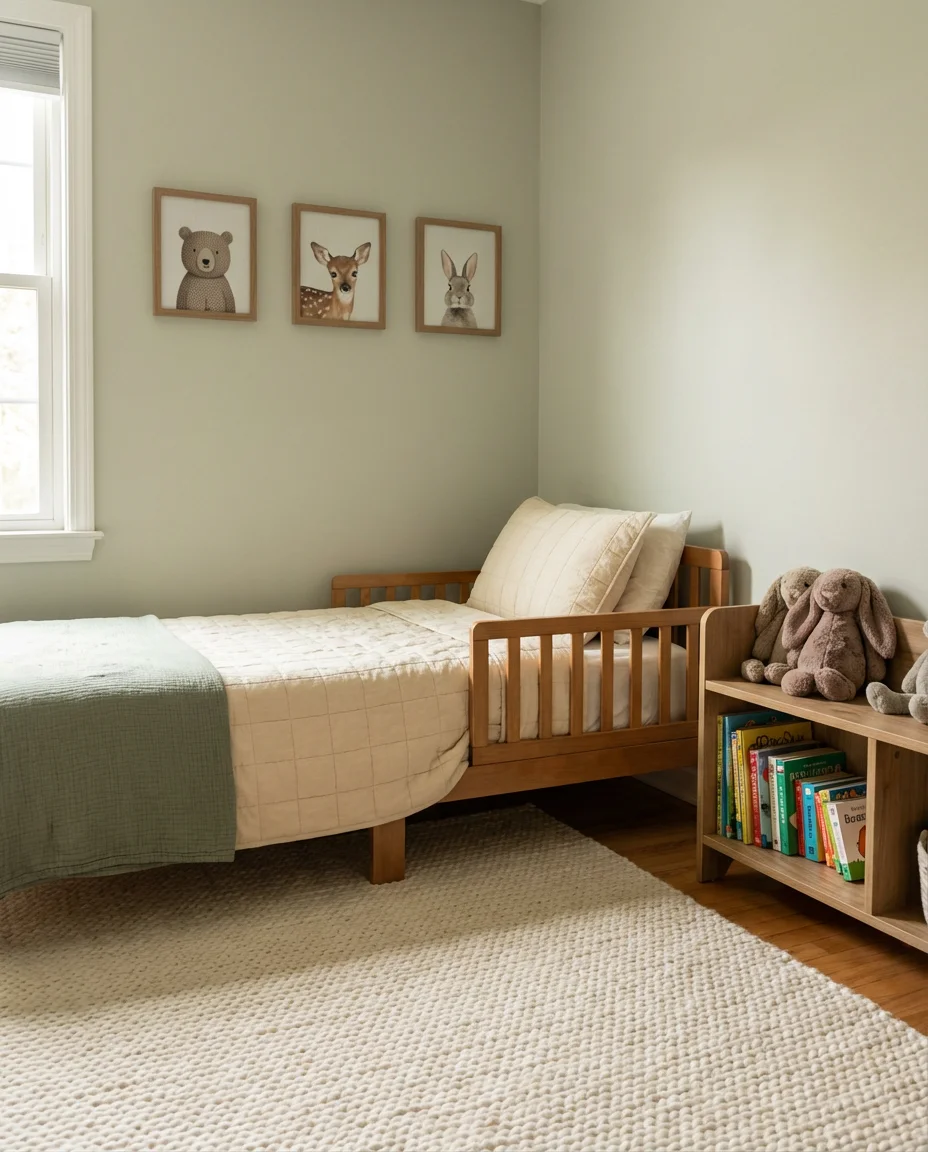
The practical insight: illustrated animal murals painted directly on the wall are beautiful but expensive if you hire a muralist. The smarter budget move is using peel-and-stick mural panels or a combination of large framed art prints arranged gallery-style. Both approaches are removable, which matters when the child eventually wants something entirely different. And they always do. Keeping the furniture investment in quality pieces that transition out of nursery mode—a white dresser that can live in any room, a crib that converts—makes the whole lifecycle of the space far more economical.
21. Small Space Loft Bed with Study Zone
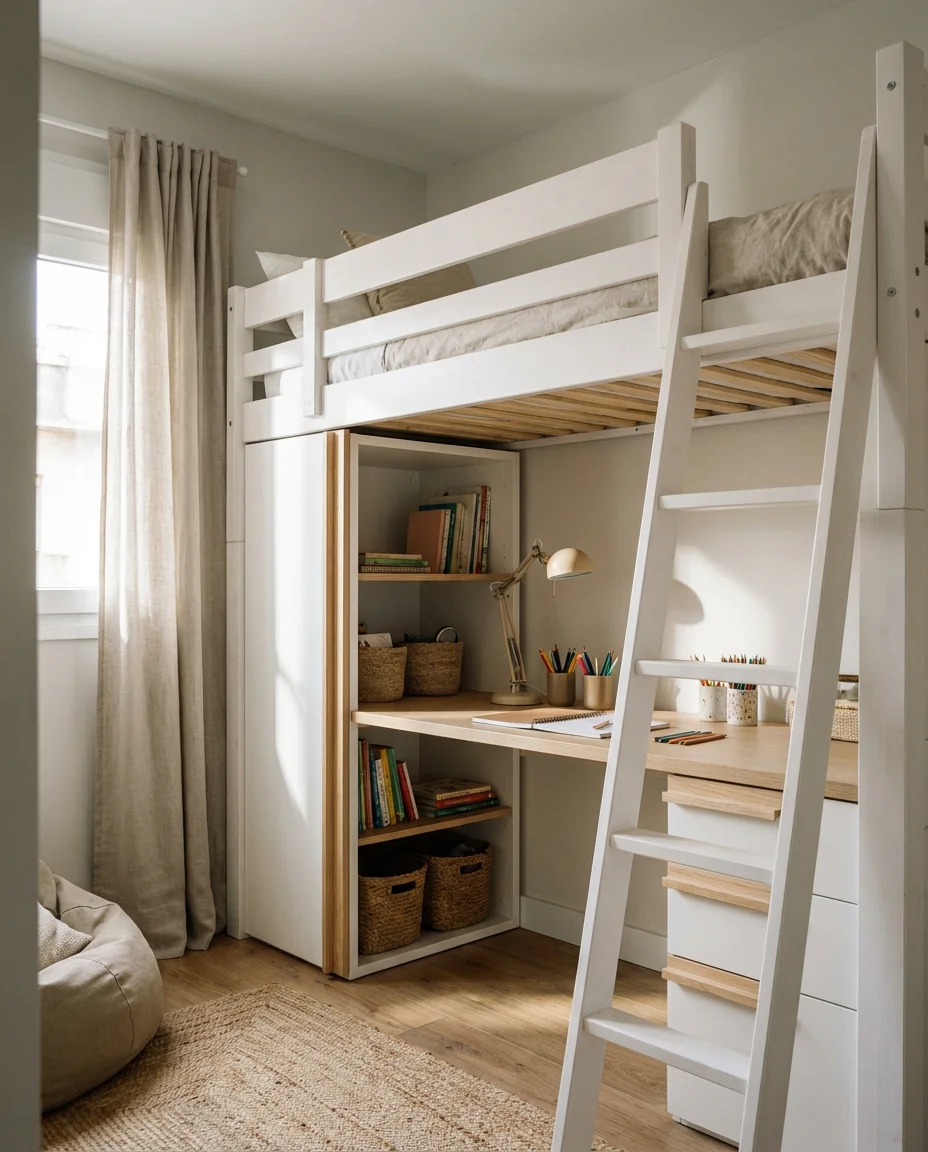
In urban apartments and smaller homes across America, the loft bed is one of the single smartest solutions for a child’s room in small spaces. By elevating the sleeping area, you free up the square footage beneath for a full study zone—desk, chair, shelving, and even a small reading area. Done well, this setup gives one child a genuinely layered, interesting room that feels far bigger than its footprint suggests. It’s practical design at its absolute best, and kids love the elevated sleeping perch.
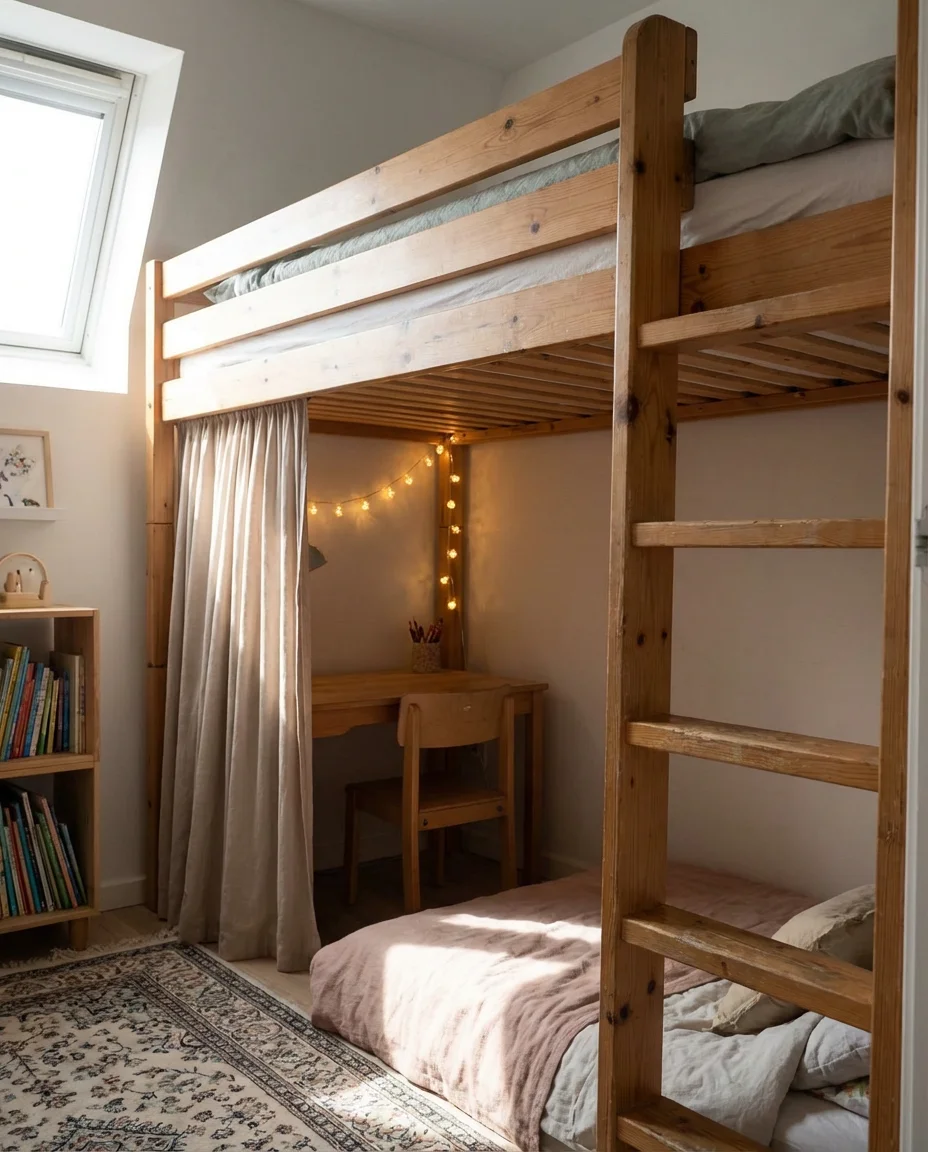
Where this works best is in kids between ages six and twelve who have genuine homework demands—the separation between sleeping and studying helps with both sleep hygiene and academic focus. Curtaining off the underneath area (a simple tension rod and panel works perfectly) transforms the study zone into a private den during the day and signals to the child’s brain that it’s time to shift modes. This is a design detail that doubles as behavioral architecture—and it costs almost nothing extra to implement.
22. Maximalist Colorful Playroom for Young Kids
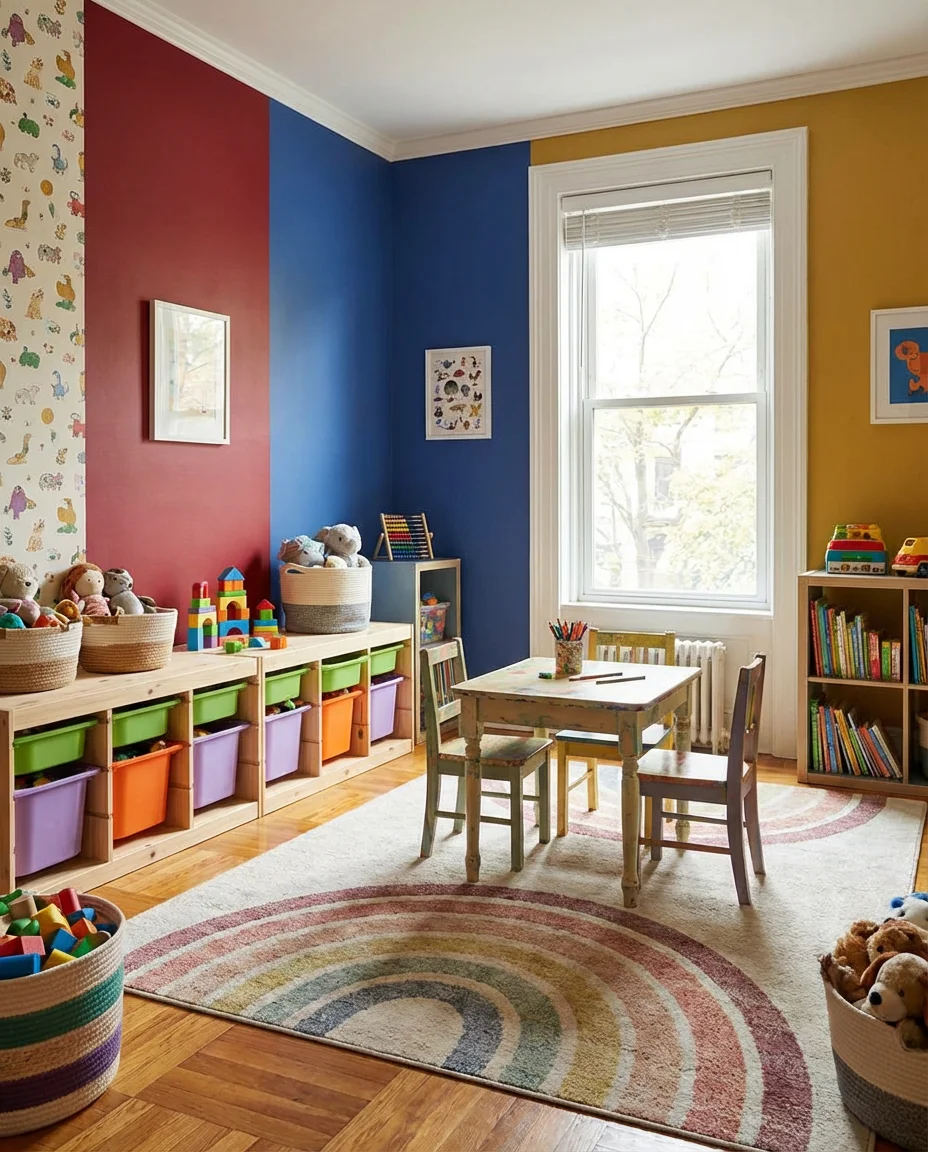
Some parents take one look at the neutral-everything trend and decide it’s simply not for them—and honestly, they’re not wrong. The colorful, fun-forward, maximalist playroom is thriving in 2026, particularly for families with young children who spend the majority of their indoor time in a dedicated play space. Primary colors, tactile elements, low furniture scaled to small bodies, and generous open floor space are the hallmarks of a room that truly works for the way children play.
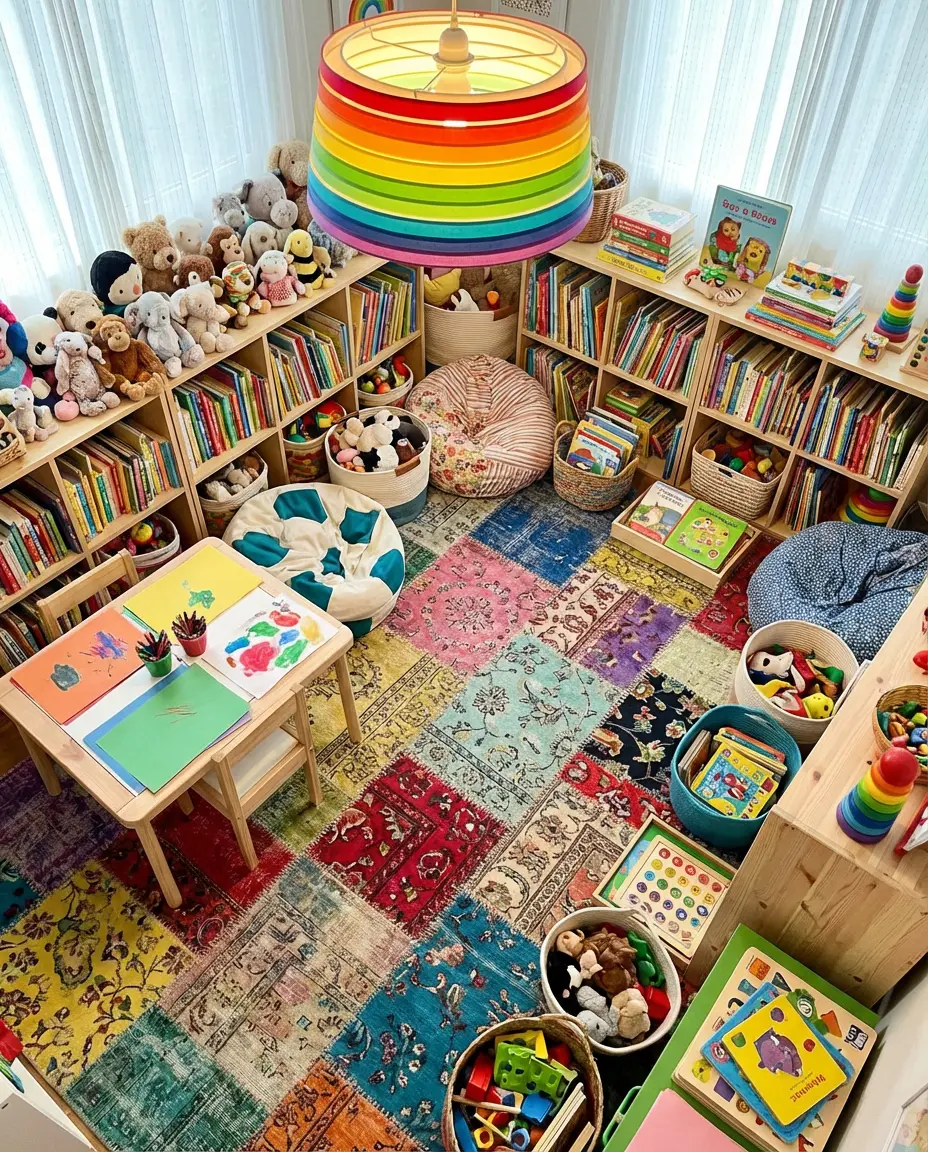
The budget angle worth knowing: a maximalist room doesn’t require expensive purchases—it requires a strategy. Thrift stores, Facebook Marketplace, and consignment shops are genuinely excellent sources for low children’s furniture that can be repainted in bold colors. A ten-dollar IKEA Flisat children’s table repainted in cobalt blue becomes a design statement. A garage sale bookshelf painted in tomato red becomes a feature wall. The commitment is time, not money, and the payoff is a room that feels genuinely invested with care and character.
23. Neutral Modern Bedroom That Grows with the Child
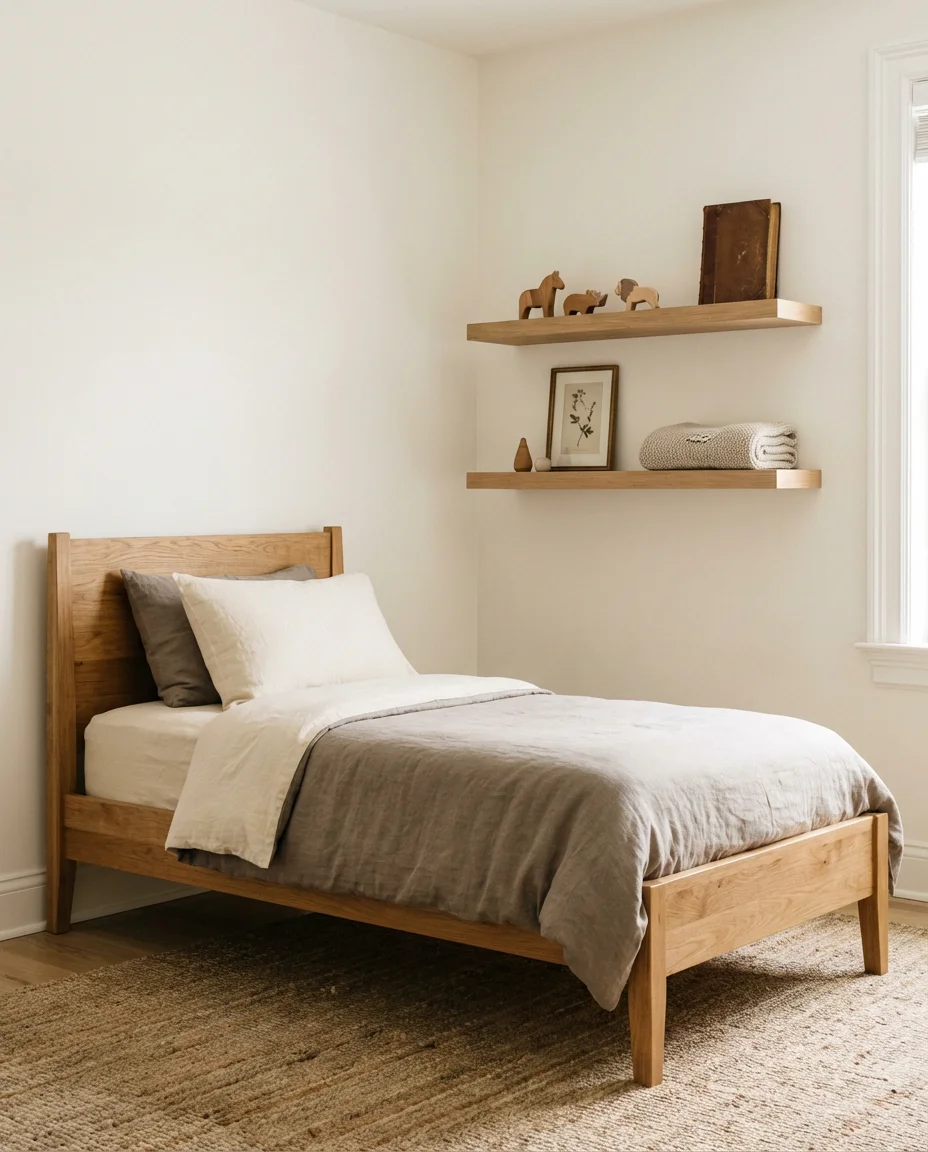
The design philosophy gaining the most traction among thoughtful American parents right now is the long-game room—a neutral, modern foundation designed to grow alongside the child rather than be redone every few years. This means investing in quality furniture in timeless finishes, keeping walls in a versatile warm white or light greige, and letting accessories carry whatever personality the current phase of childhood requires. It’s the anti-theme room, and it works beautifully from toddler years all the way into high school.
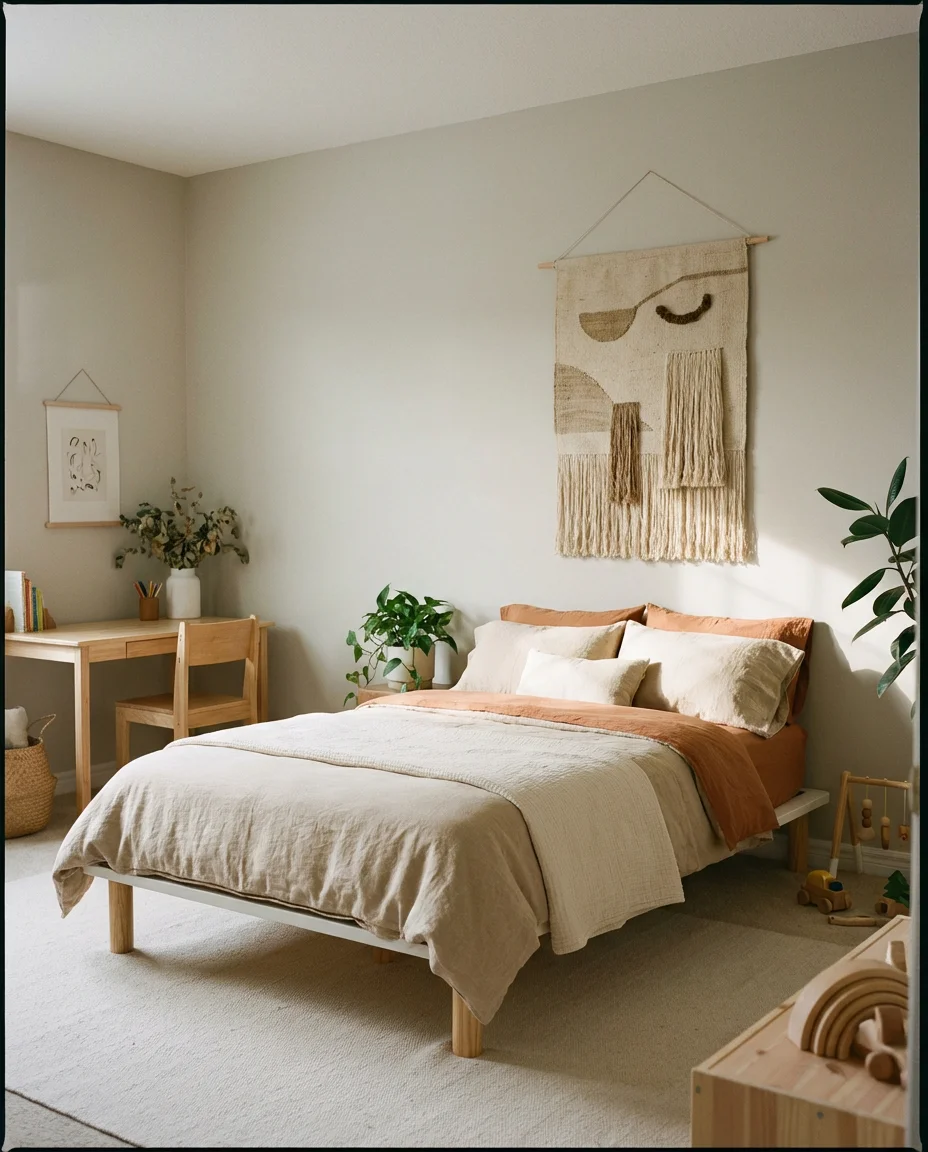
The expert-style take: rooms built on a quality, neutral foundation actually save families significant money over a decade. Instead of ripping out and replacing everything when a child ages out of a theme, you simply update the accessories—new bedding, a different rug, a swapped-out art print. The bones stay the same. One interior designer who specializes in children’s spaces estimates that families who design for longevity from the start spend roughly forty percent less on their child’s room over ten years than those who do two or three full redesigns. Build it right once, then let your child grow into it.
Conclusion
Kids’ rooms are one of the most exciting design canvases in any home—precisely because the stakes feel real, the opinions of the occupant are loud and clear, and the opportunity to create something genuinely meaningful is right there waiting for you. Whether you found your inspiration in a game world, a color trend, or a simple desire to give your child a space that truly feels like theirs, we hope this roundup gave you something to run with. We’d love to hear which idea resonated most with you—drop it in the comments below, and tell us what your kids are asking for this year.