Kitchen floors are having a major moment in 2026, and if you’ve been scrolling Pinterest lately, you’ve probably noticed the stunning transformations happening underfoot. From bold geometric patterns to warm natural materials, homeowners are treating their kitchen floors as design centerpieces rather than afterthoughts. Whether you’re planning a full renovation or looking for a budget-friendly peel-and-stick refresh, the options have never been more exciting or accessible. In this article, we’re diving into inspiring kitchen floor ideas that capture the latest trends while staying practical for everyday American life.
1. Classic Checkered Elegance
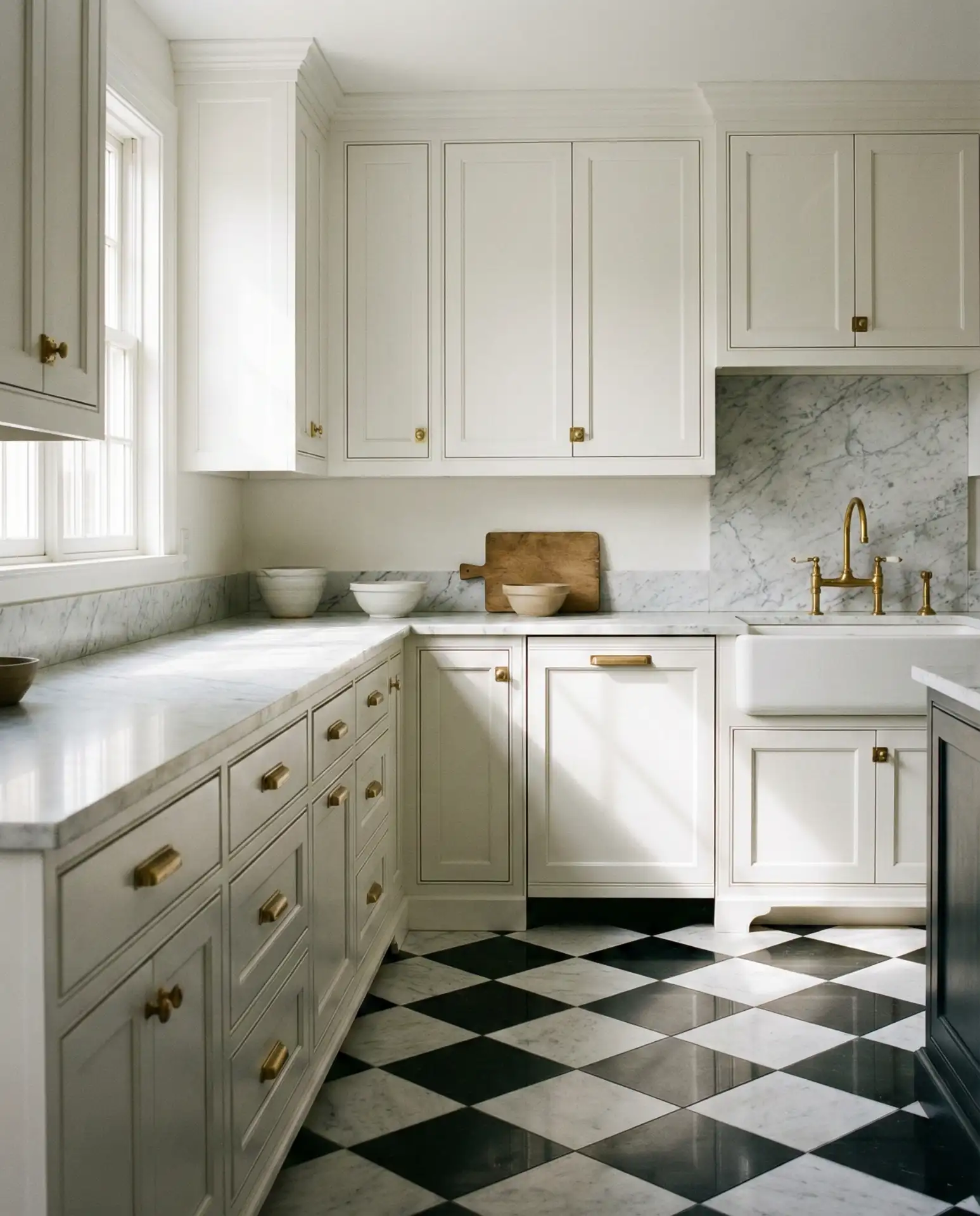
The timeless checkered floor has made a remarkable comeback, especially in kitchens where homeowners want a touch of vintage charm mixed with modern style. This black and white pattern works beautifully in both compact urban kitchens and spacious suburban homes, creating visual interest without overwhelming the space. The high-contrast design adds depth and dimension, making smaller kitchens feel larger while giving bigger spaces a defined focal point.
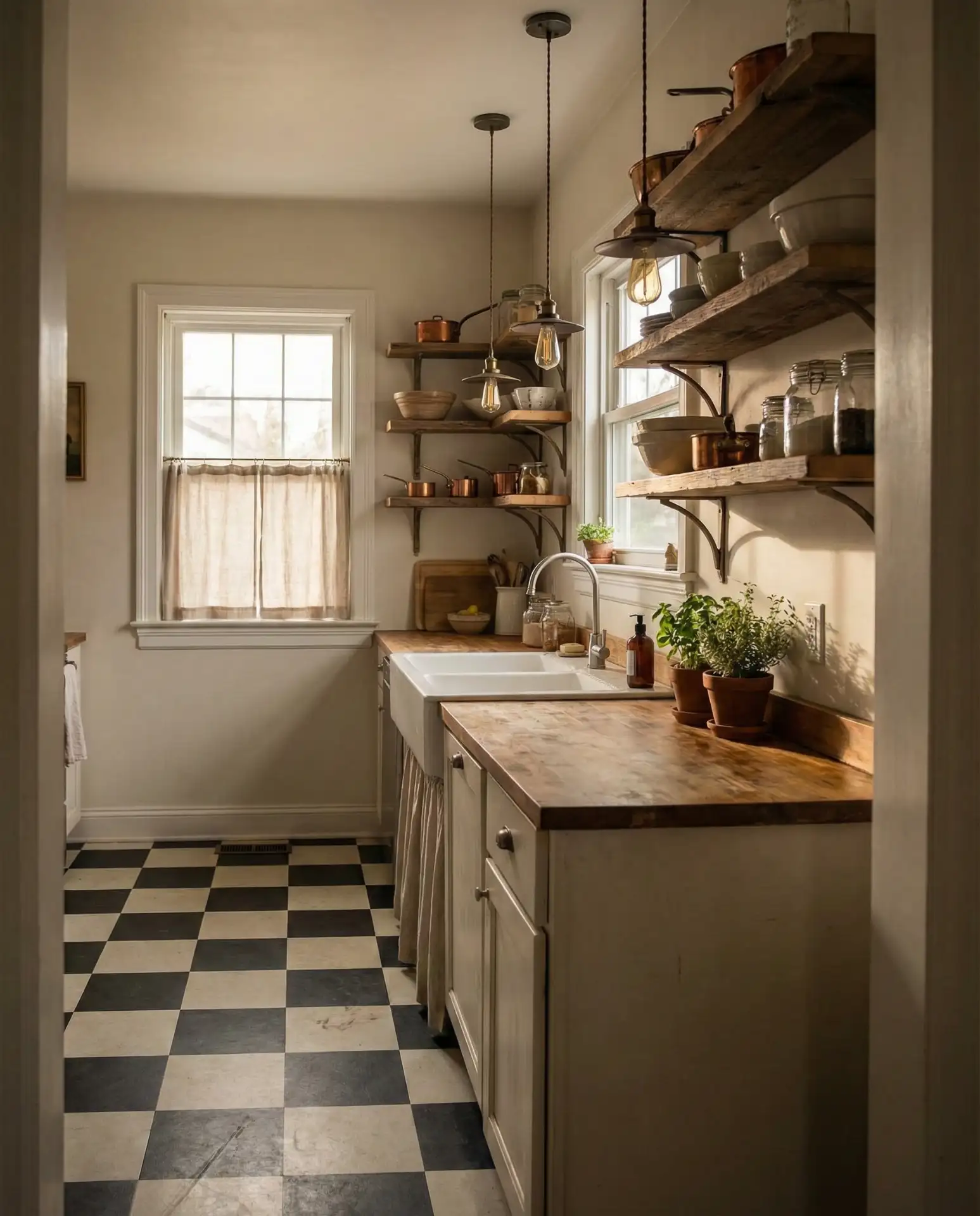
One common mistake homeowners make is choosing tiles that are too small for their space, which can create a dizzying effect. For standard-sized kitchens, opt for 12-inch tiles rather than 6-inch squares—the larger scale feels more contemporary and is actually easier to clean. The grout lines also stay cleaner longer with bigger tiles, which matters when you’re dealing with the inevitable spills and splashes of daily cooking.
2. Warm Terracotta Vibes
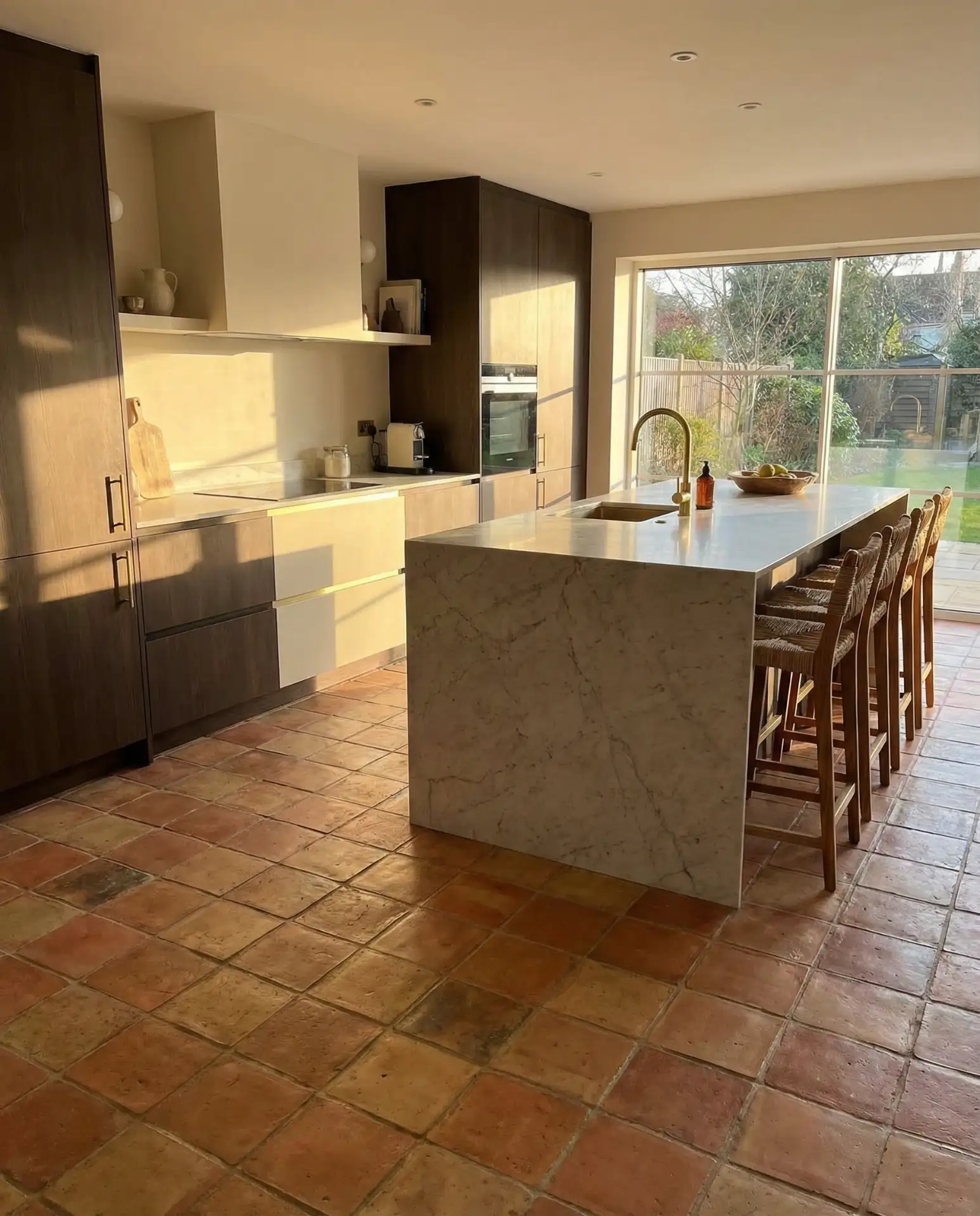
There’s something inherently inviting about terracotta flooring that brings an earthy, Mediterranean warmth into American kitchens. This tile design has surged in popularity across Southwestern states like Arizona and New Mexico, but it’s now appearing in homes from Portland to Charleston. The natural clay tones pair beautifully with white cabinets, wooden accents, and even modern stainless steel appliances, creating a bridge between rustic and contemporary aesthetics.
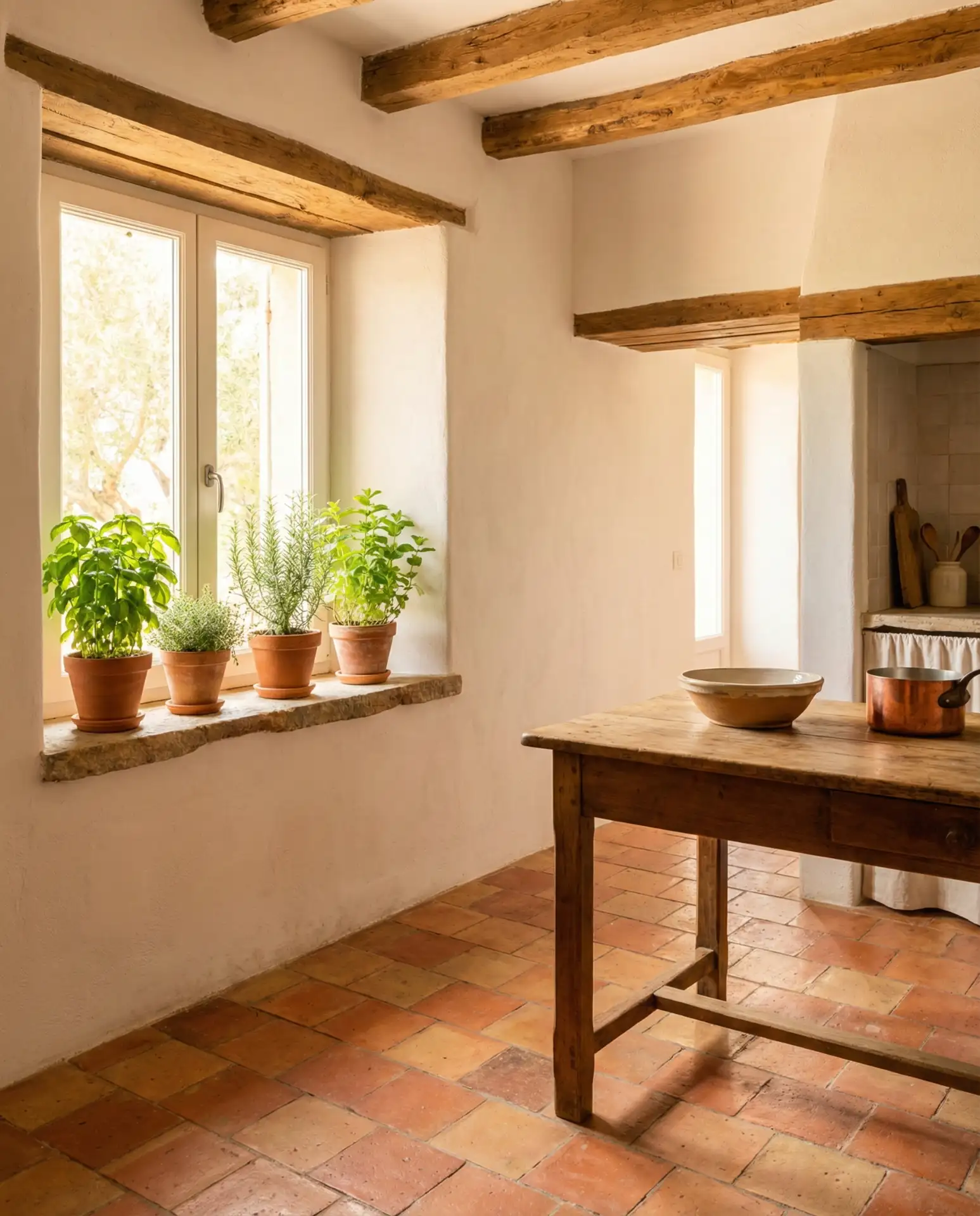
Terracotta works best in homes with good natural light, as the tiles can look muddy in dimly lit spaces. If your kitchen faces north or has limited windows, consider pairing terracotta with plenty of warm-toned task lighting and light-reflecting surfaces. A neighbor of mine installed terracotta in her galley kitchen last spring, and she swears by keeping a sealed finish refreshed annually—it protects against stains while maintaining that gorgeous matte patina.
3. Playful Tile Patterns
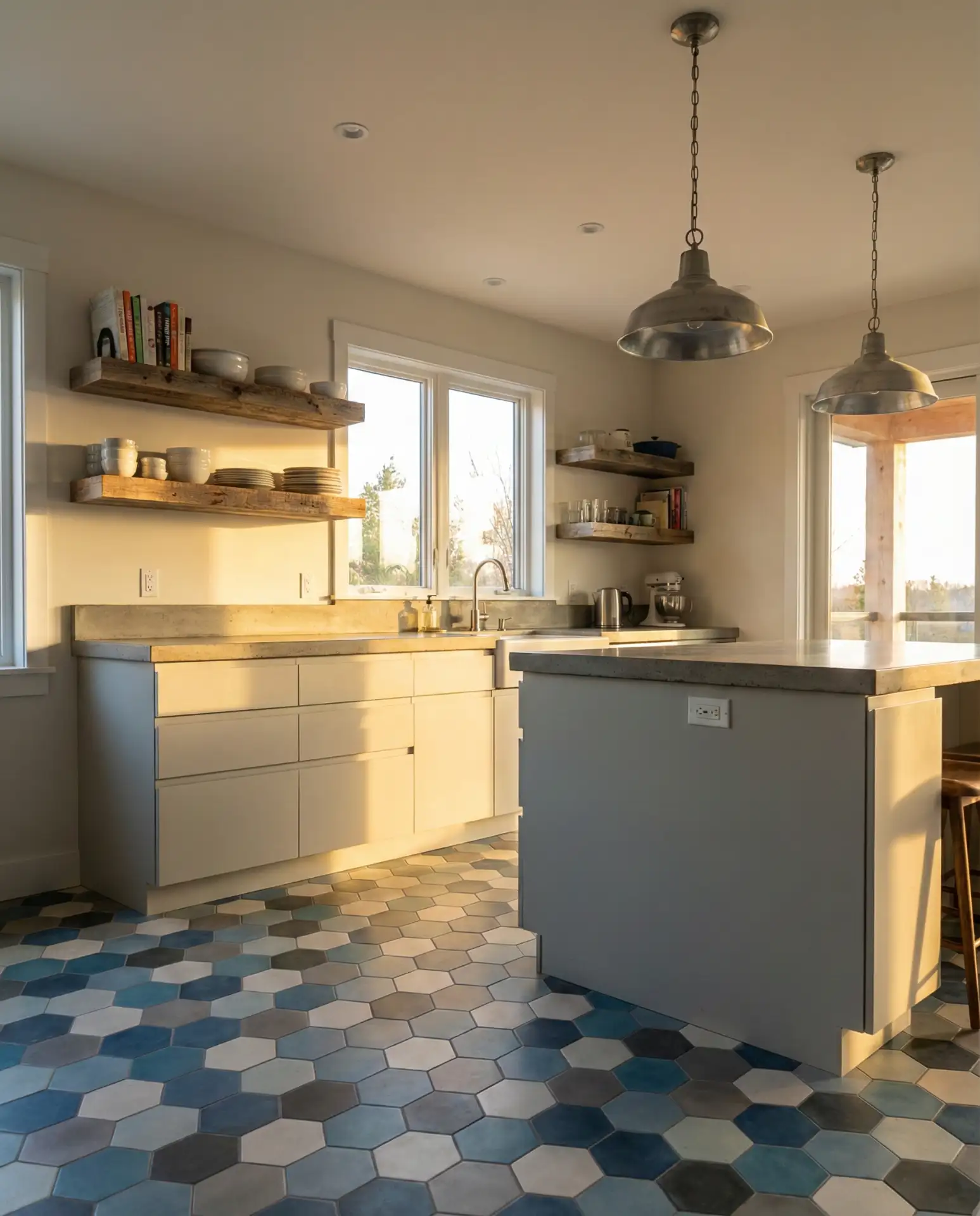
Moving beyond basic grids, creative tile patterns are letting homeowners express personality through their kitchen floors in 2026. From intricate Moroccan-inspired designs to geometric hexagons and offset layouts, these ideas for tile arrangements transform a functional surface into genuine artwork. The beauty lies in mixing shapes, colors, or finishes to create custom looks that reflect individual style while still maintaining everyday durability.
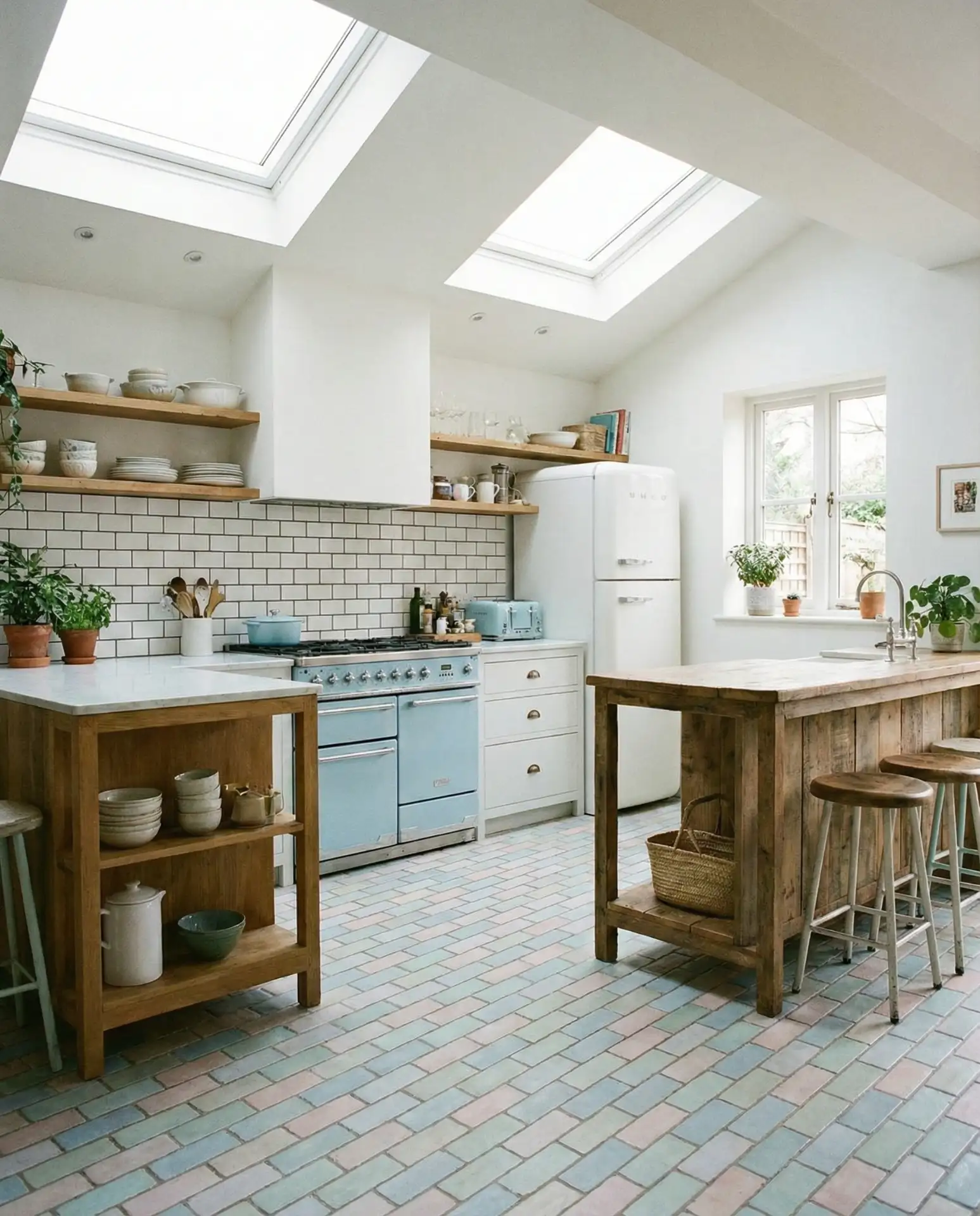
Budget-conscious renovators often assume patterned tile installations cost significantly more, but the labor difference is usually minimal compared to standard layouts—typically adding just 10-15% to installation costs. The tiles themselves might run $8-15 per square foot for quality options, making this an affordable way to add character. Many homeowners are also discovering that patterned floors hide dirt and wear better than solid colors, which means they look newer longer.
4. Dramatic Black Floors
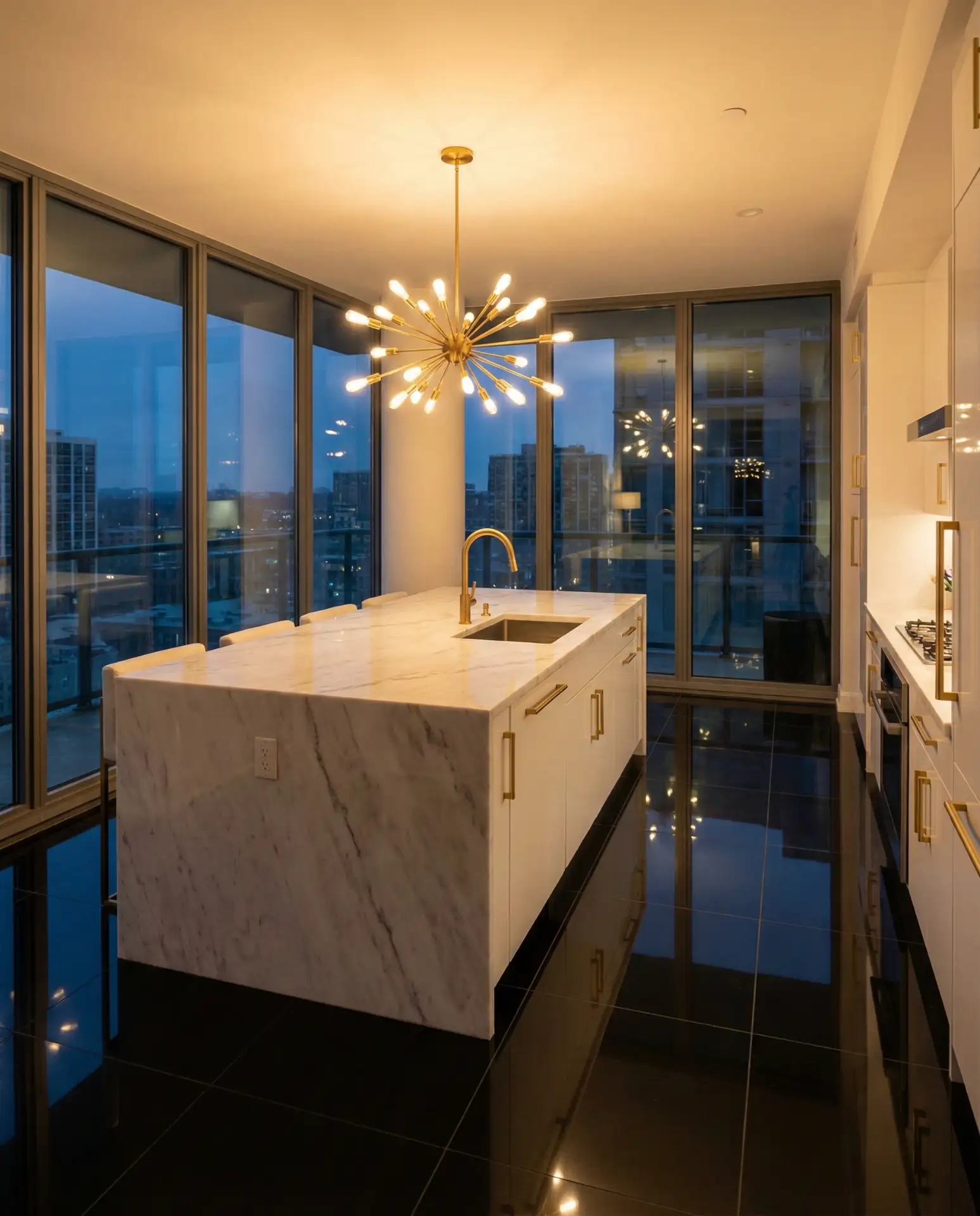
Bold black tile flooring creates instant sophistication and grounds a kitchen with dramatic flair that’s surprisingly versatile. Whether you choose matte, polished, or textured finishes, black floors provide a stunning contrast to lighter cabinetry and create a gallery-like backdrop for colorful accessories and cookware. This look works exceptionally well in open-concept homes where the kitchen flows into living spaces, establishing visual boundaries without actual walls.
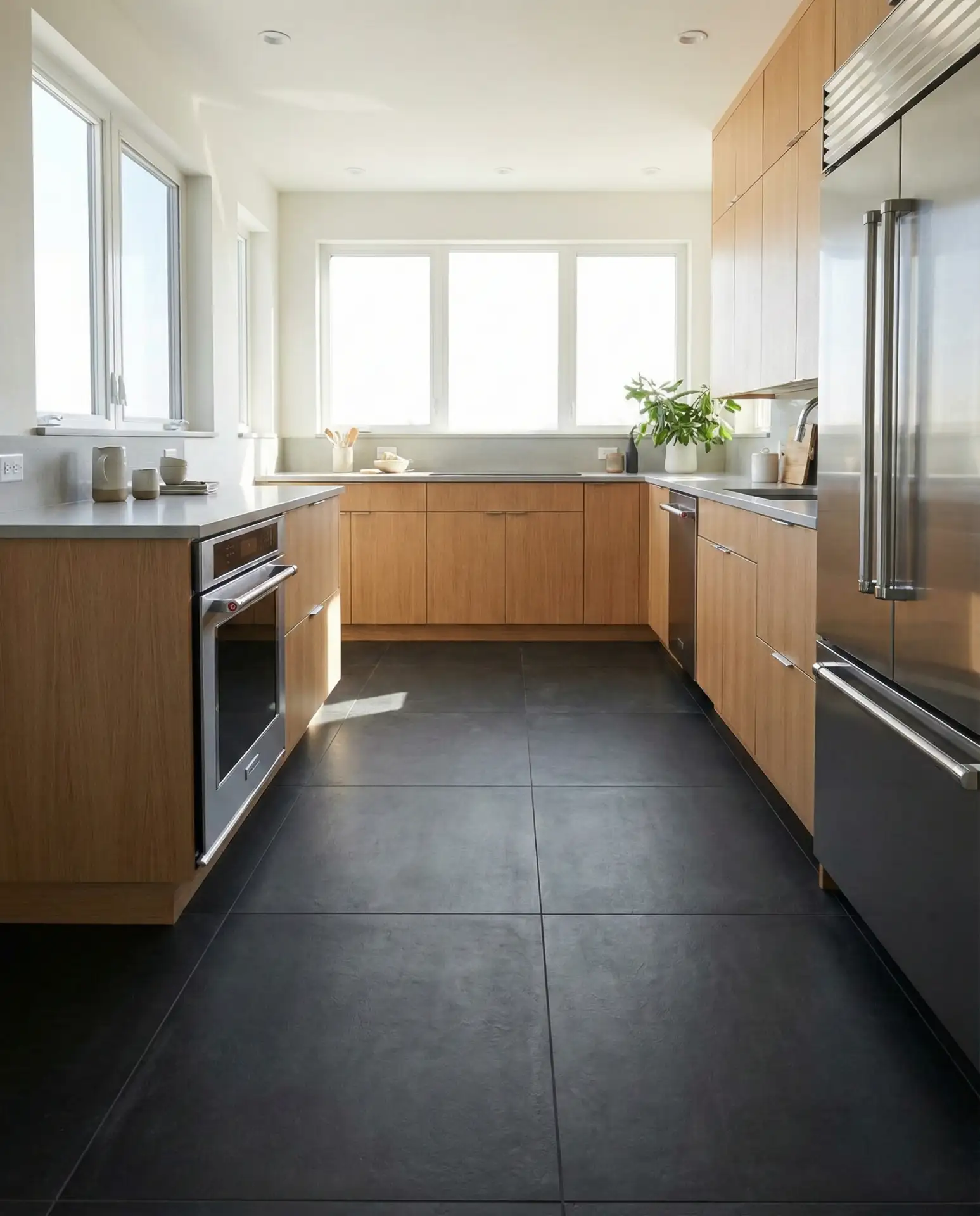
In the Midwest and Northeast, where homes deal with snowy winters and muddy springs, black floors have become surprisingly practical—they show dirt less than medium tones and are easier to maintain than white. Design experts suggest choosing larger-format tiles to minimize grout lines, which can show grime more readily. The key is ensuring your kitchen has ample lighting, both natural and artificial, to prevent the space from feeling cave-like.
5. Elegant Stone Authenticity
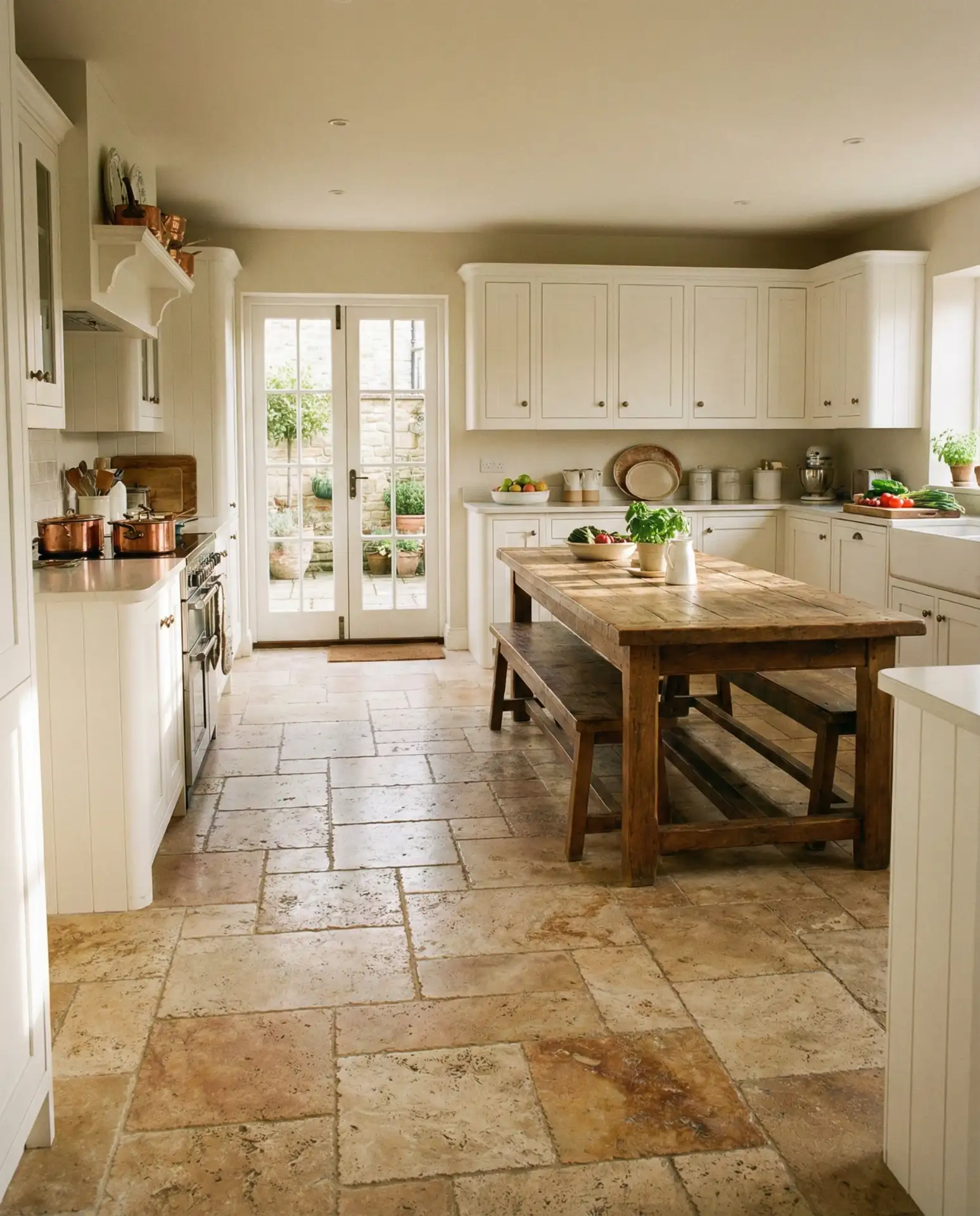
Natural stone flooring brings timeless luxury and authenticity that synthetic materials simply can’t replicate, with each slab telling its own geological story through unique veining and color variations. Limestone and travertine have become particularly popular choices in upscale American kitchens, offering subtle elegance that ages beautifully rather than showing wear. These materials work in both traditional and contemporary settings, adapting to everything from French country to sleek modern design schemes.
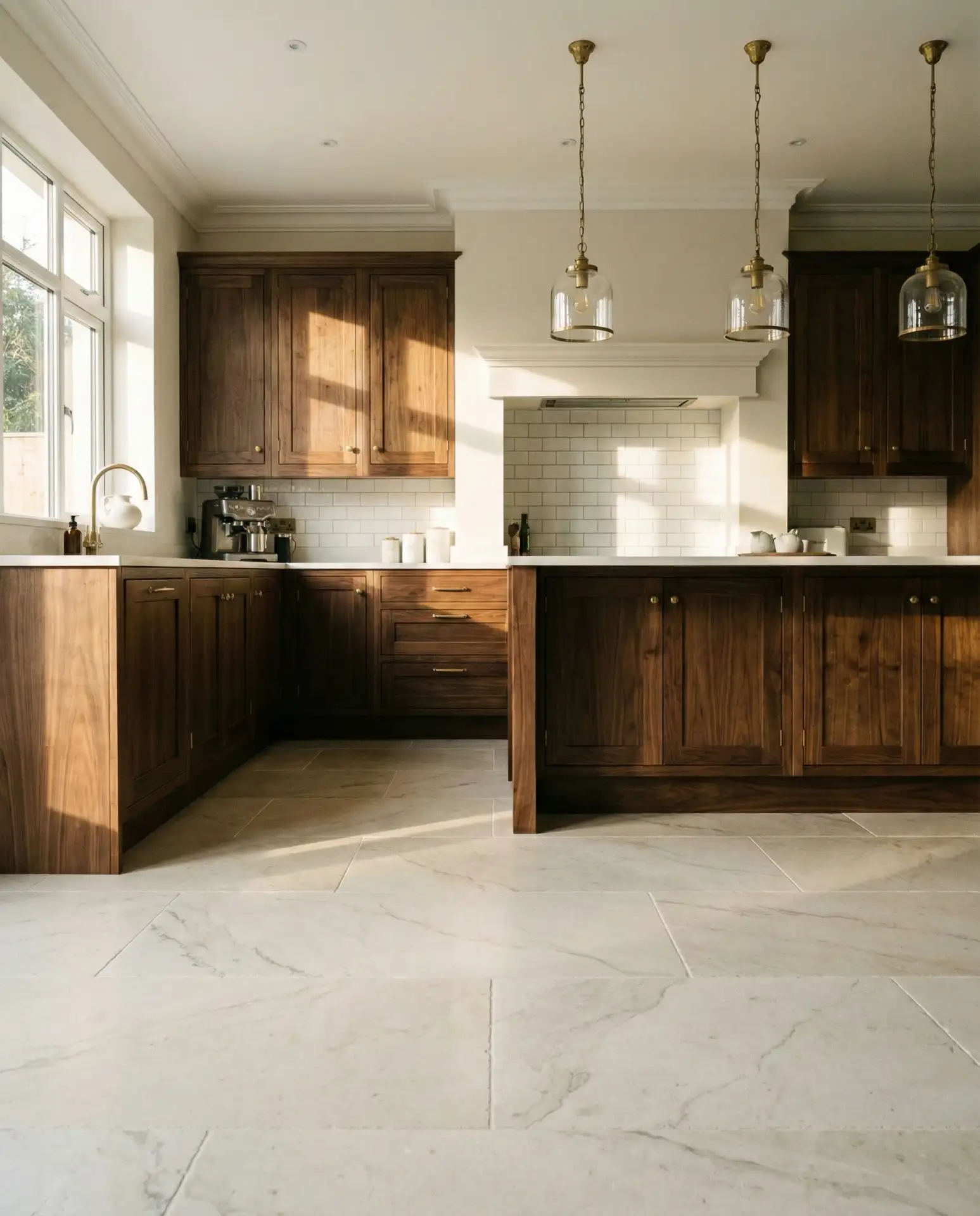
A designer I consulted mentioned that many clients initially worry about stone’s maintenance requirements, but properly sealed stone floors are actually quite forgiving in kitchen environments. She recommends resealing annually and using pH-neutral cleaners—skip the vinegar-based solutions that can etch the surface. The investment pays off not just in beauty but in longevity; a well-maintained stone floor can last generations, literally outliving the house itself.
6. Retro Checkerboard Charm
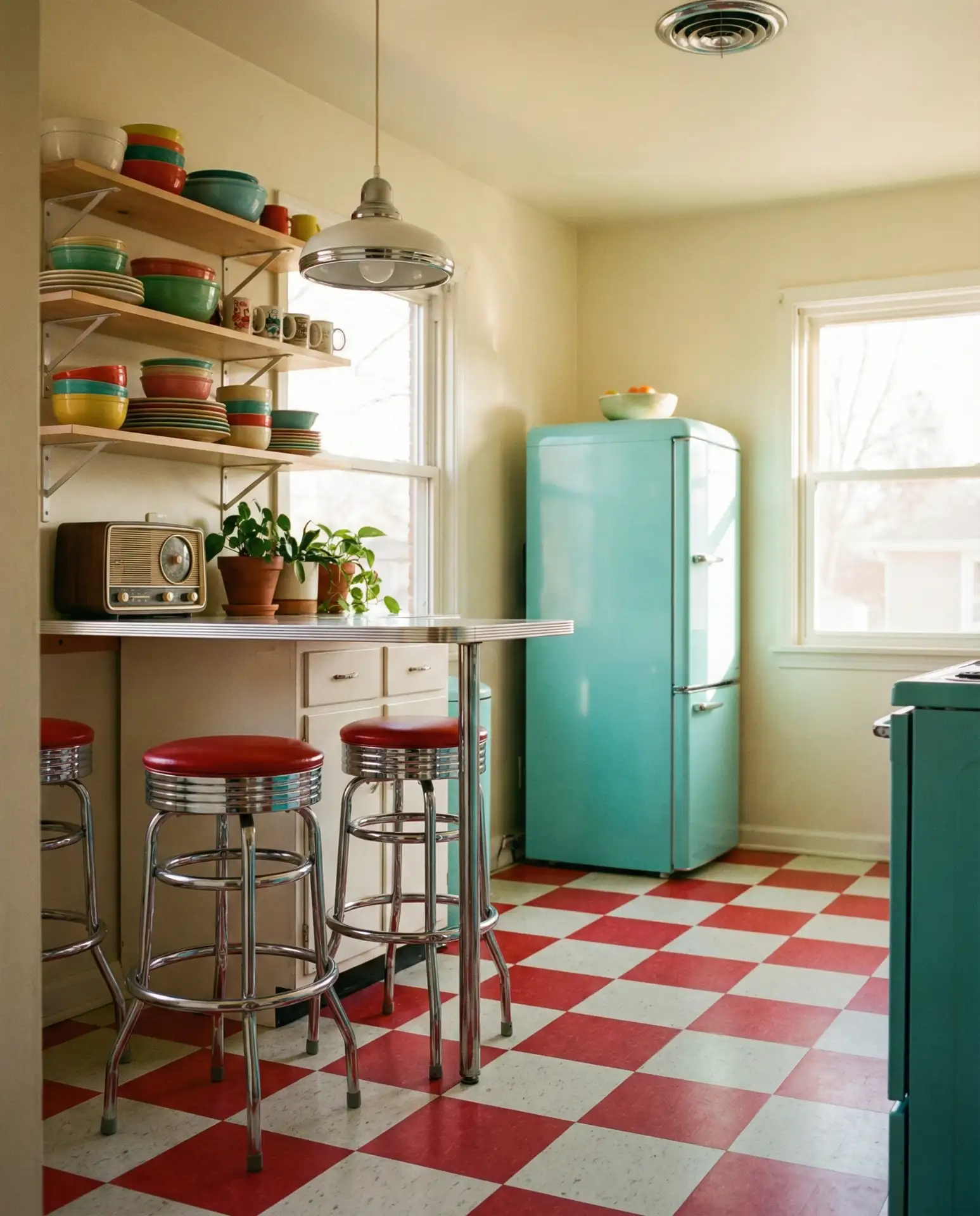
The checkerboard pattern captures nostalgic 1950s diner style while feeling fresh and intentional in today’s kitchens, especially when executed with unexpected color combinations or modern materials. Beyond the classic black and white, homeowners are experimenting with navy and cream, sage and ivory, or even bold red and white combinations that reference vintage Americana. This pattern particularly shines in breakfast nooks, butler’s pantries, and kitchens with retro appliances.
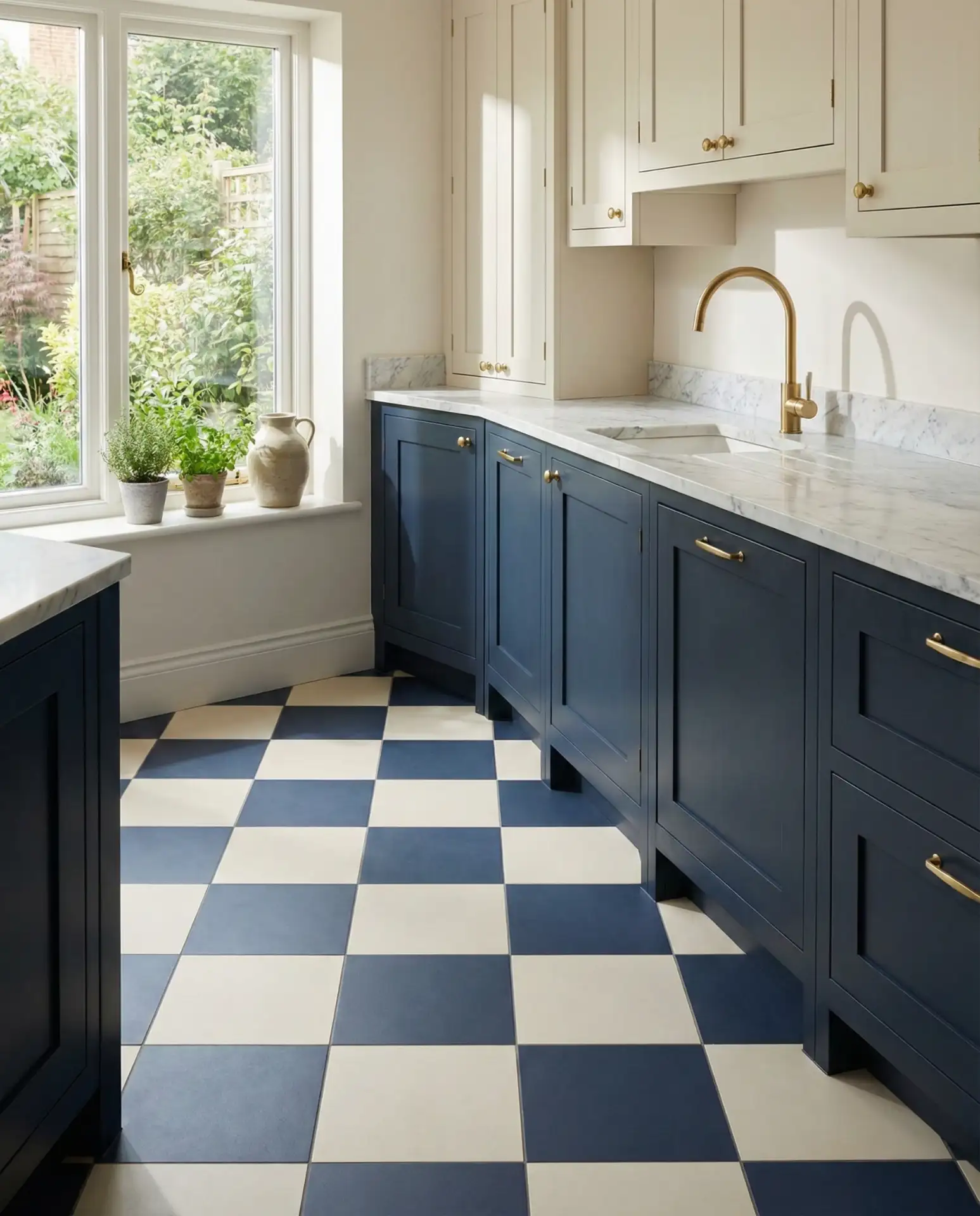
For renters or commitment-phobes, peel-and-stick checkerboard tiles have become remarkably convincing, with some premium options featuring textured surfaces that mimic real ceramic. These typically cost $2-4 per square foot and can transform a kitchen in a single weekend without specialized tools or skills. The adhesive technology has improved dramatically, with quality products staying put for 3-5 years even in high-traffic kitchens, then removing cleanly when it’s time for a change.
7. Speckled Terrazzo Magic

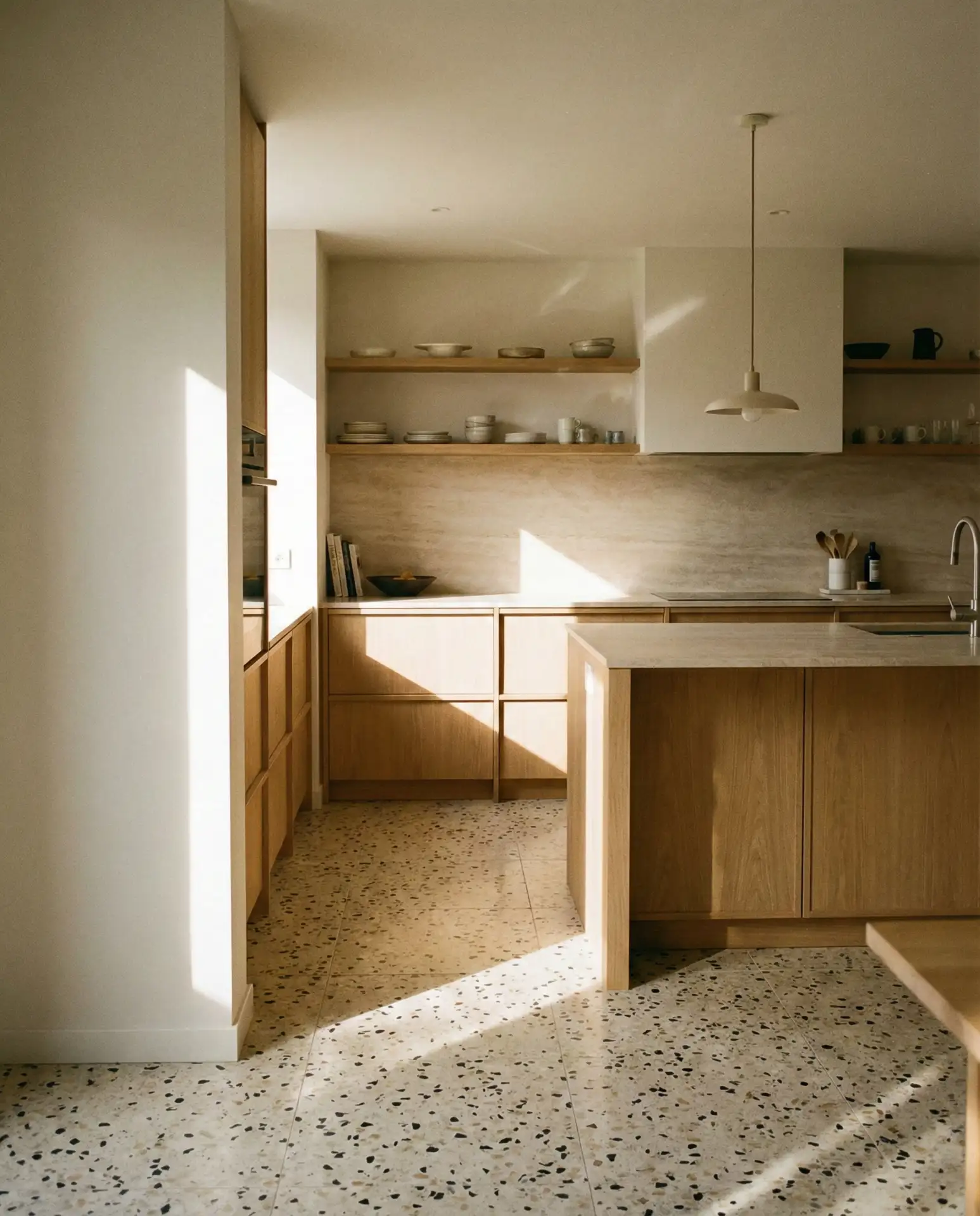
Few flooring choices generate as much visual interest as terrazzo, with its playful aggregate chips suspended in cement or resin creating movement and texture that never feels boring. Originally an Italian technique using marble scraps, modern terrazzo (as it’s sometimes spelled) comes in endless color combinations from subtle neutrals to bold rainbow confetti styles. The speckled surface naturally camouflages crumbs and minor stains, making it unexpectedly practical for busy family kitchens.
Across California and Florida, terrazzo has become a go-to choice for homeowners embracing mid-century modern aesthetics or contemporary designs with vintage touches. The seamless installation creates a smooth, easy-to-clean surface without grout lines that trap grime. While poured-in-place terrazzo requires professional installation and runs $25-40 per square foot, terrazzo-look porcelain tiles offer a budget-friendly alternative at $8-15 per square foot with easier DIY installation.
8. Textured Slate Beauty
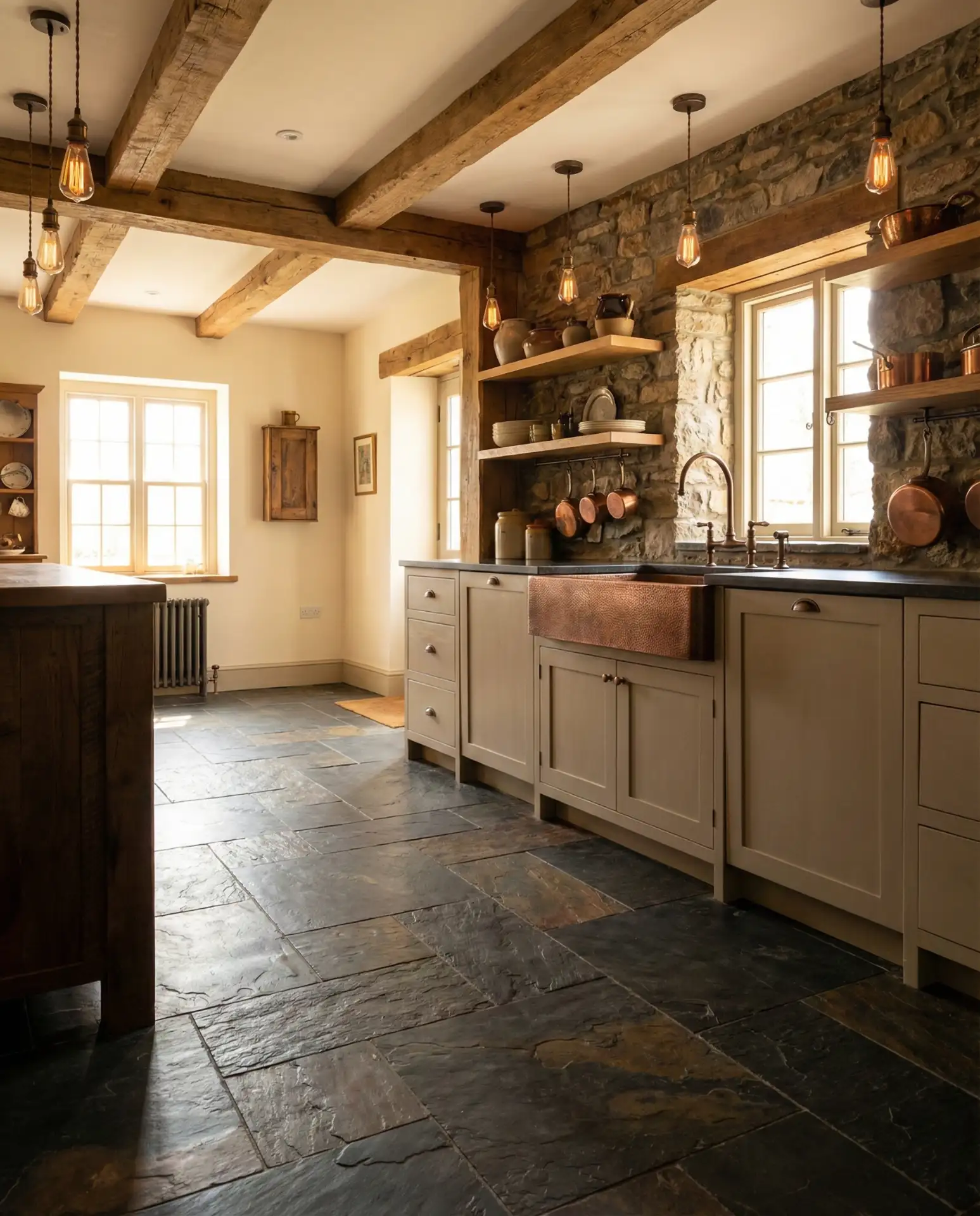
The natural cleft surface of slate flooring brings organic texture and depth that works beautifully in kitchens aiming for a connection to nature and rustic elegance. Available in rich charcoals, warm coppers, and earthy greens, slate tiles offer subtle color variations within each piece that create a lived-in, artisanal quality. This stone material is exceptionally durable and naturally slip-resistant, making it ideal for households with children, elderly residents, or anyone concerned about wet kitchen floors.
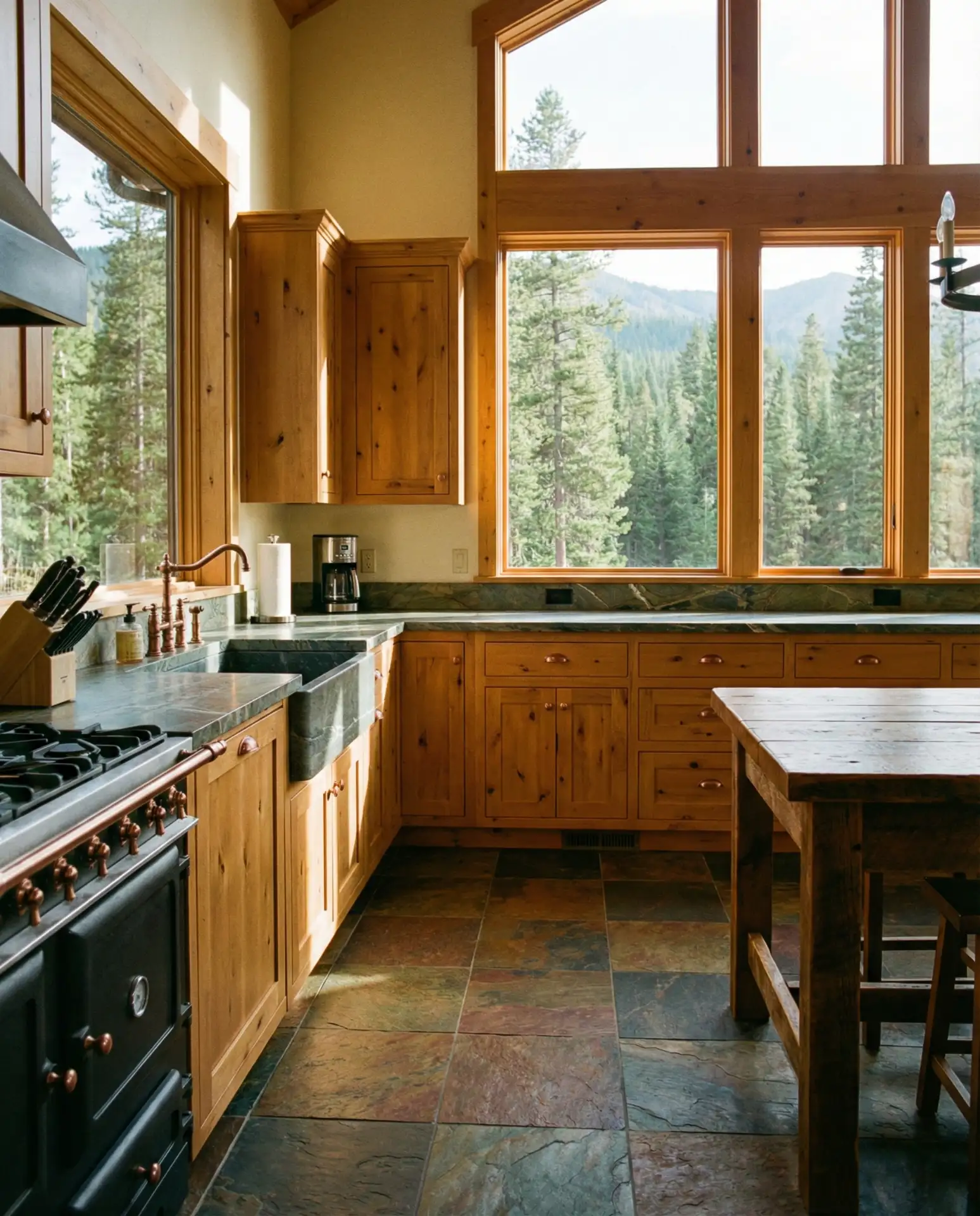
Many homeowners initially worry that slate’s texture will be difficult to clean, but the opposite is actually true—the subtle ridges hide dirt better than smooth surfaces, and a simple sweep-and-mop routine keeps it looking fresh. One thing to avoid is using acidic cleaners like lemon or vinegar, which can dull the finish over time. Slate works particularly well in mountain and countryside homes where the natural material echoes the surrounding landscape, but it’s equally stunning in urban lofts seeking organic contrast.
9. Sophisticated Herringbone Layout
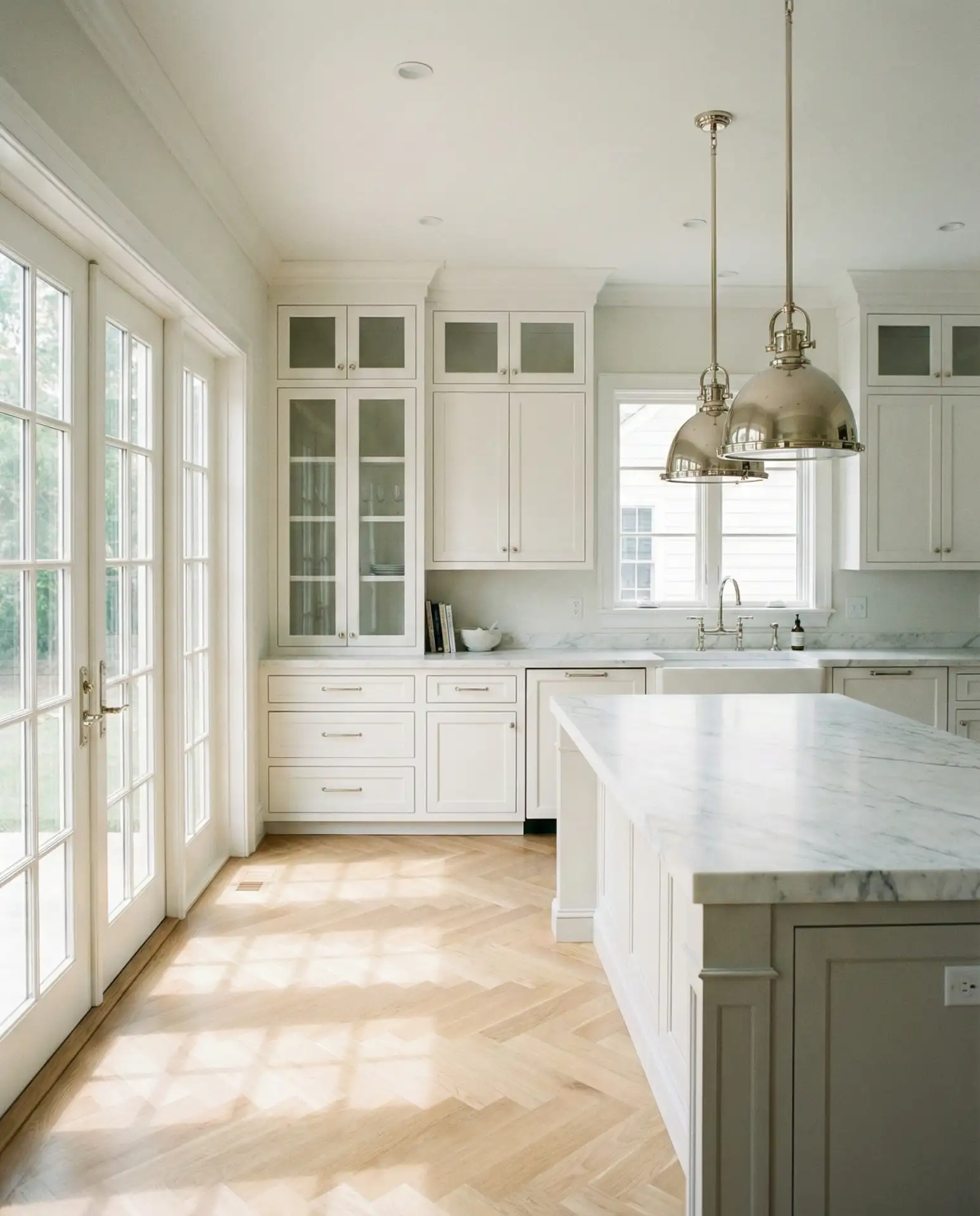
The herringbone pattern elevates any material choice by arranging rectangular tiles in a distinctive V-shaped weaving pattern that adds movement and architectural interest. This classic tile pattern layout works with wood-look planks, ceramic, porcelain, or natural stone, transforming humble materials into showstopping floors. The diagonal lines visually expand spaces, making narrow galley kitchens feel wider and boxy rooms appear more dynamic and intentional.
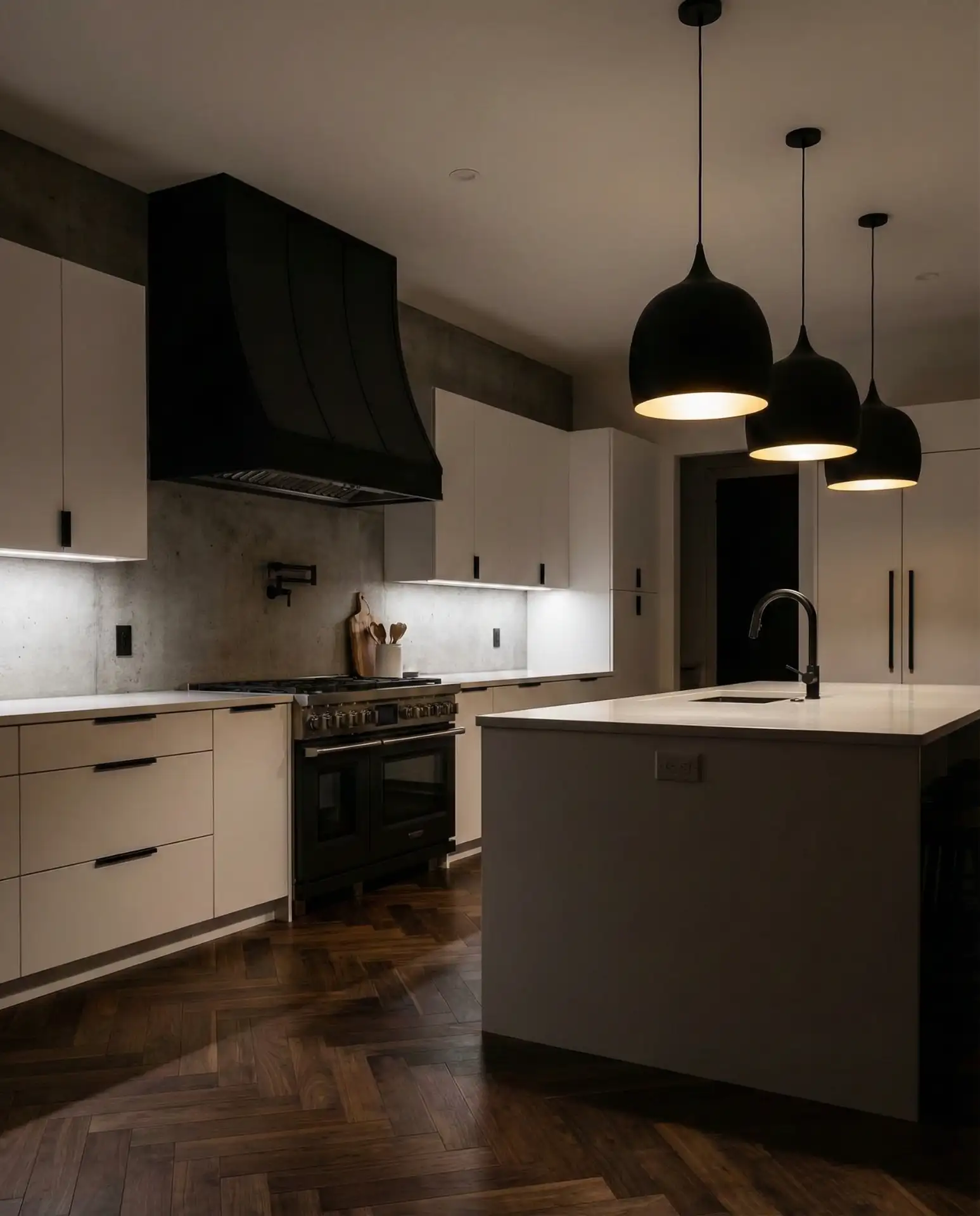
Installation costs for herringbone typically run 20-30% higher than straight layouts due to the precision cutting and increased labor time required, but the visual impact justifies the investment for many homeowners. The pattern works especially well in open-concept homes across Texas and the Southeast, where it helps define the kitchen zone without walls. Pro tip: start the pattern at your kitchen’s most visible entry point to ensure the most prominent view showcases perfect alignment.
10. On-Trend Floor Ideas
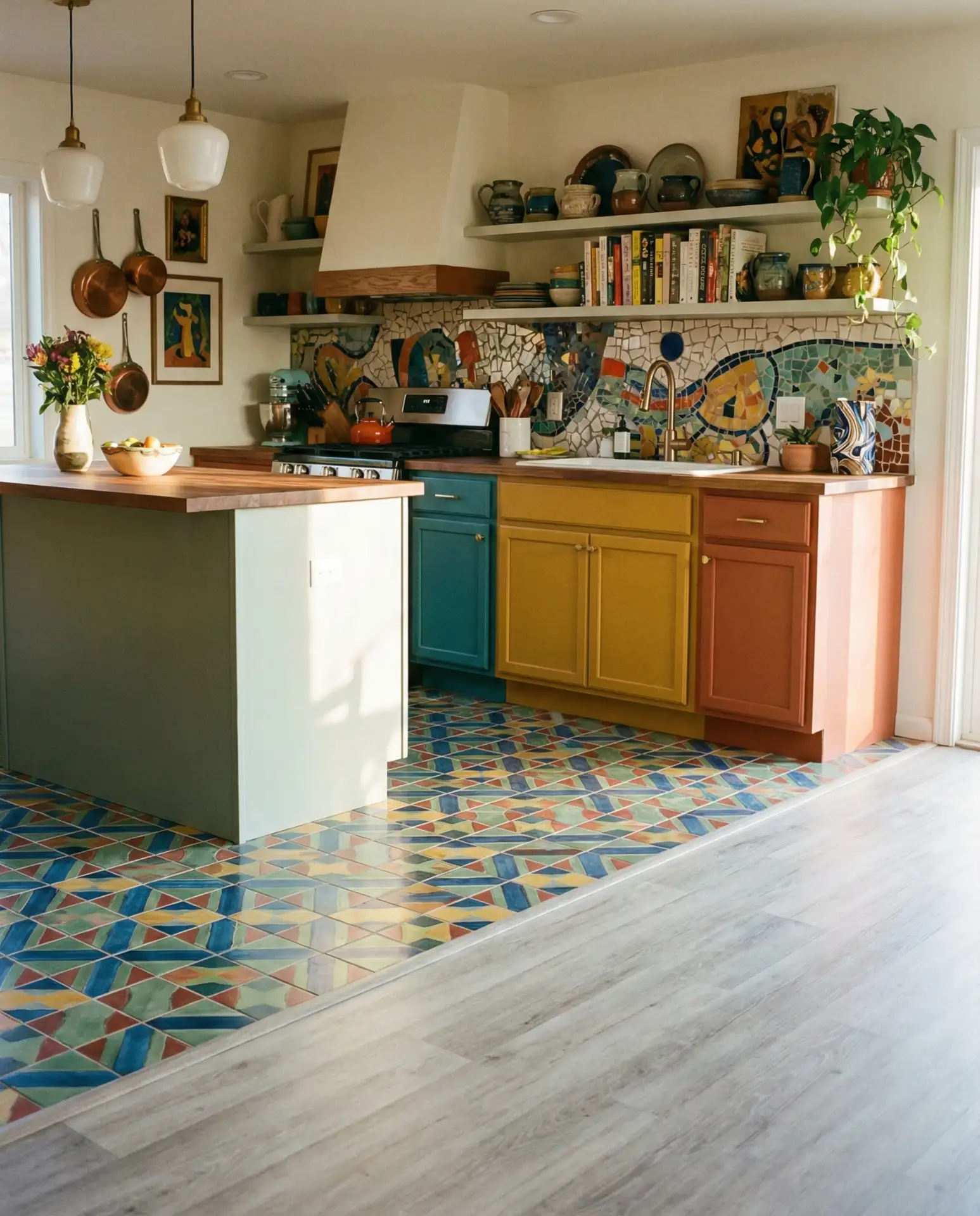
Keeping pace with 2026’s evolving trends, forward-thinking homeowners are embracing mixed-material floors that combine different textures or patterns within the same kitchen space. These innovative ideas for tile approaches might pair hexagonal tiles in the cooking zone with wood-look planks in the dining area or feature a decorative tile “rug” beneath an island while keeping perimeter flooring simple. The key is creating intentional zones while maintaining visual cohesion through coordinated color palettes.
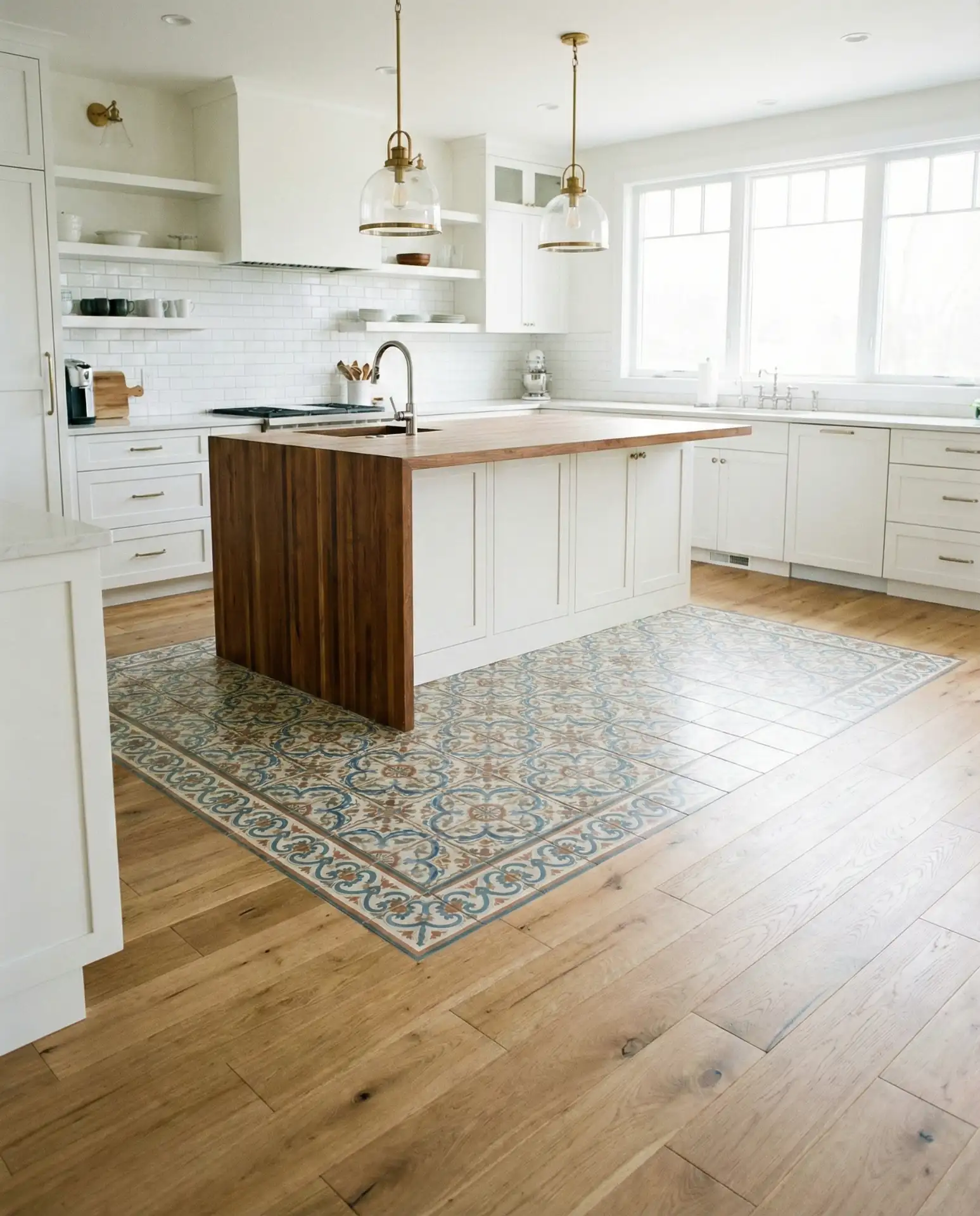
Where this approach works best is in larger kitchens (250+ square feet) where you have enough real estate to establish distinct zones without the transitions feeling choppy or arbitrary. My sister recently renovated her Austin kitchen using this technique, defining her cooking area with durable porcelain tile while extending warmer wood-look vinyl into the breakfast nook—it beautifully solved the problem of needing both water-resistant work zones and cozy gathering spaces. The trick is using transition strips thoughtfully or, even better, choosing materials at the same height to eliminate tripping hazards.
11. Moody Dark Tile Drama
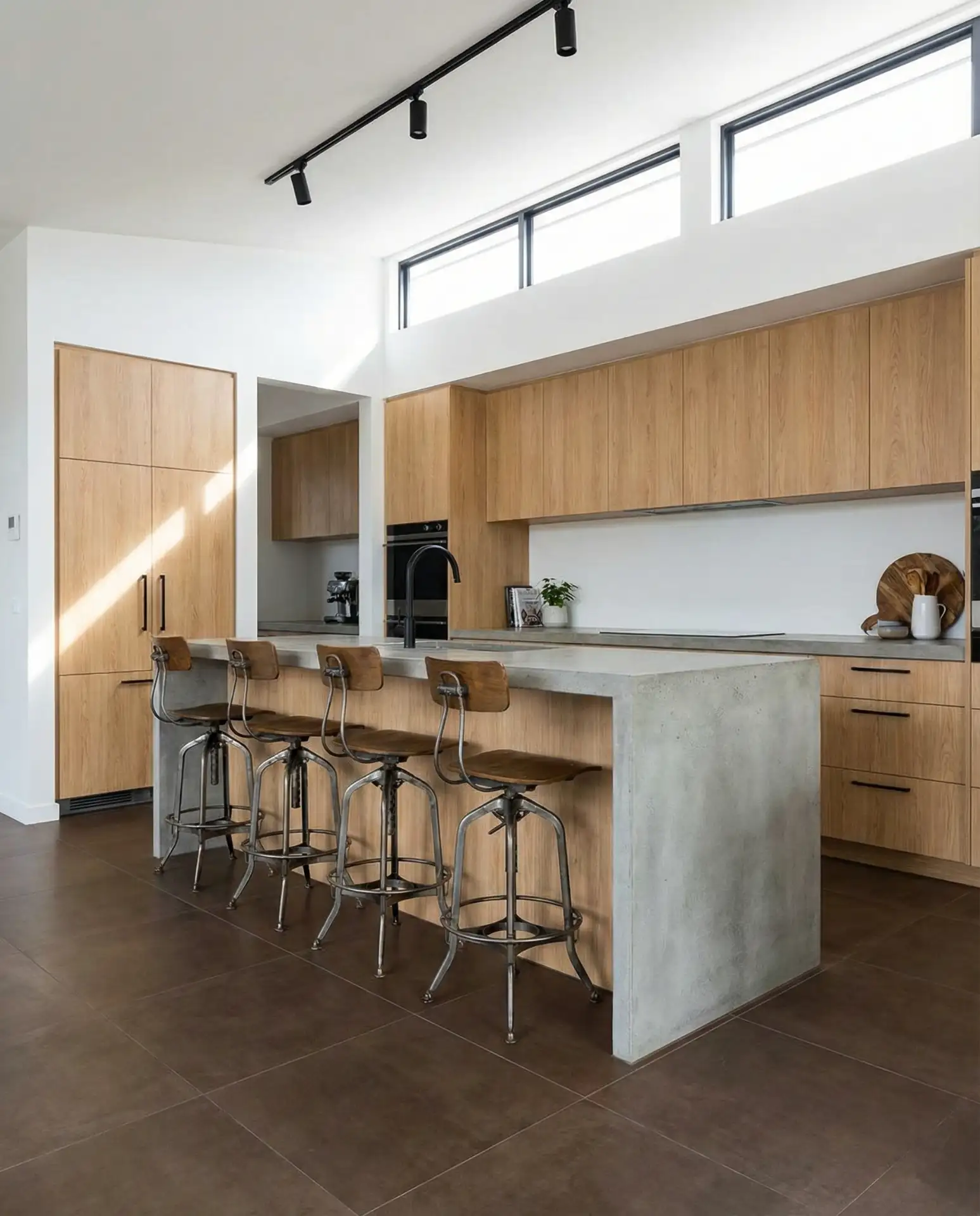
Embracing dark tile flooring creates atmospheric, jewel-box kitchens that feel both cozy and sophisticated, especially when paired with warm lighting and metallic accents. Charcoal, deep navy, forest green, and chocolate brown tiles are replacing the stark white floors that dominated earlier decades, offering richness and depth. These dark tones ground a space and provide a stunning canvas for lighter cabinetry, colorful dishware, and statement lighting fixtures to truly shine.
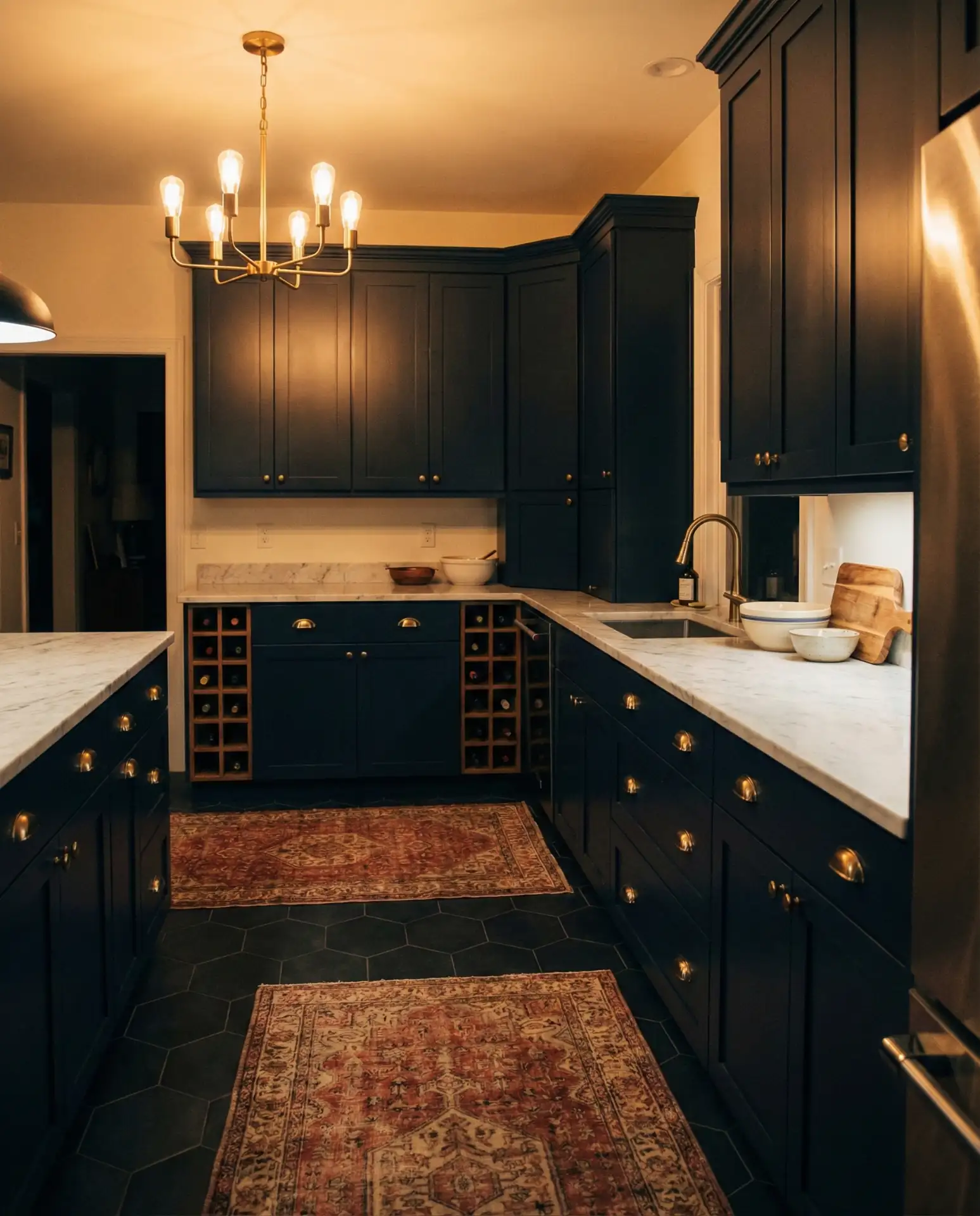
Common mistakes include choosing dark floors in already dim kitchens without compensating with sufficient lighting—you’ll need both layered ambient lighting and task lights to prevent the space from feeling cave-like. Dark tiles also show water spots and dust more readily than medium tones, so plan for slightly more frequent sweeping. That said, they’re incredibly forgiving with food stains and scuffs that would stand out on lighter floors, making them secretly practical for households with messy cooks or active kids.
12. Soft Beige Tile Warmth
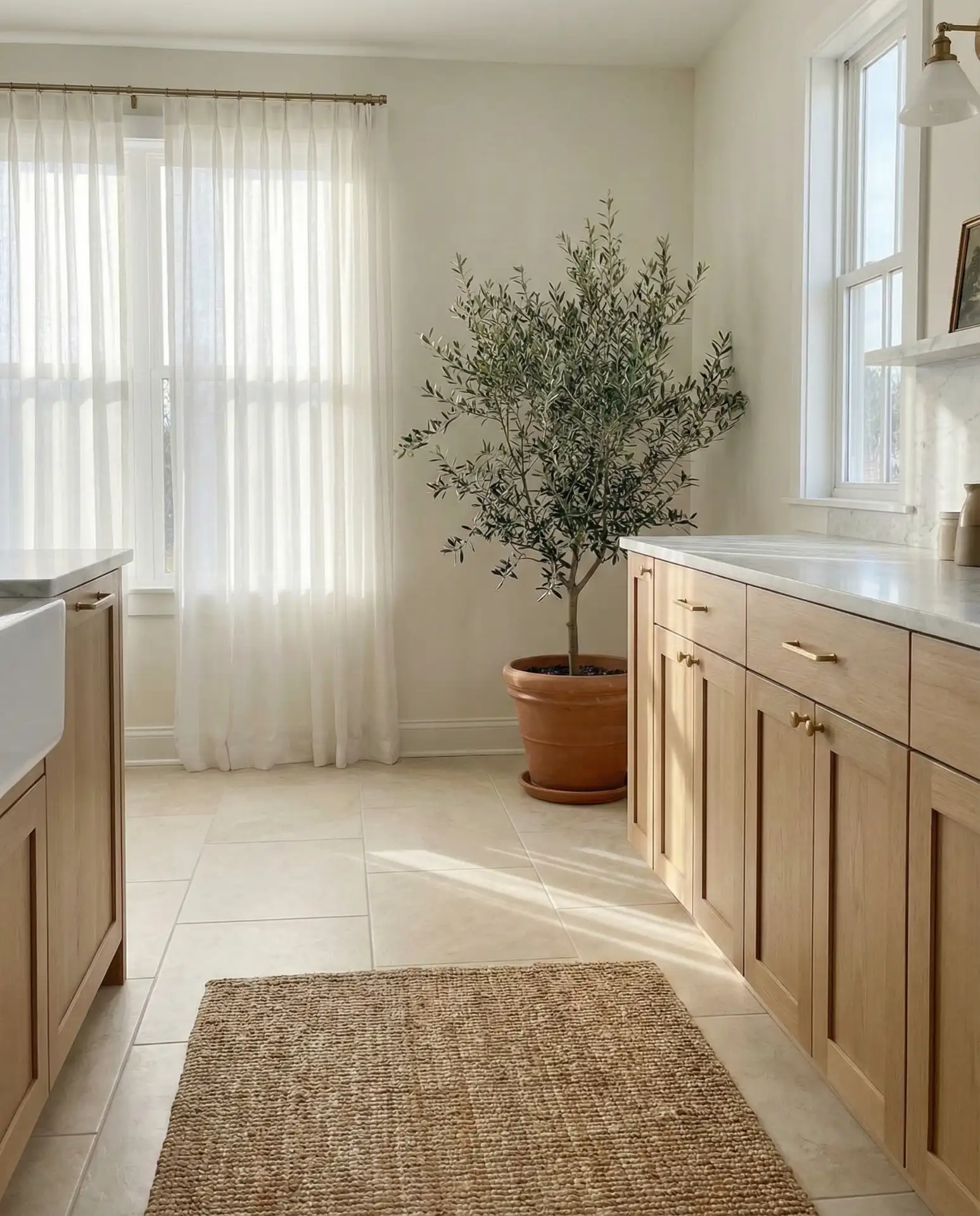
The resurgence of beige tile reflects a broader cultural shift toward warm minimalism and spaces that feel calm rather than stark or cold. Today’s beige isn’t the builder-grade boring option from decades past—it encompasses creamy limestone looks, sandy travertine textures, and sophisticated greige tones that adapt to changing light throughout the day. These neutral foundations work exceptionally well in open-plan homes where the kitchen flows into living areas, providing continuity and a serene backdrop for life’s daily activities.
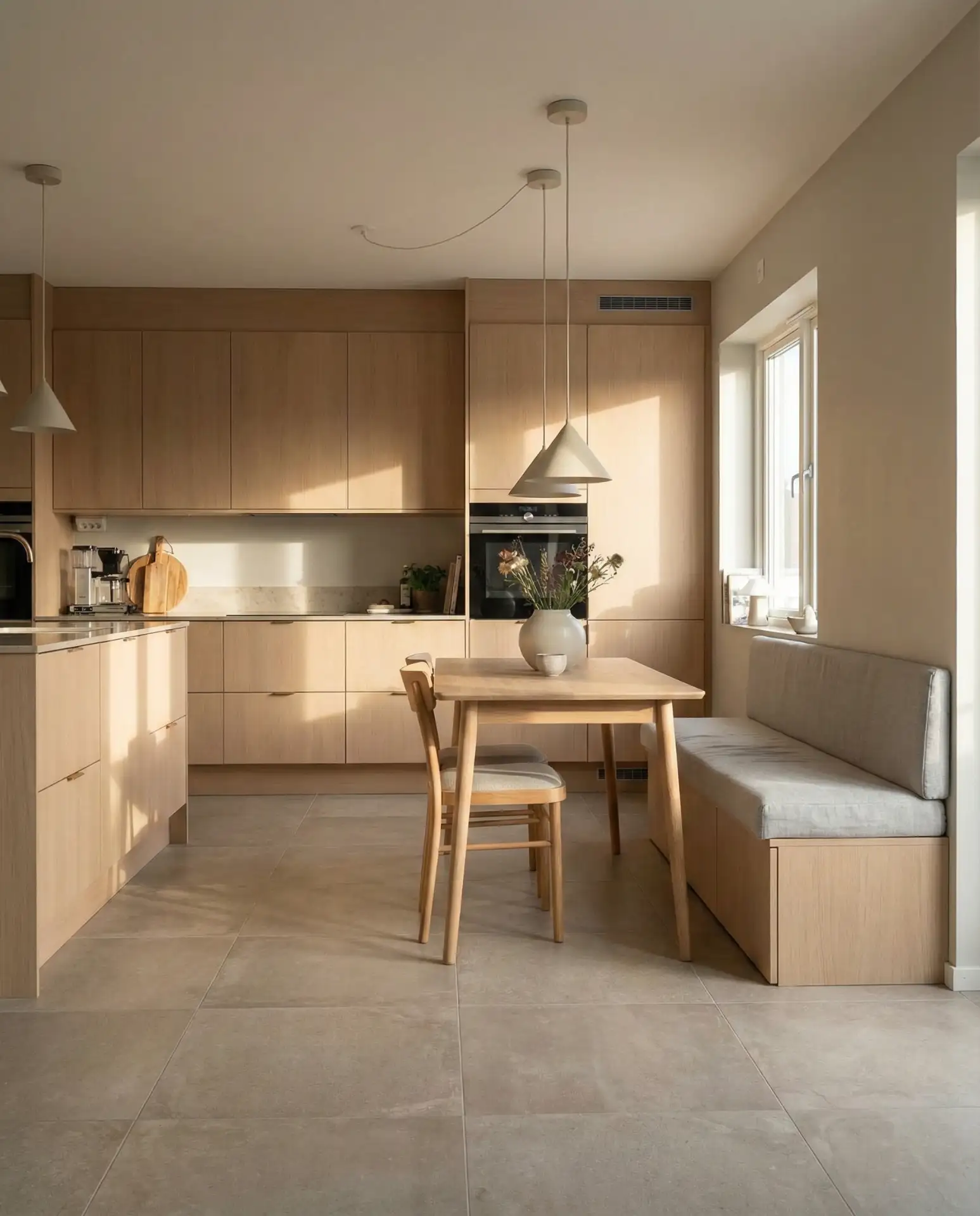
Budget-wise, beige porcelain tiles offer exceptional value at $3-8 per square foot for quality options that mimic much pricier stone, with installation adding another $5-10 per square foot depending on your region. The Midwest and Mountain West have seen particularly strong adoption of these warm neutrals, perhaps as a response to long winters where homeowners crave cozy, sun-soaked aesthetics year-round. Beige floors also photograph beautifully, which matters for resale value in our Instagram-influenced real estate market.
13. Industrial Concrete Cool
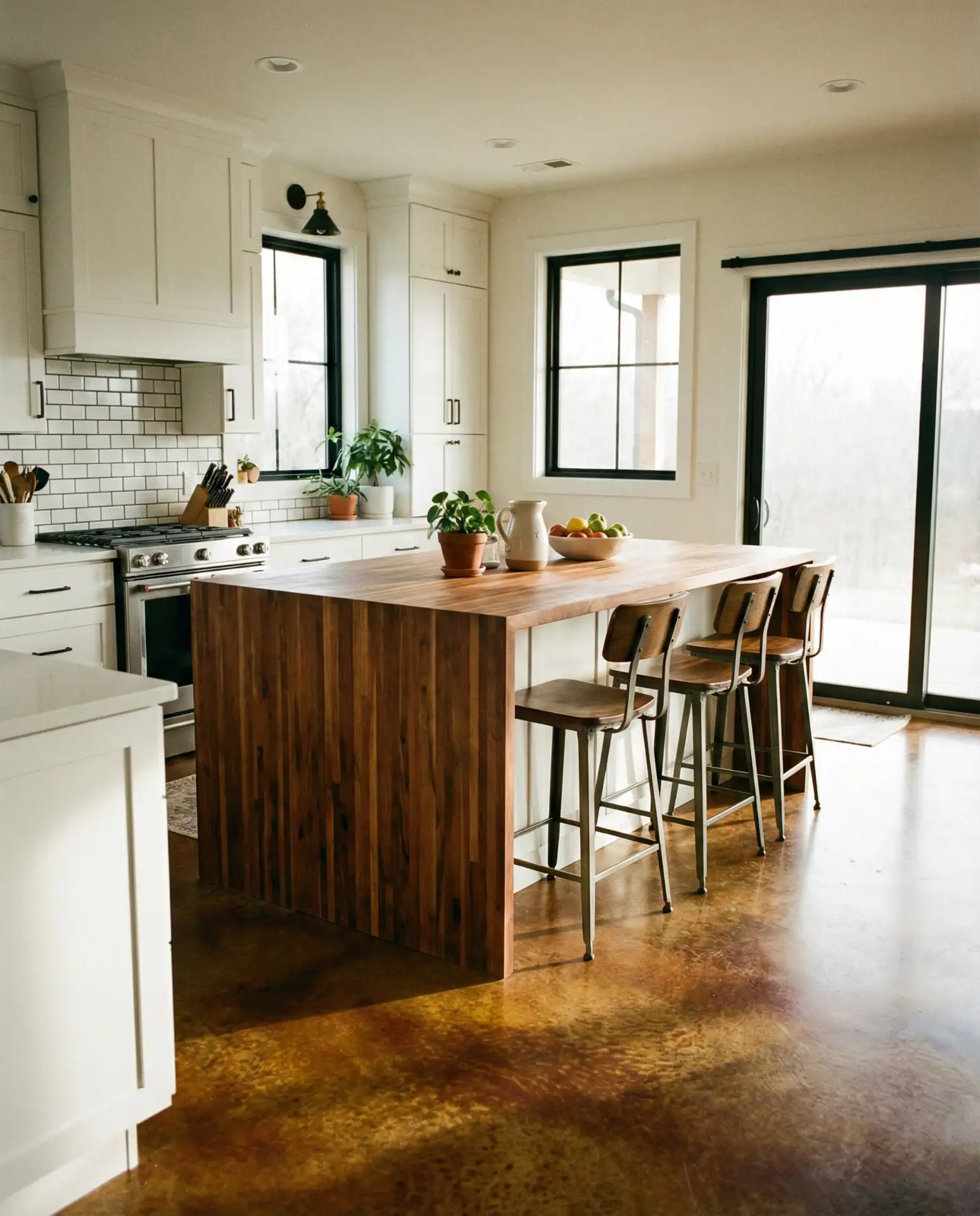
Polished concrete floors bring urban loft aesthetics into residential kitchens, offering durability and modern minimalism that pairs beautifully with both industrial and Scandinavian design schemes. The seamless surface eliminates grout lines entirely, creating a clean, continuous plane that makes spaces feel larger and more open. Available in natural gray or tinted with earth pigments, concrete can be ground to varying sheens from matte to mirror-like polished finishes.
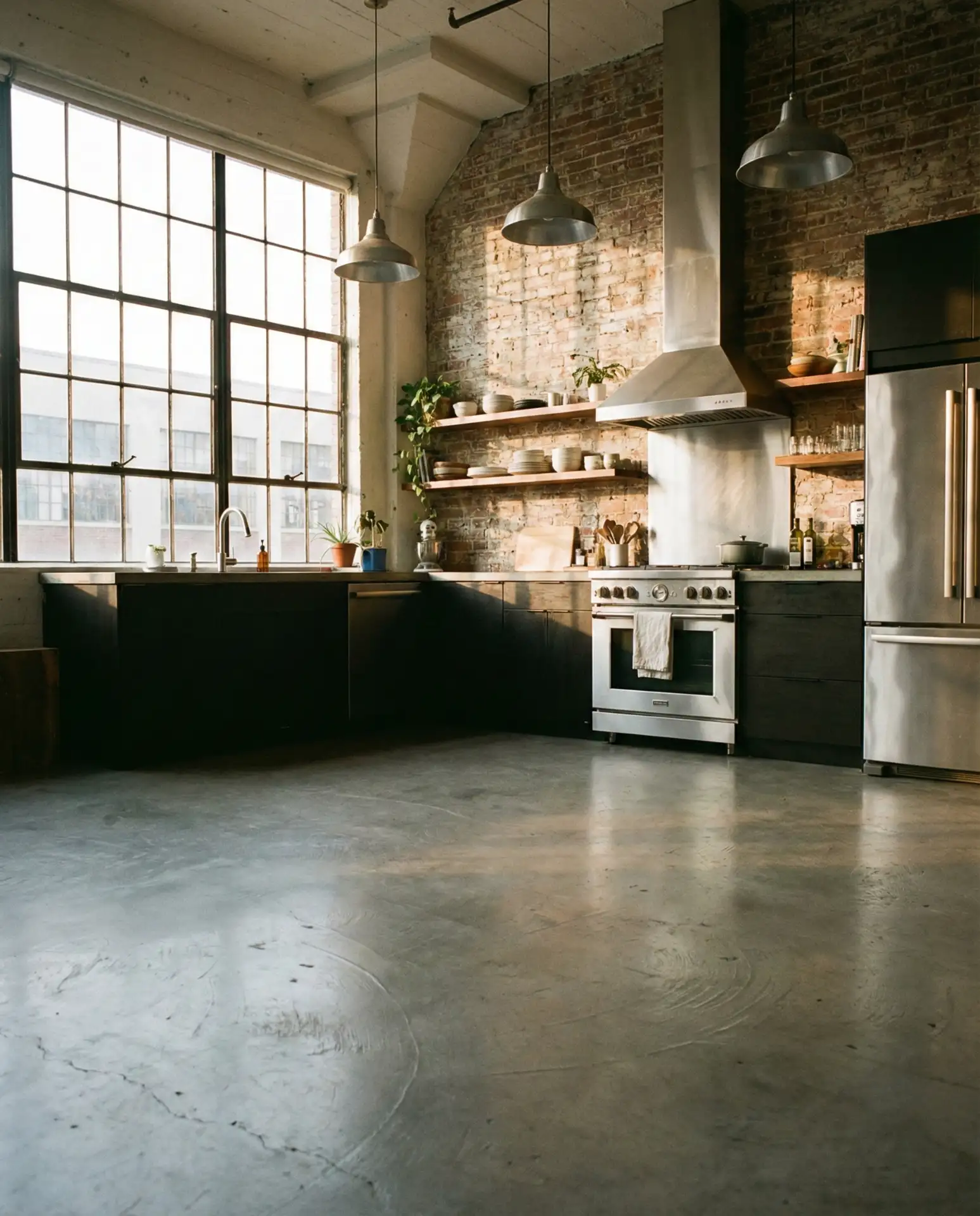
Real homeowners love concrete floors for their incredible durability—they can last 50+ years with proper sealing—but many are surprised to discover they need resealing every 2-3 years to maintain stain resistance. An unsealed or poorly sealed concrete floor will absorb everything from wine to olive oil, leaving permanent marks. The good news is that concrete improves with age, developing a beautiful patina that adds character. It’s also surprisingly comfortable underfoot, especially compared to stone, and works wonderfully with radiant heat systems for warming chilly mornings.
14. Crisp White Tile Brightness
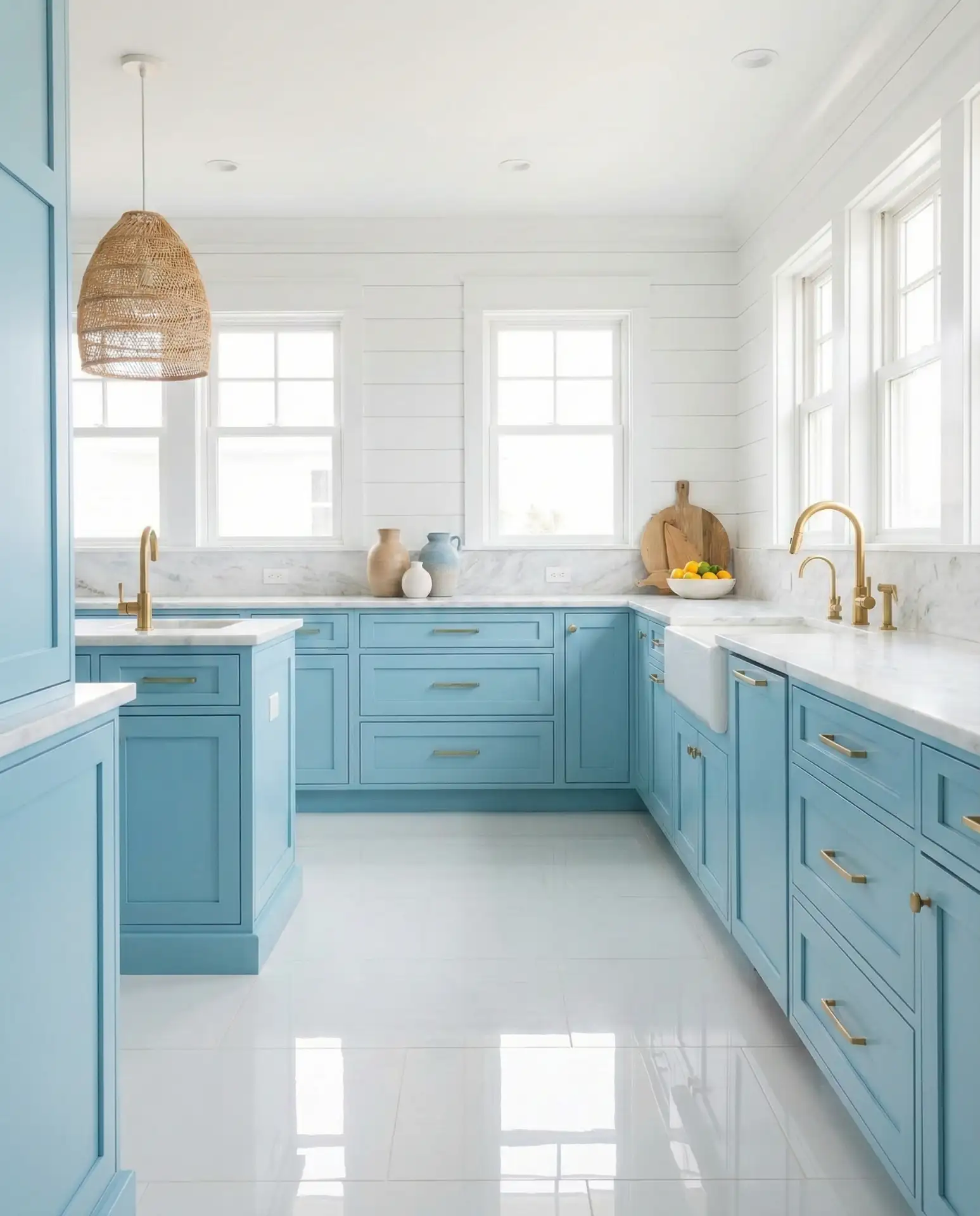
Clean white tile floors remain a classic choice for homeowners who want bright, airy kitchens that feel fresh and spacious regardless of square footage. Large-format white porcelain or ceramic tiles minimize grout lines while maximizing light reflection, making them particularly valuable in north-facing kitchens or basement spaces with limited natural light. The blank canvas quality allows maximum flexibility for changing decor, cabinet colors, or accent pieces without worrying about clashing with the floor.
Expert designers suggest choosing white tiles with subtle texture or a matte finish rather than high-gloss options—the sheen shows every footprint and water spot, requiring constant maintenance that drives homeowners crazy. Textured white tiles hide minor imperfections while still providing that light, fresh feeling. Another pro tip: use light gray or even pale beige grout instead of pure white; it’ll stay looking cleaner much longer without the stark contrast showing every bit of dirt that accumulates over time.
15. Bold Tile Design Statements
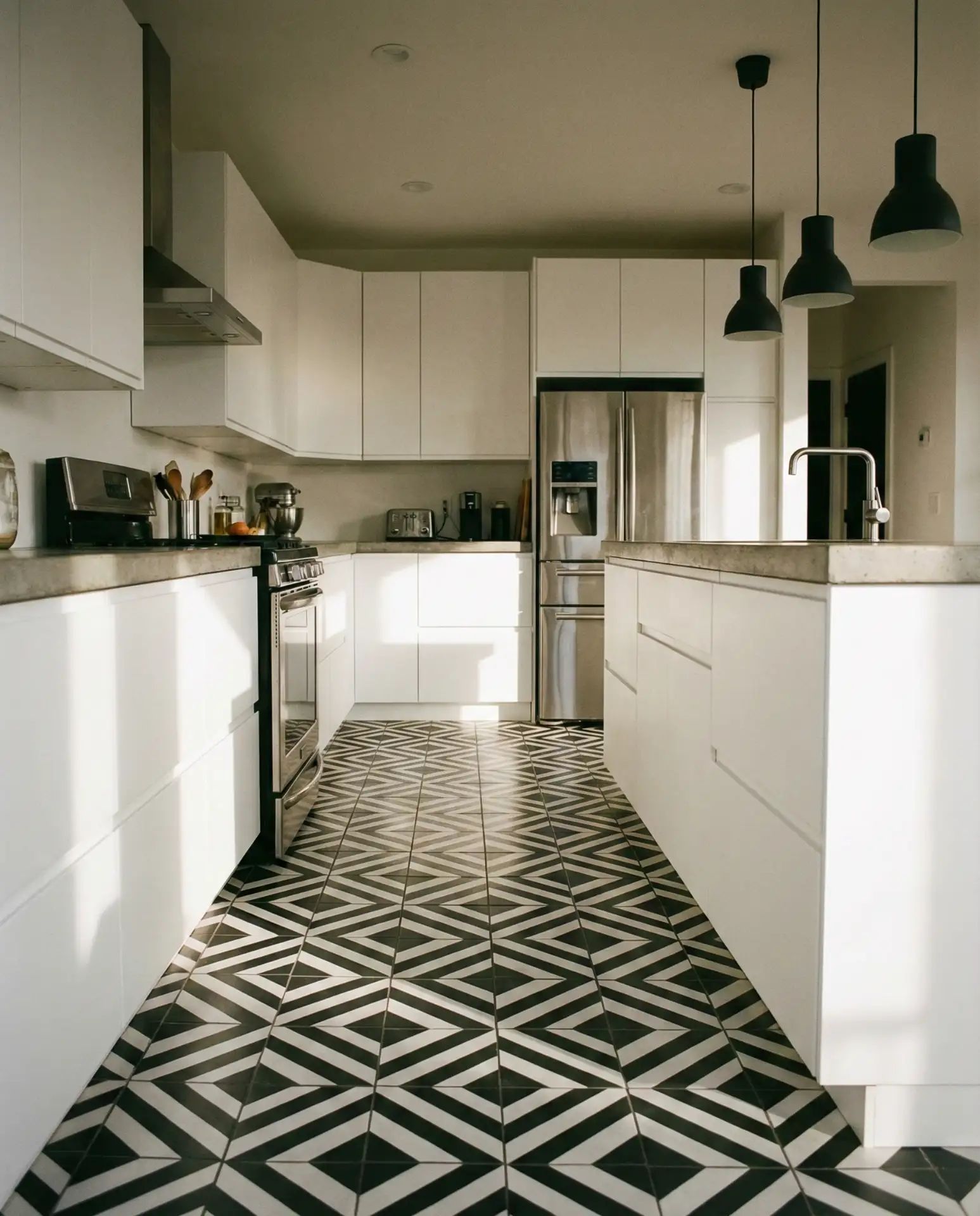
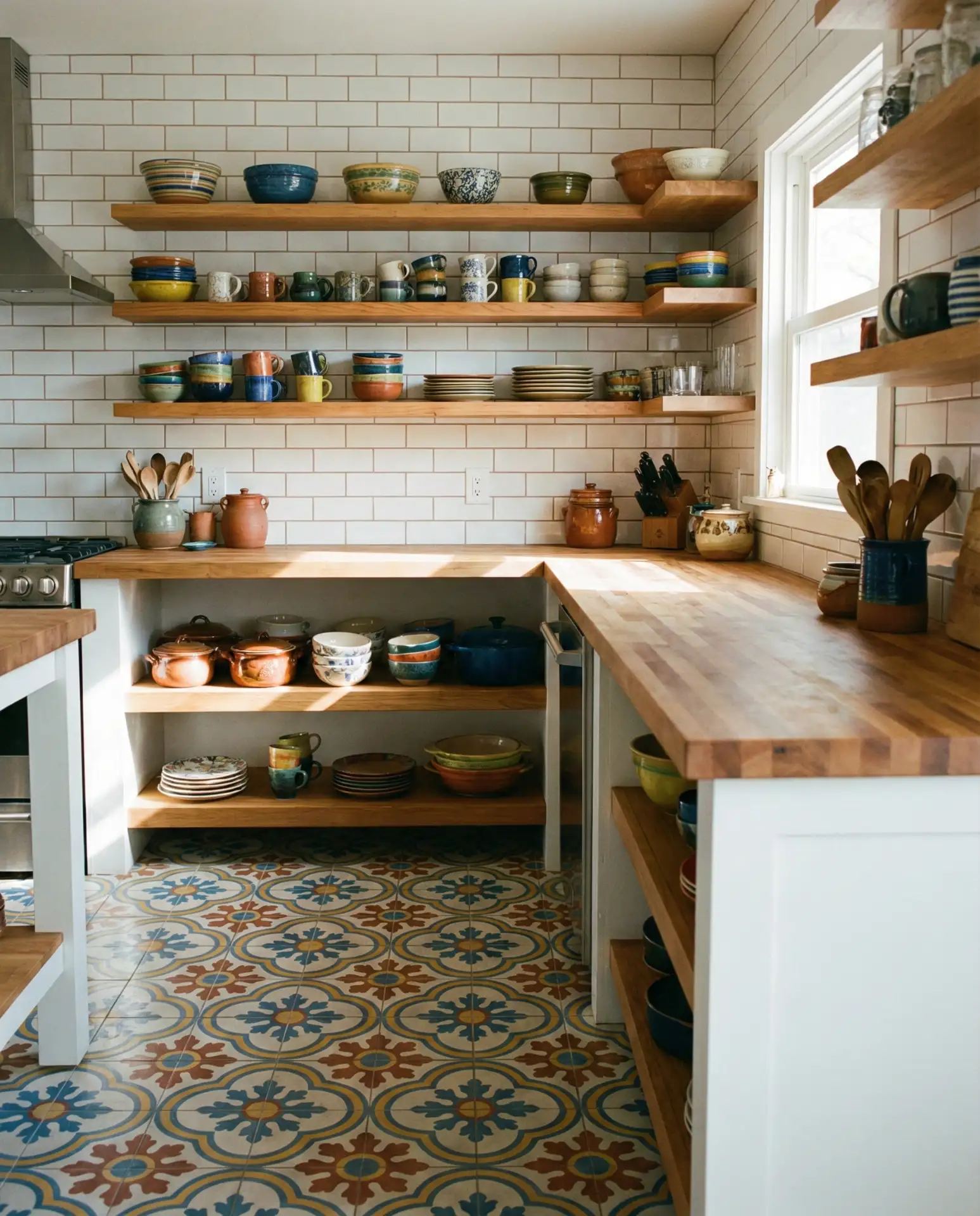
Adventurous homeowners are pushing boundaries with graphic tile design choices that transform kitchen floors into genuine art installations and conversation starters. From oversized floral motifs to abstract geometric compositions, these statement floors demonstrate confidence and creativity. The approach works particularly well when the rest of the kitchen maintains relative simplicity—white or neutral cabinets, minimal backsplash, streamlined hardware—allowing the floor to be the undisputed star of the space.
In California and other trend-forward markets, these decorative cement tiles have become investment pieces, with homeowners spending $15-30 per square foot on artisan or imported options. The payoff comes in sheer uniqueness—your kitchen won’t look like anyone else’s, and the design adds significant personality and perceived value. Just remember that bold patterns can cause fatigue over time, so this works best for homeowners who embrace maximalism or plan to stay in their homes long-term rather than flipping in a few years.
16. Easy Peel and Stick Solutions
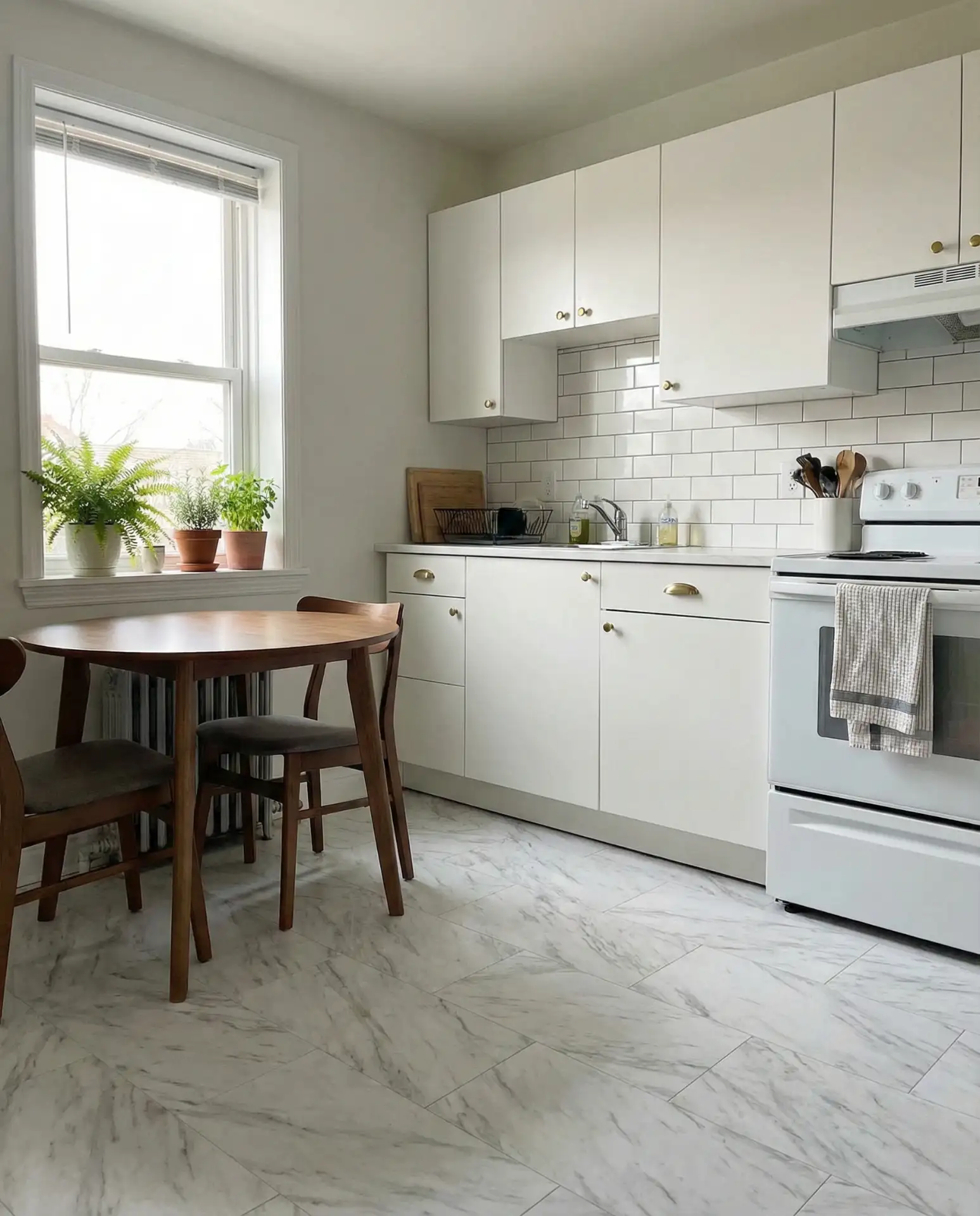
The revolution in peel-and-stick flooring has democratized kitchen design, making it possible for renters and budget-conscious homeowners to achieve designer looks without professional installation or permanent commitment. Modern vinyl options convincingly mimic everything from marble to terrazzo to wood, with improved durability that withstands kitchen traffic surprisingly well. These ideas, vinyl solutions, install in hours rather than days, require no special tools beyond a utility knife and ruler, and remove cleanly when it’s time for a change.
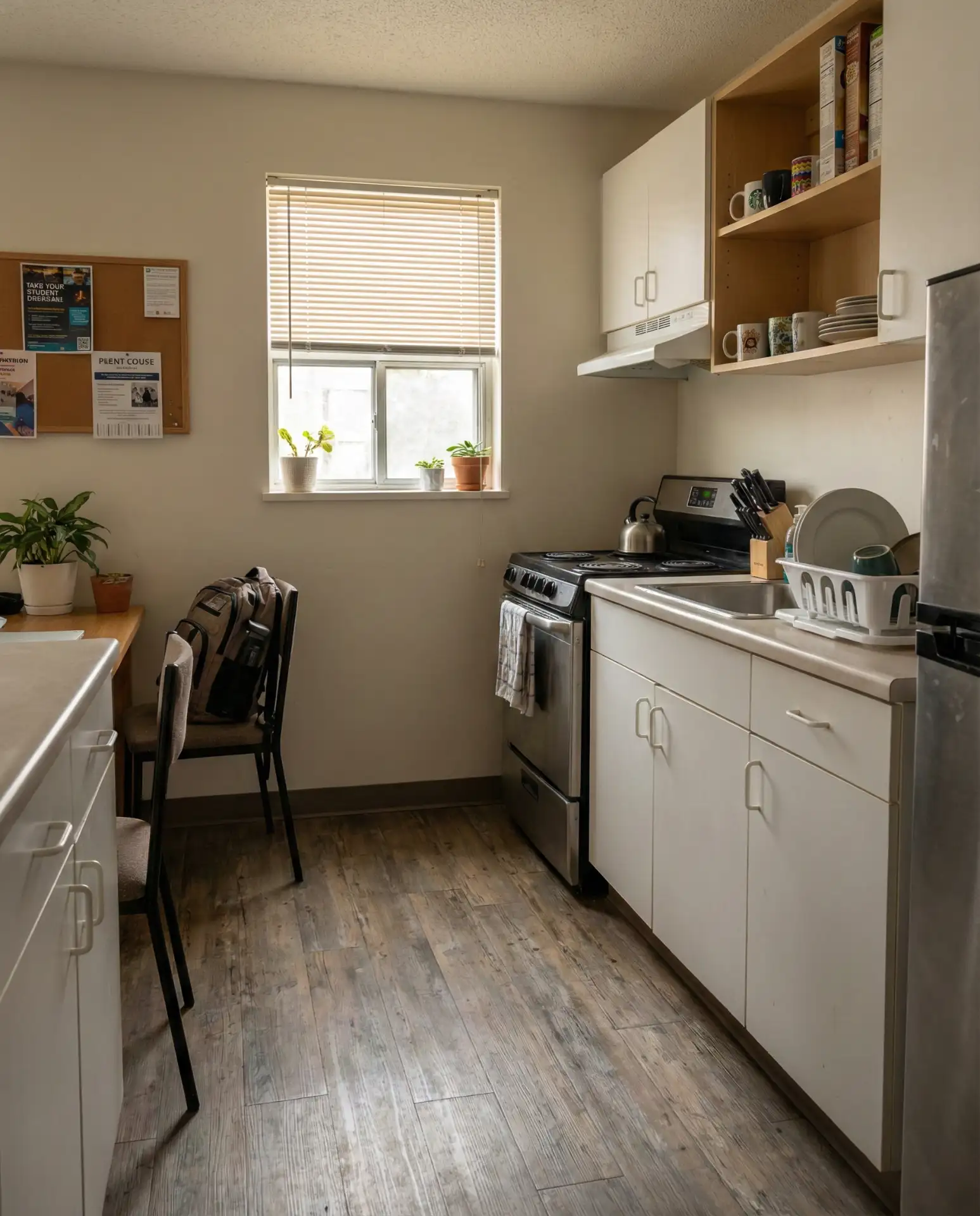
Across college towns and urban rental markets, these products have created a cottage industry of weekend renovations. The key to success lies in thorough floor prep—the existing surface must be clean, smooth, and completely dry for the adhesive to bond properly. Small imperfections will telegraph through the vinyl, so many experienced DIYers add a thin underlayment first. Quality matters significantly; premium brands at $3-5 per square foot perform vastly better than dollar-store options, staying adhered for 3-5 years versus peeling within months.
17. Sophisticated Grey Tile Neutrals
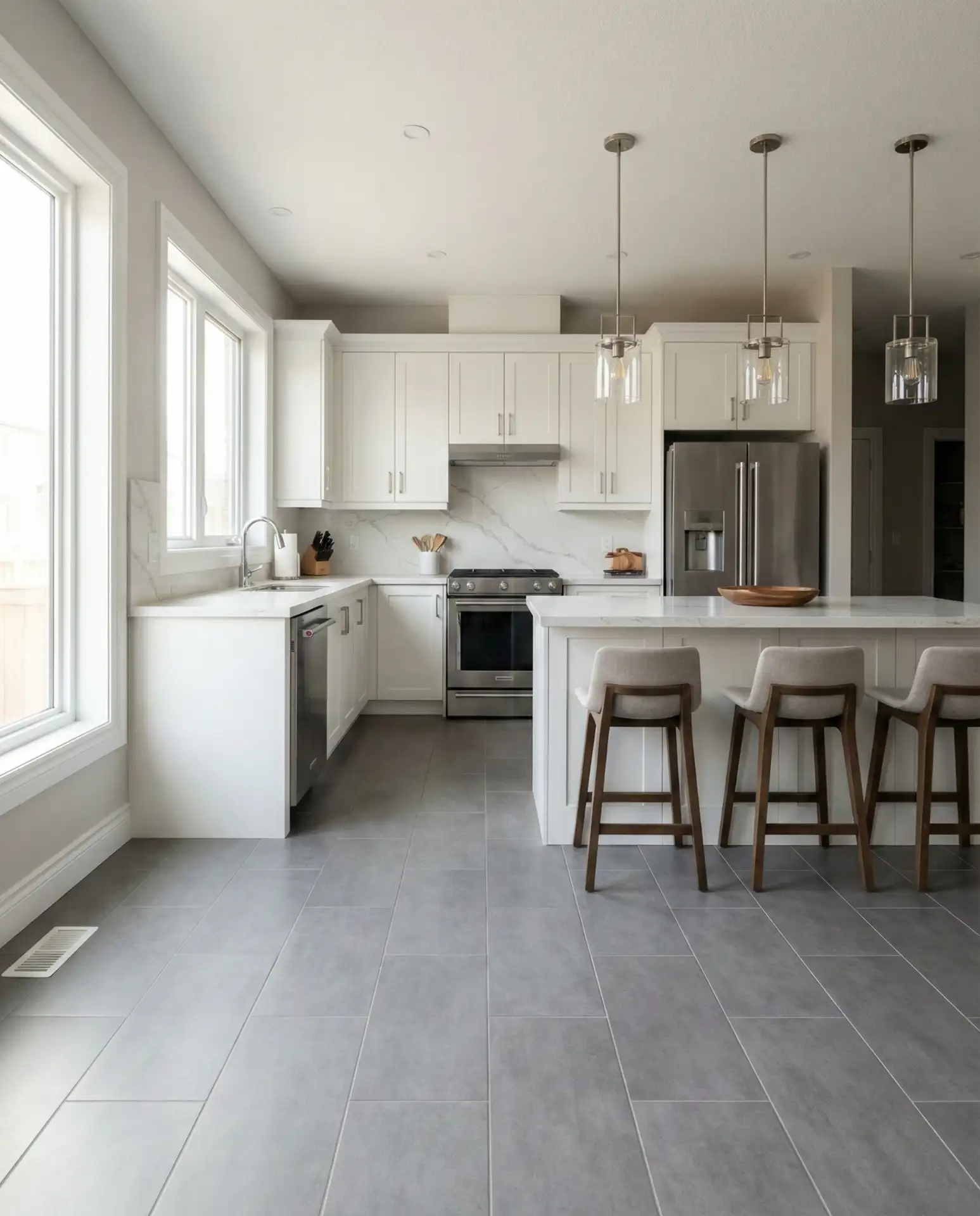
The versatility of grey tile makes it a perennial favorite for homeowners seeking a sophisticated middle ground between stark white and dramatic black. From pale dove gray to deep charcoal, this neutral family coordinates effortlessly with virtually any cabinet color, countertop material, or design style. The tone works particularly well in contemporary and transitional kitchens, providing a calm, professional backdrop that reads as intentional and curated rather than boring or safe.
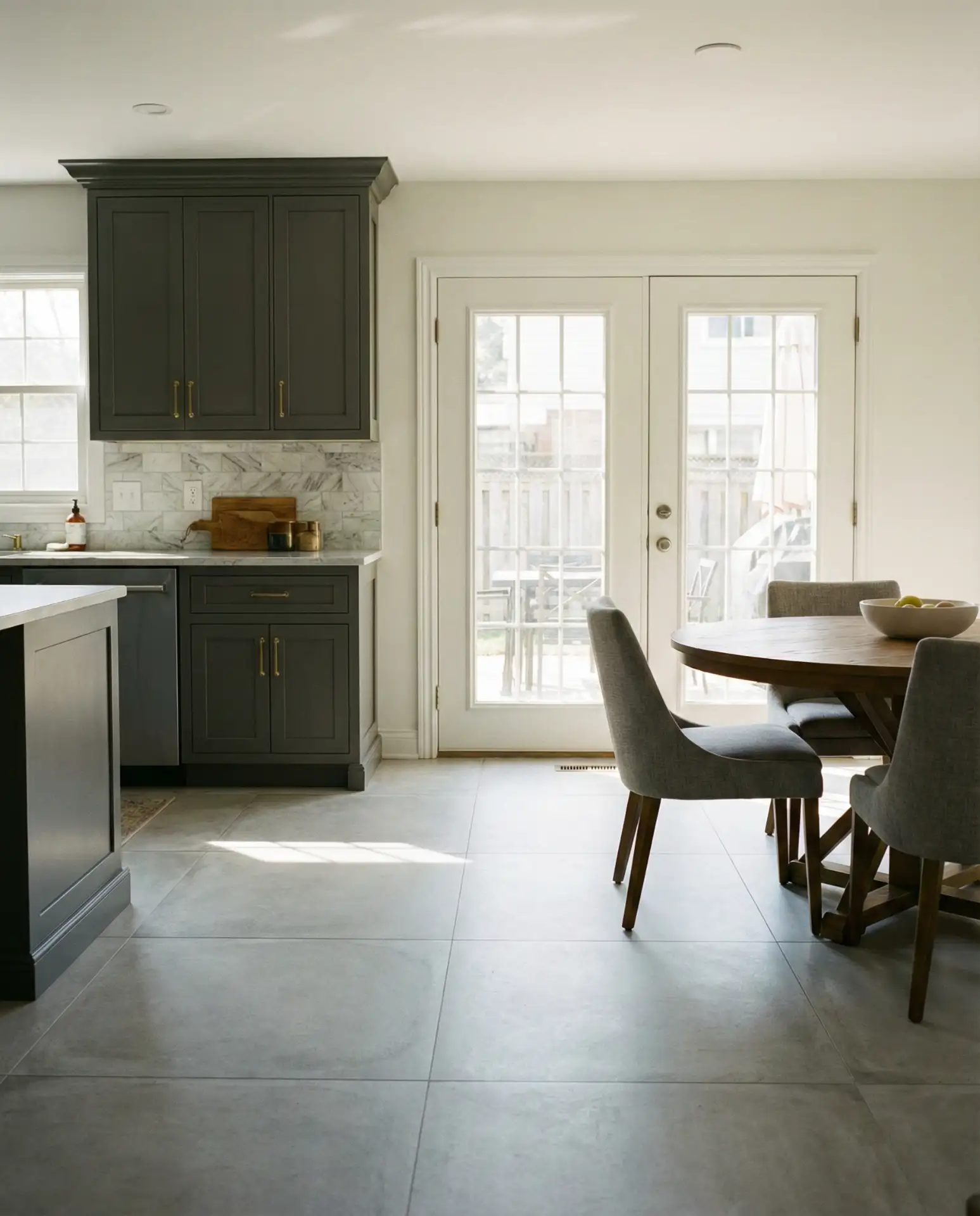
Where this choice shines is in resale situations—gray floors appeal to the broadest audience of potential buyers and photograph exceptionally well in listing photos, which matters in today’s online-first real estate market. They’re also genuinely practical for hiding everyday dirt and scuffs better than white or black extremes. Homeowners throughout the Northeast and Pacific Northwest have embraced gray tones that echo regional aesthetics of stone, fog, and overcast skies, creating kitchens that feel connected to their local environment.
18. Luxe Marble-Look Elegance
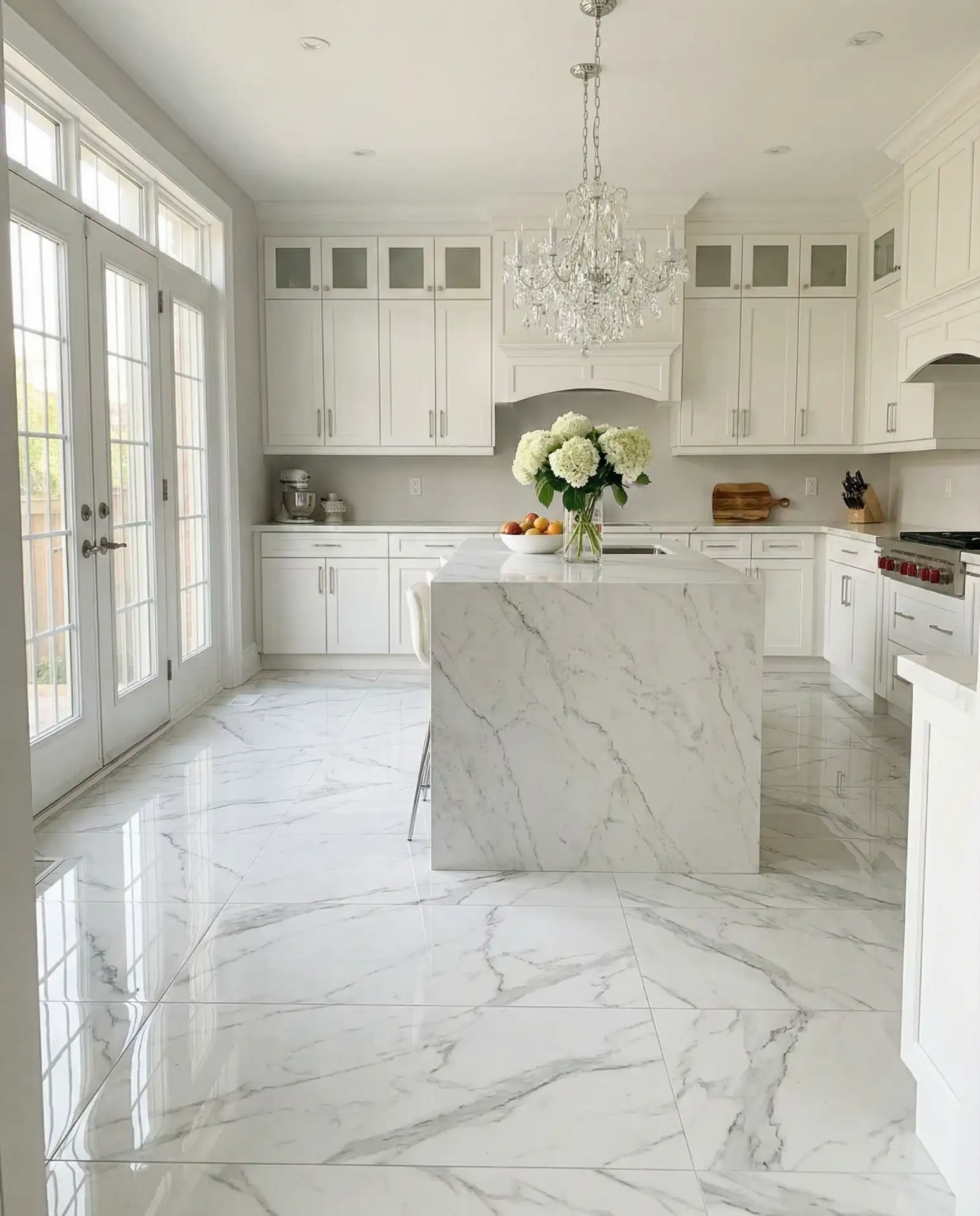
Achieving the luxurious appearance of marble without the maintenance concerns has become possible through advanced porcelain technology that replicates veining, depth, and subtle color variations with remarkable accuracy. These white tile options deliver high-end aesthetics at a fraction of genuine marble’s cost while offering superior stain resistance and durability for hardworking kitchens. The look works beautifully in both traditional and modern settings, instantly elevating the space with refined sophistication.
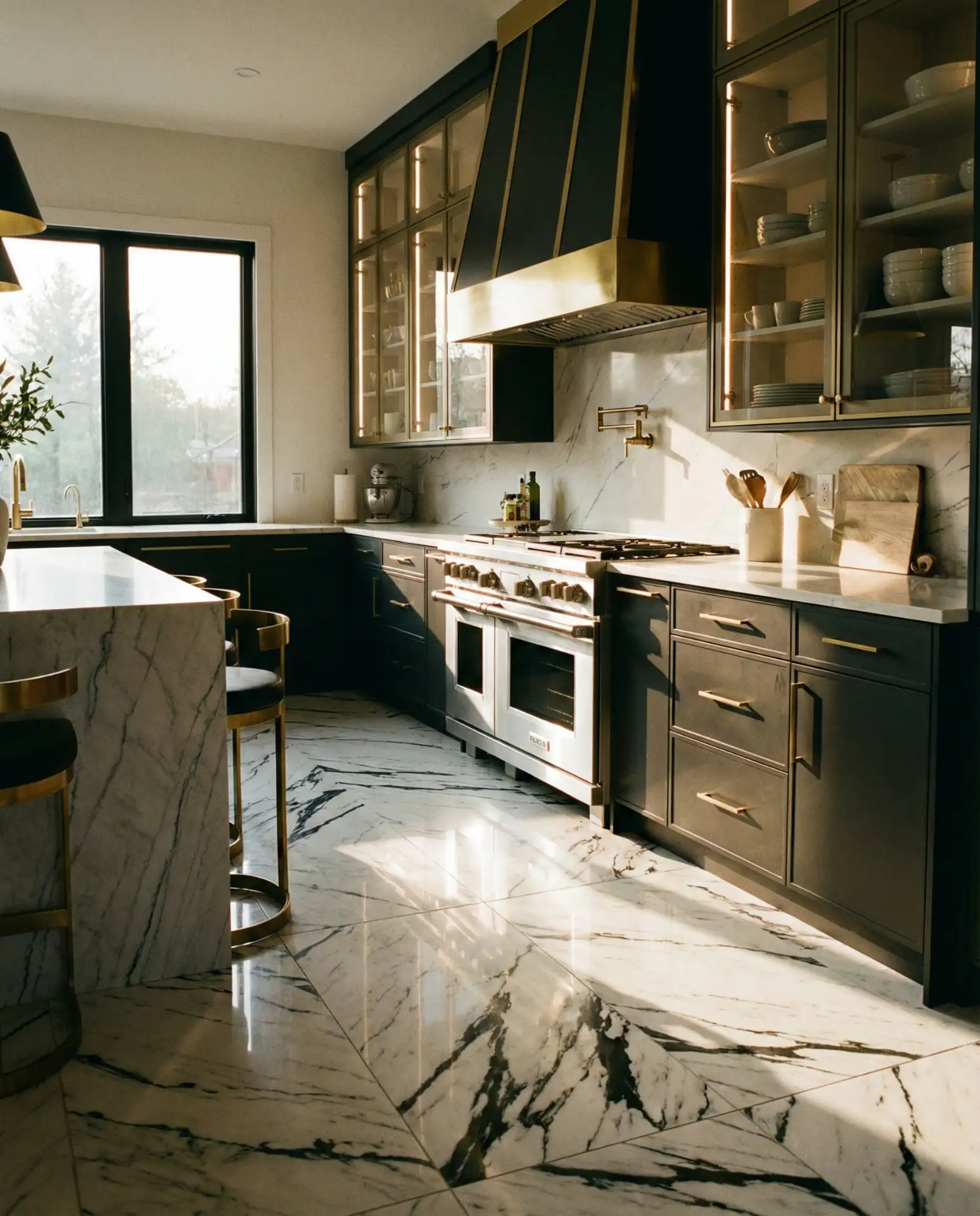
A common mistake is choosing marble-look tiles that are too uniform—real marble has natural variation, including some tiles with heavy veining and others with minimal patterns. Better manufacturers include this variety in their product lines, and savvy installers mix boxes to achieve authentic-looking randomness. The initial investment typically runs $8-15 per square foot for convincing marble-look porcelain, compared to $25-50 for actual marble, with the bonus of never needing sealing or special cleaners. It’s luxury without the anxiety.
19. Creative Mixed Tile Patterns
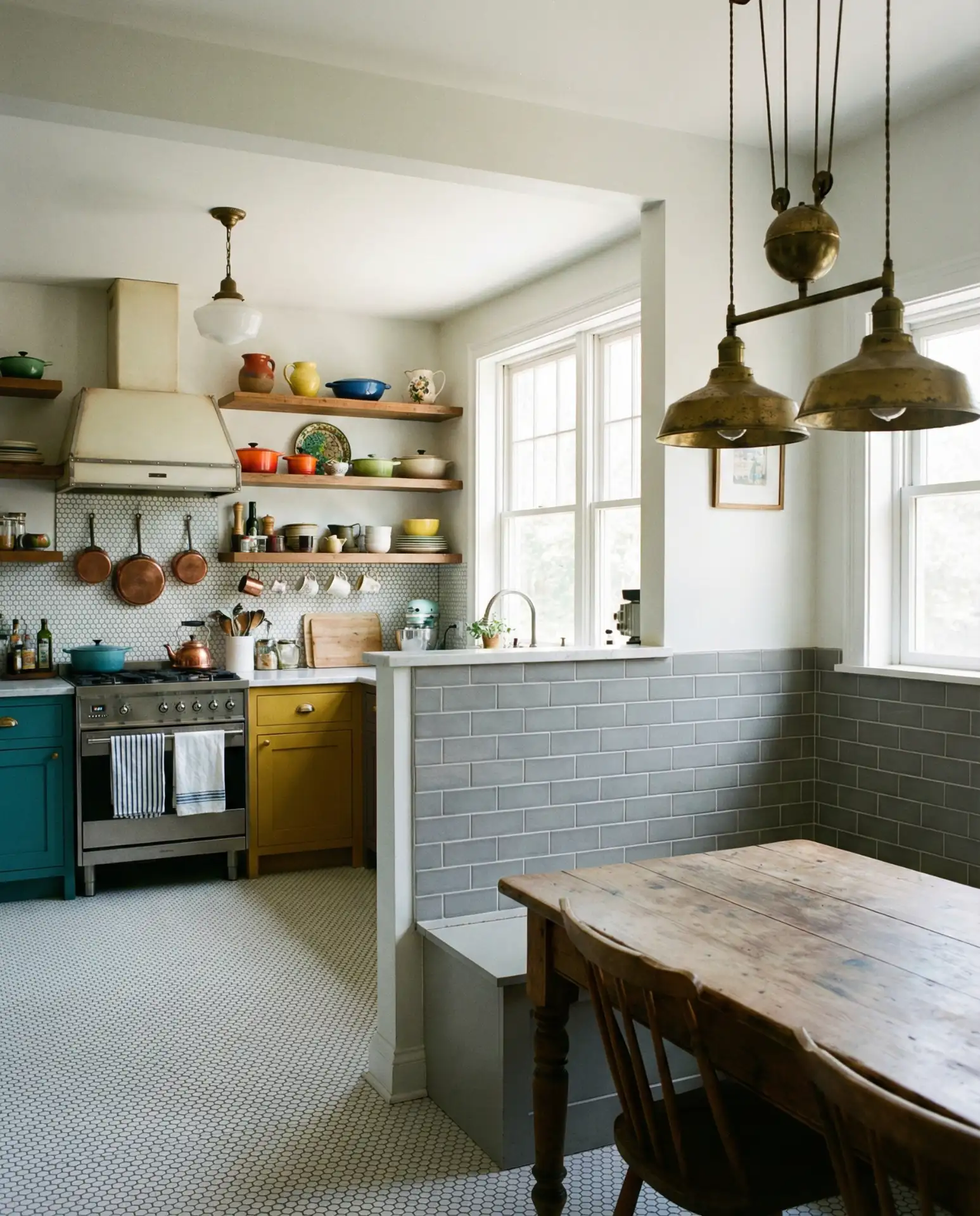
Combining different tile patterns within a single kitchen creates visual zoning and adds layers of interest that single-pattern floors can’t achieve. Popular combinations include pairing hexagonal tiles in the main work area with running bond subway-style tiles in a breakfast nook or featuring an ornate Moroccan-pattern centerpiece surrounded by simple solid-color borders. This approach requires careful planning to ensure transitions feel intentional rather than haphazard, but the results can be spectacular.
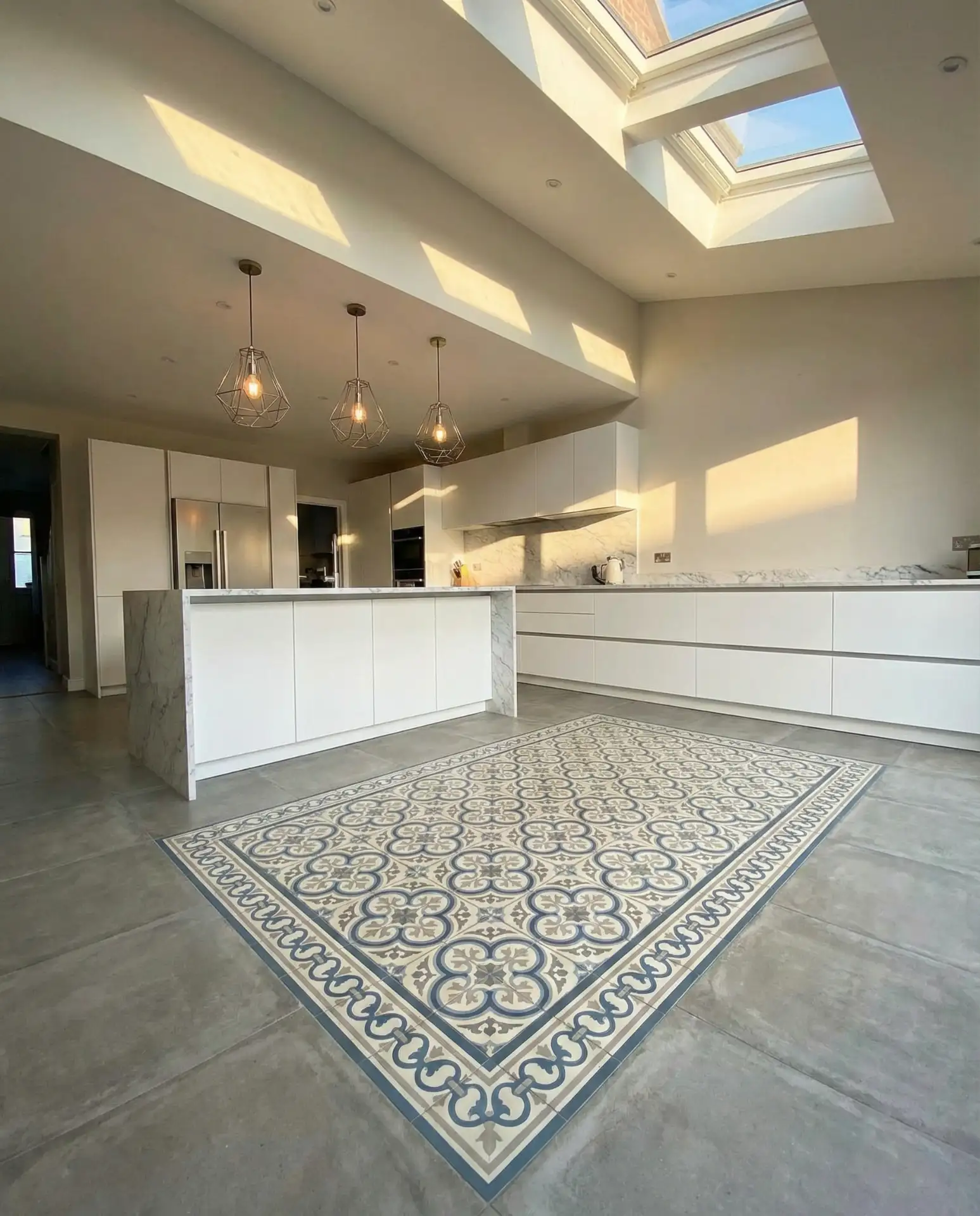
The trick to making mixed patterns work is maintaining connection through color—all tiles should share at least one common hue that ties them together visually. Size matters too; dramatic scale differences read better than subtle ones, so pair small mosaics with large-format tiles rather than mixing 8-inch with 12-inch squares. An experienced designer told me she always lays out samples on the floor and lives with them for a few days before committing, photographing them at different times of day to see how light affects the combination—advice worth following for such a permanent decision.
20. Natural Wood-Look Tiles
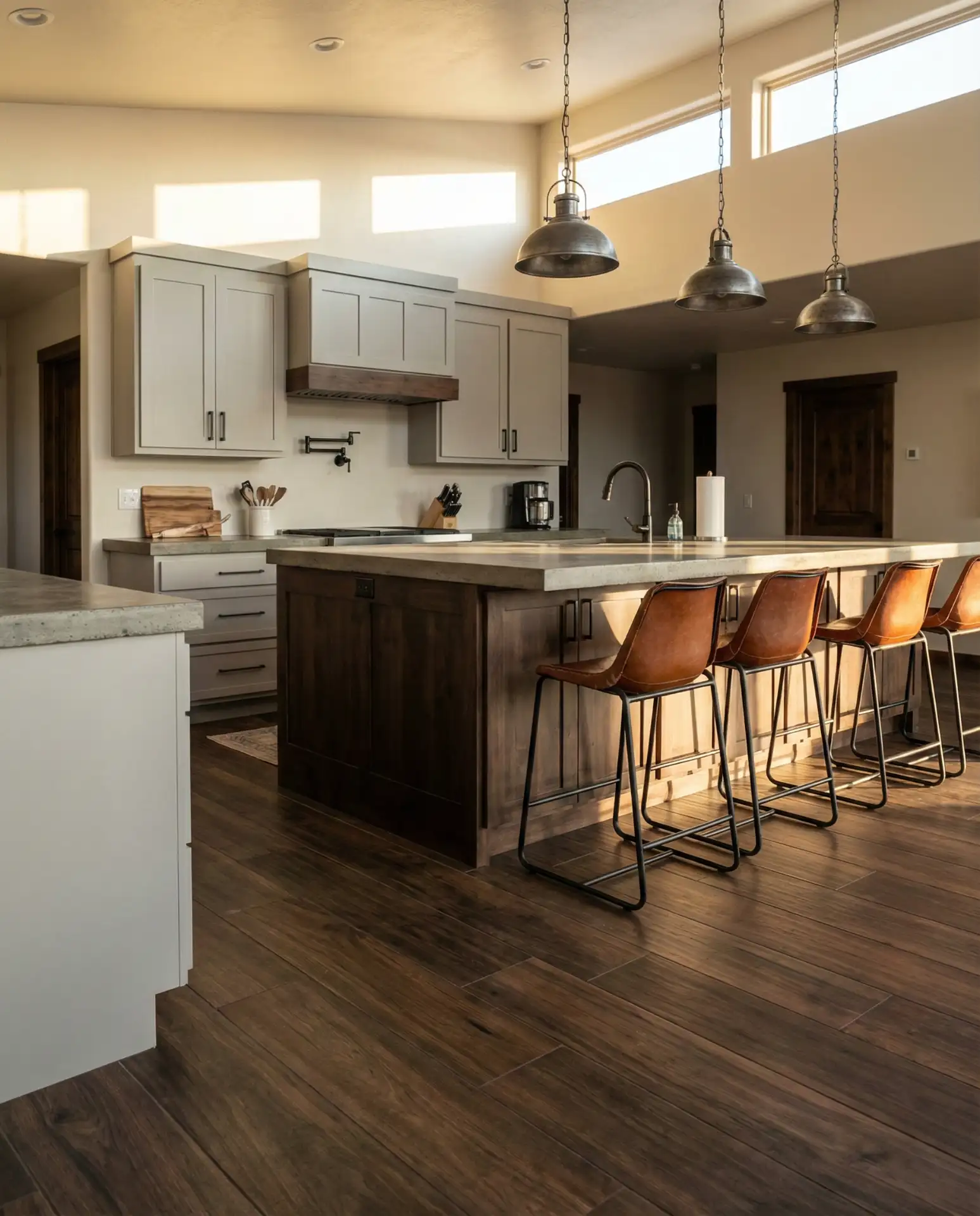
Wood-look porcelain planks deliver the warmth and visual texture of hardwood with the water resistance and durability that kitchens demand, representing the best of both worlds for practical design. Available in every species imitation from light maple to dark walnut, these tiles feature grain patterns and color variations so convincing that guests often can’t tell they aren’t real wood. The material stands up to spills, moisture, and heavy traffic that would destroy actual hardwood in a kitchen environment.
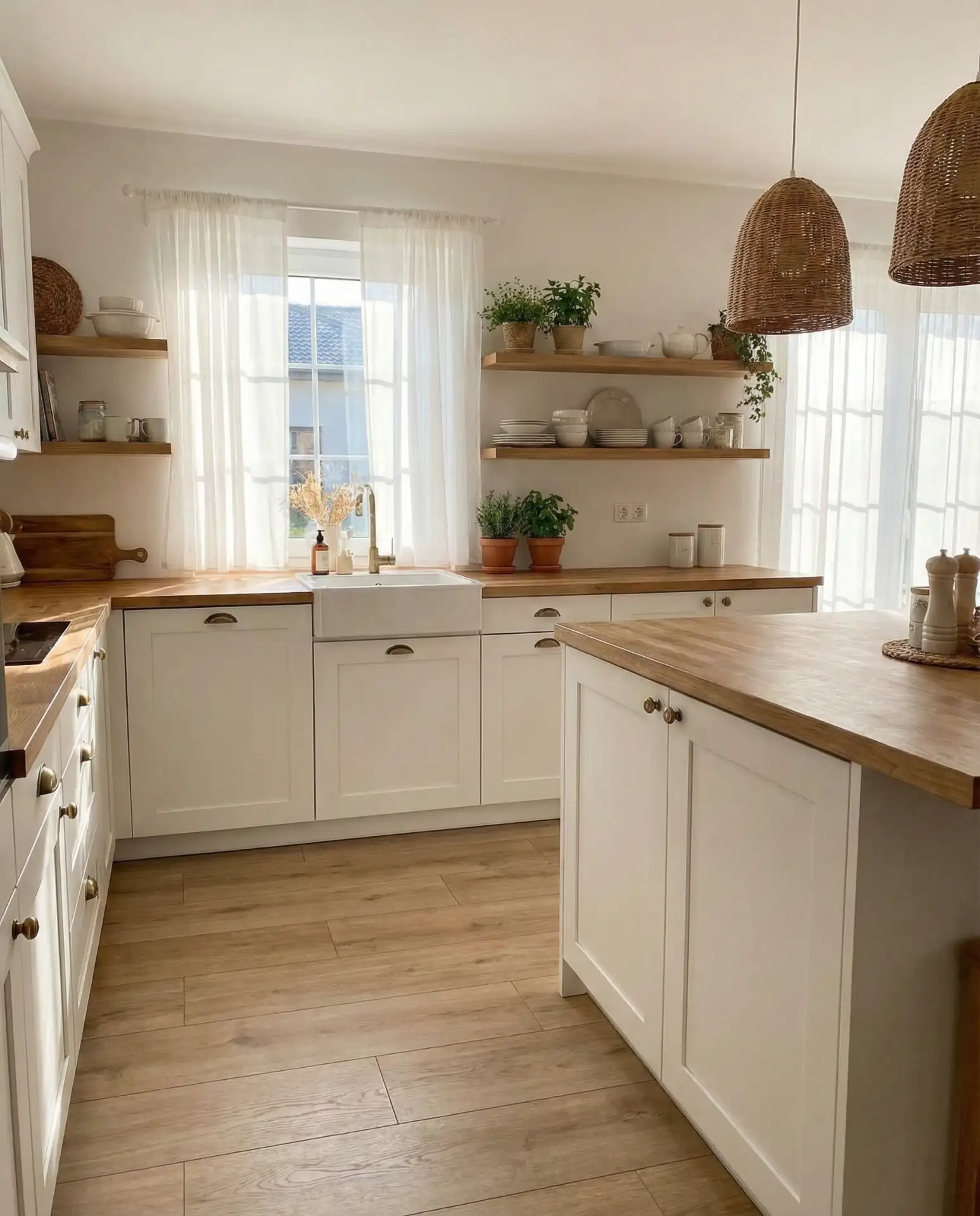
Throughout the South and Pacific Northwest, these tiles have become the go-to solution for homeowners who want wood aesthetics without the regional humidity-related warping and damage risks. Installation is straightforward for experienced DIYers, though achieving the right randomized plank layout requires some planning—alternate lengths and stagger joints by at least 6 inches to avoid repetitive patterns. Cost ranges from $5 to $12 per square foot depending on quality, with premium options featuring realistic edge bevels and varied plank widths that enhance authenticity.
21. Timeless Subway Tile Floors
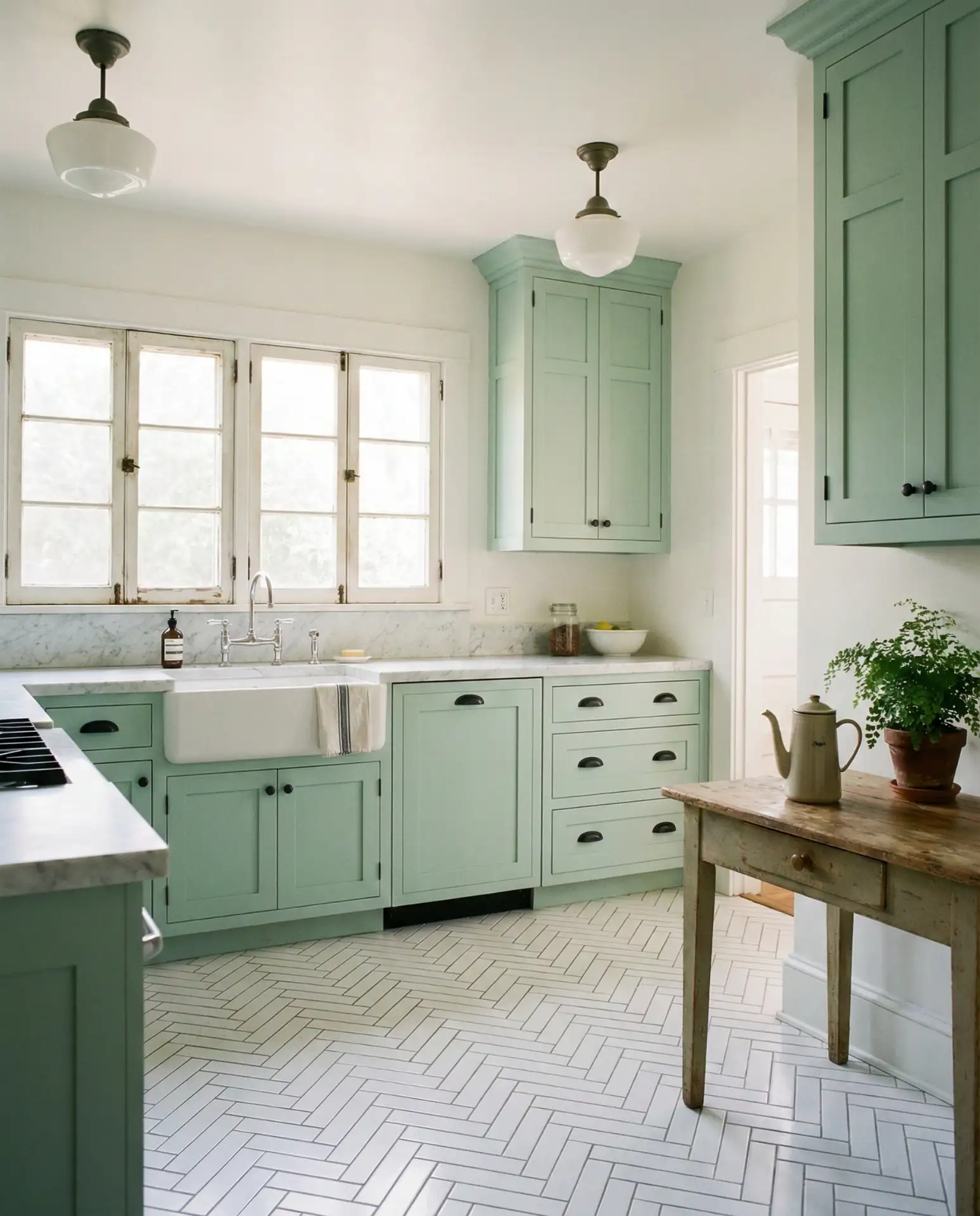
While typically associated with backsplashes, subway tiles laid on floors create unexpected visual interest through their elongated rectangular shape and versatile layout options. The 3×6-inch format can be installed in classic running bond, herringbone, vertical stack, or diagonal patterns, each creating distinctly different effects. Available in every color from classic white tile to bold jewel tones, subway floor tiles work in kitchens ranging from vintage to ultra-modern.
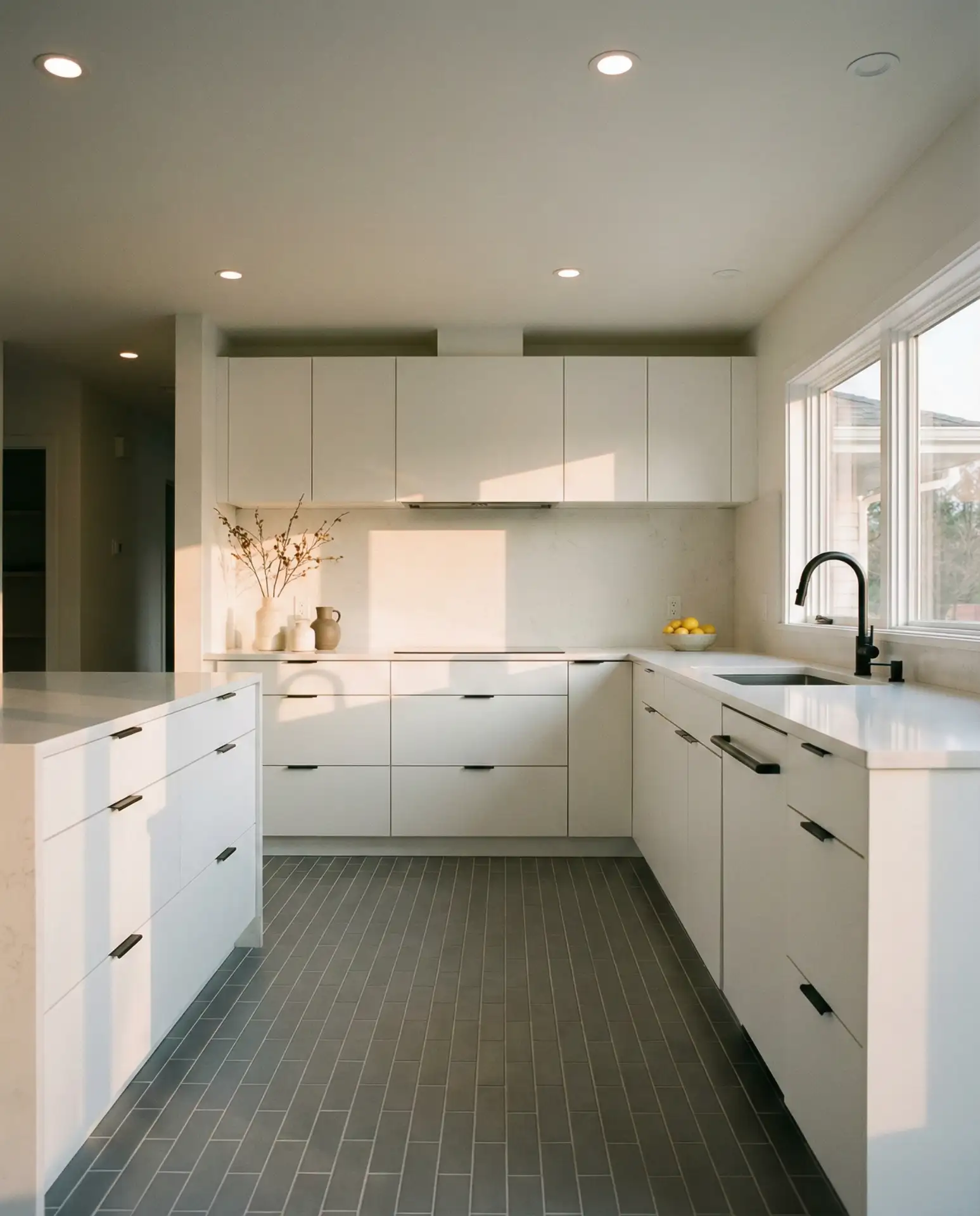
One homeowner behavior that’s becoming common is “floor-to-wall” coordination—using the same subway tile on both floors and backsplash but in different patterns or colors to create a cohesive envelope. This approach works particularly well in small kitchens, where limiting material variety helps the space feel larger and more unified. The main consideration is grout color; with so many grout lines on a floor, contrasting grout creates busy visuals that can overwhelm, so many designers recommend tonal grout that’s just one shade darker than the tile.
22. Earthy Terracotta Revival
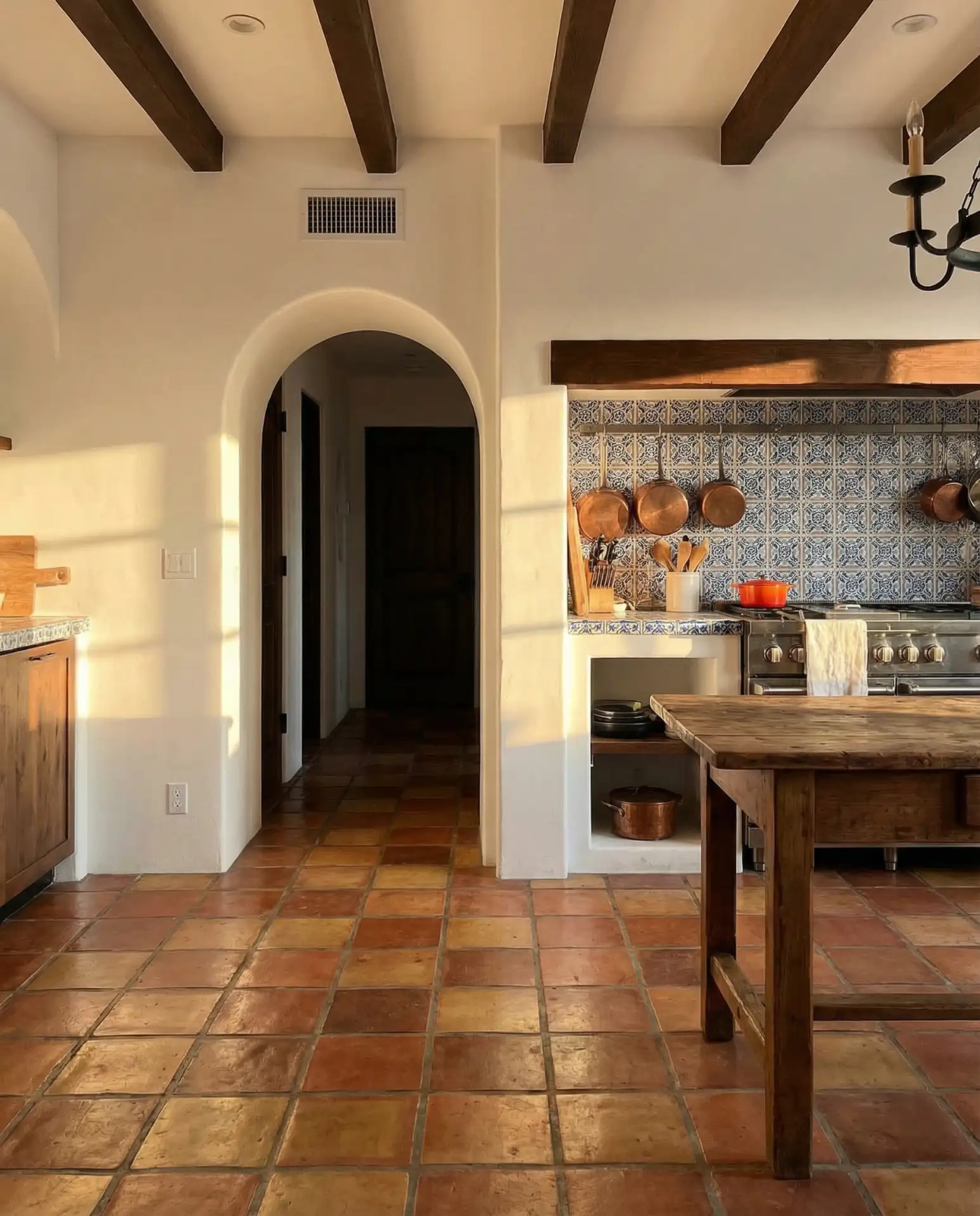
The warm, sun-baked appeal of terracotta tiles continues gaining momentum as homeowners gravitate toward natural materials that bring organic character into modern life. These clay tiles develop a beautiful patina over time, actually improving with age as they absorb microscopic amounts of oil and develop a soft sheen. The material works wonderfully in Spanish Colonial, Mediterranean, and California Casual design schemes, but increasingly appears in eclectic modern kitchens seeking a dose of earthiness.
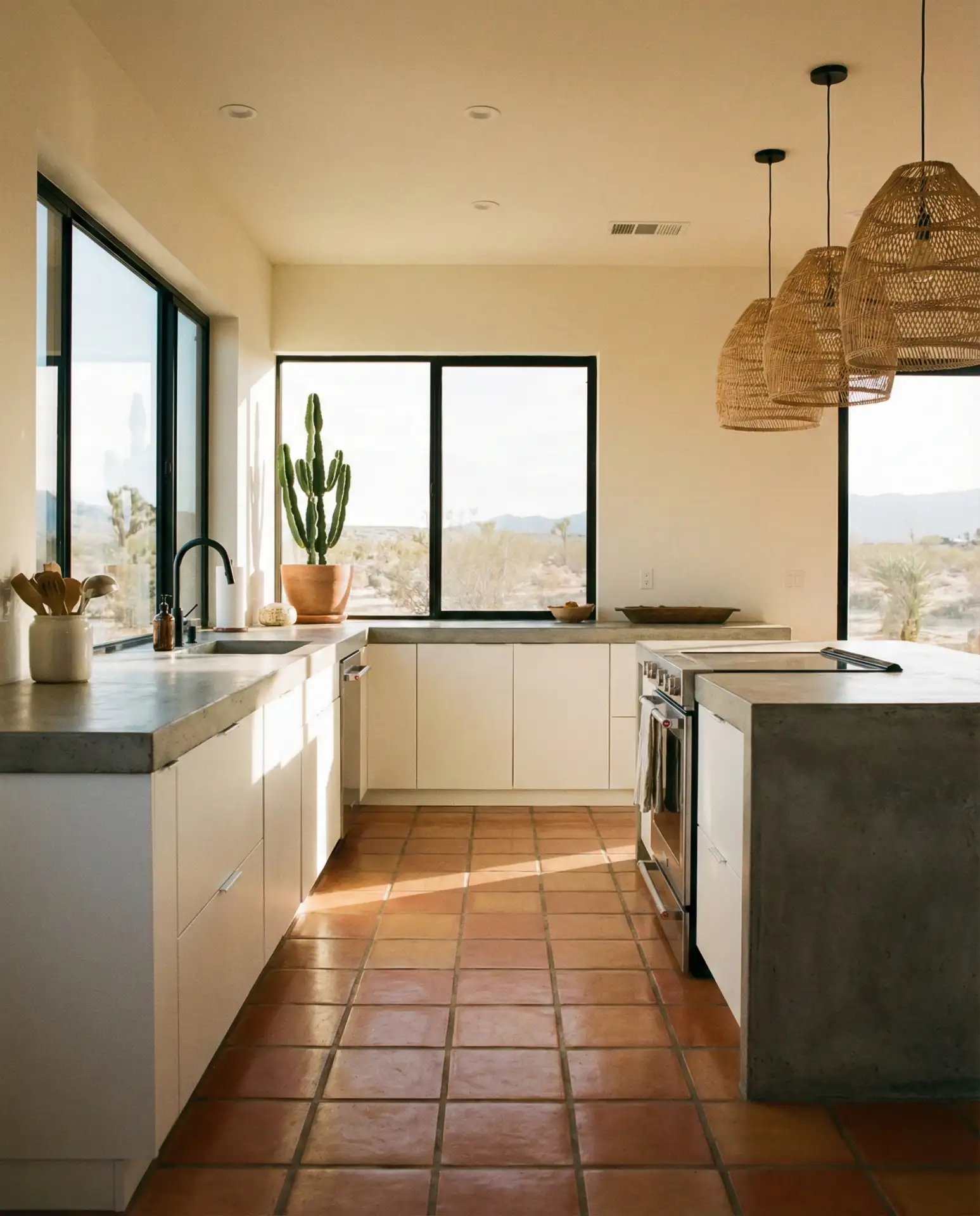
Real terracotta requires sealing upon installation and resealing annually, but the maintenance is simpler than many people assume—just a roller application of penetrating sealer that takes maybe 30 minutes for an average kitchen. The investment is worthwhile for the authentic character and warmth these tiles provide. Machine-made terracotta-look porcelain offers a maintenance-free alternative at similar price points ($6-12 per square foot), though purists argue nothing quite matches the soul of genuine clay tiles that have been fired in kilns using centuries-old techniques.
Conclusion
Your kitchen floor is more than just a surface to walk on—it’s a foundation for your entire design scheme and a reflection of your personal style. Whether you’re drawn to the timeless appeal of black and white checkerboard, the warm authenticity of natural stone, or the practical beauty of modern vinyl options, 2026 offers endless possibilities to create a kitchen that truly feels like home. We’d love to hear which ideas resonated with you most—drop a comment below and share your kitchen floor dreams, challenges, or recent renovations. Your experience might just inspire someone else’s perfect kitchen transformation!