Kitchen islands have always been the heart of American homes, but in 2026, they’re evolving into much more than just prep space. Whether you’re scrolling through Pinterest for fresh inspiration or planning a full refresh, this year’s trends focus on making your island a statement piece that works hard and looks even better. From holiday styling to everyday aesthetic touches, homeowners are blending function with personality in ways that feel both elevated and lived-in. We’ve gathered inspiring ideas that show how to decorate your kitchen island for every season, mood, and moment—because the best islands aren’t just beautiful, they’re truly yours.
1. Farmhouse Fruit Bowl Centerpiece
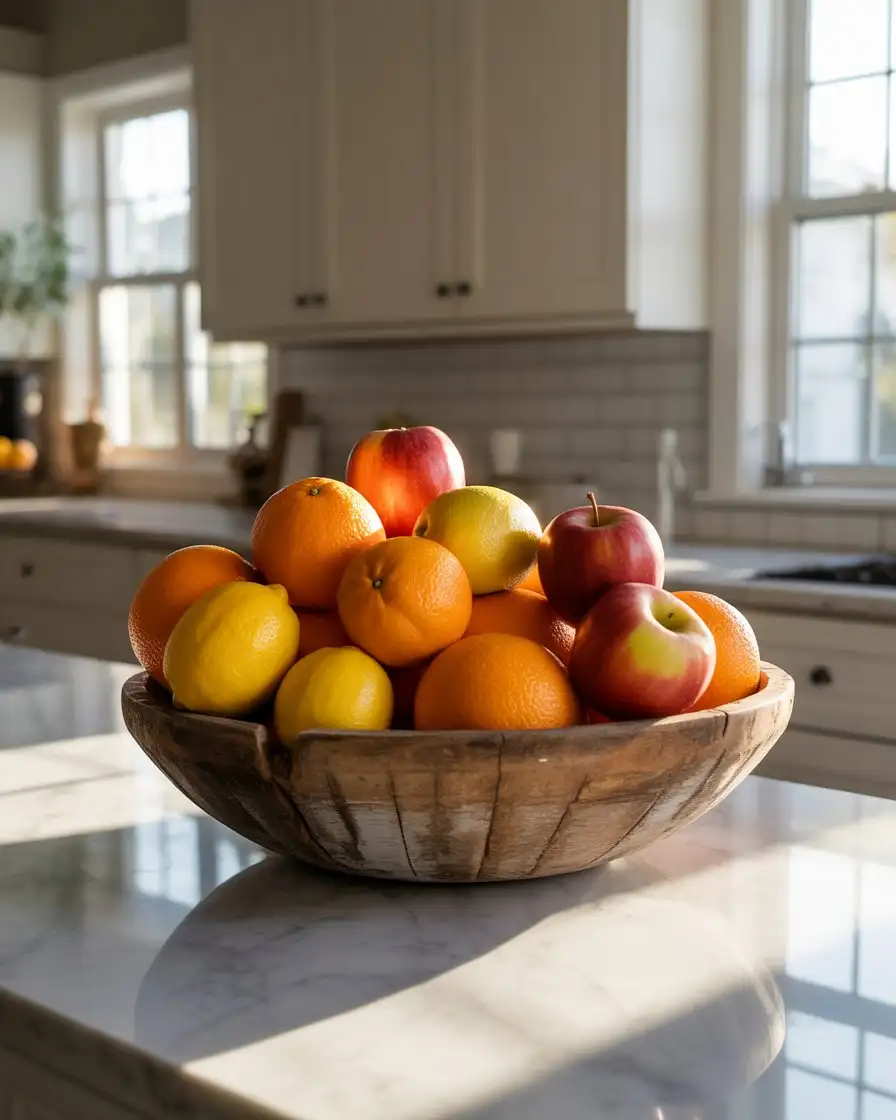
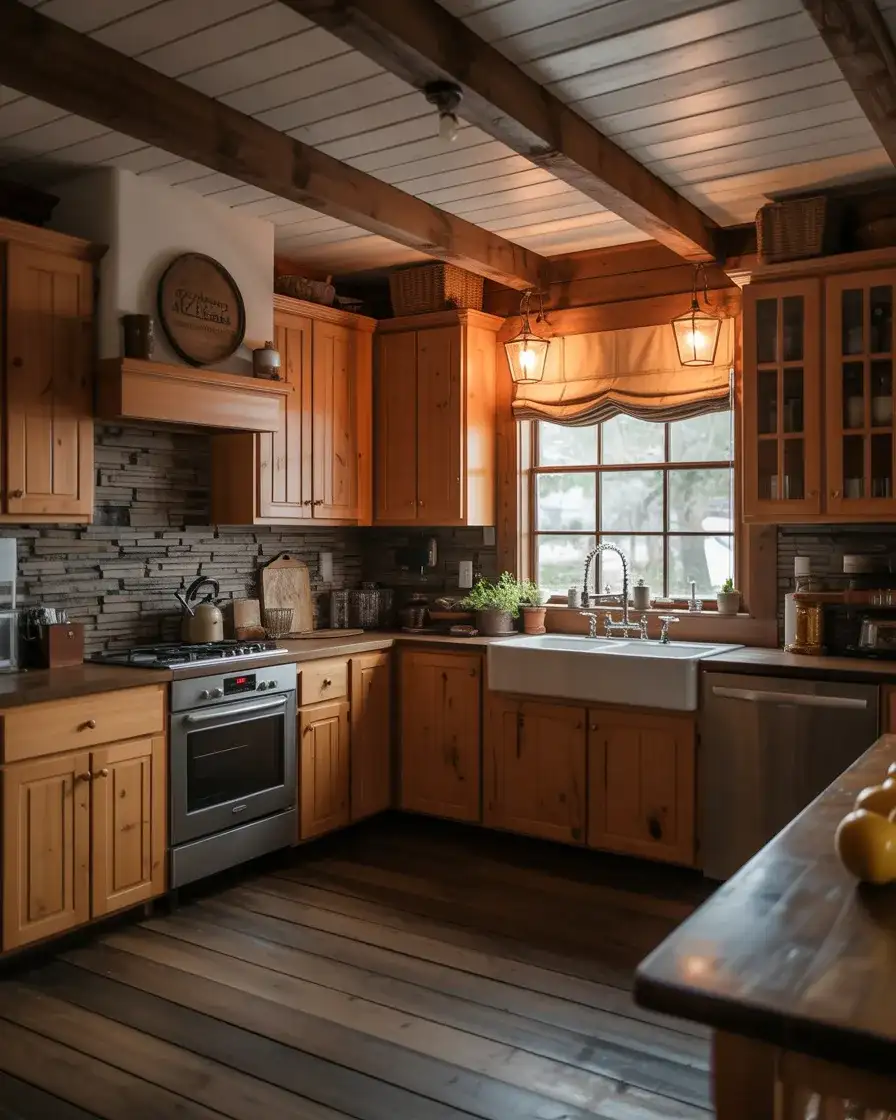
A classic fruit bowl filled with lemons, apples, and pears instantly adds warmth and a farmhouse vibe to any kitchen island. This timeless approach works beautifully in open-concept homes where the kitchen flows into the living area, offering a pop of color and organic texture without overcrowding the surface. The natural elements bring life to the space, especially when paired with neutral cabinetry and wood tones that echo traditional American country kitchens. 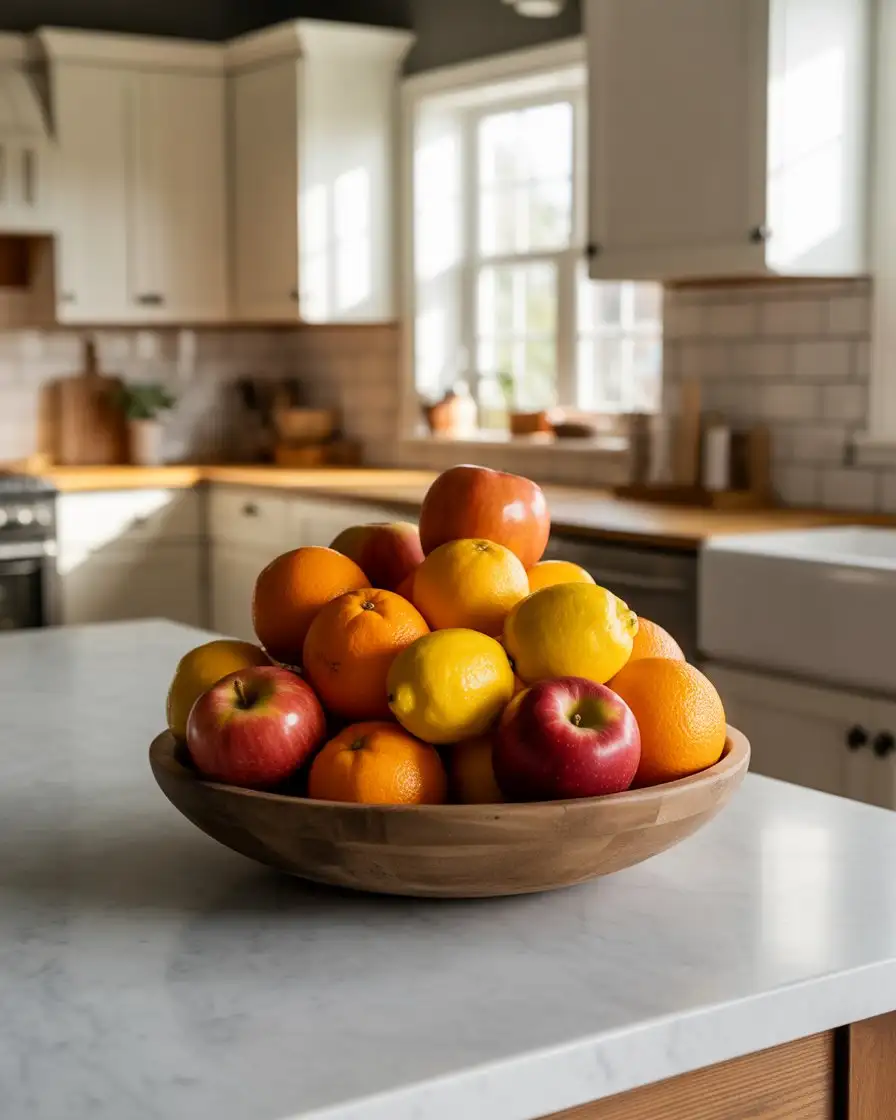
What makes this idea so effective is its practicality—you’re decorating with food you’ll actually use, not just display. In households with kids, it encourages healthy snacking, and in entertaining spaces, it signals abundance and hospitality. Swap the fruit weekly to keep it fresh and visually appealing, and consider mixing in seasonal picks like figs in late summer or pomegranates in winter for a subtle nod to the calendar.
2. Christmas Garland and Candle Glow
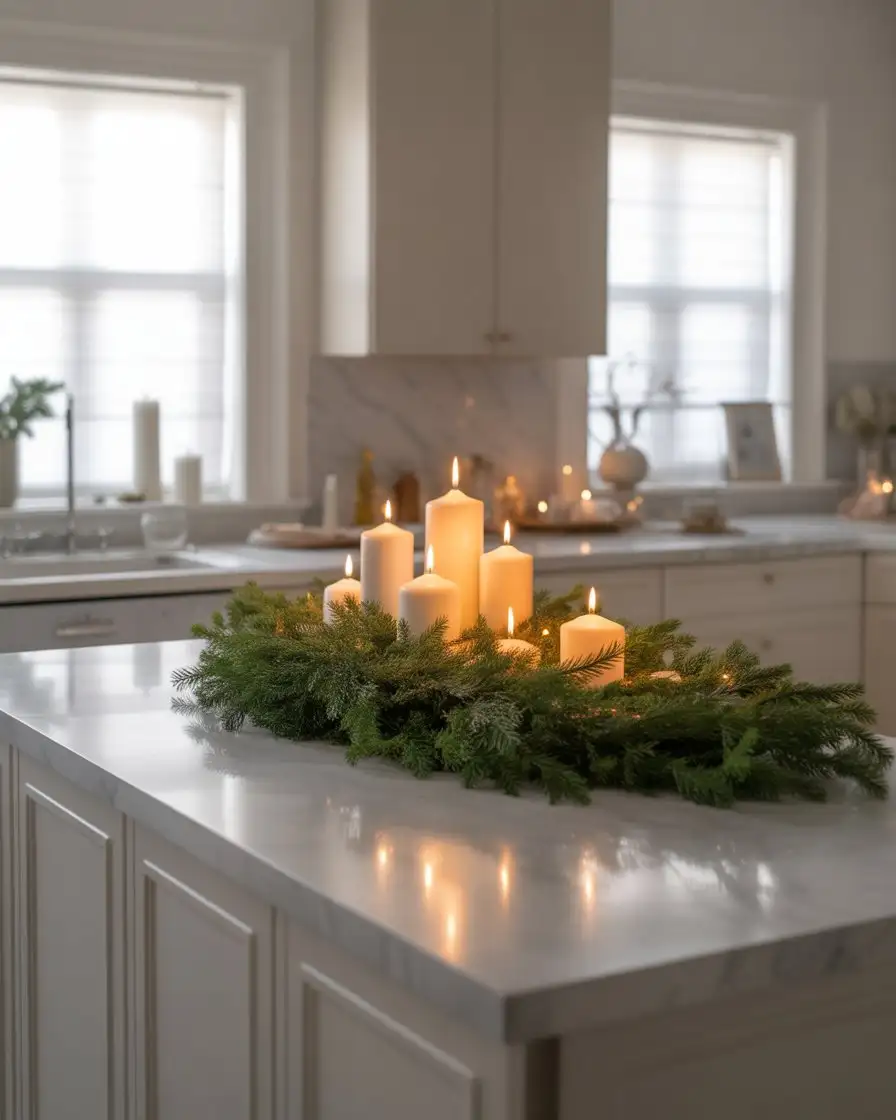
Draping fresh pine garland across your island and tucking in battery-operated candles creates an effortlessly festive look for Christmas. This approach is ideal for homes where the kitchen is the gathering spot during holiday parties—guests notice the effort, but it doesn’t interfere with cooking or serving. The greenery brings the outdoors in, while the candlelight adds a cozy glow that feels especially inviting on December evenings when dinner prep turns into a full family affair. 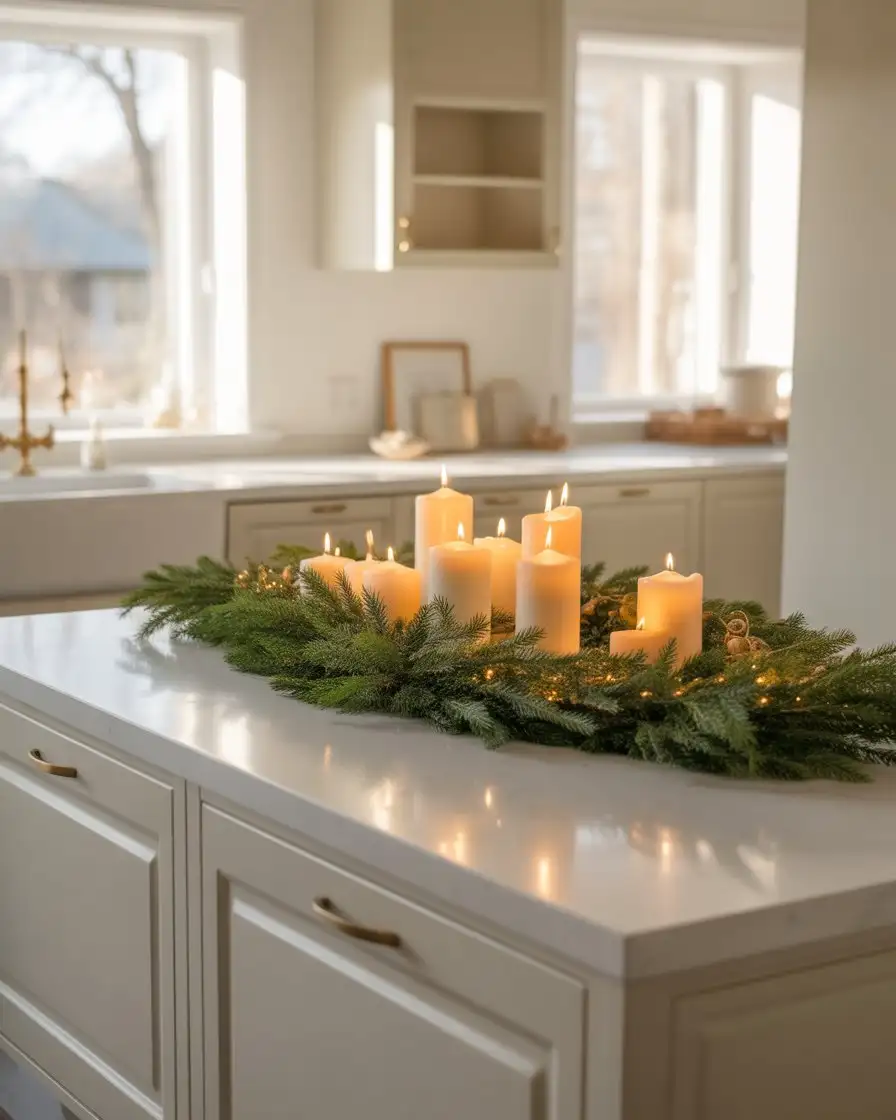
Where this works best is in transitional or traditional kitchens with enough counter space to let the garland breathe. Avoid overcrowding—leave room for serving trays and cutting boards. If you live in a drier climate, mist the garland daily to keep it looking fresh, and consider adding small ornaments or berries for subtle texture without going full Christmas explosion.
3. Modern Black Tray Styling
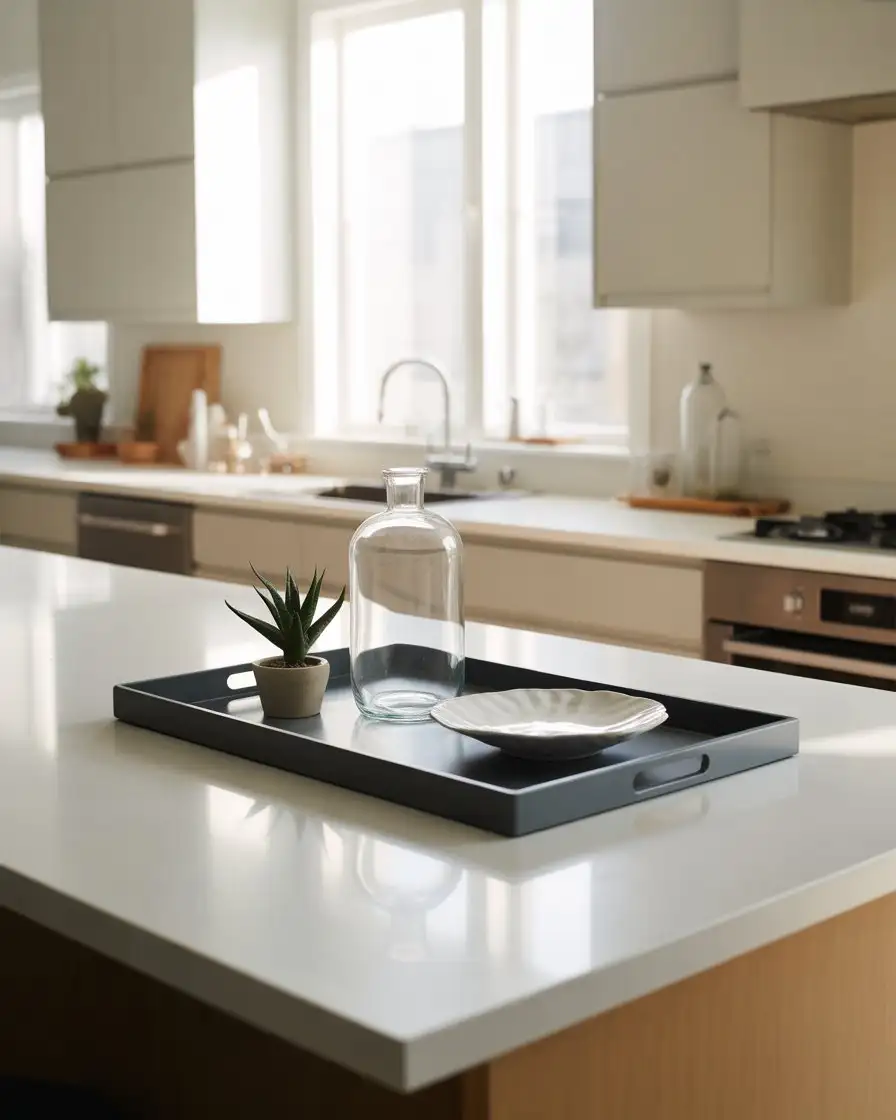
A sleek black tray anchors everyday essentials like olive oil, salt, and a small vase, giving your island a curated, modern edge. This is especially popular in urban homes and minimalist spaces where every object earns its place. The tray corrals the visual clutter and makes it easy to move items when you need the full surface for meal prep or entertaining, which is a game-changer in smaller kitchens. 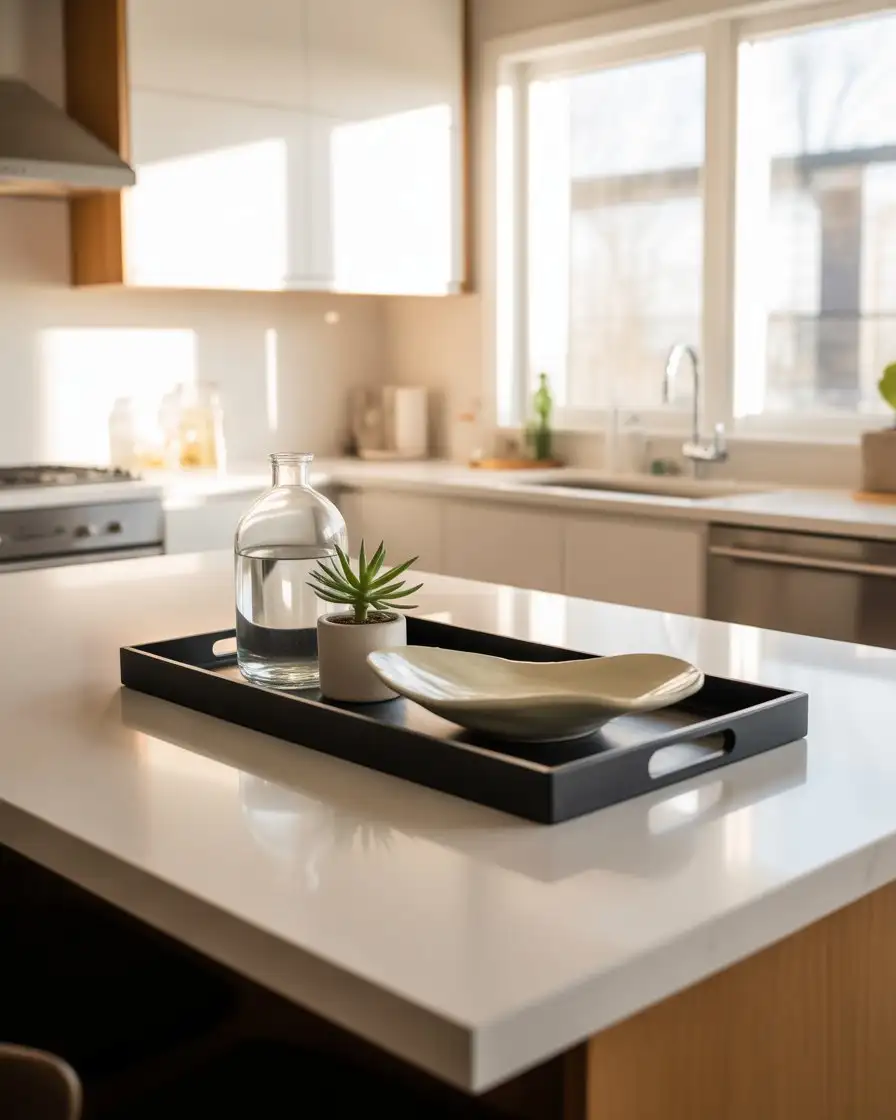
A common mistake is choosing a tray that’s too small—it should take up about one-third of your island’s length to feel intentional. Opt for materials like powder-coated metal or wood with a matte finish to avoid fingerprints and water rings. Real homeowners often use this setup as a “landing zone” for keys and phones, blending décor with daily function in a way that feels effortless.
4. Coastal White and Blue Accents
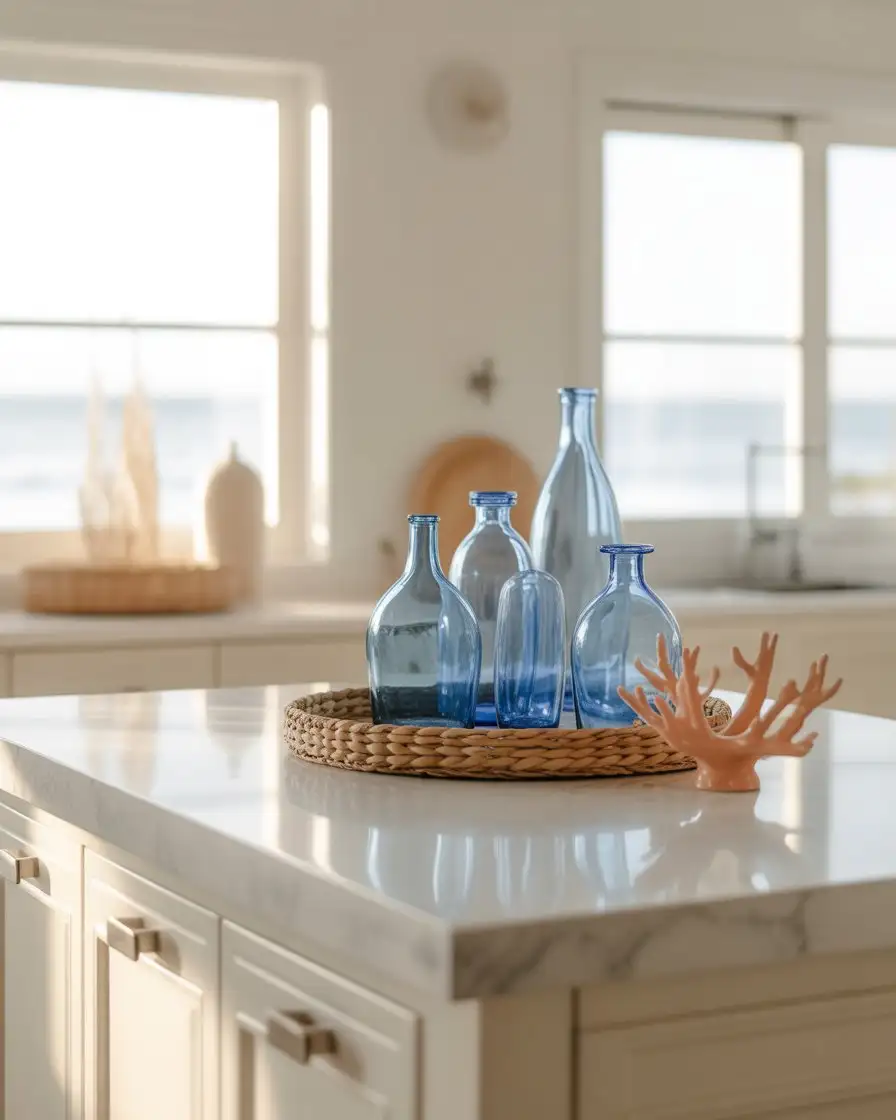
Incorporating white ceramic vases, blue glassware, and natural rope details brings a breezy coastal energy to your island. This look resonates especially in beach towns and Sunbelt states, where homeowners want interiors that echo the outdoor landscape. The palette is calming and timeless, making it easy to layer in seasonal touches without a full redesign. 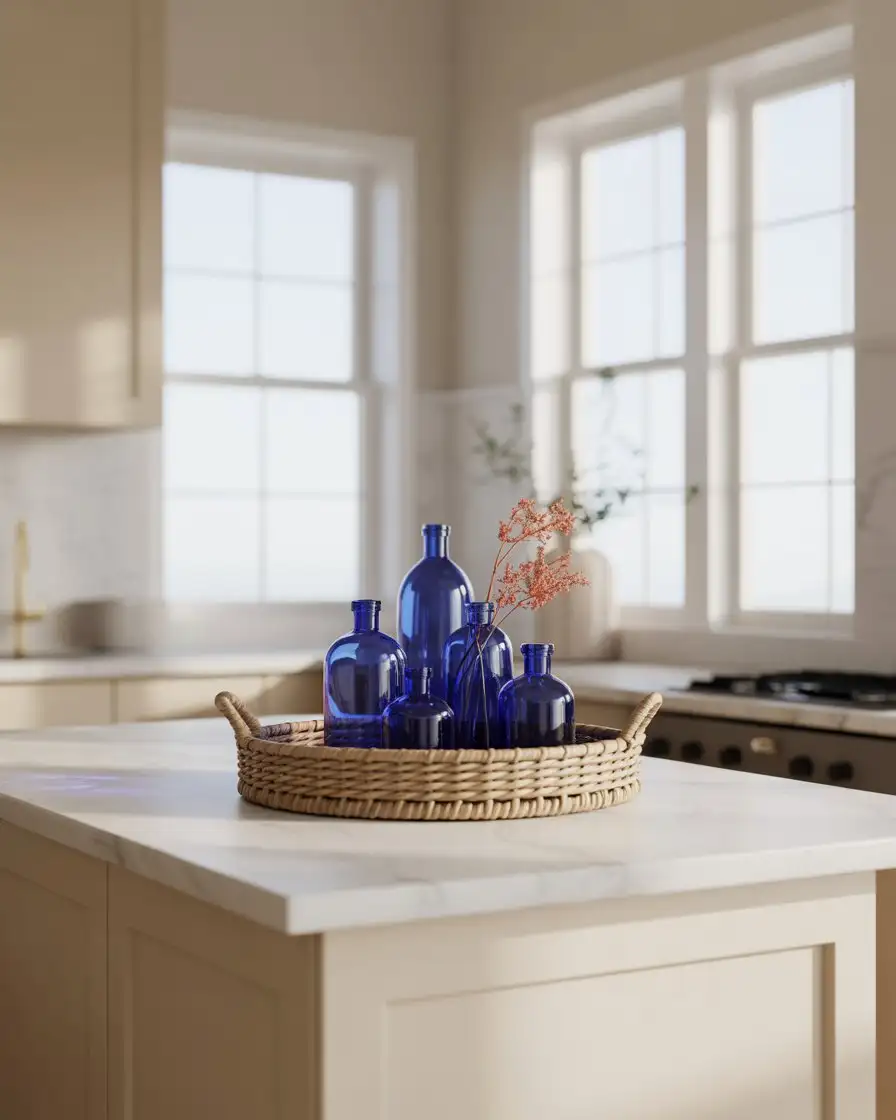
One pro tip: avoid overly nautical clichés like anchors or ship wheels—subtle texture and color do the heavy lifting. A single piece of driftwood or a bowl of shells can ground the theme without feeling kitschy. This approach is budget-friendly too, as thrift stores and HomeGoods often carry affordable blue glassware that fits the vibe perfectly.
5. Autumn Pumpkin and Leaf Arrangement
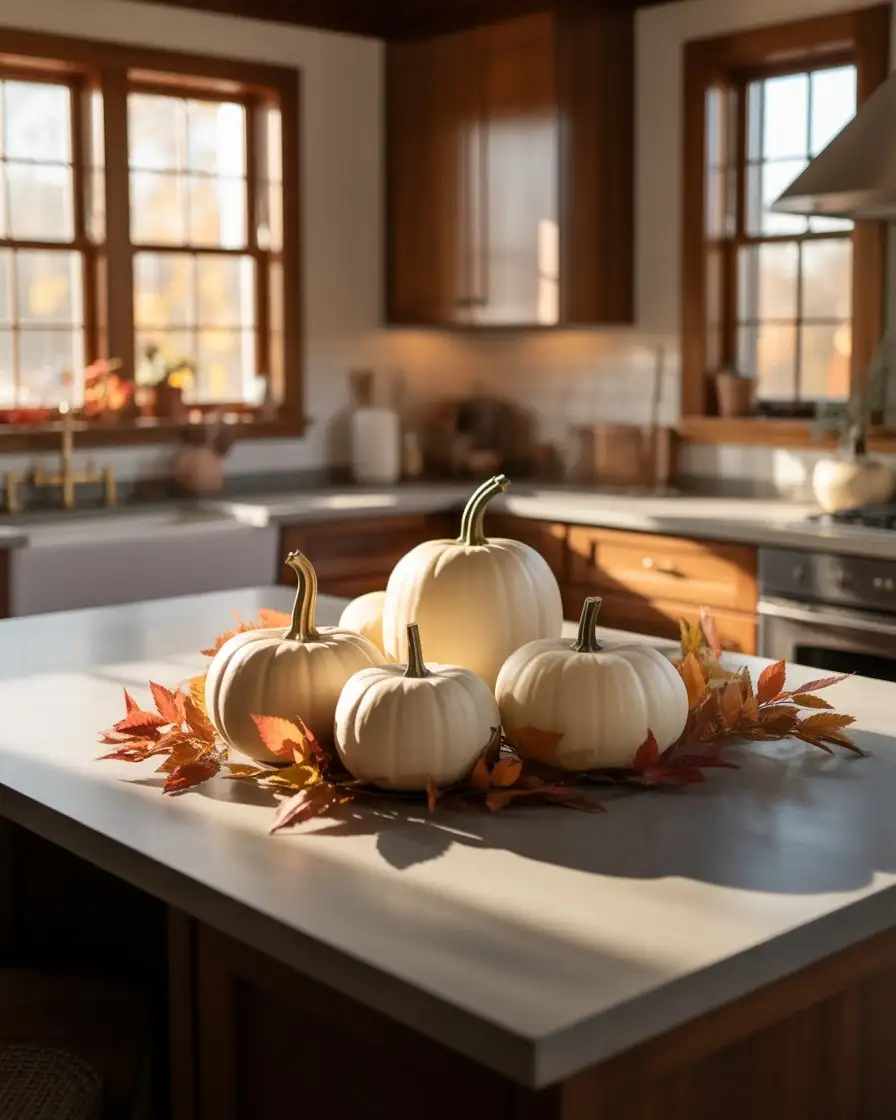
Small white pumpkins, copper leaves, and a mix of faux and real autumn foliage create a warm, seasonal display that feels both polished and approachable. This setup is wildly popular in the Midwest and Northeast, where fall is a full mood and homeowners lean into the harvest aesthetic. The key is balancing textures—matte pumpkins, glossy leaves, and rough wood pedestals all play together without competing. 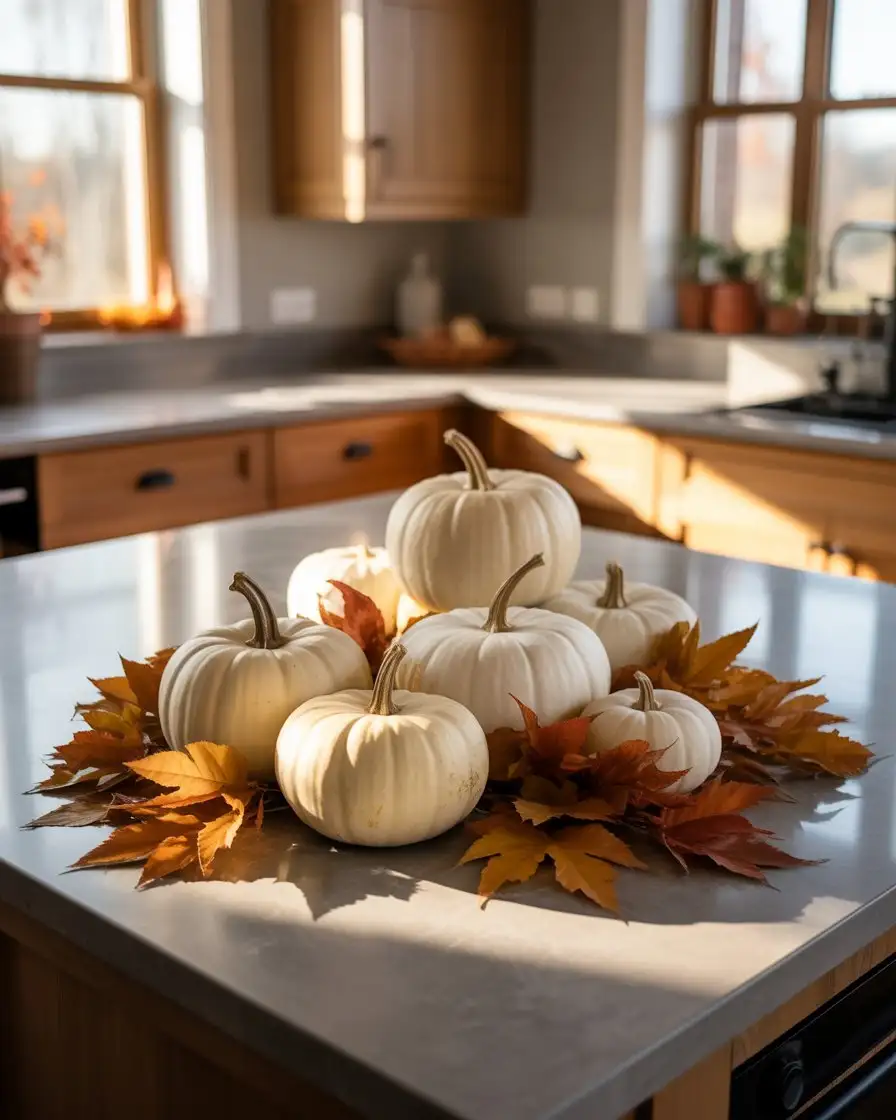
A micro anecdote: one homeowner in Vermont mentioned she keeps her fall island décor up from late September through Thanksgiving, swapping only the pumpkin colors—white to orange to deep rust—to keep it feeling fresh. This kind of incremental refresh saves time and money while still marking the passage of the season in a meaningful way.
6. Luxury Marble and Gold Accessories
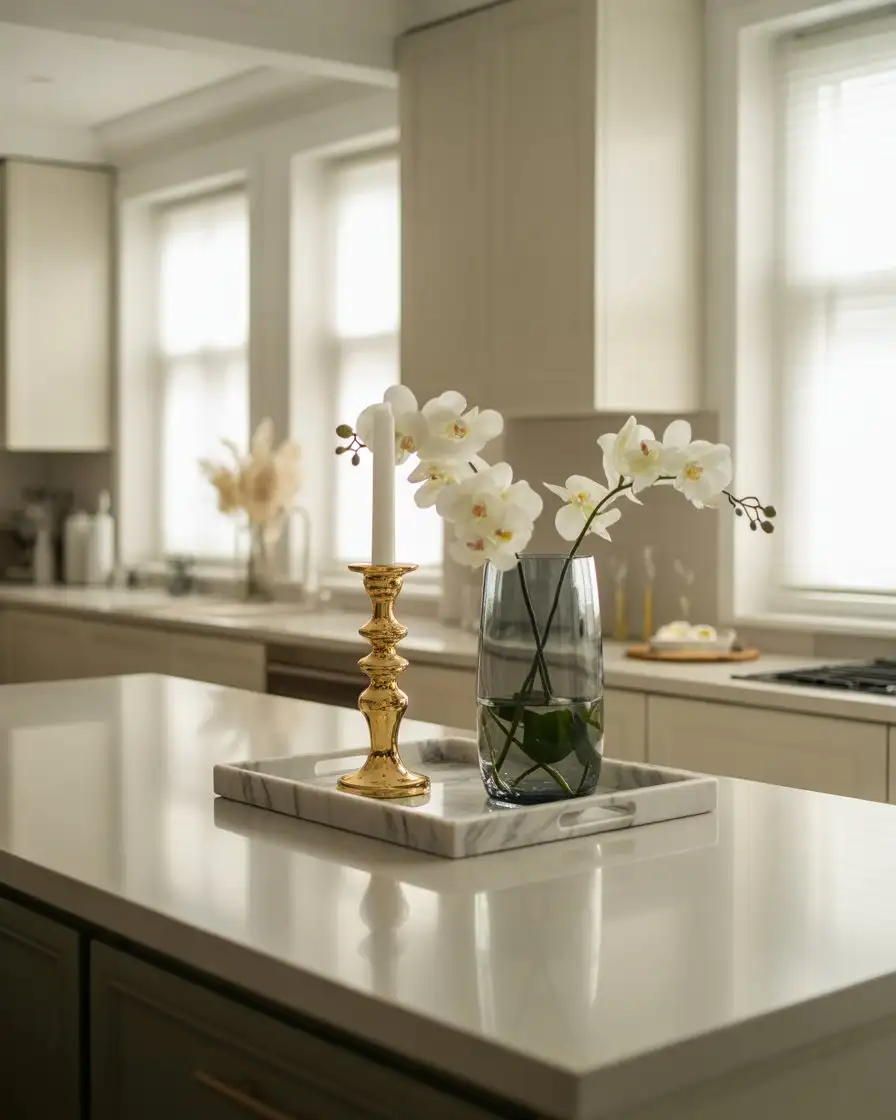
Pairing a marble tray with gold-rimmed glassware and a single sculptural object instantly elevates your island into luxury territory. This look is about restraint and quality—fewer pieces, but each one feels considered and expensive. It’s particularly effective in open-plan homes where the kitchen is visible from the entryway, making that first impression count. 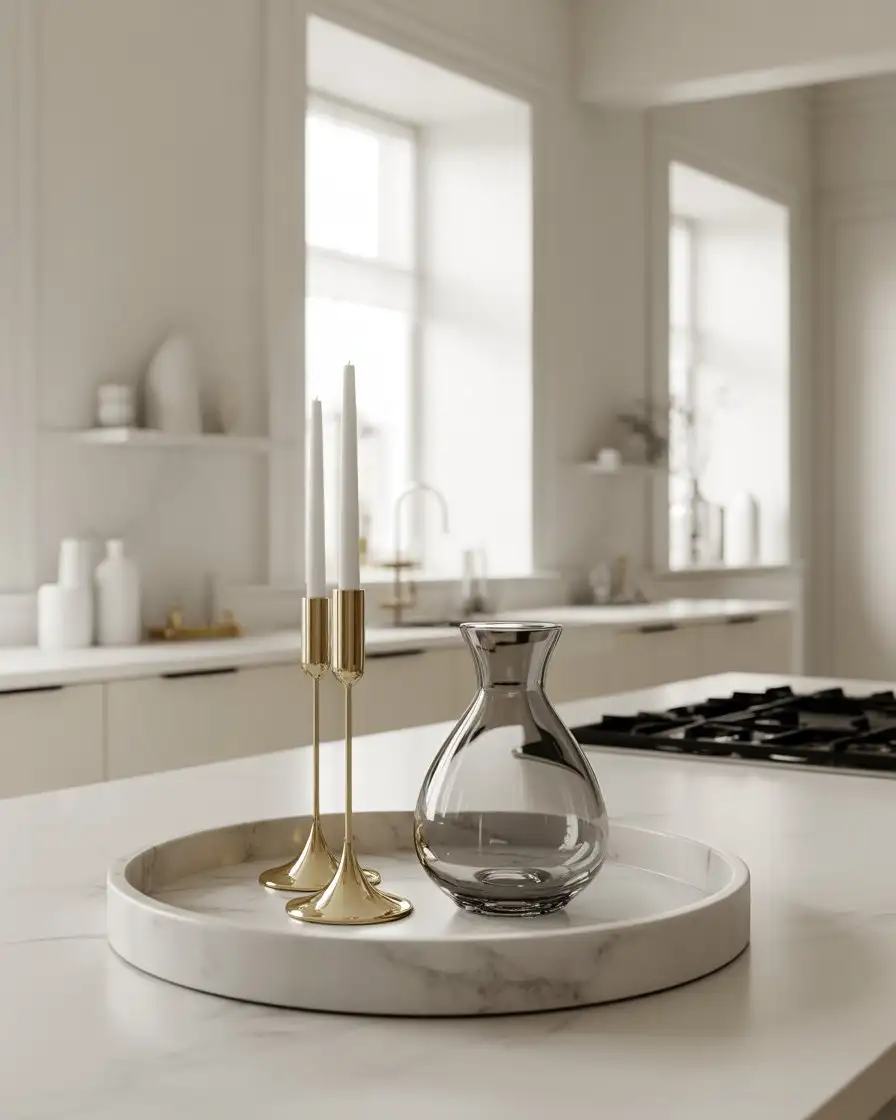
From an expert’s perspective, this is where material quality matters more than quantity. A real marble tray will patina beautifully over time, while a resin knockoff will chip and look dated within a year. Budget-conscious decorators can mix one high-end piece with more affordable finds—splurge on the tray, save on the candle holders—and still achieve a cohesive, upscale look.
7. Cozy Layered Textile Runner
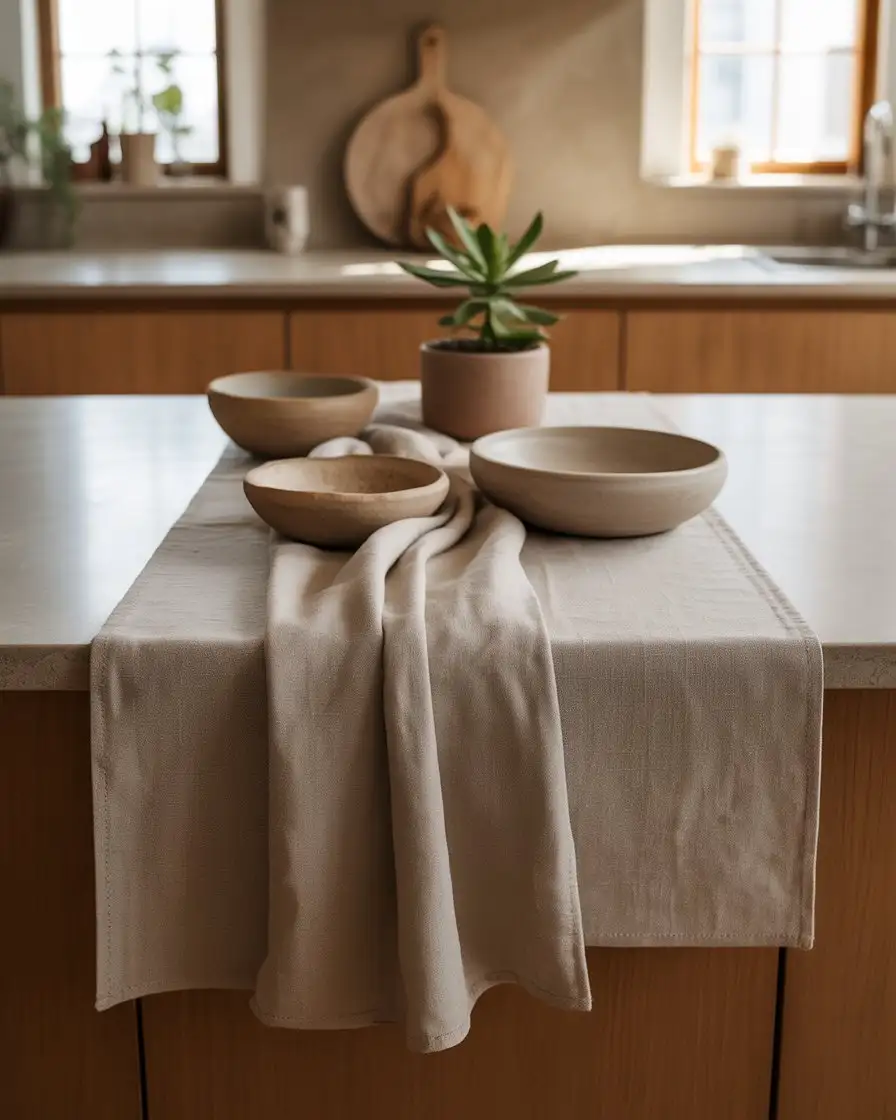
A linen or cotton runner down the center of your island softens the hard surfaces and adds a cozy, lived-in feel that’s very modern farmhouse. This works especially well in homes with young kids or pets, where a little texture helps mask everyday wear and tear. The runner also defines the decorative zone, making it easier to style without overthinking placement. 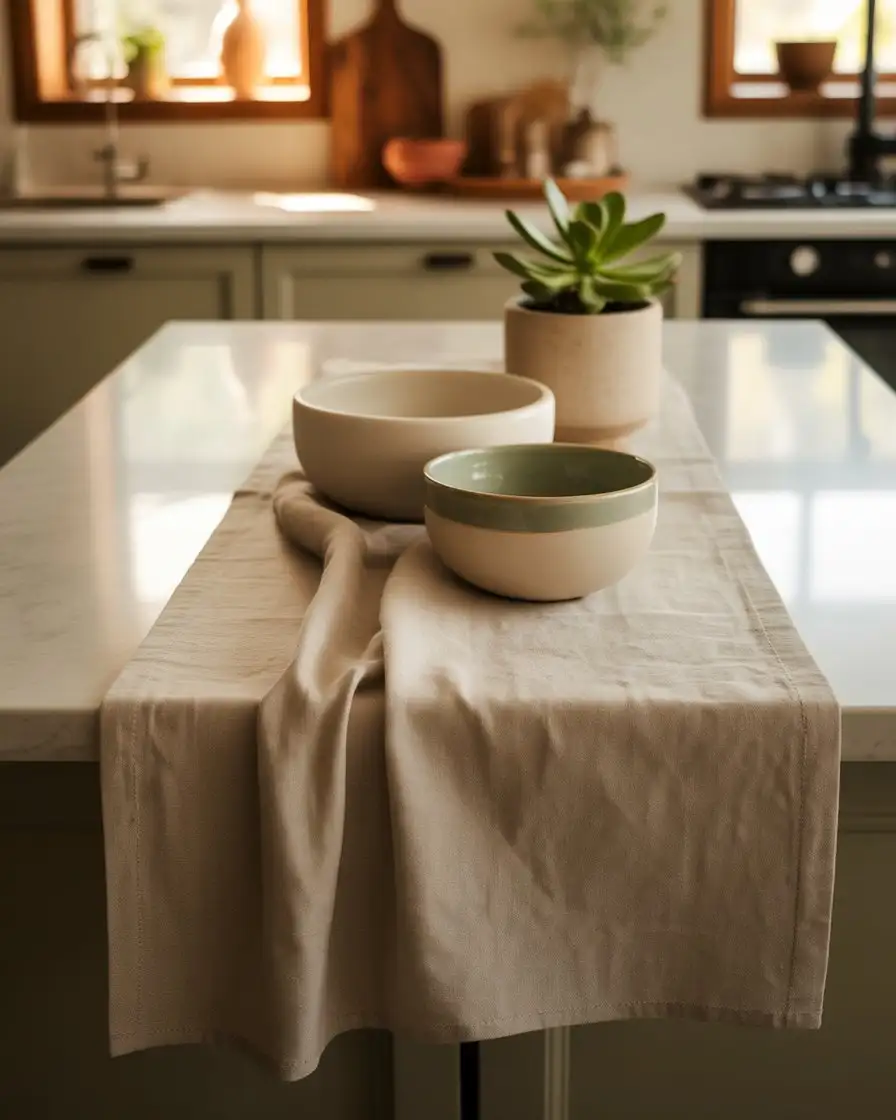
Real homeowner behavior tip: most people machine-wash their runners once a week to keep them looking fresh, so choose fabrics that can handle frequent laundering. Avoid overly precious materials like silk or velvet unless you’re willing to spot-clean constantly. A common mistake is using a runner that’s too short—it should span at least two-thirds of the island’s length to feel intentional.
8. Thanksgiving Centerpiece with Wheat and Candles
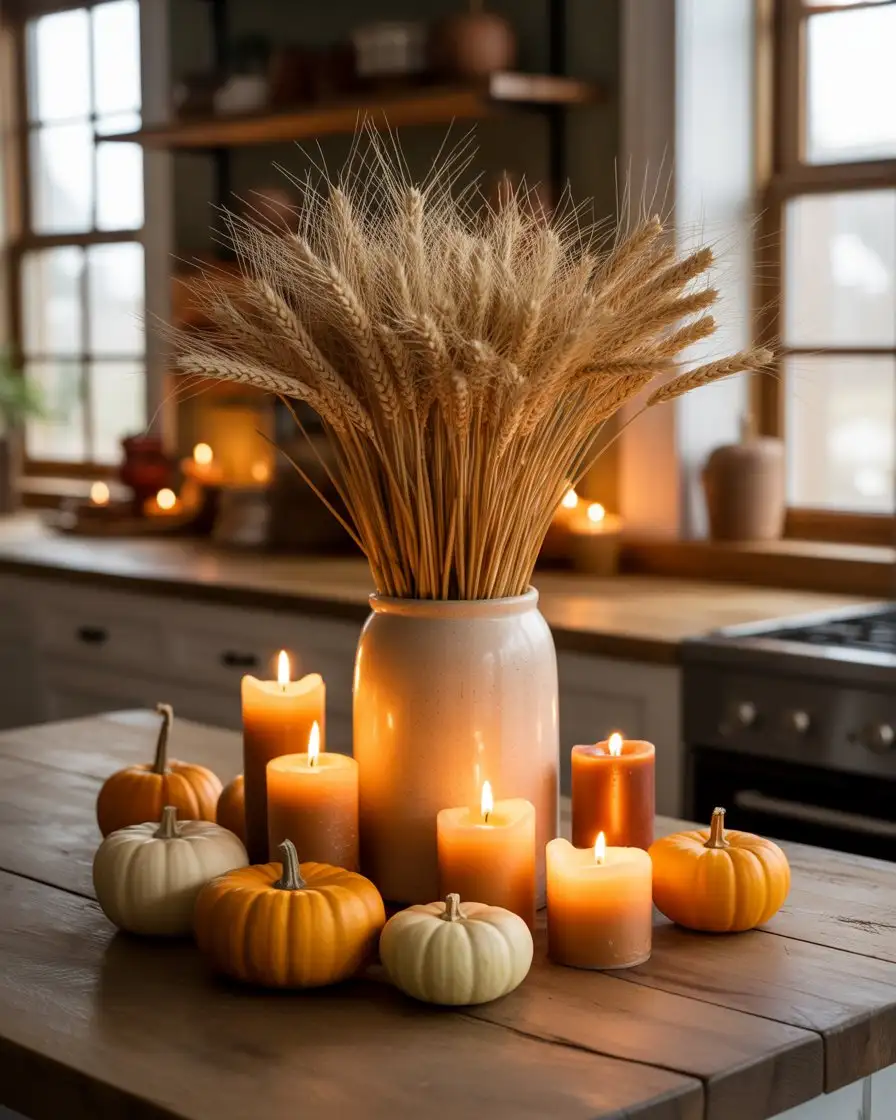
Bundled wheat stalks in a ceramic vase, surrounded by pillar candles and small gourds, create a Thanksgiving centerpiece that feels both traditional and fresh. This look is rooted in American harvest imagery and works beautifully in farmhouse or transitional kitchens where the island doubles as a serving station during the big meal. The height variation keeps the eye moving, and the natural materials tie the indoors to the season outside. 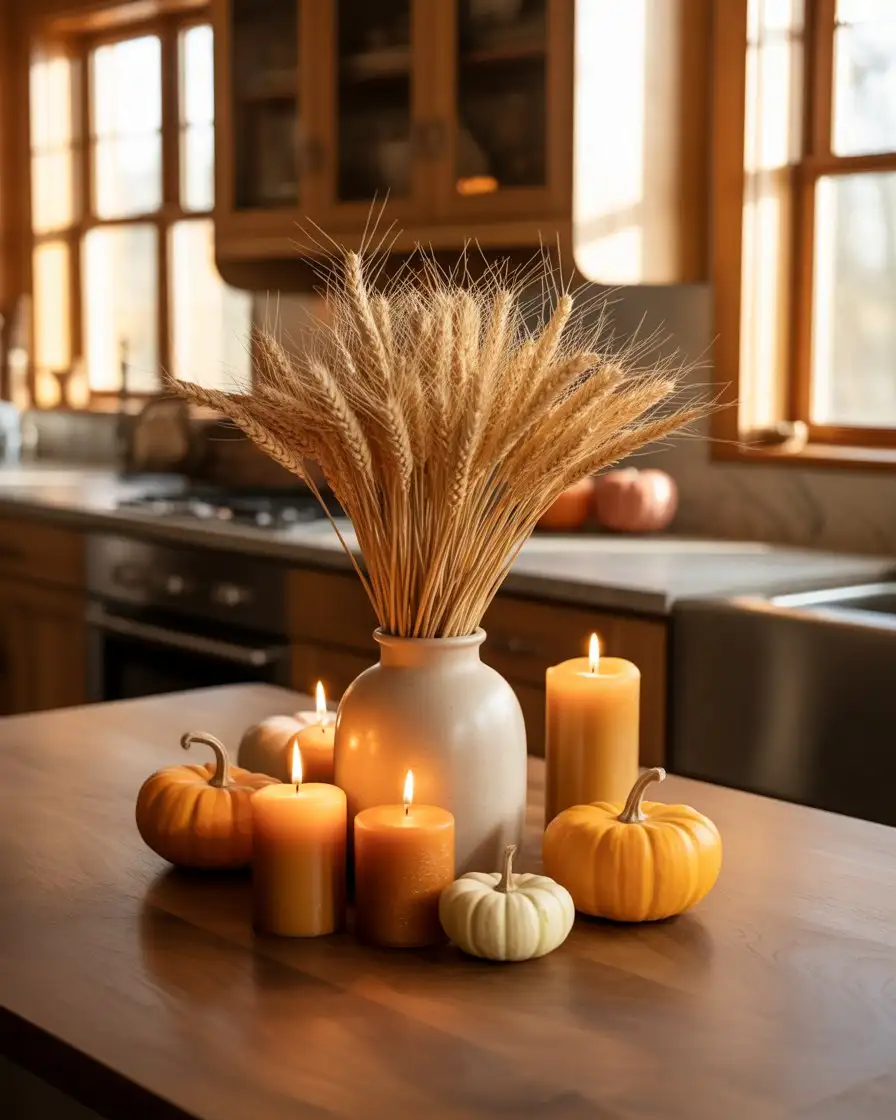
This setup works best in kitchens with at least six feet of island length, allowing room for both the centerpiece and food platters. If you’re hosting a crowd, consider a lower arrangement so guests can see each other across the island. Budget angle: dried wheat is inexpensive at craft stores, and you can reuse the vase and candles for other seasonal displays throughout the year.
9. Valentine’s Day Rose and Pink Glassware
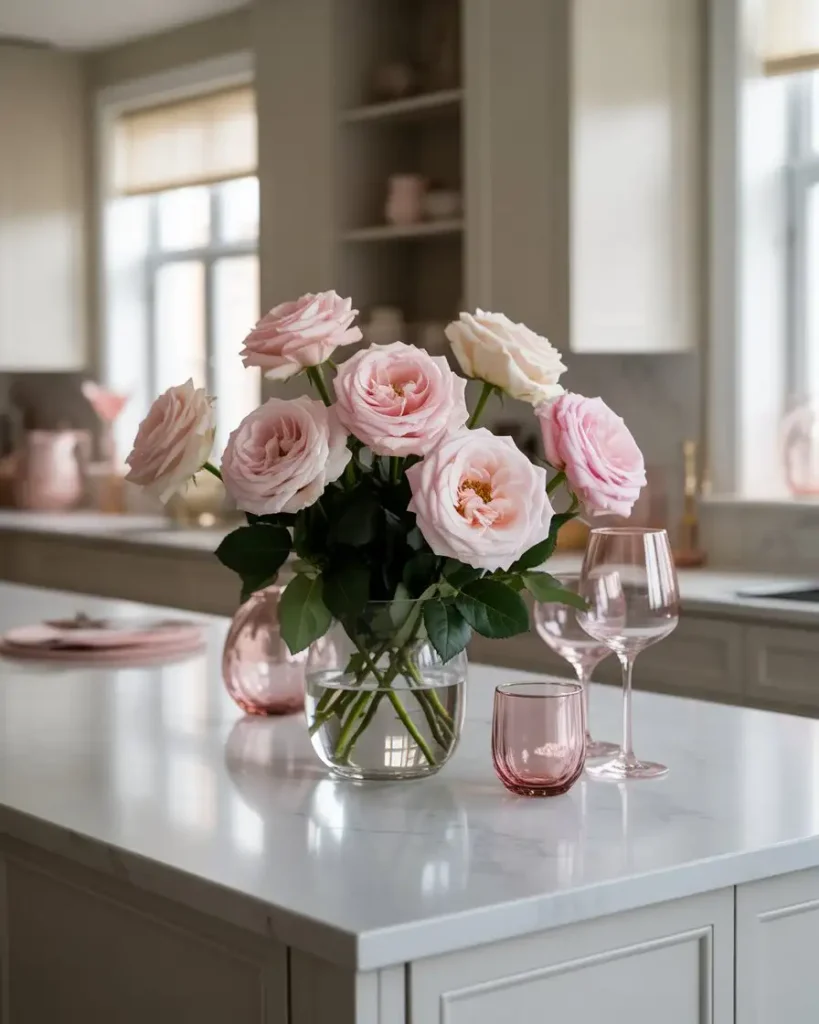
A small bouquet of blush roses in a clear vase, paired with pink-tinted glassware and a few scattered petals, brings a romantic, grown-up vibe to your island for Valentine’s Day. This isn’t about hearts and cupids—it’s subtle, elegant, and perfect for homeowners who want to acknowledge the holiday without going overboard. The look works especially well in kitchens with white or gray cabinetry, where the soft pink pops without clashing. 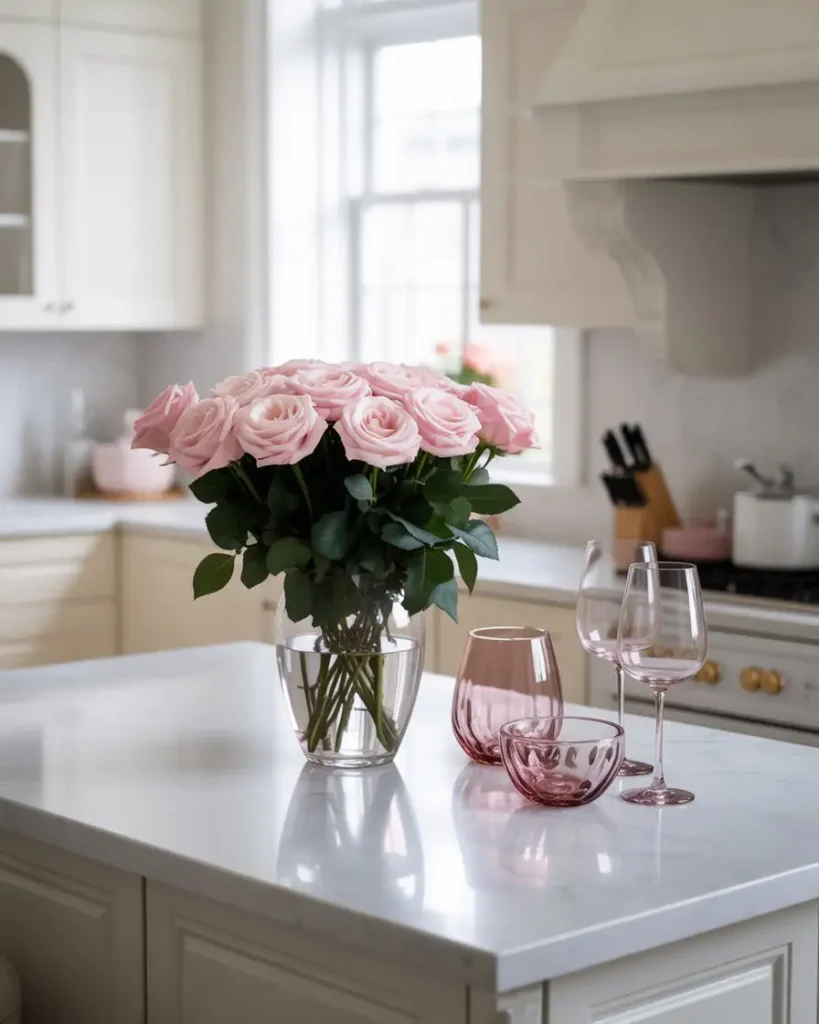
From a practical standpoint, real roses last about a week if you change the water every other day and trim the stems at an angle. If you’re not a flower person, high-quality silk roses can look surprisingly convincing and last for years. This setup is also easy to transition—remove the roses after the holiday, and the pink glassware can stay out year-round as a cheerful accent.
10. Easter Pastel Egg Display
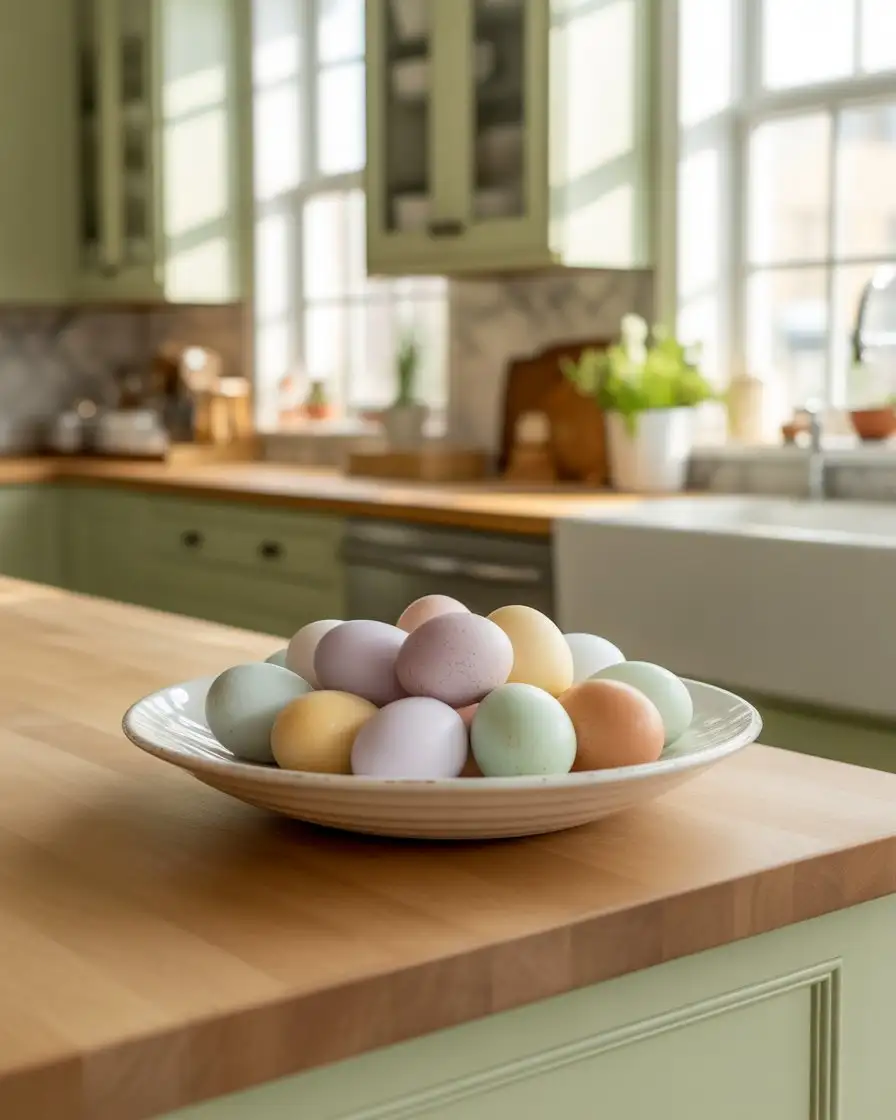
A shallow bowl filled with dyed Easter eggs in soft pastels—lavender, mint, and butter yellow—offers a playful, springtime centerpiece that’s easy to pull together. This look is especially popular in family homes where kids are involved in the decorating process, making it both a craft project and a décor moment. The pastel palette feels fresh and optimistic, signaling the shift from winter to warmer months. 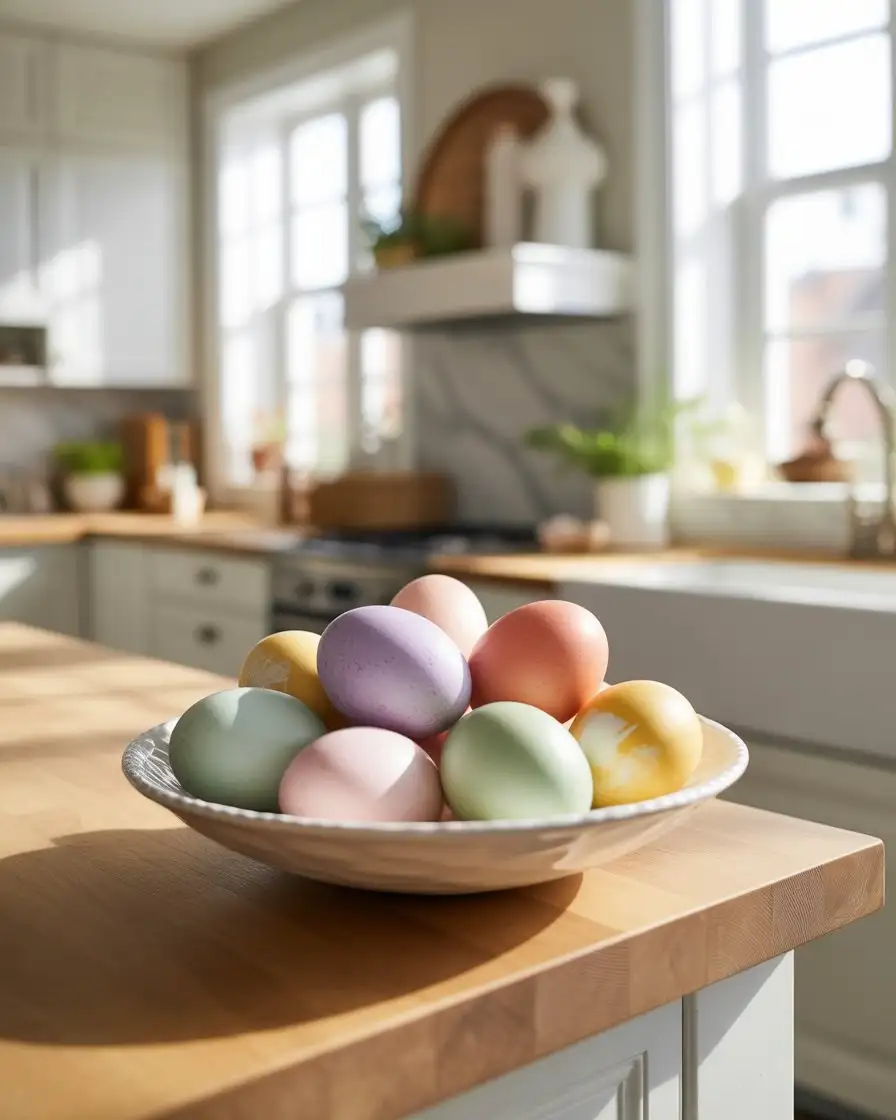
A common mistake is using too many colors—stick to three or four shades for a more sophisticated look. Homeowners in the South and Pacific Northwest, where spring arrives early, often keep this display up through late April, swapping in fresh flowers or greenery to extend the seasonal theme. Budget tip: use wooden or ceramic eggs instead of real ones to avoid spoilage and reuse them year after year.
11. Halloween Black Cat and Pumpkin Vignette
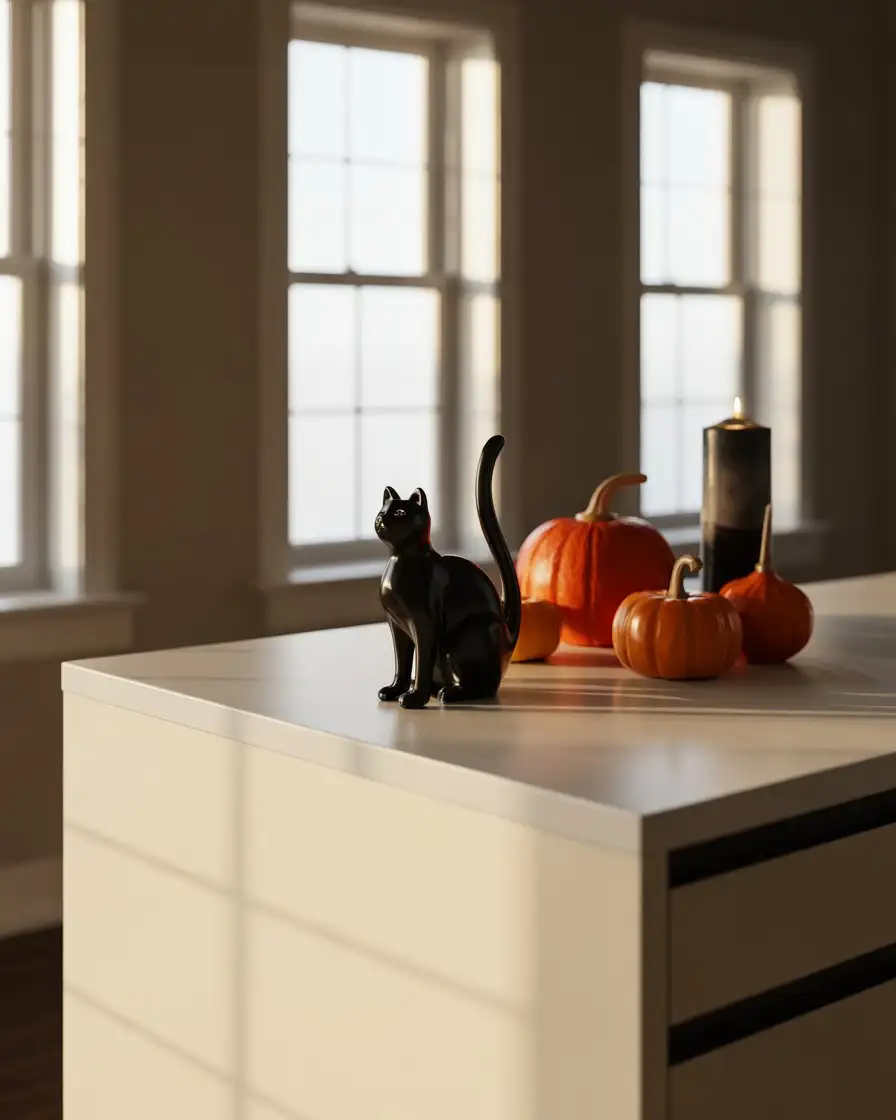
A small black ceramic cat figurine, a few Halloween orange pumpkins, and a single black taper candle create a playful yet chic seasonal moment. This approach is ideal for homeowners who want to nod to the holiday without committing to full-on spooky décor. It’s popular in urban apartments and modern homes where space is tight and every decorative choice needs to earn its spot. 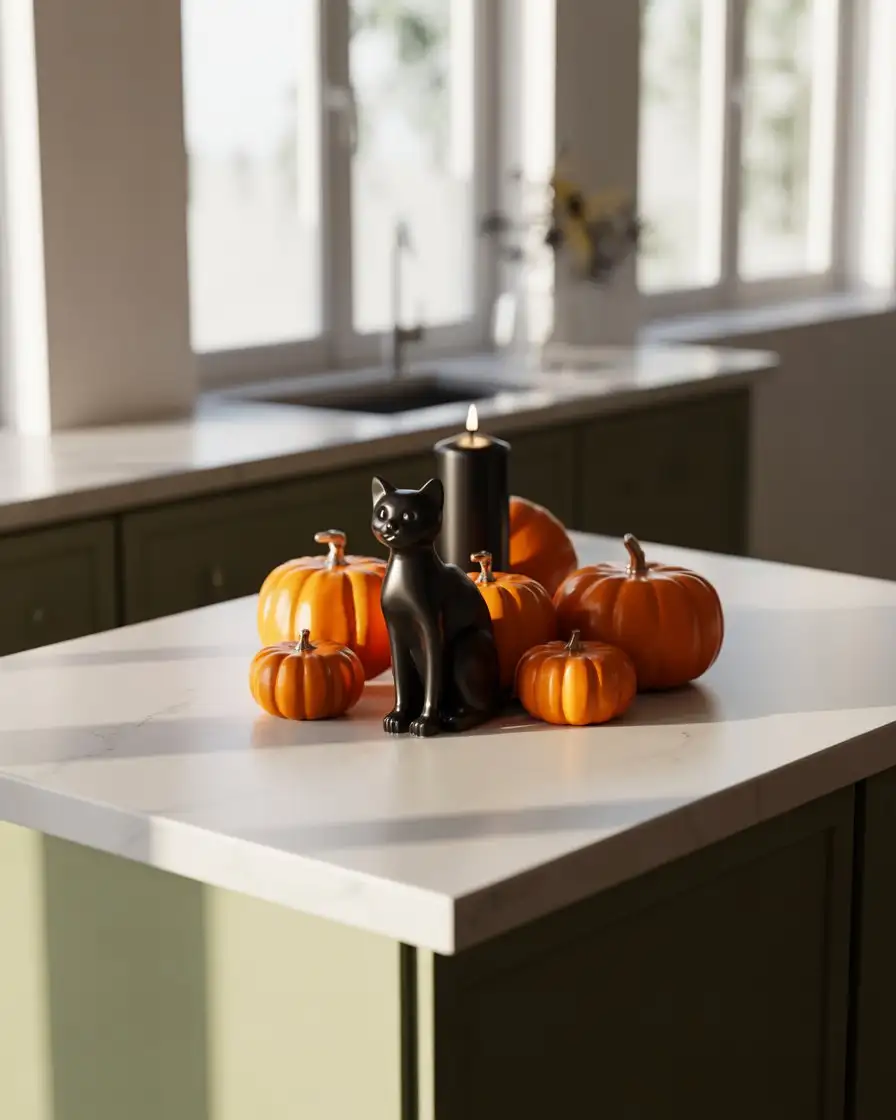
What makes this work is the restraint—no cobwebs, no fake blood, just clean lines and a few well-chosen objects. In homes with young kids, this can coexist with more playful Halloween décor in other rooms, keeping the kitchen feeling grown-up and Instagram-ready. Swap the pumpkins for white ones in early November, and the black cat becomes a quirky year-round accessory.
12. Modern Organic Wood Bowl and Greenery
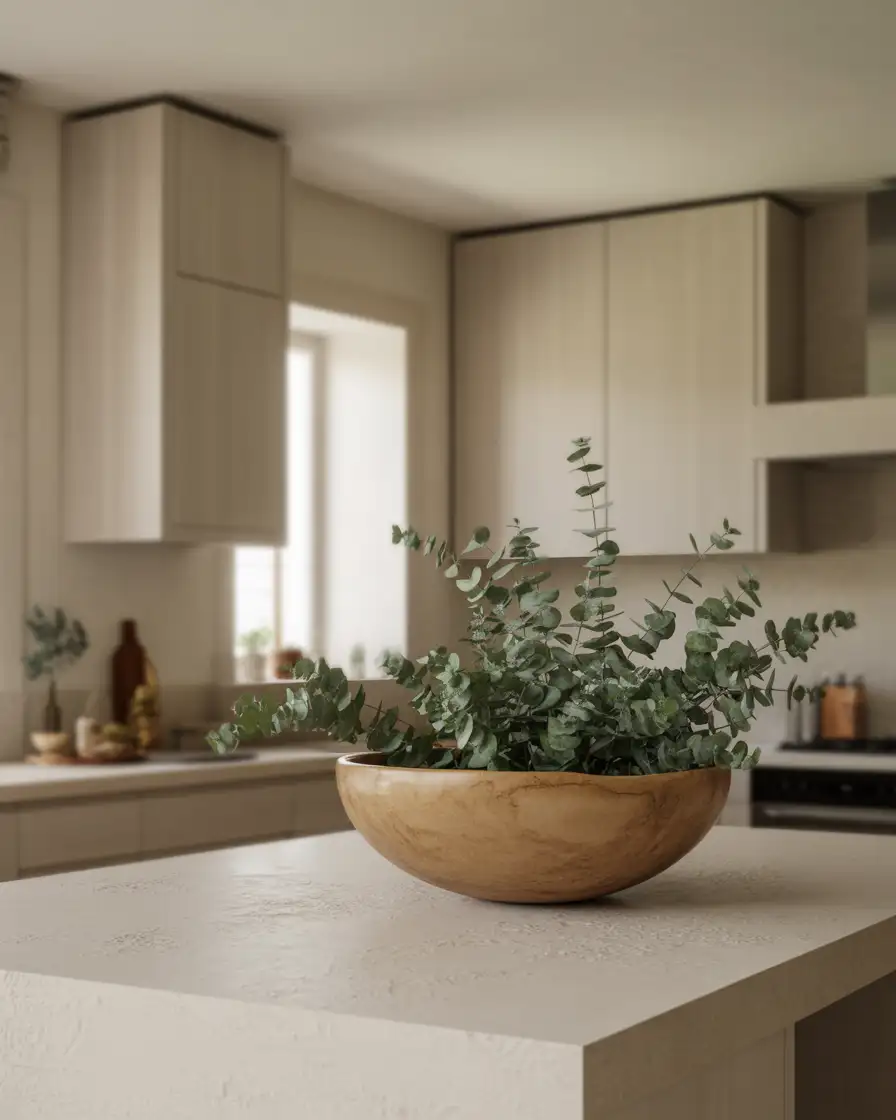
A large, hand-carved organic wood bowl filled with eucalyptus or olive branches brings natural texture and a calming, modern vibe to your island. This is a favorite in Pacific Northwest homes and eco-conscious spaces where sustainability and natural materials are top priorities. The wood grain adds warmth, while the greenery keeps the space feeling alive and fresh without requiring constant upkeep. 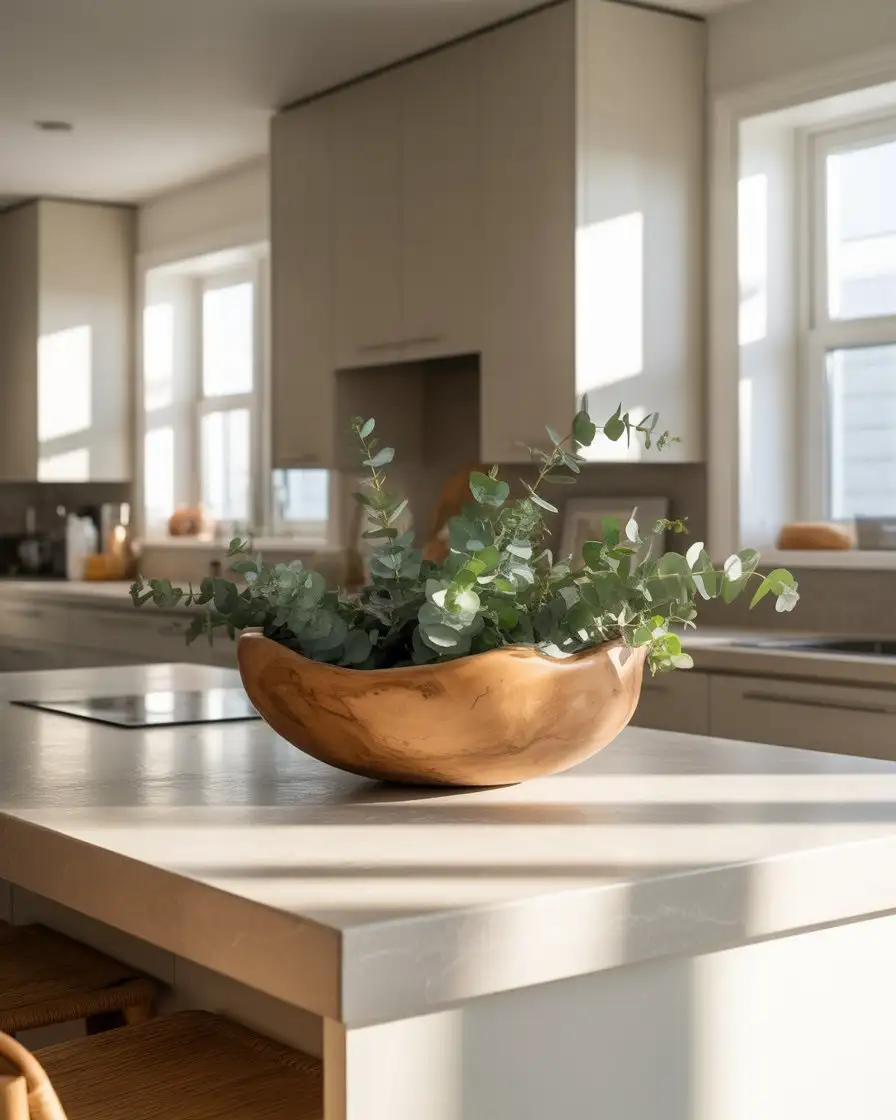
From an expert’s point of view, investing in a quality wood bowl pays off—these pieces age beautifully and become more character-rich over time. Eucalyptus is a low-maintenance choice that dries gracefully, so you can leave it in place for weeks without worry. This setup also works as a catch-all for keys or sunglasses, blending form and function in a way that feels effortlessly stylish.
13. Fourth of July Red, White, and Blue Styling
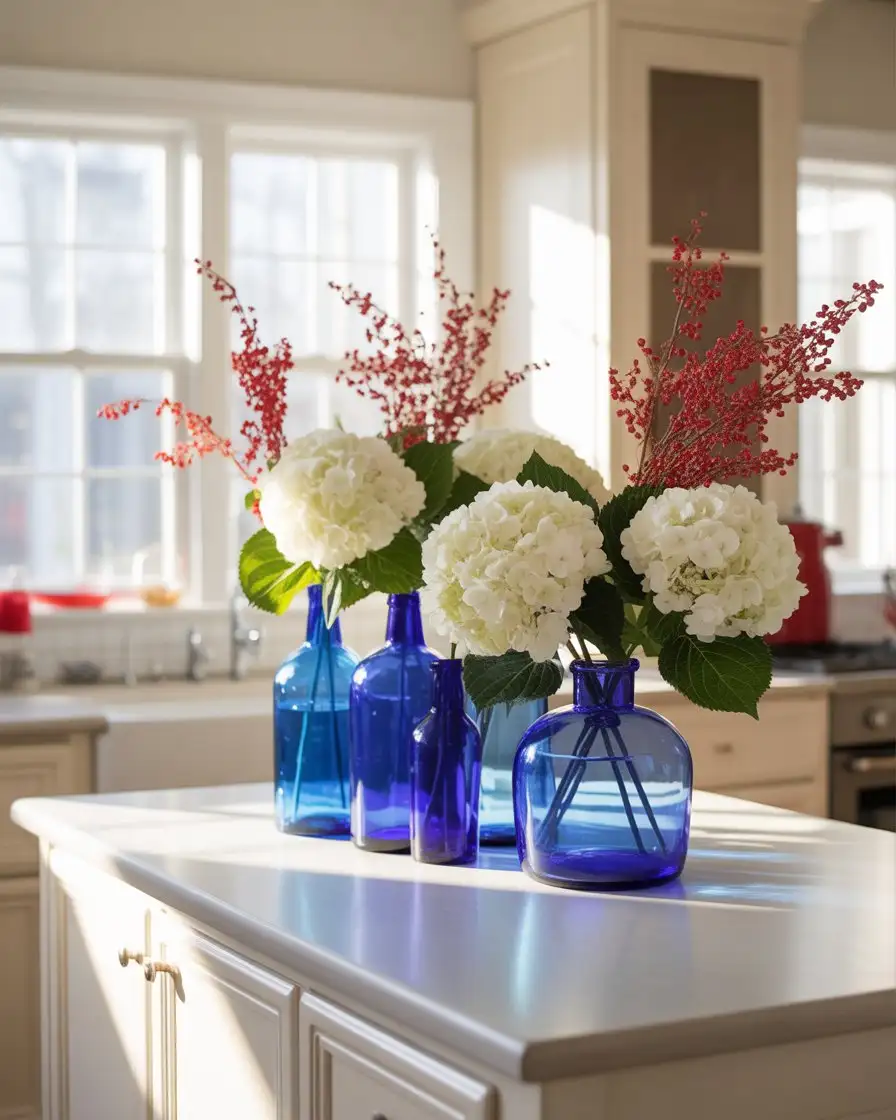
A simple arrangement of white hydrangeas, red berries, and a few blue glass bottles brings a patriotic, summery feel to your island for the 4th of July. This look is especially popular in suburban homes where backyard barbecues are a tradition, and the kitchen island becomes command central for prepping and serving. The color palette is unmistakably American but executed in a way that feels tasteful rather than overly themed. 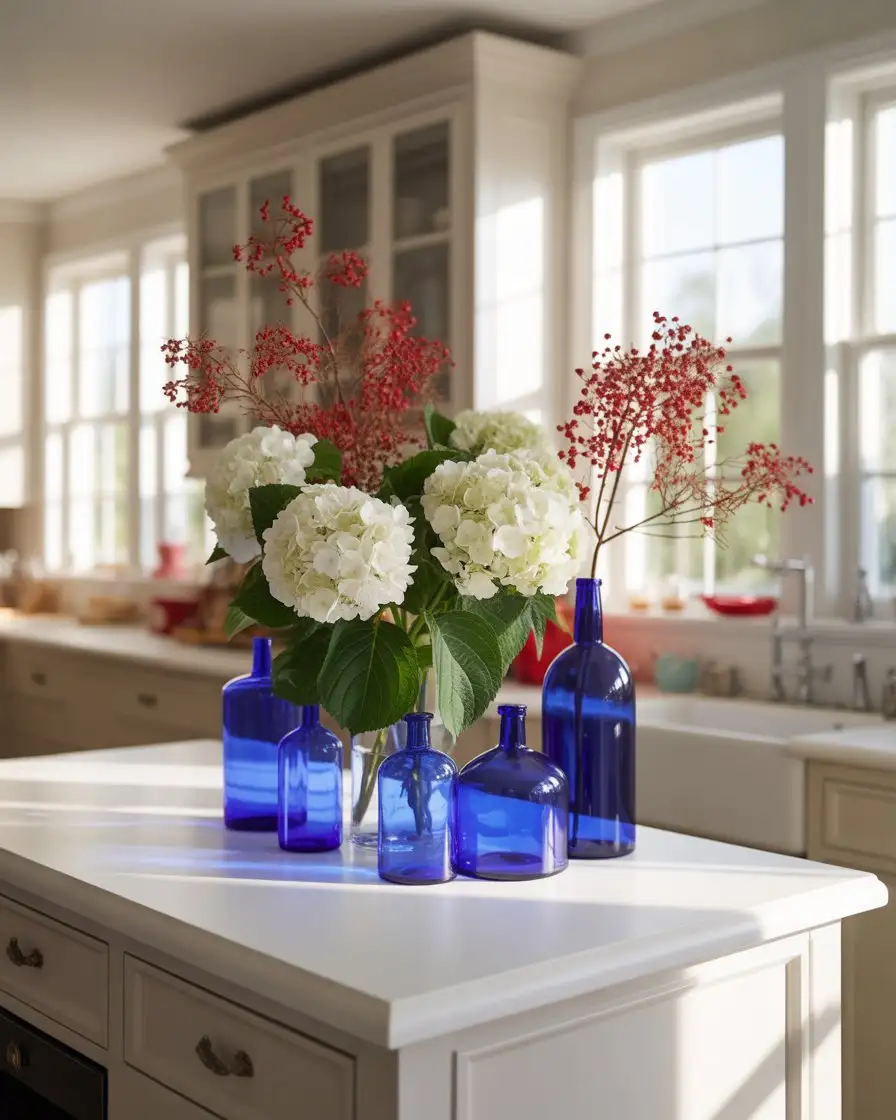
Where this works best is in kitchens with plenty of natural light—the colors read more vibrant and celebratory in bright spaces. Avoid plastic or synthetic materials, which can cheapen the look. One homeowner in Texas shared that she reuses the blue bottles year-round as everyday vases, making this a smart investment rather than single-use holiday décor.
14. Birthday Balloon and Confetti Moment
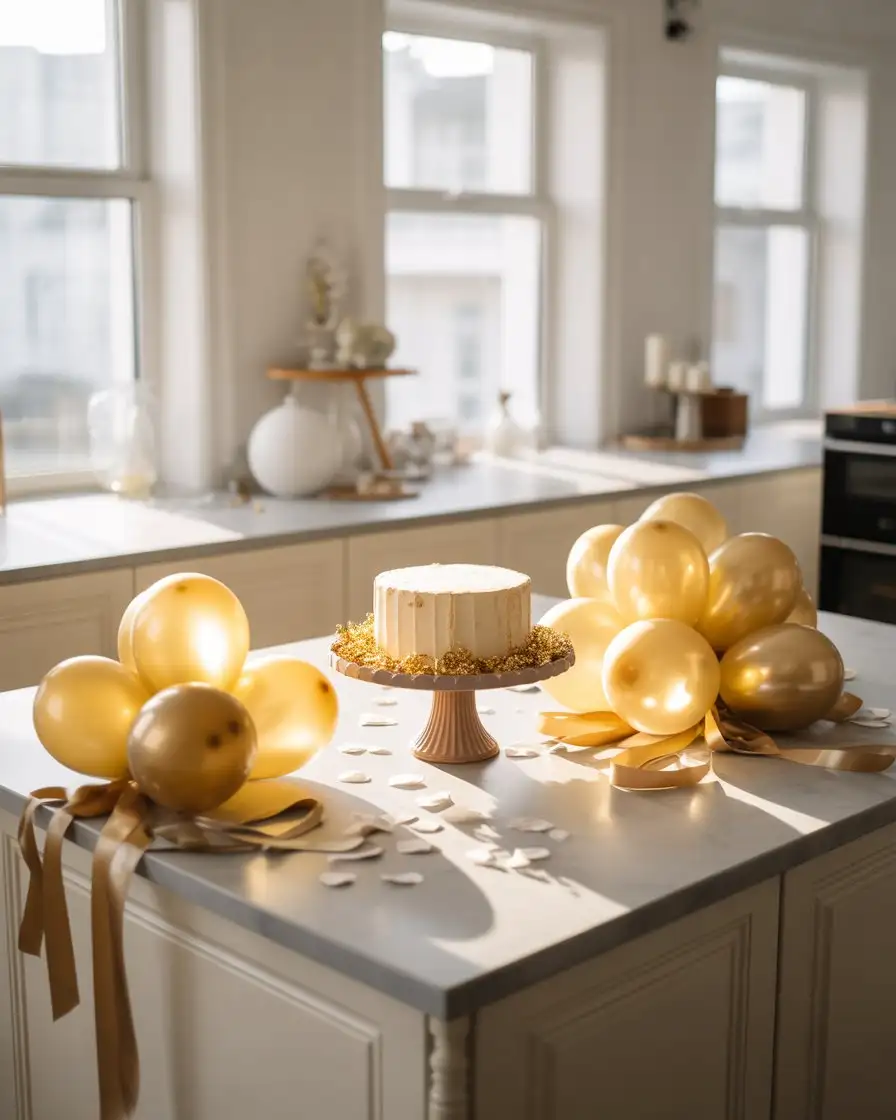
A cluster of metallic balloons anchored to a weighted vase, with scattered confetti and a small cake stand, transforms your island into a festive birthday focal point. This setup is ideal for family homes where kitchen celebrations are the norm, and it’s easy enough to assemble in under 10 minutes. The key is keeping the palette cohesive—gold and white, or pastels, rather than a rainbow explosion. 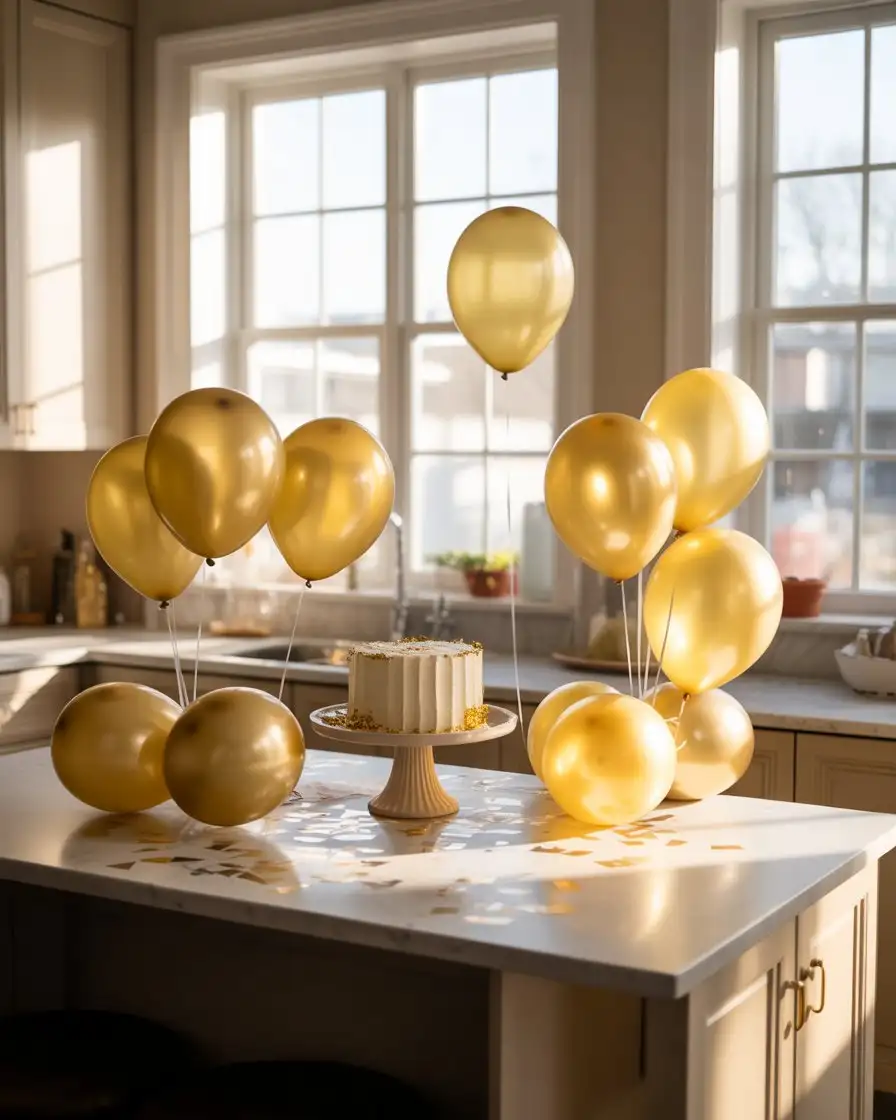
A practical insight: use biodegradable confetti if you’re hosting outdoors or have pets—cleanup is easier, and it’s better for the environment. Balloons can stay inflated for several days, so you can prep the morning of and enjoy the look through the weekend. This is also a budget-friendly way to make a big visual impact without investing in permanent décor.
15. Aesthetic Minimalist Vase and Single Stem
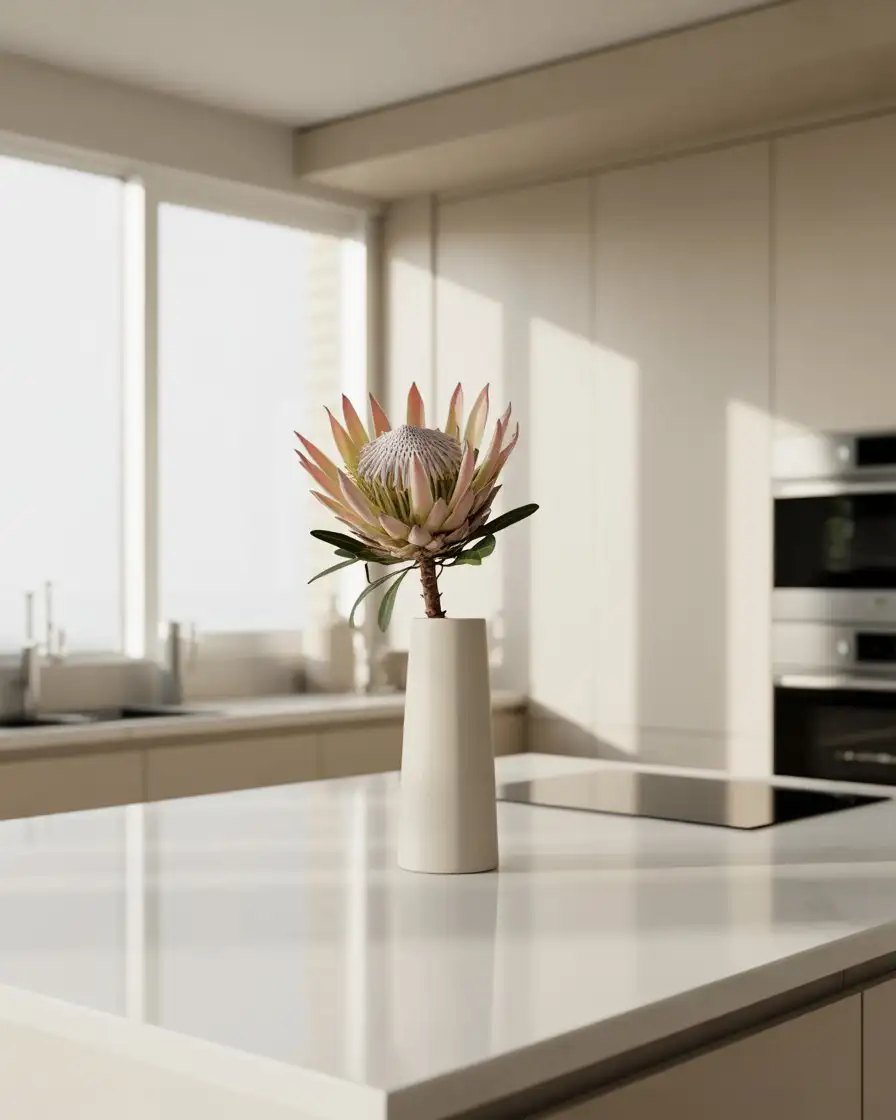
One sculptural vase holding a single branch or oversized bloom creates an aesthetic, gallery-like moment on your island. This approach is all about negative space and the beauty of restraint, making it a favorite among design-forward homeowners and those with modern or Scandinavian interiors. The simplicity allows the architecture and materials of the kitchen itself to shine without distraction. 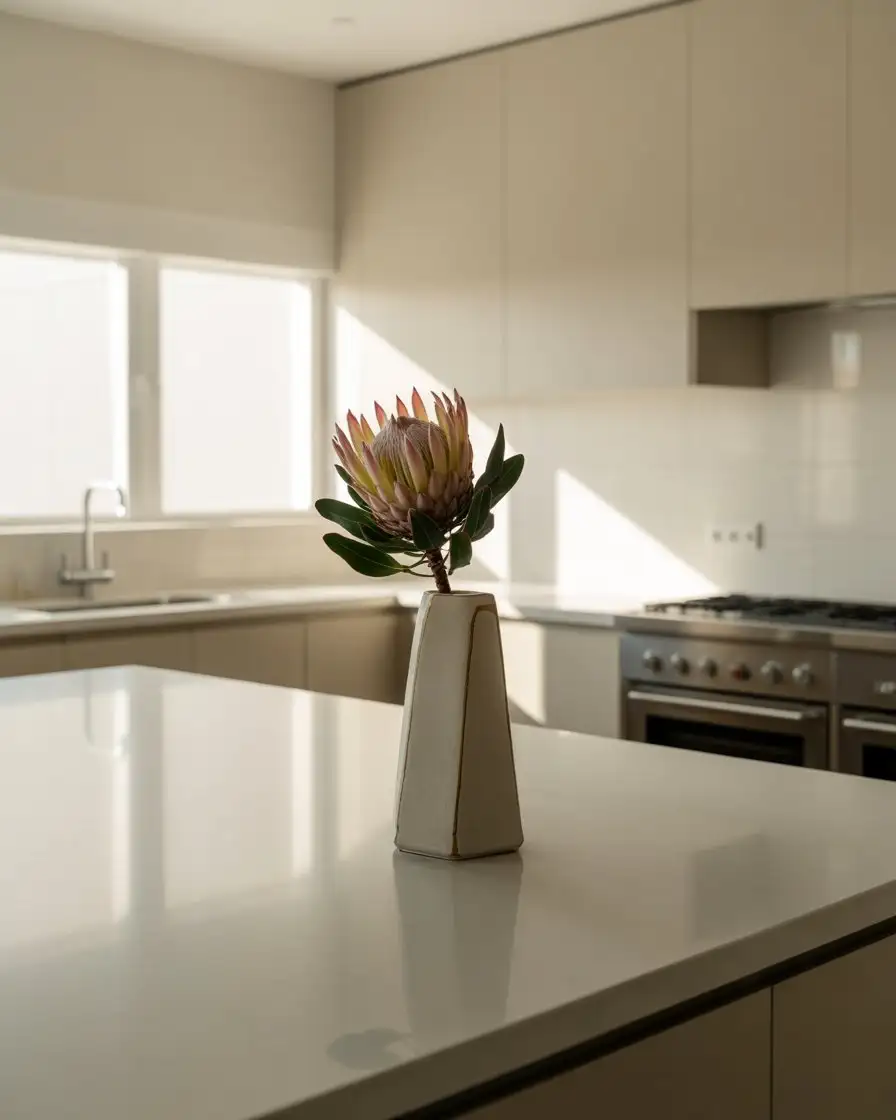
This look is surprisingly forgiving—you can swap the stem weekly based on what’s in season or what catches your eye at the market, keeping the space feeling fresh with minimal effort. Budget angle: a single protea or monstera leaf costs less than a full bouquet and makes a bolder statement. This is especially effective in small kitchens where too many objects can feel cluttered.
16. White Farmhouse Pedestal Bowl Arrangement
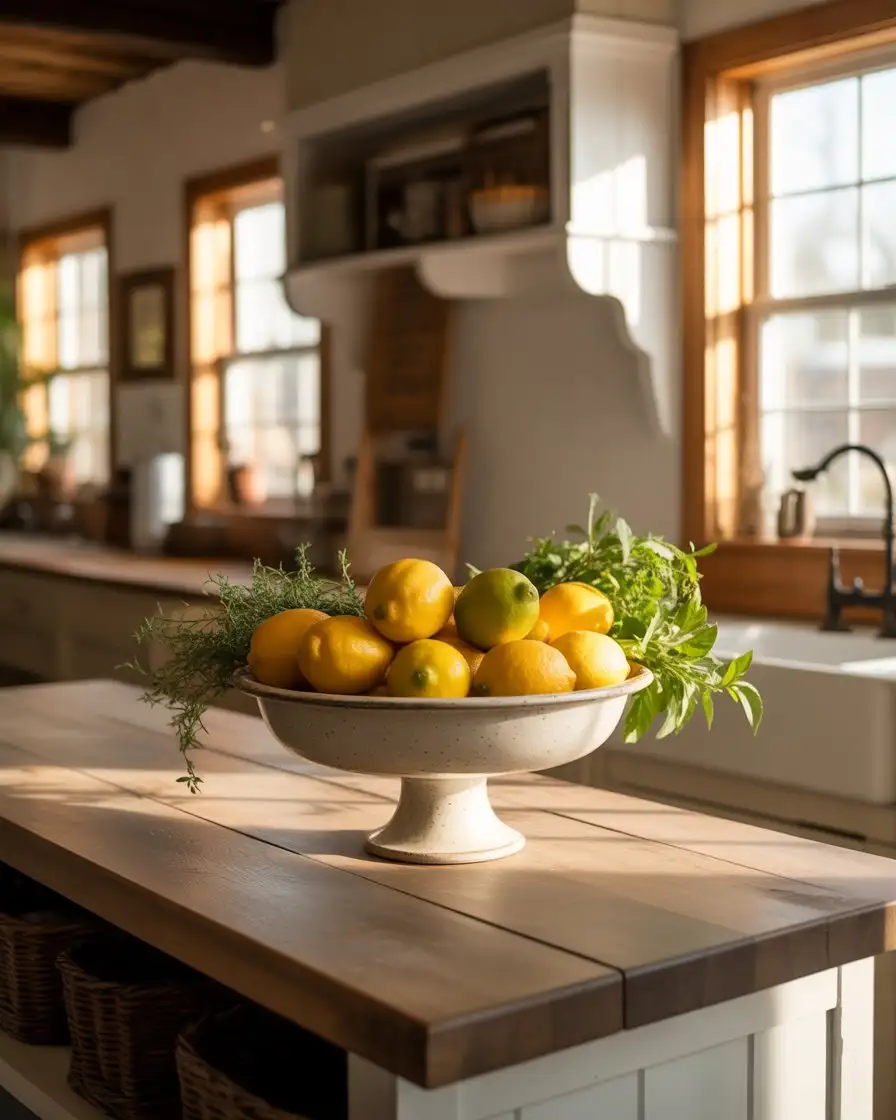
A tall white pedestal bowl filled with faux greenery or seasonal produce adds height and a farmhouse elegance to your island. This is a staple in Southern homes and ranch-style kitchens where traditional touches are celebrated, and it works especially well on larger islands where a low arrangement might get lost. The pedestal elevates the display both literally and figuratively, making it feel more intentional. 
A micro anecdote: a homeowner in Georgia mentioned that she changes the contents of her pedestal bowl every two weeks, rotating between fruit, flowers, and seasonal décor, and it’s become her favorite low-effort way to refresh the kitchen. The key is choosing a pedestal that’s proportional to your island—too small and it looks lost, too large and it dominates the space.
17. Sink-Side Herb Garden in Ceramic Pots
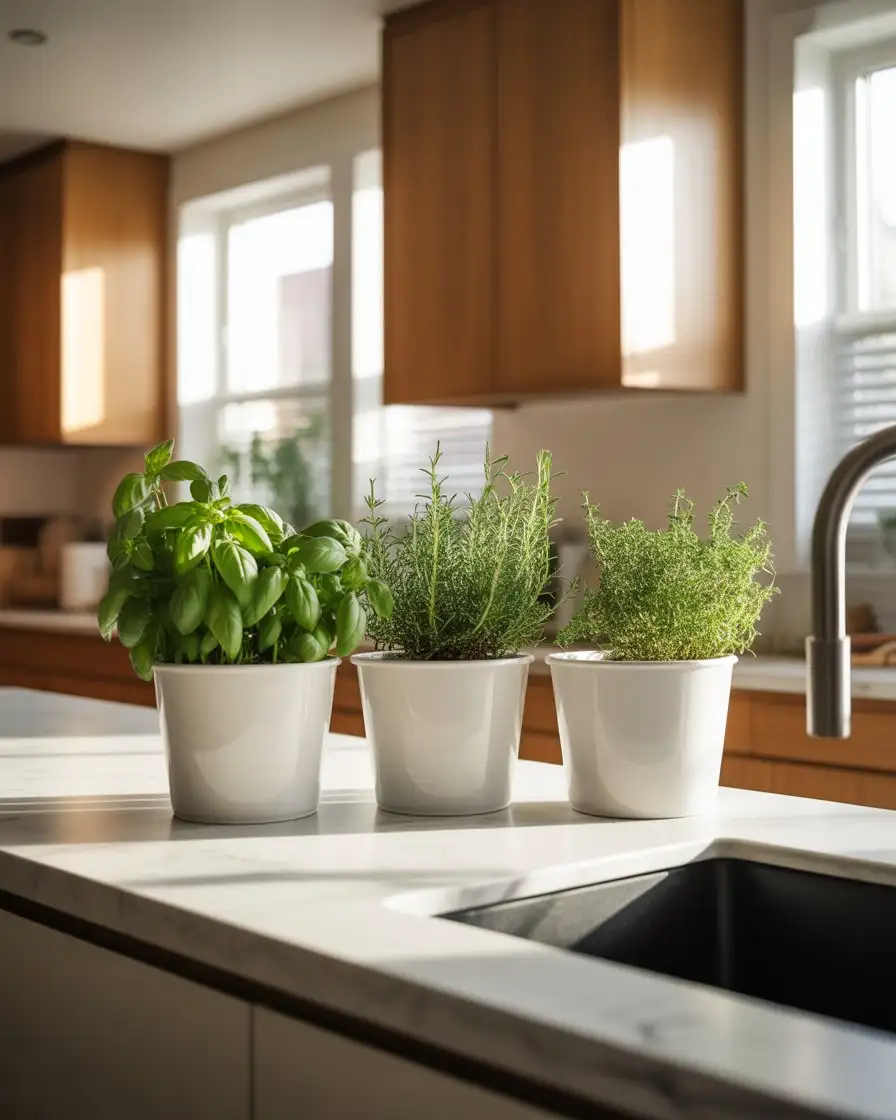
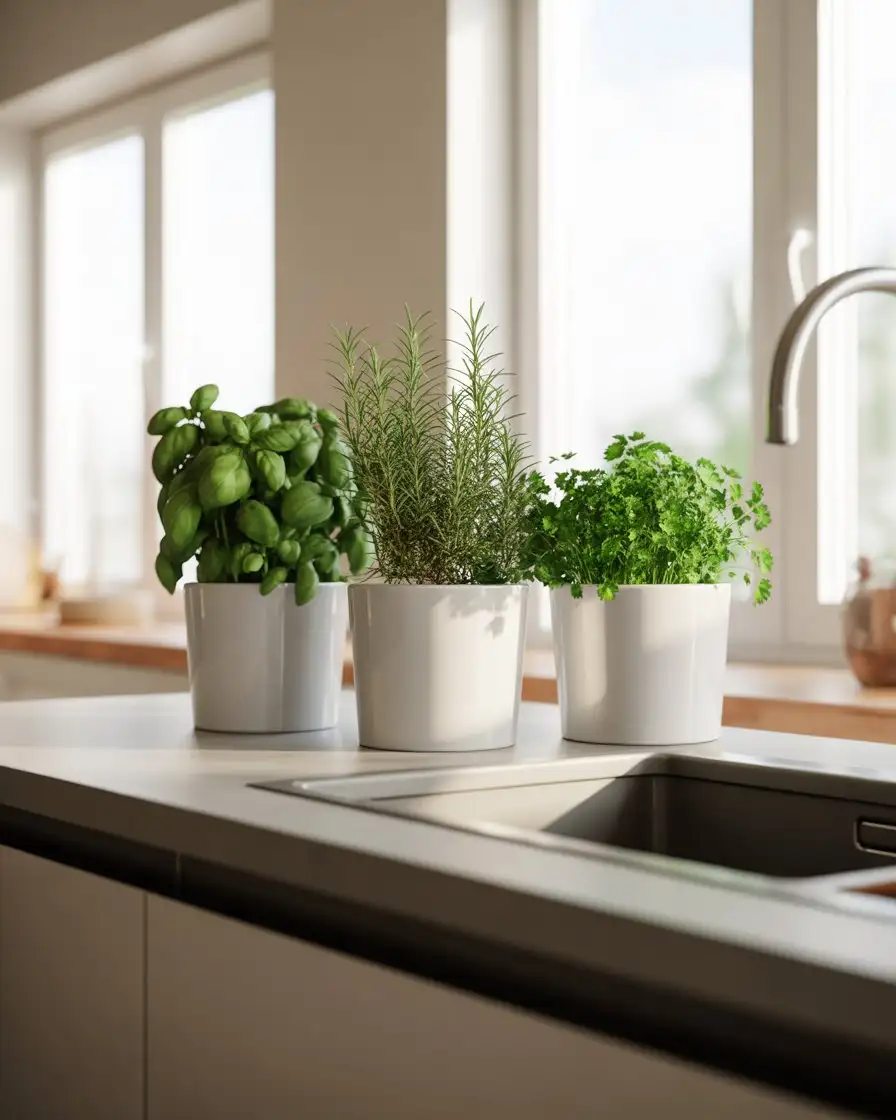
Three small ceramic pots of basil, rosemary, and thyme clustered near the sink bring both beauty and function to your island. This setup is wildly practical in homes where cooking from scratch is part of the daily routine, and it’s especially popular in California and the Pacific Northwest, where the farm-to-table ethos runs deep. The greenery softens the hard surfaces, and the fresh herbs are always within reach when you need them.
A common mistake is overwatering—most herbs prefer slightly dry soil, so wait until the top inch is dry before watering again. This setup works best in kitchens with good natural light near the island; if your space is darker, consider supplementing with a small grow light. Real homeowner behavior shows that people who commit to this setup end up cooking more adventurously because the herbs are so accessible.
18. Long Wooden Dough Bowl with Seasonal Accents
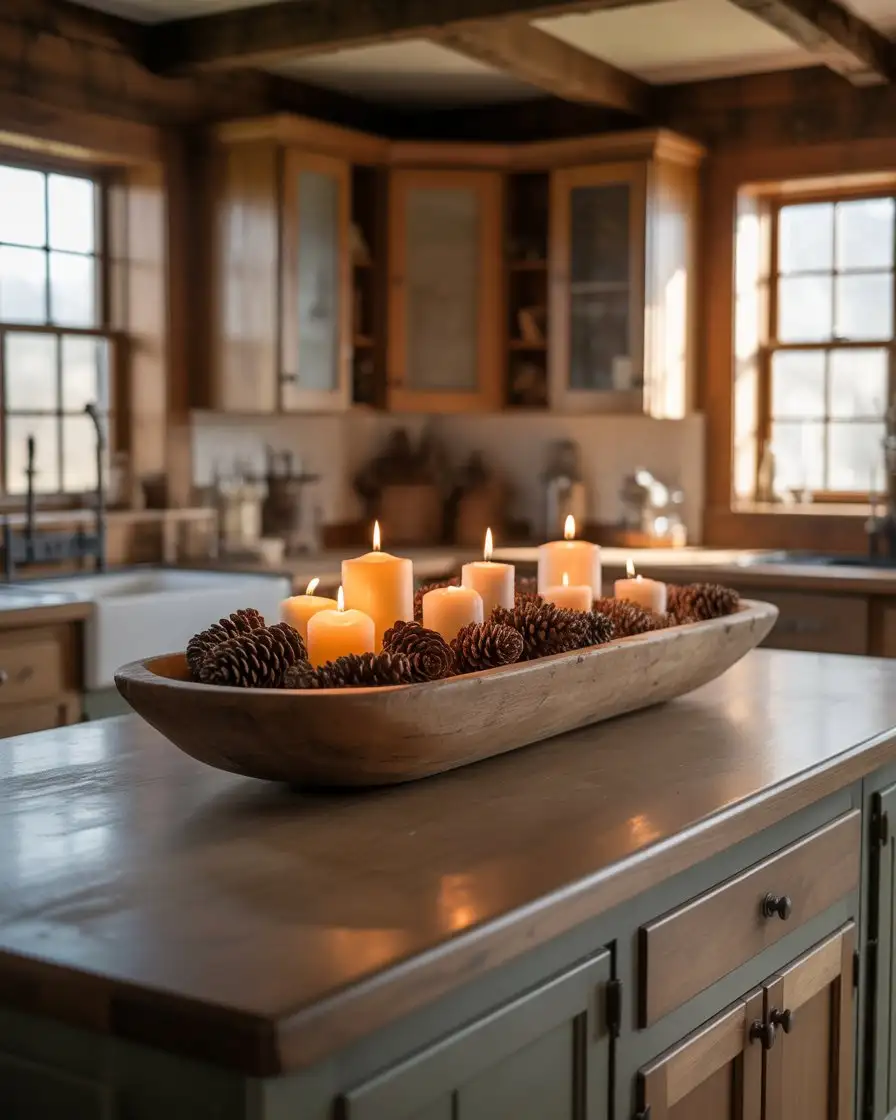
A vintage or reproduction dough bowl running the length of your island, filled with seasonal items like pinecones in winter or lemons in summer, creates a grounding centerpiece that feels both historic and current. This is a signature move in modern farmhouse and country-inspired homes, especially across the Midwest and Appalachia, where antique dough bowls are family heirlooms. The length of the bowl naturally defines the decorative zone without needing additional framing. 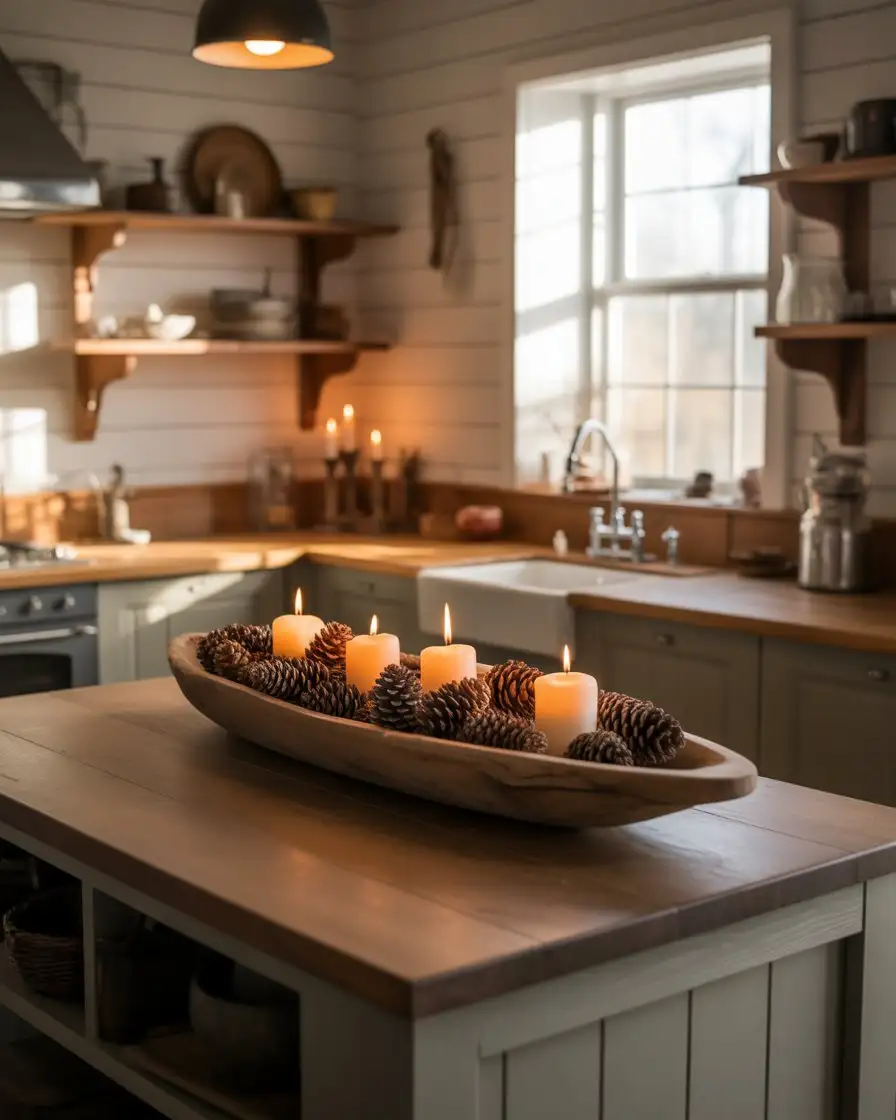
From a practical standpoint, these bowls are heavy and stable, so you don’t have to worry about them shifting or tipping during meal prep. Budget angle: reproduction dough bowls are widely available and more affordable than true antiques, and they age beautifully with use. Avoid filling them so full that you can’t see the wood grain—part of the charm is the patina and craftsmanship of the bowl itself.
19. Apartment-Friendly Compact Tray Setup
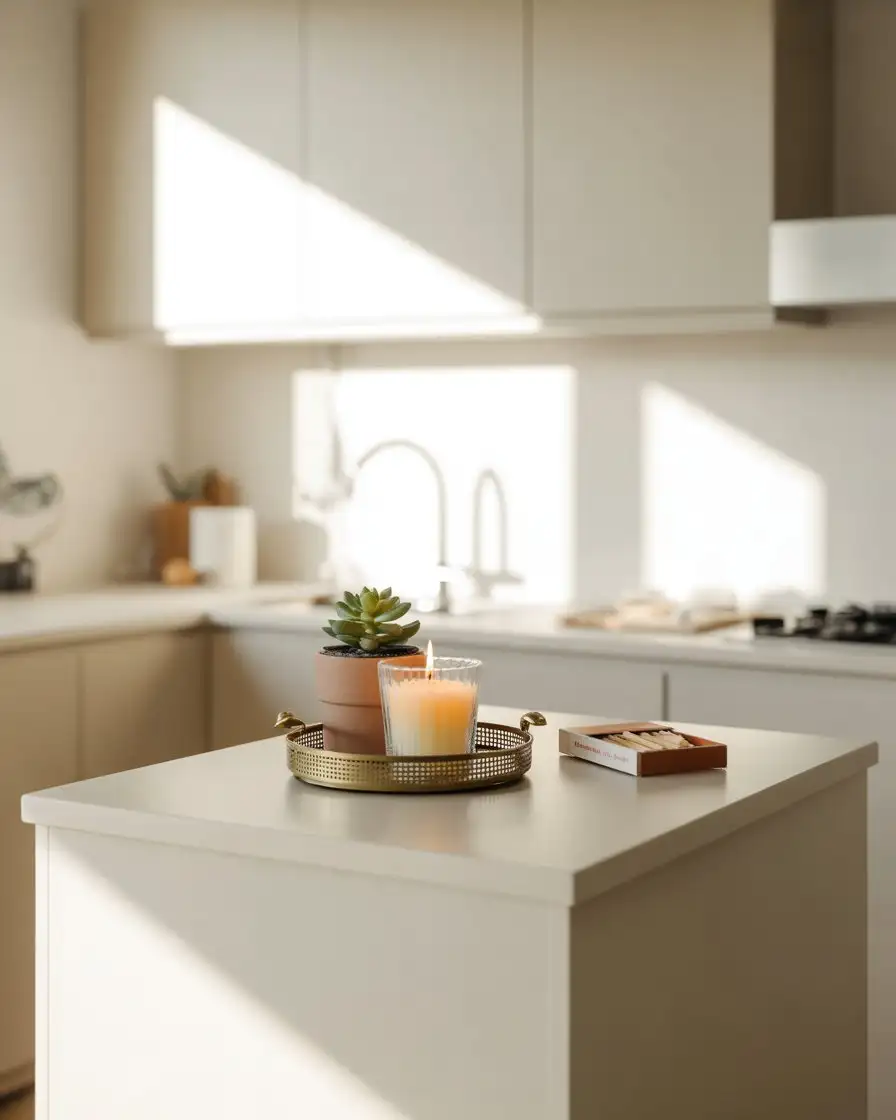
In a smaller apartment kitchen, a compact tray with just a candle, small plant, and matchbox keeps the island styled without sacrificing precious workspace. This is essential in urban environments where every inch counts, and the island might also serve as a desk or dining surface. The tray keeps things tidy and portable, so you can easily move it when you need the full counter for cooking or entertaining. 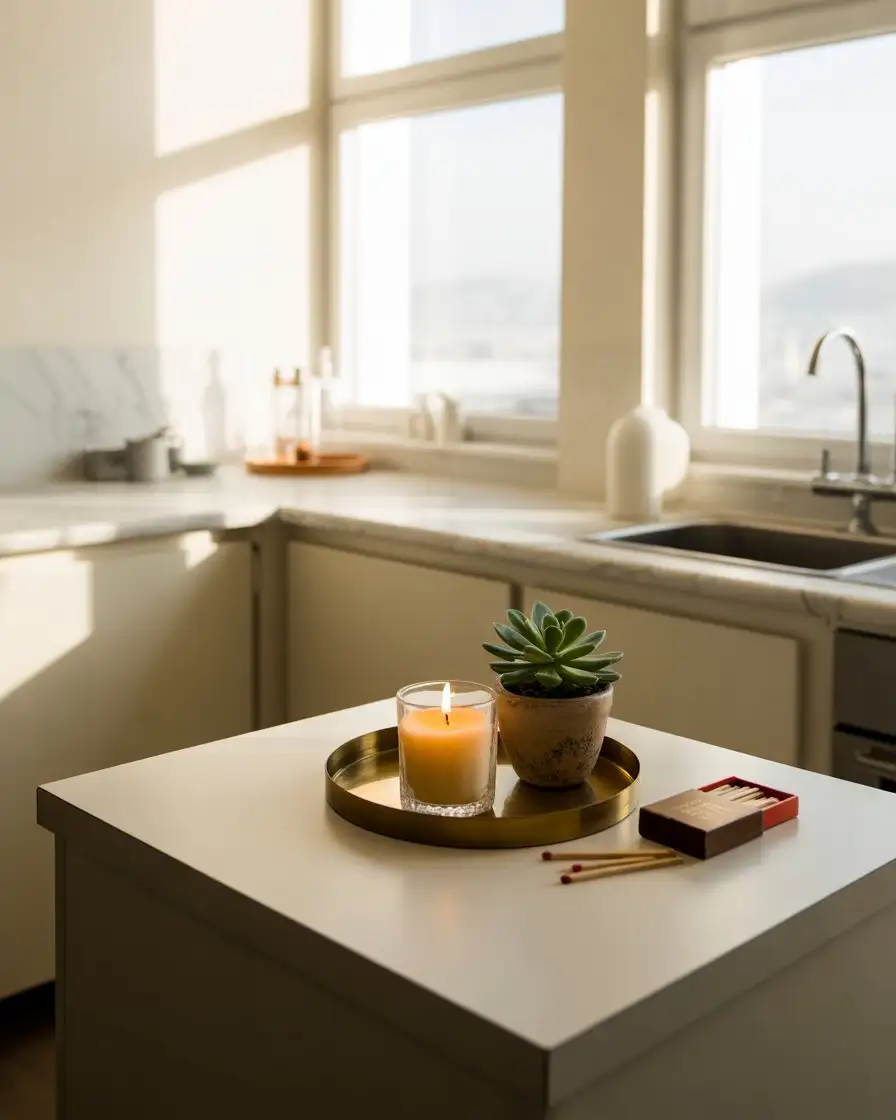
Where this works best is in studios or one-bedrooms where the kitchen island is truly multifunctional. A common mistake is overcrowding even a small tray—stick to three items max to keep it looking intentional. Real apartment dwellers report that this setup makes the space feel more finished and less like a work zone, which is crucial when the kitchen is visible from the living area.
20. Luxury Floral Arrangement in Crystal Vase
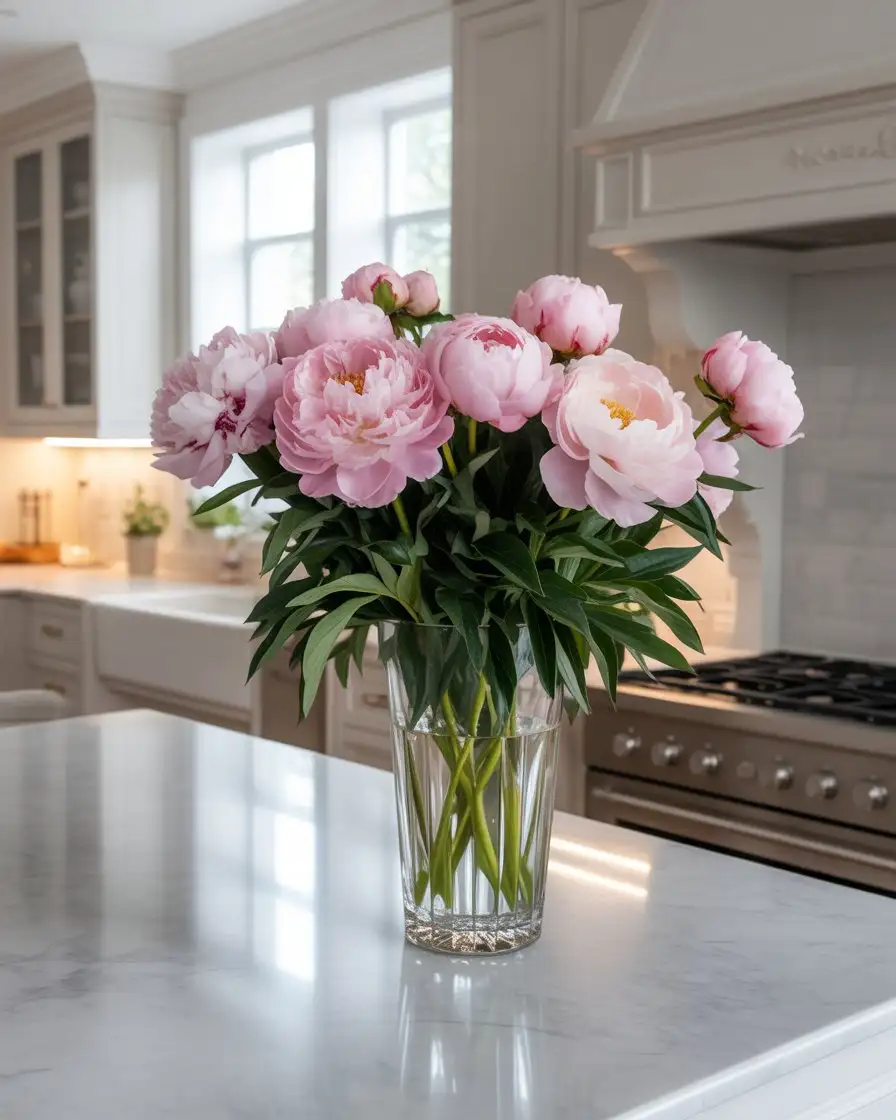
A professionally styled luxury floral arrangement in a cut crystal vase makes your island feel like the cover of a shelter magazine. This approach is about investing in quality—think garden roses, peonies, or ranunculus from a local florist—and displaying them in a vessel that catches and reflects light beautifully. It’s most effective in homes where entertaining is frequent and the kitchen is a showcase space. 
From an expert’s perspective, the vase matters as much as the flowers—crystal or hand-blown glass elevates even grocery store blooms. Budget tip: buy flowers in bud form and arrange them yourself; it’s significantly cheaper than a pre-made arrangement and gives you more control over the final look. This setup is particularly striking in kitchens with white or neutral palettes, where the color of the flowers becomes the focal point.
21. Centerpieces with Layered Candlesticks and Greenery
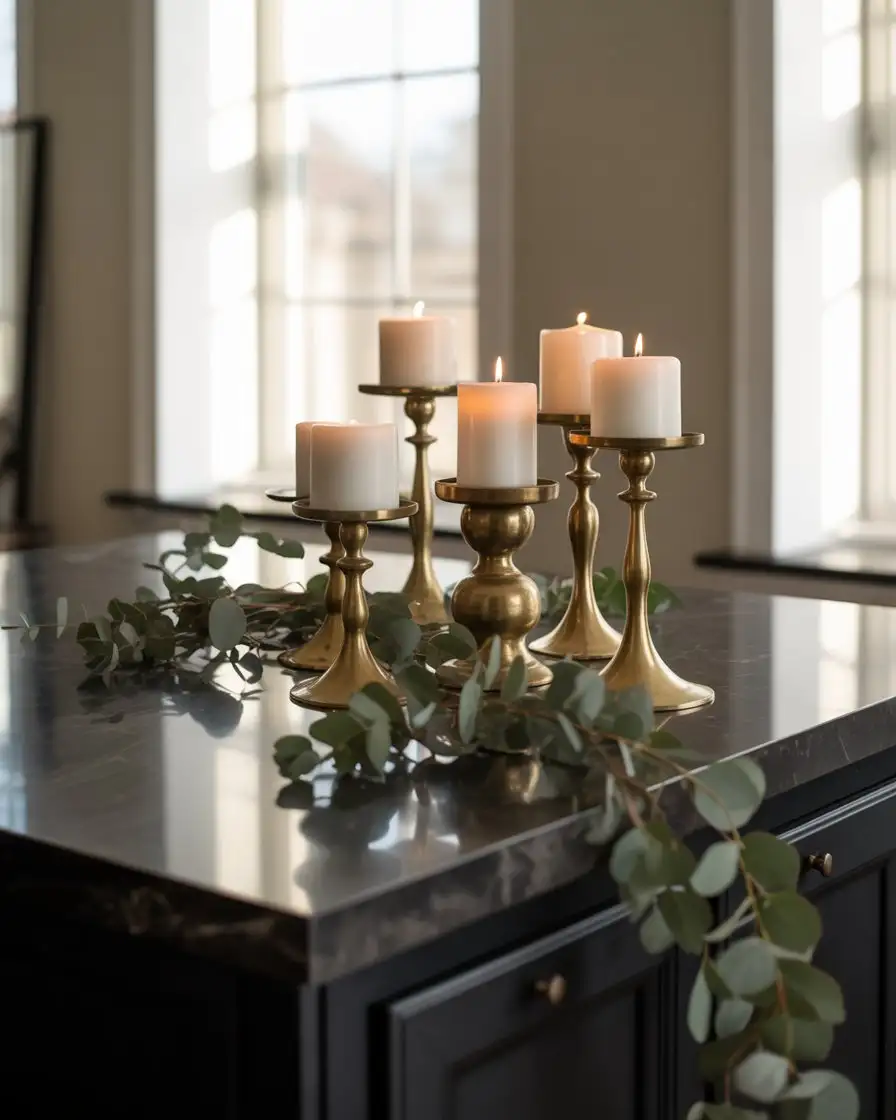
Mixing centerpieces of varying-height candlesticks with low greenery creates a dynamic, restaurant-inspired look that’s perfect for modern homes where the island doubles as a dining space. This layered approach adds visual interest and works especially well in open-concept layouts where the island is viewed from multiple angles. The candlelight brings warmth and intimacy, making everyday dinners feel more special. 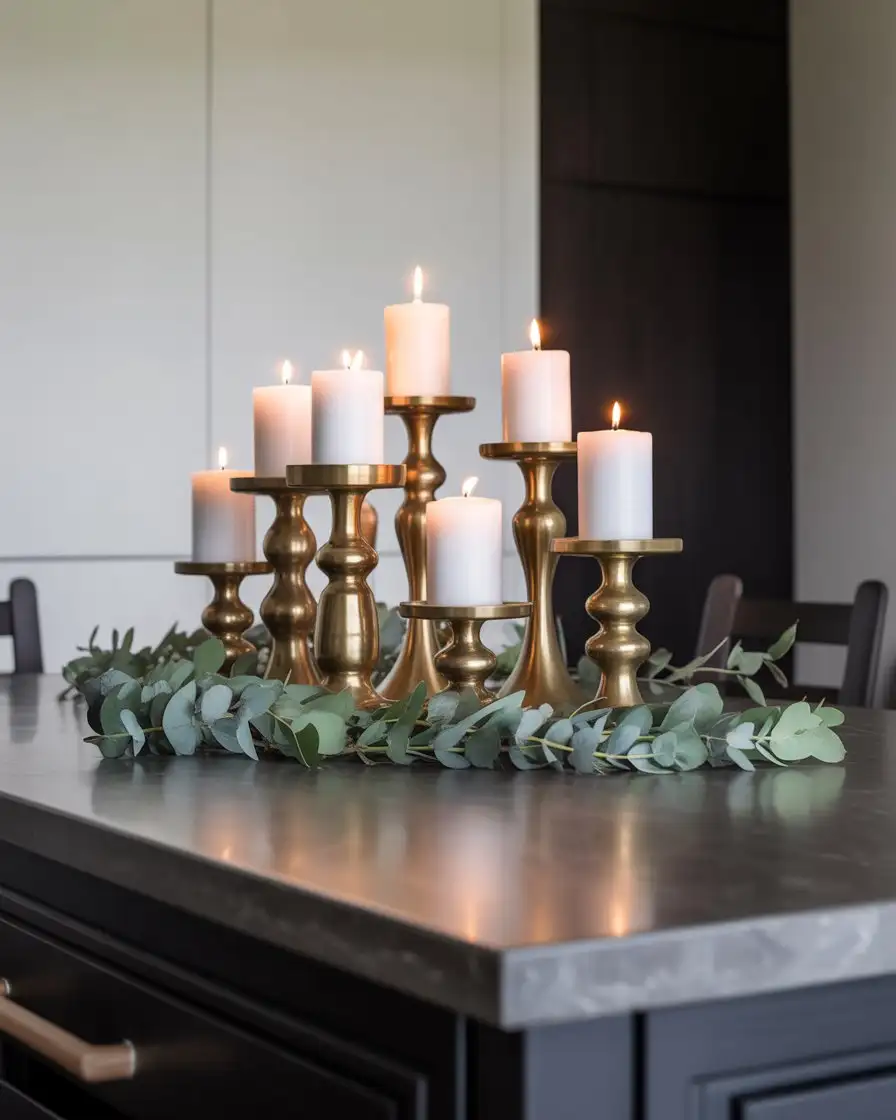
A practical insight: use LED candles if you have kids or pets, or if you’re forgetful about blowing out flames before bed. This setup is also easy to scale up or down depending on the occasion—add more candlesticks for a dinner party, or pare back to just one or two for daily life. The key is choosing candlesticks in a cohesive finish, whether that’s brass, matte black, or ceramic, to keep the look intentional rather than collected.
Conclusion
Your kitchen island is more than a surface—it’s a reflection of how you live, celebrate, and gather. Whether you’re drawn to the simplicity of a single stem in a modern vase or the abundance of a harvest-inspired centerpiece, the best décor is the kind that feels like you. Try layering in a few of these ideas, swap them with the seasons, and don’t be afraid to break the “rules” in favor of what makes your space feel most like home. We’d love to hear which ideas you’re planning to try first—drop a comment below and share your kitchen island story.