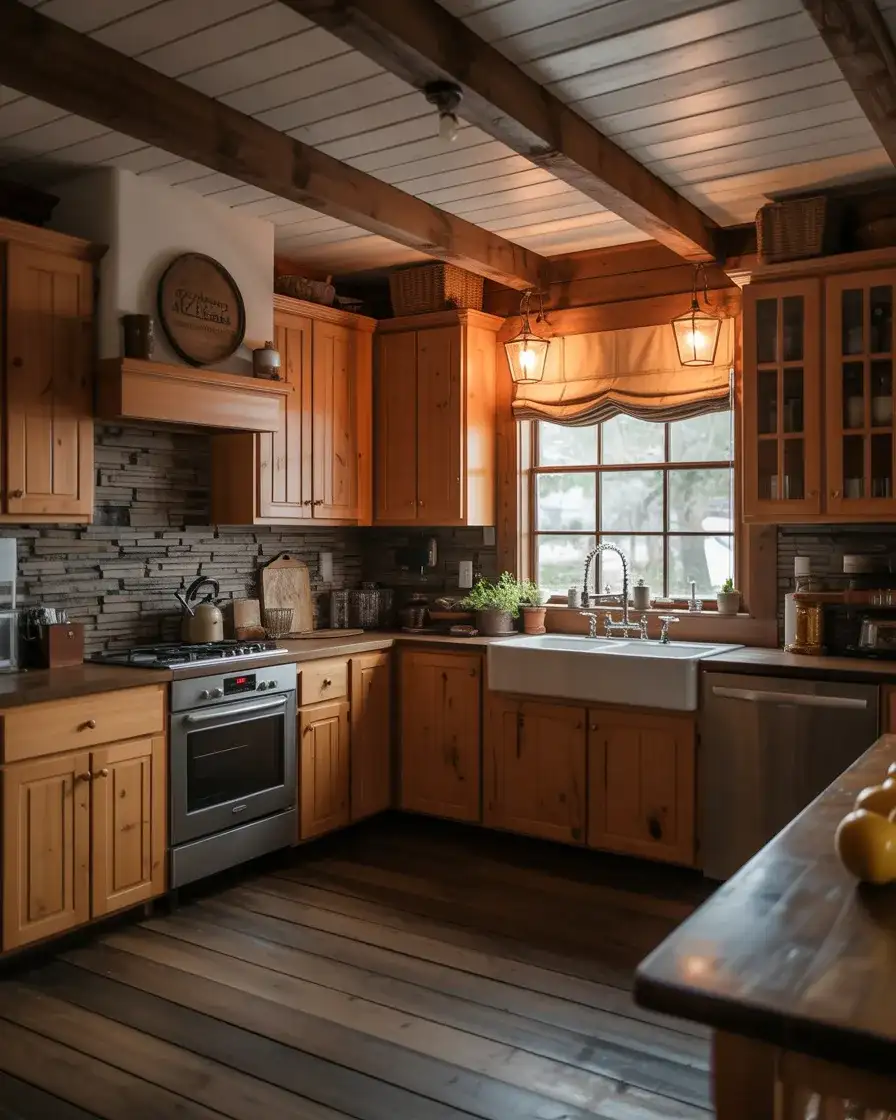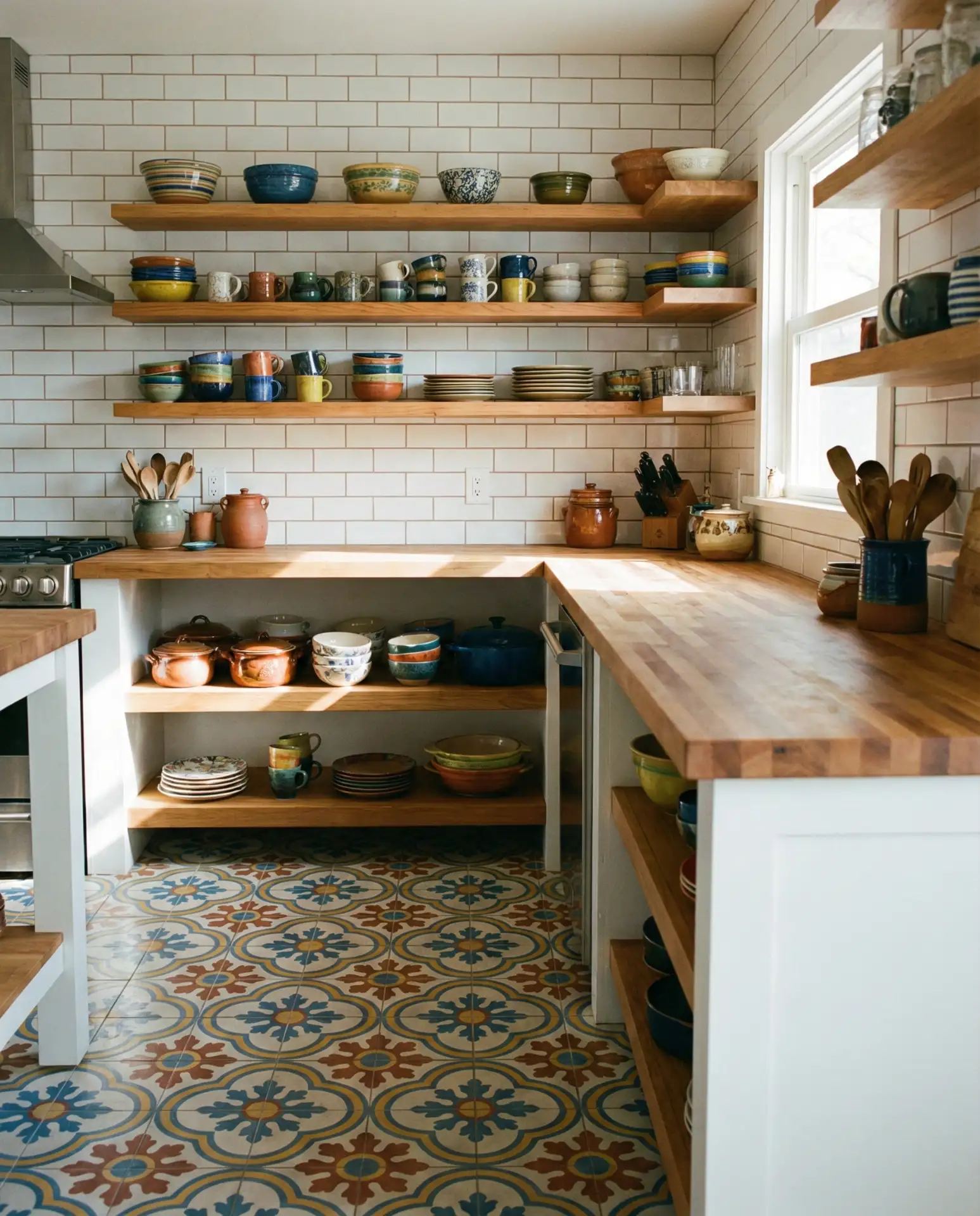
Kitchen windows have become one of the most expressive design features in American homes heading into 2026, especially for Pinterest users hunting for ways to blend function with visual warmth. Whether you’re rethinking a cramped galley setup or planning a full remodel around natural light, the window above your sink or stove offers more styling potential than almost any other single element in the room. From layered textiles and sculptural hardware to unexpected backsplash treatments and greenery arrangements, today’s ideas go far beyond basic blinds. This guide walks you through inspiring approaches that marry practicality with personality, giving you a curated starting point for your next kitchen refresh.
1. Sheer Linen Curtains for Soft Morning Light
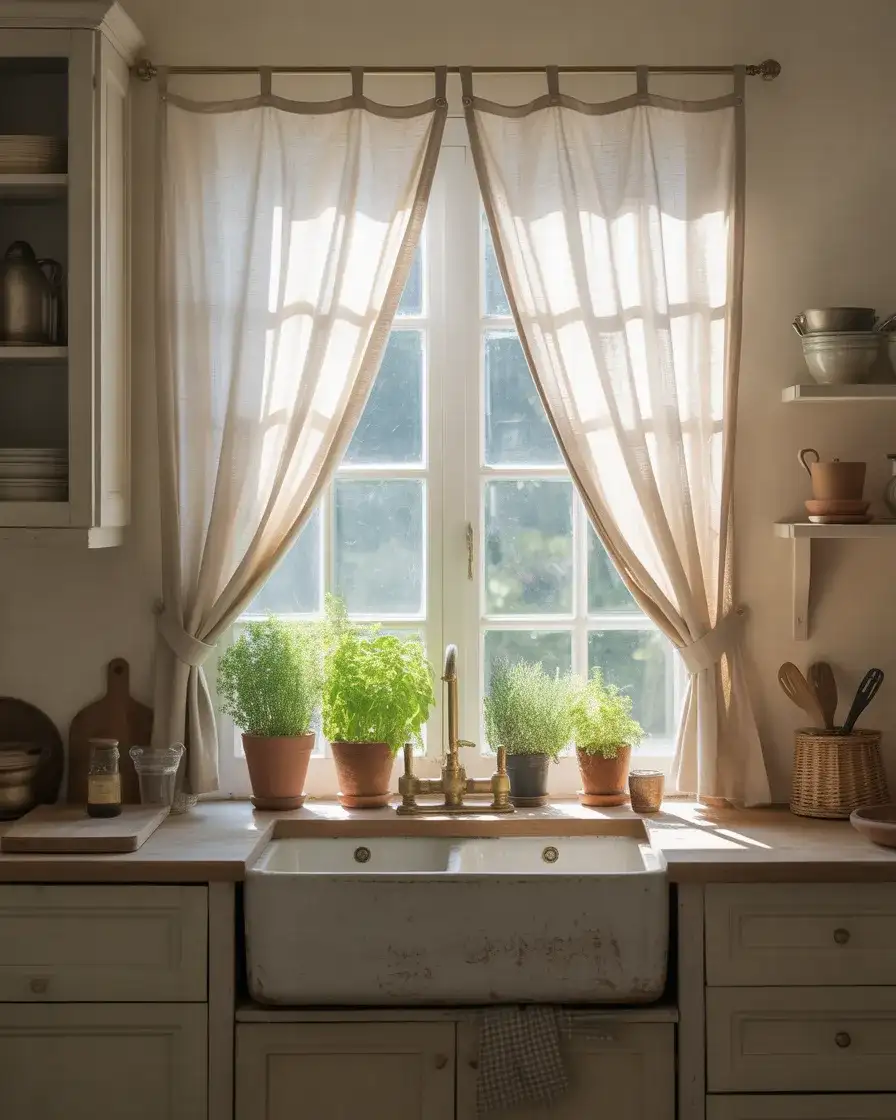
Lightweight linen panels installed on a tension rod let you control brightness without sacrificing that airy, collected-over-time feel. They work especially well in cottage and French country kitchens where you want texture but not heaviness. The fabric filters the harsh eastern sun while still showcasing your view, and because linen wrinkles naturally, it never looks overly precious or staged—a relief for busy households.
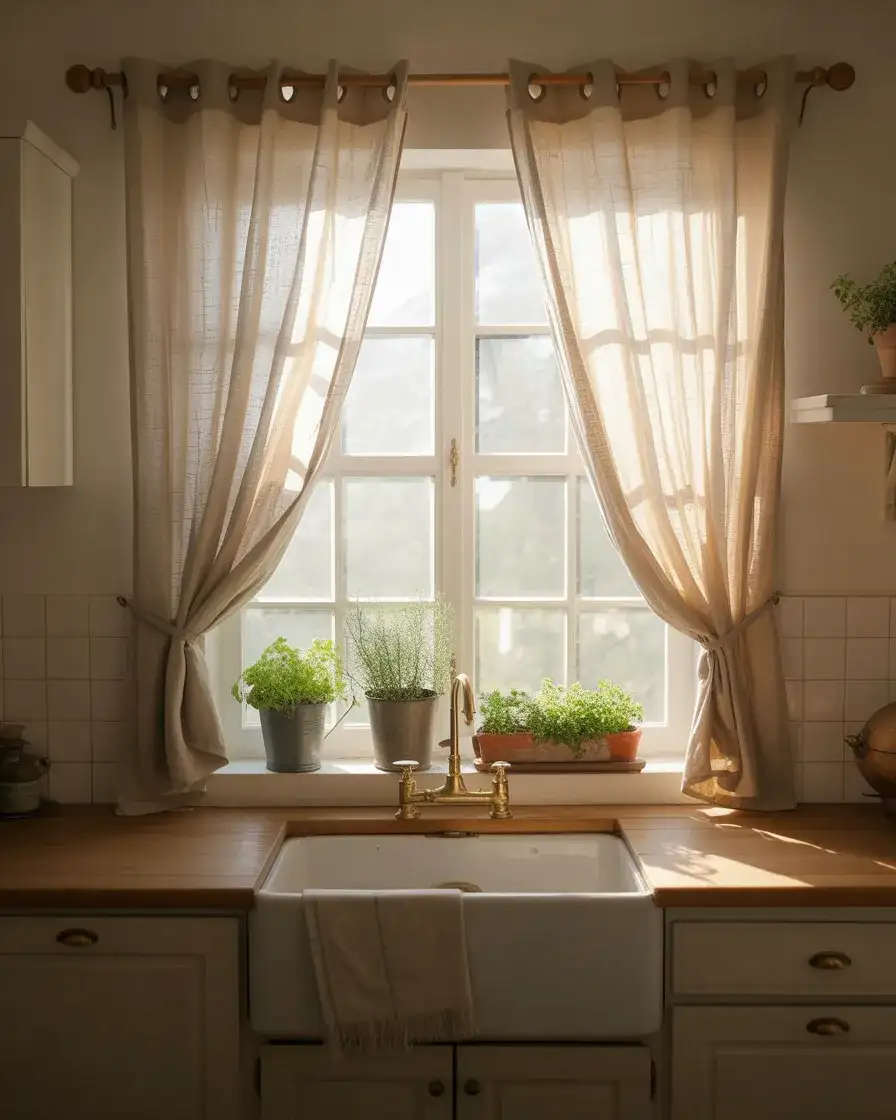
One common mistake is hanging panels too low or too wide, which cuts into counter space and collects splatter. Mount your rod just inside the frame or slightly above it, and keep the fabric hemmed an inch or two above the sill. That small clearance makes cleaning easier and prevents moisture damage near the sink basin, extending the life of even budget-friendly linen by several seasons.
2. Woven Bamboo Blinds for Rustic Warmth
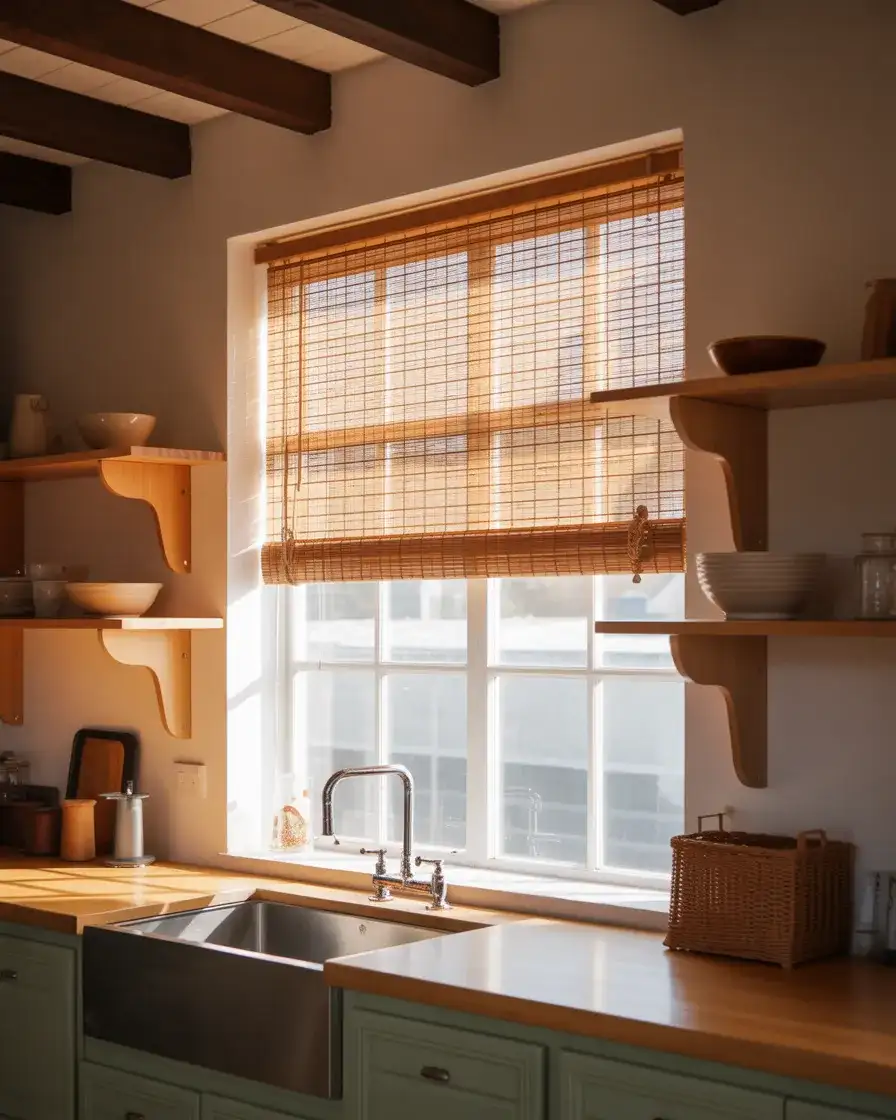
Natural bamboo roll-up shades bring an organic, rustic vibe that pairs beautifully with reclaimed wood shelving and matte-black hardware. They’re especially popular in country and mountain-region homes where the goal is to echo outdoor materials indoors. The tight weave still diffuses sunlight, so you avoid glare on screens or glossy countertops, and the neutral tone anchors bolder paint choices on surrounding walls.
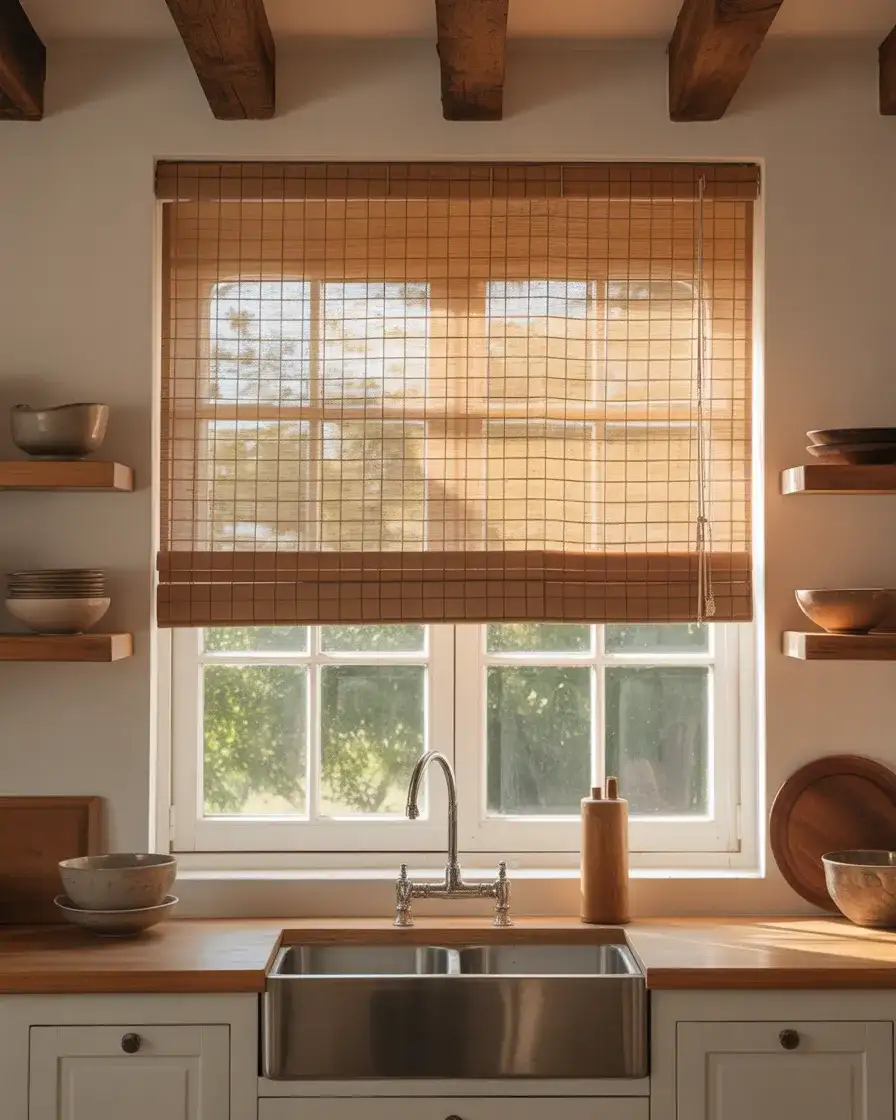
Where it works best is in kitchens that get strong afternoon sun, since bamboo blocks heat more effectively than sheer fabric. The material is also naturally resistant to humidity, making it a smart pick near sinks or ranges where steam is a daily reality. Just wipe down the slats every few weeks with a barely damp cloth to prevent dust buildup in the crevices.
3. Potted Herbs as Living Sink Decor
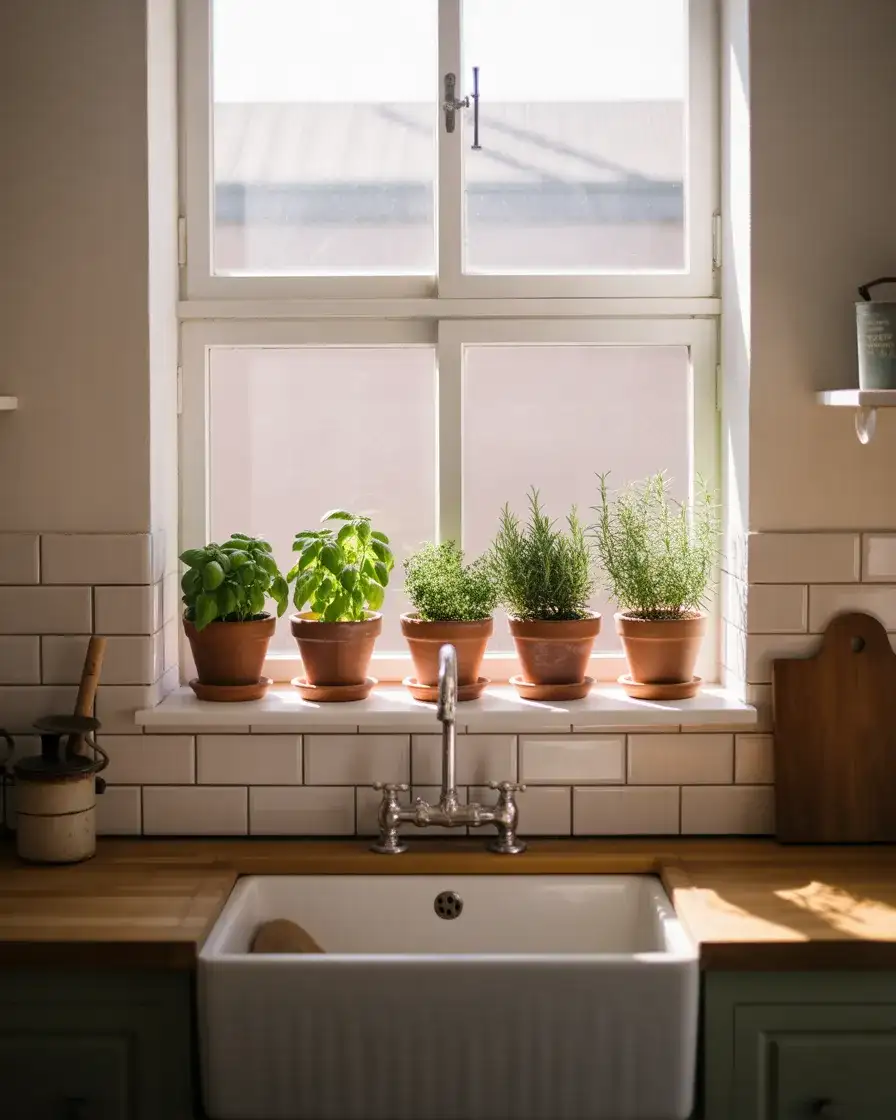
Clustering small terracotta or ceramic pots of basil, thyme, and parsley directly on the sill turns your sink area into a functional display. It’s a low-cost way to add plants in the kitchen while keeping fresh flavors within arm’s reach during meal prep. The greenery softens hard surfaces like tile and stainless steel, and the varied heights of different herb varieties create a naturally layered look that photographs beautifully for social sharing.
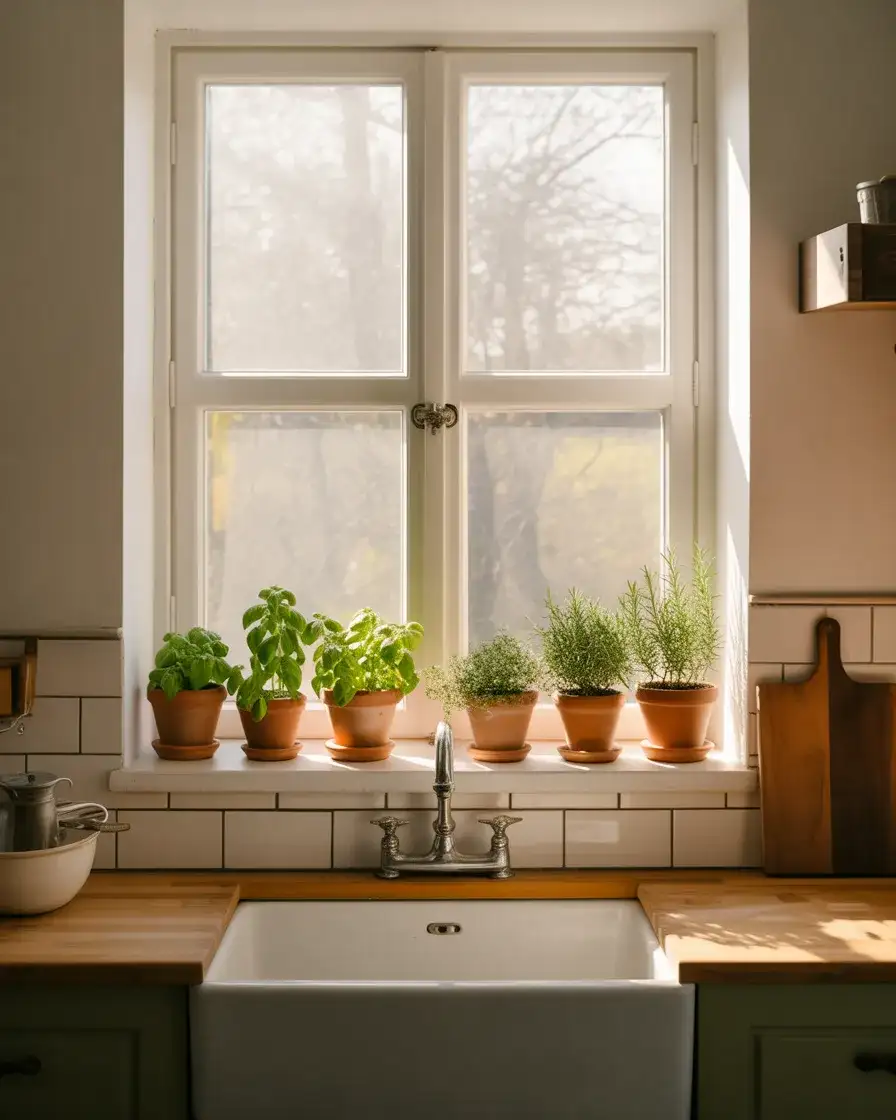
Real homeowner behavior shows that rotating herbs every few weeks keeps them from getting leggy or root-bound. If your window faces north or gets limited sun, swap in shade-tolerant options like mint or parsley, and consider a small grow light tucked under an upper cabinet. That way you maintain the visual punch without sacrificing plant health or cluttering the counter with wilted stems.
4. Black-Framed Casement Above Open Shelving
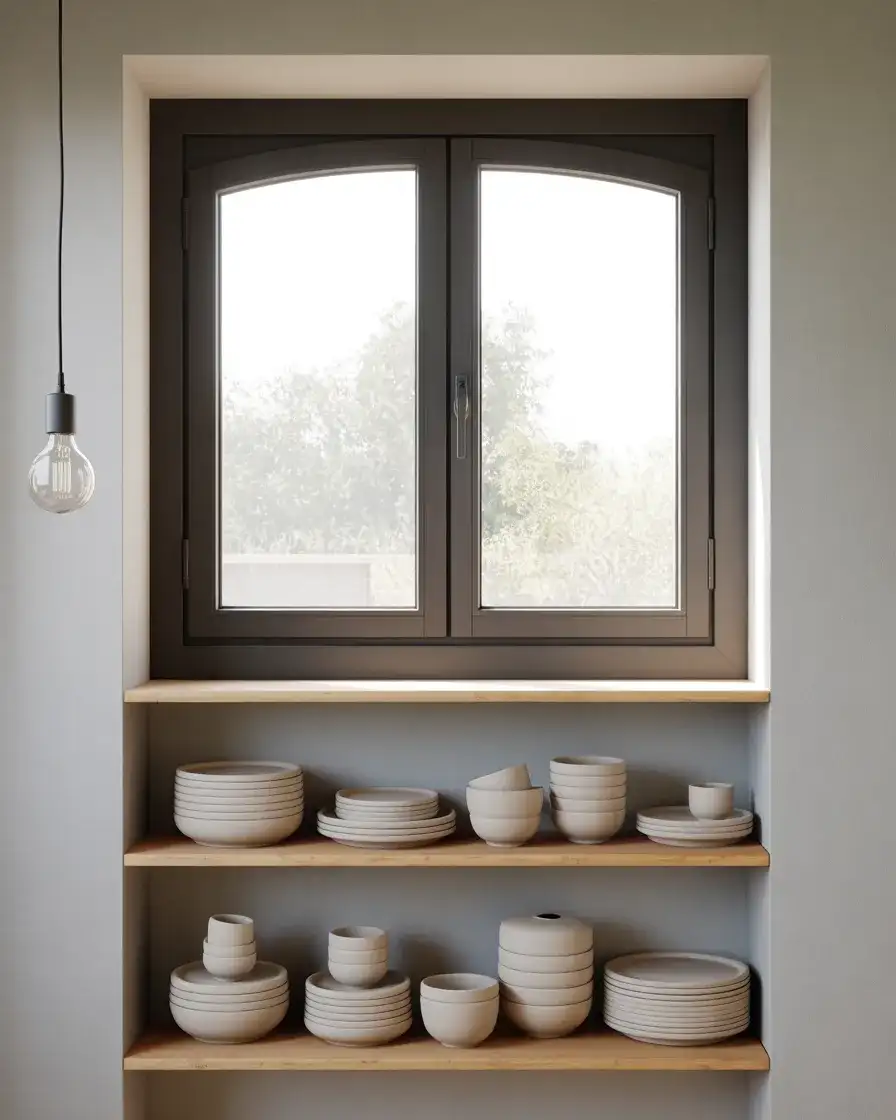
A steel or aluminum casement window painted matte black creates a gallery-like focal point, especially when installed above floating wood shelves that hold everyday dishes and glassware. The dark frame anchors the eye and contrasts beautifully with white or light-gray walls, a trend that continues to gain traction in urban lofts and renovated bungalows across the Midwest and Pacific Northwest. Leaving the window undressed emphasizes clean lines and maximizes the view.
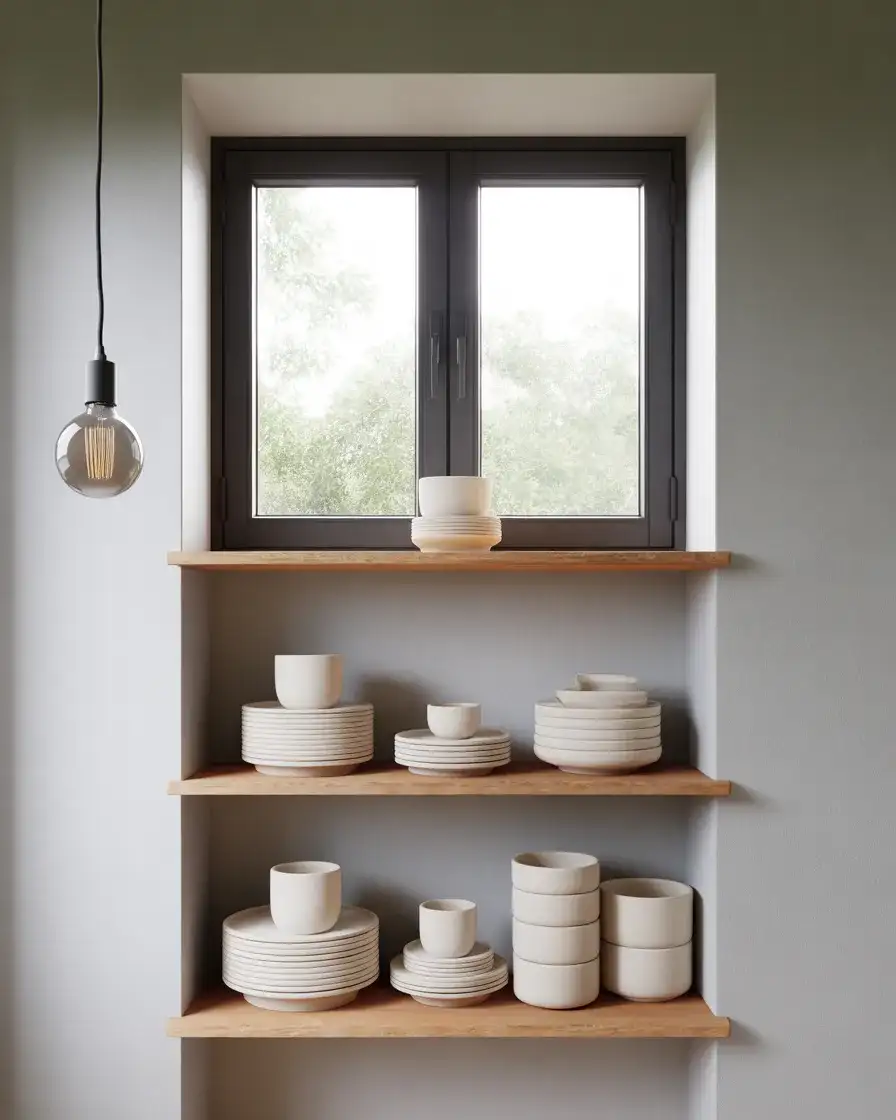
Practical insight: if you’re retrofitting an existing window, look for snap-on frame kits or adhesive casing strips that mimic steel at a fraction of the custom fabrication cost. They install in an afternoon and deliver the same graphic impact. Pair the treatment with matte-black cabinet pulls and light fixtures to tie the palette together without making the space feel too industrial.
5. Cafe Curtains for Corner Privacy
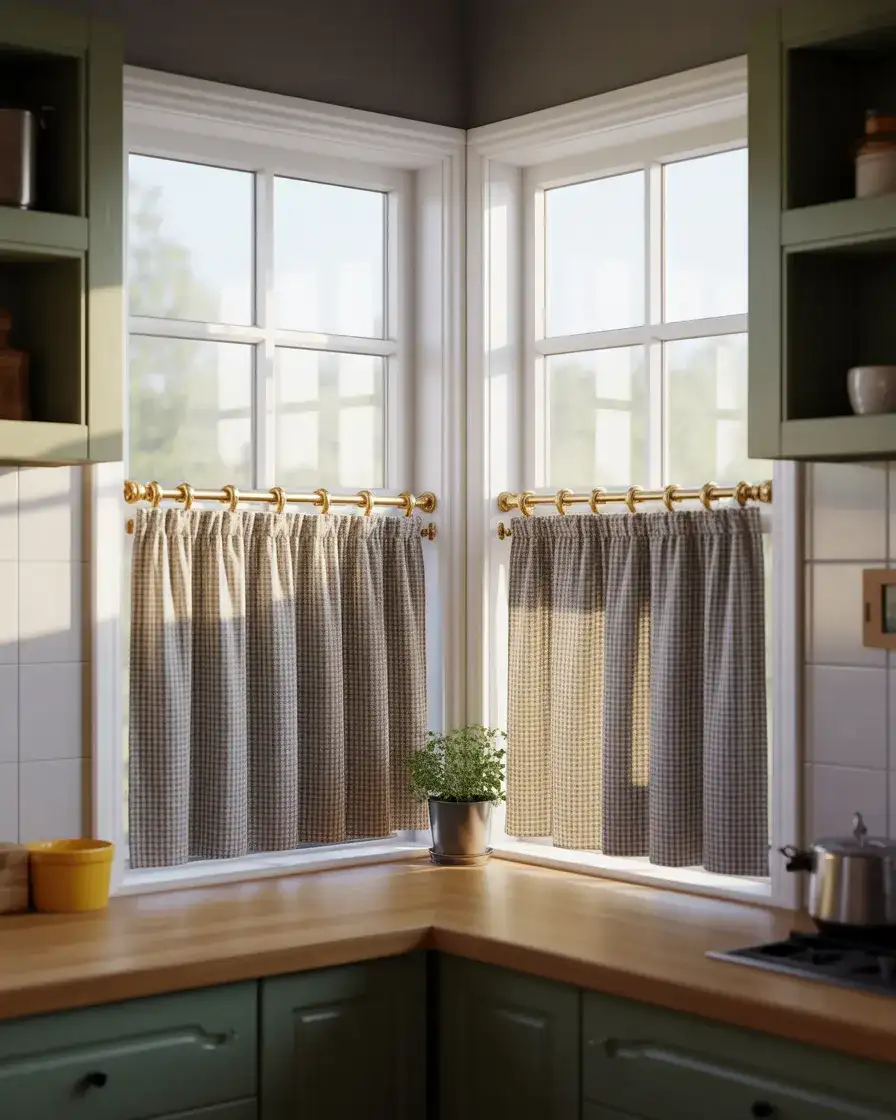
Half-height fabric panels mounted on a slim rod cover the lower pane of a corner window, shielding dish clutter from neighbors while leaving the upper glass clear for light and views. This European-inspired approach works particularly well in older homes with close lot lines or kitchens that face a shared driveway. Choose a small-scale print or solid cotton to keep the look crisp, and hang the rod at the window’s midpoint for balanced proportions.
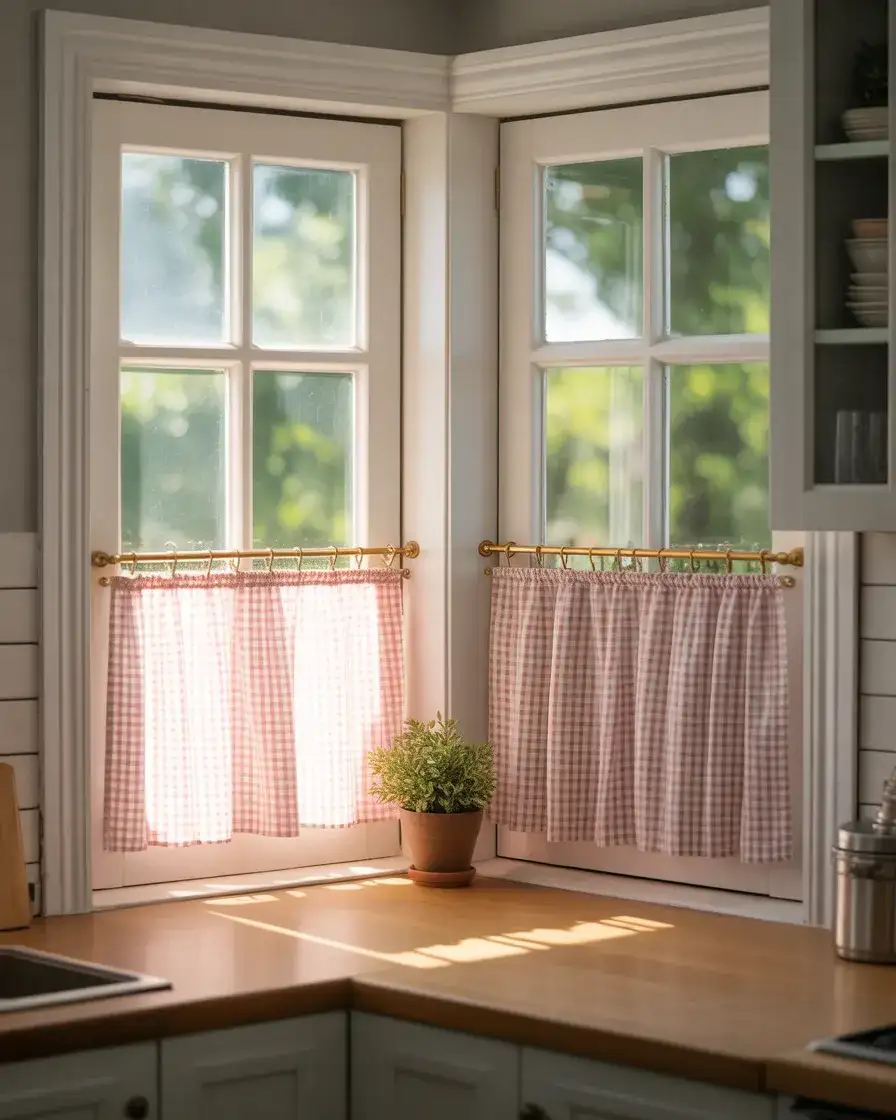
Budget angle: ready-made cafe sets start around twenty dollars at big-box retailers, making this one of the most wallet-friendly window upgrades you can tackle in a single weekend. If you sew, hemming vintage tea towels or remnant fabric takes less than an hour and adds a one-of-a-kind touch that guests always notice. Just prewash any cotton before you cut to account for shrinkage.
6. Geometric Tile Backsplash Framing the Sill
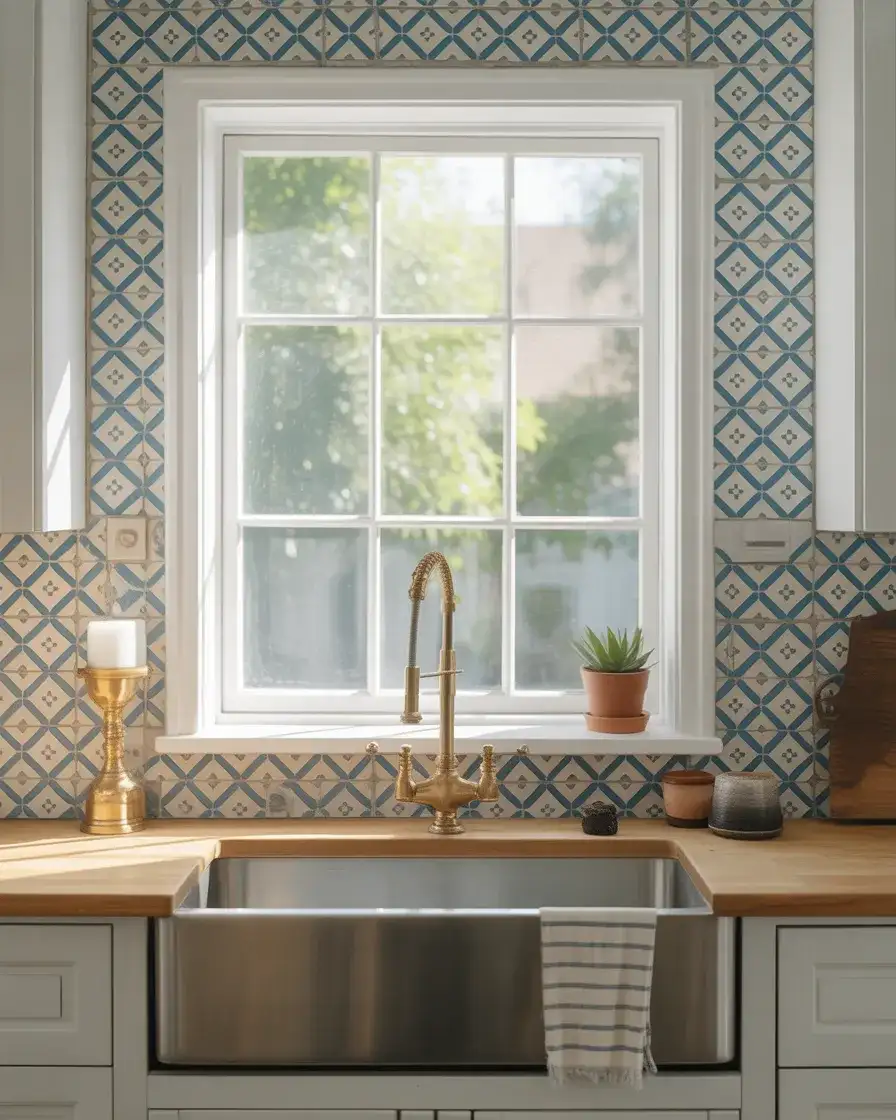
Extending a bold zellige or encaustic tile pattern right up to the window frame turns your sink backsplash into an architectural moment that draws the eye upward. It’s especially effective in Indian or globally inspired kitchens where color and pattern are celebrated rather than minimized. The repetition of shapes creates rhythm, and because the tile wraps the sill, it visually enlarges the window opening even if the glass itself is modest in size.
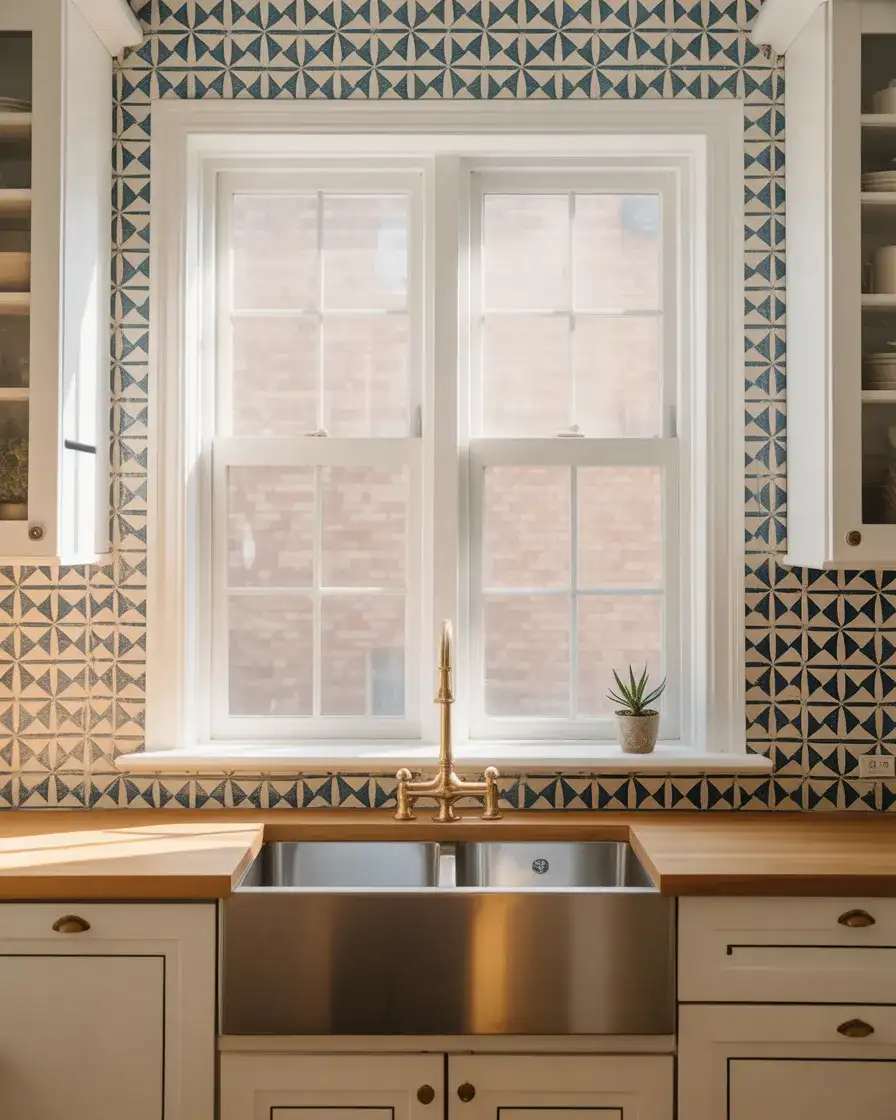
Expert-style commentary: if you’re working with a contractor, request that the tile layout be centered on the window rather than starting from a corner. That symmetry elevates the design from an afterthought to a focal point. For a DIY approach, use peel-and-stick tile to test the pattern before committing to permanent adhesive, especially if you’re mixing multiple colors or shapes that need precise alignment.
7. Floor-to-Ceiling Sliding Barn Door Panel
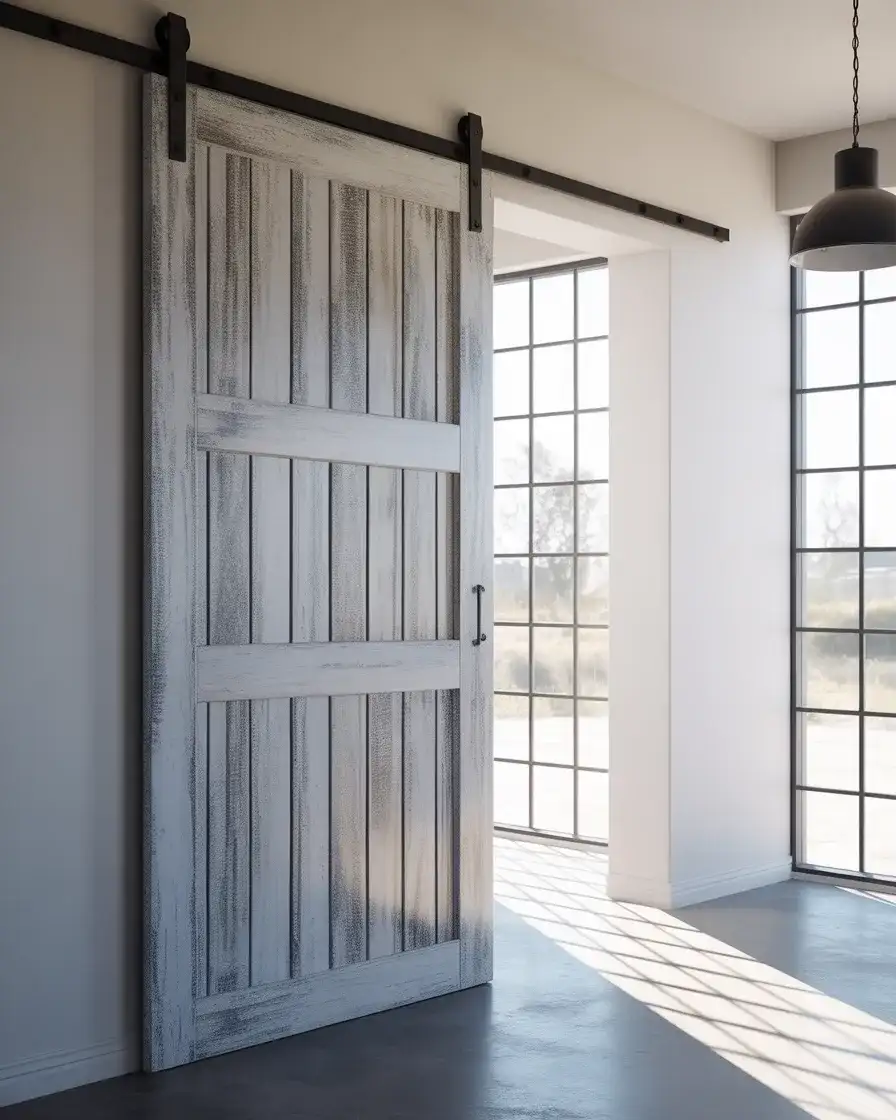
A single reclaimed-wood sliding panel on heavy-duty barn hardware lets you cover a large window when you need privacy or want to block western sun, then slide it open to flood the room with light. This approach shines in rustic and industrial kitchens where raw materials and mechanical details are part of the aesthetic. The panel doubles as a textural accent wall when closed, so it never feels like wasted square footage.
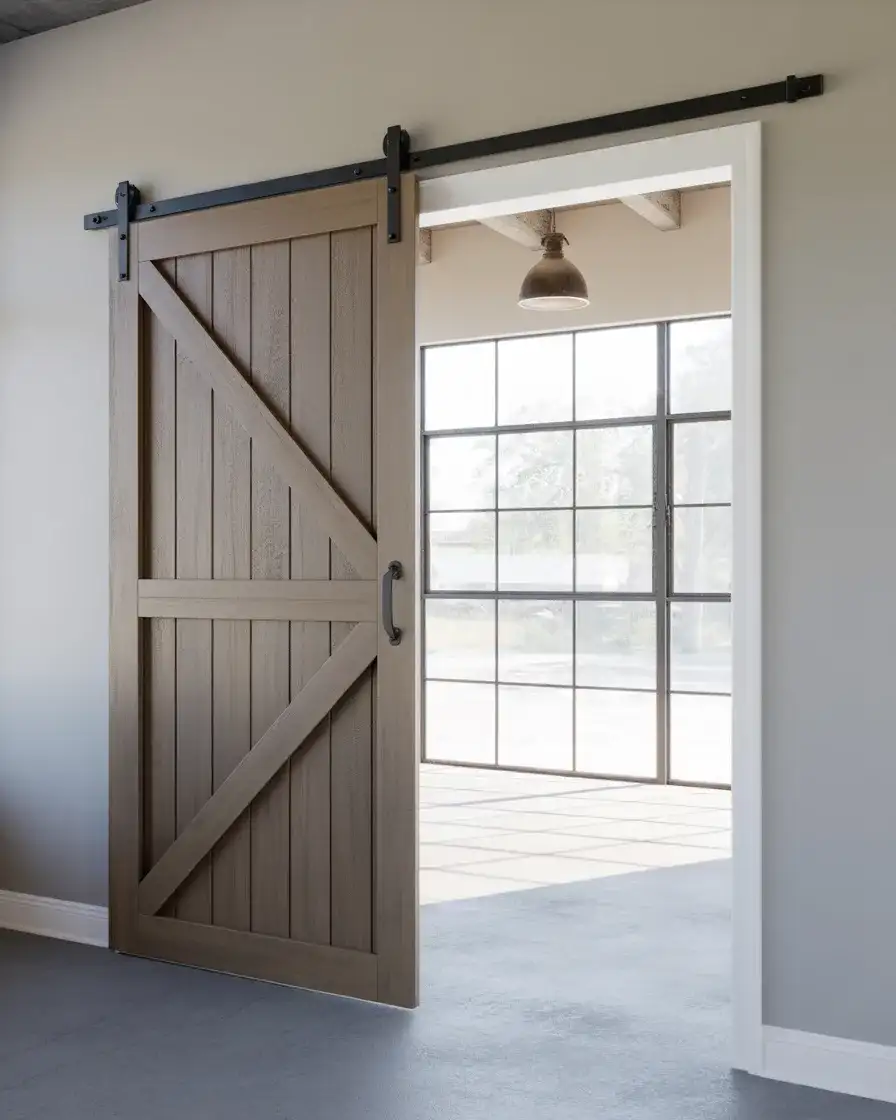
American lifestyle context: this treatment is particularly popular in converted warehouses and new-build farmhouses across Texas and Colorado, where open floor plans and high ceilings make traditional curtains feel undersized. The sliding mechanism is quieter than bifold shutters and requires less clearance, so it works even in galley layouts where every inch of wall space counts. Just make sure your studs can support the weight of the door and track assembly.
8. Stained Glass Insert for Vintage Charm
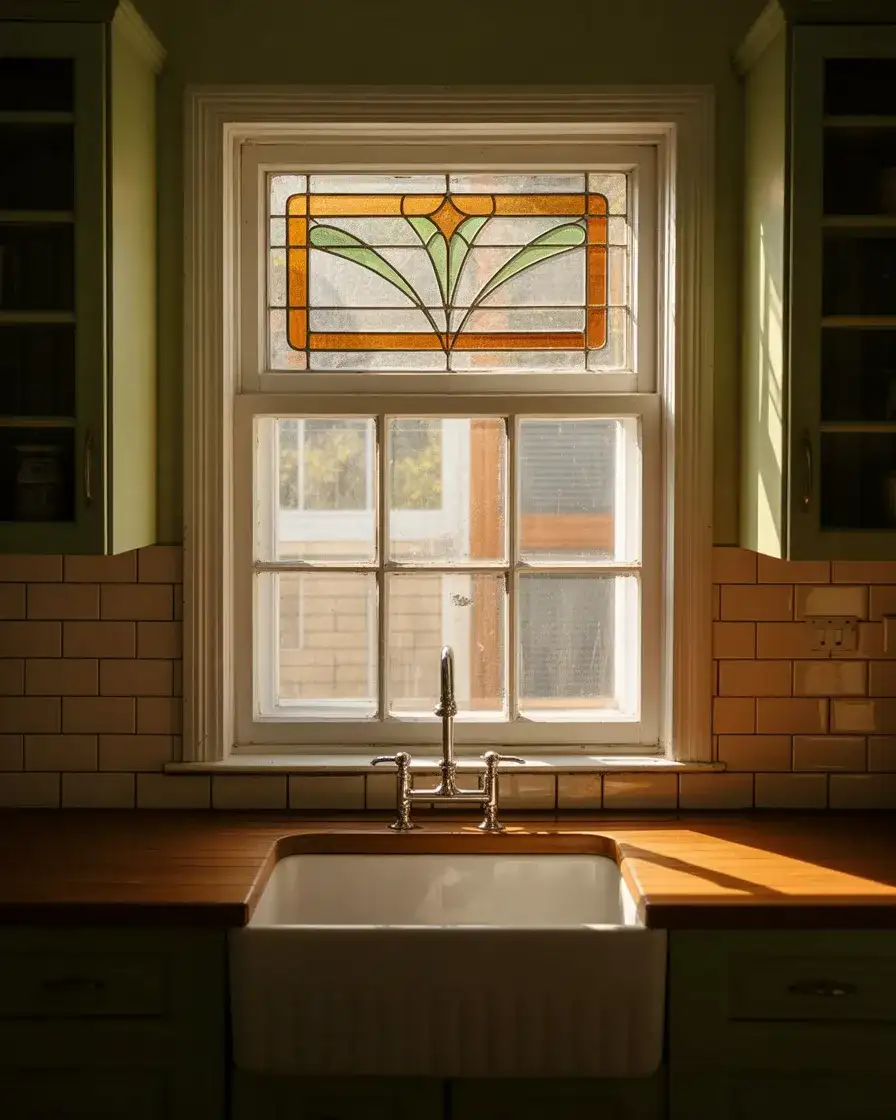
Commissioning or sourcing a custom stained-glass panel that fits your window’s dimensions adds a jewel-toned layer that shifts with the sun throughout the day. It’s a unique solution for kitchens in historic neighborhoods or homes where you want to honor original architectural details without sacrificing natural light. The colored glass casts soft patterns on counters and walls, creating a living artwork that changes from morning to evening.
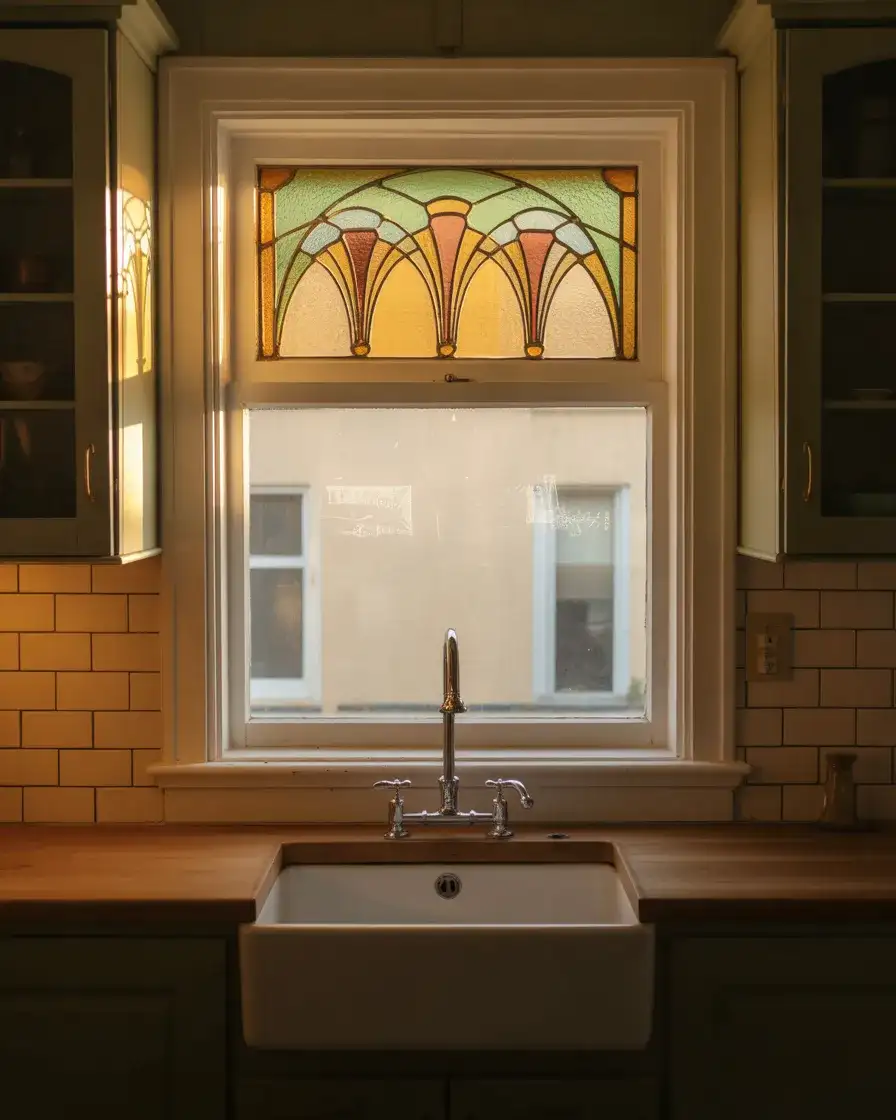
A micro-anecdote: one homeowner in New Orleans found a salvaged church panel at a flea market and had it cut down to fit her galley window. The result is a conversation starter that requires zero additional styling—no curtains, no plants—because the glass itself is the statement. If you go this route, work with a glazier to ensure the panel is sealed properly and won’t rattle or leak during storms.
9. Whitewashed Shutters for French Country Elegance
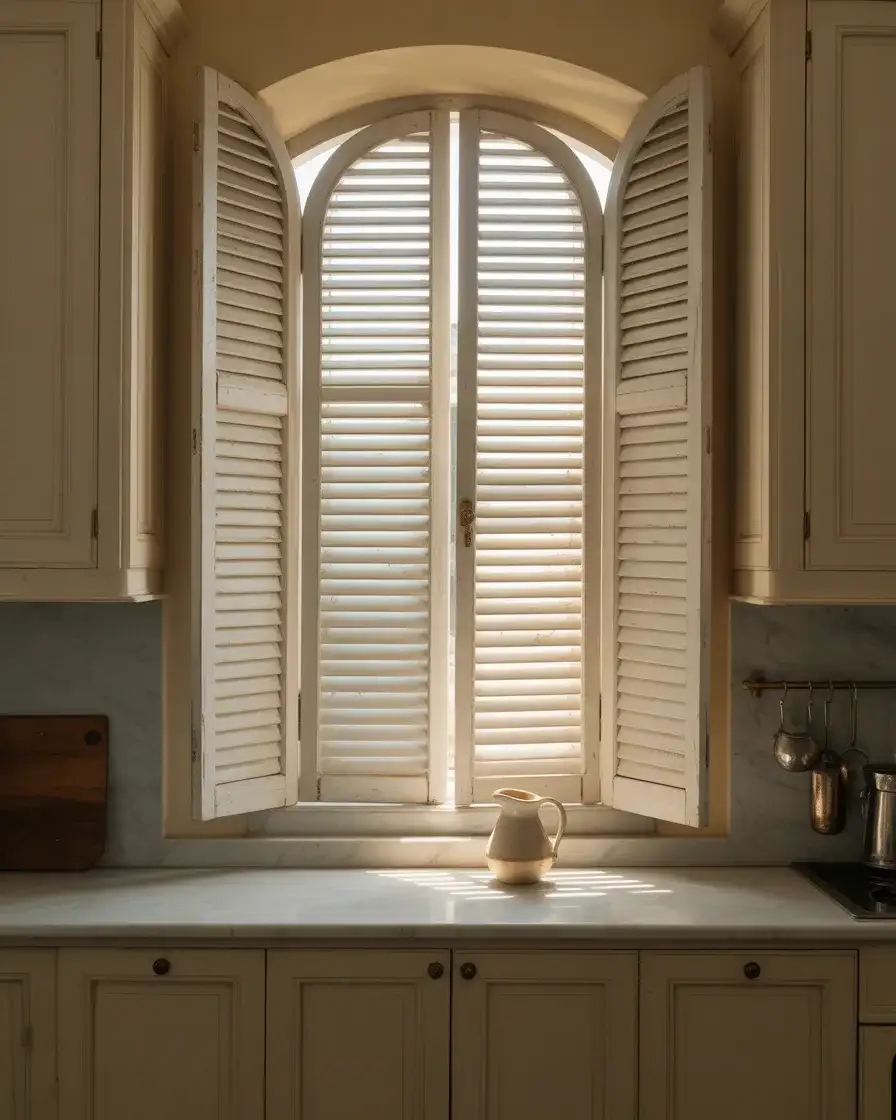
Interior louvered shutters painted in a soft white or cream finish bring a French country sensibility that feels collected and lived-in rather than overly coordinated. They’re ideal for cottage kitchens where you want to control light without blocking it entirely. The adjustable slats let you angle sun away from screens or direct it onto plants, and the solid construction stands up to humidity better than fabric treatments near sinks or dishwashers.
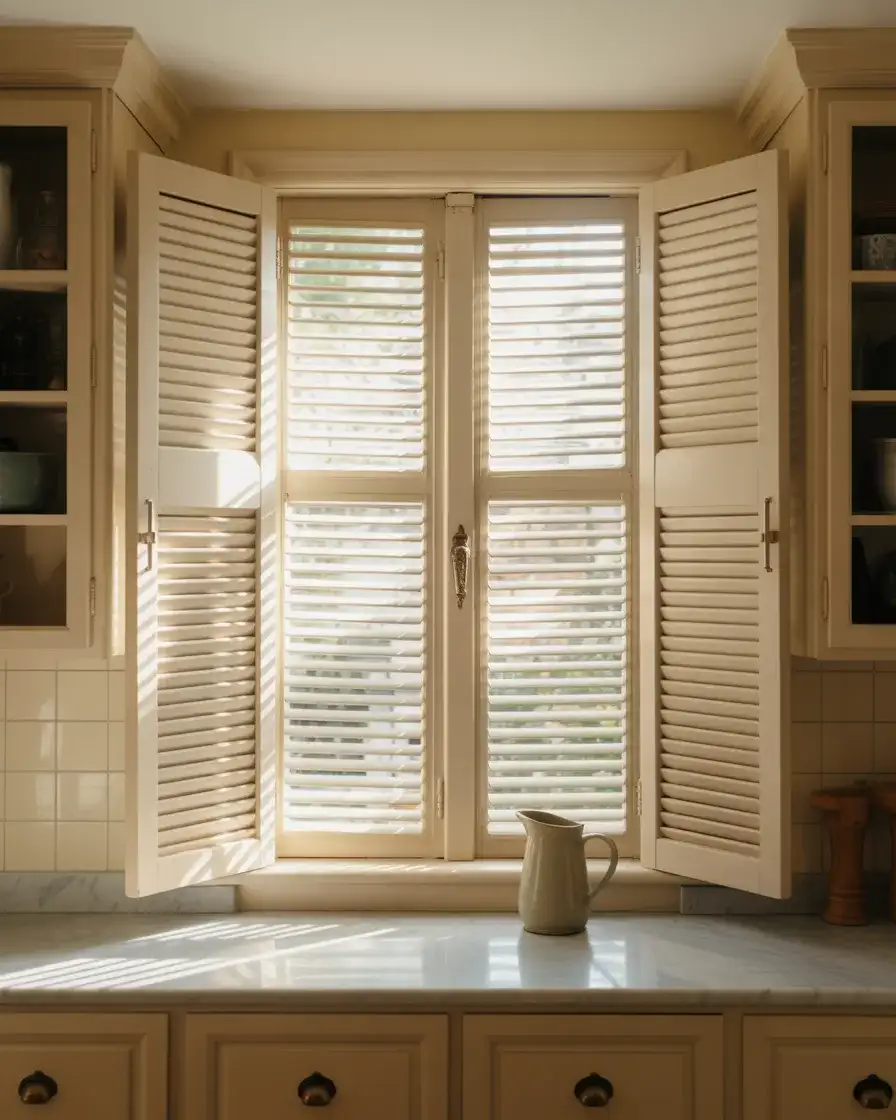
Common mistakes include installing shutters that are too narrow, leaving gaps at the sides that let in light leaks and look unfinished. Measure the window recess carefully and order panels that fit snugly, or mount them on the exterior trim if you want a more relaxed, farmhouse vibe. A quick distressing technique with sandpaper adds age and character, especially if you’re working with new MDF rather than reclaimed wood.
10. Macrame Valance Over Bare Glass
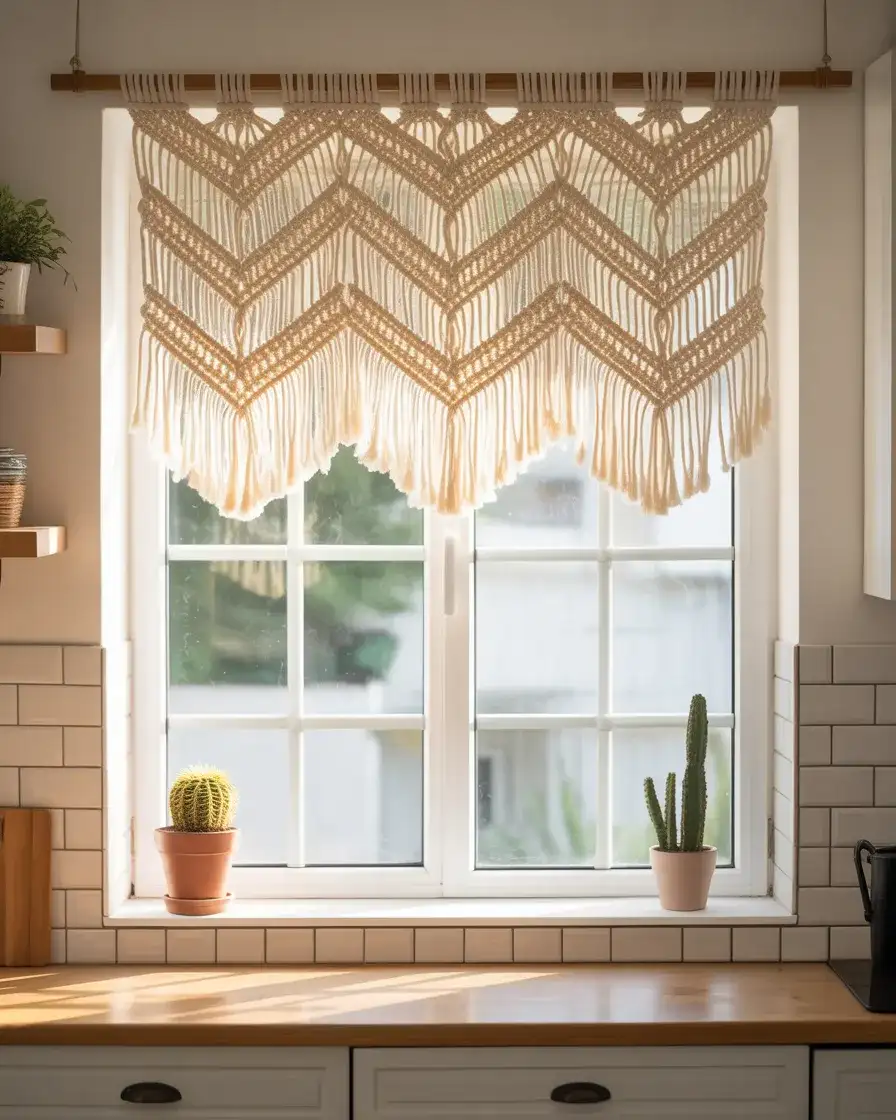
A handwoven macrame valance installed on a simple dowel rod introduces texture and a bohemian warmth without obstructing your view or natural light. It’s a smart pick for tiny kitchens where you can’t afford to lose visual square footage to heavy drapes. The knotted cotton hangs just below the top of the frame, softening the hard edge of the window while keeping the glass fully exposed for maximum brightness.
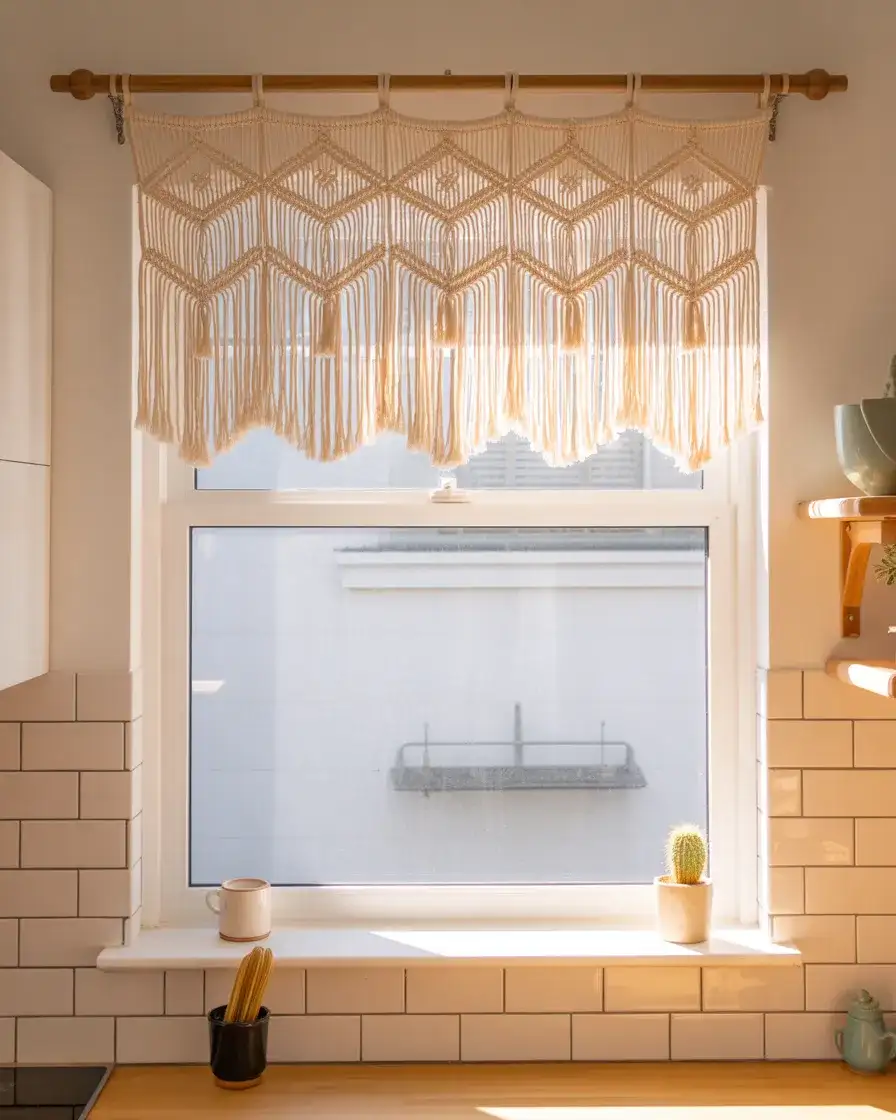
Where it works best is in kitchens with southern or eastern exposure, where you need a decorative touch but don’t want to filter the light. The valance also hides a tension rod if you decide to add a roller shade later, giving you flexibility as your needs change. Look for pieces with tighter weaves if you’re worried about dust—they’re easier to shake out or vacuum than super-loose fringe styles.
11. Industrial Steel Awning Window Above Stove
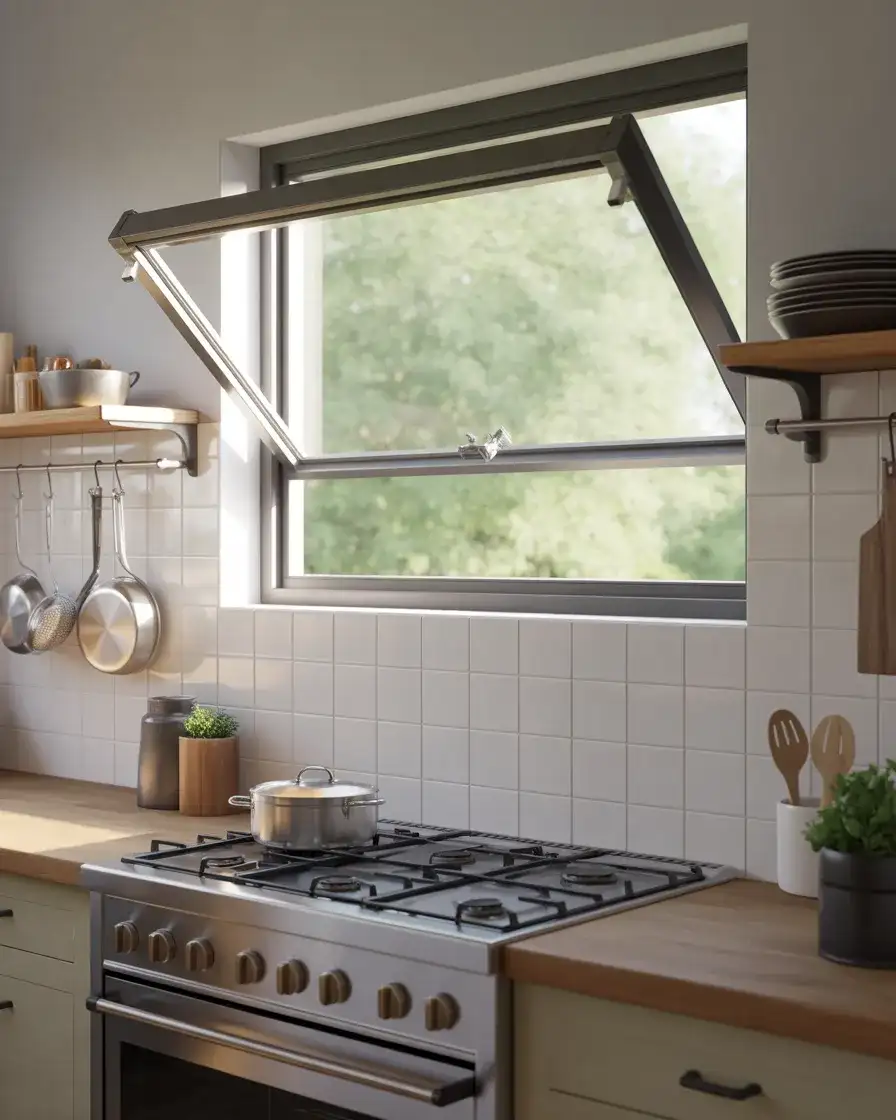
A horizontal awning-style window with a steel frame and crank handle provides ventilation directly above your range, pulling steam and cooking odors out while maintaining a clean, modern silhouette. It’s particularly useful in open-plan layouts where you want to avoid a bulky hood or where code allows operable windows as a ventilation assist. The narrow opening means you don’t sacrifice much wall space for upper cabinets or a backsplash display.
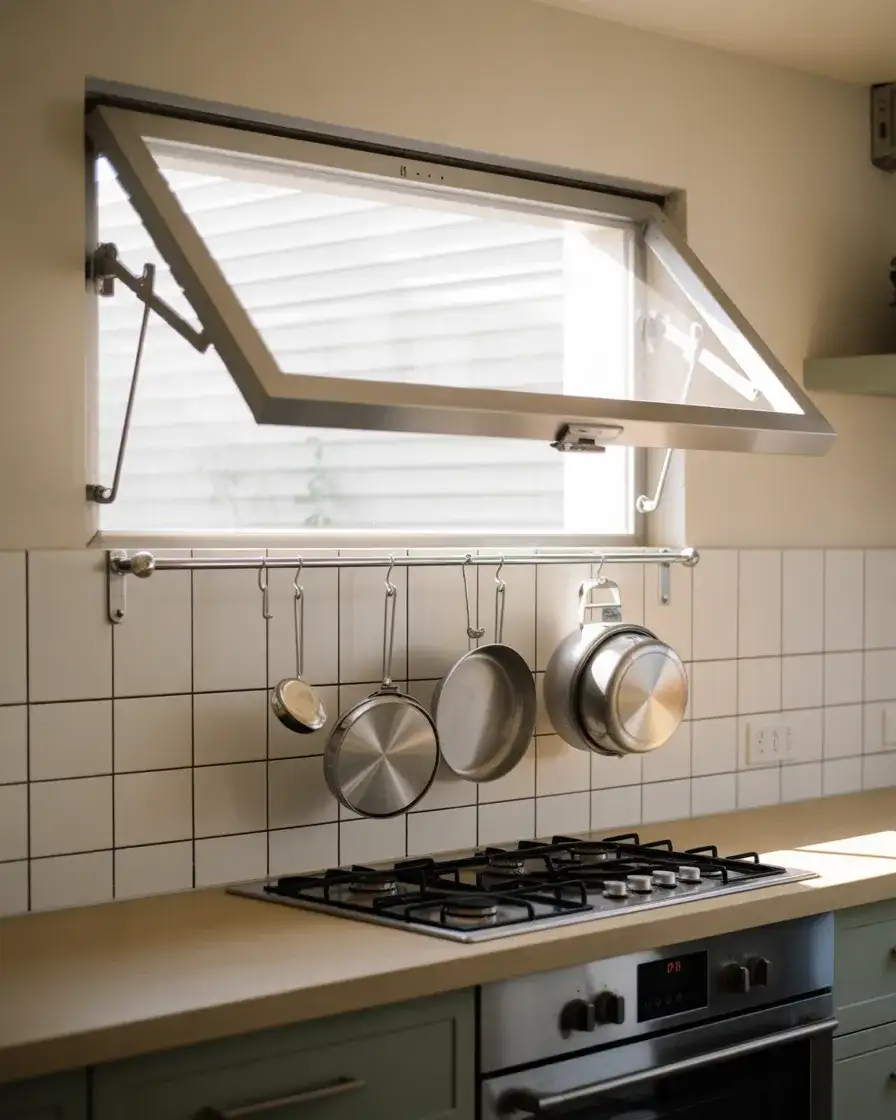
Practical insight: check local building codes before installation, since some jurisdictions have specific clearance requirements for windows near open flames. If you’re retrofitting an existing wall, this type of window is one of the easier options because it doesn’t require a full header modification—most carpenters can swap it in over a long weekend. Pair it with a magnetic screen insert if bugs are a concern in warmer months.
12. Greenhouse Extension for Year-Round Growing
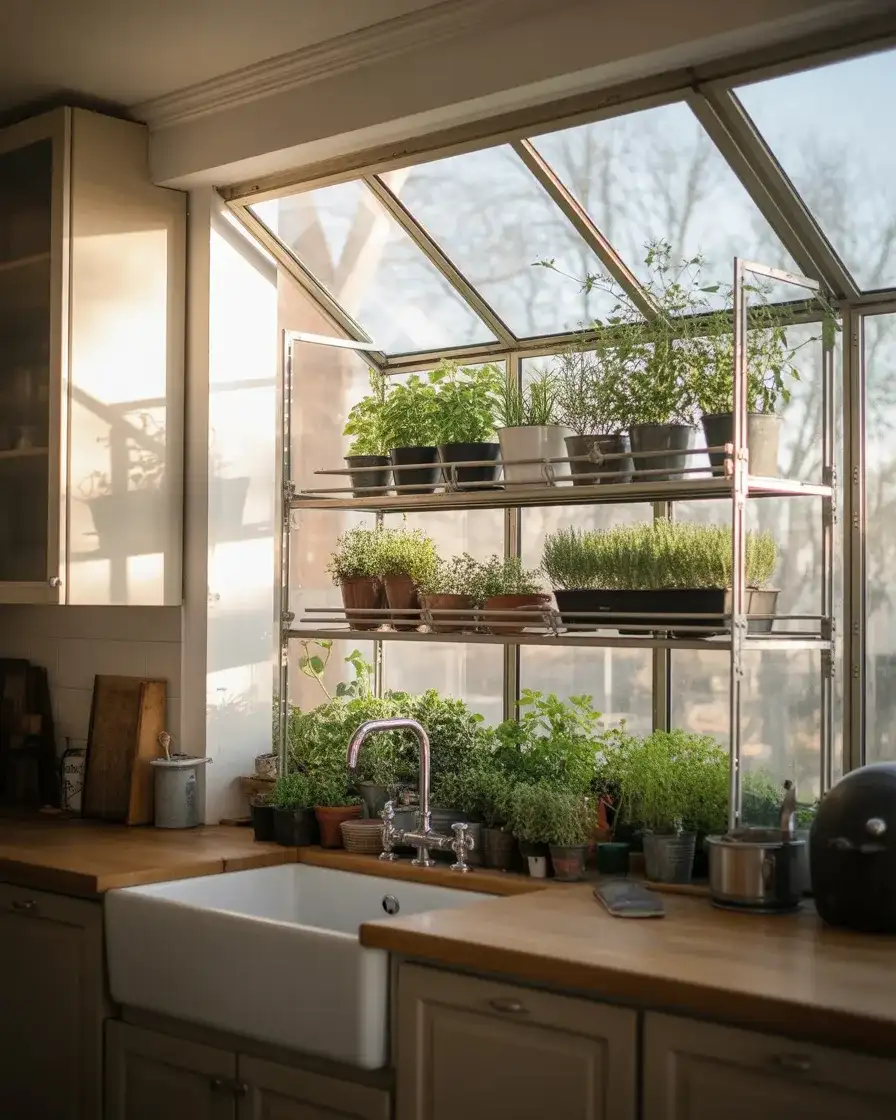
Bumping out a standard window into a small greenhouse box creates a three-season growing zone for plants in the kitchen, perfect for herbs, succulents, or even compact tomato varieties. The glass shelves and vented sides turn what might be a flat wall into a living sculpture that changes with the seasons. This solution is especially popular in northern climates where outdoor gardening windows are short and people crave greenery indoors year-round.
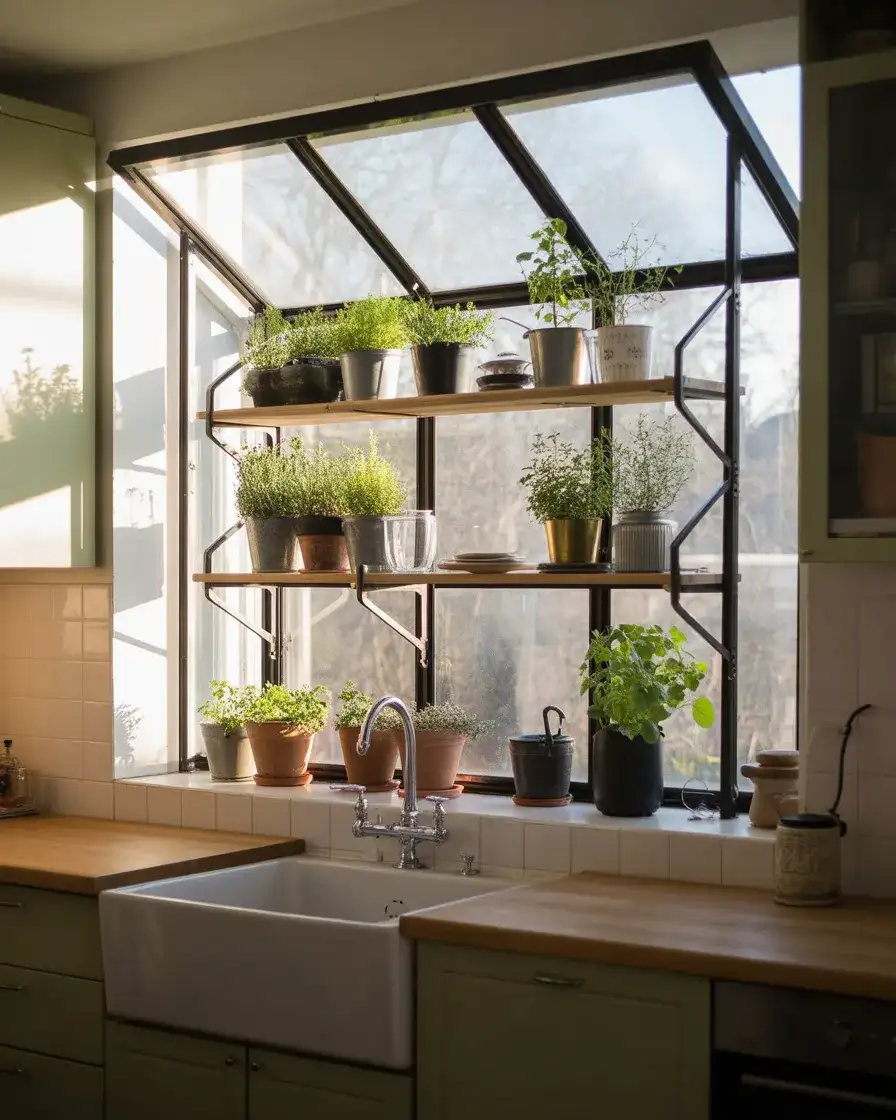
Real homeowner behavior shows that most people underestimate how much watering a windowed greenhouse requires, since the sun exposure is intense and the small volume of soil dries out quickly. Install a small drip tray on each shelf to catch overflow, and consider a misting system if you’re growing humidity-loving tropicals. The payoff is fresh basil in January and a striking focal point that guests photograph every time they visit.
13. Reclaimed Wood Valance with Pendant Lighting
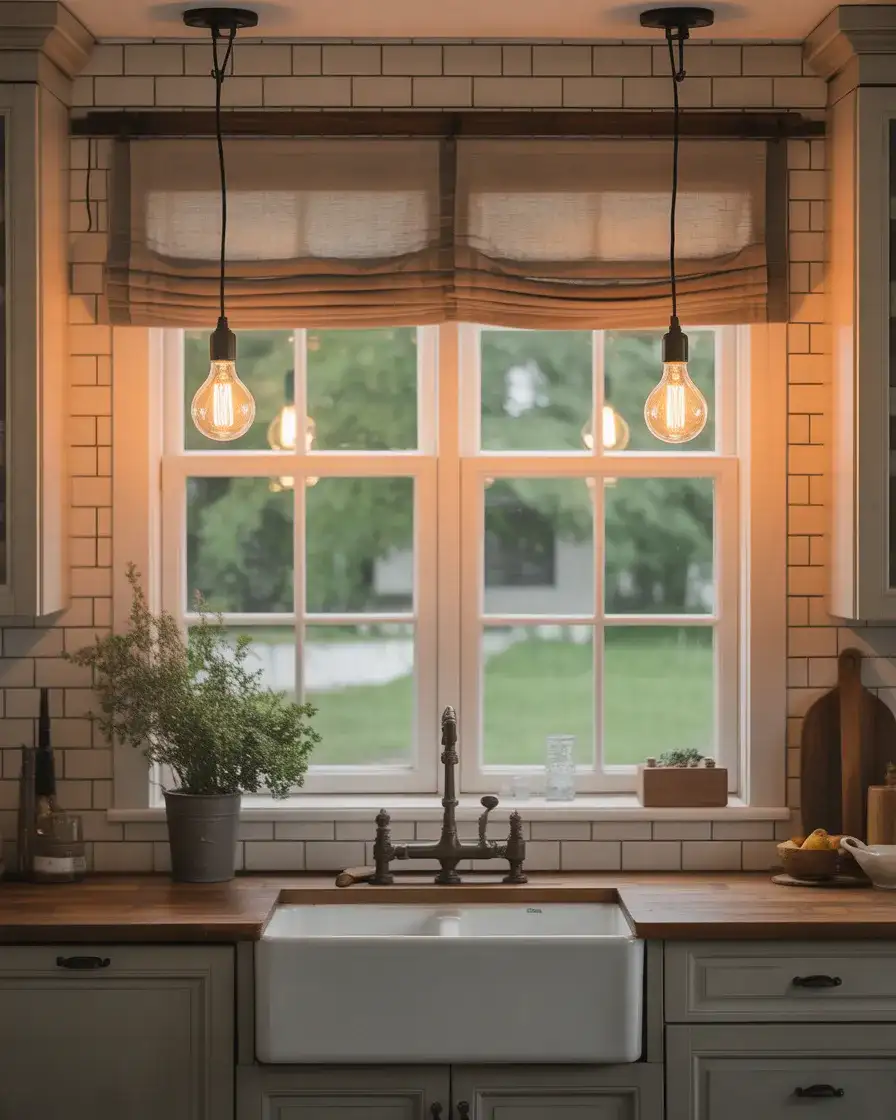
A horizontal beam of salvaged barn wood mounted just above the window frame serves as both a rustic valance and a mounting point for pendant lights that hang at varying lengths. The wood adds warmth and history, while the lights provide task illumination over the sink or prep area without requiring ceiling rewiring. This layered approach works beautifully in country kitchens or any space where you want to mix old and new materials for visual interest.
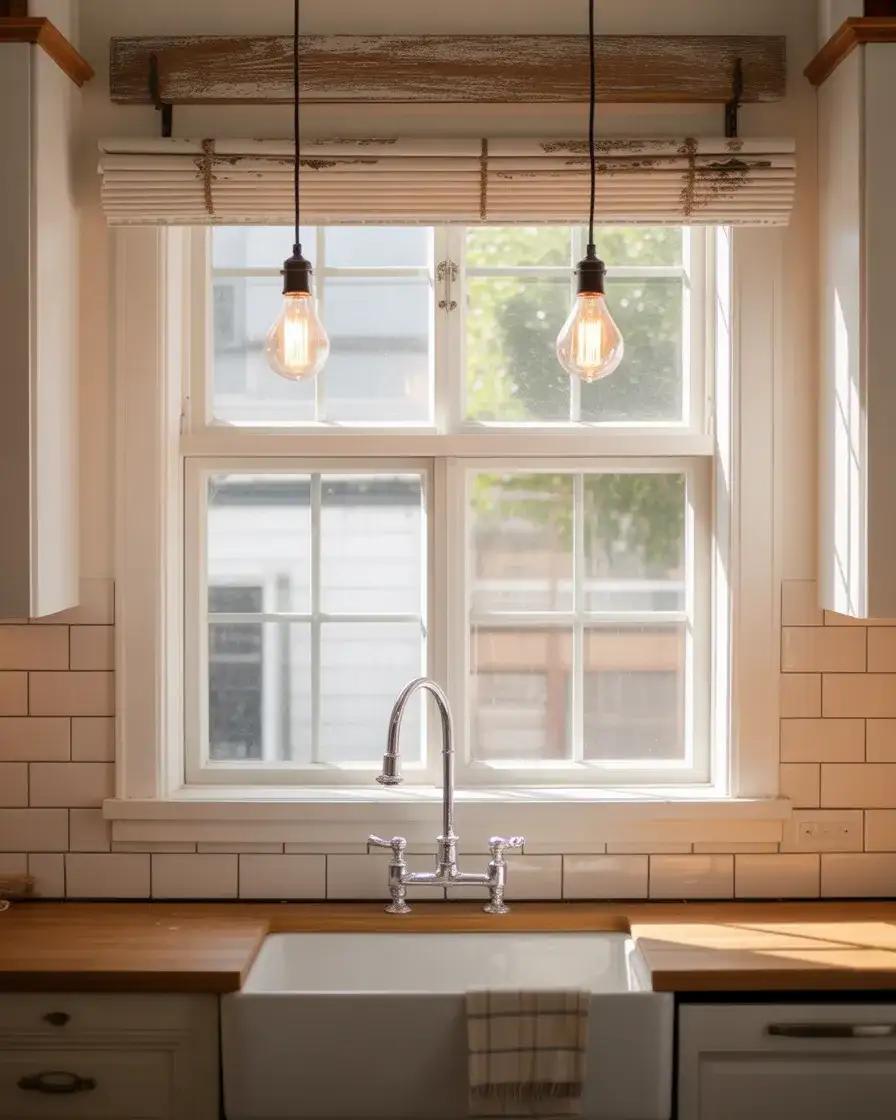
Expert-style commentary: if you’re sourcing wood yourself, look for beams that are at least two inches thick to support the weight of fixtures and provide the right visual heft. Pre-drill holes for the pendant cords and sand any rough edges to avoid splinters, but don’t over-finish the surface—part of the charm is seeing the original nail holes and weathering. A coat of matte sealer protects against kitchen grease without making the wood look glossy or fake.
14. Mirrored Backsplash Reflecting Garden Views
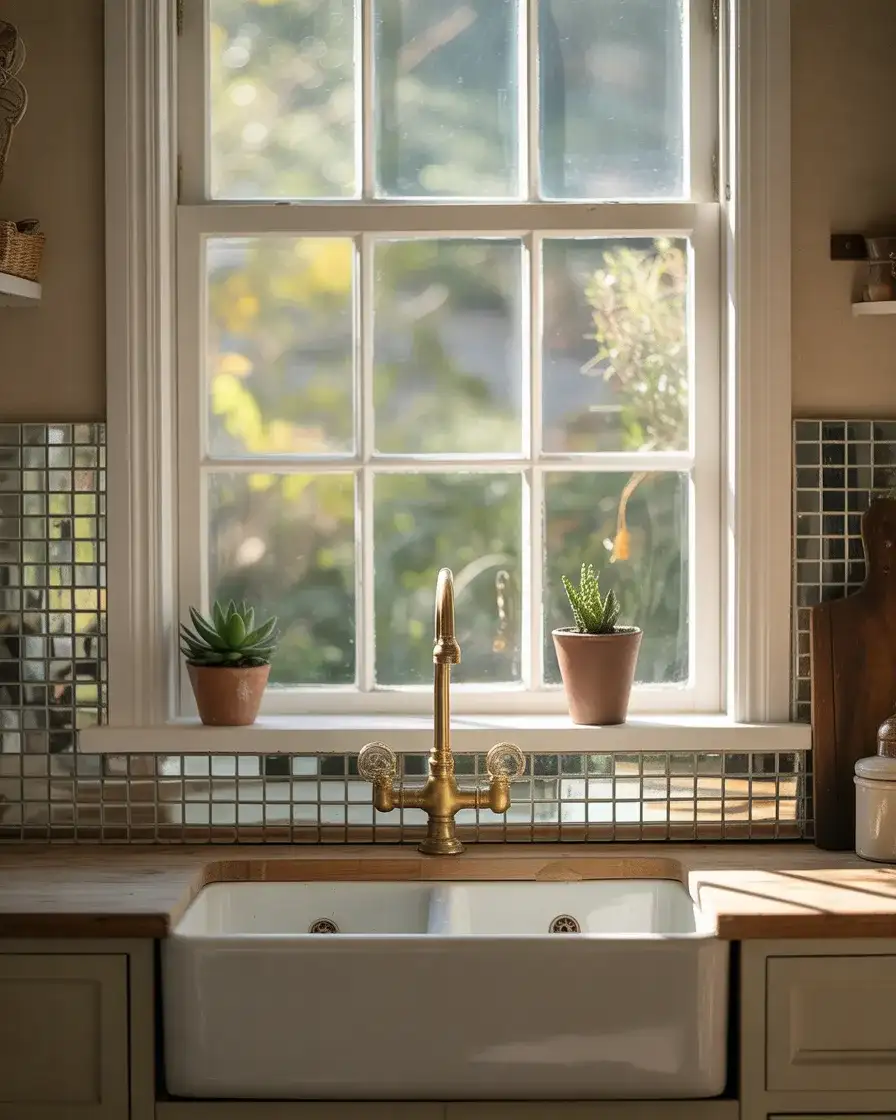
Installing antique mirror tiles or a single large mirror panel behind your sink bounces light and views back into the room, effectively doubling the visual impact of the window. It’s a unique treatment that feels especially at home in narrow galley kitchens or urban condos where you want to maximize every inch of perceived space. The reflective surface also makes greenery and flowers on the sill appear more abundant, amplifying the garden-indoors effect.
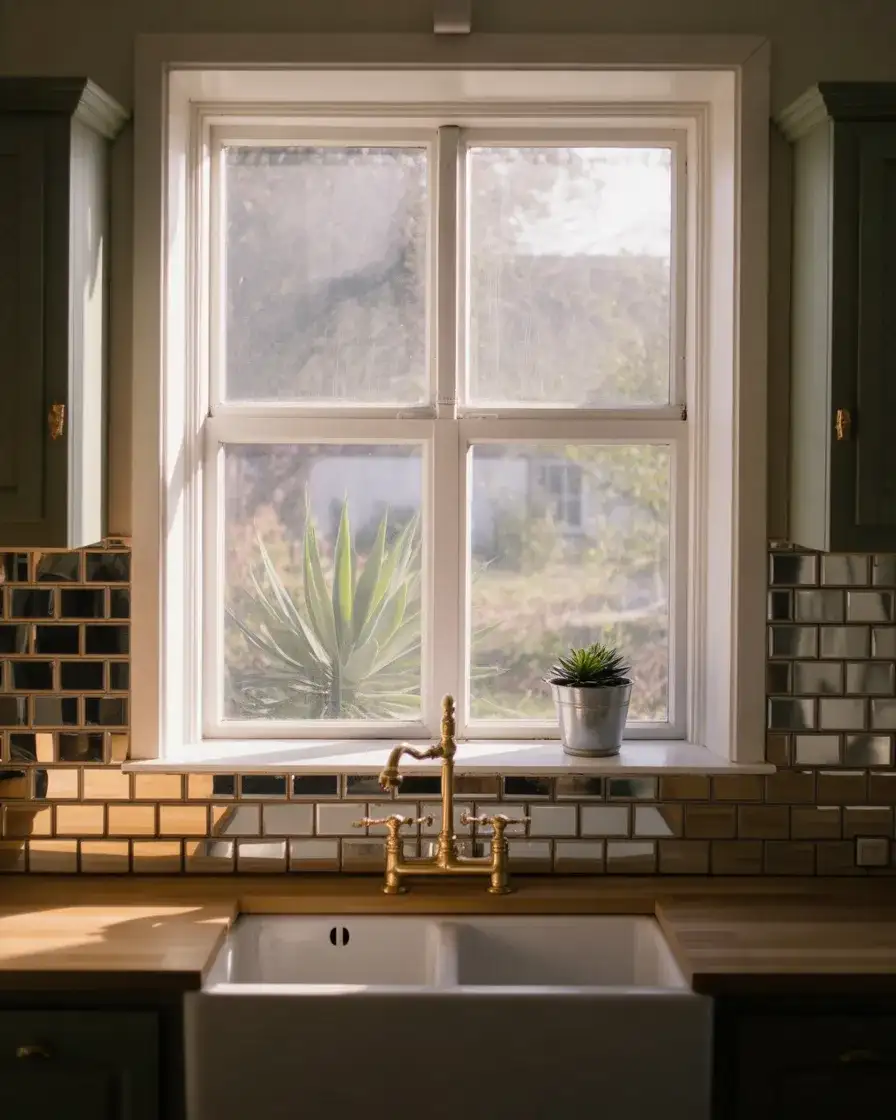
Common mistakes include using a standard mirror that isn’t rated for wet areas, which can fog or delaminate behind the sink. Always specify a “bathroom-grade” or “splash-resistant” mirror, and seal the edges with silicone to prevent moisture infiltration. Clean with a microfiber cloth and mild glass cleaner to avoid streaks, and resist the temptation to add too many objects to the sill—part of the magic is the unobstructed reflection of the outdoors.
15. Wrought-Iron Grille for Mediterranean Flair

Mounting a decorative wrought-iron grille on the interior face of the window glass adds a sculptural, rustic element that nods to Spanish colonial and Mediterranean design traditions. The metalwork casts intricate shadows when the sun streams through, creating a dynamic pattern that shifts throughout the day. It’s a statement move that works best in kitchens with stucco walls, terracotta tile, or other warm, earthy finishes that echo Old World architecture.
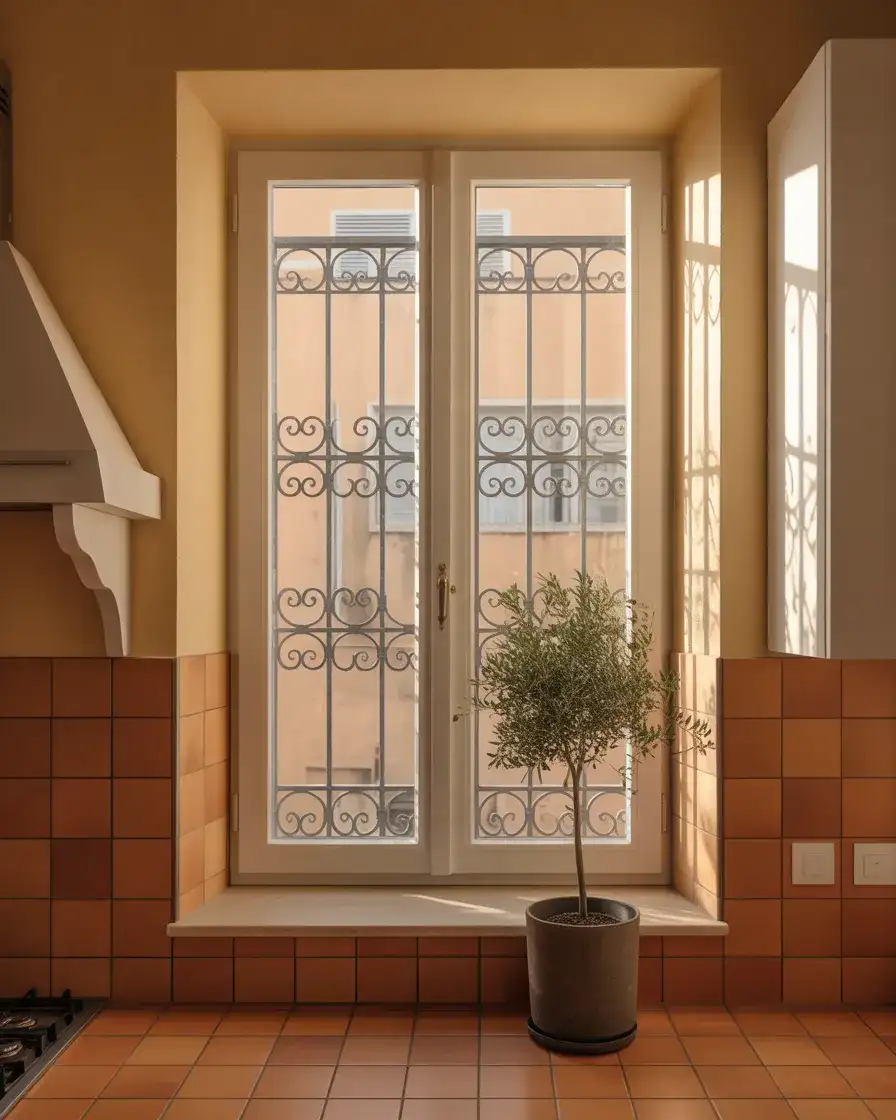
Budget angle: custom ironwork can run several hundred dollars, but architectural salvage yards often stock vintage grilles at a fraction of the cost. You may need to sandblast off old paint and apply a rust-inhibiting primer before a final coat of matte black, but that DIY effort keeps the project affordable. Just measure your window accurately—grilles are tough to modify once fabricated, so it’s worth getting the dimensions right the first time.
16. Layered Roman Shade and Sheer Panel
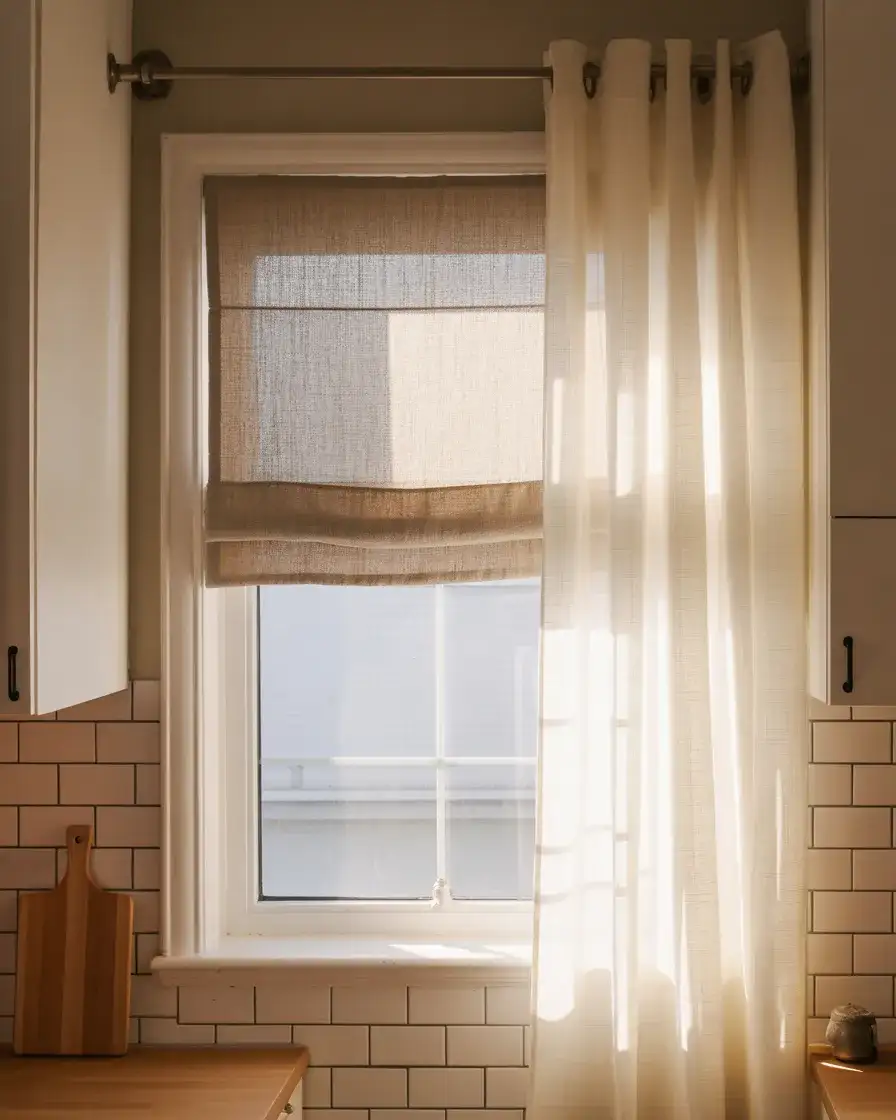
Combining a linen roman shade with a sheer curtain panel on a second rod gives you maximum flexibility: pull the shade down for privacy or sun control, leave the sheer in place for diffused light, or draw both back entirely for an unobstructed view. This double-duty setup is especially useful in long kitchens where windows span multiple feet and you need different light levels depending on the time of day. The layered textile also adds softness to hard-edged modern cabinetry.
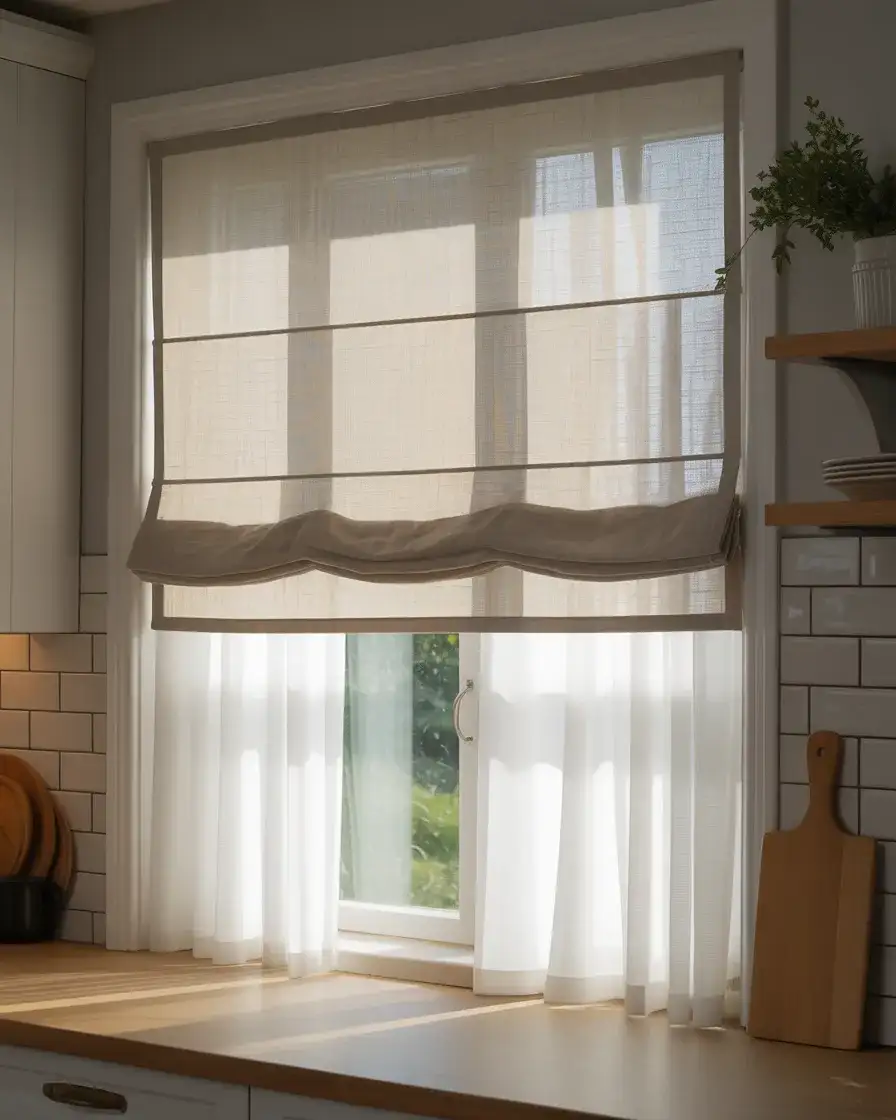
American lifestyle context: this treatment is a favorite in suburban homes where kitchens face the street or a neighbor’s driveway, and homeowners want the option to block sightlines without sacrificing natural light. The dual-layer approach also helps with insulation, trapping air between the fabrics to reduce heat loss in winter and sun gain in summer. Just make sure both rods are mounted securely—layered treatments are heavier than they look and can sag if hardware is undersized.
17. Picture-Frame Molding for Architectural Detail
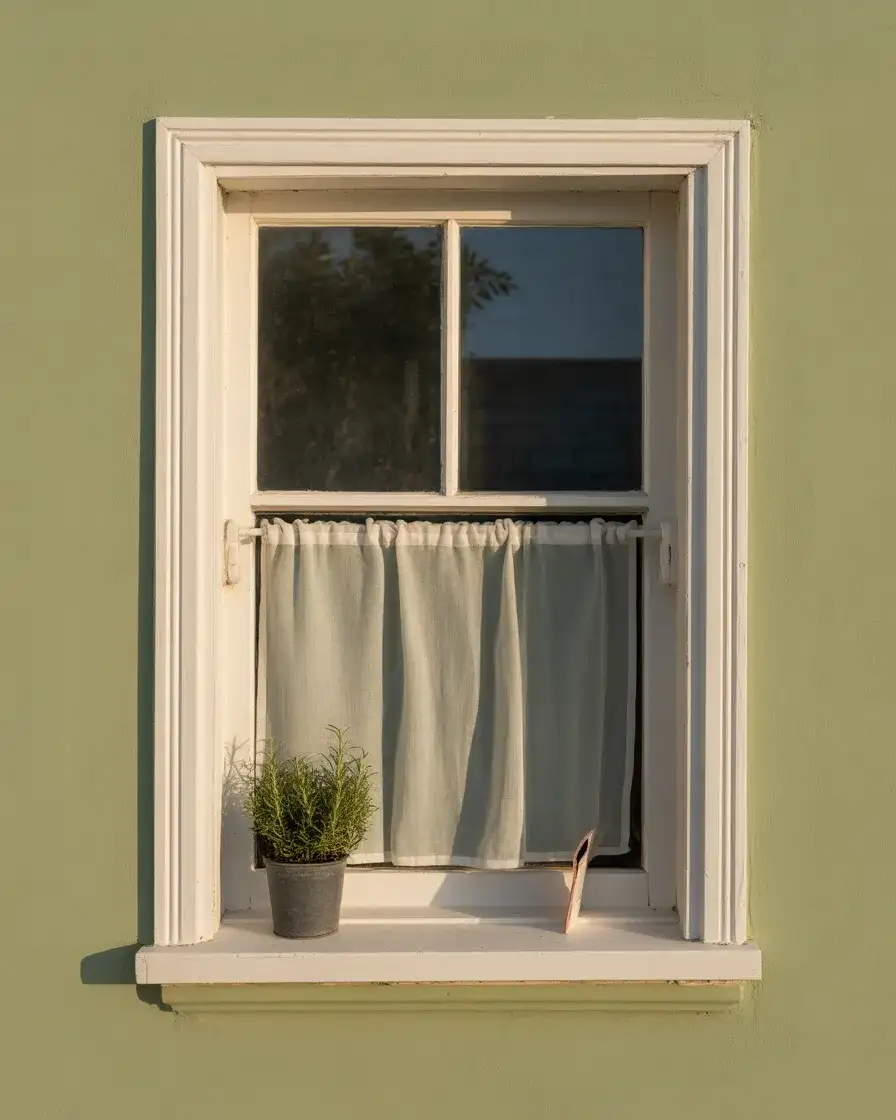
Adding raised molding around the window perimeter in a contrasting color—say, crisp white against sage-green walls—turns a builder-grade opening into a custom architectural feature. It’s a low-cost upgrade that punches well above its price point, giving even a small or awkwardly placed window the presence of something original to the home. The frame also provides a natural boundary if you want to paint the wall a different color or install patterned wallpaper without wrapping it all the way to the glass.
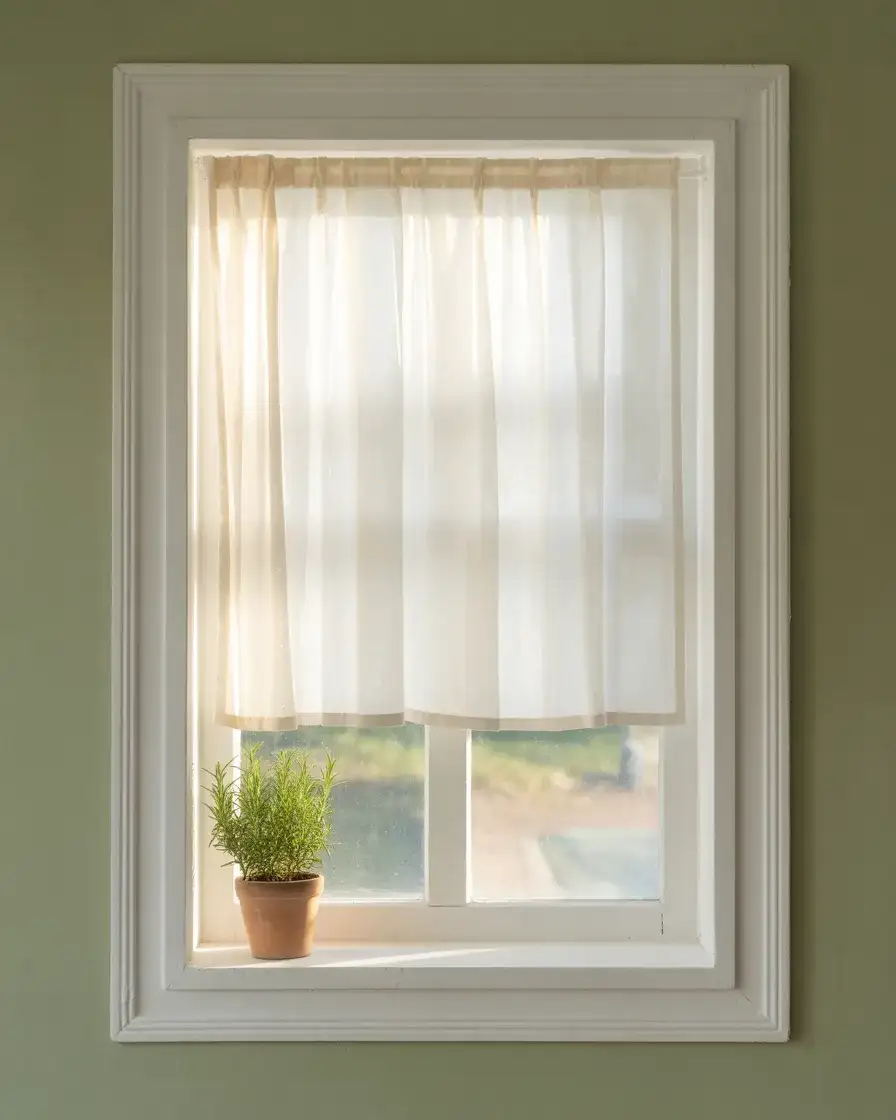
Practical insight: measure and cut your molding on a miter saw for tight, professional-looking corners. If you’re less confident with power tools, pre-mitered trim kits are available at most home centers and can be glued and nailed in place over a weekend. Paint the molding with a semi-gloss or satin finish so it’s easy to wipe down, since the area around a window collects dust and moisture more than flat wall sections.
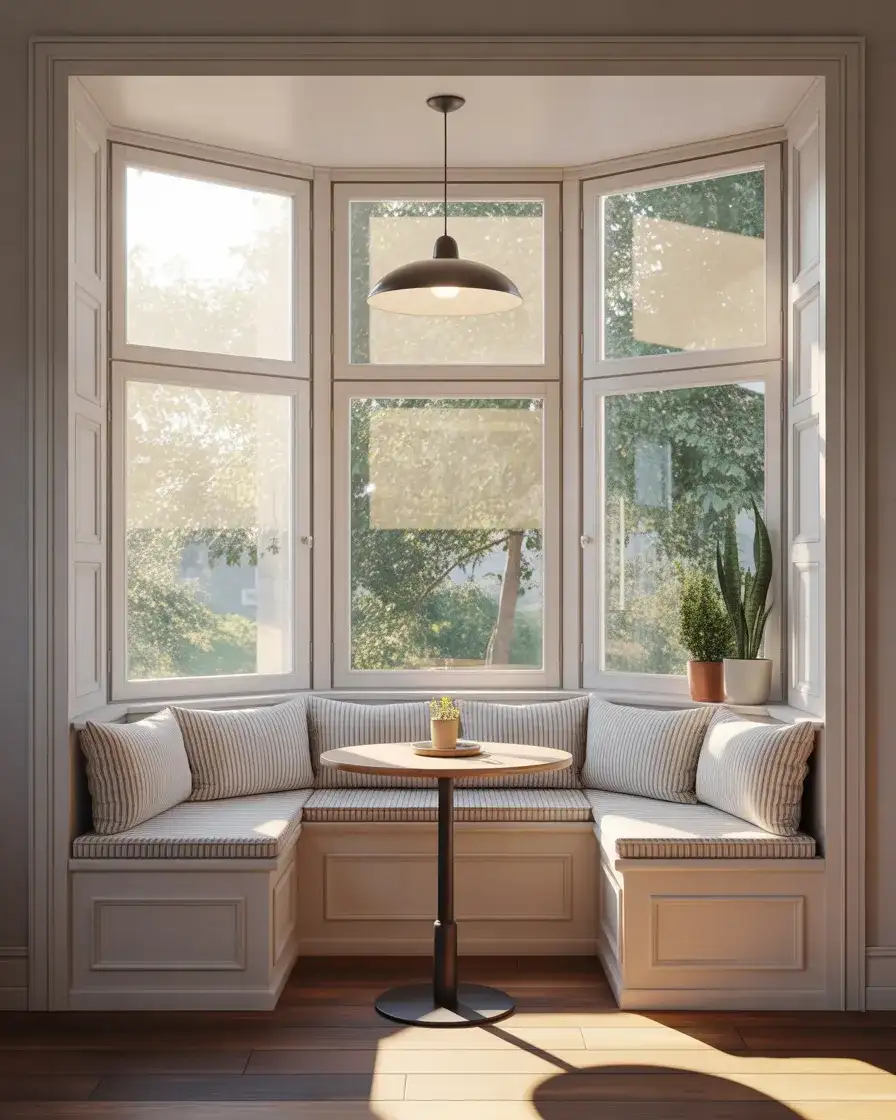
18. Bay Window Breakfast Nook with Built-In Seating
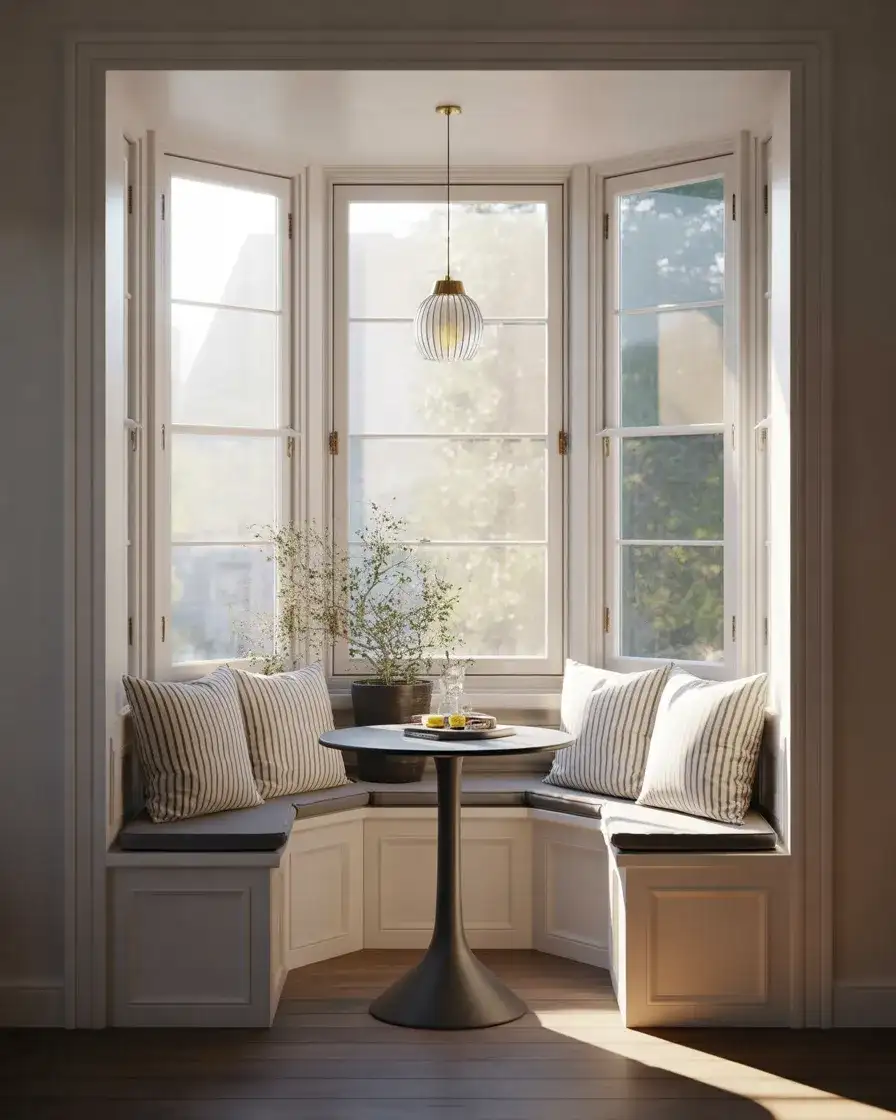
Transforming a bay window into a cozy breakfast nook with cushioned bench seating and a small table turns underused square footage into a favorite gathering spot. The three-panel glass configuration floods the space with light from multiple angles, making it ideal for morning coffee or kids’ homework. Storage drawers built into the bench base maximize functionality, and the elevated view from the bump-out feels like a mini conservatory without the cost of a full addition.
Where it works best is in kitchens with at least eight feet of continuous wall space, since a bay projection typically adds two to three feet of depth. If you’re retrofitting an existing flat window, the framing work is more involved and may require a structural engineer’s sign-off, but the return on investment is significant—both in daily enjoyment and resale appeal. Choose water-resistant cushion fabrics if the nook is used for messy snacks or craft projects.
19. Copper Pipe Plant Hanger Across the Frame
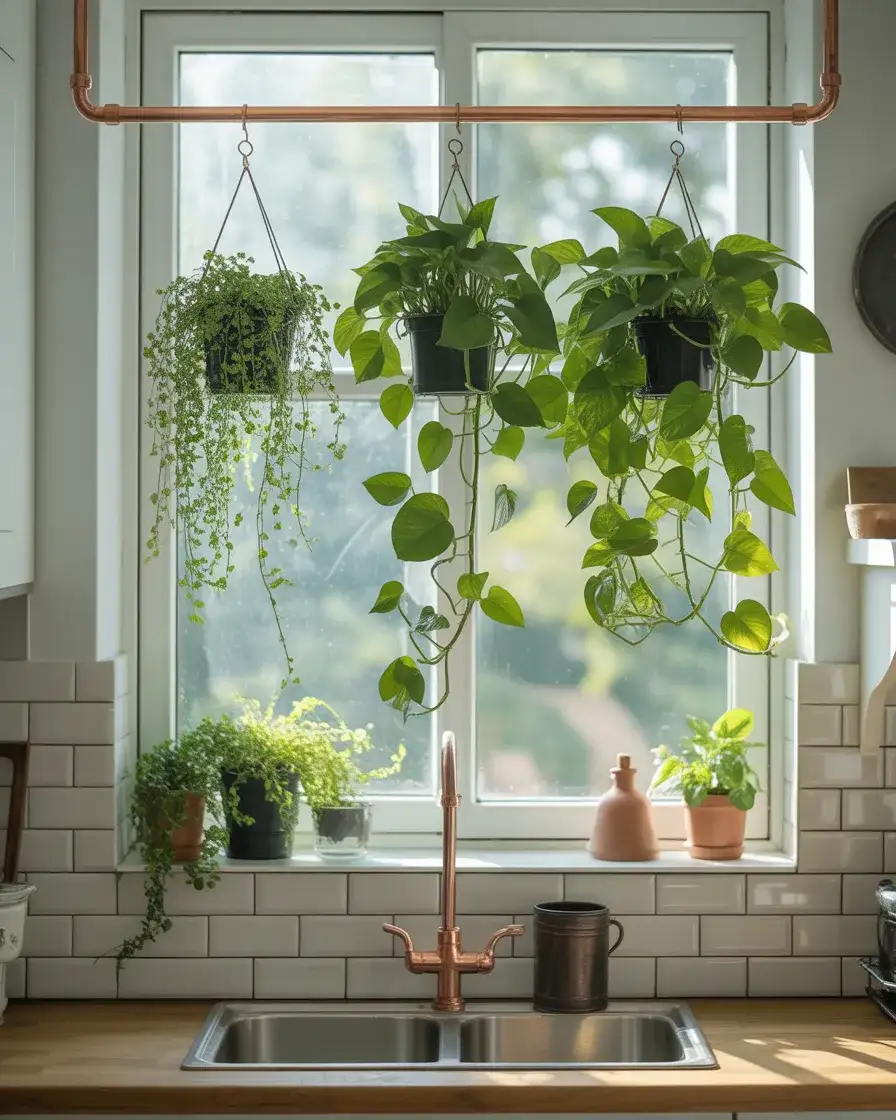
A horizontal copper pipe suspended from ceiling hooks just in front of the window creates a floating shelf effect for trailing plants like pothos or philodendron. The metallic finish catches and reflects light, adding warmth and dimension, while the greenery softens the glass boundary. It’s a unique solution for open kitchens where you want to define the window zone without blocking sightlines to adjacent rooms, and the pipe is easy to remove if you decide to rearrange later.
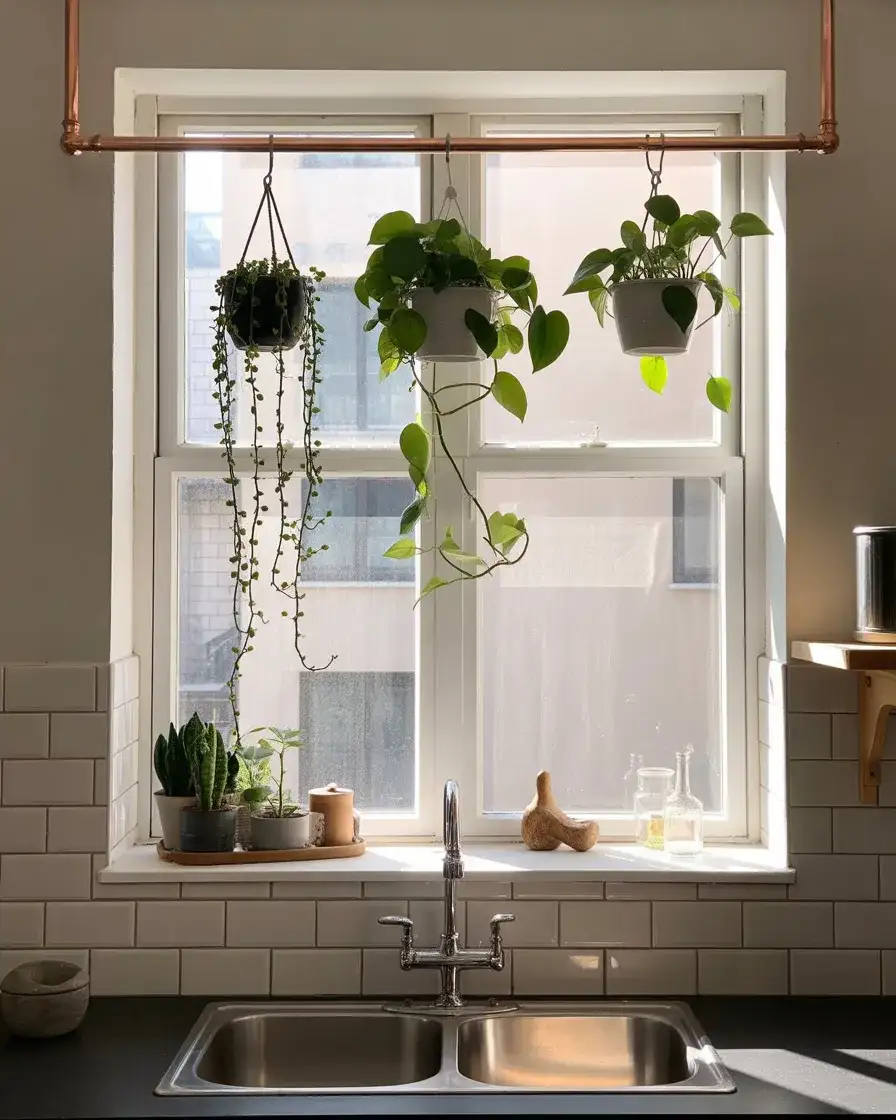
A micro-anecdote: a designer in Portland installed three-quarter-inch pipe in her rental and hung vintage enamelware planters with leather cord. The setup took less than an hour and cost under thirty dollars, but it instantly elevated the space and became the most photographed detail in her home tour. If you want the look without permanent ceiling hooks, use strong adhesive ceiling mounts rated for the weight of your plants and hardware.
20. Double-Hung with Painted Interior Sash
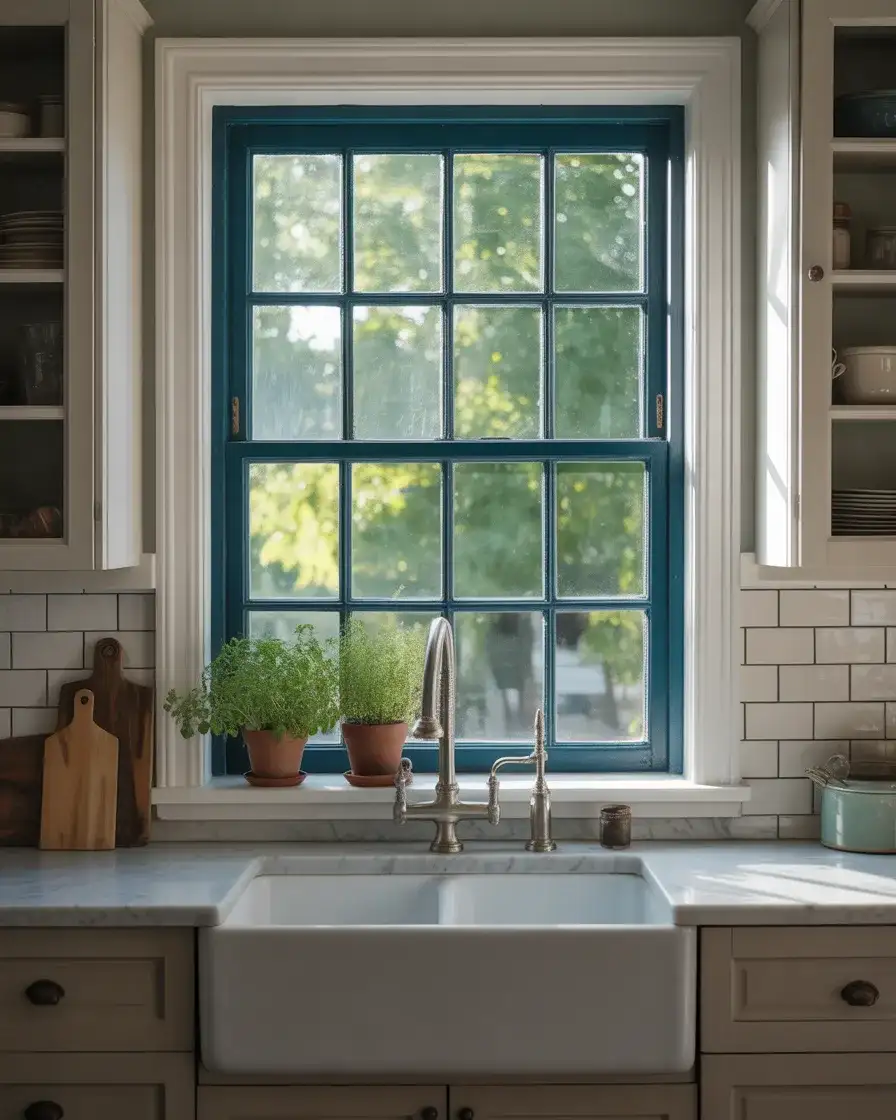
Painting the interior window sash in a bold accent color—like deep navy, forest green, or terracotta—while leaving the exterior trim white creates a striking graphic moment that frames your view. This double-duty treatment works especially well in neutral kitchens where you want a pop of personality without committing to bold cabinetry or wall color. The painted sash also draws the eye upward, making the ceiling feel higher and the room more spacious.
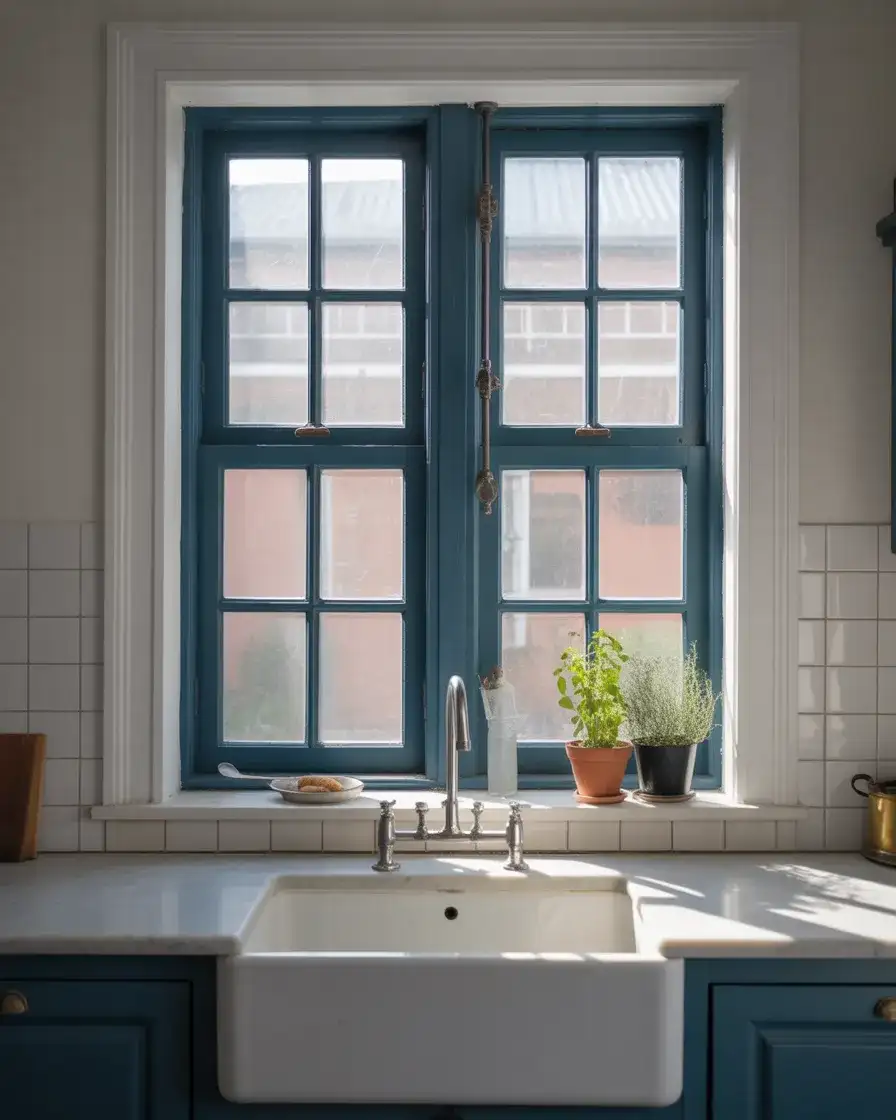
Real homeowner behavior shows that most people hesitate to paint window components, worried about drips or uneven coverage. The trick is to remove the sash entirely if possible, sand lightly, prime with a bonding primer, and apply two thin coats of satin or semi-gloss paint. Reassemble once fully cured—usually forty-eight hours—and you have a custom detail that looks like it was original to the home. Touch up the edges annually to keep the finish crisp.
21. Translucent Resin Panels for Diffused Privacy
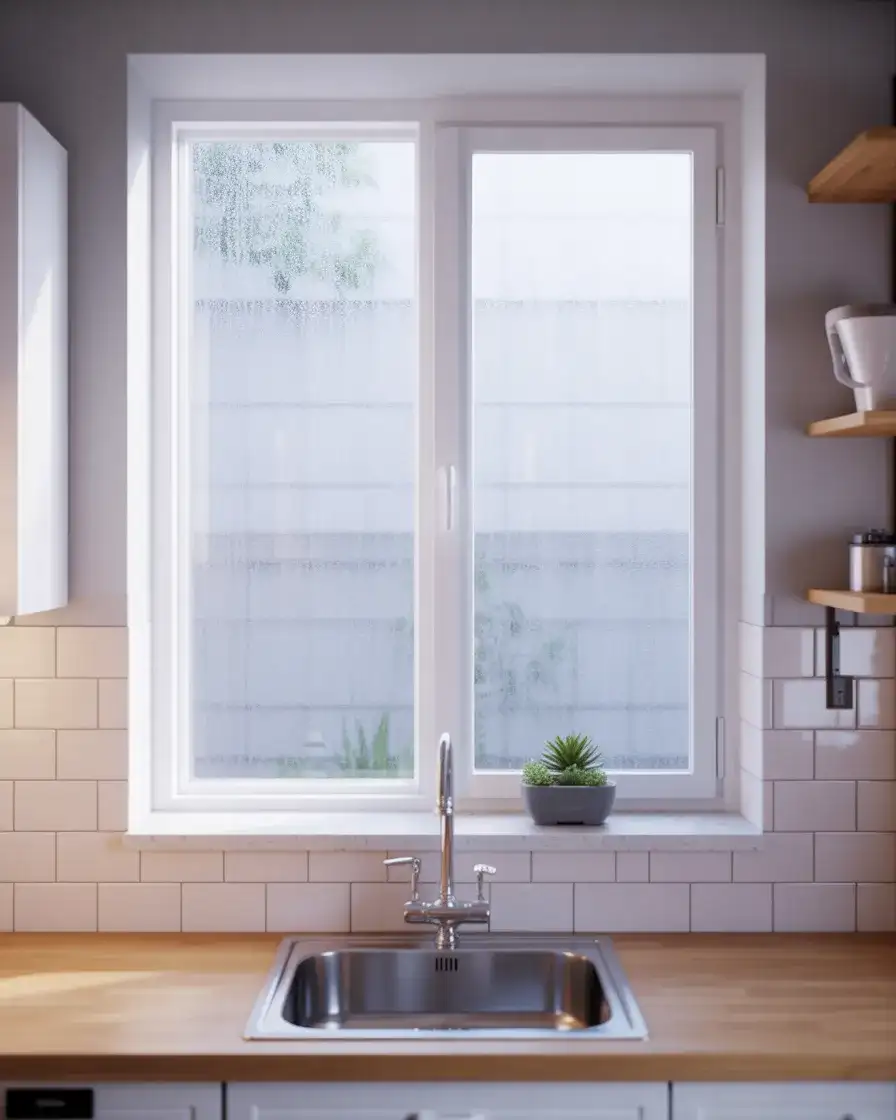
Custom-cut acrylic or resin panels installed between the window and interior frame scatter light without blocking it, giving you privacy from neighbors while still keeping the kitchen bright. This approach is particularly smart in tiny or galley layouts where every lumen counts and traditional curtains feel too heavy. The panels can be tinted or textured—options range from frosted to ribbed to even embedded botanical elements—so you get a sculptural effect that changes as natural light shifts.
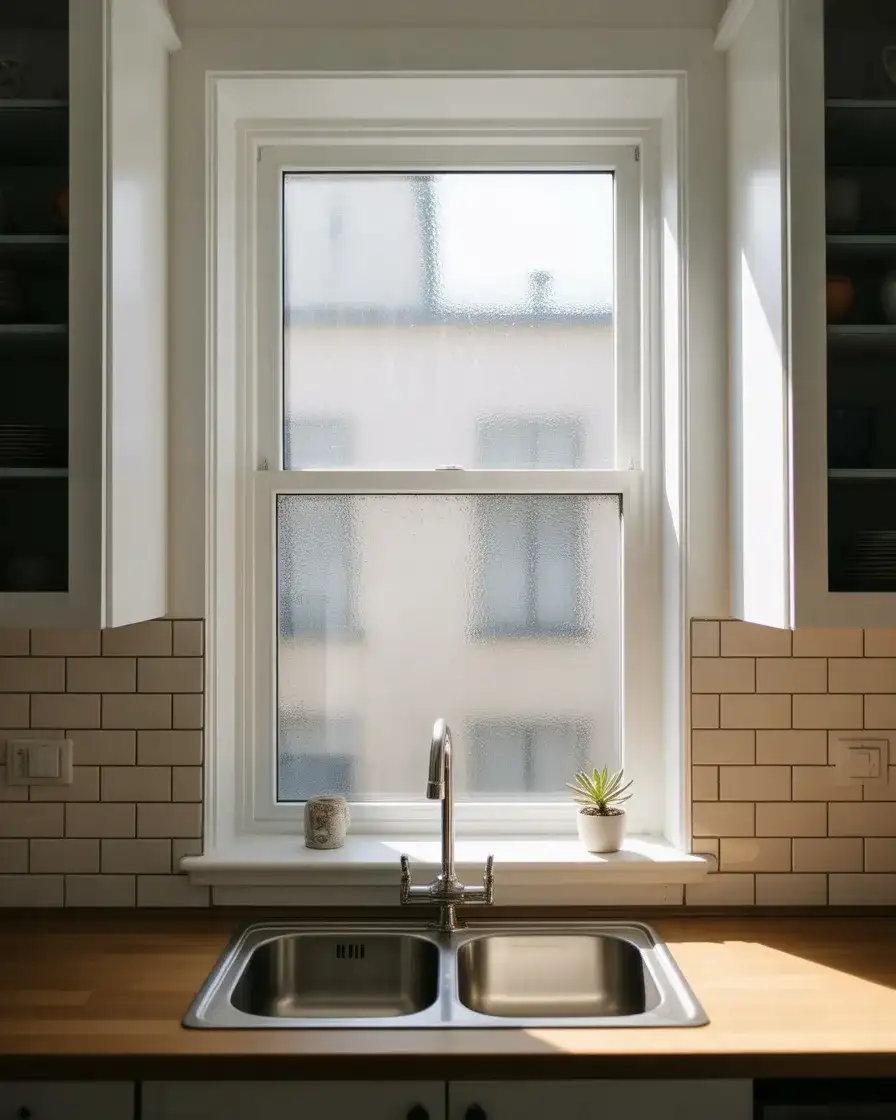
Expert-style commentary: source your material from plastic suppliers or specialty glazing shops that can cut panels to your exact dimensions. Mounting is straightforward—use slim aluminum channels top and bottom, or even heavy-duty double-sided tape if the panel is lightweight. Clean with a soft cloth and diluted dish soap; avoid abrasive cleaners that can scratch the surface. This solution is also a lifesaver in rental kitchens where you can’t replace the window but need to address a privacy issue.
22. Traditional Kerala-Style Wooden Jali Screen
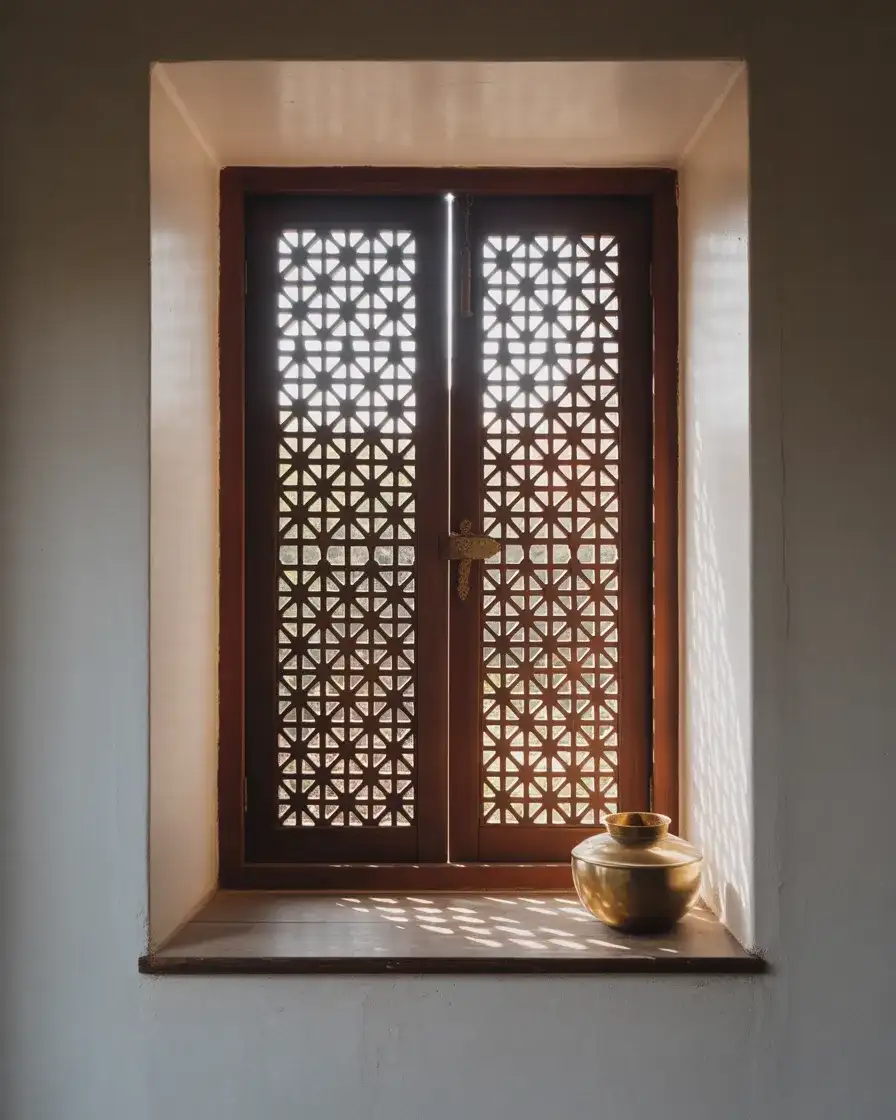
A hand-carved wooden jali screen inspired by Kerala and broader South Indian architecture brings intricate geometry and cultural richness to your window treatment. The lattice pattern allows air and light to circulate while providing shade and visual interest, a nod to traditional Indian design that’s now finding favor in globally minded American homes. Mounting it as a stationary panel or hinged shutter gives you flexibility, and the craftsmanship becomes a focal point that sparks conversation about heritage and travel.
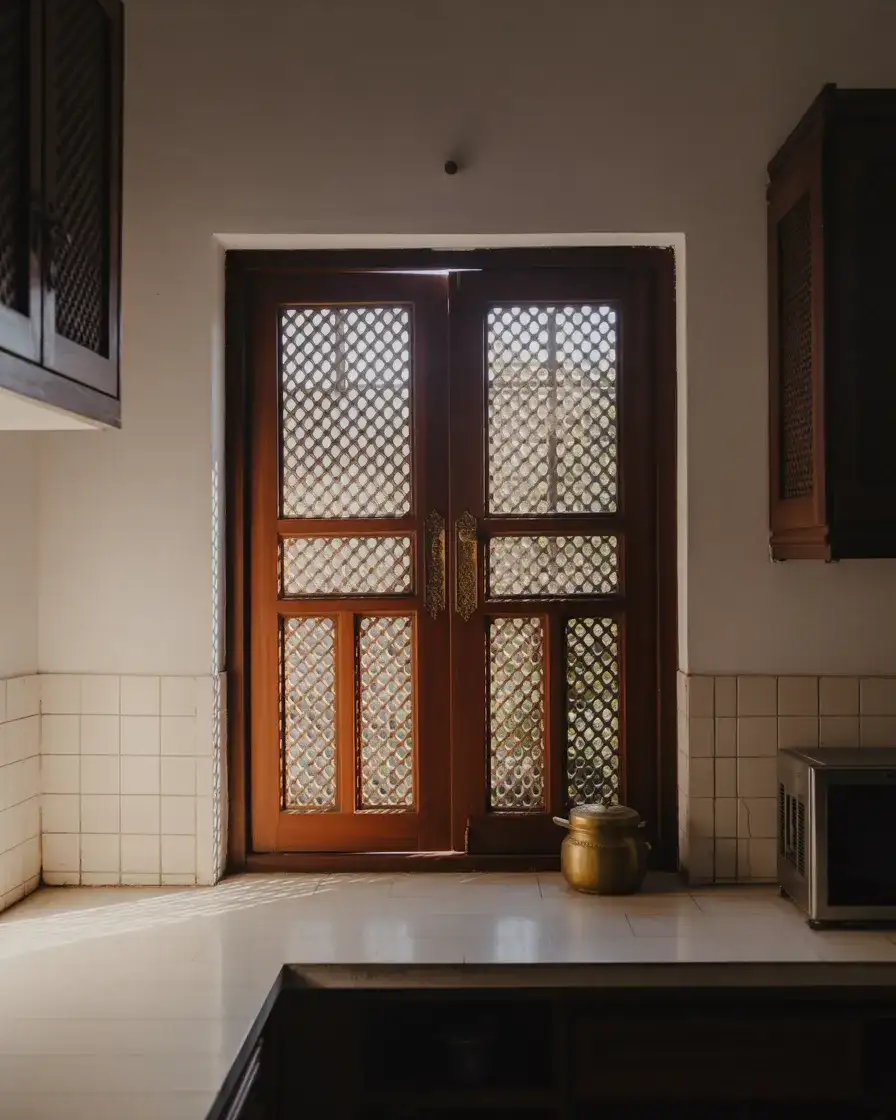
Common mistakes include choosing screens that are too delicate or ornate for a working kitchen, where grease and humidity can damage unfinished wood. Look for pieces treated with a water-resistant sealer, or apply your own coat of tung oil or polyurethane before installation. Pair the screen with simple, neutral cabinetry so the jali remains the star rather than competing with other busy patterns. This treatment also works beautifully in dining nooks adjacent to the kitchen, extending the design language across adjacent spaces.
Conclusion
Kitchen windows in 2026 are about so much more than letting in light—they’re opportunities to layer texture, introduce greenery, celebrate craftsmanship, and tell your design story in a space you use every single day. Whether you lean toward the clean lines of a black casement or the handwoven charm of a macrame valance, the ideas above give you a starting point that balances style with real-world practicality. Drop a comment below with your favorite approach or share a photo of your own kitchen window transformation—we’d love to see how you’re making this corner of your home uniquely yours.