Small laundry rooms are one of the most searched home design challenges on Pinterest in 2026, especially among homeowners looking to maximize every square foot without sacrificing style or function. Whether you’re working with a narrow hallway, a tucked-away closet, or a corner of your kitchen, the right layout and smart storage can transform even the tightest spot into a hardworking, beautiful space. Americans are increasingly drawn to creative solutions that blend utility with aesthetics—think vintage touches, bold wallpaper, and rustic accents that make laundry day feel a little less like a chore. This guide offers fresh, realistic ideas tailored to small spaces, each designed to inspire your next refresh.
1. Stacked Washer and Dryer with Open Shelving
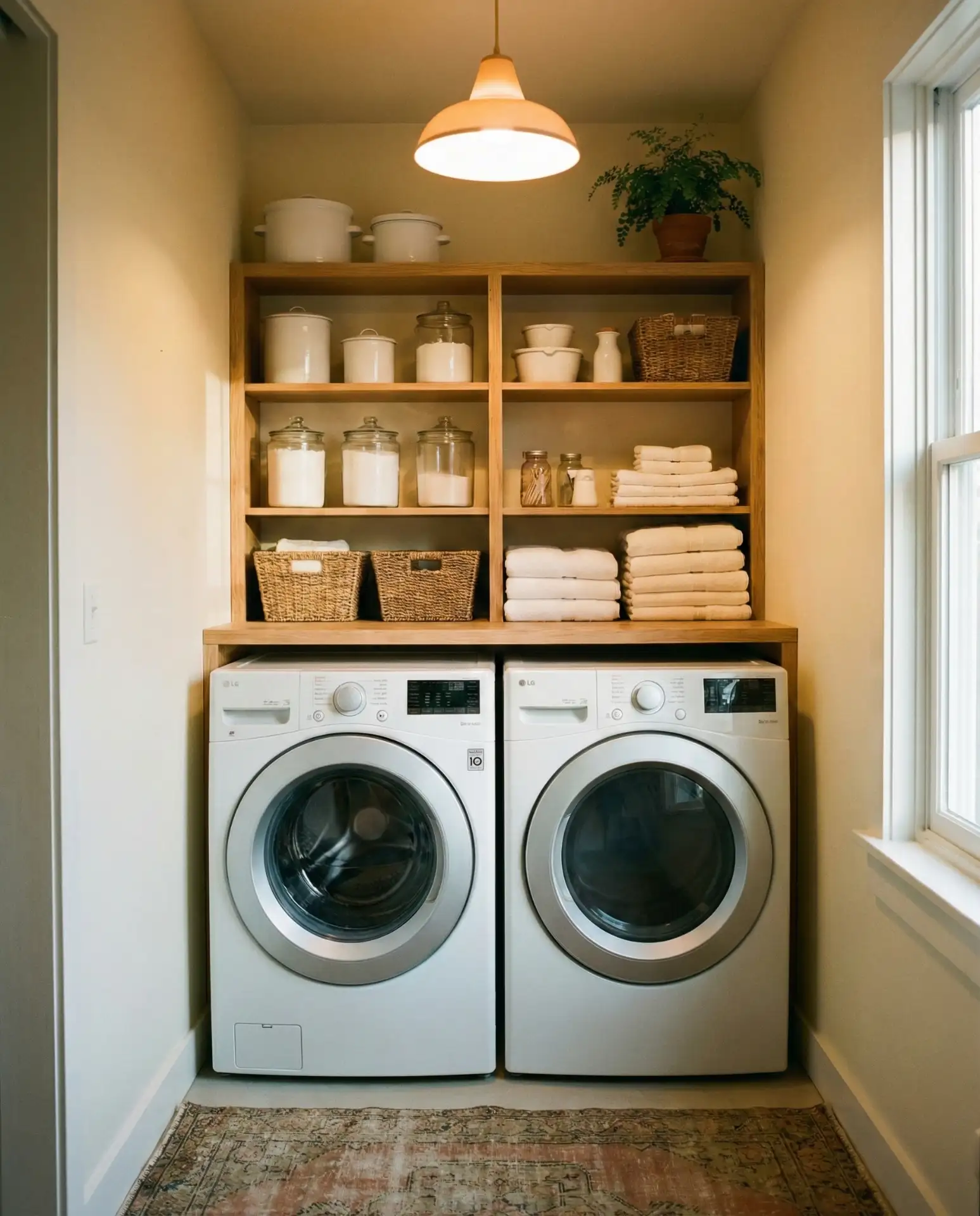
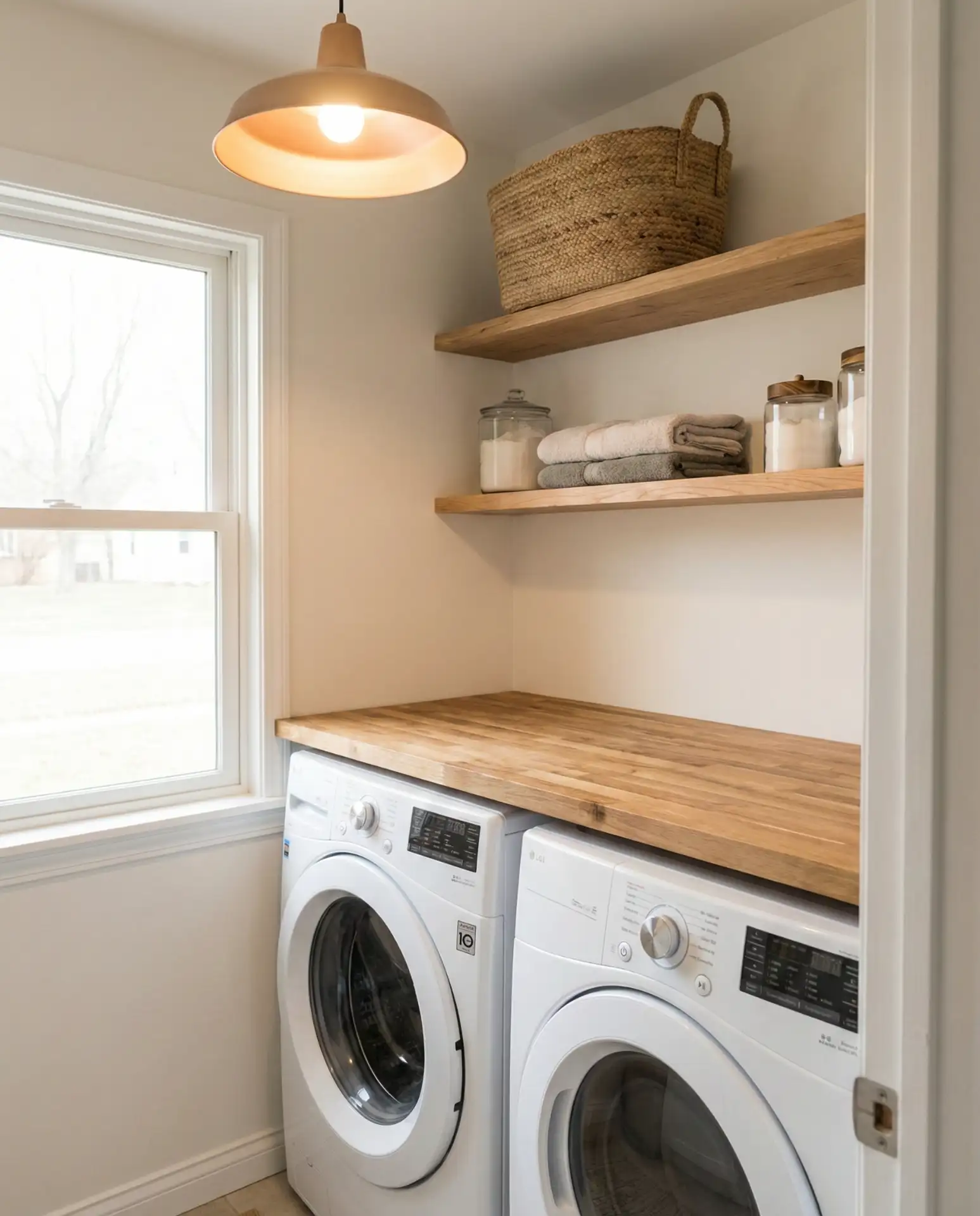
Going vertical is the golden rule for small laundry spaces, and a stacked washer-dryer combo is the most efficient way to reclaim floor space. Pair your stackable units with floating wooden shelves above to hold detergent, baskets, and folded linens. This setup works beautifully in a closet or narrow hallway, where every inch counts. The open shelving keeps essentials within arm’s reach while maintaining a clean, airy feel that doesn’t overwhelm the room.
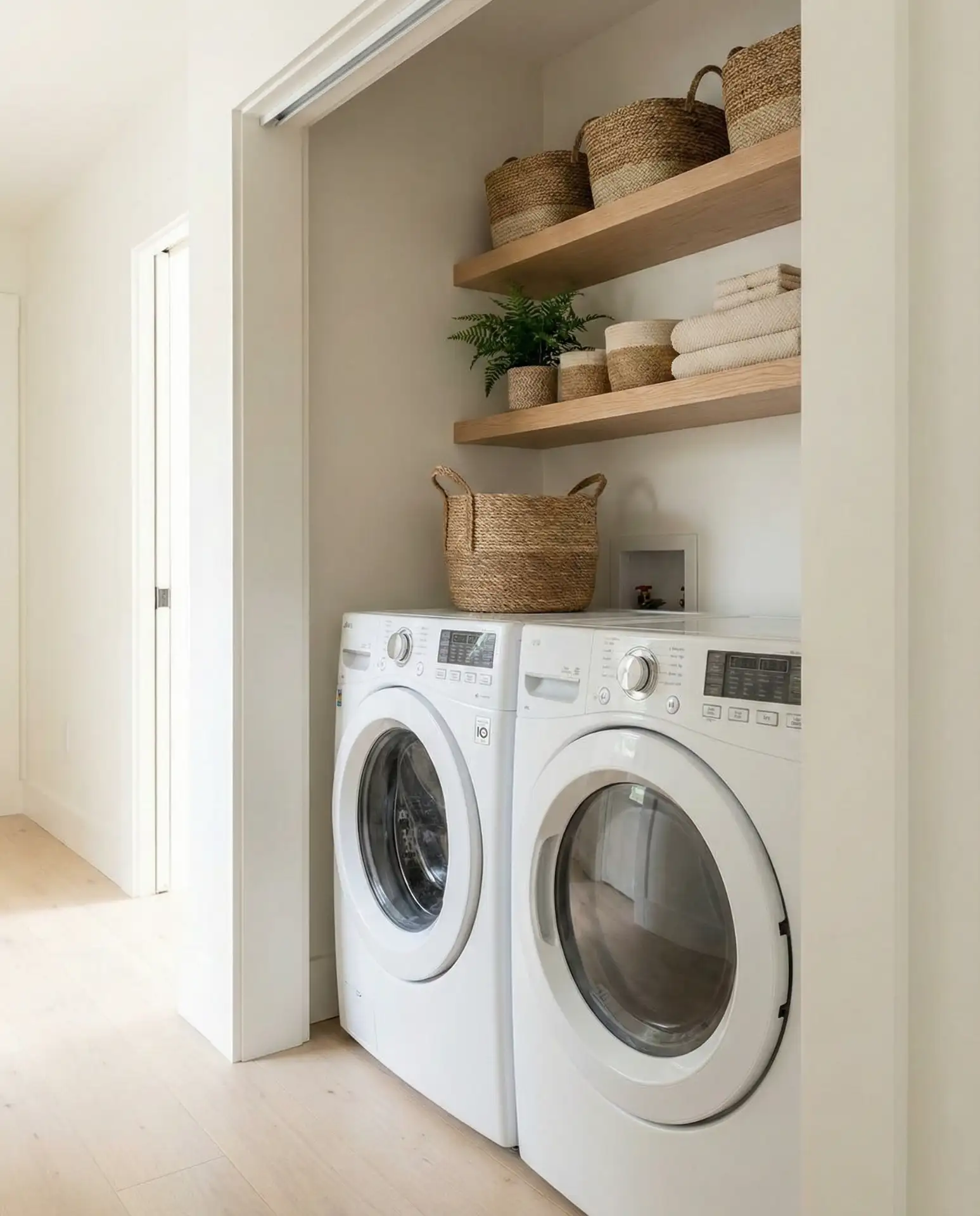
Practical insight: Use uniform baskets or bins to create visual order, especially if your shelves are exposed to high-traffic areas. Labels aren’t necessary if you stick to a consistent color palette—white, natural wood, or soft gray works in nearly every home style. This approach also makes it easier to grab what you need mid-cycle without rummaging through clutter.
2. Compact Laundry Station with Utility Sink
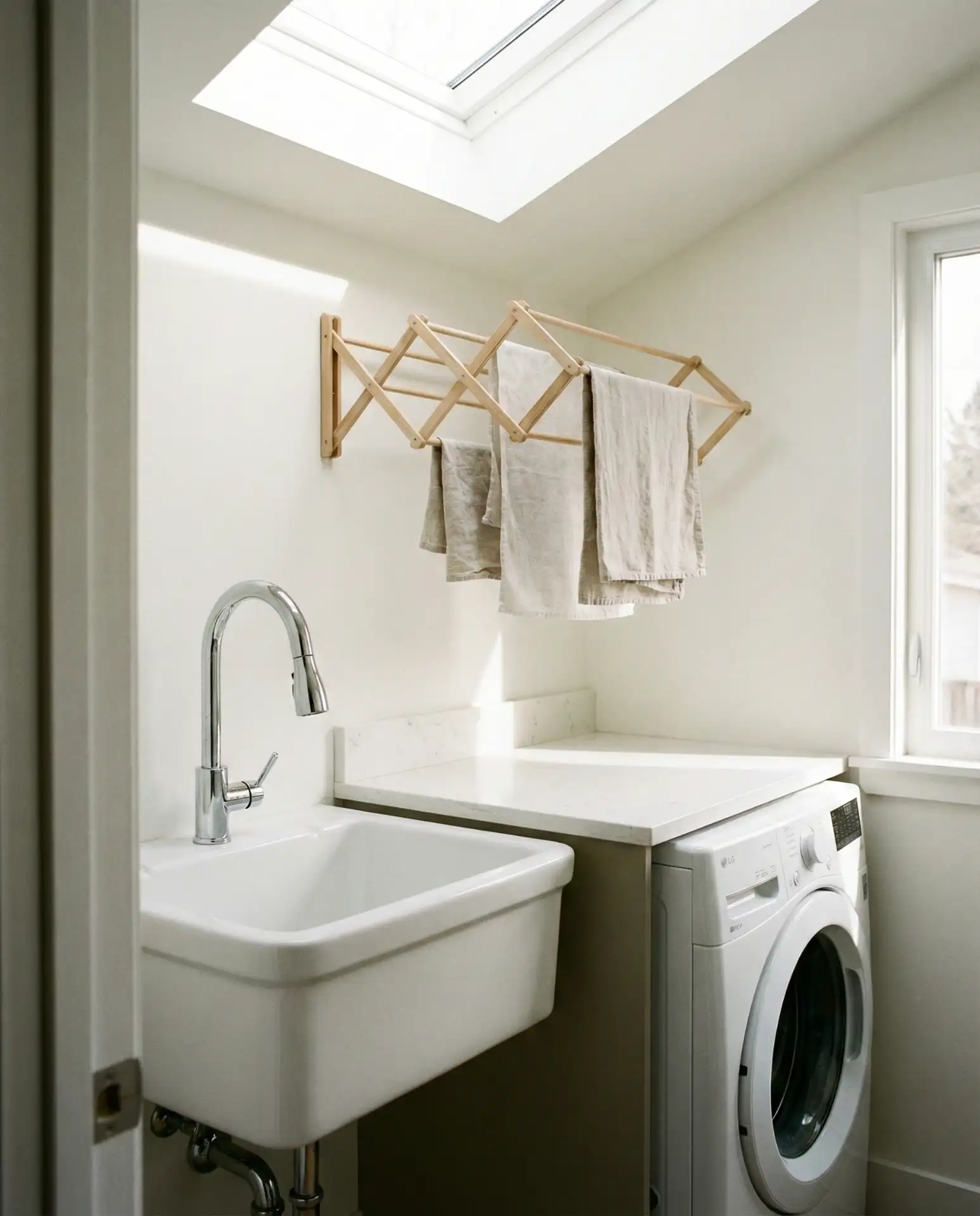
A utility sink next to your washer is a game-changer for treating stains, hand-washing delicates, or filling a mop bucket. In a small space, choose a drop-in or wall-mounted sink with a single-lever faucet to save counter depth. Pair it with a narrow countertop that spans both the sink and the washer, creating a continuous workspace. This layout works especially well in a garage or mudroom where outdoor gear and dirty laundry often collide.
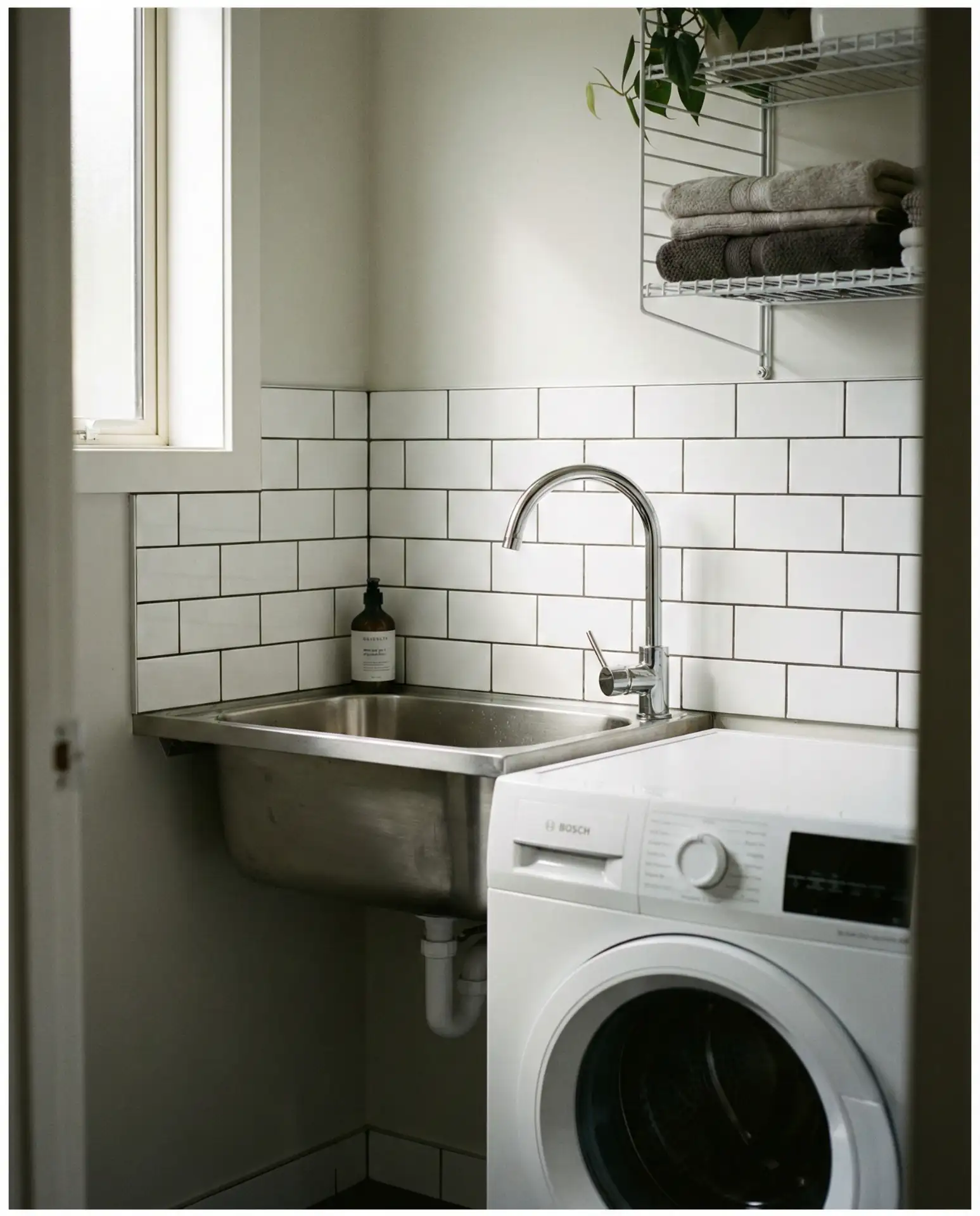
Where it works best: Homes in the Midwest and Northeast, where basements and garages are common laundry locations, often benefit from a sturdy utility sink for seasonal clothing care. It’s also a smart addition if you have pets, small children, or hobbies that generate extra mess—think gardening, painting, or sports equipment.
3. Dark Moody Walls with Brass Fixtures
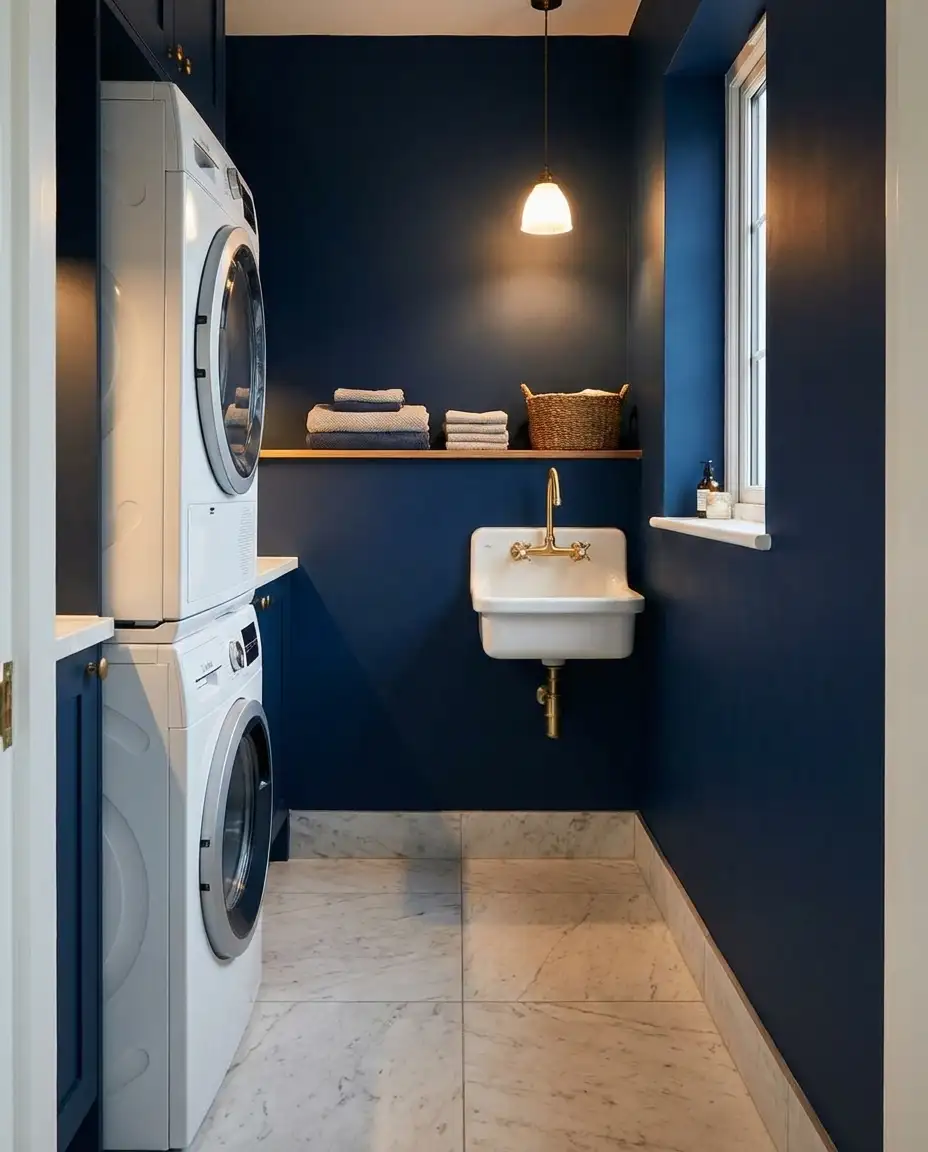
Painting a small space in a dark hue might sound counterintuitive, but deep charcoal, navy, or forest green can make a laundry room feel intentional and cozy rather than cramped. Pair your dark walls with warm brass or gold cabinet pulls, faucet fixtures, and light switches for a jewel-box effect. This approach transforms a utilitarian room into a stylish retreat, especially when paired with open shelving or glass-front cabinets that break up the heaviness.
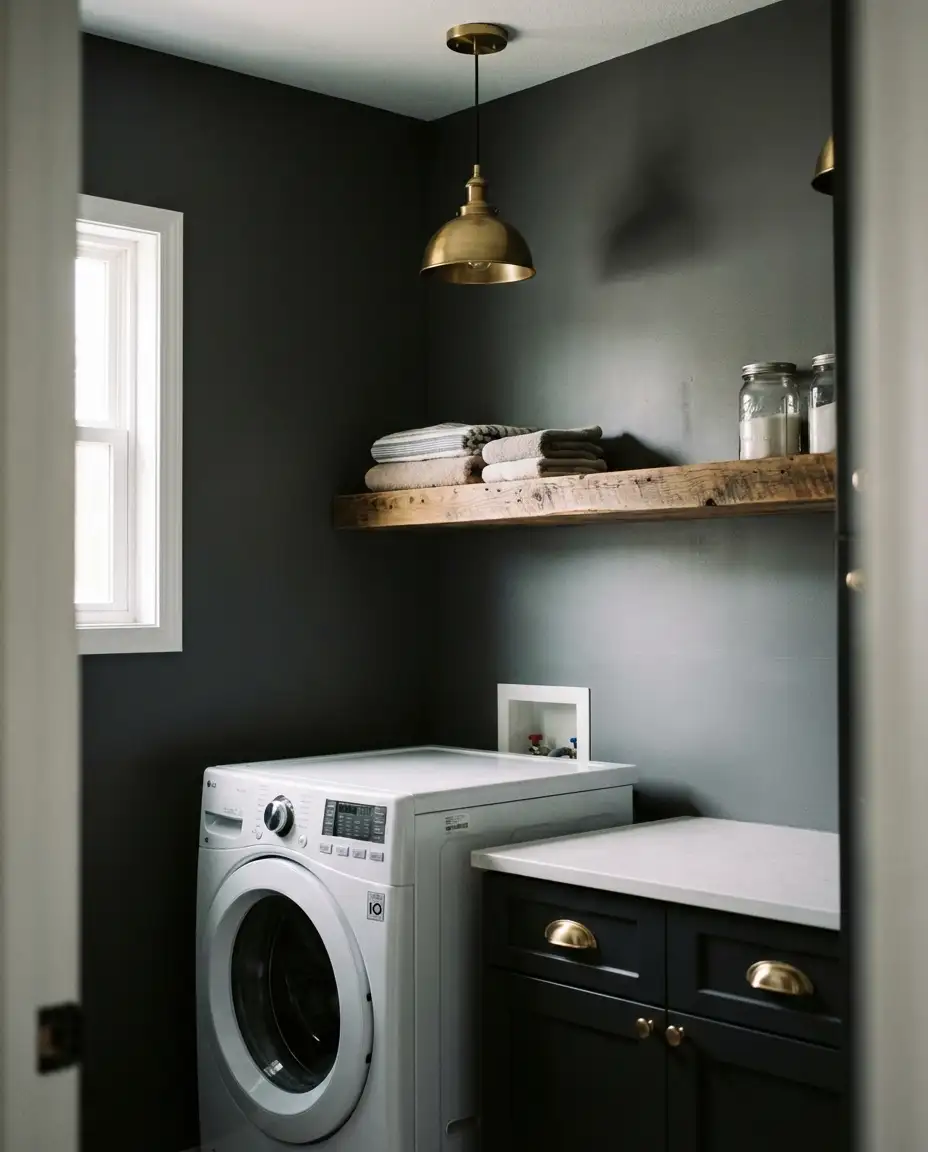
American lifestyle context: This look has gained traction in renovated row homes and urban condos, where small laundry spaces are tucked into former closets or under stairs. The darker palette hides scuffs and detergent drips better than stark white, making it a low-maintenance choice for busy households that want style without constant touch-ups.
4. Top Load Washer Nook with Fold-Down Counter
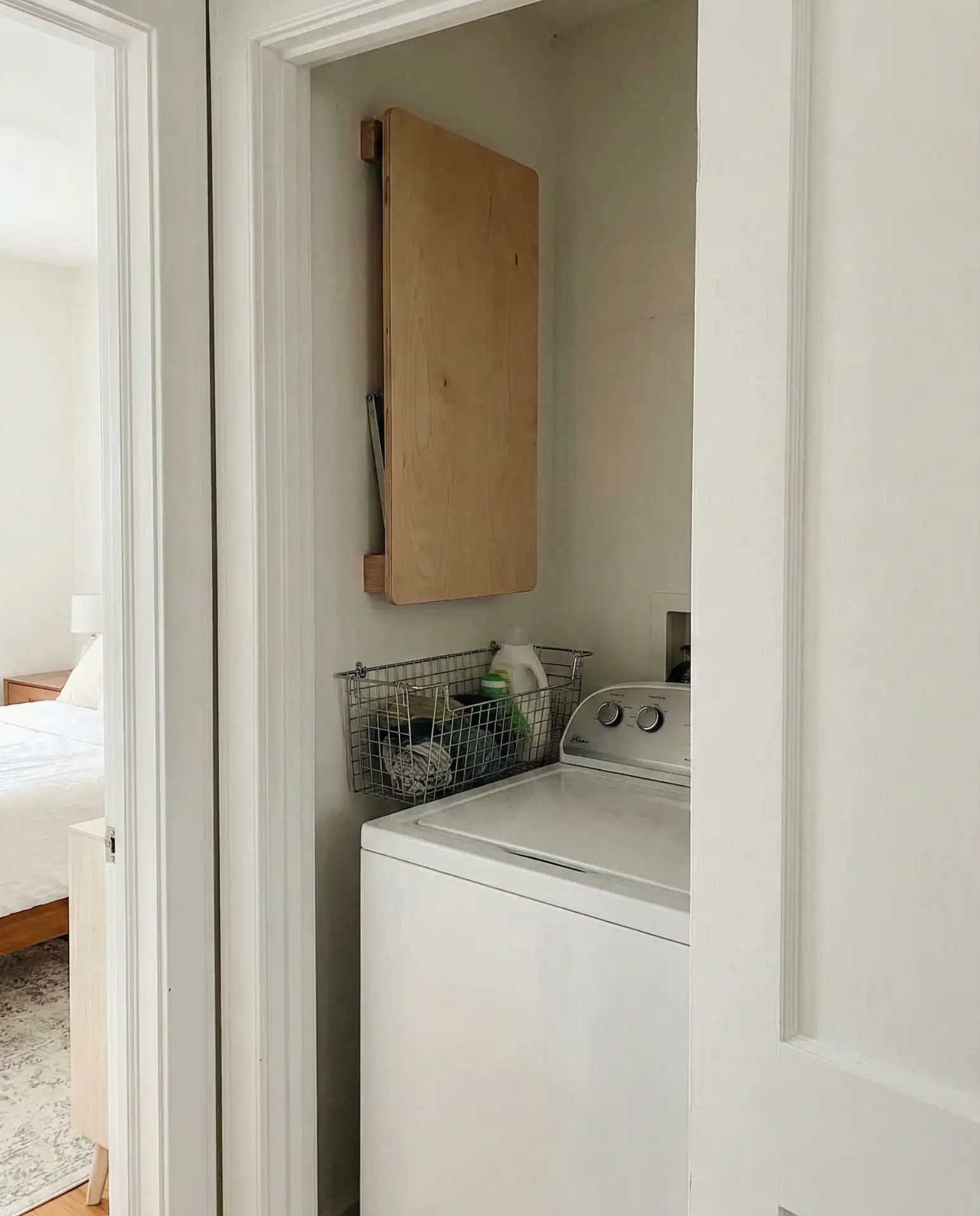
Not everyone can accommodate front loaders, and a top-load washer can still work beautifully in a small space if you plan around it. Install a narrow fold-down counter on the wall beside or behind your top loader to create a temporary folding surface that tucks away when not in use. This is especially useful in a hallway or closet where a permanent countertop would block access or make the space feel closed in.
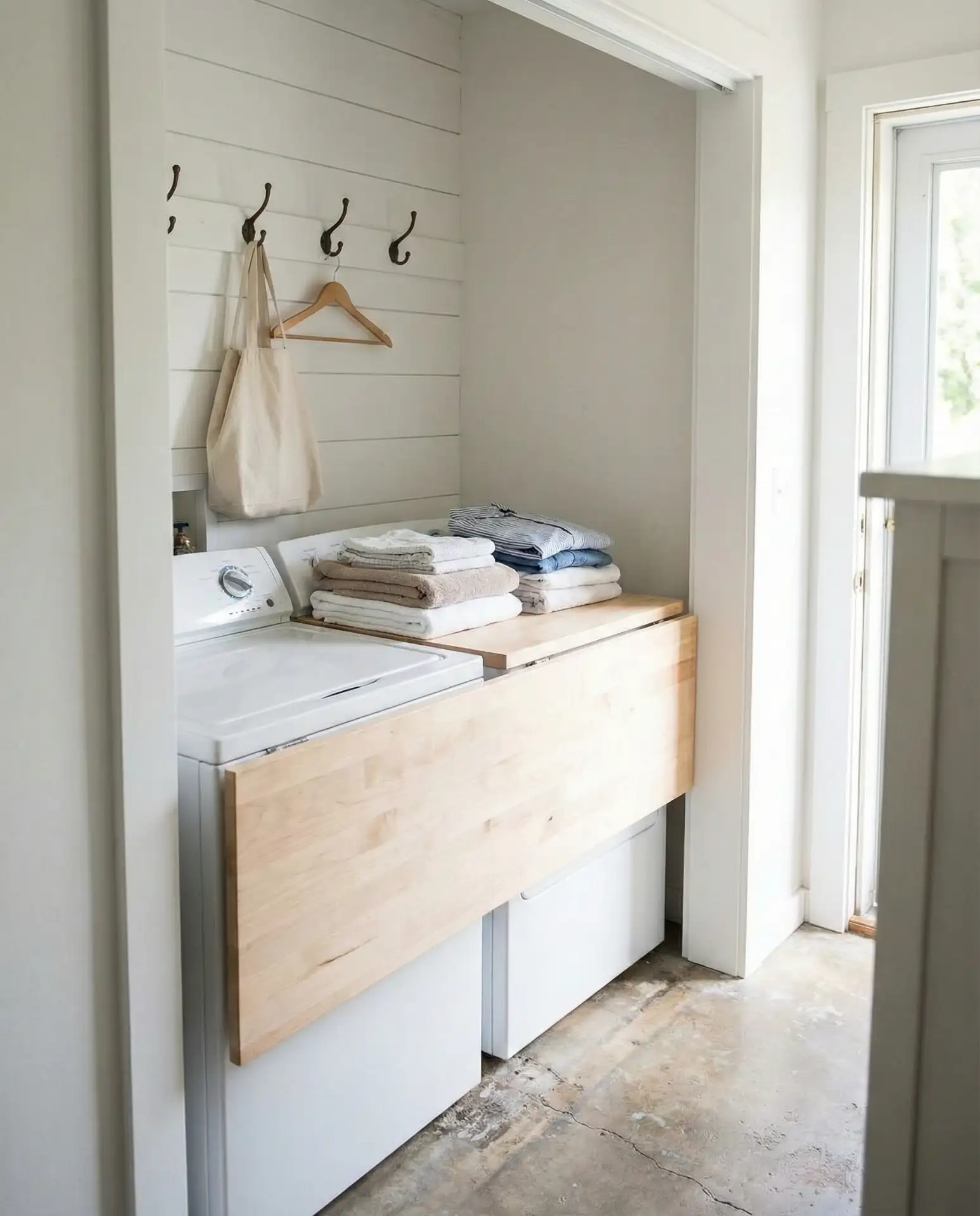
Budget angle: Fold-down brackets and a simple wood slab from a home improvement store can cost under fifty dollars, making this one of the most affordable upgrades for a rental or starter home. You can paint or stain the wood to match your trim, and the hardware comes in finishes from matte black to brushed nickel.
5. Wallpaper Accent Wall Behind Appliances
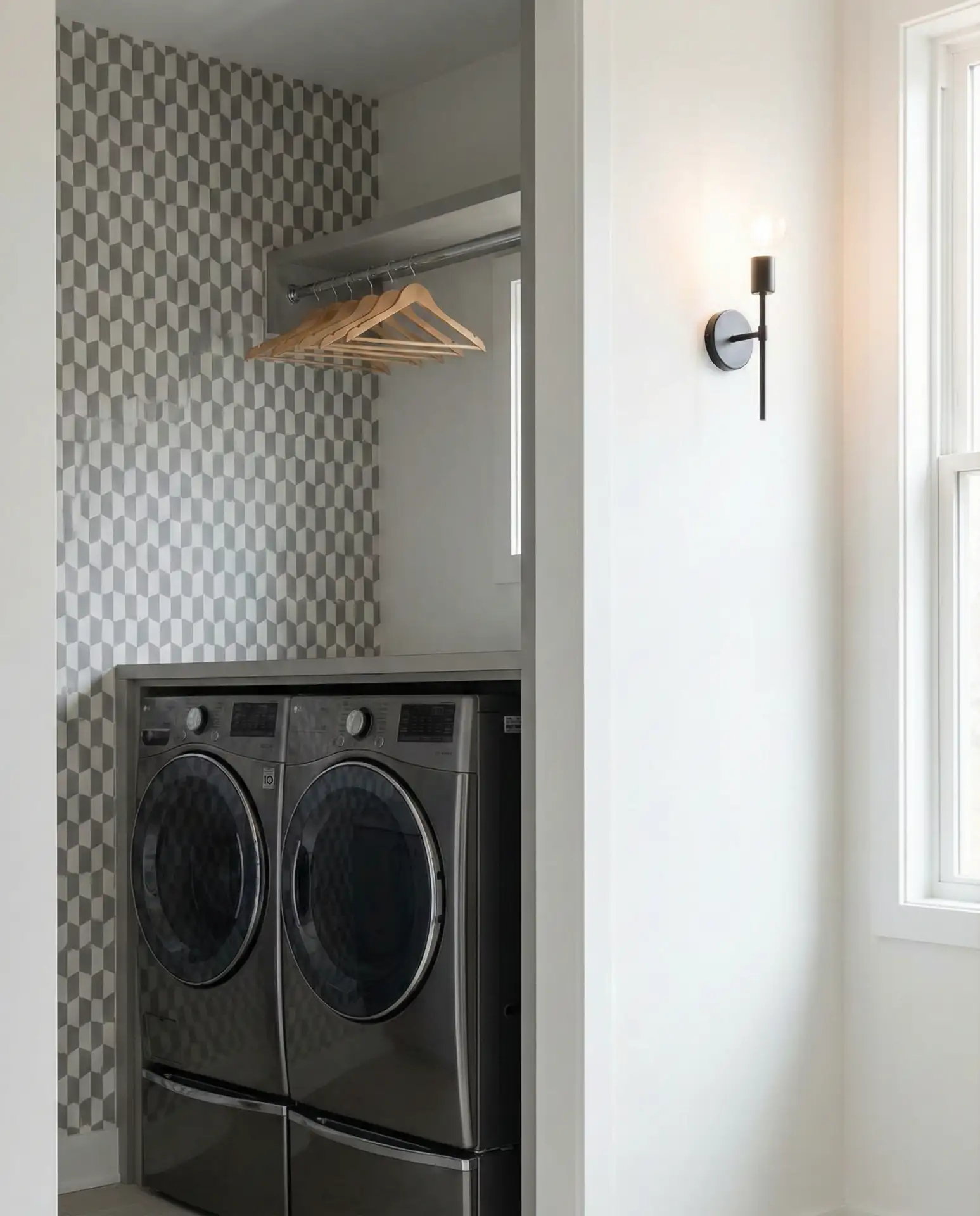
A single wallpaper accent wall can inject personality into a bland laundry space without overwhelming it. Choose a pattern with soft botanicals, geometric lines, or subtle texture, and apply it to the wall behind your washer and dryer. This trick draws the eye upward and makes the room feel more curated, even if the rest of the space is strictly functional. In a small space, stick to lighter or medium-toned prints to avoid visual clutter.
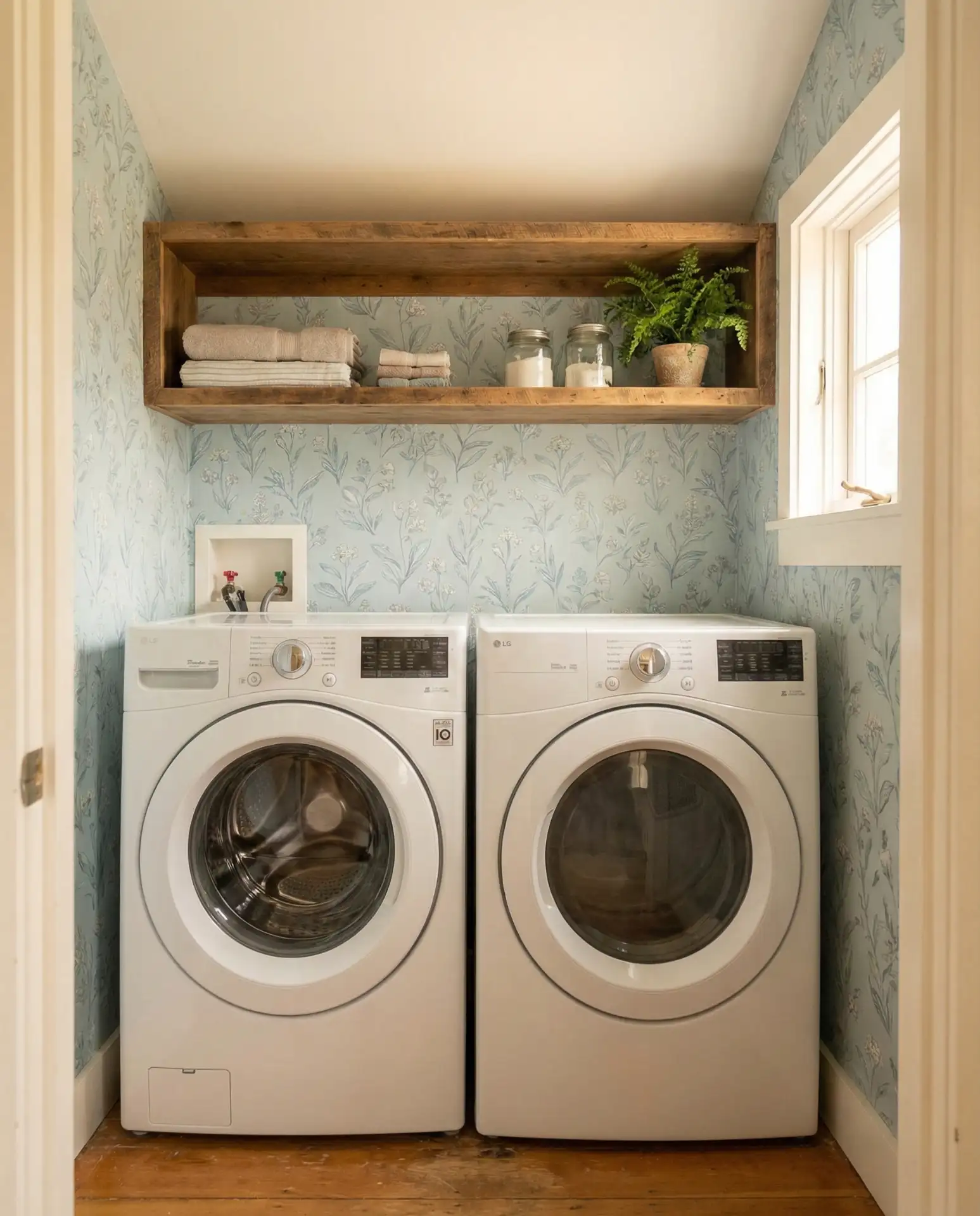
Micro anecdote: One homeowner in a Seattle bungalow used peel-and-stick wallpaper in a rental laundry closet and said it made her actually look forward to sorting clothes. The temporary adhesive meant no damage to walls, and the botanical print turned a forgotten corner into a bright, mood-boosting spot.
6. Rustic Barn Door for Closet Laundry
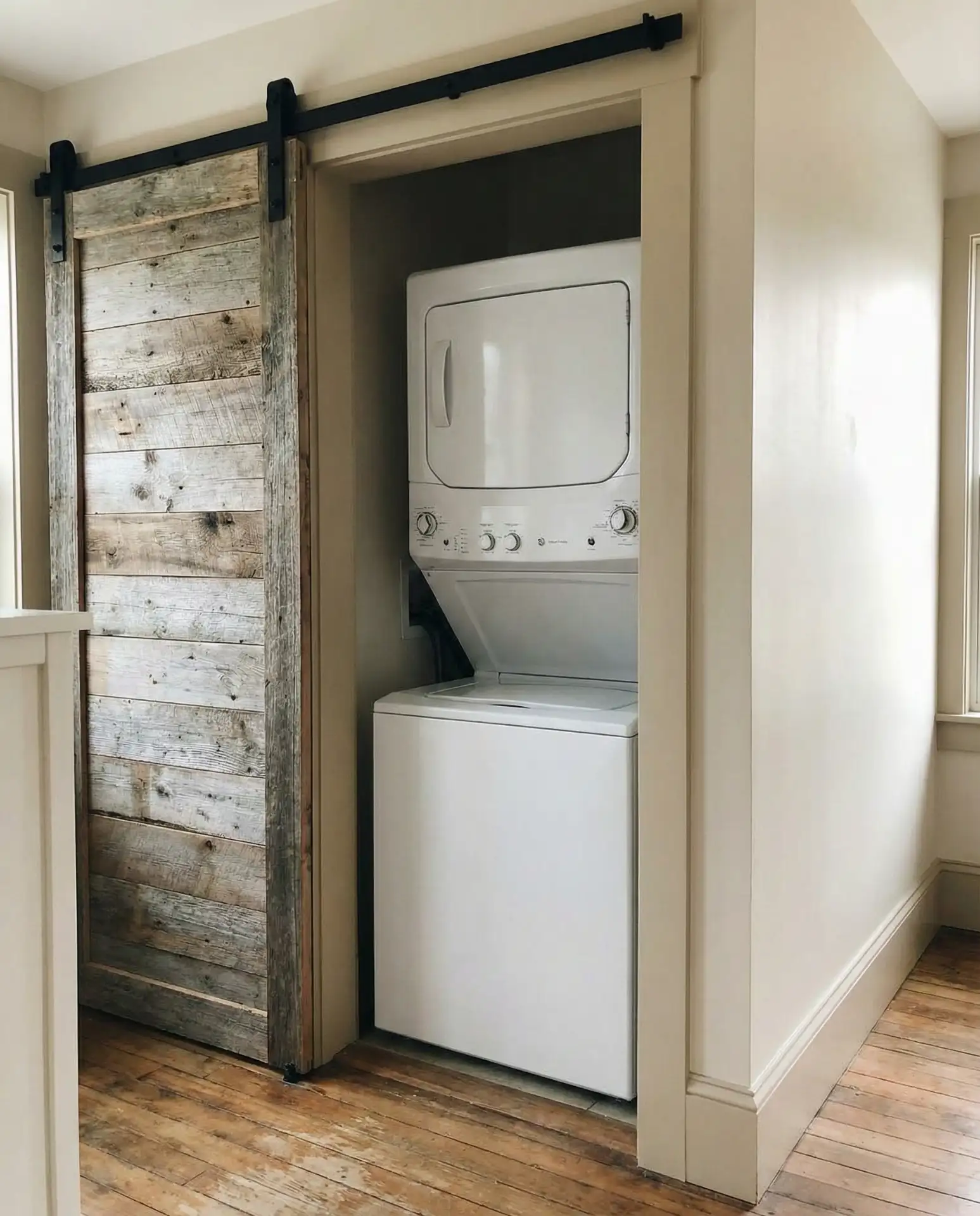
A sliding rustic barn door saves space and adds farmhouse charm to a closet laundry setup. Unlike a hinged door, a barn door slides along a track and doesn’t require clearance to swing open, making it ideal for tight hallway or kitchen adjacencies. Choose reclaimed wood or a distressed finish for authenticity, and pair it with black metal hardware for a modern-rustic blend that feels current in 2026.
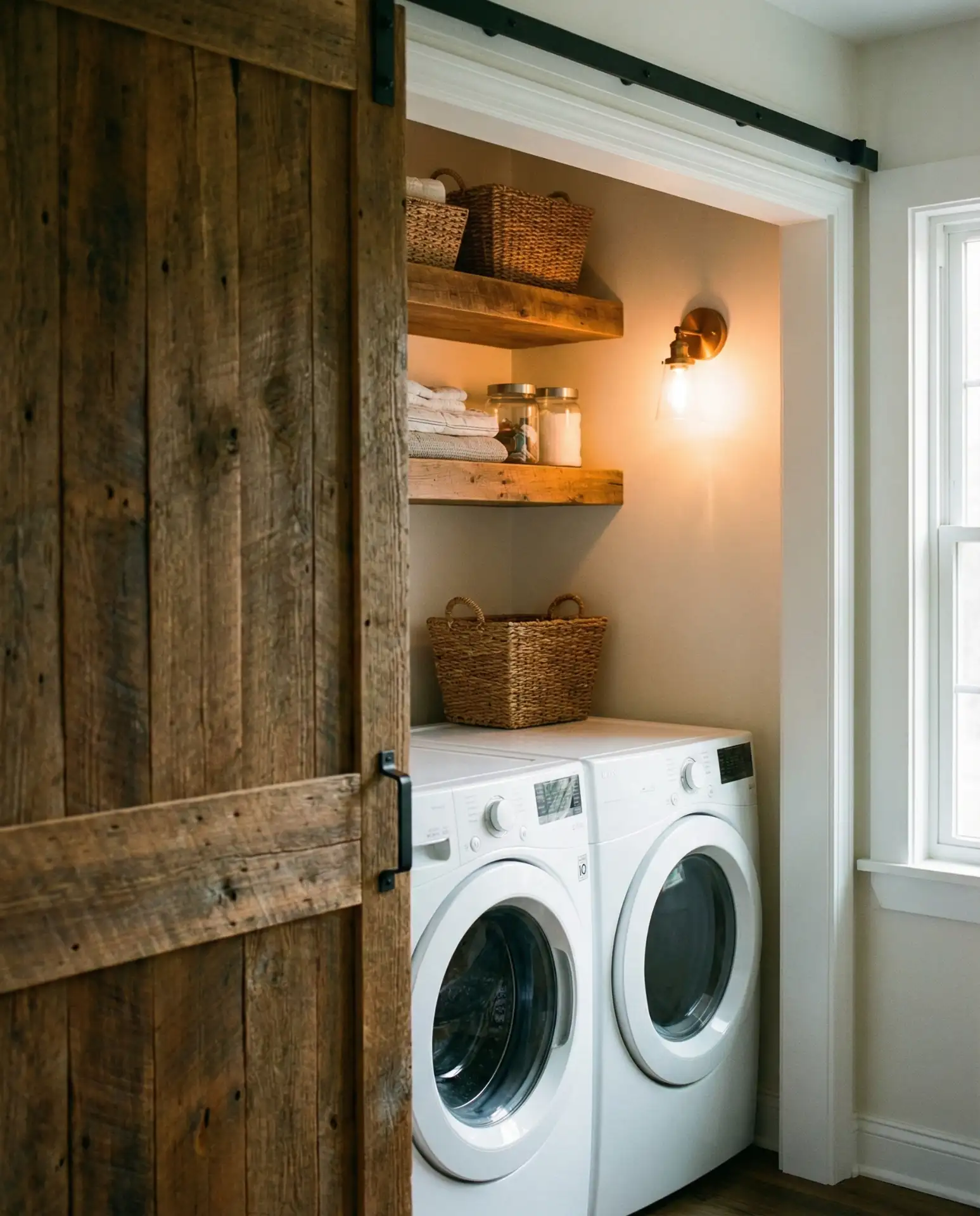
Expert-style commentary: Interior designers recommend barn doors for high-traffic areas where a traditional door would constantly be in the way. Just make sure the track is rated for the door’s weight and leave at least six inches of wall space on each side of the opening so the door has somewhere to slide.
7. Vintage Enamel Sink with Exposed Plumbing
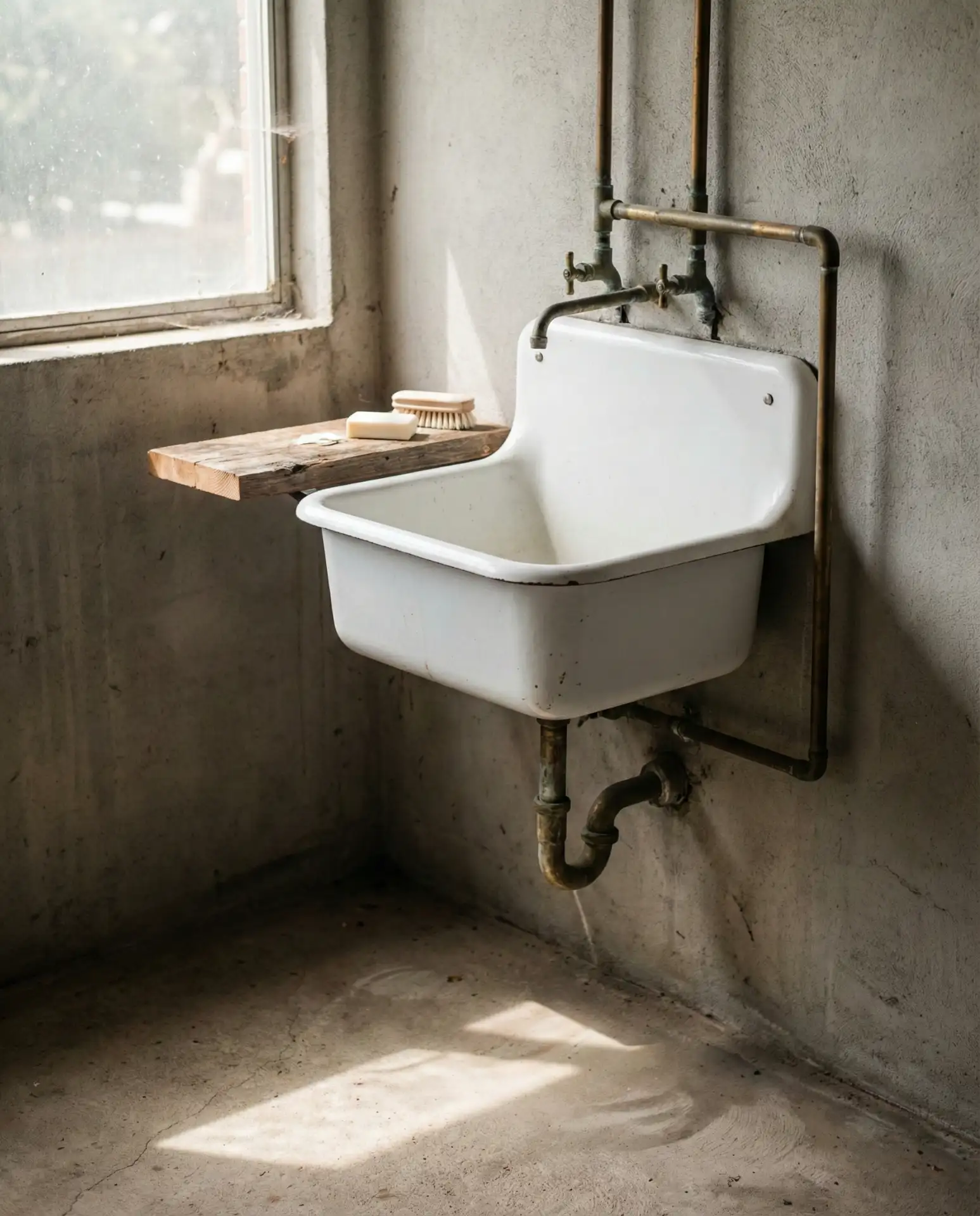
A salvaged or reproduction vintage enamel sink brings character to a small space and works beautifully in a garage or utility laundry room. Pair it with exposed brass or black iron plumbing for an industrial-meets-farmhouse look. The high walls of a vintage sink are practical for soaking stained clothes or rinsing muddy boots, and the classic white enamel finish complements nearly any wall color or flooring. Prompt: Realistic photo, natural light, soft shadows, no people. Clear focus on the described. Not a 3D render. Do not use signs, and do not write the year. Make the photo size 4:5. Vintage farmhouse sink on metal stand, black exposed plumbing, laundry basket below, white shiplap wall, soft overhead light.
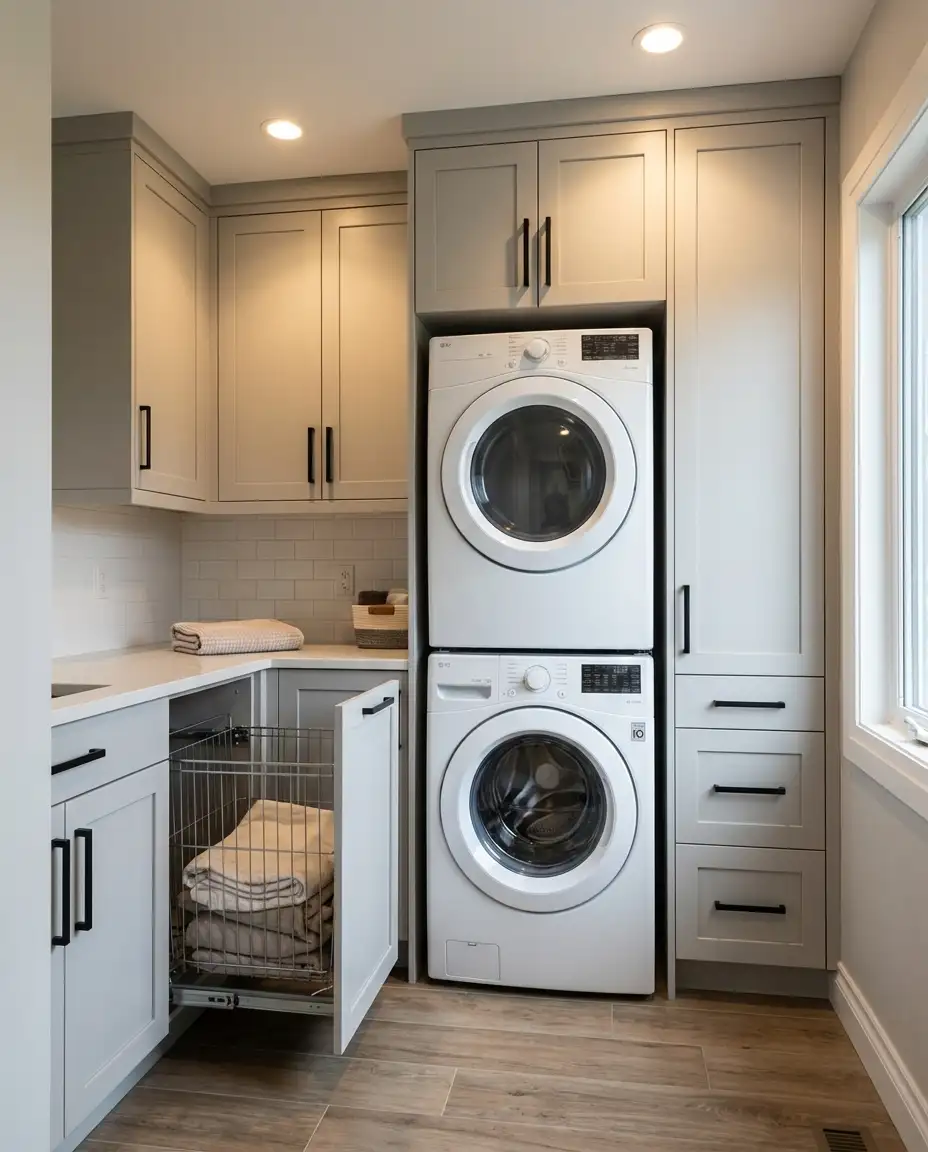
Real homeowner behavior: Many people hunt for these sinks at architectural salvage yards or estate sales, then refinish the enamel themselves. It’s a weekend project that costs a fraction of a new sink, and the patina of age adds warmth that brand-new fixtures can’t replicate.
8. IKEA Modular Cabinets for Custom Storage
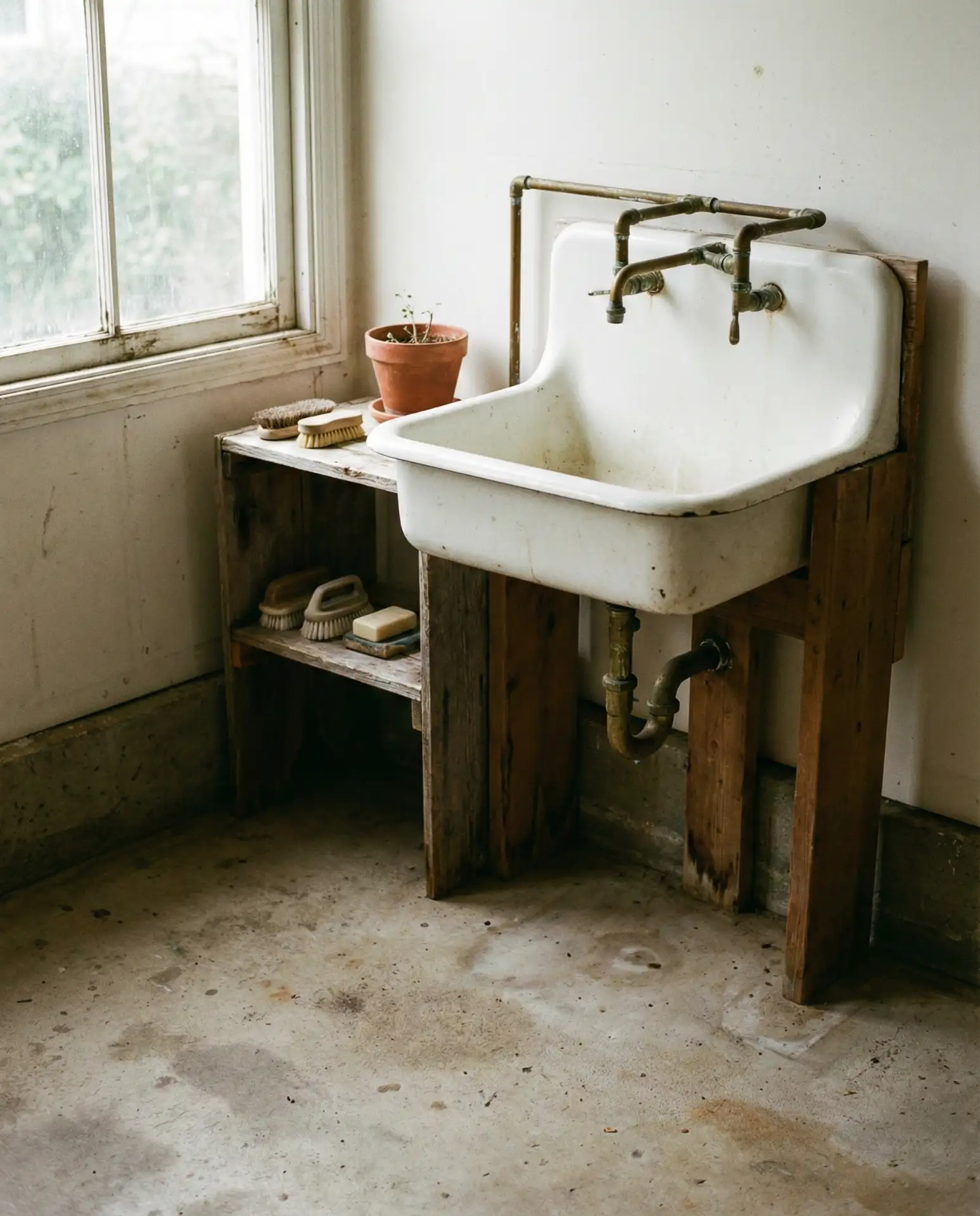
IKEA modular cabinets like the SEKTION or METOD series can be configured to fit almost any awkward laundry nook, from a corner to a narrow galley layout. You can mix base cabinets, wall cabinets, and open shelving to create a seamless system around your washer and dryer. The affordability and variety of finishes make it easy to match your home’s existing style, whether that’s Scandinavian minimalism or traditional cabinetry.
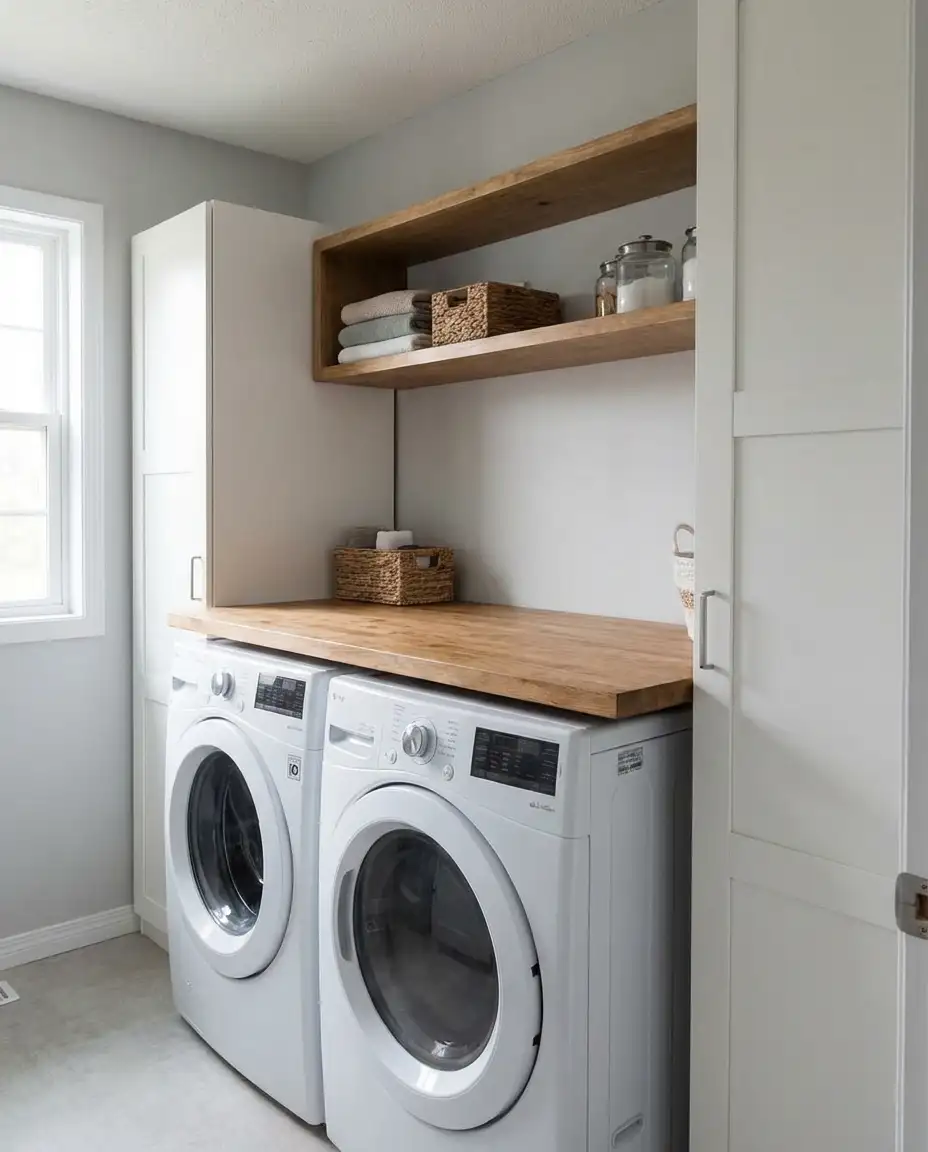
Common mistakes and how to avoid them: Measure your space twice before ordering, and remember that IKEA cabinets come in specific widths—twelve, fifteen, eighteen, twenty-four, and thirty inches. If your gap is an odd size, consider a filler panel or a slim pull-out organizer to bridge the difference instead of forcing a cabinet that doesn’t fit.
9. Outdoor Laundry Shed with Natural Ventilation
In warmer climates, an outdoor laundry shed is a practical solution that frees up indoor square footage. A small shed with screened windows or louvered vents keeps appliances protected from weather while allowing natural airflow to prevent mildew. This setup is especially popular in the Southwest and coastal areas, where year-round mild temperatures make outdoor utility spaces feasible. Just make sure electrical and plumbing are properly weatherproofed.
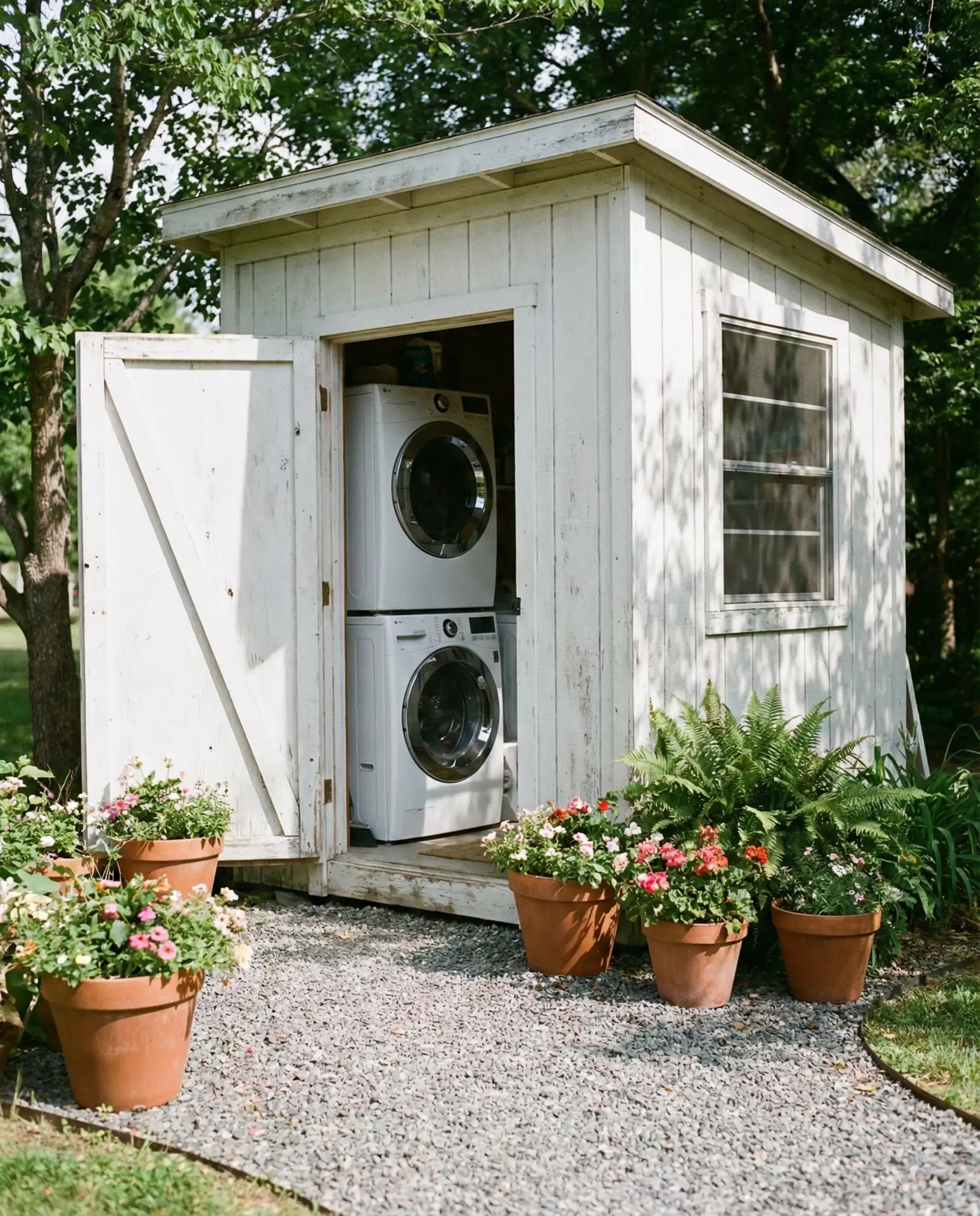
American lifestyle context: In states like Arizona, California, and Texas, outdoor laundry sheds are gaining traction as homeowners look for ways to keep heat-generating appliances out of the main living area. It also keeps dryer lint and detergent smells from drifting through the house, a bonus for anyone with allergies or sensitivities.
10. Galley Layout with Facing Countertops
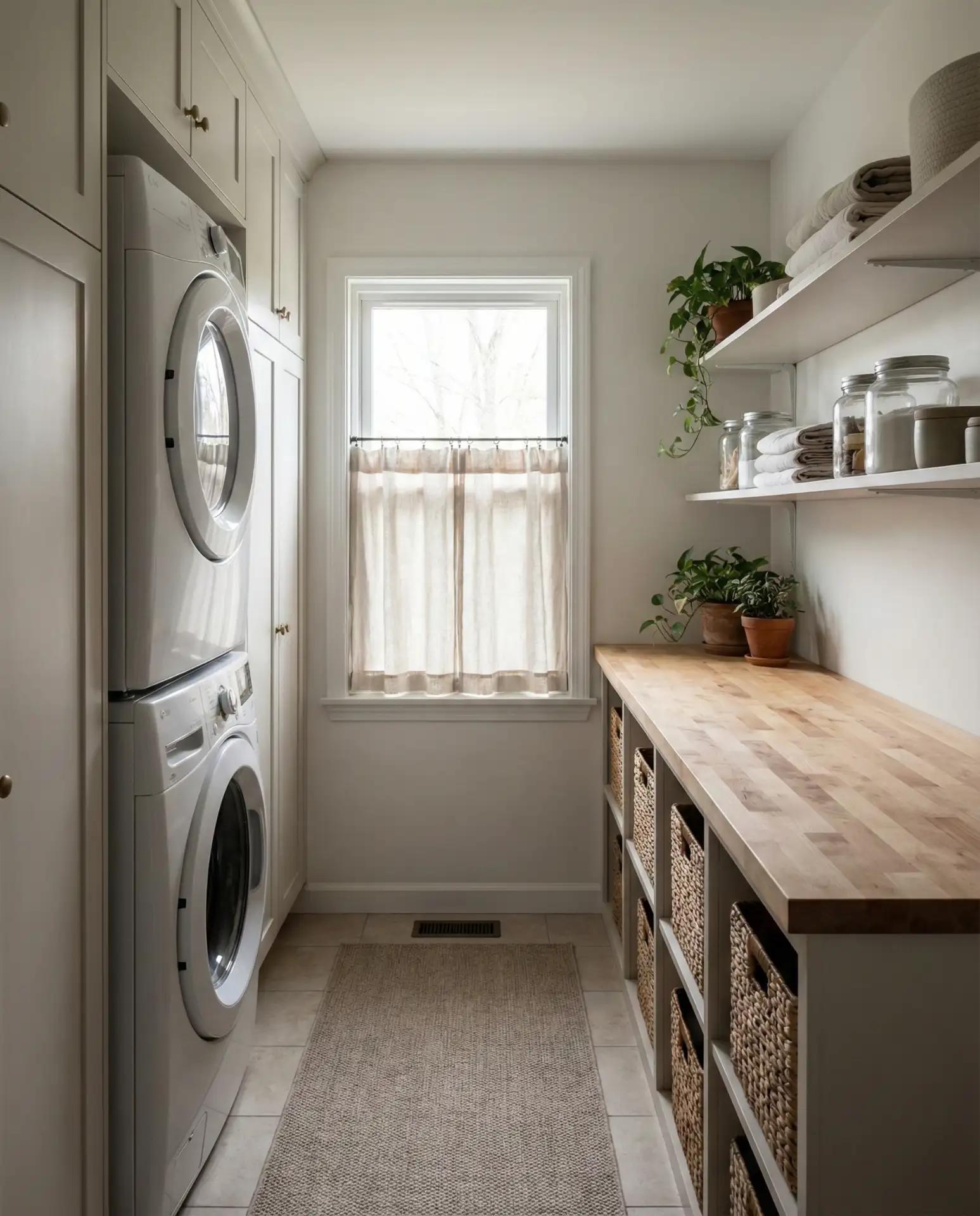
A galley laundry room with appliances and countertops on facing walls maximizes efficiency in a narrow footprint. Place your washer and dryer on one side, and install a full-length countertop with storage cabinets on the other. This creates a clear work zone for folding, sorting, and stain treatment without cross-traffic chaos. The layout mirrors a galley kitchen, making it intuitive and easy to navigate.
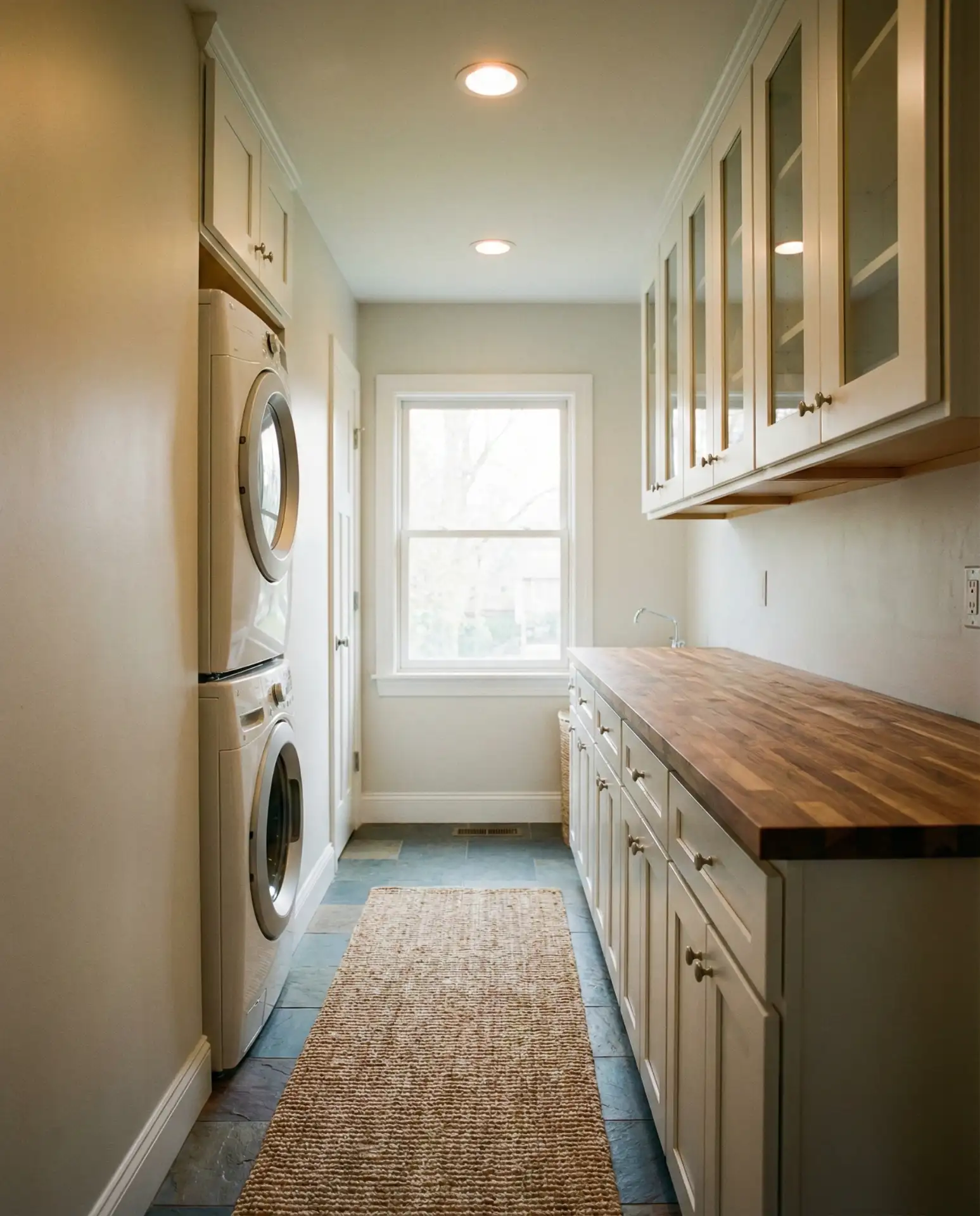
Where it works best: This layout shines in older homes with long, narrow service hallways or in basement laundry rooms where the furnace and water heater already occupy one wall. It also works well in apartments where the laundry room doubles as a pantry or utility closet, allowing you to keep cleaning supplies separate from food.
11. Creative Pegboard Wall for Hanging Storage
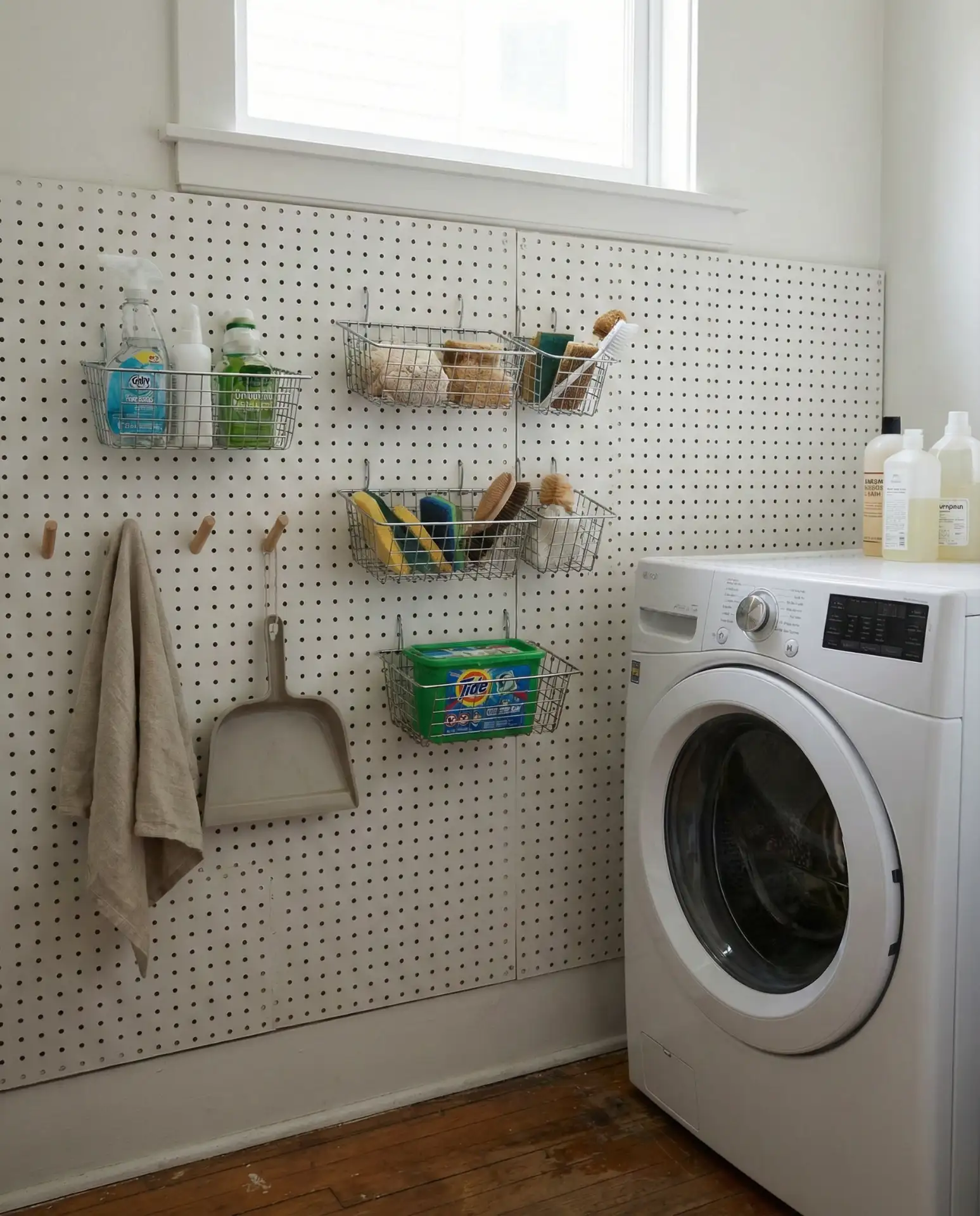
A painted pegboard is a creative way to add flexible storage without permanent wall damage, perfect for renters or anyone who likes to rearrange. Hang baskets, hooks, and small shelves to hold dryer sheets, stain sticks, and spray bottles. You can paint the pegboard to match your walls or choose a bold accent color for visual interest. In a small space, every vertical surface counts, and pegboard lets you customize the layout as your needs change.
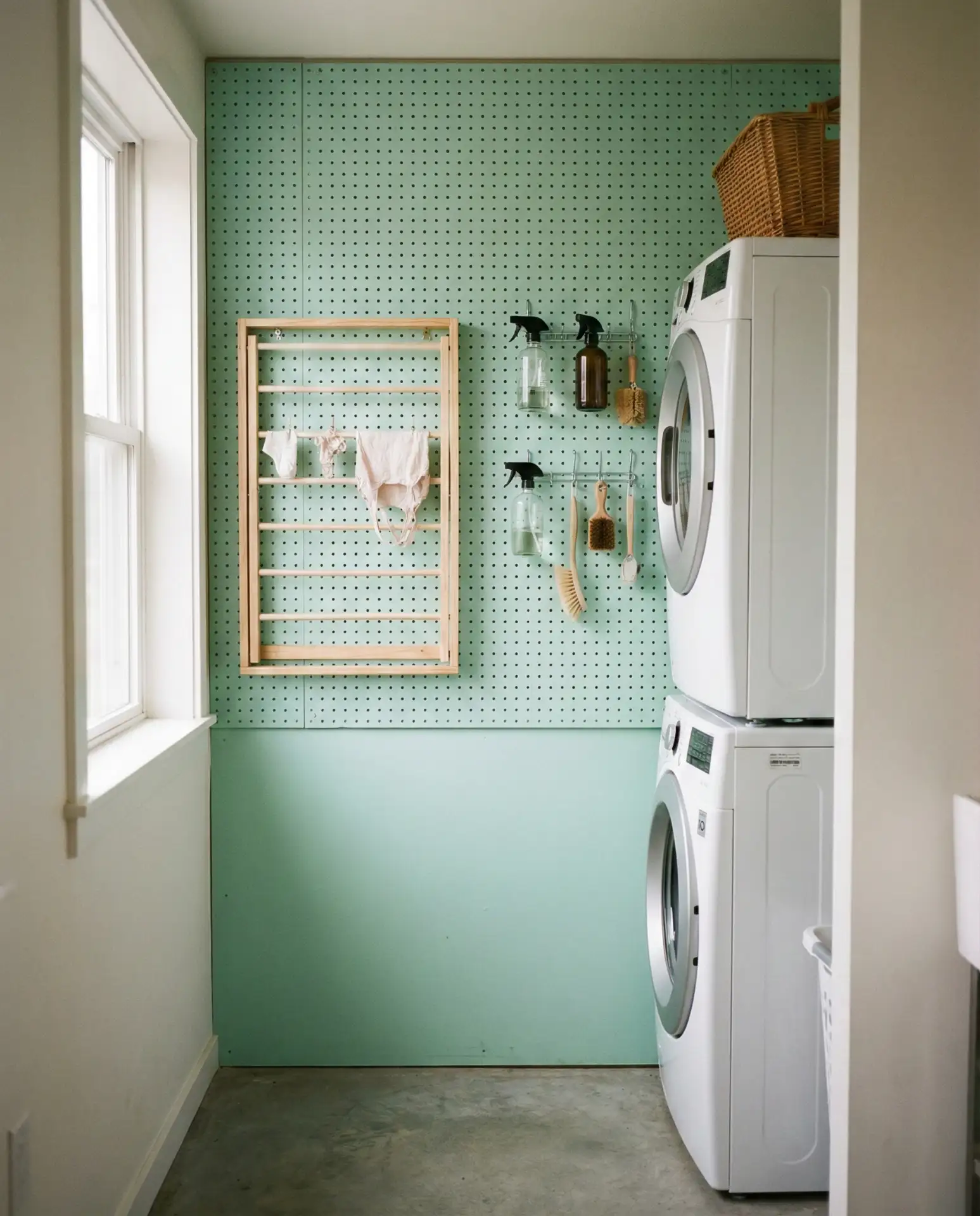
Practical insight: Pegboard is sold in four-by-eight-foot sheets at most hardware stores, and you can cut it down to fit your exact wall dimensions. Use spacers behind the board so the hooks have room to slide in and out, and make sure to anchor it into studs or use heavy-duty drywall anchors for stability.
12. Corner Laundry with Diagonal Appliance Placement
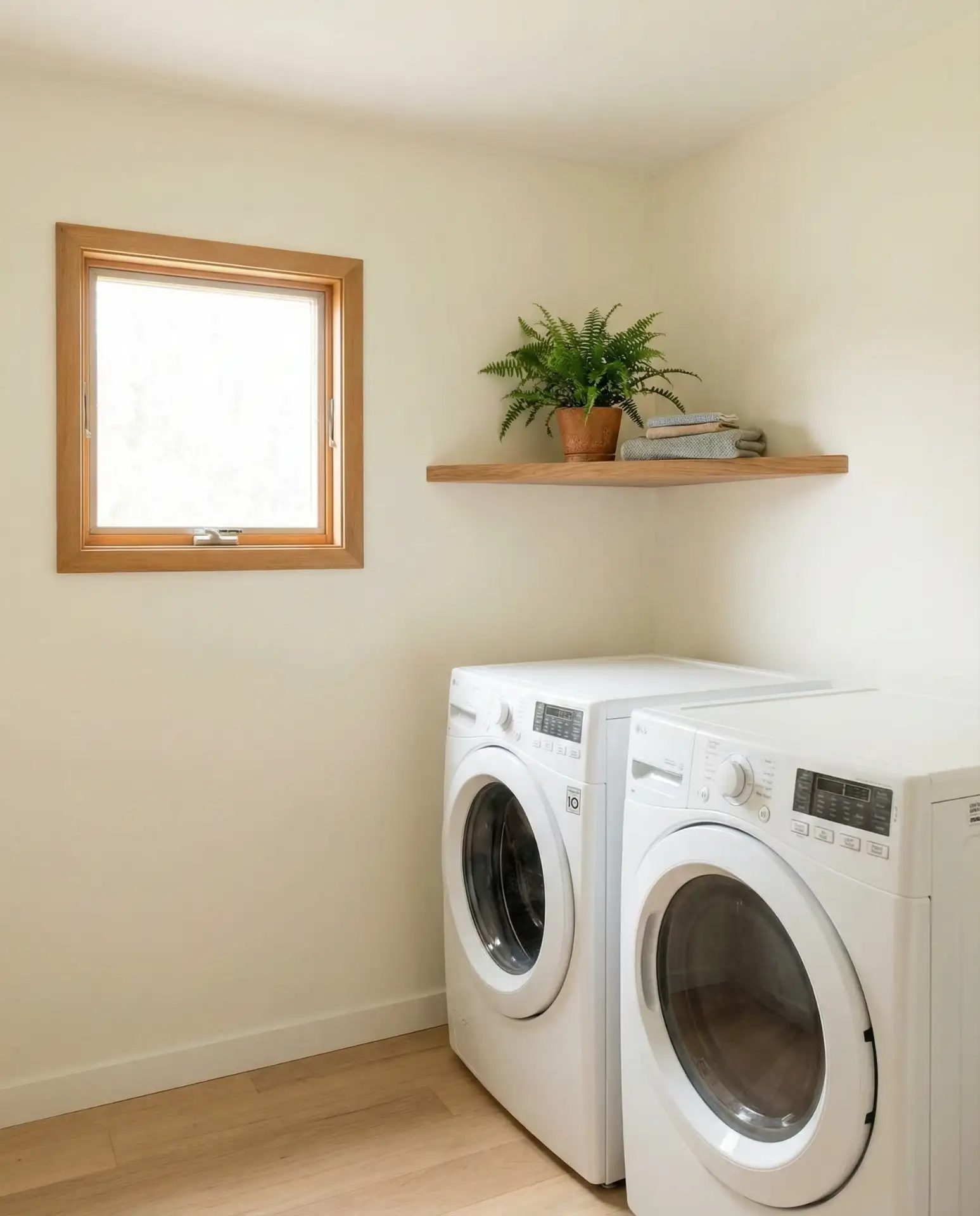
If your laundry area is tucked into a corner of a room, consider placing your washer and dryer at a forty-five-degree angle to open up the space visually and improve access. This unconventional design works especially well when the corner has a window above, as the angled appliances frame the natural light. Add corner shelves or a triangular countertop to make use of the otherwise wasted space behind the units.
Expert-style commentary: This layout is a favorite among designers working with awkward floor plans because it turns a dead corner into a focal point. Just make sure you have enough clearance for the washer and dryer doors to open fully, and check that water and electrical hookups can be extended to the new position without major plumbing work.
13. Kitchen-Adjacent Laundry with Pocket Door
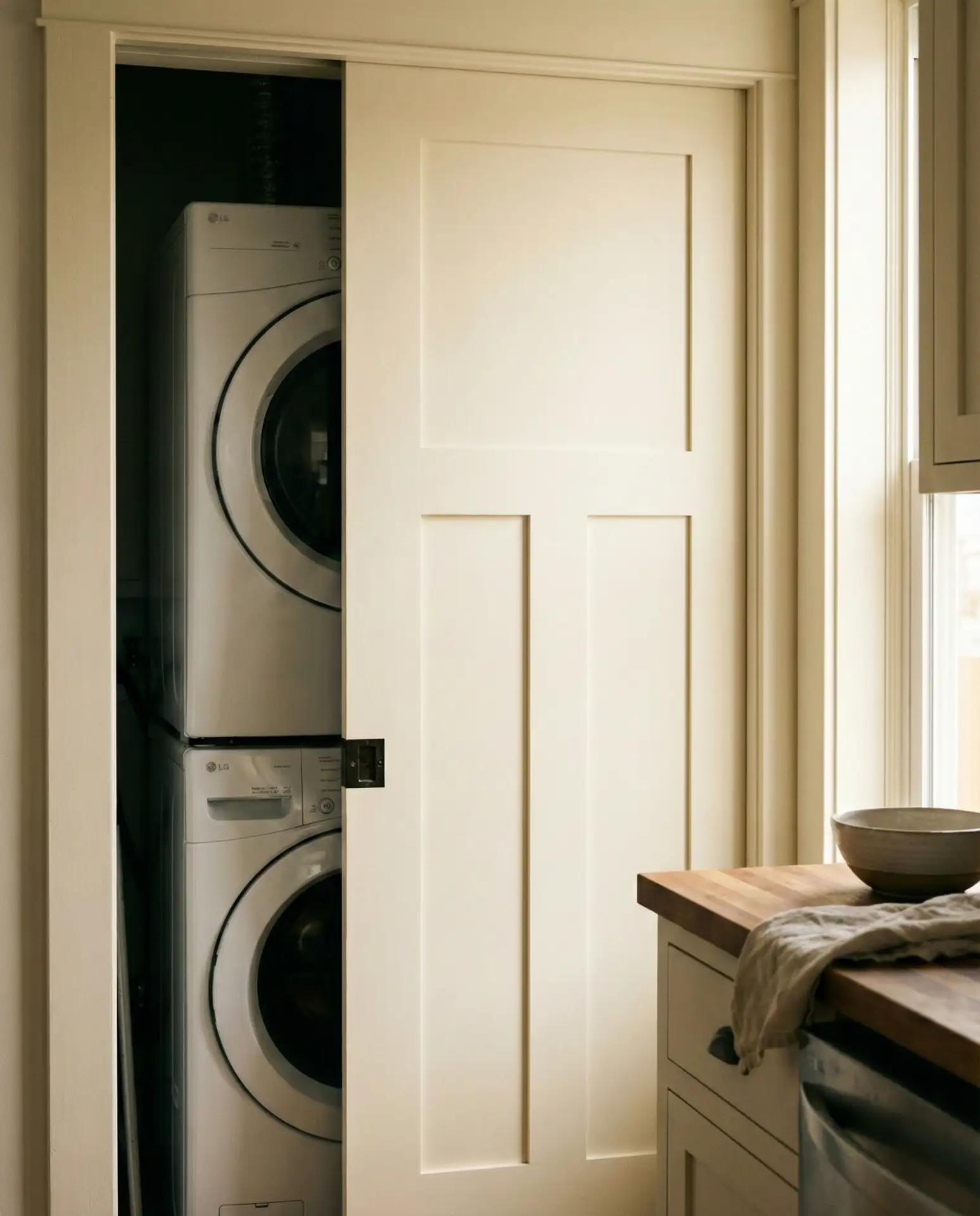
Placing laundry appliances in or near the kitchen is common in older homes and small apartments, and a pocket door can keep the area hidden when not in use. A pocket door slides into the wall cavity, saving the floor space a traditional door would need, and it can be painted or paneled to match your kitchen cabinetry. This keeps laundry out of sight during dinner parties or video calls while still being convenient for daily use.
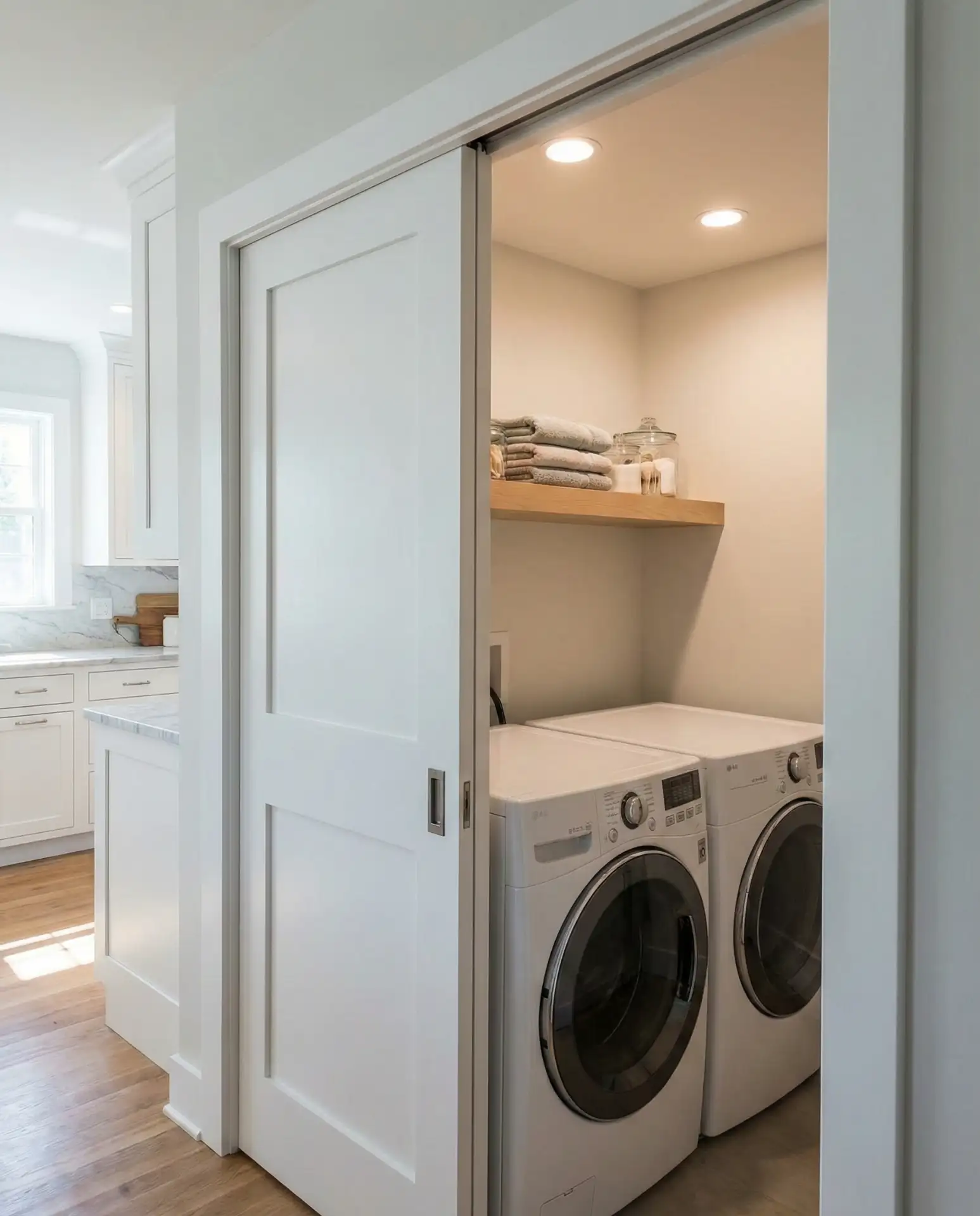
Budget angle: Installing a pocket door frame costs more upfront than a standard hinged door, but it’s a worthwhile investment in homes where space is at a premium. You can find DIY-friendly kits at home improvement stores, and the installation can often be completed in a weekend if you’re comfortable with basic carpentry.
14. Window Above Washer with Café Curtain
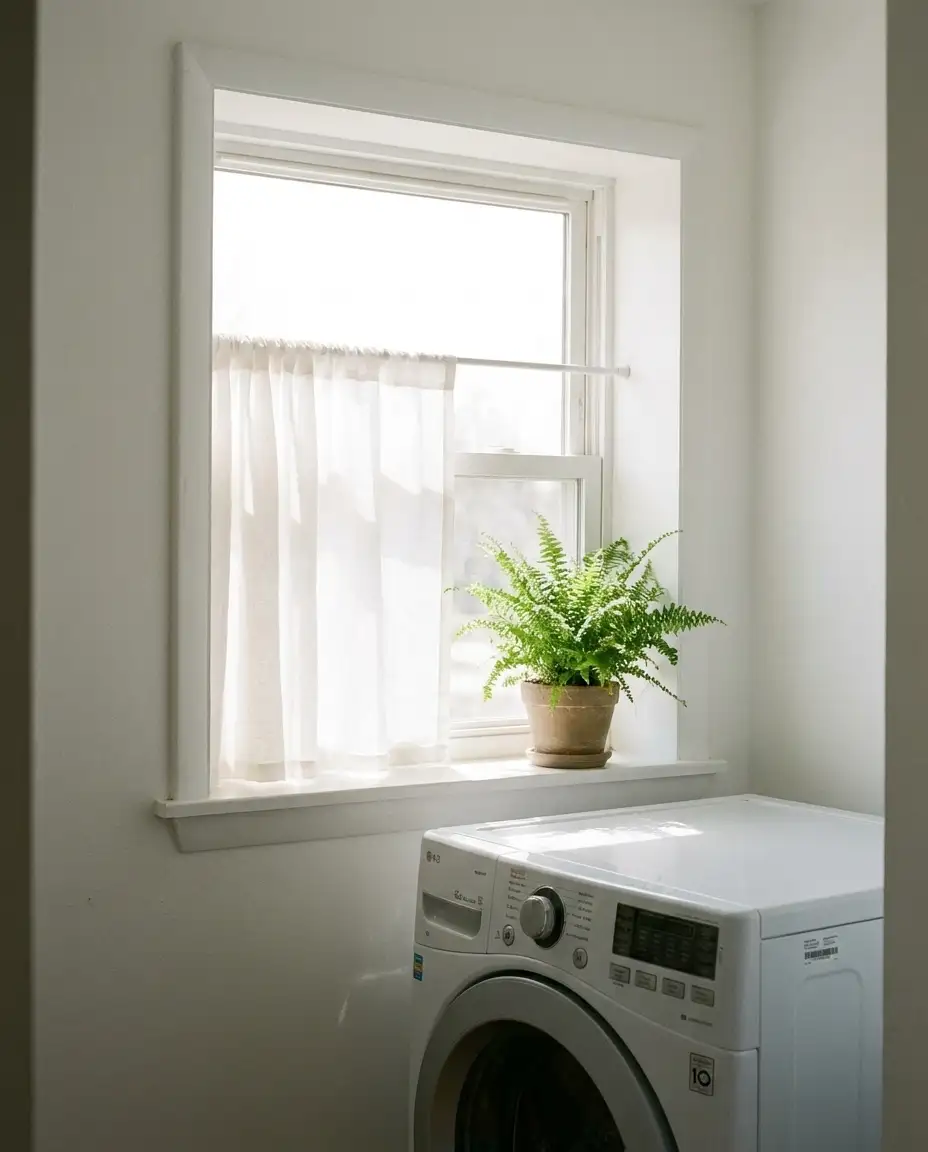
A window above your appliances floods the room with natural light and provides much-needed ventilation, but it can also expose the space to neighbors or passersby. A simple café curtain—mounted halfway up the window—offers privacy while still letting in daylight from the top half. Choose a washable fabric like cotton or linen in a cheerful print or solid color to reinforce your laundry room’s style without blocking the breeze.
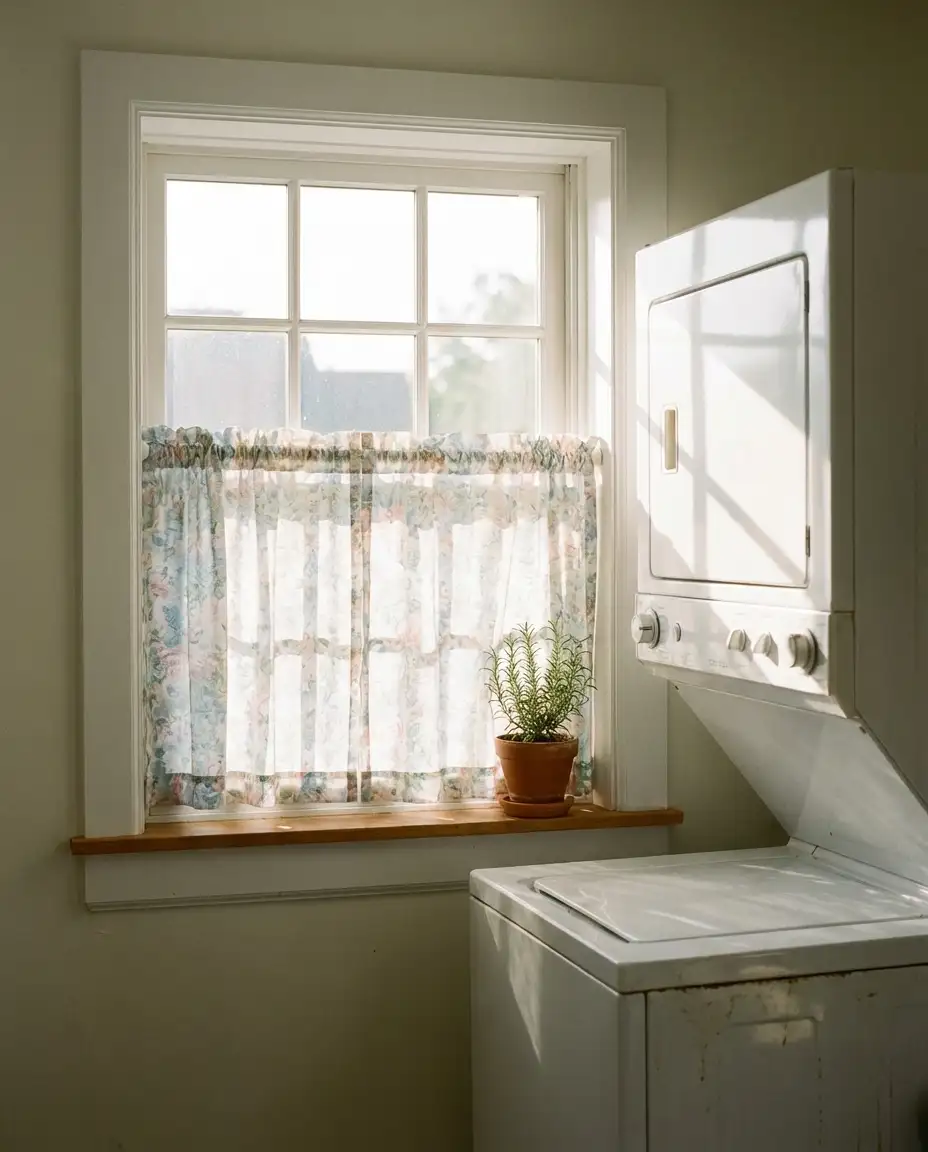
Micro anecdote: A homeowner in a Denver bungalow replaced her full curtains with a striped café version and said it instantly made the laundry room feel less like a cave. She also added a small succulent on the sill, turning the window ledge into a mini-display that gives her something pleasant to look at while waiting for cycles to finish.
15. Front Loaders Under Butcher Block Counter
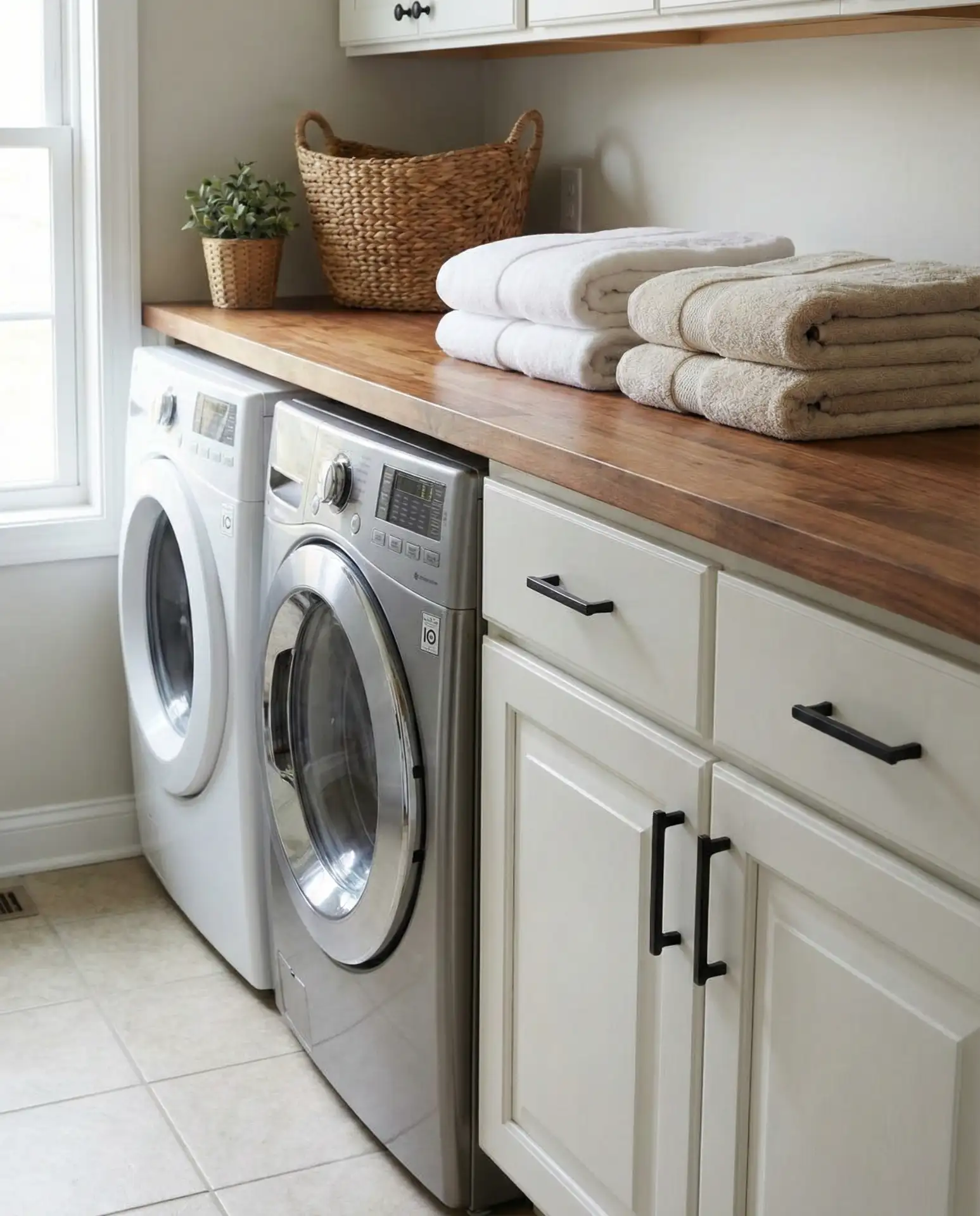
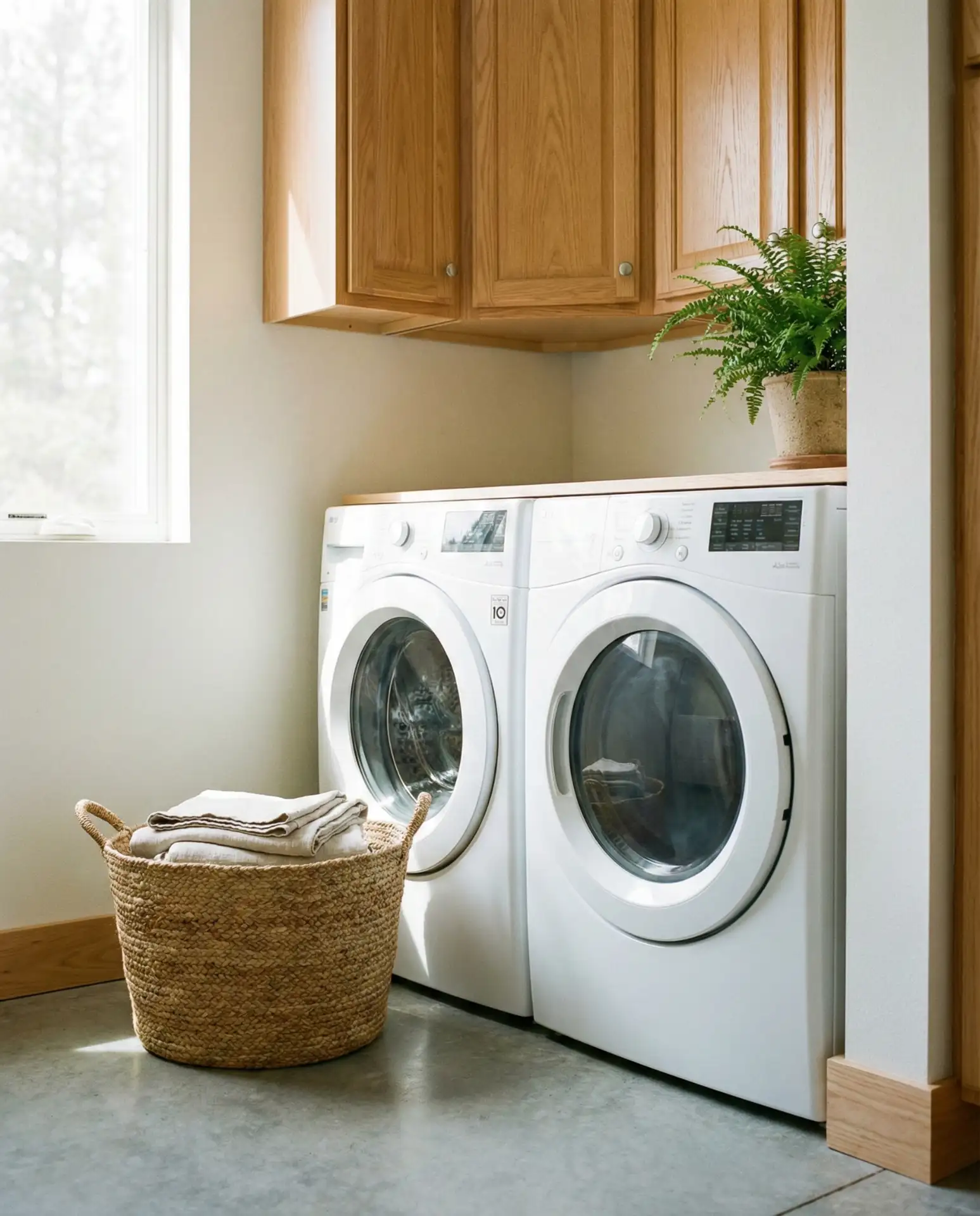
Front loaders fit neatly under a continuous countertop, and butcher block is an affordable, warm-toned surface that adds instant character. The wood is forgiving of dings and scratches, and it can be sanded and resealed over time. Install your washer and dryer side by side, then top them with a custom-cut butcher block slab that extends past the appliances to create folding space on one or both sides. This setup is ideal for a galley or hallway laundry where counter space is otherwise nonexistent.
Real homeowner behavior: Many people oil their butcher block counters with food-safe mineral oil every few months to keep the wood from drying out. It’s a quick maintenance task that also darkens and enriches the wood’s natural grain, making the countertop look better with age.
16. Stackable Closet Laundry with Bifold Doors
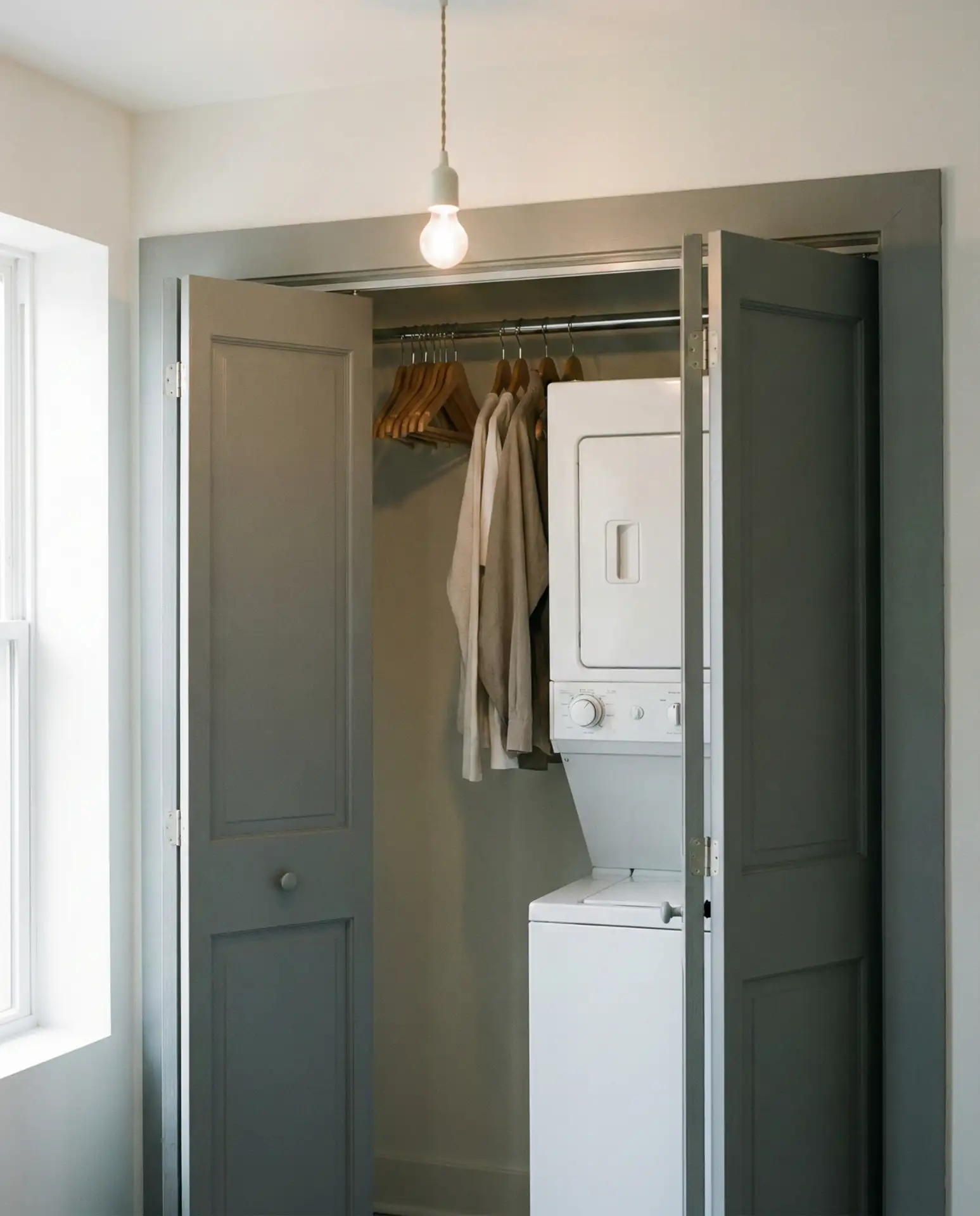
A stackable closet laundry hidden behind bifold doors is a classic space-saving solution in apartments and small homes. Bifold doors take up less clearance than standard swinging doors, and when open, they fold neatly to the sides to give you full access to the appliances. Paint the doors to match your trim, or choose a bold color to make the closet feel like an intentional design feature rather than an afterthought.
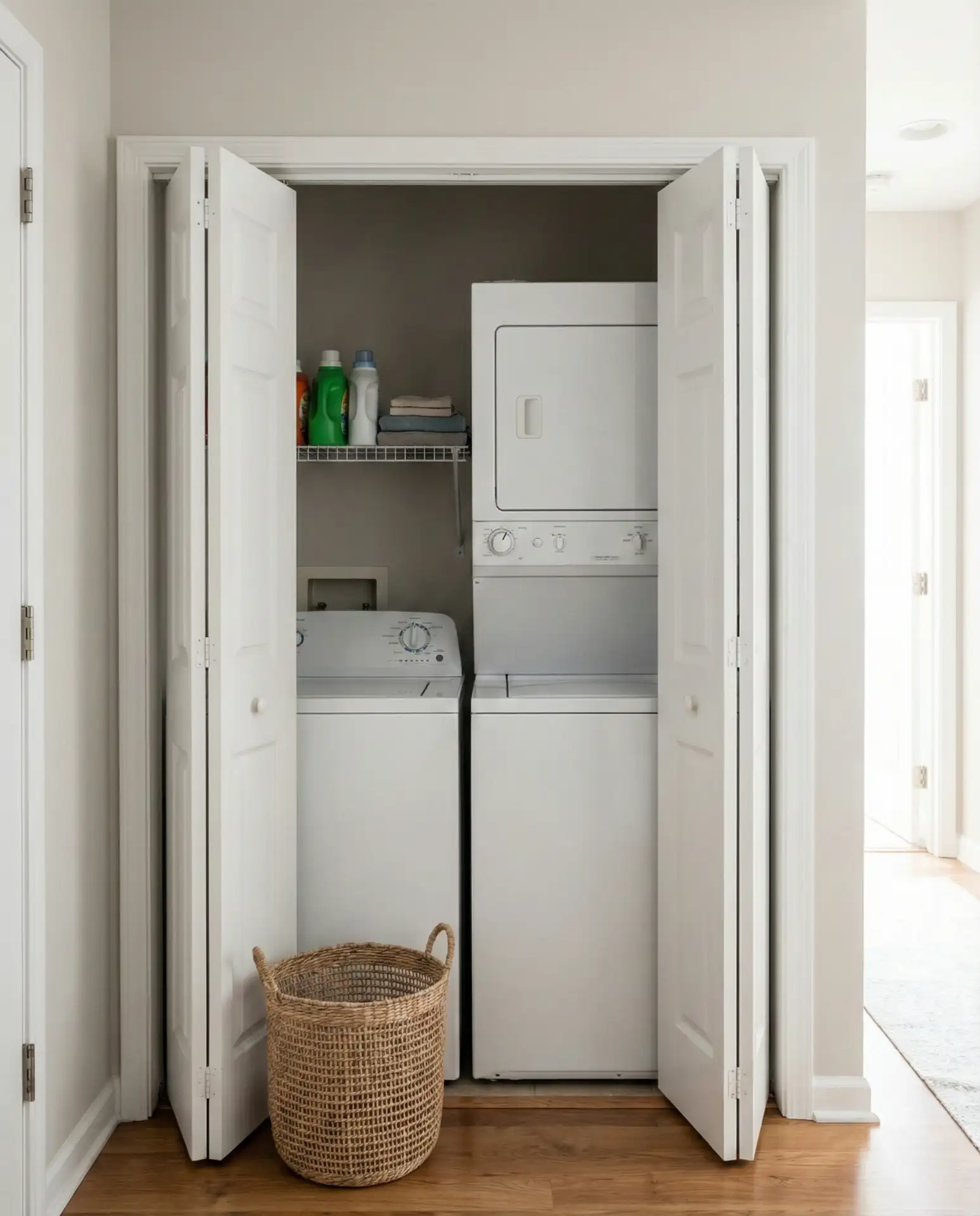
Common mistakes and how to avoid them: Bifold doors can stick or scrape if the track hardware isn’t level, so use a spirit level during installation and check alignment before securing the top track. Also, leave at least an inch of clearance on each side of the appliances so the doors don’t hit the machines when opening.
17. Garage Laundry with Rolling Cart Storage
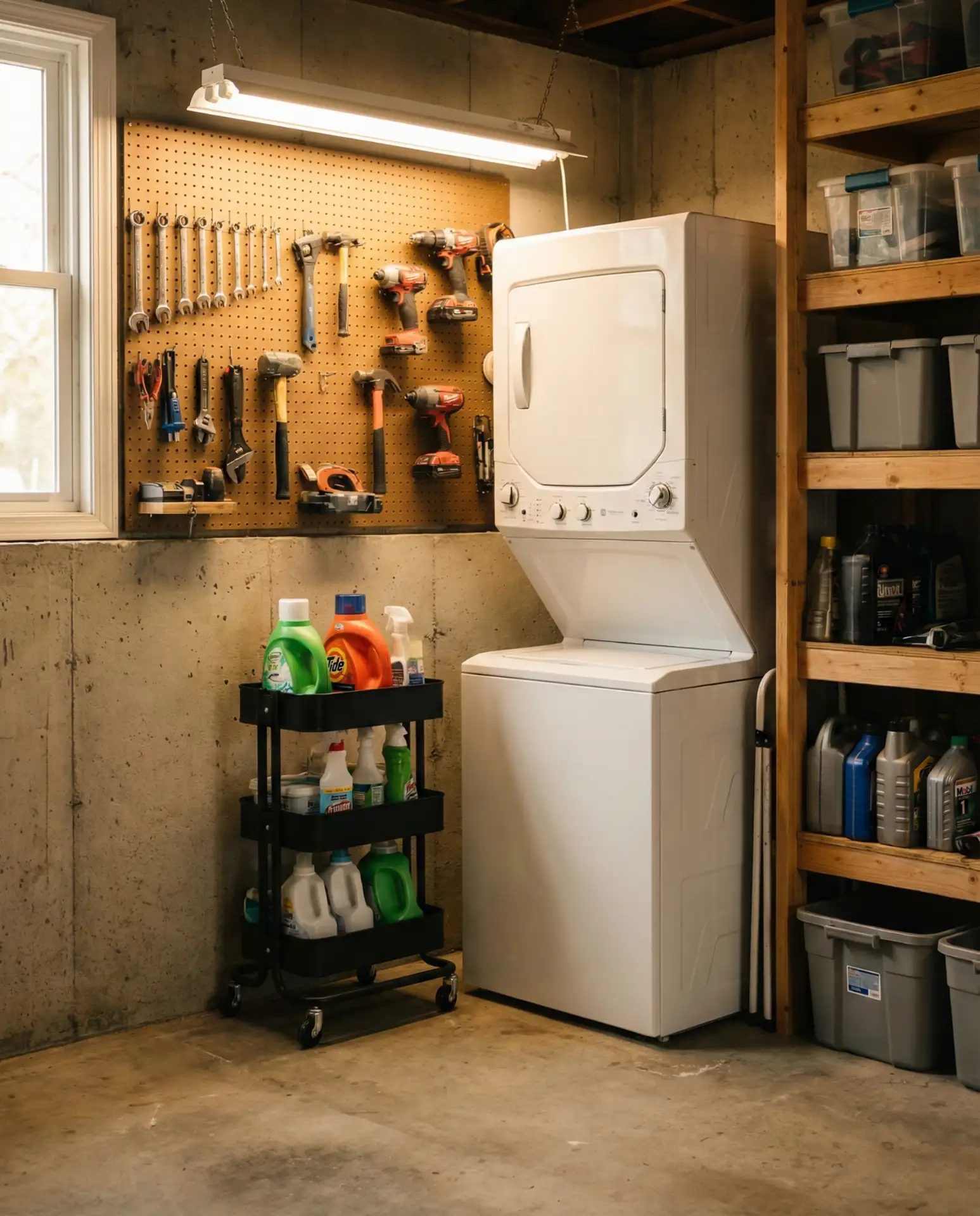
A garage laundry setup benefits from rolling carts that can hold detergent, fabric softener, and cleaning tools without taking up permanent floor space. Choose metal or plastic carts with wheels that lock, and tuck them beside or behind your washer when not in use. This keeps supplies organized and mobile, which is especially helpful if your garage serves multiple purposes—workshop, storage area, and laundry room all in one.
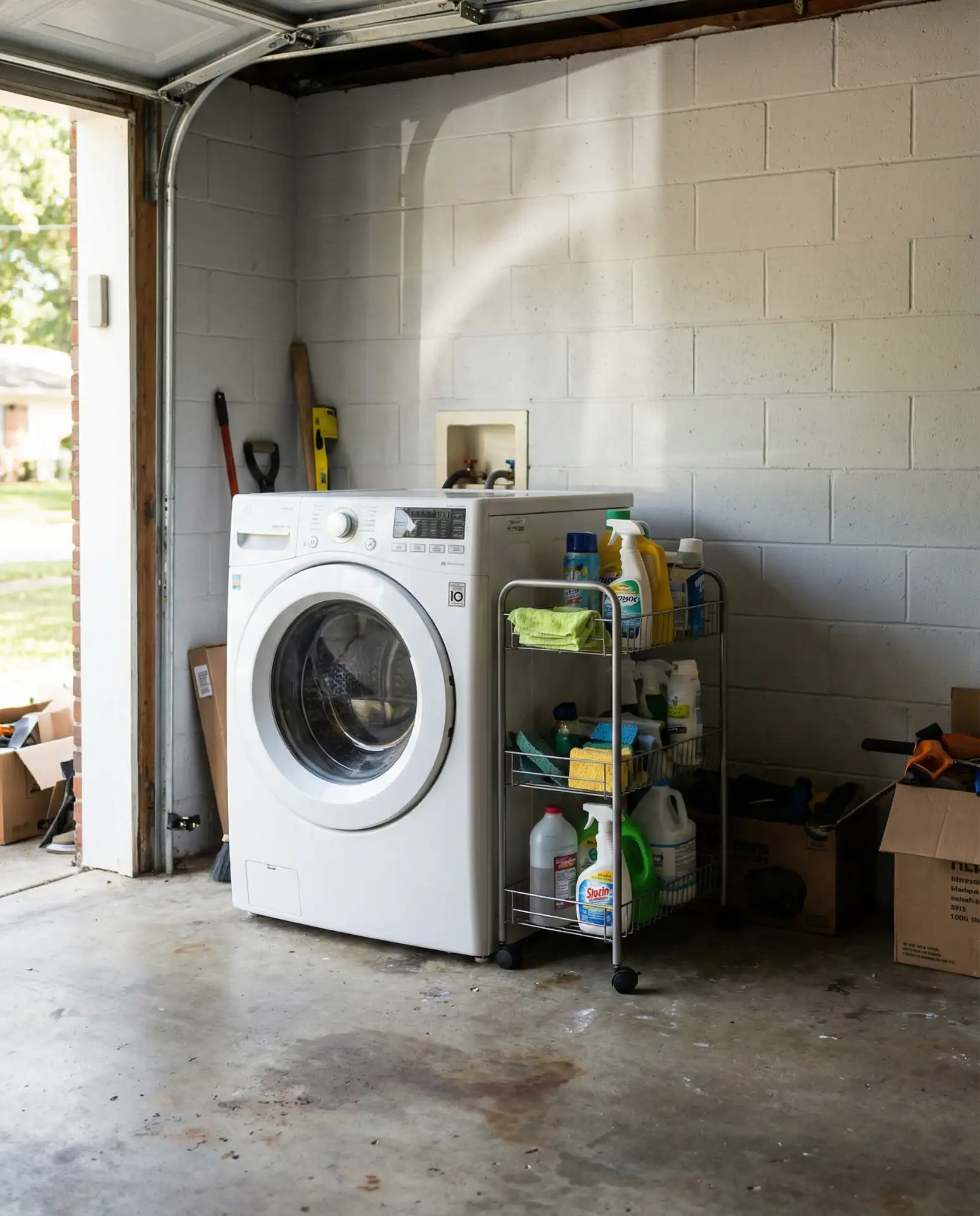
American lifestyle context: In suburban homes across the Sun Belt, garages are often climate-controlled and serve as a multipurpose utility zone. Rolling carts let homeowners shift storage as needed—rolling out the laundry cart on wash day, then tucking it away when the garage is needed for car maintenance or DIY projects.
18. Design-Forward Tile Backsplash Above Washer
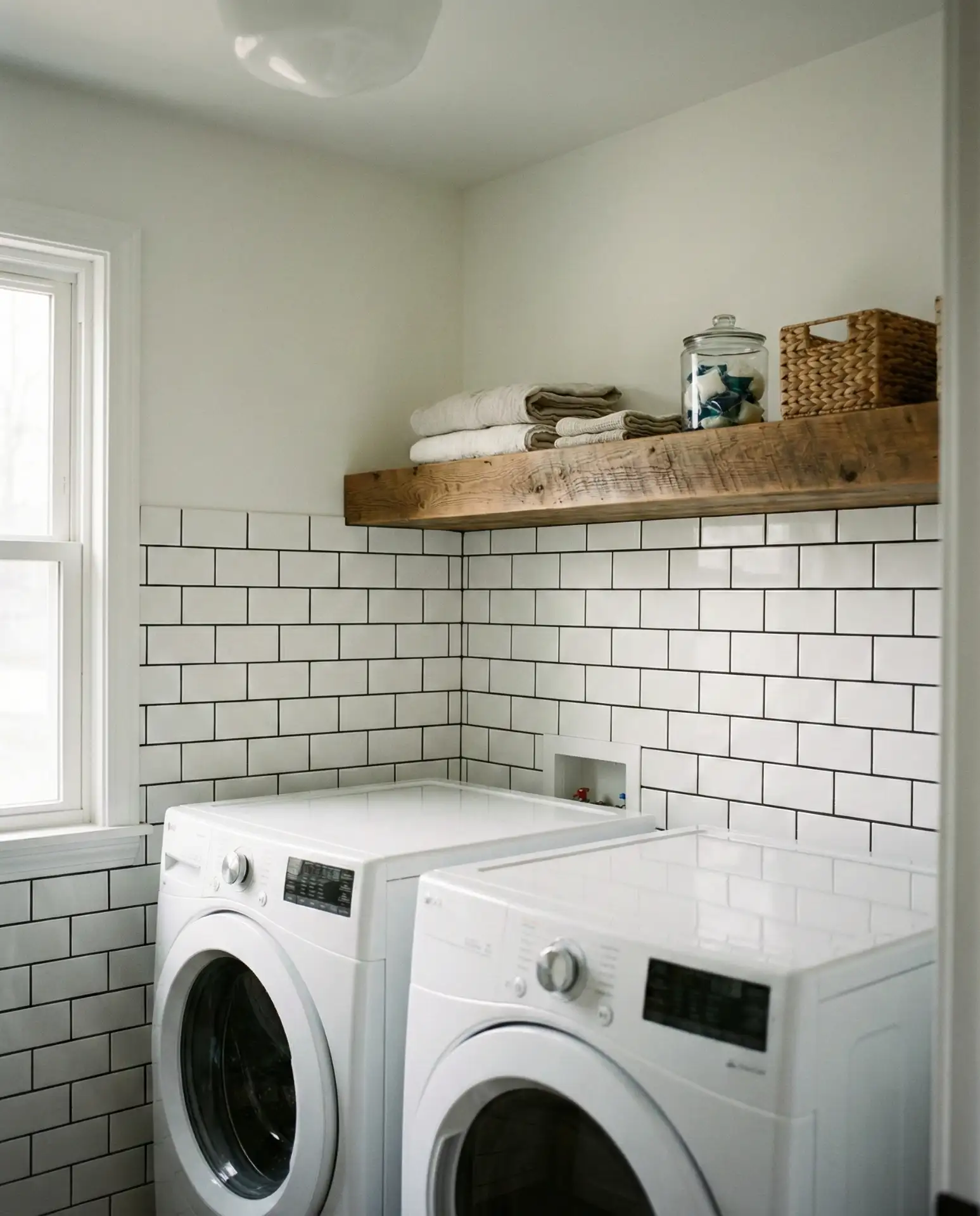
A tile backsplash isn’t just for kitchens—it’s also a practical and stylish upgrade for a laundry room, especially above a sink or washer where splashes are common. Choose subway tile, hexagon mosaics, or patterned cement tile to add visual interest and protect your walls. A well-chosen backsplash elevates the design of the entire space and makes it easier to wipe down spills without worrying about paint damage.
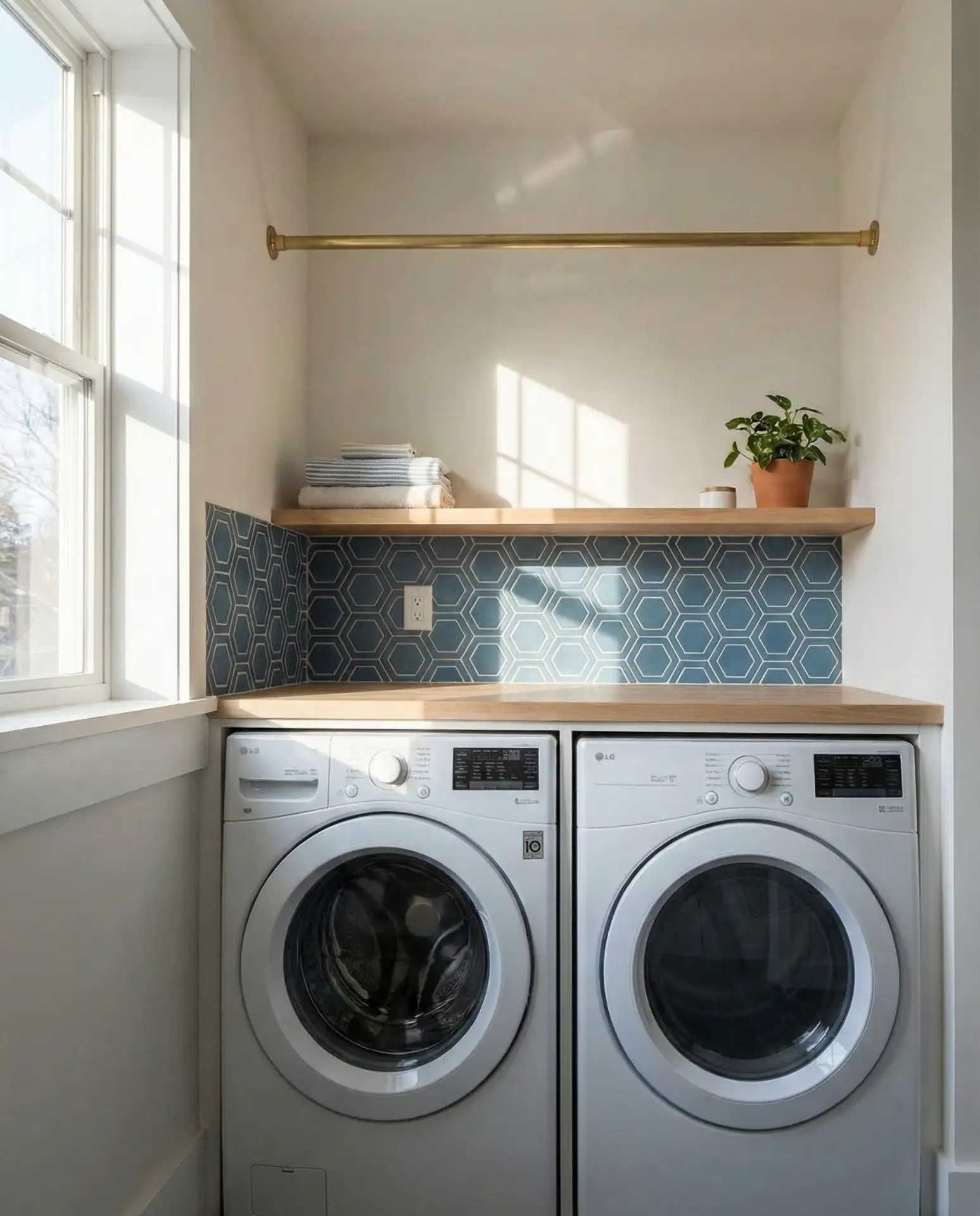
Where it works best: Tile backsplashes are ideal in homes with hard water, where mineral buildup and detergent residue can stain painted walls over time. They’re also a smart choice in humid climates, where moisture resistance is key to preventing mildew and peeling paint.
19. Sink-in-Counter Combo for Maximum Efficiency
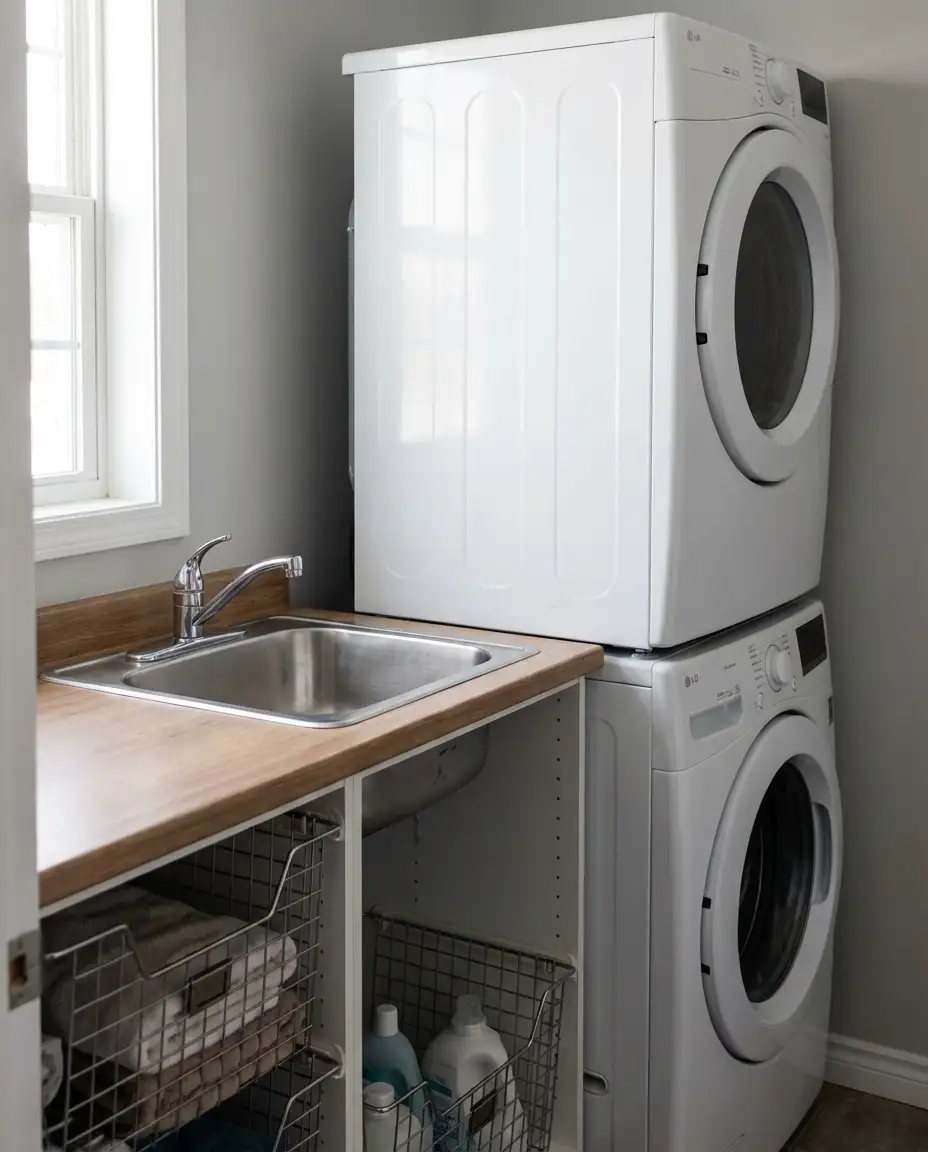
A drop-in or undermount sink set into a countertop creates a seamless workspace where you can sort, pre-treat, and fold without switching zones. Install the sink on one end of the counter, with the washer and dryer underneath the rest of the span. This combo layout maximizes every inch of horizontal surface and keeps all your laundry tasks within arm’s reach. It’s especially effective in a galley or L-shaped configuration.
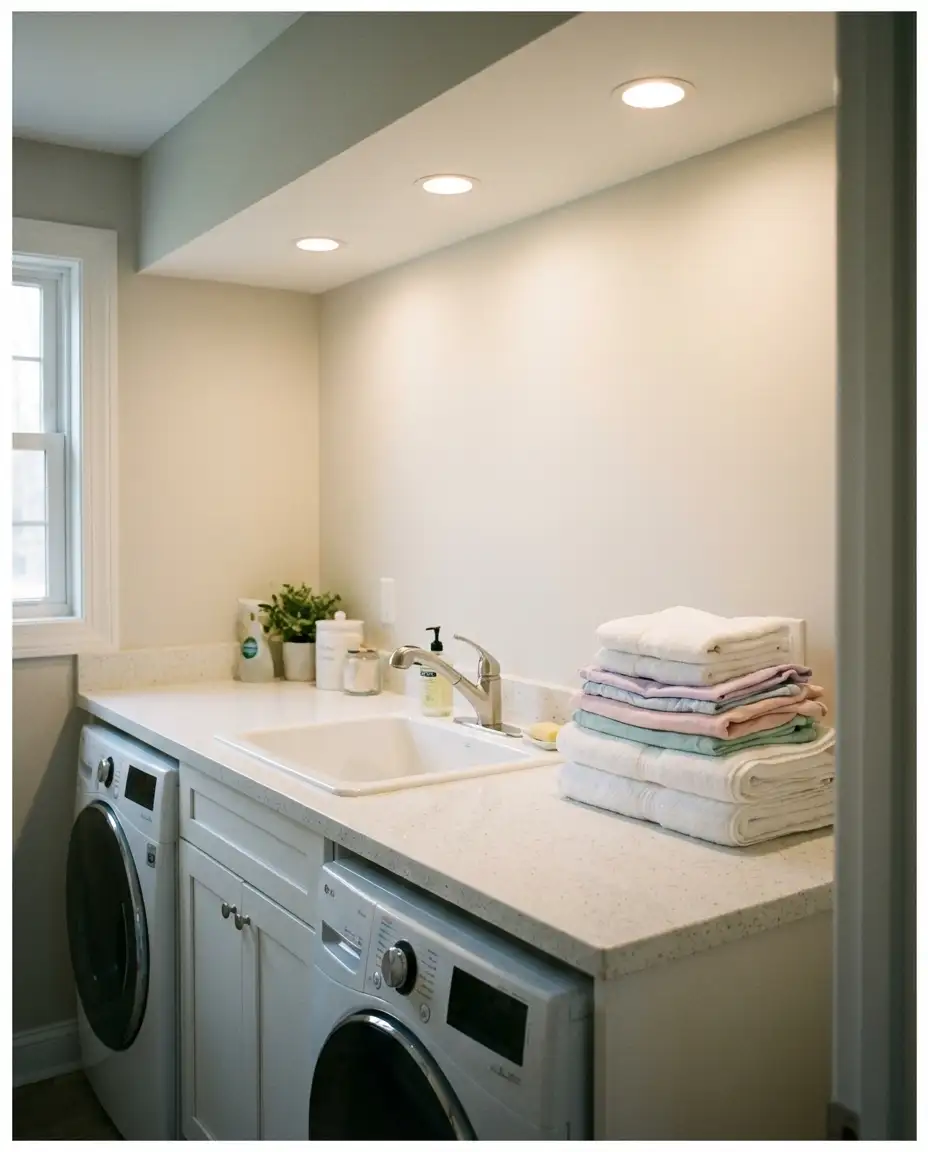
Practical insight: When planning this layout, position the sink near your water supply lines to minimize plumbing costs, and make sure the countertop material is water-resistant—quartz, solid surface, or laminate with a sealed edge all work well. Avoid raw wood or unsealed materials that can warp or stain over time.
20. Storage Cubbies with Pull-Out Hampers
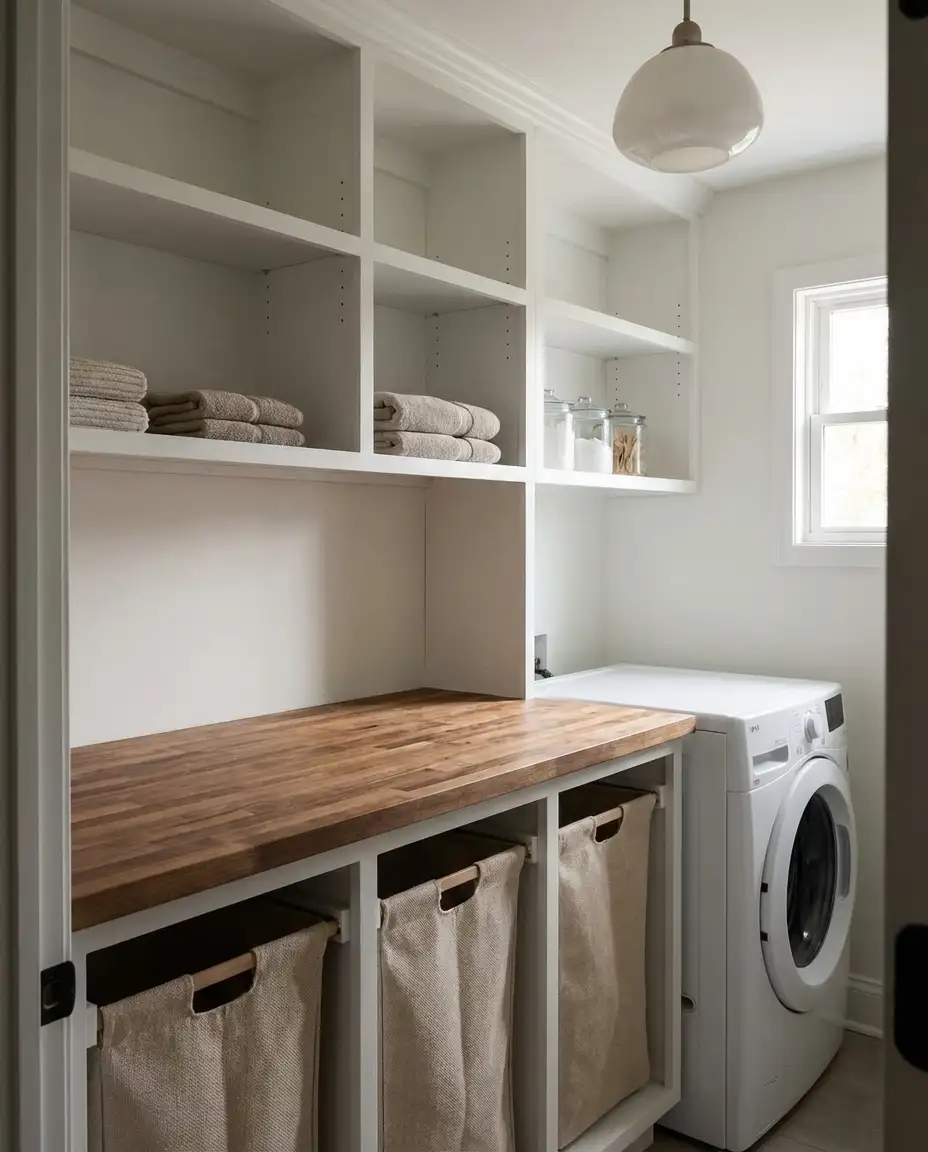
Built-in storage cubbies with pull-out hampers keep dirty laundry hidden and sorted by color or fabric type. Install them below a countertop or beside your washer to create a designated landing zone for clothes. The pull-out bins glide on drawer slides, making it easy to grab the right load without digging through a single overflowing basket. This system works beautifully in a hallway or closet where floor space is tight.
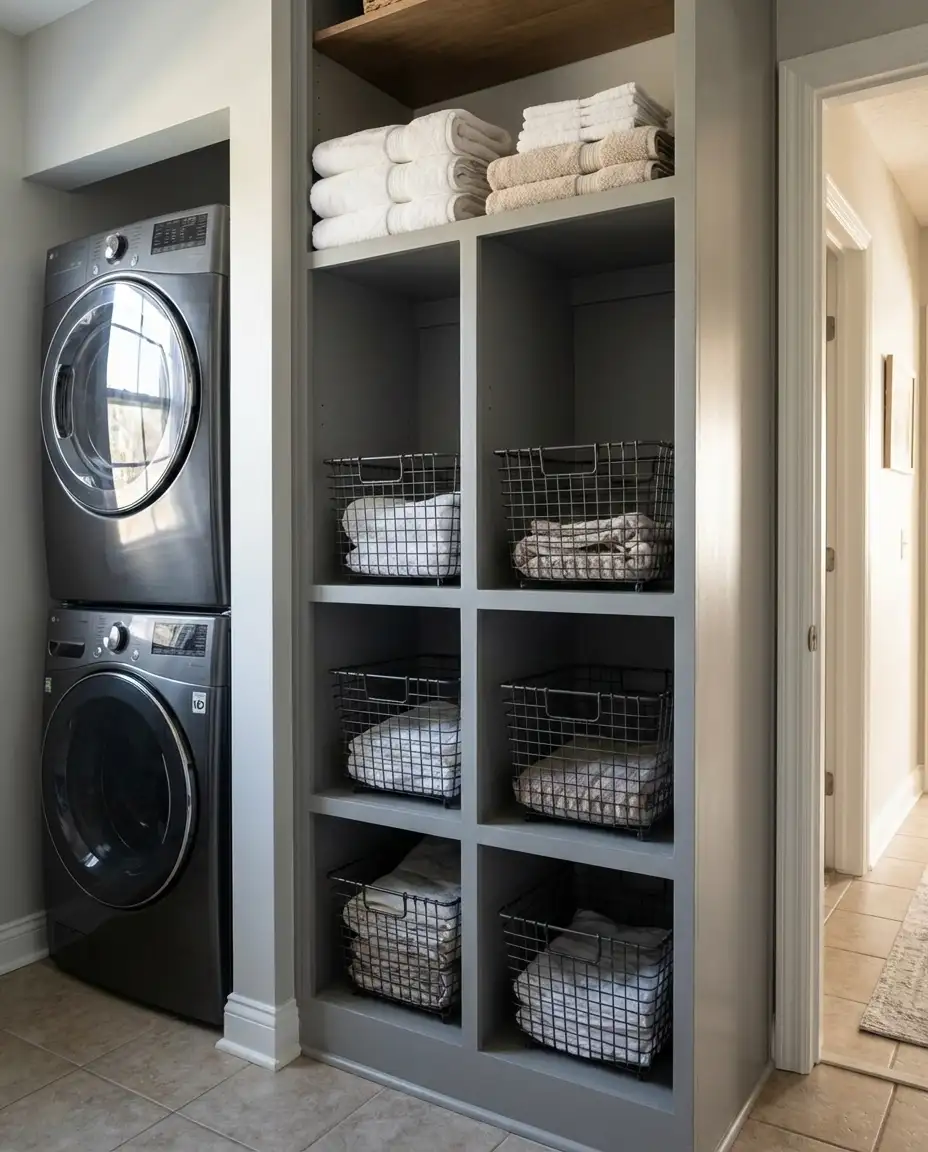
Expert-style commentary: Designers recommend labeling each hamper—whites, darks, delicates—so everyone in the household knows where to toss their clothes. It’s a small habit that pays off in time saved on sorting, and it makes laundry day feel less chaotic, especially in homes with kids or multiple people.
21. Vintage-Style Ironing Board Cabinet
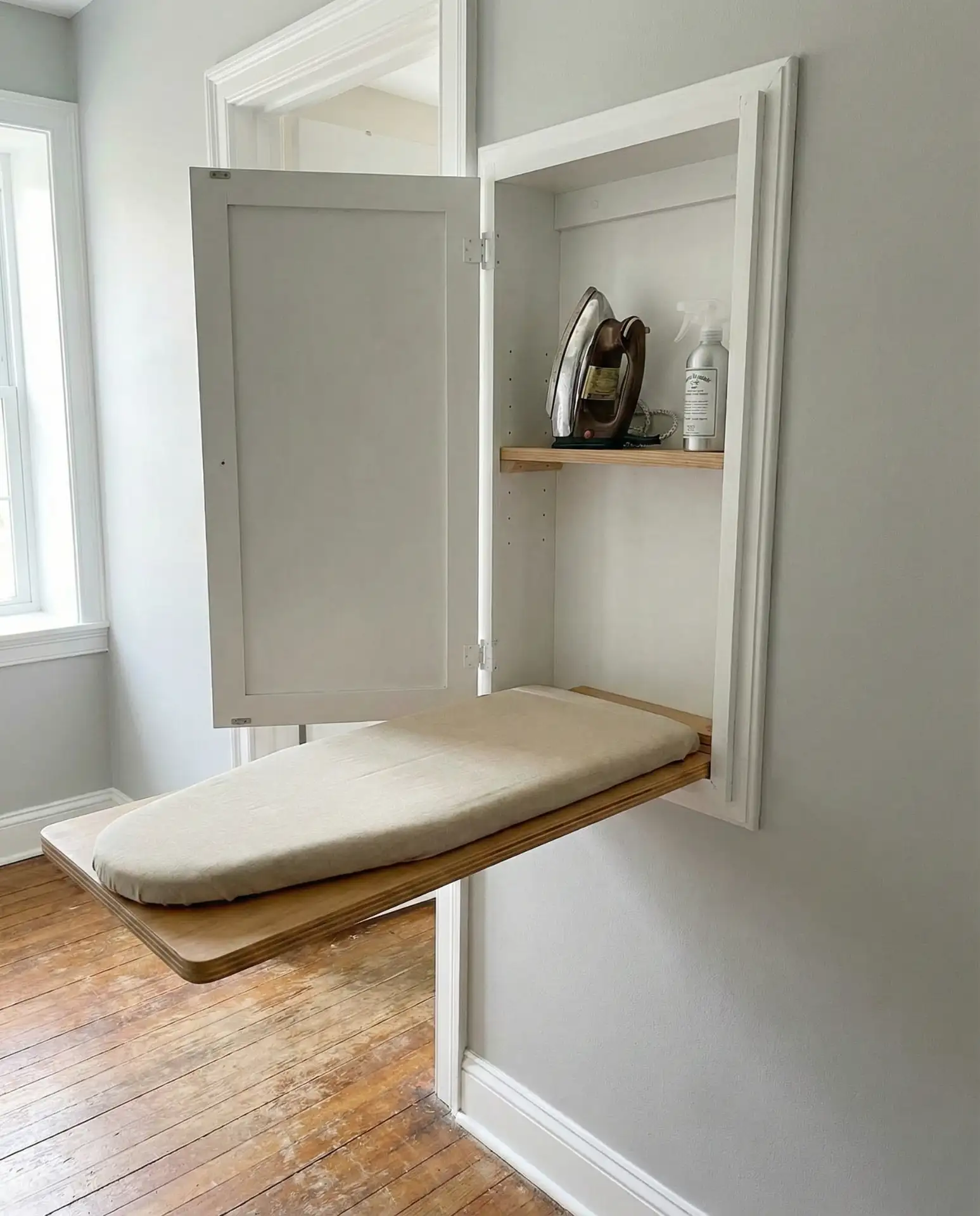
A fold-down ironing board built into a vintage-style cabinet saves floor space and keeps your iron and supplies tucked out of sight when not in use. These cabinets can be wall-mounted or recessed between studs, and many reproductions feature beadboard doors or distressed finishes that add charm to a plain hallway or closet laundry. It’s a detail that feels both practical and nostalgic, especially in homes with period architecture.
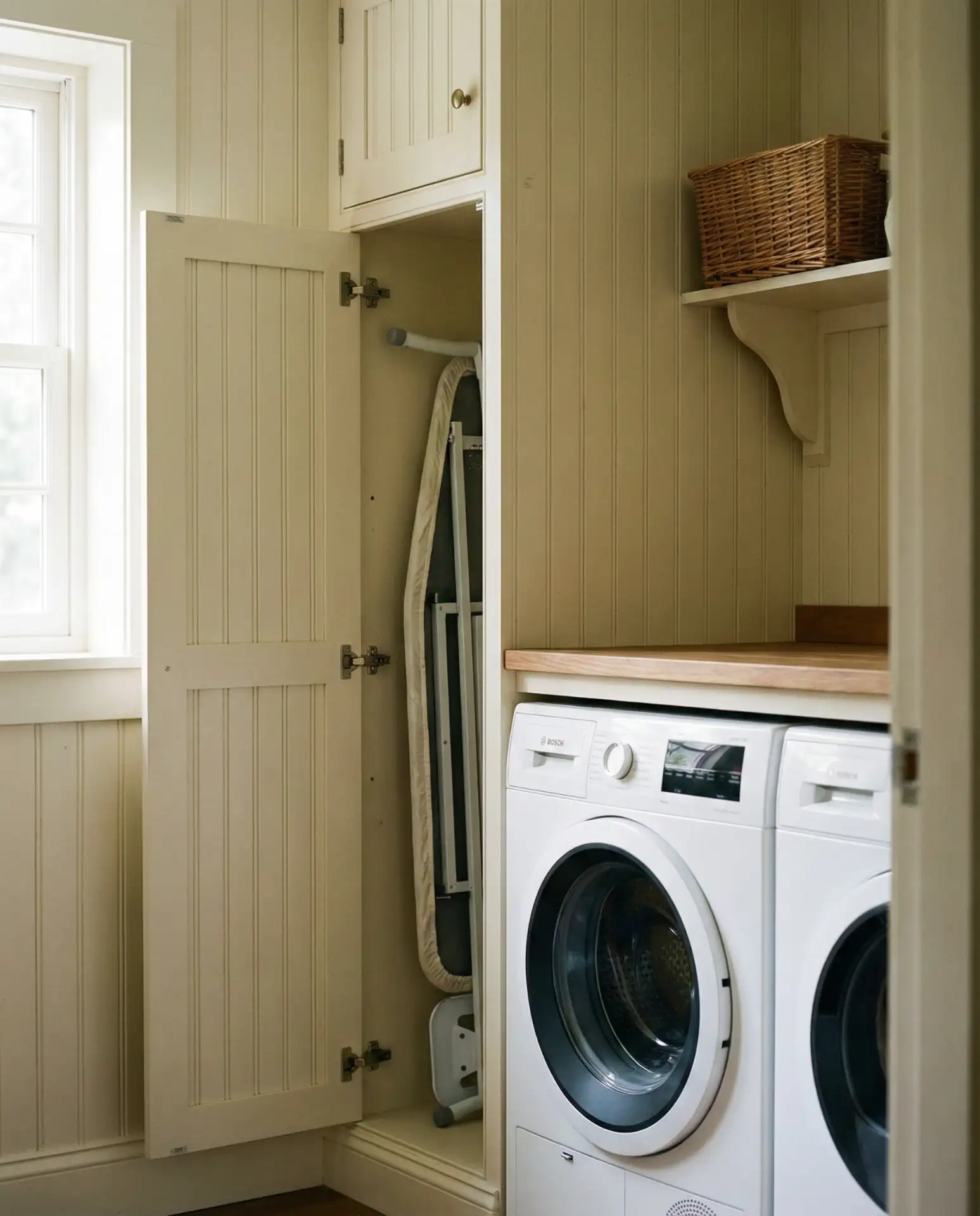
Budget angle: Ready-made ironing board cabinets are available from home improvement retailers starting around one hundred dollars, and installation is straightforward if you can locate studs and use a level. For a truly custom look, some homeowners repurpose vintage medicine cabinets or shallow linen closets for the same purpose.
22. Creative Drying Rack Above Front Loaders
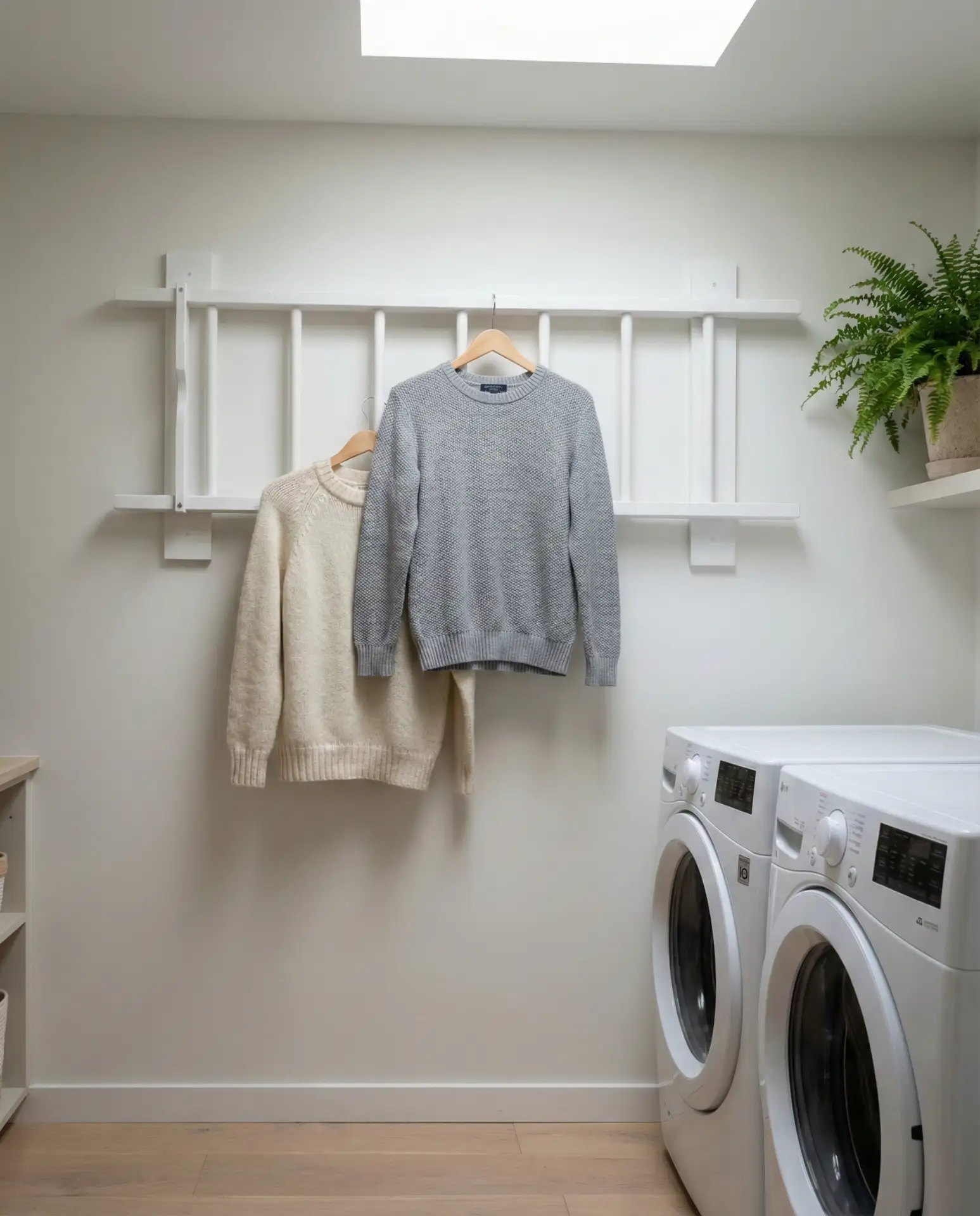
A wall-mounted or ceiling-hung drying rack above your front loaders turns dead air space into a creative drying zone for delicates, sweaters, or air-dry-only garments. Choose a fold-down ladder-style rack or a simple rod with S-hooks for hangers. This setup is especially useful in a small space where a freestanding drying rack would block the walkway. The added bonus: your clothes dry faster near the warm, vented air from the dryer.
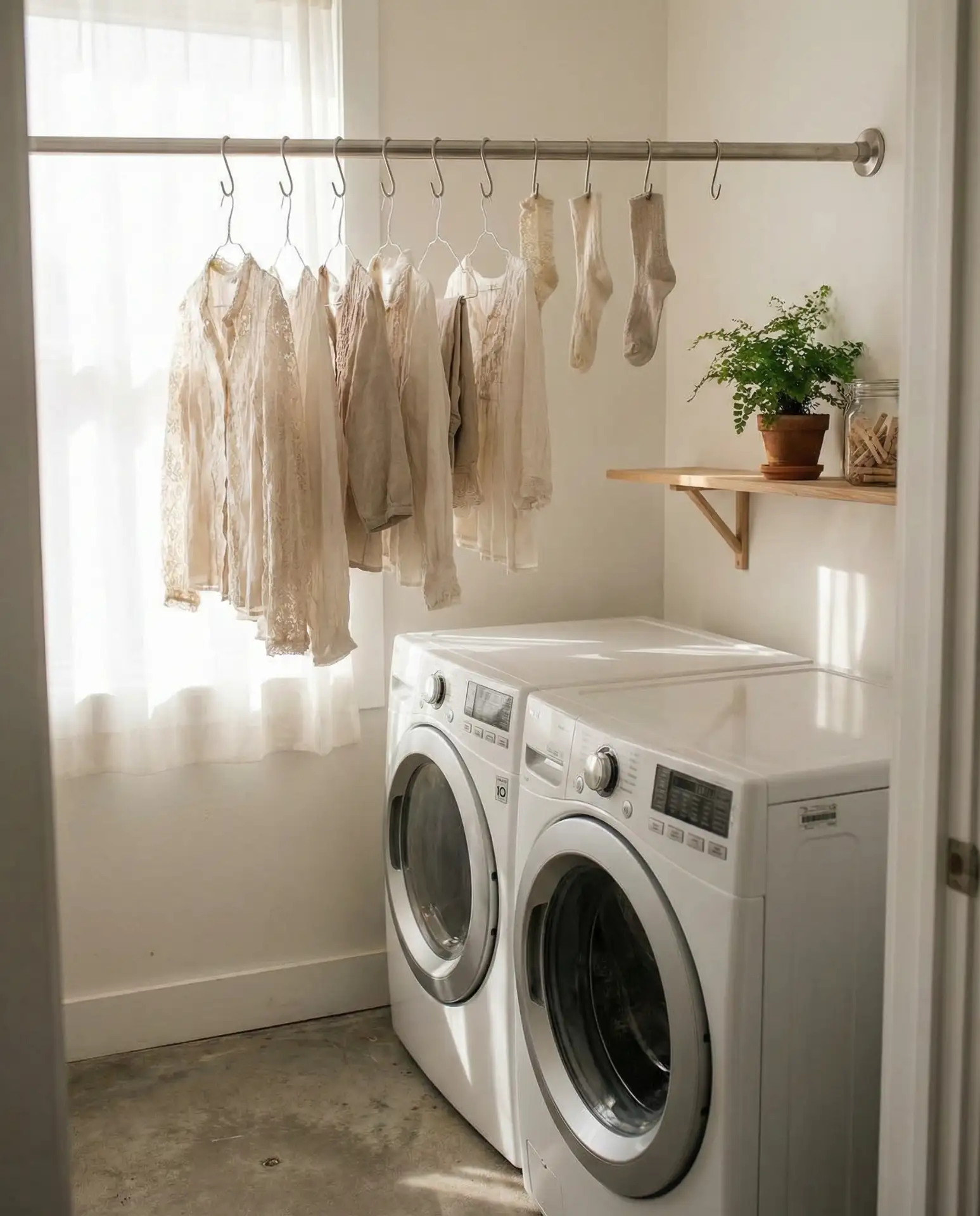
Real homeowner behavior: Many people leave the drying rack folded up when not in use, then pull it down on laundry day to hang items fresh from the wash. It’s a low-cost upgrade that makes a big difference if you avoid the dryer for certain fabrics, and it keeps delicate clothes from getting wrinkled in a laundry basket.
Conclusion
Transforming a small laundry space doesn’t require a complete overhaul—just thoughtful choices about layout, storage, and style. Whether you’re drawn to rustic barn doors, moody painted walls, or the clean efficiency of IKEA modular systems, there’s a solution that fits your home and your daily routine. Try one idea or mix several to create a laundry room that works as hard as you do, and share your favorite setups in the comments below—we’d love to see how you’ve made the most of your space.