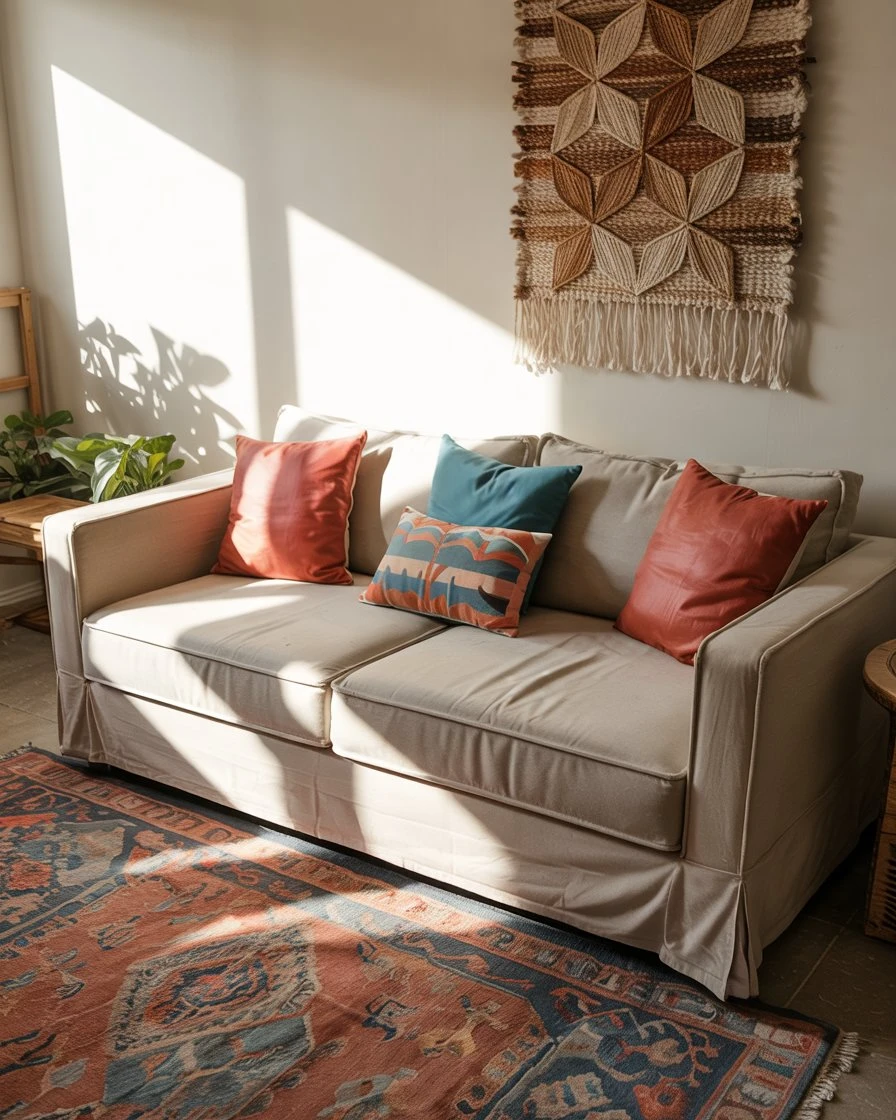
Living room design in 2026 is all about finding that perfect balance between comfort and visual impact—especially for the millions of Americans scrolling Pinterest late at night, searching for that one idea that finally clicks. Whether you’re working with a compact apartment or dreaming of a more luxury refresh, this year’s trends lean into warmth, personality, and spaces that actually feel lived-in. From Japandi minimalism to richly layered traditional Indian textiles, the latest looks prove that great design doesn’t require a massive footprint or an unlimited budget. Below, you’ll find ideas that blend inspiration with real-world practicality, each one crafted to help you reimagine your space with confidence.
1. Warm Textured Neutrals with Organic Accents
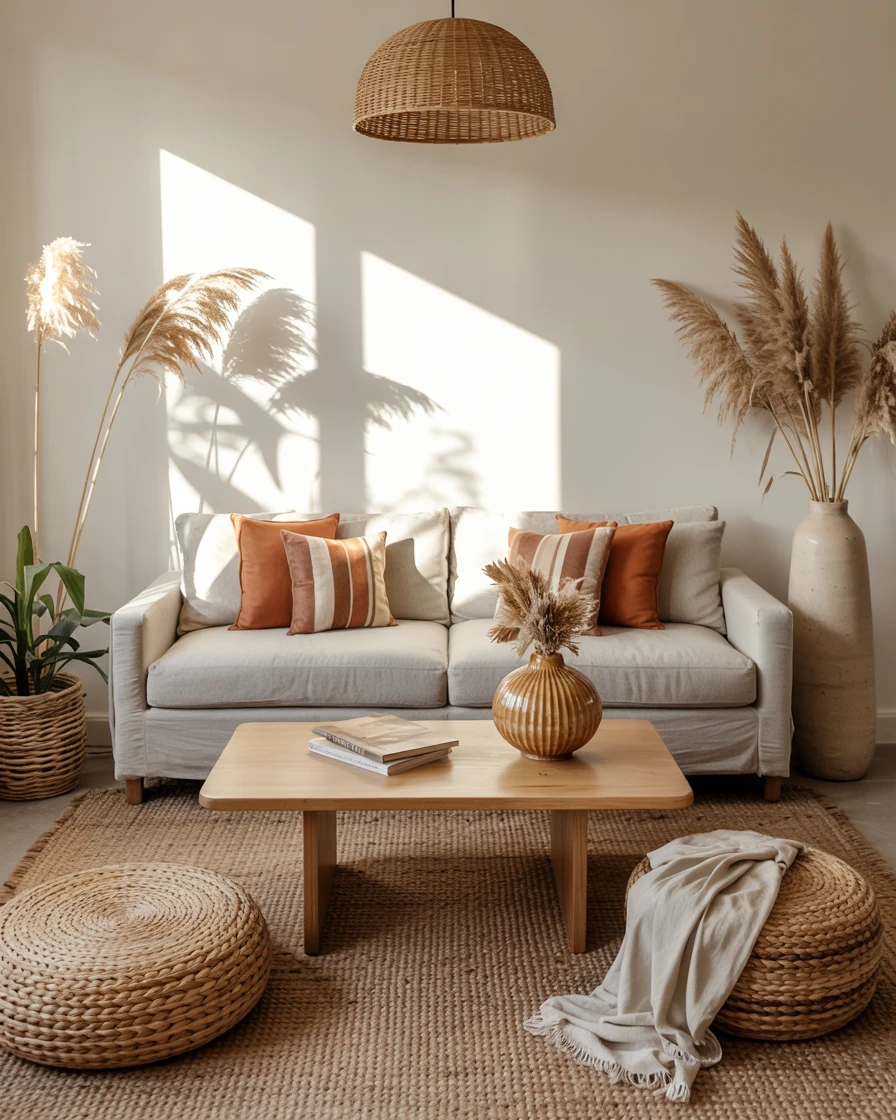
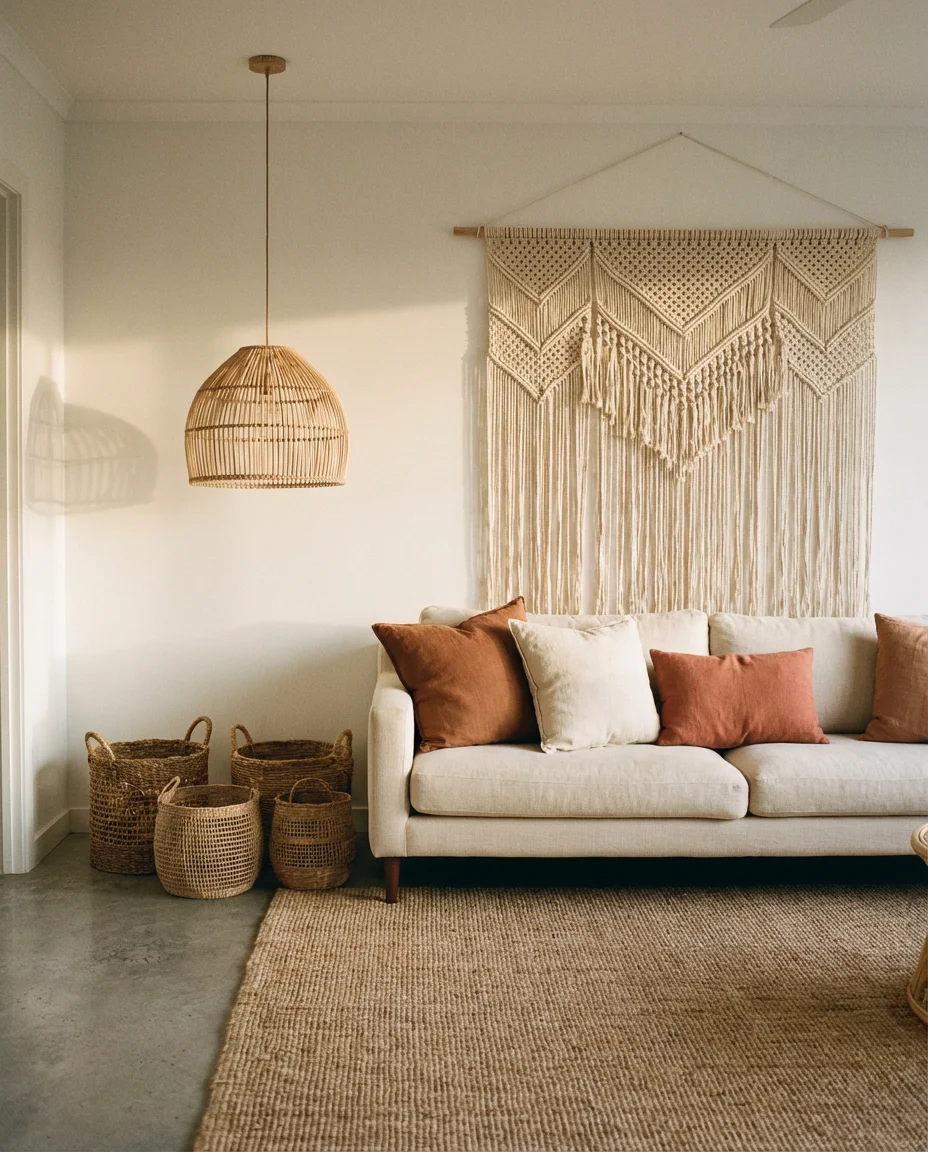
This approach layers warm and cozy tones—think oatmeal, terracotta, and soft taupe—with natural wood furniture and woven baskets to create a calming, grounded atmosphere. It’s ideal for open-plan living spaces where you want the room to feel inviting without overwhelming the senses. The key is mixing matte and slightly glossy finishes so the eye has subtle places to rest, which works especially well in homes with abundant natural light.
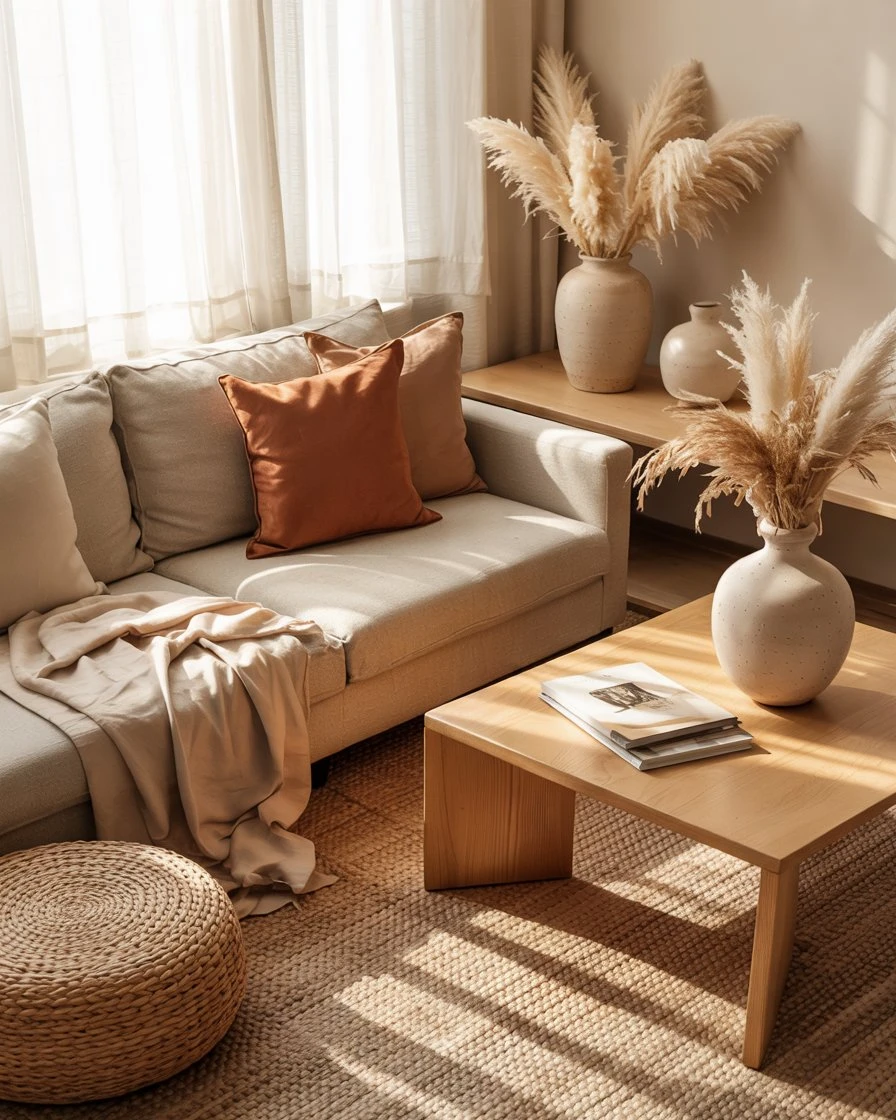
Many homeowners in the Southwest—Arizona, New Mexico—gravitate toward this palette because it echoes the desert landscape just outside their windows. It’s a low-maintenance choice for families with kids or pets, since neutral fabrics hide wear better than stark whites. Adding one or two sculptural pieces, like a chunky ceramic lamp or a driftwood mirror frame, prevents the space from feeling too safe or catalog-perfect.
2. Compact Japandi Corner with Floor Seating
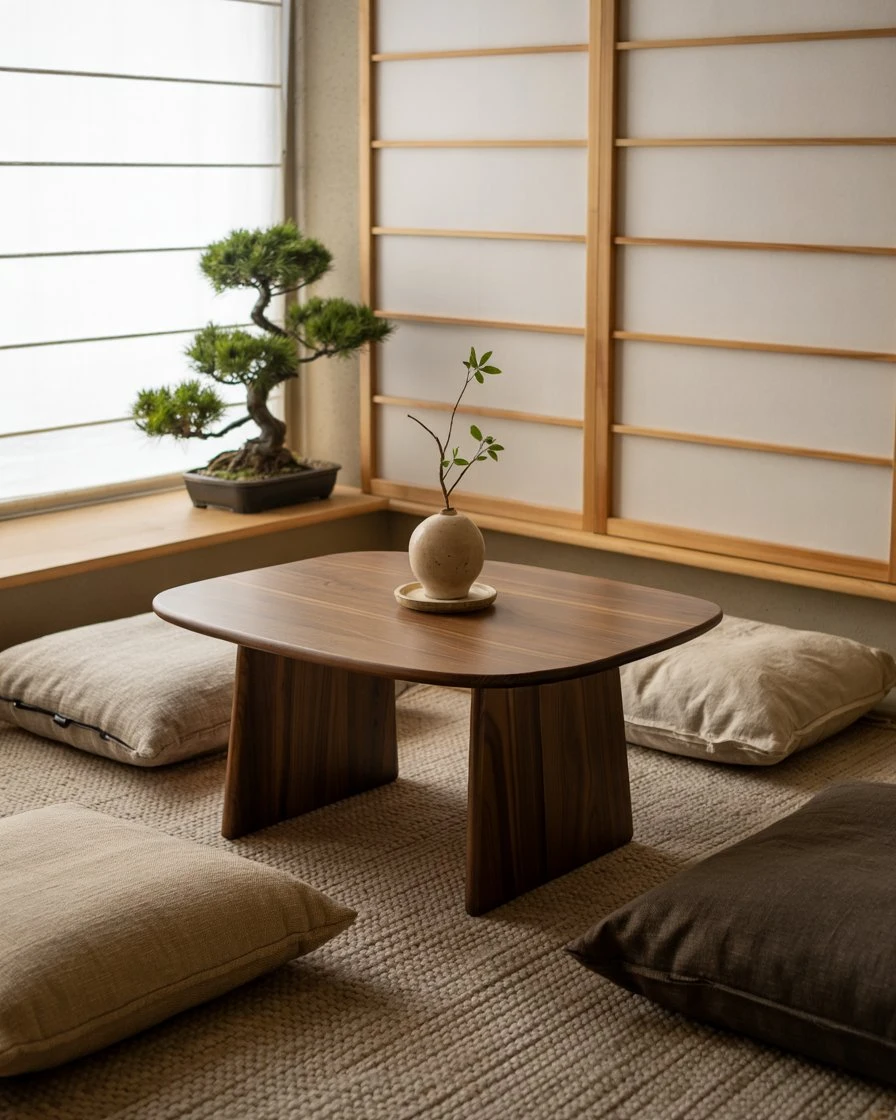
For small spaces that crave a Japandi aesthetic, floor cushions and low wooden tables create an intimate conversation area without blocking sightlines. This setup works beautifully in studio apartments or multipurpose rooms where you need flexibility—guests can sit on cushions during game night, then you stack them away for yoga the next morning. The minimal silhouette also makes the room feel larger than it actually is.
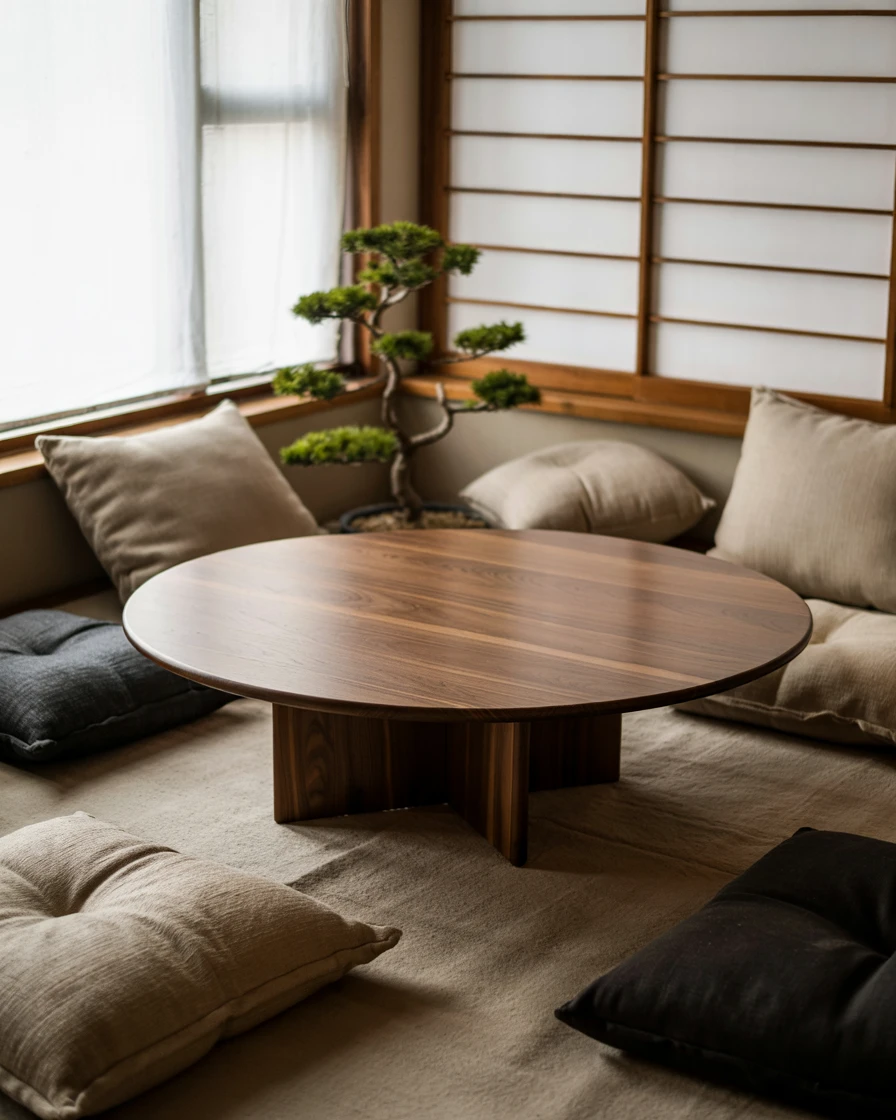
A common mistake here is overloading the space with too many decorative objects—Japandi thrives on restraint. Stick to one or two statement pieces, like a handmade ceramic bowl or a single ink painting, and let negative space do the heavy lifting. This approach also keeps cleaning simple, which busy professionals and young parents genuinely appreciate.
3. Statement Fireplace with Sculptural Surround
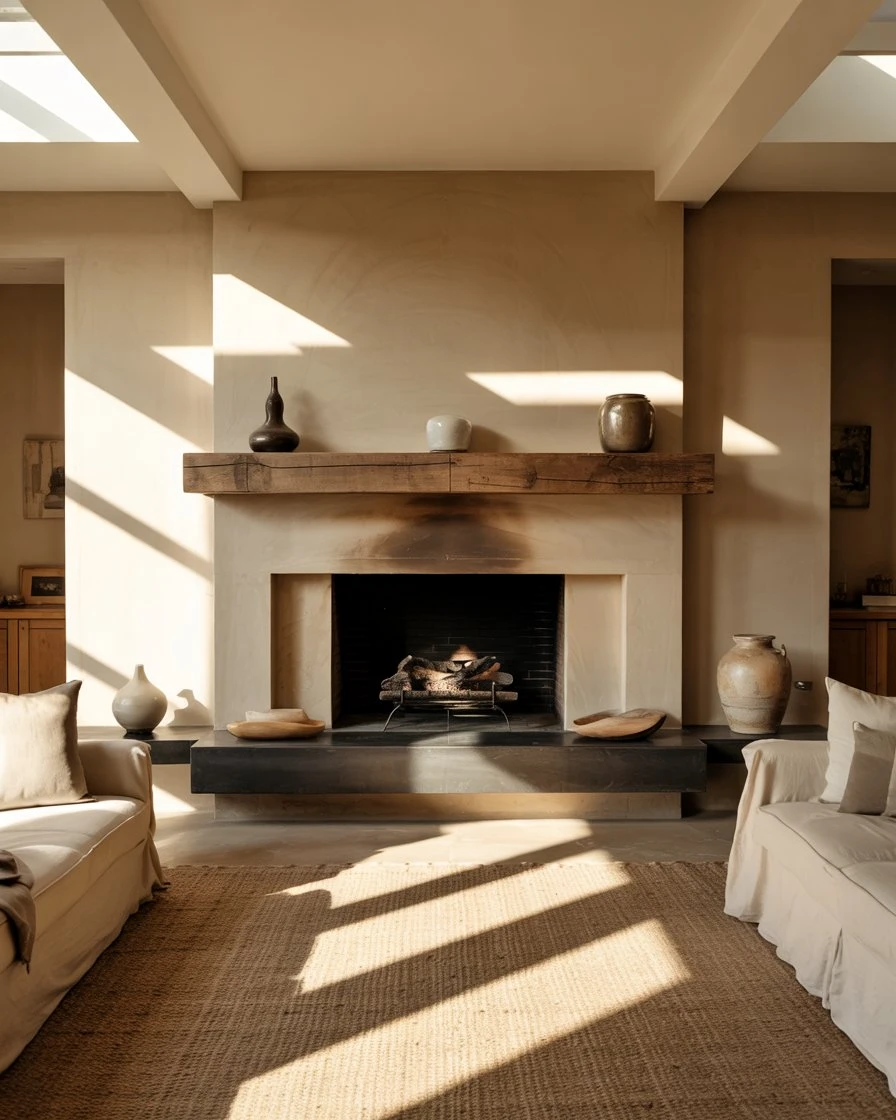
A fireplace framed by textured plaster, stacked stone, or even blackened steel becomes the room’s instant focal point, especially in modern luxury homes where architectural drama matters. Instead of traditional mantels, many designers now extend the surround material all the way to the ceiling, creating a striking vertical element that draws the eye upward. This treatment works in both urban lofts and suburban builds, anchoring the living area with a sense of permanence.
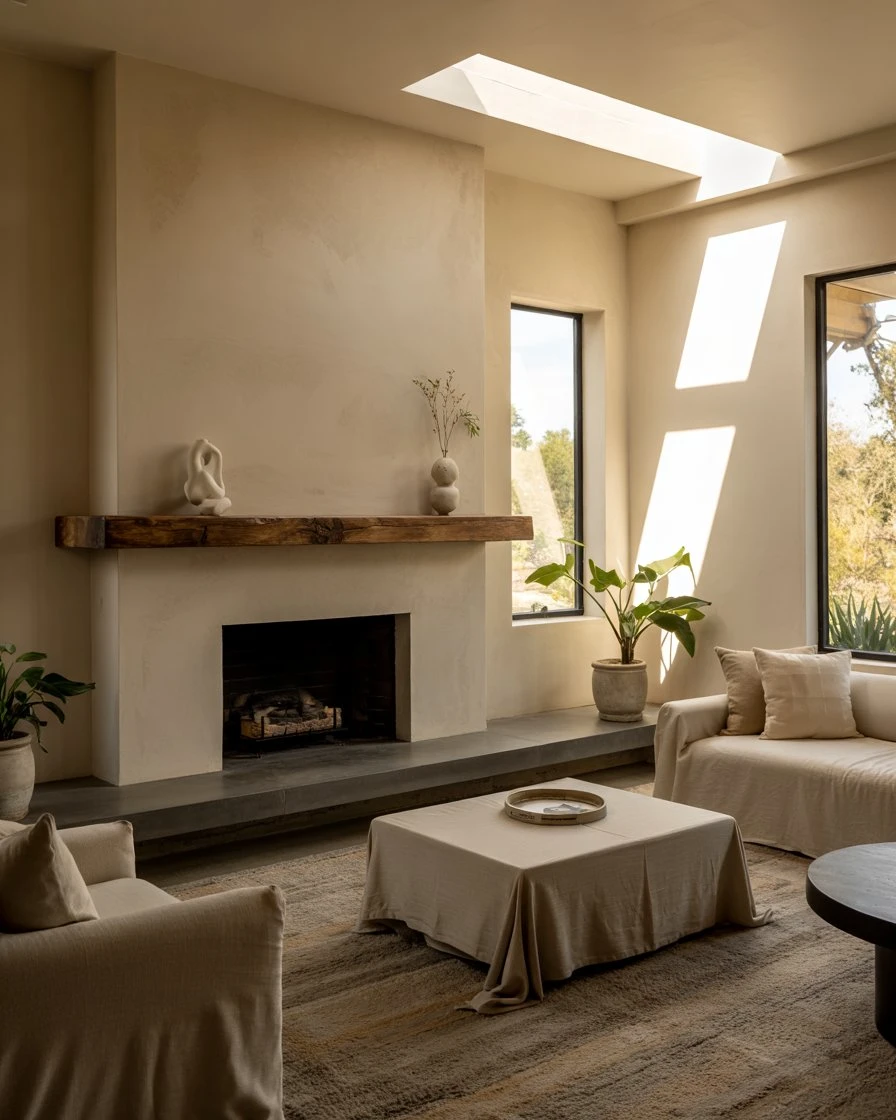
In colder climates like Minnesota or Colorado, a fireplace isn’t just decorative—it’s a genuine gathering spot from October through April. Homeowners often flank the hearth with built-in shelving or recessed niches for firewood, blending function with form. Just be mindful of furniture placement; you want enough clearance for heat circulation without creating awkward traffic patterns.
4. Layered Gray Palette with Metallic Highlights
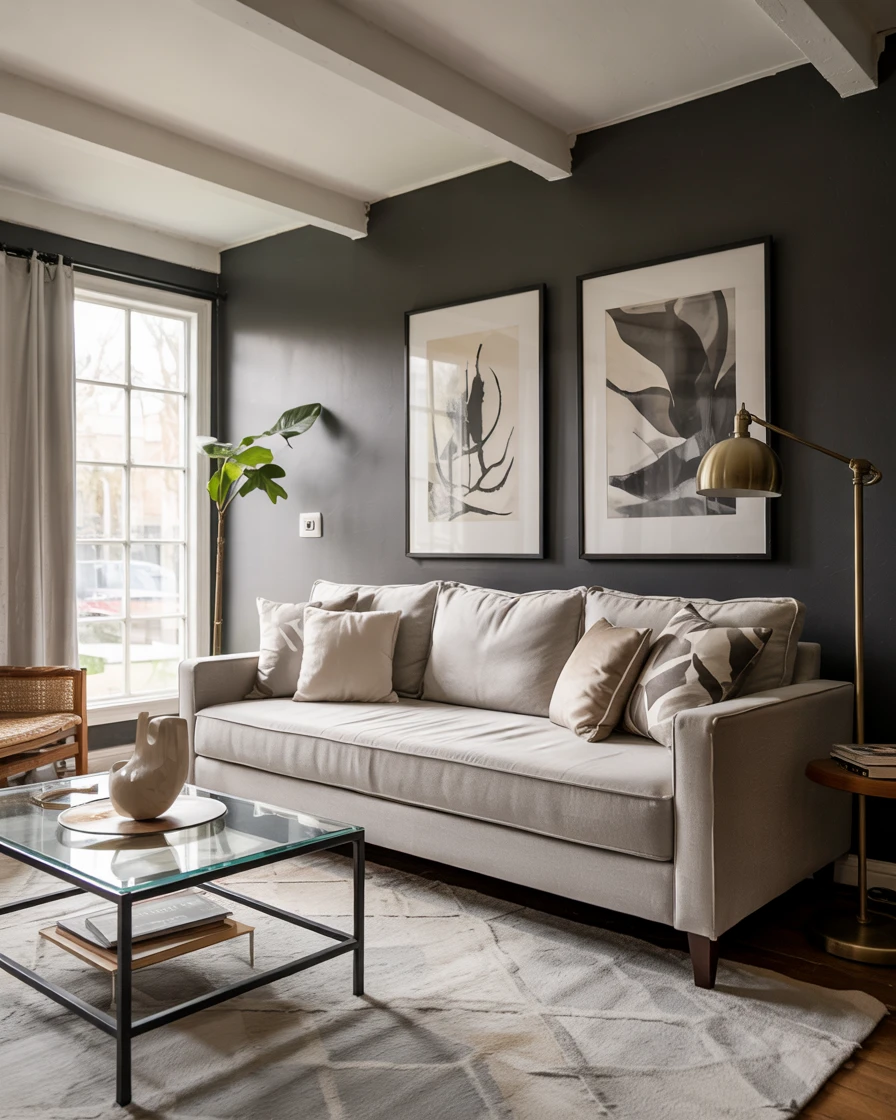
A gray living room doesn’t have to feel cold if you layer multiple shades—charcoal walls, dove-gray upholstery, and pale cement-look flooring—then punctuate with brass or brushed nickel accents. This strategy adds depth without introducing color, making it a favorite for renters who can’t repaint but want a cohesive, contemporary vibe. The metallic touches catch light throughout the day, subtly shifting the mood from morning to evening.
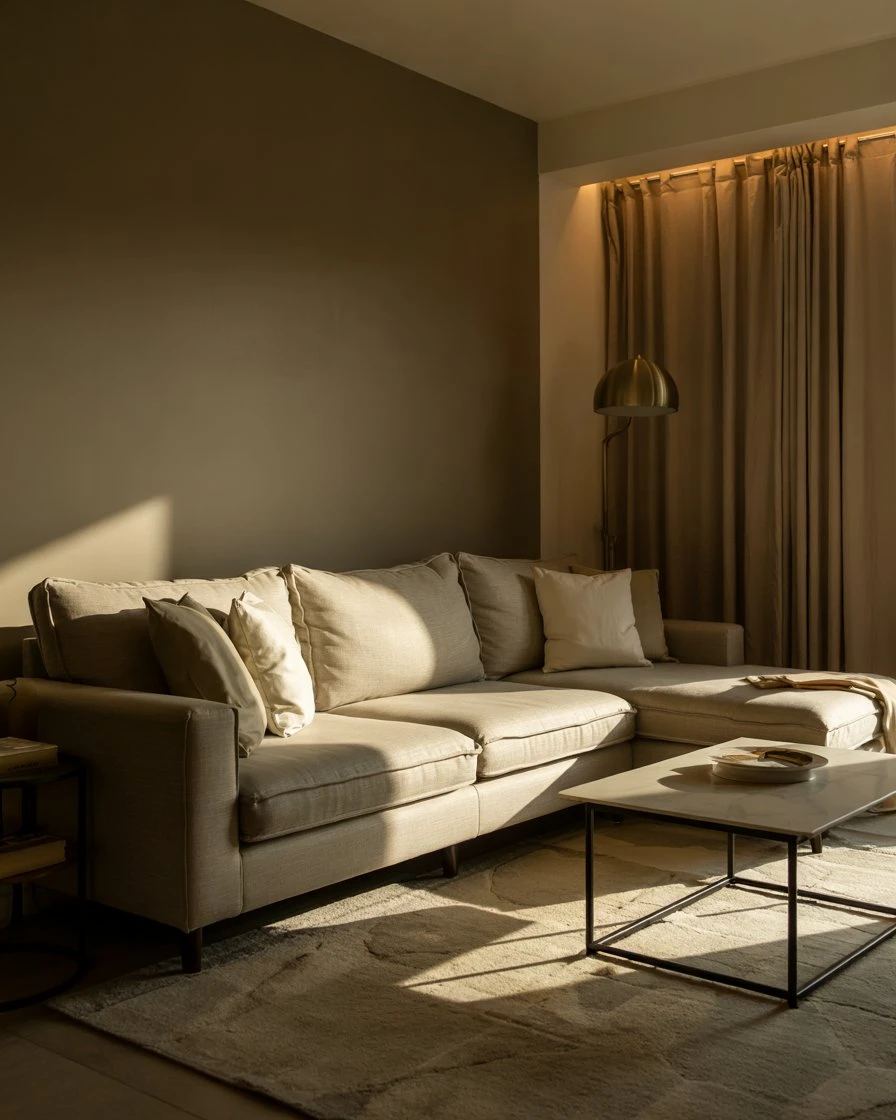
This works best in spaces with good natural light or thoughtful artificial lighting—gray absorbs light rather than reflecting it, so dim rooms can feel cave-like. Many American homeowners pair this palette with large mirrors or glossy tile to bounce illumination around. It’s also budget-friendly: you can start with affordable gray paint and gradually add higher-end metallic pieces as funds allow.
5. Vibrant Colorful Textiles in Neutral Shell
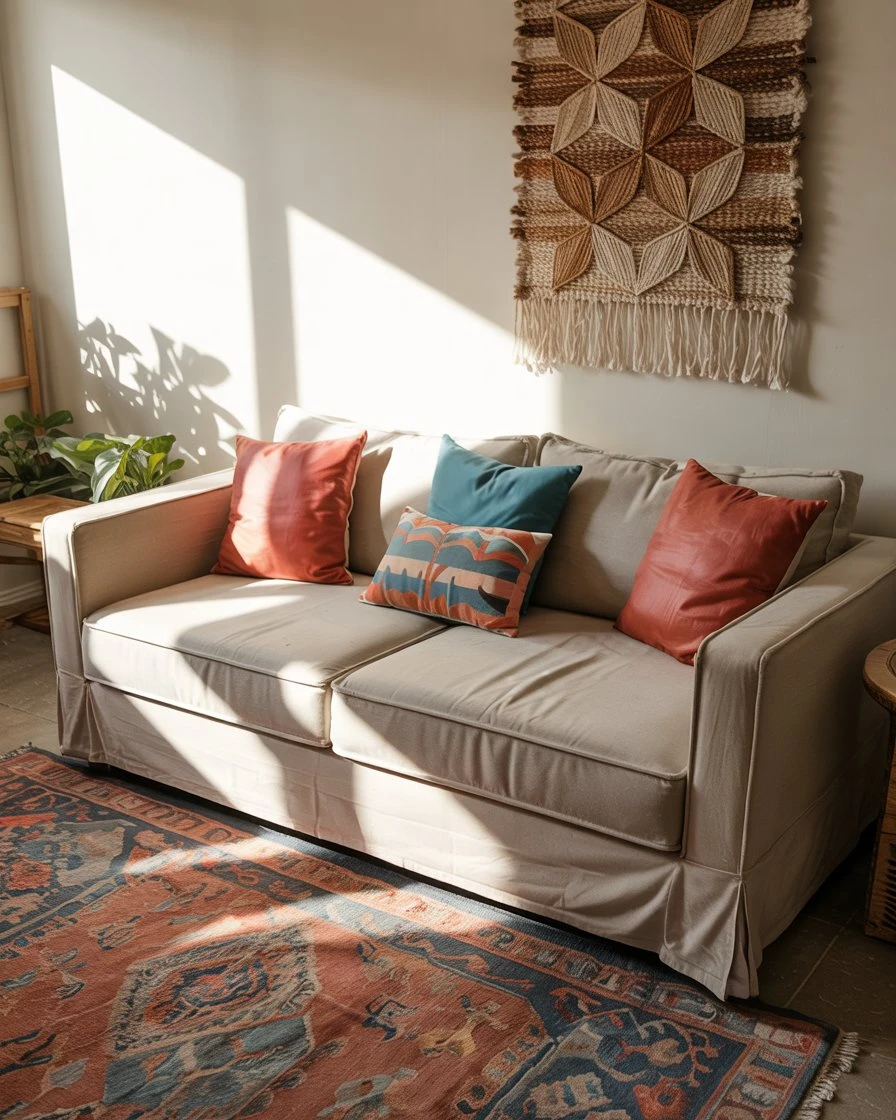
Keeping walls, floors, and large furniture neutral lets you go bold with colorful throw pillows, blankets, and curtains—an approach that’s easy to refresh seasonally or whenever your taste shifts. It’s especially popular among younger homeowners who love experimenting with trend-driven hues but don’t want to commit to painting or reupholstering. The neutral backdrop also prevents visual chaos, even when you mix patterns like ikat, stripes, and florals.
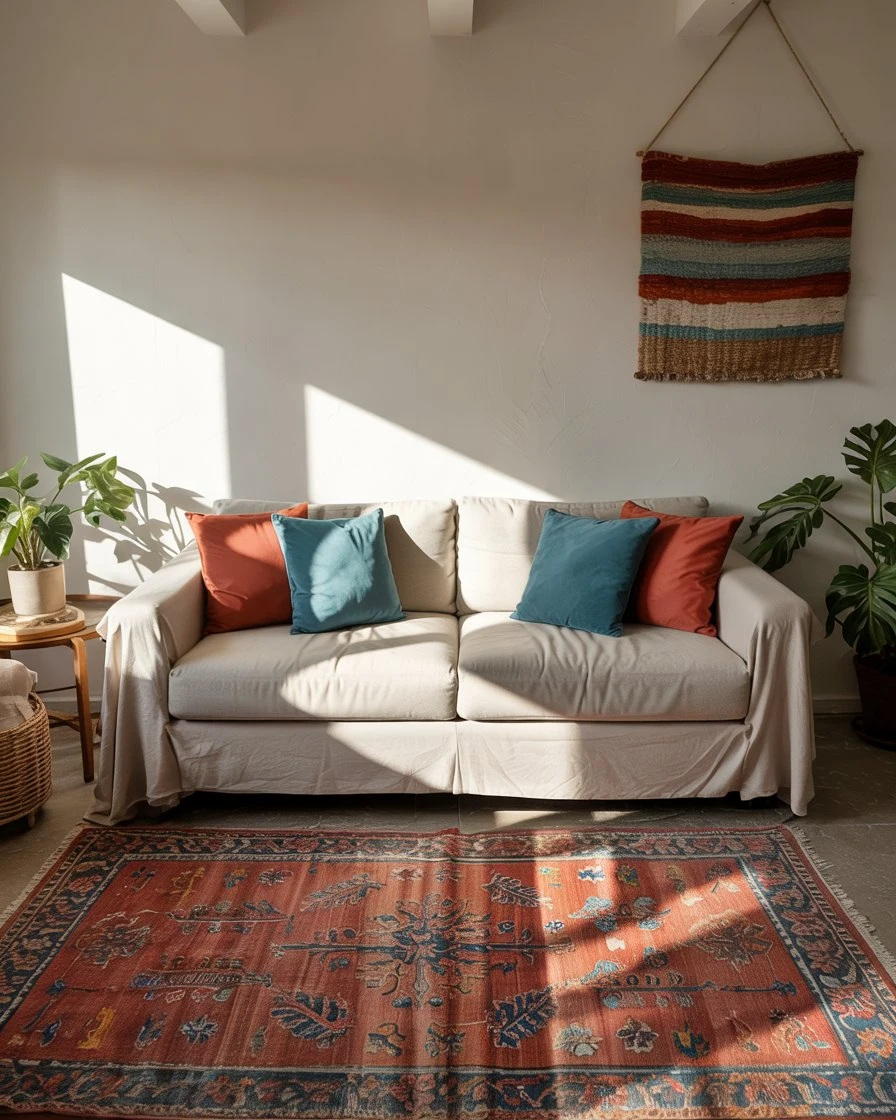
A design writer I know swears by this method—she rotates her textile collection every few months, storing off-season pieces in vacuum bags. It keeps her living room feeling fresh without spending hundreds on new furniture. Just avoid clashing undertones; if your neutrals lean warm (cream, beige), stick with warm accent colors like rust or mustard rather than cool jewel tones.
6. Elegant Built-In Shelving with Integrated Lighting
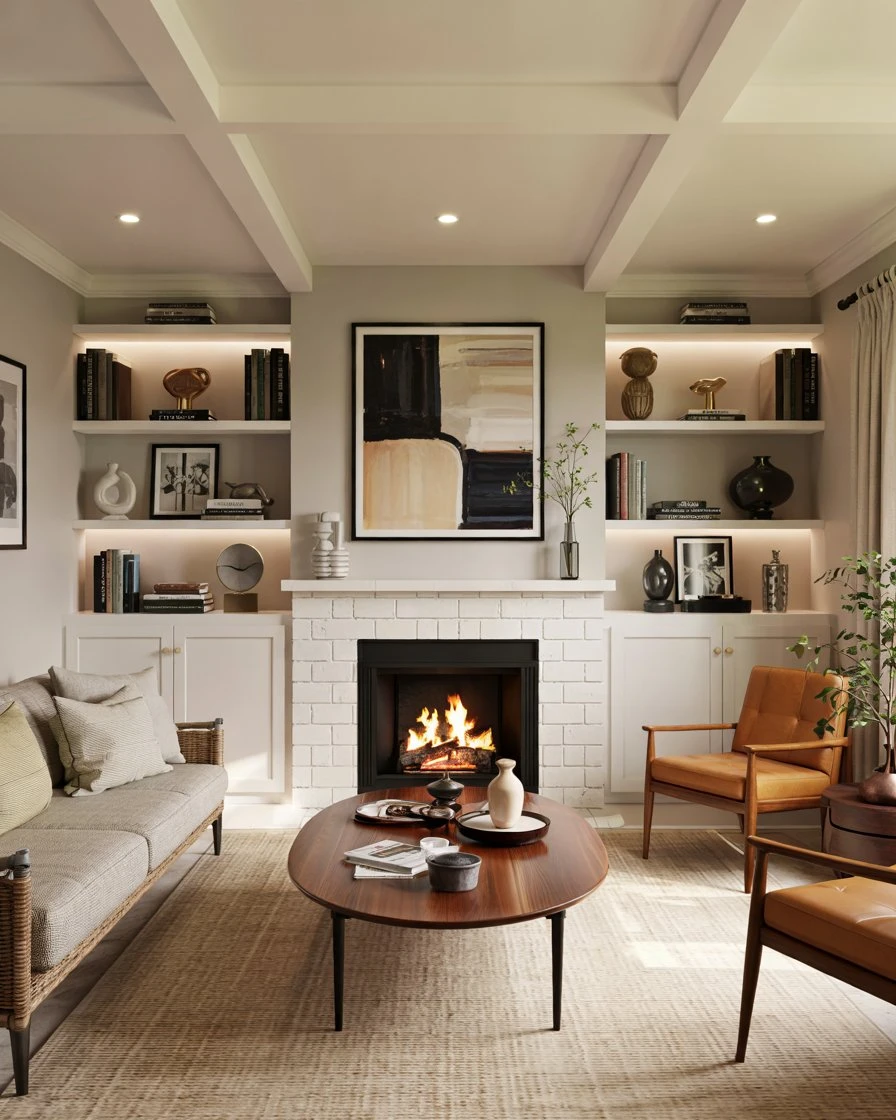
Floor-to-ceiling built-ins provide elegant storage while showcasing books, ceramics, and family photos, and hidden LED strips add a gallery-like glow that elevates the entire room. This is a smart investment for homes with awkward alcoves or wasted wall space, turning dead zones into functional decor displays. The lighting also serves as ambient illumination during movie nights, reducing glare from overhead fixtures.
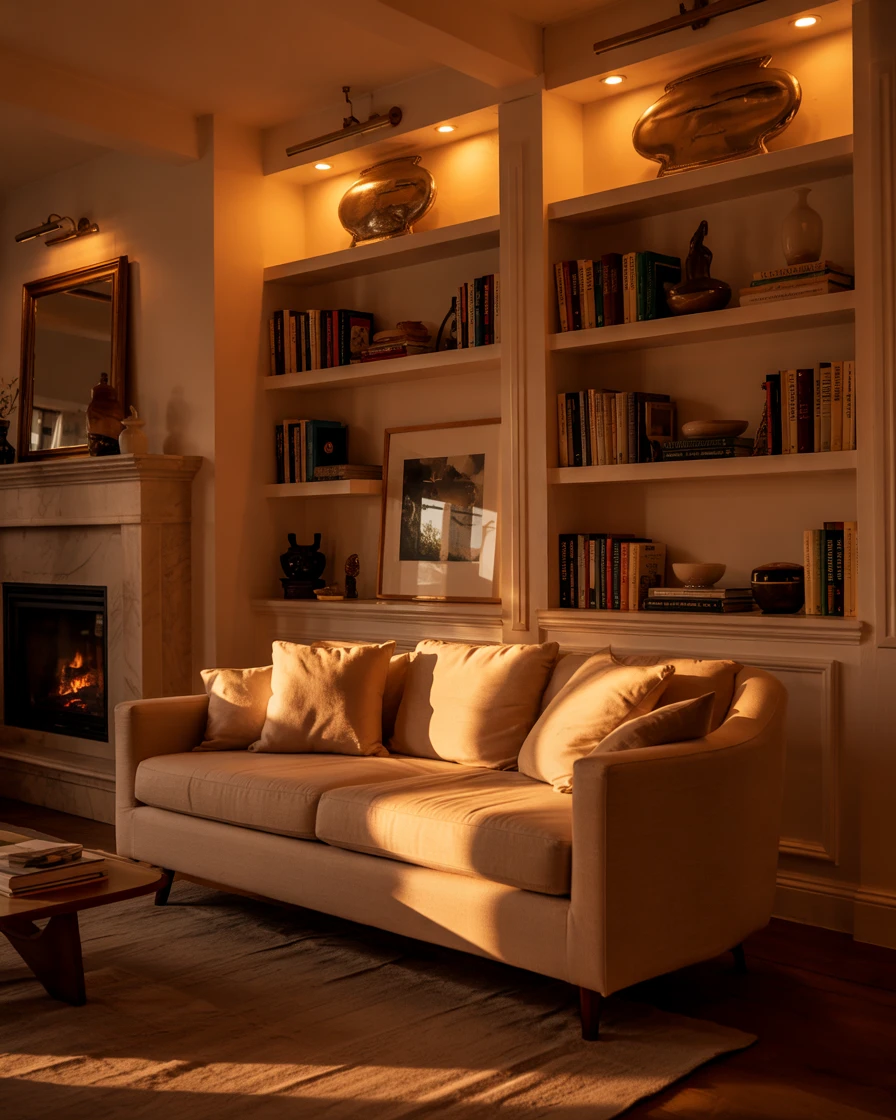
Custom carpentry can run $3,000–$8,000 depending on materials and labor in your region, but many homeowners consider it a permanent upgrade that pays off at resale. If the budget is tight, modular systems from IKEA or CB2 offer a similar look for a fraction of the cost—just add your own LED tape lights. The key is editing your display ruthlessly; overcrowded shelves lose their visual impact fast.
7. TV Wall with Textured Paneling
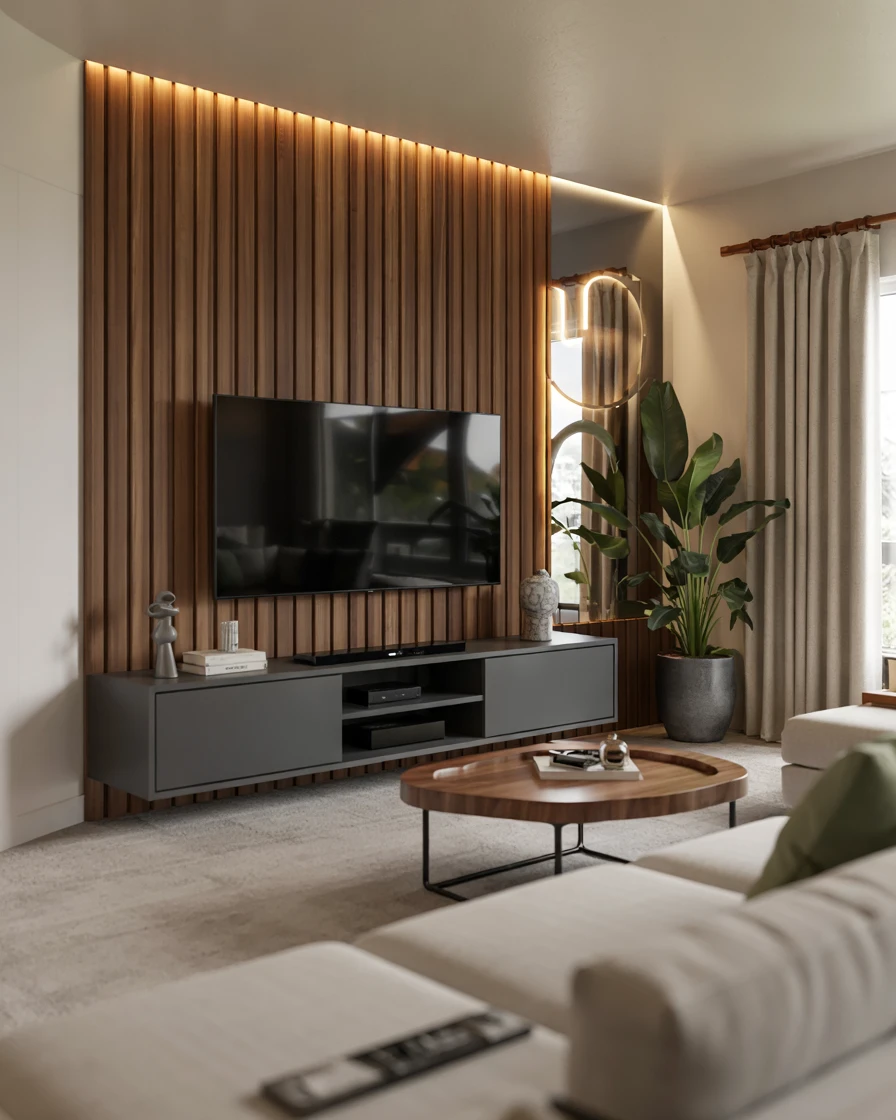
A TV wall clad in wood slats, 3D tiles, or fabric panels transforms the screen into part of a larger design statement rather than a black rectangle floating on drywall. This treatment is especially effective in open-concept spaces where the living area is visible from the kitchen or entryway—it signals intentionality and polish. Many homeowners also incorporate hidden cable management and floating consoles to maintain clean lines.
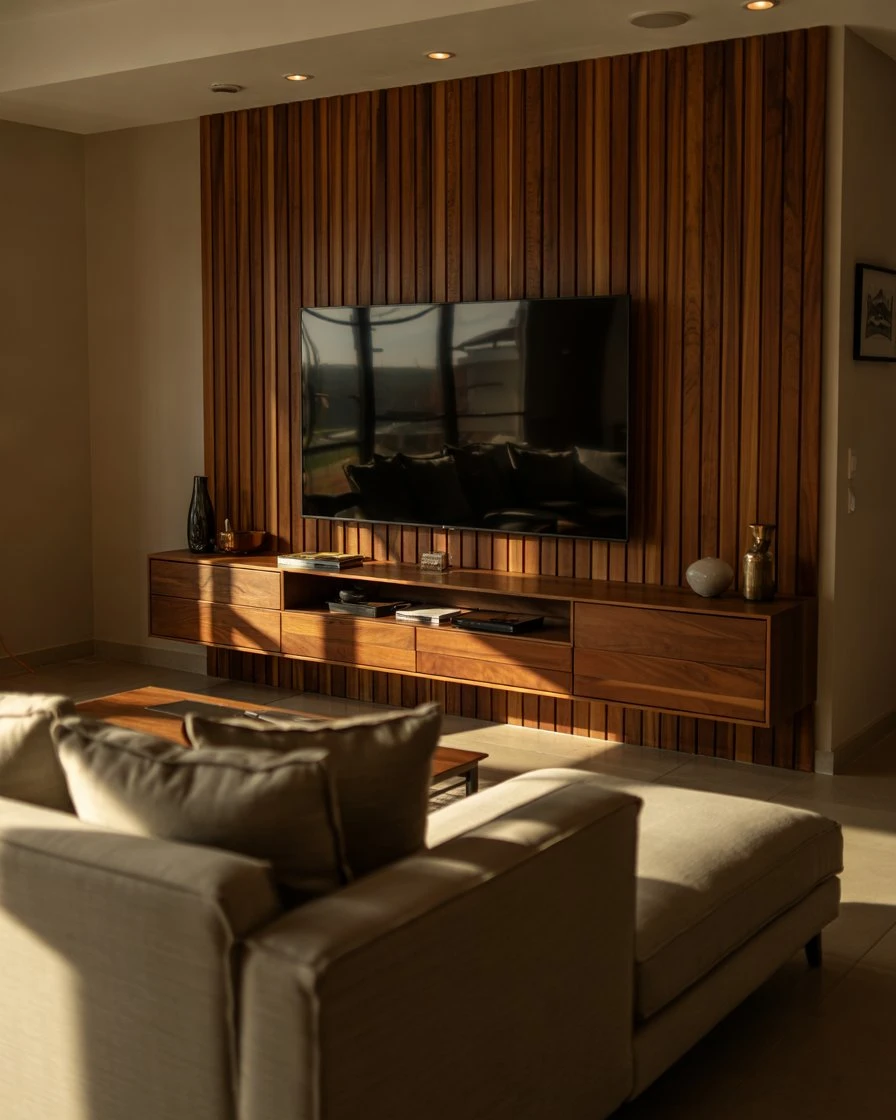
This works best in homes where the TV is the primary entertainment hub—common in suburban and rural areas where streaming replaces traditional socializing. Urban dwellers might prefer a more discreet setup, like a framed TV that doubles as art when off. Either way, the paneling adds warmth and texture that plain drywall can’t match, especially in newer builds with cookie-cutter finishes.
8. Small Space Apartment with Multifunctional Furniture
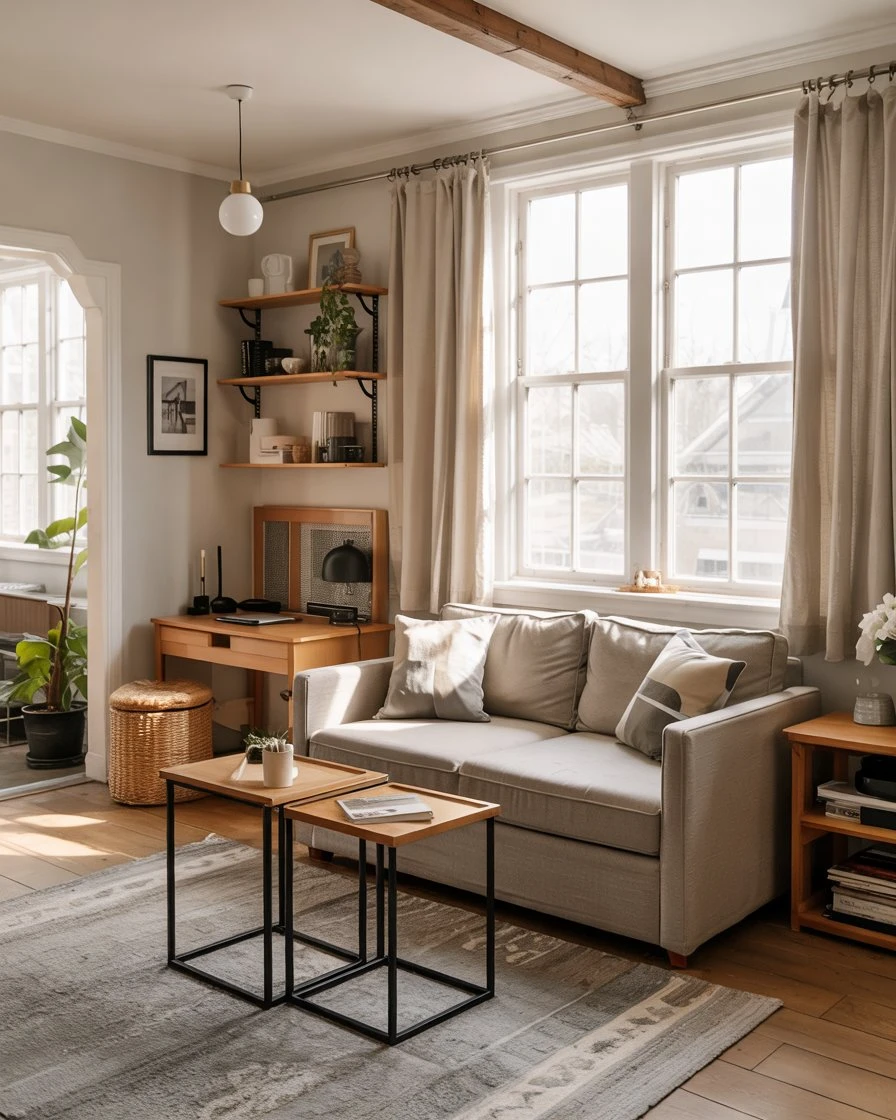
In small-space apartment decorating ideas, every piece needs to earn its keep—think ottomans with hidden storage, nesting tables, and sofas that convert to guest beds. This approach is essential in cities like New York, San Francisco, or Seattle, where square footage commands a premium and flexibility trumps showroom aesthetics. The trick is choosing furniture with clean lines so the room doesn’t feel cluttered even when multiple functions are in play.
Expert tip: measure your space before shopping, including door widths and stairwell clearances—many convertible sofas are deceptively bulky when packaged. I’ve seen friends stuck with a piece they can’t actually get inside their apartment. Also, test mechanisms in-store; cheaper models often have wobbly hinges or stiff latches that become frustrating daily obstacles.
9. Neoclassic Symmetry with Modern Restraint
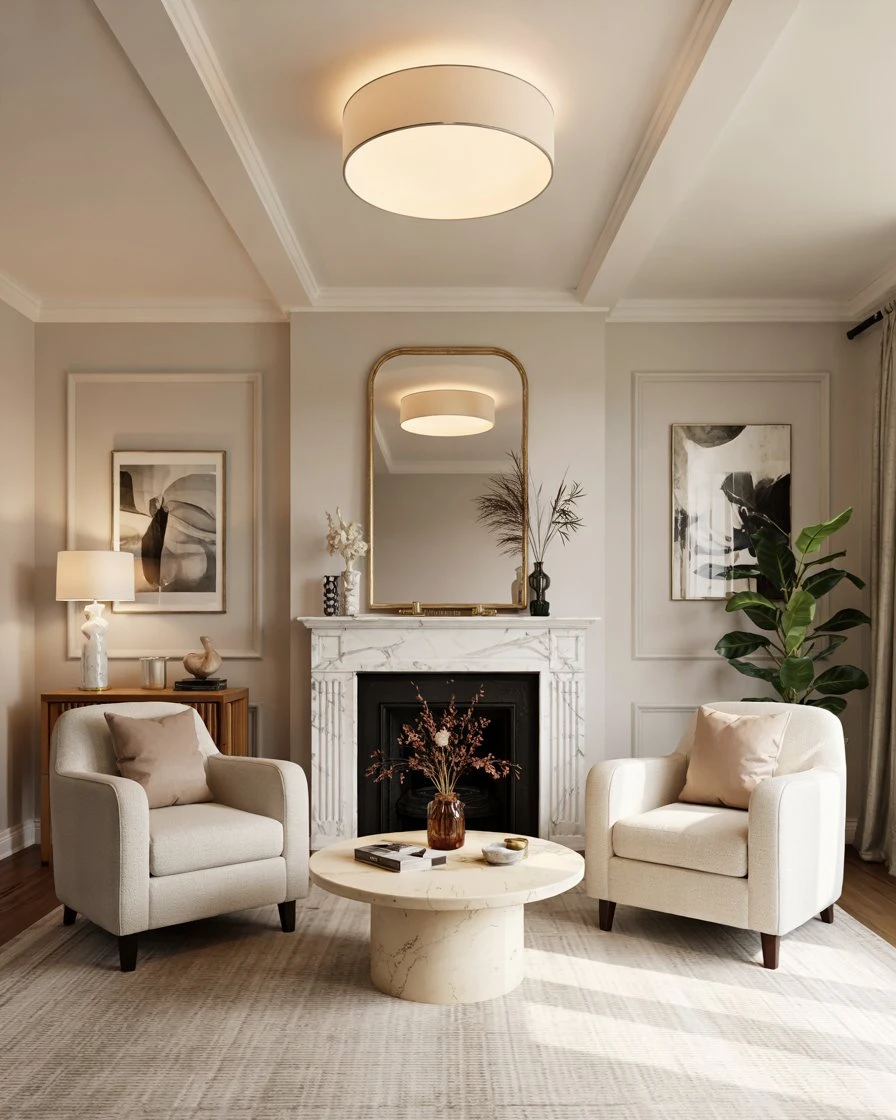
Neoclassic design brings formal balance—matching armchairs flanking a fireplace, paired sconces, centered artwork—but 2026 interpretations strip away heavy moldings and fussy details. The result is a room that feels elegant and timeless without veering into stuffy territory, perfect for traditionalists who still want a fresh, breathable atmosphere. It’s particularly popular in historic homes where architectural bones are already formal.
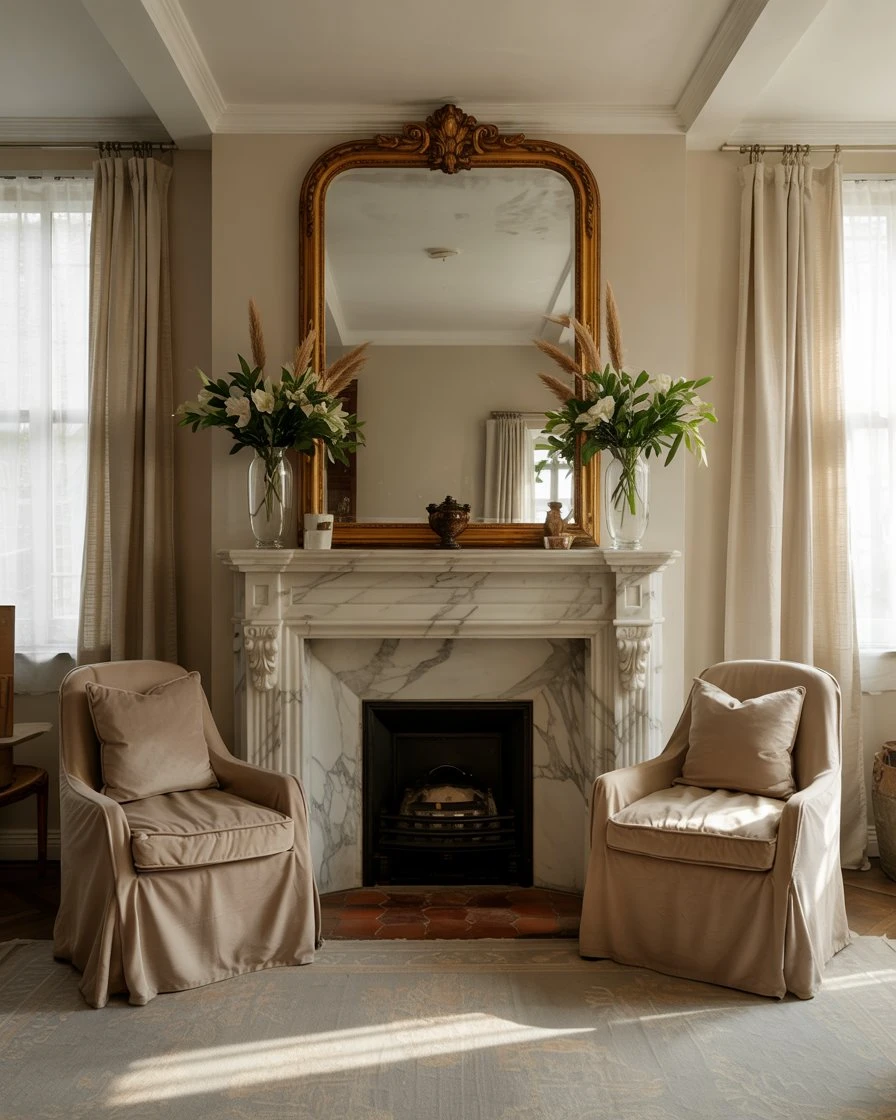
Where it works best: homes in older East Coast cities—Boston, Philadelphia, and Charleston—where residents want to honor original architecture without living in a museum. You can nod to neoclassicism through proportions and layout while keeping the color palette light and the accessories sparse. Just avoid the temptation to match everything too precisely; a little asymmetry in accessories keeps the space from feeling staged.
10. Cozy Reading Nook with Oversized Chair
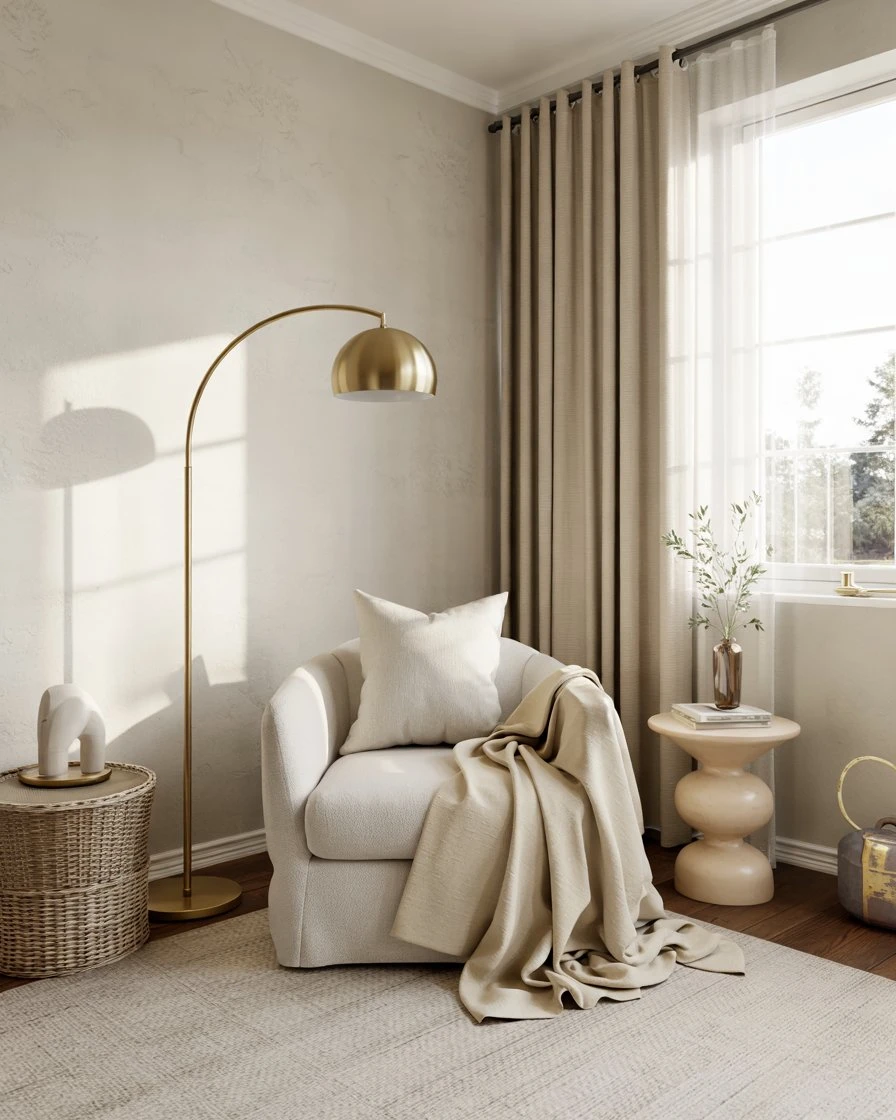
Carving out a cozy corner with a plush armchair, a standing lamp, and a small side table creates a dedicated retreat within the larger living room—ideal for introverts or anyone who craves a quiet moment away from screens. This setup is especially valuable in homes with open floor plans, where distinct zones help the space feel more intentional and less like a vast warehouse. A soft throw and a stack of favorite books complete the vignette.
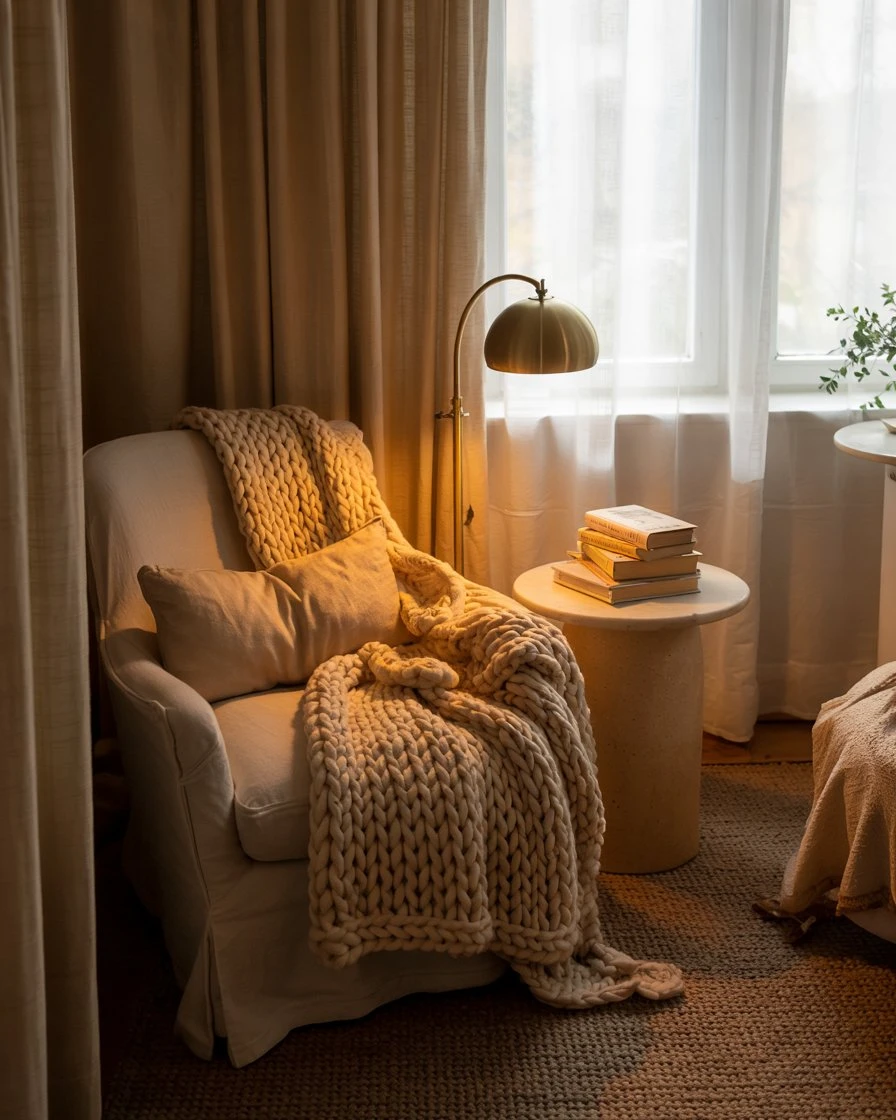
Real homeowner behavior: most reading nooks end up doubling as phone-scrolling spots or quick nap zones, which is perfectly fine. The goal is to create a space that feels separate enough to signal “this is my decompression zone.” In families with kids, a reading nook can also be a quiet spot for parents to catch their breath while still being in the same room, which is a surprisingly valuable amenity.
11. Contemporary Luxury with Velvet Upholstery
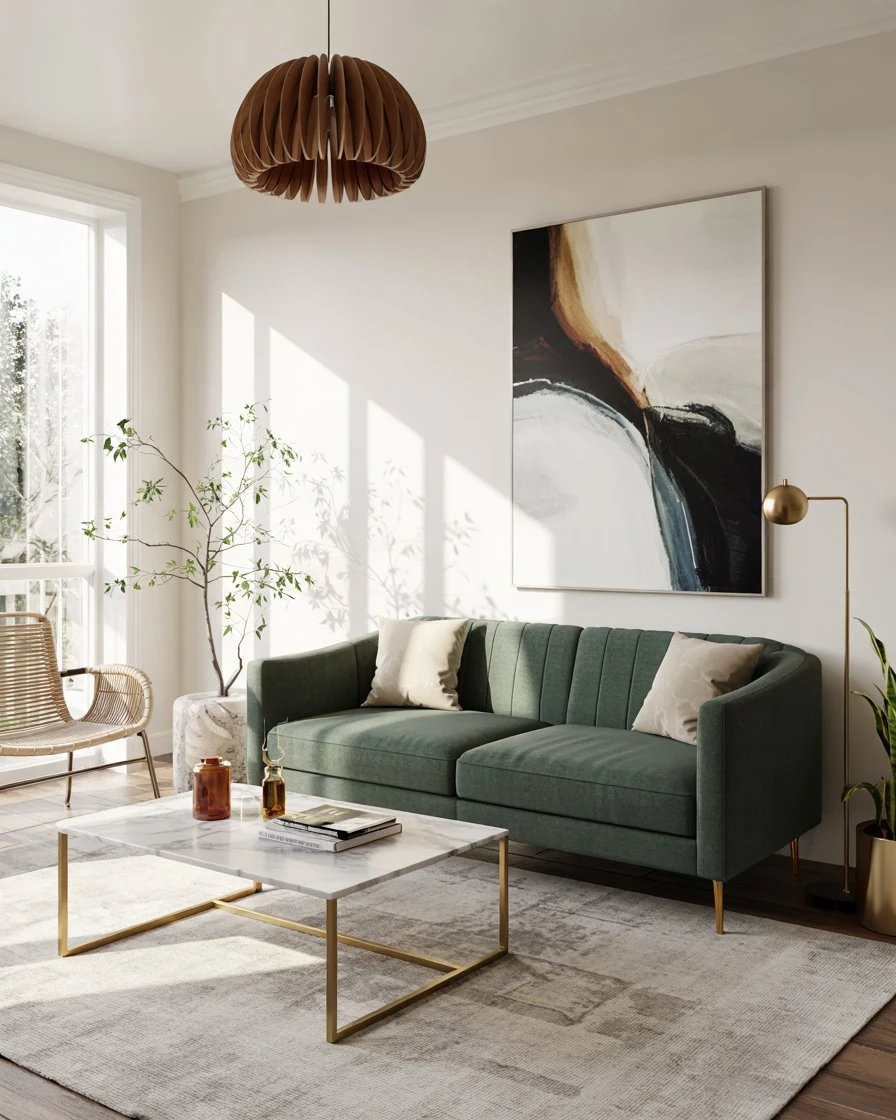
Contemporary luxury leans on rich textures like velvet in jewel tones—emerald, sapphire, and deep burgundy—paired with sleek metal frames and polished stone surfaces. This look signals sophistication without requiring a massive budget; even one velvet sofa or a pair of accent chairs can elevate a room’s entire mood. The key is balancing opulence with restraint so the space feels curated rather than overdone.
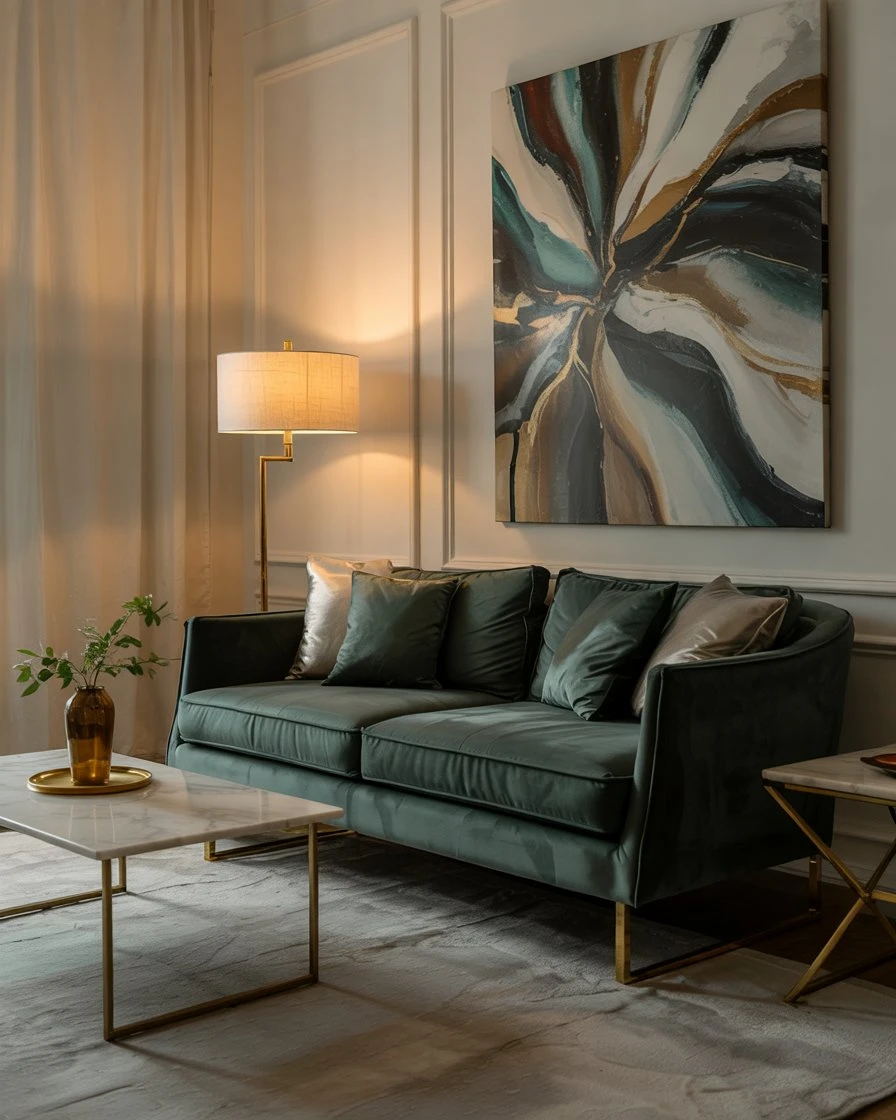
Velvet performs surprisingly well in real life—it’s durable and stain-resistant if you choose performance-grade fabric, which most American furniture brands now offer. A common mistake is pairing velvet with too many other heavy textures like shag rugs or thick drapes; instead, offset it with smooth surfaces like glass or polished wood to keep the room from feeling suffocating.
12. Classic Coastal Blues and Whites
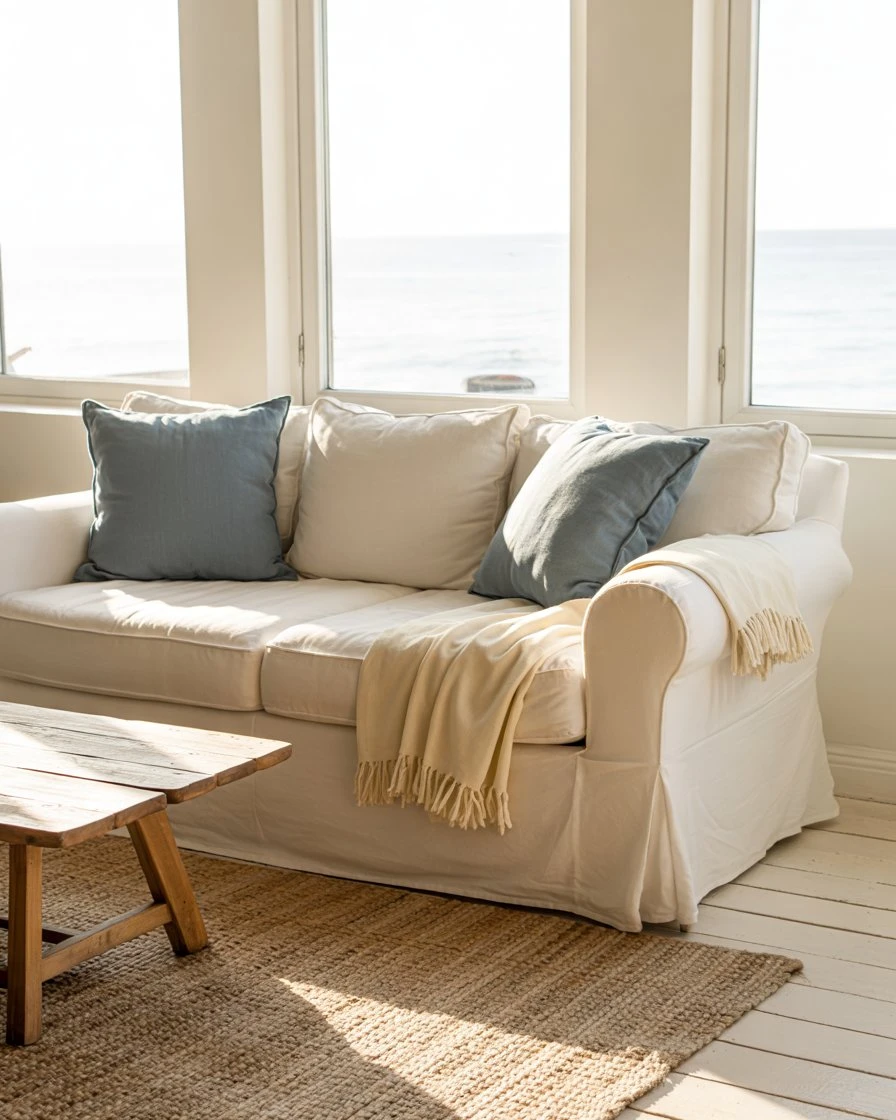
A classic coastal palette—crisp whites, soft blues, weathered wood—brings breezy serenity to living rooms, especially in beach towns or lakeside homes where the view is part of the design. This style avoids nautical clichés like anchors and rope, instead focusing on natural textures and a light, airy feel that mirrors the outdoors. It’s also a safe choice for vacation rentals, where broad appeal matters.
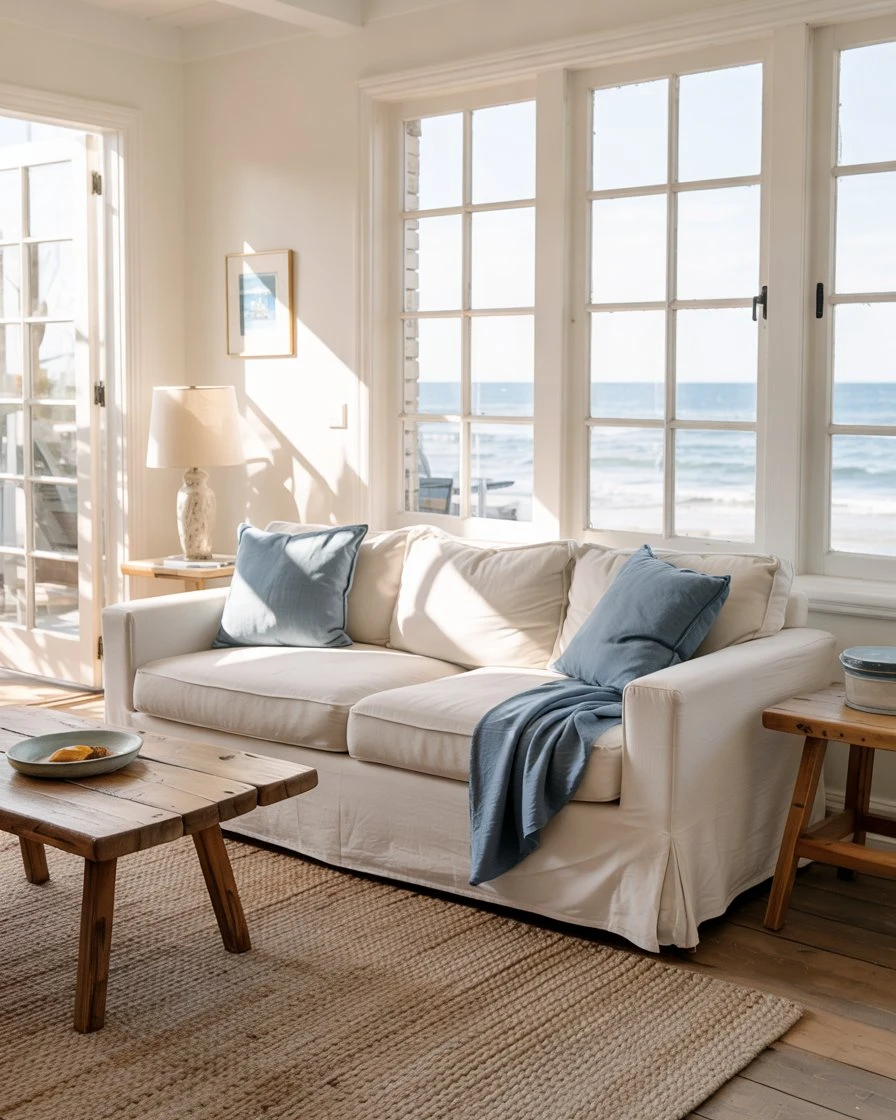
In Southern California, Florida, or the Carolina coast, this look is practically default—but it translates surprisingly well to landlocked areas, too, offering a mental escape even in the Midwest. The trick is layering shades of blue rather than relying on a single hue; navy anchors, sky blue lifts, and aqua adds playfulness. Just skip the overly distressed furniture unless you actually live by the ocean; it reads as theme park elsewhere.
13. Traditional Indian Textiles and Carved Wood
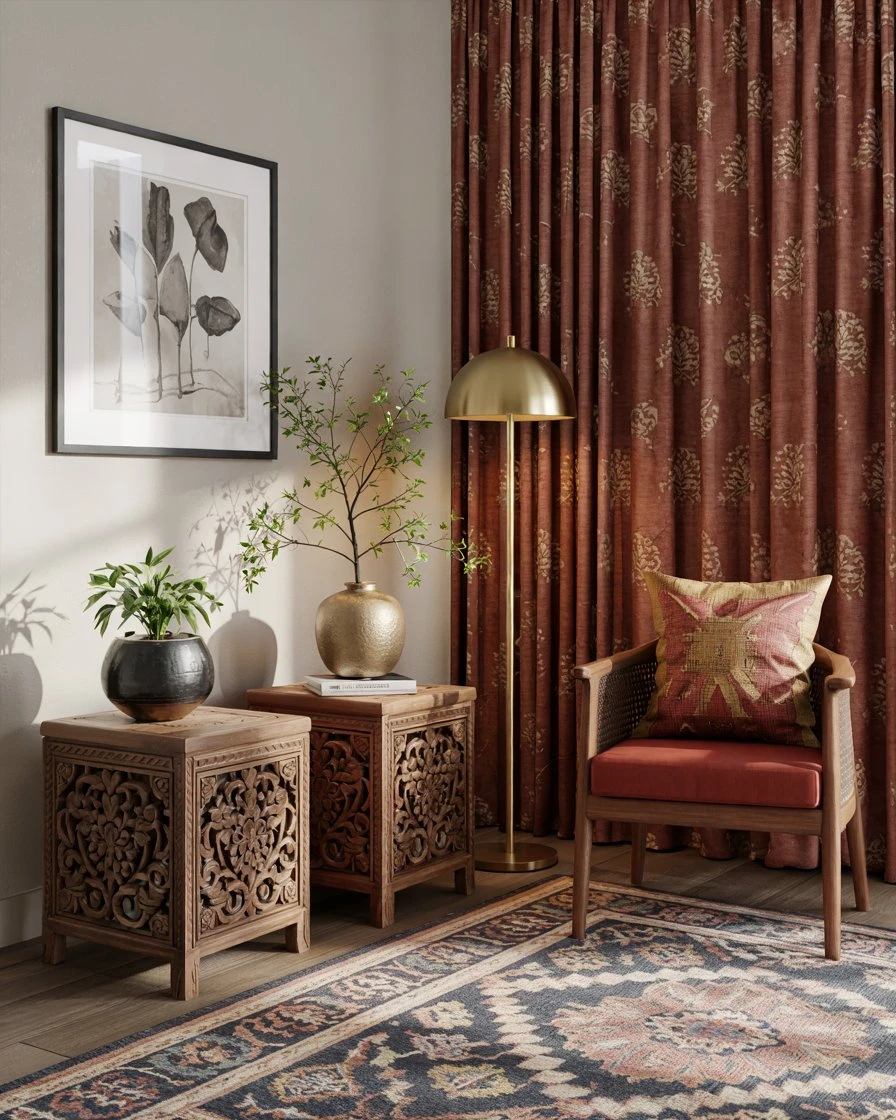
Traditional Indian design brings intricate carved wood furniture, block-printed cushions, and brass accents into the living room, creating a richly layered, globally inspired space. This approach celebrates craftsmanship and color, often incorporating jewel-toned silks, embroidered throws, and handwoven rugs that tell a story. It’s a meaningful way for South Asian American families to honor heritage while adapting to contemporary floor plans.
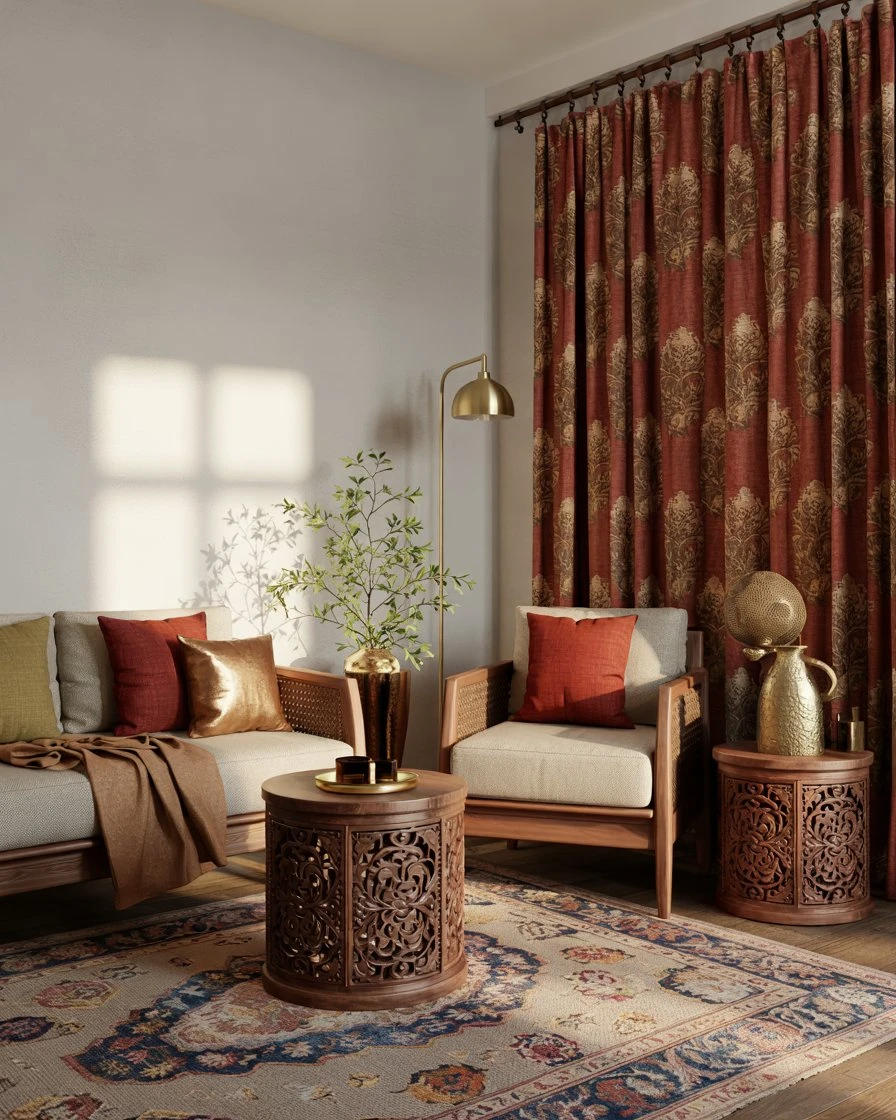
Budget angle: many families start with a few key heirloom pieces—a vintage trunk, a carved screen—and gradually add modern reproductions or artisan collaborations available through online marketplaces. Mixing old and new keeps the room from feeling like a museum while still celebrating cultural identity. Just be mindful of scale; heavily carved furniture can overwhelm small spaces, so balance it with simpler upholstery.
14. Minimalist Inspiration with Gallery Wall
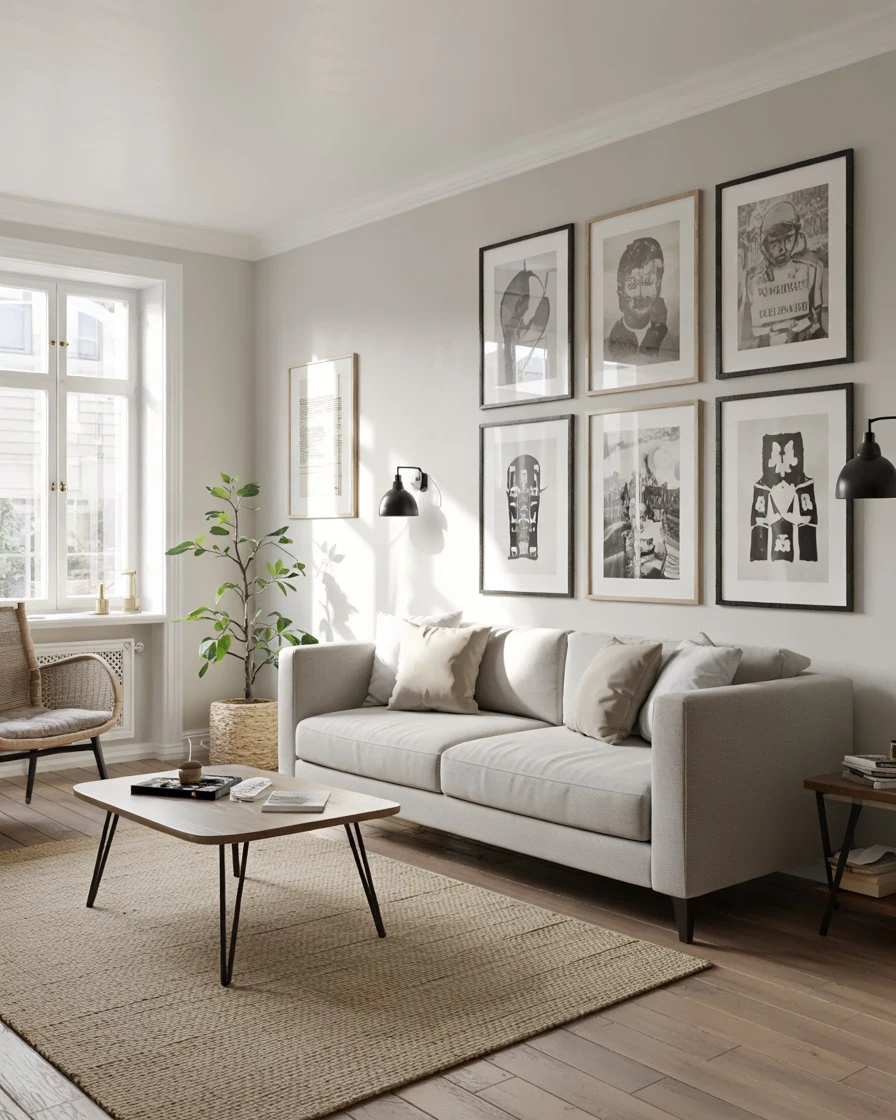
Minimal doesn’t mean stark—a carefully curated gallery wall of black-and-white photography or abstract prints adds personality without clutter, especially when the rest of the room stays pared down. This is a favorite among young professionals who want inspiration on display but lack the space or budget for large standalone art. The wall becomes a focal point while still honoring the minimal ethos of “less is more.”
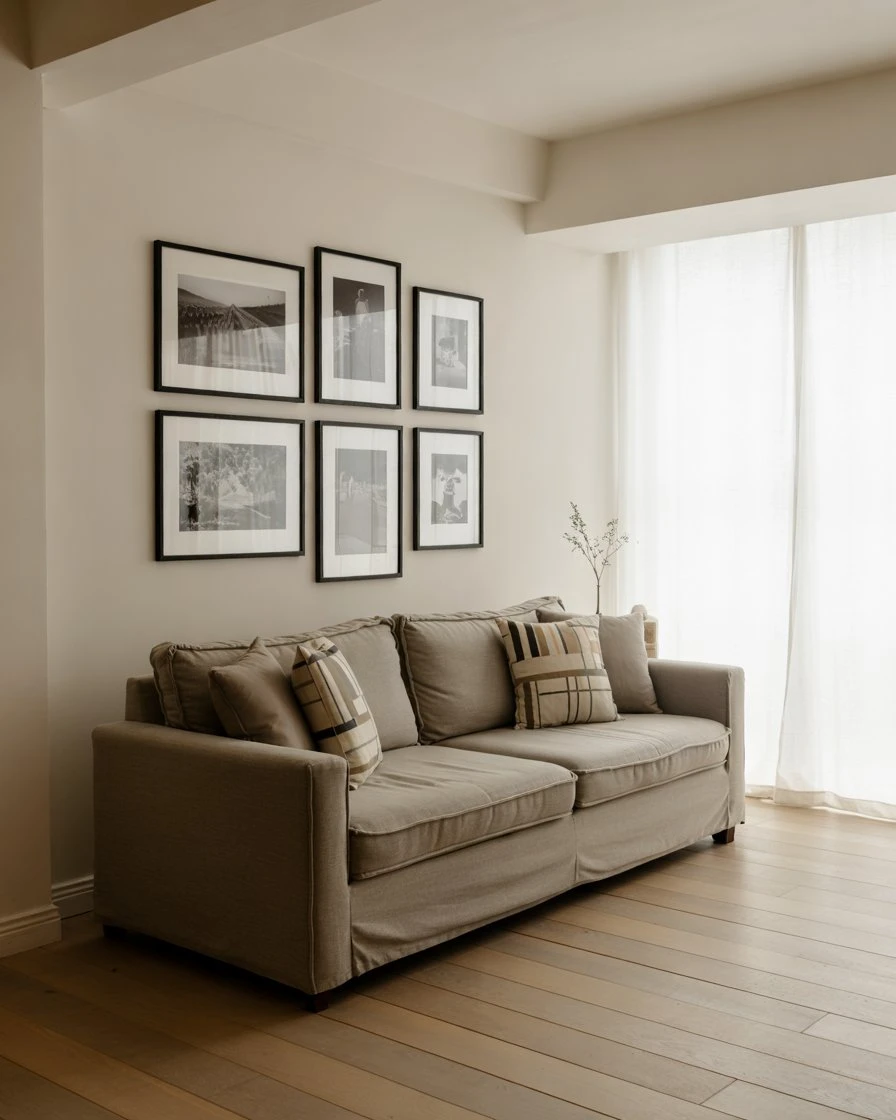
Expert commentary: the secret to a great gallery wall is consistent framing—matching frames in one finish (black, white, or natural wood) prevent the display from looking chaotic. Lay everything out on the floor first, adjusting spacing until it feels balanced, then snap a photo on your phone to reference while hanging. Many people rush this step and end up with uneven gaps that undermine the minimal vibe.
15. Grey Couch as Neutral Anchor
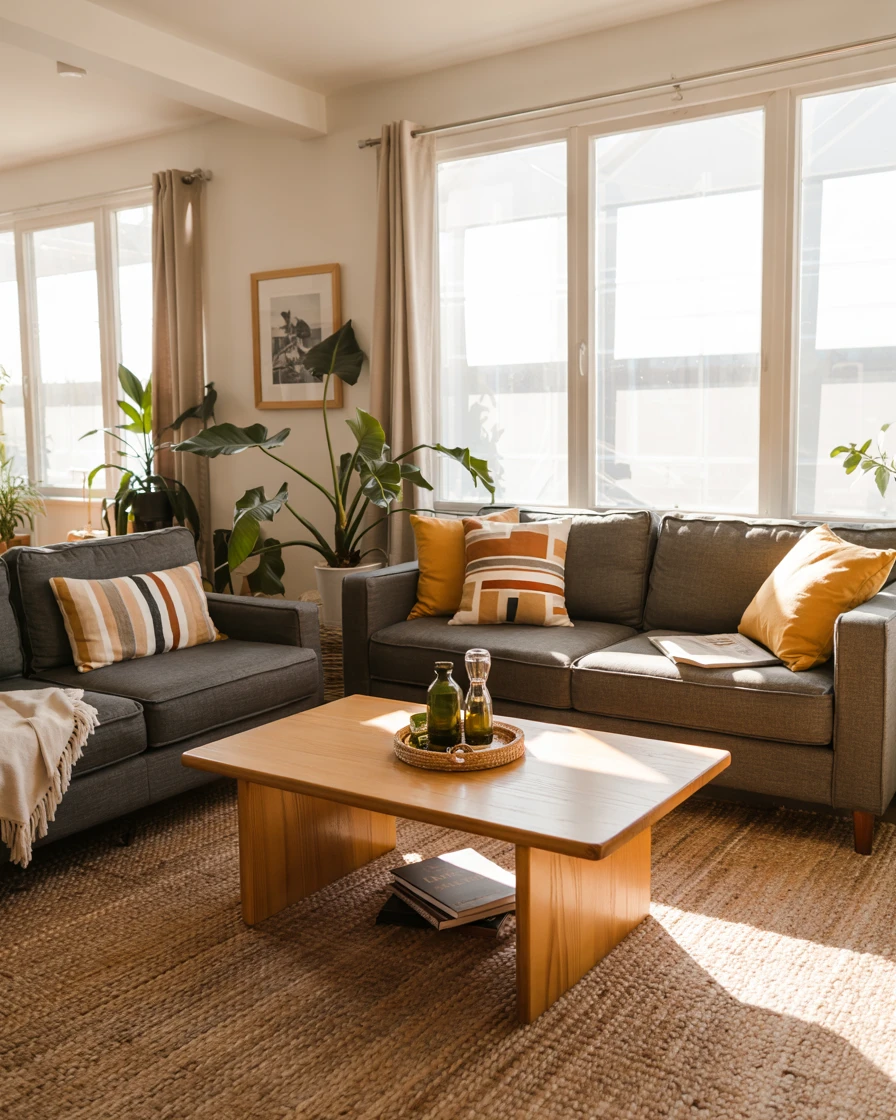
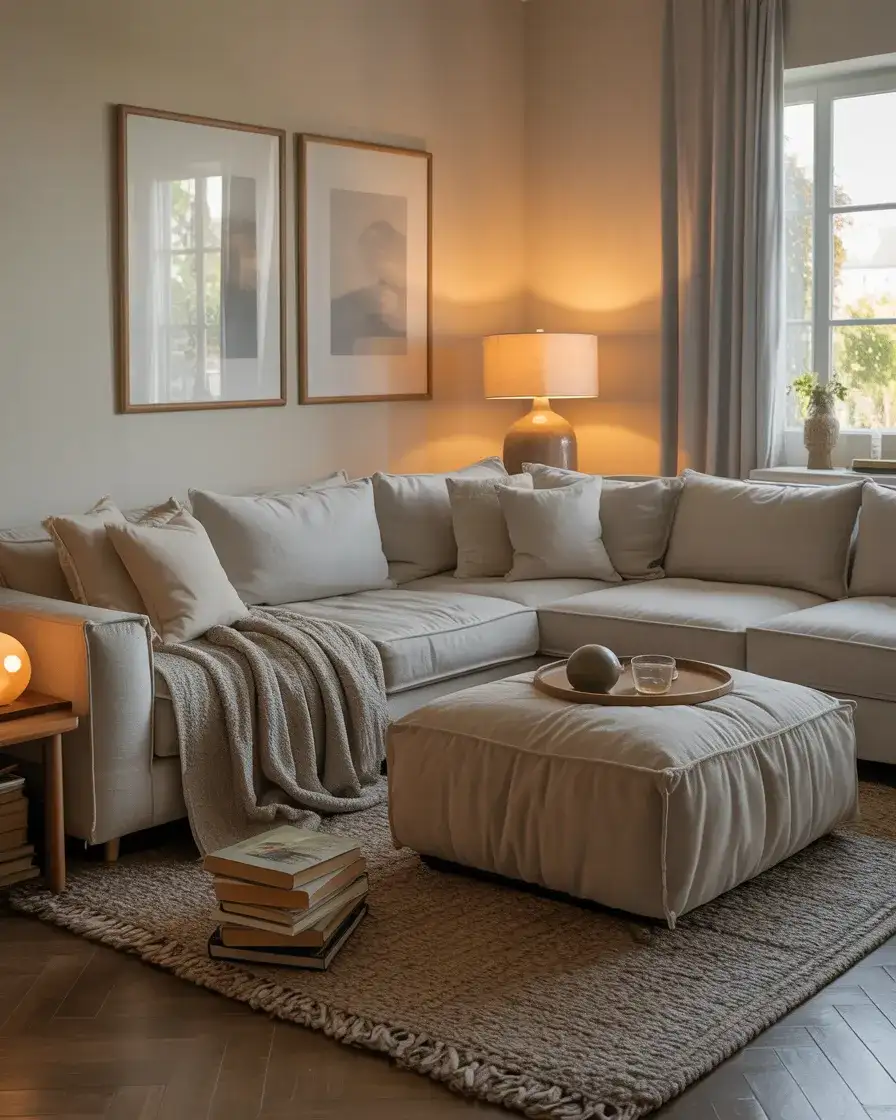
A gray couch serves as a versatile foundation, allowing you to rotate accent colors through pillows, throws, and artwork without rebuying major furniture. It’s the go-to choice for renters and young homeowners who anticipate their taste evolving, since gray pairs equally well with warm woods, cool metals, and virtually any hue. The neutral base also makes it easier to sell or pass down when you eventually upgrade.
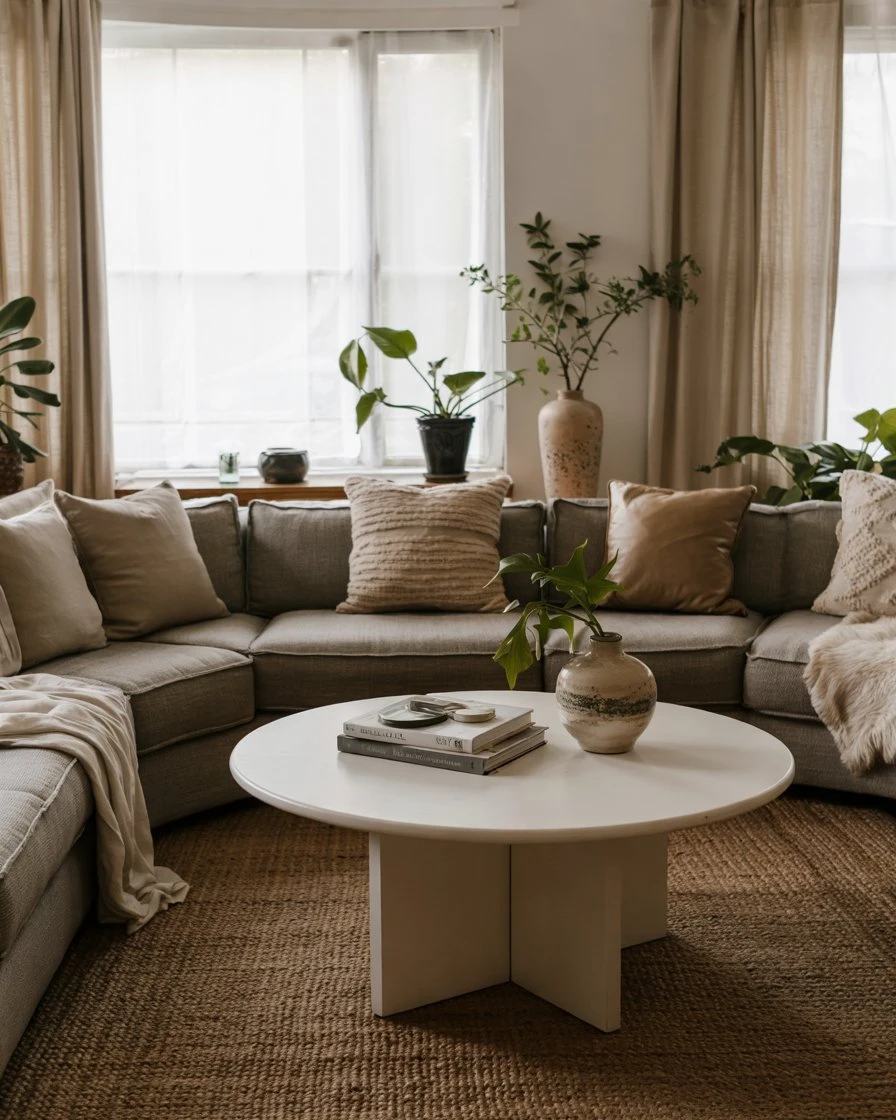
In practice, homeowners tend to stick with gray longer than they expect—it’s genuinely that adaptable. The main challenge is avoiding a cold, monochromatic look; layer in warm wood tones, greenery, and textured textiles to keep the space inviting. Also, consider the undertone of your gray (cool blue-gray vs. warm greige) and match your accents accordingly for a cohesive feel.
16. 2026 Trends: Curved Furniture and Soft Edges

One of the standout 2026 trends is the shift toward curved sofas, rounded coffee tables, and arched doorways—shapes that soften the hard lines of modern architecture. This movement reflects a broader desire for gentleness and comfort in home design, a reaction to years of stark minimalism. Curved pieces also improve flow in open layouts, eliminating sharp corners that disrupt movement or pose hazards for young kids.

Regional context: this trend resonates especially in West Coast cities where mid-century modern and Spanish Revival architecture—both featuring curves—are already part of the design DNA. But it’s spreading nationwide as furniture retailers stock more rounded options. Just be cautious about scale; an overly large curved sofa can dominate a small room, so measure carefully and consider sectionals that break the curve into manageable pieces.
17. ACNH-Inspired Nature-Forward Decor
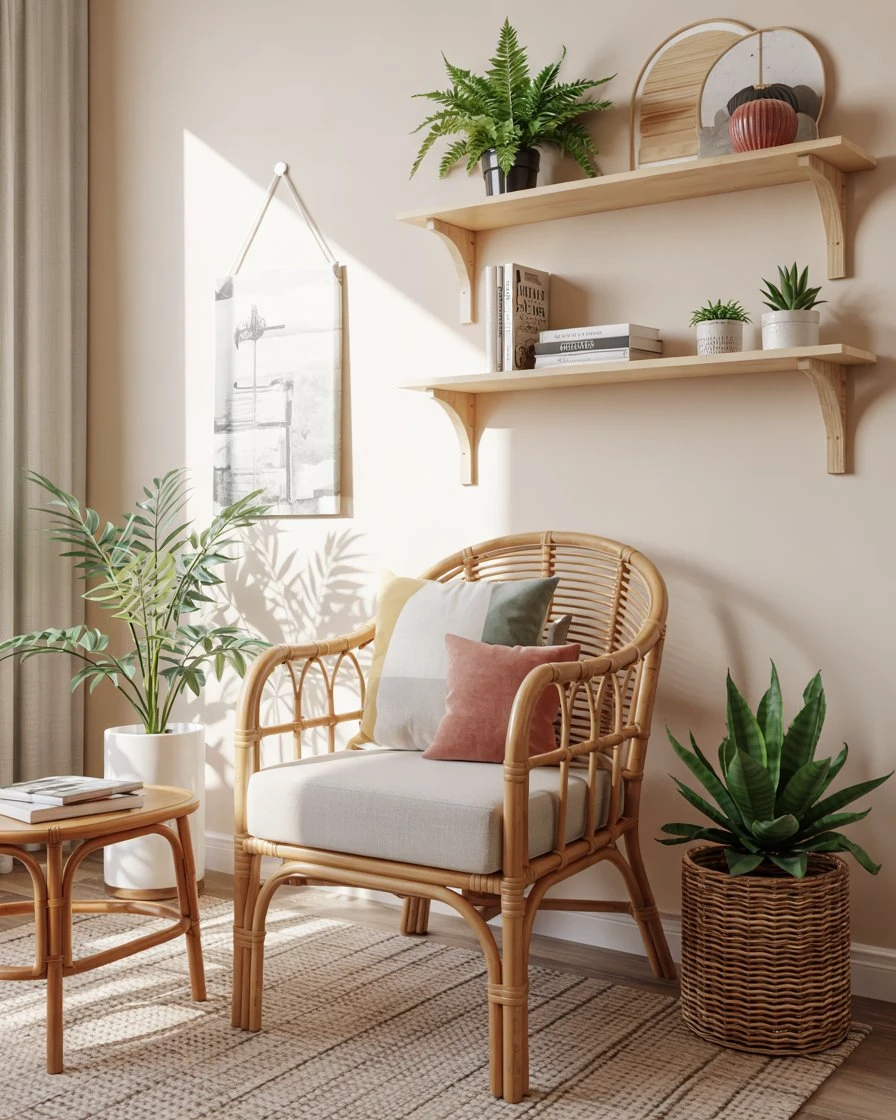
The gentle, nature-centered aesthetic of ACNH (Animal Crossing: New Horizons) has migrated from screens to real living rooms, with players recreating the game’s cozy vibe through rattan furniture, potted plants, and soft pastels. This look feels playful and optimistic, appealing to millennials and Gen Z who grew up with the franchise and want their homes to reflect that same sense of whimsy. It’s also budget-friendly, since the style embraces DIY and thrifted finds.
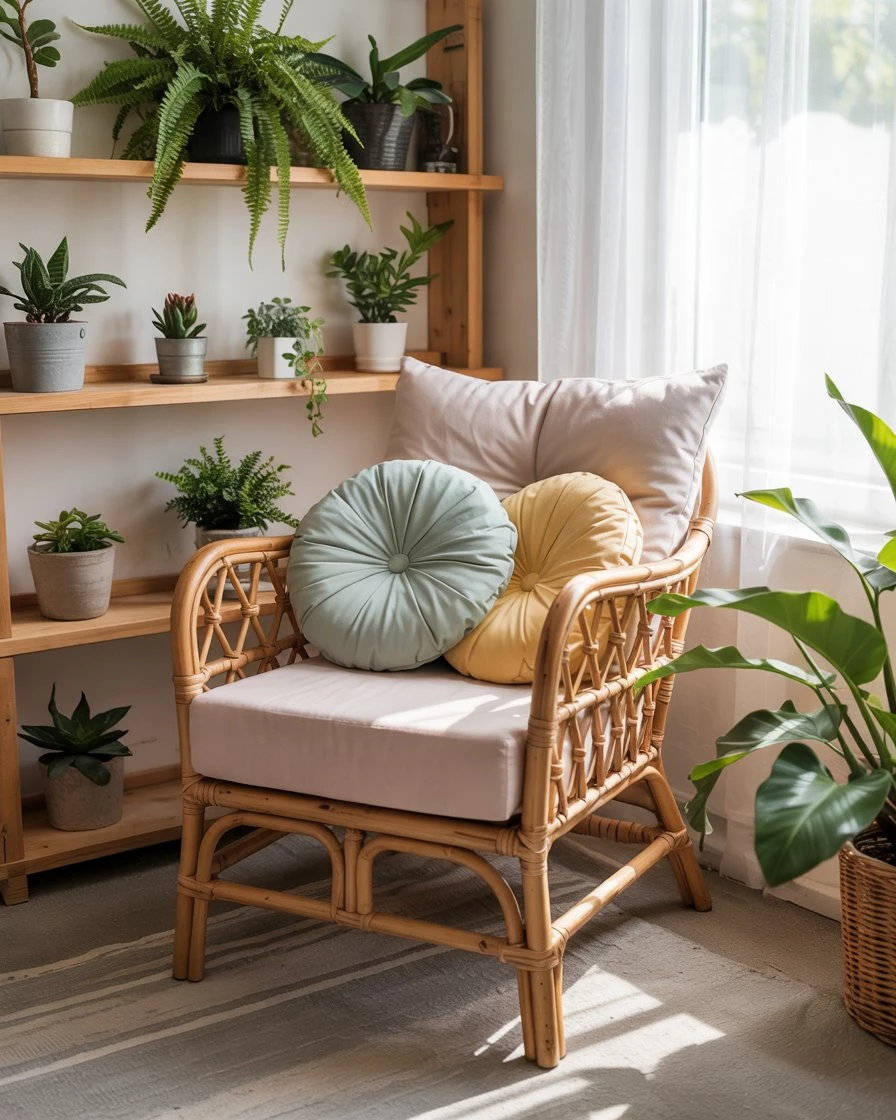
Practical insight: this aesthetic works best in homes with good natural light, as the abundance of plants requires it. If your space is darker, opt for low-maintenance varieties like pothos or snake plants that tolerate shade. Also, resist the urge to cram in too many “cute” items; the charm comes from a curated, lived-in feel rather than overstuffed shelves.
18. Bloxburg-Inspired Symmetrical Layouts
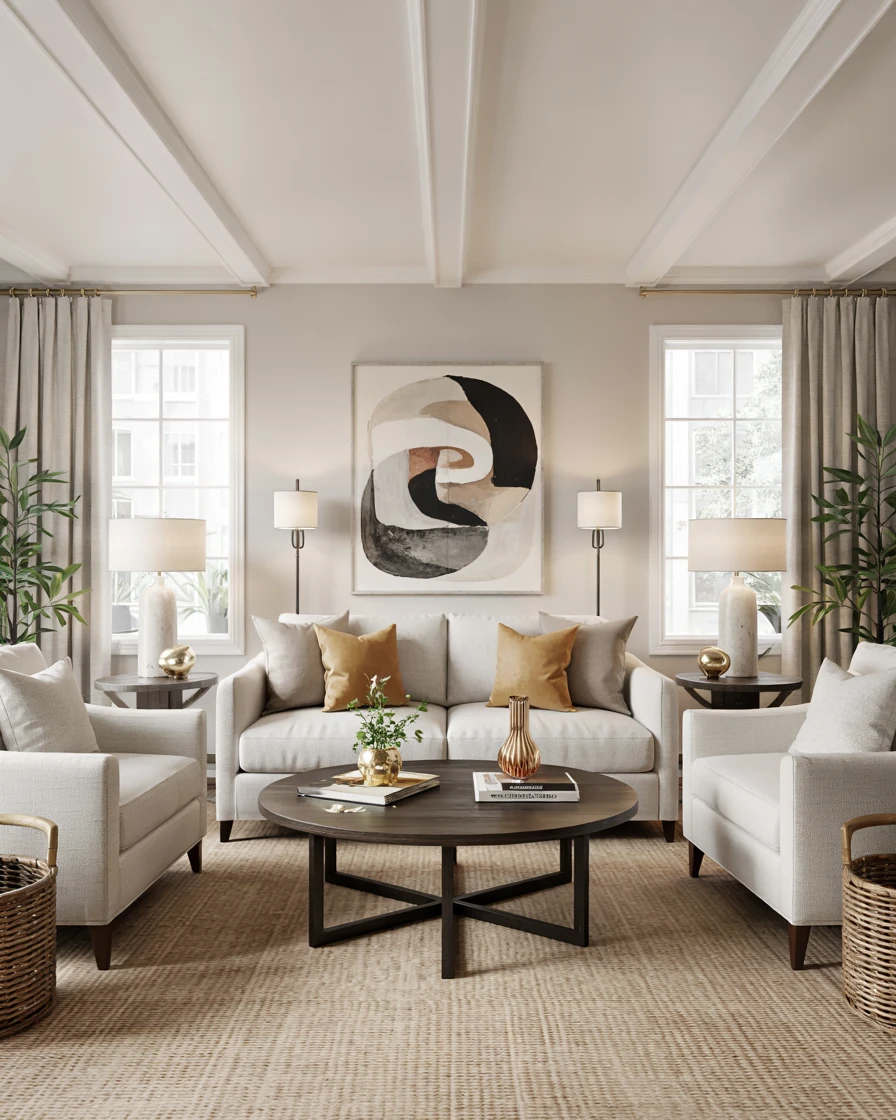
Players of Bloxburg (a Roblox game) often design homes with perfect symmetry and clean lines, and that aesthetic is influencing real-world spaces, especially among younger homeowners seeking order and visual clarity. This approach pairs matching furniture, centered rugs, and balanced accessories, creating a polished, almost editorial look. It’s particularly effective in smaller rooms where symmetry can make the space feel more intentional and less chaotic.
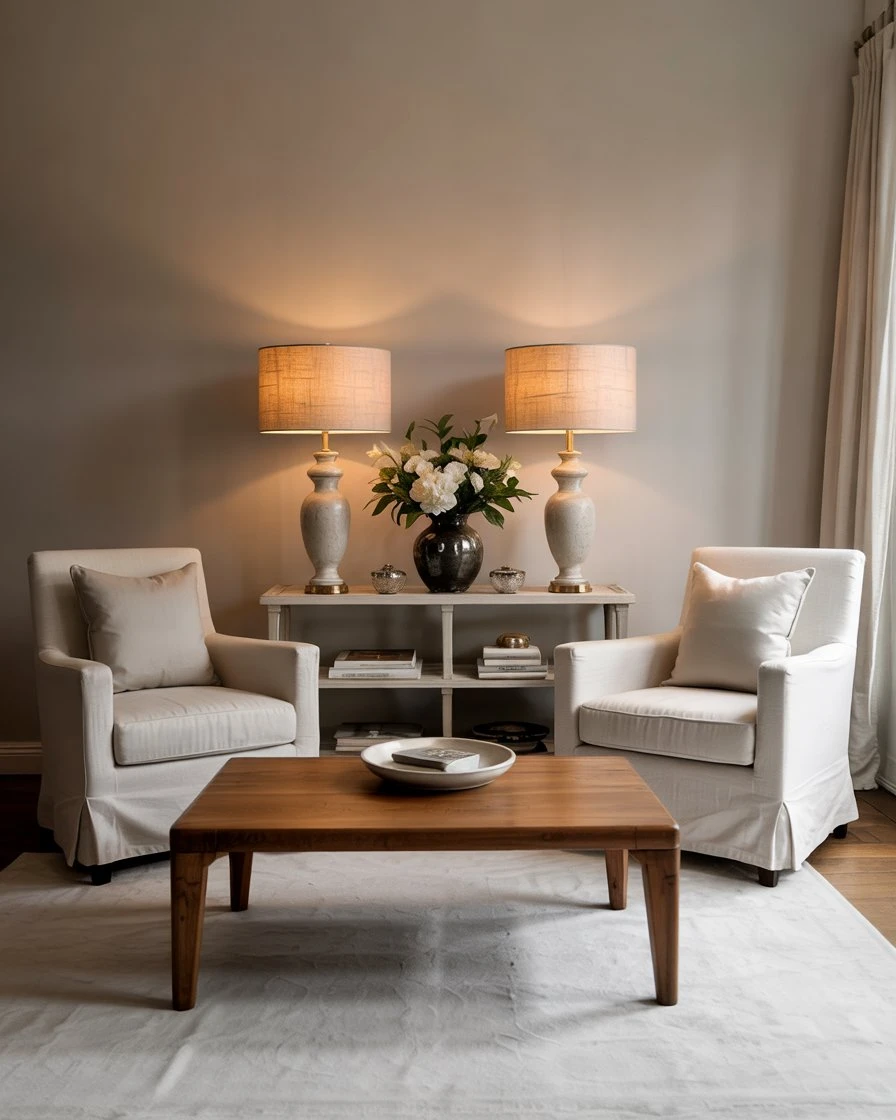
Common mistake: rigidity. While symmetry provides structure, allowing a few asymmetrical elements—a stack of books on one side, a plant on the other—keeps the room from feeling sterile or staged. Also, perfect symmetry requires precise measurements; misaligned furniture by even a few inches breaks the illusion, so take your time during setup.
19. Latest Modular Seating for Flexibility
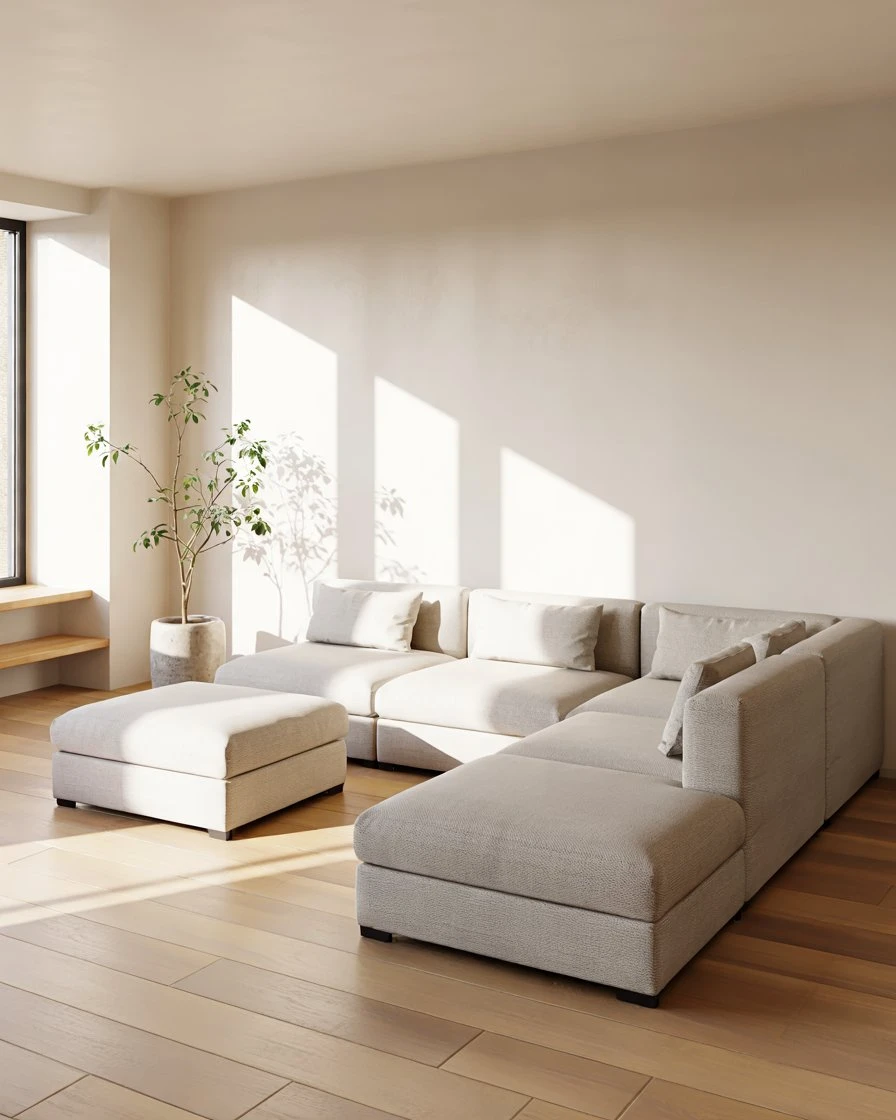
The latest modular sofas let you rearrange sections to suit different occasions—movie night, dinner party, kids’ playdate—without committing to a fixed layout. This adaptability is ideal for Americans who move frequently or live in multi-use spaces where the living room also functions as a guest room or home office. High-quality modules lock together securely but separate easily, and many systems are expandable over time.
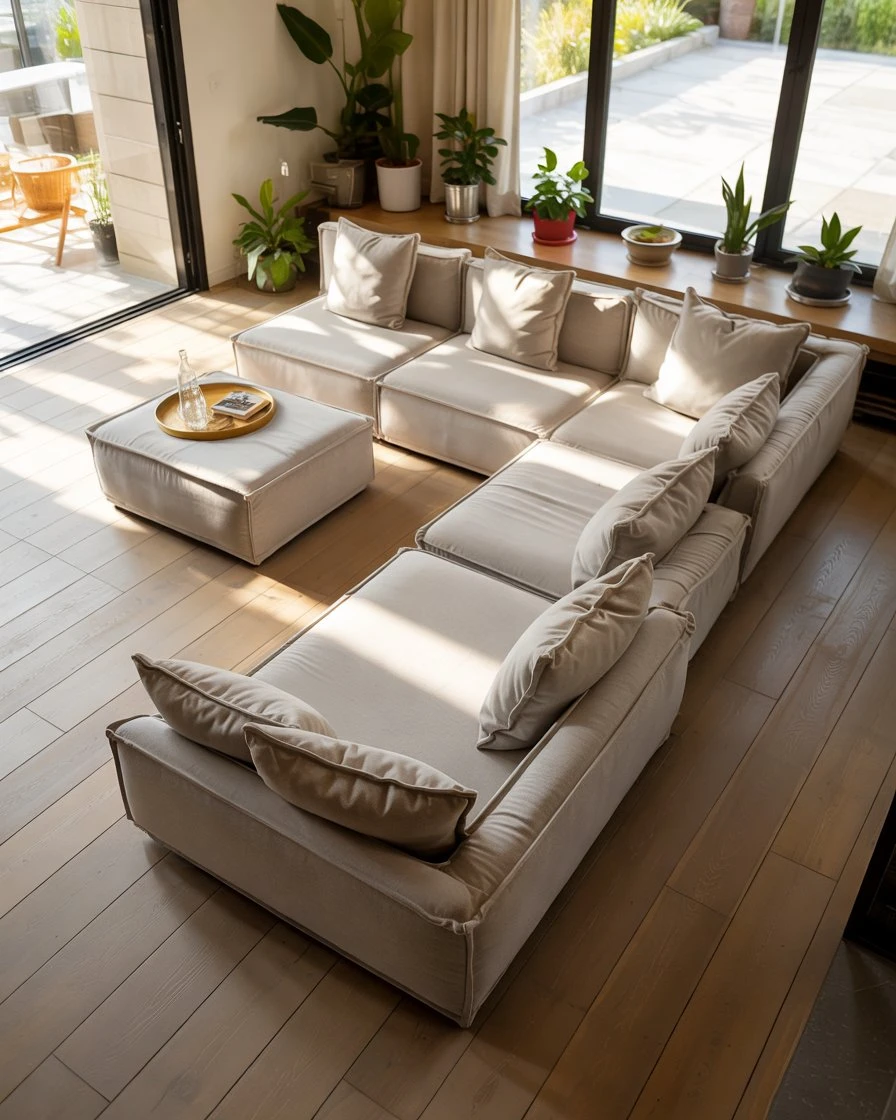
Where it works best: urban apartments and suburban homes with flexible lifestyles—think young families, remote workers, or serial entertainers. Modules typically cost $400–$1,200 per piece depending on brand and fabric, so you can start small and build out as needed. Just confirm that the fabric is machine-washable or has removable covers, since modular pieces see heavy use and spills are inevitable.
20. Warm Mixed Metals for Layered Sophistication
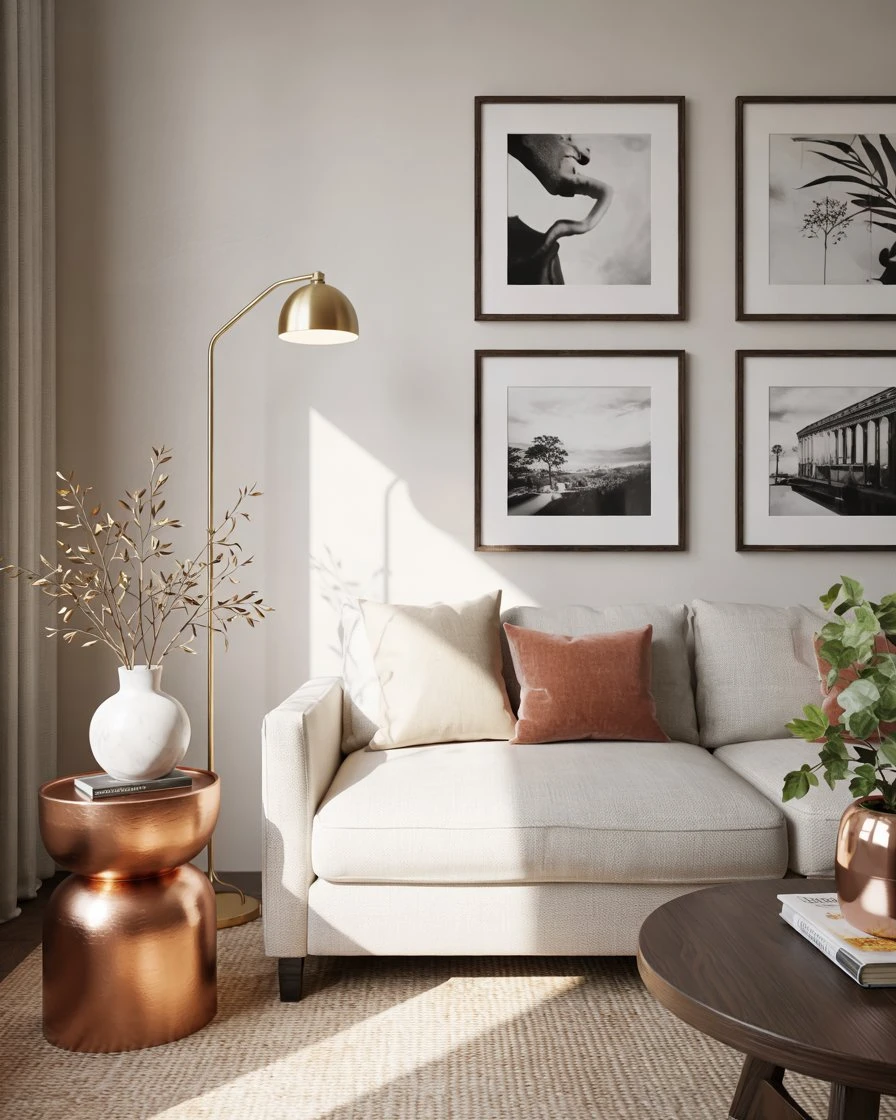
Combining brass, copper, and bronze fixtures—lamps, hardware, and frames—adds warm and cozy richness without relying on a single finish, which can feel too matchy or dated. This layered approach creates visual interest and depth, especially in neutral-heavy rooms that need a touch of luxury without introducing bold color. The key is staying within the warm metal family; mixing warm and cool metals requires a more practiced eye.
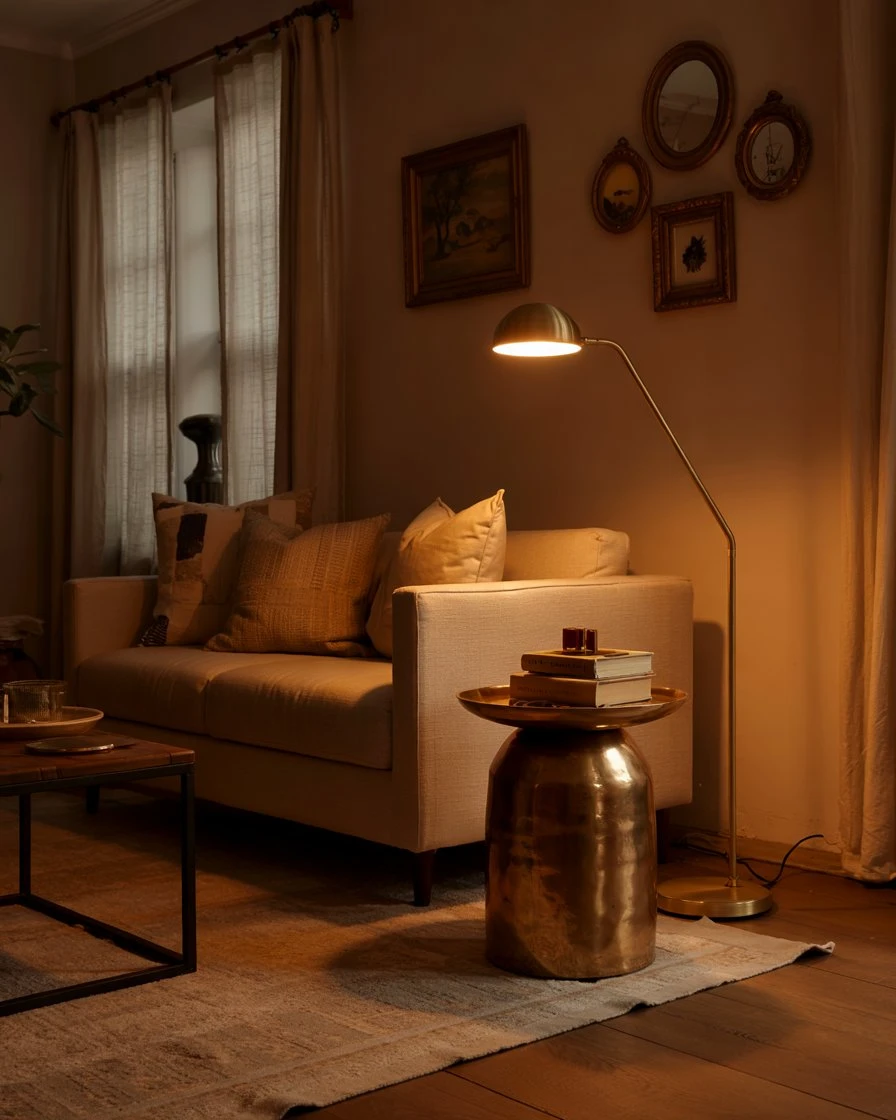
A designer once told me that mixed metals are like a well-edited jewelry collection—you want intentional variation, not random clutter. Aim for two to three finishes max, distributed across the room rather than clustered in one spot. This also prevents the space from feeling too precious; warm metals develop patina over time, which adds character rather than looking worn or neglected.
21. Personal Collections as Focal Decor
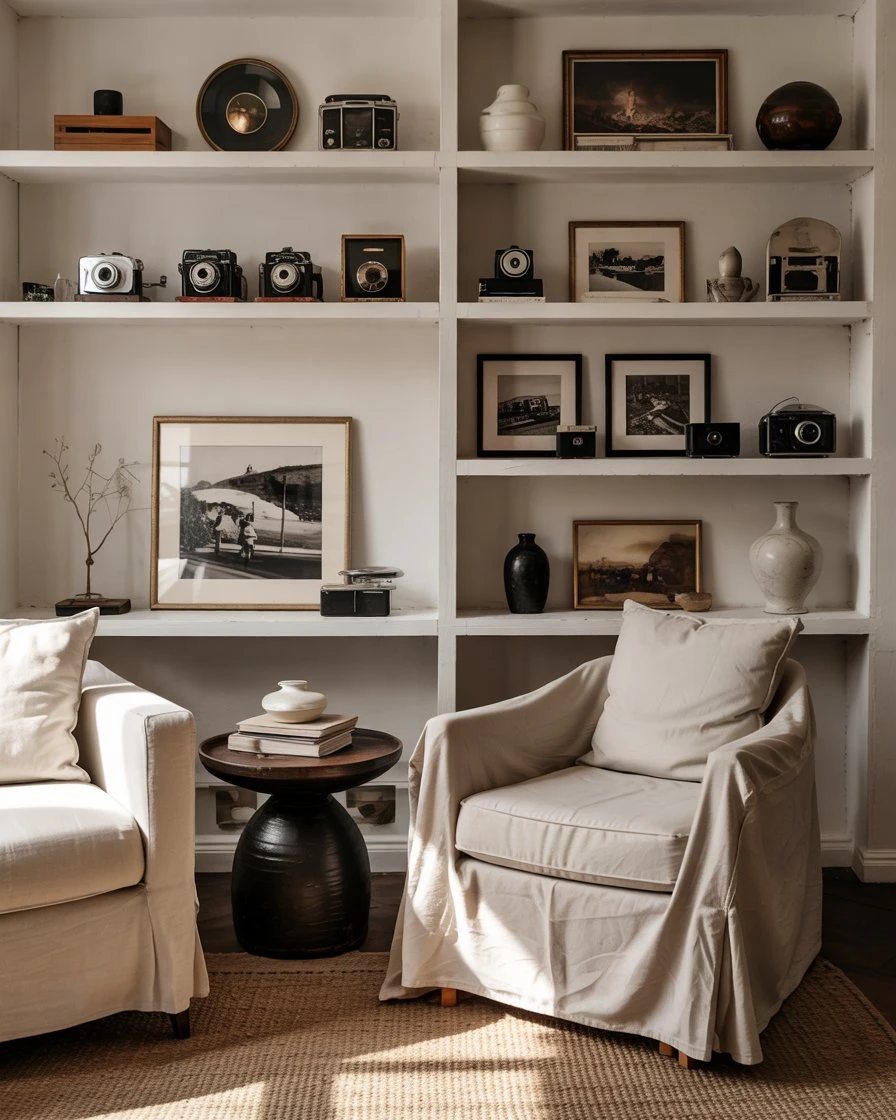
Displaying a curated collection—vintage cameras, vinyl records, ceramics—transforms the living room into a reflection of your personality and travels, moving beyond generic decor into storytelling. This approach works especially well for people who feel disconnected from mass-market “designed” spaces and want their home to feel genuinely personal. The trick is editing ruthlessly: show the best pieces, not everything you own.
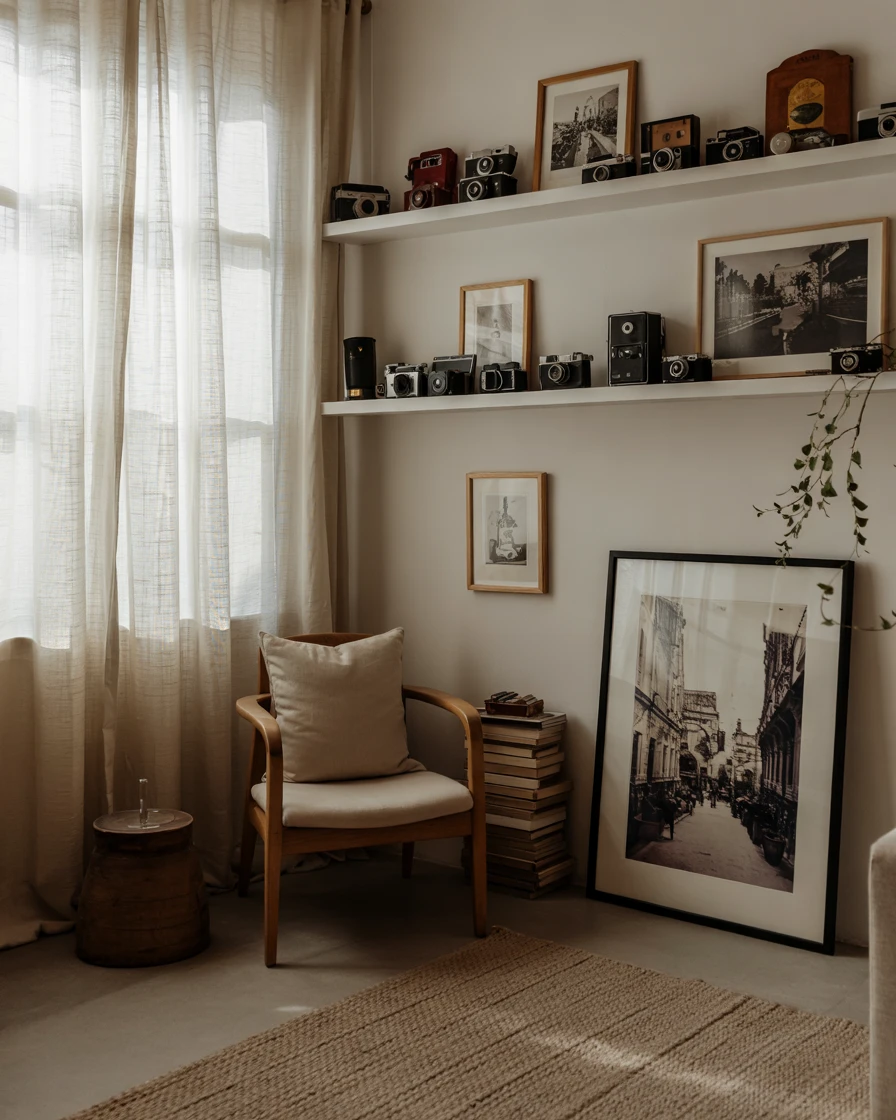
Real homeowner behavior: collections evolve over time, and the display should too. Many people rotate items seasonally or when they acquire something new, keeping the living room dynamic rather than frozen. Just avoid turning the space into a museum; mix in functional items like books or plants so the shelves feel lived-in. And if a piece no longer brings you joy, donate it—curating is an ongoing process, not a one-time task.
Conclusion
These ideas offer a starting point, but your living room should ultimately reflect how you actually live, not just what looks good in a Pinterest grid. Try one or two concepts that resonate, see how they feel in your space, then adjust from there. Drop a comment below if you’ve tried any of these approaches—or if you have your own twist worth sharing.