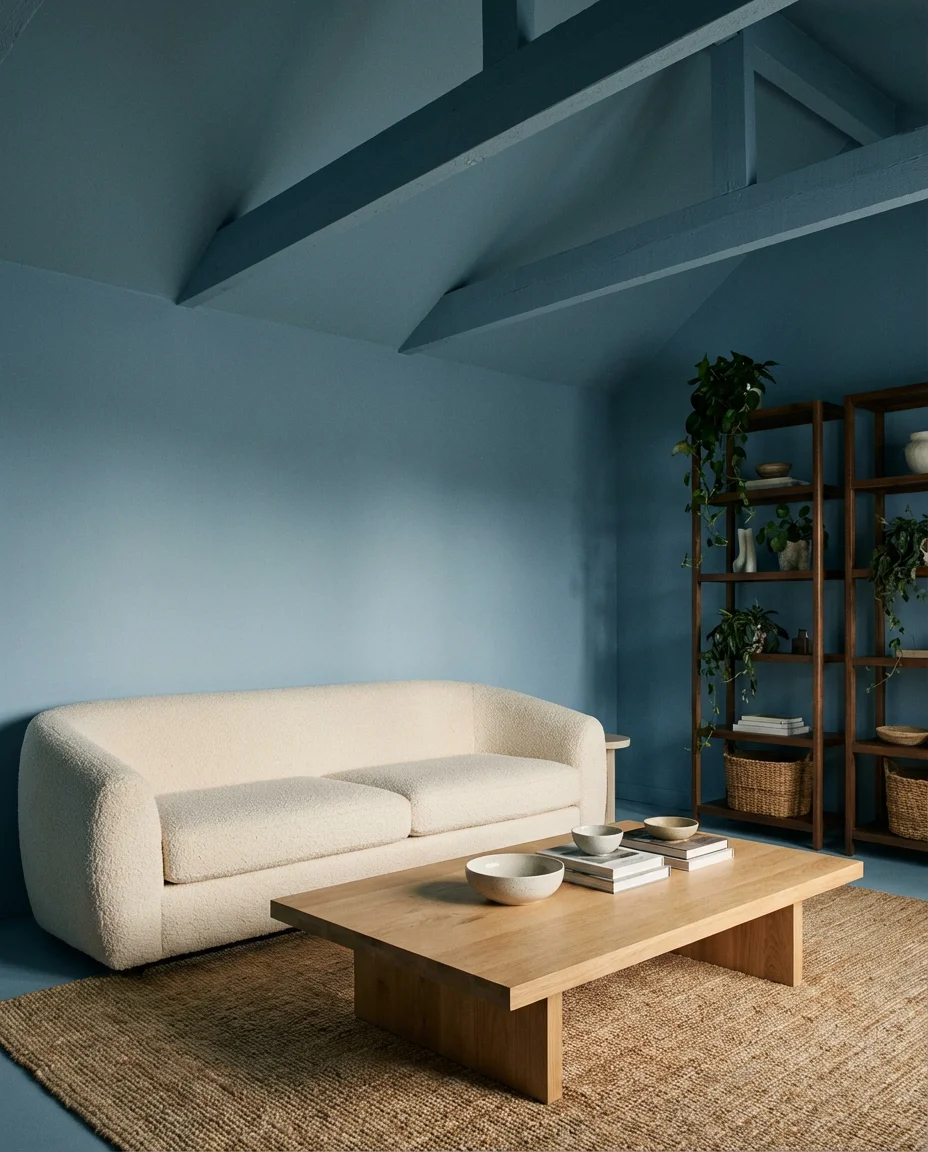
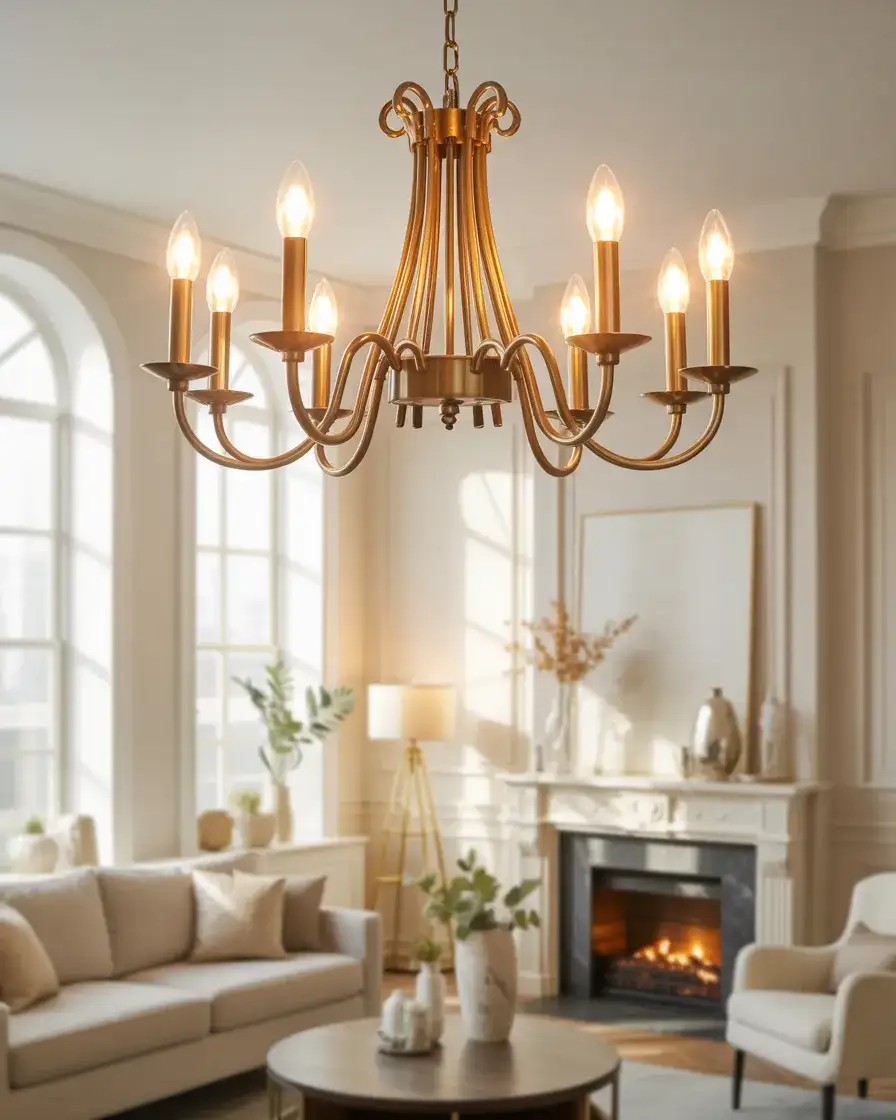
Living room lighting has become one of the most searched home design topics on Pinterest in 2026, and for good reason. Americans are rethinking how light shapes mood, functionality, and style in the space where they spend most of their time. Whether you’re working with a vaulted ceiling, a cozy apartment setup, or a mid-century modern aesthetic, the right lighting can completely transform your living room. This guide walks you through fresh, practical ideas that blend current trends with timeless design principles—each one tailored to real homes and real lifestyles.
1. Layered Ambient Lighting for Grey Couches
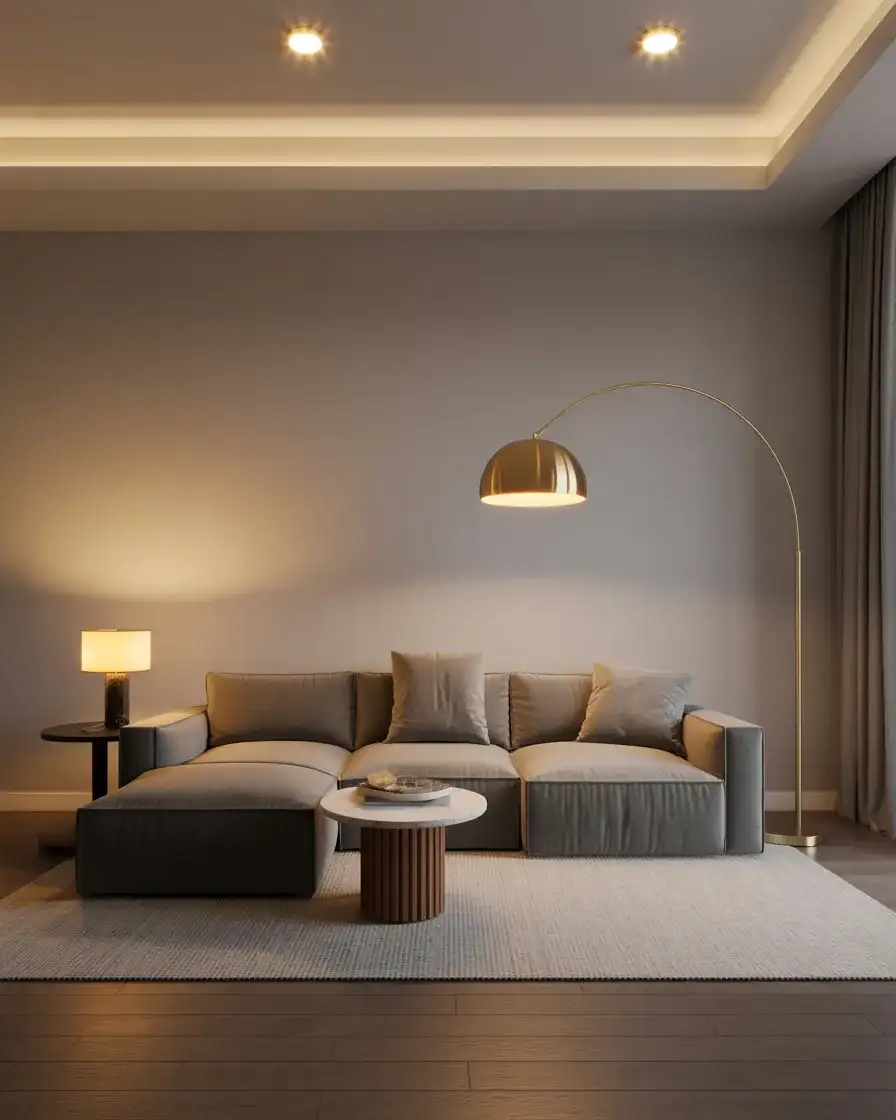
A gray couch anchors many American living rooms, and the right lighting can make it feel either cold or inviting. Layered ambient lighting—combining recessed ceiling lights, a floor lamp, and a table lamp—creates depth and warmth. This approach works especially well in open-plan layouts where the living room flows into the kitchen or dining area. The key is to avoid relying on a single overhead fixture and instead build layers that can be adjusted throughout the day.
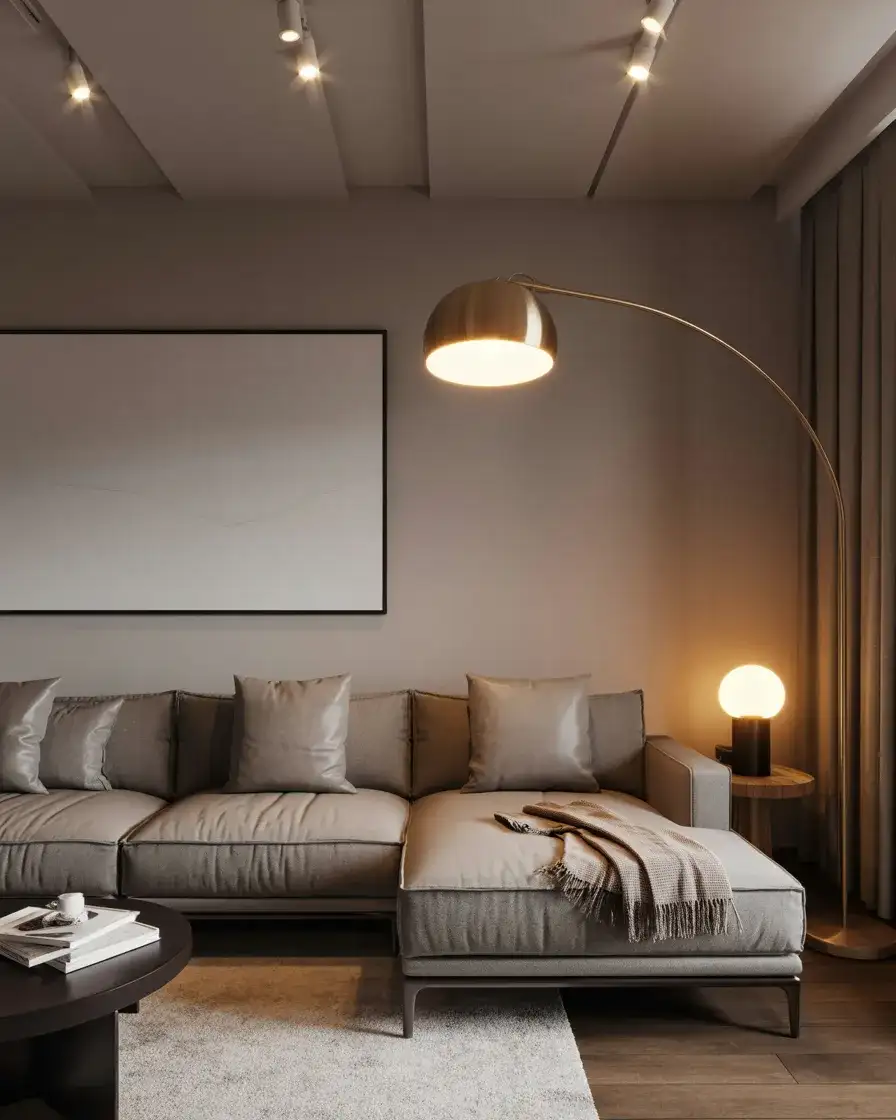
One of the most common mistakes homeowners make is installing only overhead lighting, which can flatten the space and cast harsh shadows. Instead, think about how light moves through your room at different times of day. A dimmable floor lamp near the couch creates a reading nook, while a table lamp on a console adds visual balance. This setup also allows you to control the mood—bright and energizing during the day, soft and relaxing at night.
2. Statement Ceiling Chandeliers for High Ceilings
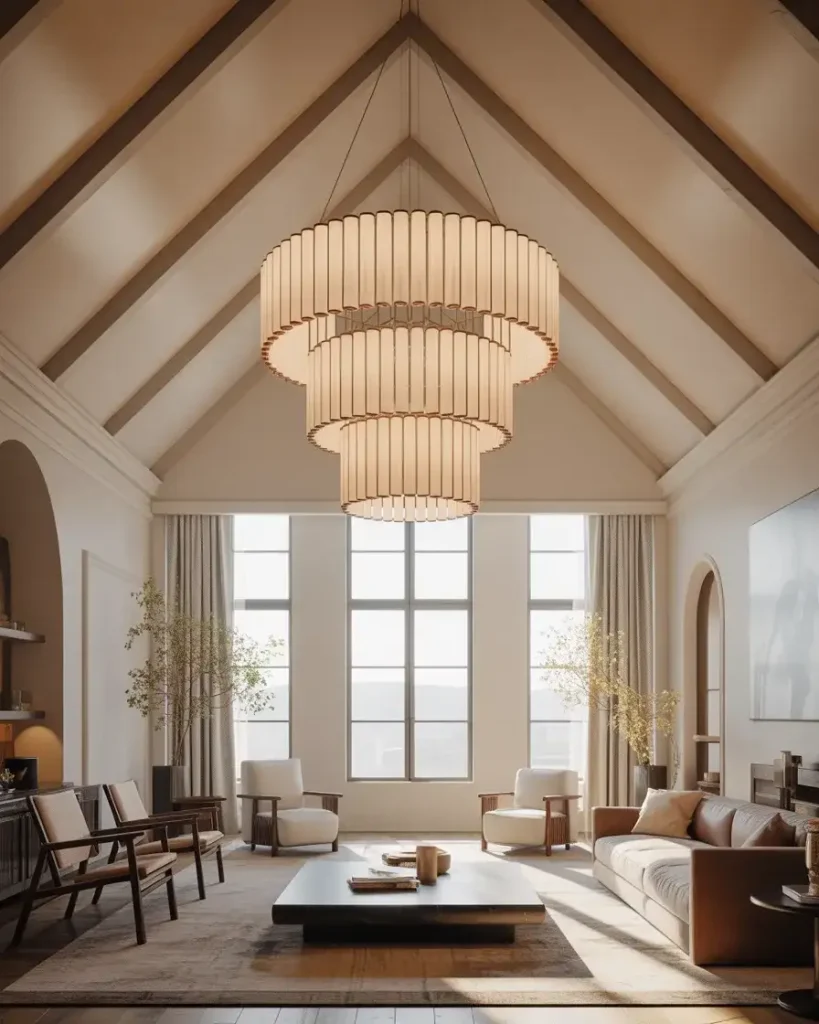
When you have the vertical space, a dramatic ceiling chandelier becomes the centerpiece of your living room. High-ceiling rooms in homes across the South and Southwest are perfect for large-scale fixtures that draw the eye upward. Whether you choose a modern geometric design or a cascading crystal style, the chandelier should hang low enough to feel present but high enough to avoid blocking sightlines. This is especially important in two-story living rooms where the fixture needs to anchor the entire volume of space.
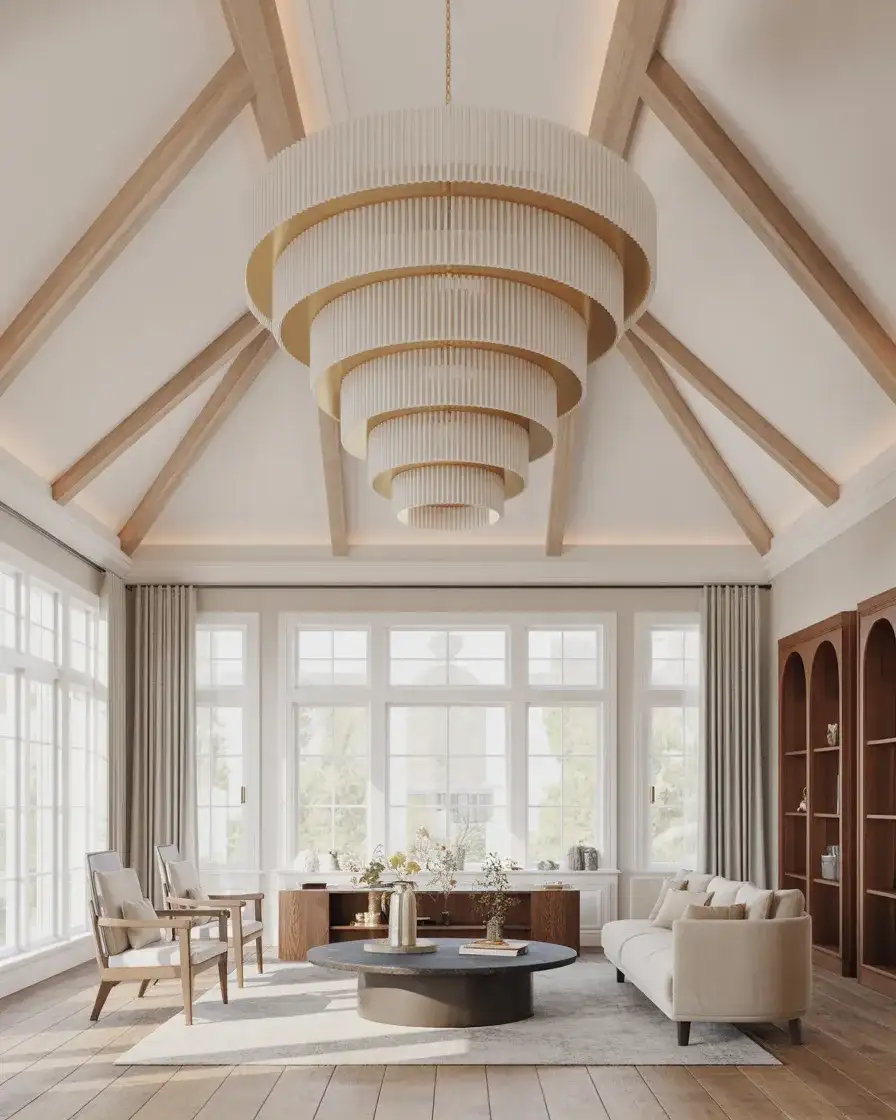
In my experience visiting homes with high ceilings, the most successful chandelier installations happen when the fixture is scaled to the room’s proportions. A small chandelier in a grand space feels lost, while an oversized piece in a modest room can overwhelm. Measure your ceiling height and room dimensions before shopping, and aim for a fixture that’s roughly one-third the width of your seating area. This ensures visual harmony without sacrificing drama.
3. Flush Mount Fixtures for Low Ceilings
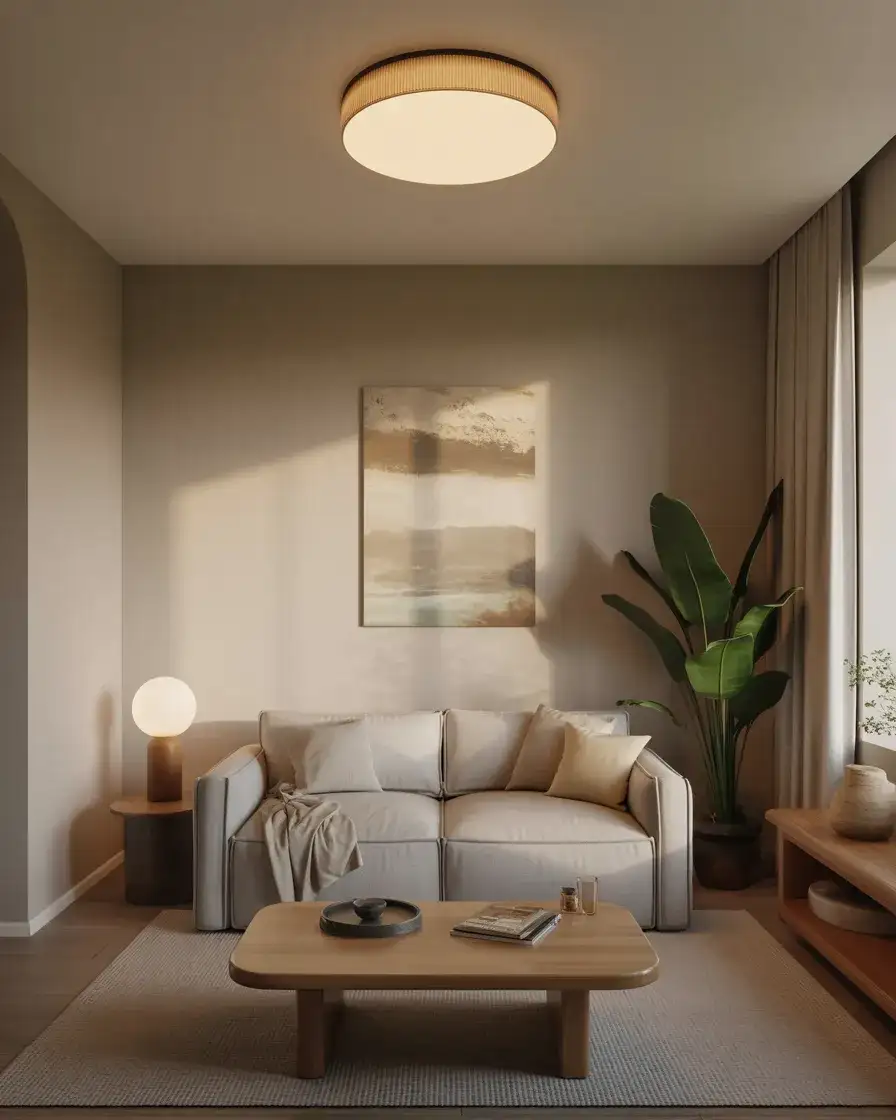
Many American homes built in the mid-20th century feature low-ceiling living rooms, and finding the right lighting can be tricky. Flush mount fixtures sit close to the ceiling, providing essential overhead light without crowding the space. Modern designs have come a long way—today’s flush mounts include sculptural options, fabric-covered styles, and even fixtures with integrated LED technology that mimics natural daylight. The goal is to maximize light output while maintaining a sleek, unobtrusive profile.
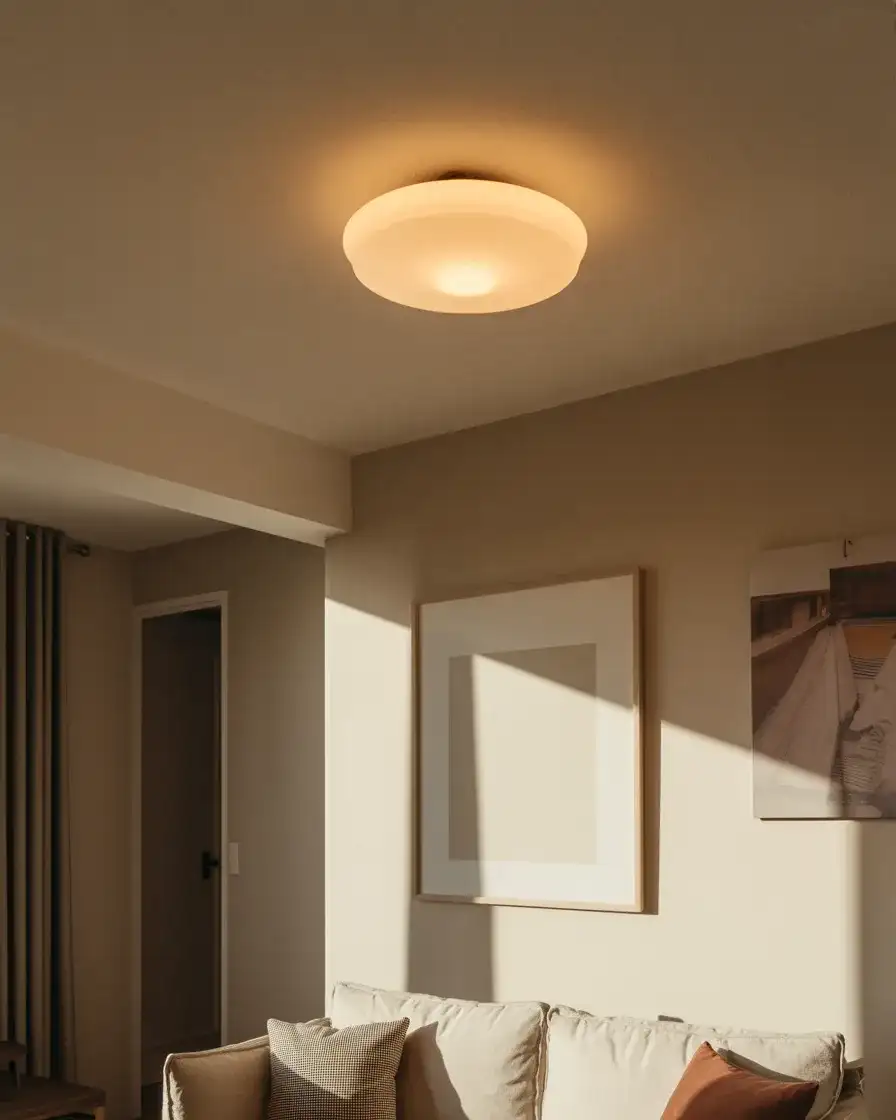
This setup works best in apartments, bungalows, and ranch-style homes where ceiling height is limited. Pair your flush mount with wall sconces or strategically placed lamps to avoid a flat, one-dimensional lighting scheme. Budget-conscious homeowners can find quality flush mount fixtures starting around $80, while designer options range into the hundreds. Either way, choose a finish that complements your existing hardware for a cohesive look.
4. Japandi-Inspired Pendant Clusters
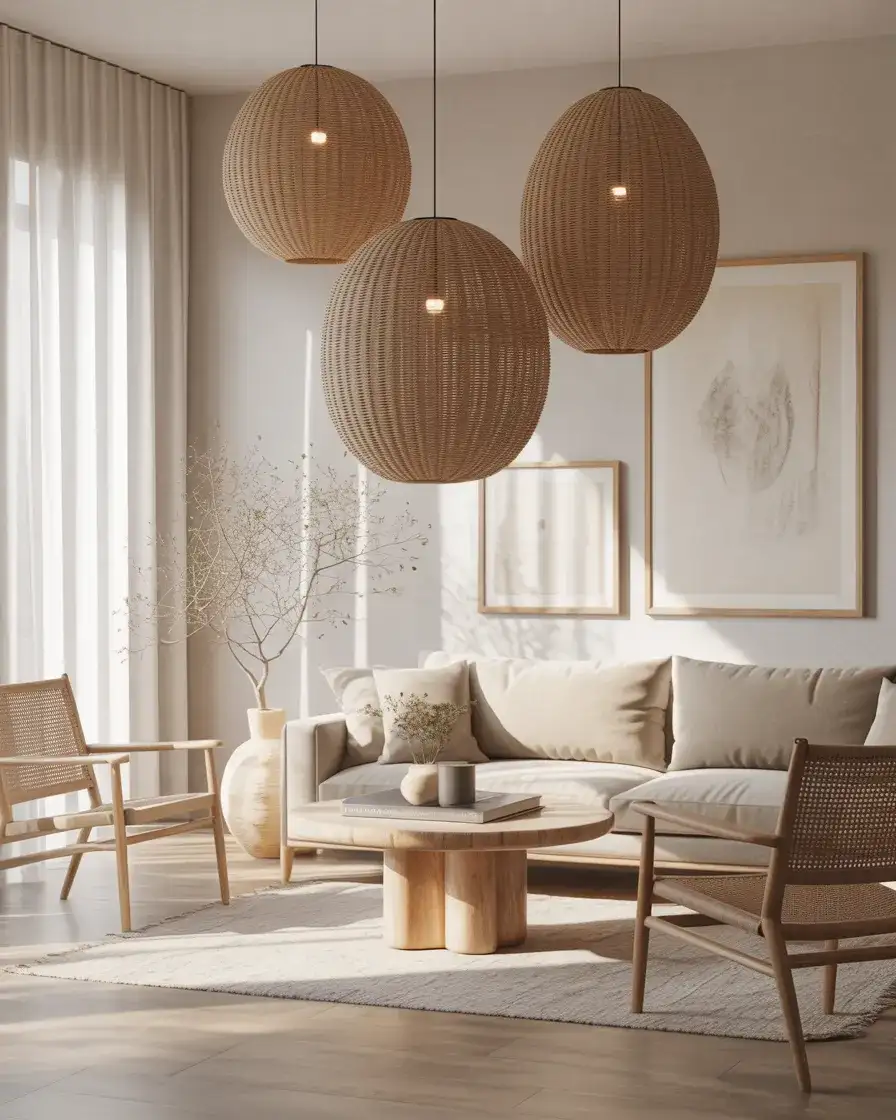
The Japandi aesthetic—a blend of Japanese minimalism and Scandinavian warmth—has taken over American living rooms in 2026. Pendant clusters made from natural materials like wood, bamboo, or woven rattan bring texture and visual interest without overwhelming the space. These fixtures hang at varying heights, creating a sense of movement and asymmetry that feels organic rather than rigid. They’re particularly effective over coffee tables or in conversation areas where you want to define a zone without using walls.
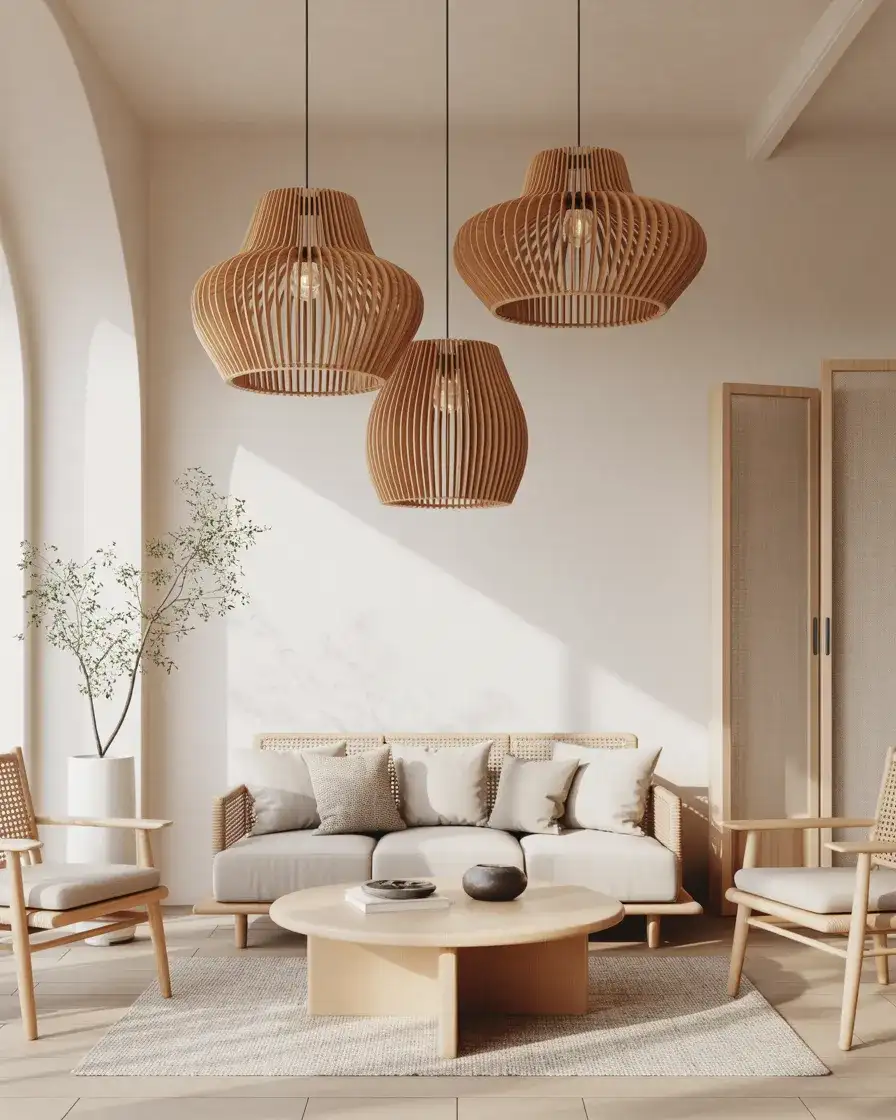
Homeowners in urban apartments and coastal bungalows are embracing this trend because it offers visual warmth without clutter. The natural materials soften harsh overhead light, and the asymmetrical arrangement keeps the space from feeling too formal. If you’re working with a smaller room, stick to two or three pendants rather than five or six—scale matters, and overloading a space with fixtures can make it feel busy instead of calming.
5. Dramatic Uplighting on Vaulted Ceilings
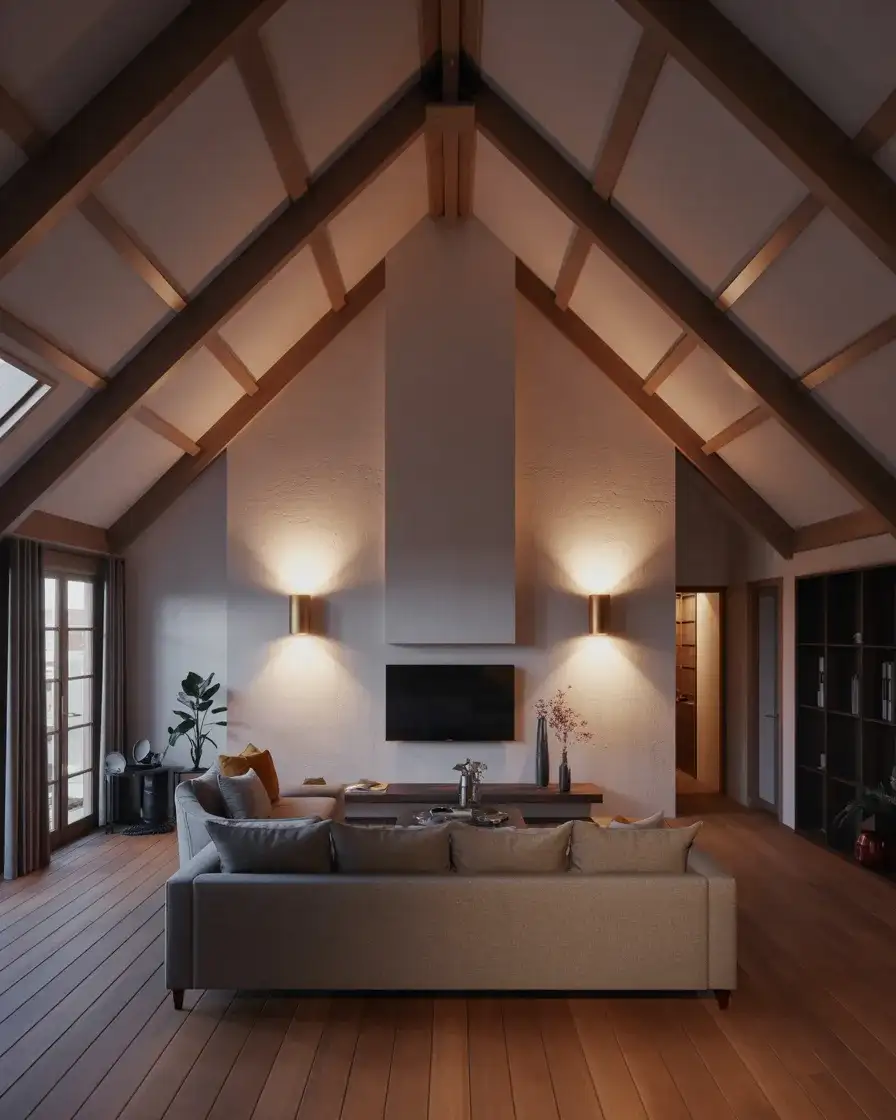
A vaulted ceiling is a design gift, but it requires thoughtful lighting to avoid dark, cavernous corners. Uplighting—achieved through wall sconces, floor cans, or strategically placed torchieres—washes light across the angled ceiling and creates a sense of height and grandeur. This technique is popular in mountain homes, ski chalets, and suburban houses with great room layouts. The upward-directed light bounces off the ceiling and floods the room with a soft, diffused glow that feels expansive rather than harsh.
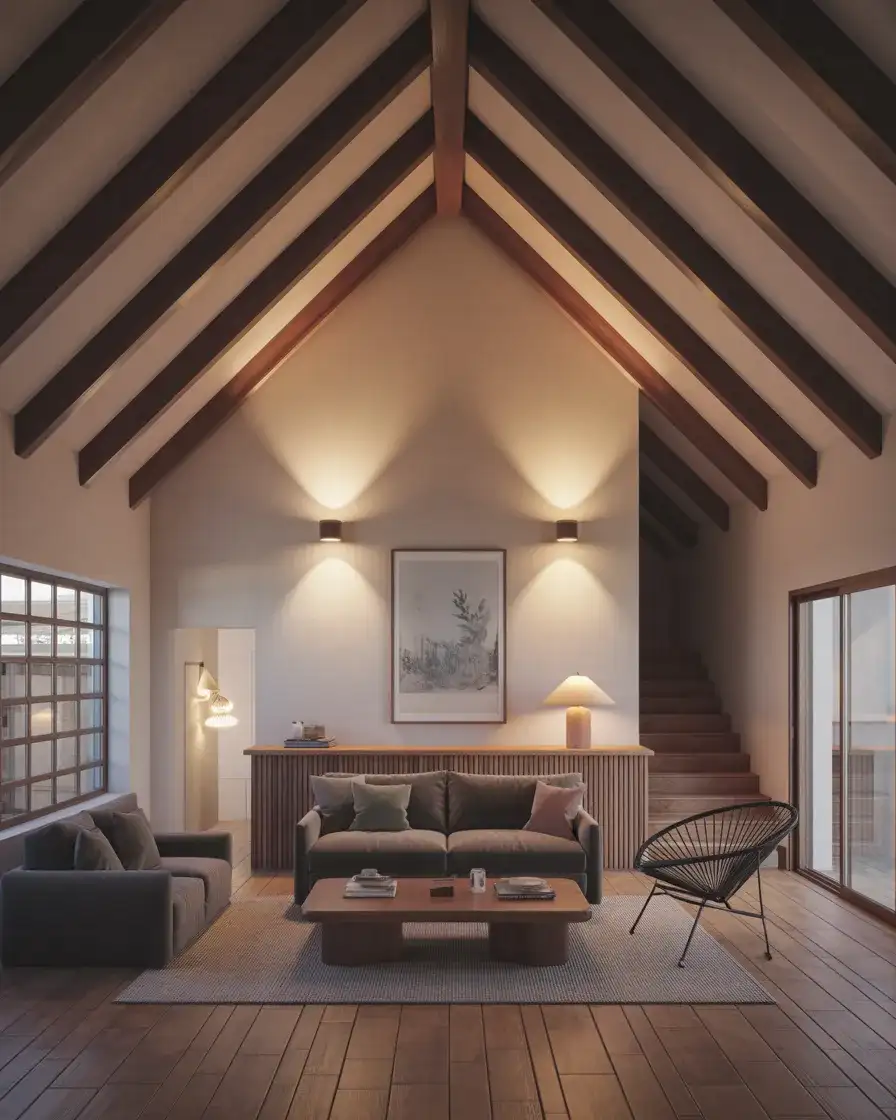
Expert designers recommend placing uplights every 8 to 10 feet along the perimeter of the room to ensure even coverage. Avoid relying solely on a central pendant or chandelier, which can leave the upper reaches of the ceiling in shadow. Dimmable uplights give you control over the mood—bright and open during gatherings, soft and intimate for quiet evenings. This approach also highlights architectural details like beams or coffered sections, making the ceiling itself a design feature.
6. Cozy Table Lamps for Reading Nooks
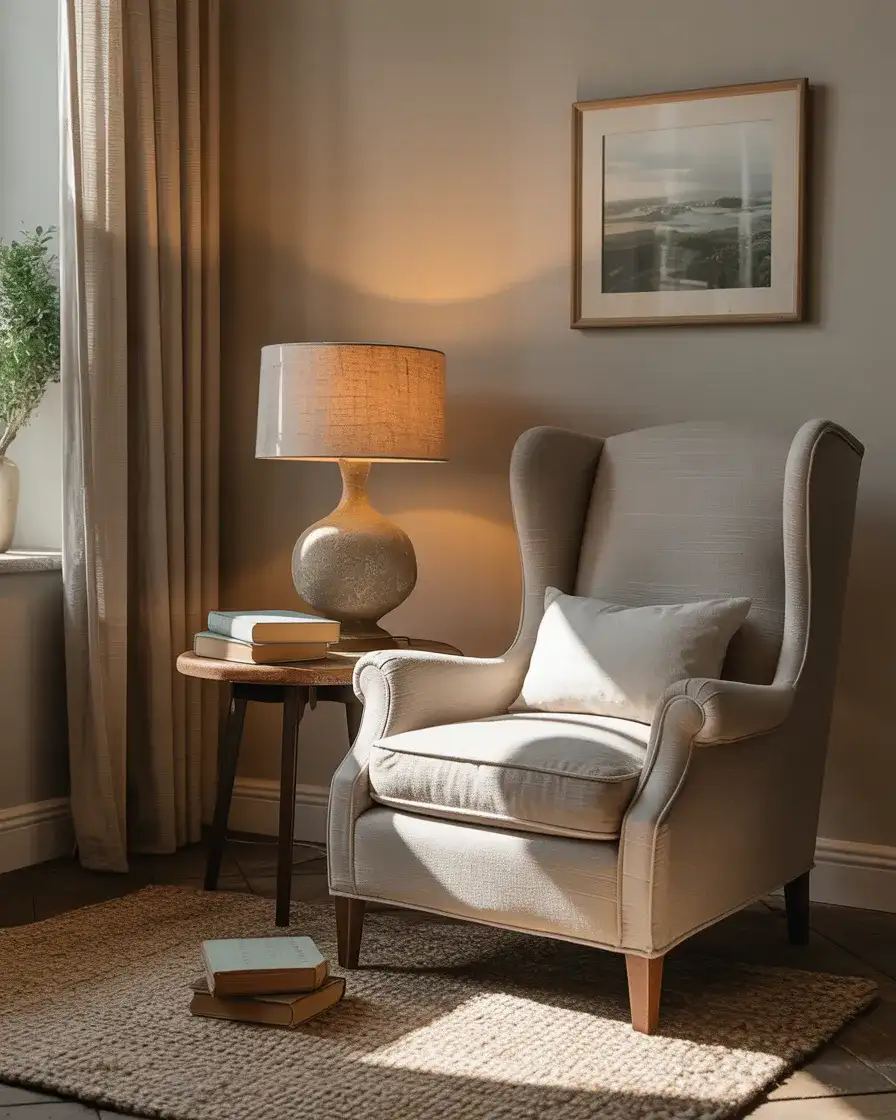
Every living room needs a dedicated reading spot, and a well-placed table lamp is the key to making it functional and inviting. Cozy spaces benefit from lamps with warm-toned bulbs and fabric or ceramic shades that diffuse light gently. Position the lamp on a side table next to your favorite armchair, and aim for a shade that directs light downward onto your book or magazine rather than into your eyes. This setup is especially popular in New England homes and Midwestern bungalows, where reading culture runs deep.
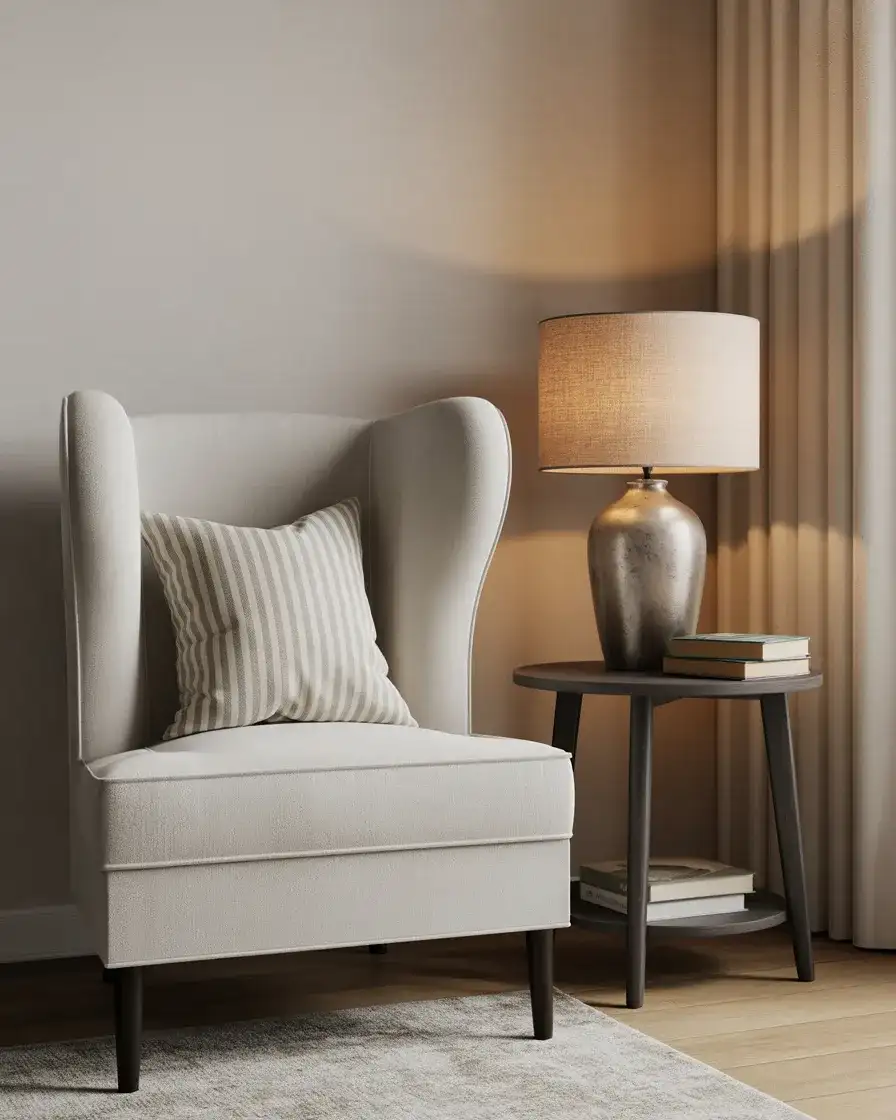
A friend who’s an interior designer once told me that the biggest mistake people make with reading lamps is choosing fixtures that are too dim or too bright. Aim for a bulb in the 40-60 watt range (or LED equivalent), and always test the light before committing. The lamp should illuminate the page without straining your eyes, and the shade should be tall enough that you don’t see the bulb directly. This small adjustment makes a huge difference in comfort and usability.
7. Modern Minimalist Ceiling Lights
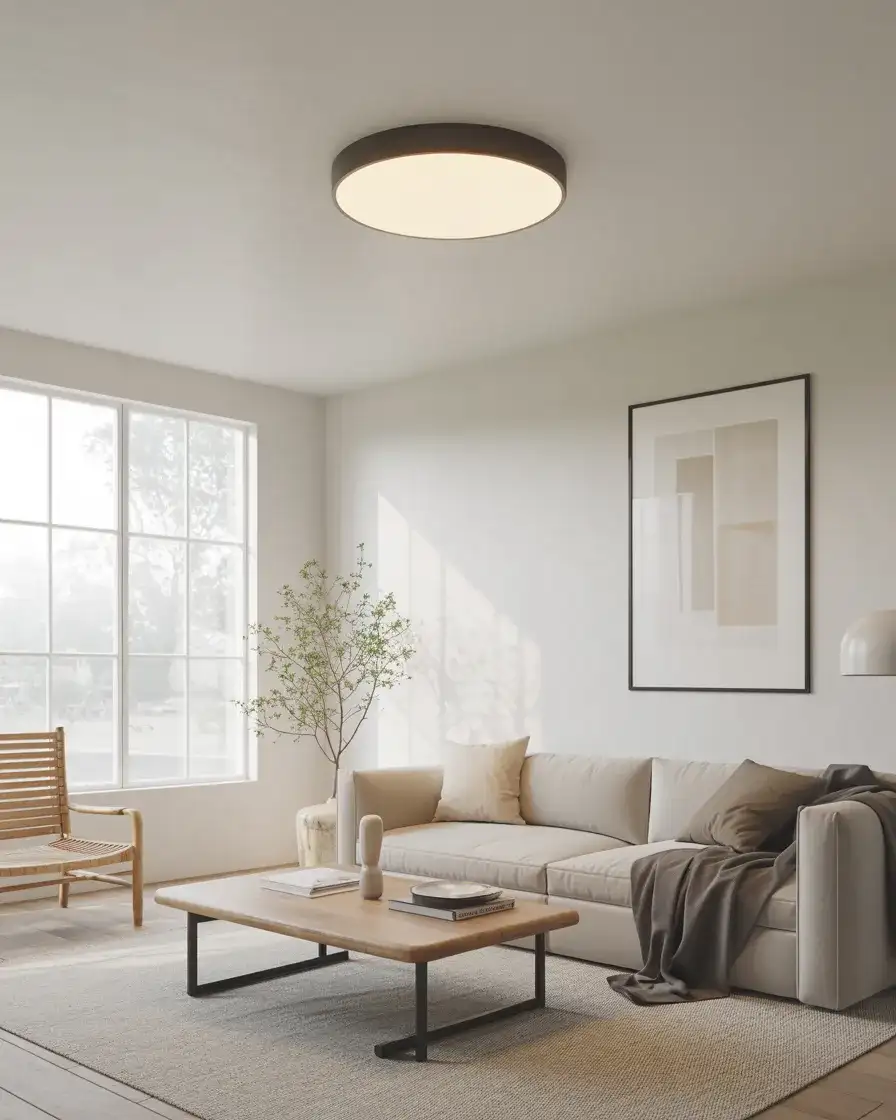
For those who prefer clean lines and uncluttered spaces, modern minimalist ceiling lights offer both form and function. These fixtures—often in matte black, brushed brass, or white finishes—feature simple geometric shapes and concealed wiring. They work well in contemporary lofts, urban apartments, and homes with Scandinavian or industrial aesthetics. The beauty of minimalist lighting is that it disappears into the architecture while still providing ample illumination, allowing your furniture and art to take center stage.
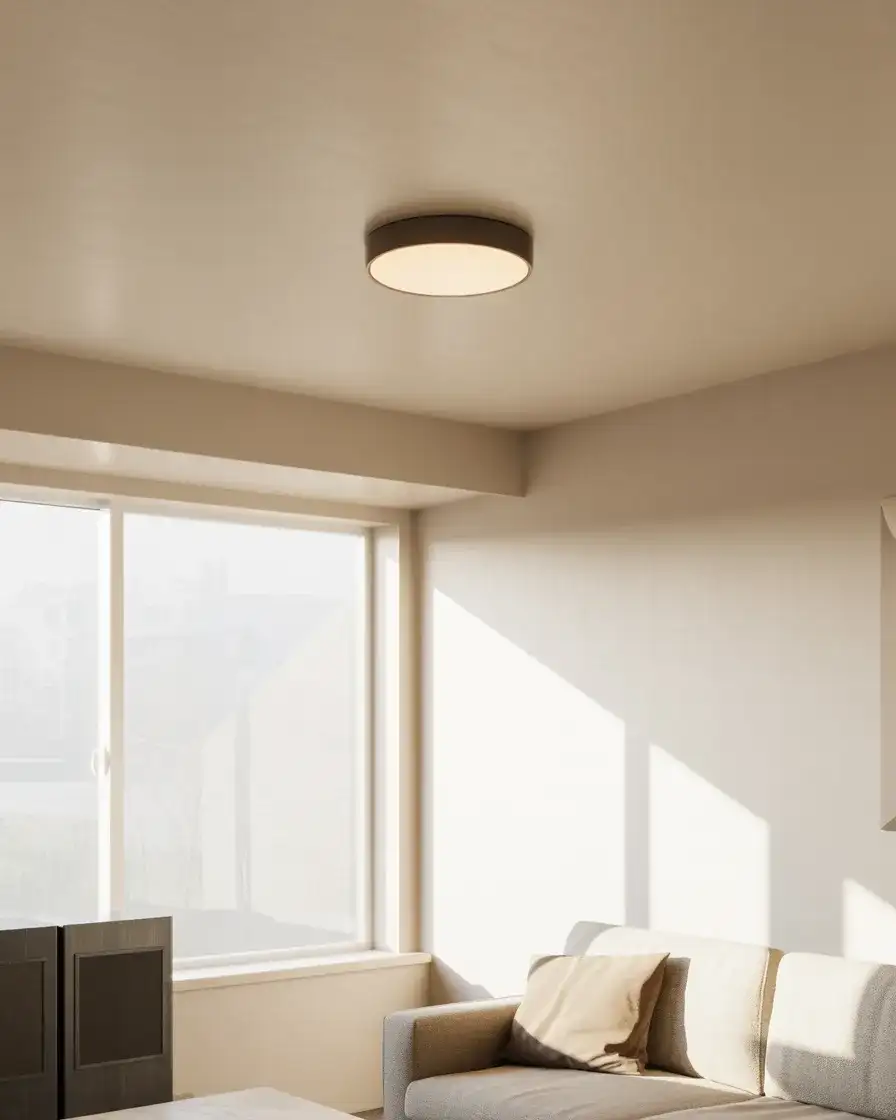
This style works best in homes where clutter is kept to a minimum and every element has a purpose. Pair your ceiling light with a single statement piece—like a large-scale artwork or a sculptural chair—to maintain visual balance. In terms of budget, minimalist fixtures range widely, from affordable options at big-box retailers to high-end designer pieces. The simplicity of the design means you can often find quality at lower price points, making this an accessible trend for first-time homeowners and renters alike.
8. Warm Glow for Blue Walls
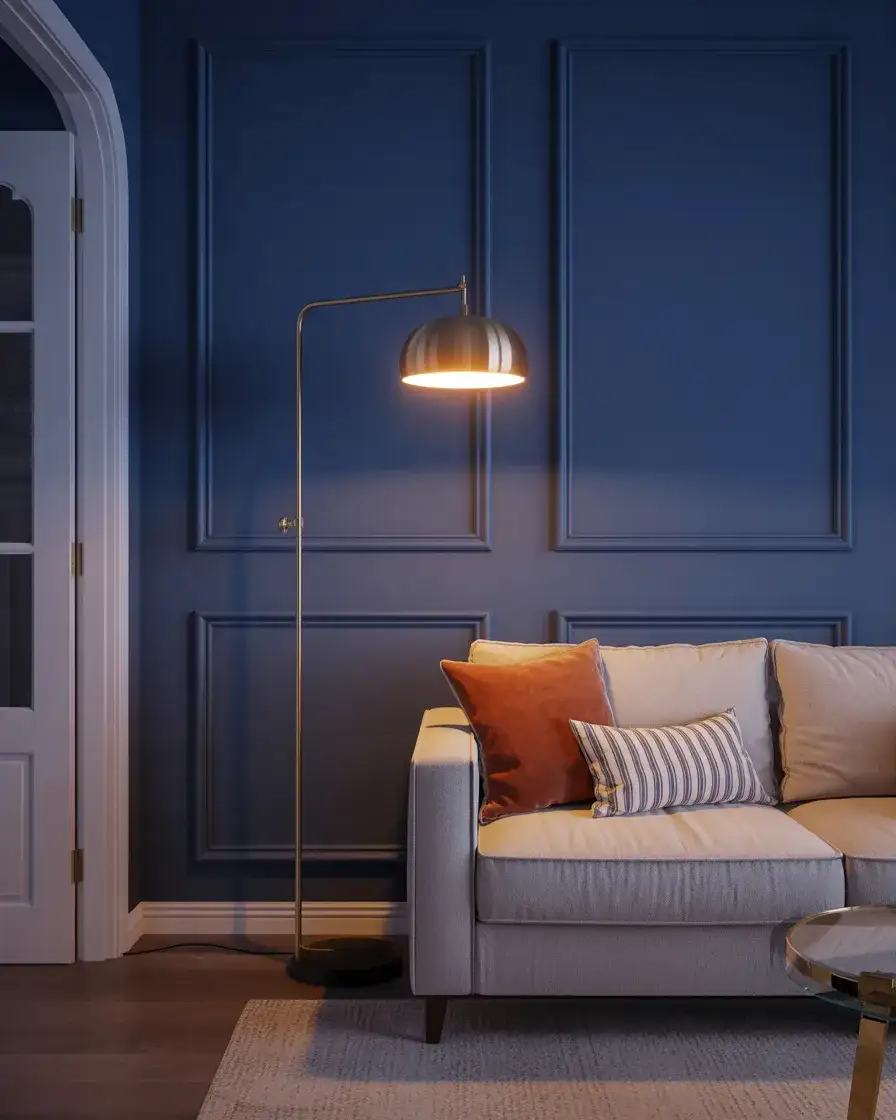
Blue walls have surged in popularity across American homes, from coastal Maine cottages to desert-inspired Arizona interiors. The key to making blue work in your living room is balancing it with warm-toned lighting. Cool white or daylight bulbs can make blue walls feel cold and uninviting, while warm white (2700K-3000K) brings out the richness of the color and creates a more intimate atmosphere. This is especially important in rooms that don’t get much natural light or are used primarily in the evenings.
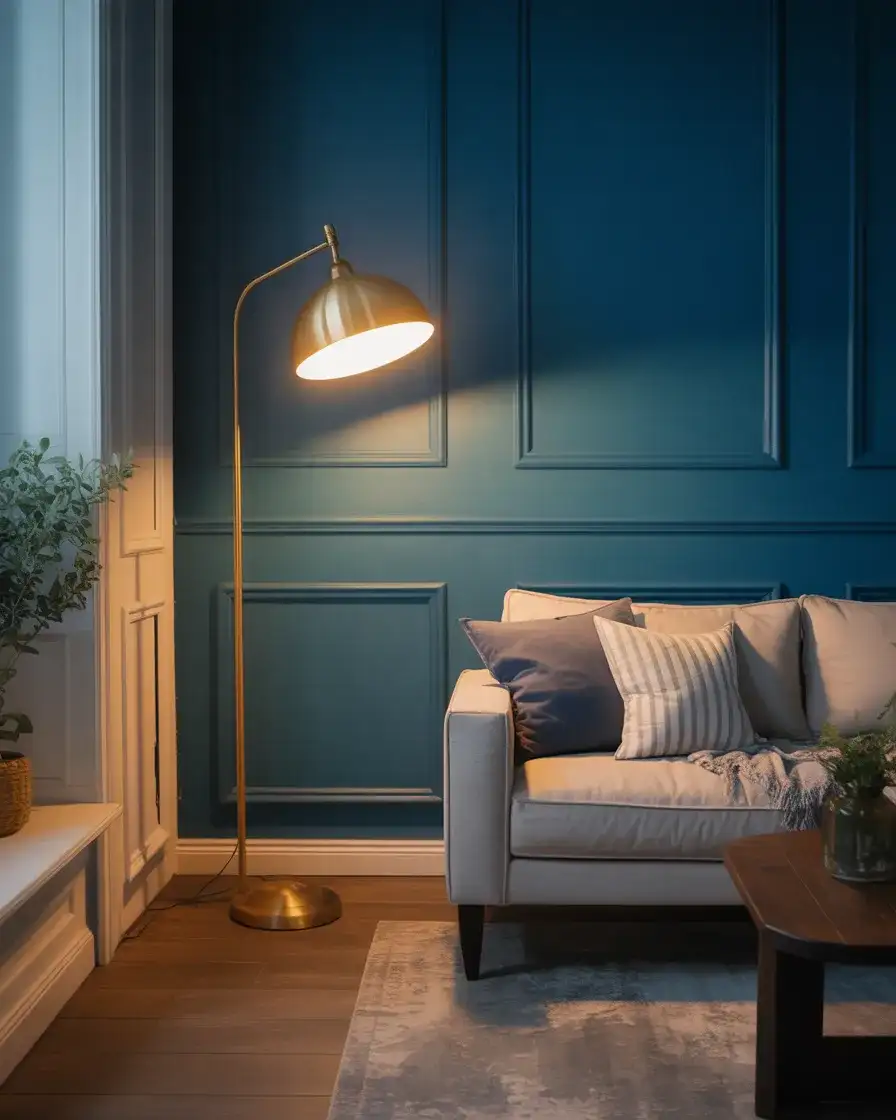
Where this works best is in living rooms that serve as primary gathering spaces rather than just TV rooms. The combination of blue and warm light creates a sense of calm and sophistication that’s perfect for conversation areas, cocktail hours, or quiet mornings with coffee. Avoid fluorescent or stark LED bulbs, which can wash out the blue and make the space feel clinical. Instead, invest in quality bulbs with high color rendering (CRI 90+) to ensure your wall color looks as intended.
9. Arc Floor Lamps for Flexible Layouts
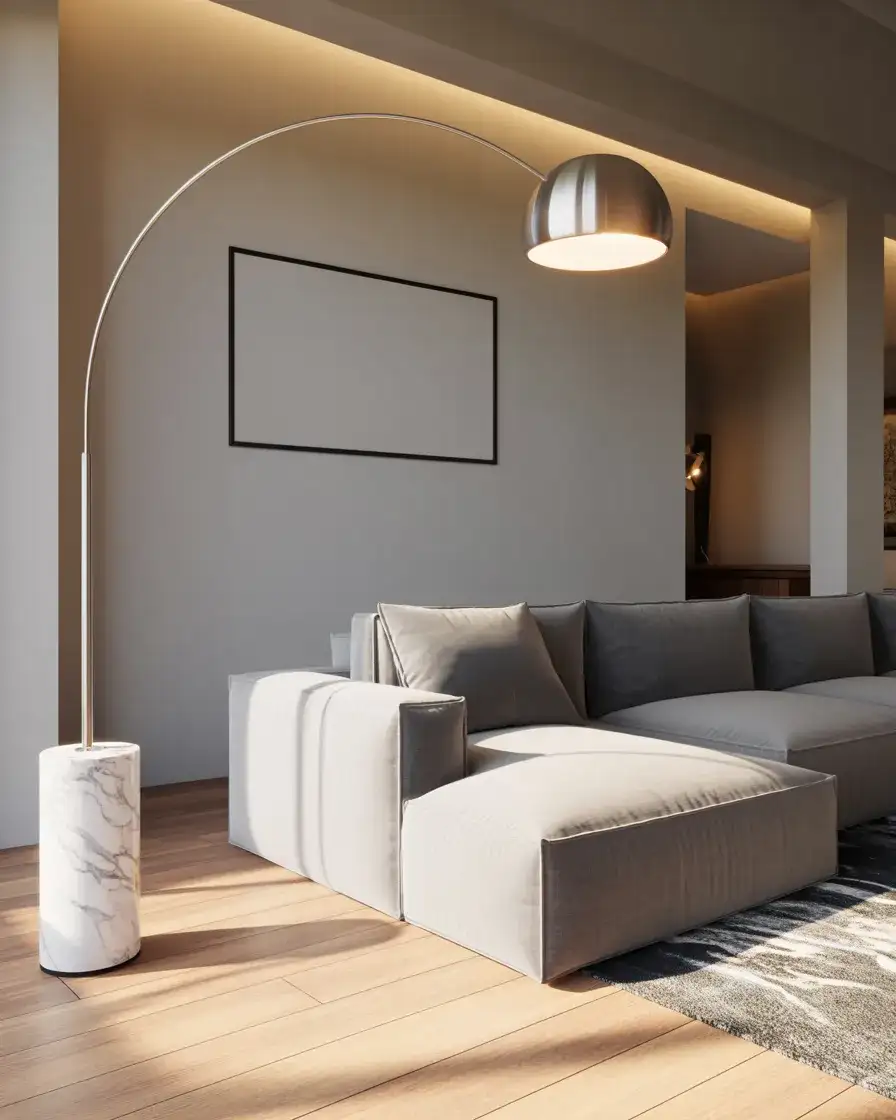
One of the smartest lighting investments you can make is a sculptural arc floor lamp, which delivers overhead-style illumination without requiring ceiling wiring or permanent installation. These lamps curve gracefully over seating areas, providing focused light exactly where you need it. They’re ideal for renters, frequent movers, or anyone who likes to rearrange furniture seasonally. The base sits behind or beside the sofa, and the adjustable arm positions the bulb directly above, mimicking the effect of a pendant light without the commitment.
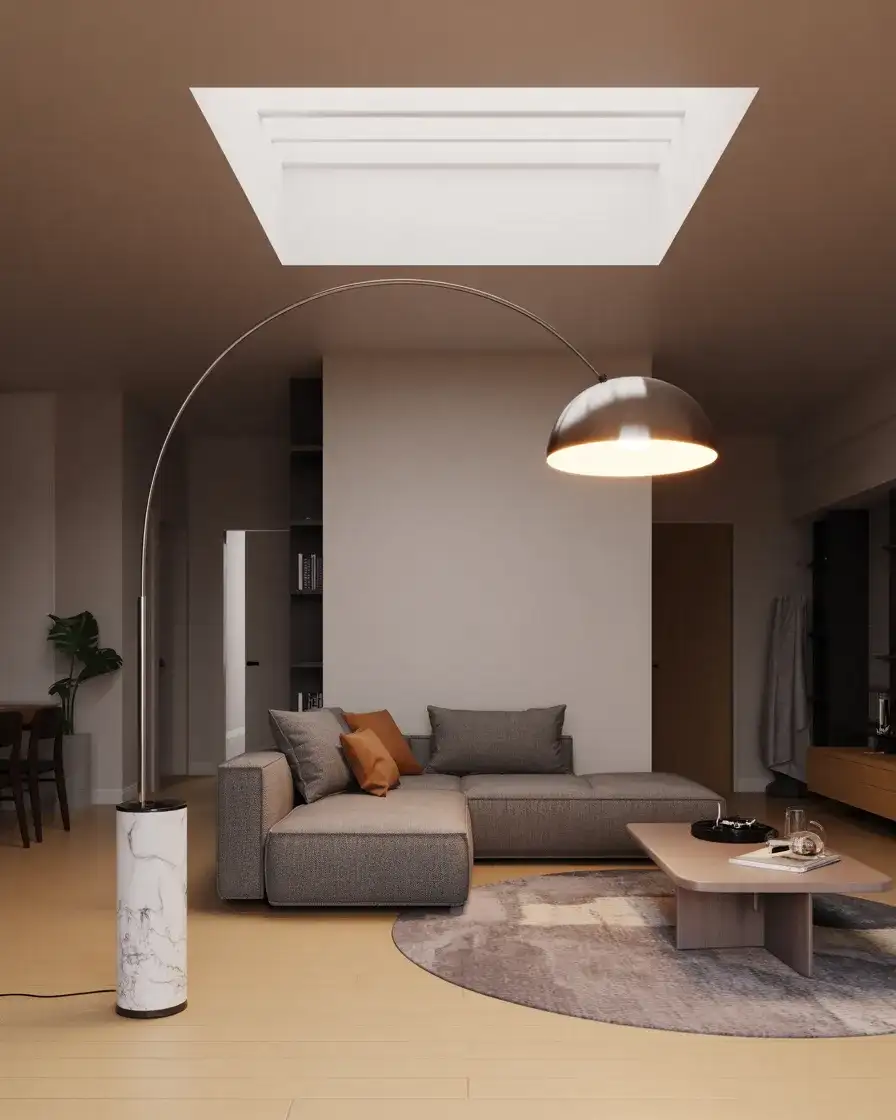
Real homeowner behavior shows that arc lamps are often the first lighting upgrade people make when they move into a new space. They’re functional, stylish, and easy to position, making them a go-to choice for apartments and starter homes. Look for models with dimmer switches built into the cord or base, which gives you even more control over ambiance. Prices range from around $150 for basic designs to $800 or more for high-end finishes like hand-polished brass or Italian marble bases.
10. Recessed Lighting for Clean Ceilings
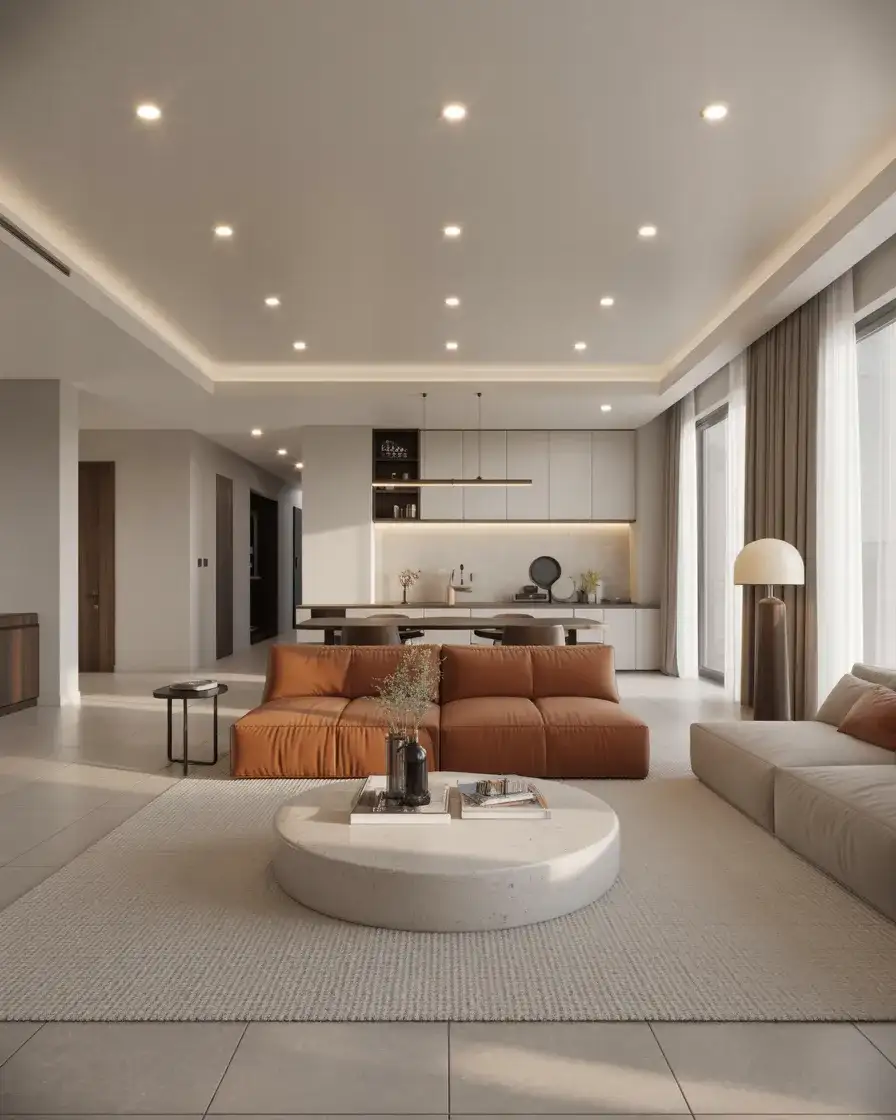
Recessed lighting—also called can lights or downlights—is a staple in modern American home design, offering a streamlined look that works with virtually any aesthetic. These fixtures sit flush with the ceiling and cast light downward in a controlled beam. When spaced evenly across the living room, they provide uniform ambient light without any visual clutter. This approach is especially popular in new construction and renovated homes where homeowners want flexibility to change decor styles without worrying about whether the lighting will match.
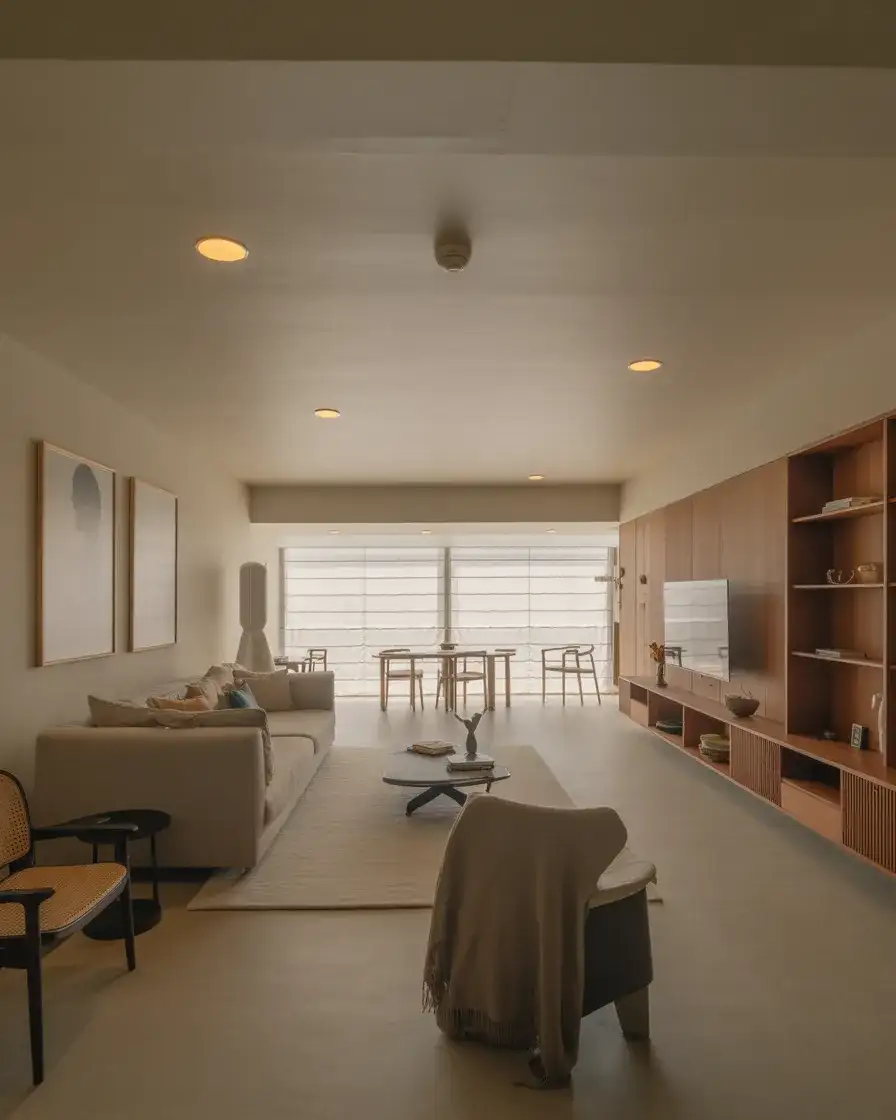
One common mistake is installing too many recessed lights too close together, which can make the room feel like a showroom rather than a home. A good rule of thumb is to space lights about 4 to 6 feet apart, depending on ceiling height and beam angle. Pair recessed lighting with dimmable switches so you can adjust the intensity based on the time of day and activity. This setup provides a reliable foundation that you can layer with accent lighting as your style evolves.
11. Moody Lighting with Dimmer Controls
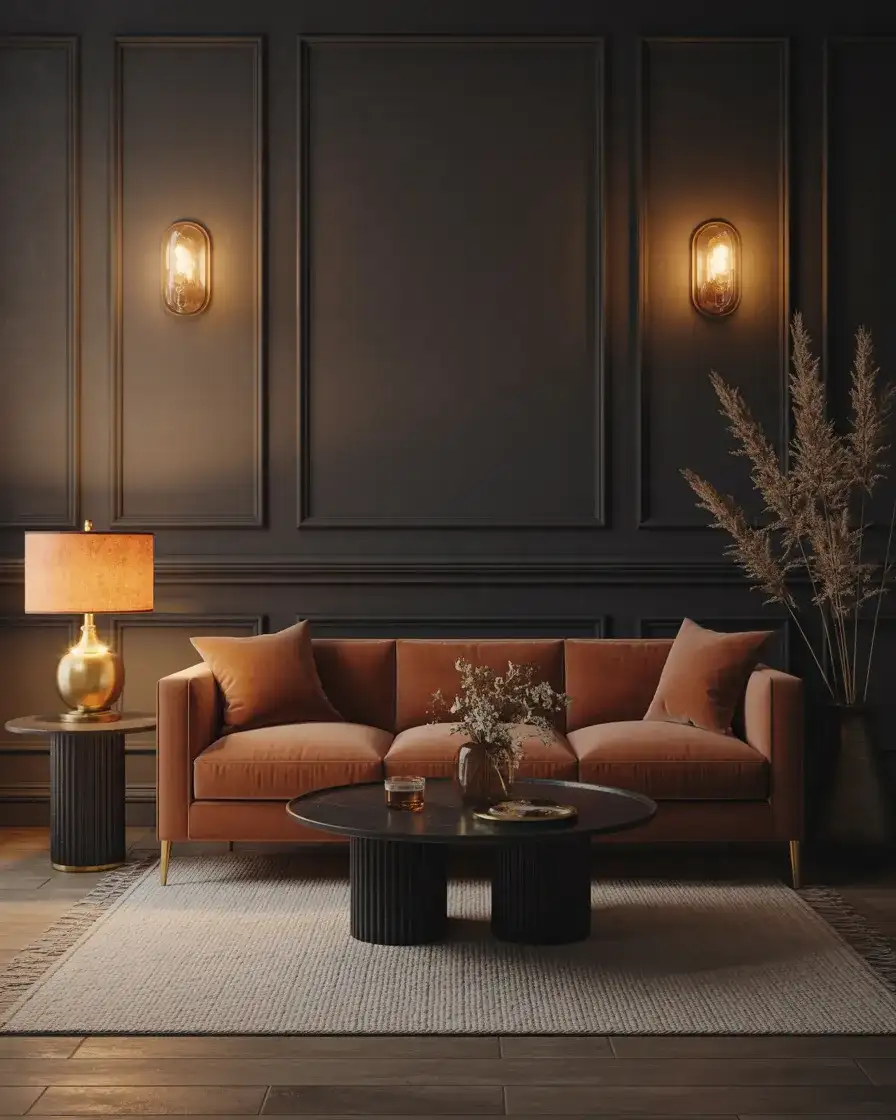
Moody interiors have become a major trend in 2026, with homeowners embracing darker paint colors, rich textures, and dramatic lighting. The key to pulling off this look is layering multiple light sources—wall sconces, floor lamps, and table lamps—and controlling them with dimmers. This allows you to dial the brightness up or down depending on the mood you want to create. A moody living room isn’t about darkness; it’s about intentional contrast and the ability to shift the atmosphere from bright and energizing to intimate and cinematic.
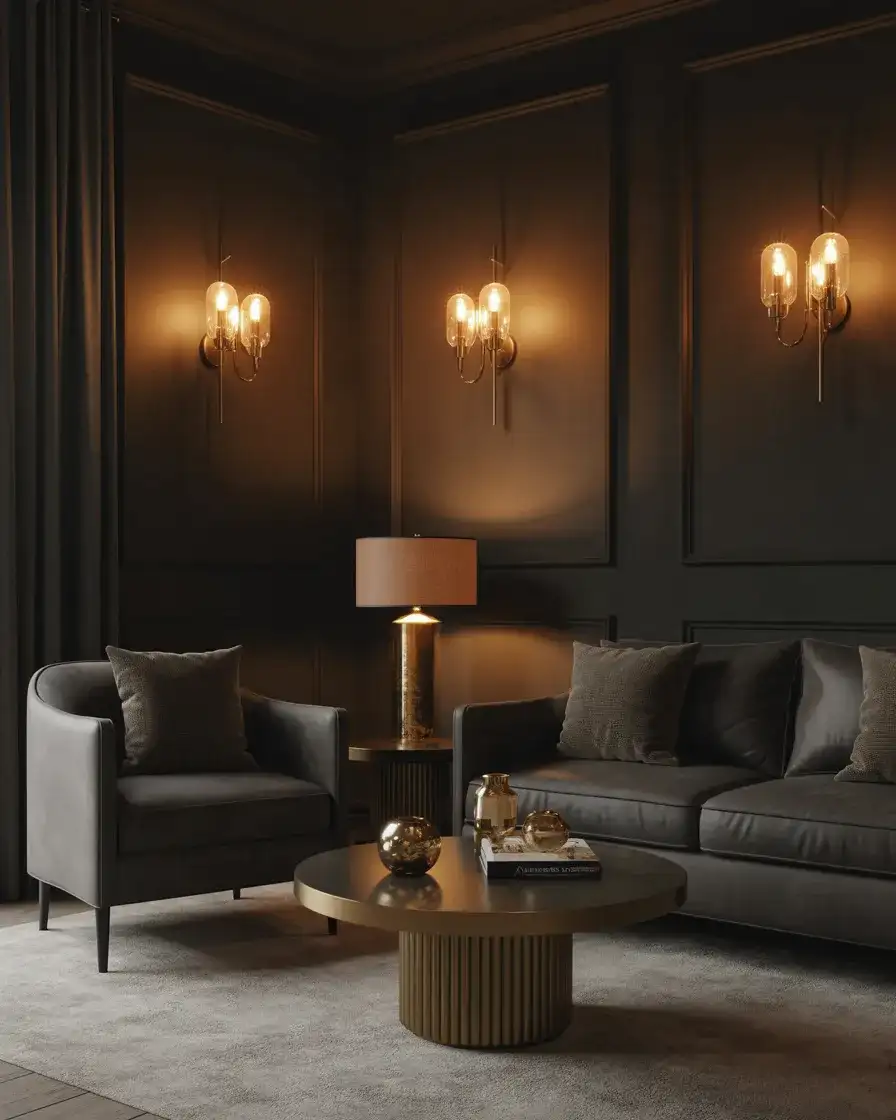
Dimmers are one of the most affordable upgrades you can make—installation usually runs $50 to $150 per switch, including labor. The payoff is huge: you gain flexibility, save energy, and extend the life of your bulbs. In moody spaces, aim for warm color temperatures (2700K or lower) and avoid any harsh, direct lighting. Instead, let light pool in corners, graze along walls, and highlight specific areas like bookshelves or art. This creates depth and keeps the eye moving through the space.
12. Statement Lamps for Blue Couches
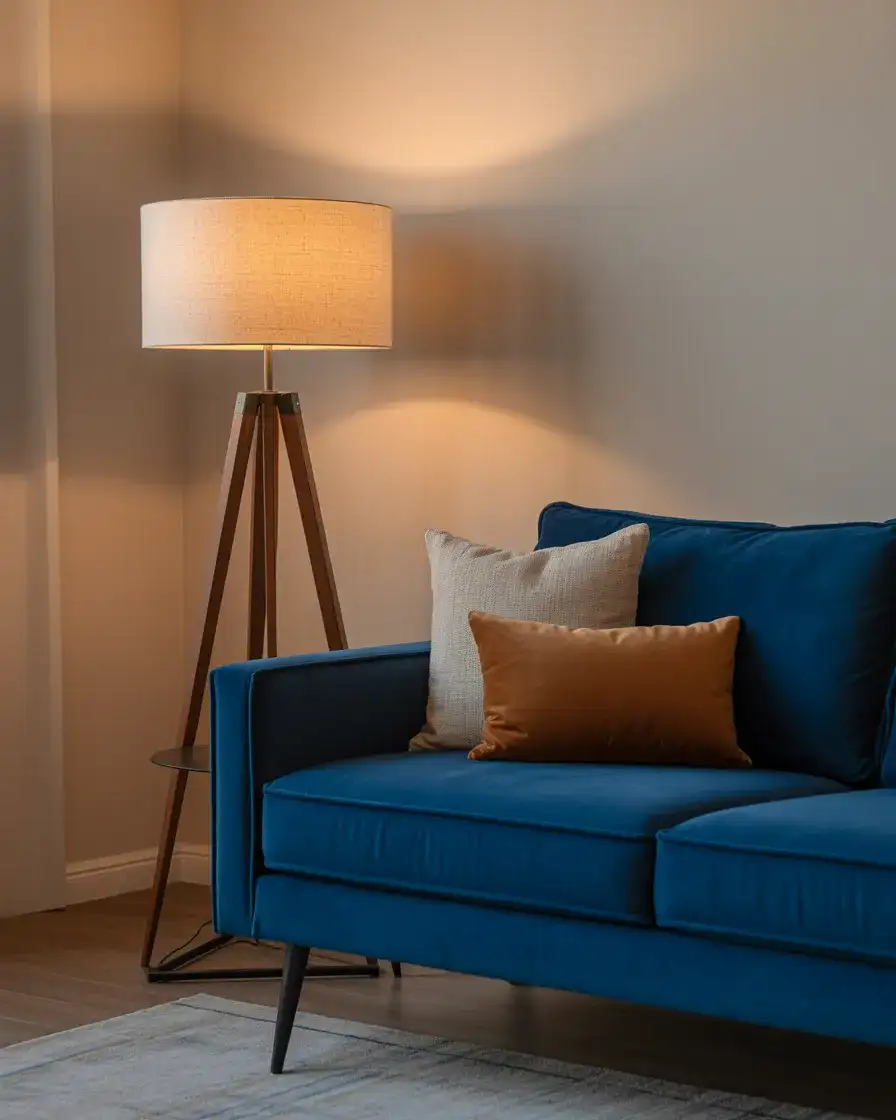
A blue couch—whether it’s navy, cobalt, or soft periwinkle—makes a bold statement in any living room. To complement this focal point, choose lighting that holds its own visually without competing for attention. A sculptural table lamp with a ceramic base, a vintage-inspired brass floor lamp, or a modern tripod design can all work, depending on your overall style. The goal is to create a visual dialogue between the couch and the lighting, using both color and form to tie the room together.
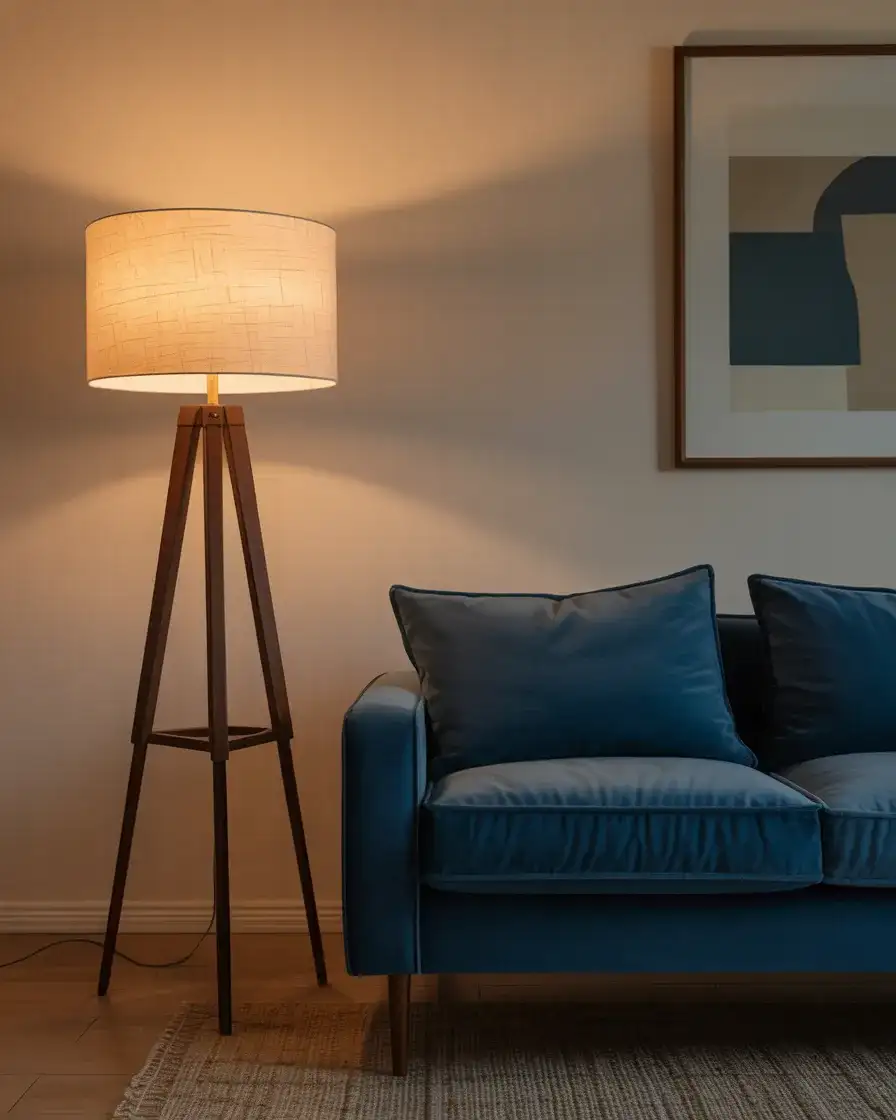
In my experience working with clients, the most successful pairings happen when the lamp’s base color echoes other elements in the room—like brass hardware on a cabinet or ceramic tones in a vase. This creates a sense of intentionality and cohesion. Avoid overly matchy-matchy combinations; a blue lamp next to a blue couch can feel too literal. Instead, let the lamp provide contrast in either material, shape, or finish, which keeps the space visually interesting.
13. Green Accents with Warm Overhead Light
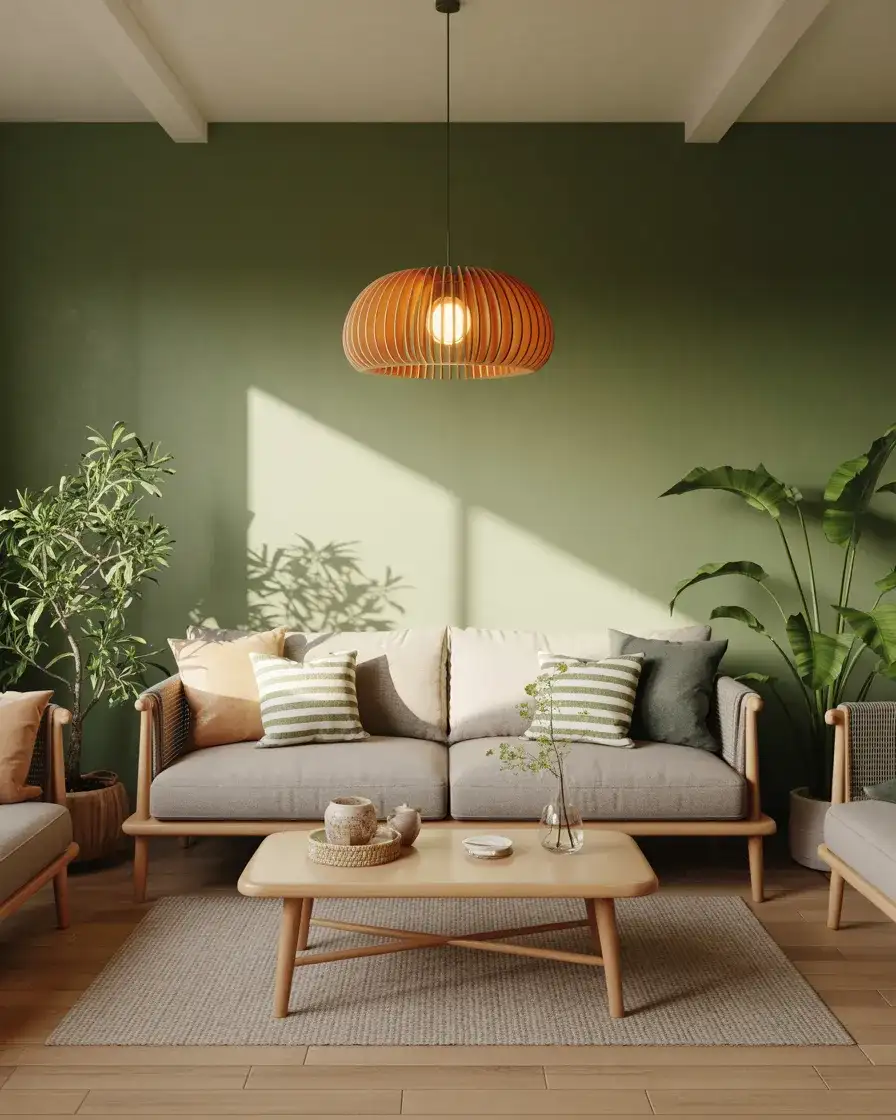
Green has emerged as a major color trend in 2026, with shades ranging from sage and olive to emerald and forest. When paired with warm overhead lighting, green accents—whether in paint, upholstery, or accessories—take on a natural, grounded quality. The right light temperature enhances the organic feel of green, making it look lush and inviting rather than flat or muddy. This combination works beautifully in both traditional and contemporary living rooms, especially those with natural wood elements or botanical decor.
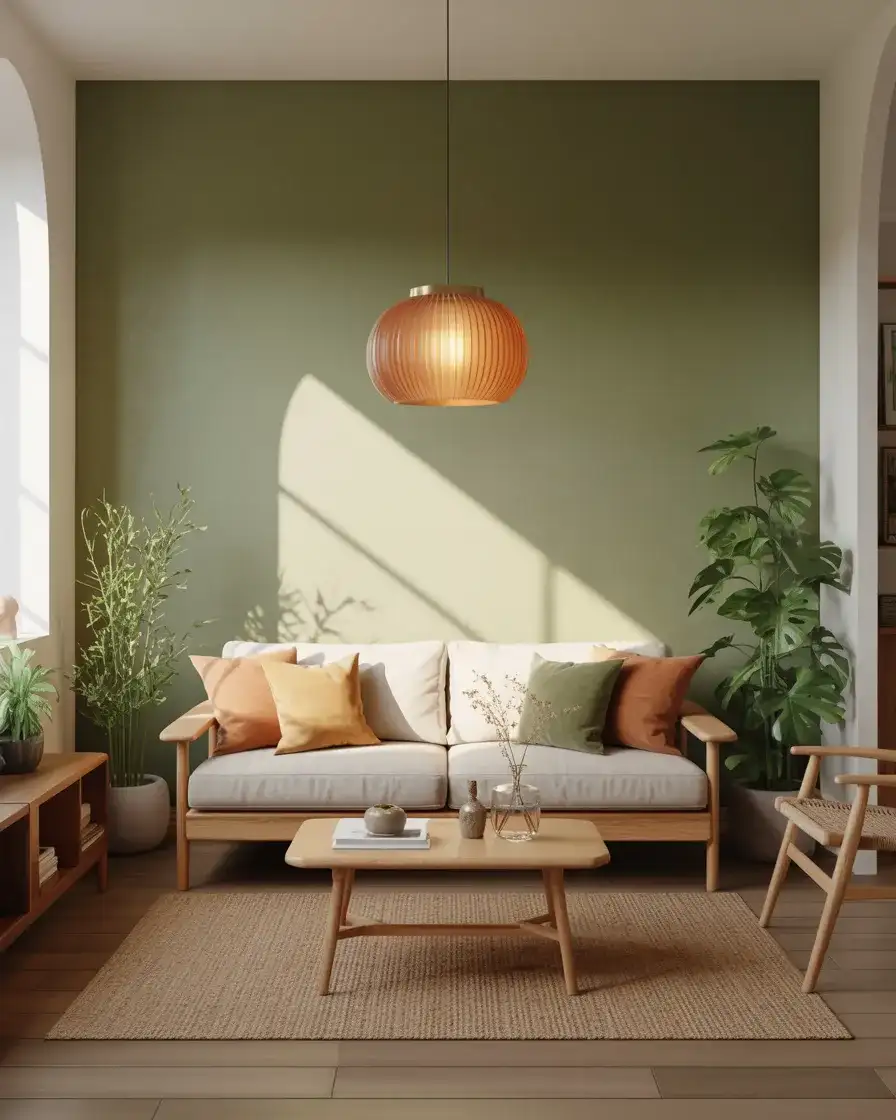
Where this works best is in homes that lean into biophilic design—bringing the outdoors in through color, light, and texture. In regions like the Pacific Northwest and the Southeast, where greenery is abundant year-round, this approach feels especially authentic. Choose bulbs in the 2700K-3000K range to warm up green tones, and avoid cool white bulbs that can make green look sickly or washed out. Layering in natural light during the day completes the effect, creating a space that feels alive and connected to nature.
14. Mid-Century Modern Floor Lamps
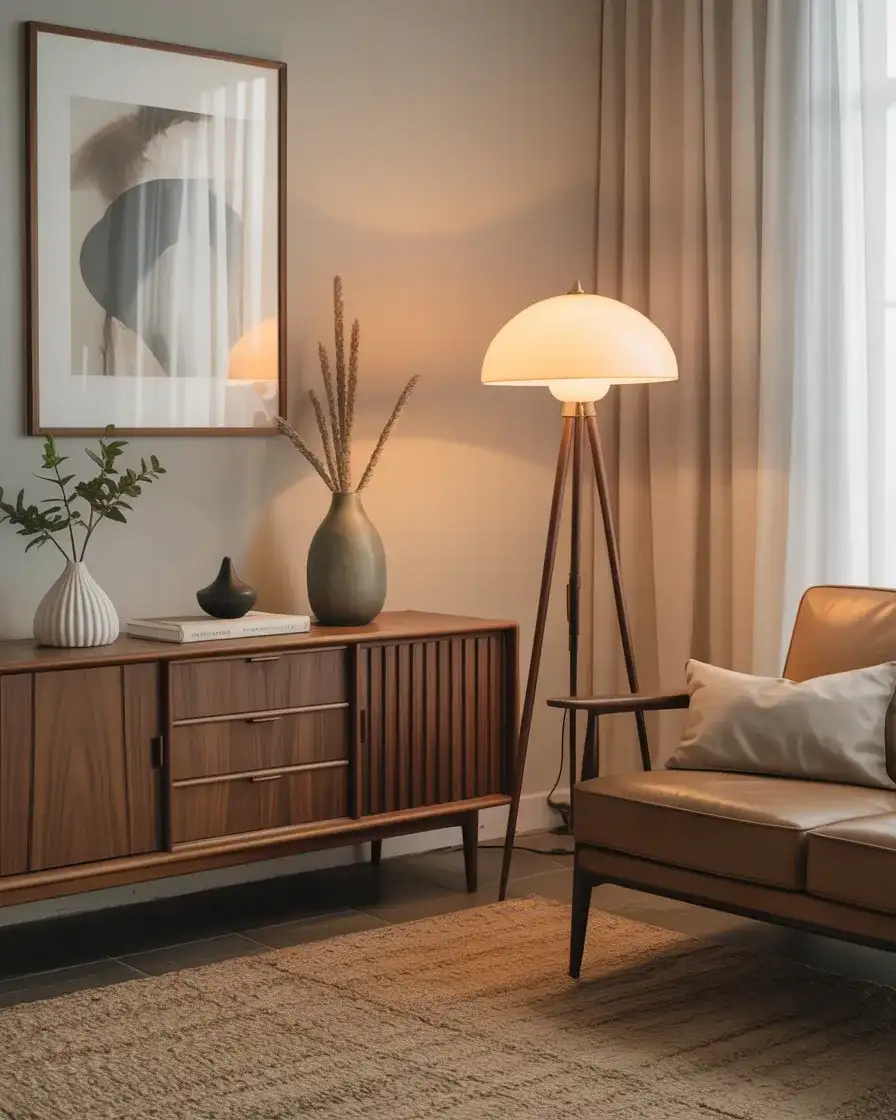
The mid-century modern aesthetic remains one of the most enduring design trends in American homes, characterized by clean lines, organic curves, and a mix of wood and metal finishes. Floor lamps from this era—or their contemporary reproductions—feature tripod bases, angled shades, and sculptural silhouettes that function as art pieces when not in use. They’re particularly effective in living rooms that already incorporate mid-century furniture like teak credenzas, Eames-style chairs, or low-profile sofas. The lamp acts as both a functional light source and a visual anchor that ties the whole look together.
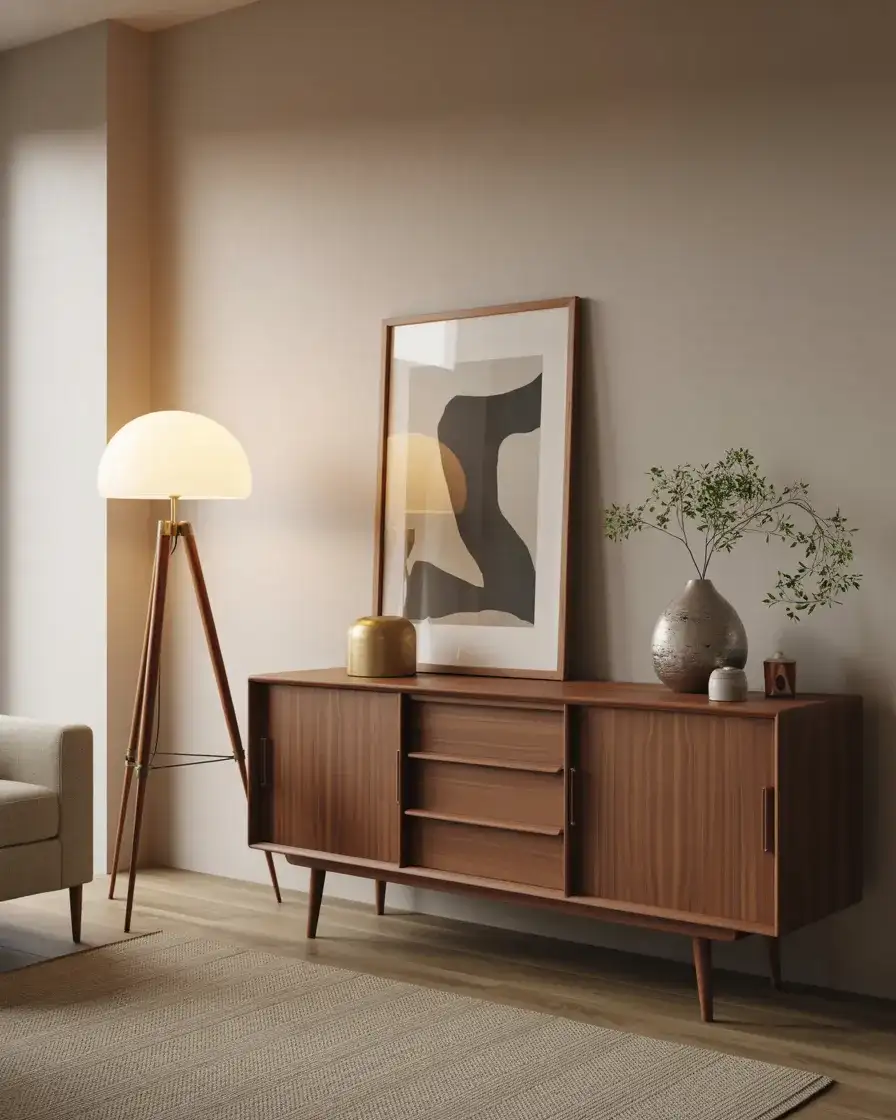
Practical insight: many mid-century floor lamps were designed before LED technology, so vintage pieces often need rewiring or bulb adapters to accommodate modern lighting. If you’re buying a reproduction, look for models with built-in dimmers and adjustable arms, which add functionality without compromising the classic design. These lamps work especially well in corner placements or beside reading chairs, where their angled shades can direct light exactly where you need it. Expect to spend anywhere from $200 for a well-made reproduction to $1,000+ for an authenticated vintage piece.
15. Cosy Corners with Ambient String Lights
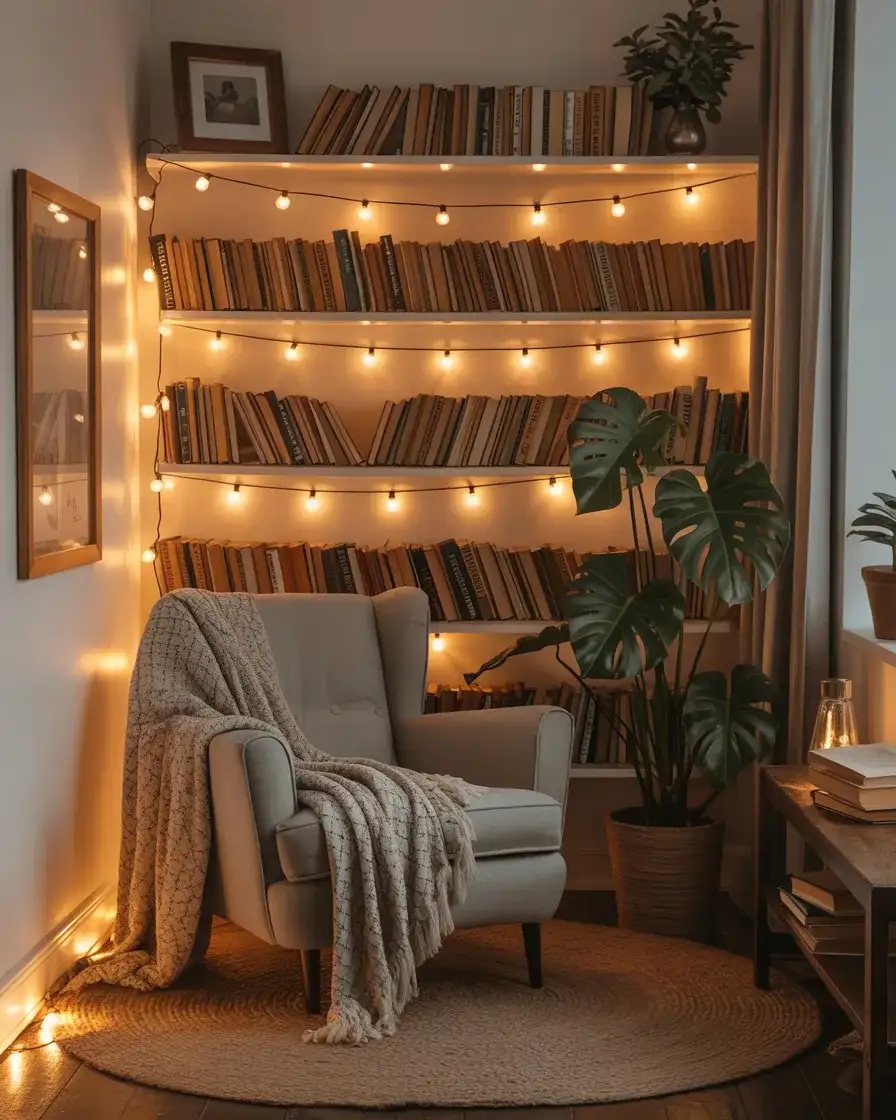
String lights aren’t just for patios and dorm rooms anymore—they’ve found a permanent place in cozy living room corners where a little magic goes a long way. Draped along a bookshelf, woven through a plant stand, or hung along a gallery wall, string lights add a soft, twinkling layer of light that feels both playful and intimate. This approach is especially popular among younger homeowners and renters who want to personalize their space without making permanent changes. The key is to use warm white LEDs and avoid overly bright or multicolored options, which can look juvenile.
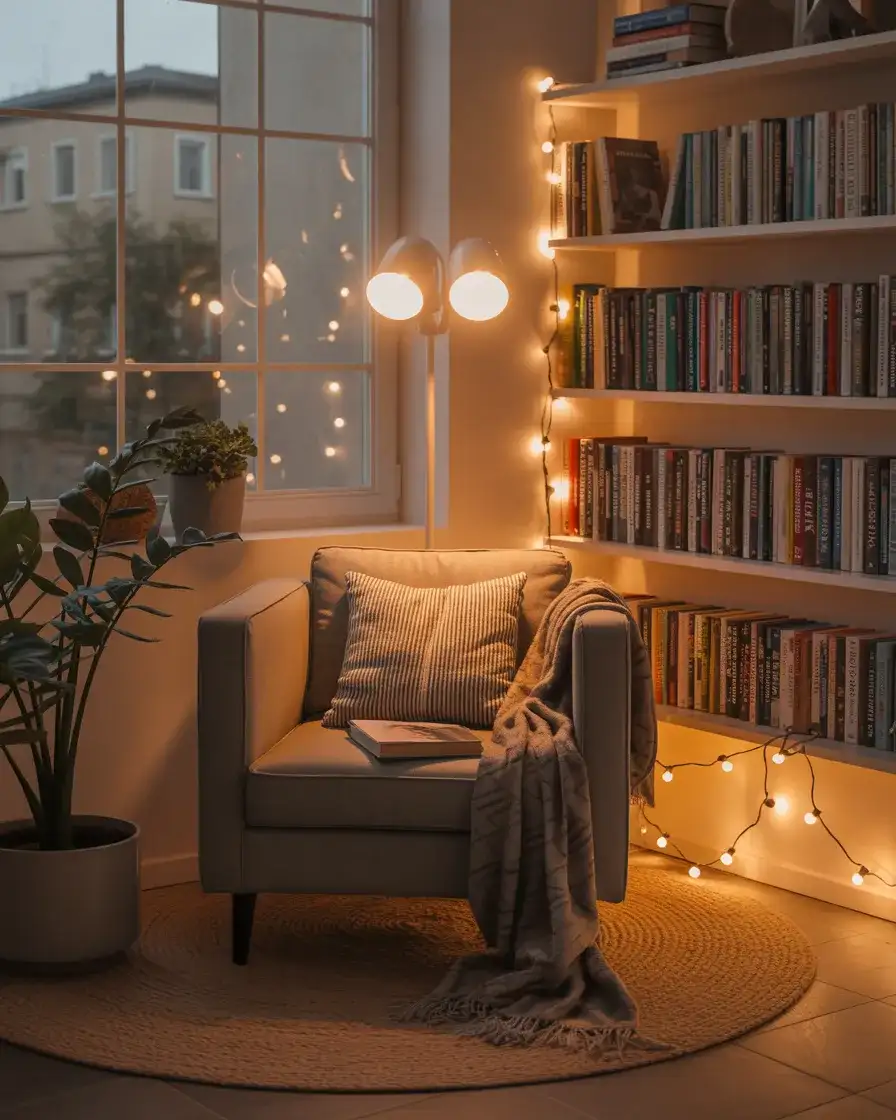
A neighbor of mine recently transformed a blank corner in her living room by installing a floating shelf, adding a few small plants, and weaving battery-powered string lights throughout. The result was an instant focal point that cost less than $50 and took under an hour to create. This kind of ambient lighting doesn’t provide task illumination, but it doesn’t need to—it’s about layering and creating pockets of warmth that make the space feel lived-in and loved. Look for string lights with at least 6 feet of cord to give yourself flexibility in placement.
16. Track Lighting for Gallery Walls
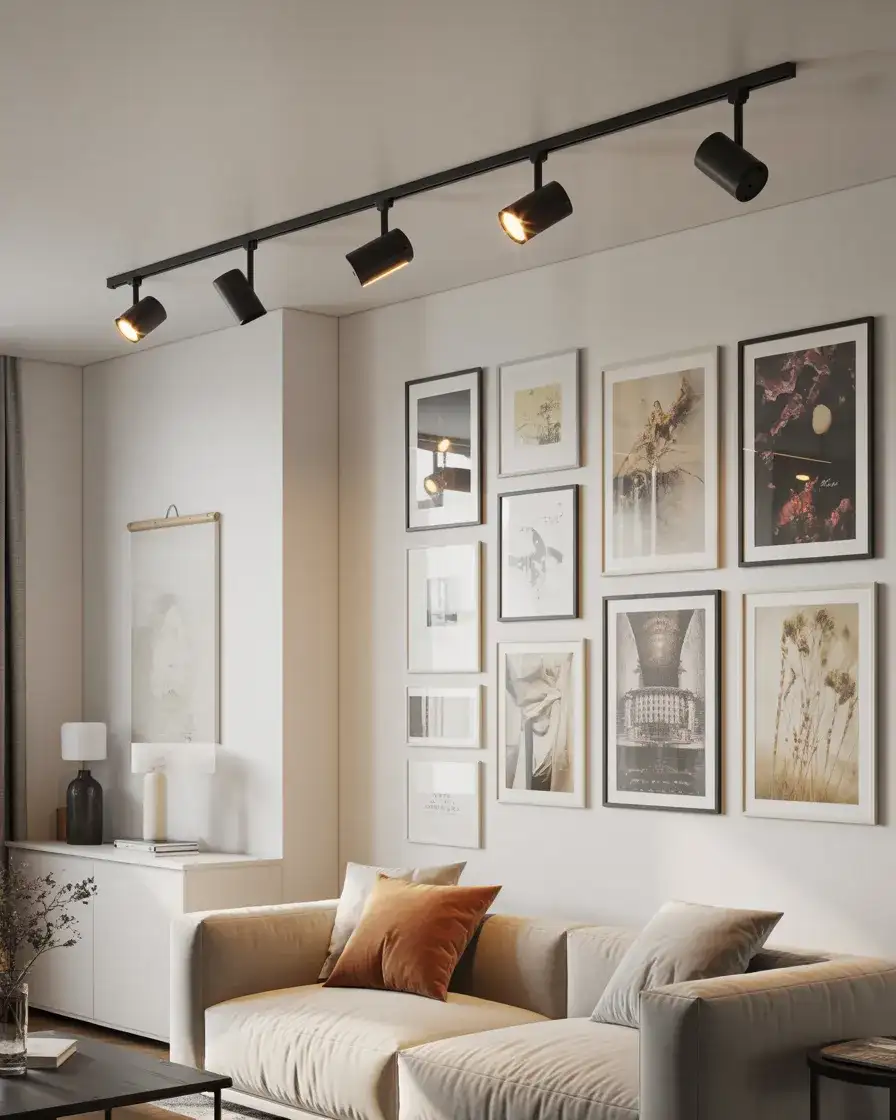
If you’ve invested time and money in creating a gallery wall, track lighting is the best way to showcase it properly. Unlike static ceiling fixtures, track lighting features adjustable heads that can be aimed at specific pieces, highlighting artwork, photos, or decorative objects with precision. This setup is ideal for living rooms where art is a focal point and where you want the flexibility to rearrange or swap out pieces without rewiring. Track systems come in sleek modern finishes—black, white, and brushed nickel—that blend seamlessly into contemporary and industrial interiors.
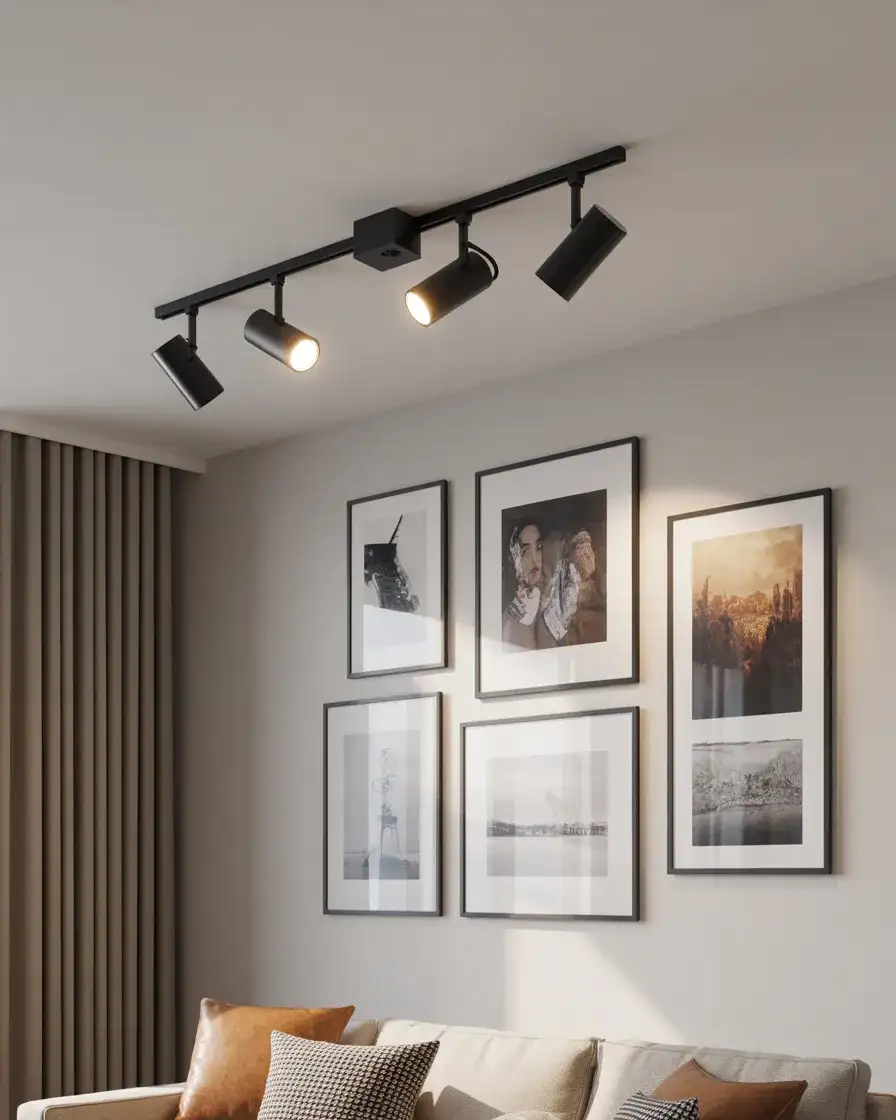
Expert commentary: when installing track lighting, aim for a 30-degree angle between the light source and the art to minimize glare and shadows. The distance from the wall also matters—too close, and you’ll get harsh hotspots; too far, and the light spreads too wide. Most systems allow you to adjust both the angle and position of each head, so take the time to fine-tune the placement. This is especially important if you have glossy frames or reflective surfaces. Budget for both the track system and quality bulbs; LED options with high CRI ratings will render colors accurately and make your art look its best.
17. Layered Lighting Plan for Open Concepts
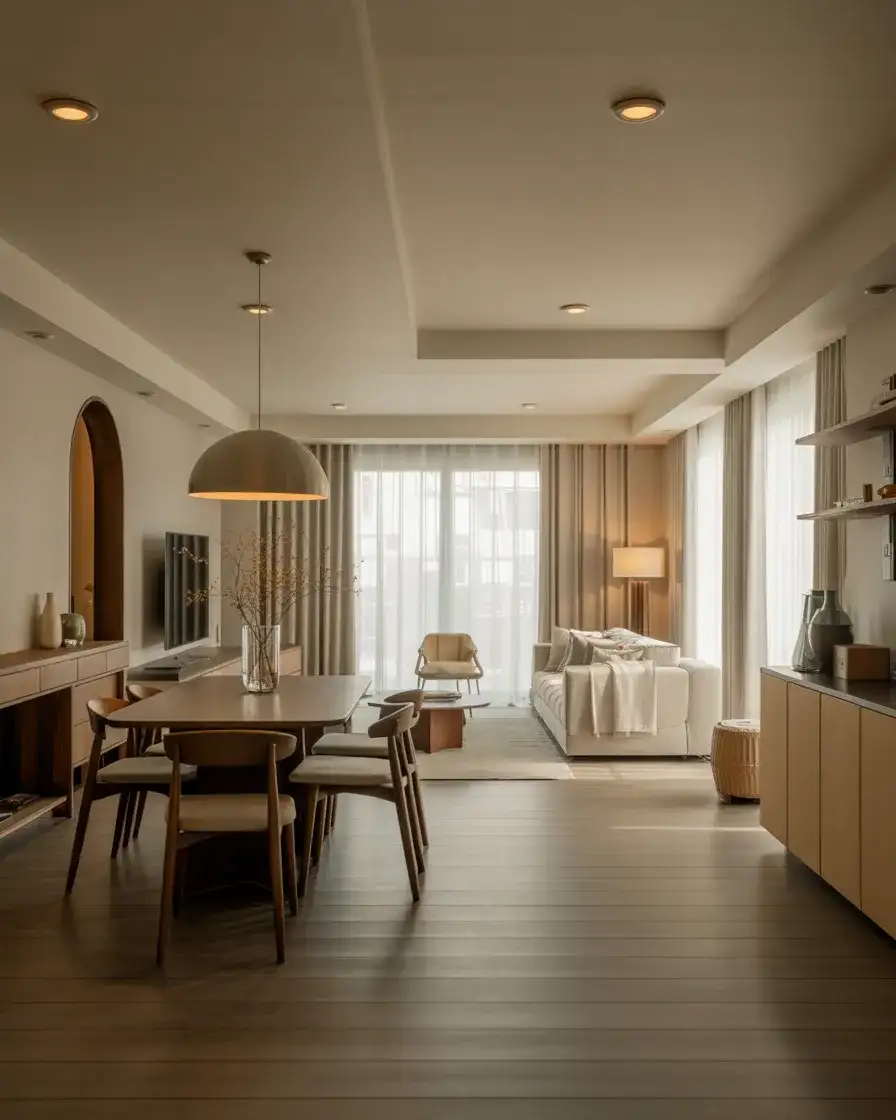
Open-concept living rooms that flow into dining and kitchen areas require a thoughtful lighting plan that defines each zone without using walls. The strategy is to combine ambient, task, and accent lighting at different heights and intensities. Recessed lights might provide general illumination, while a pendant over the dining table and a floor lamp by the sofa create distinct activity zones. This approach is especially common in suburban homes and new urban developments where open floor plans maximize space and sightlines. The key is making each area feel like its own room while maintaining visual continuity.
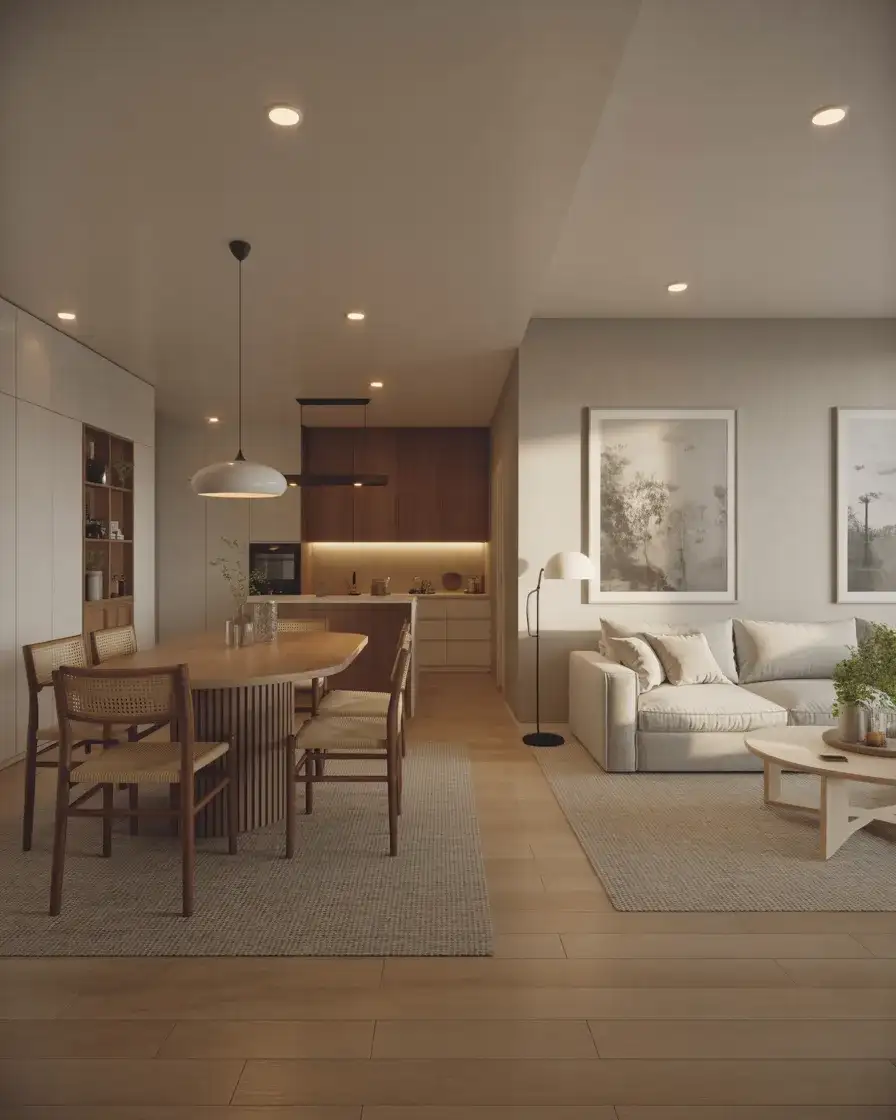
This setup works best in homes where entertaining is a priority and where different family members might be doing different activities at the same time—someone cooking in the kitchen while another person reads in the living room. Use separate switches or smart controls for each layer so you can adjust the lighting based on the time of day and what’s happening in the space. Avoid the temptation to rely on a single overhead fixture, which will leave some areas over-lit and others in shadow. A well-executed layered plan costs more upfront but pays off in flexibility and comfort.
18. Brass and Gold Fixtures for Warmth
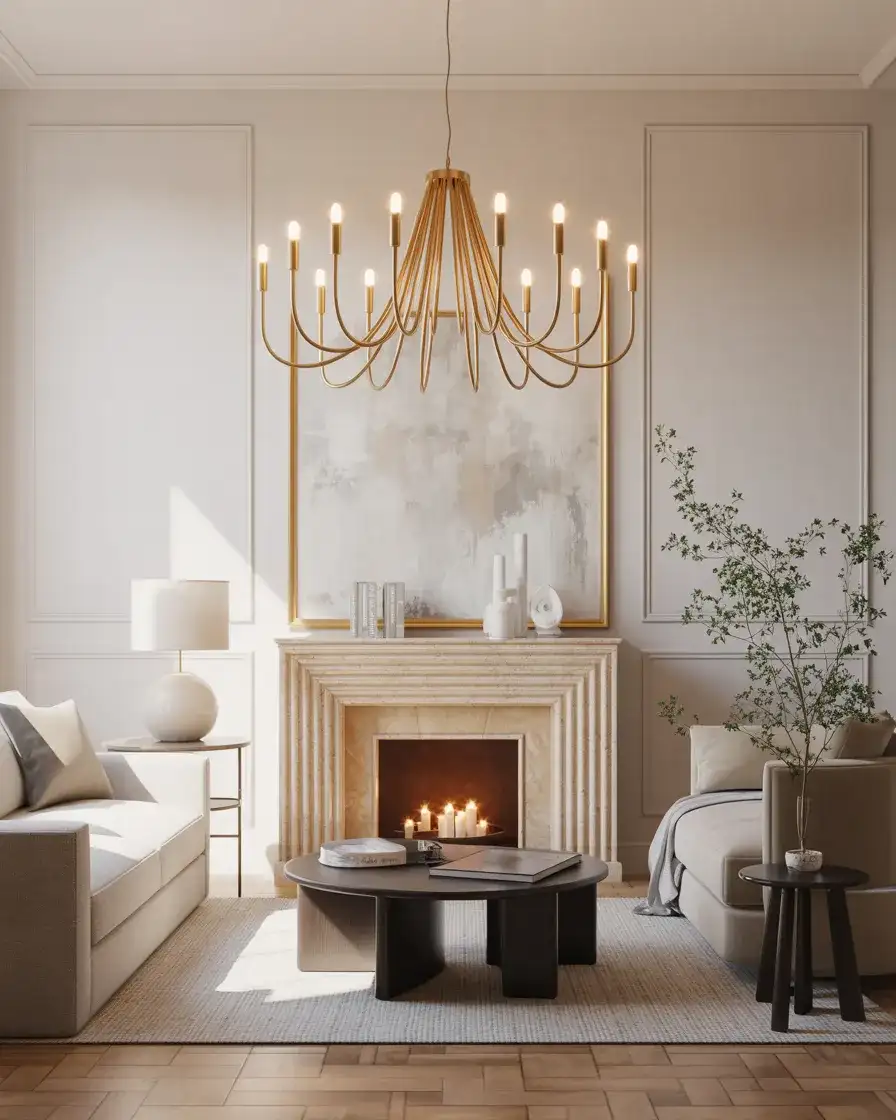
Brass and gold-toned fixtures have made a major comeback in 2026, adding instant warmth and sophistication to living rooms across the country. Whether it’s a brushed brass chandelier, an antique gold sconce, or a modern fixture with gold accents, these finishes reflect light beautifully and elevate the overall aesthetic. They pair especially well with neutral palettes, white walls, and natural materials like wood and stone. The metal’s warm undertones make spaces feel richer and more inviting, which is why designers often recommend brass for living rooms that serve as the heart of the home.
In the Midwest and South, where traditional and transitional styles are popular, brass fixtures are often the finishing touch that pulls a room together. They work in both formal and casual settings, depending on the fixture style. A sleek, modern brass pendant feels contemporary, while a vintage-inspired brass chandelier leans traditional. One tip: if you’re mixing metals in your space, make sure brass is the dominant finish to avoid a disjointed look. You can accent with black or nickel, but brass should be the star.
19. Smart Bulbs for Customizable Ambiance
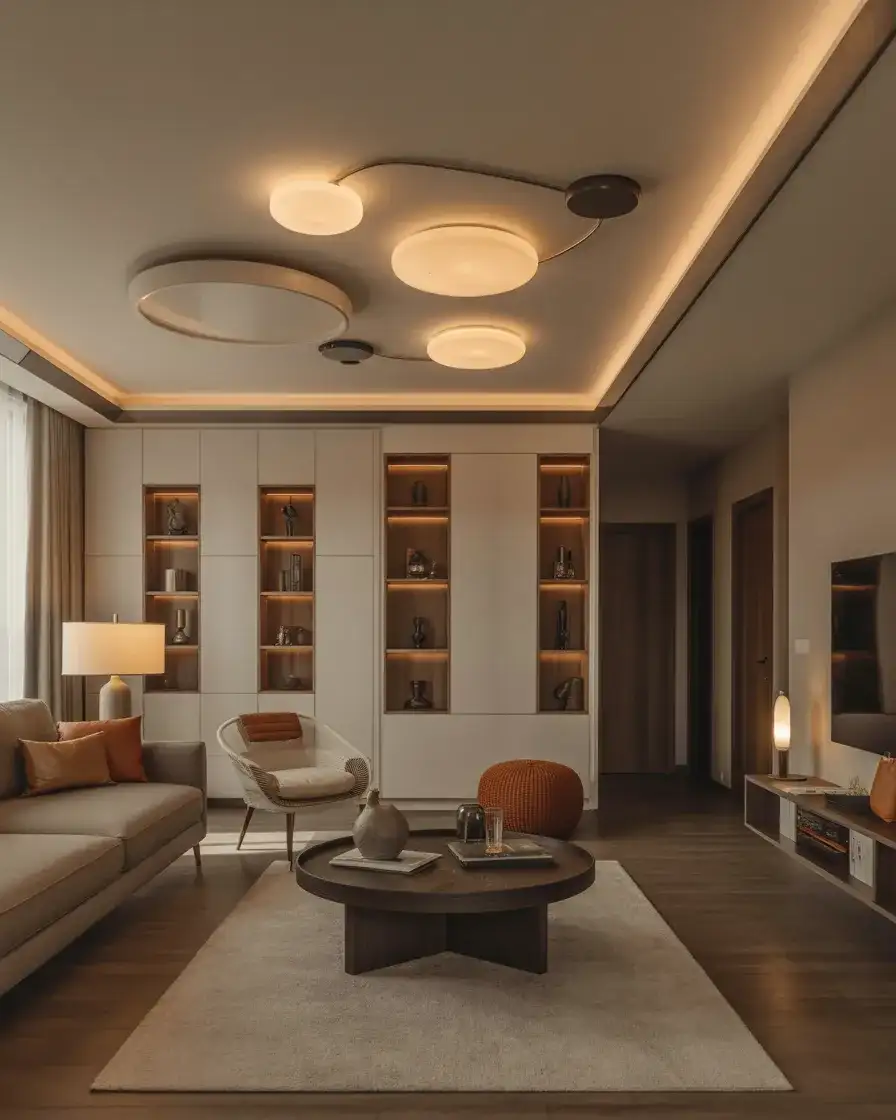
Smart bulbs have evolved far beyond simple on-off controls, now offering color temperature adjustment, dimming, scheduling, and even color-changing capabilities. For living rooms, the biggest advantage is the ability to shift the ambiance throughout the day—cool, bright light in the morning to wake you up and warm, dim light in the evening to help you unwind. These bulbs work with voice assistants and smartphone apps, making it easy to create scenes like “Movie Night” or “Reading Time” with a single command. They’re especially popular among tech-savvy homeowners and those who value convenience and customization.
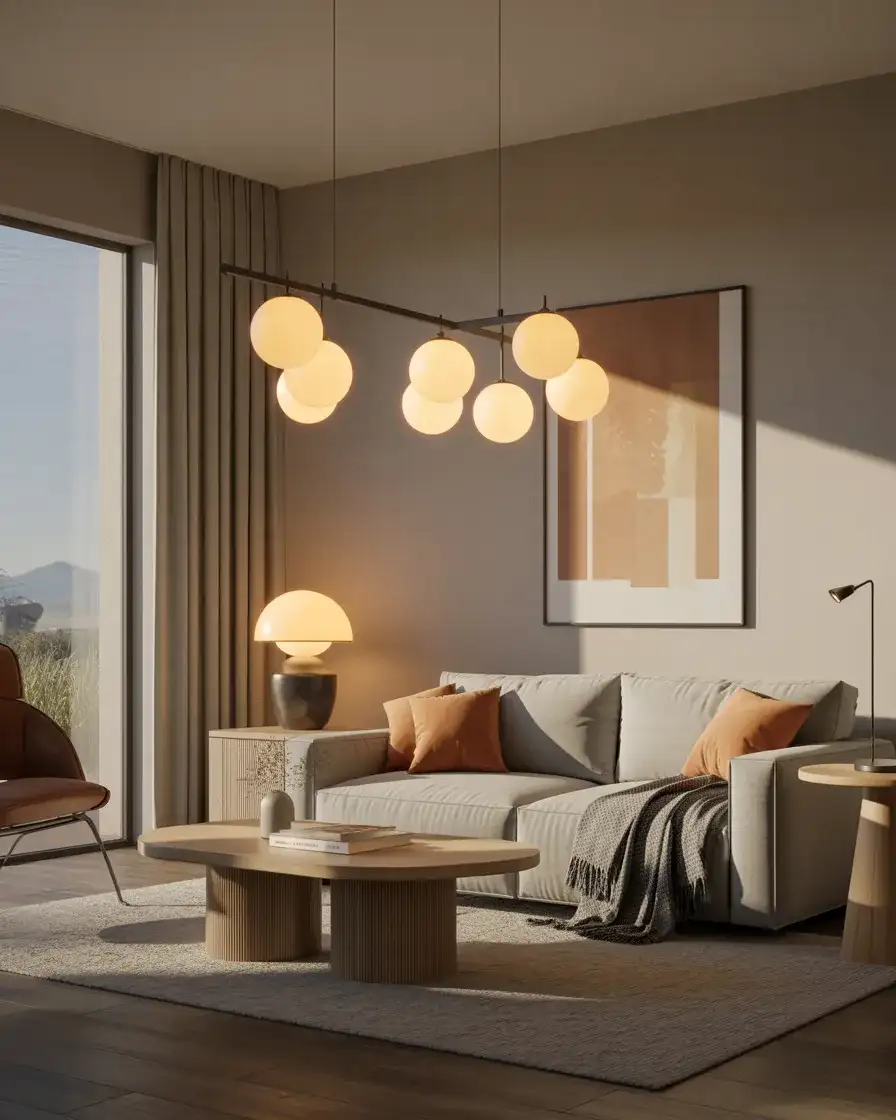
Real homeowners report that once they install smart bulbs, they rarely go back to traditional lighting. The ability to control brightness and color temperature from your phone or with voice commands eliminates the need to get up and flip switches, which is a small but meaningful improvement to daily life. Budget-wise, smart bulbs have come down in price significantly—quality options now start around $10 per bulb. If you’re outfitting an entire living room, expect to spend $50-$150 depending on how many fixtures you have. The investment is worth it for the flexibility and energy efficiency alone.
20. Industrial Pendants for Urban Lofts
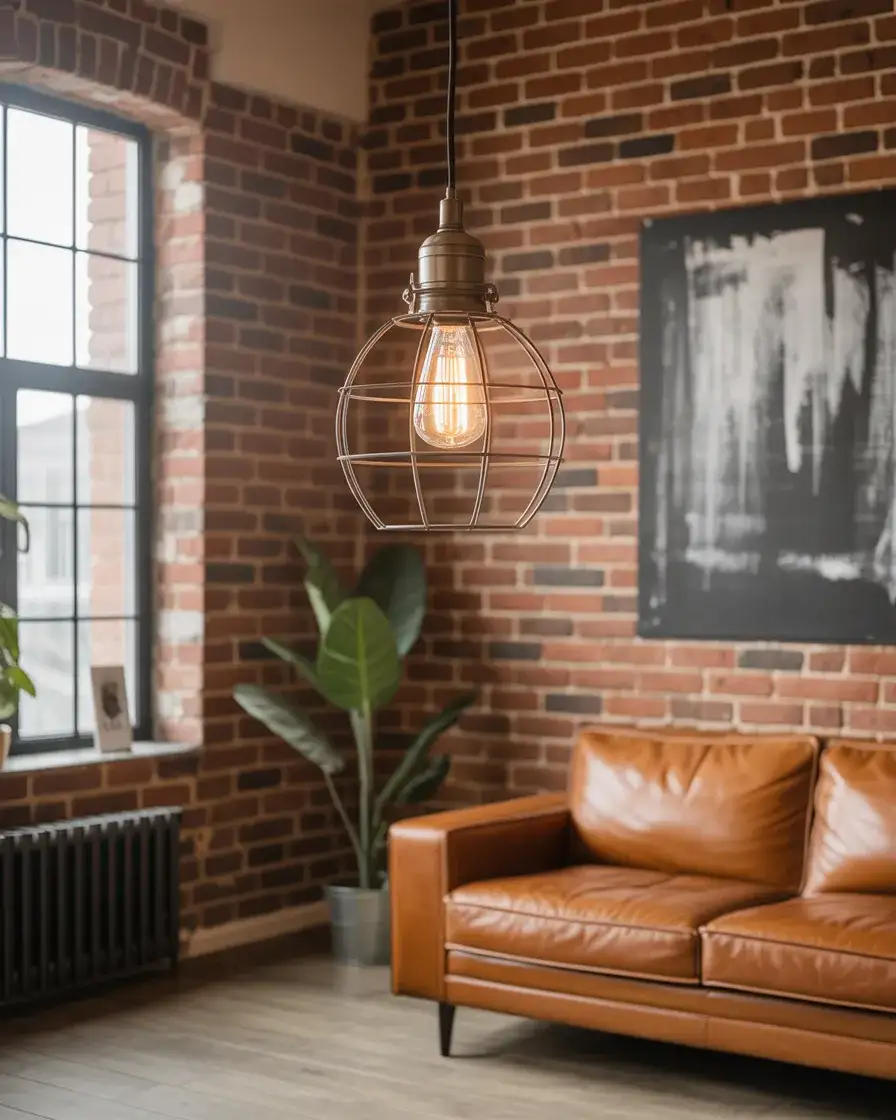
Industrial-style pendant lights—characterized by exposed bulbs, metal cages, and utilitarian finishes—are a natural fit for urban lofts and spaces with exposed brick, ductwork, or concrete. These fixtures embrace a raw, unfinished aesthetic that celebrates materials and construction rather than hiding them. They work especially well in living rooms with high ceilings or mezzanine levels, where the pendant can hang low enough to define a seating or conversation area without obstructing views. The contrast between rough industrial elements and comfortable furniture creates a dynamic, layered look that feels authentic and lived-in.
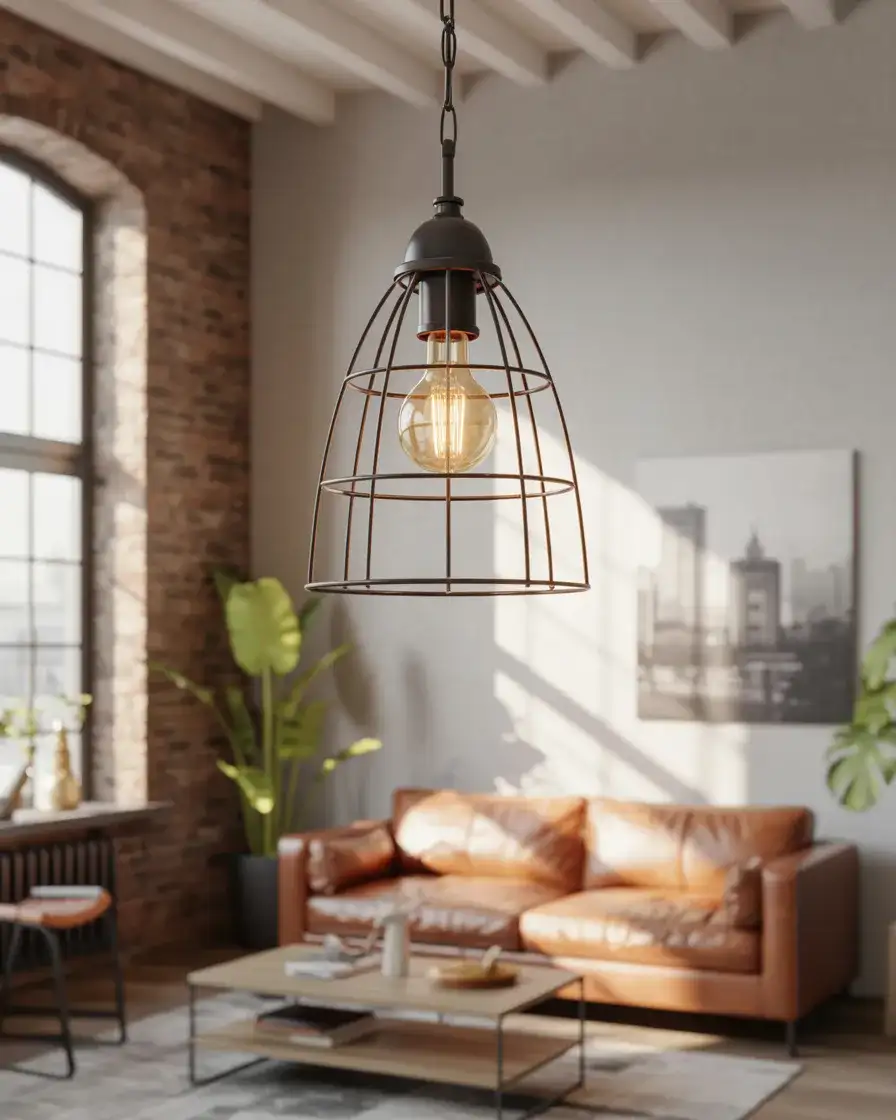
Where this works best is in cities like New York, Chicago, and Portland, where converted warehouse and factory spaces are common. The industrial pendant complements the architecture rather than fighting it, creating a cohesive look that honors the building’s history. When choosing a pendant, look for fixtures with adjustable cord lengths so you can customize the hang height. And don’t be afraid to mix industrial lighting with softer elements like textiles, plants, and warm wood tones—the contrast is what makes the style so compelling.
21. Under-Cabinet Lighting for Built-Ins
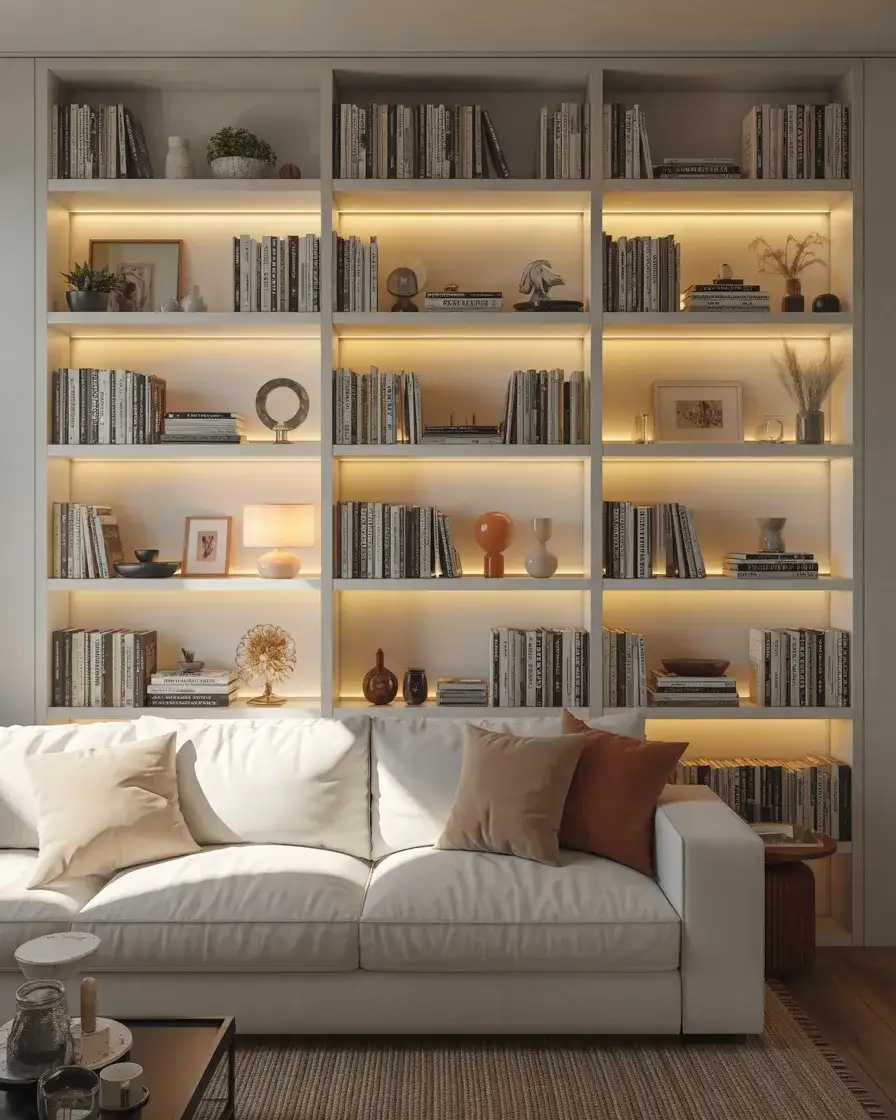
If your living room includes built-in shelving or cabinetry, under-cabinet lighting is a subtle way to add depth and highlight your favorite objects. LED strip lights or puck lights installed under shelves cast a soft glow that draws attention to books, collectibles, or decorative items without overwhelming the space. This technique is especially effective in living rooms that double as libraries or display spaces, where the contents of the shelves are as important as the furniture. The light grazes the surface below, creating visual interest and making the built-ins feel intentional rather than utilitarian.
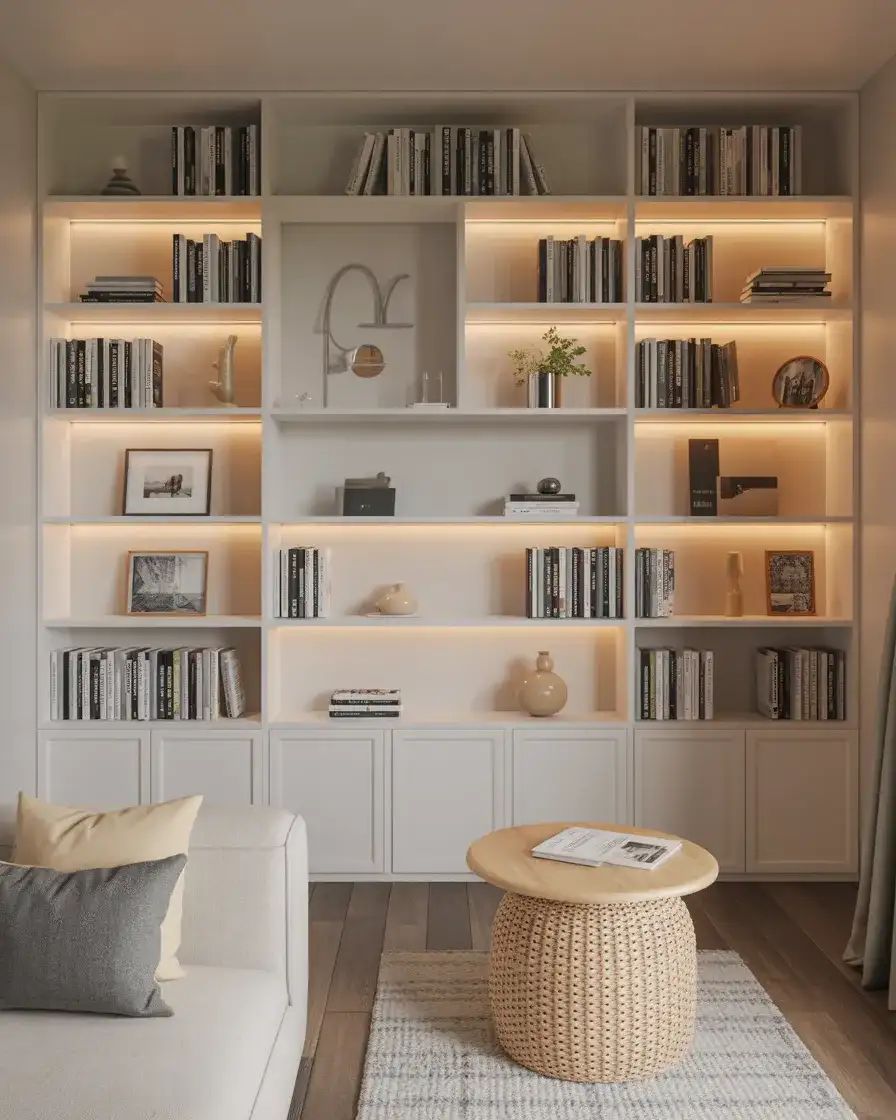
This is one of the most underutilized lighting strategies in residential design, yet it’s incredibly effective and affordable. Battery-powered LED strips can be installed in minutes without any wiring, making them ideal for renters or anyone who wants a quick upgrade. For a more permanent solution, hardwired LED strips offer seamless integration and can be controlled with a wall switch or dimmer. Either way, the effect is dramatic—suddenly your built-ins look like custom millwork in a high-end home, even if they’re Ikea hacks or contractor-grade shelving.
22. Natural Light Maximization with Sheer Curtains
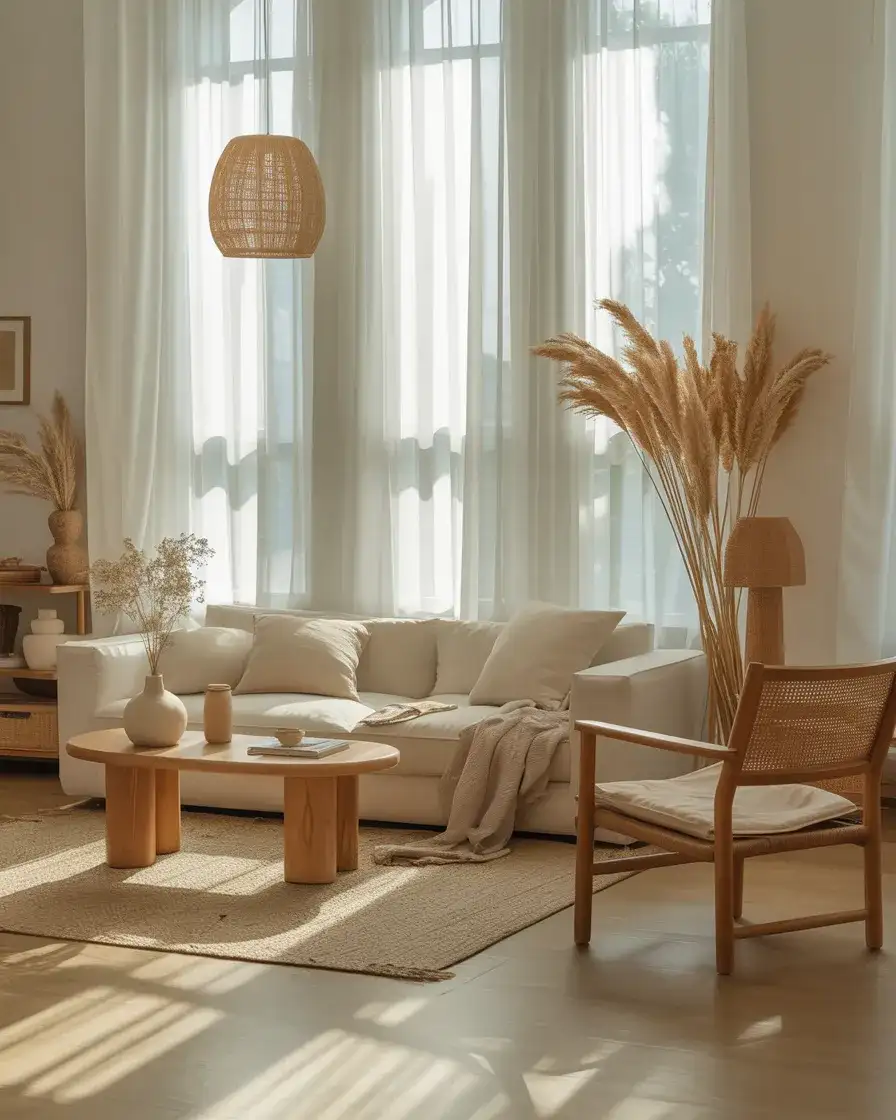
While this guide focuses on artificial lighting, no living room lighting strategy is complete without addressing natural light. Sheer curtains are one of the simplest ways to maximize daylight while maintaining privacy and softness. They filter harsh sunlight into a diffused, gentle glow that fills the room without creating glare or hotspots. This approach is especially valuable in living rooms with large windows or southern exposures, where direct sun can be overwhelming. Sheer curtains also add a layer of texture and movement, making the space feel more dynamic and alive.
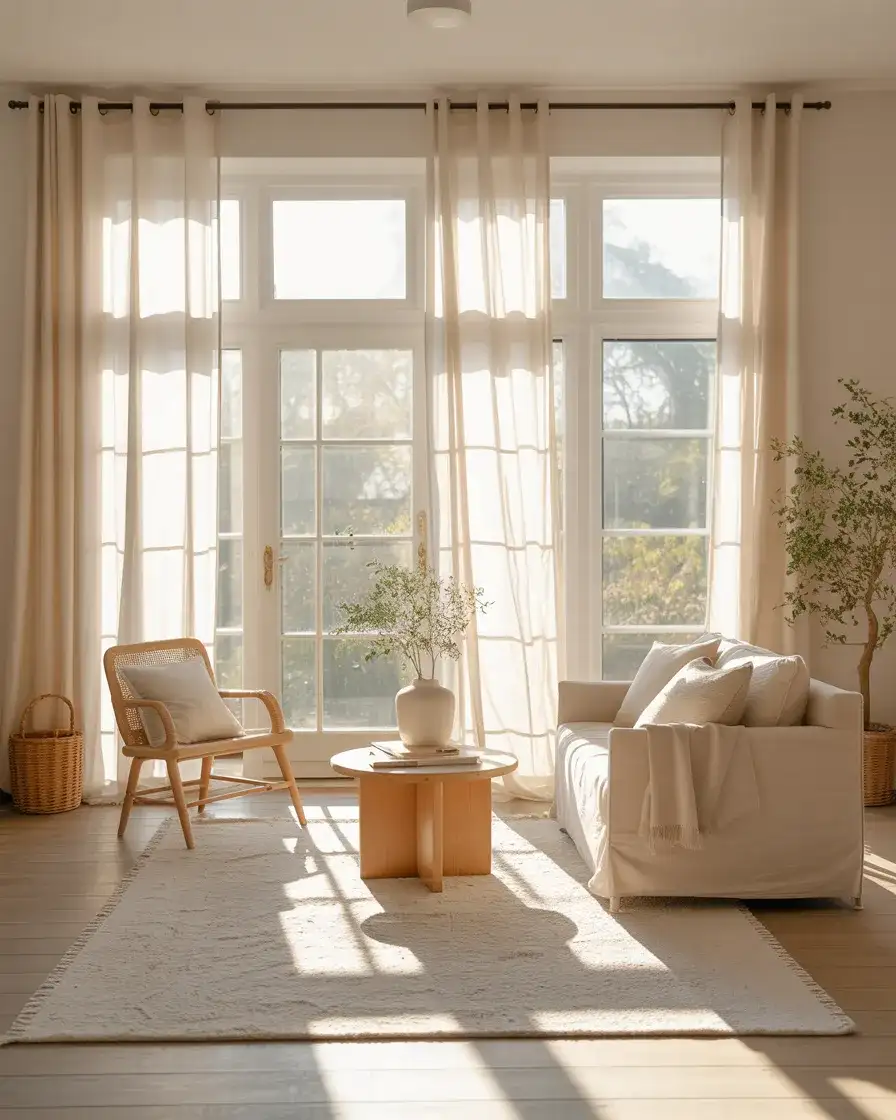
Common mistakes include choosing sheers that are too opaque or too transparent—you want something that softens light without blocking it entirely or leaving you completely exposed. Look for linen or cotton blends in neutral tones like white, cream, or soft grey. In the morning, sheer curtains create a bright, uplifting environment that reduces the need for artificial light. In the evening, they provide a subtle backdrop for your layered lighting, ensuring the room feels cohesive and intentional around the clock. This is one of those foundational decisions that affects how every other lighting choice performs.
Conclusion
Whether you’re drawn to the clean simplicity of minimalist fixtures, the drama of a statement chandelier, or the flexibility of smart lighting, the key to great living room design in 2026 is layering and intentionality. Each of these ideas offers a starting point, but the real magic happens when you combine them in ways that reflect your lifestyle, your space, and your vision. Take your time, experiment with different combinations, and don’t be afraid to adjust as your needs evolve. We’d love to hear which ideas resonate with you—drop a comment below and let us know what you’re planning for your living room lighting this year.