The modern farmhouse bathroom has officially grown up. What started as shiplap walls and mason jar soap dispensers has evolved into something far more considered—layered, moodier, and a lot more personal. In 2026, homeowners across the country are blending rustic warmth with clean-lined design in ways that feel genuinely fresh rather than trend-chasing. If you landed here from Pinterest, you already know the feeling: you’re scrolling, something stops you cold, and suddenly you’re rethinking your entire master bath. This guide pulls together 23 of the most inspiring directions the modern farmhouse bathroom is heading—from dark and moody palettes to organic textures, sculptural fixtures, and tile choices that deserve a moment of silence.
1. Warm White Walls That Actually Feel Alive
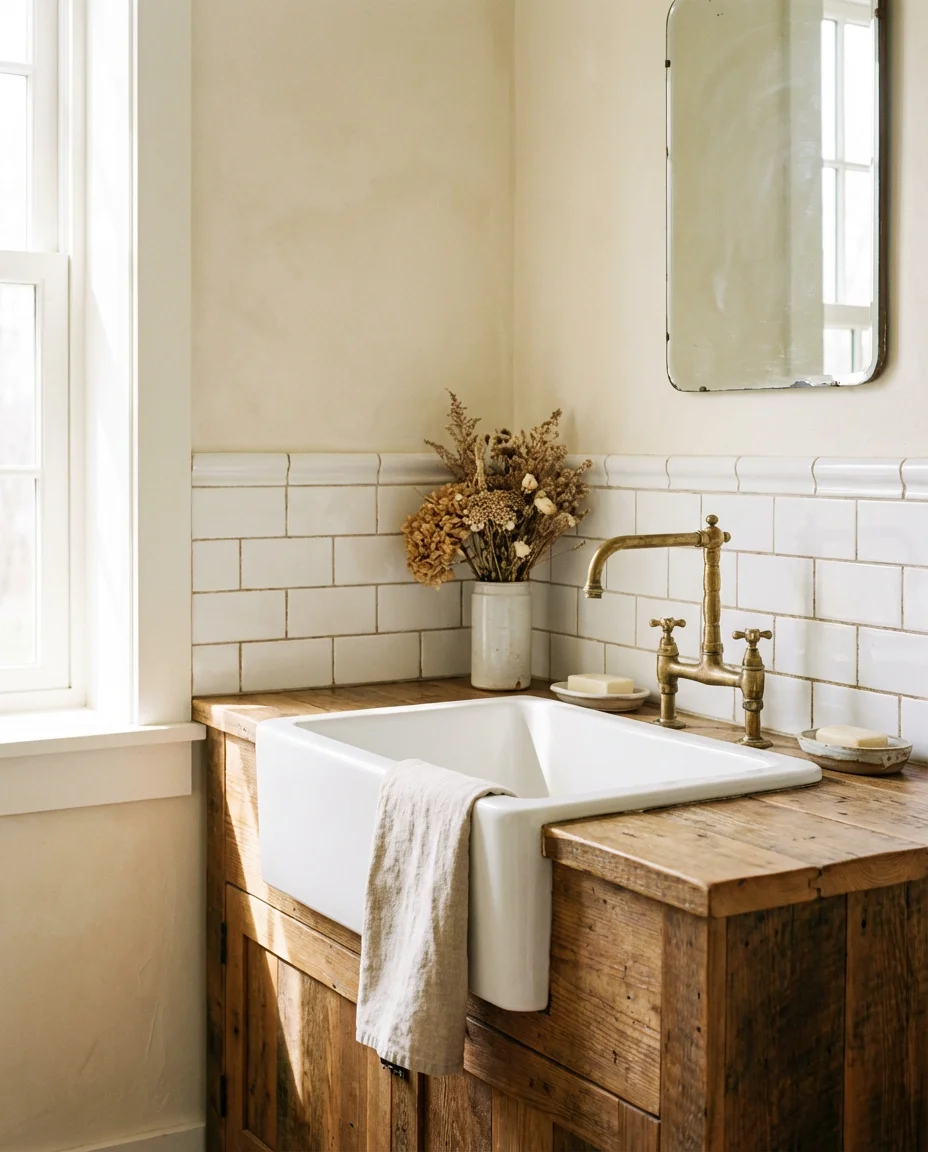
There’s a reason white paint colors keep dominating farmhouse bathroom mood boards—but the whites that are winning right now aren’t flat or cold. The best versions lean creamy, with undertones of linen or warm sand that shift beautifully under natural light. Paired with unlacquered brass hardware and a simple wood vanity, white becomes the canvas that makes every other material sing. This approach works especially well in bathrooms with at least one south-facing window.
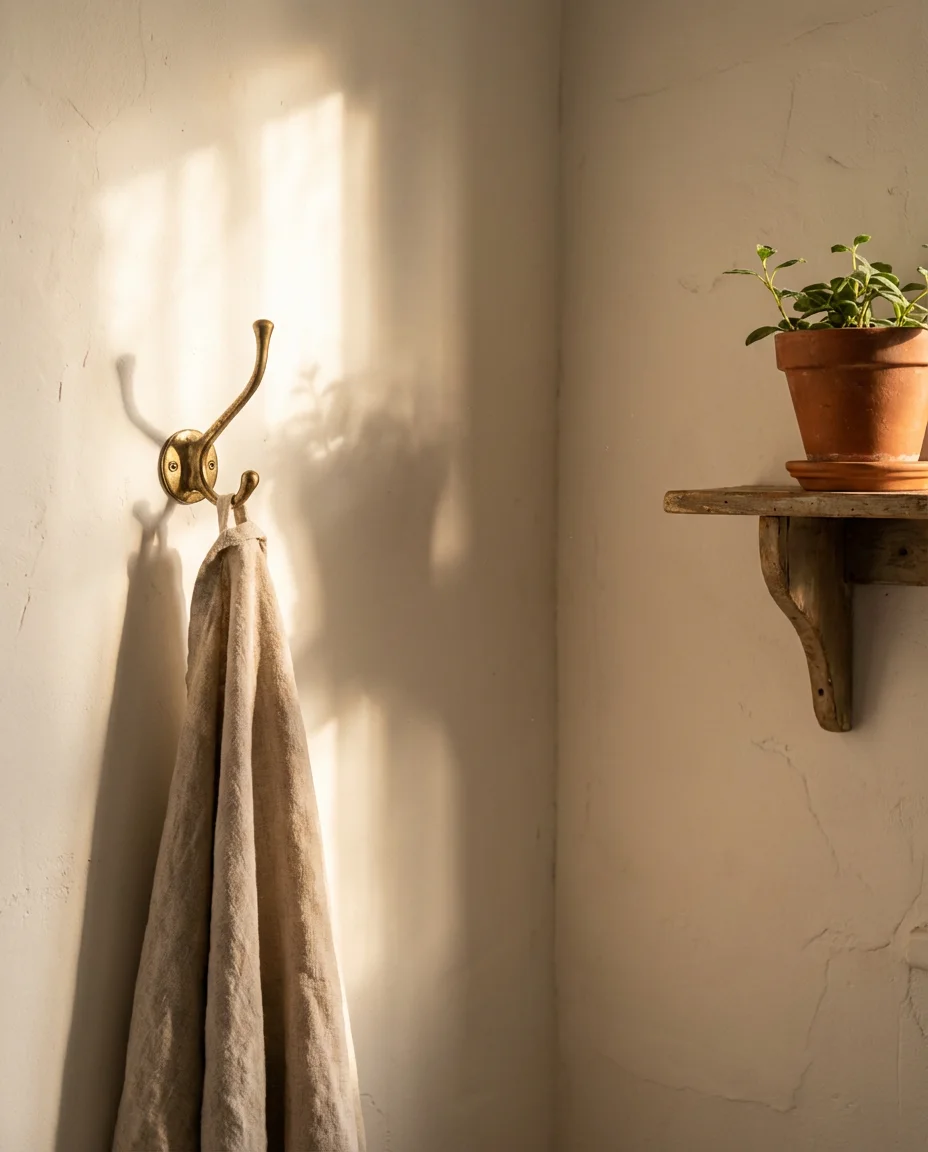
Paint color is one of those details that sounds minor until you live with the wrong one. Benjamin Moore’s White Dove and Sherwin-Williams Alabaster remain go-to choices among interior designers for farmhouse bathrooms because they read warm without going yellow—a distinction that matters enormously under artificial lighting. If you’re renovating a primary bath, test at least three whites before committing, and always look at them in both morning and evening light before making a final call.
2. A Vanity That Feels Like a Piece of Furniture
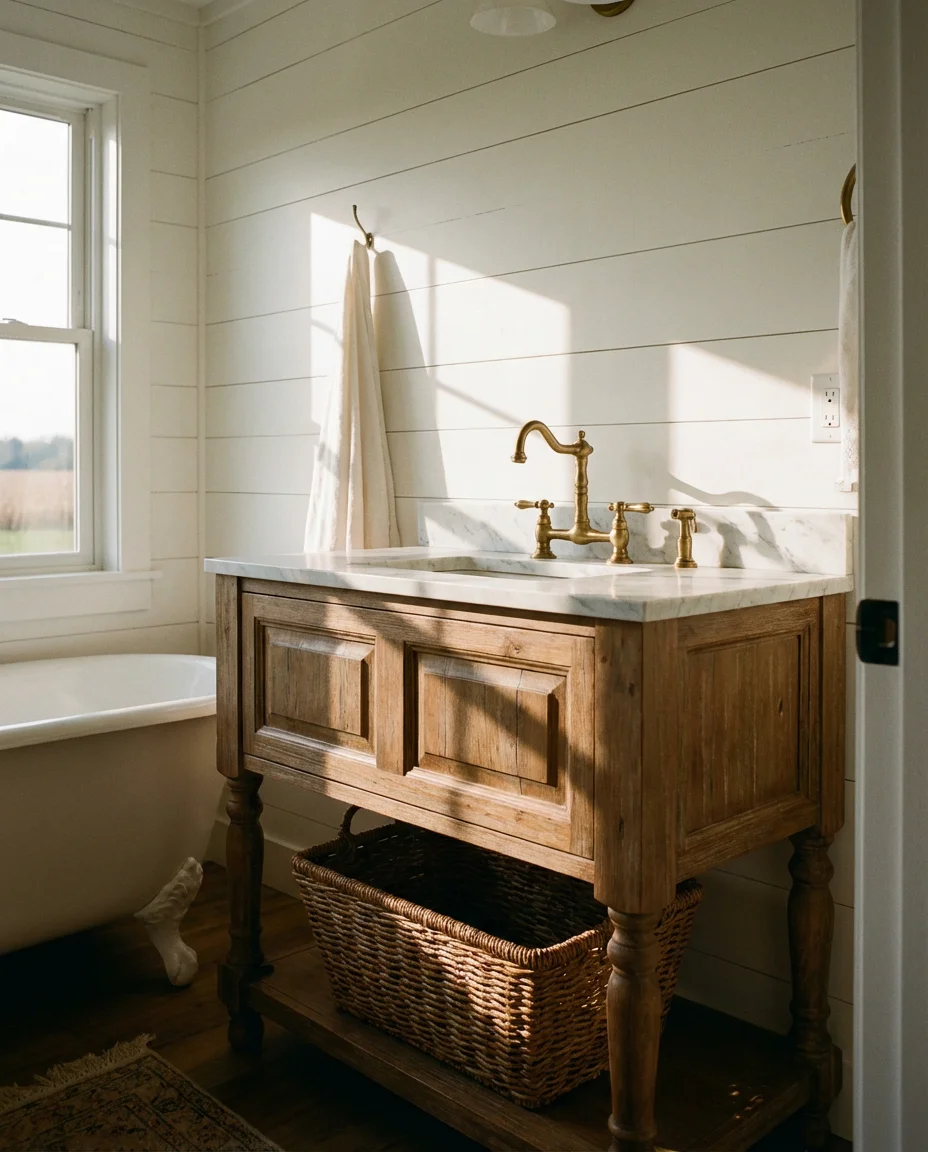
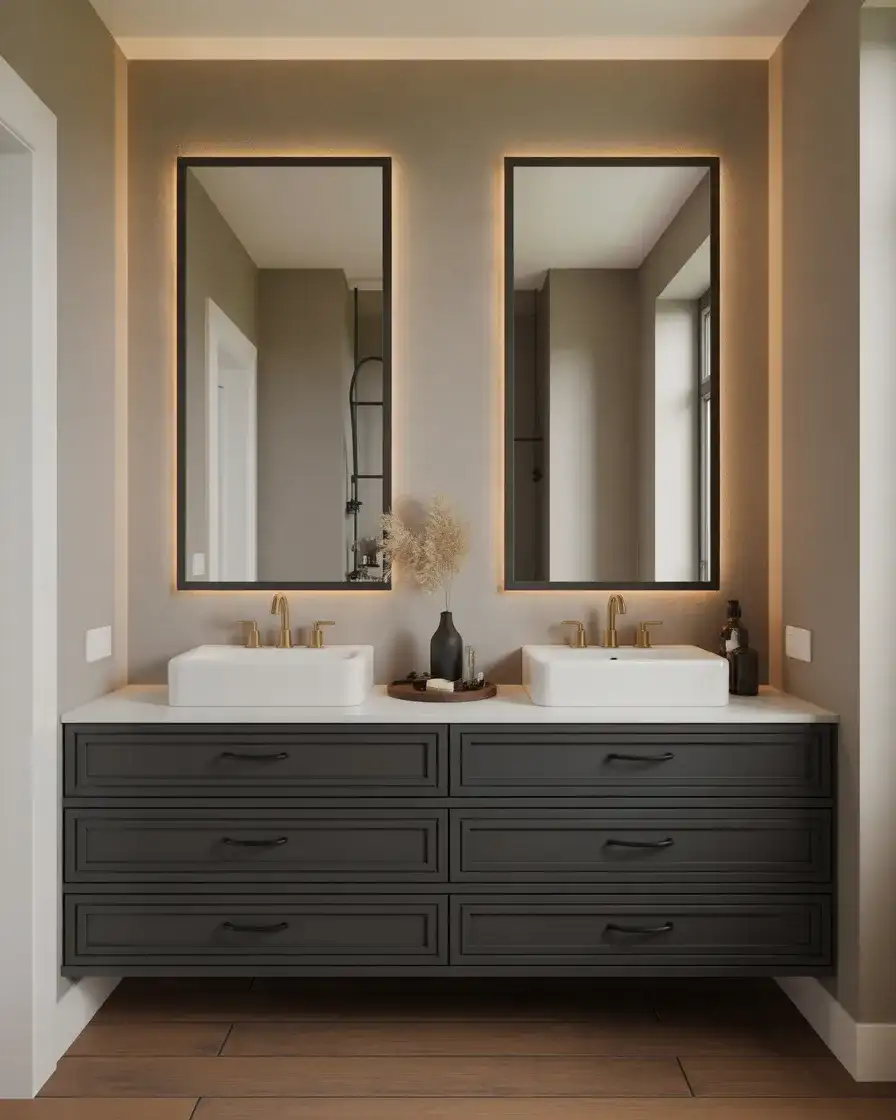
The vanity is the anchor of any farmhouse bathroom, and the direction in 2026 is unmistakably furniture-forward. Think vintage dressers converted into double sinks, or custom-built pieces with inset panels and feet that lift them slightly off the floor—a small detail that makes the whole room feel less like a showroom and more like a home. The best ones have a worn-in quality, like they’ve always been there.
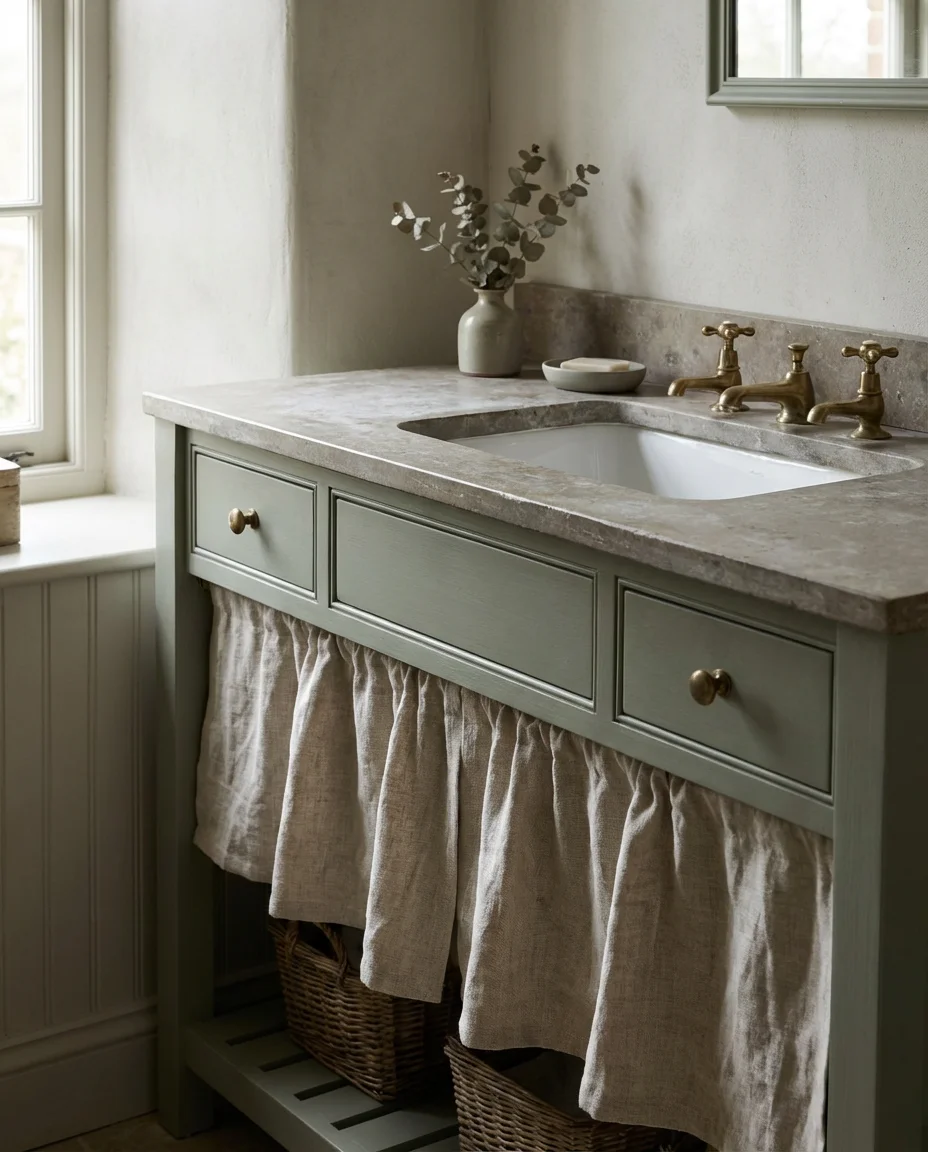
One common mistake homeowners make is choosing a vanity that’s too large for the room. A furniture-style piece with legs actually creates the perception of more floor space than a traditional floating or floor-mounted cabinet—which is something worth considering if your bathroom runs smaller. A 48-inch single vanity with an apron front and painted finish can feel more luxurious and intentional than a generic 60-inch double in a mid-size bath.
3. Moody Dark Walls With Warm Wood Accents
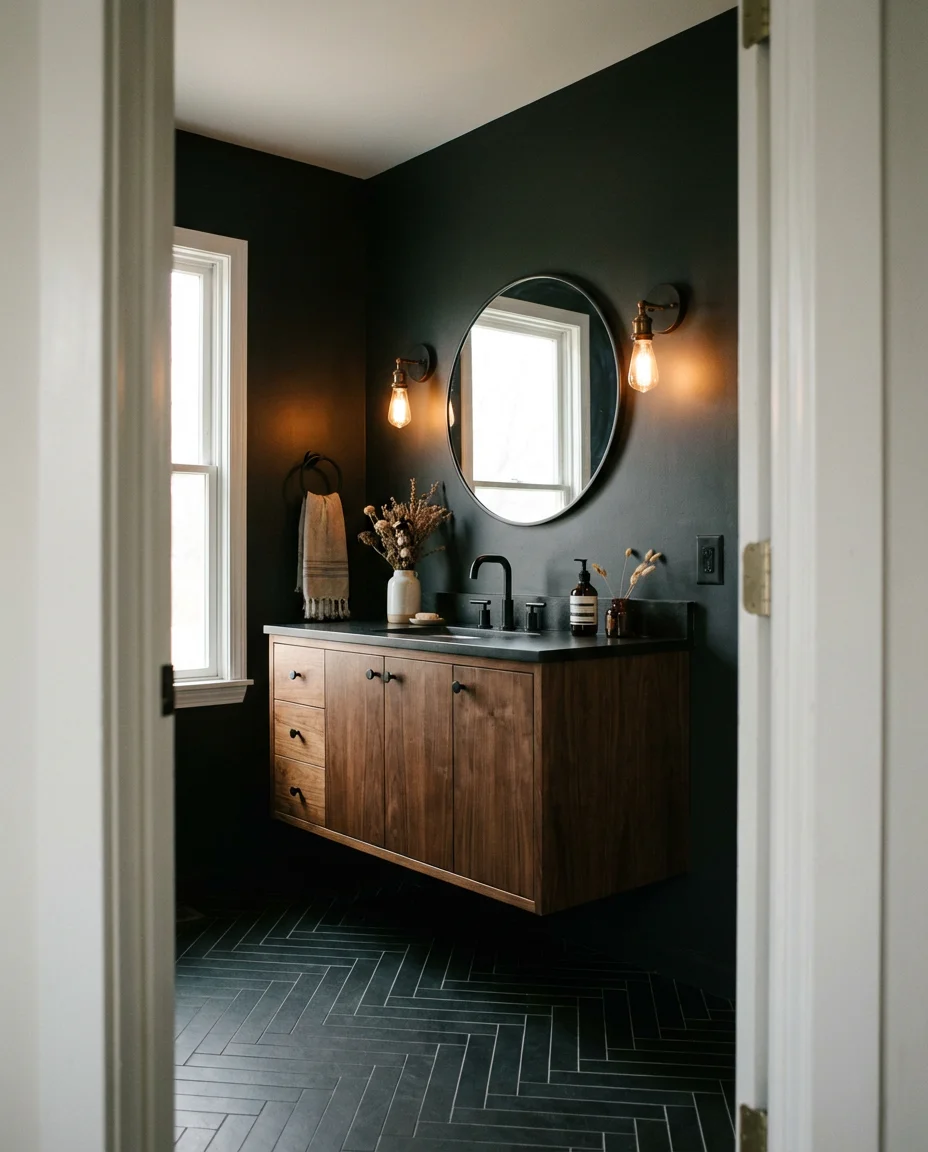
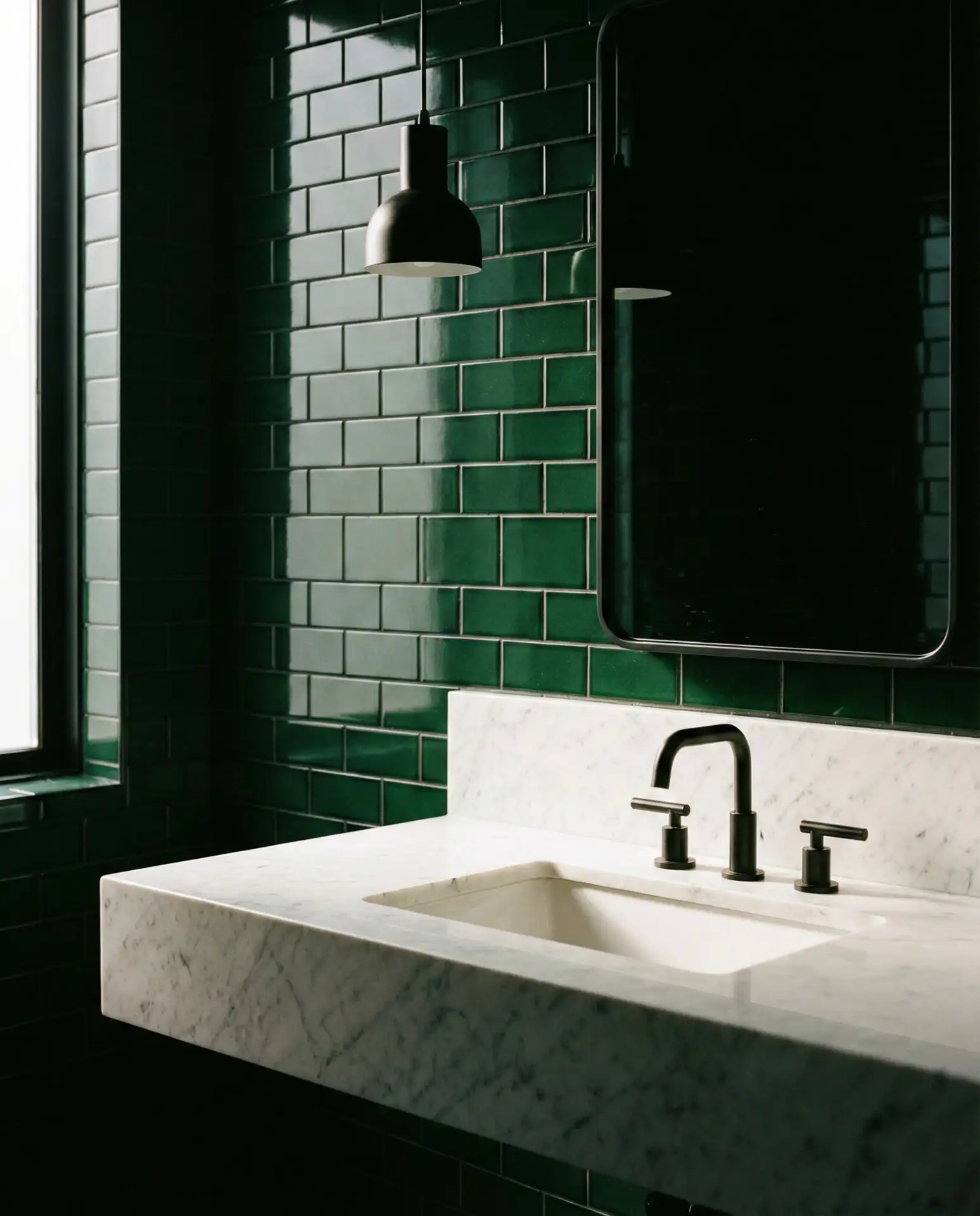
The moody, dark farmhouse bathroom has officially arrived as a serious design statement rather than a passing trend. Deep charcoal, navy, and even near-black greens are replacing the all-white palette for homeowners who want their bathroom to feel like a retreat—somewhere you actually want to linger. When balanced with warm teak or walnut accents and ambient lighting, these darker rooms manage to feel enveloping rather than oppressive.
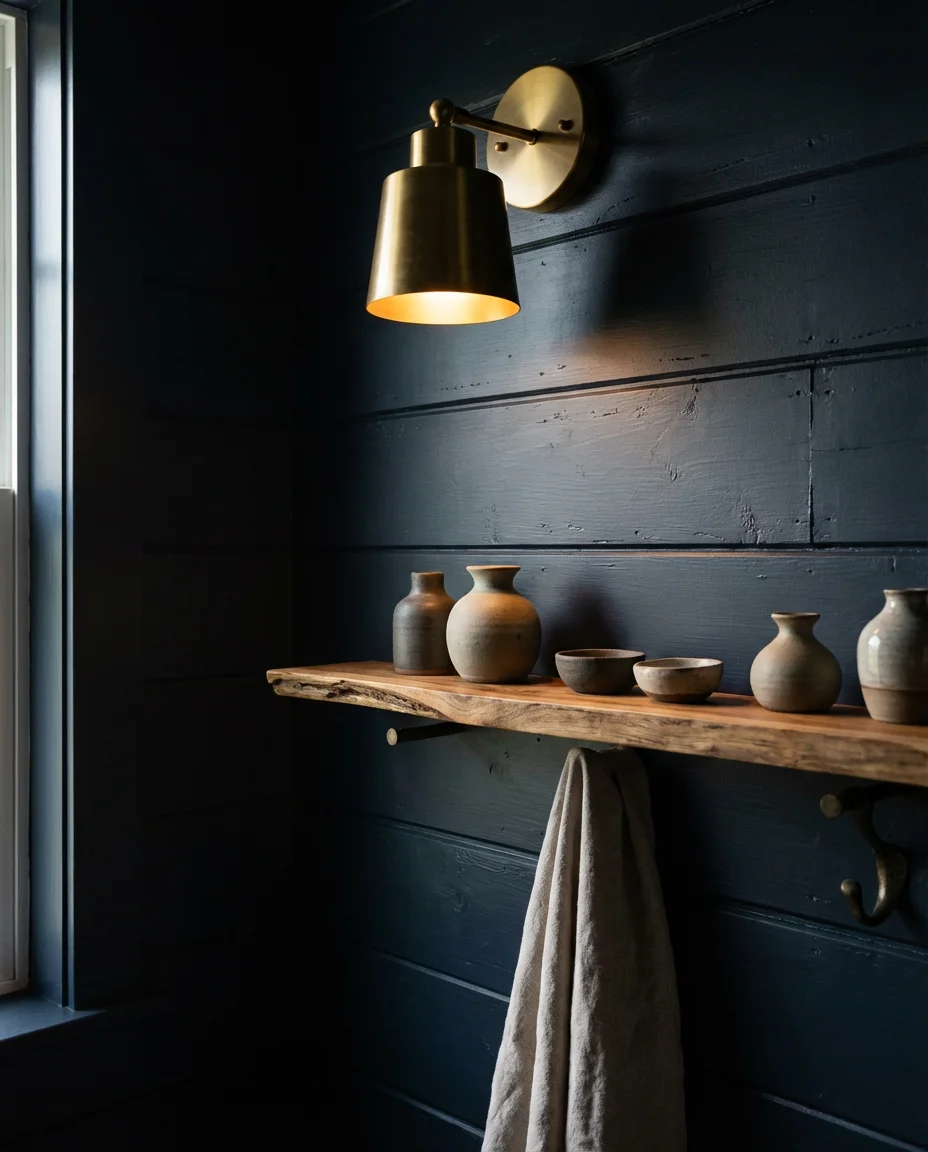
This look works particularly well in a dedicated master bath or powder room—spaces where you’re creating an experience rather than just a functional room. A homeowner in Nashville recently shared that painting her primary bathroom in Farrow & Ball Railings transformed it from a forgettable afterthought to the room guests always comment on. The key is committing fully: dark walls demand equally intentional lighting and hardware to succeed.
4. Walk-In Shower With Open Shelving and Stone
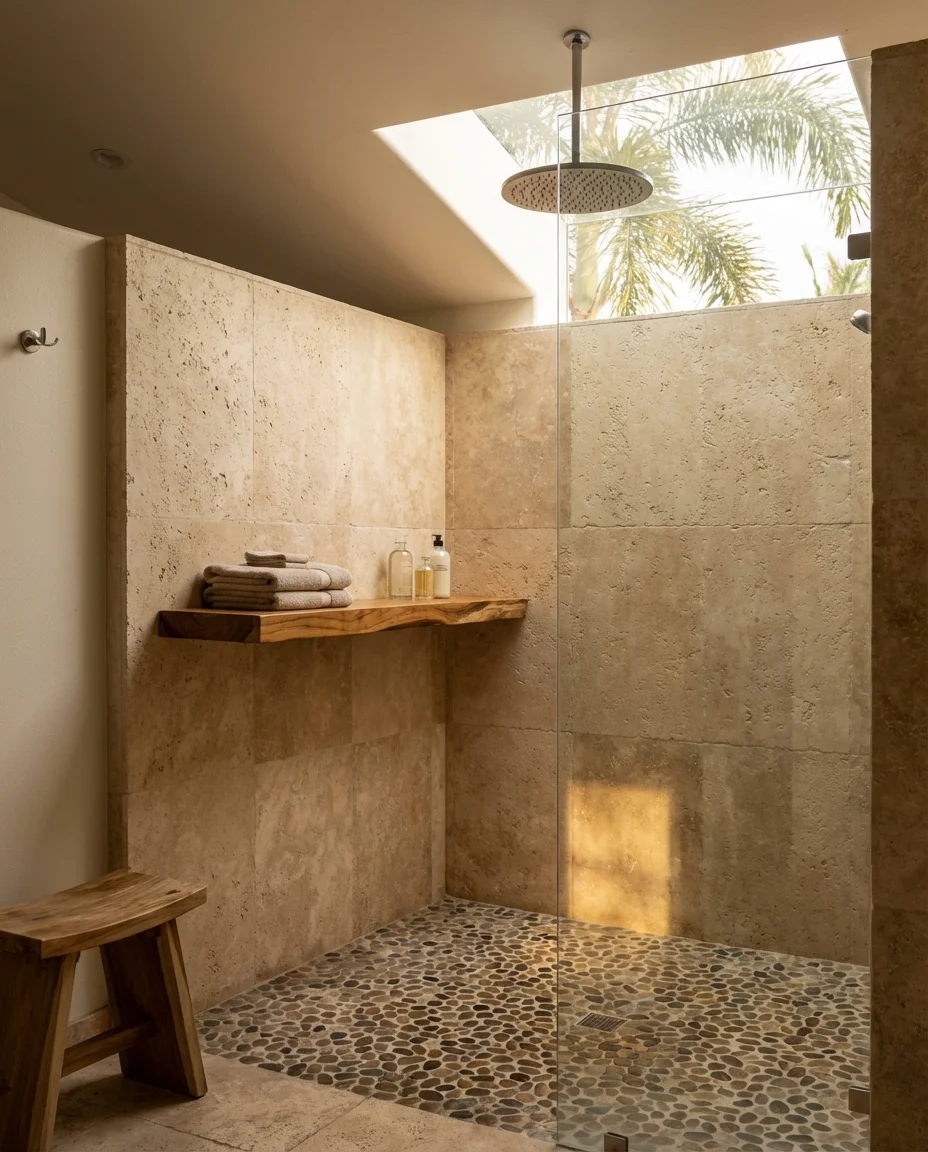
A well-designed shower in a modern farmhouse bathroom does more than get you clean—it creates a sense of place. Right now, the direction is open, airy enclosures with frameless glass or no glass at all, paired with natural stone tile and built-in niches or floating teak shelves. The rustic quality comes from material choice rather than any decorative flourish—travertine, honed limestone, or handmade ceramic tile all bring that grounded, earthy feeling.
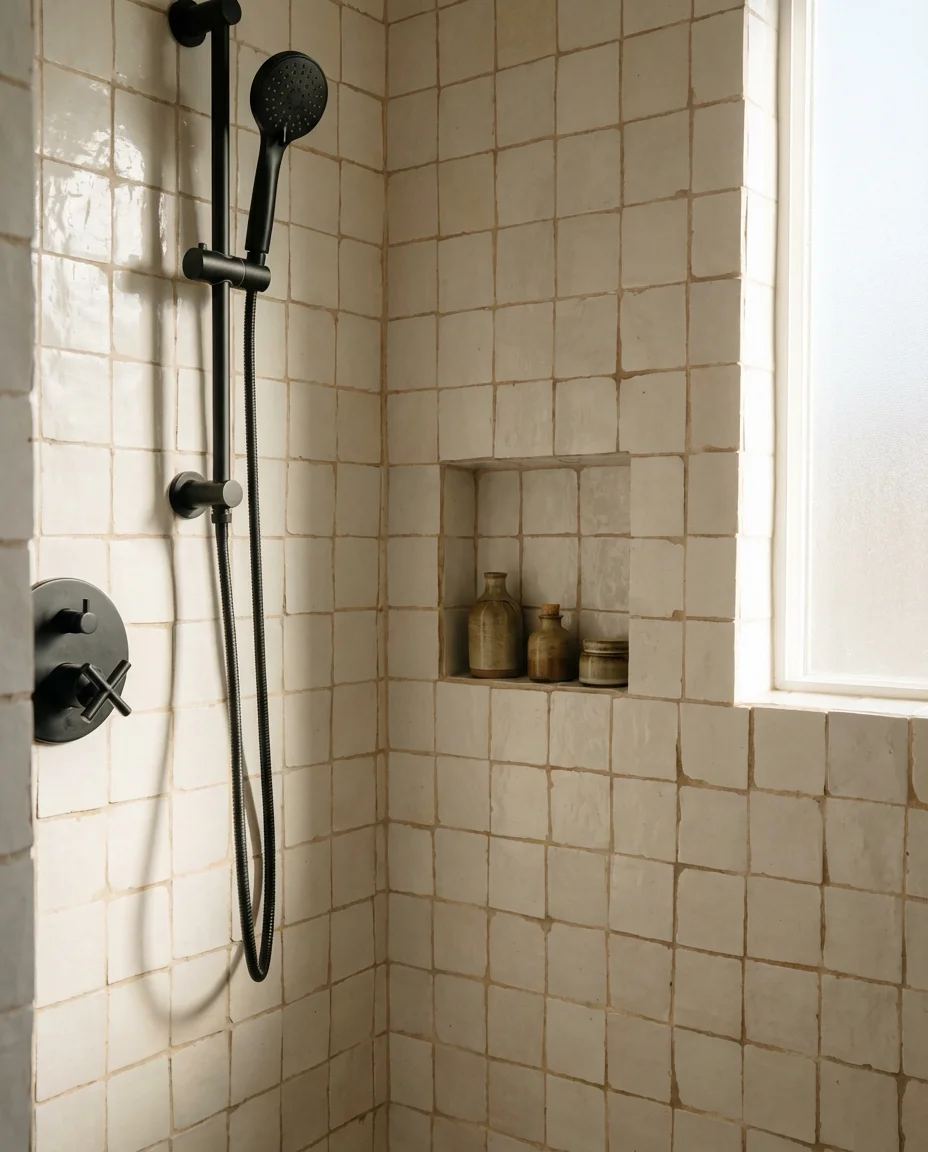
Where this works best is in primary suites with enough square footage to let the shower breathe—roughly 36 by 48 inches at minimum, though a 42-inch square feels significantly more generous. Budget-conscious renovators often find that splurging on one dramatic wall of natural stone while keeping the remaining surfaces in a simple subway or large-format ceramic tile keeps costs manageable without sacrificing the overall effect.
5. Organic Shapes in Mirrors and Fixtures
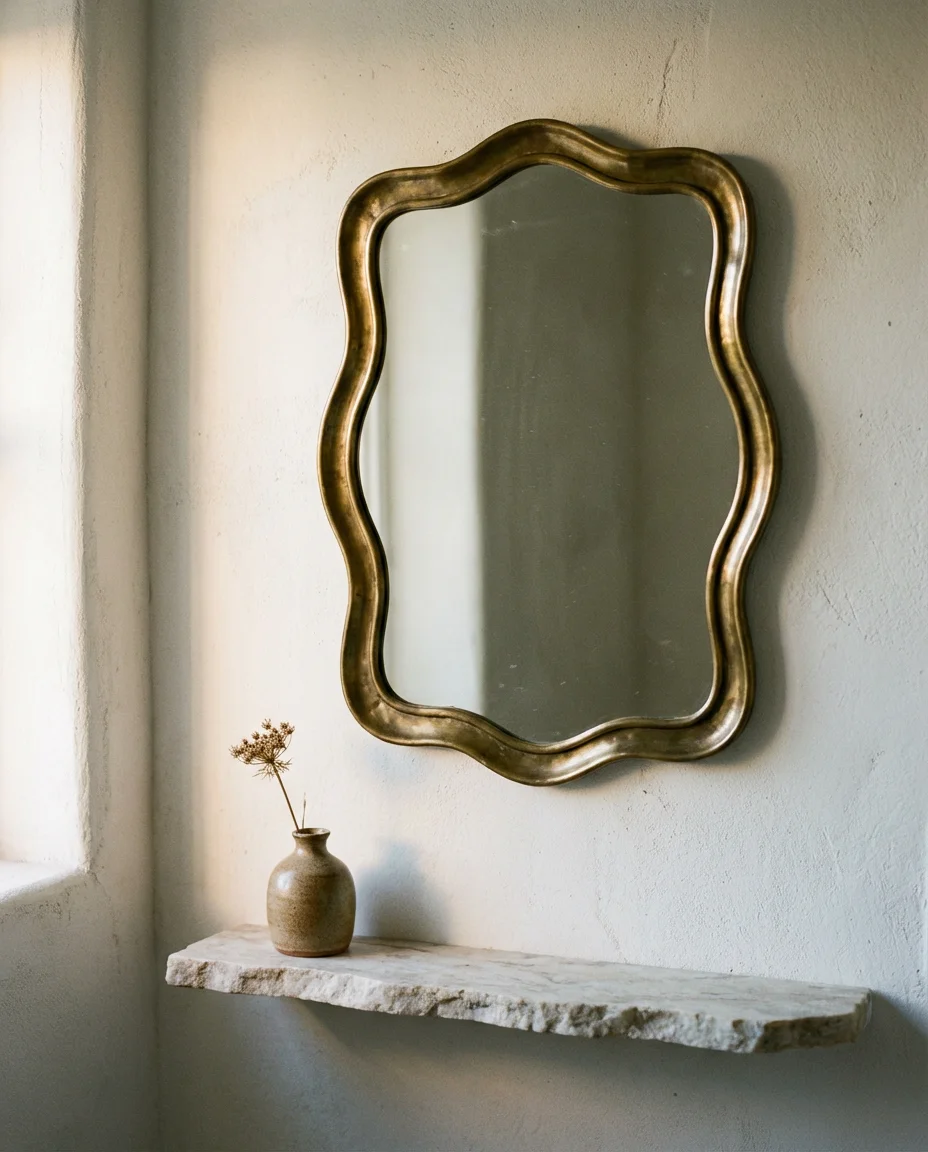
The organic design movement has fully landed in the farmhouse bathroom, and the most visible expression of it is in mirrors and hardware. Irregular, freeform mirror silhouettes—think wavy edges, rounded rectangles with asymmetrical curves, or abstract shapes inspired by pebbles and water—add a sculptural quality that no amount of shiplap can achieve on its own. Pair these with a mirror in aged brass or oxidized bronze, and you’ve got something genuinely compelling.
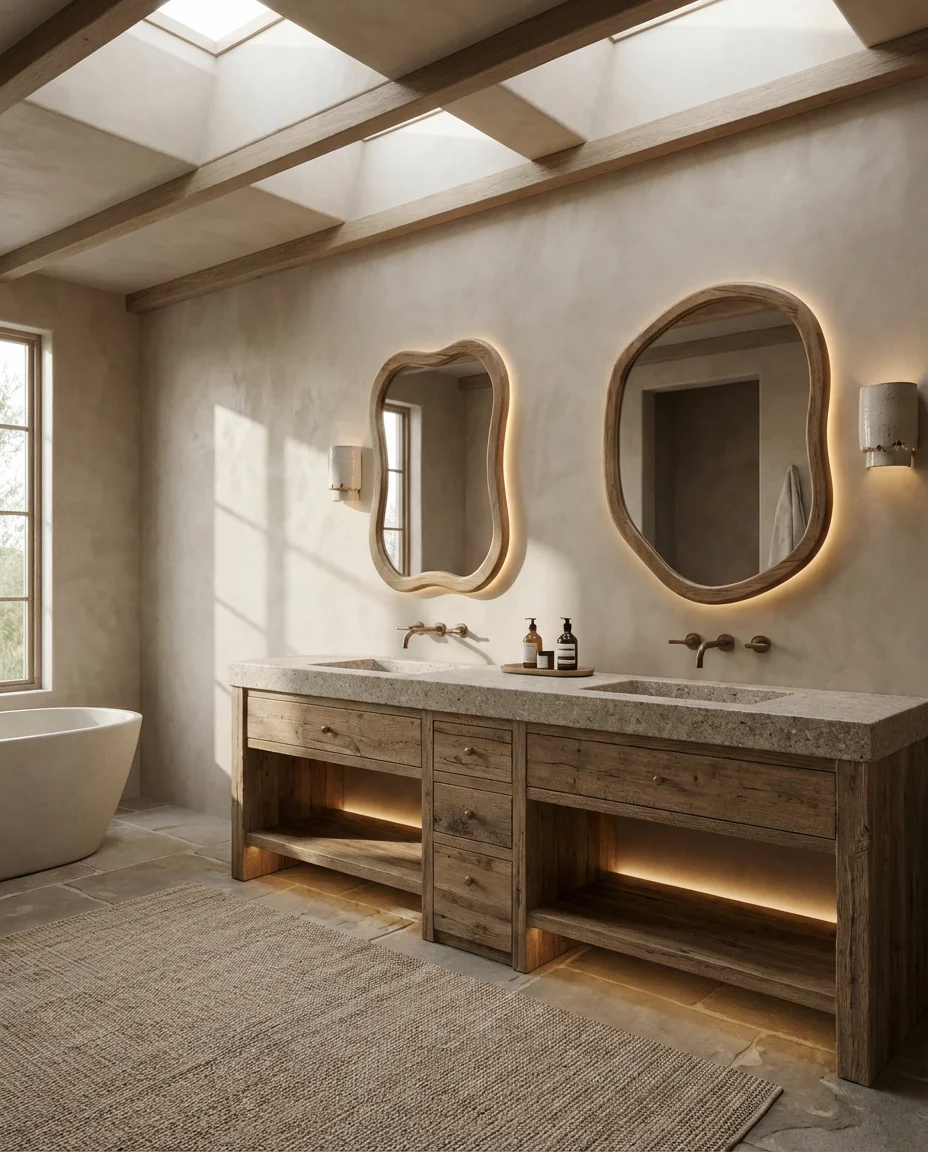
Interior designers who specialize in residential spaces point out that the organic mirror trend solves a real problem: it introduces visual interest without requiring architectural changes. For renters or homeowners who can’t tile or repaint, swapping a builder-grade rectangular mirror for an organic-edged version is one of the highest-impact, lowest-commitment moves you can make. Pieces in this category typically run from $200 to $800 depending on size and material.
6. Sage Green as the New Neutral
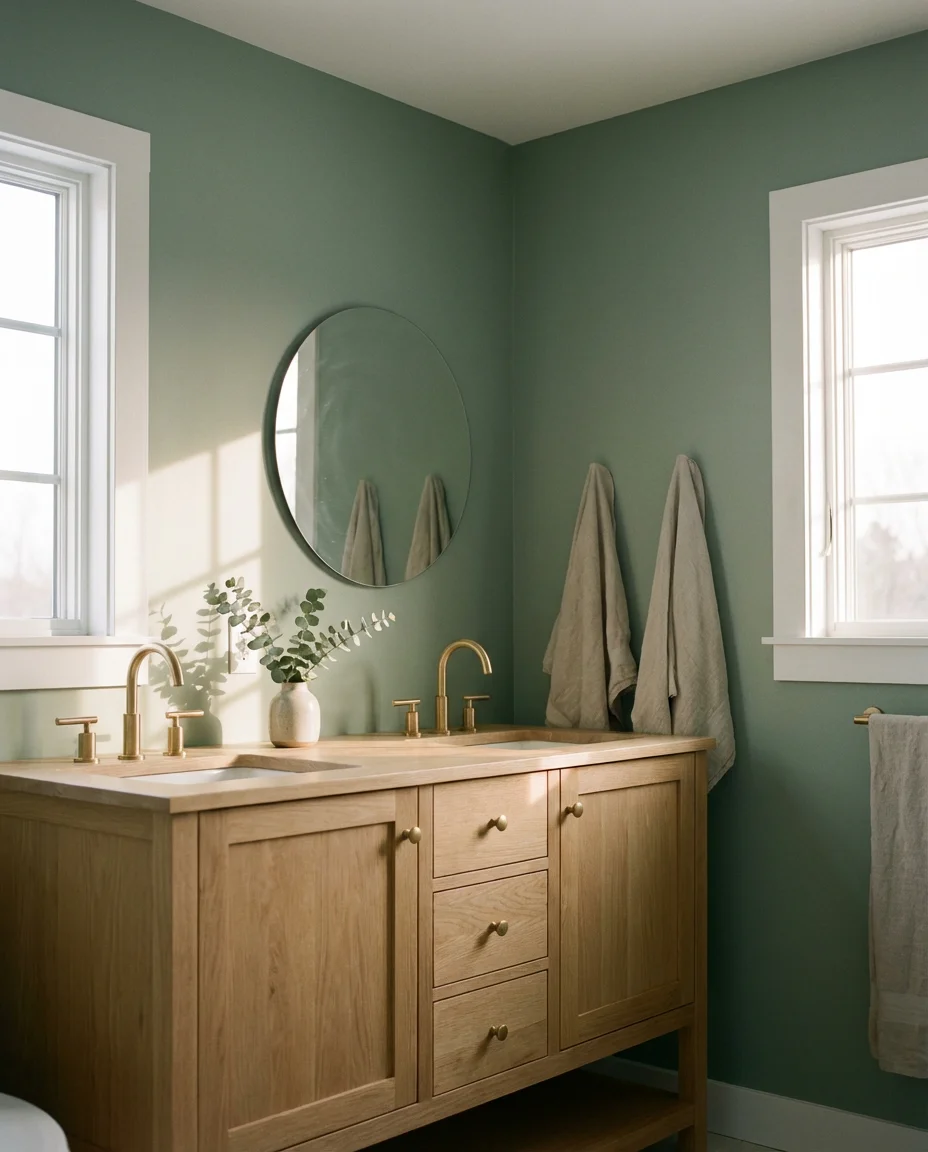
If there’s one color that defines the farmhouse bathroom aesthetic in 2026, it’s green—specifically the muted, grayish sage tones that sit comfortably between nature and interior design without feeling trendy or forced. These colors work on walls, cabinetry, and even tile, and they pair beautifully with warm wood tones, creamy whites, and aged metal finishes. Sage green has a rare quality: it reads as both calming and alive at the same time.
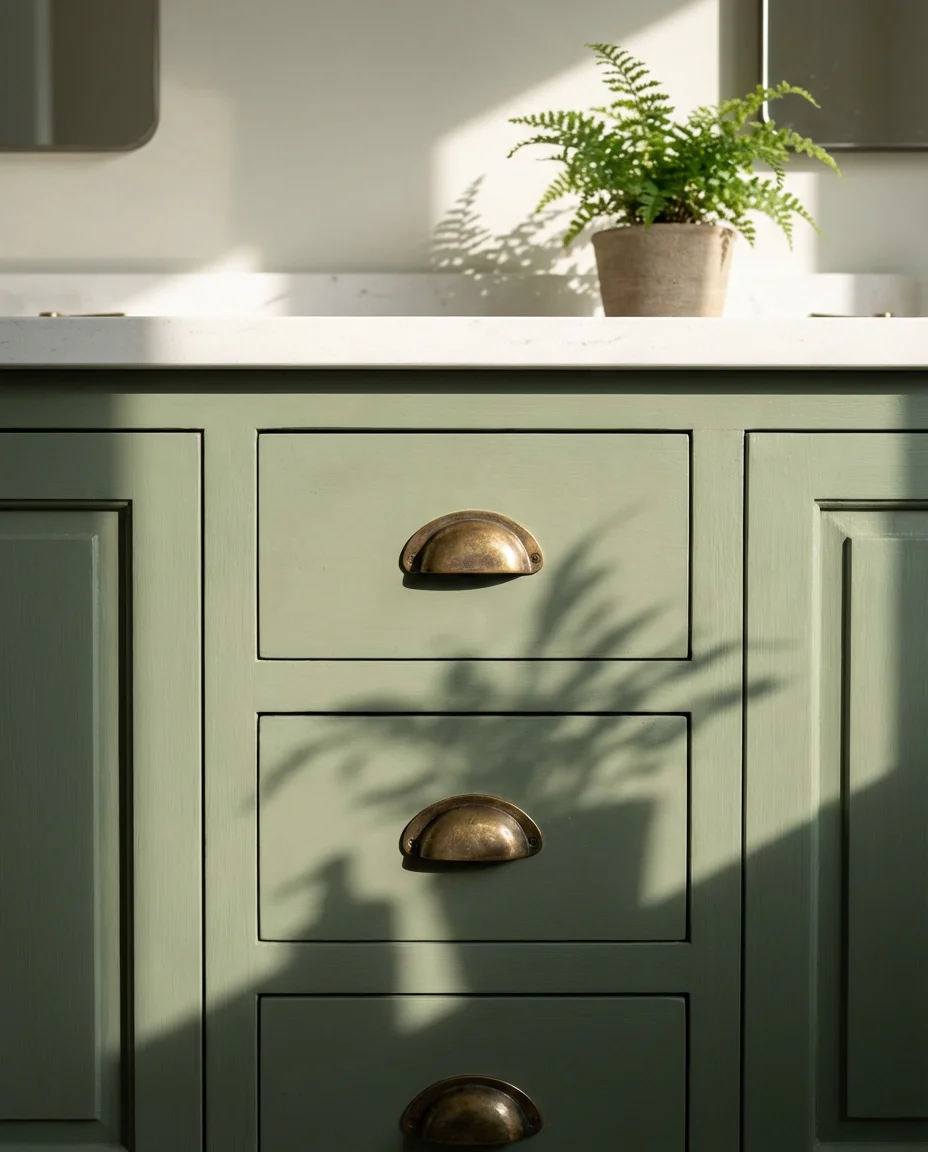
Regionally, this color is particularly popular in Pacific Northwest homes and New England farmhouse renovations, where the palette echoes the surrounding landscape. That said, it translates just as well in Texas Hill Country bathrooms and Midwestern farmhouses—anywhere the goal is to bring the outside in without going full botanical. Farrow & Ball Mizzle, Sherwin-Williams Acacia Haze, and Benjamin Moore October Mist are three current favorites worth sampling.
7. Shower Curtain as a Design Statement
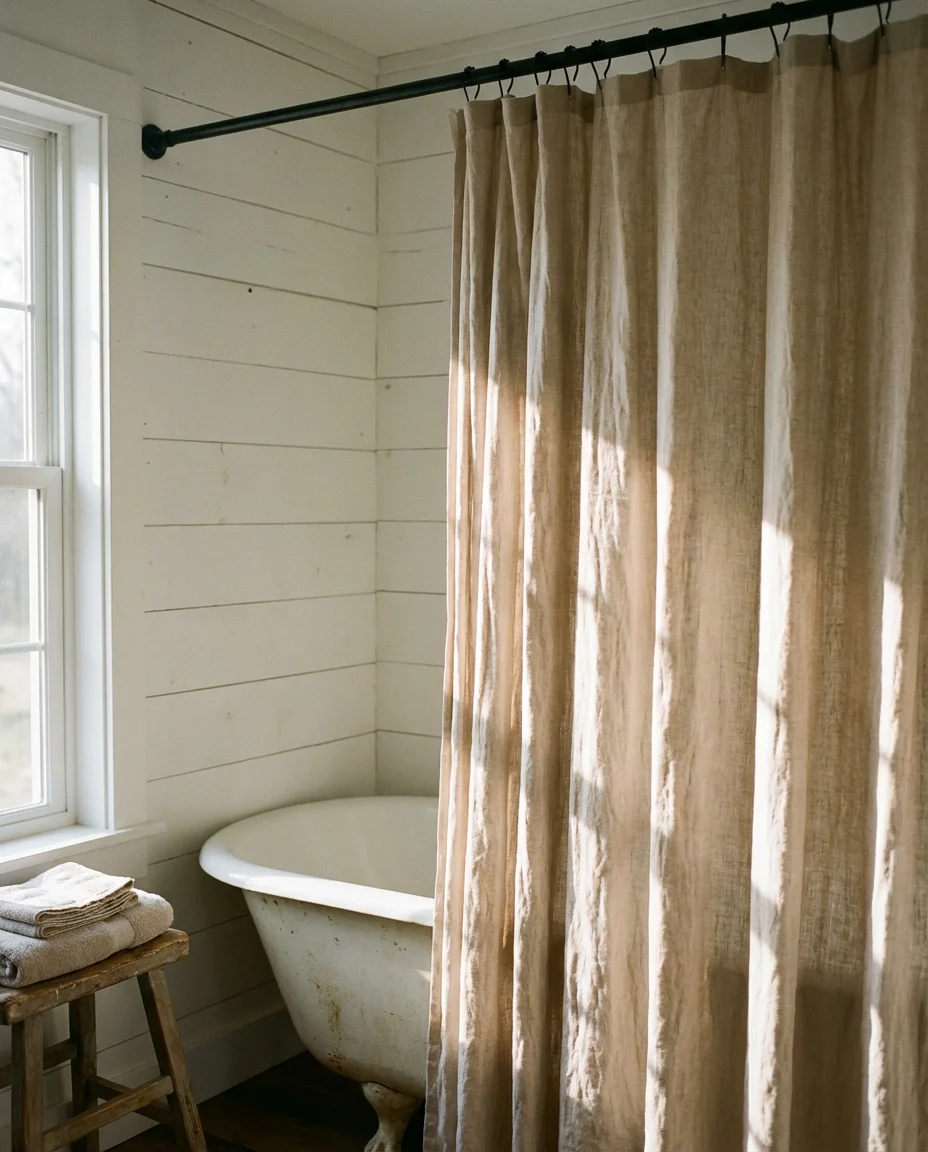
The shower curtain is having a genuine design moment, and farmhouse bathroom enthusiasts are leaning into it fully. Instead of a plain white liner-only approach, homeowners are choosing textured linen curtains, subtle stripes, or even loose-weave fabrics that layer beautifully with the rest of the room. Shower curtain ideas in this category blur the line between bath accessory and soft furnishing—which is exactly the point in a farmhouse bathroom where warmth and texture are the whole story.
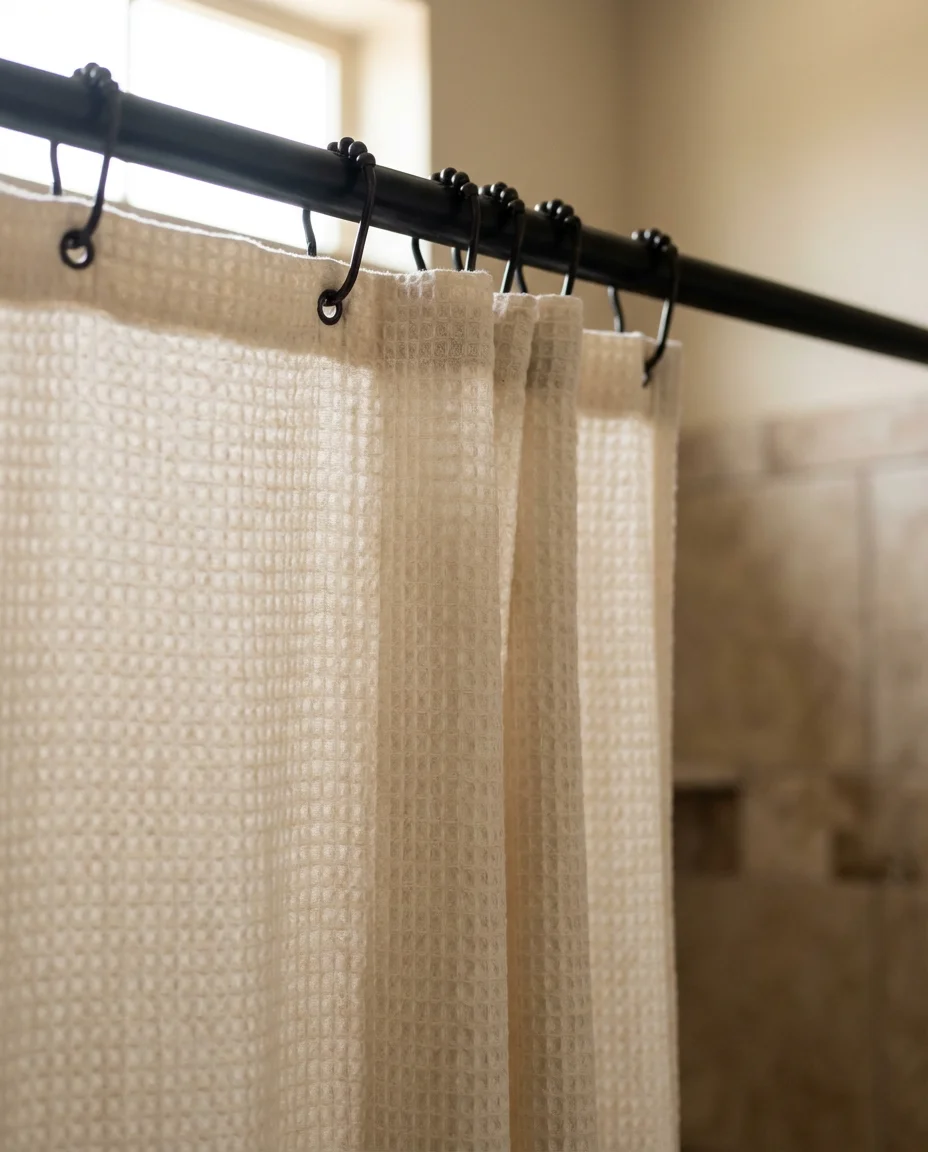
A simple linen or cotton-blend curtain can be found for as little as $40–$80, making it one of the most affordable ways to shift a bathroom’s entire mood without touching a single tile. The practical advantage is real too: fabric curtains are warmer and more forgiving in small spaces than glass enclosures, and they’re far easier to swap seasonally or when you’re ready for a change. Hang them ceiling-high for a more dramatic, elevated look.
8. Handmade Tile on the Shower Floor
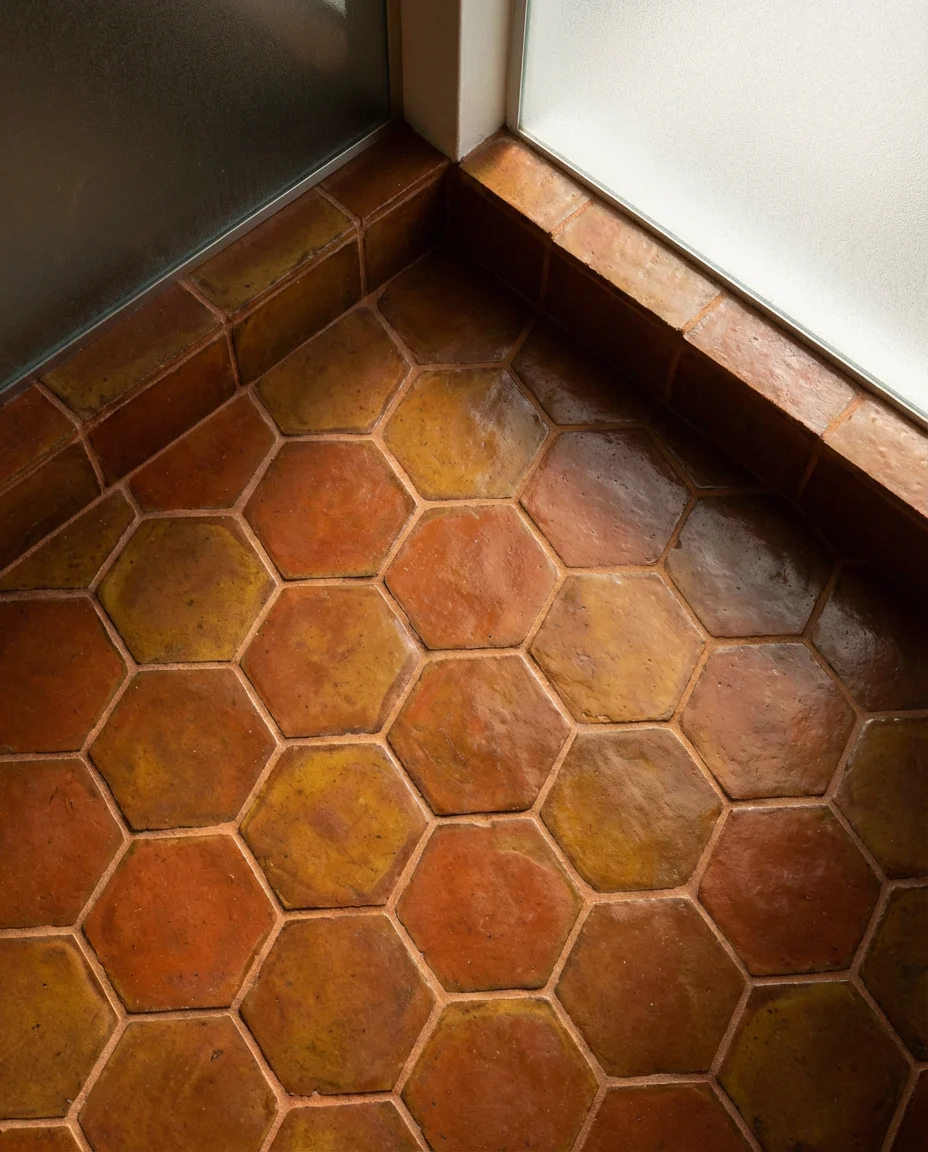
The floor tile inside a shower is often an afterthought—which is exactly why it’s such an opportunity. In modern farmhouse bathrooms, the move is toward handmade or artisan-style ceramic tiles with slight variations in color and surface that give them a distinctly human quality. Tile ideas in this space range from simple terracotta hexagons to hand-pressed zellige-inspired squares in soft whites, dusty blues, or warm terracotta, all of which develop character over time with use.
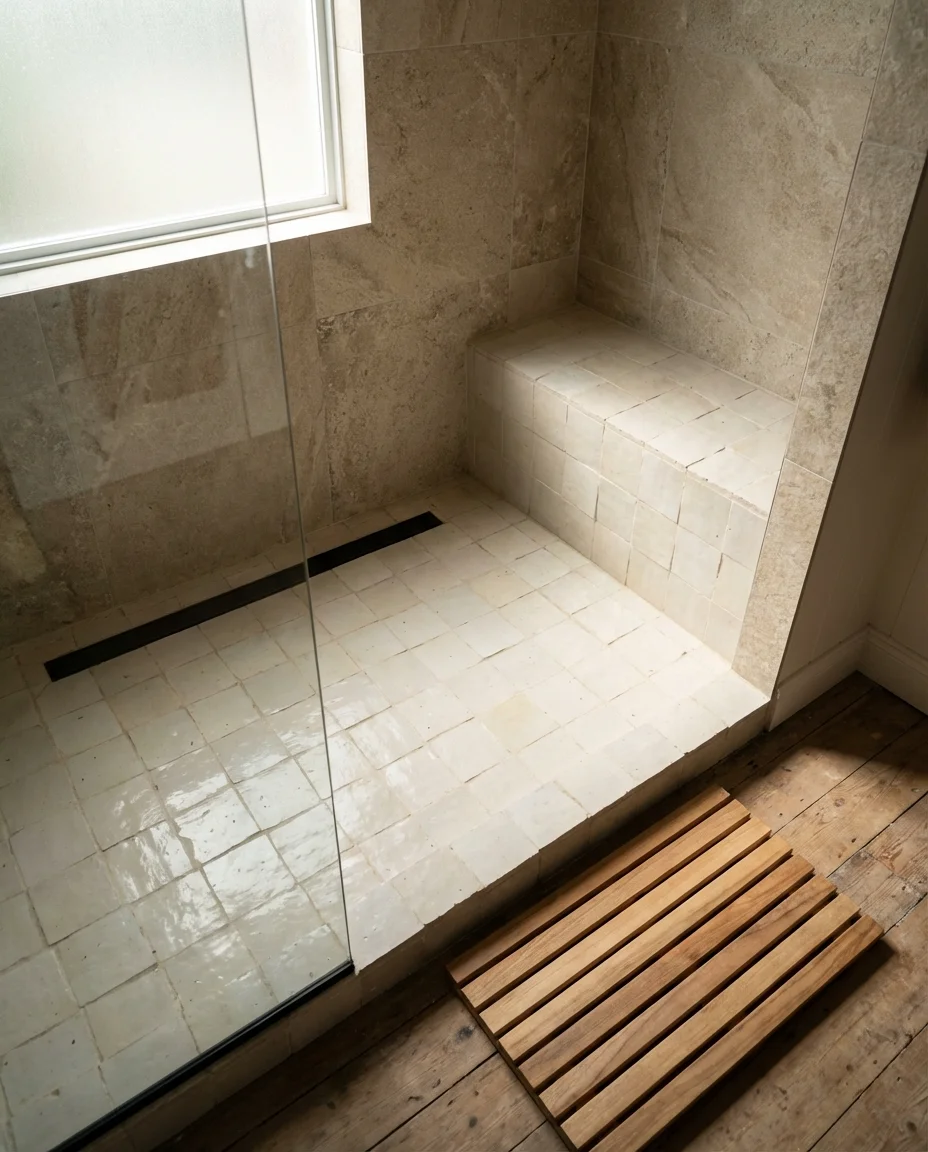
One thing to know before you commit: handmade tile requires more careful sealing and a slightly wider grout joint than factory-made tile because of natural surface variation. It’s a small technical consideration that installers sometimes forget to mention upfront. The investment is worth it—artisan tile adds irreplaceable warmth and individuality to a shower floor, and it’s a feature that will photograph beautifully for years.
9. Wall Sconces That Do the Heavy Lifting
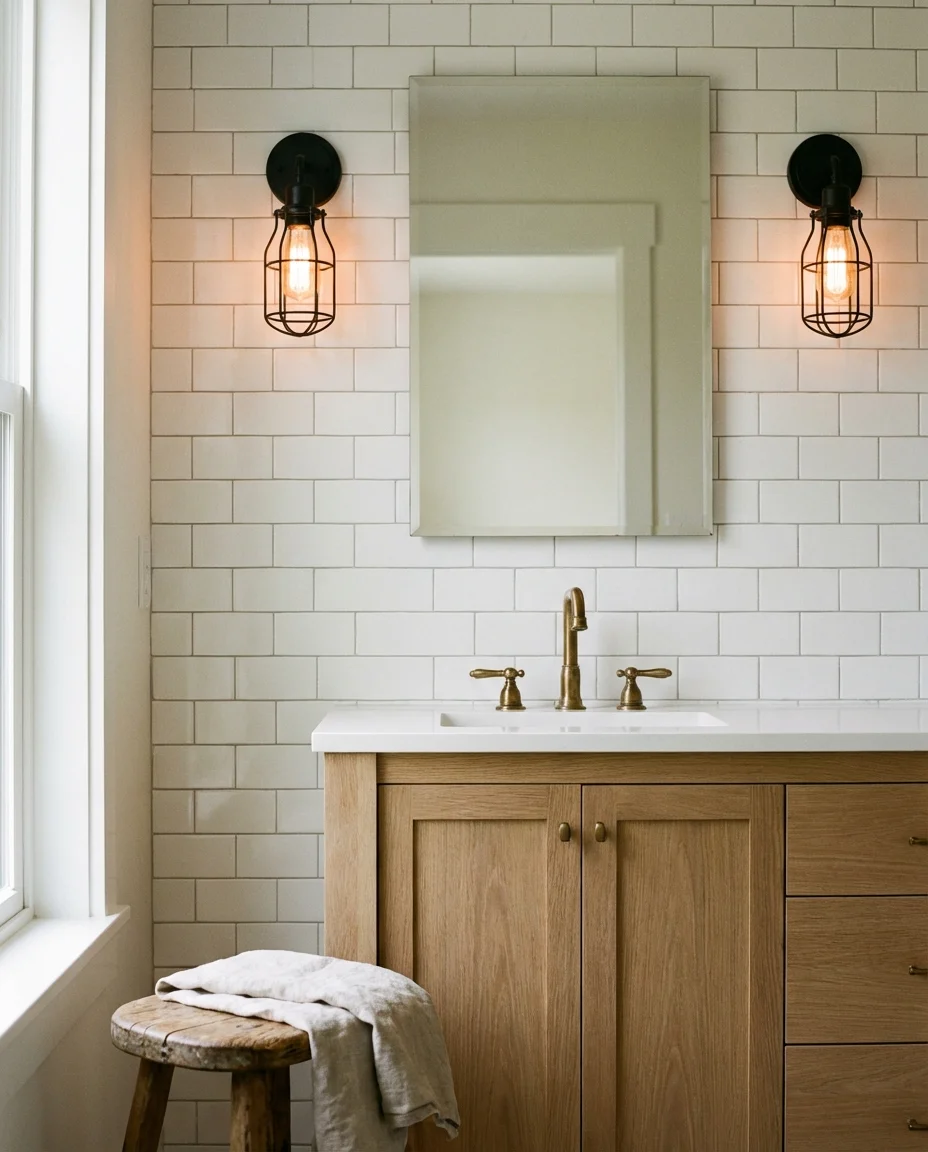
Sconces are having a defining moment in bathroom design, and modern farmhouse interiors are leading the charge. Placed flanking the mirror rather than above it—a detail long favored by designers and makeup artists alike—they cast even, flattering light that recessed ceiling fixtures simply can’t replicate. The best farmhouse light fixtures in this category have an industrial-meets-handcrafted quality: exposed Edison bulbs in caged metal, ceramic shades, or hand-bent brass arms.
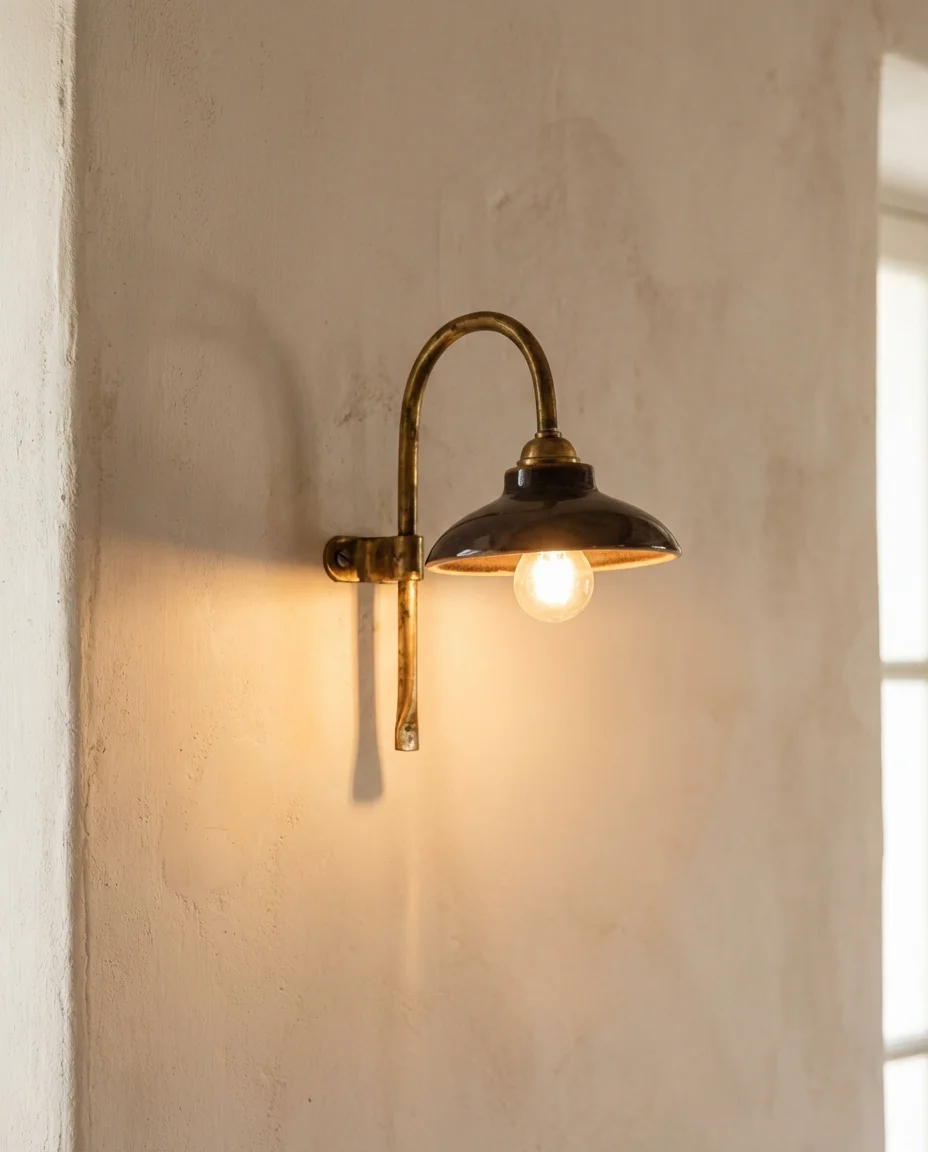
Electricians who work on bathroom renovations often report that side-mounted sconces at eye level—roughly 60 to 65 inches from the floor—consistently produce better lighting conditions for daily grooming than any overhead solution. If your bathroom doesn’t have existing junction boxes in the right spots, it’s worth the cost of running new wiring: properly placed vanity lighting is one of those quality-of-life improvements you notice every single day.
10. Large-Format Floor Tile With Minimal Grout Lines
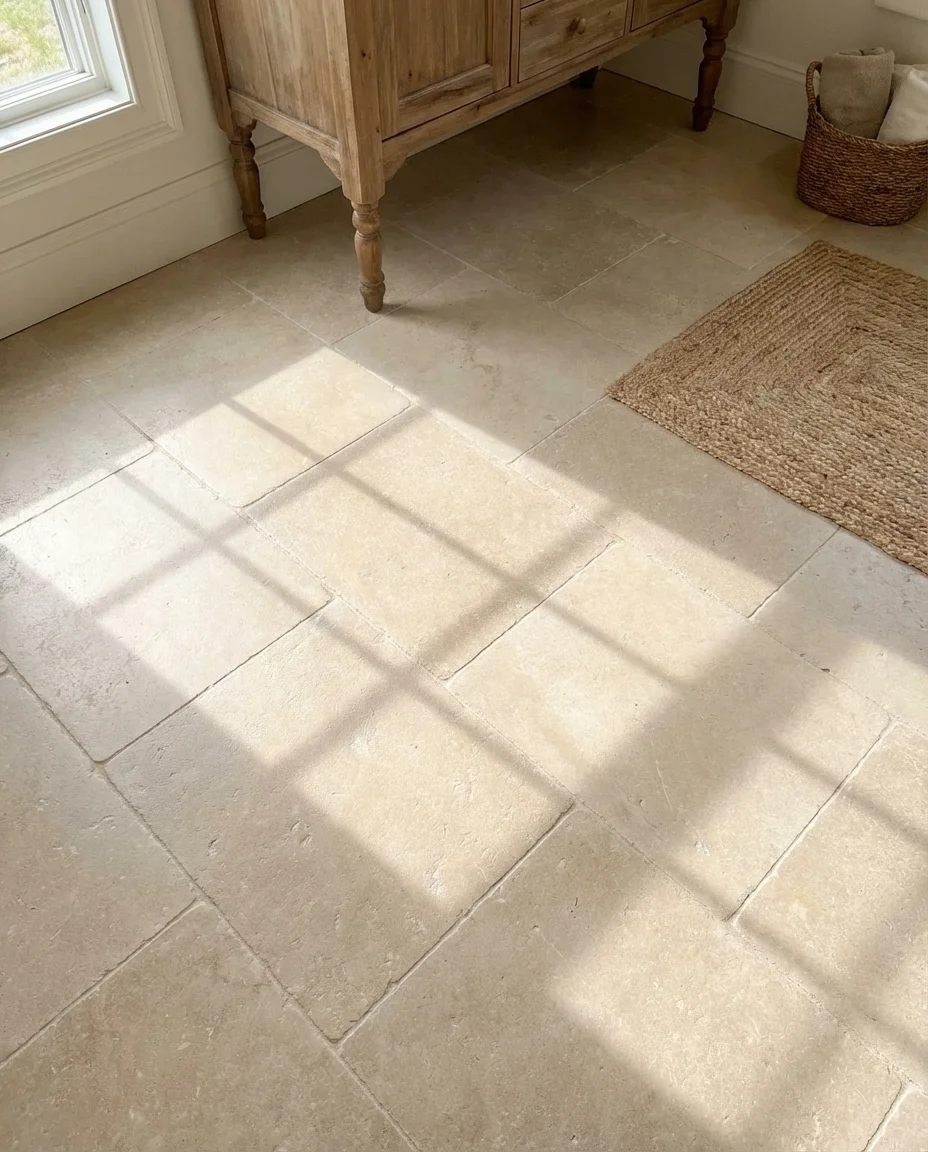
Among the most popular floor tile ideas for farmhouse bathrooms right now is the large-format slab look—24×24 or even 24×48 tiles in honed limestone, concrete-look porcelain, or soft white marble that create an almost seamless surface with thin, barely-there grout lines. This approach feels both modern and timeless, and it makes even a modest bathroom floor look considerably more expensive than it actually is. The floor becomes something you notice, not just something you stand on.
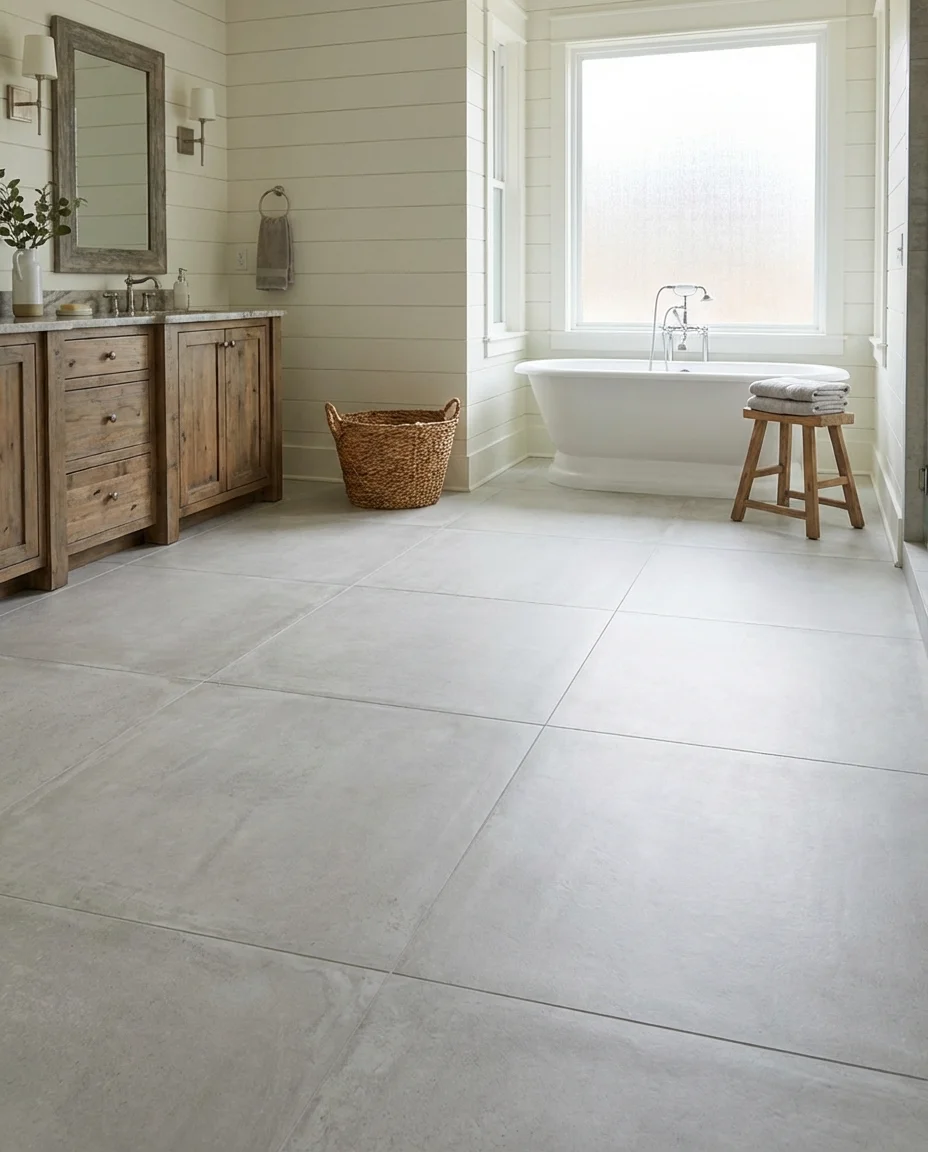
Large-format tile is a case where the installation skill matters as much as the material itself. Subfloor flatness is critical—even minor variations cause lippage, where tile edges catch light and look uneven. Hiring an experienced tile setter rather than a general contractor for this specific task is money well spent. Once it’s done right, this floor requires almost no maintenance and looks impeccable for decades.
11. A Freestanding Soaking Tub as the Focal Point
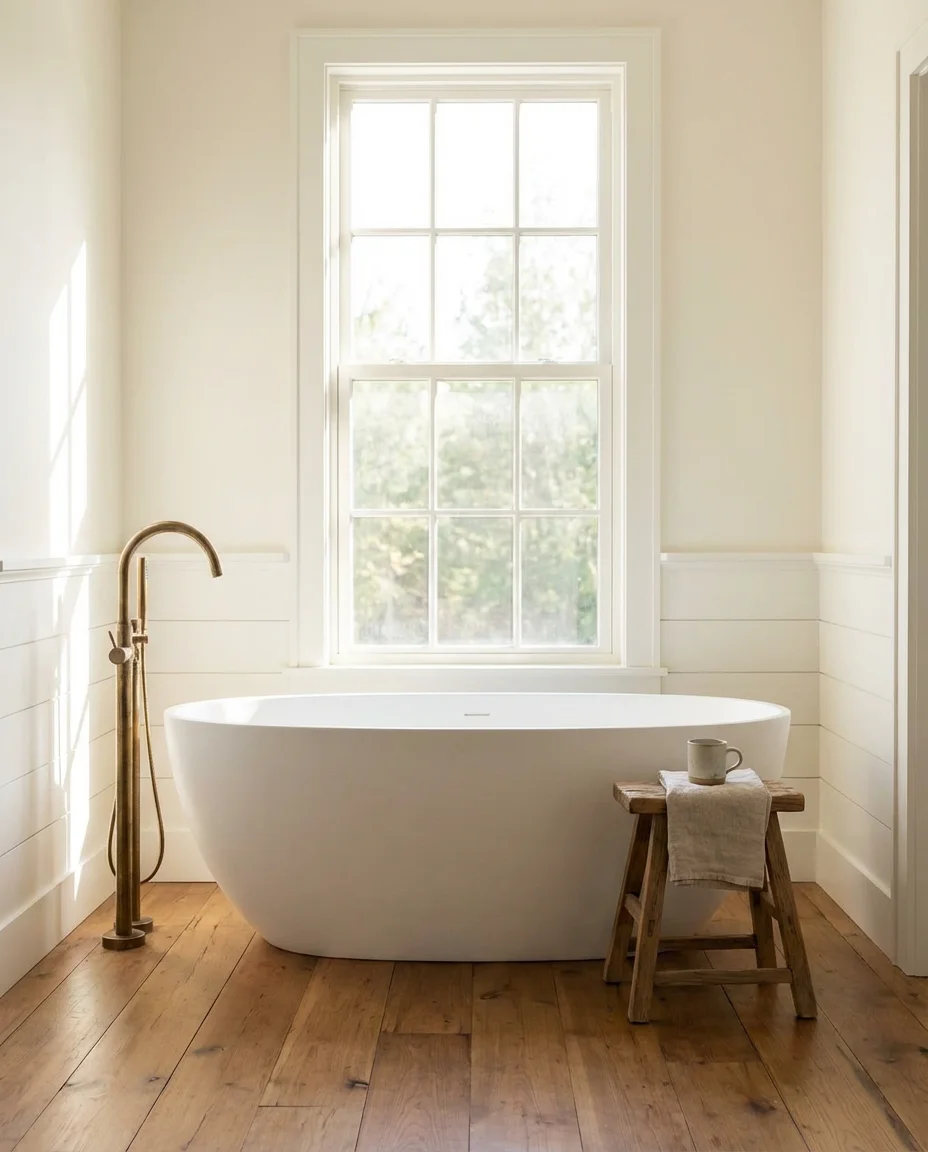
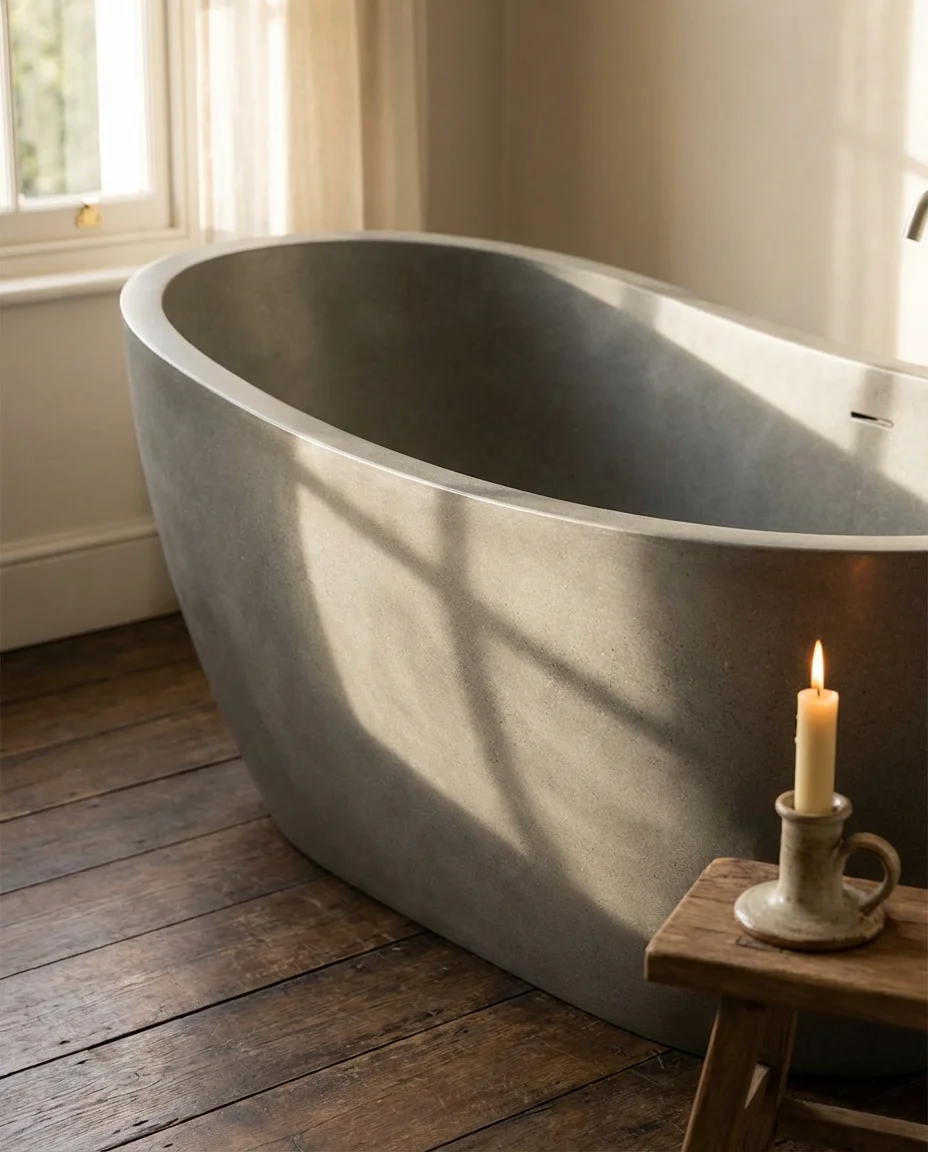
The freestanding soaking tub remains the ultimate farmhouse bathroom aspiration, and the master bath design conversation almost always circles back to it. In 2026, the shapes have shifted from classic clawfoot toward more sculptural forms—slipper tubs with a gentle asymmetry, Japanese-inspired soaking vessels in matte stone composite, and oval freestanding designs in pure white that look almost architectural. Positioned beneath a window or against a statement wall, the tub becomes the room’s entire reason for being.
Real homeowners who’ve made the jump to a freestanding tub almost universally report that they use it far more than they expected to—it changes the psychology of the bathroom from a utility space to a destination. The practical consideration most people miss is the floor drain requirement: freestanding tubs should always be positioned near a floor drain for overflow and cleaning purposes, a detail that requires planning at the rough plumbing stage.
12. Inspiration From Japanese Wabi-Sabi Styling
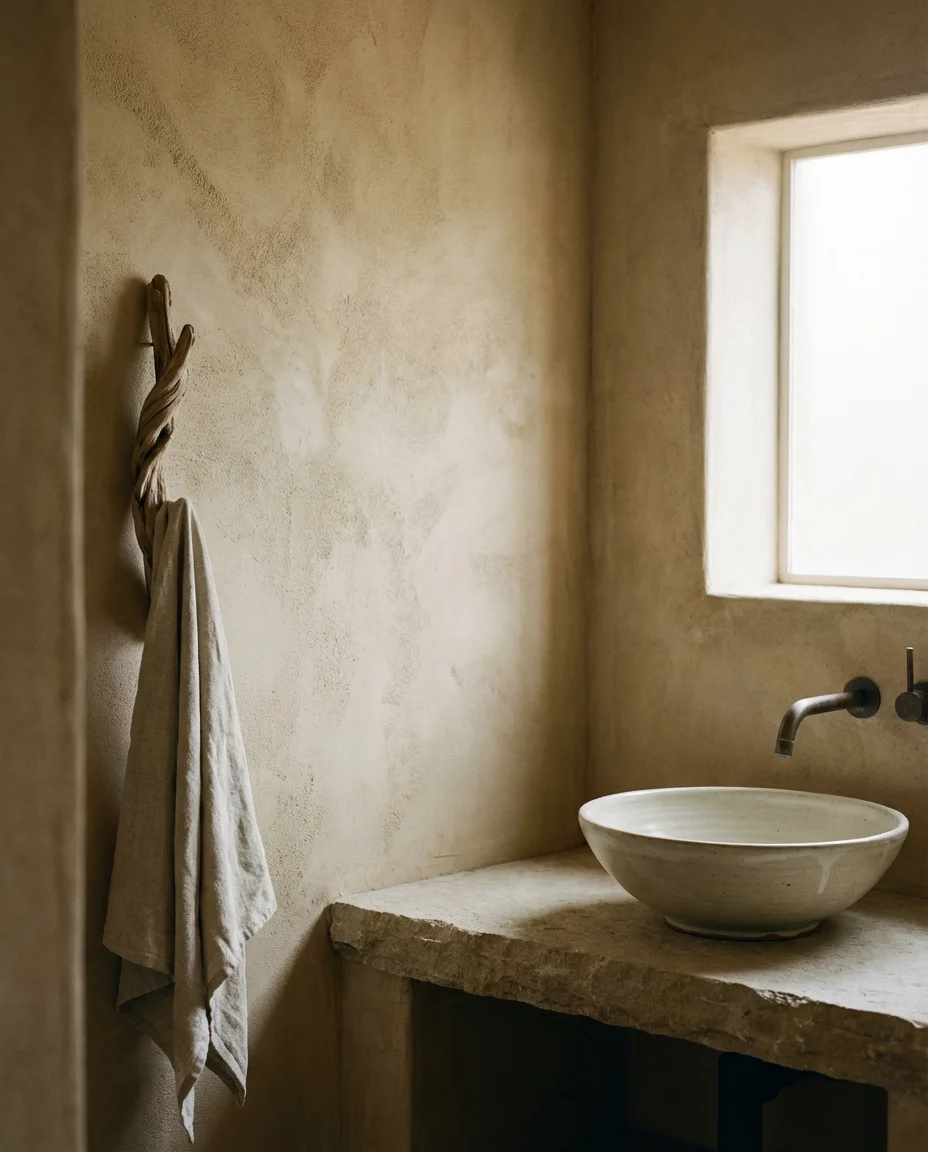
One of the most interesting places farmhouse bathroom inspiration is drawing from right now is Japanese wabi-sabi—the aesthetic philosophy that finds beauty in imperfection, age, and natural materials. Rough plaster walls, hand-thrown ceramic accessories, irregular stone basins, and linen window coverings all carry that quality of being beautifully, intentionally imperfect. When layered with Western farmhouse warmth, the result feels deeply grounded and completely original.
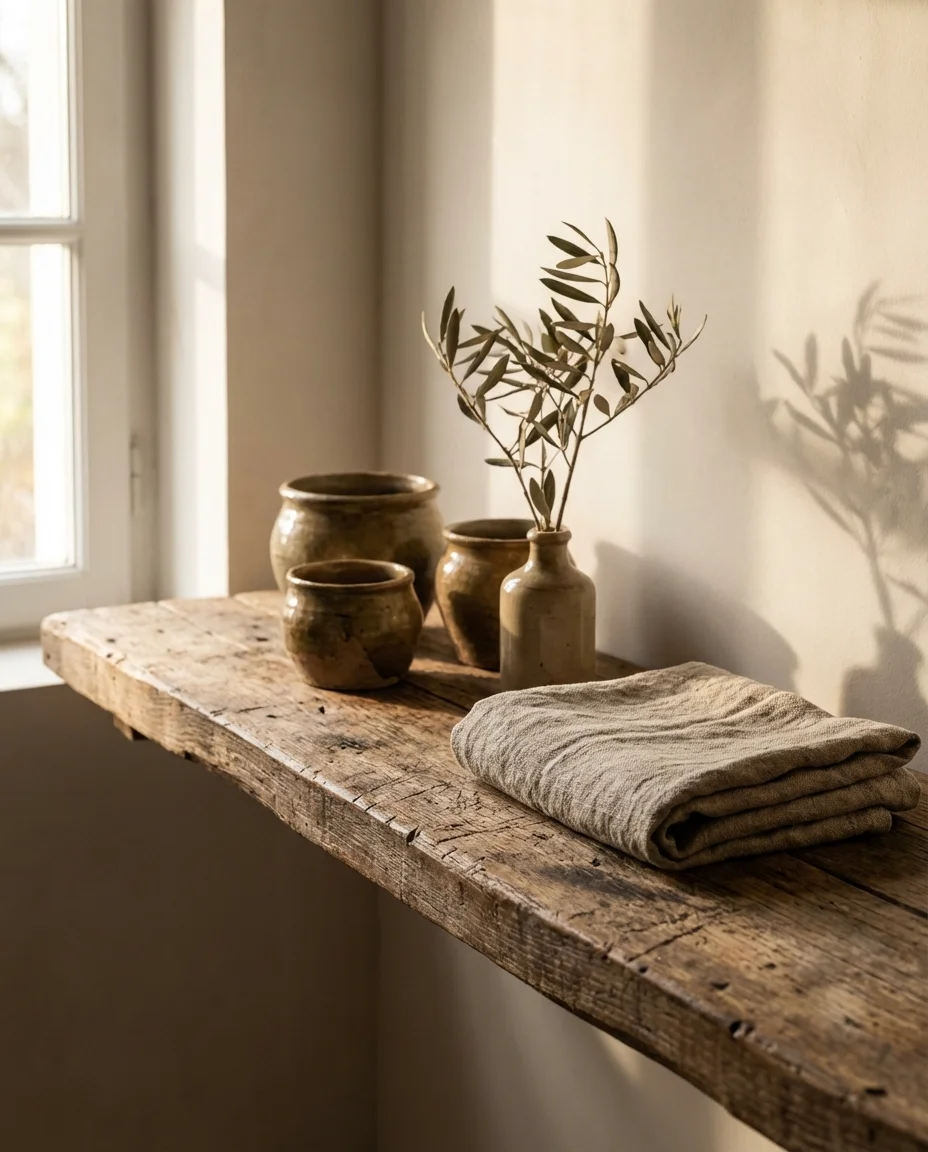
This aesthetic works best when you resist the urge to over-curate. The moment a wabi-sabi bathroom becomes too styled or symmetrical, it loses the thing that makes it special. Choose materials that have inherent variation—handmade tile, rough-edged stone, woven textiles—and let them do the work. A seasoned interior stylist put it simply: “Stop buying perfectly matching sets and start collecting things you actually love.”
13. Cozy Lighting Layers for an Intimate Atmosphere
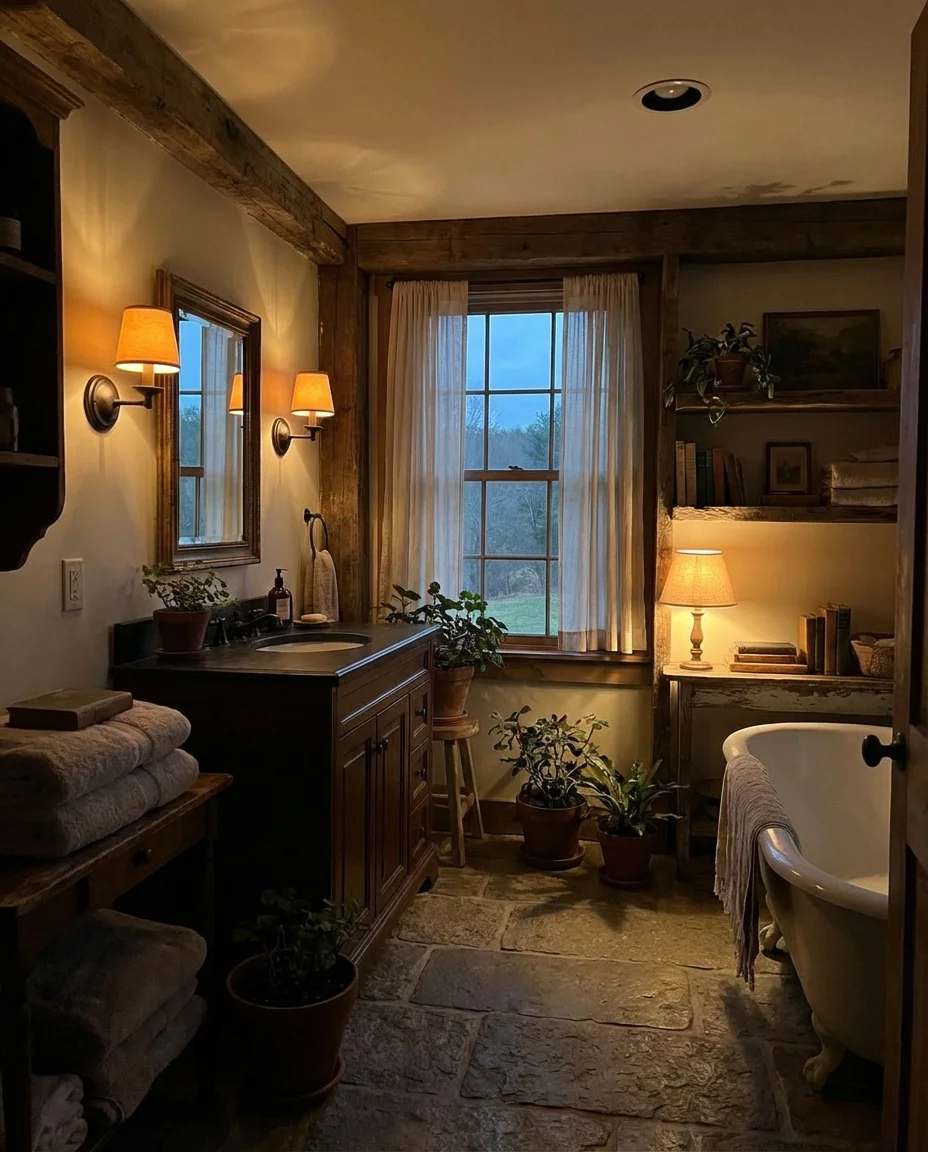
A cozy farmhouse bathroom doesn’t happen by accident—it’s almost always the result of intentional layered lighting. The combination of warm-toned overhead ambient light, side-mounted vanity sconces, and one or two accent sources (a small table lamp on the edge of a tub deck, a candle-lit niche) transforms a bathroom from a task-oriented space into something genuinely restorative. This is especially true in bathrooms that double as evening wind-down spaces.
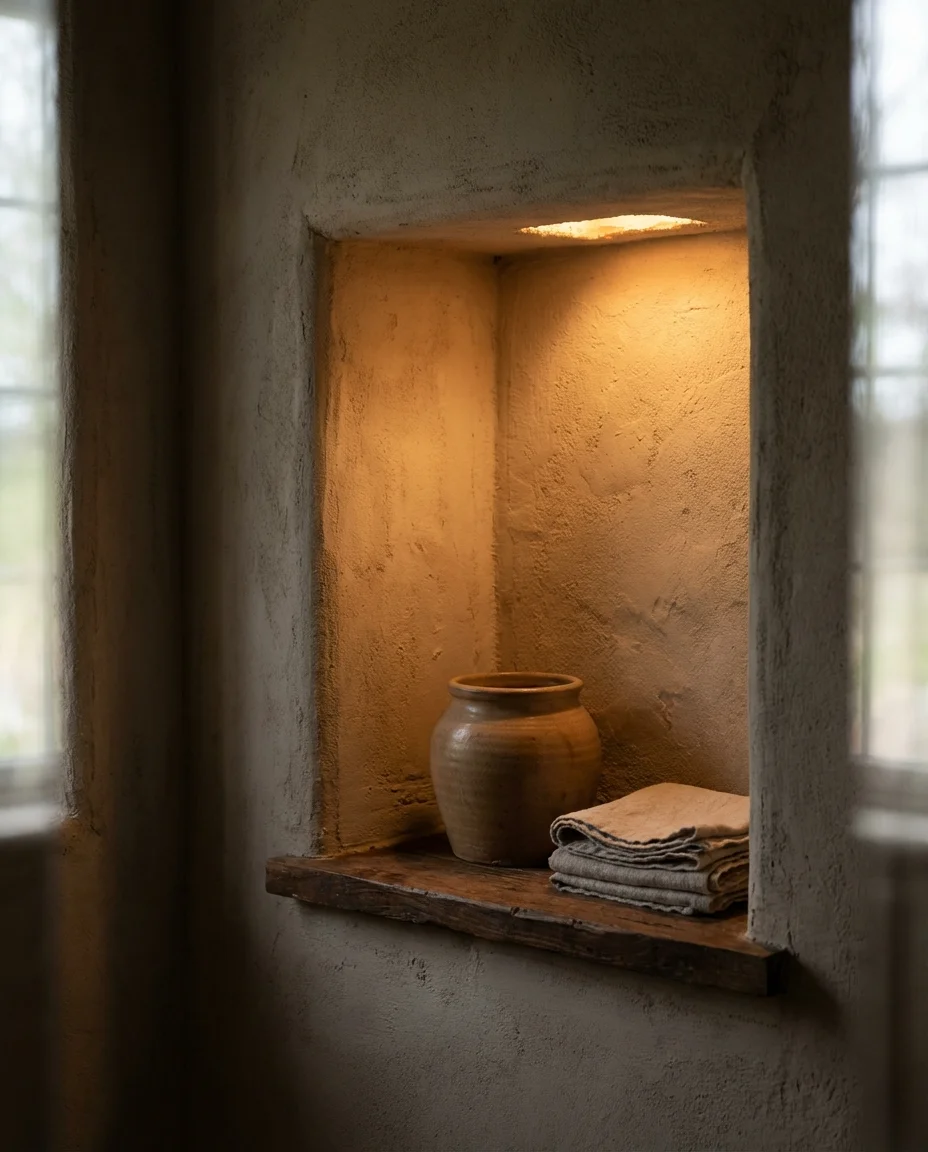
Where this works best is in primary bathrooms where the occupants actually want to spend time—reading, soaking, or just decompressing. Installing dimmer switches on every circuit is non-negotiable; the ability to shift from bright task lighting during the morning routine to low amber warmth in the evening is the single most impactful adjustment you can make to a bathroom’s atmosphere without touching a tile.
14. Shiplap Done Differently
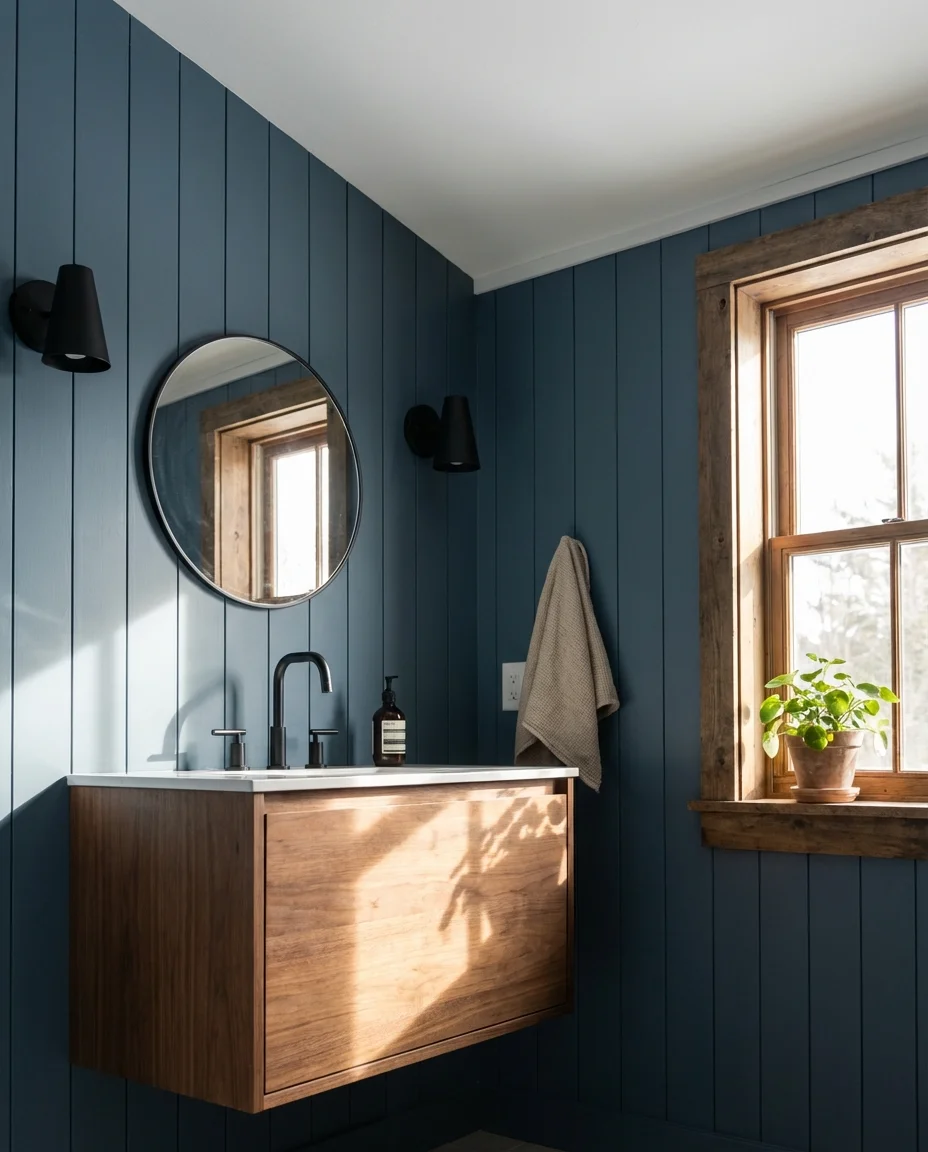
Shiplap isn’t going anywhere—but the way designers are using it in 2026 has evolved considerably from the accent wall moment of a few years ago. The freshest approaches treat shiplap more architecturally: wrapping it around the entire room at chair-rail height and pairing it with a contrasting color above, or running it vertically rather than horizontally for a more elongated, formal effect. Design ideas that treat shiplap as a structural element rather than a decorative flourish feel significantly more considered.
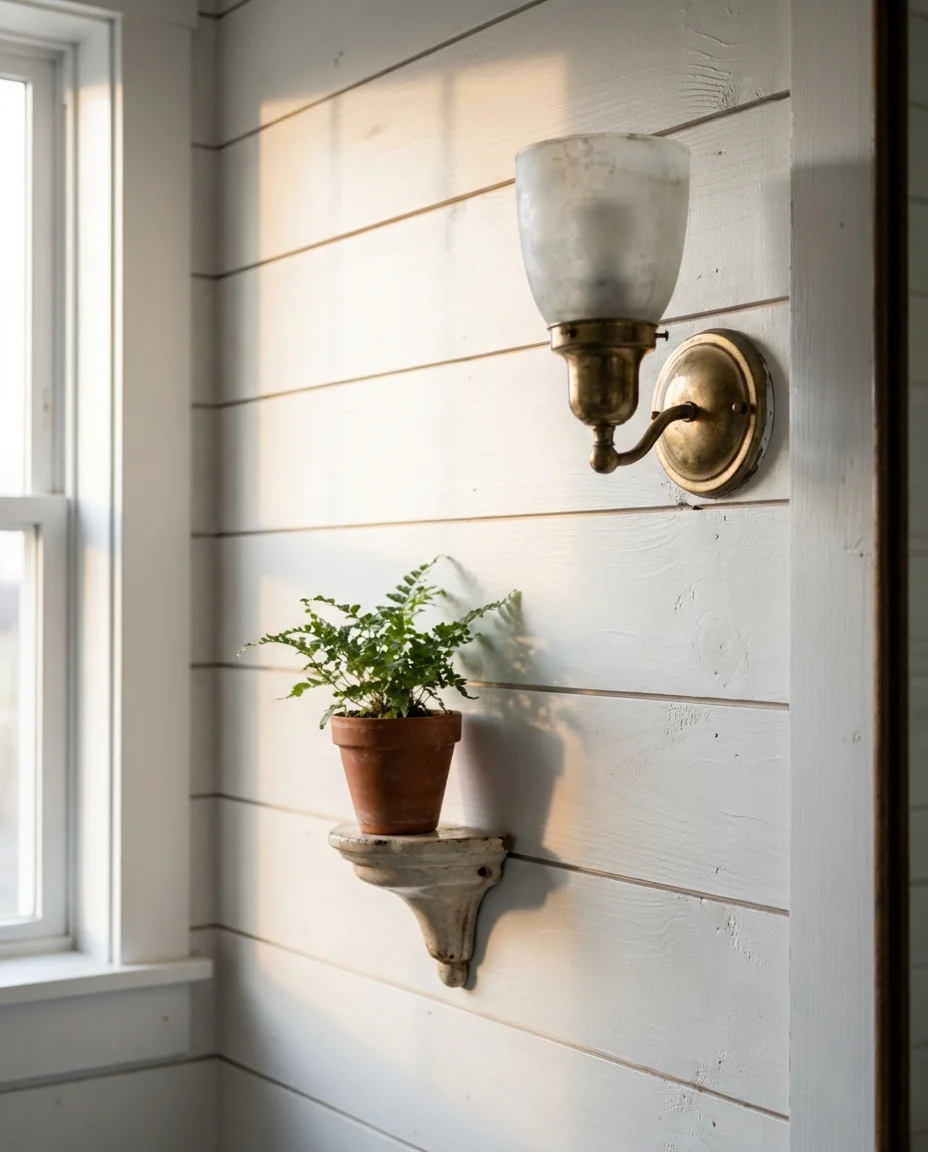
One common mistake is installing shiplap in bathrooms without proper moisture barriers and paint sealing. Bathrooms are high-humidity environments, and wood that isn’t properly protected will eventually warp, separate, or develop mold behind the boards. Using a high-quality primer, two coats of semi-gloss or satin paint, and ensuring adequate ventilation will protect your investment and keep the walls looking sharp for years.
15. Black Accents That Anchor the Whole Room
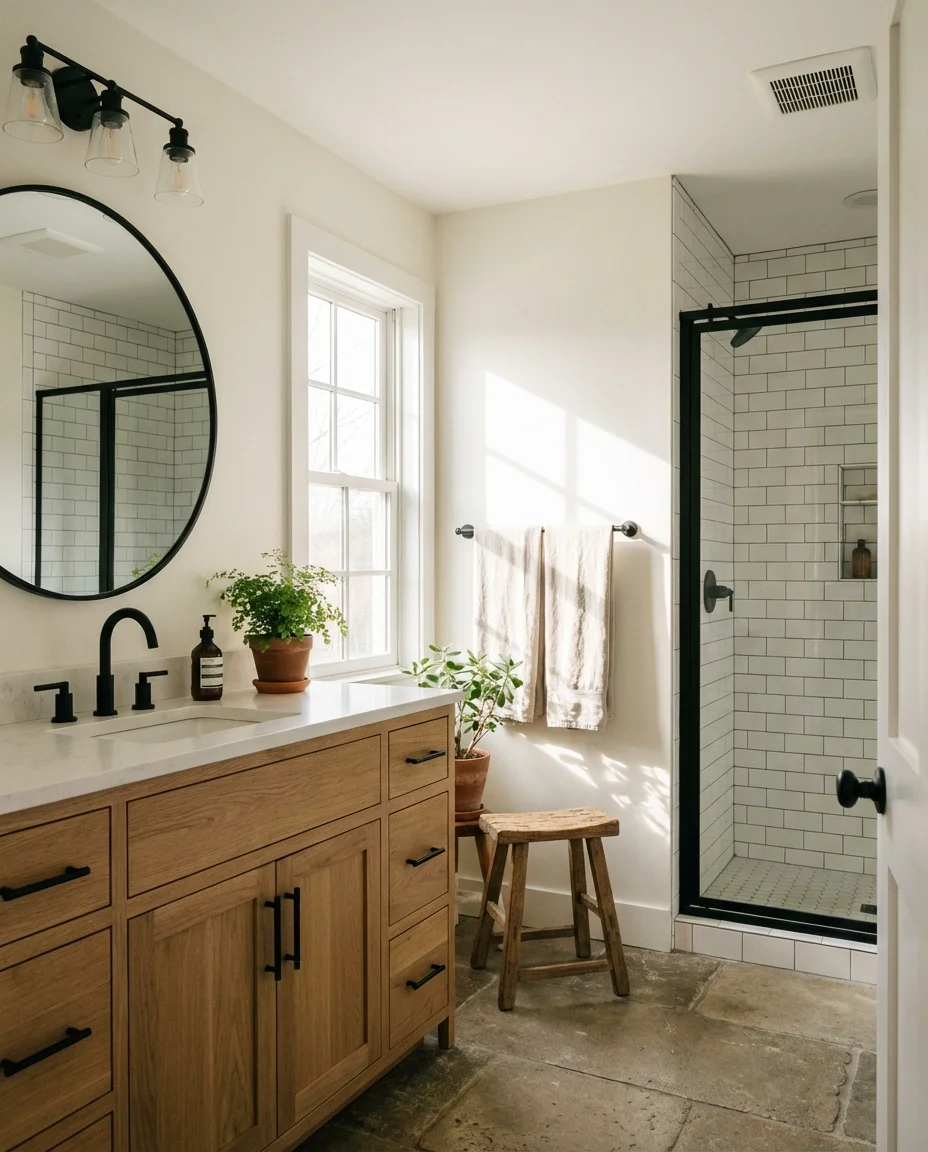
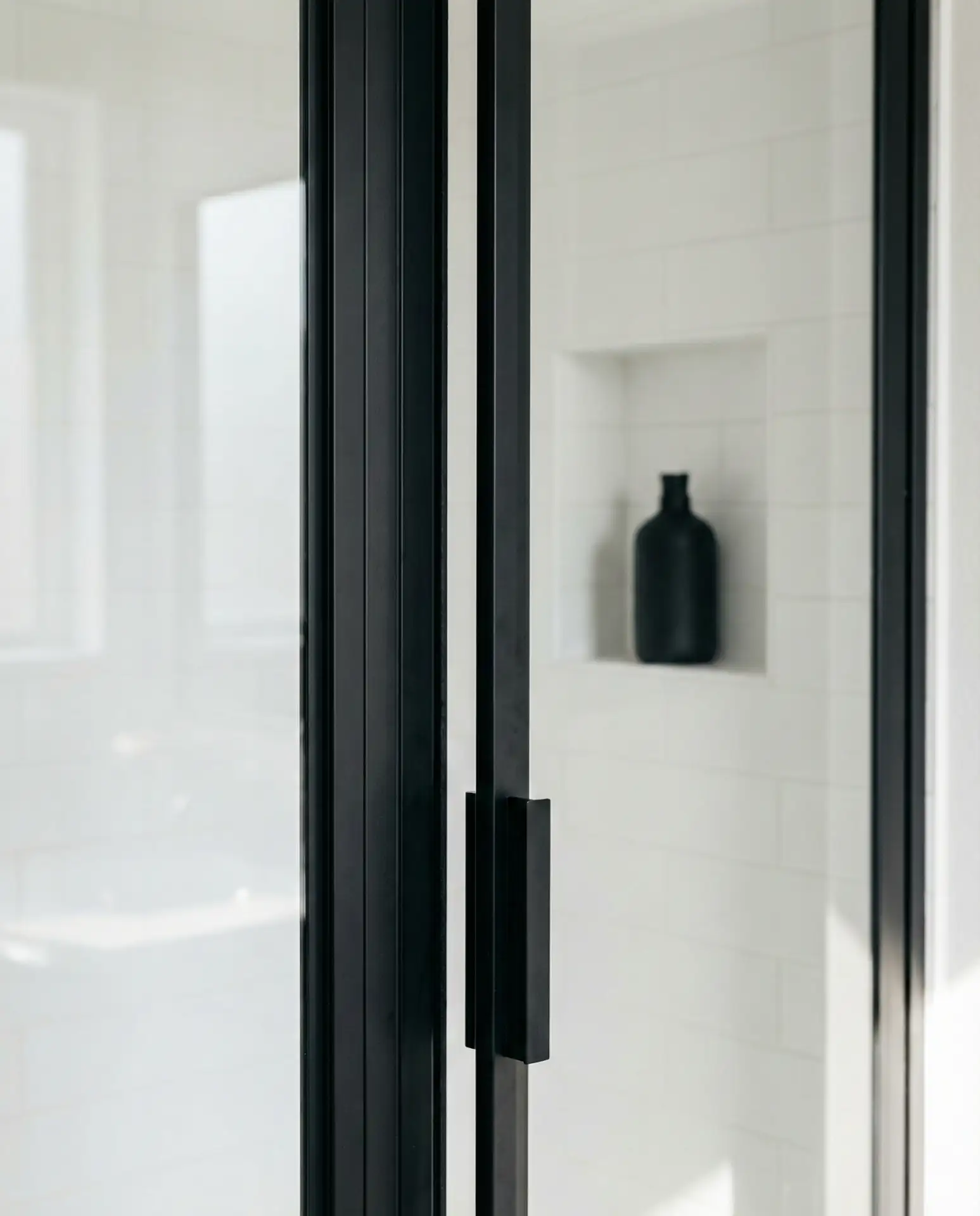
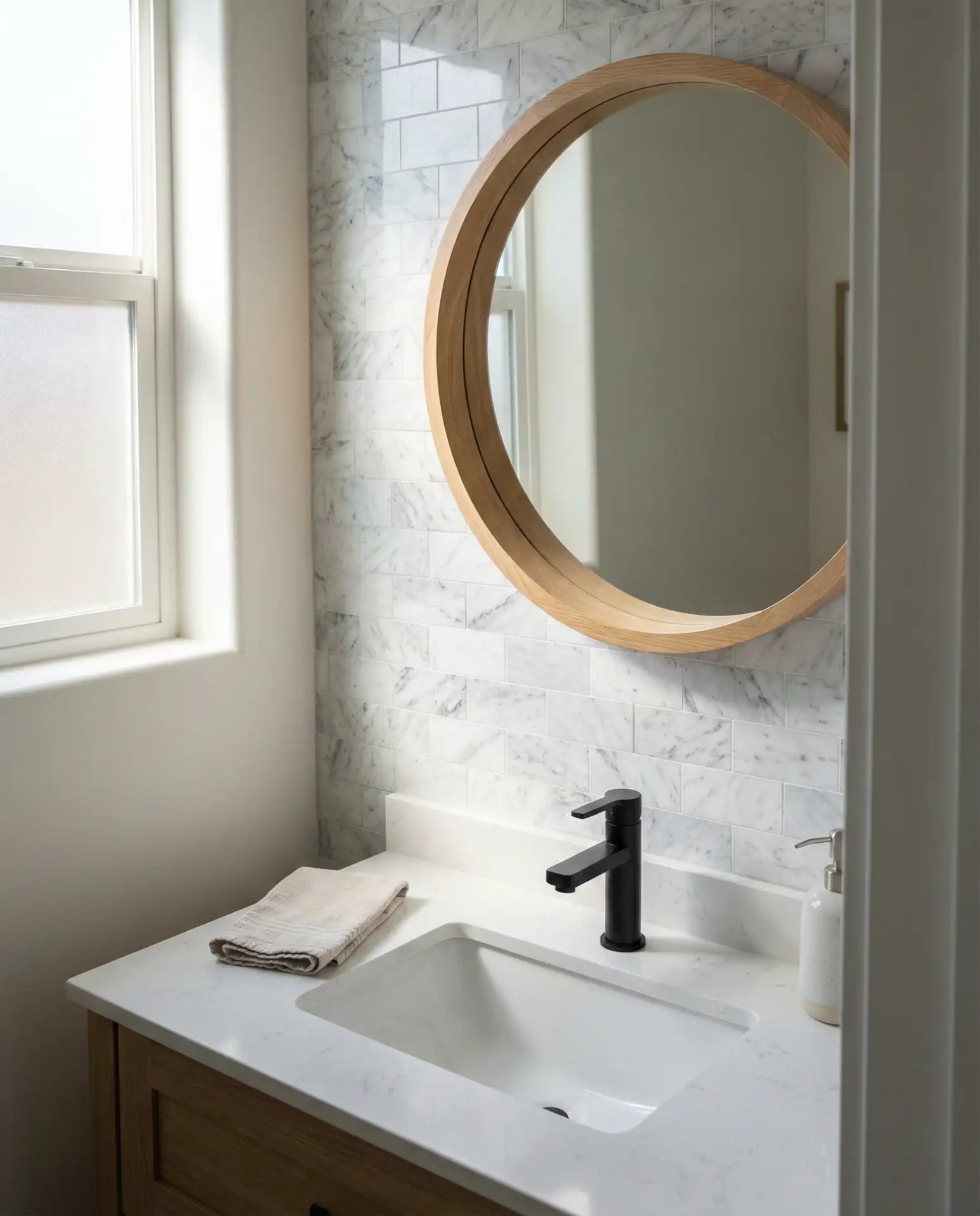
Matte black hardware and fixtures have become the defining farmhouse bathroom accent of this decade, and they continue to dominate in 2026 — not because they’re trendy, but because they work. Against white subway tile, warm wood, or creamy plaster, dark matte black elements—faucets, towel bars, shower frames, and cabinet pulls—act as visual anchors that give the room a sense of intentionality and edge. Without them, even a beautifully designed farmhouse bathroom can read as unfinished.
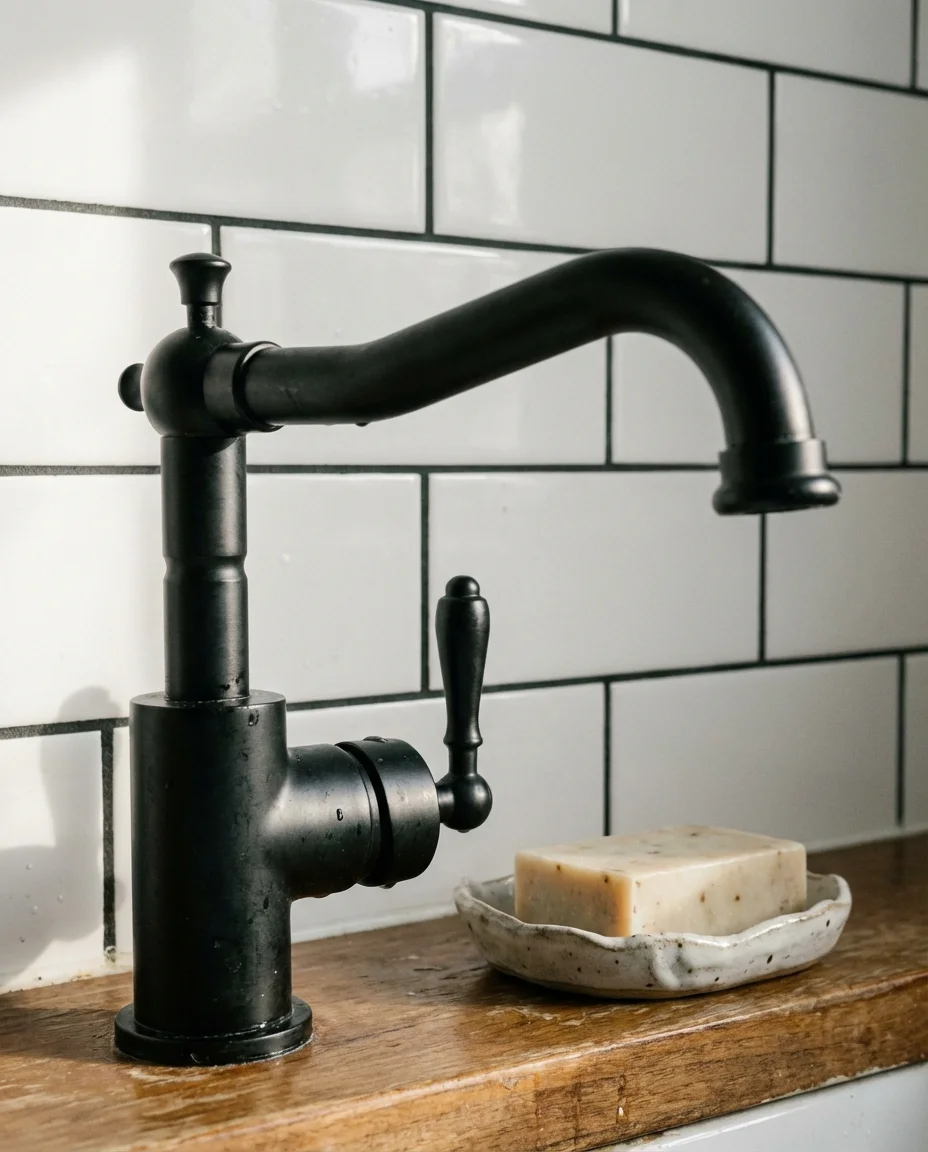
One thing worth knowing: not all matte black finishes are created equal. Lower-cost options from big-box retailers can show water spots and mineral deposits more easily than premium powder-coated or PVD-finished fixtures. If you’re investing in a long-term renovation, spending more on hardware is almost always worth it—fixtures are touched daily, and the quality difference becomes obvious within the first year of use.
16. Chic Powder Room With Big Personality
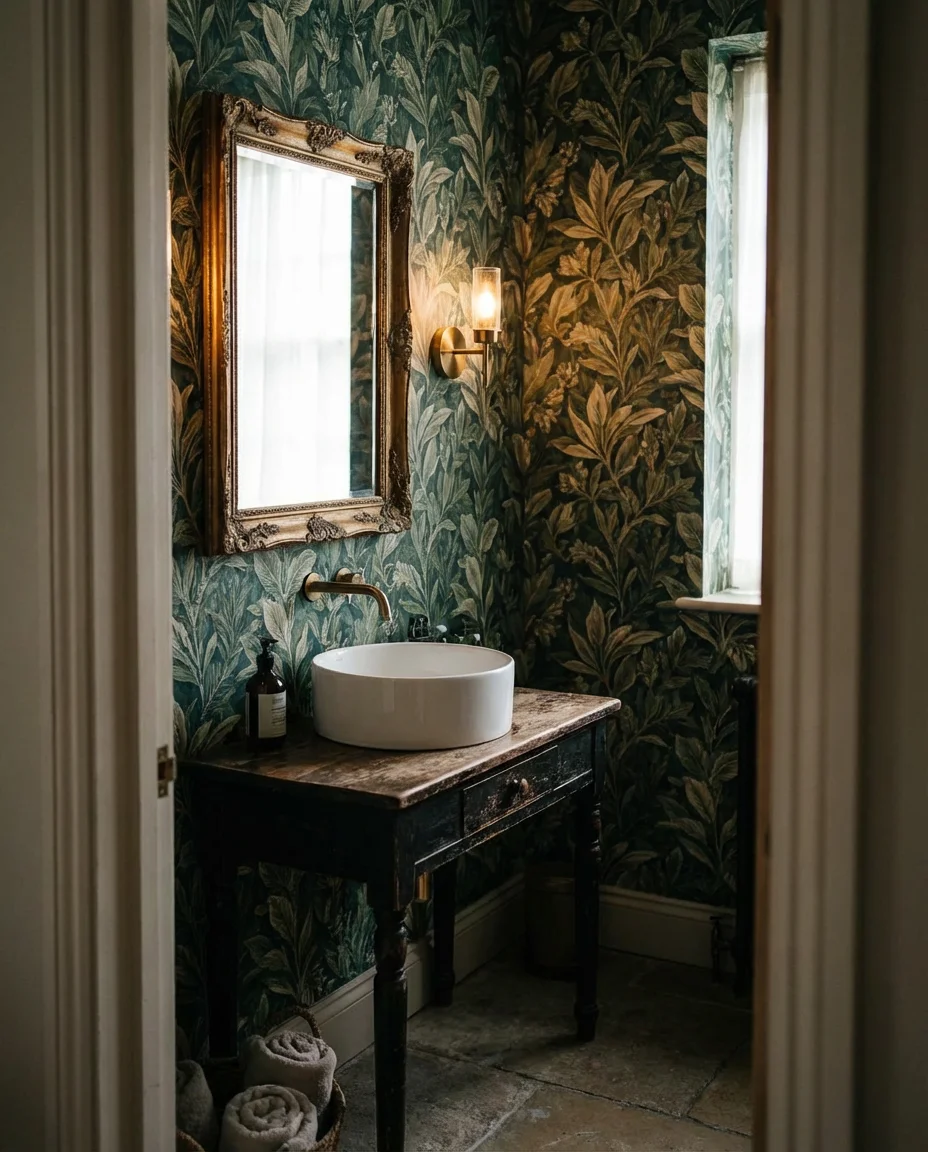
The powder room is the farmhouse home’s best opportunity to take a risk, and the results coming through on Pinterest right now are extraordinary. Ideas for chic powder rooms are going bold in ways the rest of the house can’t—dramatic wallpaper in botanical or maximalist patterns, a single statement vessel sink, an unusual antique mirror, or a completely unexpected paint color that would feel overwhelming elsewhere. Because the space is so small and guests visit it briefly, it can absorb a lot of personality.
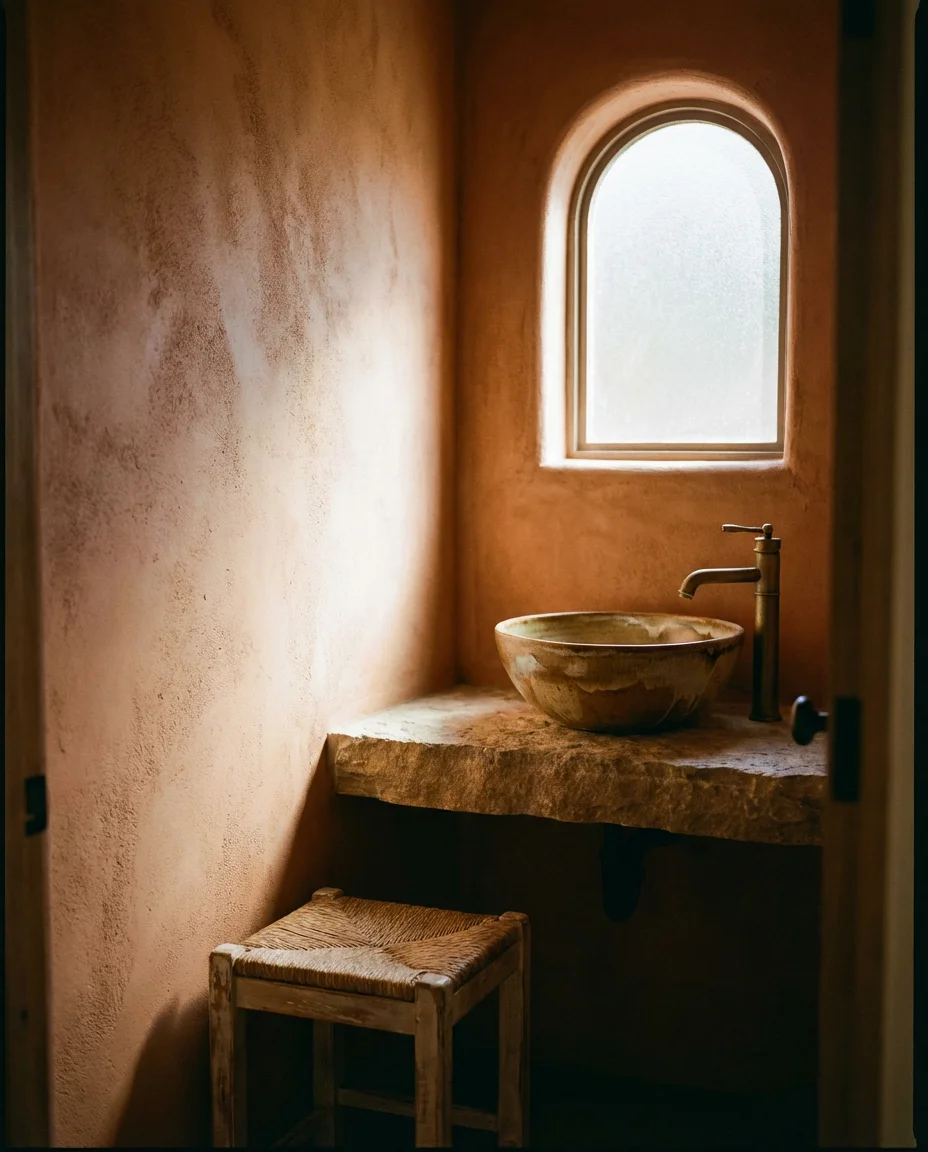
A designer based in Charleston put it perfectly during a home tour: “The powder room is the one room in the house where you can do something completely insane, and people will think you’re a genius for it.” With square footage typically under 30 square feet, the material cost of even premium wallpaper or tile is manageable—making this room the ideal place to splurge on that one material you love but couldn’t justify elsewhere.
17. Reclaimed Wood Details That Tell a Story
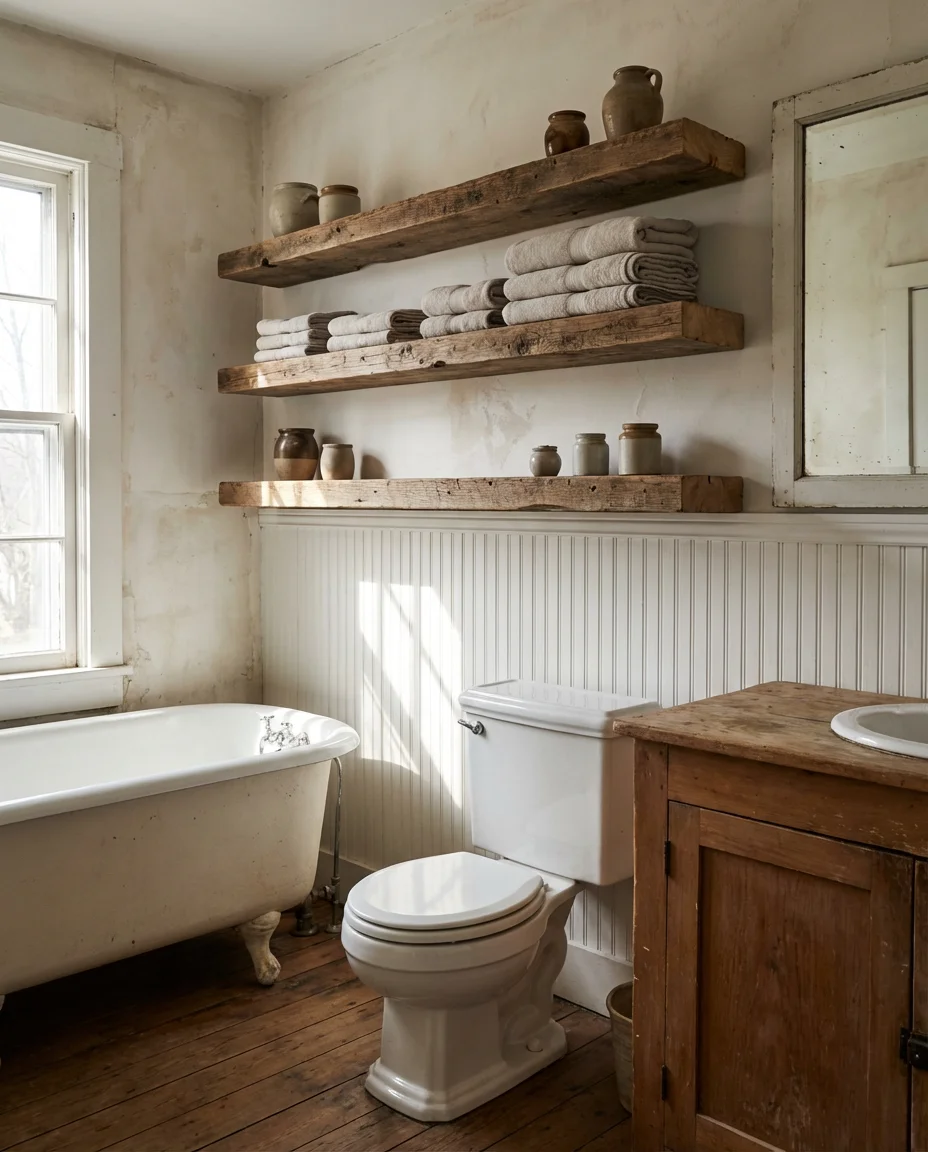
Nothing grounds a farmhouse bathroom quite like the presence of real, aged wood—and reclaimed timber brings a depth of character that no new material can replicate. Whether used for a floating shelf above the toilet, a custom mirror frame, a single accent wall, or a built-in towel niche, reclaimed wood carries visible history in its grain patterns, nail holes, and natural weathering. This detail alone can transform a bathroom from aesthetically competent to genuinely soulful.
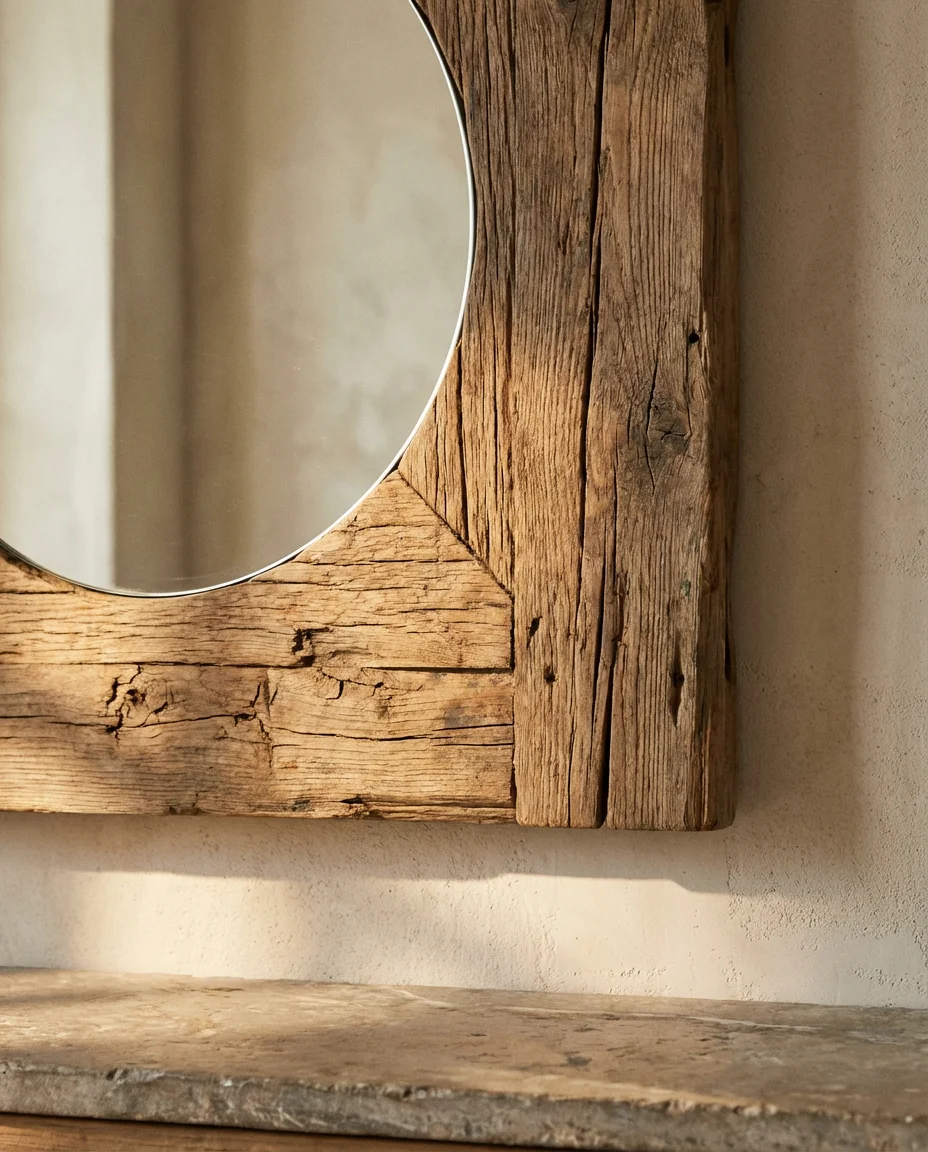
Sourcing reclaimed wood has become easier in recent years—architectural salvage shops, local Craigslist listings, barn demolition sales, and specialty suppliers all offer excellent options at varying price points. Before bringing reclaimed wood into a moisture-heavy environment, it should be fully dried, cleaned, treated for pests if necessary, and sealed with a water-resistant finish. Properly prepared, it’s as practical as any store-bought material.
18. Floor Tile Patterns That Become the Art
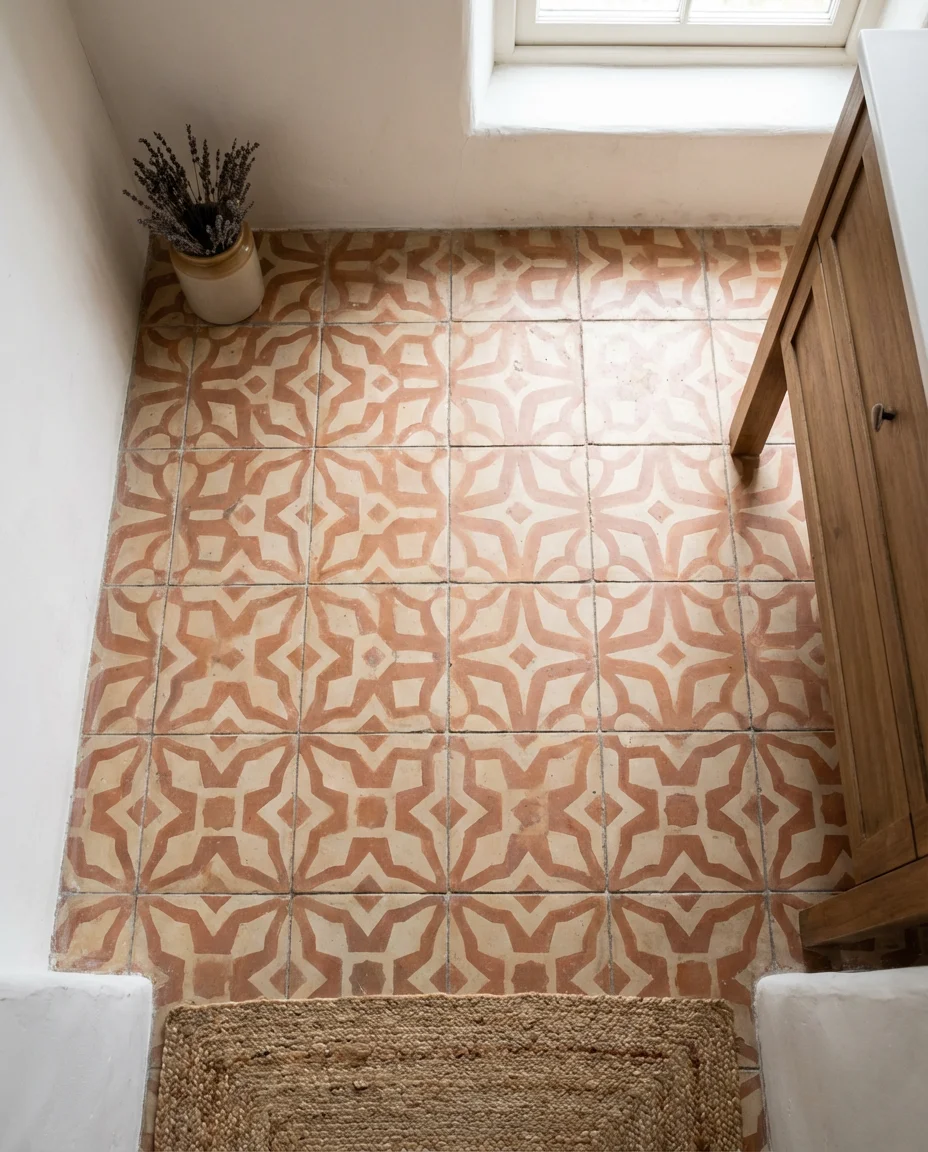
Patterned floors are one of the most searched farmhouse bathroom categories on Pinterest for good reason—they do enormous visual work with relatively modest investment. Floor tile ideas in this lane include encaustic cement tile in muted terracotta and cream, classic black-and-white checkerboard in a smaller scale, and intricate Moroccan-inspired motifs that bring global warmth to a domestic setting. The key is choosing patterns with enough visual complexity to read as intentional but not so busy they compete with everything else in the room.
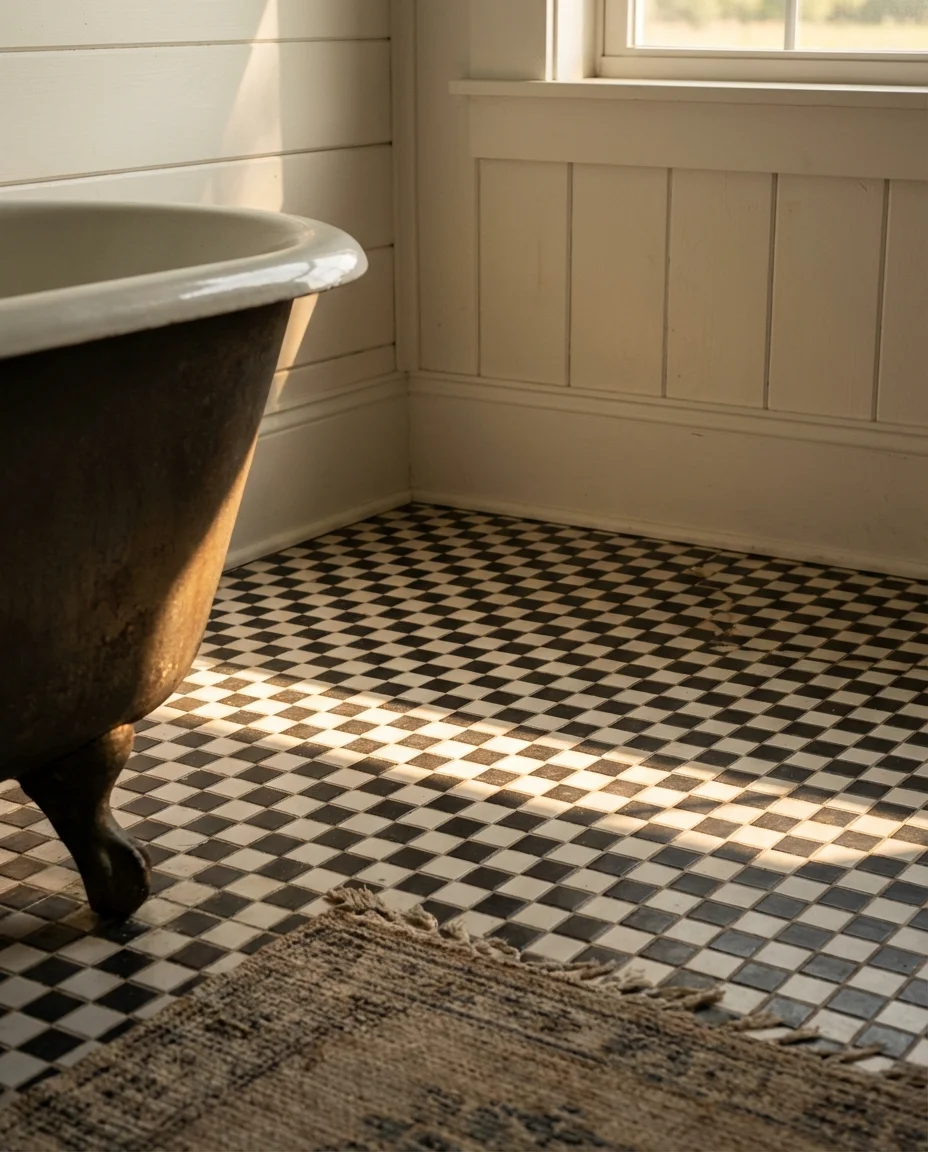
Cement tile requires sealing before installation and periodic resealing over time—a maintenance commitment that some homeowners overlook. A good penetrating sealer applied before grouting and again after installation will protect the surface from moisture and staining for years. If you love the look but prefer lower maintenance, high-quality porcelain tiles that convincingly mimic encaustic patterns are widely available and considerably more forgiving.
19. Built-In Niches and Cubbies for Quiet Organization
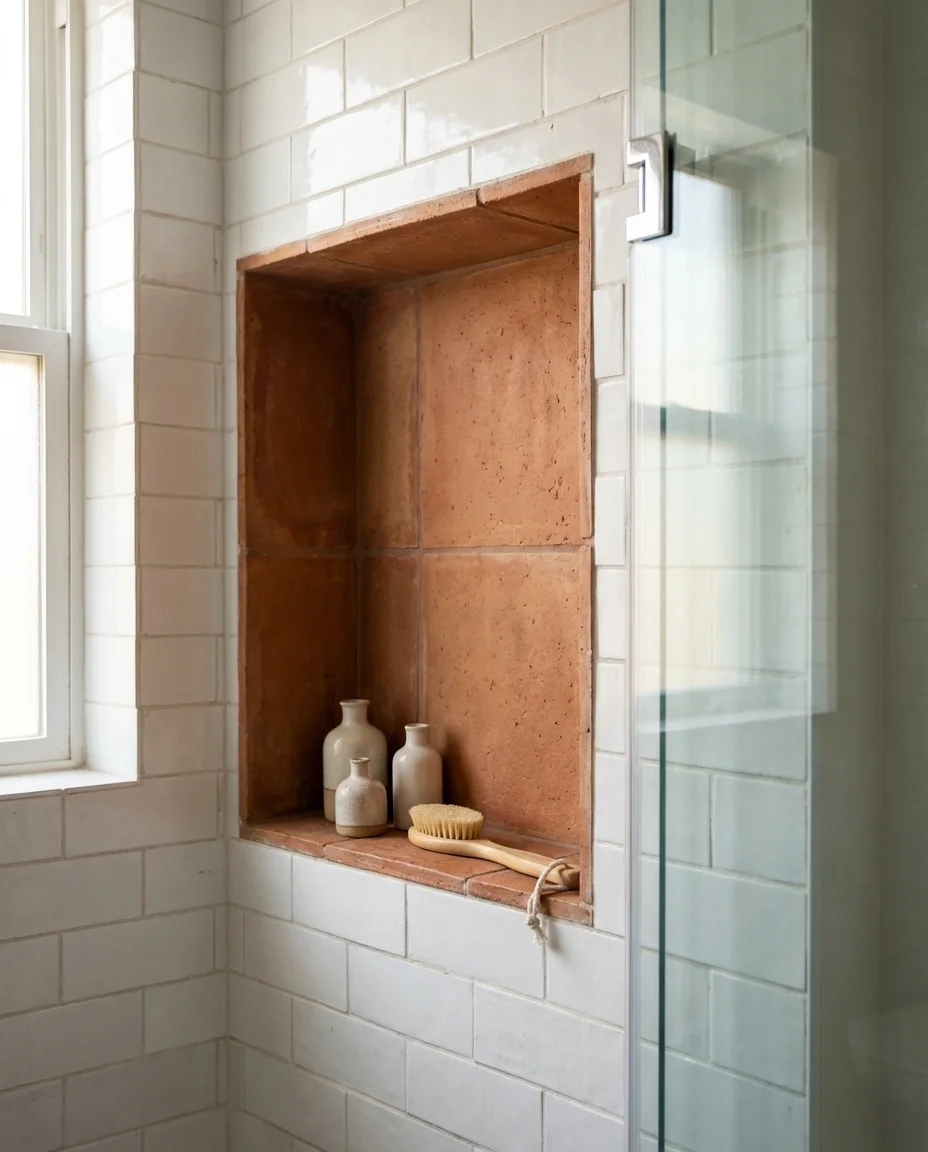
Smart storage design is a hallmark of a well-planned farmhouse bathroom, and built-in niches are the most elegant solution available. Recessed into the shower wall or above the toilet, these small architectural moments serve a practical purpose while contributing quiet visual interest. Tiled to match the surrounding wall or finished in a contrasting material—a single row of zellige, a slab of marble, or handmade tile—a built-in niche rewards the eye without demanding attention.
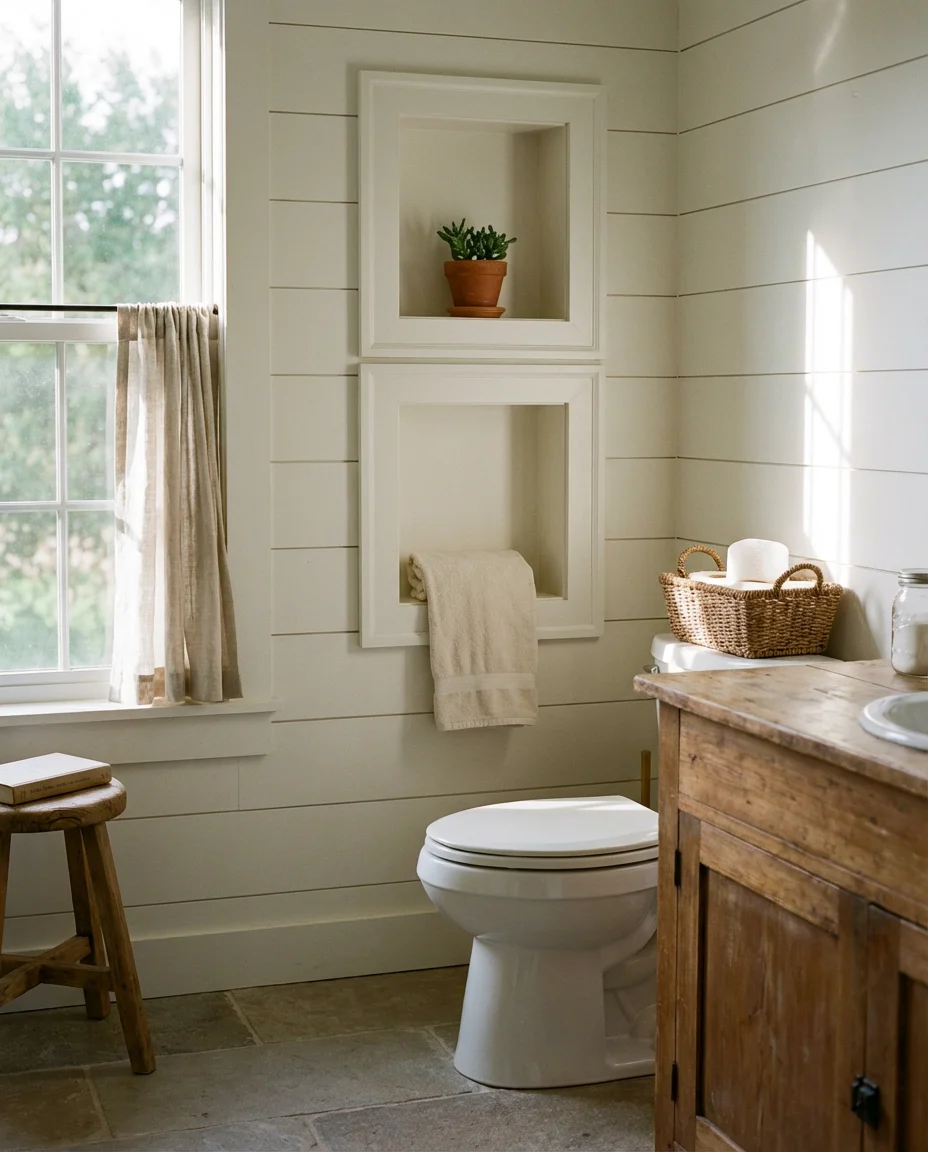
Built-in niches need to be planned at the framing stage of construction—they require cutting between wall studs, which means they work only in non-load-bearing walls. This is one reason why many homeowners discover the possibility too late in a renovation. If you’re doing any bathroom work that touches the walls, talk to your contractor about niches early, before drywall goes up. Adding them later is significantly more disruptive and expensive.
20. Warm Neutral Paint Colors With Depth
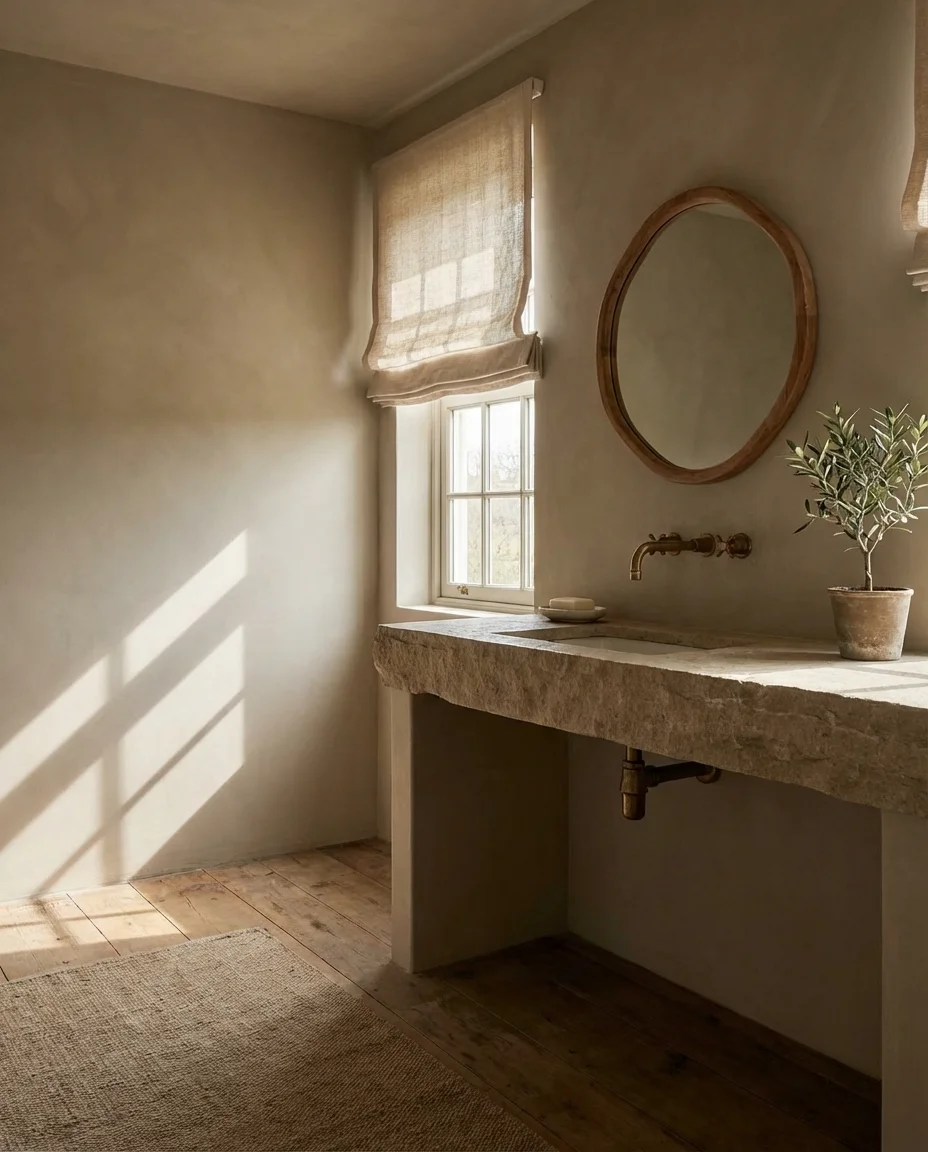
Beyond white and green, the paint colors drawing the most attention for farmhouse bathrooms in 2026 are warm neutrals with genuine depth—greige tones with clay or ochre undertones, soft camel and wheat shades, and the earthy beiges that read almost like natural plaster. These colors provide warmth without committing to a specific hue, making them ideal for homeowners who want an organic, grounded feeling without the risk of going too bold.
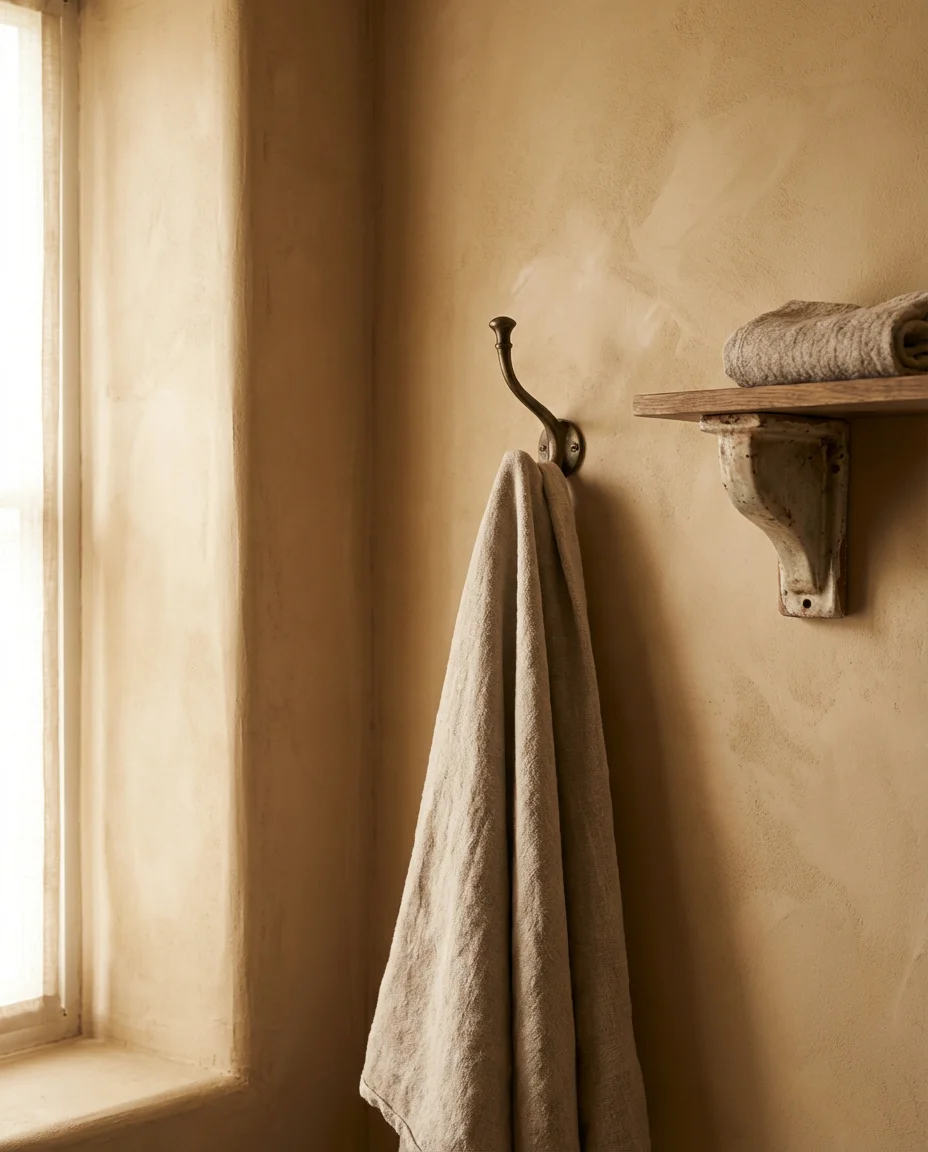
The American Midwest and South have been particularly drawn to these warm neutral palettes, partly because they complement the warm wood tones common in regional construction and partly because they feel inherently welcoming—important in cultures where the home is a place of active social life. Colors in this family include Sherwin-Williams Accessible Beige, Benjamin Moore Pale Oak, and the increasingly popular Behr Cracked Wheat, all of which perform beautifully under both natural and artificial light.
21. The All-Tile Shower for a Seamless Look
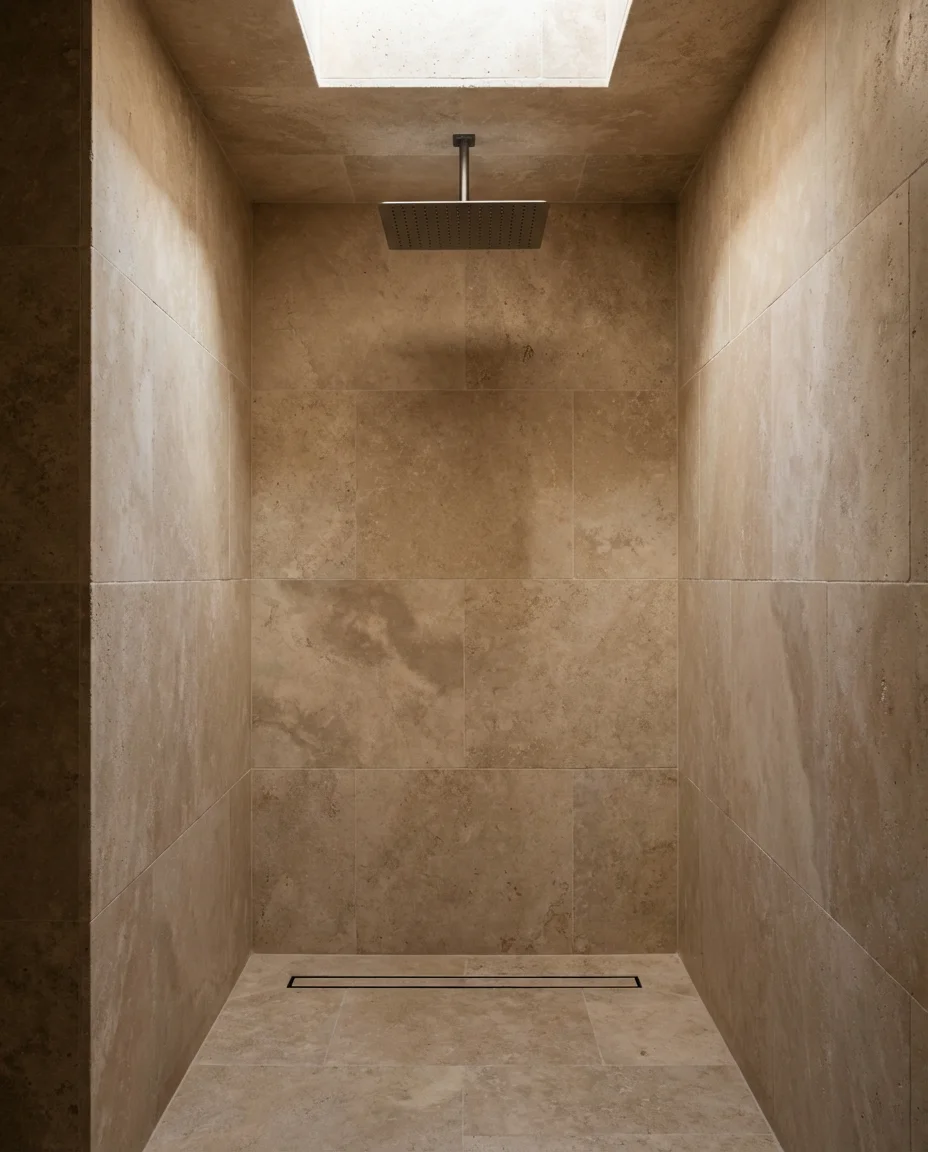
Among the most aspirational shower formats circulating on Pinterest right now is the fully tiled enclosure, where walls, floor, and even the ceiling are covered in the same material—creating an immersive, cocoon-like bathing environment. Tile ideas for this approach range from simple large-format stone-look porcelain running continuously from floor to ceiling to more intricate handmade tile that transforms the shower into something closer to a piece of craftsmanship than a bathroom fixture.
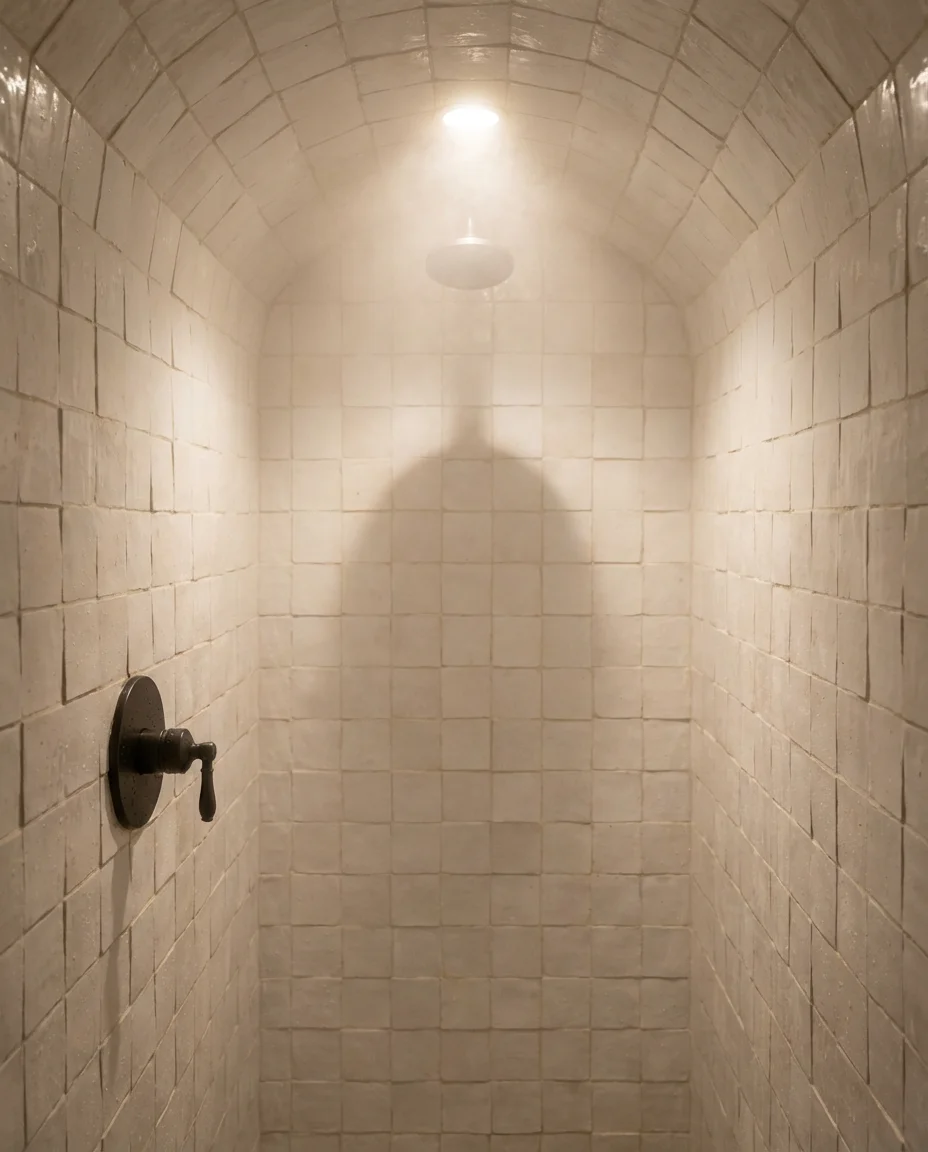
This design requires absolutely precise waterproofing beneath the tile—membranes, schluter systems, or RedGard applied correctly over every surface. It’s one of the most technically demanding elements of a bathroom renovation, and cutting corners at this stage leads to moisture intrusion behind tiles that can remain undetected for years. A fully tiled shower is a long-term investment that pays off visually and functionally when executed with care.
22. Soft Textiles That Transform the Mood Instantly
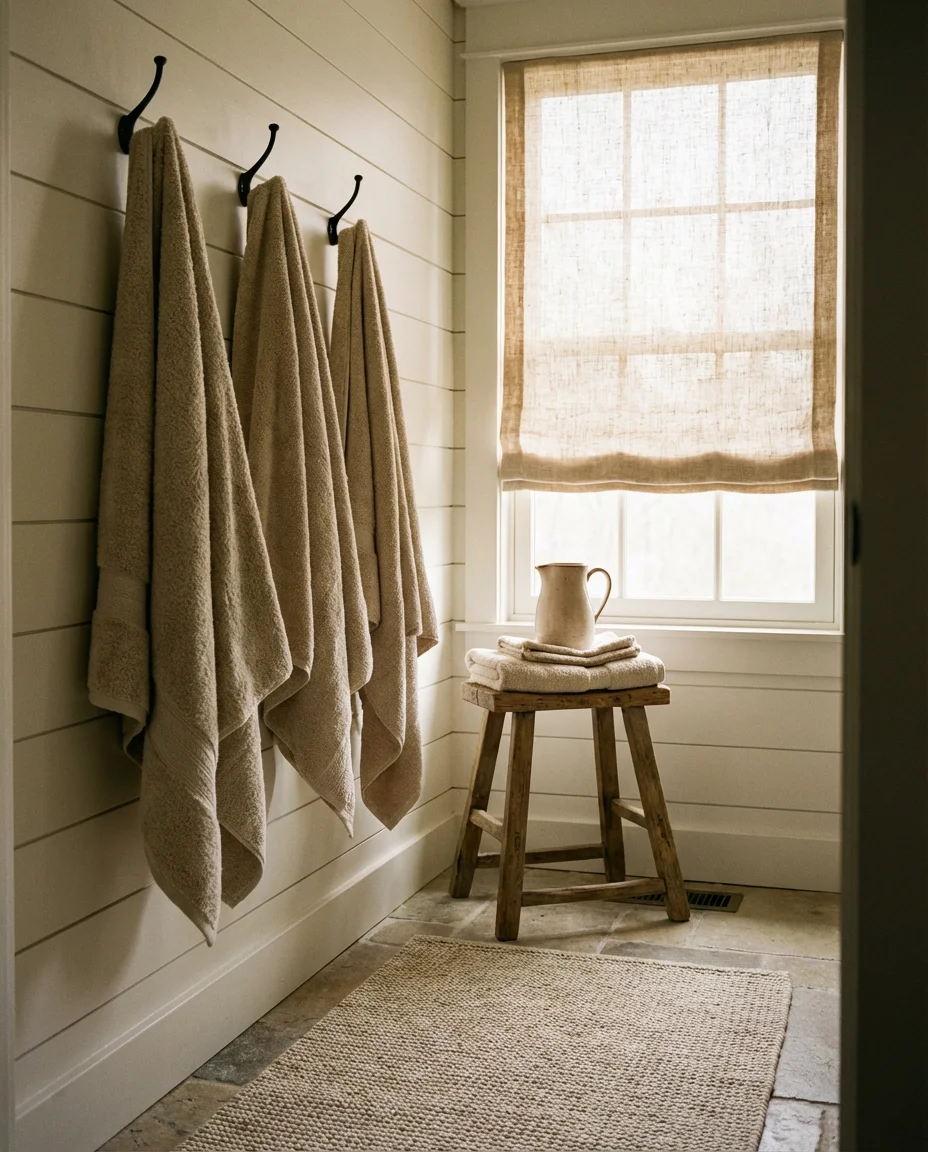
One of the most underestimated tools in farmhouse bathroom design is fabric—and the right textiles can shift a bathroom’s entire feeling without changing a single permanent fixture. Thick Turkish cotton bath towels in warm oatmeal, sage, or rust tones; a loosely woven linen window shade; a washable cotton bath rug with a subtle texture; and even a simple linen-blend shower curtain all contribute to that layered, lived-in warmth that’s impossible to achieve with hard surfaces alone.
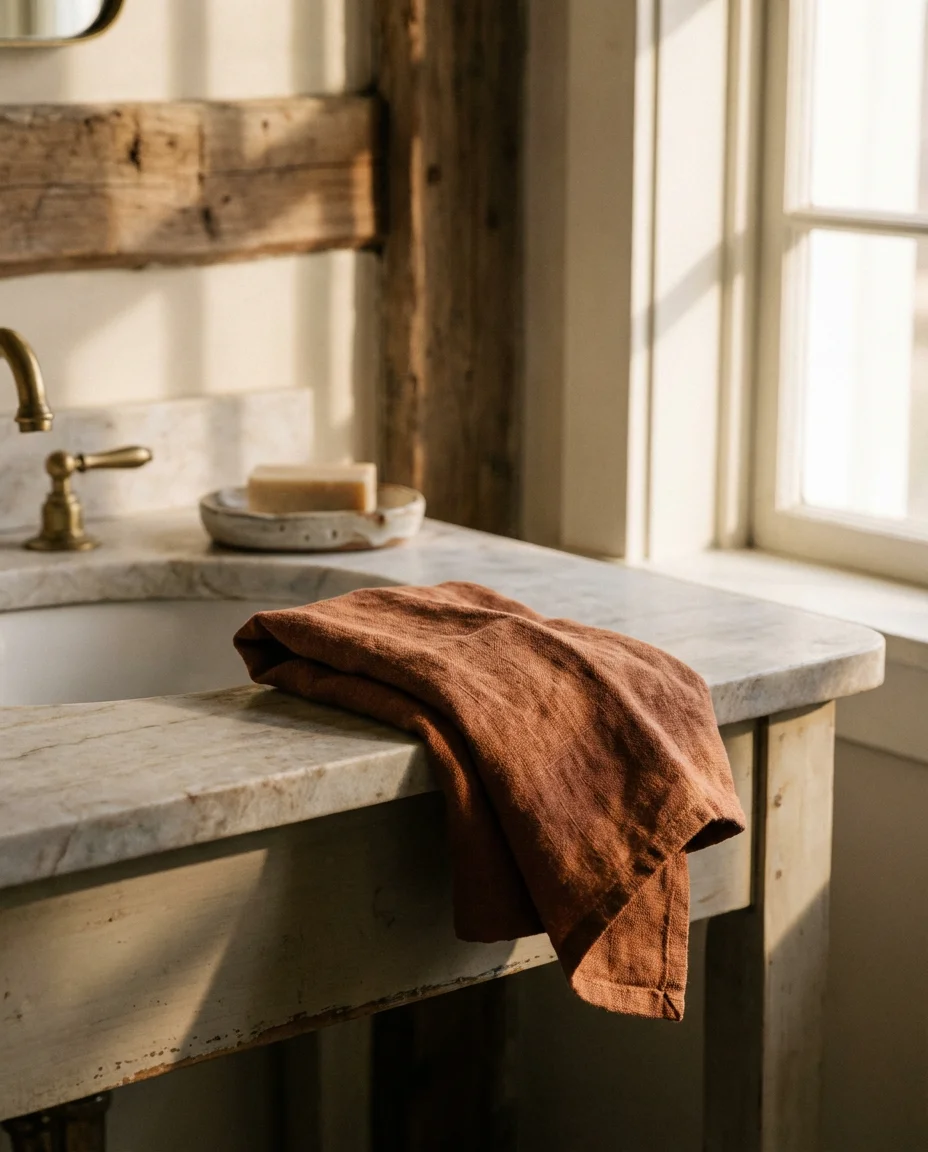
Textiles are where seasonal refreshes happen in a farmhouse bathroom—and the cost is almost nothing compared to any structural change. Swapping towels from warm oatmeal in winter to soft sage or bleached linen in spring takes five minutes and genuinely changes how the room feels. Many interior stylists treat bathroom textiles the same way they treat throw pillows in a living room: small investment, large impact, and easy to change your mind.
23. The Bloxburg-Inspired Aesthetic That Went Real-Life
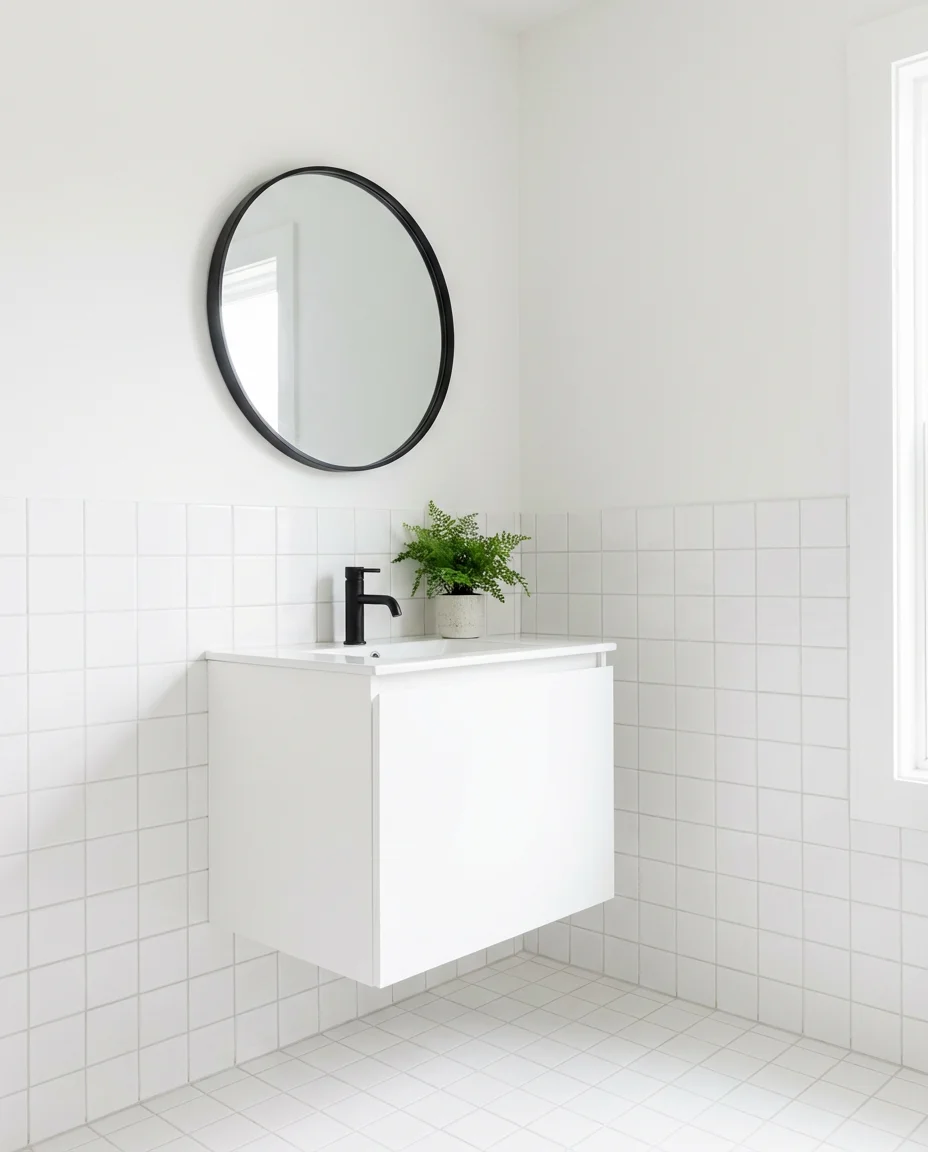
If you’ve spent any time on Pinterest or YouTube in the past few years, you’ve encountered the Bloxburg aesthetic—the Roblox-based house-building game that has inspired a whole generation of young homeowners and renters with its clean, aspirational farmhouse interiors. What started as a digital design impulse has translated into very real decorating decisions: clean lines, white-on-white palettes, simple black accents, and the kind of deliberate simplicity that looks effortlessly put-together. It’s a genuinely new entry point into farmhouse bathroom design.
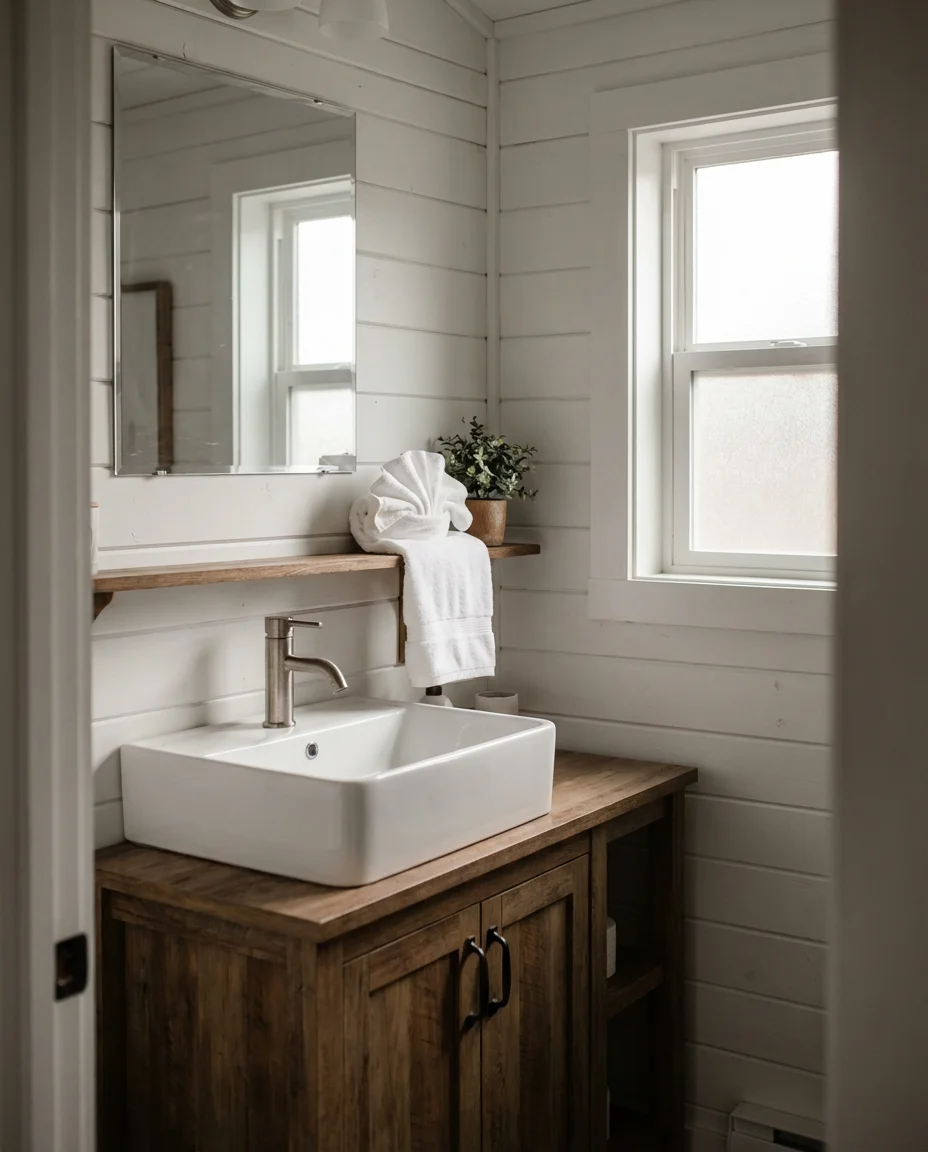
This aesthetic is particularly popular with first-time renters and younger homeowners in their twenties and early thirties who are furnishing their first real space on a limited budget. The appeal is the same reason the game itself is compelling: it’s achievable, it’s satisfying, and it looks put-together even when the budget is modest. The Bloxburg-to-reality pipeline is a genuinely modern phenomenon—and it’s producing some surprisingly elegant real-world farmhouse bathrooms.
Conclusion
Whether you’re deep in a full renovation or simply dreaming about what your bathroom could become, the modern farmhouse aesthetic in 2026 offers more directions than ever before—and more permission to make it genuinely your own. Which of these ideas caught your eye? Drop a comment below and tell us what you’re planning, what’s inspiring you, or what’s already made its way into your home. We’d love to see where this takes you.