Modern farmhouse exteriors continue to dominate American home design in 2026, blending timeless rustic charm with clean contemporary lines. From Pinterest boards to real-life renovations, homeowners across the country are drawn to this style’s versatility—whether it’s a single-story retreat in Texas or a coastal farmhouse in the Carolinas. This guide explores fresh takes on the modern farmhouse exterior, covering everything from paint colors and architectural designs to stone accents and garage details. You’ll discover how to balance tradition with innovation, creating a home that feels both welcoming and unmistakably current.
1. Charcoal Board and Batten with Warm Wood Accents
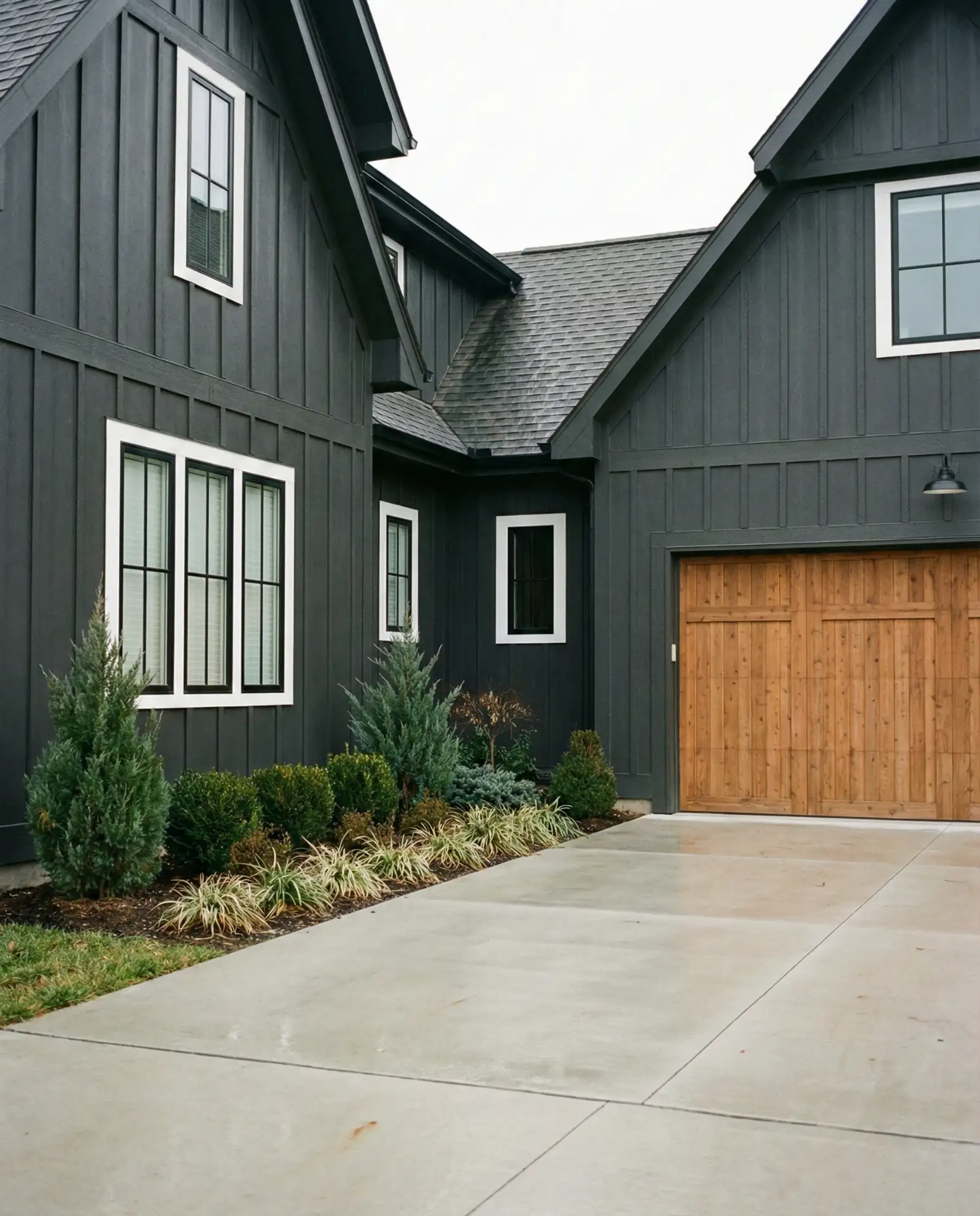
Deep charcoal vertical siding creates dramatic contrast against natural wood garage doors and window frames, offering a dark yet inviting facade that stands out in suburban neighborhoods. This approach pairs beautifully with white windows and minimalist landscaping, allowing the architecture to take center stage. The board and batten texture adds depth without overwhelming the eye, making it ideal for both new builds and exterior updates.
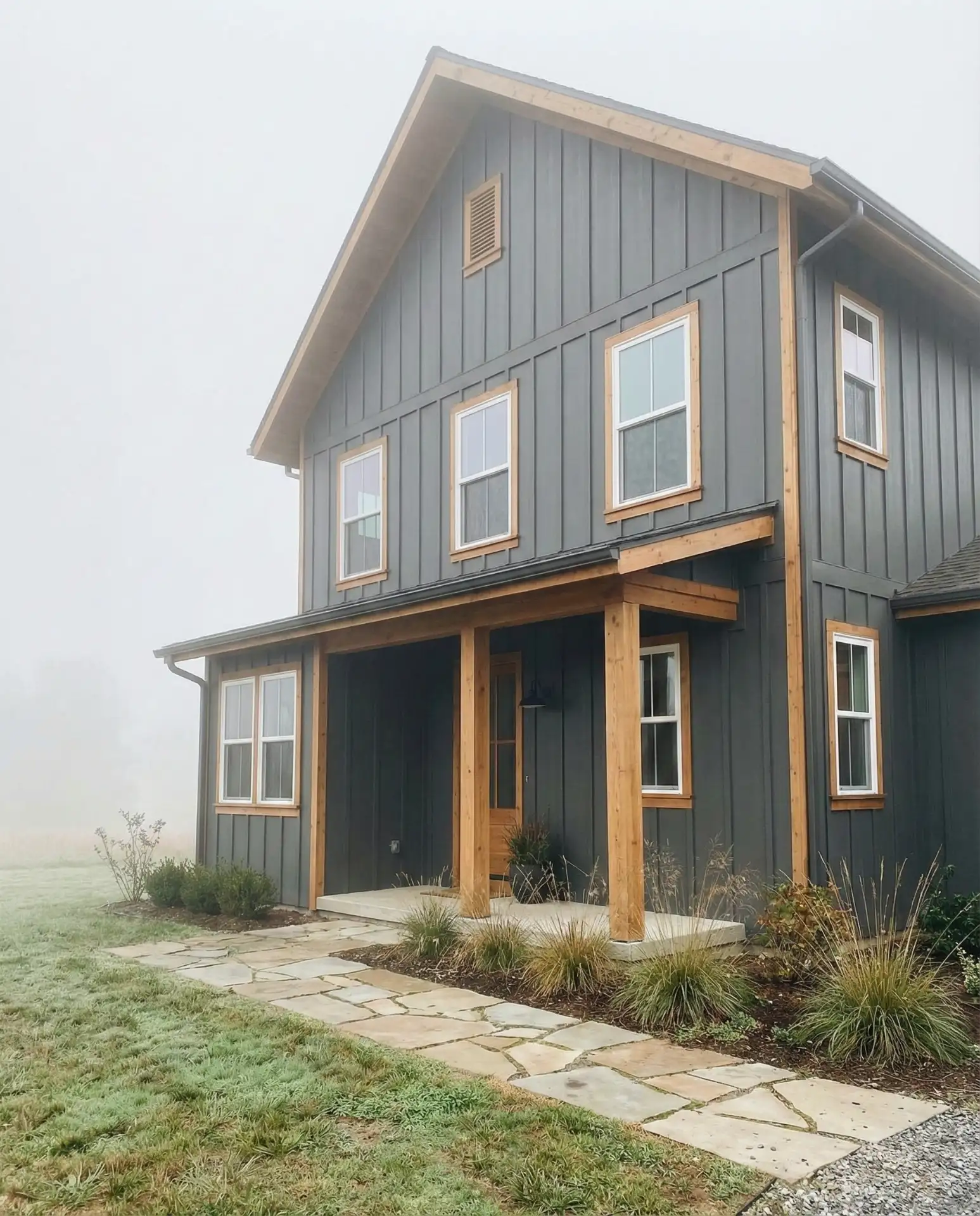
This palette works especially well in regions with frequent overcast skies—think the Pacific Northwest or New England—where darker exteriors absorb light rather than reflect it harshly. Homeowners often report that charcoal siding hides dirt and weathering better than lighter tones, reducing maintenance frequency. Pair it with low-voltage landscape lighting to highlight the wood grain at dusk, creating visual warmth even on the coldest evenings.
2. Crisp White Horizontal Siding with Metal Roof
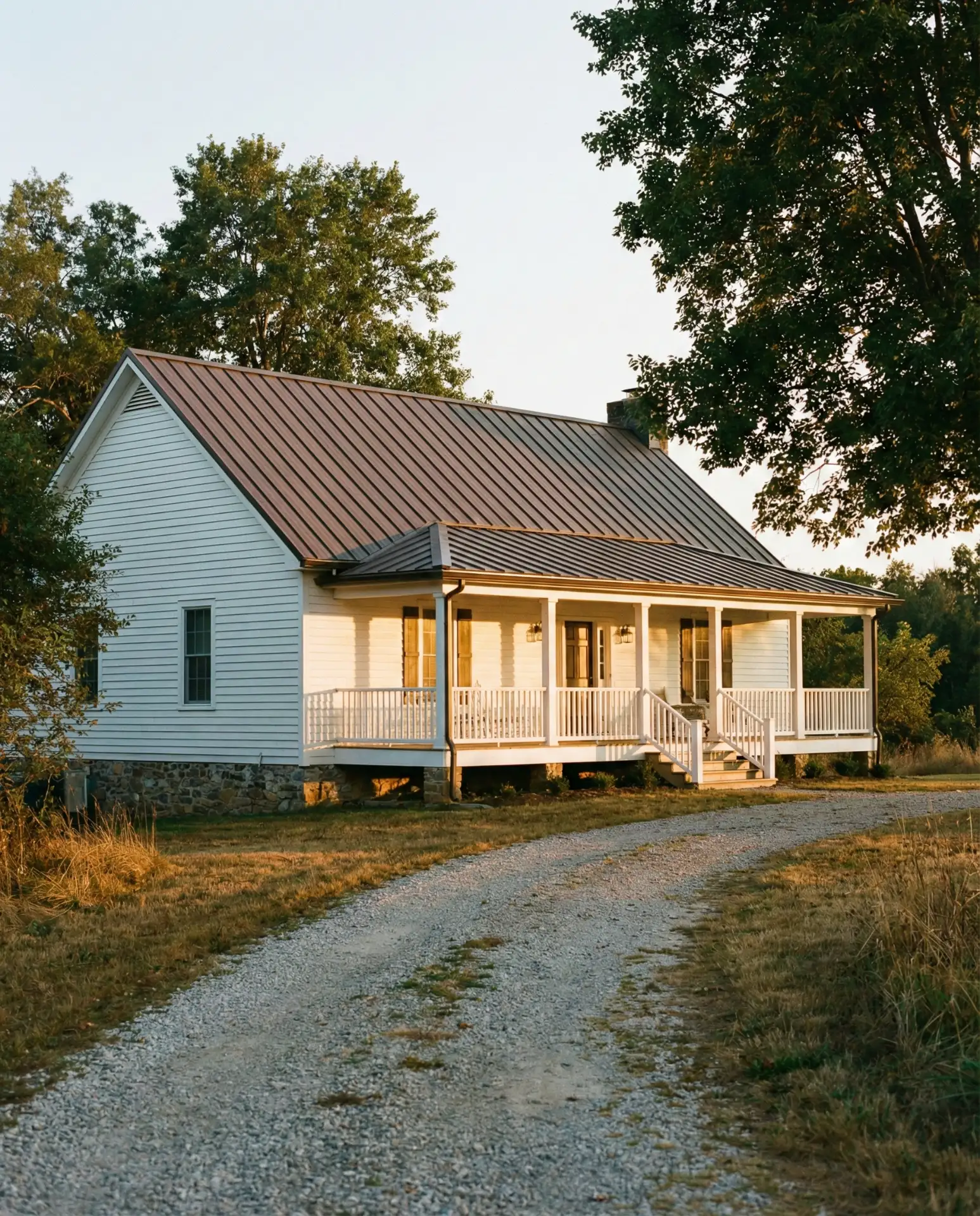
Classic white lap siding remains a cornerstone of farmhouse design, especially when topped with a standing seam metal roof in matte black or bronze. The horizontal lines elongate the home’s profile, while the metal roof nods to rustic barn heritage with modern durability. This combination works for single-story ranches and two-story builds alike, adapting easily to various regional styles from Southern to Midwestern aesthetics.

White exteriors reflect sunlight effectively, keeping interiors cooler in hot climates like Arizona or Georgia—a practical advantage that also reduces cooling costs. A neighbor in Tennessee switched from vinyl to real wood lap siding painted white and noticed immediate curb appeal improvements. Keep in mind that high-quality exterior paint is essential; cheap formulations yellow quickly in direct sun, so invest in premium brands with UV protection.
3. Mixed Material Facade with Stone Base
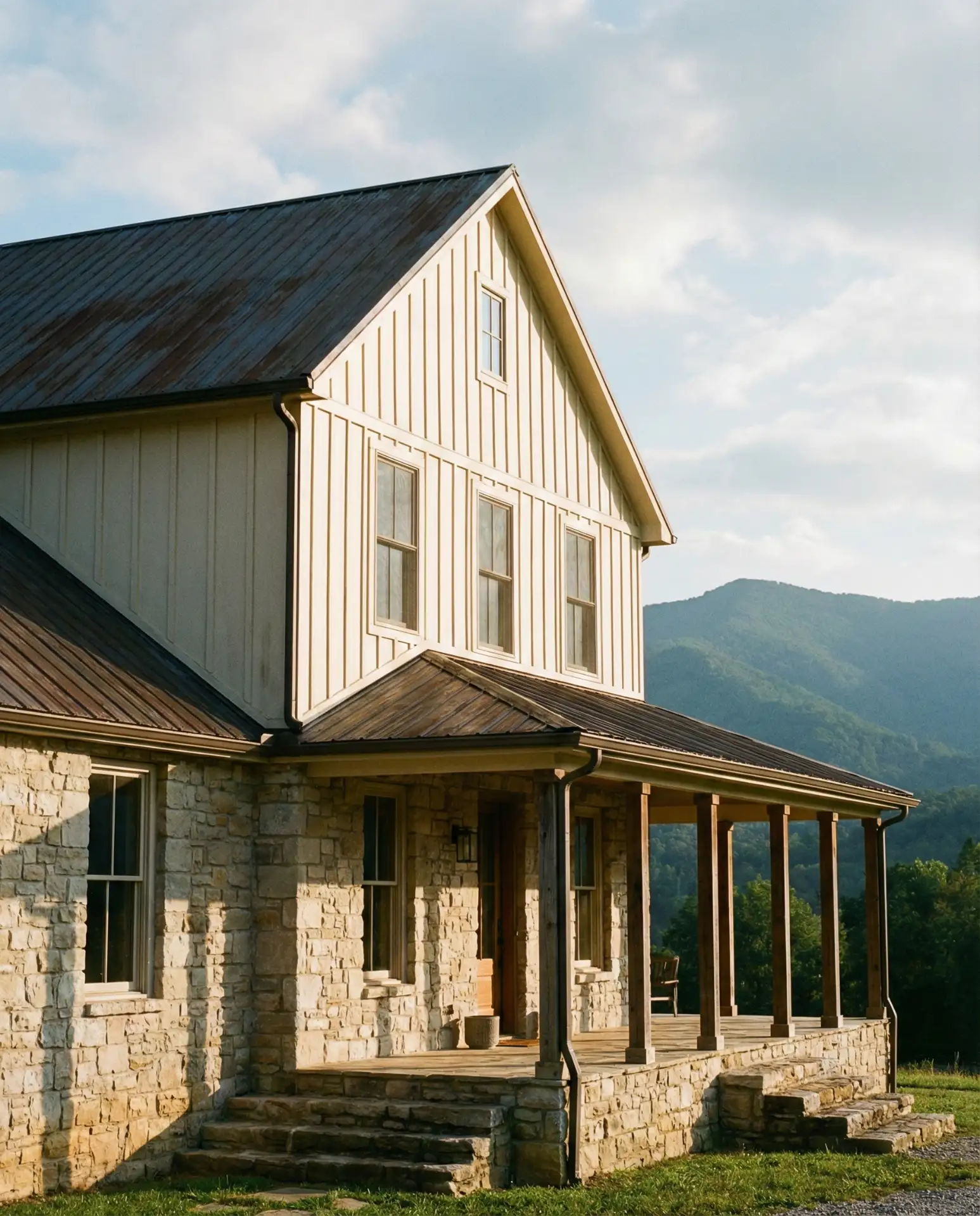
A natural stone foundation anchors the home visually while providing texture contrast against smooth siding above, creating a grounded aesthetic that feels both permanent and organic. Combining gray limestone or river rock with lighter upper walls balances weight and lightness, a technique common in architectural designs and house plans that emphasize horizontal massing. This approach works particularly well on sloped lots where the stone base follows the grade naturally.
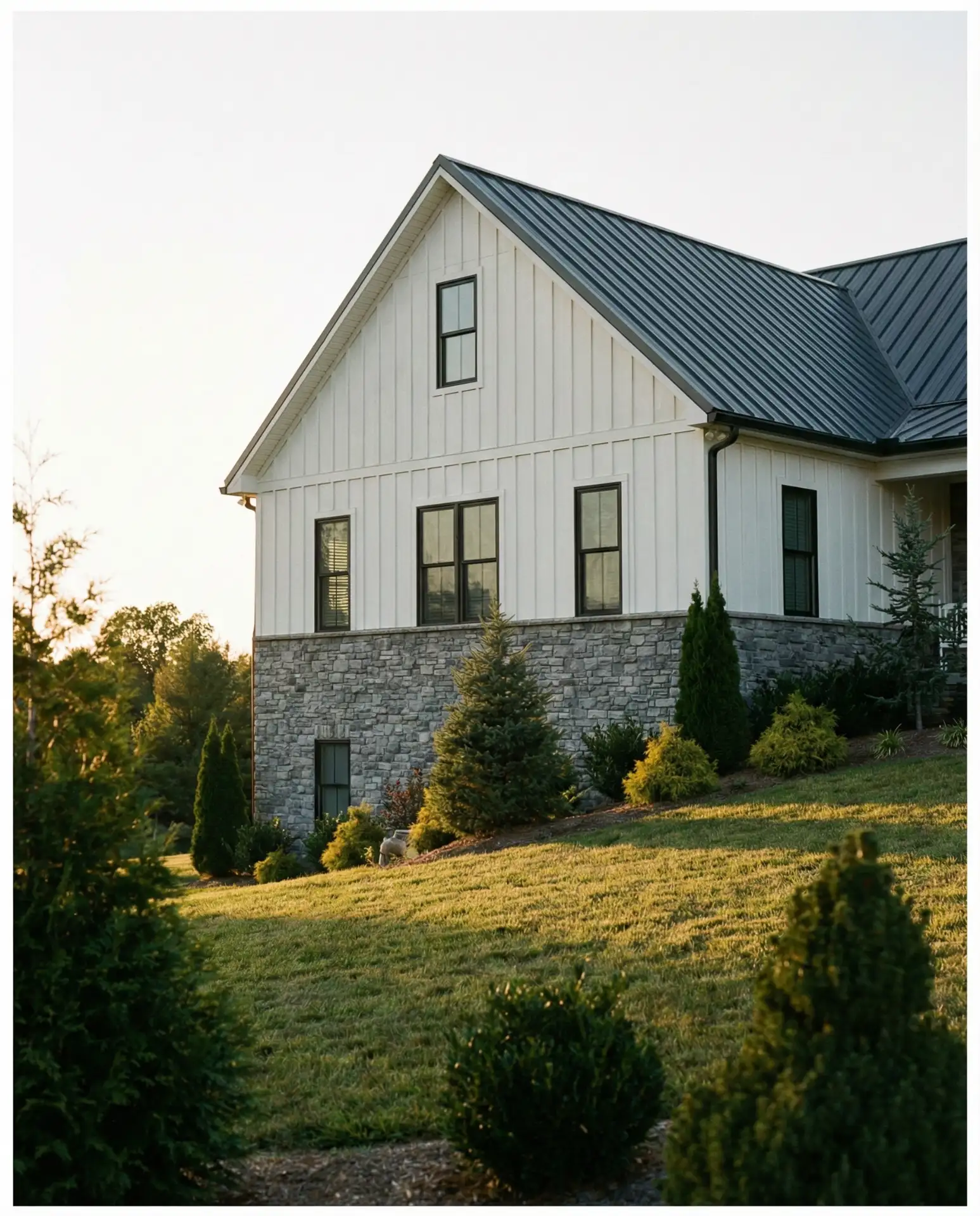
Stone veneer typically costs $15–$30 per square foot installed, making it a strategic investment when limited to foundation areas rather than full walls. The material provides excellent insulation properties and virtually zero maintenance compared to painted surfaces. One common mistake is choosing stone colors that clash with roofing; always bring shingle samples when selecting stone to ensure cohesive color palettes.
4. Black Window Frames on Neutral Siding
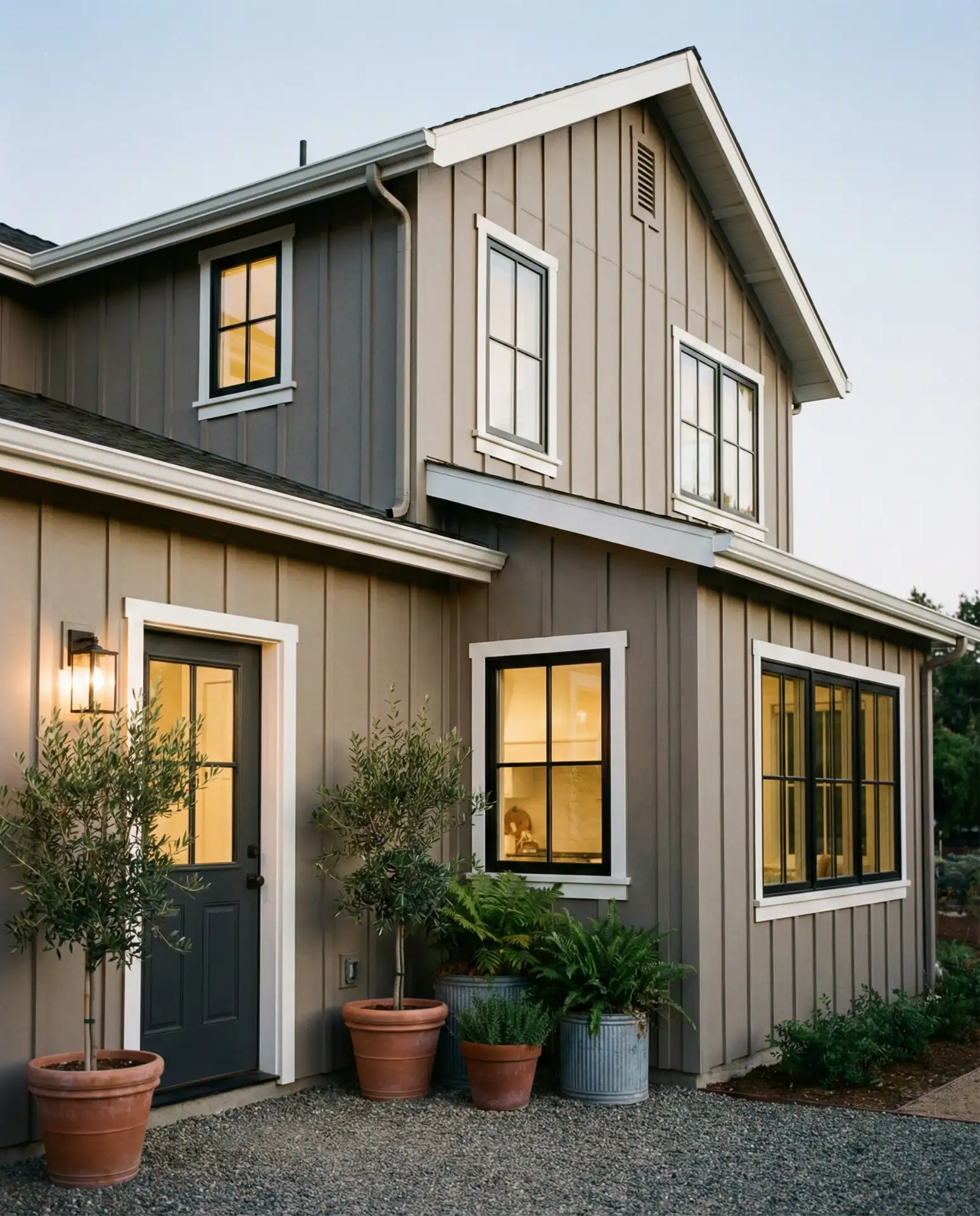
Installing black aluminum or steel window frames against greige or taupe siding delivers sharp definition without harshness, a detail that photographs beautifully for Bloxburg enthusiasts recreating real-world designs. This black and white contrast principle works because the dark frames create crisp boundaries that make windows appear larger and more intentional. The trend has roots in industrial design but translates seamlessly to residential farmhouse aesthetics.
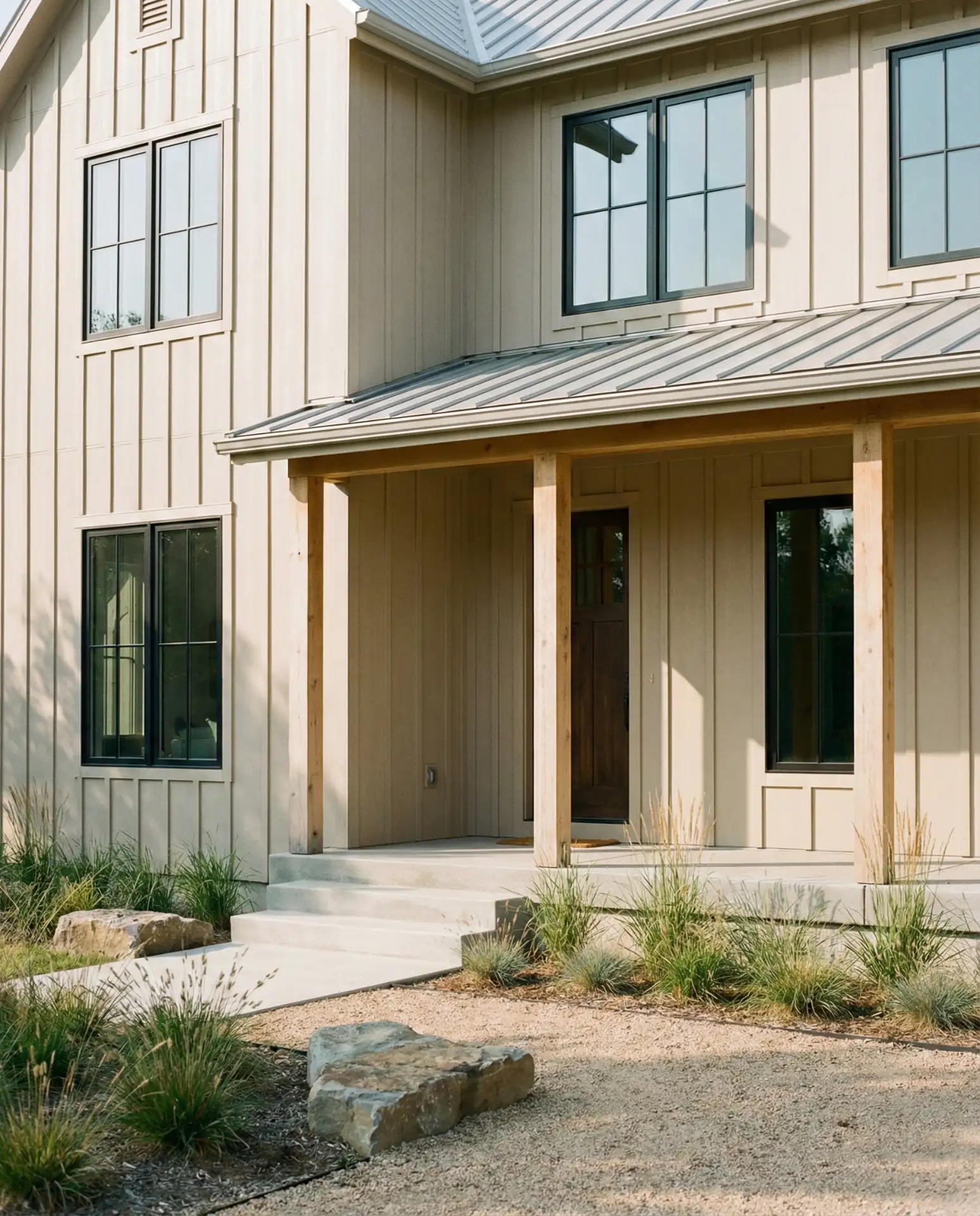
Black-framed windows work best in homes with ample natural light, as they can make small, dark rooms feel cave-like from inside. Architects often recommend this treatment for south- and west-facing facades where sunlight is abundant throughout the day. In cooler regions like Minnesota or Montana, black frames absorb heat effectively, reducing frost buildup on glass during winter months—a subtle but welcome benefit.
5. Sage Green Siding with Natural Wood Details
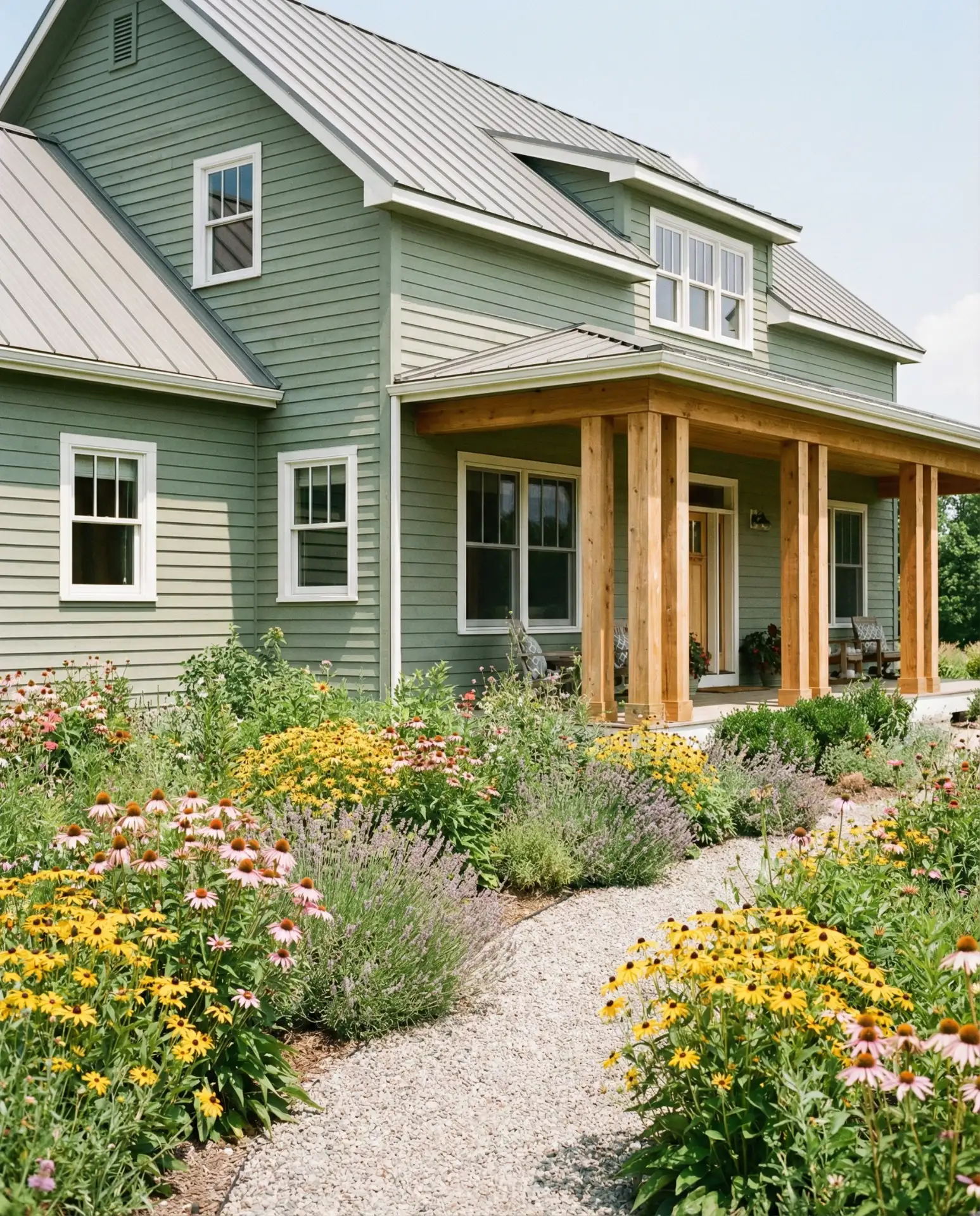
Soft green hues like sage or celadon connect modern farmhouses to their landscape, creating a serene backdrop that feels organic rather than imposed on the environment. This color choice pairs naturally with unstained cedar beams, rough-hewn porch posts, and rustic barn doors, forming a cohesive palette rooted in nature. It’s particularly popular in rural settings where homes border forests or meadows, allowing the structure to blend rather than compete.

Green exteriors show dirt less obviously than white but can fade faster in intense sun, so choose high-quality exterior paints with fade-resistant technology. Many homeowners in the Pacific Northwest favor this palette because the muted green complements year-round foliage without disappearing into the background. A designer in Oregon noted that clients often pair sage siding with terracotta planters for unexpected warmth—a small detail that elevates the entire story of the home.
6. Classic Red Brick with Modern Geometry
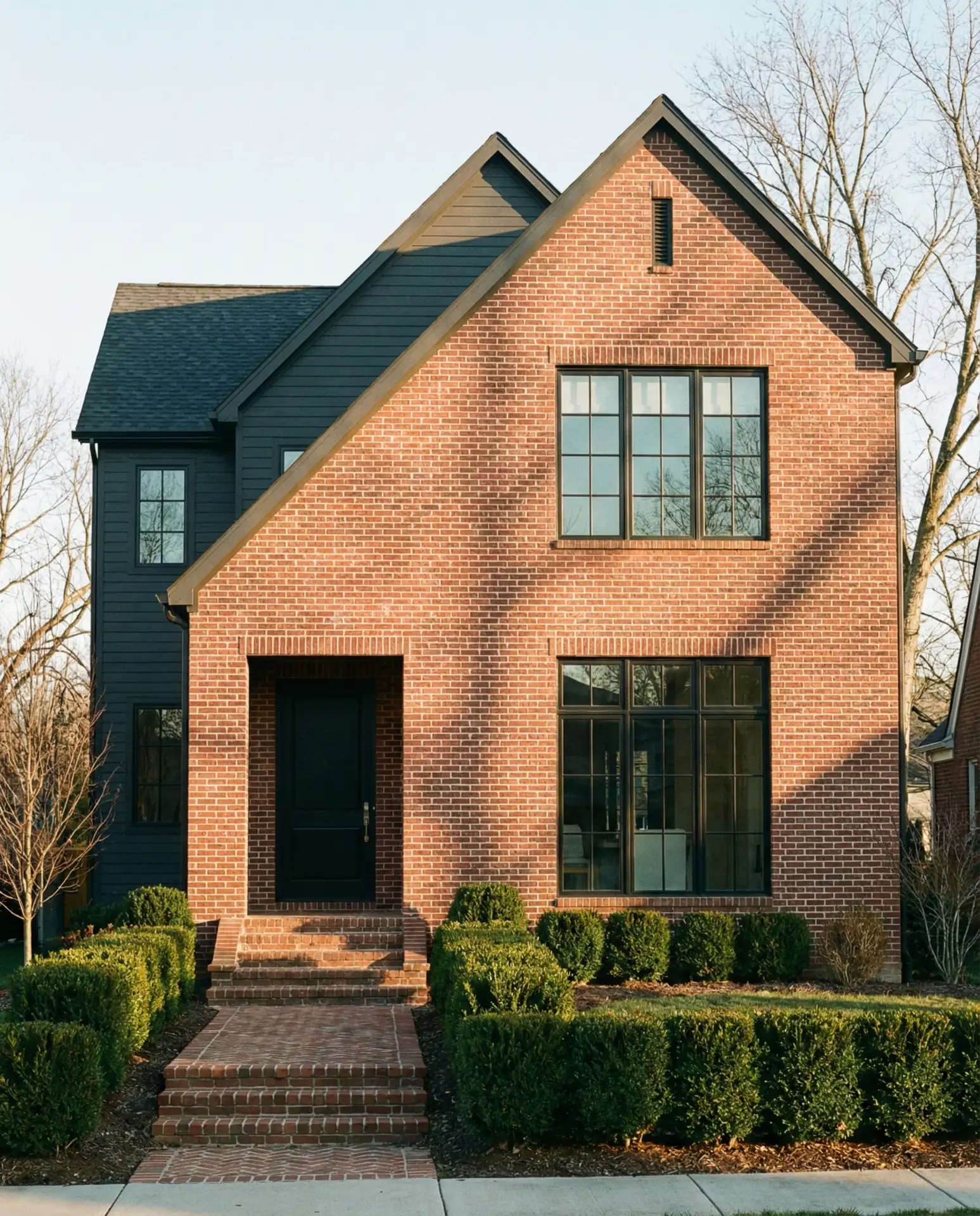
Traditional red brick gets a contemporary update through asymmetrical gable lines and oversized windows, merging historic material with forward-thinking architectural designs for house plans. The brick’s thermal mass regulates interior temperatures naturally, a feature especially valued in regions with dramatic day-night temperature swings. Pairing brick with minimalist door hardware and clean rooflines prevents the facade from reading too country, striking a balance between heritage and modernity.
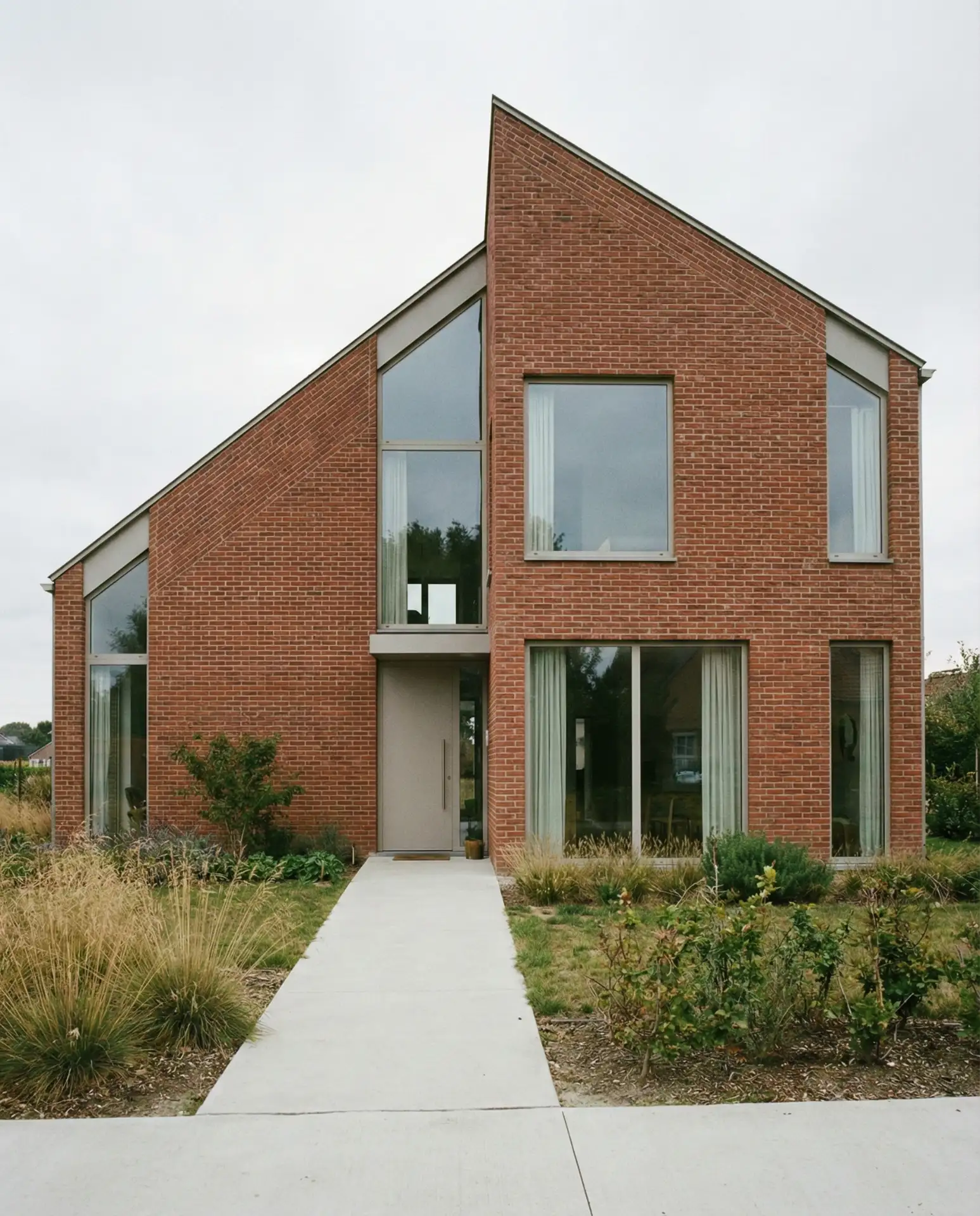
This approach shines in regions with strong brick-building traditions—Virginia, Pennsylvania, and parts of the Midwest—where the material feels authentic rather than imported. A family in Kentucky preserved their 1940s brick farmhouse facade but added steel-framed windows and a modern lean-to porch, proving that respect for original materials doesn’t mean sacrificing contemporary comfort. Be cautious with mortar color; white mortar creates graphic contrast, while matching mortar keeps the focus on brick texture.
7. Navy Blue Accent Wall with White Base
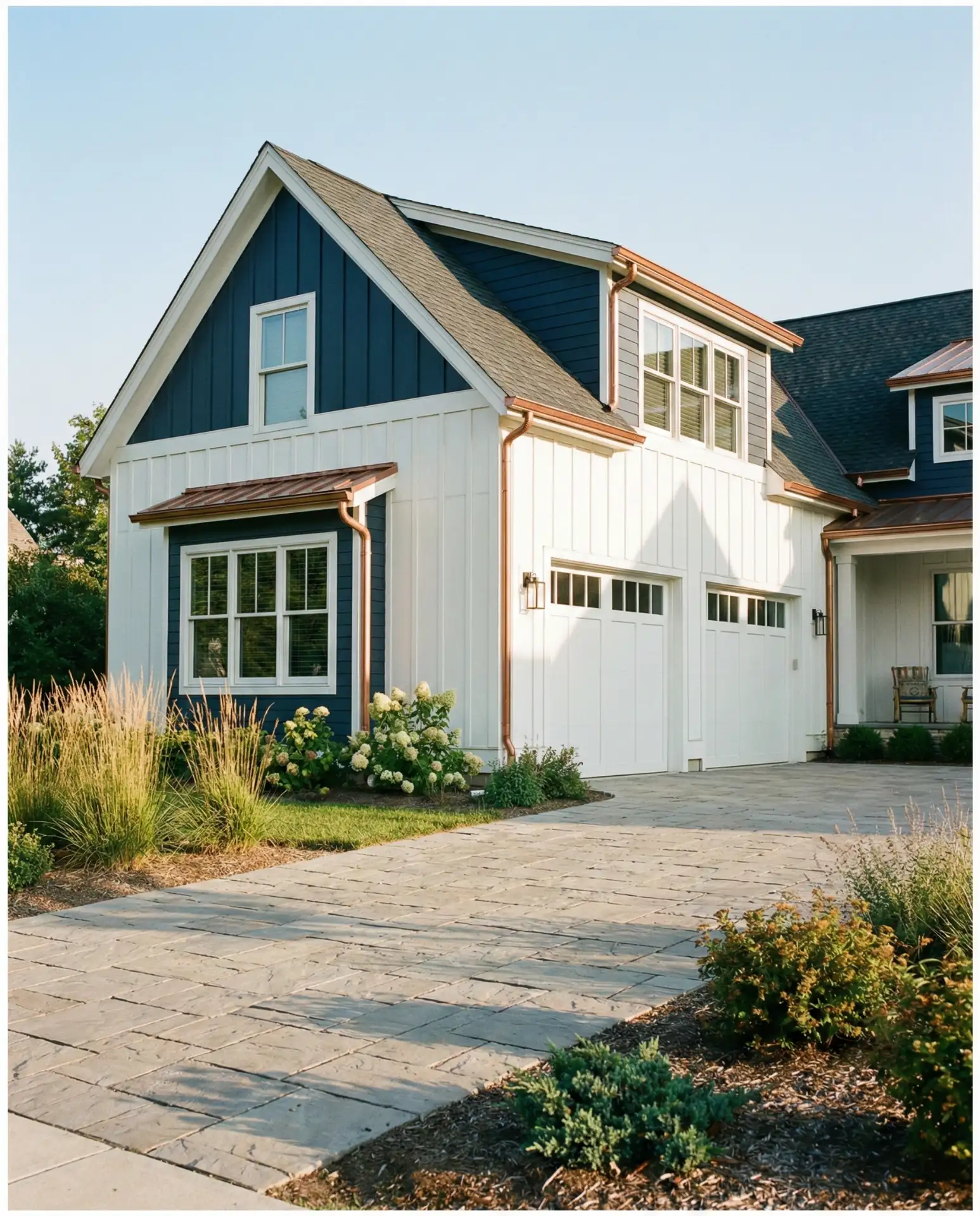
Introducing blue as a focal wall—often on gable ends or above garage doors—adds unexpected depth to predominantly white farmhouses, creating visual interest without overwhelming the composition. This technique draws the eye to architectural features you want to highlight, functioning like jewelry for your home’s facade. Navy pairs beautifully with coastal themes but translates equally well to landlocked properties when balanced with warm wood tones or copper gutters.
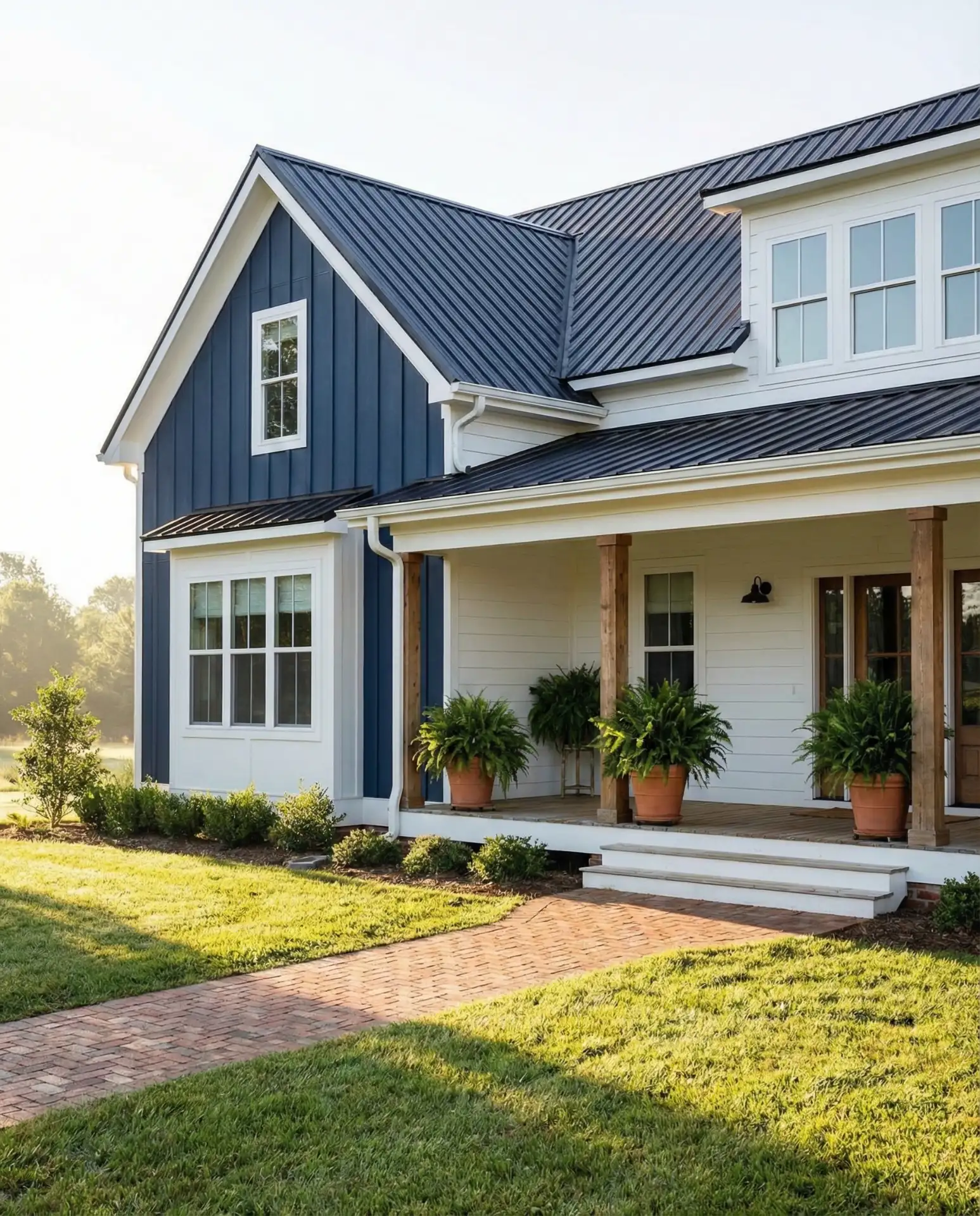
Navy exteriors typically cost the same as other paint colors but may require an additional coat for full coverage over lighter primers—factor this into your budget at roughly $1.50 more per square foot. The color holds up well in harsh weather, showing less fading than lighter blues or grays. Many homeowners choose this route when they want personality without full commitment to a bold exterior, allowing them to test bolder choices on smaller surfaces first.
8. Modern Wraparound Porch with Steel Posts
Traditional house plans with wrap-around porches get a sleek update through slim steel columns and cable railing systems, maintaining the generous outdoor living space while reducing visual bulk. This approach preserves the farmhouse tradition of hospitality—spaces designed for lingering—while acknowledging contemporary preferences for clean lines. Steel posts powder-coated in matte black or bronze provide structural support without the chunky presence of traditional wood columns.
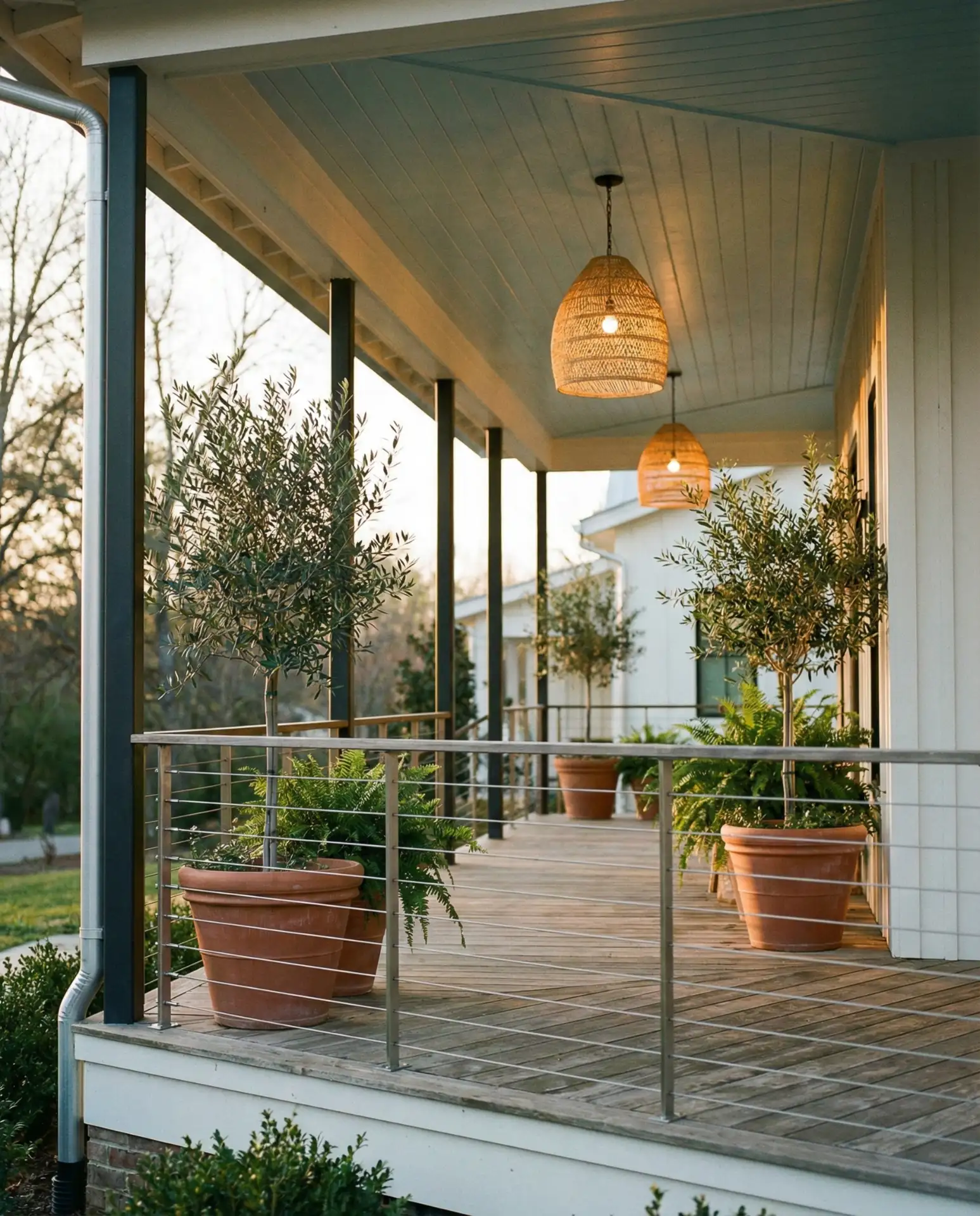
Where it works best: Homes in temperate climates where porch season extends beyond summer—think Tennessee, North Carolina, or northern California. The open cable railing maximizes views, making it ideal for properties overlooking pastures, mountains, or water. Steel requires virtually no maintenance compared to wood posts that rot or twist, though it does conduct cold in winter months, so avoid leaning against posts during chilly mornings.
9. Warm Gray Monochrome with Texture Variation
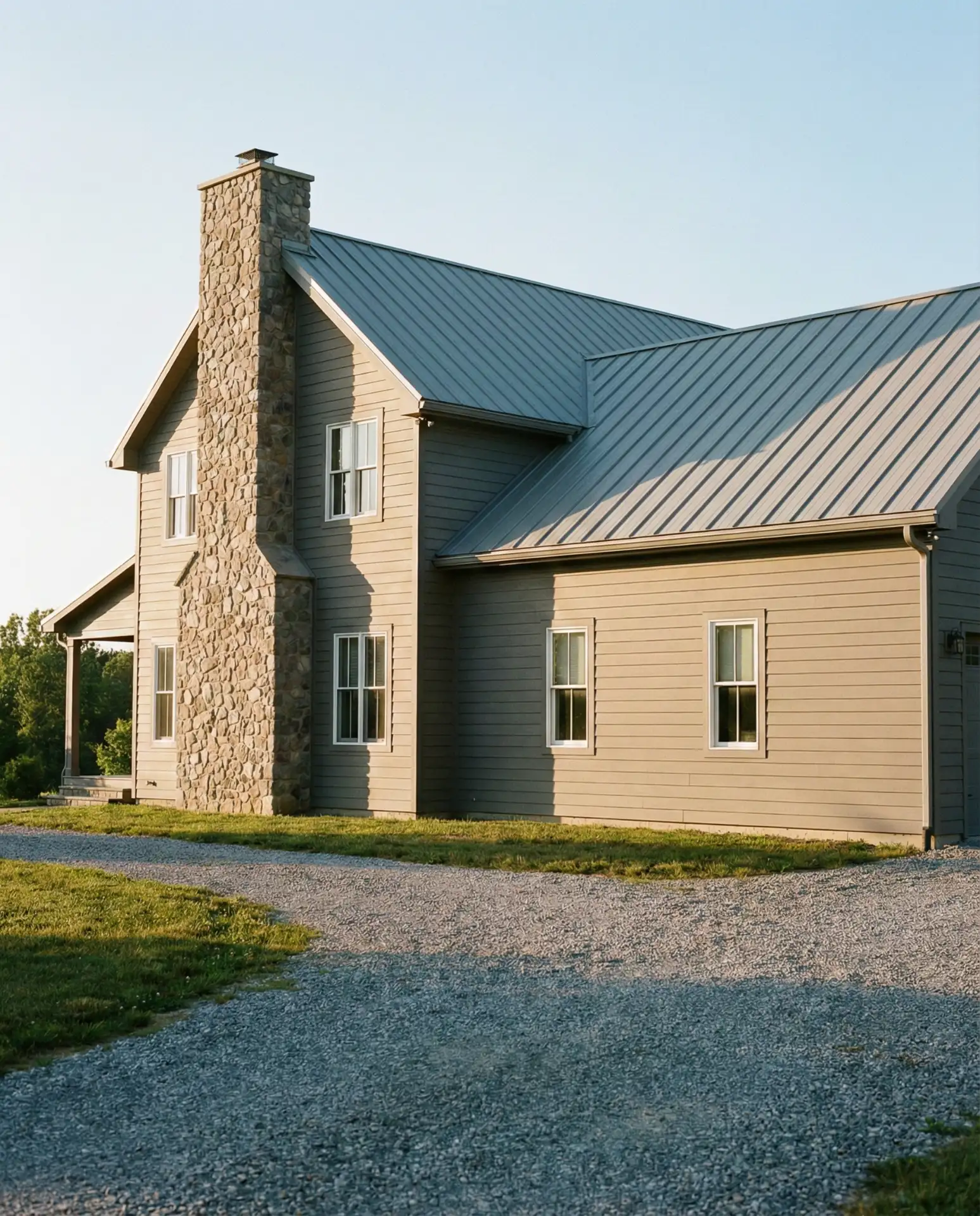
A single gray color family applied across multiple materials—smooth siding, rough stone, matte metal—creates sophisticated unity while avoiding monotony through texture contrast. This monochromatic approach reads as intentional and curated, appealing to homeowners who appreciate subtlety over statement. The warmth comes from choosing grays with brown or taupe undertones rather than cool, blue-leaning versions that can feel sterile.
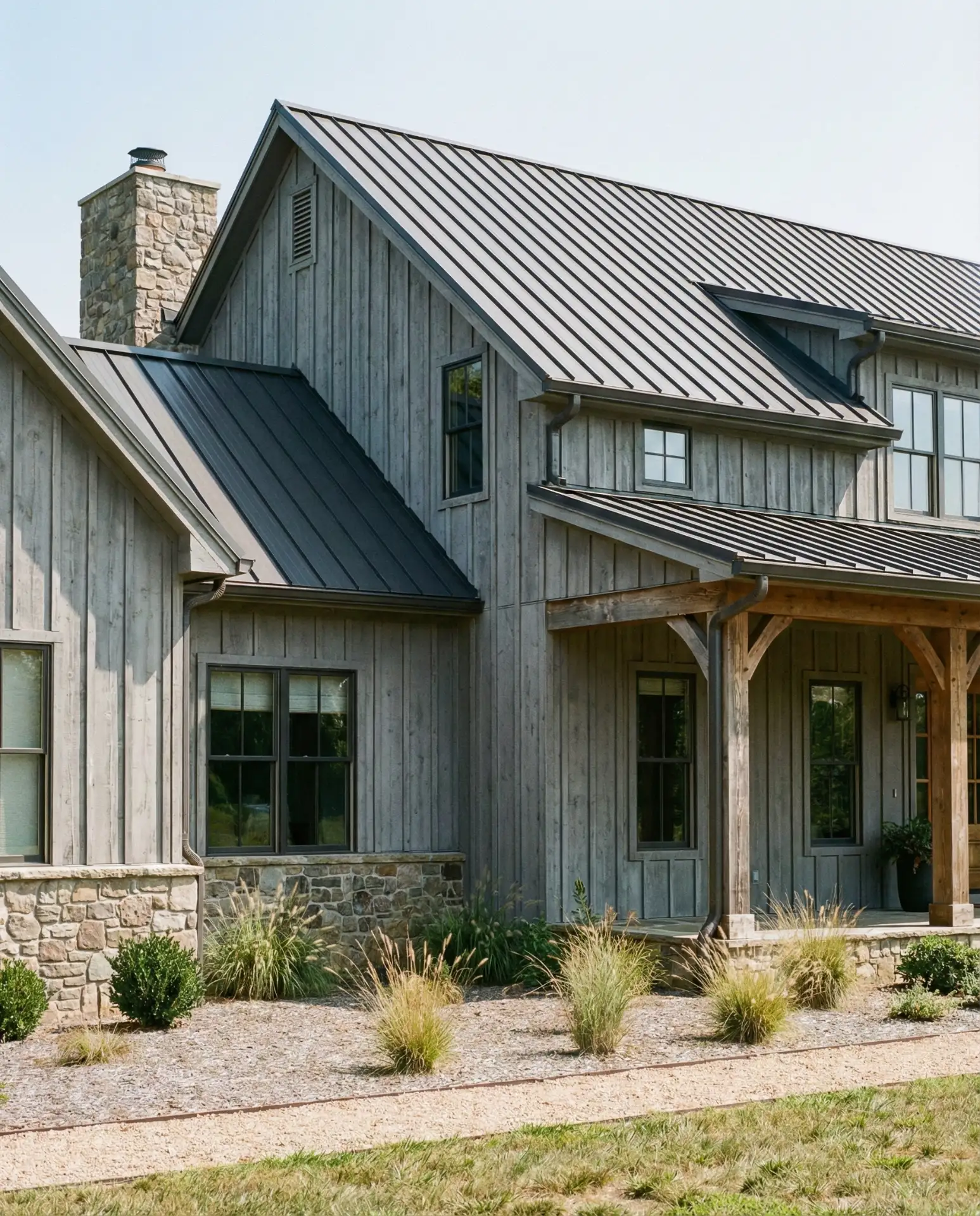
Expert-style commentary: Professional designers often recommend testing gray samples in various lights before committing, as undertones shift dramatically from morning to evening. A gray that looks warm and inviting at 3 PM might read cold and flat at 8 AM, especially on north-facing walls. Layer in natural wood tones through railings, shutters, or trim to prevent the palette from feeling too industrial—a lesson learned from countless gray farmhouses that missed the mark by going too cool-toned.
10. Black Vertical Siding with Minimalist Landscaping
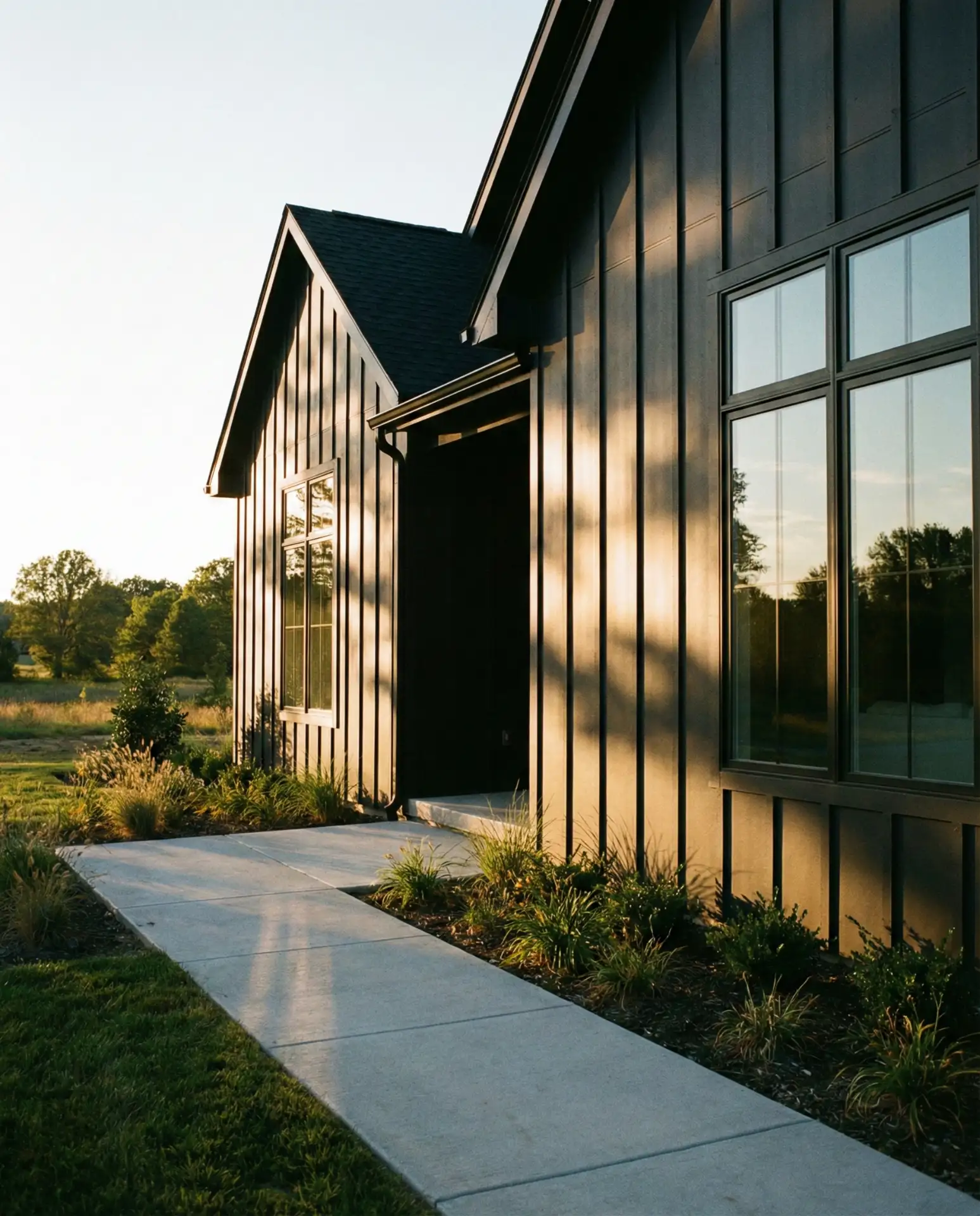
Matte black board and batten siding makes a bold statement, especially when surrounded by restrained plantings that let the architecture command attention. This palette works because it inverts traditional farmhouse brightness, creating drama while maintaining the style’s characteristic simplicity. Vertical lines emphasize height, making single-story homes appear more substantial and two-story builds more elegant.
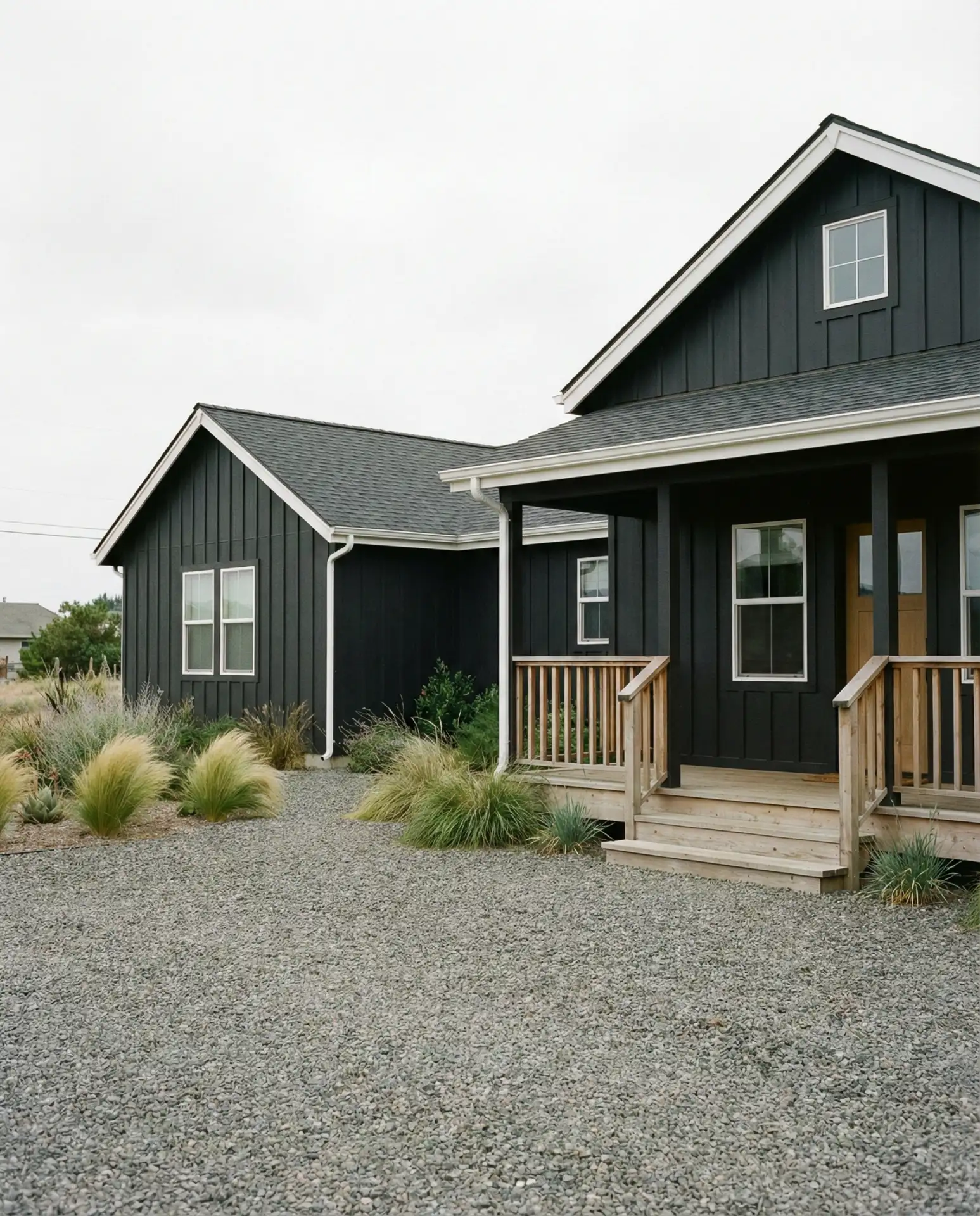
Real homeowner behavior: Many people fear black exteriors will make homes too hot, but modern paint technology includes heat-reflective pigments that mitigate this concern significantly. A couple in Arizona painted their farmhouse matte black and reported no noticeable temperature increase, crediting their reflective paint and generous roof overhangs. That said, black shows dust and pollen more than lighter colors, so budget for more frequent exterior washing if you’re near agricultural fields or high pollen areas.
11. Cream Stucco with Dark Wood Beams
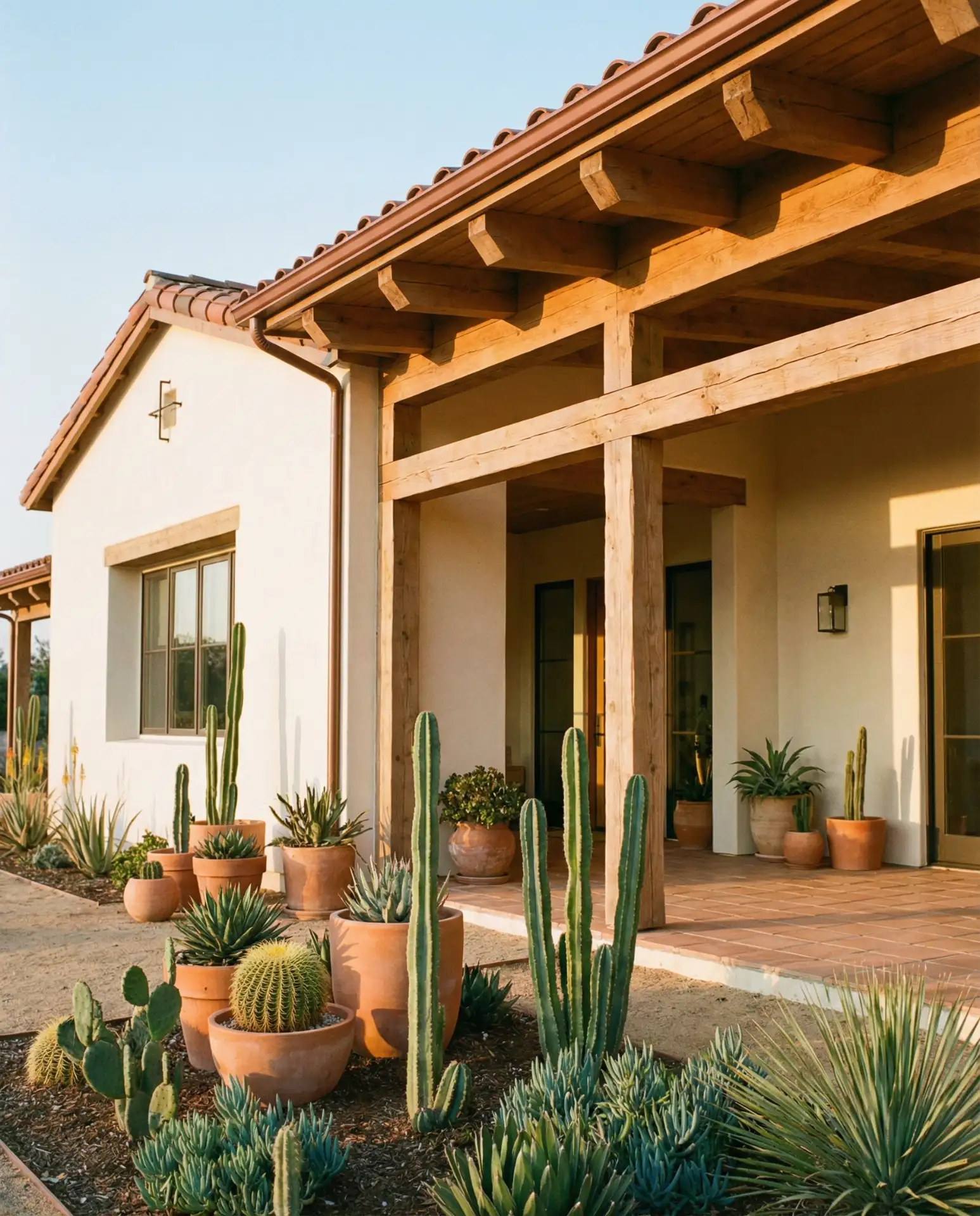
Smooth stucco in warm cream tones paired with exposed dark-stained timber beams bridges Southwestern and farmhouse aesthetics, creating a hybrid style suited to mid-century ranch renovations. The stucco’s seamless surface provides a neutral canvas that allows the structural wood elements to read as intentional design features rather than decorative afterthoughts. This combination thrives in dry climates where stucco performs reliably and requires minimal maintenance.
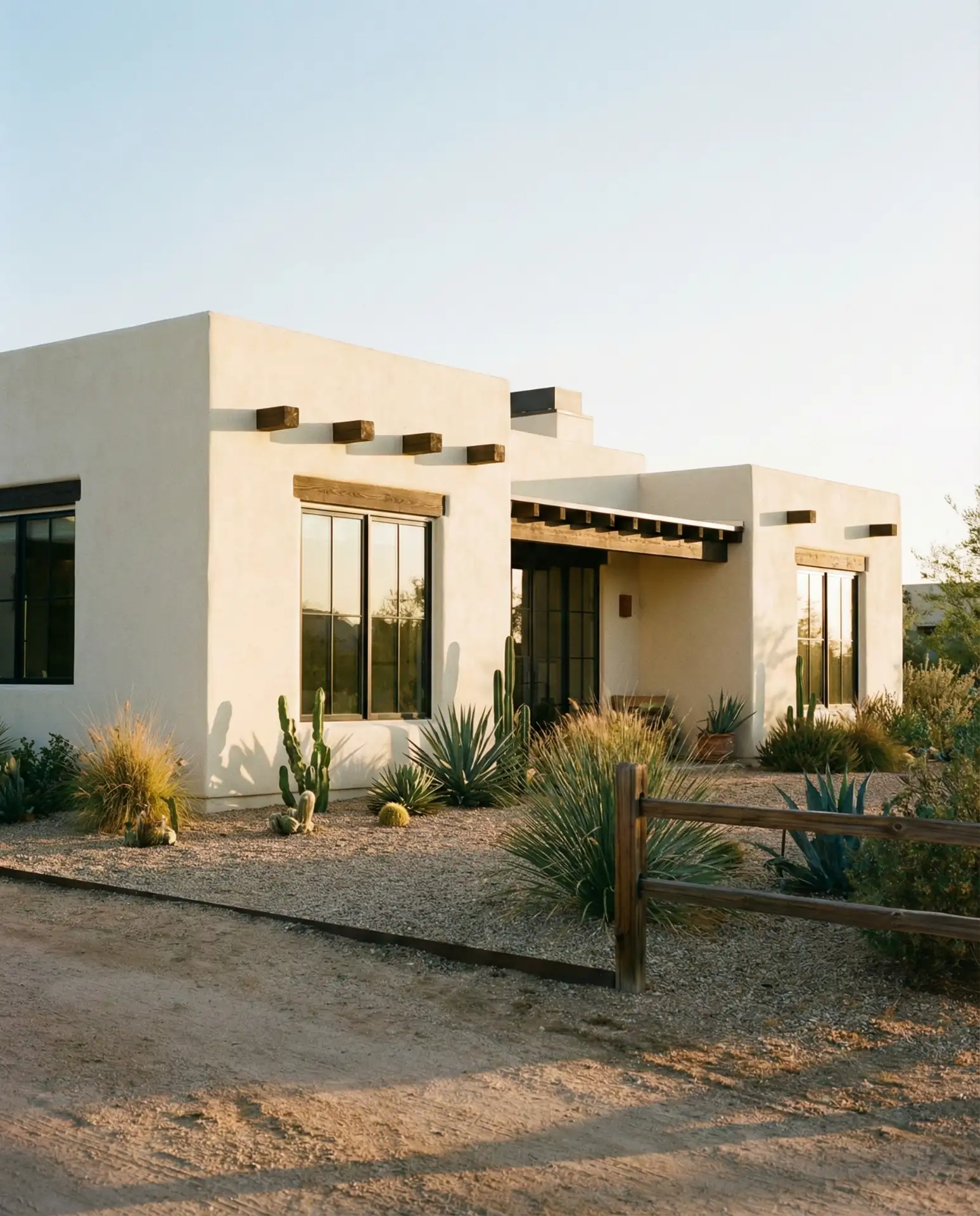
This look flourishes in Texas, New Mexico, and Southern California, where Spanish colonial and ranch traditions intersect naturally. The timbers can be structural or purely decorative—a practical consideration that affects both budget and engineering requirements. One common mistake is using timber beams that are too small; they should be proportionate to the home’s scale, typically 6×8 inches minimum for visual impact; otherwise, they read as trim rather than structural elements.
12. Charcoal Garage Doors as Design Focal Points
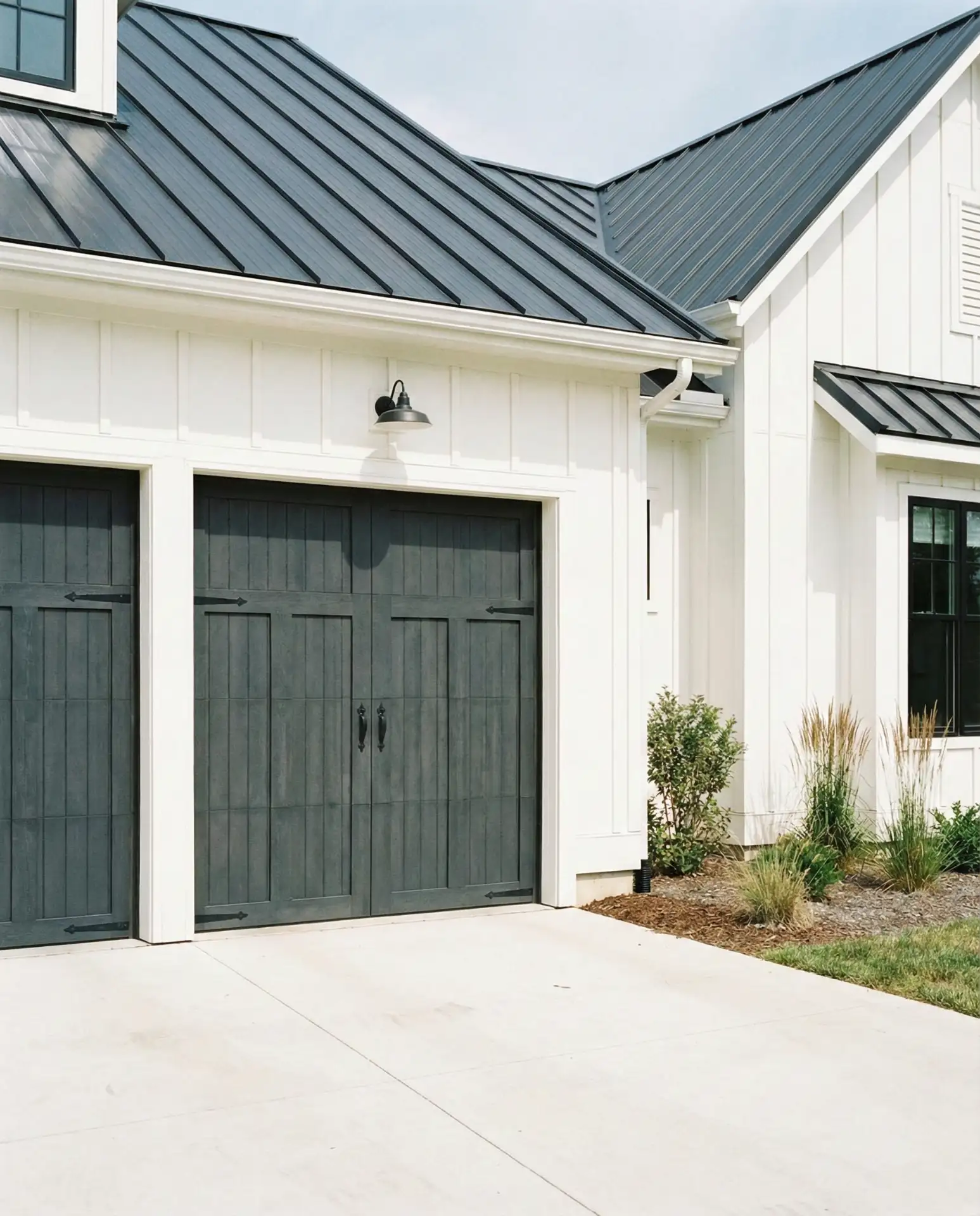
When garage doors occupy significant facade real estate, treating them as architectural features rather than afterthoughts transforms the entire exterior composition. Painting or staining them in deep charcoal creates a grounding element that anchors lighter siding, especially on homes where garage placement is prominent. Modern farmhouse style embraces this practical reality rather than trying to hide utility spaces, celebrating them through thoughtful material choices.
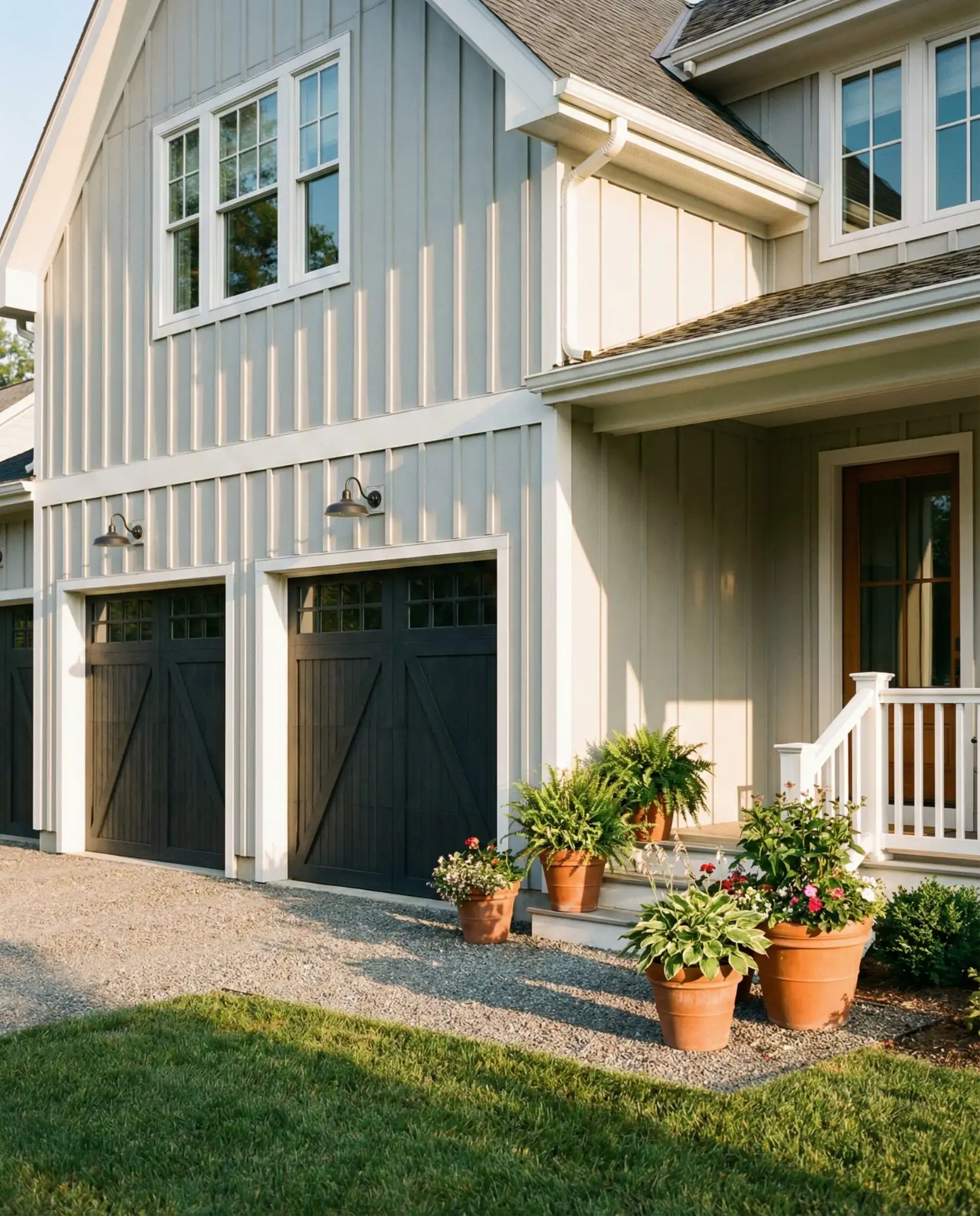
Budget angle: Standard steel garage doors with carriage-style detailing start around $800–$1,200 per door, while custom wood doors run $3,000–$6,000 each—a significant investment that pays off in curb appeal. Many homeowners compromise by choosing steel doors with wood-look finishes that require less maintenance while delivering similar visual warmth. Consider upgrading hardware to heavy-duty handles and hinges, even on non-functional doors, as these details photograph beautifully and elevate the overall impression.
13. Soft Taupe with Bronze Metal Accents
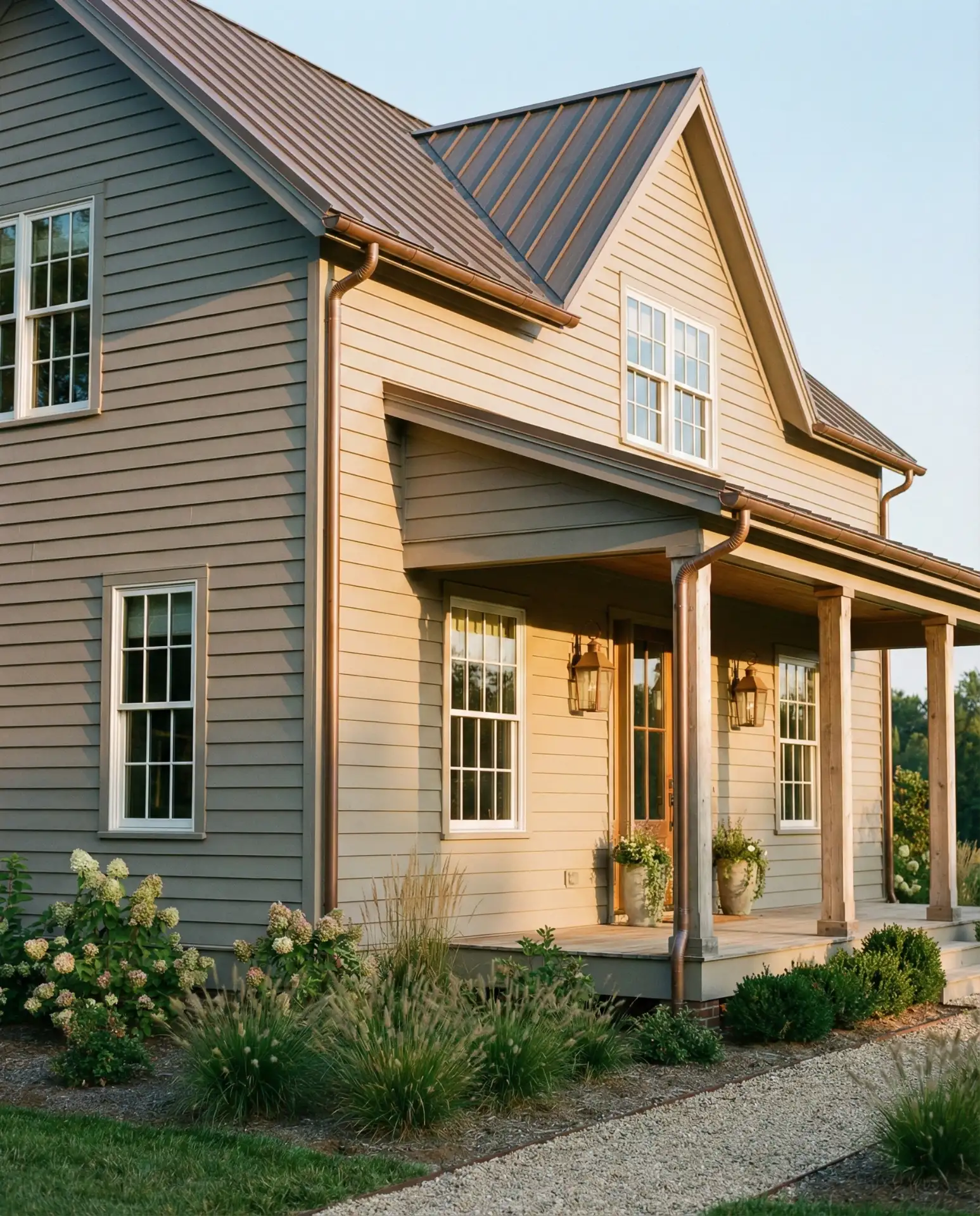
Taupe siding in the middle value range provides versatility, working across color palettes from warm to cool, while bronze gutters, downspouts, and light fixtures add unexpected richness. This combination avoids the starkness of black accents while still providing definition, creating a softer overall aesthetic that feels approachable. Bronze develops a natural patina over time, adding character that only improves with age—a quality aligned with farmhouse values of authenticity and longevity.
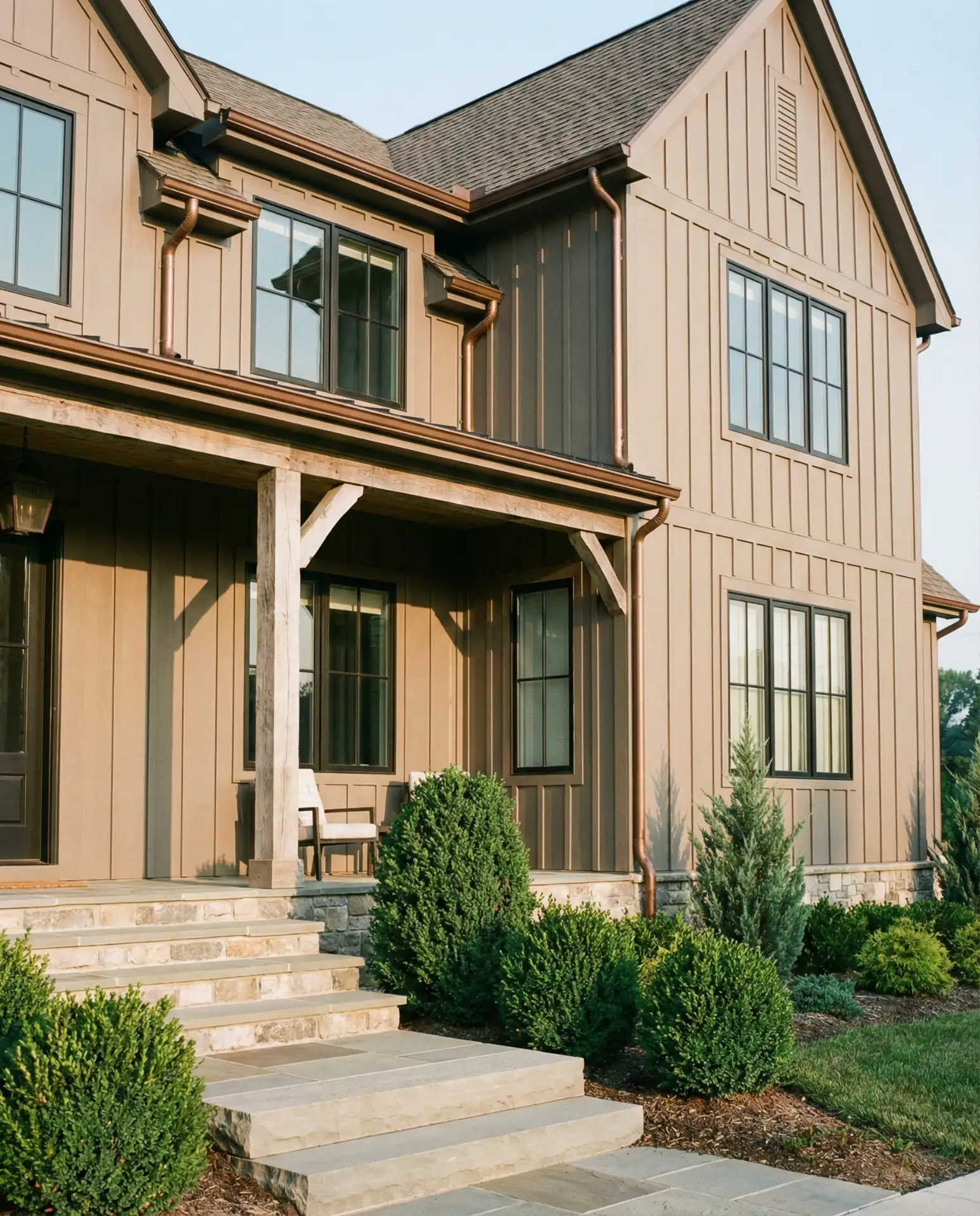
Micro anecdote: A homeowner in North Carolina switched from standard aluminum to bronze gutters, and received so many compliments from neighbors that three other houses on the street followed suit within a year. Bronze costs approximately 30% more than aluminum but requires no painting and ages gracefully without looking worn. The warmth it adds to neutral exteriors is subtle but transformative, proving that small material upgrades often deliver outsized visual returns.
14. Whitewashed Brick with Modern Windows
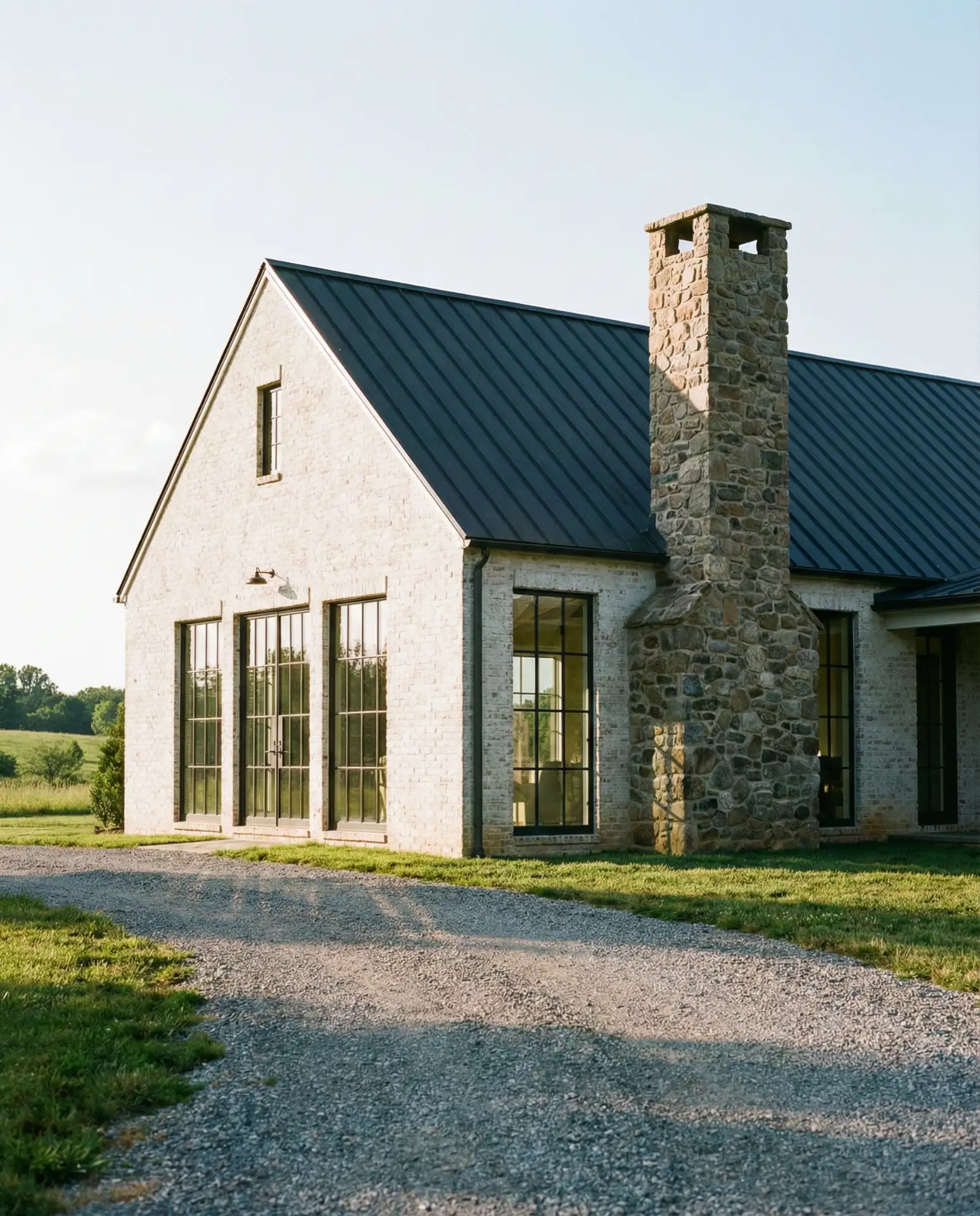
Applying a breathable whitewash or limewash to existing brick preserves texture while lightening the overall facade, creating a softer backdrop for oversized black-framed windows. This technique honors the brick’s materiality rather than hiding it under opaque paint, allowing variations in color and mortar to show through subtly. It’s particularly effective for updating older farmhouses where dark brick feels heavy, offering a refresh that respects original construction.
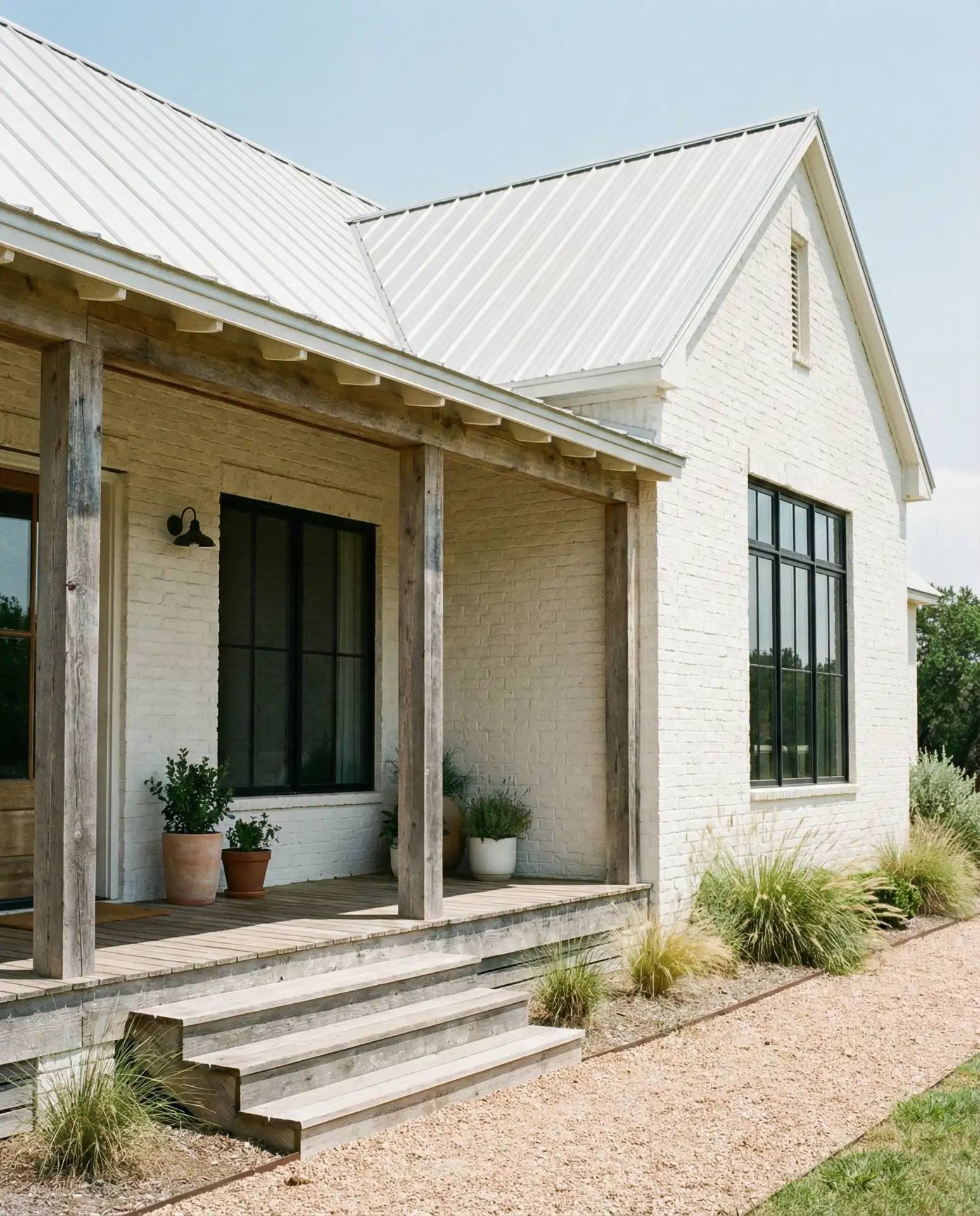
This treatment works best in regions with moderate humidity—too much moisture can lead to premature wear, while very dry climates allow the finish to last decades. Professional application typically costs $3–$5 per square foot, significantly less than replacing brick or installing new siding. One practical insight: always test your whitewash mixture on an inconspicuous area first, as getting the right opacity requires experimentation; too thick looks like regular paint colors, and too thin barely registers.
15. Cedar Shake Siding with Contemporary Lines
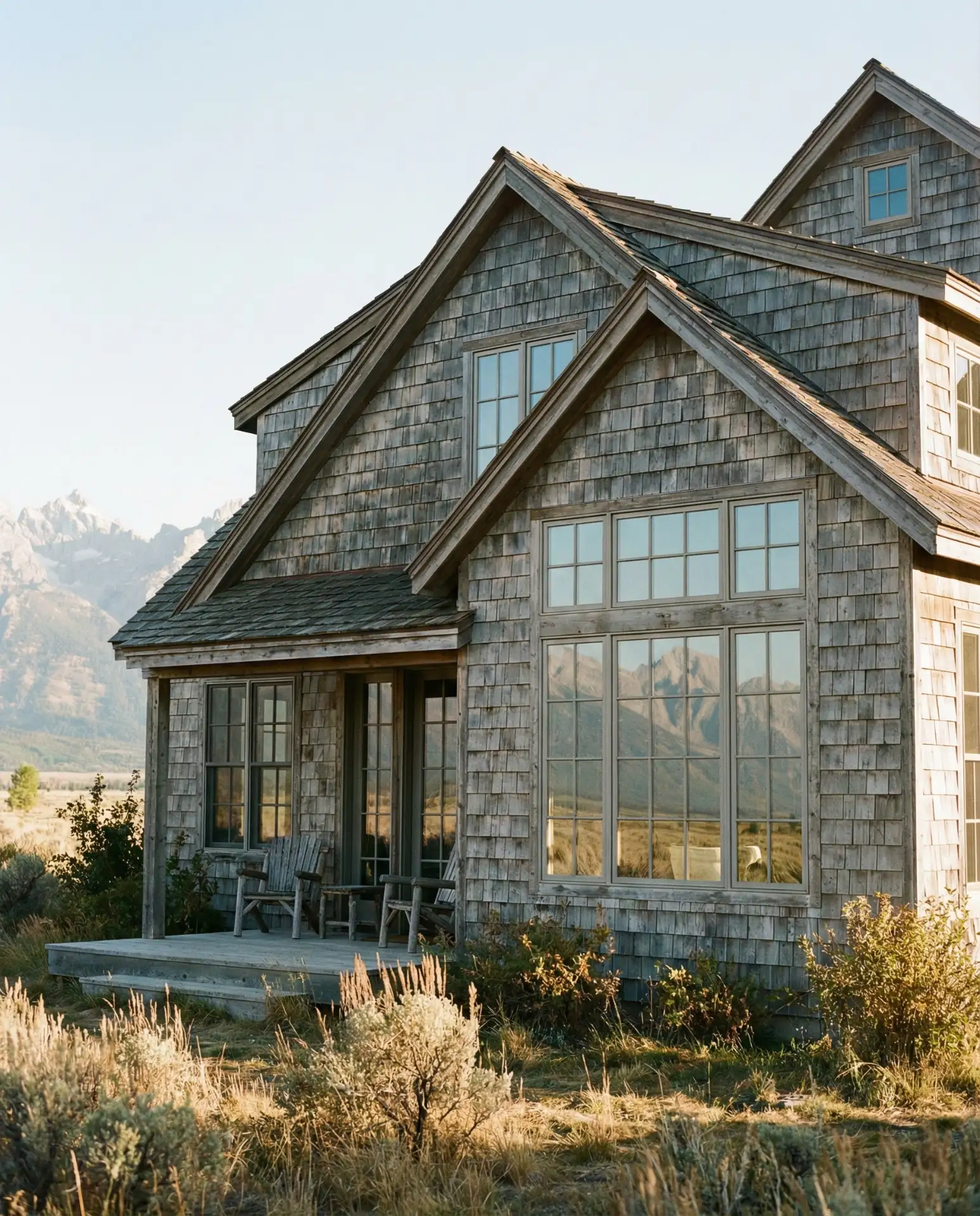
Natural cedar shakes left to weather to silver-gray or stained in warm honey tones bring rustic authenticity to geometric modern farmhouses, proving that traditional materials adapt beautifully to progressive design. The irregular texture of shakes adds organic movement to otherwise clean facades, preventing sterility while maintaining sophistication. This combination appeals to homeowners who want farmhouse character without literal barn references, achieving balance through material choice rather than decorative elements.
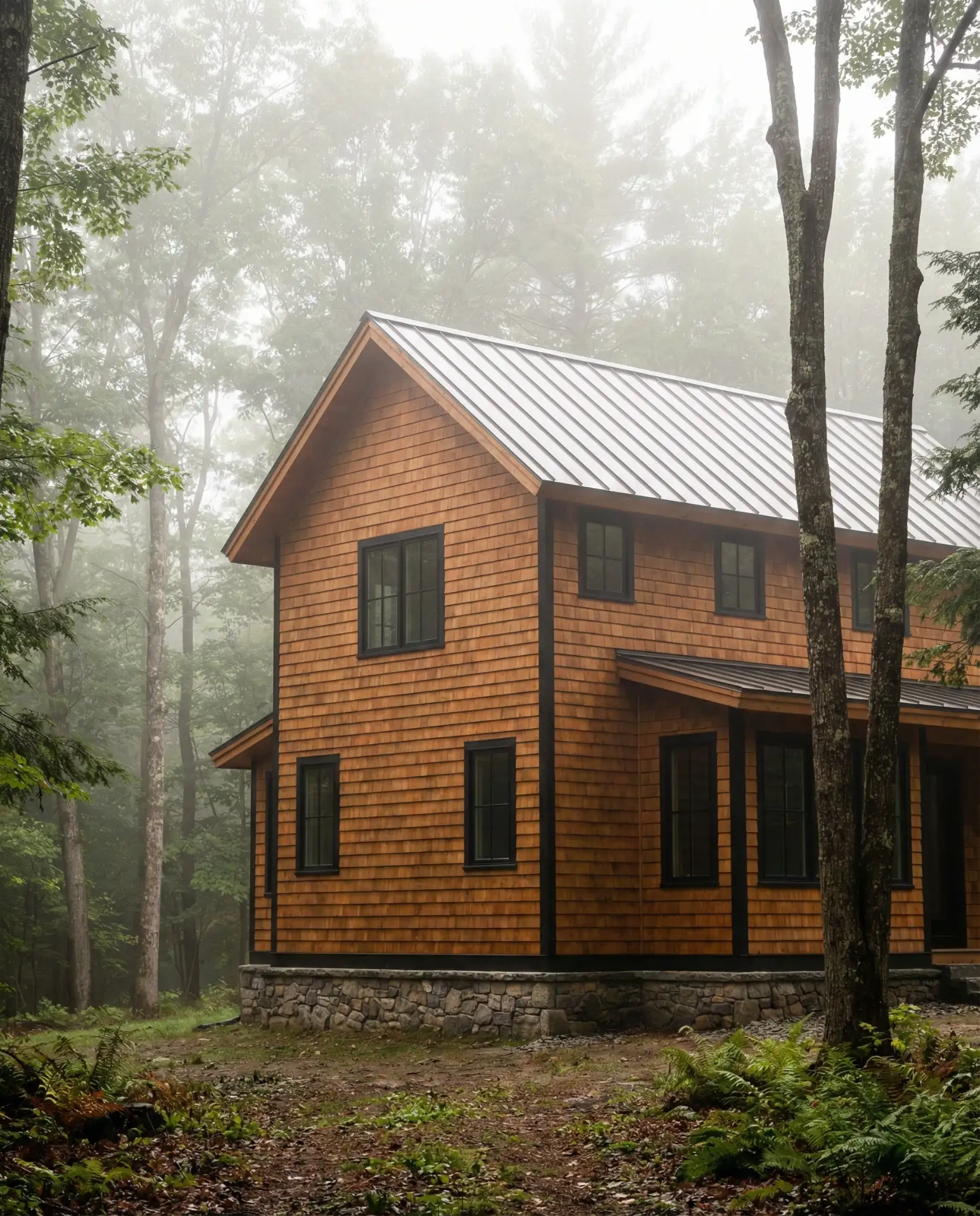
Common mistakes and how to avoid them: Many people choose cedar for its beauty but underestimate maintenance requirements. Untreated cedar needs annual cleaning and periodic staining to prevent mold and rot, especially in humid climates like the Southeast. If low maintenance is a priority, consider fiber-cement shakes that mimic cedar’s look with virtually no upkeep. Also, ensure proper ventilation behind shakes during installation; trapped moisture is cedar’s enemy and can lead to premature failure even with regular maintenance.
16. Two-Tone Siding with Horizontal Dividing Line
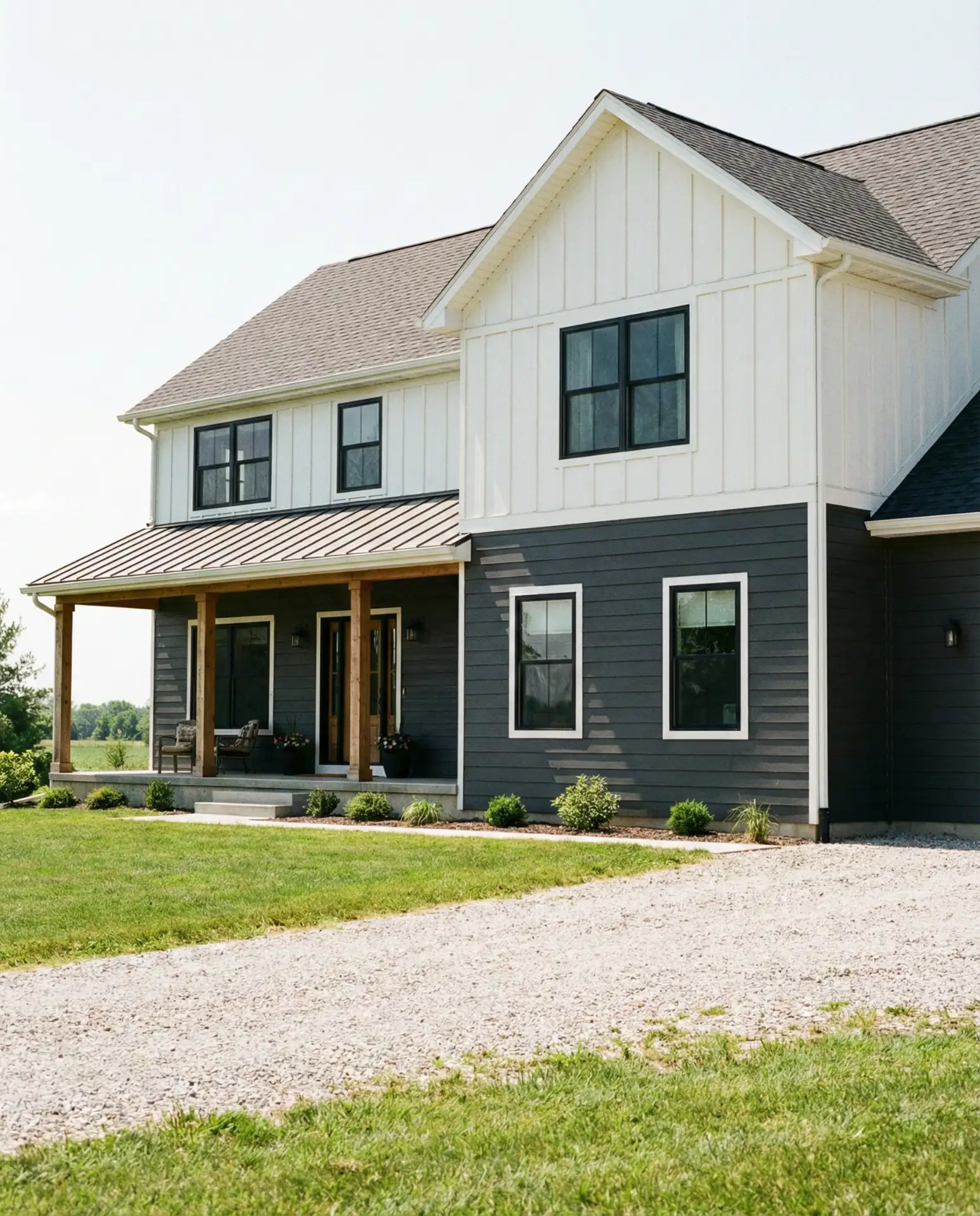
Dividing the facade horizontally with a darker lower section and lighter upper creates visual weight distribution that grounds the structure while keeping it bright overall. This technique, common in UK farmhouse renovations, translates beautifully to American contexts when using colors that share undertones—like charcoal below with light gray above, or navy beneath cream. The horizontal break typically occurs around window sill height, creating a natural datum line that unifies window placements.
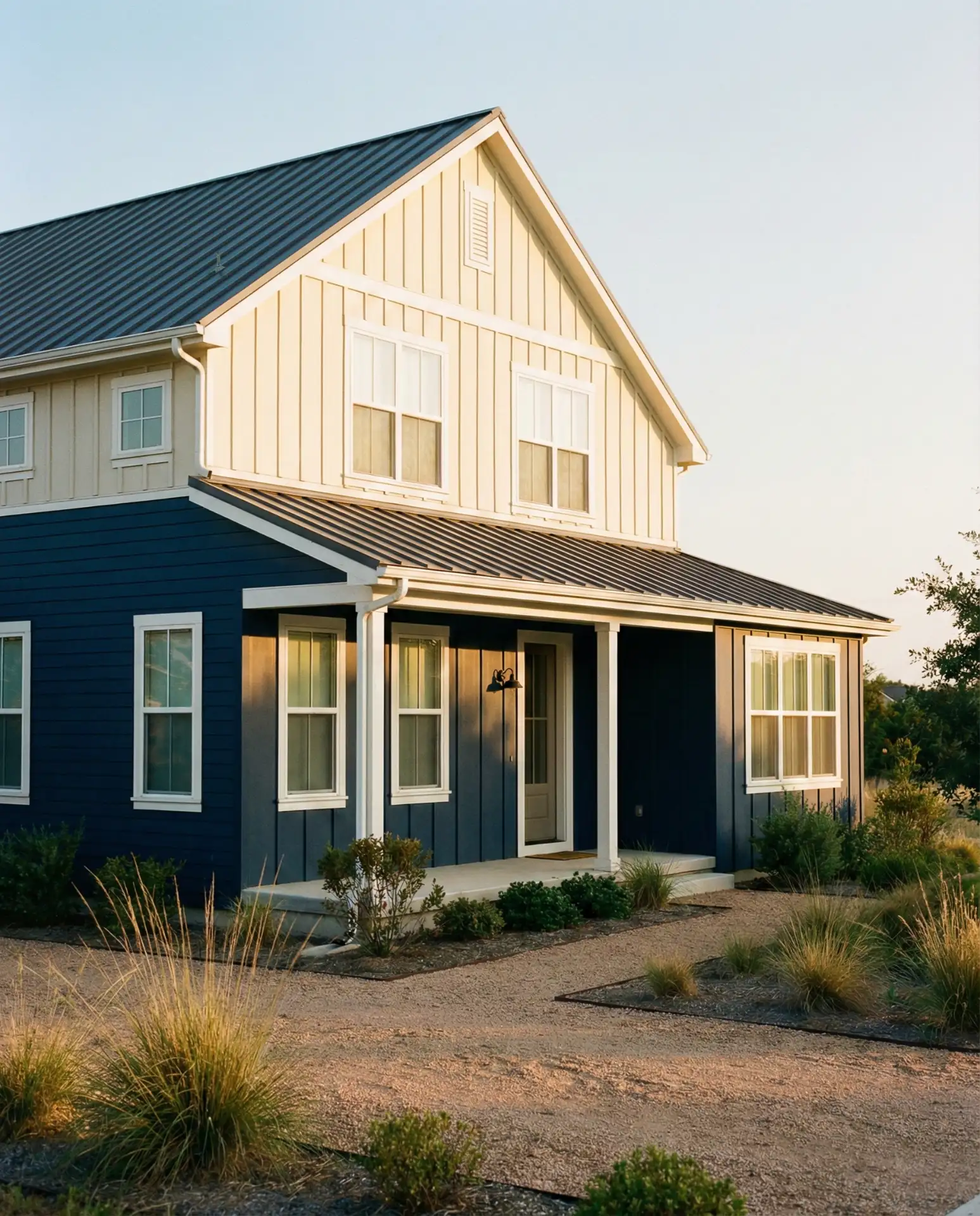
Where it works best: This approach suits two-story homes and split-levels particularly well, as the dividing line helps break up large vertical expanses that might otherwise feel overwhelming. It’s less common on single-story ranches but can work if the home has enough wall height to make the division meaningful. Consider using a trim board at the color break to create a clean transition and cover any slight alignment issues between different siding materials.
17. Corrugated Metal Siding with Wood Frame
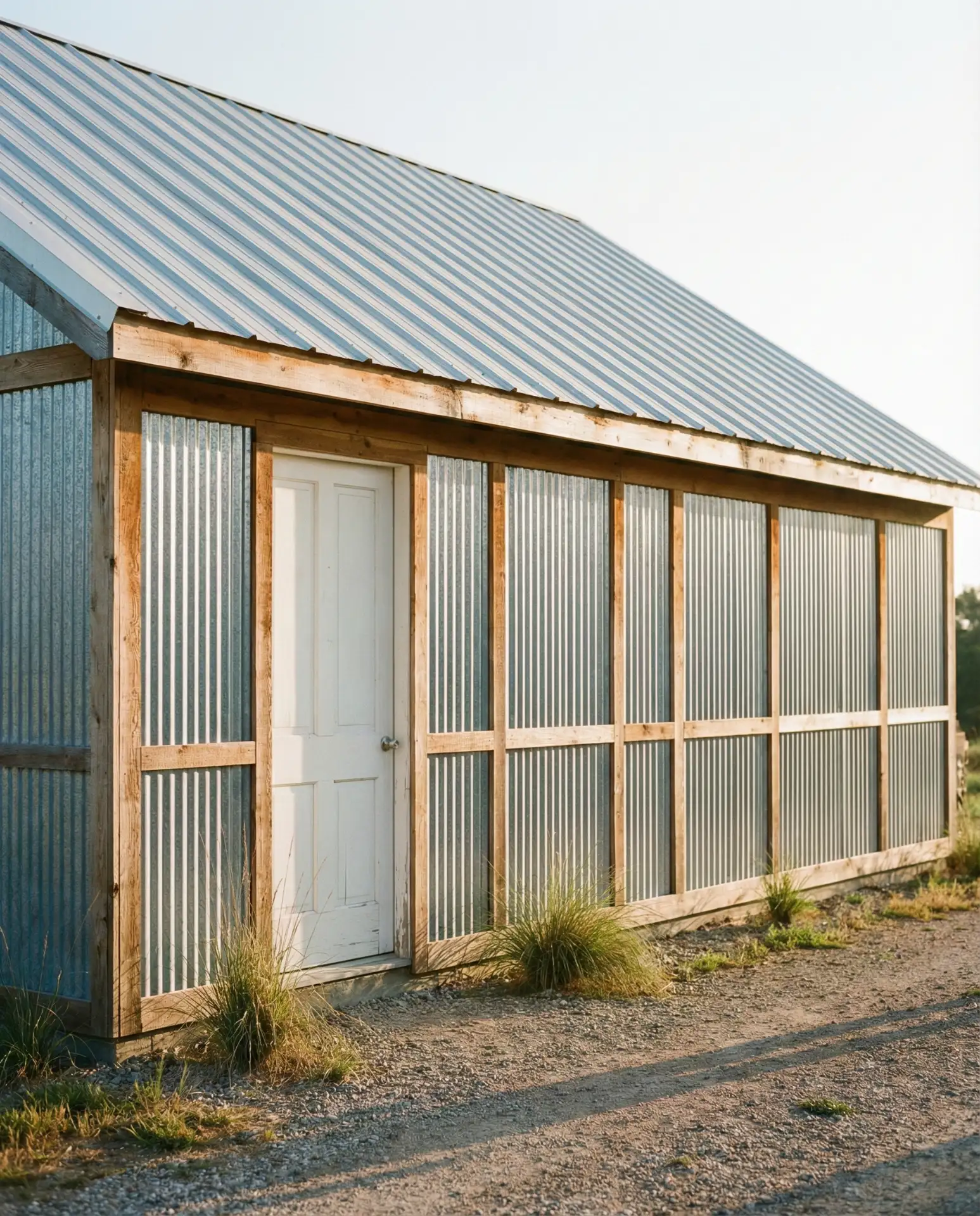
Industrial corrugated metal panels framed by natural wood trim merge agricultural heritage with contemporary material honesty, creating facades that celebrate utility as beauty. This combination works especially well on garage walls, mudroom additions, or accent sections where you want texture without pattern overload. The metal’s vertical ribbing adds dimension that catches light dynamically throughout the day, transforming what might be flat surfaces into living compositions.
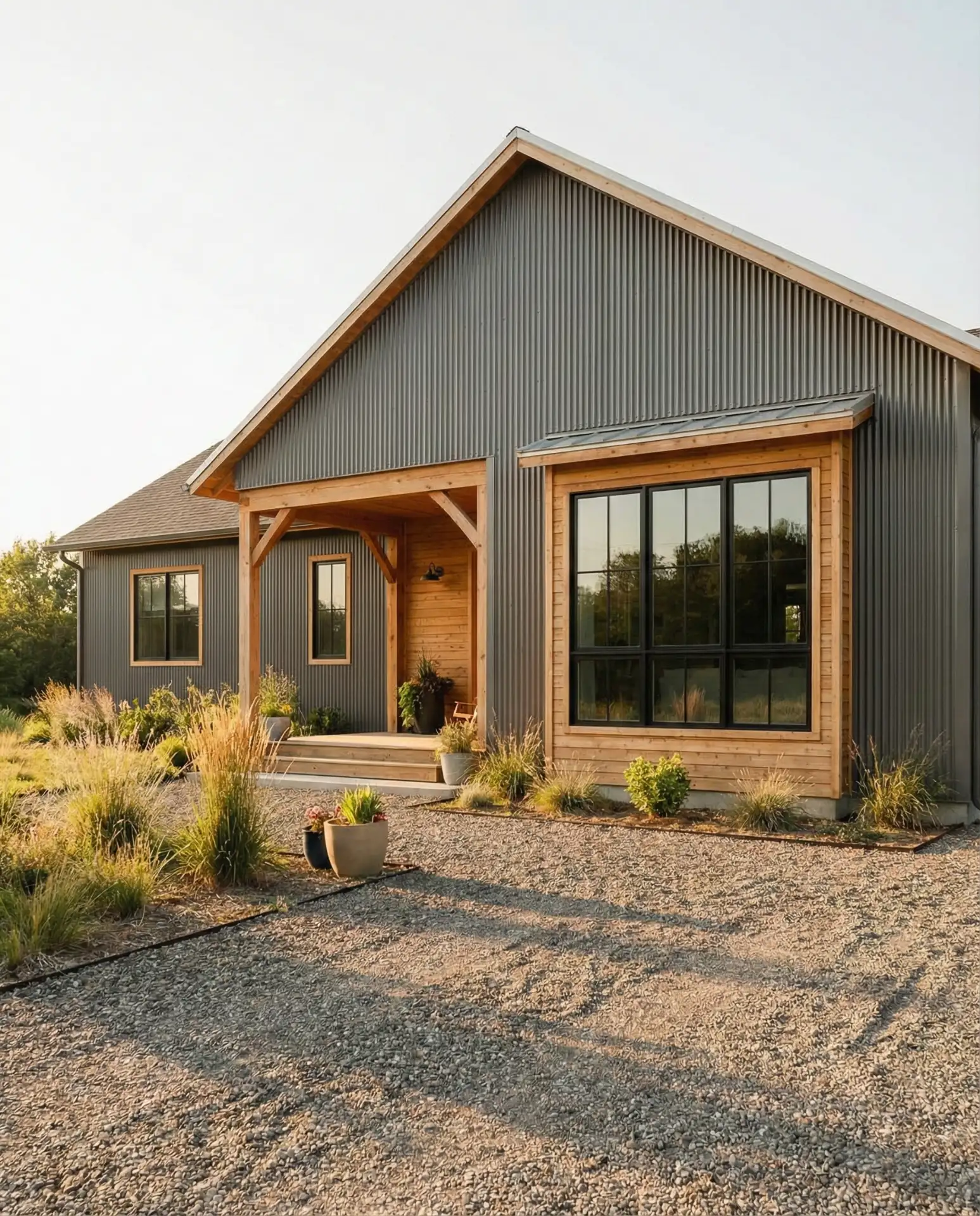
Real homeowner behavior: This material choice appeals strongly to DIY enthusiasts and those on tighter budgets, as corrugated metal costs $2–$4 per square foot and installs quickly compared to traditional lap siding. However, it can be noisy during rain or hail, something to consider if metal will cover bedroom walls. Many people solve this by using metal strategically on garage and storage areas while reserving quieter materials for living spaces—a practical compromise that still delivers the aesthetic.
18. Classic White with Black Shutters and Trim
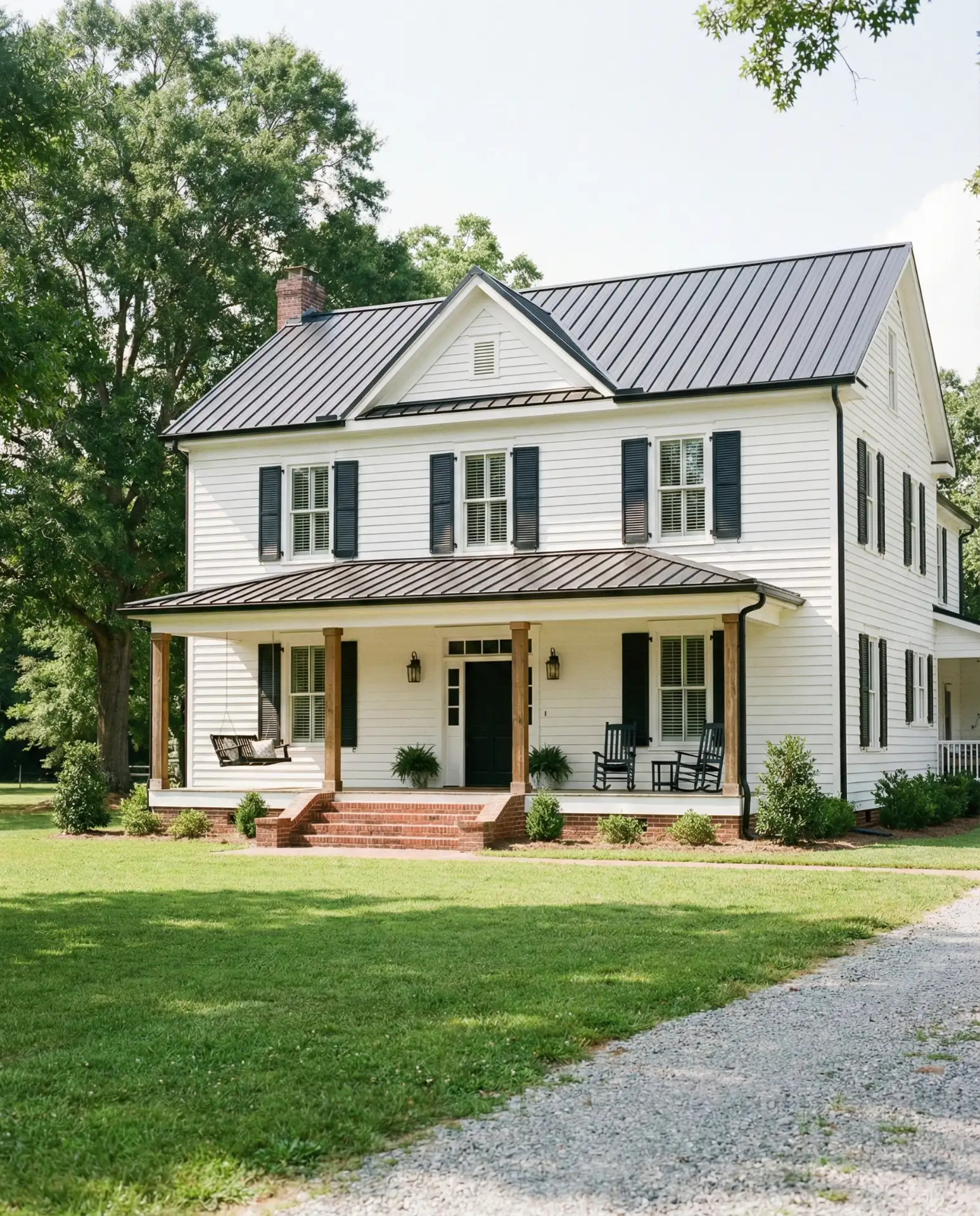
The timeless black and white farmhouse palette endures because of its crisp contrast and universal appeal, delivering impact through restraint rather than complexity. Functional or decorative shutters in matte black frame windows beautifully, while black door hardware, porch railings, and roof trim extend the theme cohesively. This combination photographs exceptionally well, which partly explains its dominance on Pinterest and in real-world neighborhoods alike.
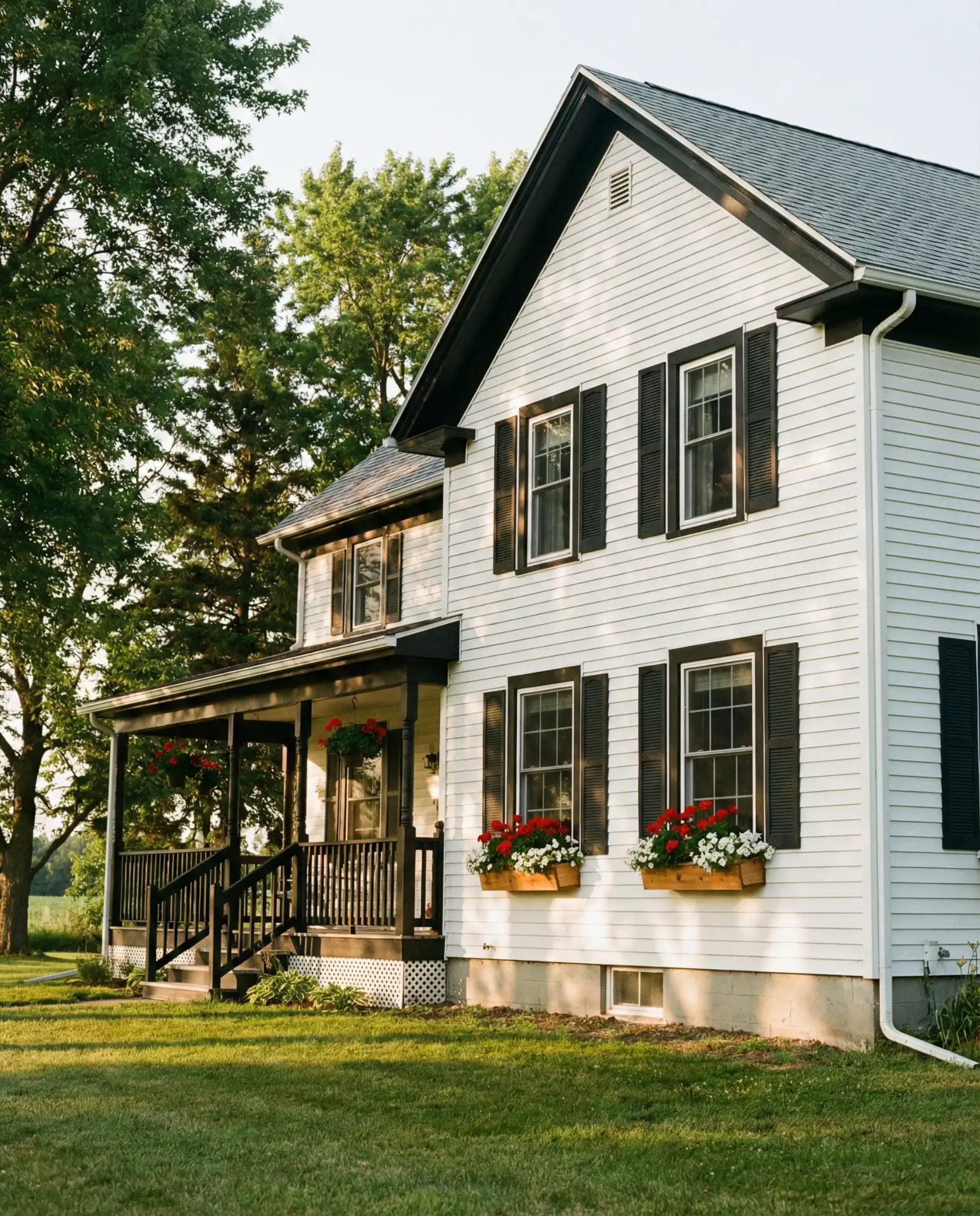
American lifestyle context: This palette resonates particularly in the South and Midwest, where it evokes antebellum and prairie farmhouse traditions without feeling dated. It works equally well on modest cottages and grand estates, scaling gracefully across budgets and property sizes. The key is consistency—once you commit to black and white, carry it through completely; mixing in brown or gray accents dilutes the impact and makes the design feel indecisive rather than intentional.
19. Olive Green with Copper Gutters
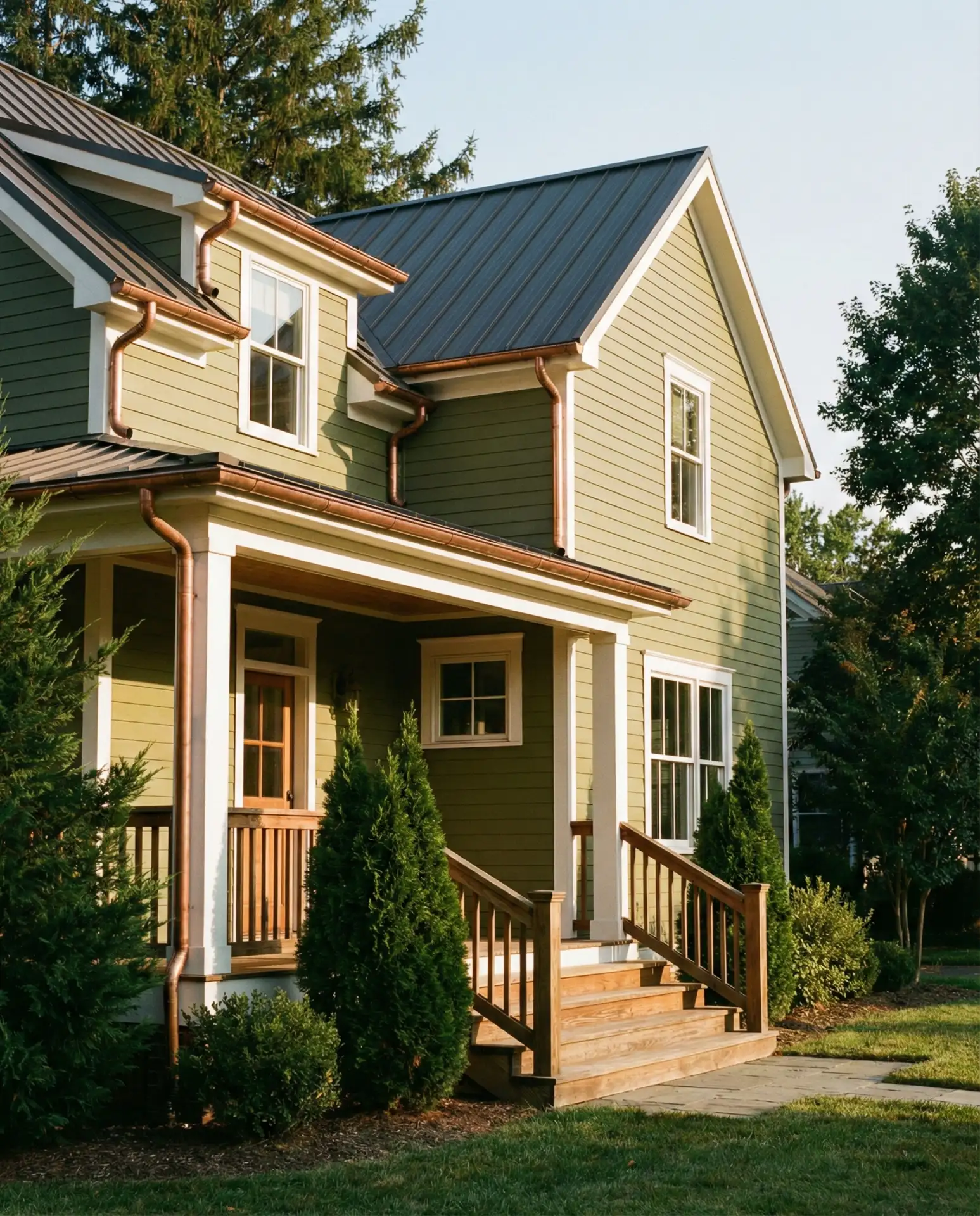
Deep olive siding provides earthy sophistication, while copper gutters and downspouts add jewelry-like accents that elevate the overall composition into something special. This green leans toward gray, making it more versatile than brighter tones, working across seasons and lighting conditions without overwhelming. The copper naturally patinas to verdigris over time, adding depth and character that only improves with age—a deliberate embrace of weathering that aligns with farmhouse authenticity values.
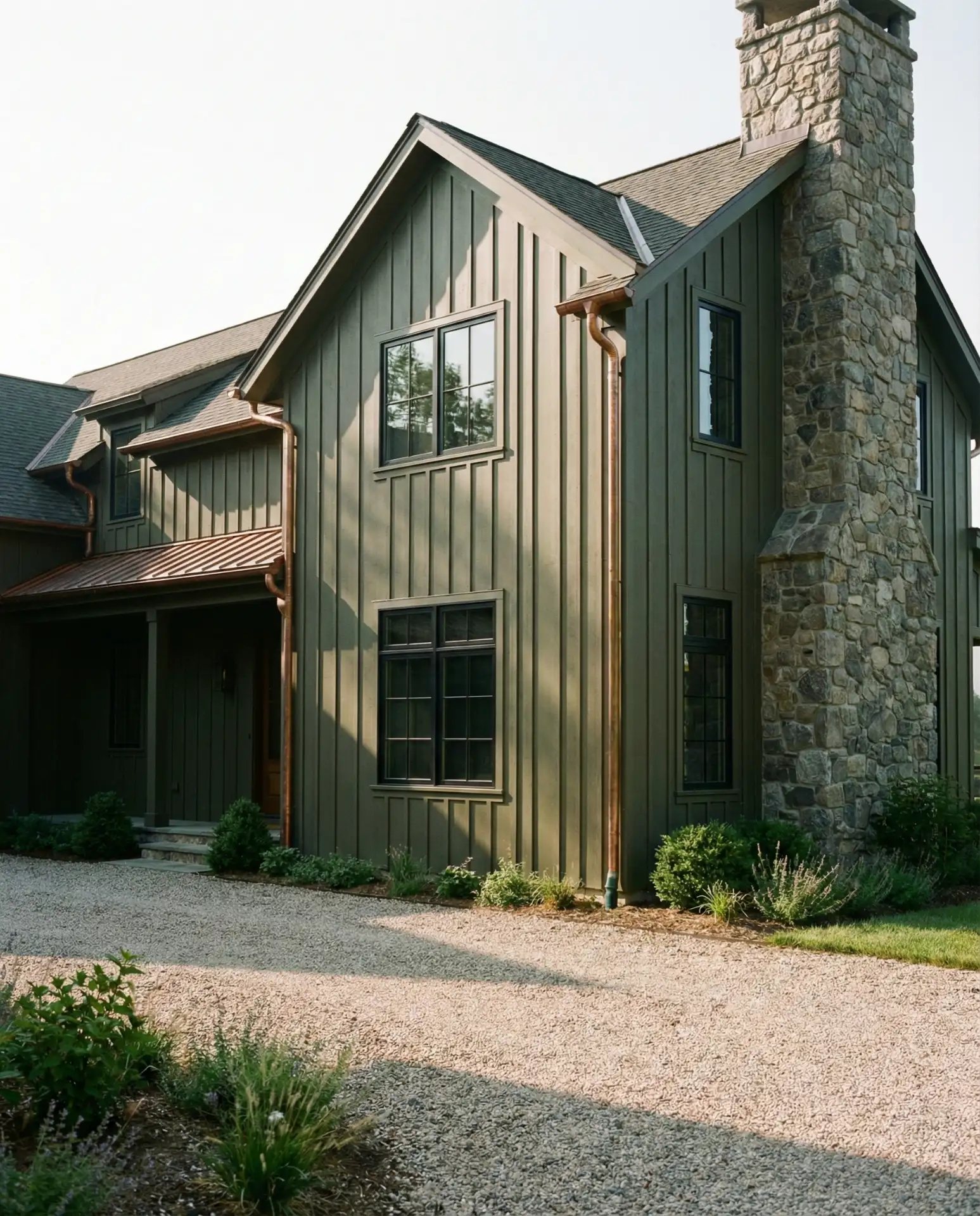
Expert-style commentary: Professional colorists recommend testing olive green samples against your roof and foundation materials before committing, as this hue can read dramatically different depending on surrounding tones. Paired with warm brown or terracotta roofs, it sings; against cool gray roofs, it can feel murky. Copper gutters represent a significant investment—$15–$25 per linear foot versus $3–$6 for aluminum—but many designers argue they’re worth it for the visual richness they bring to earth-toned farmhouses.
20. Pale Blue with White Trim for Coastal Farmhouse
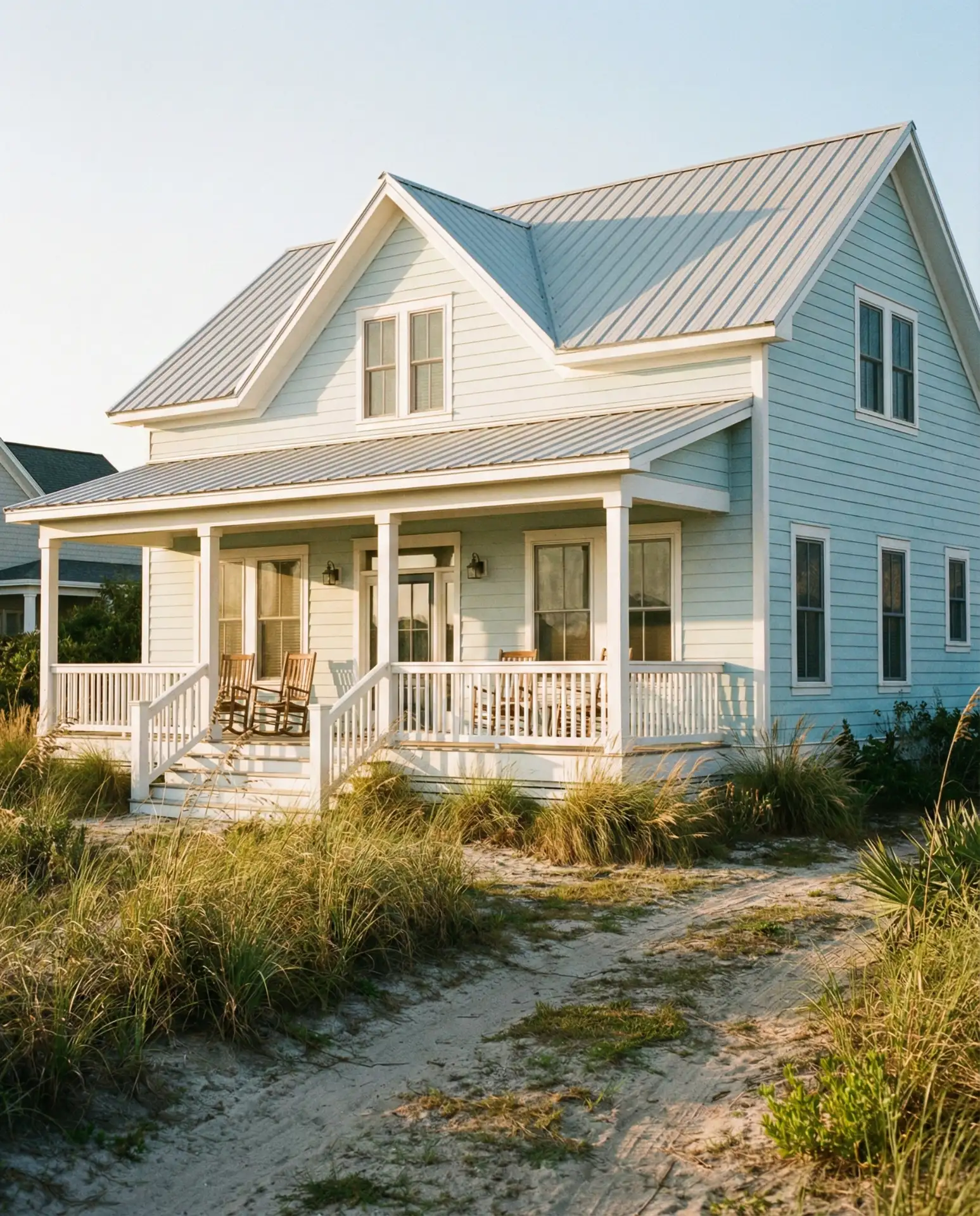
Soft blue siding in powder or robin’s egg tones evokes coastal tranquility while maintaining farmhouse simplicity, creating a hybrid style perfect for properties near water or those wanting beachy vibes inland. Crisp white trim around windows, doors, and eaves provides the contrast that prevents pale blue from fading into the sky, ensuring the architecture remains defined. This palette works year-round but truly shines during golden hour when warm light softens the cool undertones.

Where it works best: Obviously stunning in coastal regions from Maine to Florida, but also translates beautifully to lakefront properties in Minnesota, Wisconsin, or Michigan, where water views justify the palette. Avoid this combination in very hot, dry climates where it might feel incongruous with the landscape; save it for places where humidity and water are part of the daily story. Consider pairing with natural rope accents, driftwood details, or weathered wood decking to strengthen the coastal connection.
21. Barn Red Accent with Neutral Main Siding
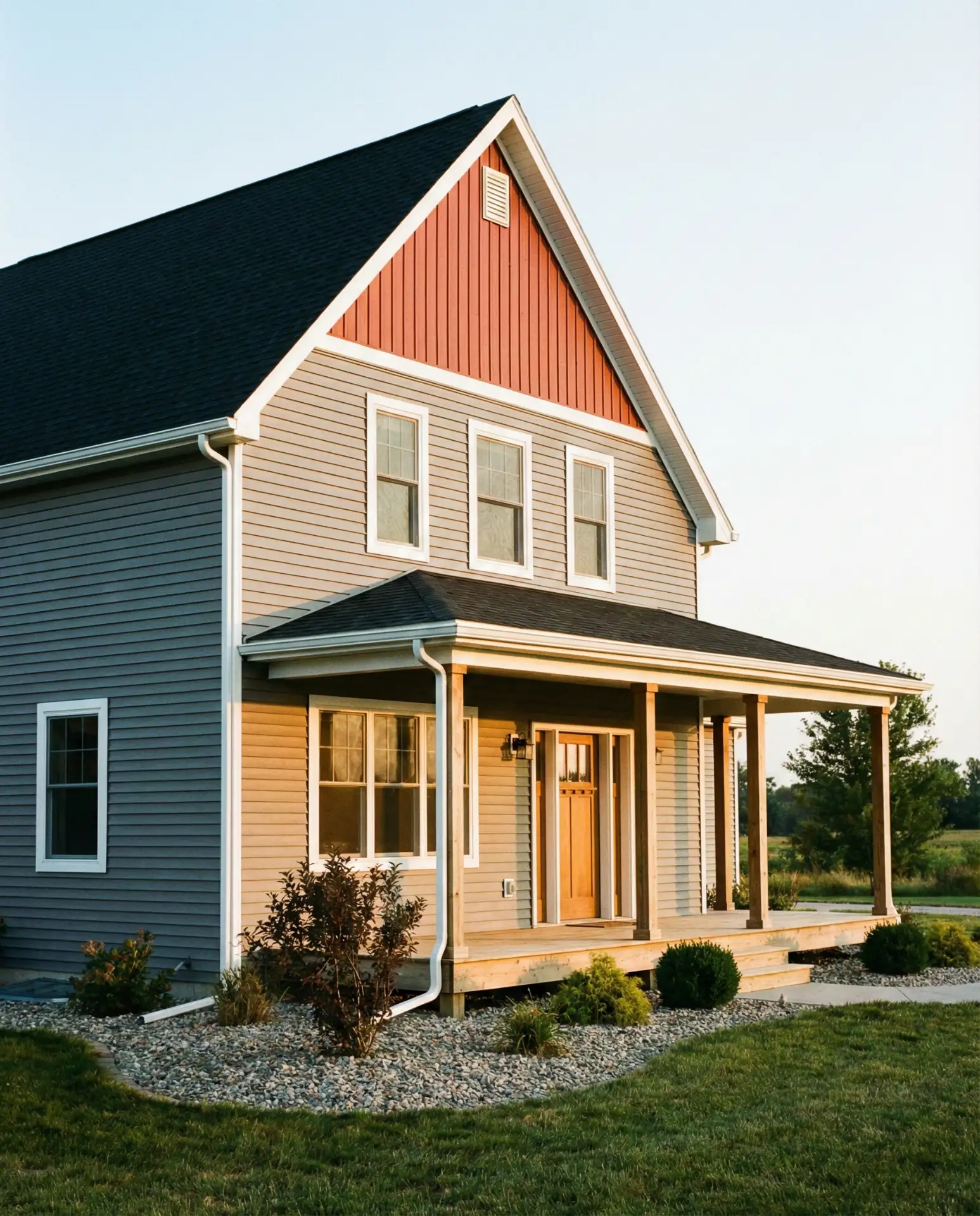
Traditional barn red applied sparingly—on a single gable, shed dormer, or detached structure—honors agricultural heritage without overwhelming contemporary aesthetics. This approach acknowledges farmhouse roots literally through color reference while keeping the main structure subdued in gray or cream. The contrast creates visual hierarchy, directing attention to specific architectural features while maintaining overall cohesion through shared trim colors or roofing materials.
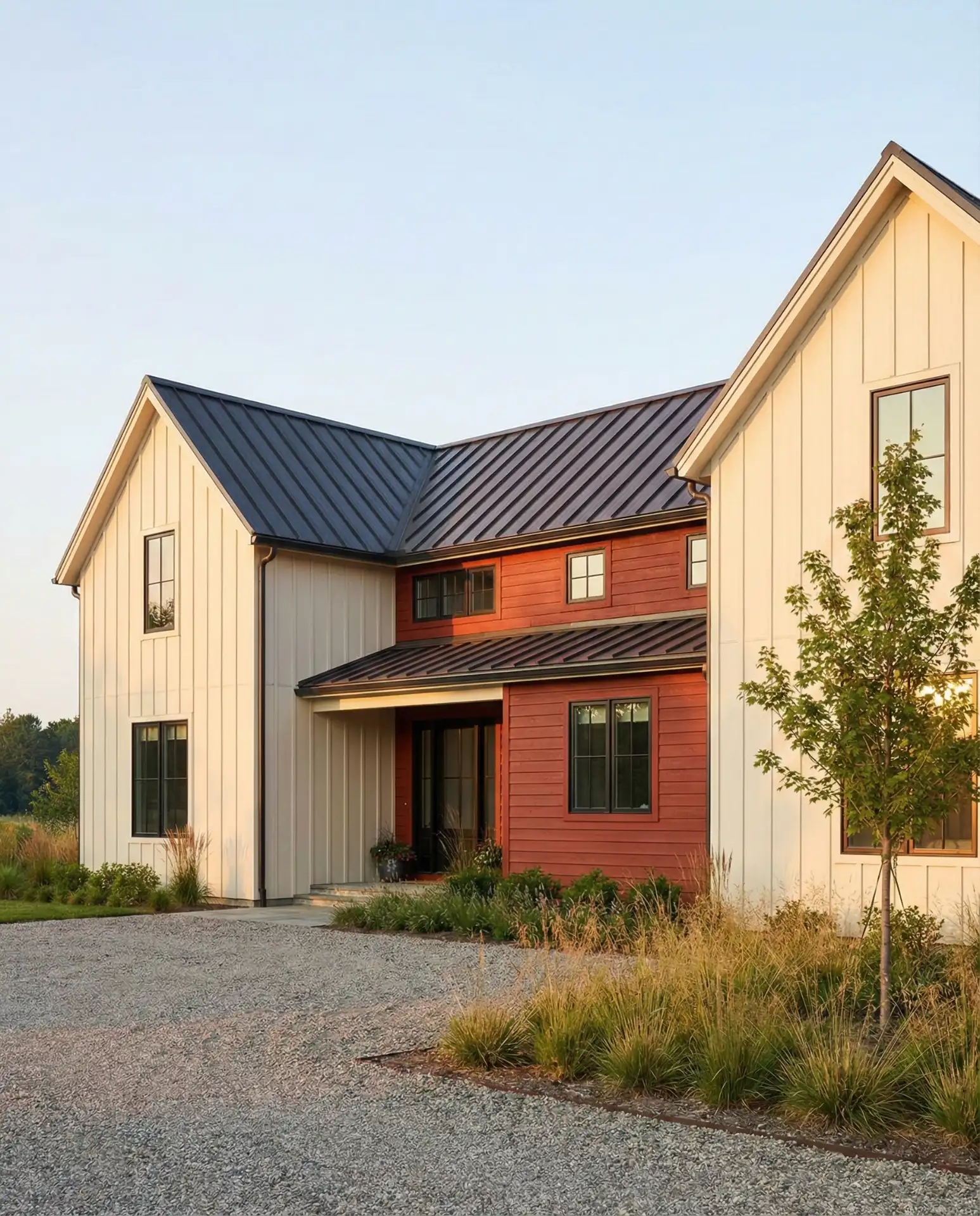
Practical insight: Barn red works best on true working farms or rural properties where it reads as authentic rather than theme-park cute. In suburban settings, use it even more sparingly—perhaps just on a front door or shutters—to avoid looking costume-like. The color has tremendous stopping power, so a little goes far. Pair it with natural materials like stone or wood to ground the brightness; against all vinyl or synthetic materials, barn red can feel jarring rather than charming.
22. Light Gray with Dark Gray Accents
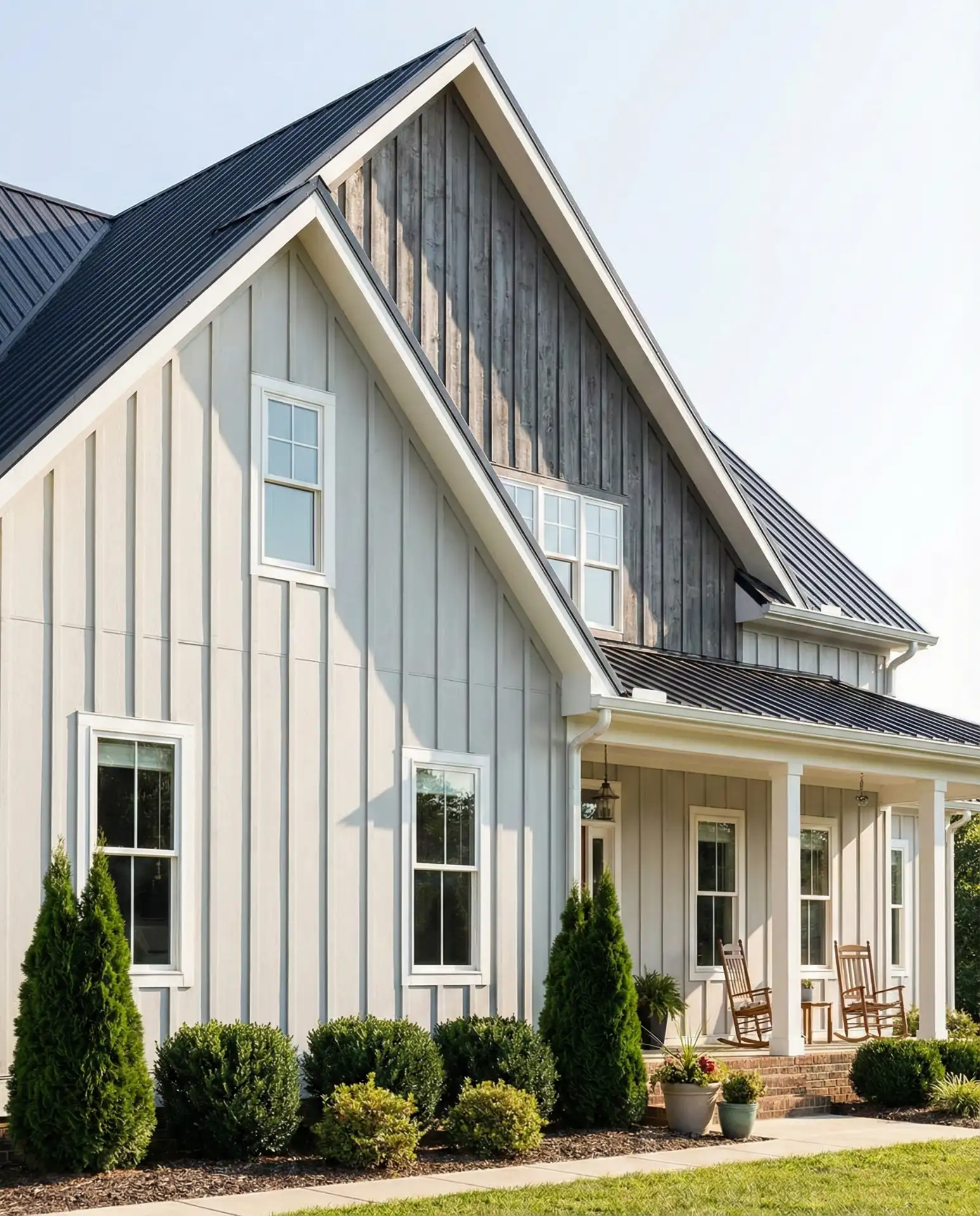
Layering multiple gray values creates depth through tonal variation rather than color contrast, resulting in sophisticated facades that feel modern yet timeless. Light gray primary siding pairs with darker gray on gables, trim, or porches, establishing subtle hierarchy without jarring transitions. This monochromatic approach appeals to homeowners who want farmhouse simplicity without white’s maintenance demands or black’s intensity, landing in a practical middle ground.
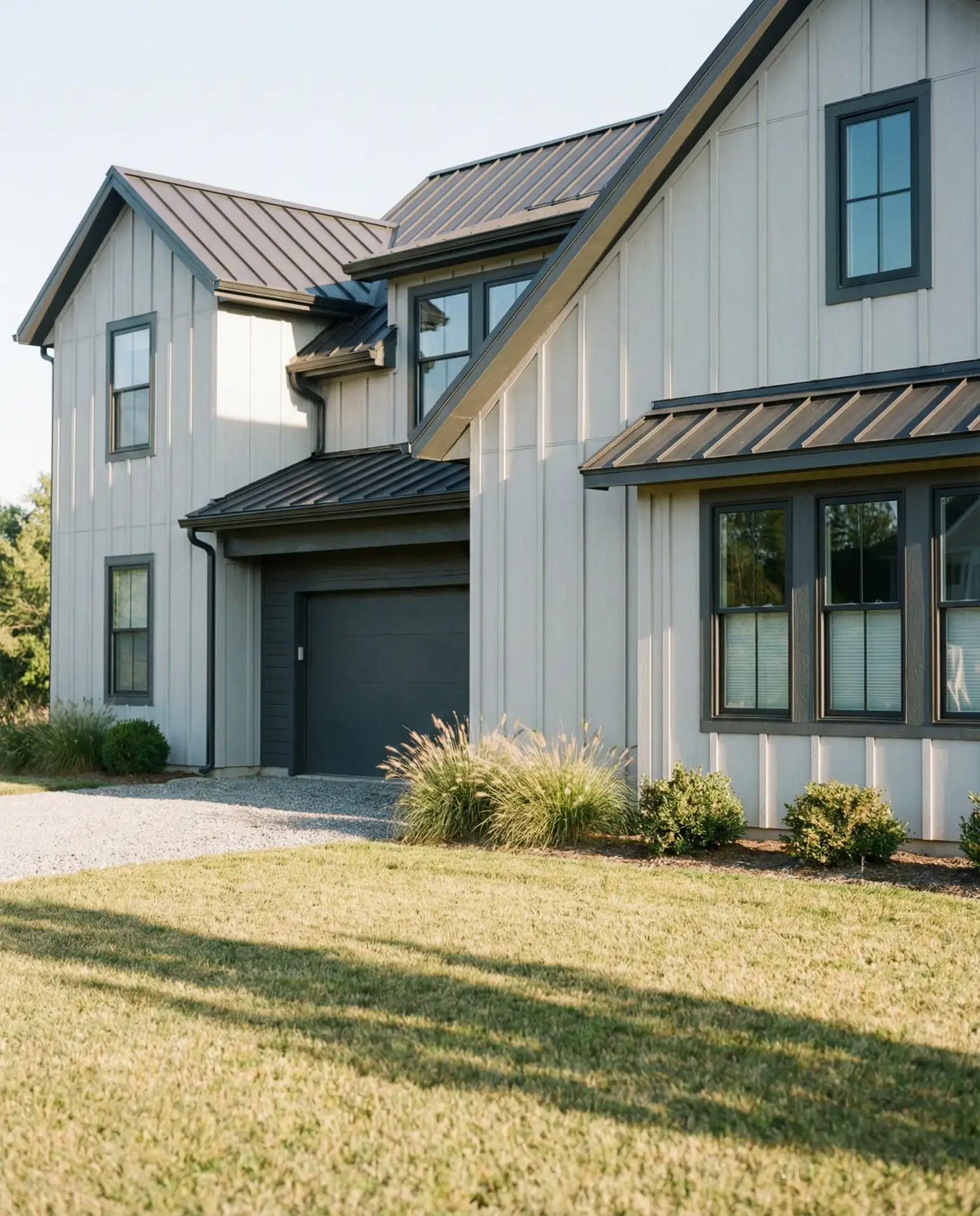
Budget angle: Gray hides dirt better than white, potentially reducing annual cleaning costs from three or four washes to just one or two, depending on your location and tree cover. The practical savings add up over time, especially for busy families who can’t dedicate weekends to exterior maintenance. Choose grays with warm undertones if your home has south or west exposure; the sunlight will bring out golden notes that keep the palette from feeling cold or institutional, a lesson learned from countless gray homes that missed the mark by going too cool.
23. Natural Wood Siding Left to Weather
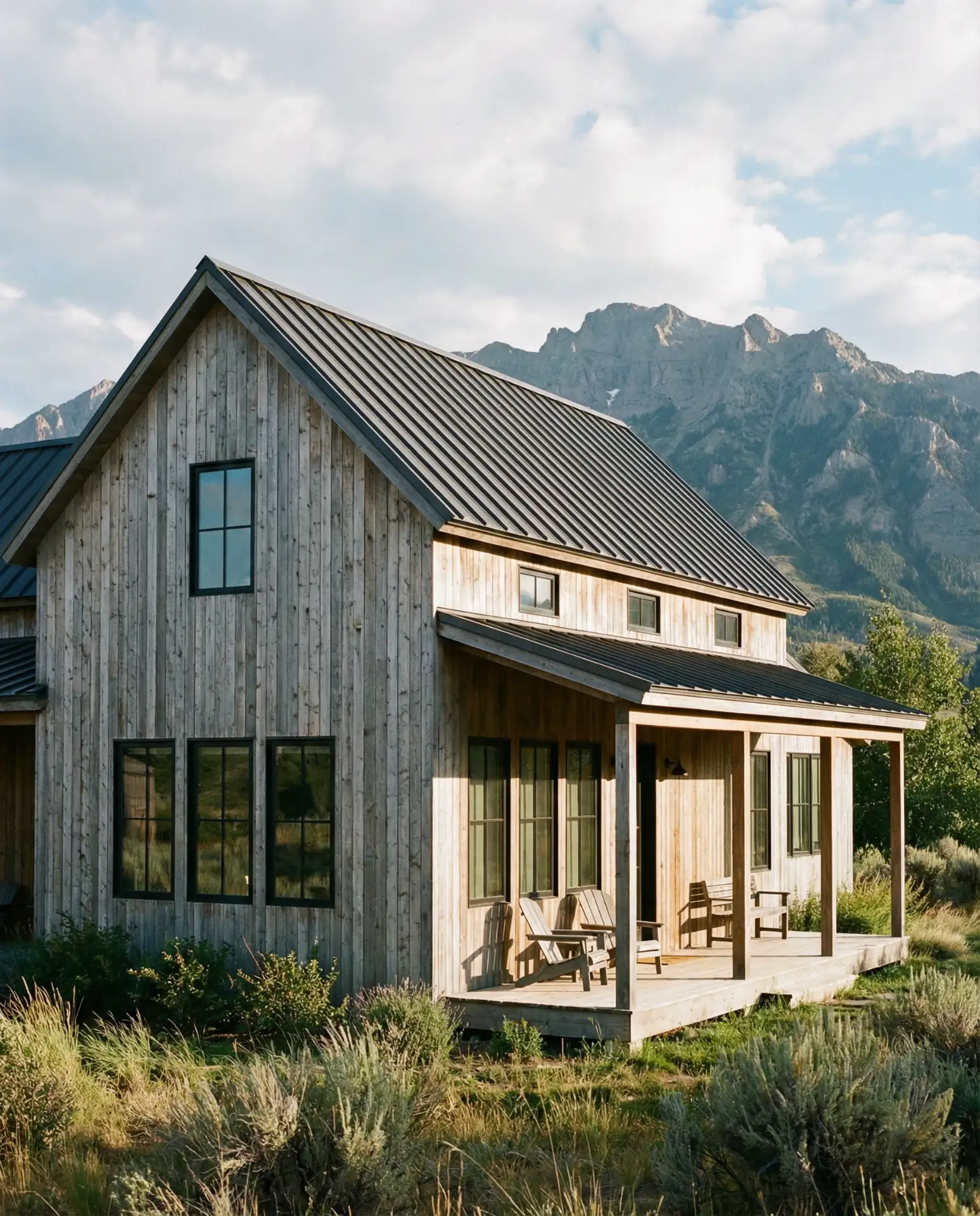
Embracing unstained cedar or cypress siding that silvers naturally over time celebrates material authenticity and reduces maintenance to virtually zero, aligning perfectly with organic farmhouse values. This approach rejects the constant upkeep cycle of painted surfaces, instead letting the material age gracefully into its eventual patina. The silvering process takes 1-3 years depending on sun exposure, gradually transforming honey tones into weathered gray that reads as sophisticated rather than neglected.
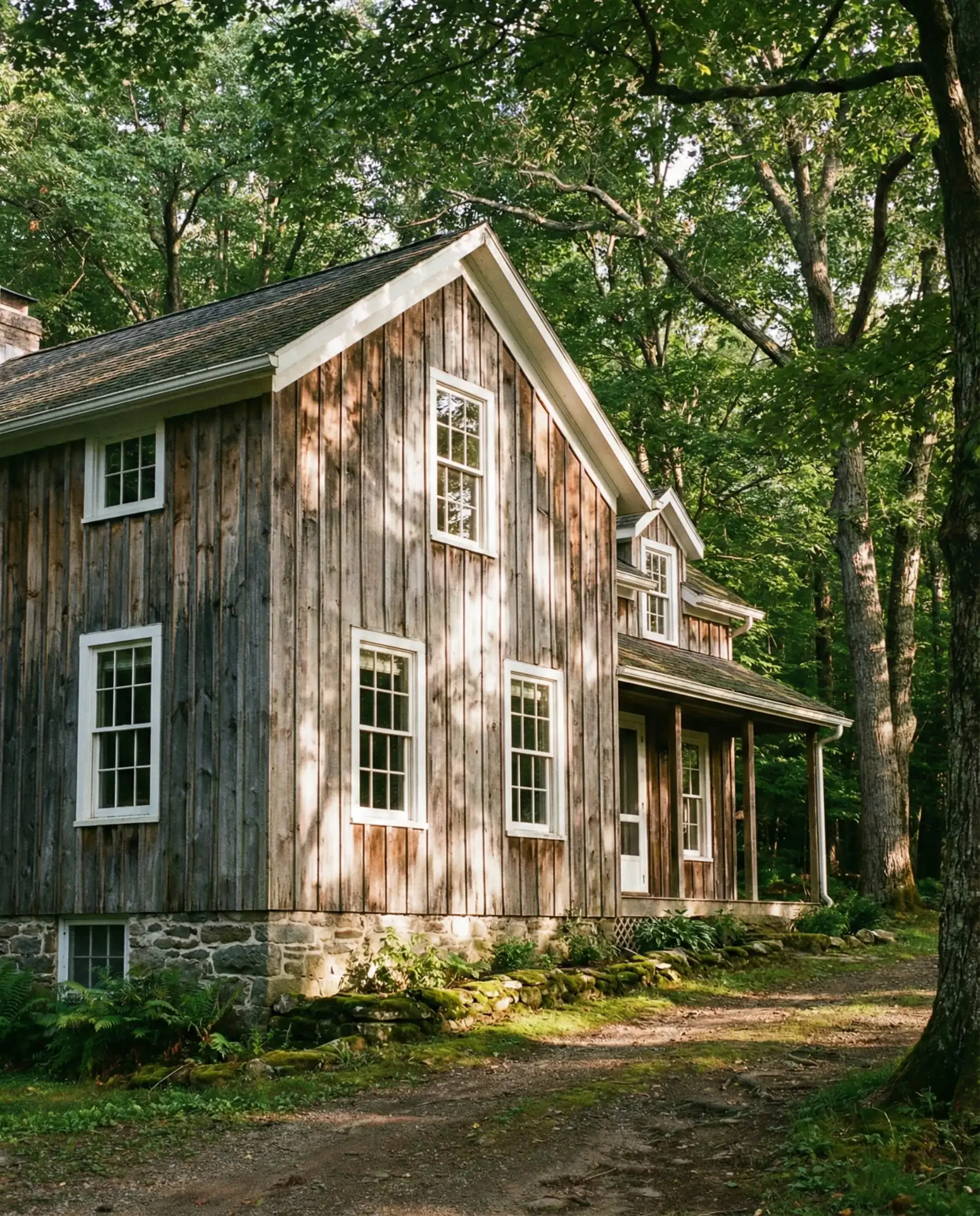
Common mistakes and how to avoid them: Many people confuse “weathered” with “rotted,” but they’re entirely different. Properly installed cedar with adequate ventilation and drainage will silver beautifully without structural compromise, lasting 40+ years. The mistake comes from using inappropriate wood species (pine weathers poorly), inadequate vapor barriers, or insufficient roof overhangs that let water cascade directly onto siding. If you’re considering this route, consult with builders experienced in natural siding; proper installation is everything. Also, set expectations with neighbors—some HOAs or suburban communities resist unpainted wood as “unfinished,” so confirm acceptability before committing.
Conclusion
These modern farmhouse exterior ideas showcase how traditional aesthetics adapt beautifully to contemporary needs, from paint colors that balance warmth with sophistication to architectural designs that honor heritage while embracing innovation. Whether you’re drawn to coastal blues, rustic blacks, or classic whites, the key lies in thoughtful material choices, proportional details, and regional appropriateness. We’d love to hear which direction resonates with your vision—share your favorite ideas or questions in the comments below, and let’s continue the conversation about creating farmhouses that feel both timeless and unmistakably 2026.