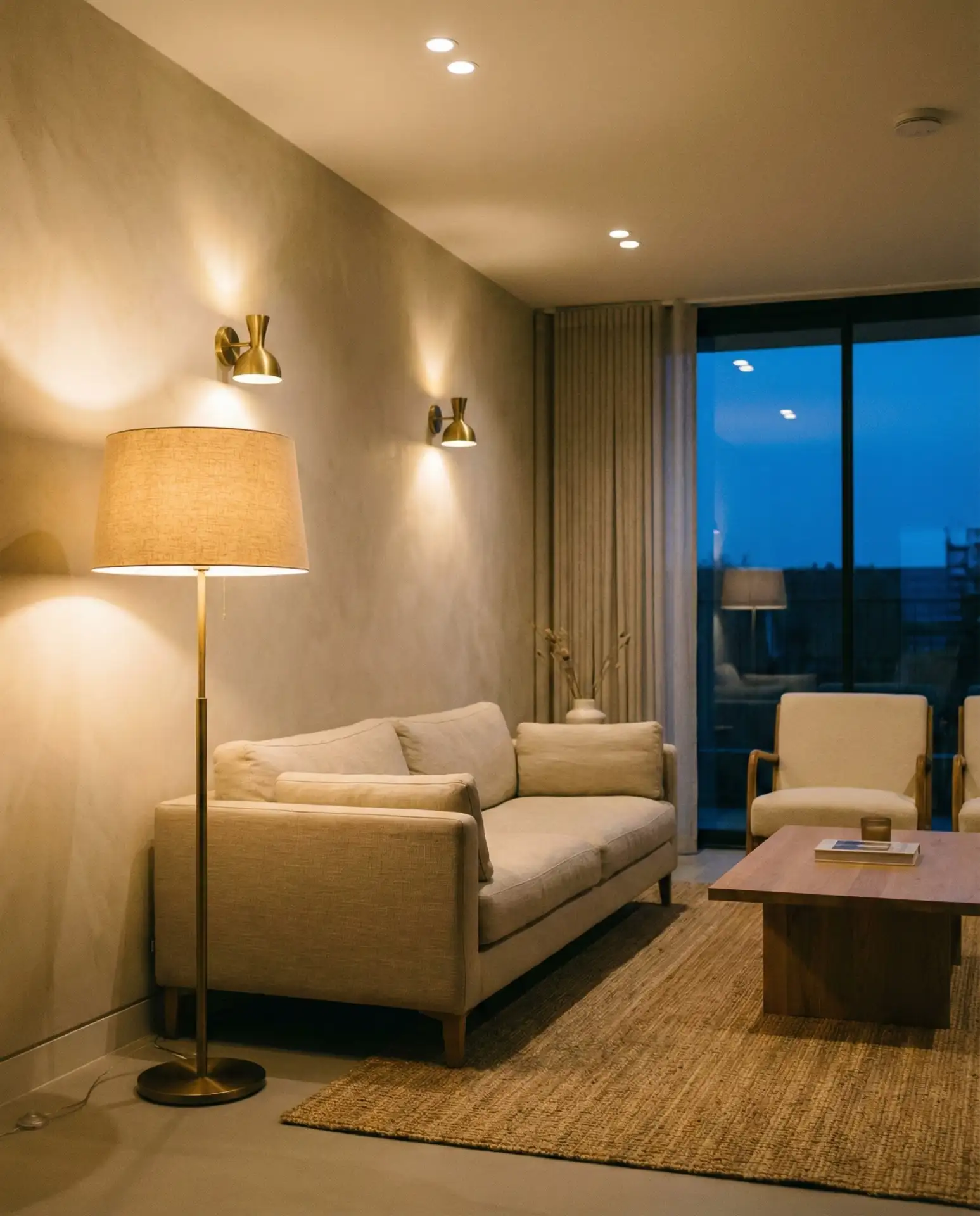
Modern living rooms in 2026 are all about balance—blending clean lines with warmth, minimalism with personality, and function with serious style. Americans scrolling through Pinterest right now are craving spaces that feel both pulled-together and lived-in, where every piece has a purpose but nothing feels too precious. Whether you’re working with a sprawling suburban great room or a compact city apartment, this year’s trends make it easier than ever to create a space that’s equal parts sophisticated and inviting. From layered textures to unexpected color moments, these ideas will help you design a living room that feels fresh, current, and unmistakably you.
1. Sculptural Seating as the Focal Point
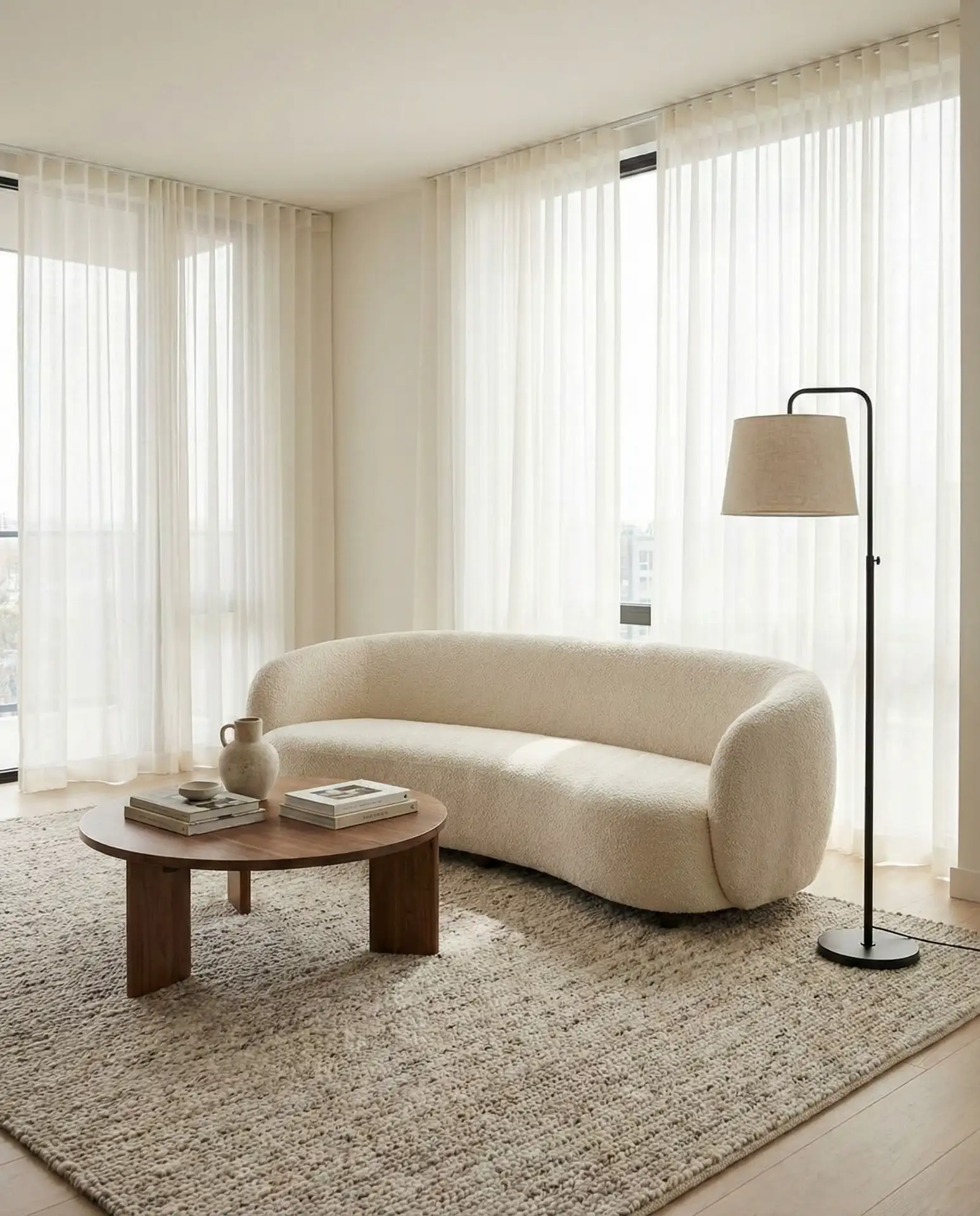
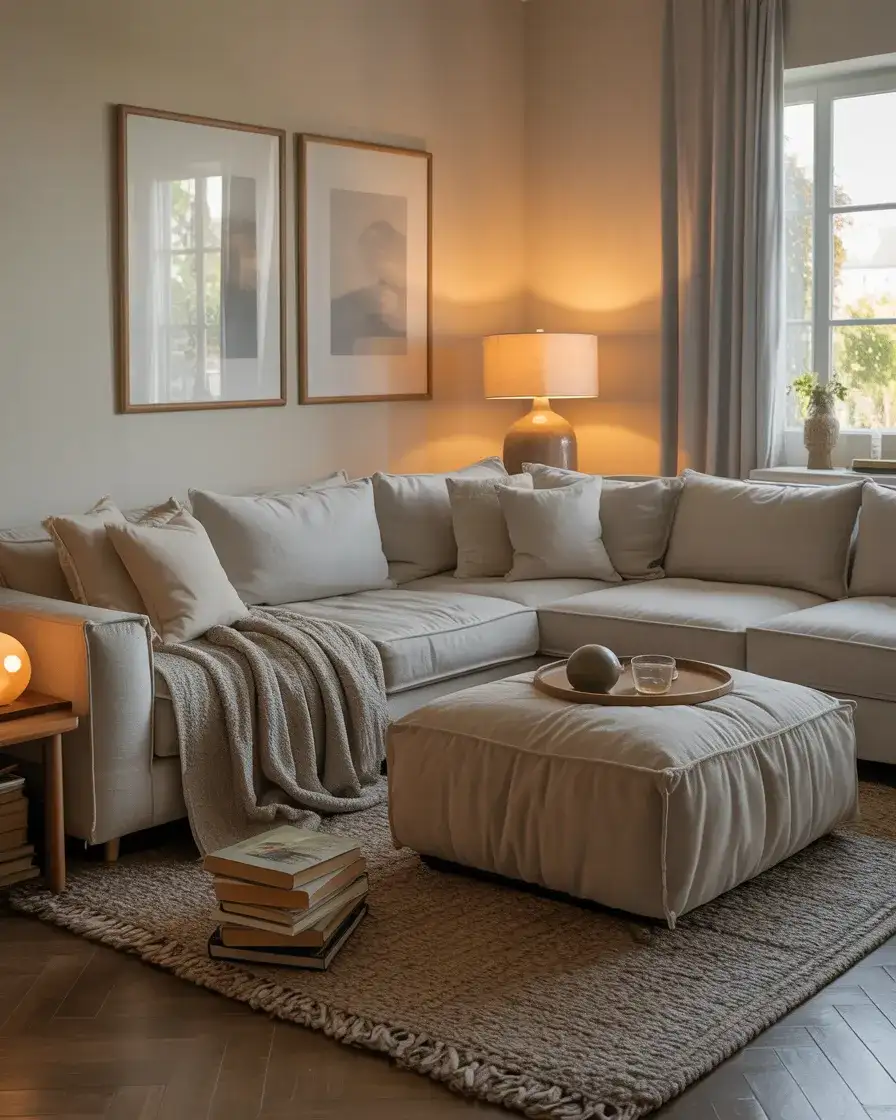
When your sofa becomes the statement, everything else can stay quiet. Contemporary mid century silhouettes with rounded arms and chunky boucle upholstery are having a major moment, offering both visual weight and tactile comfort. These pieces anchor a room without overwhelming it, especially when paired with natural wood coffee tables and soft area rugs. The key is choosing a shape that feels intentional—something that makes guests pause and appreciate the design, not just the function. 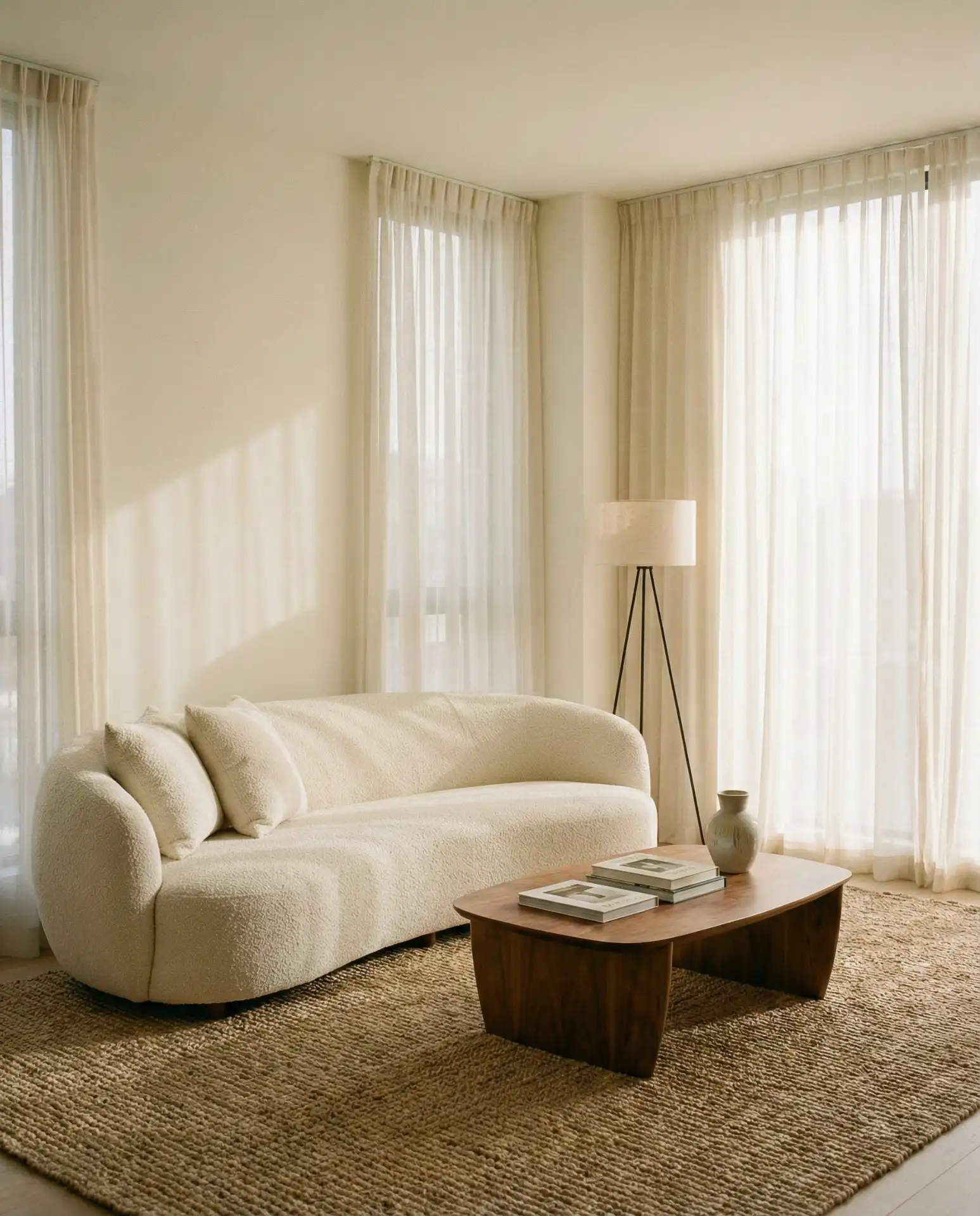
This approach works particularly well in open-concept homes where the living room needs to hold its own against the kitchen and dining areas. A sculptural sofa creates a visual endpoint that helps define the space without requiring walls or dividers. Expect to spend between $2,500 and $5,000 for a quality statement piece that will anchor your room for years, though budget-friendly options under $1,500 are increasingly available from direct-to-consumer brands.
2. Warm Neutrals with One Bold Accent Wall
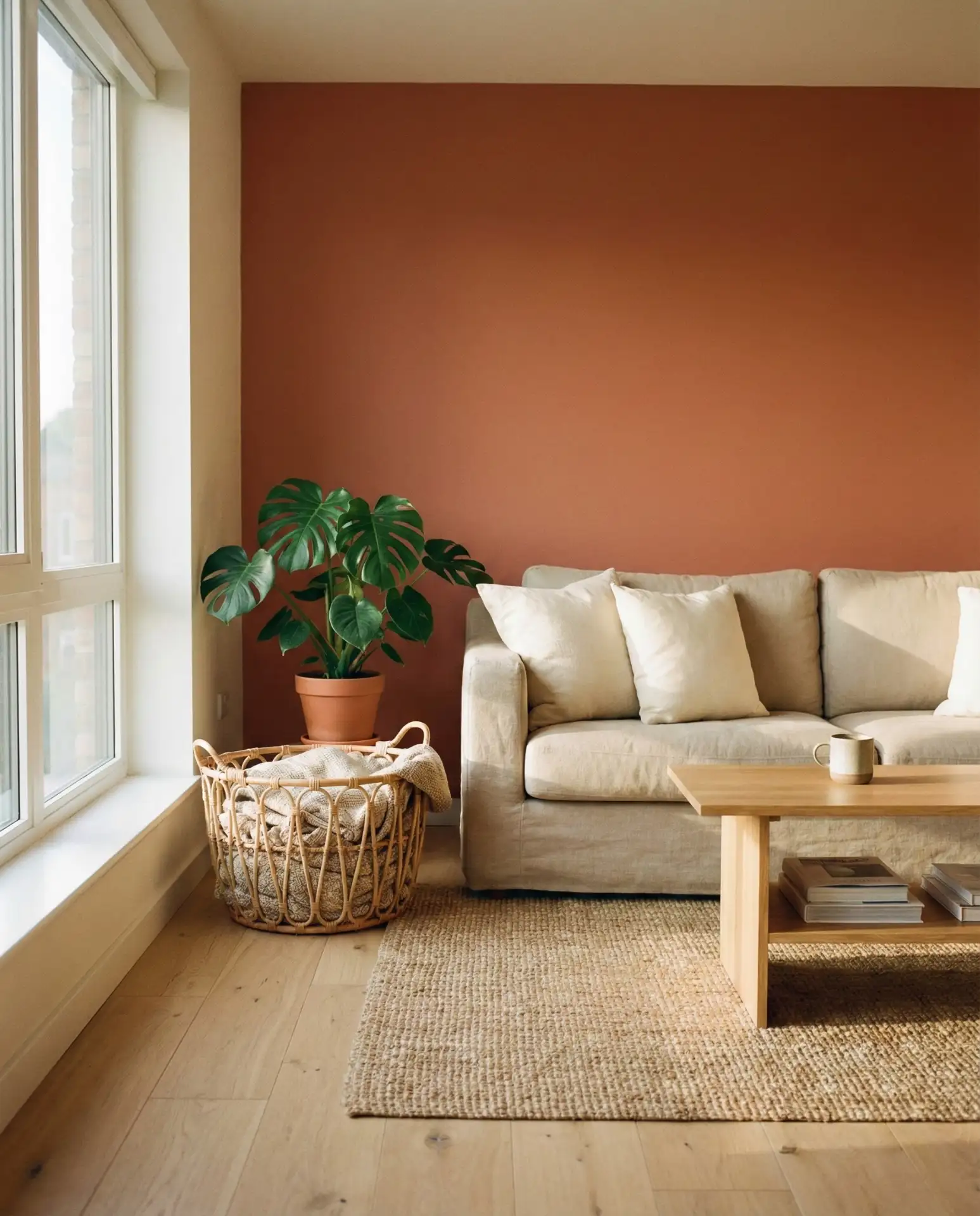
The all-white living room has officially retired. Today’s moody interiors embrace rich, saturated accent walls in terracotta, deep olive, or even charcoal while keeping the rest of the space light and breathable. This creates drama without the commitment of painting every surface, and it gives you a backdrop for layering art, shelving, or a media console. The contrast between the earthy accent and softer surroundings adds depth that flat monochrome spaces simply can’t achieve. 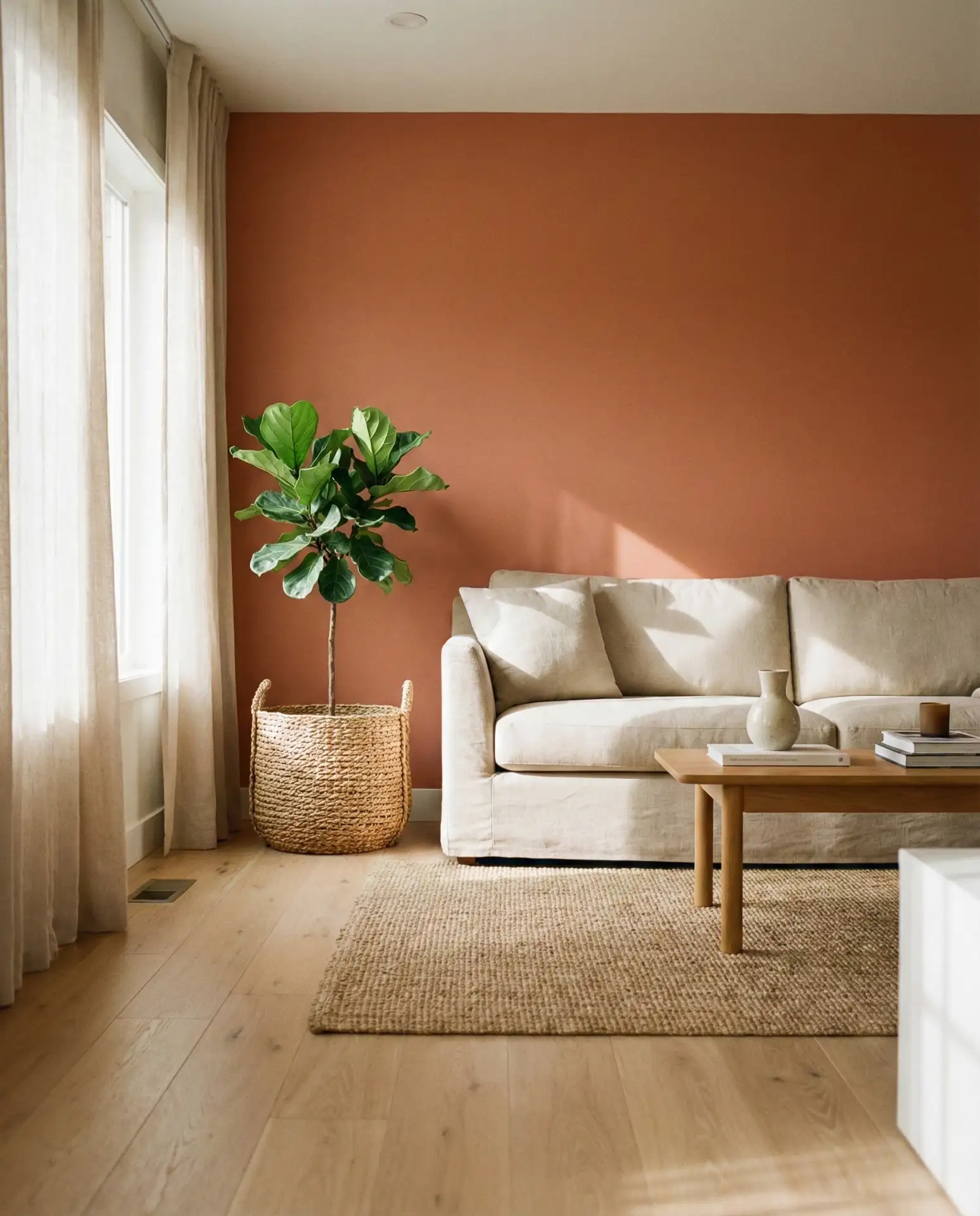
A designer friend once told me that the accent wall should always be the one you see first when entering the room—it sets the emotional tone before you’ve even sat down. In practice, this usually means the wall behind the sofa or the one facing the entryway. The trick is balancing the boldness: if your accent is dark and moody, keep textiles and furniture in lighter tones to prevent the room from feeling cave-like.
3. Layered Lighting with Dimmers
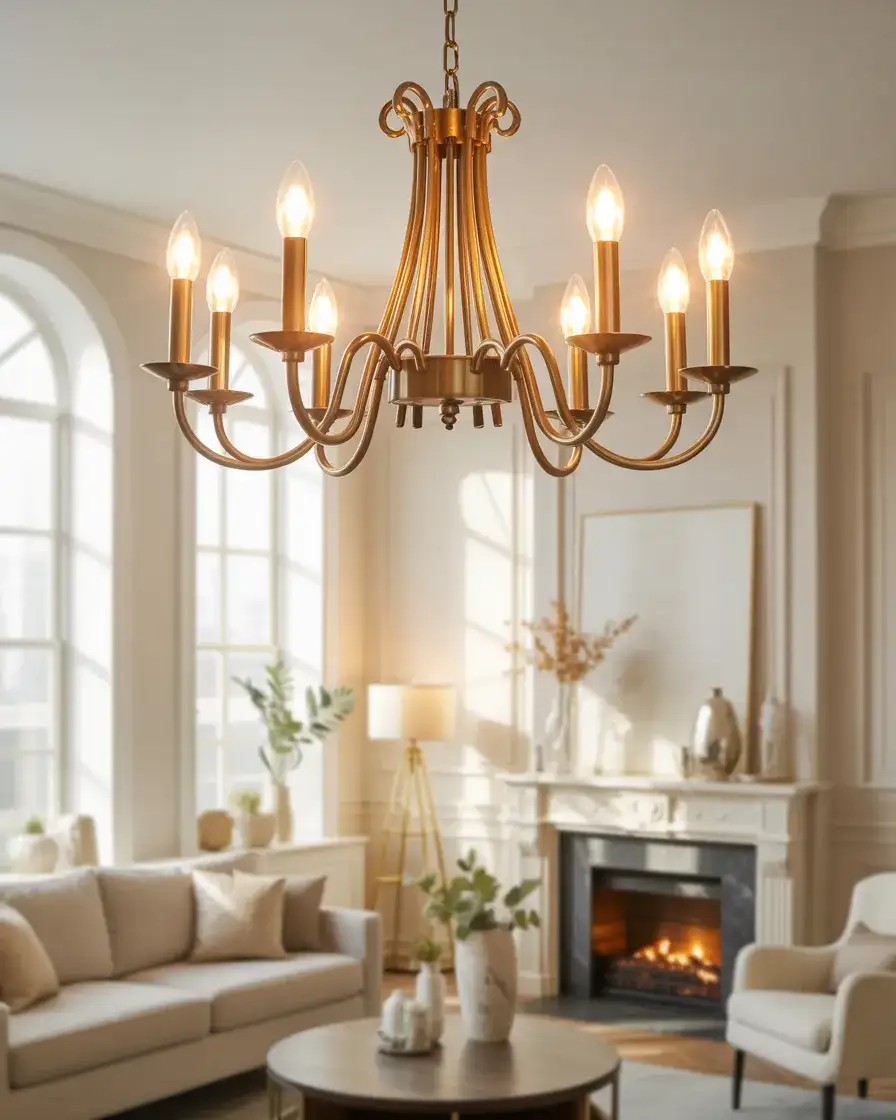
Overhead lighting alone kills ambiance faster than anything else. The smartest modern living rooms layer three types of light: ambient (overhead or recessed), task (reading lamps, picture lights), and accent (LED strips, sconces). Add dimmers to every source, and suddenly you have a room that can shift from bright and energizing during the day to warm and intimate at night. This is especially important in homes where the living room pulls double duty as a workspace, playroom, and evening retreat. 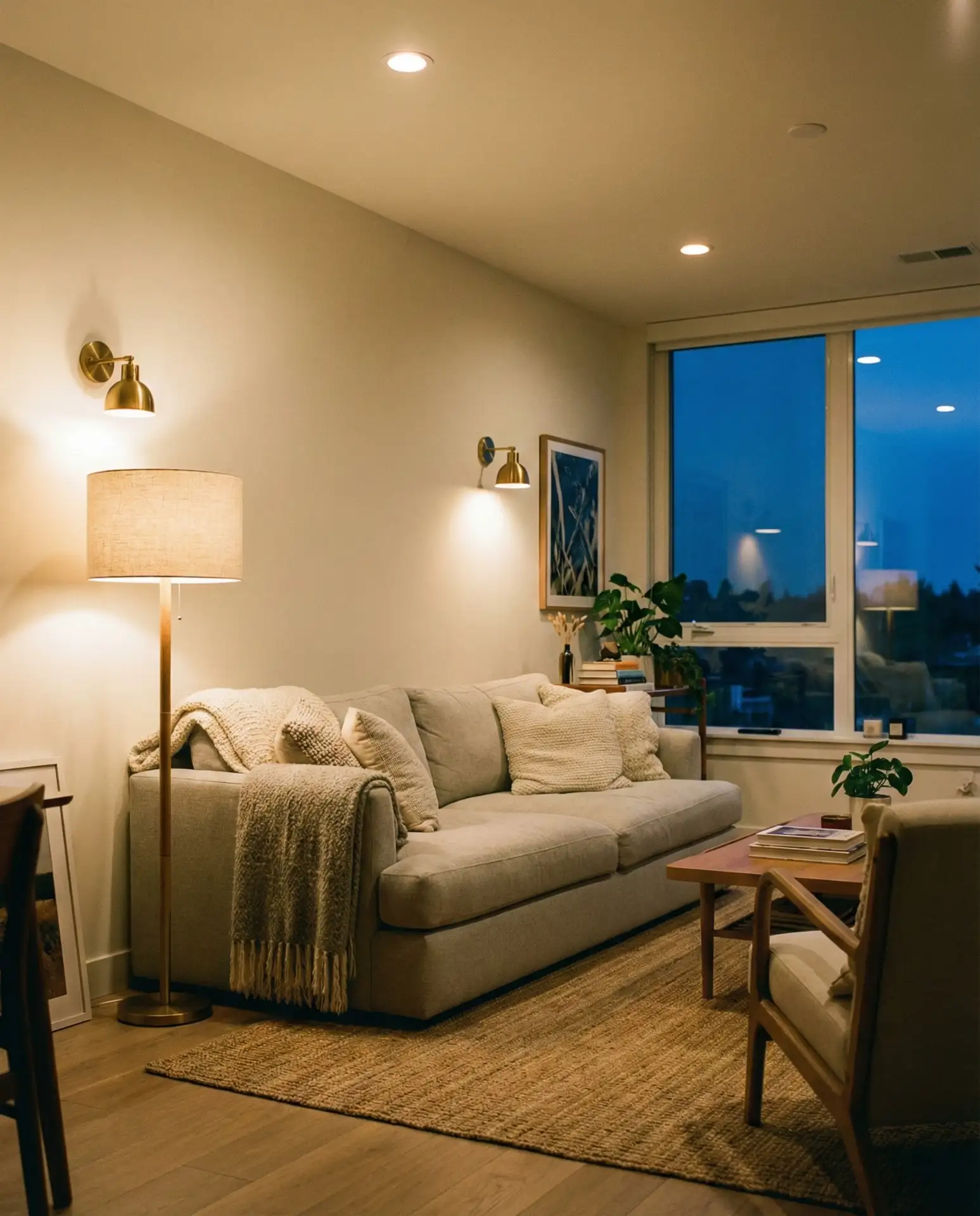
Where it works best: in homes with limited natural light or rooms that face north. Layered lighting compensates for what the sun can’t provide, and it’s one of the few upgrades that genuinely improves how a space feels at all hours. Smart bulbs make this even easier—you can program scenes for movie nights, morning coffee, or dinner parties without touching a single switch.
4. Vintage Rug as the Foundation
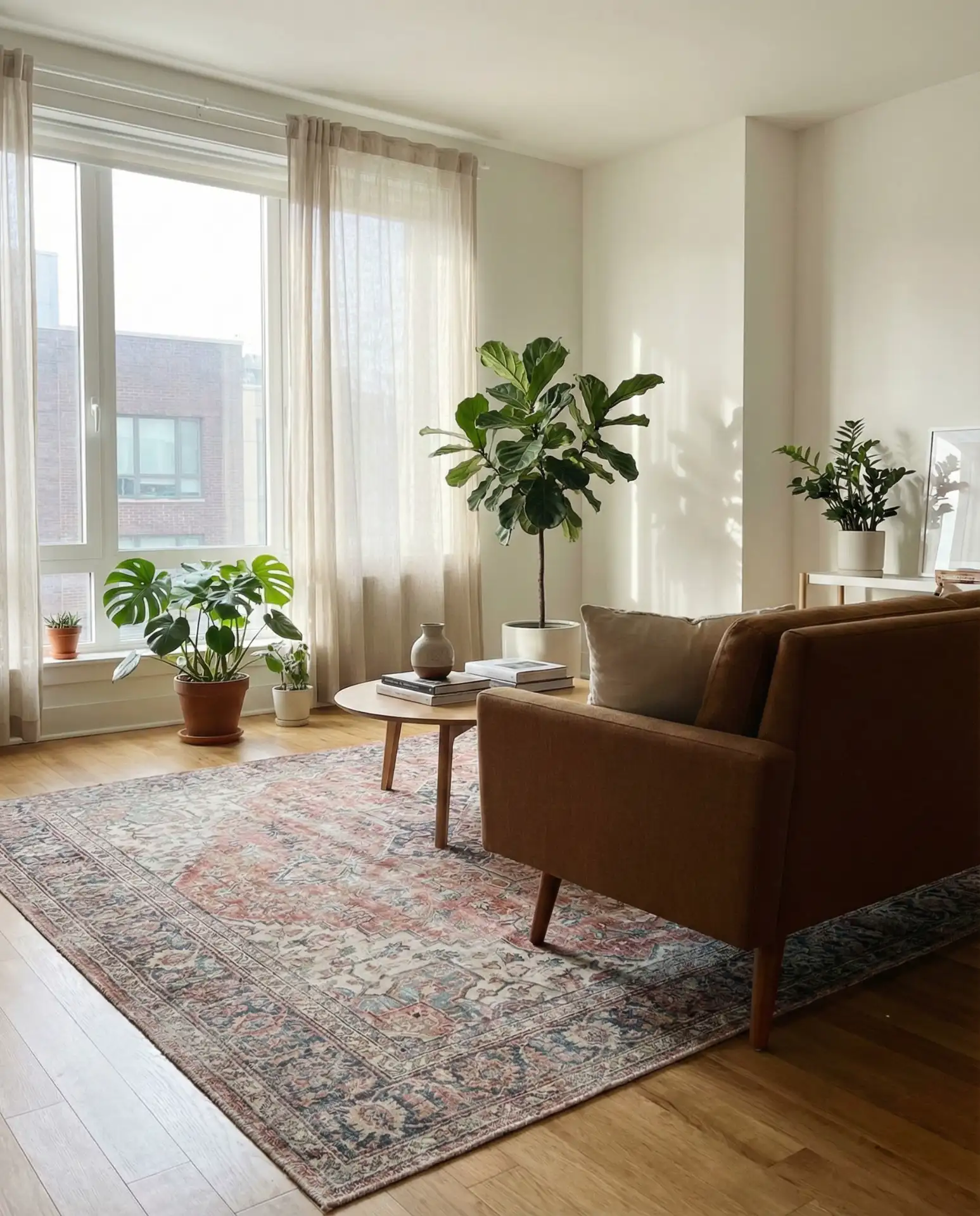
Nothing grounds a room quite like a well-worn vintage rug with faded jewel tones and asymmetrical patterns. These pieces bring instant history and texture, and they’re forgiving in a way that new rugs aren’t—spills, wear, and pet traffic just add to the patina. Look for Turkish, Persian, or Moroccan styles that complement your color palette without demanding all the attention. A good vintage rug feels like the room has always existed, even if you moved in last month. 
Many homeowners make the mistake of choosing a rug that’s too small—your front furniture legs should always rest on the rug, or the whole seating arrangement should sit fully on top. This creates a cohesive “zone” rather than a floating island of furniture. If budget is tight, online vintage rug marketplaces and estate sales offer incredible finds for $300 to $800, far less than a comparable new rug from a big-box store.
5. Built-In Shelving for Personality
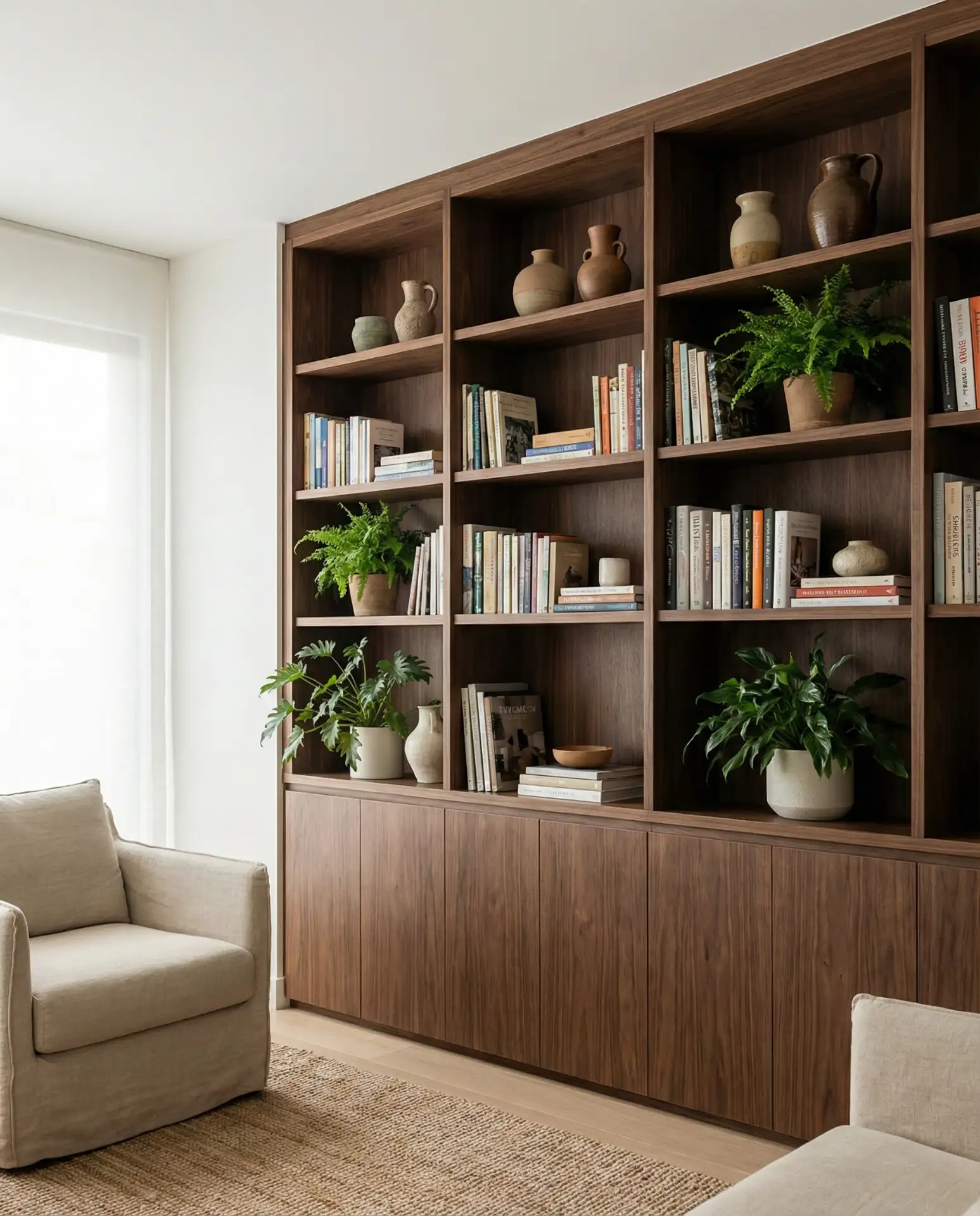
Open shelving lets you curate your own gallery wall, but in three dimensions. Mid century inspired built-ins with clean lines and warm wood tones are everywhere right now, offering space for books, ceramics, plants, and the occasional framed photo. The best versions mix functional storage (closed cabinets below) with display space (open shelves above), so you’re not drowning in visual clutter. This is where interior design becomes personal—what you choose to display tells the story of who you are. 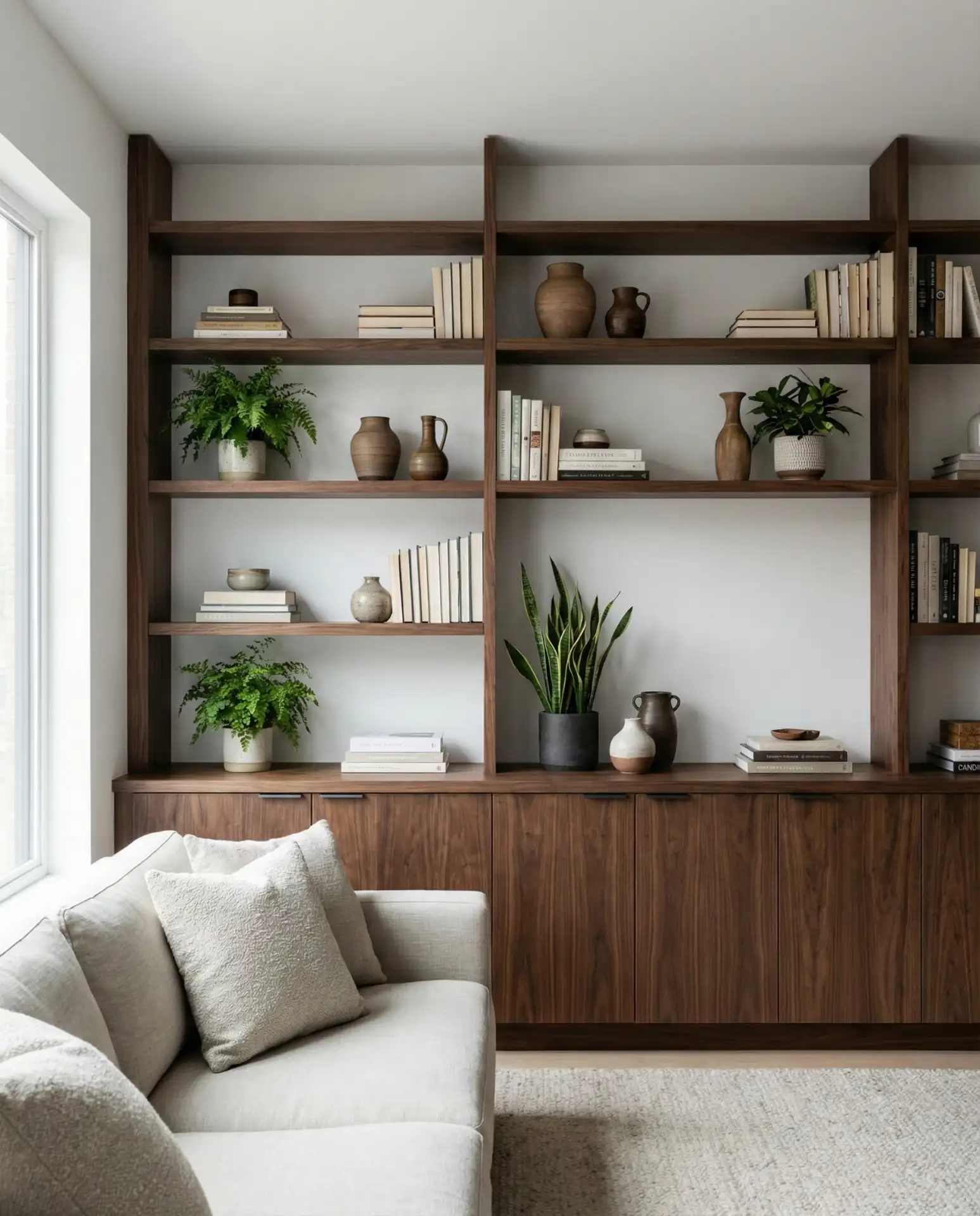
Real homeowners often overthink the styling part, but the secret is simple: group objects in odd numbers, vary heights, and leave some shelves partially empty. White space is just as important as what you display. If you’re working with a rental or can’t commit to true built-ins, modular shelving systems offer a similar look with far less permanence and a price tag that’s often under $500 for a full wall setup.
6. Organic Curves in Furniture and Decor

Sharp angles are out; soft, organic curves are in. From arched floor mirrors to kidney-shaped coffee tables and rounded armchairs, the 2026 living room favors shapes that feel human and approachable. This trend is a reaction to years of rigid minimalism—people want spaces that invite touch, comfort, and ease. Even small touches, like a curved tray on the coffee table or a round ottoman, can soften a room’s overall geometry and make it feel more welcoming. 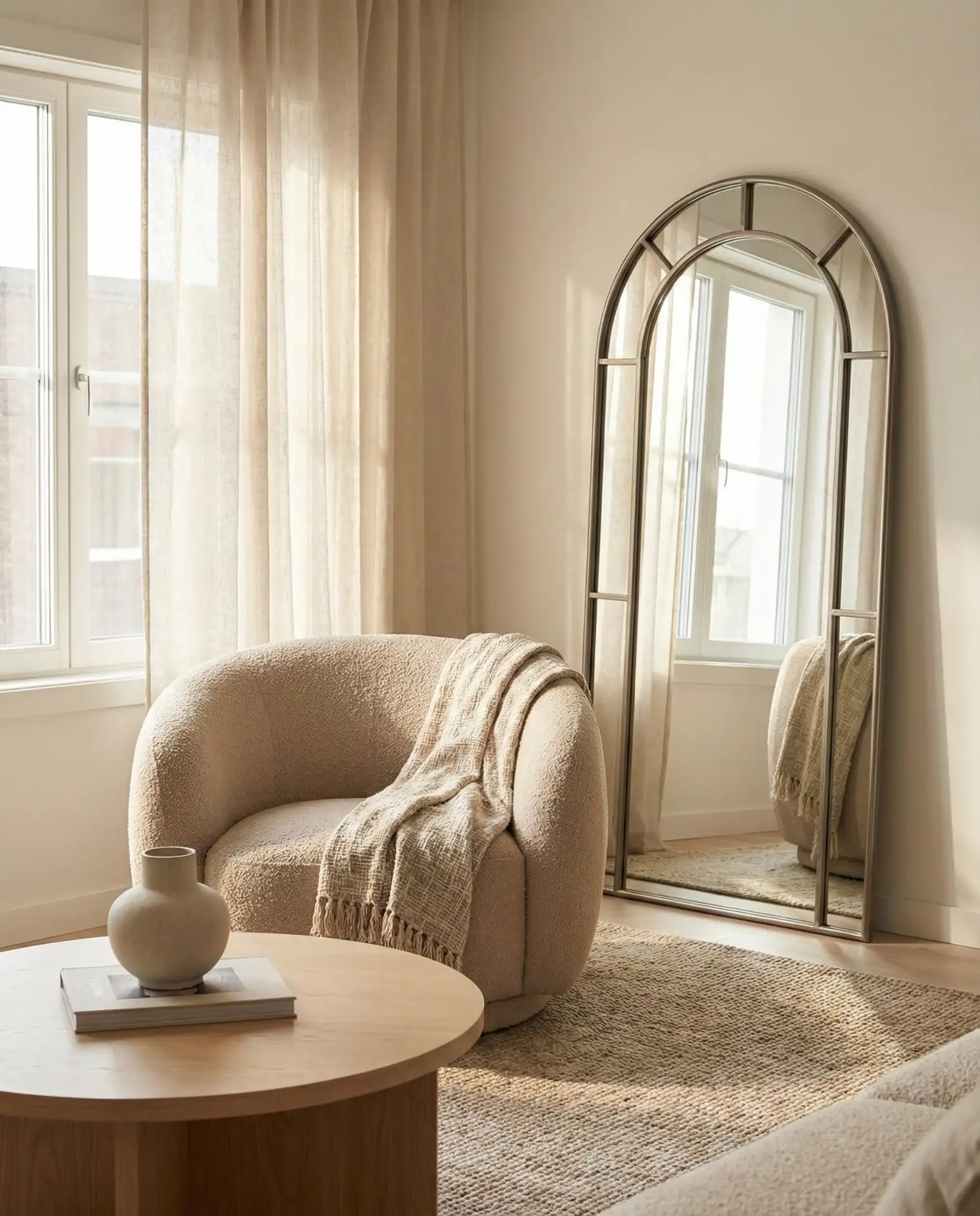
This works especially well in smaller spaces where hard edges can make a room feel boxy and cramped. Curves create flow and movement, guiding the eye around the room rather than stopping it at every corner. In American homes with open floor plans, organic shapes also help define different zones—a round dining table signals “eating area” while a curved sectional anchors the “lounge space” without needing physical dividers.
7. Statement Fireplace Surround
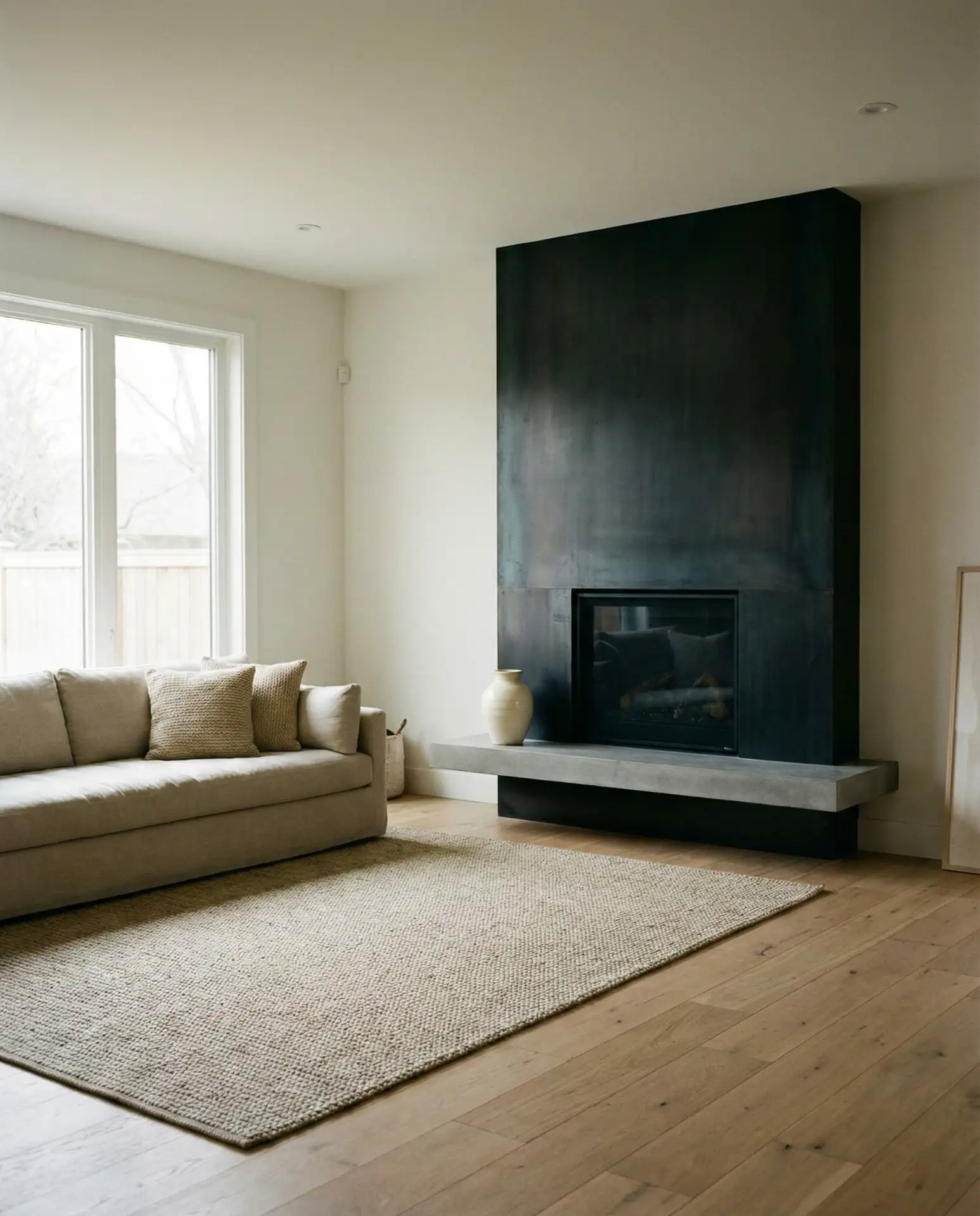
If you’re lucky enough to have a fireplace, make it count. Moody organic materials like blackened steel, textured plaster, or reclaimed wood beams turn a standard hearth into a focal point that rivals any piece of art. Even if the fireplace isn’t functional, the surround itself becomes architectural drama. Pair it with a simple mantel for displaying a single oversized vase or a pair of candlesticks—less is more when the surround itself is already making a statement. 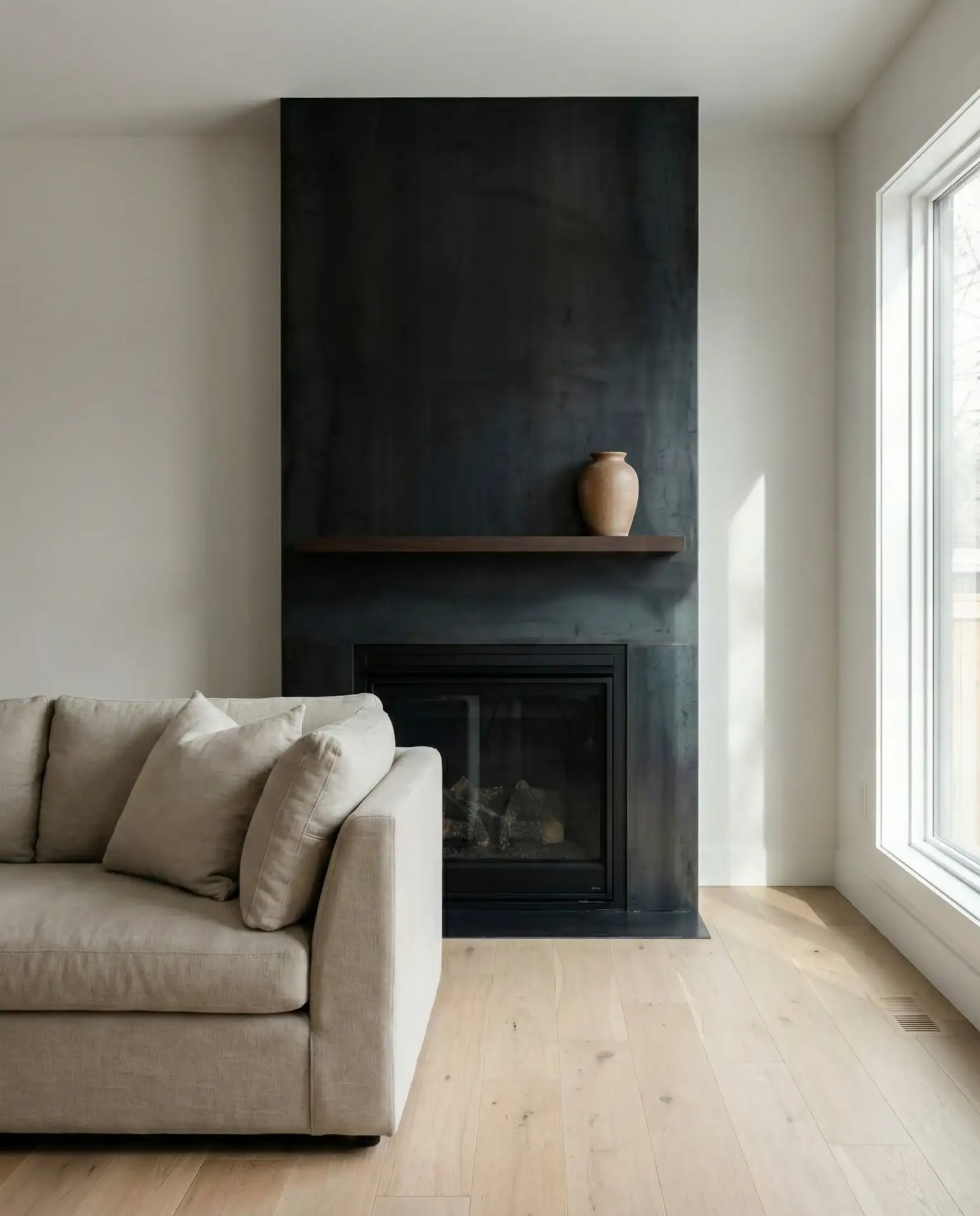
In colder regions like the Northeast and Midwest, a well-designed fireplace becomes the heart of the home during winter months. But even in warmer climates, homeowners are adding electric or ethanol fireplaces purely for the ambiance. A common mistake is over-decorating the mantel—too many objects compete with the surround itself. Stick to one or two large-scale pieces and let the architecture do the talking.
8. Cozy Mid Century Lounge Corner
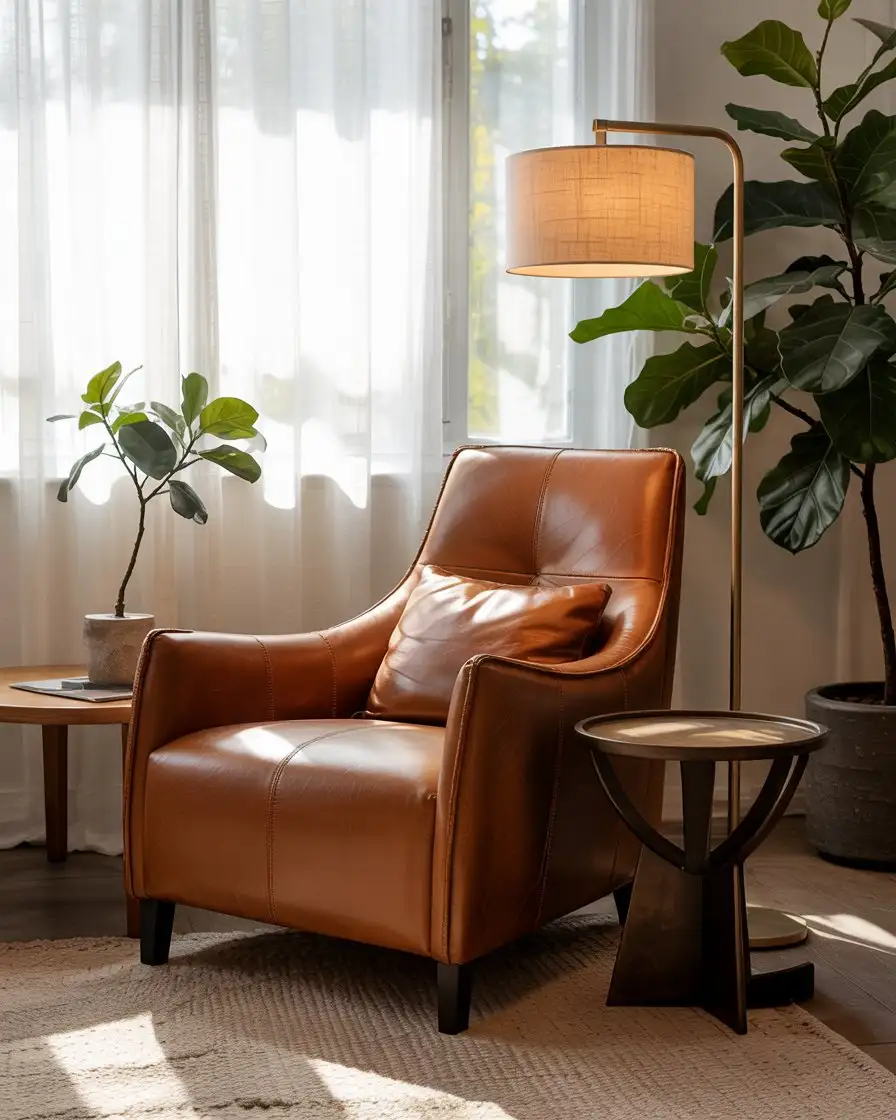
Every cozy mid century living room needs a dedicated corner for reading, sipping coffee, or just staring out the window. A low-slung lounge chair in cognac leather or mustard velvet, paired with a small side table and an arching floor lamp, creates an instant retreat. This isn’t just about aesthetics—it’s about giving yourself permission to slow down. The best lounge corners feel like they’ve been carved out just for you, separate from the main seating area but still part of the room’s flow. 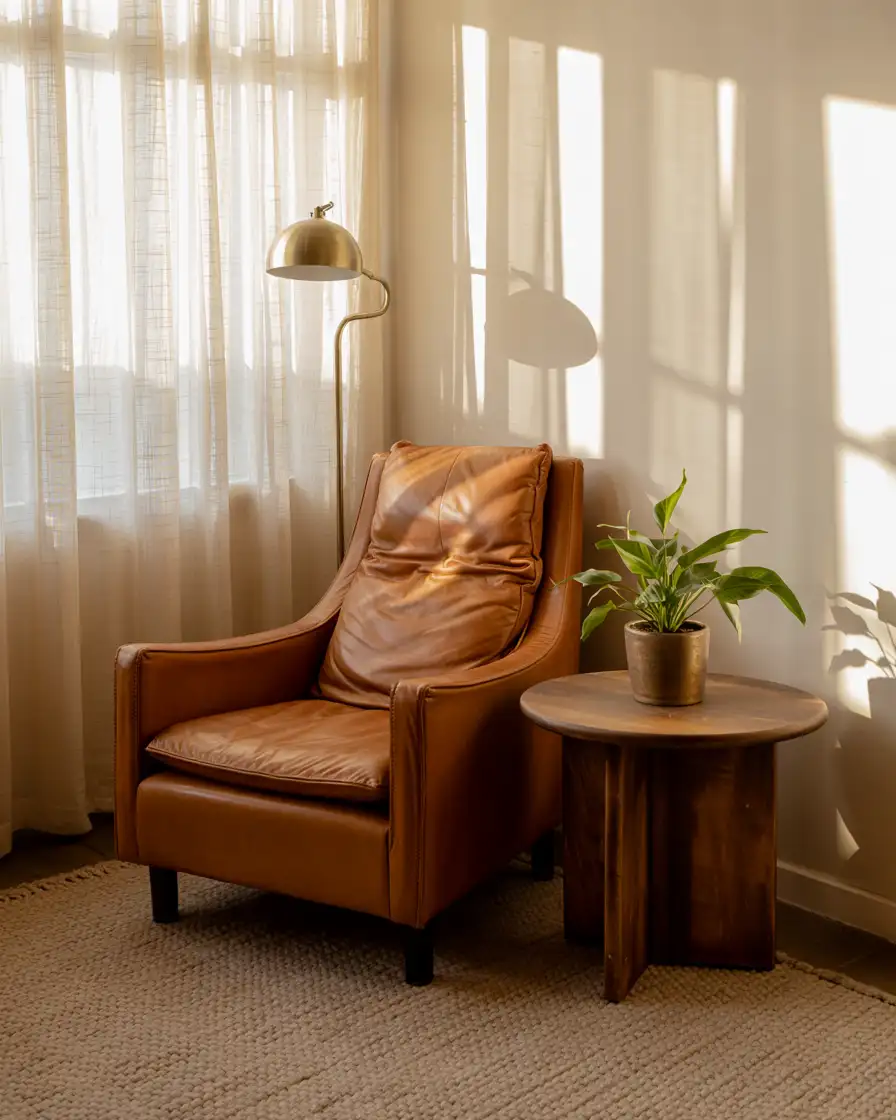
Where it works best: near a window with good natural light or in an underused alcove that’s too small for a full sofa. Americans working from home have discovered that this kind of setup doubles as a phone-call spot or a place to take a break without leaving the house. You don’t need much square footage—just enough for a chair, a light source, and a small surface for your mug or book.
9. Textured Walls Beyond Paint
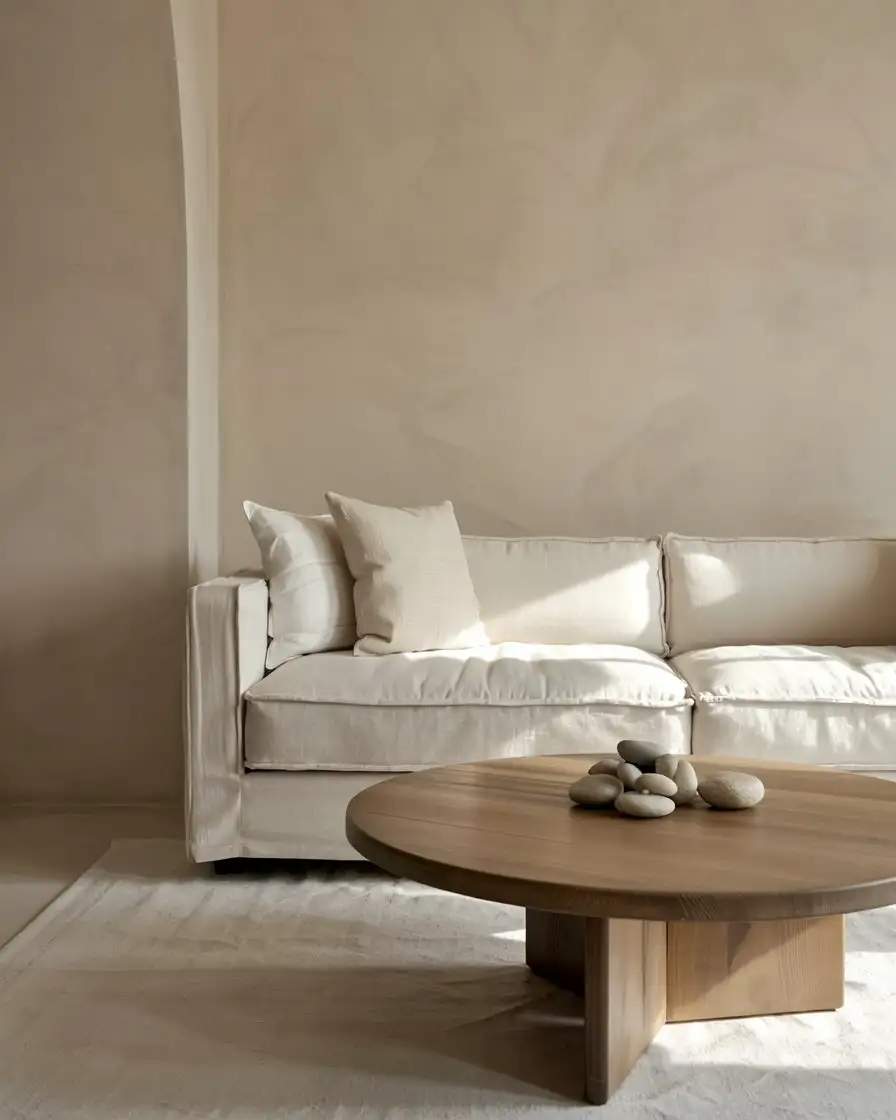
Flat walls are fine, but textured walls are unforgettable. Limewash, Venetian plaster, or even tongue-and-groove paneling adds depth and dimension that standard paint simply can’t match. These finishes catch light differently throughout the day, creating subtle shifts in color and shadow that make a room feel alive. Rustic textures work beautifully in farmhouse-style homes, while smooth plaster feels more luxury and European-inspired. 
This is one upgrade that genuinely increases perceived home value, especially in markets like California and Texas where design-forward buyers pay attention to finishes. The cost varies widely—DIY limewash can run under $200 for a medium-sized room, while professional Venetian plaster might hit $2,000 or more. Either way, the impact is immediate and long-lasting, and it’s one of those details that guests always ask about.
10. Low-Profile Media Console
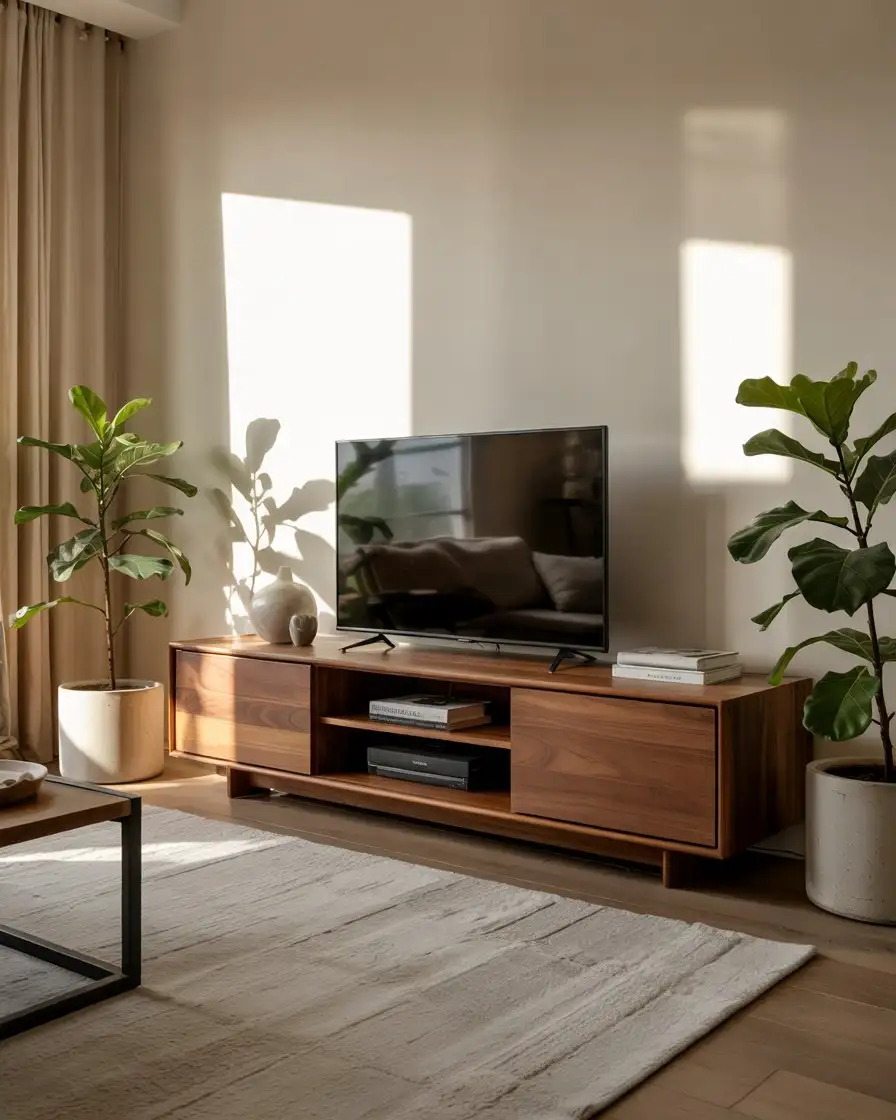
The TV is still the elephant in the room, but a sleek, low-profile media console helps it blend in rather than dominate. Midcentury credenzas with tapered legs and sliding doors offer hidden storage for cables, remotes, and gaming consoles while maintaining clean lines. The goal is to make the TV feel like part of the design rather than an afterthought. Bonus points if you can flank it with tall plants or artwork to balance the visual weight. 
Many people assume the console needs to be exactly as wide as the TV, but that’s not true—it can be wider, which often looks more intentional and grounded. In American homes where the TV is the main entertainment hub, the console becomes one of the hardest-working pieces of furniture in the room. Look for options with cable management cutouts and adjustable shelving, which make setup and future upgrades far easier.
11. Boho Textiles with Global Influence
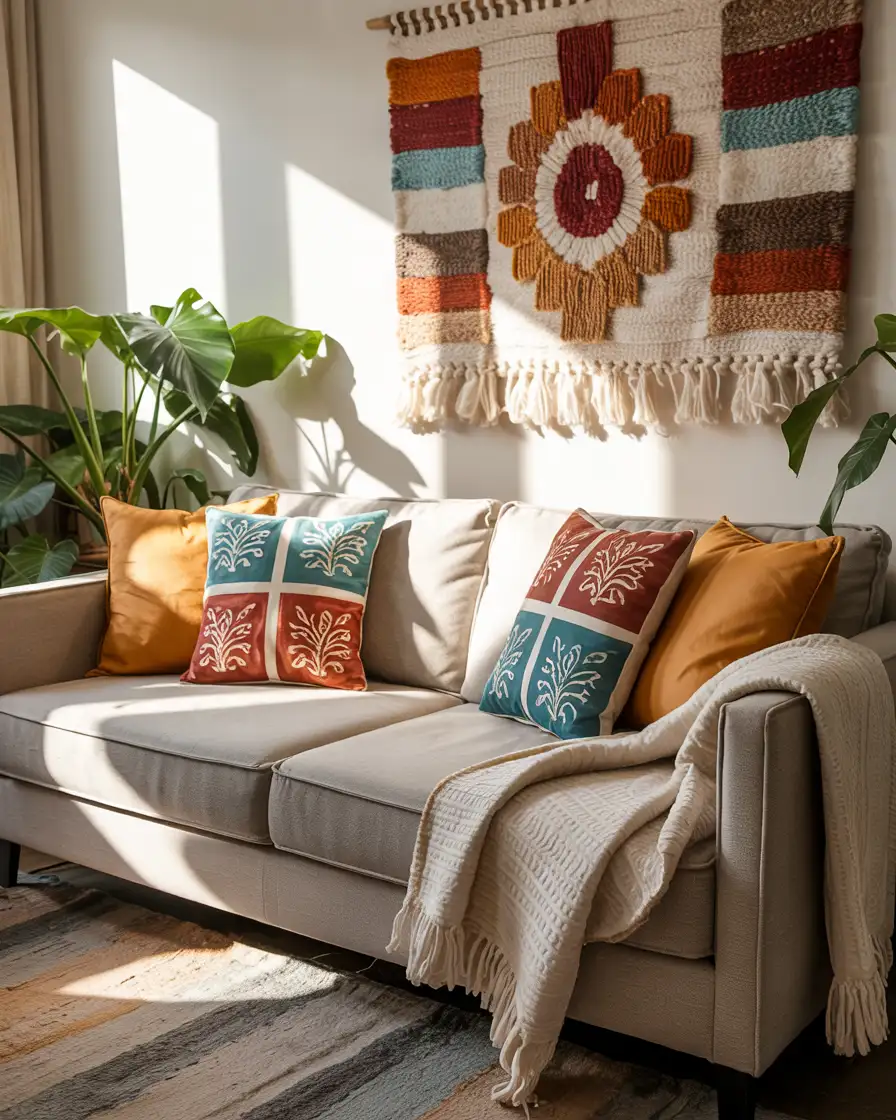
Layered textiles bring warmth and personality to even the most minimal spaces. Think boho throw pillows in block-printed cotton, a chunky knit blanket draped over the sofa, or a woven wall hanging that doubles as art. The key is mixing textures—linen with wool, cotton with leather—and choosing patterns that feel collected rather than matchy-matchy. This approach works especially well when you want a cozy vibe without committing to heavy furniture or dark colors. 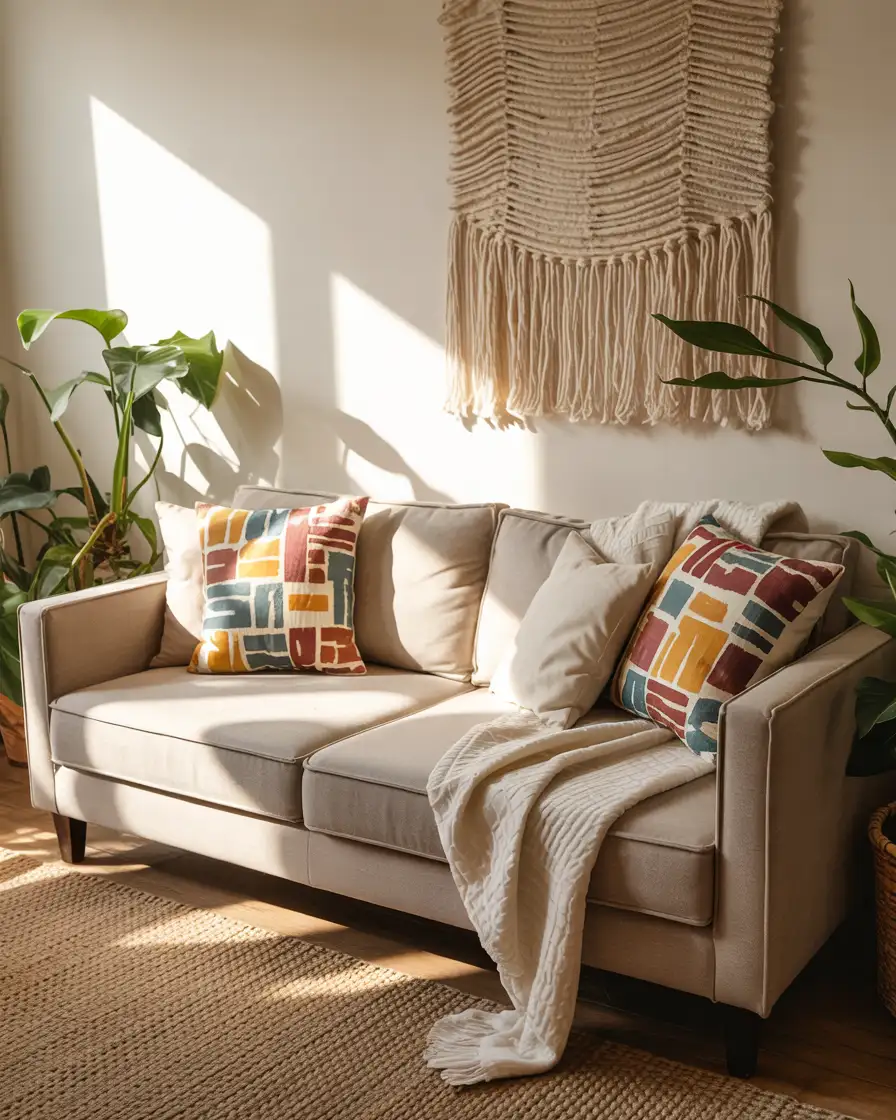
Real homeowners often worry about mixing too many patterns, but the trick is to vary scale—pair a large geometric pillow with a small floral one, for example. In American homes where the architecture is fairly plain, textiles become the easiest way to inject personality and color without painting walls or buying new furniture. Most of these pieces are also seasonally swappable, so you can refresh the room twice a year without major investment.
12. Natural Wood Coffee Table
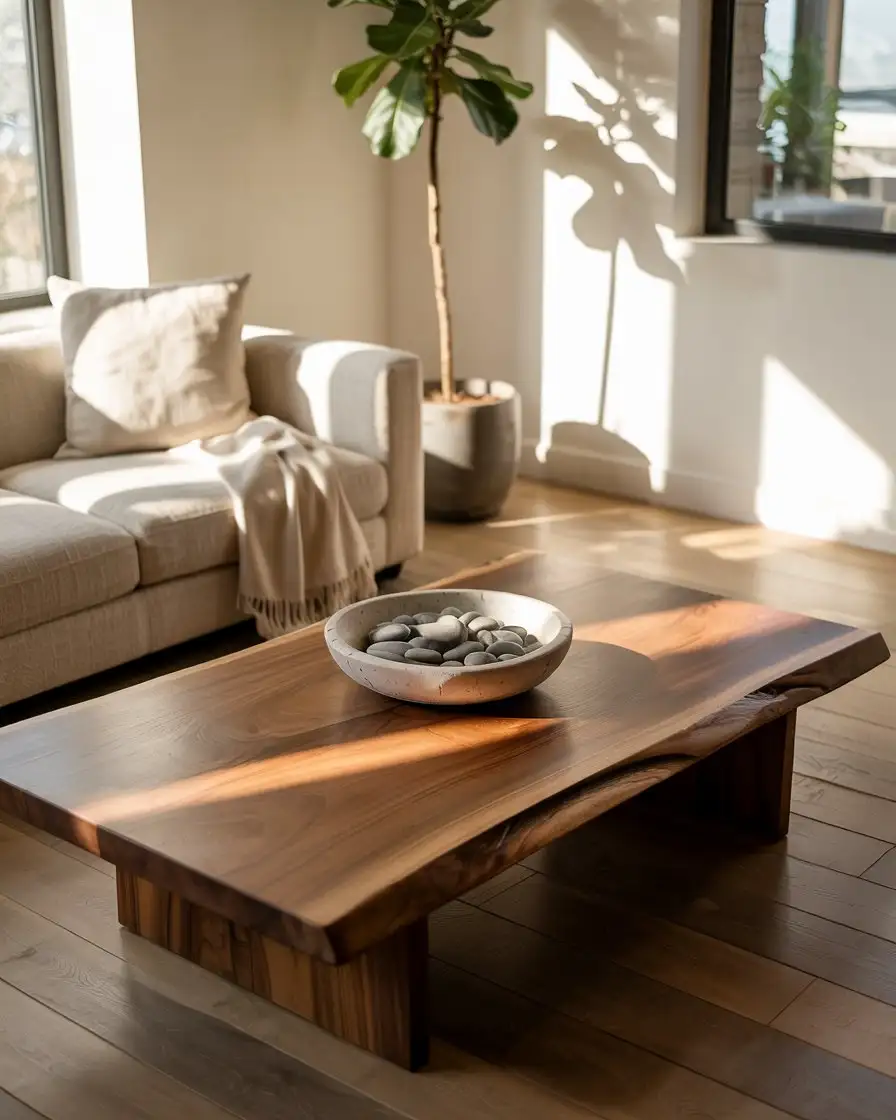
A solid wood coffee table with visible grain and natural imperfections is the anchor every modern living room needs. Whether it’s a chunky live-edge slab or a sleek walnut piece with tapered legs, wood brings warmth and grounding to otherwise cool, minimal spaces. It’s also incredibly practical—wood ages beautifully, and a few scratches or watermarks just add character over time. This is furniture you’ll keep for decades, not seasons. 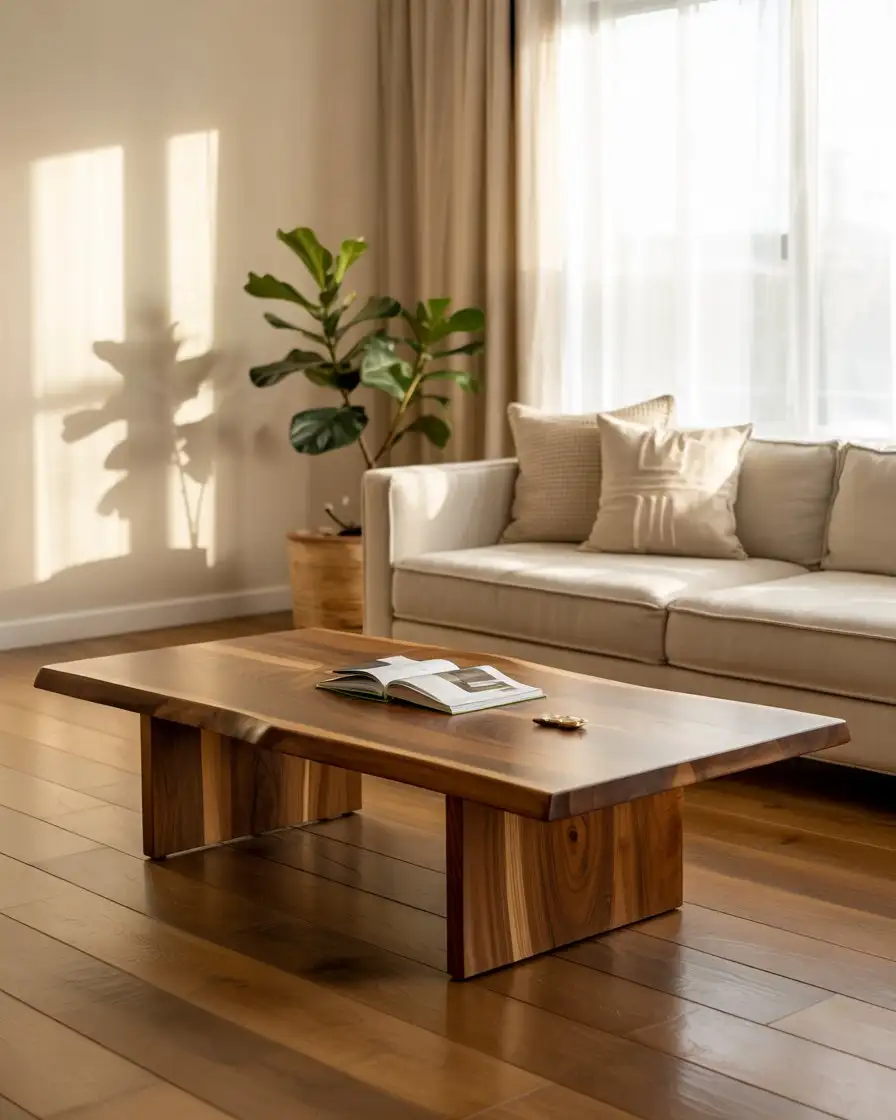
Where it works best: in homes with a lot of hard surfaces—tile, concrete, or painted walls. The wood acts as a visual and textural counterpoint, softening the overall feel. In terms of budget, expect to spend $400 to $1,200 for a quality piece, though vintage and handmade options can push higher. Avoid glass-top tables if you have kids or pets—they show every fingerprint and can feel cold and sterile in a modern space.
13. Retro Color Pops in Unexpected Places
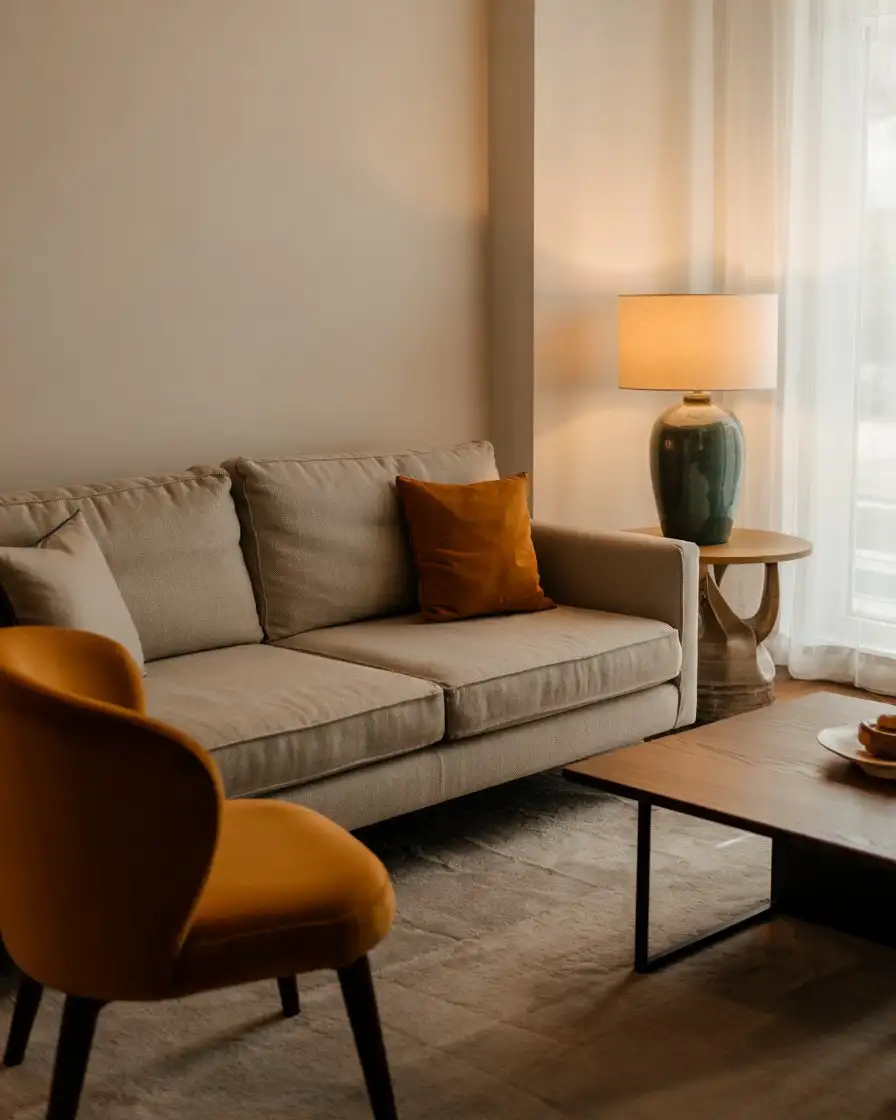
The all-neutral living room is evolving. Now, designers are sneaking in retro inspired color hits—burnt orange velvet pillows, a teal ceramic lamp, or a mustard yellow side chair. These pops feel nostalgic but not dated, especially when balanced by plenty of neutral backdrop. The trick is restraint: one or two colorful moments per room, not a circus. This approach lets you experiment with color without the commitment of painting walls or reupholstering your sofa. 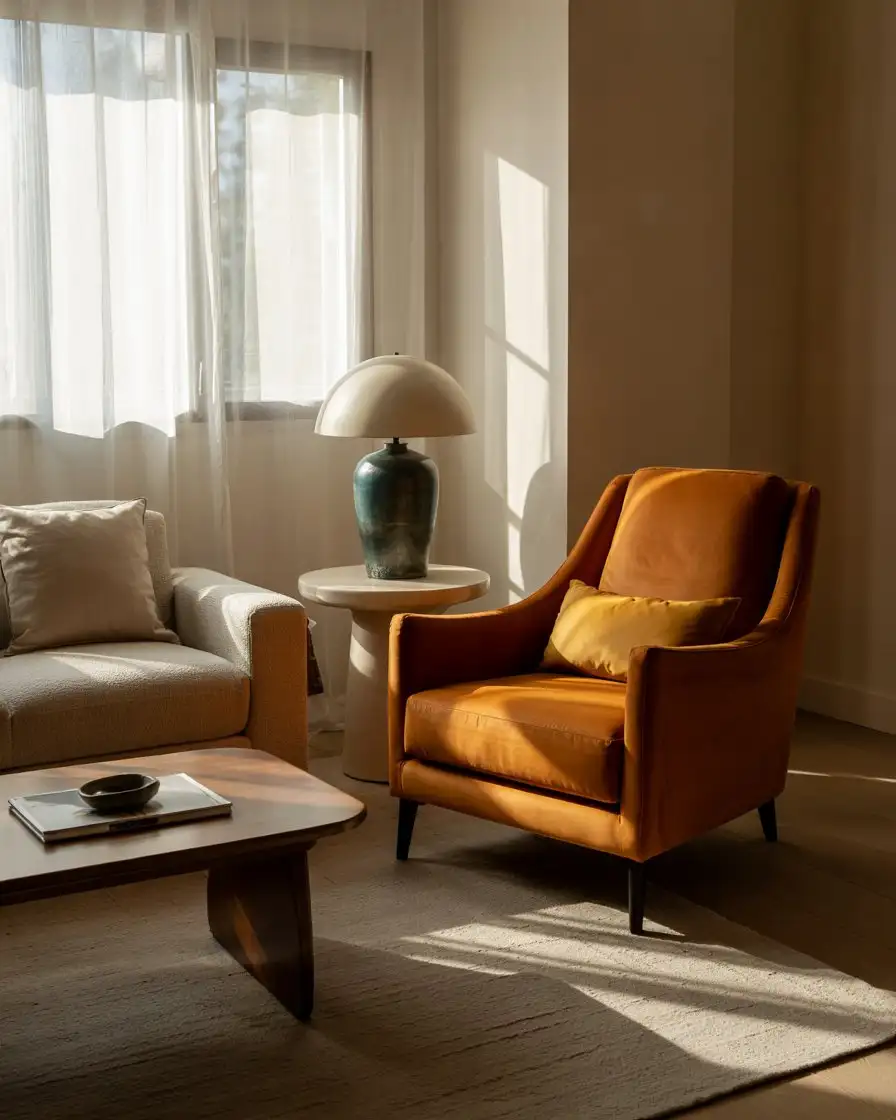
This is a practical solution for renters or anyone who doesn’t want to commit to bold permanent choices. If you get tired of the color, you can swap out the pillow, chair, or lamp without starting from scratch. In American homes where resale value matters, this approach also keeps the space broadly appealing while still feeling personal and current. And because these are smaller investments, you can afford to take risks with color you might avoid on big-ticket items.
14. Inspiration from Architectural Details
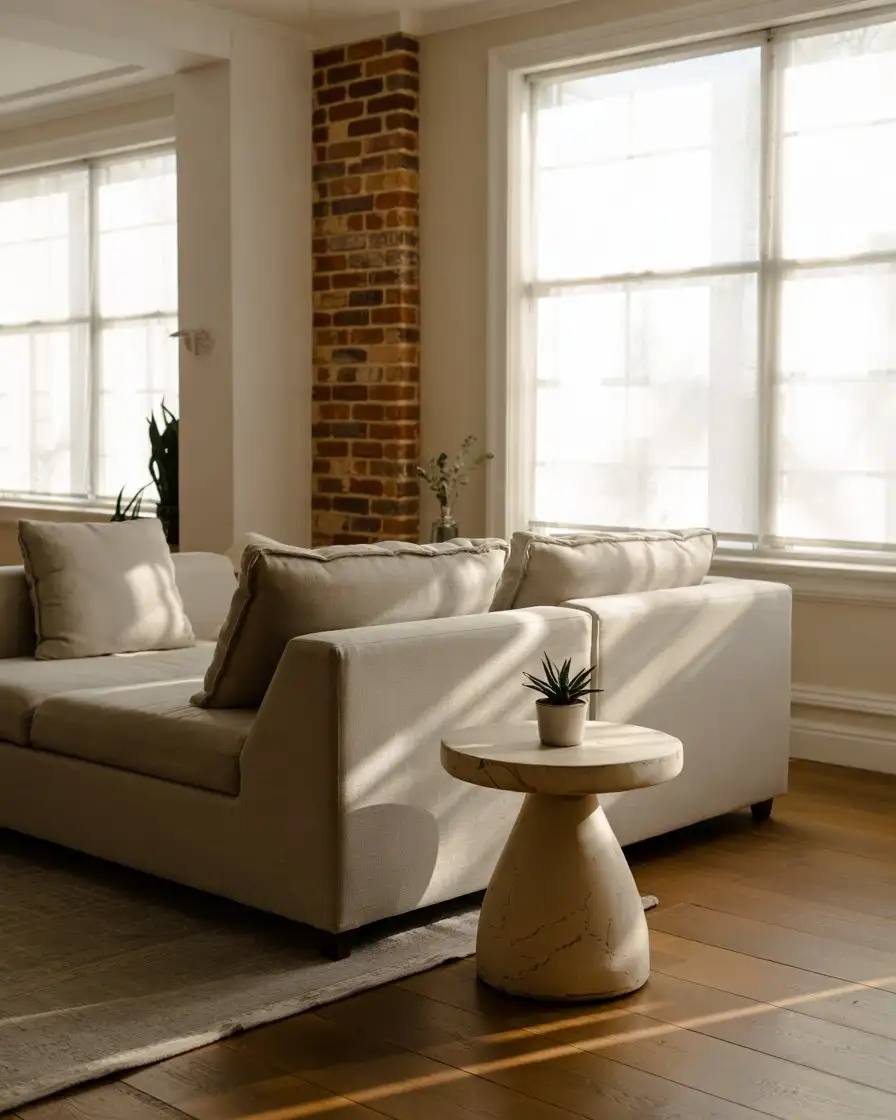
The best living rooms draw inspiration from the bones of the house itself. If you have original crown molding, highlight it with a contrasting paint color. If there’s exposed brick, let it be the star and keep everything else simple. Even newer builds with coffered ceilings or picture frame molding can become the jumping-off point for your design. The goal is to work with what you have rather than fighting against it or pretending it doesn’t exist. 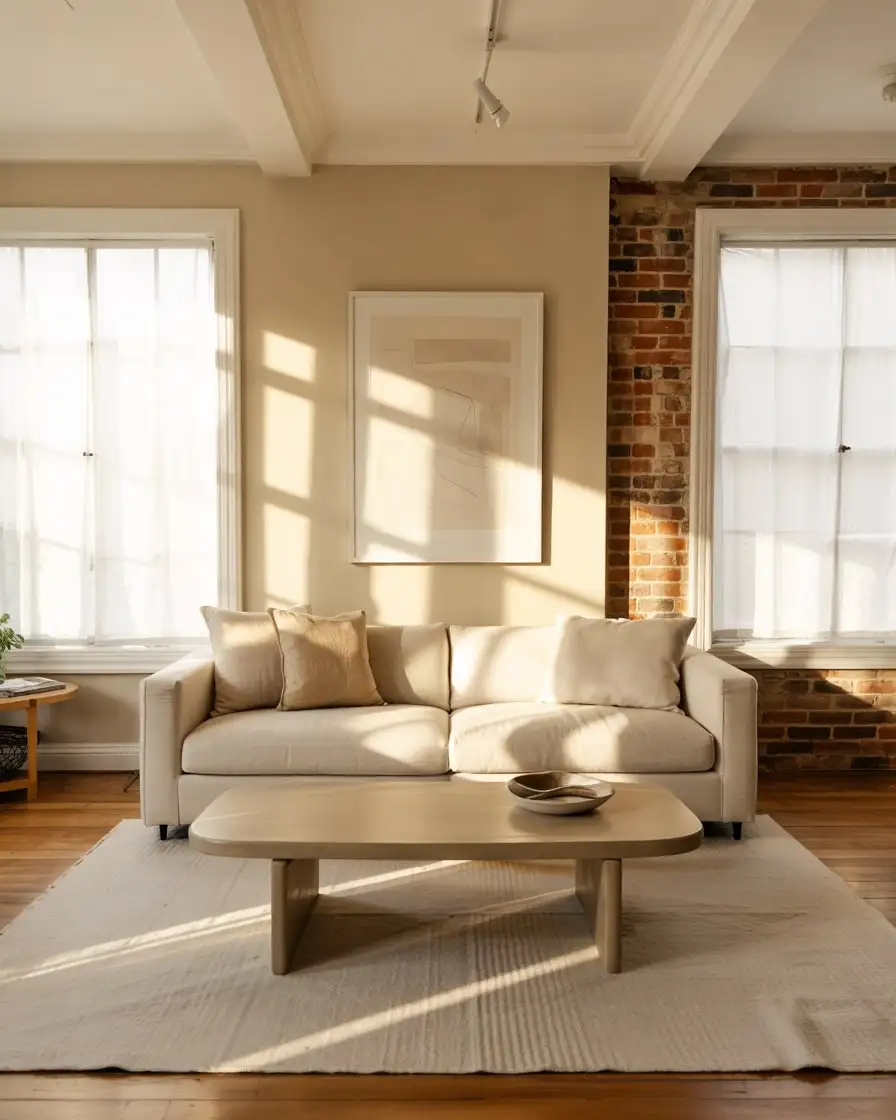
Expert designers always say to identify your home’s “hero feature” and build around it. In a Craftsman bungalow, that might be built-in cabinetry; in a loft, it’s probably the high ceilings or industrial windows. Trying to impose a style that contradicts the architecture usually feels forced and uncomfortable. Instead, lean into what makes your space unique, and the design will feel more authentic and cohesive from the start.
15. Traditional Meets Modern Mashup
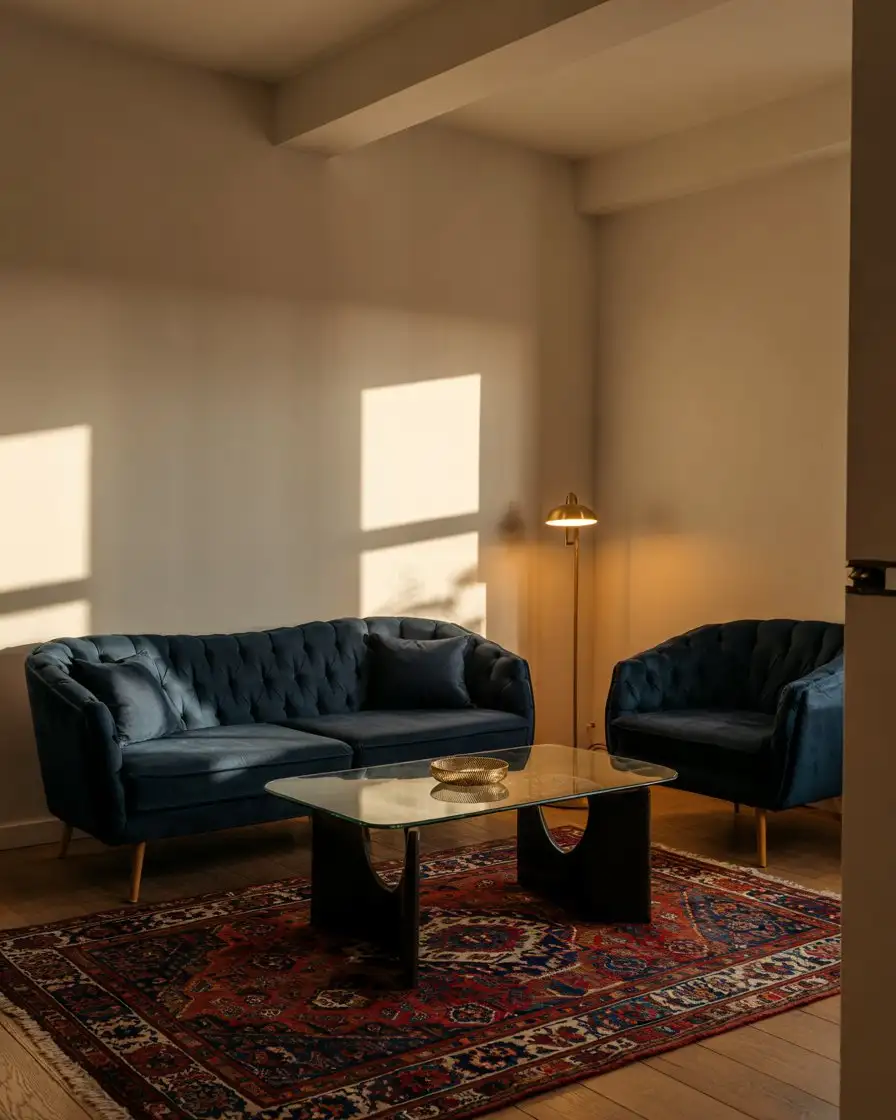
Who says you have to choose? The freshest living rooms blend traditional elements like tufted sofas or Persian rugs with sleek, modern lighting and clean-lined furniture. This mix keeps things interesting and prevents the room from feeling too one-note or catalog-perfect. A velvet Chesterfield sofa can sit beautifully next to a glass coffee table and a minimalist floor lamp—it’s all about balance and intentionality, not matching everything to a single era. 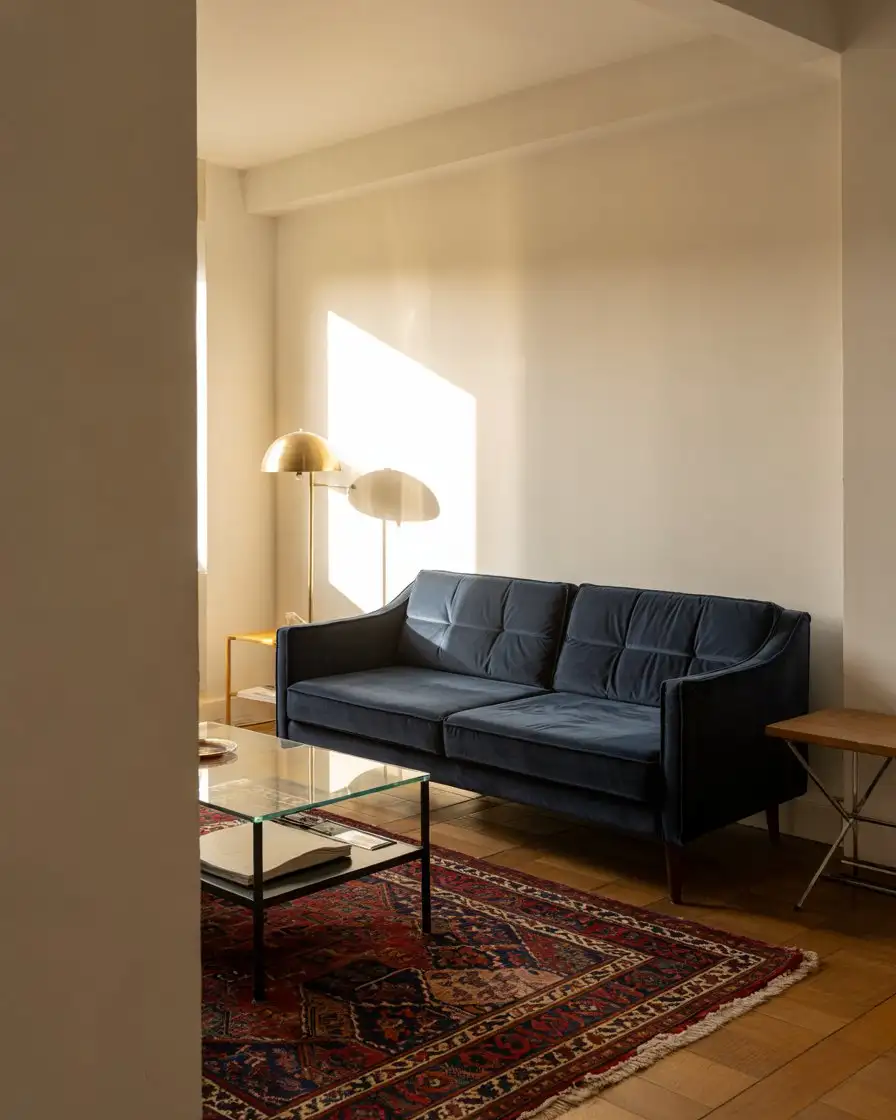
This approach is especially popular in older American homes—Victorians, Colonials, Tudors—where homeowners want to honor the original architecture without living in a period piece. The key is to let one style dominate (usually modern, for a cleaner foundation) and use the other as accent. A common mistake is going 50/50, which can feel confused. Aim for more like 70/30, and the room will feel curated rather than accidental.
16. Mid-Century Sideboard for Storage
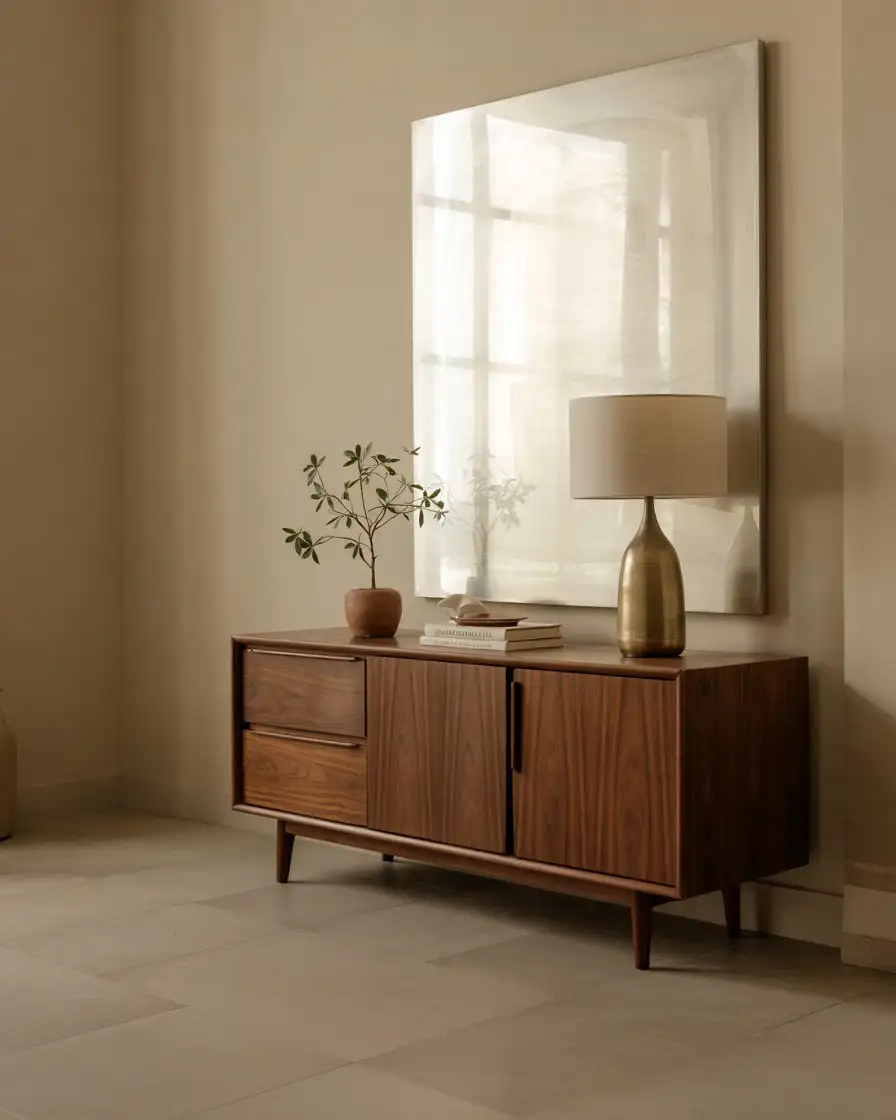
A mid-century sideboard isn’t just for dining rooms—it’s one of the smartest storage solutions for a living room. Use it to hide board games, extra blankets, photo albums, or anything else that clutters up your coffee table. The long, low profile doesn’t interrupt sightlines, and the warm wood tones add richness without bulk. Top it with a table lamp, a small plant, and a decorative object or two, and you’ve got functional storage that looks like intentional design. 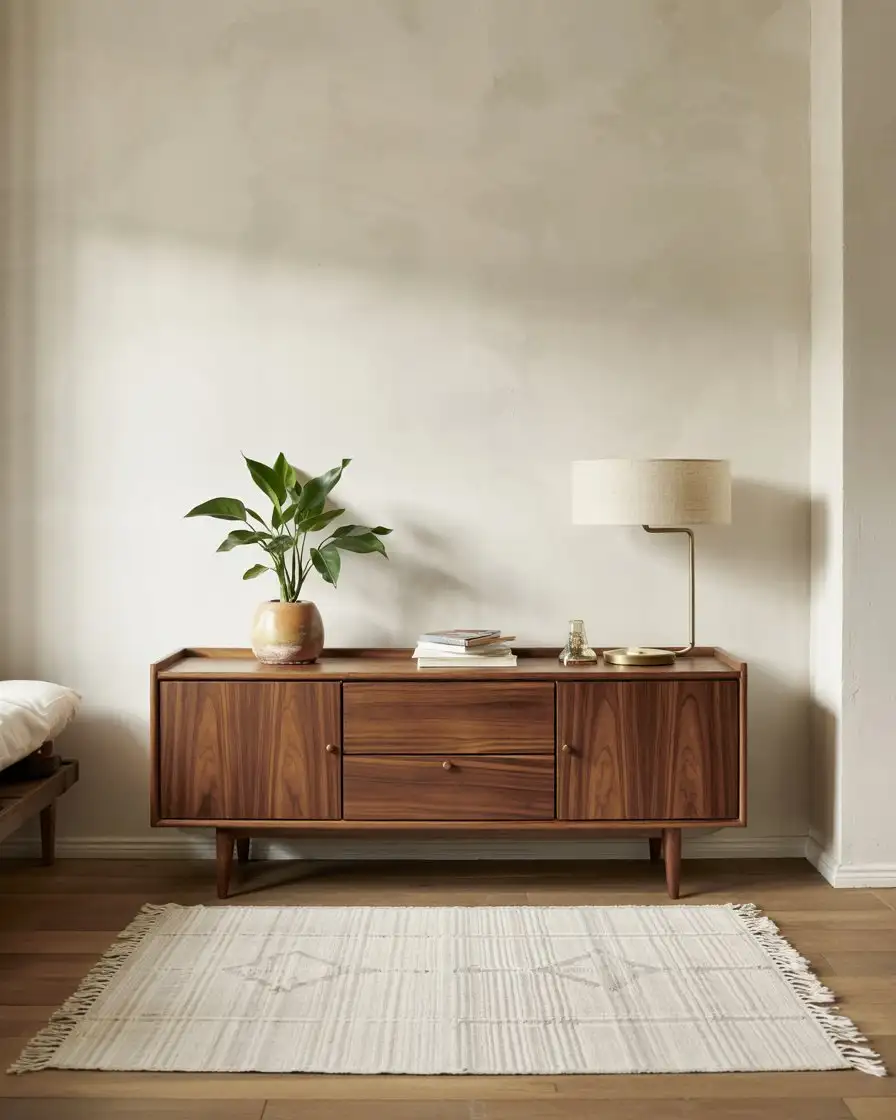
Real homeowners love these because they’re incredibly versatile—you can move them from room to room as needs change. Vintage versions from the ’60s and ’70s are widely available at estate sales and online marketplaces, often for $300 to $800 depending on condition. New reproductions are also easy to find, though they tend to run $500 to $1,500. Either way, it’s one of those pieces that elevates a room instantly while solving a practical problem.
17. Coastal Calm with Soft Blues
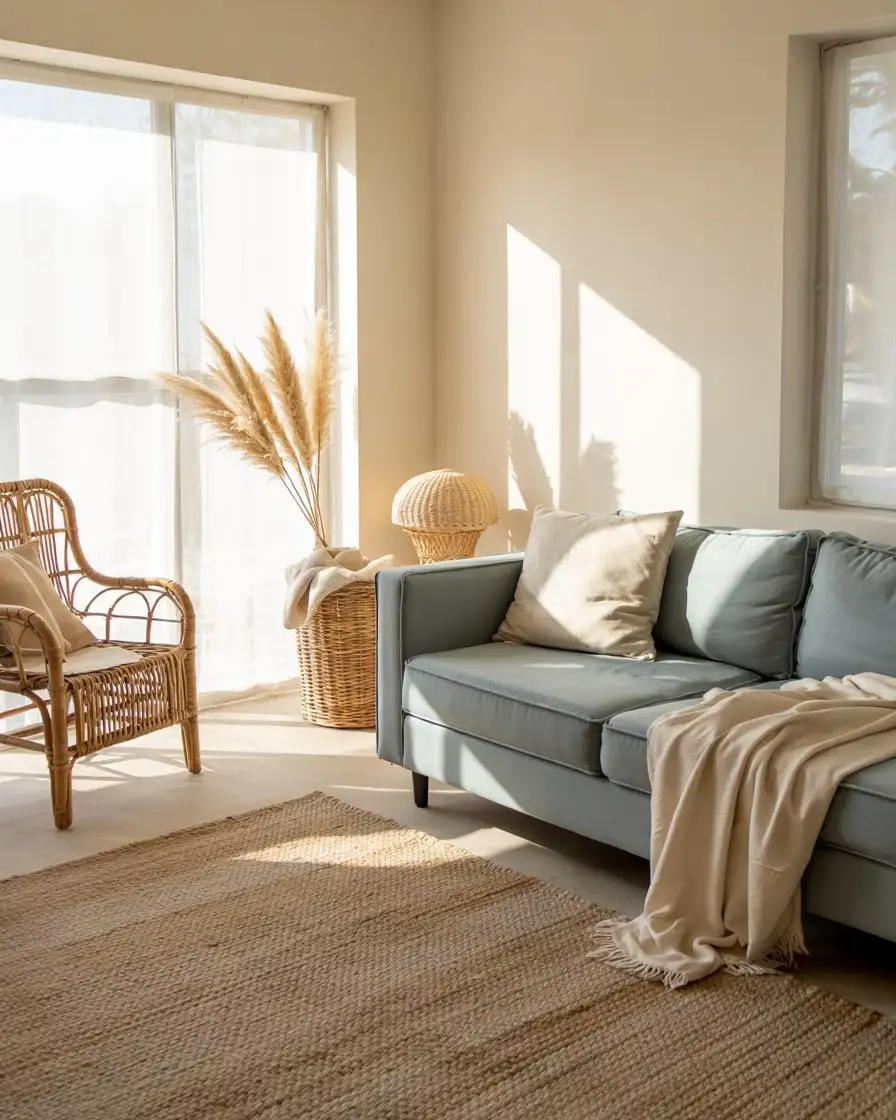
A coastal living room doesn’t require seashells or nautical stripes. Instead, think soft, weathered blues paired with sandy neutrals, linen textiles, and light wood tones. The palette is calming and airy, perfect for spaces that get a lot of natural light or for anyone who wants their home to feel like a permanent vacation. Add woven baskets, rattan accents, and a jute rug, and you’ve nailed the breezy, relaxed vibe without veering into literal beach decor. 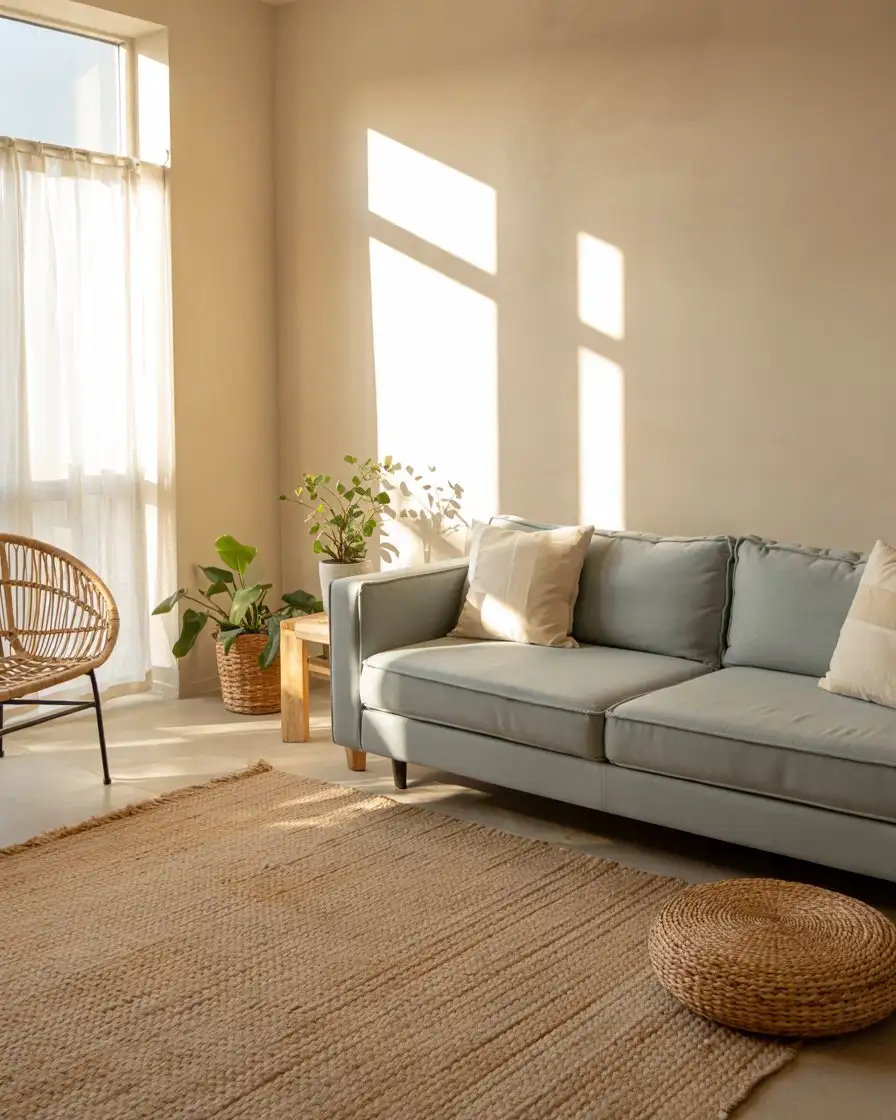
This style thrives in coastal regions—obviously—but it’s also popular in landlocked states where homeowners crave a sense of escape. The mistake many people make is going too literal with anchors, ropes, and ship wheels. True coastal style is about evoking the feeling of the ocean through color, texture, and light, not recreating a harbor in your living room. Keep it subtle, and the effect is far more sophisticated.
18. Boho Mid Century Fusion
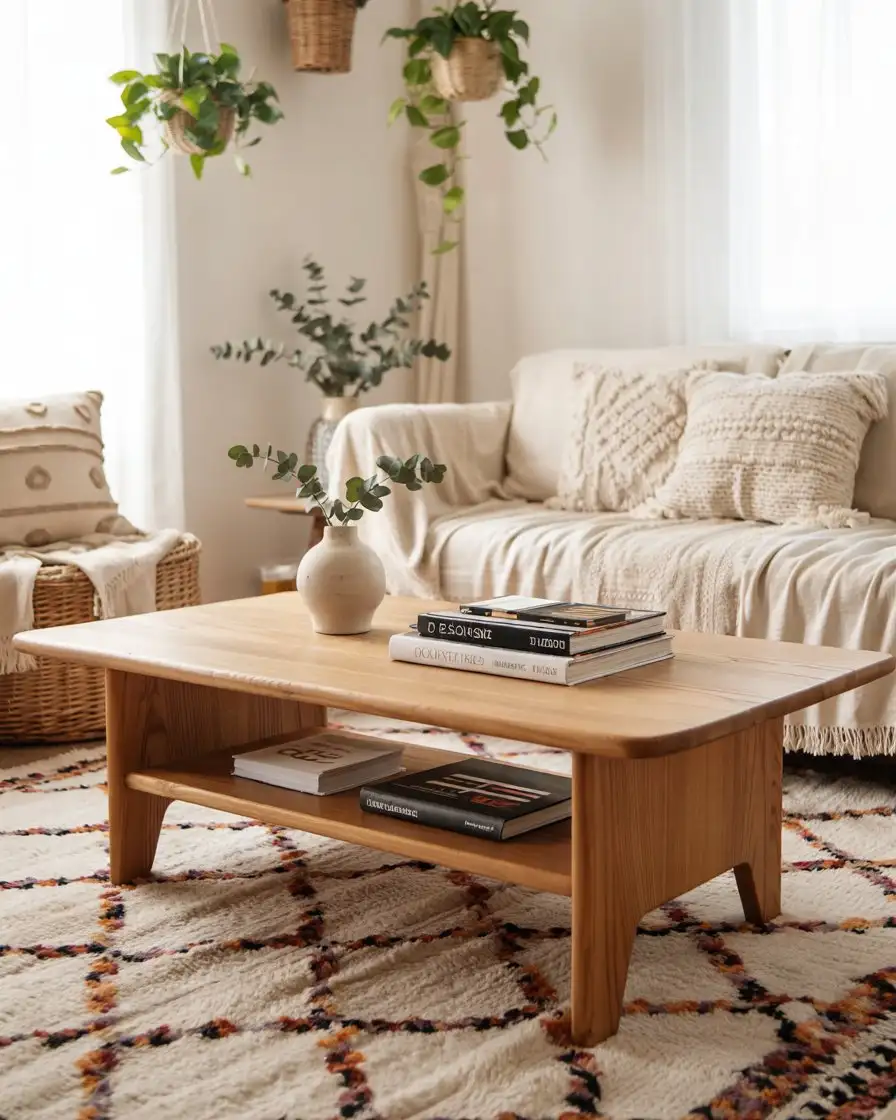
When boho mid century worlds collide, you get a living room that’s equal parts structured and free-spirited. Picture a sleek teak coffee table topped with a handwoven basket and a trailing pothos plant, or a low-slung sofa piled with macramé pillows and a vintage Moroccan rug underneath. The mid-century pieces provide the bones—clean lines, warm wood, minimalist forms—while the boho accents bring texture, color, and a sense of collected ease. 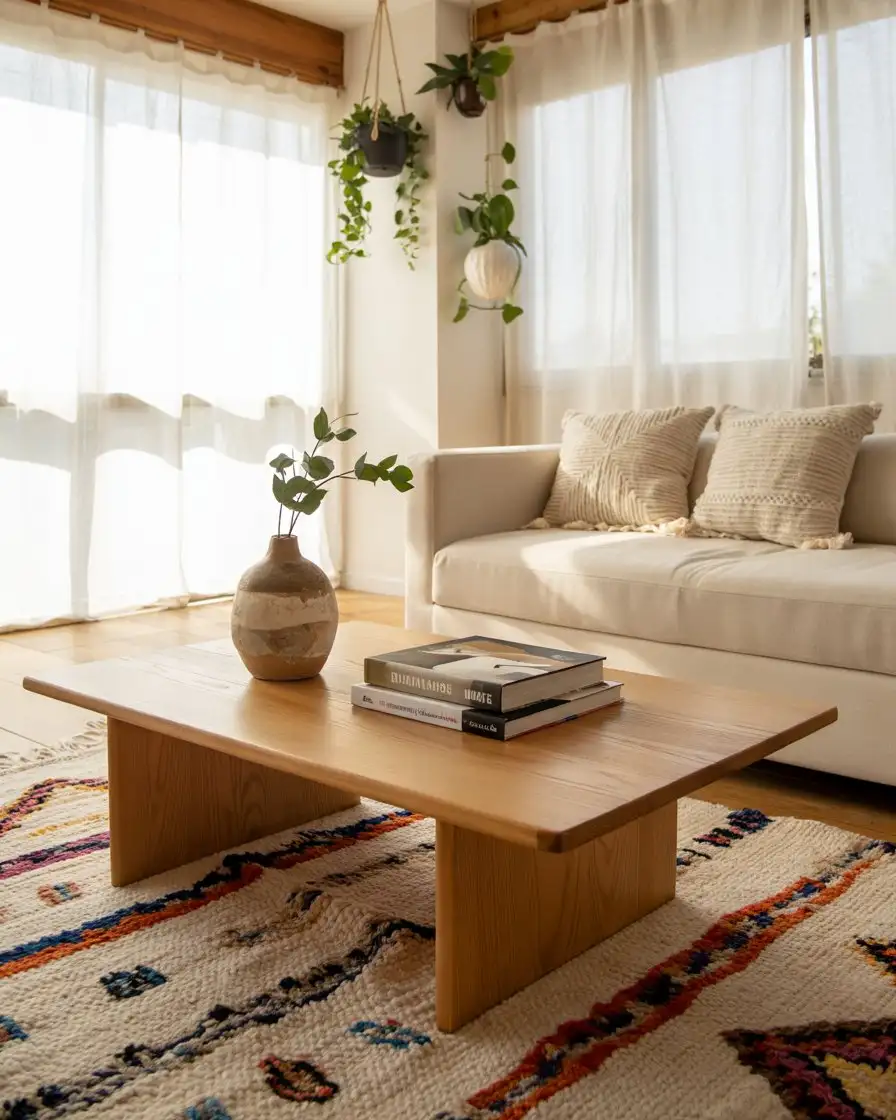
This mix is perfect for people who love the discipline of mid-century design but don’t want their space to feel too buttoned-up or museum-like. It’s also forgiving—if you’re not a naturally tidy person, the boho elements give you permission to layer and collect without looking cluttered. In American homes where square footage is limited, this approach maximizes visual interest without requiring extra furniture or floor space.
19. Classic Black and White Contrast
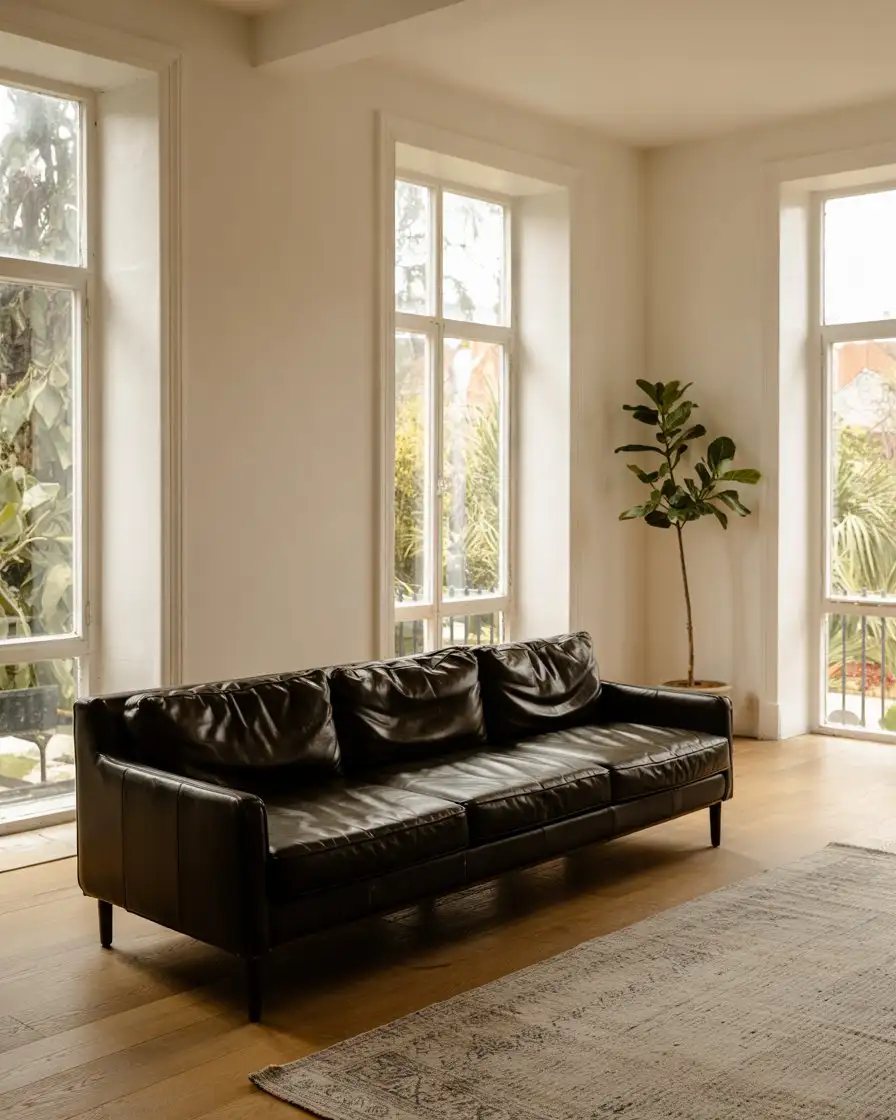
There’s a reason black and white never goes out of style—it’s timeless, versatile, and endlessly elegant. In a classic modern living room, this palette creates crisp contrast and architectural clarity. Think white walls with black-framed windows, a black leather sofa against light oak floors, or a gallery wall of black-and-white photography. The key is balancing the two so neither overwhelms the other, and adding in warm wood or soft textiles to prevent the space from feeling too stark. 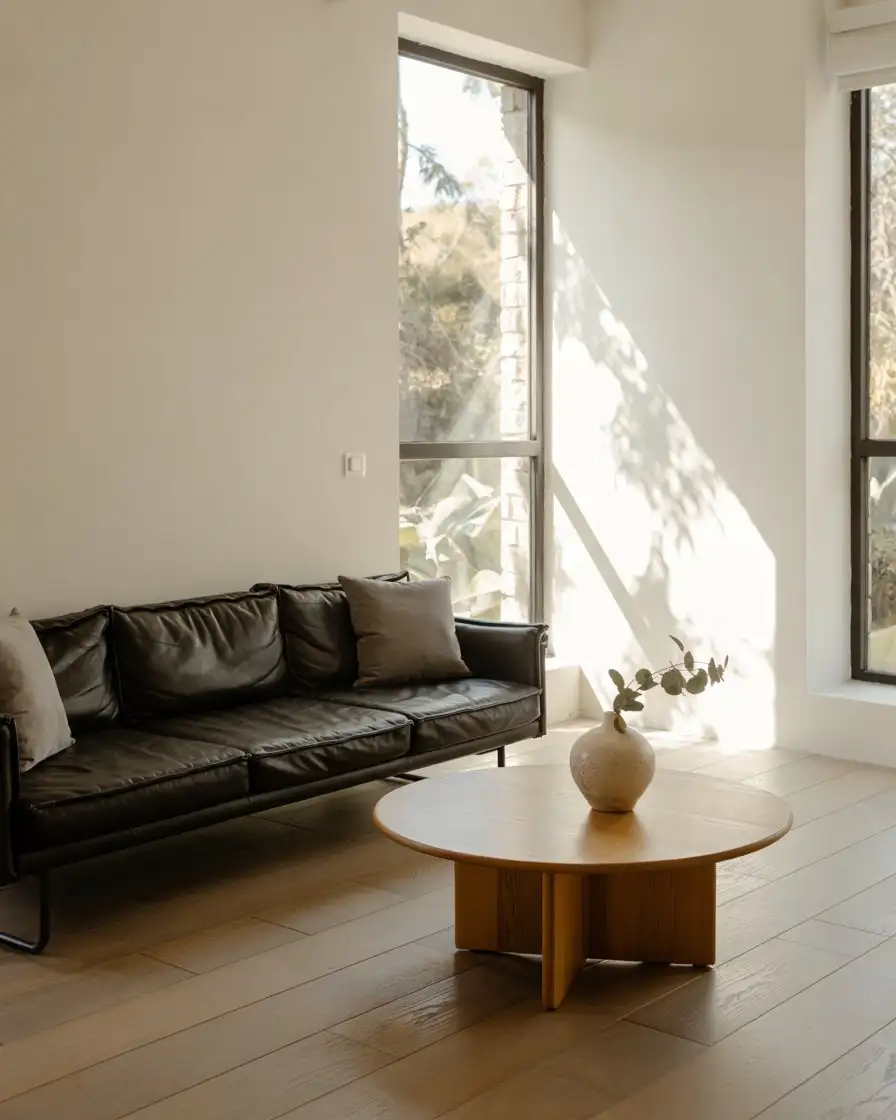
Where it works best: in homes with strong natural light and interesting architectural features. The high contrast highlights shapes and shadows, making even simple spaces feel dramatic. One mistake to avoid is using too much glossy black, which can feel heavy and cold—matte finishes are softer and more livable. And if pure black-and-white feels too severe, add warmth through wood furniture, greenery, or a single accent color like rust or olive.
20. Ideas Luxury Through Texture
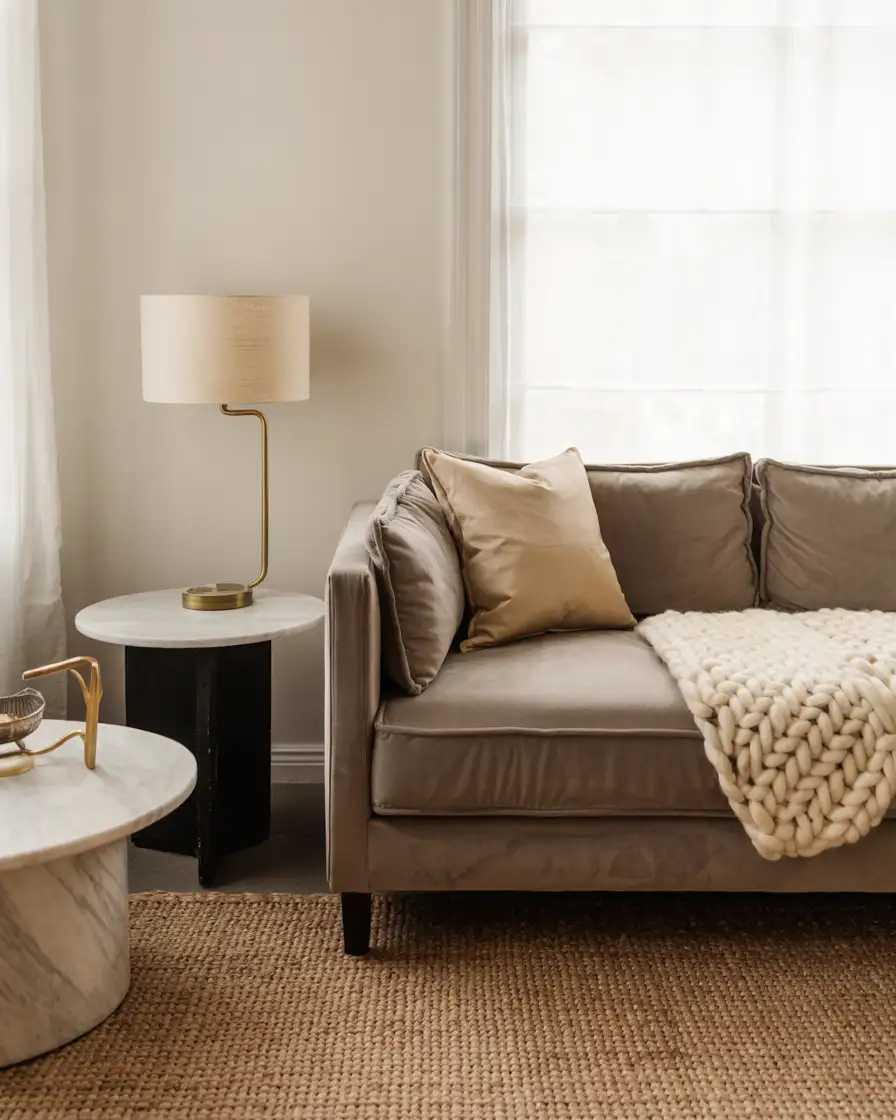
True ideas luxury isn’t about spending a fortune—it’s about layering texture until the space feels rich and considered. Think velvet cushions, a chunky wool throw, a polished marble side table, and a sisal rug underfoot. Each material brings its own tactile quality, and the combination creates depth that flat, single-texture rooms can’t achieve. This approach works across budgets because it’s more about thoughtful curation than expensive purchases. 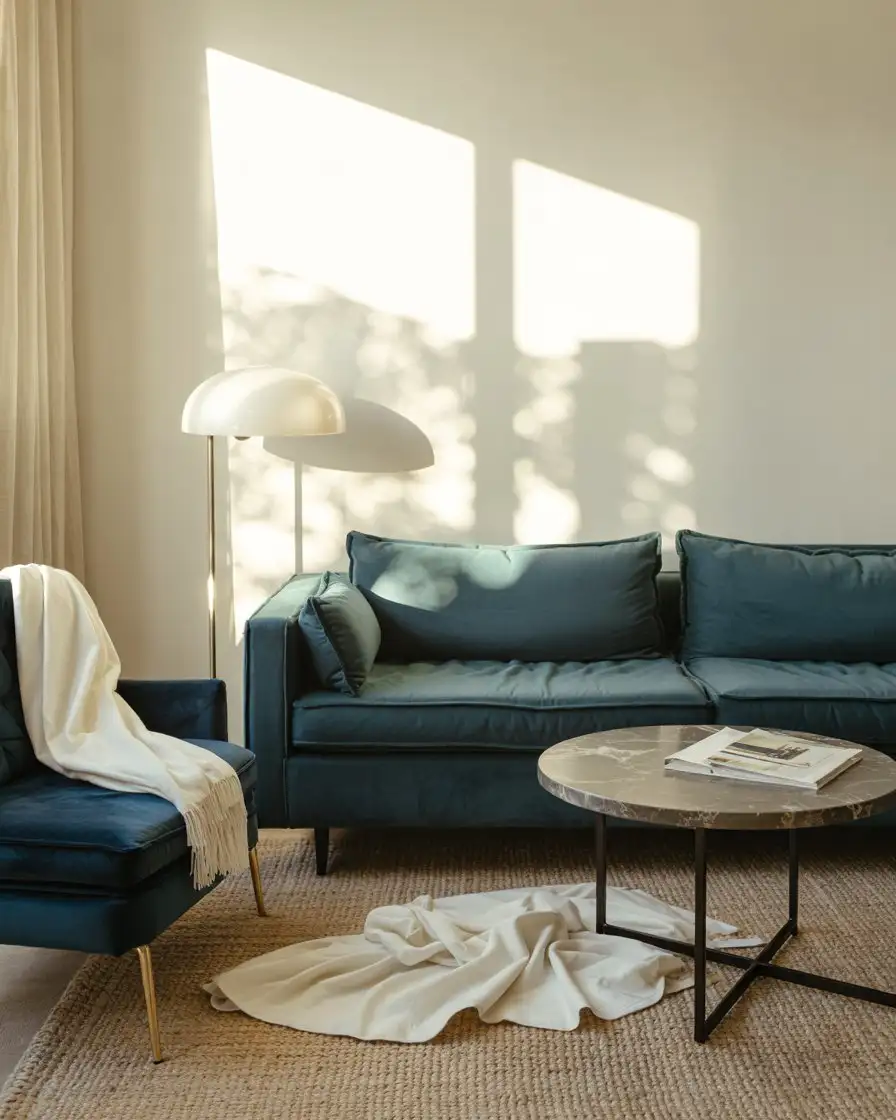
A designer once told me that luxury is felt before it’s seen—your hand reaches for the velvet pillow, your feet sink into the plush rug, and suddenly the room feels expensive even if nothing in it cost more than $500. This is especially powerful in American homes where budgets are tight but aspirations are high. Thrift stores, online marketplaces, and even big-box retailers now carry textured pieces that read as high-end when styled together thoughtfully.
21. Colorful Mid Century Accents
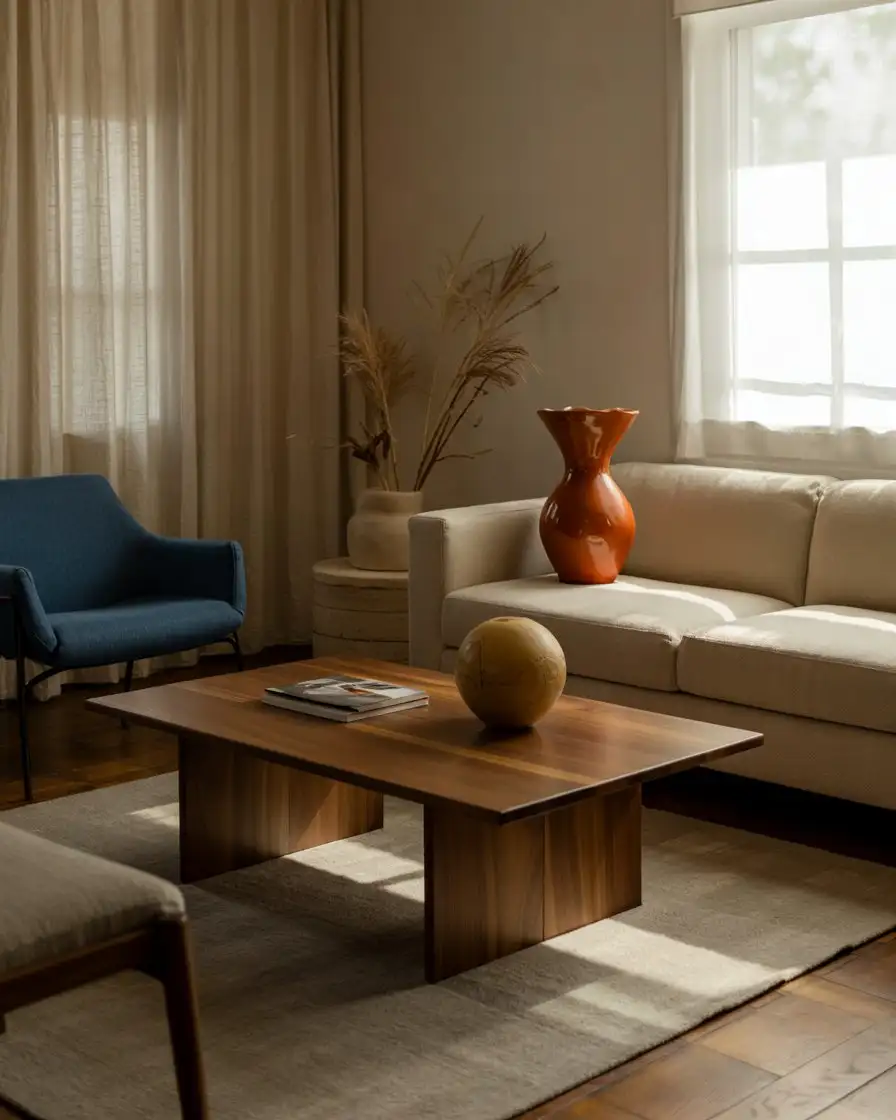
Who says mid-century design has to be all wood tones and neutrals? Colorful mid century accents—think a tangerine ceramic vase, a chartreuse throw pillow, or a cobalt blue side chair—inject personality and joy without sacrificing the clean lines and functional beauty that define the style. These pops feel intentional rather than random, especially when the rest of the room stays fairly restrained. It’s a playful twist on a familiar aesthetic, and it keeps things from feeling too serious or precious. 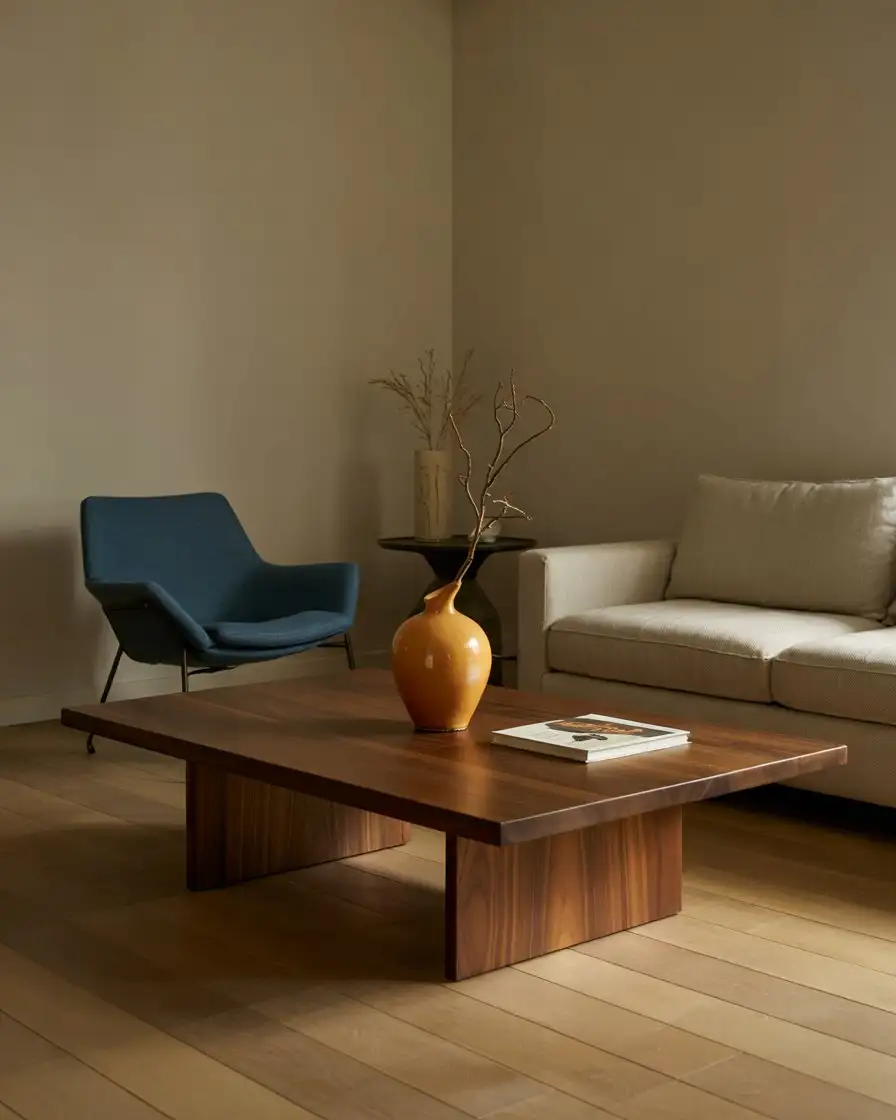
This approach is especially popular among younger homeowners who grew up with mid-century modern but want to make it their own. The color adds a contemporary edge while honoring the original design language. In terms of budget, accent pieces are easy entry points—you can test a bold color on a $50 pillow or $200 side table without committing to a $2,000 sofa. If it doesn’t work, you can swap it out without major regret.
22. Luxury Minimalism with Statement Pieces
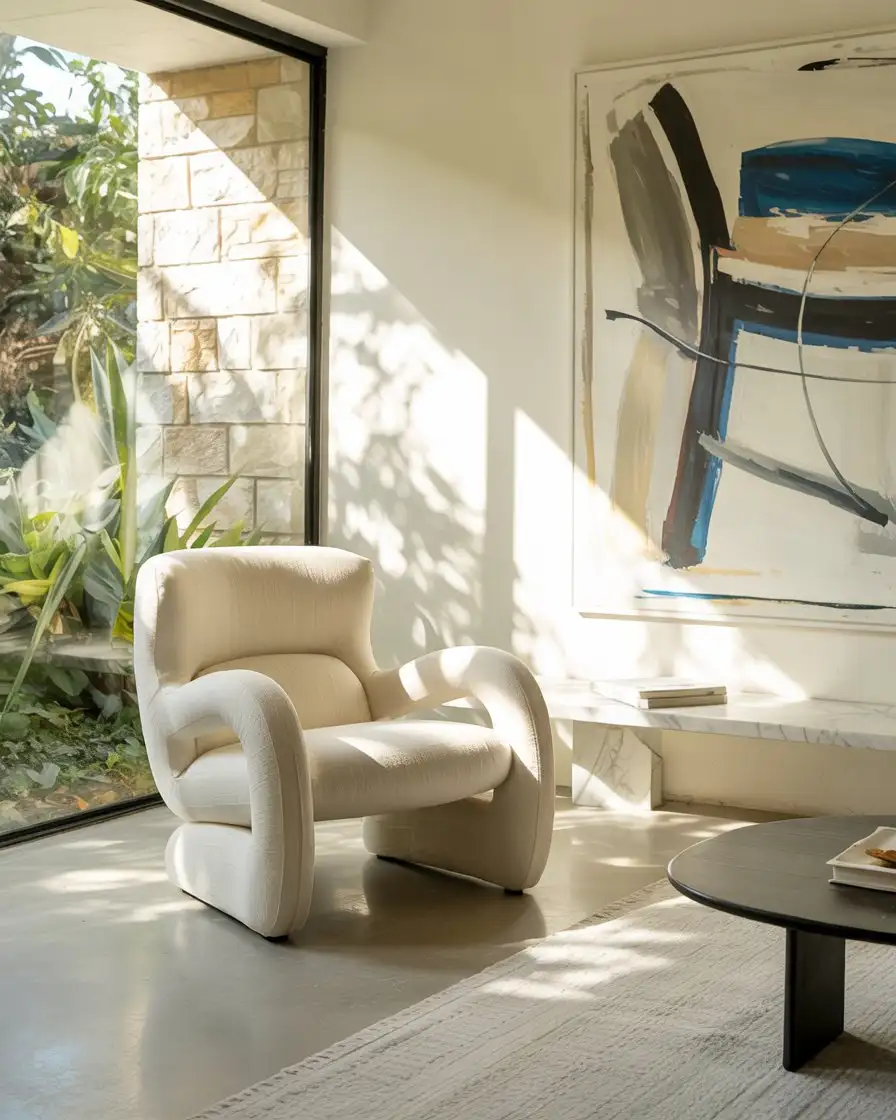
Less is more, but only if the “less” is truly exceptional. Luxury minimalism means investing in fewer, better pieces—a sculptural chair that doubles as art, a single oversized abstract painting, or a hand-carved wooden console. The room stays open and breathable, but every object is deliberate and high-impact. This isn’t about emptiness; it’s about making space for the things that genuinely matter and letting them shine without competition. 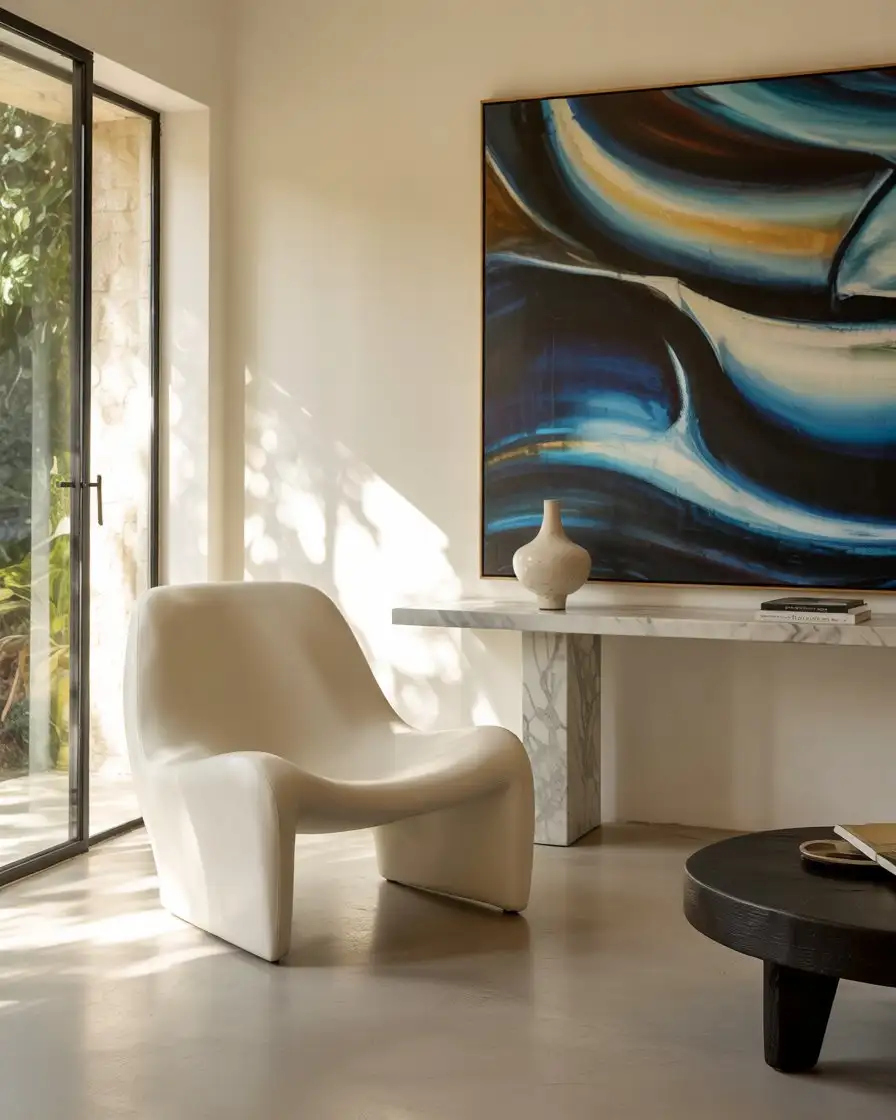
This style works particularly well in urban lofts and modern builds where the architecture is already streamlined. The mistake many people make with minimalism is going too austere, which can feel cold and uninviting. The secret is warmth—add a single sheepskin throw, a warm wood element, or soft lighting, and the space becomes livable rather than sterile. Budget-wise, focus on one or two investment pieces and keep everything else simple and affordable.
23. Dark Moody Walls with Light Furnishings
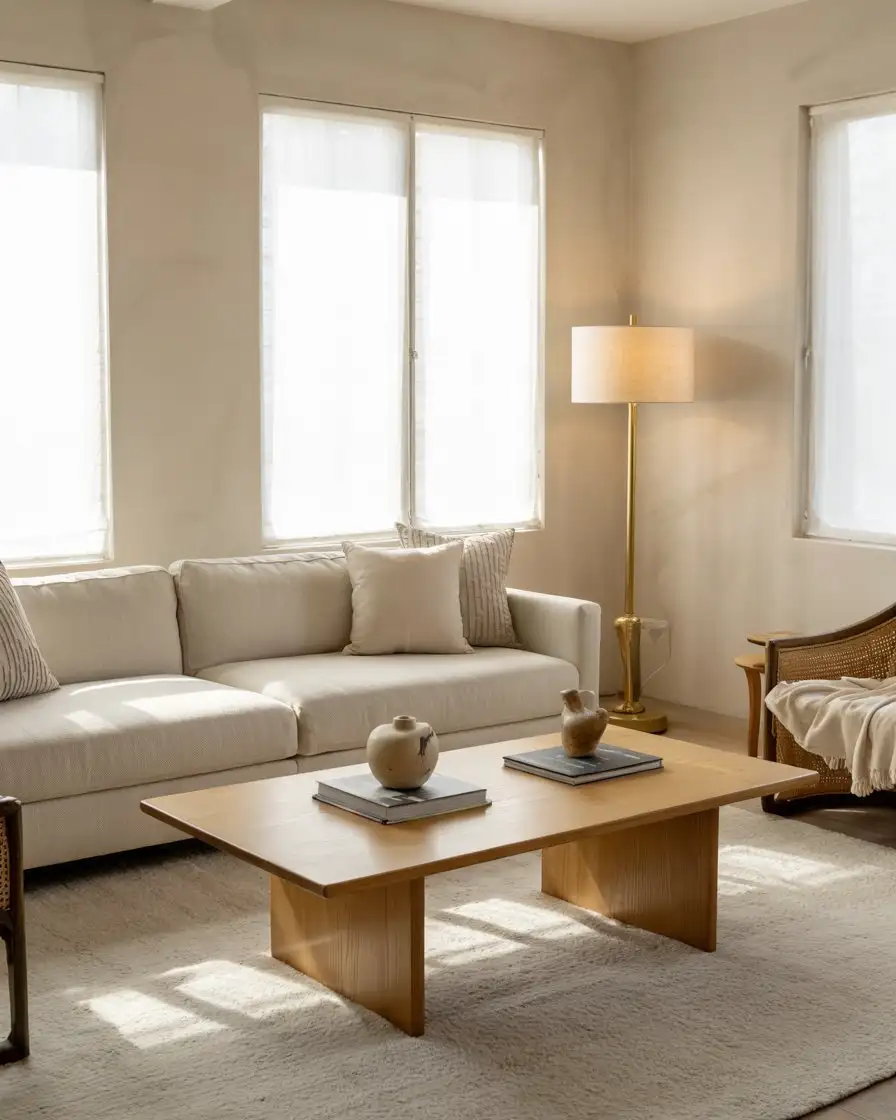
Painting your walls dark charcoal, deep forest green, or even black might sound risky, but paired with light, neutral furniture, the effect is cocooning and sophisticated. The dark backdrop makes lighter pieces pop and creates a sense of enclosure that feels intentional rather than claustrophobic. This works especially well in rooms with high ceilings or abundant natural light, where the darkness grounds the space rather than shrinking it. 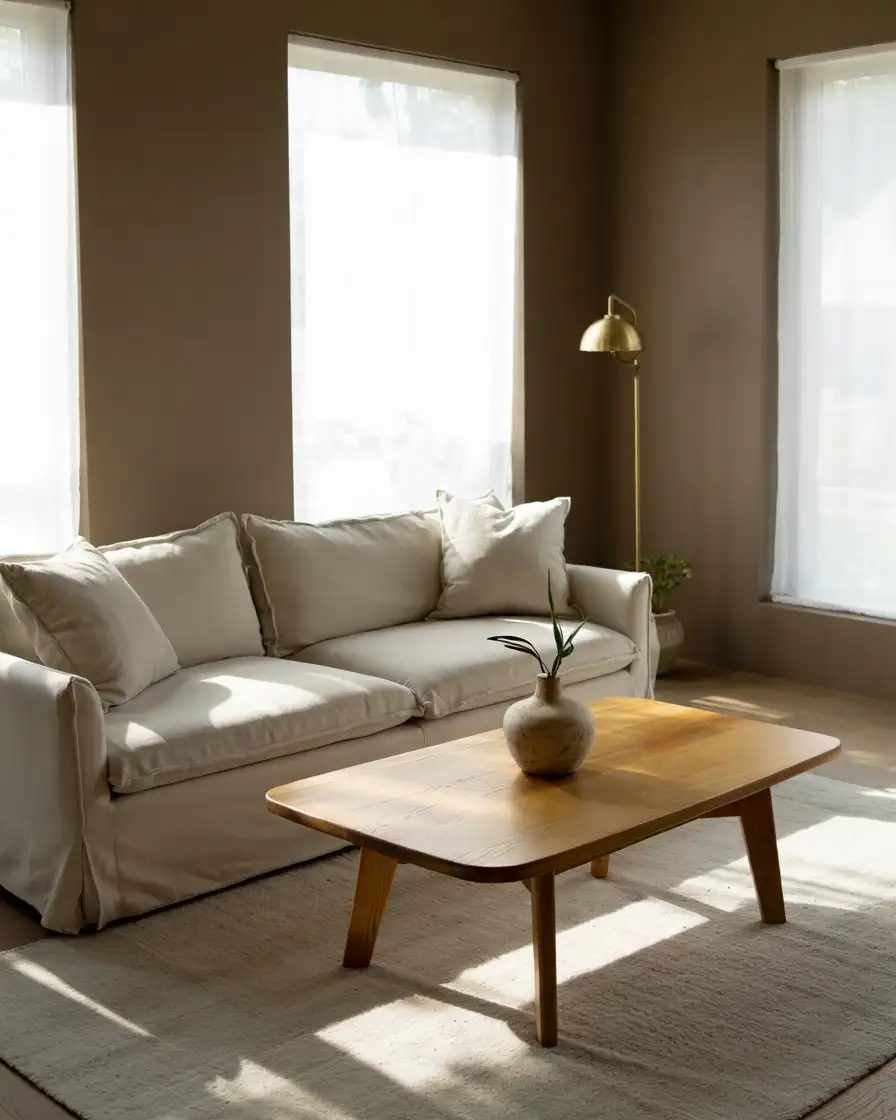
A friend painted her living room deep navy and was terrified she’d hate it, but within a week, guests were telling her it was the most stylish room they’d ever seen. The contrast between dark walls and light furniture creates drama and depth that you simply can’t get with all-neutral palettes. The biggest pitfall is not committing fully—if you go dark, go all the way. Half-measures (like one dark wall and three light walls) can look unfinished rather than intentional.
Conclusion
The modern living room in 2026 is all about intention—choosing pieces you love, layering textures that make you want to linger, and creating a space that feels like yours, not a showroom. Whether you’re drawn to moody maximalism, coastal calm, or mid-century minimalism, the best rooms tell a story and invite you in. We’d love to hear what resonates with you—drop a comment below and share which idea you’re planning to try first.