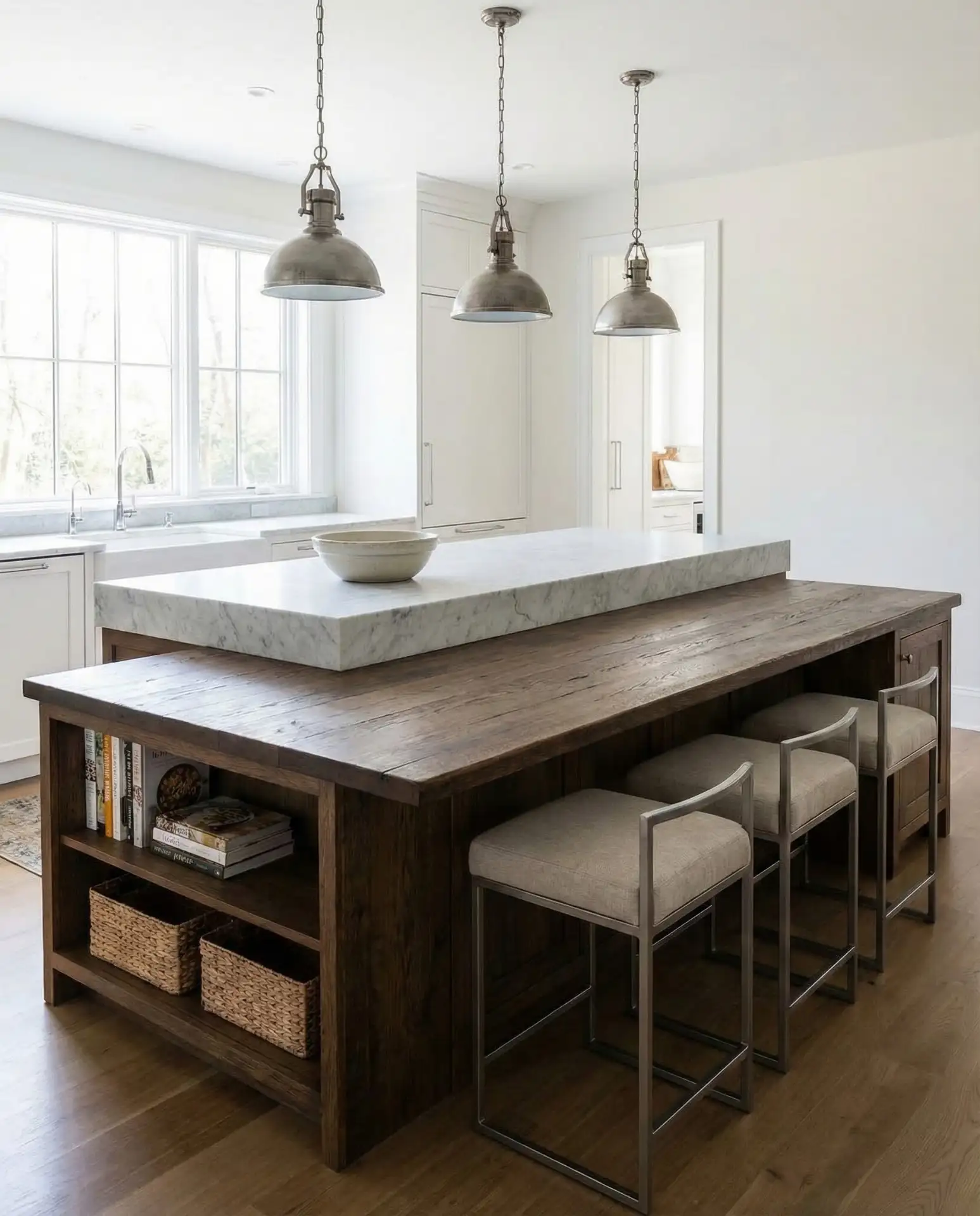
The open kitchen-living room layout has become the cornerstone of American home design, and in 2026, it’s evolving beyond simple wall removal into thoughtfully zoned spaces that balance openness with intimacy. Whether you’re renovating a small apartment, planning a barndominium build, or reimagining a townhouse flow, this layout offers unmatched versatility for how we actually live—cooking, entertaining, working, and relaxing in one beautifully connected zone. Pinterest searches for open-concept inspiration have surged as homeowners seek designs that feel both expansive and personal, blending styles from Scandinavian minimalism to warm Japandi aesthetics. In this guide, we’re exploring fresh ideas that show how to master the open kitchen living room in 2026, with practical layouts, styling strategies, and real-world solutions that work for every home type and budget.
1. Cased Opening Frames Without Closing Off
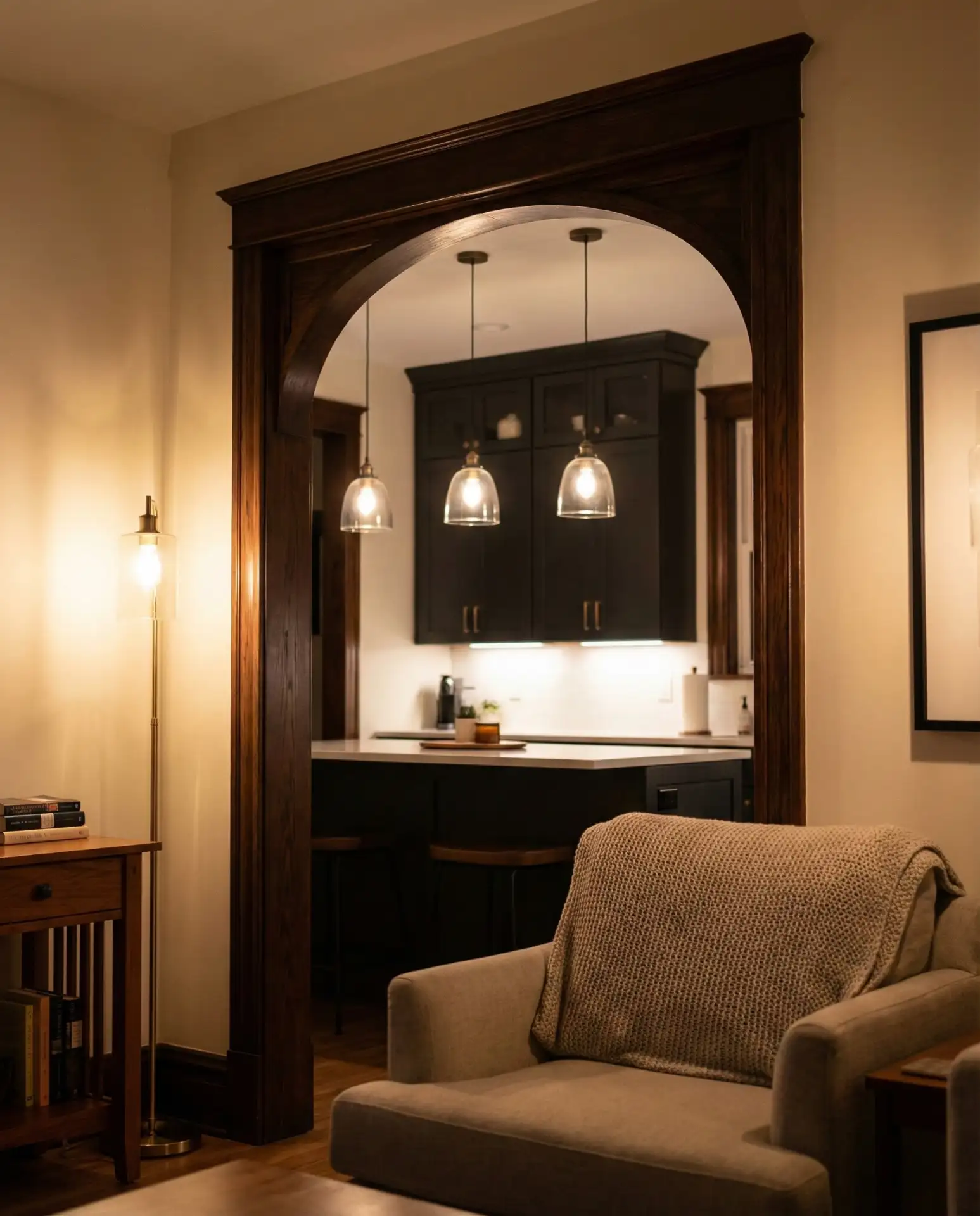
A cased opening offers the perfect middle ground between fully open and traditionally separated spaces, creating visual definition without sacrificing flow. This architectural detail frames the transition between your dining room and living area with elegant trim work, allowing light and conversation to pass freely while subtly marking where one zone ends and another begins. Popular in both renovated townhouses and new builds, cased openings work especially well when you want to preserve some formality or create a sense of arrival without the commitment of doors. 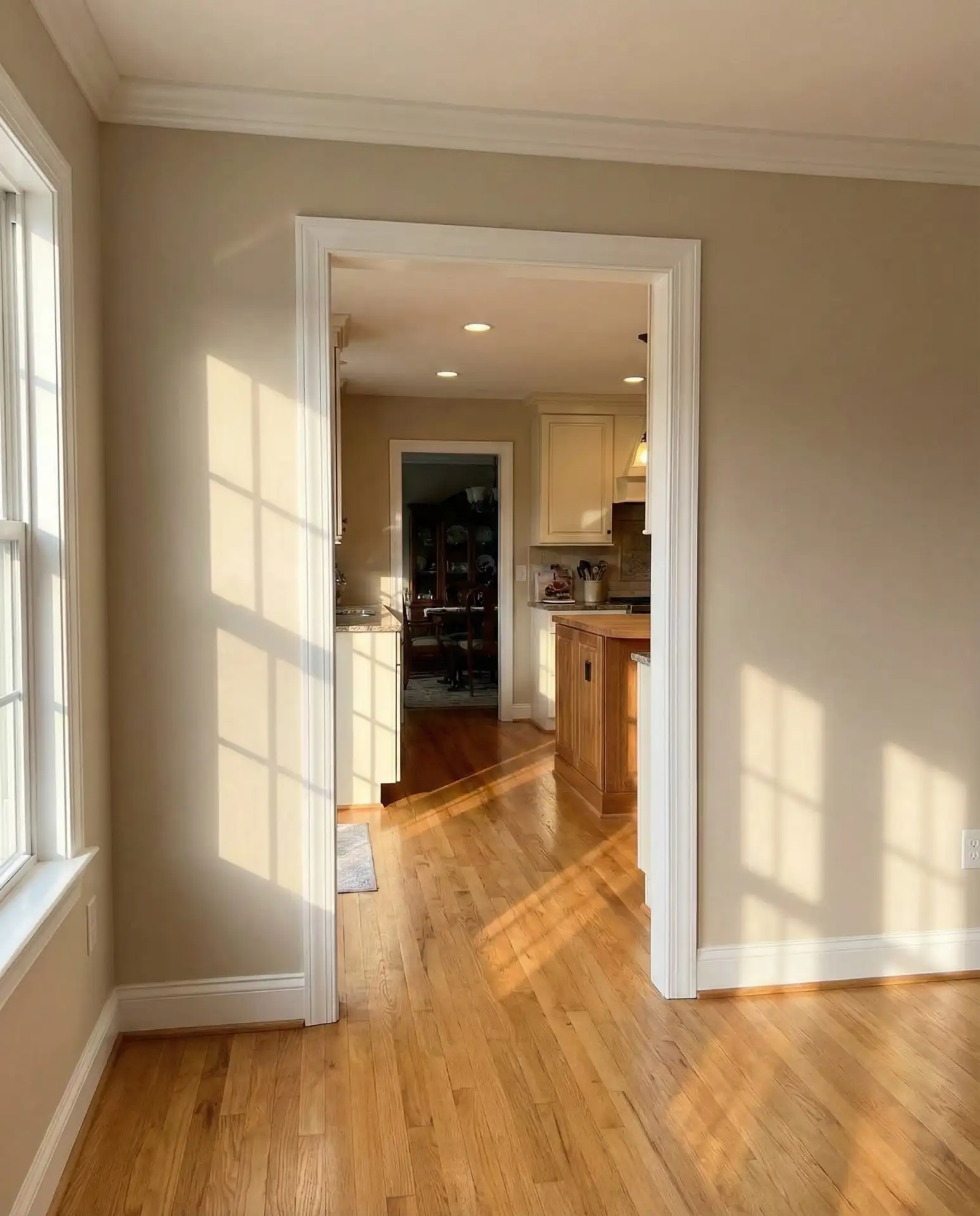
The beauty of cased openings is their flexibility across architectural styles—they complement Craftsman details in older homes while adding warmth to modern spaces that might otherwise feel too stark. Installation typically costs between $300 and $800 depending on materials and trim complexity, making it one of the most affordable ways to add architectural interest. Many homeowners paint the casing in contrasting colors or use natural wood tones to either blend seamlessly or create intentional focal points that guide the eye through the space.
2. Kitchen Island As Living Room Anchor
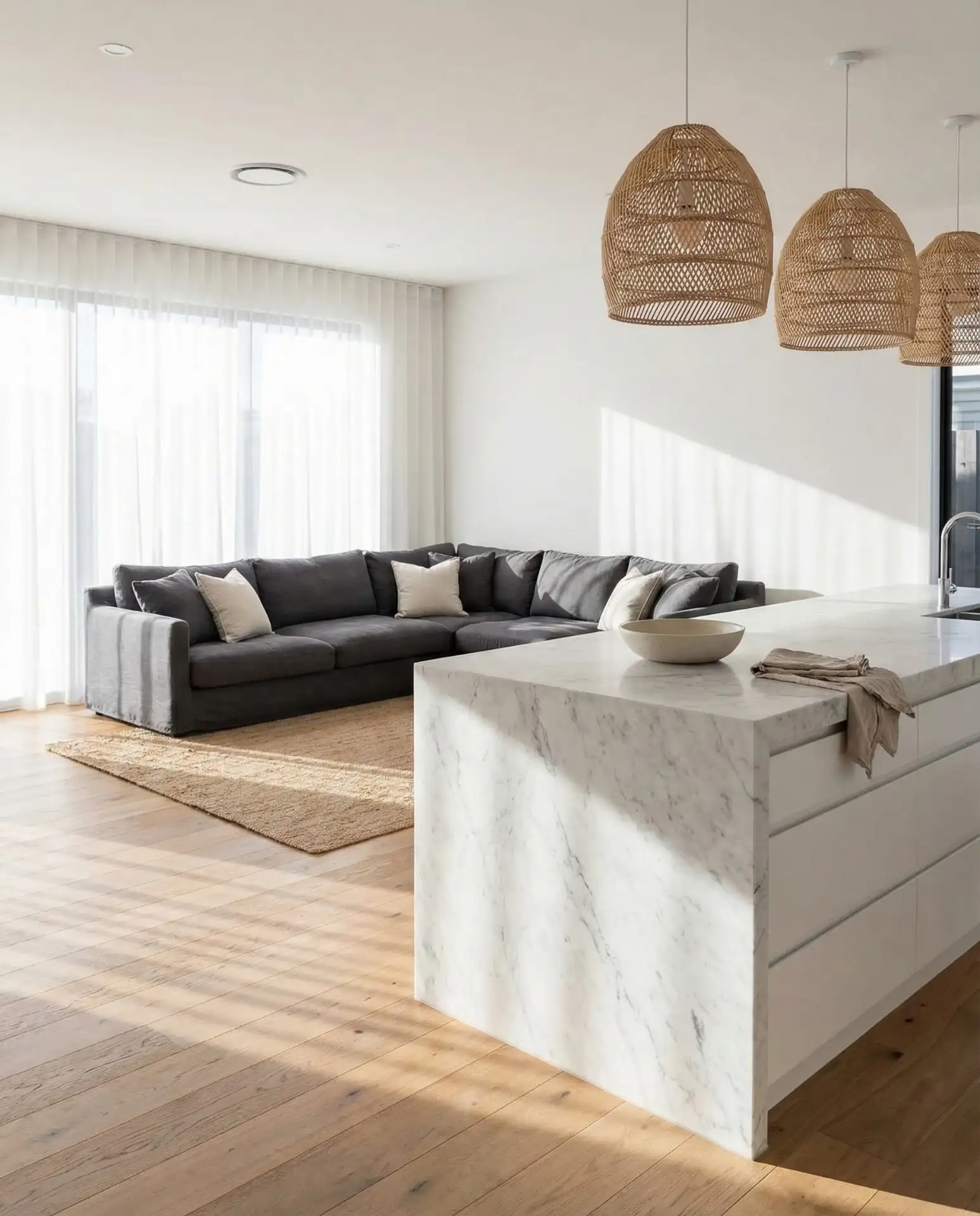
When your floor plan allows, positioning your island to face the living area transforms it from a work surface into the social heart of your home. This layout naturally creates conversation flow, letting the cook stay engaged with family or guests lounging on the couch just a few feet away. The island becomes a physical and visual anchor that defines the kitchen zone while maintaining openness, often incorporating bar seating that blurs the line between cooking and gathering spaces. 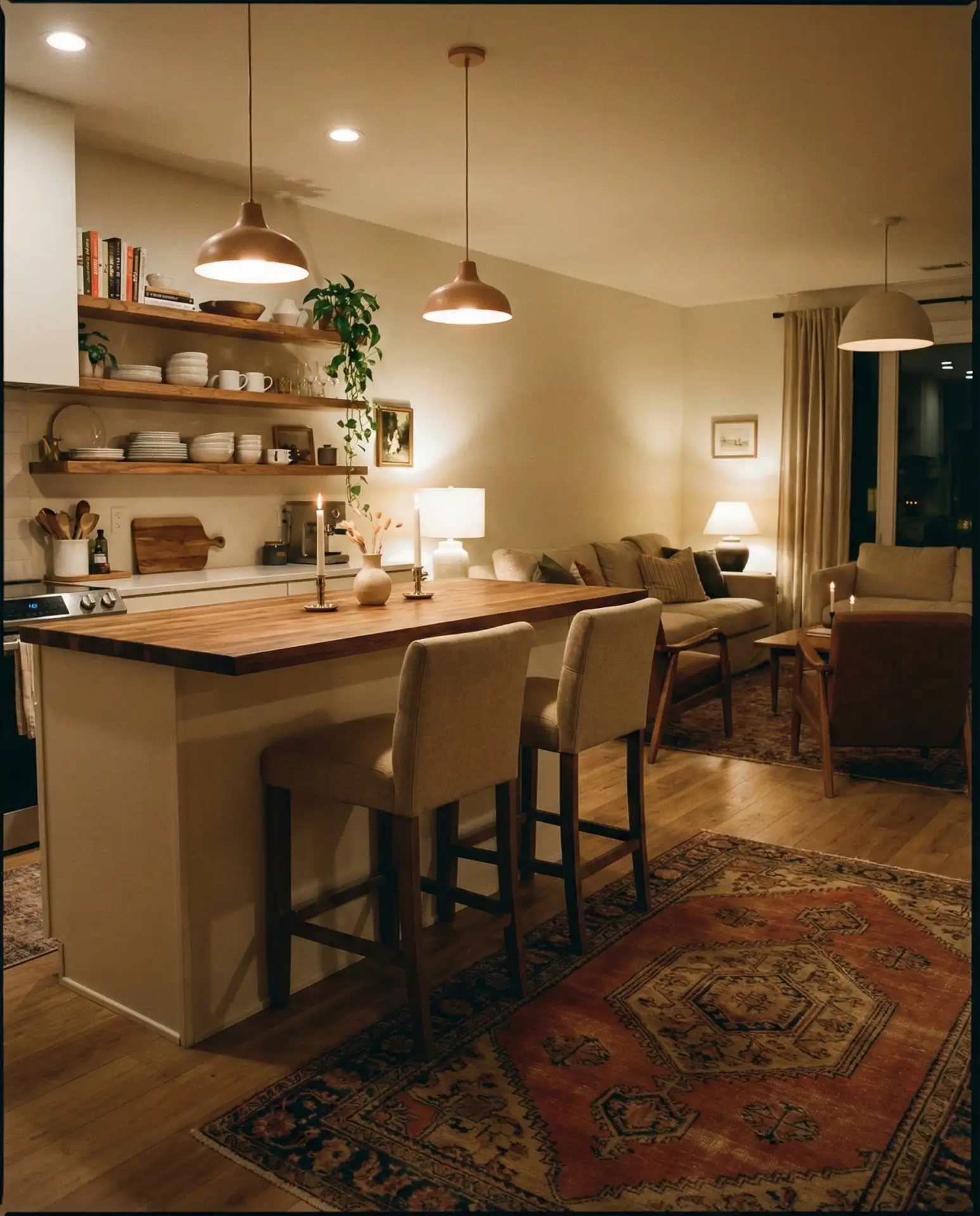
This works best in homes where the kitchen occupies at least 12 feet of width, giving enough space for the island plus comfortable circulation behind it. In smaller apartments where every inch counts, even a narrow island or peninsula can achieve this effect if you limit the depth to 24-30 inches and choose backless stools that tuck completely underneath. The key mistake people make is positioning the island parallel to the living room seating instead of facing it directly, which kills the conversational connection this layout is designed to create.
3. Semi-Wall With Purpose
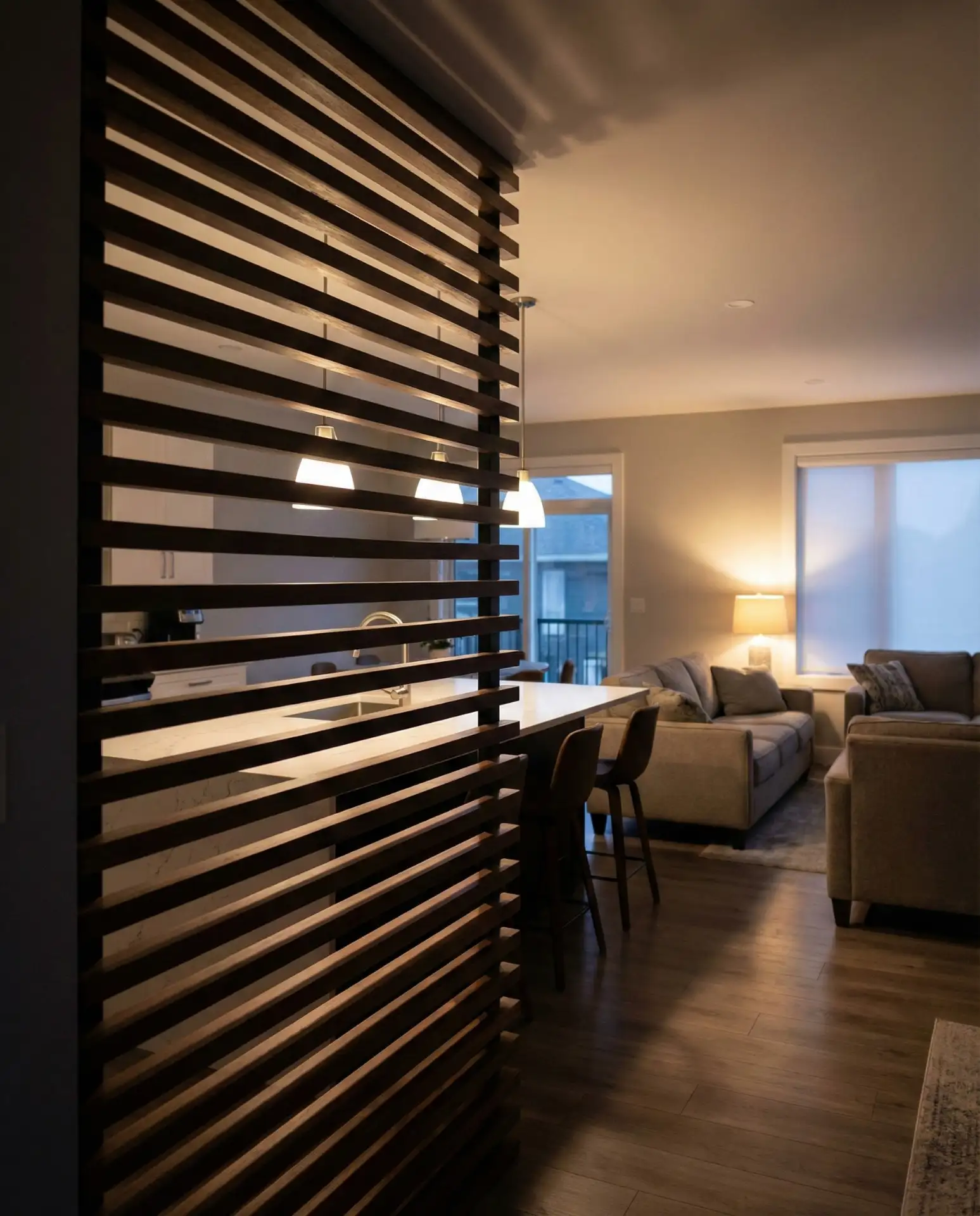
A semi-wall or half-height partition brings back just enough separation to feel intentional without blocking sightlines or natural light. Rising typically 3.5 to 4 feet high, these partial walls can house built-in shelving, provide backing for kitchen cabinets, or simply offer a visual break that helps define distinct zones. This solution appeals especially to homeowners in small apartment settings who need the openness but crave some psychological division between cooking smells and living spaces. 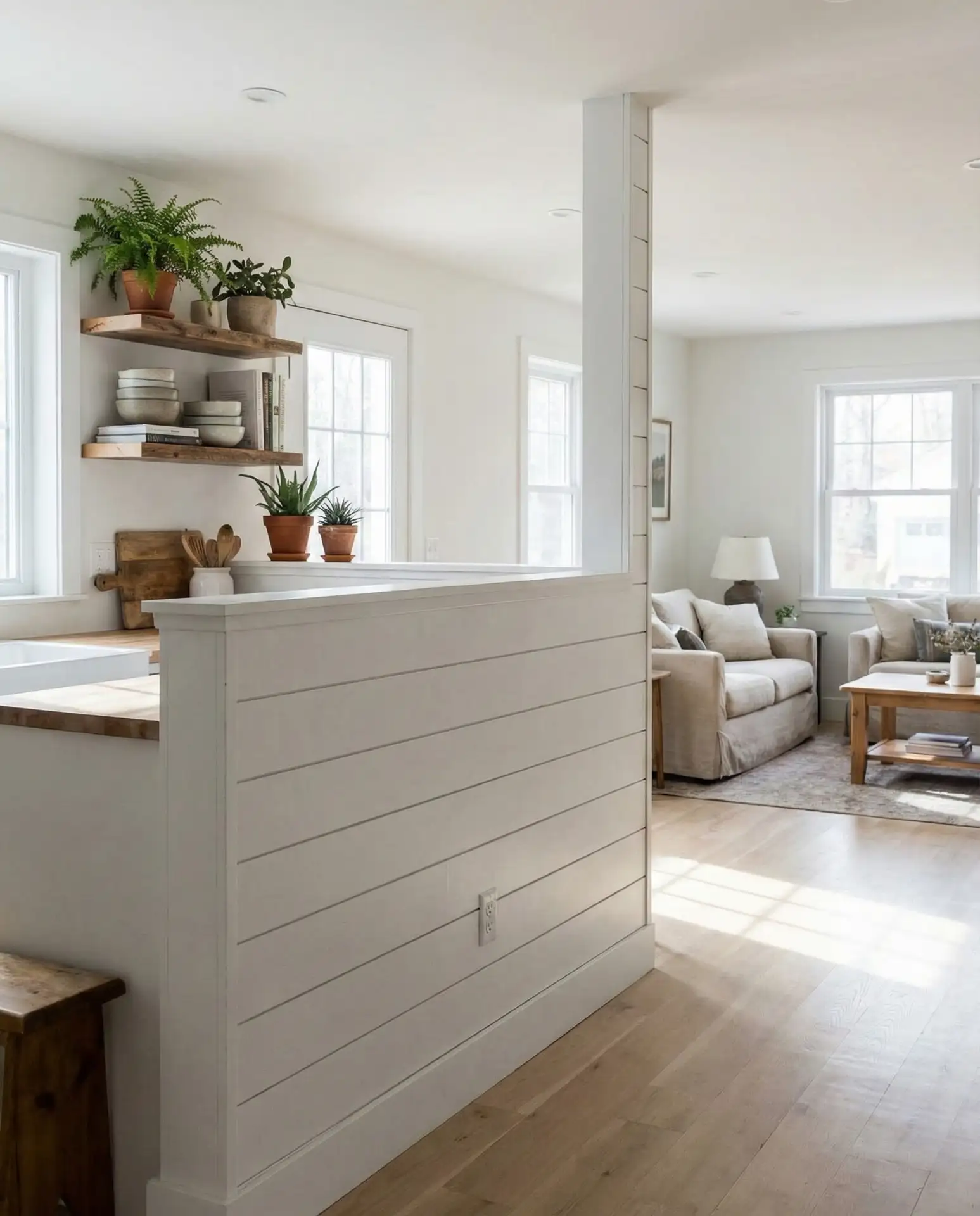
My neighbor installed a semi-wall during her kitchen renovation last year and immediately noticed how it reduced the visual clutter from unwashed dishes while still letting her supervise kids doing homework at the dining table. The top surface becomes bonus real estate for displaying ceramics, trailing plants, or even serving as a buffet ledge during parties, adding functional square footage without the commitment of a full wall.
4. Scandinavian Light and Layers
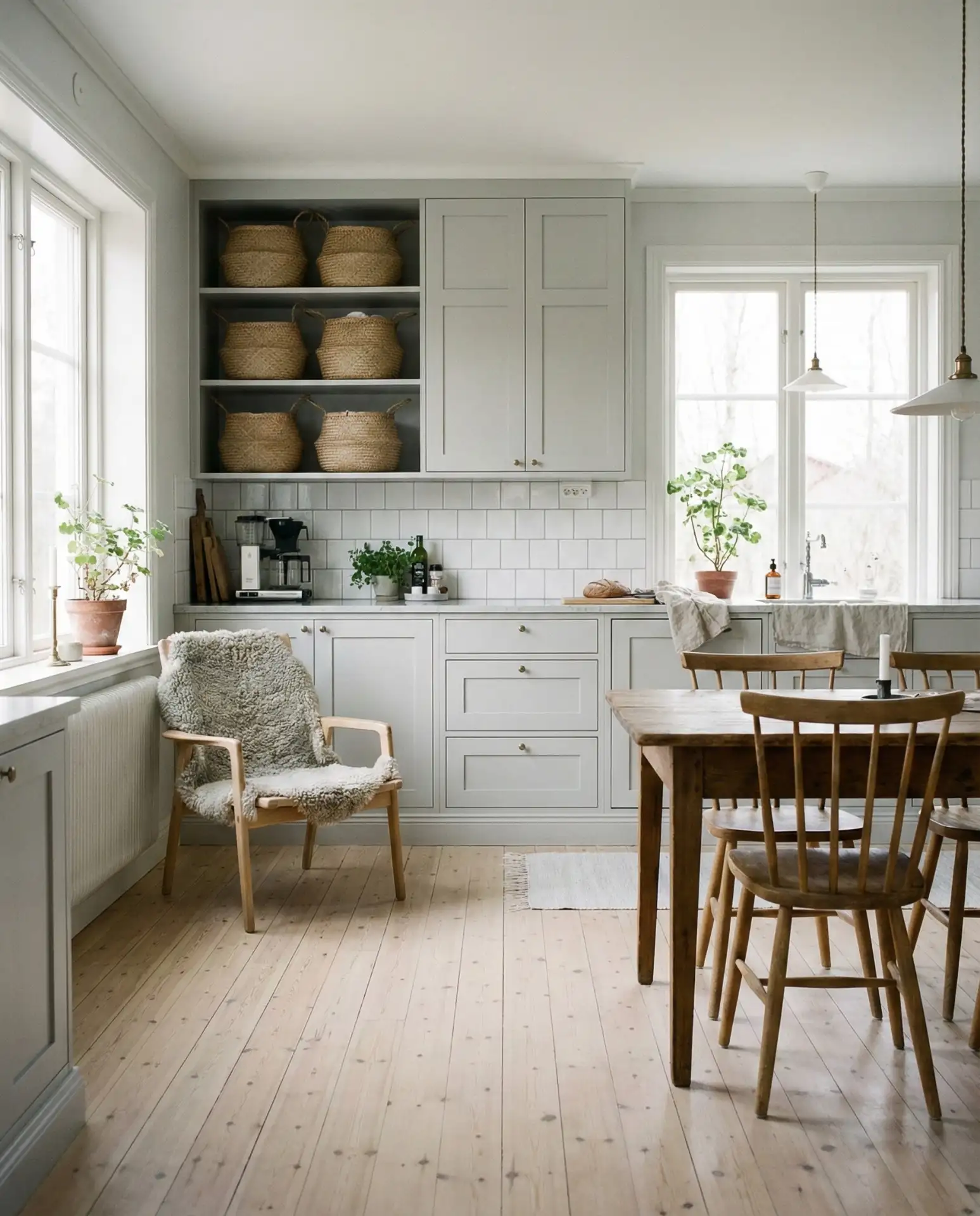
The Scandinavian approach to open kitchen living rooms prioritizes natural light, pale wood tones, and layered textures that create warmth without visual weight. Think white or light gray cabinetry paired with oak or birch floors, minimal upper cabinets to preserve sightlines, and an abundance of textiles in the living area that soften the harder kitchen surfaces. This aesthetic thrives in open layouts because it relies on cohesion rather than contrast, creating a serene flow that feels both spacious and inviting. 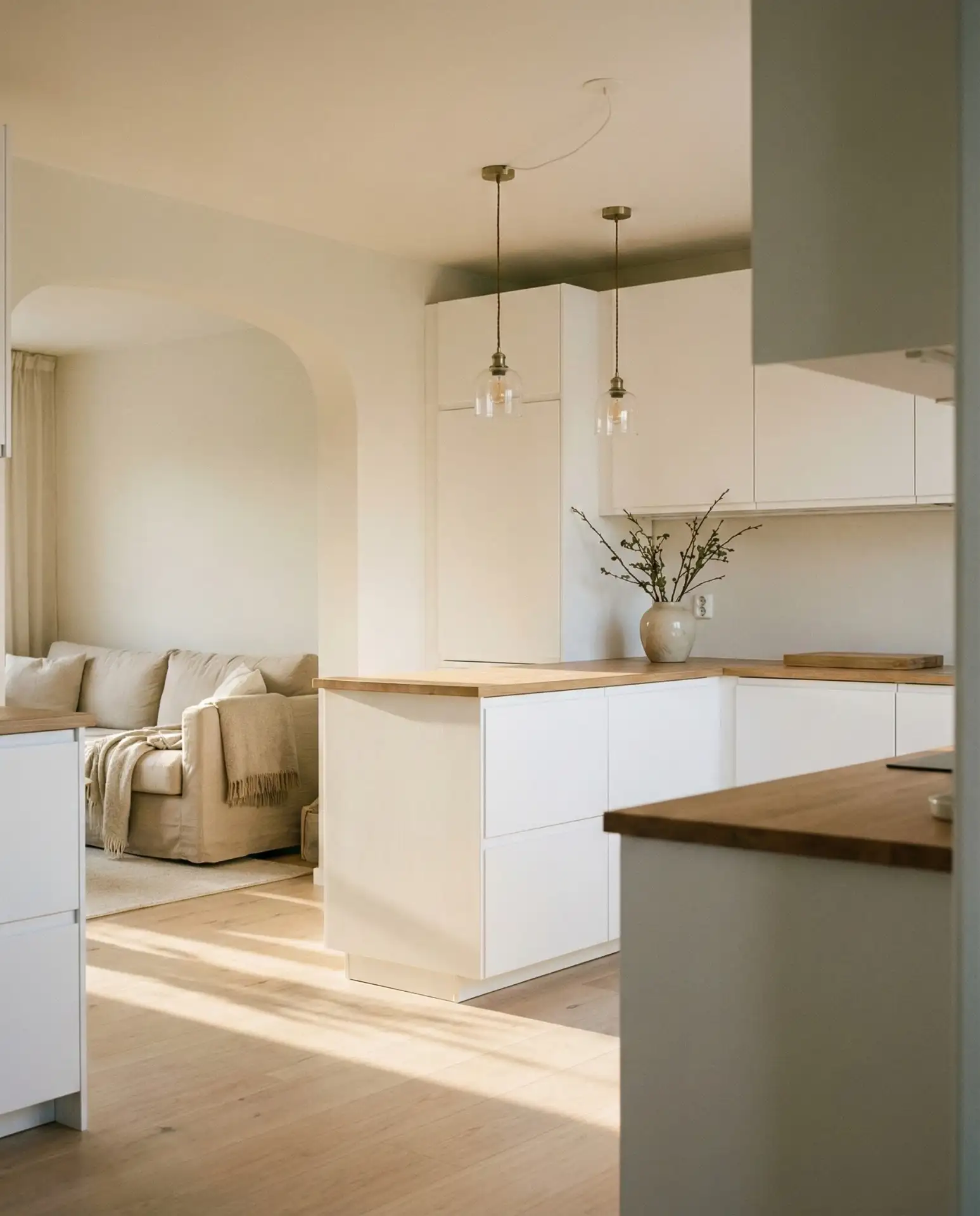
Scandinavian design works particularly well in northern U.S. states, where maximizing winter light is essential, and the cozy-minimal aesthetic resonates with lifestyles that value both function and restraint. Budget-conscious renovators appreciate that this look doesn’t demand expensive materials—Ikea kitchen systems form the backbone of countless Scandi-inspired spaces, with homeowners adding personality through lighting, art, and carefully edited accessories rather than costly custom cabinetry. The real investment goes into quality lighting layers: good task lighting for cooking, ambient fixtures for mood, and preserving every possible window for natural light.
5. Japandi Meets Open Concept
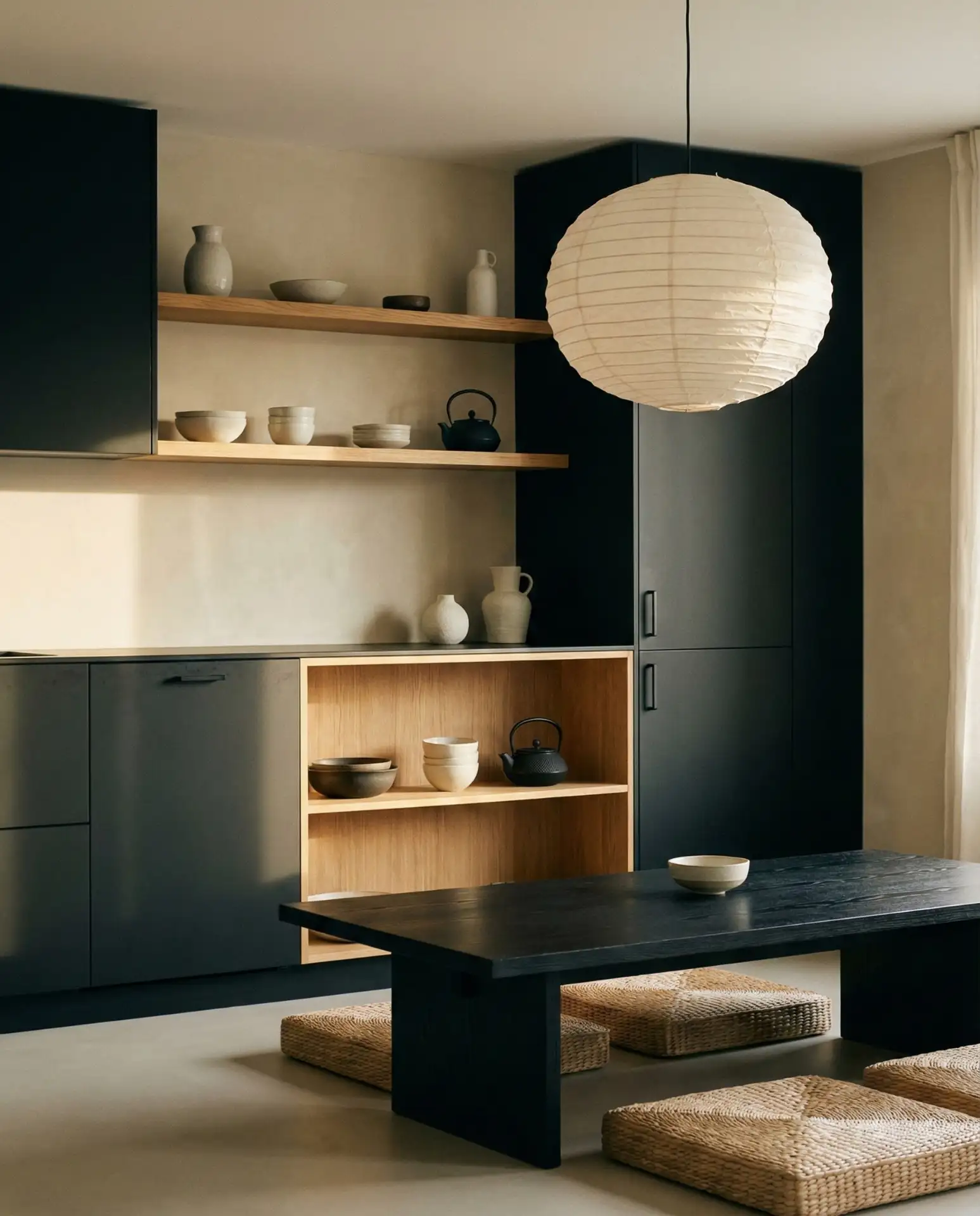
Blending Japanese minimalism with Scandinavian warmth, Japandi style brings calm sophistication to the open kitchen living room through clean lines, natural materials, and purposeful negative space. This aesthetic favors low-profile furniture, handcrafted ceramics, and a restrained color palette of warm neutrals with occasional black accents. In an open layout, Japandi creates visual quiet that lets each element breathe, making even modest square footage feel spacious and considered rather than cluttered or chaotic. 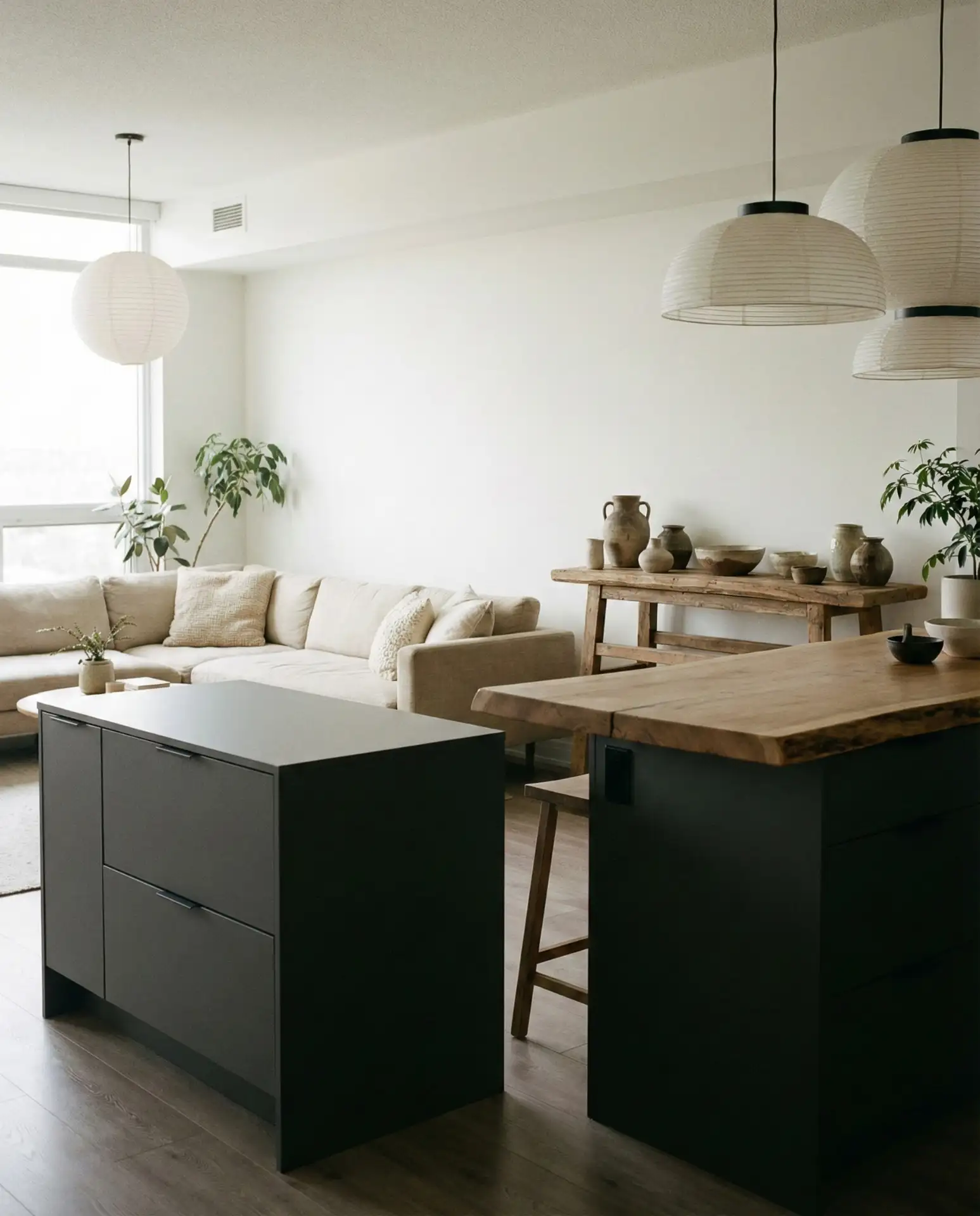
Expert designers note that Japandi works exceptionally well in open concepts because both parent styles emphasize flow and intentionality—nothing is placed arbitrarily. The key is to arrange furniture with generous spacing, avoid overcrowding shelves, and choose pieces with visible craftsmanship like joinery details or natural wood grain. Unlike some trends that demand constant upkeep, Japandi’s minimal approach actually simplifies maintenance, with fewer decorative objects to dust and surfaces designed to patina gracefully over time.
6. Barndominium Open Expanse
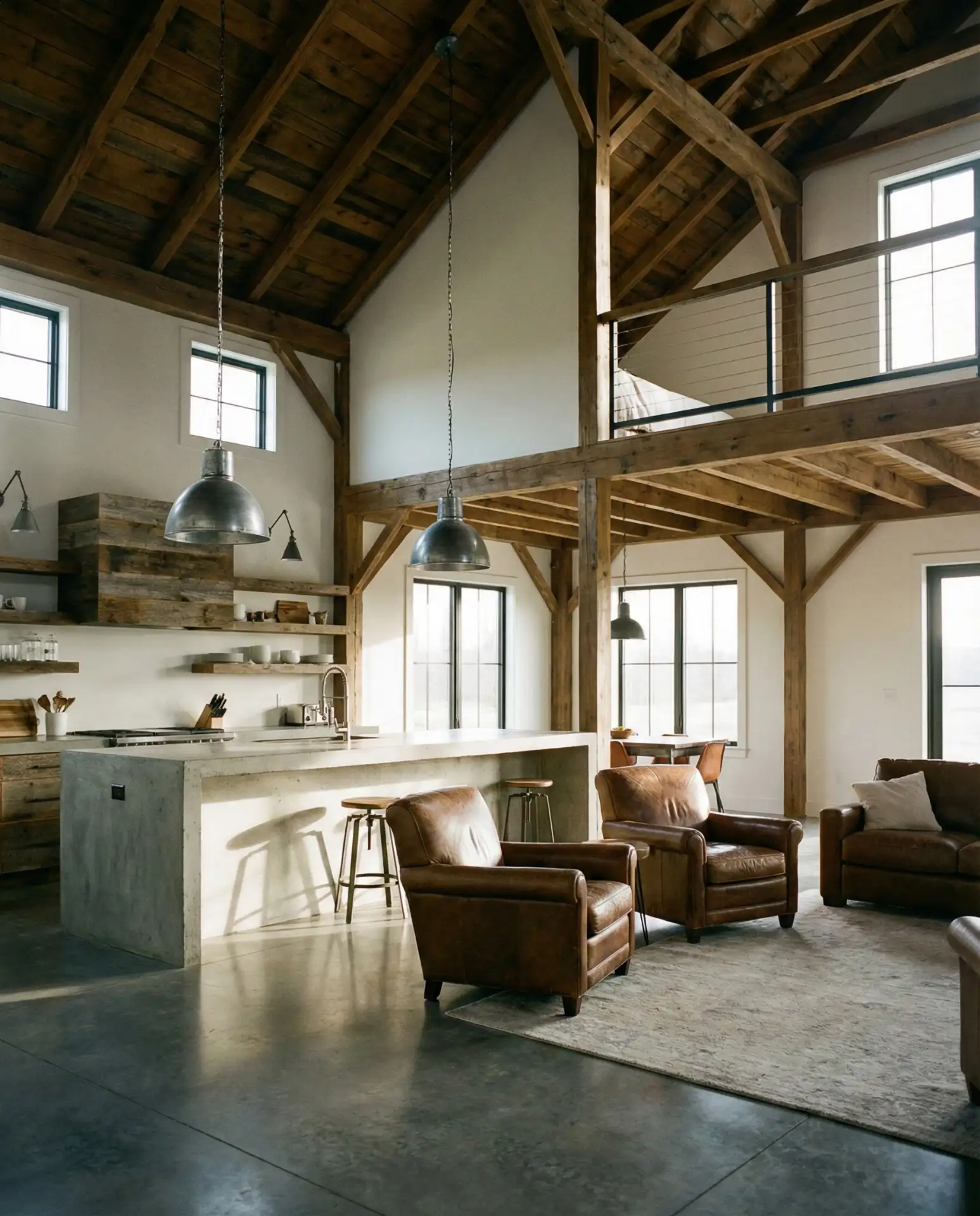
The barndominium trend brings wide-open kitchen living rooms to new heights—literally—with soaring ceilings, exposed steel beams, and unobstructed spans that celebrate volume. These metal-building conversions or purpose-built barn-style homes often feature kitchens that occupy one end of a massive great room, with living and dining room areas flowing seamlessly across polished concrete or wide-plank floors. The industrial-rustic aesthetic works naturally here, with the structural honesty of the building itself becoming the primary design feature. 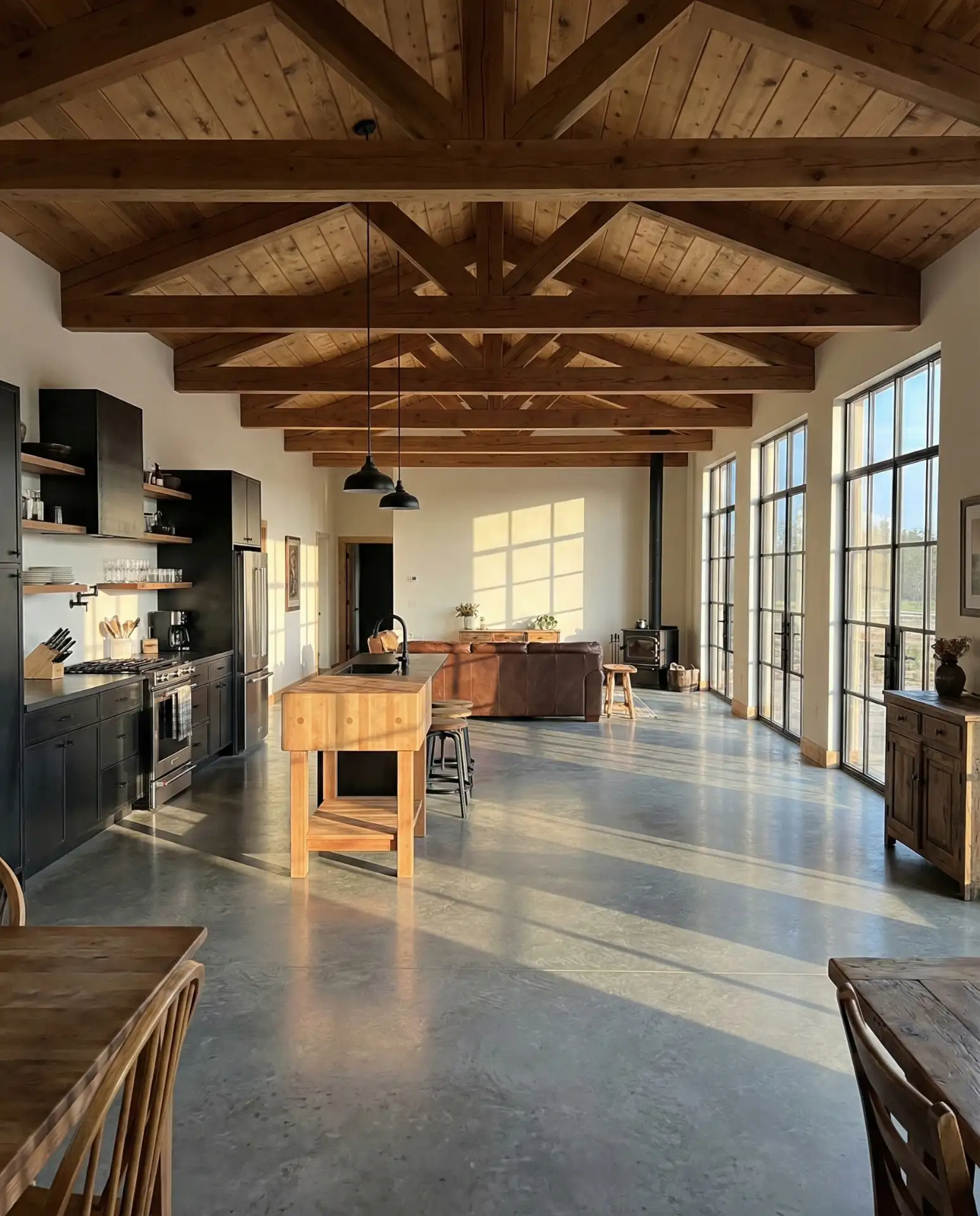
Barndominiums work best in rural or suburban settings across Texas, Oklahoma, and throughout the Midwest, where land costs allow for larger footprints and neighbors appreciate the agricultural aesthetic. The open concept here isn’t just stylistic—it’s structural, with minimal interior walls making the most of the metal building’s clear span capabilities. Homeowners often zone the space with furniture arrangements and area rugs rather than walls, creating flexible layouts that can adapt as needs change over the years.
7. Townhouse Vertical Strategy
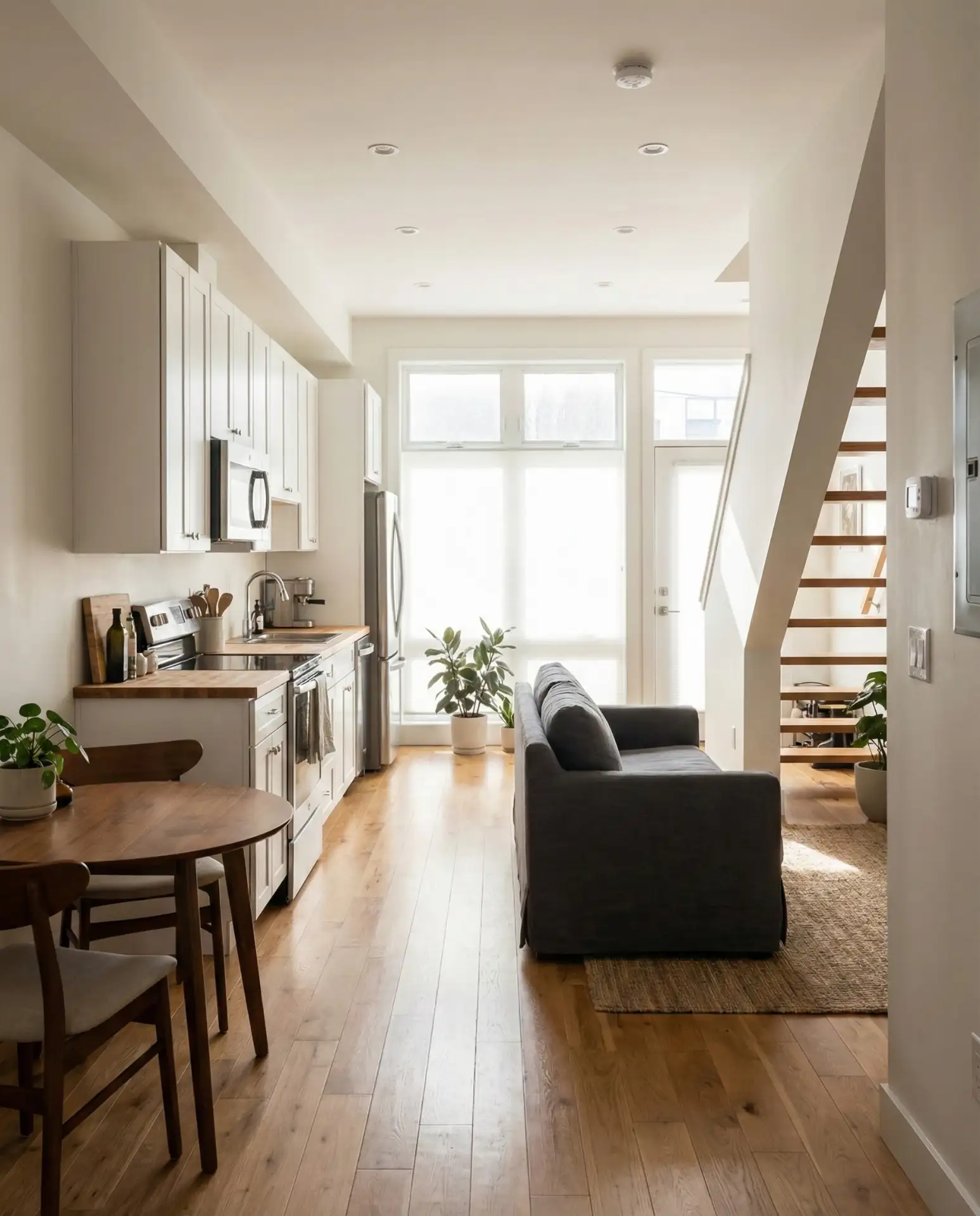
In a typical townhouse with its narrow footprint and multiple floors, the open kitchen living room occupies the main level and must work harder to feel spacious. The strategy here involves vertical thinking: floating shelves instead of upper cabinets, tall windows that pull the eye upward, and furniture that doesn’t block sightlines to staircases or windows. Many urban townhouse renovations push the kitchen to one long wall, leaving the center open for circulation and the living area anchoring the opposite side or rear of the space. 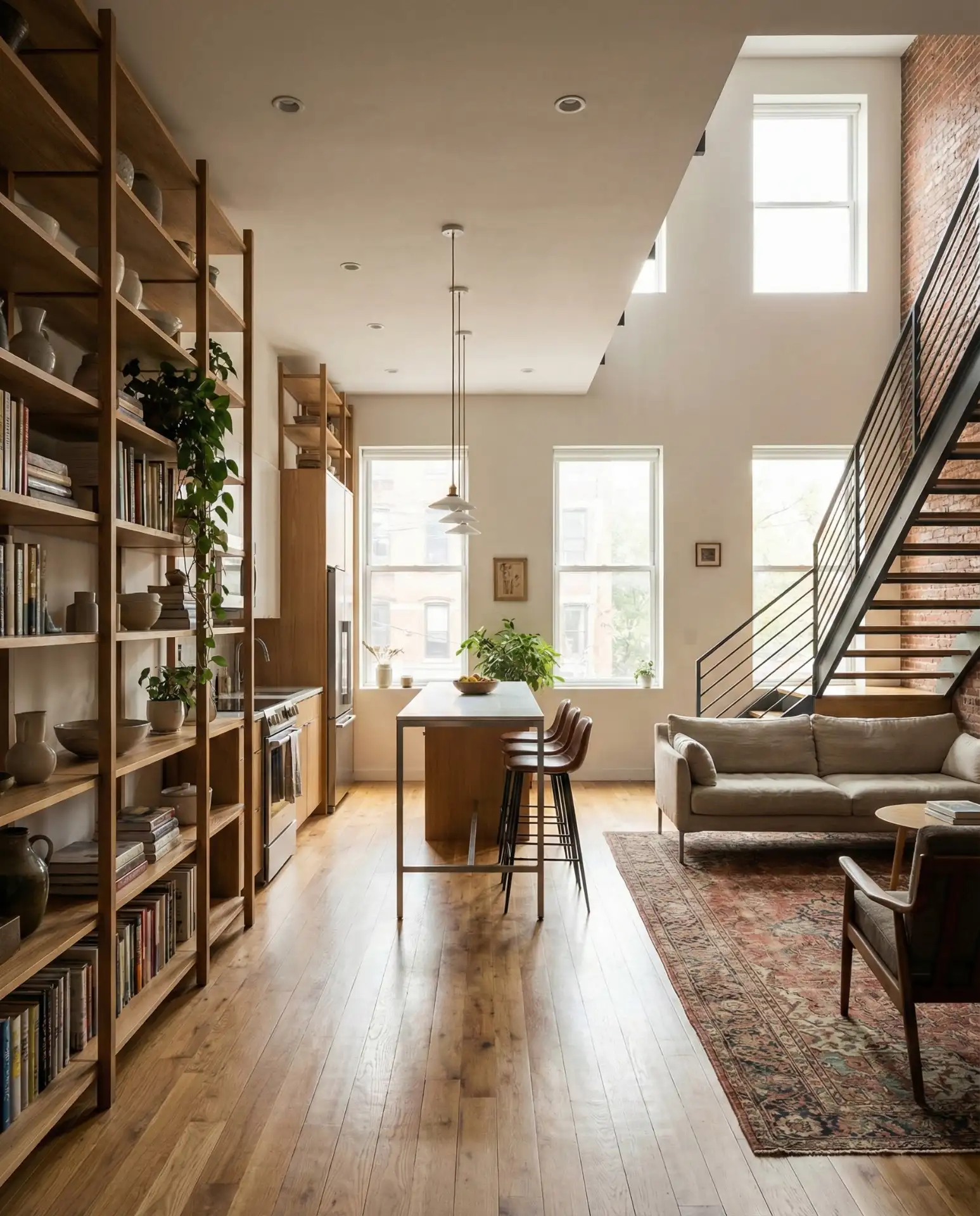
Real townhouse dwellers in cities like Philadelphia, Boston, and D.C. often sacrifice a formal dining room entirely, opting for a kitchen island with seating that serves double duty for quick meals and homework. The mistake many make is trying to cram in too much furniture—a full sectional, oversized dining table, and bulky kitchen island simply won’t fit without making the space feel cluttered. Instead, choose appropriately scaled pieces and embrace vertical storage, using walls for art, shelving, and organizational systems that keep the floor plan as open as possible.
8. Interior Design Through Materiality
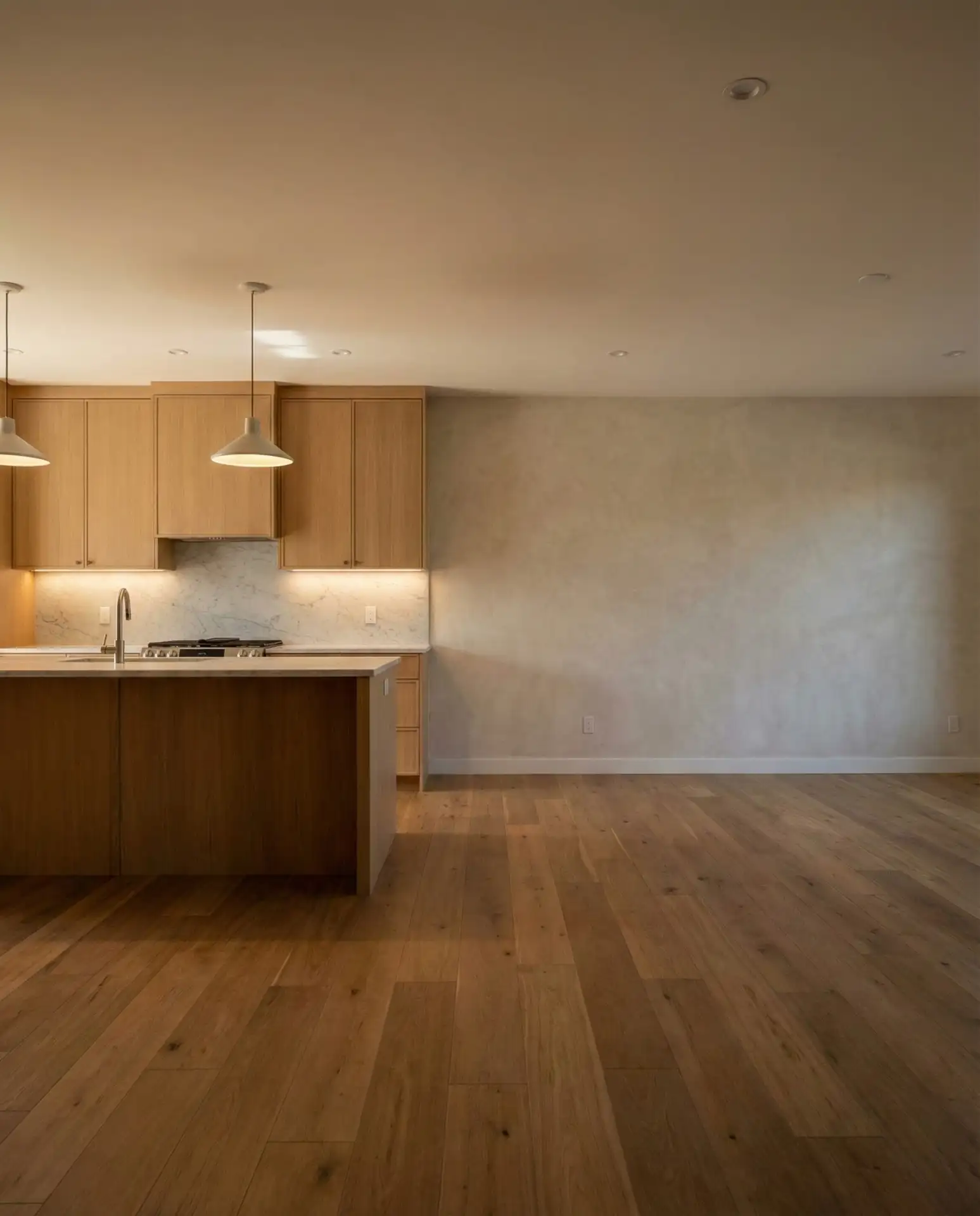
Strong interior design in an open kitchen living room relies heavily on material choices that create subtle zoning without resorting to walls or dividers. Consider how a shift from tile to hardwood marks the transition from kitchen to living area, or how a textured accent wall behind the sofa visually grounds the seating zone while the kitchen remains clean and minimal. Materials also establish style—brass fixtures and marble suggest classic elegance, while matte black hardware and concrete lean contemporary. 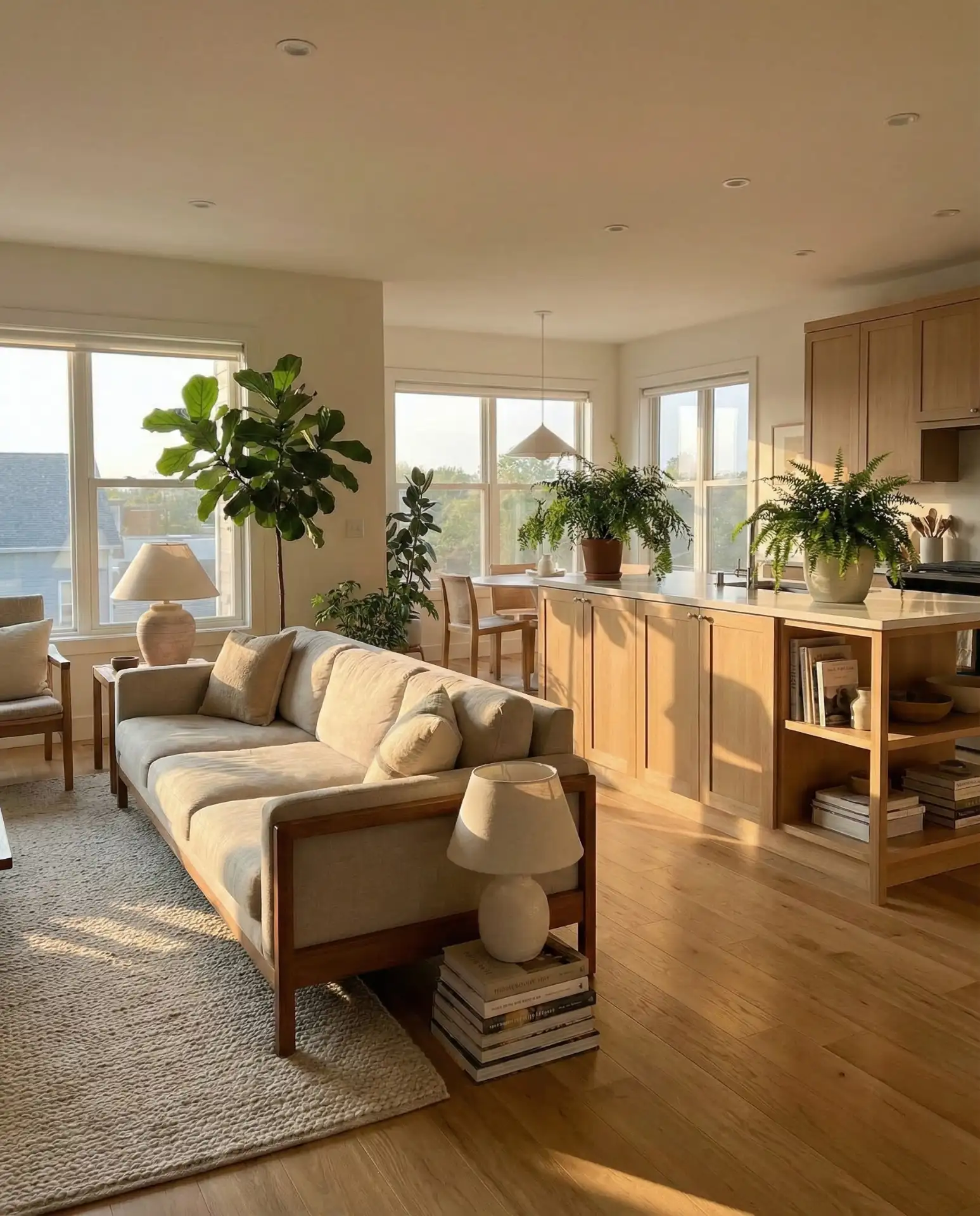
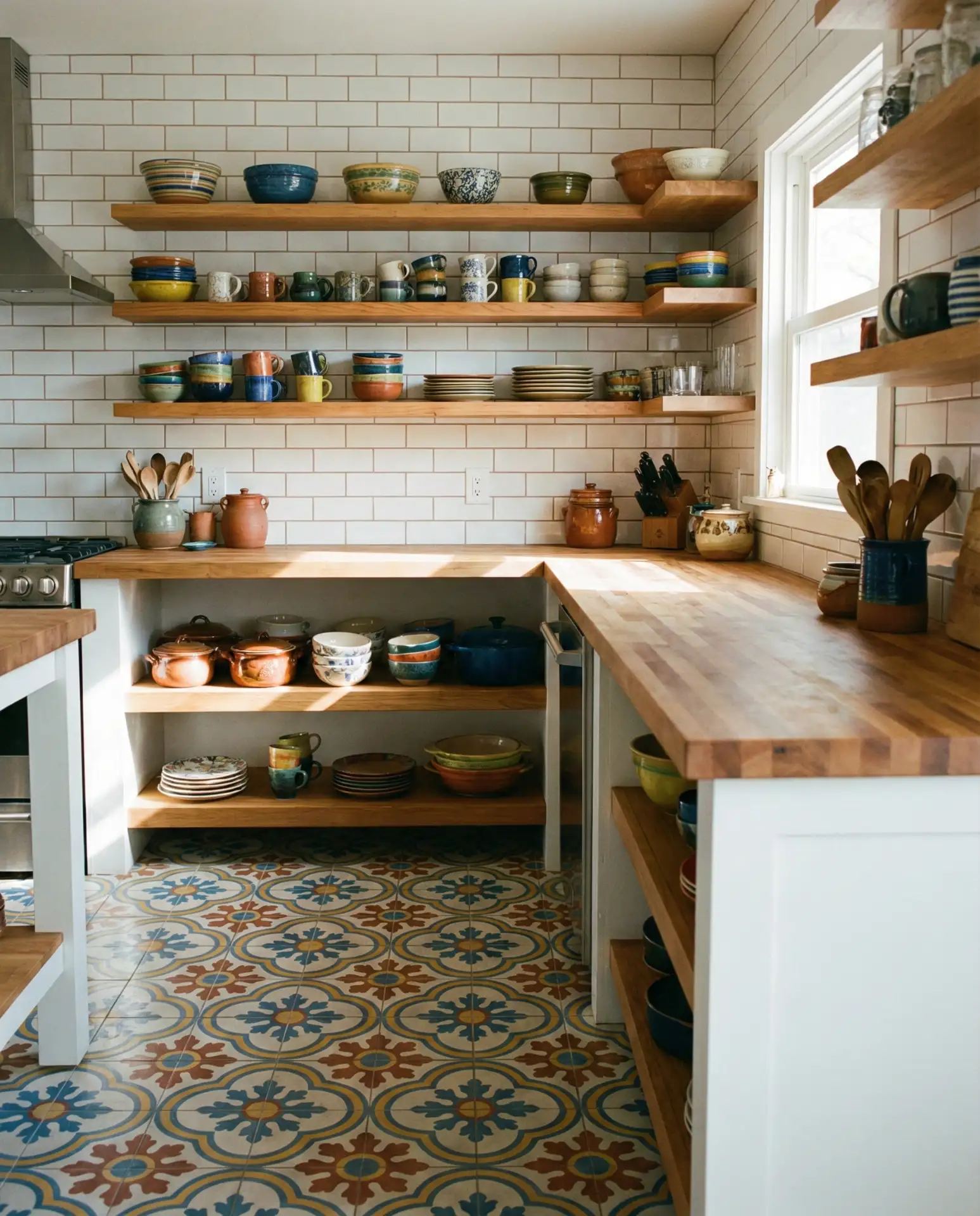
High-quality materials don’t always mean high cost—choosing one standout element like a striking backsplash or beautiful wood countertop can elevate the entire space more effectively than spreading a limited budget across every surface. Mixing materials also adds depth: pair smooth cabinet fronts with a chunky wood cutting board display, or contrast cool subway tiles with warm leather dining chairs. The goal is to create visual interest and subtle boundaries through texture and finish rather than adding physical barriers that compromise the openness you’re trying to achieve.
9. The Couch Orientation Question
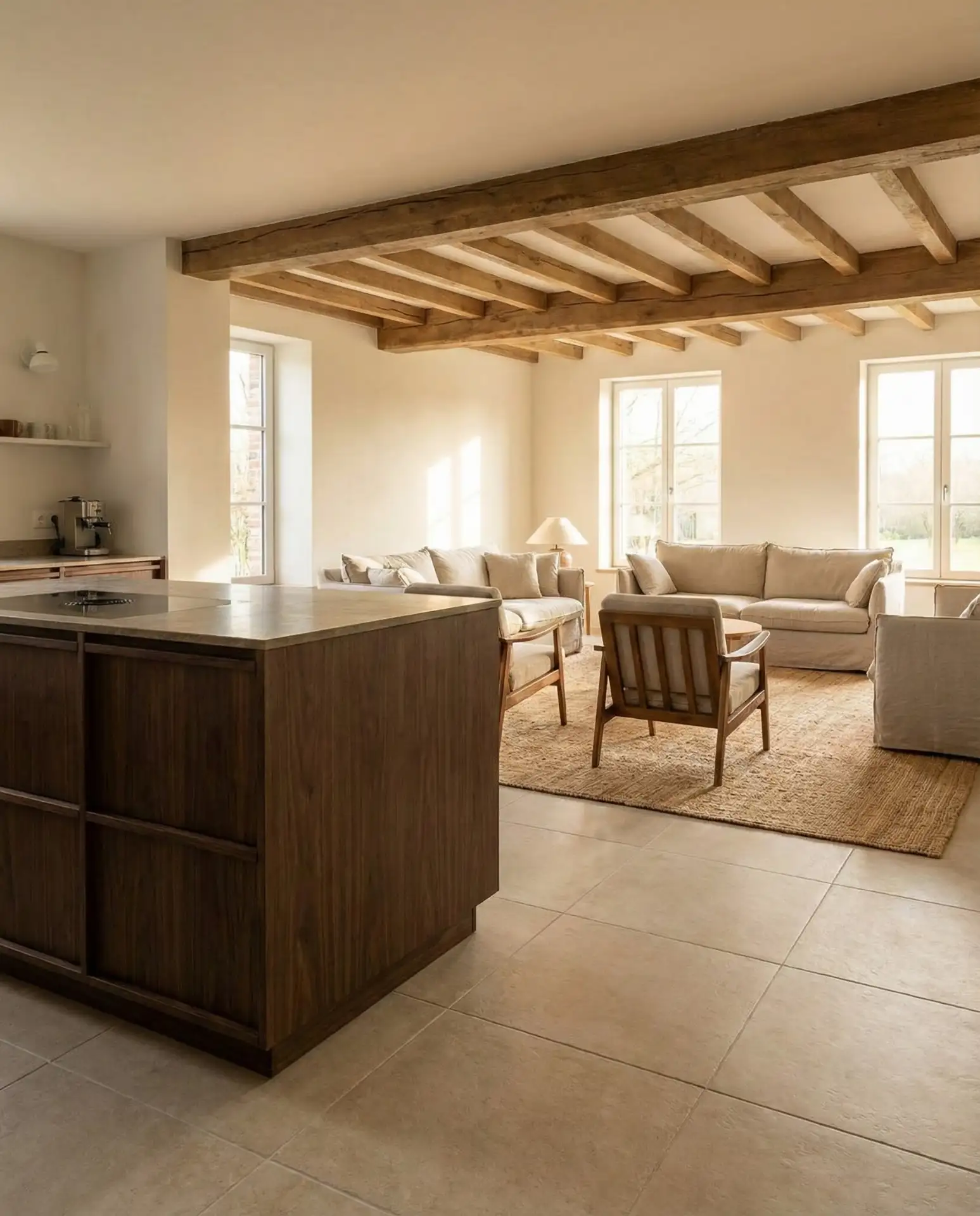
How you position your couch fundamentally shapes traffic flow and social dynamics in an open plan. Facing it toward the kitchen creates an inclusive setup where conversations flow easily during meal prep, though it may mean turning your back on a television or view. Positioning it perpendicular to the kitchen balances TV watching with kitchen engagement, while floating it in the center of the room—back to the kitchen—creates the most defined living zone but can feel isolating for the cook. 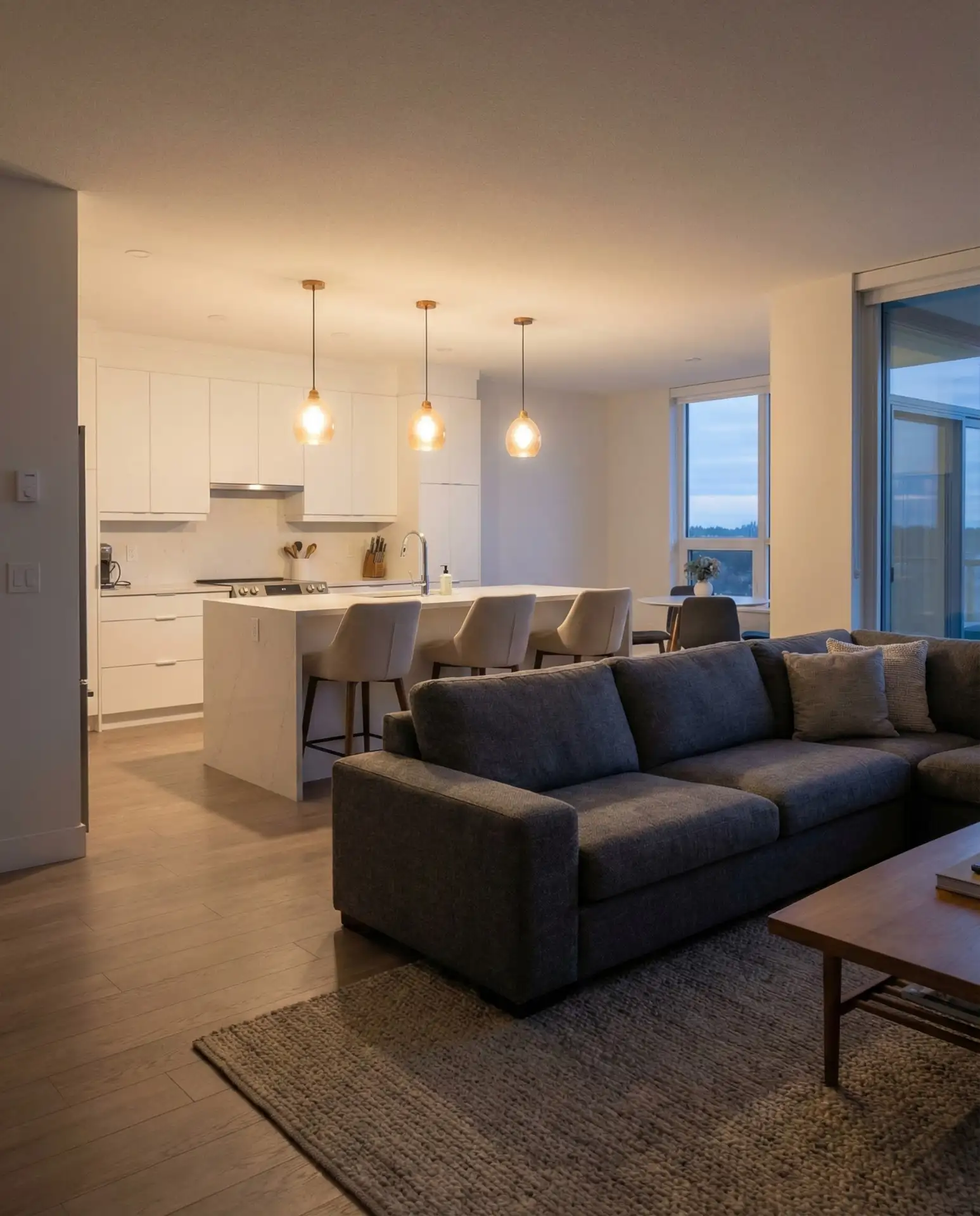
Families with young children typically prefer the couch facing or angled toward the kitchen for supervision, while empty nesters often prioritize views or television placement. One couple I know flipped their sofa orientation three times in the first month after their renovation before realizing that angling it at 45 degrees gave them the best of both worlds—still conversational with the kitchen but oriented toward their backyard view. Don’t be afraid to live with a layout for a few weeks before committing to a large area rug or permanent furniture arrangement.
10. Small Apartment Smart Zoning
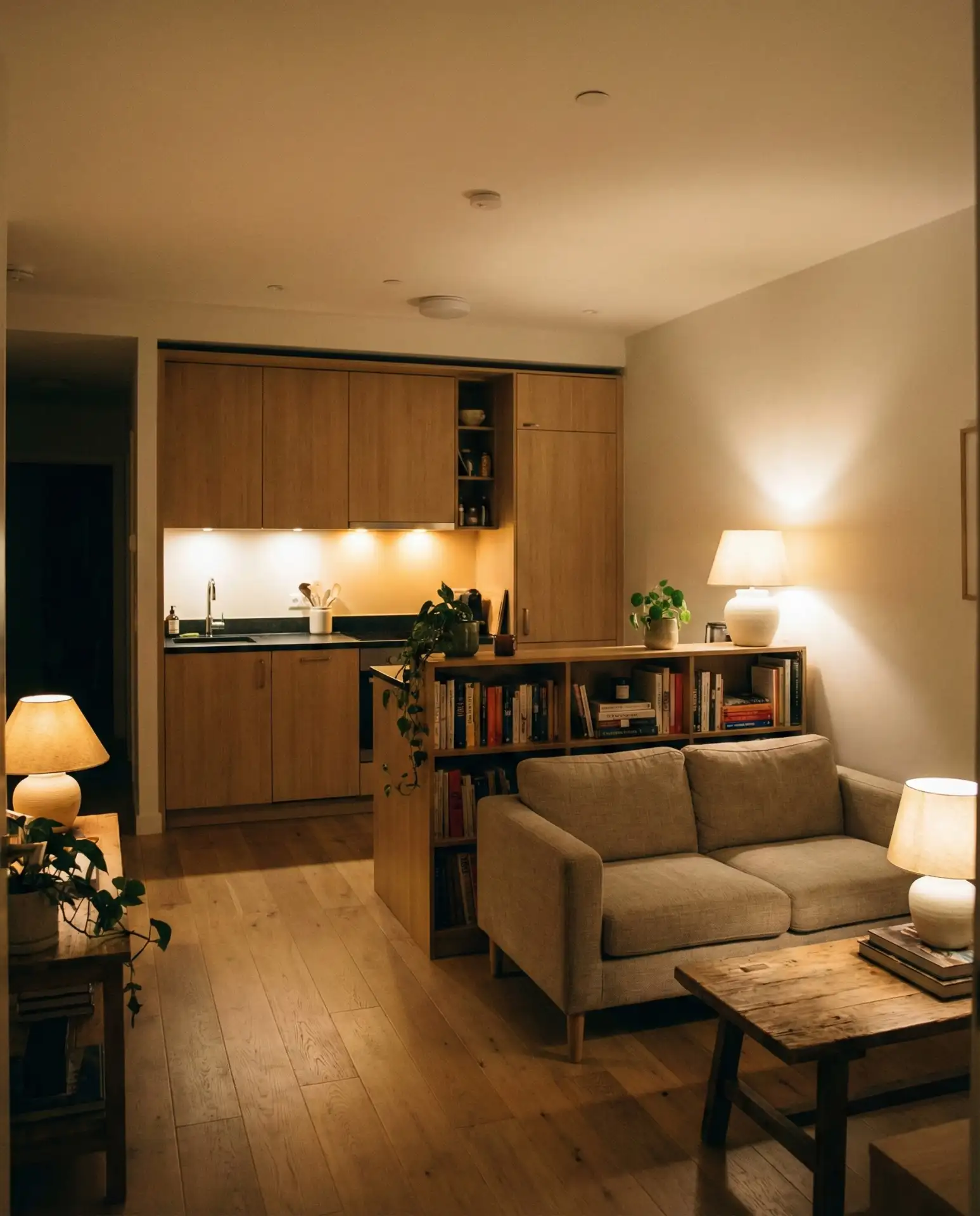
In a small apartment, the open kitchen living room isn’t a choice—it’s the reality—and success depends on smart zoning strategies that create perceived separation without actual walls. A well-placed bookshelf, a sofa table behind your seating, or even a narrow console can psychologically divide cooking from lounging while maintaining the spatial flow. Lighting becomes crucial here: pendant lights over a tiny dining table or island signal “kitchen zone,” while a floor lamp and different color temperature in the living area reinforce the distinction. 
The common mistake in small open apartments is trying to replicate full-size home layouts with furniture that’s simply too large—a three-seat sofa when a loveseat would suffice, or a six-person table in a space that comfortably seats four. Urban apartment dwellers in cities like New York, San Francisco, and Seattle have mastered the art of scaled-down pieces that don’t compromise comfort: apartment-size sofas, drop-leaf tables, and nesting furniture that can be tucked away when not in use, preserving precious circulation space.
11. Flooring Transitions That Guide
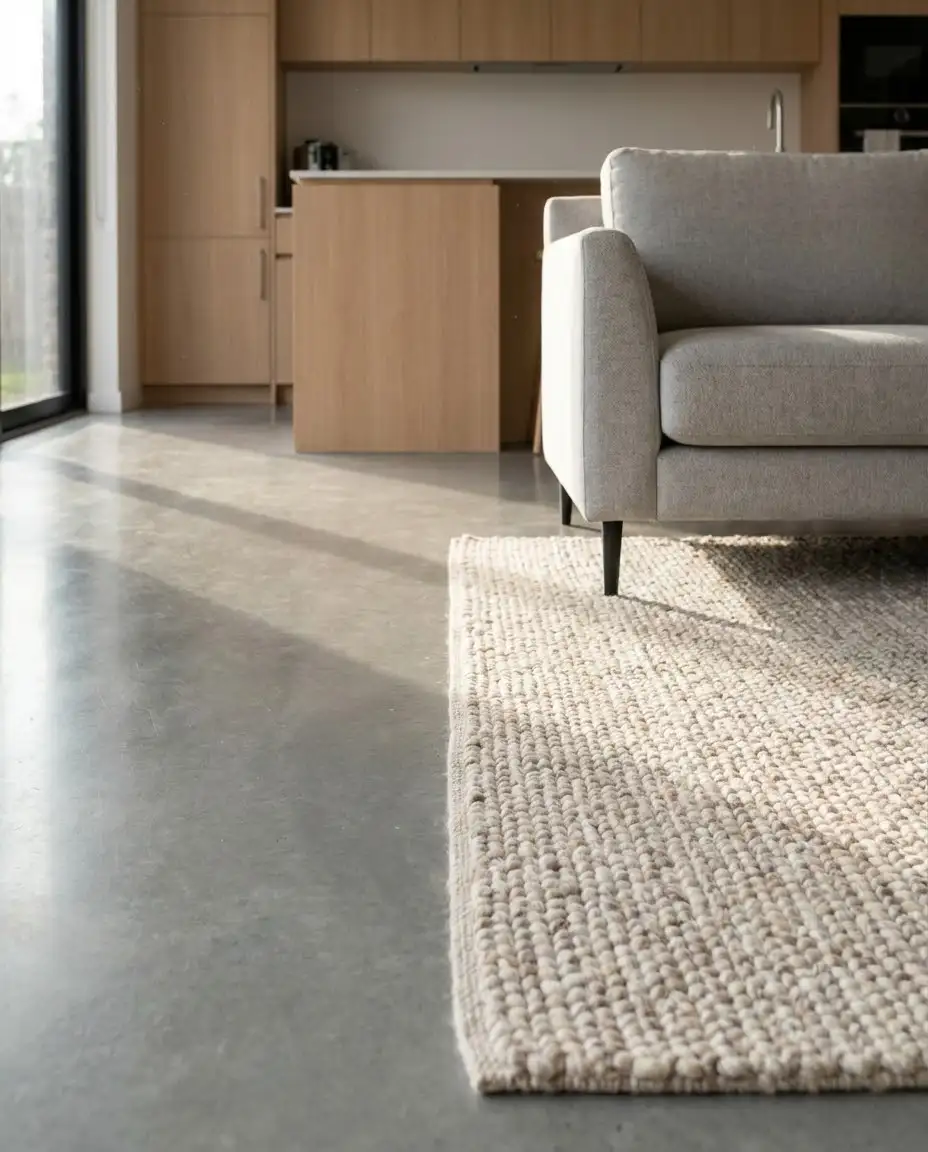
Thoughtful flooring transitions provide visual and textural cues that help define zones without interrupting flow. A shift from large-format tile in the kitchen to warm hardwood in the living area creates an obvious yet subtle boundary, while staying within a similar color family maintains cohesion. Some homeowners use the same flooring throughout but add a substantial area rug under the living furniture, achieving separation through layering rather than permanent material changes. 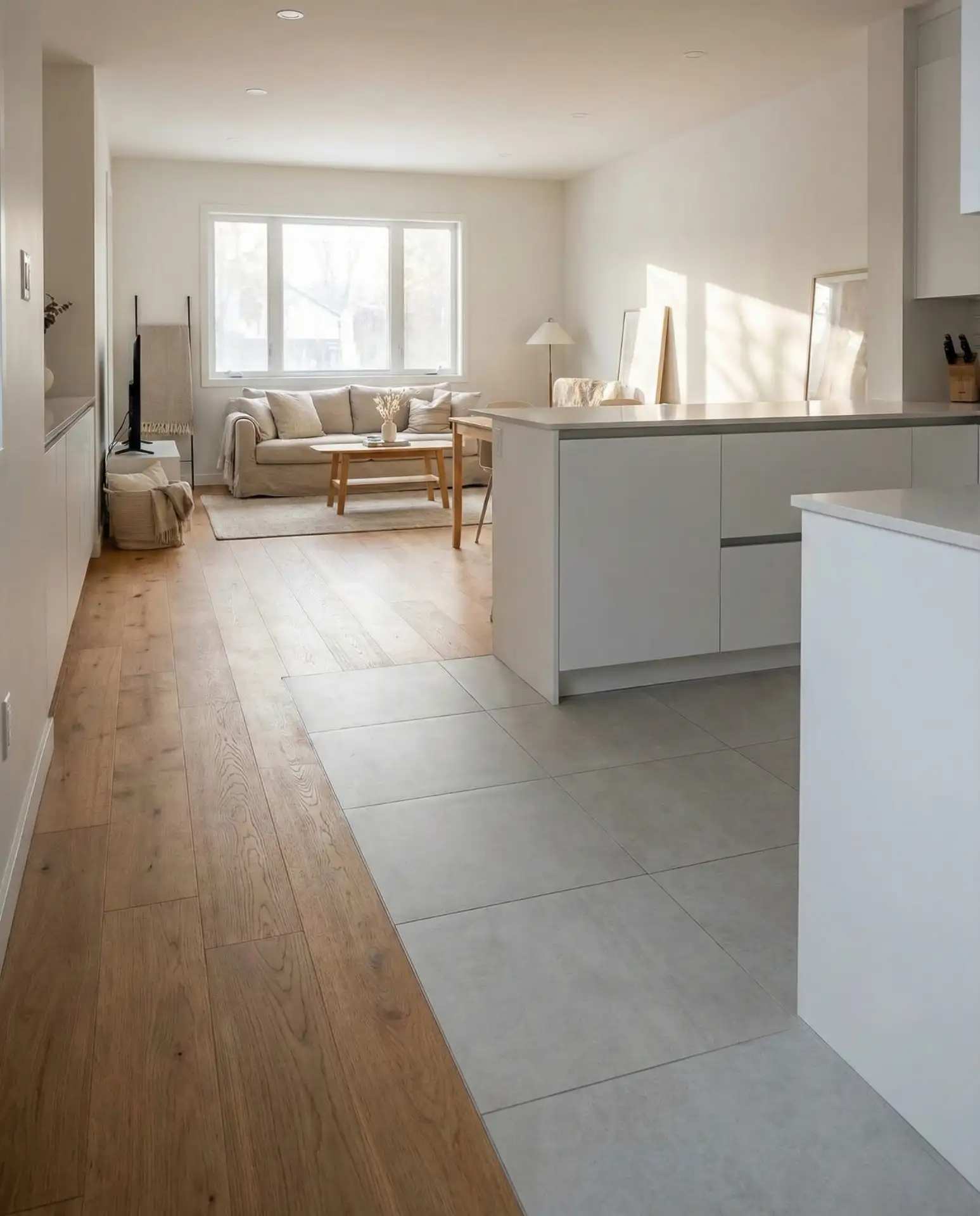
Flooring transitions work best when they align with natural sight lines or furniture placement—the edge of your island or the back of your sofa makes a logical place for materials to change. Budget-wise, extending the same flooring throughout saves on materials and labor, typically $2-4 per square foot less than creating transitions with different materials that require threshold strips and careful installation. However, the visual clarity of distinct zones often justifies the modest extra expense, especially in larger open plans where defining separate areas becomes more challenging.
12. Ikea Hacks For Cohesive Flow
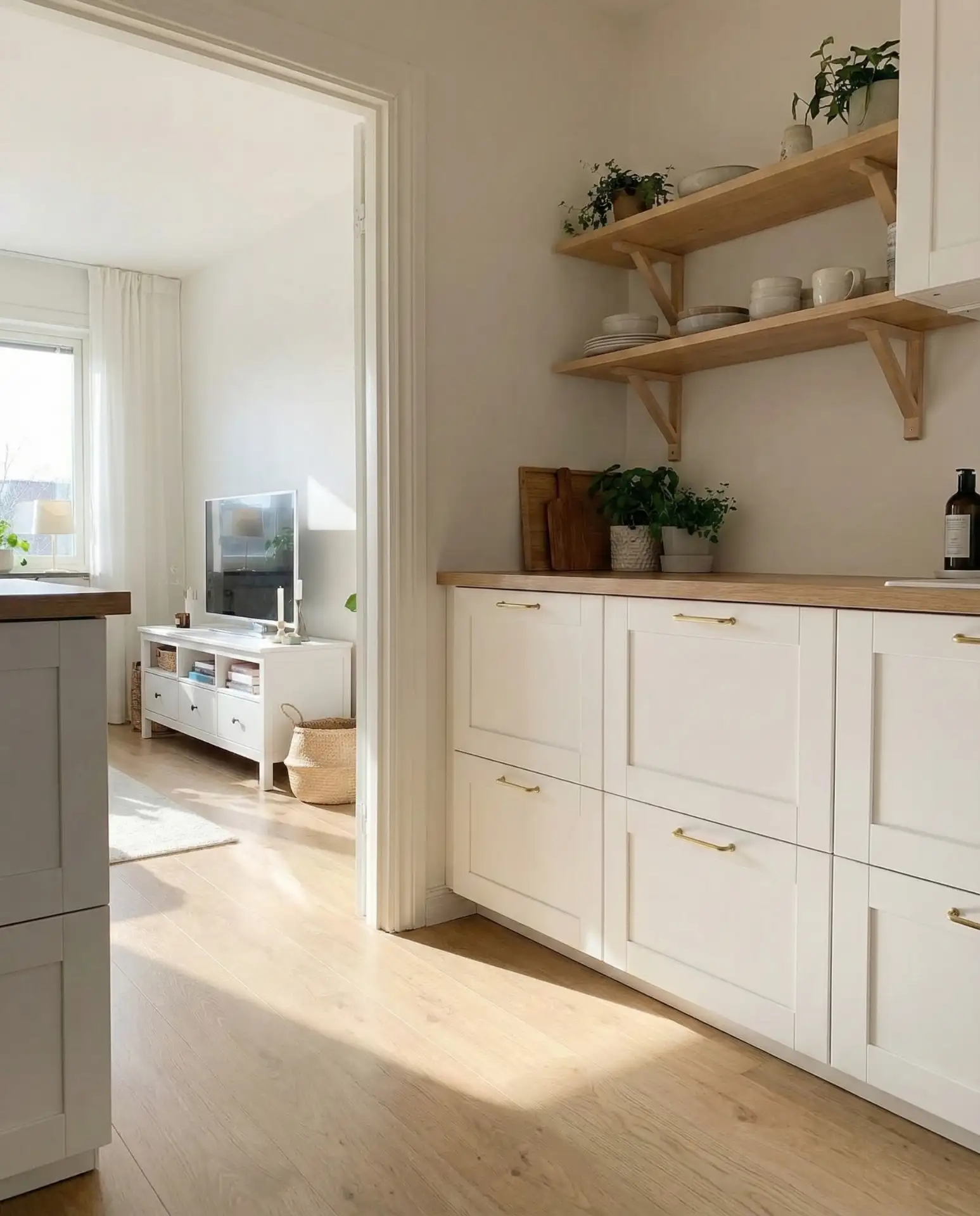
Ikea systems offer affordable ways to create cohesion across an open plan by using the same cabinet lines, finishes, and hardware in both kitchen and living storage solutions. Their modular approach means you can outfit kitchen cabinets in their Sektion line, then use matching finishes in Besta living room storage or Pax closet systems nearby, creating visual continuity at a fraction of custom costs. Upgrading hardware, adding custom countertops, or painting standard cabinet fronts elevates the look while maintaining budget-friendly bones. 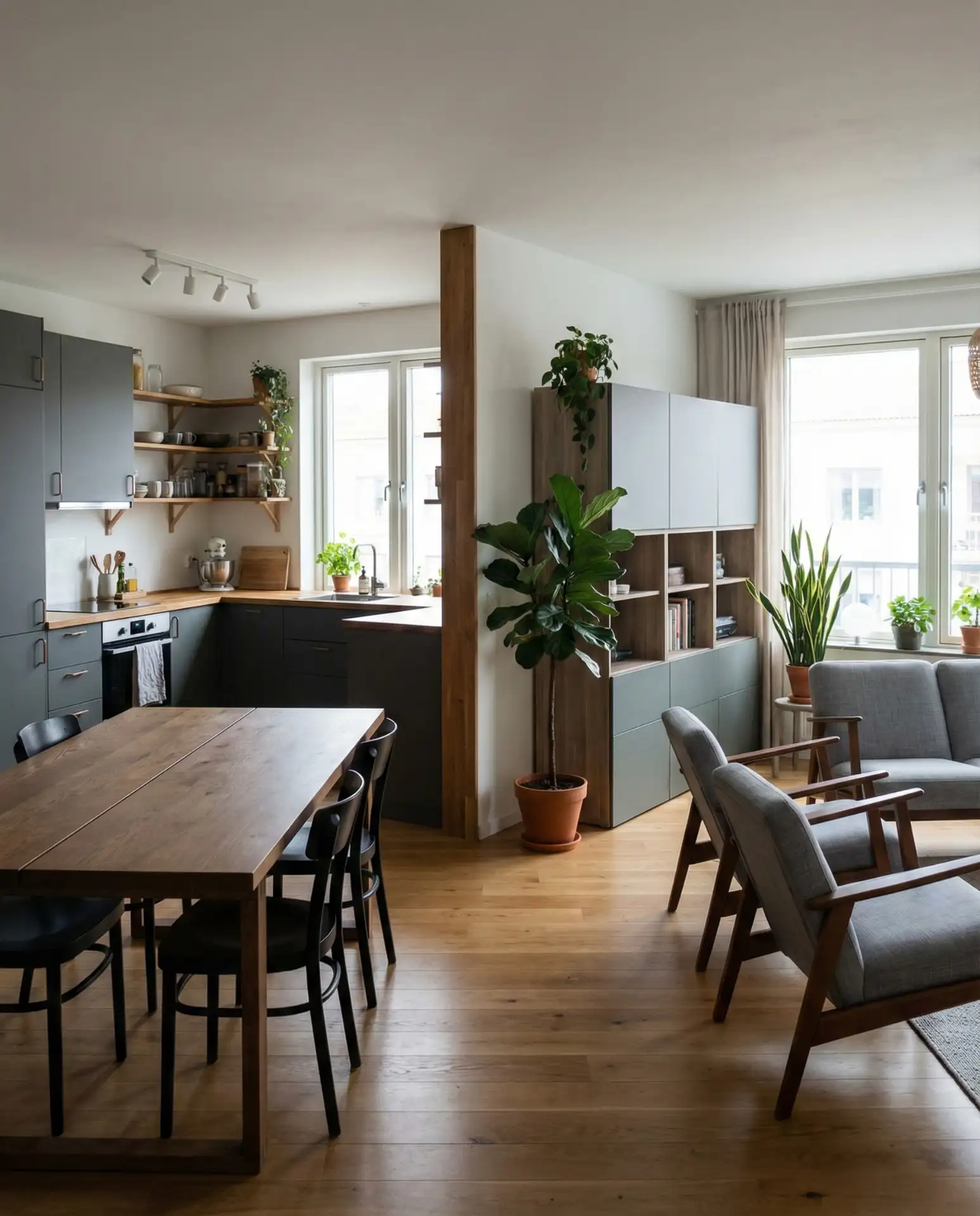
Practical insight: Ikea’s standard cabinet depths and modular sizing make it surprisingly easy to create custom-looking built-ins by filling an entire wall with their systems and adding trim or framing for a polished finish. Many renovation bloggers document complete Ikea kitchen installations for $4,000-$8,000 compared to $15,000-$30,000 for similar custom work. The key to avoiding the “Ikea look” is thoughtful customization—swap standard handles for statement hardware, add open shelving breaks between upper cabinets, or combine cabinet fronts in complementary finishes rather than using one color throughout.
13. Arranging For Conversation and Function
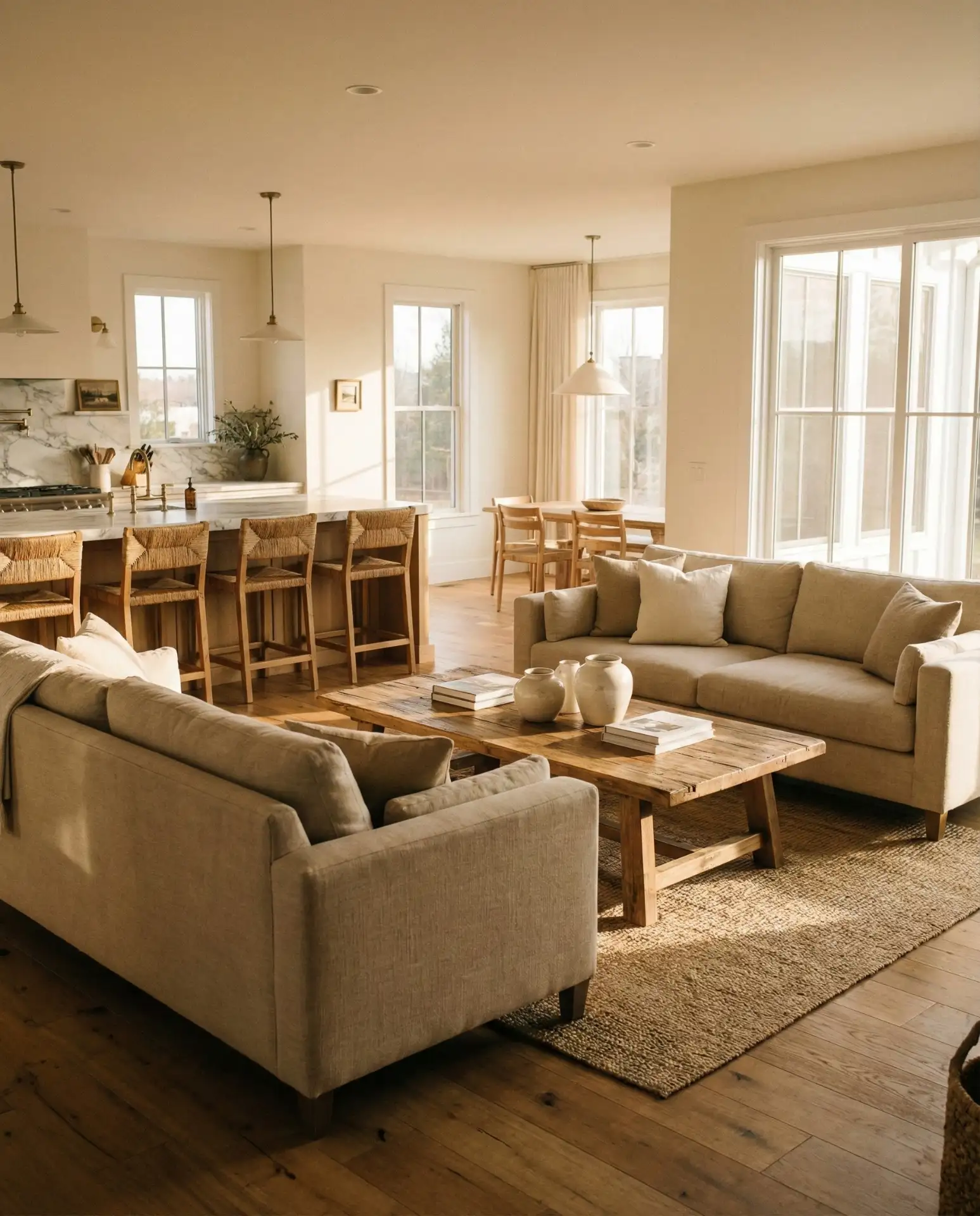
Learning to arrange furniture in an open plan requires balancing two competing needs: maintaining clear pathways and creating intimate conversation zones. Successful layouts typically include a primary seating group with sofas or chairs positioned no more than 8-10 feet apart for comfortable conversation, while leaving at least 30-36 inches for major traffic paths. Angling furniture slightly toward each other rather than in strict parallel arrangements creates more dynamic, welcoming spaces that don’t feel staged. 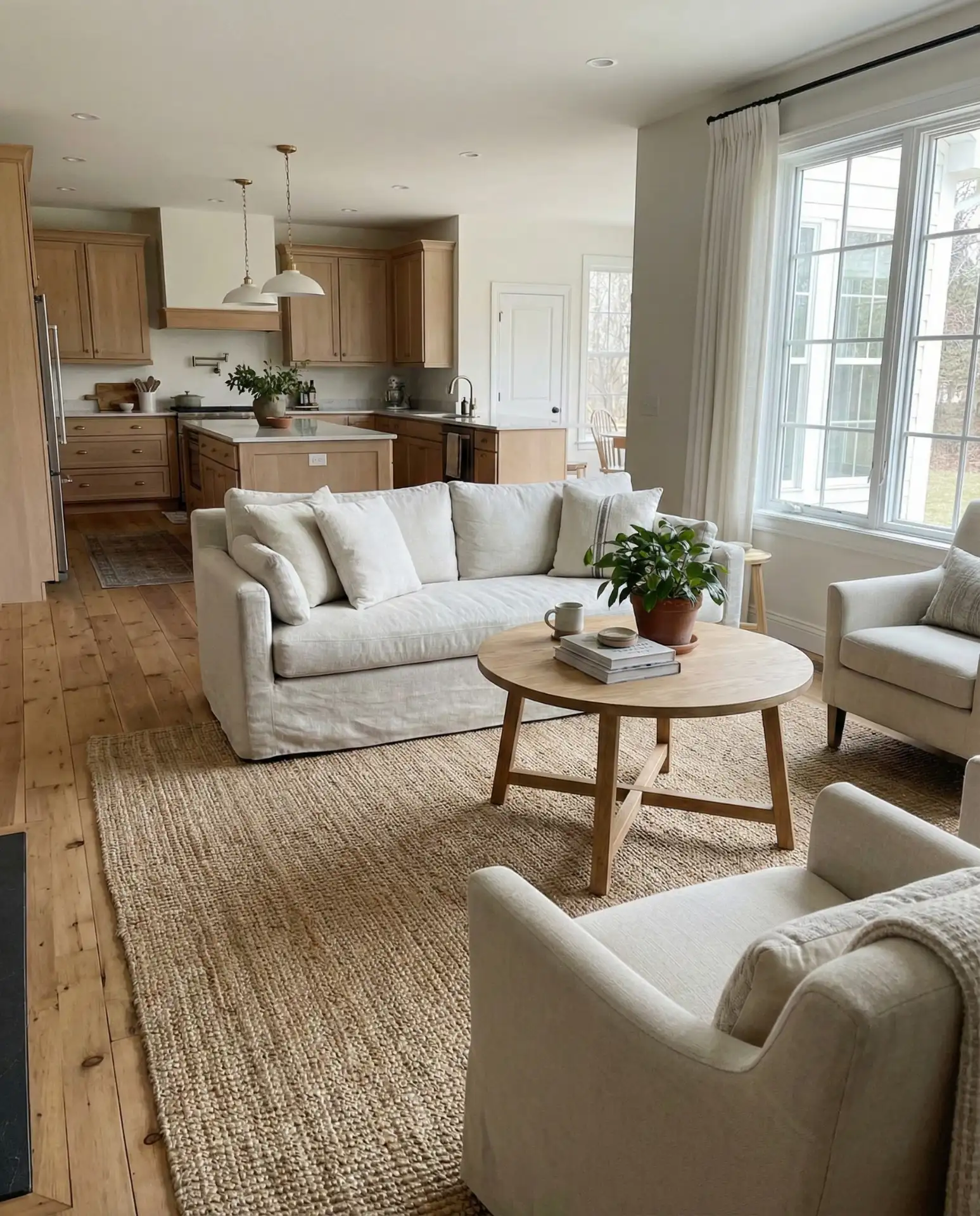
Regional differences shape arranging priorities—Southerners often prioritize generous seating for frequent entertaining, Midwestern homes might incorporate eat-in kitchen tables that double as workspaces, while West Coast layouts frequently blur indoor-outdoor boundaries with furniture arranged to capture views. The biggest mistake is pushing all furniture against walls in an attempt to “save space,” which actually makes large rooms feel empty and small rooms feel disconnected, eliminating any sense of intimacy or purposeful zoning.
14. Pendant Lighting As Visual Divider
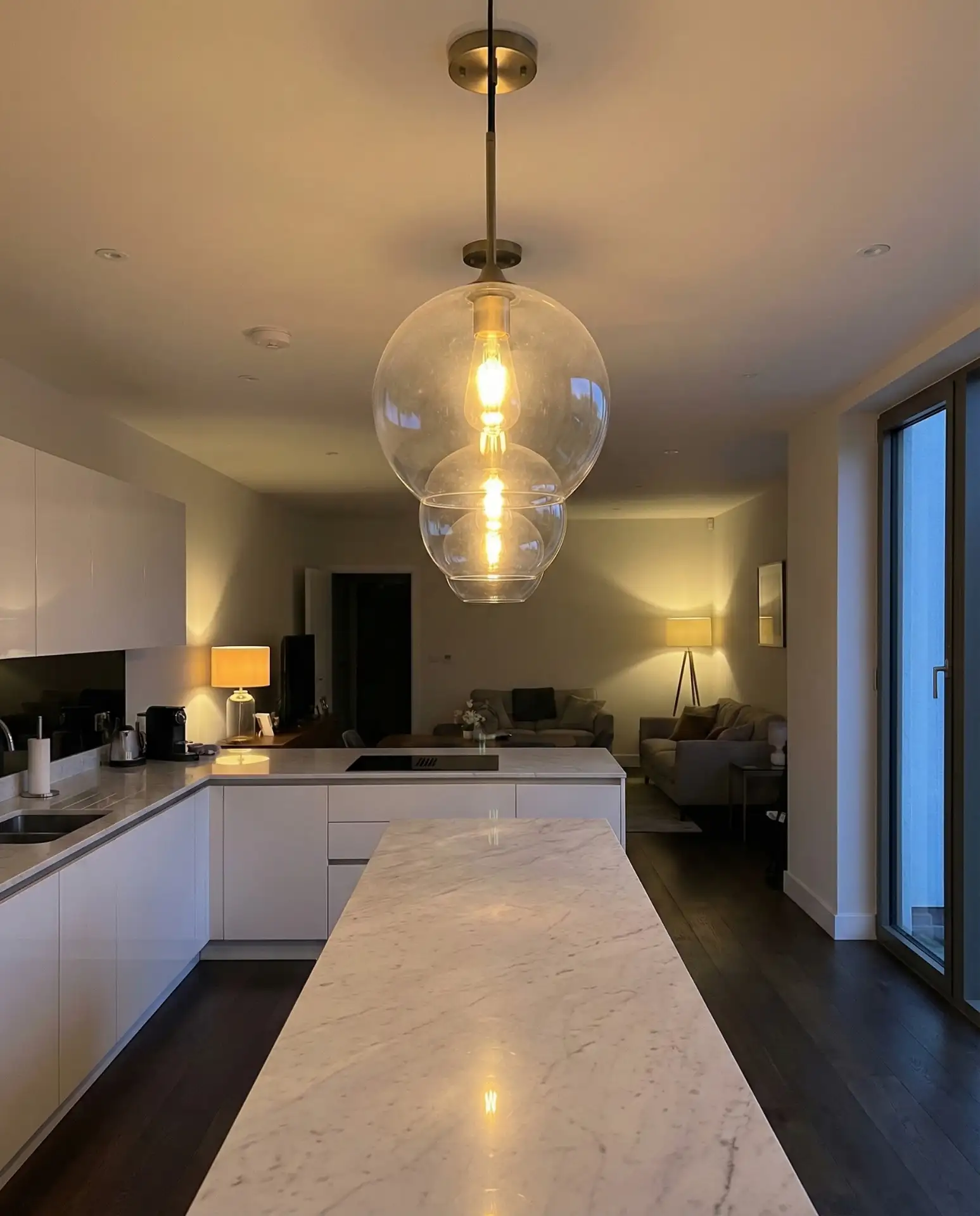
Strategic pendant lighting creates invisible boundaries in open concepts by drawing the eye to specific zones and providing task illumination where it’s needed most. A row of pendants over a kitchen island or peninsula clearly marks that territory, while a dramatic chandelier or cluster of pendants over the dining area establishes it as a distinct destination. Varying the style, finish, or hanging height of fixtures adds visual interest while reinforcing that these are separate, purposeful spaces sharing one open room. 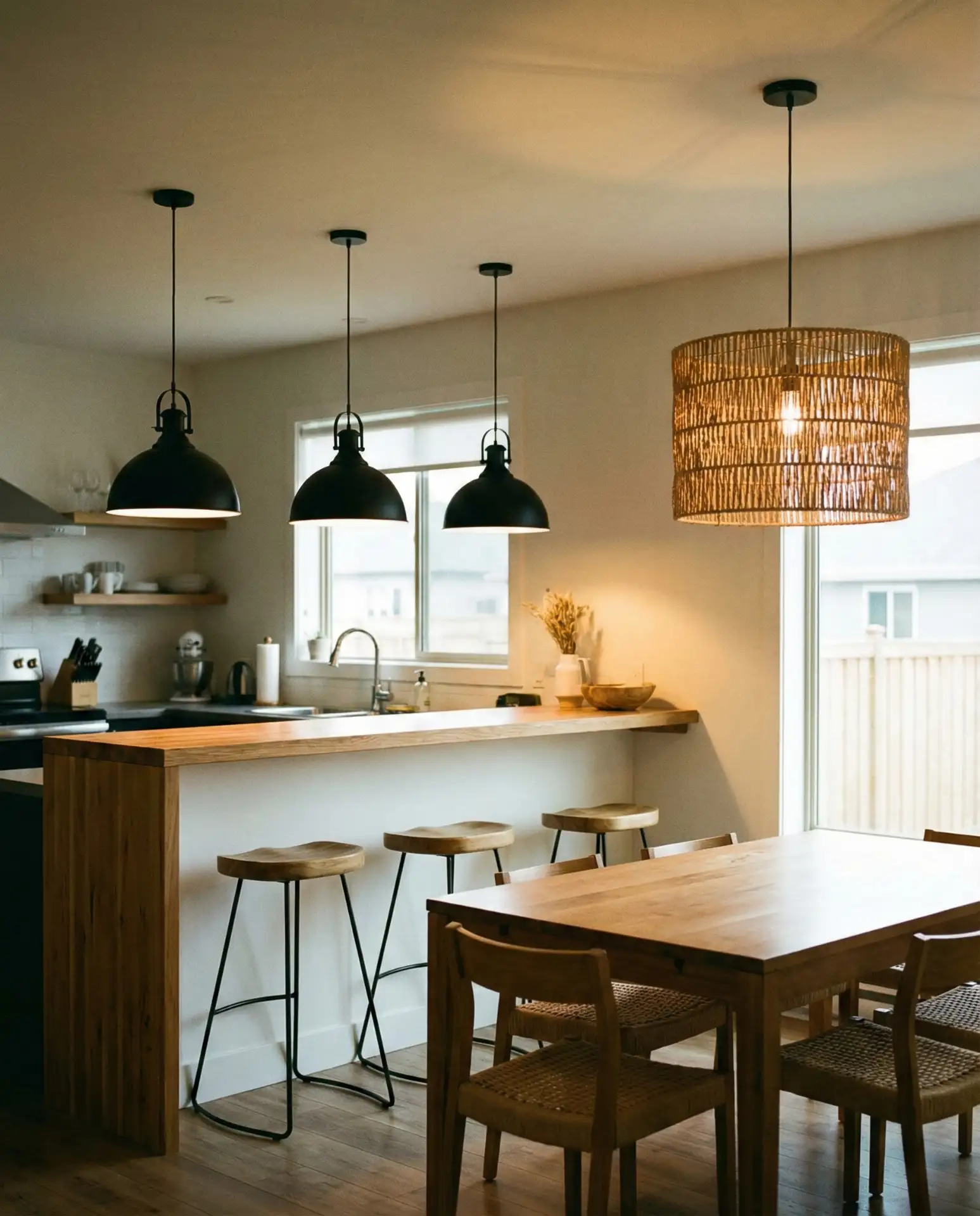
Budget considerations: Statement pendants range from $80 for simple glass designs to $800+ for designer fixtures, but even affordable options make a strong impact when installed in groups of two or three. Many homeowners mix price points, investing in one show-stopping fixture over the dining table while choosing simpler, less expensive pendants for kitchen task lighting. The real expense often comes in installation—adding new electrical boxes requires professional work that can run $200-$400 per location, so plan lighting placement carefully during renovation rather than adding fixtures as afterthoughts.
15. Color Blocking Without Walls
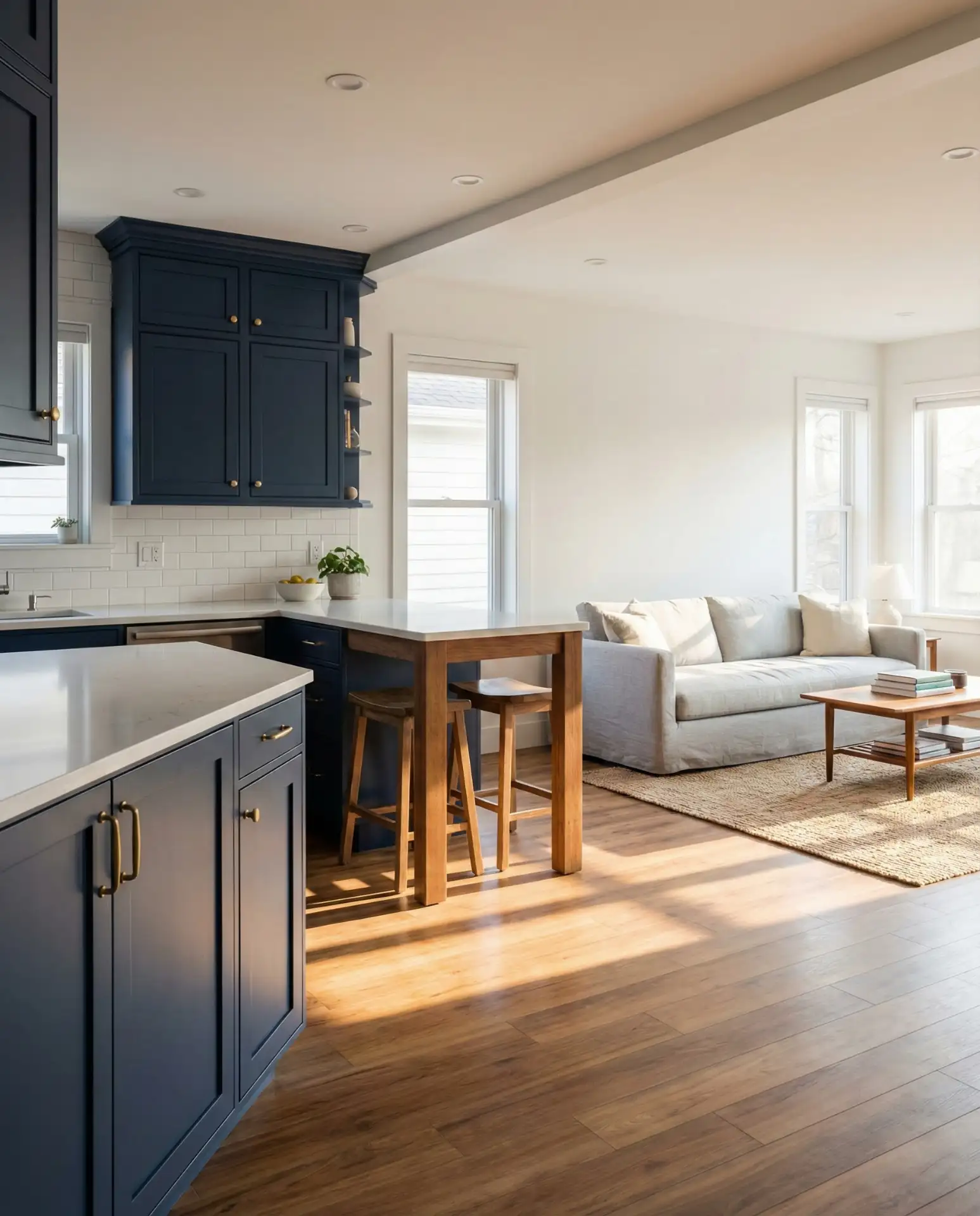
Paint provides one of the most affordable and impactful ways to define zones in an open plan through color blocking—painting the kitchen cabinets in a bold hue while keeping living room walls neutral, or creating an accent wall behind the sofa that visually anchors that zone. The technique works because our eyes naturally group similarly colored elements together, so a dark green kitchen feels distinct from a warm white living area even when they share the same footprint. 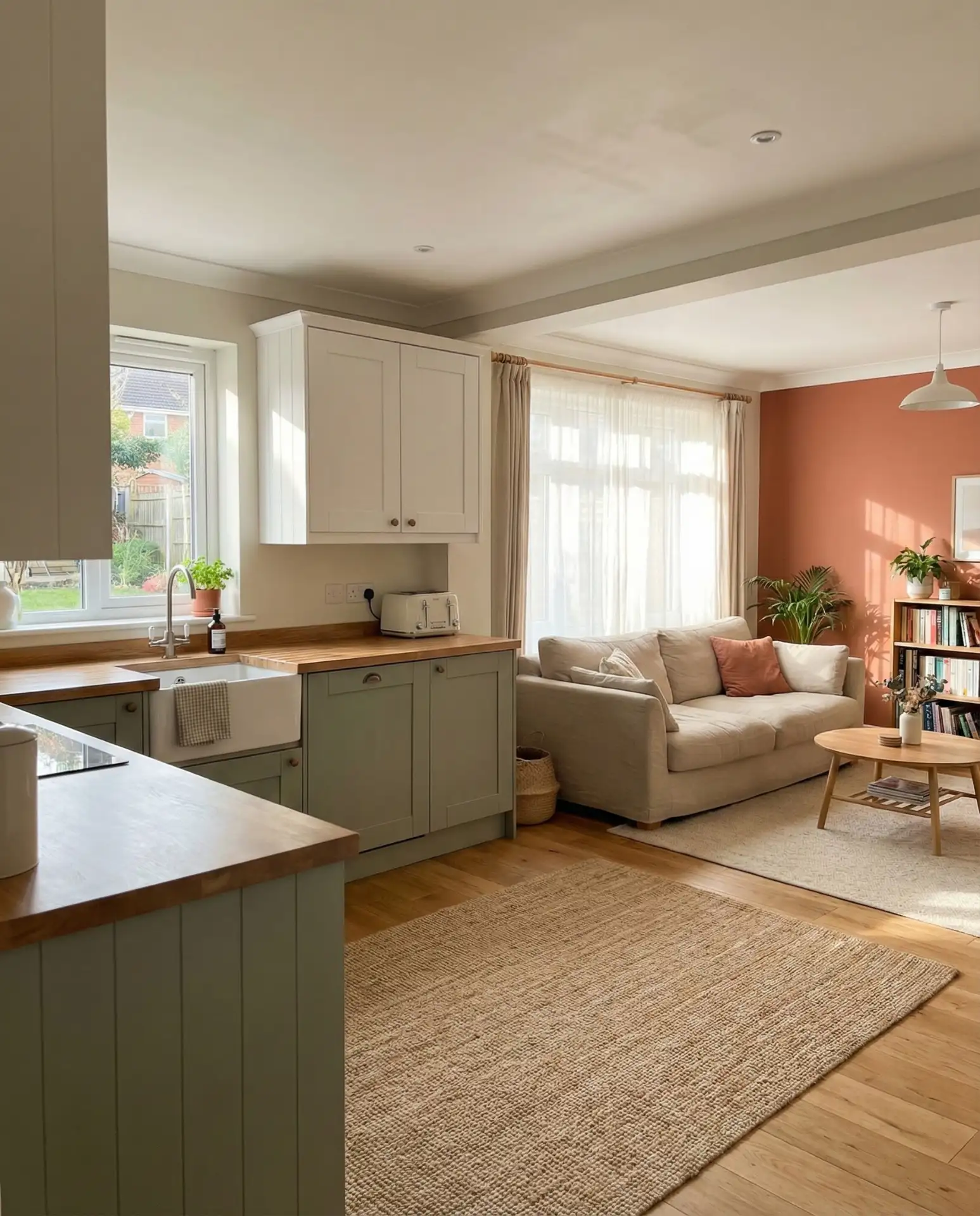
Where color blocking works best: Homes with good natural light can handle darker, more dramatic color choices that might feel oppressive in dim spaces. Northern exposures benefit from warm paint tones to counteract cool natural light, while southern exposures can embrace cooler colors that balance intense sun. The common mistake is choosing colors that are too similar in value—if your kitchen cabinets and living room walls both read as “medium neutral,” they’ll blur together rather than creating the definition you’re after. Aim for contrast in either hue or value to make zones read clearly.
16. The Dining Room Decision
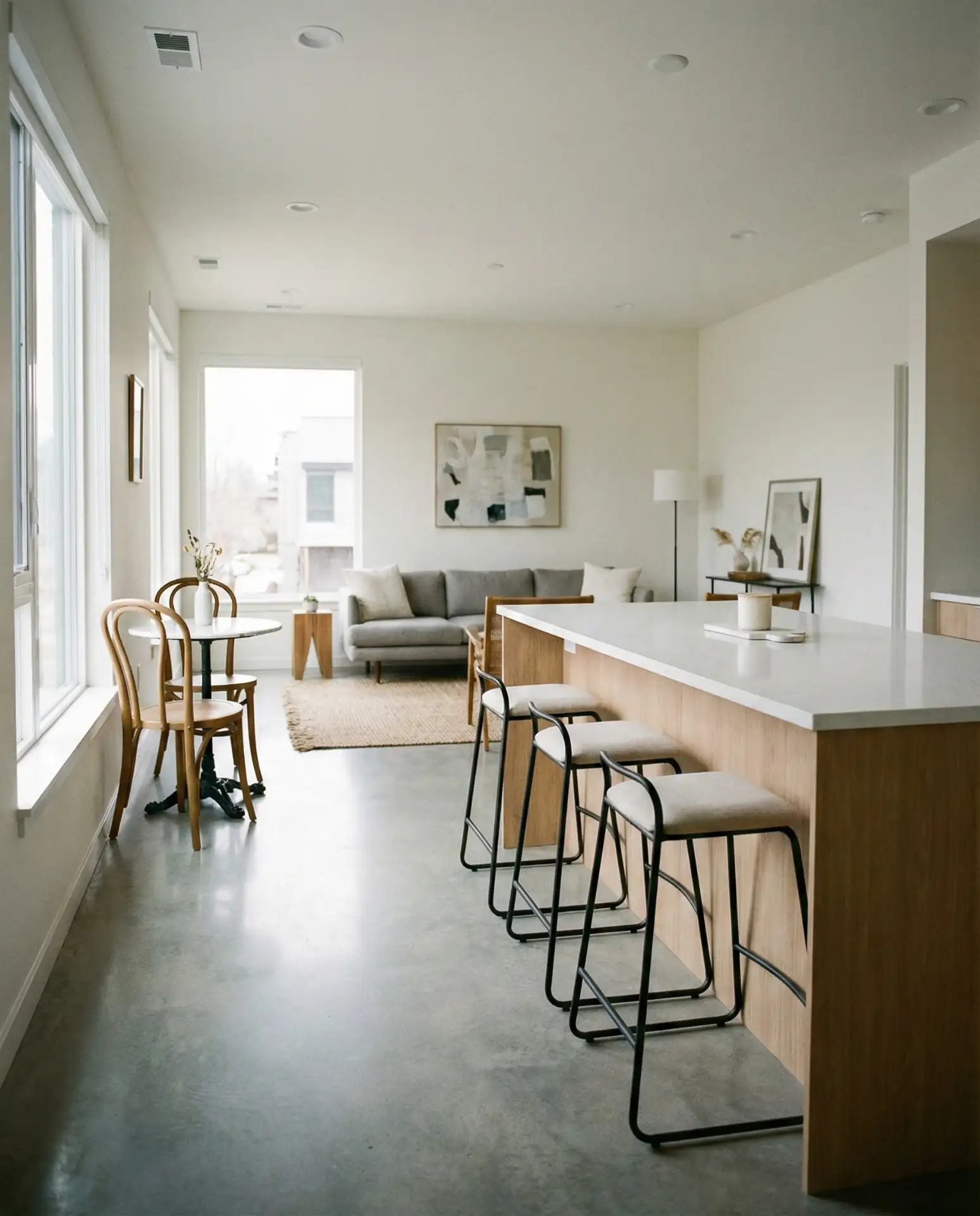
Whether to include a formal dining room zone within your open plan or rely entirely on island seating and casual eating depends largely on lifestyle and square footage. Many modern open concepts eliminate the traditional dining table entirely, finding that an oversized island with comfortable stools serves 90% of meals, while holiday gatherings happen at rented tables or restaurant venues. Others carve out dedicated dining areas positioned between kitchen and living zones, using the table as a natural transition element that reinforces the open flow. 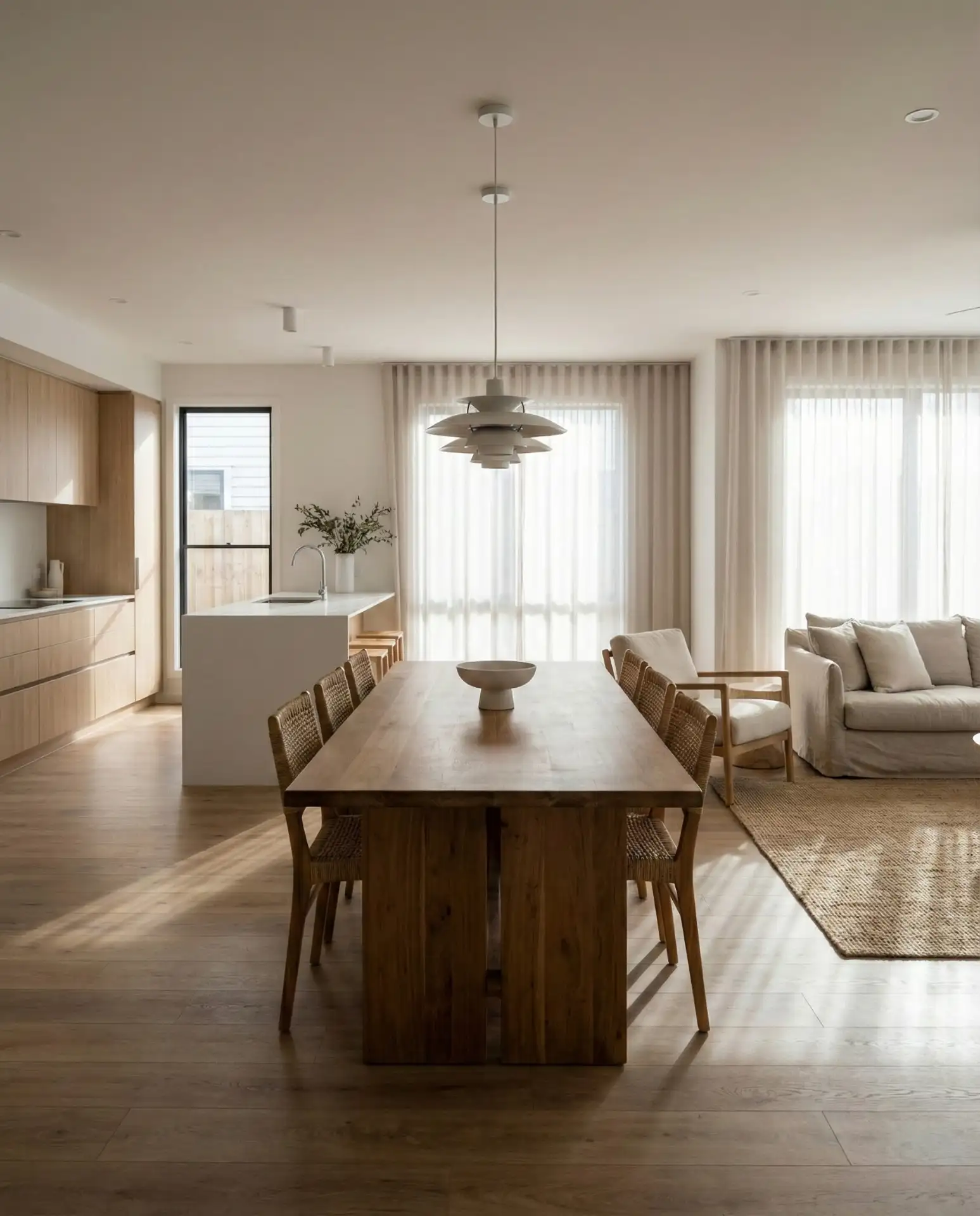
Homeowner behavior reveals interesting patterns: families with children under ten almost always need a real table for homework, crafts, and family dinners, while young professionals and empty nesters increasingly skip formal dining in favor of flexible space that can serve multiple purposes. If you’re genuinely unsure, live in your space for a season before committing to a large dining table investment—you might discover that island dining works perfectly for your actual habits rather than an idealized entertaining lifestyle you hope to achieve.
17. Ceiling Treatments That Define
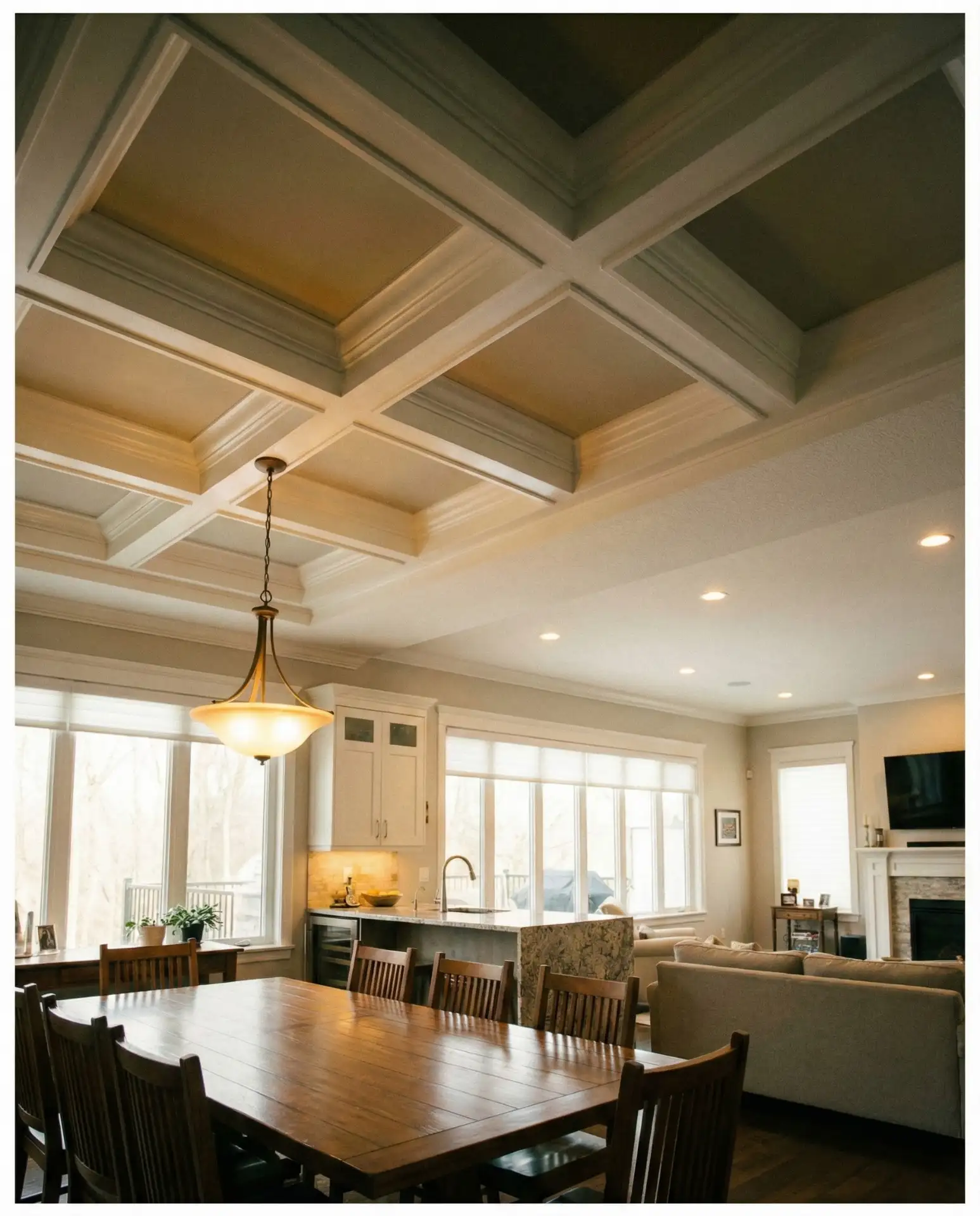
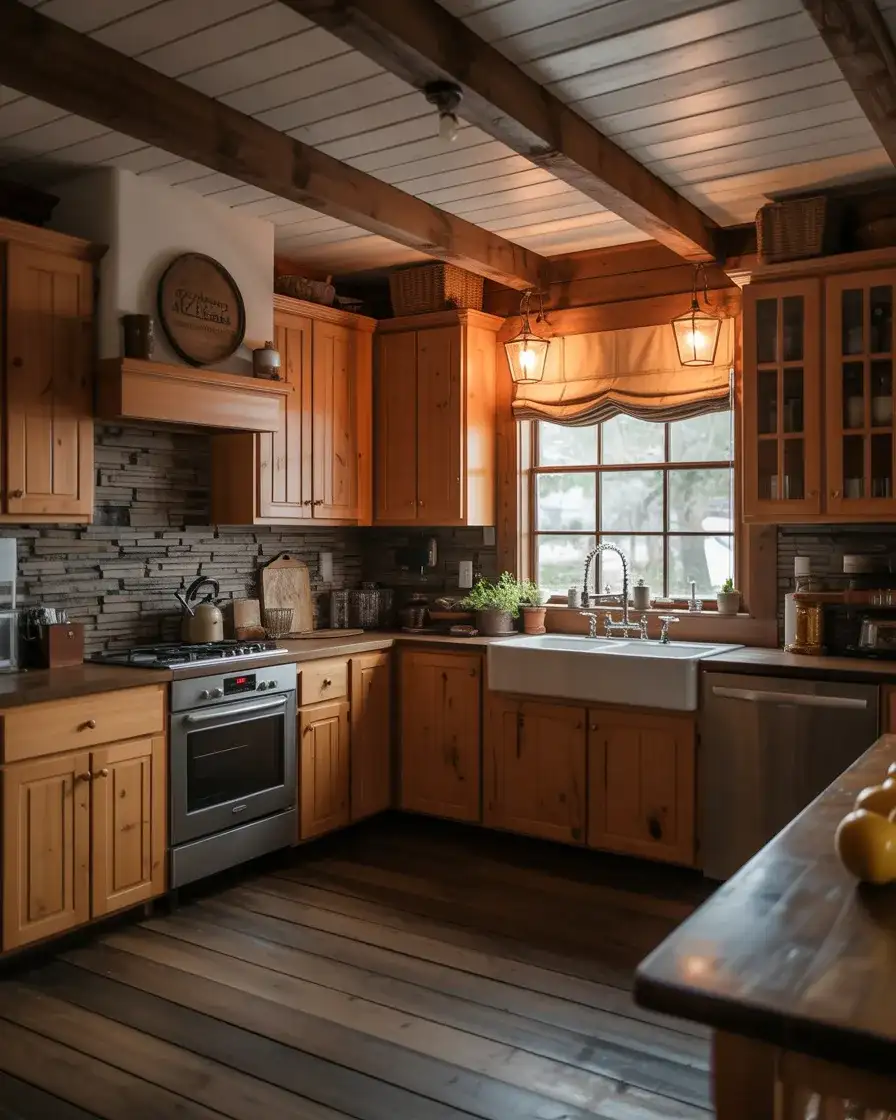
Ceiling design often gets overlooked in open concepts, yet treatments like exposed beams, coffered sections, or even paint changes can elegantly define zones overhead while leaving floor plans completely open. Wood beams running perpendicular to your kitchen island create a strong visual frame for that zone, while a tray ceiling or different paint color over the living area draws attention upward and establishes territory without physical barriers. 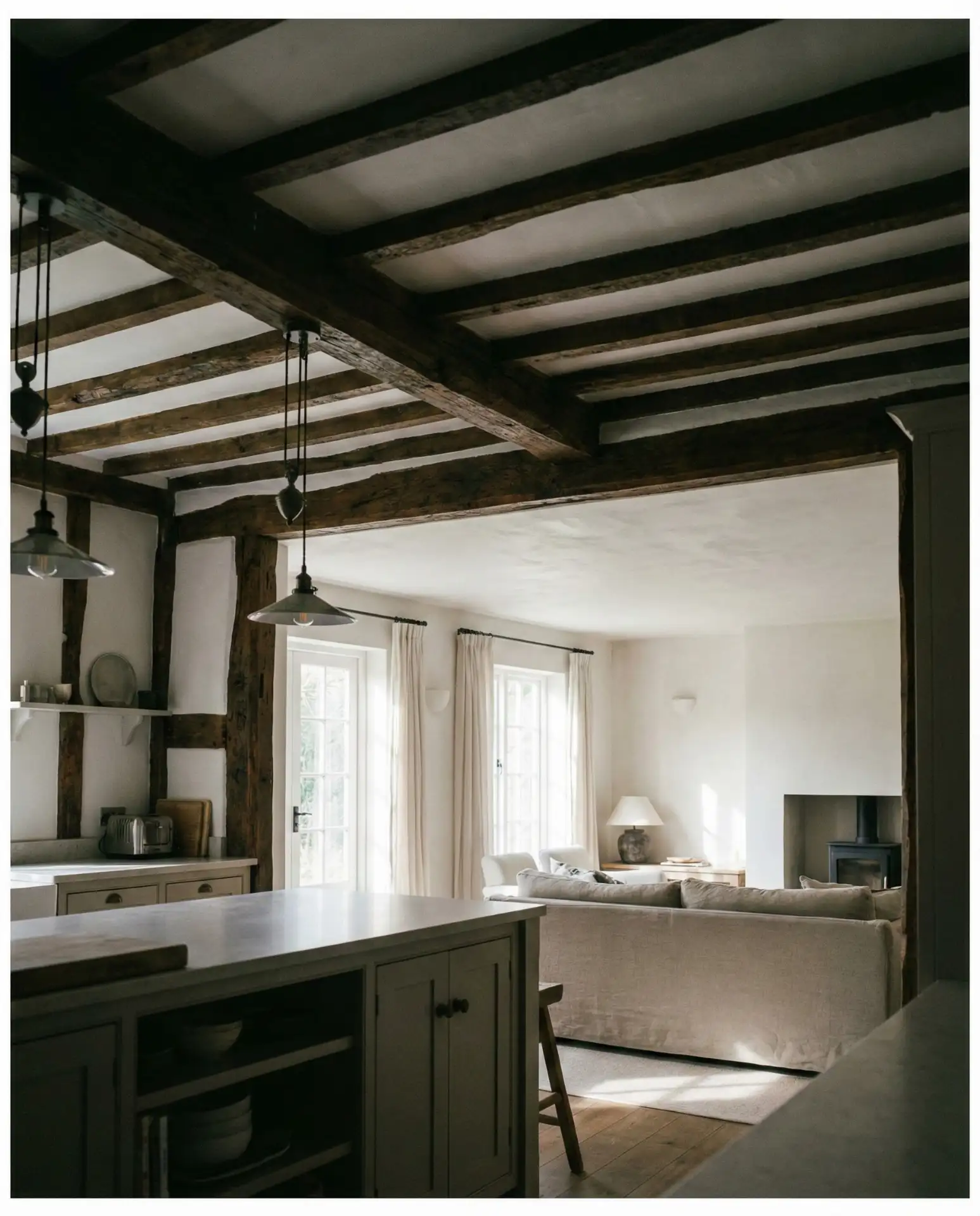
Expert designers note that ceiling treatments particularly benefit tall open spaces where eye-level definition isn’t enough to create a comfortable scale. In converted lofts or barndominiums with 12-14 foot ceilings, adding beams or dropping sections of ceiling to 9-10 feet over kitchen or dining areas helps these zones feel appropriately intimate despite the overall volume. This approach costs considerably more than wall or floor zone-defining strategies—expect $1,500-$4,000 for beam installation or $2,000-$6,000 for coffered ceiling work—but delivers dramatic, permanent architectural character.
18. Texture Layering For Warmth
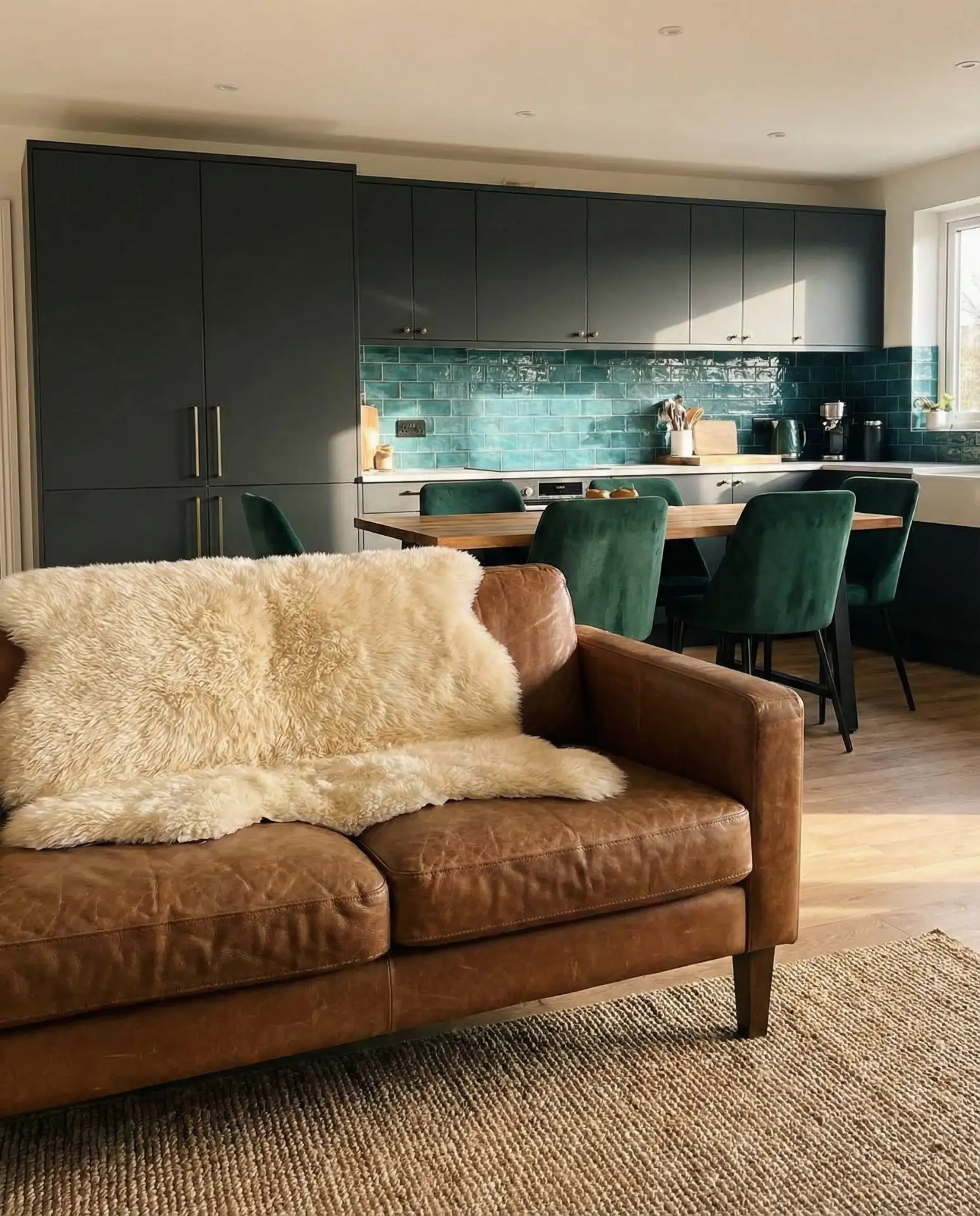
Open kitchen living rooms risk feeling cold or commercial without deliberate texture layering that adds warmth and absorbs sound. Mixing smooth kitchen surfaces like quartz or stainless steel with nubby linen sofas, woven baskets, and chunky knit throws creates sensory richness that makes the space feel finished and inviting. Texture also plays a practical acoustic role, with soft goods in the living area helping to dampen the hard, reflective surfaces necessary in cooking zones. 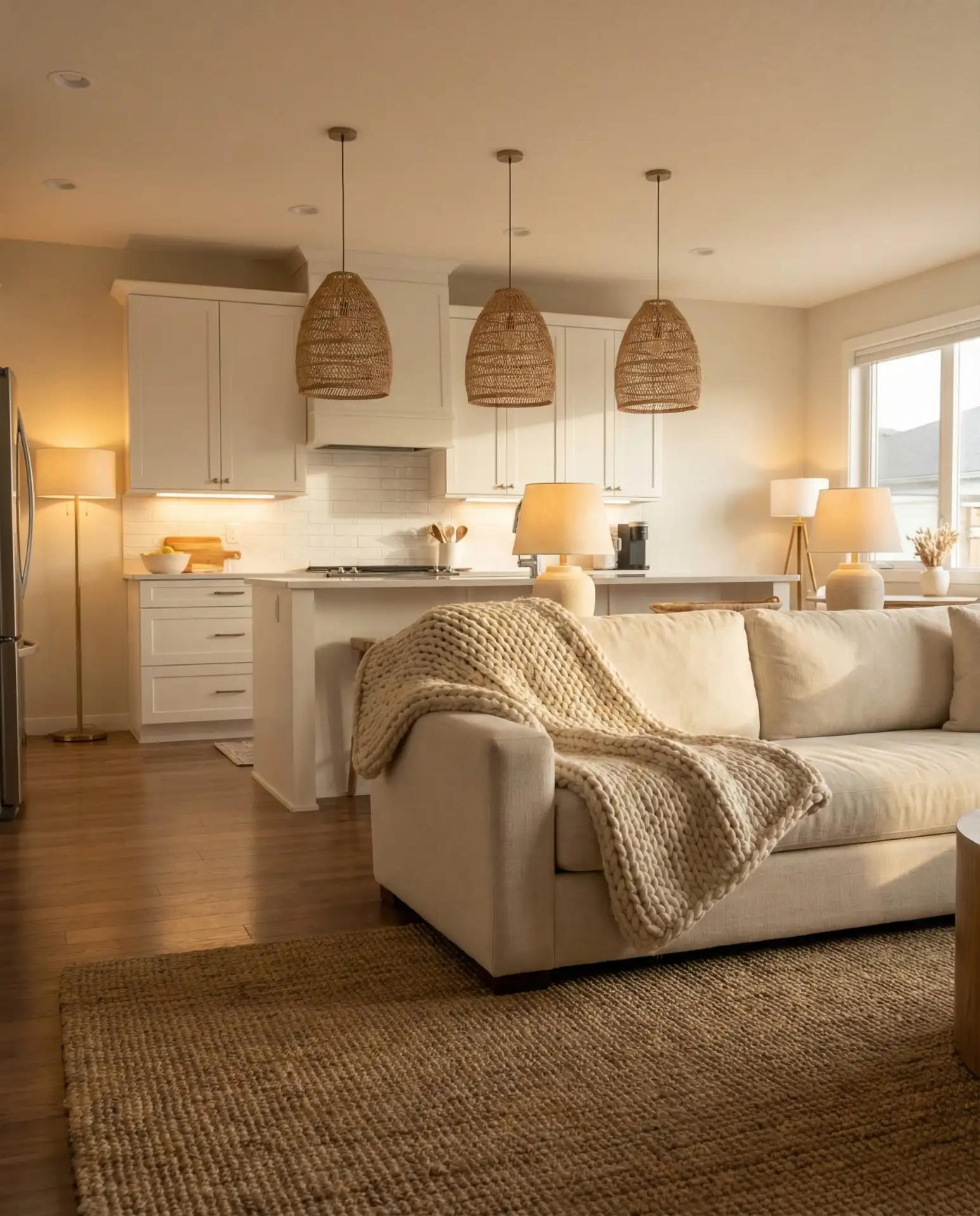
One of my clients initially furnished her open concept with a leather sofa, metal barstools, and minimal accessories, then couldn’t understand why the space felt “cold” despite warm paint colors. After adding textured pillows, a jute rug, linen window treatments, and wood cutting boards displayed on open shelves, the entire room transformed without changing any major pieces. The investment was under $600, but the impact was dramatic—proof that texture matters as much as color or layout in creating a welcoming atmosphere.
19. Biophilic Bridges Between Zones
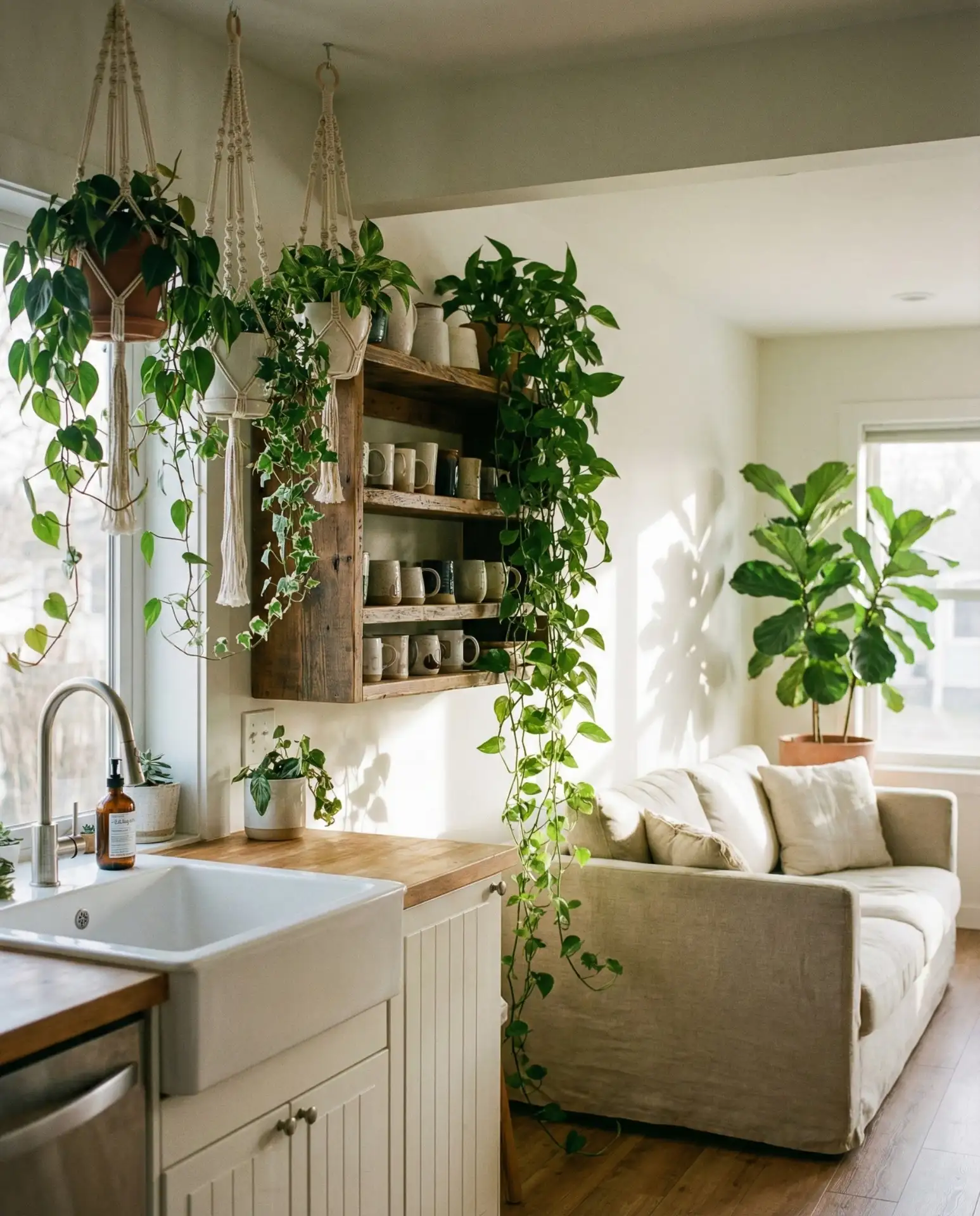
Plants serve as natural zone dividers and visual transitions in open concepts, bringing life and softness to hard-edged kitchen architecture while echoing through to living areas. A row of herbs on the kitchen windowsill visually connects to larger potted plants flanking the sofa or a tall fiddle leaf fig anchoring the dining area, creating a green thread that ties disparate zones together. This biophilic approach feels especially relevant in 2026 as homeowners increasingly prioritize wellness and connection to nature within their interiors. 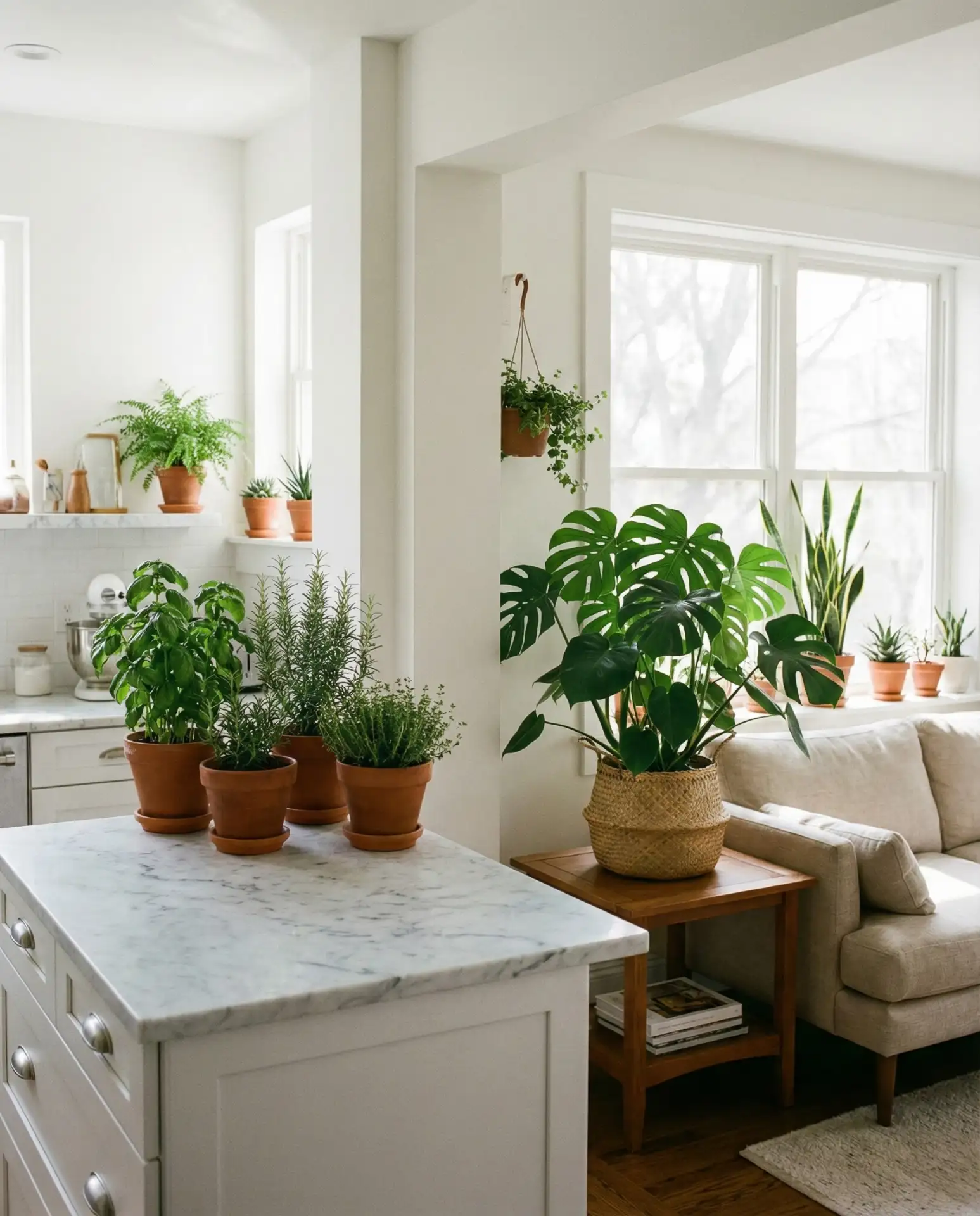
This works best in spaces with good natural light—south- or west-facing windows—where plants will actually thrive rather than merely survive. Budget-conscious plant lovers can start with easy-care varieties like pothos, snake plants, or ZZ plants that tolerate varying light conditions and neglect, gradually adding more demanding specimens as confidence grows. The common mistake is buying full-grown plants and paying premium prices when smaller 4-6 inch pots cost a fraction and grow surprisingly quickly, plus you get the satisfaction of nurturing something over time.
20. The Multi-Functional Island Evolution
Today’s kitchen islands evolve beyond simple prep surfaces into true multi-functional hubs with seating, storage, integrated appliances, and even workspace zones. The most successful designs include a lower counter height section (30 inches) for comfortable seated work or homework alongside standard prep height (36 inches), creating a stepped profile that naturally defines different functions. Some incorporate pop-up outlets for charging devices, built-in wine fridges, or bookcase-style storage facing the living room that blurs the line between kitchen fixture and furniture piece. 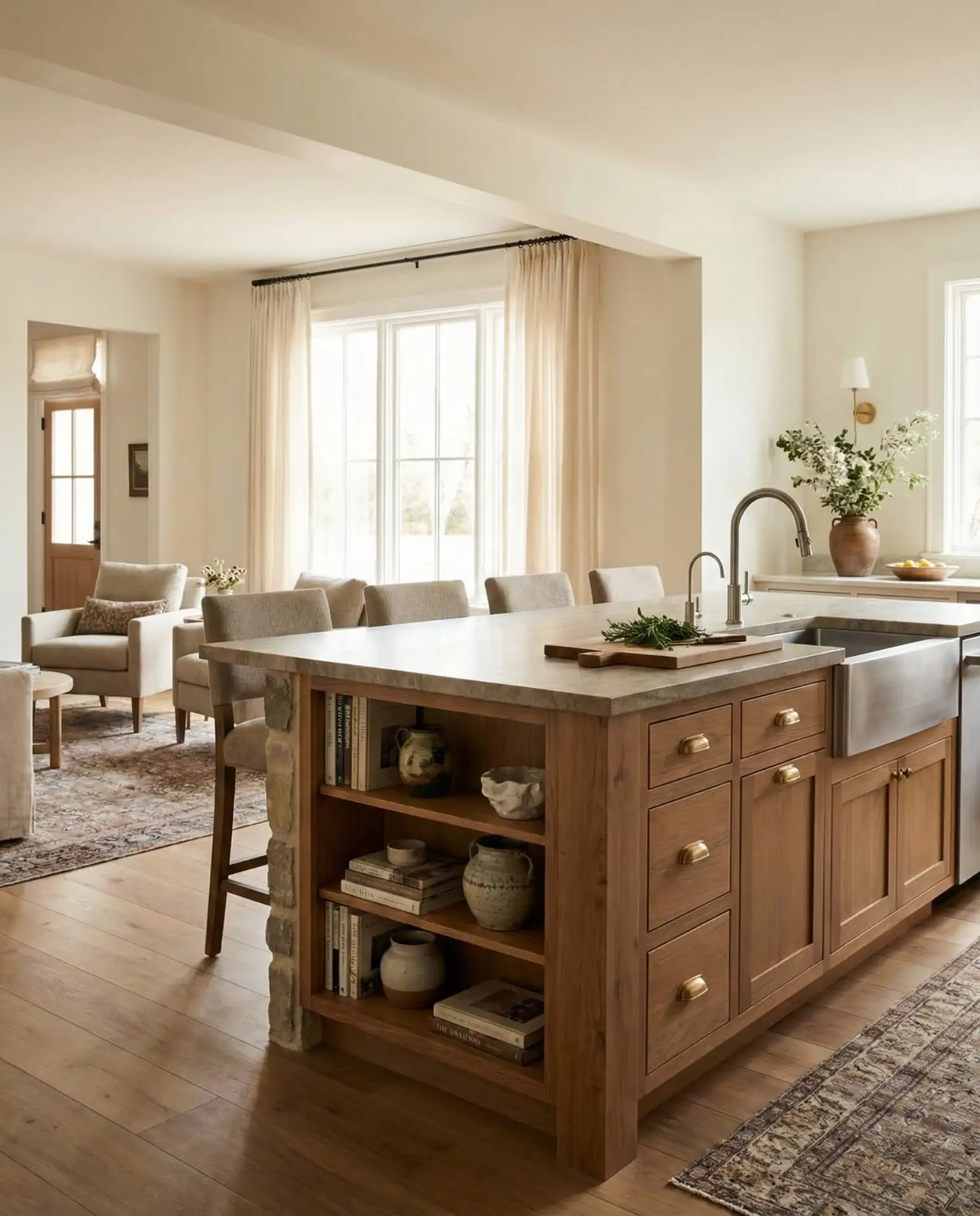
Across suburban America particularly, the kitchen island has essentially replaced the dining table as the family gathering spot, with kids doing homework while parents cook, laptops open during coffee, and casual meals happening there more often than at formal dining settings. This shift means islands need durable surfaces that can handle hot pans and spilled juice, adequate lighting for tasks beyond cooking, and enough knee space for people to sit comfortably for extended periods—at least 15 inches of depth and 24 inches of width per person.
21. Acoustic Solutions For Open Living
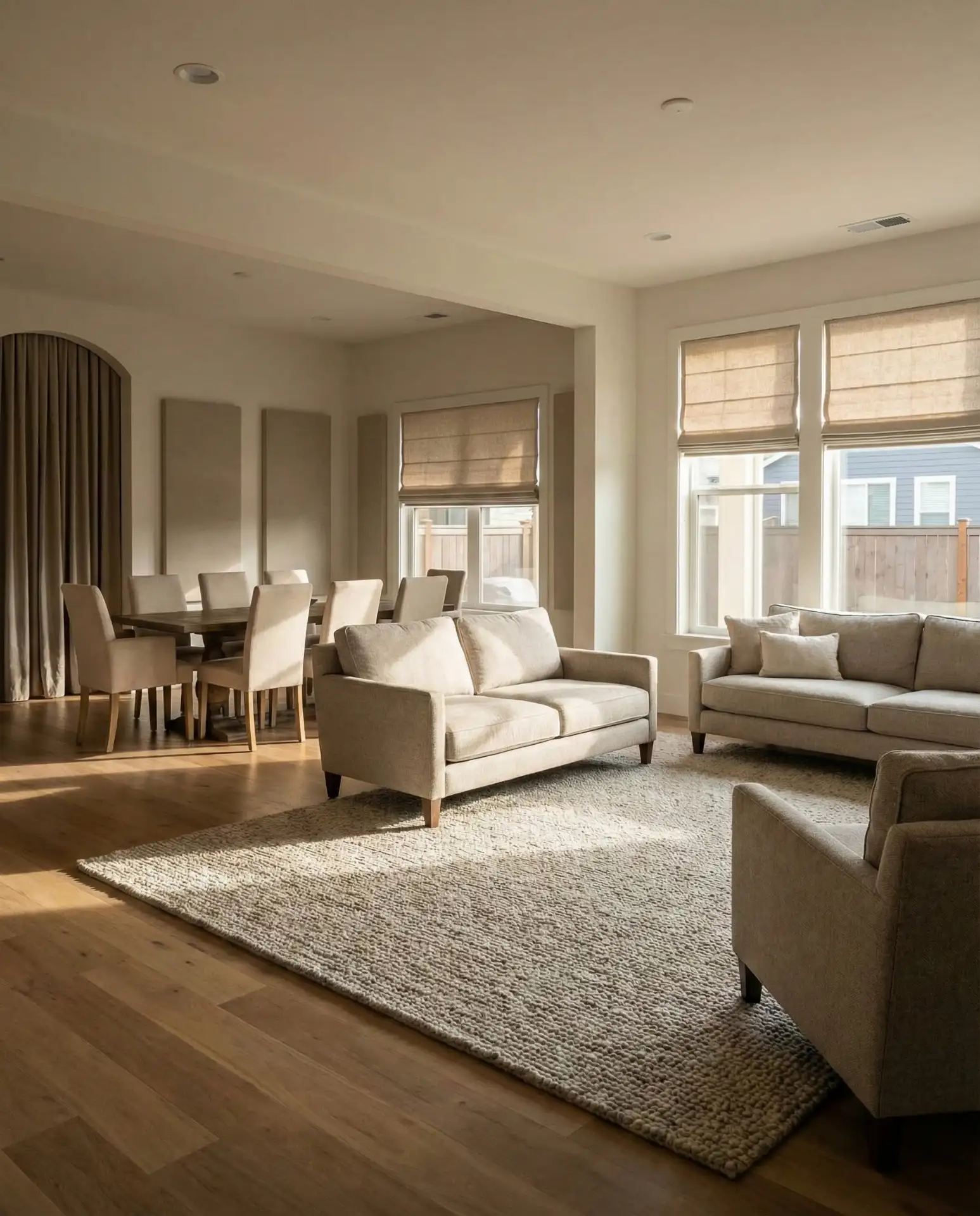
Sound management represents one of the biggest practical challenges in open kitchen living rooms, where cooking noise, conversation, and television audio all compete in one reverberant space. Strategic acoustic solutions include area rugs that absorb sound, upholstered furniture instead of hard leather, fabric Roman shades or curtains rather than bare windows, and even acoustic panels disguised as art. The kitchen itself benefits from soft-close cabinet hardware, quiet appliances, and sound-dampening materials like cork or rubber under sinks and dishwashers. 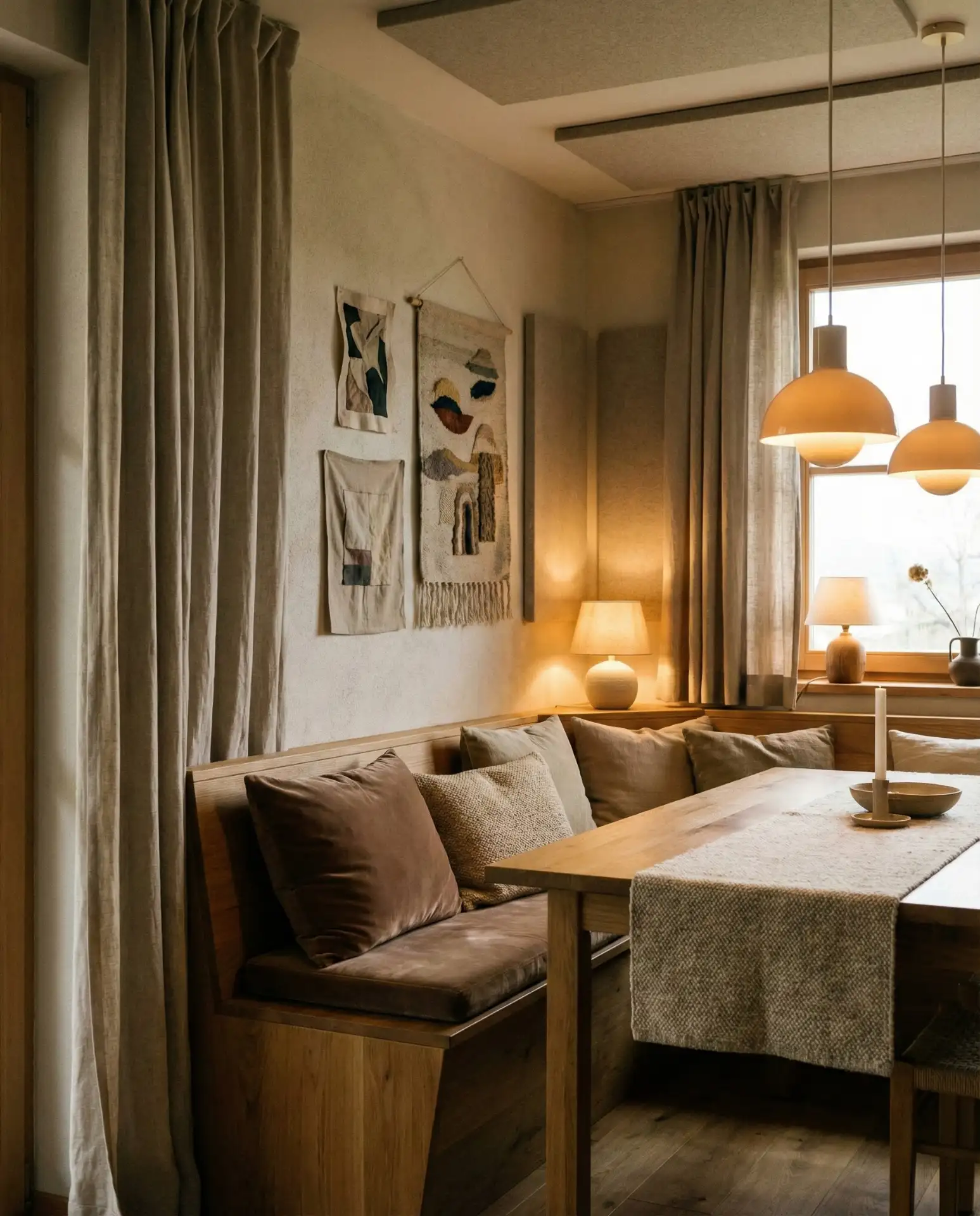
Practical insight: Homeowners with young children or those who work from home in their open-concept spaces benefit most from addressing acoustics, as constant noise and echo can genuinely impact quality of life. Adding a 9×12 area rug costs $200-$2,000 depending on quality, while acoustic panels run $30-$150 each, making sound management one of the more affordable improvements you can make post-construction. The impact on livability often exceeds expectations—one couple reported that simply adding curtains and a large rug reduced their stress levels noticeably by dampening the constant echo of their hard-surfaced open plan.
22. Future-Flexible Floor Plans
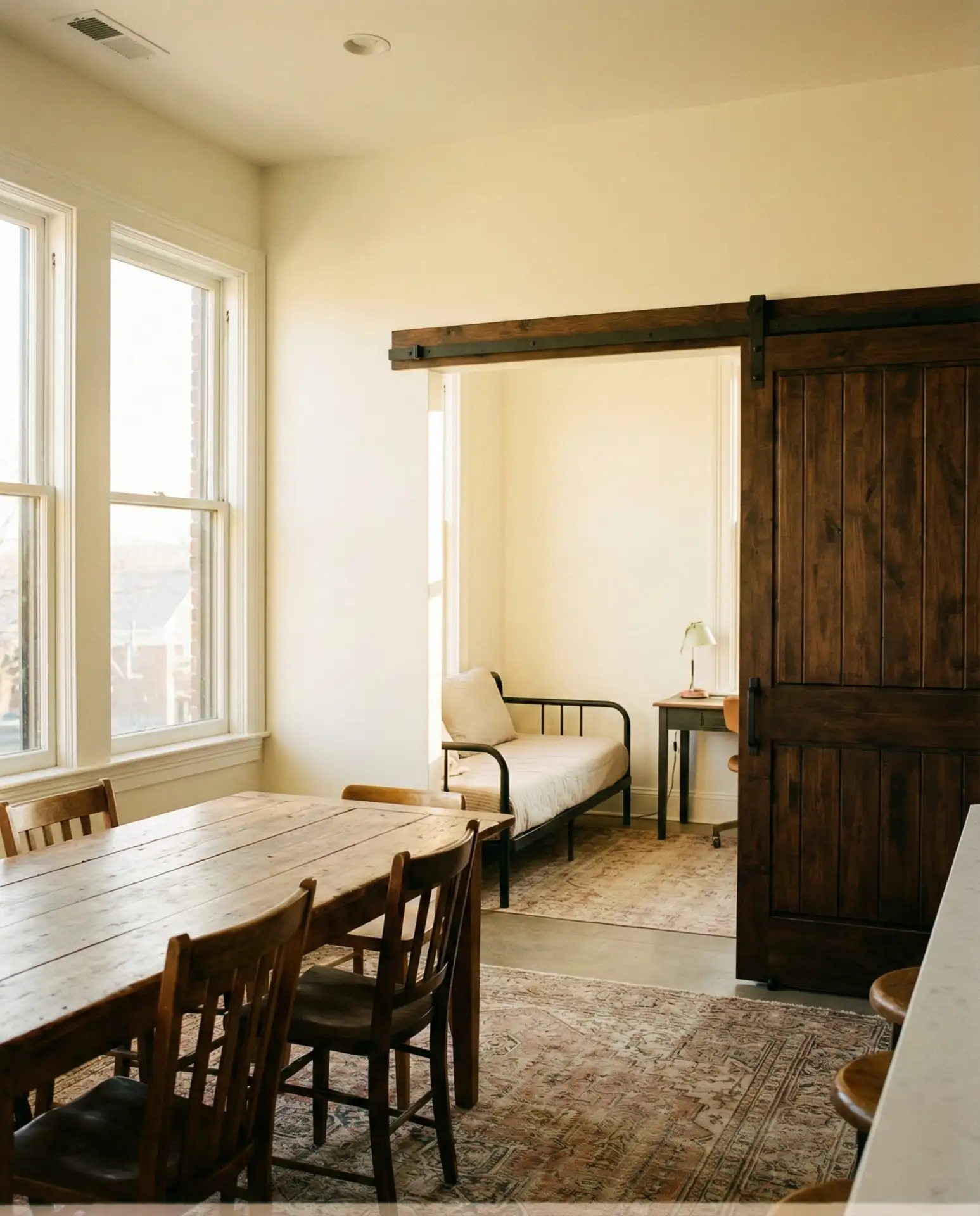
The smartest floor plan designs for 2026 build in flexibility for changing needs—aging in place, work-from-home zones, or accommodating multigenerational living. This might mean electrical outlets and data ports positioned to support various furniture arrangements, pocket door framing that’s roughed in but not finished, or leaving one wall in a prime location unpainted and minimally decorated so a future divider wall won’t ruin expensive finishes. Open concepts work best when they can adapt rather than lock you into a single-use pattern. 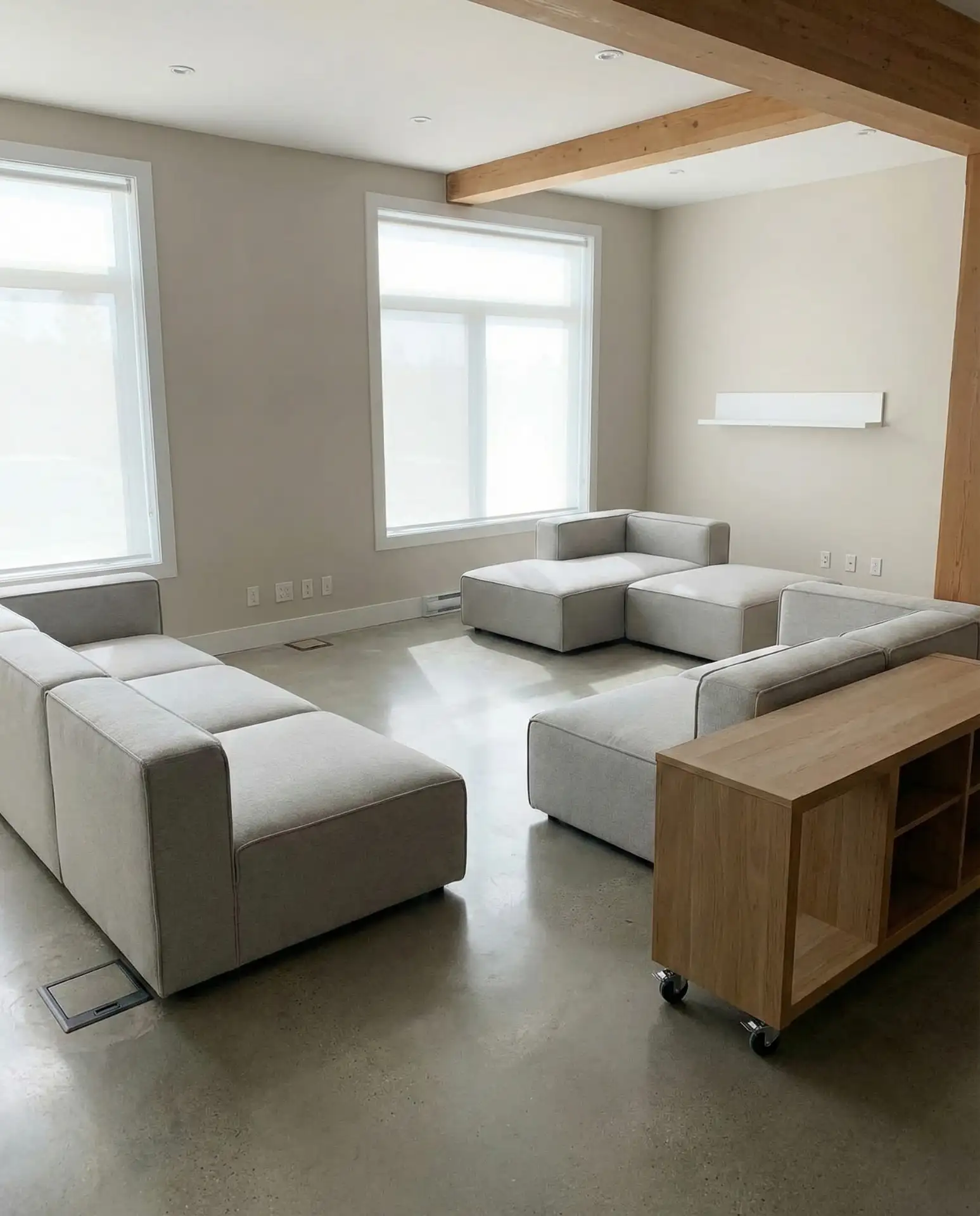
Common mistakes include installing permanent built-ins that limit future furniture arrangements, committing to flooring patterns that would look awkward if walls were added later, or placing plumbing and gas lines that restrict where future changes could happen. Expert designers increasingly recommend leaving at least one wall of the open plan as a potential dividing line—not closed off now, but positioned so it could become a wall down the road without creating awkward half-rooms or orphaned spaces. This forward thinking adds minimal upfront cost but preserves valuable options as your household evolves over the decades.
Conclusion
These ideas show how the open kitchen living room concept continues maturing beyond simple wall removal into sophisticated, personalized spaces that balance connection with definition. Whether you’re working with a compact apartment, a sprawling barndominium, or a typical suburban home, the principles of thoughtful zoning, cohesive materials, and flexible design apply. Share your own open-concept successes or challenges in the comments—what’s worked in your space, and what would you approach differently next time?