Pantry cabinets are having a major moment in 2026, and it’s not hard to see why. As home kitchens evolve into multifunctional spaces where families cook, work, and gather, the need for smart, stylish storage has never been more pressing. Americans are turning to Pinterest in droves to find pantry solutions that blend beauty with practicality—whether that’s a floor-to-ceiling built-in, a sleek freestanding piece, or a clever corner unit that maximizes every inch. In this article, you’ll discover fresh pantry cabinet ideas that speak to how we really live now: with more groceries, more gadgets, and more desire for a kitchen that feels both organized and inspired.
1. Floor-to-Ceiling White Shaker Pantry
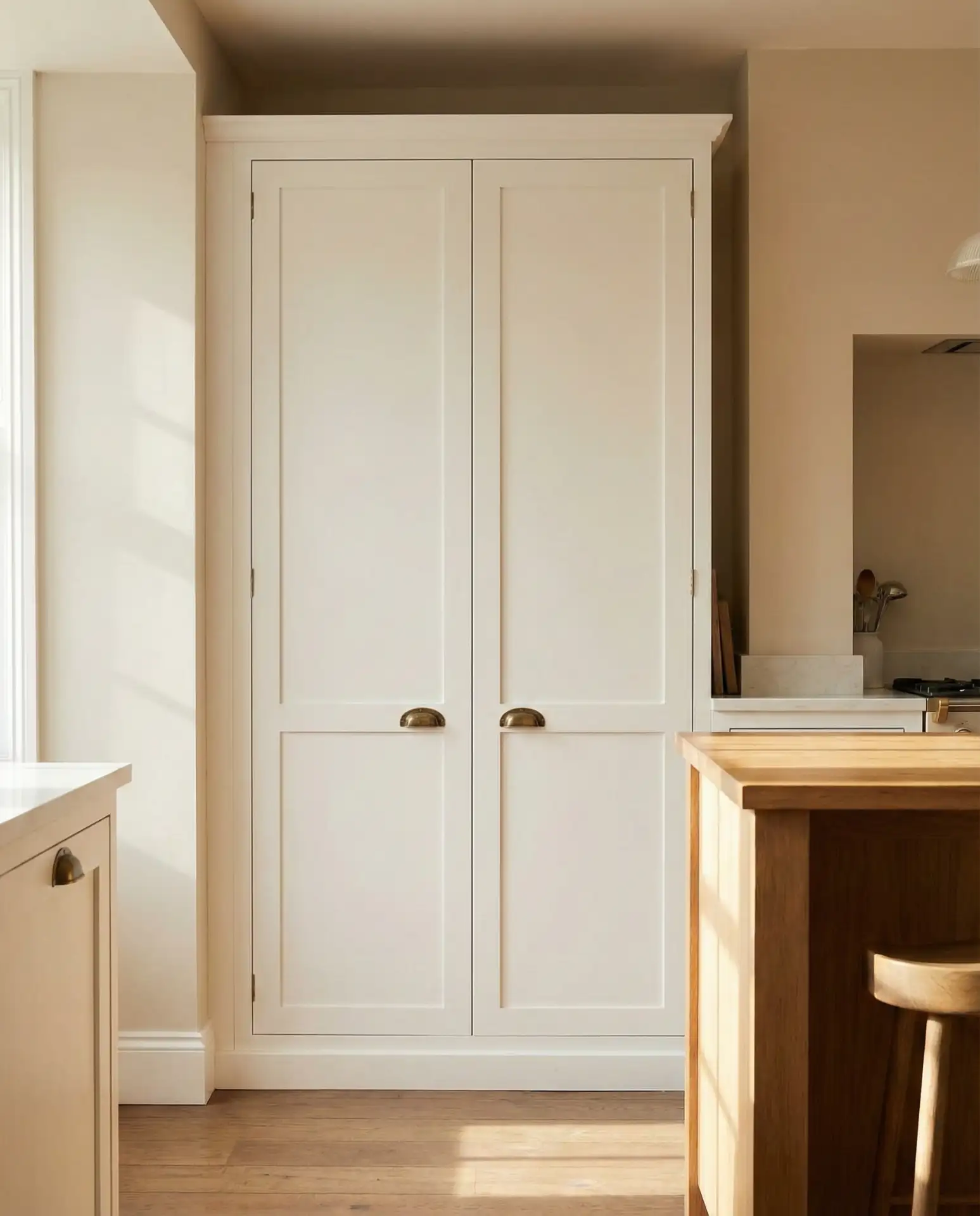
A floor-to-ceiling pantry cabinet is the gold standard for serious kitchen storage. This design runs the full height of the room, often anchored beside the fridge or tucked into an underused corner. White Shaker doors keep the look timeless and clean, while adjustable shelving inside lets you customize zones for everything from cereal boxes to small appliances. It’s especially popular in suburban homes where families buy in bulk and need room to breathe.
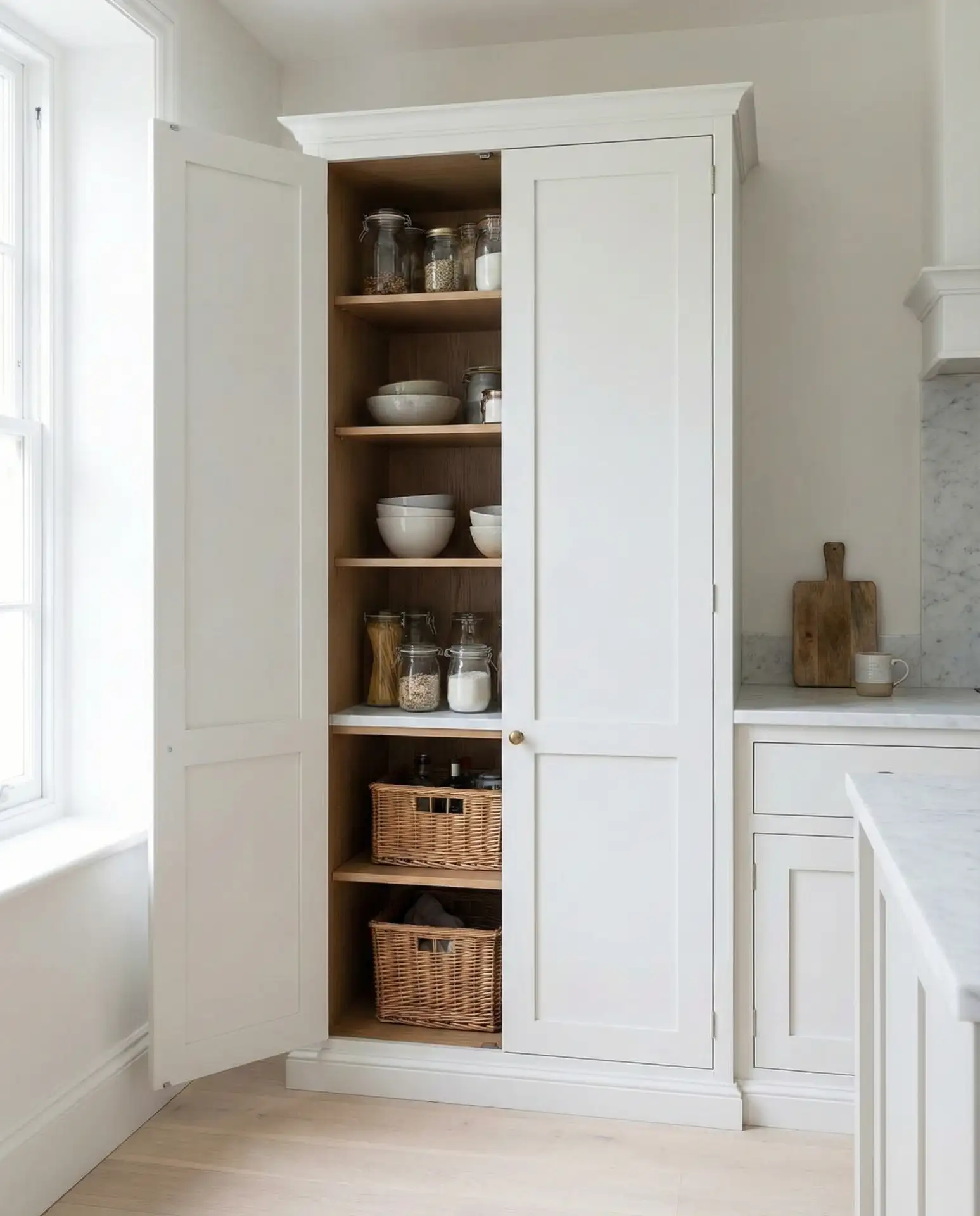
This setup works best in kitchens with at least nine-foot ceilings, where the vertical line draws the eye up and makes the room feel larger. A common mistake is overloading the top shelves with heavy items—keep lightweight backups like paper towels up high and everyday essentials at arm’s reach. If you’re renovating, consider adding a rolling library ladder for easy access and a touch of farmhouse charm.
2. Pull-Out Spice Rack Pantry Insert
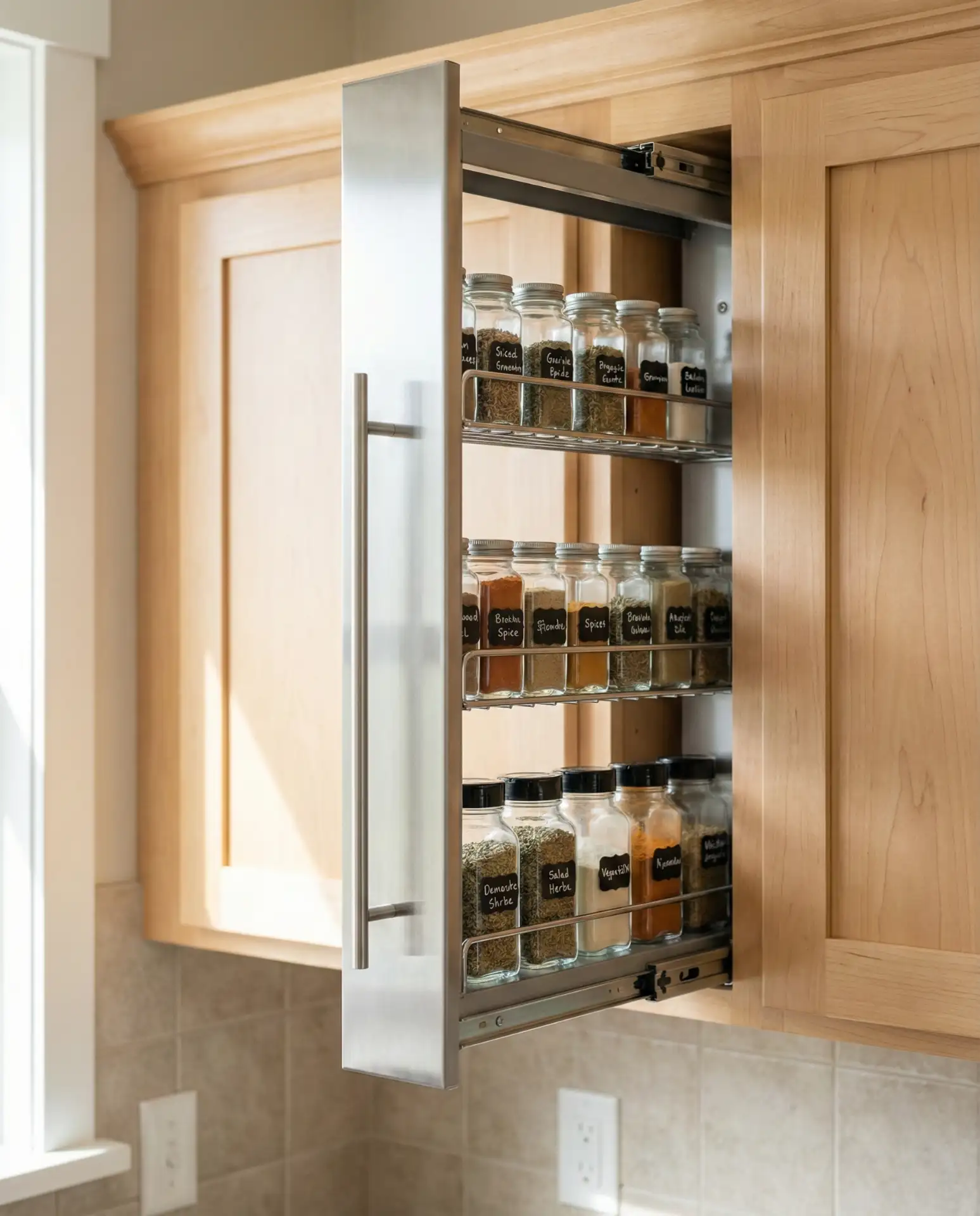
A pullout spice rack insert transforms the narrow gap beside your stove or fridge into a hardworking organization zone. These slender cabinets glide out on smooth runners, revealing vertical tiers of spices, oils, and vinegars. It’s a brilliant use of otherwise dead space, and it keeps your most-used seasonings within arm’s reach while you’re cooking. Many American kitchens now include this feature as standard in new builds.
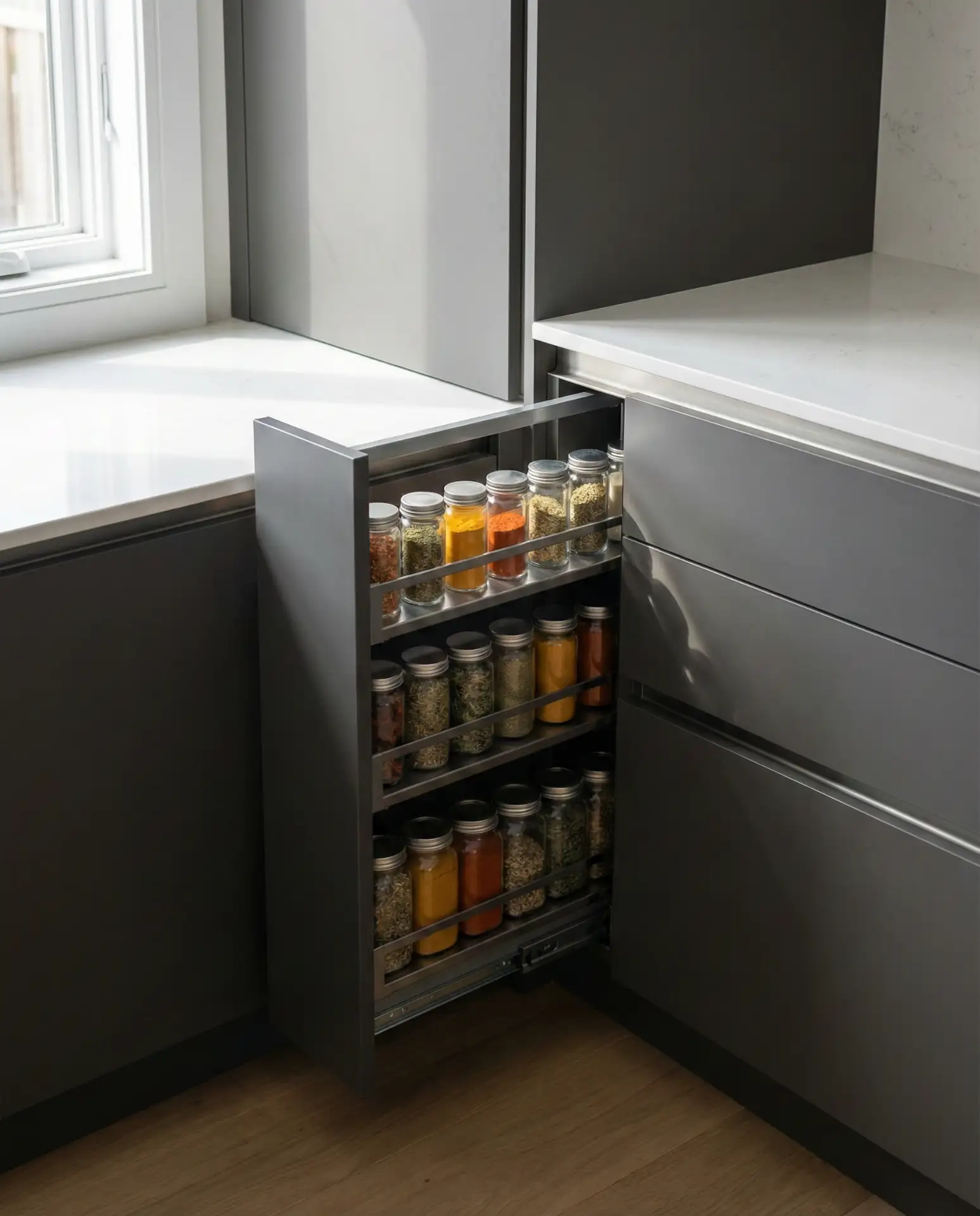
In the Pacific Northwest, where home cooks are passionate about local herbs and artisan salts, these pullouts often double as a showcase for regionally sourced ingredients. Install soft-close hardware to prevent slams, and opt for wire or perforated shelves so you can see labels at a glance. Budget around $150 to $300 for a quality aftermarket insert that fits most standard cabinet widths.
3. Tall Charcoal Gray Pantry with Glass Doors
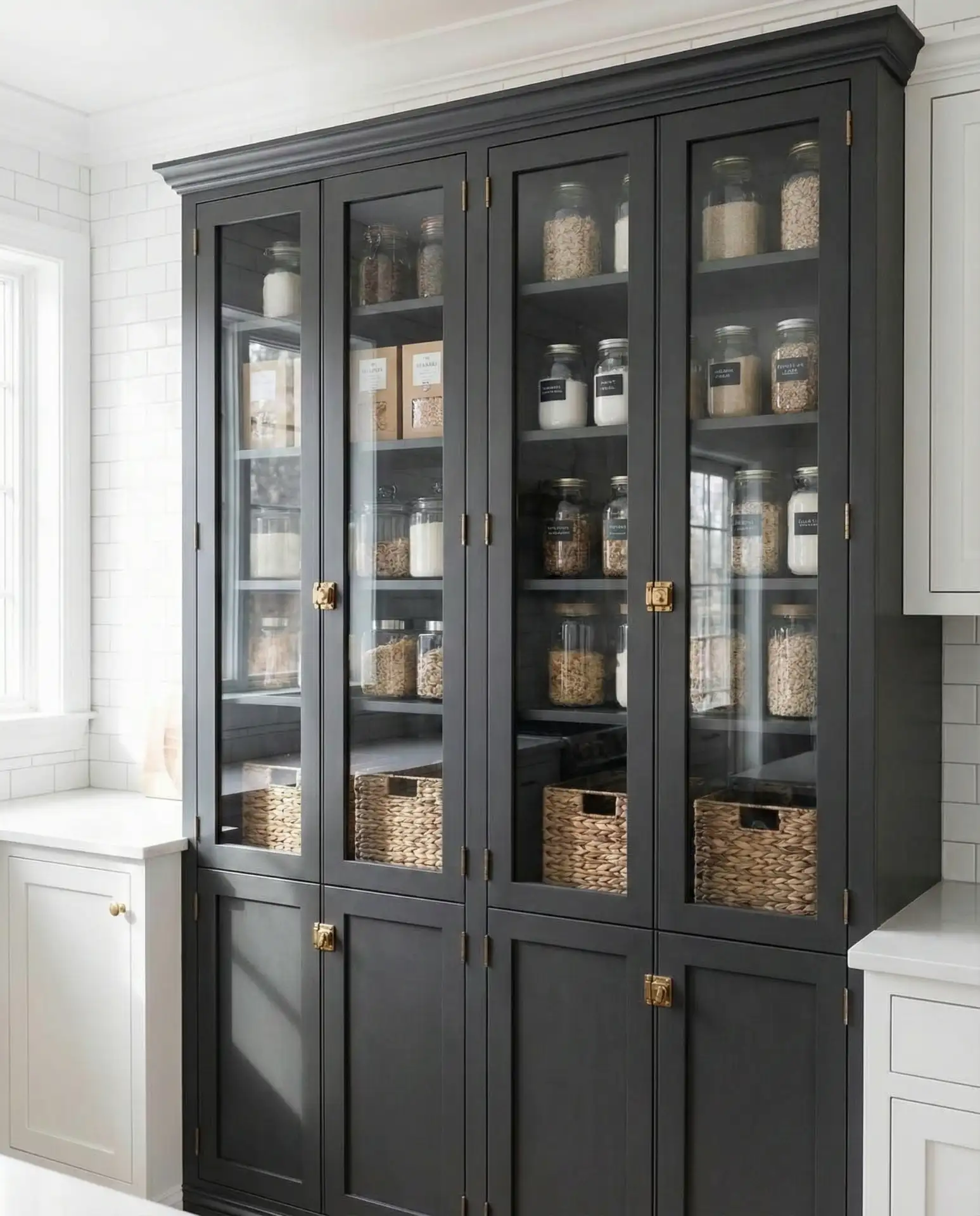
A tall pantry cabinet painted in charcoal gray brings moody sophistication to modern and transitional kitchens. Glass-front doors add visual interest without sacrificing functionality—you can see what you have at a glance, which cuts down on food waste and duplicate purchases. This style works beautifully against white or light wood cabinetry, creating a striking focal point that feels both curated and lived-in.
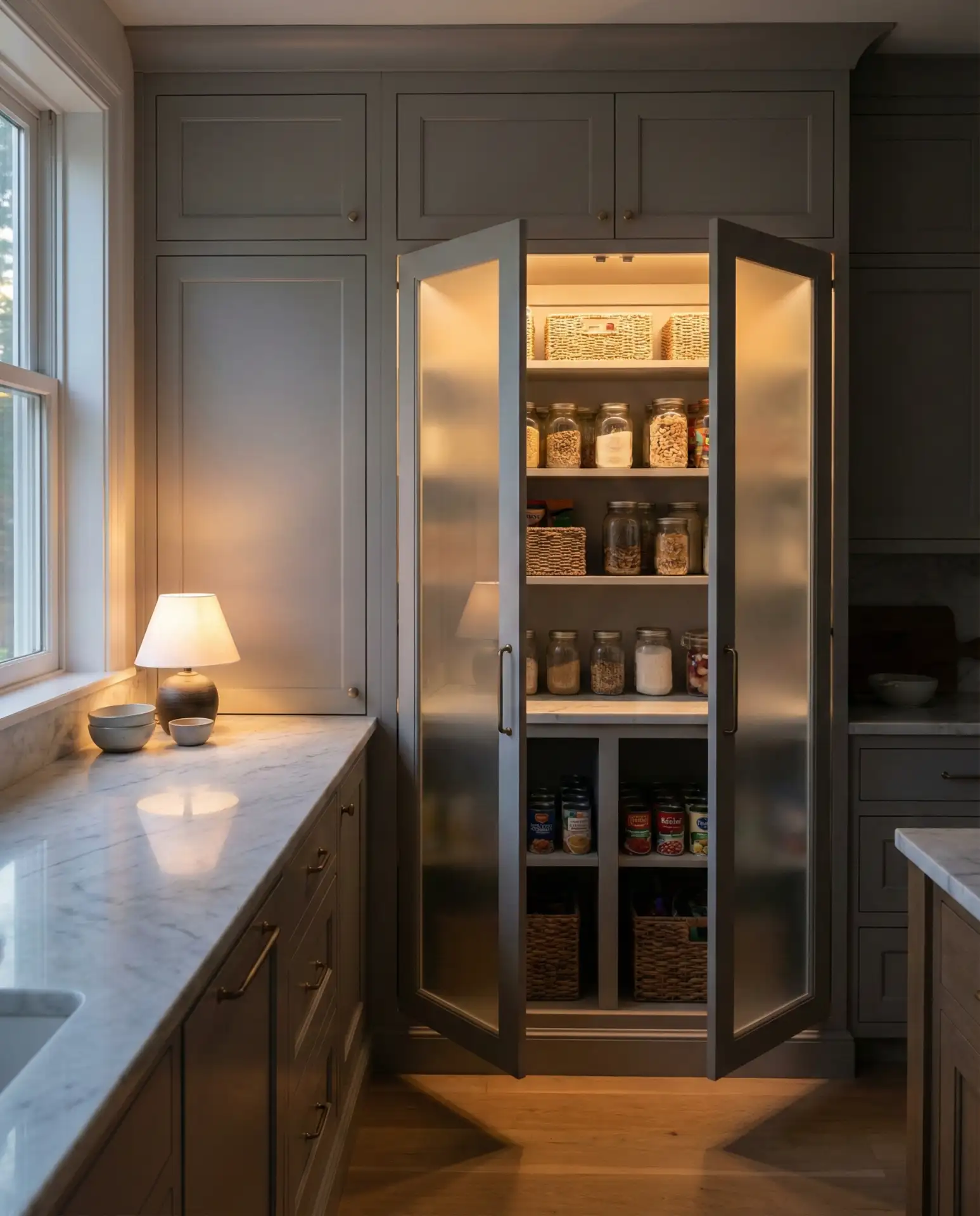
Real homeowners love this look because it forces you to keep things tidy—when your pantry is on display, you’re more likely to use matching canisters and neat rows. Consider frosted or seeded glass if you want a softer, less exposed feel. Pair with matte black or brass pulls for a finish that feels current but won’t date quickly.
4. Coffee Bar Pantry Nook
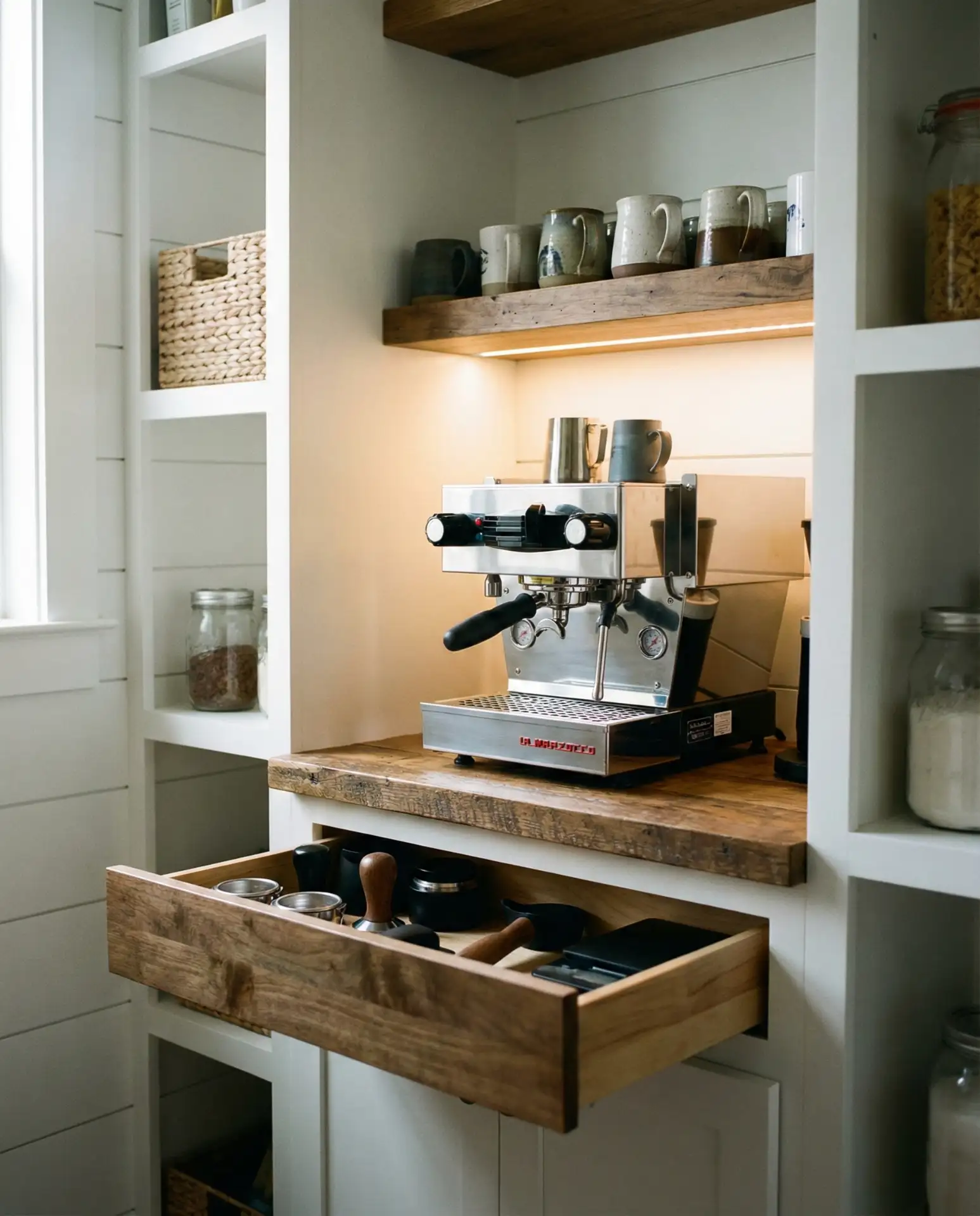
Dedicating a section of your pantry to a coffee bar is one of the smartest trends to emerge in 2026. This setup typically includes open shelving or a countertop insert where you can park your espresso machine, grinder, and favorite mugs. Below, pull-out drawers hold beans, filters, and syrups. It’s a compact command center for your morning ritual, and it keeps countertops clear for meal prep.
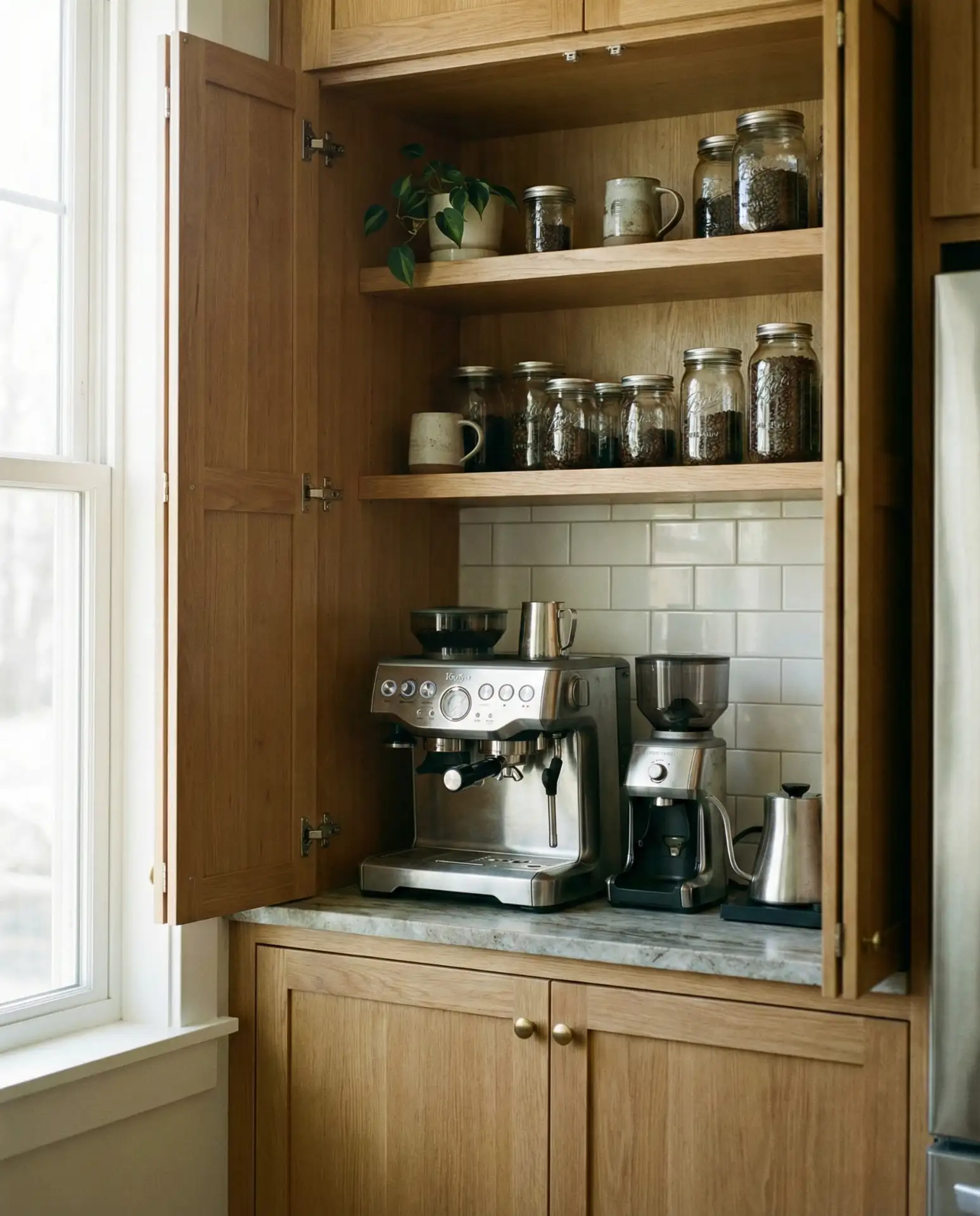
A neighbor in Austin told me she installed a coffee bar in her pantry after realizing her espresso maker was taking up a third of her counter. Now her kitchen feels twice as spacious, and she can close the cabinet doors when guests arrive. Add a small outlet inside the pantry if you don’t have one already, and choose a heat-resistant countertop material to protect against spills and steam.
5. Microwave-in-Pantry Cabinet Tower
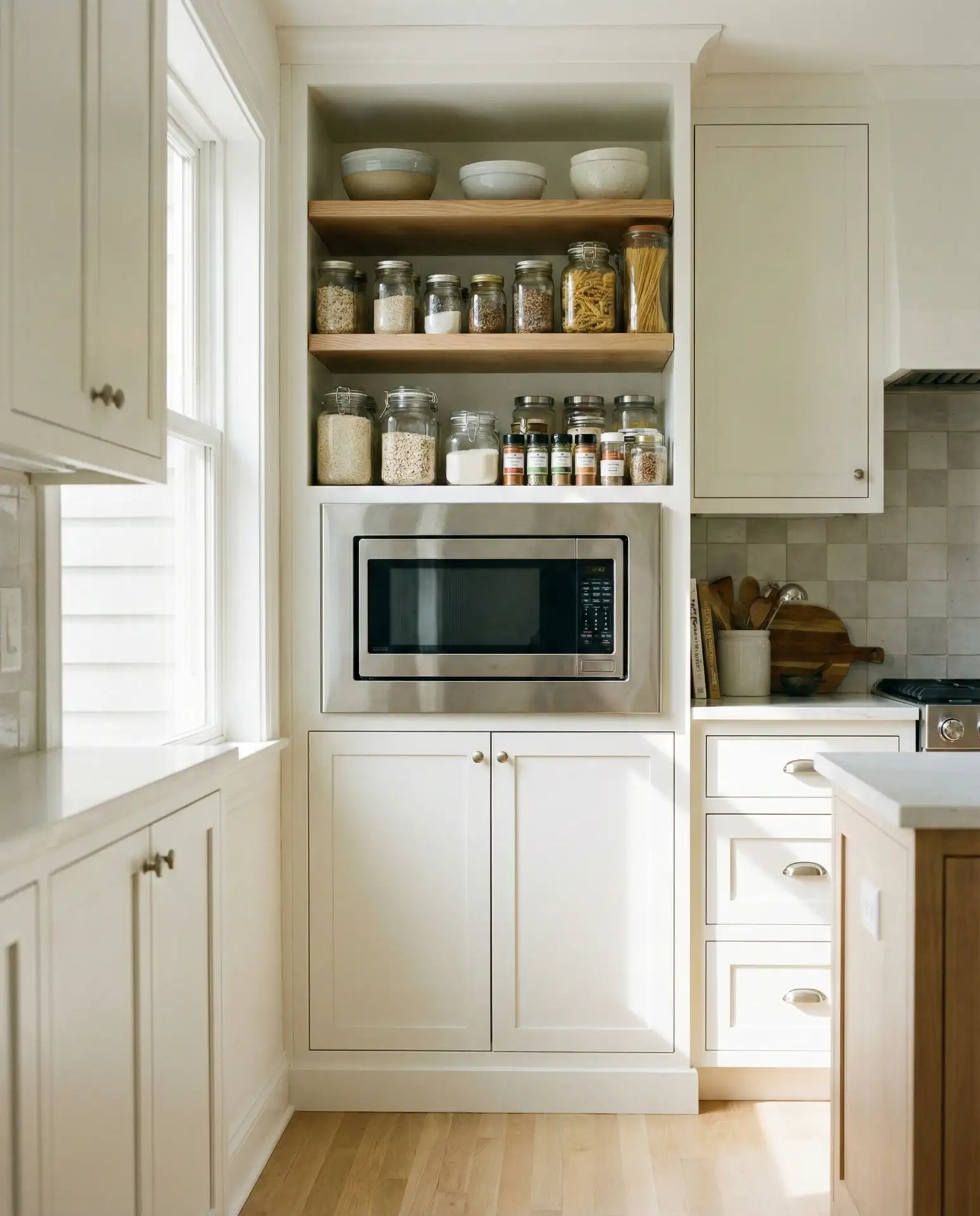
Tucking your microwave in a tall pantry cabinet is a sleek way to free up counter space and streamline your kitchen’s visual flow. The appliance sits on a sturdy shelf at waist or chest height, with ventilation cutouts in the back. Above and below, you have room for food storage, small appliances, or cookbooks. It’s a layout that works especially well in open-concept homes where the kitchen is always on display.
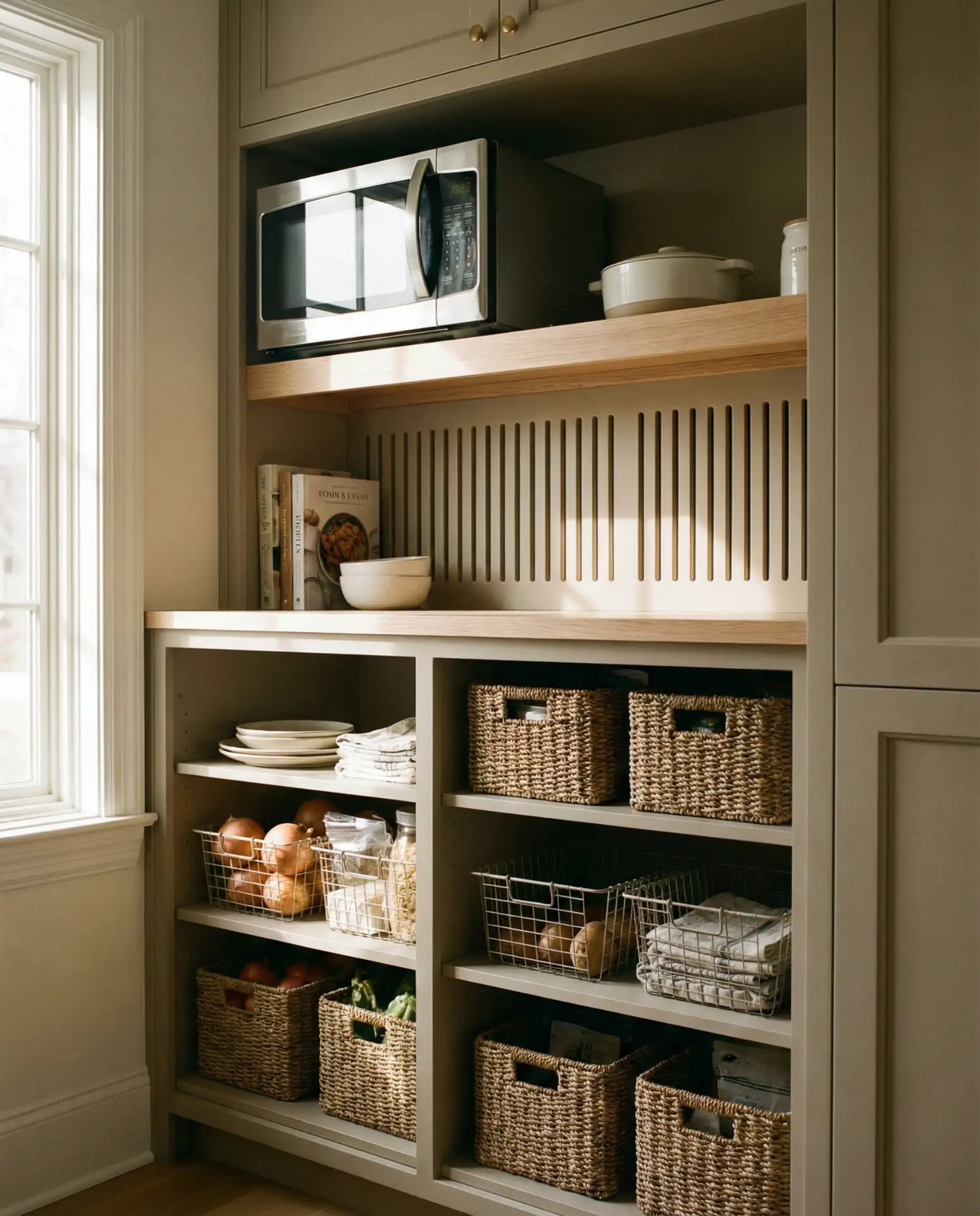
This arrangement is popular in California kitchens where minimalism and function reign. Just make sure your cabinet builder accounts for ventilation—microwaves need airflow on at least three sides. Budget-wise, expect to add $100 to $200 in materials for a custom shelf with venting, but the payoff in counter space is immediate and worth every penny.
6. Freestanding Farmhouse Pantry in Cream
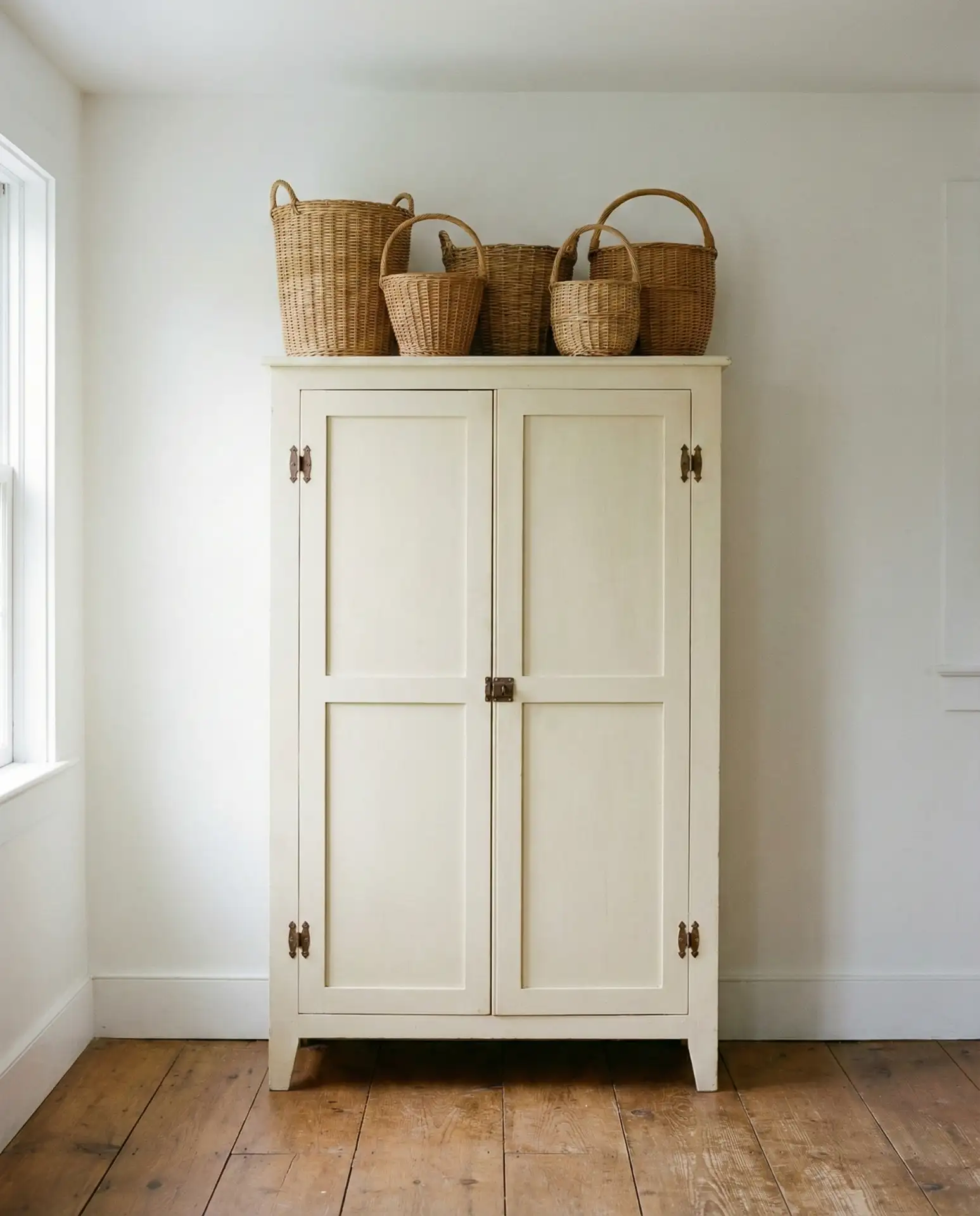
A freestanding farmhouse pantry cabinet brings flexibility and charm to kitchens that lack built-in storage. Painted in a soft cream or off-white, these pieces often feature beadboard panels, vintage-style hardware, and a mix of open and closed storage. You can move them as your needs change, and they work just as well in a dining room or mudroom. It’s a favorite among renters and DIY decorators who want personality without a full remodel.
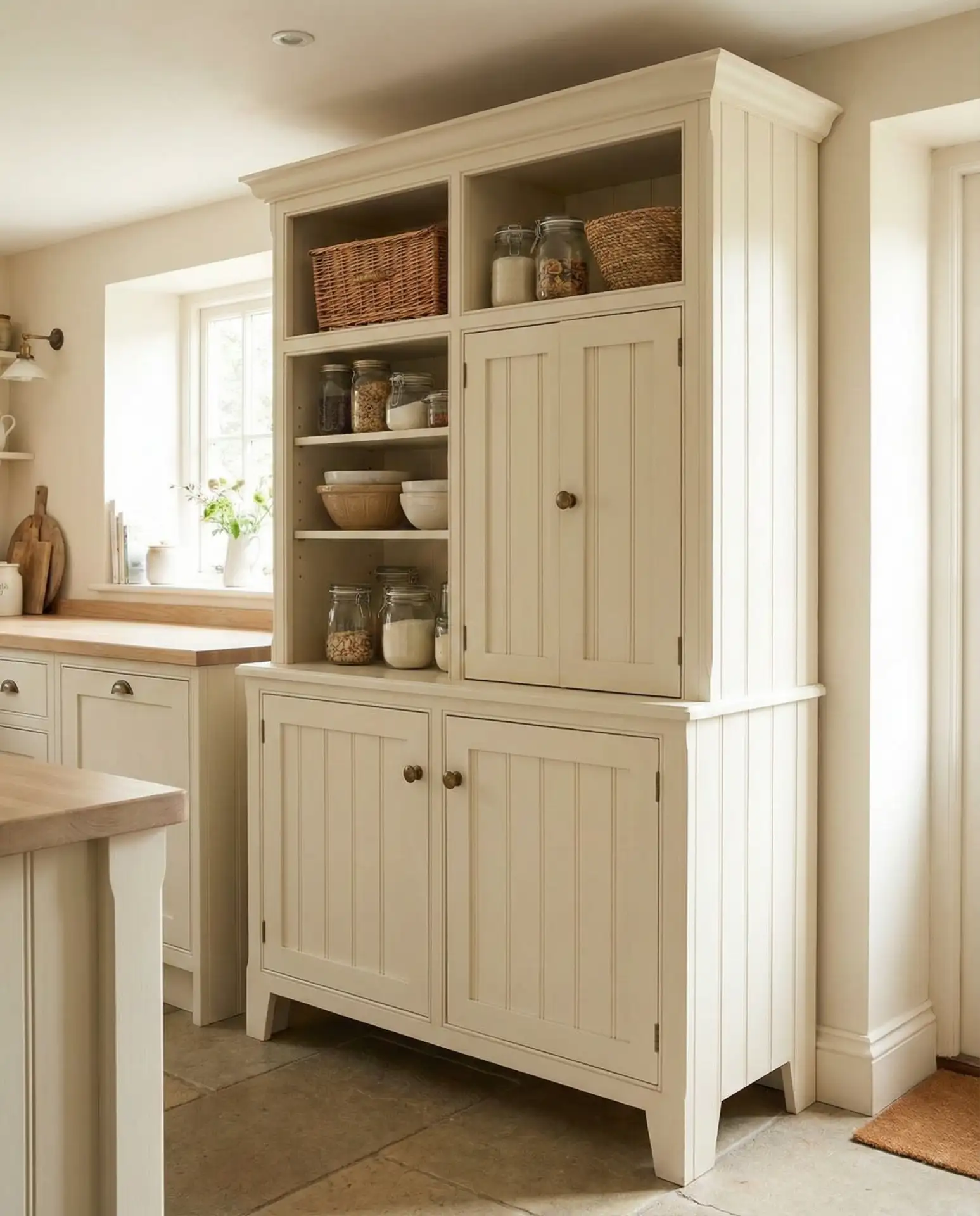
These cabinets shine in Midwestern homes where farmhouse style remains strong. Look for solid wood construction if you plan to move the piece often—particleboard units can wobble or warp. Prices range from $400 for a basic model to over $1,200 for handcrafted versions with adjustable shelving and soft-close hinges.
7. Corner Kitchen Pantry with Lazy Susan
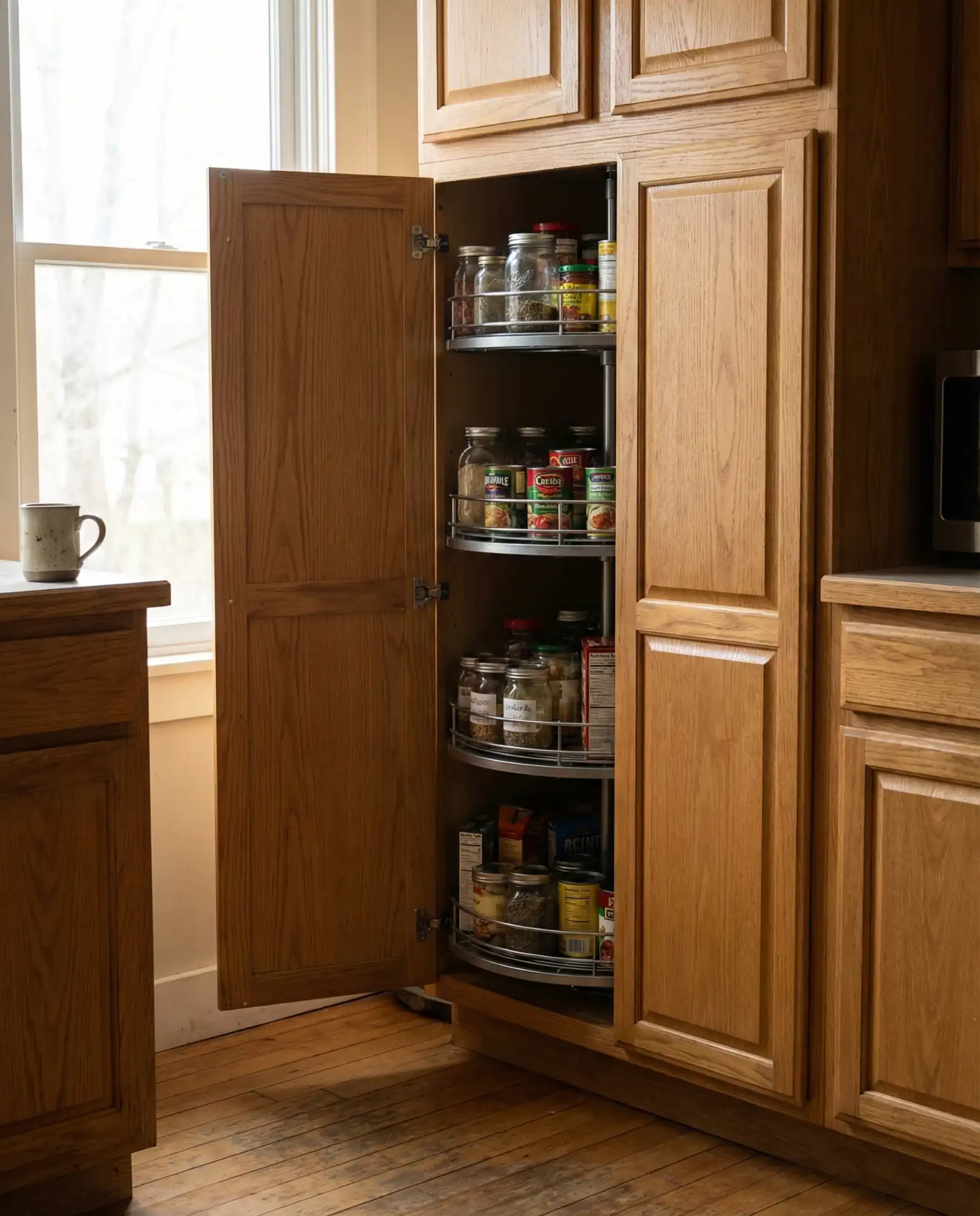
A corner kitchen pantry cabinet makes the most of an awkward angle that often goes to waste. Install a lazy Susan or pull-out carousel system inside, and suddenly you can reach every jar and can without crawling on your hands and knees. This is especially valuable in L-shaped kitchens where the corner is prime real estate. It’s a practical solution that feels almost futuristic in how efficiently it uses space.
Expert tip: avoid storing tall bottles on lazy Susans—they can tip when the shelf spins. Instead, reserve rotating shelves for shorter items like spice jars, canned goods, and baking supplies. For taller items, add fixed shelves above or below the carousel. This keeps everything stable and accessible.
8. Built-In Pantry with Sliding Barn Door
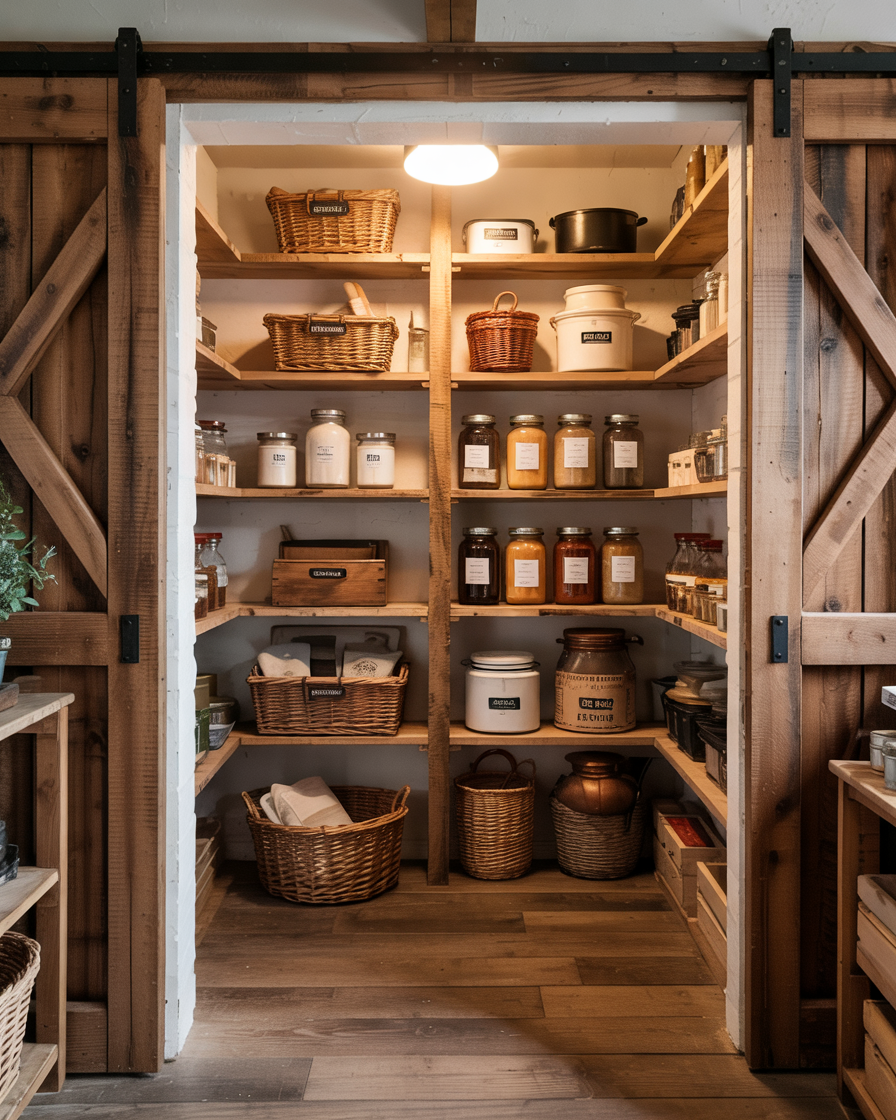
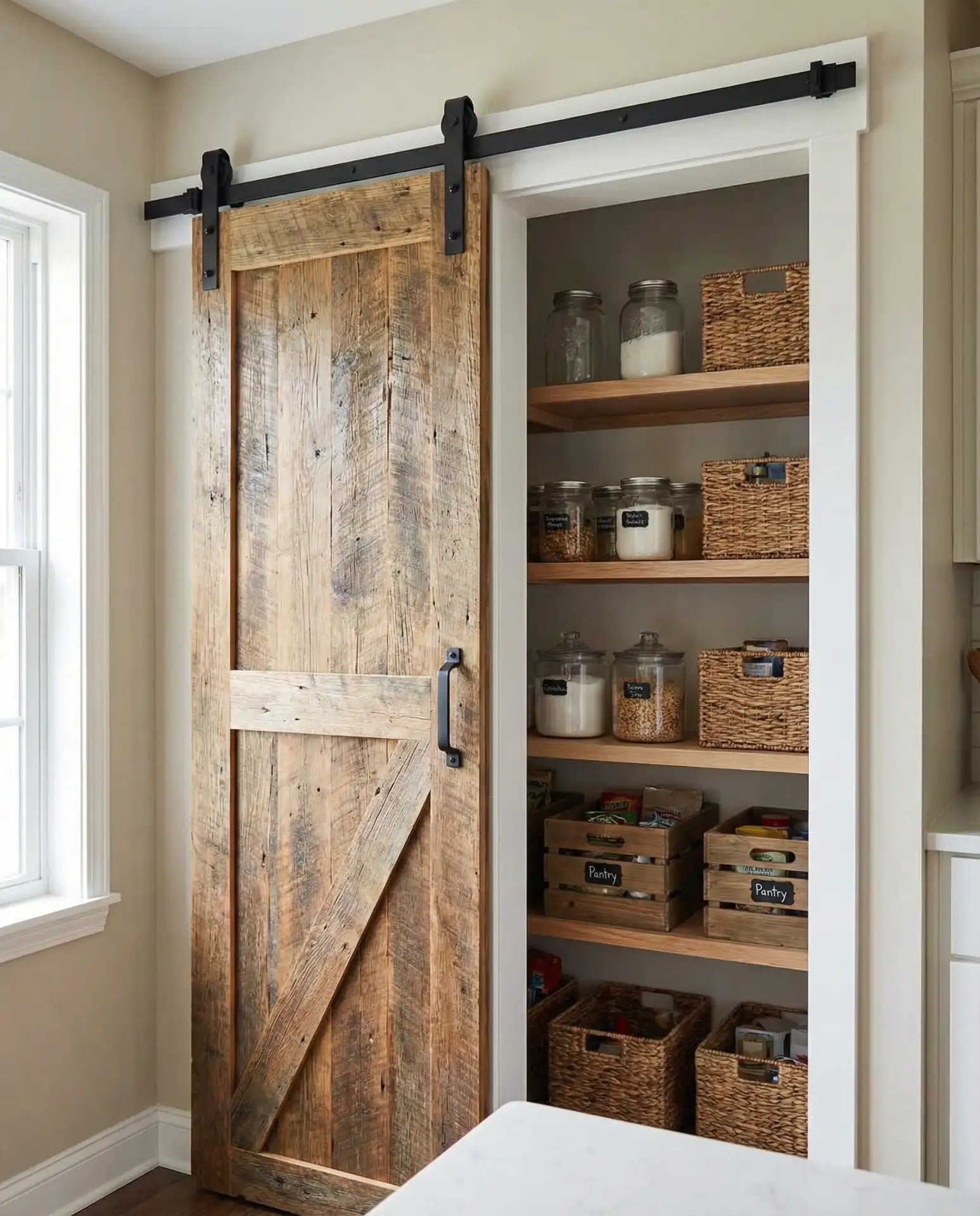
A built-in pantry concealed behind a sliding barn door offers the best of both worlds: ample storage and a design statement that anchors the room. The barn door slides along a track, saving the swing space a traditional door demands. Inside, you can configure shelves and baskets to your heart’s content. This approach works beautifully in open kitchens where you want to tuck away the mess without sacrificing square footage.
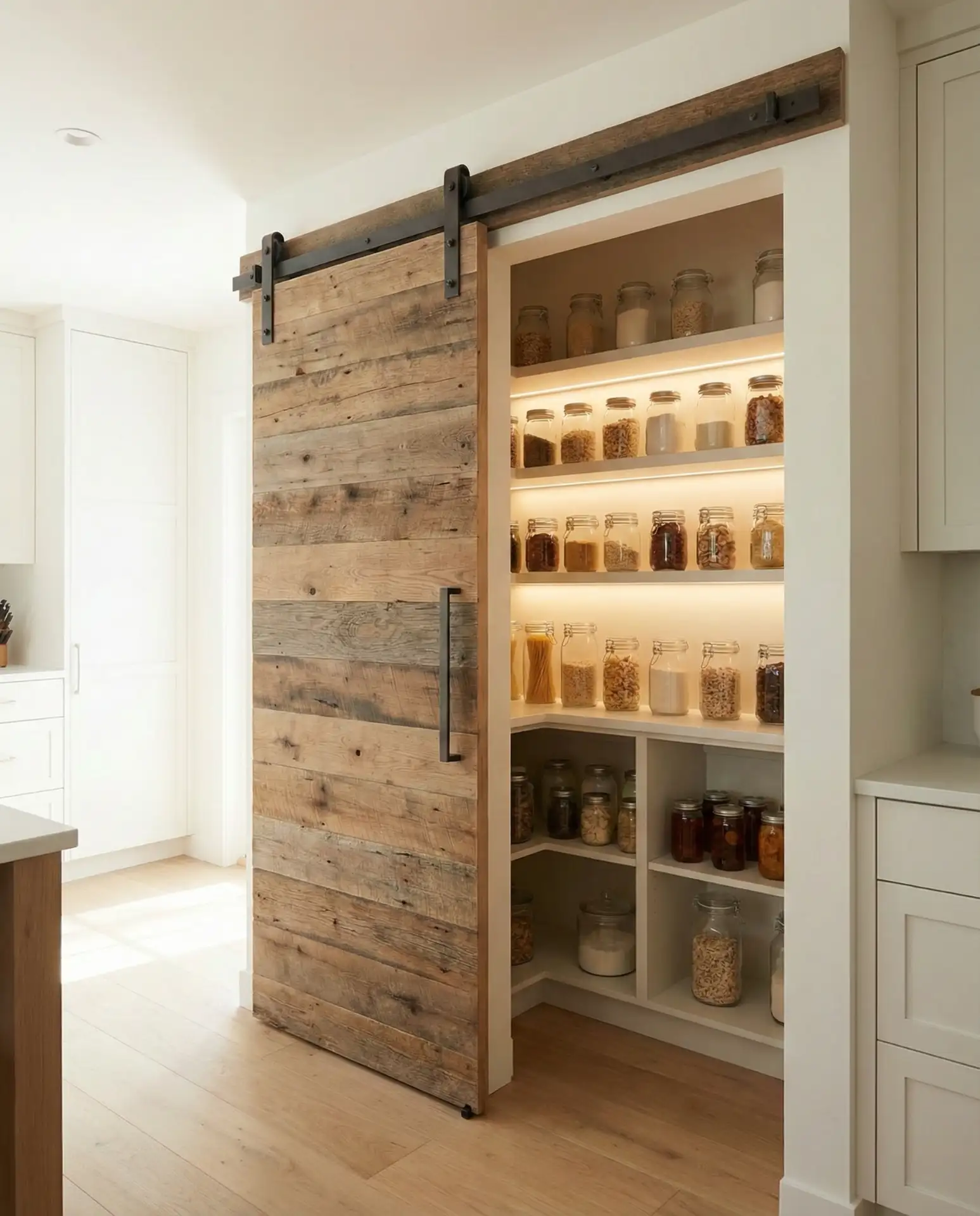
In Texas and Tennessee, where farmhouse-modern hybrids dominate, this style is practically a requirement. Choose a door that complements your cabinetry—reclaimed wood for warmth, painted MDF for a cleaner look. Make sure the track is rated for the door’s weight, and install a soft-close mechanism to avoid loud slams when kids are underfoot.
9. Shallow Pantry for Small Apartments
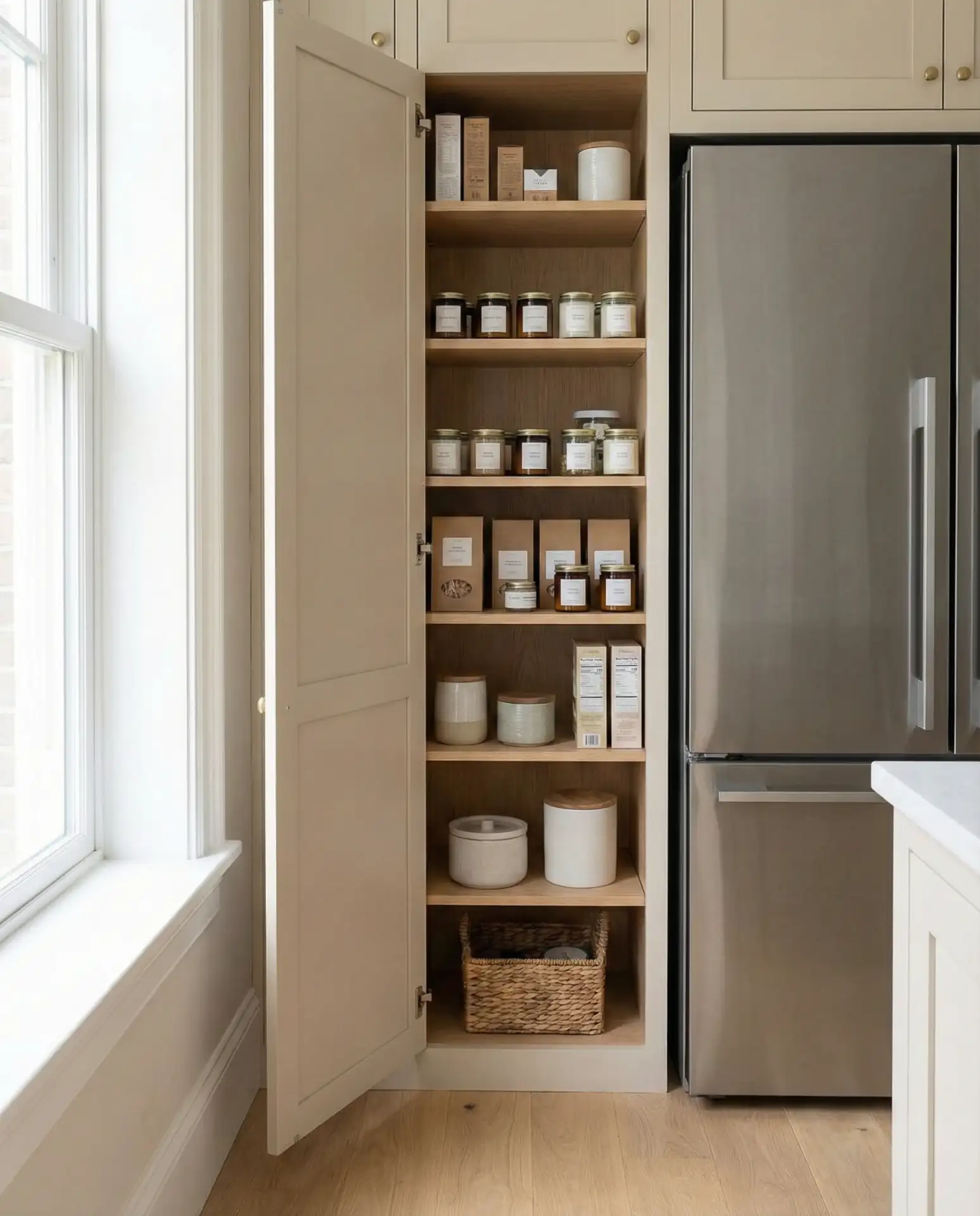
A shallow pantry cabinet is a lifesaver in compact urban kitchens where depth is limited but vertical space is plentiful. These units are often just six to eight inches deep, perfect for spices, canned goods, and boxed items that don’t need a full shelf. Mount one between the fridge and the wall, or line a narrow hallway leading to the kitchen. It’s a clever hack that apartment dwellers swear by.
One common mistake is trying to cram too much into a shallow unit—resist the urge to double-stack items, which makes everything harder to see and reach. Instead, think of it as a curated display where each item has its place. Look for models with adjustable clips or magnetic strips to hold spice jars in place, especially if you live in an older building where floors aren’t perfectly level.
10. Tall Kitchen Pantry with Chalkboard Door
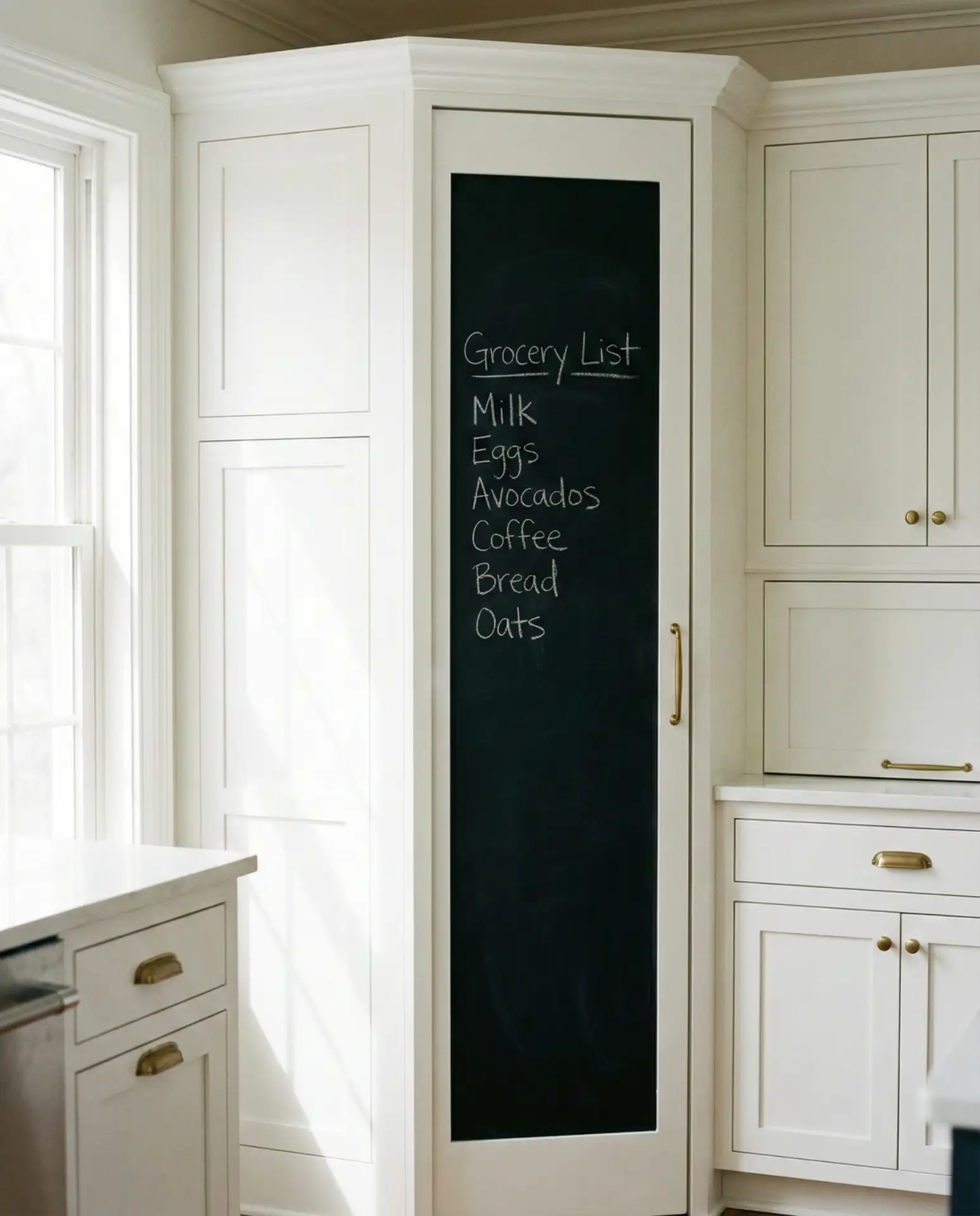
A tall kitchen pantry with a chalkboard-painted door turns storage into a family message center. You can jot down grocery lists, meal plans, or reminders while you’re cooking, and everything you need is just a step away. The chalkboard finish adds a playful, personalized touch that kids and adults alike enjoy. It’s especially popular in households where meal planning and list-making are part of the daily routine.
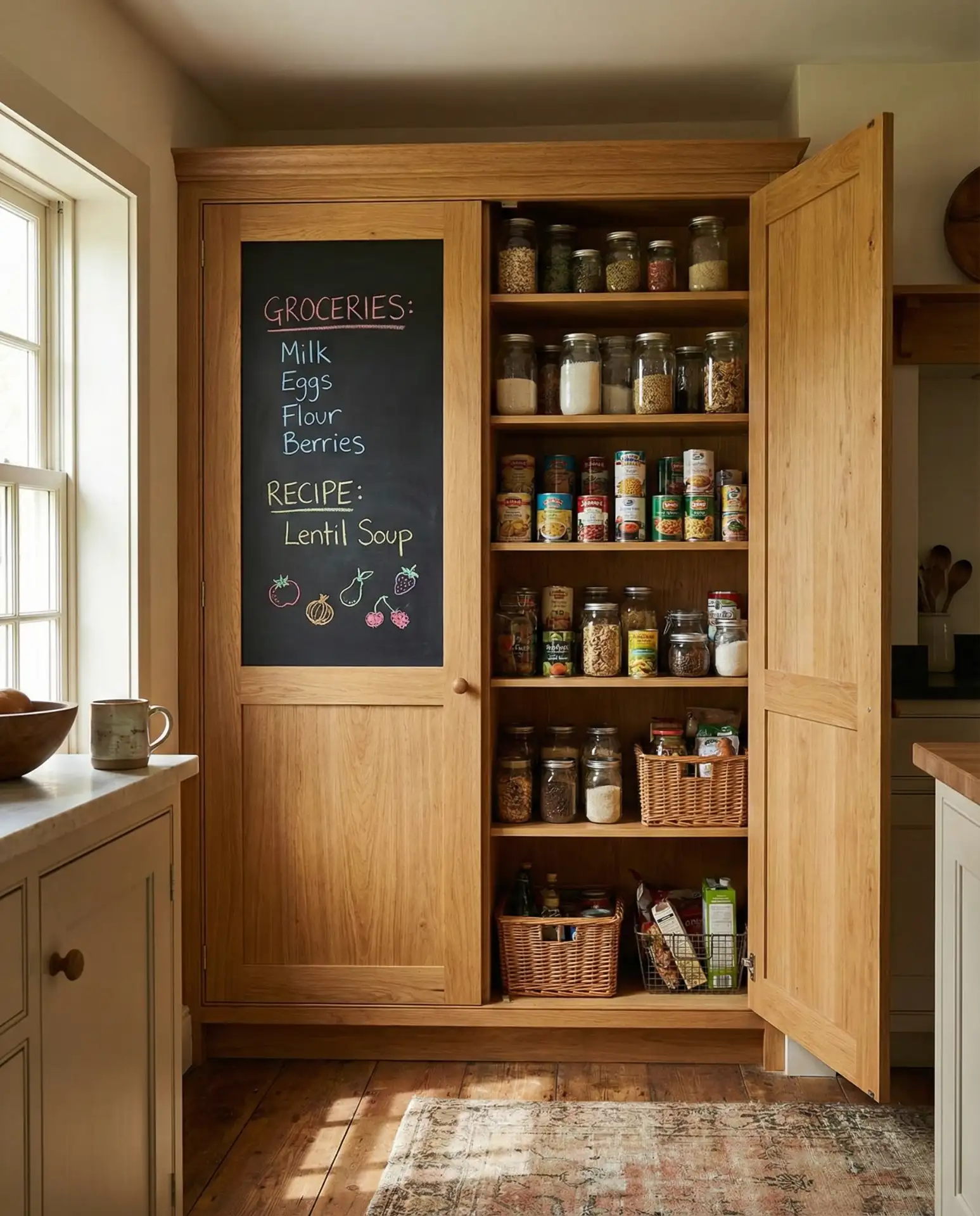
In the Southeast, where hospitality and family meals are central to home life, this feature often becomes a hub for recipe swaps and dinner plans. Use high-quality chalkboard paint for the best results—cheap versions can streak or fade after a few months. Keep a small bucket of chalk and an eraser on a nearby hook so they’re always within reach.
11. Sage Green Pantry with Brass Hardware
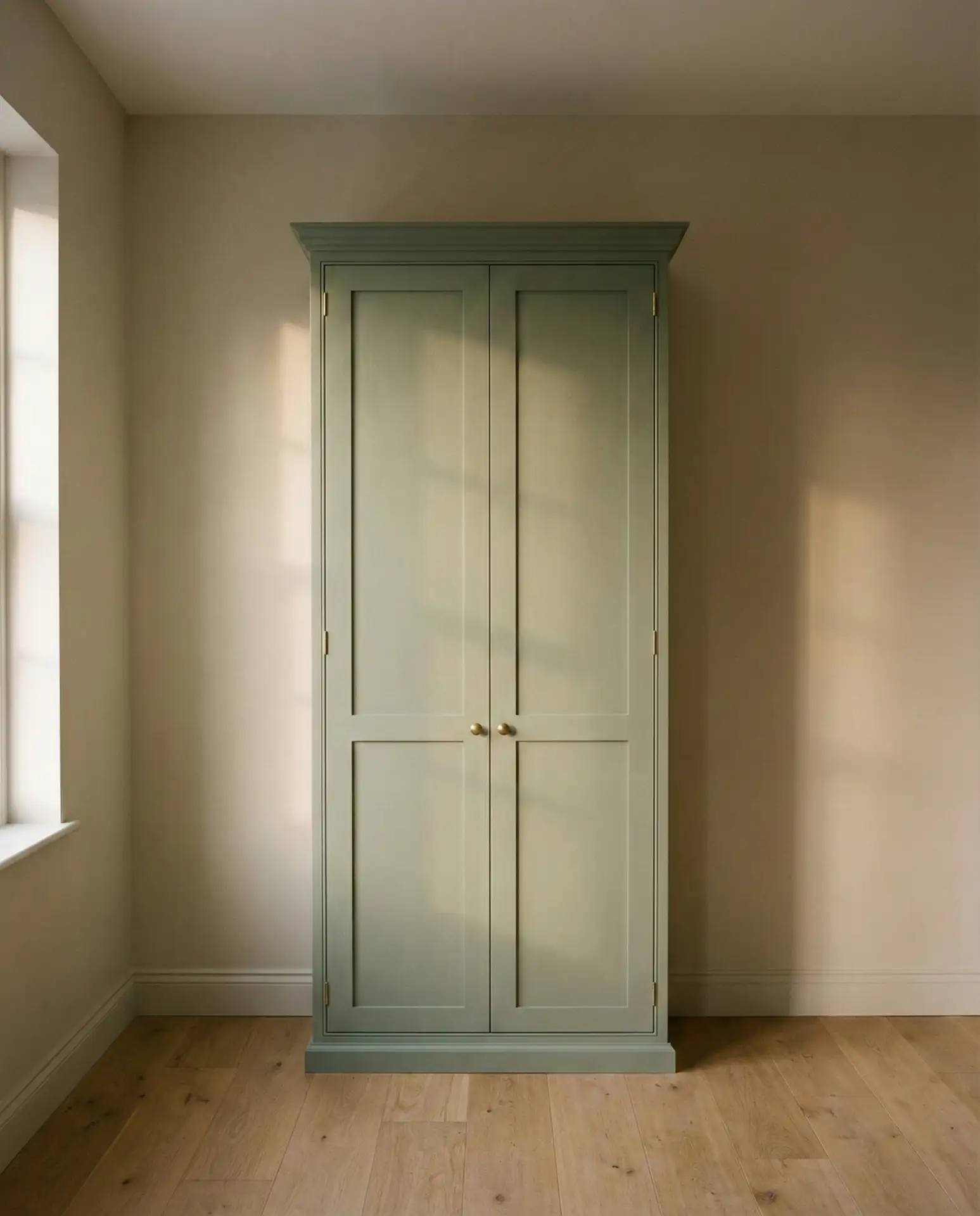
A green pantry cabinet in a soft sage hue brings an earthy, calming vibe to kitchens that lean toward natural and organic aesthetics. Pair it with unlacquered brass hardware for a finish that develops a lived-in patina over time. This color works beautifully with white marble, butcher block, and warm wood tones, making it a versatile choice for both traditional and contemporary homes.
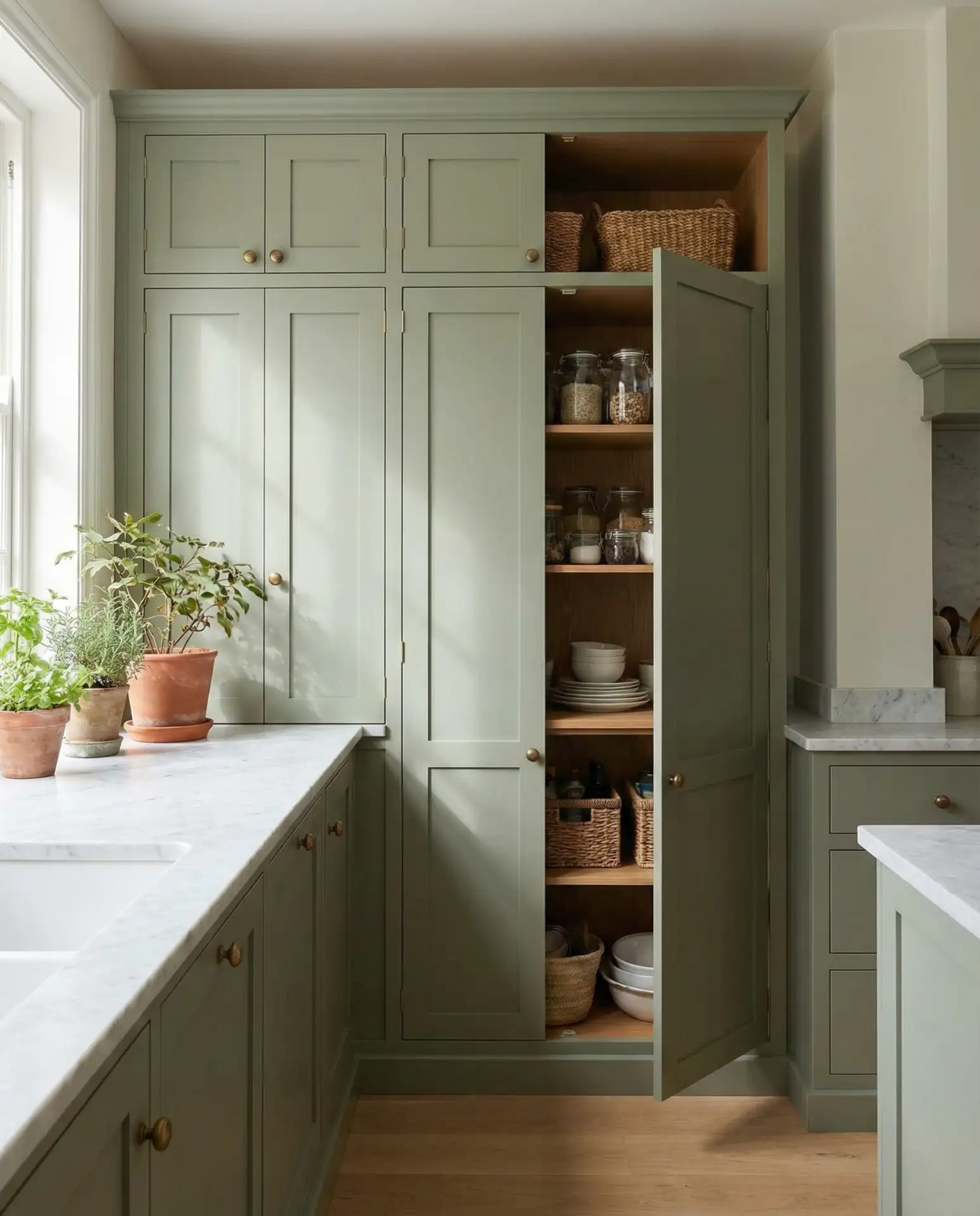
This style thrives in Pacific Coast kitchens where homeowners embrace a connection to nature and sustainability. Sage green feels timeless yet current—it’s been trending for a few years but shows no signs of fading. If you’re DIYing, Benjamin Moore’s “Saybrook Sage” and Farrow & Ball’s “Vert de Terre” are popular choices that nail the look.
12. IKEA PAX Pantry Hack
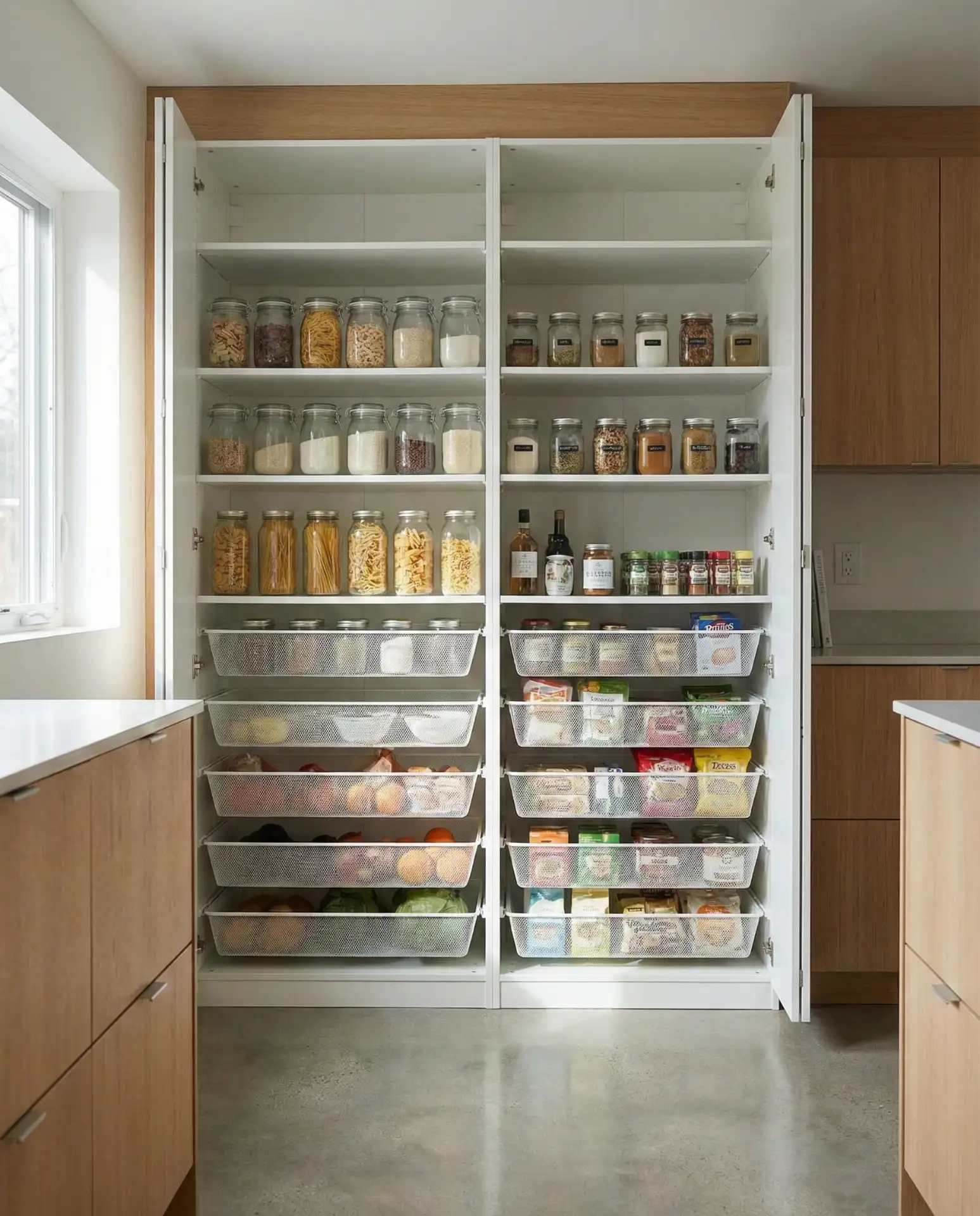
The Ikea PAX wardrobe system is a budget-friendly way to create a custom pantry without the custom price tag. With its modular frames, adjustable shelves, and door options, you can configure a tall pantry that looks built-in but costs a fraction of what a carpenter would charge. Add pull-out baskets, wire shelving, or even a wine rack insert to personalize the setup. It’s a favorite among DIYers who want flexibility and style.
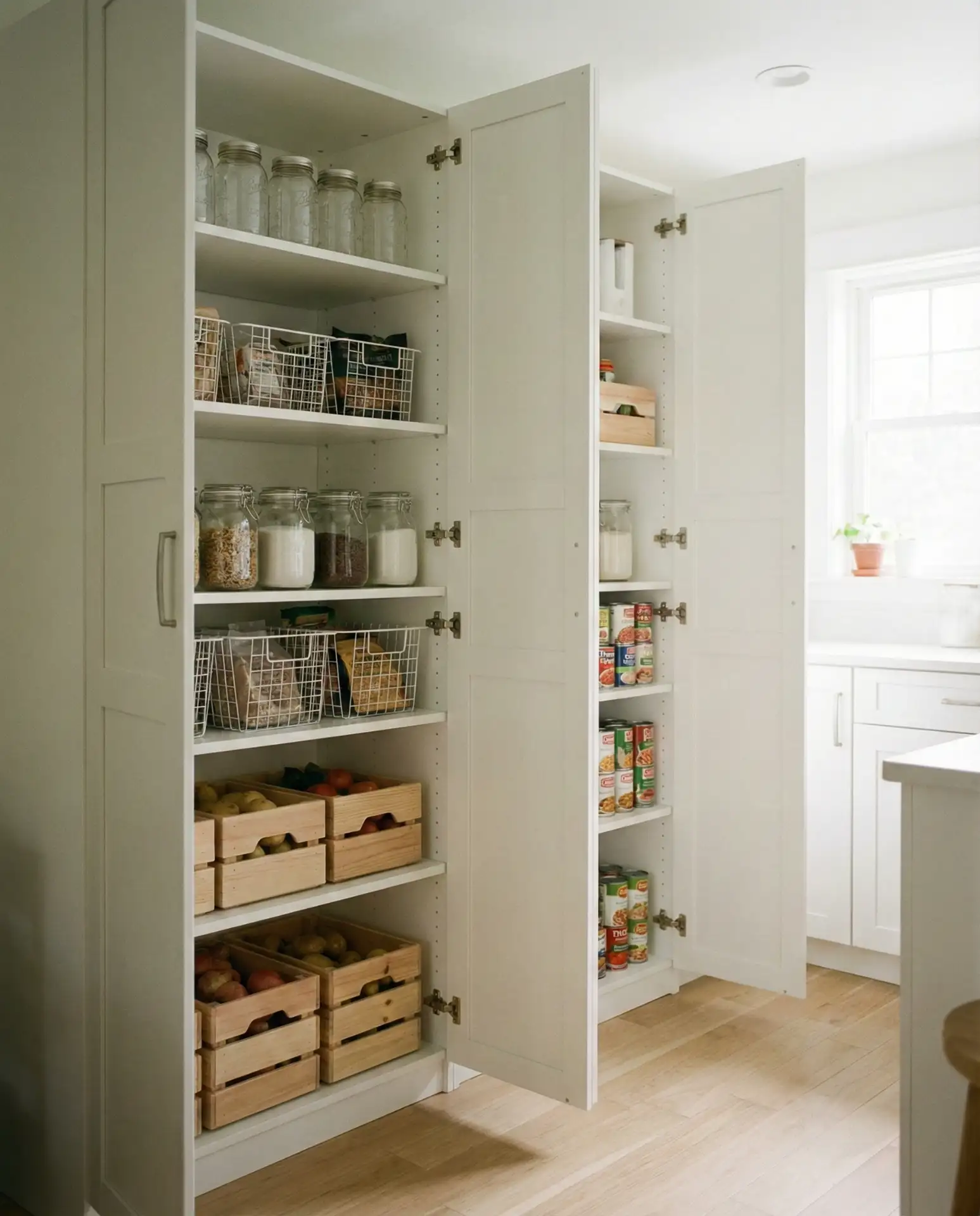
Real homeowners often start with a basic PAX frame and upgrade over time, adding drawer dividers or custom fronts from companies like Semihandmade. The system is especially popular in cities like New York and San Francisco, where closet-sized kitchens demand creative storage solutions. Total cost typically runs between $500 and $1,000, depending on how many accessories you choose.
13. Matte Black Pantry Cabinet with Open Shelving
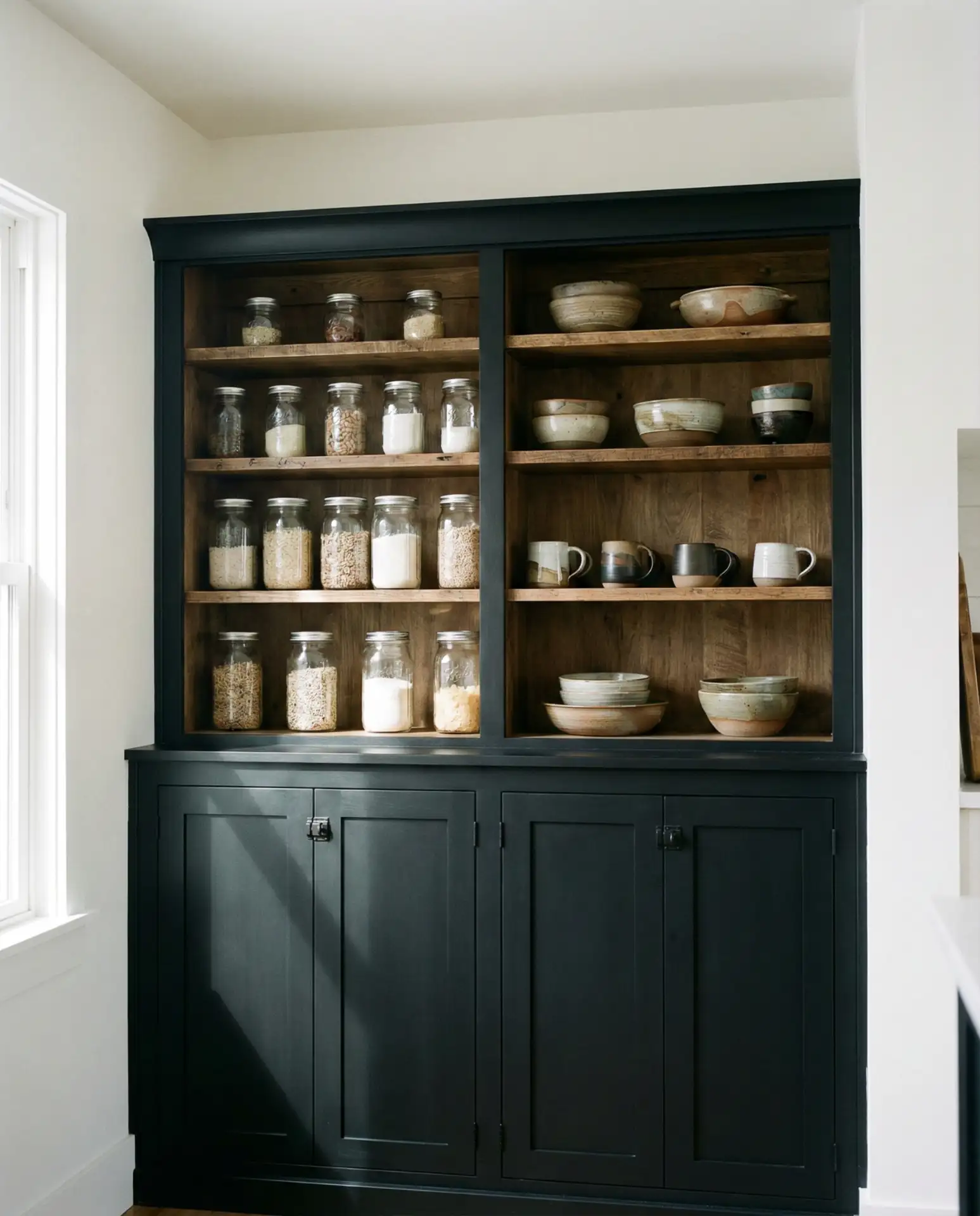
A black pantry cabinet makes a bold statement in kitchens that embrace drama and contrast. When paired with open shelving, it becomes both functional and decorative—display your prettiest jars, cookbooks, and bowls while hiding less photogenic items behind closed doors below. Matte black finishes are forgiving when it comes to fingerprints, and they anchor a room in a way that lighter colors can’t.
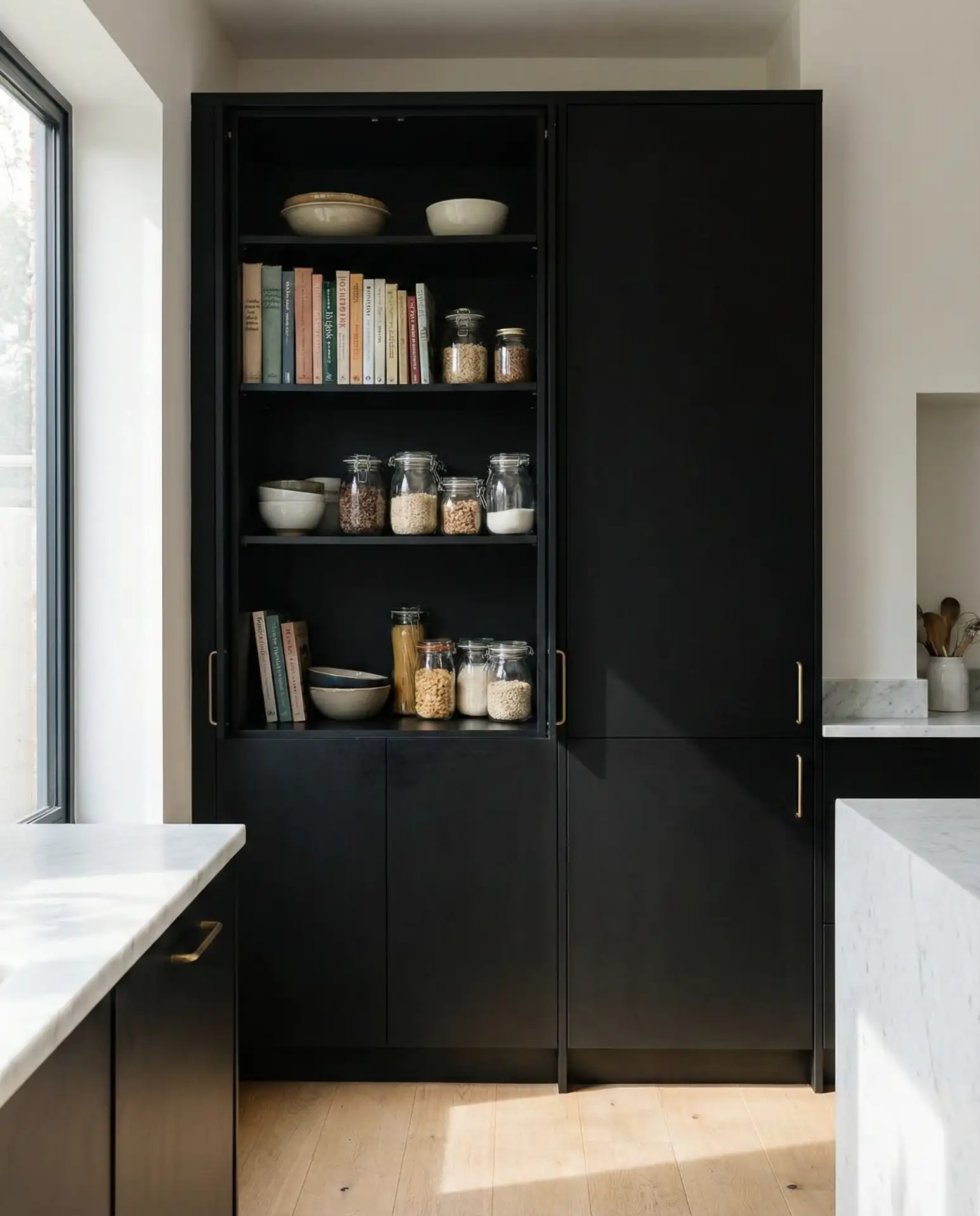
This look works best in kitchens with strong natural light or under-cabinet lighting—black can read heavy in dim spaces. Consider adding LED strip lights inside the open shelves to highlight your displays. Budget for quality hardware and paint; cheap matte black can chip easily, especially in a high-traffic area like the kitchen.
14. Deep Pantry with Roll-Out Drawers
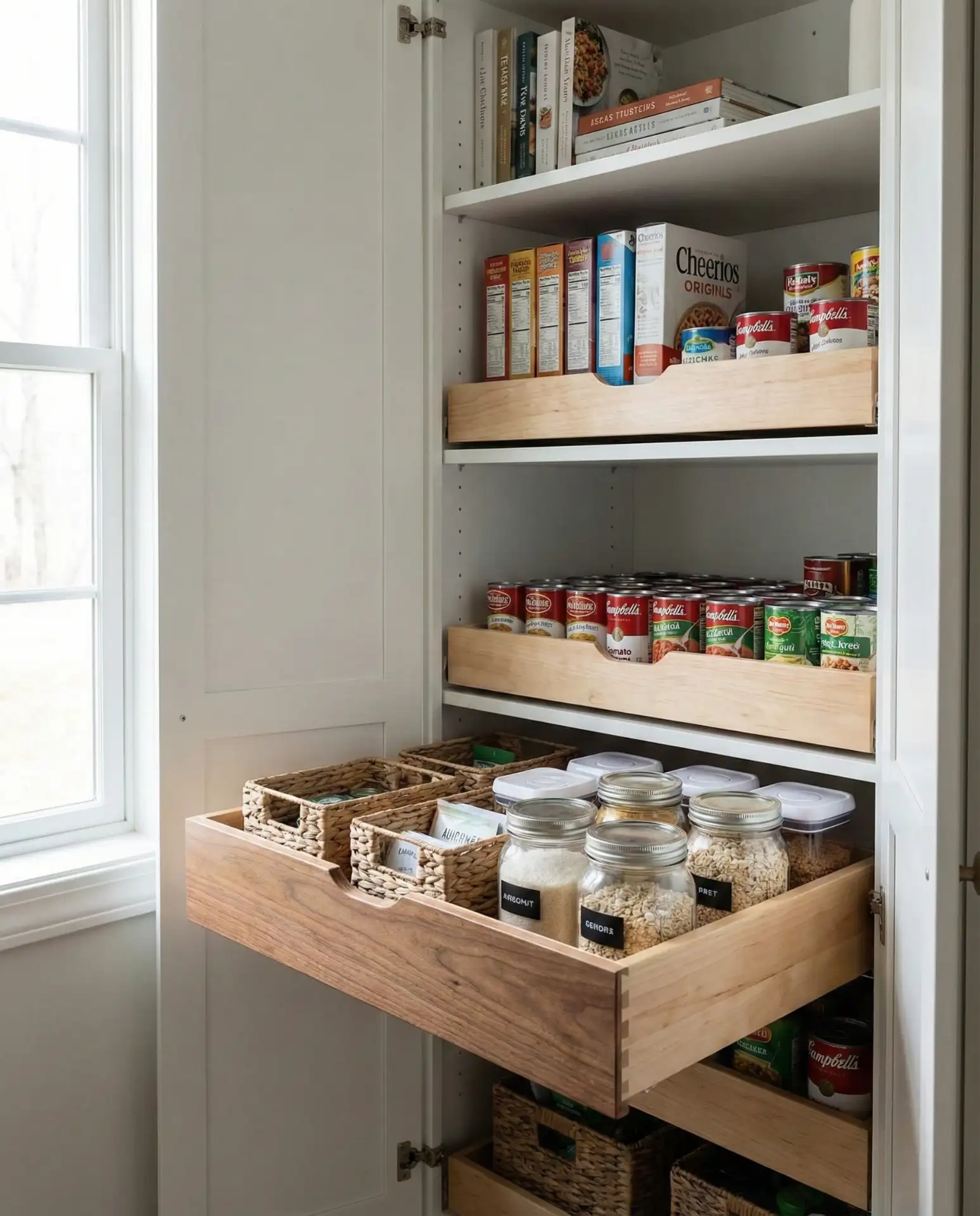
If you’re wondering how to organize deep pantry shelves without losing items in the back, roll-out drawers are the answer. These sliding trays bring everything forward, so you can see and reach every jar, bag, and box. They’re ideal for lower cabinets where bending down and digging around is a daily frustration. Install them in a tall pantry, and you’ll transform the space from a black hole into a highly functional storage zone.
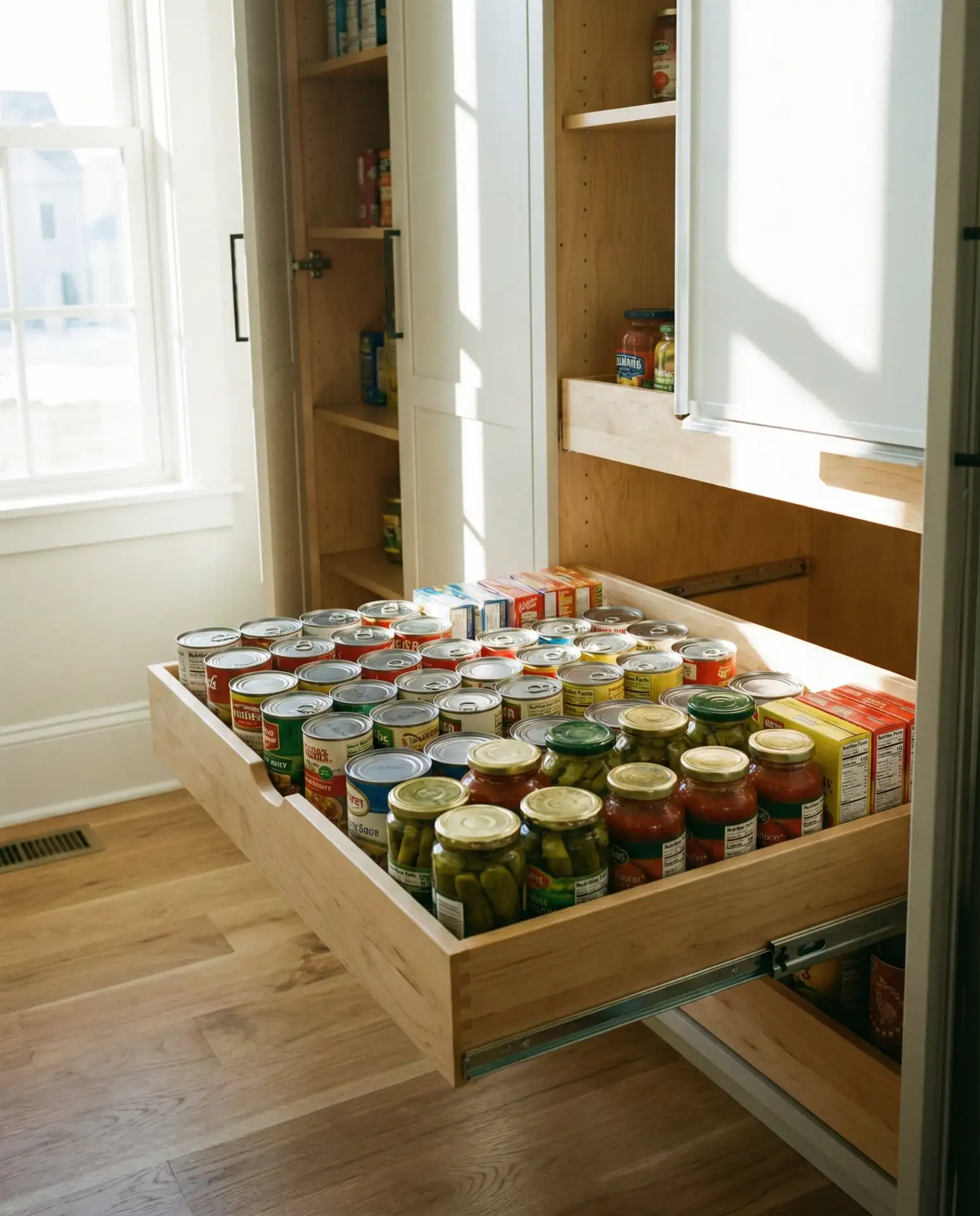
A practical insight: measure the depth of your pantry carefully before ordering roll-out systems. Most are designed for standard 24-inch cabinets, but custom depths are available if you have deeper shelving. Soft-close mechanisms add about $20 per drawer but are worth it to prevent slams and extend the life of the hardware.
15. Pantry Cabinet Next to the Fridge
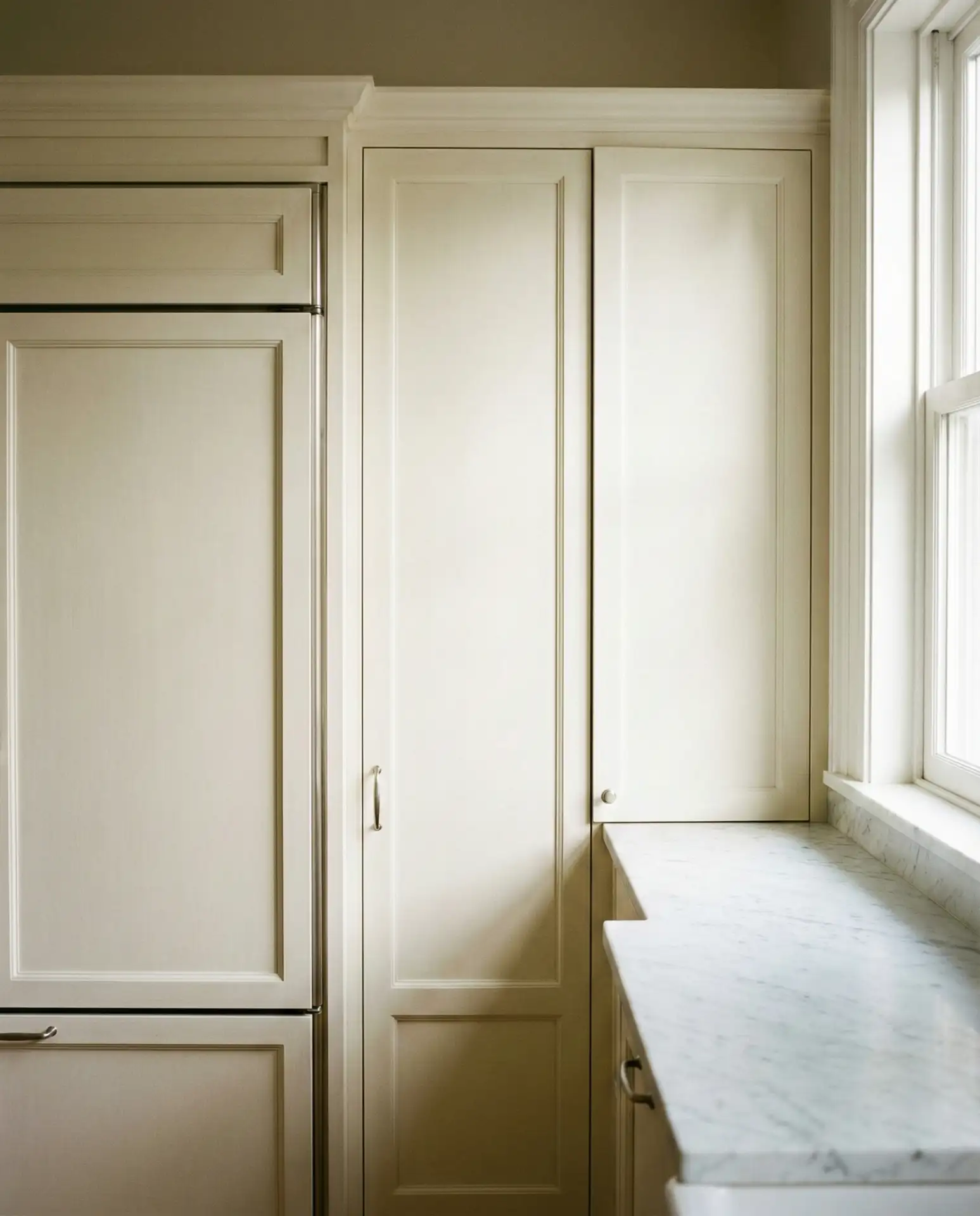
Positioning a pantry cabinet directly beside the fridge creates a streamlined storage wall that maximizes efficiency. You can unload groceries and put them away in one motion, and the visual continuity makes your kitchen feel more cohesive. This layout is especially smart in galley kitchens where every linear foot counts. Match the pantry cabinet finish to your fridge panels for a seamless built-in look.
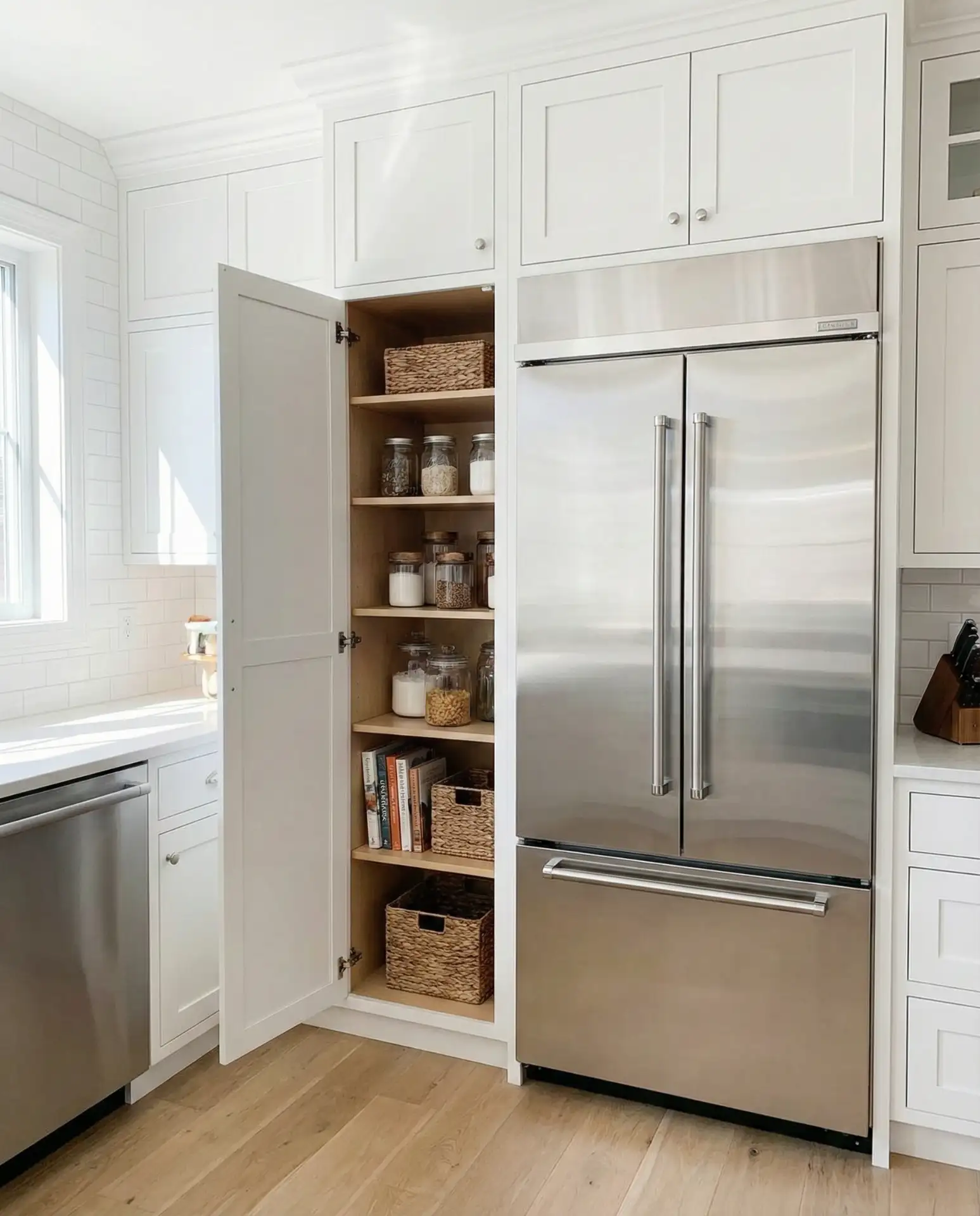
This arrangement works best in suburban homes where the kitchen is the heart of family life and efficiency matters. Leave a small gap between the fridge and pantry for ventilation—most fridges need at least one inch of clearance on each side. If you’re installing new cabinetry, ask your contractor about integrating the fridge into the pantry wall for an ultra-custom appearance.
16. Clear-Front Pantry with Food Storage Canisters
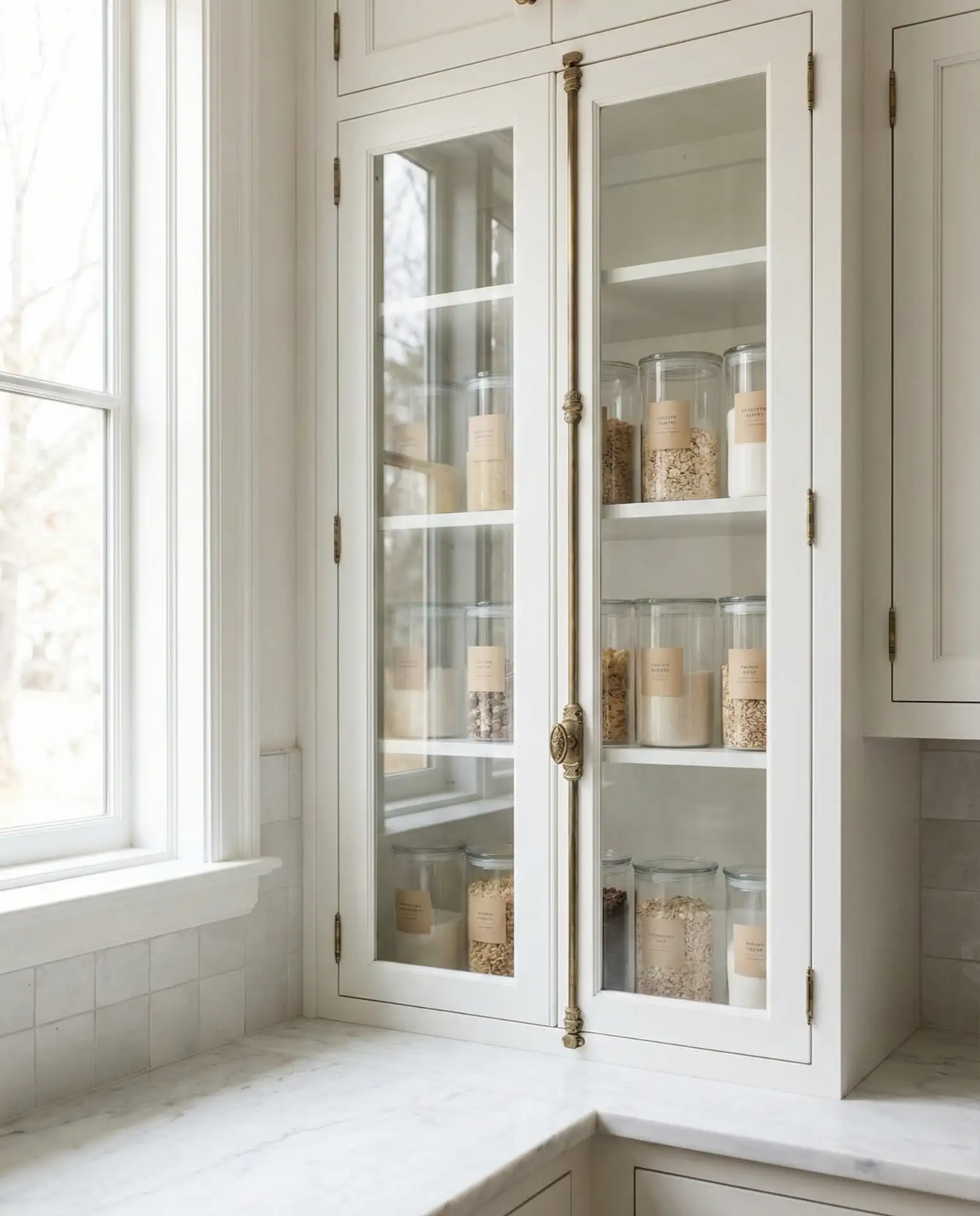
A clear-front pantry cabinet turns food storage into an art form. Glass or acrylic doors let you see your neatly labeled canisters, creating a sense of order and making it easy to spot when you’re running low on essentials. Invest in uniform containers for flour, sugar, pasta, and grains, and the visual payoff is immediate. This approach is perfect for anyone who finds motivation in a well-organized, Instagram-worthy space.
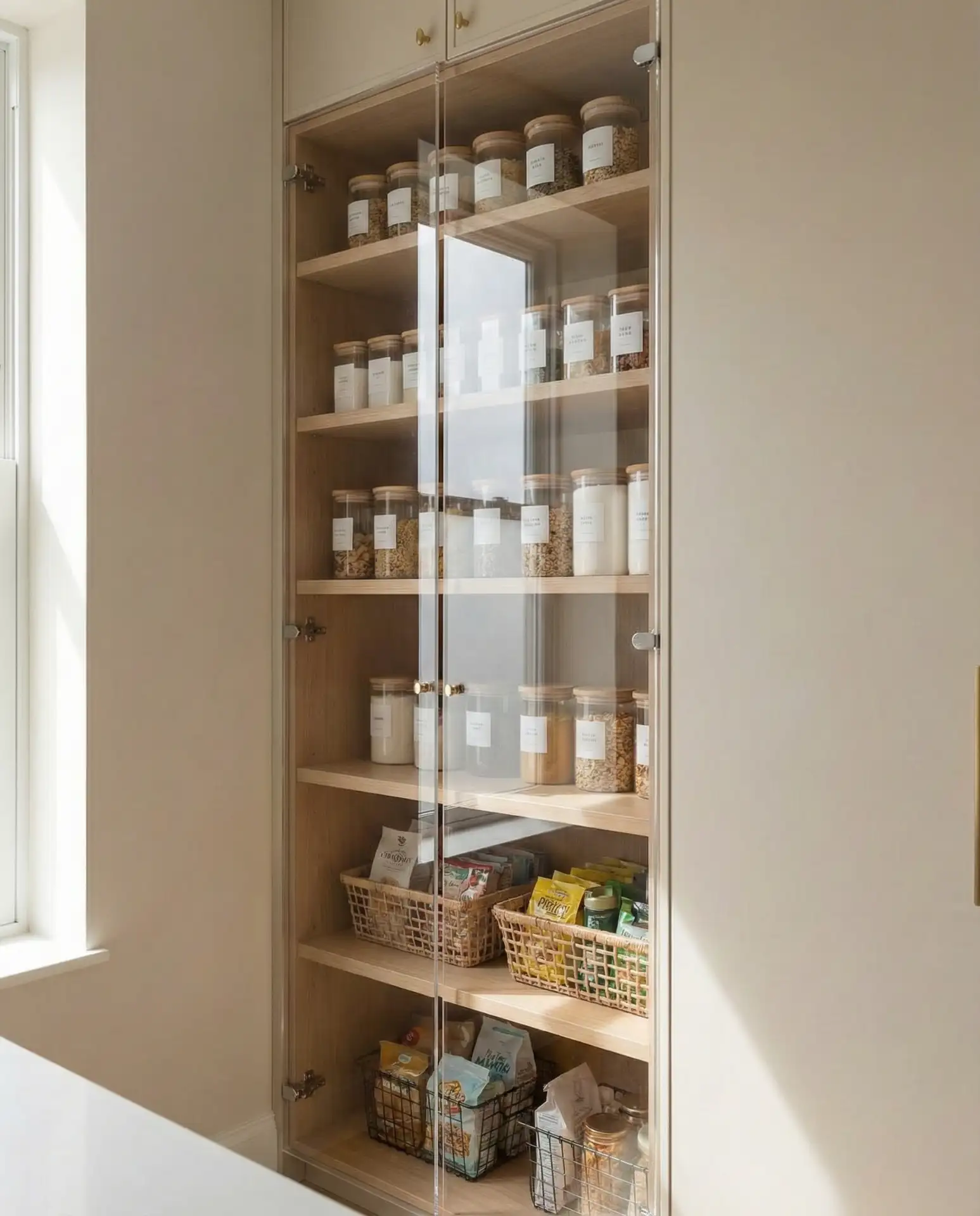
In Colorado and the Mountain West, where bulk buying is common due to rural distances, this style helps families keep track of large quantities without visual clutter. Choose BPA-free, airtight canisters to keep food fresh longer, and label them with a label maker or chalkboard stickers. Budget around $100 to $200 for a full set of quality canisters, which is a small investment for the clarity they bring.
17. Navy Blue Freestanding Pantry
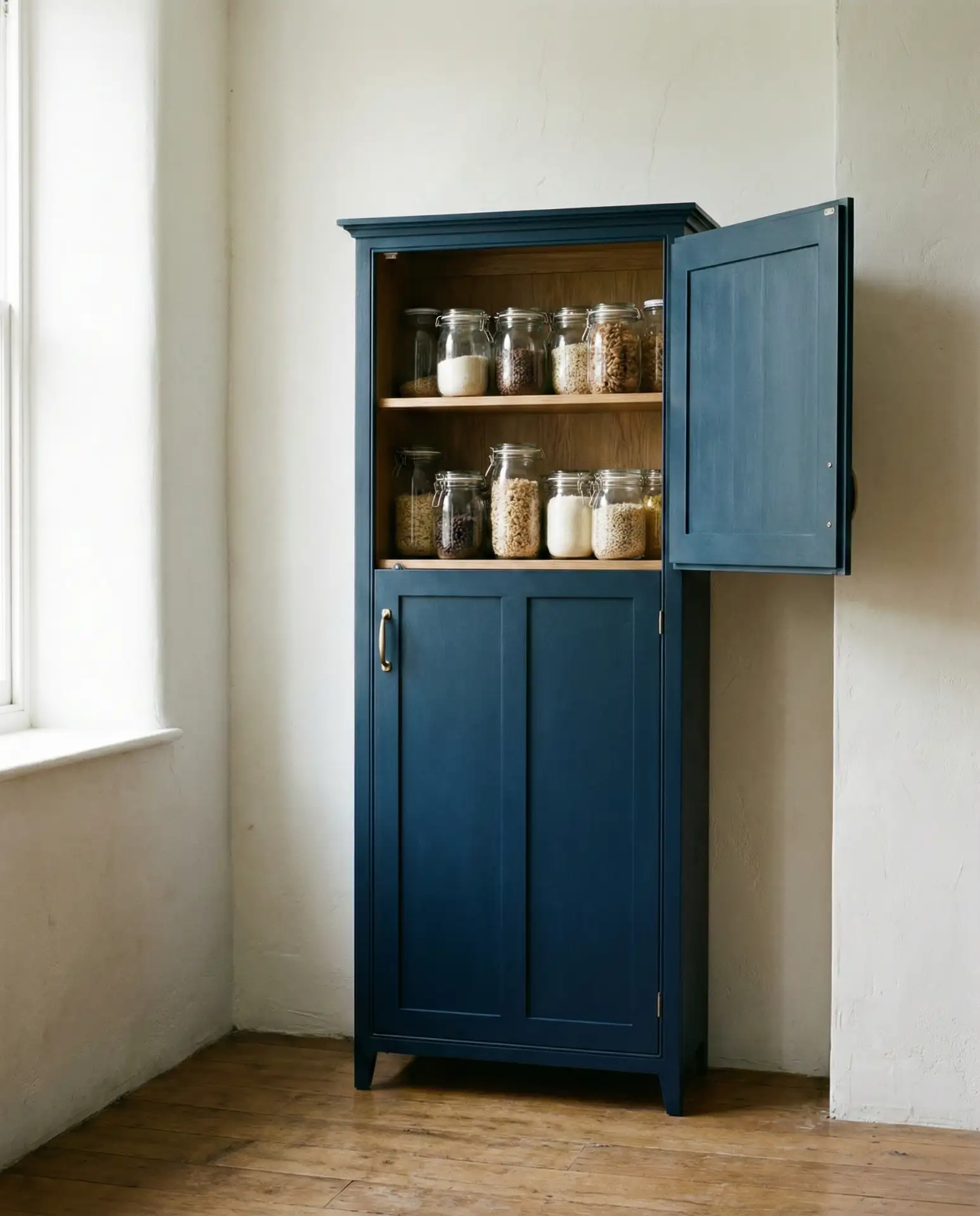
A blue freestanding pantry in a rich navy shade adds sophistication and warmth to kitchens that need a color boost. This piece works as both storage and a statement, especially when paired with brass or nickel hardware. It’s a versatile choice that complements coastal, traditional, and even industrial styles. Because it’s freestanding, you can take it with you if you move, making it a smart investment for renters and homeowners alike.
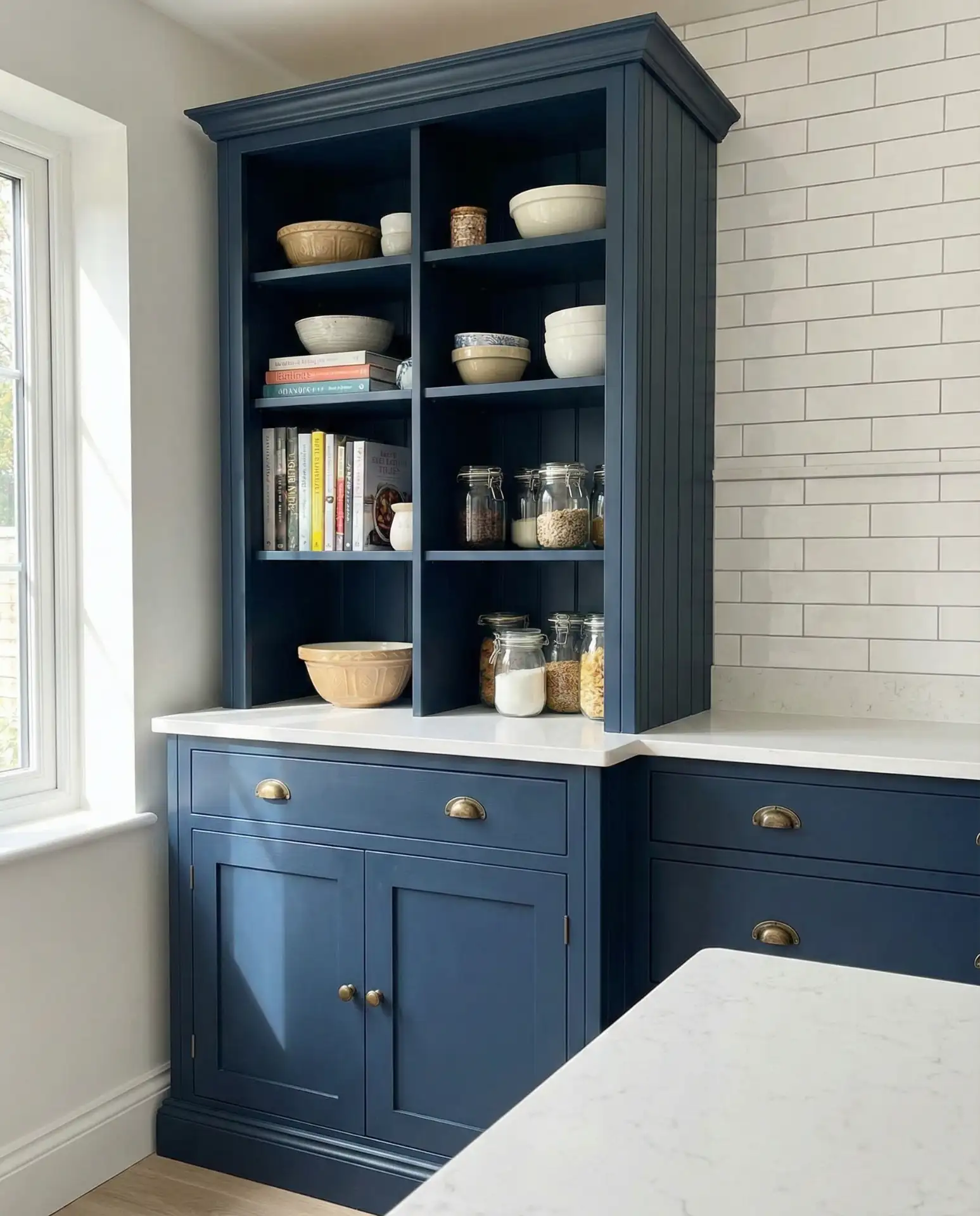
This look is especially popular along the Eastern Seaboard, where navy evokes nautical charm without feeling too thematic. Look for solid wood construction with dovetail joints—these details ensure the piece will last for decades. Expect to pay $600 to $1,500 depending on size and craftsmanship, with higher-end options including soft-close hinges and adjustable shelving.
18. Walk-In Pantry with Organization Systems
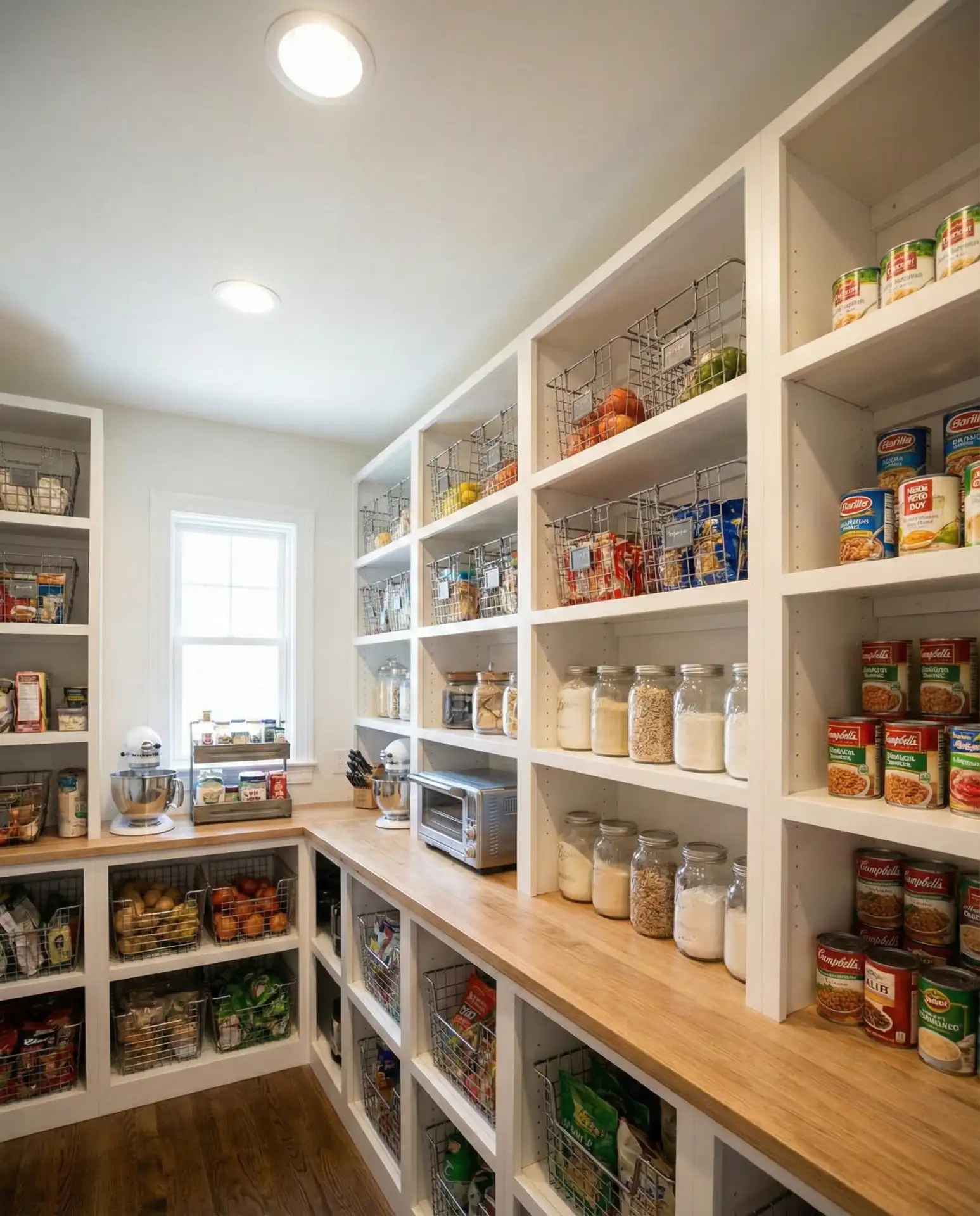
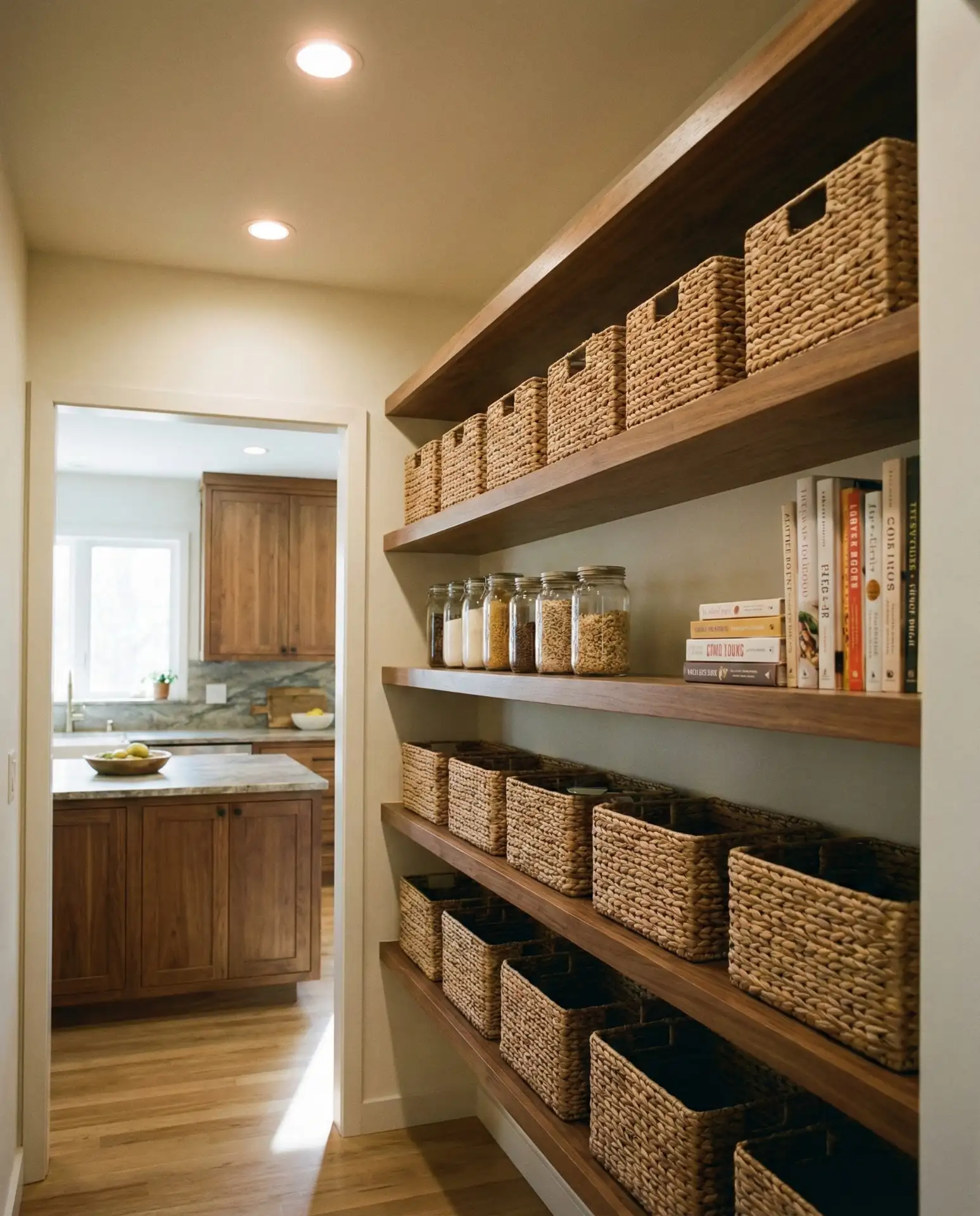
A walk-in pantry is the ultimate dream for serious home cooks and large families. With floor-to-ceiling shelving, pull-out baskets, and dedicated zones for baking, snacks, and bulk storage, it’s a room that does serious work. Add a countertop for small appliances or meal prep, and you have a second kitchen that keeps the main space clutter-free. This setup is increasingly common in new construction, especially in suburban markets where square footage allows.
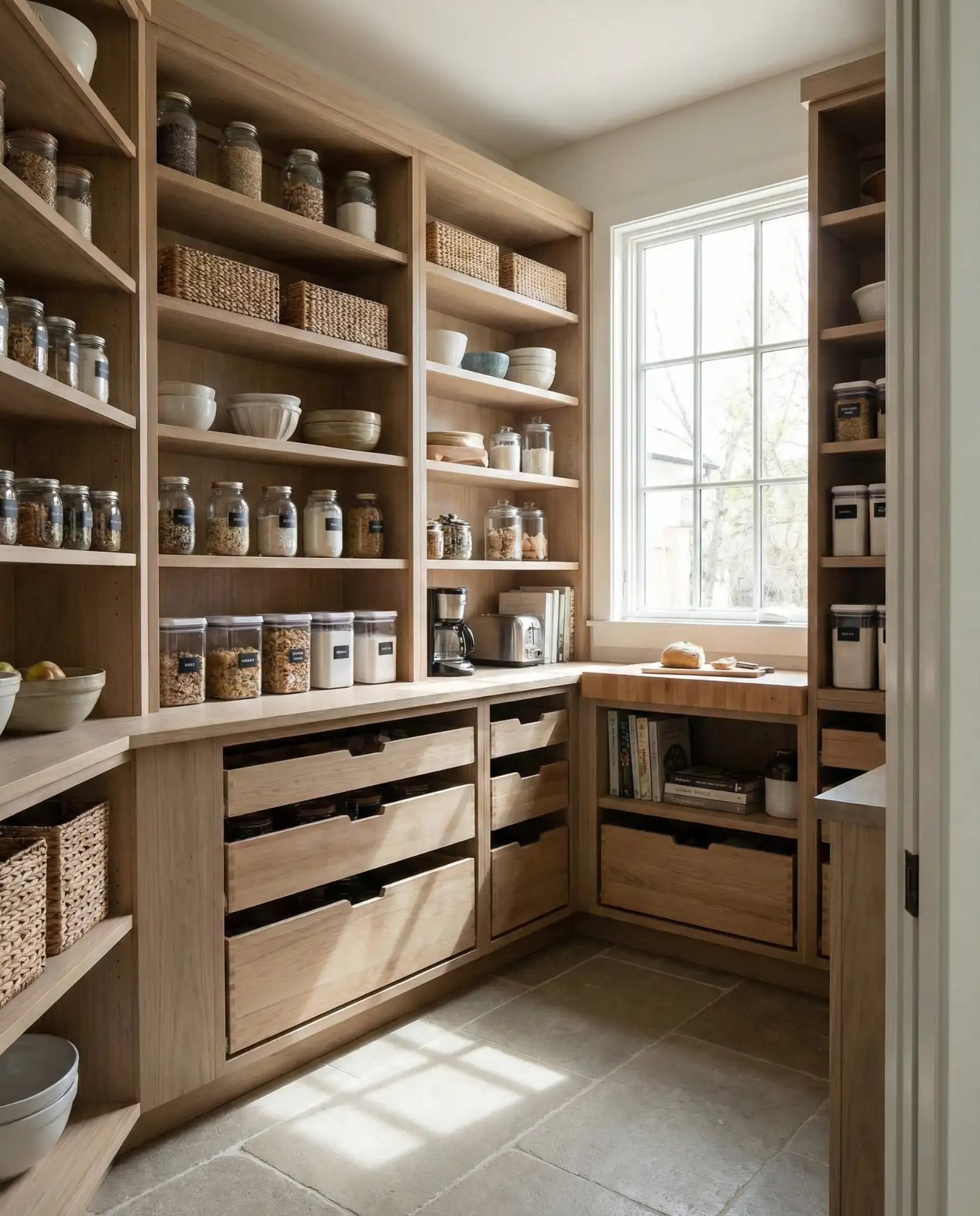
An expert perspective: design your walk-in pantry with zones in mind. Keep everyday items at eye level, backups and bulk goods on upper and lower shelves, and small appliances you use weekly on a counter. Install LED motion-sensor lights so you don’t have to fumble for a switch when your hands are full. Many professionals recommend spending as much time planning your walk-in pantry as you do the main kitchen layout.
19. Pantry Cabinet with Integrated Recycling Bins
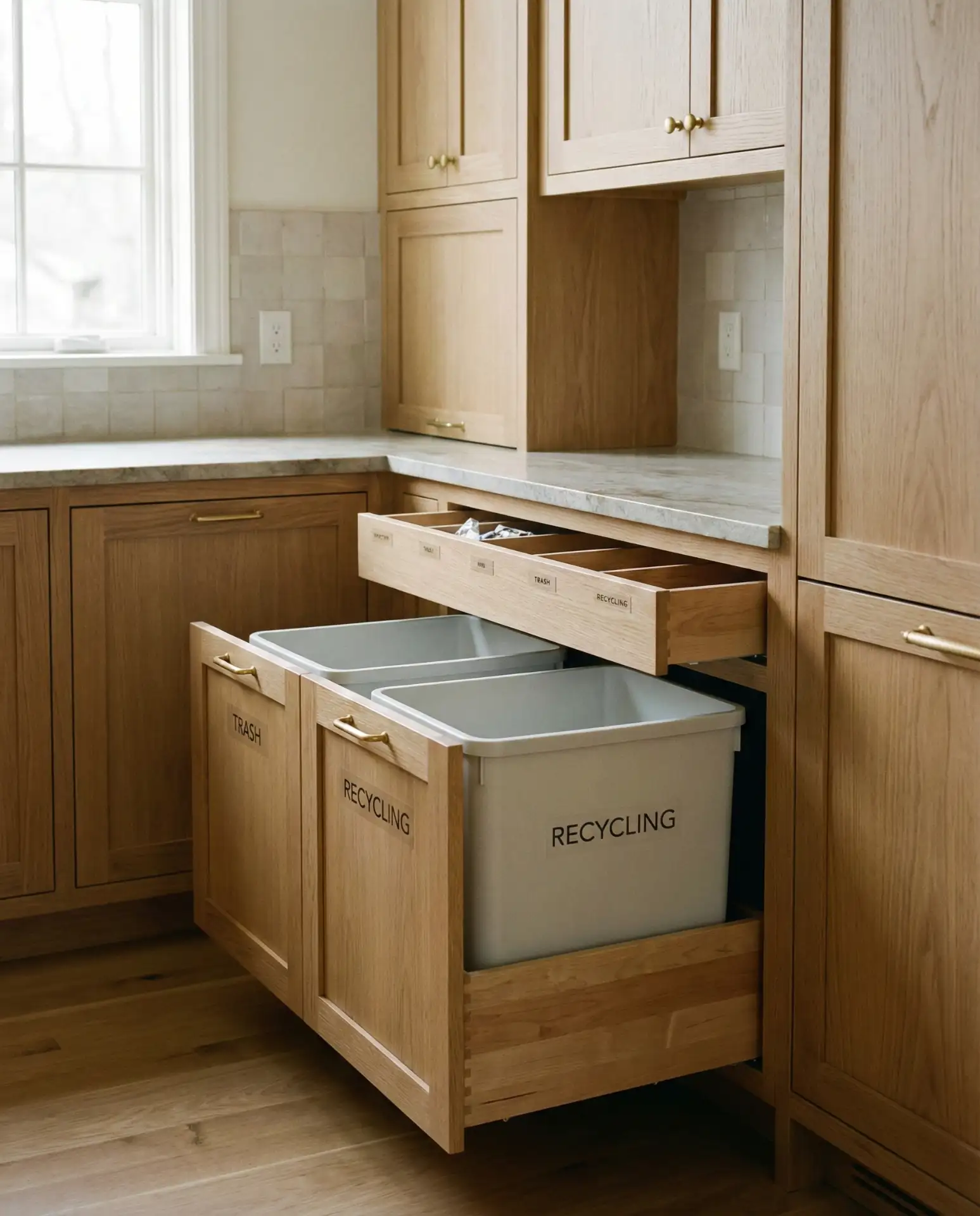
Building recycling and trash bins into a pantry cabinet is a smart way to keep waste management out of sight but still convenient. Pull-out bins sit on sturdy tracks, and you can configure them for recycling, compost, and trash. This setup is especially valuable in open-concept homes where you don’t want bins cluttering the view. It also encourages better sorting habits since everything has a designated place.
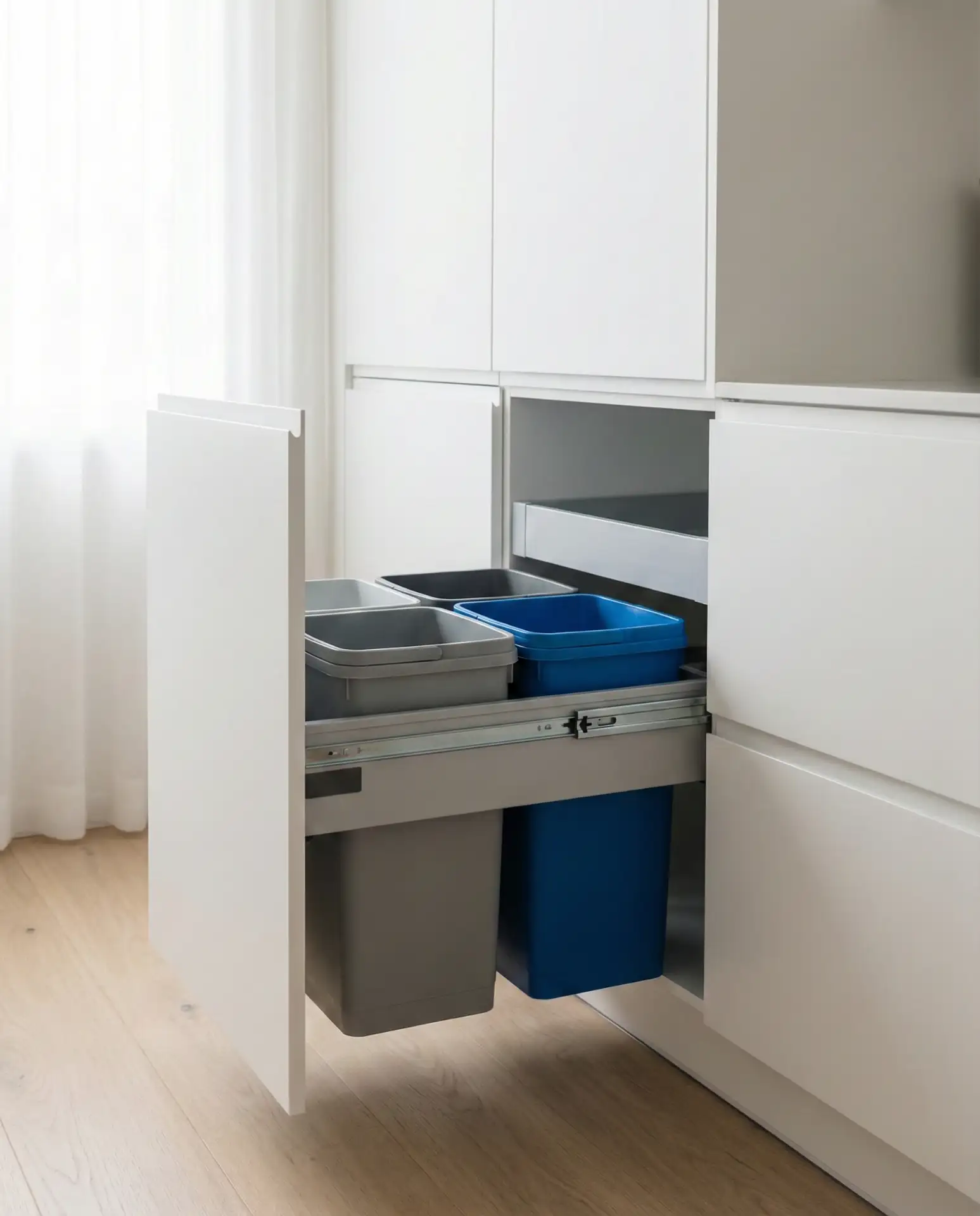
In West Coast cities like Seattle and Portland, where recycling and composting are part of the culture, this feature is almost standard. Choose bins with removable liners for easy cleaning, and make sure the cabinet has ventilation holes to prevent odors. Budget $200 to $400 for a quality pull-out system, which is a small price for the daily convenience it provides.
20. Minimalist White Pantry with Push-to-Open Doors
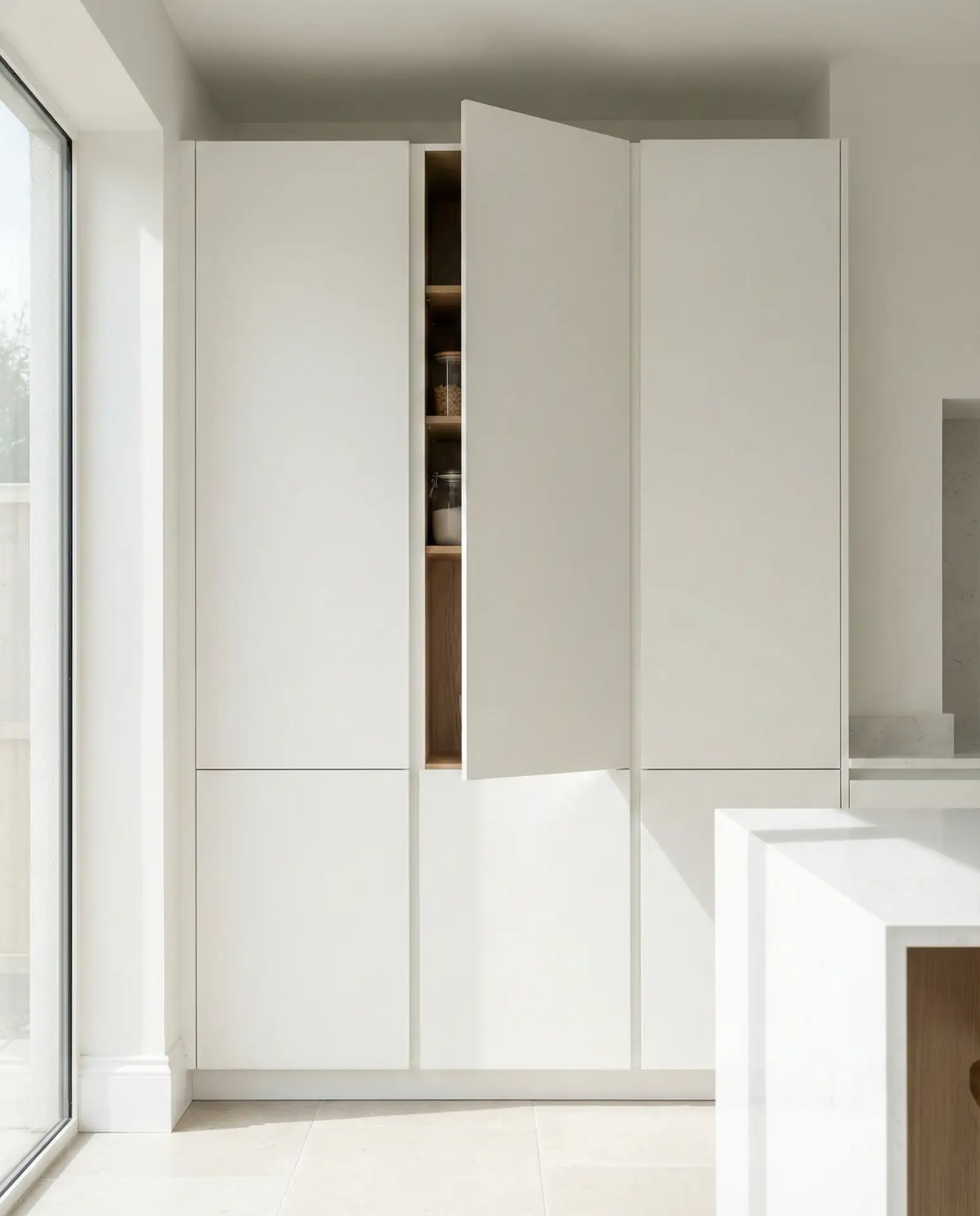
A minimalist white pantry with push-to-open doors eliminates hardware entirely, creating a seamless, handleless facade that’s pure modern sophistication. The doors open with a gentle press, and the interior can be as functional or as streamlined as you like. This style pairs beautifully with other handleless cabinetry, and it’s a favorite in contemporary homes where clean lines and simplicity reign.
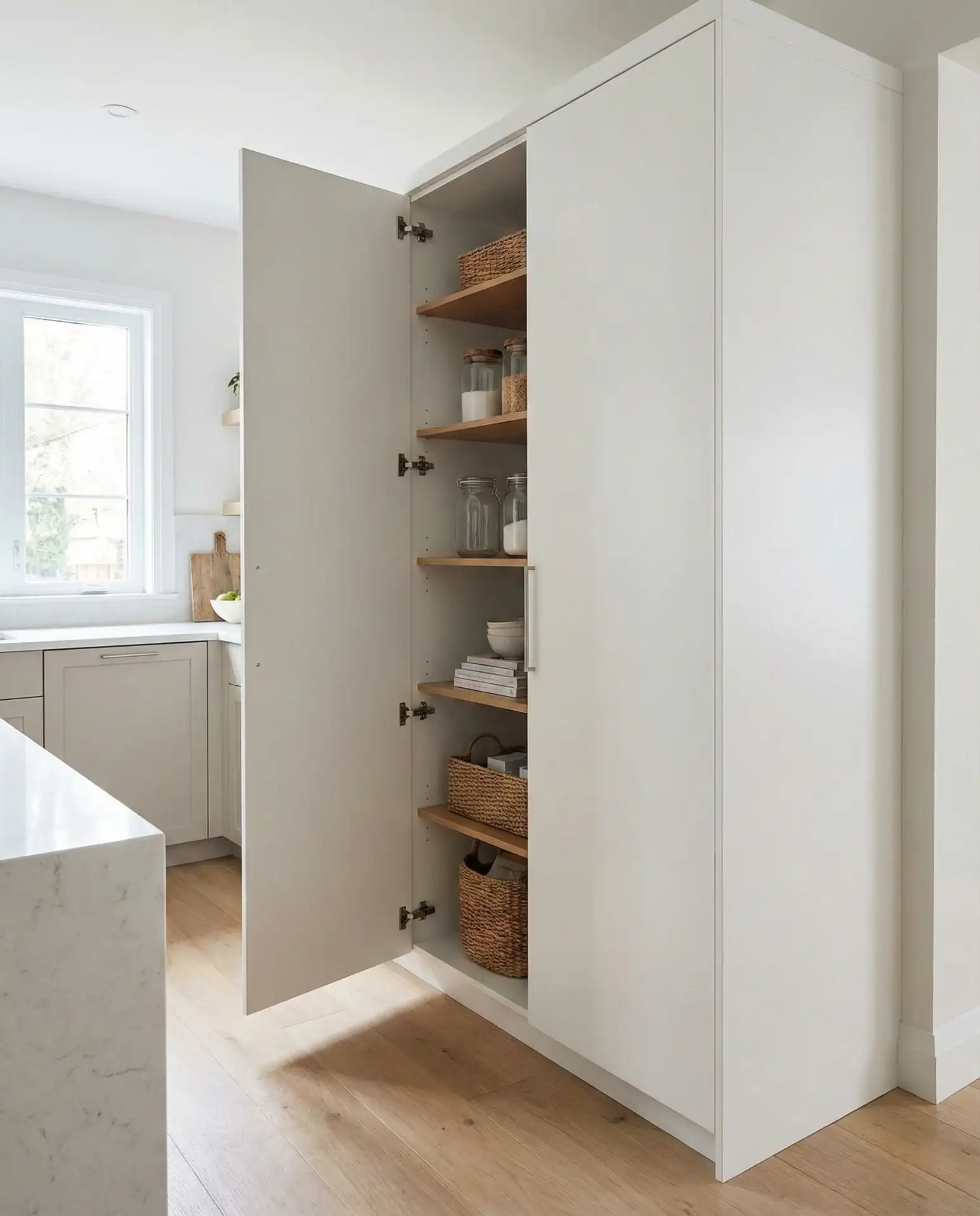
This trend is strong in urban lofts and new builds where homeowners want a gallery-like aesthetic. Push-to-open mechanisms require quality hardware to avoid sagging or misalignment over time, so invest in reputable brands. The result is a kitchen that feels calm and uncluttered, with storage that blends into the background until you need it.
21. Rustic Reclaimed Wood Pantry
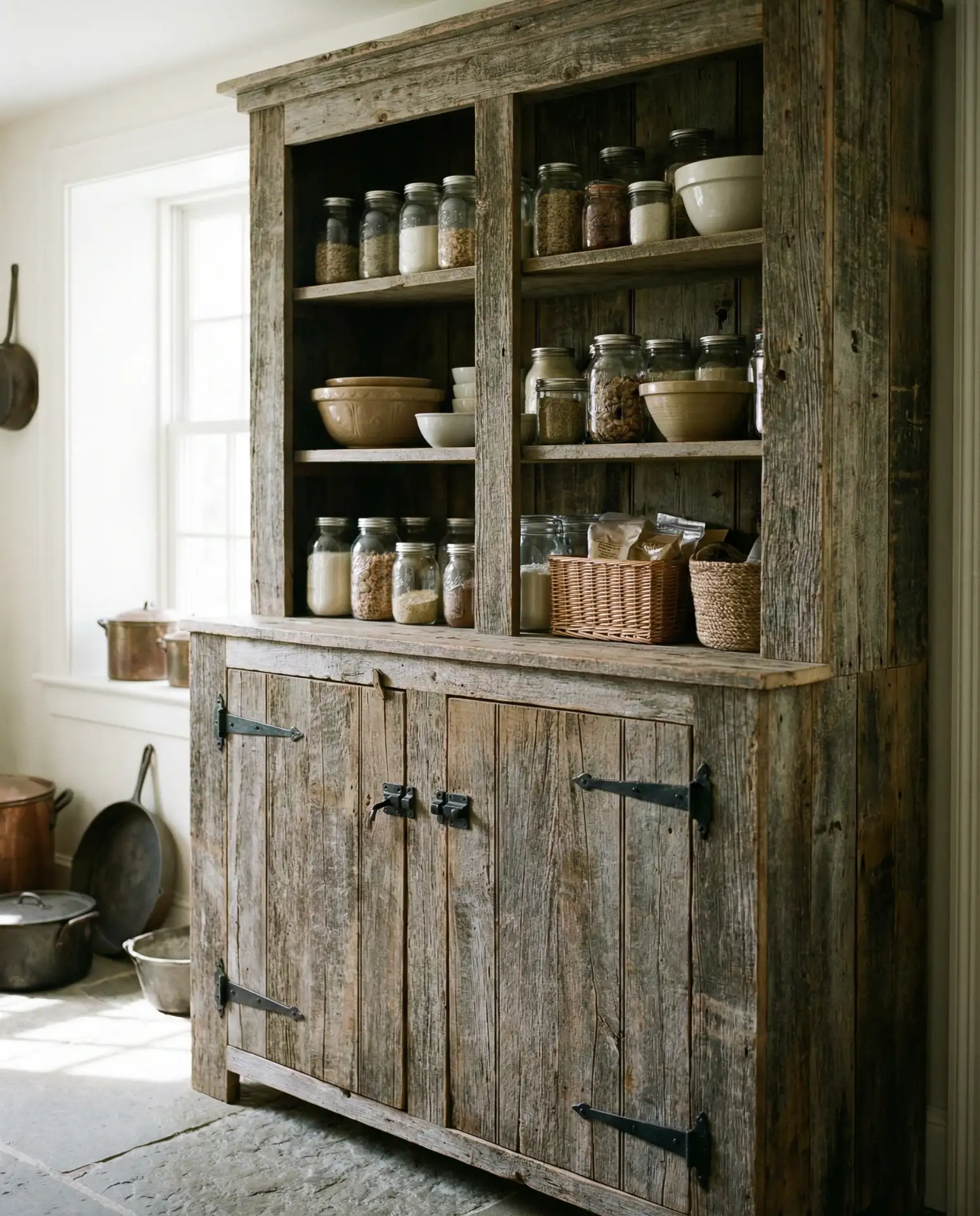
A pantry built from reclaimed wood brings history and character into your kitchen. The weathered texture and natural color variations tell a story, and no two pieces are ever the same. This style works especially well in farmhouse, cottage, and industrial kitchens where authenticity and craftsmanship are valued. Pair it with matte black hardware or wrought iron for a look that feels both timeless and grounded.
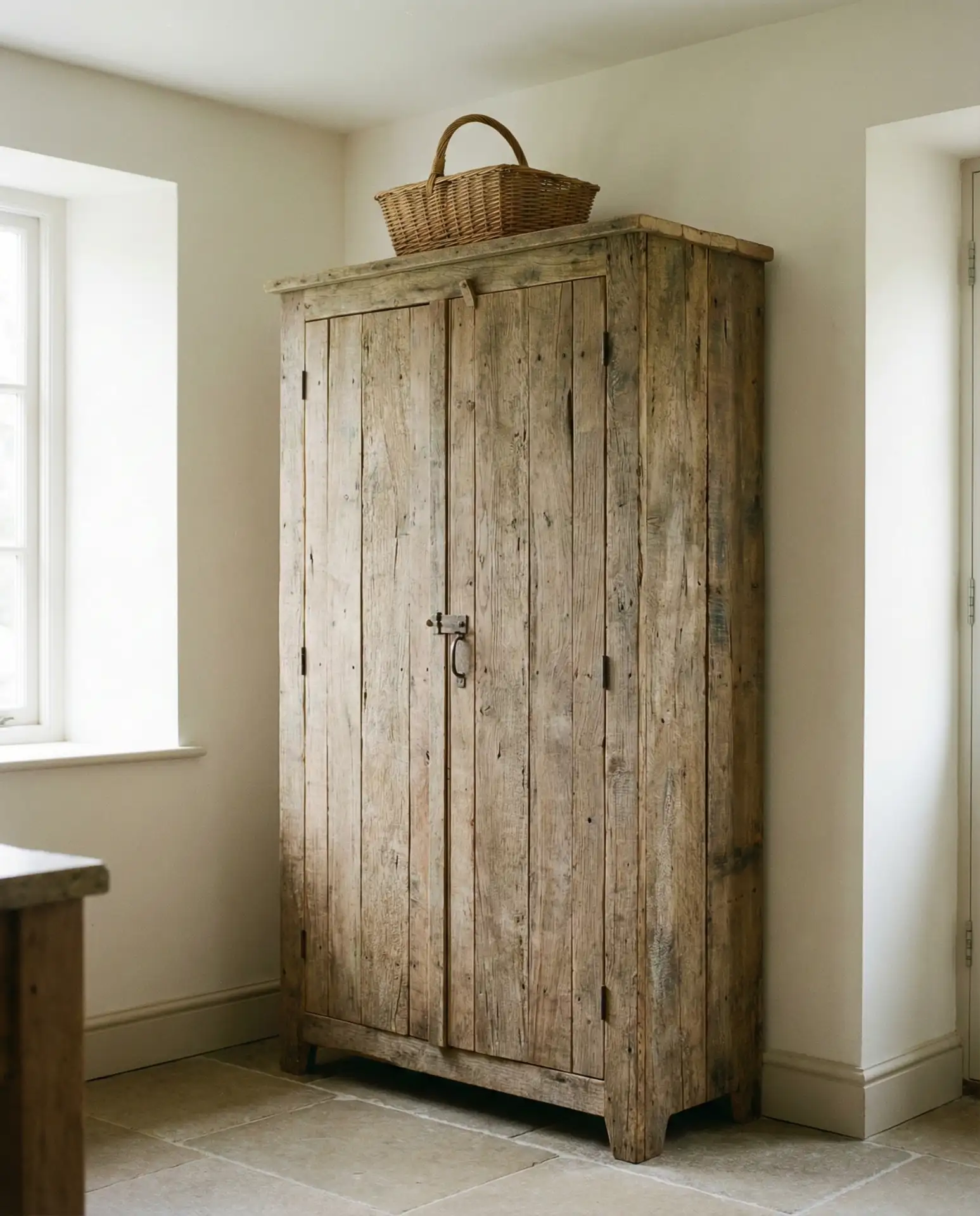
In Vermont, Montana, and other rural regions, reclaimed wood pantries are often custom-built by local artisans using materials salvaged from old barns and fences. The wood carries a patina that new lumber can’t replicate, and many homeowners appreciate the sustainability angle. Expect to pay more for reclaimed wood—$1,500 to $3,000 for a custom piece—but the warmth and authenticity it brings are unmatched.
22. Multi-Functional Pantry with Hidden Desk
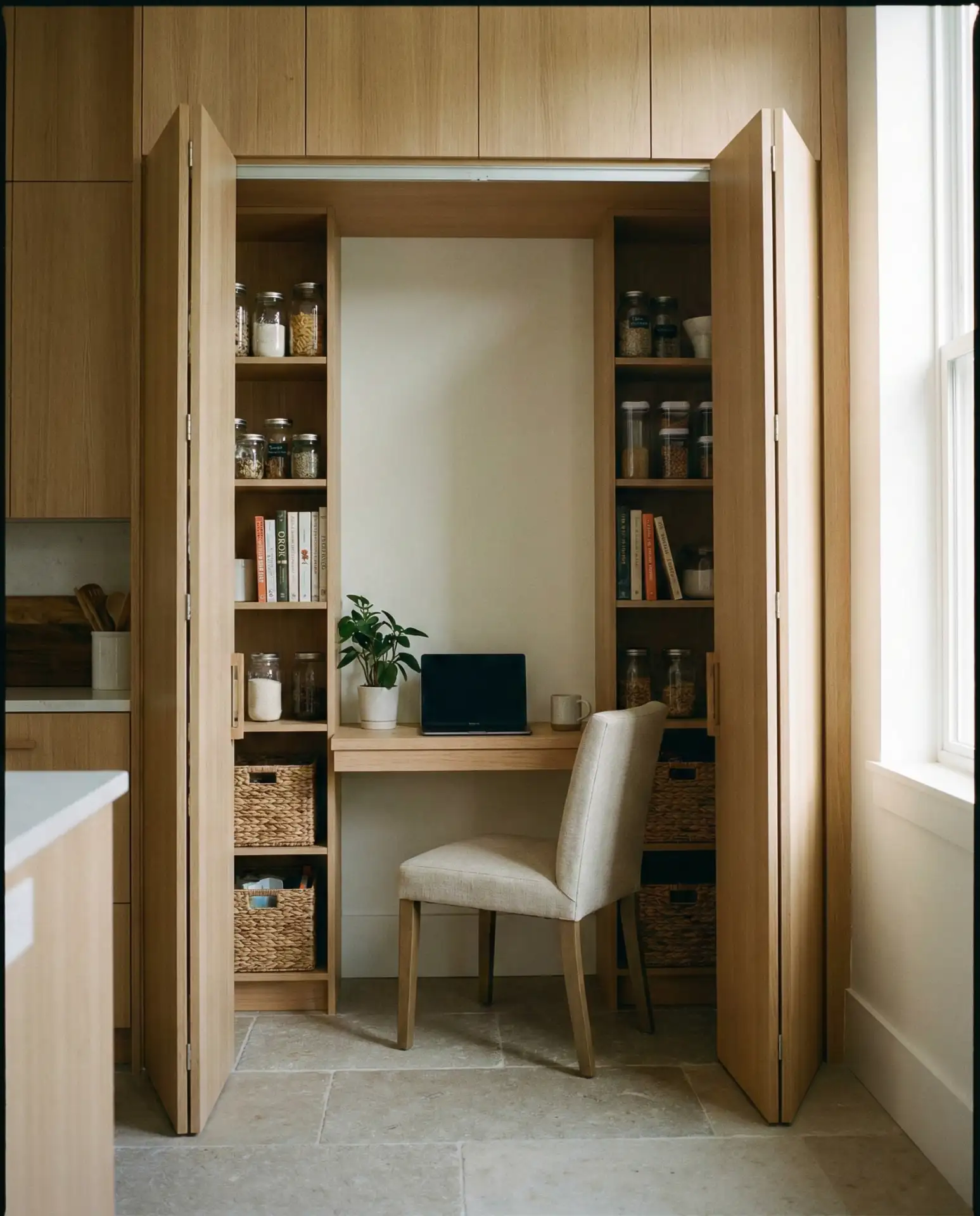
A pantry cabinet that conceals a fold-down desk or laptop station is the ultimate space-saver for kitchens that double as home offices. Close the doors, and it looks like a standard pantry. Open them, and you have a workspace for meal planning, homework, or quick email checks. It’s a brilliant solution for open-plan homes where every zone needs to earn its keep, and it reflects how we’re using our kitchens in more diverse ways than ever before.
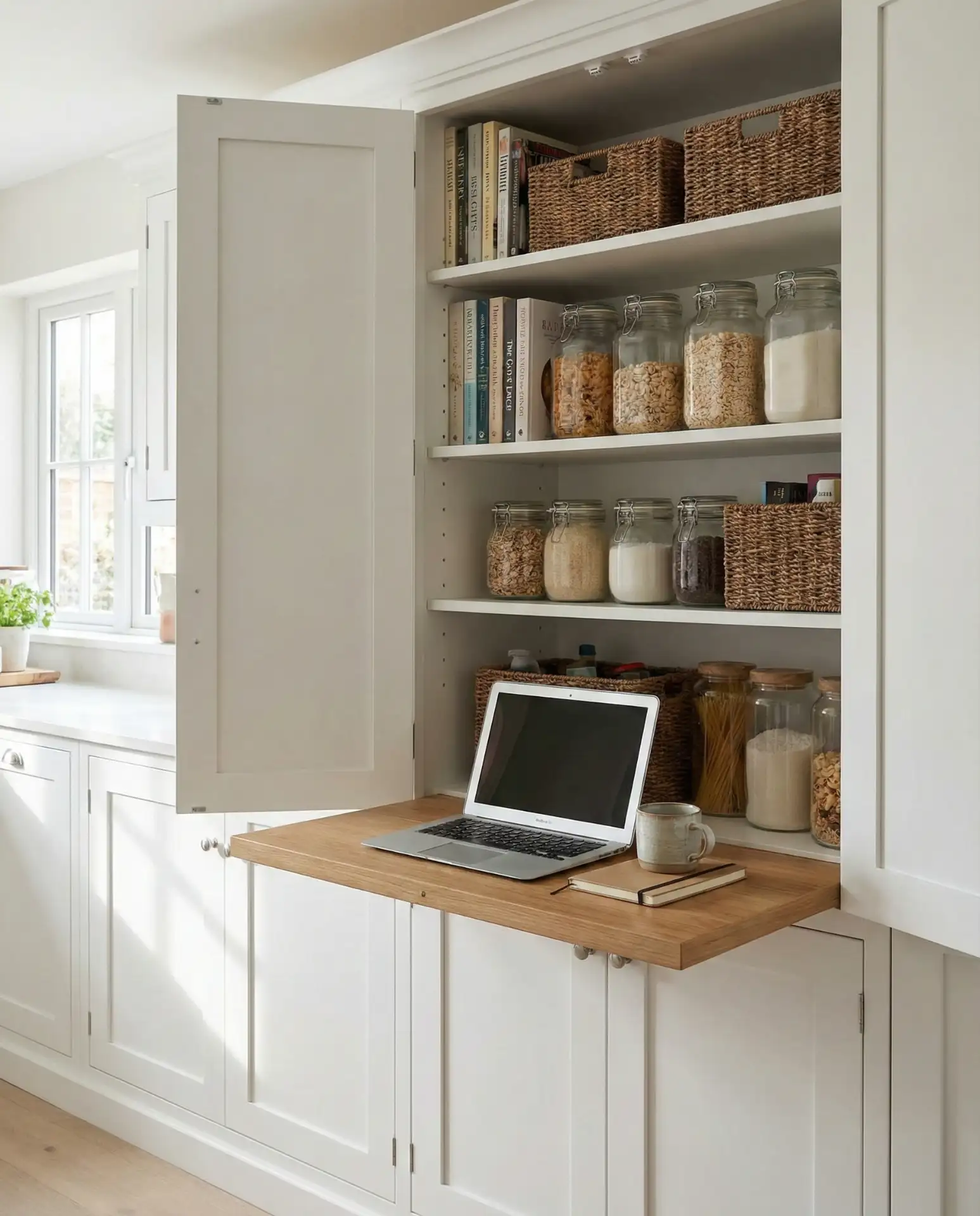
A micro anecdote: a friend in Chicago installed one of these after her dining table became a permanent homework station. Now her kids do schoolwork tucked into the pantry nook, and the table is free for meals. Add an outlet inside for device charging, and consider a pull-out shelf for a printer or extra supplies. This is the kind of clever design that makes small spaces feel generous.
Conclusion
From floor-to-ceiling built-ins to clever corner solutions, the right pantry cabinet can transform how your kitchen functions and feels. Whether you’re drawn to the warmth of reclaimed wood, the efficiency of pull-out drawers, or the modern elegance of handleless doors, there’s a pantry idea here that matches your needs and style. We’d love to hear which design resonates with you—drop a comment below and share your favorite, or tell us about your own pantry project.