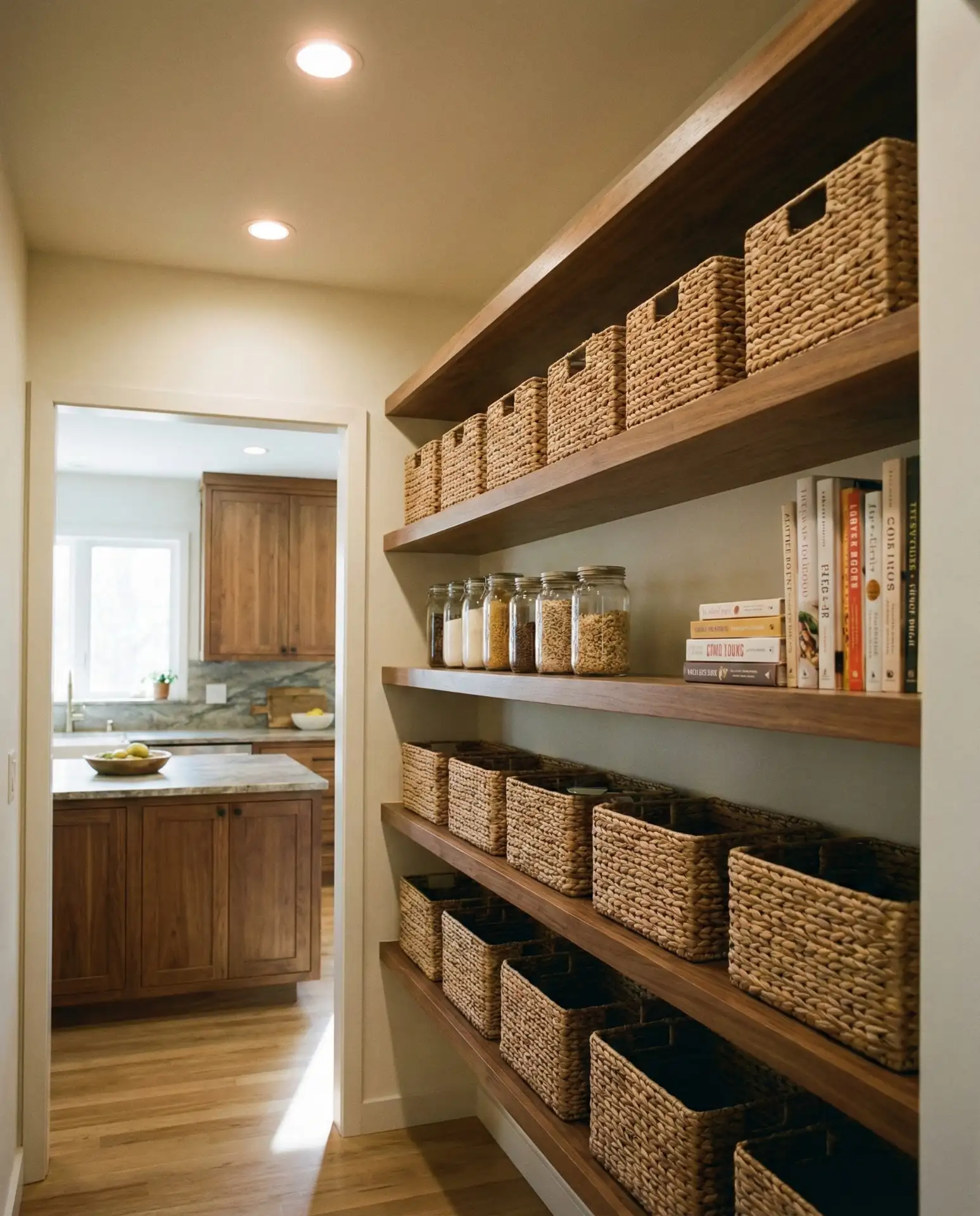
Pantry organization has become one of the most searched home improvement topics on Pinterest in 2026, and it’s easy to see why. American homeowners are rethinking how they store, display, and access their everyday essentials—turning what was once a cluttered catch-all into a space that’s both beautiful and incredibly functional. Whether you’re working with a narrow hallway nook or dreaming of a full walk-in setup, the right pantry design can transform your daily routine. In this guide, we’re sharing fresh pantry ideas that blend smart storage, standout style, and real-world practicality for kitchens of every size and layout.
1. Butler’s Pantry with Classic Elegance
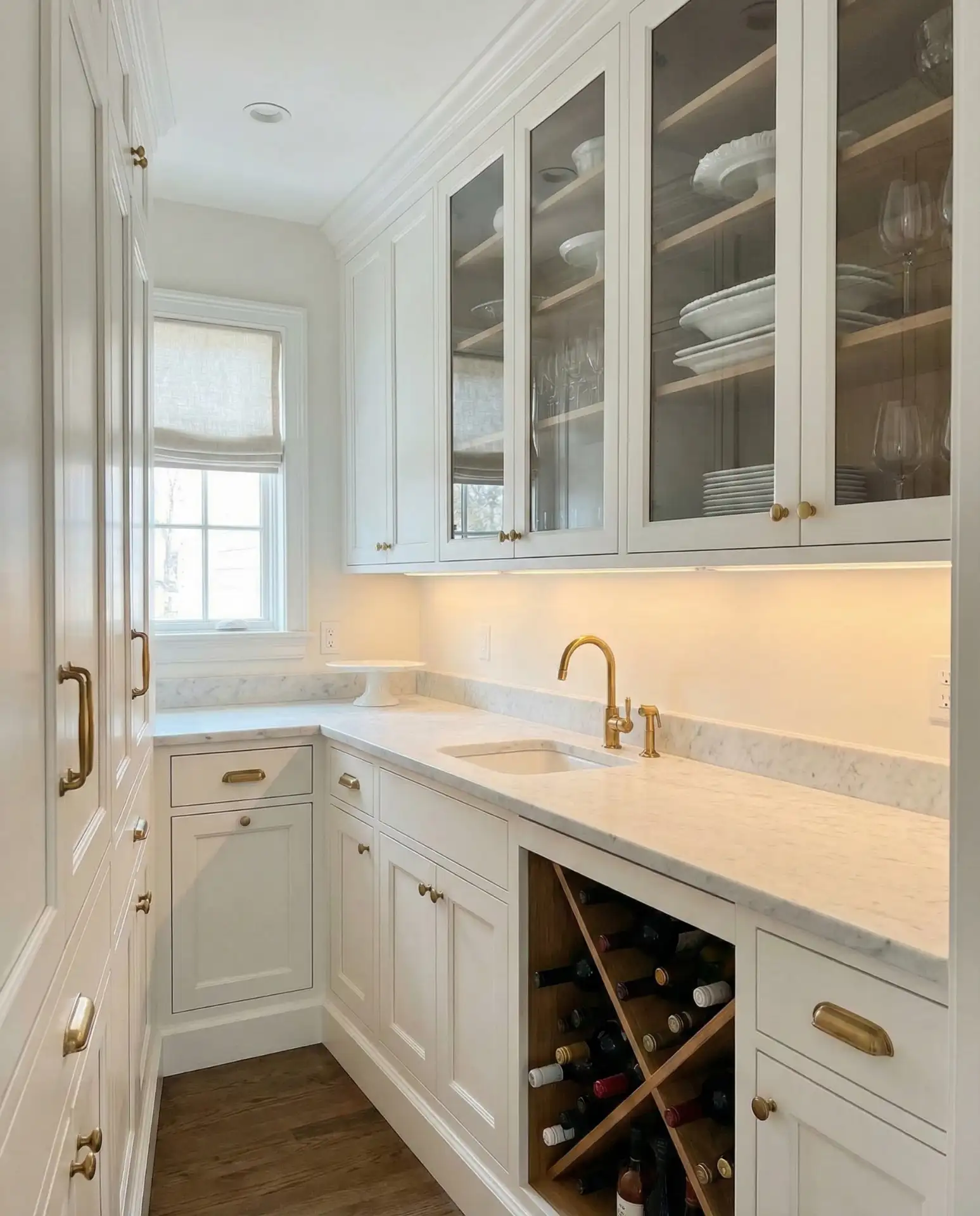
A butler’s pantry brings old-world charm into modern American homes, acting as a bridge between the kitchen and dining room. Traditionally used for serving and storage, today’s versions often include a small sink, countertop workspace, and open shelving for glassware and serveware. It’s especially popular in homes where entertaining is a regular part of life, offering a discreet prep zone that keeps the main kitchen clutter-free during gatherings. 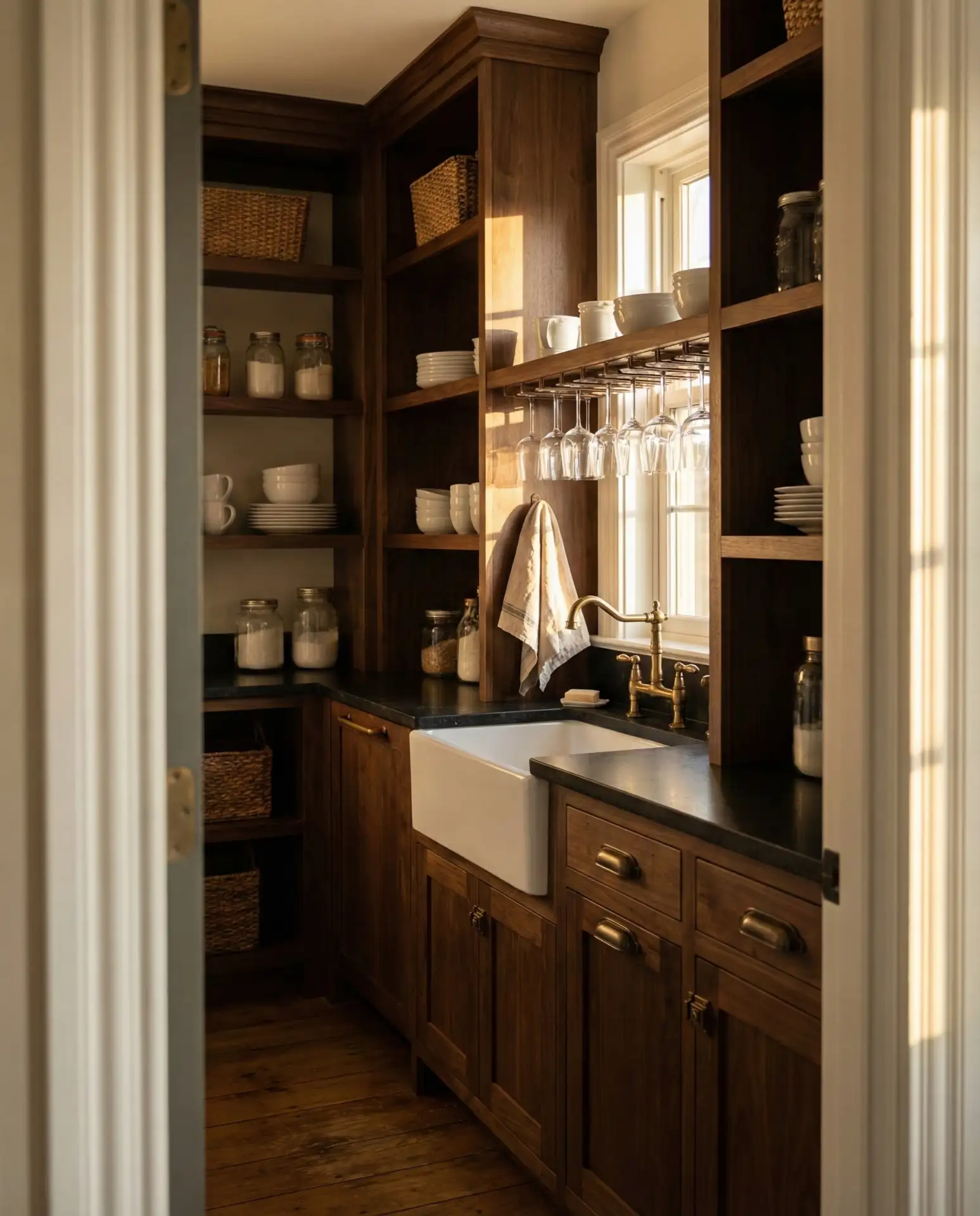
Where it works best: homes with formal dining rooms or open-plan layouts where you want a secondary prep area that doesn’t interrupt the flow of conversation. Many homeowners in the Northeast and Midwest favor this setup for holiday hosting, where serving platters and seasonal dishware can be staged out of sight. The key is keeping counters clear and using the space intentionally—not as overflow storage, but as a true staging zone.
2. Bloxburg-Inspired Colorful Shelving
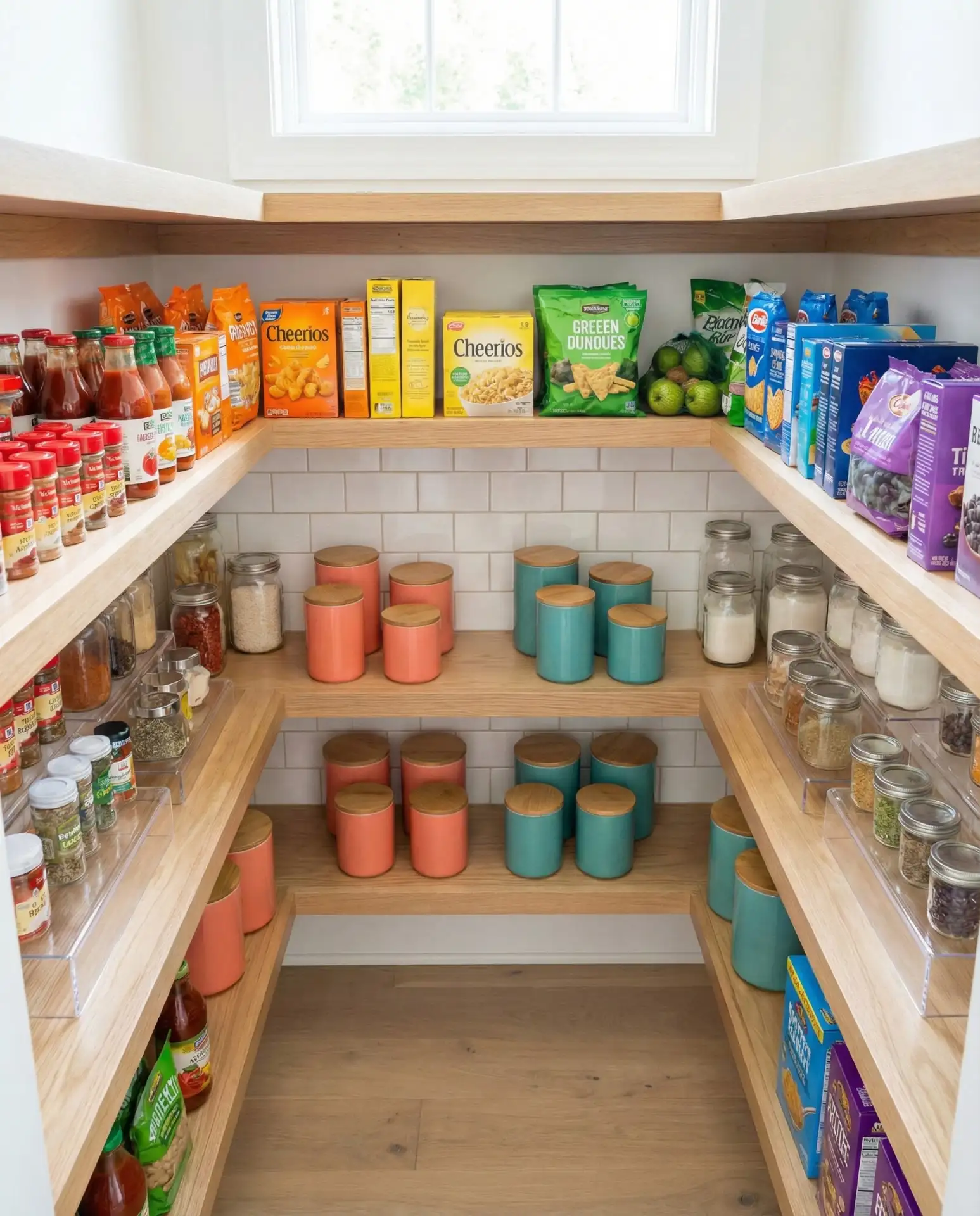
Inspired by the playful, highly stylized builds in Bloxburg, this pantry approach embraces bold colorful accents and open shelving that doubles as décor. Think mint green canisters, pastel bins, and coordinated labels that make restocking feel less like a chore and more like interior styling. It’s a hit with younger homeowners who grew up designing virtual spaces and now want that same sense of creative control in their real kitchens. 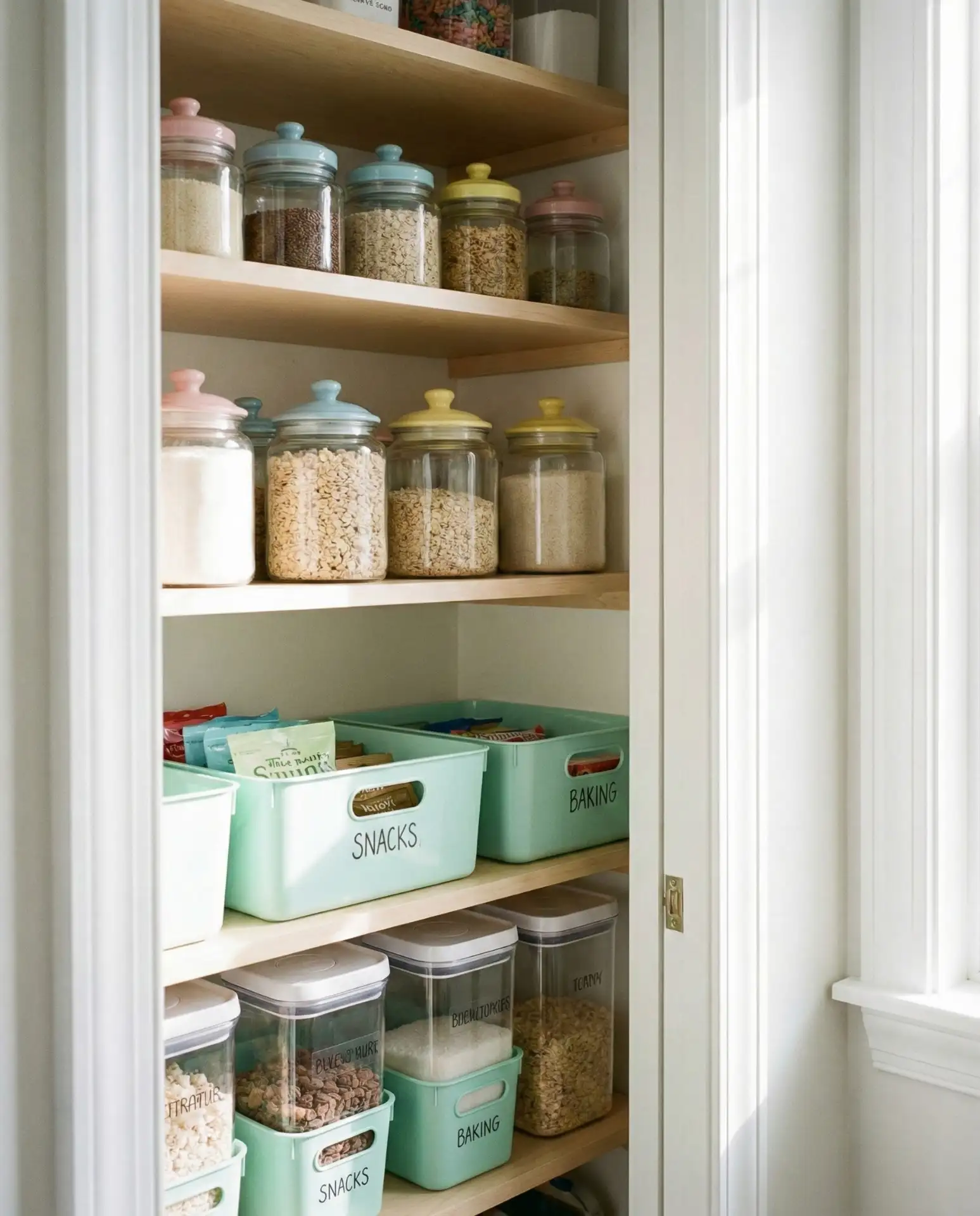
A practical insight: color-coding your pantry isn’t just aesthetic—it actually speeds up meal prep. When pasta, grains, and snacks each have their own hue, you’re less likely to dig through stacks or forget what you have. This system works especially well in households with kids, where visual cues make it easier for everyone to help put groceries away and find what they need without asking.
3. Tiny Pantry Maximized
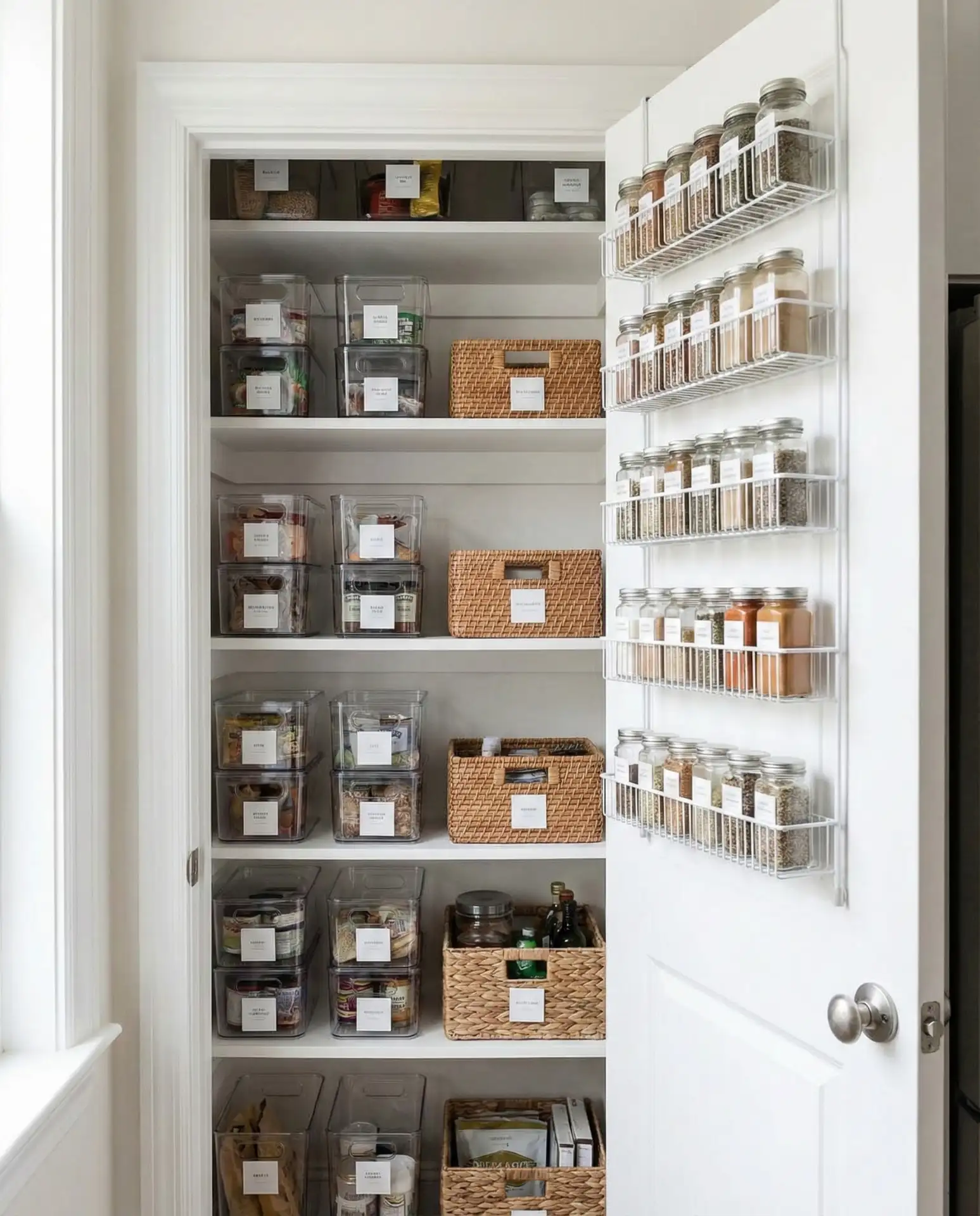
Not every home has room for a sprawling walk-in, and that’s where tiny pantry design shines. These compact setups rely on vertical storage, door-mounted racks, and pull-out drawers to make every inch count. In urban apartments and smaller suburban homes, a well-planned tiny pantry can hold just as much as a poorly organized large one—without wasting a single square foot. 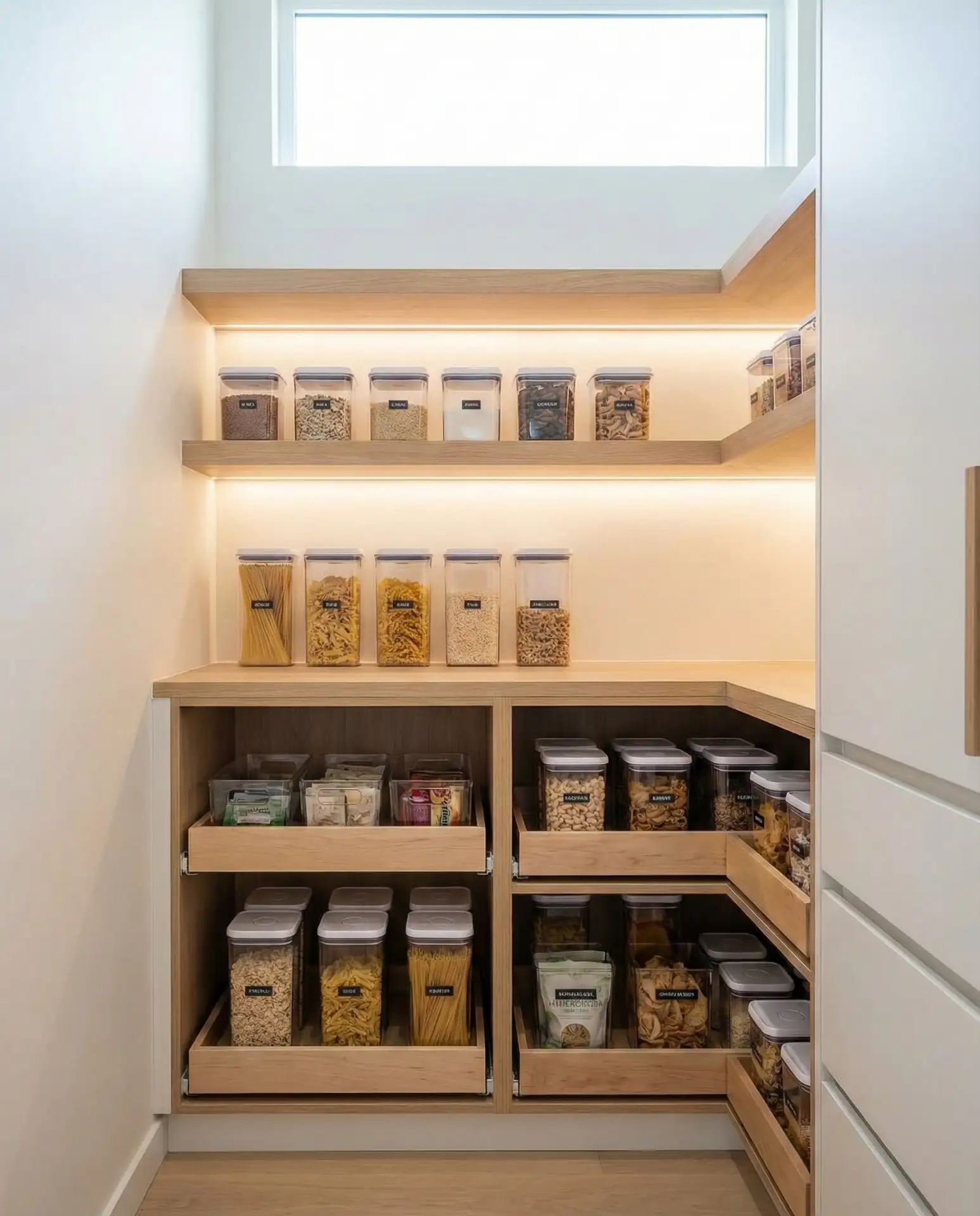
A common mistake is overloading tiny pantries with bulky packaging. Instead, decant dry goods into uniform containers and use tiered shelf risers to create layers. This approach not only maximizes visibility but also prevents the “forgotten can in the back” problem. Many homeowners report cutting food waste by nearly a third once they can actually see what they own.
4. Ikea Ivar System Hack
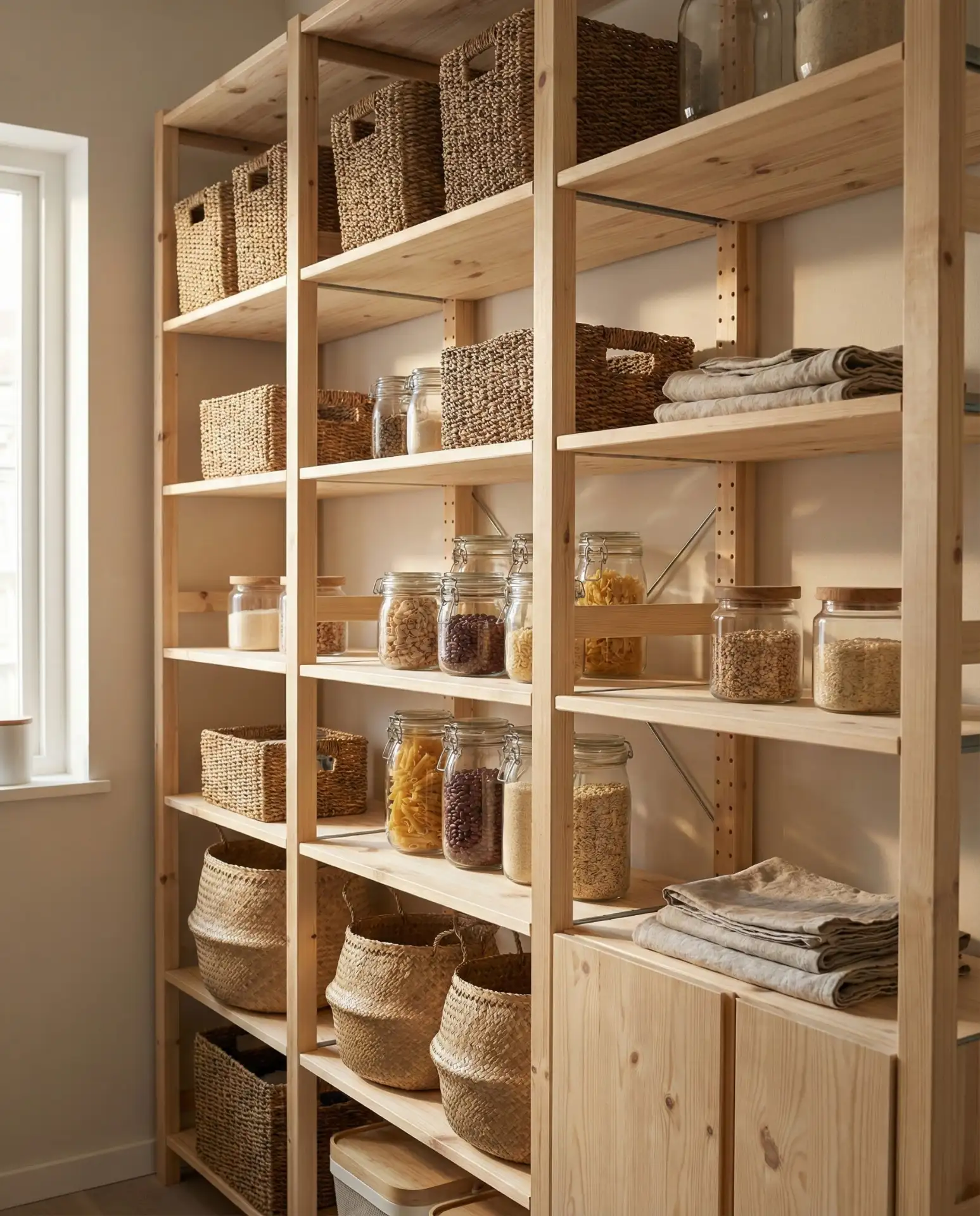
The Ikea Ivar shelving system has become a pantry staple for budget-conscious homeowners who want a customizable, open-storage solution. Made from untreated pine, Ivar units can be stained, painted, or left natural to match any kitchen style. The modular design means you can add shelves, drawers, or cabinets as your needs evolve—making it a smart long-term investment that grows with your household. 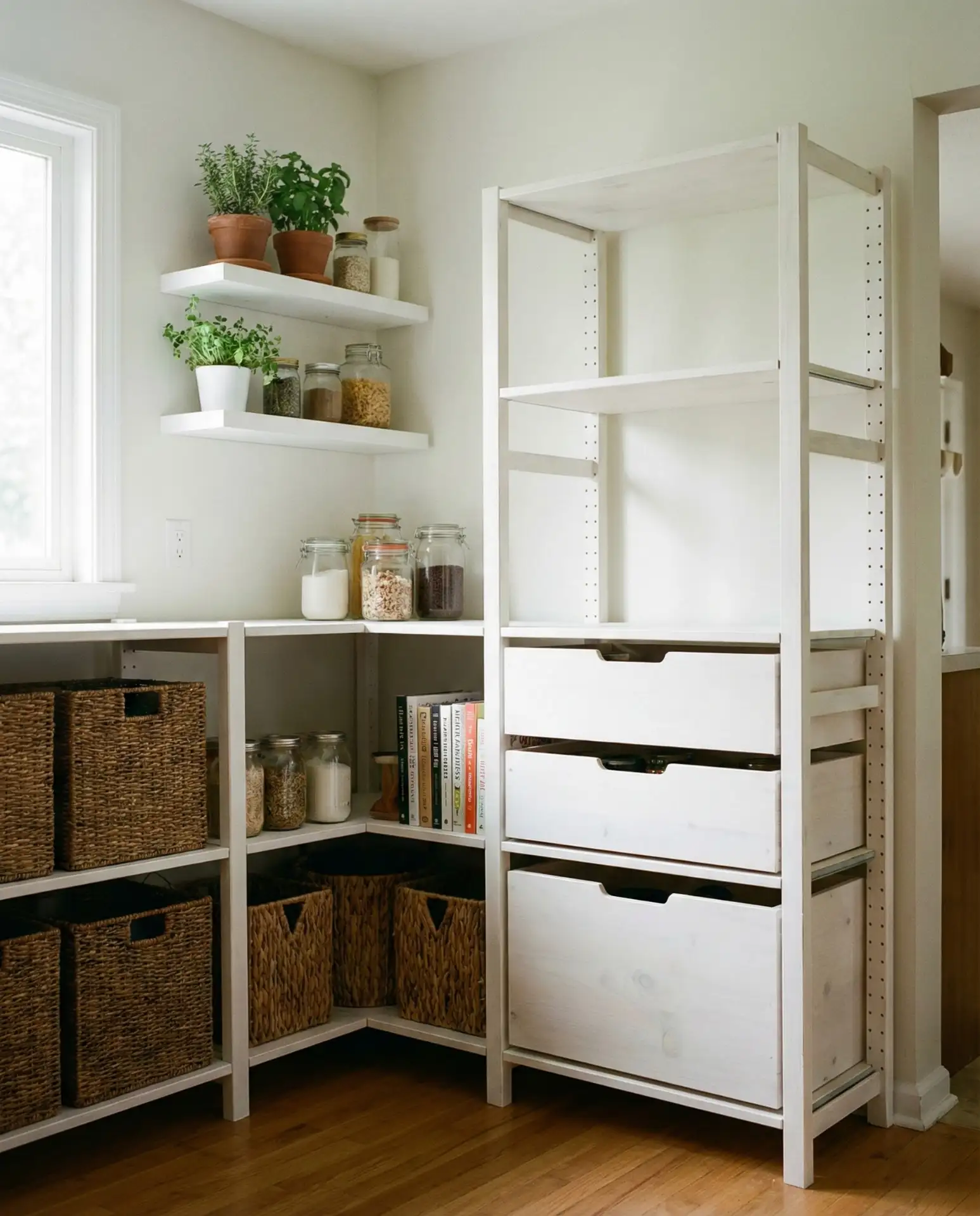
Budget angle: a full Ivar pantry setup typically costs between $200 and $400, which is a fraction of what you’d pay for custom cabinetry. The trade-off is assembly time and the need to anchor units securely to the wall, but for renters or first-time homeowners, it’s one of the most flexible and affordable options available. Many users also appreciate that Ivar can be disassembled and moved to a new home without losing value.
5. Rustic Farmhouse Pantry
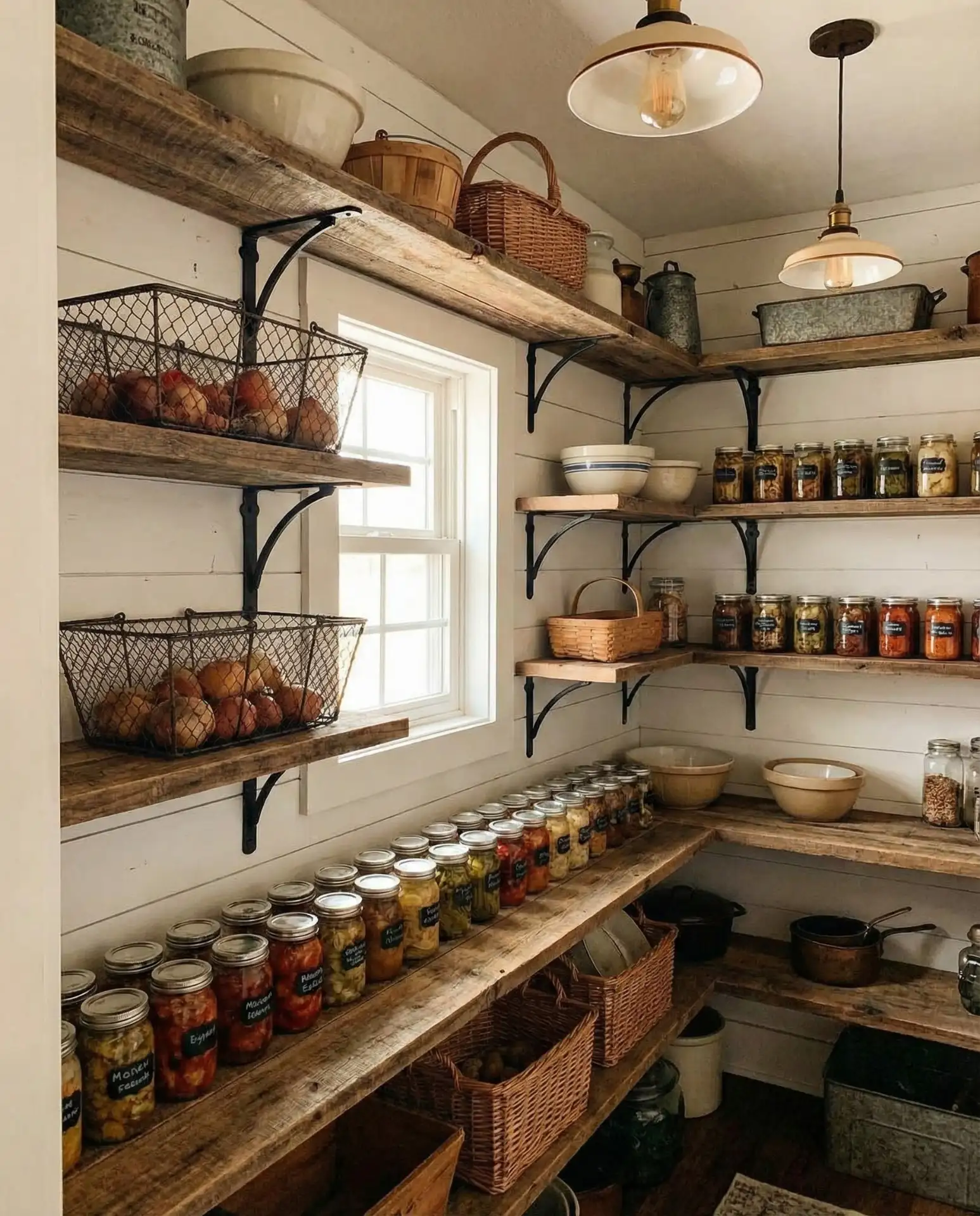
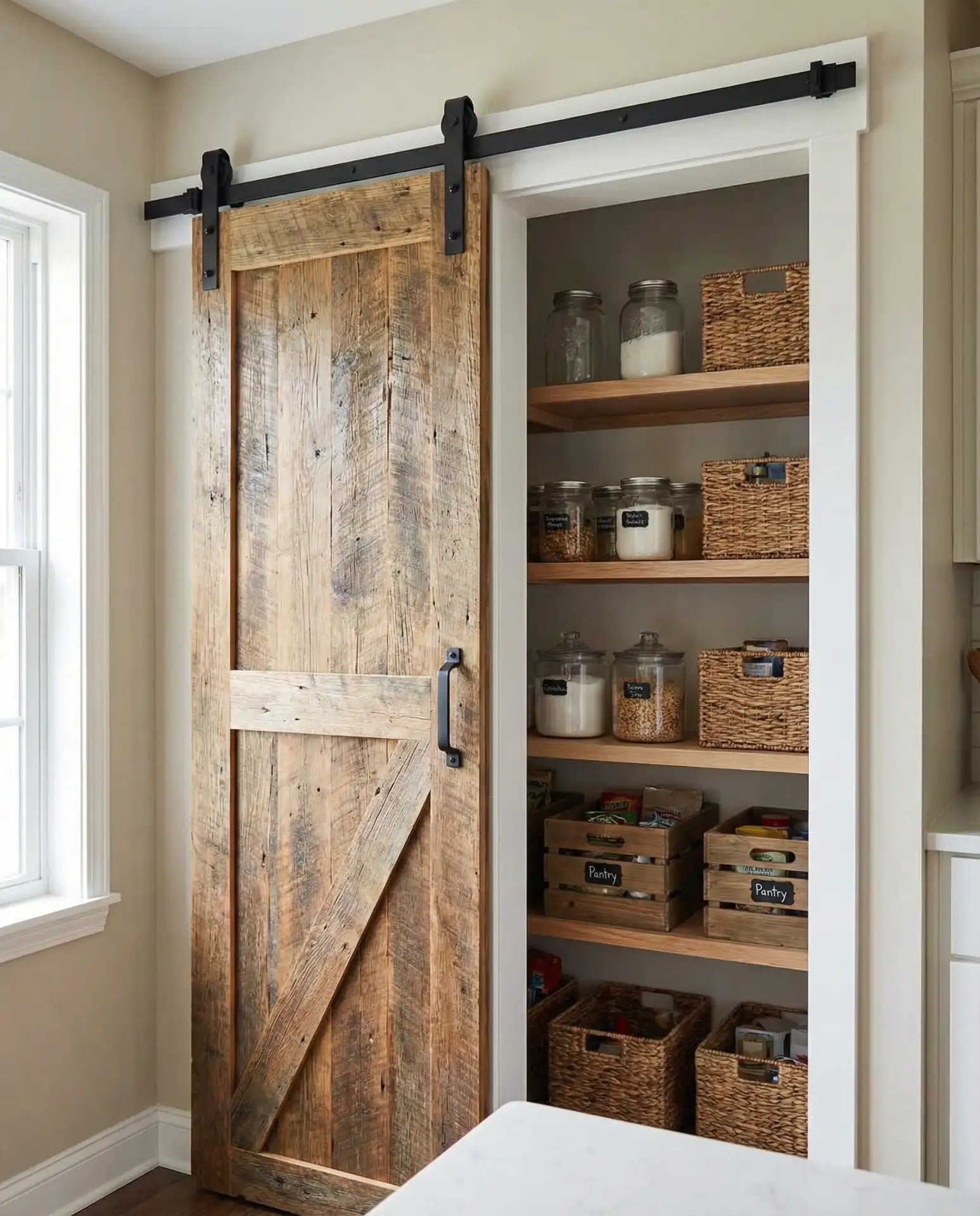
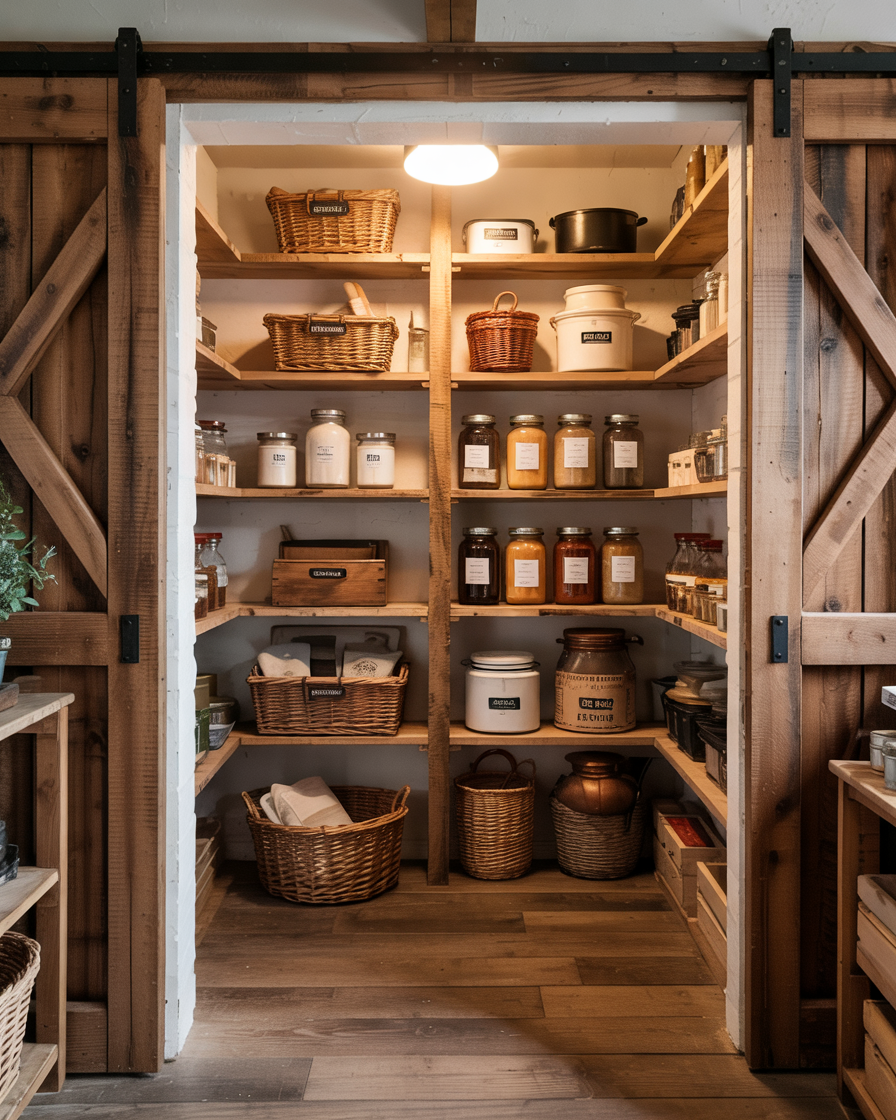
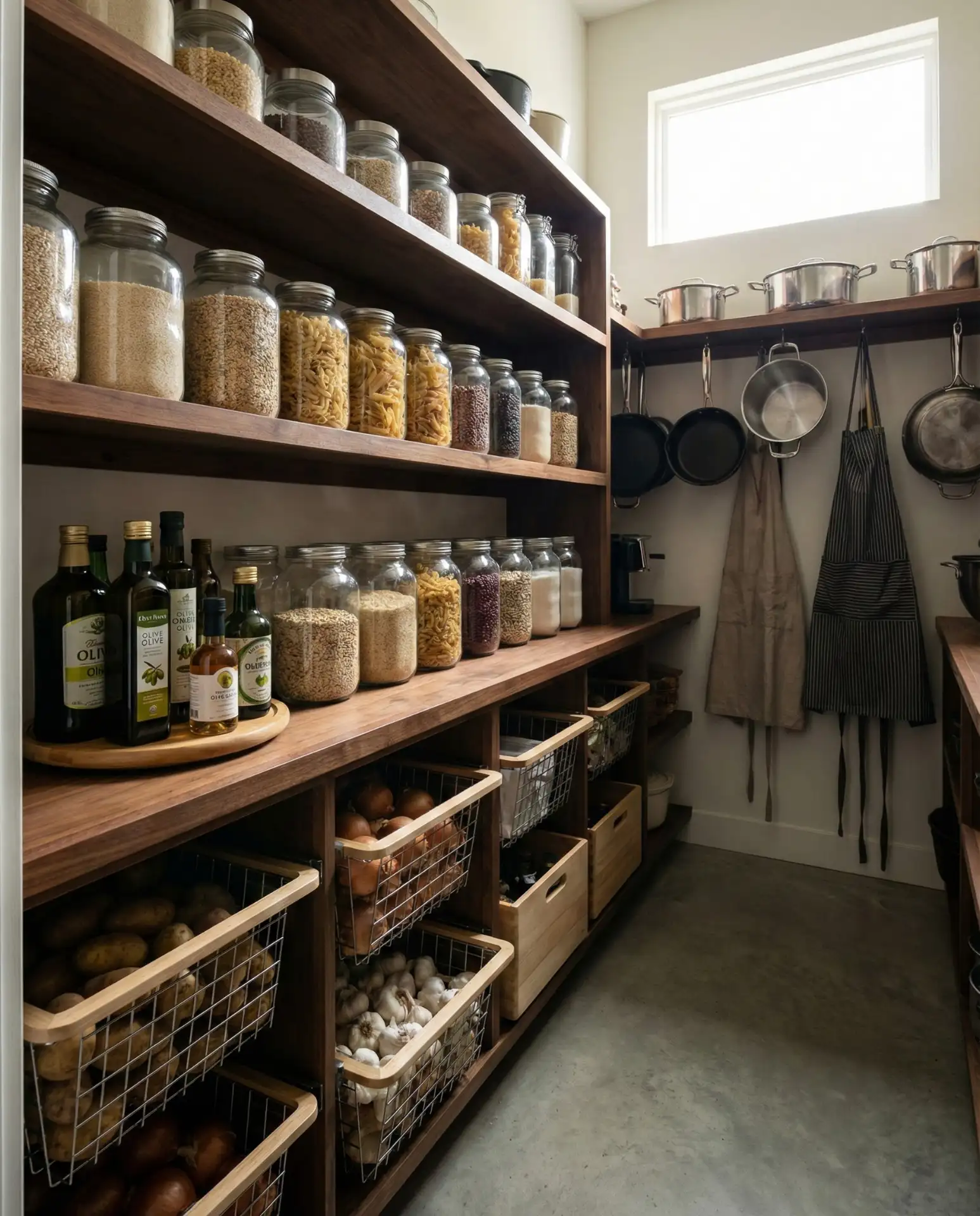
A rustic farmhouse pantry leans into natural textures—reclaimed wood shelves, matte black hardware, and wire baskets that feel pulled from a country general store. This style is especially popular in the South and rural Midwest, where farmhouse aesthetics have deep roots. The look is warm, approachable, and timeless, avoiding the sleek minimalism that can feel cold in family-centered homes. 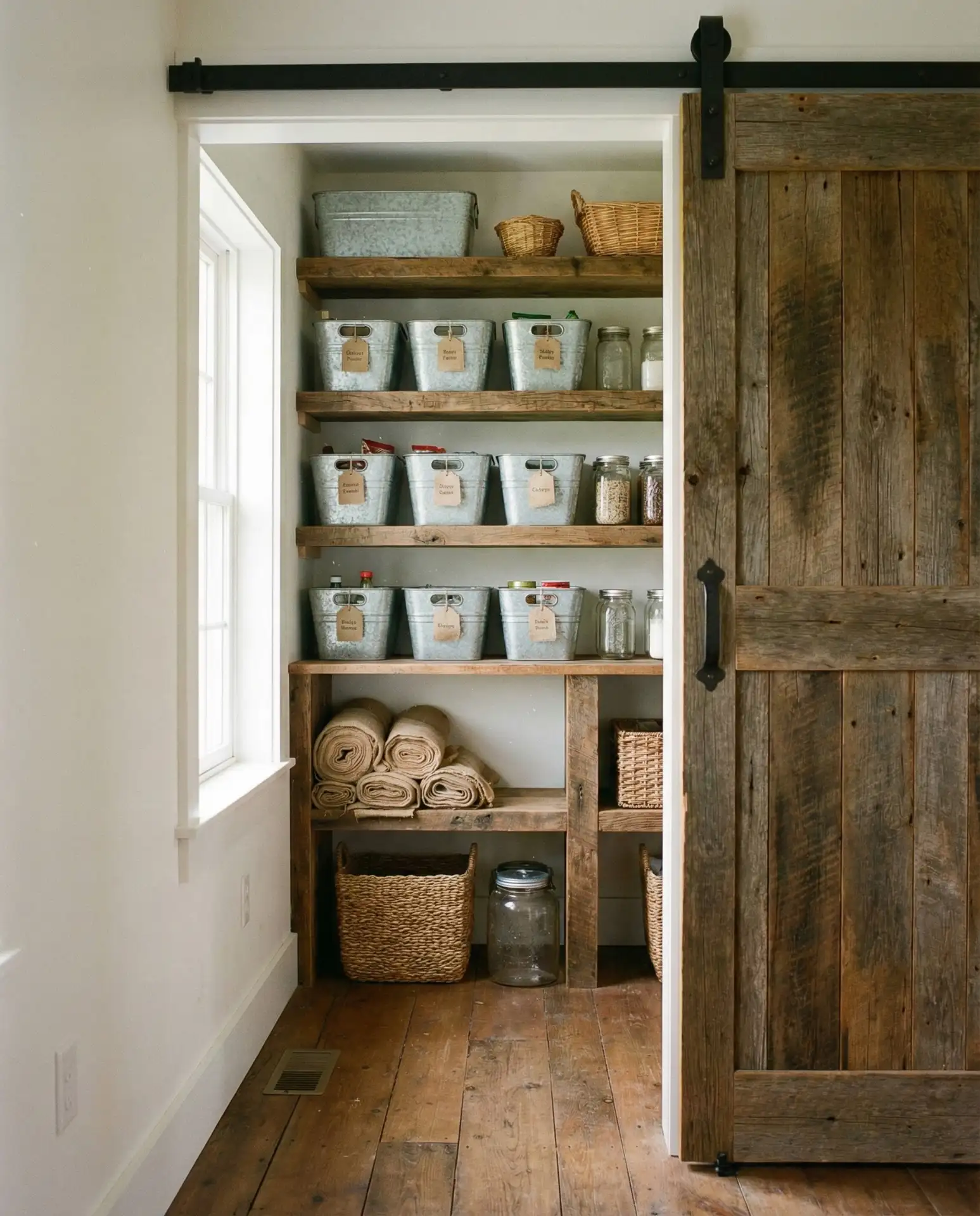
Real homeowner behavior: many people in farmhouse-style homes keep bulk staples like flour, sugar, and oats in vintage glass jars on display, turning the pantry into a functional piece of décor. It’s not just about aesthetics—these containers protect dry goods from pests and humidity, which is a real concern in older homes with less-than-perfect seals. The key is balancing charm with practicality, so the space stays both beautiful and usable.
6. Under-Stairs Pantry Nook

Utilizing the space beneath your stairs for a pantry is a clever way to reclaim square footage that’s often wasted. This setup works particularly well in split-level homes or townhouses where every closet counts. With custom shelving that follows the slope of the staircase, you can fit surprisingly deep storage for bulk items, small appliances, or seasonal dishware. 
Where it works best: homes with a limited kitchen footprint but good hallway or entryway access. This is especially common in older East Coast row homes and Pacific Northwest bungalows, where original floor plans didn’t prioritize pantry space. Just be mindful of accessibility—lower shelves should hold frequently used items, while the deepest corners are better for long-term storage or backstock.
7. Office Pantry for Remote Workers
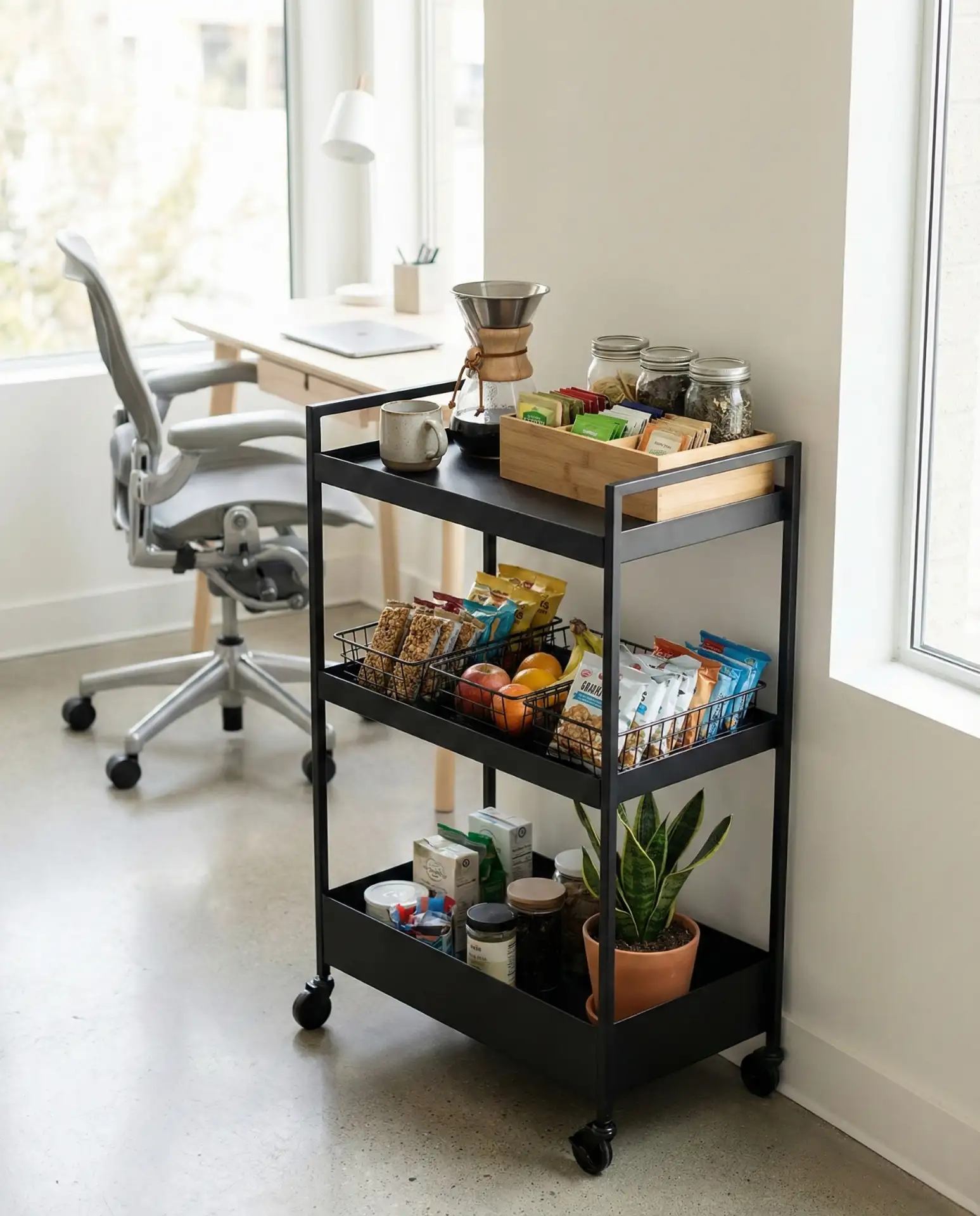
As remote work solidifies its place in American life, the concept of an office pantry has migrated from corporate break rooms into home workspaces. This setup includes a small cabinet or rolling cart stocked with snacks, coffee, and tea—keeping you fueled without constant trips to the main kitchen. It’s a productivity booster and a way to mentally separate work mode from home mode. 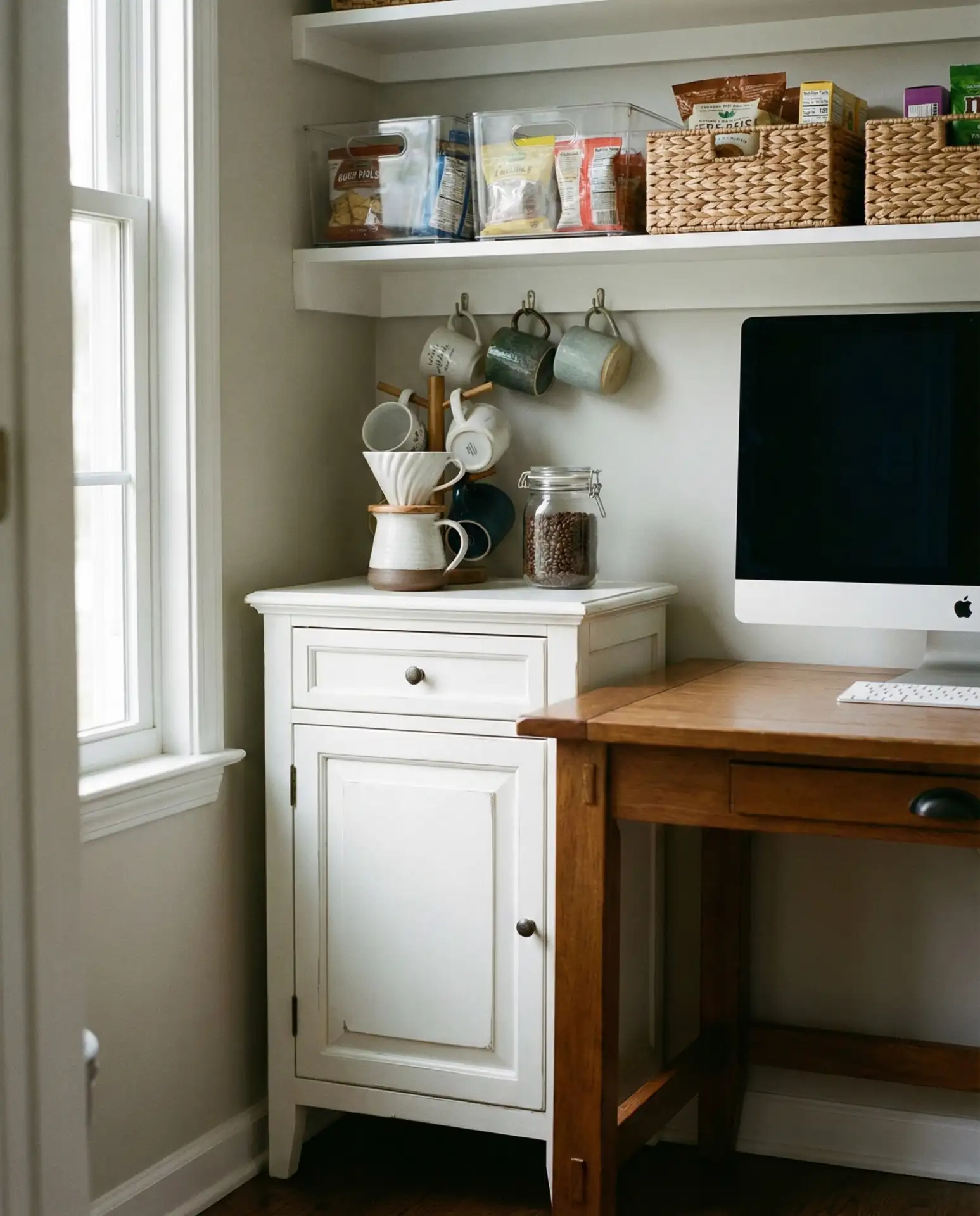
Expert-style commentary: Interior designers recommend treating the office pantry like a miniature version of your main one—use clear containers, label everything, and restock weekly. This prevents the “drawer of expired crackers” problem and keeps your workspace feeling intentional. For those in smaller homes, a single cabinet shelf or even a tray on a bookcase can serve this purpose without taking up much room.
8. Food-Focused Layout for Serious Cooks
For home cooks who treat the pantry as the backbone of meal planning, a food-focused layout prioritizes categorization and accessibility. Baking supplies get their own zone, canned goods are grouped by type, and spices are arranged alphabetically or by cuisine. This isn’t about aesthetics—it’s about reducing decision fatigue and making weeknight cooking faster and more intuitive. 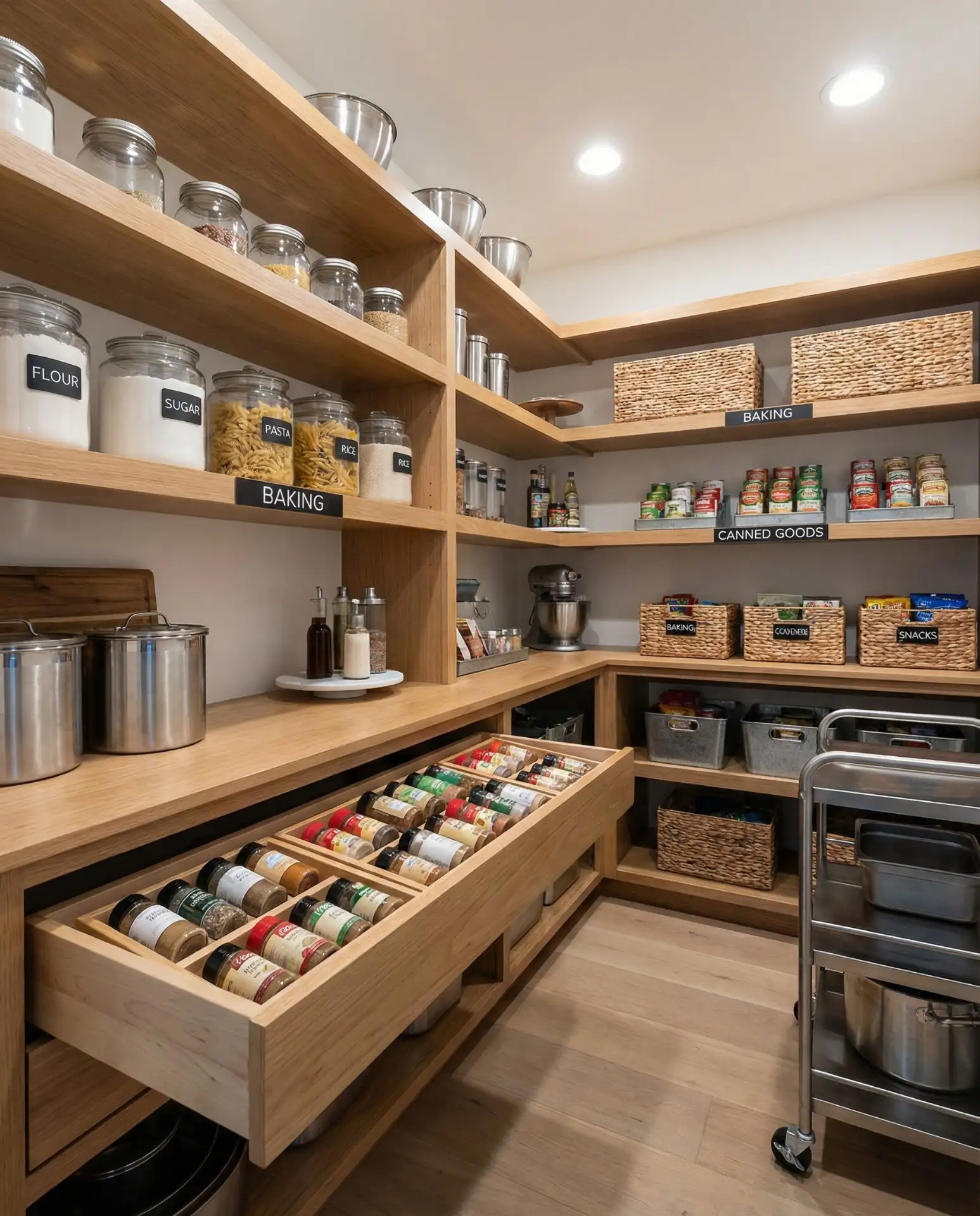
Practical insight: many serious home cooks keep a small whiteboard or notepad inside the pantry door to track what’s running low. This turns grocery shopping from guesswork into a simple list-making exercise. It also helps prevent overbuying, which is one of the top contributors to household food waste. The trick is updating it in real time, not just once a week.
9. Double Door Grand Pantry
A double-door pantry makes a statement—both architecturally and functionally. Often found in large kitchens or newly built homes, this style offers wide access and the visual impact of a dedicated food room. The double doors can be frosted glass, solid wood, or even sliding barn-style, depending on whether you want to showcase your organization or keep it hidden behind closed doors. 
American lifestyle context: in suburban areas where new construction is booming—particularly in Texas, Arizona, and the Carolinas—double-door pantries are increasingly standard in mid-to-high-end builds. They reflect a cultural shift toward entertaining at home and bulk shopping from warehouse stores like Costco. The wider opening also makes it easier to roll in carts or load in heavy grocery hauls without navigating tight doorways.
10. Large Walk-In Pantry with Island
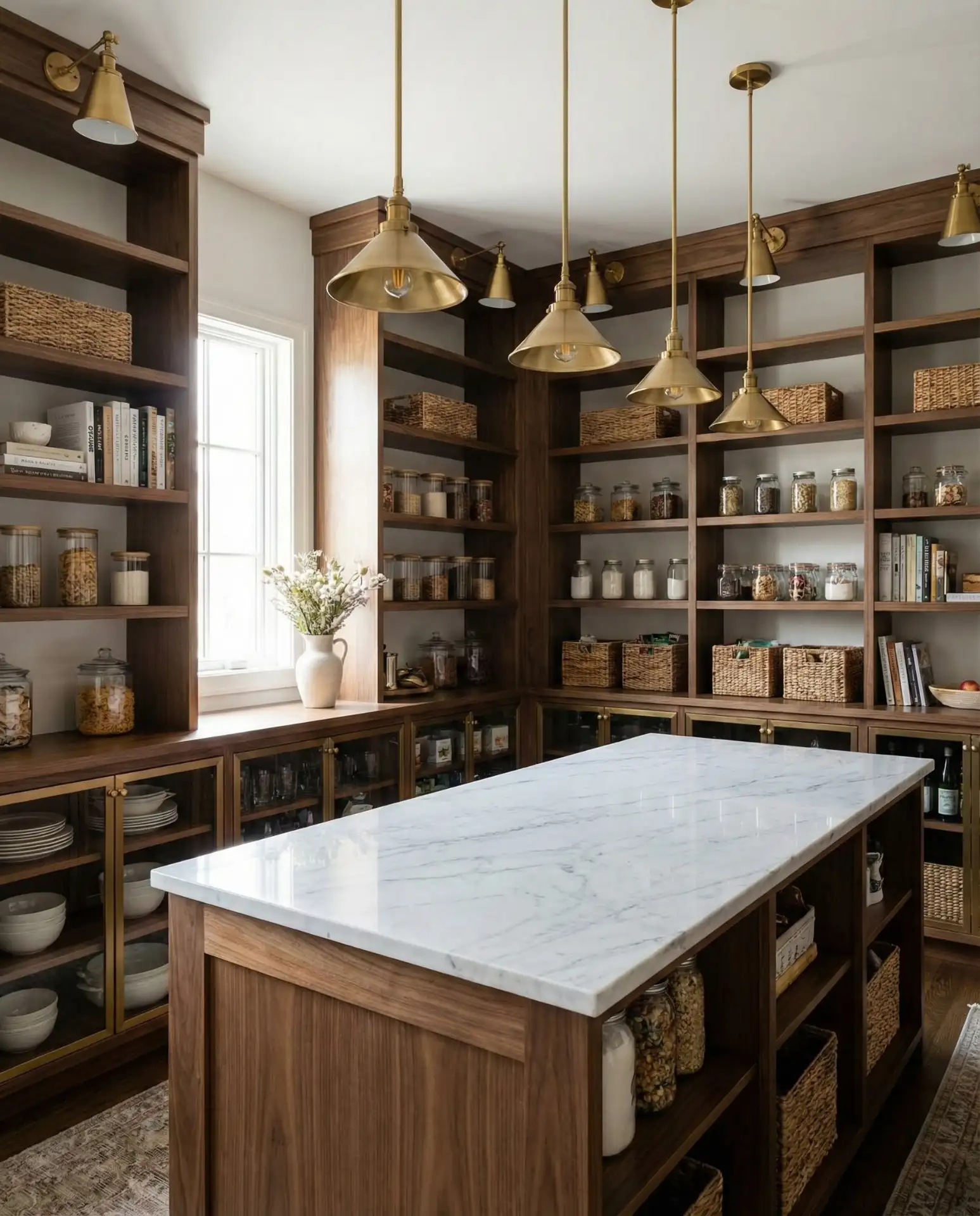
When space allows, a large walk-in pantry with a central island becomes a secondary kitchen—a place to prep, store, and even do small appliance work away from the main cooking zone. The island can house a wine fridge, provide extra counter space for unpacking groceries, or serve as a staging area during meal prep. It’s a luxury feature, but one that’s increasingly requested in custom home builds. 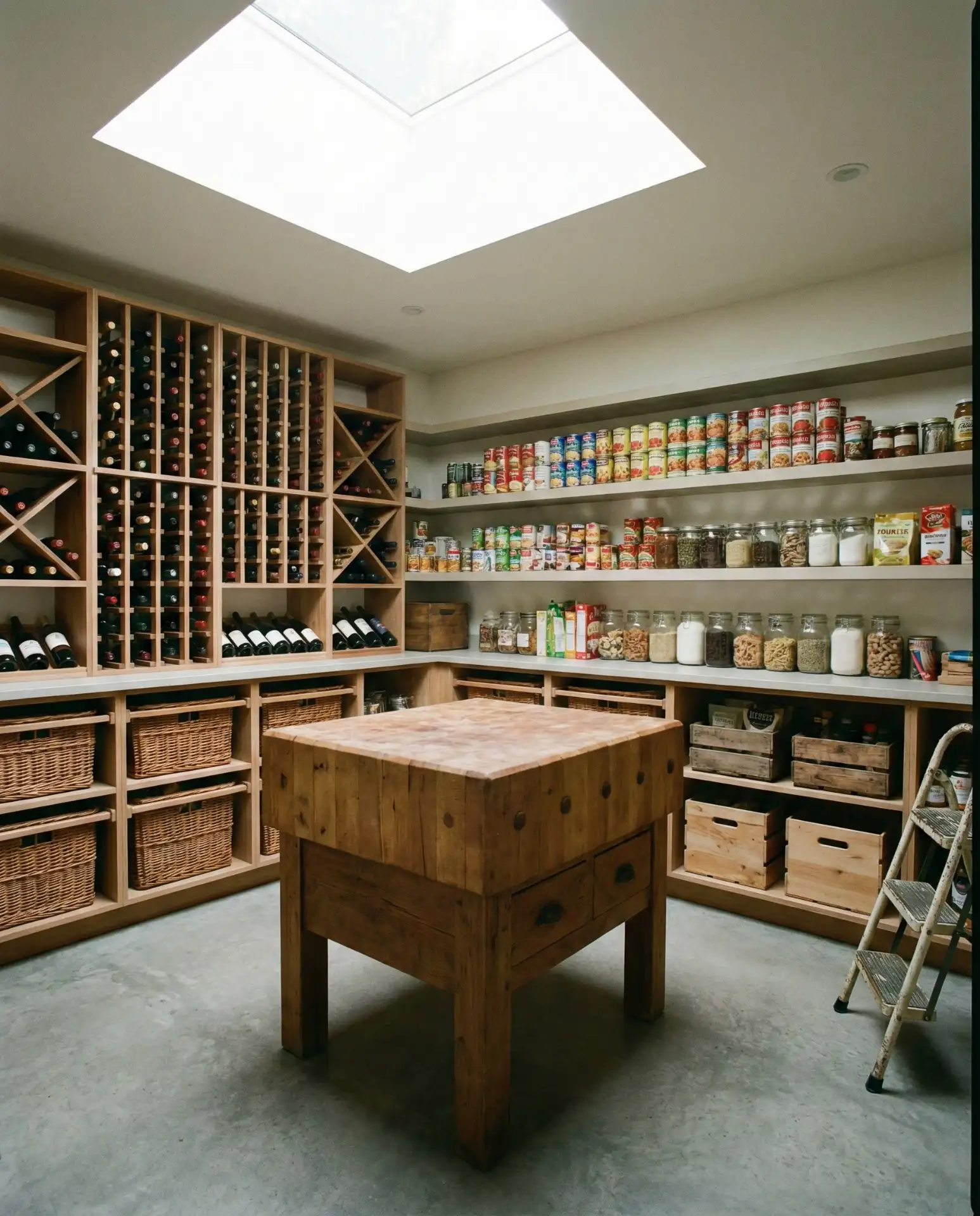
Budget angle: a walk-in pantry with an island typically adds $5,000 to $15,000 to a kitchen remodel, depending on finishes and built-ins. For homeowners who cook daily and entertain frequently, the investment pays off in convenience and resale value. However, if your household rarely uses bulk storage or small appliances, a simpler walk-in design without the island may be a smarter allocation of both budget and square footage.
11. Toca Boca-Inspired Fun Design
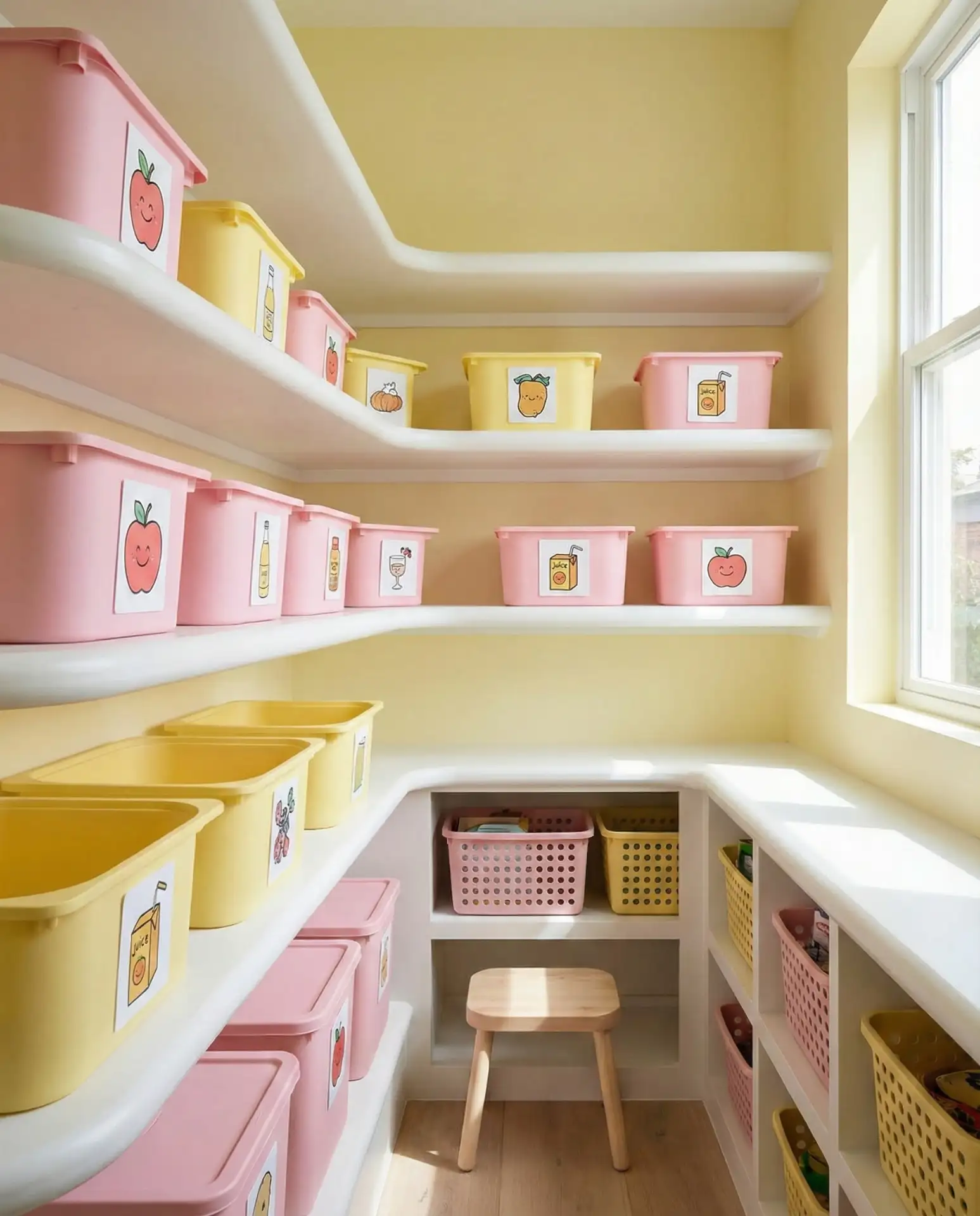
Inspired by the whimsical, kid-friendly design of Toca Boca games, this pantry style is all about playful colors, rounded shapes, and accessible low shelves that let children help themselves to snacks. It’s a hit in family homes where fostering independence and making healthy eating fun are priorities. The aesthetic is cheerful without being chaotic, using soft pastels and labeled bins to keep things organized despite the fun factor. 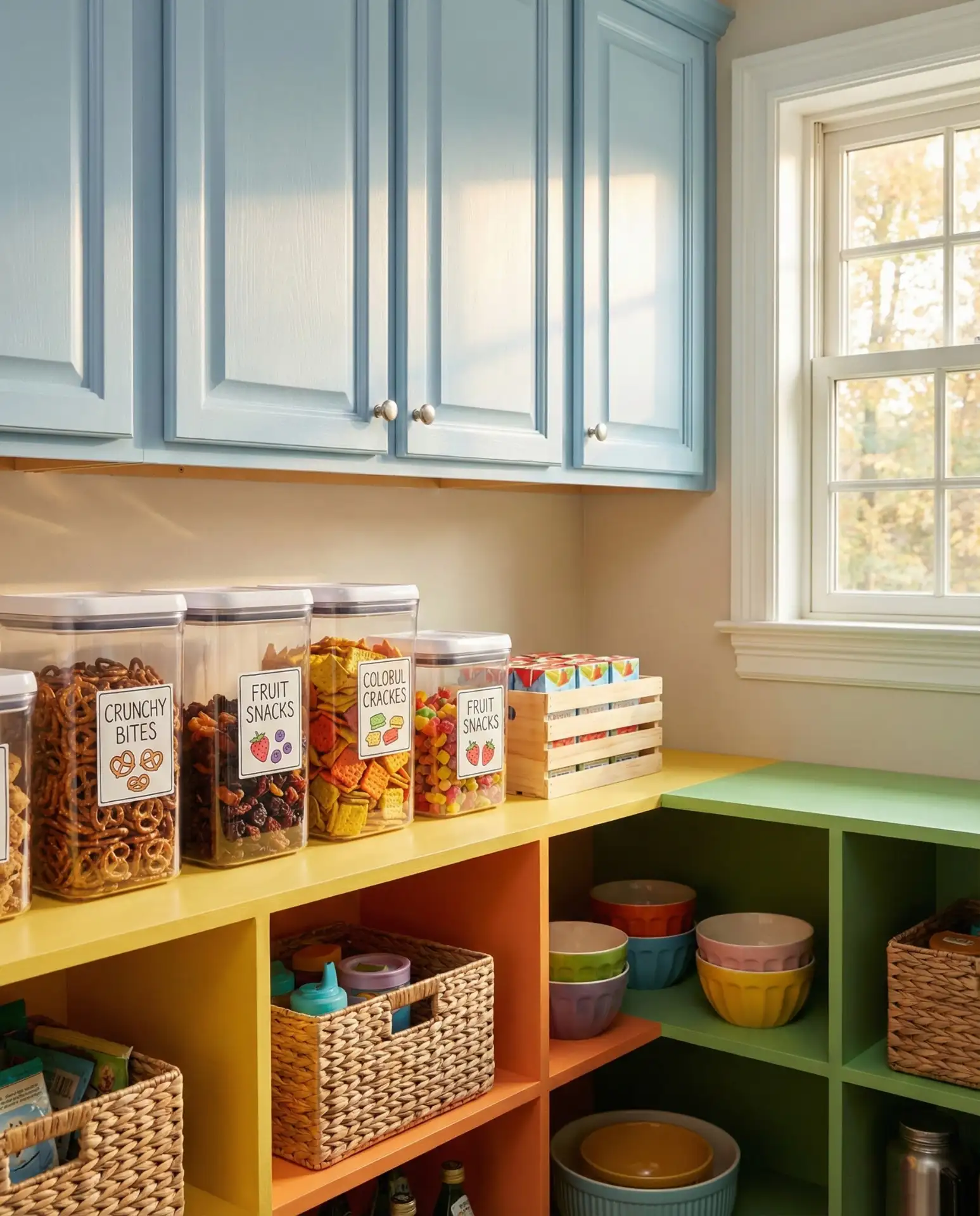
Real homeowner behavior: parents who design Toca Boca-style pantries often report that kids are more likely to grab an apple or granola bar when the pantry feels welcoming and accessible. Placing healthy options at eye level and using see-through bins makes snack time less of a negotiation. It’s a small design choice that can shift habits over time, especially in households with toddlers and early elementary-aged children.
12. Dark Moody Pantry

A dark pantry—painted in charcoal, navy, or even black—creates a dramatic, cocooning effect that’s surprisingly popular in 2026. This trend leans into the idea that not every room needs to be bright and airy; sometimes, a moody space feels more intimate and intentional. Paired with brass hardware and open shelving, a dark pantry becomes a jewel box of a room rather than a utilitarian afterthought. 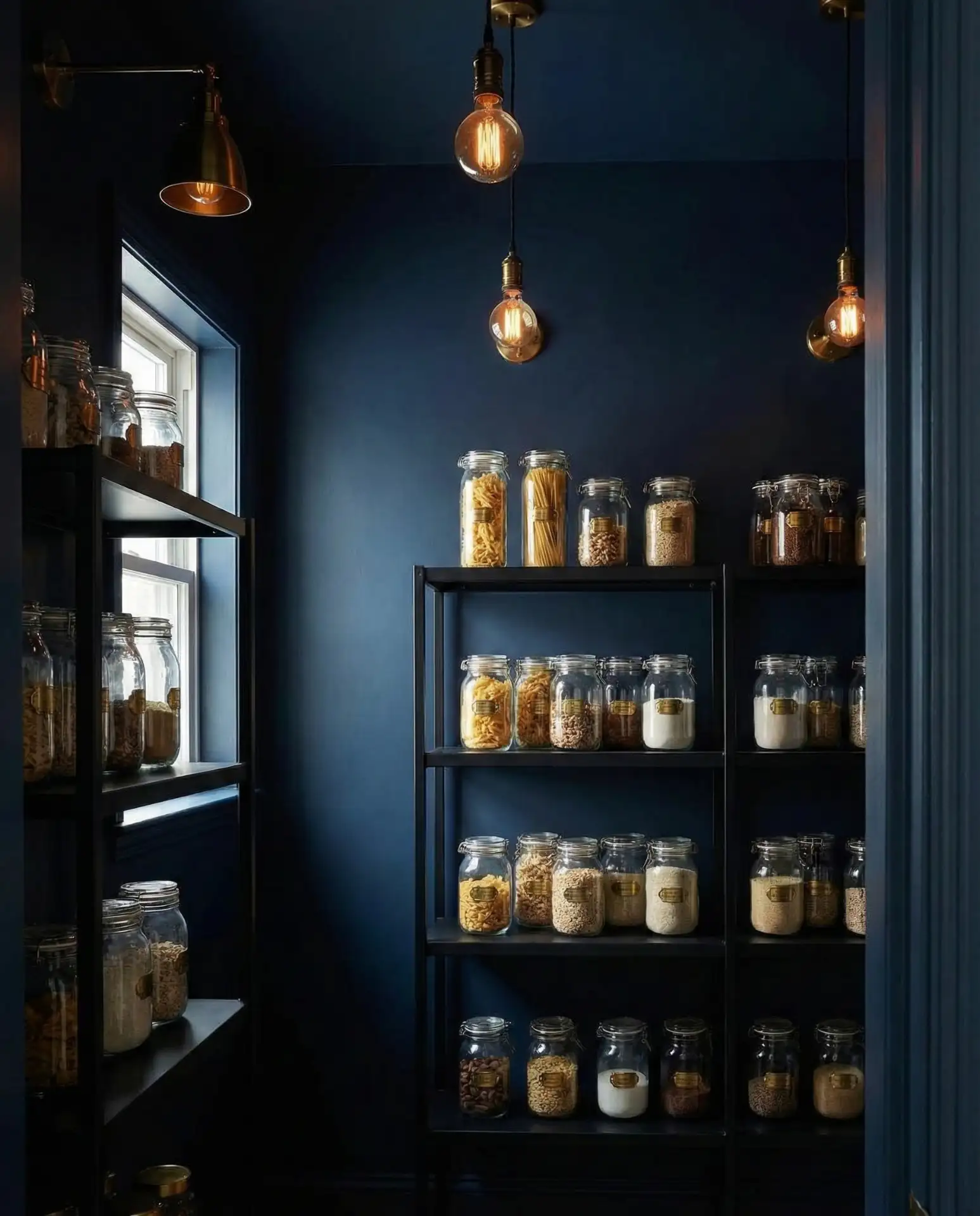
Expert-style commentary: designers recommend balancing dark walls with plenty of task lighting—under-shelf LEDs, pendant lights, or even a small chandelier if ceiling height allows. Without sufficient light, a dark pantry can feel cramped rather than cozy. The payoff is a space that feels curated and intentional, where every jar and basket stands out against the rich backdrop instead of blending into visual noise.
13. Long Narrow Galley Pantry
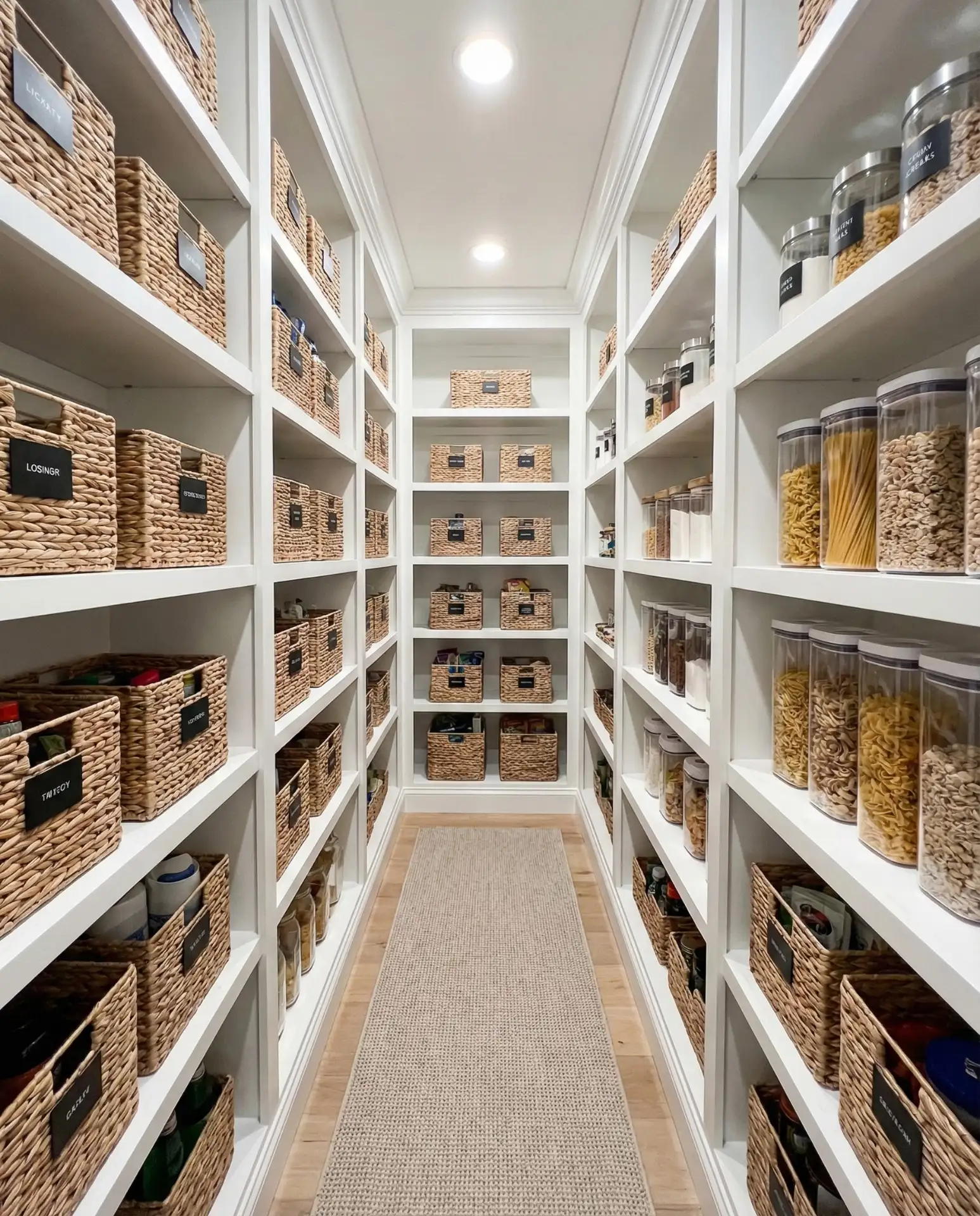
A long narrow pantry, often called a galley pantry, maximizes linear space with shelving on both sides and a walking path down the center. This layout is especially common in older homes where the pantry was carved out of a former closet or hallway. The key is using shallow shelves—no more than 12 inches deep—so items don’t get lost in the back, and everything remains visible at a glance. 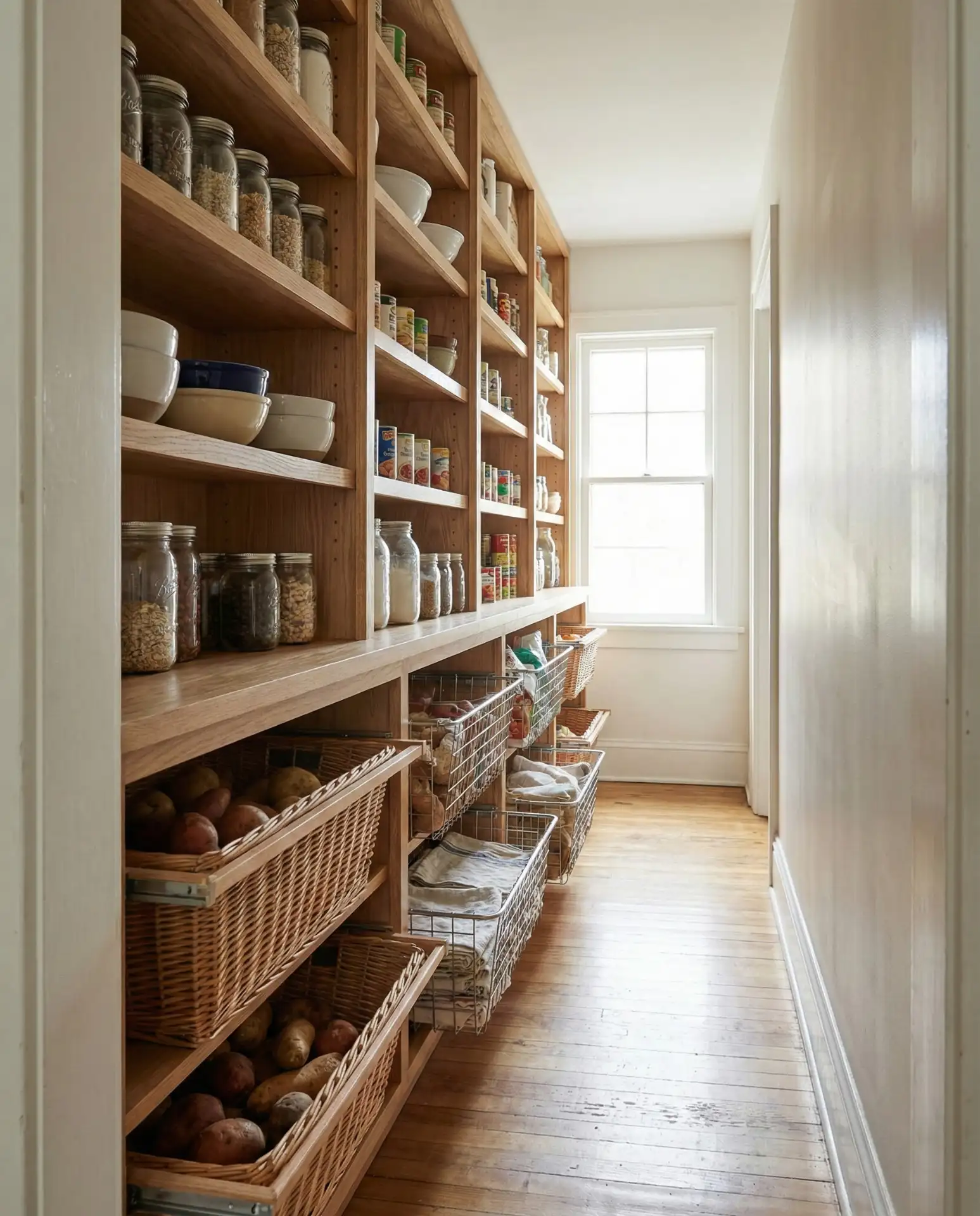
Practical insight: in a narrow pantry, organization is everything. Use bins and baskets to group like items together, and avoid stacking things more than two items high. This prevents the “avalanche effect” when you pull something out. Many homeowners also install a rolling ladder or step stool at one end, so top shelves remain accessible without constant rearranging.
14. Hallway Pantry Integration
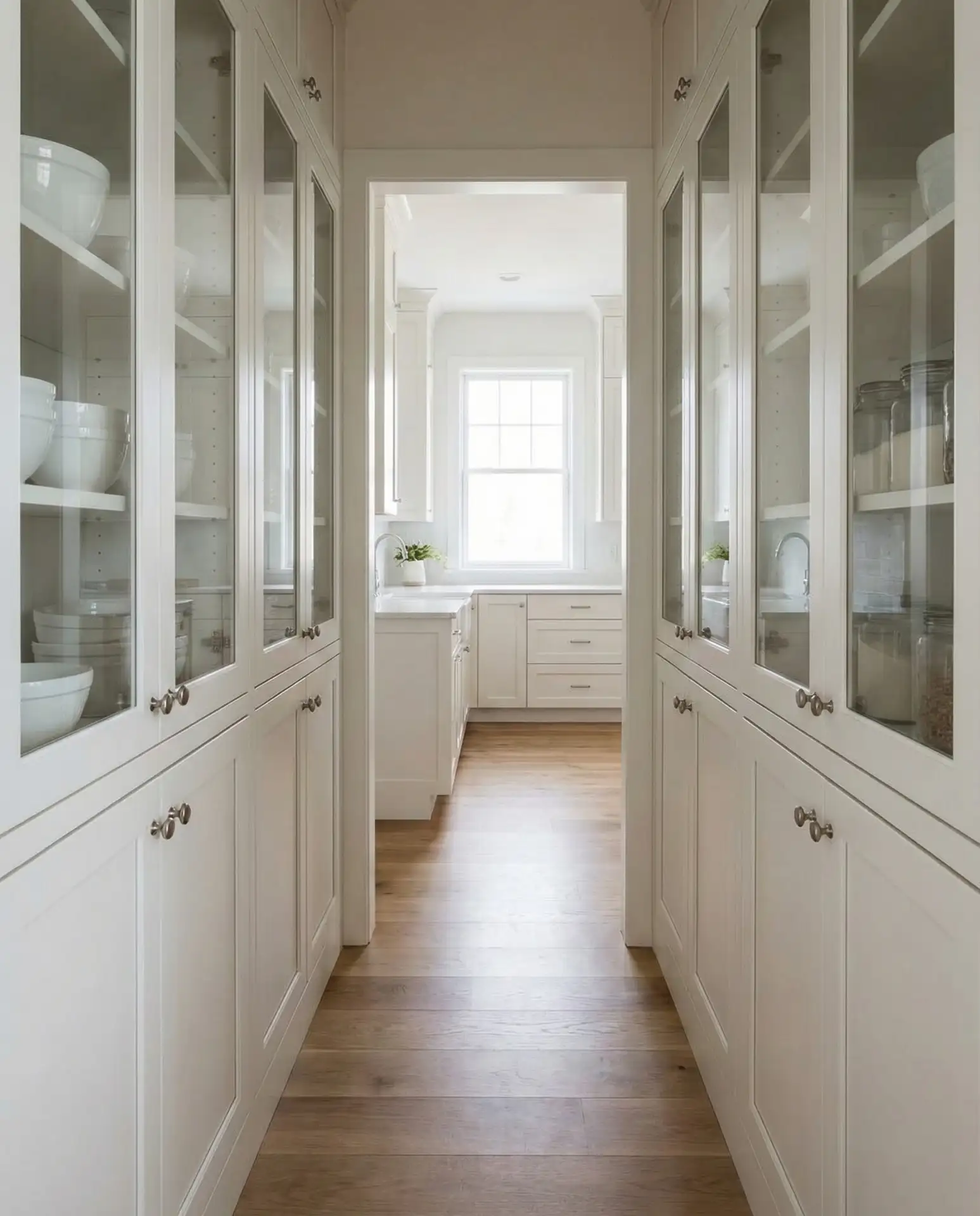
When the kitchen itself is too small for a dedicated pantry, a hallway adjacent to the cooking area can be outfitted with built-in cabinetry or open shelving. This approach is common in condos and apartment conversions, where original floor plans didn’t anticipate modern storage needs. The trick is making the hallway pantry feel intentional—using matching finishes and hardware so it reads as part of the kitchen rather than an awkward add-on.
Where it works best: urban apartments and older homes with galley kitchens that open into a hallway. This setup is especially popular in cities like New York, Boston, and San Francisco, where every square foot counts and creative storage solutions are a necessity. Just be mindful of traffic flow—if the hallway is a main thoroughfare, consider closed cabinetry to keep things tidy and avoid constant visual clutter.
15. Cottage-Style Pantry with Open Shelves
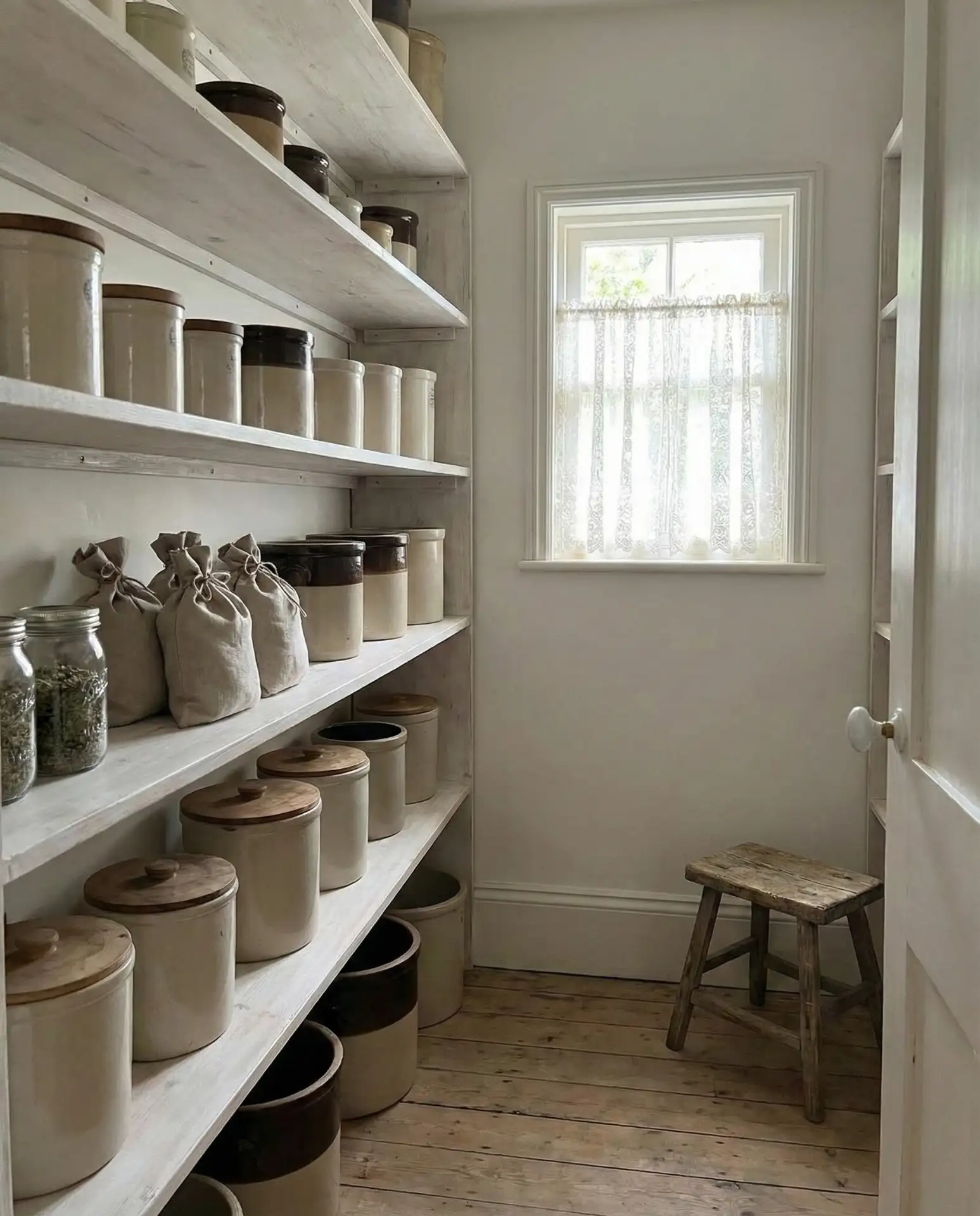
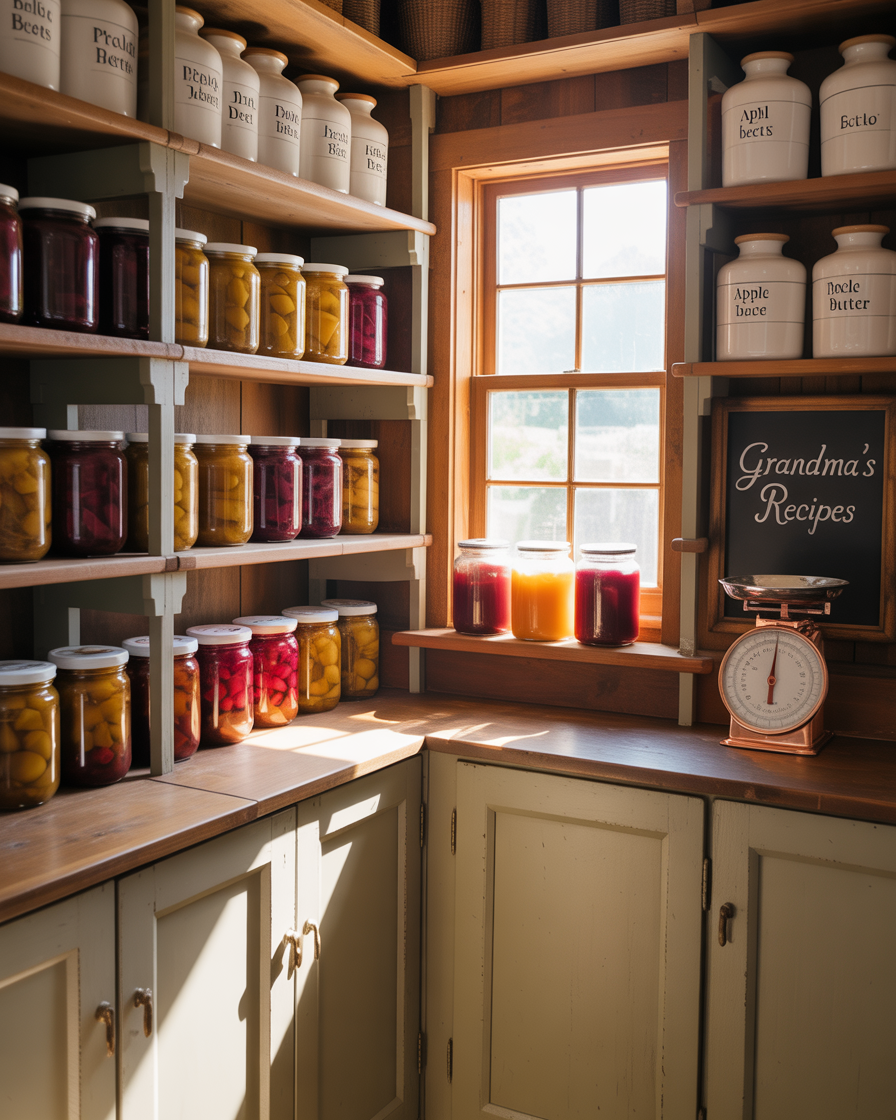
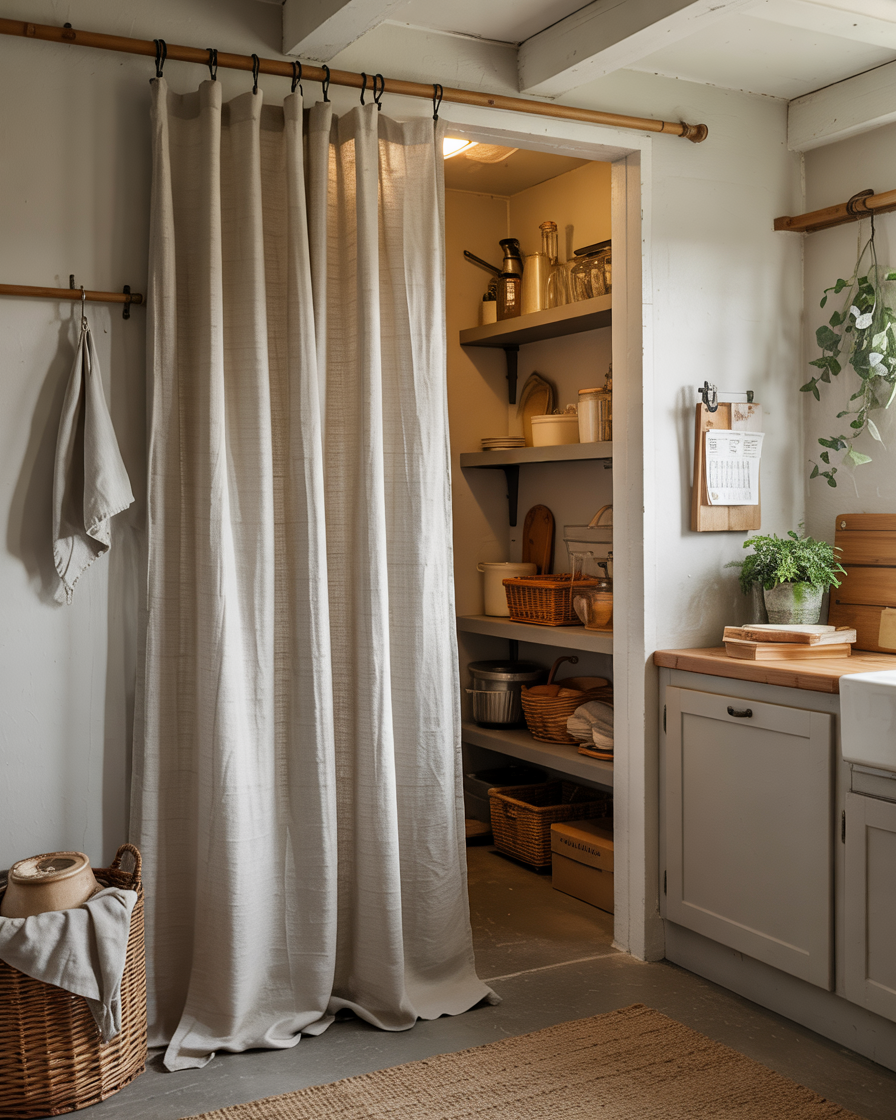
A cottage-style pantry embraces the charm of open shelving, vintage finds, and a slightly imperfect, lived-in aesthetic. Think mismatched jars, woven baskets, and hand-lettered labels that feel personal rather than polished. This style is especially popular in New England and the Pacific Northwest, where cottage and farmhouse aesthetics overlap. It’s about creating a space that feels homey and collected over time, not curated in a single shopping trip. 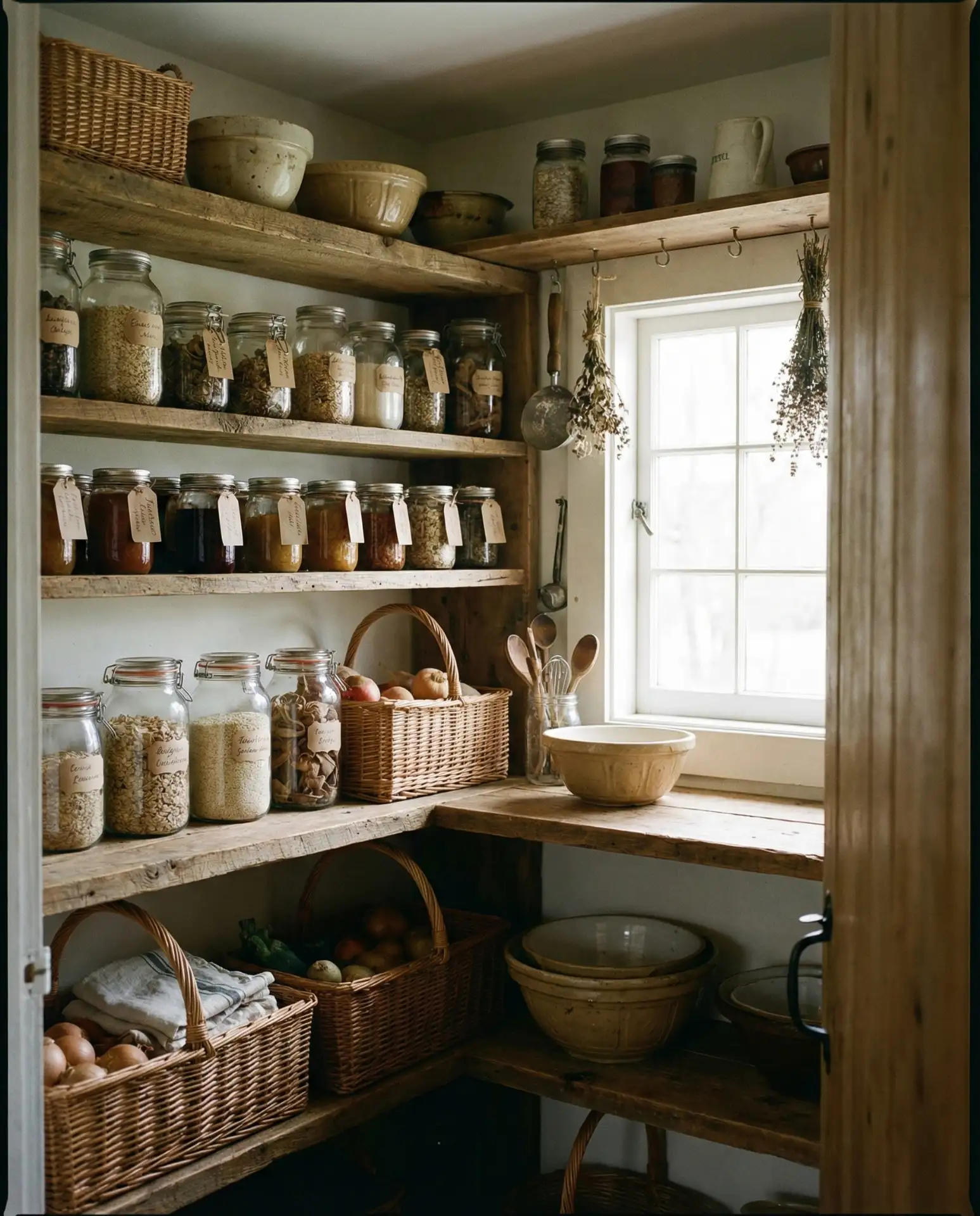
Micro anecdote: one homeowner in Vermont turned a narrow closet into a cottage pantry by painting the interior a soft sage green and installing reclaimed wood shelves. She kept vintage mason jars from estate sales and labeled them with a simple marker. The result felt more like a curated collection than a storage space—and it only cost about $150 to complete, proving that charm doesn’t require a big budget.
16. Unique Architectural Pantry
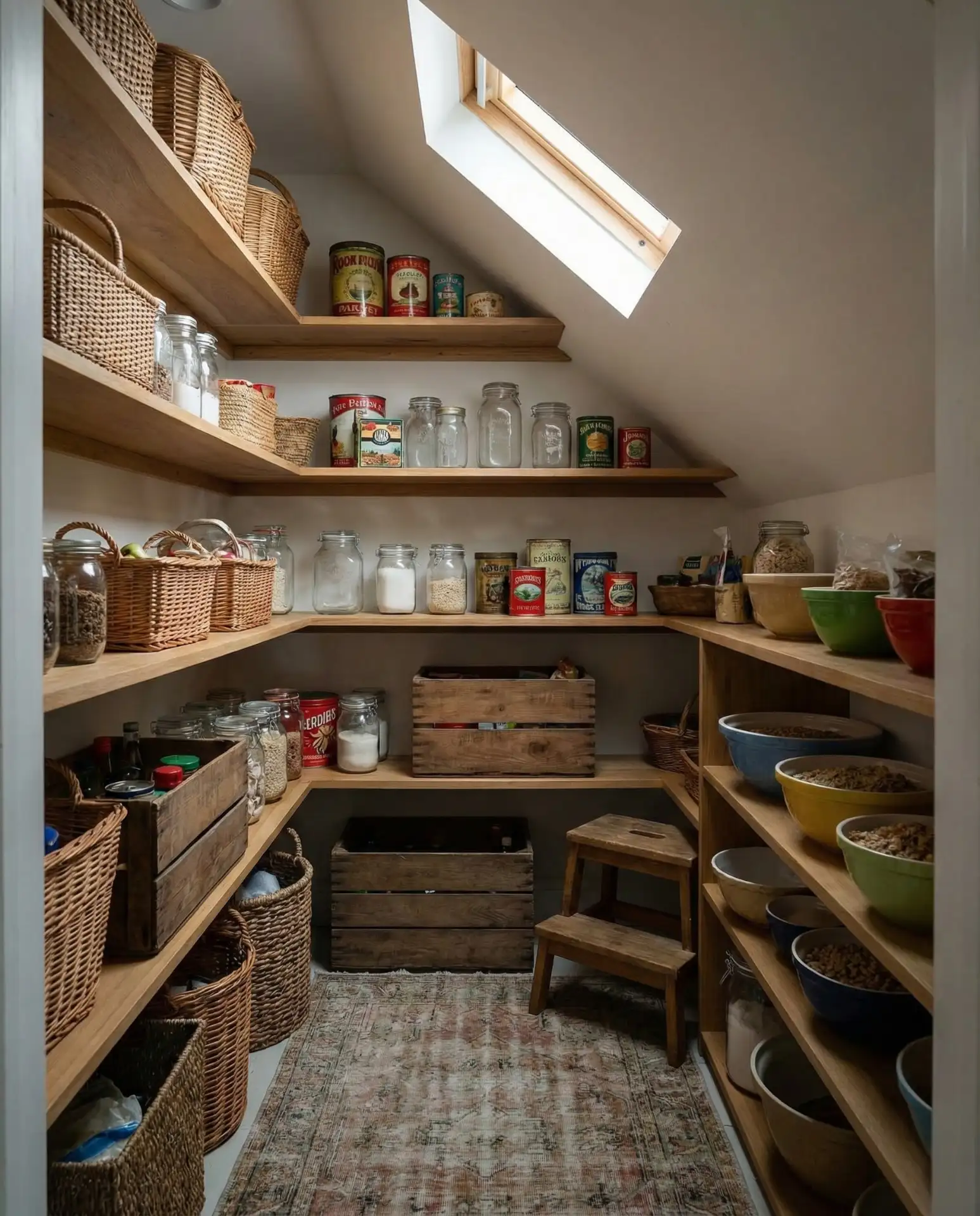
A unique architectural pantry takes advantage of unusual spaces—think arched doorways, sloped ceilings, or rounded alcoves—to create storage that feels custom and unexpected. These designs often become the most memorable feature of a kitchen, showcasing creativity and a willingness to work with a home’s quirks rather than against them. It’s a celebration of character over cookie-cutter layouts. 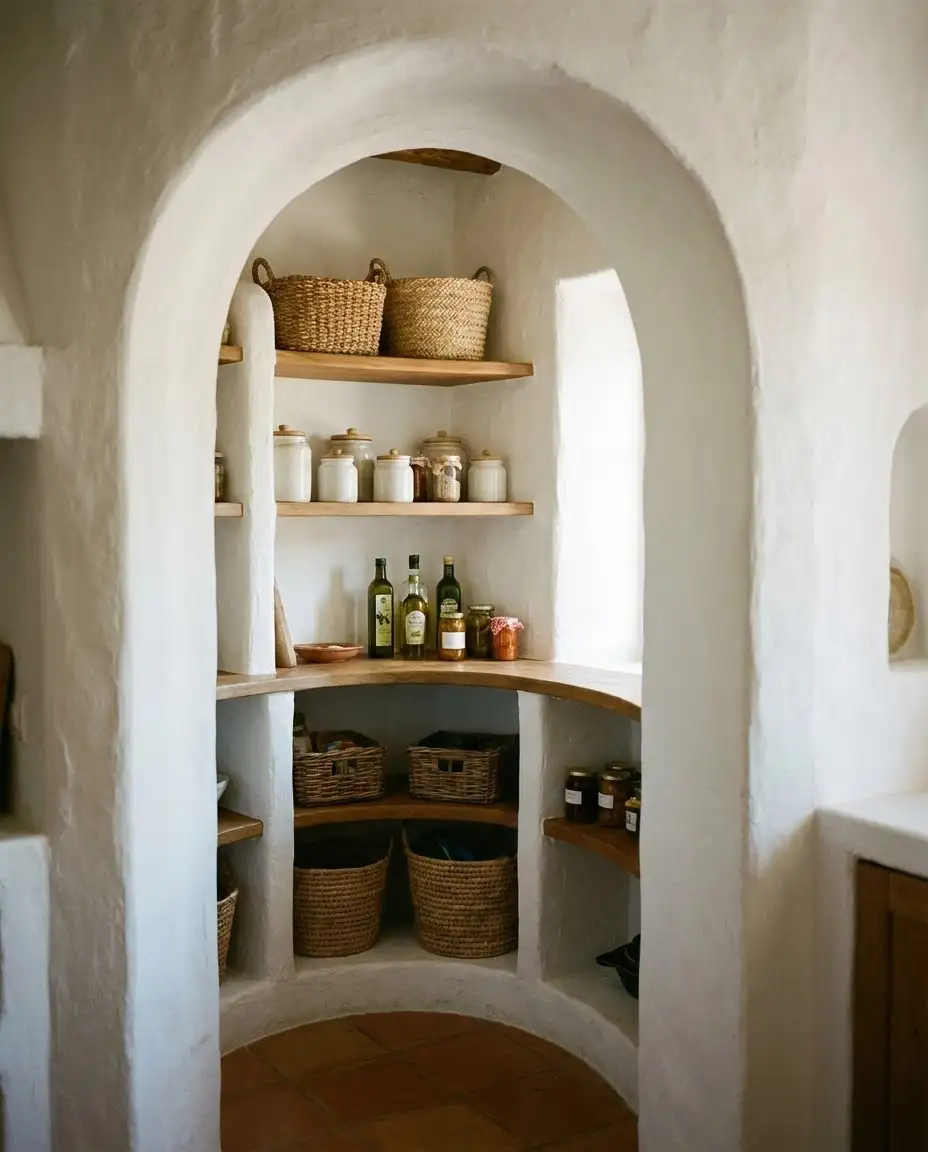
Expert-style commentary: architects and designers love working with unique pantry spaces because they allow for problem-solving that’s both functional and beautiful. A sloped ceiling might inspire tiered shelving that follows the roofline; an arched doorway could be echoed in the shelving design. The key is custom millwork or clever DIY solutions that make the unusual space feel purposeful, not awkward.
17. Coffee Station Pantry
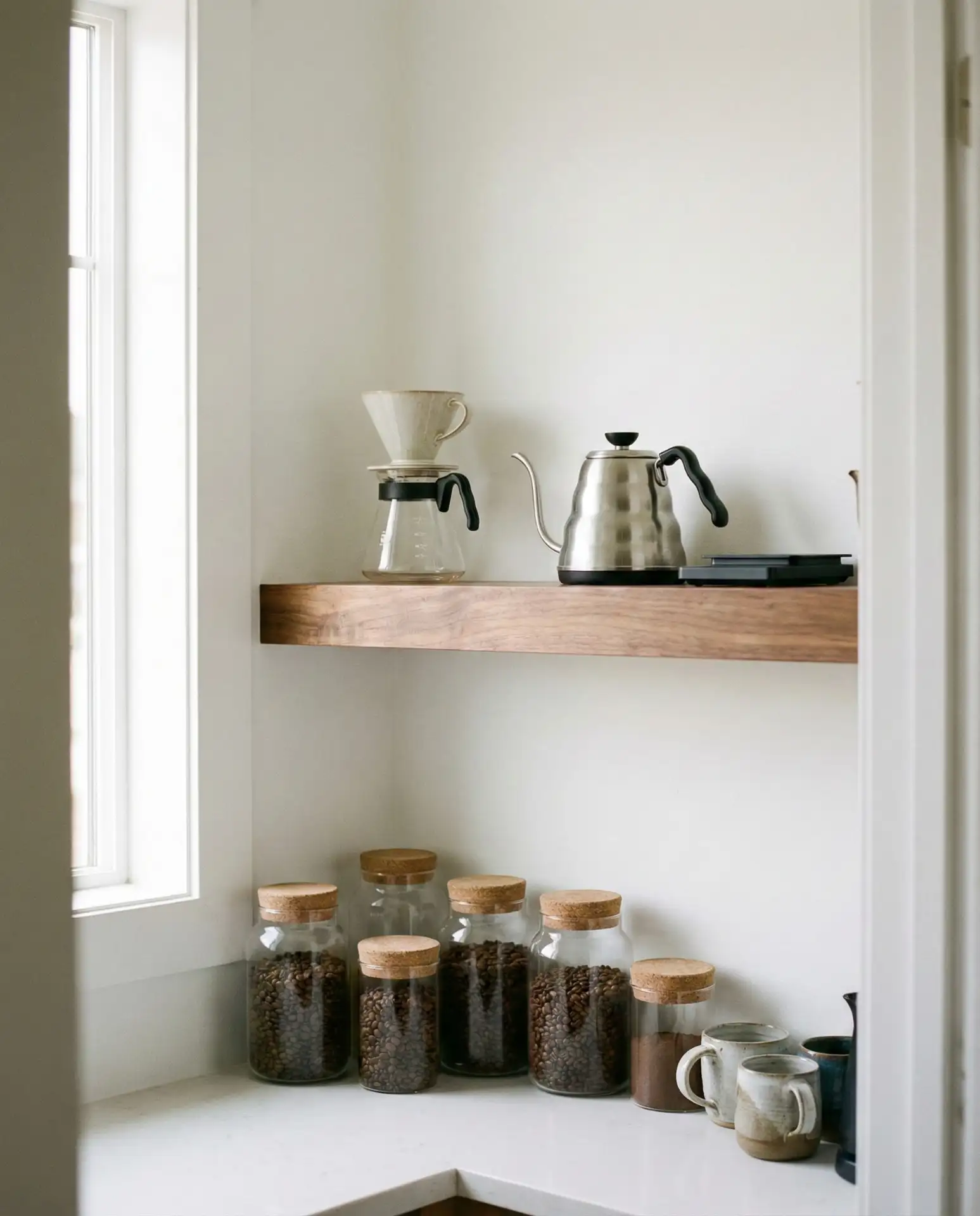
A coffee-dedicated pantry area has become a must-have for caffeine enthusiasts, often tucked into a corner of a larger walk-in pantry or set up as a standalone cabinet. This setup includes everything you need for your morning routine: coffee maker, grinder, mugs, syrups, and beans—all in one dedicated spot. It’s about creating a ritual space that makes the daily coffee routine feel less like a chore and more like a small luxury. 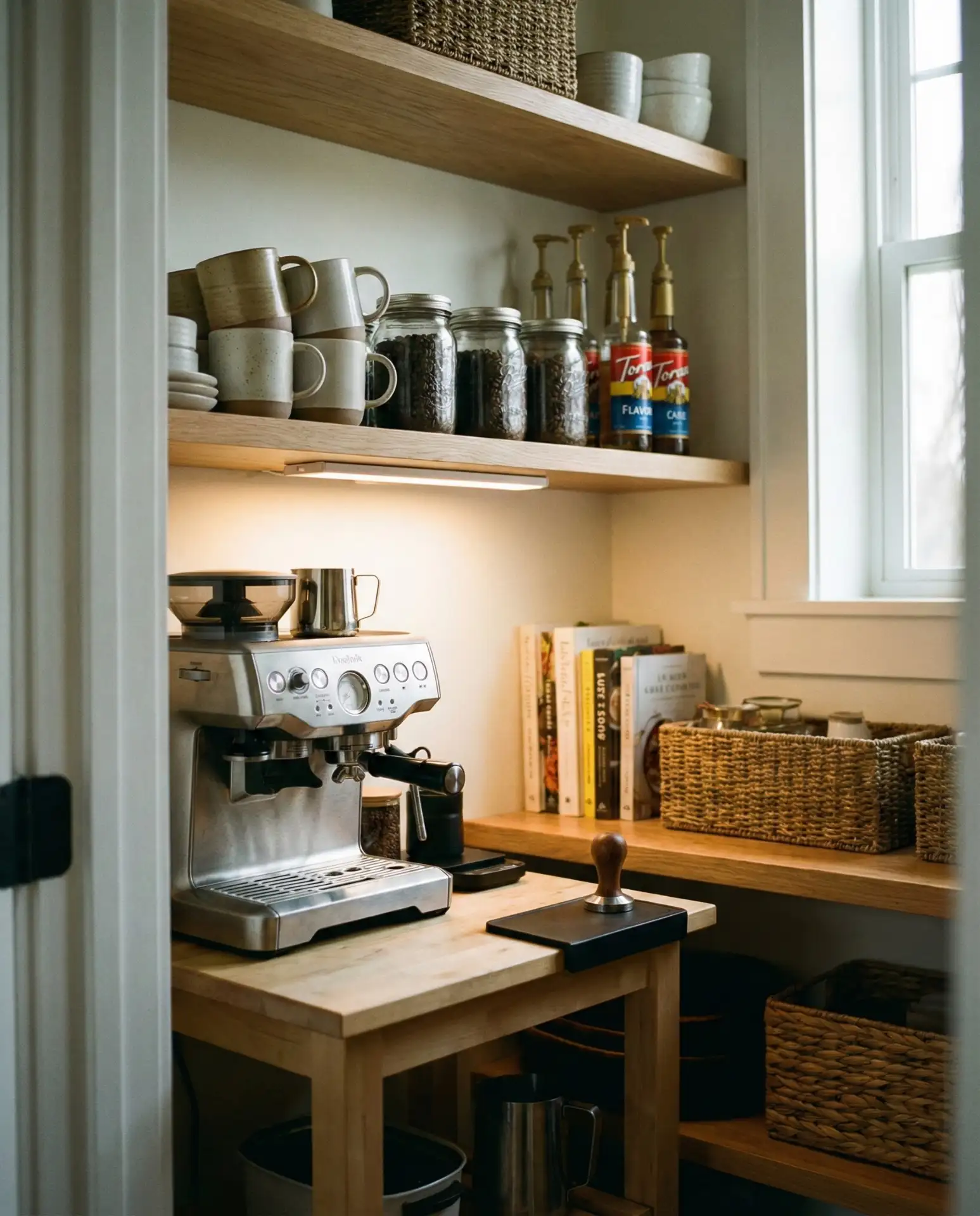
American lifestyle context: with more people working from home, the coffee station has moved from a simple countertop appliance to a full-fledged pantry feature. In cities like Seattle, Portland, and Austin—where coffee culture runs deep—homeowners are investing in high-end machines and dedicated storage that rivals what you’d find in a boutique café. It’s both functional and a statement about priorities.
18. Dining Room Pantry Hybrid
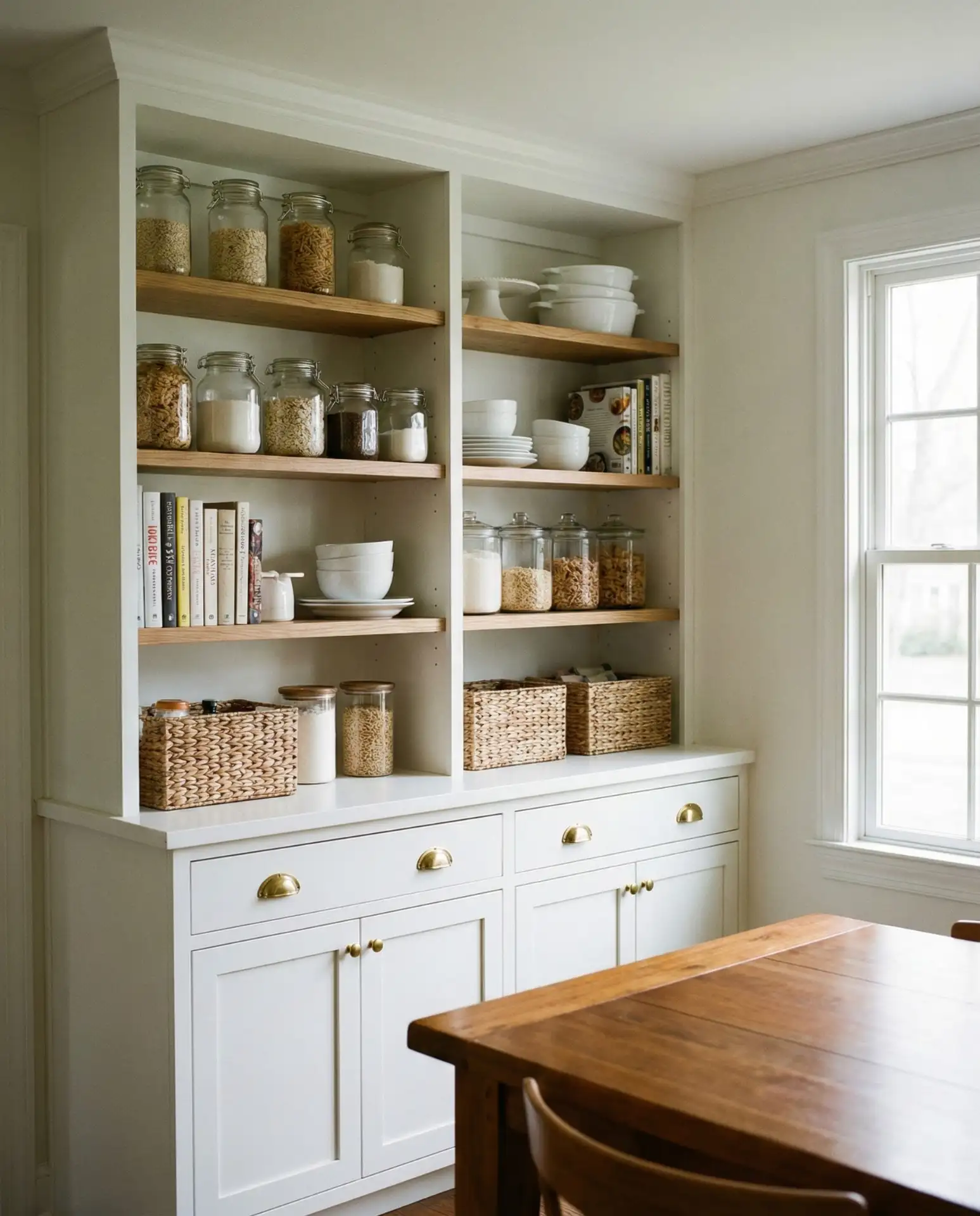
In homes where the dining room is adjacent to the kitchen, a built-in pantry can serve double duty—storing everyday groceries while also housing special occasion dishware, table linens, and serveware. This hybrid approach is especially practical in open-concept floor plans, where a well-designed built-in can act as both functional storage and an architectural focal point that defines the space. 
Where it works best: homes with formal dining rooms that are used regularly or open-plan spaces where the kitchen flows directly into the dining area. This setup is common in Southern homes and newer suburban builds where entertaining is central to the lifestyle. Just be sure to keep the shelving styled intentionally—mixing functional pantry staples with decorative pieces so the built-in feels curated, not cluttered.
19. Vintage-Inspired Pantry
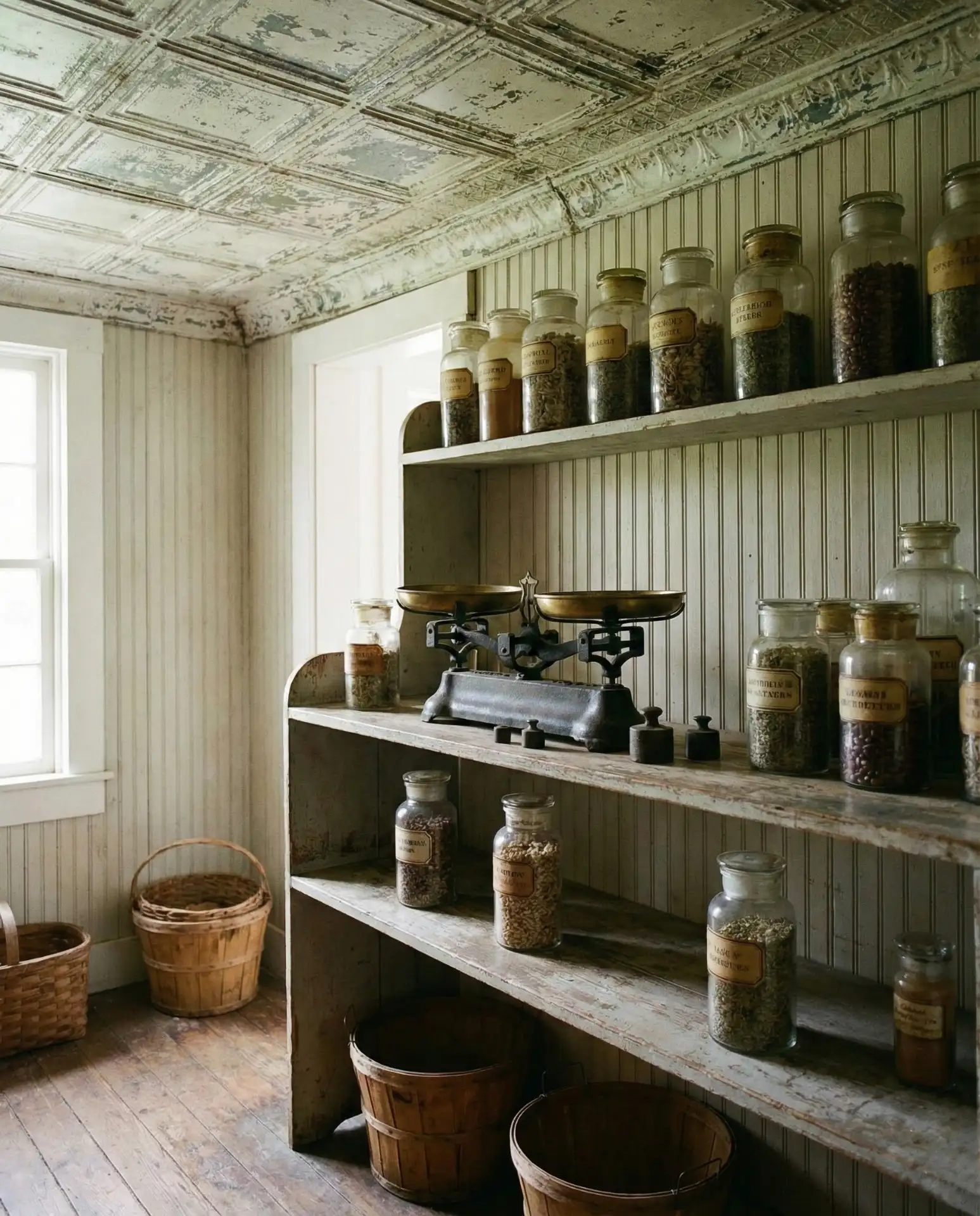
A vintage-inspired pantry nods to mid-century or early 20th-century aesthetics, using retro canisters, enamelware, and antique-style hardware to create a sense of nostalgia. This approach is popular among homeowners renovating older homes who want to honor the original character while adding modern convenience. The look is less about perfection and more about patina—celebrating the charm of well-loved objects.
Real homeowner behavior: many vintage pantry enthusiasts shop estate sales, flea markets, and online resale platforms for authentic pieces—often spending more time hunting for the perfect retro breadbox than they would picking out new cabinetry. The joy is in the discovery and the story each piece carries. It’s a slower, more intentional way to build a space, and the result feels genuinely personal.
20. Green Pantry with Natural Materials
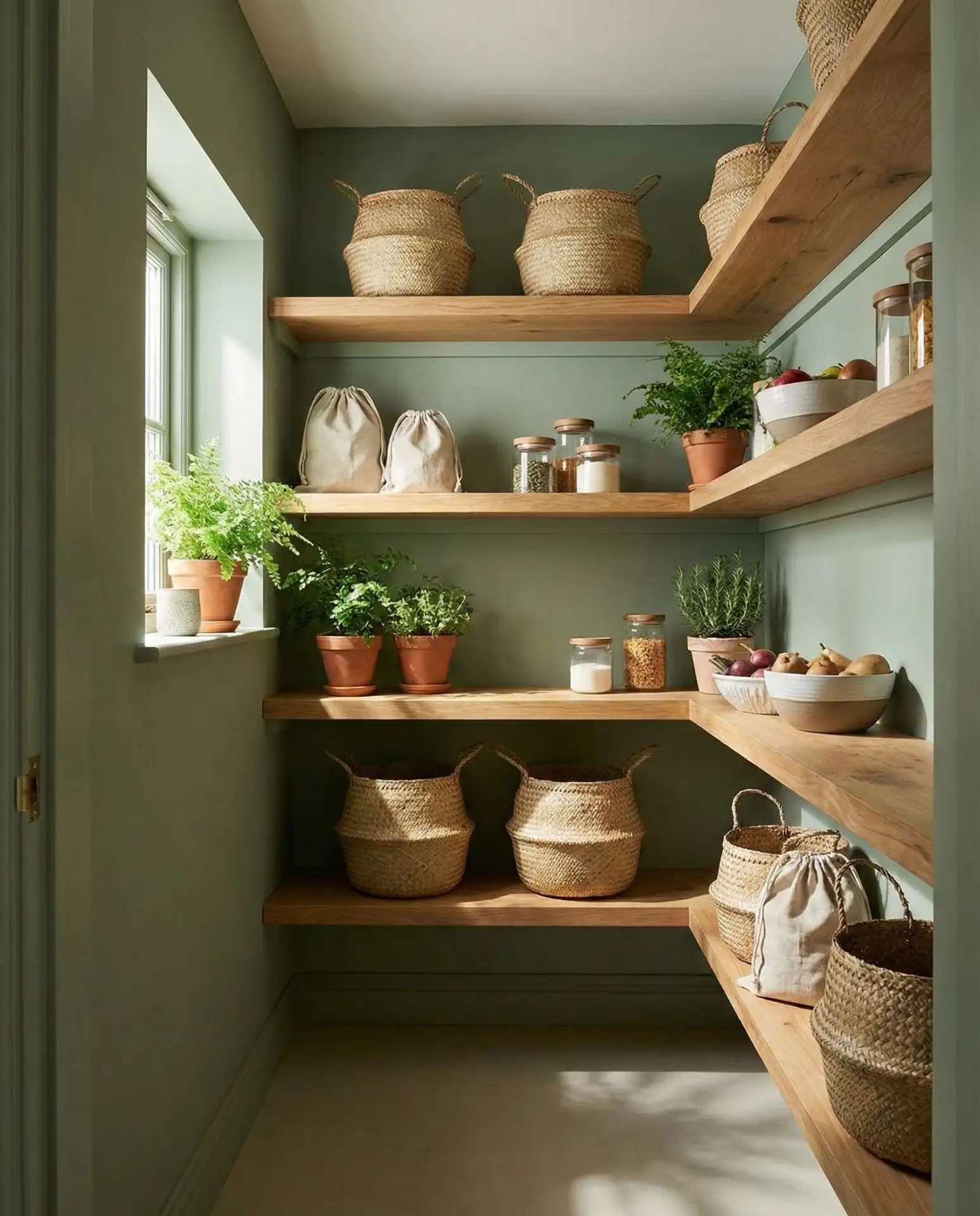
A green pantry—whether painted in sage, olive, or emerald—brings the calming, grounded feeling of nature indoors. This trend pairs beautifully with natural materials like wood, rattan, and linen, creating a space that feels organic and serene. It’s especially popular among homeowners looking to move away from stark white kitchens and embrace warmer, more textured palettes that reflect a connection to the outdoors. 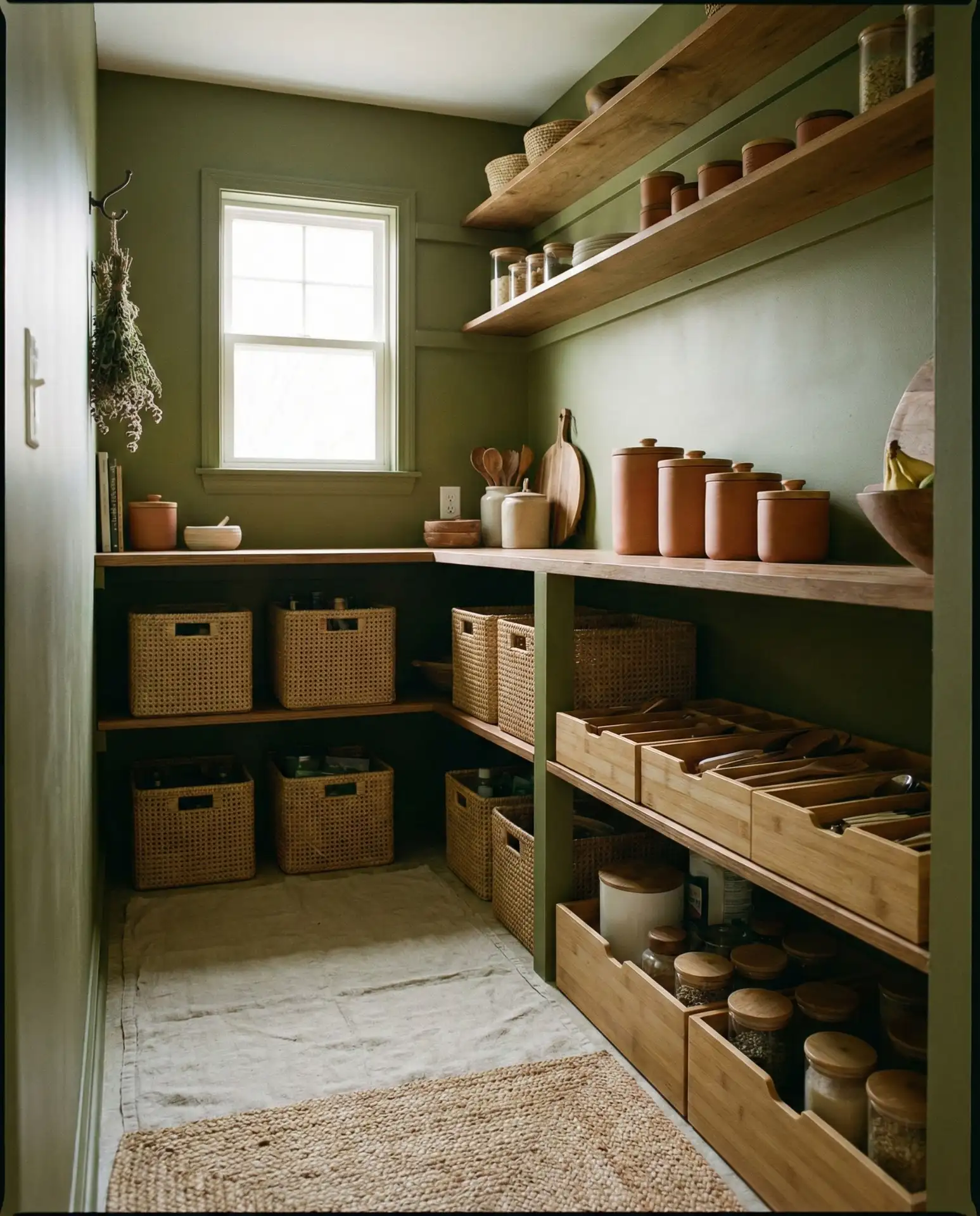
Common mistake: pairing green walls with harsh white shelving can feel jarring. Instead, opt for wood tones or even matching green cabinetry to create a cohesive, enveloping look. If you’re nervous about committing to color, start with a single accent wall or just the back panel of the pantry, then add green through accessories like bins and baskets. It’s an easier entry point that still delivers the mood shift.
21. Baker’s Pantry with Dedicated Baking Zone
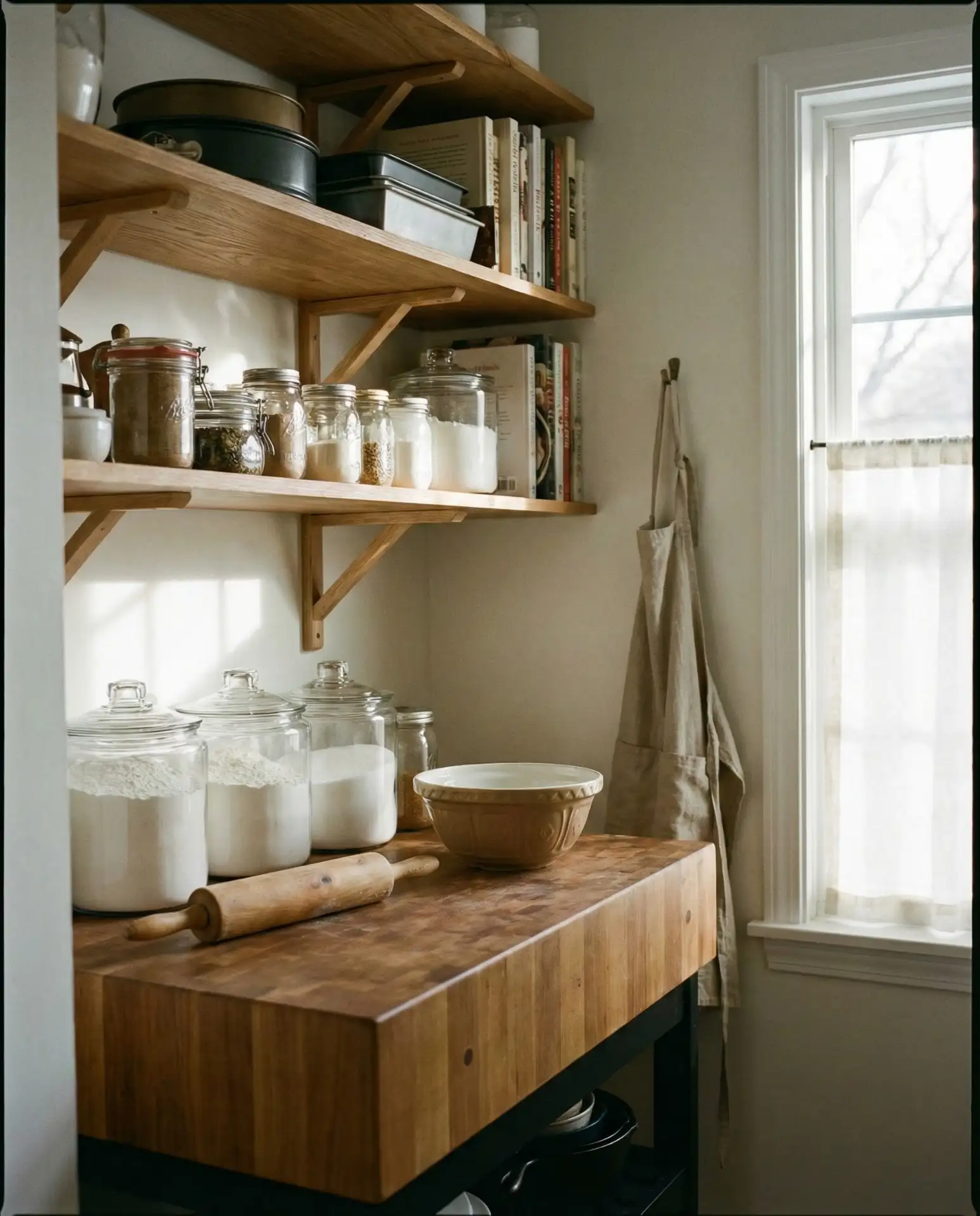
A baker’s pantry is designed specifically for those who bake regularly—think pull-out flour bins, marble countertops for rolling dough, and shelving dedicated to mixers, measuring tools, and specialty ingredients. This setup keeps all baking essentials in one place, eliminating the need to dig through cabinets for a pastry cutter or vanilla extract. It’s a game-changer for anyone who bakes more than once a week. 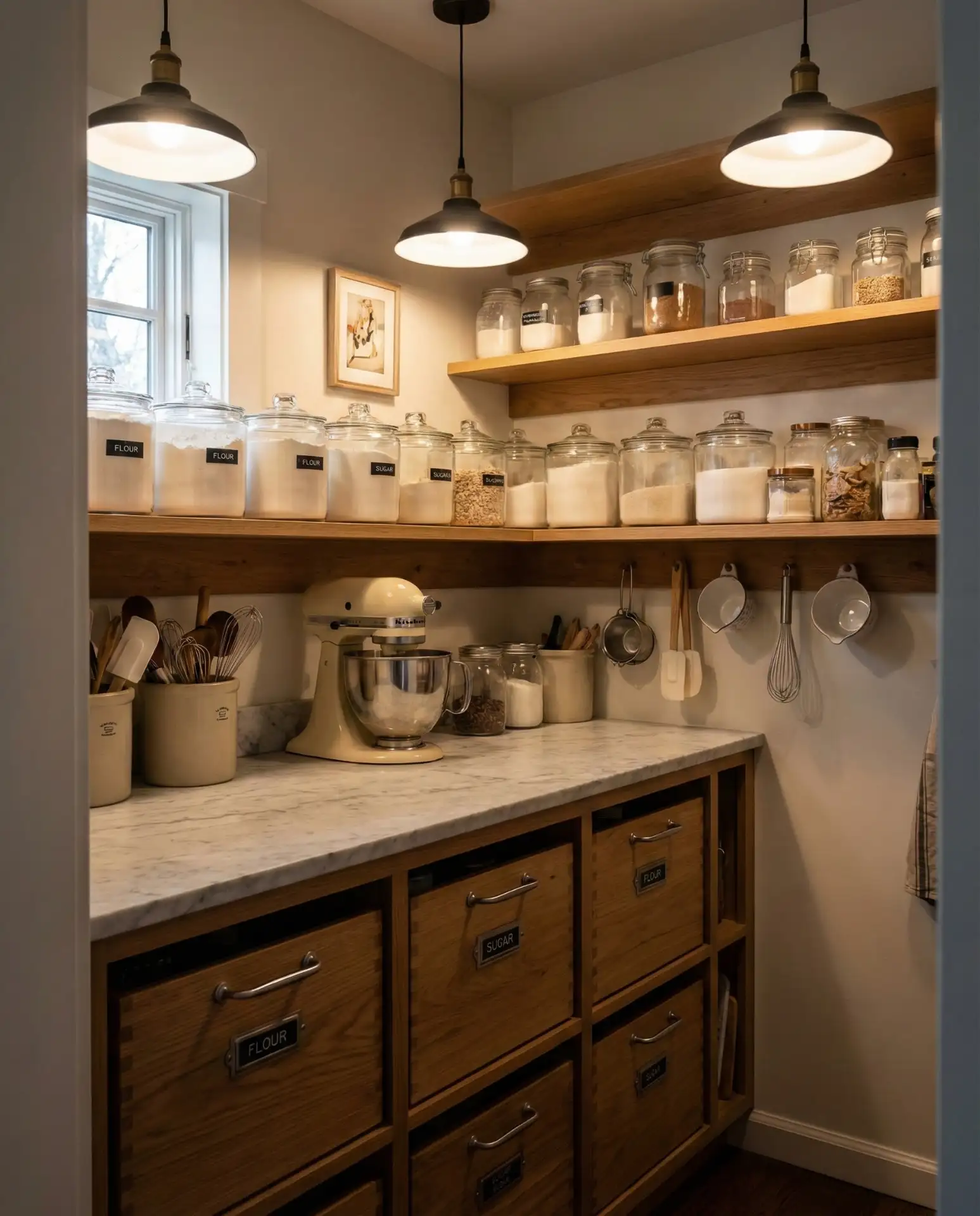
Practical insight: a baker’s pantry works best when it includes a lower-than-standard countertop (about 32 inches instead of 36), which makes kneading dough and rolling out pastry much easier on your arms and back. Many serious bakers also install a small sink in the pantry for cleanup without tracking flour back into the main kitchen. It’s a detail that professional bakers have known for decades, and it’s finally making its way into home kitchens.
Conclusion
Whether you’re reimagining a narrow closet or designing a full walk-in space from scratch, the pantries we’ve explored here prove that smart storage and standout style can absolutely coexist. The best pantry is one that fits your cooking habits, your home’s architecture, and your personal aesthetic—so take what resonates, adapt what doesn’t, and make the space truly yours. We’d love to hear which ideas you’re most excited to try, so drop a comment below and let’s keep the conversation going.