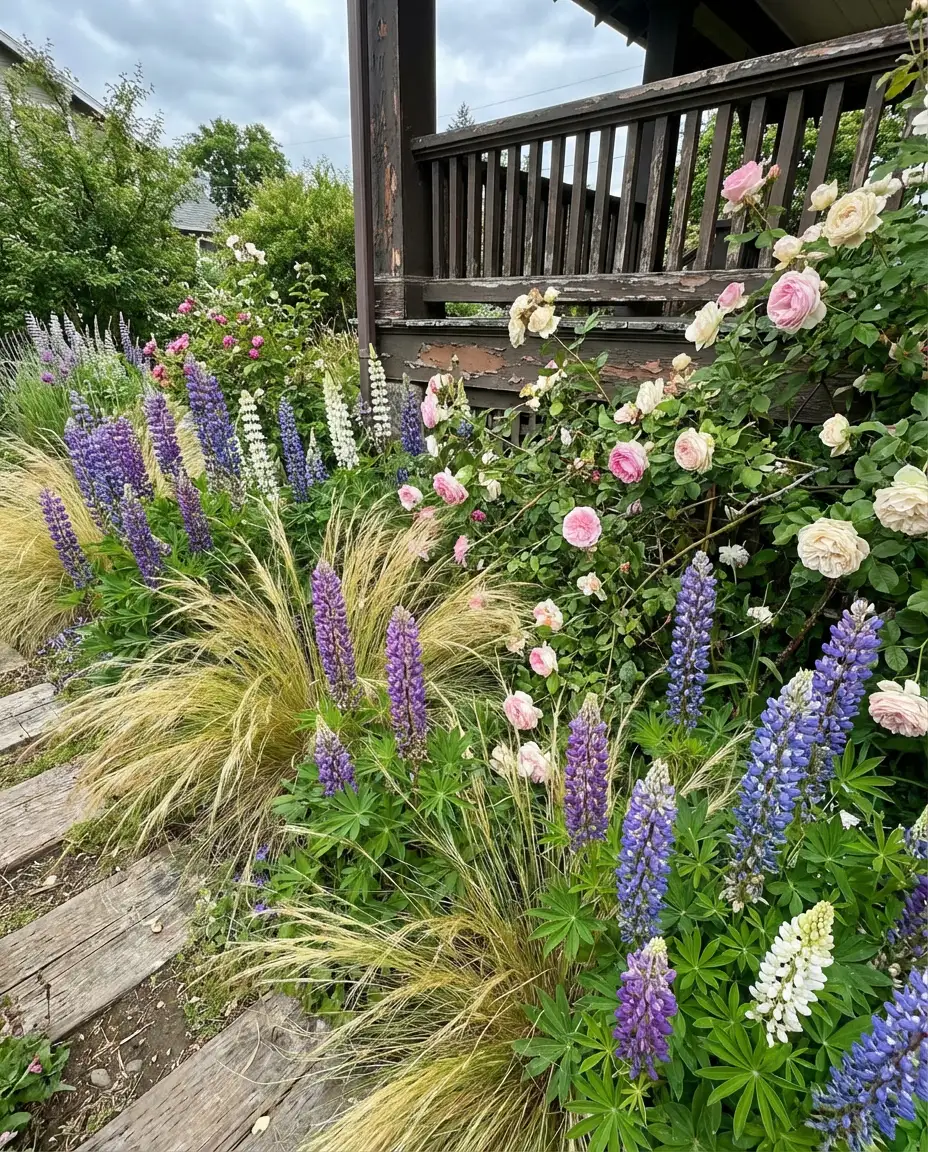
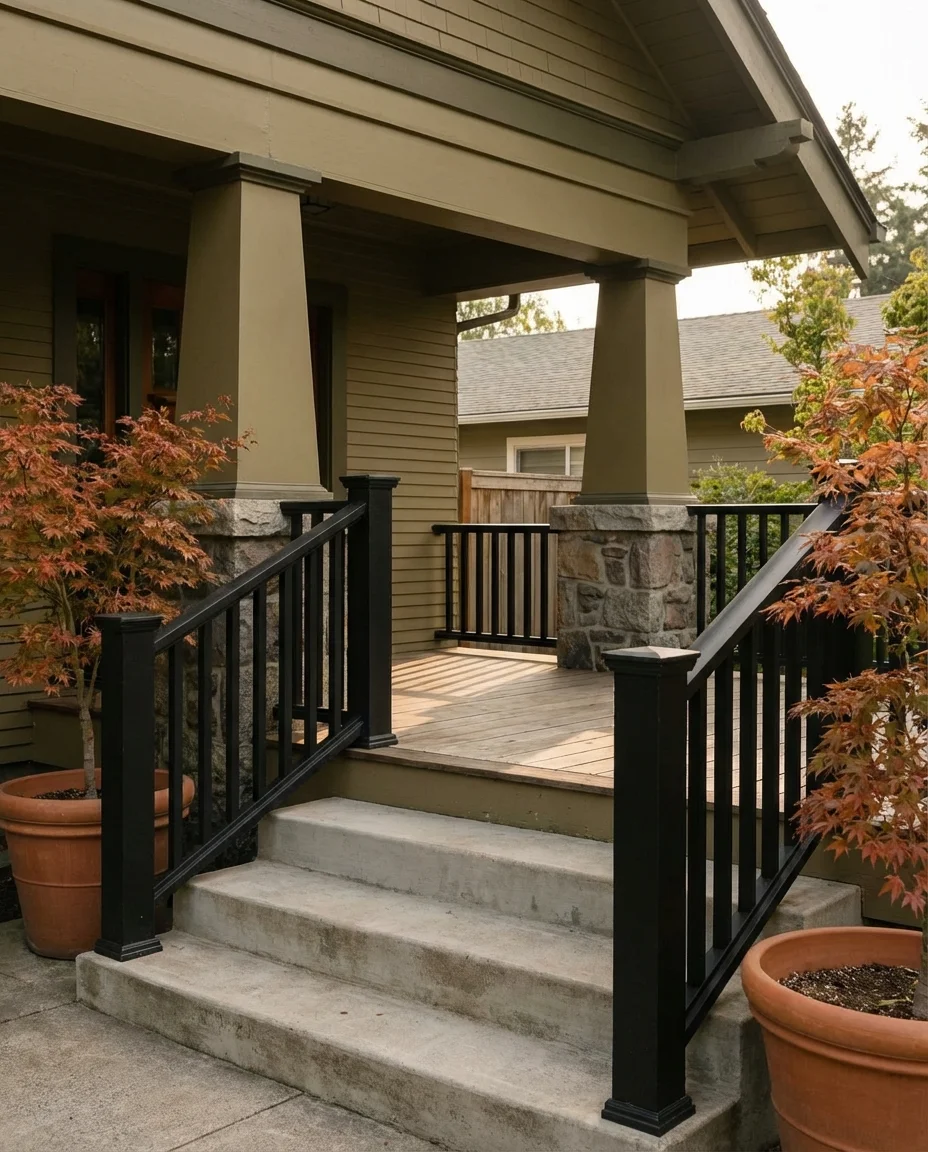
Porch railings have quietly become one of the most searched home exterior details on Pinterest—and it makes total sense. Whether you’re refreshing a modern front porch or doing a full curb-appeal overhaul, the right railing can completely transform how your home feels from the street. In 2026, homeowners are leaning into everything from sleek cable systems to charming cottage-style wooden designs, and the options have never been more inspiring. This article walks you through fresh, stylish, and totally achievable porch railing ideas—from budget-friendly DIY builds to dramatic wrought iron statements—so you can find exactly the look you’ve been pinning.
1. Classic White Wood Railing on a Black Front Door Porch
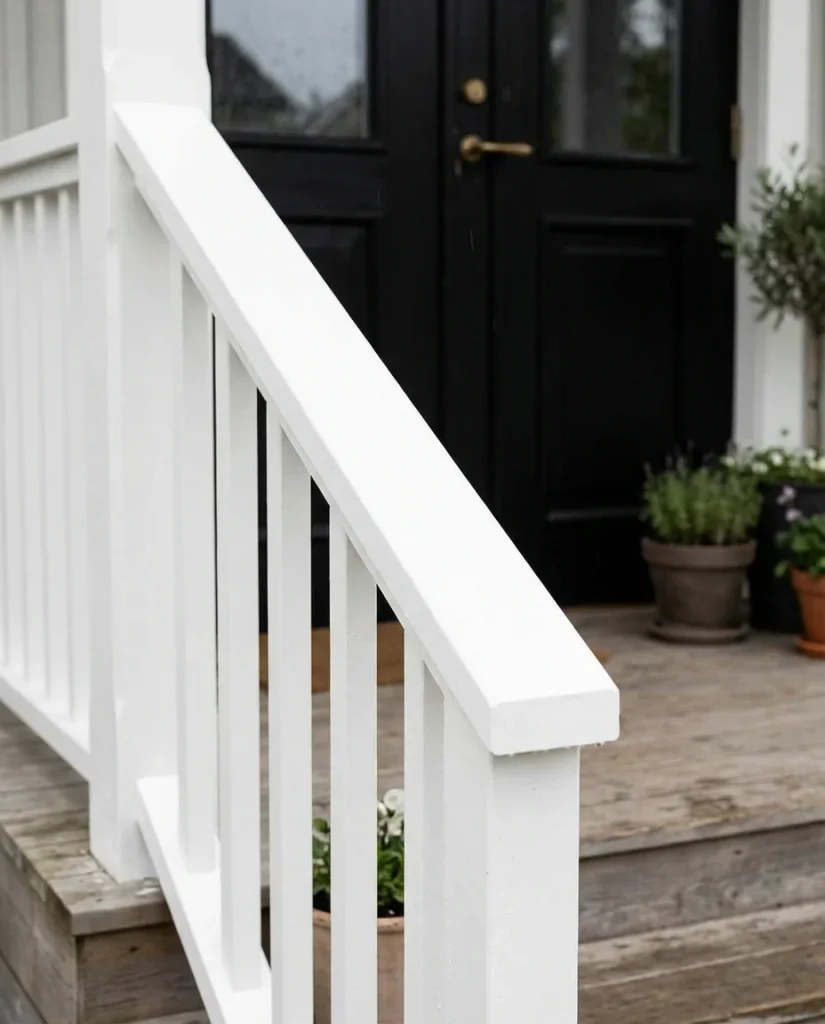
There’s a reason the white-house-black combo never goes out of style—the contrast is crisp, timeless, and endlessly photogenic. A simple white wood railing against a glossy black front door gives even the most ordinary ranch home a polished, intentional look. Square balusters keep things classic, while a chunky top rail adds just enough visual weight to feel substantial without being heavy. It’s the kind of porch that makes neighbors slow down and take a second look.

If you’ve been putting off a porch refresh because you assumed it would cost a fortune, this style is your answer. A basic white-painted wood railing system for a standard front porch runs between $300 and $600 in materials if you take the DIY route—and the results look anything but budget. Prime, paint, and seal properly, and it’ll hold up through several seasons without needing much attention beyond an occasional touch-up.
2. Hog Wire Railing for a Relaxed Farmhouse Porch
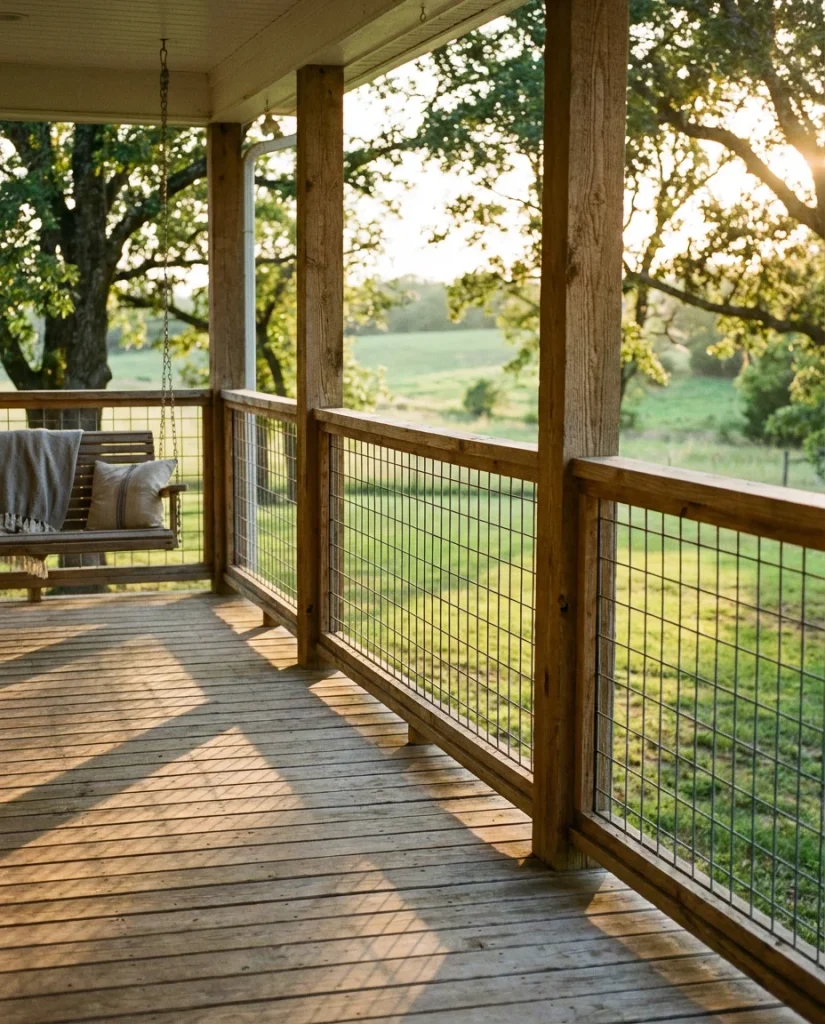
If you love the look of open, airy porches with a subtle rustic edge, hog wire railing might be exactly what you’ve been searching for. Originally designed for livestock fencing, hog wire panels have found a very comfortable second life in American home design—especially in the South and Pacific Northwest, where that easy rural-meets-modern aesthetic really clicks. The wire panels are set into a simple wood frame, creating a look that’s casual and clean at the same time. Pair it with natural cedar posts, and you’ve got something genuinely beautiful.

One thing homeowners love about hog wire railing is the unobstructed view it allows. Unlike traditional balusters, the thin wire virtually disappears once you’re sitting on the porch, making the yard feel like a natural extension of your space. This works especially well on homes with mountain views or lush landscaping you’d hate to block. It’s also a legitimately beginner-friendly DIY project—the materials are inexpensive, and the installation is surprisingly forgiving for first-timers.
3. Modern Farmhouse Horizontal Wood Railing
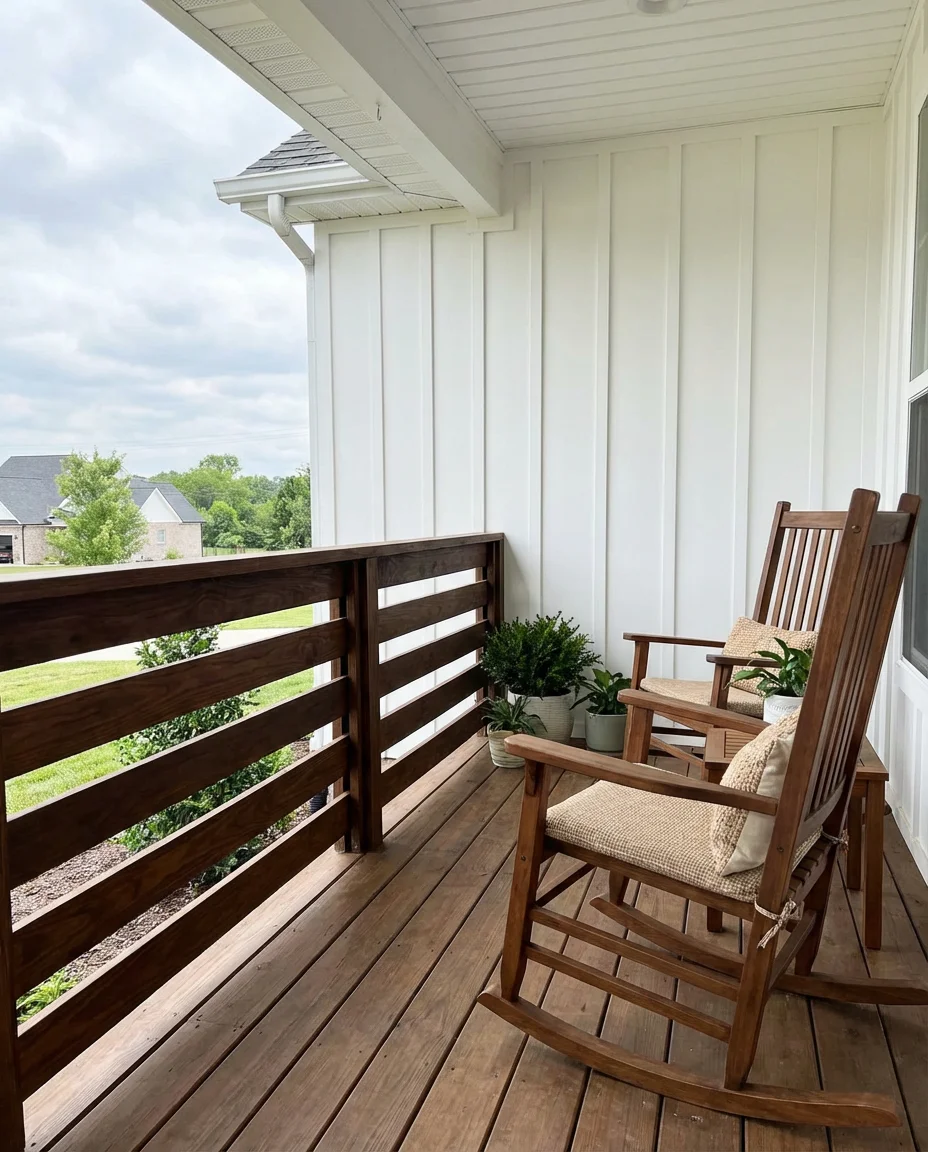
Modern farmhouse style has been a dominant force in American home design for years, and horizontal wood railings are one of its most recognizable signatures. Instead of traditional vertical balusters, horizontal boards run parallel to the ground—giving the porch a low, sleek profile that reads as both contemporary and warm. Cedar or pressure-treated pine are the most common material choices, and they take stain beautifully, letting you dial the color from honey blond to deep walnut depending on your home’s palette.
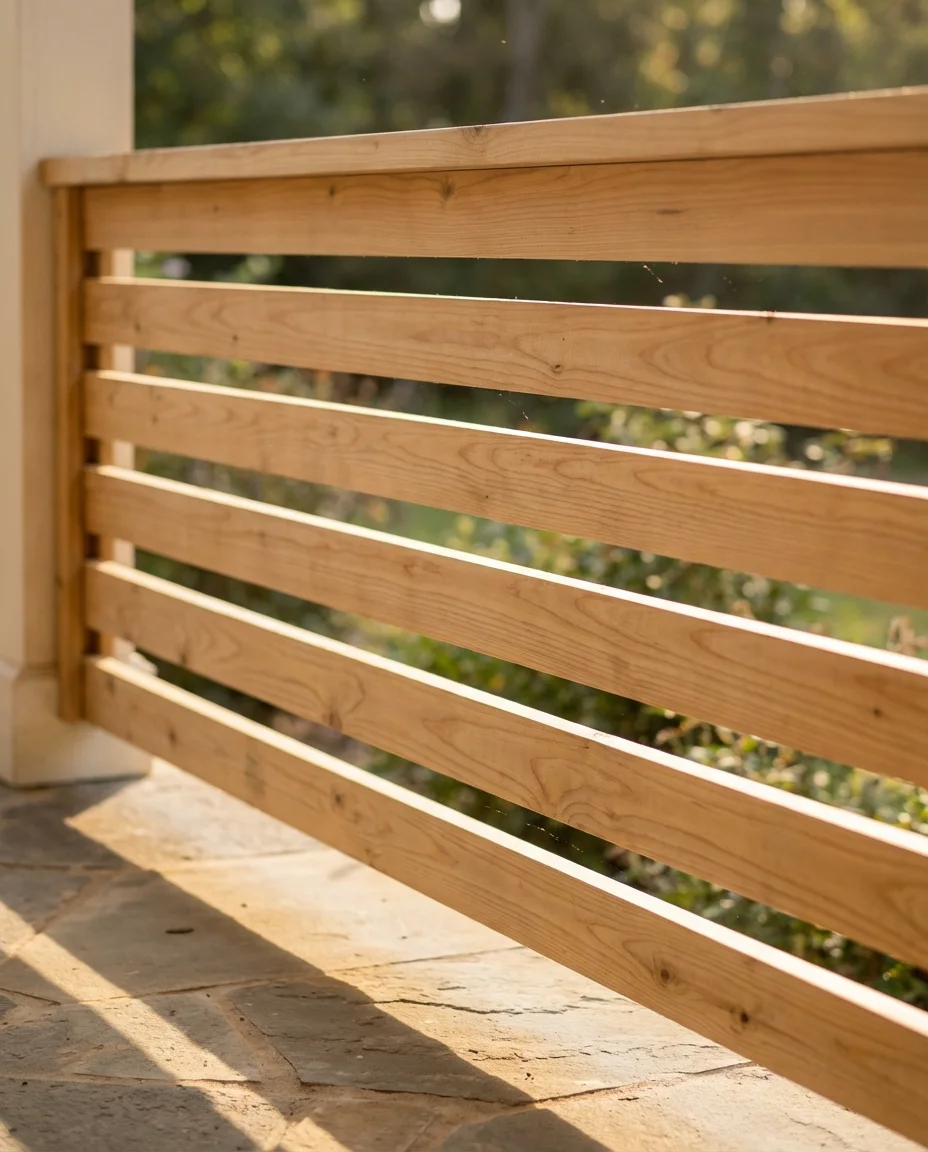
Design professionals tend to favor horizontal railings on homes with strong architectural lines—think board-and-batten siding, flat rooflines, or large picture windows. The horizontal orientation echoes those clean lines and creates a sense of visual cohesion across the whole facade. One common mistake is spacing the boards too closely, which can make the railing feel heavy and fence-like. Aim for a 4-inch gap between boards—it satisfies most building codes and keeps the look light and intentional.
4. Cable Railing for a Sleek, Uninterrupted View
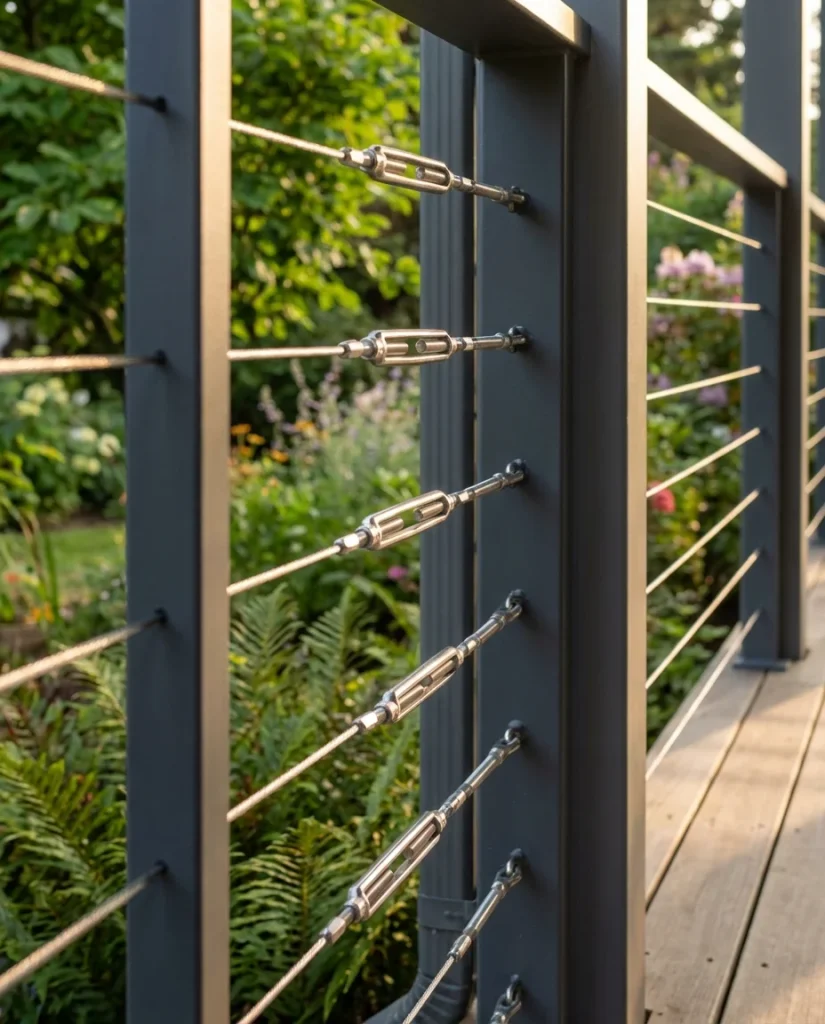
Cable railing is having a major moment right now, and it’s easy to see why. Stainless steel cables stretched horizontally between posts create a nearly invisible barrier that lets your landscaping, view, or street scene take center stage. It pairs naturally with steel or aluminum posts for a fully modern front porch feel, but it also looks surprisingly at home when paired with warm wood posts on more transitional-style homes. Either way, the effect is polished and genuinely architectural.
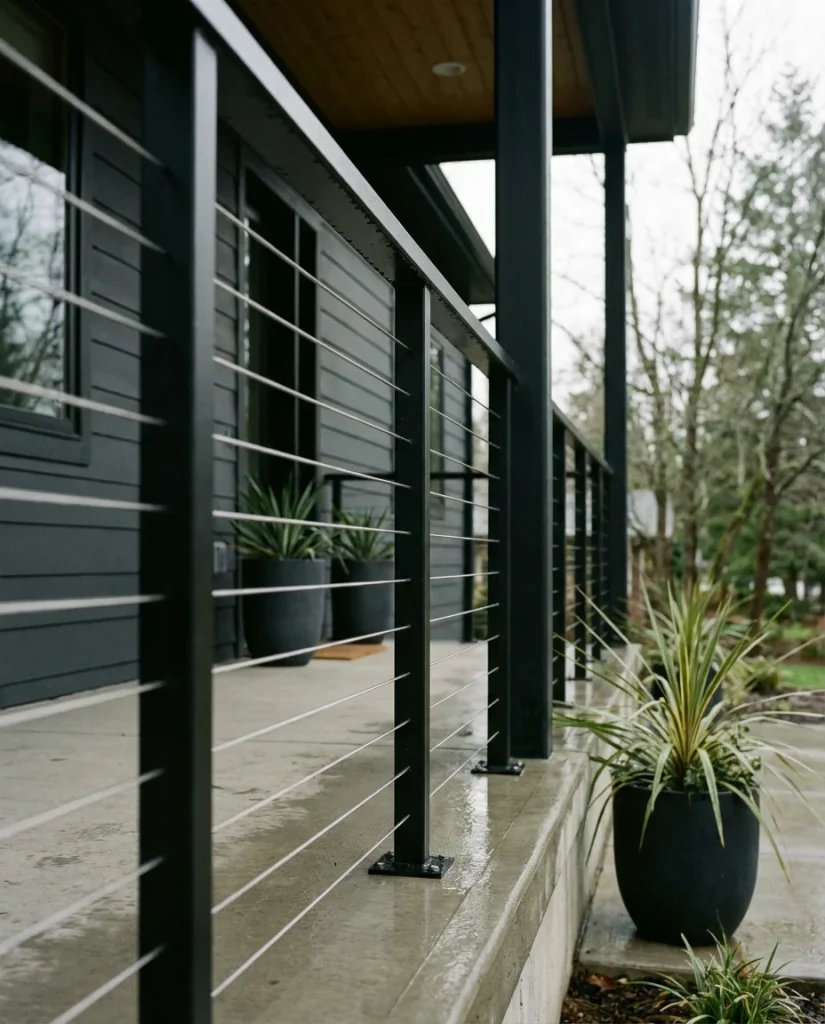
Cable railing systems do require a bit more upfront investment than wood—a professionally installed system typically runs $150 to $250 per linear foot—but the long-term maintenance savings are significant. Stainless steel cables won’t rot, warp, or need painting, and they can last decades with minimal care. For homeowners in coastal areas who’ve battled salt-air corrosion on painted railings, this is often the upgrade that finally solves the problem for good.
5. DIY Cheap Porch Railing Using Metal Conduit

Not every porch upgrade needs a big budget—and this clever ideas diy cheap approach proves it. Electrical metal conduit (the stuff used for wiring) makes a surprisingly sturdy and modern-looking railing when cut to length and fitted into wood or metal posts. The thin profile gives it an industrial edge that’s genuinely cool, and a coat of matte black spray paint makes it look intentional and well-designed rather than improvised. Total material cost for a standard porch can come in under $150.

A homeowner in rural Tennessee shared that she built her entire front porch railing over a single weekend using conduit from the hardware store and scrap 4×4 posts she had leftover from another project. The whole thing cost under $80 and prompted so many compliments from neighbors that she started a blog about it. The key to making this look elevated rather than rough is consistency—uniform spacing, straight cuts, and that matte black finish. Measure twice, spray twice, and it’ll look like it belongs on a design blog.
6. Wrought Iron Railing for Victorian Curb Appeal

Few materials carry as much historical weight—or visual drama—as wrought iron. On a Victorian home, a scrollwork iron railing isn’t just functional; it’s part of the architecture’s soul. The ornate curves and decorative finials echo the era’s love of detail and craftsmanship, and when properly maintained with a good rust-inhibiting paint, a wrought iron railing can last a century or more. This is the railing style that gives an old house its full voice.

This style works best on late 19th- and early 20th-century homes—painted ladies, Queen Annes, Folk Victorians, and Craftsman bungalows with ornate trim. If you’re restoring an older home, original ironwork can sometimes be salvaged, cleaned, and repainted for a fraction of the cost of new fabrication. Custom wrought iron railings can run $300 to $600 per linear foot installed, so sourcing salvage pieces from architectural salvage shops or estate sales is a genuinely smart move for budget-conscious restorers.
7. Cattle Panel Railing for an Industrial Farmhouse Look

The cattle panel railing trend took off on Pinterest a few years back, and it hasn’t slowed down—because it genuinely delivers. Cattle panels are heavy-gauge welded wire grids sold at farm supply stores, and when framed in wood and mounted as porch railing infill, they create this wonderful tension between rough utility and modern design. The large grid pattern reads almost like a graphic element, giving the porch real visual personality without any of the expense of custom fabrication.
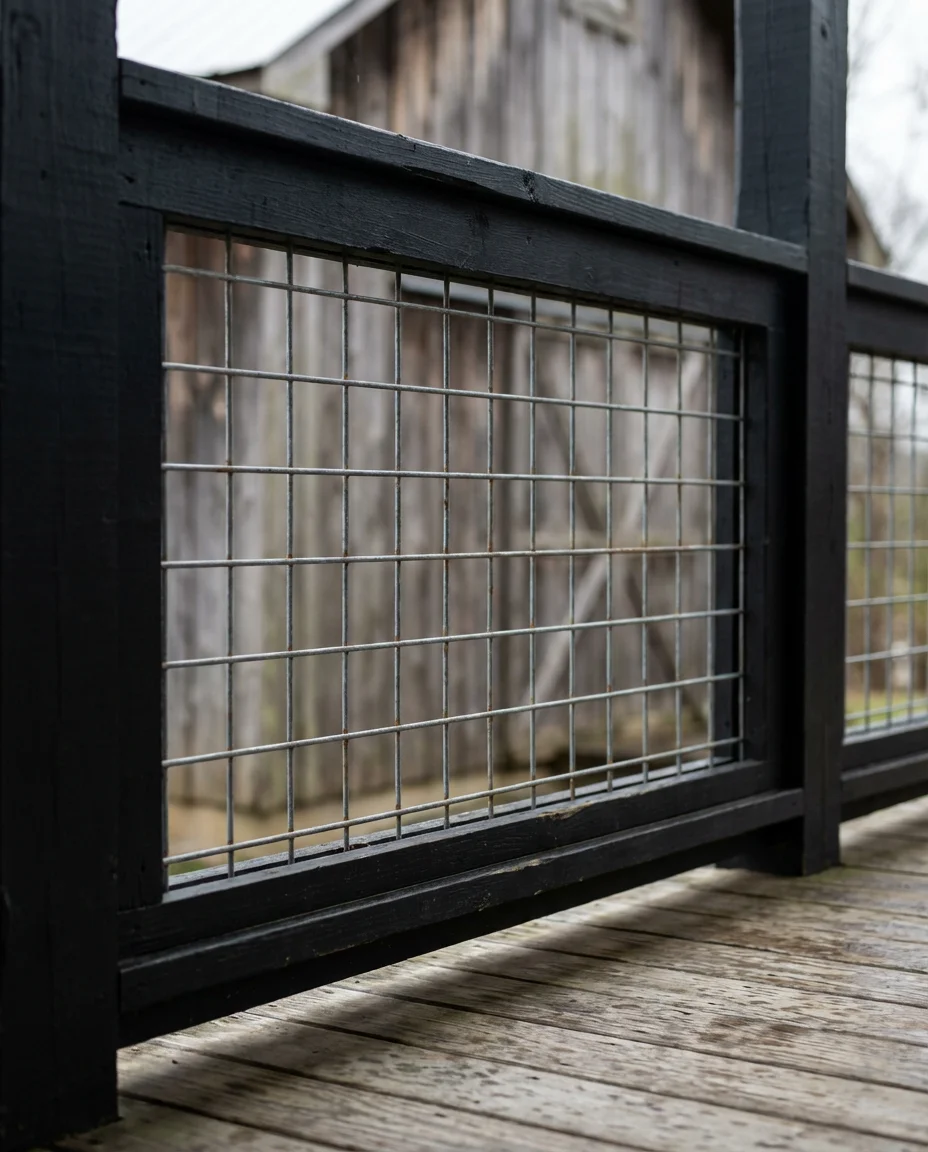
Where this works best is on homes with a barn-inspired or industrial-leaning aesthetic—black metal roofing, corrugated siding, and exposed beam porches. The raw material feel actually enhances the design intent rather than clashing with it. Keep your wood frame painted black or leave it in raw steel to let the panel grid read clearly. One tip: use galvanized panels rather than plain steel—they resist rust naturally and hold up much better in humid Southern or coastal climates where moisture is a constant factor.
8. Cottage-Style Wood Railing with Turned Balusters
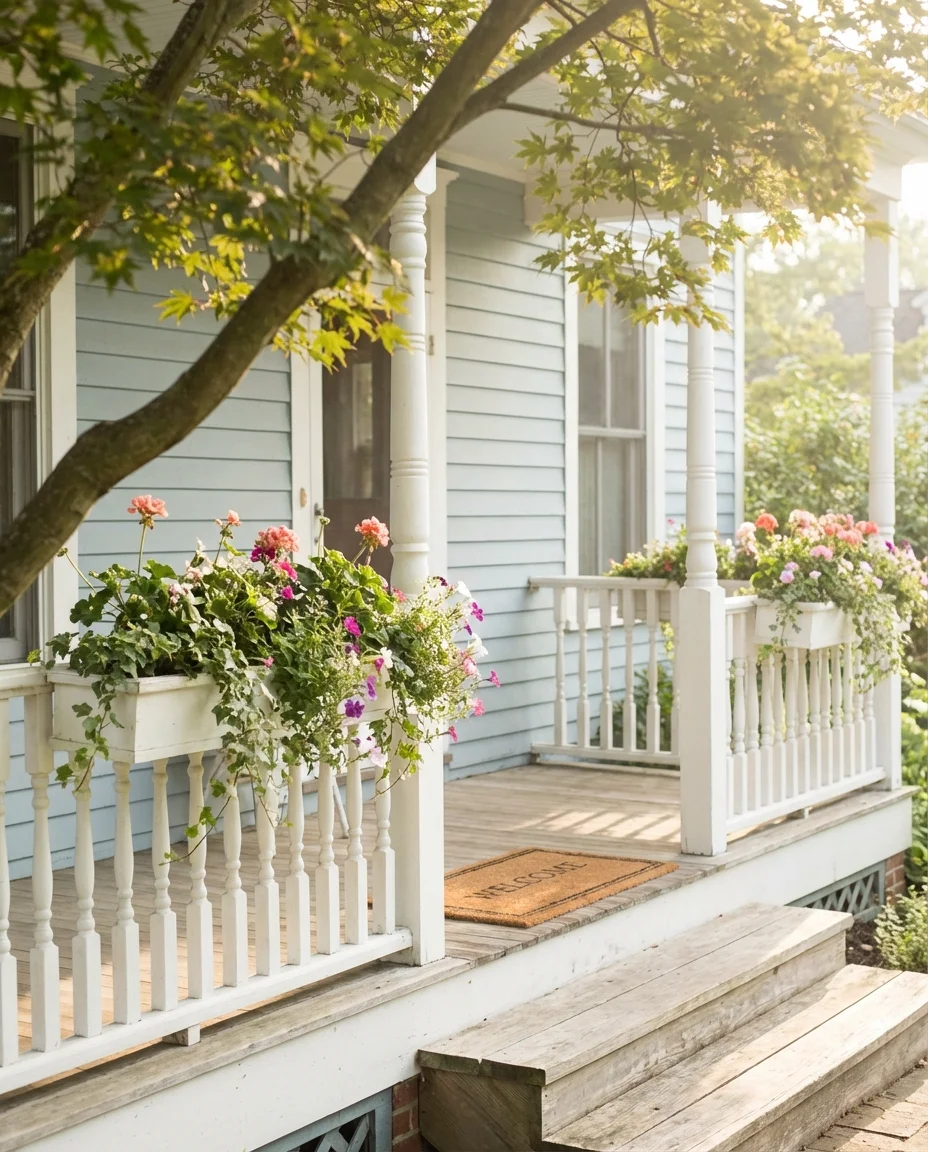
There’s something wonderfully nostalgic about a cottage-style railing with its graceful turned balusters and softly curved top rail. This is the porch railing of summer porches, of lemonade and rocking chairs, of homes that feel genuinely welcoming the moment you pull up. Turned wood spindles—the kind that swell and taper in gentle curves—have been a porch staple for over a hundred years, and they’re enjoying a real revival right now as homeowners push back against overly austere modern aesthetics.
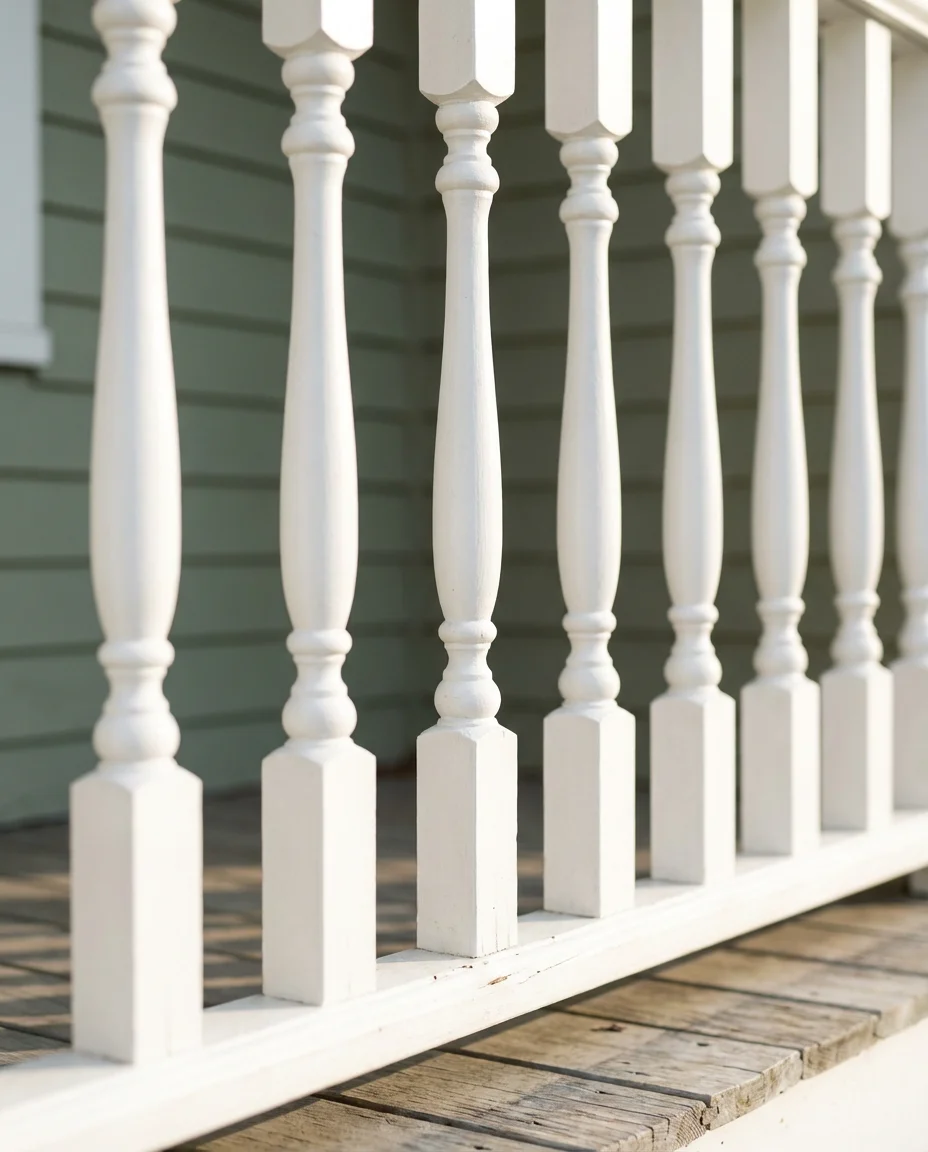
Pre-turned balusters are widely available at home improvement stores and are genuinely one of the most beginner-friendly and cheap DIY improvement ideas you can tackle in a weekend. A box of 16 balusters typically costs under $40, and with basic carpentry skills and a miter saw, you can install a full porch run in a single Saturday. Paint them creamy white, soft sage, or warm linen, and they’ll make your home feel like a much bigger renovation happened than actually did.
9. Black Iron Railing on a White House

The white house black railing combination is one of those design decisions that looks effortlessly considered—like the homeowner just knew. A sleek black iron or steel railing against bright white siding creates the kind of contrast that photographs beautifully and catches attention in person. It works across a range of architectural styles, from colonial to contemporary farmhouse to traditional two-story, which is part of why it consistently dominates Pinterest’s home exterior boards.

Real homeowners who’ve made this switch consistently report that it’s one of the highest-impact, most affordable curb appeal upgrades they’ve done. Many simply repainted existing metal railings with a quality exterior metal paint in matte or satin black—total cost around $40 to $60 in supplies—and got results that looked like a professional redesign. The matte finish is particularly forgiving and tends to read as more intentional and modern than glossy black, which can look a bit dated.
10. Planter Box Integrated Railing Design

What if your porch railing did double duty as a garden? Railing designs that incorporate built-in planters are one of the most charming and functional ideas trending in 2026. The concept is simple: deep wooden boxes are built directly into the railing structure at post intervals, allowing you to plant flowers, trailing vines, herbs, or evergreen shrubs right along the perimeter of your porch. It blurs the line between architecture and landscaping in the most delightful way.

This style works beautifully on front porches that sit slightly elevated—the planting adds a lush, layered quality that softens the hard edges of a raised foundation. Choose trailing plants like sweet potato vine, petunias, or ivy for a lush draping effect, or go for evergreen boxwood for a more structured, year-round look. Cedar is the go-to material for the planter boxes themselves because it naturally resists moisture and won’t need to be lined with plastic sheeting the way pine would.
11. Quilt Pattern Railing for Folk Art Charm
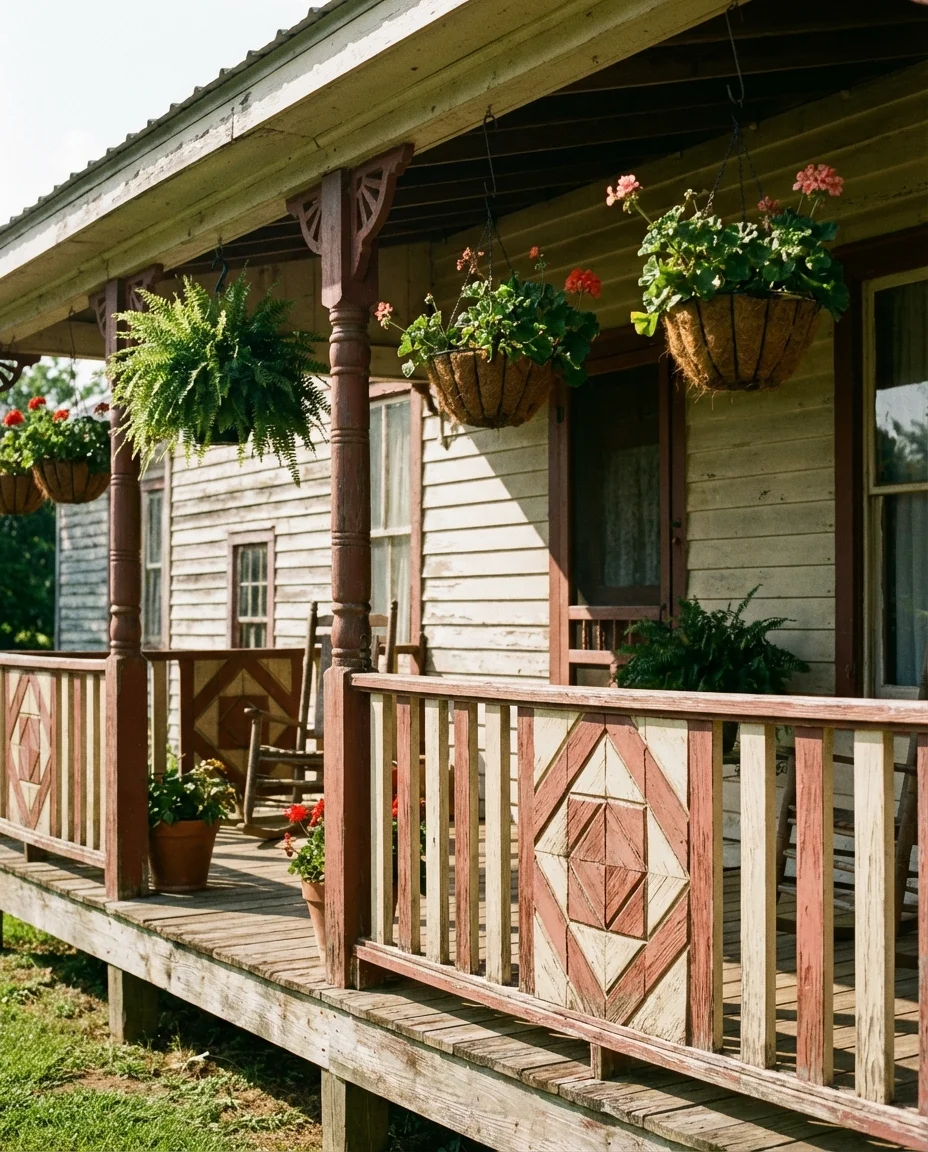
A tree-inspired quilt pattern railing is the kind of idea that makes people stop their cars to look. Instead of traditional balusters, the railing infill is made from cut wood pieces arranged in geometric patterns—diamonds, pinwheels, flying geese, or log cabin blocks—that reference the American quilt-making tradition. It’s deeply regional, deeply personal, and completely unforgettable. These are most commonly seen in Appalachian communities and across the rural South, where barn quilts have long been a point of community pride.
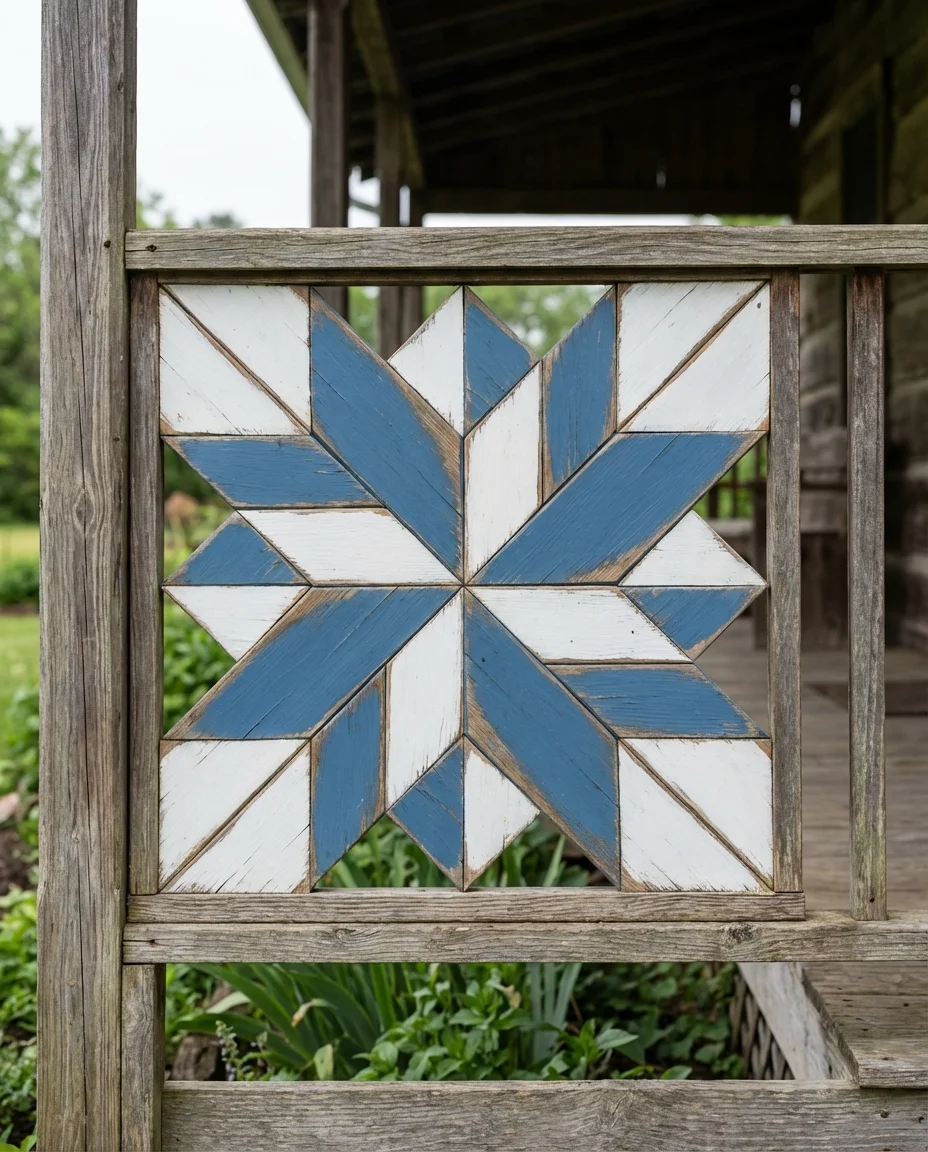
Building one of these requires some intermediate woodworking skill—you’re essentially creating a large flat panel with precisely cut and fitted geometric pieces—but free patterns are widely available online, and many woodworking communities have templates designed specifically for porch panels. Paint it in two or three contrasting colors for maximum impact, or keep it in natural stain for a quieter, more architectural effect. Either way, it’s a genuinely one-of-a-kind detail that tells a story about who lives in the home.
12. Farmhouse-Style Railing with X-Brace Panels
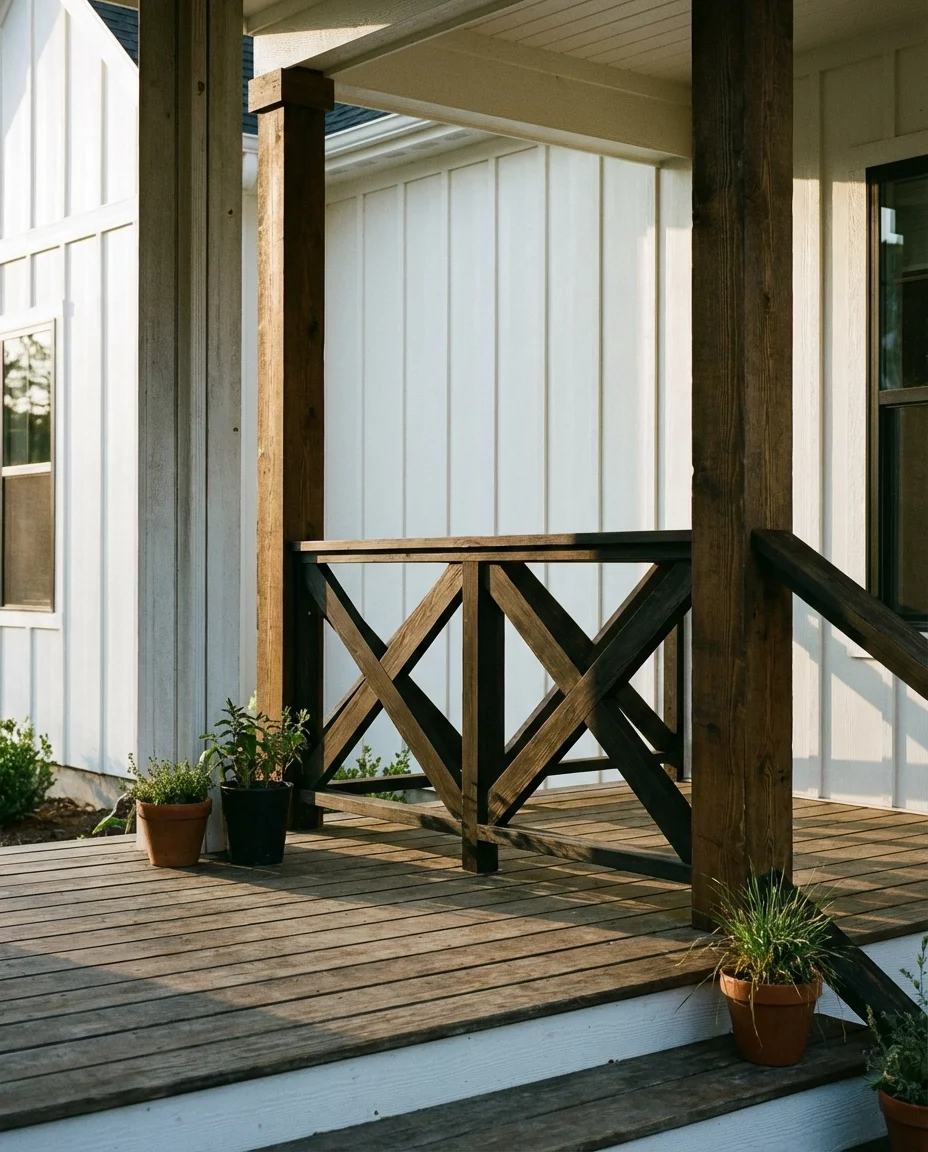
The X-brace panel is one of the defining visual elements of the farmhouse design—and when used as railing infill, it’s both bold and grounded. Two diagonal boards cross in the center of each panel, forming a simple X shape that references old barn door construction while looking very much at home on a modern farmhouse porch. It’s strong, it’s visually clear, and it communicates a kind of unpretentious confidence that feels right at home across the rural Midwest and South.

This is one of the more satisfying builds for a confident DIYer—the joinery is simple, the lumber is inexpensive, and the results are genuinely striking. Use 2x4s for the posts and rails and 1x4s for the X-brace diagonals. Stain everything in a warm walnut or dark ebony, or paint it in classic white or barn red. The key is making sure your X is perfectly centered in each panel—a small misalignment reads as sloppy rather than handmade, so take the time to measure carefully before committing to cuts.
13. Wire Railing with Sleek Aluminum Posts
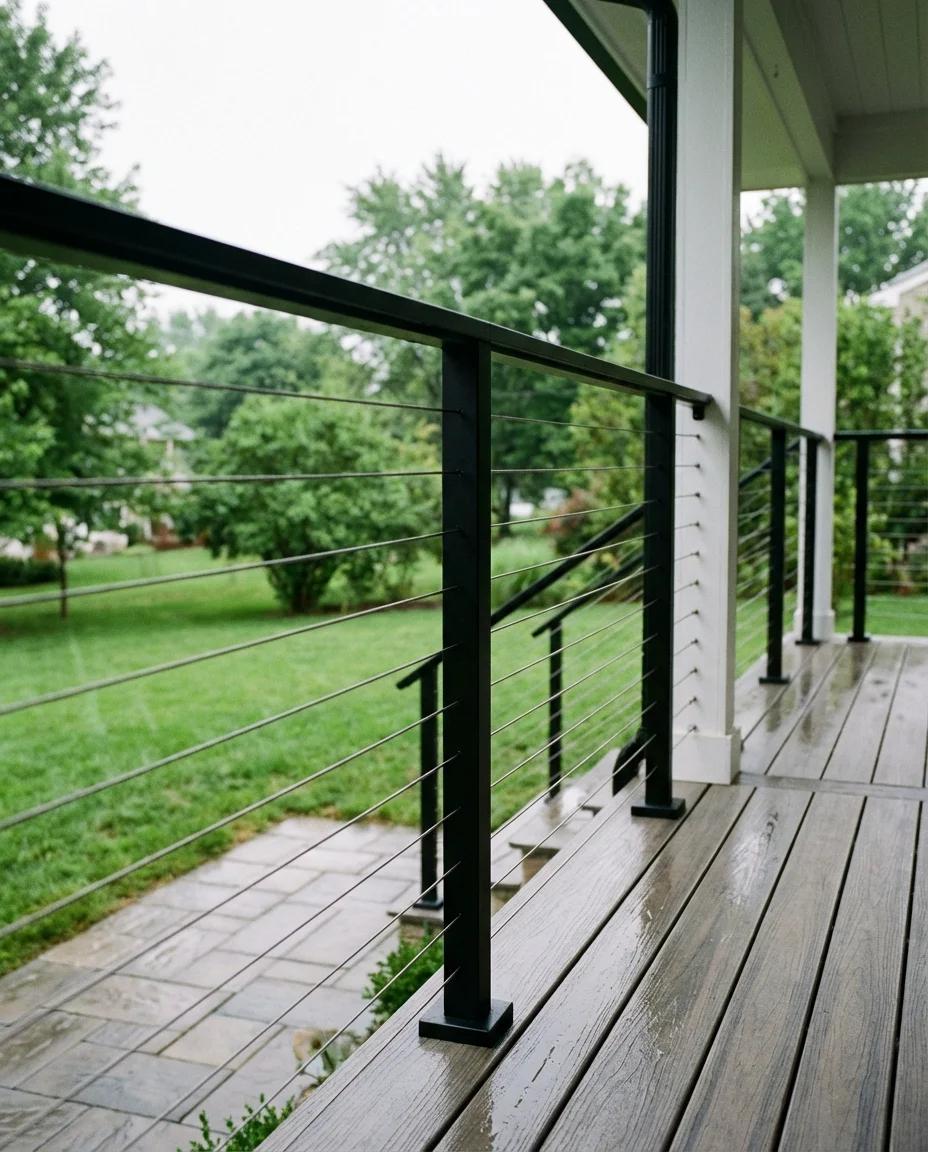
Wire railing systems—particularly those using aluminum posts with stainless cable or wire—hit a sweet spot between affordability and visual lightness that’s hard to beat. The aluminum posts are powder-coated in black, white, or bronze and resist corrosion far better than painted steel. The wire itself disappears into the background, making the overall impression one of clean, open space rather than fencing. For homes with beautiful landscaping or interesting street views, this approach is a genuine win.
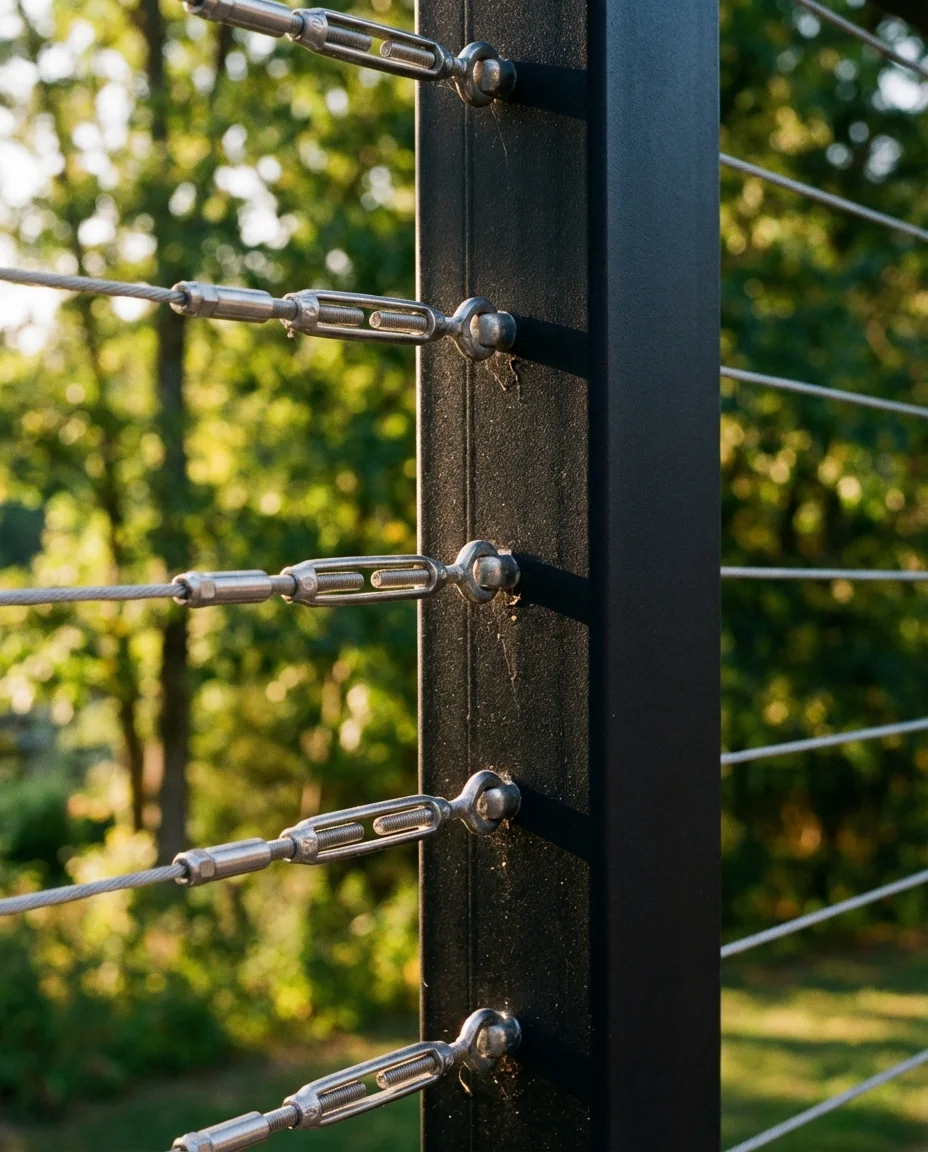
This style is particularly practical in regions with extreme weather. Aluminum doesn’t rust in coastal humidity, and the open wire system allows wind to pass through rather than creating resistance—an important consideration for porches in hurricane-prone areas of Florida, the Gulf Coast, and the Carolinas. Many aluminum railing kits come pre-drilled for cable installation and arrive with detailed instructions, making them accessible for motivated DIYers who want a professional result without hiring a contractor.
14. Christmas Decor Ready Railing with Garland Hooks
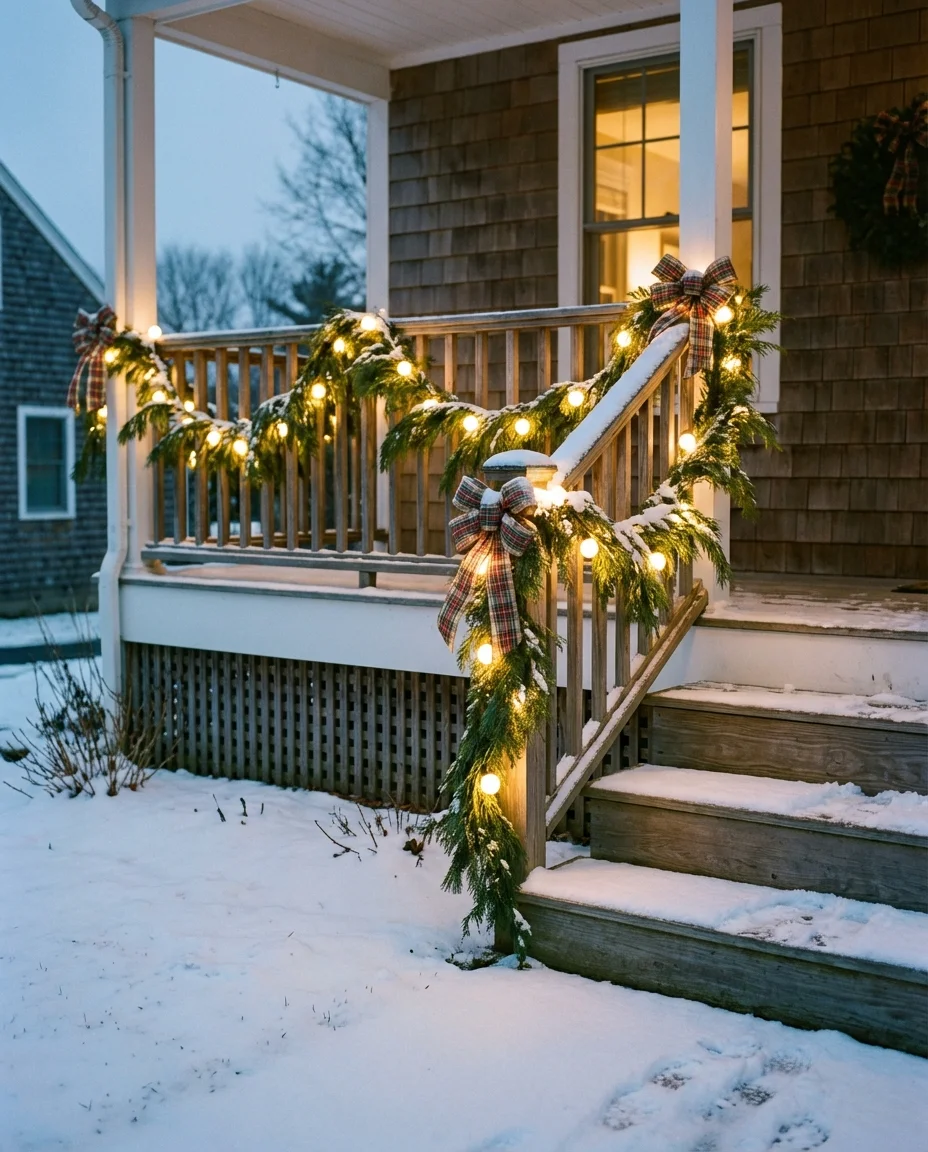
Here’s a porch railing idea you won’t find in most architecture guides: designing your railing with Christmas decor in mind from the start. That means building in small stainless hooks or eye bolts at regular intervals along the top rail so that garland on the railing goes up in minutes every holiday season. No fumbling with zip ties or twine, no damage to the wood from repeated stapling—just a clean, easy attachment system that makes your holiday porch look effortlessly styled.

If you’re building or replacing a railing this year, adding a few dozen small screw-in hooks costs almost nothing but pays dividends every single December. The hooks double as attachment points for summer planters, bunting, and other seasonal decor, so they earn their keep year-round. For the holidays specifically, drape fresh or faux pine garland, weave in white lights, and add a ribbon every few feet—the effect is the kind of cozy, festive porch that gets photographed by every person who walks by.
15. Black Front Porch Railing on a Craftsman Home
Craftsman-style homes have a deeply satisfying visual grammar—tapered columns, wide overhanging eaves, natural materials—and a black front porch railing plays into that language with real sophistication. Deep matte black picks up the shadow tones of the stone or brick piers at the base of the columns and creates a unified, grounded composition. Square balusters in black feel more Craftsman-appropriate than traditional turned spindles, reinforcing the style’s emphasis on honest, geometric form.

Interior designers who specialize in historic homes often point to the railing as one of the most impactful single elements to update on a Craftsman porch. Going from a faded white railing to a crisp matte black version changes the entire reading of the facade—the home suddenly looks more intentional, more complete, as if a missing piece just clicked into place. Pair it with earthy, muted body colors like sage, warm gray, or deep olive to let the black railing anchor the whole composition.
16. Deck Fence-Inspired Railing with Privacy Panels
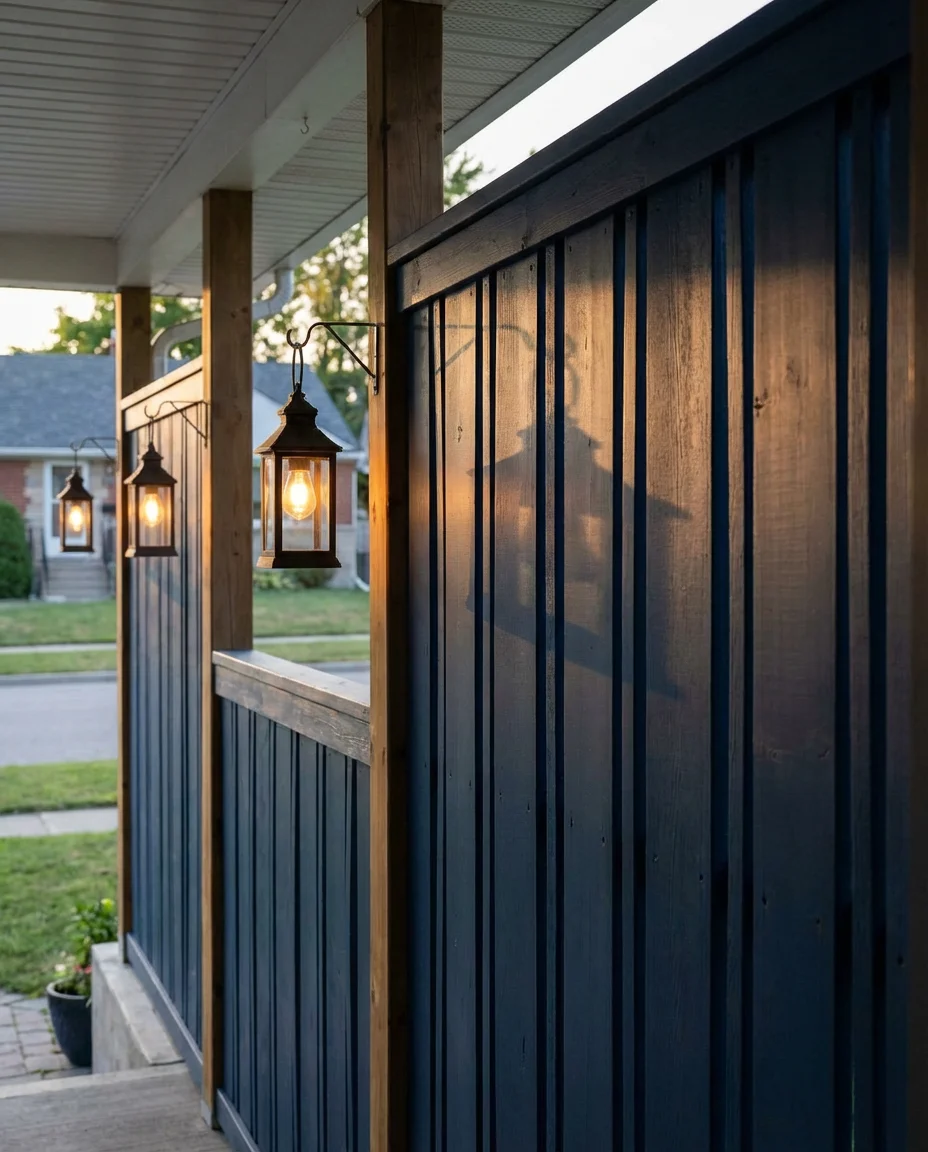
For homeowners who want both safety railing and a bit of privacy from the street, borrowing from deck fence ideas is a smart approach. Privacy-panel railings use taller boards—often cedar tongue-and-groove or board-on-board fence planks—installed vertically between posts to create a partial screen. You still get airflow and a sense of openness, but the railing also gives you a cozy, sheltered feeling that a traditional low rail doesn’t offer. It’s ideal for porches that face a busy street or a close neighbor.

The trick to keeping this from looking like a fence that wandered onto your porch is proportion and detail. Keep the panel height to no more than 48 inches, use nicely milled lumber rather than rough fence pickets, and add a smooth cap rail on top. Stain it to match your home’s trim or paint it a bold color—deep navy or forest green works especially well—and it reads as a deliberate design choice rather than a privacy afterthought. Add a hanging lantern between each post pair, and the effect is genuinely lovely.
17. Iron Railing with Geometric Panels
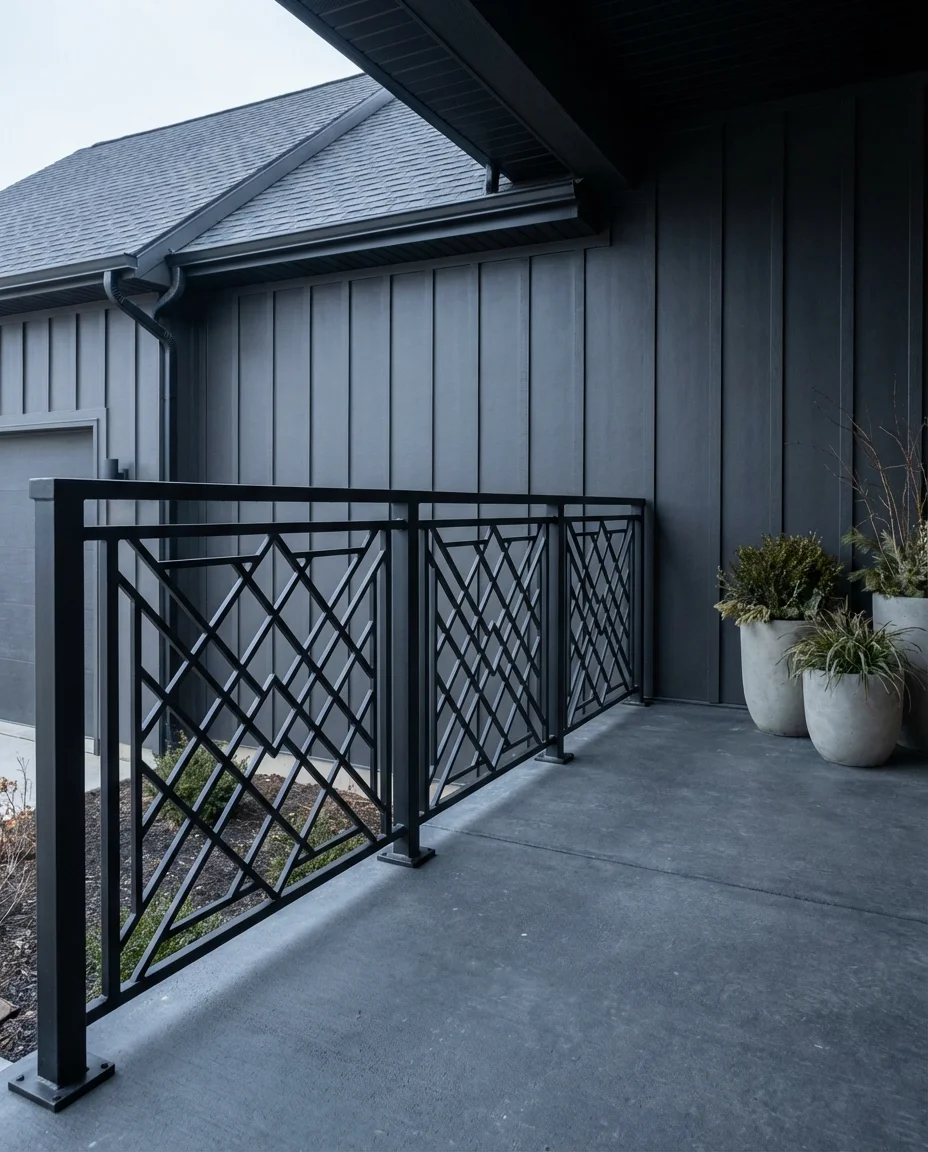
Custom iron railings with flat geometric panel inserts represent a meeting point between old-world metalwork and contemporary design sensibility. Rather than the scrollwork and florals of traditional wrought iron, these panels feature bold diamond grids, chevrons, or rectangular lattice patterns that feel entirely fresh. The heaviness of iron is offset by the visual clarity of the geometric pattern, and the result is something that looks equally at home on a new construction build and a renovated mid-century house.
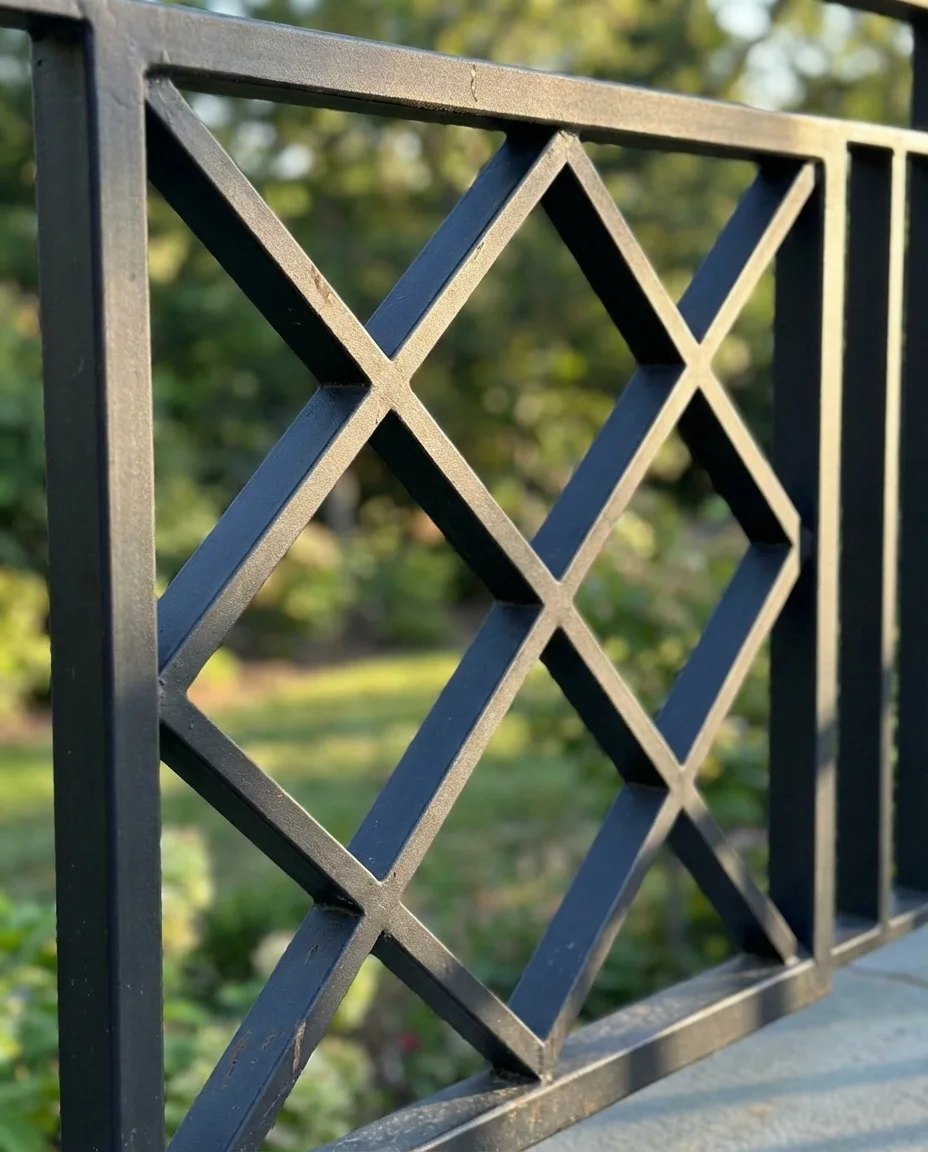
Custom iron fabrication isn’t cheap—expect to invest $200 to $400 per linear foot for a quality welder’s work—but there are more affordable options. Several manufacturers produce pre-made iron panel inserts in standard sizes that can be framed between existing posts, dramatically reducing the cost. Search for “metal decorative fence panels,” and you’ll find options starting around $30 to $60 per panel. Painted matte black and framed in steel tubing, they look custom from the street even when they’re not.
18. How to Build a Simple Wood Railing Step by Step
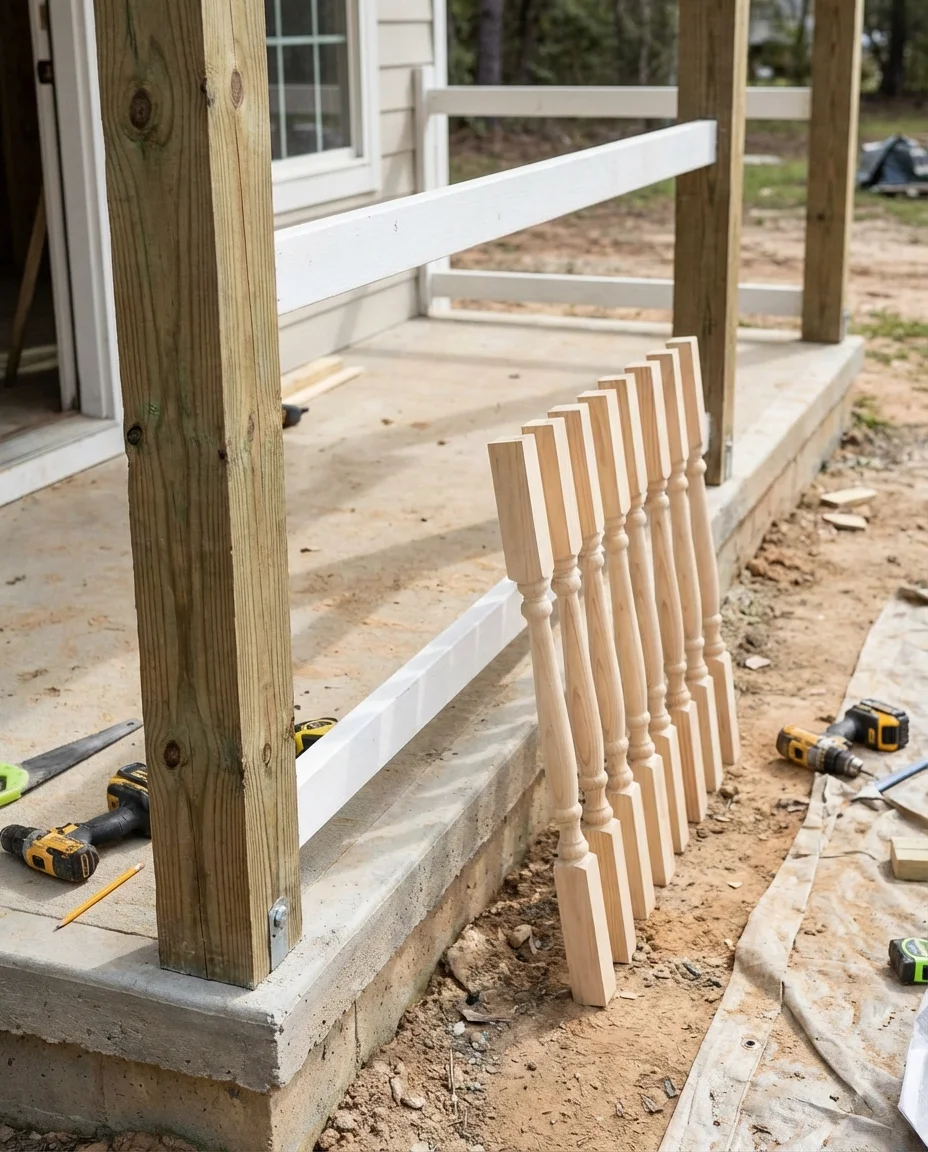
For homeowners who want to understand how to build a basic wood railing from scratch, the process is far less intimidating than it looks. You’ll need pressure-treated 4×4 posts, a 2×4 top and bottom rail, and your choice of balusters—pre-turned wood ones from the hardware store work perfectly for a first project. Posts go in first, anchored to the framing or existing structure, followed by the rails, and finally the balusters spaced evenly and nailed in place. The whole job can be done in a day with basic tools.
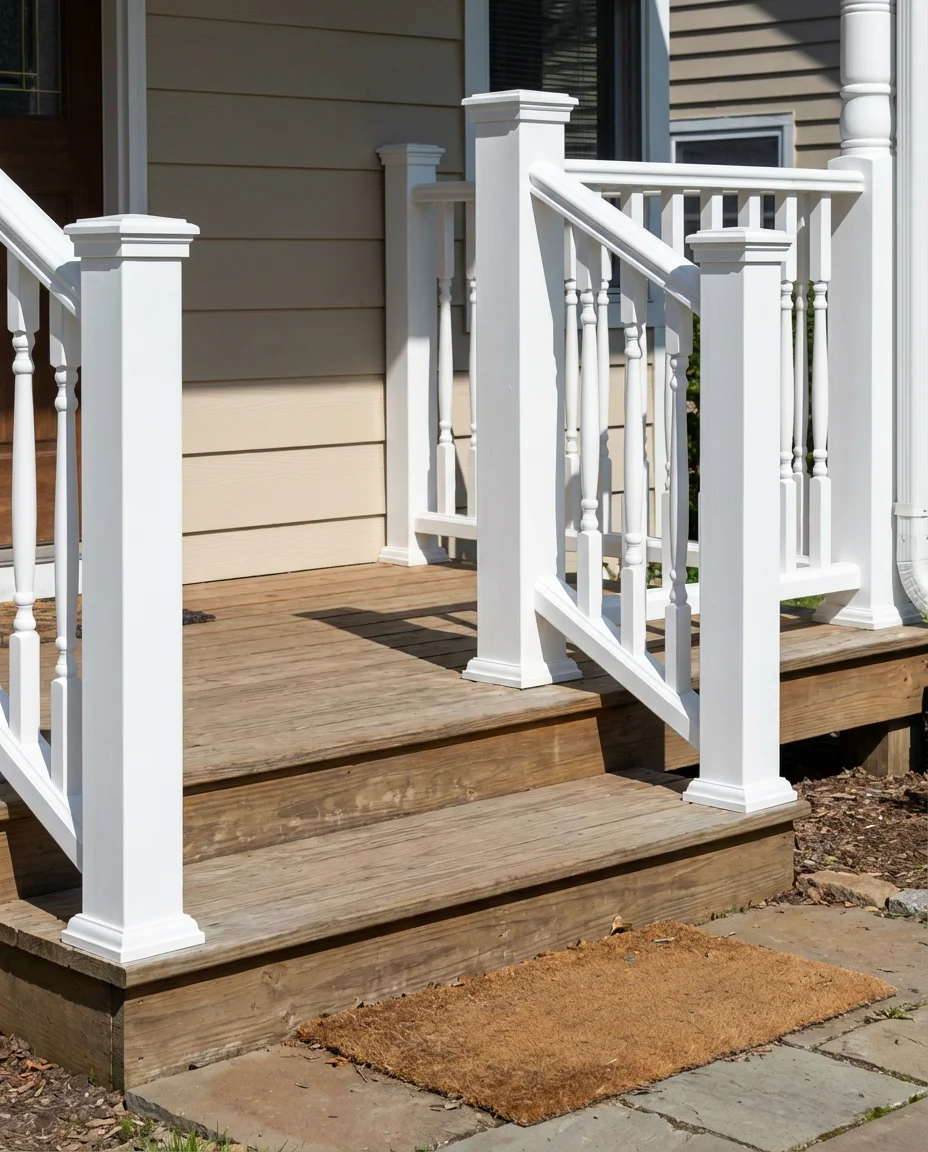
The most common mistake first-time builders make is skipping the building permit. Many municipalities require permits for porch railings, especially on homes that are being sold or refinanced—and an unpermitted railing can become a headache during a real estate transaction. Check your local codes before you start, note the required minimum height (typically 36 to 42 inches), and make sure baluster spacing doesn’t exceed 4 inches. Getting it right the first time saves a lot of expensive rework down the road.
19. Modern Horizontal Steel Railing on a Contemporary Home

Modern front porches on contemporary or transitional homes are increasingly defined by clean steel horizontal railing systems. Thin steel flat bars run parallel to the ground, spaced precisely and welded to steel posts—the result is architectural, minimal, and quietly powerful. There’s no ornament, no distraction, just honest material and honest geometry. It pairs beautifully with concrete, stucco, or fiber cement siding in dark or neutral tones, creating a facade that feels purposefully designed from the ground up.
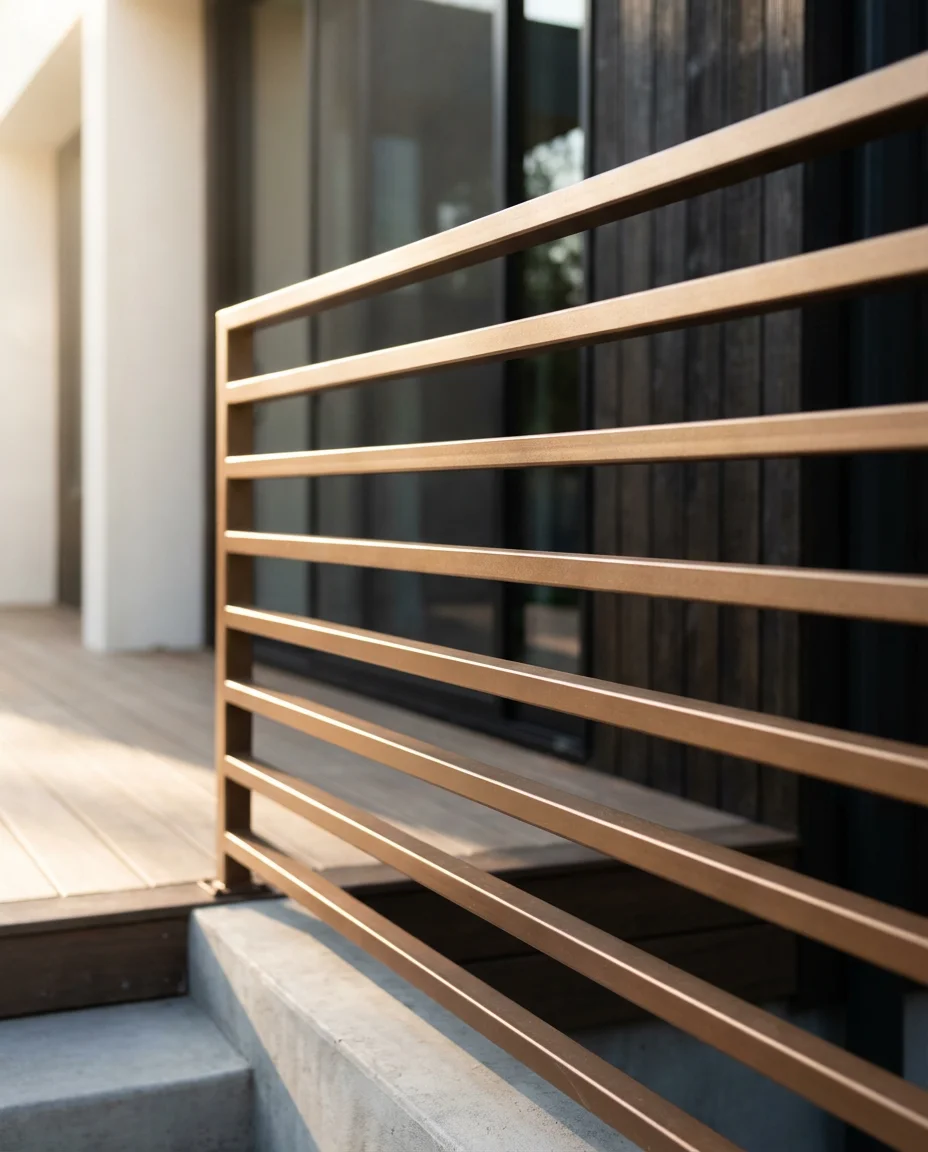
Architects and designers who work on contemporary residential projects consistently recommend steel horizontal railings for their longevity and visual precision. Unlike wood, steel holds its shape without warping, twisting, or cracking—which means the crisp horizontal lines stay crisp for decades. Powder coating in matte black, warm charcoal, or even deep bronze gives the steel both color and a durable protective finish that weathers gracefully. This is the railing choice for homeowners who value refinement over ornament.
20. Christmas Garland Draped Railing for Holiday Curb Appeal
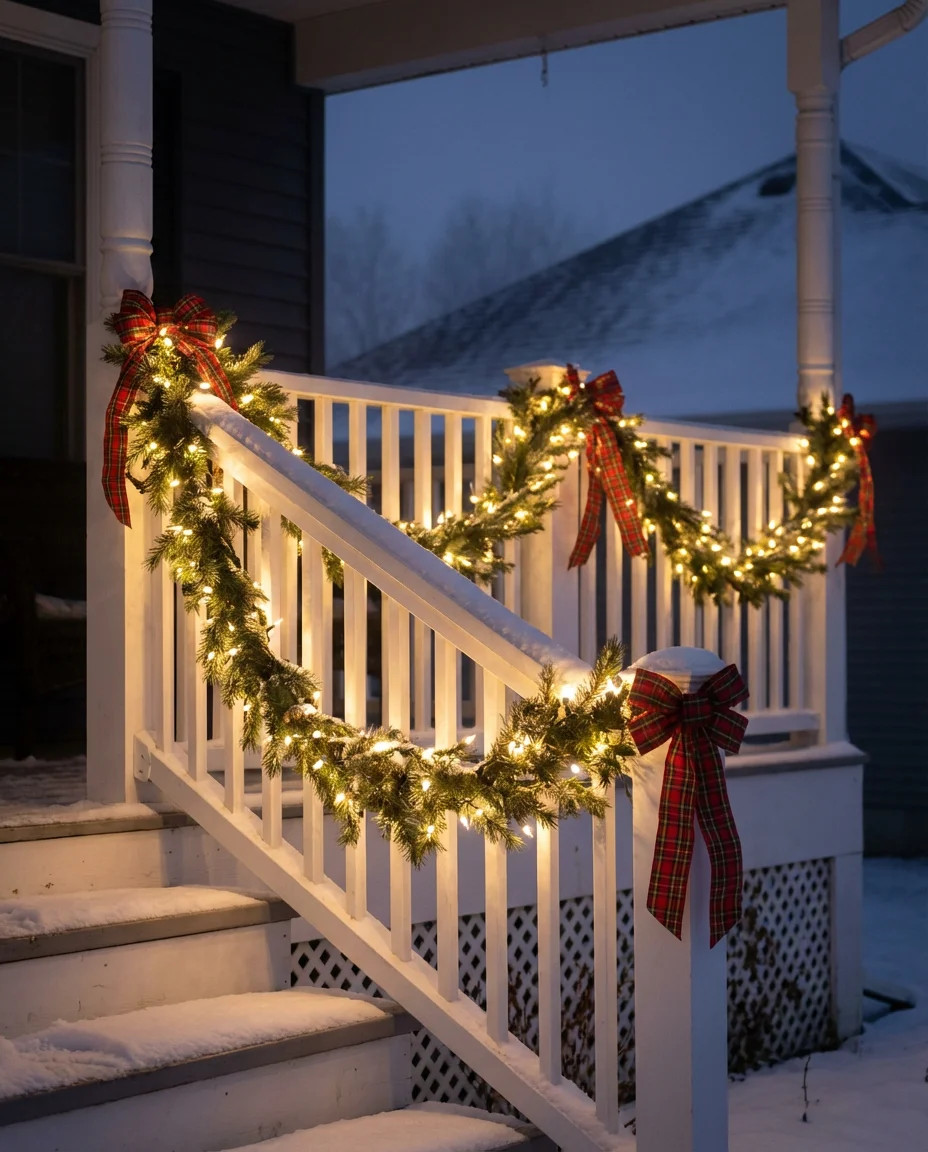
There’s no faster way to make a home look magazine-ready in December than a beautifully draped garland on the porch railing, and the good news is that almost any railing style supports this look. Fresh pine, cedar, or eucalyptus garland draped in soft swags—with twinkle lights woven through and tied off with plaid ribbon at each post—is the kind of Christmas styling that stops people mid-walk. It references the best of traditional American holiday decorating while still feeling current and personal.

Fresh garland is ideal if you live where winters are mild enough to keep greenery looking good for three to four weeks. In colder climates, quality faux garland with realistic branch structure and built-in lights is genuinely hard to distinguish from the real thing and can be stored and reused for many years. Budget around $30 to $80 for a 25-foot run of quality faux garland—enough to dress a standard front porch railing and make the whole street feel a little more like home for the holidays.
21. White Painted Railing with Floral Planters
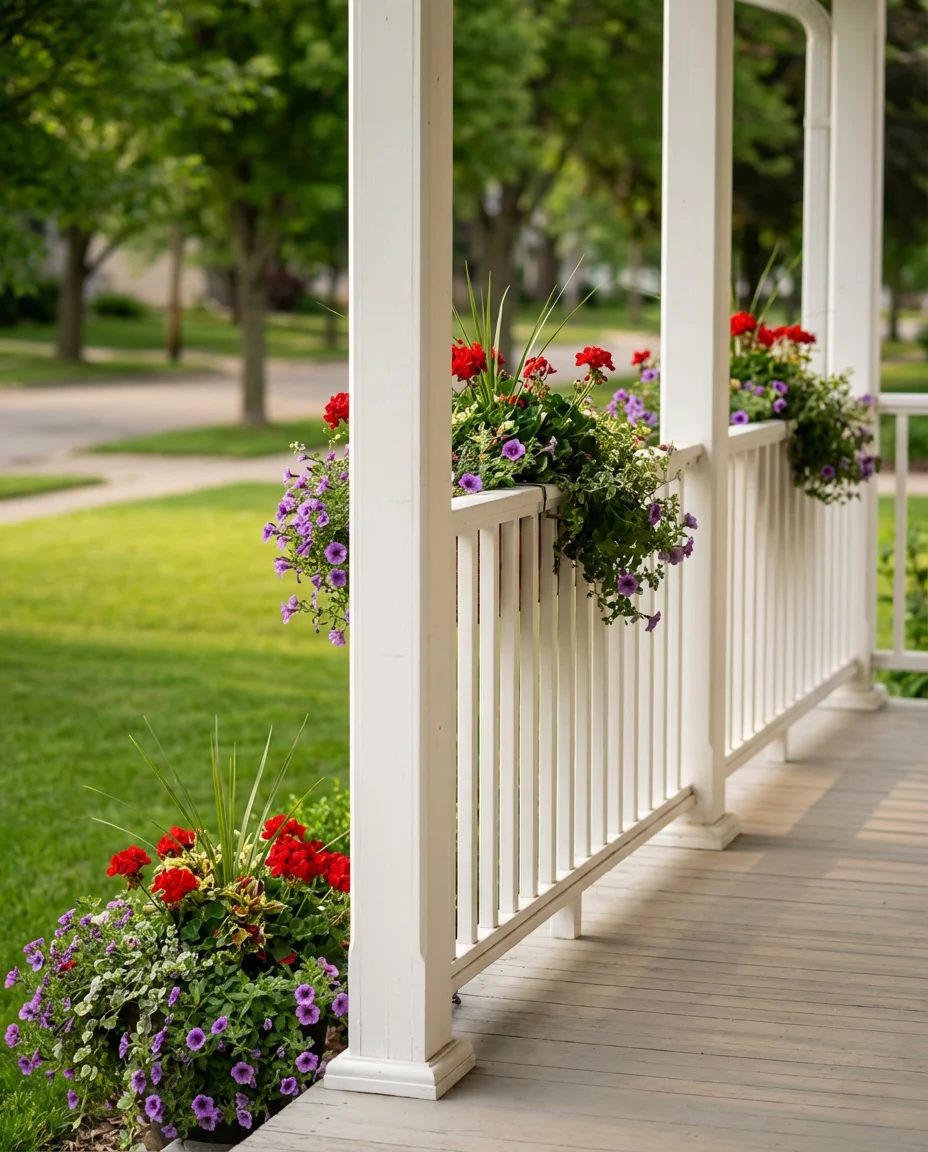
A white-painted porch railing combined with overflowing planters is one of the most classically American porch looks there is—and it never feels tired because it changes with every season. Window box planters mounted on the inside face of the top rail, or freestanding pots clustered at post bases, bring color, fragrance, and life to what would otherwise be a purely structural element. In spring and summer, fill them with geraniums and wave petunias; in fall, swap in mums and ornamental cabbage.
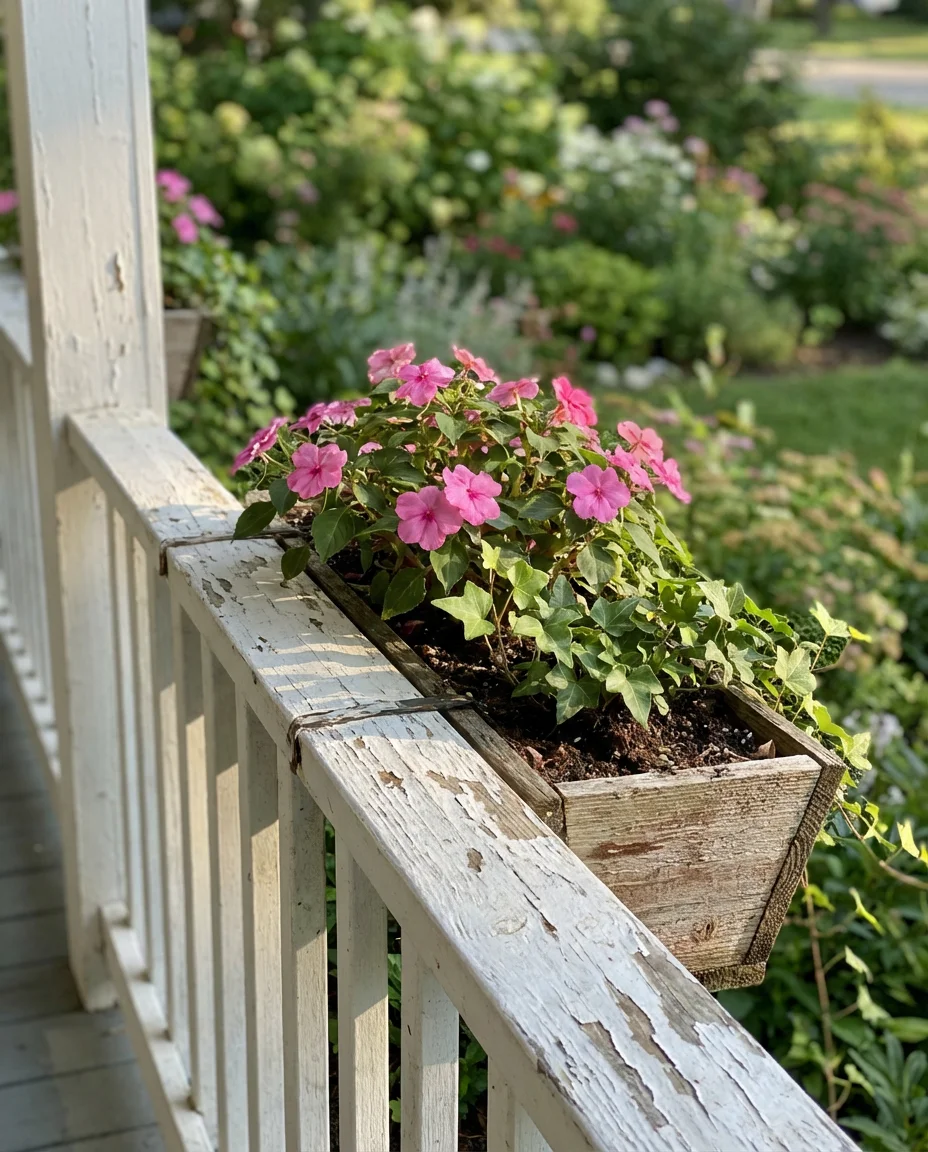
This look is especially beloved in the Southeast and Mid-Atlantic states, where long growing seasons allow porch gardens to thrive from April through October. Many homeowners treat the railing planting as their primary garden—a raised, well-displayed growing bed that they change and tend with as much care as an in-ground plot. The white railing acts as the perfect neutral backdrop, letting the flowers read clearly without visual competition. It’s simple, it’s beautiful, and it costs almost nothing once the railing is in place.
22. Farmhouse Black Railing with Board-and-Batten Backdrop
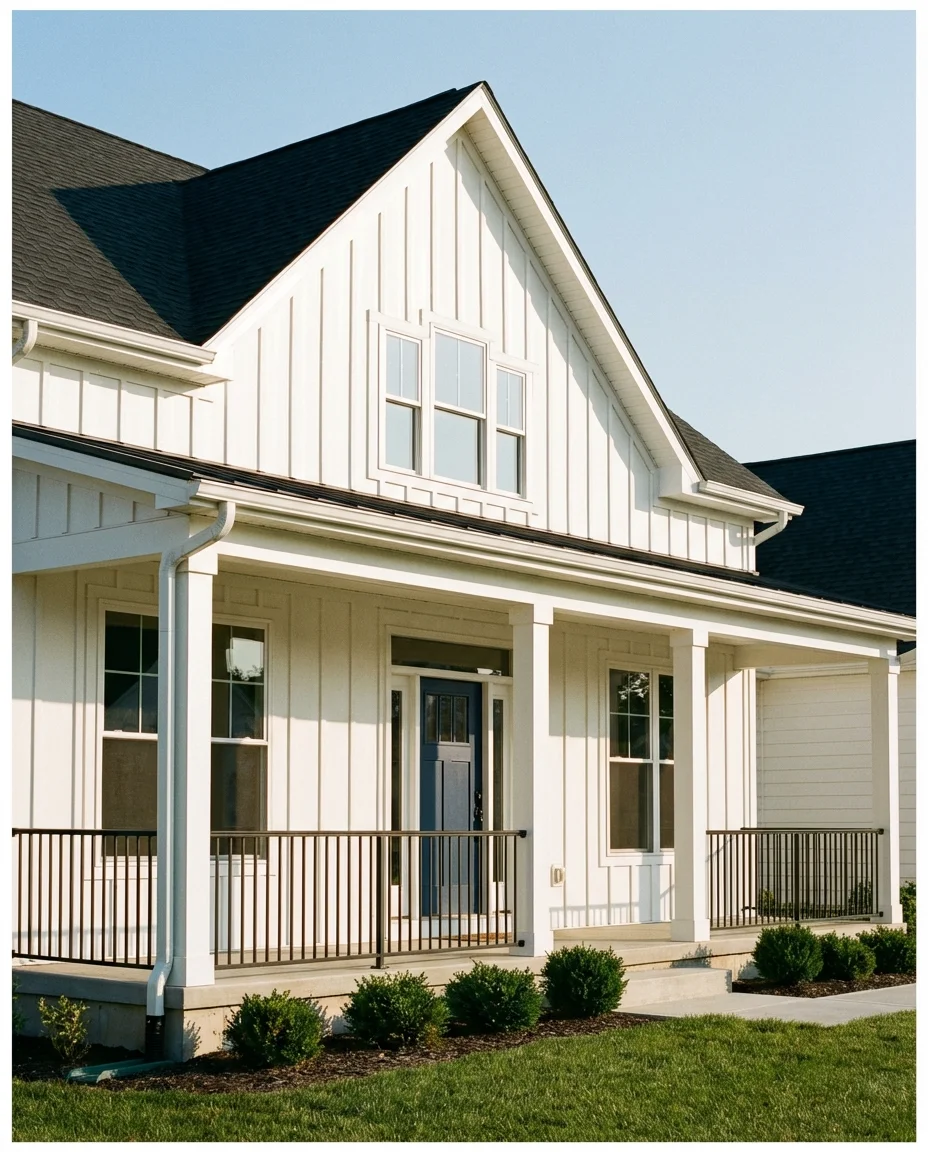
To close out with a look that’s truly having a moment: a matte black railing set against a white board-and-batten exterior is peak modern farmhouse energy right now. The vertical lines of the siding echo and reinforce the vertical balusters, creating a cohesive rhythm across the whole facade. Square post caps, simple square balusters, and a clean flat top rail keep the silhouette sharp and intentional. This is the curb appeal look that dominates new construction in suburban neighborhoods across Texas, Tennessee, and the Carolinas.

What makes this combination so satisfying is its scalability—it looks just as good on a modest 1,200-square-foot starter home as it does on a large custom build. If you’re tackling this as an “ideas diy cheap project, consider aluminum composite railing systems in matte black. They install quickly, cost less than wrought iron, won’t rust, and from the street are virtually indistinguishable from custom metal fabrication. Pair with black house numbers, a matching black mailbox, and a bold front door—deep navy, hunter green, or classic red—and the whole porch sings.
Conclusion
Whether you’re drawn to the airy simplicity of cable railing, the nostalgic charm of turned balusters, or the bold graphic punch of a cattle panel system, there’s genuinely never been a better time to invest in your porch railing. We’d love to know which of these 22 ideas caught your eye—drop your favorites in the comments below, and if you’ve already tackled a railing project this year, share a photo. Real-life inspiration from real homes is the best kind.