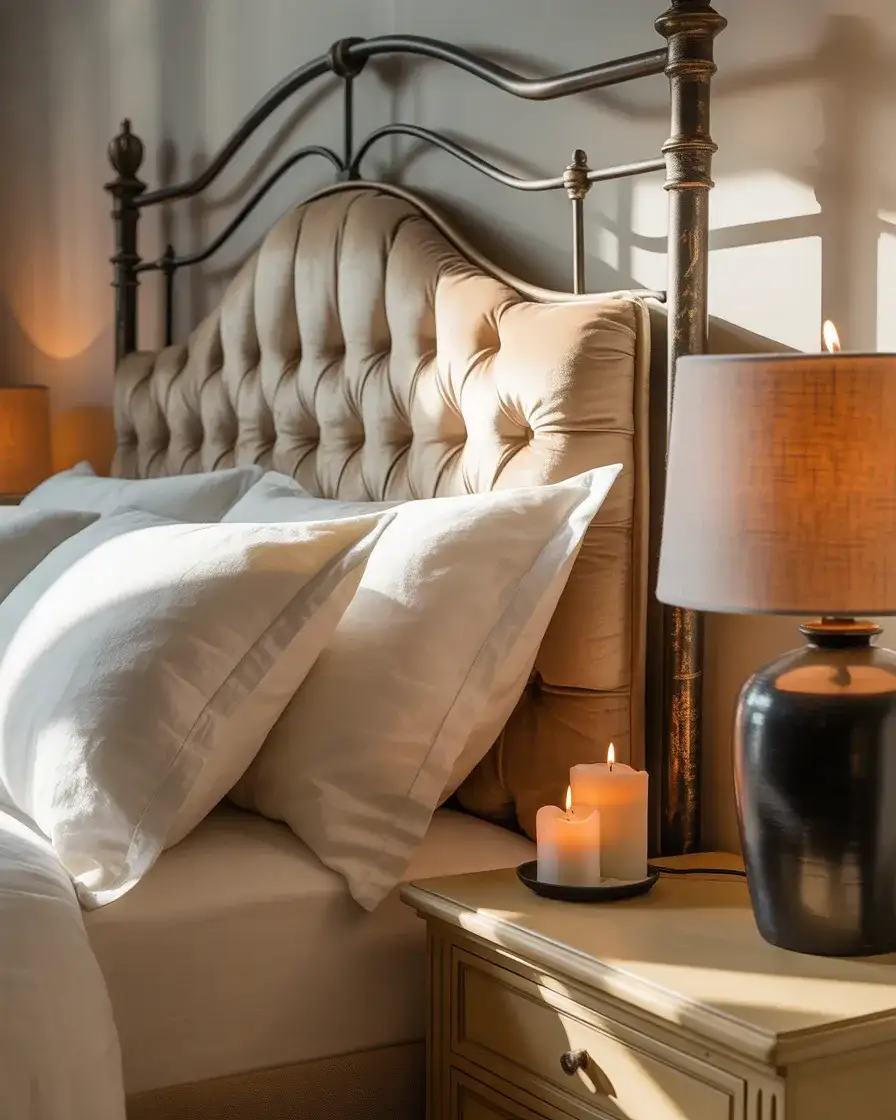
Purple is having a serious moment in 2026, and if your Pinterest feed looks anything like ours, you already know it. From deep, moody eggplants to the softest lavender whispers, purple bedrooms are showing up in every corner of the internet—and for good reason. This color does something to a room that’s hard to explain until you’re standing in the middle of it: it feels personal, a little dramatic, and somehow completely calming all at once. Whether you’re starting a full bedroom renovation or just looking for one bold move that changes everything, this roundup covers 22 of the most inspiring purple bedroom ideas for 2026 — organized by mood, palette, and style so you can find exactly what speaks to you.
1. Moody Plum Walls with Velvet Layers
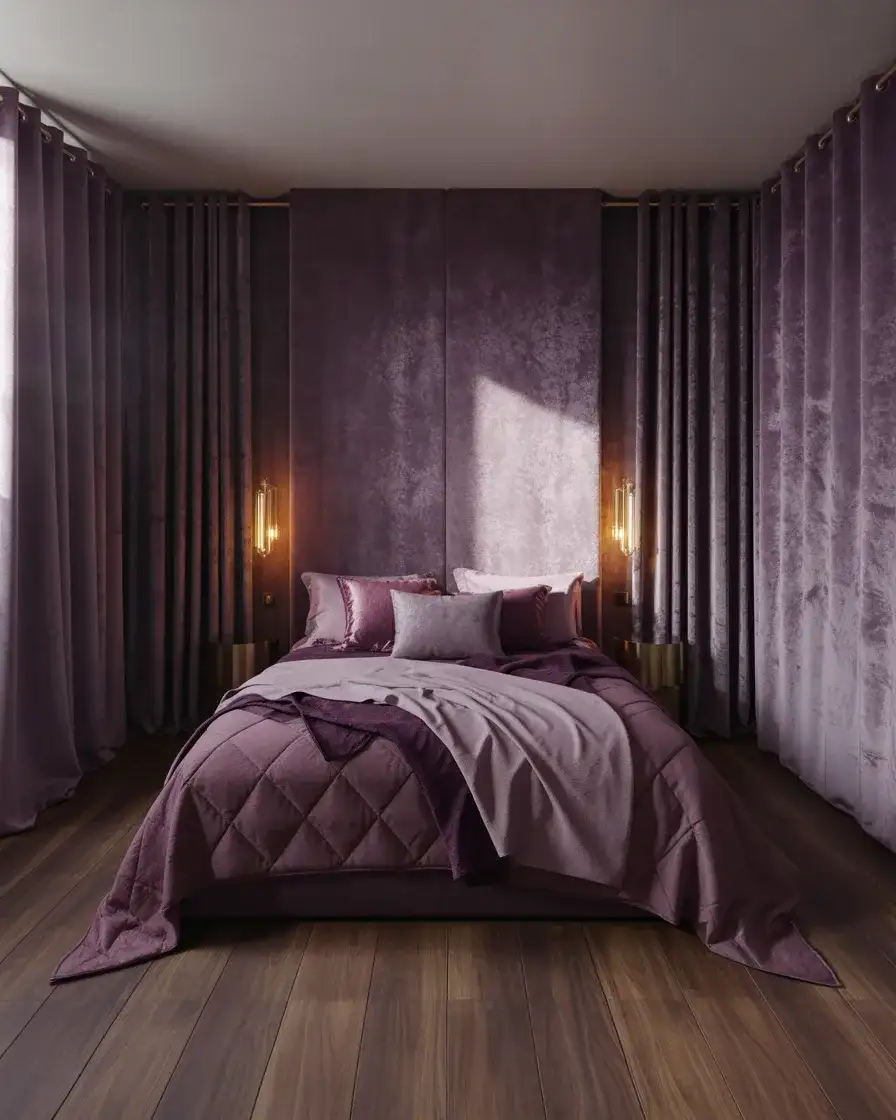
There’s something deeply seductive about a bedroom built around a moody, saturated plum wall—especially when you layer it with velvet. This is the kind of dark palette that feels like it belongs in a high-end boutique hotel, but it’s surprisingly achievable in a regular American bedroom. The key is committing to the depth: don’t stop at one plum accent wall. Go all four walls, add velvet drapes in a slightly lighter grape, and let the room breathe through metallic gold accents and warm-toned Edison bulbs.
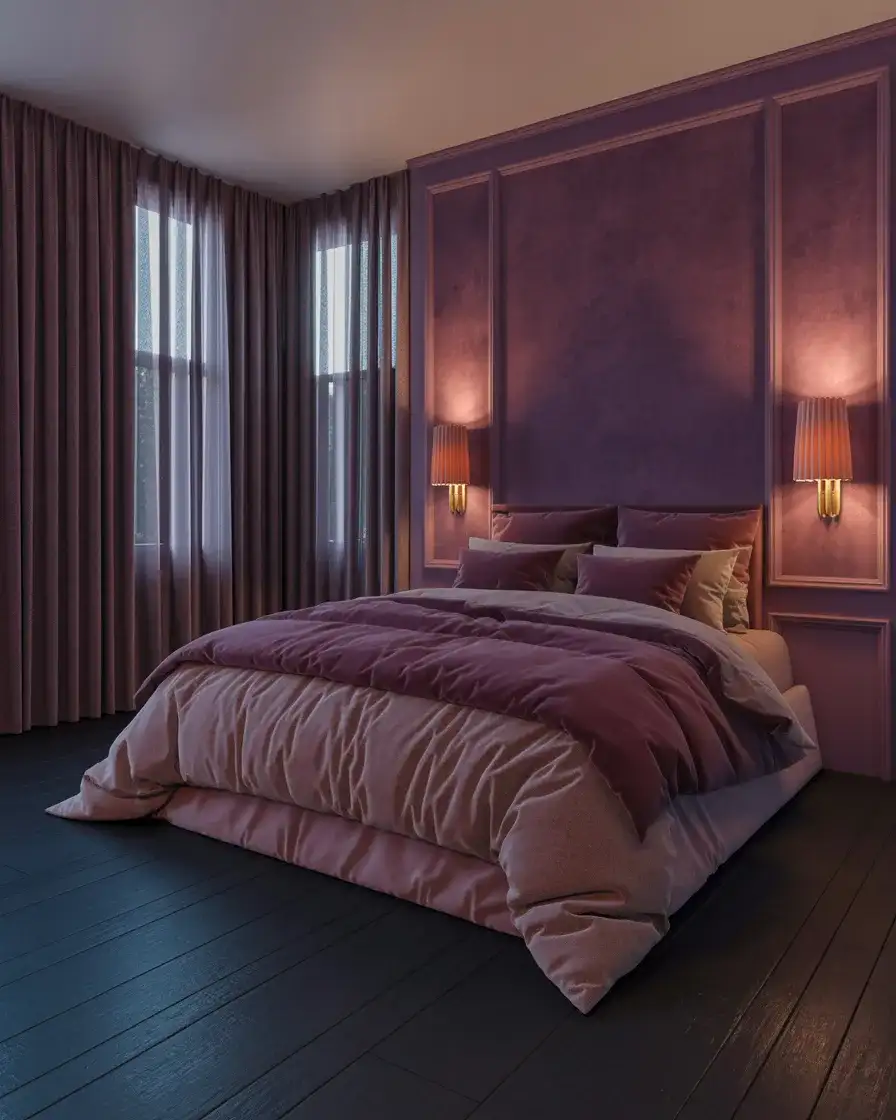
Velvet is doing the heavy lifting in this look—and it’s also one of the most practical choices for a room like this. Velvet absorbs sound beautifully, which makes a plum velvet bedroom feel like a cocoon. If you’re nervous about committing to dark walls in a smaller room, try it in a master suite first. Design consultants consistently note that rooms with high-contrast, deeply saturated walls actually feel larger in artificial light—the walls recede and your eye focuses inward on the styled layers instead.
2. Dusty Purple with Grey Linen Calm
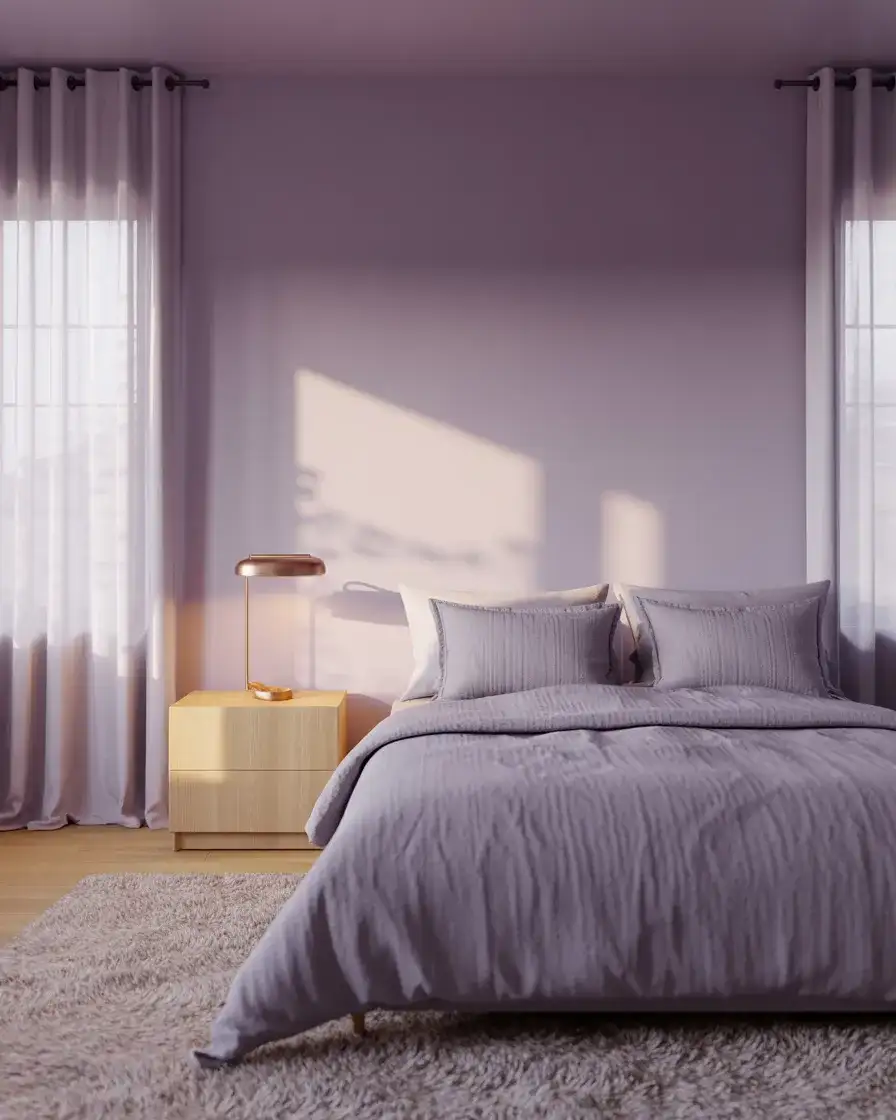
If dusty lavender and grey aren’t already living together in your bedroom, consider this your sign. This combination has been quietly building momentum across interior design spaces—a palette that’s soft without being saccharine and sophisticated without trying too hard. Think dusty lilac paint on the walls, grey linen bedding with just a hint of texture, and natural wood furniture that grounds everything without competing. It’s the kind of room that photographs beautifully and feels even better in person.
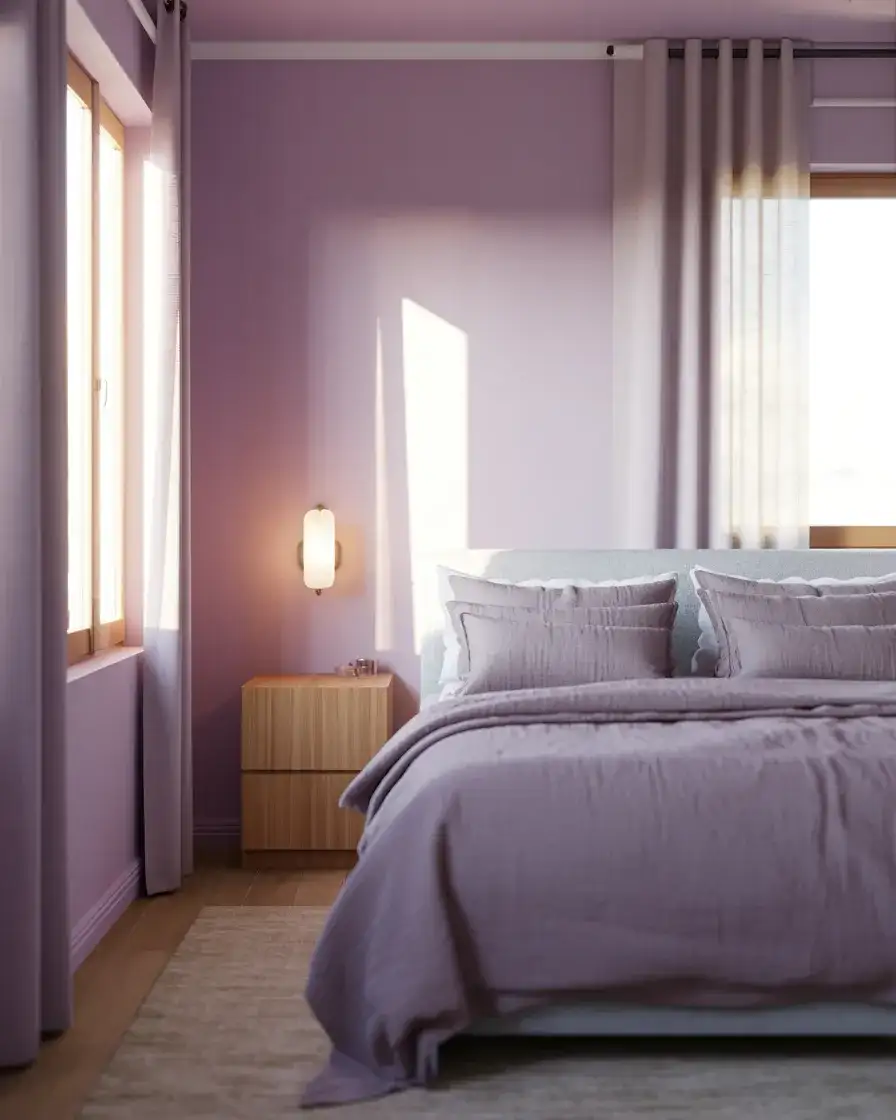
This palette works especially well in rooms with north-facing windows, which tend to pull cool and blue in natural light. The warm undertone in dusty purple counteracts that chill perfectly, and grey linen adds just enough visual texture to keep things from feeling flat. Real homeowners who’ve made this switch often mention the same thing: they stop dreading bedtime and actually look forward to walking into the room. That’s what a well-considered palette does—it changes how you feel about a space before you’ve even sat down.
3. Purple and Green: A Jewel-Toned Pairing
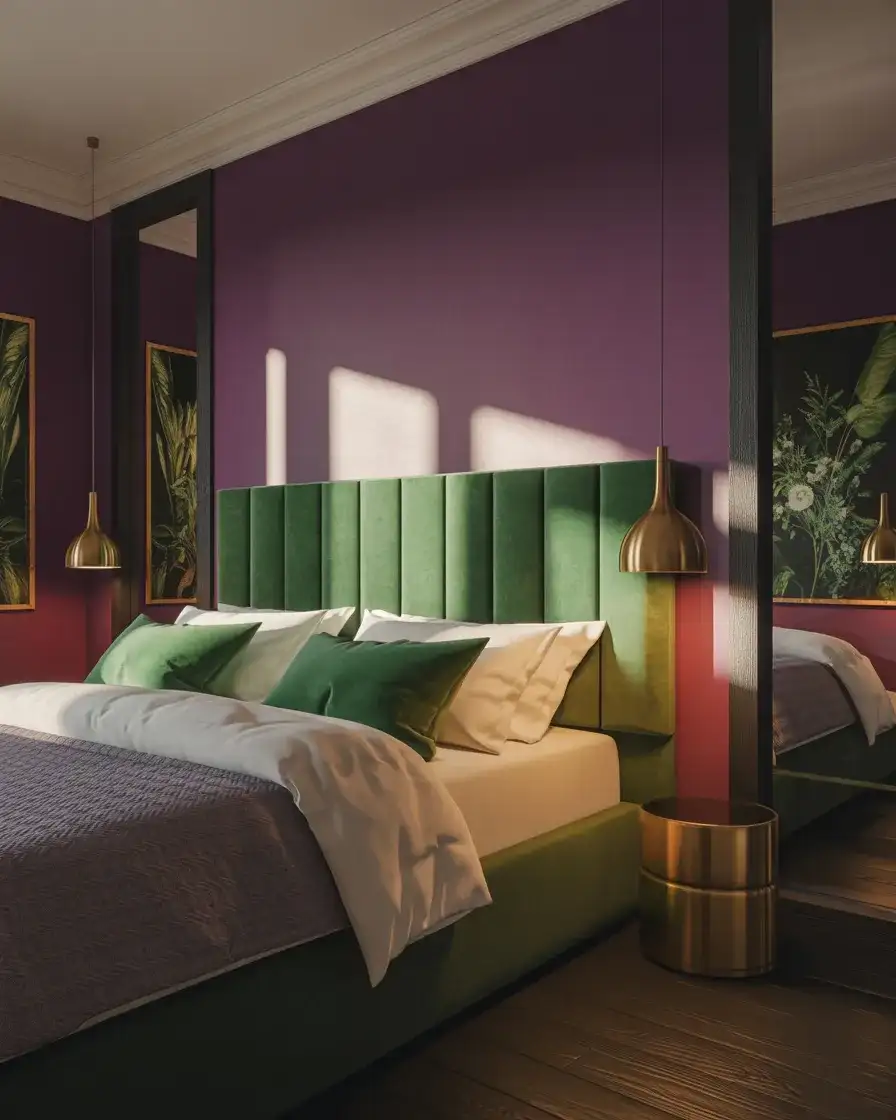
The green and purple combination is one that designers have been championing for a while now, and 2026 is the year it’s going fully mainstream. We’re not talking about a child’s room here—this is a jewel-toned grown-up pairing: think deep amethyst alongside forest green or sage, with brass hardware tying it all together. This is an aesthetic that leans maximalist but lands somewhere surprisingly grounded when you balance the proportions correctly.
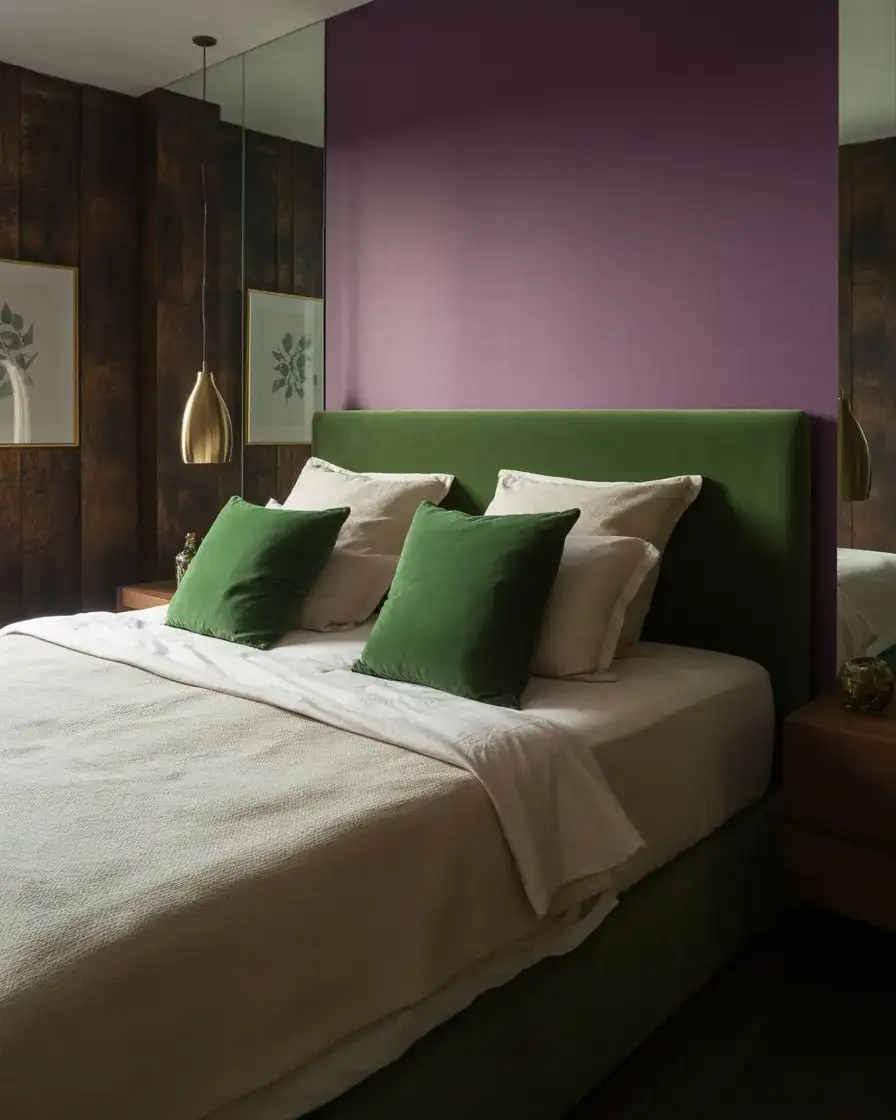
Where it works best: this pairing is tailor-made for larger master bedrooms and primary suites with good ceiling height. The jewel tones need room to breathe—cramped quarters can make the combination feel heavy rather than lush. If you’re working with a smaller space, use purple on the walls and bring green in through plants, a single accent chair, or a printed duvet. The botanical connection between the two colors makes the transition feel intentional rather than random.
4. Romantic Rose and Lavender Retreat
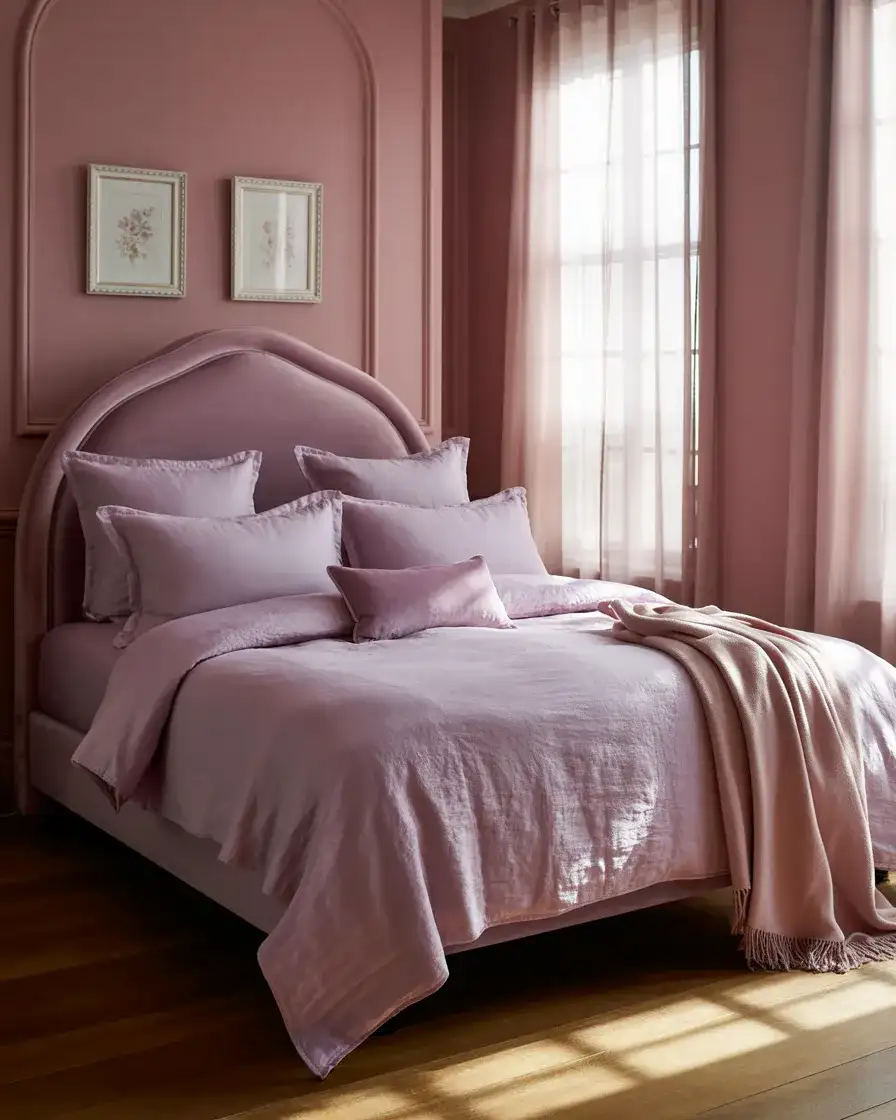
For anyone who leans romantic in their decorating instincts, the rose-and-lavender bedroom is essentially a dream come true. This is not the candy-pink room of your childhood—it’s a considered, pink and purple pairing that feels like something out of a Parisian apartment spread in a design magazine. Picture rose-painted walls with just a blush undertone, layered with lavender bedding, soft floral accents, and curved furniture that softens every edge in the room.
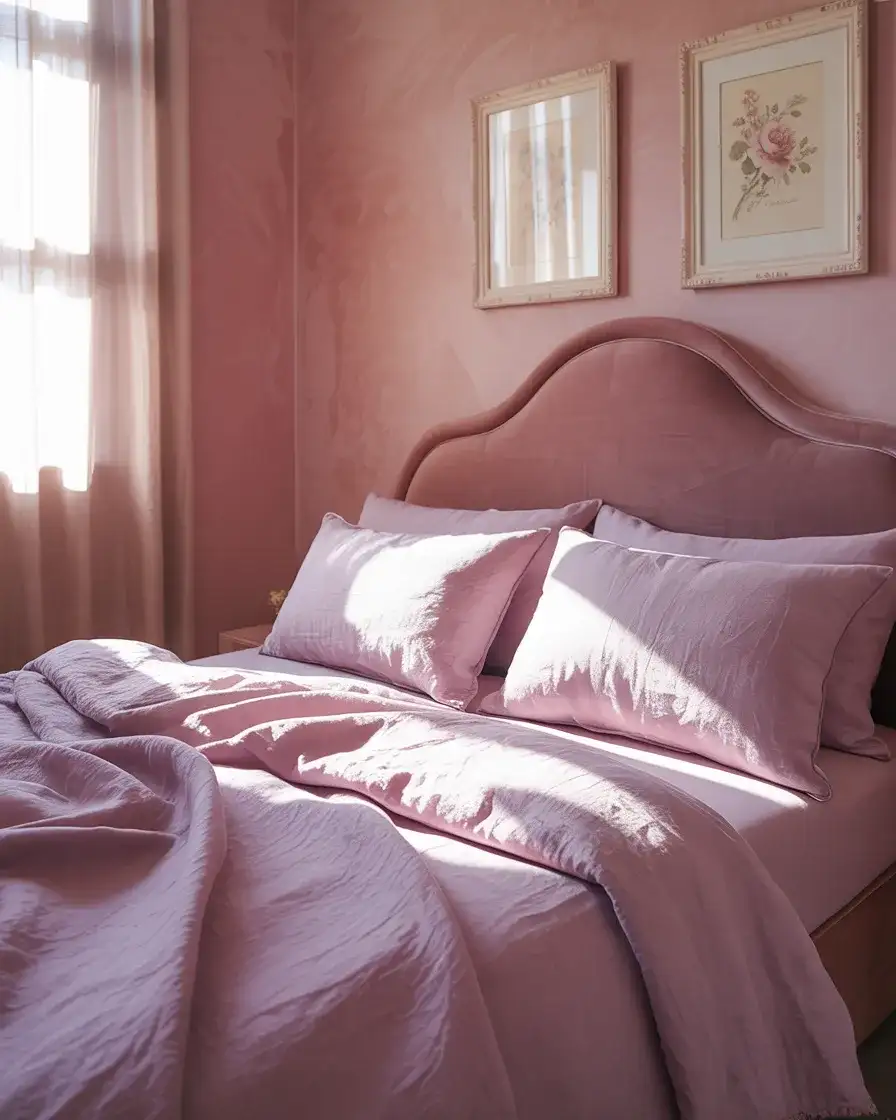
One common mistake people make with this palette is going too matchy-matchy—every shade of pink or purple at the same saturation level, which ends up looking more costume than curated. The trick is contrast: pair a dusty, slightly greyed lavender with a warmer, peachy rose, and let one lead while the other supports. Interior stylists often call this the “one-warm-one-cool” rule, and it’s the reason some of the prettiest romantic bedrooms on Pinterest feel balanced rather than overwhelming.
5. Purple Bedroom Ideas for Teens: Bold and Personal
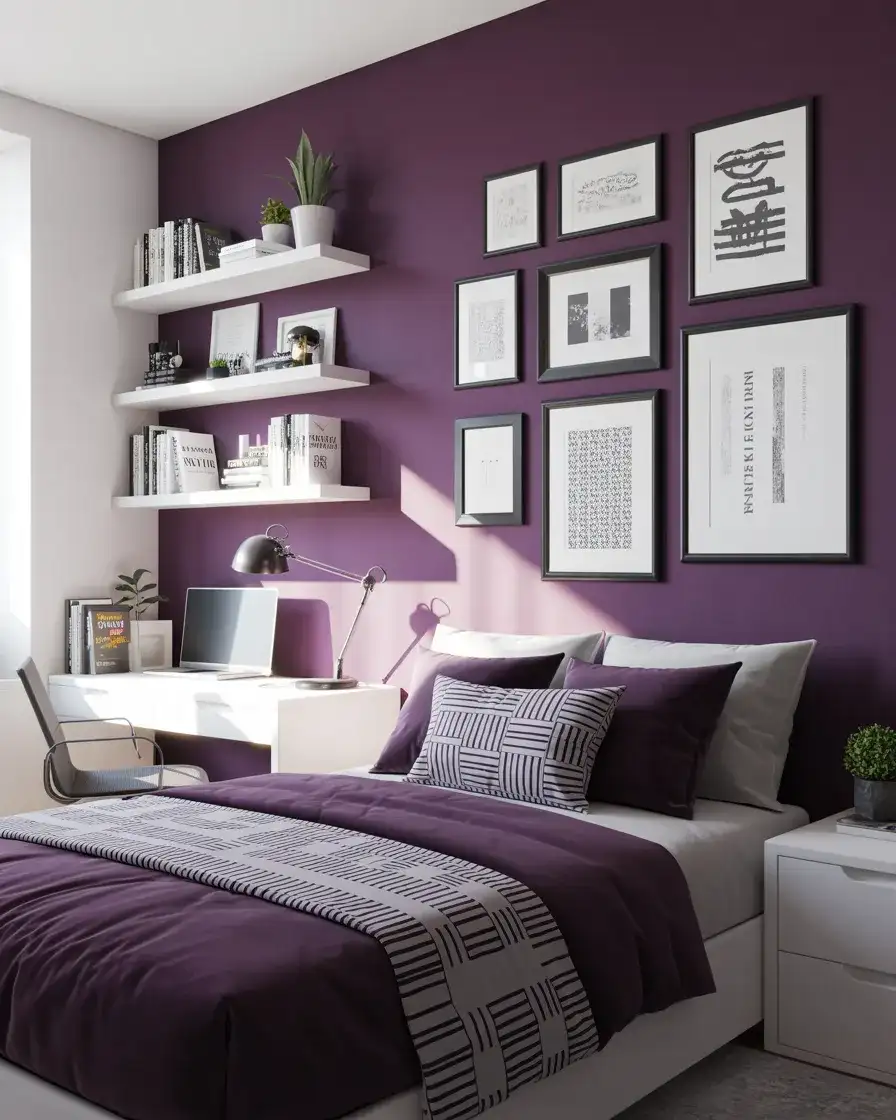
Ideas for teens involving purple go way beyond a simple lavender paint job. Today’s teenagers are drawn to spaces that feel like genuine self-expression—gallery walls with mixed media, neon purple LED strips used tastefully, and bold graphic bedding. The best purple teen bedrooms in 2026 walk a line between aesthetic and functional: there’s a real desk setup, real storage, and real personality layered into every surface.
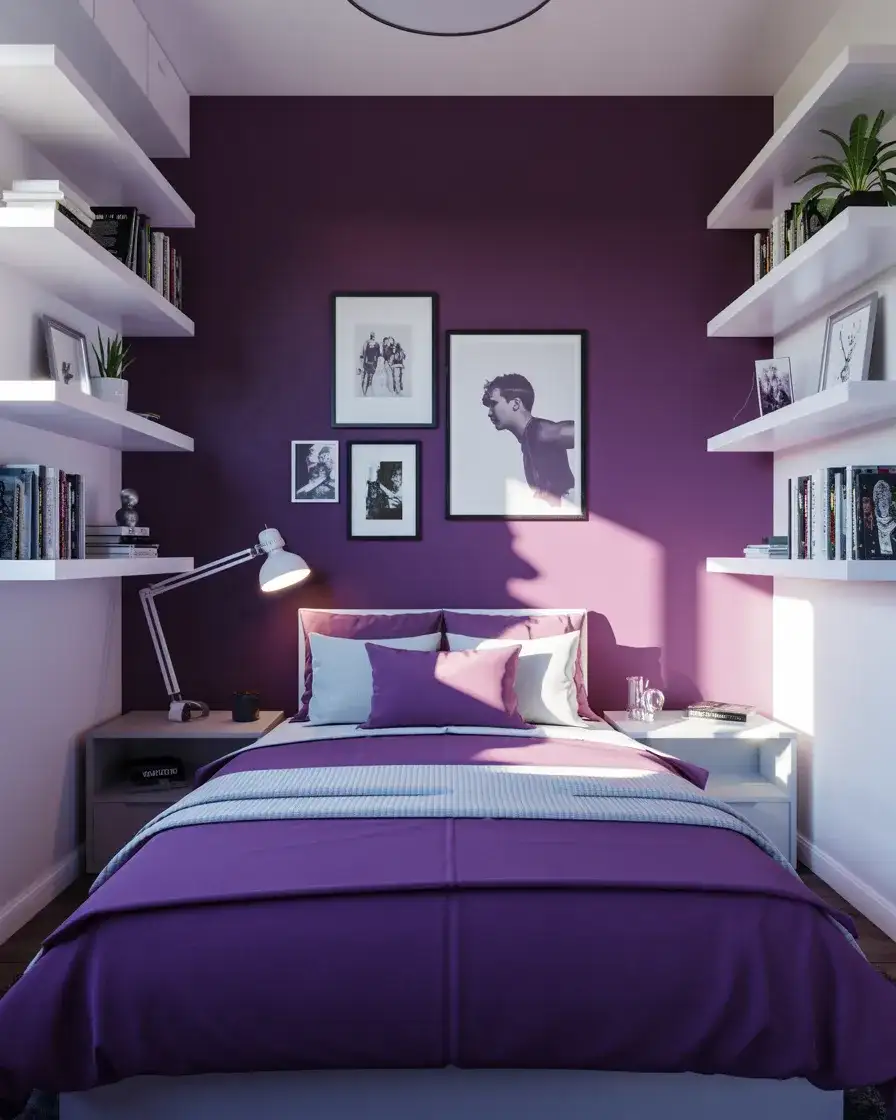
Budget is always a factor in teen rooms, and purple is actually one of the more affordable aesthetics to build. A single gallon of deep purple or bright violet paint costs the same as any other color, and the drama it delivers is outsized. Thrift stores and places like IKEA and Target carry plenty of purple-adjacent accessories—pillows, throws, desk organizers—that help lock in the look without a major investment. The real win is involving the teen in every decision, which means they’ll actually care for the space.
6. Dark Eggplant and Black Sophistication
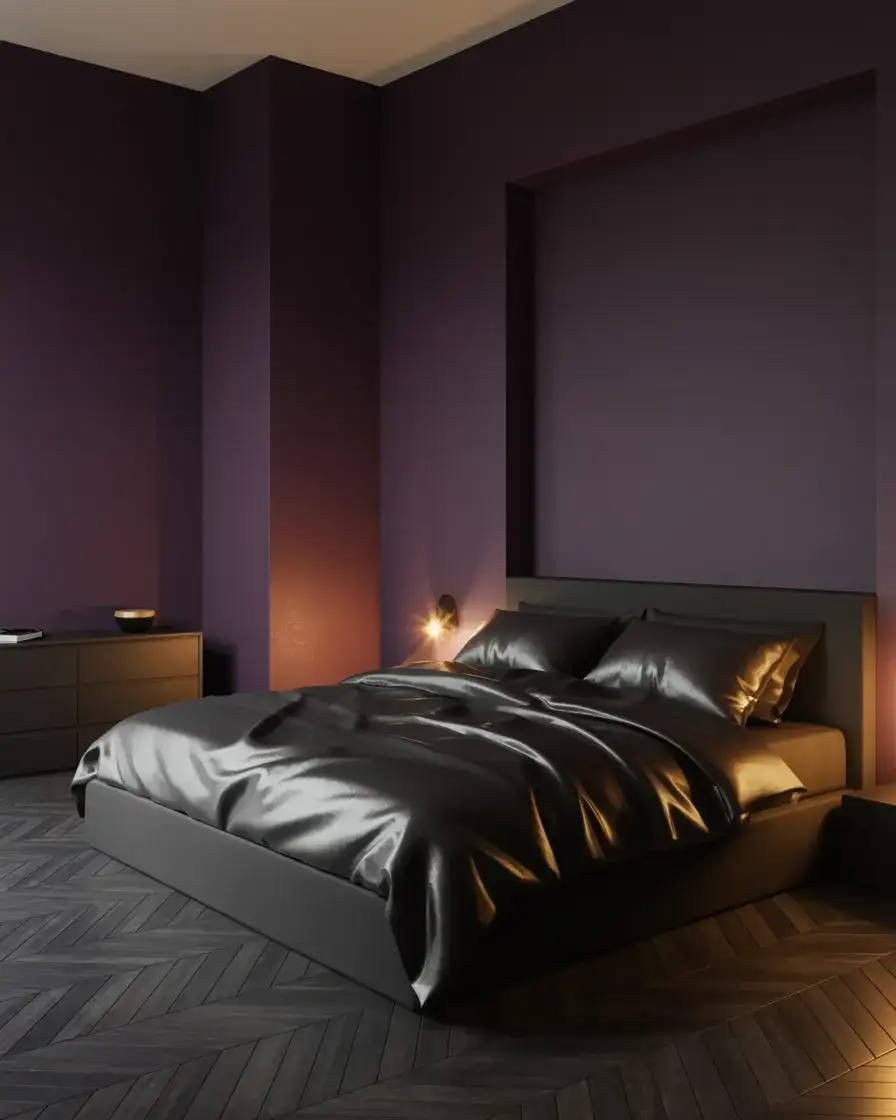
The black and purple bedroom is arguably the boldest move on this entire list—and also one of the most rewarding when it’s done right. We’re talking dark, nearly theatrical spaces where eggplant walls meet matte black furniture, black satin bedding, and deliberate pools of warm light. This isn’t a look for the faint-hearted, but if you’ve ever looked at a moody hotel suite and thought, “I want to live like this,” this is your blueprint.
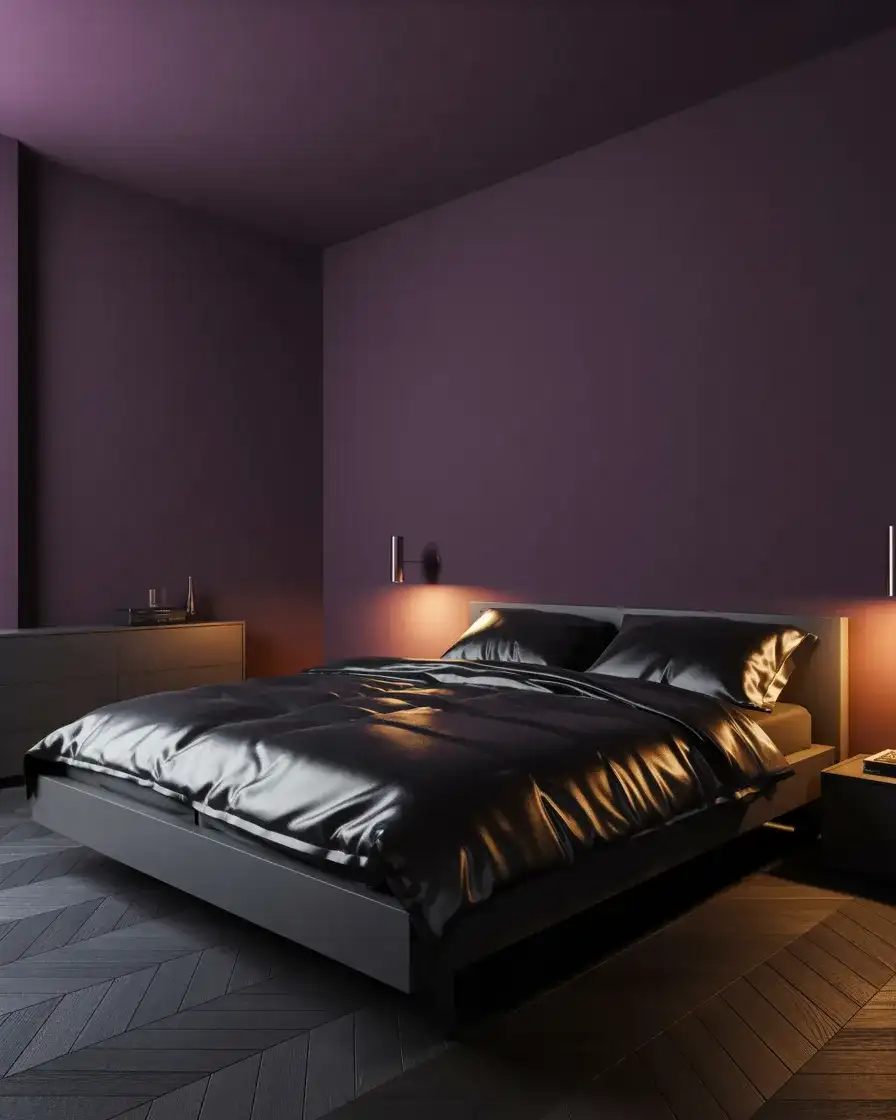
A homeowner in Portland shared that she painted her 250-square-foot bedroom a near-black eggplant purple after months of overthinking—and within a week, she’d gotten more compliments on her space than in the previous five years combined. The lesson: dark rooms photograph dramatically, feel cocooning at night, and look extraordinary in the morning when light shifts across the walls and reveals the purple undertone. Don’t be afraid to go there.
7. Pastel Purple: Soft, Airy, and Modern
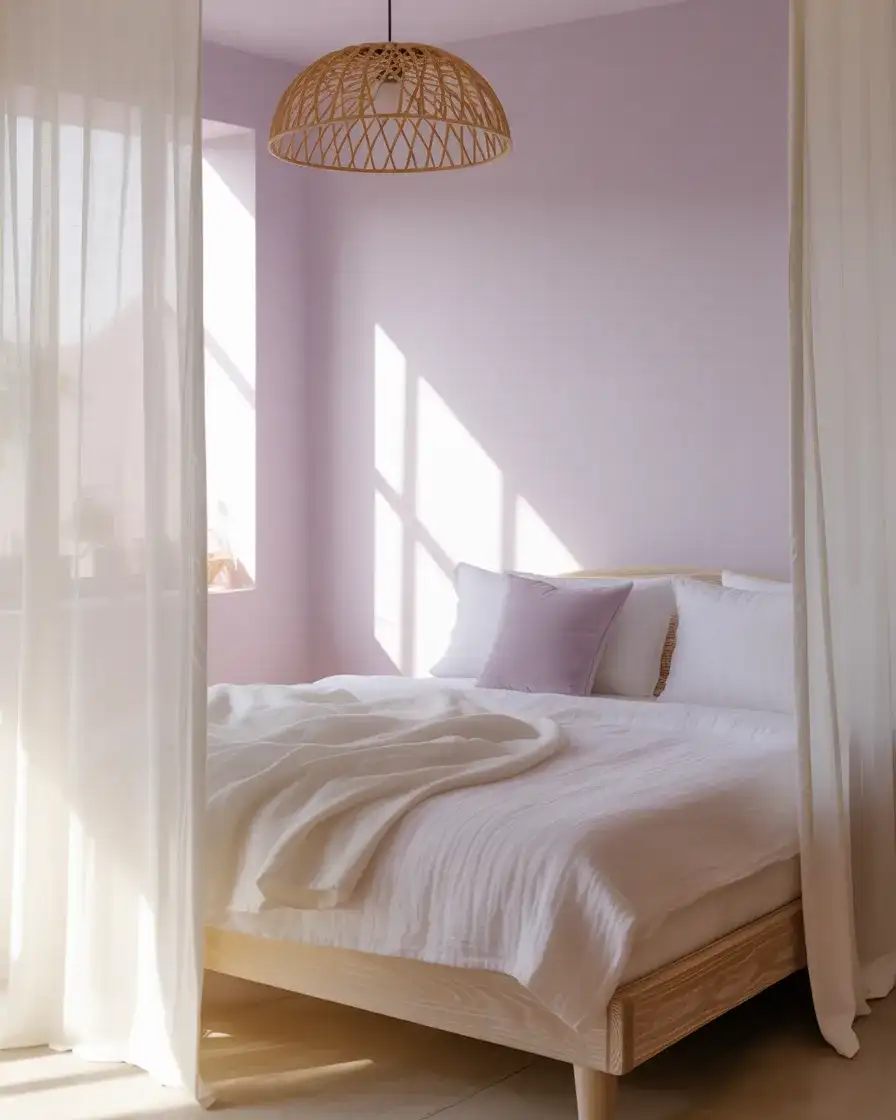
Pastel purple is the entry point that converts the skeptics—the people who love the idea of a purple bedroom but aren’t ready to go deep. And honestly, a well-executed pastel purple room is just as compelling as its moodier counterparts. Think wisteria, pale periwinkle, or a barely-there lilac with warm white trim, natural light flooding through linen curtains, and furniture in bleached oak or rattan. It’s a look that belongs equally in a coastal cottage and a modern city apartment.
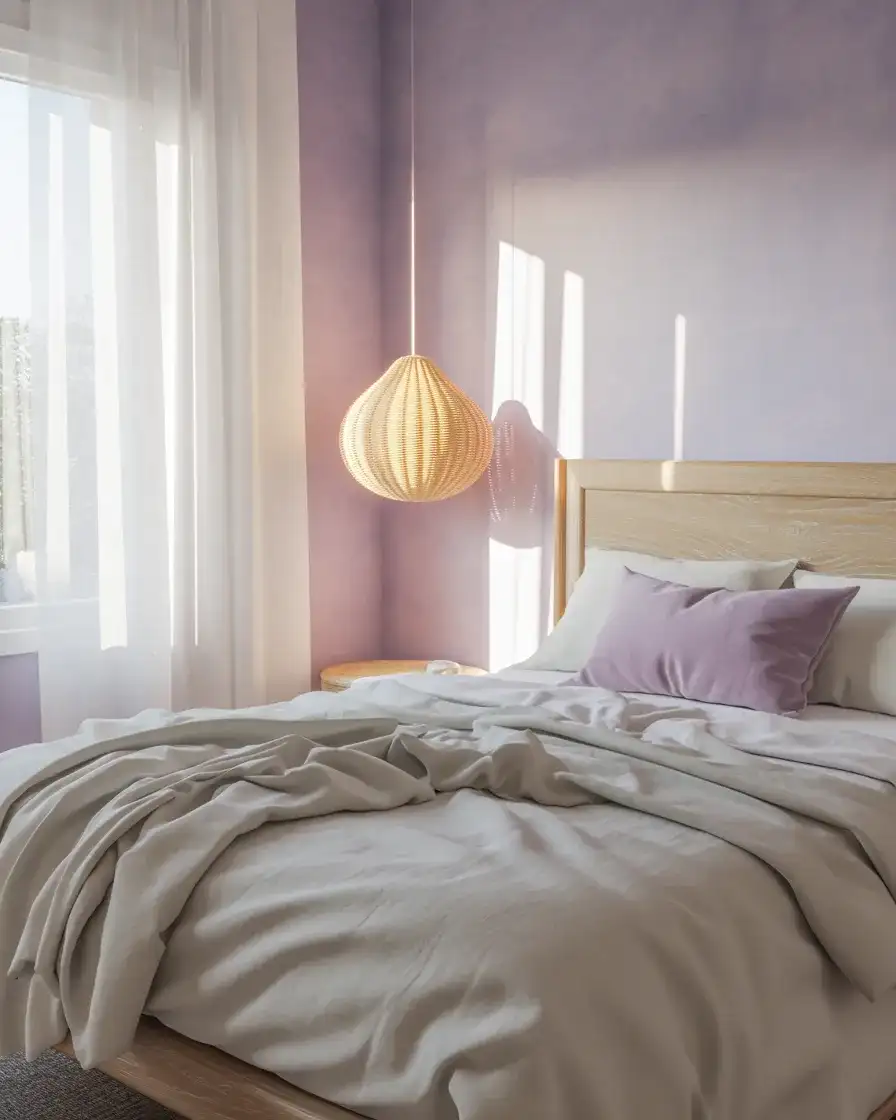
Practically speaking, pastel purple works in virtually any room size and any lighting condition—it reflects light well without bouncing it harshly, which makes it ideal for bedrooms that face east or west and get variable sun throughout the day. It’s also a smart choice for renters who can only paint one wall or add removable wallpaper—even a single pastel purple accent wall behind the bed creates that Pinterest-worthy vignette without a major commitment.
8. Purple and Blue: Oceanic Depth
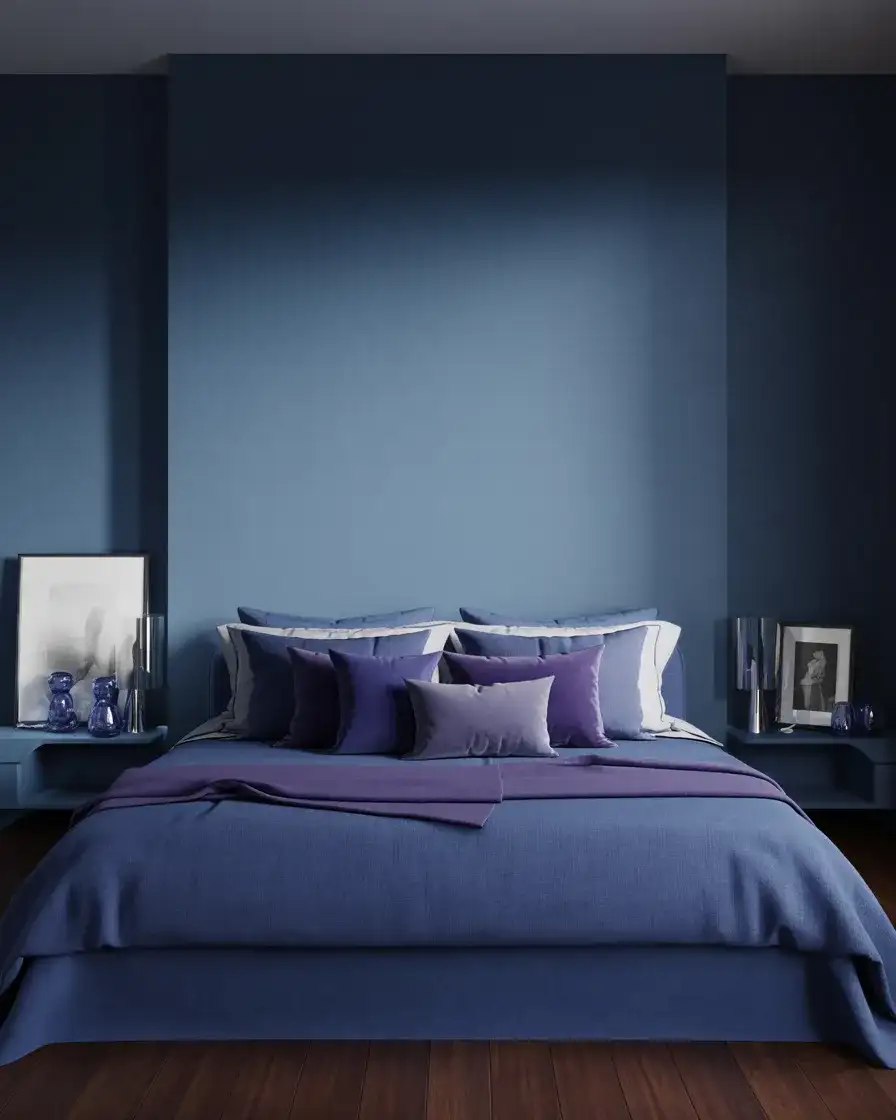
The blue and purple bedroom is one of those combinations that feels impossibly cool—in both senses of the word. When you blend midnight blue with deep violet or periwinkle with soft lavender, you get a palette that reads like the horizon just before a storm: electric, calm, and deeply beautiful. This is an aesthetic that works across styles, from the most minimal to the most layered, and it’s having a particular moment in 2026 as designers lean into complex, nature-inspired hues.
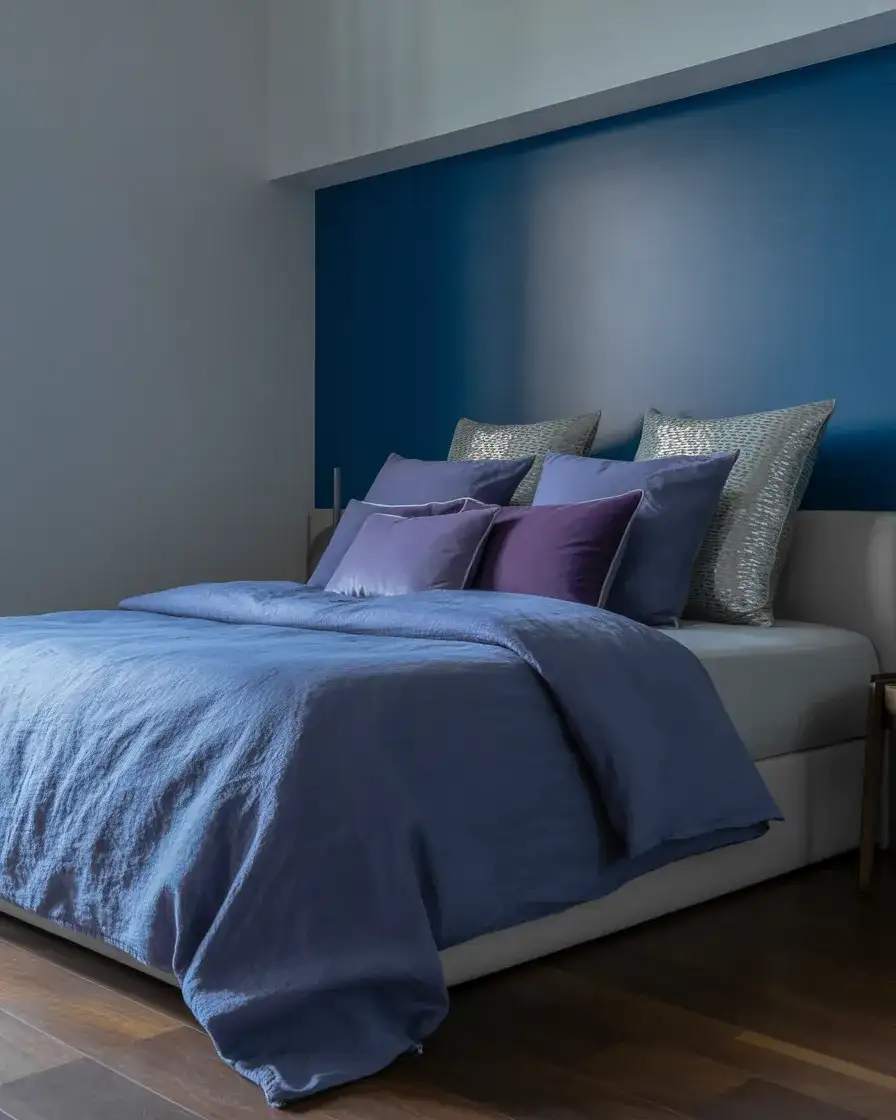
This palette is particularly popular in coastal American communities—think the Pacific Northwest, the New England coast, and beach communities in the Carolinas—where the natural landscape already blends those oceanic blues and purples outside the window. Bringing it indoors creates a seamless connection between interior and exterior that interior designers call “borrowed landscape.” You don’t have to live near the ocean to use it; the palette imports that feeling wherever you are.
9. Cozy Purple: Texture-Rich Warmth
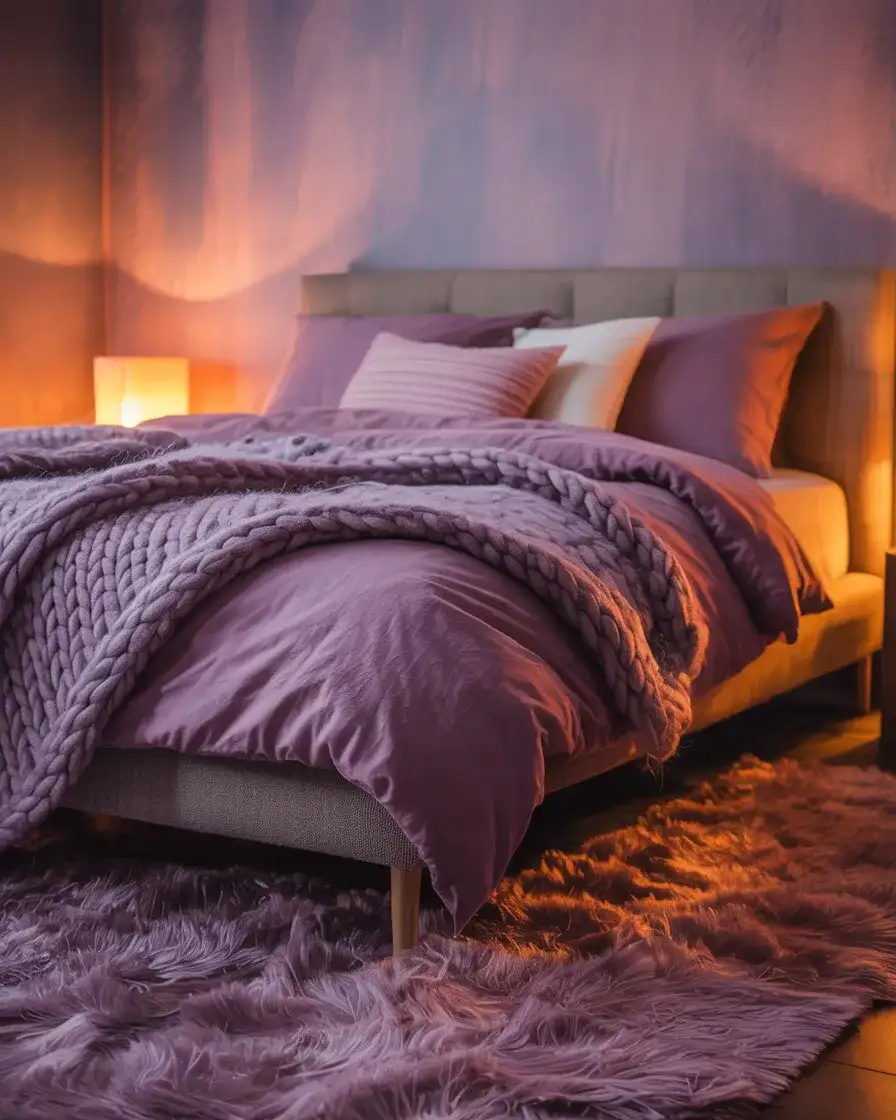
When people search for cozy bedroom ideas, they’re usually after a feeling more than a look—and purple delivers that feeling in a way few other colors can. A cozy purple bedroom isn’t just about the paint color; it’s about layering textures until the room feels like it’s giving you a hug. Chunky knit throws in heather purple, a shag rug in warm mauve, flannel bedding in dusty violet, and dimmable warm lighting that turns the room amber by evening.
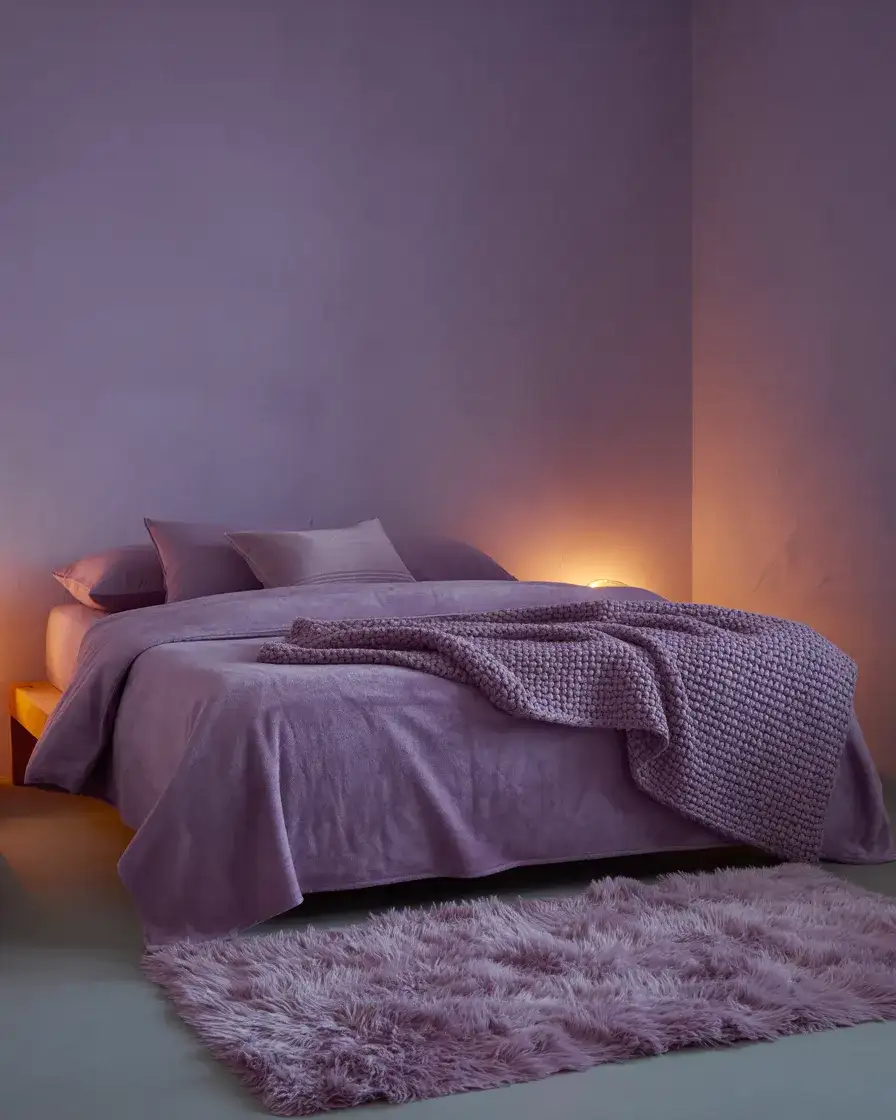
Expert-style insight: the most common mistake people make when trying to build a cozy bedroom is choosing textures that are visually similar. A room full of smooth surfaces in purple will look staged, not snug. Real coziness comes from contrast—pair the silky sheen of a satin pillowcase against a rough-woven throw, or a plush shag rug next to bare hardwood. Your eye moves through the room, taking in each texture, and that movement is what creates the sense of warmth and depth.
10. Purple Bedroom Inspo: Gallery Wall Edition
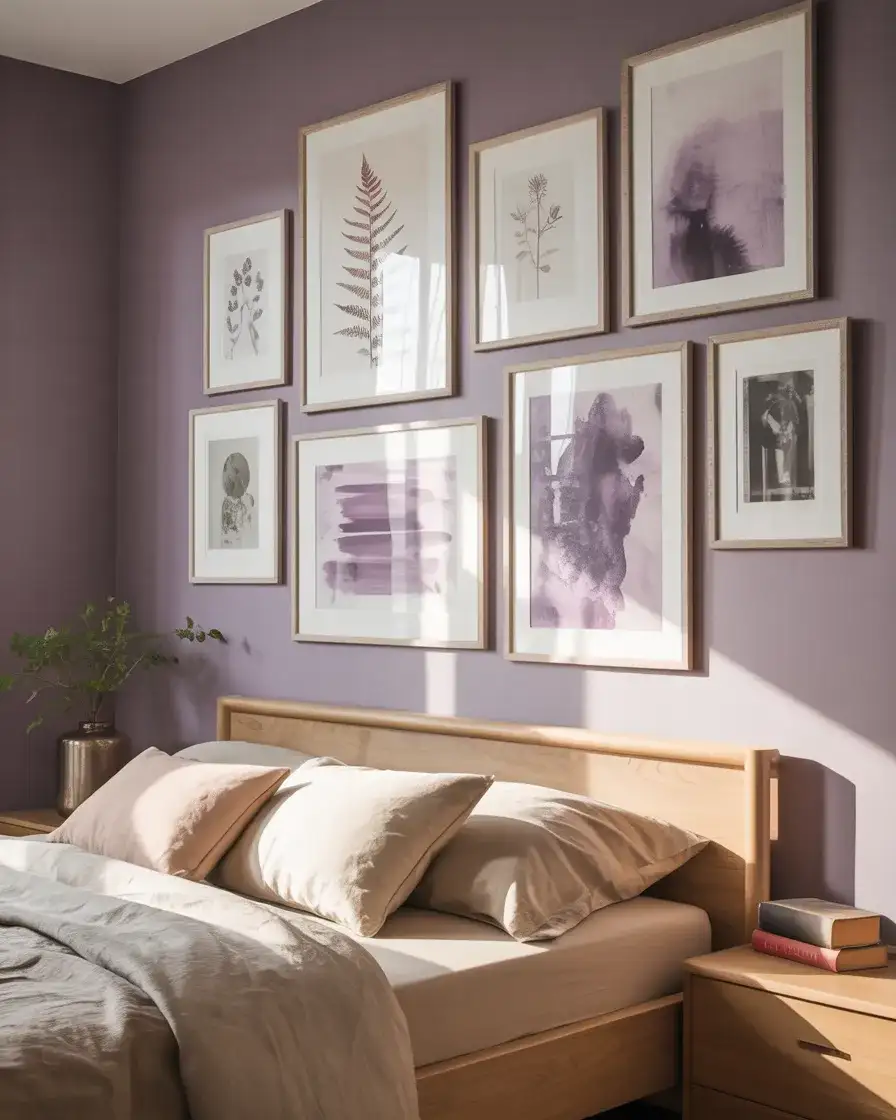
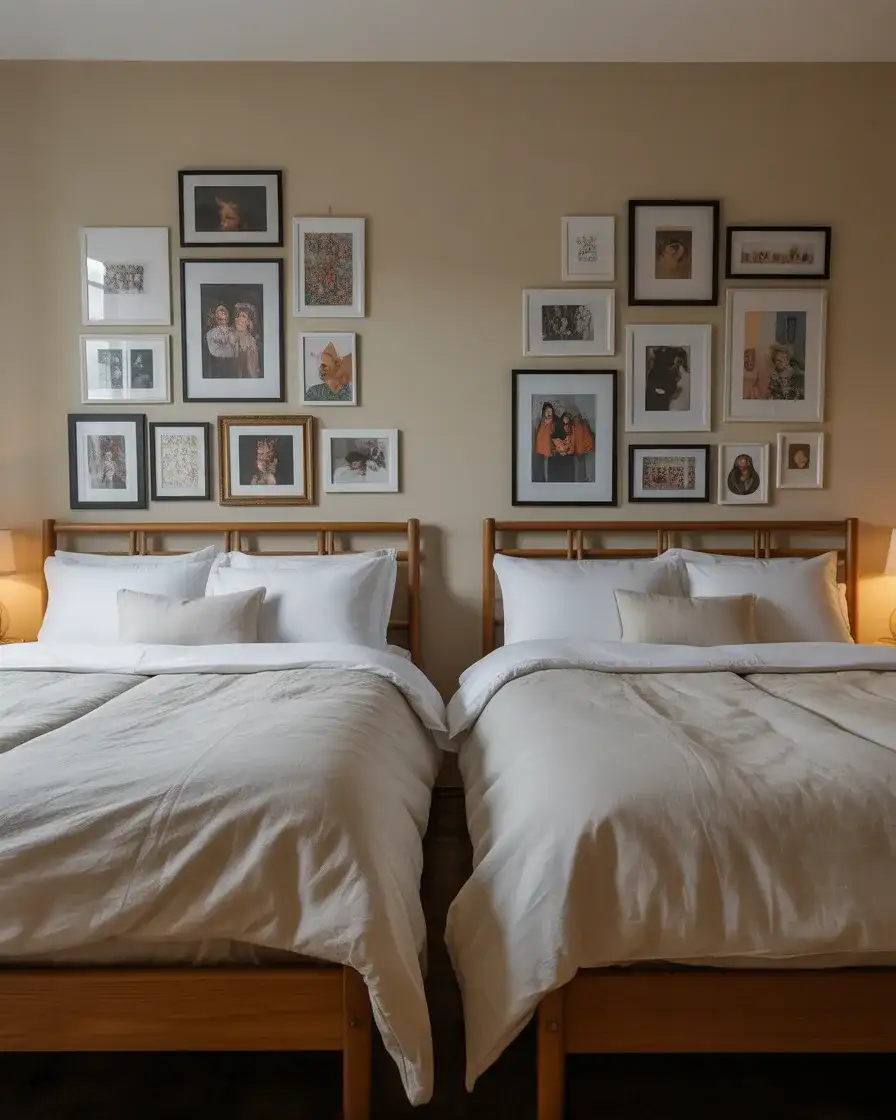
If you’re looking for bedroom inspo that goes beyond just a paint color, the gallery wall purple bedroom is where things get interesting. This is a room where a muted lavender or dusty mauve wall becomes the backdrop for an intentional collection of art, photographs, and mixed-media prints—all unified by purple undertones in the frames or the artwork itself. It’s a look that’s deeply personal, highly Pinterest-able, and surprisingly easy to achieve in stages.
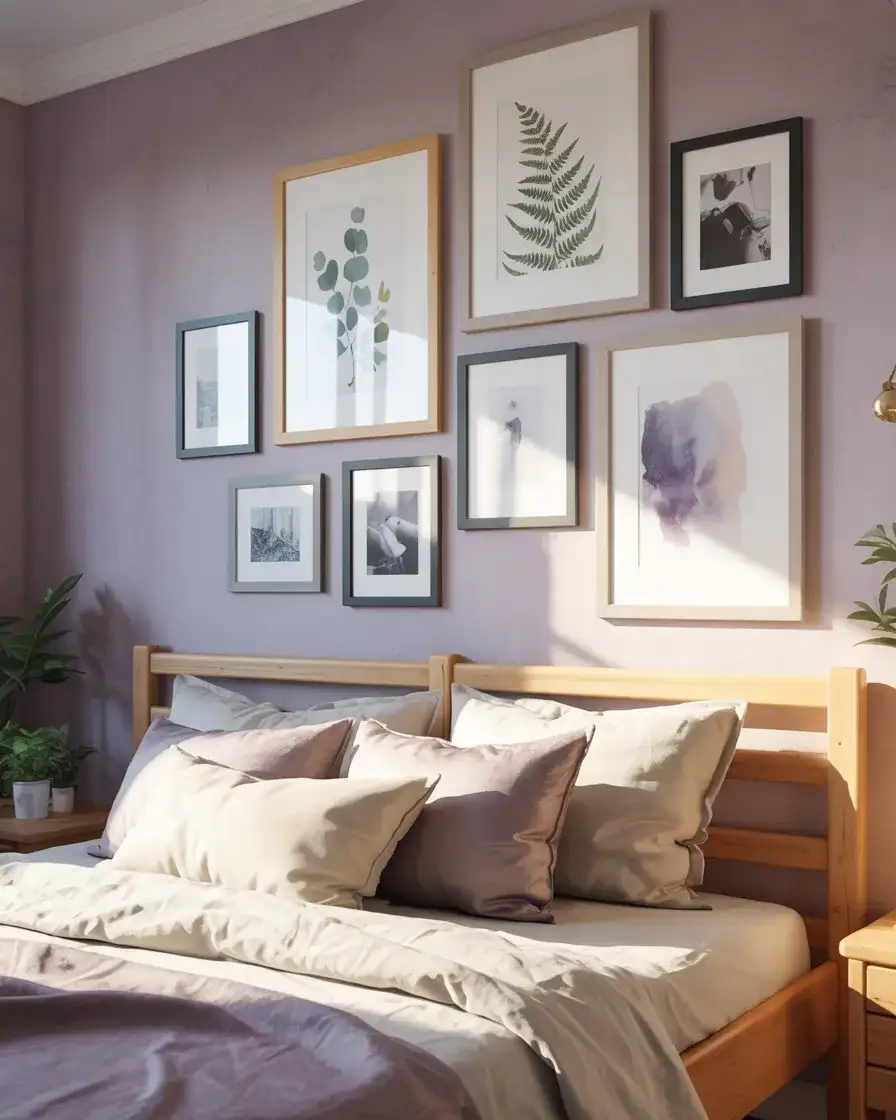
The gallery wall approach is also a practical way to refresh a purple bedroom without repainting. If you already have lavender walls and you’re getting bored, adding a gallery wall shifts the entire focal point of the room. Start by printing a few pieces at home or sourcing inexpensive prints from Etsy sellers who specialize in botanical or abstract art—many offer purple-palette sets that take the guesswork out of curation. The result looks expensive, takes an afternoon, and costs far less than a full room refresh.
11. White and Purple: Classic with an Edge
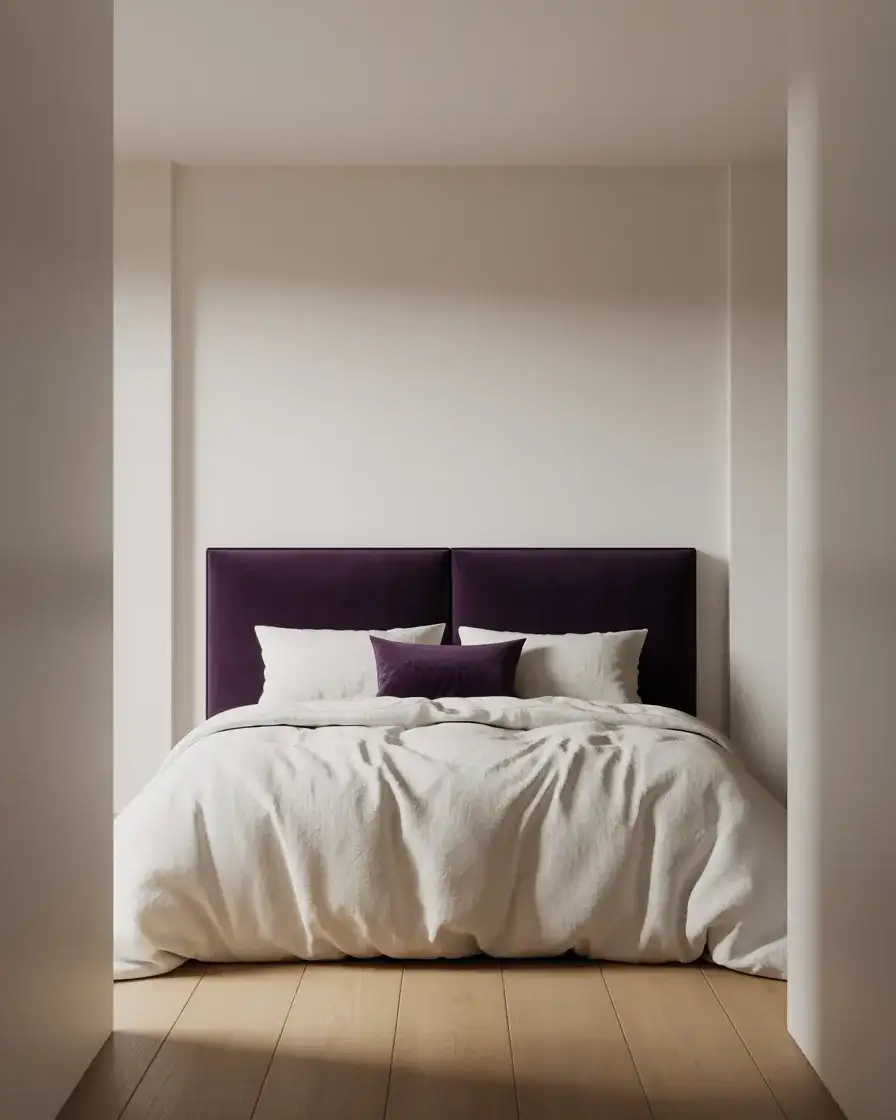
The white and purple bedroom is one of the most searched combinations for good reason: it’s the palette that makes a room feel both fresh and full of personality simultaneously. Crisp white walls with purple accents—through bedding, a statement headboard, curtains, or even a painted ceiling—create that high-contrast editorial look that translates beautifully to photography, which is partly why it’s so dominant on Pinterest right now.
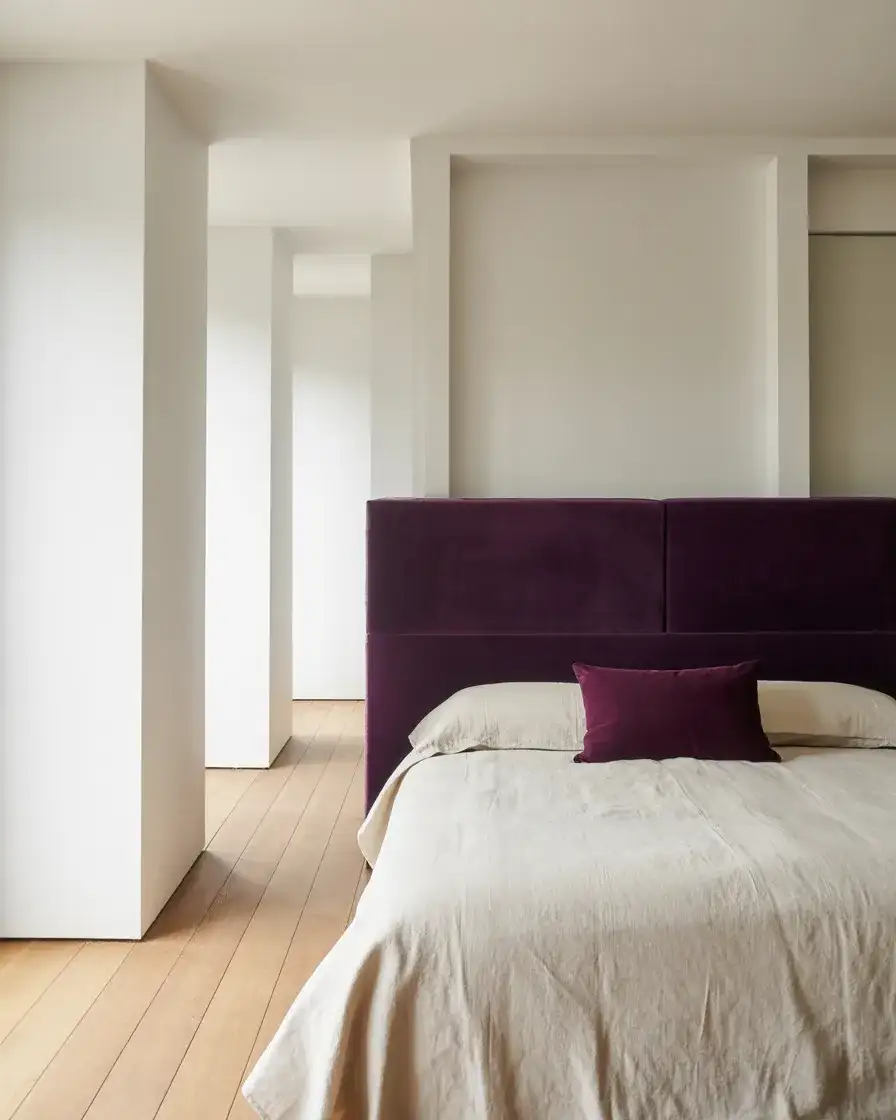
This combination works in virtually every American home style—from modern farmhouses in the Midwest to narrow Brooklyn apartments and sprawling Southwestern ranch homes. The white provides a neutral reset that lets whatever shade of purple you choose really sing. If you’re building this look from scratch, prioritize the purple element: invest in a truly good headboard or a high-quality set of bedding, and let the white surroundings do the supporting work. The contrast does the rest.
12. Purple and Sage Green: Nature-Inspired Harmony
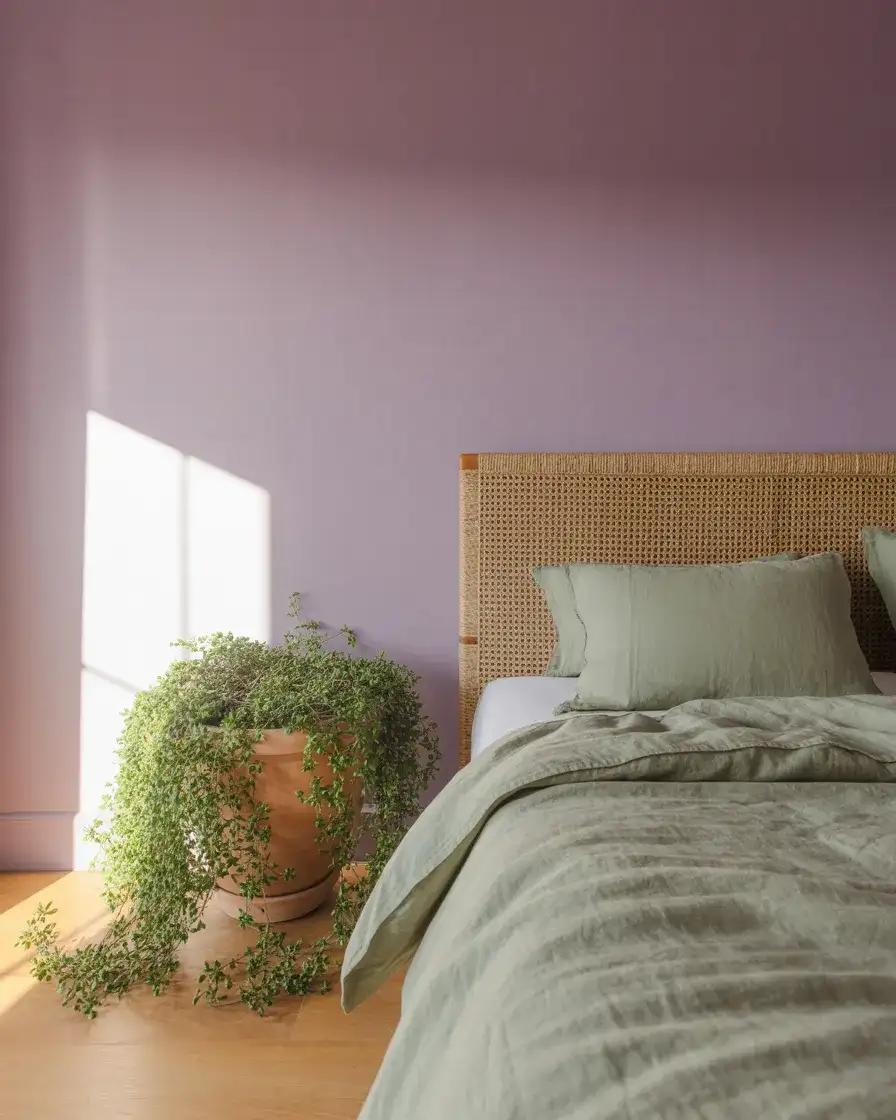
The combination of soft purple and sage green has become one of the defining interior color stories of the mid-2020s—and its application in the bedroom is nothing short of lovely. These two colors share an earthy, slightly muted quality that makes them feel like they belong together the way wildflowers do: naturally, effortlessly, and with just enough contrast to keep things interesting. It’s a palette that works equally well in boho, transitional, and Scandi-inspired bedrooms.
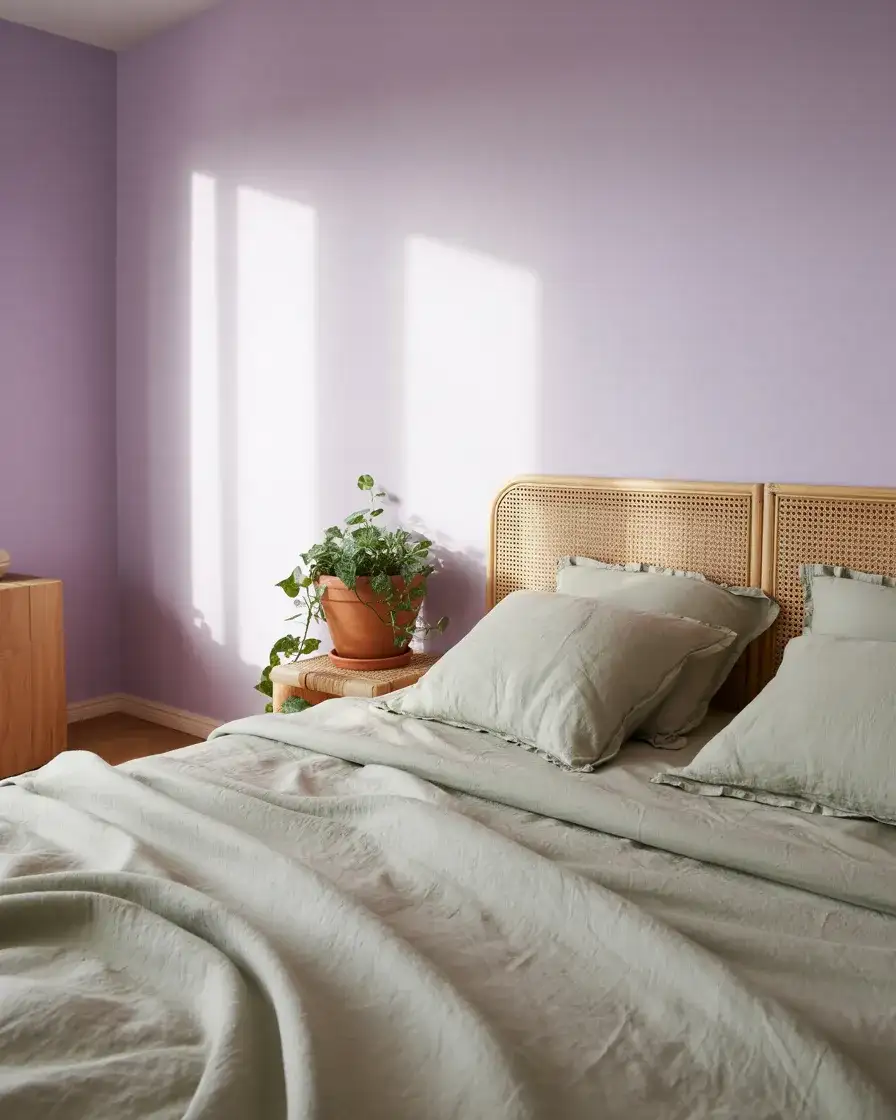
Real homeowners who’ve gone with this palette overwhelmingly report that it’s the most calming bedroom they’ve ever had—and that makes sense. Both sage green and soft purple are colors the nervous system responds to positively; they’re found in nature in abundance and don’t carry the visual tension that brighter, higher-saturation hues can. If stress relief and better sleep are part of your bedroom wishlist, this is one of the most research-supported palettes you can choose.
13. Gothic Purple: Dark Drama Done Right
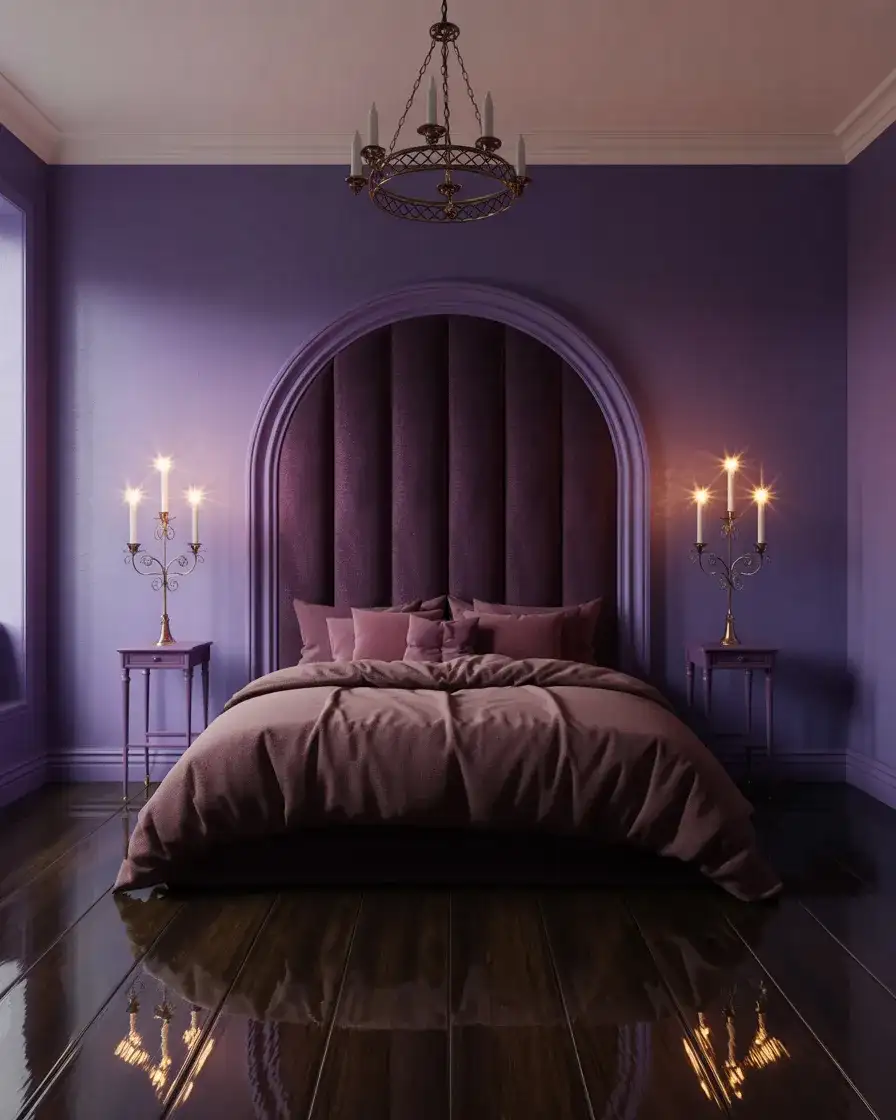
The gothic purple bedroom is having a genuine design moment—and it’s evolved well beyond black lace curtains and skull motifs. In 2026, gothic interiors are refined and deeply aesthetic: think cathedral-style arched headboards in near-black purple, chandelier lighting with visible Edison bulbs, wrought iron accents, and walls in bruised plum or ink-washed violet. The atmosphere is theatrical without being costume-y because the execution is grounded in quality materials and intentional restraint.
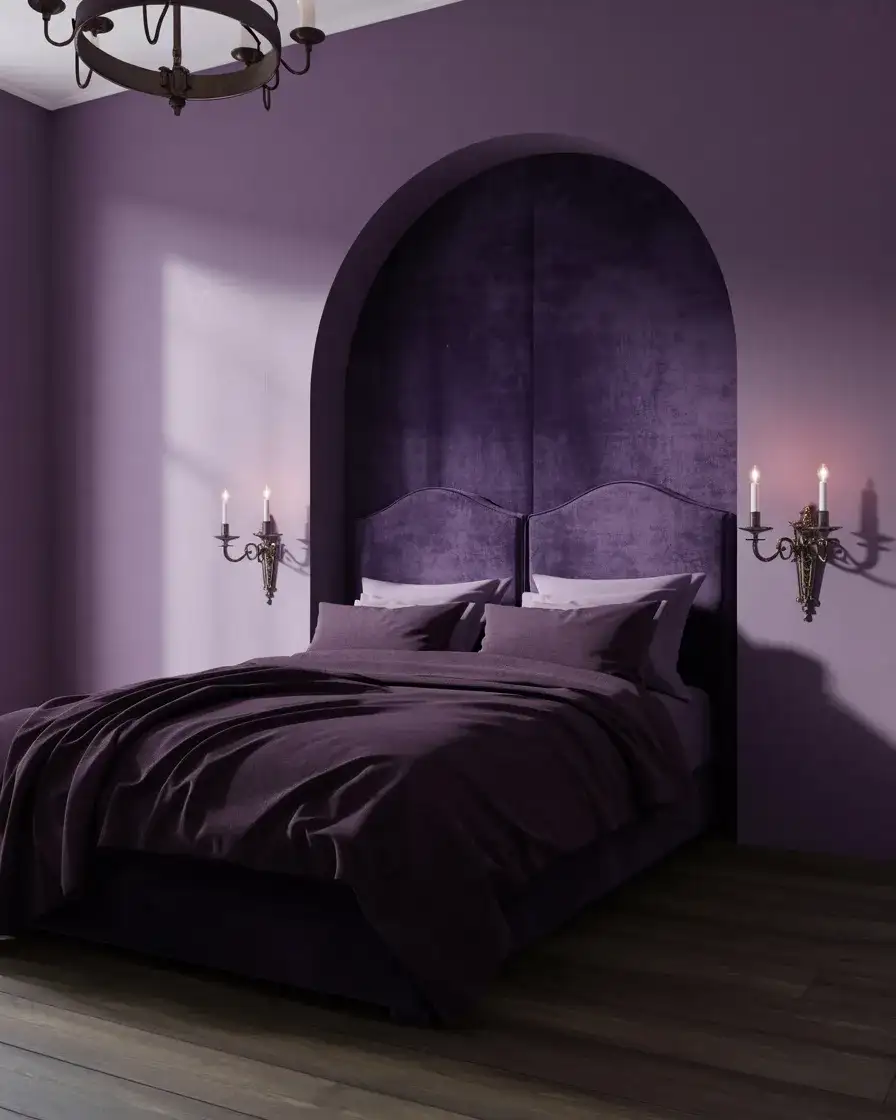
Where it works best: the gothic purple bedroom thrives in older homes with architectural character—Victorian-era houses, 1920s bungalows, and early 20th-century apartments where the bones of the room (high ceilings, crown molding, original hardwood) can hold the visual weight of this kind of design. In a builder-grade suburban bedroom, the key is creating the architecture artificially: add ceiling medallions, panel molding, or a dramatic canopy to give the room the gravitas the gothic palette demands.
14. Purple and Teal: Unexpected and Electric
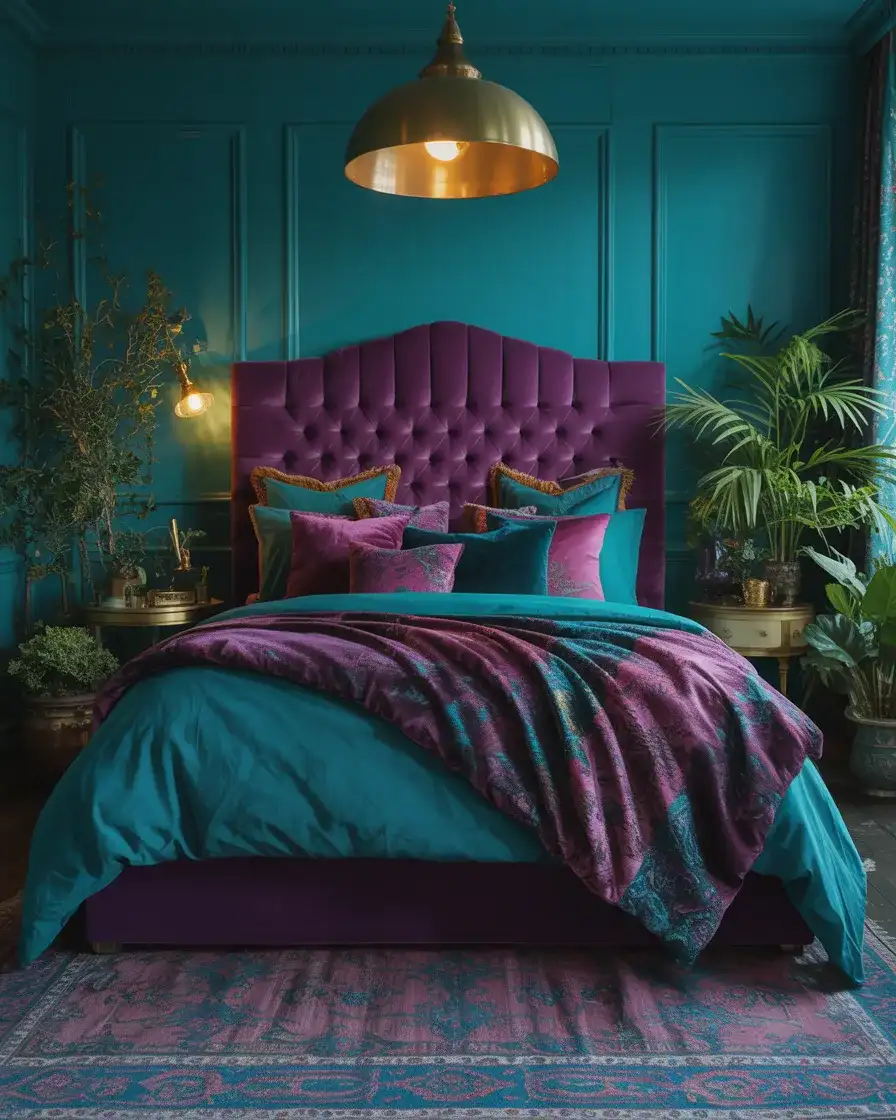
If you want a bedroom that stops people in the doorway, the teal and purple combination is it. These two colors sit far enough apart on the color wheel to create real visual electricity but share enough blue in their DNA to feel harmonious rather than chaotic. The aesthetic lands somewhere between maximalist boho and jewel-toned glam—with teal on the walls or bedding and purple arriving through velvet accessories, artwork, or a statement rug.
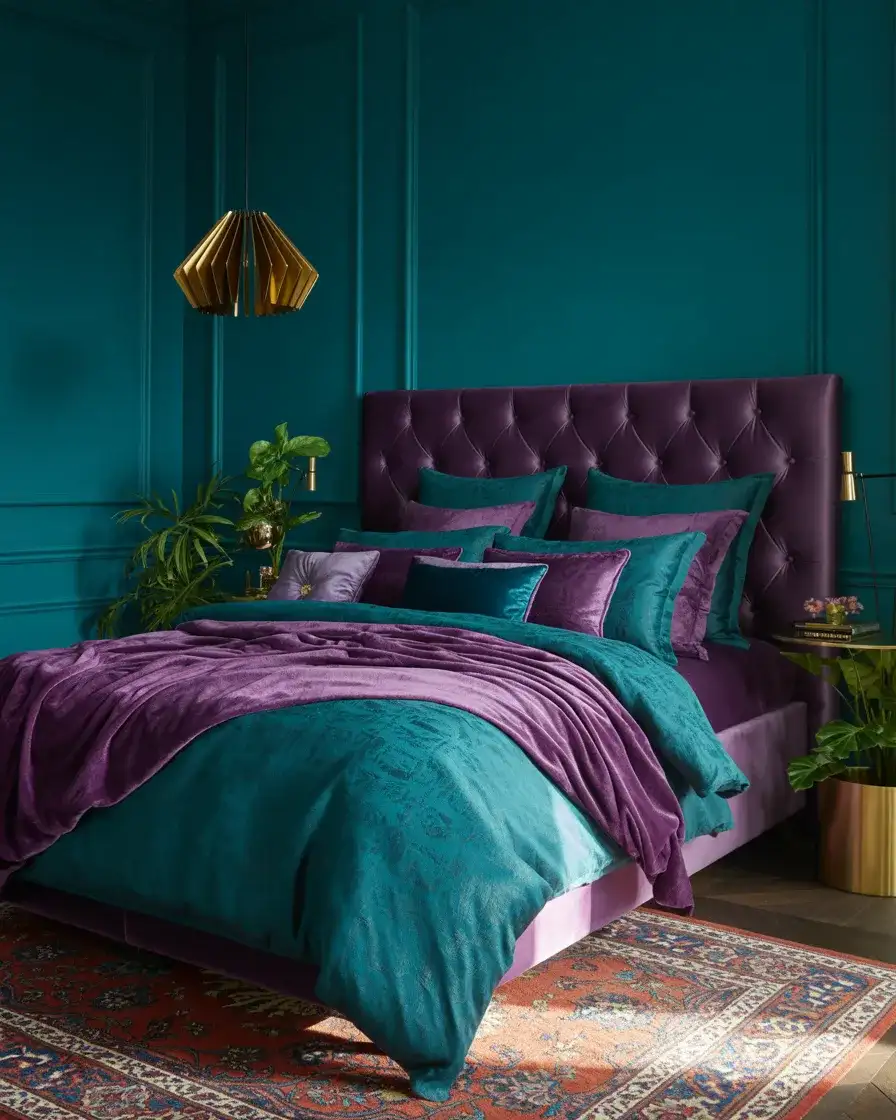
This is a combination that’s surprisingly budget-friendly to build because you can start with one key piece—a teal duvet or a purple rug—and add from there over time. Unlike some palettes that require wholesale room overhauls to look right, teal and purple are forgiving in the building phase. Start with bedding, add an accent pillow in the contrasting color, and see how it feels before you commit to painting walls or buying furniture. The look rewards patience and gradual layering.
15. Purple for Kids: Playful and Age-Appropriate
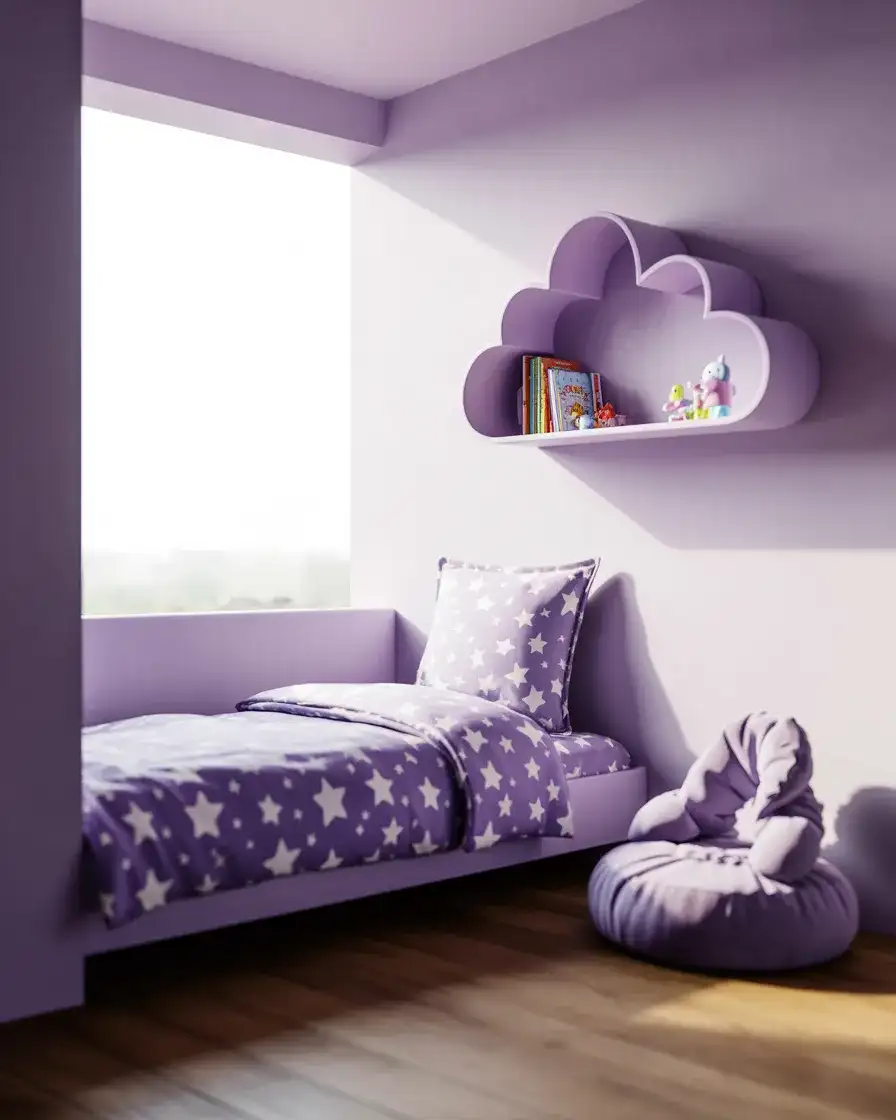
When it comes to ideas for kids, purple is one of the most universally loved colors across genders and age groups—which makes it an excellent long-term investment for a child’s bedroom. The goal with a kids’ purple room in 2026 is making it cozy and functional in equal measure: soft lavender on the walls, cloud-shaped shelving, storage ottomans in dusty purple, and bedding that can grow with the child from preschool through middle school.
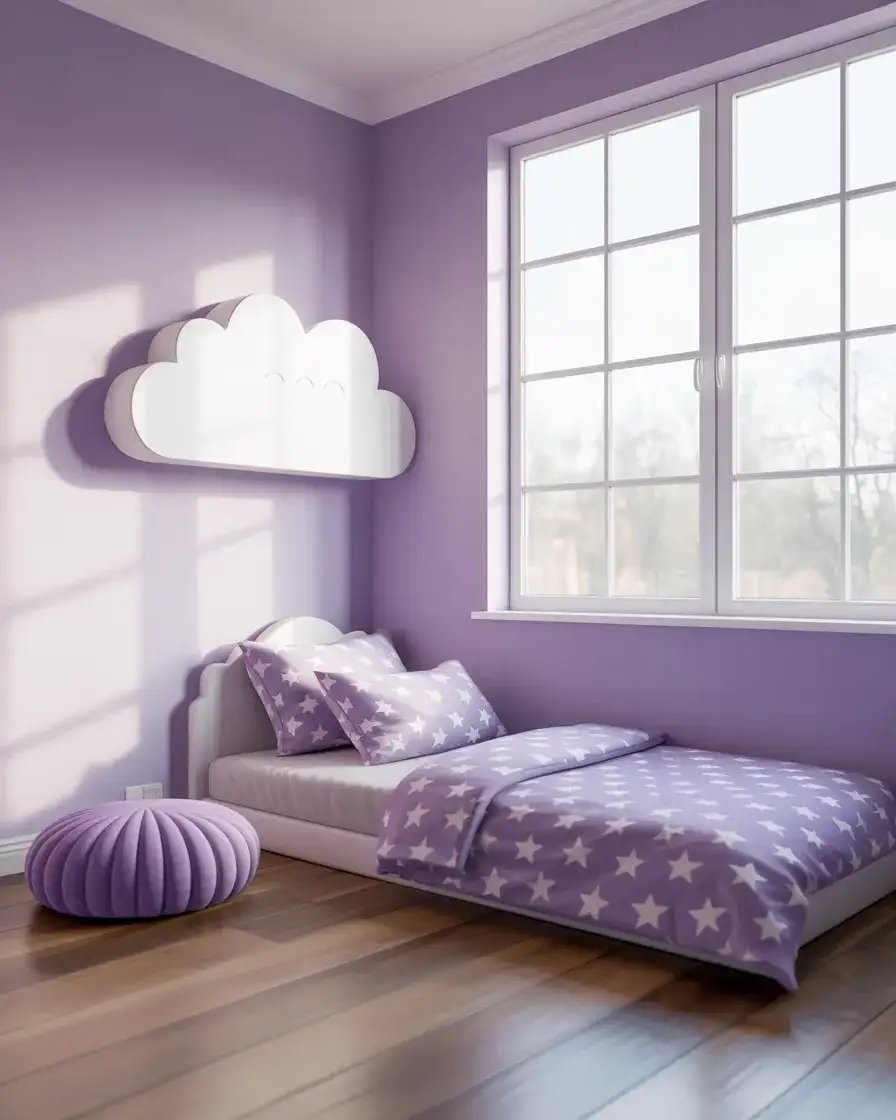
The smartest approach to a kid’s purple room is choosing a paint shade that can grow with them: a muted lavender or soft plum will still feel age-appropriate at 12, while a bright candy purple might not. Invest in paint quality here—kids’ rooms take a beating, and a washable matte or eggshell finish in a quality brand like Benjamin Moore’s Aura or Sherwin-Williams Emerald will hold up to fingerprints and crayon marks while still looking polished. Everything else—bedding, decor, accessories—can be swapped as their taste evolves.
16. Purple and Turquoise: Bohemian Vibes
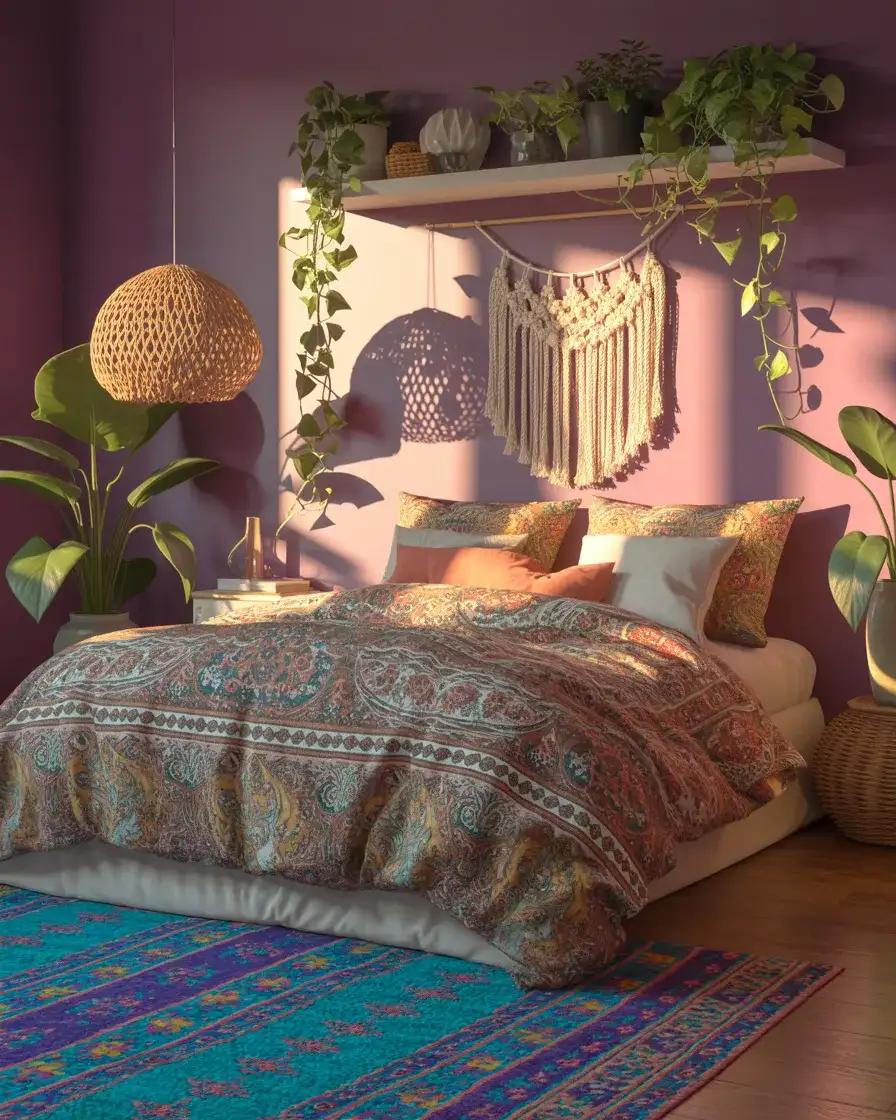
The turquoise and purple bedroom is pure boho energy—the kind of room that feels like it was assembled over years of travel, thrifting, and collecting things you love. This is a palette that forgives imperfection and rewards personality. Think purple-washed walls with turquoise accents in pillows, a macramé wall hanging, a painted dresser, or a boldly patterned kilim rug. The look is layered, warm, and always looks better the more you add to it.
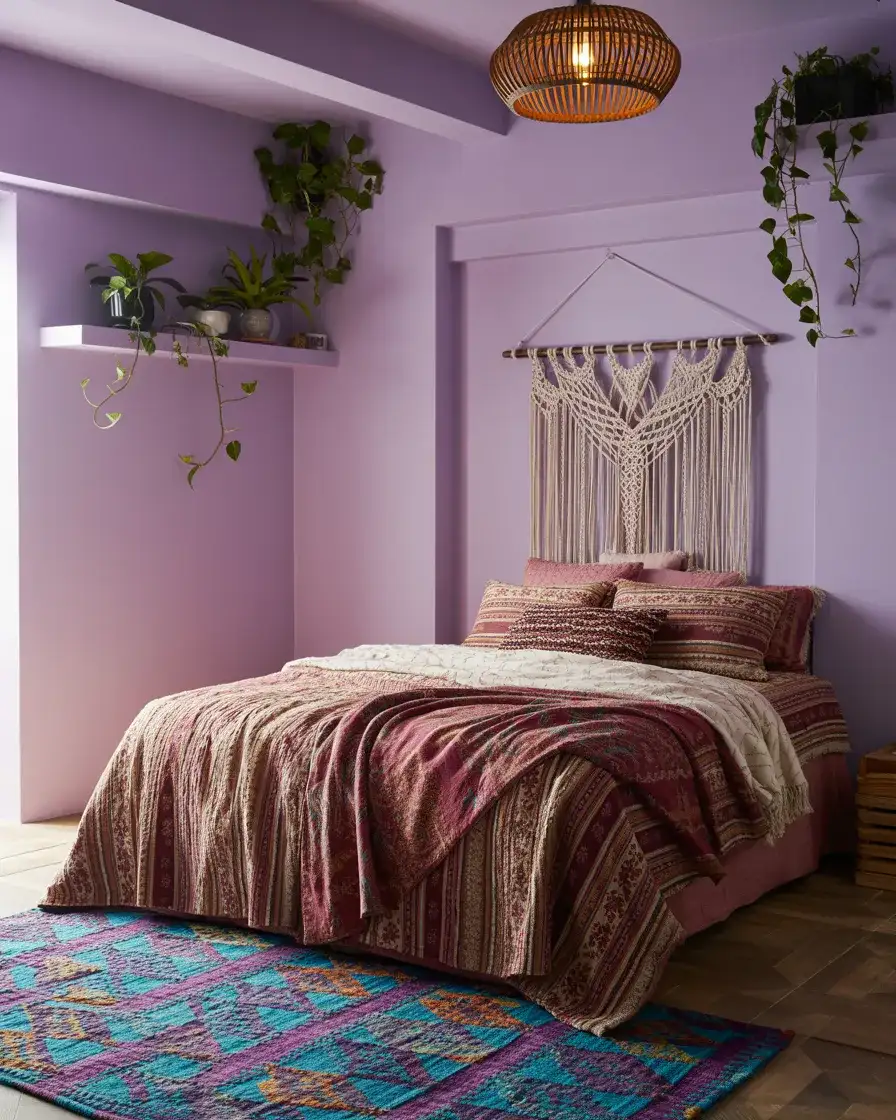
This look is particularly popular in the American Southwest and in communities with a strong arts-and-crafts culture—Santa Fe, Tucson, Asheville, and Portland—where the blending of color and cultural influence in interior design is part of everyday life. But the turquoise-and-purple boho room translates anywhere. It’s one of the few bedroom aesthetics that’s deeply personal yet also incredibly welcoming to guests, because it tells a story through every object in it.
17. Purple and Navy: Regal and Grounded
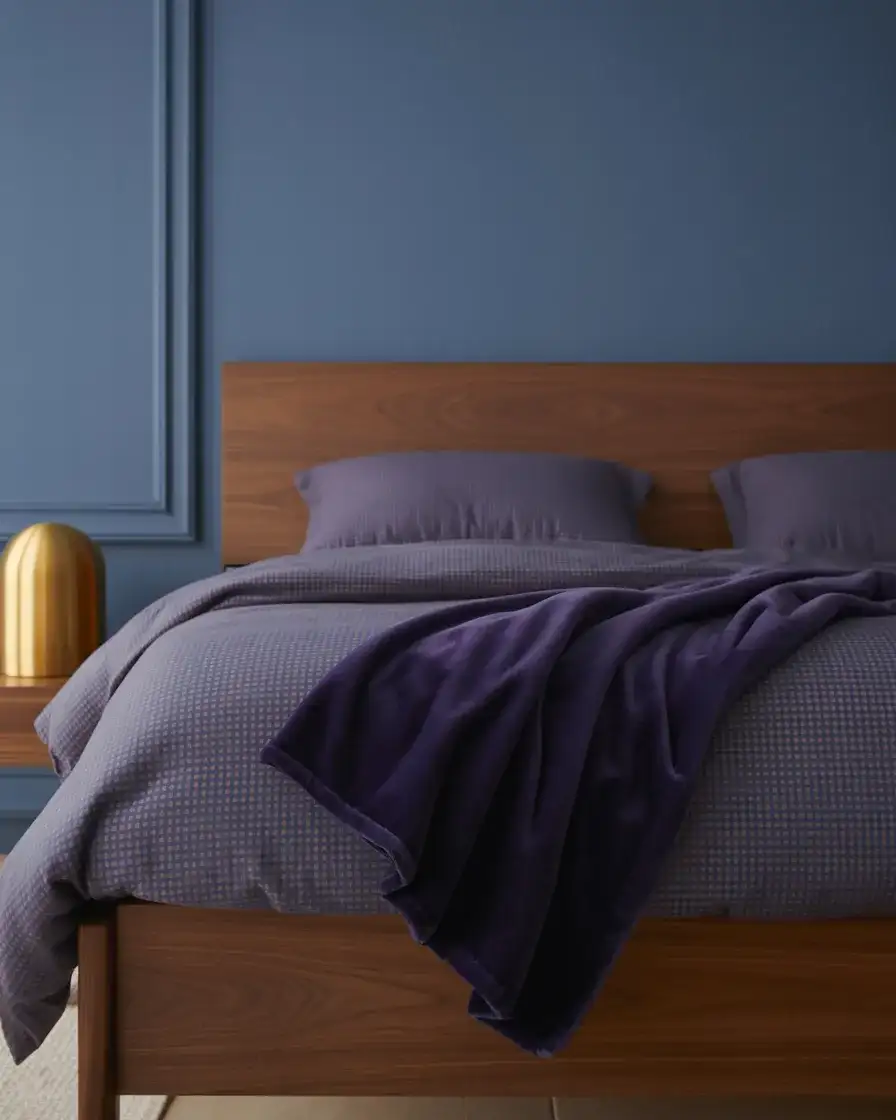
The navy and purple bedroom is one of the most underrated pairings in residential design—it feels sophisticated and a little bit regal without ever tipping into pretension. Navy grounds the more flamboyant tendencies of purple, keeping the room feeling anchored and masculine-leaning if that’s the direction you want to go. When you combine a navy blue accent wall with deep purple accessories—throws, lamps, artwork—the room reads like a well-considered study in color theory.
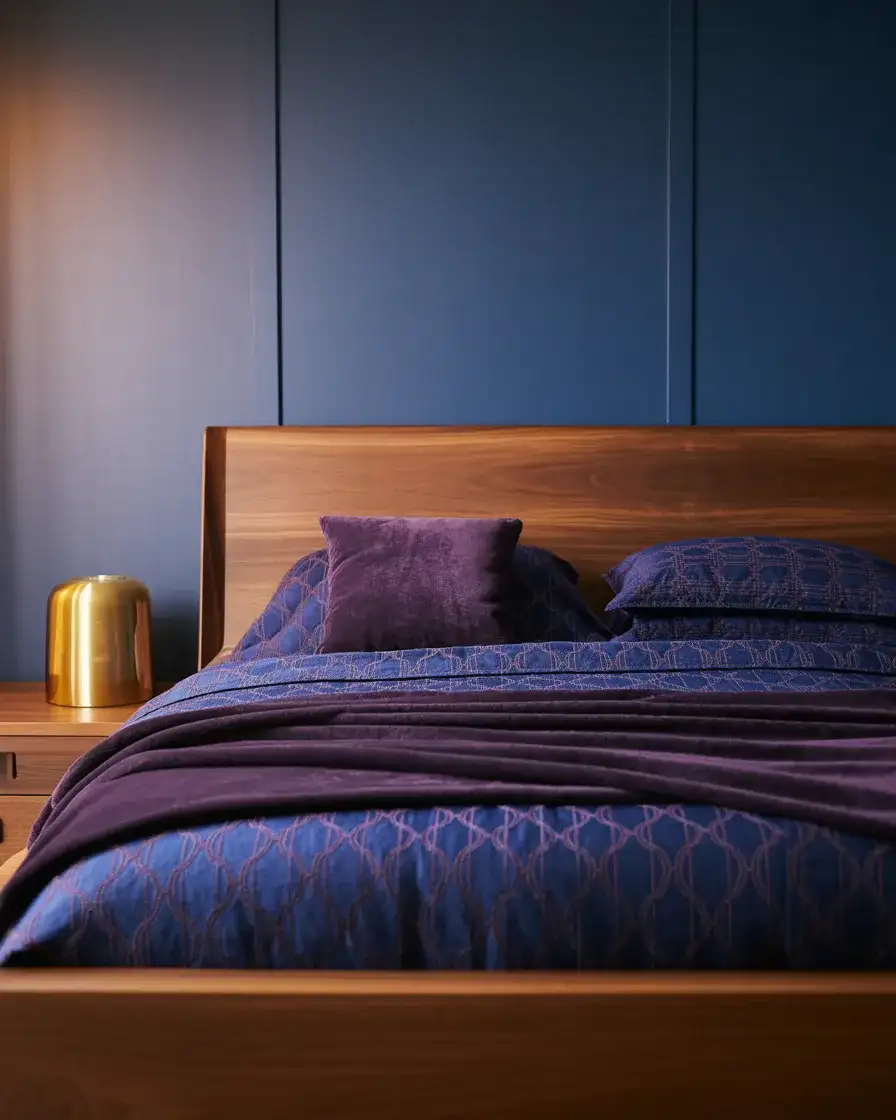
This is a palette that ages exceptionally well—which matters more than people often acknowledge when designing a bedroom. Trends come and go, but navy and purple together will look as good in ten years as they do today. If you’re someone who redesigns infrequently and wants something that won’t feel dated fast, this is a more reliable long-term choice than many of the trend-forward palettes currently cycling through social media.
18. Purple and Red: Maximalist and Bold
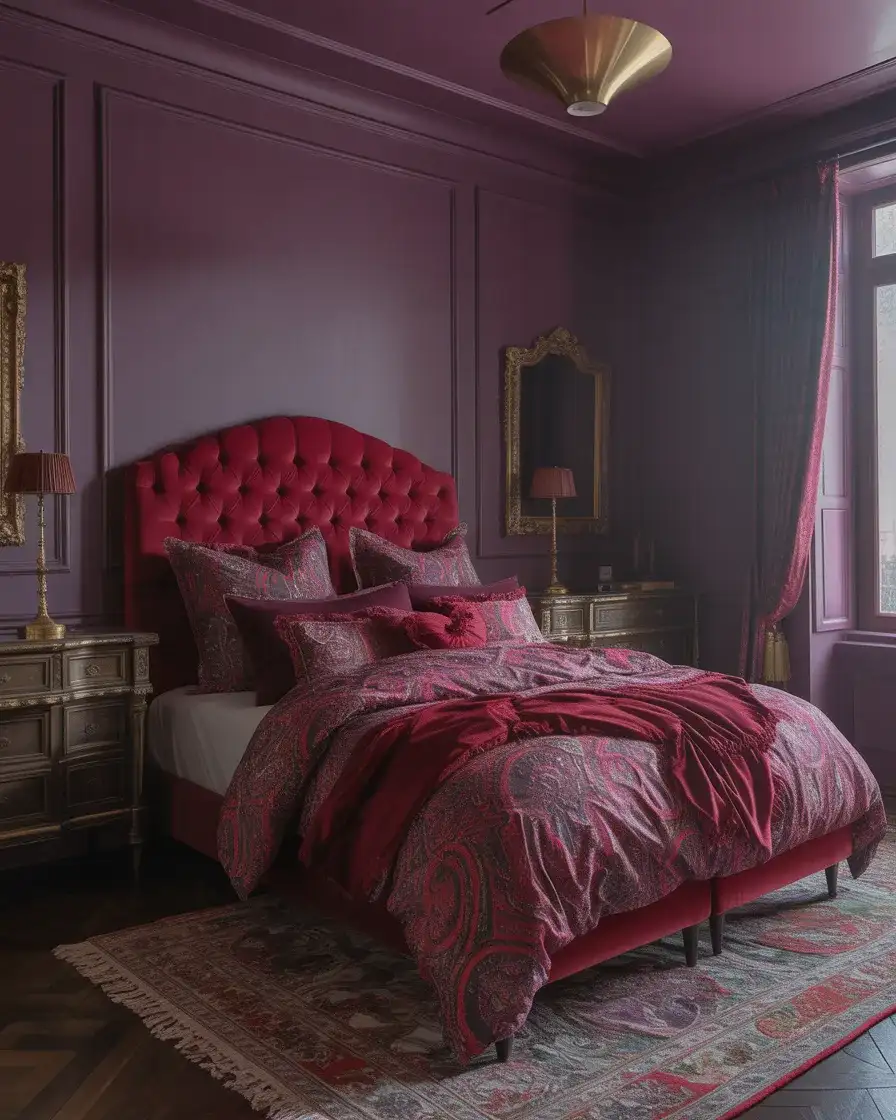
For those who want to go all the way, the red and purple bedroom is the maximalist answer. This is a dark, rich, unapologetically bold palette—claret, crimson, or wine-red meeting deep violet or grape in a room where restraint was never on the menu. Done with intention, this combination feels almost Renaissance-inspired: all warmth, depth, and saturated color that makes the room feel like something from another era entirely.
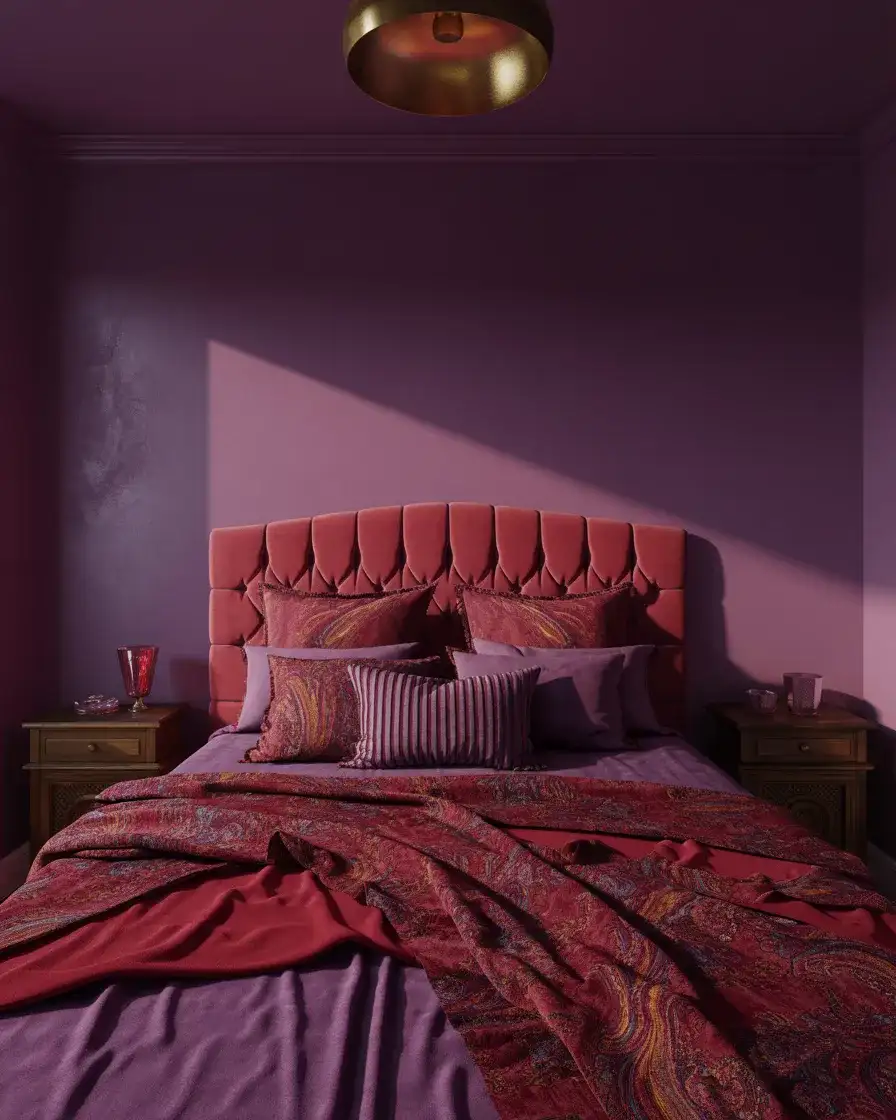
The most common mistake with red-and-purple rooms is using hues that are too similar in temperature, which results in a muddy, undefined look rather than the rich contrast you’re after. The fix is to go warmer on one and cooler on the other: a warm, slightly orange-red (think tomato or brick) paired with a cool, blue-leaning purple (violet or plum) gives you the contrast you need. Finish with gold or antique brass hardware to prevent the room from reading too dark.
19. Purple and Yellow: Unexpected Optimism
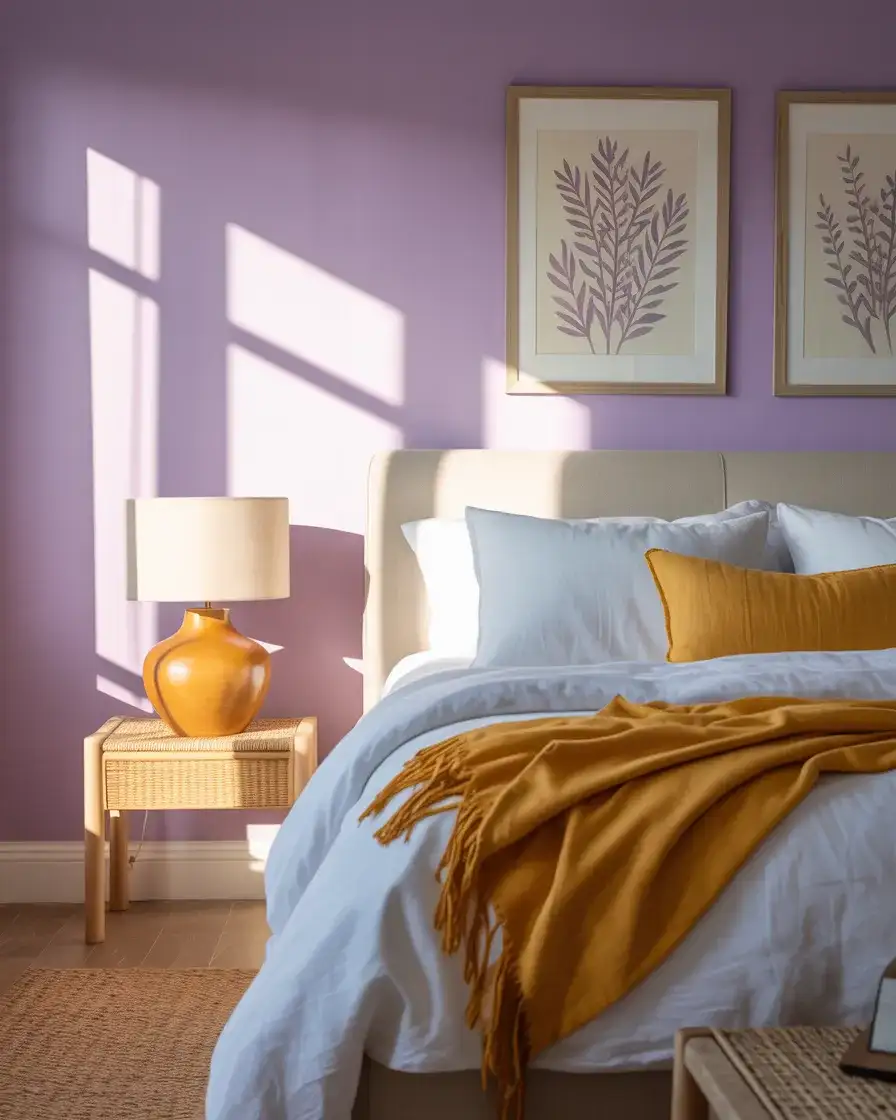
Purple and yellow are direct complements on the color wheel—and in the bedroom, this relationship produces something genuinely joyful. The key is not going full primary: you want muted, sophisticated versions of both. Think lavender walls with ochre or mustard accents—through a bedside lamp, throw pillows, or a piece of abstract art. The result is a room that feels creative, optimistic, and totally original without feeling like a kindergarten classroom.
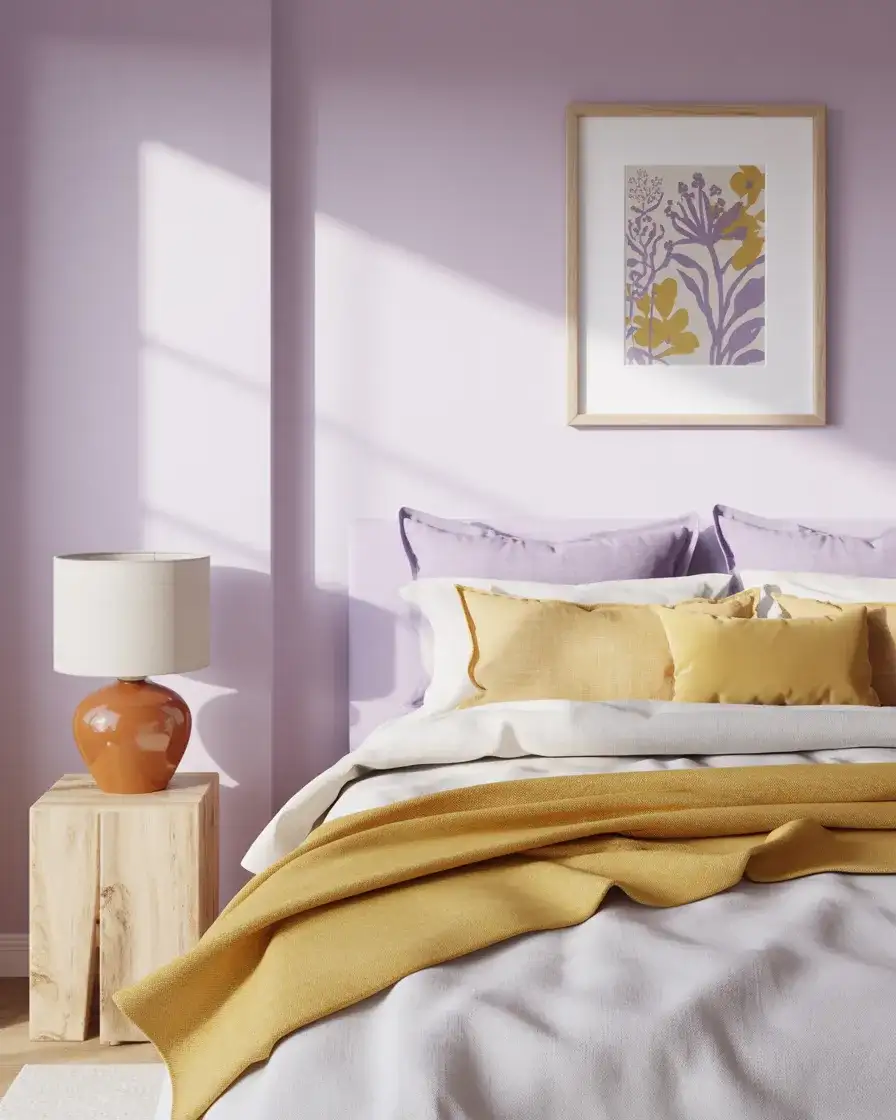
This is a combination with real staying power for creative professionals—writers, designers, and artists who work from home often gravitate toward it instinctively. There’s research suggesting that complementary color pairings (those directly opposite on the color wheel) stimulate creative thinking and positive mood in a room, making the lavender-mustard bedroom not just beautiful but potentially functional for people who work near their sleep space or need a mood lift from their environment.
20. Black, White, and Purple: Sharp Contrast
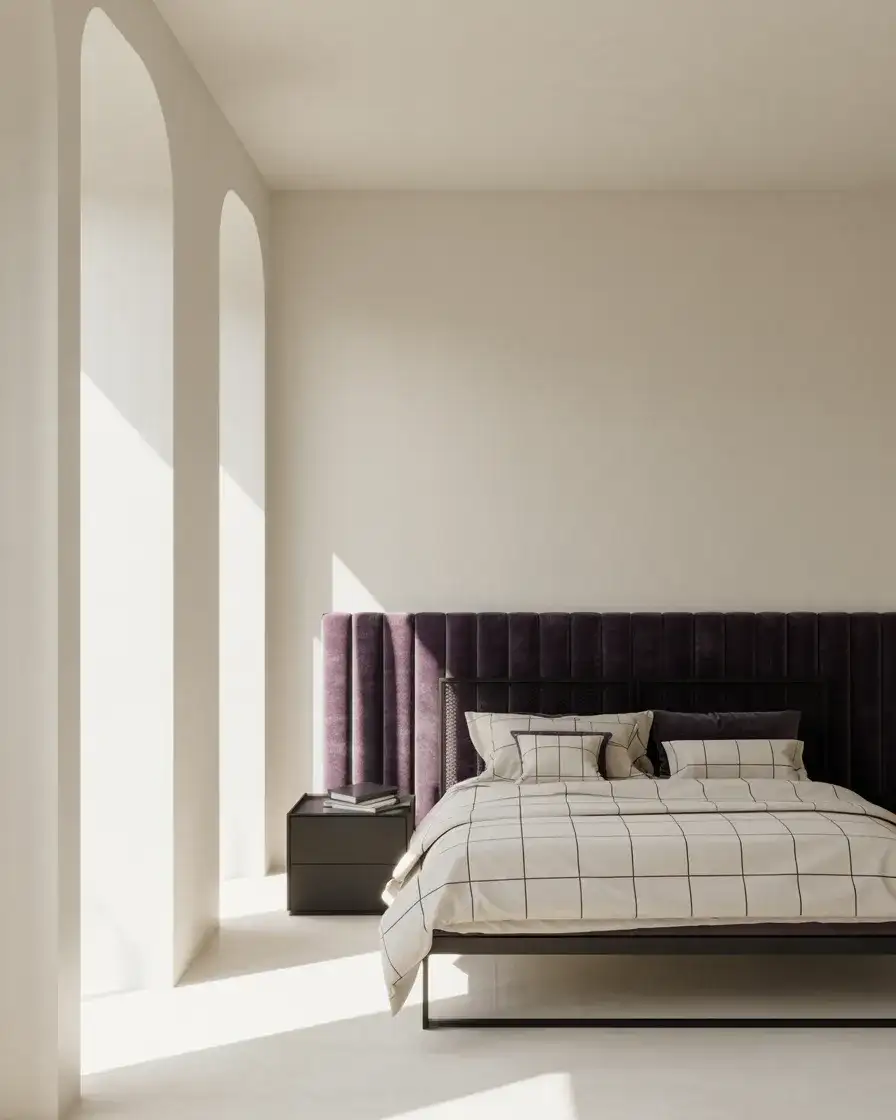
The black, white, and purple bedroom is one of the most graphically striking combinations you can build—it has the crispness of a black-and-white room with just enough purple to add warmth and personality. This works especially well when the purple comes through in a single high-impact element: a tufted velvet headboard, a painted mural-style accent wall panel, or a set of deep plum curtains against an otherwise black-and-white room scheme.
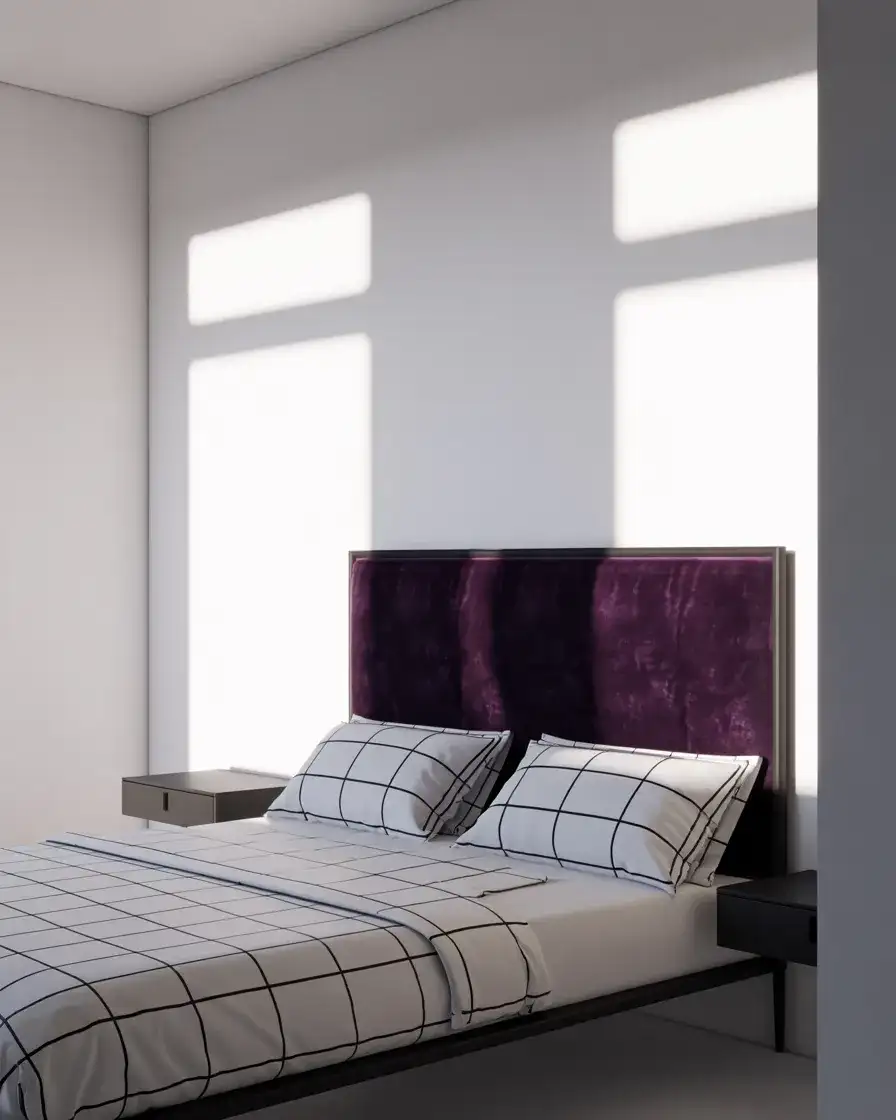
This tricolor approach is a favorite among people who love modern design but find all-white or all-black rooms too severe. The purple interrupts the graphic tension of the black-and-white palette and introduces something organic and personal. In a room that might otherwise feel cold and gallery-like, a single purple element—even just a throw blanket—shifts the entire emotional register. It’s one of the most efficient decorating moves you can make.
21. Purple and Orange: Bold and Earthy
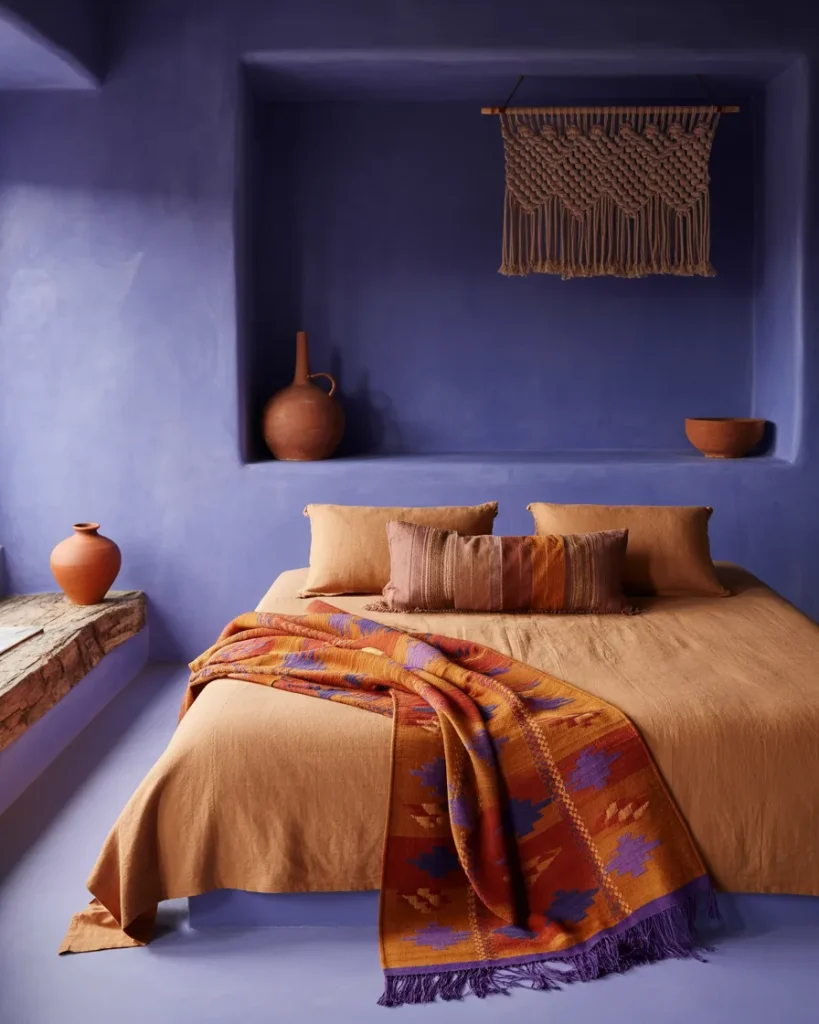
Few bedroom palettes feel as warm and grounded as orange and purple done right. This is a combination that draws from the earth—burnt sienna terracotta alongside violet and aubergine—and creates rooms that feel simultaneously bold and ancient, like they belong somewhere in the Mediterranean or the American Southwest. The aesthetic works best when both colors are slightly muted and warm-toned rather than bright and primary.
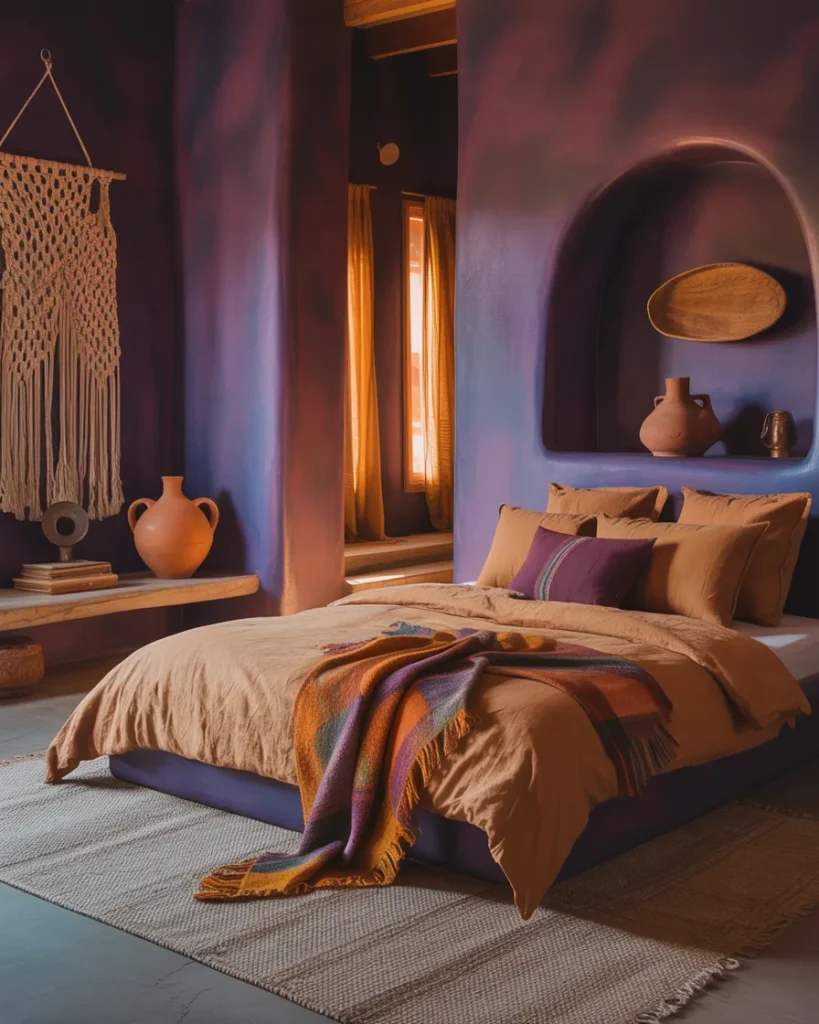
This is a palette with deep roots in American regional design—from the adobe interiors of New Mexico to the surf-culture interiors of Southern California, where warm earthen colors and unexpected jewel-toned accents have always coexisted naturally. If you’re designing a bedroom that reflects a sense of place or a connection to the land, this combination is worth serious consideration. The orange grounds the purple, and the purple elevates the orange—neither color overwhelms the other when proportions are handled thoughtfully.
22. Purple Ceiling Moment: Overlooked and Transformative
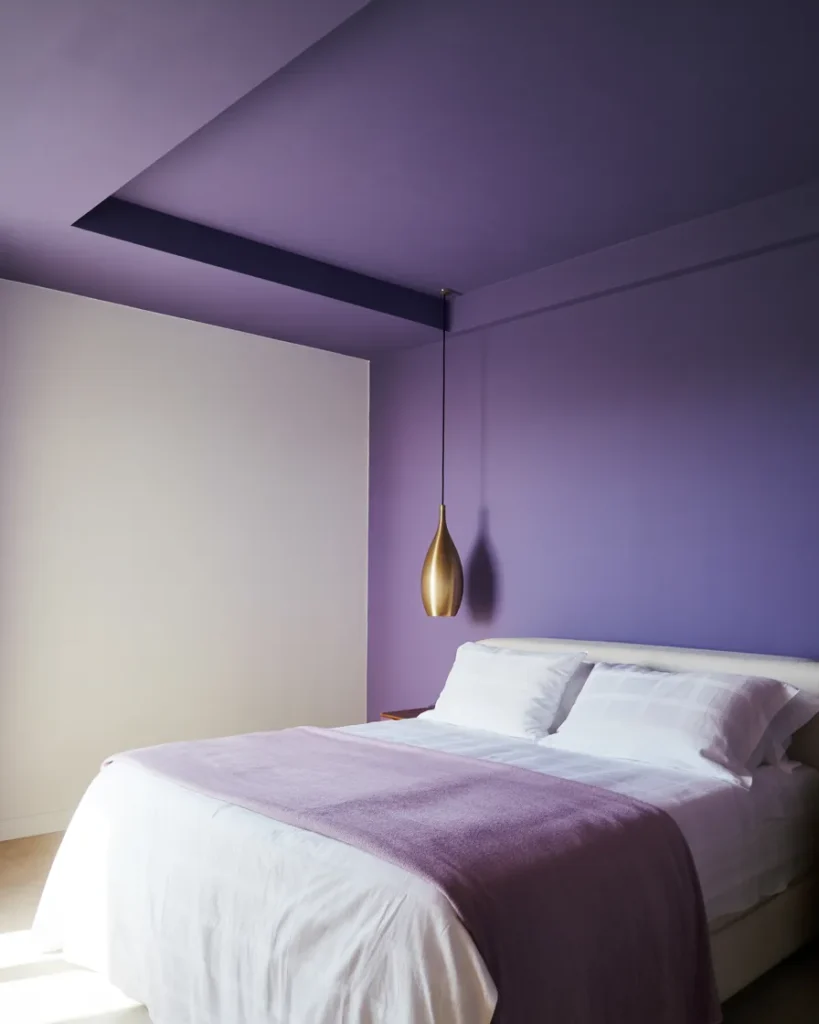
The painted ceiling is one of the most moody and transformative bedroom moves of 2026 — and purple might be its ultimate expression. While everyone else is painting their walls, you paint the ceiling a deep lavender, a soft violet, or a dramatic plum, and keep the walls white or cream. Suddenly, the room has an intimate quality it didn’t have before: the ceiling lowers visually, the space feels enclosed and personal, and the purple cast gives the room a quality of light that changes at every hour of the day.
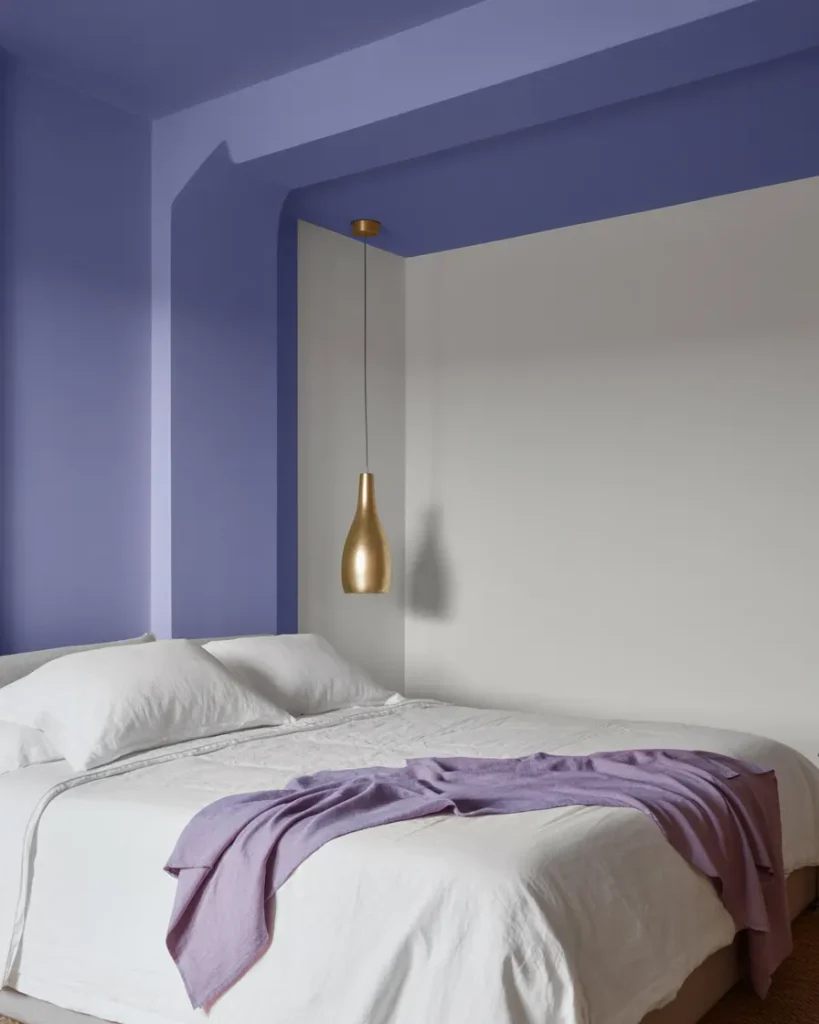
This is one of the easiest high-impact upgrades you can make to a bedroom—paint is cheap, ceilings require less prep than walls, and the effect is genuinely stunning. Interior designers have called the fifth wall one of the most overlooked surfaces in residential design, and it’s no coincidence that the ceiling trend has been accelerating on Pinterest and Instagram. If you’ve already explored what purple can do on your walls and want the next frontier, look up. The answer has been right there the whole time.
Conclusion
Purple bedrooms are endlessly personal—and that’s exactly what makes them so enduring as a design choice. Whether you went straight for the dark eggplant suite or you’re still warming up to the idea of pastel lavender, we’d love to hear which of these 22 ideas caught your eye most. Drop your thoughts in the comments below, share which palette you’re planning to try, or tell us what’s holding you back—the purple bedroom community here is full of people who’ve been right where you are and made the leap. Your dream bedroom is closer than you think.