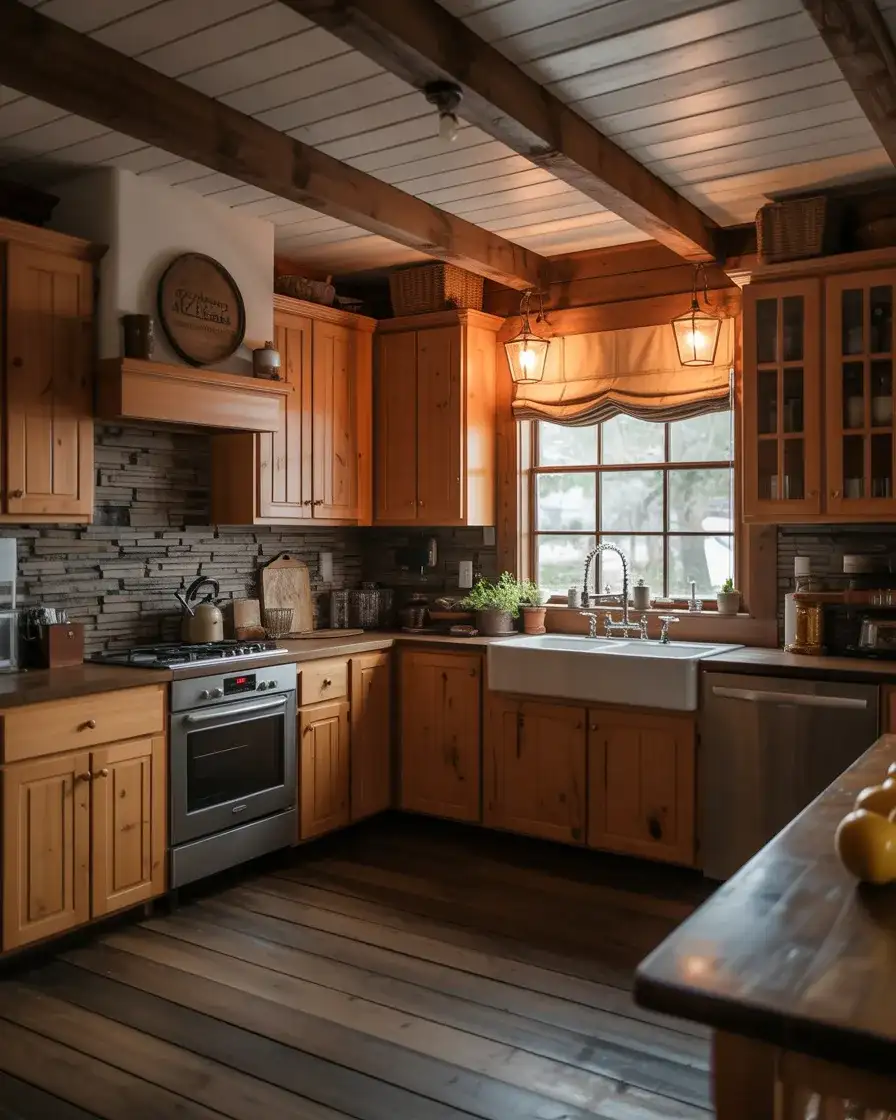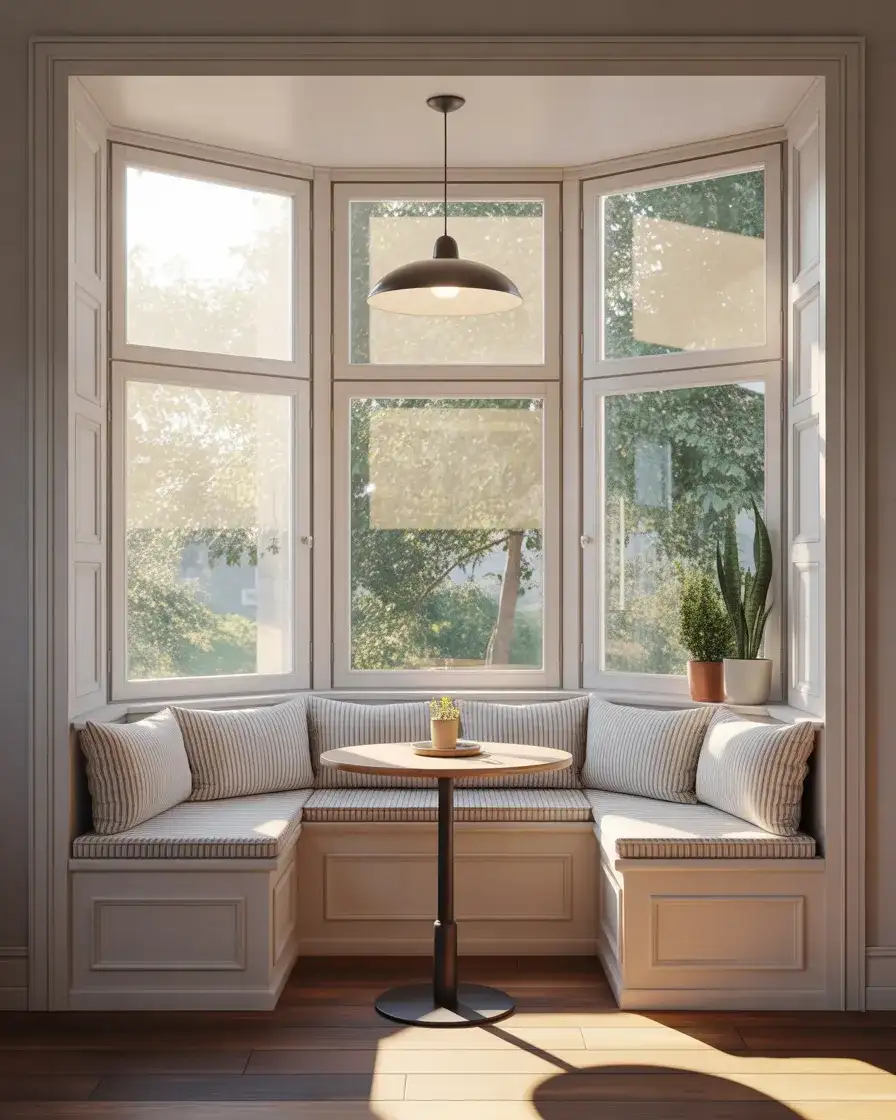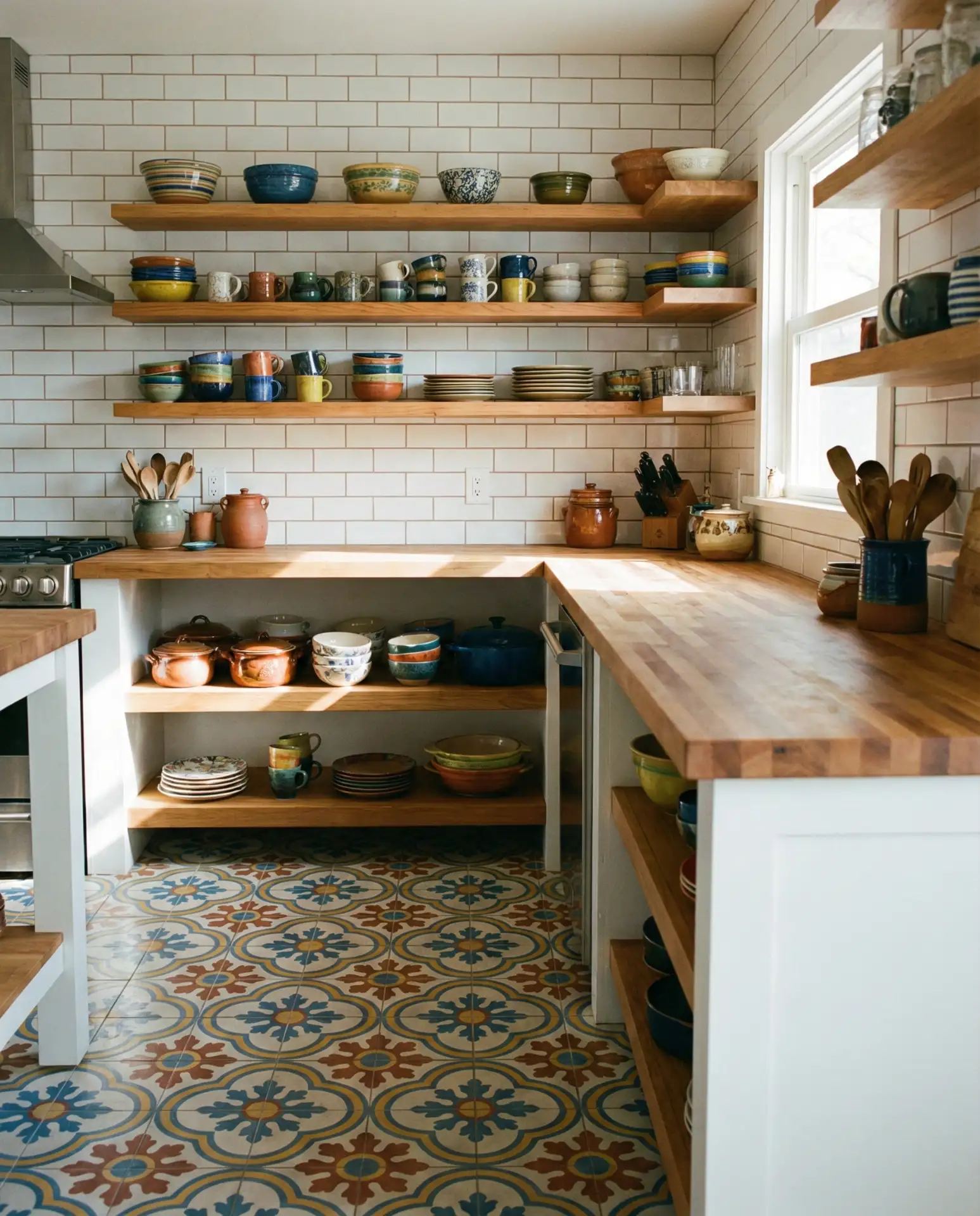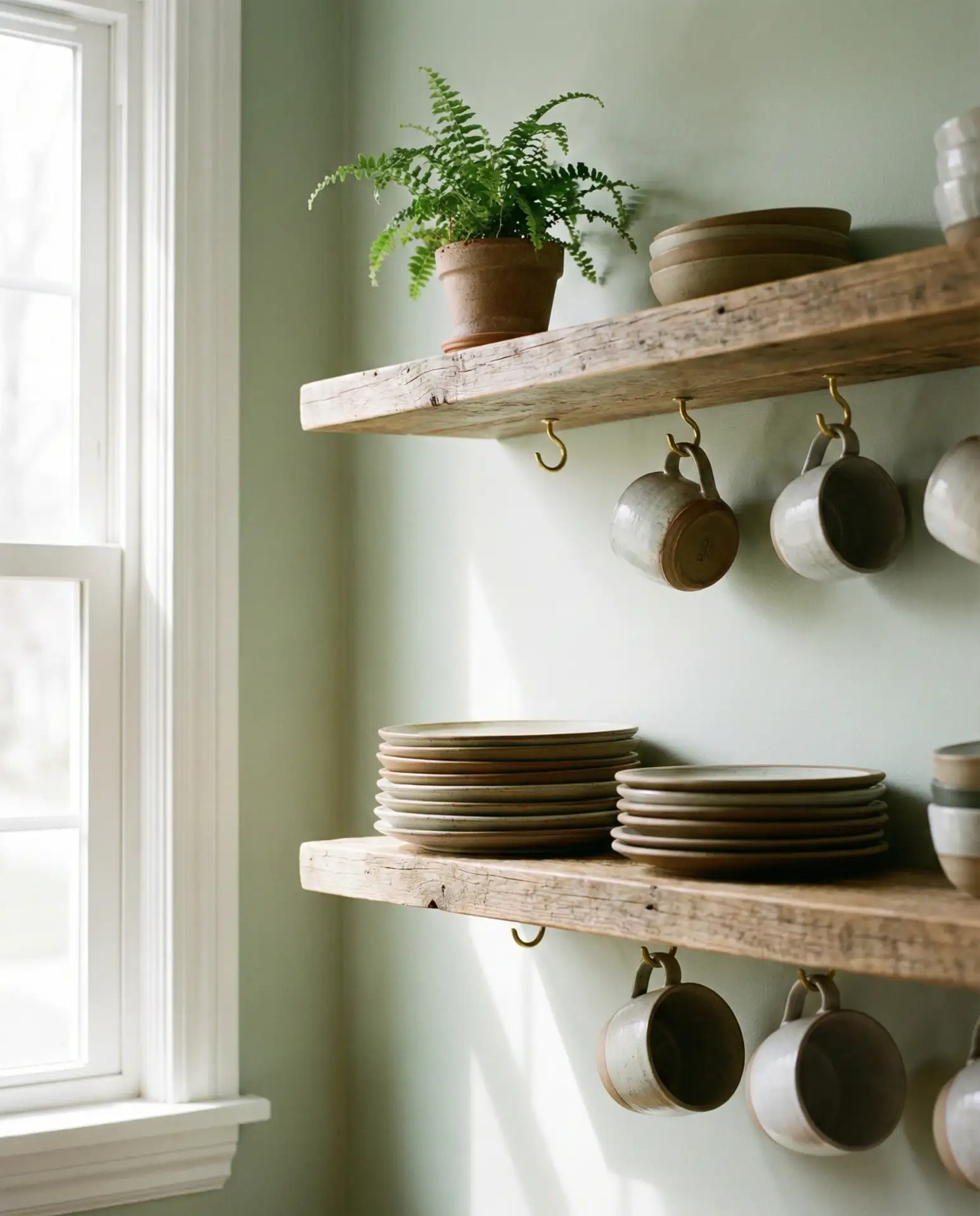
Rustic kitchens are having a major moment in 2026, blending timeless charm with contemporary functionality in ways that feel both grounded and inspiring. American homeowners are increasingly drawn to the warmth of natural materials, the character of vintage details, and the inviting atmosphere that only a well-designed rustic space can deliver. Pinterest searches for rustic kitchen ideas have surged as people seek refuge from overly sterile modern trends, craving spaces that tell a story and feel genuinely lived-in. Whether you’re renovating a farmhouse in the countryside or adding rustic touches to a suburban home, this collection of ideas will guide you through the most compelling design directions for the year ahead. From moody color palettes to innovative storage solutions, these concepts celebrate the beauty of imperfection and the joy of cooking in a space that feels like home.
1. Dark Green Island as the Kitchen Anchor
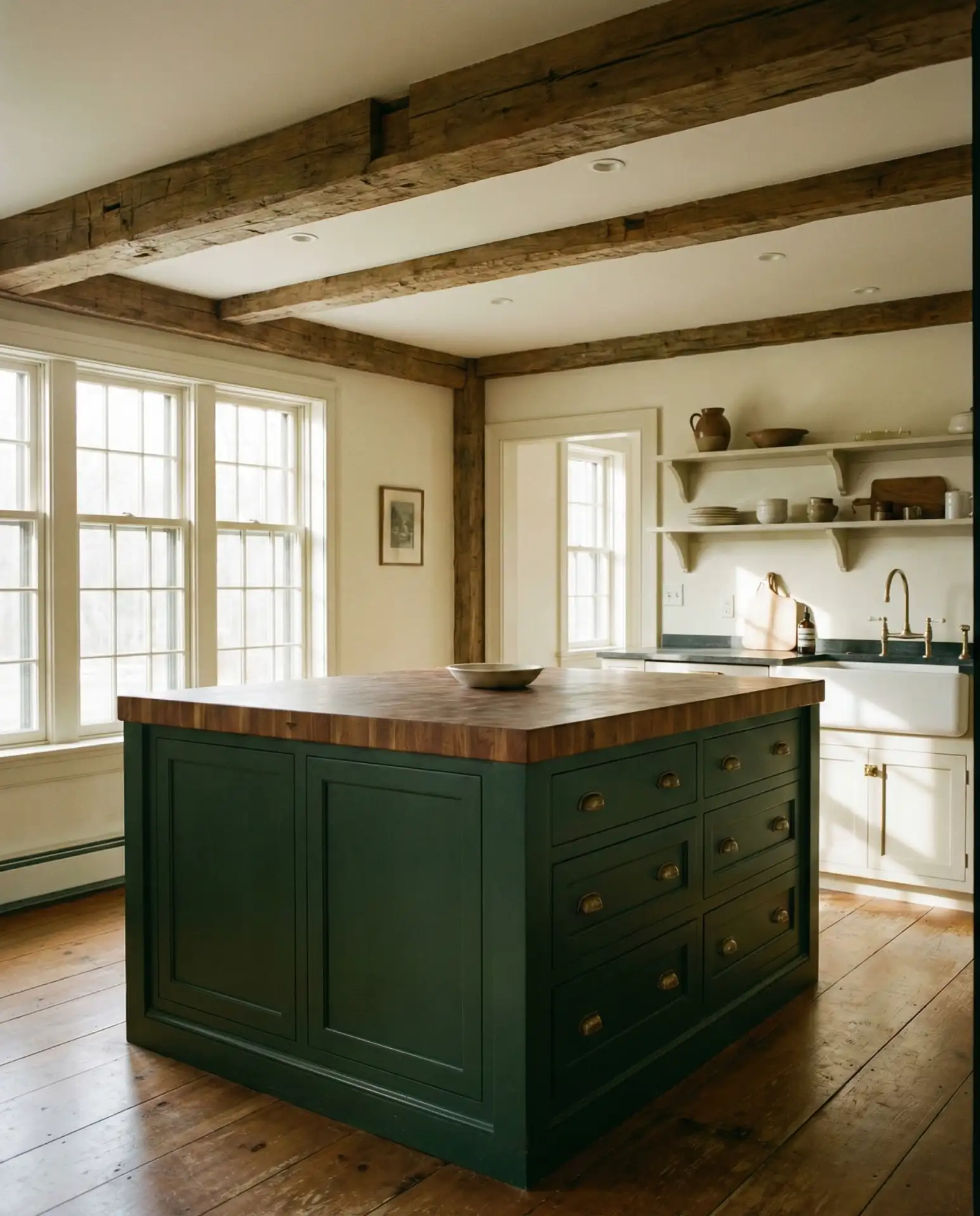
A dark green island has become the defining feature in many 2026 rustic kitchens, offering a sophisticated alternative to traditional wood tones while maintaining that earthy, grounded aesthetic. This new approach to farmhouse-style cabinets pairs beautifully with natural wood countertops and open shelves, creating a layered look that feels both curated and organic. The deep green acts as a visual anchor in open-concept spaces, drawing the eye without overwhelming the room, and it complements everything from brass hardware to butcher block surfaces with remarkable versatility. 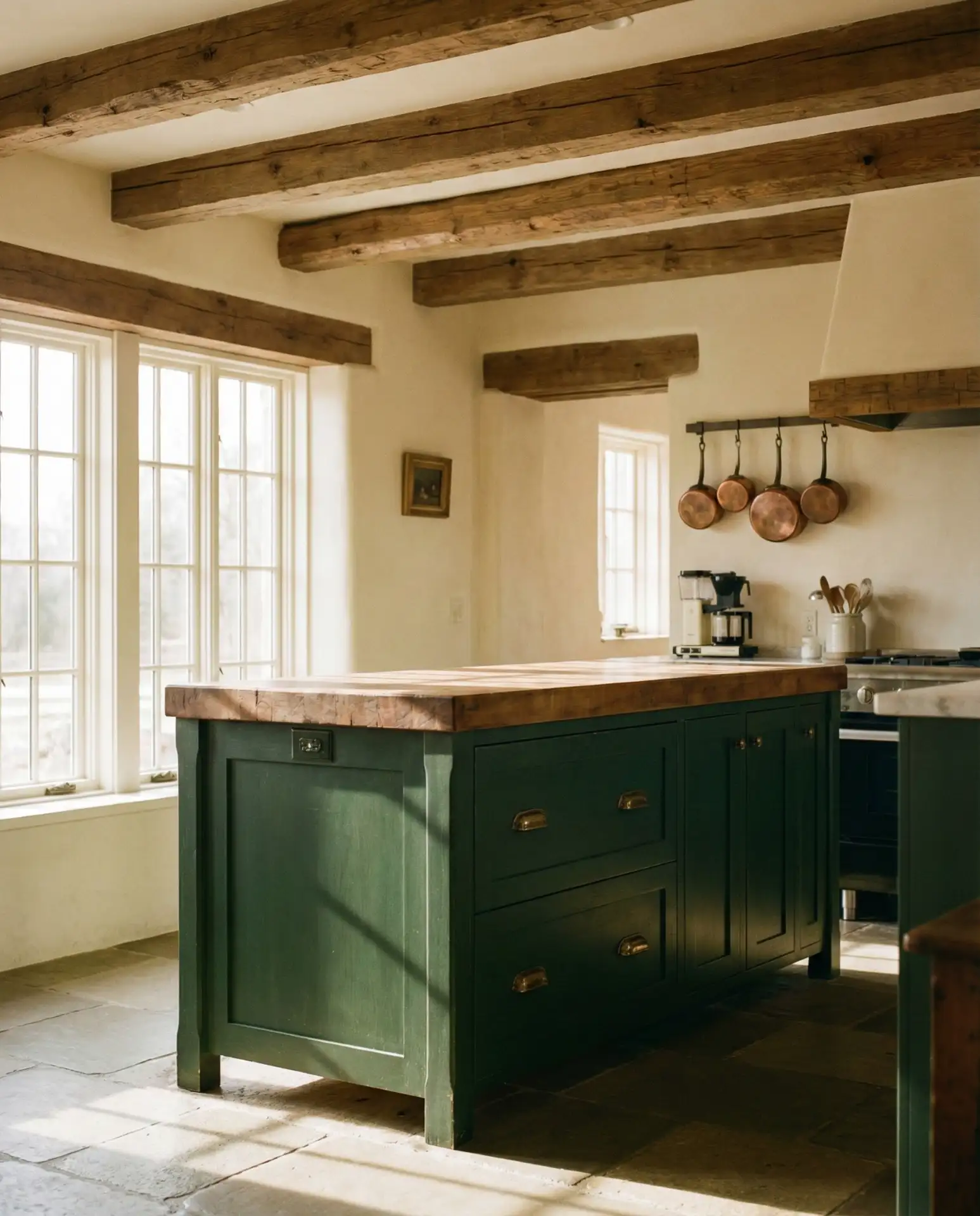
In the Pacific Northwest and New England, where forest landscapes dominate the view, homeowners report that dark green islands create a seamless connection between indoor and outdoor spaces. The color works particularly well in kitchens with abundant natural light, where it shifts throughout the day from nearly black in the early morning to a rich emerald by afternoon. Common mistakes include pairing it with too many competing colors—stick to neutrals and natural wood tones to let the island be the star.
2. Vintage Floating Shelves with Intentional Display
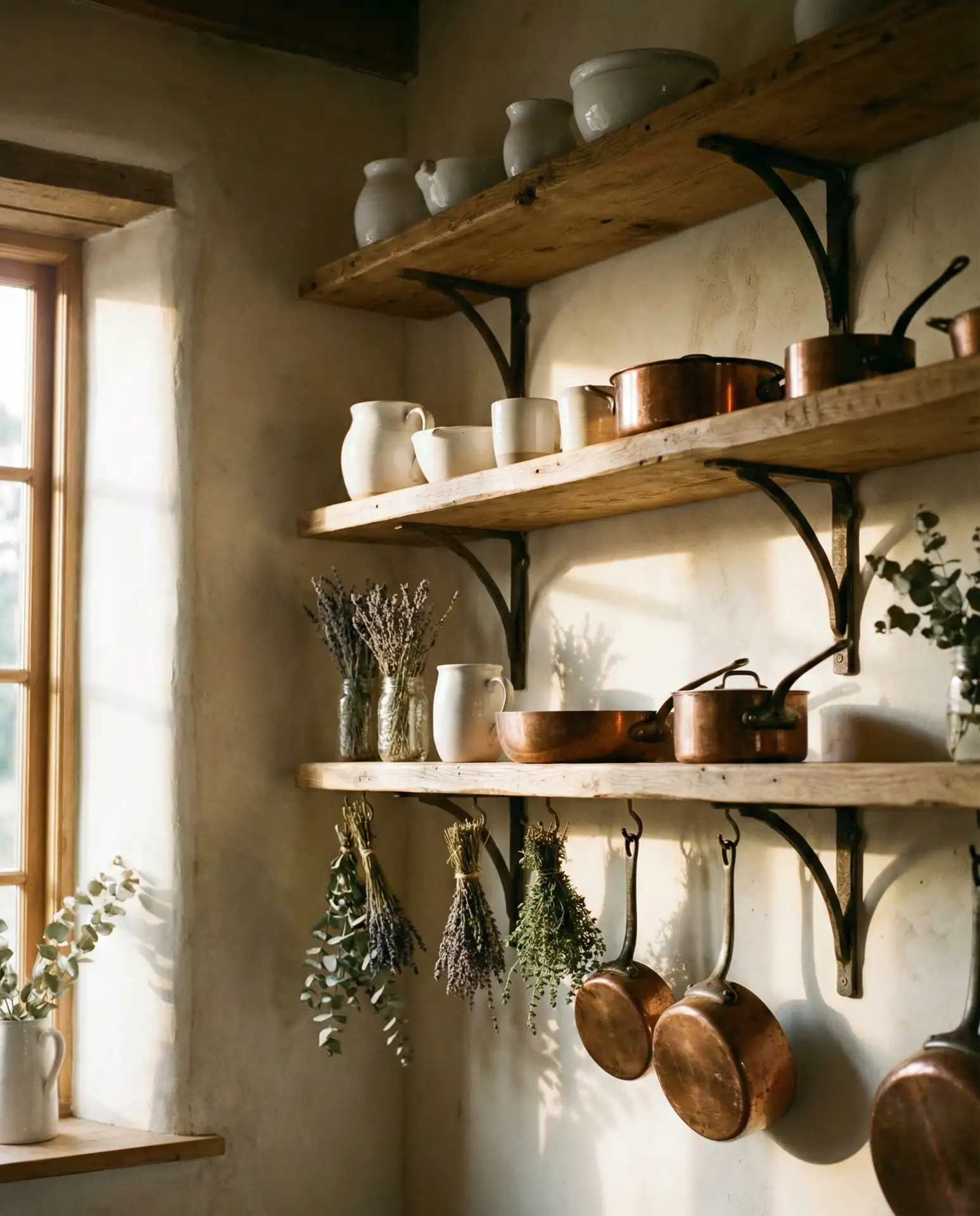
Open shelves remain a cornerstone of rustic kitchen design in 2026, but the approach has evolved beyond simple functionality into carefully curated displays that balance practicality with aesthetic appeal. Vintage wooden brackets and reclaimed barn wood create shelving that feels like it’s been part of the home for generations, while the items displayed—heirloom dishes, pottery collections, fresh herbs in terracotta pots—tell the story of how the kitchen is actually used. This new interpretation prioritizes negative space, resisting the urge to overcrowd every inch and instead allowing each piece to breathe. 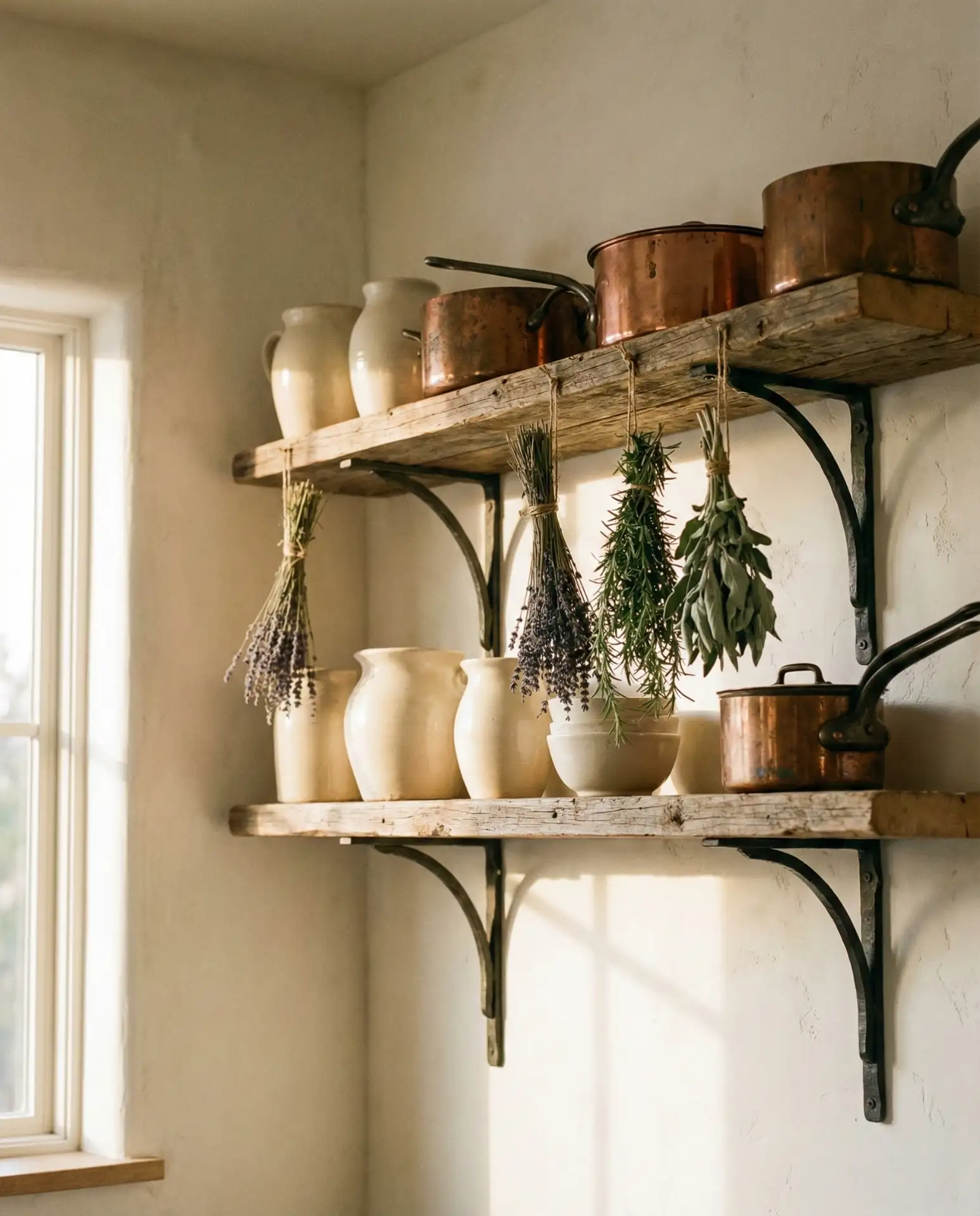
A practical insight worth noting: the ideal depth for kitchen floating shelves is 10-12 inches, which accommodates standard dinner plates while preventing the shelves from jutting too far into the room. Many homeowners make the mistake of installing shelves that are too shallow for everyday dishes or too deep, creating wasted space that collects dust. The sweet spot allows you to store what you use daily while maintaining clean sightlines across the kitchen.
3. Moody Blue Cabinets with Brass Accents
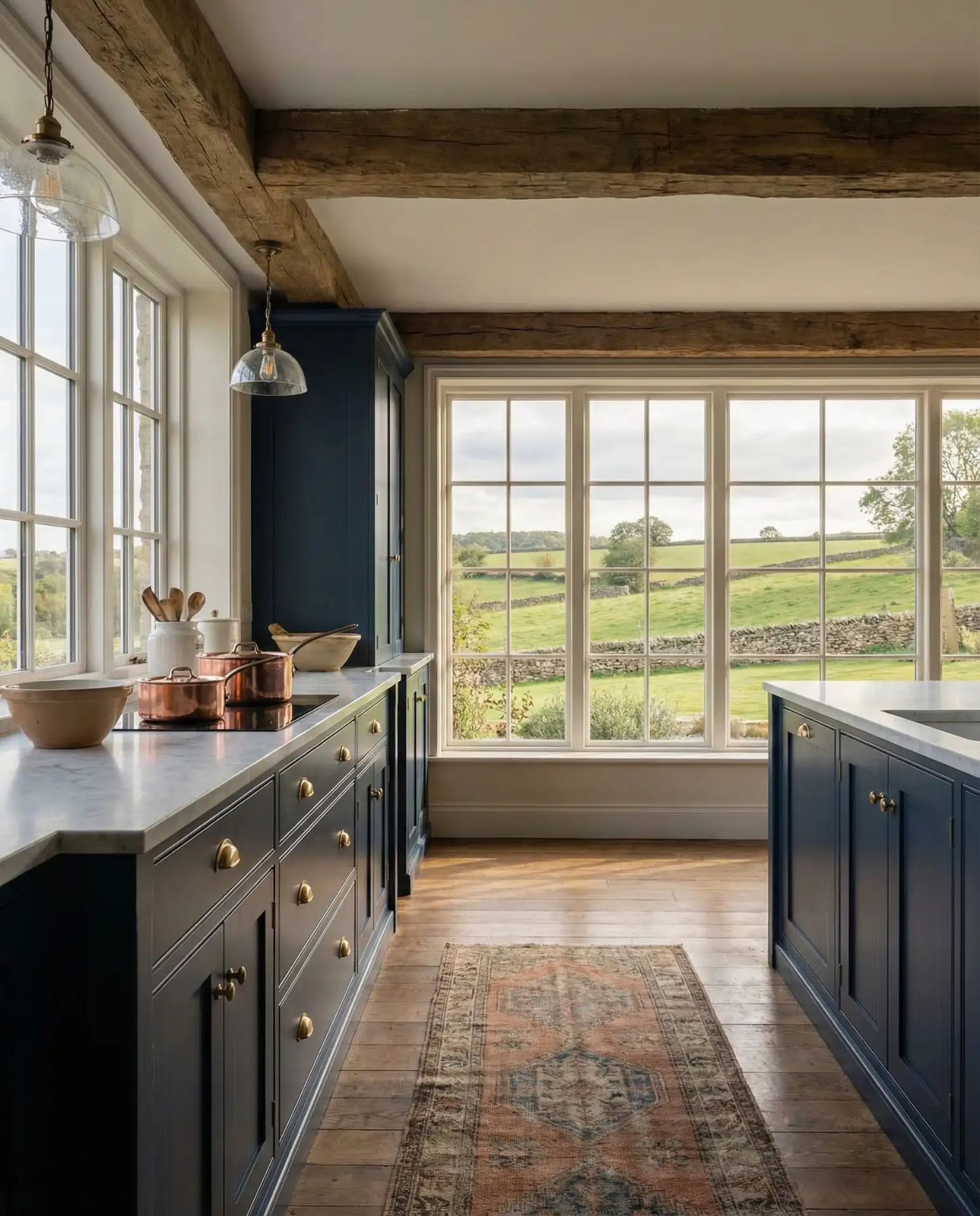
Moody blue cabinetry has emerged as a bold choice for homeowners who want rustic warmth with a touch of drama, particularly when paired with unlacquered brass hardware that develops a beautiful patina over time. This cabinet idea direction works exceptionally well in kitchens with high ceilings and generous natural light, where the deep hue can be properly appreciated without making the space feel cave-like. The color reads as both traditional and contemporary, bridging the gap between farmhouse charm and modern sophistication in a way that feels uniquely suited to 2026 design sensibilities. 
Where it works best: kitchens in converted barns, historic homes with original architectural details, and new-build farmhouses where owners want instant character. The moody blue provides sufficient contrast against natural wood floors and white subway tile backsplashes without requiring extensive coordination. It’s a color that rewards commitment—half-measures with lighter blues won’t achieve the same impact.
4. Industrial Island with Seating for Real Gatherings
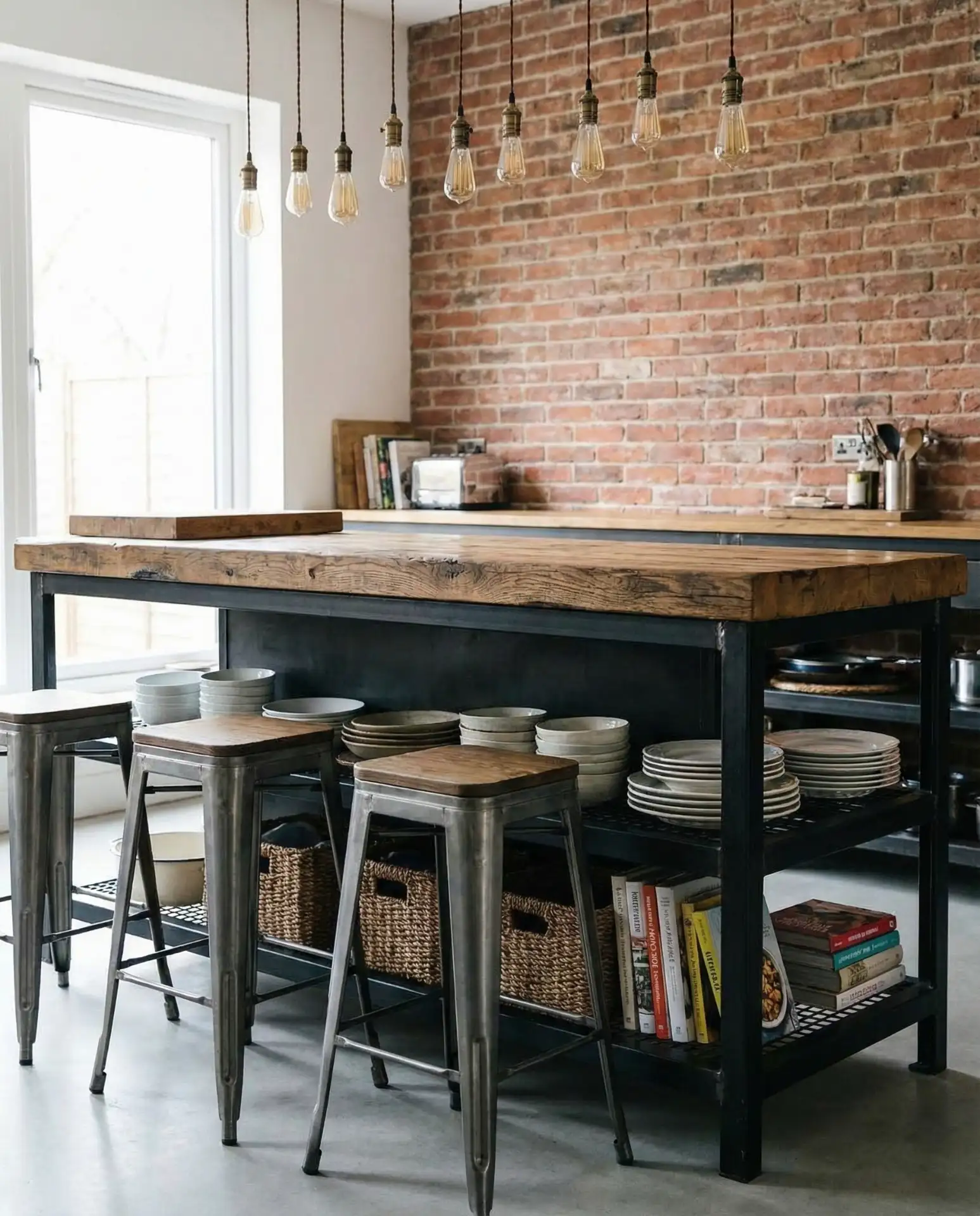
The fusion of industrial elements with rustic design continues to gain traction, particularly in islands with seating configurations that prioritize genuine hospitality over mere aesthetics. Metal bases with reclaimed wood tops, exposed rivets, and wheels that actually function create islands that feel like they could have been salvaged from an old factory, yet they’re sized and finished for modern family life. This island inspiration acknowledges that the kitchen island has become America’s de facto gathering spot, where homework happens alongside meal prep and conversations unfold over coffee. 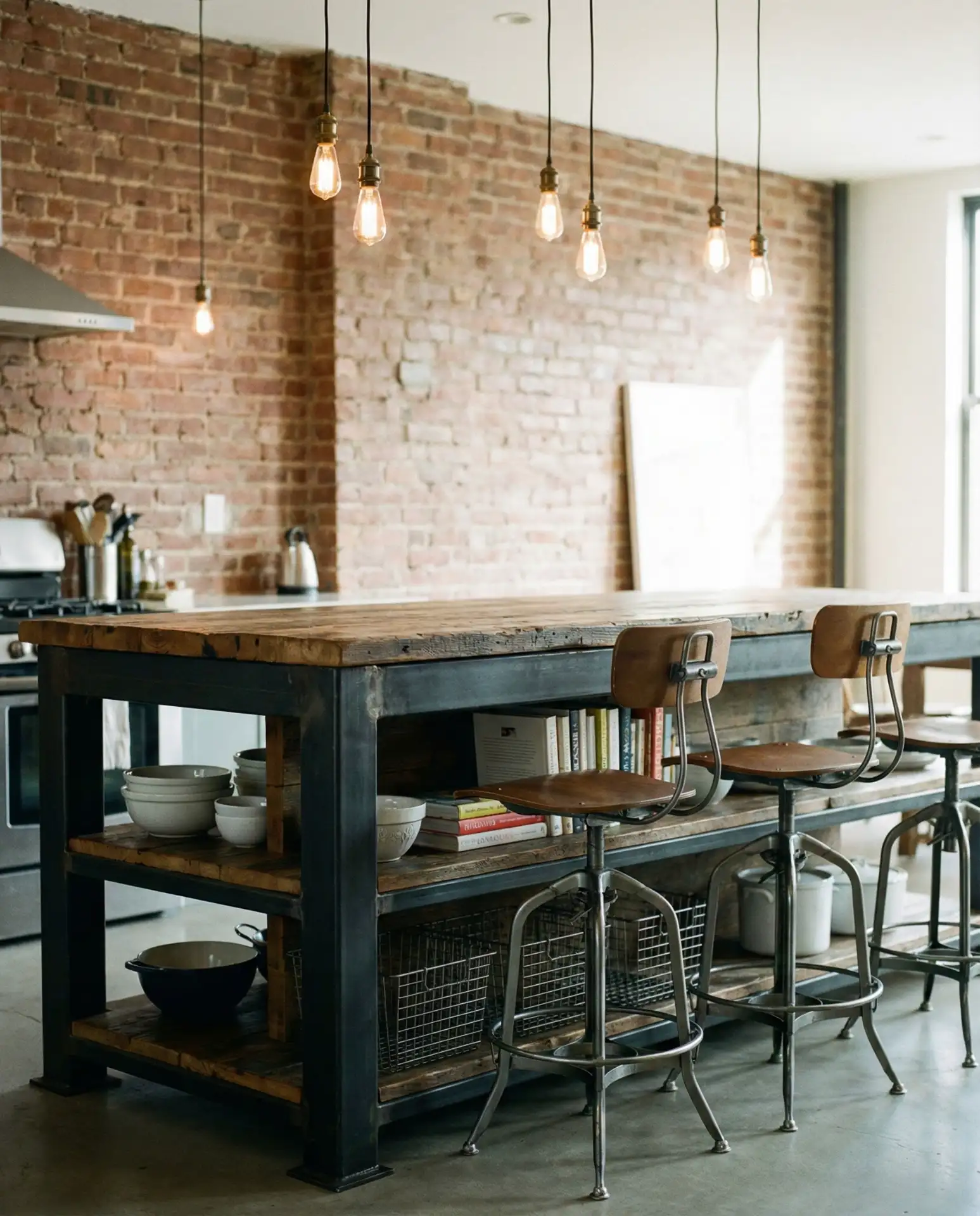
Real homeowner behavior shows that islands with seating get used far more when they’re positioned with at least 36 inches of clearance on the seating side and when the overhang is a minimum of 12 inches deep. Many beautiful islands fail functionally because chairs won’t fit comfortably or because knees hit the base. The industrial aesthetic actually works in your favor here, as exposed metal frames naturally create more legroom than traditional enclosed cabinetry.
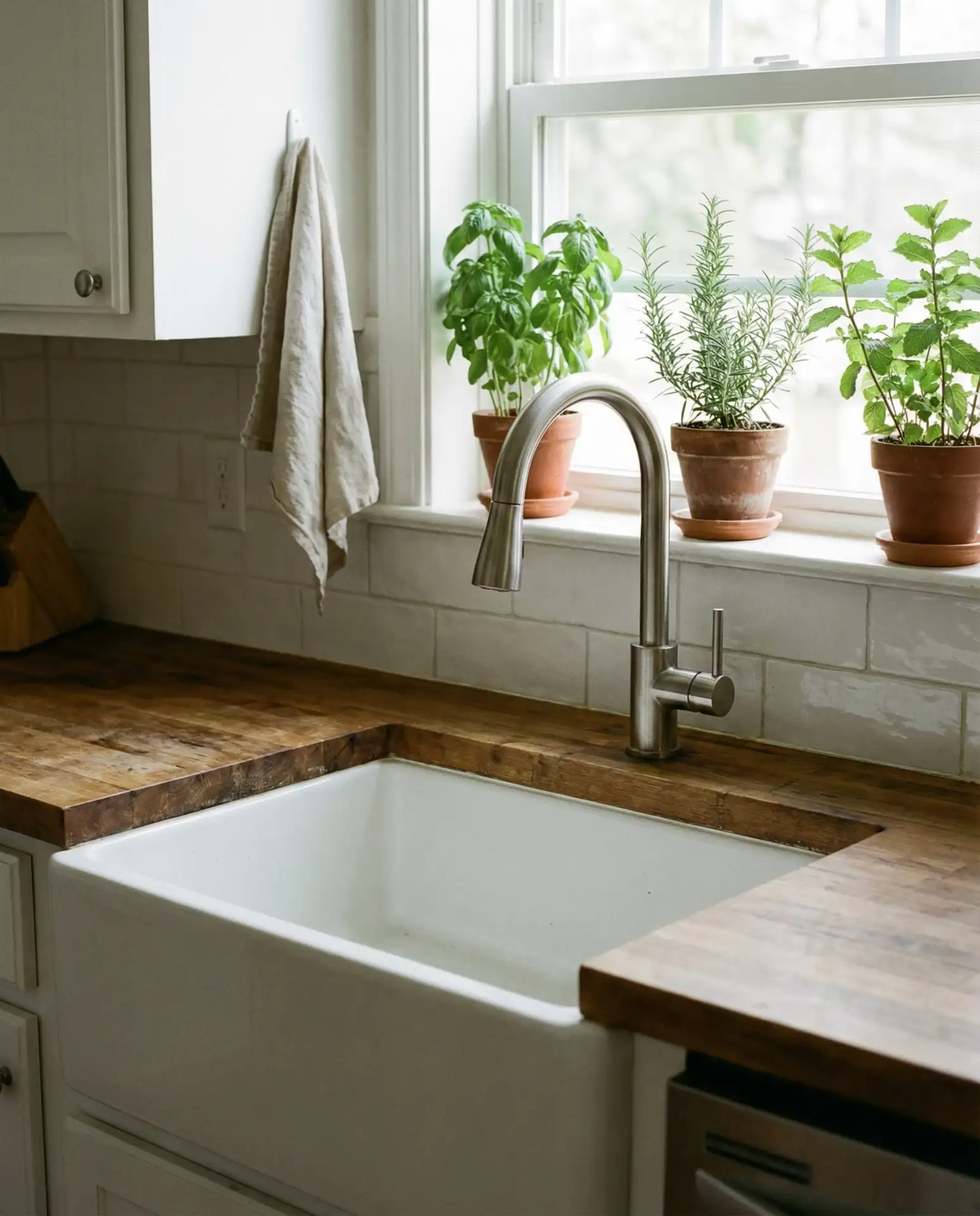
5. White Farmhouse Sink as the Timeless Focal Point
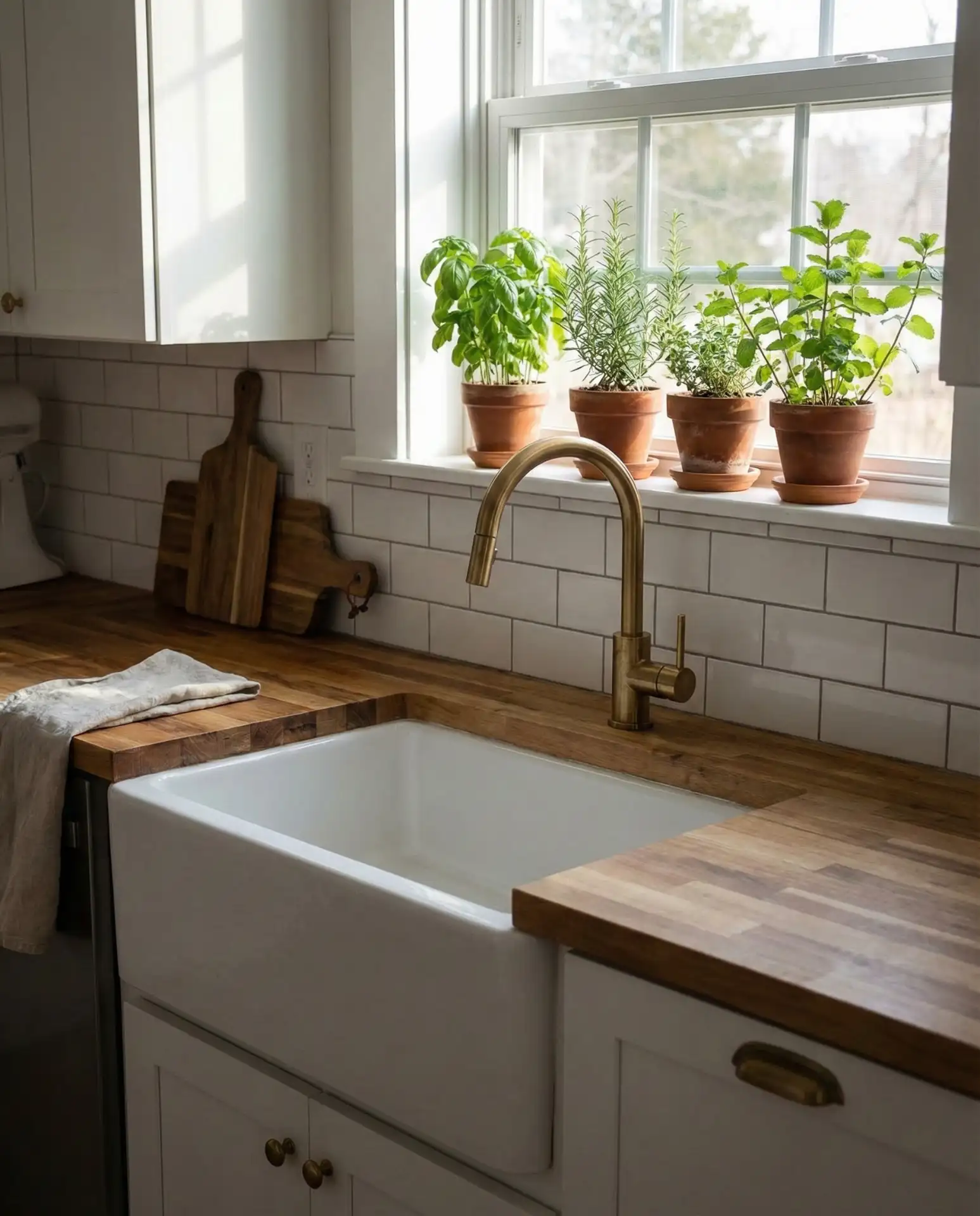
The white farmhouse sink remains an enduring symbol of rustic kitchen design, valued not just for its classic good looks but for its genuine practicality in handling everything from oversized roasting pans to muddy garden vegetables. In 2026, the trend leans toward extra-deep basins with subtle apron front details rather than heavily ornate versions, creating a cleaner silhouette that works equally well in traditional and transitional spaces. This aesthetic choice pairs beautifully with virtually any countertop material, from butcher block to soapstone, proving its versatility across different budget ranges.
Budget-conscious renovators should know that quality farmhouse sinks range from $400 for cast iron options to $1,200+ for handcrafted fireclay versions. The investment matters because cheaper alternatives can chip, stain, or show wear within just a few years of daily use. Installation costs vary significantly too—retrofitting a farmhouse sink into existing cabinetry can run $500-800 in labor alone, as it requires modifying the cabinet base to support the weight and accommodate the apron front.
6. French-Inspired Open Pantry Design
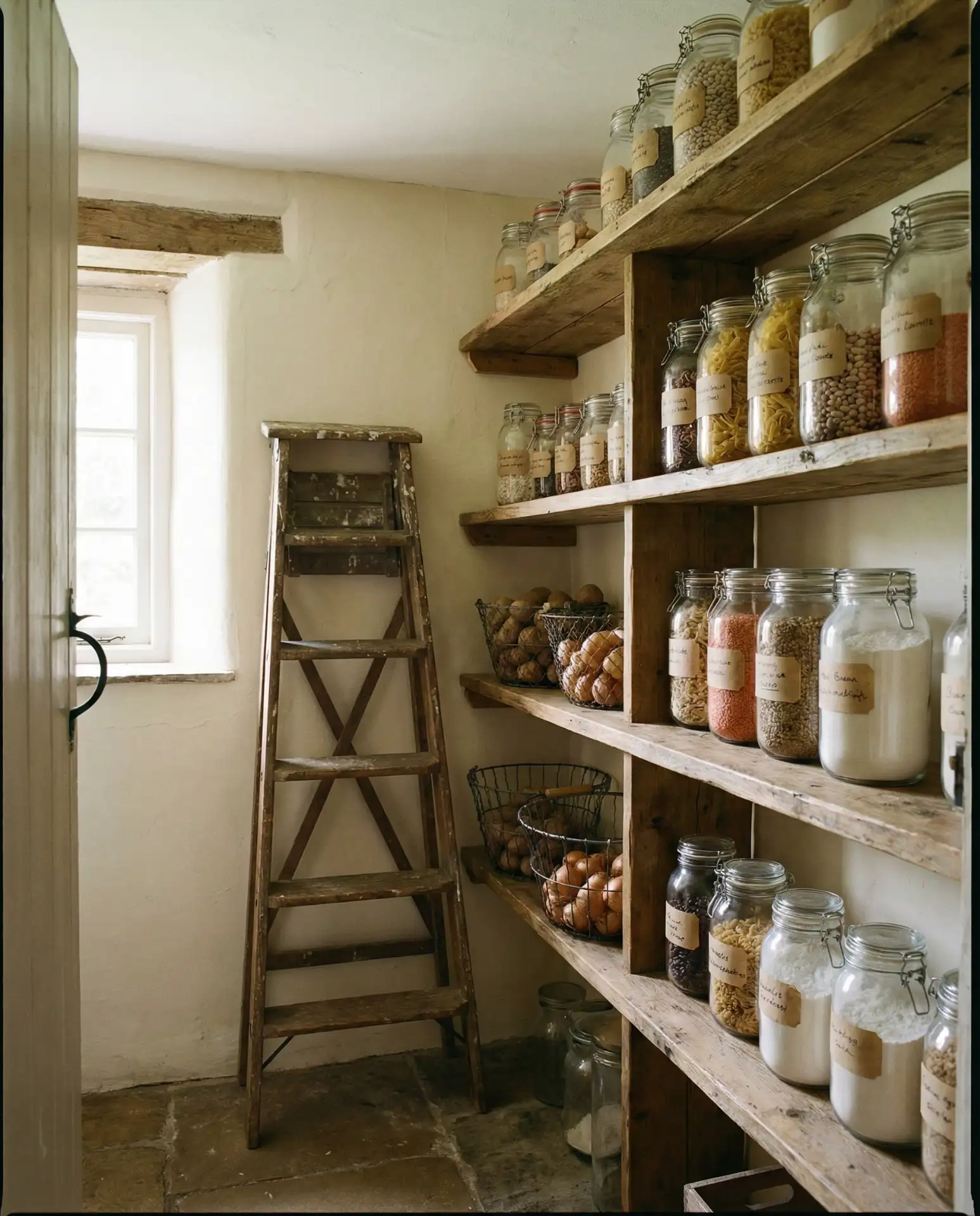
The French approach to pantry storage—with its emphasis on display, accessibility, and beautiful containers—has found eager adoption in American rustic kitchens where practicality meets romance. Glass jars filled with grains and pulses, wire baskets holding fresh produce, and labeled ceramic canisters create a working pantry that’s also a visual feast, encouraging home cooks to actually see and use their ingredients rather than letting them languish in dark cupboards. This new interpretation often includes a mix of open shelving and closed cabinetry, acknowledging that not everything deserves to be on display. 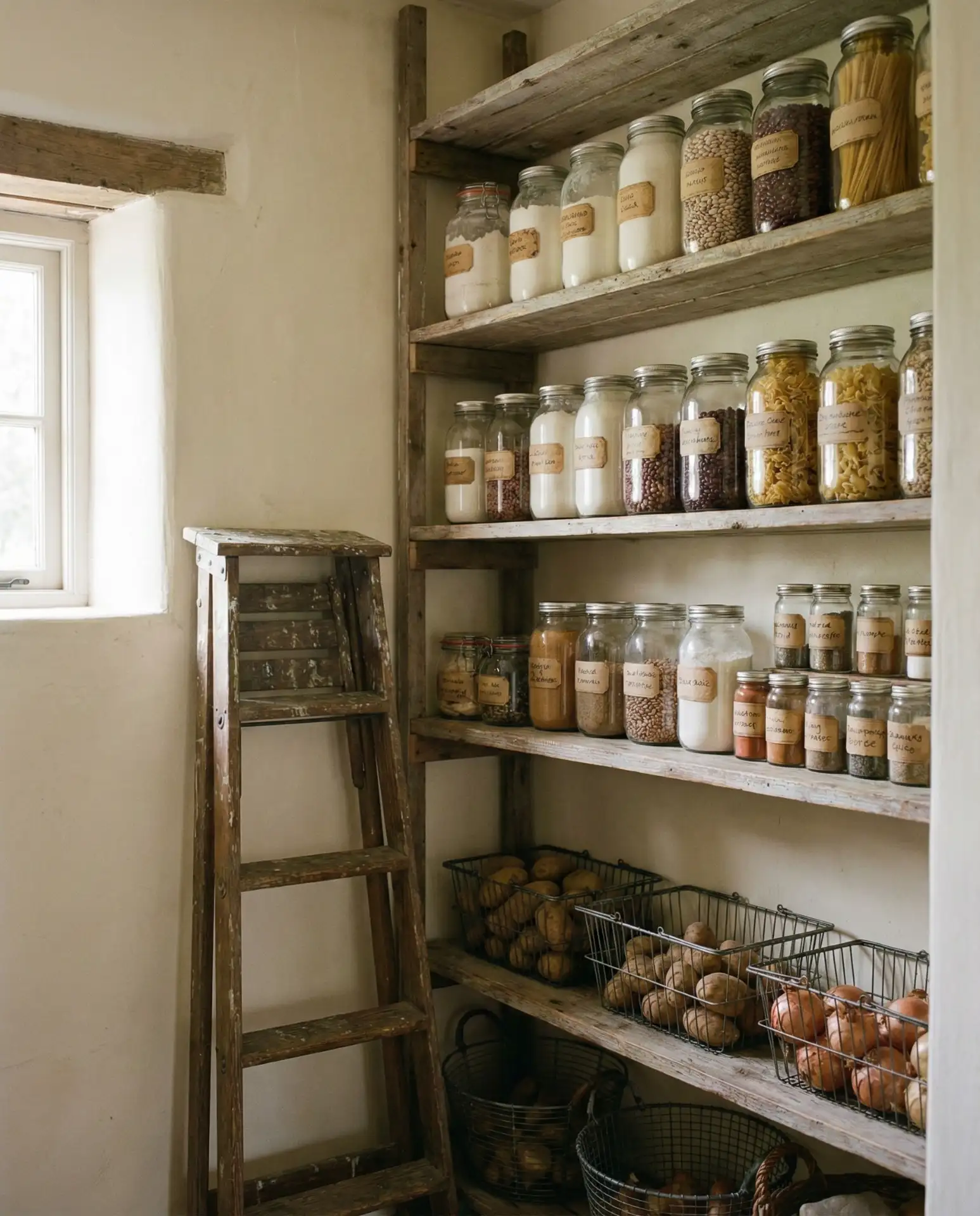
In the South and Midwest, where home canning and preserving remain popular, these French-inspired pantries serve dual purposes as both everyday storage and display space for seasonal bounty. A colleague who renovated her Tennessee farmhouse noted that guests consistently gravitate to the pantry during parties, drawn by the abundance and order it represents. The key is maintaining it—an open pantry requires more discipline than closed cabinets, which can become a catch-all for chaos.
7. Reclaimed Wood Countertops with Character
Reclaimed wood countertops bring unmatched warmth and history to rustic kitchens, with each plank telling a story through knots, nail holes, and variations in grain that manufactured materials simply cannot replicate. This new embrace of imperfection extends beyond mere aesthetics—many homeowners value knowing their counters were once barn siding from Virginia or warehouse flooring from Michigan, creating a tangible connection to American craft heritage. The patina that develops with use only enhances the beauty, as cutting marks and water stains become part of the counter’s evolving narrative. 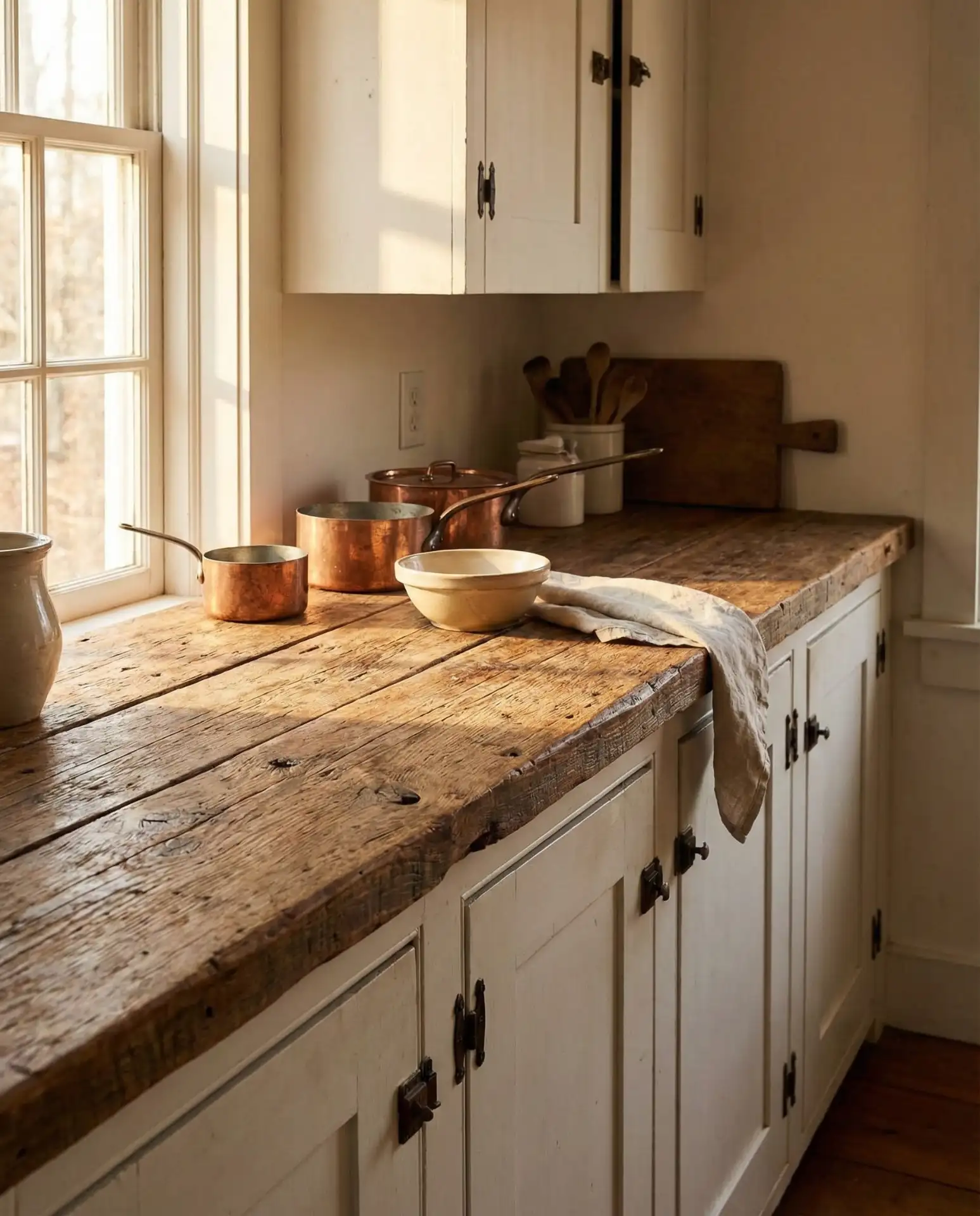
Expert woodworkers emphasize proper sealing as non-negotiable for kitchen countertops—food-safe mineral oil followed by a hard wax finish provides protection while maintaining the wood’s natural feel. The mistake many make is treating reclaimed wood counters like granite; they require monthly maintenance and won’t stand up to prolonged moisture exposure near sinks. Smart design places reclaimed wood in prep zones while using more durable materials directly around water sources.
8. Vintage-Style Curtains That Actually Function
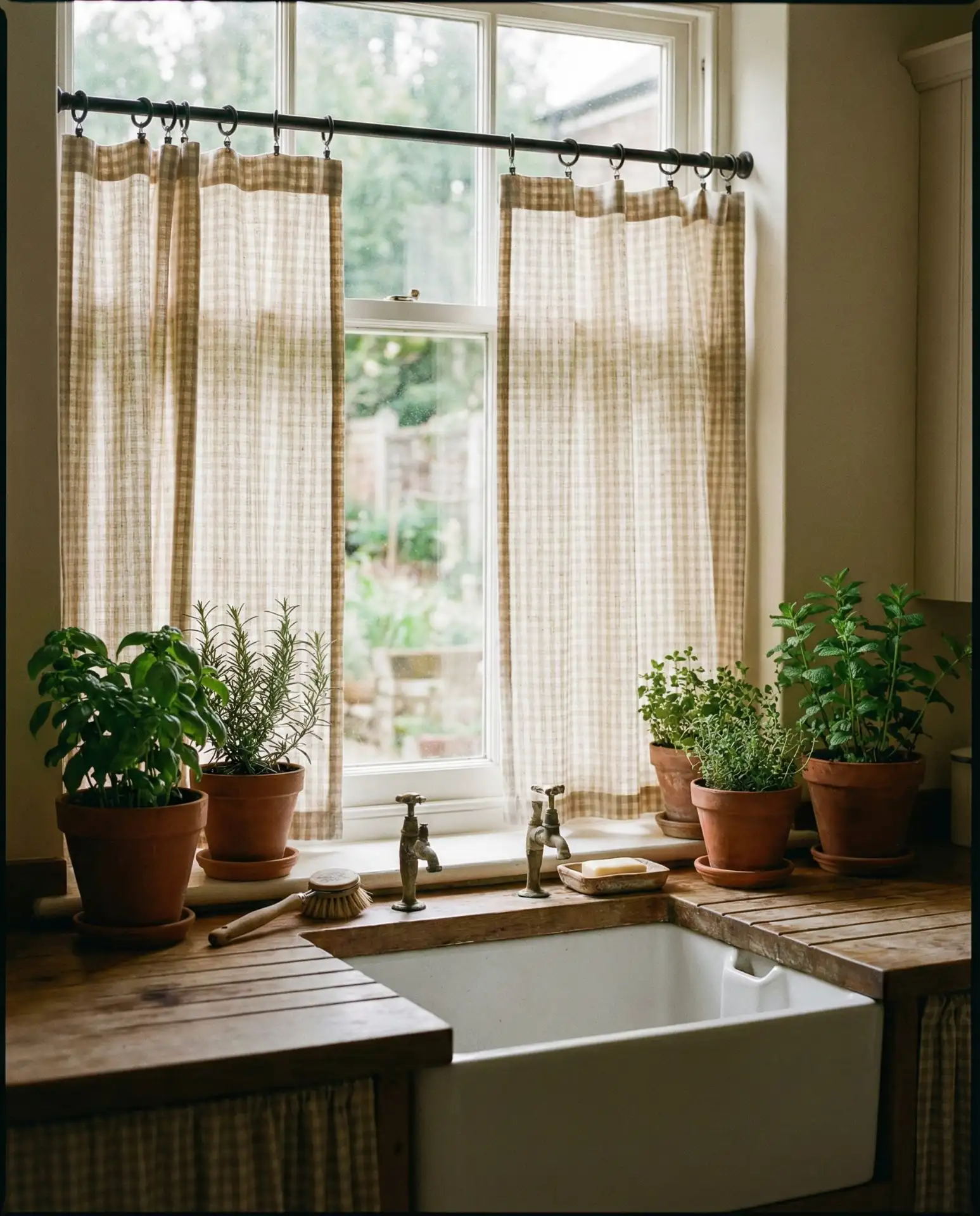
Kitchen curtains have returned to favor in rustic design, but the 2026 interpretation favors vintage patterns and natural fabrics that serve a genuine purpose rather than purely decorative café curtains that gather grease. Linen in soft checks or subtle florals, hung on simple iron rods, provides privacy and light control while contributing to the layered, collected-over-time aesthetic that defines the best rustic spaces. This approach works particularly well in kitchens with windows overlooking neighbors or busy streets, where the aesthetic value comes with practical benefits. 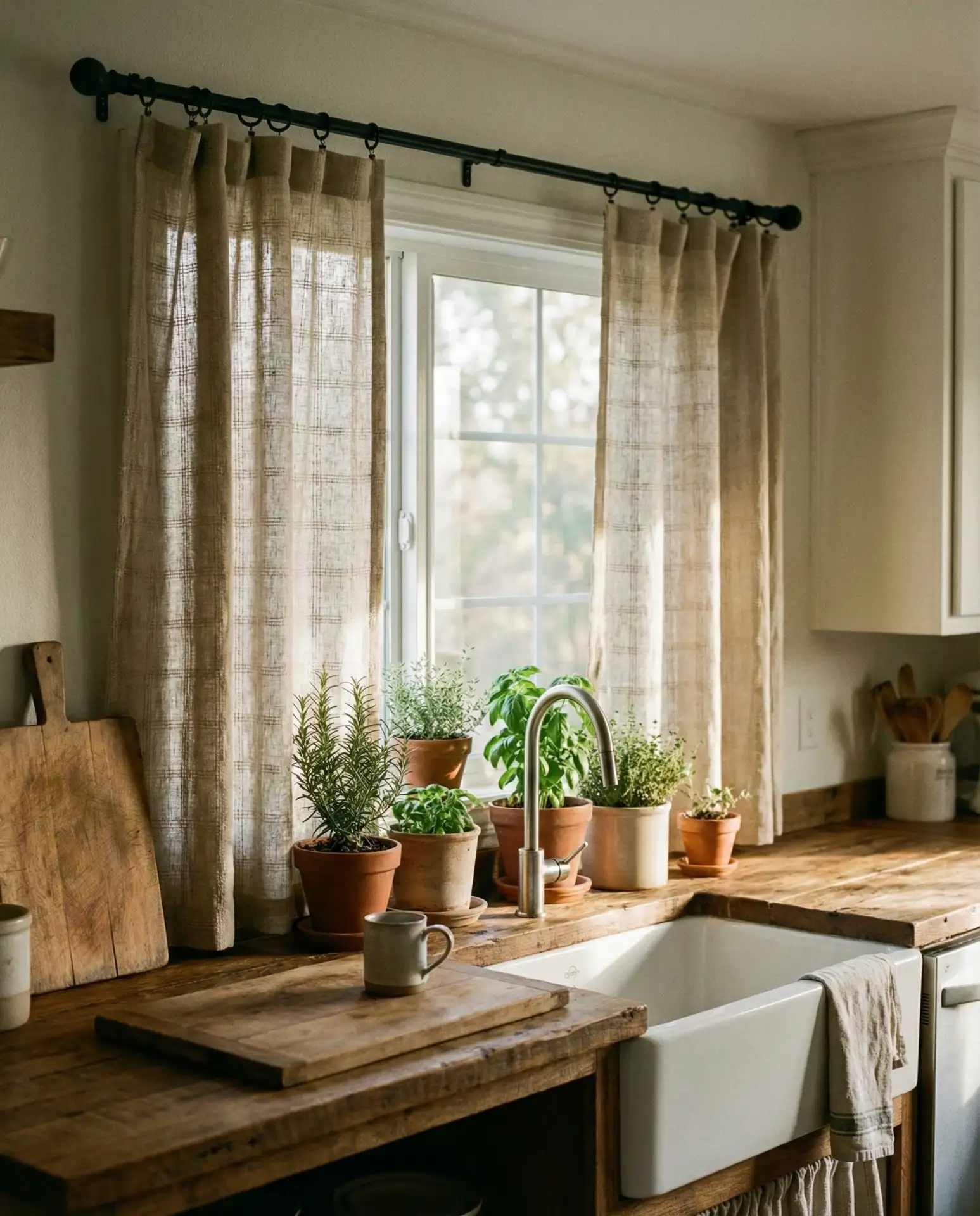
Where it works best: kitchens with smaller windows where full-length curtains would overwhelm, breakfast nooks that need softening, and historic homes where window treatments help maintain period authenticity. Modern alternatives like Roman shades can’t quite match the relaxed, lived-in quality that fabric curtains bring, though they certainly require less maintenance. Plan to wash kitchen curtains monthly to prevent oil buildup—choosing machine-washable fabrics makes this essential upkeep manageable.
9. Italian Countryside Color Palette
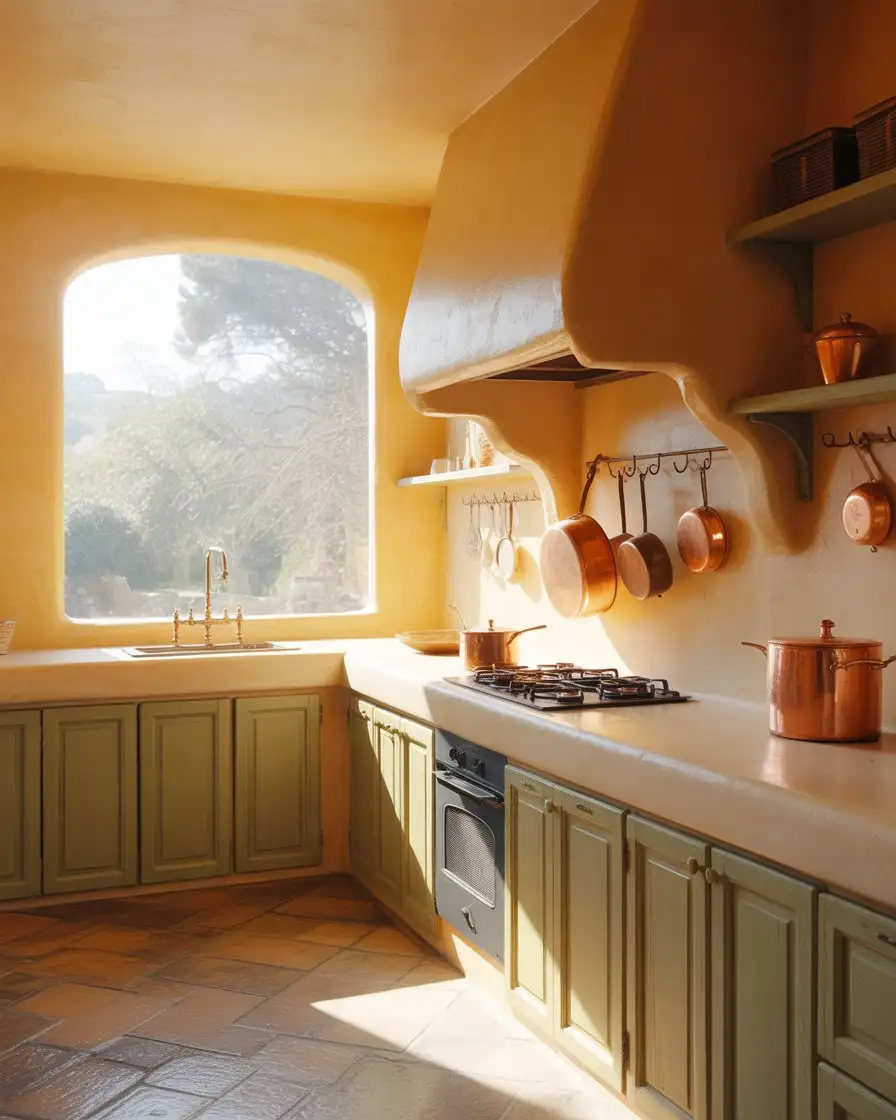
The warm, sun-soaked hues of Italian villas—terracotta, ochre, sage green, and creamy whites—have inspired a distinctly different rustic palette that feels more Mediterranean than American farmhouse. This color story works beautifully in homes with abundant natural light, where the warm tones can glow rather than appearing muddy, and it pairs exceptionally well with natural stone flooring ideas and thick wooden shelves. The overall effect is both grounded and uplifting, bringing vacation-home relaxation into everyday life. 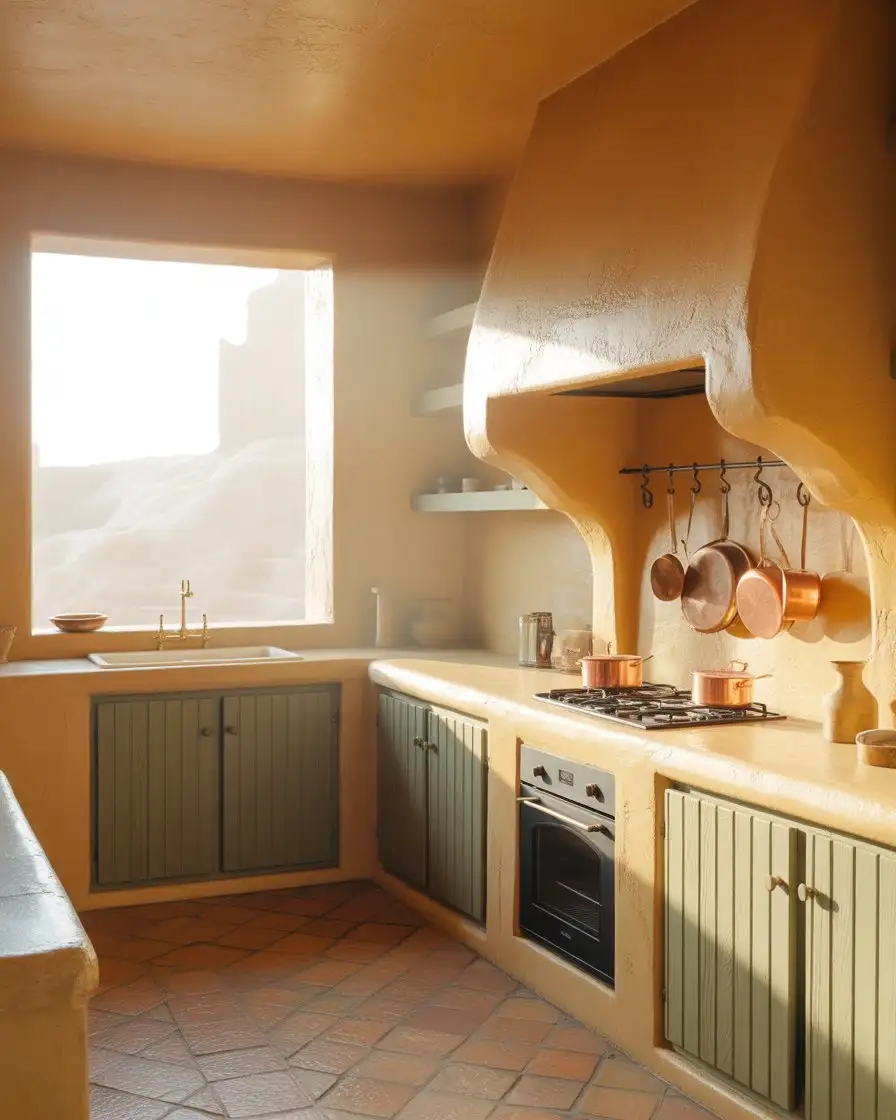
California and Arizona homeowners have particularly embraced this Italian influence, as the climate and light quality naturally complement the color palette. The common mistake is going too literal with Tuscan-themed accessories—ceramic roosters and grape motifs—when the sophistication comes from restraint and letting the colors themselves do the work. Stick to authentic materials and simple forms, and the Italian influence will feel organic rather than themed.
10. Statement Wall Decor That Tells Your Story
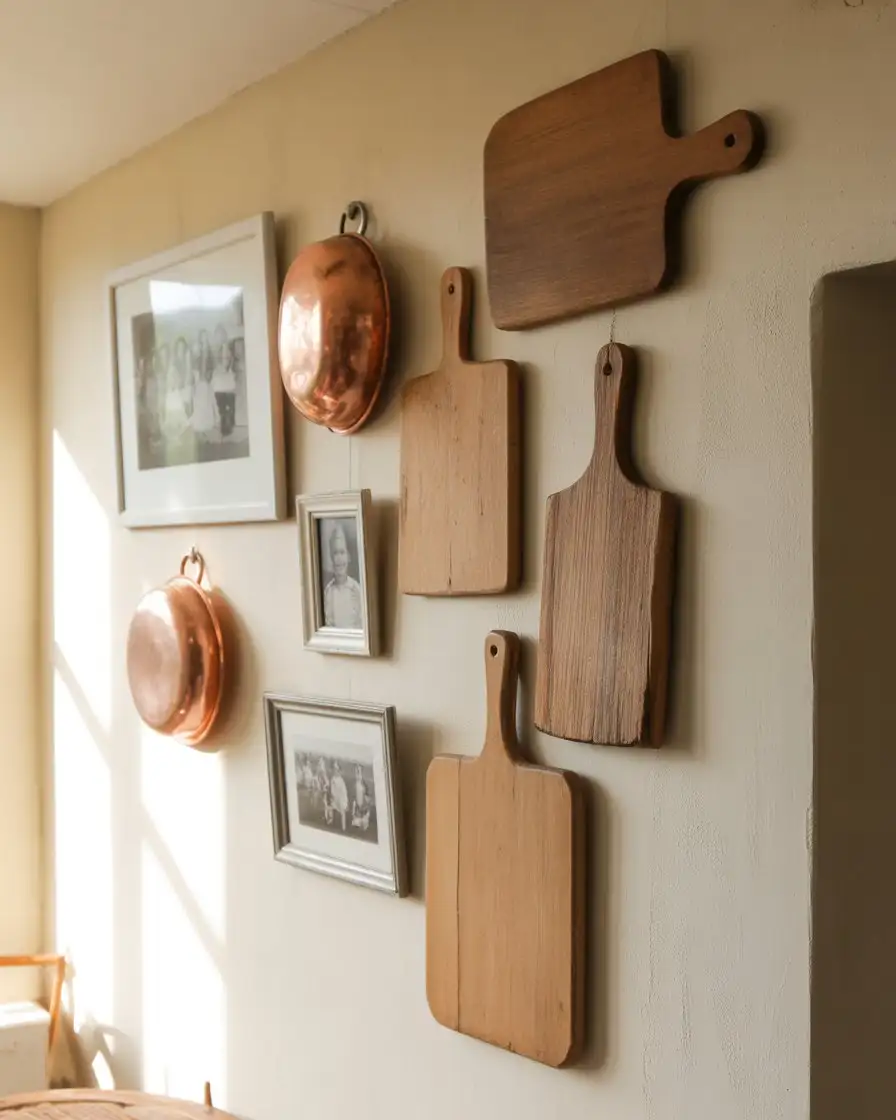
Rustic kitchen wall decor in 2026 has moved beyond generic “gather” signs toward more personal, meaningful installations—vintage cutting board collections, family photos in mismatched frames, or antique kitchen tools that reflect genuine cooking heritage. This shift acknowledges that the best rustic spaces feel curated rather than catalog-ordered, with each piece contributing to a larger narrative about how the family cooks, eats, and gathers. The aesthetic sweet spot balances visual interest with restraint, avoiding the overcrowded look that plagued earlier rustic trends. 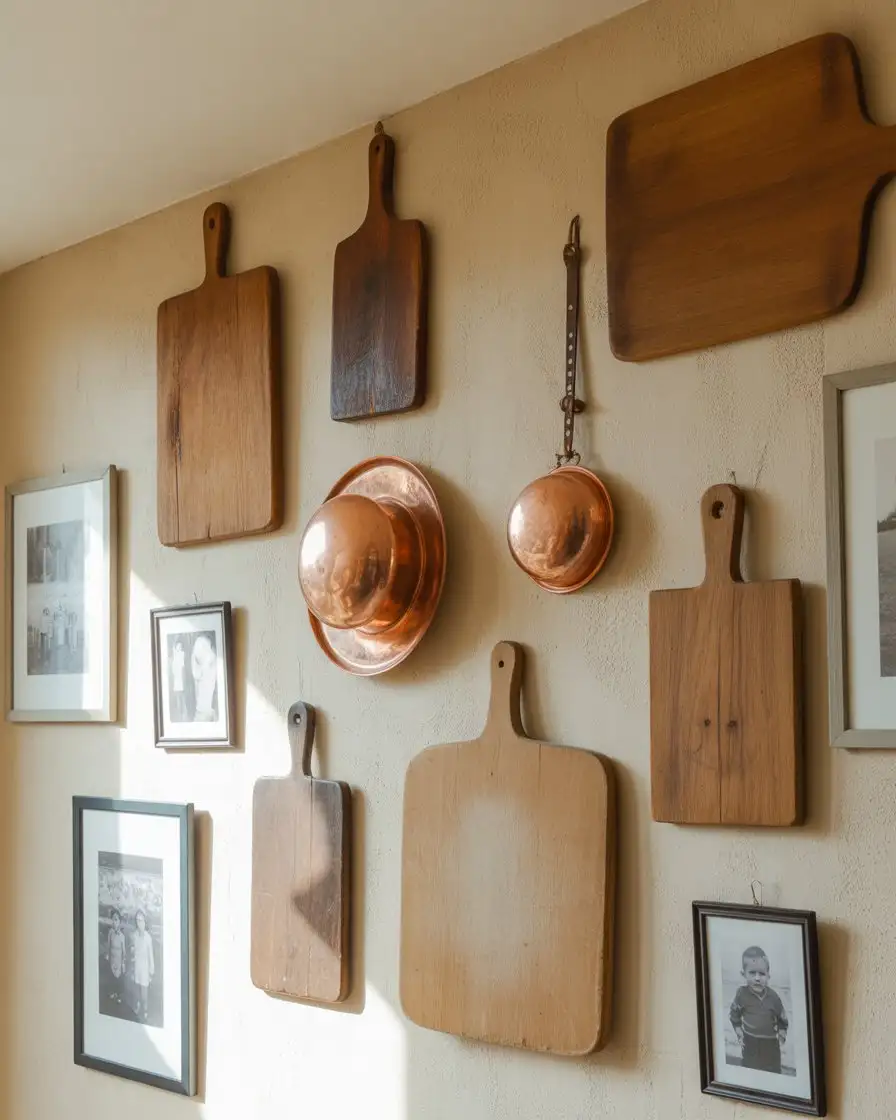
A practical insight for arranging wall decor: start with your largest piece and work outward, maintaining roughly equal spacing between items rather than clustering everything together. Many homeowners rush this step and end up with unbalanced arrangements that feel chaotic rather than collected. Taking time to lay pieces out on the floor first prevents unnecessary nail holes and ensures the final result looks intentional. Consider the wall decor as an evolving collection rather than a one-time project.
11. Rustic Farmhouse Table as Kitchen Heart
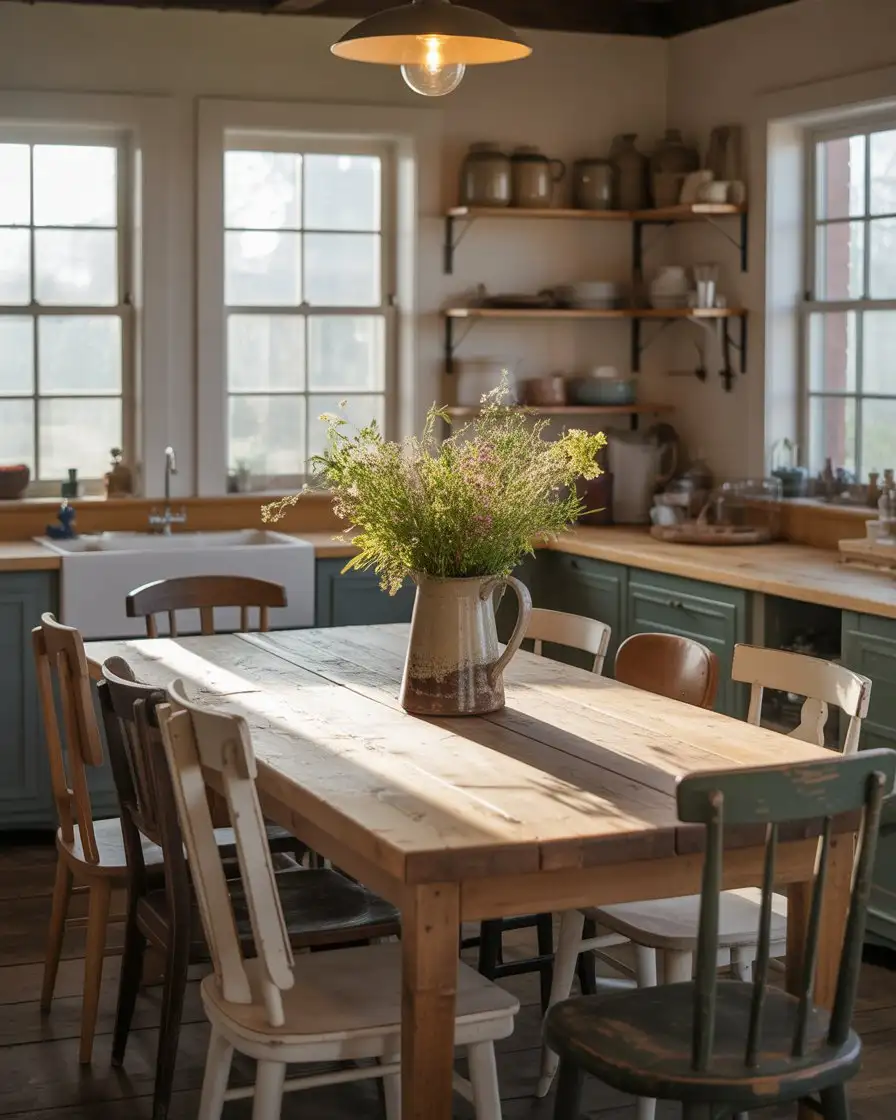
A substantial wooden table positioned within or adjacent to the kitchen workspace has become the true heart of rustic kitchen design, serving as a prep surface, homework station, and dining spot all in one. The new approach favors tables with genuine age and wear—or high-quality reproductions with distressed finishes that suggest years of use—over pristine, overly finished pieces that don’t invite daily living. This cabinet’s farmhouse-style element works particularly well in open-concept homes where the kitchen flows into living areas, providing a natural gathering point that anchors the entire space. 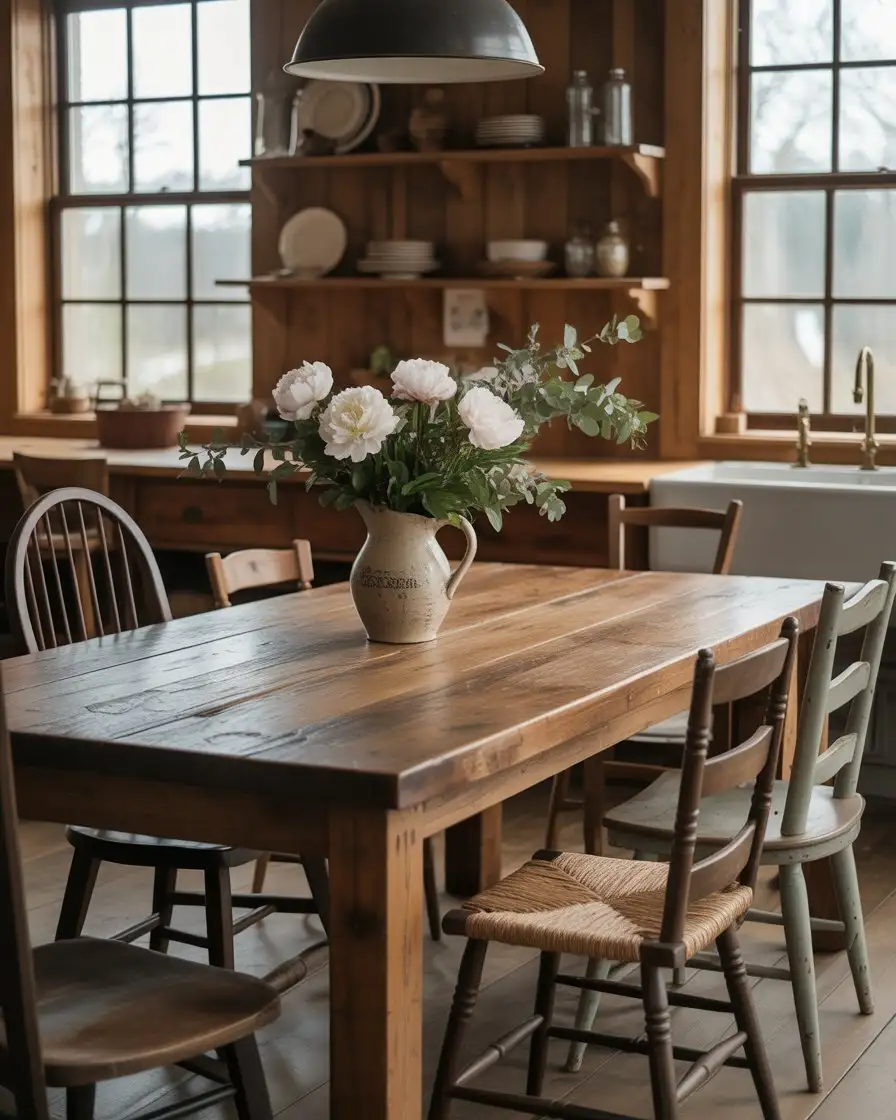
In regions where multi-generational living is common—particularly the South and parts of the Midwest—these generous tables facilitate the kind of communal cooking and eating that smaller islands can’t accommodate. Real homeowner behavior shows that tables sized for 8-10 people get daily use in ways that formal dining rooms never do, becoming the spot where everyone naturally congregates. The investment in a quality table pays dividends in how it shapes family life and hospitality.
12. Textured Backsplash Ideas Beyond Subway Tile
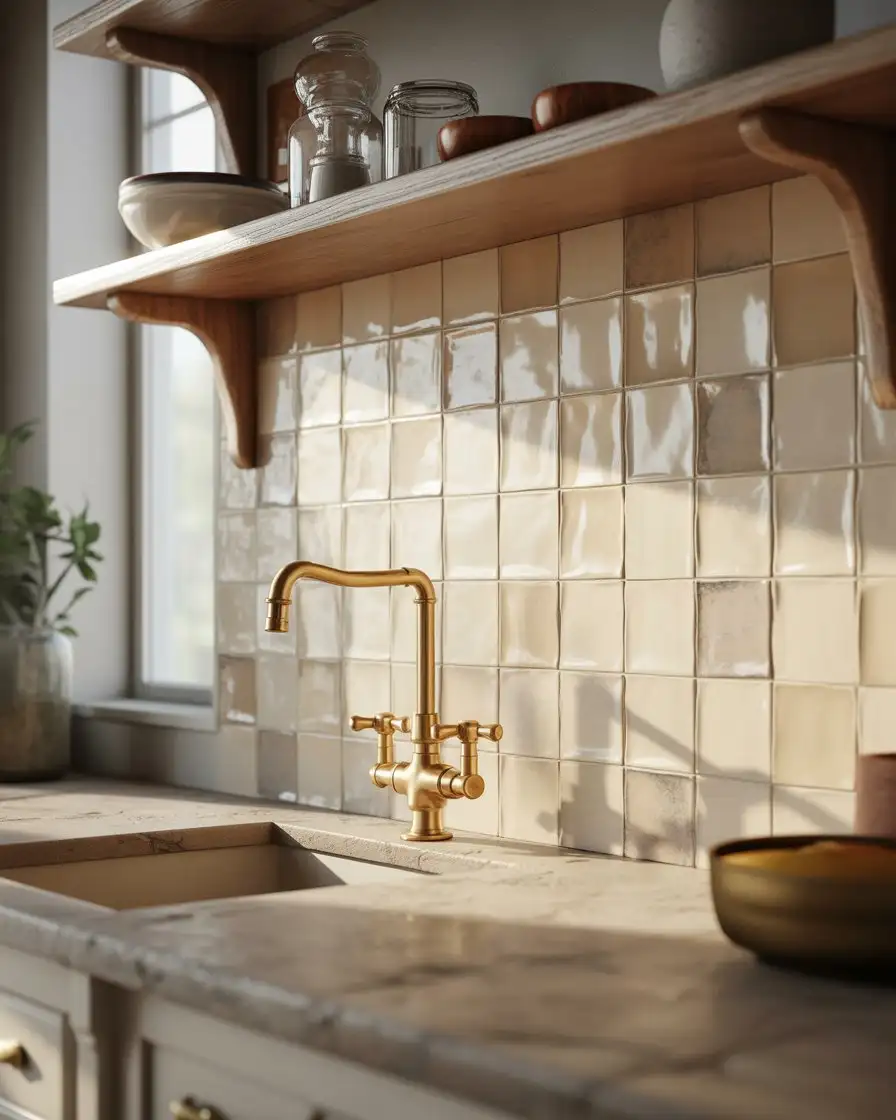
While white subway tile remains a solid choice, the most compelling backsplash ideas for 2026 rustic kitchens explore texture through reclaimed brick, zellige tile, or natural stone in varied sizes that create visual interest without pattern overload. These new materials bring dimension and shadow play that flat tiles simply can’t match, catching light differently throughout the day and adding warmth through their inherent imperfections. The best installations embrace variation rather than fighting it, allowing each tile or stone to contribute its unique character to the overall composition. 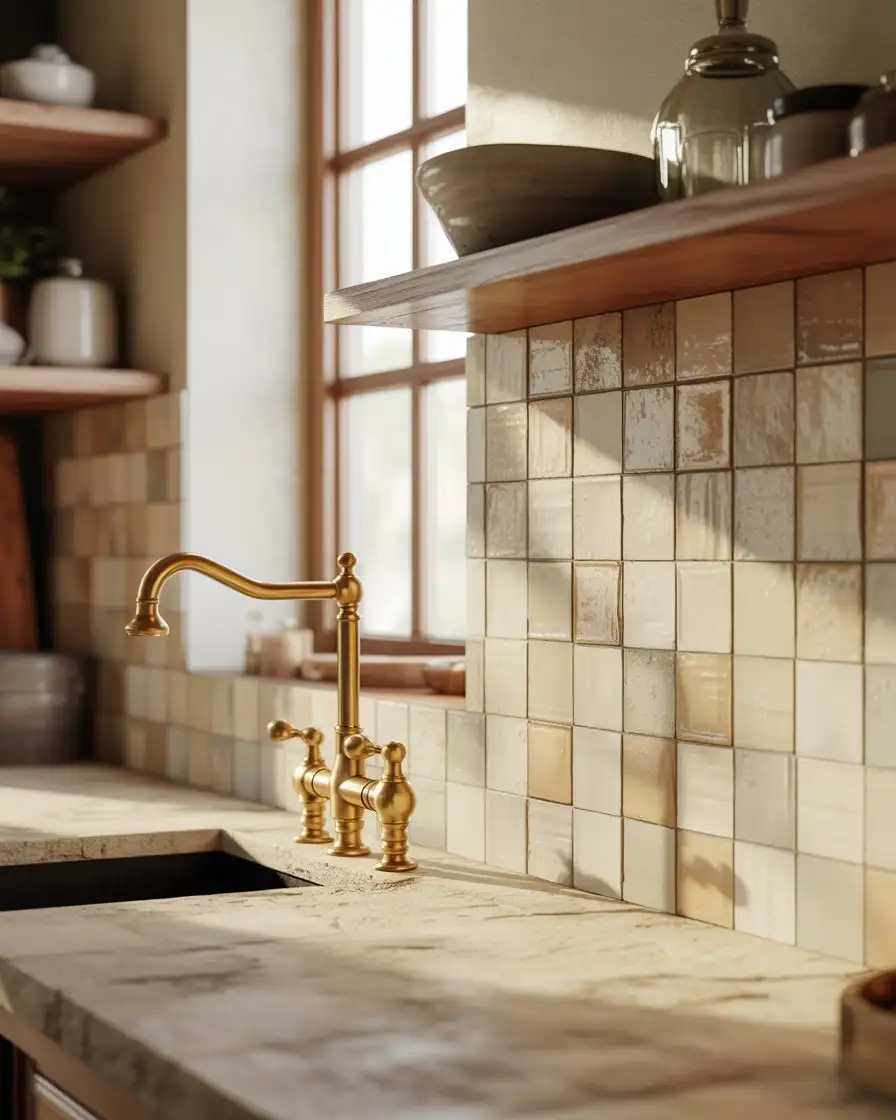
Common mistakes include choosing highly textured backsplashes in small kitchens where they can overwhelm, or installing them behind cooktops where cleaning challenges outweigh aesthetic benefits. The sweet spot places textured materials in areas you’ll see and appreciate—behind open shelving or flanking a range hood—while using easier-to-clean options in high-splash zones. Budget approximately 30-50% more for handmade or natural stone options compared to standard ceramic, but factor in their longevity and timeless appeal.
13. Natural Wood Flooring Ideas with Age and Patina
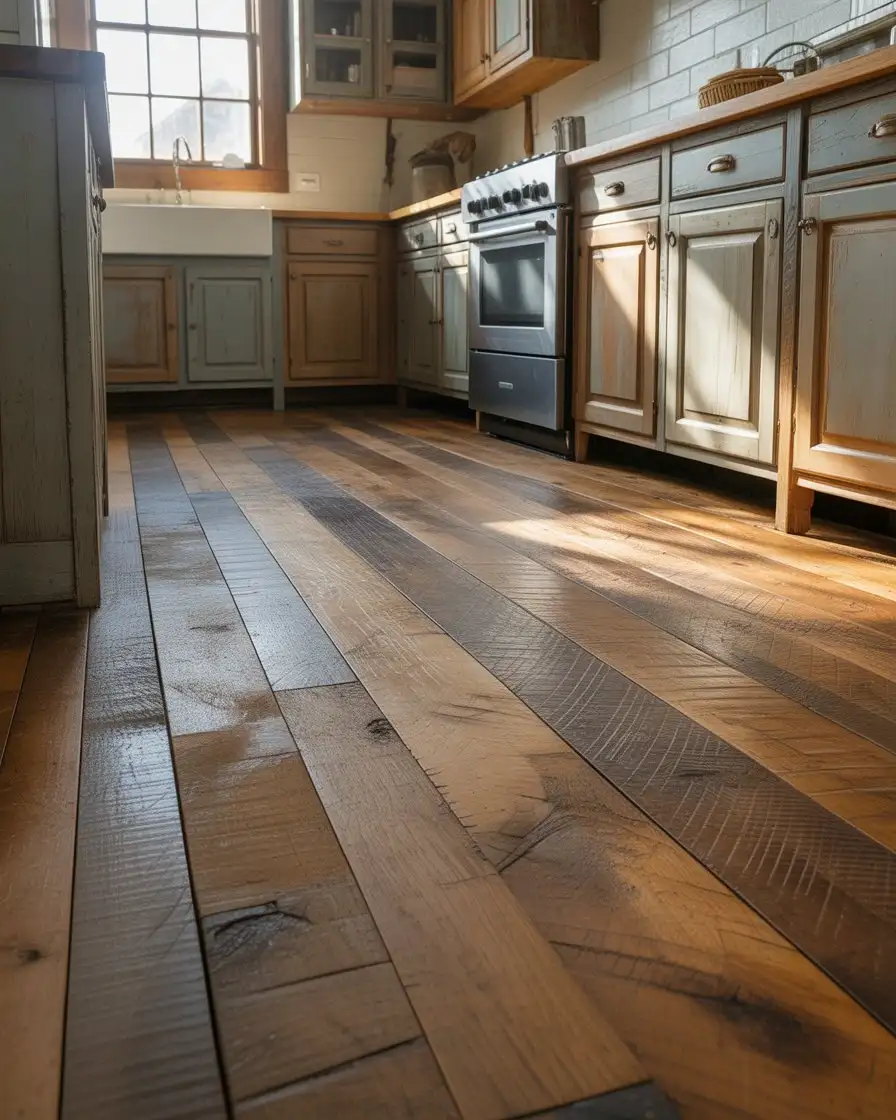
Wide-plank wooden floors with visible grain, knots, and hand-scraped texture provide the foundation for authentic rustic kitchen design, offering warmth underfoot and visual richness that engineered alternatives struggle to match. The best flooring ideas for 2026 lean toward reclaimed options or new wood treated to look old, with varied plank widths and natural color variation that suggests decades of wear. This approach works in both vintage-inspired and contemporary rustic spaces, proving that good flooring transcends specific style categories. 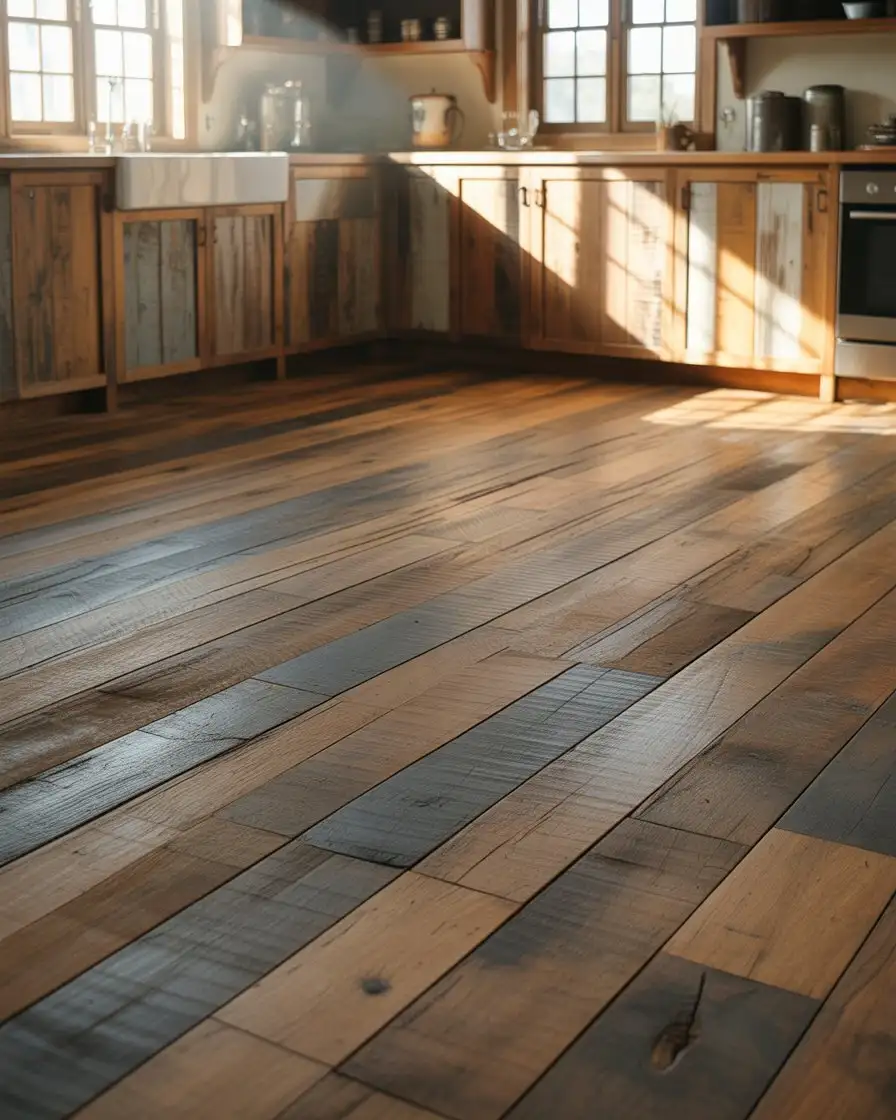
Where it works best: throughout the entire first floor in open-concept homes, creating continuity between kitchen and living spaces, or specifically in the kitchen when paired with radiant floor heating for added comfort. The mistake many make is choosing wood that’s too orange or red-toned for their cabinet colors—stick with neutral to cool-toned woods like white oak or reclaimed pine for maximum versatility. Professional installation matters enormously, as improper acclimation and installation can lead to gaps and warping within the first year.
14. Moody Lighting with Edison Bulbs and Iron Fixtures
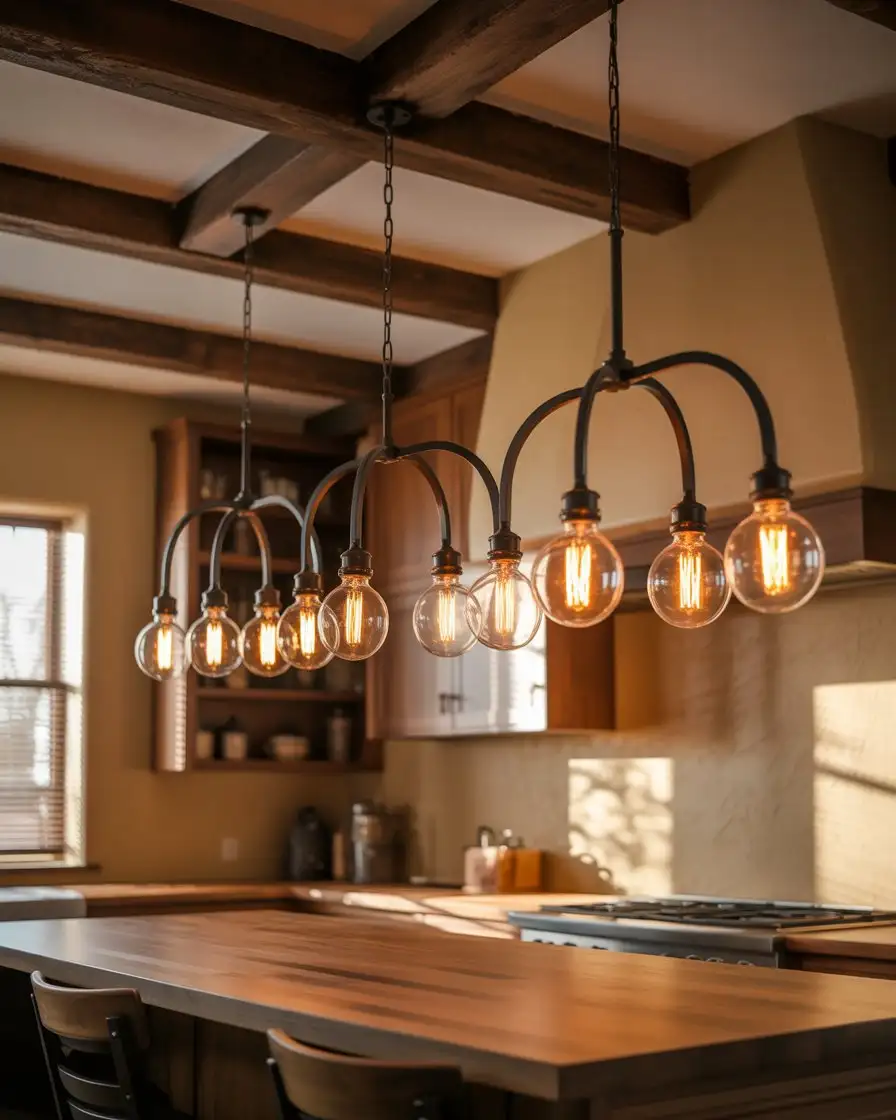
The moody aesthetic in rustic kitchens extends to lighting choices, where oversized iron pendants with Edison bulbs create pools of warm light rather than the even, bright illumination of previous decades. This layered approach to lighting—combining statement fixtures over islands with under-cabinet strips and wall sconces—allows for different moods throughout the day and accommodates both focused cooking tasks and relaxed evening gatherings. The industrial influence shows in the hardware finishes, with matte black and oil-rubbed bronze dominating over shinier options. 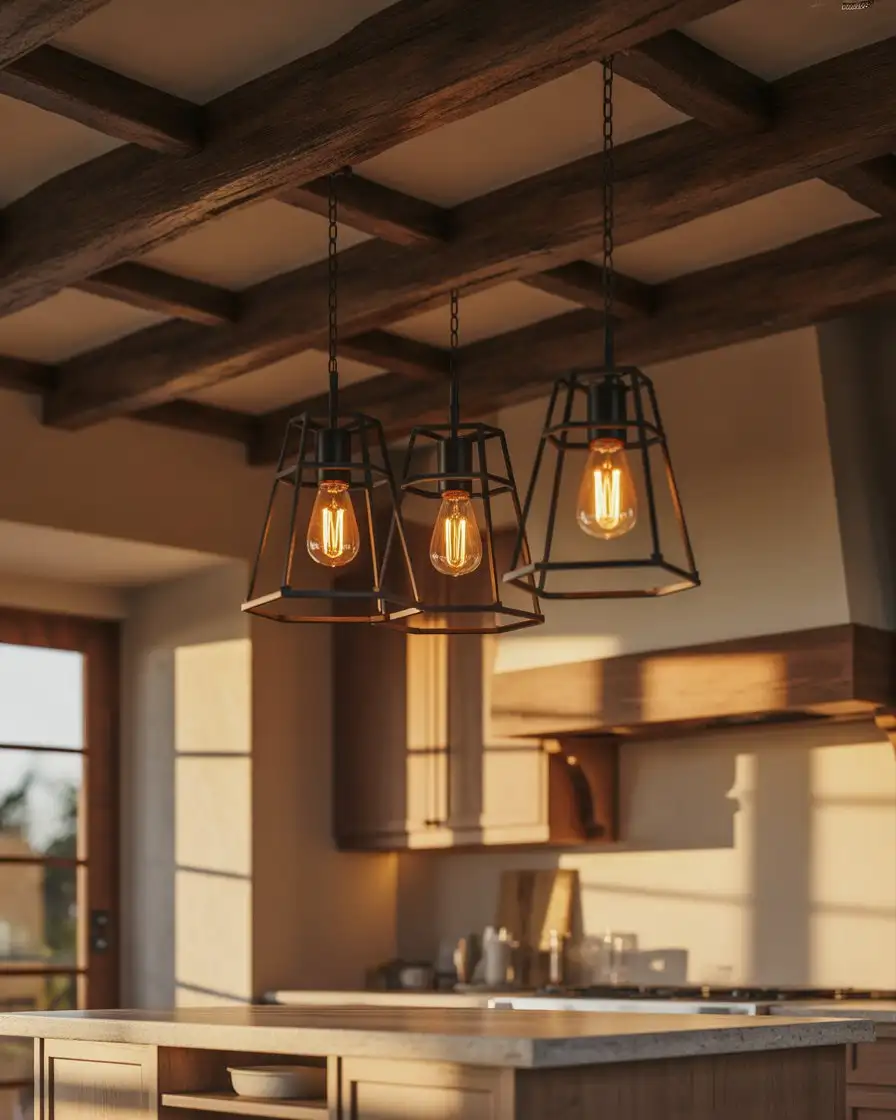
Expert lighting designers recommend installing dimmers on every circuit to maximize flexibility—what works for morning coffee preparation feels too bright for dinner parties. The common error is under-lighting work surfaces while over-emphasizing statement pendants; ensure task lighting is adequate before worrying about ambiance. LED Edison-style bulbs have improved dramatically in recent years, offering the warm glow of traditional filaments while using a fraction of the electricity and lasting far longer.
15. Open Pantry Shelving with Vintage Containers
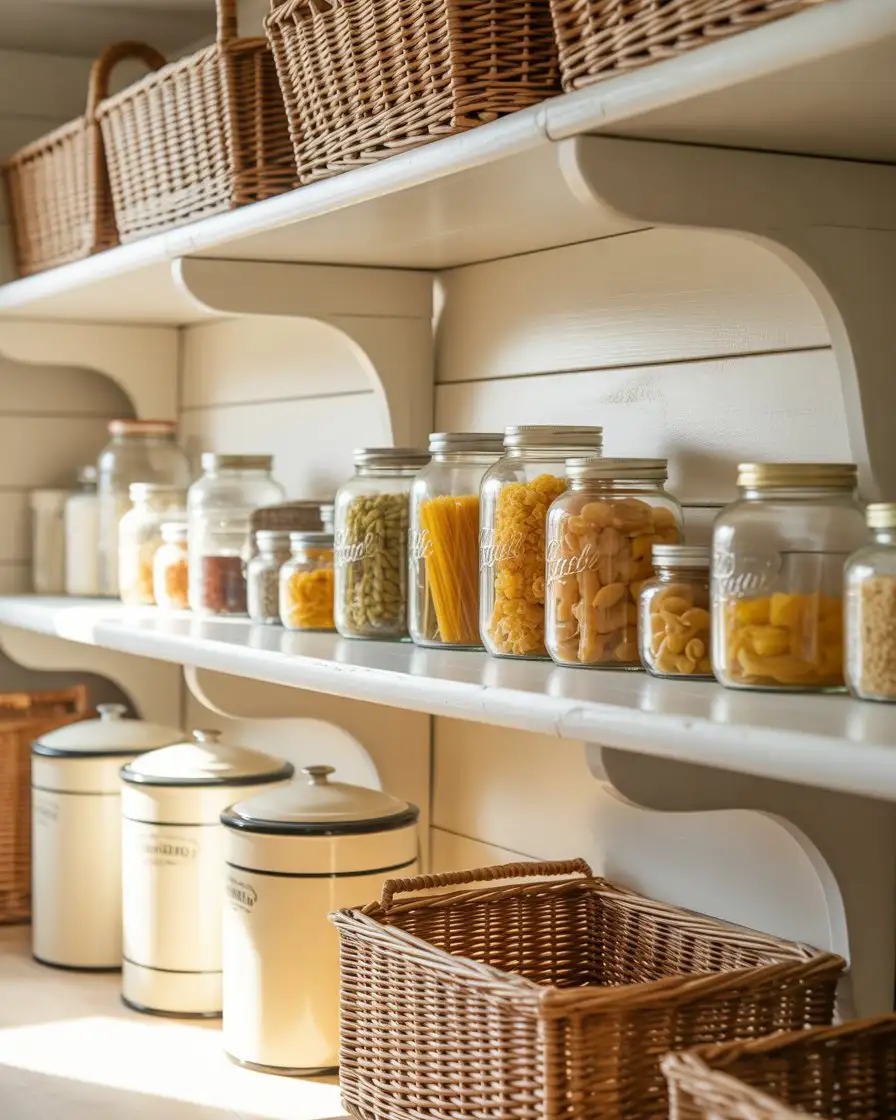
Dedicating a wall or alcove to open pantry shelves stocked with vintage mason jars, enamelware, and wooden crates creates both practical storage and a visual display that celebrates abundance and preparation. This approach to organization makes ingredients visible and accessible, which research shows leads to more creative cooking and less food waste as nothing gets forgotten in the back of cabinets. The aesthetic impact is substantial, transforming utilitarian storage into a defining design feature that guests invariably notice and compliment. 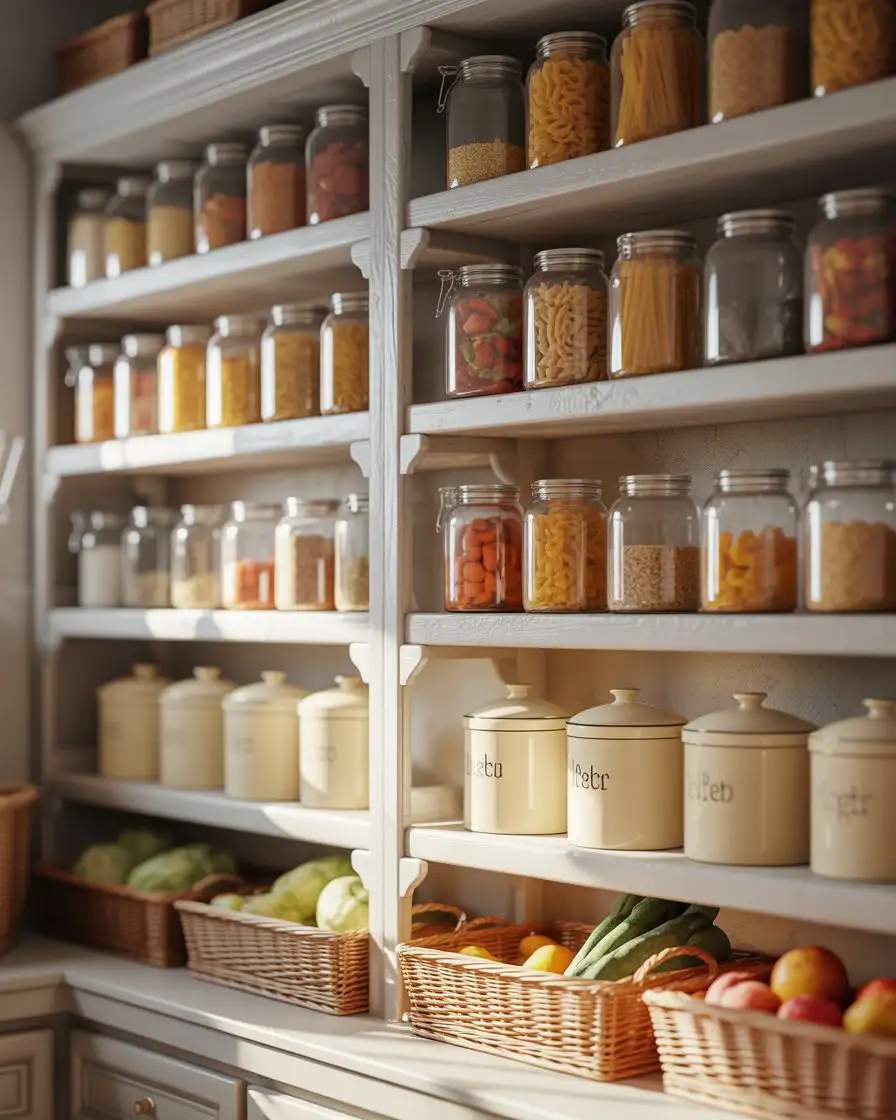
Real homeowner behavior reveals that open pantry systems require an initial investment in matching containers but save money over time by preventing duplicate purchases and food expiration. The discipline required to maintain the system—consistently transferring products into proper containers, rotating stock, wiping shelves—becomes easier once it’s established as routine. Start small with one shelf or category rather than trying to convert your entire pantry at once; gradual implementation leads to sustainable habits.
16. White Shiplap Walls with Natural Wood Accents
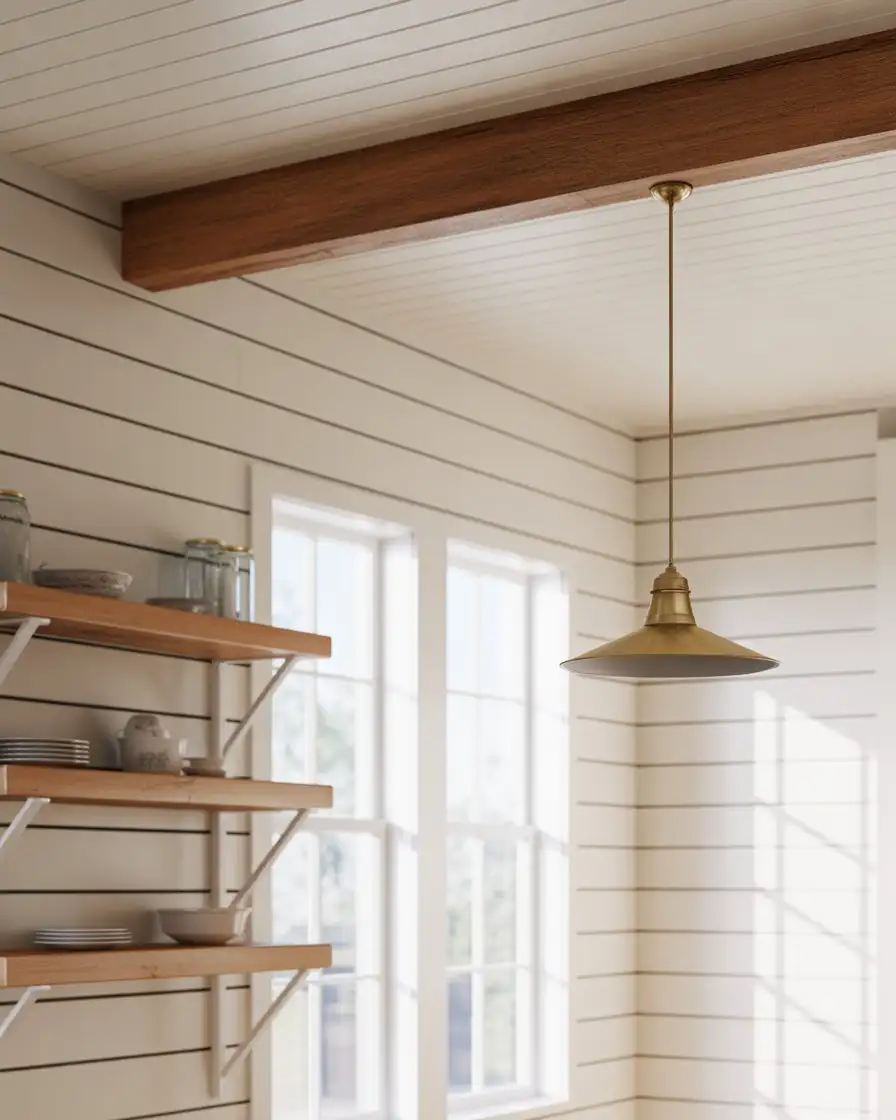
Painted white shiplap continues to anchor many rustic kitchens, providing a neutral backdrop that makes natural wood shelves, countertops, and ceiling beams pop against the crisp background. The horizontal lines create visual width in smaller spaces while adding architectural interest to otherwise plain walls, and the gaps between boards contribute subtle texture that reads as farmhouse without requiring extensive ornamentation. This new interpretation keeps shiplap to one or two walls rather than wrapping entire rooms, preventing the all-white sterility that can make spaces feel more hospital than home. 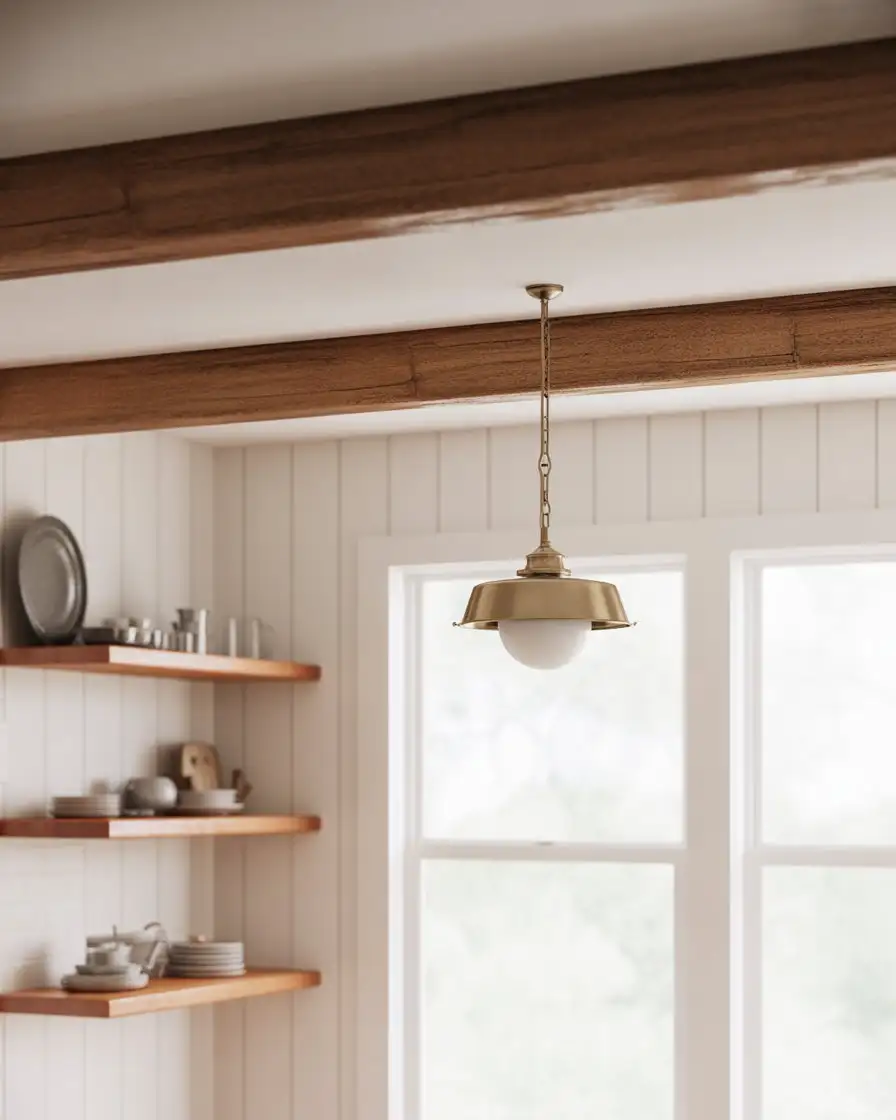
In Southern states where shiplap has historical precedent, homeowners increasingly seek out authentic reclaimed boards rather than new materials, valuing the slight irregularities and nail holes that come with genuine age. The budget-friendly alternative uses plywood cut into strips, which looks convincing when properly installed and finished. Common mistakes include using boards that are too wide (stick to 6-8 inch widths for authentic proportions) or painting them stark white instead of softer warm whites that complement wood tones.
17. Statement Range Hood with Custom Woodwork
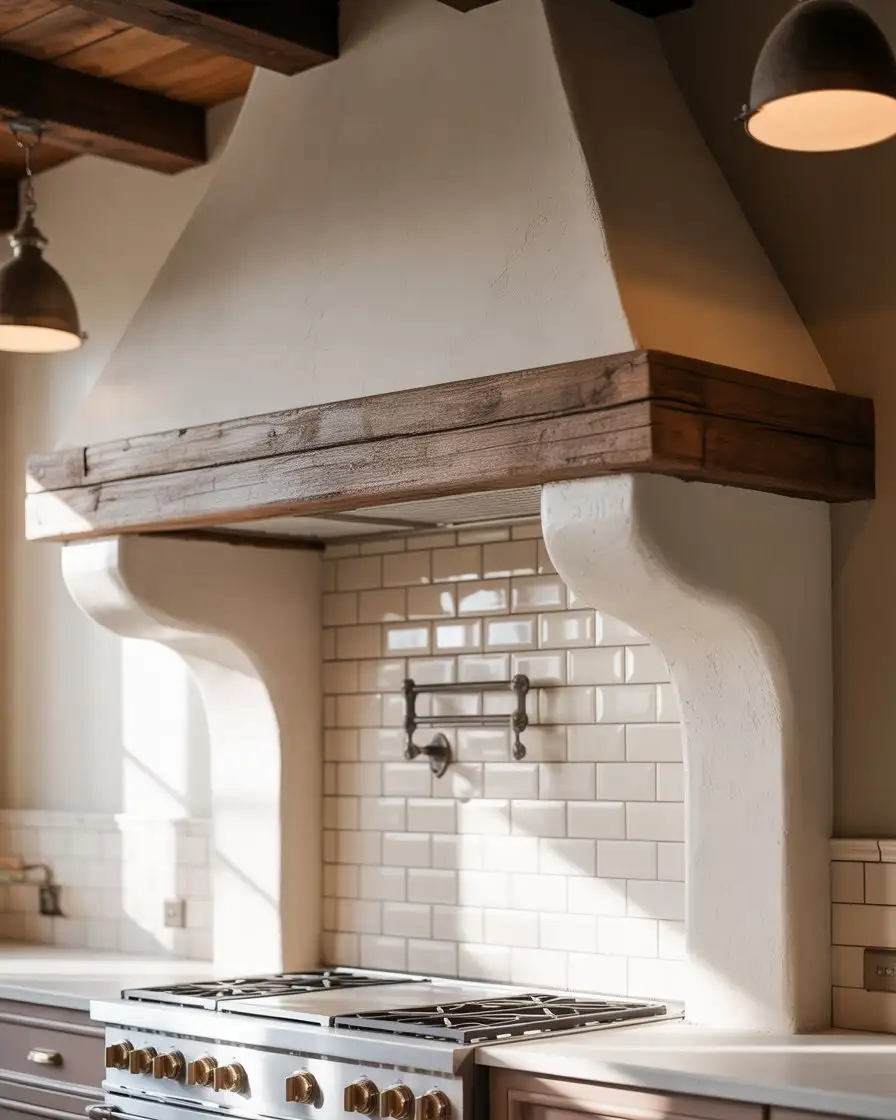
Custom wood range hoods have emerged as the signature element in high-end rustic kitchens, offering an opportunity to introduce architectural scale and craftsmanship that commercial stainless models simply can’t match. These hoods—often built from reclaimed beams or thick planks—can be designed to complement existing farmhouse-style cabinets while serving as a focal point that draws the eye upward and emphasizes ceiling height. The best examples integrate seamlessly with backsplash ideas and surrounding cabinetry, appearing to be an original architectural feature rather than an added element. 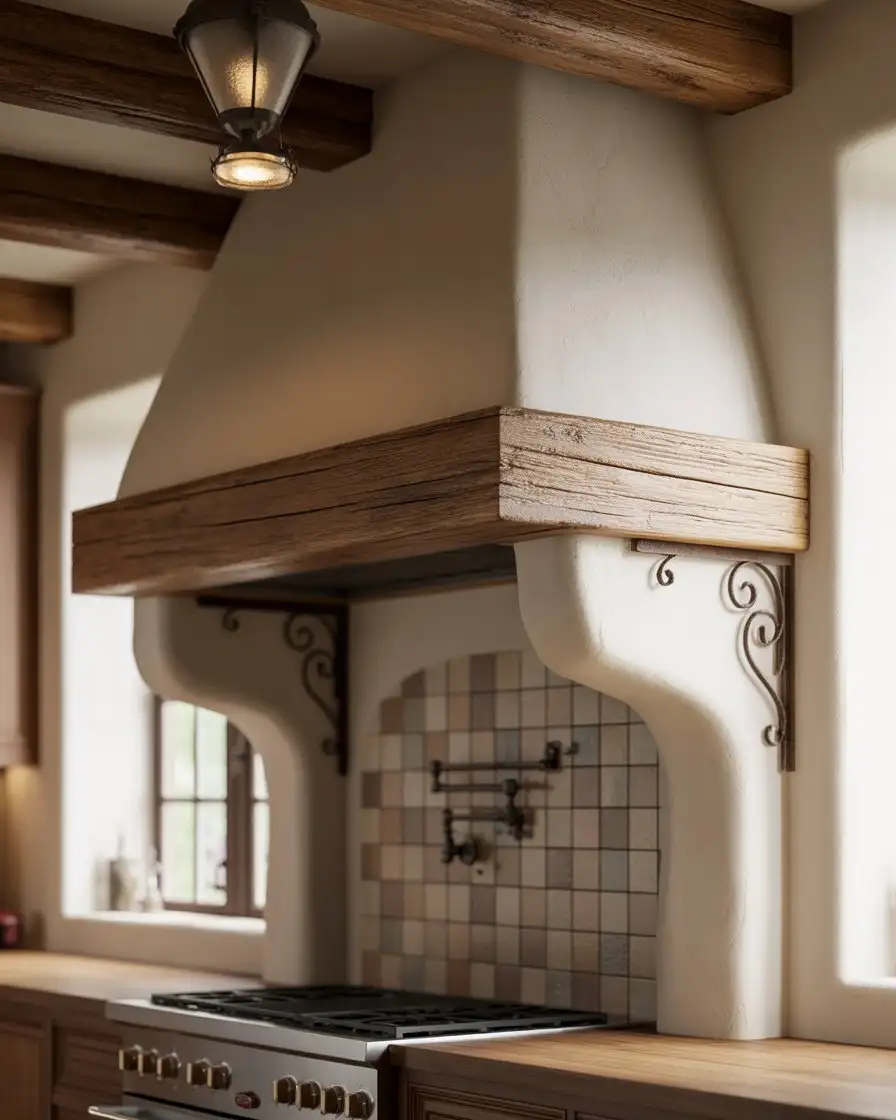
Budget expectations should account for $2,000-5,000 for a quality custom wood hood, including materials, fabrication, and installation—more if incorporating specialty finishes or antique materials. The investment makes sense when you consider this element will define your kitchen’s character for decades. Ensure your contractor properly addresses ventilation requirements; beautiful woodwork means nothing if cooking fumes aren’t effectively removed. Many designs incorporate hidden commercial inserts that provide the necessary airflow while being concealed by the decorative surround.
18. Vintage Apron-Front Sink in Copper or Bronze

While white farmhouse sinks dominate, vintage copper and bronze apron-front sink options offer a warmer, more distinctive alternative that develops a living patina reflecting years of use. These metal sinks bring the aesthetic weight and presence of traditional styles while introducing color and depth that white porcelain can’t achieve, particularly when paired with natural wood countertops and iron hardware. The finish evolves over time, darkening in some areas and lightening in others based on water exposure and use patterns, creating a one-of-a-kind piece. 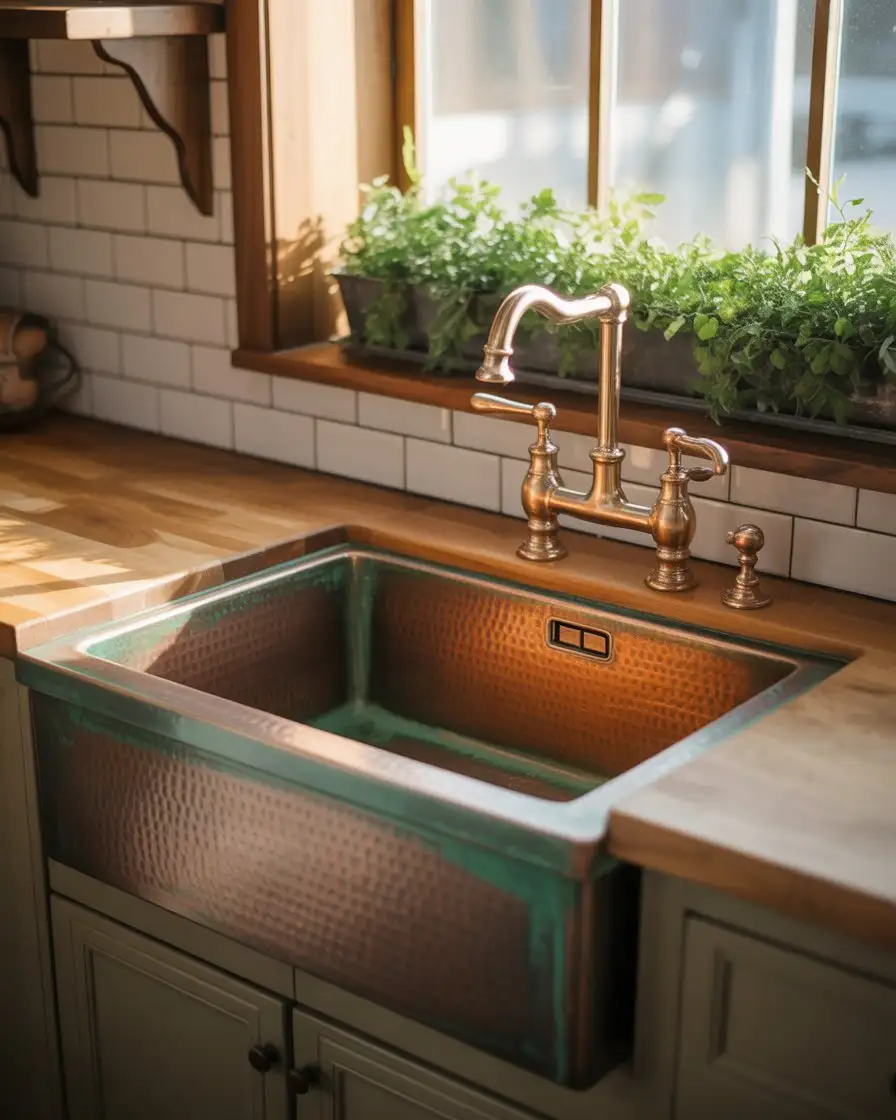
Expert commentary from kitchen designers emphasizes that copper and bronze sinks require different care than stainless steel or porcelain—acidic foods can affect the patina, and abrasive cleaners will damage the finish. The right owner appreciates this evolving character rather than fighting it. These sinks work best in kitchens where everything else is relatively neutral, allowing the sink to be the warm metallic focal point. Expect to invest $1,500-3,000 for quality options that will last generations with proper care.
19. Rustic Ceiling Beams as Architectural Anchor
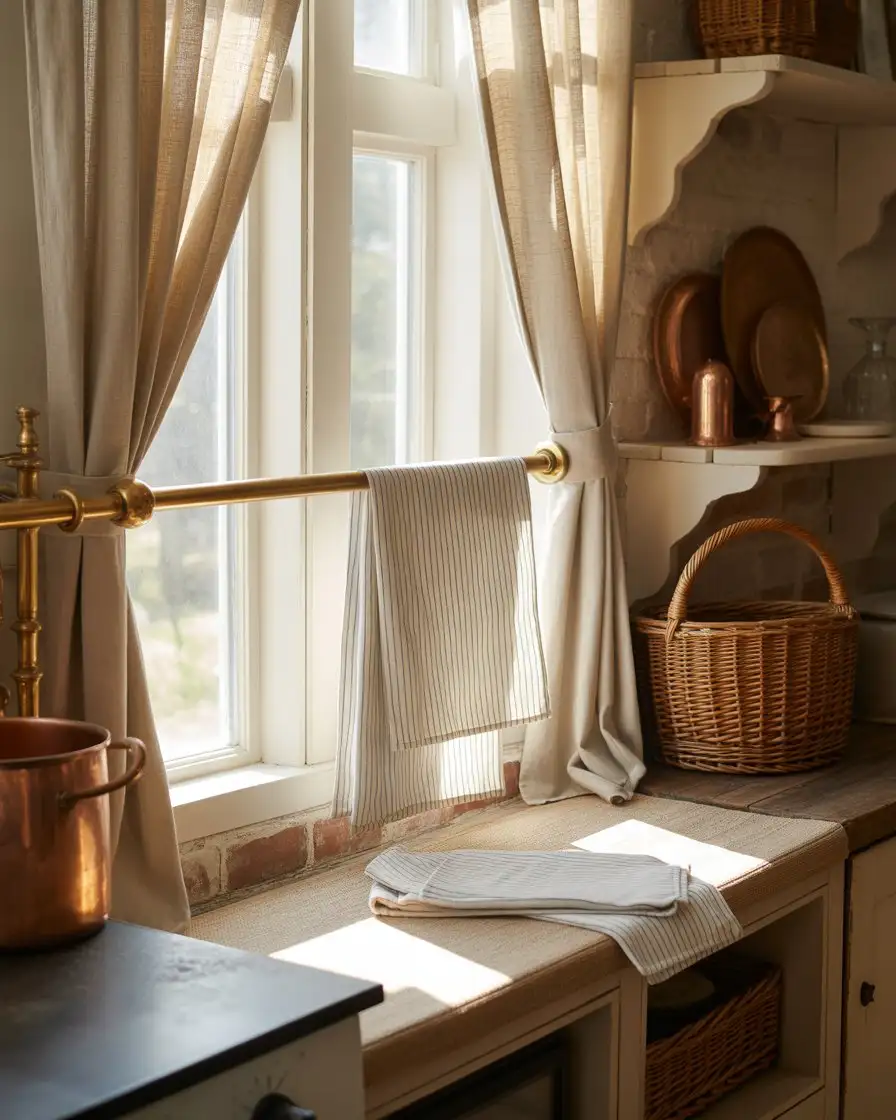
Exposed wooden ceiling beams—whether original to historic homes or newly installed as decorative elements—provide vertical interest and architectural gravitas that immediately signals rustic character. The new approach favors substantial reclaimed timbers with visible saw marks and weathering over perfectly uniform box beams, embracing irregularity as evidence of authenticity. These beams work particularly well in kitchens with 9+ foot ceilings, where they help bring the scale down to more human proportions while creating visual pathways that guide the eye through the space. 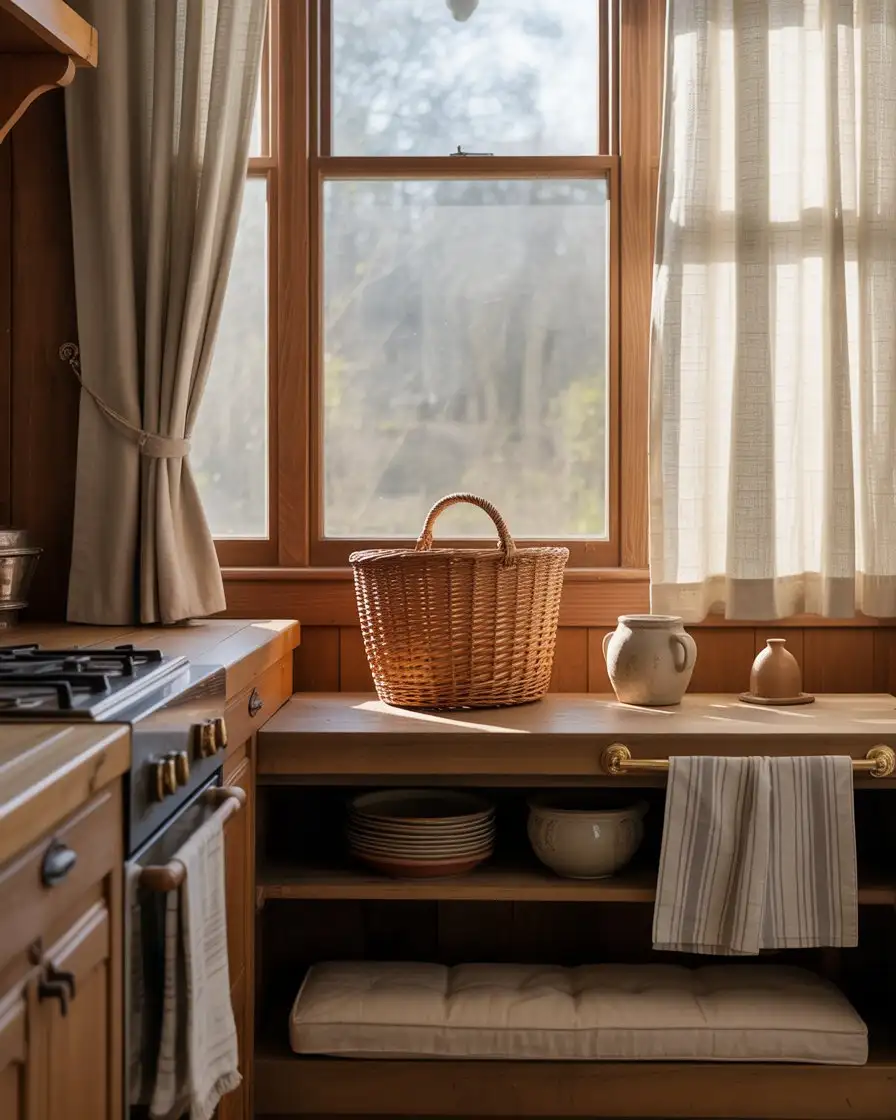
In Western states where barn conversions and ranch-style homes predominate, original beams are often discovered during renovations and can be cleaned, sealed, and incorporated into new designs. For homes without existing beams, reclaimed timber yards offer materials salvaged from demolished barns and industrial buildings, bringing genuine age and character. The mistake many make is installing beams that are too small for the space—a 10×12 kitchen needs beams that are at least 6×8 inches to register as substantial architectural elements rather than merely decorative trim.
20. Layered Textiles in Natural Fibers
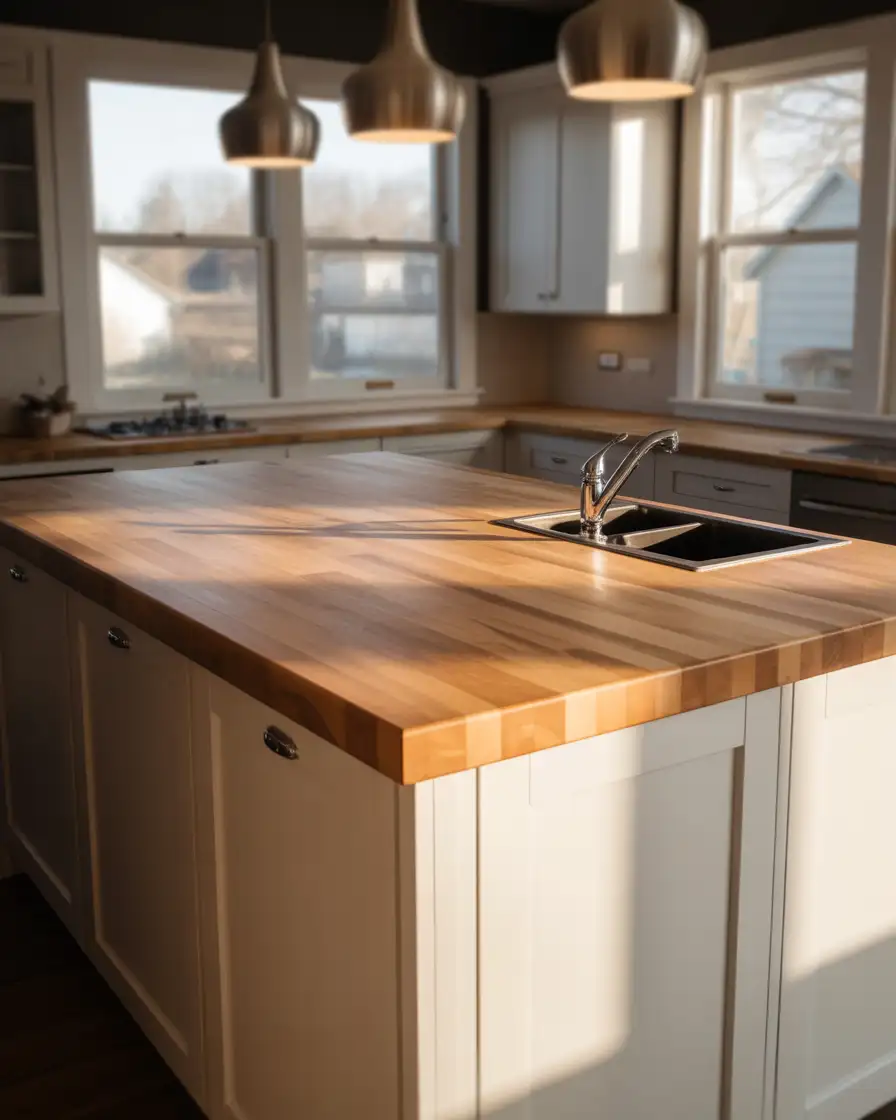
The softer side of rustic kitchen design emerges through carefully chosen textiles—linen curtains, cotton dish towels in subtle patterns, woven runners on open shelves, and chair cushions in natural fabrics that introduce warmth and comfort to the harder surfaces of wood and stone. This layering creates visual softness and absorbs sound, making kitchens feel more intimate and less echoey, while the natural fibers age beautifully rather than looking worn. The aesthetic works because each textile serves a function beyond decoration, from protecting wood surfaces to providing comfort during long cooking sessions. 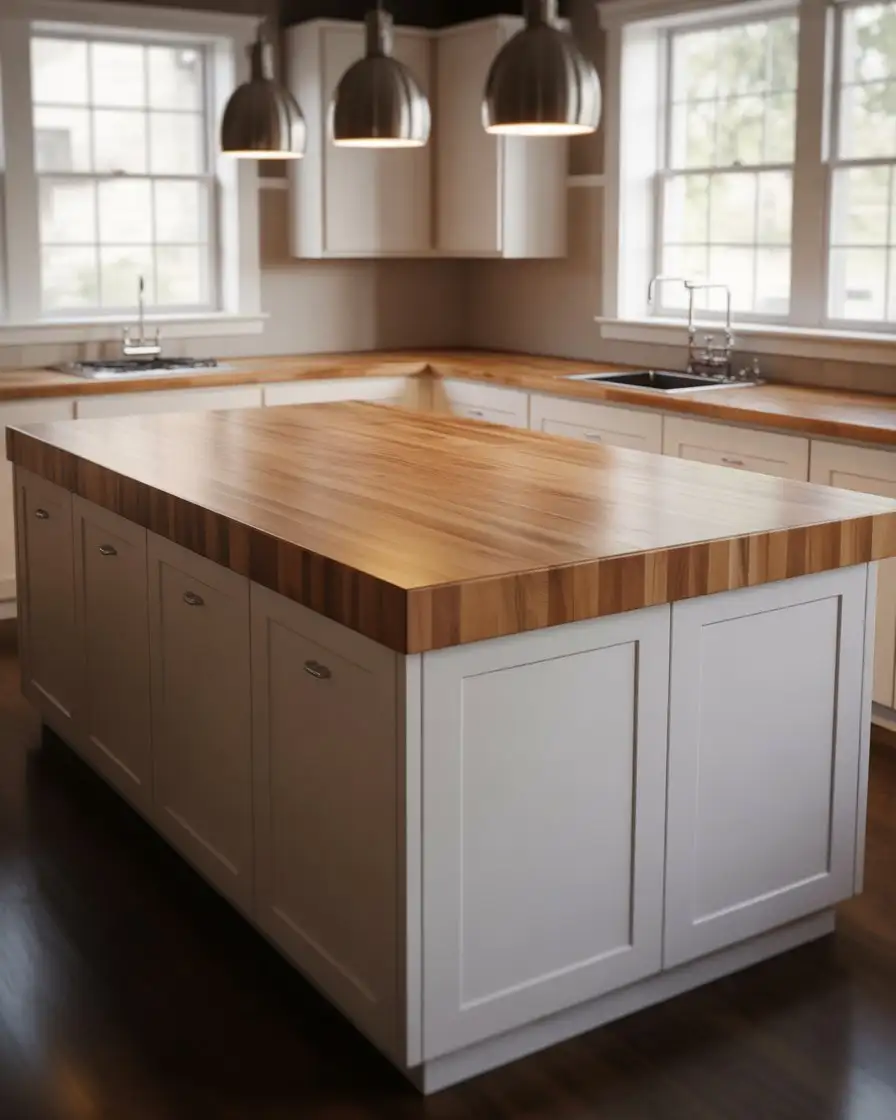
Real homeowner behavior shows that kitchens with thoughtful textile choices feel more inviting and actually get used more for casual gathering—people linger longer when there’s somewhere comfortable to sit and visual softness to rest the eyes. The practical consideration is maintenance; choose machine-washable options for items that will see heavy use, and accept that kitchen textiles need replacing every 2-3 years as they accumulate stains and wear. This planned obsolescence allows you to refresh colors and patterns as your taste evolves.
21. Butcher Block Island with Prep Sink
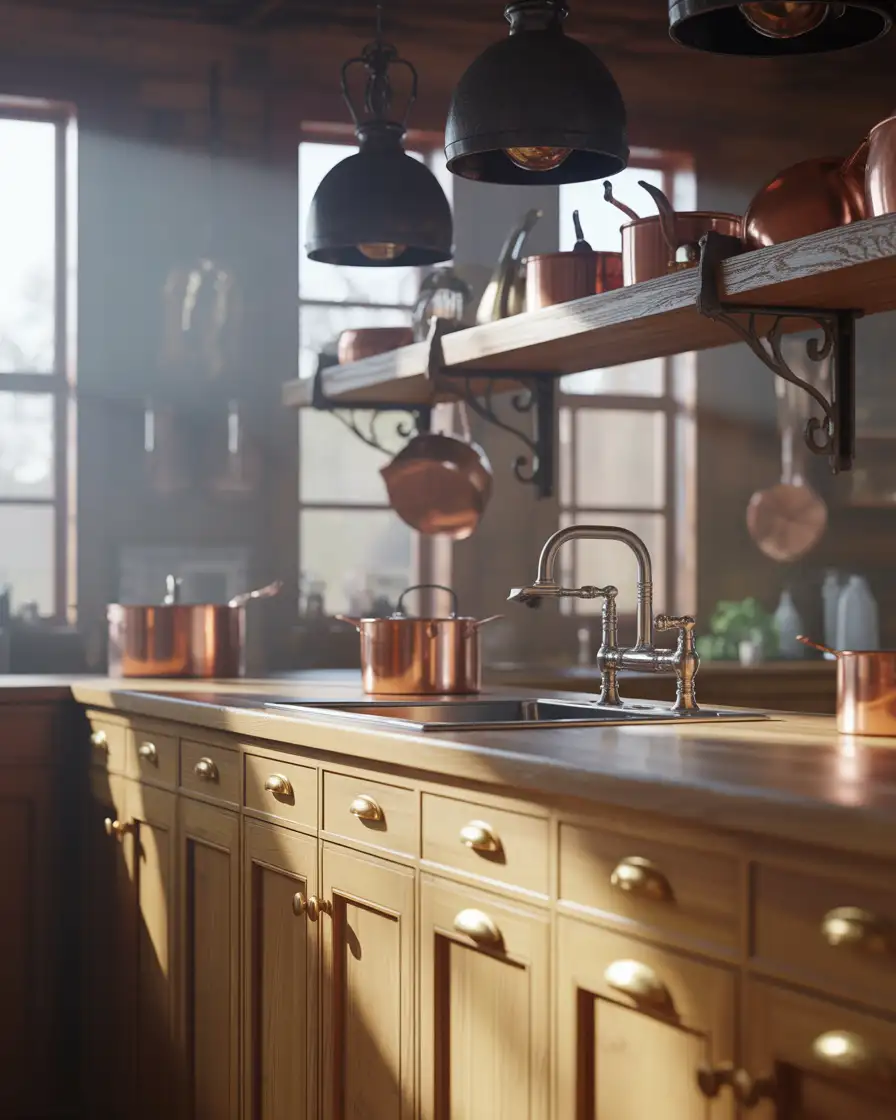
Thick butcher block island tops have experienced renewed appreciation for their practical benefits—ideal surface for dough rolling, knife-friendly cutting area, and natural warmth—particularly when paired with a small prep sink for vegetable washing and cleanup. This island inspiration acknowledges how kitchens are actually used, providing a dedicated workspace that can handle heavy meal preparation while maintaining the beauty of natural wood. The new approach often combines butcher block on the primary work surface with more durable materials like quartz or marble on seating overhangs, optimizing each area for its specific use. 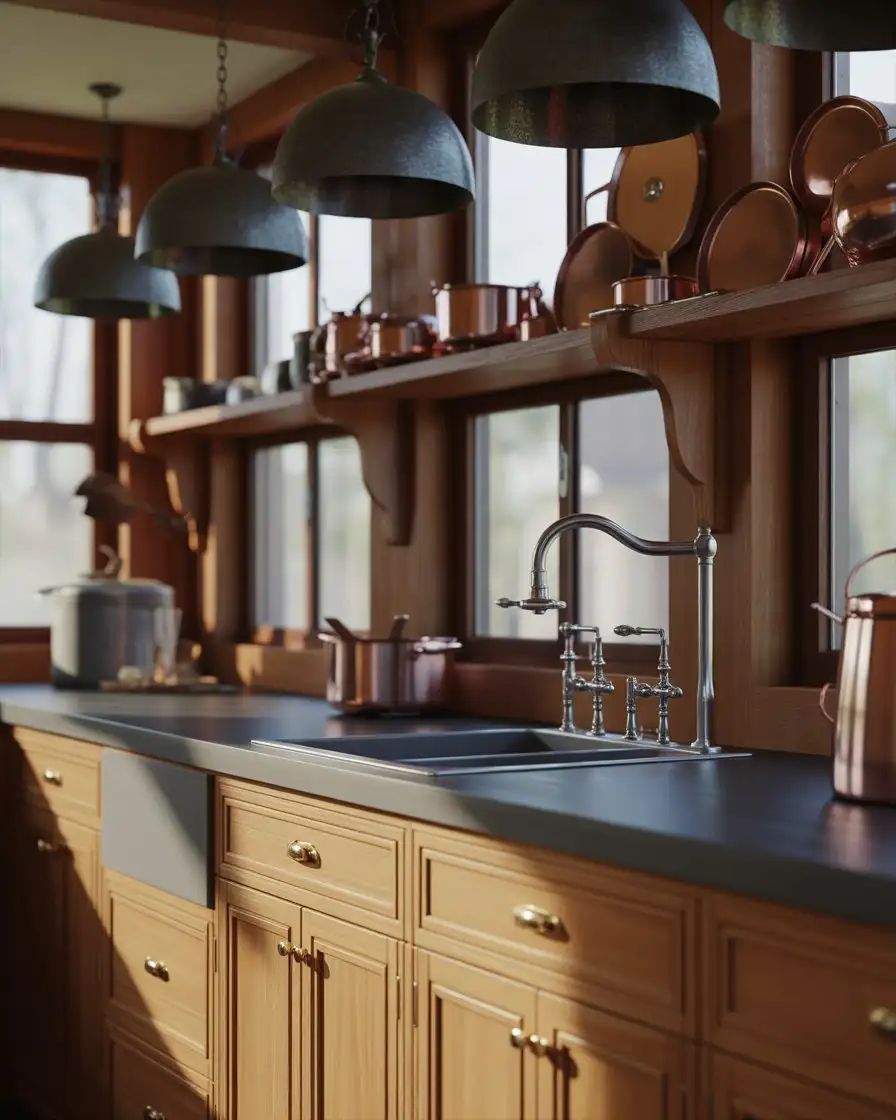
Common mistakes include treating butcher block like it’s maintenance-free—it requires monthly oiling with food-safe mineral oil to prevent drying and cracking and vigilance about water exposure near sinks. Smart design includes a slight groove around prep sinks to catch water before it spreads across the surface. Many homeowners report that the maintenance becomes meditative rather than burdensome once it’s incorporated into a routine, and the wood surface shows use in ways that add to its character rather than diminishing it.
22. Mixed Metal Finishes for Visual Interest
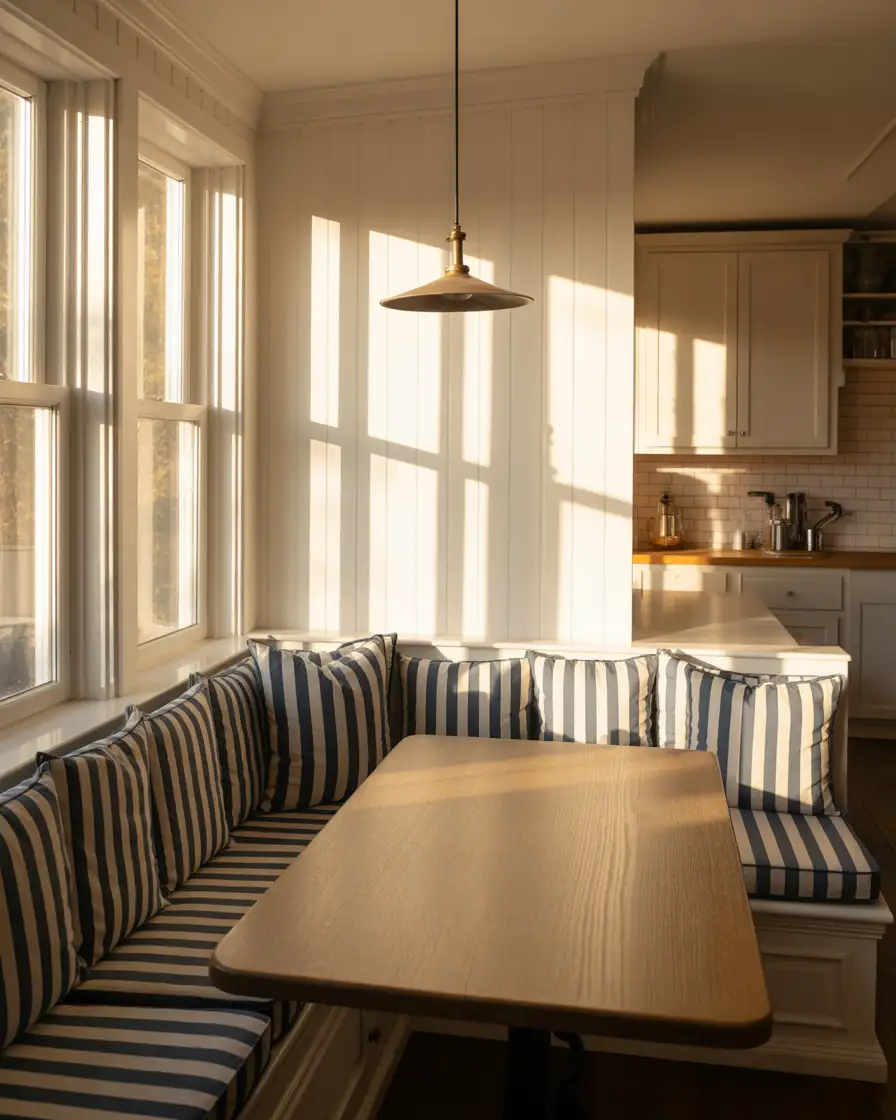
The once-rigid rule of matching all metal finishes has given way to intentional mixing of brass, copper, black iron, and brushed nickel within the same kitchen, creating layered richness that reflects how real homes evolve over time. This approach works within rustic design because the varied finishes suggest pieces collected over years rather than purchased as a matching set, though the mixing requires restraint—typically two or three finishes maximum, distributed thoughtfully across cabinet ideas, lighting, and plumbing fixtures. The key is ensuring each metal appears at least twice in the space to feel intentional rather than random. 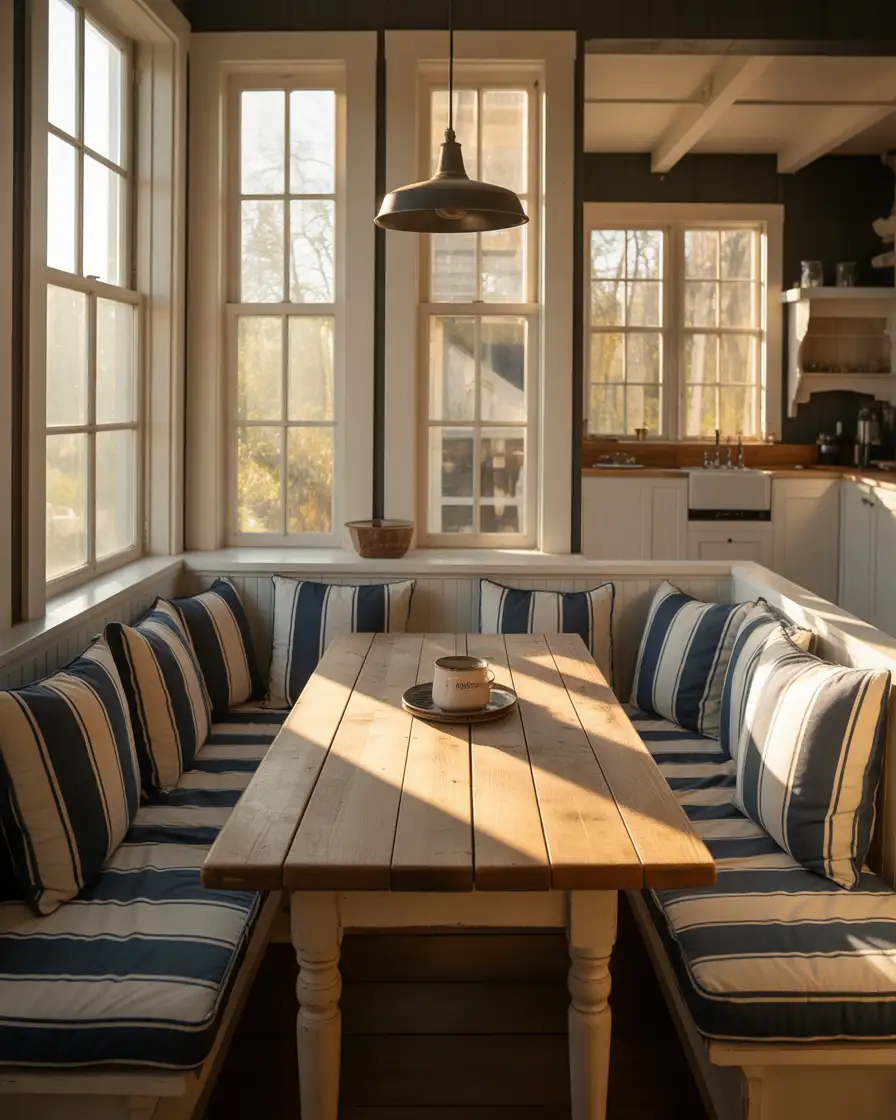
Where it works best: in eclectic rustic kitchens that blend farmhouse and industrial elements, or in homes where different metals already exist in adjacent rooms and forcing cohesion would feel artificial. The mistake many make is mixing finishes within single elements—like a faucet with a brass body and chrome handles—which reads as confused rather than intentional. Stick to one finish per piece, but vary across the room. Unlacquered brass and oil-rubbed bronze are particularly forgiving choices, as they develop a patina that makes exact matching less critical.
Conclusion
These rustic kitchen ideas represent the current thinking about how to create spaces that balance beauty with functionality, tradition with innovation, and polish with the kind of lived-in warmth that makes a kitchen feel like home. Whether you’re drawn to the moody sophistication of dark cabinetry, the sun-soaked palette of Italian countryside design, or the practical elegance of open pantry storage, the unifying thread is authenticity—choosing materials, finishes, and layouts that reflect how you actually cook and live rather than adhering to rigid design rules. We’d love to hear which of these ideas resonates most with your vision or what unique rustic elements you’ve incorporated into your own kitchen. Share your thoughts and experiences in the comments below, and let’s continue the conversation about creating kitchens that truly feel like the heart of the home.