As a result of the private nature of secret gardens, the relaxation experience located in your backyard has recently become very popular in the U.S. As a result of this, and with the help of sites such as Pinterest, many Americans have started trying to recreate their backyard to transform it into a private magical garden consisting of lush hidden places of vintage charm. Colored with living plants such as those in Johanna Basford’s color books, it can become your own enchanted garden sanctuary. These pavilion reading nooks, hidden among climbing roses, also double as magical places to escape. Here, you can relax and read a book as well and enjoy the peace of a secret garden all to yourself. You can also relive the garden fairy tale as a private place to escape to. These descriptions also detail all the ways you can add your own personality to your secret corner for peace.
1. Vintage Garden Gate Entrance

A vintage gate draped in climbing jasmine or wisteria instantly sets the tone for a secret garden experience. This classic design element works beautifully as a standalone feature or as the entrance to a hidden courtyard, creating that sense of discovery every time you step through. Pair weathered wood or wrought iron with overgrown vines for an authentic, lived-in look that feels like it’s been there for generations. The aesthetic combines old-world romance with natural abundance, perfect for creating a dramatic first impression.
In the American South and Pacific Northwest, homeowners often source reclaimed gates from architectural salvage yards, which typically run $150-$400 depending on condition and craftsmanship. The beauty of this approach is that imperfections—chipped paint, rusty hinges, uneven planks—actually enhance the charm rather than detract from it. Plant fast-growing clematis or climbing roses at the base in spring, and by summer you’ll have that coveted overgrown look that makes guests feel like they’ve stumbled upon something truly special.
2. Moss-Covered Stone Pathway

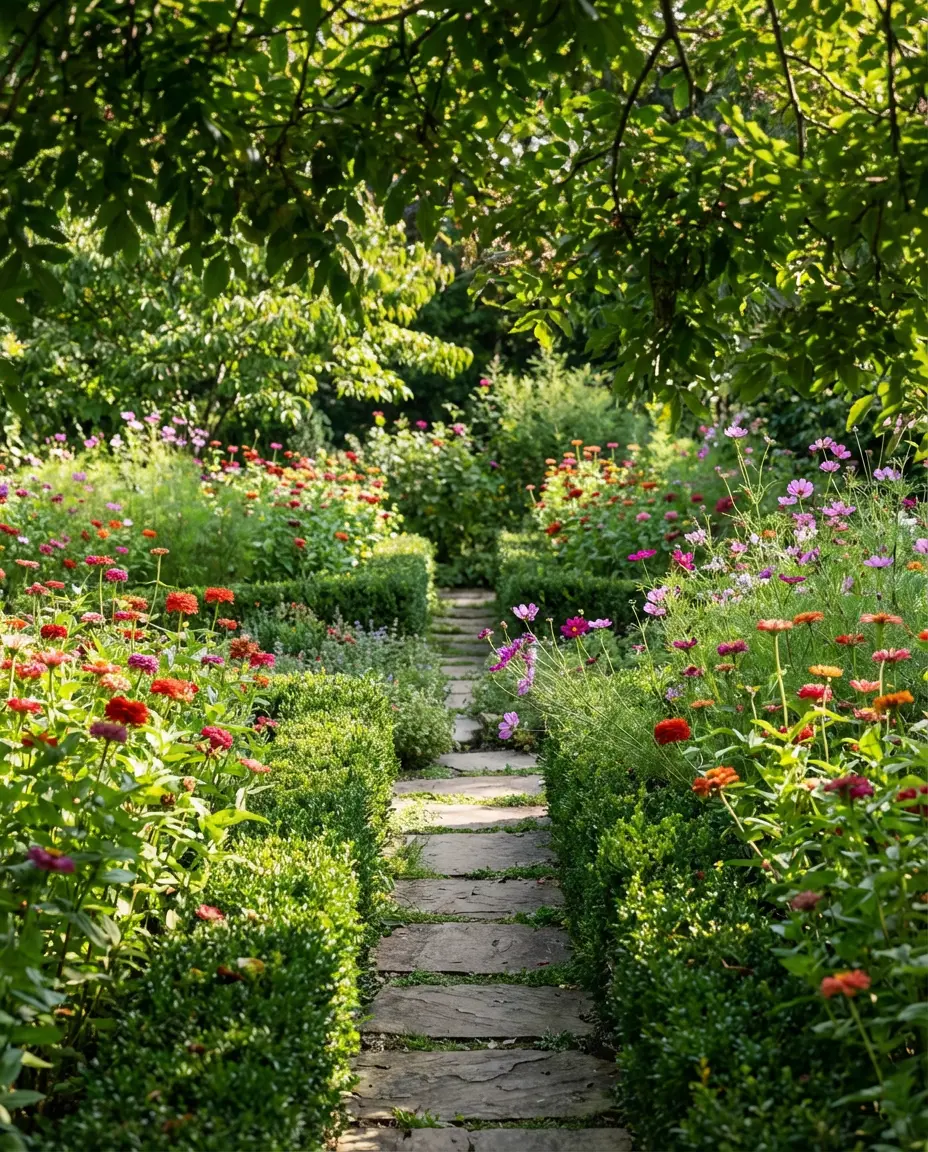
Nothing whispers “secret garden” quite like a winding stone path softened by emerald moss growing between the cracks. This timeless backyard feature guides visitors deeper into your garden while creating visual rhythm and texture underfoot. The contrast between hard stone and soft moss adds dimension, and the slightly imperfect, organic layout feels more discovered than designed. It’s particularly stunning in shaded areas where moss thrives naturally, creating that cool, mysterious atmosphere you’d find in a Kdrama forest scene. 
A common mistake is trying to force moss to grow in full sun or poorly draining soil—it simply won’t take. Instead, choose naturally shady spots with good moisture retention, like the north side of your house or under mature trees. Pacific Northwest and New England gardeners have the easiest time establishing moss, while those in drier climates might consider Irish or Scotch moss varieties that tolerate more sun. You can even transplant moss from other areas of your yard or purchase it in sheets from specialty nurseries.
3. Hidden Reading Nook with Climbing Roses

Imagine settling into a weathered wooden bench surrounded by fragrant climbing roses, completely enclosed by greenery—this is the kind of intimate retreat that turns a simple backyard into a personal sanctuary. Position your seating where it’s partially screened by tall perennials or a trellis structure, creating that essential sense of seclusion. Add vintage cushions in faded florals or soft linens, and you’ve got a space that invites hours of quiet contemplation or leisurely afternoon reading. 
Where it works best: corners of the yard that already have partial privacy from fencing or mature plantings, typically 8-10 feet from the main garden path. Many American homeowners underestimate how quickly climbing roses establish—David Austin varieties like ‘New Dawn’ or ‘Zephirine Drouhin’ can cover a modest arbor in just two seasons. The key is choosing thornless or nearly thornless varieties for seating areas, ensuring you can relax without worrying about scratches when you reach for your coffee or adjust your position.
4. Secret Garden Wedding Ceremony Space

Transform a hidden corner of your property into an enchanting wedding venue that feels worlds away from everyday life. The wedding theme centered around secret gardens has exploded on Pinterest, with couples seeking intimate ceremonies surrounded by lush blooms, vintage furniture, and romantic candlelight. Create a natural aisle using low hedges or flower borders, and position a weathered arch or garden folly as the ceremony focal point. The overgrown, slightly wild aesthetic provides the perfect backdrop for vows that feel deeply personal and magical. 
My neighbor opted to host a daughter’s wedding celebration in their backyard this past June. Rather than spending time trimming the rose bushes and hedges in the backyard, they decided to turn the wild rose hedge into a focal point. to which guests walked through grand rose arching to the wedding site and they all remarked they we stepping in to a narnia like setting. The wedding was one of the most memorable celebrations and only cost a little over 800 dollars. Goes to show that even the most memorable wedding spaces come from trimming backyard over-the-top manicured vibes to even a wild garden personality.
5. Whimsical Garden Playhouse for Children

A small wooden playhouse tucked between flowering shrubs becomes a magical kingdom for children, offering the kind of imaginative play space that creates lasting memories. Paint it in soft, Sherwin Williams colors like ‘Sea Salt’ or ‘Alabaster,’ then let climbing vines gradually soften the edges for that storybook cottage feel. Position it where you can see it from the house but far enough to give kids a sense of independence and adventure. The surrounding garden can include child-friendly plants like lamb’s ear, snapdragons, and cherry tomatoes they can pick themselves.
This works particularly well in suburban backyards where you have 400-600 square feet to dedicate to a children’s zone. American parents increasingly value outdoor play spaces, and a garden playhouse serves multiple purposes—a fort, a reading hideaway, a nature classroom, and eventually a potting shed when the kids outgrow it. Choose rot-resistant cedar or treat pine with child-safe sealant, and consider adding a small covered porch for rainy day play. Budget around $600-$1,200 for a quality prefab option, or go DIY for roughly half that cost.
6. Overgrown Fountain Centerpiece

An antique or antique-style fountain surrounded by billowing ferns and trailing ivy creates instant atmosphere in any secret garden design. The sound of trickling water adds sensory depth while attracting birds and beneficial insects, making your space feel alive and vibrant. Choose a weathered stone or cast iron design rather than modern materials—the patina and moss that develop over time are exactly what you want. Position it at the intersection of pathways or as the surprise focal point at the end of a winding garden walk. 
Practical Insight: Many people who have a fountain placed on their properties or gardens tend to worry about how much electricity and water costs there will be to operation. However, modern recirculating pumps use even less energy than a 60-watt bulb, so it’ll be no more than $5 a month to run a fountain all day long. In colder climates, winterization becomes more of a priority, especially in the Midwest and Northeast where you have to drain and cover them before the first hard freeze so that they don’t crack. Valley and West Coast gardeners can run theirs year-round which is something worth considering when weighing the overall investment value and enjoyment that you’ll get.
7. Enclosed Garden Room with Walls of Green

Create an actual outdoor room using tall hedges, trellises covered in jasmine, or a combination of both to form living walls. This aesthetic approach gives you complete privacy and makes even a small suburban lot feel like a sprawling estate. Add gravel or brick flooring, vintage garden furniture, and perhaps a chandelier hanging from a tree branch for unexpected elegance. The enclosed feeling transforms your garden from something you walk through into a destination where you want to linger for hours. 
This concept works best in properties with at least 300 square feet to dedicate, though you can create a convincing version in smaller spaces using fast-growing evergreen shrubs like Leyland cypress or bamboo (contained in barriers to prevent spreading). Many American homeowners in dense neighborhoods use this technique to carve out privacy without the expense or permanence of installing tall fencing. Expert tip: plant your hedge walls in a gentle curve rather than straight lines—the irregular shape feels more organic and actually makes the space feel larger by hiding the true dimensions.
8. Vintage Bench Beneath a Flowering Tree

Position a weathered wooden or cast iron bench directly beneath a flowering tree like dogwood, cherry, or magnolia for one of the most romantic spots in any secret garden. When the blooms appear in spring, you’ll sit under a canopy of petals that eventually drift down like snow, creating those Pinterest-worthy moments everyone dreams about. The dappled shade makes this the perfect reading spot in summer, while in fall the changing leaves provide a completely different but equally beautiful experience. Choose a bench with ornate details or distressed paint that looks like it’s been there forever. 
Real homeowner behavior shows that these benches often start as decorative elements but quickly become the most-used spots in the entire yard—people gravitate toward them for morning coffee, phone calls with friends, or just quiet observation of the garden. The key is choosing a tree that blooms at the time you’ll use your garden most. Southerners might prefer crepe myrtle for summer color, while Northeast gardeners love the early spring show of cherry or crabapple. Just make sure the bench is set back far enough that you won’t be sitting directly on surface roots as they mature.
9. Johanna Basford-Inspired Botanical Borders

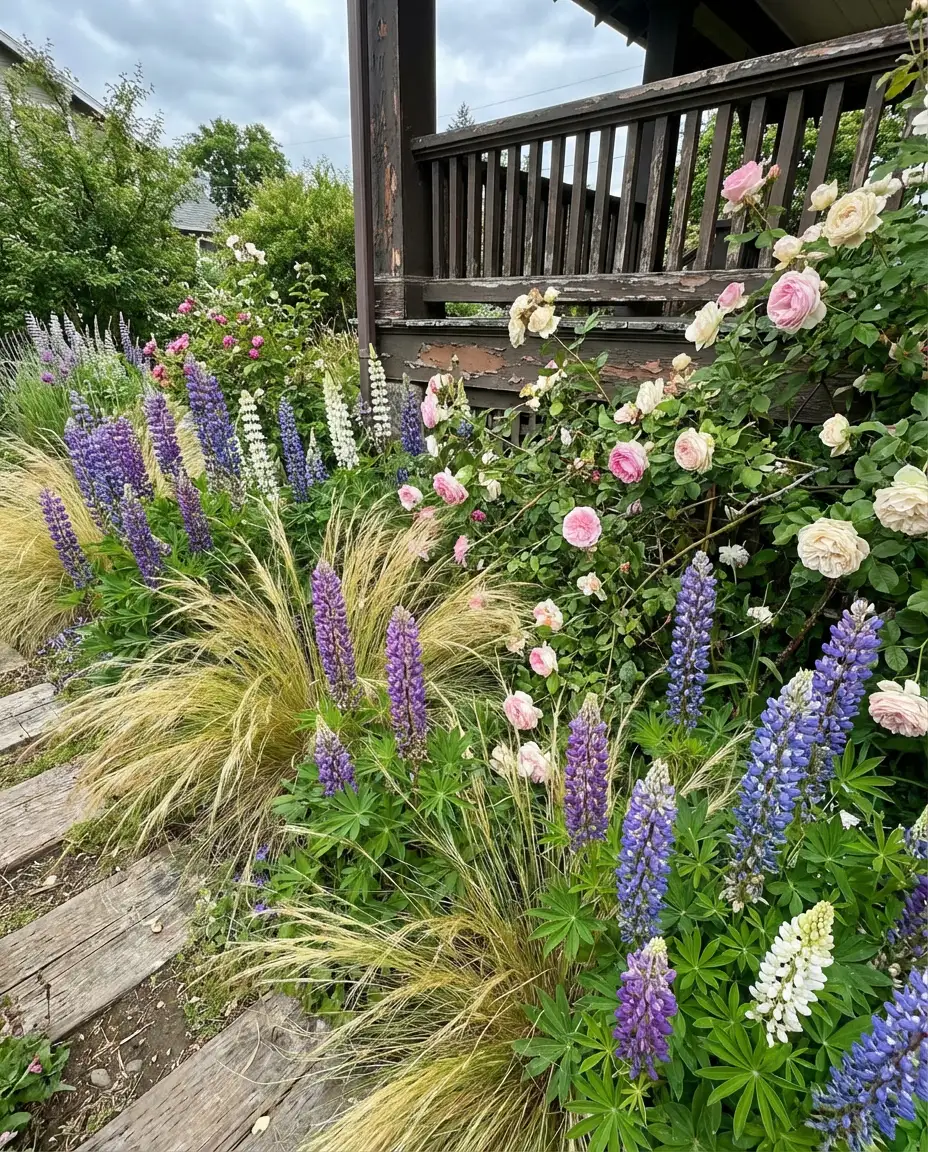
Channel the intricate, layered beauty of a Johanna Basford coloring book page by creating densely planted borders that overflow with different textures, heights, and bloom times. Mix cottage garden favorites like foxglove, delphinium, and lady’s mantle with feathery grasses and trailing ground covers for that collected-over-time look. The goal is abundance rather than minimalism—every square foot should offer something interesting to discover, from tiny violets tucked beneath larger plants to climbing sweet peas winding through shrub roses. 
Budget angle: this layered, abundant look is actually more affordable than you’d think because you’re using more perennials and self-sowing annuals rather than expensive specimen plants or hardscaping. Start with a dozen core perennials (about $100-150 from a good nursery), let them establish for a season, then divide and fill in gaps the following year. Add self-sowers like foxglove, columbine, and forget-me-nots, which cost maybe $20 in seeds but will naturalize and fill spaces for years with zero additional investment. Within three seasons you’ll have that overflowing illustration-worthy look at a fraction of what formal landscaping would cost.
10. Moonlight Garden with White and Silver Plants

Design a section of your secret garden specifically to glow in evening light by using plants with white flowers and silver foliage. White roses, gardenias, nicotiana, jasmine, and moonflower all shine in twilight, and many release their strongest fragrance after sunset. Add lamb’s ear, artemisia, and dusty miller for silver foliage that catches moonlight beautifully. This aesthetic dark garden concept is perfect for those who enjoy their outdoor spaces primarily in the evenings after work.
This works best along the edges of patios or near seating areas you use for evening entertaining, particularly in Southern and Southwestern climates where outdoor living extends well into the night. Many American gardeners are surprised to learn that white gardens actually require less supplemental lighting than colorful ones—the pale flowers and foliage naturally reflect available light from windows, street lamps, or even a quarter moon. Plant night-blooming jasmine or angel’s trumpet near bedroom windows for natural aromatherapy that drifts in on summer breezes.
11. Repurposed Vintage Door as Garden Feature

Mount an antique door in the middle of your garden—not as an entrance to anything, but as pure architectural whimsy—and watch it become the conversation piece everyone photographs. You can prop it in a freestanding frame surrounded by climbing plants or attach it to a short section of fence that doesn’t actually enclose anything. Paint it a standout color like Sherwin Williams’ ‘Naval’ or ‘Tricorn Black,’ or leave it weathered for authentic vintage appeal. The surreal element of a door to nowhere perfectly captures that Alice in Wonderland feeling secret gardens should evoke. 
American salvage yards and Habitat for Humanity ReStores are goldmines for vintage doors, typically priced between $25 and $100 depending on condition and architectural detail. I visited a garden in Portland where the homeowner had installed three different doors at various points along the garden path, each painted a different soft pastel and framed by different plantings—guests loved the playful, storybook quality it created. The technique works because it’s unexpected without being precious, adding vertical interest and structure while maintaining that slightly wild, spontaneous feeling that makes secret gardens so appealing.
12. Potting Shed Retreat

Transform a standard garden shed into a charming potting retreat with vintage details, abundant storage, and a workspace where you can actually enjoy garden tasks. Paint it in soft tones, add window boxes overflowing with trailing plants, and create a covered porch area for potting work even in light rain. Inside, maximize vertical storage with open shelving for clay pots, galvanized buckets, and your collection of vintage garden tools. This becomes your private domain within the secret garden—a place to escape, potter, and get your hands dirty.
Where it works best: positioned at the far end of the garden so it feels like a destination, preferably near water access for convenient hose hookup and plant watering. The most successful potting sheds in American backyards are those that serve multiple functions—garden storage, workspace, and quiet retreat all in one. Include comfortable seating, maybe a small speaker for music, and good task lighting so you can work into the evening. Many gardeners find that once they have a proper potting shed, they spend more time in the garden because tasks become genuinely pleasurable rather than awkward and uncomfortable.
13. Fairy Tale Trellis Tunnel

Start with a completed entrance to the garden and a set of five equally spaced arches to create a garden room. Add two more side arches five feet in front and parallel on the outside. Outside of them going in line, so you will create a rectangle with the other arches and a second set of five arches. Cover with a climbing plant for an entrance to a magical garden, then add an interior for a secret sitting space, a large circular sitting. 
Assessments by specialists: The key to successful subterranean plantings is selecting climbers with equivalent growth rates. If a vigorous wisteria is tunnel-planted with a slow-growing clematis, the clematis will invariably be overgrown and neglected. Ideal plant pairings for American gardens by region: for the South, Confederate jasmine with Lady Banks’ rose; for the temperate zone, ‘New Dawn’ roses with Clematis montana; for the West, bougainvillea with trumpet vine. A new tunnel is expected to take three years to fill completely, although significant coverage can be attained by the end of the second summer, provided the established and regularly fed plants are complemented with a good growth environment.
14. Garden Sanctuary for Baby Shower Celebrations

Your secret garden becomes the perfect venue for intimate baby shower ideas, offering natural beauty that requires minimal additional decoration. Set up a vintage table under tree shade, use garden flowers for centerpieces, and let the greenery provide the backdrop for this special celebration. The private, enclosed feeling makes guests feel like they’re attending something truly special rather than just another backyard gathering. Add soft seating on blankets or vintage chairs, and create a gift display area on a rustic bench or table surrounded by blooms. 
Common mistakes and how to avoid them: many people over-decorate when the garden itself is already the star. Instead of adding balloons and synthetic decorations that clash with the natural setting, work with what’s there—use garden roses and hydrangeas for arrangements, hang simple string lights or paper lanterns from branches, and choose linens and tableware in colors that complement your existing plantings. The most successful garden parties feel effortless because they embrace rather than compete with the outdoor setting. Have a backup rain plan, but don’t let fear of weather prevent you from using this beautiful space for celebrations.
15. Illustrated Garden Journal Corner

Create a dedicated outdoor spot where you can sit and sketch your garden, channeling the detailed drawing and painting style of botanical artists. Position a small table and chair where you have good light and inspiring views of your best plantings—this becomes your nature observation post. Keep watercolors, colored pencils, or your journal here in a weatherproof container, making it easy to capture the garden’s evolution through the seasons. The act of drawing what you’ve planted helps you notice details you’d otherwise miss and creates a beautiful record of your garden’s development. 
This appeals particularly to Americans who’ve discovered botanical illustration through adult coloring books and now want to engage more directly with nature. You don’t need artistic training—simple observational sketches and notes about bloom times, plant performance, and design ideas serve both creative and practical purposes. Many gardeners find that sitting quietly to draw or paint helps them actually see problems (pest damage, poor color combinations, gaps in the border) they’d miss during quick walk-throughs. It transforms garden maintenance from a chore into a meditative practice that feeds both the space and your creativity.
16. Dress to Impress Garden Party Zone

Designate one section of your secret garden as your dress-to-impress entertaining space—the area where you’ll host special occasions that call for a more polished aesthetic. Invest in permanent features here like elegant paving, a beautiful arbor, or a vintage fountain that anchors the space. Surround this zone with your showiest plants: tree peonies, dramatic alliums, spectacular roses, and architectural plants like acanthus or cardoons. When guests arrive for celebrations, this is where they’ll naturally gather and where photos will be taken. 
American lifestyle context: outdoor entertaining has become significantly more elaborate post-pandemic, with people investing in their backyards as extensions of indoor living space. This dedicated entertaining zone lets you have both—wild, cottage-style gardens in most areas, but one refined spot that can handle dinner parties, milestone celebrations, or even small weddings without looking too casual. The contrast actually makes both areas more effective: the manicured party space feels more special because of the surrounding abundance, while the looser garden areas feel more relaxed by comparison.
17. Cozy Outdoor Movie Garden Corner

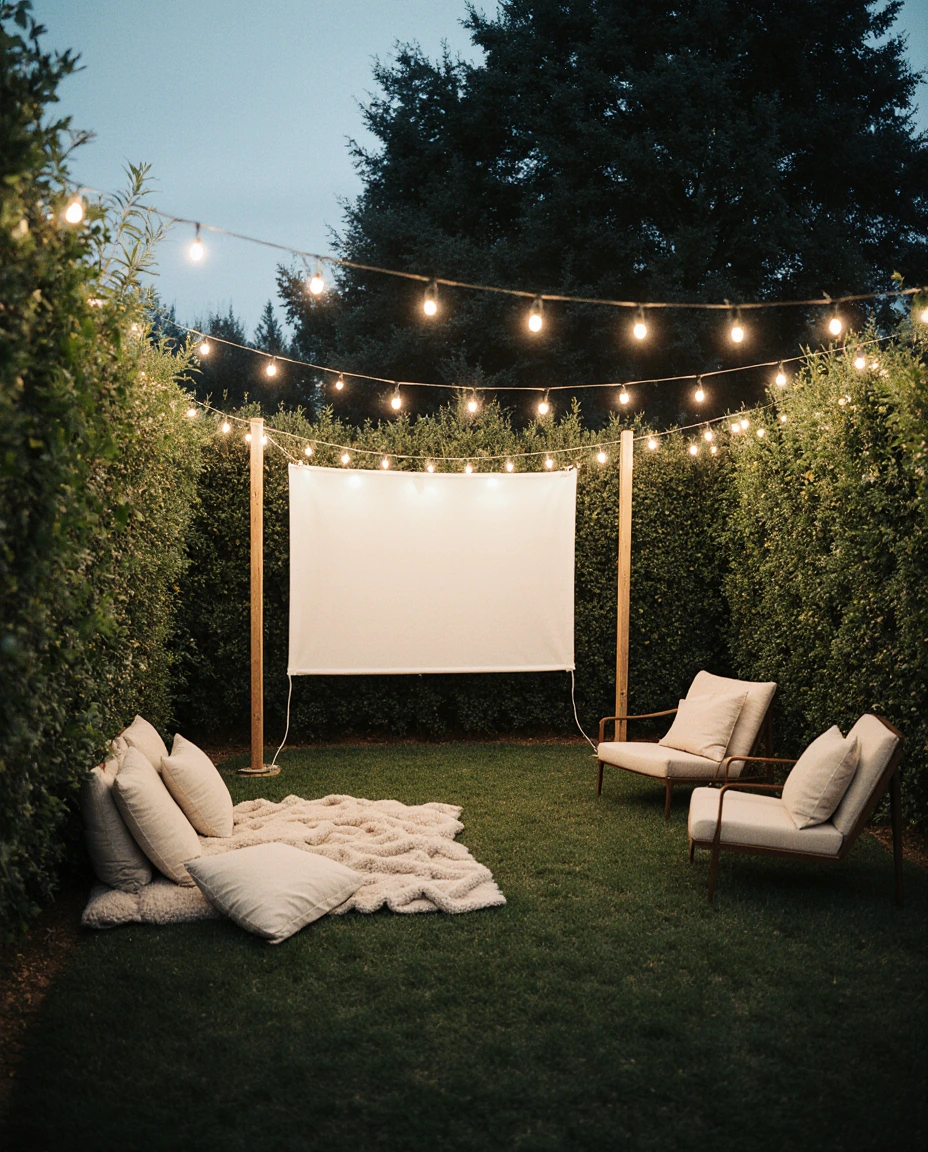
Set up a permanent or semi-permanent outdoor movie screening area within your secret garden, creating an unexpected entertainment space that feels magical after dark. Hang a white sheet or outdoor screen between two trees or against a garden wall, arrange comfortable seating on blankets and pillows, and string cafe lights overhead for pre-show ambiance. Position this in a naturally enclosed area where surrounding plants create walls, and the outdoor room feeling makes the experience more intimate. Include weatherproof storage nearby for projector equipment and cozy blankets. 
Where does this work best: areas where you cannot see \underline{street lights} or \underline{outdoor} \underline{skyscrapers}. Many American homeowners set these \underline{projector movie screens} up \underline{to create movie night traditions over the weekend} \underline{in} the summer. \underline{Secret} \underline{garden} \underline{settings} turn \underline{outdoor movie \text{backyard} night} into an\underline{event of wonder for} kids. \underline{These evenings \text{and events and gatherings} are memorable for kids. Adults and kids can both } appreciate this \underline{garden} entertainment \underline{option that\text{ relies upon a movie for entertainment} rather \underline{than} commercial movies}. [ID 77] [ID 78] \end{document}
18. Overgrown Garden Swing

Add a vintage-style tree swing or swinging garden bench in a place where blossoming climbing plants will drape over it and envelop it in greenery. For a swing to be completely and safely functional simply choose a nice tree at least 8-10ft in height, with a wide, horizontal limb at least 8-10ft in height. Every season the garden will be more integrated with the swing, and with some plants it will be completely hidden in the foliage. For safe swinging, put it in a small open area with soft ground covers like thyme or clover instead of bare dirt, further enhancing the garden. 
For safety, the swing needs to be properly installed using heavy-duty marine chain with the connections checked at least twice a year. Swings are great for all ages, and adults love rocking bench swings while reading or relaxing in the garden. Positioning these swings to have a view of the sunset or garden path adds to their appeal as a place for quiet meditation along with the fun for kids.
19. Secret Garden Coloring Book Reality

Bring the intricate, whimsical world of a coloring book to three-dimensional life by deliberately planting the kinds of detailed, layered scenes that appear in illustrated garden pages. Think of it as painting with plants—combine different leaf shapes, textures, and shades of green to create living compositions that would translate beautifully to pen and ink. Include architectural elements like vintage birdcages, weathered urns, decorative garden stakes, and winding paths that add structure to the abundant plantings. Every view should offer the kind of intricate detail that rewards close observation.
This approach particularly resonates with Americans who found solace in adult coloring books during stressful periods and now want to extend that meditative, detail-oriented appreciation into their actual gardens. Instead of broad sweeps of single plants, you’re creating small vignettes throughout the space—each one worthy of sketching or photographing. The method naturally leads to a collected, personal garden that reflects your specific interests and discoveries rather than following a rigid design plan, which is exactly the kind of authentic, evolving space that feels most like a true secret garden.
20. Garden Party Lighting with Vintage Fixtures

String vintage-style Edison bulbs, lanterns, or chandeliers throughout your secret garden to create enchanting party ambiance after dark. Hang them from tree branches, drape them along pergolas, or suspend them over dining areas to define outdoor rooms with light. The warm glow transforms the garden into an entirely different space at night—shadows deepen, textures become more pronounced, and familiar plants take on mysterious new forms. Choose fixtures that can weather the elements or be easily brought inside, and consider solar options to avoid running extension cords through your planting beds. 
Real homeowner behavior shows that people use their gardens far more once they’ve installed good lighting—what was previously a space abandoned after sunset becomes a regular evening destination for drinks, conversation, or simply relaxing. The investment is modest (quality outdoor string lights run $30-80 for a 25-foot strand), but the impact on how you actually live in your space is substantial. Battery-powered LED candles in lanterns add supplemental glow without fire risk, perfect for areas close to plantings where open flames would be concerning.
21. Nursery-Inspired Children’s Garden Learning Space

Create a dedicated children’s zone within your secret garden that combines the gentle, playful nursery aesthetic with hands-on nature learning opportunities. Include raised beds at kid height for growing easy vegetables and flowers, a digging patch with child-sized tools, and perhaps a small greenhouse or cold frame where children can observe plant growth up close. Paint features in soft, cheerful colors and add whimsical touches like painted rocks, fairy houses, and wind chimes. The goal is encouraging curiosity and stewardship while making gardening feel like play rather than work. 
Budget perspective: this doesn’t require expensive playground equipment or elaborate structures—focus spending on quality soil for the growing beds (about $40-60 to fill two 4×4 beds) and child-appropriate tools (another $30-40 for a good set). Everything else can be DIY or repurposed: painted tire planters, homemade stepping stones with handprints, and twig trellises for beans and peas. The educational value is enormous—children who garden develop patience, responsibility, and genuine appreciation for where food comes from. Plus, they’re far more likely to eat vegetables they’ve grown themselves, making this garden investment pay dividends at the dinner table for years to come.
Conclusion
Your secret garden is more than just landscaping—it’s a living expression of your creativity and a daily retreat from the demands of modern life. Whether you implement just one of these ideas or combine several to create your own unique sanctuary, the key is starting now and letting your garden evolve naturally over time. Share your favorite secret garden ideas or your own hidden oasis transformations in the comments below—we’d love to hear how you’re bringing these magical spaces to life in your own backyard.