Small bedrooms have always had a way of inspiring big creativity—and in 2026, that’s more true than ever. Whether you’re squeezing style into a studio apartment, refreshing a guest room on a shoestring budget, or finally giving your shared space the romantic upgrade it deserves, Americans across the country are turning to Pinterest for fresh, achievable inspiration. This article rounds up the best small bedroom decor ideas for this year, covering everything from cozy minimalist setups to bold, colorful statements. Whatever your taste, your budget, or your square footage, you’ll find something here worth pinning—and actually doing.
1. Soft Neutral Layers for a Calm, Collected Look
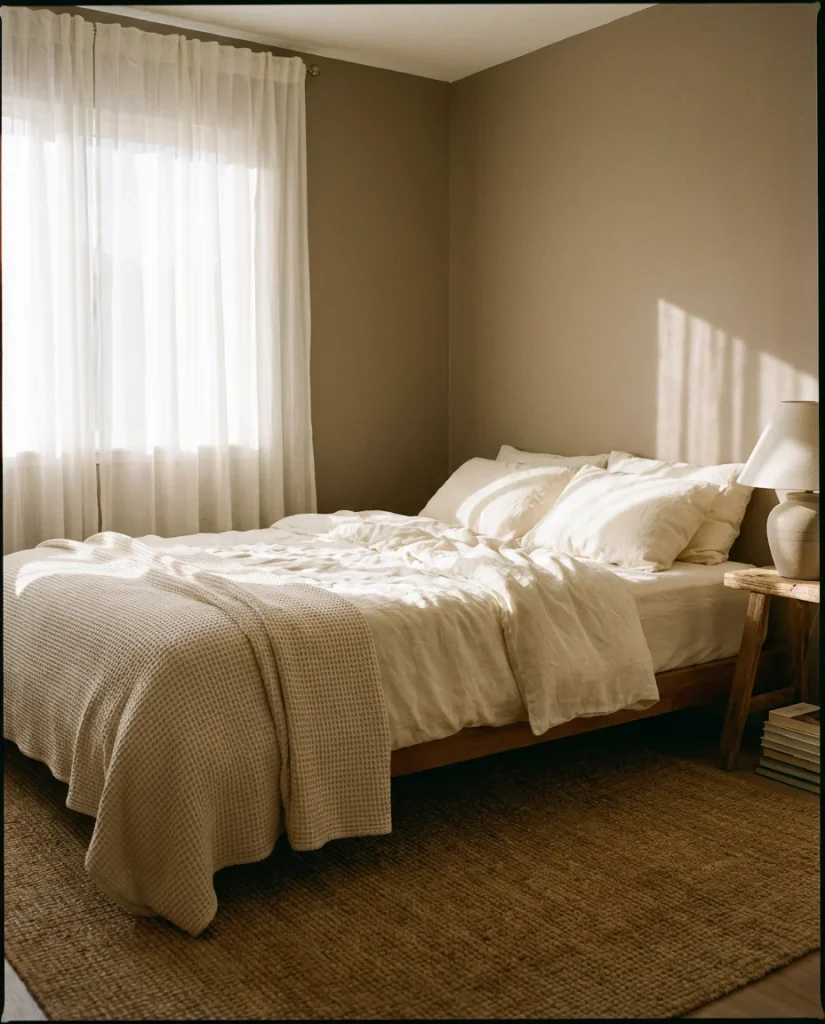
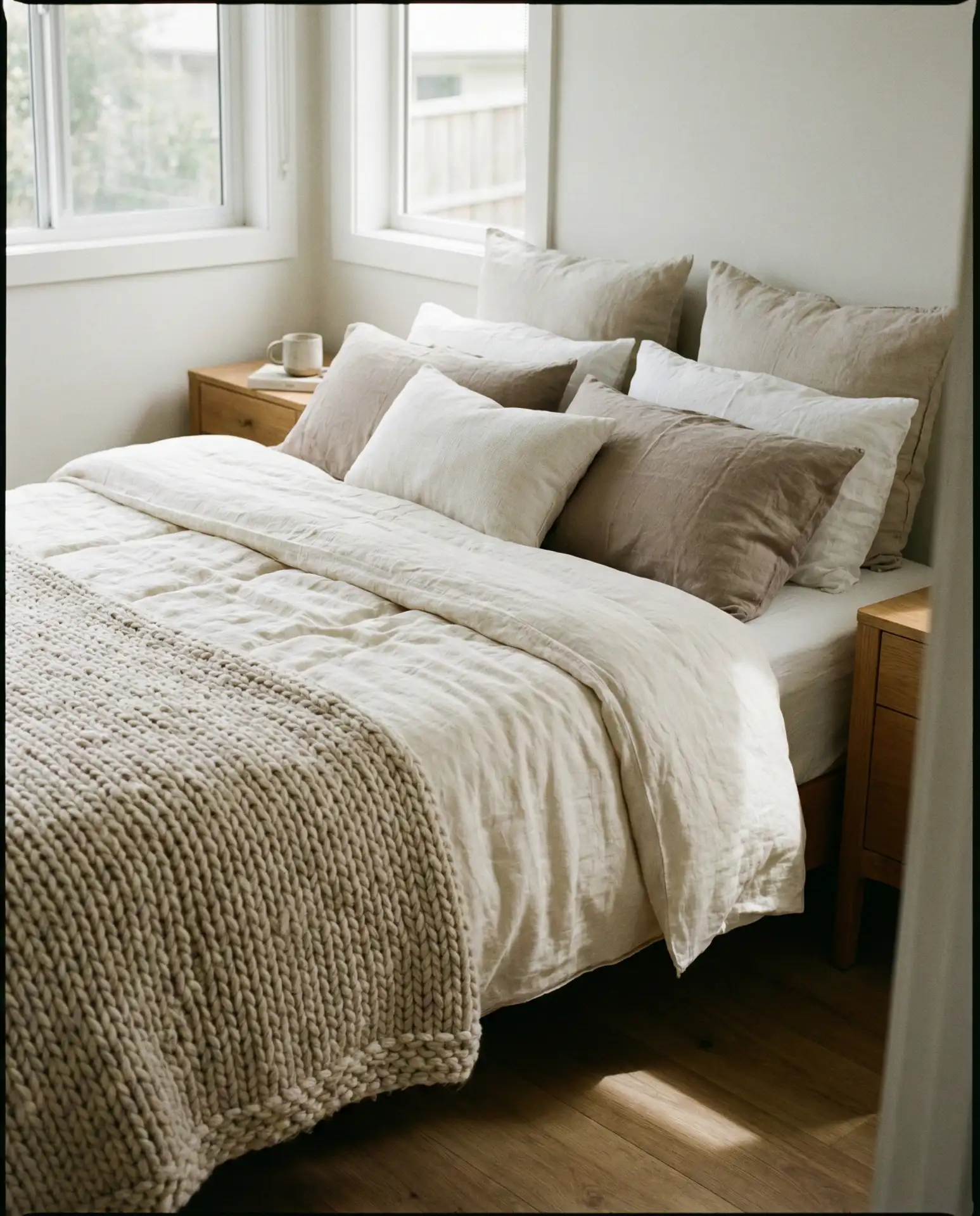
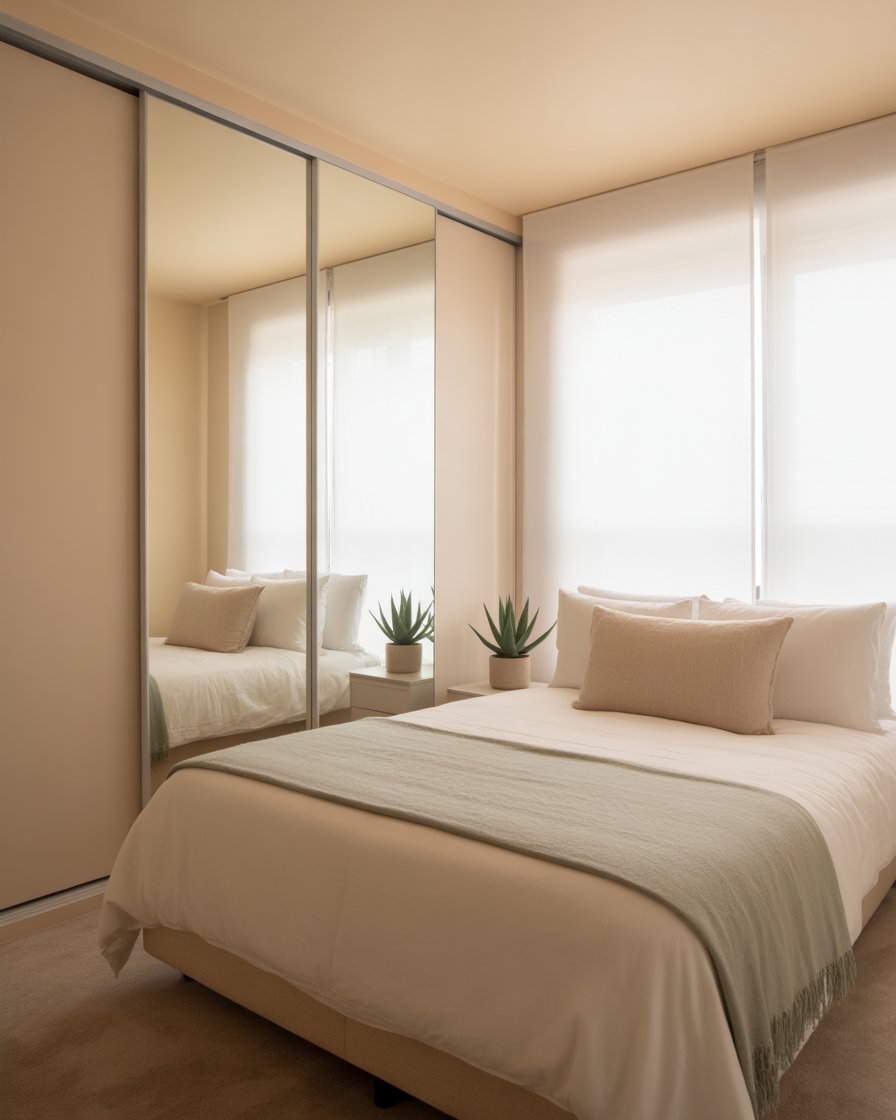
If there’s one word dominating bedroom mood boards right now, it’s “neutral.” Creamy whites, warm taupes, and soft greiges are replacing the stark grays of the last decade with something that actually feels livable. For small bedrooms, a neutral palette is a genuine space-expanding trick—when walls, bedding, and furniture read as one continuous wash of calm color, the eye travels farther, and the room feels less cramped. The key is layering textures: a linen duvet, a waffle-knit throw, and a jute rug. That’s what keeps the look warm instead of cold and clinical.
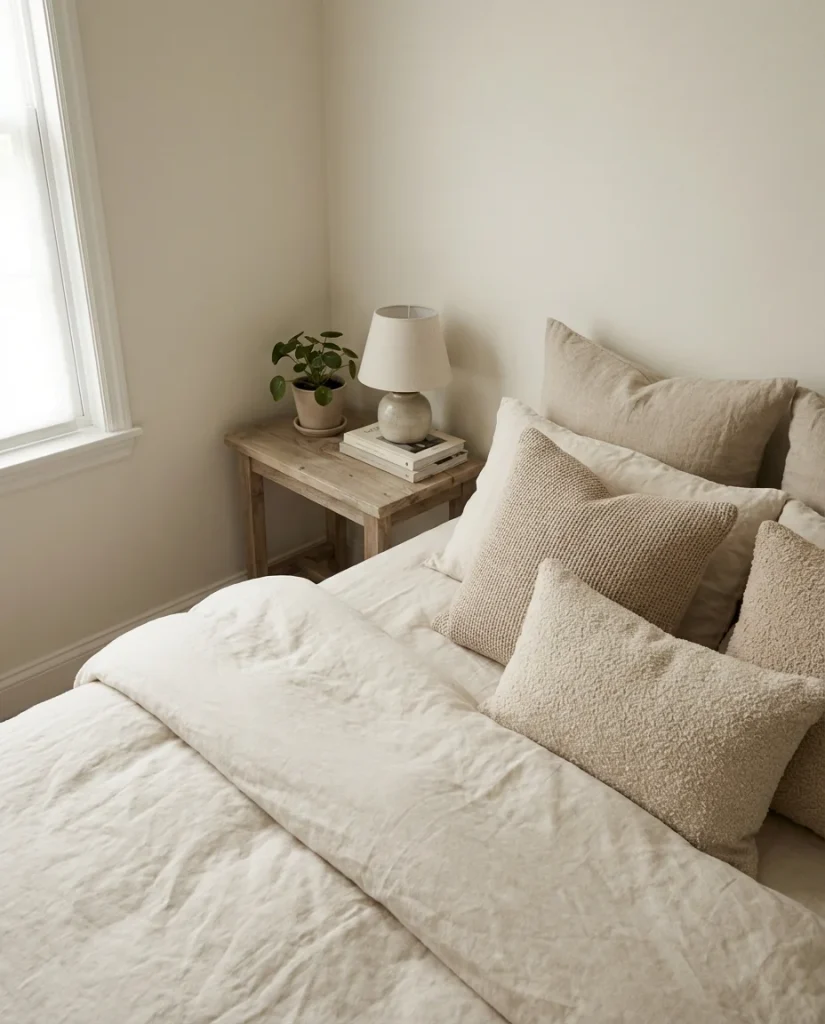
This approach works especially well in older apartments and homes where architectural quirks—an awkwardly placed window, a low ceiling—tend to fight with busier decor. By going neutral, you essentially call a truce. Interior designers often note that a room’s underlying bones read more beautifully when they’re not competing with pattern or strong color. Start with your largest surface (the bed) and work outward from there, keeping everything within the same warm or cool undertone family to avoid a muddy result.
2. Cozy Dark Walls That Make the Room Feel Intentional
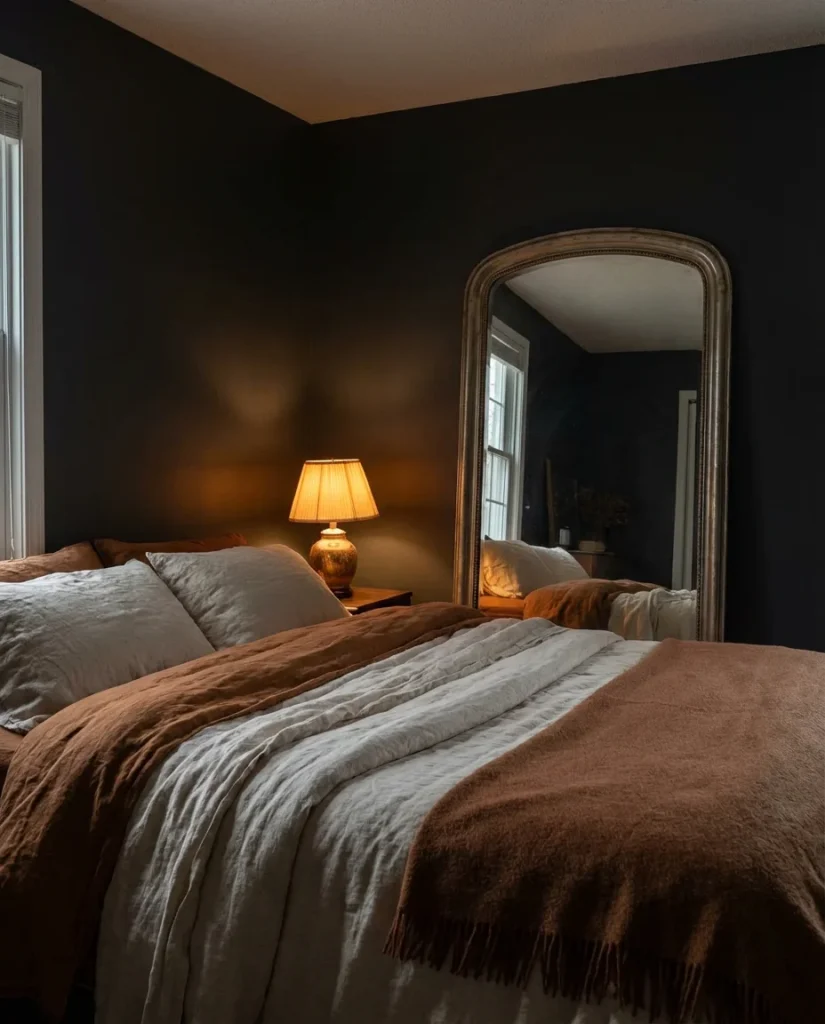
Dark walls in a small bedroom might sound counterintuitive, but the aesthetic dark movement on Pinterest has proven otherwise. Deep navy, forest green, and moody charcoal—these shades create a cocoon-like atmosphere that’s exactly what a bedroom should feel like. The trick is committing fully: paint the ceiling the same shade as the walls (or go one tone lighter), and suddenly you’ve got a room that feels like a boutique hotel suite rather than a cave. Pair with warm brass fixtures and creamy bedding for contrast that sings.
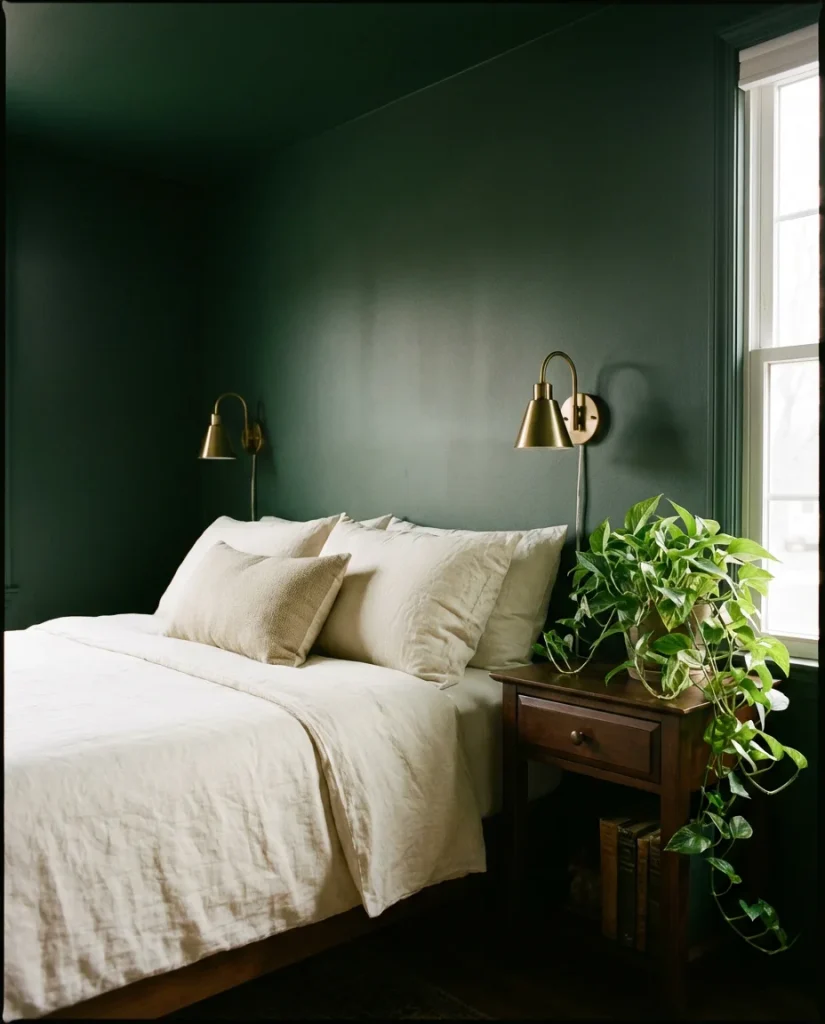
One common mistake people make with dark bedrooms: they over-light them with harsh overhead fixtures, which defeats the whole purpose. Instead, layer your lighting with bedside sconces or low lamps that cast a warm, amber glow. Dimmer switches are a ten-dollar investment that transforms the entire feeling of a dark room. The goal isn’t to brighten it up—it’s to let the darkness work for you, creating that cozy sanctuary feeling that makes you actually want to go to bed at a reasonable hour.
3. Romantic Setup Ideas for Couples Who Share a Tiny Space
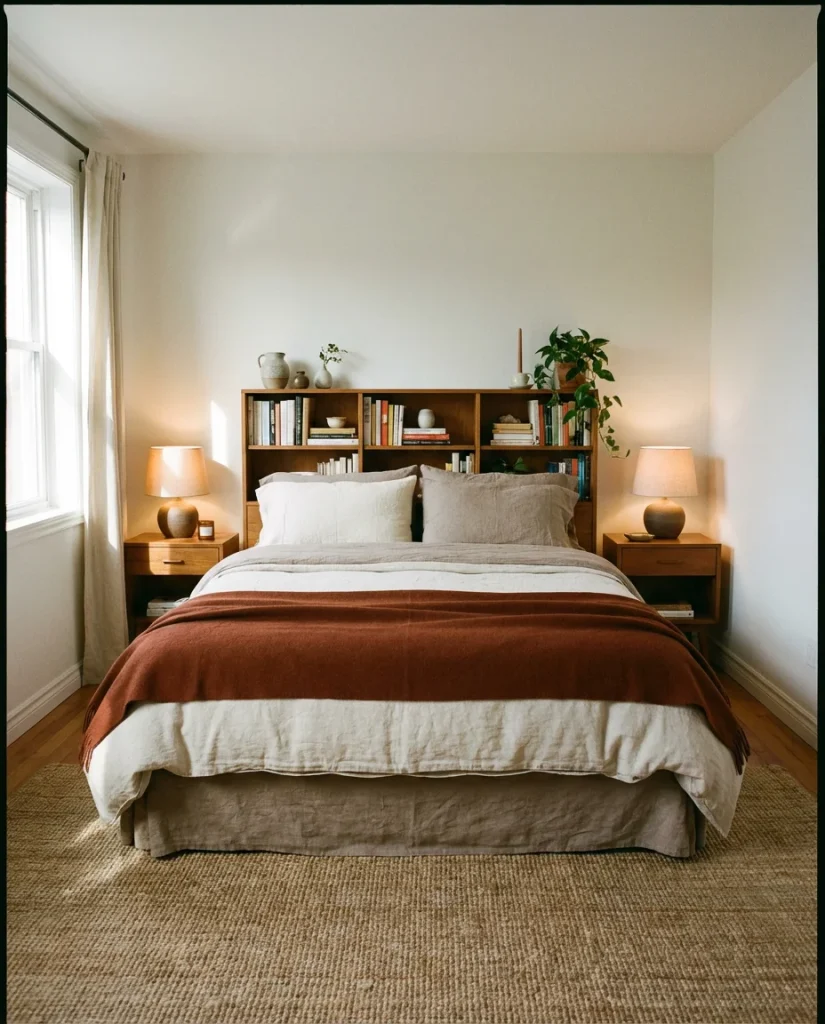
Decorating a small bedroom as a couple’s space requires a little more intention than going solo. Both people need to feel at home—which means balancing aesthetics, storage needs, and that all-important sense of togetherness without sacrificing personality on either side. One approach that consistently works: pick one strong design anchor (a headboard wall treatment, a bold rug, or a statement light fixture) and keep everything else quieter. That way, the room has a focal point you both chose together, and the rest of the space can flex around individual tastes.
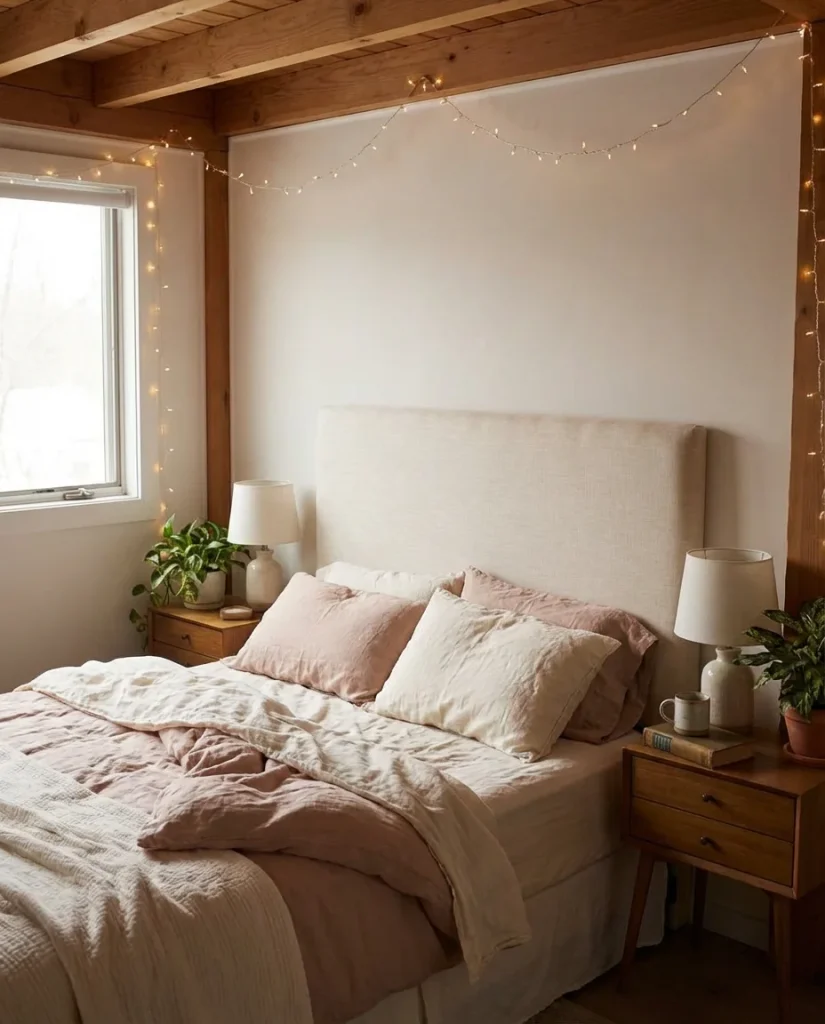
A real homeowner in a 280-square-foot Brooklyn studio shared that the moment she and her partner agreed on a shared “no-clutter” rule for the bed area, their relationship with the space completely changed. It sounds simple, but establishing shared standards for what stays and what goes—especially in a room you both use every day—is the foundation of a bedroom that feels like a retreat for two instead of a storage unit with a mattress in it.
4. Budget Room Makeover With Thrift Store Finds
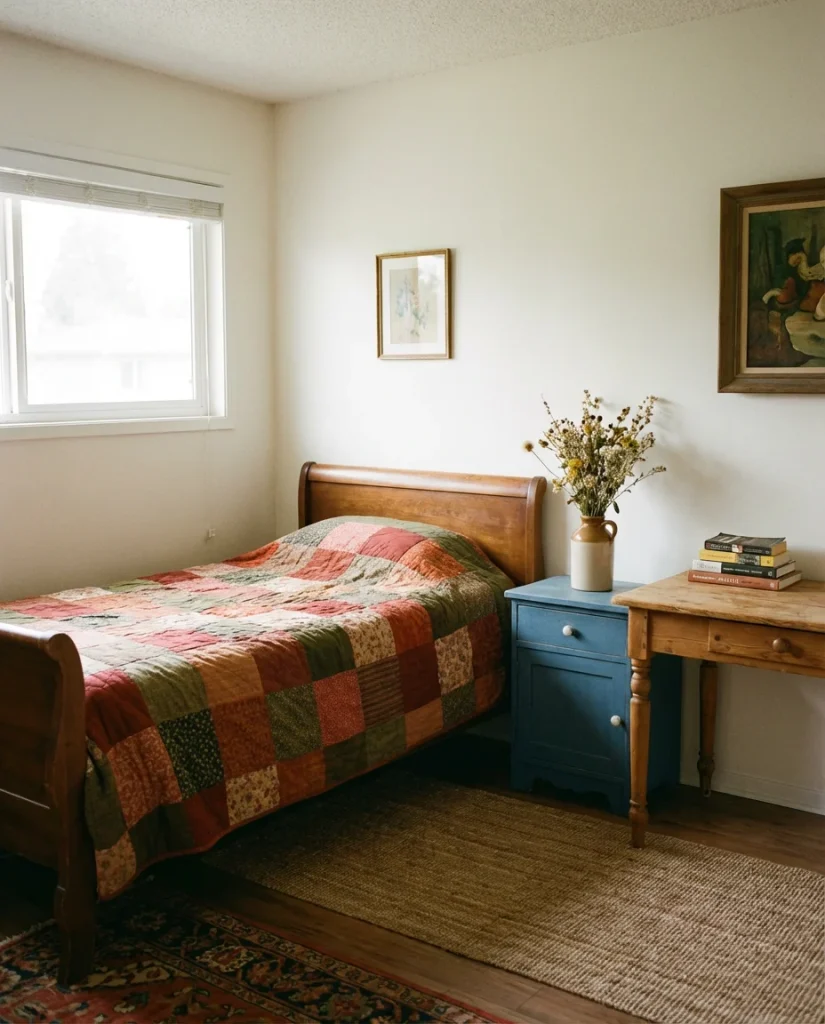
You don’t need a designer budget to transform a small bedroom—you need a good eye and a Saturday morning at a thrift store. The ideas on a budget movement have become a full Pinterest aesthetic of their own, and for good reason: thrifted pieces carry character that flat-pack furniture simply can’t replicate. A vintage wooden dresser painted in a matte earthy tone, a secondhand wicker mirror, and mismatched ceramic lamps—these layered imperfections are exactly what make a budget room look curated rather than cheap.
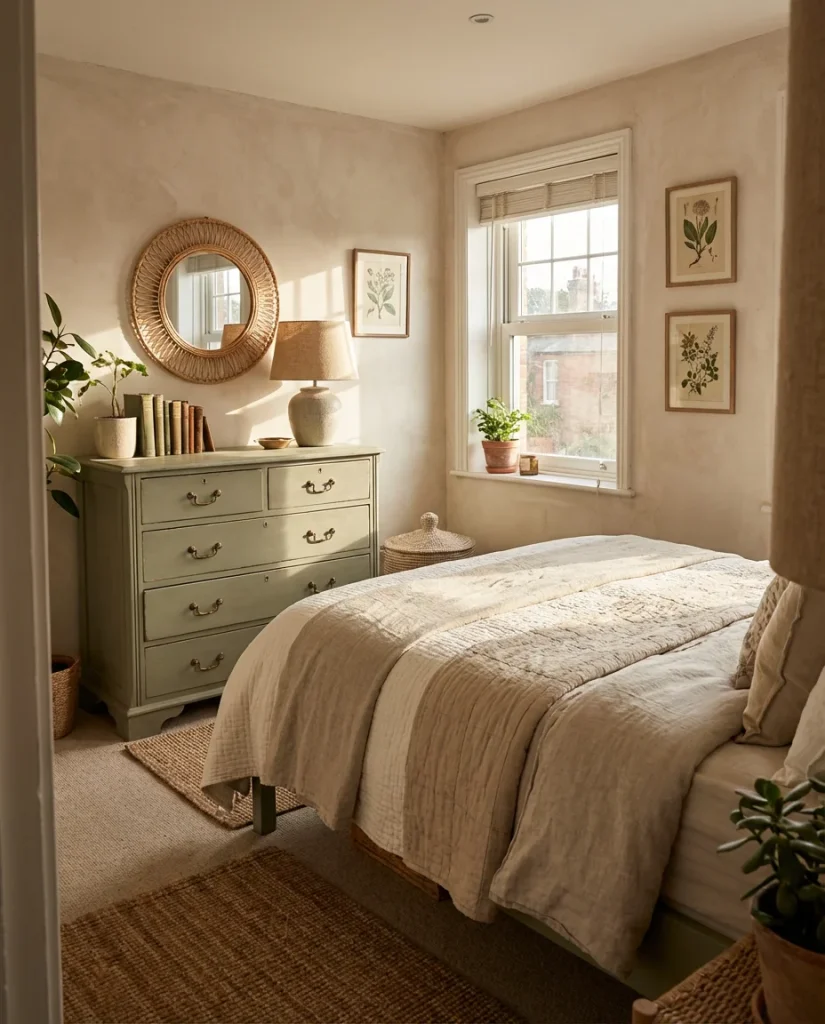
The smartest budget move for a small bedroom? Focus spending on the bed itself and DIY everything else. A quality mattress and a set of real cotton or linen sheets will do more for how you feel in your room than any decorative upgrade. From there, a $6 can of paint, some rearranged furniture, and a few swapped-in thrift finds can genuinely make the space feel new. Most budget room makeovers—easy transformations on Pinterest—cost under $150 total, and the before/after difference is often stunning.
5. Bohemian Bedroom With Layered Textiles and Warm Tones
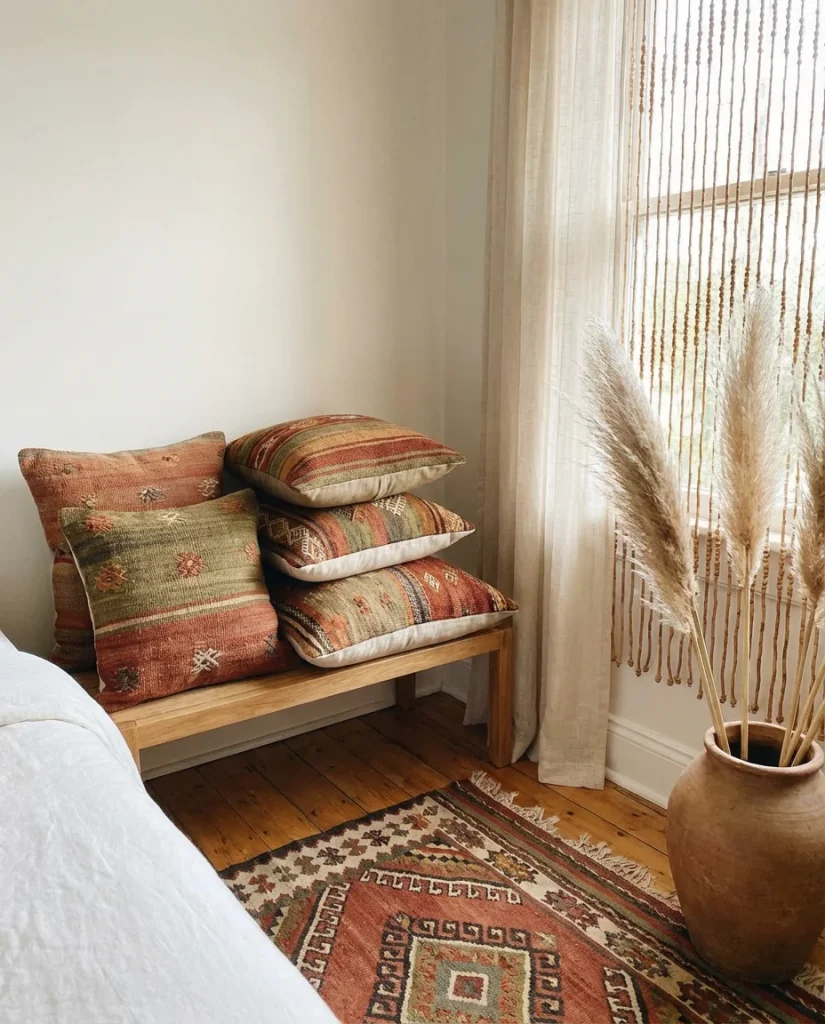
The bohemian bedroom aesthetic has never really left, and in 2026 it’s evolved into something a bit more refined—less maximalist clutter, more intentional warmth. Think macramé wall hangings that actually have scale, layered rugs in terracotta and rust, and bedding that mixes patterns thoughtfully rather than randomly. For small bedrooms, the boho approach works because it leans into the idea that a space doesn’t have to be minimal to feel calm. When every layer is chosen with intention, the result feels rich and personal rather than overwhelming.
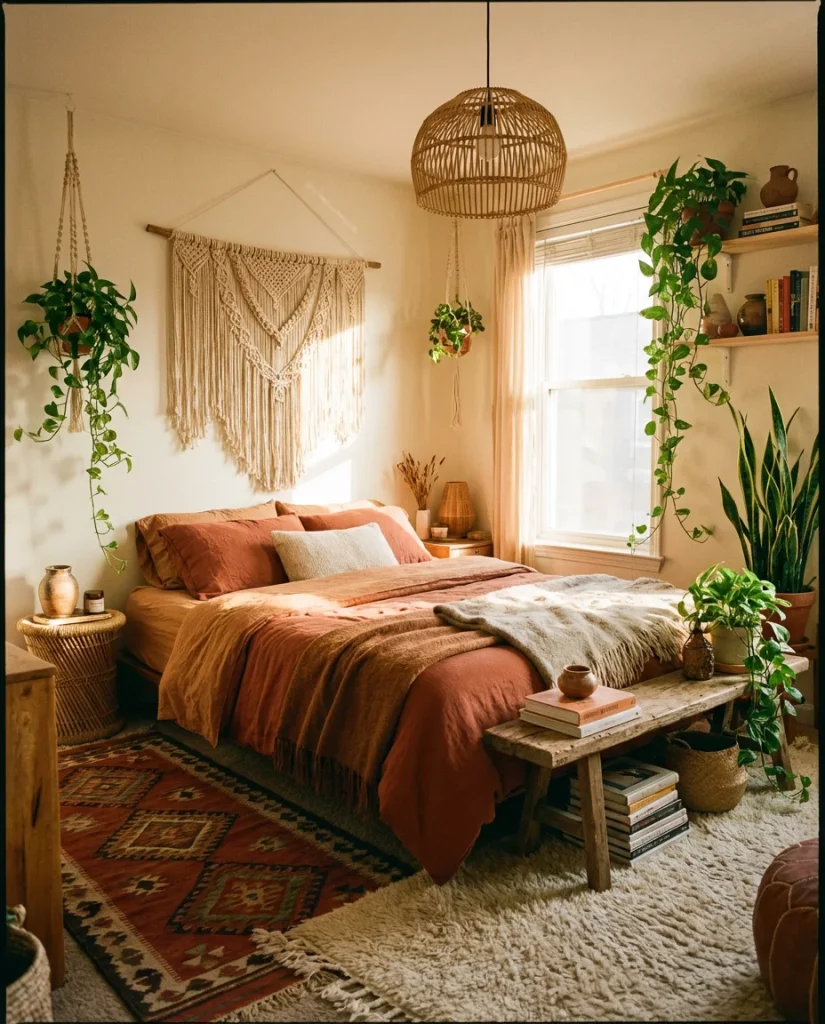
This style works best in bedrooms with natural wood floors or exposed wood beams—surfaces that already bring organic warmth. If you’re renting and working with beige carpet or laminate, ground the boho look with a large statement rug placed under the bed. Interior stylists often describe the boho layering technique as building from the floor up: rug, then bedding, then walls. That sequence prevents the common mistake of hanging art that competes with too-busy bedding, leaving the room feeling chaotic rather than collected.
6. Pink Bedroom That Feels Sophisticated, Not Juvenile
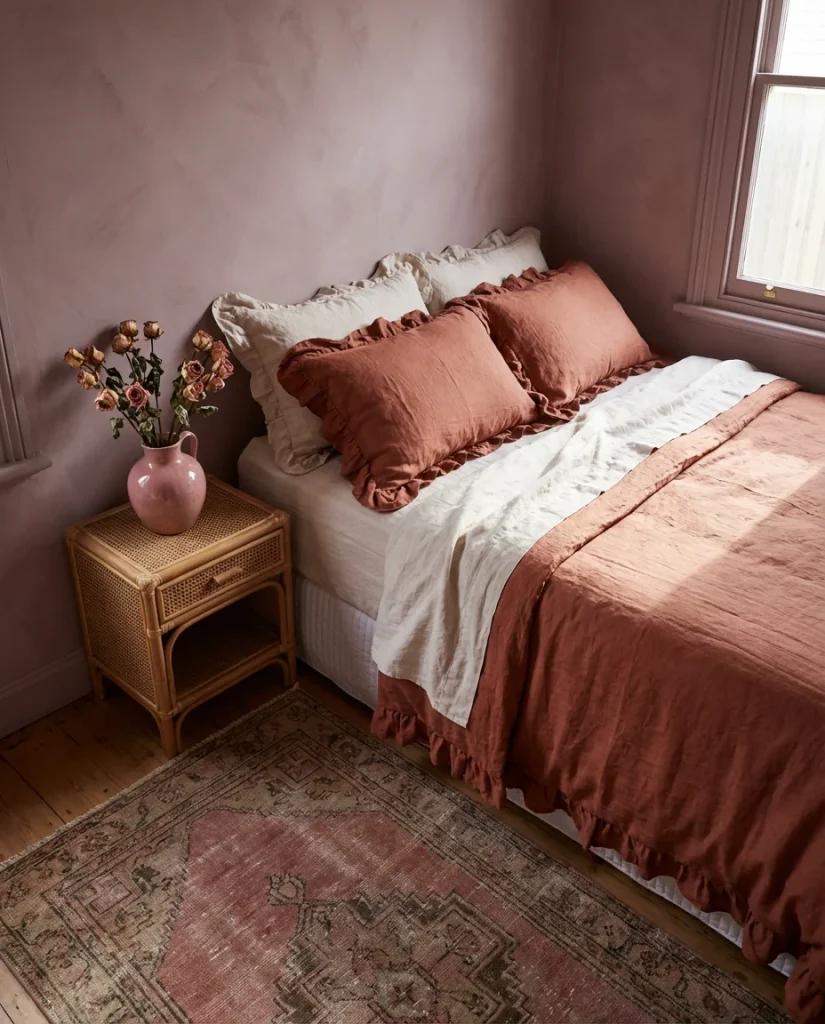
The pink bedroom had a cultural moment a few years ago and has only deepened since—moving away from bubblegum and candy tones toward dusty rose, terracotta blush, and antique mauve. These are colors that read as genuinely aesthetic in the best sense: thoughtful, warm, and seasonless. In a small bedroom, a single pink wall (especially behind the headboard) can do the heavy lifting of the whole room’s personality. Pair with warm wood furniture, cream textiles, and a touch of bronze or copper hardware for a look that feels grown-up and quietly luxurious.
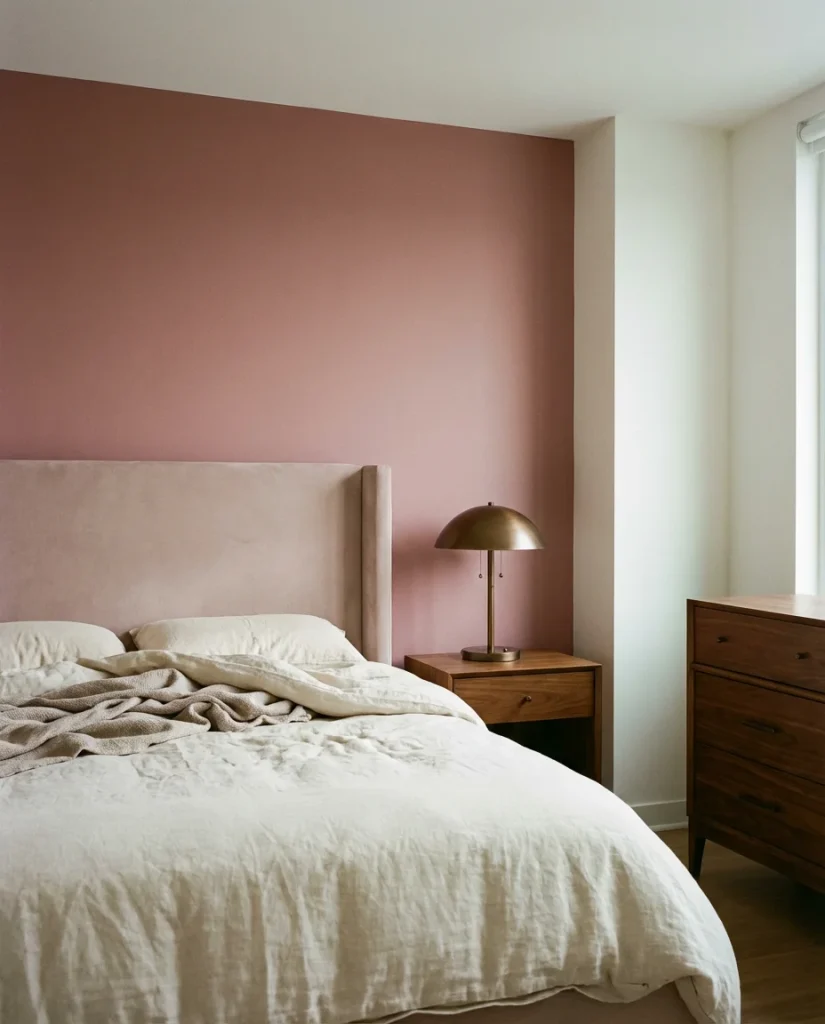
For anyone hesitant about committing to pink walls, start with pink bedding against white or cream walls—it reads just as intentional and is far easier to reverse if you change your mind. Many homeowners find that once they try the pink, they can’t imagine going back. There’s genuine psychological research supporting warm pink tones as calming and sleep-promoting, which makes the bedroom an especially logical place to experiment with the color.
7. Indian-Inspired Bedroom Decor With Rich Color and Pattern
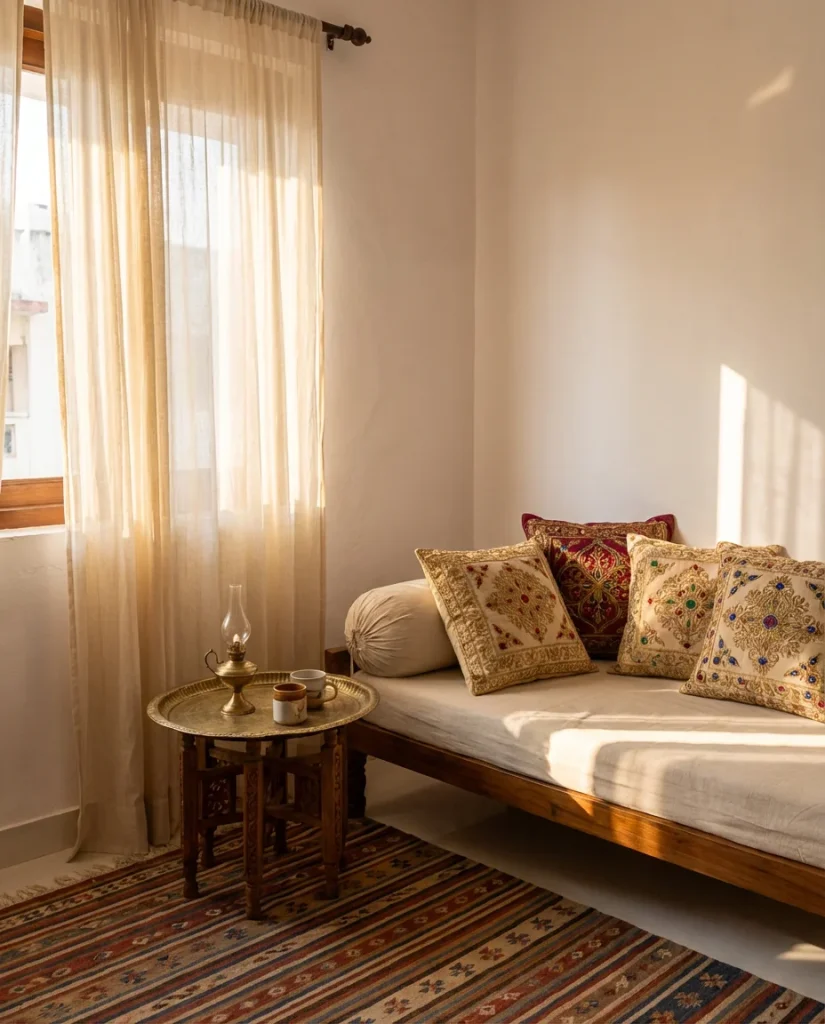
Indian and ideas indian-influenced bedroom aesthetics are having a significant moment in American interiors right now, driven largely by a growing appreciation for block-print textiles, hand-embroidered cushions, and the kind of layered, jewel-toned color storytelling that South Asian design does better than almost any other tradition. In a small bedroom, a single block-print duvet cover can instantly elevate the entire space without requiring any permanent changes. Indigo, saffron, and deep burgundy work beautifully together, and the patterns carry visual weight that makes a modest room feel full and intentional.
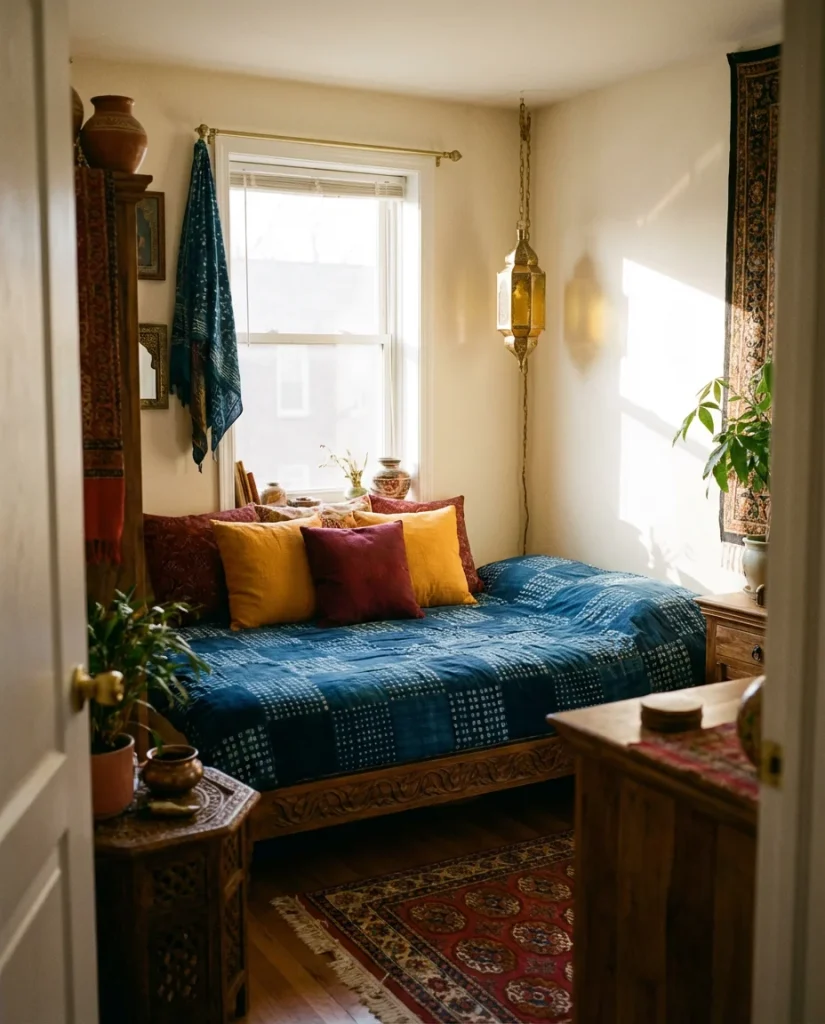
The practical beauty of this style is how well it bridges traditional and contemporary sensibilities. American buyers increasingly seek out Indian handcraft textiles at places like Ten Thousand Villages, World Market, and Etsy for their small bedrooms—appreciating both the ethical sourcing and the artistic quality. A well-chosen block print or kantha quilt doesn’t just look beautiful; it tells a story of craft that mass-produced bedding never can.
8. Simple DIY Projects for Couples Who Want to Personalize Together
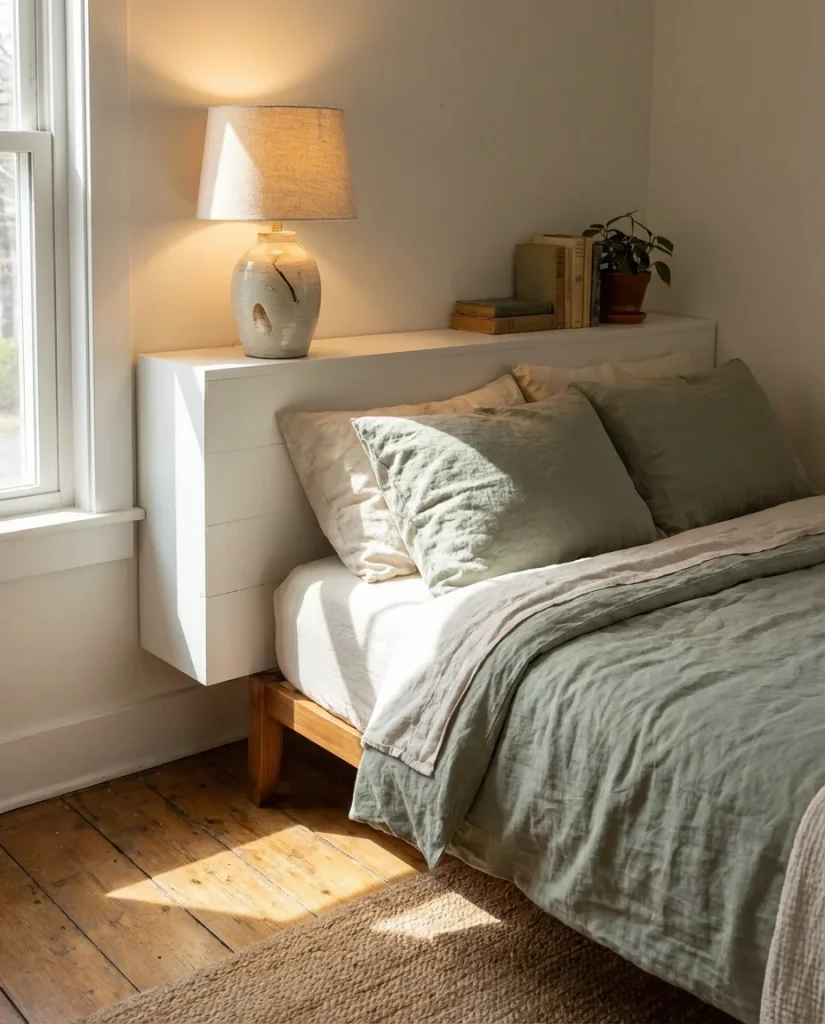
Some of the most meaningful bedroom transformations happen when couples diy projects become part of the decorating process itself. Building a simple floating shelf headboard together, painting an accent wall on a Sunday afternoon, or sewing simple linen pillow covers from fabric you both chose—these acts of co-creation make a space feel genuinely shared in a way that shopping for pre-made furniture never quite achieves. For small bedrooms especially, custom-built solutions (like a platform bed with built-in storage) are often the most space-smart option available, and DIY makes them financially accessible.
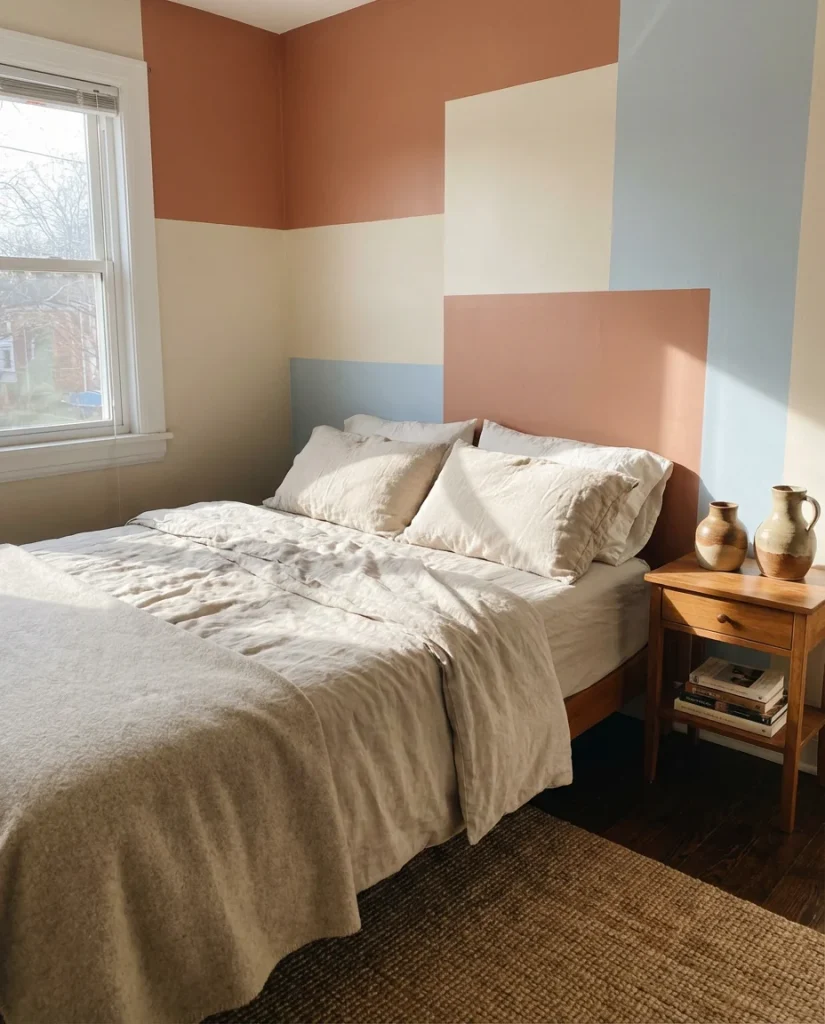
The best entry point for couples new to DIY bedroom projects: a peel-and-stick wallpaper accent wall. It requires no tools, no permanent commitment, and the results are genuinely impressive. Brands like Spoonflower and Chasing Paper offer hundreds of patterns at accessible prices, and a single wall behind the bed can completely change the room’s personality in a single afternoon. It’s the kind of project you finish and immediately want to send to everyone you know.
9. Christmas-Themed Bedroom Decor That Stays Elegant in a Small Space
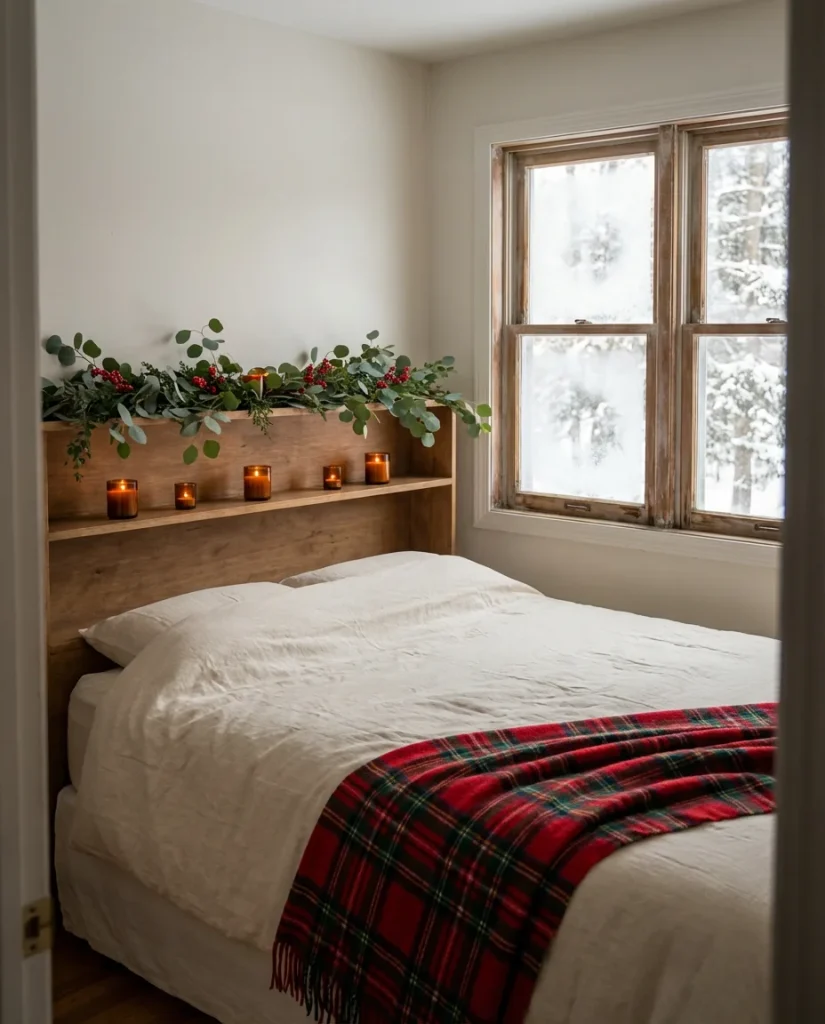
Holiday decorating in a small bedroom can easily tip into clutter—but when done with restraint, a Christmas-themed bedroom is one of the most magical spaces you can create. The key is editing ruthlessly. In a tiny room, choose one or two signature holiday elements: a garland of fresh eucalyptus or pine draped across the headboard, a cluster of candles on the nightstand, fairy lights along the ceiling perimeter. Let those do all the work rather than trying to bring the whole holiday into a 10×10 room at once.
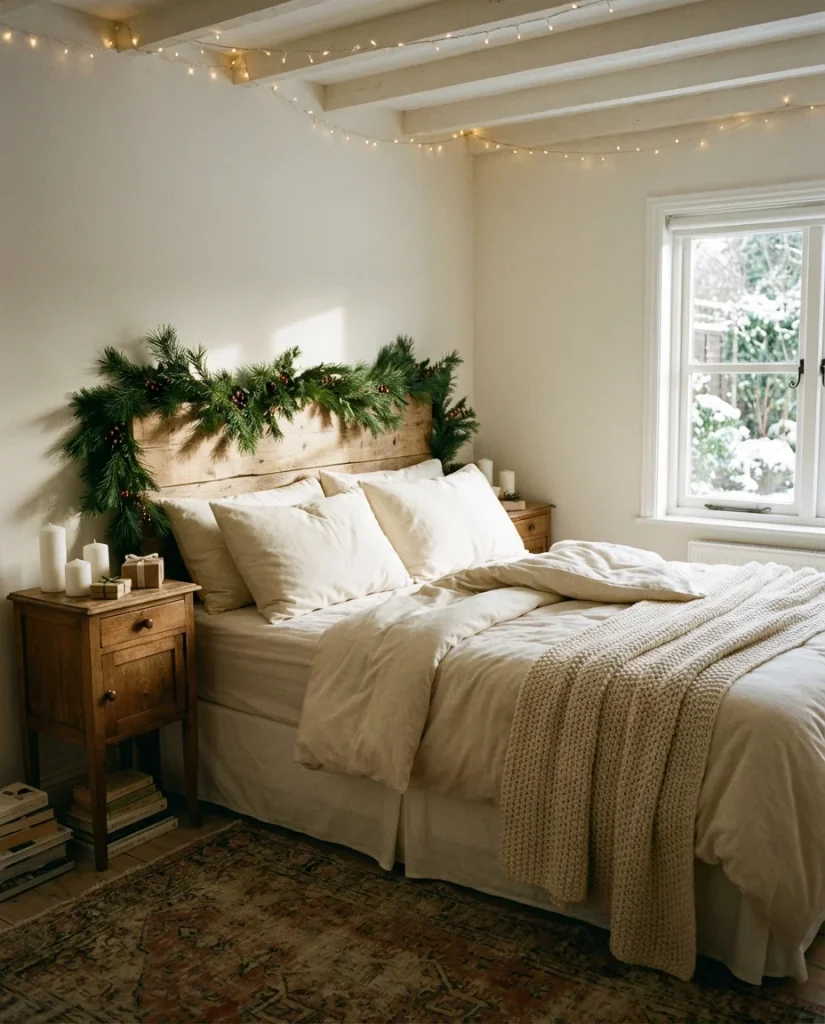
Where this approach works best: bedrooms with existing warm or earthy tones, where holiday additions feel like a natural extension of the color palette rather than a jarring seasonal overlay. A room already decorated in creams, greens, and reds won’t need much added for a holiday feel—the shift can be as simple as swapping your usual throw for a plaid flannel one. That’s the quiet magic of a well-designed room: it can absorb the seasons gracefully.
10. Very Small Bedroom With Smart Vertical Storage
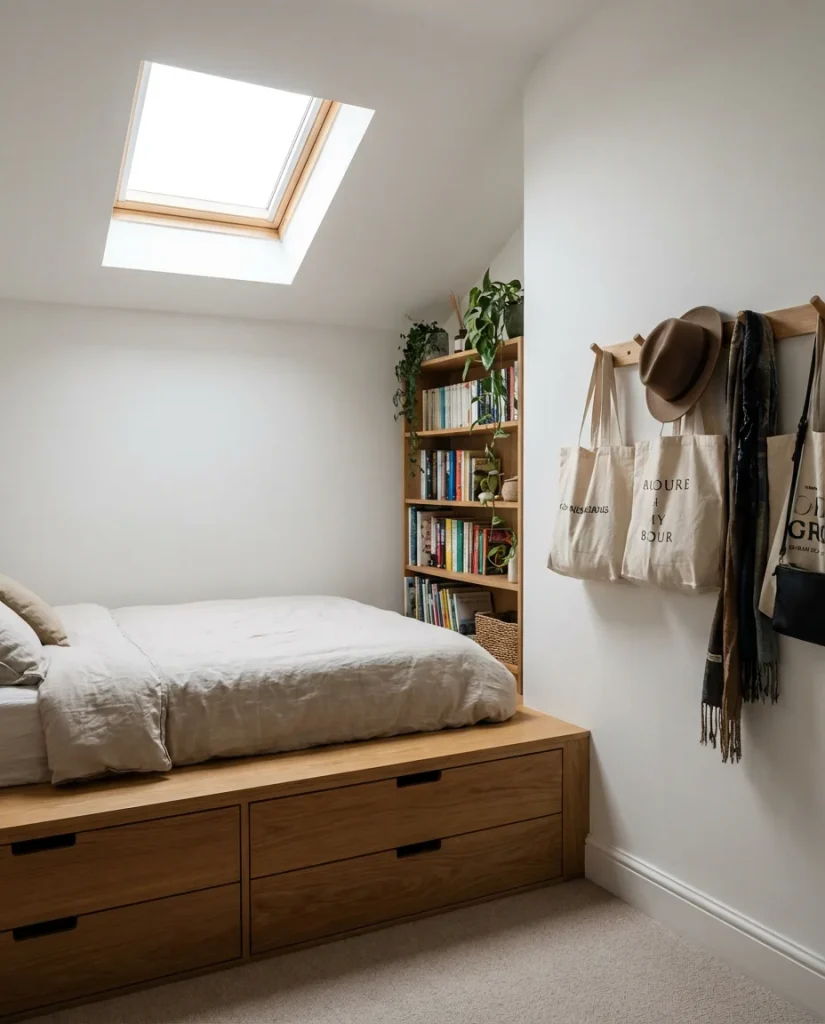
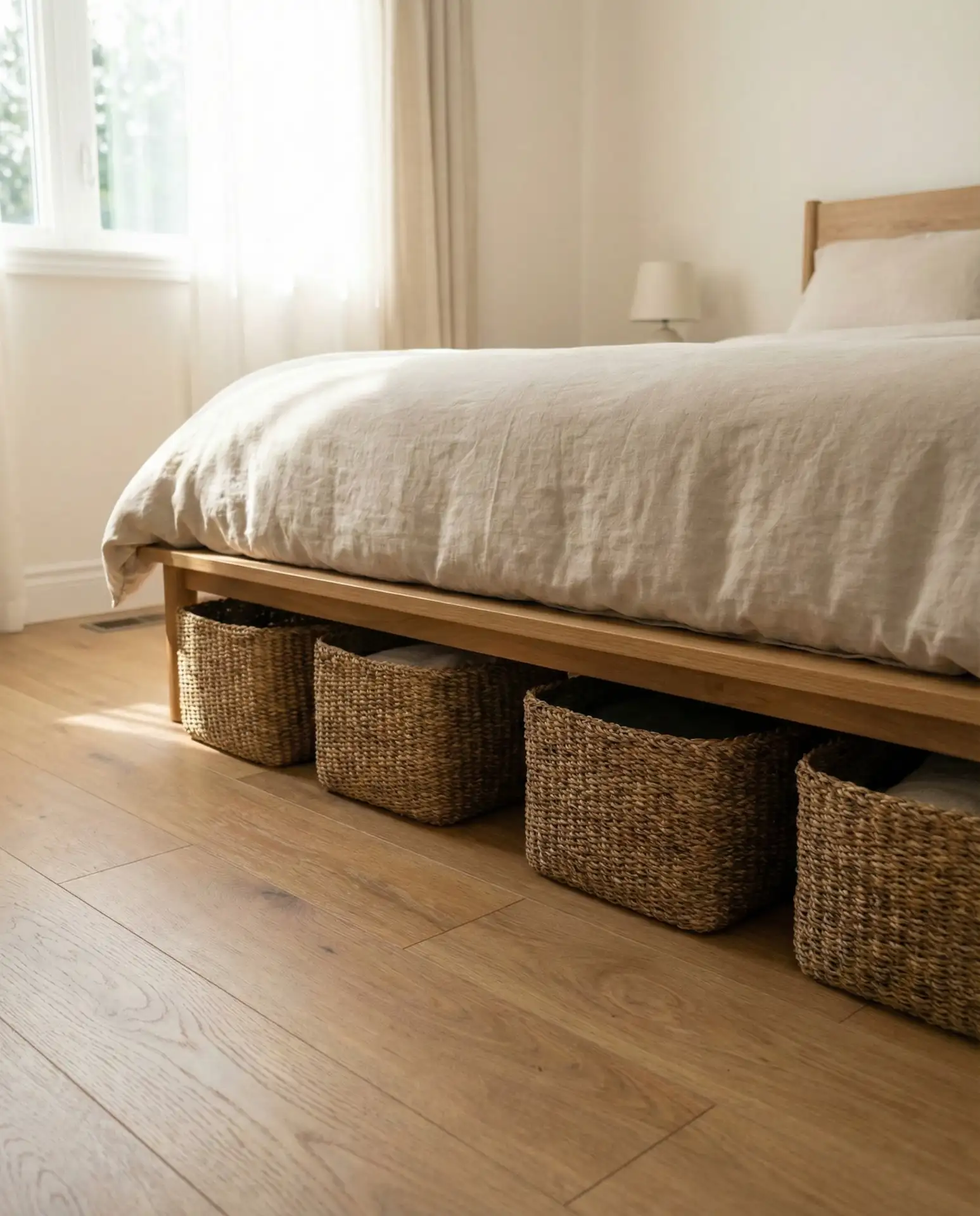
A very small bedroom—think under 100 square feet—requires a completely different design logic than even a modest one. The floor is your most precious resource, which means storage has to go up. Floor-to-ceiling open shelving beside the bed, wall-mounted lights instead of table lamps, and a slim floating nightstand mounted at mattress height are all moves that return square footage to you without sacrificing function. Pair a platform bed with built-in drawers underneath, and you’ve essentially gained a full dresser without adding anything to the room’s footprint.
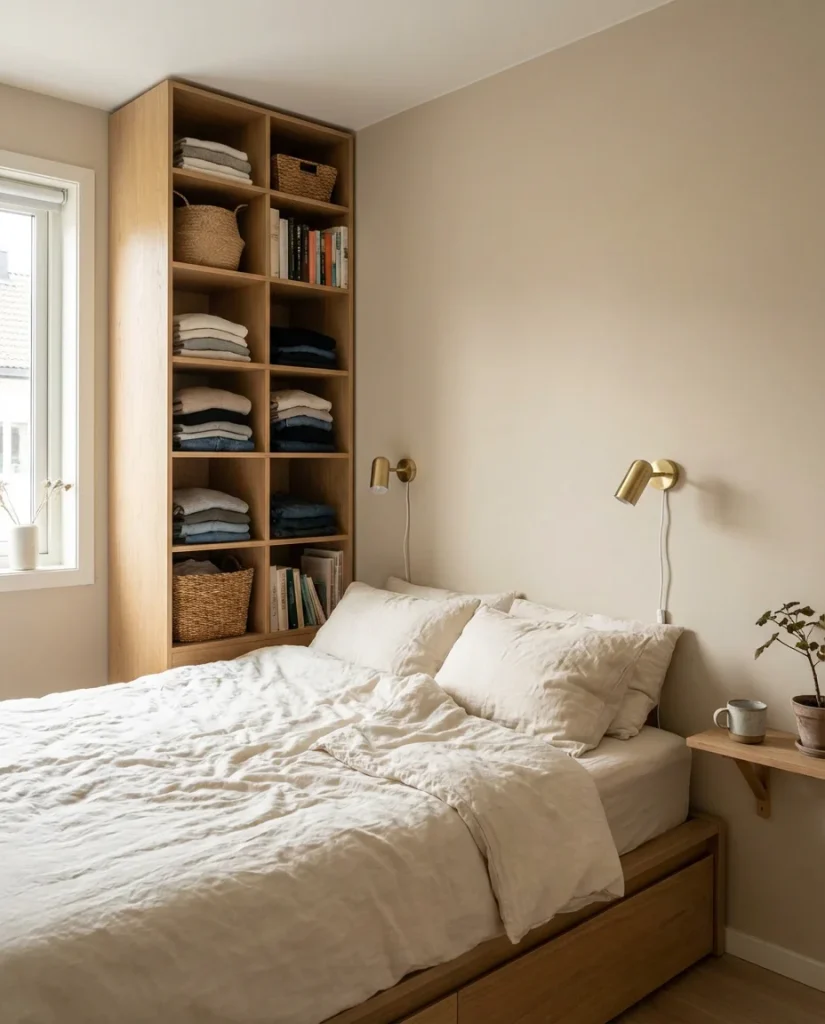
Small-space design expert Apartment Therapy contributors often point out that the biggest wasted opportunity in a tiny bedroom is the space above the bed. A simple floating shelf 12–18 inches above the headboard creates display and storage space that feels intentional rather than cramped. Style it with a small lamp, a plant, and a few books—and you’ve essentially created a built-in nightstand that costs almost nothing and steals zero floor space.
11. Colorful Bedroom That Breaks All the “Small Room” Rules
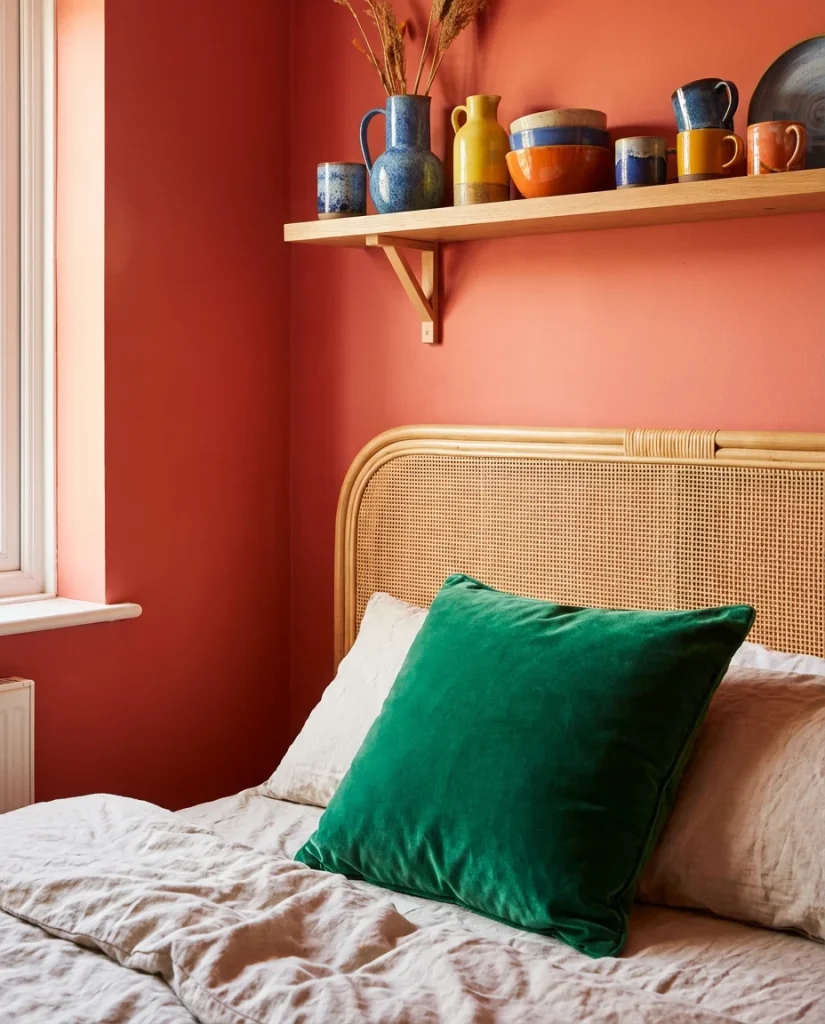
Conventional small-room wisdom says to keep it light, keep it neutral, keep it simple. But the colorful bedroom school of thought throws those rules out the window—and the results are genuinely exciting. When a small bedroom commits to bold, joyful color (think cobalt blue, deep coral, or emerald green), it stops trying to look bigger and starts trying to feel more alive. That’s a completely different—and arguably more honest—design goal. The trick is picking one dominant color and letting it live everywhere: walls, bedding, even painted furniture.
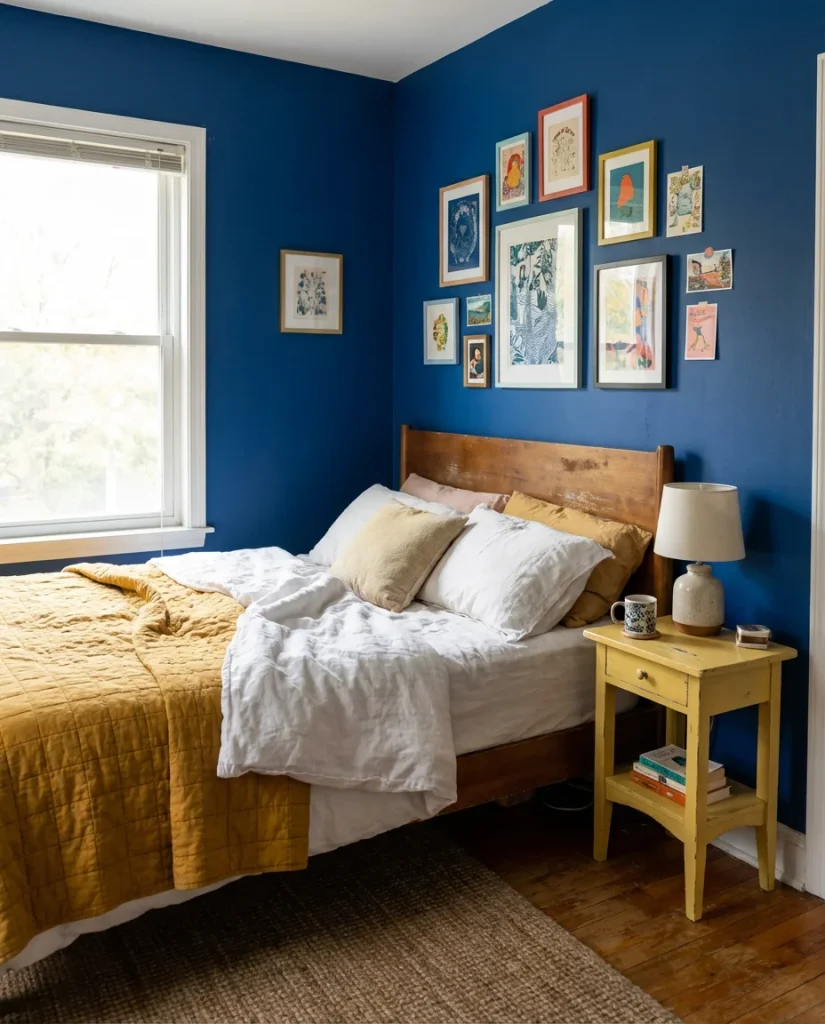
A homeowner in Austin painted her tiny rental bedroom a deep coral after years of “playing it safe” with white walls. Her verdict: it’s the only room she’s ever lived in that genuinely made her happy walking into it. She noted that guests who’d been skeptical of the color choice almost universally changed their minds the moment they stepped inside. Bold color in a small space isn’t brave—it’s strategic. It makes the room impossible to ignore and impossible to forget.
12. Cosy Corner Reading Nook Built Into the Bedroom
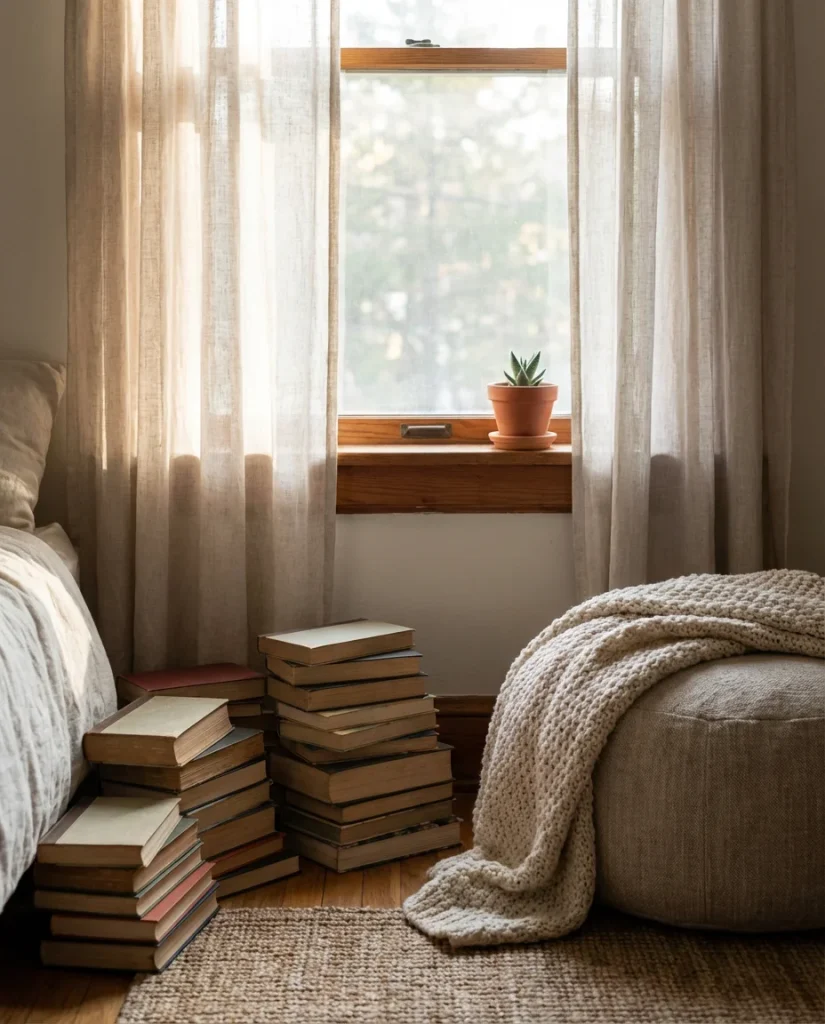
In a small bedroom, every corner is an opportunity—and one of the most beloved uses of an awkward corner is a cozy reading nook. This doesn’t require a full bay window or architectural remodel; a floor cushion, a wall-mounted light, a small floating shelf for books, and a soft throw are genuinely all you need. Position it by the window if possible to take advantage of natural light. The result is a dual-purpose room that feels more like a thoughtful home than a single-function sleeping space.
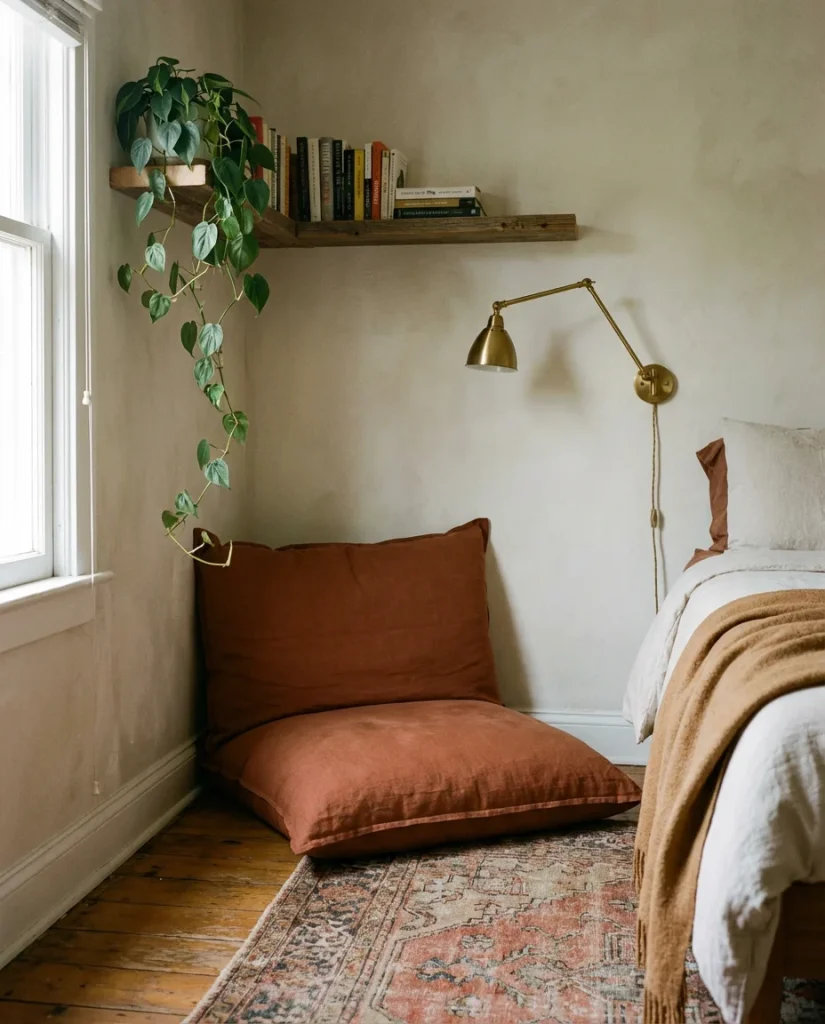
Budget-wise, a reading corner is one of the most affordable upgrades you can make to a small bedroom. A large floor cushion or pouf runs $40–$80 at most home stores, a wall-mounted plug-in sconce costs around $25–$60, and floating shelves are $15–$30 a pair. For under $150, you’ve created a genuinely functional secondary space within your room—one that adds daily use value rather than just visual interest.
13. Aesthetic Bedroom Design With Arched Headboard Details
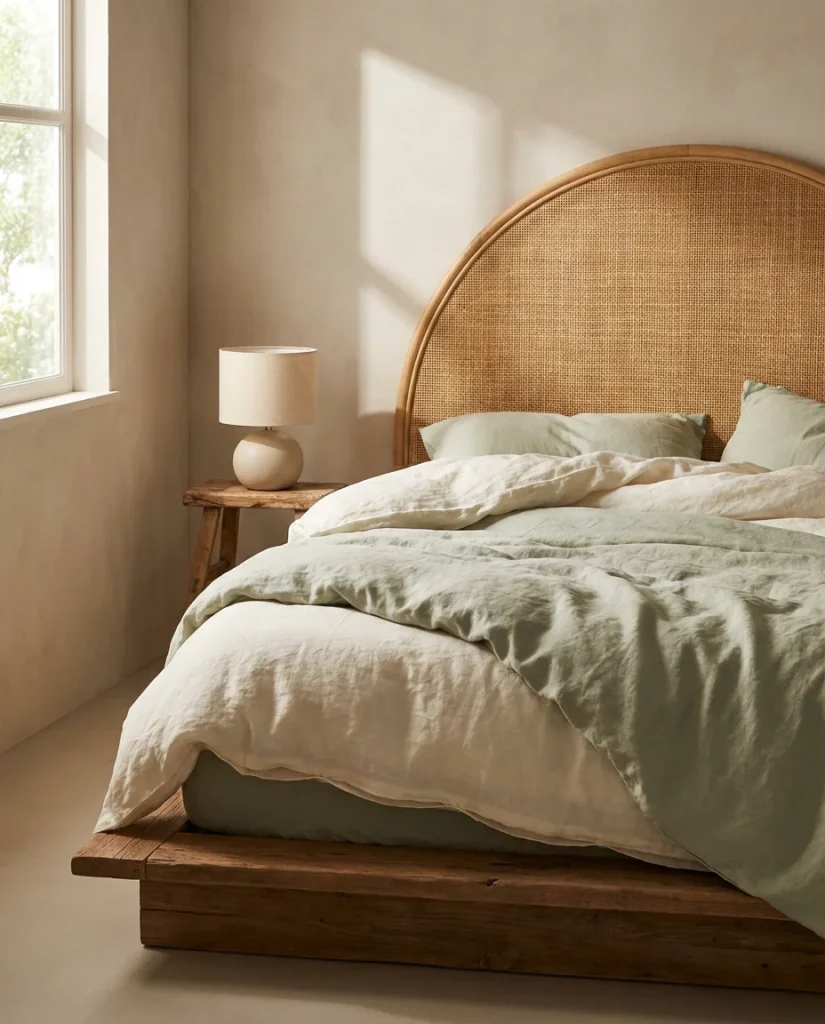
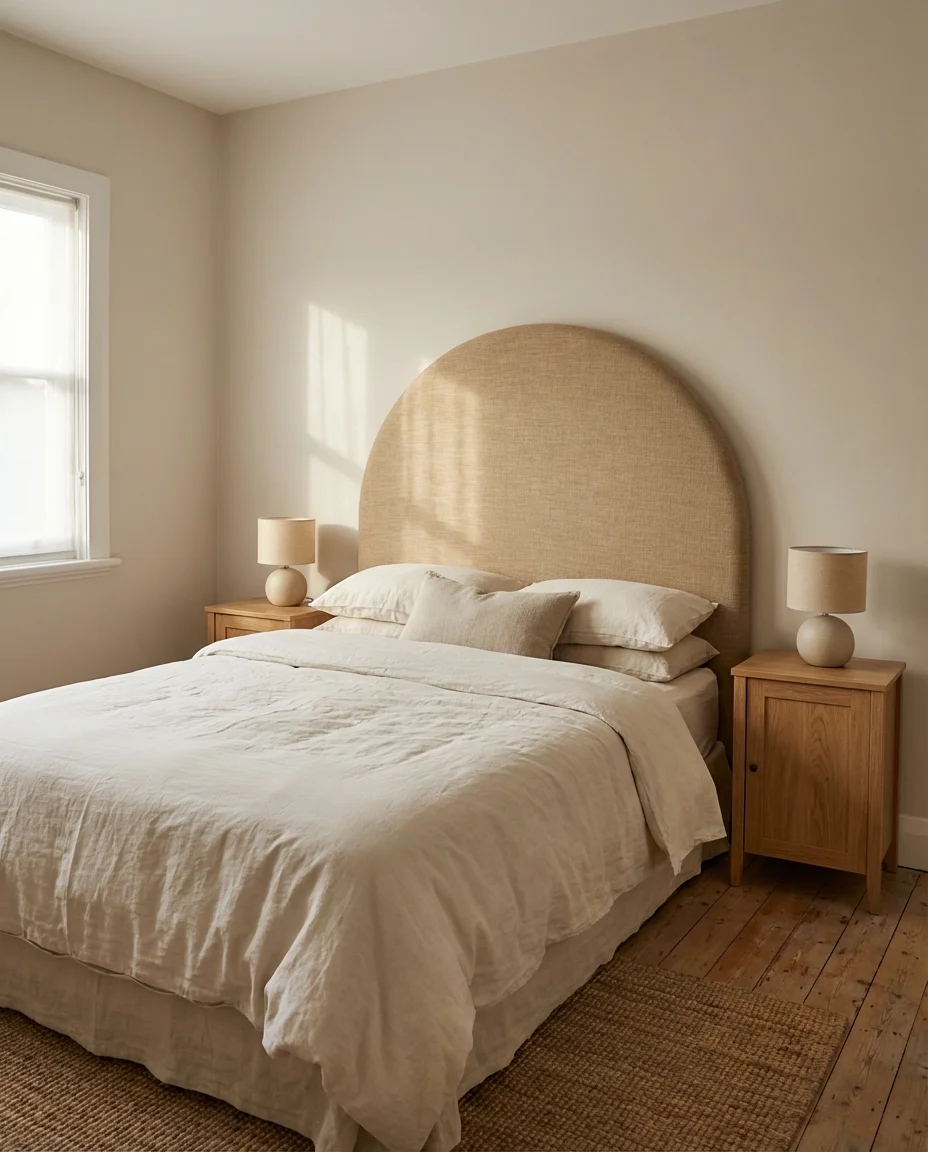
The arched headboard trend has moved from aspirational Pinterest content into genuinely accessible territory in 2026 — and it’s one of the most effective ways to bring aesthetic drama into a small bedroom without touching the walls. Whether you invest in an upholstered curved headboard or DIY one using plywood and foam, the arch shape draws the eye upward, making the room feel taller. In bedrooms with standard 8-foot ceilings, this optical effect is genuinely transformative. Pair with simple, understated bedding to let the headboard remain the undisputed focal point.
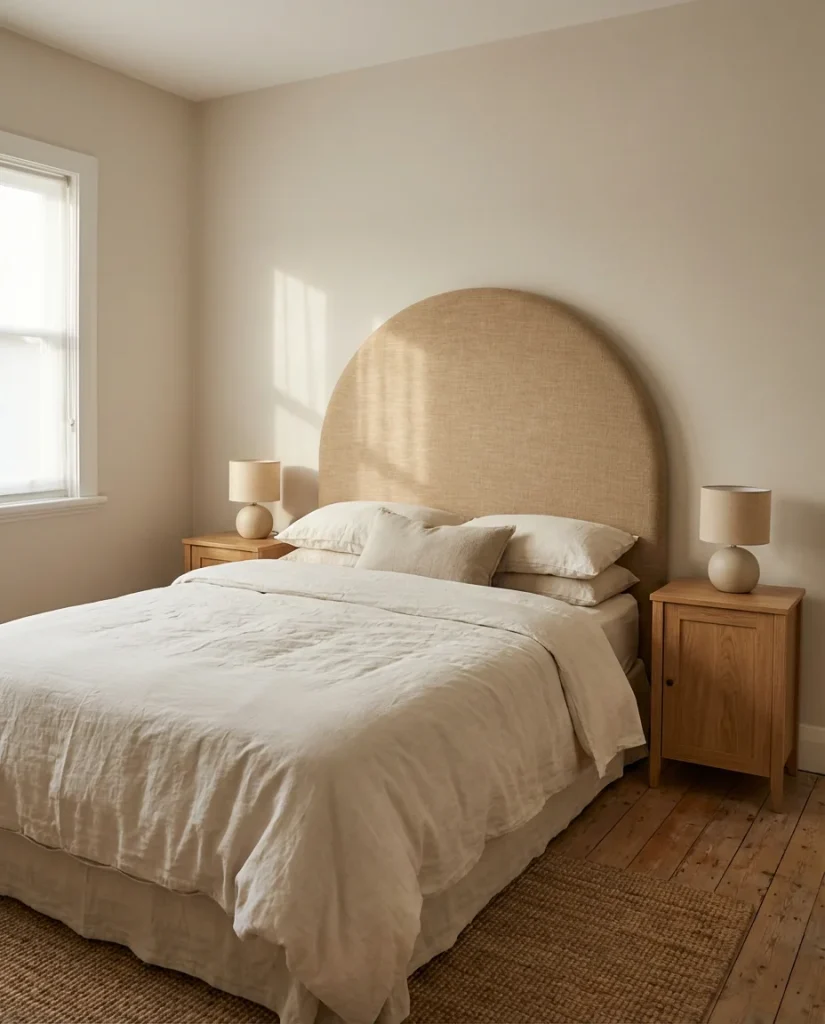
Design professionals frequently cite the arched headboard as the single highest-impact, lowest-disruption upgrade for a small bedroom. It requires no painting, no drilling of additional holes, and no furniture rearrangement—just swapping one headboard for another. For renters who can’t paint or build, this is the primary way to introduce strong architectural character into a space that doesn’t technically have any.
14. Two Sisters Sharing a Small Bedroom: Making It Work for Both
A shared bedroom between 2 sisters—especially when they have different tastes—is one of the most creatively challenging decorating scenarios there is. The solution that works most consistently: divide the room into two clearly defined “zones,” each with its own color accent, storage, and lighting, while keeping the overall framework (furniture style, floor, and wall color) consistent between them. This gives each person genuine ownership of her space without turning the room into a visual argument between two different aesthetics.
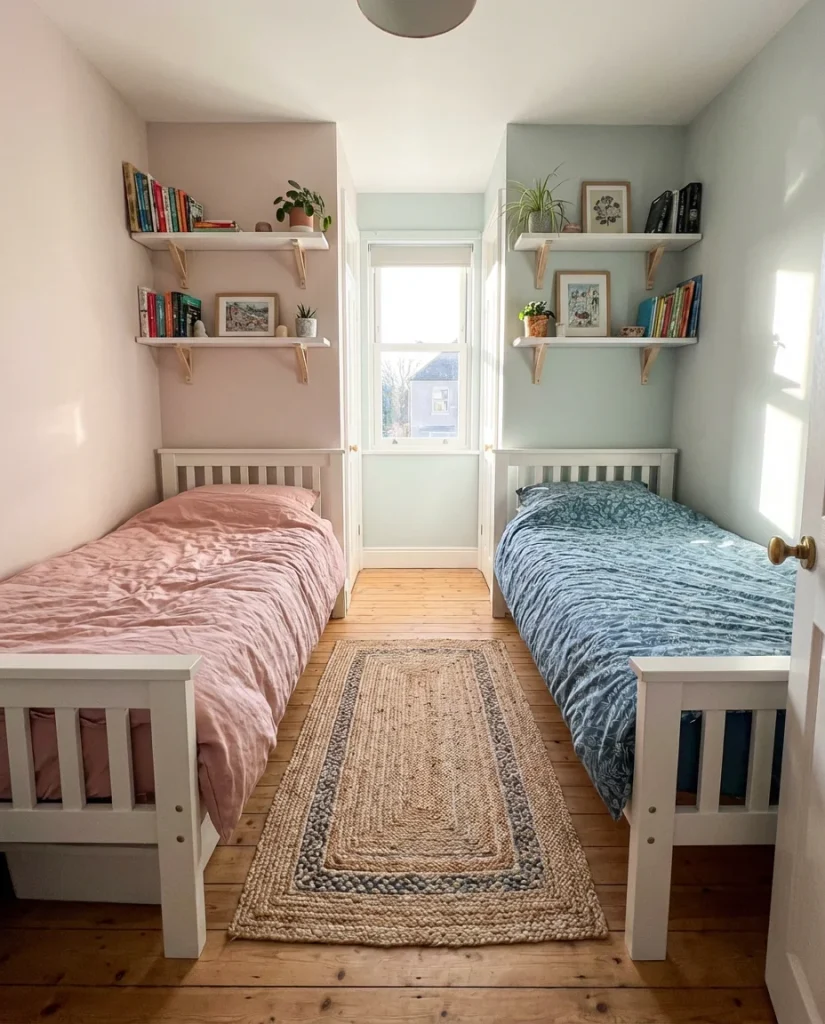
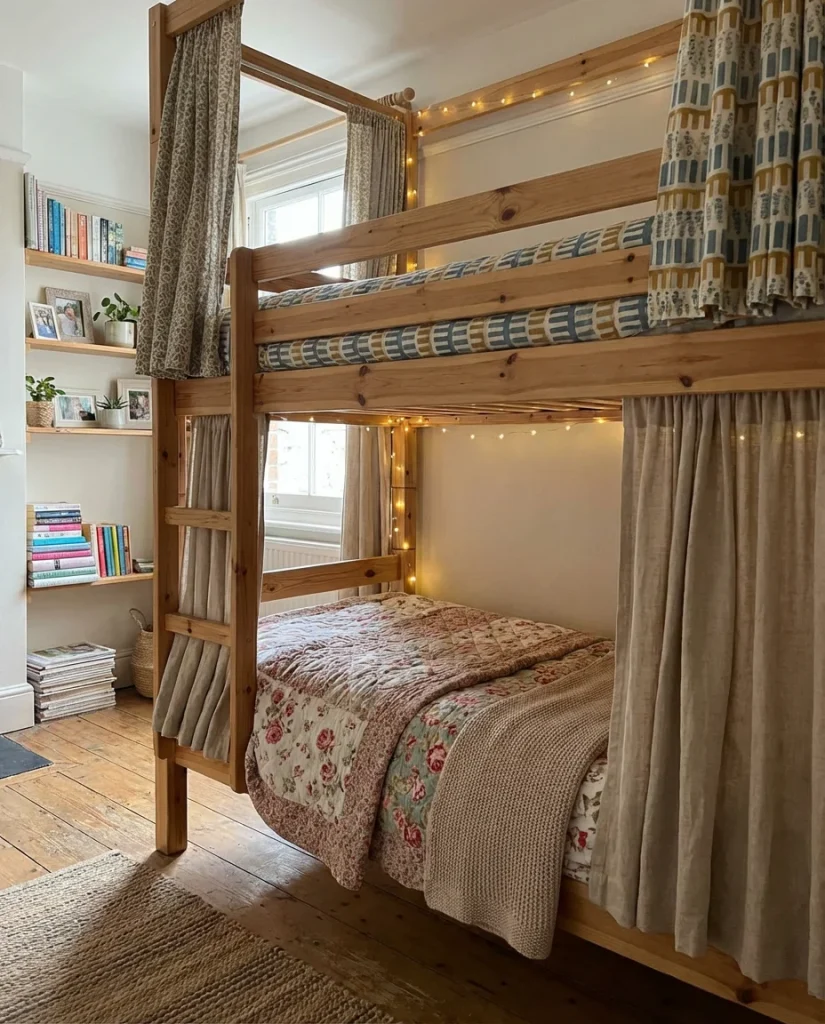
Where this approach works best: rooms with at least one natural division point, like a window centered between two beds or a closet that sits off to one side. Bunk beds are the ultimate space-saving solution for shared small rooms, and modern designs are far more stylish than the utilitarian versions of decades past. Look for solid wood bunks with built-in storage stairs rather than ladders—those stairs usually include three or four wide drawers that replace a full dresser for one child.
15. Inspiration from Japandi Design for Minimal, Meaningful Spaces
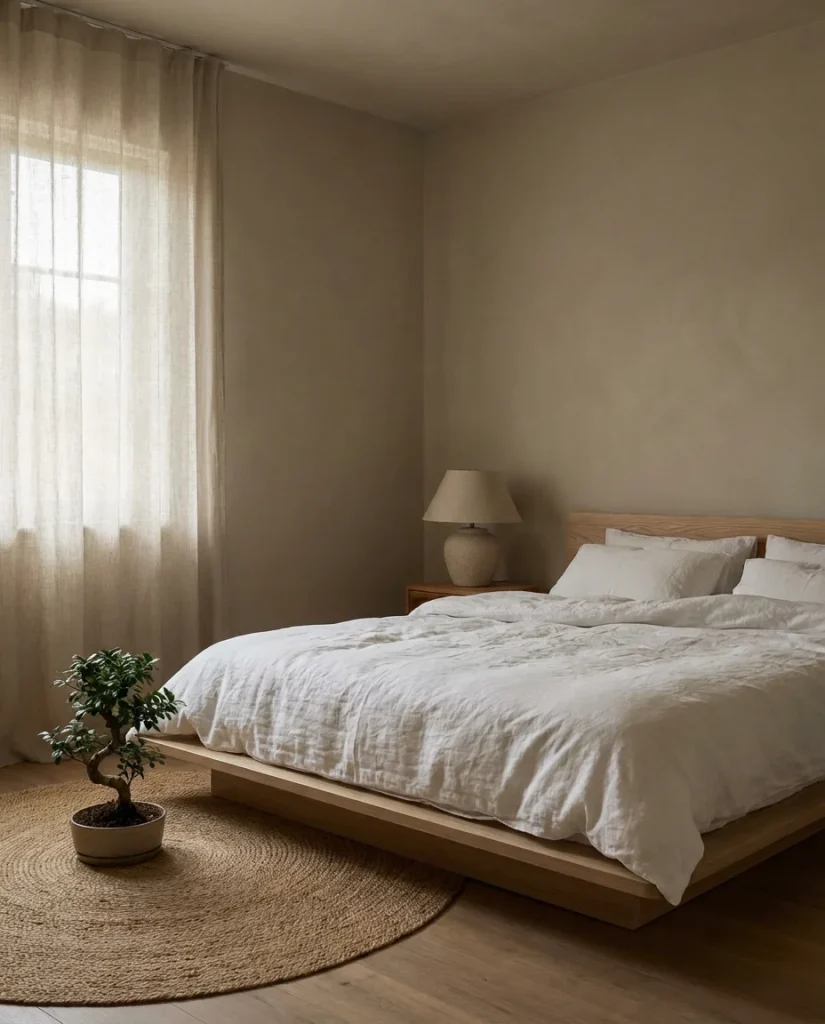
Japandi—the hybrid of Japanese minimalism and Scandinavian warmth—remains one of the most enduring inspiration sources for small bedroom design in 2026. What makes it so well-suited to compact spaces is its foundational principle: keep only what you love, and love what you keep. A low platform bed in pale ash wood, a single ceramic lamp, a small trailing plant, and walls the color of warm fog—this is a complete bedroom. Nothing is missing. The philosophy behind Japandi actively resists the urge to fill space, which is exactly what small-room decorating demands.
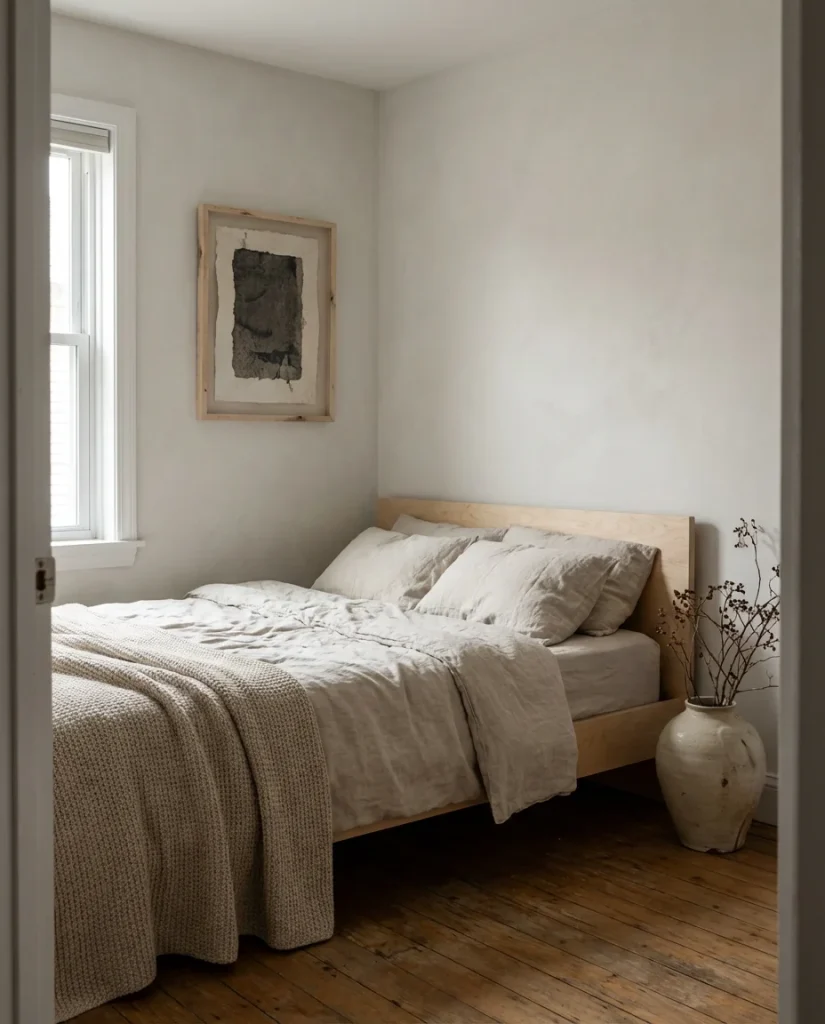
What Americans often find surprising about Japandi bedrooms is how deeply restful they are to sleep in. The absence of visual noise—no patterned textiles, no cluttered surfaces, no competing colors—turns out to be genuinely restorative for the nervous system. Sleep researchers note that a visually calm room signals the brain that it’s safe to down-regulate, which is a fancy way of saying that a cleaner room may actually help you sleep better. Motivation doesn’t get more practical than that.
16. Inspo for Dark Academia Small Bedroom Aesthetic
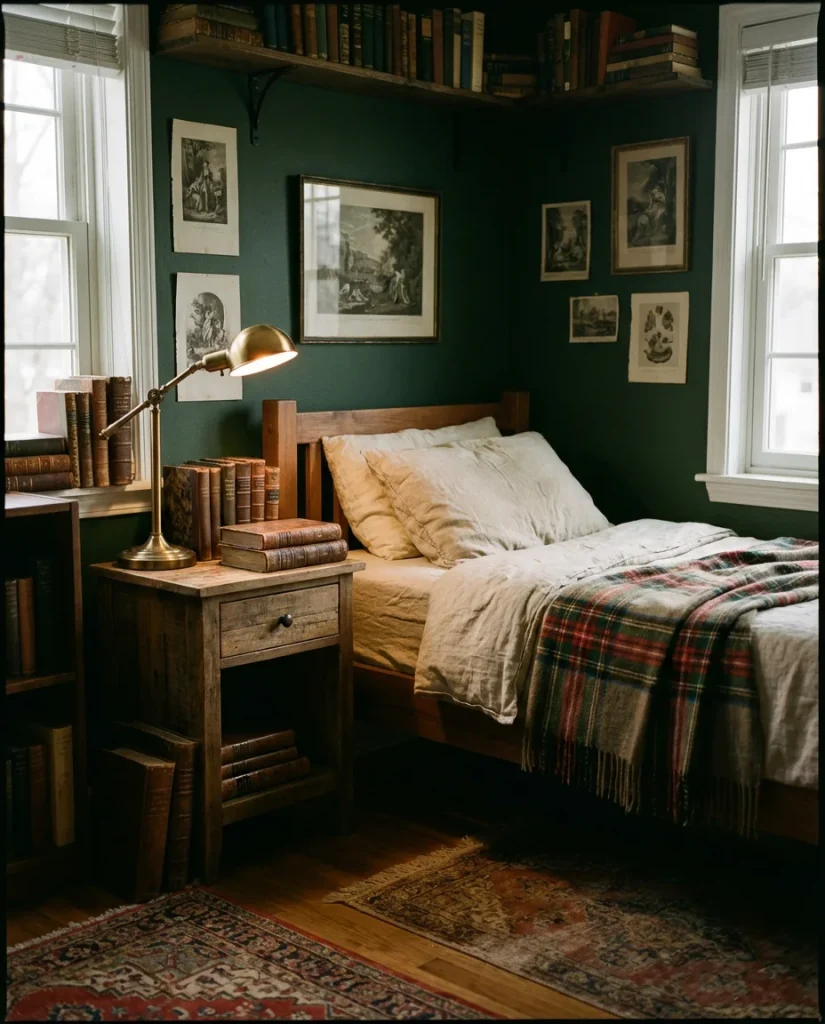
Dark academia inspo for small bedrooms is one of the most searched aesthetic categories on Pinterest among the 18–35 demographic—and it translates surprisingly well into real-world small bedrooms. The look is built around warm darkness: aged wood furniture, stacked books, dark green or burgundy walls, layered tartan or tweed throws, and the kind of lamp that looks like it belongs in a Victorian library. In a small bedroom, the intimacy of the space actually enhances the aesthetic—it’s supposed to feel like a private scholar’s chamber, not a grand hall.
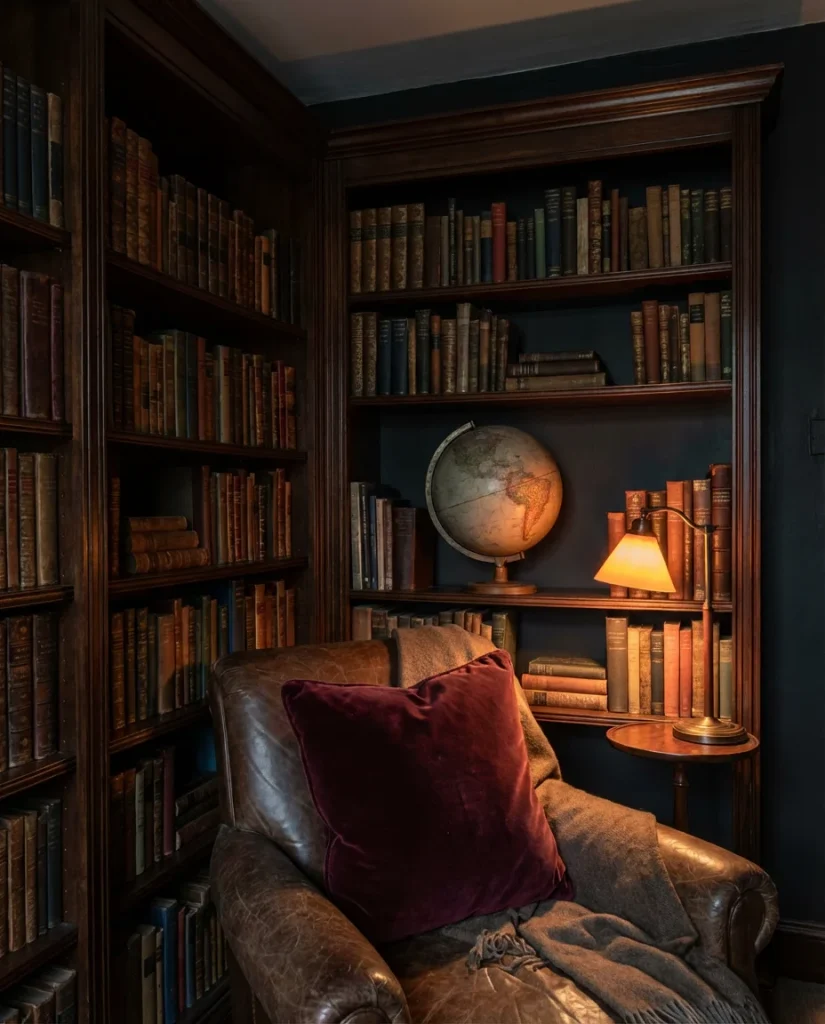
The most common mistake people make when attempting dark academia is treating it as purely a visual exercise—buying the props without the atmosphere. The atmosphere comes from lighting. Swap your overhead bulbs for warm-toned Edison or amber bulbs, add a proper desk lamp in aged brass or bronze, and eliminate any cold or blue-toned light sources in the room. That shift alone—before you’ve added a single book or piece of furniture—will do more for the aesthetic than almost any decorative purchase you make.
17. Simple and Serene Small Bedroom Design for Everyday Living
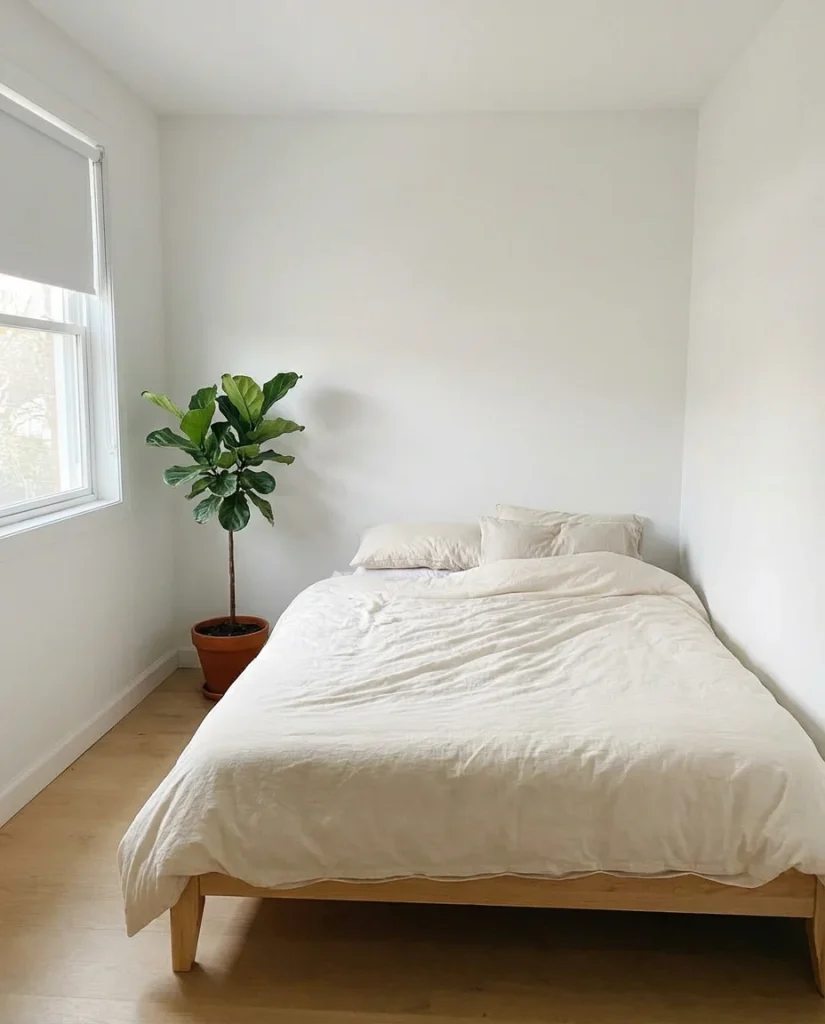
Not every bedroom needs a concept or a theme. Sometimes the best design for a small bedroom is the one that simply disappears into comfort—a room so well considered that you stop noticing it and just start living in it. That kind of invisibility requires precision: furniture that fits the room’s proportions exactly, a color palette with no wrong notes, storage that handles its job without announcing itself. These are the small bedrooms that look effortless on Pinterest but took a lot of quiet thinking to achieve. Ideas on a budget: simple approaches often arrive at this place first.
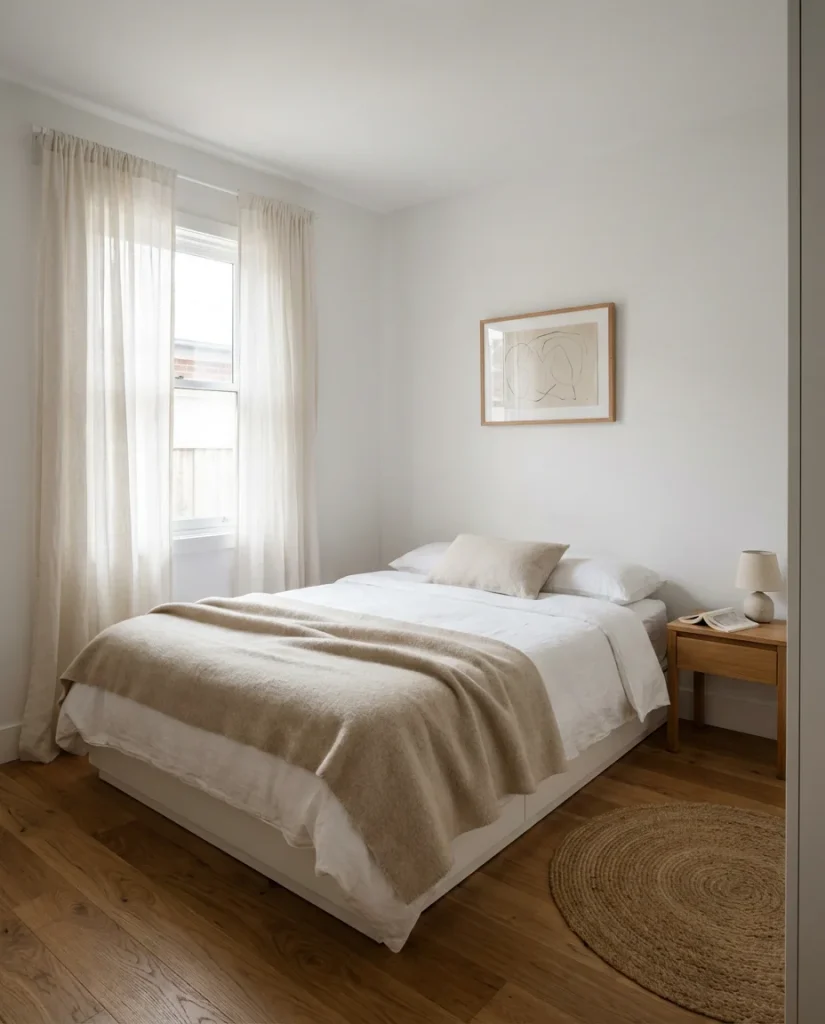
Regional context matters here: in cities like Seattle, Portland, and Minneapolis, where natural light is a premium commodity for months at a time, small bedrooms designed around maximizing that light—white walls, reflective surfaces, sheer rather than blackout curtains—are particularly prized. American homeowners in these markets consistently rate “light and airy” as their top bedroom priority, which makes simple, minimal design not just an aesthetic preference but a genuine response to climate and geography.
18. Couples’ Bedroom With His-and-Hers Styling That Doesn’t Look Split
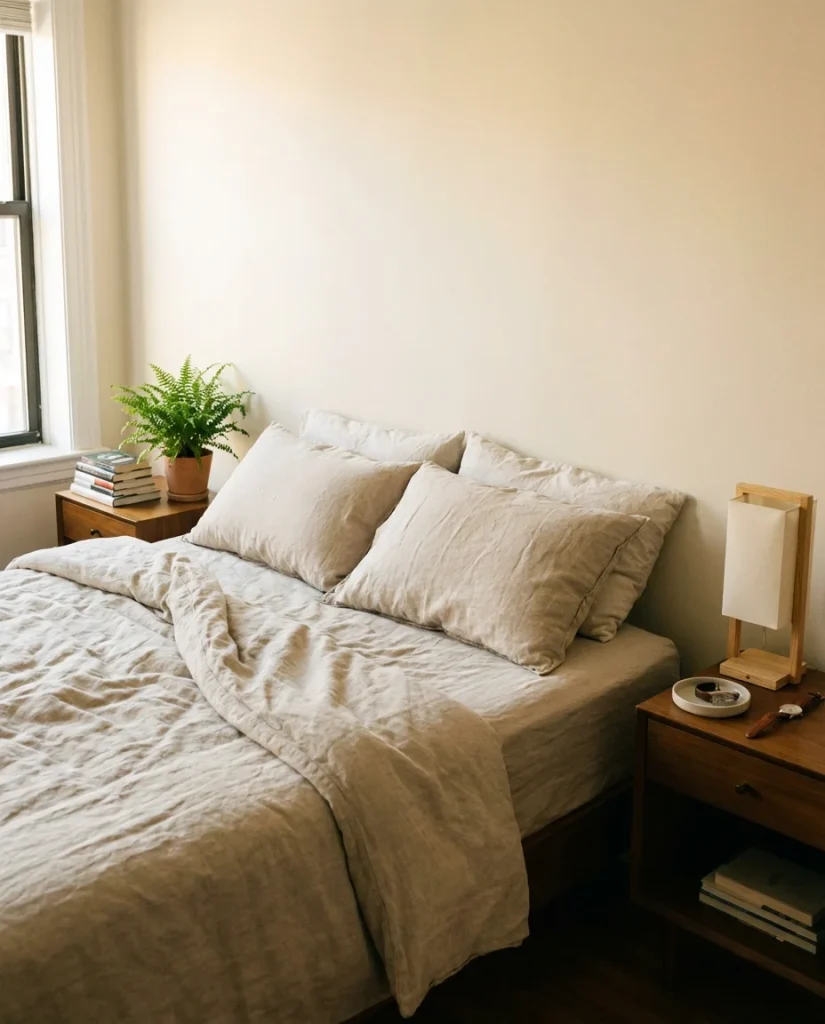
One of the trickiest challenges for ideas for simple decorating for couples is creating a small bedroom that honestly reflects two people without looking like a compromise—a room that is neither his nor hers but genuinely both. The key is finding a shared anchor: one piece of furniture, one piece of art, one color that both partners choose together with genuine enthusiasm. From that anchor, each person’s preferences can radiate naturally. He wants industrial metal? She wants soft linen? A metal bed frame with linen bedding threads the needle beautifully.
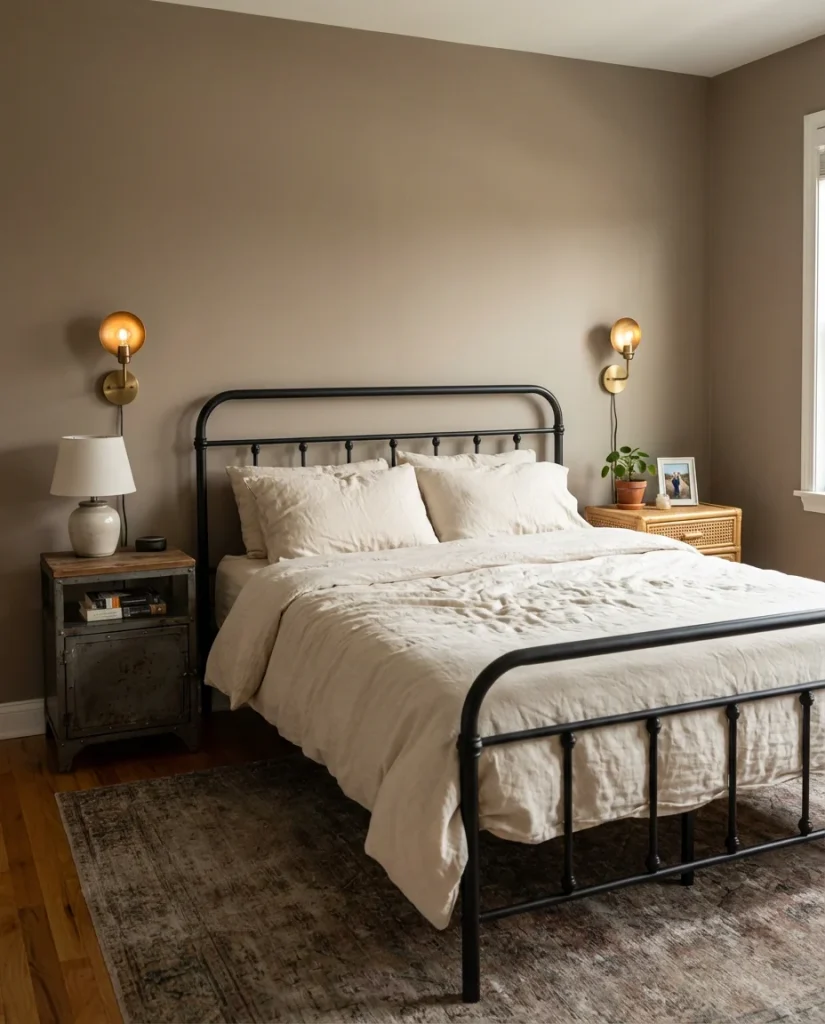
A micro anecdote worth sharing: a couple in Chicago with opposite design sensibilities solved their impasse by each choosing one “non-negotiable” element for the room. He chose the bed (a mid-century platform in walnut); she chose the rug (a vintage Moroccan in cream and blush). Every other decision flowed from those two anchors—and the result was a bedroom that genuinely looked designed rather than negotiated.
19. Small Bedroom Makeover Using Just Paint and New Bedding
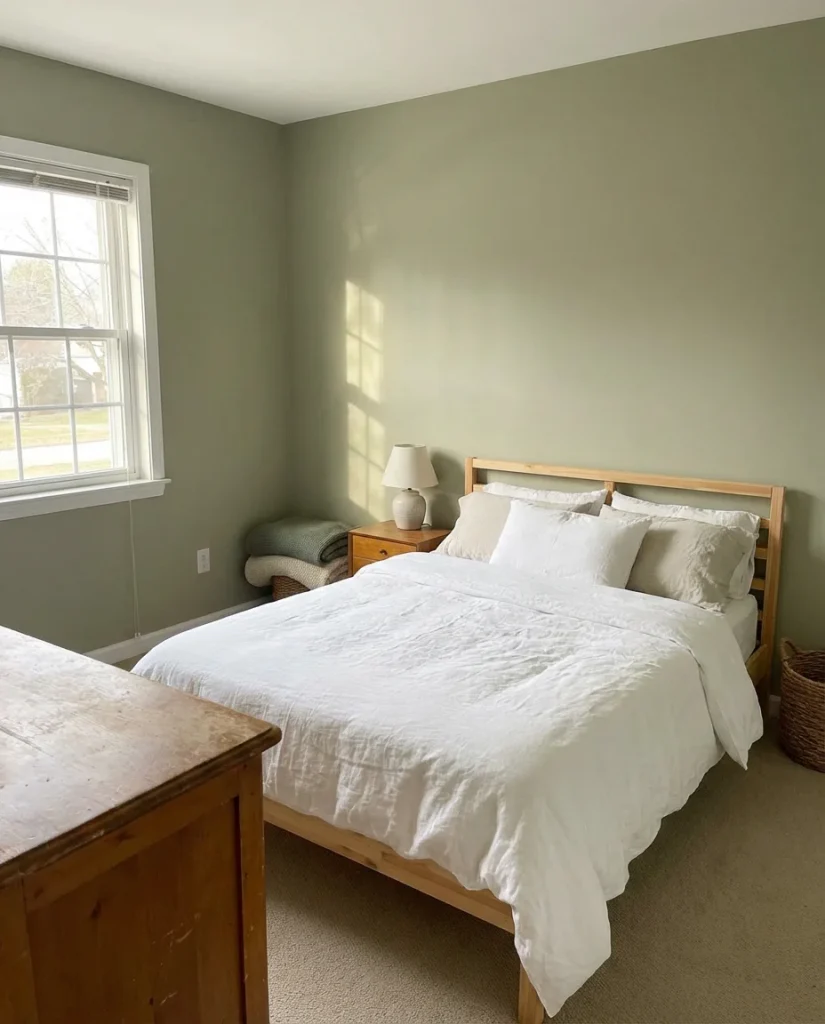
The most democratically accessible small bedroom transformation is also the most underestimated: fresh paint plus new bedding. These two elements touch the largest surface areas in the room—walls and bed—which means they have an outsized visual impact relative to their cost. A gallon of quality paint runs $35–$60; a new duvet cover from a brand like Parachute or Brooklinen runs $90–$130 on sale. For under $200, the room can feel completely different. This is the core logic behind the budget decorating philosophy that drives so much Pinterest engagement.
The biggest mistake people make with paint-and-bedding makeovers is choosing the paint color from a chip alone. Always—always—get a sample pot and paint a large swatch directly on your wall before committing. Colors shift dramatically depending on your room’s natural light, the time of day, and the direction the room faces. What looks like a beautiful warm greige on the chip might read lavender-gray in your north-facing bedroom. The $5 sample pot saves you from a $50 mistake every single time.
20. Maximizing a Cozy Small Bedroom With Layered Lighting
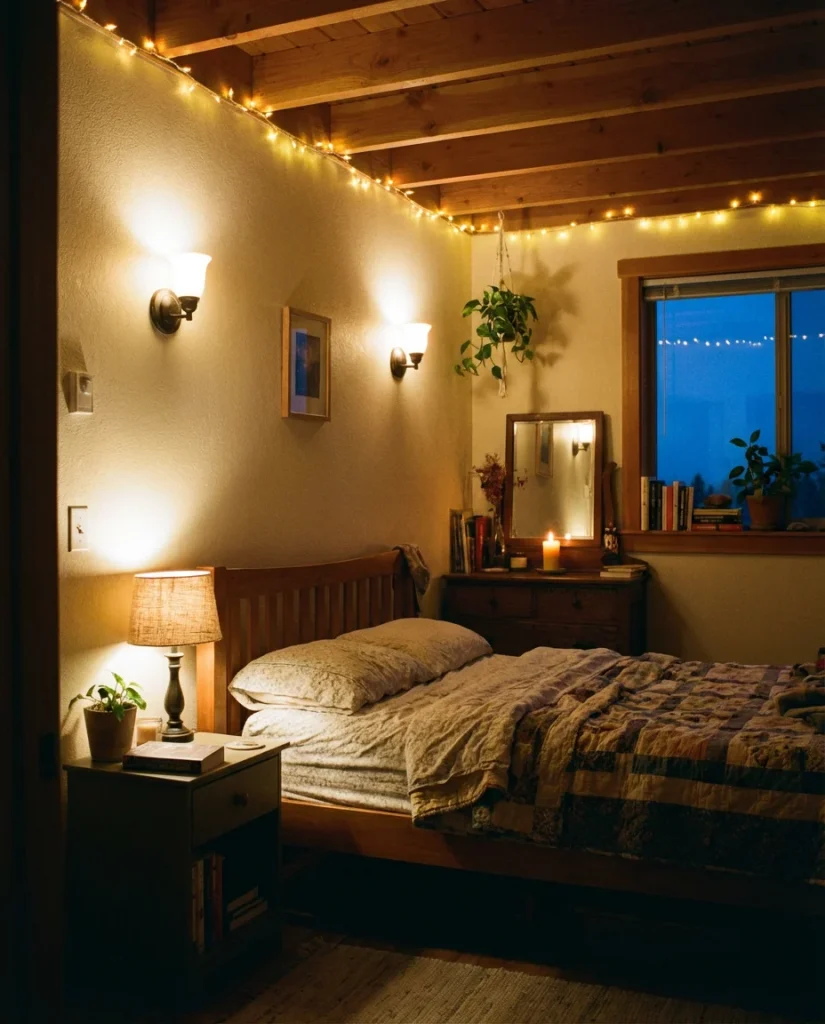
Lighting is the most underused tool in small bedroom design—and it’s also the one with the most dramatic potential payoff. A room with a single overhead fixture and two table lamps reads entirely differently from the same room with wall sconces, string lights, a small floor lamp in the corner, and a candle or two on the dresser. The layered approach creates multiple circles of cozy light that warm the room and make it feel larger by creating depth. The eye follows the light sources around the room, which is the same optical effect that makes rooms feel more spacious.
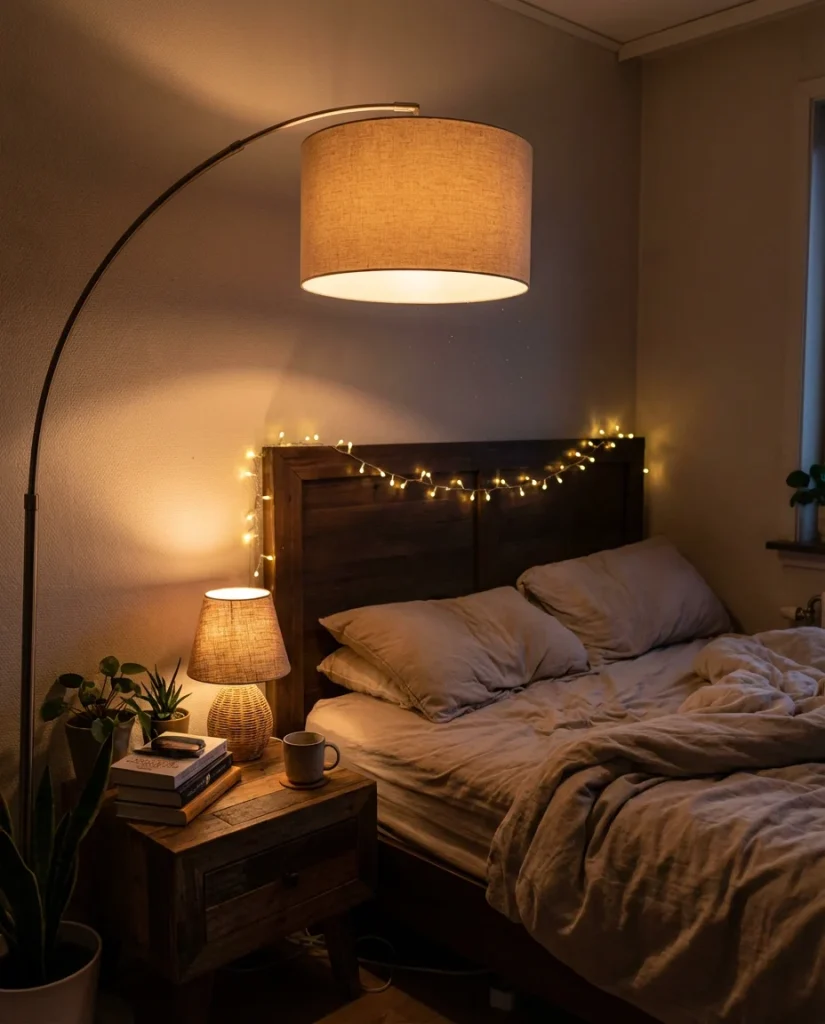
The practical starting point for anyone without an electrician budget: plug-in wall sconces. They require no hardwiring, no permits, and no landlord permission—just a plug and a nail. Placed on either side of the bed at eye level when sitting up, plug-in sconces immediately give the room that hotel-suite quality that makes a small space feel considered and complete. Pair with smart bulbs on dimmers for full layered-lighting control from your phone.
21. Neutral and Natural Small Bedroom With Indoor Plants
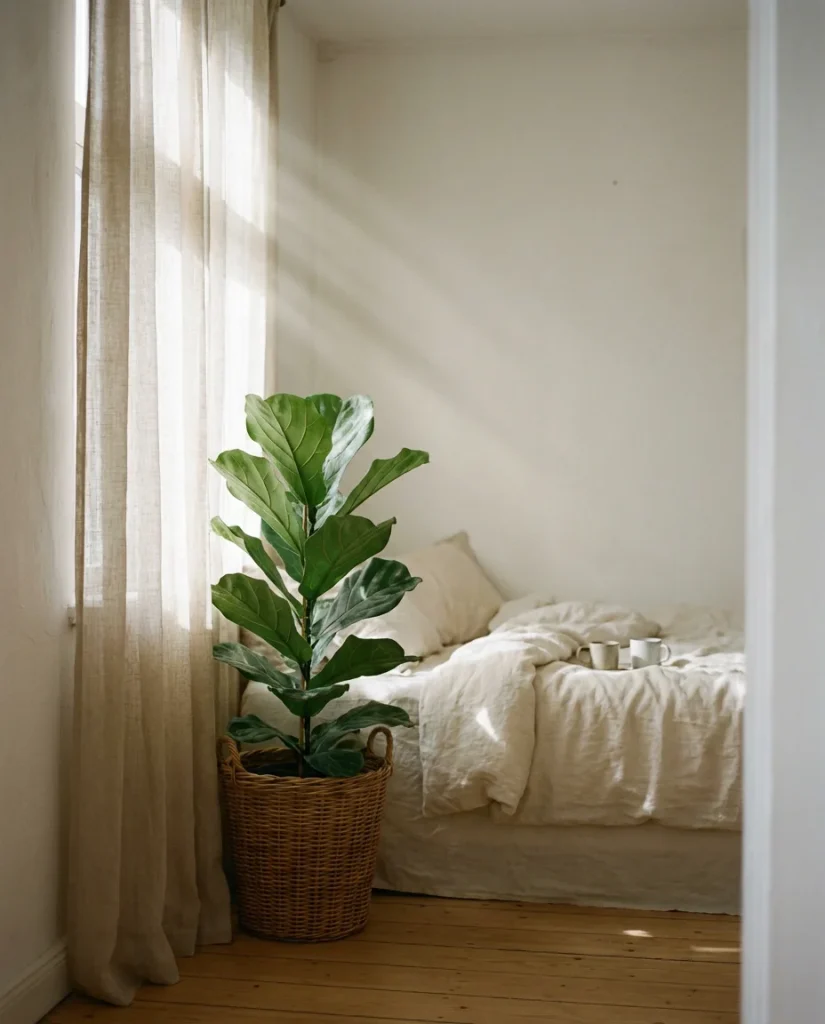
Plants in a small bedroom do double duty: they add life and color without paint, and they genuinely improve air quality in a sealed sleeping space—something Americans increasingly care about as awareness of indoor air quality grows. For a neutral bedroom that risks feeling cold or sterile, a few well-chosen plants (a trailing pothos, a small snake plant, a fiddle leaf in a wicker pot) introduce organic texture and warmth that no purchased decor quite replicates. The green against cream or white reads as quietly luxurious—and it costs almost nothing to maintain.
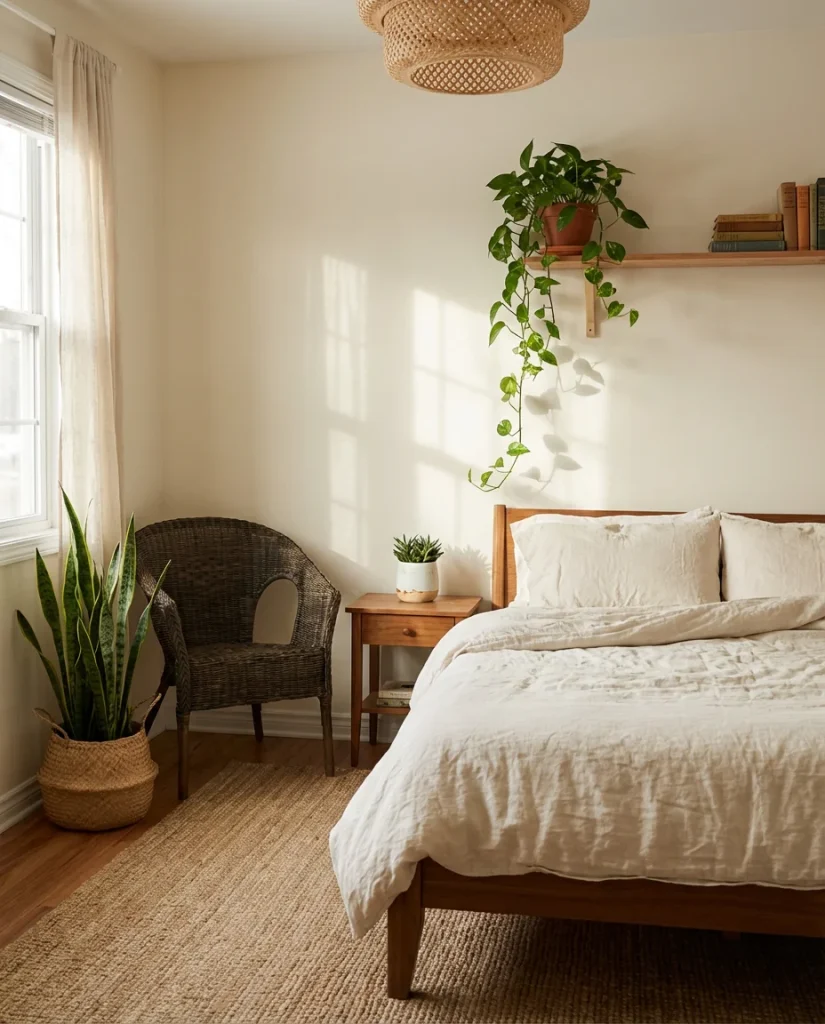
For small bedrooms with limited natural light, choosing the right plant species matters enormously. Pothos, ZZ plants, snake plants, and peace lilies all thrive in low-light conditions and won’t punish you for forgetting to water them for a couple of weeks. These are the plants that genuinely survive in bedrooms with north-facing windows or heavy curtains—and they’ll keep contributing to your room’s aesthetic without requiring the kind of high-maintenance care that more photogenic plants like fiddle-leafs often demand.
22. Cosy Winter Bedroom With Flannel, Fur, and Warm Tones
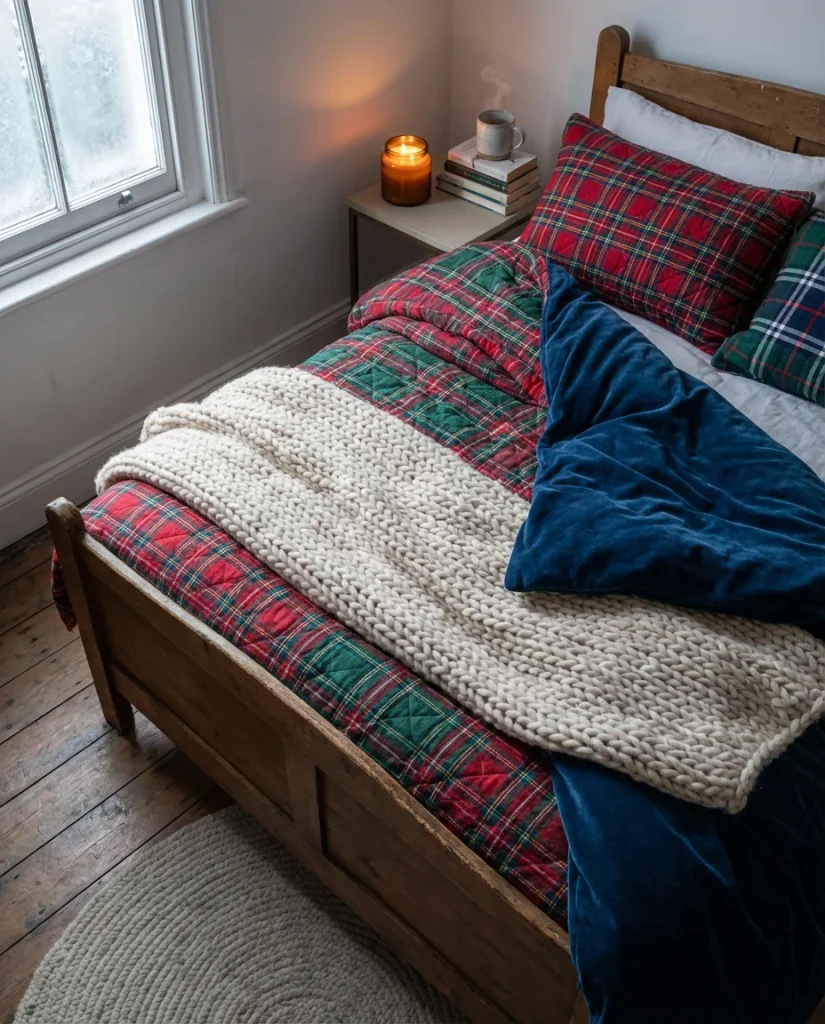
A cozy winter bedroom in a small space is one of the most deeply satisfying decorating projects you can undertake—because the room’s size works in your favor. Smaller rooms warm up faster, retain heat better, and feel more enveloping when layered with heavy textiles. Flannel sheets, a chunky knit throw, a faux fur accent pillow, and a thick wool rug combine to create a room that feels like the interior of a cozy cabin, even in a city apartment. This is the seasonal shift that costs almost nothing (you likely own most of these things already) and transforms everything.
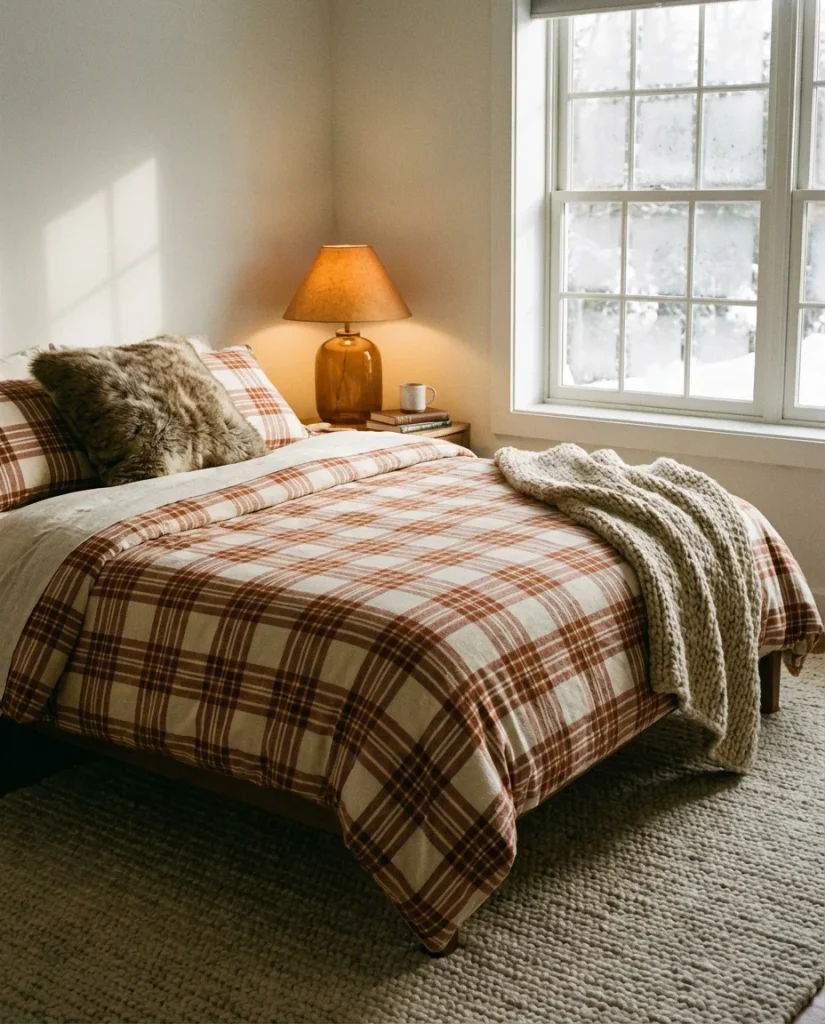
This approach works best in bedrooms where the existing color palette already runs warm—cream, tan, rust, sage, and chocolate brown. If your room is currently on the cooler or more minimal side, the winter textile swap can feel slightly disconnected from the room’s identity. The fix is simple: store one or two of your usual decorative objects and replace them with something seasonally warm (a beeswax candle, a small ceramic mug as a vase with dried wheat). It’s the layering of small shifts, not one big swap, that creates genuine seasonal coziness.
23. Maximalist Small Bedroom That Earns Every Inch
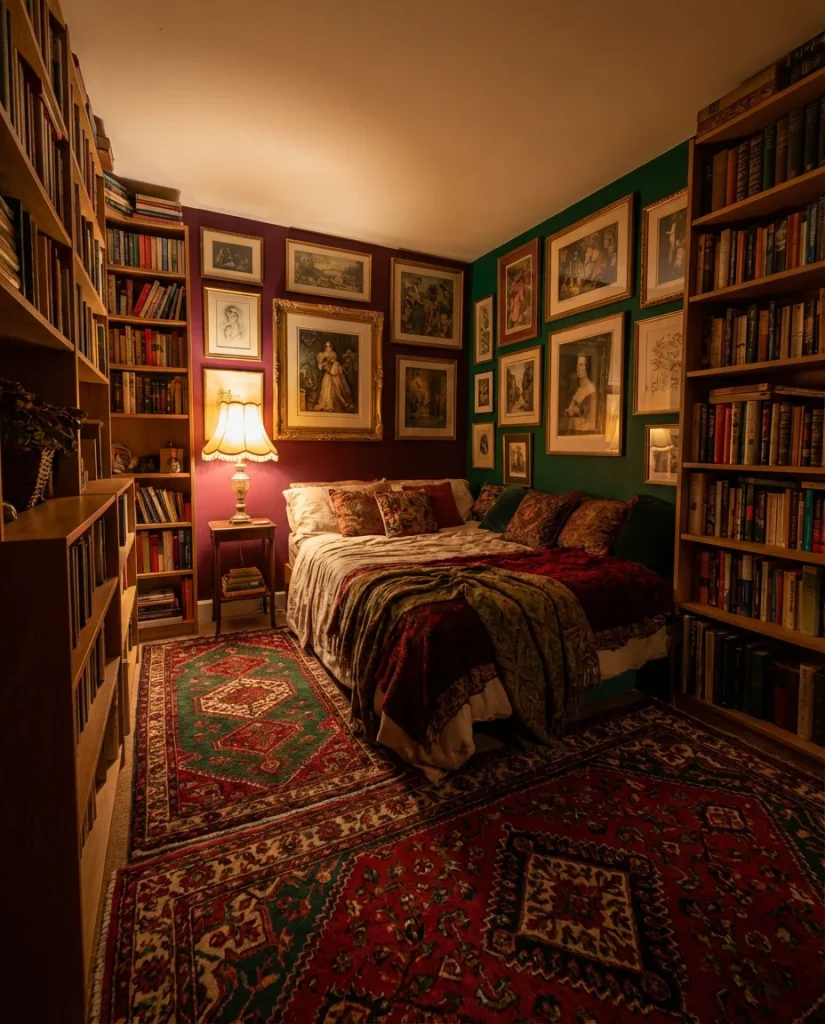
The anti-minimal counterpoint to Japandi, the maximalist small bedroom, is for people who find empty walls deeply unsettling and who collect things they love with genuine enthusiasm. Done well, it is one of the most personal and colorful expressions of aesthetic individuality that a home can contain. The rules: every wall can be used, but use it intentionally. Every surface can hold something, but group objects in collections rather than scattering them randomly. And critically: choose a color story and stick to it. Maximalism fails when there’s no thread connecting the chaos—and succeeds magnificently when there is.
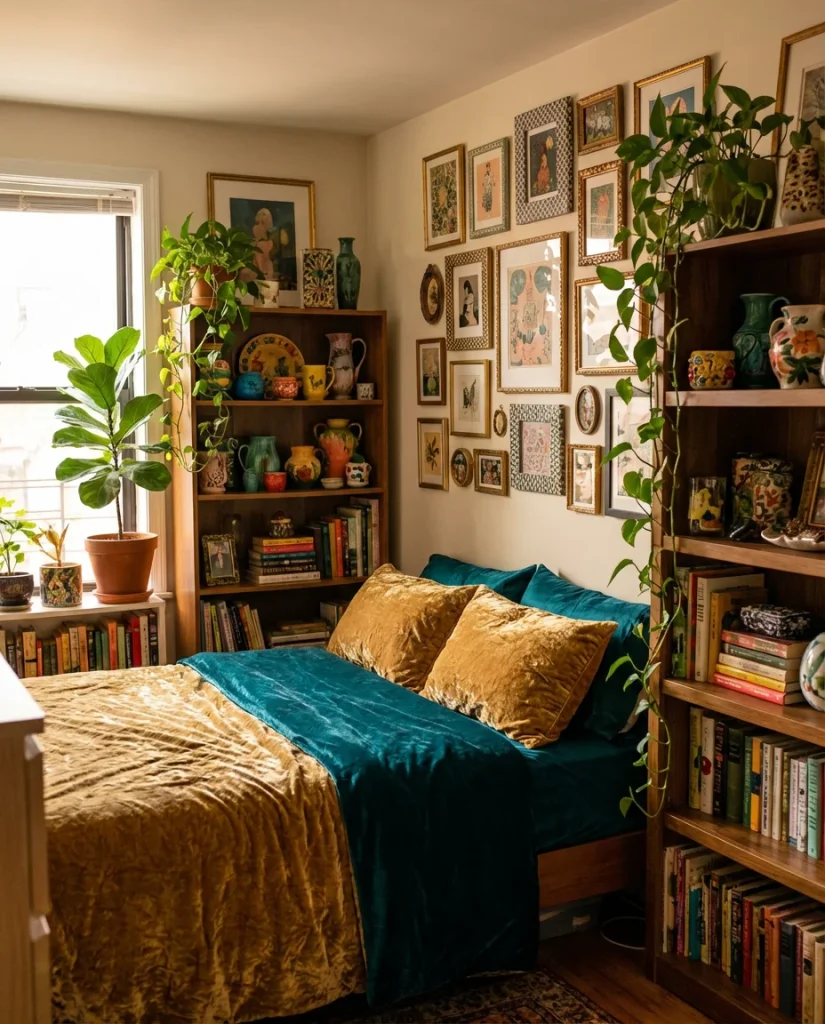
The maximalist approach to a small bedroom is not for the faint-hearted, but it is genuinely achievable—and the result tends to be the kind of room that people walk into and immediately say “this feels like you.” That deep personal resonance is what every home should aspire to, regardless of style or budget. When your room feels like the truest expression of who you are, it stops being a space you manage and starts being a space that restores you. And that, in the end, is exactly what a bedroom is for.
Conclusion
Whether you’re drawn to the hushed simplicity of a Japandi setup, the jewel-toned richness of an Indian-inspired textile story, or the committed joy of a fully colorful maximalist bedroom, small spaces are always more full of possibility than they first appear. We’d love to hear which of these ideas spoke to you most—drop your favorites in the comments below and tell us what’s next for your bedroom. Your next makeover might be exactly one comment away.