Stair railings are no longer just safety features—they’ve become key design statements that define the style and flow of your home. In 2026, homeowners across the United States are turning to Pinterest for fresh inspiration, seeking railings that blend function with visual impact. Whether you’re renovating a suburban two-story or updating a city loft, the right railing can transform your staircase into a focal point. From sleek steel to warm wood combinations, this year’s trends emphasize craftsmanship, contrast, and personality. Here are 24 inspiring stair railing ideas that reflect what’s trending right now.
1. Sleek Black Metal with Minimal Verticals
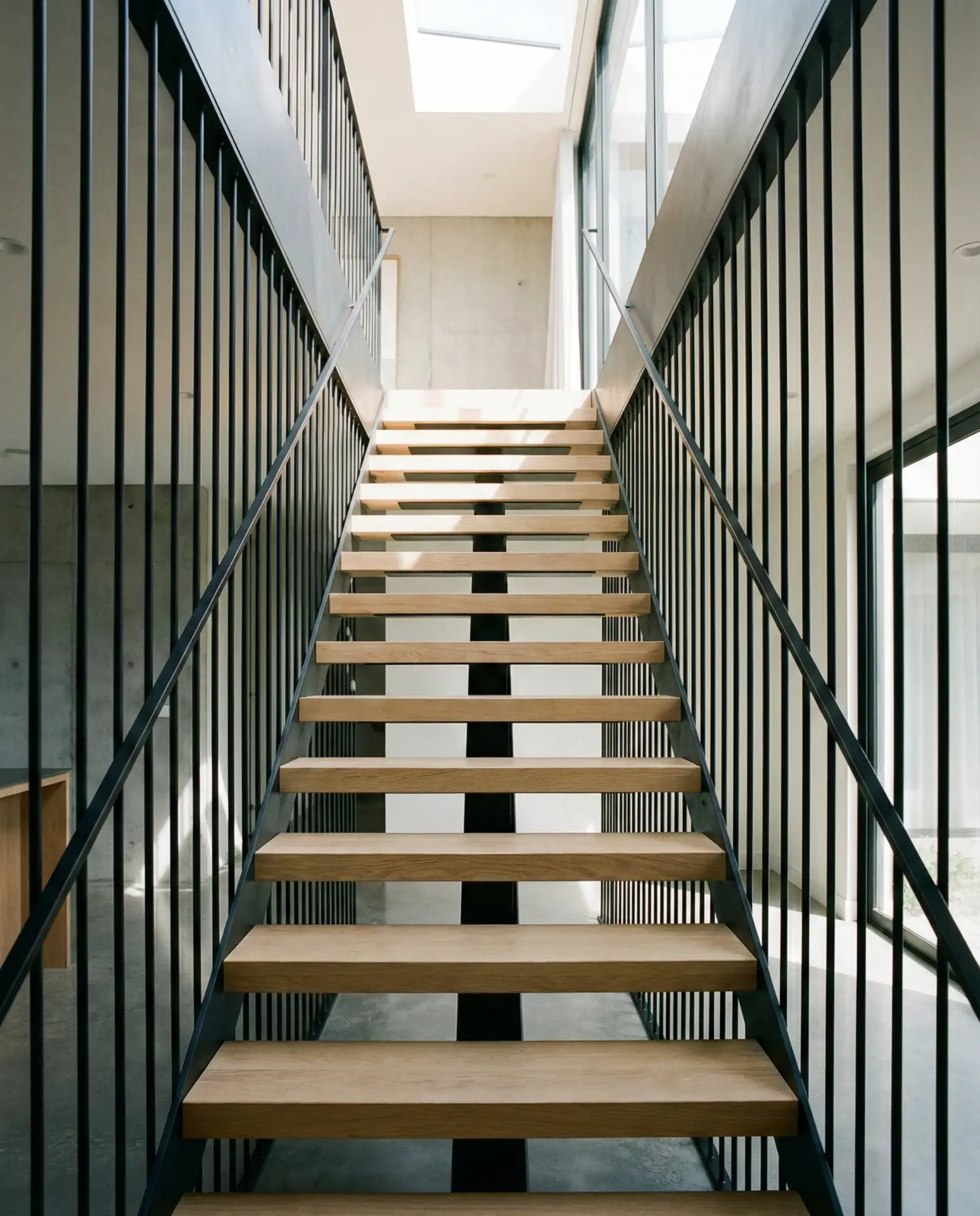
This modern approach uses thin black metal balusters spaced evenly for a clean, airy look. The design modern aesthetic works beautifully in open-concept homes where the staircase is visible from the living area. Black powder-coated steel resists fingerprints and pairs effortlessly with white walls or natural wood treads. The simplicity of this style makes it a go-to for minimalist interiors.
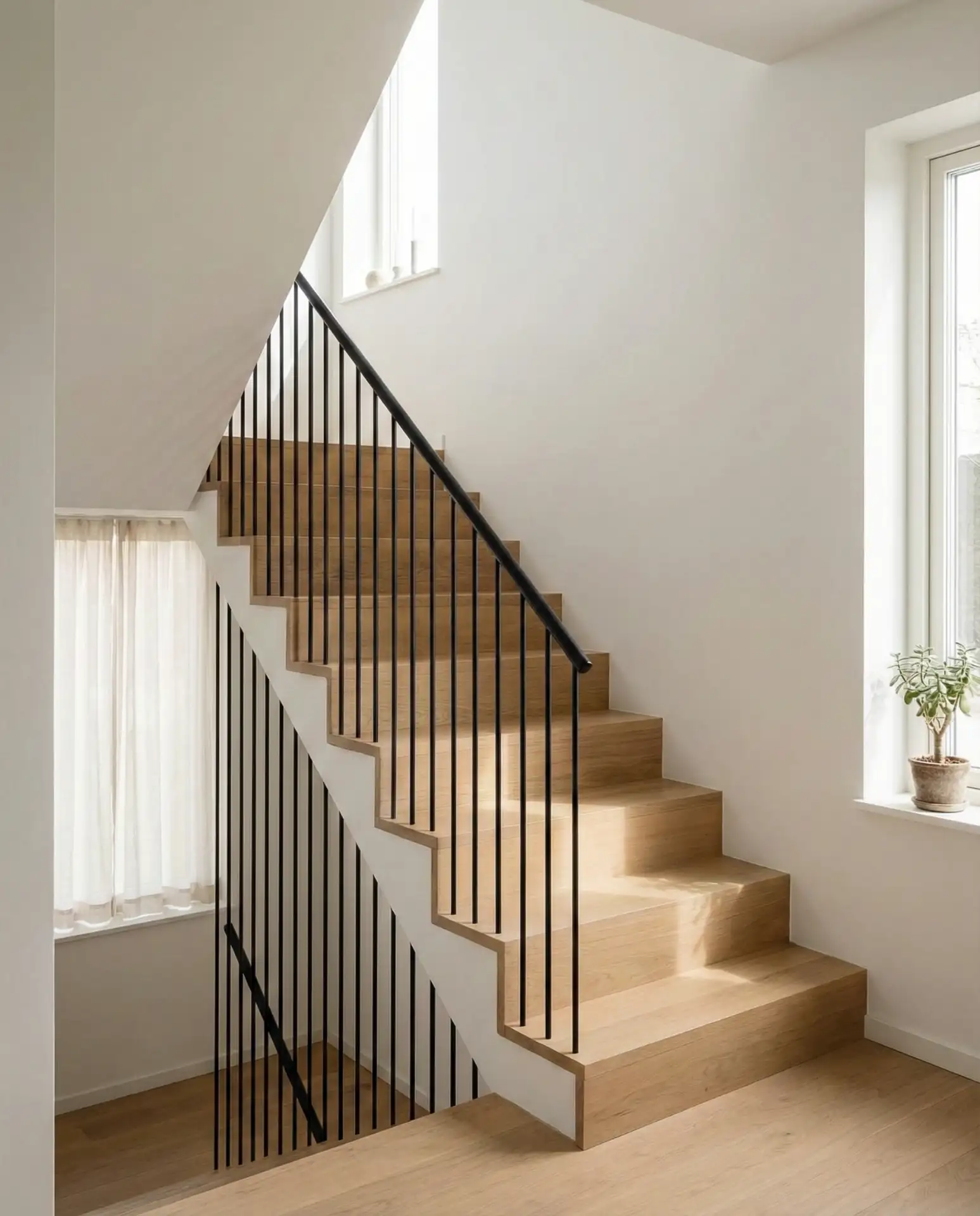
One common mistake is choosing balusters that are too thick, which can make the space feel closed off. Stick with half-inch or thinner profiles to maintain the open, floating effect. This railing style also works well in homes with vaulted ceilings, as it doesn’t compete visually with the architecture. Maintenance is straightforward—just occasional dusting and a quick wipe-down with a damp cloth.
2. Horizontal Cable Railing for Open Views
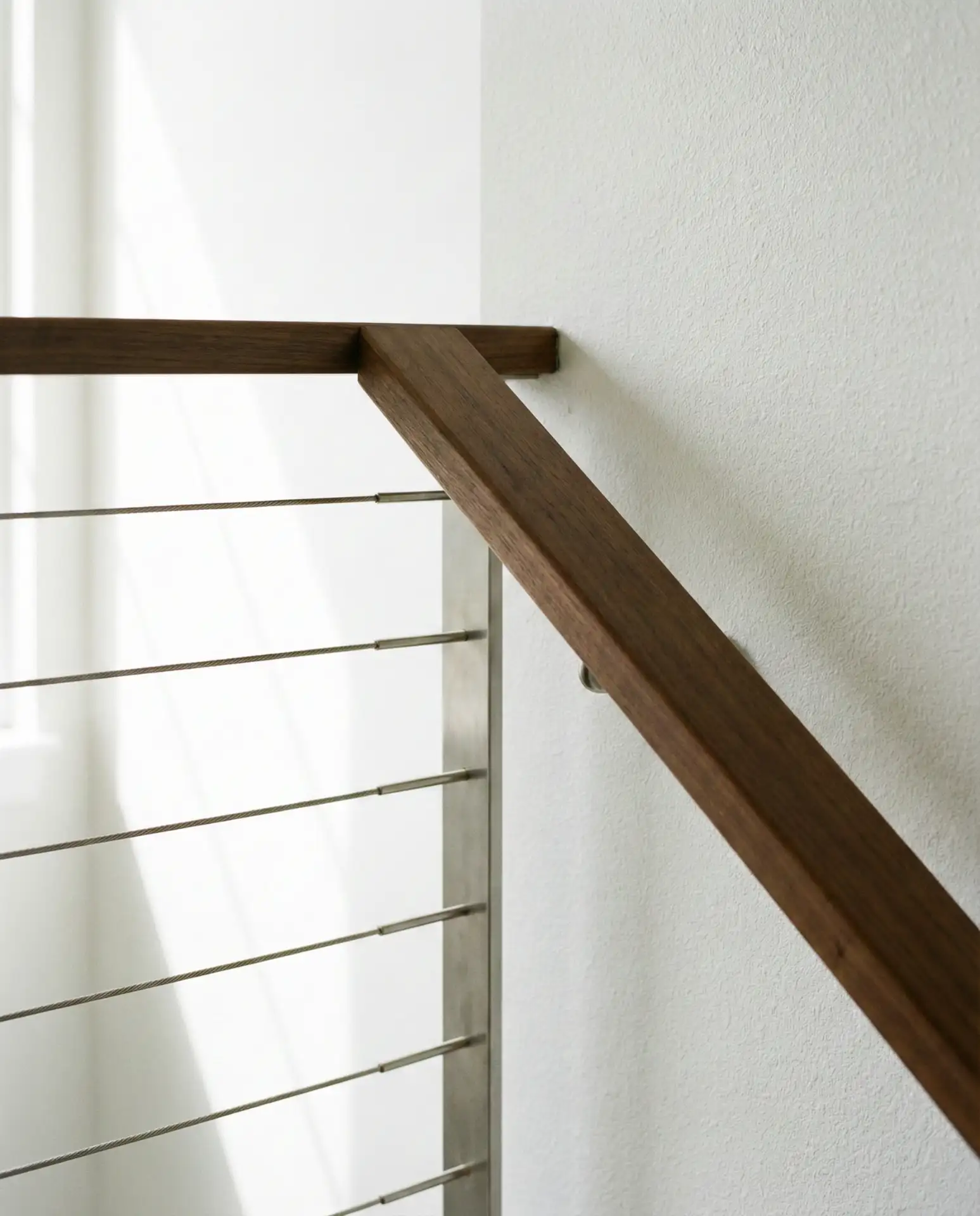
A cable railing system features horizontal stainless steel wires tensioned between posts, creating an almost invisible barrier. This contemporary design is perfect for homes with views—whether it’s a backyard garden or a city skyline. The stainless steel cables are low-maintenance and incredibly durable, making them ideal for high-traffic staircases. They’re especially popular in coastal areas where rust resistance is essential.
Cable railings work best in homes where you want to preserve sightlines—think open lofts or split-levels with scenic backdrops. They’re less suited for traditional or ornate interiors. Installation requires proper tensioning tools, and it’s worth hiring a professional to ensure safety and longevity. Many homeowners pair these with wood or metal posts depending on whether they want warmth or a more industrial vibe.
3. Wrought Iron Scrollwork for Classic Charm
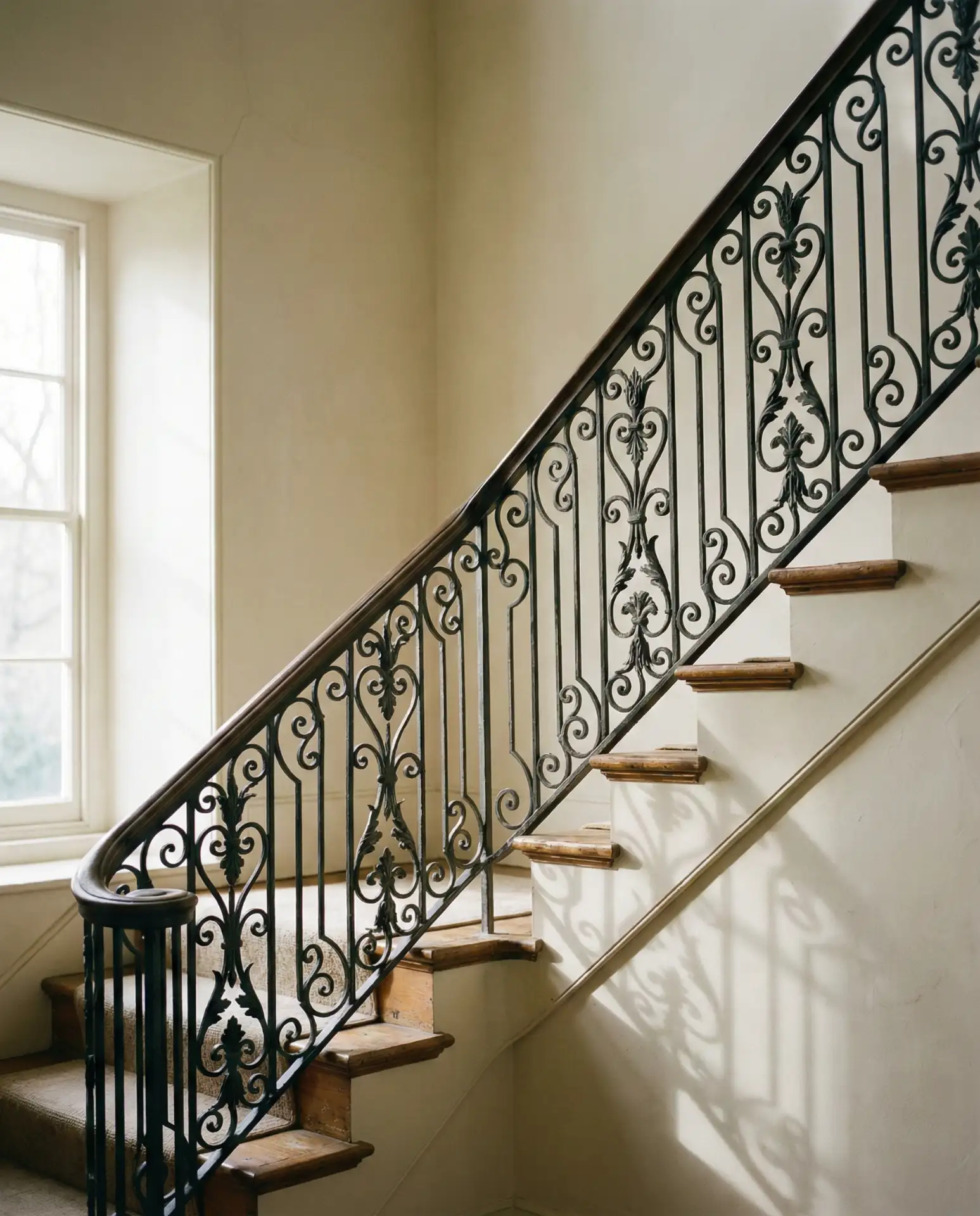
Traditional wrought iron railings bring Old World elegance to any staircase. The hand-forged iron scrolls and curves add a sense of craftsmanship that’s hard to replicate with modern materials. This style is especially popular in colonial, Mediterranean, and French-inspired homes. Black or oil-rubbed bronze finishes are most common, and the detailing can range from simple twists to elaborate patterns.
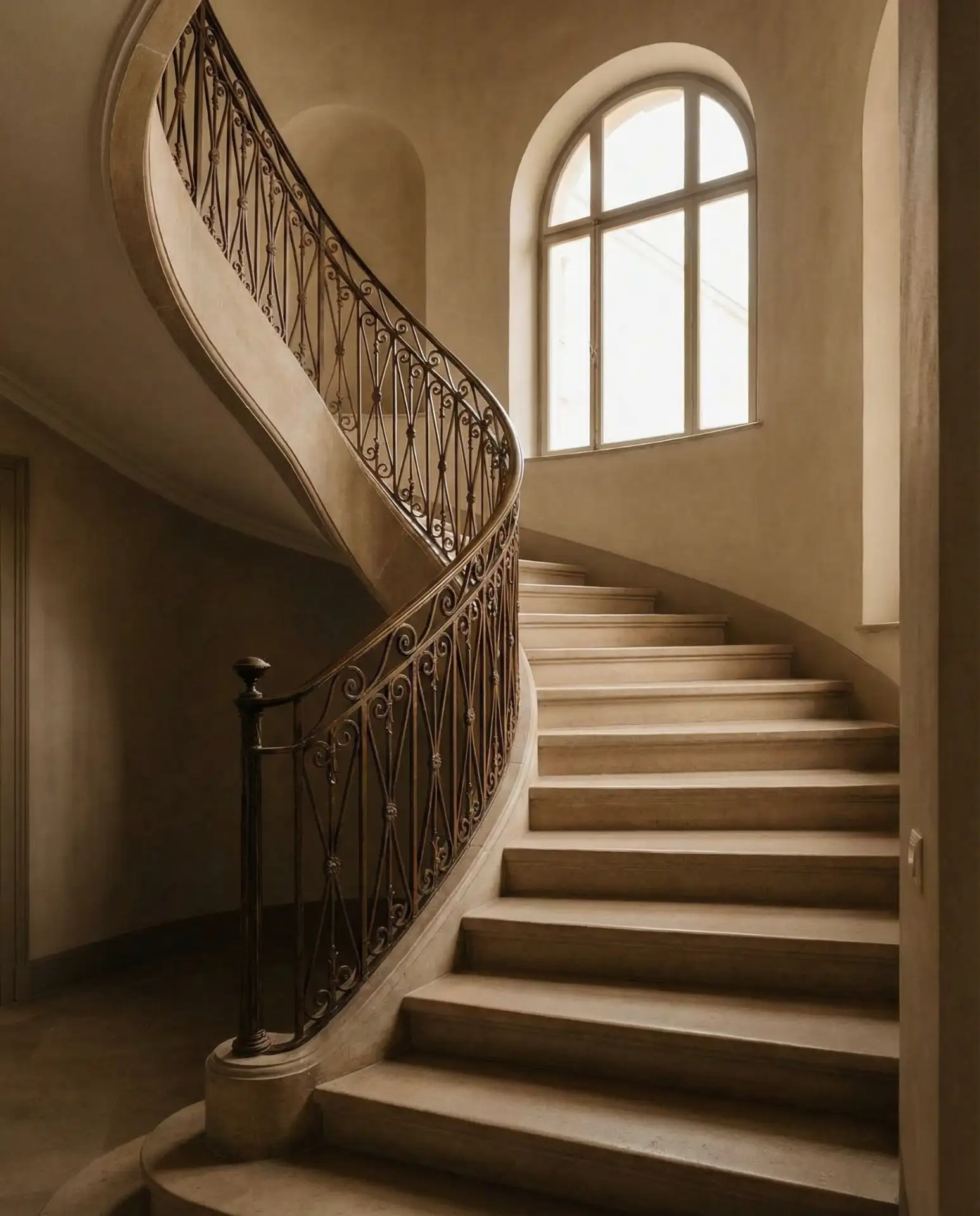
A friend renovated her 1920s Tudor and kept the original wrought iron railing intact—it became the most complimented feature in her home. The weight and durability of iron mean it lasts for decades, though it does need periodic touch-ups to prevent rust. If you’re restoring an older home, matching the original design can preserve historical value and character.
4. Wood and Metal Fusion for Warmth
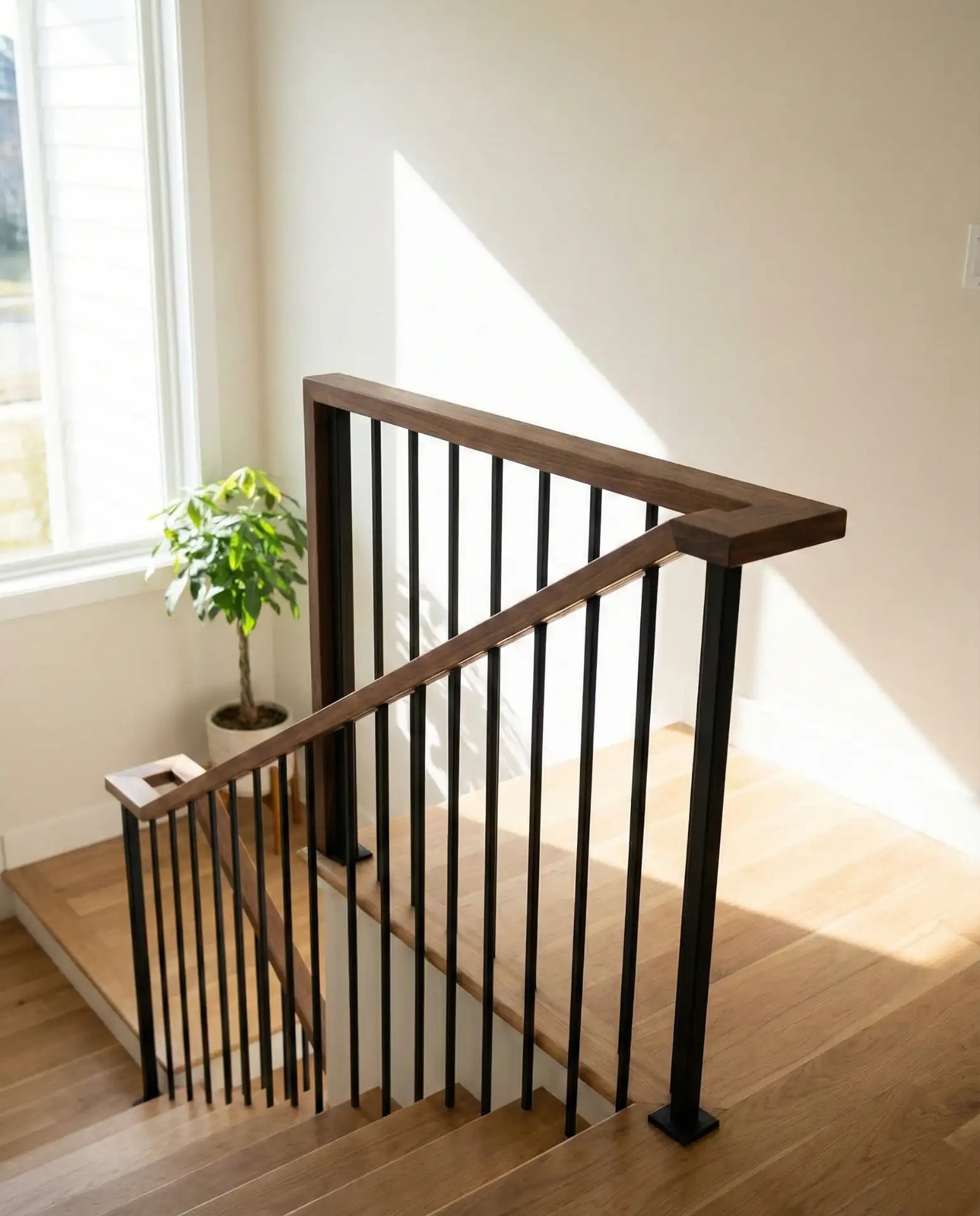
Combining wood and metal creates a balanced look that’s both inviting and structural. A wooden handrail atop black metal balusters is a signature pairing in modern farmhouse homes. The warmth of oak, walnut, or maple contrasts beautifully with the coolness of steel or iron. This hybrid design appeals to homeowners who want a contemporary edge without losing comfort.
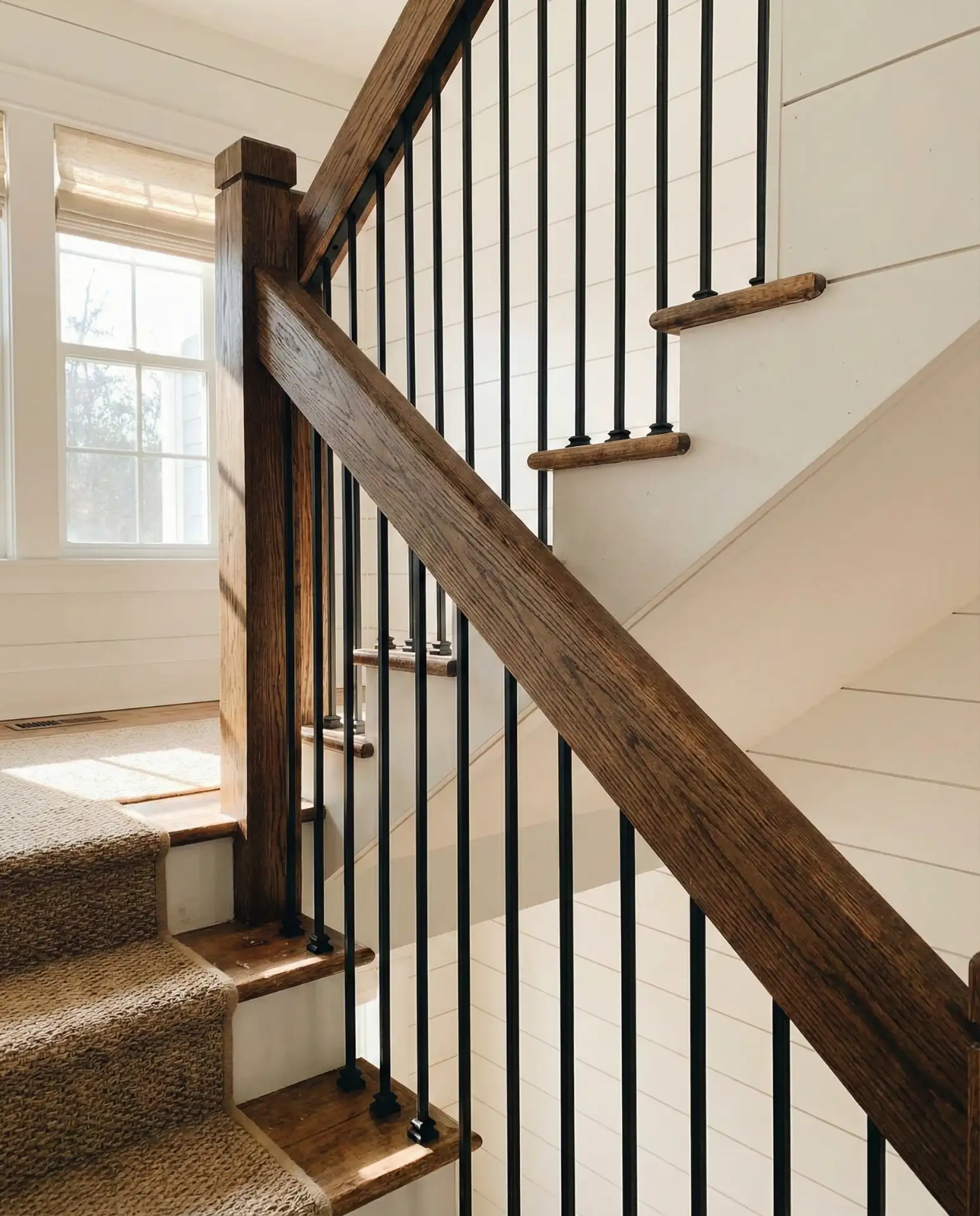
Budgets for this style range from $50 to $150 per linear foot, depending on wood species and metal finish. Prefabricated kits are available at most home improvement stores, making this a DIY-friendly option for handy homeowners. Staining or sealing the wood every few years keeps it looking fresh, while metal components need minimal care beyond occasional cleaning.
5. Glass Panels for a Floating Effect
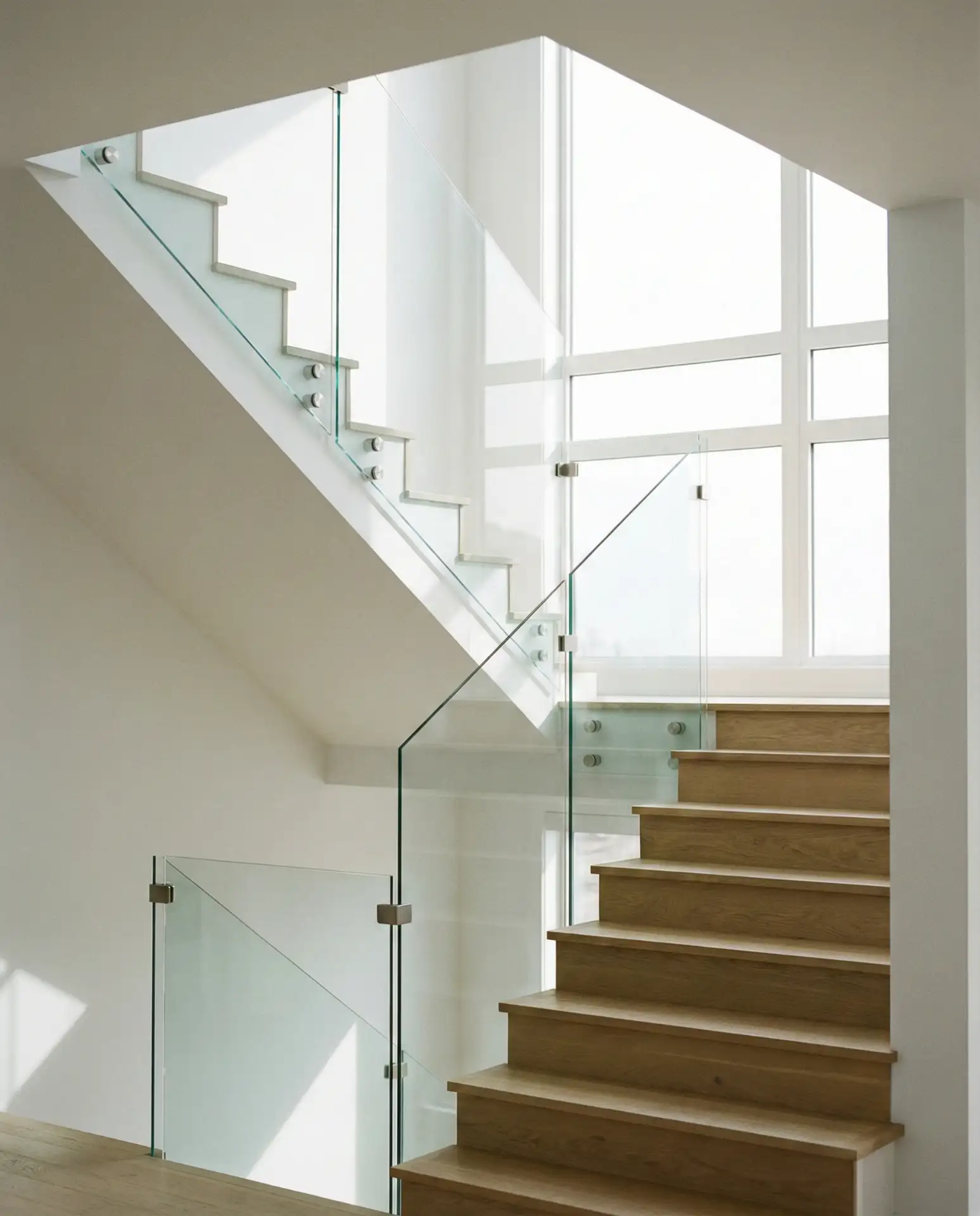
Glass railings offer an uninterrupted view and make spaces feel larger. Frameless tempered glass panels are held in place by metal or wood posts, creating a sleek, almost invisible barrier. This modern look is a favorite in contemporary homes, especially those with open floor plans or waterfront settings. The transparency allows light to flow freely, which is a major plus in smaller or darker stairwells.
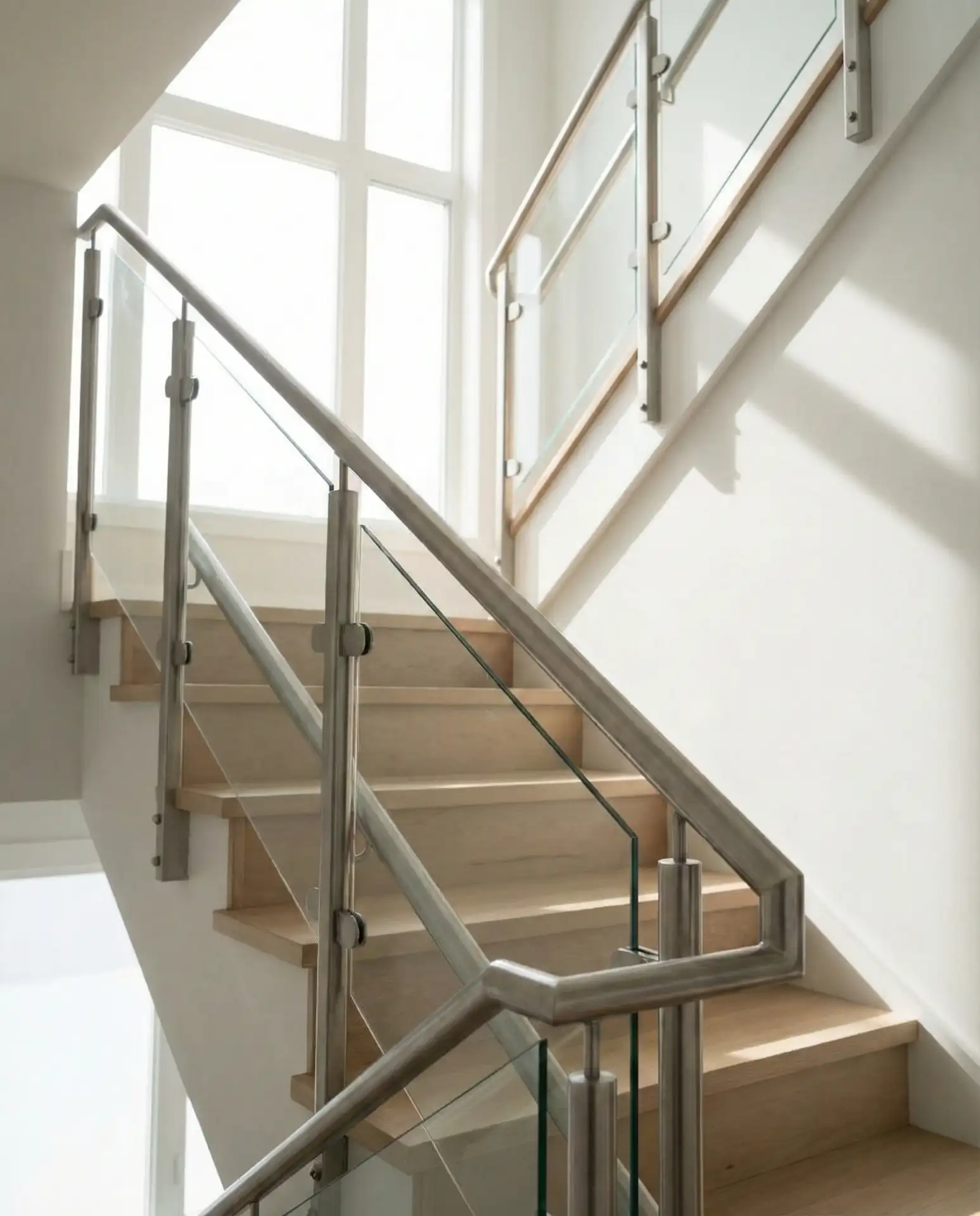
This style tends to show fingerprints and smudges more than other materials, so it’s best for adults-only households or families willing to clean regularly. However, the visual payoff is worth it for those who prioritize aesthetics. Glass railings are code-compliant in most U.S. jurisdictions when properly installed with the right thickness and anchoring system.
6. Mid-Century Walnut and Brass Accents
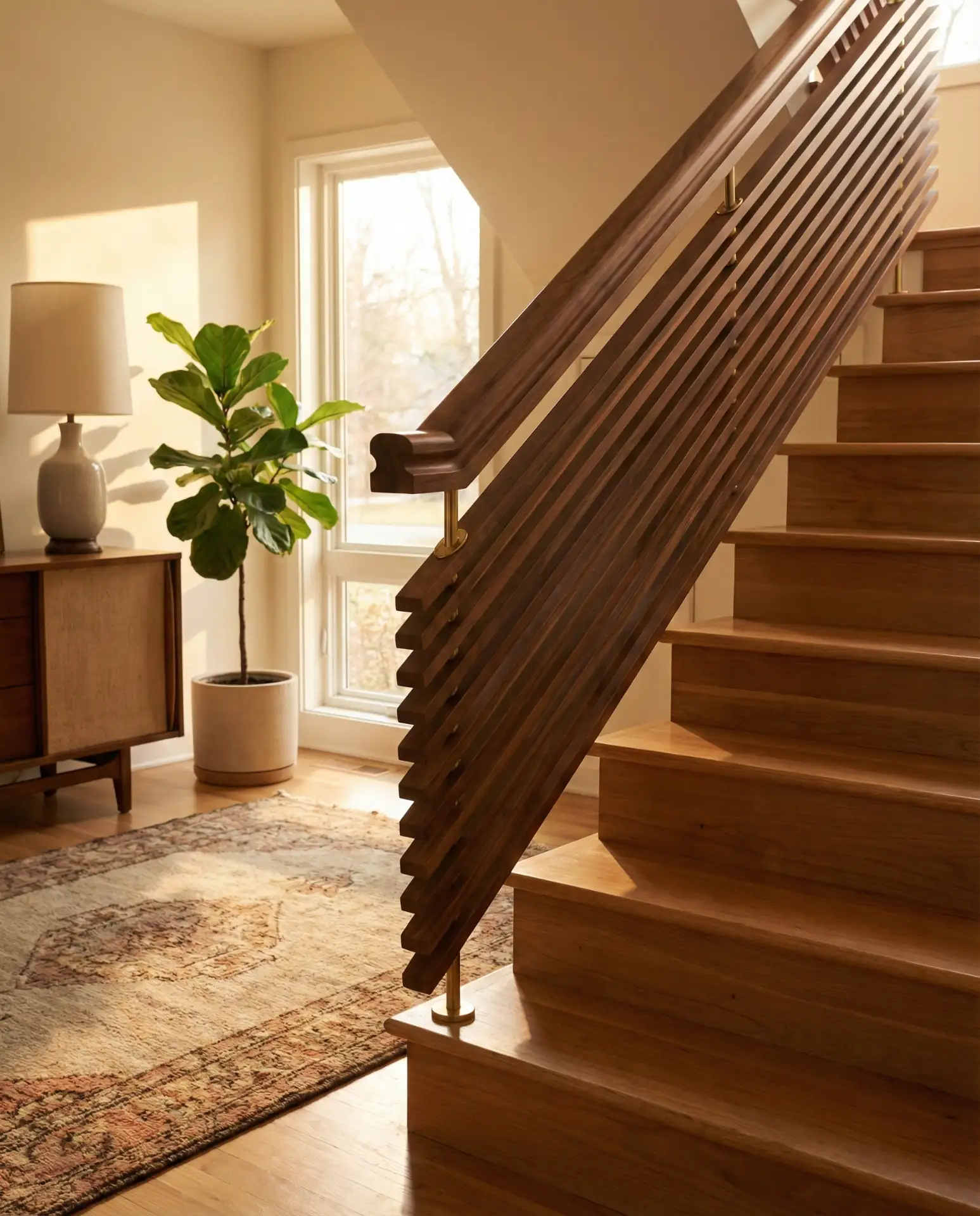
Drawing from mid century design, this railing features warm walnut wood with brass or gold-toned metal details. The horizontal slats or angled spindles echo the geometric lines of the 1950s and 60s. Interior designers often recommend this for ranch-style homes or split-levels being updated with retro flair. The combination of rich wood and metallic accents adds a sophisticated, timeless quality.
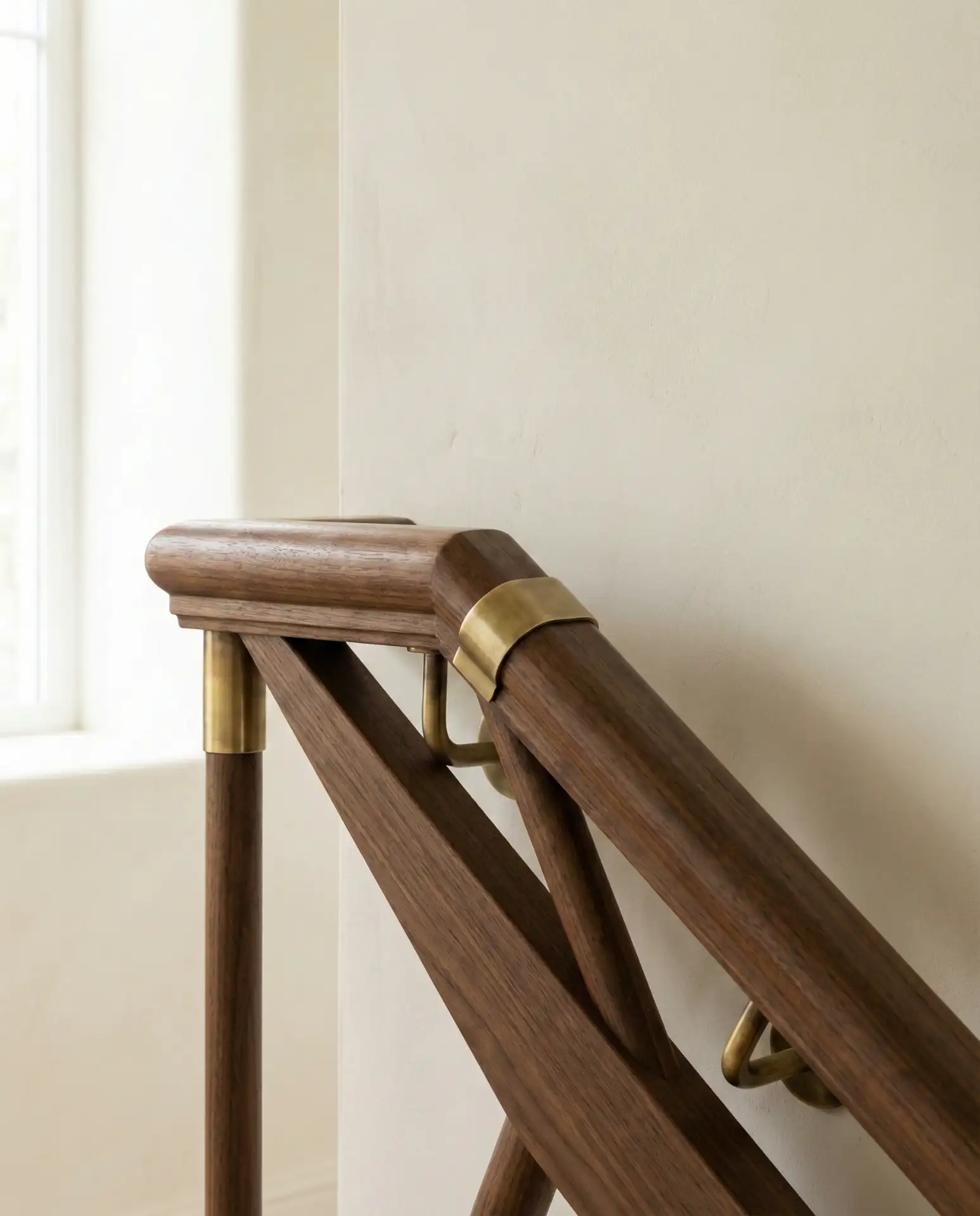
In suburban homes across California and the Pacific Northwest, this style is experiencing a revival. Homeowners appreciate how it bridges vintage charm with modern function. When sourcing materials, look for FSC-certified walnut and lead-free brass to ensure sustainability and safety. The natural oils in walnut deepen over time, so the railing actually gets more beautiful with age.
7. Industrial Steel Pipe Railing
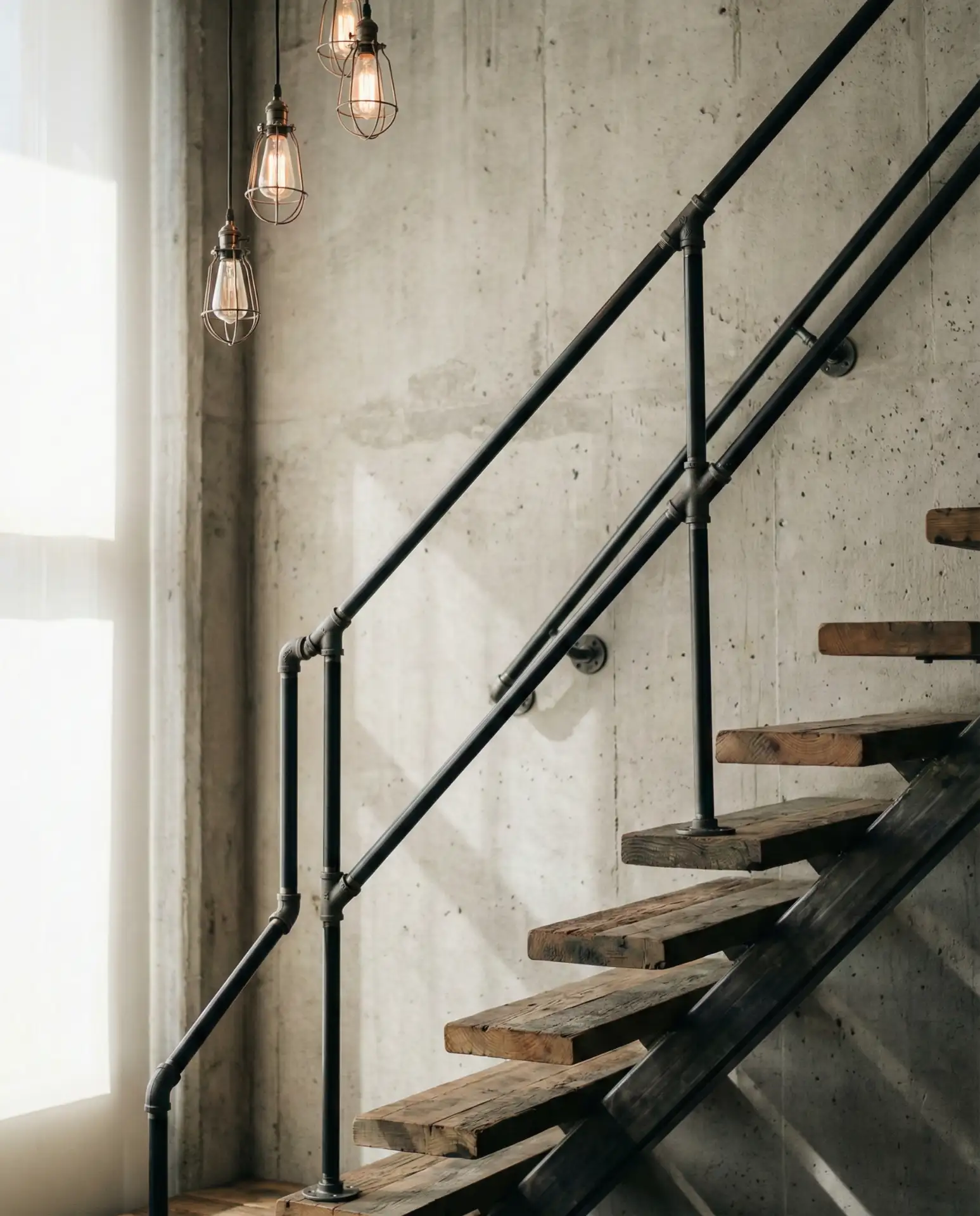
This raw, utilitarian look uses steel or iron pipes and fittings as both structure and style. The black or galvanized finish lends an edgy, loft-like vibe that’s perfect for modern urban homes. Indoor pipe railings are surprisingly affordable and can be customized with different elbow angles and joint configurations. The DIY community loves this style because the materials are readily available at hardware stores.
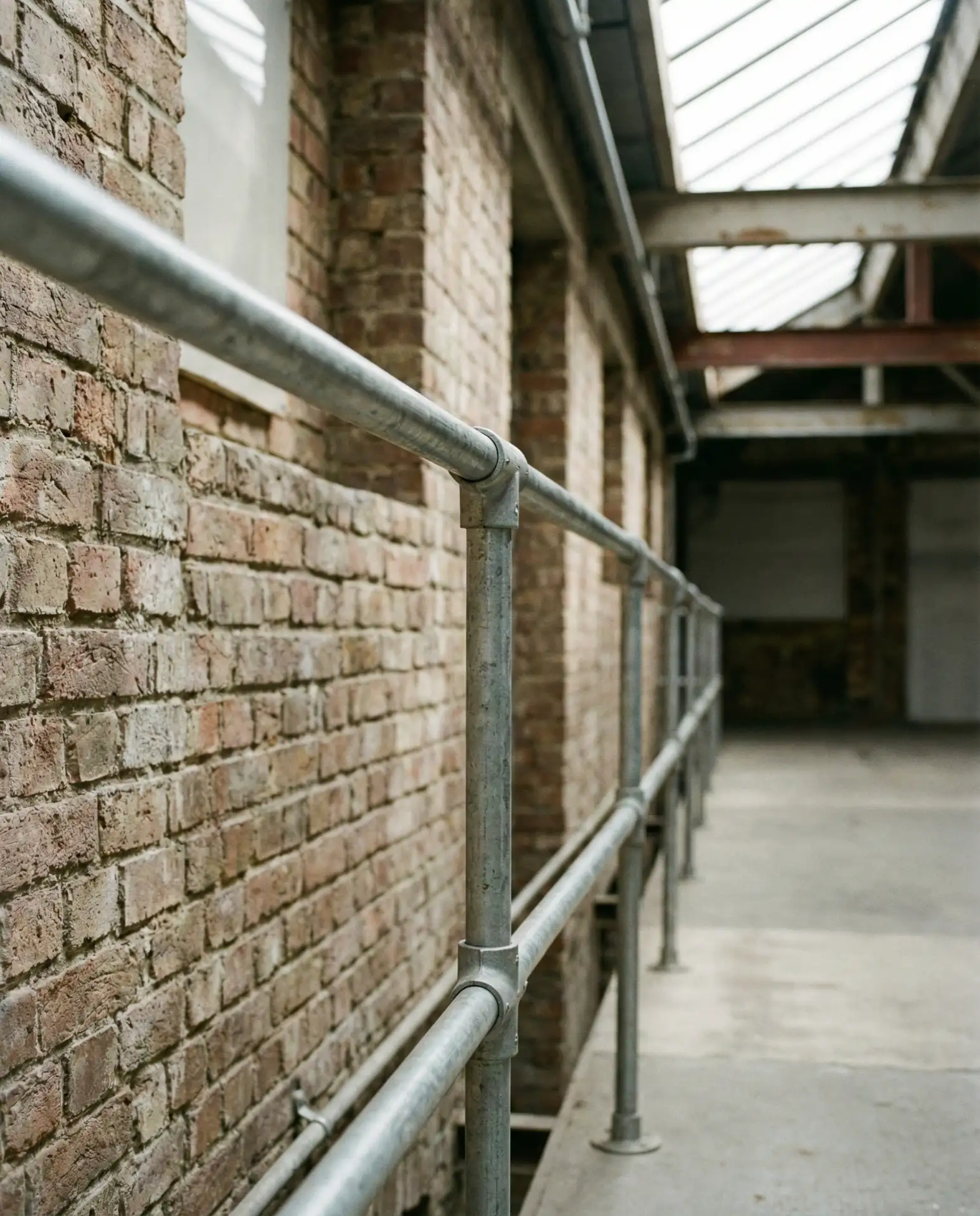
Many homeowners in converted warehouses or new builds with exposed ductwork choose this to complement their overall design language. It’s practical, durable, and adds character without requiring a large budget. Expect to spend around $30 to $60 per linear foot if you’re doing it yourself, and double that if hiring a contractor. The raw look can be left as-is or sealed with a clear coat to prevent oxidation.
8. White and Wood Coastal Simplicity
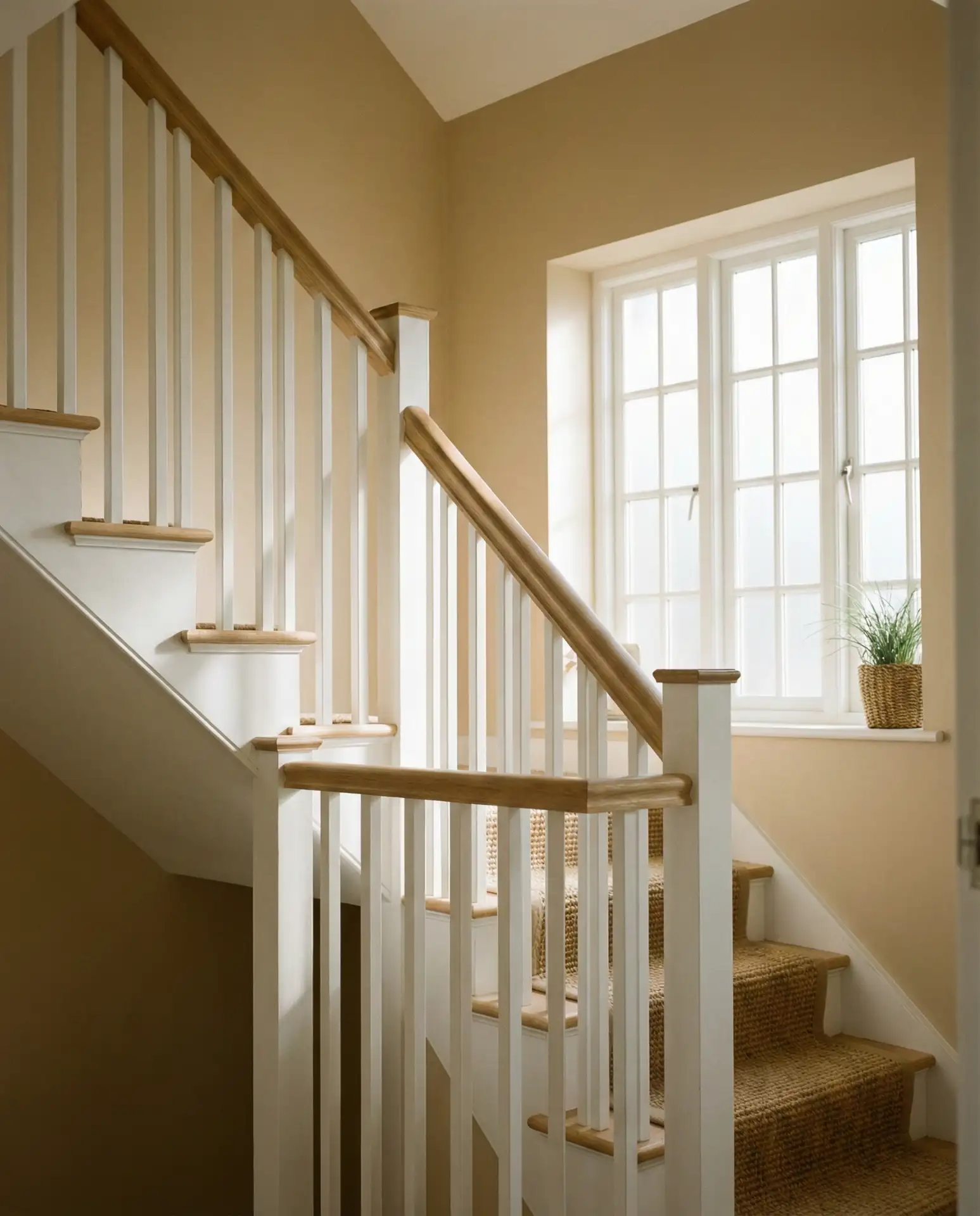
A crisp black and white palette—or more accurately, white balusters with a natural wood handrail—captures the breezy feel of coastal living. This design modern take on traditional railing is everywhere from Cape Cod to Southern California beach towns. The painted white spindles keep things light and airy, while the wood top rail adds warmth. It’s a timeless combination that works in both new construction and makeover projects.
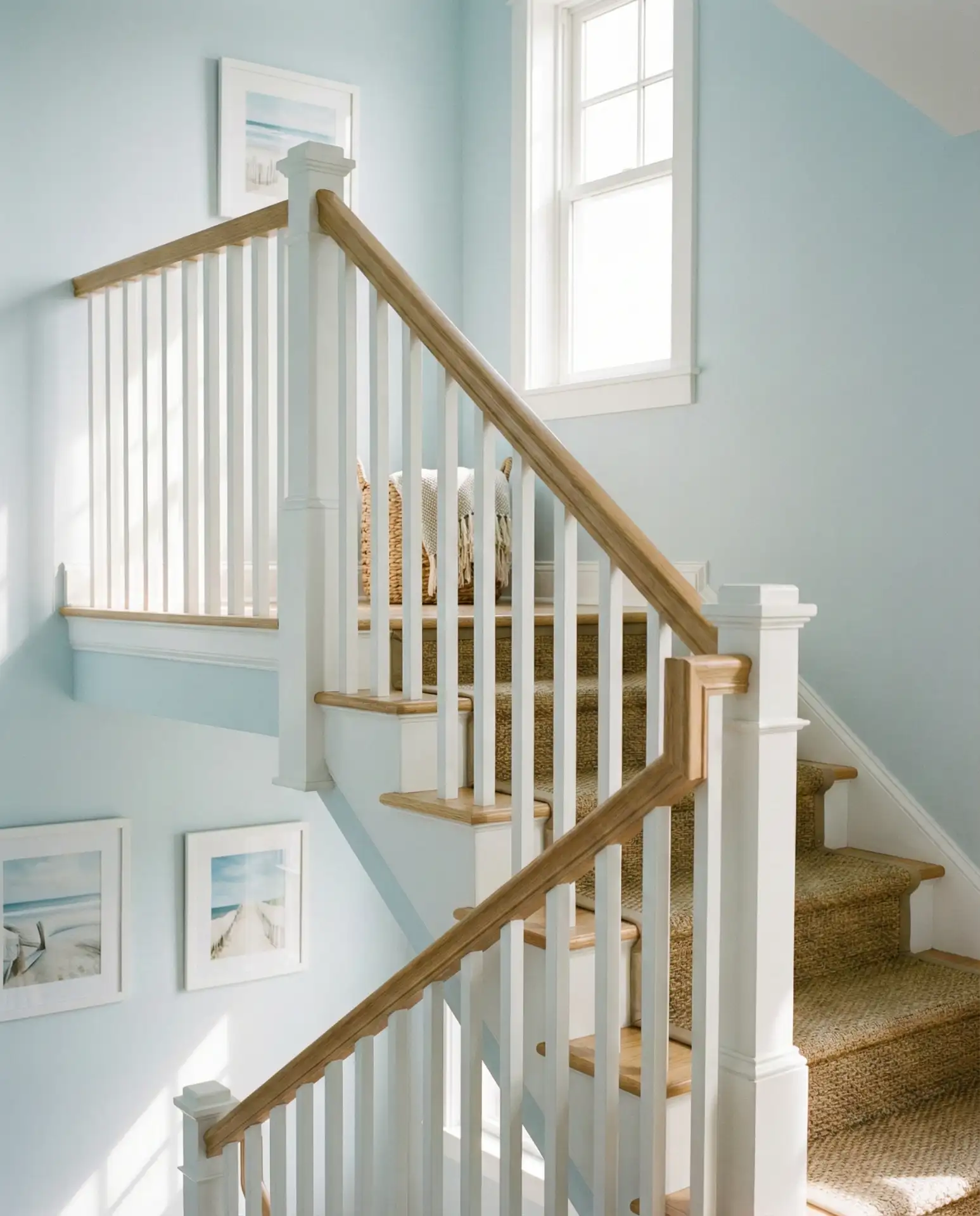
A practical insight: if you’re painting the balusters yourself, use a semi-gloss finish for easy cleaning, especially in homes with kids or pets. The white surface hides less than you’d think, so plan for touch-ups every few years. Pairing this railing with sisal or jute stair runners enhances the coastal aesthetic and provides slip resistance.
9. Blackened Steel with Geometric Patterns
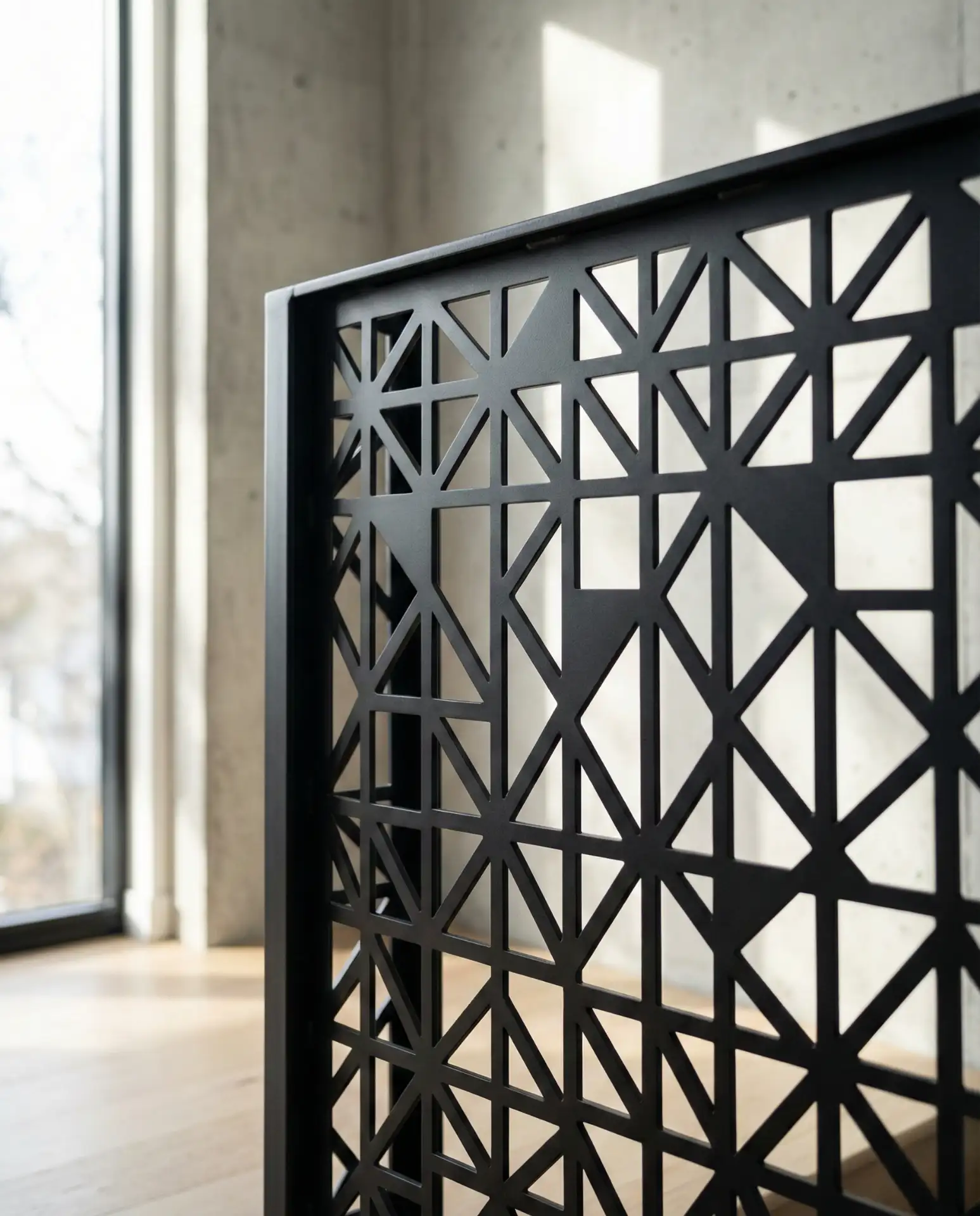
For a bold statement, consider black metal railings with custom geometric cutouts or laser-cut designs. This modern iron approach transforms the railing into functional art. Interior spaces with high ceilings or dramatic lighting benefit most from this treatment. The patterns can be abstract, Art Deco-inspired, or even nature-themed, depending on your home’s overall aesthetic.
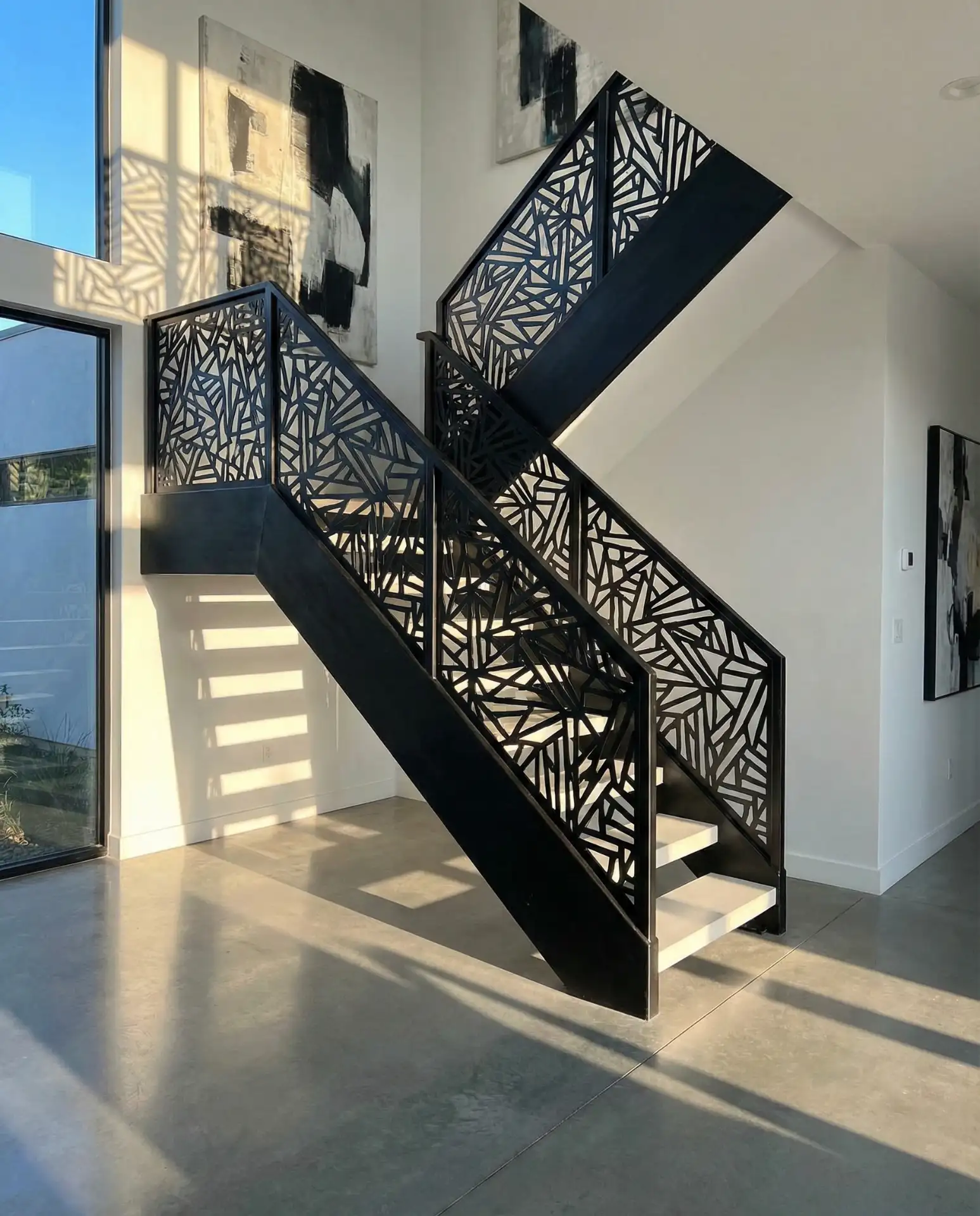
This isn’t a budget option—custom metalwork can run $200 to $400 per linear foot—but it’s a showstopper. You’re essentially commissioning a piece that’s unique to your home. It’s popular among homeowners in cities like Austin, Denver, and Portland who want their staircases to double as conversation pieces. Work with a local metal fabricator who can translate your vision into a precise design.
10. Rod Iron with Curved Elegance
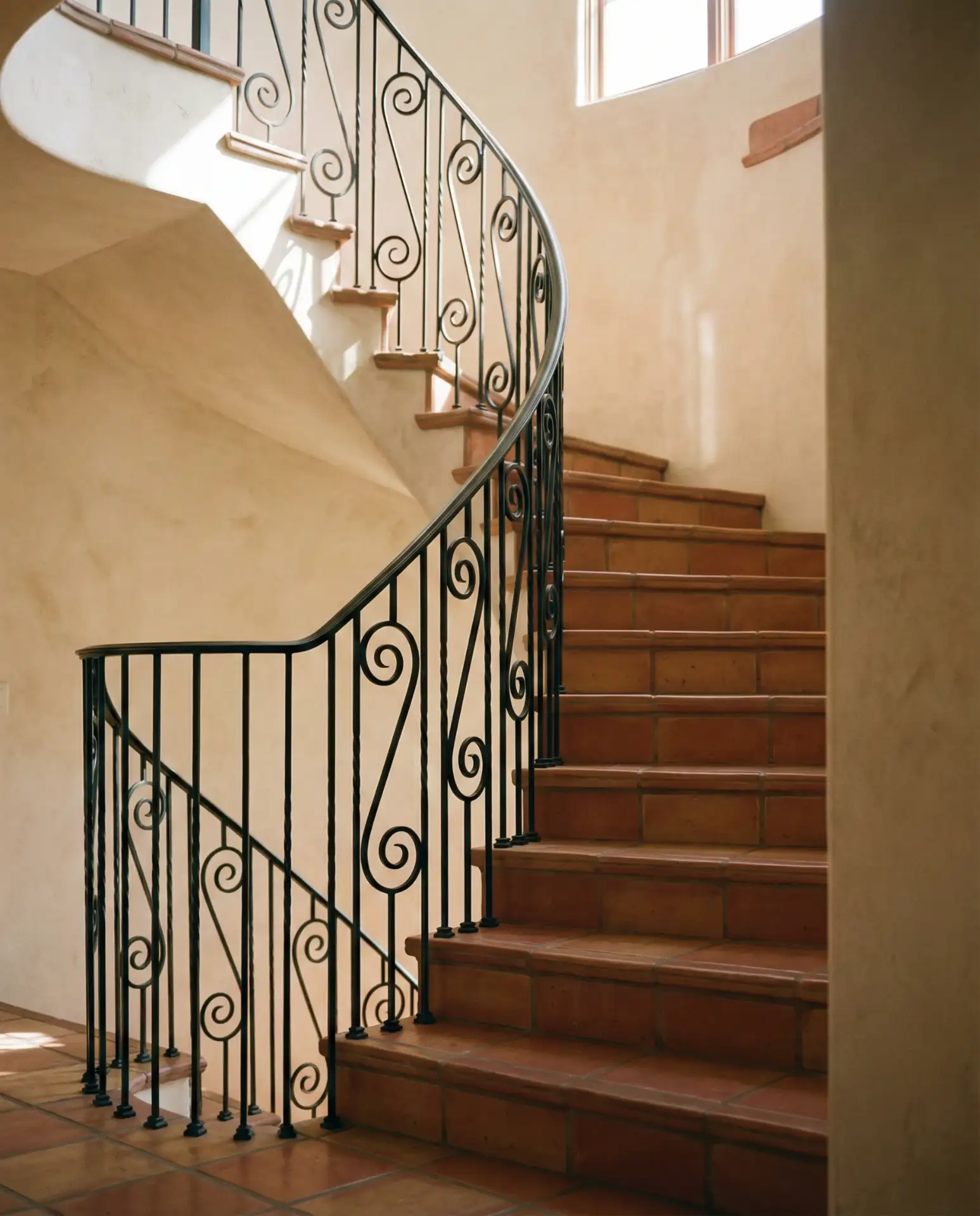
Though often called rod iron, this actually refers to wrought iron rods shaped into graceful curves and spirals. The black finish and fluid lines create an elegant, romantic atmosphere. This style suits traditional, Mediterranean, and Spanish Colonial homes. The hand-bent rods vary in thickness, and the tops often feature decorative finials or caps that add to the craftsmanship.
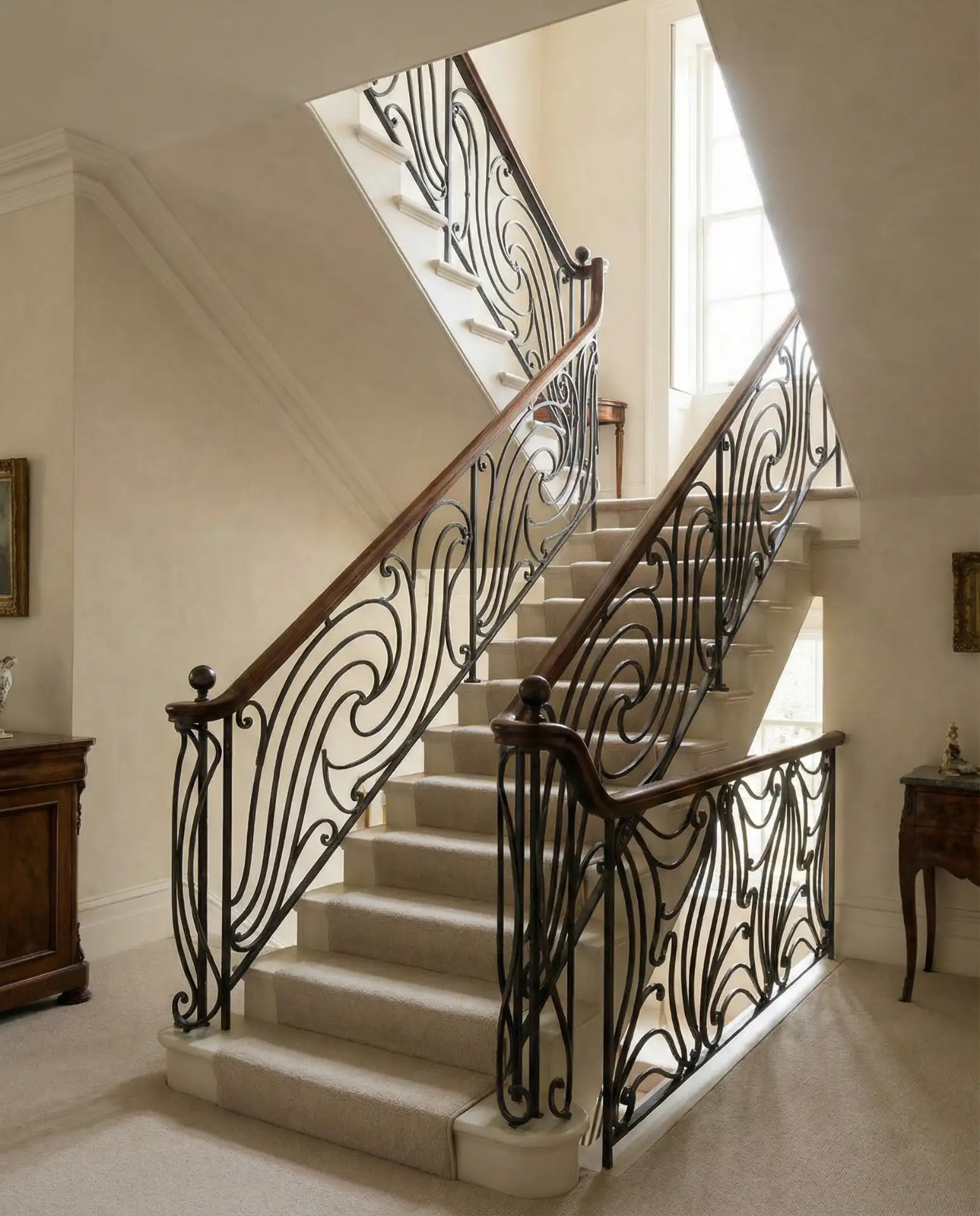
Homeowners often choose this when restoring historic properties or adding period-appropriate details to new builds. The beauty of wrought iron is its longevity—properly maintained, it can last a century or more. Keep an eye out for rust, especially in humid climates, and apply touch-up paint as needed. This style pairs beautifully with stone or hardwood floors.
11. Updated Spindle Makeover with Paint
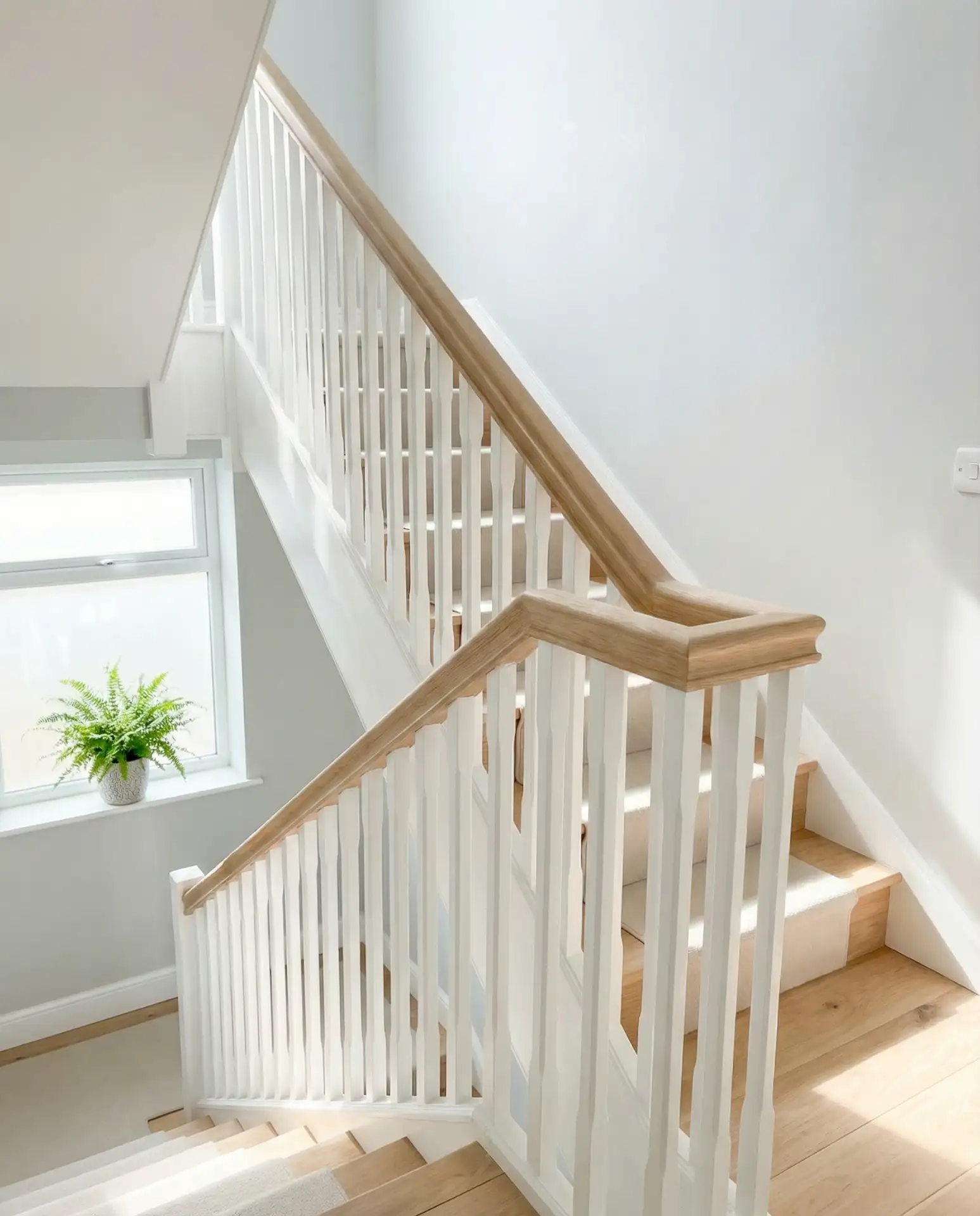
An updated railing doesn’t always require new materials—sometimes a fresh coat of paint does wonders. Swapping dated oak spindles for painted white or black versions is a popular makeover strategy. This approach keeps the existing structure while dramatically changing the look. Modern homes favor clean, monochromatic palettes, and this is an affordable way to achieve that.
Expert tip: lightly sand the spindles before priming to ensure the paint adheres properly. Use a foam brush or small roller to avoid drips, and expect to do two coats for full coverage. This project typically takes a weekend and costs under $100 in supplies. It’s one of the highest-impact, lowest-cost upgrades you can make to your home.
12. Half Wall Railing with Wood Cap
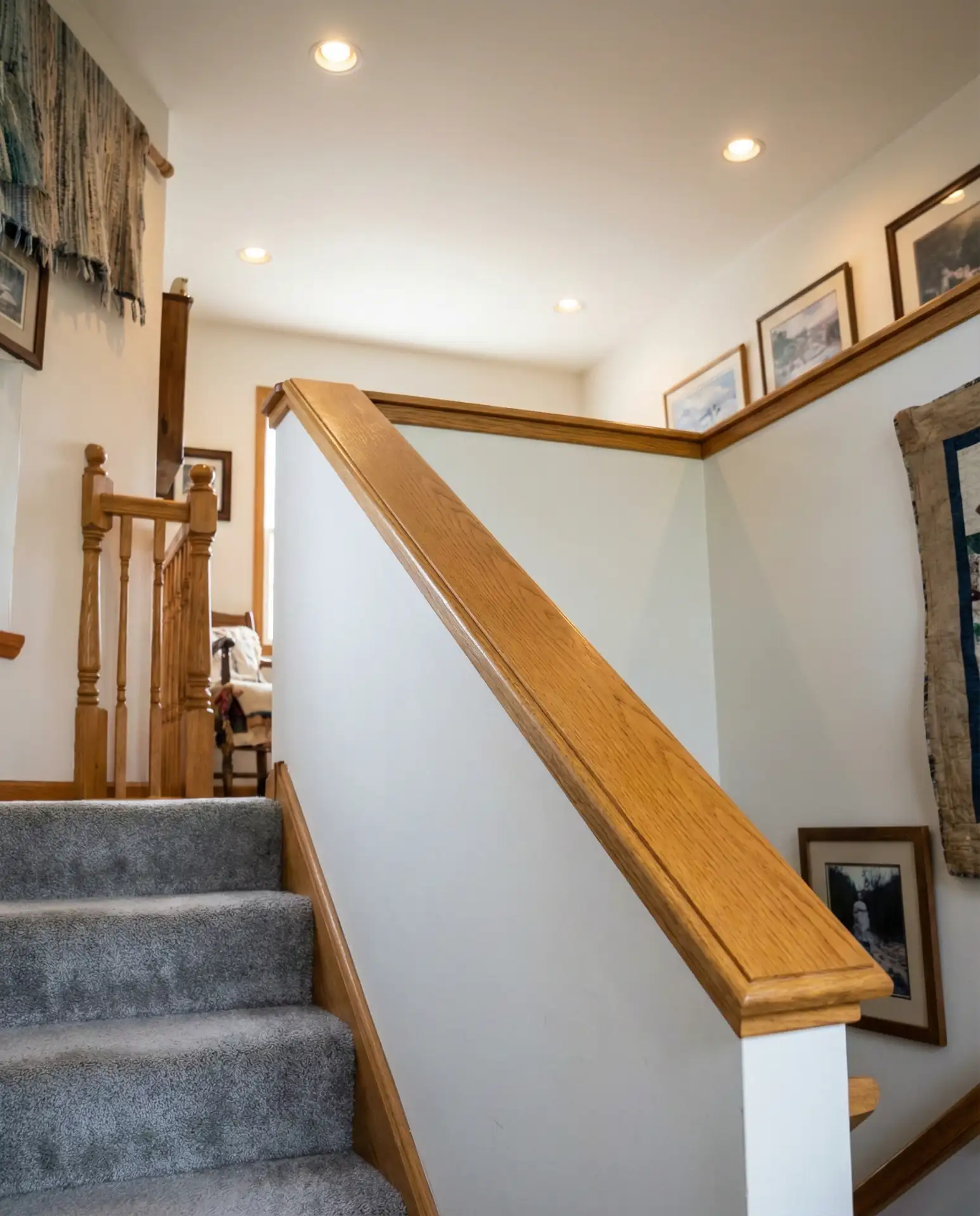
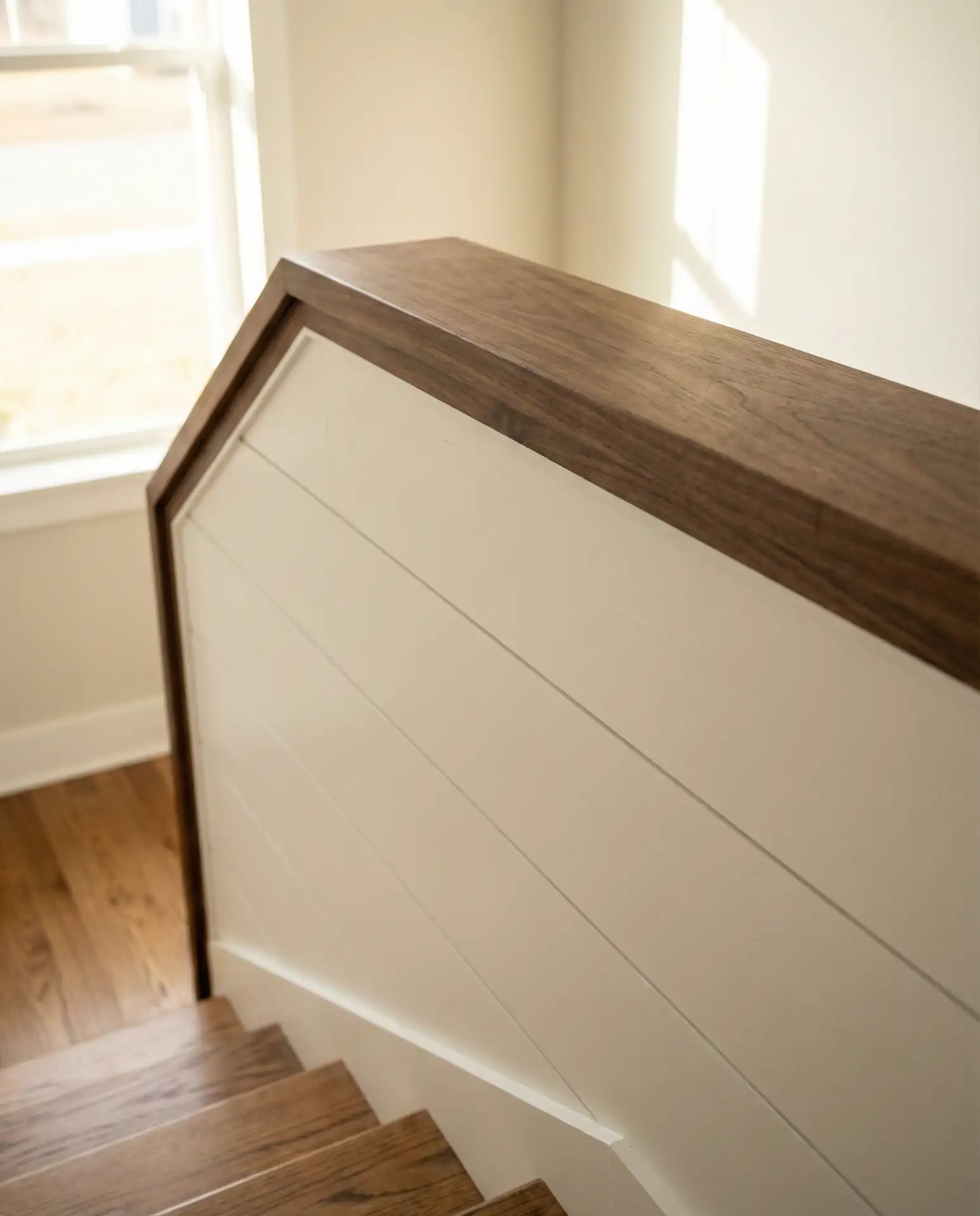
A ideas half walls railing features a solid knee wall—usually drywall or shiplap—topped with a wood cap rail. This design offers more privacy and sound dampening than open balusters. It’s especially common in split-level homes where the staircase is visible from multiple rooms. The half wall can be painted to match the room or finished with wainscoting for added texture.
This works best in homes where you want to visually separate the staircase from adjacent spaces without closing them off entirely. It’s also safer for young children and pets, as there are no gaps to slip through. The wood cap provides a convenient surface for decor or even a narrow shelf for photos and plants.
13. Christmas Decorating Ideas for Railings
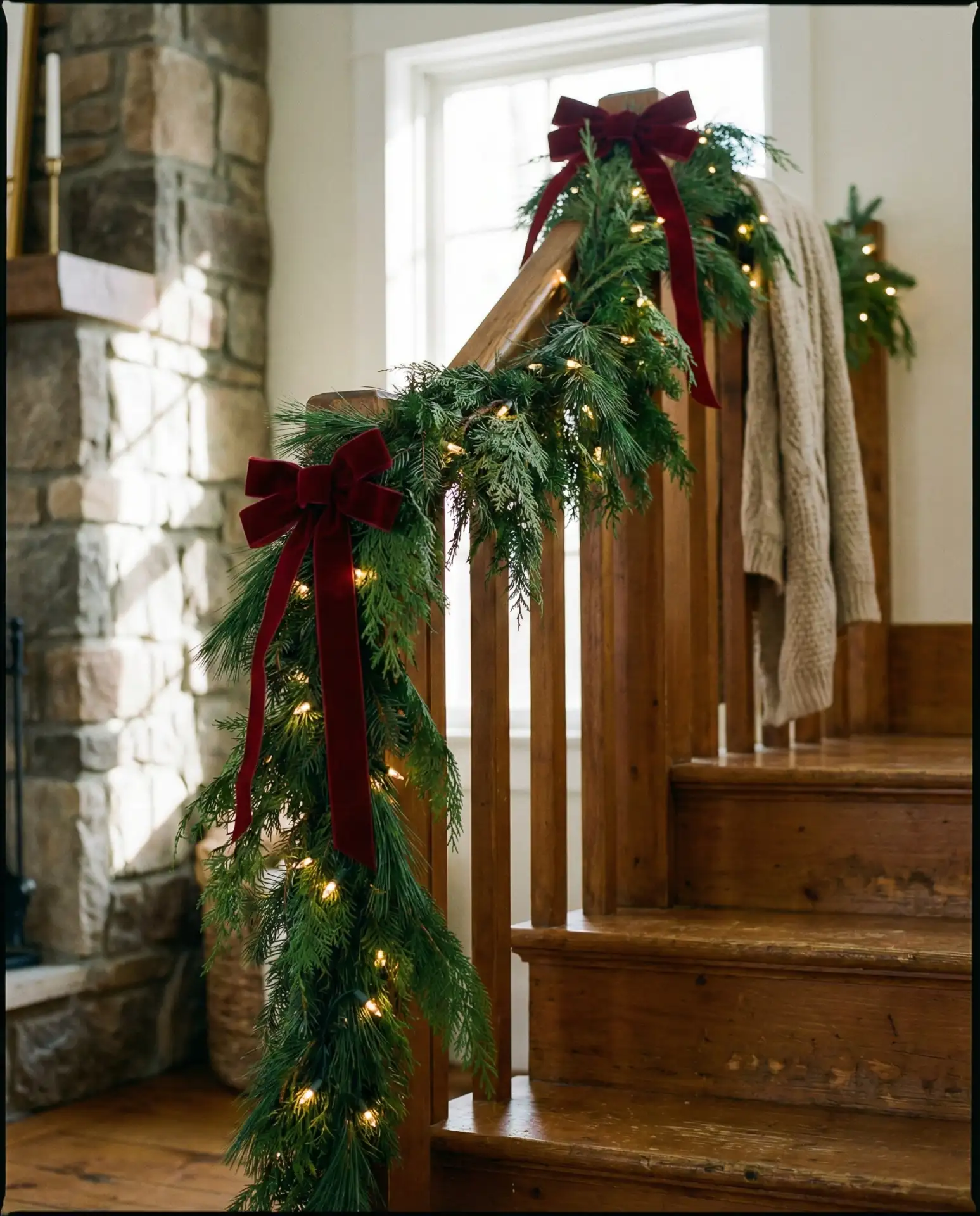
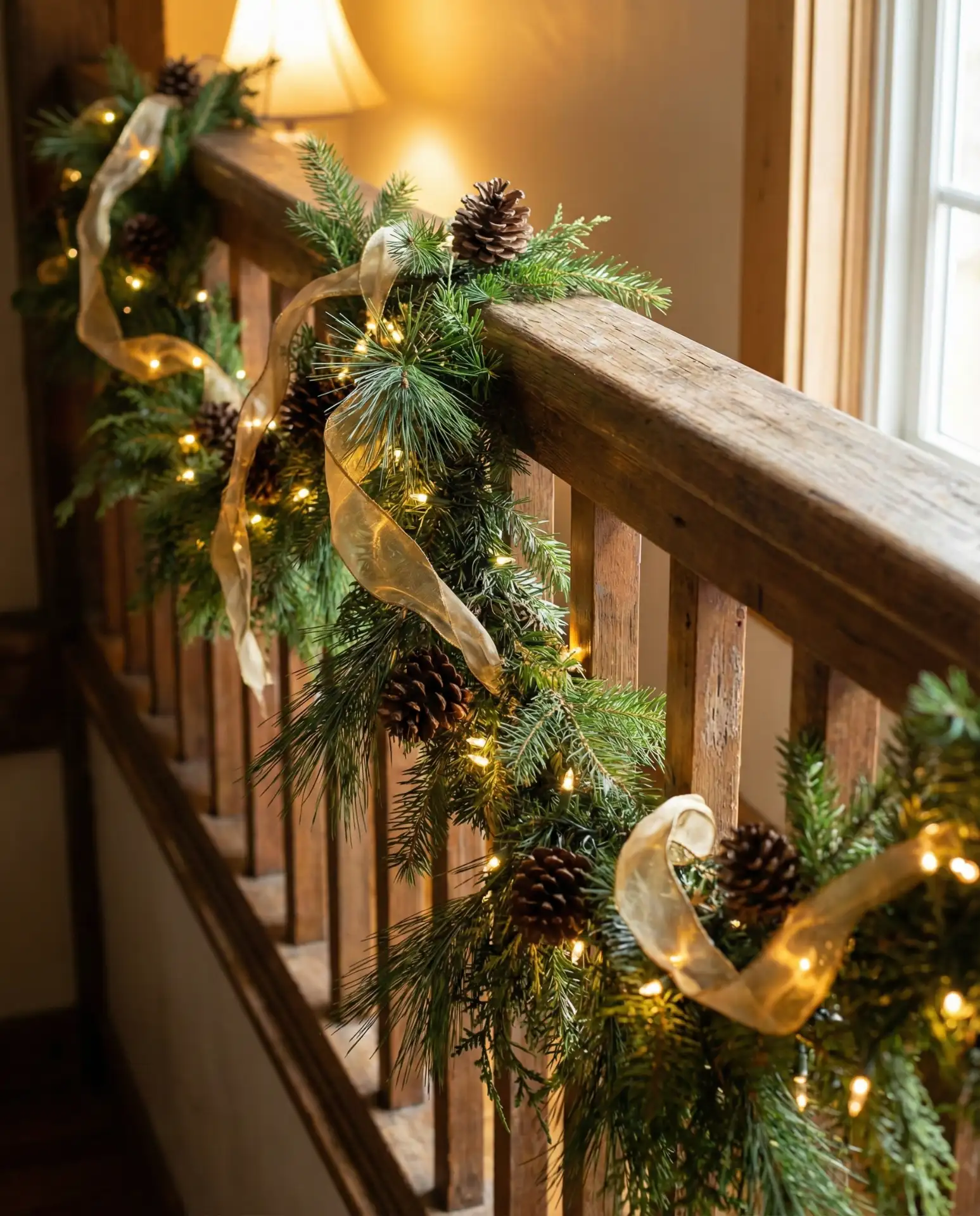
During the holidays, your railing becomes a canvas for festive decor. Christmas decorating ideas for railings include garlands, string lights, ribbon bows, and ornament clusters. Black metal or wood and metal railings provide a sturdy base for draping. The contrast between evergreen garland and a dark railing is particularly striking. Use zip ties or floral wire to secure elements without damaging the finish.
Many American families make decorating the railing a Thanksgiving weekend tradition. It’s visible from the entryway and sets the tone for the entire home. Consider battery-operated lights to avoid cord clutter, and choose faux garland if you have allergies or prefer reusable materials. This seasonal layer adds warmth and nostalgia without permanent changes.
14. Stainless Steel Square Tube Railing
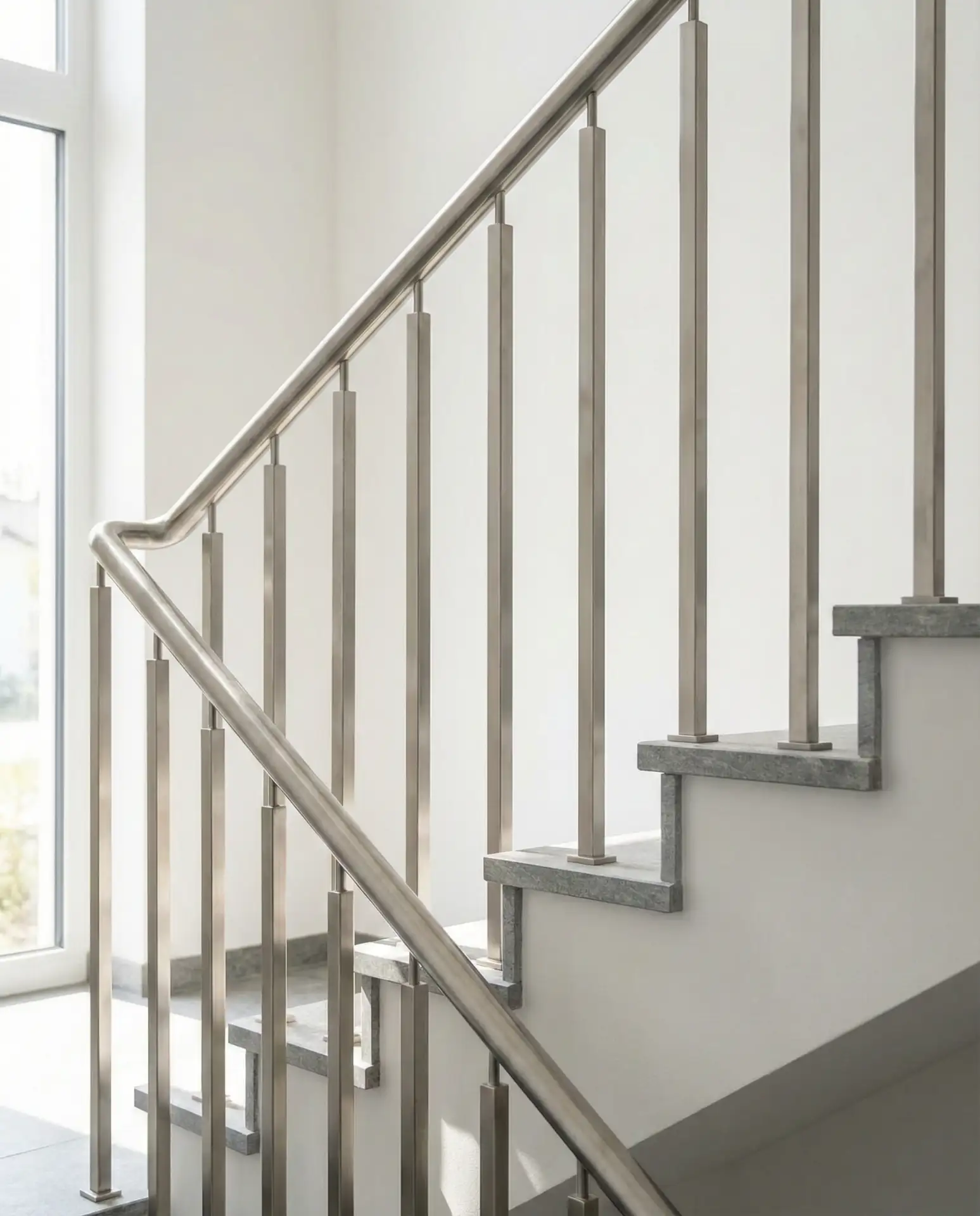
Stainless steel square tubing offers a sleek, industrial profile that’s both durable and low-maintenance. The contemporary aesthetic fits well in modern homes, especially those with concrete, glass, or polished surfaces elsewhere. Unlike round tubing, the square shape provides a more architectural, intentional look. The brushed or polished finish resists corrosion and is ideal for both indoor and outdoor applications.
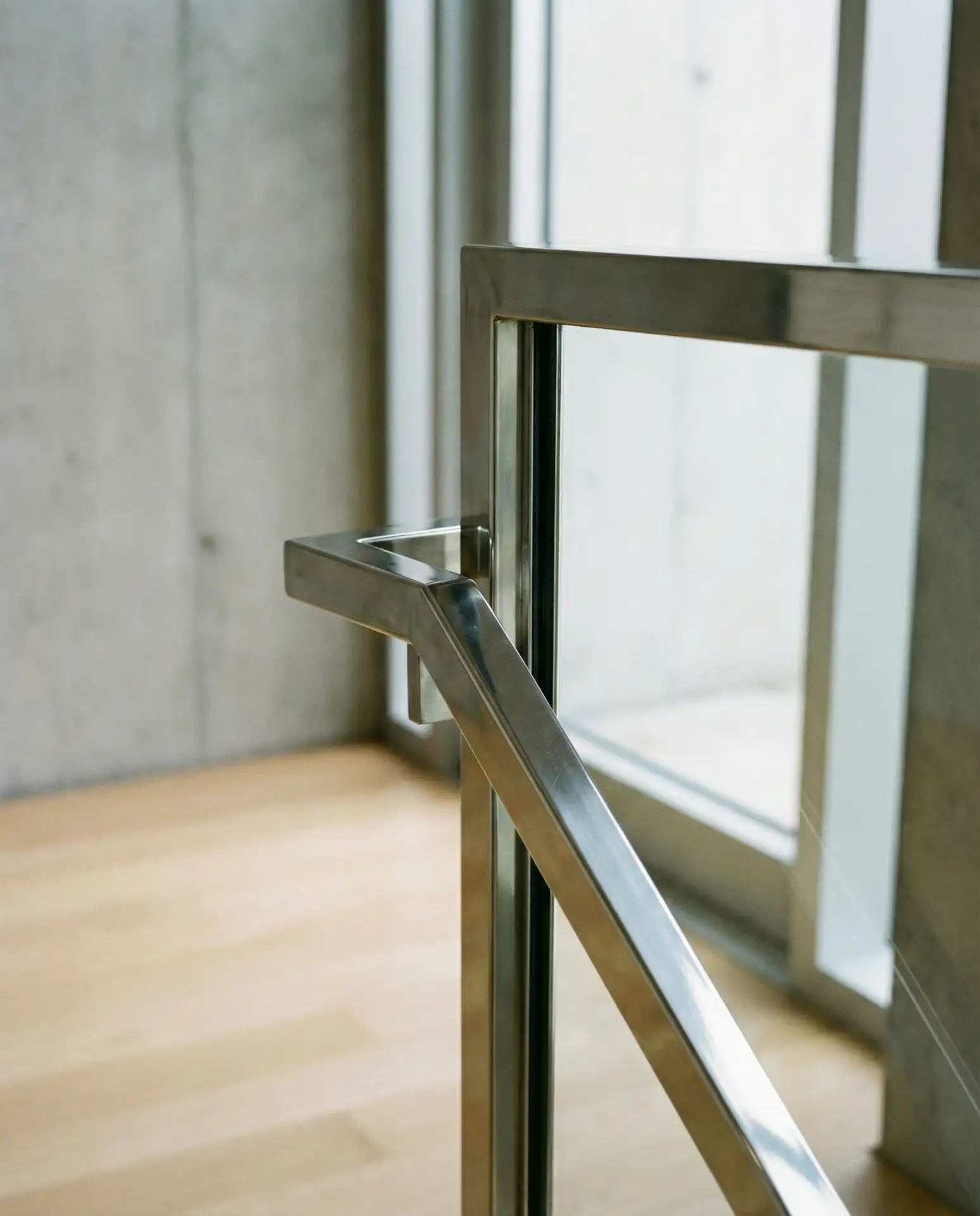
In coastal regions like Florida and the Carolinas, stainless steel is a top choice because it stands up to salt air without rusting. It’s also fire-resistant, which appeals to homeowners in wildfire-prone areas. The material is heavier than aluminum but less prone to denting, making it suitable for high-traffic areas. Welded joints are strongest, though modular systems are available for easier installation.
15. Rustic Reclaimed Wood Balusters
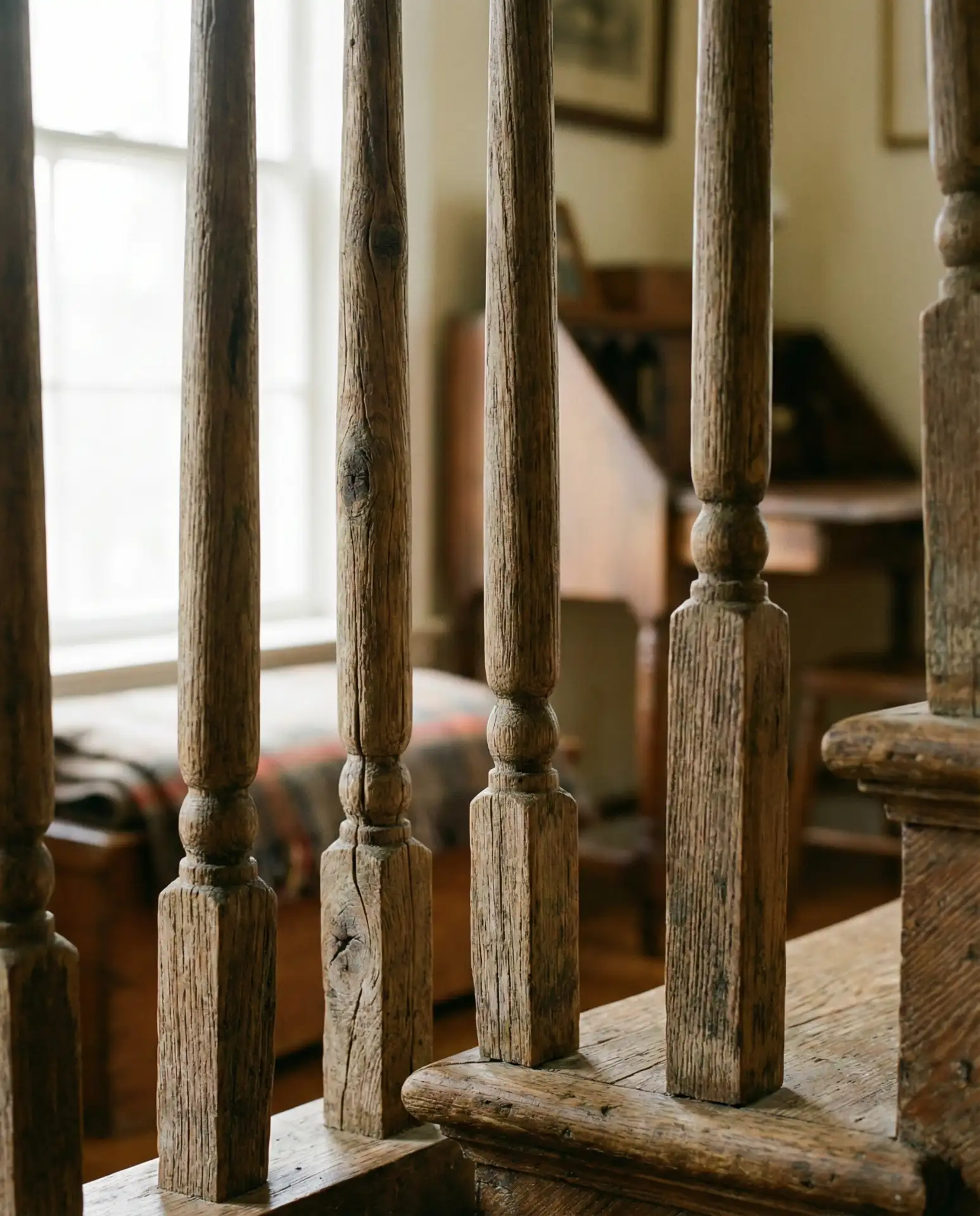
Using reclaimed or salvaged wood for balusters brings character and sustainability to your staircase. Each piece has unique grain, weathering, and imperfections that tell a story. This modern farmhouse approach is popular in rural areas and among homeowners who value eco-friendly materials. The wooden spindles can be left natural, stained, or lightly whitewashed depending on the desired finish.
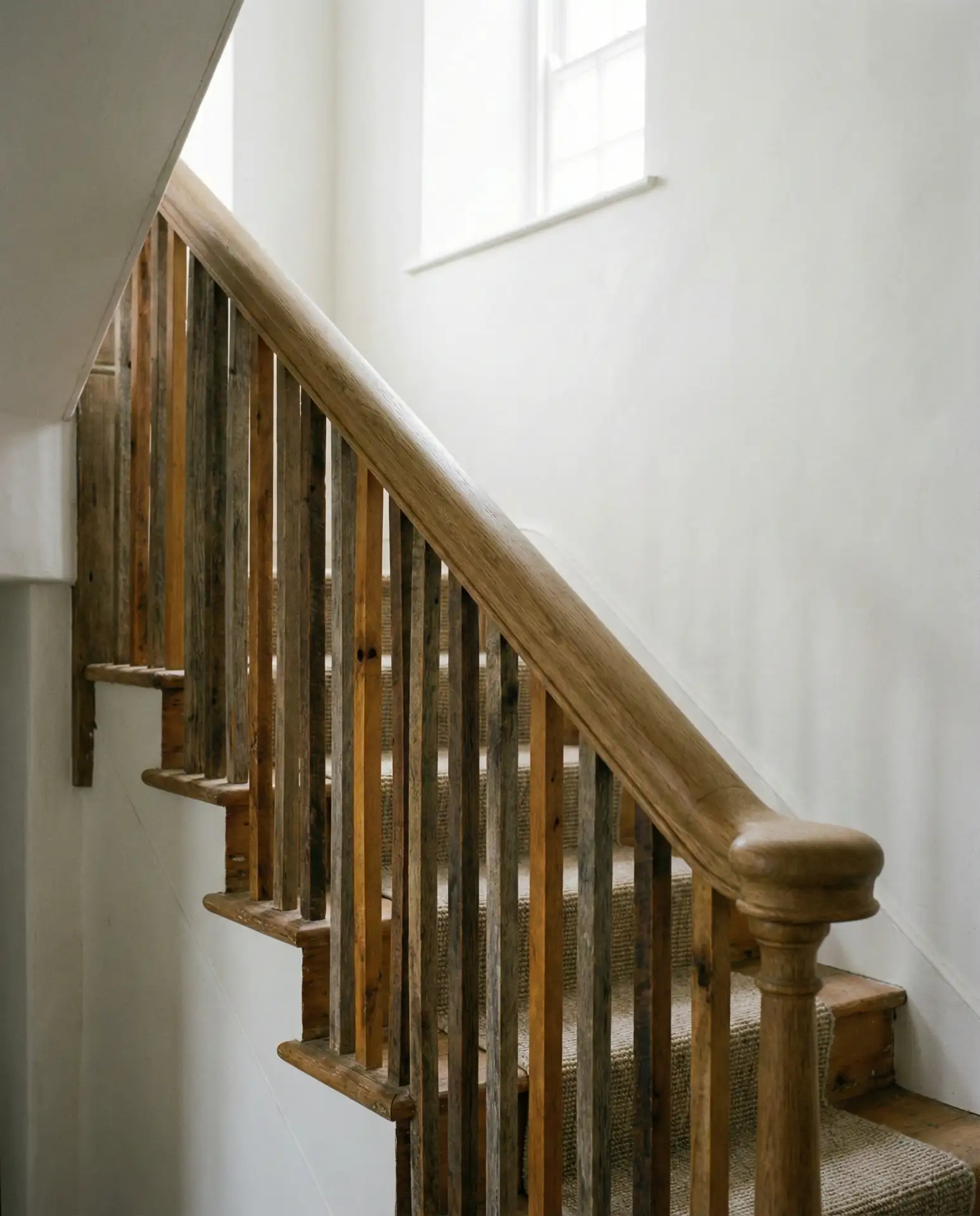
One homeowner in Vermont sourced barn wood from a local demolition company and saved hundreds compared to new materials. The key is ensuring the wood is properly dried and treated for insects before installation. Mixing different wood tones creates visual interest, but keep the handrail consistent to unify the look. This style pairs beautifully with exposed beams and stone accents.
16. Sleek Aluminum in Charcoal Gray
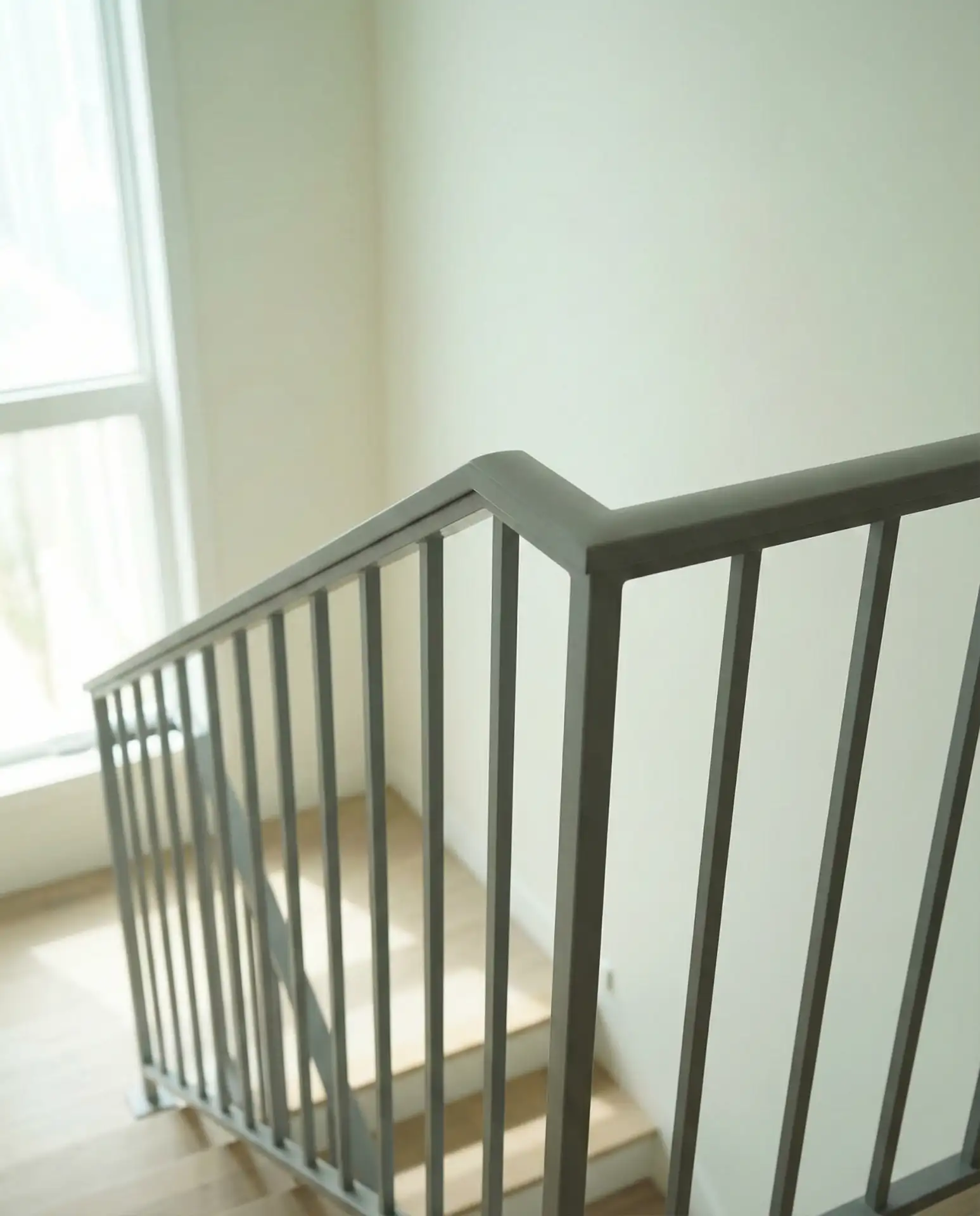
Powder-coated aluminum railings in charcoal or graphite gray offer a sophisticated alternative to black. The modern finish is softer and less stark, making it easier to integrate into varied color schemes. Aluminum is lightweight, rust-proof, and perfect for indoor staircases. The design modern simplicity appeals to homeowners who want a clean look without heavy visual weight.
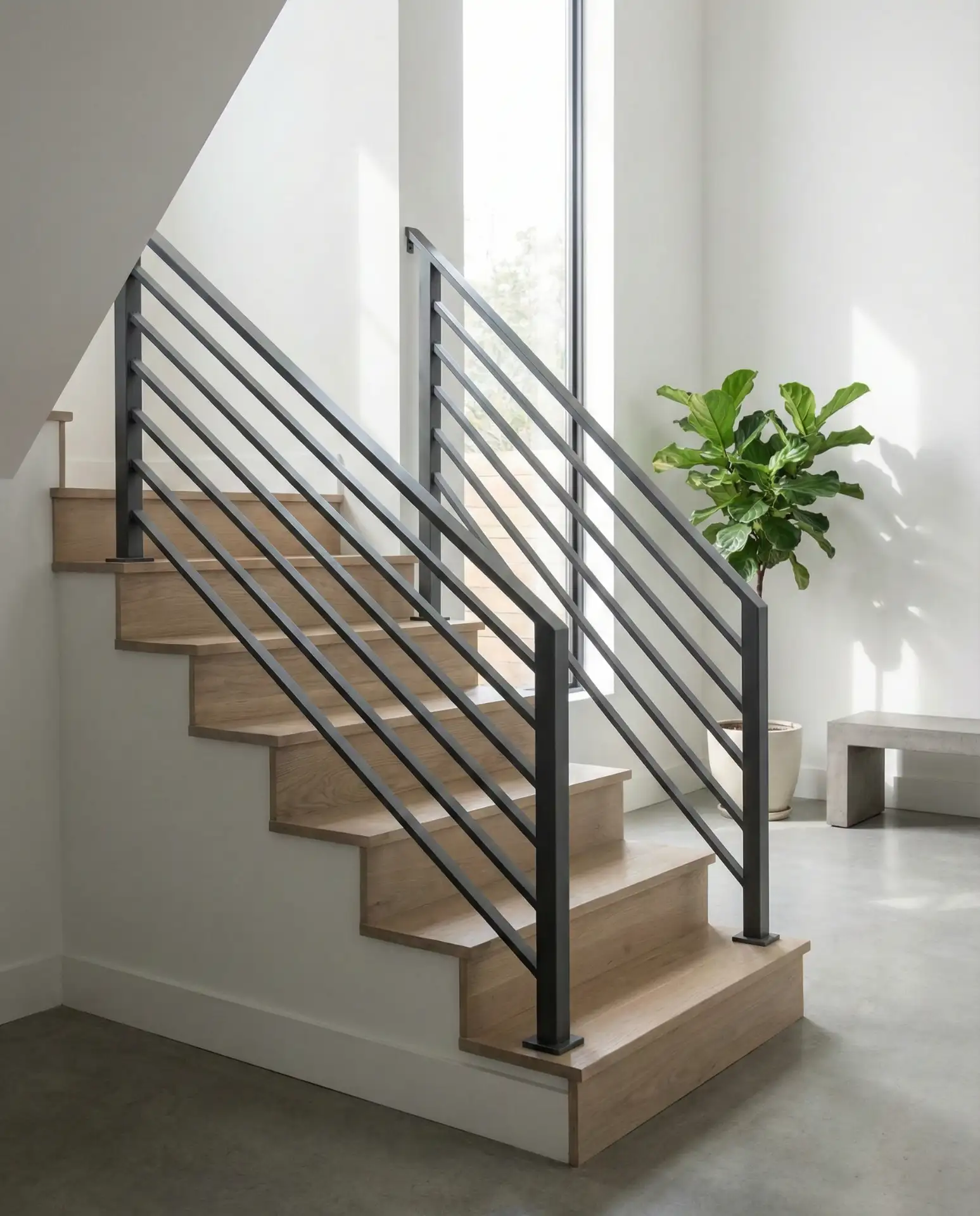
Avoid the mistake of choosing aluminum that’s too thin—opt for heavier-gauge material to prevent flexing and ensure a solid feel. Aluminum won’t rust, but it can corrode if exposed to certain chemicals, so stick to mild cleaners. It’s a great choice for second-story railings or lofts where weight is a consideration. The finish is available in dozens of colors to match your home’s palette.
17. Mixed Materials with Leather Accents
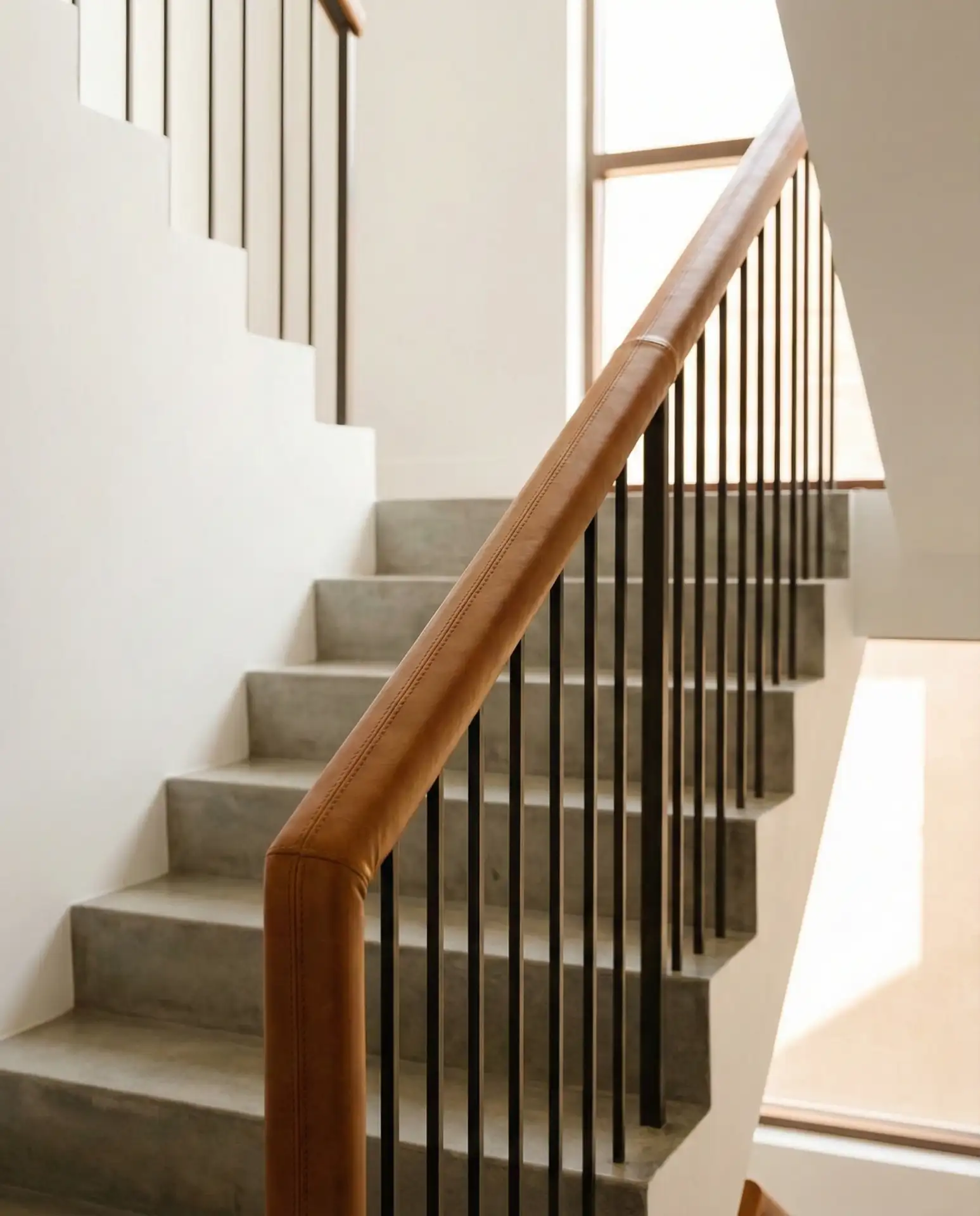
For a truly unique look, incorporate leather wrapping on the handrail over a metal or wood base. This tactile detail adds warmth and luxury. The contemporary approach is seen in high-end interior projects where every detail is considered. Leather ages beautifully and develops a patina over time. It’s typically stitched and glued in place, and the color can range from natural tan to deep espresso.
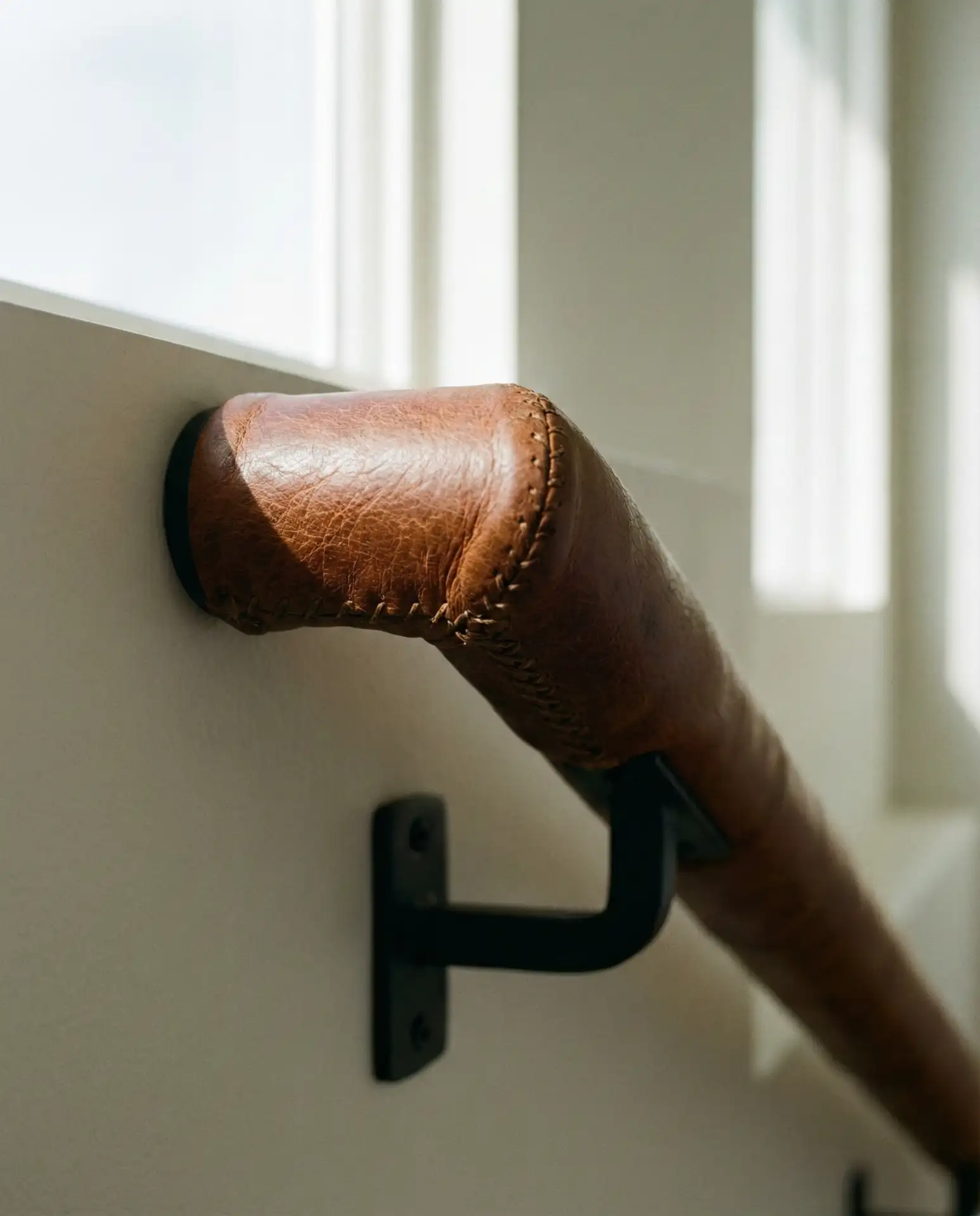
This detail is most popular in urban lofts and boutique hotels, but it’s making its way into residential projects in design-forward cities like Los Angeles and Miami. Work with a skilled upholsterer to ensure the leather is properly secured and won’t loosen over time. It’s not the most practical choice for homes with very young kids, but for adult households, it’s a stunning accent.
18. Open Tread Stairs with Minimal Railing
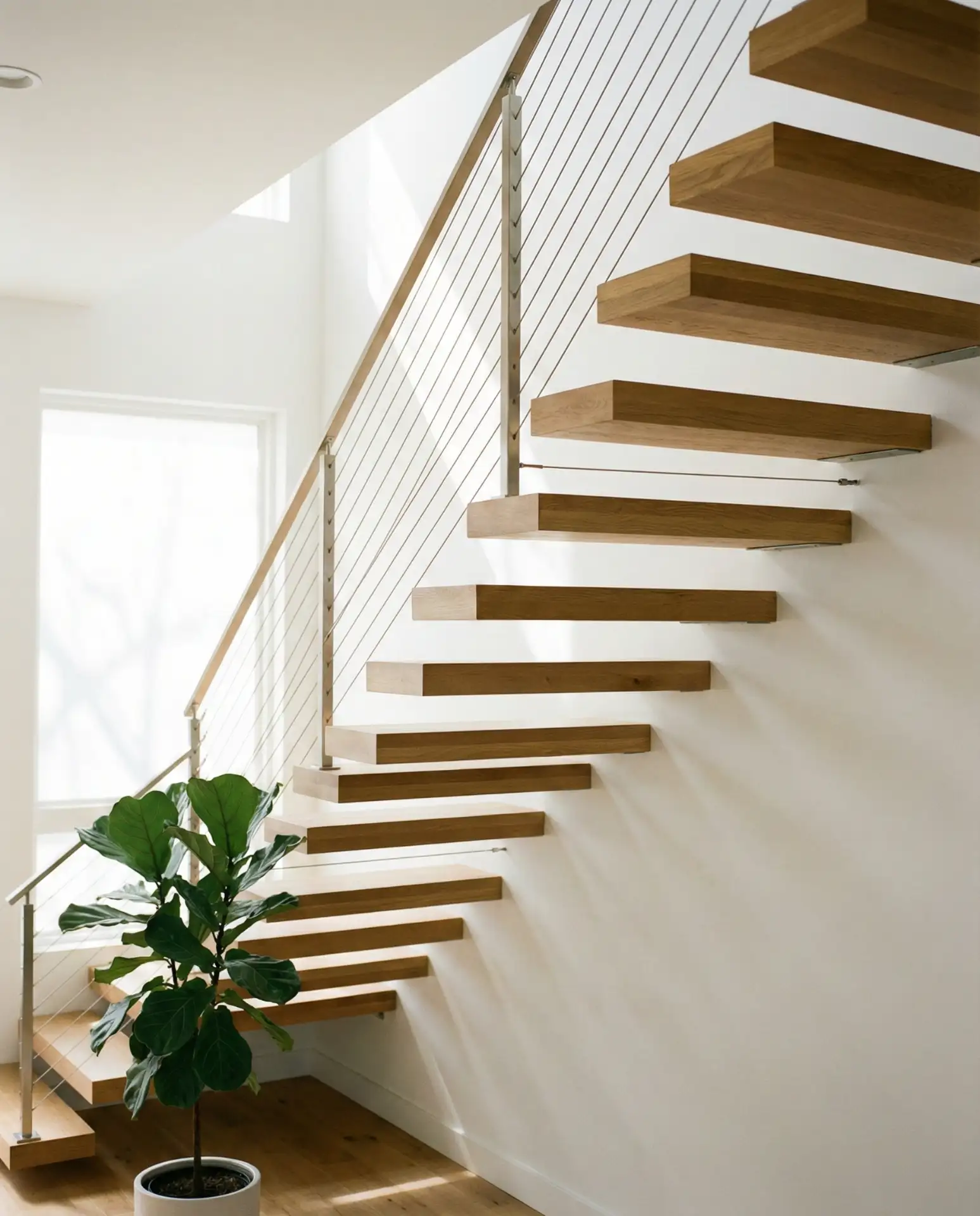
Open tread stairs—also called floating stairs—often pair with minimal railings or wall-mounted handrails. The modern design maximizes openness and light flow. A single steel stringer or hidden structural support holds the treads, and the railing is typically a thin cable or glass panel. This ideas modern approach is a statement piece that works best in homes with plenty of square footage and high ceilings.
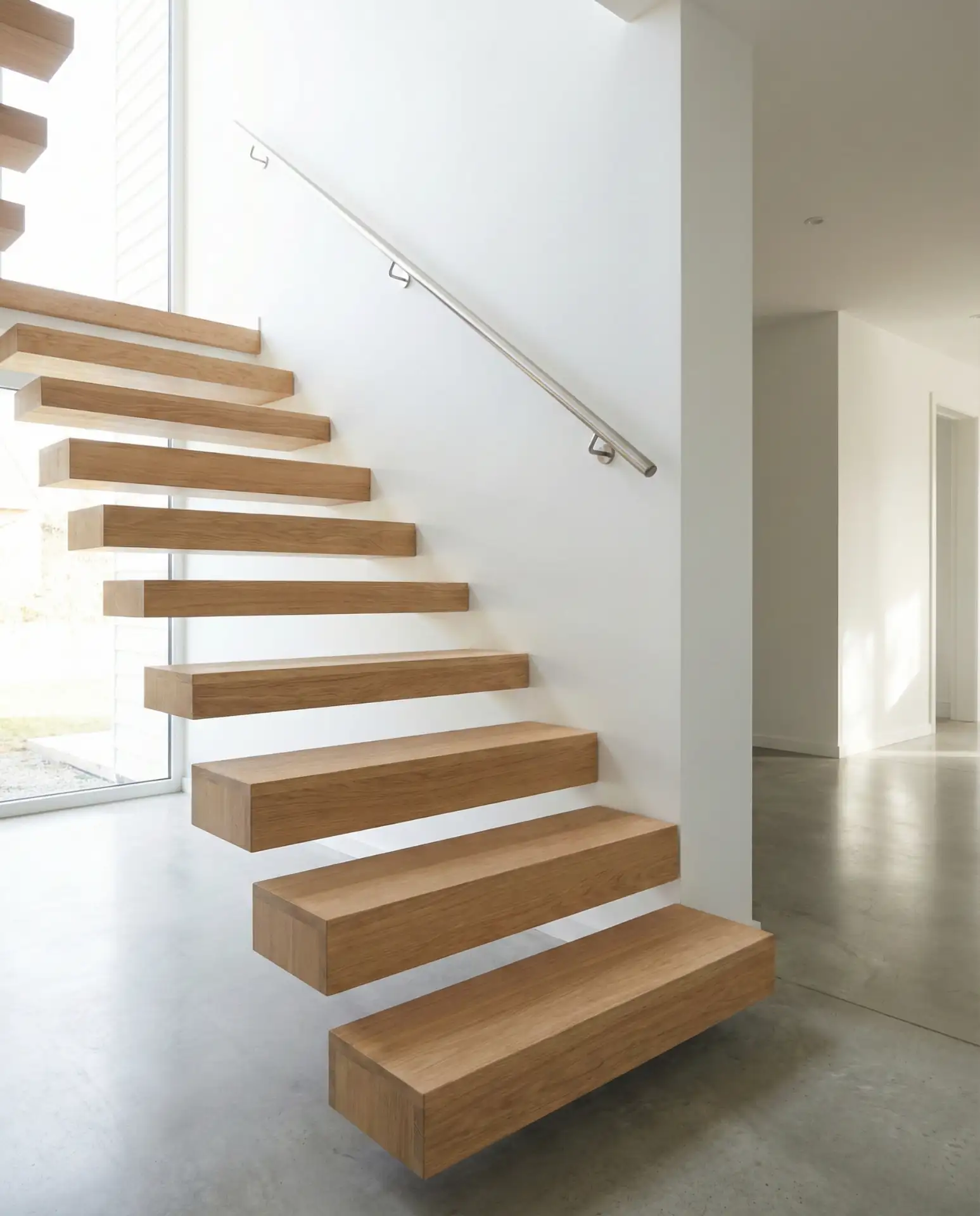
Budget expectations for this style are higher—plan for $10,000 to $25,000 depending on materials and structural requirements. Building codes in some states require additional safety measures, so consult a structural engineer early in the design process. The result is breathtaking and transforms the staircase into a sculptural element that anchors the space.
19. Painted White with Contrasting Dark Treads
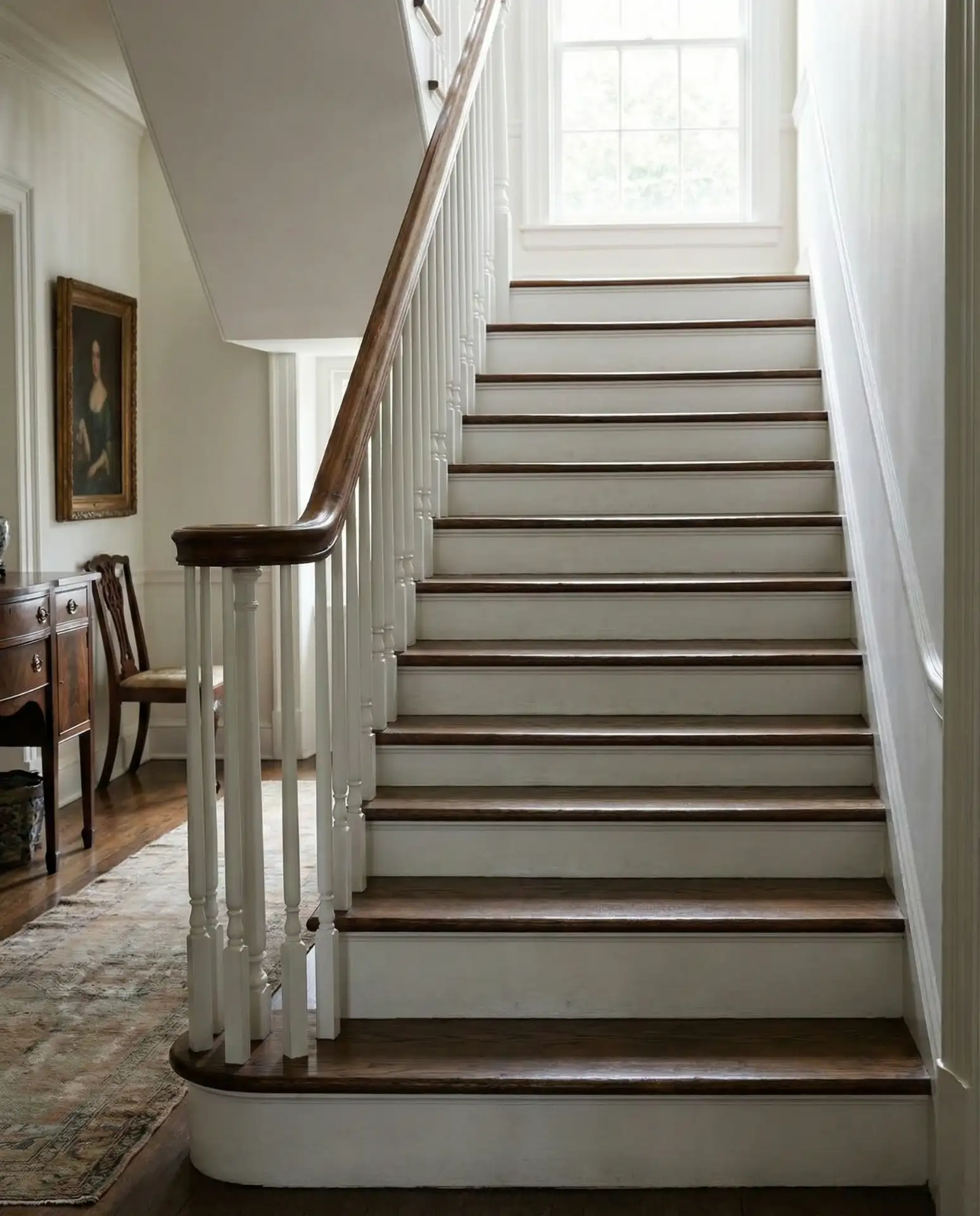
A classic black and white contrast—or white balusters with dark espresso or ebony treads—creates timeless elegance. This updated traditional look is everywhere from New England colonials to Southern estates. The wood treads are stained or painted in a rich, dark tone, while the risers and spindles are crisp white. It’s a safe choice that never goes out of style.
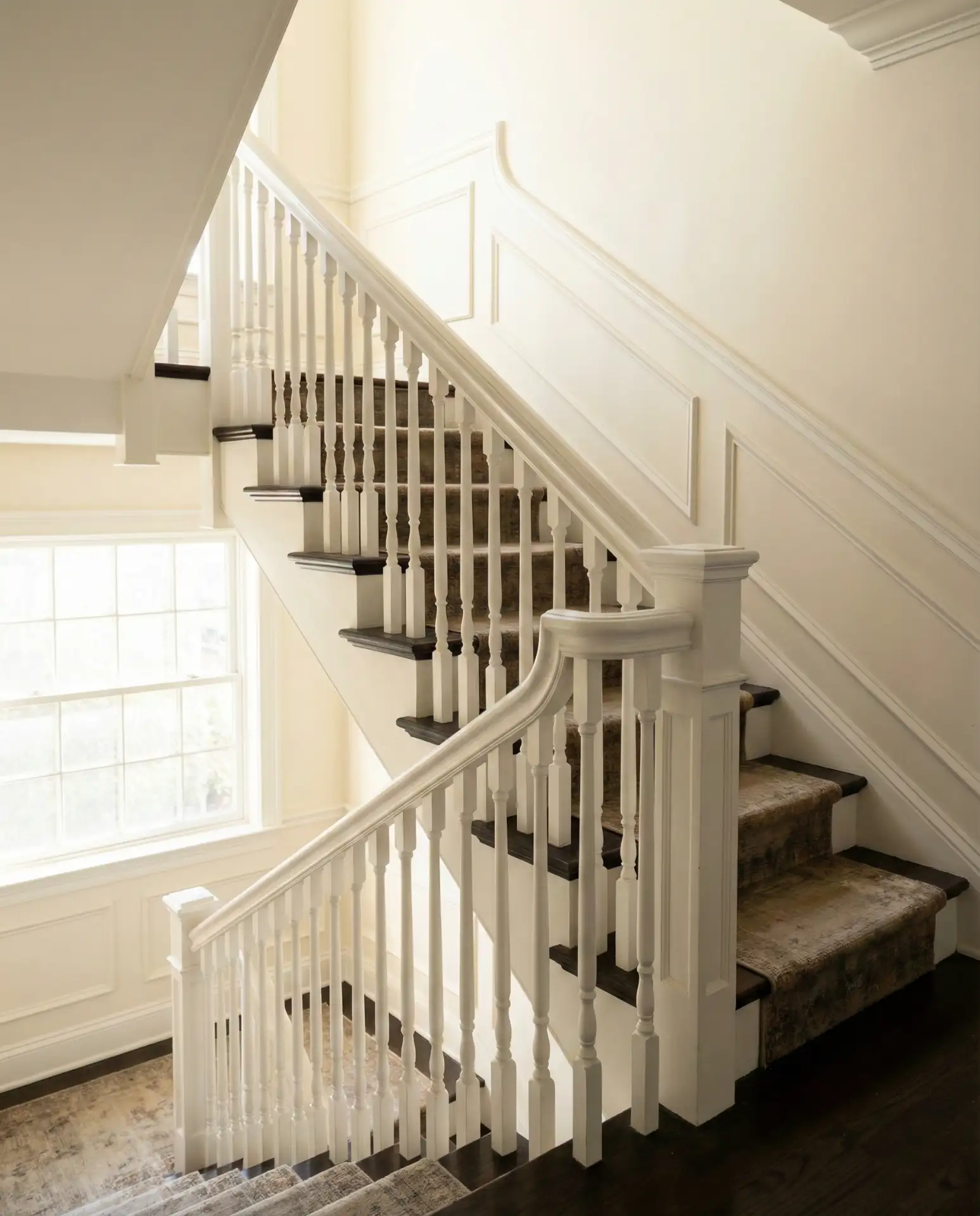
Real homeowner behavior: many people start by painting just the risers and balusters, then decide later whether to stain the treads or add a runner. It’s a gradual process that lets you adjust as you go. The contrast hides wear on the treads better than all-white or all-wood, making it practical for families. Add a carpet runner for extra comfort and noise reduction.
20. Vertical Slat Wood Screen
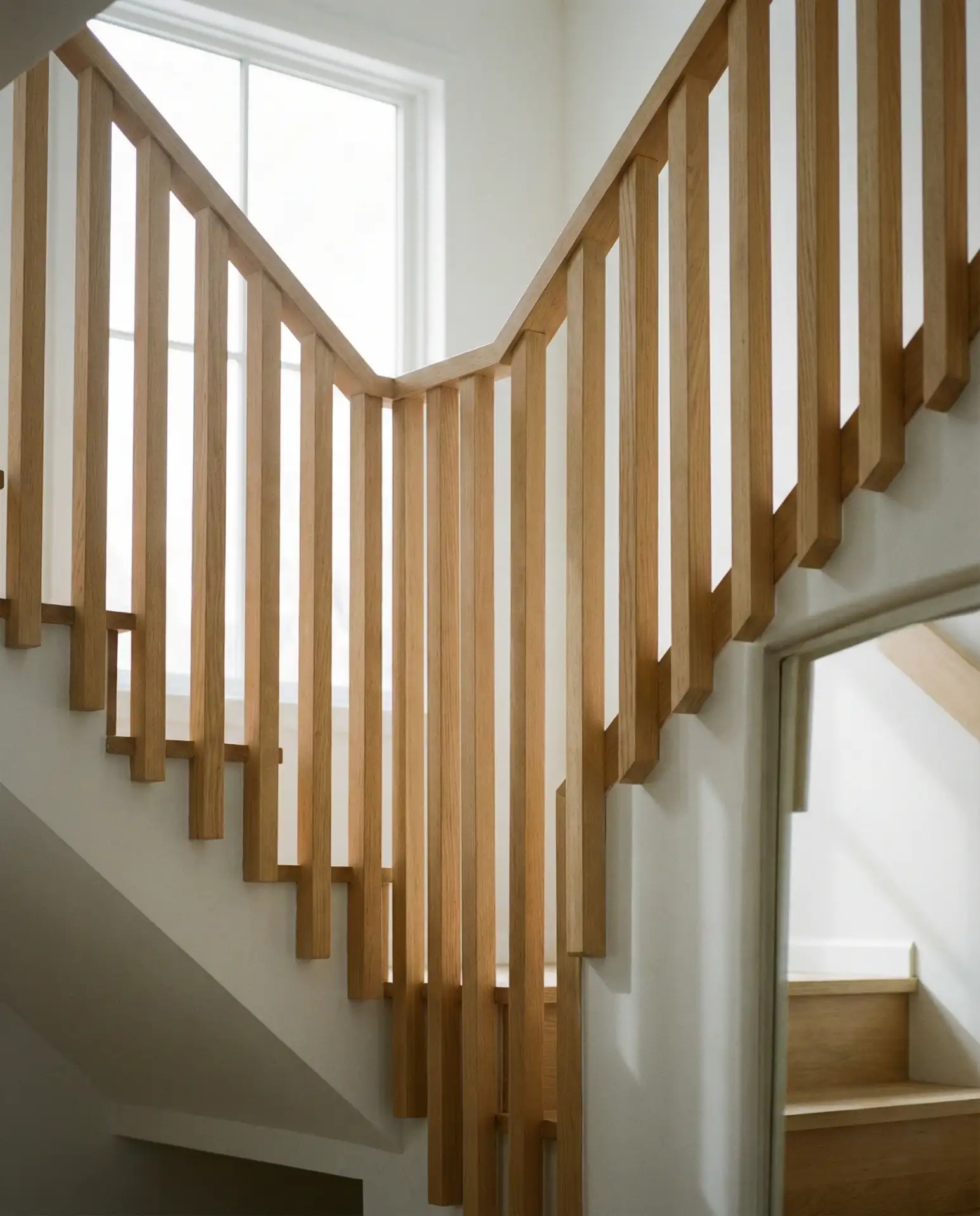
Vertical wood slats arranged tightly create a screen-like railing that offers privacy without blocking light. This design modern approach is popular in contemporary homes where the staircase is open to the living area. The slats can be stained, painted, or left natural, and the spacing can be adjusted for varying degrees of openness. It’s a softer alternative to metal balusters.
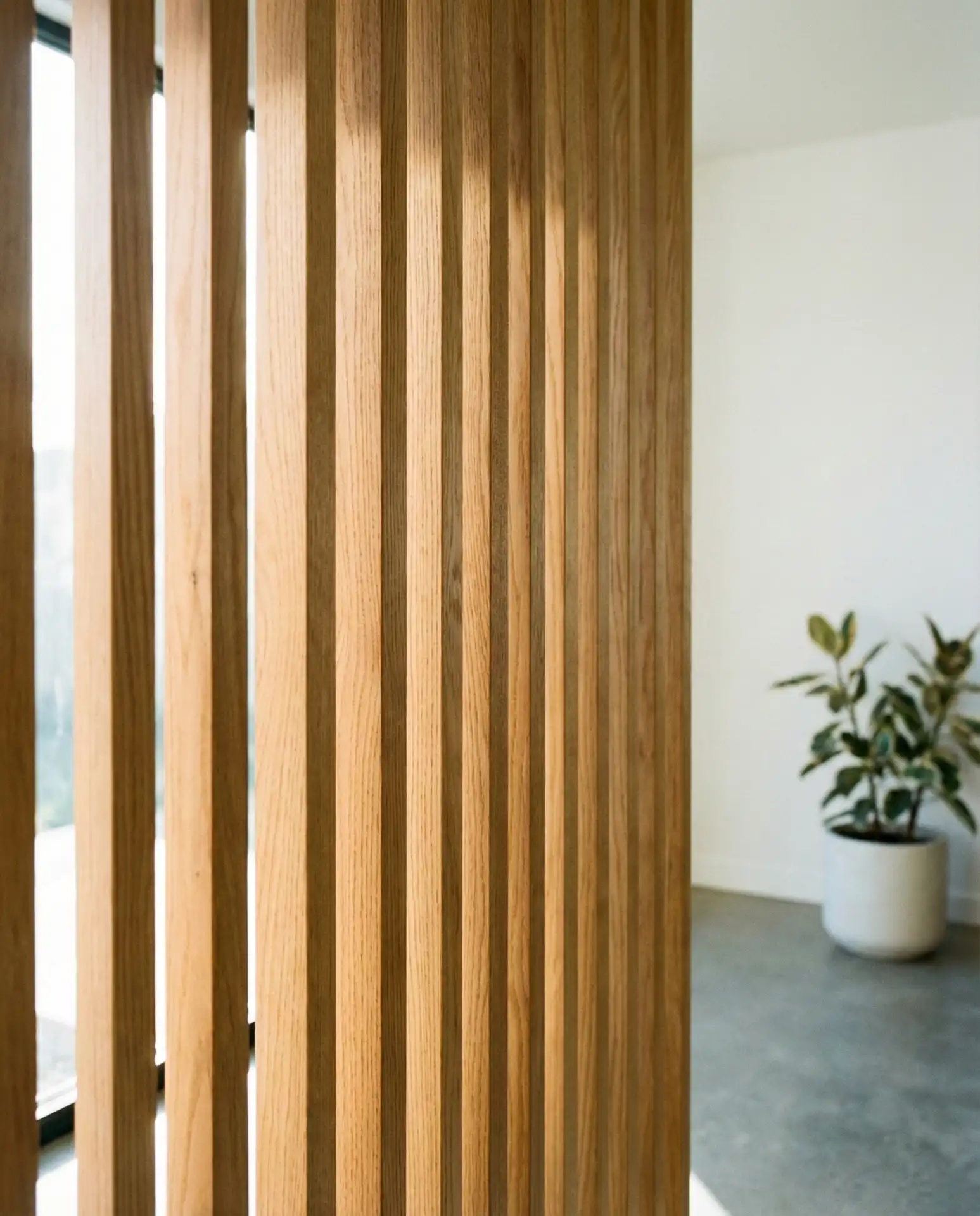
This style works best in homes where you want visual separation without solid walls—think open lofts or split-levels. The slats can be custom-cut to any width, and many homeowners choose 1×2 or 1×3 lumber for a clean, architectural look. Installation requires precise spacing and secure anchoring, so it’s worth hiring a finish carpenter to ensure everything lines up perfectly.
21. Copper Pipe with Aged Patina
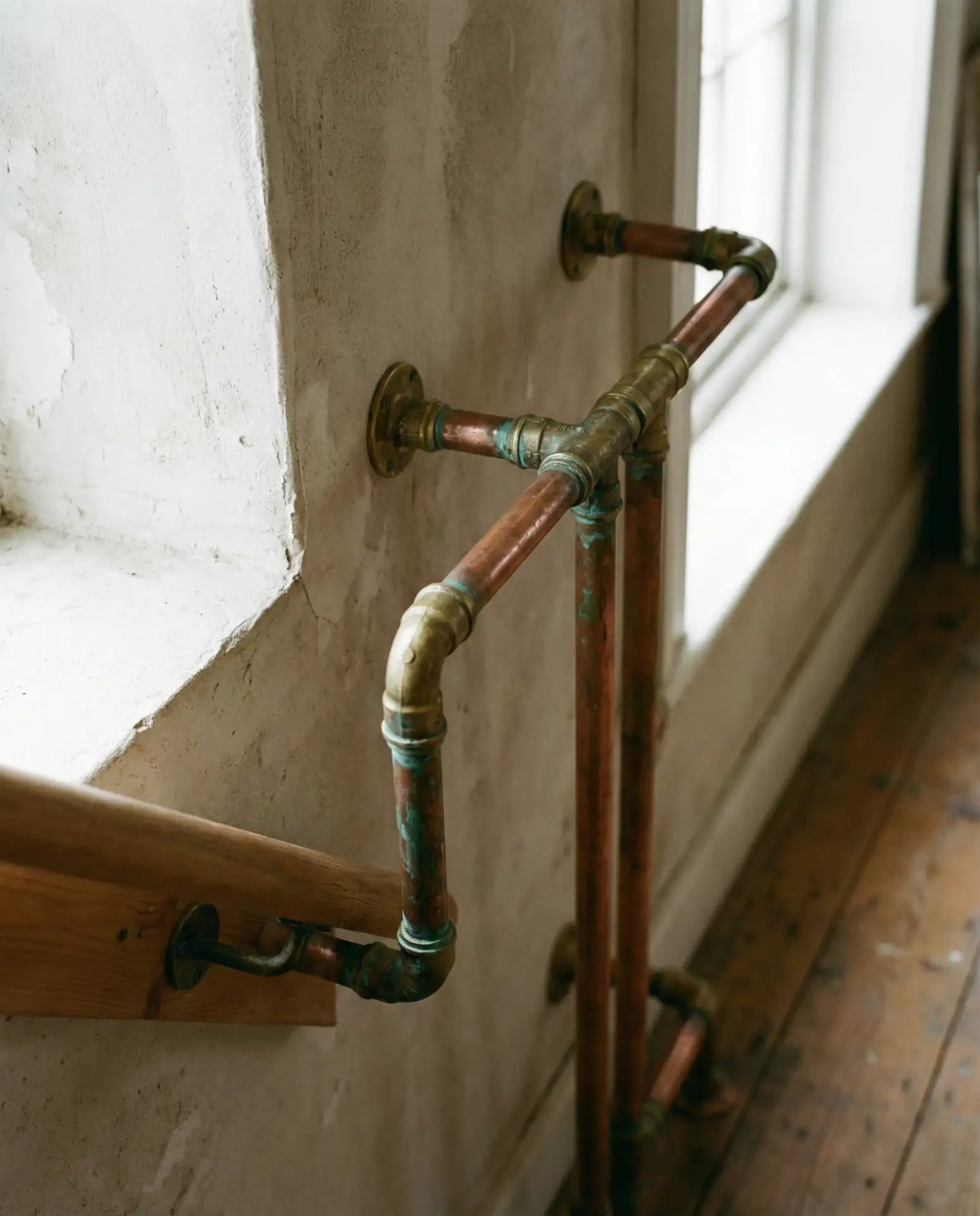
Copper piping offers a warm, industrial alternative to steel or iron. The interior design trend leans into the natural aging process—copper develops a green or brown patina over time, adding character. This modern take on metal railings is especially popular in Southwestern and eclectic homes. The material is easy to work with and can be shaped into curves or angled joints.
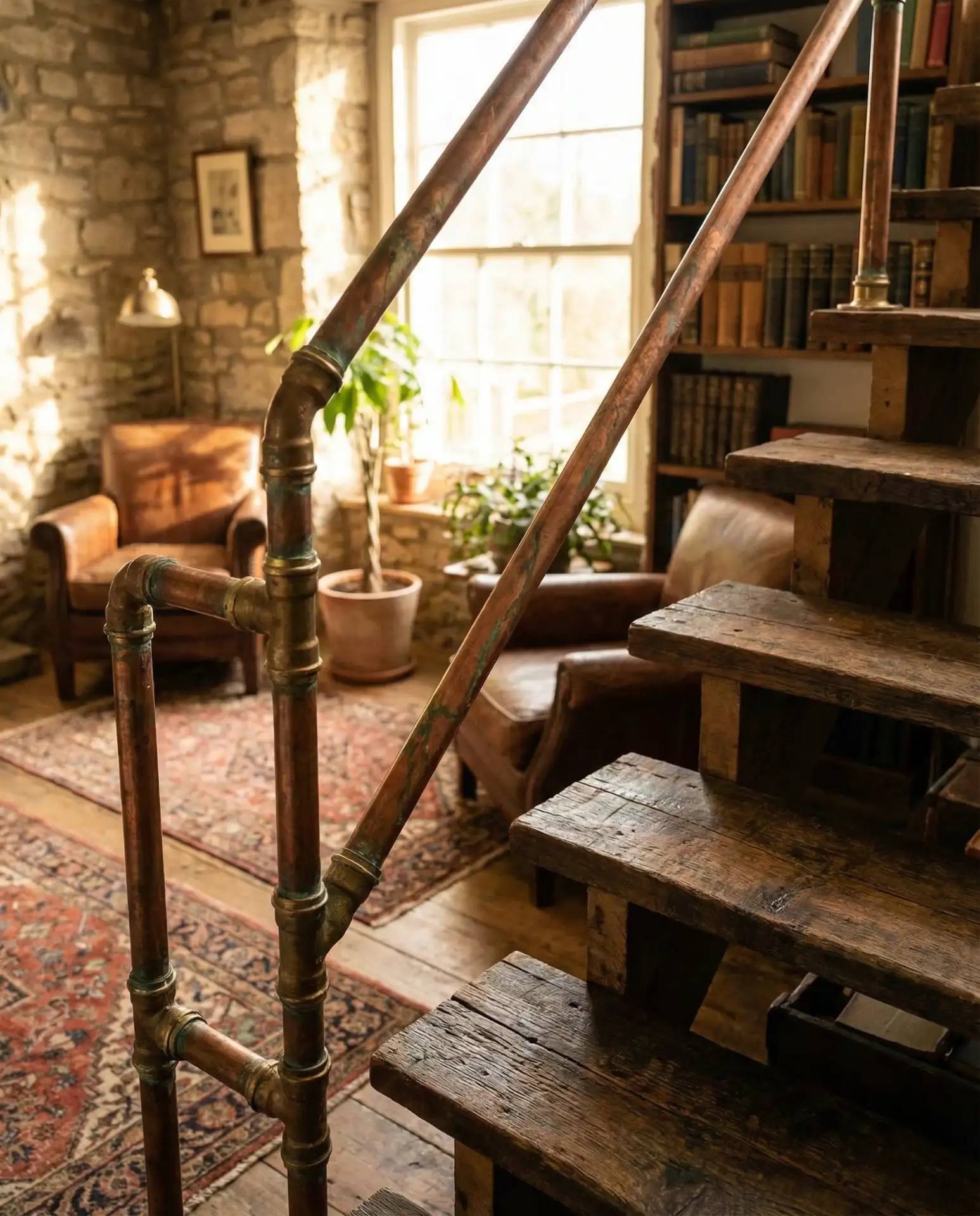
Expert commentary: if you want to accelerate the patina, you can use chemical treatments available at hardware stores, or simply let nature take its course over months or years. Copper is antimicrobial, which is a subtle health benefit. It’s more expensive than steel pipe but less common, so it makes your home stand out. Pair it with terracotta, tile, or brick for a cohesive Southwestern aesthetic.
22. X-Brace Wood and Metal Hybrid

An X-brace pattern using wood and metal combines structure with visual interest. The crossed design is reminiscent of barn doors and adds a modern farmhouse or rustic vibe. Black metal straps or rods form the X, while a wooden frame or handrail completes the look. This style is bold but not overwhelming, and it works well in homes with open floor plans.
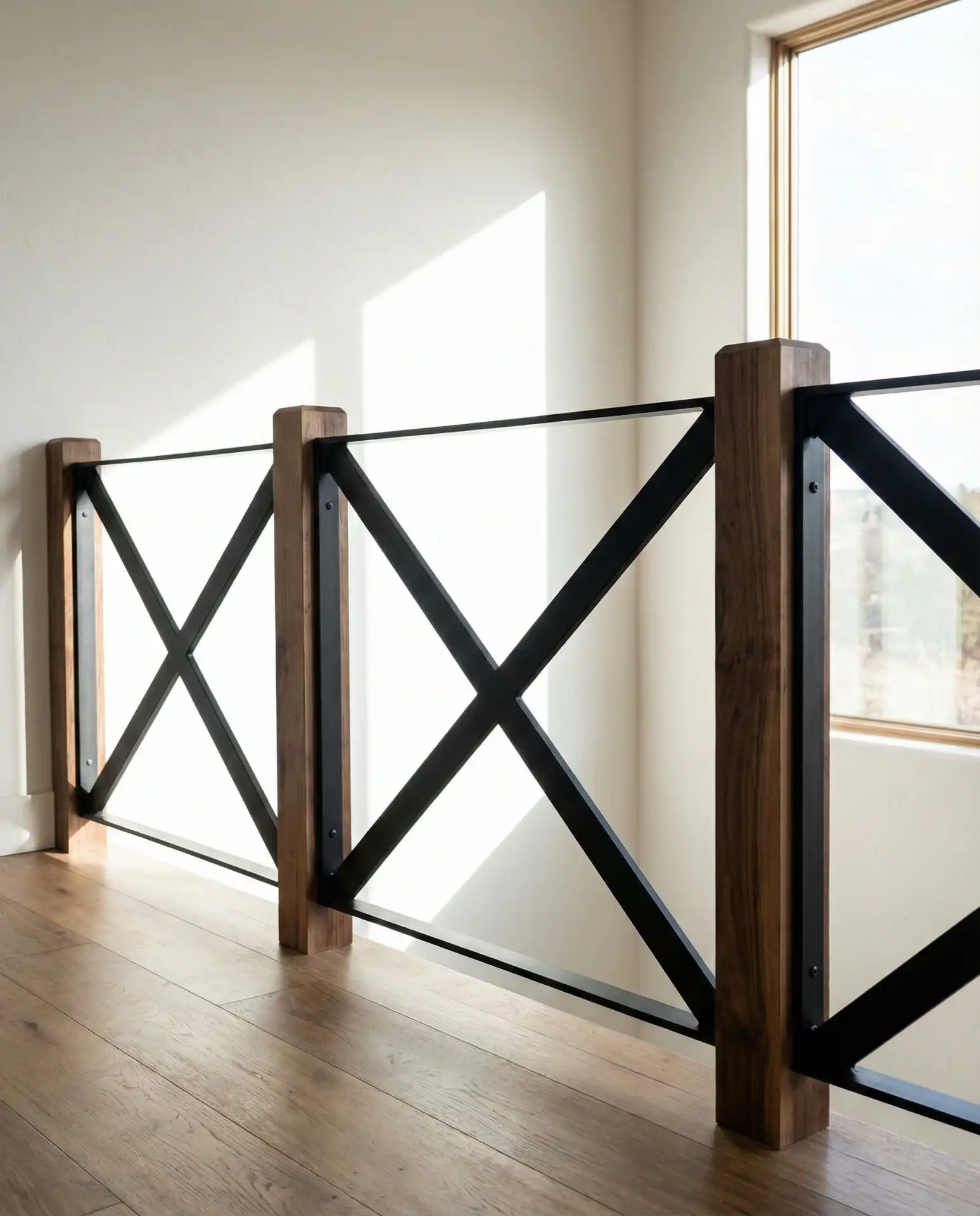
Common mistakes include making the X pattern too large or too small—aim for proportions that feel balanced with the step height. The metal straps should be securely bolted to the frame, not just decorative. This design is relatively affordable and can be DIYed with basic metalworking tools and wood skills. It’s especially popular in the Midwest and Texas.
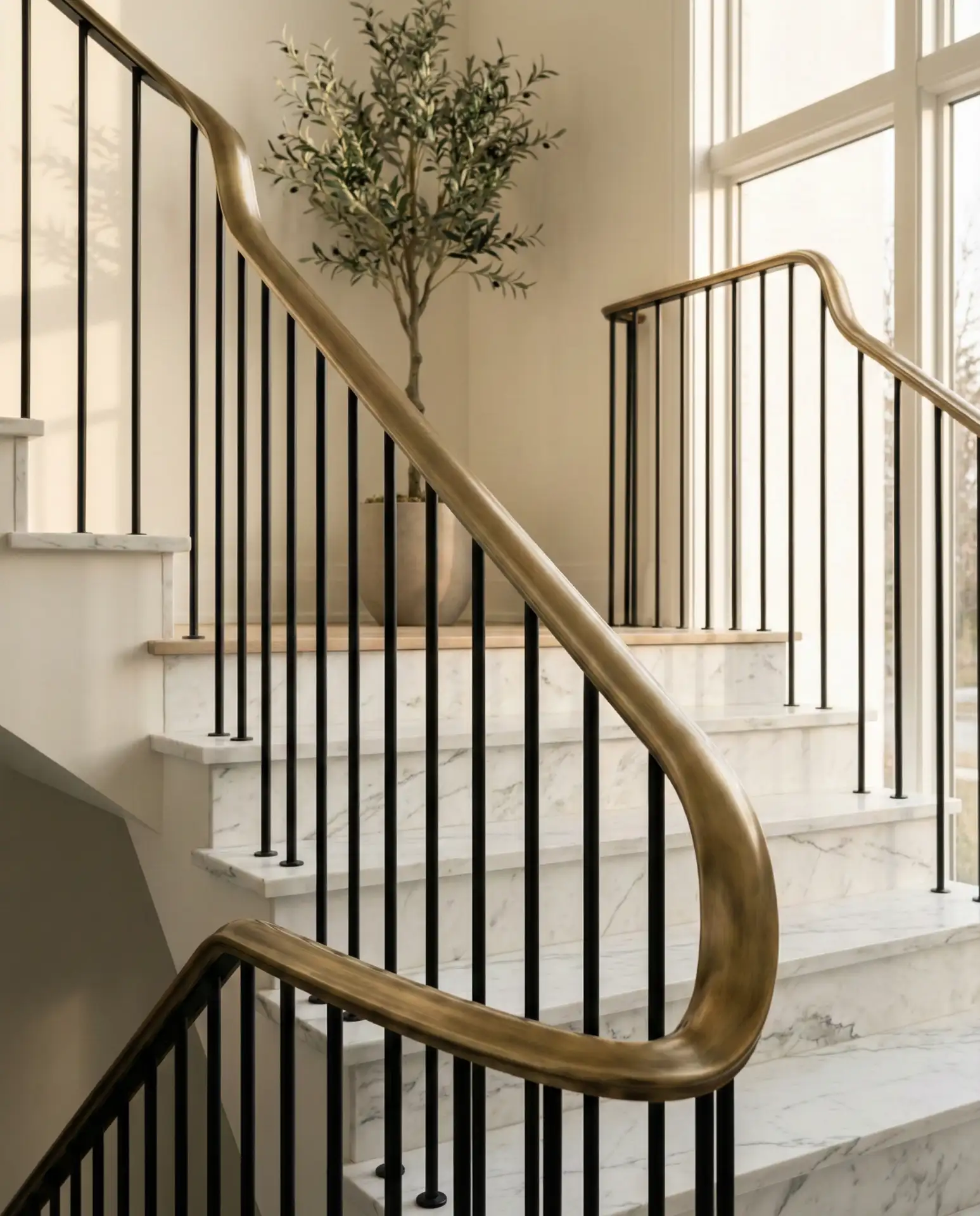
23. Brushed Brass for Luxe Accents
Brushed or satin brass railings add a touch of luxury and are trending in modern high-end homes. The warm metallic tone contrasts beautifully with black, white, or natural wood elements. Brass is softer than steel or iron, so it’s best used for handrails or decorative accents rather than structural components. The finish doesn’t require polishing and develops a gentle patina over time.
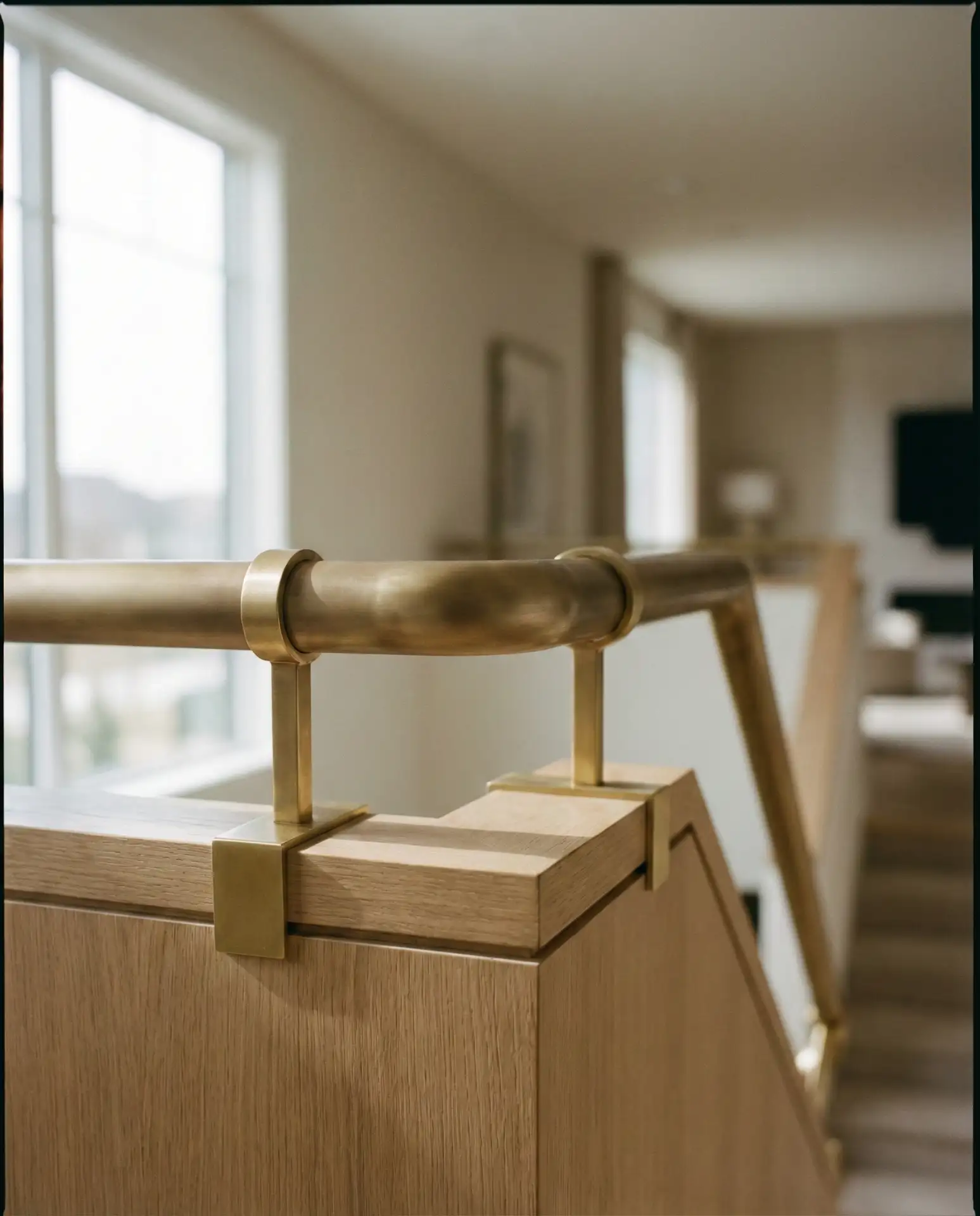
This works best in homes where brass fixtures are used throughout—think door handles, light switches, and faucets. Consistency across finishes creates a cohesive, intentional design. Brass railings are most common in cities like New York and San Francisco, where homeowners invest in bespoke details. Expect to pay a premium, but the visual payoff is undeniable.
Conclusion
Your staircase railing is more than a functional necessity—it’s a chance to express your home’s personality and elevate your interior design. Whether you’re drawn to the sleek lines of modern metal, the warmth of wood, or the timeless appeal of wrought iron, there’s a style that fits your vision and budget. We’d love to hear which of these ideas resonates with you most. Drop a comment below and share your favorite or tell us about your own railing project—let’s keep the conversation going!